

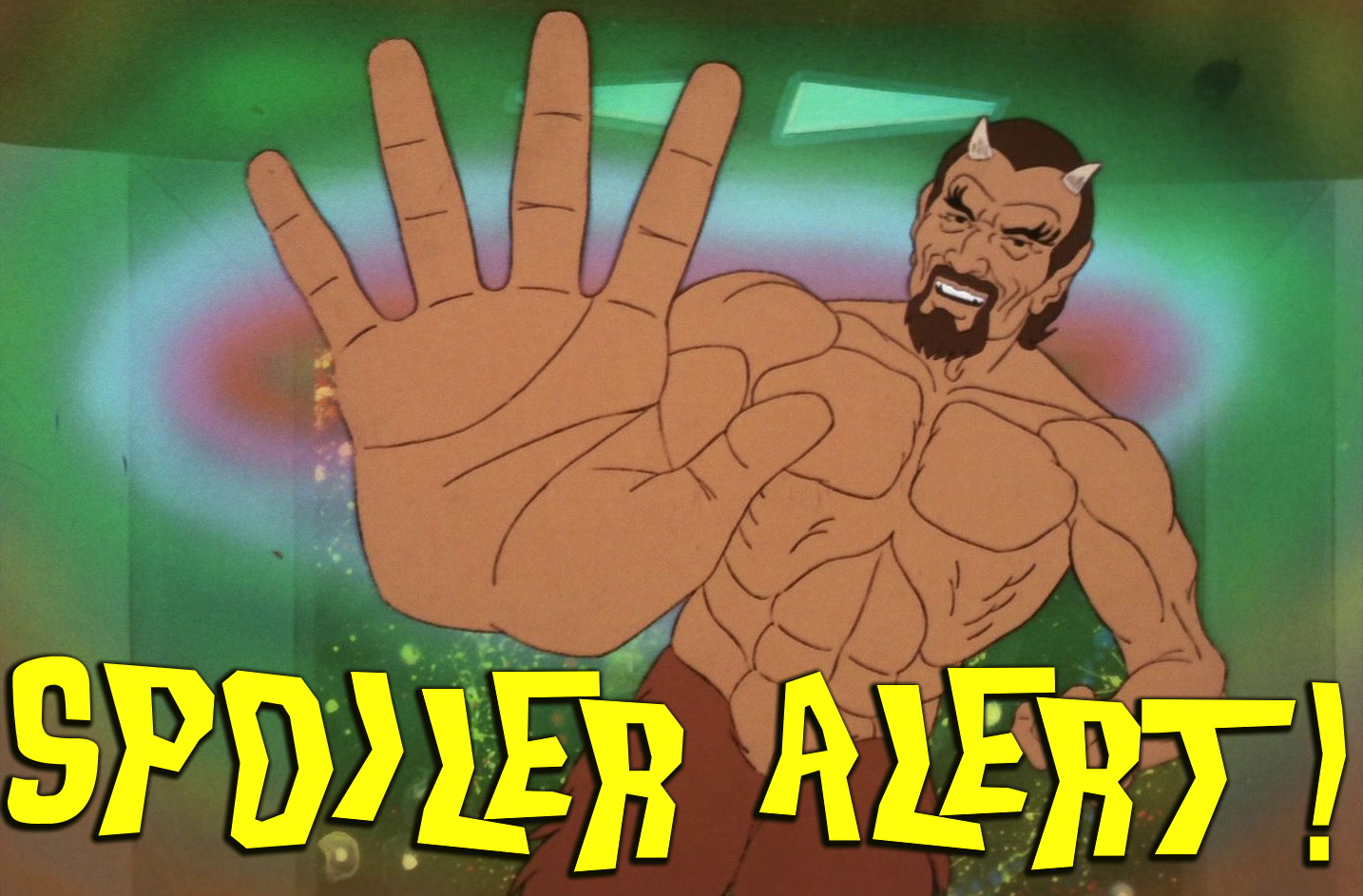
Spoiler Warning: There are spoilers ahead for Star Trek: The Animated Series as well as The Original Series and Voyager Season 2.
I haven’t really talked about The Animated Series very much here on the website, but to mark the fiftieth anniversary of the episode How Sharper Than a Serpent’s Tooth – which premiered on this day back in 1974 – I thought it might be a bit of fun to step back in time to Star Trek’s first foray into the world of animation. It’s actually been a long time since I last watched this episode (or really any of The Animated Series), so we’re going into this re-watch almost completely blind!
I have to confess that I have a bit of a psychological block when it comes to The Animated Series. From the late ’80s to the early 2000s, the official line from Gene Roddenberry, Gulf+Western, Viacom, and Star Trek’s other corporate overlords was that the show was officially “non-canon.” For the purposes of The Next Generation-era Star Trek, nothing in The Animated Series happened, and that’s left me with a lingering feeling about that show that’s difficult to put into words. The era in which I became a Trekkie was the era in which The Animated Series was deemed to be “too low-quality” to be an official part of the franchise. I watched a few episodes here and there in the ’90s, but The Animated Series wasn’t a mainstay on terrestrial TV here in the UK at the time, so I didn’t see it in full until it arrived on DVD in the mid-2000s.
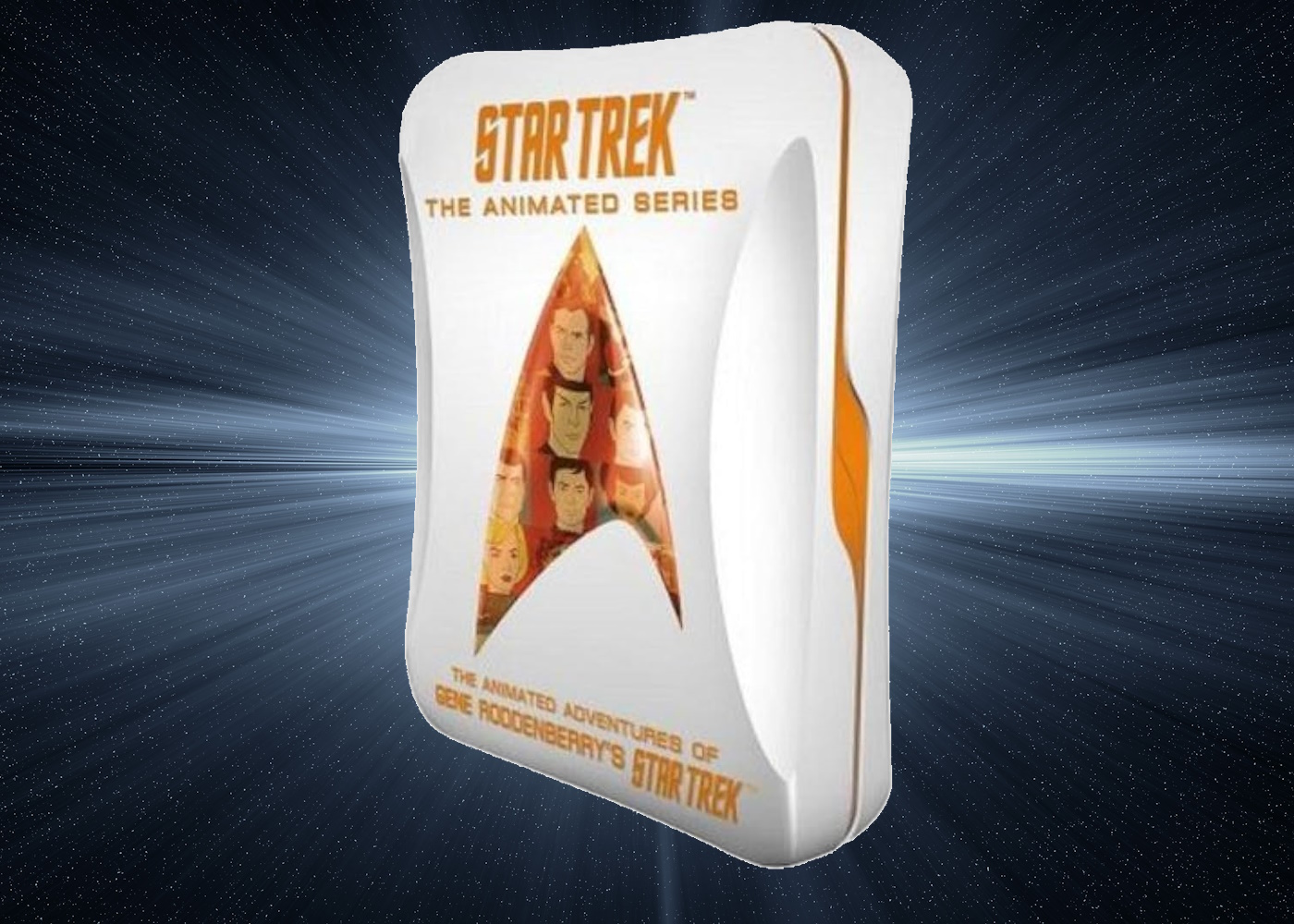
It was only when the DVD box set was being readied for release that CBS formally ditched the “non-canon” line, by the way, declaring The Animated Series to be a full and official part of the Star Trek franchise once again. At that time, with Enterprise being cancelled, it seemed as if Star Trek might’ve been over – so why not include The Animated Series if it helps shift a few more DVDs? I guess that was the thinking when that decision was taken!
So that’s my background with The Animated Series as we come to this episode re-watch! Although it’s a show I only occasionally dip into, the fiftieth anniversary is still a big deal, and it’s always worth keeping in mind the role The Animated Series played in the history of Star Trek. As re-runs of The Original Series gained traction in the early 1970s, calls grew for Star Trek to be brought back. The Animated Series was a compromise; a way to make new episodes and satisfy the growing fan community without having to commit the money required to re-start production on a live-action show.
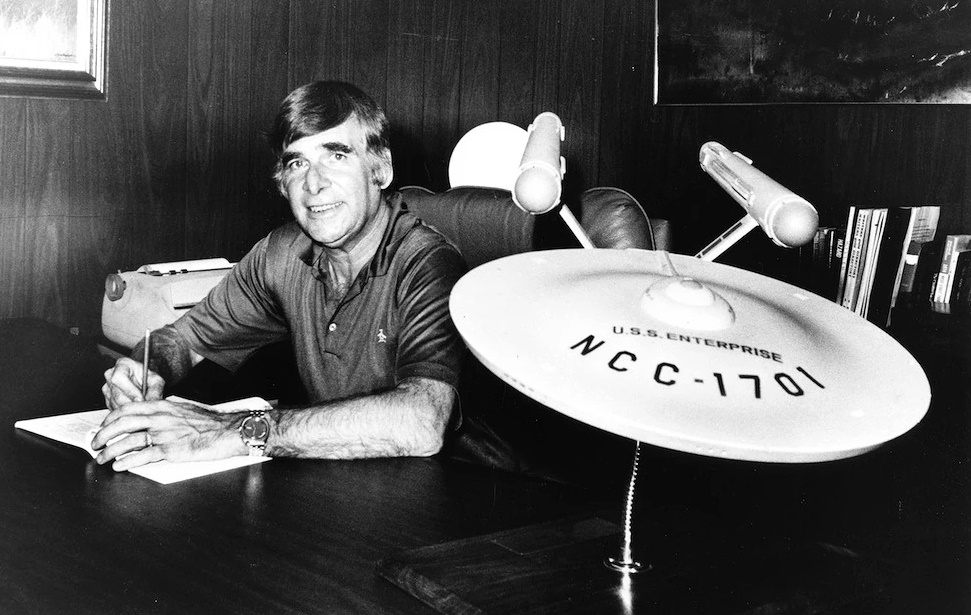
Photo Credit: Starlog Press
And the lack of budget awarded The Animated Series… well, let’s just say it can be obvious! There is a distinctly old-school charm to parts of the show, and the low-budget animation of the time. But The Animated Series can also feel quite janky, especially if you aren’t used to it or if you prefer today’s slicker, computer-animated visual style. I think there’s a real warmth to this style of animation, and the obvious jank just adds to that in my opinion!
As the show that boosted Star Trek during what could’ve been its darkest hour, we owe a lot to The Animated Series for the franchise’s re-birth at the end of the 1970s. The Motion Picture and Star Trek’s subsequent renewal in the ’80s would arguably not have been possible without this show keeping things fresh and growing the audience. Bringing younger eyes to Star Trek through this “Saturday morning cartoon” style bolstered the franchise’s prospects and shouldn’t be understated.
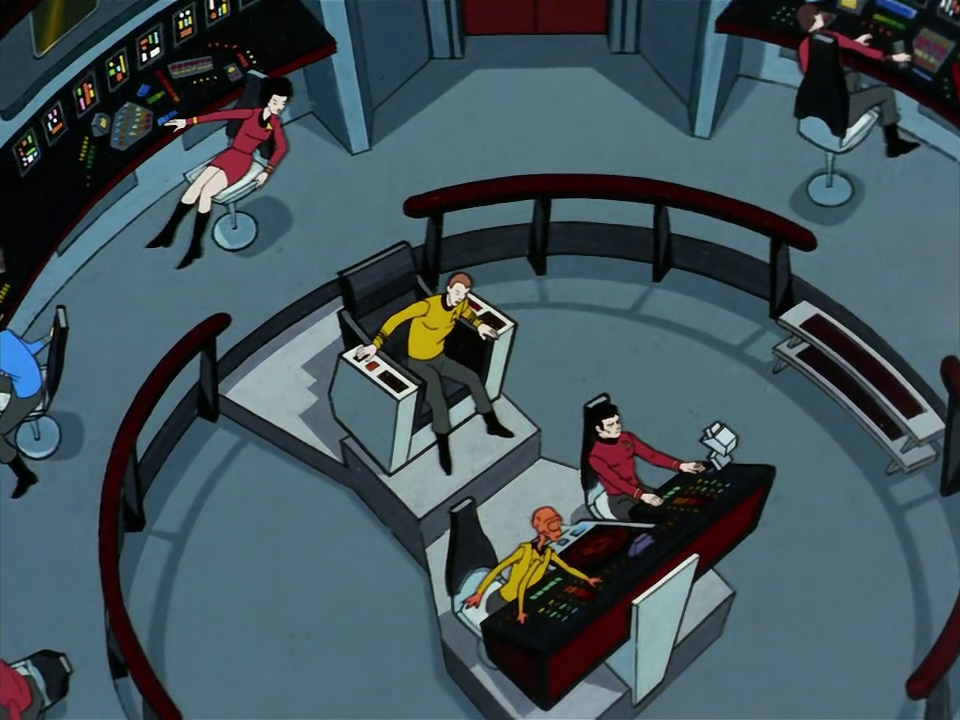
By happy coincidence, the episode I picked for this re-watch happens to be the 100th episode of Star Trek! After 79 episodes of The Original Series there were 22 produced for The Animated Series across two seasons – this being the penultimate one. I know it isn’t a huge deal, but these milestones can feel important.
Onward, then, to the episode How Sharper Than a Serpent’s Tooth!

The first thing to note is the opening titles! A slightly jazzed-up version of The Orignal Series theme plays, heavy on the horns, and William Shatner gives his usual “these are the voyages” voice-over as Captain Kirk. Hearing it again after not watching either show for a while was a real blast of nostalgia… and we haven’t even got started yet!
The episode proper kicks off with a captian’s log, with Kirk narrating that the Enterprise is tracking a mysterious probe. Lower Decks and Strange New Worlds have brought back the captain’s log as a framing device after the likes of Picard and Discovery used logs much more sparingly, and I have to say I’m glad for that. The captain’s log is an integral part of the franchise, after all!
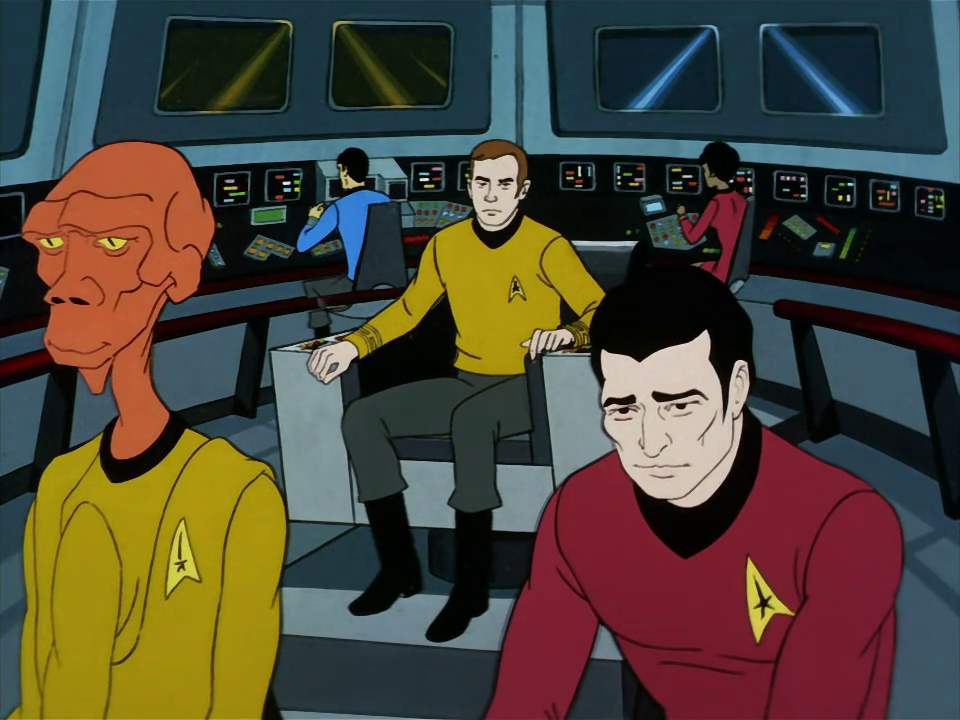
The opening scene on the bridge sets the stage for the episode – a second probe is coming in, following the same trajectory as the first. Characters created specially for The Animated Series are present: the three-armed, three-legged Arex being a personal favourite of mine! Ensign Walking Bear – a Native American – is at the helm. Both characters (and many others in The Animated Series) were voiced by the late James Doohan, better known for his role as Scotty.
On the viewscreen, the alien probe appears as little more than a smudge of yellow-green – and waddles unconvincingly toward the Enterprise! This is a great example of what I mean about finding charm in the jankiness of The Animated Series; by anyone’s standards, even in the ’70s, this doesn’t look great! But part of the fun of fantasy and sci-fi is getting lost in the setting, looking past things like that, and even using one’s imagination to help suspend disbelief. Sure, the alien probe looks like something you might find in a newborn’s nappy… but so what? It’s an alien probe, dammit, and that’s that!
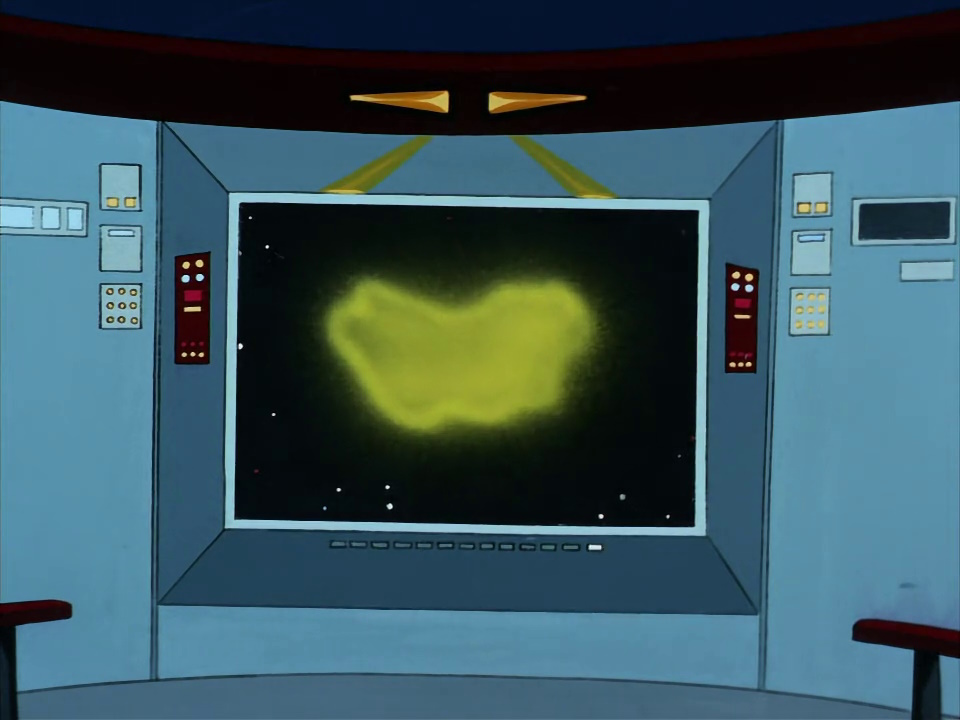
As the Enterprise becomes trapped in a “globular force-field” – which looks like a snow-globe or Christmas bauble from the outside – Spock proclaims it is “fascinating” while Scotty reports to Kirk that he doesn’t know how long the ship can take the strain! Classic lines from the classic crew, and I’m right back there with them. The ship comes to a complete stop while Kirk and the crew decide how to proceed.
The smudge “de-cloaks” to reveal a beautiful spaceship that could be right out of a dozen or more mid-century sci-fi properties! The vibrant shades of red, purple, and blue give it a striking appearance, and the glittering panel at the front makes the vessel stand out. It really is a beautiful ship – and clearly more than a match for the entrapped Enterprise. Though you might not assume so from appearances alone! I love this kind of design; a pre-Star Wars retro sci-fi look, bold in its colour choices. They don’t make ’em like that any more!
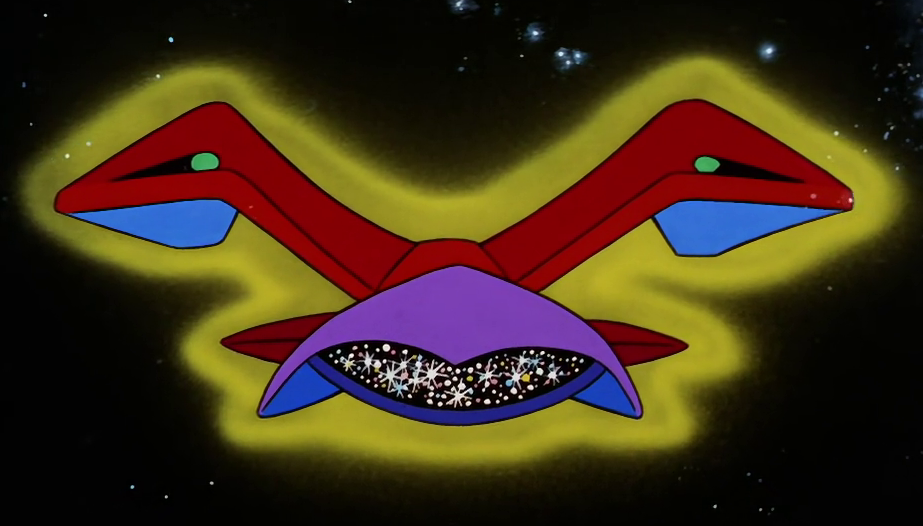
The Animated Series was also pretty limited with its soundtrack. At this point in the episode, with the Enterprise under attack by the beautiful alien vessel, the show’s only “action theme” plays – and I’d forgotten just how much I love this piece of music, too. It seems to perfectly capture the danger that the crew are in… even if, by this point in The Animated Series’ run, we’d have heard it twenty times or more!
Kirk tries everything – reversing the engines, powering up the shields, and hailing the ship – but running out of options and limited by the globe preventing the Enterprise from moving, he reluctantly orders phasers to fire. Although this also proves ineffective, I like how The Animated Series was still true to Kirk’s character: he was never spoiling for a fight and would look for a peaceful way out where possible.

The new character – Ensign Walking Bear – recognises the ship when it projects a dragon-like design (using something like an early holo-projector, perhaps?) and this seems to give the attacker pause. Pleased that at least one human “remembers” them, they give the crew a chance to succeed – but warn that failure will mean death.
Now we see why Walking Bear was on the bridge, eh? Star Trek always finds uses for redshirts and always has! Even classic episodes like Balance of Terror put secondary characters like this in just the right place to contribute to the story or to building up the lore of the franchise. I’ve been critical of modern Star Trek, sometimes, for nakedly shoehorning in some piece of backstory to a secondary character solely for the purposes of connecting to the main narrative… and I guess in some cases it works better than others. But it’s worth remembering that it’s something the franchise has always done in one form or another.
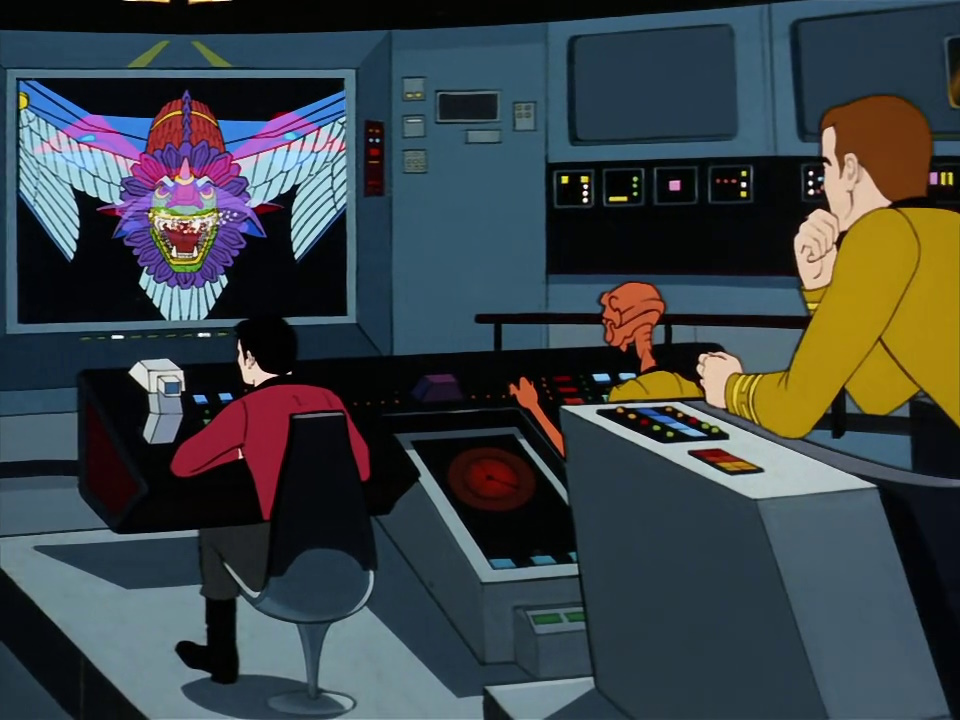
This Kukulkan – described by Walking Bear as an ancient legendary god of the Aztecs and Mayans – is who’s attacking the Enterprise. I’m reminded of two episodes – one from The Original Series and one produced much later during Voyager’s run. Who Mourns for Adonais? during the second season of The Original Series introduced Kirk and the crew to the “gods” of Ancient Greece. And Tattoo, the Voyager Season 2 episode that saw Chakotay encountering an alien race that his people called the “Sky Spirits.” The stories aren’t identical by any means, but there’s a similarity in the underlying premise of all three.
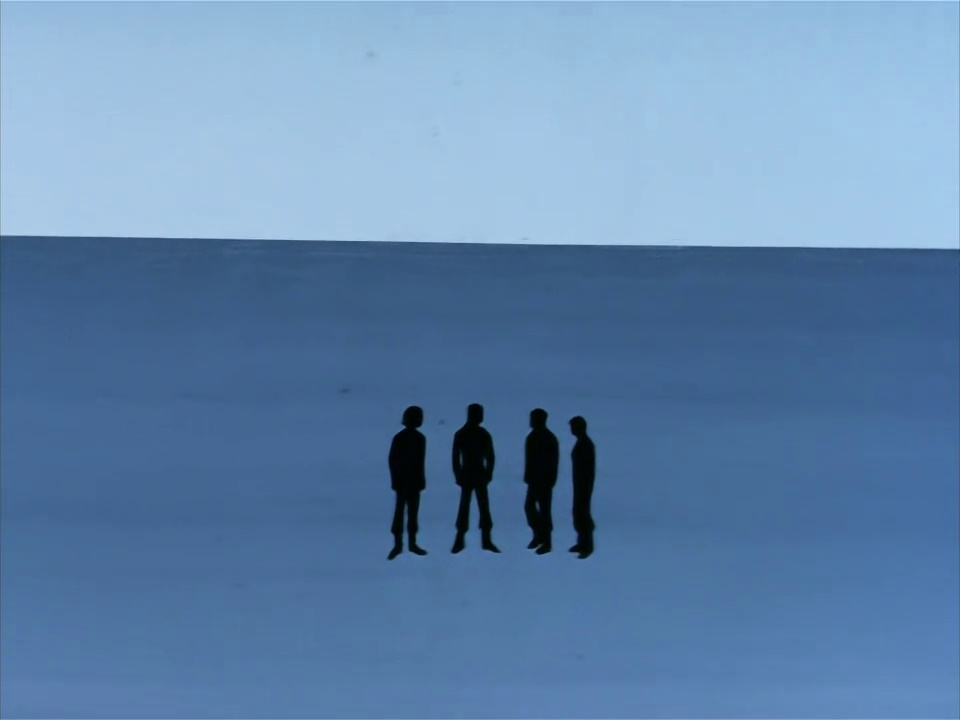
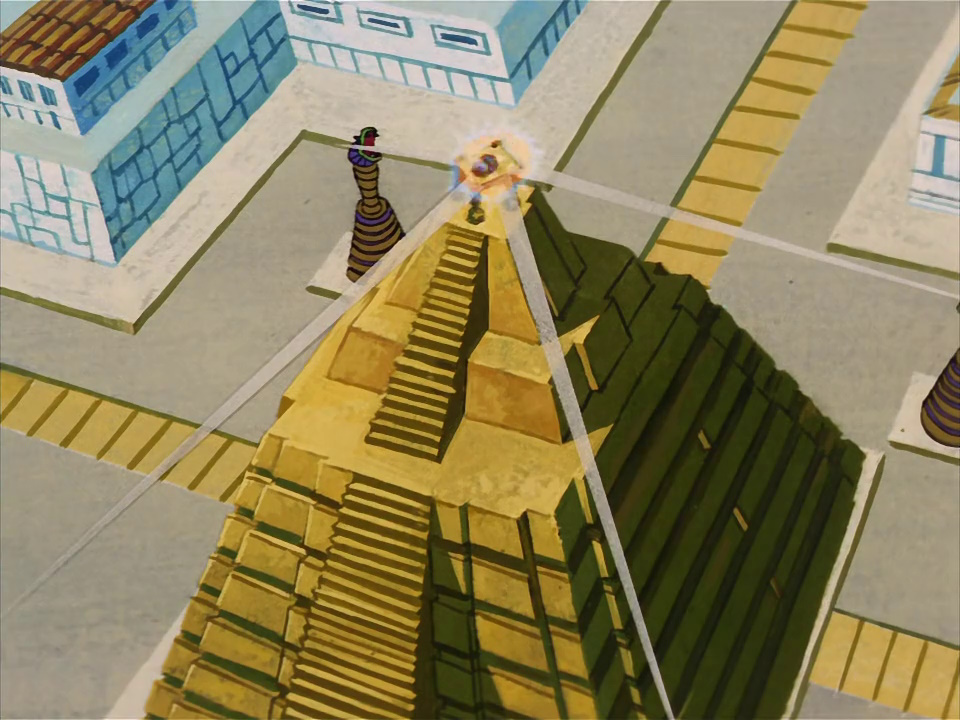
Midway through a conversation with Kirk, Walking Bear vanishes – as do Scotty, Dr McCoy, and eventually Kirk himself. Spock assumes temporary command of the Enterprise, before the action switches to the kidnapped men aboard Kukulkan’s ship. They seem to be in some kind of holodeck – the room, while plain silvery-grey at first – soon morphs into a landscape filled with trees, and then ultimately a city. There was a vaguely Mayan or Aztec look to this city, which was adorned with several statues of Kukulkan. The statues themselves, though, almost gave me a Chinese or East Asian vibe; dragons are a big part of the folklore of that part of the world, too.
Back on the Enterprise, we get a short scene with Spock and Uhura. Uhura wants to do something to help Kirk, but Spock insists that their priority is to free the Enterprise from Kukulkan’s clutches. It isn’t easy to convey facial expressions with such limited animation, but I think we’re meant to understand that Uhura isn’t thrilled with this response!
Kirk, Walking Bear, and the others try to puzzle out what Kukulkan wants. Using Walking Bear’s knowledge of history, they piece together that Kukulkan tried to instruct several ancient cultures, but that none of them did exactly what the entity wanted. Kirk heads to the top of an Aztec pyramid that has appeared in the middle of the city – which seems to be comprised of elements from several different cultures. For its time, this is a pretty sensitive and historically accurate depiction of Native Americans, Maya, Aztecs, and others. There’s even a mention of the Mayan calendar… giving me flashbacks to the 2012 phenomenon!
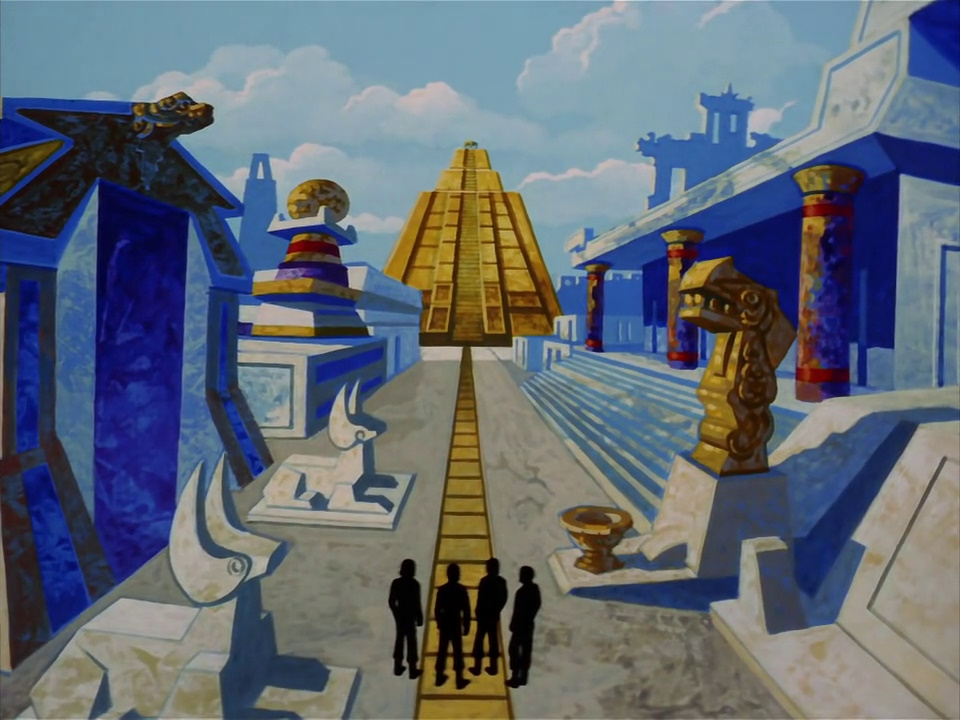
Maybe it’s an old memory bubbling under the surface from when I last watched How Sharper Than a Serpent’s Tooth some years ago, or perhaps it was just a pretty obvious story beat, but the fact that the statues could be rotated to generate the signal Kukulkan was looking for wasn’t exactly a surprise! It seemed like something the crew figured out pretty easily, so maybe I shouldn’t be patting myself on the back too hard for figuring it out. It felt like a puzzle you might have to solve in a video game like Tomb Raider!
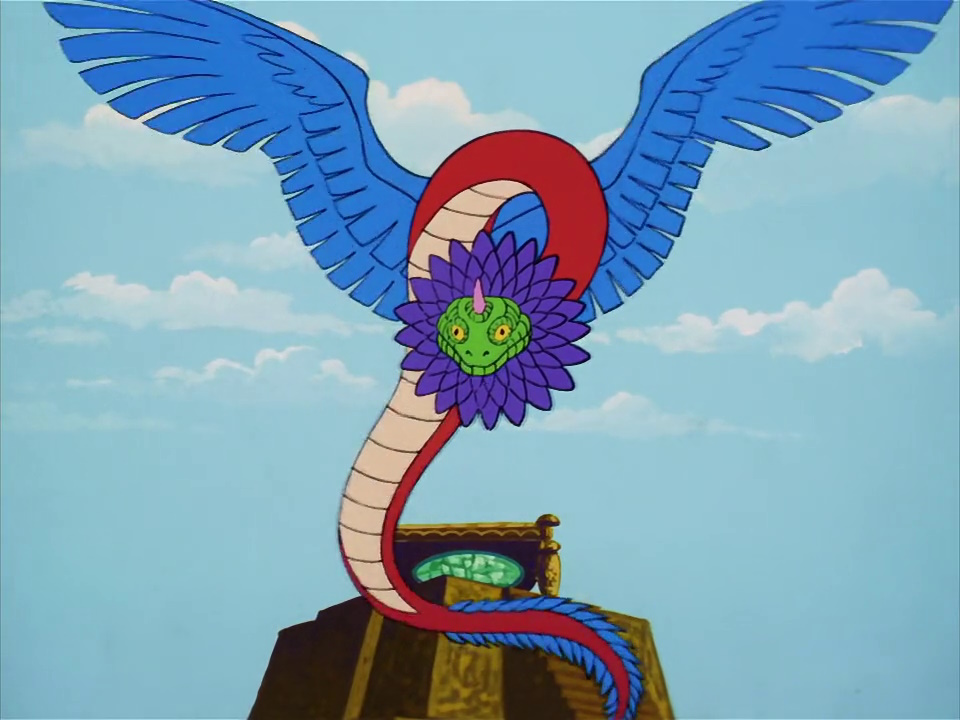
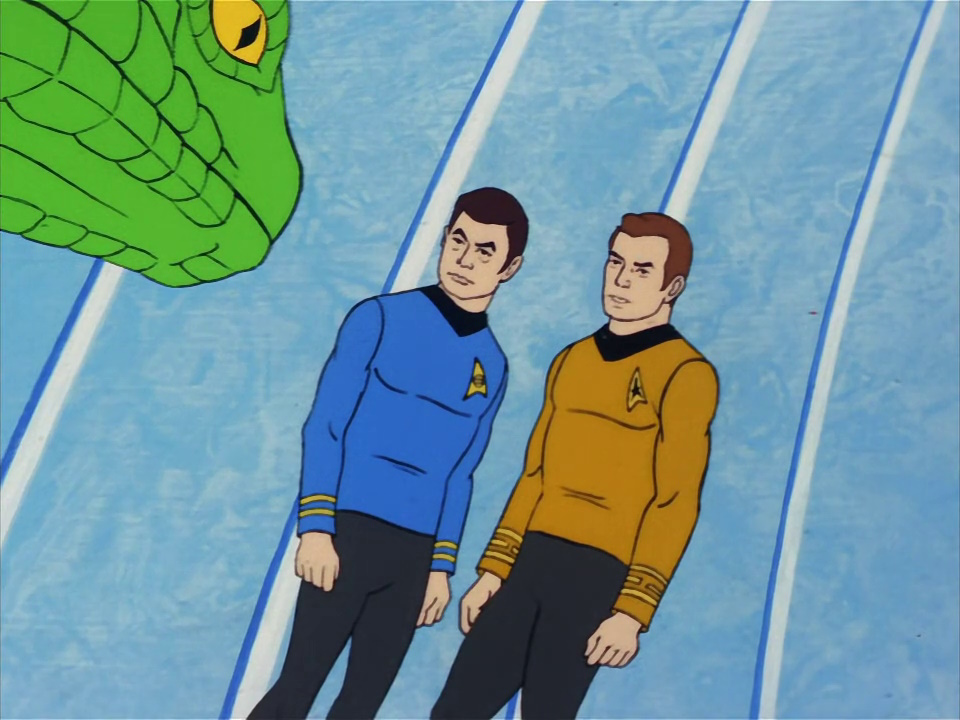
Kukulkan makes their appearance after Kirk solved the (easy) puzzle, but complains yet again that they have been forgotten. I like the design of Kukulkan – appearing as a colourful winged snake with a kind of mane or frill. I wouldn’t say the design was “intimidating” as it appears in the show, but I daresay if I came face to face with a real-life Kukulkan I’d be quite frightened! It was neat, at any rate.
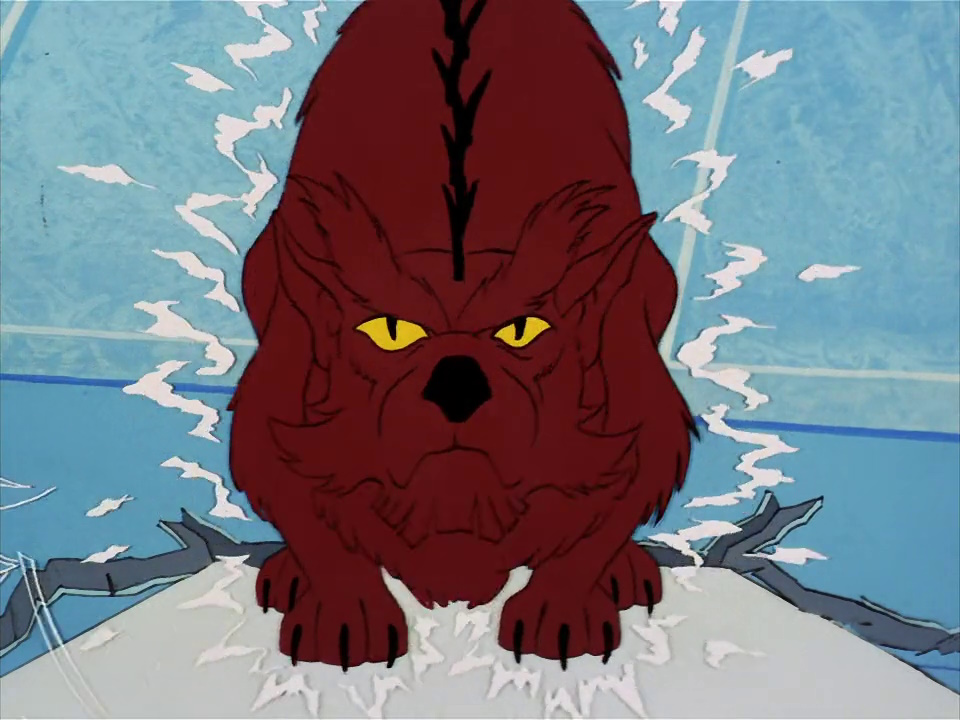
Kirk and the others are then transported to a “zoo,” one populated by a number of other aliens and animals. Kukulkan’s convoluted explanation is that they’re the last member of a race that wiped itself out, and that they keep these creatures in cages, using technology to create “mental worlds” for them to inhabit. Dr McCoy is shocked that one of the creatures is a Capellan power-cat – an animal that’s notorious for hating being kept in captivity. The power-cat is adorable, by the way, and I won’t hear a bad word said about it.
Kirk argues that Kukulkan has no right to interfere with humanity or any other culture – but all this does is enrage them. Kukulkan hisses like a snake and seemingly attacks the crew, while back on the Enterprise Spock seems to have found a way out of the globe force-field. I wasn’t wild about Kukulkan’s explanation here; it seemed a bit basic. And it runs into the problem that other, similarly powerful aliens encounter in other stories: it should be clear that humanity has changed a lot over the centuries, growing, evolving, developing new technologies – and in this case, becoming more peaceful. Sure, the Enterprise fired phasers – but as Kirk points out, only in self-defence.
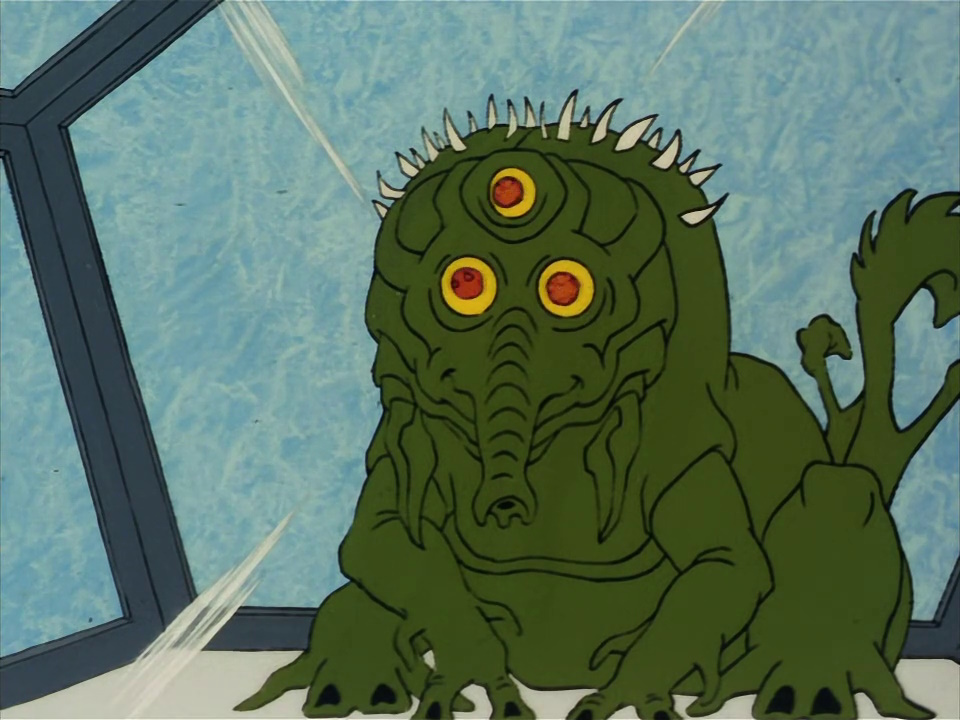
Spock’s plan works – because of course it does! – and the Enterprise is able to break free from the trap. It’s always fun to see Arex in action on the bridge, and at the time this three-limbed alien could really only be created for animation. The Animated Series, in that sense, gave Star Trek a chance to branch out beyond the make-up and basic prosthetics of its original incarnation. Kukulkan is also a great example of this: live-action couldn’t really have made a similar-looking alien – not with the budget usually set for a single episode of Star Trek, at any rate!
After Bones and Kirk free the power-cat from captivity, it runs wild. Using its high-voltage fur(?) it threatens Kukulkan, whose ship’s power has been damaged following an attack by the Enterprise. Kirk intervenes, subduing the power-cat with a hypospray, demonstrating to Kukulkan that he doesn’t wish the entity any harm, despite the damage that has been caused.
What follows is a fairly typical Star Trek dialogue, with Kirk and the others emphasising how much humanity has grown since Kukulkan visited centuries earlier. Kirk rejects the idea of being caged or led around like the animals in the zoo, and Kukulkan capitulates, realising that humanity no longer needs or wants to associate with them. I actually felt a bit sad for Kukulkan in this moment – their dreams of having sentient companions instead of just animals seemed to be shattered, and being told “we no longer need you” is just harsh to hear!
Kirk says that the price for Kukulkan sharing its knowledge was too high, and back on the Enterprise he and Spock ponder the implications of several of Earth’s civilisations having contact with this ancient alien – as well as the irony that, at the end of the day, Kukulkan was just lonely and seeking companionship. The danger averted, Kukulkan withdraws, and the credits roll.
All in all, this was a fun episode to re-visit. I adored the designs of Kukulkan’s ship and the entity itself, as well as some of the very alien critters in the zoo. The power-cat is something I’d love to see make a re-appearance in modern Star Trek; I can see it being a ton of fun to depict in live-action! But then again I’m a cat lover, so I suppose I would say that.
This was a story that felt very “Star Trek.” An ancient alien visited humanity in the past, and returns only to be disappointed with the war-like nature of humans. Kirk and the crew had to intervene to show that their perceptions weren’t entirely right, and that humanity has developed beyond the need for gods and deities. It’s far from the only episode to touch on themes like this – but something about the design of Kukulkan as this winged, dragon-like serpent, and its connection to real cultures like the Maya and Aztecs, gave the story some more depth. At the very least, Kukulkan stands out from the pack of Star Trek aliens with prosthetic noses and foreheads!
As a bit of background, How Sharper Than a Serpent’s Tooth was submitted as the episode to be assessed when The Animated Series was nominated for a Daytime Emmy Award in 1975; the series would go on to win that award. It’s the only time a Star Trek show has won the award for “Best Series,” so this episode turned out to be quite influential! It also marks Spock’s 100th Star Trek appearance, and as noted above is the franchise’s 100th instalment.
It was a blast to go back to The Animated Series for the first time in years, and I’m glad that I got to mark the milestone anniversary of at least one of its episodes. Very few TV shows – and even fewer cartoons – can claim to have such a legacy half a century after their first broadcast, but The Animated Series really does occupy a unique place in Star Trek’s history. I hope you’ll join me in celebrating this fun show as we mark the fiftieth anniversary of the episode How Sharper Than a Serpent’s Tooth.
So which episode of The Animated Series should we look at next? I’ve always had a soft spot for the frankly bizarre episode The Magicks of Megas-Tu… a story that no other franchise would dare attempt, especially not nowadays! I’ve also never written a proper episode re-watch for The Original Series here on the website, despite being up and running for almost five years. We’ll have to rectify that one day, too. But for now, I hope you’ve enjoyed stepping back in time with me. And until next time: Live Long and Prosper!
Star Trek: The Animated Series is available to stream now on Paramount+ in countries and territories where the platform is available. The series is also available on DVD and Blu-ray. The Star Trek franchise – including The Animated Series and all other properties discussed above – is the copyright of Paramount Global. This article contains the thoughts and opinions of one person only and is not intended to cause any offence.




 Trekking with Dennis