Rating Your “Unpopular” Star Trek Opinions!

A Star Trek-themed spoiler warning

Spoiler Warning: There are spoilers ahead for practically the entire Star Trek franchise, including recent seasons of Discovery, Picard, Strange New Worlds, and Starfleet Academy.

Later this year, Star Trek will celebrate its sixtieth anniversary – that’s six decades of sci-fi adventures, space exploration, and a wonderful fan community that I absolutely adore! Today, I thought it could be a bit of fun to look at some of the Trekkie community’s so-called “unpopular opinions” about Star Trek. If you read my piece about fan theories a few weeks back, I’m going to do something similar this time around: I’ve compiled a bunch of “unpopular opinions” from across social media, and I’m going to dissect them!

I went to Tumblr, Facebook, Reddit, TikTok, and other social media pages, scanning posts and comments sections, and I pulled out twenty-five “unpopular opinions” for this piece. And rather than just state them and share my opinion, I thought it could be interesting to try to answer two questions! Firstly, I’ll share whether I agree or disagree. And secondly, I’ll try to gauge whether the opinion in question could fairly be described as “unpopular.”
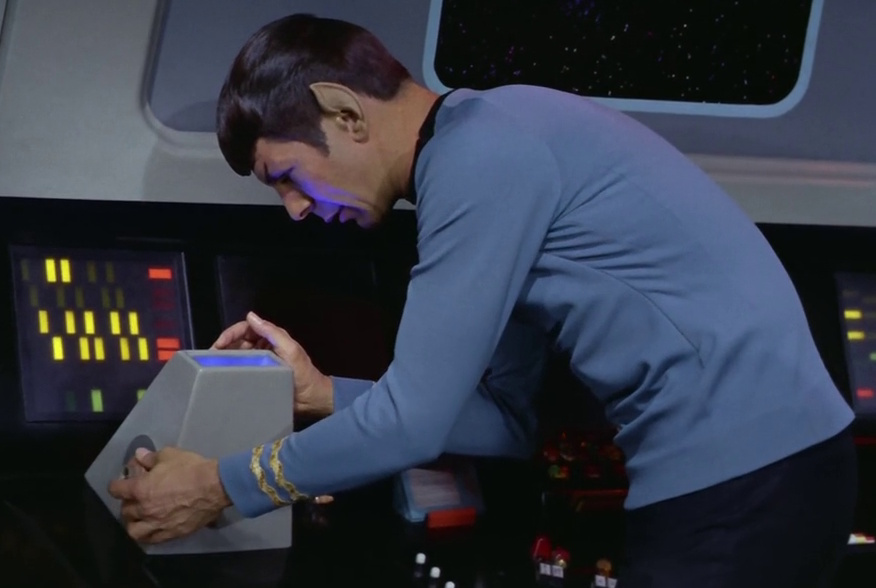
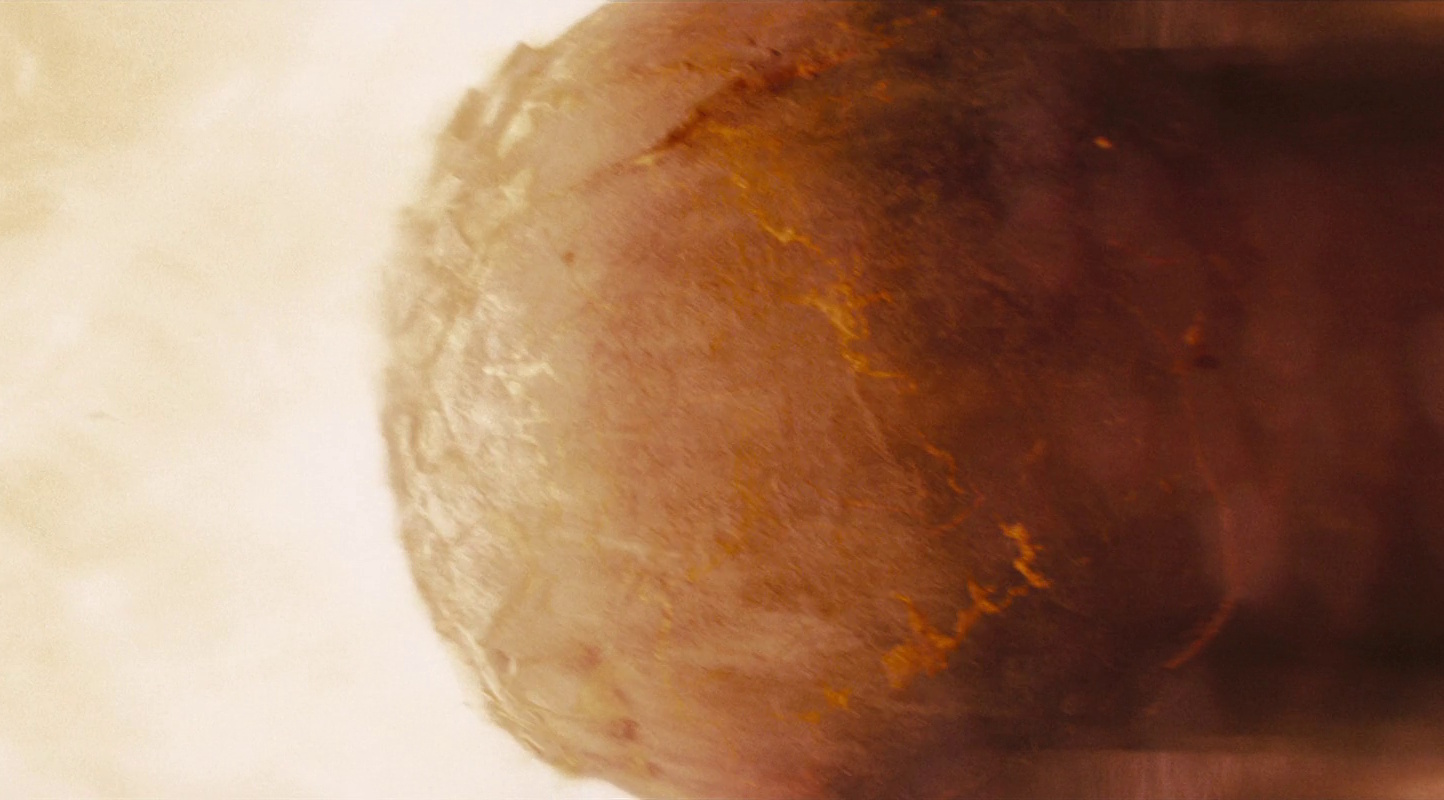
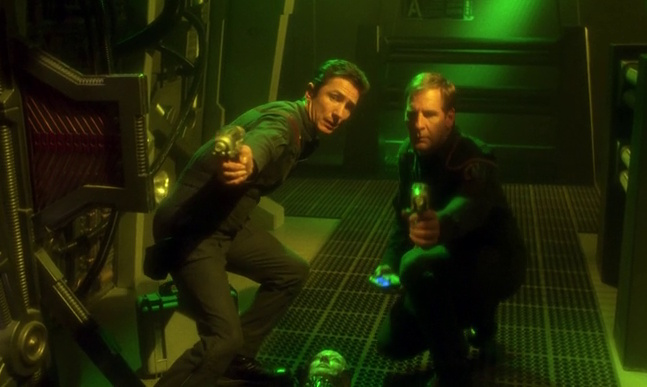
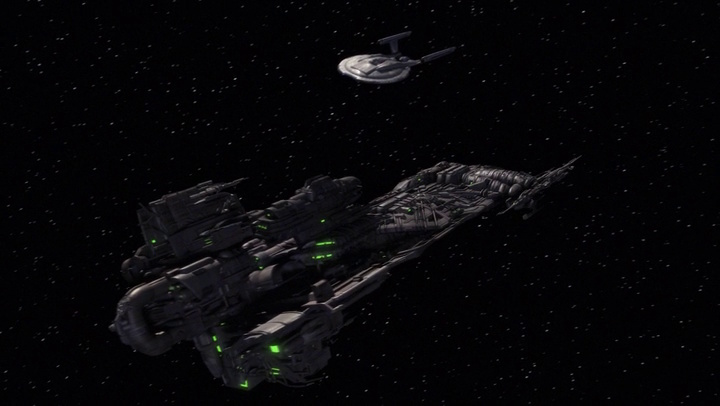
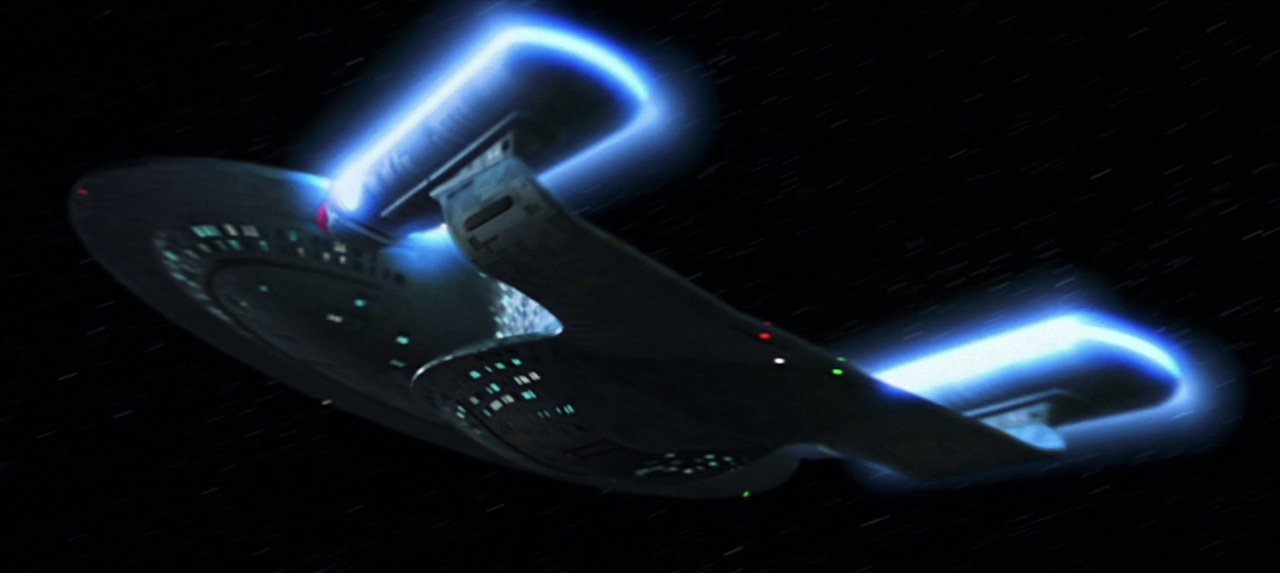
Still frame from The Enterprise Incident showing Spock and the scanner
I scanned social media to detect your most controversial opinions…

Here’s a couple of examples so we’re all on the same page!

Example #1: “Khan sucks as a villain because he’s lame and boring, and his evil scheme makes no sense.”

I would say I disagree (vehemently) with this opinion! But I would concede that it is a genuinely *unpopular* opinion within the fan community and with a wider audience. In fact, it’s such an unpopular opinion that I’ve never seen anyone genuinely express it!
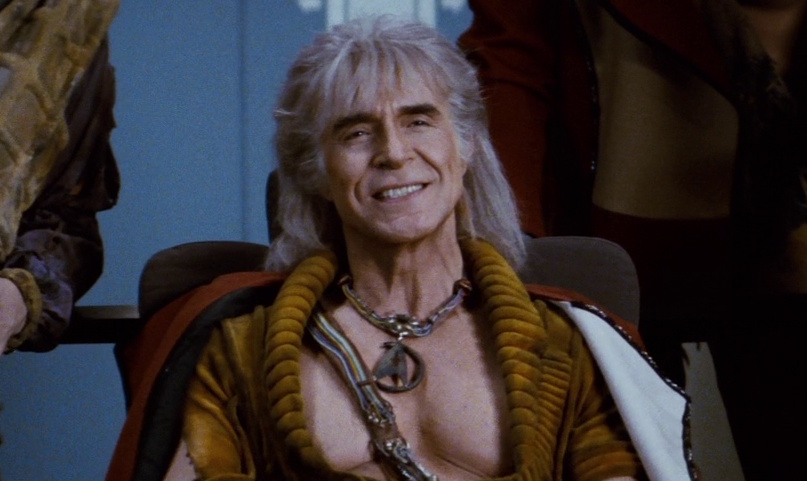
Still frame from Star Trek II showing Khan
Khaaaaaan!

Example #2: “Captain Picard is the best Enterprise captain, better than Kirk or Archer or anyone else by miles.”

This one’s a toughie on the “agree/disagree” bit, because Kirk, Archer, and really every Star Trek captain across the franchise have plenty of their own strengths. But if I had to come down on one side or the other, I’d say I agree; Picard is a great captain. However, this is clearly not an “unpopular” opinion within the fandom – ask any group of Trekkies who their favourite captain is, and it won’t be long before you hear multiple people say “Picard!”

So… does that cover everything in terms of the format?
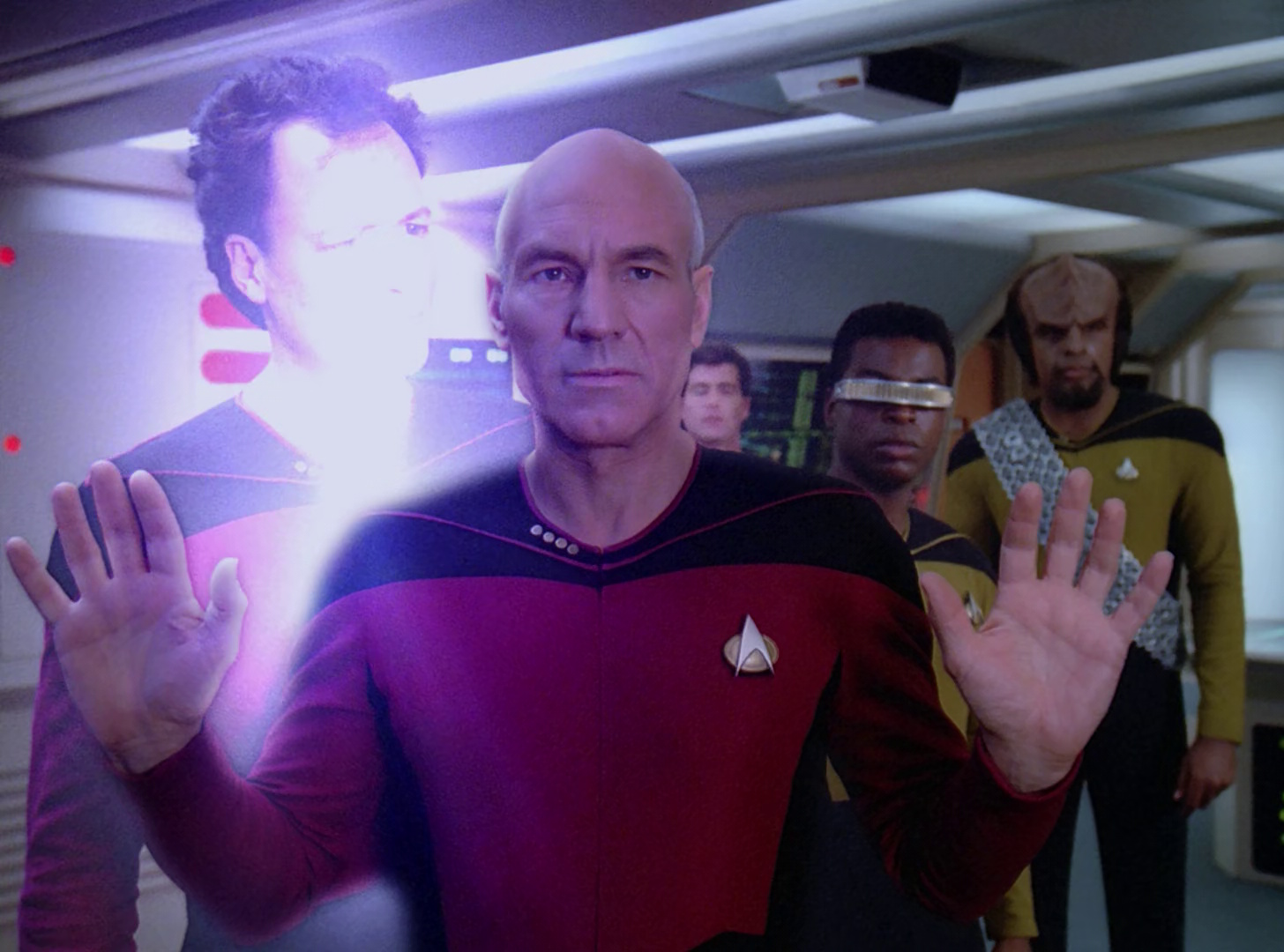
Still frame from Star Trek: The Next Generation Season 2 (Q Who) showing Q materialising next to Picard.
Who’s the best Enterprise captain?

It should go without saying, but everything we’re going to talk about today is *entirely subjective, not objective* – and it’s just one old Trekkie’s take, at the end of the day. If you hate my opinions, think I’ve got it completely wrong, or if I criticise a show or character you adore, please try to keep that in mind! There are a variety of opinions out there about this wonderful franchise, and I share mine with the Trekkie community in the spirit of light-hearted celebration in this landmark anniversary year.

Some of these “unpopular opinions” have clearly been shared in a tongue-in-cheek way (at least, I hope they have!) and I’m not planning on taking any of this too seriously. This also shouldn’t be interpreted as an “attack” or “hate” for any folks in the fandom who genuinely hold any of these opinions. This is meant to be a bit of fun, partly at Star Trek’s expense, as we move closer to the 60th anniversary.

With all of that out of the way, this is your final chance to nope out if you don’t want to get into some potentially controversial Star Trek opinions!

“Unpopular” Opinion #1:
Threshold is a great body horror episode.
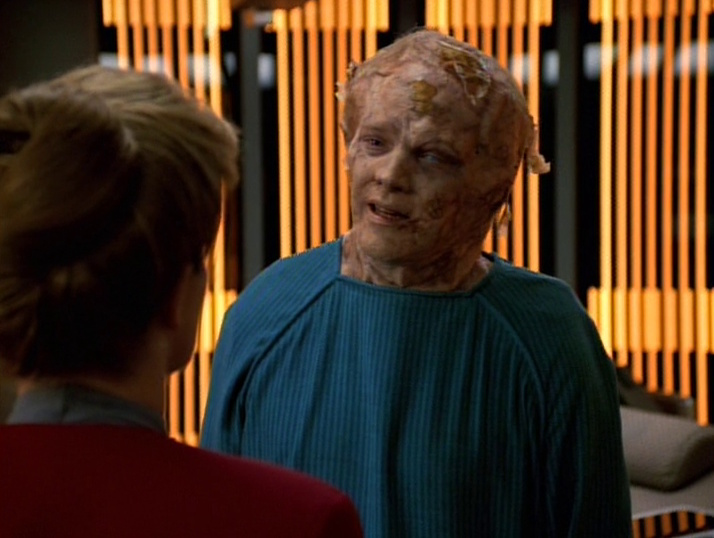
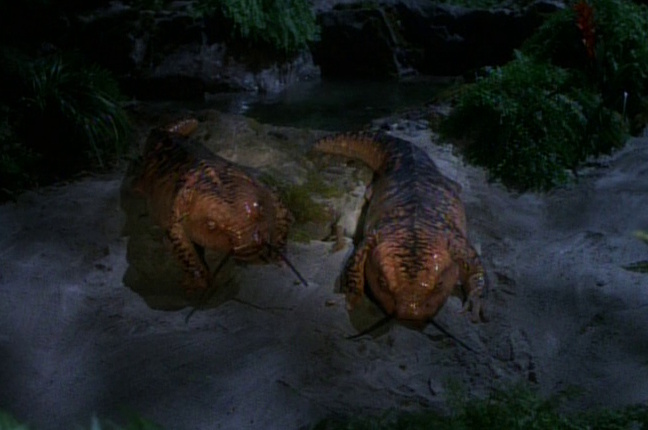
Still frame from Threshold showing (mutating) Paris and Janeway

“Threshold” and “great” in the same sentence, eh? We’re starting off strong! I can see where this is coming from; Tom Paris’ gradual mutation into a salamander-like “hyper-evolved human” does have some genuinely disturbing moments, brought to life by some solid prosthetics during the sequences in sickbay. The idea of mutating in real-time, and not being able to do anything to stop it… that’s the same kind of idea behind classic body horror films like The Fly, only with a Star Trek flavour in this case.

I would say, though, that for whatever successes Threshold might have on the body horror front in the middle of the story, the ending really nullifies all of it. The CGI salamanders weren’t great to look at, nor were they frightening or disturbing in any way, and the typical episodic TV “reset” of Paris and Janeway back to their normal selves meant there were no lasting consequences for either of them. This comment is clearly a response to Threshold’s meme status, and I’m glad that Trekkies are willing to re-examine even the most disliked episodes! But for me, Threshold is still a weak story, and while there is some creative body horror-adjacent storytelling in the middle, it’s completely negated by the way the episode wraps up.

Unpopular? ✅Yes.✅
Agree? 🛑No!🛑

“Unpopular” Opinion #2:
Spock and Chapel’s romance is too big a part of Strange New Worlds – and it sucks.
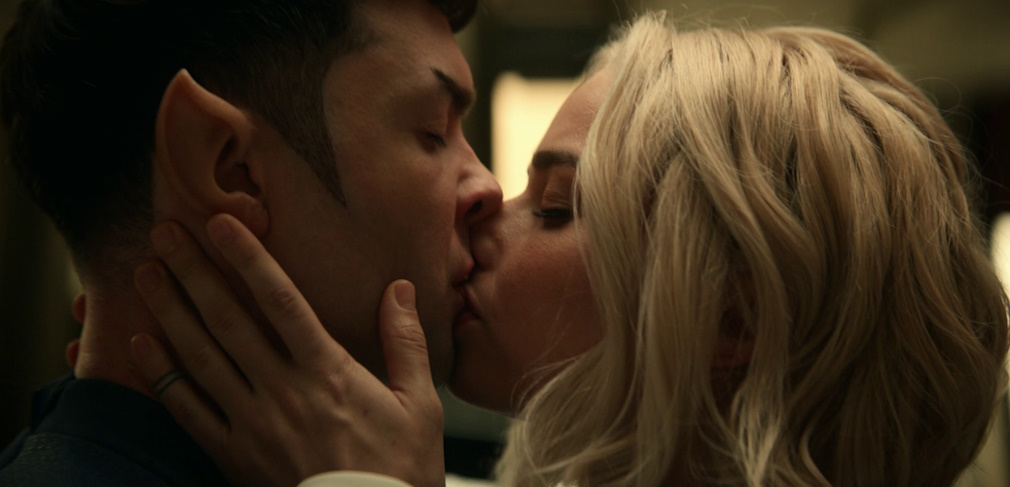
Still frame from Charades showing Spock and Chapel kissing

100% agree on this one – no notes! Chapel’s “crush” on Spock in The Original Series was cute. But it wasn’t a huge part of the show for either of them, and it didn’t need this kind of on-again, off-again storyline in Strange New Worlds to make sense. In my opinion, Strange New Worlds has been way too focused on Spock and putting him in situations which, frankly, are toe-curlingly cringeworthy. The Chapel-Spock romance is part of that. I had hoped that, with the addition of Chapel’s fiancé, we’d have seen the back of this storyline – but alas.

I think I could’ve stomached an episode or two in which this relationship existed and ran its course. But I agree with the original poster, here: it’s become way too big a part of the show. When combined with other “Spock comedy” storylines (which seem to be the only Spock storylines the producers are interested in or know how to write), it quickly became too much. Cringeworthy, unnecessary, and arguably treading on the toes of The Original Series, too. A bad combination all around! And, based on the number of likes and comments on posts like this, I think it’s a fairly common take among Trekkies, too.

Unpopular? 🛑No!🛑
Agree? ✅Yes.✅

“Unpopular” Opinion #3:
T’Rul should’ve become a recurring character on Deep Space Nine.
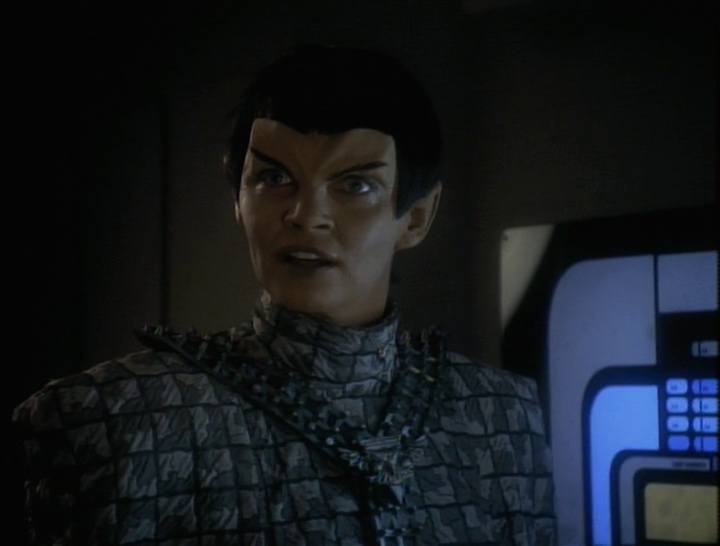
Still frame from The Search Part I showing T'Rul

In The Search, which kicked off DS9′s third season, we’re introduced to the USS Defiant for the first time: the first Federation starship (officially) able to cloak. The cloaking device was loaned to Starfleet by the Romulans, and Sub-Commander T’Rul was the officer assigned to oversee it, and make sure it wasn’t being used in a way that violated Federation-Romulan treaties. However, after her first appearance, T’Rul disappeared from Deep Space Nine. Martha Hackett, who played the character, would go on to have a recurring role on Voyager as Seska.

I quite like this idea, to be honest. T’Rul would’ve added something different to DS9 during some of the episodes set aboard the Defiant, and it could’ve been fun to see a Romulan getting to know the crew and learning how to live with the Federation. There wasn’t a Romulan character like that through the entire TNG era, and it wouldn’t be until we met Elnor decades later that we’d get to spend more time with a Romulan. I can see plenty of stories where T’Rul could’ve played a role, and I especially like the idea of her trying to socialise with members of the crew, perhaps teaching us a bit about Romulan culture and customs along the way. Definitely a niche idea, though!

Unpopular? ✅Yes.✅
Agree? ✅Yes.✅

“Unpopular” Opinion #4:
The first few episodes of Lower Decks were too “horny,” and this turned off potential viewers.
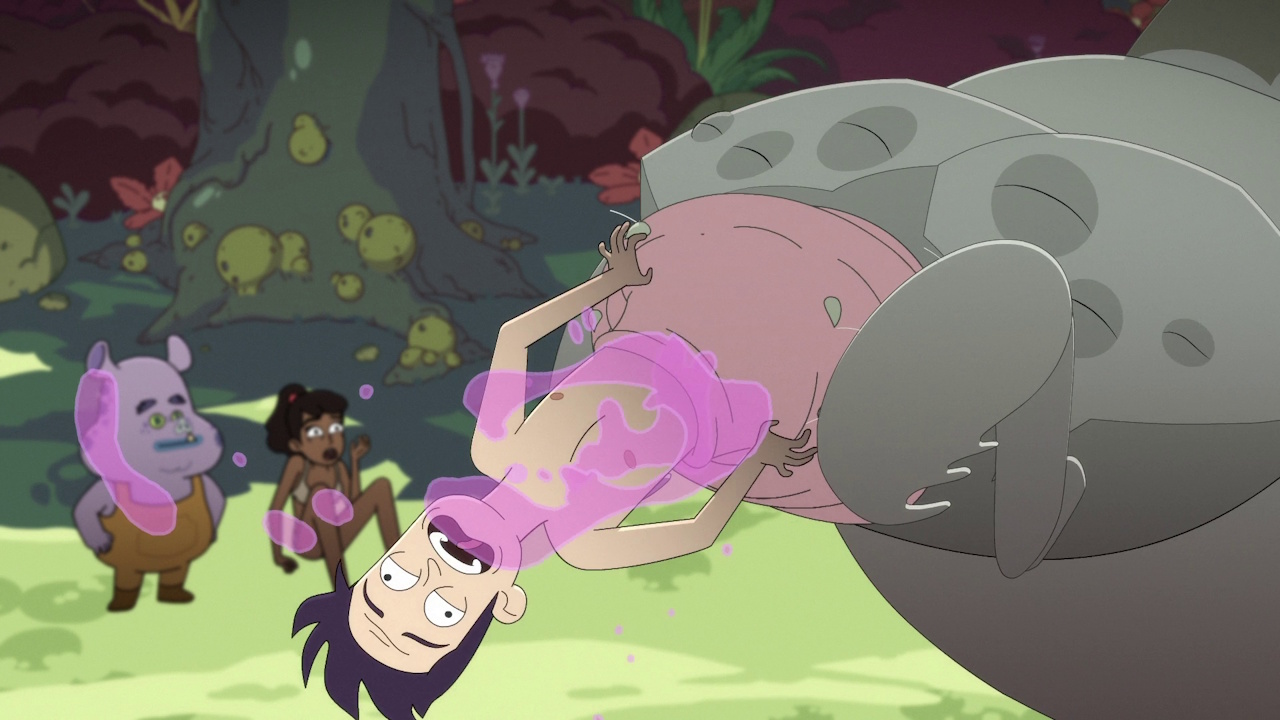
Still frame from Second Contact showing Boimler in an alien's mouth

Assuming the original poster meant “horny” as in “overly sexualised,” I have to say I don’t agree. Not that the first episodes of Lower Decks had a lot more sexual imagery and language than TNG-era Star Trek – they absolutely did! But I disagree that the early episodes are unique in that regard! I’ve only seen up to the first part of Season 3; Lower Decks is still a show I need to catch up on and finish watching. But I didn’t feel the tone changed or softened very much across the first two-and-a-bit seasons – which is basically half of the show.

In the run-up to Lower Decks’ premiere, I was a firm advocate for the fact that Star Trek can be funny, that Star Trek has always been funny, and that being an animated comedy shouldn’t matter as long as the show is good. I think the general response from Trekkies has been that Lower Decks is a solid addition to the franchise, even recapturing that episodic, TNG style which Discovery and Picard had moved away from. But did some of its crude humour or over-the-top moments mean some Trekkies switched off? Probably. In fact, almost certainly. Not every Star Trek show is right for every viewer, so folks who want to take the franchise seriously, and who don’t want a Rick and Morty-inspired take on Star Trek were probably never going to enjoy what Lower Decks had to offer.

Unpopular? ✅Yes.✅
Agree? 🛑No!🛑

“Unpopular” Opinion #5:
Chekov was “useless” in The Original Series.
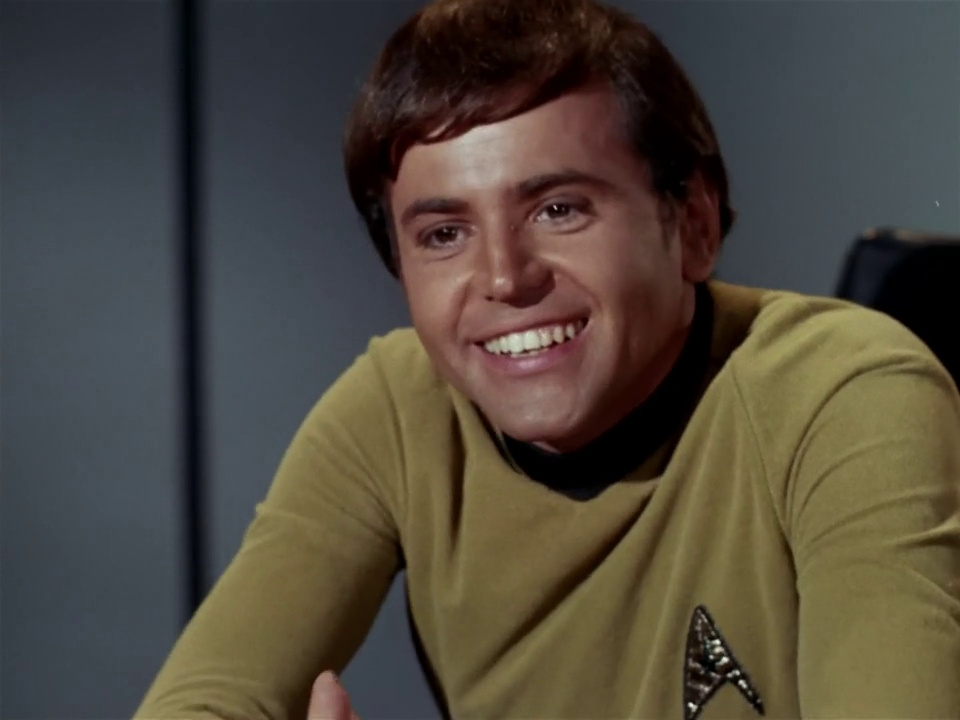
Still frame from The Trouble with Tribbles showing Chekov

I think I can see where this one is coming from… but I really don’t agree. Chekov was a late addition to TOS, joining in from Season 2. He only appeared in 36 episodes in total – less than half of The Original Series. But… none of that makes him “useless.” In fact, I’d argue very passionately that Chekov’s presence on the bridge alongside Sulu, Kirk, Uhura, and the others was a very powerful and symbolic statement: at the height of the Cold War, a mere five years after the world almost blew itself up over the Cuban Missile Crisis, here was a vision of the future in which Russians, Americans, and humans from all over the world were living and working together in harmony.

Like most of the cast of The Original Series outside of “the big three” of Kirk, Spock, and Dr McCoy, Chekov got fewer moments in the spotlight and fewer lines, and because he joined the show later, I guess that shows up even more. He was also absent from The Animated Series, due to the show’s tight budget. But he does get storylines and interesting moments across practically all of his episodes, and he stands in for Sulu at points in Season 2, as well. Not useless at all!

Unpopular? ✅Yes.✅
Agree? 🛑No!🛑

“Unpopular” Opinion #6:
Discovery is overrated.
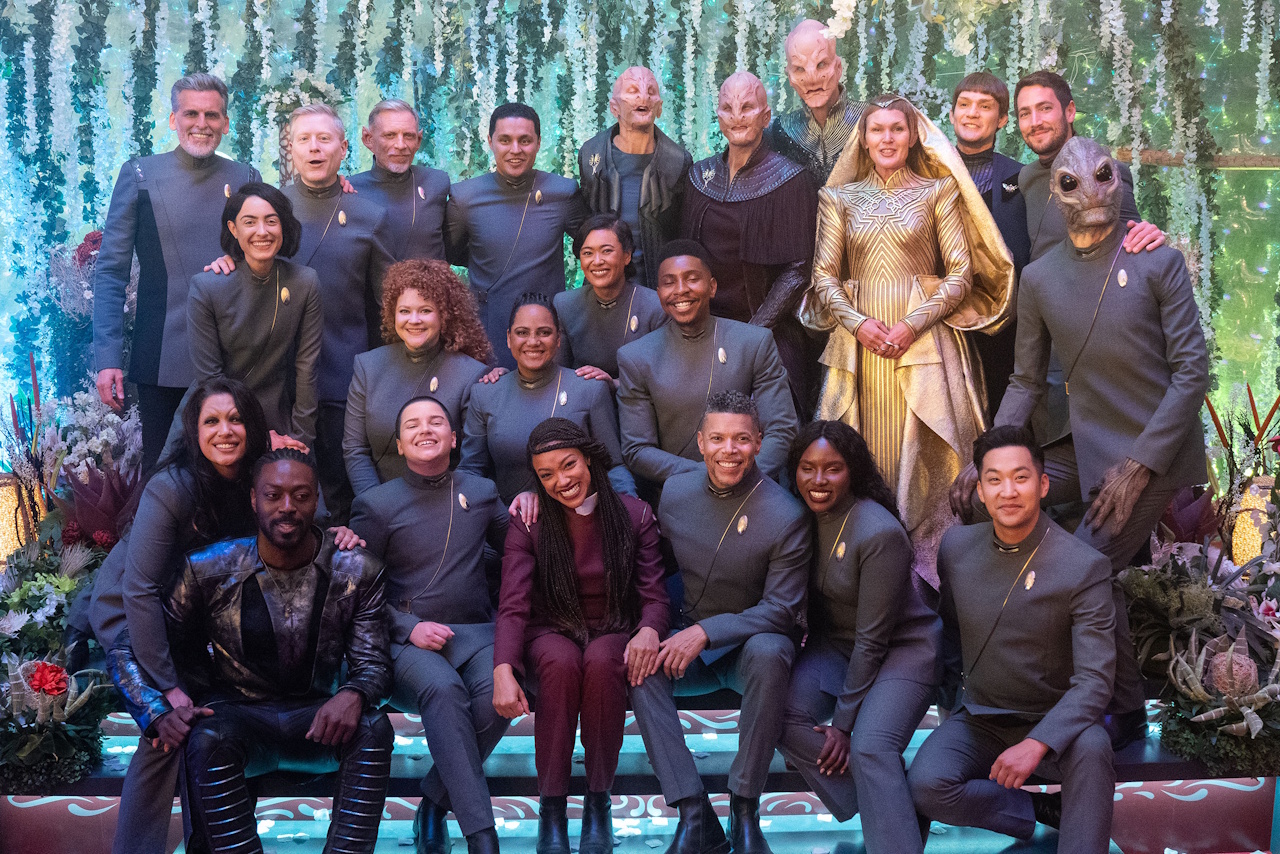
Behind-the-scenes cast photo from Discovery S5

I had to do a double-take when I saw this. “Surely,” I thought, “the original poster must’ve meant underrated, or maybe over-*hated*?” But no, this is their unpopular opinion! To be blunt, I don’t think Discovery is rated particularly highly by a large swathe of the fan community. It has its fans, of course – myself included for the most part. But “overrated” suggests that the show is held in high esteem when it shouldn’t be, when really I’d be arguing the opposite: that too many Trekkies wrote off Discovery without giving it a fair shake, and that Season 2, and parts of Seasons 3 through 5 all had good episodes, interesting moments, and more.

For something to be “overrated,” it has to have that acclaim within the fan community, and I just don’t see Discovery having that kind of reputation for the most part. I think it’s absolutely fair to criticise Discovery, as I’ve done on many occasions here on the website. And if the original commenter dislikes some or all of the show, then that’s okay. But I couldn’t say Discovery is overrated… because I just don’t think the fan community at large rates it very highly to begin with!

Unpopular? 🛑No!🛑
Agree? 🛑No!🛑

“Unpopular” Opinion #7:
Captain Janeway did the right thing with Tuvix.
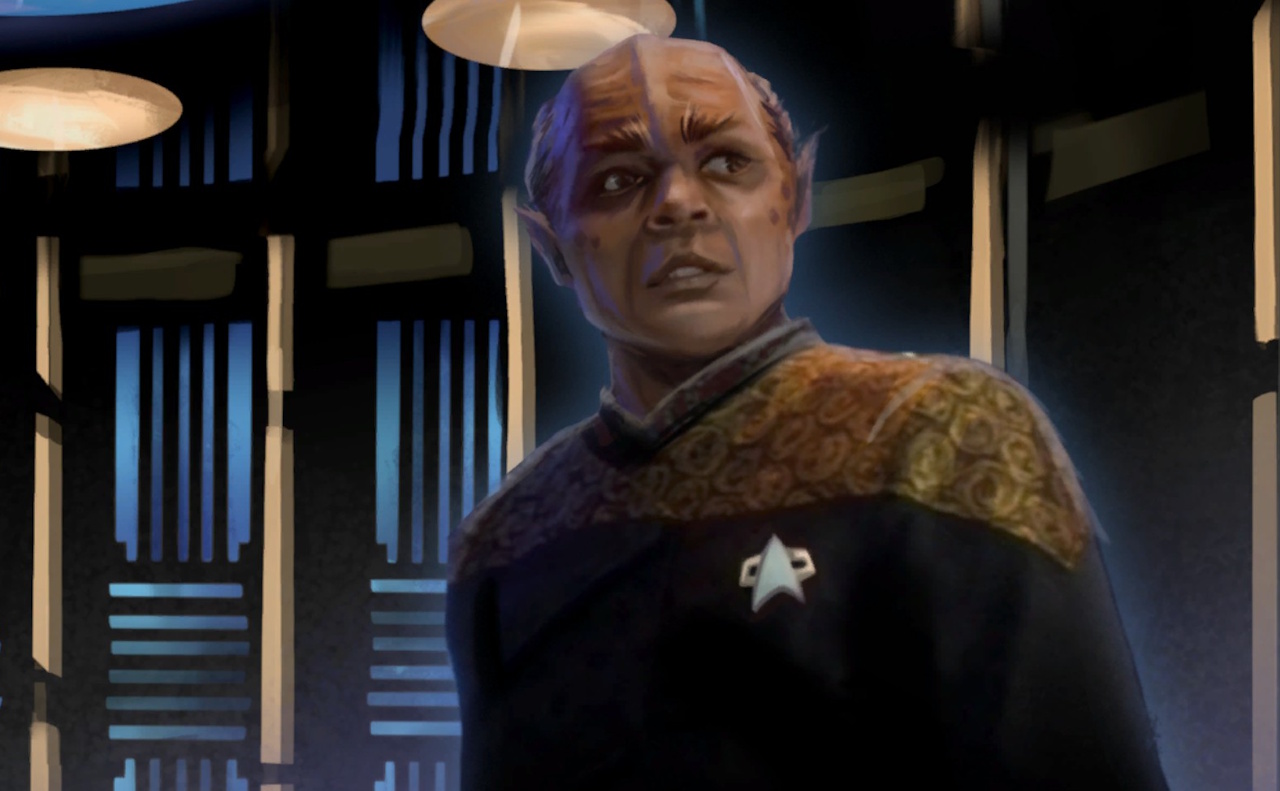
Cropped screenshot from Across the Unknown showing art of Tuvix

Tuvix’s controversial status lives on! One of the best things about Star Trek is that many episodes make you stop and think. They present complex issues with moral quandaries, and they don’t shy away from reckoning with them. And Tuvix is one such example. Do you kill a man you barely know while he’s pleading for his life in order to save two of your friends? Captain Janeway believed she had to, and even stepped in to do it herself when the Doctor refused.

I can understand her point of view. The mitigating circumstances are the unique perils of the Delta Quadrant, and Tuvok and Neelix’s skills in navigating it. But was it the “right” thing to do? The episode pulls no punches, and I’ve even heard some fans say it’s the worst thing Janeway ever did. I don’t agree on that front – wiping out an entire timeline and the lives of everyone in it has to take that prize! But yeah, it was a shitty thing to do. It was a tough situation, and Janeway made the call that she felt gave her ship and crew the best chance of making it home. And hey, if you disagree… play the new video game Across the Unknown and make a different choice!

Unpopular? ✅Yes.✅
Agree? 🛑No!🛑

“Unpopular” Opinion #8:
Wesley Crusher is fine/underappreciated/good.
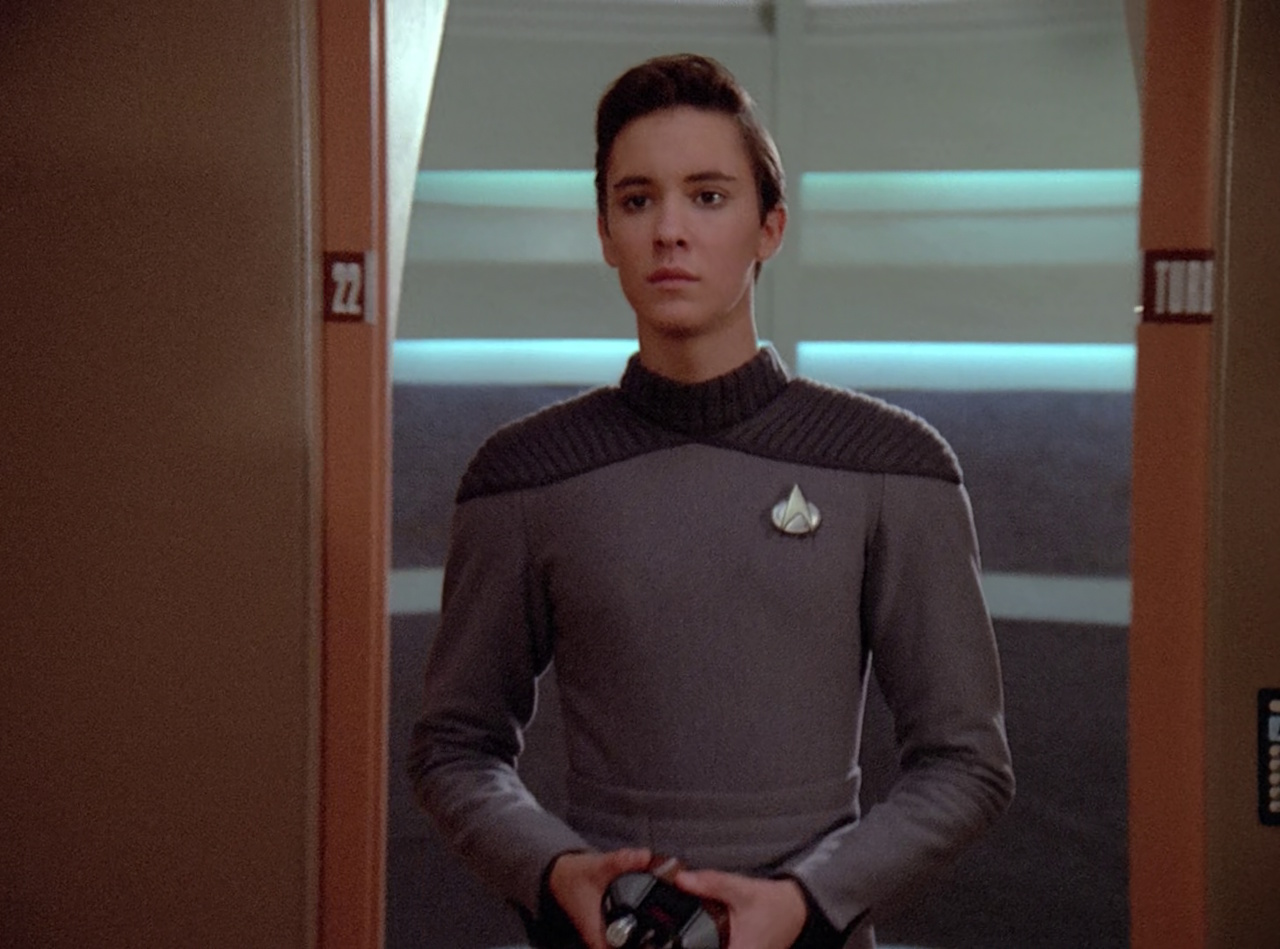
Still frame from The Dauphin showing Wesley

Things have changed a lot for Wesley over the years, I think in large part due to actor Wil Wheaton’s incredibly positive attitude and the great way he’s advocated for and represented the Trekkie community. But there was a time when Wesley was wildly unpopular; in the early days of Star Trek fansites, back when I was first getting started with the internet in the ’90s, hating on Wesley was one of the most common things you’d see. I never felt Wesley deserved all the hate he got; some of it crossed a line, really, into something a bit unpleasant or even sinister. We’re talking about a child, after all, or a teenager, and attacking a performer because you don’t like their character is just stupid.

However… I get where the original dislike stemmed from, especially in stories where Wesley could seemingly do no wrong, or was better and more competent than the trained officers around him. Partly, this came from Gene Roddenberry – Wesley was a bit of a self-insert character for Gene, even being named for Roddenberry’s own middle name. But Wesley did have weaknesses and flaws, even in The Next Generation’s first season. His inability to get accepted to the Academy being just one example. And when Wesley did make it to the Academy, the accident he was caught up in tested his loyalties and morality to the limit. Is he the best character in Star Trek? Arguably not. Is he better than folks give him credit for? I’ve gotta say yes.

Unpopular? ✅Yes.✅
Agree? ✅Yes.✅

“Unpopular” Opinion #9:
The reboot/Kelvin timeline Enterprise is a beautiful ship.
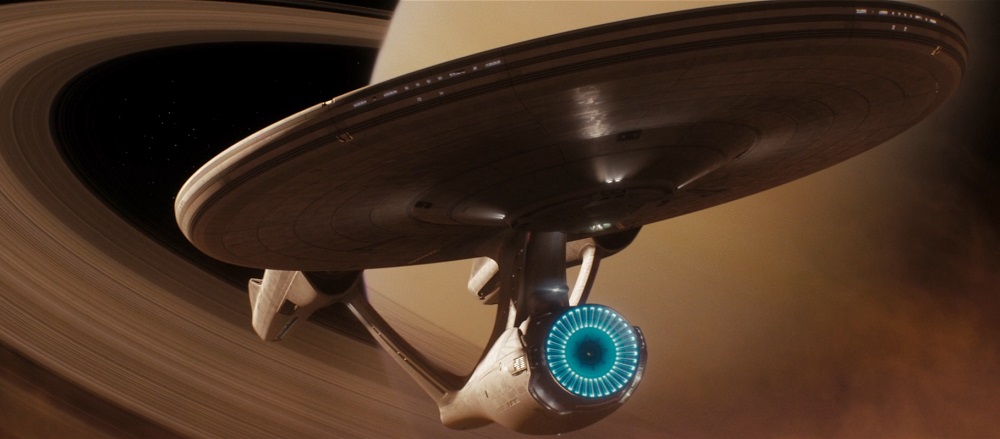
Still frame from Star Trek 2009 showing the Enterprise

To this day, I know Trekkies who point-blank refuse to watch the Kelvin films. But… I think the out-and-out hate for the reboot has begun to fade, thanks to the passage of time. Practically everything about the 2009 reboot was controversial in some quarters of the fan community when the film was released, including the redesign of the USS Enterprise. The design took the original Constitution-class from TOS and changed a lot of things, with a different colour scheme, bulkier nacelles, a lit-up main deflector, and more. It’s certainly a different interpretation of the classic ship from four decades earlier.

I’m actually pleased to see opinions like this. There will always be holdouts – people who can’t get over the changes and who only want to stick to a certain design philosophy or a particular era of Star Trek. But as time passes and puts distance between us and the premiere of these designs, I think it’s nice to see more Trekkies revising their opinions, revisiting some of these elements of the reboot films, and coming away with a more positive impression. It gives me hope, quite honestly, for the future of the fan community in the years to come, and that some of today’s controversies may also be forgiven over time!

Unpopular? 🛑No!🛑
Agree? ✅Yes.✅

“Unpopular” Opinion #10:
“Faith of the Heart” was a good song for Enterprise’s title sequence.
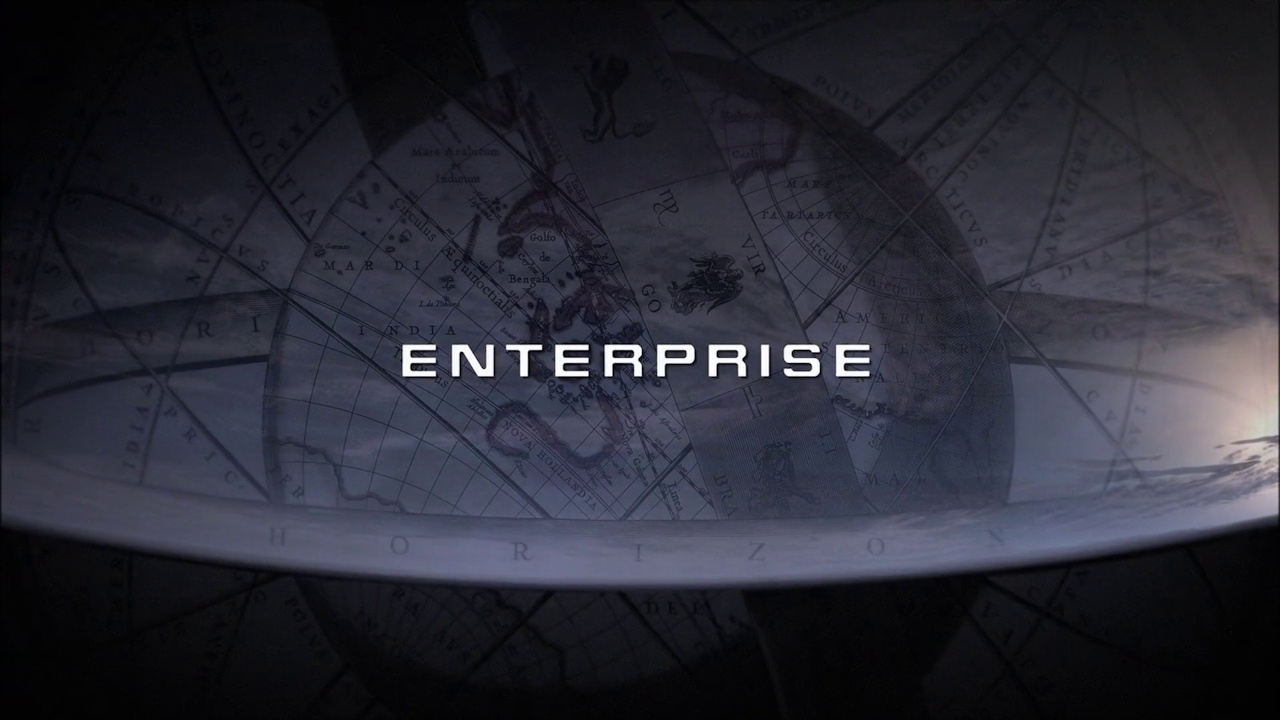
Still frame from the Star Trek Enterprise title sequence showing the show's title

This is another example of the passage of time smoothing things out, I think! I remember hopping online, circa 2001, to try to download Faith of the Heart – and then burning it onto a CD and a MiniDisc (remember those?) so I could listen to it on the go! Sure, it was different – the whole sequence, really, is a very “2000s” way to open a show, and it feels a bit dated today. But I’ve always enjoyed the song, and I certainly never agreed with folks who said it “ruined Enterprise,” or turned them off so completely that they wouldn’t even watch the show!

“Archer’s Theme,” the music heard during Enterprise’s end credits, is the track some folks argue the show should’ve used instead. And I get wanting Star Trek to revert to type; to have the ship warping over a starry background while an orchestra plays a piece of music. But did “Faith of the Heart” really change much about the series? It’s still Star Trek. And if you hate it… well, it’s never been easier, thanks to DVDs and streaming, to skip it! That being said, I think this is still a minority position within the wider fan community, even if the song’s reputation has recovered somewhat over the years.

Unpopular? ✅Yes.✅
Agree? ✅Yes.✅

“Unpopular” Opinion #11:
Neelix and Kes were a good couple.
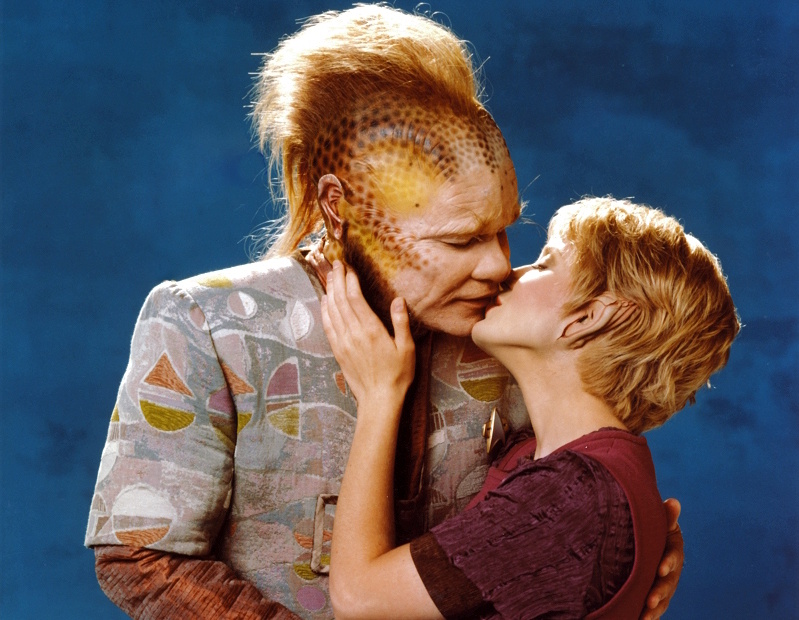
Promo photo for Star Trek: Voyager showing Neelix and Kes kissing

This one has to be trolling, right? I’d go so far as to say that, if Neelix’s relationship with Kes had been in focus in Voyager much more than it was, it could’ve been genuinely detrimental to both characters and even the entire series. As the setup for getting Neelix to help Janeway and ultimately join the crew, it tracks. But what it says about Neelix – a man in the Talaxian equivalent of middle age – falling in love with a girl who’s… one year old, and the Ocampan equivalent of, what? Seventeen or eighteen? It’s… really, truly icky.

Moreover, the relationship exaggerated some of Neelix’s worst qualities. In episodes like Parturition, we’d see him getting jealous and possessive over Kes in a way that, frankly, felt uncomfortable. A man who seems positive and happy-go-lucky on the outside seemed to have a dark, possessive, almost abusive streak, and if that had been brought up even once or twice more, it would make Neelix truly difficult to root for. Fortunately, this isn’t an opinion I’ve ever seen another Trekkie endorse, though!

Unpopular? ✅Yes.✅
Agree? 🛑No!🛑

“Unpopular” Opinion #12:
Sybok was a fun and deep villain in Star Trek V.
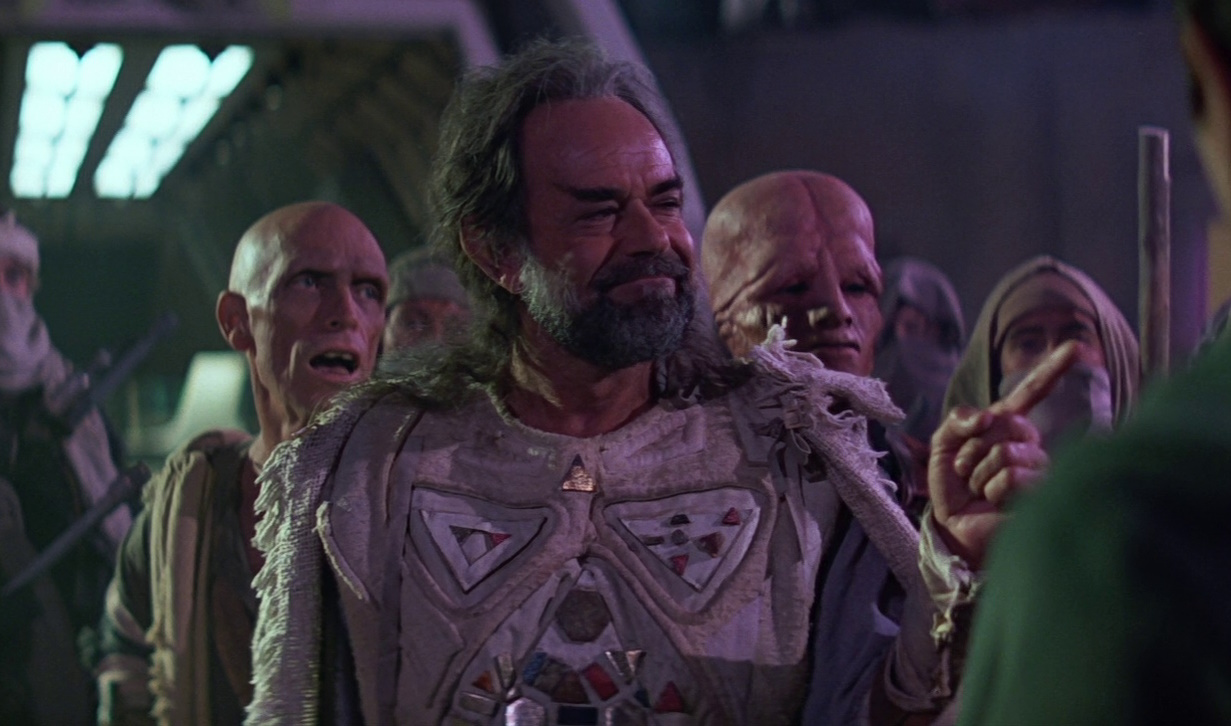
Still frame from Star Trek V showing Sybok.

The Final Frontier has its issues. But is Sybok one of them? This commenter argues he isn’t, and that a religious zealot who belatedly realises that he’s wrong and he’s been lied to or manipulated gave Sybok a lot of depth. I’d add to that that the idea of exploring a Vulcan offshoot – someone who doesn’t care to suppress his emotions – was also something different. It was certainly unique at this point in the franchise, coming before the Vulcans got more development in episodes like TNG’s Sarek, and of course, through storylines in Enterprise.

The problem I have with this, really, is not so much in concept – I think the original poster is right about that – but in execution. Sybok’s best moment is arguably his final one, when he sacrificed himself to help his brother and the Enterprise escape. Prior to that… Sybok wasn’t *outstanding*, really. There is more to The Final Frontier than some fans give it credit for. And like most Star Trek characters, really, there are elements to Sybok, to the way he’s written, and to the portrayal on screen that worked or that hold some interest. And I will say, to the original comment’s credit, it’s not an argument I’ve seen before.

Unpopular? ✅Yes.✅
Agree? 🛑No!🛑

“Unpopular” Opinion #13:
All of “Kurtzman Trek” sucks and should be considered a failure.

Behind-the-scenes photo from Star Trek SFA S1 showing Kurtzman directing

In the time Alex Kurtzman has been in charge of Star Trek for CBS, then Paramount, and now Skydance, there have been more than 200 episodes (and a TV movie) produced and broadcast. Are you telling me, original commenter, that there’s absolutely no merit to *any* of it? Because I find that hard to believe! Even Trekkies who’ve hated most of modern Star Trek have enjoyed some projects – Picard’s third season, or perhaps Strange New Worlds. Alex Kurtzman was in charge of the franchise for that, and was executive producer on both shows.

I don’t think you can write off an entire era of the franchise, any more than you could say “Berman Trek” was bad, or “Roddenberry Trek” sucked. But even if someone is of the opinion that *all* of modern Star Trek is atrocious and without merit… we can agree to disagree without getting into personal attacks. I hope! Has Alex Kurtzman got everything right? No – and I think he’d admit that. But has there been some fantastic Star Trek on our screens since he’s been helming the franchise? I believe there has been.

Unpopular? 🛑No!🛑
Agree? 🛑No!🛑

“Unpopular” Opinion #14:
Voyager focused too much on Janeway, the Doctor, and Seven of Nine from Season 4 onwards.
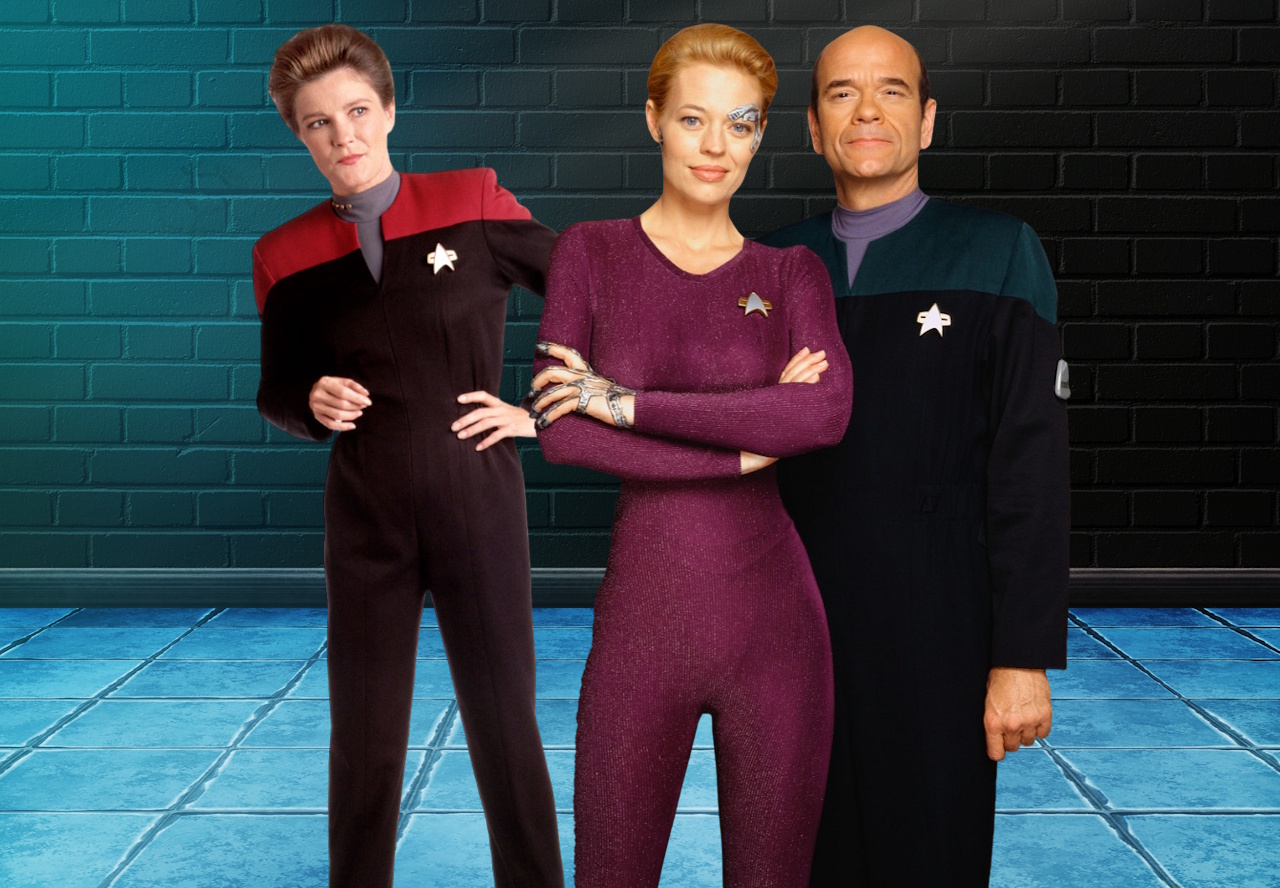
Composite of promo photos for Star Trek Voyager showing Janeway, Seven, and the Doctor

I was surprised to see this on one of the “unpopular opinion” posts – not because I disagree (I don’t), but because I’ve never seen anyone else share this opinion online before! For me, the back half of Voyager’s run felt swamped by one character: Seven of Nine. Seven would apparently “learn” some lesson in how to be human one week, only to seemingly forget it all in time for the next story. This led to several Seven/Janeway and Seven/Doctor episodes being so awfully repetitive that I sometimes mix them up. Voyager’s still a great show, don’t get me wrong, but taking some spotlight episodes away from Seven and redistributing them to neglected characters like Chakotay, Tuvok, or B’Elanna wouldn’t have gone amiss.

Picard rehabilitated Seven of Nine for me, though – I even went so far as to say that that series made Seven into an interesting character for the very first time! So this aspect of Voyager, while admittedly not great, doesn’t feel so bad in hindsight, I guess. And the issue isn’t really that most of these episodes are “bad,” but rather that they’re too narrow in their focus on one or two characters at the expense of other members of the cast. When I used to use Twitter and I shared a similar opinion about Seven of Nine being repetitive and boring, though, I got a fair bit of pushback! So I think this opinion can truly be said to be “unpopular” within the fan community.

Unpopular? ✅Yes.✅
Agree? ✅Yes.✅

“Unpopular” Opinion #15:
The Maquis were right to leave the Federation.
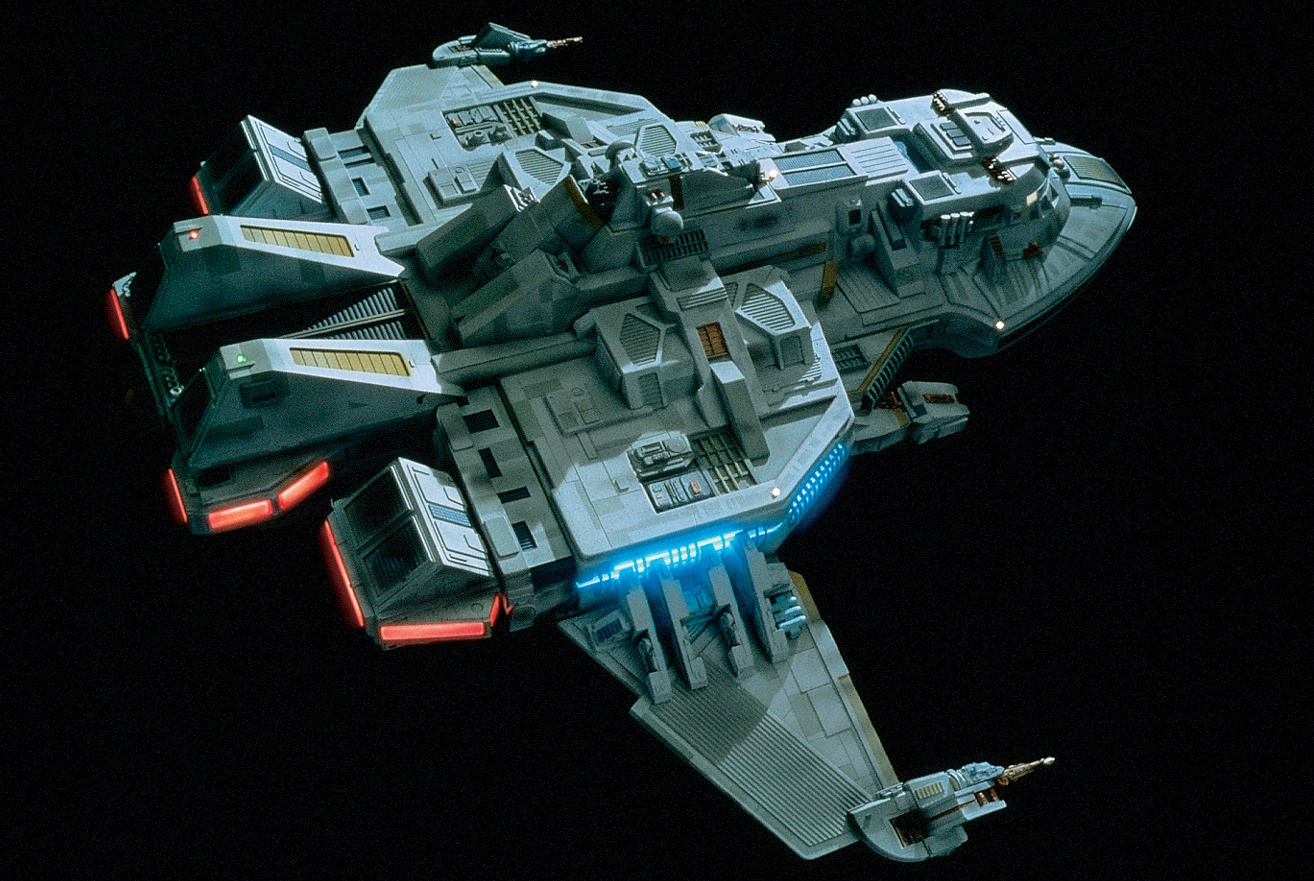
Photo of the Maquis Raider filming model

This comment went on to lay out that, in the writer’s opinion, the Maquis had every right to reject the Federation and want to leave, regardless of whether they wanted to fight the Cardassians or not. This seems to come from a place of “popular sovereignty;” the political philosophy which states that people should be free to choose how they are governed – and whether they want to remain as part of an institution like the Federation. The right to secession, by definition, exists if popular sovereignty exists within the Federation – something we’ve seen a lot more of in Discovery and Starfleet Academy, to be fair.

So should the Maquis have been allowed to leave? I would say yes… in principle. But it also isn’t quite so straightforward. The Federation had to balance the rights of its citizens along the Cardassian border with the need to avoid war with the Cardassians – something that would have impacted Maquis colonists *and* the rest of the Federation. Sometimes, as Spock would say, “the needs of the many outweigh the needs of the few.” If you’re one of the few, in that case… that kinda sucks, especially if it means you have to abandon your home. So it’s not quite as cut-and-dry as presented. But as a general rule, if Federation member worlds want to leave, even if they began life as colonies… they should surely be allowed to do so.

Unpopular? 🛑No!🛑
Agree? ✅Yes.✅

“Unpopular” Opinion #16:
The Tellarites and Andorians deserve more screen time.
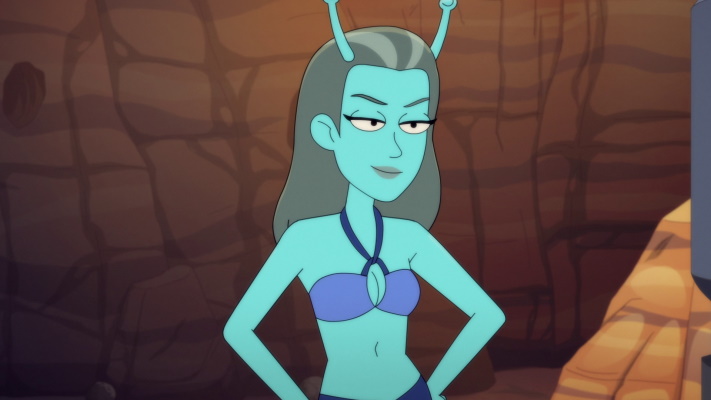
Still frame from Lower Decks Mining the Mind's Mines showing Jennifer

The four original founding members of the United Federation of Planets were humans, Vulcans, Tellarites, and Andorians – yet only Vulcans have really been explored across Star Trek’s nearly six decades of history. Enterprise told more stories with the Andorians, sure, and we’ve seen Tellarites (and half-Tellarites) in Prodigy and Starfleet Academy. But these two races still feel underrepresented across the franchise as a whole. Partly, it must be said, that’s because of their almost complete absence from all three shows of The Next Generation era.

Since the turn of the millennium, Star Trek has made moves to address this. But it would still be neat to get a major Andorian or Tellarite character in the next live-action film or series. These two races are important to the Federation within Star Trek’s fictional history, so it is kind of odd, when you think about it, that they haven’t been seen more often. I would suggest, perhaps, that the more complex prosthetic makeup – when compared to the likes of the Vulcans, Bajorans, and so on – may have made it a bit more difficult or expensive in years gone by. Less of an issue today, though! It’s not an argument I’ve seen very often, and I think that, especially prior to Enterprise, a lot of Trekkies had more or less forgotten about both of these races, and didn’t seem to care much about them.

Unpopular? ✅Yes.✅
Agree? ✅Yes.✅

“Unpopular” Opinion #17:
Jack Crusher was an especially bad character in Picard Season 3 because of what his existence says about Beverly.
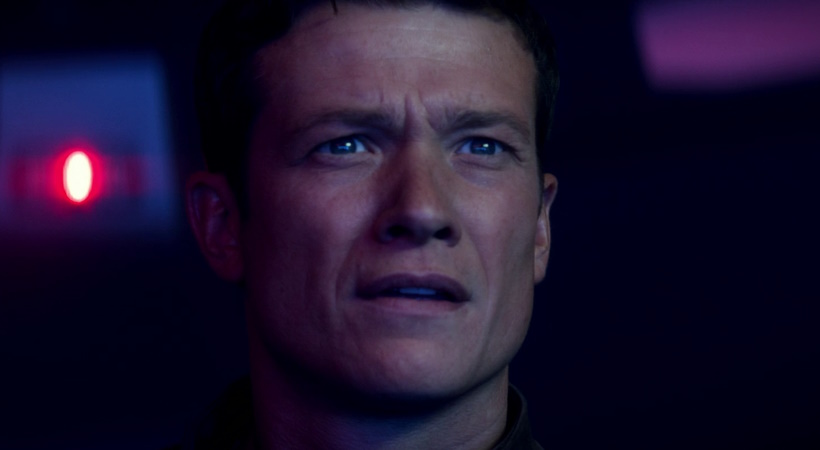
Still frame from No Win Scenario showing Jack

This post argued that Jack Crusher’s “secret birth” storyline actively harms his mother’s characterisation. By essentially hiding Picard’s son from him, concealing the birth, and disappearing for decades, Dr Crusher – in this person’s opinion – committed an unforgivable sin, and it was also something that she wouldn’t have done based on the way she was in TNG.

For my two cents, I didn’t think Jack was the best part of Season 3. The storyline he was wrapped up in, while not his fault on his own, wasn’t all that great, and I found it hard to buy into the idea that the character was only twenty-one years old (since the actor who played him was in his mid-thirties). Further, giving this version of Picard a storyline about discovering he had a long-lost son didn’t feel right, either – it felt like a story better-suited to someone younger, which seemed to go against other themes in the season. However, on the specific criticism of Jack “harming” Dr Crusher’s character… I don’t think I agree. It was explained in the show why she did it – to keep Jack safe from the shenanigans that constantly swirl around Picard – and I actually felt that this version of Dr Crusher had a bit more personality than she did in most of TNG. It wasn’t a random thing; Dr Crusher didn’t decide to leave for no reason. And her reasoning made sense in the context of the show.

Unpopular? ✅Yes.✅
Agree? 🛑No!🛑

“Unpopular” Opinion #18:
Strange New Worlds’ Gorn arc is good, and the Gorn make for entertaining villains.
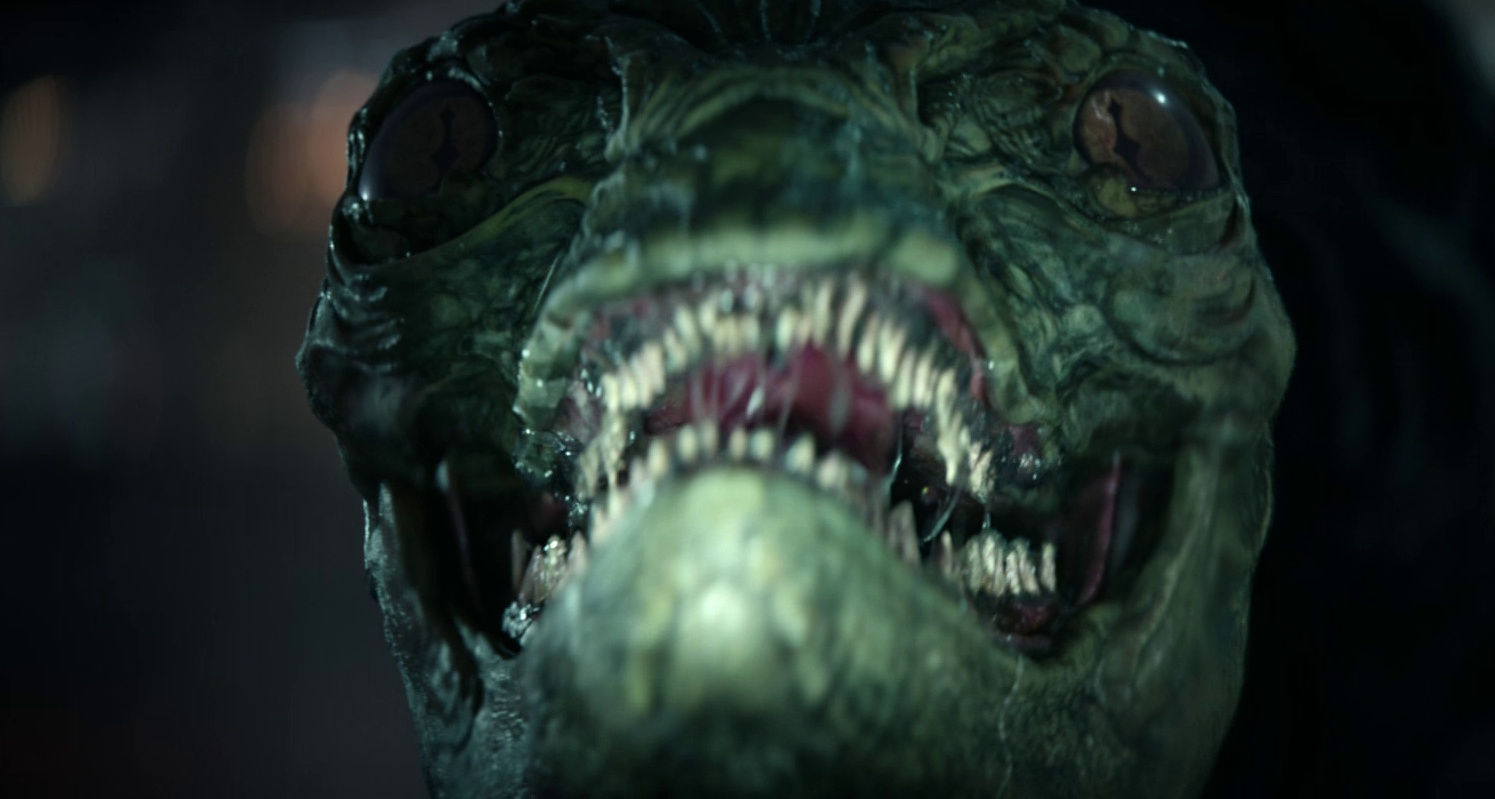
Still frame from Hegemony Part 2 showing a Gorn

I didn’t really realise that this one was quite so controversial until I saw some of the comments under posts expressing this opinion! Personally, I’ve really enjoyed Strange New Worlds’ take on the Gorn – transforming them into almost Xenomorph-inspired “monsters” has definitely shaken things up. At the same time, though, leaning too heavily on the monstrous angle does raise questions about the Gorn’s sentience and ability to be a spacefaring race, so there probably are moments where it went a little too far in one direction.

Strange New Worlds had a bit of a challenge, I suppose, when it came to villains. Most Star Trek villainous factions are off the table: Discovery had recently done the Klingon war, DS9 has already done a big Cardassian war, there can’t be the Romulans in a big way due to the timeline, and returning to the likes of the Xindi from Enterprise wouldn’t have worked very well, either. So to pick a race like the Gorn – who have run-ins with Starfleet in this era – wasn’t a bad idea. And giving them a new, more frightening presentation has – in my view – worked pretty well.

Unpopular? ✅Yes.✅
Agree? ✅Yes.✅

“Unpopular” Opinion #19:
It’s hard to get used to the way Avery Brooks delivers his lines.
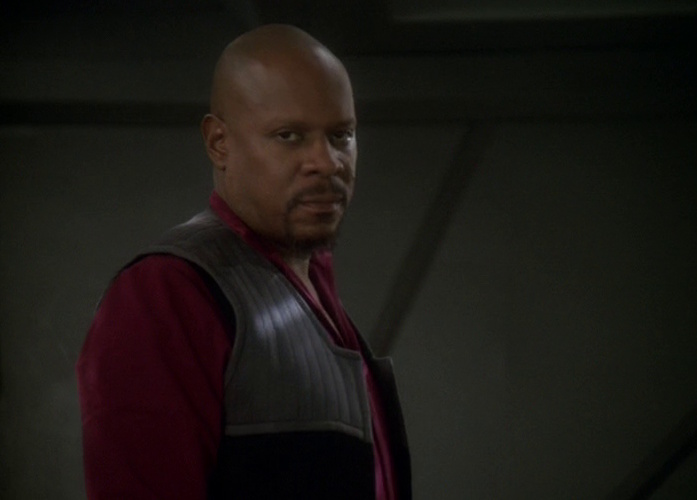
Still frame from In The Pale Moonlight showing Sisko

This one’s a toughie for me, because I first watched Deep Space Nine in the mid-1990s when I was a wee bairn. I can’t remember ever thinking that the way Sisko speaks is weird or offputting, as this commenter suggests. In fact, all of my DS9 memories are positive from that period, and Sisko quickly became one of my favourite parts of the entire Star Trek franchise. His vocal delivery, cadence, and manner of speaking weren’t things I’d considered at all until I read this post.

I suppose, to be fair to the commenter, Avery Brooks might come across as a bit of a thespian; the way he speaks and emotes is at least partially inspired by acting in the theatre for a live audience. But the same is definitely true of Sir Patrick Stewart, in that case – and other Star Trek regulars, too. Many actors get their start in stage productions, and that’s not a negative thing at all. Obviously, the way any of us feel about an actor and a performance is going to vary, and I would never say that everyone “must” like Captain Sisko or the way Avery Brooks portrayed the character. But for me… this just isn’t something I ever remember feeling when DS9 was new, and I haven’t heard this argument before.

Unpopular? ✅Yes.✅
Agree? 🛑No!🛑

“Unpopular” Opinion #20:
Bending the rules of “canon” is okay.
Stock photo of a cannon

Every time a new Star Trek story touches on a character, alien, faction, or even an aesthetic or design we’ve seen before, some folks crawl out of the woodwork to moan about “violating the integrity of canon!” I’ve actually written about this subject before, and I tried to lay out that my position is a bit more nuanced than the black-or-white, “respect all canon” versus “I don’t care” debate that flares up, from time to time, within the Trekkie community! In short, I’d argue that the foundational building blocks of a fictional world and its key characters should be kept the same, but the minutiae can be changed.

As an example: warp drive works using dilithium, so future Star Trek stories need to keep that in mind. But if one episode says warp seven takes a week to reach Romulus and another episode says it takes three days… that kind of thing doesn’t matter. Nor does the fact that uniform designs look different from one show to another. So, yes, canon matters because basic internal consistency within Star Trek’s fictional setting is important if I’m to maintain my suspension of disbelief. But it isn’t the only thing that matters, and we needn’t sacrifice interesting narrative ideas at the altar of “canon purity” if there’s a fun story to be told.

Unpopular? ✅Yes.✅
Agree? ✅Yes.✅

“Unpopular” Opinion #21:
A crossover between Star Trek and Star Wars is a great idea.
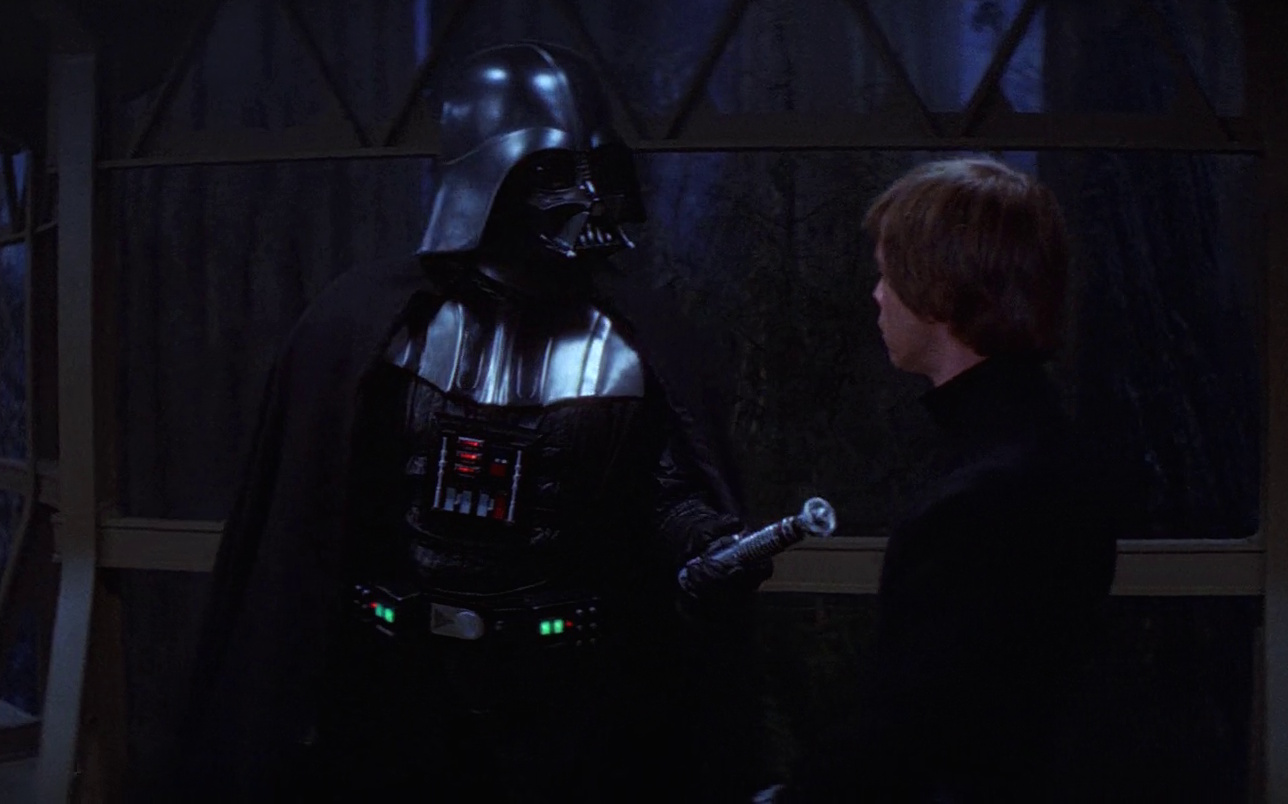
Still frame from Return of the Jedi showing Vader and Luke on Endor

As a kid playing with action figures, I already achieved this goal thirty-five years ago! Jokes aside, fans of both Star Trek *and* Star Wars have speculated about what a crossover might look like for decades. And who knows… with Paramount buying up everything in Hollywood, maybe it’s no longer the impossible dream that it once appeared to be!

There are some pretty big hurdles, though, just from a practical point of view. Both franchises are owned by competing companies, and both have decades’ worth of complicated lore and history. Then there’s the question of time and place – Star Wars famously takes place “a long time ago in a galaxy far, far away,” whereas Star Trek takes place in a vision of our future. Which characters would be involved? And how would Star Trek’s technology co-exist with hyperdrives, lightsabres, and the Force? As tempting as it might sound on some level, I don’t think I’d go for it if I were in charge!

Unpopular? 🛑No!🛑
Agree? 🛑No!🛑

“Unpopular” Opinion #22:
The Prime Directive is unethical.
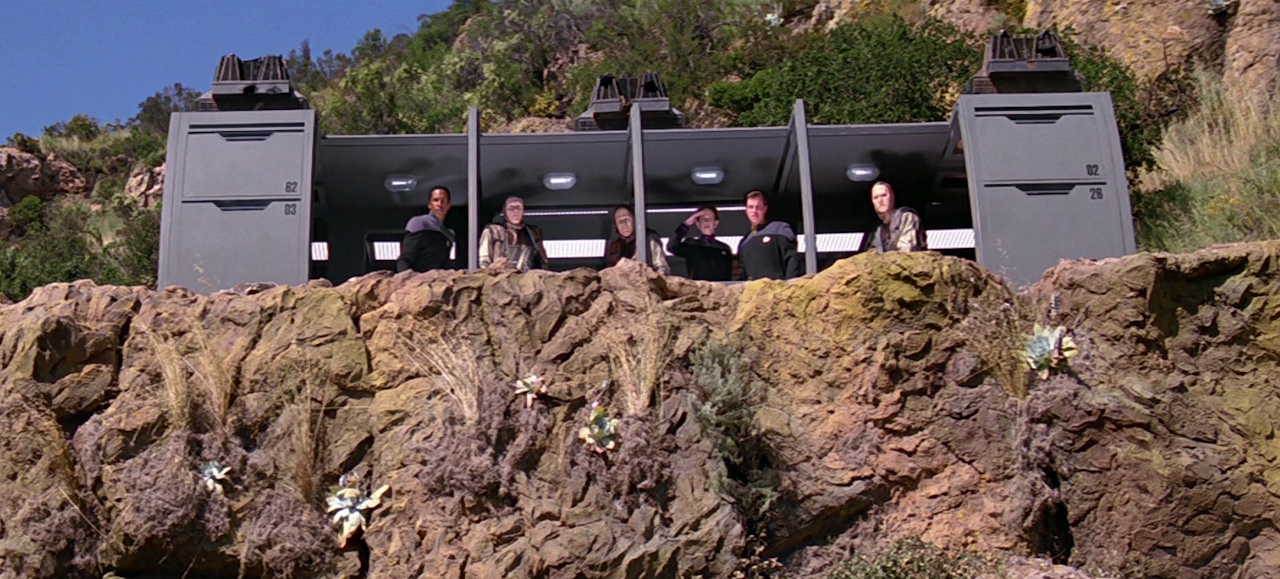
Still frame from Star Trek Insurrection showing the duck blind

Several commenters argued that the Federation’s Prime Directive is a fundamentally unethical policy, because it condemns whole civilisations to extinction just because they haven’t developed one specific technology. And, on the surface, that seems to track – stories like Pen Pals, Dear Doctor, and the beginning of Into Darkness quite clearly show Starfleet has the ability to intervene, but chooses not to, even when there’s an existential risk to an entire race of sentient beings.

The Prime Directive, fundamentally, is about not interfering with or altering the trajectory of societies that haven’t yet discovered alien life. And it makes sense, right? Think of the chaos it would cause to our own society if aliens descended from the skies – even if they had the best of intentions. We aren’t ready for that, and maybe we won’t be for a long time. The rigidity of the Prime Directive throws up some strange situations, though – but we often see our heroes finding ways around it, and the fact that they never seem to get in trouble suggests that Starfleet is okay with rule-bending, sometimes!

Unpopular? 🛑No!🛑
Agree? 🛑No!🛑

“Unpopular” Opinion #23:
Too many people are related to Spock, best friends with Spock, falling in love with Spock, or revere Spock.
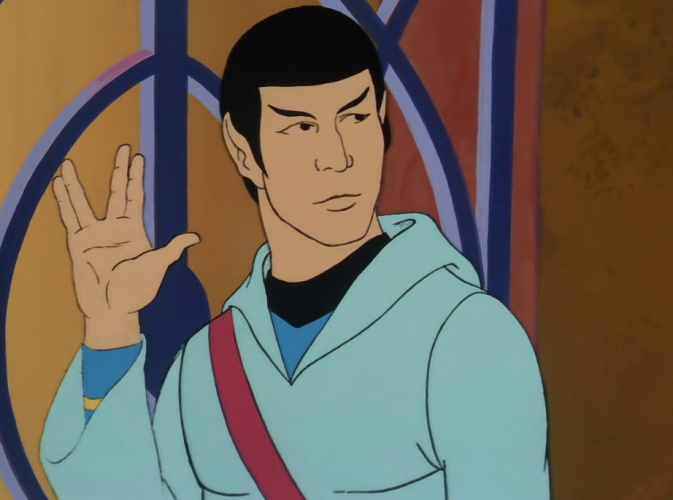
Still from YesterYear (Star Trek TAS) showing Spock

Spock has become a larger and larger part of Star Trek, over the years, even as we’ve moved further away from The Original Series. He and his father appeared in The Next Generation, Spock crossed over to the Kelvin timeline where he met his younger self, and Spock has had two long-lost siblings that he never mentioned: Sybok and Michael Burnham. Chapel falls in love with Spock, La’an falls in love with Spock, and all the while, Spock is betrothed to T’Pring. Characters like Boimler talk about Spock with reverence, too. Yeah… it’s kind of a lot, huh?

It can feel, sometimes, like Spock is too present and too big a part of the storylines he’s included in. I’d be totally fine with stepping back from Spock, for a while, and giving other characters a chance to be in the spotlight. The Burnham connection has been established at this point, and there won’t be any retconning or removal of that. But going forward… if we’re lucky enough to see more Star Trek entering production, setting Spock aside would probably be for the best – at least for a while.

Unpopular? 🛑No!🛑
Agree? ✅Yes.✅

“Unpopular” Opinion #24:
René Auberjonois should’ve played Odo with an exaggerated French accent.
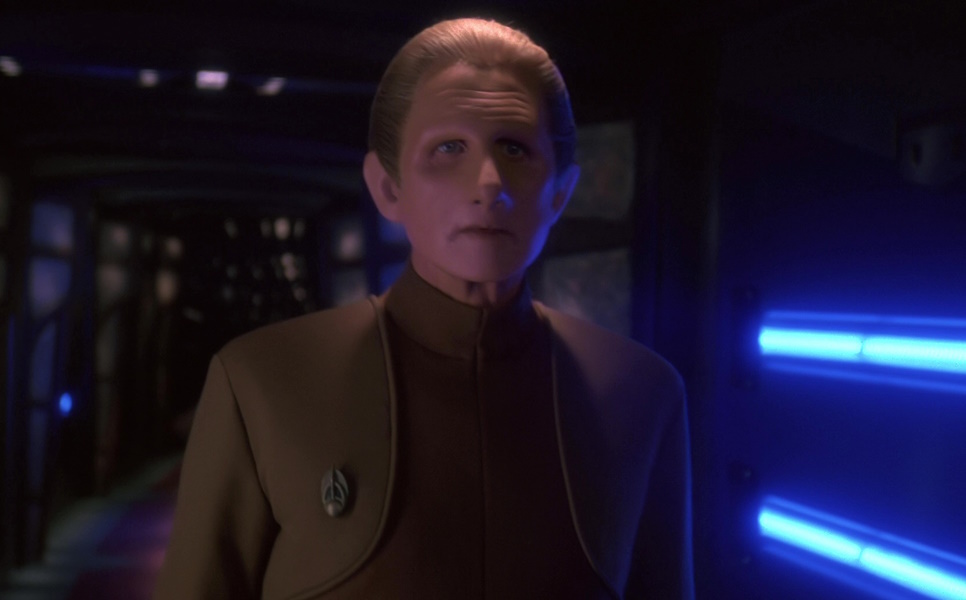
Still frame from What We Left Behind showing Odo

This one… I think it was entirely tongue-in-cheek! But I thought it was funny, and it’s my list so I’m including it. René Auberjonois played the French chef in The Little Mermaid, and his French accent is pretty iconic! It would’ve certainly shaken things up, with Odo becoming much more of a comic relief character, especially if Auberjonois really hammed it up. Would it have made DS9 *better*? Uh, probably not. Would some of his conflicts with Quark have been a lot funnier, though? Yes.

Look, this was just a bit of silly fun. I’m pretty sure no one’s out there seriously suggesting that giving *any* Star Trek character a comedy accent would’ve improved the show. But it’s fun, as fans, to think about these things sometimes. How different would episodes like The Die Is Cast have been if Odo were hamming it up, sounding like the French chef from The Little Mermaid? And, to the credit of the original commenter, it’s not an opinion I have *ever* heard expressed before!

Unpopular? ✅Yes.✅
Agree? 🛑No!🛑

“Unpopular” Opinion #25:
Star Trek *should* change over time, and not simply re-make TOS or TNG for every new series.
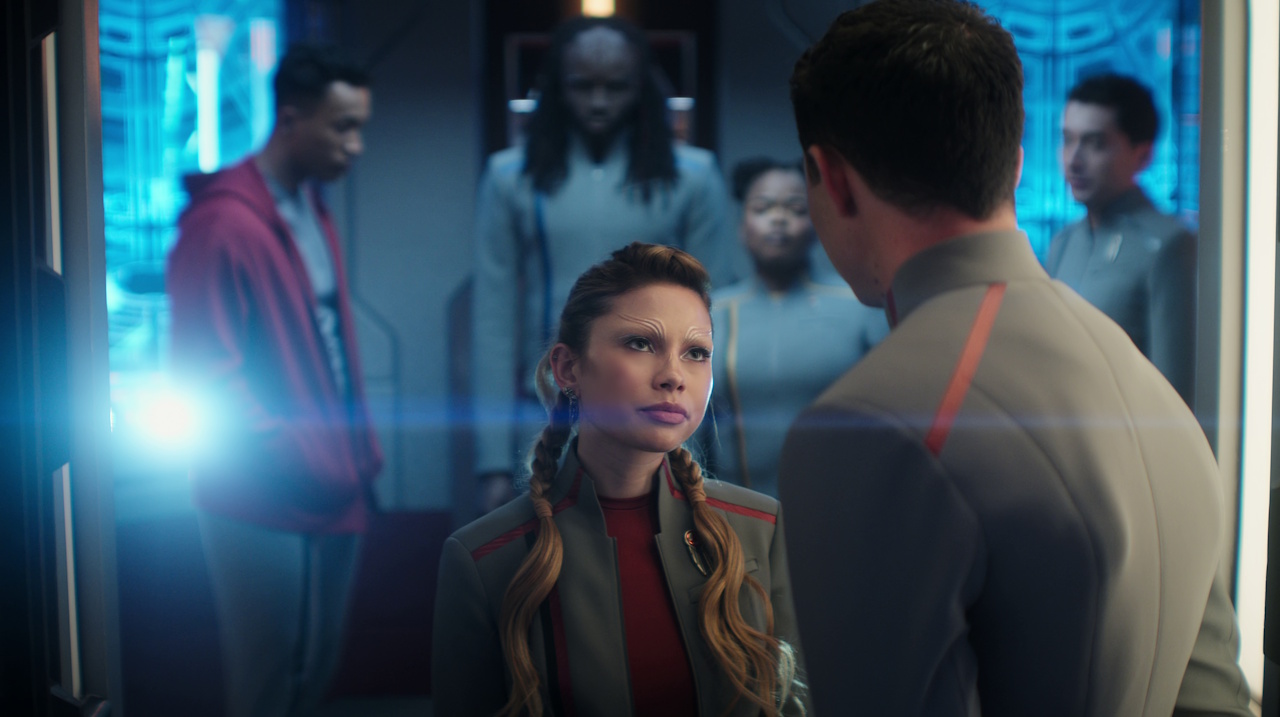
Still frame from Vox in Excelso showing the cadets

As early as the ’70s, when The Animated Series entered production, Star Trek was changing. When Phase II was reimagined as The Motion Picture, and Star Trek went to the cinema for the first time, the franchise changed. Star Trek, like any long-running franchise, moves with the times. That means the way shows look and feel changes, it means the way characters are cast and handled changes, and it means the nature of storytelling changes, too. The entertainment industry is not a static, stagnant thing, and if the higher-ups at Star Trek tried to recreate The Original Series every time… well, the franchise probably would have died out a long time ago.

That being said, some experiments and changes work better than others. I’m firmly of the opinion, having seen multiple seasons of modern Star Trek, that the franchise *needs* the freedom episodic television brings, and that serialised stories need to be a much smaller part of Star Trek in the future… assuming there will be a future. It seems that Skydance, Star Trek’s new corporate overlords, are more interested in films than streaming TV, so that could be another change coming down the pipeline. But the original poster is correct – Star Trek can’t afford to be left behind as the entertainment industry shifts around it. Figuring out what to change, how far to take those changes, and what fundamentals need to be left in place, though… that’s a tougher set of questions, and modern Star Trek hasn’t always stuck the landing, unfortunately.

Unpopular? ✅Yes.✅
Agree? ✅Yes.✅

So that’s it… for now!
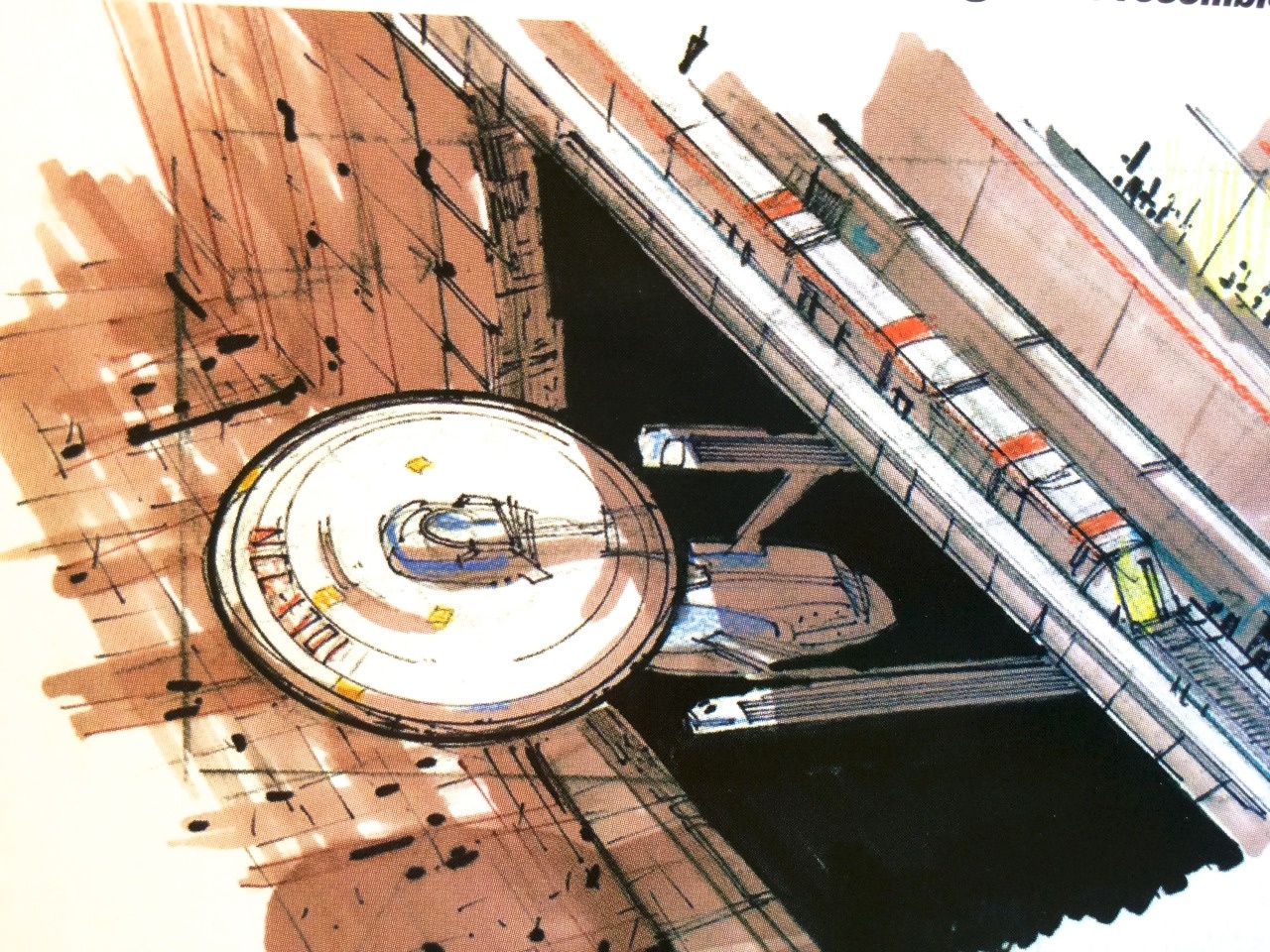
Concept art of the USS Enterprise in Spacedock for The Search for Spock
Concept art of the USS Enterprise in Spacedock.

Stay tuned, because I have *at least* another twenty-five of these “unpopular” opinions that I’d love to write up one day.

I hope this has been a bit of fun. If I tore a hole in an opinion you agree with… please try not to take it personally! This is meant to be a bit of light-hearted fun, joining in with the Star Trek fan community in my own way, and not something to get too upset about or offended by. I tried to pick a mix of different opinions from across social media, touching on different parts of the franchise, including things I agreed with and didn’t agree with.

If you missed it, I have a two-part review of Starfleet Academy’s first season, which is now live on the website. You can find part one by clicking or tapping here, and the follow-up by clicking or tapping here. And there’s more Star Trek content to come as the 60th anniversary nears! I’ve got plans for re-watches, theories, and more, so I hope you’ll check back from time to time. Thanks for joining me to dissect these “unpopular opinions,” and Live Long and Prosper!


Most Star Trek films and TV shows discussed above can be streamed now on Paramount+ in countries and territories where the service is available. The Star Trek franchise – including all films, TV programmes, and other properties discussed above – is the copyright of Skydance/Paramount. This article contains the thoughts and opinions of one person only and is not intended to cause any offence.
Ten Star Trek Storylines That Should Be Non-Canon

Spoiler Warning: There are spoilers ahead for the Star Trek franchise.

We’ve recently talked about some of my Star Trek “head canon” – i.e. theories and ideas I have about Star Trek that aren’t confirmed on screen, but make sense to me! Click or tap here to check out that piece, by the way… I talk about things like cloaking devices, the Borg, and more. If that article was about things in Star Trek that aren’t canon but should be, then today we’re gonna do the exact opposite! These are ten Star Trek storylines that I fully believe should be non-canon.

Before we go any further, a couple of important caveats. First of all, this is a controversial subject! As Trekkies, we all have different opinions about what makes a fun and successful Star Trek story… and that’s okay. There should be enough room within the Star Trek fan community for differences of opinion and disagreement without spiralling into arguments. Everything we’re going to talk about is the entirely subjective opinion of one Star Trek fan, and I’m well aware that my opinion will be the minority one in some cases. As I’ve said before: no theory or opinion is worth getting angry or worked up over!

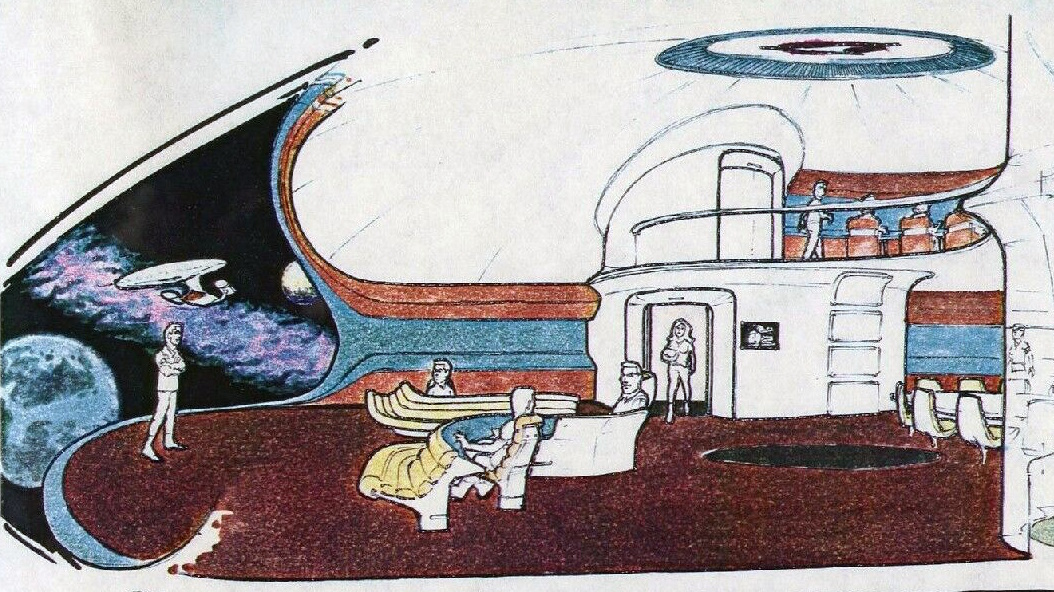
Early concept art of the Enterprise-D.
Image Credit: Forgotten Trek/Frogland Archive

It should go without saying, but none of these stories or episodes will ever actually be “removed” from Star Trek’s canon. The title is really a tongue-in-cheek way of me saying that I either dislike a particular storyline or feel that its presence in the broader Star Trek universe is a stumbling block for other narratives that I prefer. This isn’t like that awful clickbait article that did the rounds a few months ago claiming that “Discovery is non-canon now!!1!” This is just for fun; a thought experiment for people like us who like to spend a bit more time with the Star Trek franchise after the credits have rolled.

With all that being said, if you aren’t in the right headspace to get into some potentially controversial Star Trek topics, this is your last chance to nope out!

Let’s jump into the list.

Storyline #1:
The destruction of Romulus.
Star Trek ’09, Picard, Discovery, et al.

Romulus was destroyed by a supernova.

In Star Trek ’09, the destruction of Romulus was kind of haphazardly thrown in as a way to justify Spock’s involvement in the story and tee up Nero as a villain. And at the time that film was being written, I guess it’s not unfair to say that a full-scale revival of the Star Trek franchise on the small screen seemed beyond unlikely! But after Star Trek was brought back and returned not only to the prime timeline but to the late 24th Century (and beyond), the destruction of Romulus has proven to be a difficult storyline for subsequent productions to navigate.

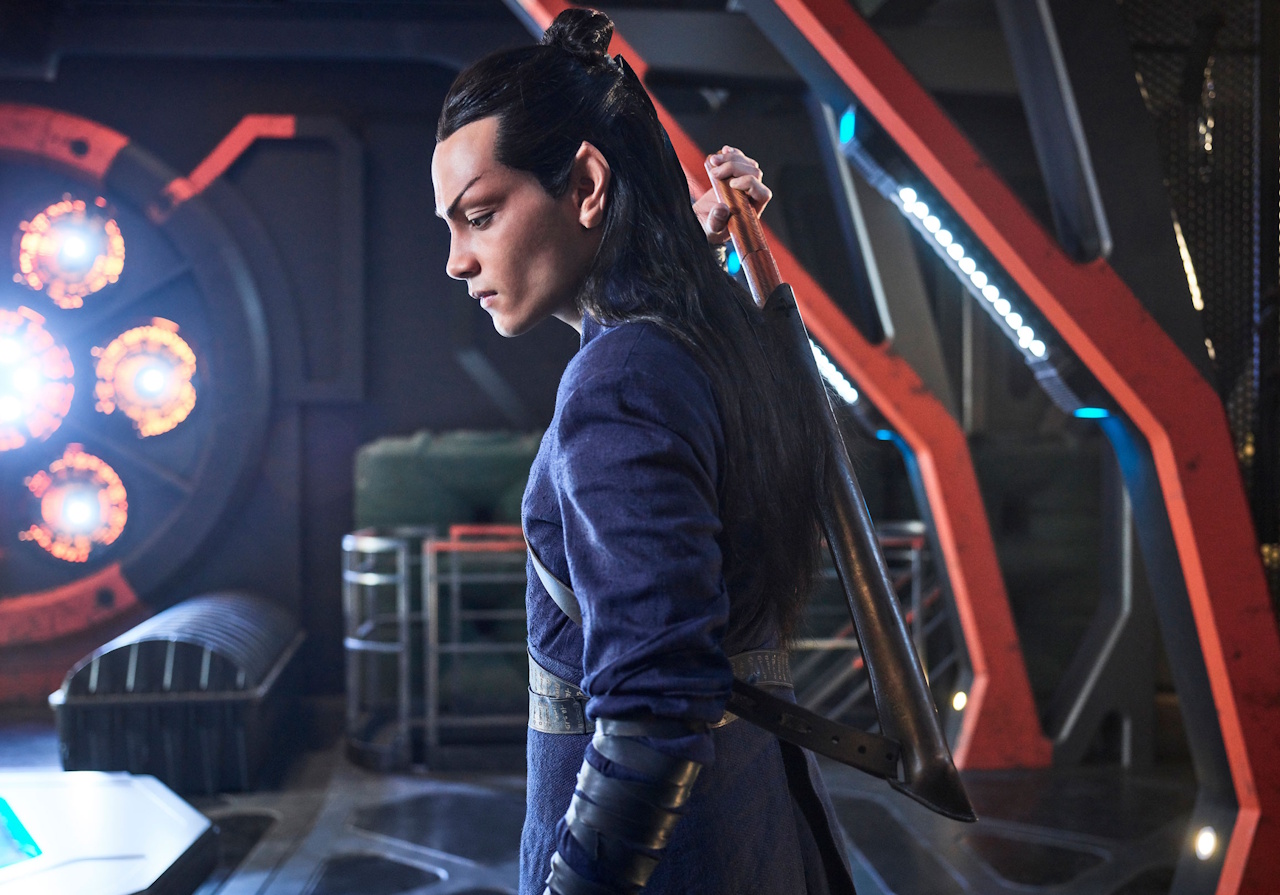
Picard was the first to pick up this story thread in its first season, showing a few flashbacks to Admiral Picard and his Romulan rescue plan. Romulan refugees also cropped up in Season 1… but the show didn’t really know what to do with them or how to handle the Romulans as a whole after the loss of their homeworld. The character of Elnor could’ve been a great point-of-view character for exploring this post-destruction Romulan Empire… but Picard’s writers had other ideas, and the character was abandoned.

Elnor was unceremoniously dumped before we could spend much time with him.

Discovery brought back the idea of Romulan-Vulcan reunification in the far future, and managed at least one creditable effort with that premise. But again, this story was a one-off and didn’t really go much further, even when Vulcan leader T’Rina became a recurring character. The fact that Romulus had been destroyed – centuries in the past from this vantage point – didn’t really come up in a big way, either, and I reckon Discovery’s Ni’Var storyline could’ve worked just as well without it.

The Romulans are one of Star Trek’s most iconic villains – perhaps in third place behind only the Klingons and Borg. To destroy their homeworld – the core of their empire – for what was essentially a throwaway scene and the backstory of an over-the-top villain… I dunno. It feels extreme, which Star Trek ’09 was in some ways. But any stories set after the late 24th Century are now constrained by this massive narrative beat, and will arguably miss out on one of the franchise’s best villains. The Romulans are certainly one of Star Trek’s most shadowy, clandestine factions, and damaging them so severely that it would take them decades if not centuries to recover, while also impoverishing at least some of their survivors… it places real constraints on future stories.

Storyline #2:
Suspiciously human-like aliens on many different planets.
The Original Series

These are meant to be aliens. From outer space.

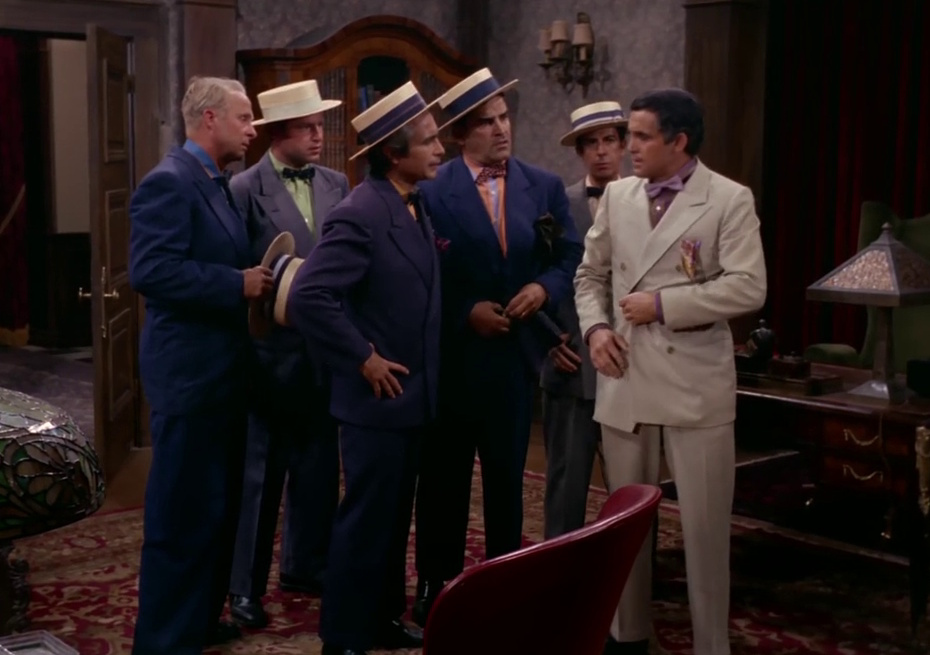
When we reach the final frontier and explore strange new worlds… we’re going to meet aliens and totally new forms of life. We aren’t going to encounter an exact duplicate of Earth, a planet where everyone dresses like it’s Germany in the 1930s, or a planet where whose inhabitants – who don’t look even remotely alien – think they’re living in Ancient Rome. In a word… these old episodes of The Original Series (and some from The Next Generation, too) aren’t sci-fi enough!

There’s a perfectly reasonable explanation for this, of course: it was the ’60s, and The Original Series had a limited budget to work with. The show would use stages and props that had been built for other projects, or Paramount’s backlot, meaning explanations had to be found and aliens created to fit with those existing sets. There were also limitations to the prosthetics, puppets, and practical effects that could be designed and built, and with twenty-five episodes per season to write… some liberties had to be taken with the way aliens looked and behaved.

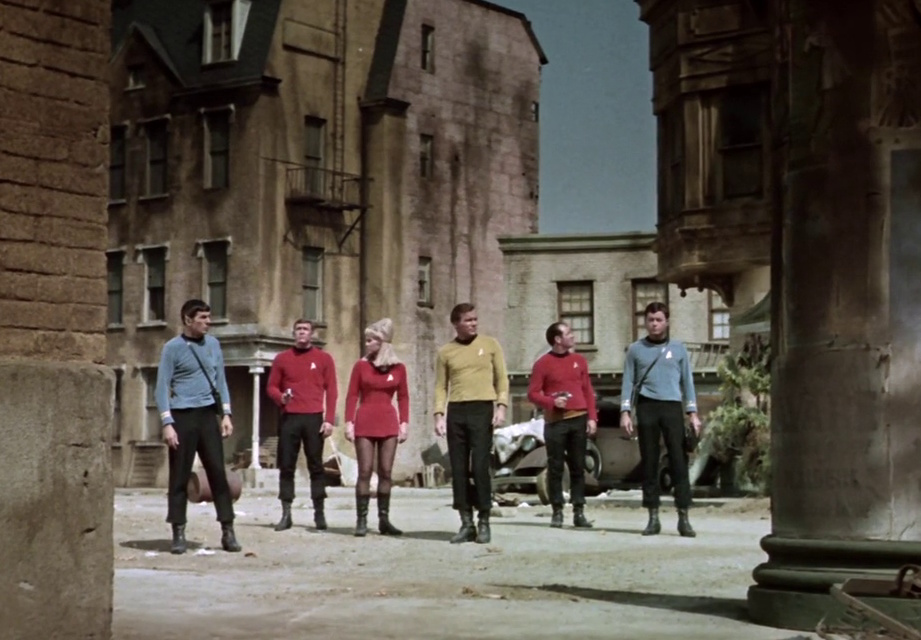
Kirk leads an away team to Miri’s planet: a clone or twin of Earth.

But for me… let’s just say I’ve always been less keen on these too-human alien societies. I think there’s an interesting head canon explanation (that I go into in more detail in a standalone piece that you can find by clicking or tapping here) that basically says that these are lost or forgotten human colonies from the early days of pre-Federation spaceflight. But that only works if you buy into my theory! As presented on screen, we’re meant to take these societies to be Earth-like aliens… and I just don’t think that works if we’re taking Star Trek seriously as a sci-fi universe.

Space is big and space is weird – so there are bound to be incomprehensible things out there for our heroes to encounter. But too often, especially in The Original Series, we’d get these “aliens” that were not only physically indistinguishable from humans, but whose societies and even planetary geography was identical to some part of human history, too. Don’t get me wrong, many of these episodes are a ton of fun and they’re part of what made Star Trek what it is today. But I just don’t think they have a place in the franchise any more… and they haven’t for decades.

Storyline #3:
Most of the mission to 2024.
Picard Season 2

Los Angeles as seen in Picard Season 2.

I’ve had a piece in my writing pile for a couple of years tentatively titled “Star Trek: Picard – The Movie,” in which I’m going to argue that Picard’s second season (which I generally didn’t like) would work so much better as a cut-down two-hour-ish movie rather than a ten-episode season. I’d keep the attack on the Stargazer and the arrival of the Borg, I’d keep the Confederation timeline and the Borg Queen’s corpse, and I’d keep Agnes’ assimilation. But after that I’d cut out almost all of the 21st Century stuff, including all the revelations about Picard’s past and Q being on his deathbed, streamline the story by saying Q’s real objective was to prevent the mysterious anomaly from destroying the Federation, and launch Picard and his friends back to the bridge of the Stargazer.

For me, Picard’s second season spent way, way too long wallowing in a boring 21st Century environment that robbed the story of basically everything that feels like Star Trek, and I didn’t enjoy it. There was the kernel of an interesting idea, with Picard having to confront childhood trauma. But that storyline completely fell apart, it didn’t expand our understanding of Jean-Luc Picard as a character in any meaningful way, and parts of it felt almost like “torture porn;” throwing Picard (and other characters like Raffi and Rios) into a series of traumatic events that served no real narrative function. Picard’s story just didn’t give us much of anything, Raffi’s was undone with seconds to spare at the end of the season, and Rios’ story was written in a weirdly contradictory way to facilitate his exit from the series.

The new USS Excelsior.

So I’d cut out all of that, and I’d streamline Picard’s second season into a much more reasonable two-hour movie. There’d still be time for what I said in my review was one of the best and most frightening presentations of the Borg that we’d seen in decades, there’d still be a way for Q to play a part, and we could hop over to the Confederation timeline for a little while to get a Mirror Universe-inspired alternate reality look at Picard and Earth. But the mission to the 21st Century could be seriously cut back to only a few minutes, with perhaps one objective for Picard and the gang: to ensure the Europa Mission launches on cue.

I really ought to finish writing up my longer piece on this idea, because I can’t fully do justice to it in just a few paragraphs! Stay tuned here on the website, because I daresay I’ll get around to it one of these days! For now, suffice to say that Picard’s random wandering through 21st Century Los Angeles (and a suspiciously California-like France) should be dumped.

Storyline #4:
Captain Archer versus the Borg.
Enterprise Season 2: Regeneration

Reed and Archer take on the Borg.

I genuinely enjoy Regeneration as a one-off episode, and I think it was a fun idea to bring the Borg into Enterprise… even if it was pretty obvious that the reason for doing so was to boost the show’s flagging ratings. But stepping back and thinking about what it means for the history of Borg-Federation contact, Regeneration really screws with a timeline that has already been meddled with!

There are three angles to approach this from, and all of them are bad. Firstly, we have what this storyline says about Picard and the crew of the Enterprise-E. First Contact made clear that Picard had ordered his ship hidden so as not to accidentally interfere with humanity’s first warp flight and the Vulcans’ arrival on Earth. But apparently they totally ignored, forgot about, or didn’t think to scan for Borg debris from the ship they’d destroyed. It presents Picard and co. as incompetent at best when it comes to cultural contamination, and given how meticulous we know he is… it just doesn’t track that there’d be all this debris left behind, including fully intact and functional Borg drones.

An assimilated shuttle versus the Enterprise.

Next, the Borg sent a message to the Collective in the Delta Quadrant, basically making the whole First ContactRegeneration story a time-loop paradox. It also seriously muddles the question of how and when the Borg first encountered humanity. Was it when they received this message? Was it when they assimilated the Hansen family in the 2340s? Voyager had already messed with the Borg quite a lot thanks to Seven of Nine and the Borg Queen, so this additional complication was not helpful! Turning the story of humanity’s first contact with the Borg into this kind of paradox is not what I wanted to see.

Finally, there’s what this story says about Starfleet. Captain Archer encountered a race of cybernetic beings who sent a message to the Delta Quadrant. Years later, the Federation took in El-Aurian refugees whose planet had been attacked by the Borg. Yet for some reason, by the 24th Century, all knowledge of both of these events was suppressed, deleted, or just not taught at the Academy. Given how hard Archer and his crew had to work to stop a handful of drones, you’d think they’d have recorded the details of what they did and what they were up against so that future Starfleet explorers wouldn’t be starting from scratch. This is a typical “prequel problem” of the kind Enterprise created on more than one occasion. For all of these reasons combined, though, Regeneration’s 22nd Century Borg storyline joins this list.

Storyline #5:
Warp 10 as a hard limit on travel.
The Next Generation, Voyager Season 2: Threshold, et al.

The Enterprise-D jumps to warp.

Star Trek has been pretty inconsistent with how warp speeds and travel times are depicted. I have a head canon explanation that basically says Starfleet re-designates warp factors as newer and faster engines are created… but that only goes part of the way to plugging some of the apparent plot holes that almost six decades’ worth of stories have accumulated! Long story short, most Star Trek productions from The Next Generation onward present warp one as the speed of light and warp ten as an unachievable goal; a speed that would allow instantaneous travel anywhere in the galaxy. But that doesn’t fit with what we see on screen.

What is “transwarp?” Is it speeds faster than warp 10? The Borg seem to be able to travel beyond warp 10 through their transwarp network, potentially cutting the time needed to reach Earth from the fringes of the Delta Quadrant from decades to hours. Then there’s the notorious Voyager episode Threshold, which saw Tom Paris and Captain Janeway travel faster than warp 10 (though still not fast enough to reach Earth), before mutating into salamanders.

It’s Paris and Janeway…

I think it would be so much better if Star Trek dropped this idea that warp 10 is a kind of hard limit. Speeds beyond what we understand as warp 9.9999 are clearly possible, as we see the Borg, the Kelvan Empire, Arturis’ species, and many others are able to travel far faster than Starfleet. So why not drop this idea in favour of new warp factors – perhaps a show or film set in the Picard era could introduce the first warp 12 engine, for example, and Star Trek could grow from there.

Threshold as an episode can pretty much be written off, too! I don’t think anyone will miss it. Recent developments, like the Kelvin timeline’s transwarp beaming and Discovery’s spore drive, can also be used to travel great distances in a short period of time. There’s potential for future stories to pick up these threads, too.

Storyline #6:
The Prophets are responsible for Sisko’s birth.
Deep Space Nine Season 7: Image in the Sand + Shadows and Symbols

A photo of Sisko’s Prophet-posessed mother.

Star Trek has never believed in things like fate or destiny, and for me, this storyline about the Prophets deliberately conceiving Benjamin Sisko so he could one day become their emissary is dangerously close to that idea. It also turns Sisko’s entire arc across Deep Space Nine into a giant predestination paradox; he became the emissary because the Prophets created him. It challenges and undermines really his entire personality all for the sake of having a twist in a couple of episodes.

Part of what was interesting about Deep Space Nine was the intersection of religion and science. The Bajorans worshipped the “gods” of the wormhole, but Sisko and the rest of the Starfleet crew saw them as just another alien race to make first contact with. And Star Trek has always leaned more on the science angle than the religious whenever questions like this have come up; as the audience, we’ve always been on Starfleet’s side, too, seeing entities and aliens like these as another race in the galaxy – not deities who are responsible for guiding the lives of our heroes. Deep Space Nine ventured into spirituality in a big way, and until Seasons 6 and 7 mostly stayed on the right side of that line.

A high-definition render of the Bajoran Wormhole from the documentary What We Left Behind.

These episodes kicked off a longer story arc across Season 7 which also involved Kai Winn and Dukat. The conflict between the Pah-Wraiths and Prophets took on this Christian apocalyptic tone, with Sisko akin to an almost Christ-like figure, predetermined from before his conception to play a pivotal role in this struggle. While this story was interesting in its own right, it’s also inherently un-Star Trek in a significant way.

Because the Prophets exist outside of linear time, that gave Deep Space Nine’s writers a lot of wiggle-room. But for me, this paradox was a bridge too far. Star Trek can and should tackle religious themes, but in my view it works best when stories take a more detached and scientific approach to these topics.

Storyline #7:
The Klingon-Augment virus.
Trials and Tribble-ations, Enterprise Season 4, et al.

A Klingon affected by the Augment virus.

I don’t believe that every single aspect of Star Trek demands an on-screen explanation. The Klingons that Kirk met in The Original Series look different from those that we’d later see in The Motion Picture and from The Search for Spock onward – and that’s okay. Fans could make head canon explanations if they wanted, but there was just no need for an in-universe explanation of this change in prosthetic makeup… especially not one so convoluted.

The origins of this can be traced back to the otherwise excellent Trials and Tribble-ations – the Deep Space Nine episode made for the Star Trek franchise’s 30th anniversary. That story saw the crew of DS9 interacting with Kirk’s crew, using newly-developed editing techniques to integrate new characters with old footage. It was an incredibly creative episode and a fun story… but it came with a problem! At one point, a couple of characters make reference to the way Klingons look, asking Worf about it. This was the first on-screen acknowledgement that something had changed.

Worf’s line in Trials and Tribble-ations was the first on-screen acknowledgement of the aesthetic changes the Klingons underwent.

Enterprise, several years later, took this idea and ran with it, crafting an intricate (and pretty dumb) multi-epiosde arc that introduced the Klingon-Augment virus: a genetically-engineered creation that infected Klingons with human DNA, physically changing their appearances. In the writers’ minds, this “closed a plot hole,” but I would argue very strongly that it was one that never needed to be closed. Even if it did, and even if we desperately want to find a way to acknowledge the change in makeup used for the Klingons with an in-universe explanation… I just found this particular story to be convoluted and weak.

More recent Star Trek projects have, thankfully, quietly dropped this idea. The Kelvin films and Discovery admittedly had their own issues with re-interpreting the aesthetics of the Klingons, but Strange New Worlds – which is set in the 23rd Century and has featured the Klingons on more than one occasion – has basically reset the way they look. There’s no reason to bring up this idea again – and I sincerely hope Star Trek can continue to walk away from it!

Storyline #8:
The Burn (as part of the prime timeline).
Discovery Seasons 3-5

The Burn.

Discovery’s second season probably had some of its best individual performances, thanks to the inclusions of Captain Pike and Spock. But for me, most of Discovery’s best episodes actually came after the series shot forward into the far future, leaving behind much of what we’re familiar with in the Star Trek galaxy. Unfortunately, though, Discovery’s writers and creatives wanted the show to focus more on Burnham’s increasingly soap opera-like personal relationships and attempts at depicting characters overcoming traumatic events (that mostly didn’t work as intended). As a result, we didn’t spend as much time as I’d have liked with either the Federation or other factions in this potentially-interesting setting.

Another piece I’ll have to write up in full one day is whether Discovery’s “post-apocalyptic Star Trek” idea worked or even came close to working. But for now, I think we can at least make the case that the Burn is a pretty depressing future for the prime timeline, and that pushing Discovery’s far future into some kind of pocket universe or alternate reality wouldn’t be a terrible idea for the franchise as a whole.

Discovery never really did anything with its “rebuild the Federation” idea.

I’m hopeful that there will be more Star Trek on our screens in the years ahead – and that at least some of it will return to the 24th and early 25th Centuries. But any show or film using that setting (or really any pre-Burn setting) becomes, by default, a prequel to Discovery’s third season. That means, in the backs of our minds, we know that no matter what our new heroes might do, however they might find creative ways to save the day… the Federation and much of the galaxy is going to end up devastated in a few hundred years anyway. It puts a brake on future Star Trek stories in a way that we haven’t really seen before.

If Discovery had done more with the idea of rebuilding the Federation and restoring Starfleet values to the galaxy, that feeling would persist but it would be somewhat lessened, I feel. But because that didn’t happen, the Burn and its aftermath really are little more than fluff; background details for other, less-interesting stories to play out in front of. Given the sheer scale of the Burn and the devastation it wrought… that’s not good enough for me. I don’t want to remove Discovery’s latter seasons entirely, as there’s some good storytelling in there and some fun episodes. But finding some way to push it out of the prime timeline and into some kind of alternate reality… let’s just say it would be a net positive. Maybe in Starfleet Academy?

Storyline #9:
Neelix’s romance with Kes.
Voyager Seasons 1 & 2

Blegh.

This is an uncomfortable one… but Neelix’s love for Kes in some early episodes of Voyager didn’t have the cutsey or romantic vibes that the writers may have been hoping for. The age gap between Neelix and Kes made the whole thing feel a bit… icky. Thankfully it wasn’t in focus for too long, because if it had been I genuinely think it could’ve ruined Neelix as a character.

Ocampans are a very short-lived species, and Kes was either one or two years old in Voyager’s premiere. The implications of that when considering Neelix’s feelings are just unpleasant, but even if you push that to the back of your mind, there’s no getting away from the fact that Kes is basically a teenager or young adult while Neelix is in the Talaxian equivalent of middle age.

A jealous Neelix.

We’d also see Neelix getting possessive of Kes, with episodes like Parturition and Twisted being prime examples of this. The contrast between Neelix’s usual jovial, friendly persona and the jealousy and anger he could feel has genuinely uncomfortable undertones. For anyone who’s ever been in a toxic relationship with a narcissistic or possessive partner, there are parallels in this presentation of the two sides of Neelix that could be triggering.

I wish we’d got to spend more time with Kes; in my view, she was unfairly dumped from Voyager. In recent years there’s been speculation as to exactly what happened behind-the-scenes, informed, at least in part, by actress Jennifer Lien’s struggles and issues. I don’t really want to get into all of that, but suffice to say that I would have happily kept Kes as part of Voyager’s roster if I’d had the option. But I’m glad that this Neelix romance angle didn’t stick around beyond the first couple of seasons – and that it was only present in a big way in a handful of stories.

Storyline #10:
The Borg Collective has a leader.
(And she’s weirdly obsessed with a couple of random humans for some reason).
First Contact, Dark Frontier, et al.

The Borg Queen in her first appearance.

This could be one of my most controversial Star Trek “hot takes,” but… the Borg Queen kind of ruins the Borg. What made the Collective so scary in its first appearances was that it was akin to a force of nature; incomprehensible, unstoppable, and unable to be reasoned with. The Borg operated as one hive mind, with no individuals or individuality, united in common purpose: the pursuit of technology and an unknowable idea of “perfection.”

The Borg Queen was created because the producers/writers of First Contact believed that the film needed a villain for Picard and Data to wrangle with – a unique individual Borg who could have more personality than any drone. But this completely misunderstands what the Borg represented and what made them so frightening. In doing so, it robbed the faction of one of its most important and unique features. The Borg Queen’s apparent obsession with Picard, Seven of Nine, and humanity as a whole developed from this… and really takes a lot away from the original concept of the Borg as this incomprehensible, uncaring, unknowable adversary.

A different depiction of the Borg Queen.

A big part of many Star Trek episodes (so much so that it’s become a cliché) is “they were only trying to communicate!” Many of the franchise’s stories present our heroes with apparently hostile aliens or scenarios, only to learn later that what they wanted was to talk or be understood. Other stories introduce a villain who can ultimately be reasoned with, even if they initially seemed hell-bent on destruction. The Borg’s original presentation, prior to the introduction of the Borg Queen, precluded even the pretense of negotiation, compromise, or really any kind of meaningful communication. The Borg had one objective, and there was no way to dissuade them from it. They viewed humanity and the Federation as a resource, and nothing more.

By introducing a Borg leader, someone who has a unique personality (even though she claims to be a manifestation of the Collective; I’m not buying that based on how she comes across on screen) the most unique trait the Borg had has been erased. And what replaces it is little more than a generic “I’m evil for no reason and I love it” scenery-chewing bad guy. The Borg, prior to the Queen’s appearance in First Contact, were so much better, so much more frightening, and completely unique.

So that’s it… for now!

The Klingon monastery on Boreth.

We’ve talked about ten Star Trek storylines that should be non-canon… at least in my completely subjective opinion!

I hope this has been interesting. It’s certainly been a bit of fun for me to revisit some of these episodes and stories. Some, like Enterprise’s Borg episode, are totally fine in isolation… but start to create problems when you think about them in the wider context of the Star Trek franchise. Others, like Neelix and Kes as a couple, didn’t work from day one and I’d be happy to just pretend the whole thing never happened! None of these storylines will ever actually be “removed” from Star Trek’s canon, though, so if one of your favourites is on the list, don’t panic!

We’ve talked about questions of canon quite a lot in the past few weeks, and I’ve had a lot of fun writing about some of these subjects. My “Borg teasing” theory is something that I’ve been kicking around for literally decades, and I also had fun adding to my list of minor things in Star Trek that bug me! I don’t know what’s next – perhaps a longer write-up of one or two of the points on this list could make for a fun article or essay. Stay tuned, though, because there’s plenty more Star Trek to come here on the website in the weeks and months ahead!


Most of the TV shows and films referenced above are available to stream on Paramount+ in countries and territories where the platform is available. The Star Trek franchise is also available on DVD and Blu-ray. The Star Trek franchise – including all episodes, films, and other properties discussed above – is the copyright of Paramount Global. This article contains the thoughts and opinions of one person only and is not intended to cause any offence.
Five planets that Star Trek probably won’t revisit any time soon!

Spoiler Warning: There are spoilers ahead for the following Star Trek productions: The Original Series Season 2, The Animated Series, The Next Generation Season 1, Voyager Season 2, Star Trek 2009, Picard Season 1, Discovery Season 3, and Lower Decks Season 2.

I wouldn’t even like to guess how many different planets (and other planetary bodies) have been visited across all 800+ episodes and films in the Star Trek franchise! It must be a lot… maybe someone has been keeping a tally, but I certainly haven’t! There are some worlds that we’ve visited more than others – Bajor, Qo’noS, and of course Earth all spring to mind. But there are some planets that, for one reason or another, are best left behind in the franchise’s past.

As Star Trek moves on to bigger and better things, some planets – and their inhabitants – seem outdated, or perhaps the concept behind the planet was never a good one to begin with. Today I thought it could be interesting to consider five examples of planets that Star Trek will almost certainly never revisit!

Planet #1:
Ekos

The USS Enterprise in orbit of Ekos (as it originally appeared).

Ekos was created for The Orignal Series Season 2 episode Patterns of Force, but you might know it better as “that Nazi planet.” There’s definitely scope for the Star Trek franchise to tackle authoritarianism, fascism, and even Nazism – and as recently as 2004, Enterprise put its own spin on the “Star Trek-versus-Nazis” concept. But there are a few deeply unsettling things about Ekos, and how its Nazi-inspired government came to power.

First of all we need a brief history lesson! In the 1960s, when Patterns of Force was created, some historians, economists, and other political scientists regarded Nazi Germany as an “efficient” state. Resting all power in a single individual, they argued, made for a powerful government that could be run very efficiently. In Patterns of Force, Federation anthropologist/historian John Gill cites this theory as the reason for introducing Nazism to the Ekosians.

Ekos is also known as “Planet of the Nazis.”

That theory was flat-out wrong, and even by the 1970s and 1980s, the flawed thinking that led to the myth of “Nazi efficiency” had been exposed and thoroughly debunked. In short, Nazi Germany was a very poorly-run government, with a handful of cronies of the führer wielding disproportionate levels of power, and micromanagement in certain departments and industries majorly hampering the state’s industrial output. How this myth ever came to be as widely believed as it was is, in some respects, a bit of a mystery. But suffice to say that the central conceit behind Patterns of Force has been exposed as a falsehood.

John Gill, the academic at the heart of the story, also represents a very distinct kind of betrayal of Federation values, taking things to perhaps the most unpleasant extreme possible. Star Trek has never shied away from showing us flawed human beings and Federation officials, but Gill is a step too far, and Patterns of Force can be an uncomfortable watch for many Trekkies.

John Gill, the Federation historian who became the Führer of Ekos.

Though it might be interesting, in some respects, to revisit Ekos in the 24th, 25th, or 32nd Centuries to see how things had progressed, in many ways it’s a planet – and a story concept – that should probably remain on the sidelines. Modern Star Trek can tell far more subtle stories about authoritarianism, racism, and the like without needing to resort to overt depictions of Federation-sponsored Nazism.

Patterns of Force is based on an outdated concept, and while it was brought to screen quite well by the standards of The Original Series, with some clever visual effects for the time and some surprisingly accurate costumes, it feels like an anachronism overall. This is one best left behind in the 1960s!

Planet #2:
Megas-Tu

The USS Enterprise near Megas-Tu.

The Animated Series had some very wacky sci-fi concepts. Taking Star Trek away from live-action meant that the franchise was no longer confined by the limitations of practical special effects, and thus it was possible to depict things like a 40-foot tall clone of Spock, an entirely underwater civilisation, or, in The Magicks of Megas-Tu, an alternate universe where magic is real and science is not.

I’ve always had a soft spot for The Magicks of Megas-Tu, and I think it’s an episode that every Trekkie should watch at least once. It’s an example of mid-century sci-fi at its wackiest, but it manages to retain a Star Trek tone throughout the very unusual adventure that Captain Kirk and the crew of the Enterprise find themselves on.

A group of Megans departing their homeworld.

With the possible exception of Lower Decks, which has been more willing to explore some of the stranger elements of classic Star Trek, I can’t imagine Megas-Tu ever making another Star Trek appearance. How would it fit in Discovery, for example, or Picard? The tone of modern Star Trek is just too different – and even by the time of The Next Generation, Star Trek had moved away from concepts like this. Megas-Tu feels homeless, in a sense, in a franchise that has moved on.

That isn’t to say that it was a bad concept when it was first developed, but like several ideas from The Original Series and The Animated Series, magic and fantasy just seem to be a step too far for a franchise that has retained its esoteric side and sense of fun, but refocused them into more science-based stories rather than stories that use literal magic and fantasy as core elements.

Cheers!

It’s hard to see how a story about Megas-Tu could fit in with modern Star Trek. Audience expectations have shifted when it comes to science-fiction, and with the Star Trek franchise moving away from stories like The Magicks of Megas-Tu, it seems very unlikely that we’ll see anything like it in the franchise anytime soon.

There’s also the in-universe problem of travelling to the Megans’ universe, and while technobabble can always be created to explain away these things, it seems like a bit of a stretch. It’s possible we’ll get more references to The Animated SeriesPicard Season 1 made reference to the Kzinti, for example. But a full revisit to Megas-Tu is probably off the table!

Planet #3:
Ligon II

Ligon II.

The planet that inspired me to put together this list, Ligon II was visited in Code of Honor, the notorious Season 1 episode of The Next Generation that has been widely criticised for its use of racial stereotypes. The Ligonians encapsulated stereotypes of Africans and African-Americans, and Code of Honor has to be one of the worst episodes of The Next Generation as a result.

Some stories from past iterations of the franchise are open to redemption; to being revisited to right the wrongs of the past. We’ve seen this, to an extent, with certain characters in modern Star Trek who saw much-needed development or expansions of incomplete arcs. We’ve also seen Lower Decks revisit planets like Beta III to comment on Starfleet’s somewhat chaotic approach to first contact.

Code of Honor has been widely criticised for stereotyping.

But Code of Honor and the episode’s depiction of the Ligonians feels so utterly wrong that it’s irredeemable. There are some parts of Star Trek’s past that the franchise brushes under the carpet, choosing to ignore and even overwrite things rather than try to fix the unfixable. Captain Pike’s “woman on the bridge” line in The Cage is such an example – overt sexism from a character that we’re now very excited to see return. Ligon II and Code of Honor are definitely in the “let’s all just pretend that never happened” category… for the good of the franchise!

It’s amazing, when you think about it, that Code of Honor was produced as late as 1987. It would still feel outdated had it been part of The Original Series in the 1960s, but to know that it was produced for The Next Generation – within my own lifetime – is one of those things that boggles the mind.

A ritual combat arena on the surface of Ligon II.

Code of Honor is an episode that I think Trekkies need to watch. It’s worth remembering that, despite its lofty ambitions and attempts to depict a better future, the people who create Star Trek can still make mistakes. This was an episode that Gene Roddenberry had some creative input in and signed off on – he was The Next Generation’s executive producer at the time.

The episode is noteworthy for its complete lack of awareness. The people who created this story, cast it, and put it to screen were so blind to the offensive stereotypes that it depicted that they allowed it to progress and even get broadcast. Star Trek may have made strides, even in its early years, in its attempts to confront and tackle things like segregation and race hate – but it was blind, at times, to subtler, more covert forms of racism and racial stereotyping.

Planet #4:
Uninhabited Delta Quadrant world

A hyper-evolved human on the surface of this unnamed planet.

This planet doesn’t have a name… but I vote we call it “Tom Paris and Captain Janeway’s sex planet.” That’s right, it’s the planet from Threshold! After crossing the Warp 10 barrier and experiencing hyper-evolution, Tom Paris kidnapped Captain Janeway and took her to this remote, uninhabited world somewhere in the Delta Quadrant. By the time Chakotay and the crew of the USS Voyager tracked them down, both Paris and Janeway had mutated into amphibious salamander-like creatures… and mated.

Although the crew of Voyager successfully recovered Paris and Janeway and the Doctor was able to revert them back to their human forms, for some reason they left their offspring behind. That means somewhere in the Delta Quadrant, little human-salamander offspring are polluting a perfectly innocent planet that was just minding its own business. I’m pretty sure that violates the Prime Directive… in the most disgusting way possible.

This planet now belongs to the human-salamander babies.

As much as some fans (myself included) like to joke about Threshold – which is absolutely one of Voyager’s worst stories – I can’t see Star Trek ever doing anything more with this episode, this concept, or the planet visited in the final few minutes. For completely different reasons to those laid out above, this is another part of Star Trek’s past to simply ignore!

Again, the one exception could be Lower Decks, which has an irreverent take on these things. We saw mating mugatoes in the Season 2 episode Mugato, Gumato, so I wouldn’t put it past the Lower Decks team to dream up a reason to bring back the human-salamanders one day! After all, Tom Paris made an appearance in the show!

Tom Paris in Threshold.

To Threshold’s credit, it won an award for its prosthetic makeup, and while the story was undeniably ridiculous to the point of abject failure, it was at least an attempt to go into a little more detail about Warp Drive and the limits to warp speed. It never sat right with me that Warp 9.9999 was as fast as anyone could ever go… but Warp 10 was supposedly fast enough to travel anywhere in an instant.

However, as with many technobabble things in Star Trek, maybe the complexities of Warp Drive work better when they’re left ambiguous! Ambiguity and vaguery allow for the creative teams to take stories in wildly different directions, allowing for maximum storytelling potential without different writers and different shows being constrained or tripping over one another.

Planet #5:
Romulus

Romulus as it appeared in Nemesis.

What? Too soon?

Romulus was destroyed during the events of 2009’s Star Trek, and we got to learn a little more about this event and its aftermath in Star Trek: Picard Season 1. Though the Romulans survived – well, some of them did, anyway – their homeworld, as well as its sister planet of Remus, is gone. The surviving Romulans are living on a number of other worlds in and around the territory of their former Empire.

The destruction of Romulus was shown in 2009’s Star Trek.

Both Star Trek and Picard Season 1 were somewhat ambiguous on this latter point, though. We don’t know how many Romulans survived, where they went next, or even what became of their Empire. We do know that a faction called the Romulan Free State existed as of 2399, but that the Tal Shiar and Zhat Vash still existed in some form too, and were able to launch military operations on Earth, at the heart of the Federation.

Presumably Romulus’ destruction didn’t kill off either organisation, and the fact that they retained the capability to launch such powerful operations suggests that the Romulan government and its espionage operation still exist in some capacity, presumably having relocated to a different world. To what extent the Romulan Empire remains united is unclear, as is the fate of races like the Remans, who had second-class citizen status.

The Romulan capital city as it appeared in Inter Arma Enim Silent Leges.

With Star Trek: Picard Season 2 going in a different direction, I presume we won’t be in a position to learn much more about the Romulans for a while. But if there are future 24th and 25th Century stories in the years ahead, it would be nice to get some kind of closure; to fully learn what happened to the Romulans in the years and decades after the loss of their homeworld.

By the time of Discovery’s 32nd Century, at least some Romulans had relocated to Vulcan as part of a reunification project. The planet was renamed Ni’Var, and while tensions still existed between the Romulans, Vulcans, and Romulo-Vulcans, it seems that the Romulans got a happy ending of sorts – even if it took centuries to get there!

So that’s it.

The USS Enterprise in orbit of Earth.

There have been plenty of fun and interesting worlds that the Star Trek franchise has visited, with many making just one single appearance. Modern Star Trek has contained a number of references in dialogue or on-screen displays to some of these worlds, giving us tantalising teases about what became of them after we last saw them. Those references are always appreciated!

With over fifty-five years of history and more than 800 episodes at time of writing, it’s inevitable that not all of these planets (and the peoples who populated them) worked well or would be worth going back to. Fortunately it’s relatively uncommon for Star Trek to have made truly egregious missteps, but there are certainly some episodes – and the planets and factions they included – that are best left behind. I hope it was a bit of fun (or at least mildly interesting) to consider a few examples today!

The Star Trek franchise – including all films, series, episodes, and other properties mentioned above – is the copyright of ViacomCBS. This article contains the thoughts and opinions of one person only and is not intended to cause any offence.