Six More Star Wars “Hot Takes”

Spoiler Warning: There are spoilers ahead for the Star Wars franchise, including Return of the Jedi, The Last Jedi, The Mandalorian, The Book of Boba Fett, and the video game Jedi: Survivor.

A couple of years ago, I shared six of my “hot takes” about Star Wars. But it’s always fun to stir the pot, so I’ve come up with six more! These are all controversial takes that I have on Star Wars; opinions that seem to be a minority position based on my limited engagement with the fan community. I thought it could be entertaining and interesting to share some more of these with you today!

This is just for fun, and while I do genuinely hold all of these opinions – I’m not just making up stuff for the sake of clickbait – there’s no need to get into a big argument! Everything we’re going to talk about here is subjective, not objective, and I’m keenly aware that I’m in the minority. They’re called “hot takes” for a reason, so feel free to disagree with me vehemently on any or all of the points I raise!

If you want to check out my first set of “hot takes,” you can find them by clicking or tapping here. Otherwise, this is your last chance to nope out if you don’t want to read some potentially controversial Star Wars opinions!

“Hot Take” #1:
The Book of Boba Fett is probably the best Disney+ Star Wars series so far.

Promo poster for The Book of Boba Fett.

I went into The Book of Boba Fett with low expectations. I’ve never been wild about The Mandalorian, thanks in no small part to its decision to bring the Force and Luke Skywalker into a story that was originally pitched as “the adventures of a gunslinger beyond the reach of the New Republic.” Boba Fett has always felt like a non-character to me ever since I first watched the original trilogy in the early ’90s. Add into the mix Disney and Lucasfilm grossly overplaying the nostalgia card in the sequel trilogy, and I truly did not expect to get anything out of The Book of Boba Fett whatsoever.

But I was surprised to find an exciting and interesting story that was just plain fun. It was a nostalgia overload for sure, but it managed to keep me entertained regardless – and by the time Boba and his friends were fighting for their very lives on the streets of Mos Eisley, I was gripped. Maybe it’s because of those low expectations that I had such a good time with it… but whatever the reason may be, I thoroughly enjoyed the series.

Like a bantha!

When I compare it to the other Star Wars offerings that I’ve seen on Disney+, it tops the charts easily. The Mandalorian isn’t great, in my opinion, and I find the show’s protagonist difficult to root for because of how utterly monotone he is. I once described Din Djarin as an “unemotional helmet-wearing slab of nothing;” a character who seems to act at the behest of a room full of TV writers, and not because of any motivation or character trait that I can detect.

Obi-Wan Kenobi was a show so utterly dire that it put me off Star Wars for months afterwards! Trying to write a review of that appalling mess was likewise so unpleasant that I ended up taking a break from writing anything at all here on the website – and I still haven’t finished that review! The mere thought of going back to Obi-Wan Kenobi just leaves a bad taste in my mouth.

Inside the Sarlaac monster…

I haven’t seen Andor yet – thanks, in no small part, to Obi-Wan Kenobi causing me to turn away from the Star Wars franchise for a while! But I suppose when I get around to watching it it could dethrone The Book of Boba Fett. As could The Acolyte – a project I’m definitely looking forward to as it promises to step back in time to a wholly different era of the Star Wars galaxy.

But The Book of Boba Fett isn’t just my favourite Disney+ Star Wars show by default. The others have their problems, sure… but The Book of Boba Fett could’ve been just as bad. I was surprised at just how entertaining it was, and how a character I had no interest in was able to be transformed into a genuinely fun protagonist. There were themes of loss and revenge as Boba navigated Tatooine’s criminal underworld, but my biggest takeaway was how positive, fun, and light-hearted the show could be. I admit that I’m surprised to see that it wasn’t received more positively by other Star Wars fans.

“Hot Take” #2:
“From a certain point of view” is patent nonsense and always has been, and Star Wars is made worse by continually trying to justify it.

What a crock of shit!

Are you old enough to remember when Return of the Jedi was regarded as the weakest Star Wars film? Before the prequels came out, that was the general consensus! When I first watched the Star Wars trilogy it was at the insistence of a friend, and his father was adamant that Return of the Jedi was an awful film and a poor way for the story to conclude. So it seems that divisiveness in the fan community is nothing new – but more on that later!

One of the reasons for Return of the Jedi being held in lower esteem than its two predecessors is the clumsy and just plain stupid line from Obi-Wan Kenobi to Luke Skywalker that coined the phrase “from a certain point of view.” I’ve always considered this explanation to be absolute dog shite, making no sense whatsoever. And Star Wars has since doubled- and tripled-down on this idea… when it really should be ignored and pushed aside.

Luke asked Obi-Wan how his father died in Star Wars.

Let’s step back and set the scene. In Star Wars (a.k.a. A New Hope, the first film in the series), Obi-Wan Kenobi explained to Luke Skywalker that Darth Vader “betrayed and murdered” his father. That line was unambiguous and not subject to interpretation! But by the time The Empire Strikes Back rolled around, the decision had been taken to retcon the relationship between Vader and Luke, transforming them into father and son – leading to one of the most iconic scenes in all of cinema.

As with many other things in Star Wars, though, something that should’ve been left alone… wasn’t. We could’ve ignored what Obi-Wan said in that first encounter, accepting that the retcon overwrote it. It would’ve been an inconsistency, sure… but it would have been one that the story could’ve survived. There are also legitimate in-universe reasons for Obi-Wan not wanting to tell Luke the truth; he could’ve apologised or explained his reasoning and left it at that.

The Obi-Wan Kenobi series revisited this idea.

But instead we got this ridiculously convoluted work of semantic gymnastics, with Obi-Wan justifying his lie – and it was made into a lie by the retcon in Empire – by trying to claim that, somehow, Anakin Skywalker and Darth Vader aren’t the same person. Even though they’re literally the same person, with the same body, “soul” or essence, Force abilities, and so on. Anakin made a decision to defect from the Jedi to the Sith… but it doesn’t mean he stopped being Anakin. Even thinking about it in the most abstract and poetic terms… he’s still the same person.

Since this line was uttered, Star Wars has continually stumbled by trying to justify it and make the concept stick. The prequel trilogy made a big deal about Palpatine granting Anakin his “new” Sith identity, and the aforementioned Obi-Wan Kenobi series also tried to double-down on this idea, with Obi-Wan saying that the man he knew “is truly dead.” But… he isn’t. He’s different, sure. But he isn’t dead. This whole “from a certain point of view” idea just doesn’t work for me. It didn’t when I first saw it in Return of the Jedi thirty-plus years ago, and every attempt that the franchise has made to lean into it hasn’t helped. I wish Star Wars would quietly drop this idea and move on!

“Hot Take” #3:
Franchise fatigue is beginning to set in.

This is just a snapshot of part of the Star Wars category on Disney+.

Though not as oversaturated as Star Trek has been in recent years, I’d argue that Star Wars is very much in danger of running too hot. Too many shows and films in too short a span of time is going to lead to franchise fatigue – and while there will always be fans who will turn up for every new project, the more casual audience that any series relies on will begin to drift away.

I think we’re already seeing this, at least to a limited extent. Solo: A Star Wars Story was the first film in the franchise to make a loss at the box office, and it was released only a few months after The Last Jedi. On Disney+, too, it seems that more recent shows and seasons have attracted less attention and excitement. Fewer people turned up for Obi-Wan Kenobi or The Book of Boba Fett than had for the first season of The Mandalorian, for instance.

A Star Destroyer as seen in the opening shot of Star Wars in 1977.

Since the Disney acquisition of Lucasfilm went through more than a decade ago, Star Wars has hardly been off our screens. The sequel trilogy came along in the back half of the 2010s, with Rogue One and Solo in cinemas as well. And since the launch of Disney+, there have been new live-action and animated shows every year. With several of these projects overlapping each other or being spin-offs that rely on older films or shows to set them up, keeping up with Star Wars and knowing what’s what and who’s who can feel like a full-time job!

With Disney+ in poor shape financially, the corporation is relying heavily on its biggest brands to bring in and retain subscribers. But the likes of Star Wars and even Marvel are in danger of burning out; turning away audiences due to convoluted interconnected storylines or just because there’s a desire to look for something new and different. A few years ago, a massive audience would’ve been hyped for a live-action Star Wars series. But now? I can almost hear the collective sigh as yet another season gets sharted out onto Disney+.

I haven’t seen much excitement for the likes of Skeleton Crew recently…

I genuinely don’t know what the solution is here. The truly hard-core Star Wars fans will, of course, keep showing up for any and every new project. But how long can the franchise rely on those folks if a wider audience of more casual viewers can’t keep up or loses interest? As Disney recently found out to its cost with the Galactic Starcruiser hotel at Disney World… there are only so many of those hard-core fans.

Maybe you don’t feel a sense of franchise fatigue just yet – and that’s okay. If you don’t, I’m genuinely happy for you! But with so much Star Wars content on the horizon, with new series, films, and video games coming every few weeks… how long can that last? How long will it be before you say, “eh, I think I’ll skip this one and watch something else?” In my opinion, no franchise can keep up this frenetic pace for very long. Star Wars has already been pushing it for several years, and I wonder when it will have to slow down.

“Hot Take” #4:
Jedi: Survivor was crap.

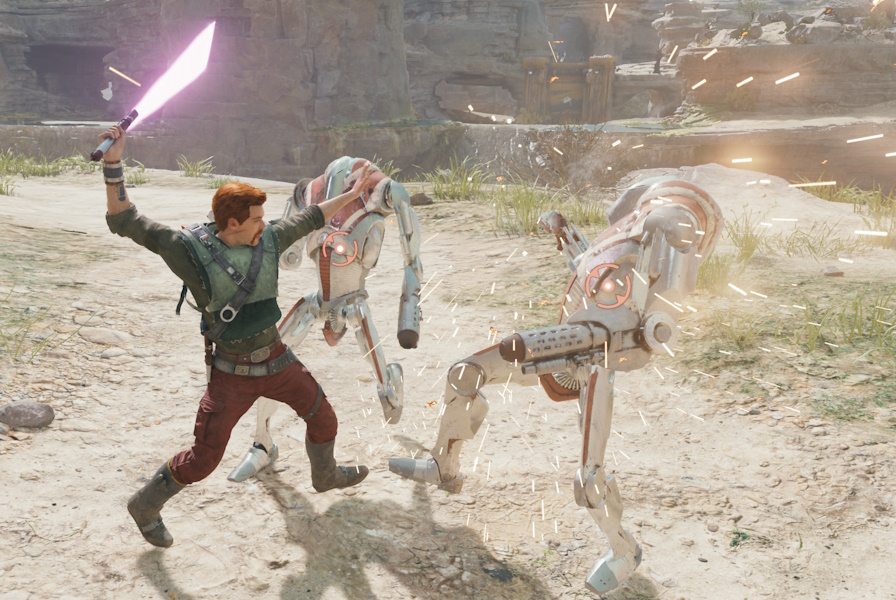
Battling battle droids in Jedi: Survivor.

I absolutely adored Jedi: Fallen Order when I played it. Going on that adventure with Cal Kestis and the crew of the Stinger Mantis was fantastic, so I was incredibly excited for the game’s sequel in 2023. But as you’ll know if you read my review of the game… I really didn’t like it. Mechanically and narratively, the game failed – and that’s before we get into the bugs and glitches that have come to define its poor launch.

An open-world design is not something that suits every game, and Jedi: Survivor was made significantly worse than its predecessor by attempting to go down this route. The clumsily-designed maps, particularly on the main planet of Koboh, really got in the way of the story and immersion. It made no sense to me that Cal and his friends would hide out in a “quiet, out-of-the-way” settlement like Ramblers Reach… when that settlement was a stone’s throw from both a massive pirate base and two Imperial outposts.

The game’s open-world design put Ramblers Reach literally a few metres away from the Empire and pirates.

In terms of story, I found Jedi: Survivor to be an unimpressive relation to its illustrious predecessor. Cal was teamed up with a character who was obviously, from almost his first second on screen, a “secret bad guy in disguise.” This plot point was so flagrantly telegraphed that it might as well have been lit up in neon. And the return of Master Cordova, a character who played a huge role in the story of the first game, was handled incredibly poorly.

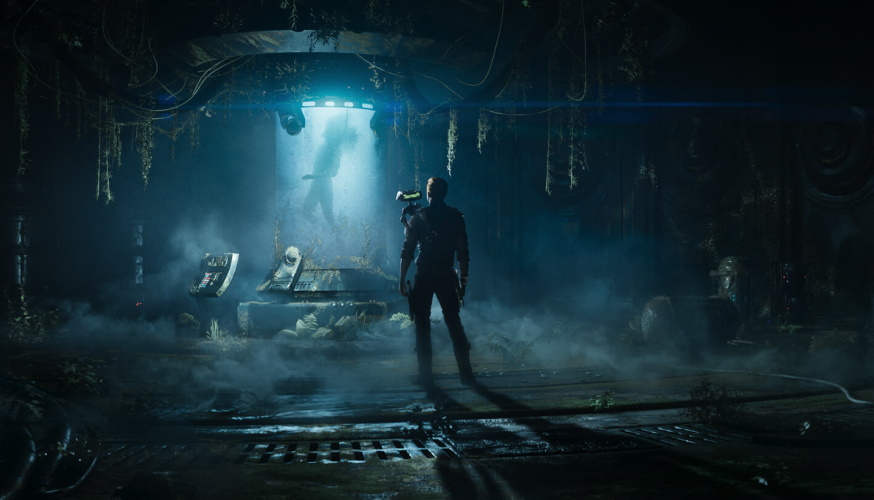
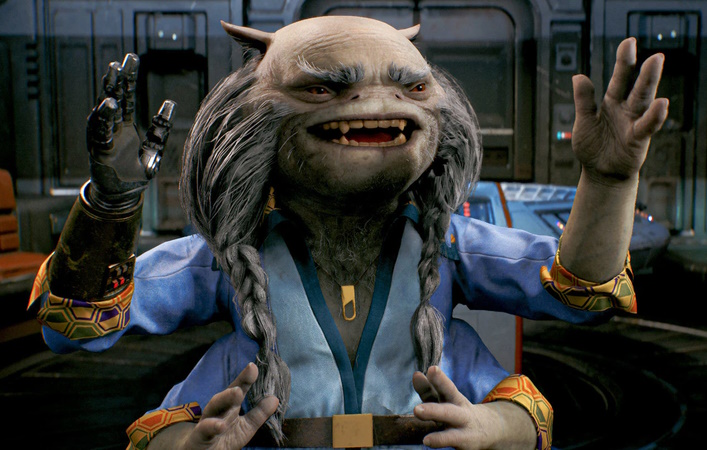
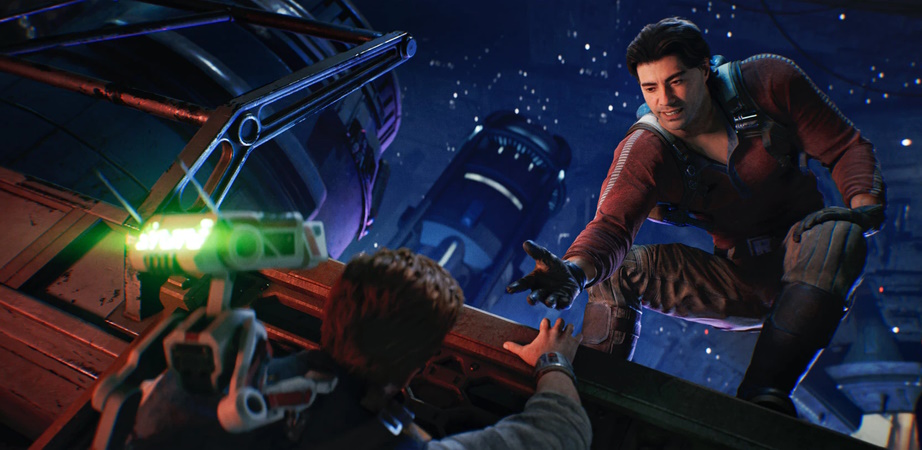
There were some narrative highlights: Cere’s story took her full-circle, for instance, and while I could see Bode’s betrayal coming from a mile away, Cal’s reaction to it was genuinely emotional. But the foundations of this story felt weak and almost random, with Cal stumbling into a random cave, Greez accidentally building his cantina atop ancient Jedi ruins… and a convoluted plot involving an ancient Jedi sealed in a bacta tank and a “lost” planet that no one knew how to reach. Compared to the story of Fallen Order, Jedi: Survivor came up short.

A duel in Jedi: Survivor.

Obviously we can’t discuss Jedi: Survivor without commenting on the game’s shockingly poor condition. I’ve uninstalled it now and haven’t touched it since September, so I can’t comment on its current state. But I saw the reviews Jedi: Survivor received upon launch and chose to wait several months before jumping in – only to find that it was still in an absolutely appalling state, with bugs, glitches, frame-rate problems, stuttering, and low-res textures all getting in the way of the experience. The fault for this lies with publisher Electronic Arts, who chose to force Jedi: Survivor to be released before it was ready.

At the beginning of 2023, I genuinely expected Jedi: Survivor to be in contention for my “game of the year” award. Instead, for a variety of reasons it ended up as one of the biggest disappointments of the year. A sequel is in the works, and while I’m going to be much more sceptical this time around… I have to at least cross my fingers and hope for something better.

“Hot Take” #5:
The sequel trilogy won’t ever be retconned out of existence.

The Holdo manoeuvre is canon. Suck it, haters!

I’m not sure how hot of a take this really is, because I think most folks understand that Disney and Lucasfilm aren’t going to turn around one day and announce that the sequel trilogy is suddenly non-canon! But in some corners of the Star Wars fan community, this fantastical notion has taken root. I’ve heard some big-time fan blogs and channels with sizeable audiences pushing the idea that some or all of the sequel trilogy – and The Last Jedi in particular – are about to be “erased” from canon or overwritten.

Like any franchise, Star Wars has grown and evolved over the years. Stories, characters, and themes that may have been controversial or hated at first tend to be more accepted with the passage of time, as we’ve seen with both Return of the Jedi and the prequel trilogy. The same is sure to happen for the sequels, given enough time. Fifteen years from now, they’ll just be part of the furniture; inseparable from the rest of Star Wars.
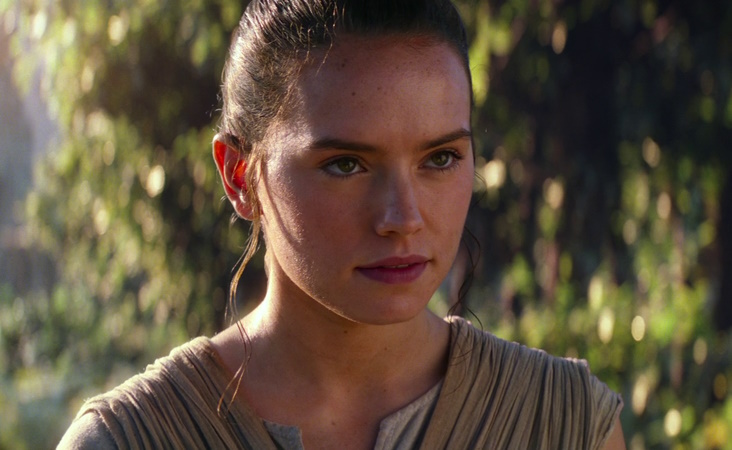
Rey in The Force Awakens.

In 1999, I really didn’t like The Phantom Menace. In fact, the only part of the prequel trilogy that I even considered to be passable was Revenge of the Sith – and that dim praise comes with multiple caveats! But as time has passed, the prequels have been folded into the broader lore and canon of Star Wars quite effectively – to the point that I’d never even consider the idea of overwriting them at this stage.

Many of the fans who seem to be arguing most passionately in favour of the sequel trilogy being scrubbed are – somewhat ironically, perhaps – younger folks who first came to Star Wars when the prequels were in cinemas. The prequel trilogy was their way into the Star Wars fan community, so the idea that those films could’ve been disliked or hated as much as the sequels are today doesn’t seem to register for a lot of folks. But they were… and the fan community was able to recover!

“Somehow, Palpatine returned…”

I don’t know what the future holds for Star Wars. Maybe it will go on for years and years, producing new content all the while. Or maybe it’ll take another decades-long break before triumphantly returning, as it has in the past. But either way, the sequel trilogy will remain part of that story. It may not be beneficial to Disney and Lucasfilm to put it front-and-centre right now, particularly as fans seem to long for more stories set during the prequel era or the time of the original trilogy. But the sequel era is developing stories, spin-offs, and a lore all of its own – and building on that will be a key part of Star Wars’ future.

The idea that a billion-dollar trilogy of films, complete with spin-offs, merchandise, and more would ever be dumped or retconned out of existence is nothing more than a juvenile fantasy; the ultimate “cope” from folks who can’t stand those films. And look… I agree that the world would be a much better place if The Rise of Skywalker had never existed. That film was an absolute catastrophe! But it won’t ever be erased or overwritten – and I’m okay with that. I’m still content to give Star Wars a chance to impress me with what comes next.

“Hot Take” #6:
Writing a sequel to Return of the Jedi that didn’t feel like tacked-on fan fiction was probably impossible.

The main characters at the end of Return of the Jedi.

Stories end. Every story eventually comes to an end, with its character arcs, sub-plots, and main narrative threads all being drawn to a close. And for better or worse, Return of the Jedi was the end of Star Wars; the final, climactic battle of the Palpatine-versus-Skywalker saga. The Emperor was dead, Imperial forces were implied to be in disarray, the threat of the Death Star had been removed, and it seemed as if the Rebel Alliance had won the day. After three films – or six, if we include the prequel trilogy – the story had come to an end.

And what an end it was! Saving the galaxy, destroying both Sith Lords, restoring the Jedi Order, and setting the stage for a return to freedom and democracy after two decades of oppressive autocracy is a great place for the curtain to fall and the credits to roll. And having seen both the impotent fan fiction of the old Expanded Universe and Disney’s sequel trilogy, one thing seems abundantly clear to me: that should have been the end. There just wasn’t space to add a new story after the events of Return of the Jedi.

The Death Star explodes above the forest moon of Endor.

It’s ironic that Disney is the company that purchased the Star Wars brand, because the sequel trilogy is a great example of what I like to call the “Disney sequel problem.” Every Disney film – of the classic and renaissance eras, at any rate – ended with a “happily ever after” moment, with the heroes celebrating a hard-fought victory and the baddies vanquished. It proved impossible to make a sequel to those kinds of stories that didn’t feel either tacked-on or derivative.

And both of those labels apply to the Expanded Universe and the Disney-created sequel trilogy. The First Order basically picked up where the Empire left off, and the revelation that Palpatine had been secretly pulling the strings the whole time completely undermined whole narrative arcs from the original and prequel films. The Force Awakens was basically a carbon copy of A New Hope, and The Rise of Skywalker tried its best to be Return of the Jedi. No part of the story was original, and as I wrote once, the entire sequel trilogy feels like a bait-and-switch. Instead of answering questions about the Star Wars galaxy that fans had been asking for years, the films simply re-told the same story with a different coat of paint.

Kylo Ren and General Hux in The Force Awakens.

And I don’t see how it could’ve been different. After killing the Emperor and Darth Vader, there was no “big bad” left to defeat. Mopping up the leaderless remnants of the Empire would’ve felt anticlimactic, and replacing the Emperor with Snoke and Vader with Kylo Ren was just cheap and derivative. The same feelings would have arisen if a new Emperor had emerged, a new Sith Lord had been discovered, or the First Order had been given a different name to match one of the silly Expanded Universe stories.

Unfortunately, modern entertainment franchises can’t be allowed to come to a dignified end. They must be resurrected and kept on life-support at all costs, with new stories being churned out to suit the needs of corporate shareholders who are too cowardly to invest in new stories and characters. After saving the galaxy and defeating the Sith, Return of the Jedi left Star Wars with nowhere to go narratively – but Disney and Lucasfilm went there anyway.

So that’s it!

The Jedi Council.

I hope I didn’t upset too many people with this list!

There’s still plenty to enjoy with Star Wars, even if I’ve found a few things to pick on this time. In 2024, I’m looking forward to The Acolyte on Disney+ and to getting my hands on the remastered Dark Forces video game – so I’m still engaged with the franchise. I also like to keep up to date with big developments, and I’m sure that I’ll eventually get around to watching most of the live-action series and seasons that I’ve missed.

I hope this has been a bit of fun, and perhaps thought-provoking in places. Although these are “hot takes,” it wasn’t my intention to upset anyone or cause anger and division. The Star Wars fan community has more than enough of that! At the end of the day, we all have things we like and things we dislike in our favourite films and franchises.

Until next time… and may the Force be with you!

The Star Wars franchise – including all films, games, and other properties discussed above – is the copyright of Lucasfilm and The Walt Disney Company. This article contains the thoughts and opinions of one person only and is not intended to cause any offence.

Star Wars Jedi: Survivor – A Review

Spoiler Warning: There are spoilers ahead for Star Wars Jedi: Fallen Order and Star Wars Jedi: Survivor. Minor spoilers may also be present for parts of the Star Wars franchise.

It’s been a while since I shared my first impressions of Jedi: Survivor here on the website. I’ve since returned to the game, despite its performance issues, and beaten the main story, so I’m now in a position where I can put metaphorical pen to paper and share my full thoughts with you. Sorry that it took so long!

For some context, I adored Jedi: Fallen Order. I documented my first playthrough of that game here on the website back in 2020, and I was thrilled to see Lucasfilm and Electronic Arts recognising the strength of feeling in the Star Wars fan community for a linear single-player game. Jedi: Fallen Order had a high budget, but it proved definitively – as if any such proof were really needed – that single-player games can still be profitable, and that players still long for those kinds of experiences. Moreover, at a time when both The Rise of Skywalker and The Mandalorian had been disappointing, Jedi: Fallen Order came along and showed me that I hadn’t entirely fallen out of love with Star Wars.

I definitely felt optimistic about Jedi: Survivor.

I was genuinely thrilled at the prospect of a sequel to one of my favourite Star Wars games of all-time, and to see what would come next for Cal Kestis and the crew of the Stinger Mantis – and that was how I felt in the weeks leading up to the launch of Jedi: Survivor. If things went well, I believed that it might’ve been in contention for my “game of the year” award come December.

But things did not go well.

The Jedi: Survivor story is an all-too-familiar one: Electronic Arts forced the game to be released too early, despite knowing that there were serious technical issues. The game is a “release now, fix later” title, replete with bugs, performance issues, and other such problems. Although these issues afflicted the game and harmed players’ enjoyment across all platforms, as is often the case it seems that the PC version of the game was in the worst shape. Unfortunately, as I don’t own a PlayStation 5 or Xbox Series console, PC was where I played Jedi: Survivor.

One of many bugs that I encountered. Nightsister Merrin crouching in an out-of-bounds area.

I actually thought I’d been smart. Having read the reviews of the game when it launched and having seen performance reports from players and professional critics, I shelved my plans to buy Jedi: Survivor. I waited a couple of months and kept my eye on the game as patches were rolled out, and mistakenly believed that six patches later, things would have improved. Spurred on by having inadvertently come across a couple of story spoilers, I picked up the game at the end of June.

Unfortunately, however, the performance issues hadn’t been fixed – and in spite of another patch having been rolled out since then, those issues are still present on PC at time of writing. I described Jedi: Survivor as a “release now, fix later” game… but the fix still hasn’t been made, and the game remains in a poor state even five months after its troubled launch. In fact, having returned to the game to grab a few screenshots, I felt that its performance was worse in September than it had been in June and July.

A levitating Stormtrooper.

The blame for this lies with Electronic Arts, and the company has transformed what should have been a guaranteed hit into a game surrounded by controversy thanks to pathetically poor decision-making at the highest levels. Developers Respawn Entertainment were placed in an impossible position, and while I have no doubt that talented, passionate folks did their absolute best to get Jedi: Survivor as ready for launch as possible, they were screwed over by EA. It’s a tale as old as time in the games industry: a greedy publisher shits all over the hard work of talented developers, then seeks to blame them for the game’s poor condition and lower-than-expected sales.

My first few hours with Jedi: Survivor were spent messing about with settings rather than actually playing the game. Every time I thought I’d improved things, the stuttering and frame-drops would inevitably return – and they were far from the only problems. I encountered dozens of bugs across my playthrough, with Cal and other characters getting stuck in the environment or clipping through solid objects, as well as items not rendering properly or even disappearing. These issues didn’t just affect gameplay, but were also prevalent during cut-scenes – something I hadn’t seen in a supposedly “complete” game in a very long time.

And I have no doubt that Jedi: Survivor’s performance problems have tainted my view of the game as a whole.

Clipping through and getting stuck in the environment was a recurring problem throughout Jedi: Survivor.

When I sit down to play a game like Jedi: Survivor, it’s because I want to be immersed in a story. I want the game to transport me to a galaxy far, far away, and lose myself for a few hours in the life of a Jedi Knight on the run from the Empire. The occasional bug or glitch would be tolerable, but when a game is in such shockingly poor shape, dogged by performance issues, stuttering, broken animations, and bugs galore… it rips the immersion away. I struggled to really get into Jedi: Survivor and its story, and even its better moments were spoiled or diminished by the unacceptable state that it was released in.

But that’s enough about bugs for now, because there are other issues with the game that we need to talk about.

I have two major gripes with Jedi: Survivor aside from the bugs. One is mechanical; a choice that was made in terms of the way the game was designed and its levels were crafted. And the second is with parts of the story itself, as well as with the way in which certain new and returning characters were handled. We’ll look at each of these points in turn.

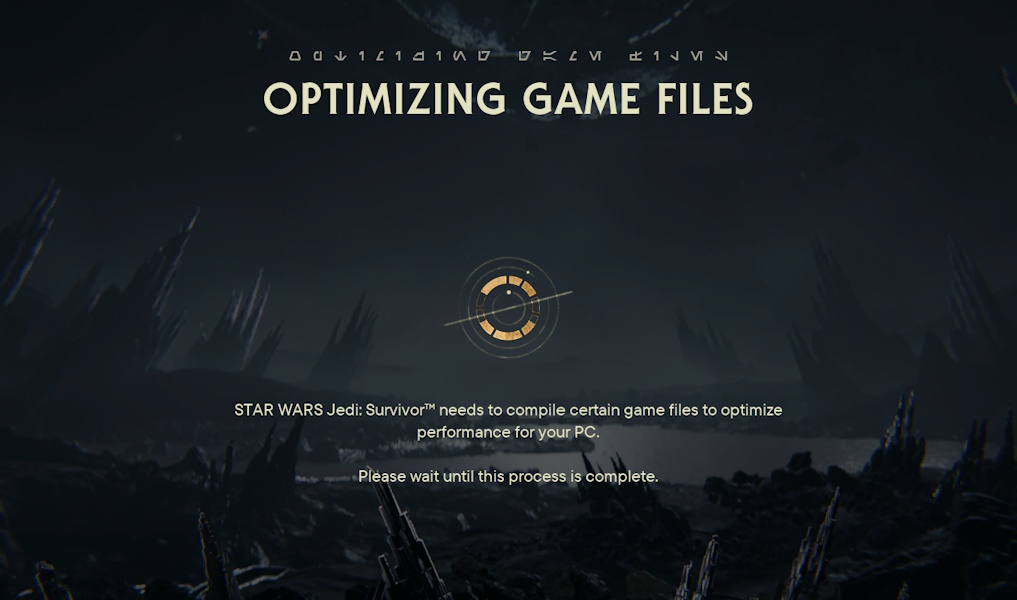
Optimising game files and compiling shaders appears to make fuck all difference.

Firstly, an open world (or semi-open world) did not suit Jedi: Survivor. The game’s story was hamstrung by this decision, and crafting a couple of open stages that actually felt condensed and small really damaged that sense of immersion that I was talking about. On the main planet of Koboh, the village of Rambler’s Reach was a few dozen metres away from the base of a massive gang of pirate-raiders and also a few dozen metres away from two Imperial outposts. Hardly the out-of-sight hiding place that it was presented as in-game.

One day we’ll have to talk more about the open-world trend, and how it simply isn’t the right choice for every game. Jedi: Survivor, to me, stands as perhaps one of the best recent examples of that. The design of both Koboh and Jedha was hampered by this attempt to move in an open-world direction, and the game would have benefitted from tighter, more curated levels, as well as areas of the map that had more distance between them. By all means, have raiders and Imperials on Koboh if that’s necessary for the story – but why not have Cal travel to the other side of the planet in a cut-scene before encountering them? The design of those parts of the map could have been similar, but breaking them off from the Rambler’s Reach hub would have improved the game from a narrative and immersion standpoint.

The saloon in Rambler’s Reach.

I also felt that the move to broader, more expansive levels should have been accompanied by more cosmetic items and loot. It became frustrating to explore a whole area, climbing onto hidden ledges, wading through rivers, and so on only to find… absolutely fuck all. There are more cosmetics in Jedi: Survivor than there were in Jedi: Fallen Order – and that’s great. I had fun customising Cal and unlocking some of these options. But this was something that felt unbalanced.

I’d explore a whole section of the map, kill dozens of enemies, and find nothing. No in-game currency, no cosmetics, no chest with an item… just nothing at all. And to me, that reinforces what we were talking about with Jedi: Survivor’s open-world style: it just doesn’t fit the game. It didn’t fit the story and it didn’t fit the amount of content that had been created, either. A good game strikes a balance, making exploration feel fun and worthwhile. There were moments of that in Jedi: Survivor, but they were too few and far between.

Battling battle droids.

Jedi: Survivor bills itself as a “souls-like” game; i.e. a “difficult-for-the-sake-of-it” title. But to its credit, the game offers an easier mode to play on – something I took full advantage of. However, even on the easiest difficulty there were some particularly finicky and challenging moments. While I found the game’s combat to be okay, there were some moments where Jedi: Survivor required frame-perfect button presses that I found near-impossible. Because I suffer from arthritis that affects my hands and fingers, some rapid button combos are nigh-on impossible for me to perform. At several points in the game, I was almost entirely locked out from progressing because I couldn’t complete a particularly intensive button combo.

On one occasion it took me almost forty tries to navigate just a single section of the map on Jedha – a particularly convoluted wall-run, jump, and swing combination that my hands and fingers just couldn’t manage. The game offered no help with these things, no accessibility options, and no way to skip ahead to bypass these moments. This is poor, and while I will give Jedi: Survivor some well-earned praise for offering a story mode, more accessibility features need to be present, and developers need to be aware that easier combat isn’t the only thing that players are looking for. Many games offer the option to skip ahead if players can’t make it past a certain puzzle or area of the map; these things are not that difficult to implement.

Cal on Jedha.

Stories are incredibly subjective. What works for you might not work for me, and vice versa, so everything I’m going to say about Jedi: Survivor’s narrative choices have to be taken in that way. Nothing about this is “objective” at all!

Where I’d felt gripped by Jedi: Fallen Order’s story, Jedi: Survivor came up short. Cal felt listless, rushing from place to place at the behest of the plot but not in a particularly understandable way, and there were moments of sheer randomness in the story – particularly at the beginning – that really detracted from the adventure.

A customised Cal.

In Jedi: Fallen Order, Cal was being hunted by the Imperial Inquisition after he used his Force powers, but was rescued by Cere. She already had a mission of her own: to open the holocron. Cal slotted into that story perfectly, and at every stage it felt like it unfolded naturally as Cal visited different worlds to unlock the holocron’s mysteries.

Jedi: Survivor begins with Cal falling into a hole that leads to a random cave – entirely by accident. It just so happened that Greez built his Cantina on top of some ancient Jedi ruins, and Cal stumbled into those ruins completely by mistake. That mistake kicked off a convoluted plot about a planet lost in an impenetrable nebula, a fallen Jedi who’d been sealed in a bacta tank for hundreds of years, and an Imperial spy who was so obvious that he might as well have had the words “secret bad guy” tattooed across his forehead.

Yup.

I admit that the performance issues and bugs in Jedi: Survivor made it harder to fully get into the story, as did the open-world mechanics described above. And those two things have undoubtedly impacted the way I view certain character decisions and the game’s narrative path. But even keeping that in mind, and doing my best to separate my thoughts about the state of the game and its design choices from its narrative… I still find it to be a weaker and less engaging story than its predecessor.

Any Star Wars story set during the reign of the Empire has a tightrope to walk – and for me, Jedi: Survivor created narrative issues for itself as a result of a couple of key decisions. Bringing back Master Eno Cordova for what was, unfortunately, an underwhelming and unimpressive role seriously challenges the idea of Cal as the game’s protagonist and leading figure in any kind of Jedi restoration. Cere had appointed herself as a kind of librarian or preserver of Jedi knowledge, but Cordova – a Jedi Master, lest we forget – should have been in a strong position to play a leading role in the preservation and restoration of the Jedi Order.

Master Cordova’s role was unimpressive.

Instead, Cordova’s role was a disappointment. He hand-waved away Cal’s destruction of the holocron that he’d gone to such extreme lengths to protect in the first game, then just stood around doing fuck all. He didn’t help, he didn’t offer guidance, he didn’t do… well, anything. And then he died remarkably easily at the climax of the game’s “twist” – a twist so thoroughly telegraphed that it might as well have been lit up in neon. Ever since the “no, I am your father” moment back in 1980, Star Wars has been obsessed with putting these kinds of twists into its stories. As I said once, recapturing that magic moment isn’t gonna happen, and Jedi: Survivor was made worse by trying to pull off something like this – and doing it so unsuccessfully.

When the dust settled, I also felt that Bode’s reason for his betrayal of Cal was paper-thin and didn’t make a lot of sense. Did Bode really plan to take his child to an uninhabited, uncharted planet and stay there – completely alone? What were they gonna eat? Without access to technology, what were they gonna do? Sure, they’d be “safe” from the Empire, and Bode would be wiped off the Empire’s list, but there doesn’t seem to have been any real planning on his part for the long-term.

Bode didn’t make for a particularly compelling villain.

In a “linear, story-driven” game – tags that Jedi: Survivor’s publishers love to draw attention to – the story is more important, in many ways, than the gameplay. Jedi: Survivor’s third-person exploration, parkour, and lightsaber combat could be fantastic… but if they’re let down by a poor story or one that feels convoluted, there’s no salvaging the game. And while I wouldn’t say anything in Jedi: Survivor was as bad, narratively speaking, as something like The Rise of Skywalker… that’s an incredibly low bar.

There were some genuinely tense, thrilling, or otherwise fun moments scattered throughout the story, as well as callbacks to the first game and references to other parts of the Star Wars franchise that I appreciated. So it wasn’t a total narrative collapse or anything like that; Cal’s story, while built on weak foundations, was still worth following to its conclusion. Even though I saw Bode’s betrayal coming from a mile away, Cal’s raw emotional reaction to it definitely hit the notes it was aiming for. While Master Cordova’s death felt like a waste, Cere’s demise at the hands of Darth Vader not only took her story full-circle after the events of Jedi: Fallen Order, but it was a heartbreaking moment that was handled well.

Cere was hunted down by Darth Vader.

The weakest part of the story of Jedi: Fallen Order was one that I hoped its sequel might address. The Haxion Brood storyline – in which Greez and Cal were pursued by a gaggle of unimpressive bounty hunters – was left unresolved by the time the credits rolled on the first game, and I had hoped to see a resolution in Jedi: Survivor. There was a bounty hunter side-story in the game, with several different bounty hunters to defeat that served as kind of mini-bosses. The ending of this questline was neat, but here’s my gripe: it didn’t resolve the Haxion Brood storyline!

As of the end of the game, Cal and Greez are still wanted by the bounty hunters, and the faction’s leader, who we met in the first game and who seemed like the kind of arrogant dick that it would be so satisfying to kill, wasn’t even mentioned this time. Again, this storyline just feels half-baked, and I had hoped that Respawn might’ve taken that feedback on board after the way the bounty hunter story just fizzled out in the first game.

Bounty hunter Caij Vanda offered what amounted to side-missions.

I liked that there were more cosmetic options in Jedi: Survivor, and I had fun playing with Cal’s appearance, BD-1’s appearance, and Cal’s lightsaber. I wasn’t wild about the way these cosmetics were unlocked, however, as I felt the game was particularly stingy with its currencies and lootable containers. That being said, I was able to unlock most of the items that I had my eye on, and by the time I was halfway through the campaign (or thereabouts) I’d got Cal, BD-1, and Cal’s weapons looking the way I wanted them to.

The expansion of lightsaber styles from Jedi: Fallen Order was nice – but these felt a little restrictive. I loved the way the crossguard lightsaber looked, but the incredibly slow and cumbersome fighting style that accompanied it basically rendered it non-viable for me. It would have been nice if there were options to mix and match fighting stances with cosmetics – in my case allowing Cal to use a crossguard lightsaber in a different way, but this could also open up double-bladed and dual-wielding stances to other styles of play.

Cal with a crossguard lightsaber.

Jedi: Survivor retains the Dark Souls-inspired “checkpoint” save system, instead of allowing players to freely save. This is a particularly irritating trend that many “souls-like” games (or should that be “souls-wannabes?”) implement, and it just feels annoying and outdated in 2023. Having to re-do chunks of a level because of the lack of a proper save system is just silly, it doesn’t increase the difficulty nor add anything to a game, and with Jedi: Survivor’s meditation spots not exactly being ubiquitous, I felt this choice got in the way of the fun.

One thing I did appreciate was that Cal’s Force powers carried over from Jedi: Fallen Order. Given the way in which that game weaved Cal’s connection to the Force into its narrative, it would have felt strange if he’d begun the sequel having to re-learn those same skills, and I will give credit to the writers for keeping Cal’s growth going instead of going for the typical video game sequel “reset” of his powers.

Customising BD-1.

I expected better from Jedi: Survivor, at the end of the day. The follow-up to one of my favourite games of the last few years was a title that I genuinely expected to compete for the coveted “game of the year” title come December, but instead it’s going to go down as one of the biggest disappointments of 2023 for me personally. The unacceptably poor state that Jedi: Survivor was in at launch – and remains in more than five months later – is a big part of that. But even if those performance issues and bugs had been kept to a minimum, the game itself feels like a poor relation to its illustrious predecessor.

Narratively, Jedi: Survivor built a weak, convoluted, and random story that split up the first game’s crew and saw Cal team up with an incredibly obvious turncoat. And mechanically, the game was forced into an open-world mould that simply didn’t suit it. It was hard enough to get invested in the story because of the poor shape that the game was in, but every time I got close, either the bland open-world formula would trip it up or I’d find myself annoyed by a story that was so much weaker than that of the first game.

Improperly rendered low-res textures.

So that was my experience with Jedi: Survivor. It’s hard to recommend it right now, given the performance issues and bugs that remain present. Electronic Arts and Respawn Entertainment have massively slowed the rollout of patches and fixes since the game launched, and I fear that Jedi: Survivor is being quietly abandoned and may never reach the level of basic playability and mechanical competence that should have been present at launch. This is already a huge disappointment and should be enough to put off all but the most ardent Star Wars fans.

Your mileage may vary when it comes to the game’s story, though, and my take is clearly not shared by all players. I’ve seen plenty of comments hailing the story as one of the best that the Star Wars franchise has to offer, and while that’s certainly not my opinion, it’s worth keeping in mind that these things are subjective. As I said earlier, I have no doubt that my overall impressions of Jedi: Survivor have been coloured by its bugs and performance issues.

I have no plans to return to Jedi: Survivor right now, and having stepped back into the game to capture a few screenshots for this piece, I’ll probably be uninstalling it. If a huge patch is released, or the game receives significant DLC that could add to its story, I might consider going around again. But unfortunately I must report that Jedi: Survivor was not the fun and engaging Star Wars adventure that I wanted it to be.

Star Wars Jedi: Survivor is out now for PC, PlayStation 5, and Xbox Series S/X. Jedi: Survivor is the copyright of Electronic Arts, Lucasfilm Games, and Respawn Entertainment. The Star Wars franchise is the copyright of Lucasfilm and The Walt Disney Company. Some promo artwork and images used above courtesy of IGDB. This article contains the thoughts and opinions of one person only and is not intended to cause any offence.

Star Wars Jedi: Survivor – First Impressions

Spoiler Warning: There are minor spoilers ahead for the first couple of levels of Jedi: Survivor. Spoilers are also present for Jedi: Fallen Order.

I have made a mistake.

With Jedi: Survivor having been released two months ago, and with six major patches rolling out for the PC version of the game in that time, I made the ignorant assumption that the game would have been fixed by now – or at least substantially improved. Having held off on purchasing the game when it was first released given its broken, unfinished state – and even worse PC port – I had hoped that some extra development time and post-release patches would have fixed things up.

Despite trying my best to avoid spoilers for the game, I’d come across a couple of seemingly pretty big ones over the past couple of months, and I wanted to play Jedi: Survivor without encountering any more. I was also keen to fill the void while I wait for Starfield – all of which are factors that led me to purchase Jedi: Survivor.

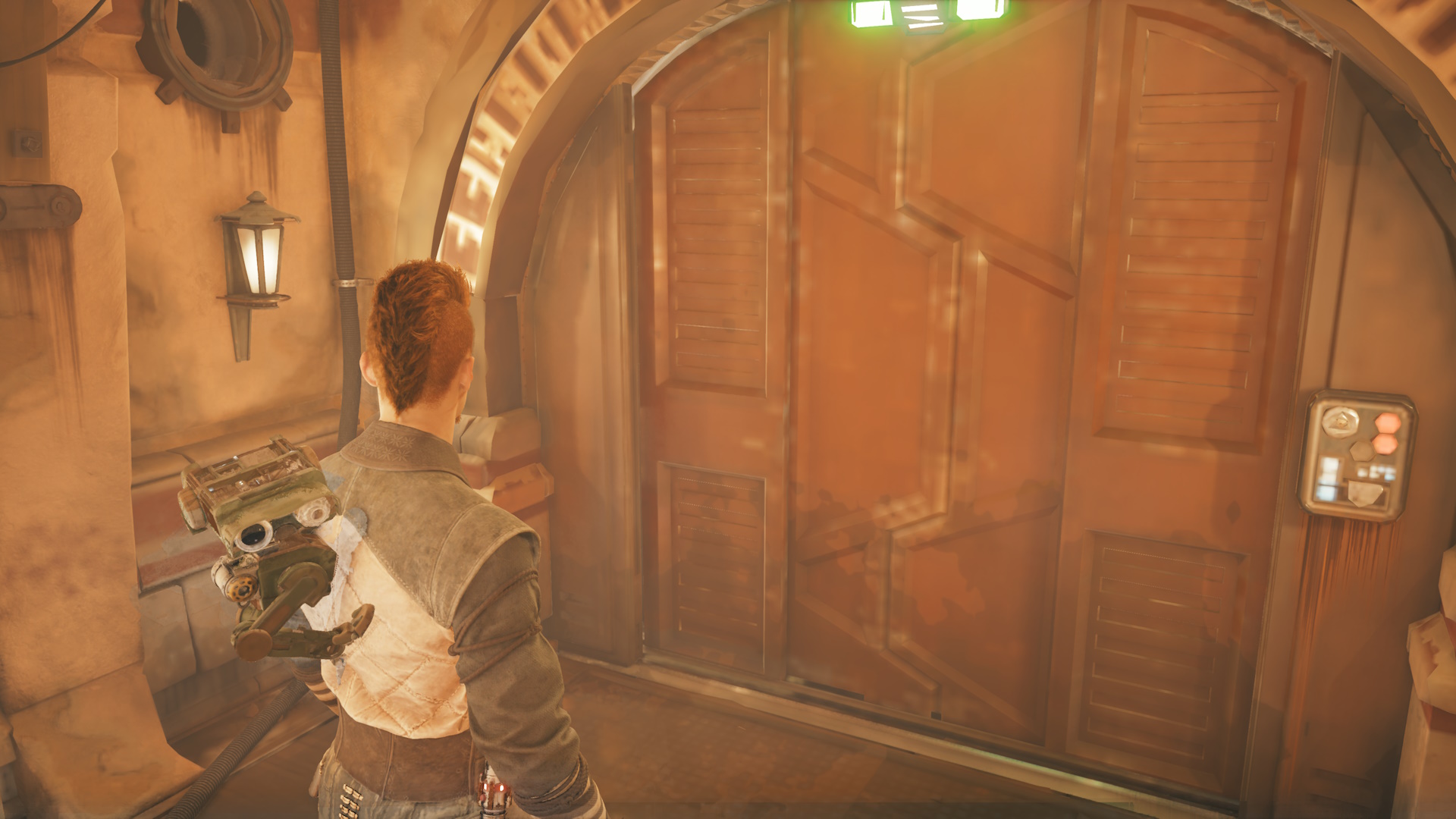
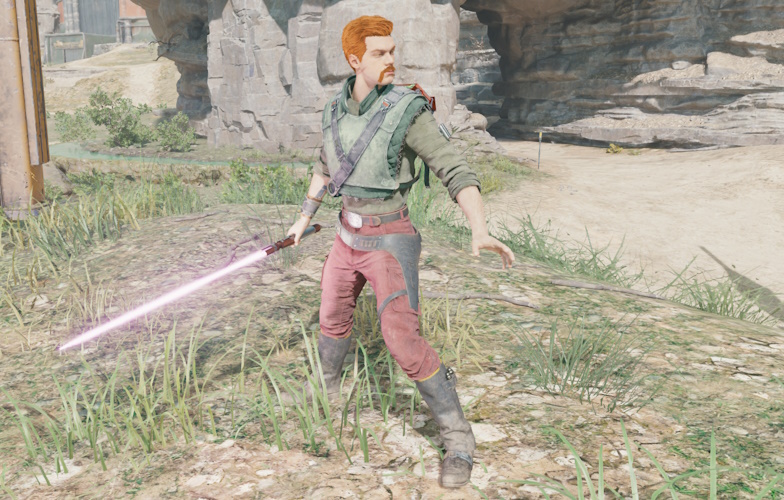
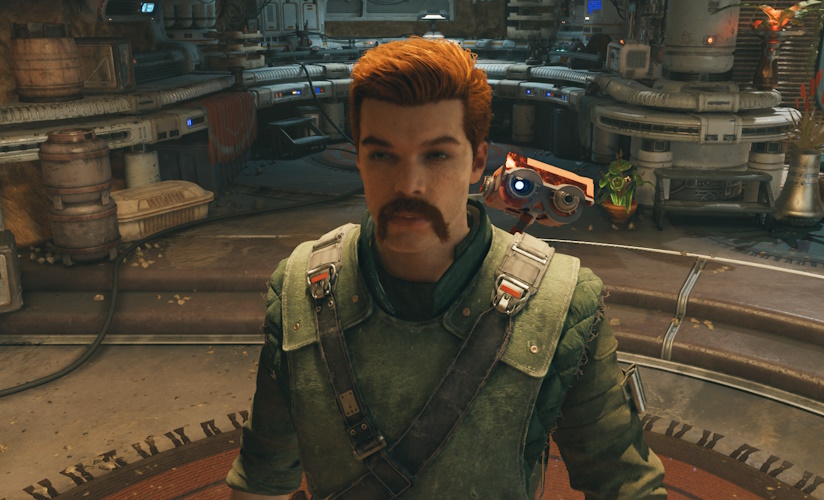
Cal Kestis – with his trademark moustache and pink lightsaber, of course.

On PC, the game is in a poor state even two months and six patches later. My PC far exceeds the game’s recommended system requirements, and should be capable of running Jedi: Survivor with detailed graphics and ray-tracing enabled without any issues. For comparison, I can run demanding titles like Red Dead Redemption II and Cyberpunk 2077 at their highest resolution, with ray-tracing enabled, and easily get a smooth 60 frames-per-second.

Jedi: Survivor runs poorly. Most of the time, walking around and exploring a level isn’t an issue. But as soon as combat begins, or even when Cal has to perform an acrobatic move like a double-jump or running along a wall, there are noticeable frame drops and stuttering issues. With some levels requiring fairly specific button-presses to navigate areas, inconvenient frame drops can mean the difference between successfully completing a section and having to replay it. This got old fast.

Cal stuck in the environment due to a glitch.

And this is in spite of turning down all of the in-game settings. I tried Jedi: Survivor in 4K at first, then 1440p, then finally 1080p. I tried the “high” preset, before dropping down to medium, and then again turning some settings – like shadows and the draw distance – all the way down to low. I refuse to drop the settings any further; playing the game in 720p with all settings on low would make it look no better than an Xbox 360 title, and what’s the point?

Some of these frame-drops occur during cut-scenes, which is something I haven’t encountered in a game in a long time. Although this kind of problem is annoying during gameplay, at least it’s understandable to an extent… but for cut-scenes to be similarly afflicted is actually quite shocking. It speaks to how unready Jedi: Survivor was when it was forced into a premature launch.

This “optimisation” takes place every time the game is started.

The frame-rate and stuttering issues are indicative of a game that is poorly-optimised. Despite Jedi: Survivor taking its sweet time to “optimise files” every time it boots, there’s no indication that this does anything at all. The game simply isn’t running well on PC. This isn’t an issue on my end, either – take a look at tech breakdowns from people far more skilled than I am and who have significantly more powerful computers. Similar issues are also impacting performance on PlayStation 5 and Xbox Series X – though I don’t have those consoles so I can’t speak to that for myself.

Jedi: Survivor has some visually interesting locations, but the experience of these – and the sense of immersion that I was hoping to find – has been ruined; soiled by just how janky and unfinished the game still is. When it works, these sights are definitely something to see, but the sad fact is that the game doesn’t work far too often.

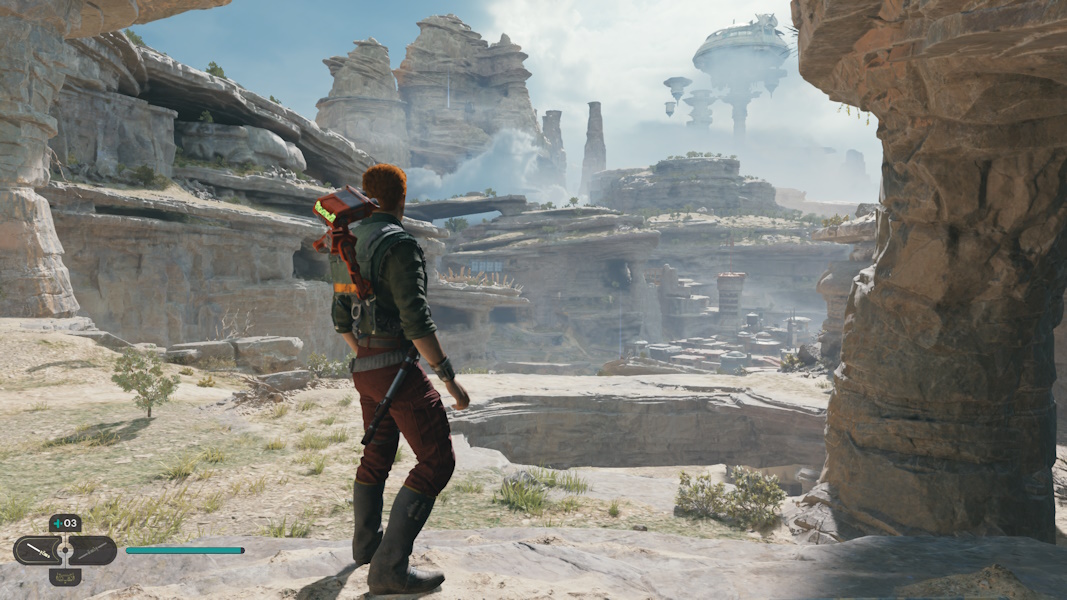
Some of Jedi: Survivor’s levels should look great.

I’m now considering abandoning Jedi: Survivor, despite only being a couple of hours into the game. If future patches come along that will genuinely address the performance problems that are plaguing the game on PC, it will be worth revisiting or restarting. But at the moment, I find that I’m spending almost as much time battling poor performance as I am battling enemies – and that just isn’t a lot of fun. Jedi: Survivor isn’t the only game this year to arrive in an unfinished state, especially on PC, but it’s so disappointing to see that this godawful “release now, fix later” approach has really put a downer on what should have been an exciting and fun experience.

But there’s more to say. In the time I’ve spent with the game so far, I have a couple of thoughts to share on the narrative and gameplay. This all comes with the major caveat that I’m only at the beginning of the main story, and that my thoughts may very well shift depending on how things go later on. How a story begins isn’t nearly as important as the journey it takes us on, after all!

Concept art for Jedi: Survivor.

That being said, the first couple of hours of Jedi: Survivor haven’t exactly blown me away narratively. I’ll avoid as many major spoilers as I can, but there will be some minor spoilers ahead – so if you ignored my spoiler warning at the beginning, this is your last chance to nope out!

When we’re reintroduced to Cal, he’s working with a new crew, with the friends he met in the first game having gone their separate ways. I’m not averse to that idea, as several years have passed since the events of Jedi: Fallen Order. Unfortunately, however, the members of Cal’s crew that we’re introduced to just feel incredibly one-dimensional and bland. Their dialogue was laden with clichés – something clearly designed to convey Cal’s friendliness with them all – but it all ended up falling flat. I couldn’t find a way to care about any of these people when they were in danger – because the game didn’t succeed at getting me invested in them or their fates.

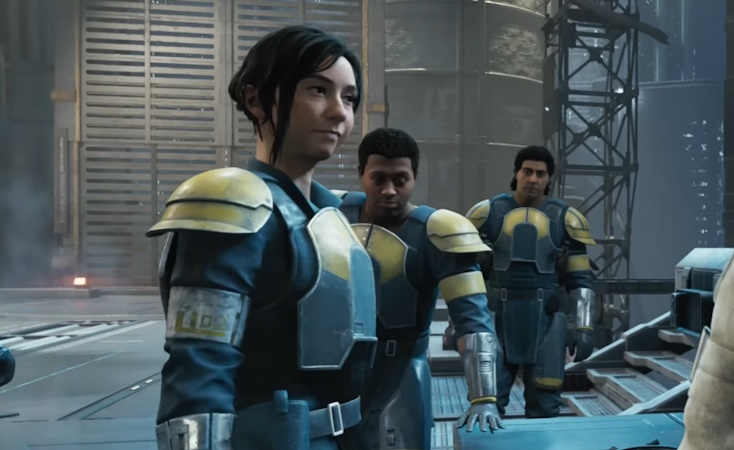
Some of the game’s new characters felt bland and uninteresting.

Contrast this with Prauf, Cal’s scrapper friend from the opening act of the first game. Prauf felt like he had personality, and I genuinely felt his connection with Cal from almost the first moment he appeared on screen. When Prauf was killed, Cal’s reaction was genuinely heartbreaking because the game had successfully set up their relationship.

I’m also a little concerned that Jedi: Survivor is going to retread parts of Jedi: Fallen Order by seeing Cal seek out the same people that he met last time. Reuniting a crew that had been together the last time we saw them is a risk; it’s something that could feel underwhelming in the extreme. Though there are new characters to get to know, part of the appeal of a sequel is to catch up with all of the characters we met last time – and I’m concerned that the way Jedi: Survivor plans to handle this will feel repetitive and just less interesting as a result.

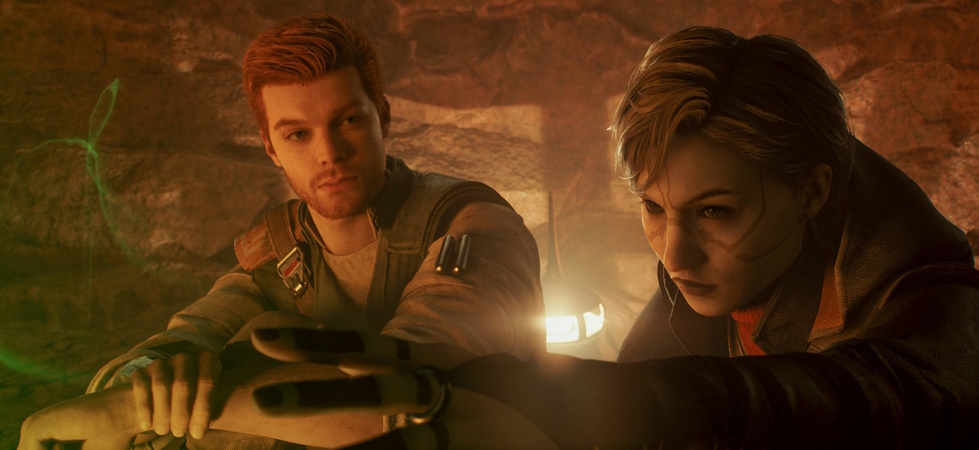
Promo screenshot featuring Cal and Merrin.

In Jedi: Fallen Order, Cal was guided to a succession of specific locations on his quest. He had to visit the tombs of Zeffo, the forested world of Kashyyyk, the scorched desert of Dathomir, and the frozen wasteland of Ilum – but he went to each of these locations with a goal in mind. The first part of Jedi: Survivor sees Cal seemingly by accident fall into a cave – and from that random cave discover a hidden Jedi artefact. It just feels a little too convenient.

Out of all the places in the galaxy that Cal could have ended up, he finds himself on just the right part of just the right planet – and not because he was guided there by Cere or by Master Cordova’s holocron, but by sheer random chance. Star Wars fans may say “that’s the Force!” and pedants will say “it’s just a story!” but to me, neither of those excuses feel especially strong. Last time, Cal had a purpose, and was guided on his quest to particular locations. This time, things feel a lot more random.

Jedi: Fallen Order’s story seemed to take Cal on a more natural journey – rather than a random, incredibly convenient one.

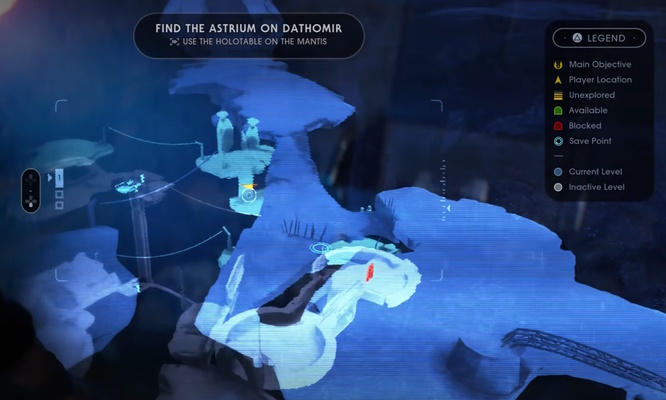
Mechanically, Jedi: Survivor has a couple of issues, too. Larger levels can be more confusing, and the in-game holo-map still isn’t particularly user-friendly. In just the first couple of stages I found myself getting lost, and partly that’s because the way to go wasn’t well-signposted. Areas that looked accessible weren’t, areas that were supposed to be reachable looked blocked off or too far away, and while I don’t want a Skyrim-style waypoint on my screen the entire time… there’s got to be a way to make some of these pathways more visible, surely.

Jedi: Survivor is leaning into more of an open-world style, at least with one of the planets Cal has visited so far… and that can be a double-edged sword. On the one hand, larger and more expansive levels are a welcome change from linear paths, but on the other, some open worlds can get in the way of story progression. There are also more hiding places for items and chests… and it can be frustrating, sometimes, to explore a whole chunk of a level, climbing on every ledge and jumping into every cave only to find nothing at all.

Battling battle droids.

I like the expanded customisation options for Cal – and I’ve already found a suitably silly moustache for him to plaster on his face. I wish more customisation options were unlocked at the start, though; the available cosmetics felt pretty threadbare at first. I love a game with good customisation options, though, and Jedi: Survivor appears to have a bunch of fun cosmetics to play about with.

The game is larger than Jedi: Fallen Order was – with more characters, more skills, more quests, and more cosmetic variety. All of those things are positive, and so far I don’t feel overwhelmed or like the game is too large. Some open-world games can feel like they dropped you in the middle of a mass of stories and quests with little to no direction; at least in its first couple of hours, Jedi: Survivor manages to avoid that sensation.

A closer look at Cal’s moustache.

I want to progress further with this game. I adored Jedi: Fallen Order and I was really excited about its sequel, reuniting with Cal and the Stinger Mantis, and having another adventure in a galaxy far, far away. Although there are a couple of story complaints that I’ve found so far, by far the worst issue with Jedi: Survivor is that it just doesn’t play very well. The game probably needs at least two or three more significant patches and updates to knock it into shape – and when the most recent patch took over a month to be rolled out, that could mean Jedi: Survivor will have to go back on the shelf for a while.

Electronic Arts fucked up what should have been a guaranteed success by doing what they’ve done too many times before: forcing the release of an unfinished game too early. Had Jedi: Survivor been delayed to, say, September or October, to allow Respawn more time to actually finish working on it, we could be talking about one of the best games of the year – and one of the best Star Wars games in a long time.

Instead, Jedi: Survivor will always have an asterisk; a little caveat next to it. No matter what happens to the game in the months ahead – and I sincerely hope that more patches and fixes are coming – it will always be tainted by the poor shape it was in when it launched. That didn’t have to happen… and I wish I’d taken my own advice and waited a little longer before purchasing it.

Star Wars Jedi: Survivor is out now for PC, PlayStation 5, and Xbox Series S/X. Jedi: Survivor is the copyright of Electronic Arts, Lucasfilm Games, and Respawn Entertainment. The Star Wars franchise is the copyright of Lucasfilm and The Walt Disney Company. Some promo artwork and images used above courtesy of IGDB. This article contains the thoughts and opinions of one person only and is not intended to cause any offence.

Ten games to play while you wait for Starfield

Spoiler Warning: There may be minor spoilers ahead for some of the titles on this list.

Are you as excited for Starfield as I am? Bethesda’s upcoming sci-fi role-playing game had been on my radar, of course, but the recent showcase has absolutely got me hyped up! Although I’m trying to restrain myself and not get overexcited, especially with Bethesda’s track record and 2023 having already seen some truly awful game launches, I just can’t help myself! I want to play the game now now NOW!

So what’s a wannabe Starfield-er to do? With three months to wait until the game’s launch – assuming it won’t be delayed again – what should we play? Today I thought it could be a bit of fun to pick ten games that might scratch part of that Starfield itch!

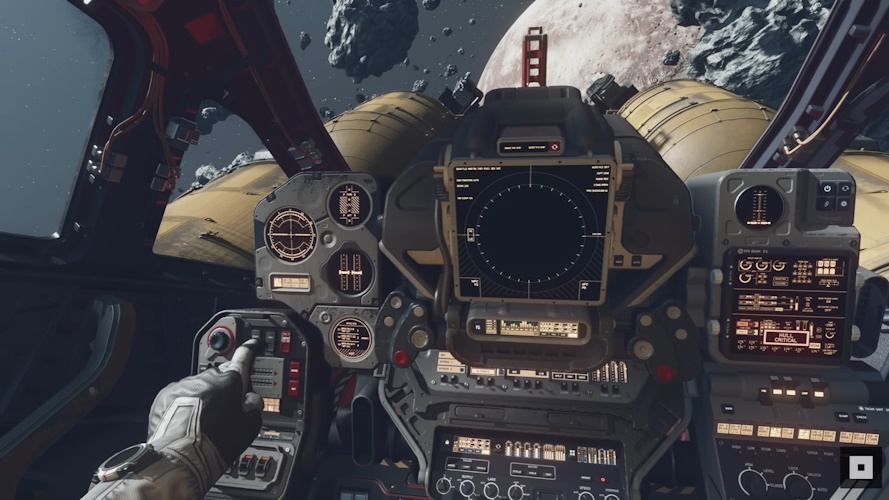
I can’t wait to build and pilot my very own spaceship!

I’ve picked games for this list that are either in the sci-fi realm, the space-sim or space-adventure genre, the role-playing genre, or that have expansive open worlds. Those are the key traits that Starfield has, so it seems logical to look for games that exist in a similar space – even if they won’t be on the same scale!

As always, a few caveats. Hype can be a dangerous thing, and as I said in my recent look at Starfield, it’s a game that has firmly earned its place in the “wait for the reviews” category! I shan’t be pre-ordering it, and while I’d never want to tell anyone else what to do, I think it’s sensible in most cases to avoid pre-ordering games in order to see what state they’re in when they arrive. Such is the nature of the video games industry in 2023!

Ship customisation in Starfield. I cannot wait to get stuck into this!

Everything we’re going to talk about today is the subjective opinion of one person. If you don’t care about Starfield, if you hate all of the games on this list, or if I don’t include a title that seems blindingly obvious to you… that’s okay! There are myriad opinions on Starfield and video games in general, and all I’m trying to do is offer my personal suggestions for games to play while we wait.

I have no “insider information,” and I’m basing my list on information that has been publicly revealed about Starfield.

With all of that out of the way, let’s get started!

Game #1:
X4: Foundations

Promo screenshot featuring a spaceship.

I have to confess that I’m not terribly familiar with either X4: Foundations or the X series as a whole. But looking in from the outside, X4: Foundations seems to have many of the space-based elements that players might be looking for in Starfield. It’s possible to become the captain of a ship, to trade with a variety of factions, and to participate in combat, piracy, and more. There are dozens of ships to control with different specialities, from small mining craft to large freighters.

X4: Foundations is the kind of game that looks quite complex, but could be a blast to really get stuck into. The X series has a dedicated community, and X4: Foundations has received four DLC expansions since its initial 2018 release, with more supposedly in the pipeline.

Game #2:
The Outer Worlds

Box art for The Outer Worlds.

The Outer Worlds is smaller in scale than Starfield will be, but it brings many of the same elements to the table. Players have their own ship, can recruit companions for their quest, and can create a custom character. The game’s developers Obsidian once worked alongside Bethesda to develop Fallout: New Vegas, and some commentators hailed The Outer Worlds as Obsidian’s “spiritual successor” to that game.

Though The Outer Worlds is much more linear than Starfield aims to be, it’s still a ton of fun. Gunplay and combat are exciting, there’s an engaging main storyline, and some memorable characters to meet and interact with. A sequel is also in the works – but with Obsidian currently working on Avowed, it might not be coming any time soon!

Game #3:
The Elder Scrolls III: Morrowind

The city of Vivec in Morrowind.

If you have a PC and can play with mods, Morrowind can almost feel like a brand-new experience even more than twenty years on from its release. It’s a fantastic role-playing game, one that actually has a lot more to do than either of its sequels. There are some fantastically diverse locations to visit across its open world, a multitude of factions to join, and more side-quests than you can shake a stick at!

I played and adored Morrowind when it was first released in 2002, but to this day there are still quests I haven’t completed and skills I’ve yet to master – that’s how overstuffed with content this game is! Whether you want to be a sneaky assassin, a powerful wizard, a brawling brute, or anyone else you can imagine, you can do it in Morrowind’s fantasy world.

Game #4:
Fallout 4

Promo art for Fallout 4.

Fallout 4 may not be Bethesda’s best-ever game, but it’s plenty of fun for what it is! Many of the in-game mechanics and systems that Starfield will employ are present in some form in Fallout 4, such as settlement-building. The game has an engaging main questline, and its post-apocalyptic setting has a unique Americana charm thanks to its ’50s inspiration.

There are several pieces of DLC for Fallout 4, too, two of which are major expansions that add new areas to the game world. For PC players there are also a ton of mods to get stuck into – including some absolutely massive ones that completely change the game and add new features. For my money, Fallout 3 is probably superior… but Fallout 4 is still fun to get stuck into.

Game #5:
No Man’s Sky

Starships, a space station, and a suspiciously red sky!

I’ve seen a lot of commentators and analysts comparing Starfield with No Man’s Sky, and there are some superficial similarities. Both are space-adventures, both use procedural generation to create planets, and both have exploration, mining, resource collecting, and crafting elements. No Man’s Sky is a different kind of game, though, with a focus on exploration rather than factions, questing, and storylines.

This may be a bit of a “hot take,” but I felt that No Man’s Sky was decent when it launched. It wasn’t buggy or broken in the way some titles are, and the problem really was that expectations weren’t appropriately managed due to some poor marketing decisions. There’s definitely an element of dishonesty in the way the game was sold, too. But to the credit of Hello Games, No Man’s Sky has received a lot of ongoing support and free updates – and it’s now much closer to that original vision.

Game #6:
Cyberpunk 2077

A combat encounter in Cyberpunk 2077.

Another game that suffered a rough launch was Cyberpunk 2077. Though I’d absolutely argue that its core gameplay is nothing special, Cyberpunk 2077 has a visually beautiful open world set in a sprawling dystopian city, and an engaging main story to follow. Non-player characters can be fantastic, brought to life with some great voice acting and motion-capture, and there’s fun to be had here.

By the time I got around to fully playing through Cyberpunk 2077, most of the worst bugs and glitches had been patched out. The game is in a much more stable and playable state today than it was when it launched, and it’s well worth a second look for anyone who hasn’t picked it up since then. An expansion pack, titled Phantom Liberty, is due for release the same month as Starfield.

Game #7:
Star Wars Jedi: Fallen Order
(and Jedi: Survivor if it ever gets fixed)

Cal Kestis takes on the Empire.

I cannot in good conscience recommend Jedi: Survivor right now. At least on PC the game is in poor shape, with serious performance issues even on higher-end machines, and one questline that’s so utterly broken that it literally cannot even be played at time of writing. EA has been slow to respond to these issues, too. Once Jedi: Survivor is eventually fixed, however, I daresay I’ll get stuck into it! I just hope that the fix comes before September!

In the meantime, though, Jedi: Fallen Order is an exciting adventure game. Set in a galaxy far, far away, players get to take on the role of Cal Kestis, a former Jedi padawan, and join the crew of the Stinger Mantis on an adventure that spans several planets. It’s a great game with an incredibly fun story.

Game #8:
The Mass Effect trilogy

Garrus!

The Mass Effect games are a blast – though the first entry in the series is beginning to show its age gameplay-wise. If only there’d been some kind of remaster that could have addressed those concerns… oh well! The original Mass Effect trilogy tells a phenomenal and engaging sci-fi story, and if you haven’t experienced it for yourself – or if it’s been a while since you last played – it’s definitely a great way to get ready for Starfield.

Some commentators have noted what they perceived to be similarities with Mass Effect in some parts of Starfield’s design. I confess that I don’t really see that, at least not in terms of the game’s visual style. But as another role-playing game in the sci-fi space, it’s not hard to see how Mass Effect may have been an influence on Bethesda.

Game #9:
Star Trek Online

Promo art featuring Seven of Nine and Michael Burnham.

Oh, how I wish I could find a way to enjoy Star Trek Online! As a huge Star Trek fan, I really wanted to like this game and I gave it my best shot… but I just can’t get on with massively-multiplayer games for the most part. But if you can, or if the MMO scene is your jam, Star Trek Online could be worth a look. It has plenty of story missions to play, starships to buy and customise, and crew members that can be recruited. Quests can take place both in space and on the ground – and so can combat.

Bethesda once held the license to make Star Trek games, and I can’t help but feel that in another world we might be about to play Starfield Trek… or Star Trekfield! At the very least, I think it wouldn’t be totally unfair to say that there’s been some kind of Star Trek influence on Starfield, particularly with the exploration-focused Constellation organisation.

Game #10:
Red Dead Redemption II

The great train robbery…

Bethesda executive producer (and Starfield’s director) Todd Howard compared Starfield to Red Dead Redemption II in a recent interview, suggesting that the depth of the game’s open world is comparable to Rockstar’s wild west masterpiece. If that’s even close to being true, we’re in for a whale of a time – because Red Dead Redemption II is one of the best games I’ve ever played.

Red Dead Redemption II has an incredible open world, packed with characters and locations that truly succeed at capturing the look and feel of the United States at the end of the 19th Century. It has some fun customisation, too, with weapons and outfits befitting the time period. The game’s story also packs an emotional punch!

So that’s it!

Swordfights on Pluto will have to wait…

I hope I’ve given you some ideas or inspiration for games to play over the next three months while we wait for Starfield with bated breath!

As I said at the beginning, this is a title that has rocketed up my list of most-anticipated games… and try as I might to slam on the brakes, the hype train has already left the station! Bethesda has a reputation for rough launches, and we’ve seen some recent disappointments from Xbox, too. There are reasons for scepticism – and I will certainly be checking out reviews and technical breakdowns before I commit to Starfield in September.

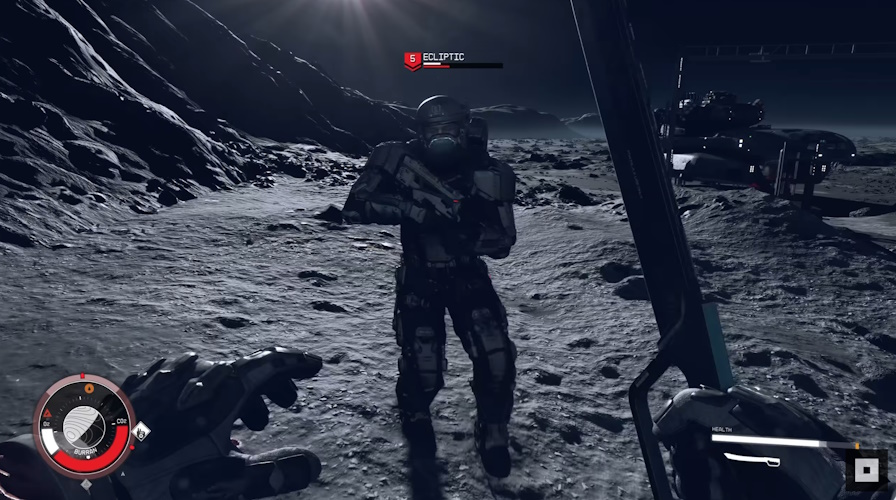
Firing a laser in Starfield.

I’d also like to take this opportunity to once again encourage Bethesda and Microsoft to consider delaying the game if it needs more time in the oven. Sure, it will be disappointing in some ways if Starfield can’t be ready for September… but I’d rather play it six months later in a better state than struggle to enjoy it because it was released prematurely.

So there really isn’t much more to say! I’m really excited to play Starfield, and I’ve been considering my options for games to play in the meantime while I wait. Though I included one title each from Bethesda’s Fallout and Elder Scrolls series, I tried to avoid making this list too lop-sided and too heavily-dominated by one company and one genre.

I had fun, anyway, and if even one person comes away from this list thinking to themselves “oh, I’d never have thought of that!” or “yeah, that seems like a good game to try,” then I’ll have done my job!

All titles discussed above are the copyright of their respective developer, studio, and/or publisher. Starfield will be released on the 6th of September 2023 for PC and Xbox Series S/X consoles. Some screenshots used above courtesy of Bethesda and/or IGDB. This article contains the thoughts and opinions of one person only and is not intended to cause any offence.

My Jedi: Survivor wishlist

Spoiler Warning: There are spoilers ahead for Star Wars Jedi: Fallen Order.

In 2020, I played through Star Wars Jedi: Fallen Order – and I had an amazing time with the game! It’s one of my favourite single-player experiences of the past few years… and one of the better Star Wars stories, too! Rumours of a sequel were confirmed a while ago, and Star Wars Jedi: Survivor is set to launch in a few weeks’ time following a short delay. This time, I’m going to talk about a few things that I’d like to see from the upcoming title.

Jedi: Fallen Order was great – but it wasn’t entirely without flaws. I have no doubt that EA and Respawn Entertainment – the publisher and developer of Jedi: Fallen Order respectively – will have listened to fans and critics on at least some of the points that were raised. Although I wouldn’t say any of these things were horribly damaging, the sequel is an opportunity to take on board feedback, tone down things that didn’t work so well, and generally hone and refine the experience.

Promo art for Jedi: Survivor.

So this list will fall into two parts: things from Jedi: Fallen Order that I’d like to see changed, and new additions that I’d like the game to include. As I always say: this is just the subjective opinion of one person! I feel hopeful that Jedi: Survivor will be a fun ride whether or not any of these wishes are included when the game is released. If I suggest a change you’d hate, or exclude something that you think should be blindingly obvious, well, just keep in mind that all of this is just one person’s take. There’s plenty of room in the Star Wars fan community for different points of view.

It also goes without saying that I have no connection to Electronic Arts, Respawn, Disney, or Lucasfilm! These ideas are mine and mine alone, and I’m not trying to claim that anything listed below can, will, or must be part of Jedi: Survivor. This is a wishlist from a fan that’s been written up for fun – and should be taken in that spirit!

With all of that out of the way, let’s jump into the list.

Part 1:
Changes from Jedi: Fallen Order
Cal Kestis in Jedi: Fallen Order.

As great as Jedi: Fallen Order was, it wasn’t an entirely flawless experience from my point of view. I covered a few of these points in less detail when I reached the end of my playthrough back in 2020, and having recently replayed the game I’ve found a couple of other issues that are worth discussing.

Although I’d still say I had a wonderful time with Jedi: Fallen Order, there’s always room for improvement! The benefit of several years’ worth of advancements in game design, as well as a new console generation releasing since Jedi: Fallen Order was launched, should mean that there’s scope to make improvements to the way Jedi: Survivor plays.

Change #1:
A better in-game map.

Jedi: Fallen Order’s holomap.

I found Jedi: Fallen Order’s holo-map clunky, unwieldy, and difficult to use. I appreciate that it’s “lore-accurate,” very closely resembling projections that we’ve seen droids like R2D2 make elsewhere in the Star Wars franchise, but its design really got in the way of its utility – at least for me. The all-blue look, the 3D design, and large, expansive levels all came together to make the map hard to use, with it being difficult to pinpoint one’s location. The ability to set waypoints on the map would be useful, even if they didn’t appear outside of the map during regular gameplay, and a general overhaul to bring the map in line with maps used in other titles would be incredibly helpful.

Because of Jedi: Fallen Order’s large-scale levels, having a good map is incredibly useful, especially on a first playthrough. By the time I came back to Jedi: Fallen Order, a few well-trodden areas of some levels were familiar to me – but even then, it would still have been helpful if the map was easier to use.

Change #2:
Fewer sliding sections.

Wheeeee!

During the scripted opening level of Jedi: Fallen Order there was an incredibly tense and exciting sliding section, as Cal and Prauf found themselves caught on a wet and slippery piece of a junked starship as it fell apart. But this mechanic was repeated too many times in Jedi: Fallen Order, with several long, boring sliding sections that added nothing at all to the game.

I’m sure sliding will be back in some form in Jedi: Survivor, and that could be okay as sliding is a fairly common 3D platforming mechanic. As noted, sliding sections can be fun – if they’re done right and if there’s a narrative reason for their inclusion. But I hope the new game tones this down, doesn’t make sliding a mandatory part of every level, and in a more general sense, uses this particular trope of 3D platform-adventure games far more sparingly. I don’t want to feel like I’m playing a 3D platformer from the 1990s when I sit down to enjoy Jedi: Survivor!

Change #3:
No more backtracking.

I lost count of the number of times I had to backtrack through levels…

A trope of many adventure games, going all the way back to the very beginnings of the genre in the ’80s, is that when the end of a level is reached, there’s an easy shortcut to the exit or overworld that doesn’t force a player to backtrack. In Jedi: Fallen Order, this unwritten rule of gaming was ignored for the most part – and that’s something I’d like the sequel to address.

Having crawled through a dungeon, solved puzzles, beaten enemies, and defeated the boss, it can be quite frustrating to have to then spend a significant amount of time running the whole route in reverse, going back through now-empty areas, past already-solved puzzles, with nothing to do and no objective except “get back to the ship.” These sections felt like unnecessary fluff; padding that may have been intended to make Jedi: Fallen Order’s relatively short twenty-hour runtime last a little longer.

Change #4:
No more revisiting past levels.

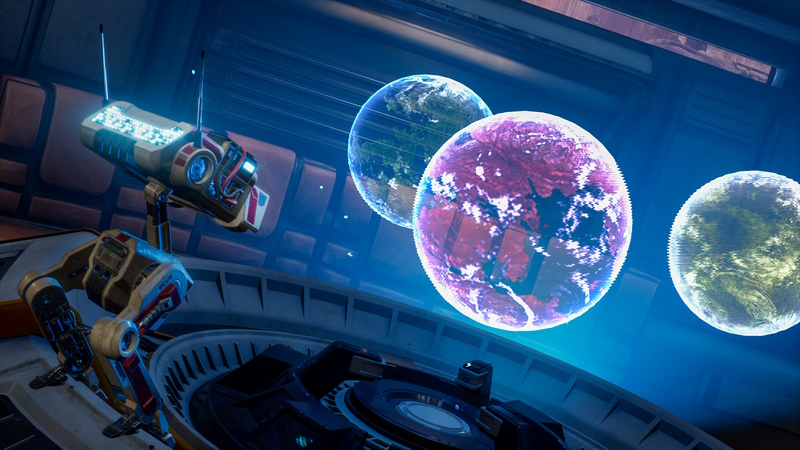
BD-1 looking at several holographic planets.

In the same vein, Jedi: Fallen Order saw Cal return to the same levels multiple times over the course of his quest – with only a couple of smaller levels just being played through once. There’s scope to re-visit the same planet, if that’s necessary narratively, without revisiting the exact same part of the planet – and I think that’s where Jedi: Fallen Order tripped up.

I’d rather have eight smaller levels that I only play through one time apiece than four bigger levels cleaved in two that I have to return to later on in the game. This would allow for much more diversity in terms of level design, too, as only Kashyyyk’s two sections really managed to feel distinct from one another in Jedi: Fallen Order. I don’t want to see Jedi: Survivor go open-world, either, but I think it should be possible to do what many games have done since the inception of the medium and play through different levels or areas without returning to the same ones.

Change #5:
No false choices.

The Stinger Mantis on Dathomir.

Jedi: Fallen Order was a linear game without many places where the path before Cal seemed to branch. But at one point early on in the game, Jedi: Fallen Order seemed to give the illusion of choice – whether to visit the planet of Dathomir or Zeffo. But there’s no way to progress beyond the opening area of Dathomir until Cal has levelled up and learned a new skill – a skill which can’t be learned until other levels have been beaten. There’s no way to describe this as anything other than a totally false choice.

There was a technical reason for offering players the opportunity to visit Dathomir, as that planet was the only place in the game where players could get a double-bladed lightsaber. But this option could have been moved or relocated to Bogano or Zeffo – it wasn’t, if I’m remembering correctly, something that had to be on Dathomir for some narrative reason. The game’s story also worked better and made more narrative sense if Cal went to Zeffo first, then to Dathomir later. In short, it wasn’t a great idea to offer this false choice – and I hope there won’t be others like it in Jedi: Survivor.

Change #6:
Ditch the checkpoints.

Cal at a checkpoint.

Checkpoints in older games came about as a result of limitations in hardware and programming. In the very olden days you’d have to write down a passcode on a piece of paper to be able to get back to the same area or level, but as games moved to 3D in the ’90s, checkpoints became the go-to way to save progress. By the turn of the millennium, though, this too had become outdated! It became possible for players to freely save their progress, and as a result there was no longer any need for fixed checkpoints.

Unfortunately, however, some recent games – particularly those inspired by the Dark Souls series – have brought back checkpoints… and I’m not wild about that. Checkpoints can mean players end up having to replay whole chunks of levels – and checkpoints in Jedi: Fallen Order were not exactly ubiquitous. In short, there’s no real reason why a free save system can’t be implemented in a game like Jedi: Survivor – so I’d like to see it happen!

Bonus:
Current-gen only.
Wish: Granted!

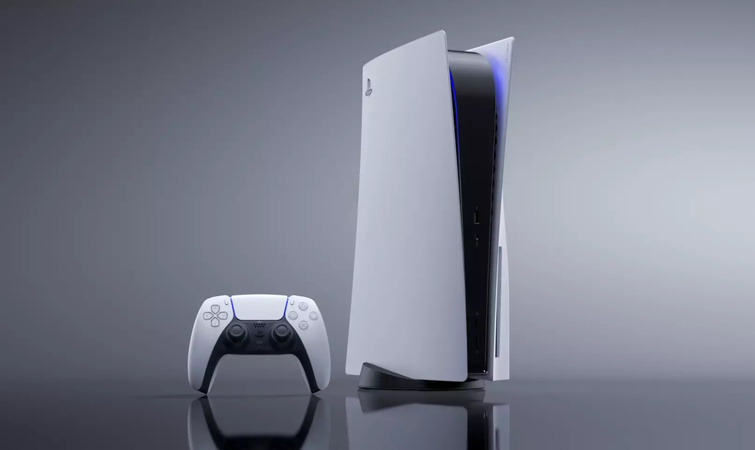
A PlayStation 5 console and DualSense control pad.

I would have put this on my wishlist, but we already know from Jedi: Survivor’s developer that the game will be current-gen only. That’s fantastic news, as it means the game won’t need to be constrained by being compatible with the Xbox One and PlayStation 4 – consoles that will be ten years old in just a few months’ time. This is a model that many more modern titles ought to adopt! Now that we’re well over two years into the current generation of consoles, it’s getting silly that so many games are still limited by decade-old hardware requirements.

There are still issues for some folks in terms of acquiring a current-gen machine, and I get that. That’s the fault of Sony and Microsoft for not producing enough consoles to meet demand. But if the games industry is to evolve and improve, at some point older machines from the previous generation will have to be left behind. Jedi: Survivor is one of a handful of titles on the horizon that will do just that – and I hope we’ll see some visual and mechanical improvements as a result.

Part 2:
Additions and New Features
Is this Jedi: Survivor’s main villain?

So those are a handful of things from Jedi: Fallen Order that I’d like the sequel to change or just remove outright. Up next, we’ll talk about a handful of additional features that I think it could be fun to include.

For this section, I’ll try to stick to things that seem plausible based on the kind of game Jedi: Survivor will be. I’m not going to suggest that Jedi: Survivor should be transformed into a role-playing game or an on-rails shooter! Instead, these are a few additional features and gameplay mechanics that I think could work well in this kind of linear, narrative-heavy, action-adventure title.

Addition #1:
A vehicle or two to pilot.

It probably won’t be a Star Tours Starspeeder 3000…

One of my absolute favourite parts of Jedi: Fallen Order – and indeed of any Star Wars game that I’ve ever played – was when Cal took control of an AT-AT walker. Everything about that sequence was perfect: it was just the right length, the movement and shooting felt fluid and fun, and the walker felt unwieldy in exactly the way I’d have expected when I first saw them in The Empire Strikes Back decades earlier. This sequence was also a one-off, which made it all the more special.

I don’t think we need a second AT-AT in Jedi: Survivor – though that’s certainly a possibility! And I’m not suggesting that Cal should take control of the Stinger Mantis, with every journey between worlds turned into a mandatory spaceflight section. But if Jedi: Survivor could introduce a vehicle or two, similar to Jedi: Fallen Order’s AT-AT sequence, I think that could be incredible. Maybe Cal could take the controls of a starfighter for one mission, drive a landspeeder to reach an objective, or even do something as bold as hijack a star destroyer! Any of these vessels and vehicles could be a ton of fun to play with.

Addition #2:
Carry over progress from Jedi: Fallen Order.

A maxed-out skill tree.

A big part of the story of Jedi: Fallen Order, and particularly the way in which narrative and gameplay intersected, involved Cal learning or re-learning a handful of Force skills. BD-1 also learned new skills along the way – and these skills became essential for completing puzzles and progressing through levels. With that in mind, I really hope that Jedi: Survivor won’t reset Cal.

Many sequels do something like this – where the player character, who may have been at a high level and mastered all of their skills by the end of the last game, appears to have lost all of those same skills at the start of the new game. In many cases it works fine, or at least passes by inoffensively enough. But because Jedi: Fallen Order did such a great job of weaving these gameplay mechanics into its story, it would be profoundly odd if Cal started Jedi: Survivor unable to use his basic Force powers like push and pull, or if BD-1 was likewise limited and unable to slice droids or climb ziplines.

Addition #3:
Carry over at least some cosmetics from Jedi: Fallen Order.

A customised lightsaber.

This would really require some kind of integration between Jedi: Fallen Order save files and Jedi: Survivor – but it’s doable, as many other games have proven. In brief, it would be nice if players could retain their customised lightsabers from Jedi: Fallen Order, or at least if the cosmetic options that had been unlocked in the first game could be unlocked by default in the sequel.

We don’t know at this stage how other cosmetics will work, but many players – myself included – found a particular appearance for “our” version of Cal that came to define our playthroughs, so again it would be nice if this could be carried over somehow.

Addition #4:
More cosmetic options.

It would be great to get more costumes and other cosmetics.

A game like Jedi: Survivor isn’t going to come with a character creator – nor does it need one! But Jedi: Fallen Order was pretty basic in terms of its cosmetic options, so it would be great to see more outfits and more variety in the sequel. Cal could be given hair and facial hair options, for example, in addition to different types of outfit.

Jedi: Fallen Order included jumpsuits and ponchos, and there were quite a few different colours of each. Naturally, as soon as I found a pink poncho, Cal wore nothing else for the rest of the game! But this is an area ripe for expansion, and it would be great to see customisation options for pants, tops, jackets, shoes, and more. Some of these could be unlockable via exploration, and others could be found at in-game vendors, perhaps.

Addition #5:
A story that doesn’t rely too heavily on the minutiae of Star Wars lore.

Promo screenshot of Cal and Merrin.

Some franchises can feel difficult to keep up with, and Star Wars is definitely one of them. I felt hopeful a few years ago, with the erasure of the old Expanded Universe, that the wider franchise might become more accessible… but a decade of films, television shows, animated kids’ shows, books, comics, games, and more has led to the same feeling of an overcomplicated franchise beginning to arise.

With that in mind, it can be a fine line to walk between creating a story that fits in with all of that lore and is still accessible to newcomers and a more casual audience. The inclusion of references and even characters from elsewhere in the franchise is totally okay – and expected, at least to an extent. But an over-reliance on minuscule details that most people won’t understand or know anything about can trip up a story.

Addition #6:
Wrap up the bounty hunter story from the first game.

This side-story focused on Greez.

One of the odd things about Jedi: Fallen Order was its bounty hunter side-story. This storyline arrived in pretty spectacular fashion, with Cal being defeated and captured by bounty hunters. But it felt rushed, with the escape from the bounty hunters’ prison taking only a few minutes, and it was definitely incomplete. I don’t think there was a single mention of the bounty hunters after that episode, even as they’d occasionally show up as random enemies for the rest of the game.

There’s scope to do a lot more with this storyline. Heck, it could even become the sequel’s main story! But at the very least, I think we need to get some closure on this, somehow, by the time the credits roll. It could take the form of a single mission, multiple missions, or even just cut-scenes and dialogue… but one way or another, by the time the game ends this storyline should be wrapped up.

Addition #7:
A story that doesn’t feel tacked-on.

Case in point.

Jedi: Fallen Order’s main storyline ended quite conclusively. The holocron was retrieved and then destroyed – and there was nothing left for Cal, Cere, and Merrin to do. There are plenty of opportunities for them to have another adventure, but any sequel story has to be careful – because it’s all too easy to wind up feeling unnecessary.

This is perhaps the most important point that we’ve talked about today. A story that brings back these characters needs to serve a purpose, and if it comes across as feeling like nothing more than a corporate-mandated sequel, that will be very disappointing. Star Wars hasn’t always gotten this right, with prequels and sequels telling unnecessary, tacked-on stories even in big-budget productions. So whatever this story is, and whatever Cal does next, I sincerely hope it’s going to feel worthwhile.

So that’s it!
Hang on, Cal!

That’s my Jedi: Survivor wishlist! I’m not sure when I’ll be able to play the game – money is tight at the moment, and with some hefty increases to some of my bills coming in April, I doubt I could really justify buying a brand-new, full-price game on release day – even if it’s one I’m as excited to play as Jedi: Survivor. But you never know, and I’ll certainly try to make space for it in the budget! I’d love to be able to play the game this year, at any rate.

I hope this was a bit of fun, and an excuse to look ahead to one of the most-anticipated single-player titles of the year.

After some disappointing entries in Star Wars’ cinematic canon, Jedi: Fallen Order felt like a breath of fresh air. As Star Wars continues to struggle, in my view at least, by doubling-down on legacy characters and stories of decreasing importance, I’m hopeful that Jedi: Survivor will see Cal, Cere, Merrin, and Greez continue to chart their own path. There are plenty of reasons to be excited for the game – and I can hardly wait to jump in!

Star Wars Jedi: Survivor will be released on the 28th of April 2023 on PC, PlayStation 5, and Xbox Series S/X. Star Wars Jedi: Survivor is the copyright of Electronic Arts and Respawn Entertainment. The Star Wars franchise is the copyright of The Walt Disney Company and Lucasfilm. Some promotional art and screenshots used above courtesy of IGDB. This article contains the thoughts and opinions of one person only and is not intended to cause any offence.
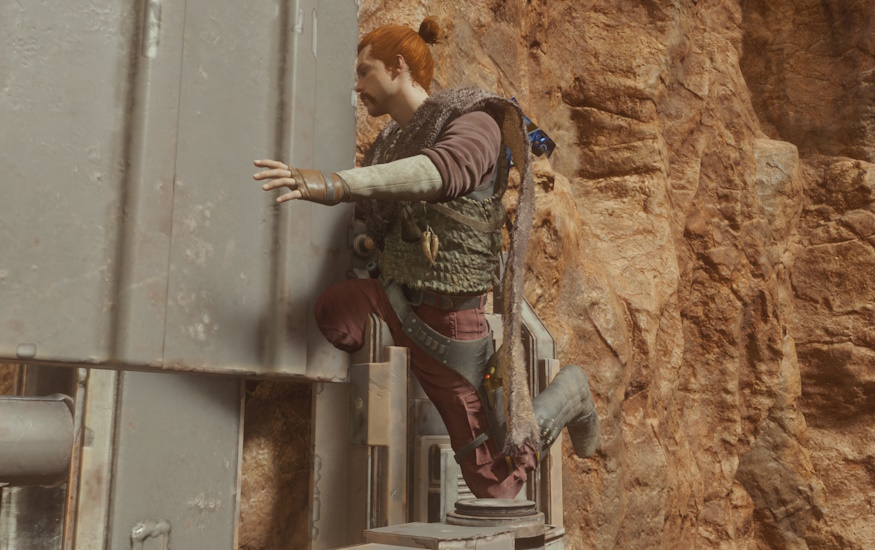
Looking ahead to 2023

Spoiler Warning: Minor spoilers may be present for some of the titles on this list.

As a new year gets underway, it’s a good opportunity to look ahead. There are some exciting-sounding films, television series, and video games that are currently on the schedule for 2023, and on this occasion I thought it could be fun to pick out a few that I find particularly interesting and preview them! I’ll share some of my preliminary, pre-release thoughts on ten of each.

On balance, I don’t think 2022 will be held in particularly high esteem in future in terms of its entertainment experiences. There were some good ones, but there were also plenty of delays and projects that just underwhelmed for one reason or another. Will 2023 fare any better? That’s still an open question… but there are certainly some big releases on the horizon that could potentially excel.

What does 2023 have in store?

It’s time for a couple of caveats! First of all, delays can happen at any time in the creative process, especially in a war-torn, pandemic-disrupted world. As a result, any or even all of the films, shows, and games that we’re going to talk about today could miss their intended release dates or release windows – and there really isn’t anything we can do about that! I’m firmly in the camp that says delays are almost always a net positive; while never fun, I’d rather creatives spent longer working on a project to finish getting it ready rather than launching it too soon. We don’t need to look far for examples of how wrong that goes!

Finally, these projects seem interesting or exciting to me personally for one reason or another… in my subjective opinion! I’m not trying to say that these are or will be “objectively the best” releases of 2023, nor should the exclusion from the lists below be interpreted as any kind of snub. I’ve just picked out a few projects that I find to be of interest, and if you hate all of my picks or I’ve excluded some of your favourites, please just keep in mind that this is only the opinion of one person!

With all of that out of the way, let’s get started!

Films:

I confess that I didn’t see a lot of films in 2022. I can’t go to the cinema any more due to my declining health, and while practically every major title made its way to a streaming platform last year, there were some I just wasn’t interested in or found that I didn’t have the right mindset or headspace for. That’s just the way it goes sometimes! That being said, there are some interesting films on the schedule for this year, and I shall be keeping an eye out for these ten in particular!

Film #1:
The Super Mario Bros. Movie

I’ve been pleasantly surprised by the two trailers we’ve seen so far for The Super Mario Bros. Movie. The film looks like it’s going out of its way to stay as true as possible to its source material, while at the same time putting a twist on Mario’s adventures in the Mushroom Kingdom. The “hero who has to save a princess” trope has been rather overdone – and feels pretty outdated in 2023 in more ways than one – so seeing Luigi being held captive by the villainous Bowser and Mario working with Peach feels like it should be a great change of pace.

The inclusion of an all-star Hollywood cast has proven controversial in some quarters, but from what I’ve seen of the film so far, I will be surprised if most folks aren’t won over by the time the credits roll. There will be some die-hard haters – as there always are in any franchise any time something is changed – but overall, I have high hopes for this one. This film could easily be the best animated film of the year – and one of the best non-Disney animated films of the decade!

Film #2:
Dune: Part Two

The first part of Dune was a surprisingly strong adaptation of a book that has proven to be notoriously difficult to adapt. I had a fantastic time with it when it was released at the end of 2021, and I’ve been meaning to go back and re-watch it for some time now. I was concerned that this sequel might not see the light of day if Warner Bros. didn’t feel the first part did as well as they’d hoped – but fortunately there was no denying the critical and commercial success of Dune in 2021!

The cast from the first film are all reprising their roles, and director Denis Villeneuve is returning to the big chair. Filming officially wrapped a couple of months ago, and Dune: Part Two is well into post-production at this stage. A November release is on the cards, and I’m really excited to see the story continue.

Film #3:
Knock at the Cabin

Director M. Night Shyamalan has an inconsistent track record, and I suspect his career has been more harmed than helped by acquiring an early reputation as the “master of twists.” But regardless, he’s back with Knock at the Cabin in 2023, a psychological horror film about a family who are confronted by four people who claim to be trying to prevent the apocalypse.

The film’s premise sounds interesting to me, and a cast that features Jonathan Groff and Rupert Grint feels like it has potential. I wouldn’t say my expectations for Knock at the Cabin are sky-high, but we could certainly be in for one of the more interesting titles in the horror genre this year.

Film #4:
The Little Mermaid

To be blunt, I wasn’t blown away by the visuals in the teaser trailer for The Little Mermaid. The CGI looks fantastic, but the fully live-action moments didn’t feel convincingly “underwater,” and actually looked pretty amateurish. Assuming that Disney can figure out a way to pull off those underwater sequences convincingly, though, The Little Mermaid should be a creditable adaptation of the 1989 animated film.

Visual criticisms aside, I feel hopeful that this new version of The Little Mermaid will introduce the story to a new generation. While the animated film is still perfectly watchable in its own right, there’s nothing wrong with updating things and recreating the film for a younger audience, and Disney has a pretty good track record at doing so by now.

Film #5:
Indiana Jones and the Dial of Destiny

Is it a great idea to bring back Indiana Jones for another adventure? As a child of the ’80s, I’d be lying if I said I don’t enjoy the Indiana Jones films… but Kingdom of the Crystal Skull was already a let-down. Dial of Destiny could redeem the series, ending Harrison Ford’s turn with the famous hat and whip on a high note – or it could double down on the disappointment!

This film is definitely one I’m placing in the “interested in” rather than “excited about” category. I don’t really have high hopes, but I’d love to be proven wrong. At the very least, I hope Dial of Destiny will be a passable popcorn adventure flick. Whether it will truly live up to its illustrious forebears… well, I’m less hopeful of that. If it succeeds at bringing in a wad of cash, though, I think we can expect to see reboots, prequels, and spin-offs in the years ahead!

Film #6:
Asteroid City

There isn’t a lot to go on with this film, billed as a “romantic comedy-drama.” But the director, Wes Anderson, has pedigree, and has put together a diverse ensemble cast that rivals his previous pictures, such as The Grand Budapest Hotel. The full cast list is far too long to include, but some of the standout performers for me that I’m interested to see include Bryan Cranston, Tom Hanks, Willem Dafoe, Tilda Swinton, and Scarlett Johansson.

Though I’m not entirely sure what to expect from this one, it could be a lot of fun! The setting is the mid-1950s somewhere in the American Southwest, and some kind of “stargazer convention” will be part of the plot, too.

Film #7:
Wish

To mark the company’s centenary, Disney is going to release Wish – a film all about the “wishing star;” the star upon which characters in other Disney films have made their wishes. The star itself is going to be a character of sorts, but the film will also introduce a new cast of characters, including Asha, voiced by Ariana DeBose of West Side Story fame.

Wish will also bring back a hand-drawn animation style, something Disney hasn’t used since The Princess and the Frog more than a decade ago. While we haven’t seen just how the film will look, some concept art has been released that looks absolutely beautiful. Disney’s big animated releases are almost always fantastic, and I have high hopes for Wish.

Film #8:
The Haunted Mansion

The third Disney entry on this list, The Haunted Mansion is the company’s latest attempt to turn a theme park ride into a film! No one would deny that Pirates of the Caribbean set a high bar for that concept a few years ago, but other attempts haven’t always worked! An adaptation of The Haunted Mansion twenty years ago (that I’m fairly sure I’ve seen but can’t really remember much about) starred Eddie Murphy, but even he couldn’t salvage what critics regarded as a picture that was average at best.

Jungle Cruise may not have been 2021’s film of the year, but I enjoyed it for what it was, so there’s definitely room for another theme park adaptation. The Haunted Mansion could be great to watch around Halloween; a kind of lighter, child-friendly horror title that will be spooky… but not too spooky!

Film #9:
65

65 has an unusual premise – an astronaut accidentally travels back in time to the era of the dinosaurs, and must figure out a way to survive. Adam Driver will take the lead in this sci-fi action-adventure, and his presence alone should make it worth checking out. Driver’s performances as Kylo Ren in the Star Wars sequel trilogy were outstanding, and his turn as a divorcee in Marriage Story was Oscar-worthy in my opinion.

That being said, I can’t help but feel that 65 could go either way! Its premise could make for a different kind of sci-fi title in a genre overrun by sequels and comic book adaptations… or it could turn out to be an overblown B-movie that didn’t deserve a leading man of such quality! Time will tell… but I’m definitely interested to see how it shakes out.

Film #10:
Napoleon

Ridley Scott will direct this historical epic that focuses on the rise to power of Napoleon Bonaparte. Scott has a great track record, with films like Alien and Thelma & Louise under his belt, but an earlier attempt at an historical epic – 1492: Conquest of Paradise – was not particularly well-received! Could this be a chance for redemption for the director in the genre?

The title role has gone to Joaquin Phoenix, and that feels like it could be an inspired choice. Backed up by a cast that features Ben Miles and Vanessa Kirby, I’ll be curious to see what Napoleon has to offer when it releases. The film will be an Apple TV+ exclusive, which is also a point of note.

Television Series:

2023 looks set to be another year where franchises, spin-offs, and continuations of ongoing stories dominate the television landscape. There are several big shows whose new seasons I’m eagerly anticipating, but it feels like there are fewer wholly original projects to look forward to. That being said, there were some great new stories in 2022 – so hopefully this year will bring along some surprises, too!

Television Series #1:
Star Trek: Strange New Worlds
Season 2

Strange New Worlds was truly outstanding in its first season, blending old-school episodic storytelling with modern serialised elements. As much as I like what Discovery and Picard have done with season-long story arcs, the approach used by Strange New Worlds should, in my view at least, serve as a model for the entire Star Trek franchise going forward.

The show’s second season wrapped months ago – and I will be positively stunned if we don’t get an announcement that a third season is being worked on sometime before Season 2 premieres this spring. I absolutely cannot wait to spend more time with Captain Pike, Spock, and the rest of the crew of the Enterprise!

Television Series #2:
Hailey’s On It!

Hailey’s On It! is a Disney Channel animated series that will feature Moana’s Auli’i Cravalho in its leading role. The premise sounds interesting – a young woman must step outside of her comfort zone and confront her fears in order to “save the world.” And with Cravalho leading the charge, I think there’s the potential for the show to be something a little more than just a distraction that parents can use to get a few minutes’ peace!

The animation style shown off in concept art looks fantastic, and while I wouldn’t normally say that I’m excited for a new Disney Channel cartoon, I feel hopeful, at least, that Hailey’s On It! could be the kind of kids’ show that has something to offer to a grown-up audience as well.

Television Series #3:
Star Trek: Picard
Season 3

After a decidedly lacklustre second season, my disappointment was compounded by the announcement that all but one of the new characters introduced in Picard will not be returning for the show’s final outing. Season 3 has a lot of work to do, then, to pull out a satisfying ending to what has been a troubled production. If the trailers and teasers are anything to go by, it just might be up to the task after all!

The return of main characters from The Next Generation feels bittersweet because of who had to be unceremoniously kicked off stage to make room for them. This season could be a roaring return to form, or it could drown in failed attempts to play the nostalgia card. I’m absolutely hoping for the former… but trying to prepare myself for the latter.

Television Series #4:
The Lord of the Rings: The Rings of Power
Season 2

It isn’t entirely clear when The Rings of Power’s second season might be ready. Filming only started in October, and a series with such extensive post-production work may take a while. That’s not to mention that Season 2 is being filmed in new locations, and may even serve as somewhat of a soft reboot of a series that proved controversial in some quarters.

Despite that, however, I called The Rings of Power my favourite television series of 2022, so I’m incredibly excited to see what happens next. The first season ended with several massive cliffhangers for both individual characters and for the story as a whole, so it’ll be great to see the next chapter of this fantasy epic unfold.

Television Series #5:
Star Trek: Discovery
Season 5

Discovery’s fourth season ended on a high, with what is almost certainly one of the best episodes that the show has ever produced. I was concerned that the show would attempt yet another recycling of the old “the entire galaxy is in danger and only Burnham and the crew can save it!!!” narrative framework that has been used four times now… but thankfully, based on the first trailer and comments from the show’s producers, it seems as though Discovery will finally be bold enough to try something different!

As a result, my excitement for Season 5 grew immensely! Although Season 4 dragged in parts, on the whole I think it marks a turning point in the show’s run, and the addition of some wonderful secondary characters to the cast has given new life to a series that is rapidly approaching its sixth anniversary and sixty-fifth episode. Season 5 could build on what Season 4 did, taking these well-rounded characters to new thematic and storytelling places.

Television Series #6:
Masters of the Air

Produced by the same team that created Band of Brothers and The Pacific, this new World War II drama will follow the stories of members of the United States Army Air Forces – the precursor to the Air Force. The miniseries seems to be following a similar format to its popular predecessors, with an expansive cast of characters, almost all of whom are based on real people. Masters of the Air is based on a biography of the unit that was published in 2007.

I’m expecting a tightly-focused story with plenty of character. CGI and visual effects have improved since Band of Brothers premiered, so I’d hope that the show will look fantastic and really succeed at bringing World War II to life on the small screen.

Television Series #7:
Shōgun

The second adaptation of James Clavell’s 1975 novel has a lot to live up to! An earlier adaptation, made in 1980, was one of the most popular shows of the year, and with a troubled production that saw scripts scrapped and rewritten, new showrunners brought on board, and a shoot that overran by two months… let’s just say that Shōgun has work to do.

But the story, set in 17th Century Japan, is an interesting one, and there’s potential in this new adaptation to see it introduced to legions of new fans. A shipwreck sets up the story of a “fish-out-of-water” hero in an unfamiliar land, and the palace intrigue at the castle of the titular Shōgun could rival the very best drama series of the year.

Television Series #8:
The Last Of Us

Video game adaptations are notoriously difficult, but The Last Of Us has an all-star cast, a sky-high budget, and crucially, it seems to have won over many fans of the video game. The Last Of Us is one of the best video game narratives that I’ve ever experienced, and it feels like a natural fit for a serialised drama series; the story would certainly be far too long to condense into a film. So I’m hopeful that – finally – a video game adaptation will get the accolades it deserves!

Moreover, I’m really excited to be able to show this fascinating and unique horror-drama story to friends and family members who have no interest in gaming. The story of The Last Of Us is fabulous and absolutely deserves to find a bigger audience. There’s reason to hope that this adaptation will be up to the task.

Television Series #9:
Halo
Season 2

I enjoyed what the Halo series did in its first season, all things considered. It succeeded at bringing the long-running video game franchise to the small screen, adapting its story to fit the new format and making a few changes along the way. Some of those changes proved controversial – as such things always do – and I can certainly entertain the argument that there was less action than fans were hoping for.

But Halo will press on, potentially taking on board some of those criticisms, and it’s my hope that Season 2 will build on the accomplishments of Season 1 to progress the story in an enjoyable way. The first season had some great performances, clever cinematography that incorporated a first-person perspective during key sequences, and a mysterious story that will have kept even fans of the games guessing. I’m interested, and dare I say even excited, to see more.

Television Series #10:
Faraway Downs

I am joking. This is a joke. Nobody should ever be tortured into watching Faraway Downs. I can honestly think of nothing less appealing than watching an extended, reworked version of Baz Luhrmann’s Australia – quite possibly the worst film that I have ever had the misfortune to see. When I heard that Luhrmann was planning to use cut footage to expand Australia into a six-part miniseries I was flabbergasted. Who on earth would possibly want to see this? Was anyone asking for it to be made?

I’d rather trek to the bottom of the garden, heave the lid off the septic tank, and spend six hours staring unblinkingly at the festering sewage within.

Television Series #10:
The Three-Body Problem

China can often feel like a world unto itself; western productions struggle to cross over, and Chinese productions seldom attract mainstream attention over here. The Three-Body Problem is an adaptation of a Chinese sci-fi novel (or rather, the first part of a trio of novels) and is helmed by Game of Thrones’ showrunners David Benioff and DB Weiss.

I haven’t read The Three-Body Problem, but the premise sounds absolutely fascinating to me. Benioff and Weiss have proven themselves capable when it comes to adapting novels for the small screen – at least, completed novels – so there’s reason to hope that The Three-Body Problem will be interesting and entertaining in equal measure. This one could easily go toe-to-toe with the likes of Foundation in the sci-fi genre.

Video Games:

There are some massive releases on the schedule for 2023 – several of which were originally promised for last year! If even one of these big titles succeeds, 2023 will already be a great year for gaming. Single-player games are definitely holding the line in an industry where online multiplayer continues to bring in the big bucks, so there are plenty of reasons to think that 2023 could actually turn out to be a fantastic year for the medium.

Video Game #1:
Tchia

I’ve been tracking the progress of this amazing-looking indie game for more than a year, and it looks like 2023 could be Tchia’s moment. Based on legends from the developers’ New Caledonia home, Tchia will see players take on the role of a young girl on a quest to rescue her father. In addition to platforming and action-adventure gameplay in an open-world archipelago based on the island of New Caledonia, the ambitious game promises to unleash players’ creativity – and even includes a playable ukulele!

There have been some fantastic debut games by indie studios in recent years. My game of the year in 2021 was Kena: Bridge of Spirits – and without wanting to raise expectations too high, at least part of me is hoping that Tchia might just reach that same high bar.

Video Game #2:
Mario Kart 8 Deluxe
DLC: Booster Course Pass Waves 4, 5, and 6

You might think it a cheat to include a piece of downloadable content on this list, but it’s my list so that’s just tough! Although I was disappointed not to see a wholly new Mario Kart title in 2022, the Booster Course Pass for Mario Kart 8 Deluxe has been a surprising amount of fun. Not only have racetracks from past games in the series been updated and made welcome returns, but wholly new tracks have been created, too.

The Booster Course Pass is only half-finished, and three more waves are planned for 2023. Specific dates aren’t known, nor is it certain which racetracks will be appearing, but I’m nevertheless excited to have more Mario Kart to get stuck into!

Video Game #3:
Star Trek: Resurgence

A narrative adventure game with a branching storyline sounds like a perfect fit for the Star Trek franchise. After years in which no new Star Trek games had been licensed for PC or home consoles, two have come along within a few months of each other; Resurgence is hot on the heels of last year’s Star Trek: Prodigy – Supernova, which I really must get around to playing!

The game is being developed by folks who used to work for studio Telltale Games, a developer whose games were often praised for their narratives. I’m hopeful that, after a drought of games for Trekkies who aren’t interested in the online multiplayer scene, Resurgence will be a welcome return to the video game realm for the Star Trek franchise.

Video Game #4:
Disney Speedstorm

Developers Gameloft worked with Disney and created my favourite gaming experience of 2022: Disney Dreamlight Valley. Having taken Nintendo’s Animal Crossing formula and massively improved upon it… could they be about to do the same thing by creating a Disney-based rival to the Mario Kart series? Maybe that’s expecting too much… but Disney Speedstorm looks like a ton of fun!

I like casual, arcade-style racing games, and I’m a pretty big Disney fan, too. Bring those two things together and I hope it’ll be a fun time.

Video Game #5:
Starfield

One of the year’s biggest releases has to be Bethesda’s Starfield – the company’s first foray into a wholly new world in a quarter of a century. An epic sci-fi adventure has been promised, with all of the hallmarks of past Bethesda titles: joinable factions, a huge mix of varied side-quests, diverse non-player characters to interact with, customisation of every facet of your character, and much more besides.

Starfield will also give players the opportunity to design and upgrade their very own spaceship, before setting off to journey to one of a thousand different planets across dozens of star systems. Starfield is ambitious, and while there are certainly things that give me pause – such as Bethesda’s insistence on reusing its outdated game engine – I can already feel myself getting swept along by a growing hype train!

Video Game #6:
The Lord of the Rings: Return to Moria

I confess that I’m not entirely sure what to expect from this one. The game promises base-building and adventures in the Dwarven realm of Moria, set years after The Lord of the Rings as the Dwarves seek to reclaim their abandoned halls. It sounds as if the game will be set up for multiplayer – though the official blurb promises that it can be played solo, too.

There’s something about an underground setting that harkens back to the days of dungeon-crawler games, and the subterranean setting combined with the lore of Tolkien’s Middle-earth could make for a genuinely exciting title. I’m curious and perhaps a little hopeful of having some fun adventures deep underground!

Video Game #7:
Star Wars Jedi: Survivor

The much-anticipated sequel to Jedi: Fallen Order is almost ready! The game – which I played through back in 2020 – is one of the best Star Wars experiences I’ve had in recent years, and it was left open-ended by the time the credits rolled. Finding out what happens next for Cal Kestis, the former Jedi padawan, is something I’m really interested in!

Jedi: Survivor seems to have taken the gameplay of Fallen Order and expanded upon it, giving Cal new weapons and abilities – and at least one new companion, too. I recently played through it for a second time, which seems to be perfect timing with the sequel coming up! I really can’t wait to join Cal and the crew of the Stinger Mantis for another adventure in a galaxy far, far away.

Video Game #8:
Forspoken

Unlike many action-adventure titles, it seems as though Forspoken will focus much more on magic and spell-casting – something that could be absolutely fascinating. Set in an open-world, the game will follow the story of Frey, a young woman from our world who finds herself transported into a mysterious realm where magic exists and must find her way home.

Forspoken hadn’t really been on my radar until recently, but I’m now genuinely looking forward to it.

Video Game #9:
Perfect Dark

Though unconfirmed at this stage, Xbox’s Perfect Dark remake/reimagining would be well-timed if it should be ready this year – because the original game on the Nintendo 64 was set in 2023! Perfect Dark was originally created by Rare, hot on the heels of their success with Goldeneye 007 on the same platform, and it was a ton of fun when it released in the year 2000.

I’m genuinely curious to see what a recreated Perfect Dark might look like. Could it kick off another first-person shooter series for Xbox… and, perhaps more importantly, for Microsoft’s Game Pass service? I think that’s a possibility – but my main hope is that the single-player campaign will be fun to play through!

Video Game #10:
EA Sports FC

Bear with me on this one, okay? I know football (soccer) isn’t everyone’s favourite thing, and I know that sports games – and especially Electronic Arts’ sports games – have been particularly scummy with their in-game gambling and monetisation. But for the first time since EA published FIFA International Soccer in 1993, the corporation won’t have the official license or naming rights from world football’s governing body. That could mean we’re about to witness a sea change in the series… or it could lead to nothing of consequence at all!

Nevertheless, I’m curious to see what changes – if any – will come about as a result of EA and FIFA going their separate ways. Will EA Sports FC be noticeably different from recent entries in the FIFA series? We’ll find out later this year!

So that’s it!

We’ve picked out ten films, ten television shows, and ten video games to watch out for as 2023 gets underway. There will be many surprises along the way, I have no doubt, and it’s possible that some of the entertainment experiences that I’m excited in right now will either end up being disappointments or won’t even make it out of the door this year. But I’m hopeful that we’ll get some exciting, dramatic, and just plain fun stories to enjoy between now and Christmas!

There are definitely things to look forward to. I’ll try to cover at least some of these titles with reviews, first impressions, and general commentary here on the website over the next twelve months. I hope that you found this interesting, and that it was a fun, positive look ahead to some of what I hope will be the entertainment highlights of 2023.

Until next time!

All titles discussed above are the copyrights of their respective studio, developer, publisher, distributor, broadcaster, etc. This article contains the thoughts and opinions of one person only and is not intended to cause any offence.