Trying To Be Positive About The Rise of Skywalker

A Star Wars-themed spoiler warning graphic.

Spoiler Warning: There are spoilers ahead for the Star Wars sequel trilogy.

Y’know, the more I think about it, the more convinced I become that this particular article would’ve been a better fit for April Fool’s Day rather than Star Wars Day. But I’m committed now… so here we go!

Happy Star Wars Day, friends! May the Fourth be with you… and all that. This year, I thought it could be a bit of fun to mark the occasion by revisiting one of my least-favourite Star Wars films – and probably one of the worst films I’ve ever seen – 2019’s The Rise of Skywalker.
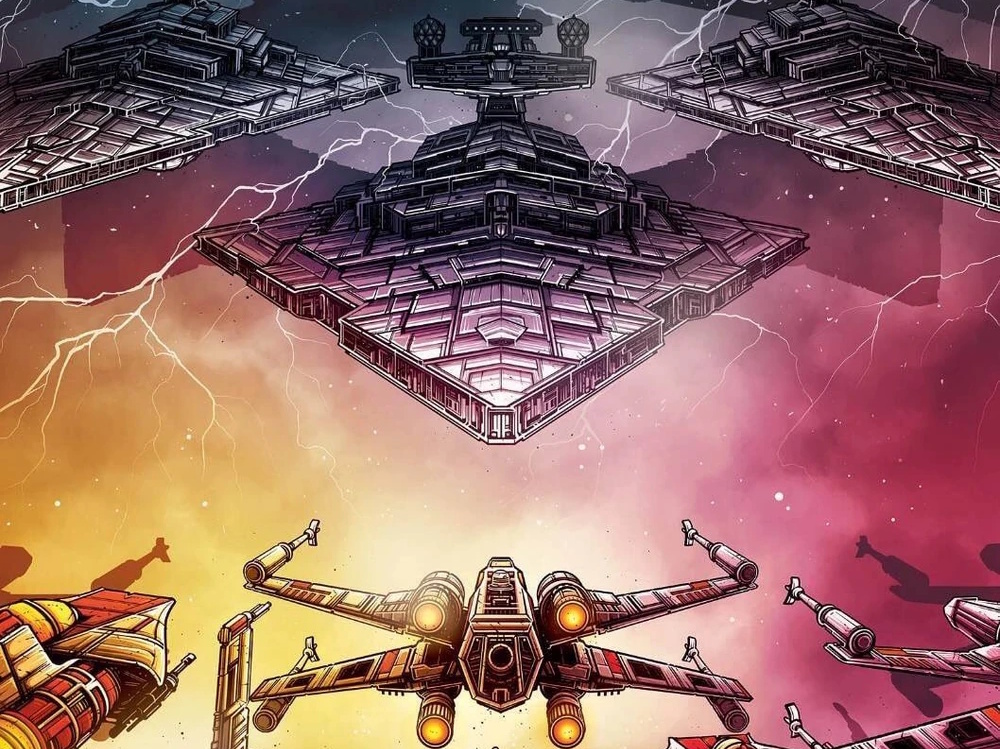
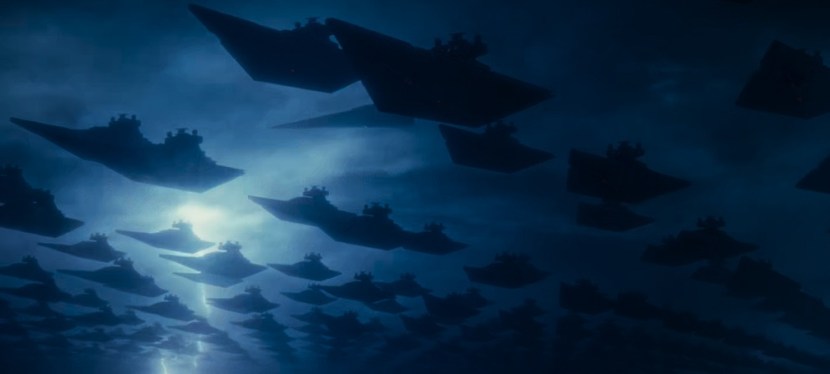
Cropped promo poster for the IMAX version of Star Wars: The Rise of Skywalker (2019) featuring rebel and imperial spaceships.
X-Wings and Star Destroyers on a promotional poster.

It was in late 2019 that I embarked on the project that eventually became this website, and for a sometime Star Wars fan, that was a bit of a strange period. The Last Jedi had proven to be massively controversial within the fan community, and the discourse around that film had become incredibly toxic. Solo: A Star Wars Story had flopped, I really wasn’t keen on the first season of The Mandalorian, and it seemed as if the only bright spark in the franchise was Jedi: Fallen Order. I desperately hoped that The Rise of Skywalker could do the impossible by bringing the fan community back together and ending the sequel trilogy on a high.

It did not do those things, and that’s putting it mildly.

Though I consider the Obi-Wan Kenobi miniseries to be the worst piece of Star Wars media that I’ve seen, The Rise of Skywalker isn’t far behind. It was an atrocious film, one that I’d seriously consider putting on a list of “the worst films I’ve ever seen.” But re-hashing what I didn’t enjoy about the film isn’t the purpose of today’s exercise!
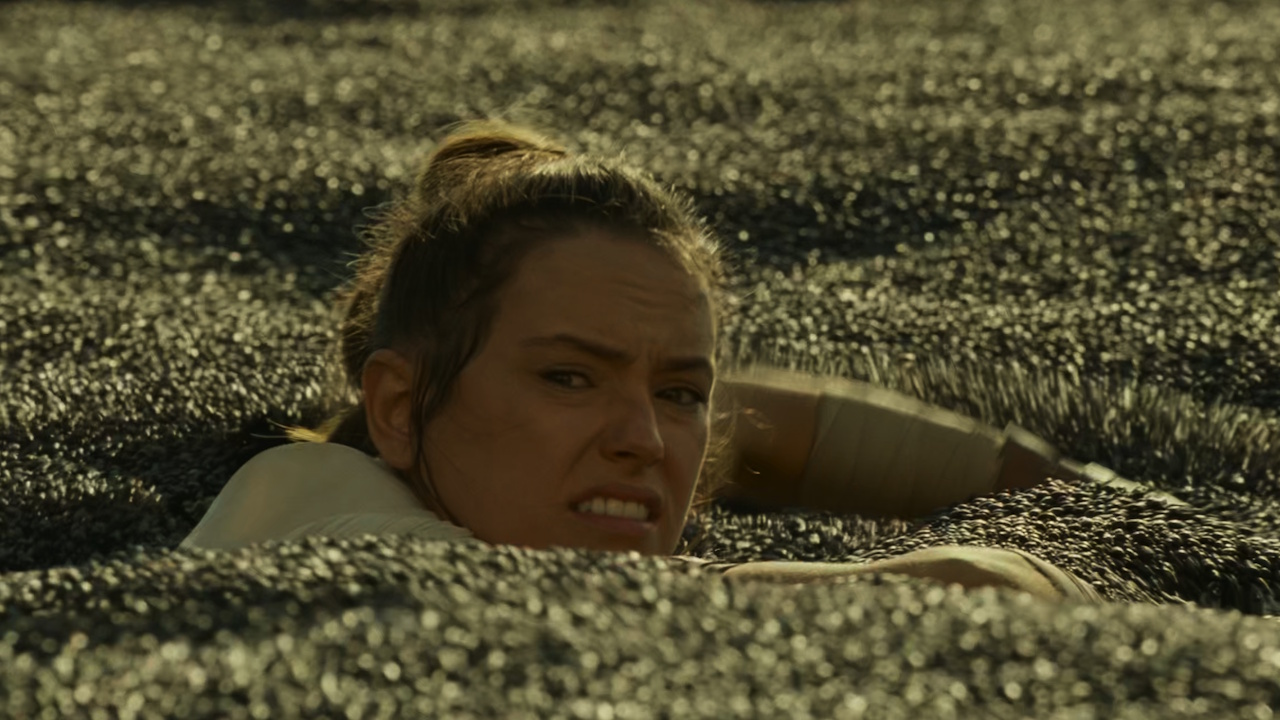
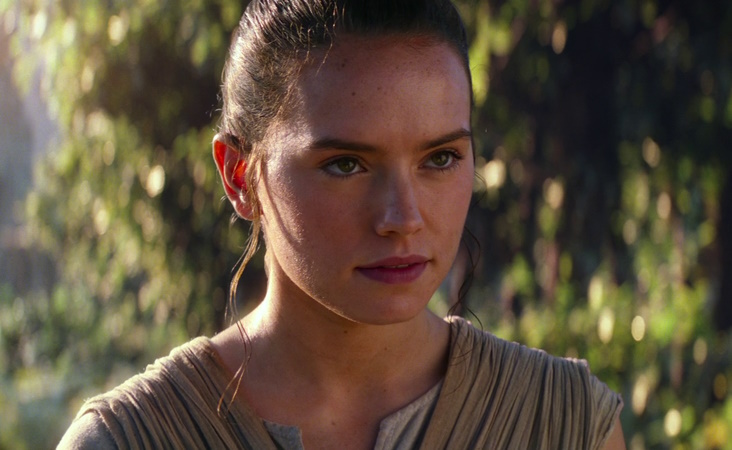
Still frame from Star Wars: The Rise of Skywalker (2019) showing Rey sinking in quicksand.
Surely this can’t be a visual metaphor…

Because it’s Star Wars Day, and in the spirit of positivity, I want to talk about some of the things The Rise of Skywalker got right – or at least got less wrong. Despite my overall feelings about the film, its story, the thought process that went into creating it, and more… there are some highlights worth mentioning. You might remember some of these if you read my two separate articles about the film in 2020 and 2021, but I’ve also added a couple of points that I didn’t mention in those earlier pieces.

In my essay titled In Defence of Luke Skywalker, I talked about how the depiction of Luke’s depression in The Last Jedi was generally well-written and conveyed an important message. It may not have been what fans wanted or expected from Luke Skywalker – particularly folks who’d bought into the old Expanded Universe stories, which depicted him as a flawless all-conquering superhero – but it was powerful and it resonated with me. The idea that anyone, even someone heroic, can fall victim to the “black dog” of depression is an important message, and it was well-told in The Last Jedi.
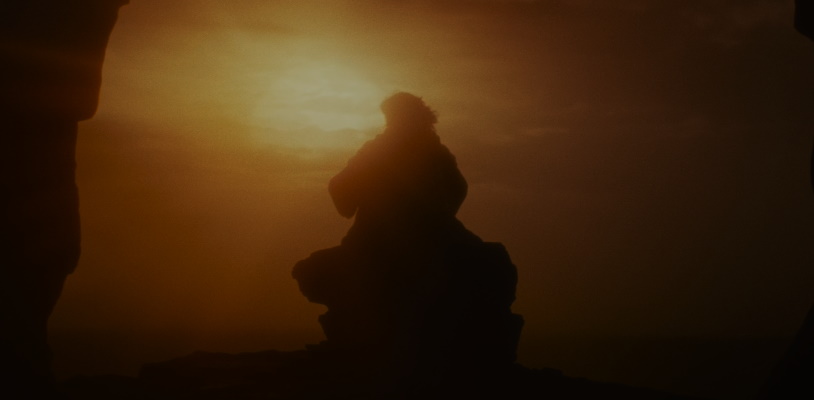
Still frame from Star Wars: The Last Jedi (2017) showing Luke's final moments.
Luke’s depiction and death were controversial aspects of The Last Jedi.

The Rise of Skywalker undid most of that, unfortunately. But it couldn’t entirely erase what had come before. If you take Luke’s story across the sequel trilogy, you can read it as recovering from depression – and that is a positive, hopeful, and uplifting message. The Force Awakens and The Last Jedi show Luke at his lowest: suffering a catastrophic defeat, almost giving in to a dark impulse, grieving the loss of his students, failing at his life’s mission to restore the Jedi Order, and succumbing to depression. He retreated to Ahch-To to die.

But after the events of The Last Jedi, Luke found a reason to believe again. And The Rise of Skywalker takes that concept and expands upon it, showing us Luke – in ghostly form – happier, more connected to the Force, and more willing to lend a hand when the galaxy needed him. To drag out the depression metaphor from The Last Jedi, this is the recovery phase. Not everyone who suffers with depression gets to that point, but seeing it depicted on screen like this can give hope and inspiration to people in that situation.
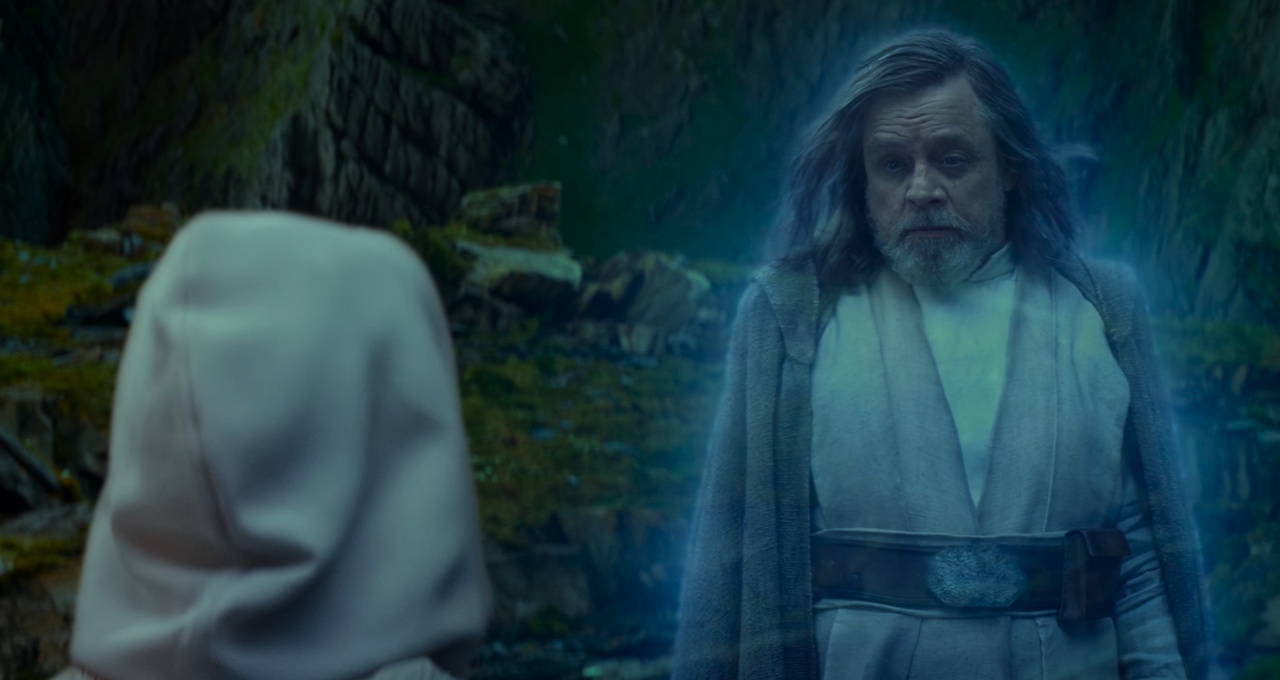
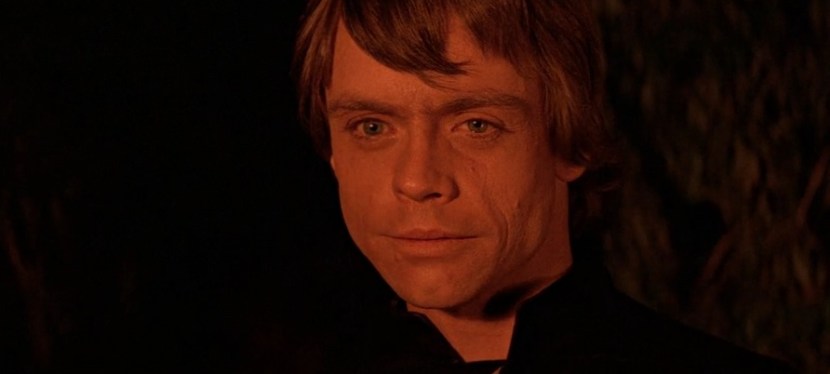
Still frame from Star Wars: The Rise of Skywalker (2019) showing Luke Skywalker's Force ghost.
Rey with Luke’s ghost.

Sticking with deceased characters, Han Solo got more of a send-off in The Rise of Skywalker than he did in The Force Awakens. Han’s death was shocking in that film, but its suddenness was immediately followed up by action set-pieces and the “trench run” over Starkiller Base – meaning we didn’t get to sit with the impact of it for very long. Bringing Han back – albeit for a role that was clearly intended for Leia – was somewhat cathartic, and getting to spend a little more time with him was a net positive for the film.

Because this sequence was told from Kylo’s perspective, we got to experience some of the feelings of grief, loss, and regret that he felt at killing his father. We can debate whether such an action is ever forgivable or redeemable, but The Rise of Skywalker wanted to give Kylo a redemption arc akin to that of Darth Vader in Return of the Jedi. Seeing this vision of Han Solo helped with that, or at least didn’t detract from it. And Adam Driver put in a stellar performance in these sequences – as he did across the entire film, really.
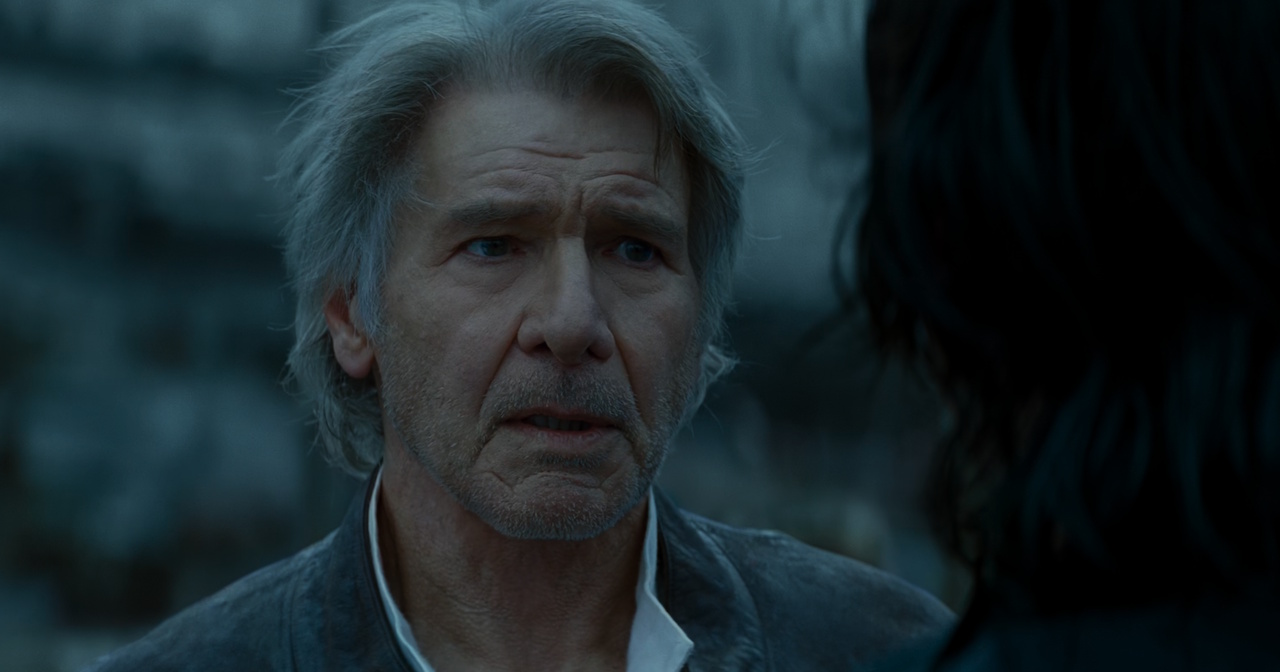
Still frame from Star Wars: The Rise of Skywalker (2019) showing a close-up of Han Solo.
The Rise of Skywalker gave us a bit more closure on Han’s death.

I know we’re trying to be positive about The Rise of Skywalker and this next point is very much a backhanded compliment (at best), but it’s my article so I’m gonna include it! The line “somehow Palpatine returned” has become one of those “so bad it’s good” moments for me. It wasn’t when I first watched the film, but the more I’ve sat with that line the funnier I find it to be. I still think everyone involved with writing, approving, and directing this line should be blacklisted from the entertainment industry for life… but on days when I don’t want to take Star Wars too seriously, or where I’m so depressed I need a good laugh, “somehow Palpatine returned” is there for me.

The line has also become one of my go-to examples of poorly-written dialogue, as well as an example of Star Wars’ overreliance on other works of media to set up important narrative beats in mainline films. Not only that, I think there’s something encouraging and even inspirational about this line. “Somehow Palpatine returned” reminds me that I’d have to do an exceptionally poor job to write something worse, and that there’s apparently a very low bar for pitching scripts for big-budget films. So maybe my Hollywood dreams haven’t entirely evaporated, eh? Jokes aside, this line is awful, and it’s become emblematic of the failures of The Rise of Skywalker and the sequel trilogy as a whole. But it’s also unintentionally hilarious as the film’s writers and Disney’s executives tell on themselves; no one could be bothered to write an explanation for Palpatine’s stupid resurrection, and this storyline was set up as part of a merchandising tie-in deal with the video game Fortnite. For all those reasons and more, it’s an excellent example of what not to do in filmmaking.

Still frame from Star Wars: The Rise of Skywalker (2019) showing Poe at the rebel base.
“Somehow Palpatine returned.”

To get back to something a bit more genuinely positive and inspiring, I’d like to highlight Lando Calrissian’s role in The Rise of Skywalker. I don’t know why Lando was absent in The Force Awakens and The Last Jedi, but Billy Dee Williams made the most of his return to the role in the third instalment of the sequel trilogy! In fact, I could’ve happily spent a lot more time with Lando; watching him heading out across the galaxy, rallying the citizens to the cause would’ve been quite something to see.

Lando’s last-second arrival at the head of a massive fleet was pretty much the only moment in The Rise of Skywalker where I felt a twinge of emotion. I’m a sucker for a “desperate last stand” kind of story, and seeing the ordinary citizens of the galaxy rising up in unison against Palpatine and the Sith felt good in the moment. As Poe, Finn, and the rest of the Resistance seemed to be on the cusp of defeat, Lando raced in to save the day, leading the galaxy in a unified last stand against autocracy and fascism. The scene where he and his fleet dropped out of hyperspace was powerful, and was probably one of the best individual moments in The Rise of Skywalker.
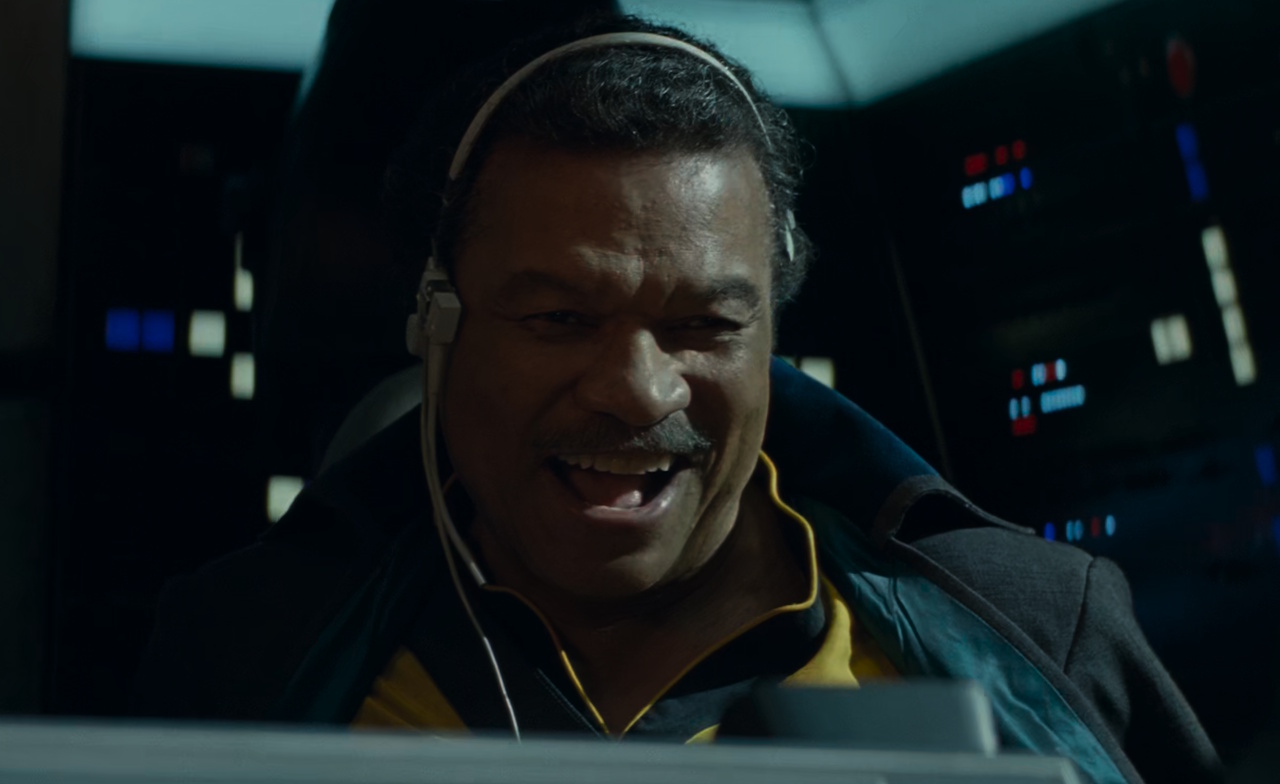
Still frame from Star Wars: The Rise of Skywalker (2019) showing Lando grinning aboard the Millennium Falcon.
Lando arrives to save the day!

Although I wish the sequel trilogy as a whole had done more with the idea of a Force dyad, some of the moments between Rey and Kylo were at least interesting. There was also some creative cinematography employed as Rey and Kylo had visions of one another despite being far apart. The scene where Rey was in Kylo’s room was one such moment, and I think the way the film transitioned between two different locations was creative.

I would’ve liked to have gotten more of an explanation of the Force dyad; how it came to be and what else Rey and Kylo could’ve done with it would have been fun to see. The idea of two characters with totally opposing points of view and objectives having this unintended bond – one they couldn’t rid themselves of – was also an interesting concept in theory, and I think we saw at least some of that potential in The Rise of Skywalker.
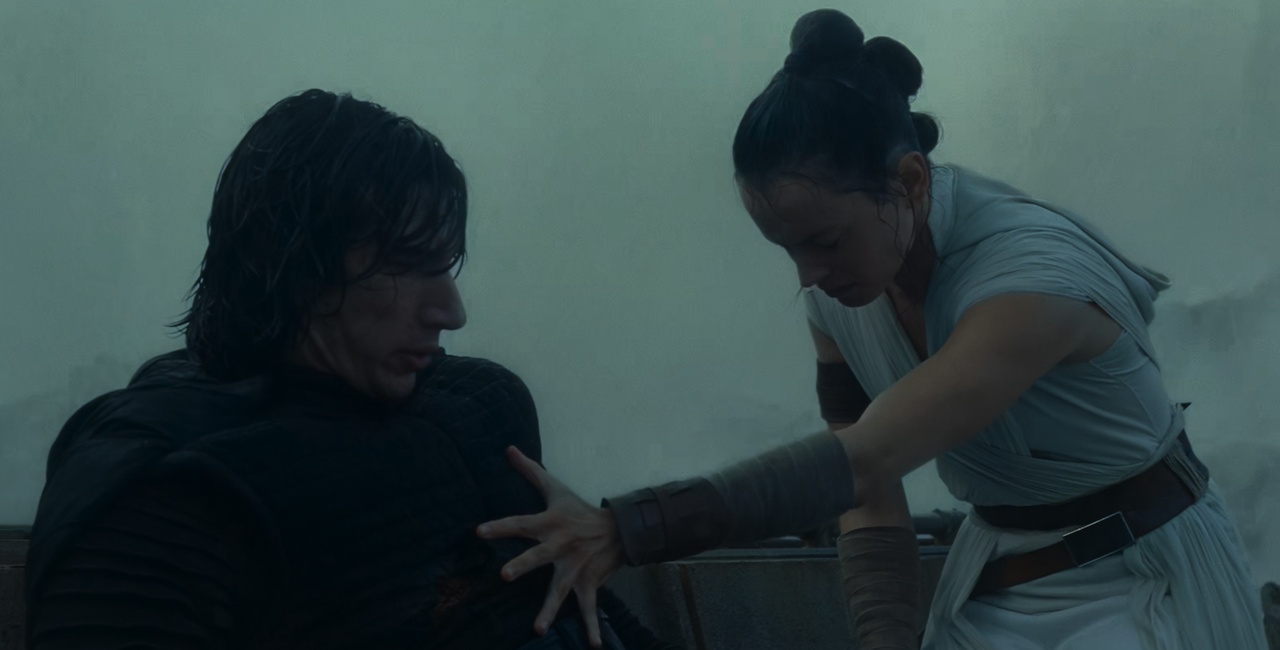
Still frame from Star Wars: The Rise of Skywalker (2019) showing Rey attempting to heal Kylo.
Kylo and Rey formed a rare Force dyad.

Finn’s story was not great in The Rise of Skywalker – or really across the sequel trilogy as a whole. But as a concept, the idea of a rogue stormtrooper breaking free of his indoctrination was interesting. And The Rise of Skywalker made at least a bit of an effort to expand upon that with the new character of Jannah – another defector that Finn encountered during the mission to Endor.

If Luke Skywalker’s story was an analogy for depression and mental health, Finn and Jannah’s can be seen as deprogramming from a cult or escaping an autocratic society. There are real-world parallels that are interesting – and open to interpretation. I don’t think The Rise of Skywalker was perfect in its execution of this idea, but I will give the film credit for trying, and for expanding our knowledge of ex-stormtroopers and the reasons why some might defect or abandon their posts.
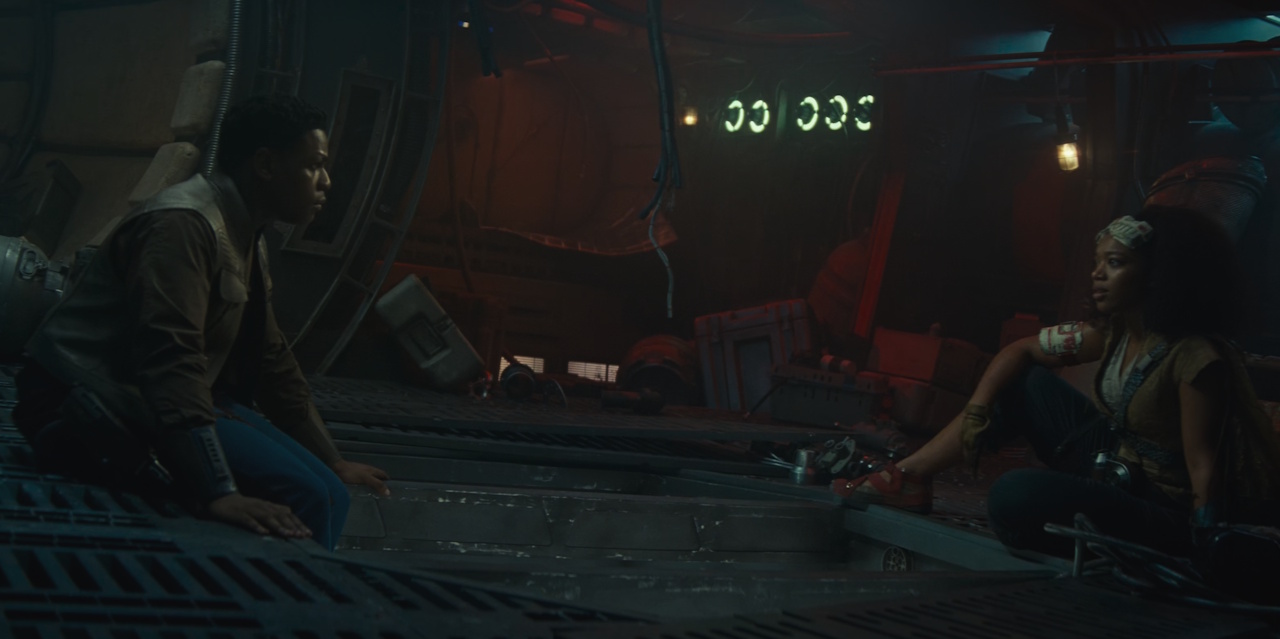
Still frame from Star Wars: The Rise of Skywalker (2019) showing Finn and Jannah. Brightness adjusted.
Finn with fellow ex-stormtrooper Jannah.

Sticking with Finn, his “bromance” with Poe was certainly an enjoyable part of his story and characterisation, and one which was in focus in The Rise of Skywalker more than it had been in The Last Jedi. The two worked well together, and although I felt Oscar Isaac was rather phoning it in with his performance, the same can’t be said of John Boyega. Boyega did his best to carry this character relationship, and I could’ve happily spent longer with Finn and Poe.

There are a few other acting performances that stand out to me. I think being able to separate one’s thoughts about a performance from how we might feel about the script or narrative decisions is important – so it’s worth crediting actors and actresses who give it their all, even when they’re part of a train wreck! I mentioned Adam Driver above, and he’s literally never been anything less than outstanding in any film I’ve seen him in. One day he’s going to win one of the big awards – mark my words.
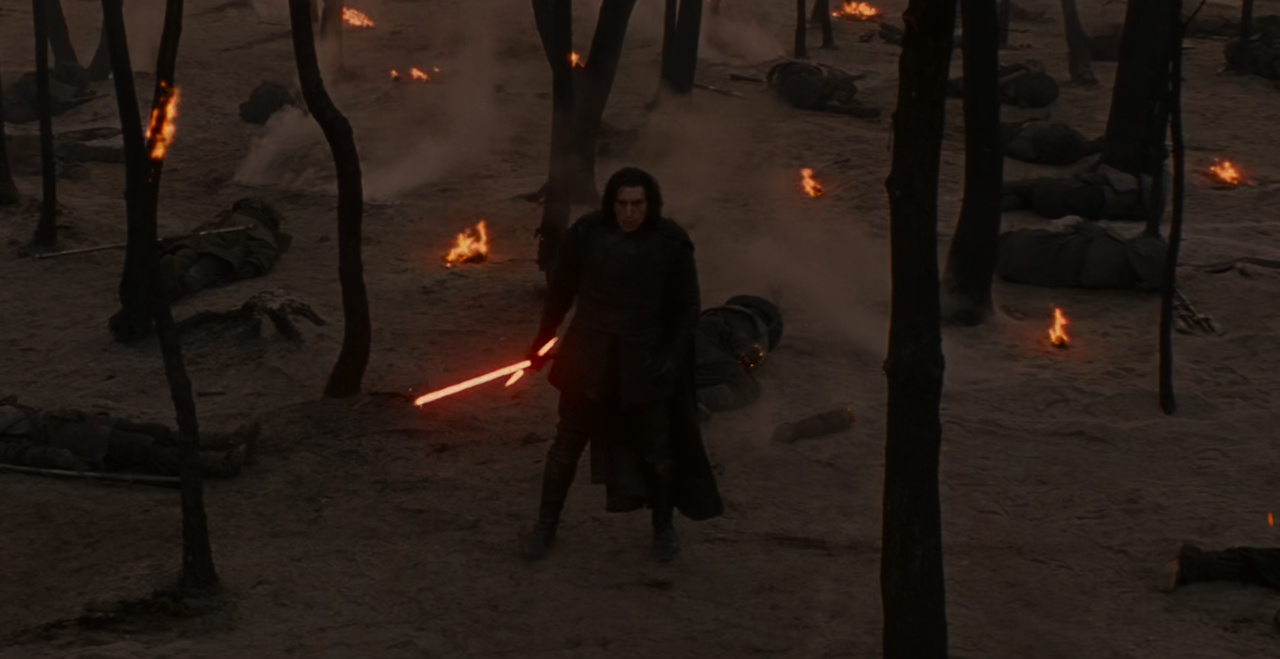
Still frame from Star Wars: The Rise of Skywalker (2019) showing Kylo holding his lightsaber, surrounded by trees and corpses.
Kylo on the battlefield.

Though the sequel trilogy was never meant to be Palpatine’s story, Ian McDiarmid clearly relished reprising his role, and threw himself into it. Palpatine dripped with malice every time he appeared on screen. I may loathe what the film did with General Hux, but I’d be remiss not to include Domhnall Gleeson’s performance as being praise-worthy. Hux’s pure hatred for Kylo really came through thanks to Gleeson’s work, and even though the storyline was a tough sell, he clearly gave it his all. Kelly Marie Tran, though only on screen for a couple of minutes, did well with the material she had, and I think it’s a shame we didn’t get to spend more time with Rose.

So I think that’s about it.

I wish I could tell you that it was fun to revisit The Rise of Skywalker. But at the very least, I think we managed to find a few notes of optimism amidst the wreckage; small things here and there that achieved some measure of success, struck the right emotional or narrative chord, or just didn’t fail as comprehensively as the film around them. Maybe you enjoyed The Rise of Skywalker more than I did – and that’s great. The Star Wars franchise should be big and diverse, and there’s plenty of room for differences of opinion when it comes to the best and worst parts. Nothing about this is “objective,” at the end of the day!
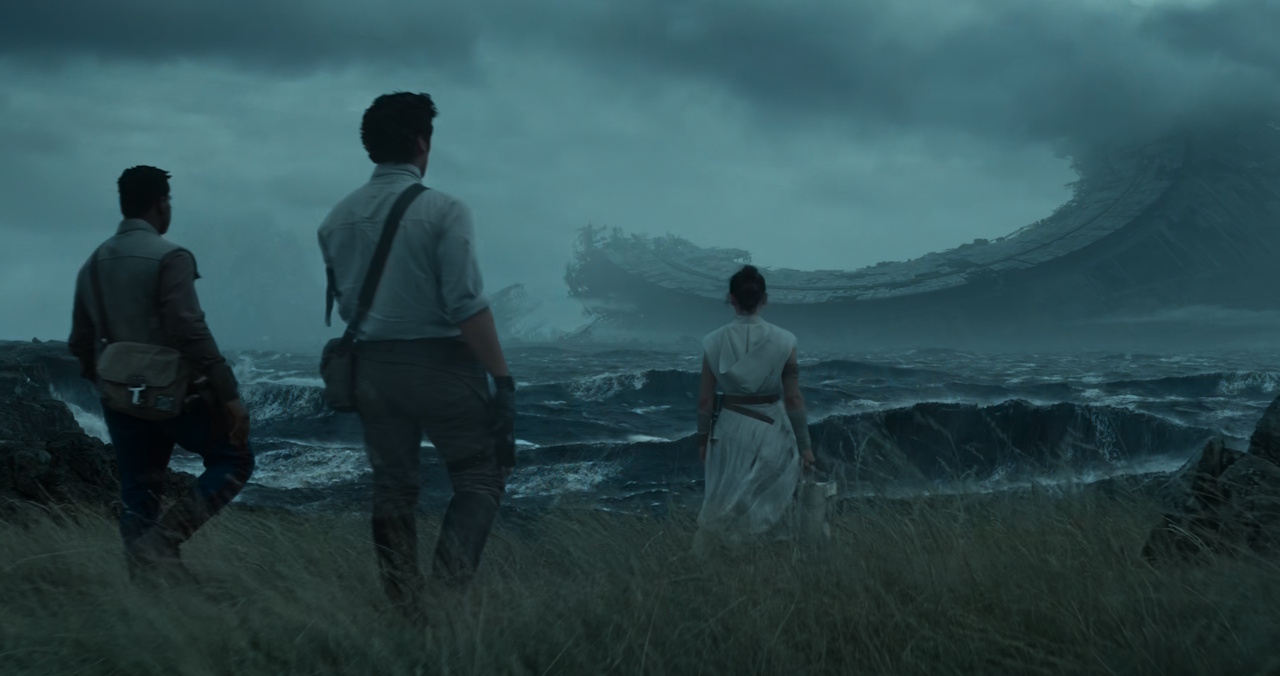
Still frame from Star Wars: The Rise of Skywalker (2019) showing Finn, Poe, and Rey with the wreck of the Death Star.
Looking at a wreck. Seems fitting, eh?

There’s more Star Wars to come – which is genuinely good news! Andor’s second season is currently airing, a second season of Ahsoka is planned, and there are several upcoming films on the schedule, too. Upcoming films include pictures based on Rey and Lando, a spin-off from The Mandalorian, a new trilogy, and the intriguing-sounding Star Wars: Starfighter. So despite the controversial reception the film got, The Rise of Skywalker didn’t doom Star Wars’ future prospects!

I hope this has been a bit of fun to mark Star Wars Day – or at least something a little different. I wanted to try to take one of the worst films in the franchise and talk about some of its better aspects, partly as a challenge to myself and partly because it’s Star Wars Day. Thanks for reading, and May The Force Be With You!


Star Wars Episode IX: The Rise of Skywalker is available to stream now on Disney+ and is also available on DVD and Blu-ray. The Star Wars franchise – including The Rise of Skywalker and all other films and properties discussed above – is the copyright of Lucasfilm and The Walt Disney Company. This article contains the thoughts and opinions of one person only and is not intended to cause any offence.

Six More Star Wars “Hot Takes”

Spoiler Warning: There are spoilers ahead for the Star Wars franchise, including Return of the Jedi, The Last Jedi, The Mandalorian, The Book of Boba Fett, and the video game Jedi: Survivor.

A couple of years ago, I shared six of my “hot takes” about Star Wars. But it’s always fun to stir the pot, so I’ve come up with six more! These are all controversial takes that I have on Star Wars; opinions that seem to be a minority position based on my limited engagement with the fan community. I thought it could be entertaining and interesting to share some more of these with you today!

This is just for fun, and while I do genuinely hold all of these opinions – I’m not just making up stuff for the sake of clickbait – there’s no need to get into a big argument! Everything we’re going to talk about here is subjective, not objective, and I’m keenly aware that I’m in the minority. They’re called “hot takes” for a reason, so feel free to disagree with me vehemently on any or all of the points I raise!

If you want to check out my first set of “hot takes,” you can find them by clicking or tapping here. Otherwise, this is your last chance to nope out if you don’t want to read some potentially controversial Star Wars opinions!

“Hot Take” #1:
The Book of Boba Fett is probably the best Disney+ Star Wars series so far.

Promo poster for The Book of Boba Fett.

I went into The Book of Boba Fett with low expectations. I’ve never been wild about The Mandalorian, thanks in no small part to its decision to bring the Force and Luke Skywalker into a story that was originally pitched as “the adventures of a gunslinger beyond the reach of the New Republic.” Boba Fett has always felt like a non-character to me ever since I first watched the original trilogy in the early ’90s. Add into the mix Disney and Lucasfilm grossly overplaying the nostalgia card in the sequel trilogy, and I truly did not expect to get anything out of The Book of Boba Fett whatsoever.

But I was surprised to find an exciting and interesting story that was just plain fun. It was a nostalgia overload for sure, but it managed to keep me entertained regardless – and by the time Boba and his friends were fighting for their very lives on the streets of Mos Eisley, I was gripped. Maybe it’s because of those low expectations that I had such a good time with it… but whatever the reason may be, I thoroughly enjoyed the series.

Like a bantha!

When I compare it to the other Star Wars offerings that I’ve seen on Disney+, it tops the charts easily. The Mandalorian isn’t great, in my opinion, and I find the show’s protagonist difficult to root for because of how utterly monotone he is. I once described Din Djarin as an “unemotional helmet-wearing slab of nothing;” a character who seems to act at the behest of a room full of TV writers, and not because of any motivation or character trait that I can detect.

Obi-Wan Kenobi was a show so utterly dire that it put me off Star Wars for months afterwards! Trying to write a review of that appalling mess was likewise so unpleasant that I ended up taking a break from writing anything at all here on the website – and I still haven’t finished that review! The mere thought of going back to Obi-Wan Kenobi just leaves a bad taste in my mouth.

Inside the Sarlaac monster…

I haven’t seen Andor yet – thanks, in no small part, to Obi-Wan Kenobi causing me to turn away from the Star Wars franchise for a while! But I suppose when I get around to watching it it could dethrone The Book of Boba Fett. As could The Acolyte – a project I’m definitely looking forward to as it promises to step back in time to a wholly different era of the Star Wars galaxy.

But The Book of Boba Fett isn’t just my favourite Disney+ Star Wars show by default. The others have their problems, sure… but The Book of Boba Fett could’ve been just as bad. I was surprised at just how entertaining it was, and how a character I had no interest in was able to be transformed into a genuinely fun protagonist. There were themes of loss and revenge as Boba navigated Tatooine’s criminal underworld, but my biggest takeaway was how positive, fun, and light-hearted the show could be. I admit that I’m surprised to see that it wasn’t received more positively by other Star Wars fans.

“Hot Take” #2:
“From a certain point of view” is patent nonsense and always has been, and Star Wars is made worse by continually trying to justify it.

What a crock of shit!

Are you old enough to remember when Return of the Jedi was regarded as the weakest Star Wars film? Before the prequels came out, that was the general consensus! When I first watched the Star Wars trilogy it was at the insistence of a friend, and his father was adamant that Return of the Jedi was an awful film and a poor way for the story to conclude. So it seems that divisiveness in the fan community is nothing new – but more on that later!

One of the reasons for Return of the Jedi being held in lower esteem than its two predecessors is the clumsy and just plain stupid line from Obi-Wan Kenobi to Luke Skywalker that coined the phrase “from a certain point of view.” I’ve always considered this explanation to be absolute dog shite, making no sense whatsoever. And Star Wars has since doubled- and tripled-down on this idea… when it really should be ignored and pushed aside.

Luke asked Obi-Wan how his father died in Star Wars.

Let’s step back and set the scene. In Star Wars (a.k.a. A New Hope, the first film in the series), Obi-Wan Kenobi explained to Luke Skywalker that Darth Vader “betrayed and murdered” his father. That line was unambiguous and not subject to interpretation! But by the time The Empire Strikes Back rolled around, the decision had been taken to retcon the relationship between Vader and Luke, transforming them into father and son – leading to one of the most iconic scenes in all of cinema.

As with many other things in Star Wars, though, something that should’ve been left alone… wasn’t. We could’ve ignored what Obi-Wan said in that first encounter, accepting that the retcon overwrote it. It would’ve been an inconsistency, sure… but it would have been one that the story could’ve survived. There are also legitimate in-universe reasons for Obi-Wan not wanting to tell Luke the truth; he could’ve apologised or explained his reasoning and left it at that.

The Obi-Wan Kenobi series revisited this idea.

But instead we got this ridiculously convoluted work of semantic gymnastics, with Obi-Wan justifying his lie – and it was made into a lie by the retcon in Empire – by trying to claim that, somehow, Anakin Skywalker and Darth Vader aren’t the same person. Even though they’re literally the same person, with the same body, “soul” or essence, Force abilities, and so on. Anakin made a decision to defect from the Jedi to the Sith… but it doesn’t mean he stopped being Anakin. Even thinking about it in the most abstract and poetic terms… he’s still the same person.

Since this line was uttered, Star Wars has continually stumbled by trying to justify it and make the concept stick. The prequel trilogy made a big deal about Palpatine granting Anakin his “new” Sith identity, and the aforementioned Obi-Wan Kenobi series also tried to double-down on this idea, with Obi-Wan saying that the man he knew “is truly dead.” But… he isn’t. He’s different, sure. But he isn’t dead. This whole “from a certain point of view” idea just doesn’t work for me. It didn’t when I first saw it in Return of the Jedi thirty-plus years ago, and every attempt that the franchise has made to lean into it hasn’t helped. I wish Star Wars would quietly drop this idea and move on!

“Hot Take” #3:
Franchise fatigue is beginning to set in.

This is just a snapshot of part of the Star Wars category on Disney+.

Though not as oversaturated as Star Trek has been in recent years, I’d argue that Star Wars is very much in danger of running too hot. Too many shows and films in too short a span of time is going to lead to franchise fatigue – and while there will always be fans who will turn up for every new project, the more casual audience that any series relies on will begin to drift away.

I think we’re already seeing this, at least to a limited extent. Solo: A Star Wars Story was the first film in the franchise to make a loss at the box office, and it was released only a few months after The Last Jedi. On Disney+, too, it seems that more recent shows and seasons have attracted less attention and excitement. Fewer people turned up for Obi-Wan Kenobi or The Book of Boba Fett than had for the first season of The Mandalorian, for instance.

A Star Destroyer as seen in the opening shot of Star Wars in 1977.

Since the Disney acquisition of Lucasfilm went through more than a decade ago, Star Wars has hardly been off our screens. The sequel trilogy came along in the back half of the 2010s, with Rogue One and Solo in cinemas as well. And since the launch of Disney+, there have been new live-action and animated shows every year. With several of these projects overlapping each other or being spin-offs that rely on older films or shows to set them up, keeping up with Star Wars and knowing what’s what and who’s who can feel like a full-time job!

With Disney+ in poor shape financially, the corporation is relying heavily on its biggest brands to bring in and retain subscribers. But the likes of Star Wars and even Marvel are in danger of burning out; turning away audiences due to convoluted interconnected storylines or just because there’s a desire to look for something new and different. A few years ago, a massive audience would’ve been hyped for a live-action Star Wars series. But now? I can almost hear the collective sigh as yet another season gets sharted out onto Disney+.

I haven’t seen much excitement for the likes of Skeleton Crew recently…

I genuinely don’t know what the solution is here. The truly hard-core Star Wars fans will, of course, keep showing up for any and every new project. But how long can the franchise rely on those folks if a wider audience of more casual viewers can’t keep up or loses interest? As Disney recently found out to its cost with the Galactic Starcruiser hotel at Disney World… there are only so many of those hard-core fans.

Maybe you don’t feel a sense of franchise fatigue just yet – and that’s okay. If you don’t, I’m genuinely happy for you! But with so much Star Wars content on the horizon, with new series, films, and video games coming every few weeks… how long can that last? How long will it be before you say, “eh, I think I’ll skip this one and watch something else?” In my opinion, no franchise can keep up this frenetic pace for very long. Star Wars has already been pushing it for several years, and I wonder when it will have to slow down.

“Hot Take” #4:
Jedi: Survivor was crap.

Battling battle droids in Jedi: Survivor.

I absolutely adored Jedi: Fallen Order when I played it. Going on that adventure with Cal Kestis and the crew of the Stinger Mantis was fantastic, so I was incredibly excited for the game’s sequel in 2023. But as you’ll know if you read my review of the game… I really didn’t like it. Mechanically and narratively, the game failed – and that’s before we get into the bugs and glitches that have come to define its poor launch.

An open-world design is not something that suits every game, and Jedi: Survivor was made significantly worse than its predecessor by attempting to go down this route. The clumsily-designed maps, particularly on the main planet of Koboh, really got in the way of the story and immersion. It made no sense to me that Cal and his friends would hide out in a “quiet, out-of-the-way” settlement like Ramblers Reach… when that settlement was a stone’s throw from both a massive pirate base and two Imperial outposts.

The game’s open-world design put Ramblers Reach literally a few metres away from the Empire and pirates.

In terms of story, I found Jedi: Survivor to be an unimpressive relation to its illustrious predecessor. Cal was teamed up with a character who was obviously, from almost his first second on screen, a “secret bad guy in disguise.” This plot point was so flagrantly telegraphed that it might as well have been lit up in neon. And the return of Master Cordova, a character who played a huge role in the story of the first game, was handled incredibly poorly.

There were some narrative highlights: Cere’s story took her full-circle, for instance, and while I could see Bode’s betrayal coming from a mile away, Cal’s reaction to it was genuinely emotional. But the foundations of this story felt weak and almost random, with Cal stumbling into a random cave, Greez accidentally building his cantina atop ancient Jedi ruins… and a convoluted plot involving an ancient Jedi sealed in a bacta tank and a “lost” planet that no one knew how to reach. Compared to the story of Fallen Order, Jedi: Survivor came up short.

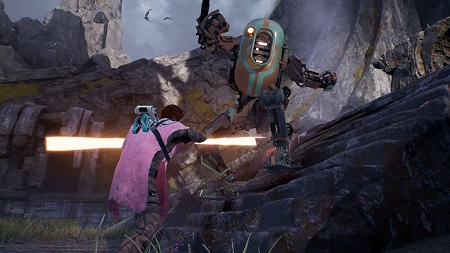
A duel in Jedi: Survivor.

Obviously we can’t discuss Jedi: Survivor without commenting on the game’s shockingly poor condition. I’ve uninstalled it now and haven’t touched it since September, so I can’t comment on its current state. But I saw the reviews Jedi: Survivor received upon launch and chose to wait several months before jumping in – only to find that it was still in an absolutely appalling state, with bugs, glitches, frame-rate problems, stuttering, and low-res textures all getting in the way of the experience. The fault for this lies with publisher Electronic Arts, who chose to force Jedi: Survivor to be released before it was ready.

At the beginning of 2023, I genuinely expected Jedi: Survivor to be in contention for my “game of the year” award. Instead, for a variety of reasons it ended up as one of the biggest disappointments of the year. A sequel is in the works, and while I’m going to be much more sceptical this time around… I have to at least cross my fingers and hope for something better.

“Hot Take” #5:
The sequel trilogy won’t ever be retconned out of existence.

The Holdo manoeuvre is canon. Suck it, haters!

I’m not sure how hot of a take this really is, because I think most folks understand that Disney and Lucasfilm aren’t going to turn around one day and announce that the sequel trilogy is suddenly non-canon! But in some corners of the Star Wars fan community, this fantastical notion has taken root. I’ve heard some big-time fan blogs and channels with sizeable audiences pushing the idea that some or all of the sequel trilogy – and The Last Jedi in particular – are about to be “erased” from canon or overwritten.

Like any franchise, Star Wars has grown and evolved over the years. Stories, characters, and themes that may have been controversial or hated at first tend to be more accepted with the passage of time, as we’ve seen with both Return of the Jedi and the prequel trilogy. The same is sure to happen for the sequels, given enough time. Fifteen years from now, they’ll just be part of the furniture; inseparable from the rest of Star Wars.

Rey in The Force Awakens.

In 1999, I really didn’t like The Phantom Menace. In fact, the only part of the prequel trilogy that I even considered to be passable was Revenge of the Sith – and that dim praise comes with multiple caveats! But as time has passed, the prequels have been folded into the broader lore and canon of Star Wars quite effectively – to the point that I’d never even consider the idea of overwriting them at this stage.

Many of the fans who seem to be arguing most passionately in favour of the sequel trilogy being scrubbed are – somewhat ironically, perhaps – younger folks who first came to Star Wars when the prequels were in cinemas. The prequel trilogy was their way into the Star Wars fan community, so the idea that those films could’ve been disliked or hated as much as the sequels are today doesn’t seem to register for a lot of folks. But they were… and the fan community was able to recover!

“Somehow, Palpatine returned…”

I don’t know what the future holds for Star Wars. Maybe it will go on for years and years, producing new content all the while. Or maybe it’ll take another decades-long break before triumphantly returning, as it has in the past. But either way, the sequel trilogy will remain part of that story. It may not be beneficial to Disney and Lucasfilm to put it front-and-centre right now, particularly as fans seem to long for more stories set during the prequel era or the time of the original trilogy. But the sequel era is developing stories, spin-offs, and a lore all of its own – and building on that will be a key part of Star Wars’ future.

The idea that a billion-dollar trilogy of films, complete with spin-offs, merchandise, and more would ever be dumped or retconned out of existence is nothing more than a juvenile fantasy; the ultimate “cope” from folks who can’t stand those films. And look… I agree that the world would be a much better place if The Rise of Skywalker had never existed. That film was an absolute catastrophe! But it won’t ever be erased or overwritten – and I’m okay with that. I’m still content to give Star Wars a chance to impress me with what comes next.

“Hot Take” #6:
Writing a sequel to Return of the Jedi that didn’t feel like tacked-on fan fiction was probably impossible.

The main characters at the end of Return of the Jedi.

Stories end. Every story eventually comes to an end, with its character arcs, sub-plots, and main narrative threads all being drawn to a close. And for better or worse, Return of the Jedi was the end of Star Wars; the final, climactic battle of the Palpatine-versus-Skywalker saga. The Emperor was dead, Imperial forces were implied to be in disarray, the threat of the Death Star had been removed, and it seemed as if the Rebel Alliance had won the day. After three films – or six, if we include the prequel trilogy – the story had come to an end.

And what an end it was! Saving the galaxy, destroying both Sith Lords, restoring the Jedi Order, and setting the stage for a return to freedom and democracy after two decades of oppressive autocracy is a great place for the curtain to fall and the credits to roll. And having seen both the impotent fan fiction of the old Expanded Universe and Disney’s sequel trilogy, one thing seems abundantly clear to me: that should have been the end. There just wasn’t space to add a new story after the events of Return of the Jedi.

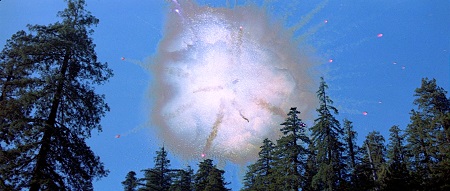
The Death Star explodes above the forest moon of Endor.

It’s ironic that Disney is the company that purchased the Star Wars brand, because the sequel trilogy is a great example of what I like to call the “Disney sequel problem.” Every Disney film – of the classic and renaissance eras, at any rate – ended with a “happily ever after” moment, with the heroes celebrating a hard-fought victory and the baddies vanquished. It proved impossible to make a sequel to those kinds of stories that didn’t feel either tacked-on or derivative.

And both of those labels apply to the Expanded Universe and the Disney-created sequel trilogy. The First Order basically picked up where the Empire left off, and the revelation that Palpatine had been secretly pulling the strings the whole time completely undermined whole narrative arcs from the original and prequel films. The Force Awakens was basically a carbon copy of A New Hope, and The Rise of Skywalker tried its best to be Return of the Jedi. No part of the story was original, and as I wrote once, the entire sequel trilogy feels like a bait-and-switch. Instead of answering questions about the Star Wars galaxy that fans had been asking for years, the films simply re-told the same story with a different coat of paint.

Kylo Ren and General Hux in The Force Awakens.

And I don’t see how it could’ve been different. After killing the Emperor and Darth Vader, there was no “big bad” left to defeat. Mopping up the leaderless remnants of the Empire would’ve felt anticlimactic, and replacing the Emperor with Snoke and Vader with Kylo Ren was just cheap and derivative. The same feelings would have arisen if a new Emperor had emerged, a new Sith Lord had been discovered, or the First Order had been given a different name to match one of the silly Expanded Universe stories.

Unfortunately, modern entertainment franchises can’t be allowed to come to a dignified end. They must be resurrected and kept on life-support at all costs, with new stories being churned out to suit the needs of corporate shareholders who are too cowardly to invest in new stories and characters. After saving the galaxy and defeating the Sith, Return of the Jedi left Star Wars with nowhere to go narratively – but Disney and Lucasfilm went there anyway.

So that’s it!

The Jedi Council.

I hope I didn’t upset too many people with this list!

There’s still plenty to enjoy with Star Wars, even if I’ve found a few things to pick on this time. In 2024, I’m looking forward to The Acolyte on Disney+ and to getting my hands on the remastered Dark Forces video game – so I’m still engaged with the franchise. I also like to keep up to date with big developments, and I’m sure that I’ll eventually get around to watching most of the live-action series and seasons that I’ve missed.

I hope this has been a bit of fun, and perhaps thought-provoking in places. Although these are “hot takes,” it wasn’t my intention to upset anyone or cause anger and division. The Star Wars fan community has more than enough of that! At the end of the day, we all have things we like and things we dislike in our favourite films and franchises.

Until next time… and may the Force be with you!

The Star Wars franchise – including all films, games, and other properties discussed above – is the copyright of Lucasfilm and The Walt Disney Company. This article contains the thoughts and opinions of one person only and is not intended to cause any offence.

If Star Trek had behaved like Star Wars…

Spoiler Warning: There are spoilers ahead for the Star Wars franchise – including recent projects such as The Rise of Skywalker and The Mandalorian. There are also minor spoilers for the Star Trek franchise too.

Let’s step through the looking-glass, across the divide between universes, into a strange new world. This world is very much like our own, but with one major difference: Star Trek behaved like Star Wars. The Original Series ran from 1966 to 1969, just as it did in our reality, but then… things started to change.

Join me on a weird and wonderful journey through what Star Trek might have been… if it had acted like Star Wars. Don’t worry, I promise we’ll make it home safe and sound.

Are you ready to go through the looking-glass?

We begin our journey in the 1970s. Star Trek is being rebroadcast in syndication, and its fanbase is growing. Some of these fans begin to organise and ask for more Star Trek on their screens, and the company that owns Star Trek in this alternate reality – let’s call them CiacomVBS – thinks long and hard about what to do. They have a popular series on their hands… what should they do with it?

Eventually the people in charge of Star Trek hit upon a brilliant idea: a Star Trek prequel, looking at Kirk, Spock, McCoy, and other familiar characters in their Starfleet Academy days and before their five-year mission. The main roles were re-cast, and the first new Star Trek project in almost twenty years was finally greenlit in 1988. Called the “Kelvin films” for the involvement of a starship called the USS Kelvin, this prequel trilogy was popular with some Trekkies, but wildly disliked by others. When the third film finished its theatrical run, CiacomVBS decided to shelve Star Trek and proclaimed that the franchise was complete.

Fans were split on Star Trek by this point. Some proclaimed that The Original Series was the only good part, whereas other (primarily younger) fans were thrilled with the Kelvin films. As time passed, Star Trek appeared to be complete. Its stars moved on to other projects, or faded into obscurity. But the fanbase remained, and with the passage of time those younger fans grew up, leading to a minor resurgence in the popularity of the Kelvin films.

In the 1990s, a massive media empire called the Dalt Wisney Company approached CiacomVBS about a buyout. When the multi-billion dollar deal went through, Wisney announced a plan to bring Star Trek back – this time for a sequel. Star Trek: The Next Generation premiered a few years later, and starred a younger cast of characters – alongside the return of The Original Series’ crew. Their first adventure was to find Captain Kirk, who had gone missing.

Kirk eventually agreed to train the new crew of Starfleet officers, along with help from Spock, Dr McCoy, Scotty, Uhura, Chekov, and Sulu. The returning characters took up a lot of the new show’s screen time, leaving many Trekkies to say that the new crew were undeveloped and underused. To make matters worse, a lack of overall direction by the Dalt Wisney Company meant that each of the three seasons of The Next Generation was helmed by a totally different team of writers. The consequence of this was a jarring change in tone between each of the three seasons.

The Next Generation’s third and final season was its worst by far, with a confused mess of a story that seemed to be trying to overwrite much of what happened in Season 2 – including the backstory of Captain Picard, the major character introduced in Season 1. By far its most egregious fault, though, was bringing back Khan as a villain – Khan had been killed off decades earlier, and his return was called “the worst kind of deus ex machina” by critics.

There were also two “standalone” projects produced during this time. The first saw a team of renegade Starfleet officers go on a secret mission to steal the plans to the Klingon D7 battle cruiser, and ended with them transmitting the plans to Kirk aboard the Enterprise. The second was titled Chekov: A Star Trek Story, and it told the tale of the young Pavel Chekov before he joined Starfleet.

Despite the lacklustre response to The Next Generation and Chekov, Wisney had invested a lot of money into Star Trek, and putting their expensive acquisition on hiatus was not possible. They announced another spin-off: Deep Space Nine. This promised to finally take a look at the Star Trek galaxy away from Captain Kirk and Starfleet for the first time, being set on a space station in a new region that had never been seen before.

Fans seemed to respond well to Deep Space Nine at first, but its short runtime, bland main character, and overreliance on the aesthetic of The Original Series were all points of criticism of the show. By Season 2 it seemed to be doing better and was beginning to stand on its own two feet – but for some inexplicable reason Season 2 of Deep Space Nine brought back the character of Sulu – who had been killed off in The Next Generation. Fans were confused as to how he had survived being eaten by an alien monster, but this was never addressed.

The Season 2 finale was perhaps the most egregious example of Wisney forcing fan-service into Deep Space Nine, though. As Sisko and his crew were cornered, staring down a seemingly-unstoppable villain, the shuttlecraft Galileo was spotted approaching DS9. The shuttle door opened, and there, in all his glory, stood Captain Kirk. Kirk dispatched the villain’s henchmen with ease, and gave Sisko – and the show’s stunned audience – a nod and a wink.

In the aftermath of Deep Space Nine Season 2, the Dalt Wisney Company put together a presentation where they announced what’s coming next for Star Trek – and to no one’s surprise, it was more of the same. Nostalgia, throwbacks, and not much else.

The actor who played Scotty in the Kelvin series was given his own spin-off. Next was Star Trek: Nurse Chapel, which promised a look at the franchise’s second-most famous medical officer. Then there was The Harry Mudd Show, looking at lovable rogue Harry Mudd, and Star Trek: Balok, which promised a deep dive into the backstory of the character fans first met in The Corbomite Maneuver. There was a miniseries looking at Kor, the Klingon captain, and finally there was Star Trek: That Guy Who Flew The Shuttle In That One Episode – which was immediately given a three-season order. Some fans were thrilled with these offerings… but a lone voice spoke out.

On a website called Dennising with Trek, an independent critic wrote that it was time for Star Trek to move on. The Original Series had become a weight around the neck of the franchise, holding it back and stopping it from properly moving on to new adventures. The Star Trek galaxy offered such an interesting and exciting setting, they wrote, that it was positively criminal to only look at such a tiny sliver of it over and over and over again. Star Trek can be better than this.

Apparently this website is incredibly popular in the alternate reality.

So that, my friends, is where we end our journey through this strange mirror universe. We step back across the divide, and find ourselves firmly back in our own reality. I promised I’d get you home safe and sound!

What was the point of our little interdimensional sojurn? As I’ve said many times already, Star Wars is stuck. It has never been able to move beyond its original trilogy, and it’s gotten to a point where those films are now holding it back from making any meaningful progress.

You might look at some of the Star Trek projects that exist in the alternate reality we visited and say that they sound like fun – but they represent an incredibly narrow vision of what Star Trek could be. If Star Trek had behaved like Star Wars, with a total and unshakable reliance on The Original Series and its characters, we’d never have got to see some absolutely incredible characters and stories. We’d have missed out on Picard’s transformation into Locutus of Borg in The Best of Both Worlds, or on Sisko’s painful decision in In The Pale Moonlight. We’d never have met Captain Janeway and her crew at all, nor Captain Archer and his.

Avery Brooks put in one of his best performances as Sisko in the Season 6 episode In The Pale Moonlight.

There is a place for prequels, for looking back, and for nostalgia. The very reason franchises like Star Trek and Star Wars were revived is because the companies behind them see nostalgia as a way to attract audiences. But in my opinion – my subjective opinion – Star Wars goes too far and overplays the nostalgia card. The Star Wars galaxy is a sandbox of almost infinite proportions, with not only trillions of inhabitants, countless alien races, and millions of planets to explore, but also tens of thousands of years of history. We could look at events and characters that are entirely disconnected from Luke, Han, and Leia – but Star Wars has never even tried to do that.

The Mandalorian brought back Boba Fett and Luke Skywalker in what was pure fan-service. Fans lapped it up, and I’m happy for the people who enjoyed the way that story went. But for my money I think Star Wars can do better. I think it can be broader and deeper, and can step away from relying on those old characters. Star Wars is a fantastic franchise, and its setting is so vast and interesting that it doesn’t need the crutch of those old characters… but for some reason Disney can’t see it.

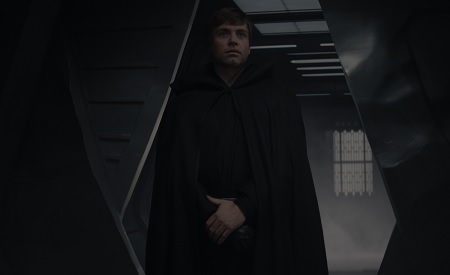
Luke Skywalker returned in The Mandalorian.

Star Trek moved away from its original incarnation decades ago, and in the years since we’ve had a heck of a lot of exciting, memorable shows and films that have become iconic parts of the franchise in their own right. And that innovation and willingness to try new things continues today, with Star Trek recently branching out into animated comedy and with a kids’ show on the horizon. Star Wars could do that too.

Star Trek realised a long time ago that the galaxy Gene Roddenberry and others had created was crying out to be explored. New characters and new ships came along and have had some incredible adventures. Star Wars hasn’t been brave enough to try anything genuinely different yet. I hope one day that will change.

Some names, titles, and properties above have been used in a satirical manner for the sake of parody and criticism. The Star Wars franchise and all related properties are the copyright of the Walt Disney Company and LucasFilm. The Star Trek franchise and all related properties are the copyright of ViacomCBS. Stock photos courtesy of Unsplash. This article contains the thoughts and opinions of one person only and is not intended to cause any offence.

Star Wars needs to move on

Spoiler Warning: There are spoilers ahead for the Star Wars franchise, including casting information for The Mandalorian Season 2,The Rise of Skywalker, and other recent projects.

One of my favourite parts of the Star Wars franchise isn’t a film, it’s the two Knights of the Old Republic games from 2003-04. While I generally found the Expanded Universe – now re-branded as Star Wars Legends and no longer in production – to be unenjoyable, Knights of the Old Republic was an exception. It took a setting and a story that was thousands of years distant from the Original Trilogy, and while it’s certainly true that some elements were derivative, especially in the first game, as a whole it was something different that took Star Wars fans to different places and a different era. It expanded on the overall lore of Star Wars without overwriting anything, and it was a great look at the Star Wars galaxy away from Luke, Anakin, and Palpatine.

When it was announced in 2012 that Disney would be acquiring Lucasfilm I was excited. Ever since 1999, when Star Wars expanded to be more than just a trilogy of films, the vague prospect of a sequel to Return of the Jedi had been appealing to me. Learning what came next for Luke, Han, Leia, and others was something I was interested in, as I also was interested to learn what came next for the galaxy as a whole following the Emperor’s death. It’s easy to forget, but Return of the Jedi didn’t end with a full-scale victory for the Rebel Alliance. The Death Star was gone and the Emperor was dead, but practically the whole galaxy was still under Imperial control. I was fascinated to see how the Rebels turned victory in a battle into victory in the overall war.

The destruction of the Second Death Star. The sequel trilogy was supposed to tell us what became of the galaxy after this moment.

The Expanded Universe attempted to tell this story, but it was a convoluted, poor-quality tale hampered by having different writers with different ideas – seemingly Lucasfilm’s policy when it came to the Expanded Universe was that anyone could write anything. Many of these stories came across as fan-fiction, pitting a seemingly invincible Luke, Han, and Leia against all manner of obstacles. Over the years, the Expanded Universe grew to such an extent that it was convoluted and incredibly offputting for newcomers – several hundred books, several hundred more comics and graphic novels, over a hundred video and board games, two kids’ television shows, and myriad others, all of which required roadmaps, suggested reading lists, and of course a number of encyclopaedias and reference works to keep up with it all. All of this meant that the Expanded Universe was impossible to get to grips with without making it a full-time commitment. I was pleased when it was announced that Disney would be overwriting it.

By wiping the slate clean, not only would Disney not be constrained by some of the Expanded Universe’s poor storytelling, but the canon of Star Wars post-Return of the Jedi could be restarted, hopefully in a more concise way that would be easier to follow. That seemed to succeed at first, but now – a mere six years on from the cancellation of the old Expanded Universe – Star Wars is once again pretty convoluted with books, games, comics, and even a theme park attraction all officially canon. While I don’t want to spend too much time making a comparison with Star Trek, in that case the issue of canon has always been incredibly simple: television episodes and films are canon, everything else is not.

With so many books, comics, games, and other media, the old Expanded Universe was convoluted and offputting.

But we’re drifting off-topic. The Expanded Universe being dumped was a good thing, because I hoped what would replace it would be superior. And for the most part that’s been the case, though The Rise of Skywalker certainly dragged the overall story of the sequels down a long way.

Star Wars has a truly interesting setting: there’s a whole galaxy with countless worlds, trillions of inhabitants, and thousands of different species. But for the most part, the franchise has spent decades focusing on an absolutely minuscule fraction of this vast, potentially interesting setting it’s created.

The Expanded Universe spent a lot of time with Luke, Han, and Leia, as well as later with characters like Anakin, and by far the majority of its stories are set between The Phantom Menace and the couple of decades after Return of the Jedi. Where Knights of the Old Republic succeeded was in taking its audience away from that overtrodden ground and showing us a glimpse of the Star Wars galaxy without those familiar characters.

Knights of the Old Republic II was a great game that told a story far removed from Star Wars’ original trilogy.

The prequels dedicated three films to overexplaining the background of Darth Vader – a story I’d absolutely argue was unnecessary and didn’t really do anything to improve or inform the Original Trilogy in any substantial way. That was part of why I found those films so disappointing. While the third entry, Revenge of the Sith, was better than the first two, all three films didn’t really bring anything new or interesting to the table. As I sat down to watch The Force Awakens a decade later, I hoped that we’d start to see something different.

The five films made since Disney acquired Lucasfilm in 2012 have been a disappointment in that regard. We’ve had The Force Awakens and The Rise of Skywalker, which essentially remade A New Hope and Return of the Jedi only worse, Solo: A Star Wars Story which made the same mistake of unnecessarily overexplaining Han Solo that the prequels did with Darth Vader, and Rogue One, which was a great standalone story but was a prequel feeding straight into the plot of A New Hope. The Last Jedi tried to take things in a different direction, but was still a story primarily about Luke – and is now effectively non-canon after being overwritten by its sequel.

The Last Jedi was the most recent Star Wars film to even try to do something differently – but was still constrained by being a sequel using familiar characters.

I know I said I wouldn’t make too many comparisons with Star Trek, but there’s one that’s too important not to mention. In 1987, Star Trek: The Next Generation premiered. And aside from a cameo appearance, that show basically did its own thing and didn’t worry about The Original Series. The Star Trek franchise thus established that it could be so much more than its original incarnation. Star Wars has never done that – in its cinematic canon it hasn’t even tried, despite existing for over forty years. Where Star Trek consists of three time periods, an alternate reality, and nine distinct sets of main characters, Star Wars has been unable to move beyond the story of its original trilogy. The prequels lent backstory to the originals. The sequels and spin-offs expanded that same story. Even The Mandalorian brought in themes, concepts, and characters that weren’t as far-removed from the original films as they should’ve been – a decision compounded by the silly decision to bring in Boba Fett in Season 2.

Star Was could be so much more than it is. But at every opportunity, decisions have been taken to narrow its focus and dive deeper into unimportant parts of its only actual story; after more than forty years, the Star Wars franchise has still only told one real story. The decision to shoehorn Palpatine into The Rise of Skywalker makes this infinitely worse, as apparently he’s been manipulating everything and everyone from behind the scenes for the entire saga of films. As I wrote once, this transforms the Skywalker Saga into what is really the “Palpatine Saga”, as he’s the only character who seems to act of his own volition. But this isn’t supposed to be (another) critique of that incredibly poor narrative decision!

The deus ex machina of Palpatine ruined The Rise of Skywalker… and really the entire sequel trilogy.

The decision to bring Palpatine back is indicative of a franchise that has no new ideas. It was categorically not “always the plan” to bring him back in the sequels, or this would have been established in The Force Awakens. Instead, Palpatine became a deus ex machina because Star Wars as a whole has been unable to move out of the shadow of its first three films. Those films could have laid the groundwork for an expanded franchise – as The Original Series did for Star Trek – but instead they’ve almost become a ball and chain; a weight around the neck of the franchise, keeping it locked in place and unable to move on.

It shouldn’t be because of a lack of ideas. The Star Wars galaxy is a massive sandbox for any writer or director to play in, with almost unlimited potential to tell genuinely new and interesting stories. Instead it’s a lack of vision and a lack of boldness on the part of a large corporation; Disney wants to play the nostalgia card over and over again, and because Star Wars had never previously tried to escape its Original Trilogy, doing so now seems – from a corporate point of view – too big of a risk. How else does one explain the decision to allow The Rise of Skywalker to overwrite The Last Jedi? Corporate-mandated cowardice, retreating to nostalgia and safe, comfortable ground. Trying something even slightly different requires a boldness that simply isn’t present in most boardrooms.

Star Wars is being run by a corporate boardroom unwilling to take risks or do things differently.

Two-thirds of the sequel trilogy re-told the original trilogy. The prequels were glorified backstory, and the two spin-off films were also prequels to the originals. Star Wars has only ever made three original films – everything else either overexplained that story or tried to re-tell it. The Star Wars “saga” is thus nothing more than one story. One main character – Palpatine – controls and manipulates it, and only a handful of characters get any significant screen time and development.

I wrote recently that the overall story of Star Wars has been dragged full-circle, with the questions fans had about the state of the galaxy and the Jedi Order after Return of the Jedi simply not being answered in any meaningful way. The galaxy is once again in a position where Palpatine is dead, there’s one remaining young Jedi, an autocratic state controls much of the galaxy but has suffered a major defeat, and the survivors will have to finish the war and try to rebuild. That’s where both Return of the Jedi and The Rise of Skywalker left things. Far from answering the questions posed by the original films, the sequels just asked the same questions again with a different coat of paint.

By re-telling the same story – albeit in a worse way – the sequel trilogy as a whole has entirely failed to accomplish anything.

The end of the sequel trilogy left the Star Wars galaxy in exactly the same state it was in almost forty years ago.

The announcement of The Mandalorian came with what I thought was an exciting premise: the adventures of a gunslinger far beyond the reach of the New Republic. Wow! Finally, something genuinely different in Star Wars. It didn’t last, of course, as the second episode of the show brought the Force back into things. While in some respects The Mandalorian tried to be different, in too many ways it was samey. The aesthetic, the reuse of elements from the original trilogy like Boba Fett’s armour, the Jawas and their Sandcrawler, and of course the return of the Force made what was already a boring show with episodes that were too short even less interesting. I found the whole experience a disappointment.

The two upcoming Disney+ shows – based around Obi-Wan Kenobi and Rogue One’s Cassian Andor – look set to repeat the same mistakes. Ewan McGregor’s portrayal of Kenobi was definitely one of the prequels’ better elements, but do we need yet another prequel? In-universe, Kenobi went into exile on Tatooine after the rise of the Empire. Anything he does in the show would either be constrained by taking place within a few miles of his desert hut or else feel awfully tacked-on. And the Cassian Andor show is a prequel to a prequel. Rogue One was a great film, but does it need its own prequel show?

Cassian Andor was a great character in his sole appearance. Not sure he needs a prequel series of his own, though.

Can’t the investment being made in these properties be reallocated to something genuinely different? There’s so much potential in the Star Wars galaxy, yet Disney and Lucasfilm seem intent on showing us the same tiny sliver over and over and over again. When people talk of franchise fatigue and the feeling that Disney is milking Star Wars dry it’s because of this! When every Star Wars project feels samey and repetitive, it’s much easier to get burnt out on the franchise.

There are some exceptions – I recently played through Jedi: Fallen Order, and despite that game using a familiar time period, it was a mostly-original story with only one returning character from the films playing a role. It was different enough to feel like a half-step away from what had come before.

Jedi: Fallen Order told a decent standalone Star Wars story.

For the franchise to survive long-term and remain viable, it needs to step away from the original trilogy for the first time. New films and shows, whenever they may come, should look at wholly new characters in a setting and even time period that’s distinct from what came before. There also needs to be a plan – the rudderless sequel trilogy can’t be repeated. Any new project needs to have someone at the helm to guide its story. Questions need to be asked at the beginning about where the characters are going and what the endgame of the story is, so that the franchise doesn’t just keep making the same mistakes.

Not every recent Star Trek project has been to everyone’s taste. But since the 2005 cancellation of Enterprise – and in some respects even before then – Star Trek hasn’t been afraid to try completely new things. Action films, a serialised drama show, and now an animated comedy have all joined the lineup. Some of these have brought in new fans, and at the very least, no one in 2020 can accuse Star Trek of being stale. Star Wars, in contrast, has absolutely become stale. The one story it’s been telling for forty years has finally ended, so now is the moment for Star Wars to properly move on.

The Star Wars franchise – including all films and other media mentioned above – is the copyright of Lucasfilm and Disney. Stock photos courtesy of Unsplash, Knights of the Old Republic II screenshot courtesy of the press kit on IGDB. This article contains the thoughts and opinions of one person only and is not intended to cause any offence.

Star Wars is right back where it started

Spoiler Warning: There will be spoilers ahead for the whole Star Wars franchise, including The Rise of Skywalker.

The Star Wars sequel trilogy accomplished absolutely nothing. Okay, maybe that strictly isn’t true. I can think of a lot of things it accomplished, from modernising the aesthetic of the franchise to helping fans disappointed in the prequels move on. The sequels also helped make the franchise far more mainstream today than it has ever been, with a larger and more diverse fanbase. But that isn’t what I meant.

In terms of the overarching narrative of the franchise, Star Wars is in exactly the same position as it was in 1983 after Return of the Jedi – and for the most part, that’s actually intentional.

In my review/tear-down of The Rise of Skywalker, I went into detail about how JJ Abrams seems to have been desperate to use that film to try to remake Return of the Jedi – using story elements that were simply not suited for that purpose. Setting aside my plot complaints – notably the return of Palpatine – The Rise of Skywalker ended in identical fashion, and has left the Star Wars galaxy in basically the same place it was almost forty years ago.

Luke at the end of Return of the Jedi – the story of Star Wars has circled back to this point.

One thing fans of the original trilogy (like myself) were so keen to see in the sequels is what happened to the galaxy in the aftermath of the Emperor’s death. Did a New Republic ultimately take control, as depicted in the (awful) Expanded Universe? Did Luke succeed in setting up a new Jedi Order? What happened to Han and Leia – did they get together? There were many questions of this kind, and the sequel trilogy set out to answer them.

The answers we got in The Force Awakens were at least potentially interesting. After the incredible disappointment of the prequels, which were released between 1999 and 2005, I was content for The Force Awakens to re-tell some of Star Wars’ “greatest hits”. Even though, in retrospect, I would absolutely argue that it crossed the line between paying homage and ripping off many aspects of the originals – A New Hope in particular – in 2015 I was fine with that.

But if we look back at The Force Awakens today, in 2020, the groundwork for what would be a cheap recycling of the Star Wars story, ultimately taking the franchise nowhere but back to where it was, are on full display. We have a hidden and secluded old Jedi master, paralleling Ben Kenobi from A New Hope. We have an authoritarian state with a planet-killing superweapon, which of course parallels the Empire and the Death Star. We have a mysterious old dark side user who has a helmet-wearing apprentice, blatantly paralleling the Emperor and Vader. We have a rag-tag group of Resistance fighters – led by Princess Leia. And we have Han and Chewie regressing to their pre-A New Hope roles as non-caring smugglers.

However derivative that setup may have been, even by the end of The Force Awakens there was scope for Star Wars to go in a different direction and end up in a different place by the end of the trilogy. The Last Jedi tried to pull the franchise to a different point – most significantly by taking Kylo Ren away from the copycat-Vader path toward redemption and making him, not Snoke, the ultimate evil villain of the story.

The Rise of Skywalker, to my surprise, I must admit, spent a significant amount of time undoing what had been set up in The Last Jedi and tried – unsuccessfully – to remake Return of the Jedi from a very different starting point, cramming unsuitable story elements into that mould and relying on the deus ex machina of Palpatine’s inexplicable return to allow Kylo to follow Vader’s path to redemption.

Kylo Ren was forced to take the same path as Darth Vader.

The Rise of Skywalker established that the First Order was in control of almost all of the galaxy by this point in the story – akin to the Empire’s powerful position in Return of the Jedi. Just like in that film, the Resistance’s destruction of one fleet and the death of one leader does not, in itself, constitute overall victory – there is still a war to be won against the remaining forces of the First Order, just as the Rebels after Return of the Jedi had to continue the war against the Empire. The resolution to this war was not seen on screen and, frankly, victory cannot be guaranteed. The destruction of the Sith fleet at Exegol didn’t do anything to the First Order’s other fleets and forces, and while Palpatine may have been a “power behind the throne” for much of the First Order’s rise, his death is far less meaningful to the average First Order soldier or supporter than his fake-death was to Imperial officers after Return of the Jedi.

With the galaxy still under First Order control, the Resistance have their work cut out if they’re to follow Leia’s example and try to recreate the Republic for a second time. Even without a Supreme Leader, the First Order poses a significant challenge.

The First Order’s two potential leadership figures – Palpatine and Kylo Ren – both died in The Rise of Skywalker. Palpatine’s second death – if indeed it is a death and not another ruse – obviously copies his death in Return of the Jedi. And Kylo’s was also a copy of Vader’s death in Return of the Jedi – dying in Rey’s arms as Vader had died in Luke’s.

With her Jedi masters – Luke and Leia – dead, Rey is the sole survivor, as Luke had been at the end of Return of the Jedi. The Jedi Order must now be recreated from this one remaining young person, and Rey’s task is now identical to the one Luke faced all those years ago. Where will she go to establish her Jedi temple? How will she find force-sensitive children (or adults) to train? How long will it take for the Jedi to be restored? All of these questions were faced by Luke, and now they fall to Rey.

The Sith have been finally defeated. As they should have been after Return of the Jedi. With no remaining dark side devotees following the deaths of Snoke, Kylo, and Palpatine, the question of what happens to the Sith and the dark side rears its head. Will that knowledge be forever lost? Will someone new find out about the Sith and try to recreate their teachings? And of course the burning question: is Palpatine really dead? All of these questions existed in 1983 too.

In some circumstances, a cyclical story can feel good. It can make sense and it can have a powerful message, saying something like the rise of evil is a problem we always need to be on guard against. But it doesn’t feel good with Star Wars. In the aftermath of The Rise of Skywalker, three major storylines have taken a circular, copycat path and landed right back where they started: the state of the galaxy and who governs it, the future of the Jedi Order and how it may be rebuilt, and the demise of the Sith and the dark side. In all three of these cases, Star Wars is in exactly the same place as it was after Return of the Jedi.

The “Rey Skywalker” scene from The Rise of Skywalker was widely mocked and became an internet meme.

This feels cheap and lazy. The creators of the sequel trilogy – and I’m looking at JJ Abrams in particular – didn’t actually answer any of the questions posed by the ending of Return of the Jedi. Instead they pulled a bait-and-switch, remaking the original trilogy with a different trio of main characters and a few minor spot-the-difference story threads. With The Rise of Skywalker overwriting key points from The Last Jedi, we can almost disregard that film entirely from the trilogy. It tried to be different, but the differences it brought to the table didn’t last. Instead we have two copycats, and by remaking those same stories and putting the new characters into situations that are repeats of what came before but with a slightly different veneer, the trilogy ends with the same questions as before. What will happen to the galaxy? What will happen to the Jedi?

We didn’t get real answers to those questions in the sequels. We got a pretend set of answers that simply lifted all the same elements present in the original trilogy, gave them a new coat of paint, and plopped them down in the answer column.

What happened to the galaxy after the Empire? A new Empire, called the First Order, showed up. Oh and it was being controlled by the old Emperor who only pretended to have died.

What happened to the Jedi Order? Luke made a new one and then it got destroyed again! And that happened almost entirely off-screen, so the only part we got to see was Luke being a hermit like Old Ben Kenobi.

What happened to the Sith and the dark side? Well remember how there was an ancient, scarred dark side user who had a helmet-wearing apprentice? Yeah, well there’s two more guys like that. Oh and one of them, in a shocking plot twist, is related to other main characters!

Okay… so what will happen to these storylines? Surely something different that what we saw in 1983, right? Nope! The First Order will have a fleet of planet-killing ships destroyed and Palpatine and Kylo and Snoke will all die! But the rest of their forces are intact and probably still in charge of the whole galaxy. The Jedi Masters will all die leaving only one Jedi left! And the dark side is… I dunno. Gone, maybe? Or maybe it’ll come back when we need another villain. Who knows?

The future of the Star Wars galaxy is as unclear today as it was in 1983. Not only are the questions that we have identical to those that we asked after Return of the Jedi, but the “answers” to those questions the first time we asked them has been to simply re-tell the same story in a worse way, dragging it full-circle right back to the same point.

Considering where it started and where it ended up, the whole sequel trilogy has been a waste of time. The first two films may be enjoyable as standalone pieces of cinema, but in the broader context of a large, ongoing story set in a massive fictional universe, it accomplished absolutely nothing. The three new films could’ve not been made and nothing would have changed.

The Star Wars franchise is the copyright of Lucasfilm and Disney. This article contains the thoughts and opinions of one person only and is not intended to cause any offence.

The biggest problem with the Star Wars sequels

Spoiler Warning: There are spoilers for all three films in the Star Wars sequel trilogy, including The Rise of Skywalker.

As I’ve covered already here on the website, reviews for the final part of the Star Wars sequel trilogy – The Rise of Skywalkerare mixed. What this unfortunately means, at least in the short-term, is that the divisiveness in the fanbase and in online fan communities, as well as a lot of vile anti-Disney hate, will continue. The best opportunity to bring fans back together was wasted with The Rise of Skywalker, which inexplicably brings back Emperor Palpatine, throwing up issues not just for this trilogy, but for the original films too.

I don’t want to get into all of that right now, as I’ll save my opinions on The Rise of Skywalker itself for when I get around to a full review. This article intends to address the production side of the Star Wars sequel trilogy, and the clear issues that have been present.

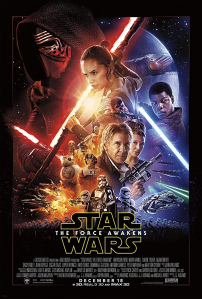
Poster for The Force Awakens (2015)

Despite what George Lucas subsequently claimed, 1977’s Star Wars was a one-off film. It wasn’t “Episode IV” when it was released, it was a standalone story – albeit one that was careful to leave the door cracked slightly open to allow for the possibility of a sequel. The fact that the original trilogy wasn’t a planned story is noticeable – not least in the haphazard approach to the family ties between Vader, Luke, and Leia. A New Hope (as we’ll have to call it to avoid confusion) is a self-contained story with a beginning, middle, and end. If there had only ever been one Star Wars film, it would still be a complete story. The two sequels follow on from A New Hope, but are a second self-contained story; a duology, if you will.

In 1977 that made perfect sense – there was no guarantee that A New Hope would be a success, so dedicating extra time and money to writing sequels before the original was even a proven earner would have been wasteful. Not to mention that if the story had been written as part one of three, ending without wrapping up its story, and then for production reasons parts two and three were never made, A New Hope would be even more of a failure that if it were a standalone film that flopped. In short, in 1977 it wasn’t anyone’s intention to make a trilogy of films, and the fact that The Empire Strikes Back and Return of the Jedi were able to be made at all was purely on the back of the success of A New Hope and the story it told.

Fast-forward to 2012, when Disney bought Lucasfilm – and with it, the rights to the Star Wars franchise. The intention, as stated by Disney at the time and many, many times subsequently, was to make a new trilogy of films. Not one new film with the possibility to make others, but a trilogy of three films to serve as a sequel to the originals.

It’s apparent from the ending of The Force Awakens that it wasn’t ever intended to be a one-shot story. As Rey finally travels to Ahch-To and meets Luke, she extends her hand and offers him his father’s lightsaber. And then the film ends with the two of them standing on the cliffside – as close to a “cliffhanger” as it’s possible to get without one of them literally hanging from that cliff! This moment set up a sequel, the second part of the planned trilogy.

Disney and Lucasfilm went about writing this trilogy in the worst possible way. They brought in three different writers and directors – later reduced to two when Colin Trevorrow left the project that ultimately became The Rise of Skywalker – and each was essentially given free rein to tell whatever story they wanted, regardless of how well it worked as one part of a larger overall story. JJ Abrams and Rian Johnson simply didn’t work together on their stories – that’s “stories” in the plural, where it should have been two parts of one single story.

The use of different directors for each film is not, in itself, an issue. Even the original trilogy had three different directors. Television series do this all the time, and as long as the story is good there can even be a benefit to having different directors, as each brings their own style and insight. In Game of Thrones, for example, some directors became renowned for their battles, and others for quieter, character-driven stories. Splitting up the directing duties worked well in countless other franchises, so why not in Star Wars too?

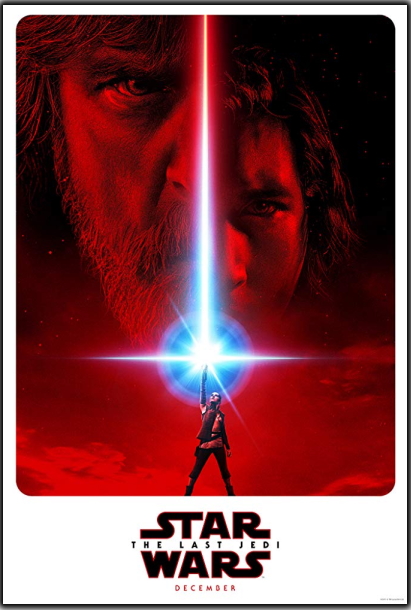
Promo poster for 2017’s The Last Jedi

The fundamental problem is that there was no story for the directors to work from – or if there was, they were allowed to ignore it entirely.

Between 2012, when the Lucasfilm deal was announced, and the release of the film that ultimately became The Force Awakens, there needed to be one writer – or a team of writers – planning out in excruciating detail what the story of the trilogy would be. They needed to consider which characters were coming back – obviously Han, Luke, and Leia were, but who else? Then they needed to consider what was happening in the galaxy – we all assumed the Empire had died with Palpatine, but what happened next?

A lot of Disney sequels (the direct-to-video kind) have the same basic problem: how do you tell an interesting and engaging story after “happily ever after” – without completely undoing the happy ending? This is the problem Star Wars was facing: the Emperor was dead, the Death Stars destroyed, and as of the end of Return of the Jedi it looked like we were on course for a Rebel victory. So, if the Rebels did win and managed to restore democratic government to the galaxy, and both of the Sith Lords (Vader and Palpatine) had died, where was the threat, drama, and tension going to come from in order to drive the new trilogy of films?

This was the fundamental question. What came after the happy ending? And then how could that be spun out into a three-film story arc that would be as dramatic, as tense, and as exciting as the originals?

The answer came from JJ Abrams as he set to work on The Force Awakens – after the Empire fell, the First Order rose from its ashes, and was trying to overthrow the New Republic. They had legions of Stormtroopers, they had a planet-killing superweapon, and they had a mysterious Dark Side user as their Supreme Leader, who had a helmet-wearing Dark Side apprentice. A little derivative, perhaps, but not bad. After the disappointment of the prequels a decade prior (see my last article for my thoughts on that series) a return to what made Star Wars great seemed like a solid idea. It was, at the very least, a plausible and perfectly reasonable way to approach the new trilogy.

Except this was how JJ Abrams approached The Force Awakens; it wasn’t how Disney and Lucasfilm were approaching the whole trilogy. Rian Johnson came along and decided that Star Wars needed to go in a bold new direction. Instead of Rey being related to Luke Skywalker or Obi-Wan Kenobi, she was nobody, related to no one. Instead of Kylo Ren being on a path to redemption like his grandfather, he chose to commit to the Dark Side and claim for himself total power. And instead of Snoke being as manipulative and cunning as Emperor Palpatine, he was cut down by his apprentice before he could achieve his goals. Bold. New. Different. And a great way for the franchise to go to stay relevant and exciting.

BB-8 on a promo poster for The Rise of Skywalker (2019)

Both concepts – JJ Abrams’ idea of retelling the “greatest hits” of Star Wars, and Rian Johnson’s idea to shake up the franchise and take it to wholly new thematic places – have merit. But they’re about as far apart as it’s possible to be.

What that means is that Disney and Lucasfilm needed to pick one style or the other. Before The Force Awakens was fully in production, Rian Johnson had been approached to make The Last Jedi and will have, at the very least, submitted some kind of story outline or discussed the basic premise and concept he had in mind. There was still time, even in mid-2014, to change direction and go down the Rian Johnson route if Disney and Lucasfilm wanted to do so. But if they were happy with the JJ Abrams approach, and wanted the sequels to essentially re-tell the original trilogy, then they needed to commit to that approach instead.

Trying to do both has resulted in the sequel trilogy being a mess. It hasn’t had any direction to its story, and at a fundamental level it hasn’t even known what kind of story it was supposed to be telling. That is a significant problem that has hampered it, and one that was entirely avoidable if basic film production and storytelling rules had been followed.

This has been made worse and more noticeable by JJ Abrams returning for the final film in the series. If someone else – literally anyone else – had made their version of The Rise of Skywalker, perhaps the trilogy would have felt like a bit of a mixed bag; a collection of three distinct films. But because JJ Abrams came back and was allowed to essentially ignore the plot of The Last Jedi – even overwriting large parts of it – the resulting trilogy has a very weird feel where two films take one approach, but the middle part is completely different. And whatever one’s opinions on The Last Jedi may have been when it was released, the overall trilogy is not served by having films overwrite one another.

When there are a total of three films to tell a story, with a total runtime of seven hours, give or take, there just isn’t time for one film to retcon and overwrite its predecessor. The tonal shift is incredibly jarring too, as the trilogy goes from “remember the greatest hits of Star Wars?” to “I bet you didn’t see that coming!” – and then back again. A consistent tone is just as important as a consistent story – perhaps even more so. And as it’s clear that the two writers and directors had such contradictory visions for where to take the franchise, a decision had to be made as to which one to go with.

The first promotional poster for 2019’s The Rise of Skywalker

The fact that no such decision was made, and production on the films was allowed to proceed in this manner ultimately rests with the executives at Disney, who will have had the final say on such things. I guess I just don’t understand how people who have worked in this industry – very successfully – for decades would have failed to realise that they had a problem on their hands. Organising the trilogy along these lines should simply have never happened. I don’t think it’s fair to blame either JJ Abrams or Rian Johnson – because both The Force Awakens and The Last Jedi are great films as standalone pieces. In fact I think as time goes by, The Last Jedi in particular will be held up as a great example of sci-fi filmmaking and of the Star Wars franchise in general. But you can’t blame storytellers for telling the stories that they wanted, especially when they had almost unlimited resources thrown their way. The guidance and the control over their stories had to come from someone higher up, and it was unfortunately absent.

If there had been a story treatment written for the trilogy, then each director would have been constrained by that. Perhaps someone like Rian Johnson might’ve decided not to jump on board if he had to tell a JJ Abrams-style story, and vice versa.

But I’d have liked to see it go even further. The most successful film trilogy of recent years, Peter Jackson’s Lord of the Rings, was produced and shot back-to-back. One team was in control for the entire production, and the films were then released over a three-year period. There’s absolutely no reason why Star Wars couldn’t have emulated this successful formula. By appointing someone to be in overall creative control, there would have still been the option to have three different directors and different scriptwriters for each film, but the production would have been smoother.

Shooting the films back-to-back would have also meant that Carrie Fisher’s death in 2016 wouldn’t have been an issue for The Rise of Skywalker to have to get around. This is purely hindsight, because no one would have predicted that she would have passed away before the trilogy was complete, but it has nevertheless been a production issue. With the death of Han Solo in The Force Awakens and the death of Luke Skywalker in The Last Jedi, Fisher’s Princess/General Leia was the last remaining of the original core characters. And unfortunately the scant footage that was left on the cutting room floor from the first two films was nowhere near enough to sculpt the kind of major role destined for her in The Rise of Skywalker – leading to some clumsy scenes in that film. Again though, this isn’t a reason why shooting all three films at once should have happened, it’s instead a positive consequence of doing so because of what happened out here in the real world.

This kind of production would have been more expensive initially, because the cost of producing all three films would have to be paid up-front. But it does offer advantages. Firstly, some costs would be lower – due to not having the expense of setting up production three times. Secondly, and most importantly from an audience point of view, the story and scripts could be adjusted if necessary. If something didn’t seem to be working or making sense it could be cut or reworked, to the ultimate benefit of the story of all three films.

Theatrical release poster for The Rise of Skywalker (2019)

Whether that option was ever seriously considered, or whether it was always the case that the three films would be produced wholly separately isn’t known. But I think that the way the sequel trilogy turned out is a great argument for producing all films in a planned series at once. In that sense, its ultimate purpose may be to serve as a warning of how not to approach filmmaking in future.

At the end of the day, the two competing visions at the core of the Star Wars sequels – JJ Abrams’ idea to re-tell Star Wars “greatest hits”, and Rian Johnson’s approach, trying to take the franchise to new and unexpected places – have merit, and each could have been spun out into a creditable series of films. Both concepts actually produced decent standalone pieces of cinema. But they completely failed to gel together and produce a cohesive story.

When film historians look back on the sequels, they will say that they managed to avoid many of the missteps that plagued the prequels, and that they are a much more watchable and enjoyable set of films as a result. What the sequel trilogy is not, however, is a single narrative. And it lacks many of the basic points that a story should have to reach the heights that the franchise aims for.

How are Rey, Finn, and Poe significantly different by the end of The Rise of Skywalker than they were at the beginning of The Force Awakens? Rey has learned the truth of her parents – after a deliberate false start. Finn… quit the First Order. But he did that in The Force Awakens and as a character hasn’t changed any since. Poe is still Poe… he’s a good pilot and a leadership figure. But none of them learned major lessons, suffered significant defeats, or appear to have grown. And from the original characters, Han was murdered by his son, and Luke and Leia both died performing the same Force power. Han had actually wholly regressed as a character by The Force Awakens, abandoning his family and the cause he’d fought for to return to being a smuggler. Leia was fundamentally no different than the last time we’d seen her, taking a leadership role in the new rebellion. Luke is the only one of the three to have had significant character development – all of which happened off-screen. He tried to raise a new generation of Jedi, and fell into a deep depression when he failed.

I know some fans were upset by Luke’s depiction in The Last Jedi, and I’d like to address that one day in a standalone piece as there’s too much to cover here.

But back to the characters – Kylo Ren is the only one of the new characters who goes through any significant arc. And even this is blighted by the different approaches from the different writers/directors. In The Last Jedi, after killing his father in the previous film he then turns on his master, Snoke, and kills him too, claiming the mantle of Supreme Leader for himself. He had made a commitment to the Dark Side and seemed beyond redemption, only to be redeemed anyway in the next film.

The sequel trilogy hasn’t really known whose story it was telling. The prequels were Anakin’s story. The originals were Luke’s story. And the sequels can be viewed as both Rey’s story and Kylo’s, but also as Palpatine’s thanks to his inclusion in The Rise of Skywalker and the revelation that he’s been manipulating everything and everyone from the beginning. For me this deus ex machina fails completely as any kind of passable story point. But given that it’s in there, it changes the whole nature of the trilogy, and of the “Skywalker Saga” as a whole. It should have almost certainly been titled the “Palpatine Saga” given his role in the story.

The only way to have avoided these pitfalls would have been an entirely different approach beginning immediately after Disney bought Lucasfilm in 2012. By the time they’d decided to essentially tell three independent stories and string them together, the damage was done and it’s taken till now for the extent of it to be realised. JJ Abrams, given his “mystery box” style of crafting stories was always the wrong choice to helm this series. He was the wrong choice to tell the first part of a story because he offered a barebones setup with no forward plan, and he was the wrong choice to bring in to conclude it for the same reason. Rian Johnson, for all the criticism that came his way, made a brilliant film. But The Last Jedi only really works as a standalone piece, bookended as it now is by two JJ Abrams films.

Ultimately, responsibility lies with the senior executives who chose this approach. And while it might be tempting to say that Rian Johnson derailed the trilogy by taking the middle film in such a different direction, if there had been someone in overall creative control, that either wouldn’t have happened, or it would have happened in such a way that the final film could have followed on from its conclusion and still felt natural. As things stand today, the trilogy is a mess. It’s a mess in terms of story, and in terms of tone, and unfortunately it’s in a position similar to The Hobbit from the last decade – in that it’s considered mediocre at best, and not really a worthy successor to a franchise as iconic as Star Wars.

The Mandalorian – despite how I personally felt about it – has been received far better. As was Rogue One. So there is still life in the franchise thanks to these other projects, and as we move forward there will be the Obi-Wan Kenobi series and at least one new series of films which I hope will be more successful. Unlike with the prequels I’m happy to rewatch the sequels because, as I keep saying, they do make for great standalone films. But as a series, and as one single, cohesive story, they didn’t hit the mark.

The Star Wars franchise is the copyright of Disney and Lucasfilm. This article contains the thoughts and opinions of one person only and is not intended to cause any offence.