Spoiler Warning: There are spoilers ahead for Star Trek: Strange New Worlds Seasons 1-3. Spoilers are also present for the following Star Trek productions: The Original Series, Deep Space Nine, Discovery, and Picard.
At time of writing, Season 3 of Strange New Worlds has just concluded. With Starfleet Academy on the schedule for the first half of next year, and with Season 4 having only finished filming a few weeks ago, there’s gonna be a wait of a year-plus before we’ll see it – late 2026 or early 2027 is my guess, barring any strikes or similar disruptions! So it’s a bit early to look ahead – but Strange New Worlds is on my mind right now.
What I want to do this time is try to take stock of how the series has performed so far, as well as look ahead to a few things that I’d like to see in Seasons 4 and/or 5. This isn’t going to be a review or a recap of Season 3, though obviously we’ll talk about Season 3 along the way, but rather a broader overview of how I see Strange New Worlds now that we’re three seasons in – and, regrettably, past the halfway point of what will be a forty-six-episode run.
The final shot of Season 3.
As always, a couple of caveats before we get much further. Firstly, I have no “insider information,” so anything I say about possible future episodes and stories should be viewed through that lens! And secondly, all of this is the subjective, not objective, opinion of one old Trekkie. If you disagree with me about Strange New Worlds, hate my take, or want to see the series go in a completely different direction… that’s okay! There’s enough room in the Star Trek fan community for differences of opinion and polite disagreement.
Alright, now that that’s out of the way… let’s talk Strange New Worlds!
Season 3 was, on the whole, pretty good. There were a couple of dud episodes, but even those had some redeeming qualities. It felt a bit more serialised this time, thanks to the ongoing Batel-Gorn storyline, but still episodic enough that we got a diverse mix of stories. If I had to highlight two episodes for special praise, I’d pick Through the Lens of Time and Terrarium. I think Through the Lens of Time is, with the benefit of hindsight, perhaps somewhat let down by a weaker conclusion in the season finale, but on its own it’s still a solid episode. And Terrarium is just fantastic across the board.
Ortegas in Terrarium.
In terms of characters, I’d like to see Strange New Worlds do more with some of its original creations, rather than leaning so heavily on the younger versions of TOS characters. Scotty seems to have taken precedence over Pelia for a lot of engineering storylines, such as in A Space Adventure Hour, and because Pelia is just a ton of fun… that doesn’t sit right. She’s the chief engineer, and he’s… what? A glorified assistant at best. And although sometimes lacking in confidence, this version of Scotty is still working engineering miracles. We’ve seen that before, and while there’s definitely fun to be had in seeing Scotty’s growth and the development of some of his friendships with folks like Uhura and Kirk… I don’t want that to overwhelm an original character like Pelia.
I’ve said this before, but if Star Trek had relied so heavily on legacy characters when considering spin-offs in the 1980s and 1990s, the franchise would feel a lot smaller today. We might never have met the likes of Picard, Sisko, or Janeway if the folks in charge had insisted on retaining characters from past iterations of Star Trek – and I’m just a little concerned that the attention dedicated to legacy characters is beginning to overshadow the rest of the cast. Spock was almost omnipresent this season, and we got stories heavily focused on Kirk, Chapel, Scotty, and Uhura, too. I’m glad that we finally got an Ortegas episode – and that it was so darn good! But with only sixteen episodes remaining, I’d really like to see Strange New Worlds strike more of a balance between characters who’ll go on to play big roles in TOS and the rest of the cast.
Kirk in command.
I mentioned this in one of my Season 3 episode reviews, but La’an being related to iconic Star Trek villain Khan has been a complete nothing-burger so far, and unless something major changes on that front… I’m gonna reach the end of the series wishing she’d been given a different last name. If you know me, you know I’m not a stickler for the tiniest minutiae of “canon,” but given how important Khan is to Kirk, Spock, and really to Star Trek as a whole… making La’an a direct relative of Khan kind of treads on the toes of what was established in Space Seed. If there’d been a big narrative payoff for that, it could’ve easily been worth it. But so far? I’m afraid it hasn’t been.
Think about it like this: what would change about La’an if her last name had been… Shellac-Wombat instead of Noonien-Singh? She could still have been a descendant of augments. She could still have survived the Gorn as a kid. She could still have felt shame about her ancestry. She could still have developed a friendship with Una, fallen for Kirk, and gotten into bed with Spock. Her iconic ancestor doesn’t matter one iota – and because of how important Khan still is to the franchise, I don’t think that’s good enough. There’s just no reason to have made her a member of Khan’s family – and right now, the name feels like little more than cheap nostalgia bait.
La’an in Season 2.
What appealed to me the most about “the Captain Pike show” in the aftermath of Discovery’s second season was spending more time with Anson Mount’s take on the character. Season 1 gave us a decent mix of Pike and other characters, but the captain seems to have stepped out of the limelight a little in Seasons 2 and 3. There were whole episodes this season where Pike got remarkably little to do, and one of his bigger roles – in Four-and-a-Half Vulcans – was far from his best. Anson Mount did a great job, by the way, in that kind of comedic role… but I just wasn’t thrilled about the end product.
So in Seasons 4 and 5, I hope we get to see a bit more of Pike. That doesn’t mean every story needs to put the captain front-and-centre, but there have been moments in some episodes which could’ve been perfect for Pike to step up and play a role – but where writing decisions meant other characters came to the fore. Maybe you think this contradicts my earlier wish to see more of Strange New Worlds’ original creations – but I kind of include Pike, Una, and Dr M’Benga along with the brand-new characters, as their roles prior to this series were much smaller.
It’s still “the Captain Pike show” to me!
There are plenty of great characters on the show, and with only sixteen episodes left – and presumably at least one or two new recurring or secondary characters to be added – there are clearly gonna be constraints on how often Pike can be centre-stage… and I get that. But this is, for me, still “the Captain Pike show,” so when Pike is absent, relegated to a background role, or even mischaracterised – as I’d argue he was, to an extent, in episodes like Under the Cloak of War and Four-and-a-Half Vulcans – then a big part of Strange New Worlds is missing.
This leads into one of the concerns I have going into the remainder of the series: filming for Season 4 has already concluded, and Season 5 is currently underway. There’s no time for Skydance/Paramount to address feedback from Season 3; it’s too late to make any changes to the stories that have already been created. And given that Season 3 did have a couple of misfires and, I would argue, an over-use of characters like Kirk and Spock at the expense of Pike and some of Strange New Worlds’ original characters… that could be a problem. Feedback is important, especially in the modern streaming television landscape, and unfortunately, Strange New Worlds went ahead with producing Season 4 and 5 before there was a chance for any significant responses to Season 3 to be known. Hopefully, because the show is still pretty good, that won’t be too much of a problem. But I worry that the creative team may have doubled-down on some of the things that fans and viewers have been less keen on this time around.
Pike and the crew on the bridge.
Returning to Pike, I don’t think we need to see his accident and disability again at the end of the show. That story has already been told in Discovery, in The Original Series, and in a couple of Strange New Worlds episodes, so ending the show that way would, I would argue, be repetitive. If Kirk hadn’t been such a big presence this season, I’d probably have said that the series finale should show Pike handing over the Enterprise to Kirk – and a big part of me still believes that will be the final shot of the series. But given Kirk’s expanded role… I think some of the impact of that will be lost, even if the moment itself is handled well.
Instead, I think Strange New Worlds needs its very own Undiscovered Country-type of story. Perhaps Pike and the crew get word that the Enterprise is to undergo a major refit, and that Pike himself is to be promoted. The crew have one final mission to undertake – perhaps against the Klingons, the Gorn, or another well-known antagonist. The mission could be intense, explosive, and action-packed, but rather than the final moments of the show depicting the handover to Kirk… I’d like to see Pike on the bridge, setting course for parts unknown one final time.
Ortegas, Una, Chapel, and Spock from one of the Strange New Worlds comic books.
We’ve had it confirmed in a recent interview that the creative team weren’t sure a renewal was coming after Season 3, which I think explains a few major decisions this time around. It explains why there was such a rush to do the “backdoor pilot” for their Year One idea, with Kirk, Spock, Scotty, Chapel, and Uhura all working together. It explains why some characters – like Chapel and Uhura – now feel like they’re coming to the ends of their arcs on the show. And it explains that epilogue in the season finale, which I said in my review felt like it was intended to serve as the ultimate ending to the show if it hadn’t been picked up for more episodes.
Some of those decisions could, if the creative team are aware of them, open up different possibilities in Seasons 4 and 5. We’ve already had the “Kirk in command” Year One spin-off episode. So check that one off the list – no need to do that again. Chapel’s relationship with Dr Korby has emerged, gone through a couple of bumps in the road, and gotten to a point where he doesn’t need to regularly reappear. Uhura’s grown in confidence and ability, taking her from a raw cadet unsure of her place in Starfleet to a confident officer who was even willing to bend the rules. Spock has just been all over the place… but even if we never got another Spock episode, I think we can safely say we’ve spent more than enough time with him, too!
Spock.
So that should open up other opportunities. We haven’t had a major storyline for Una since the beginning of Season 2 (and no, getting horny for Patton Oswalt doesn’t count). We finally got our Ortegas episode, three seasons in, but there’s still scope to do more with her character. It would be nice to get a story for Dr M’Benga that doesn’t revolve around either his violent past or some other secret he’s keeping from his shipmates – perhaps one that could explain why, by the time of The Original Series, he’s no longer the chief medical officer.
Then there’s the secondary cast. Mitchell’s been a regular on the bridge – maybe the show could do something with her? Admiral April’s family was hinted at in the Season 3 finale, as was his friendship with Pike, so perhaps a story in which he’s in focus would be well-received. I’d also love to get one more story featuring Hemmer! Perhaps a time-travel story, of some kind, could see Hemmer getting some screen time with Scotty? That could be absolutely fantastic if handled well. And Sam Kirk has been rather overshadowed by Spock in the science department and his brother, but it would be lovely to get a story in which he’s in focus, for once.
Sam Kirk in Season 2.
You’ll have heard me say this before (I often use it as a bit of a caveat when talking about episodes I didn’t like!) but I’m really glad to see Strange New Worlds remaining a mostly episodic show. Discovery and Picard both went for big, season-long serialised arcs… but for me, that’s not really what I’ve wanted from Star Trek. In past shows, where seasons were longer and there was more room for manoeuvre, arcs like the Dominion War worked pretty well. But in the modern television landscape, where there are fewer episodes and fewer seasons available, I think Star Trek really needs the diversity and options that only an episodic format can deliver.
So, as production gets underway on Season 5… please keep the episodic format! A two-part or even three-part finale could work, sure, but I hope that at least some of Season 5 can retain the episodic charm that has made Strange New Worlds feel like such a nostalgic throwback in the best possible way. It wasn’t until I started watching Strange New Worlds that I came to recognise how much I’ve missed episodic television – and how essential the format is to a franchise like Star Trek.
The zombies in Shuttle to Kenfori.
Star Trek shows need the freedom to explore strange new worlds… pretty much every week. The Enterprise needs to visit a planet, meet an alien, then warp away to a different destination next time. As Strange New Worlds has demonstrated, that doesn’t mean you have to lose character growth, personal relationships, and other modern television trappings. But it means that, for a franchise all about exploring the galaxy, spending too long in one place or having too narrow a focus isn’t what works best. And I’m not alone in feeling that way, I suspect.
I think there’s room for something like a two-part finale to wrap up the show, or even a two-part cliffhanger in between Seasons 4 and 5, as we got with Seasons 2 and 3. One or both of those ideas could be great. But what I don’t want to see, really, is for Seasons 4 and 5 to go down the Discovery/Picard route of being fully serialised, as I think that would take away so much of what has made Strange New Worlds work. In fact, I’d go so far as to say that the Strange New Worlds model – which I’d describe as episodic with character arcs – should be adopted by Starfleet Academy and by any other Star Trek project that might get greenlit in the years ahead. It’s absolutely the best choice for this franchise.
La’an on the holodeck.
At this stage, with Starfleet Academy on the schedule for early 2026, I’m not convinced that Strange New Worlds’ fourth season will be ready in time for the 60th anniversary, which is now less than a year away! But if I could be allowed one “wish,” it would be for Season 4 to contain some kind of celebratory episode, perhaps a story akin to my Cardassia Prime pitch, which would bring in characters and factions from elsewhere in the franchise.
The 60th anniversary is an opportunity to celebrate a milestone that few franchises ever reach. And let’s be honest: with all the cancellations and Paramount+ struggling, being able to do anything big for the 70th or 75th seems unlikely! And speaking for myself… I might not be here by then! So I’d dearly love to see at least one Season 4 episode written as a “love letter” to Star Trek and to the fans, really leaning into the 60th anniversary and celebrating all things Star Trek.
A 60th anniversary episode could really celebrate the franchise.
Before we wrap things up, I have a couple of much siller, almost-certain-never-to-be-made ideas. The first is one I’ve talked about a few times here on the website: rescuing Captain Lorca! Lorca appeared in Discovery’s first season, and the prime timeline version of the character is assumed to have died in the Mirror Universe… but what if he didn’t? Captain Pike could lead a rescue effort, stepping through the looking-glass to save a friend. I think that could be a ton of fun as an episode.
And finally… I still kinda want to see a “Captain Pike versus the Borg” story! Yes, there are timeline problems. Yes, it would tread on the toes of canon. And yes, the Borg have been overused in Picard in recent years. But still… I think you could write a script which sees Pike’s Enterprise catapulted to an alternate universe where the Borg are dominant, with Spock saying “it’s unlikely a cybernetic race like this exists in our universe,” and where La’an, Dr M’Benga, and the rest of the crew have to battle drones and figure out a way home. I just think it would be a really fun idea.
I know, I know… it ain’t gonna happen!
So that’s all for today!
We’ve talked about Strange New Worlds, the show’s first three seasons, some of its characters, and a few things I’d like to see going forward. I’m still disappointed that the show has been prematurely cancelled – especially because it happened before Season 3 had aired a single episode. But we are where we are, and there are now just sixteen episodes left. I’m keeping my fingers crossed for some wonderful adventures before Captain Pike and co. have to hang up their uniforms for the final time.
I hope this has been interesting. I wanted to talk about the show more broadly now that Season 3 has ended. I still don’t think we’re gonna see Season 4 before next autumn at the earliest – and a 2027 release doesn’t seem impossible, either, given the lengthy post-production involved for modern shows. So… it could be a while before we rejoin Pike, Spock, Una, and the rest of the crew. Before then, I’d like to finally write up some Season 1 episodes, which I didn’t do at the time because Paramount cut off Strange New Worlds from an international audience! And if and when there’s a trailer, a teaser, or more information revealed about the upcoming season, I daresay I’ll take a look. Until then… Live Long and Prosper!
Star Trek: Strange New Worlds Seasons 1-3 are available to stream now on Paramount+ in countries and territories where the platform exists. The first two seasons are also available on DVD/Blu-ray. The Star Trek franchise – including Strange New Worlds and all other properties discussed above – is the copyright of Skydance and/or Paramount. This review contains the thoughts and opinions of one person only and is not intended to cause any offence.
Spoiler Warning: There are spoilers ahead for Star Trek: Strange New Worlds Seasons 1-3. Spoilers are also present for the following Star Trek series: The Original Series, The Next Generation, Deep Space Nine, Voyager, Enterprise, Discovery, and Picard.
So this is it, then! Strange New Worlds Season 3 draws to a close after nine weeks. Perhaps in the days ahead we’ll take stock of the season overall, because there have been some fantastic episodes… and a couple that I was a lot less keen on! Season 4 has already wrapped, with production now underway on what will be Strange New Worlds’ fifth and final season, so there’s more to come – even though we are now, sadly, past the halfway point of the show’s run.
But all of that is yet to come! Today, we’re talking about New Life and New Civilizations – the dramatic and emotional final episode of Season 3. I’ll give you the lowdown, but first comes my usual caveat. This review is the subjective, not objective opinion of one old Trekkie. If you enjoyed the episode more than I did, completely hated it, or just don’t like my take on things… that’s okay. There’s plenty of room in the Star Trek fan community for differences of opinion and polite disagreement, and I share this review with my fellow Trekkies in that spirit.
The Enterprise at the beginning of the episode.
Was New Life and New Civilizations a good episode? I would say yes. Was it a perfect episode? That’s a much higher bar to clear, and I’m afraid I have to say no. I think the episode got a lot of things right, building on story threads from across Season 3 in a way that made sense – while also having time for a genuinely unexpected twist. However, there were issues with the way large parts of the episode were paced, resulting in moments that were too short or where more debate and conversation were needed, as well as quite a bit of jumping around. I also felt that, of all the ways Kirk was brought into stories this season, the excuse here was the flimsiest – even though at least part of the result was positive.
While there were some imperfections, some of which admittedly straddle the line between legitimate criticism and nitpicks, New Life and New Civilizations had heart, and managed to successfully build to an emotional climax – particularly for Captain Pike. This was once known to fans as “the Captain Pike show,” and I’ve noted more than once in recent episodes that Pike himself seems to have taken a back seat. So it was good to get a story that brought him in in a big way, while connecting to the themes of destiny and inevitability which have arguably defined this incarnation of the character.
Captains Batel and Pike.
The first thing I wrote in my notes after the credits had rolled was that New Life and New Civilizations felt like a series finale. The final sequence on the bridge with Pike and the crew reminded me of Kirk at the end of The Undiscovered Country, Picard after All Good Things, and even Burnham in Discovery’s final episode. After the main story had wrapped up, and we’d been treated to one of the most emotional moments in the entire series so far with Pike and Una, that closing scene felt almost eerie. I wonder if, behind the scenes, there was no guarantee of a fourth season, so the decision was taken to wrap everything up and write an ending that could’ve – if necessary – served as a series finale. If that was the objective, I think it worked! Though I’m glad it doesn’t have to be the finale; I’m not ready to lose Strange New Worlds just yet!
Deep Space Nine and Voyager probably got the most comprehensive finales in the franchise, with DS9’s crew going their separate ways and the USS Voyager finally making it back to Earth. But the way this closing scene was scripted and shot was definitely giving me a “series finale” feel. Compared to last season’s cliffhanger, it’s a noticeable change of pace. It was neat, after almost every other Star Trek show of the last few years had told single-season stories, to get that kind of continuing story last time. I could certainly entertain the argument that a two-part version of New Life and New Civilizations might’ve had more room to breathe! But I think it’s noticeable, at least, that this episode seems to have been deliberately crafted in such a way that it could’ve wrapped up the entire show if it had been called upon to do so.
This could’ve been the series finale.
In the run-up to this week’s episode, it felt pretty likely that the Vezda – who appeared in the thoroughly excellent Through the Lens of Time earlier this season – would be making a return, if for no other reason than to tie up that dangling narrative thread. And I saw some fans speculating online about the Vezda’s “true identity” – as I’ve done here on the website with other new additions to Star Trek, like Picard’s super-synths and Discovery’s Species 10-C. But you know what? I’m glad that the Vezda are new to Star Trek, and given the way the franchise has often tried to tie in new storylines to pre-existing alien races and factions – even when they don’t exactly fit the bill – I think it was the right call.
Imagine if, in The Next Generation, we never got to meet the Borg or the Cardassians, because the Romulans and Klingons kept coming back to fill those roles. And instead of meeting, say, the Sheliak or Ux-Mal, we’d gotten episodes with the Tholians or Metrons. Star Trek would feel… smaller. The franchise needs to introduce new alien races, sometimes, in order to grow, and while it can be fun to speculate and theorise about who or what a new faction might be connected to… in this case, I think making the Vezda a brand-new race was the right call.
The Vezda.
It was also a huge shock to see Chris Myers again – reprising his role as the Vezda-possessed Ensign Gamble. Or perhaps we should say the Vezda who assembled a Frankensteinian-transporter-clone of Gamble? I genuinely wasn’t expecting this, even though the Vezda being seen again seemed likely. It was properly hidden ahead of the episode’s premiere, and Myers did an exceptional job in the role – as he had in Through the Lens of Time.
And I think an episode like New Life and New Civilizations needed someone familiar in that villainous role. This is a story we’ve been building to, in different and not-so-obvious ways, perhaps, all season long. It didn’t have to be Gamble from a narrative point of view; the Vezda could’ve cloned someone else, or beamed itself off the Enterprise and possessed a random alien’s body. But having Gamble there, with that extra link to Dr M’Benga and the others – as well as being a familiar face for us as the audience – it added a lot and made this side of the story feel more complete.
This reveal was fantastic.
Let’s talk about the main issue I have with New Life and New Civilizations – its pacing.
In short… this feels like a two-part episode that’s been torn and crumpled to fit into the runtime of a single story. And the result of that is that some scenes were too short, characters seem to jump to wild conclusions incredibly rapidly, Pike and Batel’s fantasy life was raced through, and perhaps most crucially, Batel’s climactic showdown with the Vezda was over far too quickly. We’ll address each of these points in turn, but suffice to say that I don’t think this episode needed another ten minutes – it really needed another forty-five to truly reach its potential.
Two points stand out where characters appeared to make completely wild and almost nonsensical leaps in logic without enough information or buildup. The first was when Dr M’Benga, having read one line above the doorway, decided that this pretty vague and ambiguous statement just had to be all about him and his life. (Even though it referenced an event we’d never heard about before, let alone seen on screen). The second was Captain Batel, when talking with Pike and the others in the science lab, immediately deciding that it was her destiny to defeat and imprison the Vezda for all eternity – while claiming she had all the knowledge she needed to do so.
Did this have to be Captain Batel’s fate?
To be clear: I think both of these story ideas can be made to work. But the pacing is throwing me off. Captain Batel went from “I’m ready for a new assignment as head of Starfleet’s legal division,” to “well obviously I’m the guardian/prison warden who saves the universe from these monsters” in one short conversation, and there just wasn’t enough time dedicated to exploring this idea, what it really means for her, for her relationship with Pike, and the kind of sacrifice it entails. There also wasn’t nearly enough time to explain how or why she feels capable of doing this.
Batel declared, partway through the meeting in the science lab, that she possesses “all” of the knowledge of every species to ever fight the Vezda. But that’s bullshit. She possesses at best the genetic information of two-and-a-bit species – human, Gorn, and, at a stretch, Illyrian. But part of the conversation framed the Vezda as a kind of “ancient evil” that every race and culture in the galaxy had faced in the distant past. So how can having the knowledge of three of them mean she’s qualified to stand up to them? That wasn’t explored at all, and it seems to be at least a worthwhile counterpoint that a longer conversation here could’ve considered.
Batel makes her case to Pike.
This whole preamble just seemed to race by. Scotty realised the transporter had been used to clone Gamble. That took all of about a minute. Then from Pike being summoned to sickbay through the entire science lab conversation? Five minutes. It’s just not enough time on a setup that effectively “kills off” a major recurring character and the love interest of the series’ protagonist. We needed these scenes to last longer, particularly the conversation in the science lab. Other possibilities needed to be considered, and a more solid foundation built for Captain Batel’s sacrifice.
I also feel that the old “show, don’t tell” adage is a bit of a problem on this side of the story. The Vezda, since showing up in Through the Lens of Time, have killed precisely one named character: Ensign Gamble. Pelia made an elaborate speech about how evil they are, and this week even the logical Spock leaned into this idea of the Vezda as an unstoppably powerful “prehistoric evil.” But, for all the talk, we didn’t really see the Vezda do a lot of damage – and thus we don’t fully grasp the stakes involved. Sure, if the Vezda break out of prison, it won’t be great for the pre-warp citizens of Skygowan. But… so what? What, precisely, are the Vezda going to do to them? And what are they going to do to Starfleet and our heroes?
What were the Vezda planning… and why was I meant to care?
The Vezda are not akin to the Gorn – or to invading aliens from other iterations of Star Trek, like the Dominion or Borg. They don’t even possess spaceships, and if the ones we saw in the prison are all the Vezda that exist… I mean, one photon torpedo from orbit would be all it would take to end their entire civilisation. They’re talked up as being hugely powerful, unstoppable, and evil – but we don’t actually see a ton of that on screen. We’ve only met one Vezda – the one who possessed Gamble. And for all we know, he could be an outlier.
My point is this: this moment needed more time on screen. Captain Batel makes a life-changing decision based on the very un-Starfleet ideas of fate and destiny in way too short a span of time, without really listening to or considering alternatives. And the reason why she makes this decision – to stop the Vezda and keep them contained in a prison – is based on information which is incomplete at best. Surely Starfleet – an organisation dedicated to, y’know, seeking out “New Life and New Civilizations” – would want to study the Vezda, learn more about them, and then come to a conclusion about whether to pursue this kind of conflict. Instead, Batel and the others simply declare them to be “pure evil” based on one interaction with a single individual.
“Ensign Gamble.”
Then, during the away mission, we have Dr M’Benga deciding that a random inscription – which was pretty vaguely-worded – can only be about himself. No time was taken to consider alternatives, or to come to this realisation at a more reasonable pace. This part of Dr M’Benga’s backstory was also, as far as I can recall, not even known to us as the audience ahead of time. Why not, for example, use Dr M’Benga’s murder of the Klingon defector from last season’s Under the Cloak of War to set up this story point? It would’ve at least been a callback to something we’ve seen for ourselves.
I liked the idea that Gamble needed Dr M’Benga to open the doorway; that there was a narrative reason for the inscription and for Gamble to have to wait. I just felt, as above with Captain Batel, that the pacing of the way M’Benga arrived at the realisation was simply too fast, and that it doesn’t make sense in-universe. If it had used his name, for example, or even if it was just worded less ambiguously, I think it could’ve been stronger. But several factors came together to make it feel rushed and less impactful than it should’ve been.
The door to the prison.
“A young boy was not yet a man, but his time had come, to kill or be killed; a knife in his hands.” That’s the full line that Dr M’Benga read before deciding that this vaguely-worded and poetic line could only be referring to himself. And no one else stepped in to say “uh, hang on a minute there, Dr Self-Centred, it’s a pretty ambiguous statement, don’t ya think?” Taking just an extra couple of minutes on this sequence, with the other members of the away team considering possible interpretations before Dr M’Benga interjected with that fact about himself would’ve done a lot to sell me on it. And if we’d known already about Dr M’Benga’s childhood, or connected this line to something we’ve already seen on screen, such as his Klingon War service, that would’ve improved things a lot.
This is what I mean about pacing: we can use the same words and get to the same conclusion… but if the route is too quick, it undermines what the story wants to say. Dr M’Benga finding a statement carved in stone on an alien world that’s all about him is, in theory, an interesting idea that ties into the episode’s story about time and linearity, and contributes to the idea of the Vezda as being significantly more powerful than the Federation. But if you rush it, you botch it. When this fact about Dr M’Benga’s past was brand-new, and the wording that led him to that conclusion was so vague… we needed to spend more time here. Or the reference needed to be more overt: “The portal only opens for the one you call… M’Benga.” There. Fixed it.
This moment was horribly rushed.
I have enjoyed Paul Wesley’s take on Kirk since he first appeared in the Season 1 finale. Most of Kirk’s appearances have made sense in context… but of all the excuses to bring Kirk into Strange New Worlds, the one this week felt the weakest. I’ll try to explain what I mean. Firstly, Captain Pike reached out to the Farragut… but didn’t speak directly with Captain Whatshername (the Vulcan). Instead, for some reason, he speaks with the first officer. That was already a bit… odd.
But then, later, Spock decides he needs to mind-meld with someone in order to coordinate this “two ships firing phasers at the same time” idea. But… why? The crew could reasonably infer Gamble’s intention: that he wanted to go to Vadia IX and free his fellow prisoners. And Pelia, in another disappointingly weak and underdeveloped scene, confirmed that one of the “interdimensional ley lines” from Skygowan led directly to Vadia IX. So… why did Pike and Batel need to open the portal when they could’ve just warped there in the Enterprise? It’s not like getting into the Vadia IX prison was complicated; all it needed was a pinprick, and Captain Batel is dead set on staying there anyway. So all of this mind-melding and phaser coordination just felt like a totally unnecessary narrative diversion. In a stronger, better-paced episode, perhaps it would’ve been less noticeable. But in an episode where the main story was desperate for more time on screen, it’s a particularly egregious waste of time.
The crew already knew the Vezda’s destination… so why not warp there?
In The Sehlat Who Ate Its Tail, I said that I really liked seeing Kirk and Spock’s burgeoning bromance. After Uhura had been the one to introduce them, their friendship seemed to be growing and developing really well. But… does New Life and New Civilizations at least imply that the reason they’d become such good friends is because they shared a mind-meld? If so… how do we feel about that? I said earlier in the season that Kirk serving under a Vulcan captain – especially when she’s such a nonentity that I’ve forgotten her name – comes a bit close to treading on the toes of his friendship with Spock, and how the two of them worked to overcome the cultural differences between humans and Vulcans in The Original Series. But now… is this episode not saying that at least part of why they’re such good friends by the time of TOS is connected to the mind-meld? If so, I’d argue very strongly that it detracts from their friendship and from one of Star Trek’s most important and iconic character duos.
Any prequel needs to tread carefully. And speaking for myself, I don’t really like the implication in New Life and New Civilizations that Kirk and Spock’s friendship was, at the very least, accelerated or enhanced by a mind-meld. To me, it seems to take something away from the organic and natural chemistry they’ve always had. As I’ve said more than once when discussing Star Trek’s various prequels: not everything demands an on-screen explanation down to the finest detail. Kirk and Spock are friends – perhaps more than friends. There doesn’t have to be a reason; people can just like each other and develop strong bonds.
Spock and Kirk’s mind-meld.
Given that this setup felt pretty flimsy, and that I don’t like the implication of the mind-meld for Kirk and Spock’s friendship… I actually felt their scenes together were pretty great. Set aside whether the story actually needed them to fire phasers exactly in sync, and whether Pike should’ve talked to Kirk’s captain first. The Spock and Kirk scenes themselves were a lot of fun. I particularly liked Kirk calling their meeting a “date,” or at least implying that it could be – whether jokingly or not. I noted a few weeks ago that, with Strange New Worlds’ writers apparently set on making Spock sleep his way through all of the female members of the Enterprise’s crew, they seemed to be going out of their way to erase any possibility of “Spirk” in canon. (“Spirk” referring to the fan theory/fan-fic that Kirk and Spock were romantically involved). This “date” line definitely puts that back on the table for folks who want to see or believe in that – and I was pleased to see it.
It was also undeniably cool to see Spock and Kirk making those perfectly in sync movements. And the CGI on this side of the story – putting the Farragut and Enterprise together in a kind of “ballet in space,” was a really cool visual effect. It reminded me of both Picard’s linked-up fleet in the 25th Century and the Klingon ships during last season’s musical episode, which also seemed to be “dancing” with the Enterprise.
This was a really cool visual.
With Captain Pike and Captain Batel, the writers of New Life and New Civilizations clearly had a lot they wanted to do. Unfortunately, because this story really needed to be a two-parter, I don’t think either of the main ideas worked as well as they should’ve done.
Captain Batel’s climactic fight against the Vezda was over in… what? Less than two minutes. That’s all the time it took her, after the end of the fantasty-life/alternate timeline sequence, to use her magic Gorn-Illyrian powers to defeat and imprison them, then turn herself into a statue. It didn’t feel like the war of good versus evil that it was set up to be… because it was over in a flash. If you stepped away from the screen to grab a glass of water, you’d have missed the whole thing.
Then we have the fantasy sequence itself. Obviously something like this is going to be jumpy – you can’t condense a lifetime into a short runtime without skipping over years or decades. But really, if what the writing team wanted to go for was something comparable to The Inner Light from The Next Generation, this needed to be basically an entire episode all by itself. This is where I’d have made the biggest change to New Life and New Civilizations. Half of “Part One” would’ve been taken up reaching this point, then the second half and the entire first half of “Part Two” would’ve been just the fantasy sequence. It needed room to breathe and, because it had to be packed in with everything else in the story… it didn’t get it.
The Vezda’s prison.
I’ve said before that I’m not a particularly big fan of The Inner Light. But compared with that story, this premise actually feels a lot stronger. We’re seeing Pike and Batel living their lives – a fantasy version, at least. A world in which Pike doesn’t get injured, in which he and Captain Batel get married, have a daughter, and grow old together. Compared with the disconnected story of The Inner Light, which took place centuries in the past and didn’t involve anyone from The Next Generation save for a version of Picard, that’s a really strong and incredibly emotional idea.
And to be clear: we got a lot of that emotion in New Life and New Civilizations. I just don’t think we got all that we could’ve. If we’d spent more time with these versions of the characters, perhaps seeing Pike’s relief at not becoming disabled, spending more time with the younger version of Juliet, watching her grow up… there were a lot of opportunities that were missed to really ramp up the emotional side of things because this entire sequence could only last ten minutes. Again, when you compare it with The Inner Light – or just consider what a forty-plus-minute cut could have looked like – it doesn’t have the same impact. It comes up short, which is a real shame, because the bare bones of the idea work so well and there’s so much potential here.
Batel and Pike in their fantasy life.
The point of the fantasy sequence was for Batel to show the sacrifice she was making, but also for Captain Pike to catch a glimpse of the life he could have led. Given Pike’s impending fate – which, again, is set in concrete and cannot be altered – that’s such a cruel tease. He got to see the daughter he’ll never have, marry the love of his life, go through the elation of avoiding a debilitating condition that he thought was guaranteed to happen… then it was all ripped away from him. As we saw with Picard after The Inner Light, I expect we’ll see at least some kind of follow-up to this story next season. But… that follow-up isn’t going to be as impactful as it might’ve been if this sequence had been longer and stronger.
Did Pike experience his entire fantasy life in real-time… or did he only see the moments that we as the audience also got to see? That was left totally up in the air by the time the credits rolled, and I think Strange New Worlds had an opportunity to take the basic concept behind not only The Inner Light but also stories like Deep Space Nine’s Hard Time and really expand upon it. The idea of someone living a full life in this kind of fantasy world, then being dragged back – unwillingly – to the real world and having to face the consequences of that… it’s an interesting story idea that past iterations of Star Trek, being wholly episodic, could only take so far. And I really do look forward to seeing how Pike handles this experience in Season 4, and to what extent it will have an impact on him. I just wish the sequence itself had been longer and more fleshed out in this week’s episode.
Did Captain Pike live an entire lifetime… or just experience parts of it?
There’s a lot to love in the fantasy-life sequence. And I think it achieved at least some of what it was supposed to in terms of ramping up the emotional nature of Batel’s sacrifice, and keeping the focus grounded on two characters and their lives, rather than straying too far into lofty ideas about “pure evil” and “saving the galaxy.” Given the weaknesses on that side of the story… New Life and New Civilizations benefited from this change in focus.
And for Captain Pike, whose future is still predetermined, it’s such a rug-pull that it feels cruel. Pike got to see what his life might’ve been like under different circumstances – having a wife, a daughter, and remaining in good health – and then it was taken away from him again. Depending on your outlook, having had a taste of something, only to lose it, can be worse than never having experienced it at all – and so it may be for Captain Pike. Obviously we aren’t going to spend Season 4 with Pike sulking in his quarters, and I think the end of New Life and New Civilizations at least tried to set up that Pike is back in the captain’s chair and ready to resume his mission. But… dealing with the lingering emotional consequences could be an engaging storyline next time, if handled well.
Captain Pike got to see what life could be like if he and Batel escaped their fates.
Taking all of the above into account, particularly the problems with pacing, the overstuffed story, and the need for this particular episode to have really been split into two parts… where do we stand?
In my opinion, New Life and New Civilizations has a lot going for it. It’s a lot better than, for example, Four-and-a-Half Vulcans or Subspace Rhapsody. But it’s also the weakest of the three season finales that we’ve seen so far – A Quality of Mercy and Hegemony are significantly better, more tightly-focused, and a lot more enjoyable.
But there are things to appreciate, and having talked about what I didn’t like, I think it’s only fair to move on to what worked well in New Life and New Civilizations.
Scans of Captain Batel and the statue.
Although not as strong or as well-developed as I’d have liked, the fantasy-life sequence was genuinely interesting and emotional. It challenged our perceptions of Pike, and what kind of life he and Batel could have led if things were different, but both characters stayed true to themselves throughout. I’m not convinced that Pike, being aware of what lay in store for him, would have chosen to get married – let alone have a child – but having a rock-solid family life definitely upped the stakes and ramped up the emotional storytelling. I’m working with the head canon explanation that this fantasy-life was created entirely by Captain Batel based on her ideas of what an ideal life would’ve been like, and I think that’s more than enough to explain any apparent discrepancies. It’s also why I’m calling it a “fantasy” as opposed to something like an “alternate timeline.”
We don’t get to see Pike as a nurturing family man very often, and I really liked catching a glimpse of what that could look like. It was bittersweet in the best possible way (if that even makes sense), as we saw Pike living in a beautiful house, with Batel by his side, a daughter, and even a pet dog. If the worst thing I can say about that is “I wish we’d spent longer here and seen more of it,” well… that’s not exactly a damning criticism, is it?
Pike with Batel and their daughter, Juliet.
I also liked the idea of Pike and his daughter, Juliet, having such a strong bond that he’d be the first to know about her engagement. I’m not sure making her fiancé Admiral April’s son was necessary, but we got a cute connection between Pike’s family and “Uncle Spock,” which was just really sweet. Pike having perhaps retired from Starfleet is an interesting direction for his character in this fantasy sequence; I like to think that he’d have been worried about making changes to the timeline after the events of A Quality of Mercy.
And for Captain Batel, who I guess knew all along that this was just a fantasy… again, that’s heartbreaking. It was performed incredibly well by Melanie Scrofano, who’s been a wonderful recurring star on Strange New Worlds. I said ages ago that her relationship with Captain Pike had a “time limit,” but for it to have ended this way – prematurely, even, from Pike’s point of view – is tragic. Her final act was one of sacrifice, and even though there were narrative weaknesses with the Vezda that I would argue kept us from fully understanding the nature and necessity of that sacrifice, as a grounded and emotional storyline, it worked incredibly well.
Captain Batel and Captain Pike at the end of their fantasy life.
Toward the end of the episode, Pike and Una shared a moment together as he recovered from the loss of Captain Batel. Since Pike went out on a limb for Una back at the beginning of Season 2, we haven’t seen them spend that much time together, so this was a sweet moment. For Una to be the one he’d turn to when at such a low ebb said a lot about the nature of their friendship, I felt.
This closing montage also showed us Sam and Jim Kirk sitting down together, Pelia and Scotty working on something together in the science lab, Ortegas, Uhura, and Una sharing a drink, Spock and La’an meditating, and Dr M’Benga reuniting with Chapel in sickbay. These small clips were cute, and they added a lot to the ending of the story. Again, there’s that “series finale” vibe to this montage, but the individual clips – and the voiceover tying them together – were great.
Una and Pike sharing a drink.
At the beginning of the episode, we got another fun sequence with the crew in Pike’s quarters – and Scotty being the latest victim of the “showing up in your dress uniform” prank that Uhura also fell for back in Season 1. I liked Scotty’s flustered reaction, here, it was cute. And Martin Quinn (whom I met at a Star Trek convention here in the UK not long ago) showed off that side of the younger Scotty incredibly well. There was also a Doctor Who reference during this sequence – Pelia mentioned having once known a “time-travelling doctor.” Obviously this was just a little easter egg; a nod and wink to fans of sci-fi. But it was a fun inclusion, and I like to see Star Trek making little in-jokes like that from time to time.
Dr Korby, although his role was smaller this time, made a welcome return. His presence this season has been a thread of continuity, binding different episodes together, and I think his relationship with Chapel is played well by both Jess Bush and Cillian O’Sullivan. Dr Korby took what he’d learned on Vadia IX and continued to pursue it, again in the name of finding some pathway to eternal life. There’s a lot of deliberate foreshadowing here, setting up Korby’s role (and ultimate demise) in The Original Series.
Korby and Chapel.
The first away mission to Skygowan (before the crew apparently gave up on the idea of going incognito and, y’know, following the Prime Directive) included some wonderful colourful costumes, and I really liked the way Una, Uhura, Chapel, La’an, and Dr M’Benga looked. Those costumes felt like they came straight out of The Original Series or The Next Generation, which I really do mean as a compliment. I also liked the way the aesthetic of Vadia IX’s prison from a few weeks ago was retained, but given a more lively feel. The use of the AR wall was pretty solid here, too.
Despite some narrative weaknesses on his side of the story, Anson Mount put in a spectacular performance. Particularly towards the end of the episode, I really felt Pike’s grief and the weight of what he’d lost – not only Captain Batel, but the fantasy life that he could have led. This was a challenging role, one which involved putting Pike in old age makeup as the fantasy timeline unfolded, showing him wrangling with the changes to the timeline, gaining and then losing a family, and really going through a range of emotions. Mount did an exceptional job.
Anson Mount did a fantastic job in this episode.
Before we wrap things up, I want to talk about one more topic.
Star Trek is science-fiction, and some of its storylines lean heavily on the “fiction” side of that little hyphen! But one area where I’ve felt Star Trek has been more detached and rational in its approach is when it comes to questions like “fate” and “destiny.” Even Captain Pike’s story – with its ending set in stone – isn’t treated as his “destiny,” but rather as the consequences of choices he made. As Pike said in Discovery: “I’m not going to abandon the things that make me who I am because of a future… that contains an ending I hadn’t foreseen for myself.” Whatever we think of “time crystals” and the Klingons on Boreth, the way the story was presented made it clear that it was still Pike’s choice. A Quality of Mercy, with its time-travelling future Pike, doubled-down on that, explaining that Pike does have the freedom to avoid his accident, but that it comes at a price.
This story, in contrast, really went out of its way to lean into the ideas of fate and destiny… and I gotta be honest: I don’t love that for Star Trek. Some stories in fantasy settings work really well with the idea of a character’s fate or the outcome of a battle being predetermined, but I don’t think it’s right for a sci-fi series like Strange New Worlds. I didn’t like it when Deep Space Nine messed about with Sisko’s birth, saying it was caused by the Prophets so he could be their Emissary, and I don’t like it here with Captain Batel, either. It feels, to me, too far removed from the more objective and scientific way that Starfleet officers handle things.
This was Captain Batel’s “destiny.”
There was a creditable attempt to explain this, with Spock talking about “effect coming before cause,” and time being non-linear. That throws a scientific bone in the direction of this story about fate. But at no point did it seem as if Captain Batel had a choice or could regain control of her life and her future. Once Chapel established that Batel was the Vadia IX statue, and she’d decided it was her destiny… that was it. Everyone just kind of went along with it. And this isn’t just a question of pacing, though a longer version of this story could have dedicated more time to this debate. But rather it’s a question of whether a story about predetermination and fate – presented in this manner – is right for Star Trek. I’d argue that it’s not. It wasn’t right with Sisko and the Prophets, and it isn’t right with Batel and the Vezda, either.
There are other Star Trek stories which have come close to this line. Daniels and Archer in Enterprise, Picard with Q in The Next Generation, and even The City on the Edge of Forever all looked at questions of destiny and unavoidable fates. But it’s about how these stories are presented, not so much their content, and for me at least, New Life and New Civilizations went too far with the idea of Captain Batel having a predetermined “destiny” in a way that felt closer to fantasy than sci-fi.
Spock talked about effect coming before cause and time being non-linear.
Here’s a question: with Captain Batel being written out of the series… does that mean there’s now an open slot for a new recurring character? If so, it’s bound to be someone else from The Original Series, right? Maybe in a future piece we’ll have to speculate about that! I’ll also go into this in more detail another time, but I generally liked what Strange New Worlds did with recurring characters this season. Kirk, Dr Korby, and Captain Batel all had roles to play in some episodes, but not all, and I felt they worked pretty well.
But after Kirk’s first appearance came in the Season 1 finale and Scotty showed up at the end of Season 2, I can’t have been alone in wondering if we might’ve gotten a new TOS character this time! I’m kind of glad we didn’t, though, and I could absolutely entertain the idea of Season 4 not introducing anyone new, but rather narrowing its focus on the characters already in play. Some folks, like Pelia, haven’t had a lot of time in the spotlight, so bringing in someone like Sulu, McCoy, or even a secondary character like Kor to fill the slot vacated by Batel isn’t strictly necessary.
Will Strange New Worlds replace Captain Batel with a TOS character?
So let’s bring this review to a conclusion.
“Good but not great.” That’s my four-word summary, I guess. In a season where some episodes have been truly fantastic, I don’t think New Life and New Civilizations reached the highest bar. But it wasn’t the season’s weakest offering by any stretch, and my complaints mostly focus on the fact that potentially interesting storylines were cut too short, paced poorly, and not given enough time to shine. I think, if I were in charge, I’d have cut an episode like Wedding Bell Blues or Four-and-a-Half Vulcans in favour of a two-part version of this story.
But that doesn’t mean I hated New Life and New Civilizations. The decision to keep the Vezda as a brand-new alien race was a good one. The sets and costumes were great, and there were some fantastic uses of the AR wall, as well as a beautiful starship “dance” in space. Though Kirk’s inclusion in the story felt particularly flimsy, I liked his scenes with Spock overall, and furthering their relationship was a good choice. Dr M’Benga got an emotional turn with Gamble, and Pike’s fantasy-life sequence could, potentially, set up something for him in Seasons 4 or 5.
The Enterprise warps away to her next adventure.
So that’s a wrap on Season 3. It was a two-year wait after Season 2 ended, but that was partially due to strikes over in Hollywood. With Starfleet Academy on the schedule for the first half of 2026, and presumably taking up time and resources in post-production, I wouldn’t expect to see Season 4 of Strange New Worlds for at least a year – and 2027 isn’t off the table. So… watch this space, I guess! Having finally reviewed all ten Season 2 episodes – and gotten around to Season 3 in a much more timely manner – I’d like to go back and write up re-watches of Season 1 in the months ahead. I hope you’ll join me for some of those!
And there’s more Star Trek content to come here on the website. Later in the autumn, I’d like to do a review of the Khan audio drama, I’m planning a couple of episode re-watches involving actors that I met at a recent Star Trek convention, and there’s the upcoming Voyager video game that I’m looking forward to, too. And, of course, there’s my usual chatter, previews, and theory-crafting! So even though Strange New Worlds Season 3 is over… don’t be a stranger. Check back from time to time, because I’m sure I’ll have plenty more to say about Star Trek.
Live Long and Prosper, everyone!
Star Trek: Strange New Worlds Seasons 1-3 are available to stream now on Paramount+ in countries and territories where the platform exists. The first two seasons are also available on DVD/Blu-ray. The Star Trek franchise – including Strange New Worlds and all other properties discussed above – is the copyright of Skydance and/or Paramount. This review contains the thoughts and opinions of one person only and is not intended to cause any offence.
Spoiler Warning: There are spoilers ahead for Star Trek: Strange New Worlds Seasons 1-3, Star Trek: The Original Series Season 1, and Star Trek: Discovery Season 2.
It’s been a while since I’ve engaged in much theory-crafting here on the website! Strange New Worlds, as a mostly episodic series, hasn’t lent itself to the kind of weekly theorising that I used to do for Picard and Discovery… but there are character arcs, season-long storylines, and other narrative threads running through the show. I want to consider one of these today, and it pertains to Captain Marie Batel.
At the end of Season 2, Captain Batel was infected with the same Gorn parasite that resulted in the death of Hemmer. We went into the two-year gap in between seasons not knowing how – or even if – she would survive. Hegemony, Part II gave us part of the answer, as Spock and Nurse Chapel came up with the unorthodox solution of using Illyrian blood to “re-incorporate” the Gorn DNA into her body. Captain Batel, however, has suffered after-effects of this treatment, seemingly possessing some kind of Gorn consciousness or DNA within her. It’s an open question whether this storyline has now run its course, whether it will be picked up again, or how it will be resolved. I wanted to offer a purely speculative take at this juncture, with two episodes of Season 3 remaining.
Pike with Captain Batel in Season 3.
Let’s start by laying out what we know.
Captain Batel is still suffering as a result of the Gorn infection. The cure was, at best, incomplete, and according to Spock in Through the Lens of Time, there is some kind of Gorn “presence” which exists inside of – and separate from – Captain Batel. As Pike explained to Admiral Pasalk in Four-and-a-Half Vulcans, Captain Batel still needs intensive treatment sessions. And as far as we know, no one else has ever been cured once a parasitic Gorn infection has progressed to this extent.
Furthermore, Captain Batel’s relationship with Captain Pike has a hard and rigid time limit. Pike knows the time and place of the accident which will disable him, and we know, as the audience, that Pike will be transported to Talos IV by Spock a few months later. By the time of Pike’s accident, if not before, their relationship will come to an end. But what if… it doesn’t have to?
A vision of Captain Pike’s ultimate fate.
If Captain Batel’s condition worsens, the Gorn inside her could try to break out or even take over her body, as we caught a glimpse of in Through the Lens of Time. Some fans have theorised that this could lead to the creation of a Gorn-human hybrid – with speculation that this hybrid could even be the Gorn Captain that Kirk will face off against in the classic episode Arena. I cannot fully express my disdain for this idea, by the way; it would be the Klingon-Augment virus all over again, only worse.
But what if, instead of dying or being transformed into a Gorn, Captain Pike reaches for another solution? His solution could give context to Spock’s actions in The Menagerie, perhaps even giving Spock the idea to take Pike to Talos IV in the years to come. What if… Captain Pike were to take Captain Batel to Talos IV as a last roll of the dice; a desperate final attempt to save her?
Could Captain Pike take matters into his own hands in order to save Captain Batel?
The Talosians have appeared in Discovery’s second season, where we were introduced to this incarnation of Captain Pike. They played a major role in that season, sheltering Spock and helping him with his condition. We know that the Talosians possess advanced medical technology, as well as immense mental and telepathic powers. Even if Captain Batel were to arrive there in a comatose state, Talosian telepathy could create for her a world in which she was free from her infection, living her life somewhat normally.
Knowing that Talos IV is also Pike’s ultimate destination could reframe their relationship going into the final episodes of the series. Instead of Batel and Pike being a temporary fling; a relationship firmly in the here-and-now… they could fall deeper in love. Their future could exist… a shared future, free from their life-limiting conditions… but a future only the Talosians could provide. If Captain Pike were to take Captain Batel to Talos, it could be incredibly poetic. And beautiful.
Talosians in Discovery.
Now let’s consider how this could come about.
Captain Batel has just – as of Four-and-a-Half Vulcans – accepted a new role as head of Starfleet’s legal division. Rather than accepting command of a starship, which would be more difficult for her given her health, Batel is to take charge of the court-martial system, presumably being based either on Earth or on a starbase. It sounded like a promotion – perhaps to the rank of commodore or even admiral – was also on the cards. But… a big part of me thinks that, regardless of whether this theory pans out, Batel won’t get her promotion.
Let’s say that, on the way to her new posting, Captain Batel falls more seriously ill. Dr M’Benga and Nurse Chapel have done all they can, but the Gorn infection is proving too stubborn. Maybe the Vezda alien, kept in suspended animation aboard the Enterprise, is called upon for help, but either refuses or cannot do anything for her. Faced with her imminent death, Captain Batel is placed in some kind of suspended animation (probably in the transporter buffer, given Strange New Worlds’ proclivity for that kind of storyline!)
Captain Batel and Admiral Pasalk.
This leaves Captain Pike heartbroken… but also with a tiny glimmer of hope. Batel is not dead yet, and even though everyone is telling him she’s too far gone and cannot be saved, Pike is unwilling to give up. He does the only thing he can think of, and reaches out once again to the Talosians. The Talosians bring bad news: they know about the Gorn and their parasitic infections, but have no cure (or at least, no cure for someone so far gone). But they offer an alternative: bring Batel to Talos IV in stasis, and they will use their telepathy to let her live out a fantasy version of the rest of her life. He will even get the chance to say goodbye properly.
At this point in the timeline, Talos IV is already off-limits to all Starfleet vessels. But Captain Pike will break that rule, initially intending to do so secretly, but ultimately with help from Una, Spock, and the rest of the crew. The Enterprise will proceed to Talos IV – pursued, perhaps, by either the Gorn or Admiral April, both of whom could have reasons for wanting to stop him. Upon reaching Talos, Batel will be beamed down in her stasis chamber, accompanied by Pike. He’ll explain what happened… and what he’s done. He’ll explain what the Talosians can do for her. And though sceptical at first, and really hating the idea, Captain Batel will ultimately choose to remain on Talos IV.
The surface of Talos IV.
Maybe Pike will promise to keep working on a cure, with the aim of one day returning to Talos to free Captain Batel. That seems like the sort of thing the Captain of the Enterprise would do! But either way… the result of this mission will be that Captain Batel will remain on Talos IV, with the Talosians using their powers to give her some semblance of a life – mirroring and foreshadowing Pike’s own ultimate destination.
What I like about this idea is that it gives more depth and meaning to the Pike-Batel relationship. While we know they have strong feelings for one another, there’s always been a strange sort of undercurrent to their relationship. Pike himself – and us as the audience looking in – know that this relationship basically has a time limit. It can’t be “happily ever after,” because Captain Pike doesn’t get an “ever after.” But if Captain Batel were to end up in the same place for a not dissimilar reason… it changes their dynamic. It potentially deepens the love they may feel for one another, while also being somewhat poetic.
Captains Pike and Batel.
This storyline could also work well for Spock. In The Menagerie, it seems as if Spock’s decision to bring Pike to Talos IV is entirely his own… but what if there’s more to the story? What if Spock saw Captain Pike do the same for Captain Batel, and that’s part of what prompted him to take that specific course of action? Perhaps… Pike even tells Spock to do this. That would come dangerously close to treading on the toes of canon, in my view; Pike in The Menagerie repeatedly says “no” when Spock tries to take him to Talos IV. But… maybe they agree that he’ll have to say that as part of a ruse?
Obviously this idea has its shortcomings! For one, the ending of The Menagerie clearly shows Pike reuniting with Vina – a character we also saw him falling for in Discovery, too. Vina and Pike seem to share a moment together when he arrives on Talos IV, setting out in their telepathic forms to make the most of the second chance the Talosians have afforded them. If Captain Batel should be there too… it complicates, at the very least, the canonical ending to Pike’s story – which should already be set in stone.
This is supposed to be the end of Pike’s story.
It’s also narratively clunky and arguably repetitive. Not every story in Star Trek has to be based on something that we’ve already seen, and Pike taking someone he loves to Talos IV so the Talosians can use their telepathy to free them from a life-limiting condition… that’s the same plot as The Menagerie. I love it when Star Trek stories rhyme, or when we get echoes of a classic story in modern Trek. But is something so familiar and so similar crossing the invisible line between respectful homage and naked rip-off? I think a lot of fans would argue that it is, regardless of how well-executed it may or may not be.
However, I think this theory is infinitely better than the Batel-Gorn hybrid ultimately turning out to be Kirk’s foe from Arena! I didn’t like the Klingon-Augment virus when Enterprise did that storyline; I felt it wasn’t necessary to explain the change in makeup for the Klingons. And even if it was… that wasn’t the way to do it. It was convoluted and silly. This idea… that the Gorn in TOS and the Gorn in SNW look different because one is a half-human hybrid… it would have the same problems as the Klingon-Augment virus, the same narrative weaknesses… and, on top of that, it would also be repetitive.
Can we please rule out this idea?
The other thing to say is that it’s possible that Strange New Worlds’ writers… haven’t actually written an ending for this story. Maybe their idea is that Batel will sail off into the sunset as head of Starfleet’s legal division, and Pike will occasionally Skype her for half a scene here and there in Seasons 4 and 5. Maybe what I’ve been reading as the preamble to a bigger storyline just… isn’t. Maybe this is the story. Batel got sick, received a partial cure, suffered a setback, but is now able to manage her condition well enough to return to work. That could be the way it’s gonna go.
Batel could also yet be killed off. I was brutal in criticising Paramount’s marketing team in my review of the Season 3 premiere, because I felt that promo photos and trailers had spoiled Batel’s survival ahead of time. And I stand by that – it was incredibly dumb, after teasing us with this story for so long – to spoil Captan Batel’s survival when there was no reason to do so. But… despite all of that, Captain Batel may not be long for this world after all. The Gorn infection could come back, as we described above. Or the Vezda alien, which is still aboard the Enterprise, could break free and kill her. She could be killed in an alien ambush, a freak accident, a transporter malfunction… anything.
Captain Batel face to face with a Gorn.
So there are definitely other ideas floating around – some of which, to be honest, are probably more plausible than this theory!
However, I still kinda like this idea. It would completely reframe Pike’s ultimate destination, and the choice Spock makes on his behalf in The Menagerie. It could potentially deepen the bond between Batel and Pike, taking their relationship from something that is, by circumstance, bound to be temporary and… opening it up. Maybe they can have a form of “happily ever after” after all.
So that’s it. That’s the theory. In order to save Captain Batel’s life and give her some semblance of normalcy instead of a stasis pod, Captain Pike will call upon Vina and the Talosians, and transport Captain Batel to Talos IV, mirroring his own ultimate destination.
Will it happen? There’s two more episodes left this season, as well as Seasons 4 and 5. Are we truly done with the Gorn? Has Captain Batel reached the end of her story? Or… could there another twist? I guess we’re going to find out!
Star Trek: Strange New Worlds Seasons 1-3 are available to stream now on Paramount+ in countries and territories where the platform exists. The first two seasons are also available on DVD/Blu-ray. The Star Trek franchise – including Strange New Worlds and all other properties discussed above – is the copyright of Skydance and/or Paramount. This review contains the thoughts and opinions of one person only and is not intended to cause any offence.
Spoiler Warning: There are spoilers ahead for the following Star Trek productions: The Original Series Seasons 1 & 3, The Wrath of Khan, The Next Generation Season 1, The Undiscovered Country,Enterprise Seasons 2 & 3, Star Trek 2009, Discovery Seasons 2 & 4, Strange New Worlds Season 1, and Section 31.
Last year, I wrote up a tongue-in-cheek list of some of the little things that have always bugged me in Star Trek! Today, I thought we could have a little bit more fun at the franchise’s expense by talking about a few more. These are incredibly small things that don’t even rise to the level of “nitpicks,” but every time I see or hear them in their respective stories, they bug me! I know none of them will ever be explained in canon – nor do they really need to be – but I hope you’ll forgive an old Trekkie for airing their thoughts!
Star Trek fans have a bit of a reputation – especially on fan sites like this one – for nitpicking and being sticklers for canon and internal consistency, and I’m acutely aware that that’s how this list could come across. For me, this is written with tongue firmly embedded in cheek – it’s not meant to be taken completely seriously. While I do concede that all of these things “bug me,” as the title says, none of them ruined my enjoyment of any film or episode. These are minor things that aren’t worth arguing about or getting upset over – and I share this piece with the fan community in that spirit.
Several main characters from Star Trek: Enterprise.
A couple of important caveats before we go any further. All of this is the entirely subjective opinion of a single Star Trek fan. If I raise points you vehemently disagree with, if none of these things bothered you, if you think I’ve misunderstood something, or if you feel I’m overreacting… that’s okay! There’s room enough in the Star Trek fandom for polite discussion and differences of opinion. And as I said above, none of this really matters anyway as these are all exceptionally minor points.
Finally, I’m not counting out-of-universe explanations. “It’s just a story,” or “because the writer/director wanted to do things that way” do not count! Sometimes, in order to tell a more entertaining story, the minutiae of canon or some element of internal consistency has to get pushed aside – that’s the way it goes in the world of entertainment. But that’s not what we’re here to talk about on this occasion.
Phew. With all of that out of the way, let’s jump into the list.
Number 1: Why did Khan have a Motion Picture/Wrath of Khan-era Starfleet badge? Where did he even get it? Star Trek II: The Wrath of Khan
Khan sporting his famous necklace.
Look at Khan’s outfit when Chekov and Captain Terrell encounter him and his surviving crewmates on Ceti Alpha V. After he takes off his overcoat, Khan is wearing a necklace which appears to be made from a damaged Motion Picture-era Starfleet badge – or a monster maroon belt buckle, perhaps. But how did he acquire this item? Khan and his people have been marooned on the planet since the time of The Original Series – years before either of those uniform styles were in use.
If Khan was wearing a piece of a Starfleet uniform, surely he should be wearing one of the gold, red, or blue shirts that we’re familiar with from The Original Series – or perhaps a pair of Starfleet boots from that era! It’s always stood out to me as a bit of an oddity of apparel; when you look at his necklace more closely, it’s clearly worn and weathered indicating it’s something he’s kept for years – perhaps as a symbol of his quest for vengeance against Kirk and Starfleet. But given that no Starfleet ships visited the Ceti Alpha system in between the events of Space Seed and The Wrath of Khan, it’s an item he simply shouldn’t have had access to.
Khan was already wearing the necklace when Chekov and Terrell arrived.
If Khan started wearing the necklace after his encounter with Chekov, I’d say that he took the piece from him or from someone else on Reliant’s crew. But he clearly converted part of a Starfleet uniform into this necklace during his time on the planet, before his meeting with the crew of the Reliant – so that explanation doesn’t work.
There’s no getting around the simple fact that Khan shouldn’t have this badge or belt buckle. Nothing like it was seen in The Original Series, and even if we extend our search to other 23rd Century shows like Discovery or Strange New Worlds, very generously assuming that another Starfleet vessel visited Ceti Alpha V before the destruction of Ceti Alpha VI, there are still no comparable badges, buckles, or anything with a Starfleet delta of the right shape and size for Khan to convert into a necklace. Unless he used his people’s very limited resources to smelt a perfect Starfleet delta the exact same shape and size… I don’t know where he got it from!
Number 2: Aren’t the Cherons (or Cheronians) extinct? Star Trek: Section 31
Lokai, one of the last surviving members of his race.
In the recent Section 31 TV movie (which you can read a review of by clicking or tapping here) we meet a character aboard Georgiou’s space station who looks very similar to a Cheron/Cheronian. The Cherons were encountered in the iconic episode Let That Be Your Last Battlefield – where the final two members of the species met Kirk and the crew of the Enterprise.
I like Let That Be Your Last Battlefield, and it’s an episode with a disappointingly timeless message about how racism and division will eventually lead to conflict, war, and extinction. The entire point of the story was that the Cherons wiped themselves out because they couldn’t get over their hatred of one another – even though, to us, they appeared to be the same species. It’s a message that was poignant at the time it was written – with the American civil rights movement ongoing – and has remained so to this day.
Is Virgil from Section 31 meant to be a Cheron?
Section 31 confused me with its Stardate and therefore its place in the timeline – but no matter whether it was meant to be set in the mid-23rd Century or the early 24th Century, there simply shouldn’t be any surviving Cherons left. If Section 31 takes place before Let That Be Your Last Battlefield, then I guess technically two members of the species remain. But if, as the producers have told us, the film takes place in between The Undiscovered Country and The Next Generation, then the entire species is extinct – wiped out because they couldn’t overcome their hatred for one another.
Of all the things modern Star Trek could’ve chosen to retcon… the survival of the Cherons isn’t one I’d have wanted to see. It serves no purpose to bring in a character like that as a one-off campy joke, and furthermore, it undermines the powerful message of a classic story. My personal head-canon (which I really should write up one day) is that this character at Georgiou’s bar wasn’t actually a real Cheron, but someone basically cosplaying as one. I think that’s actually the least-bad spin I can put on the matter!
Number 3: Does the Enterprise-D’s saucer section have warp drive or not? Star Trek: The Next Generation
Close-up of the Enterprise-D’s saucer section.
According to most sources I can find – including in episodes where saucer separation occurs or is mentioned – the Enterprise-D’s saucer section has impulse engines only. Impulse engines allow for travel at speeds below warp one – i.e. below the speed of light. But this seems to contradict not only what we see on screen in episodes like Encounter at Farpoint… but the entire point of saucer separation as it’s explained in the show.
Except for situations like a warp core breach, where the destruction of the ship is imminent, what’s the main purpose of saucer separation? As stated in Encounter at Farpoint, The Best of Both Worlds, and other episodes, the star-drive section is where most of the Enterprise-D’s heavy armaments are – so the point of saucer separation is to evacuate civilians, scientists, and other non-combatants. The saucer section can be commanded by a junior officer with orders to set course for the nearest safe system or starbase, getting families and scientists out of the danger zone or battlefield. The star-drive section is then free to engage the enemy.
Saucer separation in progress.
But at sub-light speeds, this won’t work. Any enemy ship could easily catch up to and overtake a fleeing saucer section travelling at impulse, or hit it with a torpedo or disruptor blast while it’s still in range. And at impulse speeds the saucer section would be decades away from help even if it was relatively close to a friendly base or star system. That’s not to mention that, in Encounter at Farpoint, the saucer section travels an apparently sizeable distance under its own power to reach Deneb IV after the encounter with Q. The Enterprise-D was at warp – apparently not in the Deneb system – yet the saucer was able to travel all that way, either at warp or at faster-than-light speeds, which seems to contradict what we know of the Enterprise-D and its capabilities.
So does the saucer section have warp engines? Or if saucer separation happens at warp, can the saucer cruise at warp for a while before slowing down? I think that contradicts what we know of how warp drive works and how warp bubbles are generated and sustained by warp cores… but there’s at least a degree of ambiguity there, I guess. What still doesn’t make sense, though, is how launching the saucer section at sub-light speeds is supposed to help the ship’s civilian crew escape from danger in a galaxy populated by warp-capable villains.
Number 4: Why can’t the crew of the USS Reliant count to six? Star Trek II: The Wrath of Khan
The Miranda-class USS Reliant.
I know, I know: we’ve done The Wrath of Khan already! But this one really is dumb if you stop to think about it, so it’s definitely making the list. When the USS Reliant was scouting for planets as part of the Genesis project, it entered the Ceti Alpha system – a system that Starfleet has visited at least once before. The crew knew that there were supposed to be six planets… but no-one aboard can count, apparently.
Somehow – and I have no idea how this could’ve happened in the 23rd Century with all the technology aboard the USS Reliant – the crew mistook Ceti Alpha V for the destroyed Ceti Alpha VI, leading to them running into Khan and his band of augments. But there’s no way a mistake this glaringly obvious should’ve been able to happen at all.
Three senior officers on the bridge of the USS Reliant.
Upon entering the system – or hours ahead of arriving, using long-range sensors – Reliant’s crew should’ve noticed that, y’know, an entire planet is missing. If nothing else, the debris or dust cloud left behind by the explosion of Ceti Alpha VI – which is unlikely to have dissipated fully in a few short years – should’ve been a dead giveaway. But even if some kind of solar wind blew all the dust and rocks far outside the system, there were still only five planets where there should’ve been six! You’d think someone would’ve noticed this and at least mentioned it to the captain.
That’s to say nothing of Starfleet’s apparent lack of record-keeping. The Ceti Alpha system should’ve been flagged up as containing a dangerous colony of criminals: the augments. We know, thanks to the likes of Strange New Worlds, that Khan and his people were still notorious centuries after they tried to rule all of Earth, so surely Starfleet would want to prevent unwitting starships from stumbling upon their colony. The Talos system is restricted by Starfleet for much the same reason, as we saw in The Cage. But even if Kirk conveniently forgot to record that mission or tell Starfleet what became of Khan… why couldn’t anyone on the USS Reliant count to six?!
Number 5: Can’t ships just fly over or under the Galactic Barrier? Star Trek: The Original Series, Star Trek: Discovery
The Barrier at it appeared in Discovery.
Star Trek has, on occasion, exhibited what Mr Spock might call “two-dimensional thinking.” By that I mean that many ships and objects in space appear as if they’re on a perfectly flat plane – but space is three-dimensional. One example of this appears to be the Galactic Barrier – the forcefield-like object that apparently surrounds the edge of the galaxy, preventing spacecraft from leaving.
Even in Discovery, though, which is the Galactic Barrier’s most significant appearance to date, the phenomenon (which doesn’t exist in real life) appears to be a mostly two-dimensional ring around the edge of the galaxy rather than a three-dimensional bubble. Which raises a simple question: why not simply fly over or under it? Starships are obviously capable of manoeuvring in three dimensions, so why fly through something you could easily fly around?
The USS Enterprise approaches the Galactic Barrier.
Unless the Barrier is meant to surround the entire galaxy from all possible angles, there’s not really a good explanation for this. The way it’s been depicted on screen makes it seem like it’s something any starship could easily get around, even if doing so would take a bit longer. If this was a one-off visual effect from The Original Series I might be tempted to let it lie, but Discoverybrought back the Galactic Barrier in its fourth season, presenting it as a pretty significant hurdle for Captain Burnham and the crew to overcome.
As an aside, I’m not sure that was a great idea! There are some elements of The Original Series, The Animated Series, and even from early in The Next Generation that just about work in context… but wouldn’t really translate well to a story made today. For me, as I think I said at the time of Discovery’s fourth season, the Galactic Barrier is one of them. And the way it’s presented and visualised on screen just kind of hammers home how two-dimensional some of the franchise’s space sequences can feel.
Number 6: Why is artificial gravity always the last system to fail when a ship is damaged? Star Trek VI: The Undiscovered Country et al.
A Klingon officer floating after his ship’s artificial gravity was knocked offline.
I think I can count on one hand the number of times a starship’s artificial gravity has been damaged in Star Trek. The only time it was plot-relevant was in The Undiscovered Country, where the damage to the artificial gravity on the Klingon ship Kronos One was instrumental to the plot to assassinate Chancellor Gorkon. But aside from that… can you think of a single time in the franchise’s 950 episodes and films where a ship has lost gravity?
We’ve seen starships take a real beating sometimes: the Enterprise in The Wrath of Khan, Voyager in Year of Hell, the NX-01 in Damage, and even non-Starfleet ships like the Cardassian vessel in The Wounded, or the Romulan warbird in Balance of Terror, but none of them ever lost their artificial gravity. This system appears to be more robust even than life-support, which we’ve seen fail on a number of occasions while artificial gravity was still operational.
Even serious damage, such as to the NX-01 Enterprise pictured here, doesn’t usually stop artificial gravity from functioning.
You’d think prioritising something like breathable air and a survivable temperature would take precedence over artificial gravity, with ships being designed in such a way that life-support would be the most resilient and sturdy system. I know there’s some ambiguity in the way these technologies work in Star Trek, but artificial gravity must require some amount of power to function – and even if it’s powered by a wholly separate system, anything that disables the entire ship should deactivate artificial gravity. It would also make a logical target during ship-to-ship combat, as knocking out an opponent’s gravity would cripple their ability to operate the ship.
There are even times where disabling artificial gravity would be to the advantage of a crew trying to defend their ship. Perhaps the best example of this is the Borg attack on the Enterprise-E in First Contact, but there are other times where a boarding party, raiders, or pirates could have been at least slowed down and hampered if the crew deactivated artificial gravity on one or two decks. I suppose it’s good for Star Trek that the way artificial gravity works is deliberately vague, and it’s one of those “you’ve just gotta suspend your disbelief” things. But from an in-universe point of view, the apparently indestructible nature of this system, and the overlooked tactical advantages of trying to disable an adversary’s artificial gravity, don’t make a lot of sense.
Number 7: Shouldn’t Starfleet have persevered with the Spore Drive? Star Trek: Discovery
The cultivation bay aboard the USS Discovery.
After the loss of the USS Glenn and the apparent destruction of the USS Discovery, we’re led to believe that Starfleet abandoned its Spore Drive programme – even though the technology was proven to work and would be beyond useful to the organisation. For Starfleet, with its dual military and scientific missions, the Spore Drive was a phenomenal leap forward with so many applications. I genuinely cannot believe that they’d just abandon it after a few setbacks – especially after the Klingon Empire had come to learn of its existence.
We would later see, in Discovery’s third season, that basically any empathic race could – in theory – interface with the Spore Drive. That doesn’t seem like such a huge leap that Starfleet couldn’t have figured it out over time, especially with races like the Betazoids and Vulcans on hand. But even if using an empath as a navigator wasn’t possible, it still seems like such a ridiculously overpowered and useful piece of kit that Starfleet – and Section 31 in particular – would want to continue to develop it.
The Battle of Pahvo (pictured) proved the Spore Drive’s worth as a military tool.
Look at the Spore Drive’s capabilities. Two of its biggest achievements were cracking the Klingons’ cloaking device – becoming basically invulnerable to attacks in the process – and leaping tens of thousands of light-years across the galaxy to the planet Terralysium. For Starfleet’s military, the Spore Drive’s ability to jump so fast that attacks from disruptors and torpedos are ineffective is huge – it could redefine starship combat in the Alpha Quadrant. And for the organisation’s mission of exploration, being able to jump to literally anywhere in the galaxy renders warp drive obsolete and would mean Starfleet can investigate any interesting-looking phenomena with ease – while still being back home in time for tea.
The Spore Drive is an example of a “prequel problem;” if Discovery had been set years or decades after Nemesis – in the same period as Picard, for example – then it wouldn’t be an issue. We could simply say that the Spore Drive would become Starfleet’s new method of travel. But because Discovery was set before The Original Series, I don’t think there’s any way to create a satisfactory explanation for why Starfleet, Section 31, or other factions didn’t continue to develop and refine it.
Number 8: Why would the Xindi fire a small weapon at Earth months ahead of their main attack? Star Trek: Enterprise
The Xindi’s first weapon.
Sun Tzu, the legendary Chinese general, wrote two-and-a-half thousand years ago that a good commander should “always mystify, mislead, and surprise the enemy if possible.” And throughout history – from the ancient world to the Second World War and beyond – surprise attacks and misdirection have been incredibly powerful tools that successful generals and strategists have employed. So why would the Xindi – backed up by a faction from the far future, no less – launch a minor attack that alerted Earth and humanity to their much larger upcoming attack?
If the Xindi needed to test the range and abilities of their weapon, they could pick another target in a different system. This target would be a comparable distance away from where they planned to launch their weapon, and could also be a planet of roughly the same size and mass as Earth. This would give their scientists and engineers the data they needed without compromising the secrecy of their operation. All they achieved by targeting Earth with their initial, much smaller weapon was alerting humanity and Starfleet to their existence – which ultimately set the stage for their defeat.
The much larger second Xindi weapon approaches Earth.
This is a military blunder so exceptionally basic that, if I were the Sphere-Builders, I’d have cut all contact with the Xindi and written off the entire operation. The miniature version of the weapon wasn’t designed to deal the kind of damage that the larger version was, but it was still damaging enough to put all of humanity and Starfleet on full alert – kick-starting a chain of events that led to Captain Archer confronting and stopping the Xindi and their Sphere-Builder allies.
All the Xindi would’ve had to do was pick a different target for their weapons testing. A planet the same size as Earth in a system roughly the same distance away would be ideal – or an unarmed probe sent to Earth if scouting that route was deemed necessary. Even if the Xindi and Sphere-Builders were so cocky and arrogant that they considered themselves to be unstoppable, it was still a catastrophic, primary school-level mistake to send the small weapon directly to Earth months before the larger weapon was ready.
Number 9: How did Nero’s trip back in time create an alternate reality instead of changing the prime timeline? Star Trek (2009)
Nero.
The way it’s explained on screen in Star Trek, Nero travelled back in time from 2387 to 2233 via an artificial black hole created by Red Matter. Somehow, though, the changes Nero and later Spock would go on to make to the past didn’t overwrite the events of the prime timeline, but exist in their own separate universe. This doesn’t seem to gel with what we know of time travel and temporal paradoxes in Star Trek.
Starfleet vessels have encountered all kinds of temporal phenomena over the years, none of which led to the creation of a parallel universe. Even in cases where ships got caught up in time-travel shenanigans, the end result was either a permanently altered timeline – as in stories like The Voyage Home or Past Tense – or overwritten events that no-one remembered – as in stories like Cause and Effect or Year of Hell. None of these led to the creation of a permanent alternate reality that persisted after the phenomenon that created it had been dealt with – so why did the Red Matter black hole do so?
Nero’s ship, the Narada, arrives in the 23rd Century.
The best explanation I can come up with is this: Star Trek exists in a multiverse. Along with to the prime timeline, the Mirror Universe, and others that we’ve seen, there must be multiple additional parallel universes – some of which are identical to or indistinguishable from the prime timeline. Somehow, Red Matter creates a portal between universes, allowing for travel from one to another. Nero and Spock entered a parallel universe identical to the prime timeline – but it’s a parallel universe that already existed before they arrived.
That’s a pretty convoluted explanation, and it isn’t explained that way on screen. Instead, the alterations to the timeline that Nero perpetrated – from the destruction of the USS Kelvin to the attack on Vulcan and beyond – should have permanently altered the prime timeline based on what the characters told us and what we already know from other iterations of Star Trek.
Number 10: Couldn’t Captain Pike just retire and live as a hermit? Star Trek: Strange New Worlds
Captain Christopher Pike.
I found Pike’s arc in Discovery and the first season of Strange New Worlds to be interesting and relatable. I’ve been in a similar position to Captain Pike: being told that my health was going to get dramatically worse and knowing that it’s inevitable. It made Pike an incredibly sympathetic character, and one whose story brought a tear to my eye more than once. But… is Pike’s devastating accident and disability genuinely unavoidable?
The more Pike comes to learn about the future, the more he seems to uncover ways to avoid his supposedly-inevitable fate. In the fantastic Season 1 episode A Quality of Mercy, Pike learned – thanks to a time-travelling version of himself – that if he avoided his fate but remained in Starfleet, he’d accidentally trigger a chain of events that led to a devastating war between the Federation and Romulans. This conflict was something only Kirk and Spock could prevent, but Pike’s place on the bridge and Spock’s serious injury would keep the war going and prevent any hope for peace in the future. This seemed to strengthen Pike’s resolve and set him back on course for the accident that would leave him disabled.
Pike in an alternate future.
But… couldn’t he choose a radically different path? Sure, remaining in Starfleet after he was supposed to suffer the accident led to a horrible alternate future. But if Pike resigned his commission the day before the accident and went to live in a cave somewhere, what would change? Nothing, right? Pike could remain alive and relatively healthy, enjoying a well-earned retirement without the need for Talosian mind-games, and the rest of the galaxy could continue unaffected.
Maybe we’ll find out, in Seasons 3, 4, or beyond, why that kind of scenario couldn’t work. But it seems to me that, as long as Pike kept his head down and stayed away from Starfleet and galactic affairs, there wouldn’t be any harmful side-effects. Furthermore, knowing what he knew of the Romulan incursion, he could’ve even reacted differently in that situation to prevent the conflict from escalating. I guess the point of A Quality of Mercy was to hammer home that there’s no way to predict how any changes to the timeline could affect the Federation – and that’s a fair point, I suppose. But on a personal level, I could forgive Pike for trying to wrest back control of his destiny from the Klingon time crystal that doomed him.
So that’s it… for now!
It’s Scotty!
I hope this has been a bit of fun! Some of these things are more irritating than others, but to be honest with you, none of them are really that big of a deal. They only matter to folks like you and I – people who spend a bit too long thinking about Star Trek!
This might be a subject I’ll revisit in the future, so if your favourite little inconsistency or goof didn’t make the list this time, it’s possible I’ll get to it on another occasion. And if you want to check out my earlier list to read about ten other little things that bug me in Star Trek, you can find it by clicking or tapping here.
Commander Sisko looks rather grumpy…
Stay tuned, because there’s more Star Trek content to come here on the website as 2025 gets underway. Later this year we’ve got a new season of Strange New Worlds to look forward to, and if you missed my review of Section 31 you can find it by clicking or tapping here. I also wrote up my recollections of Voyager to mark the series’ thirtieth anniversary, and you can find that by clicking or tapping here.
Until next time… see you out there!
Most of the Star Trek shows, films, and episodes referenced above can be streamed now on Paramount+ in countries and territories where the platform is available, and may also be available on DVD and/or Blu-ray. The Star Trek franchise – including all shows, films, episodes, characters, and other properties discussed above – is the copyright of Paramount Global. This article contains the thoughts and opinions of one person only and is not intended to cause any offence.



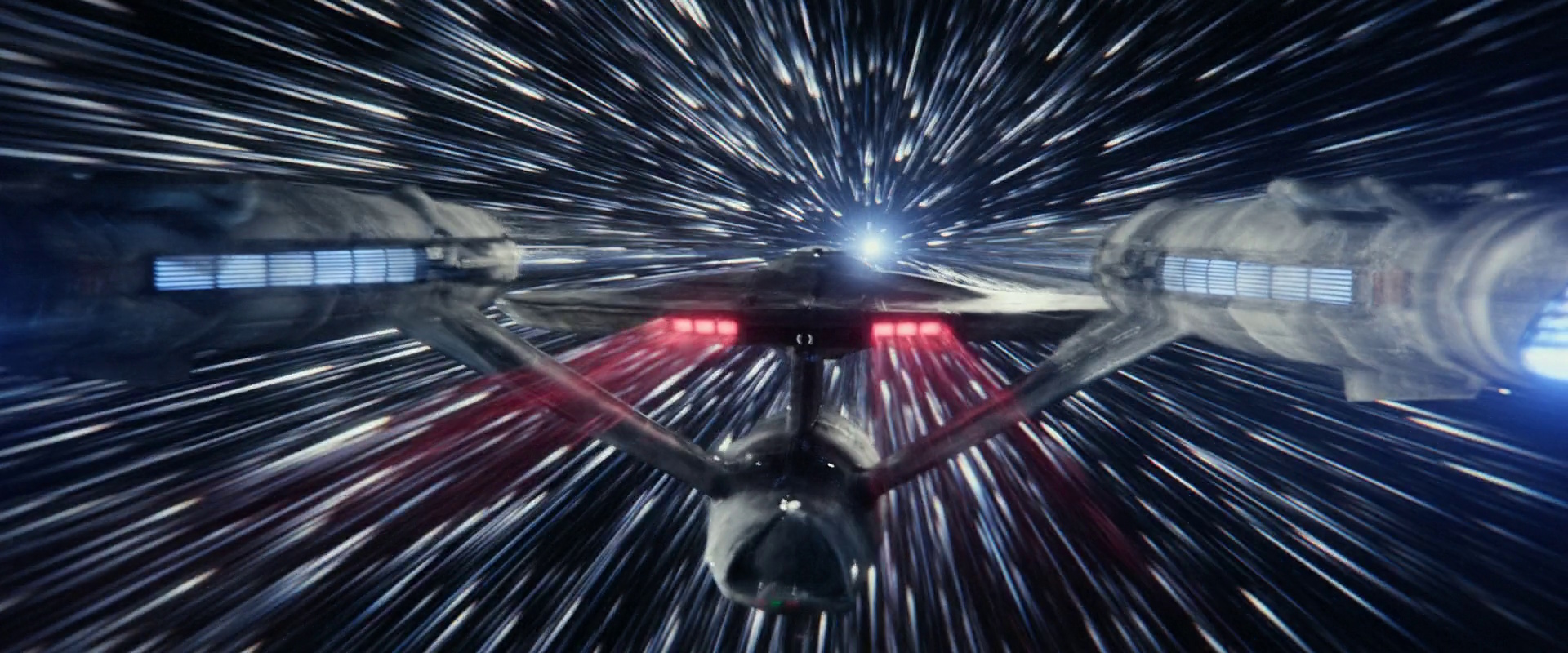
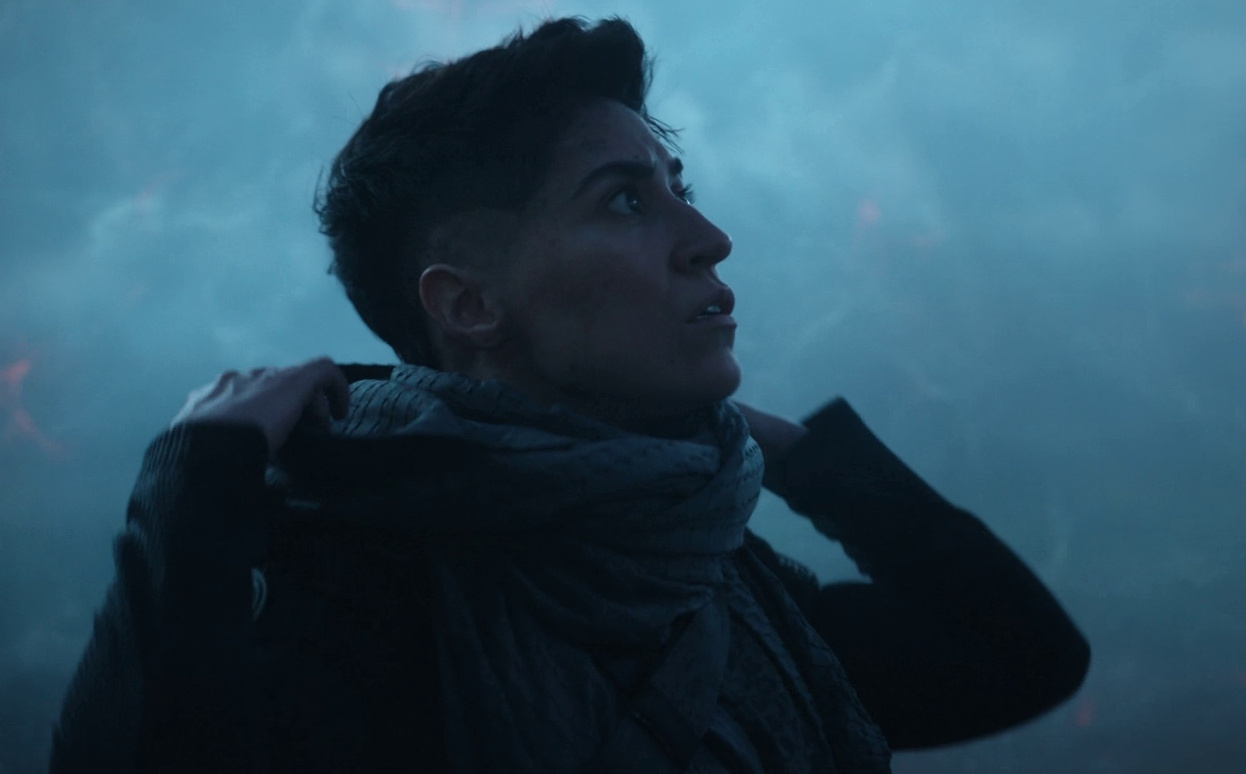
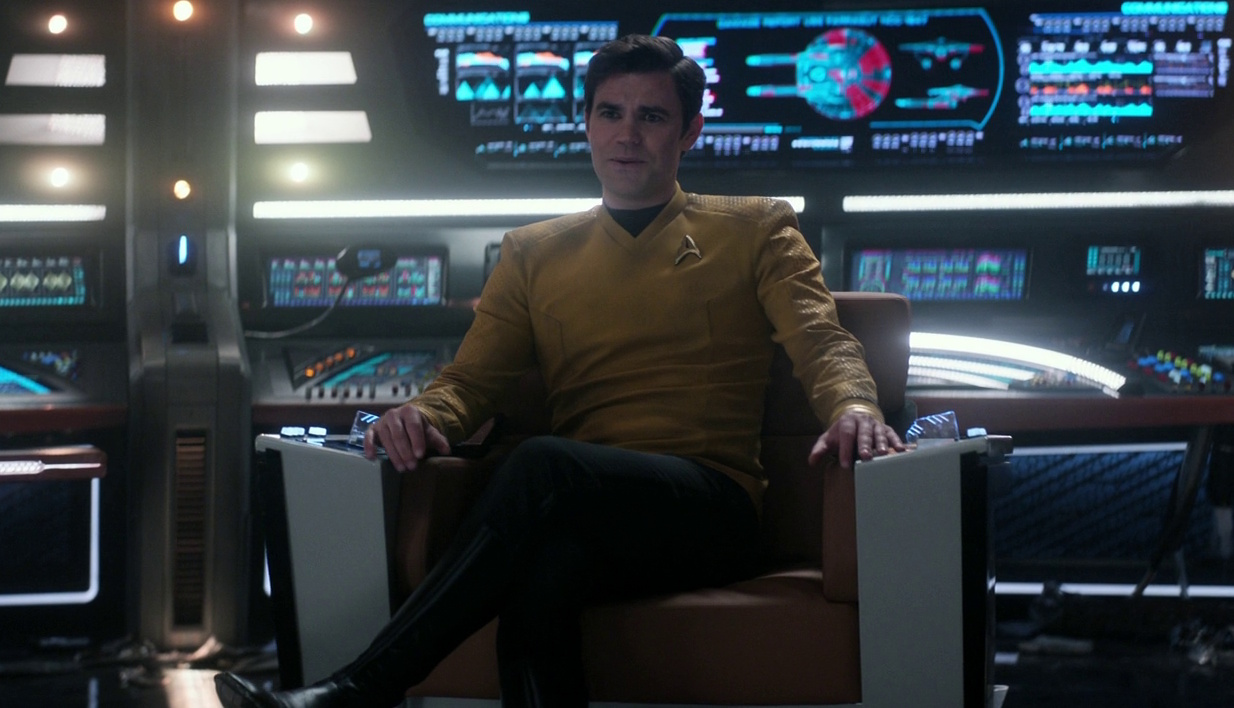
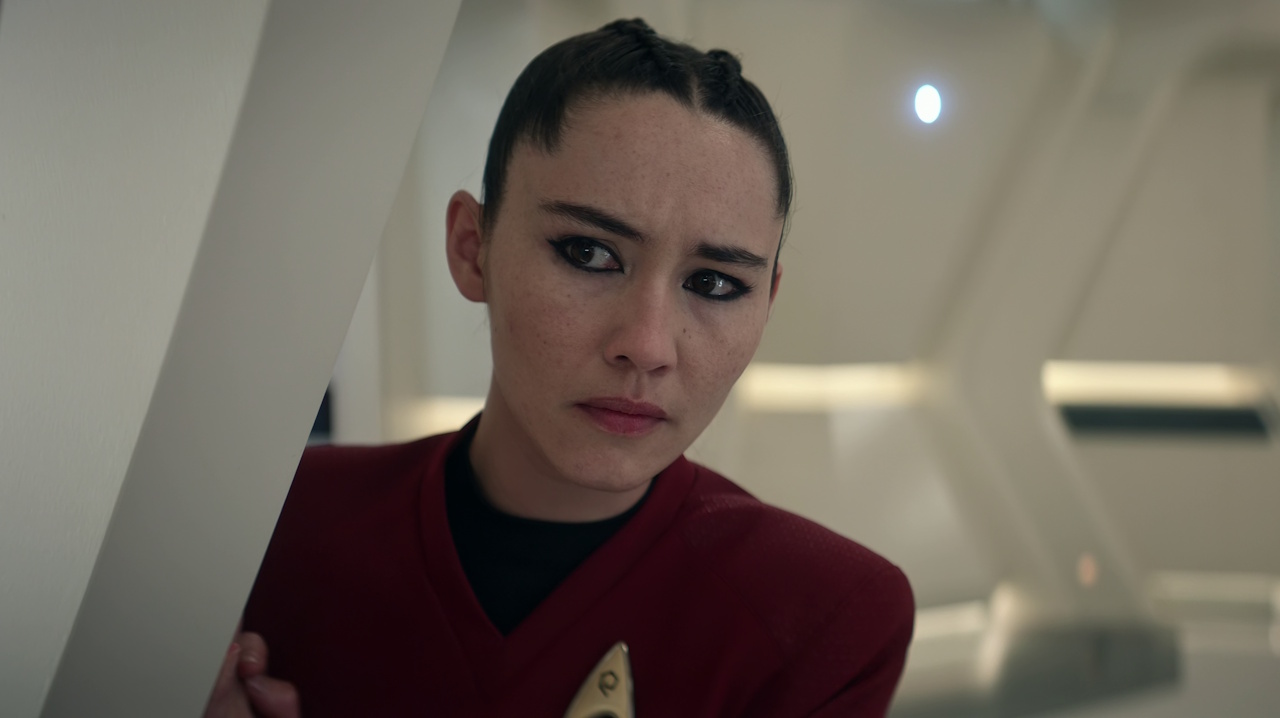

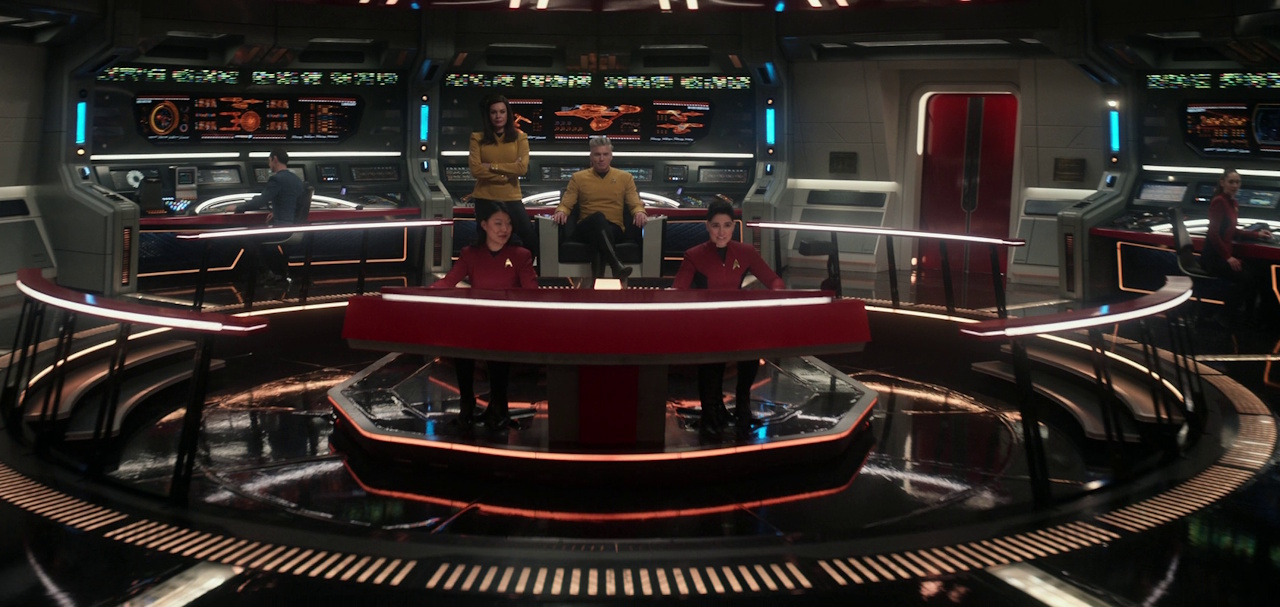
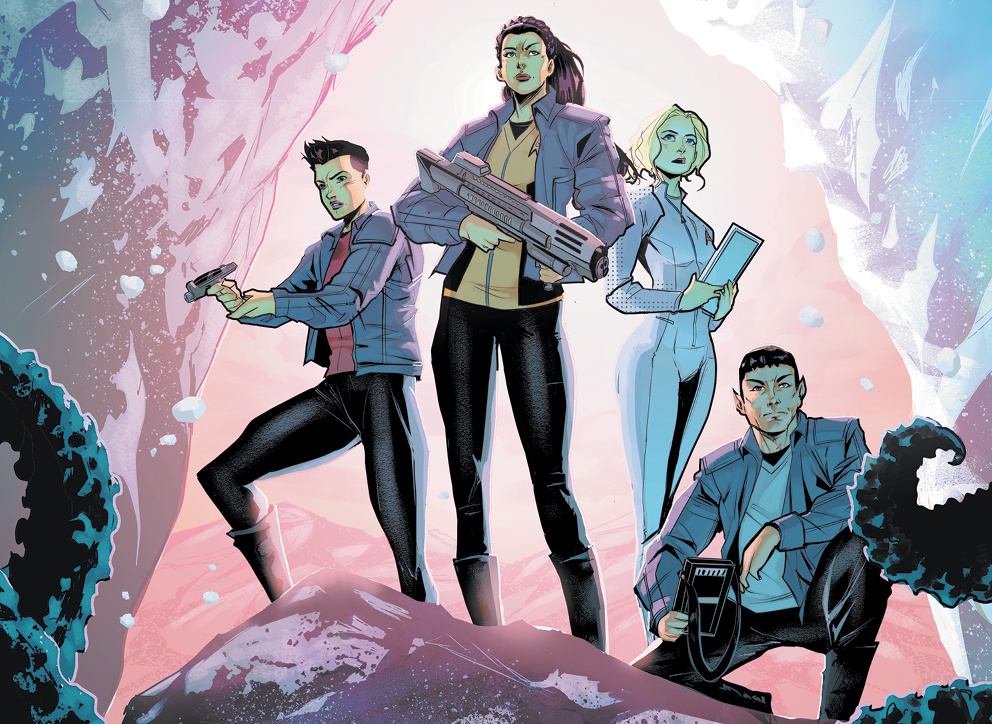
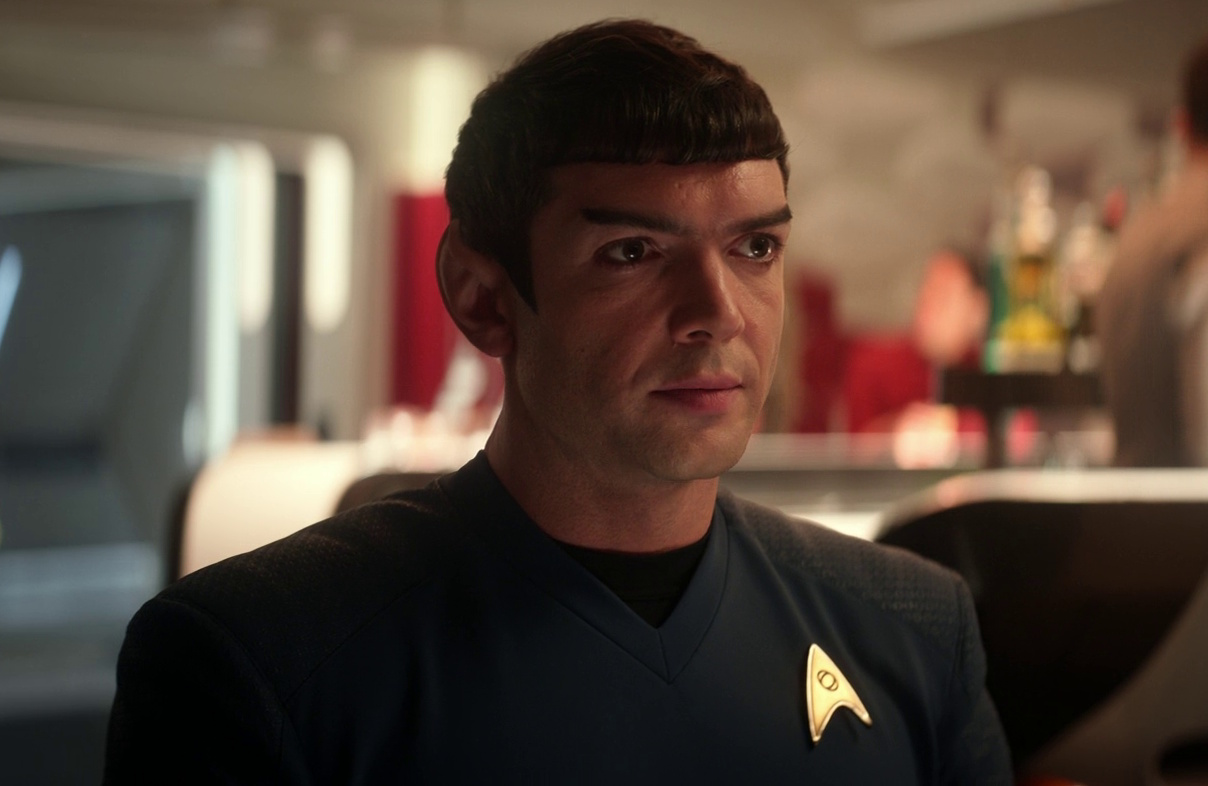

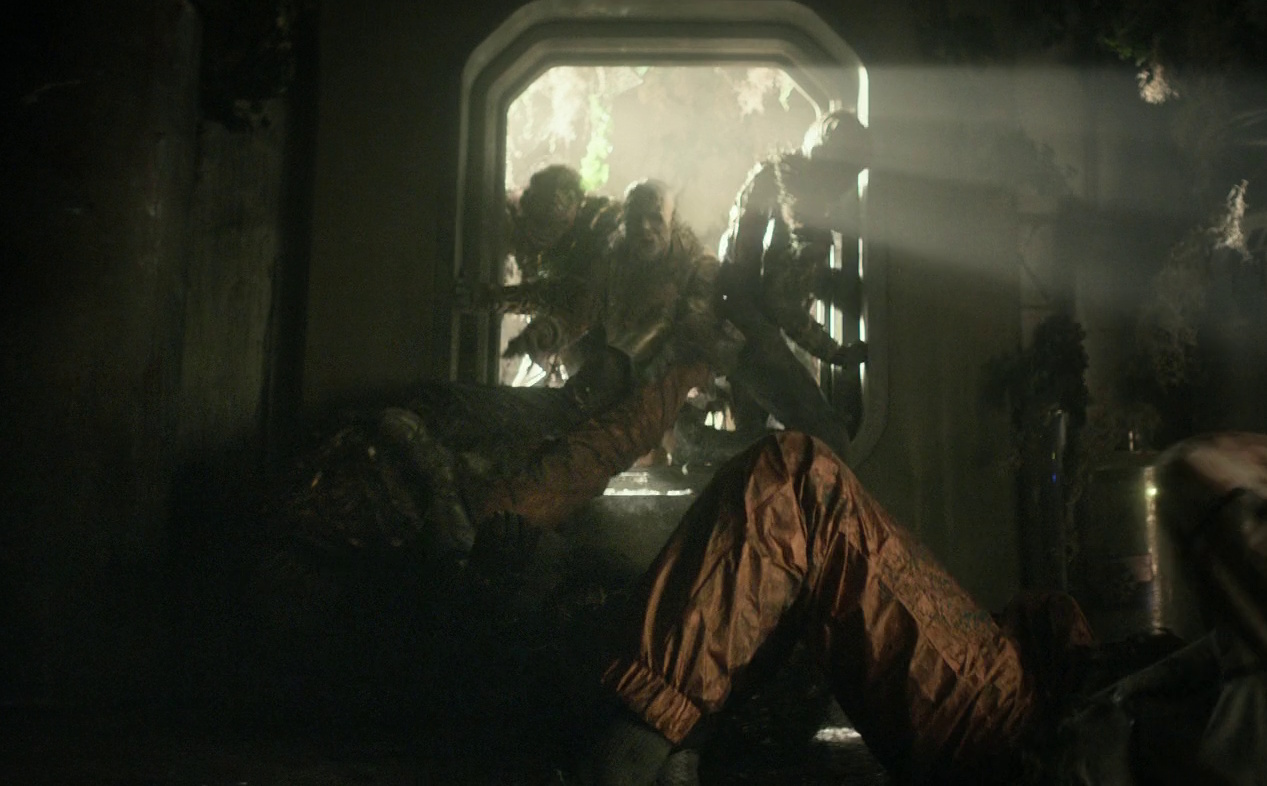
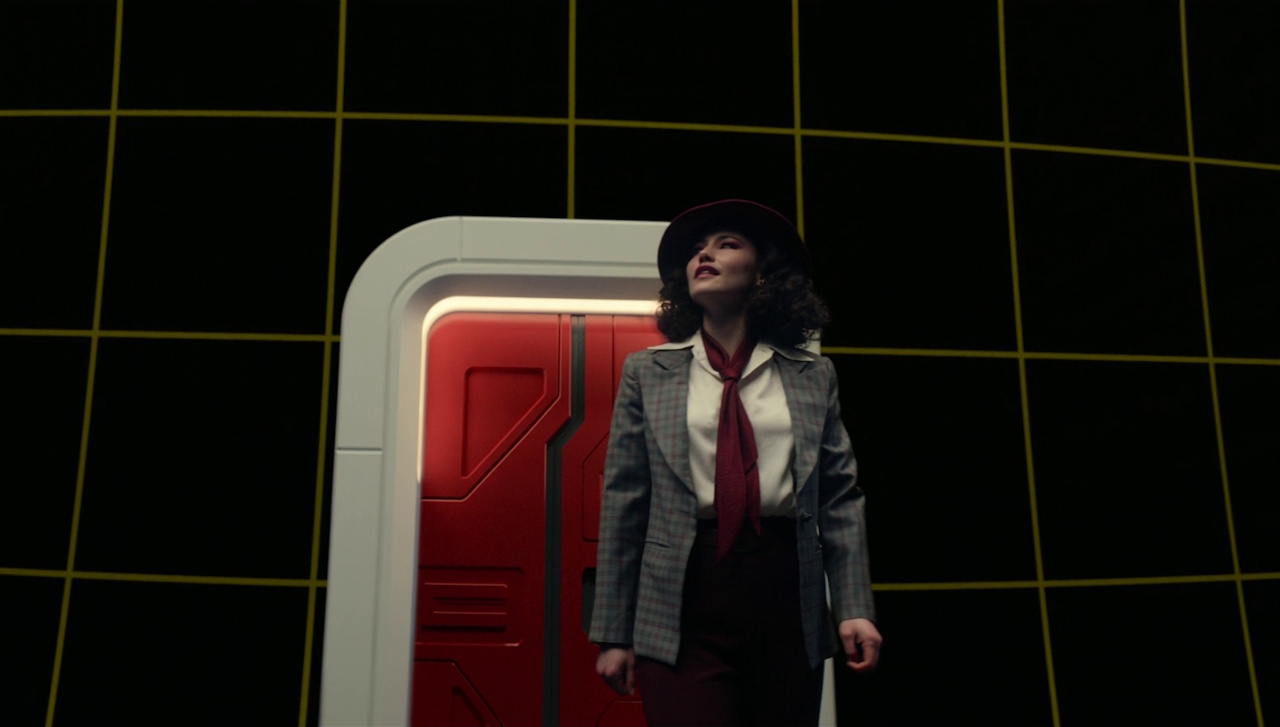
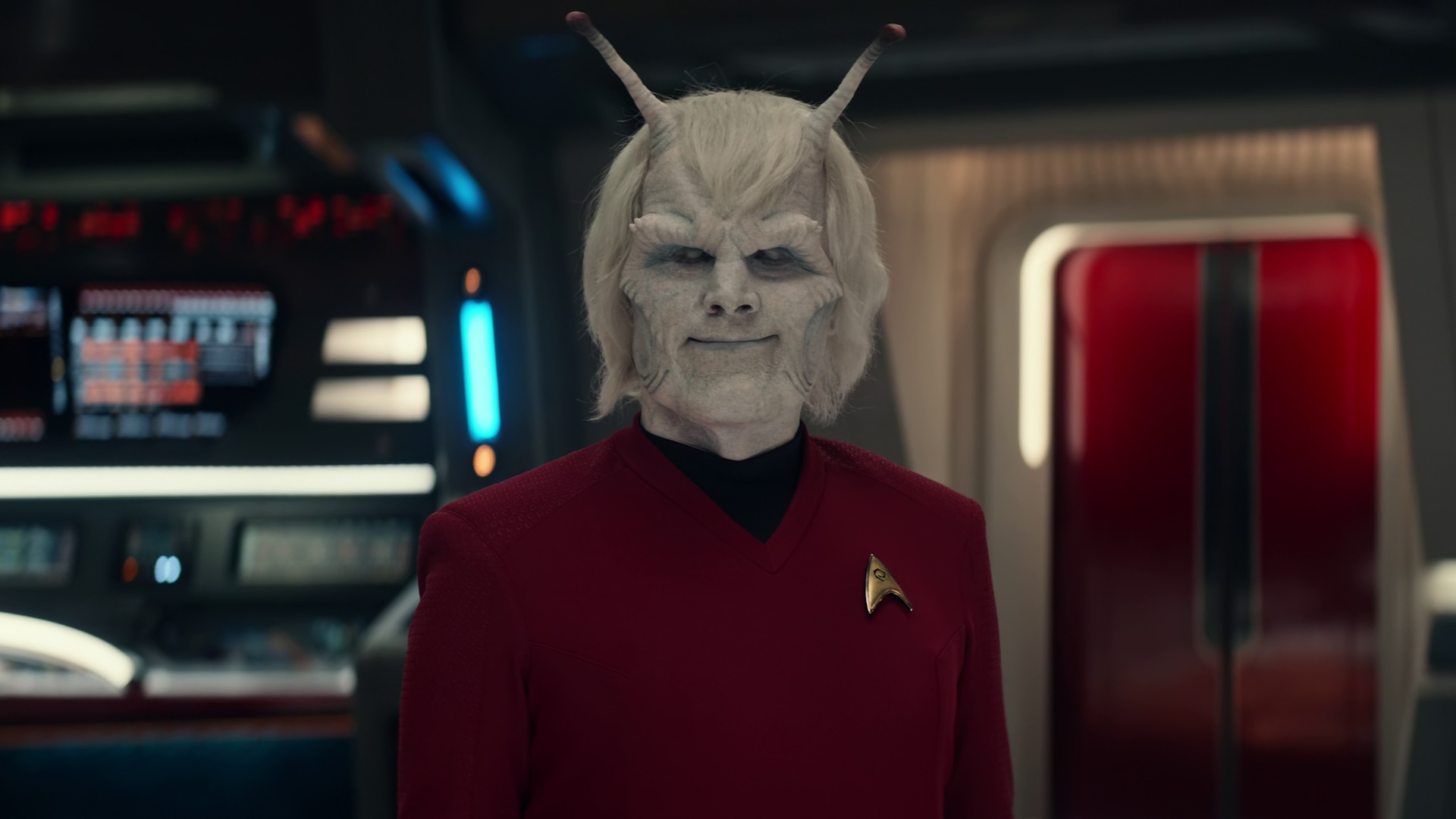
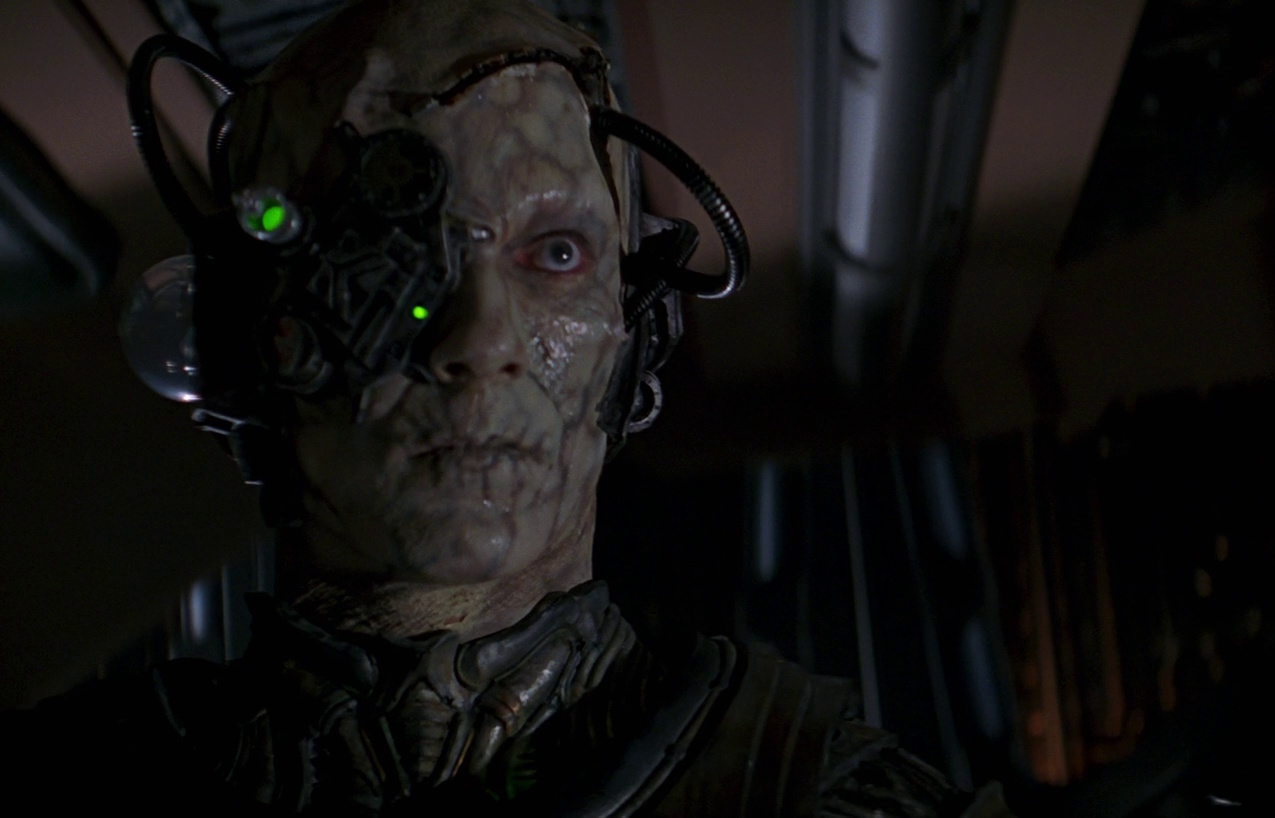

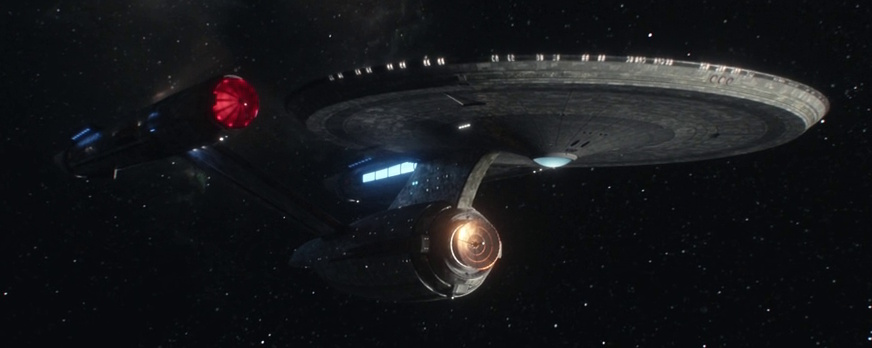
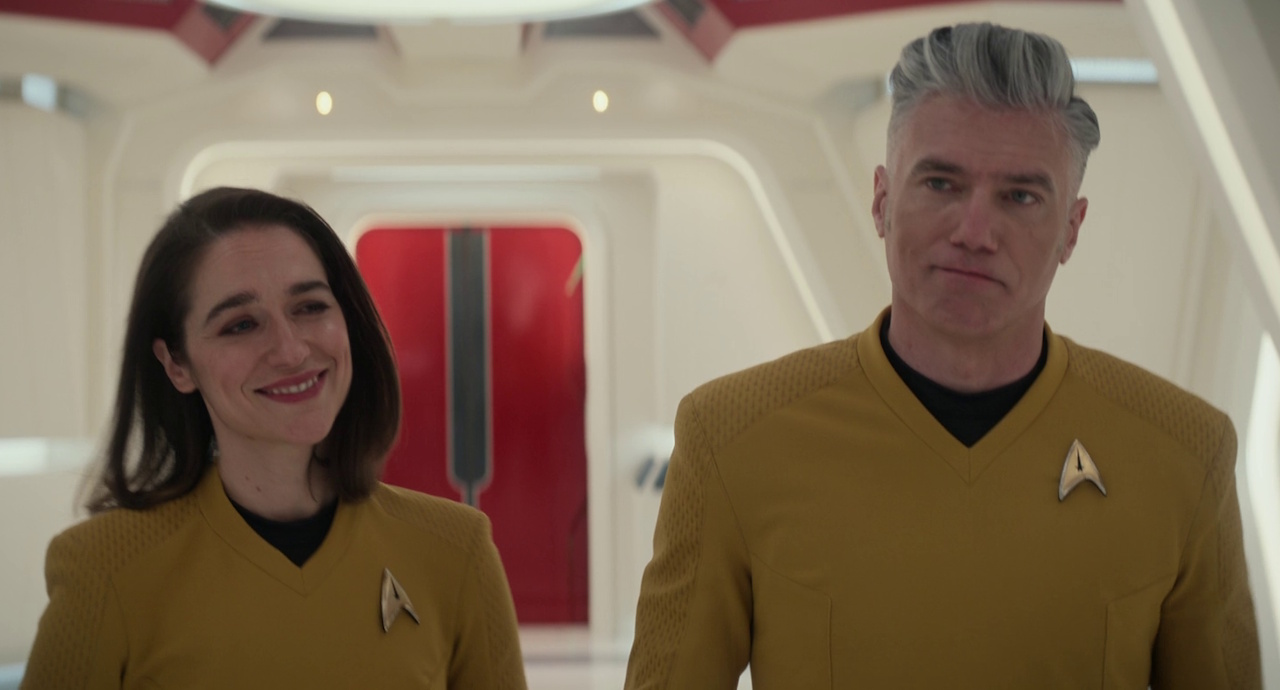
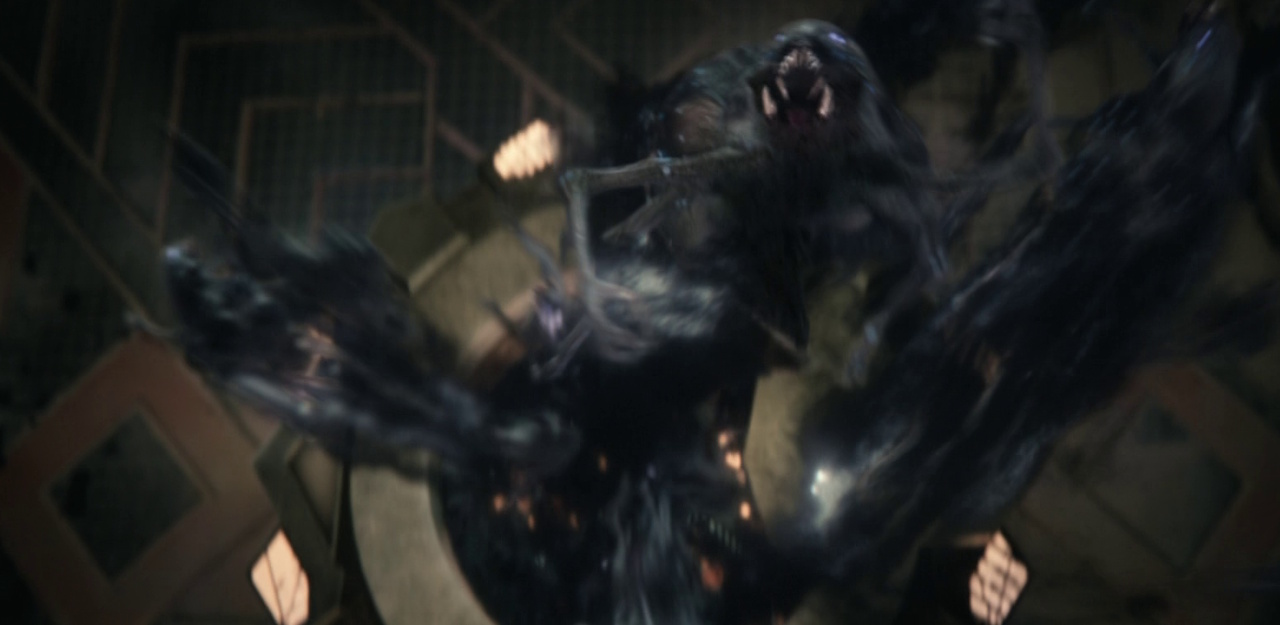
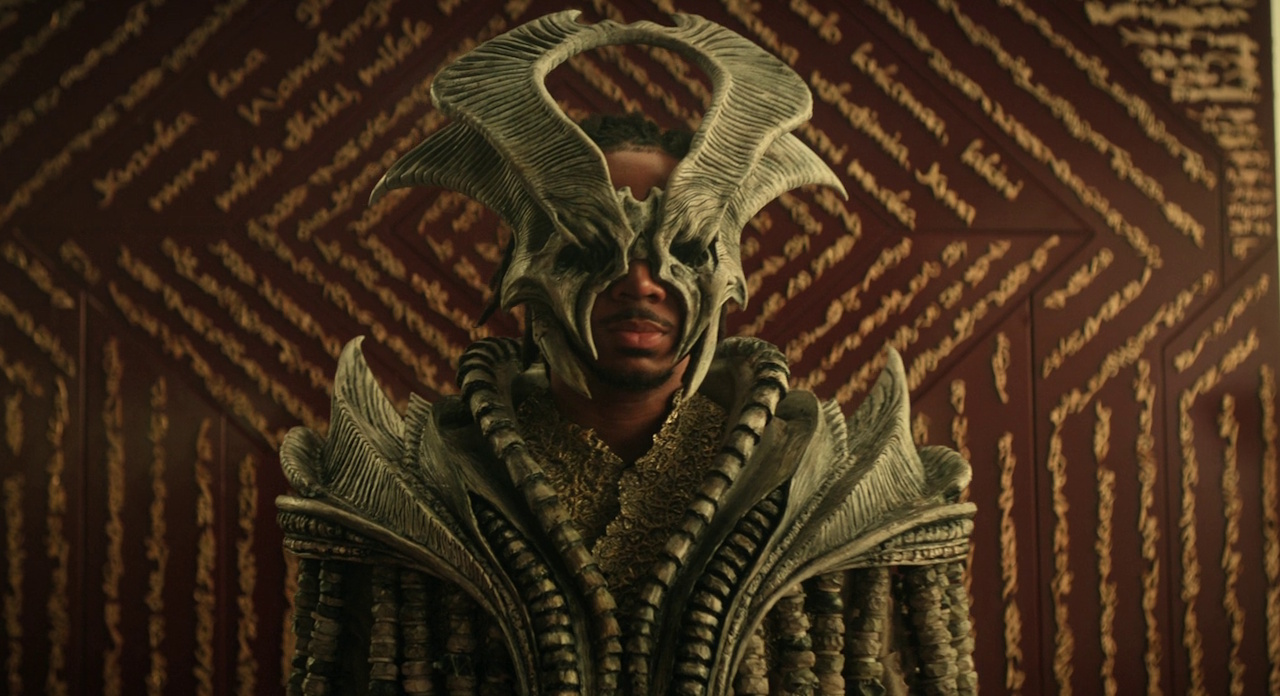
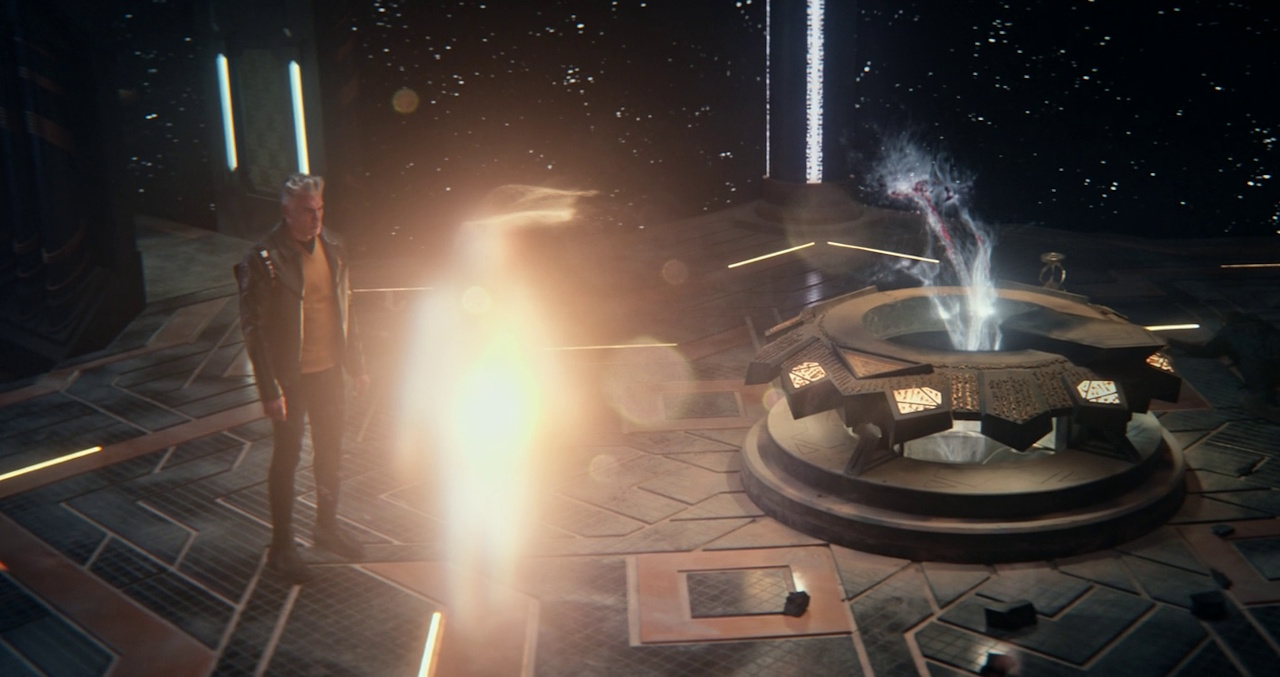
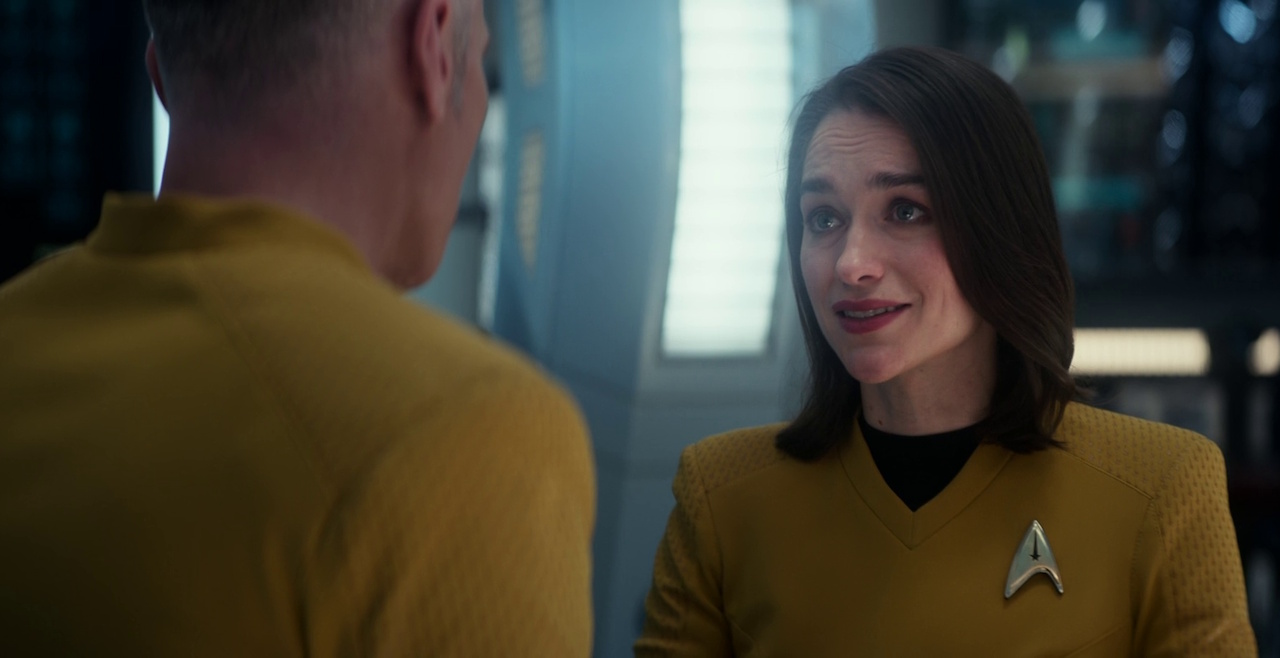
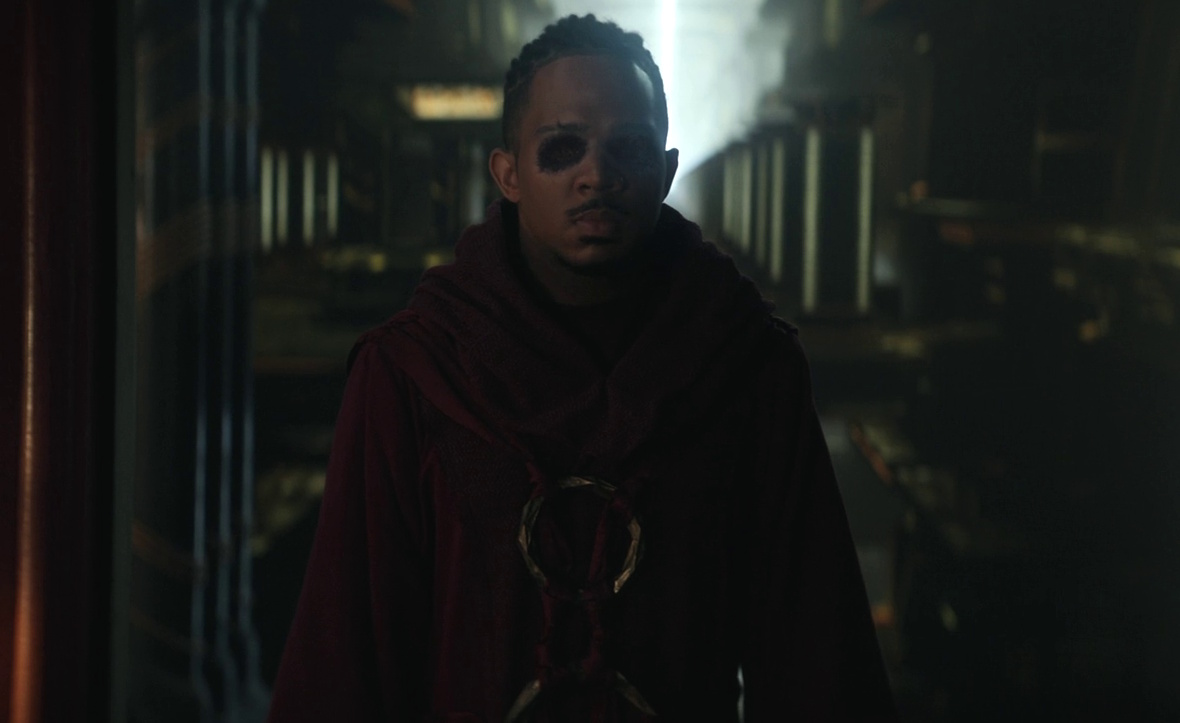
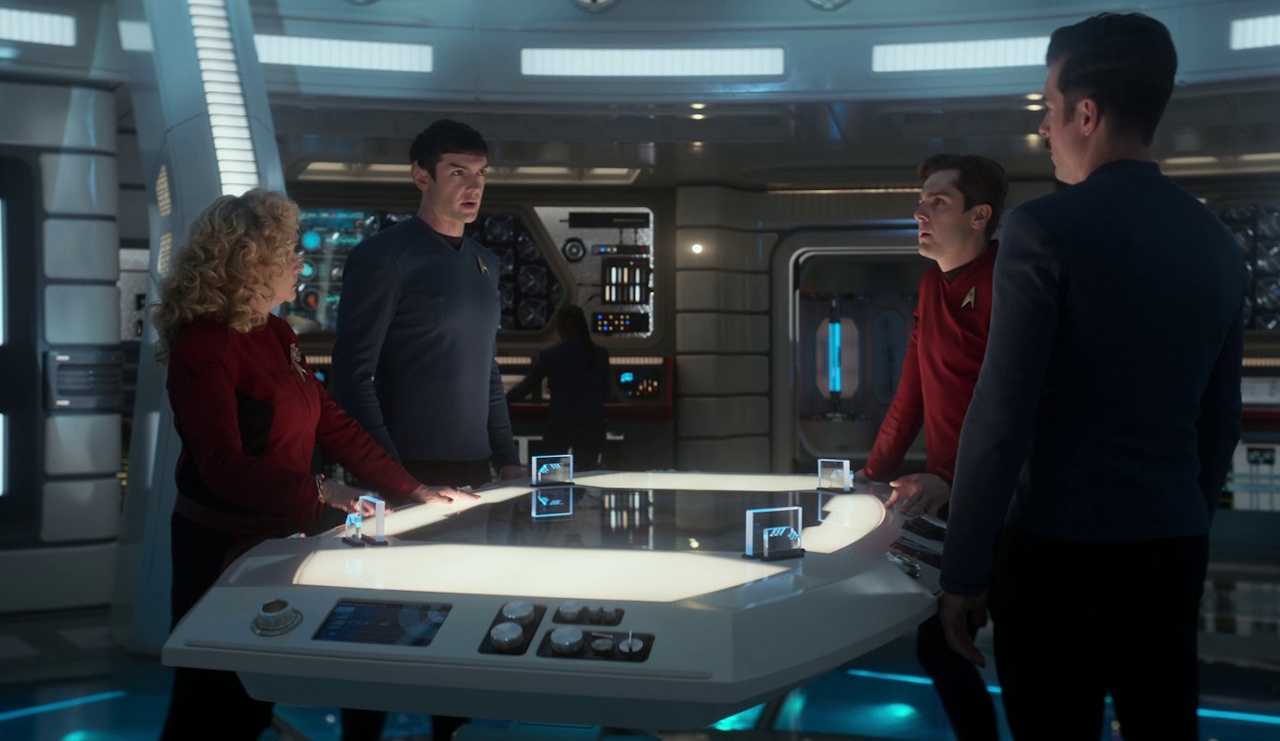
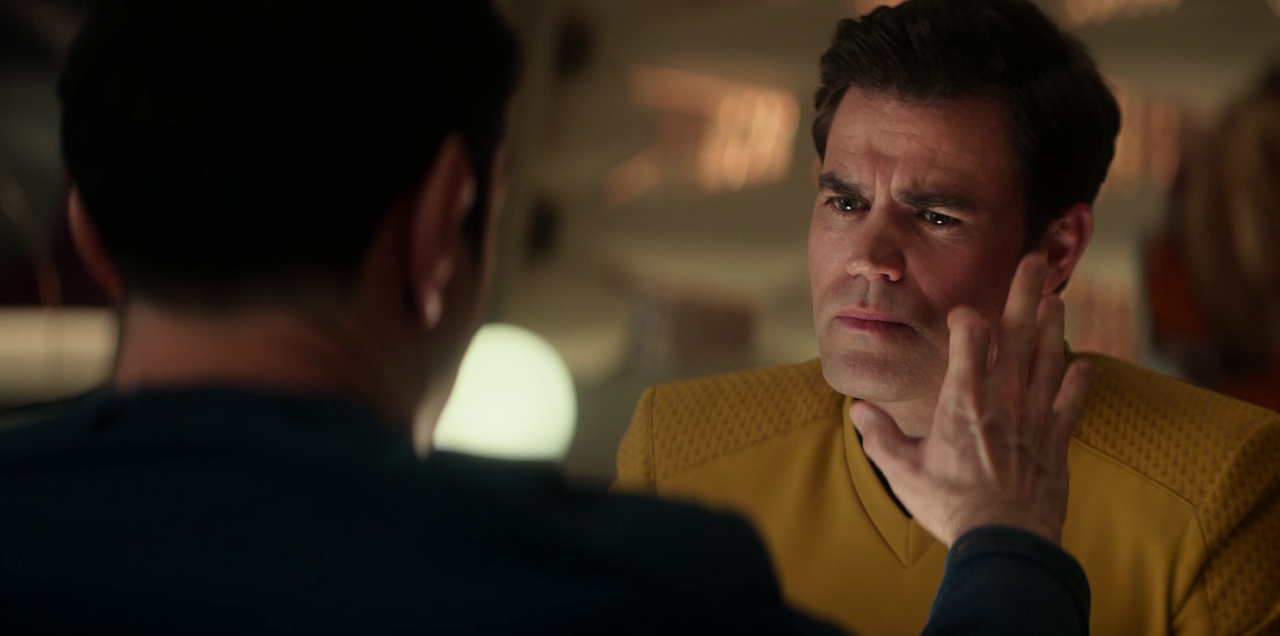
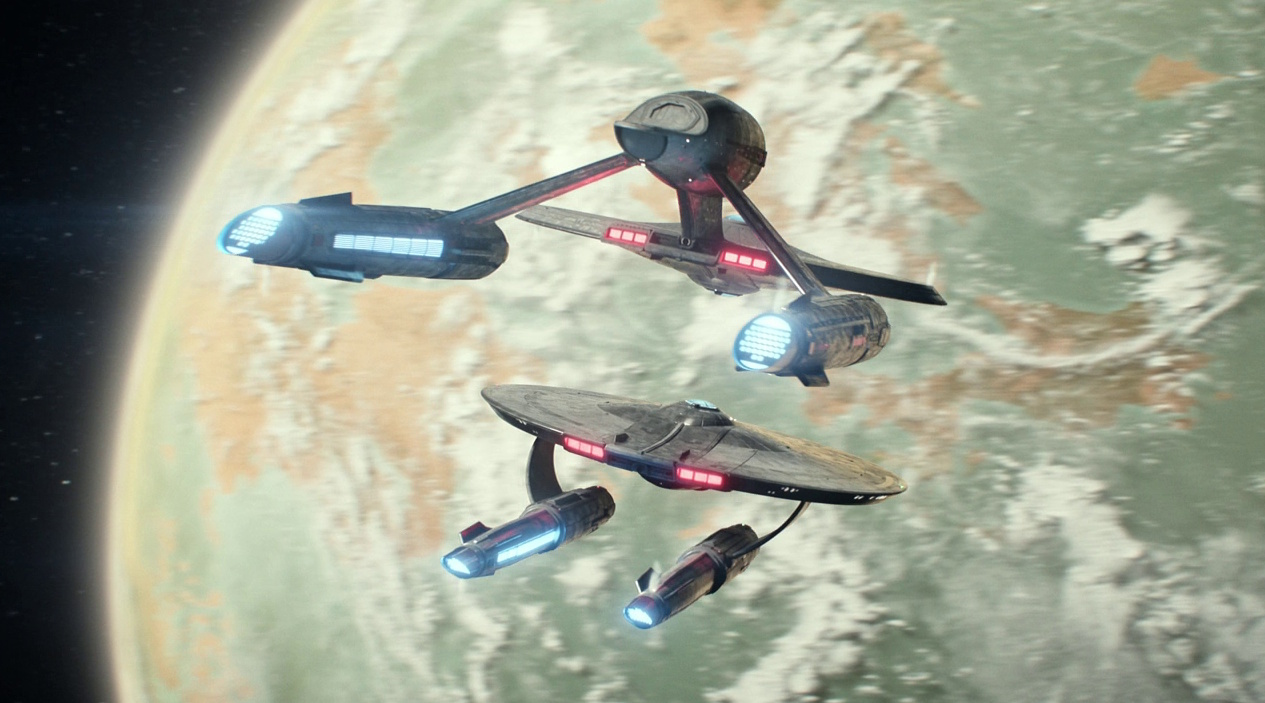
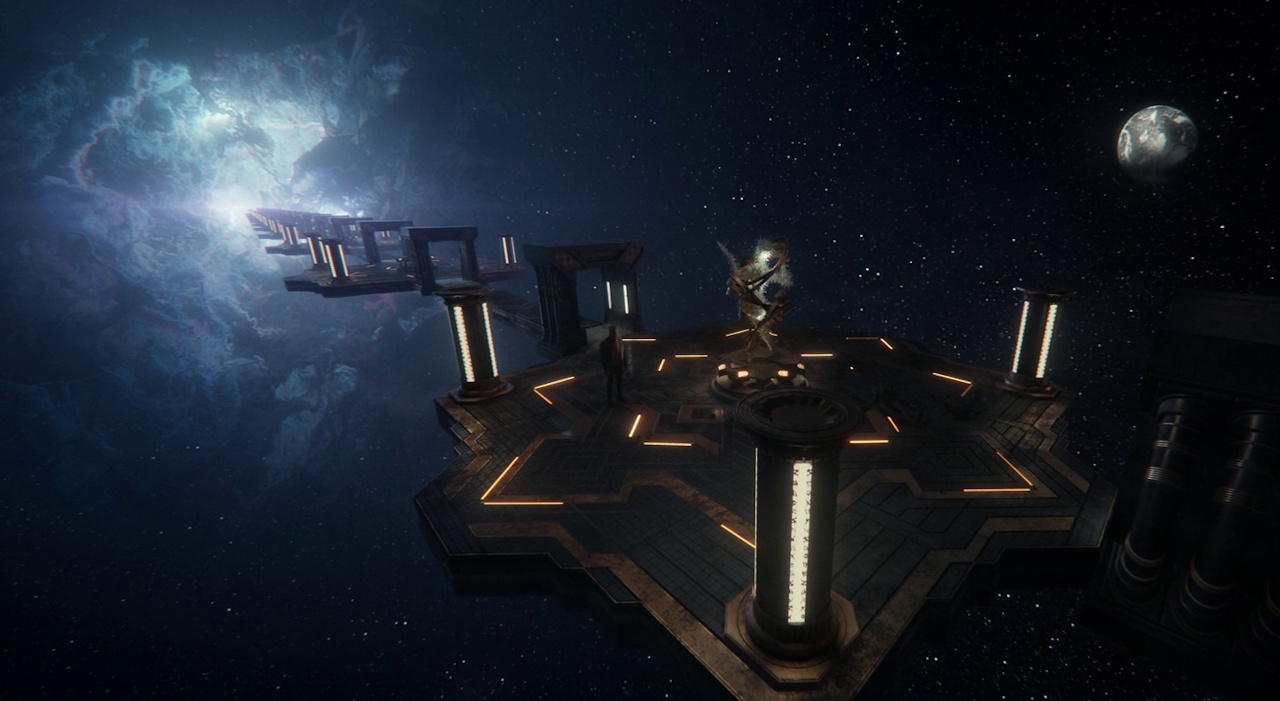
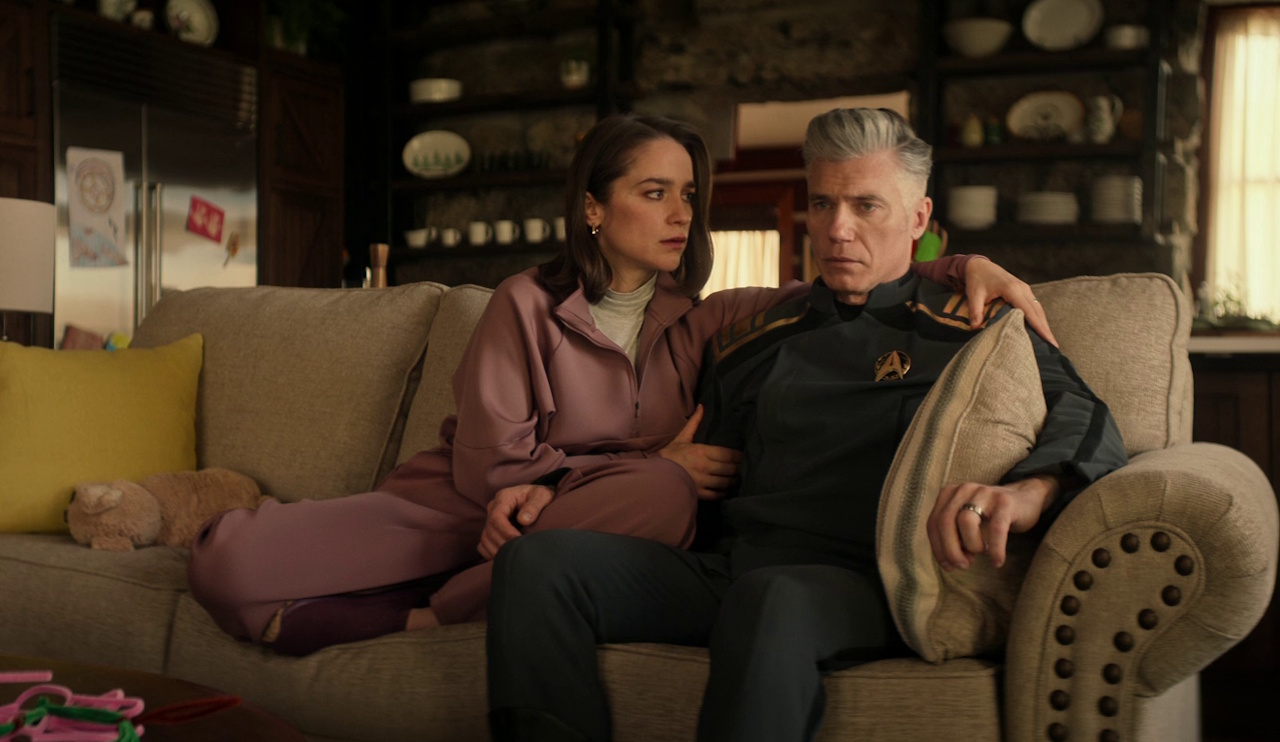
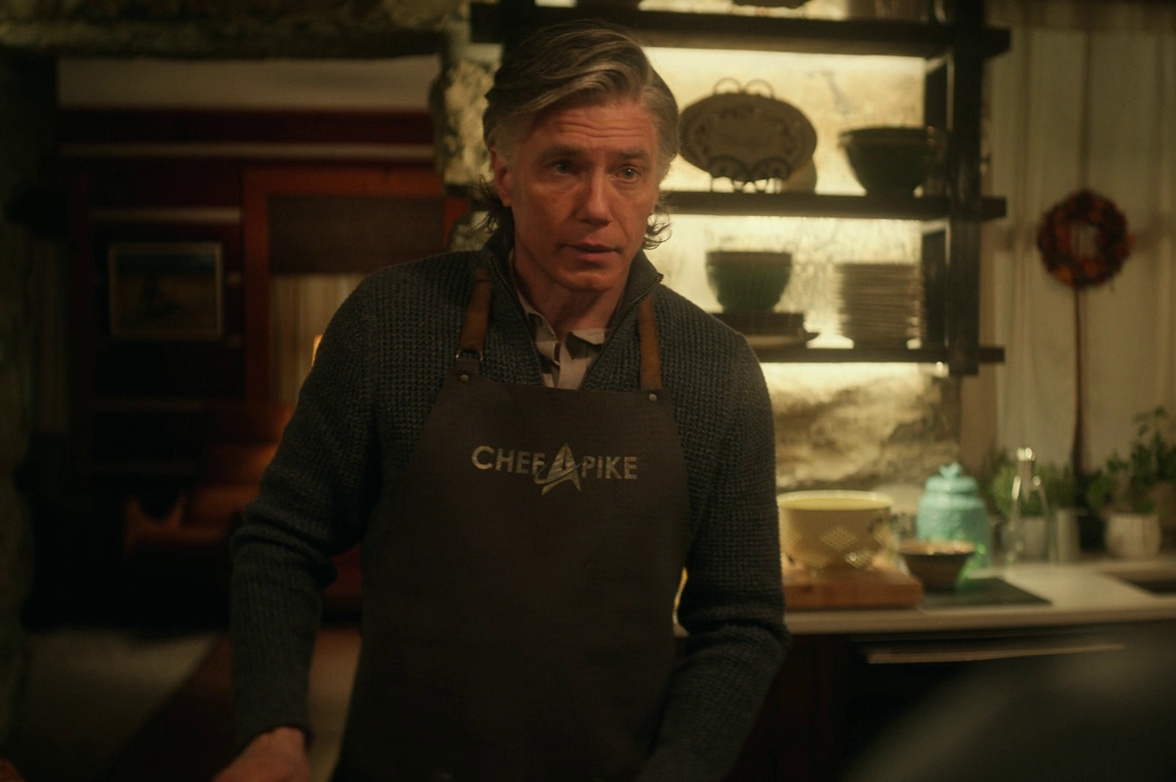
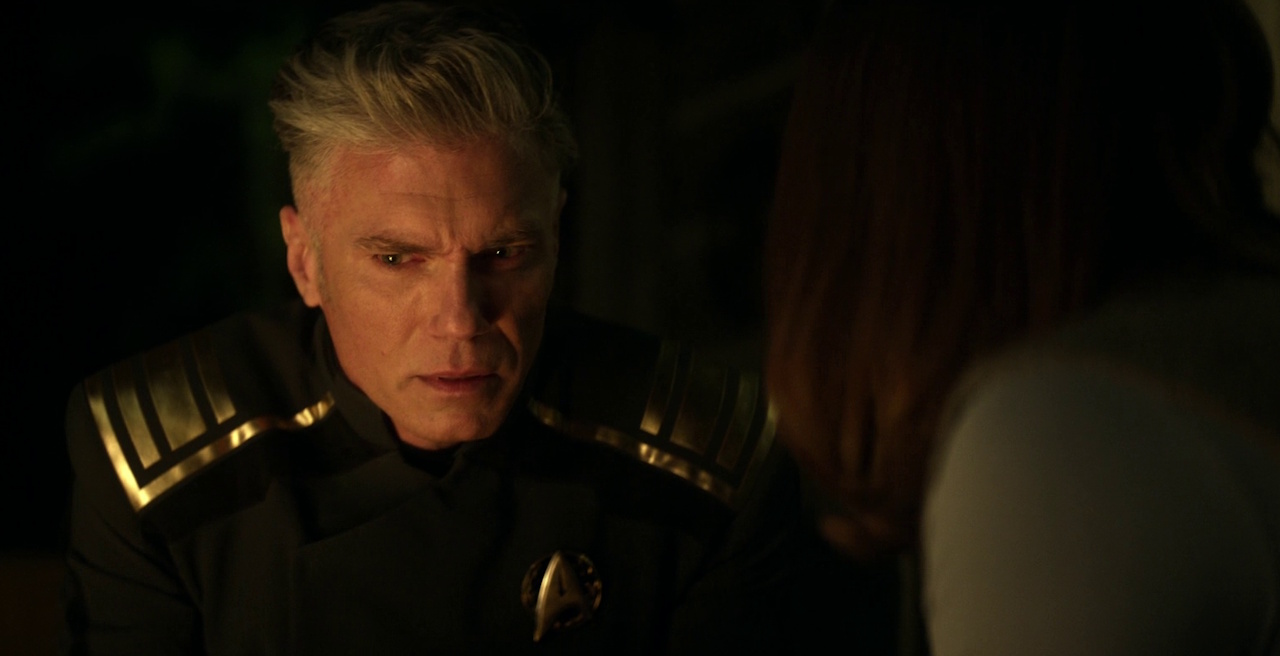
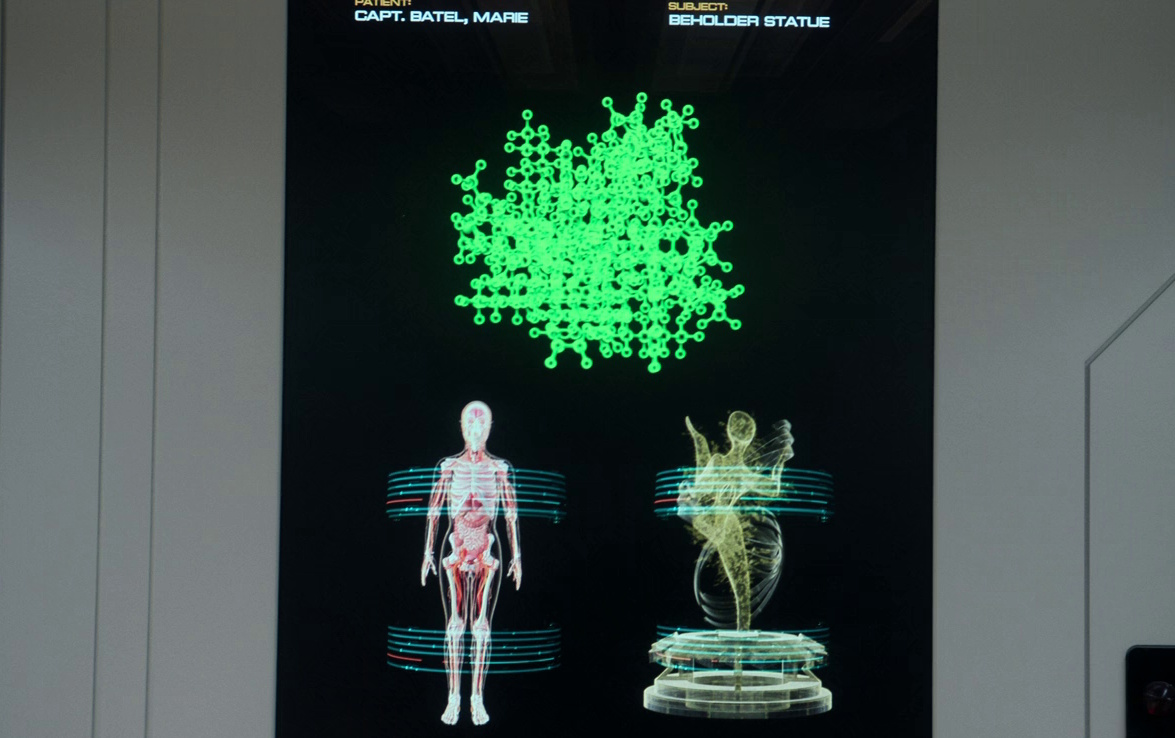
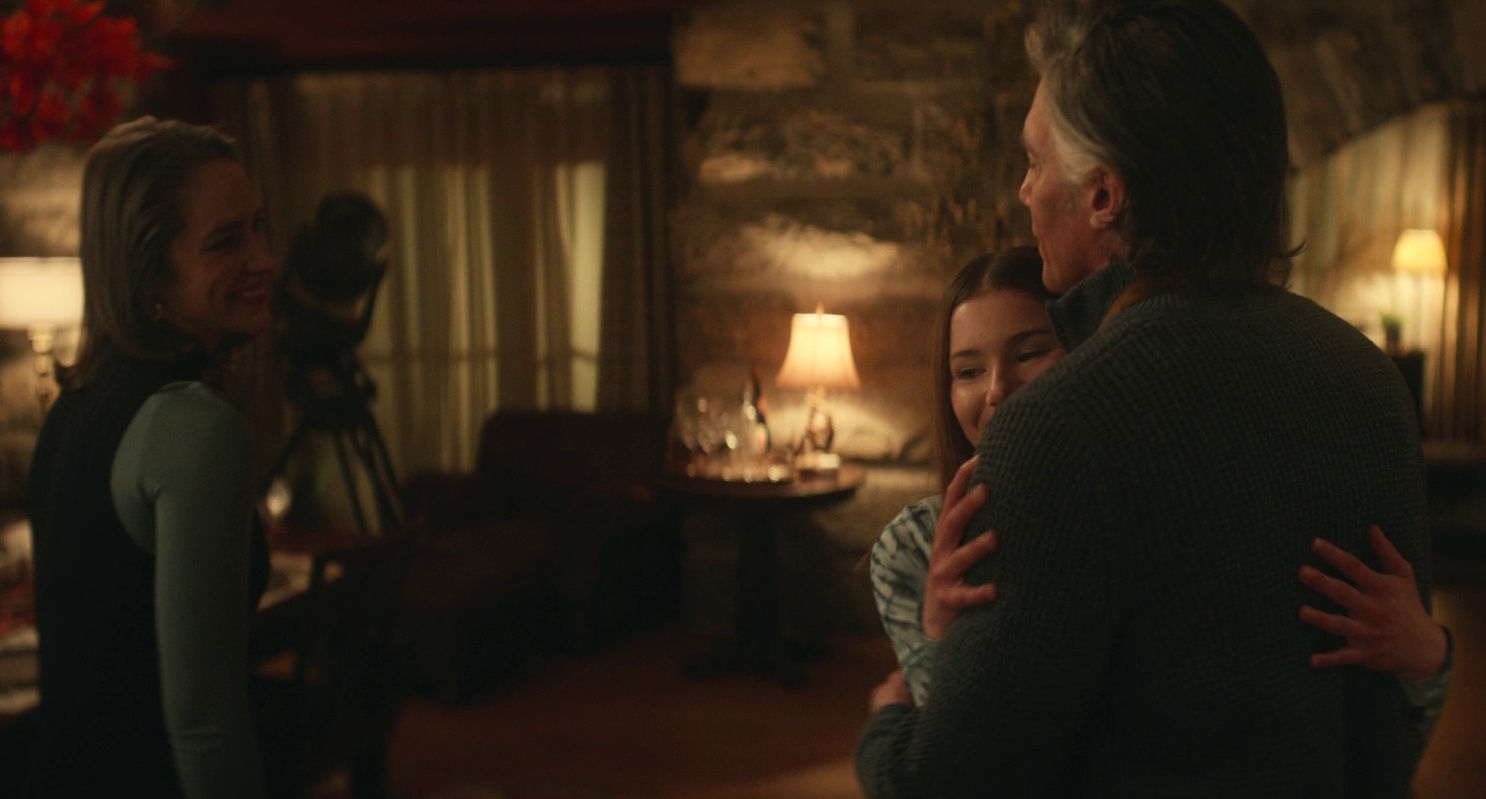
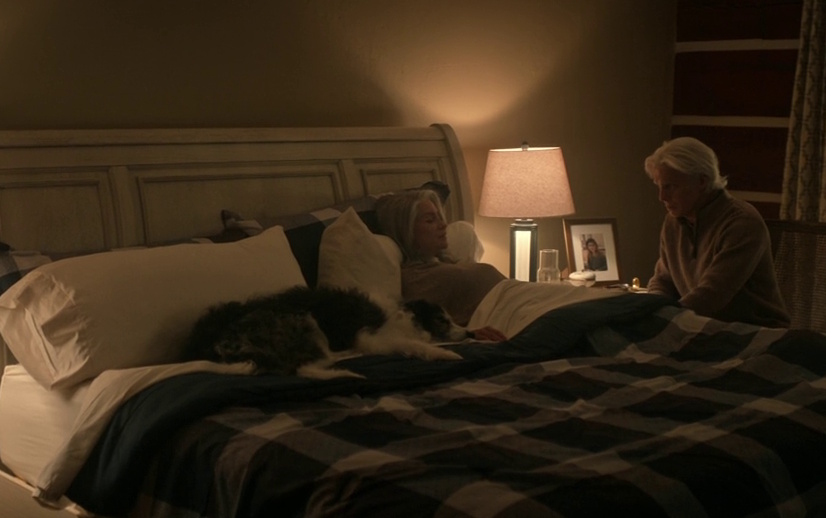
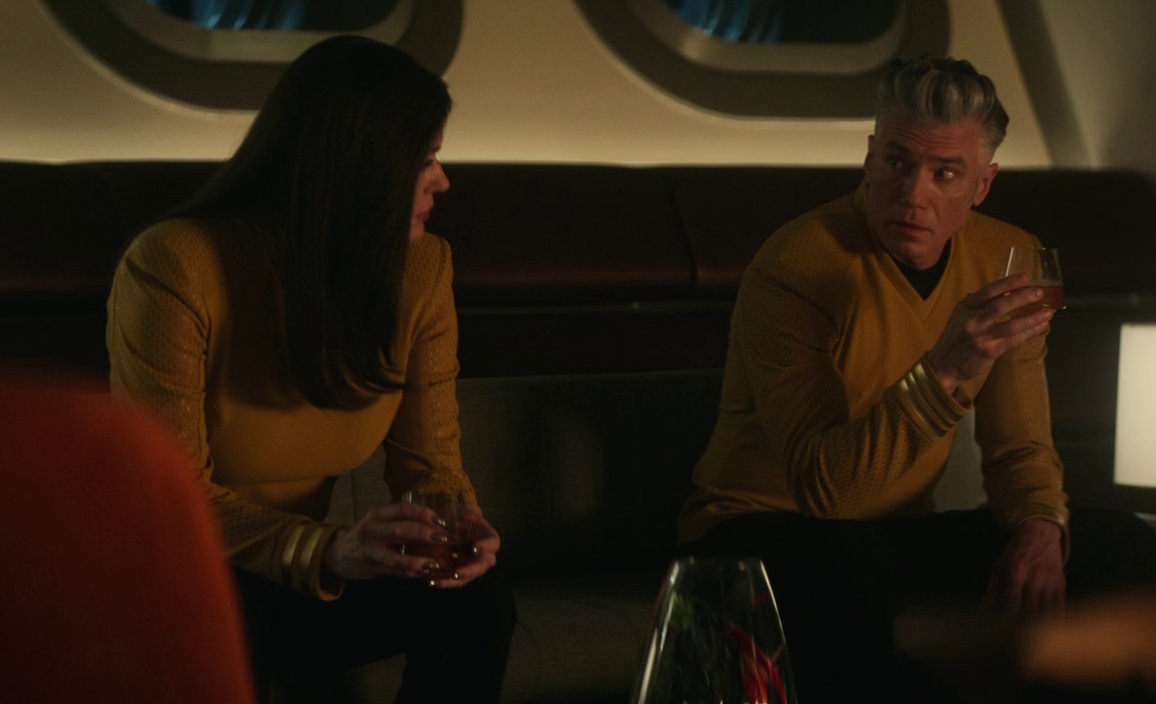
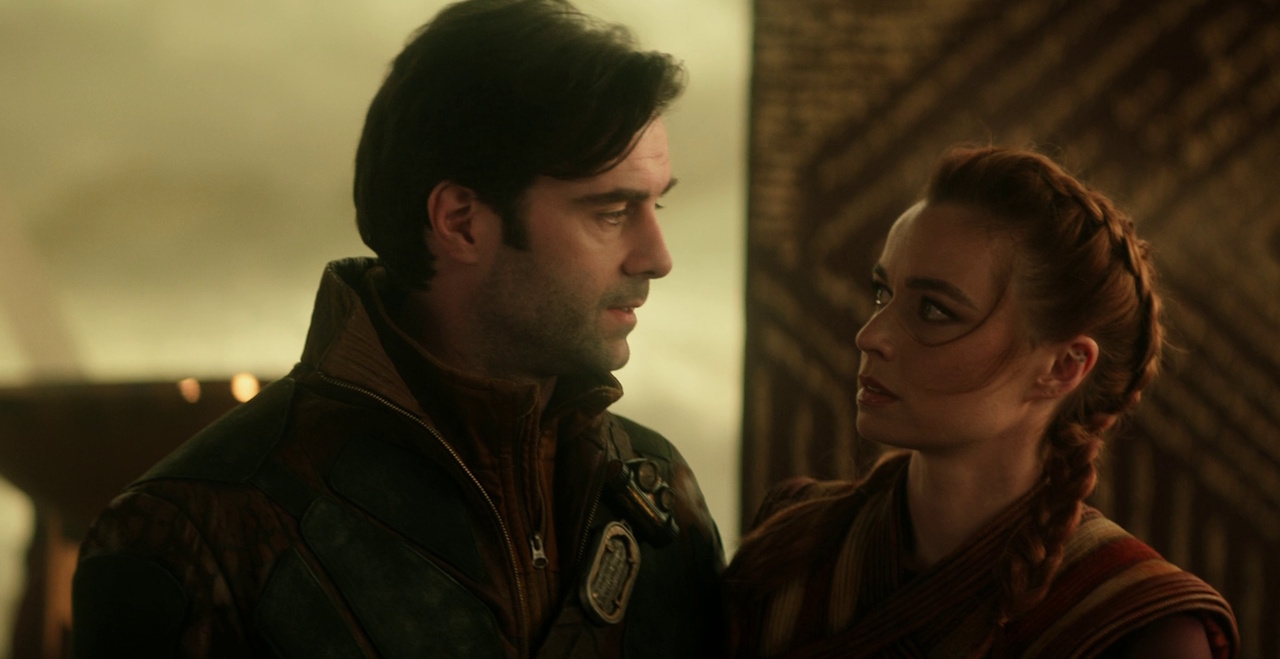
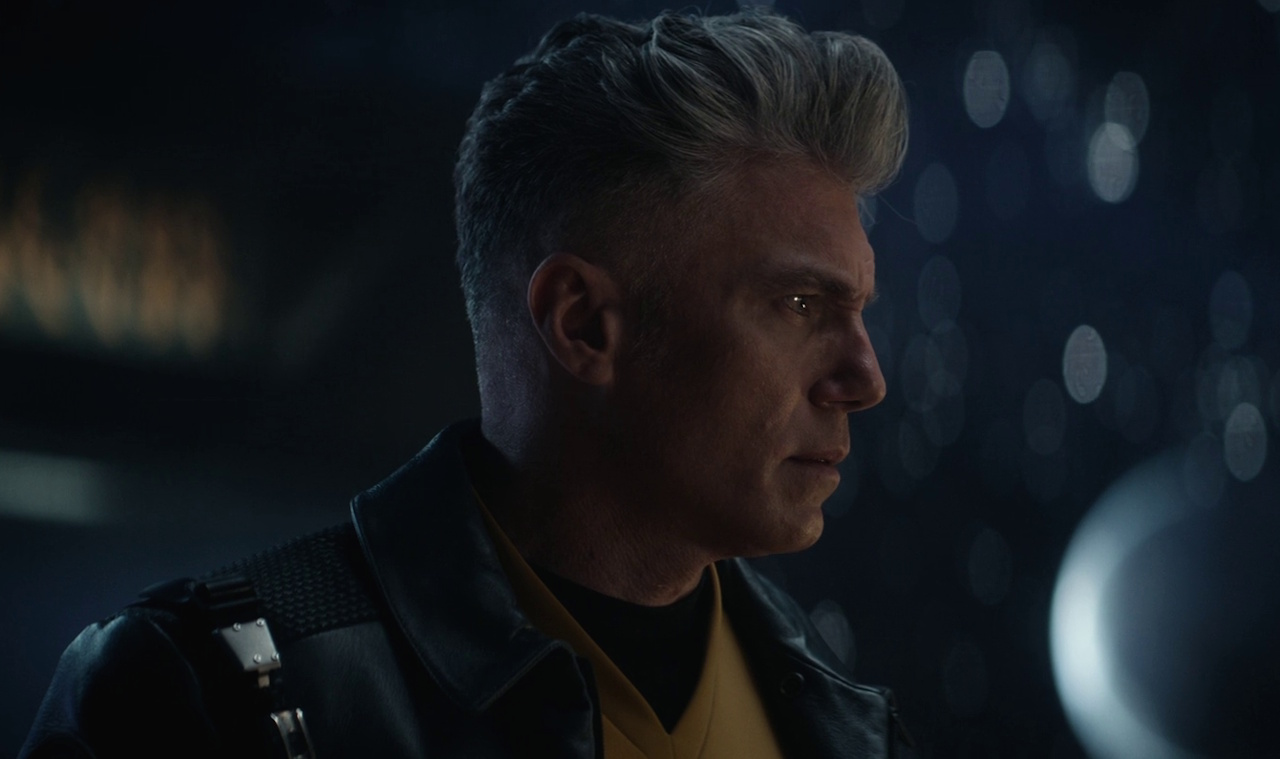
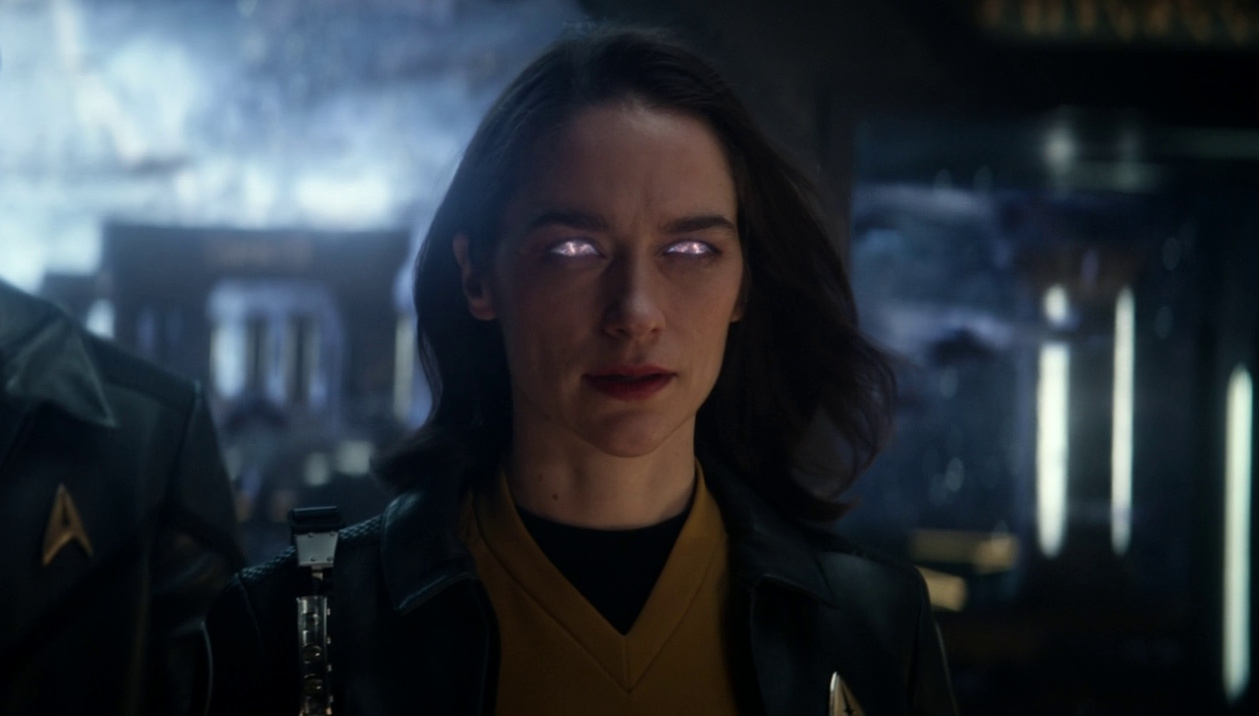
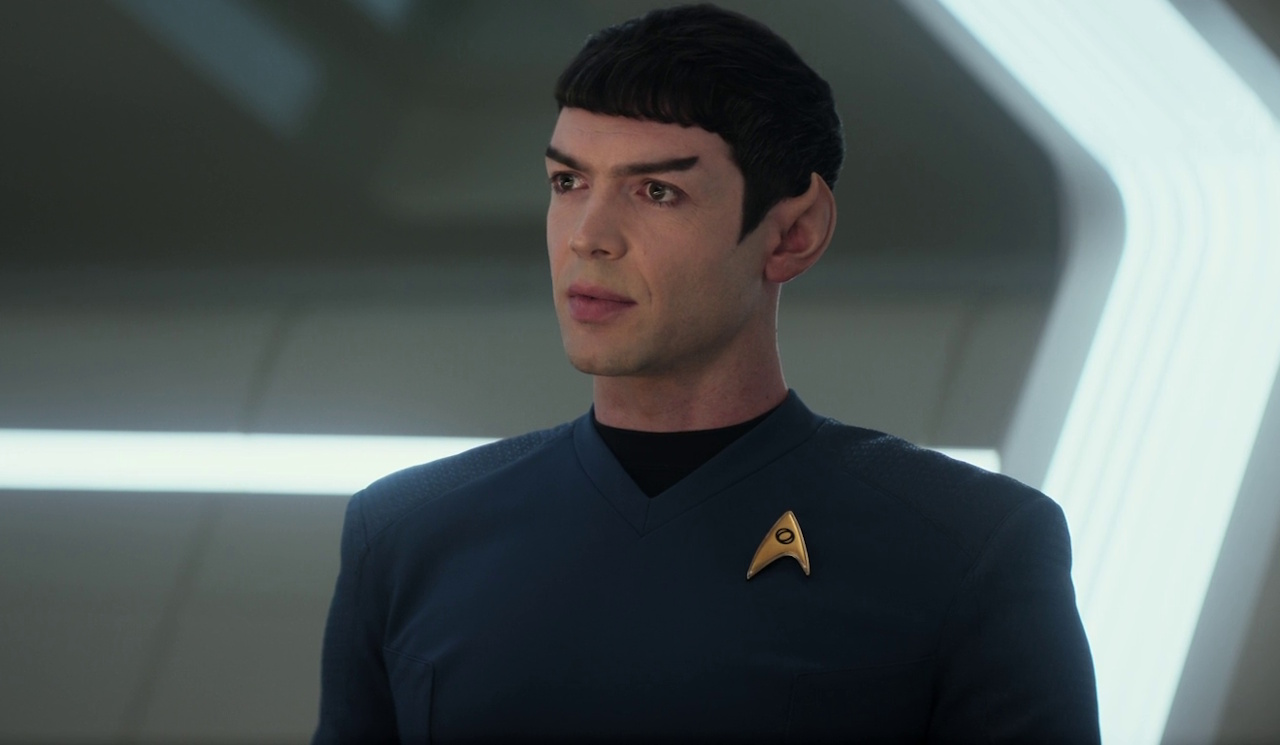
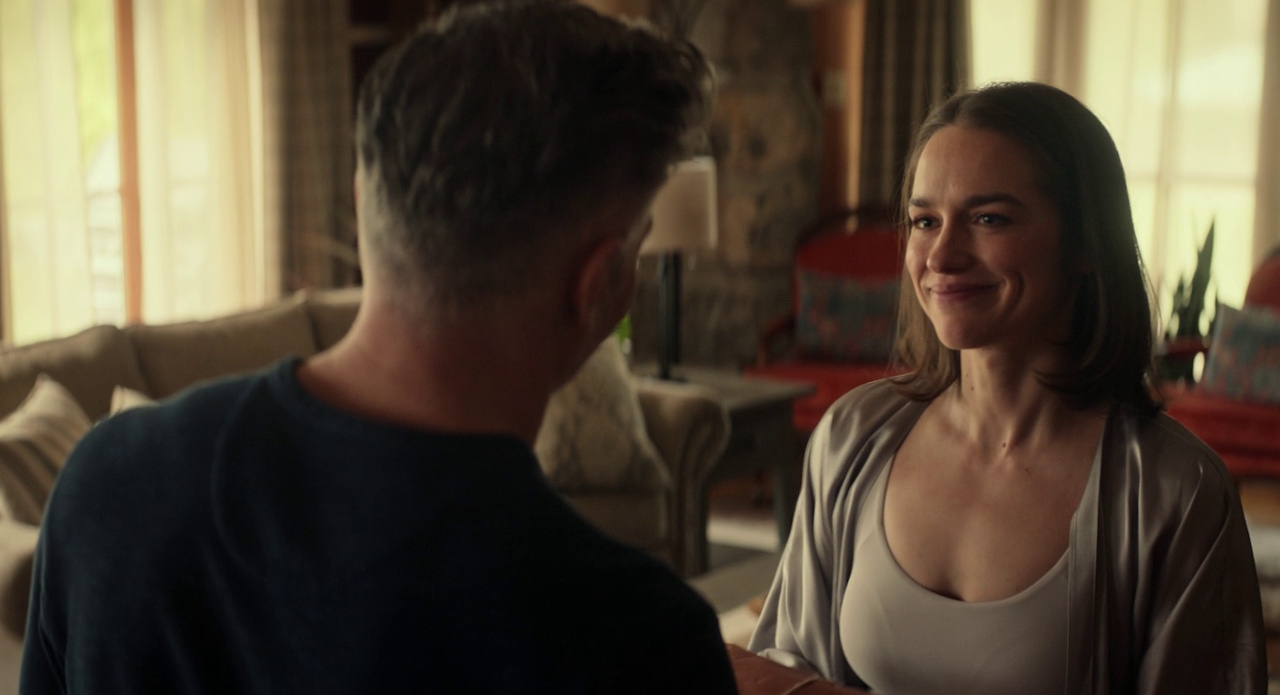

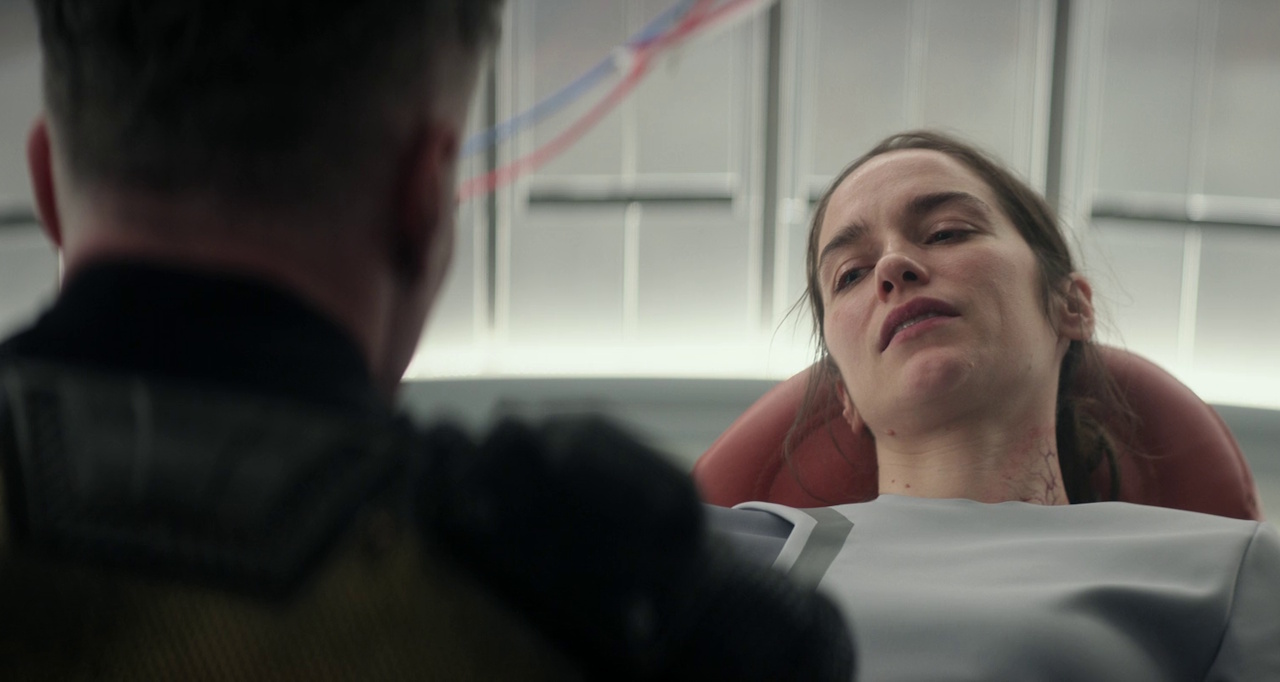
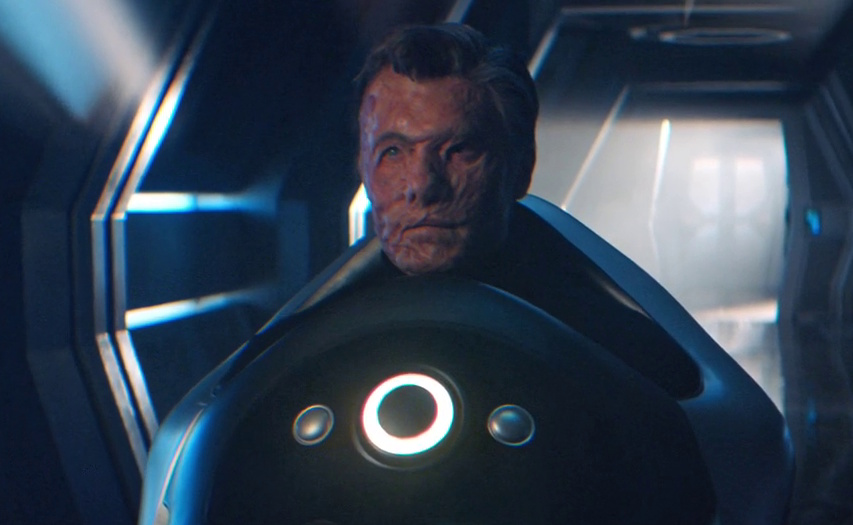
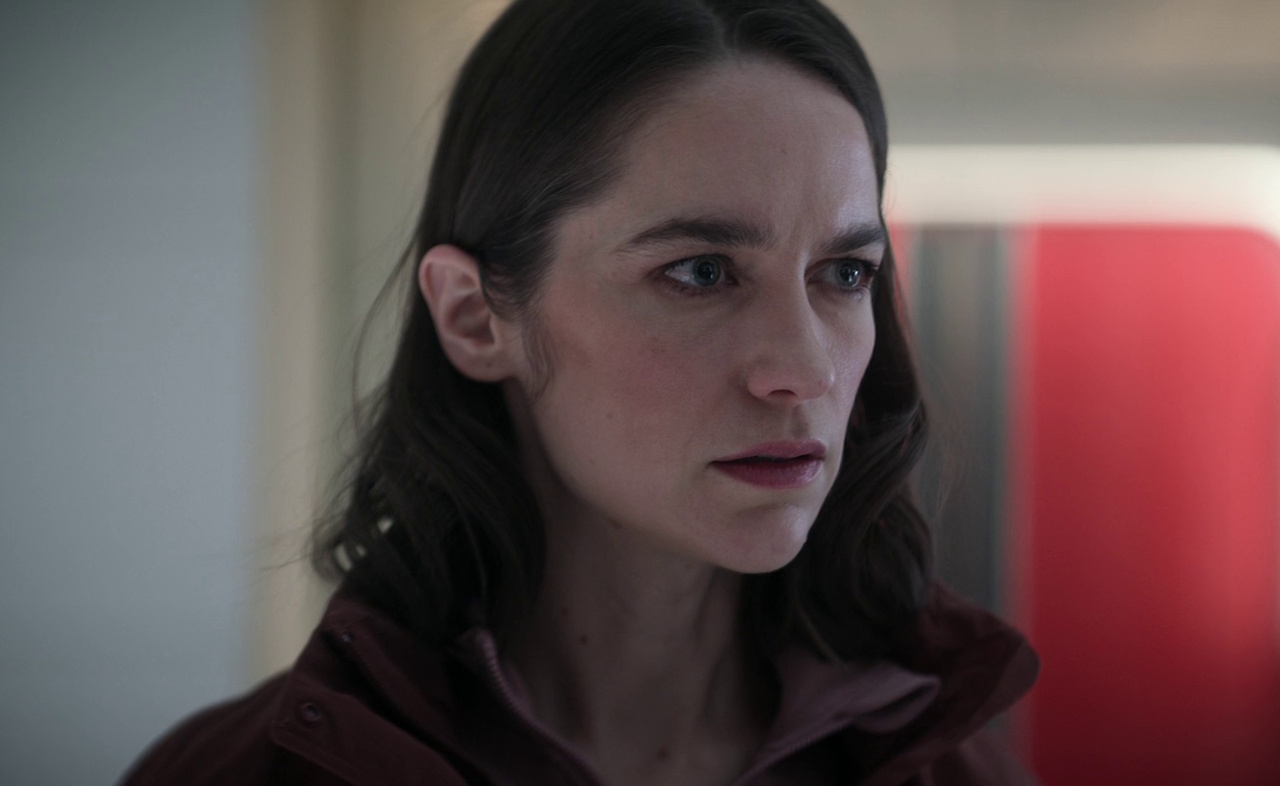
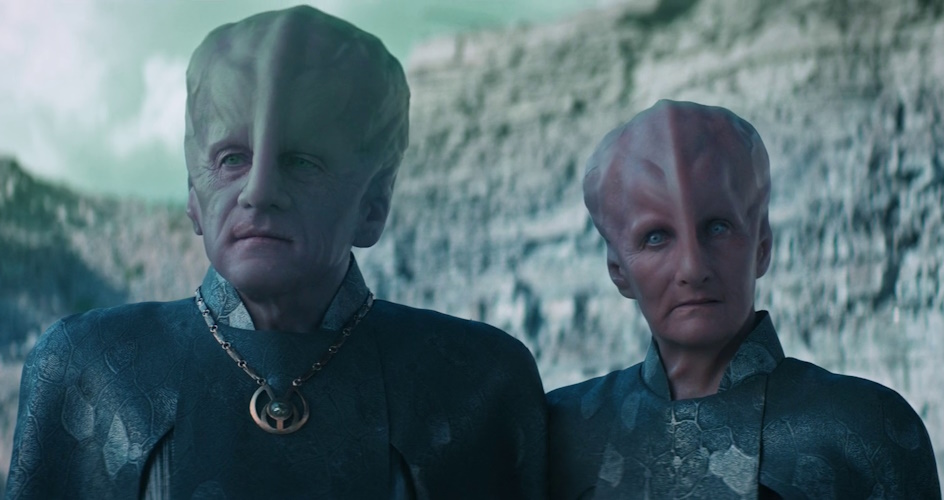
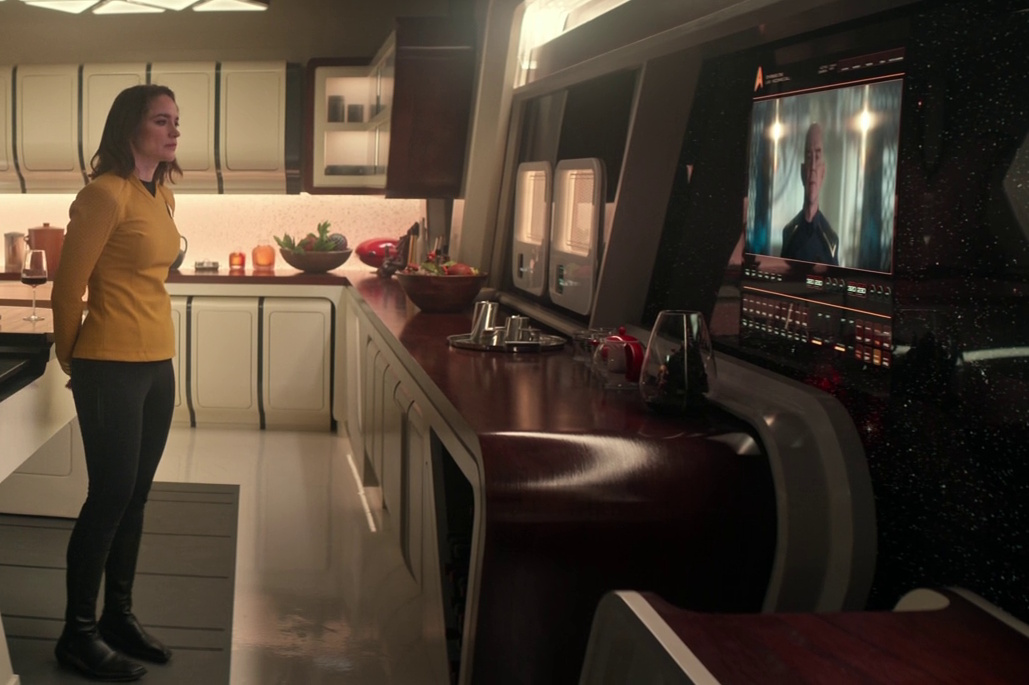
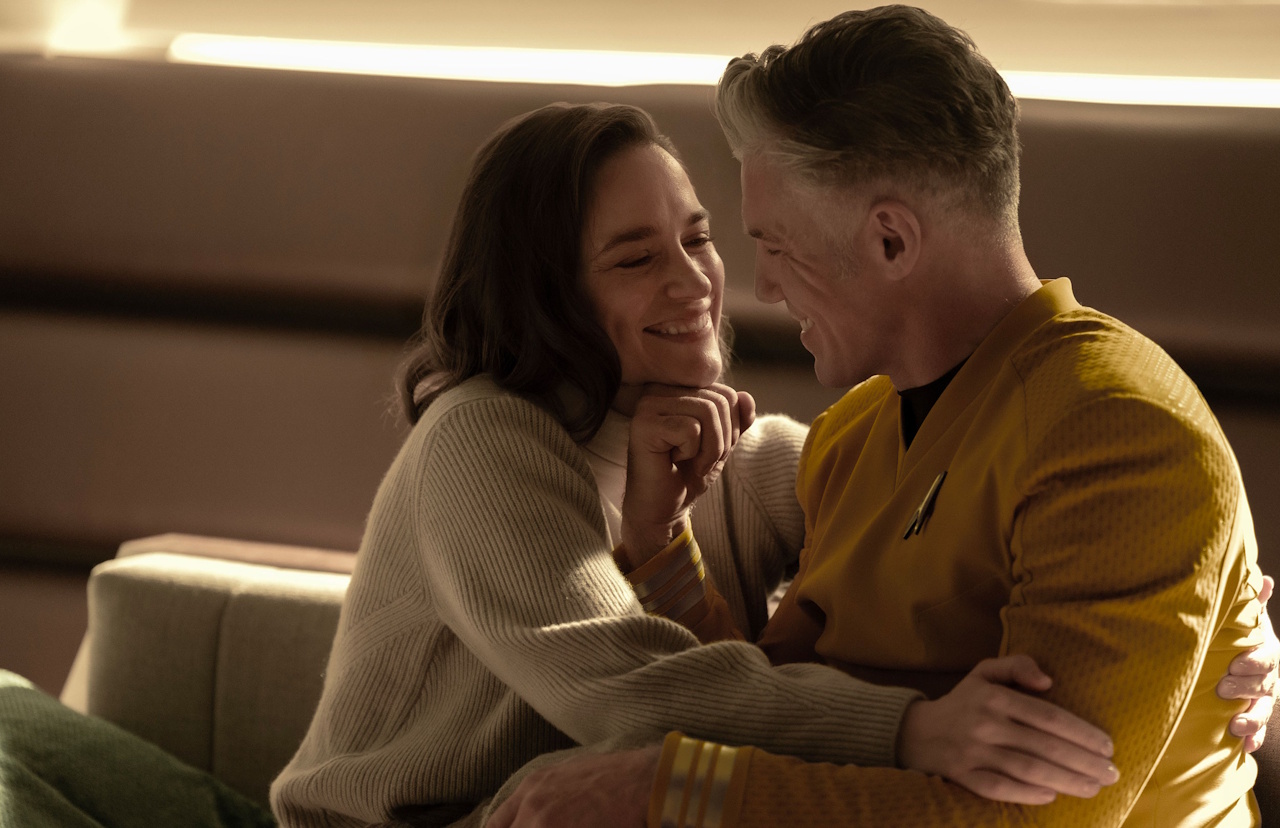
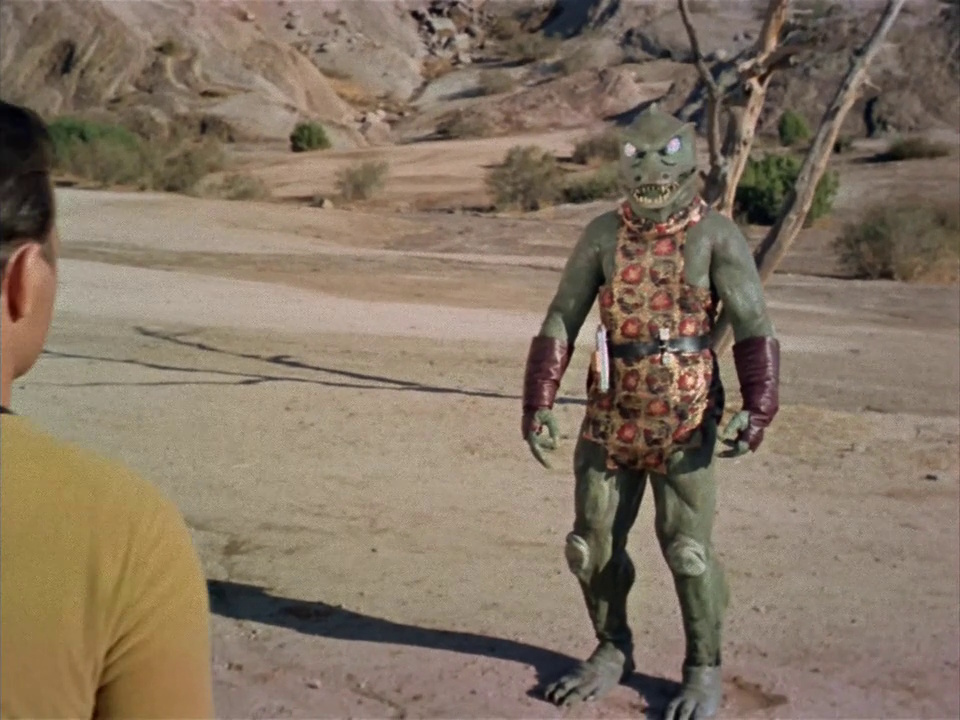
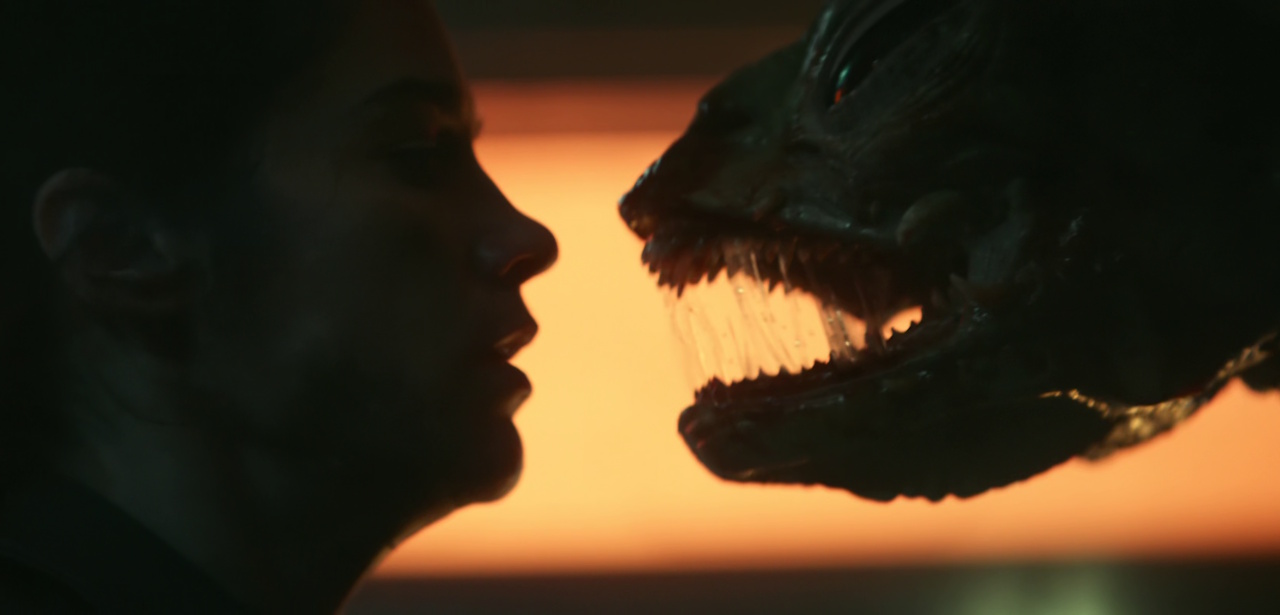

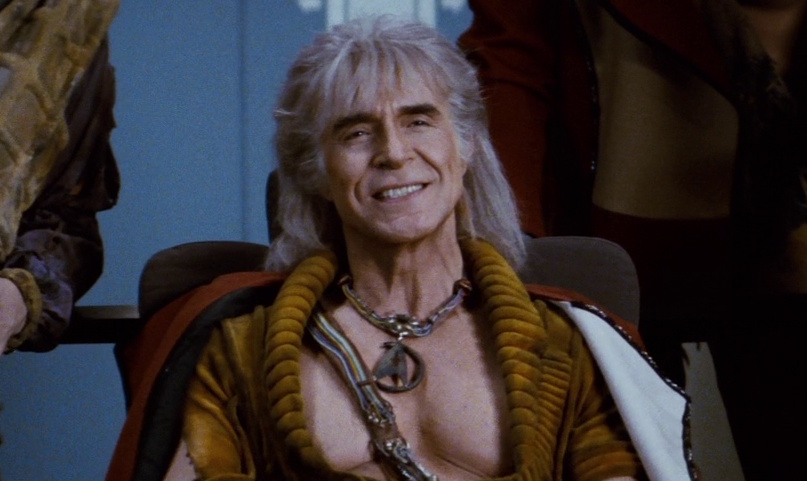
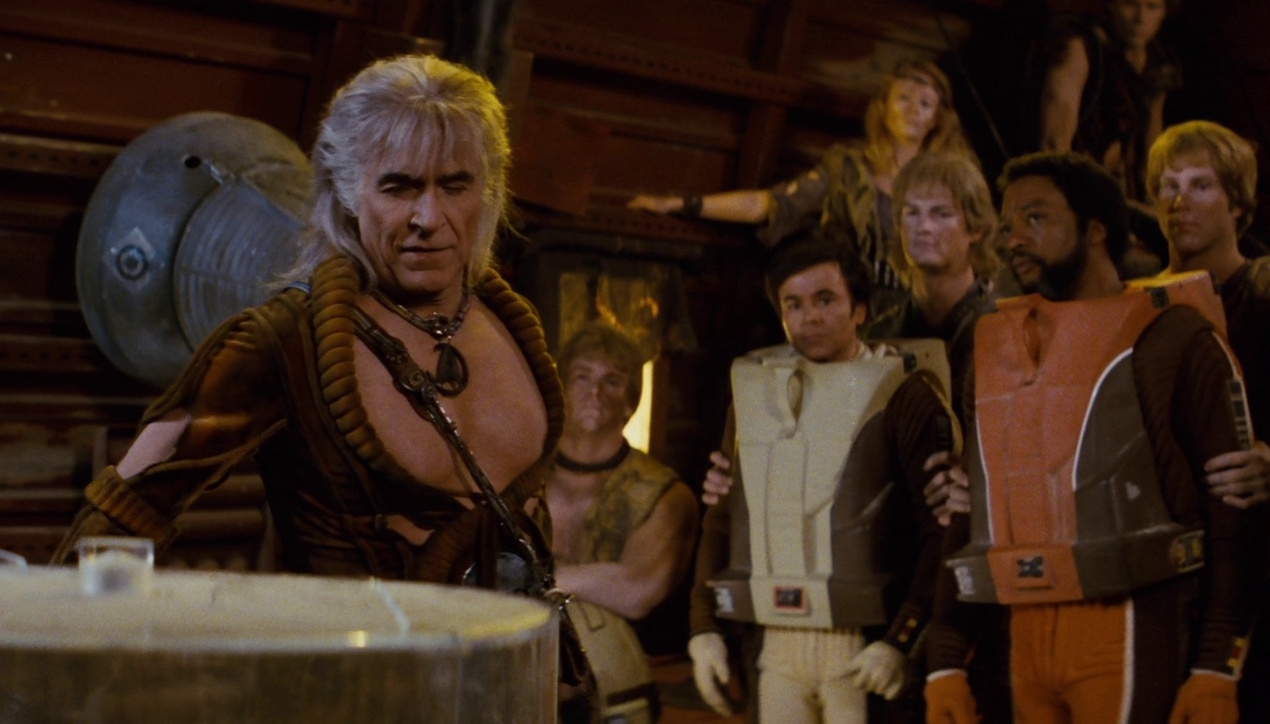
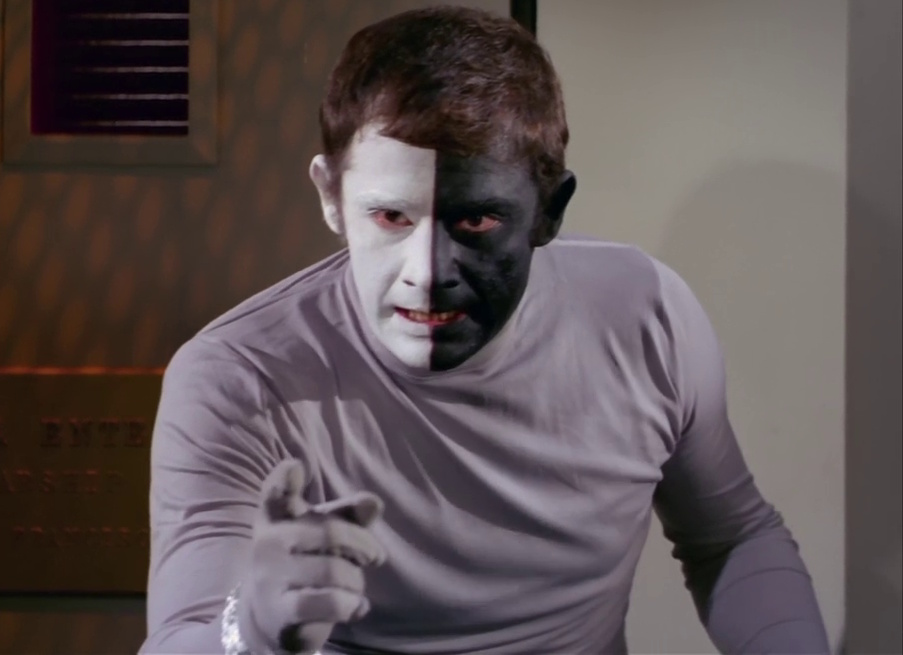

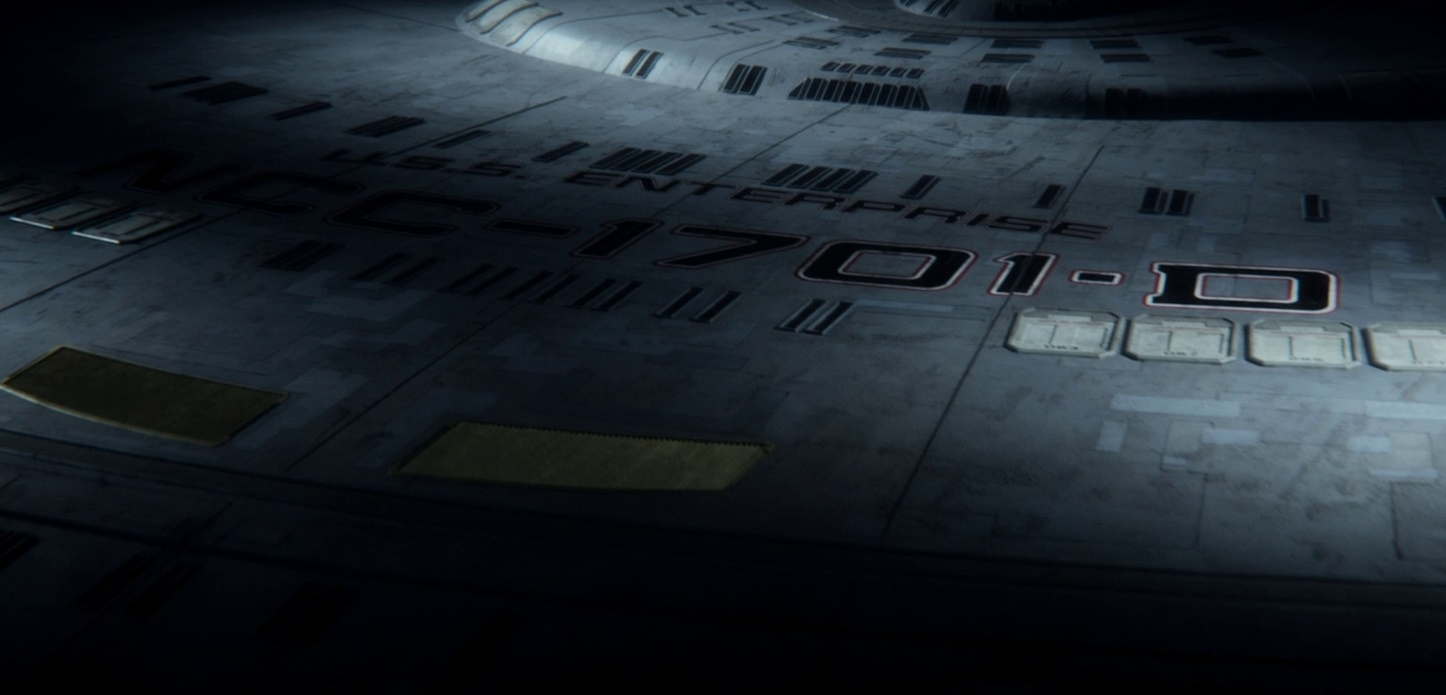
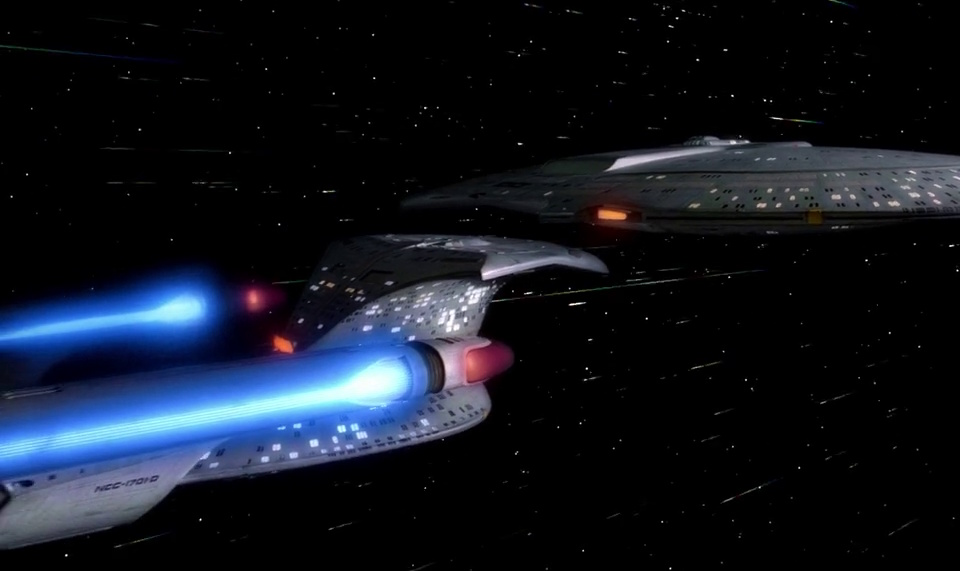
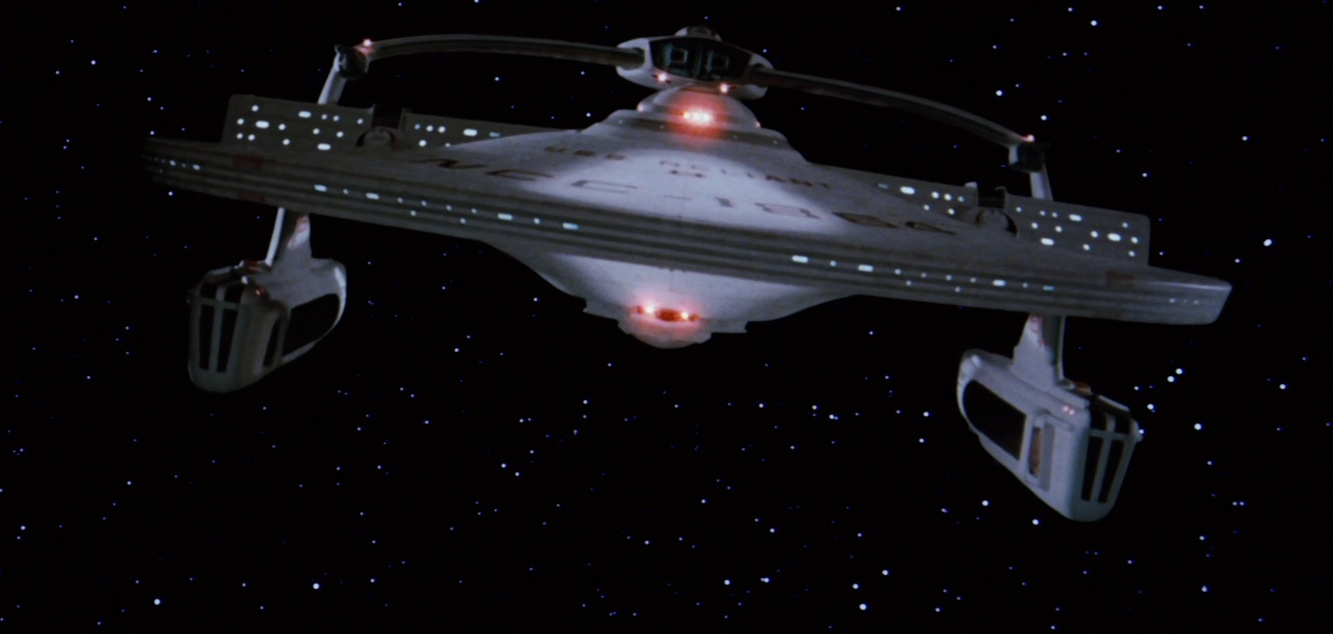
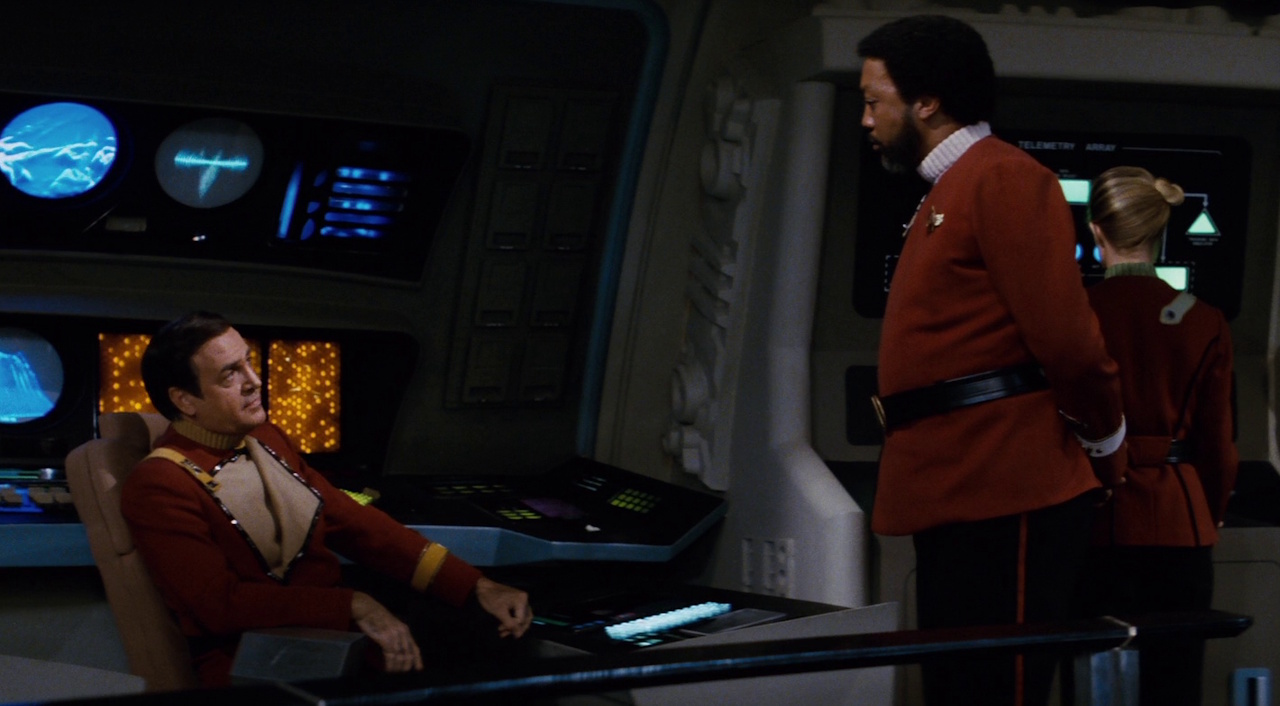
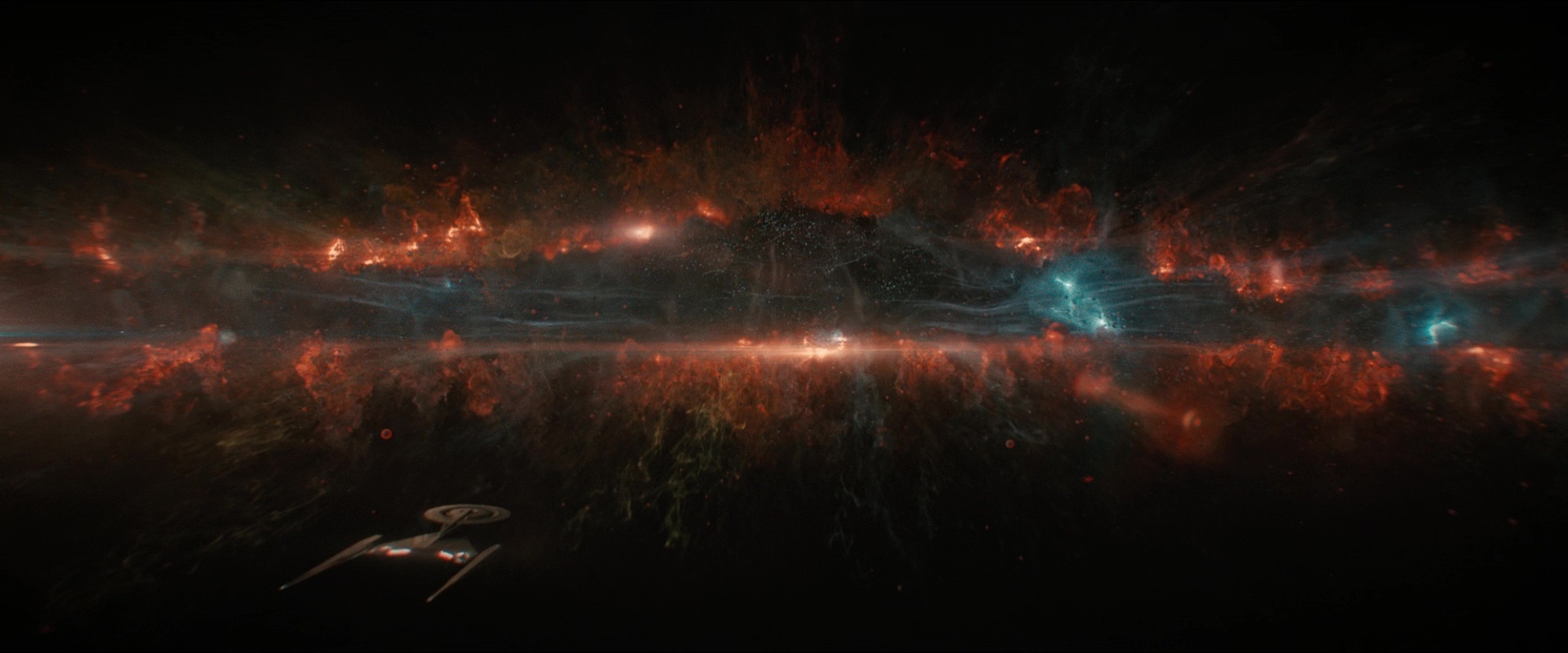
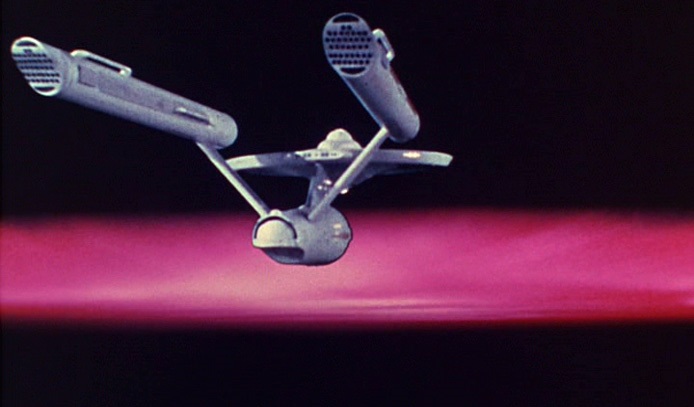
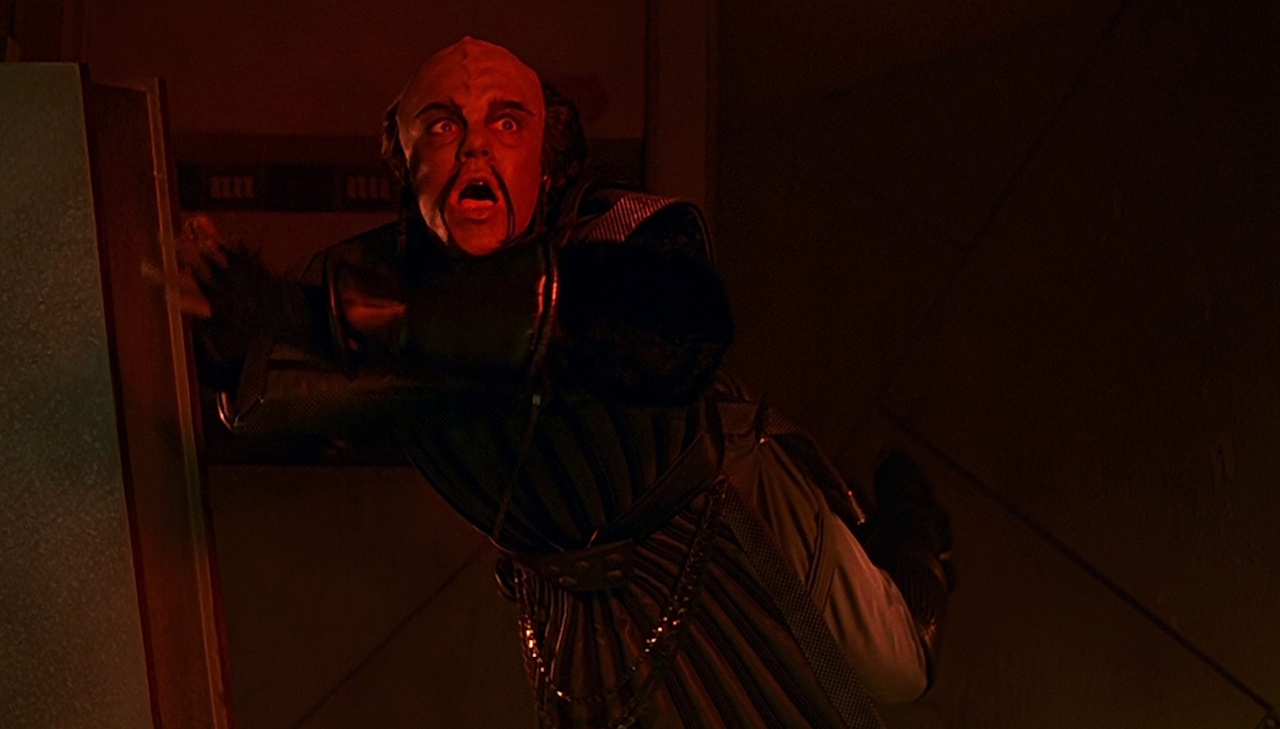
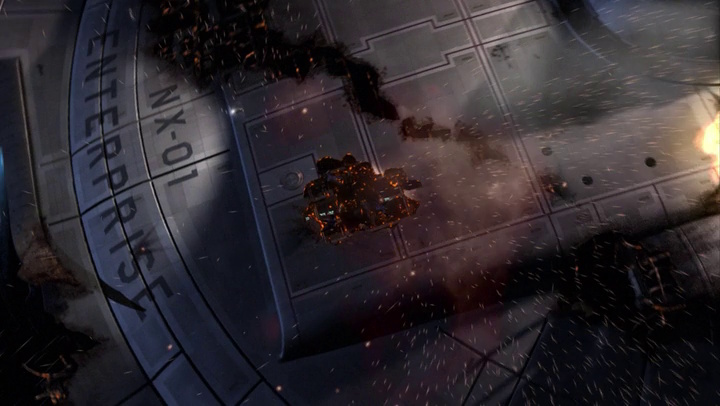
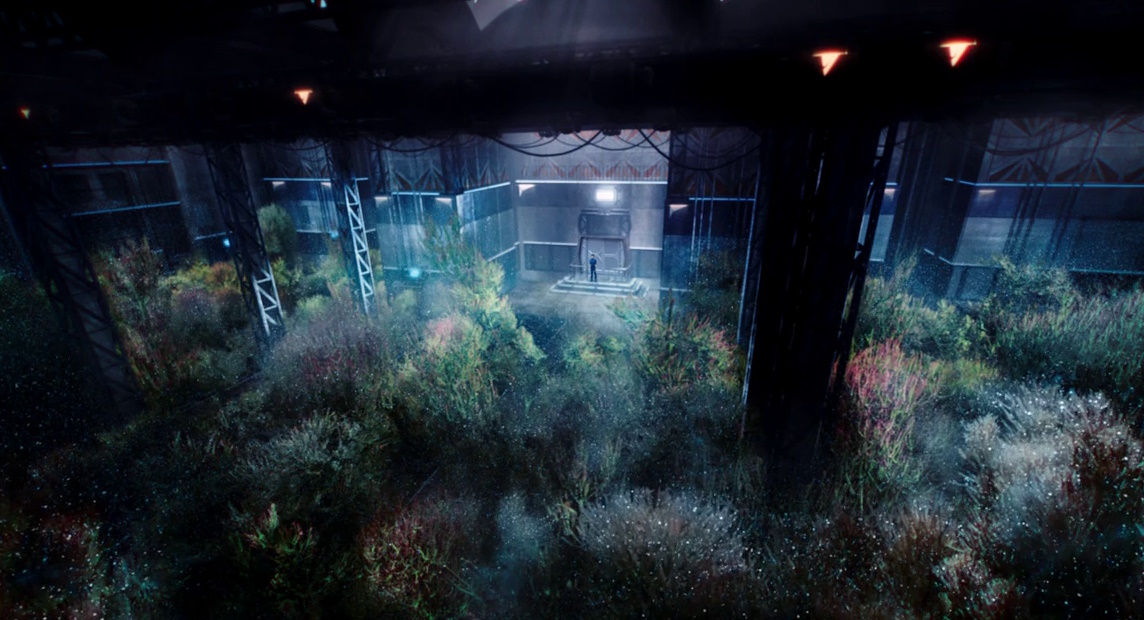
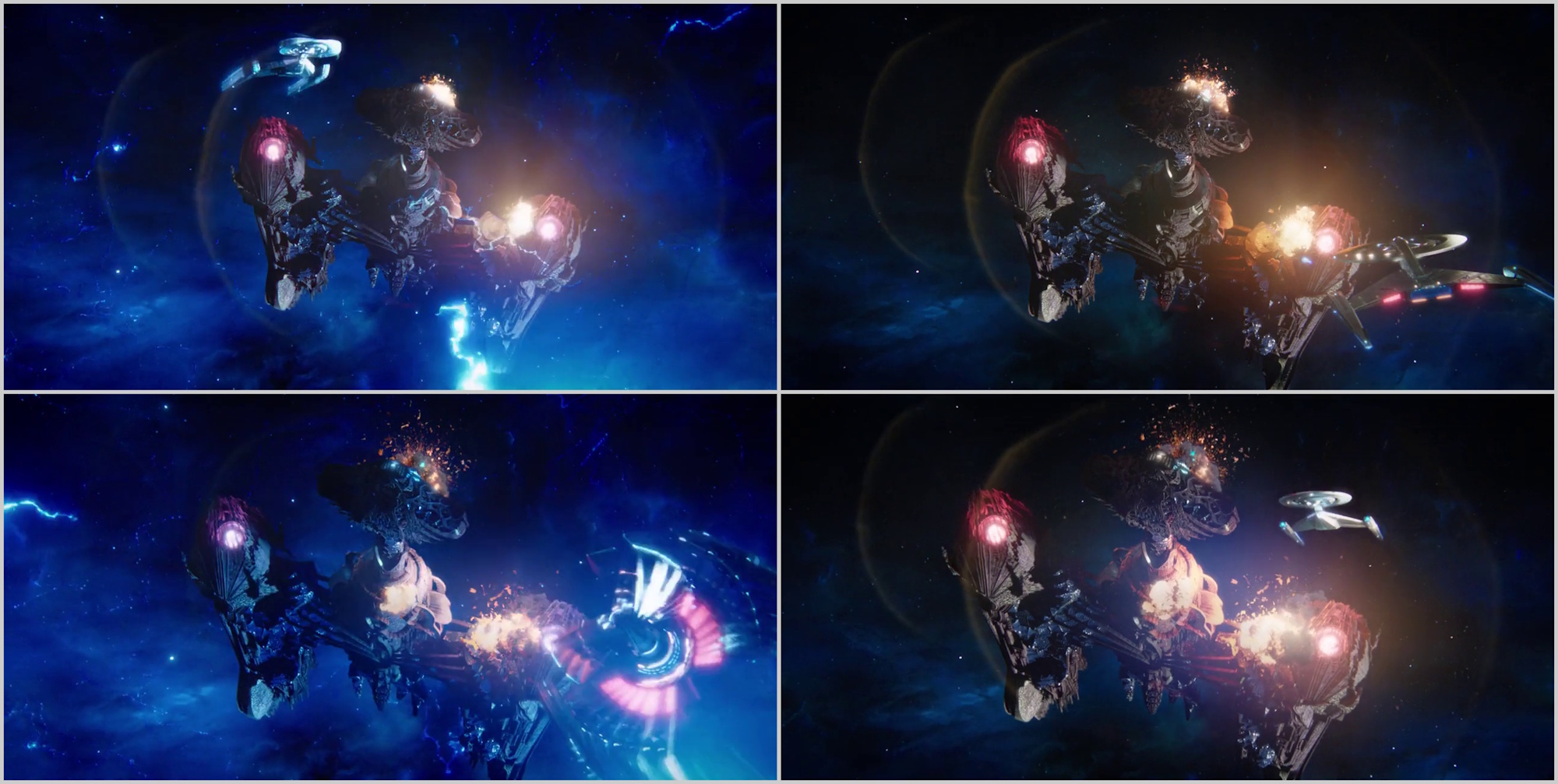

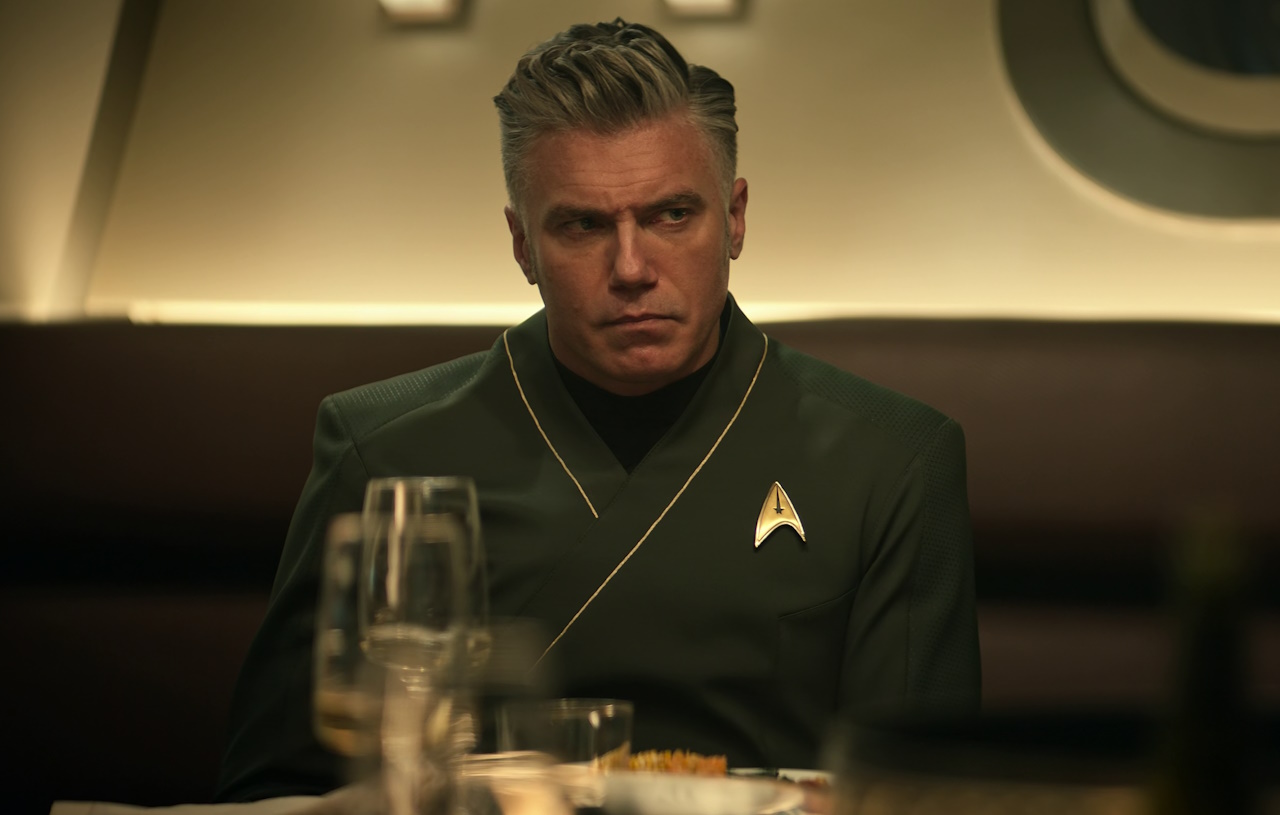
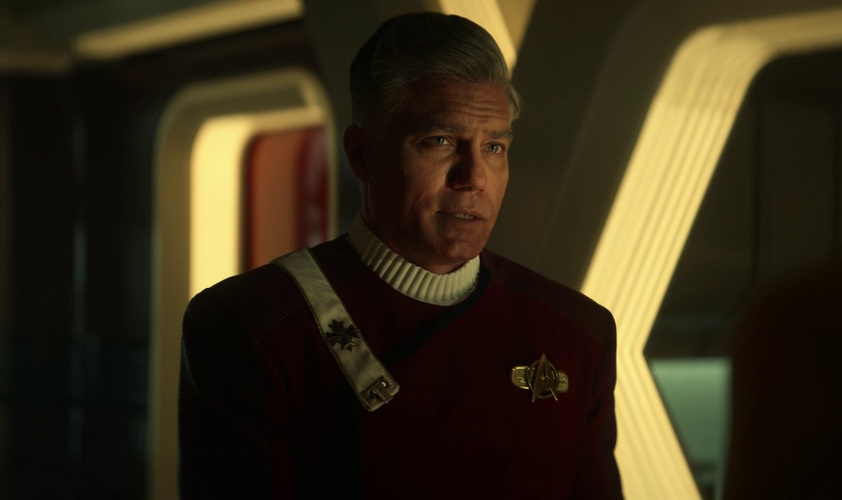
 Trekking with Dennis