“Post-Apocalyptic Star Trek:” What Went Wrong?

A Star Trek-themed spoiler warning.

Spoiler warning: There are spoilers ahead for Star Trek: Discovery Seasons 1-5. Spoilers are also present for the following Star Trek productions: Strange New Worlds Seasons 1-2, Picard Season 3, Prodigy Season 2, and pre-release info for Starfleet Academy.

Did Discovery’s “post-apocalyptic” take on Star Trek work as intended from Season 3 onward? If not… what went wrong? Why might a far future setting with a galaxy in ruins have been the wrong choice for this franchise? If another group of writers had tackled the same concept in a radically different way, could it have worked better? What does it all mean for Starfleet Academy? Those questions and more are what we’re going to ponder today!

Although Discovery has now concluded its five-season run, there are still topics to consider and debate. And it’s only now – after the series has concluded and we’ve seen three full seasons of its far future setting – that we can truly begin to wrangle with the “post-apocalyptic Star Trek” idea that began in Season 3. I held out hope for a while – particularly when Season 5’s marketing material and trailers seemed to be teasing a different kind of story – that Discovery might be able to do something creative, interesting, and engaging with this new idea. But, for me at least, post-apocalyptic Star Trek didn’t really work.
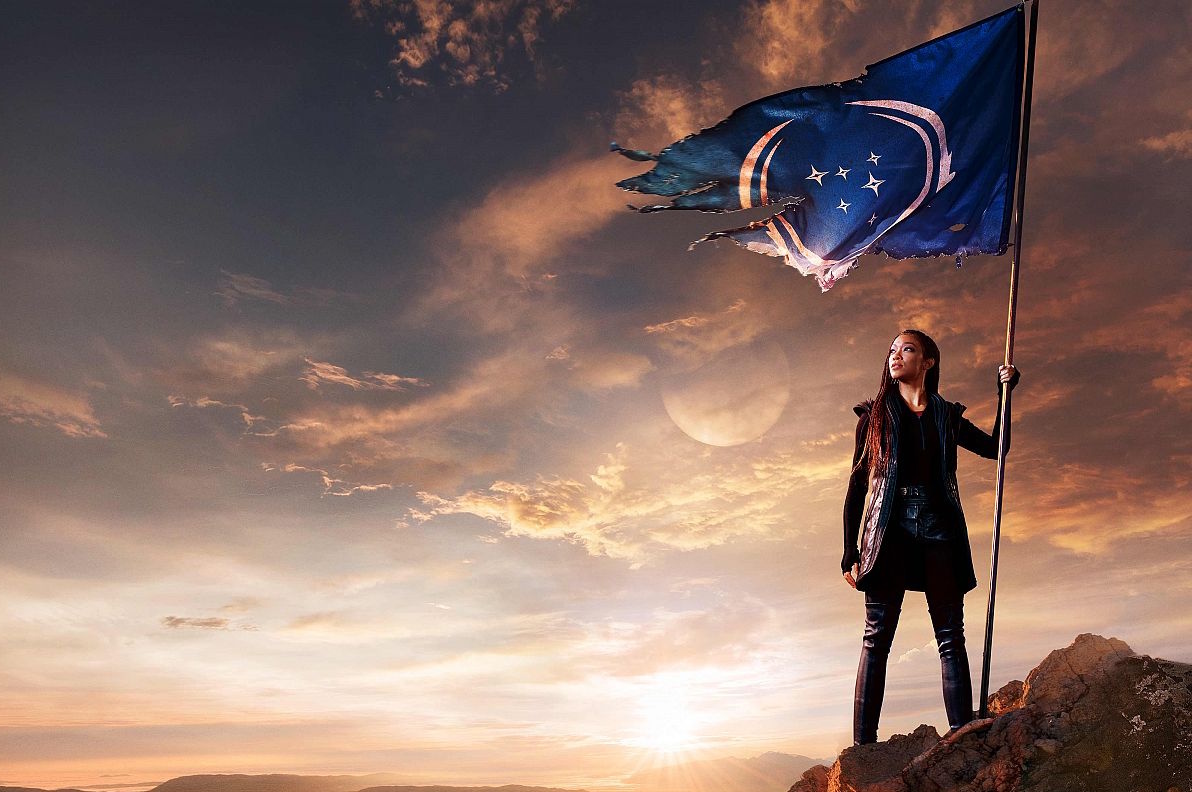
Cropped promo poster for Star Trek: Discovery's third season.
Discovery’s “post-apocalyptic” setting began in Season 3.

I think it’s worth discussing this subject for a couple of reasons. Firstly, Discovery was the franchise’s flagship series during its run. It brought Star Trek back to its small screen home after more than a decade in the wilderness, teed up the excellent spin-off Strange New Worlds, and for our purposes today, it also created this far future setting. Shooting forward in time centuries beyond The Next Generation, Picard, and even anything we’d seen in time travel episodes elsewhere in the franchise, Discovery had a completely virgin, unspoiled setting and time period for the writers and producers to craft.

Secondly, while Discovery may be over, there’s more Star Trek to come – at least for the next couple of years. A second spin-off – Starfleet Academy – intends to keep this far future timeline going, and it’s not impossible to think that Paramount might want to set new films or shows in this era, too. Given the issues Discovery had, it’s important to understand what worked about the setting and what didn’t – so future creatives can double-down on the positives while avoiding a repeat of the mistakes.

Behind-the-scenes photo of the cast and crew of Star Trek: Discovery Season 3 at a table read.
The cast and crew at a table read for the Season 3 finale.

As always, a couple of important caveats before we go any further. This may be a controversial topic; Discovery has always elicited strong reactions from the Star Trek fan community (to put it mildly!) It’s worth keeping in mind that all of this is the entirely subjective opinion of one old Trekkie. I’m not claiming that I’m right and that’s that – different folks will have different opinions about some of these storylines and narrative concepts, and that’s okay.

If you followed along with my Discovery reviews, you’ll know that I’m a fan of the series on the whole – not any kind of hater. Some storylines worked better than others, and I pulled no punches in criticising episodes and narrative choices that I didn’t like. But I’m glad Discovery exists and remains a part of Star Trek’s official canon! The fact that we’re talking about whether the post-apocalyptic tone worked from Season 3 onwards – and what I personally didn’t like about it – shouldn’t be taken as me “hating” Discovery or any of its writers and producers. I share my opinion with the Star Trek fan community in the spirit of polite discussion.

With all that being said, if you aren’t in the right headspace to tackle a potentially controversial subject, that’s totally okay. This is your opportunity to jump ship if you’d rather not get into the weeds with Discovery and its “post-apocalyptic” tone.
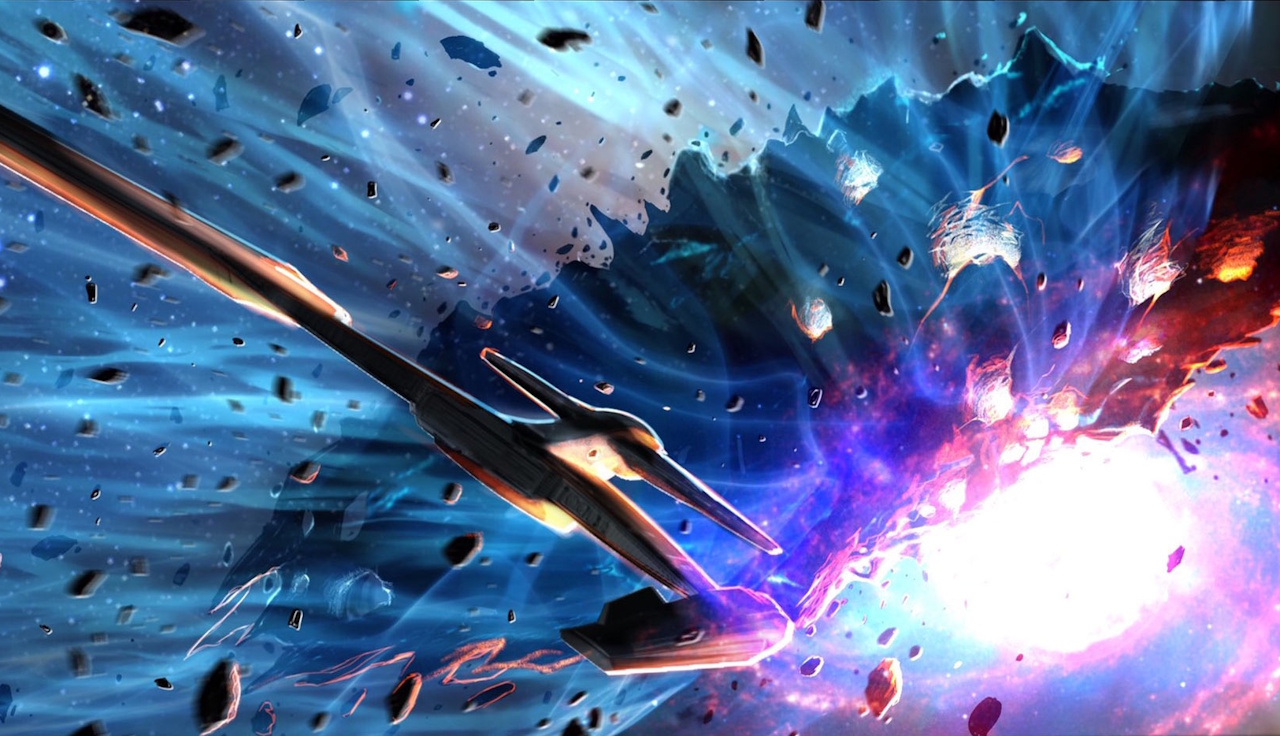
Concept art from Star Trek: Discovery Season 2.
Concept art of Season 2’s time-wormhole.

To begin with, I think we need to consider why Discovery’s post-apocalyptic vision of the future exists at all. I tackled part of this question in a different article – which you can find by clicking or tapping here – but here’s the short version: Discovery wouldn’t have left the 23rd Century if the writers, producers, and executives were happy with the show. The decision to shoot forwards in time is, in my opinion, a tacit admission from the folks at CBS that setting Discovery a decade before Captain Kirk’s five-year mission was a mistake. It was an attempt to rectify that “original sin” which, some may say, came two seasons too late.

But leaving the 23rd Century behind didn’t mean Discovery had to arrive in a galaxy devastated by the Burn. That was a creative choice on the part of the show’s writers and producers; an attempt to transplant Star Trek’s core themes of hope for the future, optimism, peaceful exploration, and a post-scarcity society into a completely different environment. And to be clear: I don’t think Discovery’s writers lost sight of what those concepts were or what Star Trek had been, as some have suggested. But they misunderstood how important those things were to the foundation of Star Trek’s setting, and why it was so important to see a vision of the future where many of the problems of today have been solved. In attempting to be clever and subversive – or perhaps thinking they knew better – they robbed Star Trek of not only its most important defining feature, but also one of the key differences between Star Trek and most other popular sci-fi and fantasy worlds.
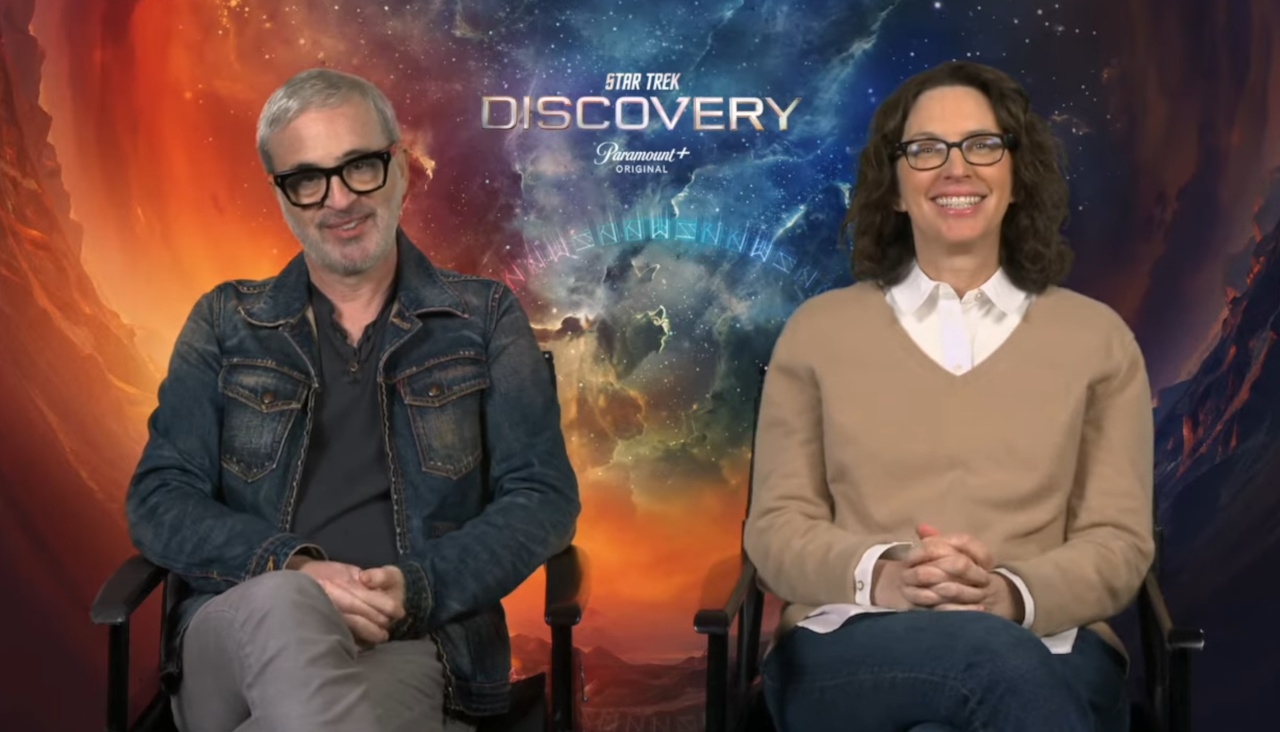
Still frame of Alex Kurtzman and Michelle Paradise at an interview promoting Star Trek: Discovery Season 5.
Discovery’s co-showrunners for Seasons 3-5: Alex Kurtzman and Michelle Paradise.

A post-apocalyptic setting clearly appealed to executives at CBS because of how popular it had proven to be elsewhere. From the late 2000s and through the entire 2010s, shows like The Walking Dead, Falling Skies, The 100, Jericho, The Strain, and 12 Monkeys had found critical and/or commercial success, as had films like Children of Men and Snowpiercer, and games like The Last Of Us and the Metro series. Star Trek has occasionally set trends in entertainment – but it’s also never been shy about following them. After two seasons of Discovery that had proven controversial – and crucially, hadn’t been a resounding success commercially – piggybacking on an apparently popular trend wasn’t an awful idea in principle.

Discovery’s creatives wanted to take Star Trek’s foundational sense of optimism and hope and completely reframe it; using the same core ideas but in a radically different way. By taking away Starfleet and the Federation, and leaving much of the galaxy devastated, in ruins, or struggling for resources, there was potential – they believed – to tell stories about bringing people back together, finding hope in a bleak setting, and even considering the impact of this level of devastation on the crew’s mental health.
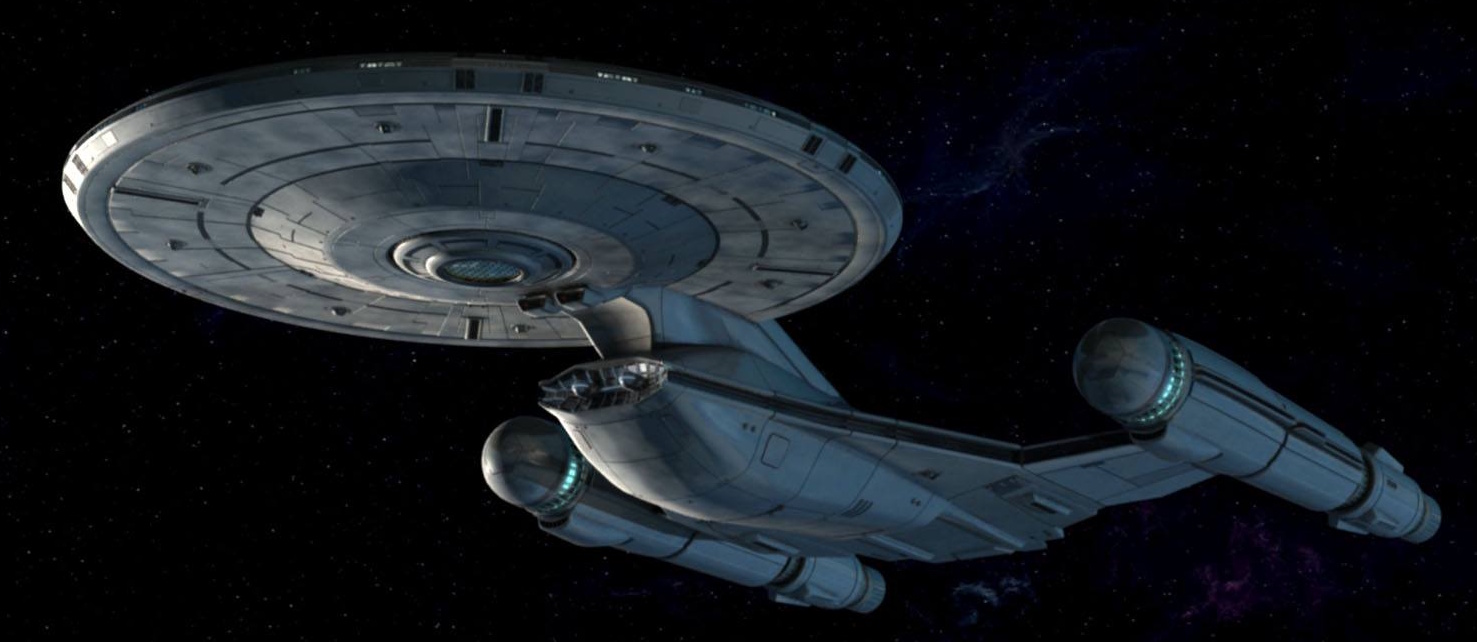
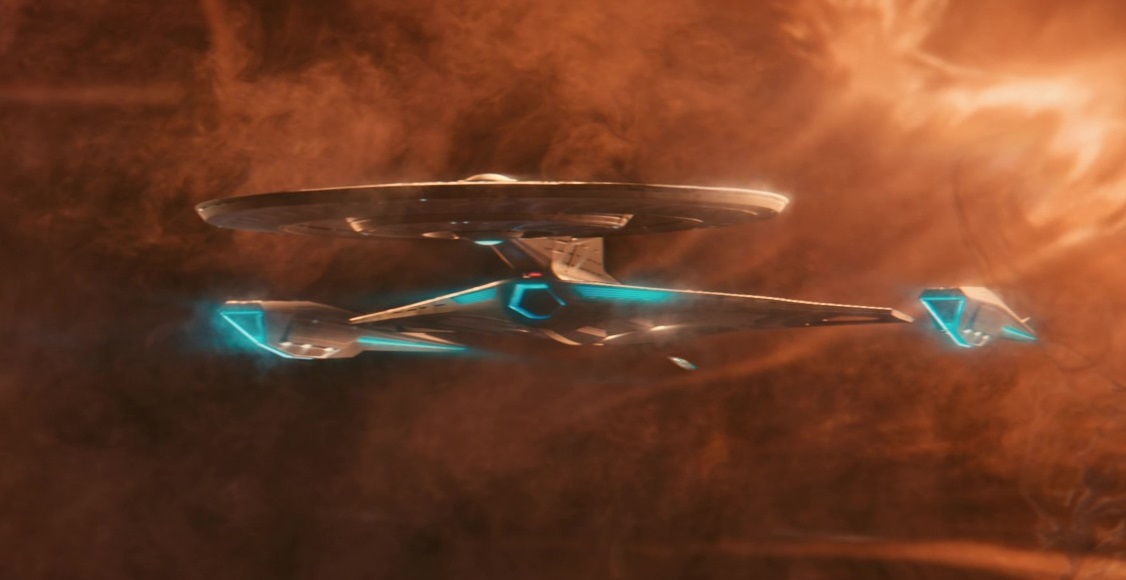
Early concept art from Star Trek: Discovery Season 1 of the USS Discovery.
Early concept art of the USS Discovery circa 2016.
Image Credit: Frogland Archive

At the peak of the Cold War, with America and the Soviet Union staring each other down atop piles of nuclear weapons that could destroy the planet, The Original Series presented a peaceful future in which humanity had overcome those struggles. Later, in the 1990s, Deep Space Nine’s Dominion War didn’t show a devastated Federation on the brink of defeat, it showed good people struggling to save the “paradise” that had been built. These shows were different from one another in many ways – but at the core, one of the foundational pillars of Star Trek is that the future is bright and it’s going to be worth fighting for.

This is something fundamental to Star Trek; it’s a huge part of what makes the franchise what it is. And there’s a massive difference between a show that says “humanity has overcome all of these obstacles, so let’s explore the galaxy” and one that says “everything is ruined but we can rebuild.” These two narrative ideas both have the themes of optimism and hope – but they’re very different kinds of optimism and hope, and they’re presented in totally different ways. It’s not so much that one works and the other doesn’t; see the list of post-apocalyptic media above, all of which use those themes and ideas in some form. But in this case, the post-apocalyptic setting took away something foundational from Star Trek’s setting, utterly transforming Discovery into a completely different kind of series.
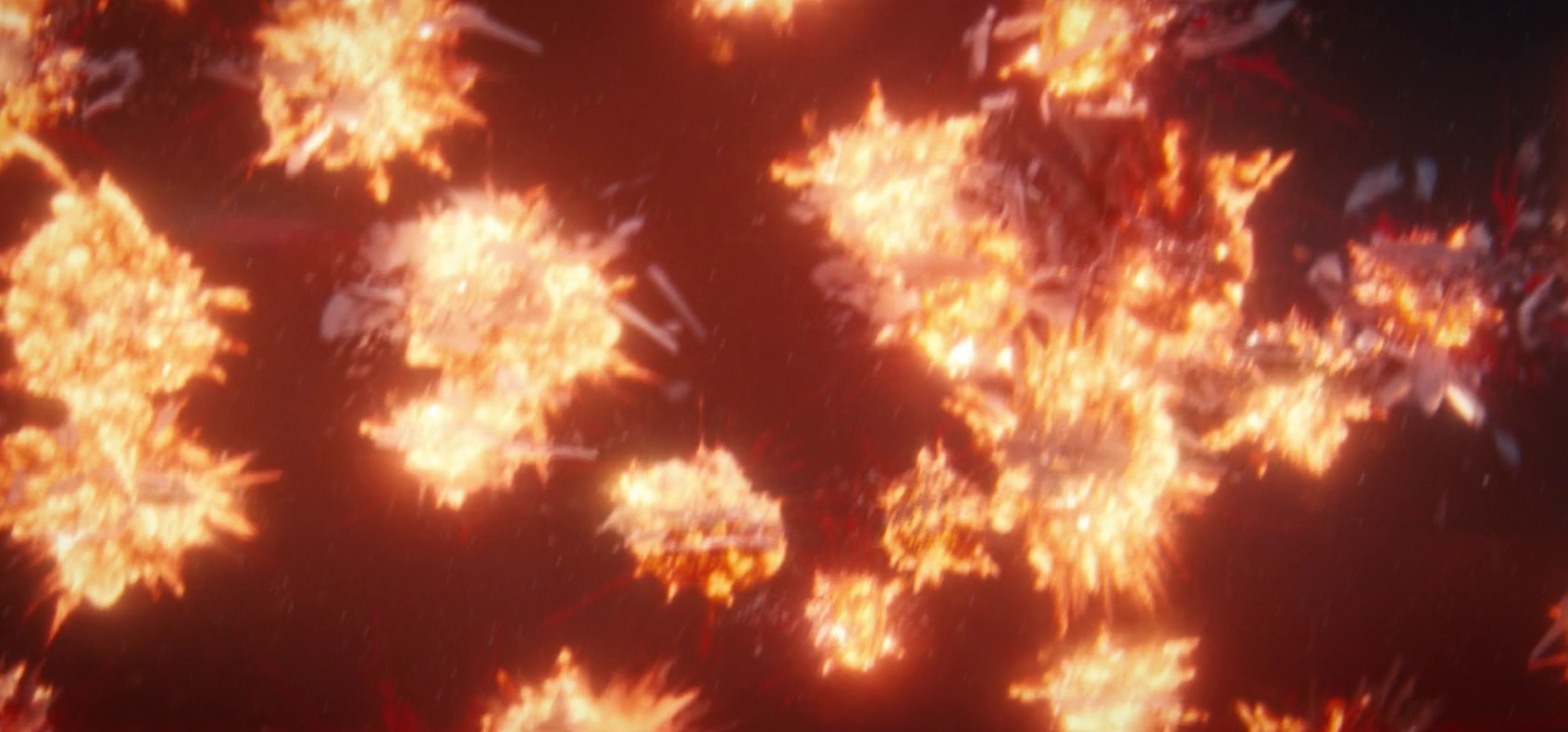
Still frame from Star Trek: Discovery Season 3 showing multiple starships exploding.
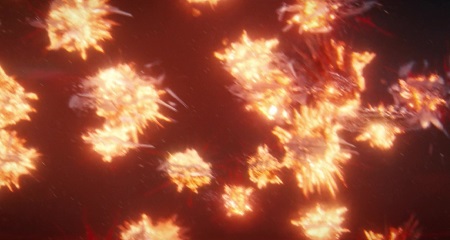
The Burn.

Here’s the bottom line: Discovery didn’t do anything exceptional with its post-apocalyptic setting. I still think such a massive change to the core of Star Trek would’ve attracted criticism even if the show’s writing had been exceptional from Season 3 onwards, but the simple fact is that it wasn’t. There were some decent episodes and creative ideas in the mix, don’t get me wrong… but Discovery’s biggest problem both before and after this switch to a post-apocalyptic setting was that its storytelling was small, repetitive, and overly reliant on levels of interpersonal conflict and relationship drama that we seldom get outside of soap operas. In short, Discovery’s post-apocalyptic setting turned out to be nothing more than background noise; set dressing for less-interesting stories to play out in front of.

Such a huge change to Star Trek’s galaxy and the damage done to the Federation needed more time in the spotlight and it needed to serve a purpose. In Season 3, part of the story focused on the Burn and figuring out what happened. This story was an ultimately frustrating one, with dead ends and red herrings before arriving at an ending that no one could have predicted. Season 3 teased viewers with a mystery, stringing us along and seeming to reveal clue after clue in different episodes, only to then pull a bait-and-switch to something out of left-field that didn’t feel properly set up. It was pretty annoying – and I know I wasn’t the only one who felt that way at the time.
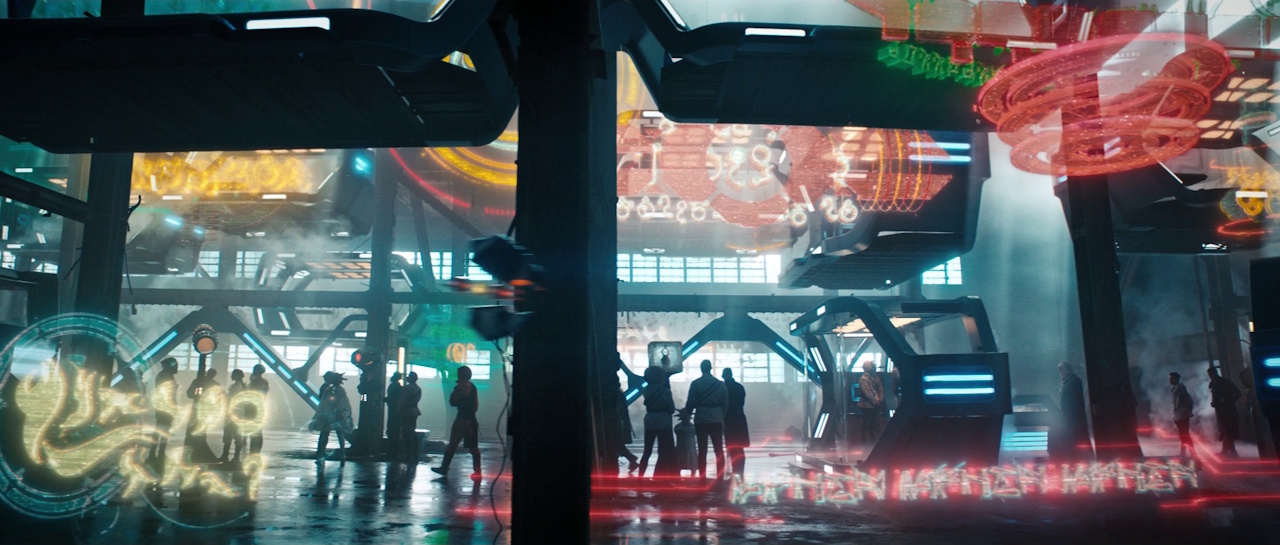
Still frame from Star Trek: Discovery Season 3 showing an alien marketplace.
A 32nd Century market.

Worse, though, was that Season 3 spent such a long time on what felt like unimportant fluff in comparison to the Burn. The first episodes of the season showed us how far the Federation had fallen; humans on Earth couldn’t even travel as far as Titan, within their own solar system – such was the shortage of fuel and supplies. Earth and Vulcan had both withdrawn from the Federation, and Starfleet wasn’t able to contact many of the Federation’s outlying member worlds and colonies. But instead of exploring what this could mean and telling a story about figuring out what went wrong and how to fix it… Discovery’s writers told half-baked stories about depression, Burnham’s on again-off again relationship with Starfleet, Book and Burnham’s love affair, and more.

To be clear: I don’t think the post-apocalyptic setting would’ve been the right choice regardless, for the reasons outlined above. But Discovery’s writers didn’t even give that premise or the far future setting a chance to win me over. Instead, they tried to jump right back in with stories about Michael Burnham: Chosen One™ – and it just fell so incredibly flat.
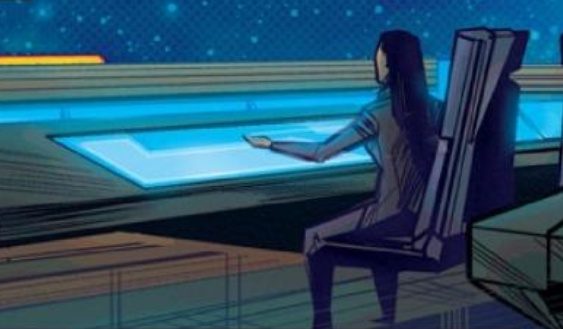
Cropped page from the Star Trek: Discovery comic Adventures in the 3nd Century showing Burnham sitting at a console.
Michael Burnham in the comic book Adventures in the 32nd Century.
Image Credit: IDW Publishing/Paramount

There was a metaphor buried in the far future setting that could’ve been timely. But the end of Season 3 ruined it. By taking one of Star Trek’s core technologies – warp drive – and saying that the galaxy as a whole was running out of fuel, there was a chance for Discovery to do what Star Trek has always done: use a sci-fi lens to examine a real-world issue. We rely too heavily on limited supplies of fossil fuels here in the real world, and Season 3 could’ve made a point about the need to innovate, invent new methods of travel and power generation, and tie those issues into the theme of rebuilding and coming back stronger. That could’ve been a powerful story if done well, and it also could’ve finally found a proper use for Discovery’s most controversial addition to Star Trek: the spore drive.

But the discovery of a near-unlimited cache of dilithium toward the end of the season totally undermined all of that. It would be like writing a story about Earth running out of oil and humanity coming together to build new vehicles and methods of power that don’t rely on fossil fuels… only for the story to end with a massive untapped oilfield being discovered. This mixed messaging, and unwillingness to commit to telling stories that could’ve taken advantage of this kind of setting, really tripped up Discovery. The most powerful – and potentially interesting – ideas that could’ve been explored in this kind of setting were just left feeling flaccid and half-hearted.
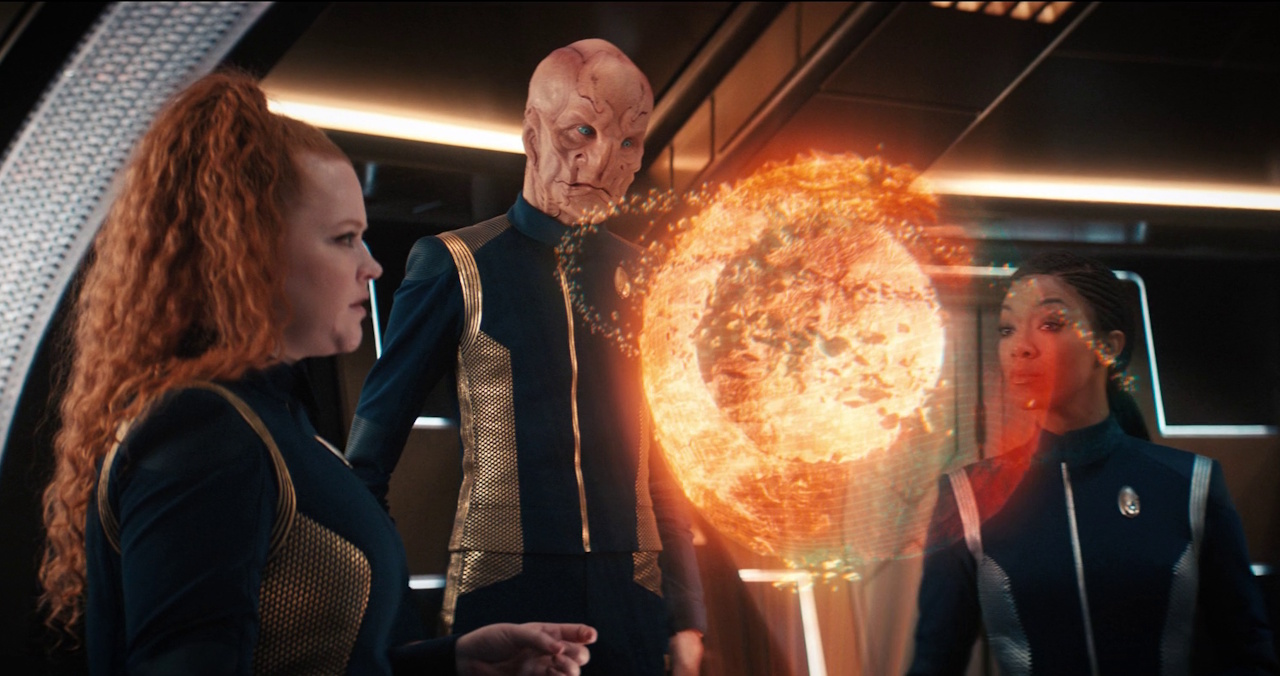
Still frame from Star Trek: Discovery Season 3 showing Tilly, Saru, and Burnham with a hologram of the dilithium planet.
The Verubin Nebula contained a massive cache of dilithium – and the answer to the mystery of the Burn.

Many post-apocalyptic shows and films tell character-focused stories, and these settings can lend themselves to high-stakes drama. But most of the time, the environment that the characters are confronted with – whether that’s a zombie apocalypse, an ecological disaster, a pandemic, or something else – is at least part of the cause of the tension and interpersonal conflicts. A character like The Walking Dead’s Governor is who he is because of the world he inhabits. Many of the arguments between characters in shows like The Strain or films like City of Ember happen because of the environment they’re in. Even relationships can begin – or be ended – by the stresses of a post-apocalyptic life, as we see in films like Shaun of the Dead or shows like 2008’s Survivors. But Discovery couldn’t even get this right most of the time.

Most of Discovery’s storylines in the far future could’ve worked just as well – better, even, in some cases – without the post-apocalyptic backdrop. Seasons 4 and 5 in particular are both in this camp. The Dark Matter Anomaly that devastated parts of the galaxy would’ve arguably been more impactful if it had been attacking a fully-intact Federation. And the threat of the Breen attack and the Progenitors’ device in Season 5 is the same. They would’ve worked in the same way Deep Space Nine’s Dominion War did: as threats to Star Trek’s post-scarcity technological “paradise.”
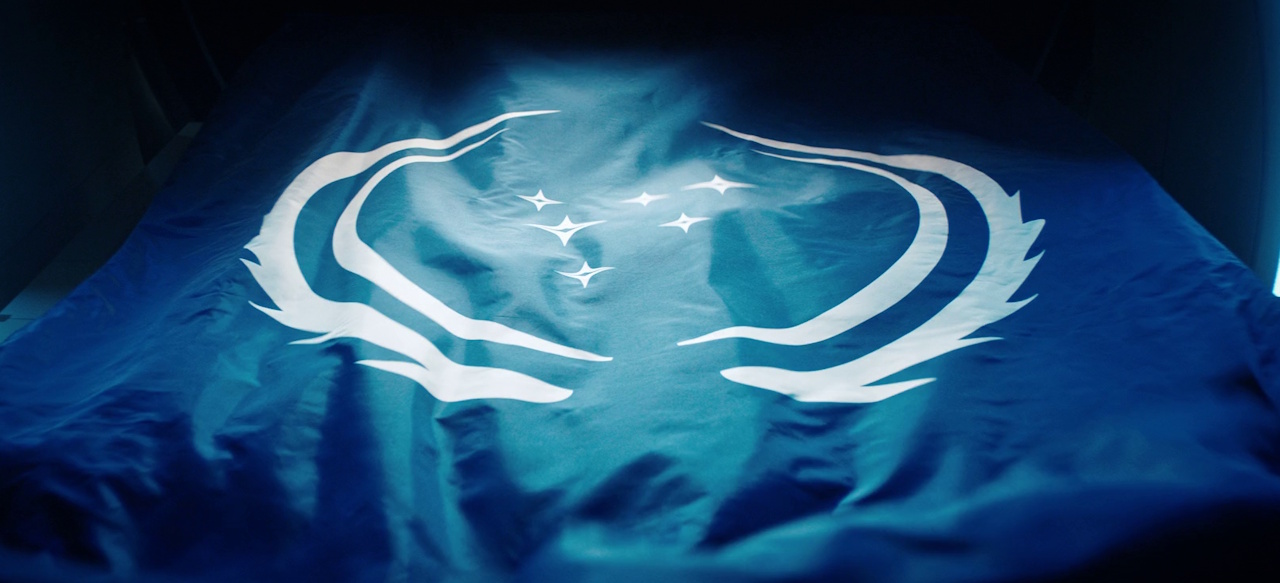
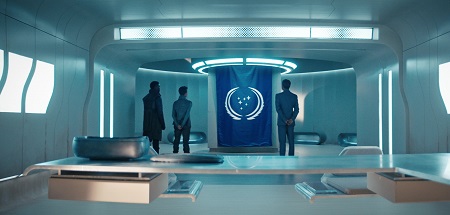
Still frame from Star Trek: Discovery Season 3 showing the flag of the Federation.
The flag of the Federation in the 31st Century.

Smaller storylines are also in this camp. Detmer’s half-arsed mental health story in Season 3, Culber’s equally weak depression in Season 4, Adira and their quest to help Gray be seen again, Burnham and Book’s mostly awful on/off relationship, the Ni’Var stories involving Romulans and Vulcans working together… would any of these have worked less well, or even been noticeably different, without the Burn and the devastation it had caused? Or would they have been able to play out almost exactly the same, beat for beat?

Taking the idea of societal collapse as a starting point, Discovery’s writers could have tied in themes of mental health. The character-focused storytelling that they wanted, with high levels of drama and plenty of “therapy-speak,” was potentially well-suited to the post-apocalyptic environment they’d created. But there was almost no attempt to link these two ideas; instead, characters would suffer or sulk for reasons completely unconnected to the world they found themselves a part of. This feels like a horrible missed opportunity considering the kind of show Discovery’s writers and producers wanted it to be.

Concept art for Star Trek: Discovery Season 3 showing Michael Burnham.
Concept art of Burnham (and her costume) produced for Season 3.

For some reason, since Star Trek returned to the small screen, there’s been an insistence on serialised storytelling – but only for one season at a time. Self-contained narrative arcs have been the order of the day, which meant that the Burn, its origin, and crucially, its aftermath were only really in focus in Season 3. A couple of clips at the beginning of Season 4 – as well as a handful of throwaway lines of dialogue here and there – referenced the Burn, but for the most part, it disappeared after Season 3 was over.

There is a partial justification for this: Discovery’s production team were never sure whether cancellation was coming. If there might’ve been one thing worse than a devastated galaxy and an apocalyptic event, it would be leaving the reason for all the destruction unexplained with the show abruptly going off the air! So in that sense, I get why those decisions were taken. Star Trek was still finding its feet in a new entertainment landscape, CBS and later Paramount were on shaky ground amidst the “streaming wars,” and there was no guarantee of a renewal. Setting up the Burn and explaining it in a single season makes sense in that context.

But dumping the Burn after Season 4, and not doing more to explore the consequences of this massive event… that makes less sense to me.
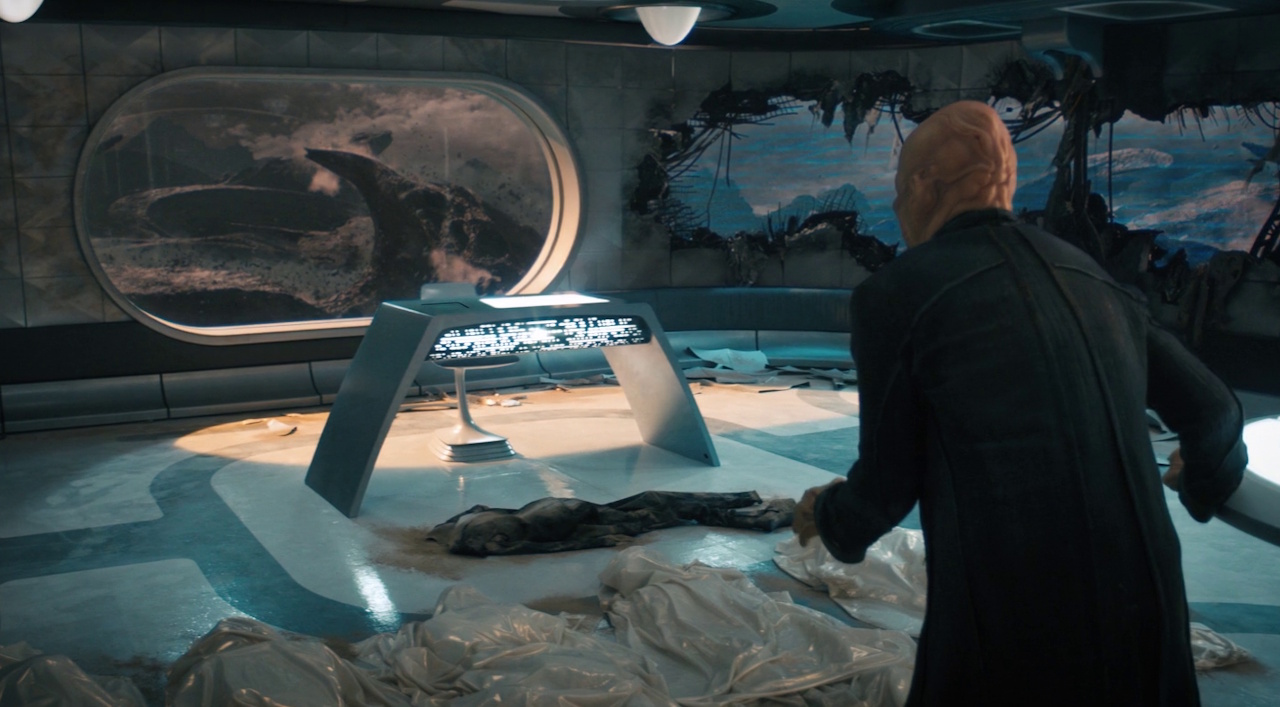
Still frame from Star Trek: Discovery Season 3 showing Su'Kal aboard the wreck of the Khi'eth.
Su’Kal at the source of the Burn.

Star Trek in its heyday was a primarily episodic franchise. There were season-long arcs in Deep Space Nine and Enterprise, as well as Voyager’s seven-year journey back to the Alpha Quadrant. But even in those frameworks, episodic storytelling was still the order of the day for Star Trek. I think it’s no coincidence that the best episodes Discovery told were the ones that were somewhat standalone. Episodes like Season 2’s An Obol for Charon, Season 3’s Terra Firma, Season 4’s Choose to Live, and Season 5’s Face the Strange are all at least partly self-contained affairs. Strange New Worlds has also taken on a much more episodic tone – something that has made that series an absolute joy to watch.

At the start of Season 4, I hoped that Discovery would go down a more episodic route. The Burn could be a starting point, and Discovery could’ve hopped to different planets across the Federation as the galaxy began to rebuild from its aftermath. A story of bringing hope to people who’ve been struggling to get by could have been exceptional if handled well, and the Burn – despite the issues it caused for Star Trek as a whole – was the perfect entry point for telling stories like that. Switching up Discovery to become a more episodic show could’ve given more of the cast a chance to be in the spotlight, with episodes focusing on different planets and different people every week.
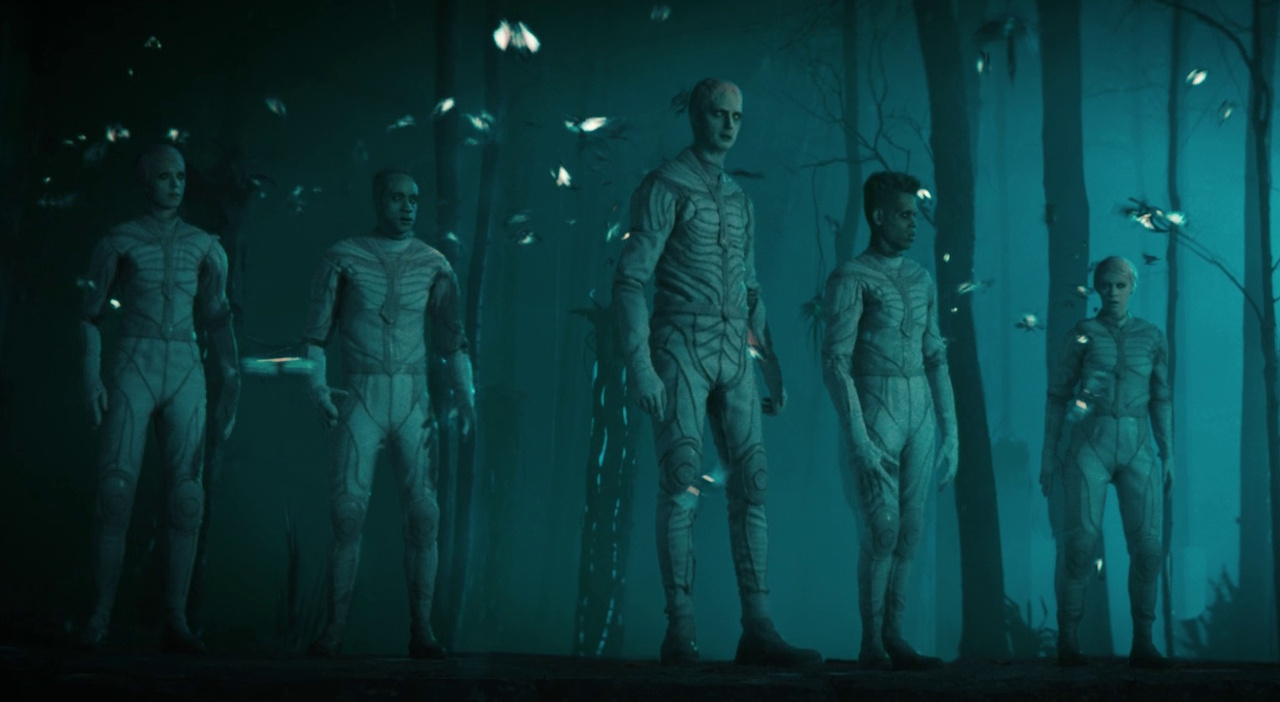
Still frame from Star Trek: Discovery Season 4 showing the "butterfly aliens" from the first episode.
Burnham’s brief encounter with these “butterfly aliens” was about as close as Discovery came to the idea of rebuilding the Federation.

To me, this feels like an open goal; a golden opportunity for Discovery to prove the haters wrong. It was a chance to do something meaningful with the Burn and the post-apocalyptic setting that Season 3 – with its unfolding mystery and close focus on Burnham – didn’t really have much time for. Moreover, it would’ve been a great way to explore other aspects of this 32nd Century setting, catching up with factions and races from past iterations of Star Trek.

Despite spending three seasons in the far future, we didn’t so much as glimpse a Klingon. Races like the Ferengi were seen in the background and there were throwaway lines that mentioned the Borg and the Gorn, but none of them ever showed up on screen. Given that the devastation of the Burn was supposedly a galaxy-wide thing, Discovery did absolutely nothing to show us what some of the most iconic and beloved factions in Star Trek were doing in this era or how they were coping. And then there’s the elephant in the room: the Burn was, in a roundabout way, caused by a Federation ship operating under orders from Starfleet HQ. What would the likes of the Klingon Empire or the Cardassian Union do if and when they learned that truth?
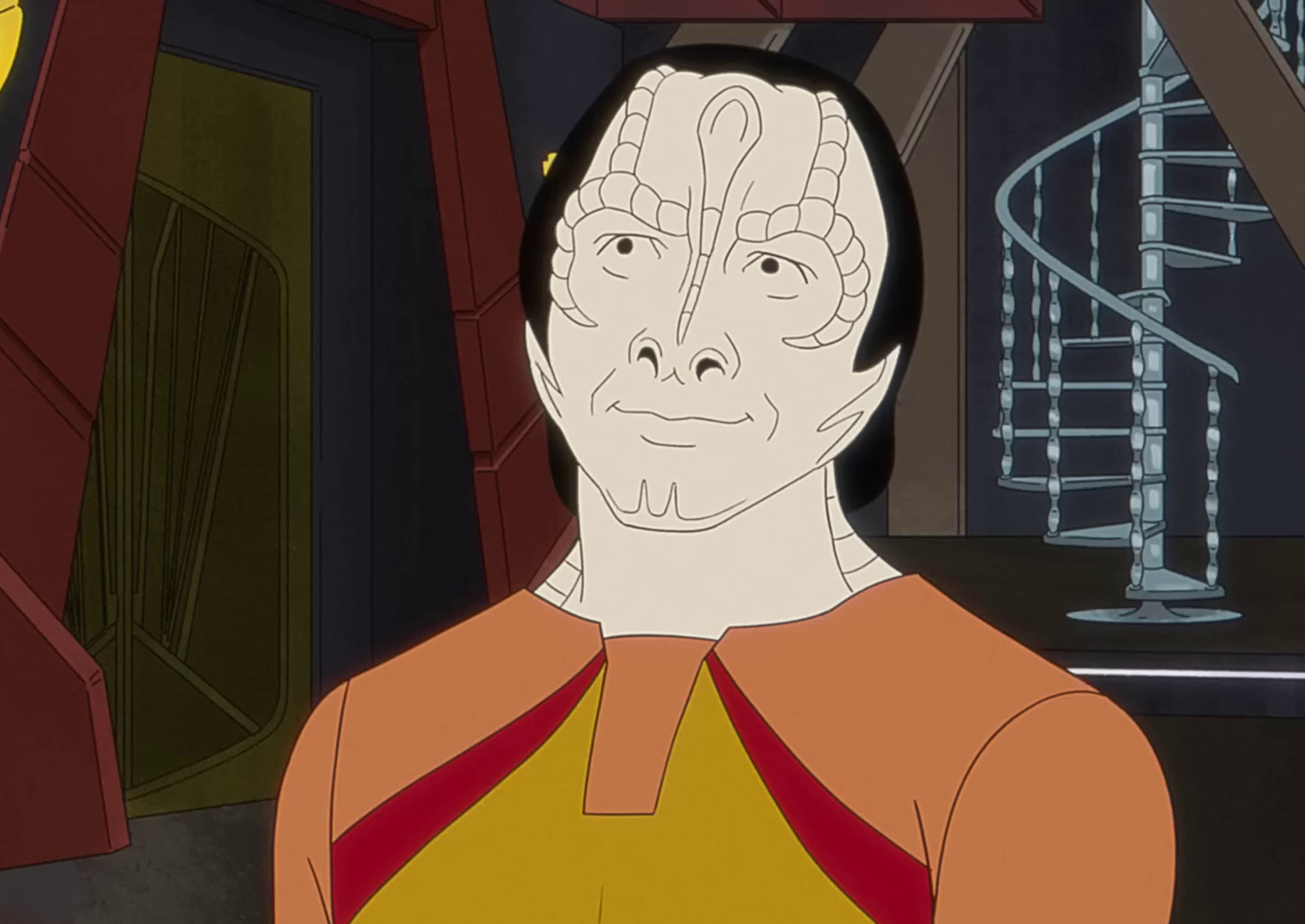
Still frame from Star Trek: Very Short Treks showing Garak.
How would the Cardassians have reacted to the Burn – and its Federation origin?

Let’s draw the bare outline of a potential story that would take the Burn as a starting point, tie in one of Star Trek’s well-known factions, and use it as a springboard for some character-focused storytelling. This is just a thought experiment, but I think it’ll illustrate the point I’m trying to make!

After discovering the truth behind the Burn and ensuring it won’t happen again, Captain Burnham and the crew are tasked with jumping to the Klingon homeworld, where a Federation ship has gone missing. Upon arriving at Qo’noS, Discovery is confronted by angry Klingons telling them to leave, and they learn the missing ship has been impounded and its crew are being held. The Klingons, whose empire has fractured and who have been suffering the effects of the Burn for a century, blame the Federation for what happened – and in addition to holding one ship captive, they’re massing for war.

This would be hugely triggering for the crew of Discovery – they’re veterans of the 23rd Century Klingon war, a war Burnham still blames herself for causing. It brings back horrible memories for her and another member of the crew, and they have to wrangle with those feelings while trying to avert a war. The Klingon fleet is low on dilithium, but they’re willing to expend the last of their dwindling resources on a quest for vengeance. It falls to Burnham, Admiral Vance, and perhaps President Rillak to talk them down – offering to re-instate the Khitomer Accords and share the cache of dilithium with the Klingons.
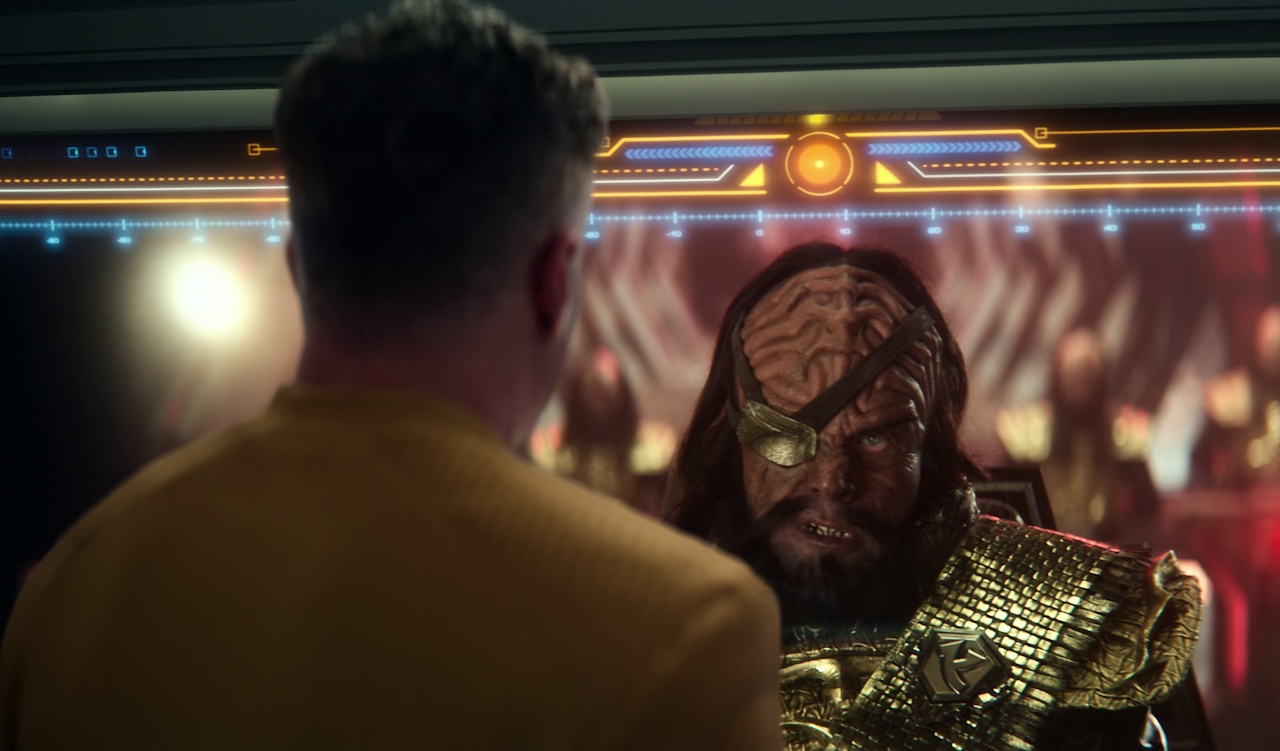
Still frame from Star Trek: Strange New Worlds Season 2 showing Captain Pike speaking with a Klingon on the viewscreen.
An episode re-introducing the Klingons could’ve really leaned into the idea of a galaxy devastated by the Burn and its aftermath.

An episode like this would take Discovery’s post-apocalyptic setting and actually do something with it – using it as the driving force for all of the tension, drama, and personal conflict in the story. The Burn devastated the Klingon Empire and they blame the Federation. Burnham has to come face-to-face with the Klingons for the first time since the war, trying to prevent another conflict while also wrangling with the trauma of the last one. Crucially, we’d get to explore one of Star Trek’s most iconic alien races and catch up with them centuries after we last saw them.

If Discovery had told stories like this one, which took the post-apocalyptic tone as a foundation, I think it could’ve been more successful. At the very least, such stories would’ve made the Burn and its aftermath more meaningful, and we’d have gotten a broader exploration of the consequences. Life in a post-apocalyptic setting was never really in focus in Discovery, and aside from the first two episodes of Season 3 and a handful of other scenes here and there, it never stuck the landing. I’m not saying my story outline as proposed above is perfect, but it would at least have leaned into this post-apocalyptic idea and done something more with it.
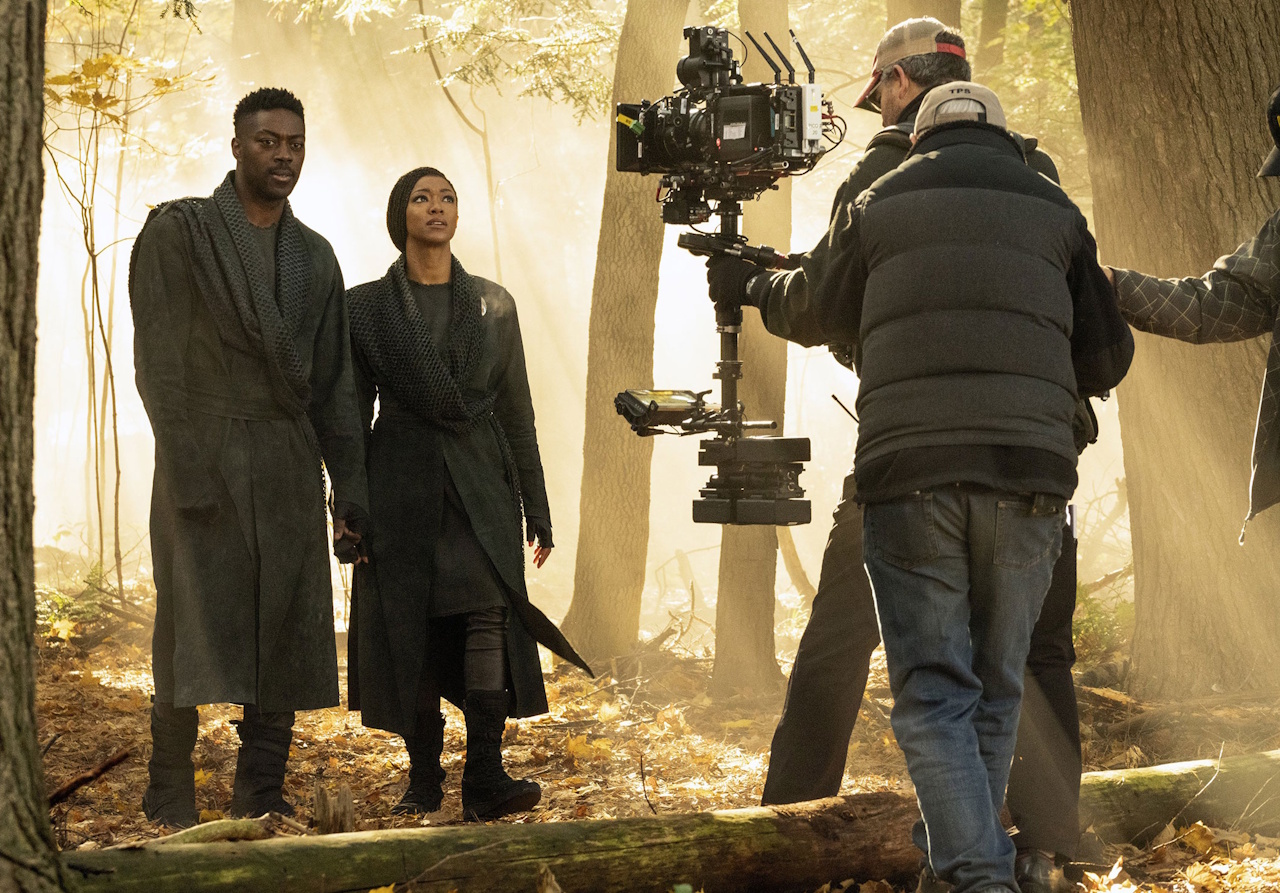
Behind-the-scenes photo from Star Trek: Discovery's third season showing Book and Burnham.
Behind-the-scenes during production on Season 3.

Instead, much of the rebuilding and diplomacy seems to have taken place off-screen – if we’re to imagine it happened at all. After defeating the Emerald Chain and securing the Verubin Nebula and its dilithium, Starfleet and the Federation seem to have instantly rebuilt, with very little mention of the Burn and its century-long aftermath in Seasons 4 and 5. Considering how massive and transformative this event was for the galaxy, that’s just not good enough. If there was ever a place where the old Creative Writing 101 adage “show, don’t tell” was important, it was here!

Discovery would still have faced an uphill battle, I fear. Ruining the galaxy, devastating the Federation, and forcing survivors to scrounge for resources for decades feels antithetical to Star Trek in so many ways. But if there had been a conscious effort to lean into this idea and use it as a springboard for storytelling that was well-suited to a post-apocalyptic environment, it could at least have worked better or been less bad. The combination of a post-apocalyptic setting with stories that just didn’t fit made things noticeably worse.
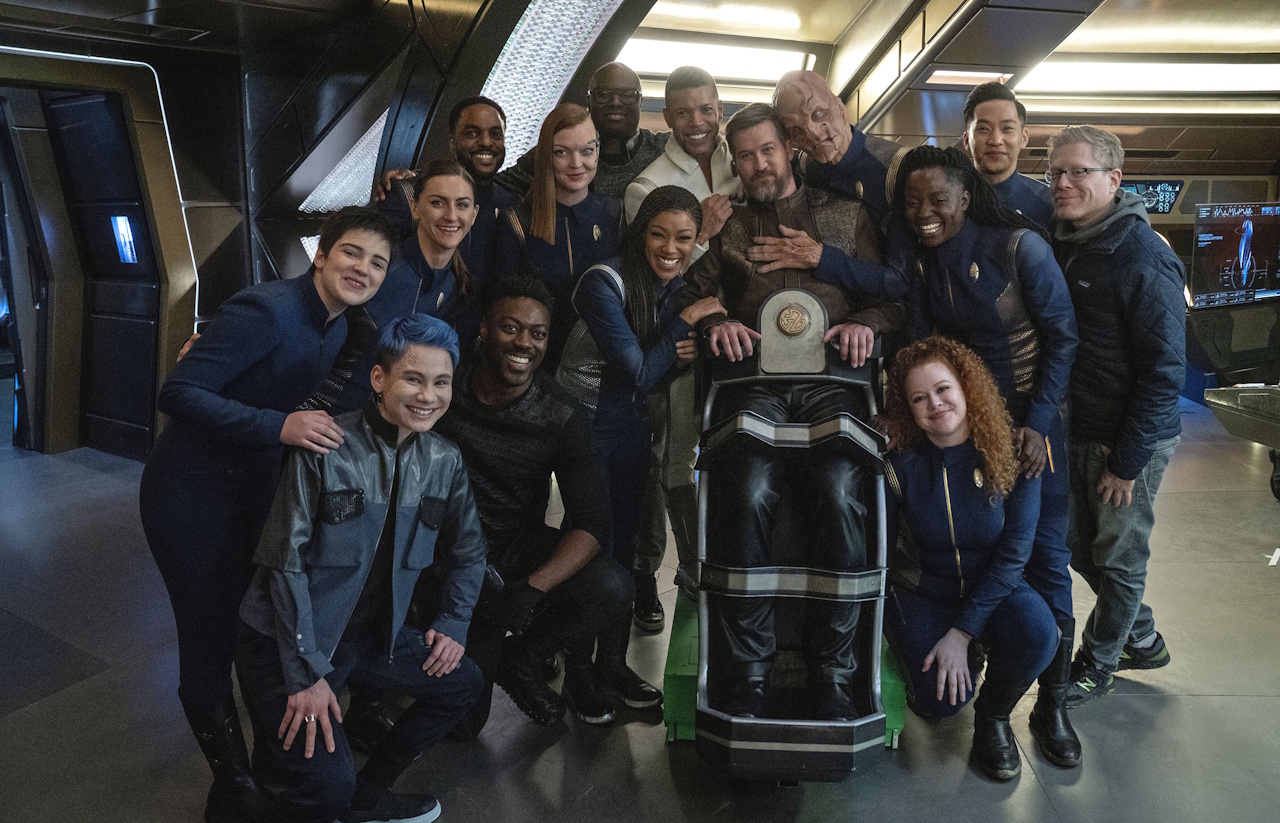
Behind-the-scenes photo from Star Trek: Discovery's third season showing most of the main cast with guest star Kenneth Mitchell.
The cast during production on Season 3.

That’s before we come to “the prequel problem,” though.

In brief, Discovery is set in Star Trek’s prime timeline – no matter what some fans might say or what head canon explanations we have, at time of writing Discovery remains in the prime timeline. Everything we’ve seen on screen from Enterprise in the 22nd Century to Picard at the dawn of the 25th takes place in this same setting – which means that the prime timeline is destined to be devastated by the Burn. Going back to watch older episodes of Star Trek doesn’t feel much different, at least not to me, but the Burn and all the chaos and ruination it caused is sure as heck going to taint future stories.

Take Picard’s third season as an example. Admiral Picard and his crew had to come together to defeat a conspiracy targeting Starfleet – and after a hard-fought struggle, they won and saved the day. But because Picard Season 3 premiered after we learned about the Burn in Discovery… at least some of its impact was blunted. Now, don’t get me wrong: Picard Season 3 wasn’t spectacular in its own right. But it was the best and certainly the most complete and coherent story that series had to offer – and yet because we know the Burn is coming in the future, it almost doesn’t matter what Picard and his friends did.
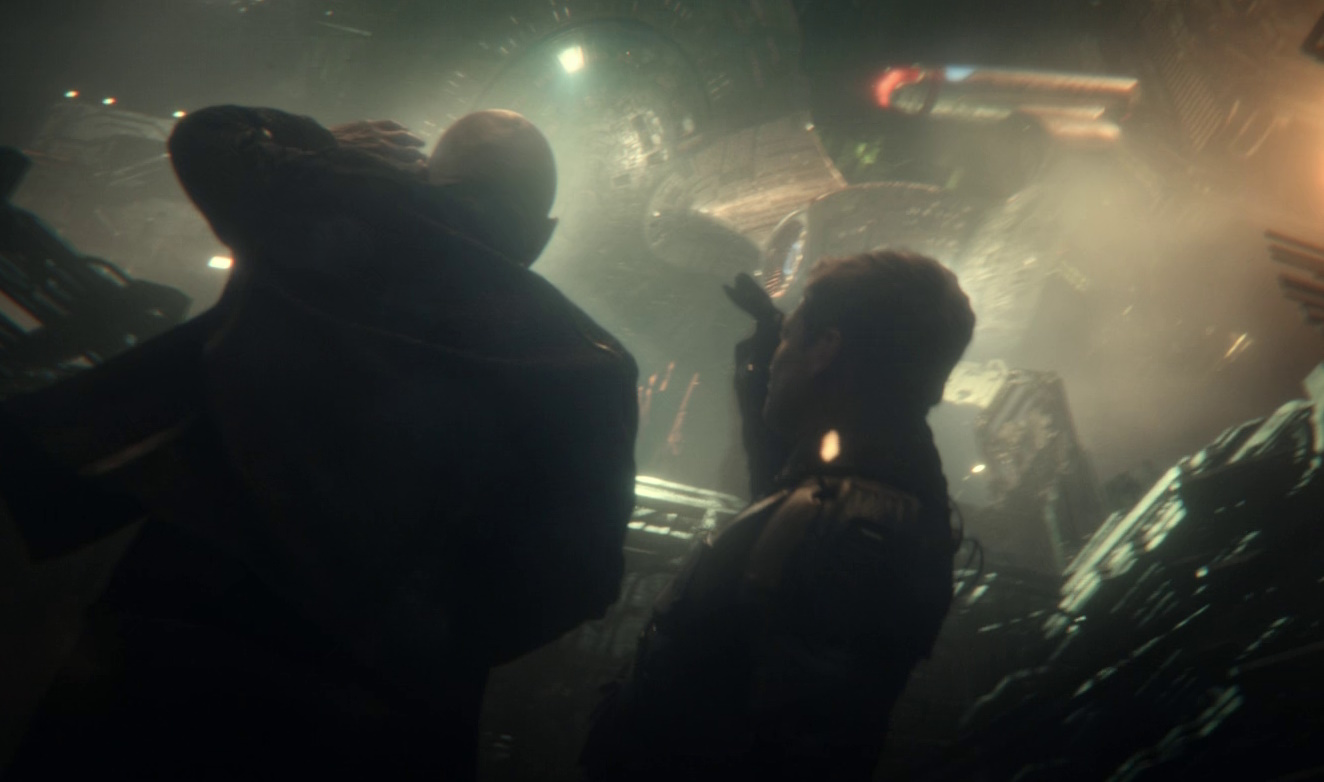
Still frame from Star Trek: Picard Season 3 showing Picard and Jack with the Enterprise overhead.
Other Star Trek productions – like Picard’s high-stakes third season – are also affected by Discovery’s post-apocalyptic setting.

You can look at this problem in two ways.

Firstly, we know in the back of our minds that the Federation will survive – no matter how high the stakes may be in a future project. When Admiral Picard was staring down Vadic and the Borg-Changelings, we knew that, somehow, they’d prevail and Starfleet would win the day. This is the basic problem many prequels have; it was present in multiple episodes of Enterprise, for example, even when that show was at its best.

Secondly, anything our heroes do is rendered somewhat impotent – or at least it’s tainted because we know that, no matter how hard they may work to save the day, the Burn’s gonna happen anyway. Earth and Vulcan will leave the Federation, dilithium will be in short supply, the galaxy will be in ruins, and it will be decades before rebuilding can begin in earnest. Any future story set in the prime timeline – whether it’s Strange New Worlds with its Gorn conflict, Picard’s battle against the Borg, or whatever happened at the end of Prodigy that I still haven’t seen – is a direct prequel to the Burn and the events of Discovery’s third season. Knowing that, even on a subconscious level, is a constraint on any story that aims to raise the stakes.
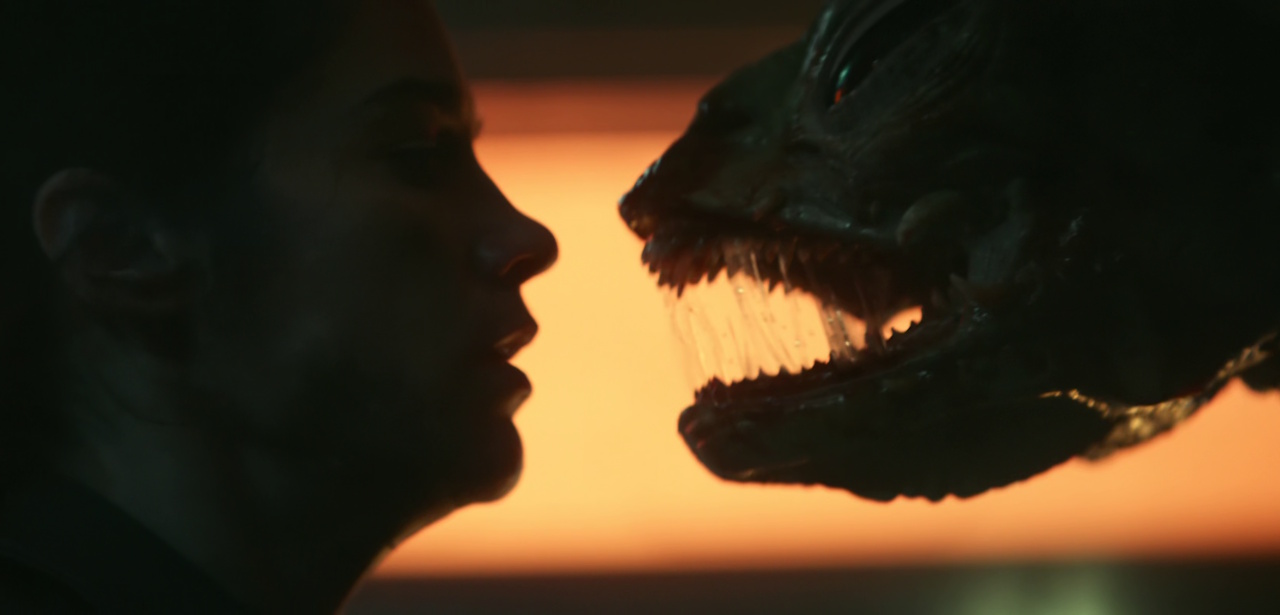
Still frame from Star Trek: Strange New Worlds Season 2 showing Captain Batel and a Gorn.
A Starfleet officer and a Gorn in Strange New Worlds Season 2.

Star Trek exists in – to use a modern term – a persistent shared universe. With the exception of the Kelvin films, which are off to one side, every other show and film exists in the same timeline, and no other series until Discovery has done so much to change the trajectory of that timeline for all of the others. By leaping forward by centuries, and then enacting this massive, galaxy-altering event, Discovery’s writers definitely left their mark on Star Trek. But like a crudely-graffitied penis on the wall of a bus shelter, it’s not exactly a mark that the rest of us wanted to see.

If Discovery existed in a vacuum – as it arguably did at the start of its first season – then perhaps I could understand this change a bit more. It would still be a massive change, and it would still be a constraint on future episodes in a way no other storyline arguably has been. But at least if Discovery were the only Star Trek show in town, racing into the future and depicting an event on this scale would’ve been more understandable and less… selfish.
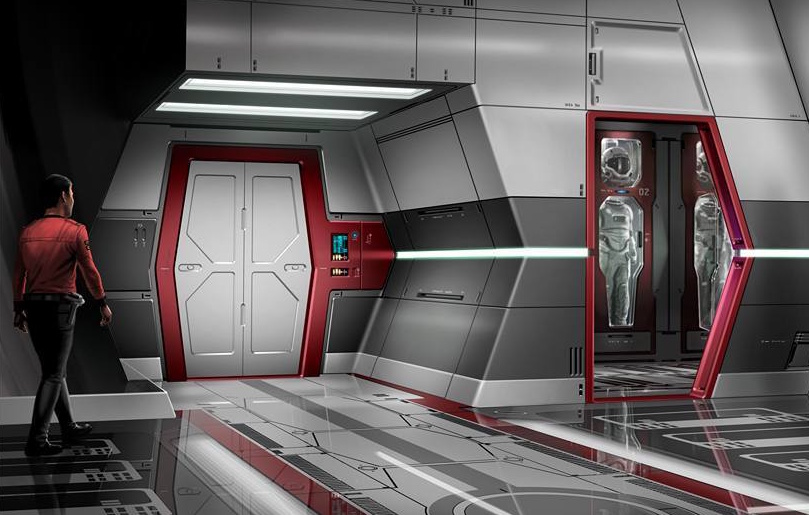
Concept art from Star Trek: Discovery Season 1 showing the interior of a spaceship.
Concept art of the USS Shenzhou from Discovery’s first season.
Image Credit: Frogland Archive

Discovery’s third season was in production alongside Picard, Lower Decks, Prodigy, Section 31, and also while pre-production work was happening on the pitch for what would eventually become Strange New Worlds. The show’s producers and writers went out of their way to assure fans that Discovery remained in the prime timeline – and that, by extension, the world they were building in Season 3 is the ultimate destination for the prime timeline. And then, either ignorant of the impact it would have or not caring about it, they went ahead and wrote a story that not only altered the entire galaxy for their own show and any potential spin-offs, but for every other Star Trek show, too. Everything from Strange New Worlds to Prodigy became, by default, a prequel to Discovery. And because Discovery’s writers don’t do half measures, they went all-in on the Burn – devastating the entire galaxy, basically ending the Federation as a faction for decades, and utterly transforming Star Trek in the process.

In order for there to be a post-apocalyptic setting (which Discovery largely ignored after the first couple of episodes of Season 3) there had to first be an apocalyptic event. Because Discovery has never turned down the tempo or lowered the stakes, this event naturally had to impact not just the ship and crew, nor even the Federation, but the entire galaxy. And the consequence of this choice is that every subsequent Star Trek production, no matter how hard they try to ignore it, will take place in a pre-Burn galaxy. The Burn is locked in; it’s the direction of travel for the Federation and Starfleet. Not only is that a massive constraint on future stories… it’s also incredibly depressing for a franchise that has always been about a hopeful and optimistic depiction of humanity’s future.
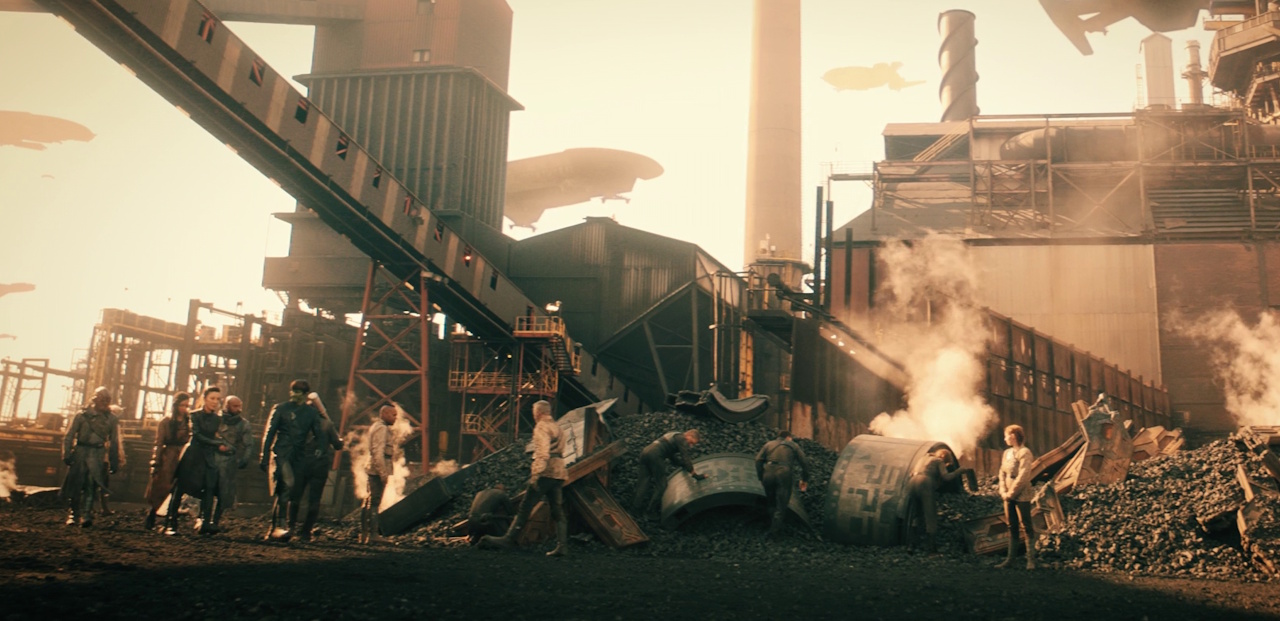
Still frame from Star Trek: Discovery Season 3 showing the junkyard planet.
Slaves at an Emerald Chain scrapyard in the 32nd Century.

When we talked about “head canon” a few weeks ago, I argued that it might be better for Star Trek as a whole to quietly push Discovery’s far future into an alternate timeline. That doesn’t mean abolishing it altogether, but if a future episode – say in the upcoming Starfleet Academy series – were to incorporate that… I think it would be for the best. Star Trek, in my view, ought to do more with the 25th Century setting established by Picard, but the Burn and Discovery’s post-apocalyptic future hangs over any potential new shows or films right now.

Speaking of Starfleet Academy, what does this all mean for the upcoming spin-off?

A series set at Starfleet Academy has been talked about for decades. Gene Roddenberry had the idea originally; his version of the show, as conceptualised in the late ’60s, would’ve seen Kirk and Spock meeting for the first time. Picard’s second season also teased us with a glimpse of the Academy around the turn of the 25th Century – and Prodigy also included similar themes in its second season. But this version of Starfleet Academy has been conceived as a spin-off from Discovery, not only set in the same time period but also bringing in several regular and recurring characters. The likes of Reno, Admiral Vance, and Tilly will be joining the show from Discovery.
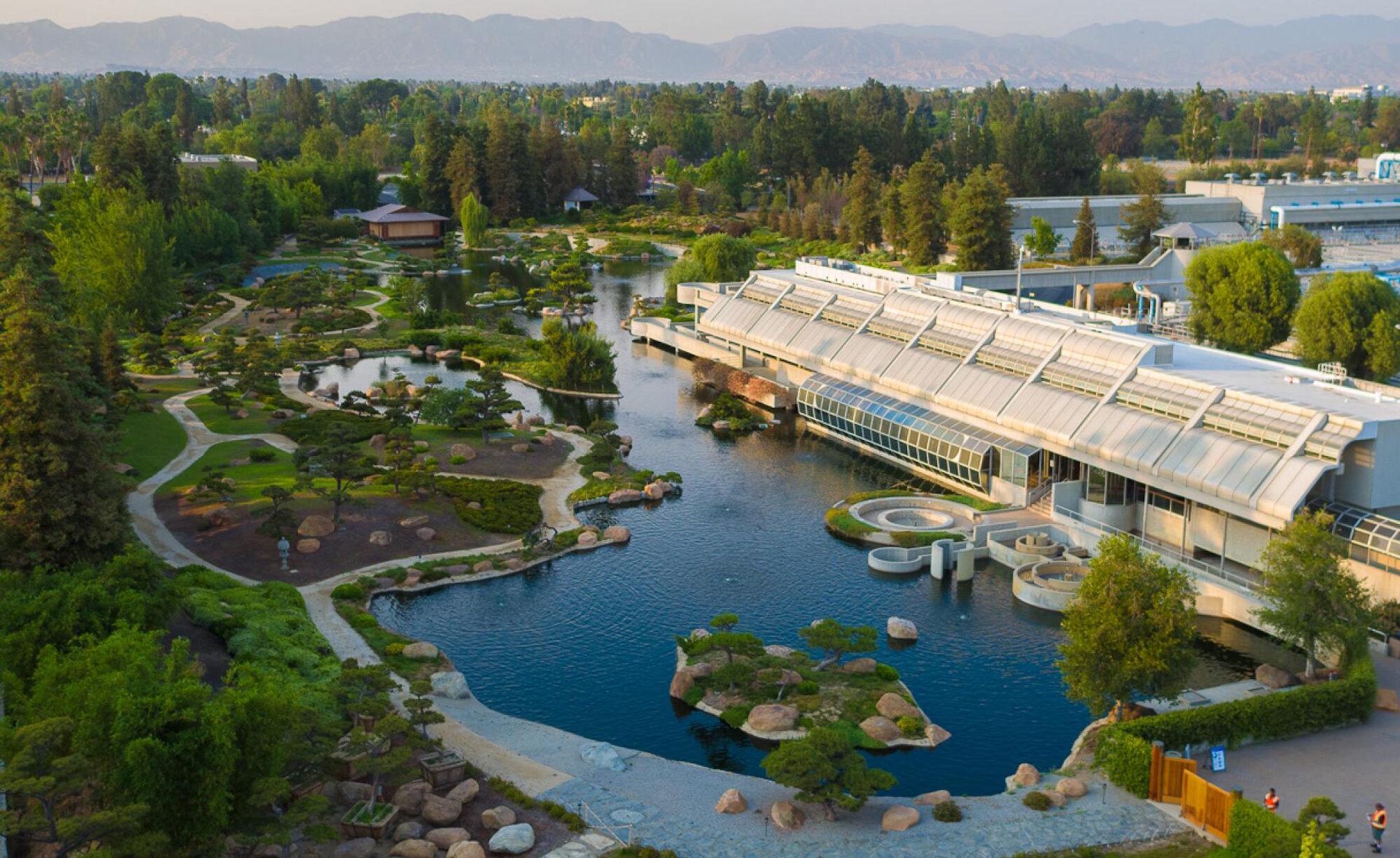
Aeriel photo of the Tillman Water Reclamation Plant in Los Angeles.
The Tillman Water Reclamation Plant and Japanese Garden was the filming location for Starfleet Academy during The Next Generation era.
Photo Credit: City of Los Angeles/L.A. Times

I could spend the next few paragraphs lamenting Starfleet Academy’s place in the timeline and explaining why I think it’d work better in the late 24th or early 25th Century. But let’s not do that, eh? Instead, let’s talk briefly about how Starfleet Academy could be more successful with this post-apocalyptic setting than Discovery was.

First of all, let’s try to move back toward episodic storytelling. Look at what Strange New Worlds is doing – it’s possible to mix standalone stories with season-long arcs, and that blend works so much better than anything Discovery or Picard did. That doesn’t mean you can’t have a villain or a big, explosive storyline, as Strange New Worlds has repeatedly proven. It would be so much closer to what Star Trek has been in the past – and, I would argue, much closer to what fans want to see from this franchise.

Behind-the-scenes photo from Star Trek: Starfleet Academy showing the main cast and crew at a table read.
The cast and crew of Starfleet Academy – the series is already in production.

Next, if Starfleet Academy is going to be set in this post-Burn era, the show really needs to lean into that in a way that Discovery didn’t. The show’s blurb talks about how the Academy is re-opening for the first time in decades… so that needs to be a big storyline. As the galaxy begins the slow process of recovery and getting “back to normal” after decades of decline, devastation, and depression, what does that mean for the new cadets, their families, their instructors, and their homeworlds? How has the environment these kids grew up in impacted their lives? Star Trek often does storytelling by analogy – so this could be a way to examine the real-world impact of the covid pandemic on education, just as an example.

Finally, I’d like to see an examination of the consequences of this galaxy-wide event on at least one other faction. Perhaps Starfleet Academy’s villain – who will be played by veteran actor Paul Giamatti – could be a member of a familiar race or faction seeking revenge for the Burn’s impact on his homeworld. At the very least, the Burn and the devastation it caused should be a significant factor in explaining who this character is and what motivates them. Having to survive in a broken, shattered world takes a toll – and that could explain why this villain is as bad as he is.

Still frame from Billions showing Paul Giamatti's character.
Paul Giamatti (Billions, John Adams, etc) will play a villainous character in Starfleet Academy.

Discovery did very little of that. Most of the show’s villains in Seasons 3, 4, and 5 weren’t bothered about the Burn or the post-apocalyptic landscape. The only exception, really, was Zareh; I at least felt that – over-the-top though he was in some respects – he was shaped by the world he inhabited. The rest? Generic, scenery-chewing bad guys who could’ve easily been part of a totally different story set in another era – or another franchise, come to that.

I don’t think Starfleet Academy can really “save” Discovery. By that I mean I don’t think we’re going to look back at the Burn and Discovery’s take on this post-apocalyptic setting after a couple of seasons of Starfleet Academy and re-frame it or change how we think about it. But there is potential, if I’m being as optimistic as I can be, for the new series to make more of this setting than Discovery did, and to perhaps use the post-apocalyptic tone in a different and more successful way, a way better-suited to the environment that the Burn and its aftermath created.
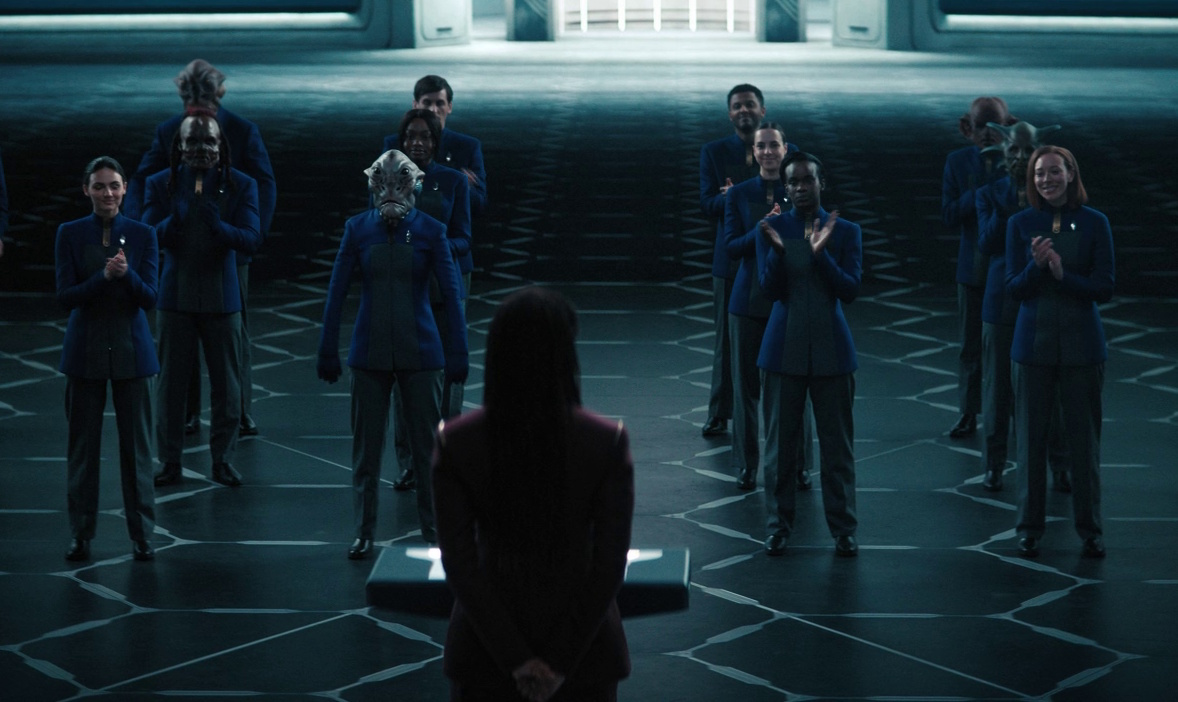
Still frame from Star Trek: Discovery Season 4 showing Captain Burnham addressing a group of cadets.
Captain Burnham and Academy cadets.

At this point, you can probably tell that I’d never have given the green light to a storyline like the Burn if I’d been in charge of the Star Trek franchise in the late 2010s! A post-apocalyptic tone clashes in a fundamental and irreconcilable way with Star Trek, taking away one of the franchise’s core beliefs and the main way it differentiates itself from other sci-fi properties. Even if the storytelling in Seasons 3, 4, and 5 had been stronger, this transformational change to what Star Trek is would have still been a hurdle; even the best narrative concepts and ideas that I can think of would’ve struggled.

But the truth is that, while Discovery did manage some solid episodes after arriving in the far future, the main story arcs weren’t all that spectacular. The Burn itself was a frustrating mystery that had too many dead ends and red herrings, and storytelling after Season 3 completely sidelined not only the Burn but the post-apocalyptic environment that it left in its wake. Discovery’s writers, in a rush to do other things and tell different stories that mostly focused on one character, didn’t do anywhere near enough to justify the Burn and the massive impact it had on the world of Star Trek.
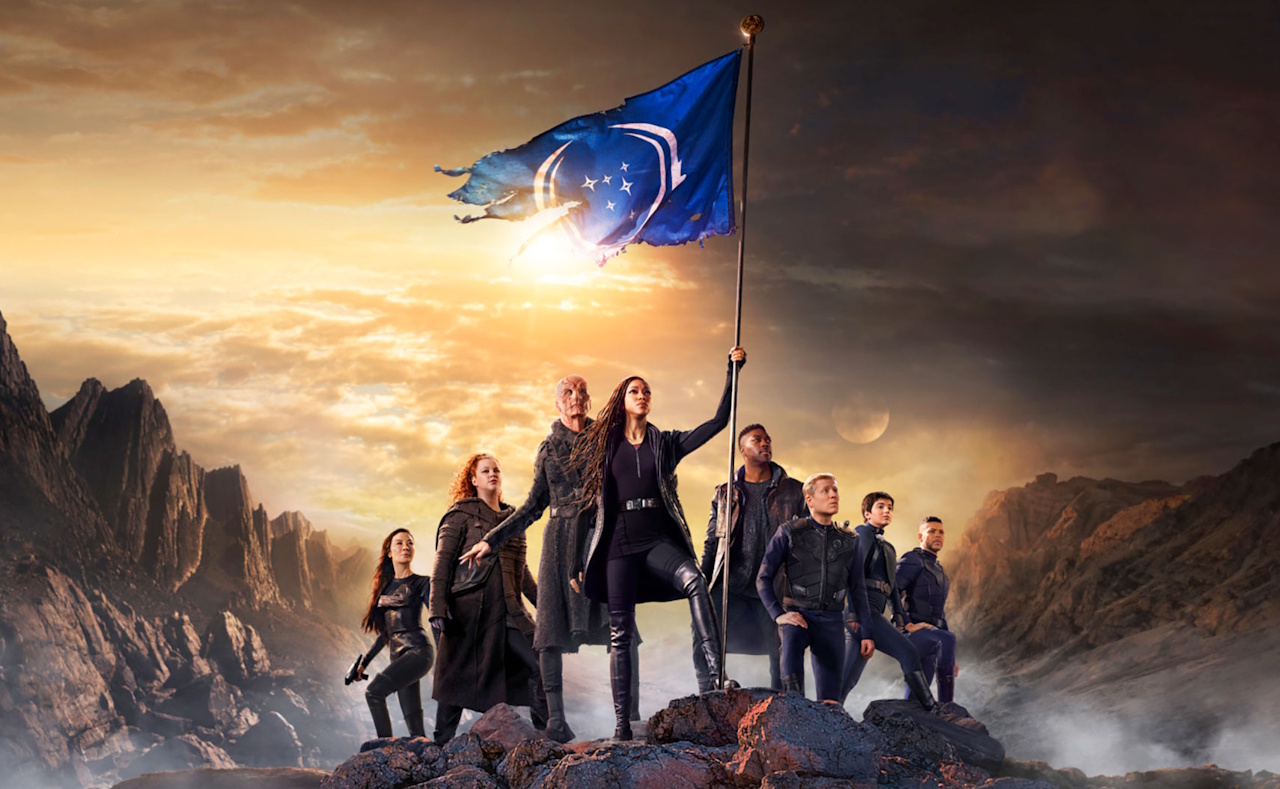
Cropped promo poster for Star Trek: Discovery's third season.
Burnham and the crew on a promotional poster for Season 3.

In one of the first pieces I ever wrote here on the website, back in January of 2020, I warned that a post-apocalyptic setting might not be the right choice for Star Trek. But I gave Discovery a chance to impress me and to do something with that idea that I might not have been expecting. Unfortunately, I don’t think the show really did that. Most of its storylines – both big and small – didn’t need a post-apocalyptic setting to work, and the setting itself fundamentally altered Star Trek – not only for Discovery, but in a way, for every other show, too. One of the core tenets of Star Trek since its inception had been that humanity could overcome the struggles of today and build a better future. Discovery took that better future and upended it – really without a good reason or a narrative that justified something of that magnitude – and in doing so, changed the entire franchise. Sadly, I feel this was a change for the worse.

“Post-apocalyptic Star Trek” was wrong in principle and wrong in practice. It misunderstood why themes of hope and optimism worked in the franchise in the first place, it took away one of the foundations upon which successful Star Trek stories had been built for more than half a century, and it seems to have come about from an unfortunate mix of corporate leaders wanting to jump on a successful trend and writers who thought they were smarter and more creative than those who came before them. While Discovery didn’t abandon or lose sight of the themes of optimism and hope that had been so important to the franchise, it bastardised them and used them in completely different – and too often ineffective – ways.
The original Star Trek: Discovery logo (in use for Seasons 1 & 2).
Discovery’s writers and producers chose a post-apocalyptic tone beginning in Season 3 – and it didn’t work.

Moreover, “post-apocalyptic Star Trek” was executed poorly. The Burn – the event that caused all this devastation – unfolded in a frustrating way in Season 3, and I got the sense that for more than a hundred years, everyone in Starfleet had just been sitting on their hands as the world crumbled, waiting for Michael Burnham: Chosen One™ to swoop in, provide all the answers, and save the day. The Burn and its aftermath was then largely ignored in Seasons 4 and 5, despite offering the series – and the franchise – a chance to tell some genuinely interesting stories that could’ve expanded our understanding of this far future setting. By refusing to lean into the post-apocalyptic idea, Discovery’s writers failed to take advantage of the storytelling potential they had created.

Next, “post-apocalyptic Star Trek” impacts the rest of the franchise – from The Original Series to Picard. All of these shows now take place in a pre-Burn world, changing the way we understand them and perceive them on repeat viewings. For new Star Trek stories produced in the years ahead, this is going to be a lot worse because they’re basically all prequels to Discovery and its post-apocalyptic vision of the future. That knowledge challenges future stories and puts a brake on them in a way we haven’t really seen before.

Still frame from Star Trek: The Original Series Season 1 showing Kirk and Spock on the bridge.
All of Star Trek (except for the Kelvin films) now takes place in a setting we know is bound for an apocalyptic disaster.

Finally, “post-apocalyptic Star Trek” is likely going to be a constraint on Starfleet Academy. I want to be hopeful and optimistic about that series – and I have no doubt that, just like Discovery, there will be at least some fun and creative episodes in the mix. But the backdrop to the show is still a galaxy devastated by the Burn, and I don’t really have confidence in the current production and writing team at Paramount when it comes to doing something meaningful with that. If Starfleet Academy only pays lip service to Discovery’s post-apocalyptic world before racing off to do another “the entire galaxy is in danger!” story, it’ll feel like a waste. If that’s the kind of story the show’s writers want to tell, why not set it in a different time period that might be better-suited to that kind of story?

At the end of the day, a post-apocalyptic setting works for some stories and doesn’t for others. For the stories Discovery’s production team wanted to tell, it just wasn’t necessary for the most part – especially not after Season 3. Unlike other one-off ideas in Star Trek that the franchise has been content to brush aside, this one was so transformative and so utterly changed what Star Trek’s galaxy looks like that walking away from it isn’t possible. There just doesn’t seem to have been any kind of plan for where to take the series after Season 3 or how to use the post-apocalyptic setting to tell stories that wouldn’t have been possible in other iterations of the franchise.
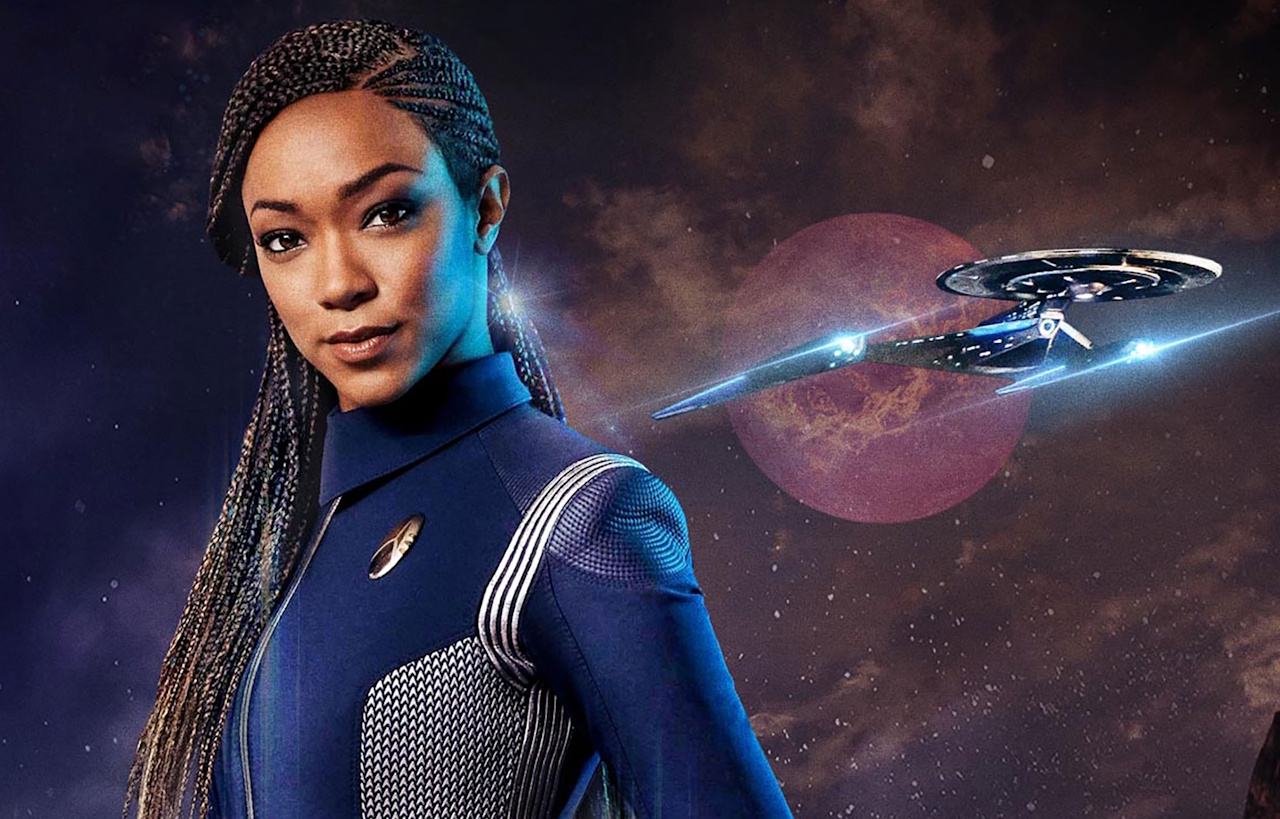
Cropped promo poster for Star Trek: Discovery's third season.
Michael Burnham and the USS Discovery.

So let’s answer the question I posed at the beginning: what went wrong? Fundamentally, “post-apocalyptic Star Trek” wasn’t a good idea as it deviated too far from the franchise’s foundations and roots. It was executed poorly, with most stories either ignoring the post-apocalyptic setting outright or not using it to inform characters or narrative beats. And it relegates any future production set after The Next Generation era but before Discovery’s third season to the status of a prequel, with all of the problems that can bring.

I don’t hate Discovery. There are some genuinely great episodes in the mix, including after the show shot forwards in time. Coming Home, for example, really hits a lot of the emotional notes that it aimed for, especially in the scenes and sequences set at Federation HQ and around Earth. Face the Strange was creative and fun, and a story like Choose to Live felt like classic Star Trek in the best way possible. But given how the show didn’t lean into this post-apocalyptic setting in a big way, devastating the Federation, Starfleet, Earth, and the entire galaxy just doesn’t sit right. It didn’t come close to finding a narrative justification, and given the scale of the change and the resonating impact it will continue to have… that’s not good enough.


Star Trek: Discovery Seasons 1-5 are available to stream now on Paramount+ in countries and territories where the platform is available. The series is also available on DVD and Blu-ray. Star Trek: Starfleet Academy is in production and will premiere on Paramount+ in the future. A broadcast date has not yet been announced. The Star Trek franchise – including Discovery and all other properties discussed above – is the copyright of Paramount Global. This article contains the thoughts and opinions of one person only and is not intended to cause any offence.
My biggest wish for Star Trek: Discovery Season 5

Spoiler Warning: There are spoilers ahead for Star Trek: Discovery Seasons 1-4.

With Picard Season 2 ongoing, Strange New Worlds Season 1 hot on its heels, and Prodigy and Lower Decks still to come this year, it might seem premature to be thinking about Discovery Season 5 already! But as I was writing up the final part of my Season 4 theory list, it got me thinking. Season 4 wasn’t bad, all things considered. It had some storylines that disappointed or underwhelmed, but there are some genuinely outstanding episodes in the mix as well – and it ended on a very emotional and exciting high note.

It’s never too early to look ahead, and before production gets fully underway on Discovery’s next outing, I wanted to share my thoughts and opinions about where the show could go from here, and what I’d like to see next. That’s what this article will be about – but stay tuned for a more in-depth look at Season 4 and some of its story elements in the weeks and months ahead.

The USS Mitchell in the Season 4 finale.

For me, the single biggest wish I have for Discovery Season 5 is that it steps away from the “apocalyptic, galaxy-ending threat” story archetype that has been used in different ways across all four seasons of the show so far. We’ve gone through the Klingon war in Season 1, Control and the Red Angel in Season 2, the Burn and the Emerald Chain in Season 3, and finally the DMA and Unknown Species 10-C in Season 4. It’s time to give Captain Burnham and the crew a break, and for the series to try using a genuinely different formula instead of slapping a new coat of paint on the old one.

Just because a story is smaller in scale doesn’t make it any less emotional, exciting, tense, or dramatic, and I think that’s a lesson some of Discovery’s writers and producers could do with taking to heart. How we as the audience respond to a work of fiction is guided not by how massive the monster is or how big the explosions are going to be, but by how the characters we’re rooting for react. Their emotions become our emotions, their investment in the world around them becomes our investment, and so on. A story about a group of people working in an office, friends going on a road trip, or star-crossed lovers from rival families aren’t smaller, less exciting, and worse because they don’t have the backdrop of a world-ending disaster spurring them on. And conversely, some of the worst and least-exciting films and TV shows I’ve ever seen went over-the-top with the size and scale of the disaster the characters were facing.

The Burn was the driving force for much of Season 3.

Past iterations of Star Trek used these kinds of apocalyptic stories pretty sparingly, when you look back on it. It’s only Deep Space Nine’s Dominion War arc, which lasted for three seasons, that comes close to being as long and drawn-out an affair, and even within the framework of the Dominion War, DS9 found ways to tell very different and fun one-off stories. Things like the Borg incursions that Captain Picard and his crew had to deal with were either two-parters or one-off films, and they work well in that format.

Picard and the crew of the Enterprise-D still found other ways to be entertaining, and many of The Next Generation’s standalone episodes have gone on to be considered iconic, even those that had a far smaller focus than blockbuster outings like The Best of Both Worlds. This doesn’t mean ditching the season-long story arcs or returning to an episodic format, because I think Discovery has done some interesting and neat things with its serialised stories. But it does mean choosing season-long storylines and narrative arcs that are different in a fundamental way to what the show has tried already.

The DMA was the big threat in Season 4.

Practically any format can become bland and unexciting when overused, no matter how much fun it might’ve been in its original incarnation or at its best moments. It’s a challenge to keep any television series feeling fresh as it enters its fifth season and races toward its sixty-fifth episode, and there are many examples of shows that ran out of steam somewhere along the way. Heck, I have an entire list of television shows that either ran too long or wore out their concepts, and I can think of many more that I could’ve included.

Even Star Trek has hit the wall in the past, running out of energy and failing to keep audiences engaged. By the time Enterprise was willing to try new things in its third and fourth seasons, for example, the franchise was already in such a steep decline that cancellation was inevitable. To Paramount’s credit, lessons have been learned from what happened in 2005 in terms of the way the franchise as a whole operates. Different series are telling stories in their own ways, appealing to broader audiences, and Star Trek as a whole feels varied and diverse. But Discovery on its own doesn’t… and it’s right on the verge of becoming repetitive.

The USS Discovery in Season 4.

I was far from the only commentator to make the point prior to Season 4 that another “galactic threat” storyline felt samey, coming off the back of three similar narrative frameworks, and I’m sure I won’t be the only one to say that re-using that format a fifth time will be a bridge too far. Making use of the newly-established 32nd Century in different ways, and telling a story that may be smaller in scale but that’s just as impactful, emotional, and entertaining, will be the key challenges that I’d like the writers to tackle in Season 5.

The theme of rebuilding in the aftermath of a disaster was something we only saw Season 4 tackle in the briefest and barest of ways right at the beginning of the season, but this could be a concept that the show puts to much better use next time around. Discovery could follow Captain Burnham as she and the crew jump to different worlds, delivering dilithium, solving problems, flying the flag for the Federation… and most importantly, bringing hope to a galaxy that’s been through a lot.

The flag of the Federation…

This is what I’d hoped Season 4 would do, to be honest. The idea of restoring the Federation from the incredibly weakened state it was in when we encountered it is far too important and interesting to be relegated to something that happens off-screen, and I felt even before Season 4 had aired a single episode that this concept offered so much scope for emotional, exciting, and varied storytelling. Discovery could hop to different planets, combining the inclusion of new and visually different alien races (like Season 4’s “butterfly” aliens) with the reintroduction of classic races.

Catching up with some of the factions we remember from past iterations of Star Trek is also something I’ve been wanting Discovery to do for two seasons now. We’ve caught glimpses of races like the Ferengi and Andorians, and heard others mentioned in dialogue and log recordings, but we haven’t actually spent a lot of time with practically any of them. Finding out what became of fan-favourites not only in the years after the Burn, but in the centuries before that event took place, is something that I think a lot of Trekkies would be interested in.

We caught glimpses of familiar races… but Discovery didn’t find time to explore most of them in any detail.

If the 32nd Century is going to be a major setting for the franchise going forward, this kind of world-building is important. Just like how The Next Generation laid the groundwork for Deep Space Nine through its introduction of the Cardassians and Bajorans, so too could Discovery introduce us to planets, races, and technologies that future spin-offs and Star Trek projects could expand upon.

Part of that world-building can be done in a serialised story that looks at how the Federation can be rebuilt in the aftermath of the disasters it has already faced; introducing another new disaster to avert or recover from is simply not needed at this point. From the point of view of the characters, throwing them into another extreme situation would also be problematic, and would take the storytelling close to soap-opera levels.

Owosekun, Saru, and Detmer.

Discovery has, to its credit, attempted to show how some of the events that its characters have gone through have impacted their mental health. Some of these stories have been underdeveloped – Detmer’s in Season 3 and Dr Culber’s in Season 4 being the most egregious examples. But even with this kind of attempted mental health focus, there’s a limit on what we could expect characters to go through and still be alright when they come out the other end.

To be fair, that’s a line that the Star Trek franchise has crossed in the past with characters like Miles O’Brien, for example, who seemed to survive a lot of traumatic events only to be back to normal the next week! But as shows like Picard have demonstrated with characters like Seven of Nine and Jean-Luc Picard himself, it can be incredibly cathartic to revisit some of these characters and give them meaningful, lasting development. But we’re drifting off-topic!

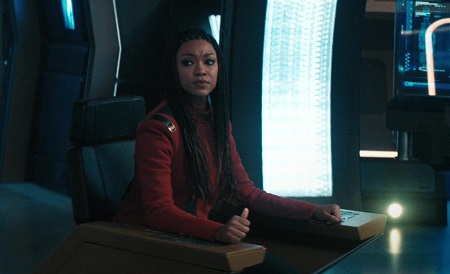
Captain Burnham in Season 4.

Star Trek’s galaxy is vast, and as we saw in Season 4 with the inclusion of races like the Abronians and Unknown Species 10-C, even in the 32nd Century there’s still a heck of a lot that Starfleet doesn’t know about it. There’s scope for Captain Burnham and the crew to get back to exploring for its own sake, as well as using their Spore Drive to reach parts of the galaxy that it would be difficult for the Federation to do otherwise. There’s the potential for the crew to bring hope to far-flung Federation outposts after the Burn, the Emerald Chain, and the DMA have had such a devastating impact… and it’s worthwhile telling stories like that.

Even if Season 5 doesn’t do much of that rebuilding or exploring, I’m still hopeful that whatever stories it chooses to tell won’t feel repetitive and won’t recycle the same basic story framework that we’ve seen throughout the show’s entire run to date. Discovery could do so much to expand our understanding of the Star Trek galaxy; even more so in a 32nd Century setting that is wholly unconstrained by prior canon. Shooting this far forwards in time was a great way for the show’s writers and producers to give themselves new opportunities to play in the vast sandbox that we call the Star Trek galaxy – so now would be a great time to take advantage of that.

As I look ahead to Season 5, I feel hopeful and optimistic. Season 4 had some problems, but generally it was an improvement over Season 3 and it ended in truly spectacular fashion. There’s potential for what comes next to build on that, and if the series can avoid retreading too much old ground, Season 5 could be Discovery’s best outing yet.

Star Trek: Discovery Seasons 1-4 are available to stream now on Paramount+ where the platform is available and via a patchwork of video-on-demand and pay-to-view streaming platforms in the rest of the world. The series is also available on DVD and Blu-ray. The Star Trek franchise – including Discovery and all other properties mentioned above – is the copyright of Paramount Global. This article contains the thoughts and opinions of one person only and is not intended to cause any offence.
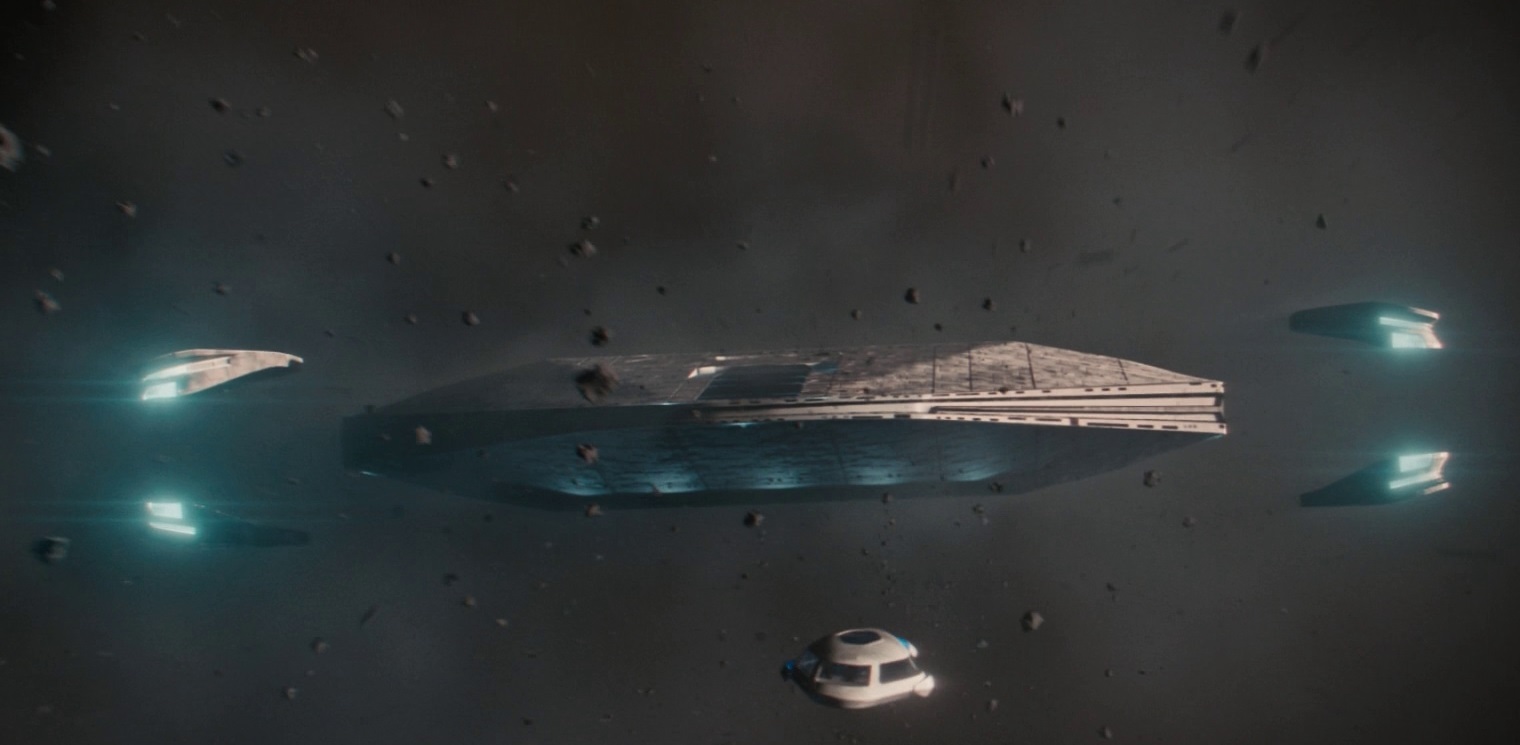
Star Trek: Discovery Season 3 – did the Delta Quadrant escape the Burn?

Spoiler Warning: There are spoilers ahead for Star Trek: Discovery Seasons 1-3, Star Trek: Voyager, and for other iterations of the Star Trek franchise.

Today we’re continuing our series of theory articles about the Burn, and we’re returning to the Voyager Season 4 episode Living Witness for yet another idea! As one of the very few episodes of Star Trek prior to Discovery’s third season to be set in or near the 32nd Century, Living Witness has been the source of several theories and concepts already. On this occasion we’re going to consider what the episode’s far future setting and its ending could mean for Discovery, and what implications there may be if the Delta Quadrant either partially or wholly escaped the worst effects of the Burn.

Let’s start by considering what we know from Discovery itself regarding the Burn and its possible extent. Cleveland Booker introduced us to the idea of the Burn in the first episode of the season, and used the term “the galaxy” when describing its range and scale; this may be hyperbole or exaggeration to a degree, though, as Booker’s knowledge of the wider galaxy was limited – he hadn’t even been to Earth.

Booker introduced Michael Burnham to the Burn – and its scope.

Next, Admiral Vance told us that the Federation peaked in the pre-Burn years with a membership of over 350 worlds. While there are certainly enough planets in the Alpha and Beta Quadrants for the Federation to have been contained there, this expansion of the Federation is significant. The Federation was also large enough and spread out enough that Vance’s Starfleet was unable to travel to or even remain in contact with every member world. Vance was familiar with worlds in or near the Gamma Quadrant, as he noted the location of the Guardian of Forever’s new planet was in that region of space, so the Federation has clearly mapped large portions of the Milky Way by the 32nd Century.

Next we have the Burn itself. Originally assumed to have taken place everywhere simultaneously, Michael Burnham was able to prove that the Burn in fact radiated outwards from its point of origin, with ships in different sectors being destroyed milliseconds apart. However, 32nd Century Starfleet didn’t have enough information to have figured this out, instead assuming that the Burn happened all at once. This could mean that the Federation wasn’t as widespread as we might think.

Admiral Vance was the head of Starfleet – but was out of contact with many current and former Federation planets.

Now we come to Living Witness. The bulk of the episode takes place in the 31st Century, and thus could well have been set in the years before the Burn (all dates in relation to Living Witness are guesstimates based on rounded figures). However, the episode’s ending clearly and demonstrably takes place decades – or perhaps even centuries – later. The final act of the episode sees a museum guide telling Kyrian and Vaskan citizens about the Doctor – a backup copy of whom was left behind by the USS Voyager – and this sequence takes place at the very least decades after the rest of the episode, and certainly after the Burn.

Obviously we have to acknowledge that, for production-side reasons, the two stories aren’t related. We wouldn’t have expected anyone at the end of Living Witness to talk about the Burn because the story concept did not exist at the time. But Star Trek has shown a willingness on multiple occasions to incorporate events depicted in one story into later episodes and films, and perhaps that will happen on this occasion.

An image of the Doctor in a museum sometime in or after the 32nd Century.

In short, here’s how the theory goes: the end of Living Witness shows the Kyrians and Vaskans in the 32nd or perhaps even 33rd Century talking about the Doctor. There was no mention of the Burn, nor of any disaster affecting their Delta Quadrant homeworld, and the fact that the Doctor was able to commandeer a starship in the late 31st or early 32nd Century to undertake his voyage back to the Alpha Quadrant at least implies that there was enough dilithium in that region of the Delta Quadrant for such a voyage to be plausible.

There are other implications from the ending of Living Witness that are worth considering. The Kyrians and Vaskans don’t seem to have had further contact with the Federation since the departure of the Doctor. This could mean that travel to and from the Delta Quadrant is still difficult and/or time-consuming in this era. The fact that the museum guide was not aware of whether the Doctor made it back safely suggests that there hasn’t been any contact between their homeworld and the Federation. We could think of reasons why this might be the case, including random chance, but with more than 700 years between Voyager’s journey and the Burn, there should’ve been ample time for the Federation to revisit planets Voyager encountered if they wanted to.

Did Starfleet return to the Delta Quadrant after Voyager’s journey home?

So is it possible that the Burn had a limited range? Was it truly a galactic-scale event, or did its effects weaken the further out its shockwave went? I think the fact that Burnham found a millisecond difference in between starships being destroyed could hint at this, because the shockwave did radiate outwards from its point of origin. Whether we’re talking about gamma rays or ripples on a body of water, we see the effects weaken the further away from the source we get, so perhaps the same is true of the Burn.

There may have been a transitional zone in which some starships were destroyed but some were merely damaged, and then a zone were the effects of the Burn were noticeable but not catastrophic. Finally the Burn’s shockwave would reach a point where it was imperceptible to all but the most finely-tuned sensors before fizzling out altogether. The episode Su’Kal showed us an example of this, in a way, when Su’Kal’s emotional outburst “almost” caused another Burn – but didn’t. Perhaps this is what some star systems in faraway parts of the galaxy experienced.

The almost-Burn radiates outwards from its point of origin.

We don’t know where the Verubin Nebula is in relation to the Federation or the Alpha and Beta Quadrants. But it could be located near one edge of the galaxy, far away from the Delta Quadrant. If so, and if the pre-Burn Federation didn’t routinely travel to and from the Delta Quadrant, things start to line up for this theory!

So let’s consider the possible implications, assuming this theory is correct. Obviously we know that the Kyrians and Vaskans seem to have escaped the Burn relatively unscathed, so perhaps other Delta Quadrant factions did as well. This could include races like the Kazon, though they seem unlikely to be a significant threat to the Federation based on how far behind they were in technological terms. It could also bode well for potential Federation allies like the Talaxians and Ocampa – if one or both had joined the Federation, perhaps they’re thriving on the far side of the galaxy even after the Burn decimated the Alpha and Beta Quadrants.

What might this mean for the likes of the Kazon?

But there’s one Delta Quadrant faction that we should be more wary of than any other: the Borg!

Discovery Season 3 didn’t make any mention of the Borg whatsoever, so we don’t know if they still exist in this era, if they’ve been defeated, if they’re still present in the galaxy, etc. But assuming that they’re still around and that their power base remains in the Delta Quadrant, the Borg’s survival could be catastrophically bad news for the Federation.

Even if the Federation had managed to find a way to keep the Borg at bay in the years prior to the Burn, the Borg may have just been given a 120-year head-start on developing new technologies and building up their forces while the Federation fractured and looked inwards to its own day-to-day survival. With much of their transwarp network intact and with their ships and drones protected from the worst effects of the Burn, the Borg may have been waiting and observing the Alpha and Beta Quadrants. They may even have been slowly making inroads, assimilating planets and star systems beyond the range of the Federation’s limited sensors. Perhaps the reason some Federation members dropped out of contact was not because of issues with long-range communications… but because they’d been attacked.

The Borg may be in an especially strong position if the bulk of their territory – and fleet – escaped the Burn.

The trailers for Season 4 appear to show the Federation under attack by a “gravitational anomaly.” As I pointed out, this anomaly could be argued to behave in an unnatural way if it seems to be targeting the Federation, its planets, and its starships. Perhaps the gravitational anomaly is a weapon, one designed to be the precursor to an invasion. If so, one of the primary candidates for developing such a powerful weapon has to be the Borg.

As the rest of the galaxy struggles to recover, maybe Starfleet will learn that the Delta Quadrant largely escaped the Burn. The century-long absence of strong borders and interstellar long-range communications could have allowed any faction from that region of space (including the Borg) to seize the opportunity to pursue an aggressive, expansionist policy. The shape of the galaxy could’ve changed far more in the wake of the Burn than we might think, and a return to “business as usual” may not be possible if whole sectors have changed hands – or been assimilated!

Who will Captain Burnham and the crew face in Season 4?

As I’ve mentioned in the past, it’s also possible that the backup copy of the Doctor is still alive in this era. We’ve heard nothing from the production side of Star Trek to suggest he might be included as a character in Season 4, but I’d be curious to see if he’ll be mentioned in some way even if he doesn’t appear on screen. If the Living Witness copy of the Doctor has survived and returned to the Alpha Quadrant, that would be the strongest hint yet that at least part of the Delta Quadrant may have escaped the worst effects of the Burn.

Though Star Trek hardly needs an excuse, this could also be a great opportunity to bring the Borg into play in a big way. Discovery flirted with a Borg origin story in Season 2 – at least in my opinion – but we haven’t seen a proper Borg episode or story since 2003’s Enterprise Season 2 episode Regeneration.

If we work on the assumption that everything seen on screen in past Star Trek episodes is canon, and that the events in Living Witness and Discovery both take place in the Prime Timeline, I think we have a solid basis to construct a theory! Did some or all of the Delta Quadrant escape the Burn? And if so, what are the implications for the Star Trek galaxy in the late 32nd Century and beyond? We simply don’t know yet!

Star Trek: Discovery Seasons 1-3 are available to stream now on Paramount+ in the United States and on Netflix in the UK and internationally. Star Trek: Voyager is available to stream now on Paramount+ in the United States and on Netflix in the UK (other international streaming may vary). The Star Trek franchise – including Discovery, Voyager, and all other properties mentioned above – is the copyright of ViacomCBS. This article contains the thoughts and opinions of one person only and is not intended to cause any offence.
Star Trek: Discovery Season 3 – Could time travel have helped avoid the Burn?

Spoiler Warning: There are spoilers ahead for Star Trek: Discovery Seasons 1-3.

In the second part of this short series about the Burn we’re going to consider the possible impact of time travel. Last time, in case you missed it, we looked at how transporters and transwarp beaming could – potentially – have provided Starfleet and the Federation with a way to relieve the pressure of dwindling dilithium reserves in the years before the Burn. I also have a column looking at how well the Burn worked as a storyline, which you can find by clicking or tapping here.

As Season 3 began – and for much of its run – I speculated about the possible involvement of time travel either as part of the explanation for the Burn or as a way for Discovery to reset or even undo the catastrophic event at the storyline’s resolution. Here’s the short version of why: the Federation had access to time travel technology for hundreds of years, and by the 29th and 30th Centuries Starfleet routinely explored the timeline and even tried to patrol it and prevent any nefarious interference. Though there was a “temporal prime directive” in effect which prevented travellers from the future from changing the past, the precise way in which this worked is not clear.

The Department of Temporal Investigations is on the case!

Time travel has not been depicted consistently within Star Trek, and we do have to acknowledge that. Stories featuring the cast of The Original Series – including the film Star Trek IV: The Voyage Home – seem to depict time travel as something that basically anyone with a warp-capable starship could accomplish (via the method of slingshotting around a star). However, by the time we get to stories set in the 24th Century, time travel appears to require specialist equipment and devices – which, at various points, the Federation may or may not have been in possession of.

Even if we’re incredibly conservative with how we interpret time travel stories within Star Trek, it still seems highly likely that by the 25th Century or thereabouts, Starfleet had the technology to routinely and safely travel through time – which is more than 600 years before the Burn. Much of what we know about Starfleet’s time travel missions suggests that their primary interests would be in travelling backwards through time to get a first-hand look at historical events, as well as to prevent factions like the Sphere Builders or the Borg from changing the past to suit their own goals and purposes. But there’s nothing to say that Starfleet wasn’t at least peeking ahead at the future timeline.

The Enterprise-E was able to modify its deflector dish to travel back to the 24th Century in First Contact.

I’d argue that not doing so would be a major risk and even a dereliction of duty. With Starfleet involved in a Temporal Cold War and/or the Temporal Wars, other factions were almost certainly using time travel technology to jump forwards and backwards through time to try to score an advantage. Heck, Discovery’s second season finale is an example of this: Captain Pike, Saru, Burnham, and the crew decide that sending the USS Discovery forward in time – removing it from the 23rd Century – was the safest way to keep this vital ship and its important data out of the hands of their enemy. If 23rd Century Starfleet was doing that, I see nothing to suggest that 29th and 30th Century Starfleet wasn’t doing that too.

We can’t argue that travelling forwards in time is any more difficult than travelling backwards. Again, Discovery Season 2 is a case in point. The Red Angel project in the mid-23rd Century created two time travel suits that were capable of moving forwards in time, and at various points in Star Trek’s broader canon we’ve seen ships like the USS Defiant and the Enterprise-E manage to successfully return to the 24th Century after jaunts to the past.

HMS Bounty – Kirk’s stolen Klingon Bird-of-Prey – was able to travel to the 20th Century and back again.

Everything we know about time travel in Star Trek tells us that the Federation had the capability to travel forwards in time, and a combination of their role in the temporal conflicts of the 29th and 30th Centuries as well as their previously-established desire to protect and preserve the “true” timeline gives them the motivation – and moral requirement – to do so as well.

So why didn’t anyone warn the Federation about the Burn?

The answer, at least according to Discovery Season 3, is the ban on time travel. But I’m not convinced that this works as a satisfying and believable reason on its own. Even if Starfleet were willing to abide by the ban on time travel and the temporal prime directive, would everyone have felt that way? If a Starfleet timeship encountered the post-Burn galaxy, would they not have felt an obligation to warn their colleagues in their native era?

The USS Relativity – a Starfleet timeship from the 29th Century.

Even if Starfleet had been willing to sacrifice countless lives and leave the galaxy in a horrible state to uphold certain ideals and principles, the Burn is bigger than just the Federation. Other factions in the Temporal Wars, had they become aware of the Burn, would likely have tried to warn their colleagues of what was to come. Even organisations within the Federation, like Section 31, seem like they’d have been unwilling to abide by a ban on time travel, let alone refuse to share knowledge of an impending disaster.

We don’t know for certain that this didn’t happen. Section 31 may not exist by this time, and if they do still exist they may indeed have tried to warn the Federation about the Burn. Other factions with access to time travel technology may have also warned their past selves too. Heck, this could be a plot point in Season 4; perhaps one faction was better-prepared than everyone else and is now ready to conquer the galaxy.

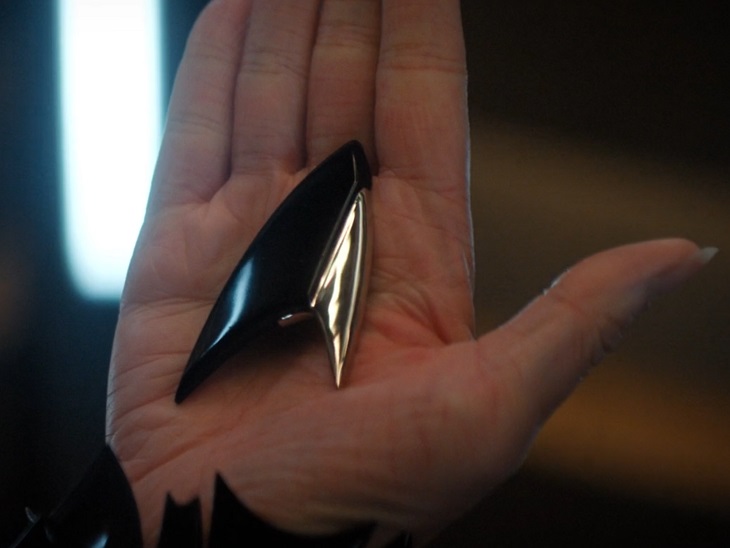
A black Section 31 combadge. Did the secretive organisation try to warn the Federation about the Burn – or prevent it entirely?

However, there is a significant counter-point that we need to consider: until Saru, Burnham, and Dr Culber travelled to the Verubin Nebula and met Su’Kal, no one knew what caused the Burn. Even if Starfleet had been warned centuries ahead of time, without the crucial knowledge of what the Burn was, who caused it, and so on, simply knowing that it was going to happen would not have been enough to prevent it. And perhaps that’s the key here. Even if Starfleet had travelled forward in time, in this exact version of the timeline, all they would’ve seen is a galaxy devastated by an event that no one knew anything about.

As I said last time, the way the Burn occurred was a combination of unlikely, unpredictable circumstances centred around a single, relatively obscure starship and one Kelpien child. When looking at a galaxy-wide event that appeared to happen everywhere simultaneously, even the most dedicated timeship crew would’ve struggled to put the pieces together. Michael Burnham and the crew of the USS Discovery were able to do so only with the Federation’s help; and it seems highly unlikely that Admiral Vance would’ve agreed to help the crew of a 29th or 30th Century timeship in the way he agreed to help Saru and Burnham. Remember what Vance said when he debriefed Burnham and Saru: their mere presence in the 32nd Century was “by definition, a crime.”

Admiral Vance, head of Starfleet in the 32nd Century.

Thus we can argue that Admiral Vance would have been unwilling to help a Federation timeship prevent the Burn, and would not have shared the vital information relating to SB-19 which ultimately allowed Burnham to pinpoint its source.

Likewise, if Section 31, the Emerald Chain, or some other faction operating in the 32nd Century wanted to travel back in time to prevent the Burn, the same issue of not knowing how, why, and where it happened arises. Without this information, realistically it seems impossible for the Burn to have been avoided. Only after Burnham’s investigation, culminating in the discovery of the KSF Khi’eth and Su’Kal, could anyone realistically use time travel to prevent the Burn or warn their counterparts in the past. And from our point of view as the audience, we’ve only just arrived at that chapter of the story!

When the Burn was first teased in the trailers for Discovery’s third season in 2019 and 2020, I wondered what role – if any – time travel might’ve played in the story. There were possible hints at a time travel-related cause for the Burn, perhaps even connected to one of the Red Angel suits from Season 2. There was also the Temporal Cold War from Enterprise. However, as a story point one thing about connecting time travel to the Burn seemed like it would be impossible to resolve as the season rolled on.

Crewman Daniels worked with Captain Archer in the 22nd Century to prevent a time-war in the far future.

In short, if the Burn had been revealed to have been caused by the nefarious actions of a time traveller – or as the result of a time travel/Red Angel suit accident – then logically, from Starfleet’s perspective, the only solution to the Burn would be to undo it; to travel back in time and prevent it from happening. In the first couple of episodes of the season, as we found our feet, perhaps such a storyline could’ve worked. But as we got to know people like Booker, Admiral Vance, the leaders of Earth, Ni’Var, Trill, and many others across the 32nd Century, removing most of them from existence by resetting the timeline would have felt completely wrong.

Undoing the Burn would’ve completely changed the 31st and 32nd Centuries, with knock-on effects for all of those characters – and countless more. Even if the crew of Discovery were immune to such changes, the consequences for everyone else would be vast. As I mentioned when discussing Admiral Janeway’s decision to take a similar action in the finale of Star Trek: Voyager, wiping untold numbers of people from existence altogether seems like the worst possible use of time travel – a war crime. The Temporal Accords that Admiral Vance mentioned and which the Federation strives to protect seem specifically designed to prevent anyone from doing this kind of thing.

Admiral Janeway wiped out more than a quarter of a century’s worth of history – and countless people.

So we get into the weeds of philosophy with this one! The Burn happened, and until we learned exactly how and why toward the end of the season, it was possible that time travel could’ve played a role in it. But even if it had, and the Burn was entirely the fault of the misuse or weaponisation of time travel, more than 120 years had passed since. In those 120 years, billions of people lived out complete lifetimes. They made friends, had relationships, had children, and above all they shaped the galaxy in the 31st and 32nd Centuries. Some nebulous, unprovable concept of how it might’ve been “different” and thus better was already a moot point by the year 3188, because going back in time and changing the past would remove untold billions of people from existence, and utterly change the lives of everyone else.

There’s also no guarantee that preventing the Burn would’ve made the galaxy in 3188 a better place. The Burn destroyed countless starships, but if it hadn’t the galaxy’s dilithium shortage would’ve continued and even accelerated, potentially leaving whole fleets of ships – and possibly planetary power grids – with no fuel at all. Though we get into pure speculation at this point, perhaps the Burn destroyed an invasion fleet that the Borg, the Dominion, or some other villainous group had put together, and if it hadn’t occurred the Federation would’ve been conquered.

Was the Burn the worst thing that could’ve happened – or might there be something worse?

This is the fundamental problem with making changes to the timeline and with time travel in general – it isn’t possible to predict every consequence! Star Trek even has a story all about that: the Voyager two-part episode Year of Hell, in which the villainous Annorax is in control of a time travel-based weapon, but after inadvertently removing his wife from existence becomes obsessed with making changes to the timeline left, right, and centre to undo his mistake.

In short, whether the Federation, Section 31, or some other faction were involved, they wouldn’t be able to predict what consequences would befall the galaxy if the Burn never happened. It isn’t possible to take into account every individual and thus every variable – as the story of Su’Kal kind of demonstrates. One Kelpien child on one crashed starship caused all of this damage and devastation. Who’s to say that undoing that event wouldn’t have led to something worse, some other catastrophe caused by a different individual?

Su’Kal was ultimately revealed to be the cause of the Burn.

As a contemporary analogy, imagine going back in time and preventing the rise of Napoleon and thus the Napoleonic wars. Or going back in time to prevent the eruption of Krakatoa. Those events caused widespread death and misery, and our morality says that we should try to minimise suffering and death wherever we can. But could you reasonably predict the consequences? If Napoleon didn’t rise to power in France, would someone else – someone worse – have done so? If Krakatoa didn’t erupt in 1883, would the pressure building up under the crust be released somewhere else at a different time – perhaps somewhere more highly-populated? These are just two examples, yet each one brings with it huge potential ramifications.

To conclude, time travel seemingly presents a way for the Burn to have been avoided – if we don’t dig too deeply. But scratch the surface and it becomes apparent that there are serious barriers. Starfleet’s steadfast commitment to its principles wouldn’t have allowed Admiral Vance – or anyone else in his role – to share information with time travellers from the past. Even if someone from the past had travelled to the 32nd Century, without the very specific information on the KSF Khi’eth that Michael Burnham and the crew of the USS Discovery assembled, warning Starfleet that the Burn was coming would have made little difference. Perhaps some ships could’ve been saved if the Federation were forewarned of the exact timing of the event, but that’s about all. With the destruction of the Red Angel suits, it appears that no time travel technology exists in the 32nd Century, preventing anyone – Section 31, the Emerald Chain, etc. – going back in time to prevent the Burn. Even if someone wanted to, the lack of information would once again be a hurdle even if we ignore the huge moral implications – and the implications for Discovery as a series effectively wiping out an entire season’s worth of story!

The cause of the Burn was only uncovered by the crew of the USS Discovery more than 120 years after it happened.

I can understand why the writers of Discovery Season 3 brought in all of the stuff about the Temporal Accords and the ban on time travel. I wish it had been elaborated on – and I also wish that Star Trek had been more consistent in its depiction of time travel on the whole, because there are definitely holes we can pick in the concept quite easily. As things sit, it feels like the writers basically said “time travel was banned, so get over it” and then moved on to the rest of the story. If you don’t look too hard, that’s okay. But we’re Trekkies – we like to dive deeply into all things Star Trek!

The ban on time travel is just one part of why Starfleet couldn’t really have used the technology to avoid the Burn, though. And the Burn’s ultimate origin as something accidental connected to a child who wasn’t even born before the KSF Khi’eth entered the Verubin Nebula provides a reasonable explanation. Without knowing the Burn’s origin, all Starfleet could’ve done was shut down as many ships as possible and try to rebuild after the Burn – and that would likely not have been good enough for worlds like Ni’Var. The Federation would still have fractured and the rest of the galaxy would still be in a mess.

As for going back in time and undoing the Burn now that Starfleet knows its origin, that seems off the table. Maybe a faction like Section 31 would contemplate it, but even then I think there are solid reasons to hesitate. The morality of wiping out an entire timeline and most of the people in it is the biggest consideration, but purely on a practical level there’s no guarantee that undoing the Burn wouldn’t lead to something else – something worse. For us as viewers, the Burn is something new. But from the point of view of characters like Admiral Vance and Kovich, this is an historical event more than a century in the past; it occurred before practically everyone alive in the Federation in 3188 was even born. Undoing it would be like one of us wanting to undo something that happened in the 19th Century. Can we think of valid, sympathetic reasons to want to undo certain historical events? Of course. But can we also understand why changing the past can have catastrophic unforeseen consequences? Absolutely. And that, in a nutshell, is why I think the Burn couldn’t and wouldn’t have been avoided via time travel.

Star Trek: Discovery Season 3 is available to stream now on Paramount+ in the United States, and on Netflix in the UK and around the world. The Star Trek franchise – including Discovery and all other properties mentioned above – is the copyright of ViacomCBS. This article contains the thoughts and opinions of one person only and is not intended to cause any offence.

Star Trek: Discovery Season 3 – Could transporters have helped avoid the Burn?

Spoiler Warning: There are spoilers ahead for Star Trek: Discovery Season 3, Star Trek: Picard Season 1, Star Trek Into Darkness, and for other iterations of the Star Trek franchise.

This article is going to be the first in a short series about the Burn – one of the main elements of Discovery’s third season. We’re going to consider different ways that the Federation – and the wider Star Trek galaxy – could have avoided the Burn, a catastrophic event that caused untold damage to factions and citizens across known space and beyond.

In order for the Burn to have occurred at all, a very specific set of circumstances needed to align in just the right way (or should that be just the wrong way?) One of these was the dilithium shortage that Admiral Vance elaborated on after Saru, Burnham, and the crew of the USS Discovery arrived at Federation HQ. In short, for a long time prior to the Burn there had been a shortage of dilithium across the galaxy. This shortage was so severe that the Federation began looking at alternative options for faster-than-light travel. One of the ideas they considered was something called SB-19 – a Ni’Var project that seemed to involve some kind of starship-sized “gateways” to get from place to place.

SB-19 was a pre-Burn experiment to send starships at faster-than-light speeds without warp drive.

We’re going to leave those ideas behind for now and focus on one aspect of Star Trek that has been present since the beginning: the transporter. In short, would it have been possible for transporter technology to provide an alternative to some or all of Starfleet’s faster-than-light travel?

On the surface it may seem that the two things aren’t related. Transporters are mainly shown on screen as a method of sending people from starships to planets, and vice versa. Faster-than-light starship travel is in a completely different ballpark, right?

Not so fast! What is the main purpose of warp drive in the Federation? Starfleet uses it for exploration and military purposes, of course, so as viewers that’s what we associate warp drive with – setting course for an unknown destination and racing away to explore it. But the Federation is much larger than just Starfleet, and there must be an awful lot of civilian and cargo traffic that uses warp drive in the same way we use a car, bus, train, or aircraft – it’s a means to an end; a way to get from place to place.

Book’s ship at warp in Discovery Season 3.

2009’s Star Trek introduced something that I think is vital to this consideration: transwarp beaming. On first viewing I felt the film wasn’t clear about how and when transwarp beaming was invented, so for the sake of clarity here’s what seems to have happened: after arriving in the 24th Century following decades in suspended animation – events depicted in The Next Generation sixth season episode Relics – Montgomery Scott eventually went back to work with Starfleet. Sometime prior to 2387, Scotty perfected the formula for transwarp beaming, and Spock provided this equation to Scotty’s younger self on the planet Delta Vega after arriving in the alternate reality.

In Star Trek Into Darkness we see how much more powerful transwarp beaming can be than a regular transporter. As with most of Star Trek’s technologies, transporters have always been somewhat vague and mouldable to the needs of a particular story, but Into Darkness actually gave us a pretty solid idea about the range that transwarp beaming has: it’s possible to transport from Earth to the Klingon home planet of Qo’noS.

“John Harrison” materialises on Qo’noS.

Into Darkness doesn’t give an exact distance to Qo’noS, but in Enterprise’s pilot episode it was far enough away from Earth that no human had ever encountered a Klingon despite humanity being a spacefaring species for decades. The travel time from Earth to Qo’noS at warp 4.5 was around four days in that same episode.

Memory Alpha, the Star Trek wiki, suggests that the distance between Earth and Qo’noS could be somewhere between 90-110 light-years, so for a rough guide for the sake of this argument we’re going to say that transwarp beaming has a range of at least 100 light-years. This technology was known to Spock in 2387, so it definitely existed in the Prime Timeline in the late 24th Century. Even if 100 light-years is the absolute maximum distance for transwarp beaming, it’s still a far faster method of travel than anything else known to the Federation. In Et in Arcadia Ego, Part 1 (the ninth episode of Star Trek: Picard), Admiral Picard tells Dr Jurati that the use of a Borg transwarp corridor allowed La Sirena to travel “25 light-years in fifteen minutes.” Picard says this with a tone of surprise, as if such speed is something that the Federation, even in the year 2399, is unaccustomed to.

In the year 2399, travelling 25 light-years in 15 minutes was remarkable.

Transwarp beaming, then, is even faster than the Borg’s transwarp network. Though the Borg’s spatial trajector (a technology they appear to have assimilated from the Sikarians) may give it a run for its money! Regardless, transwarp beaming is arguably the fastest method of long-range travel ever seen in Star Trek. It allowed “John Harrison” to travel around 100 light-years in a heartbeat, something that even Borg starships couldn’t do a century later.

So how does all of this connect to the Burn? Based on what we saw on screen, it doesn’t! That’s the short answer. For whatever reason, Starfleet appears not to have pursued transwarp beaming in the 29th and 30th Centuries. But this is a fan theory, so we’re running with it anyway!

Despite what’s usually shown on screen, transporters don’t just move people. In fact, living beings are arguably one of the hardest and most complex things for a transporter to manage. Early episodes of Enterprise explained that the first transporters were only supposed to move cargo, and we’ve seen industrial-sized cargo transporters on other ships, including the Enterprise-D. These transporters were often larger, capable of beaming large objects, groups of people, and other things.

Dr Crusher and Geordi La Forge in one of the Enterprise-D’s cargo bays.

Do you see where this is going yet? Much of the reason for interstellar travel within the Federation was to move objects and people from place to place. Going into space in a starship and travelling at warp speed was the best method that the Federation had of doing so – until transwarp beaming came along. Transwarp beaming, even if it had an absolute maximum range of 100 light-years that could never under any circumstances be surpassed, was still a viable option for a significant portion of the Federation’s interstellar travel needs.

Nothing we know of in Star Trek should have prevented the further development and honing of transwarp beaming. Even if no one did anything with the transwarp beaming concept before the 29th or 30th Centuries, when dilithium supplies began to run short Starfleet could easily have started to work again on a concept they’d sidelined. The formulae and information about transwarp beaming seem unlikely to have been lost in that time. Industrial-sized transwarp beaming hubs could have been built, capable of sending vast amounts of goods and whole crowds of people from one planet to another. Not only that, but transwarp beaming hubs in space could even have been constructed, forming a network that would’ve allowed Starfleet to send its vessels from system to system without expending valuable fuel.

Two crewmen carrying a dilithium crystal aboard the Enterprise-D.

It is possible based on what we saw on screen that some version of transwarp beaming was part of the aforementioned SB-19 project. But that has never been confirmed, and considering that transwarp beaming was known to work reliably in the late 24th Century (or the 23rd Century in the alternate reality) it seems unlikely that SB-19 would have struggled to make the concept work hundreds of years later. This was already proven, working technology within Star Trek’s Prime Timeline.

Had Starfleet invested in transwarp beaming on a large scale, it’s possible that the range of the technology could have been extended, its power consumption reduced, and a vast interplanetary network of transwarp beaming stations created that would have relieved at least some of the pressure on dilithium-powered starships. With that pressure reduced and the desperation on the Federation’s part to source new dilithium lessening as a result, the chances of the KSF Khi’eth crashing in the Verubin Nebula, setting in motion the unlikely chain of events that led to the Burn, seems greatly diminished.

The wreck of the KSF Khi’eth.

In short, using transporters in this way could have avoided the Burn entirely.

Now let’s consider the biggest counter-argument to this idea: how power generation works in Star Trek.

It stands to reason that a transporter takes up a lot of power. In Discovery’s premiere episode, a particular design of transporter in use on the USS Shenzhou was considered outdated by Michael Burnham specifically because of its high power consumption. It logically follows that the larger the mass of the objects being transported, the more power is required. It also stands to reason that transporting over longer distances would likewise require a larger expenditure of power. This might even jump exponentially.

Sarek and Michael Burnham in the USS Shenzhou’s transporter room.

Relatively few Star Trek stories have been set on planets, so we don’t know very much about how planetary power generation works. But assuming that, in order to power the technologies and mod-cons of the 24th Century, planets require comparable levels of power per person to a starship, it’s possible that planetary power grids (such as the one on Earth that was sabotaged by Admiral Leyton in the Deep Space Nine episodes Homefront and Paradise Lost) use a similar matter-antimatter reaction in order to generate enough power for the needs of the population. And what does a matter-antimatter reaction need to be safe and stable? Dilithium crystals.

Transporters based on starships would also have this limitation – as everything on board a starship seems to be powered by a controlled matter-antimatter reaction. Perhaps, then, transporters have the same basic limitation as warp drive: a reliance on dilithium for power. This counter-argument could be used to explain why transporters and transwarp beaming weren’t able to be used as a viable replacement for even a small amount of Starfleet’s interstellar traffic in the years prior to the Burn.

It seems as though transporter technology would use a lot of power.

I still think this is an interesting idea, though! Star Trek has thrown a lot of technobabble concepts our way over the years, so it’s inevitable that almost any new storyline can bring with it questions like “why didn’t they try to do X?” or “why didn’t someone think of using Y?” That’s just the nature of this kind of franchise.

On this occasion we’ve jumped headfirst into a theory based on a few lines of dialogue and interpretations of things shown on screen in unconnected parts of Star Trek’s broader canon. I didn’t do that to imply that there’s somehow an egregious “plot hole” in the way Discovery’s third season explained the dilithium shortage or the Burn; really this has just been an excuse to spend a bit more time in the Star Trek galaxy. This isn’t something to take too seriously – no fan theory is – and as already mentioned I can think of at least one solid counter-argument to the idea of Starfleet setting up a kind of transwarp beaming network to ease its reliance on warp drive.

I hope this theory was a bit of fun, though! Stay tuned for more in this short series about the Burn, because transporters and transwarp beaming aren’t the only ways that Starfleet could’ve potentially avoided the disaster and its consequences. And if you want to see my breakdown and analysis on how well the Burn did (and didn’t) work as a narrative in Discovery Season 3, take a look at this article.

Until next time!

Star Trek: Discovery Season 3 is available to stream now on Paramount+ in the United States and on Netflix in the UK and internationally. The Star Trek franchise – including Discovery and all other properties mentioned above – is the copyright of ViacomCBS. This article contains the thoughts and opinions of one person only and is not intended to cause any offence.