Thoughts on a (Potential) Morrowind Remake

Spoiler Warning

Spoiler Warning: Beware minor spoilers for The Elder Scrolls III: Morrowind. Minor spoilers are also present for Oblivion, Skyrim, and Starfield.

A quotation from former Bethesda developer Bruce Nesmith has been doing the rounds over the last few days, sparking a bit of conversation in role-playing games and Bethesda communities about the prospect of a remake or remaster of The Elder Scrolls III: Morrowind. I thought it could be fun to talk about that today, and consider what a Morrowind remake could or should look like – as well as whether it’s even *remotely* possible in the near future.

The original quotation from Nesmith is quite long, so I’m going to pick out the key parts that I find the most interesting. If you want to read the whole thing in context (as well as the rest of his interview with Press Box), I’ve linked it at the end of this article.

“[…]go back and play Morrowind and tell me that’s the game you want to play again. […] you go back and play a 20 year old game and you will cringe. […] the reality of playing Morrowind would not stand the test of time, in my opinion. Now if you were to completely remake Morrowind with the Skyrim engine, to try and rebuild it from the ground up, that’s a whole other story[…]”
Mock-up of a "Morrowind Remastered" title screen
Could it really happen one day?

So, as you can see, what Bruce Nesmith is basically saying is that Morrowind is – in his opinion – too outdated to be given the same kind of treatment that the recent Oblivion remaster got; that the only way to recreate the game for modern players would be to remake it from scratch. And I have to say… I’m inclined to agree on the latter point, even if I don’t agree at all that going back to replay Morrowind today feels in any way cringeworthy!

Morrowind lacks a lot of features that players today would want in an action/RPG, and some of its core gameplay systems are just… from another time. Morrowind launched at a moment of transition; it was a pioneer of the open-world genre, and being a pioneer often means that the folks who come later have a chance to refine things and make the experience a bit more smooth. The game doesn’t have voice acting, for instance, and while I’m perfectly happy to play text-based games… it’s not something that players today would accept as easily. It makes Morrowind more of a niche title, in that sense.
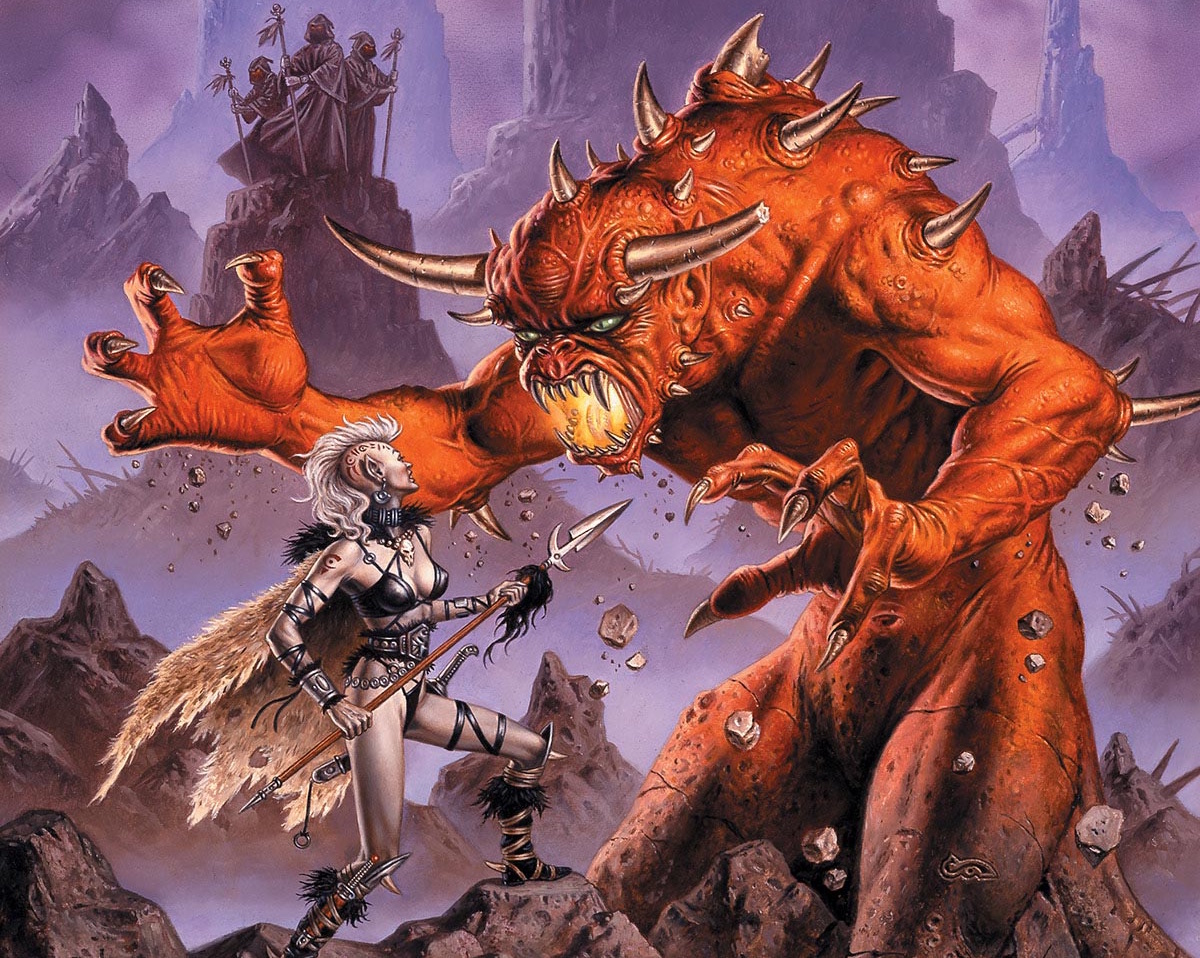
Early concept art for "Tribunal" (later renamed Morrowind) circa 1999-2000.
Early concept art for “Tribunal” – the game that would later become Morrowind.

Morrowind’s combat is also clunky, even by Bethesda standards, with every attack being determined by a “hit calculator,” which can lead to a pretty jarring disconnect between what you see on screen and how the game reacts. You’re standing right in front of a monster or villain, swinging your sword, but Morrowind’s digital roll of the dice says you didn’t score a hit – even though it looks like you absolutely should’ve! In 2002, that was just something I kind of… rolled with (if you’ll excuse the dice pun). But today, I can see it being something players would criticise.

Removing or updating such a core component of the game effectively means Morrowind would need to be rebuilt from scratch. Adding fully-voiced NPCs might be possible in the current engine, but I’m not a programmer, so I’m not positive about that. But something as major as implementing an entirely new combat system… that seems like major work.
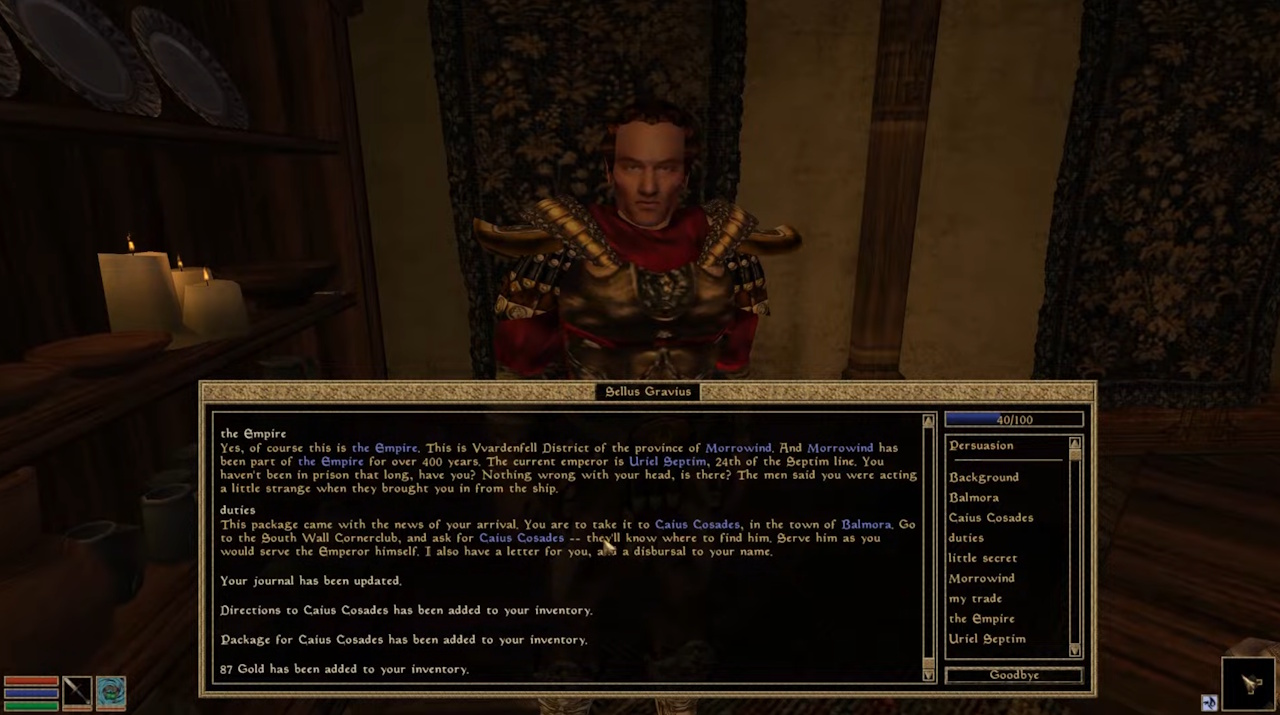
Screenshot of The Elder Scrolls III: Morrowind showing an NPC text box.
Morrowind had minimal voice acting.

Setting that aside for a moment, though, I think there’s a compelling *business* argument for Bethesda to remake Morrowind – namely, the incredibly long wait for The Elder Scrolls VI.

Not long ago, I covered remarks from Bethesda executive producer Todd Howard, in which he said that the next entry in The Elder Scrolls series was still “a long way off.” I said that we knew that already; The Elder Scrolls VI seems, to me, to be a 2028 or 2029 game at the earliest. But if a Morrowind remake were possible in the interim, wouldn’t it be a good idea?

Alternatively, Bethesda could sit on this idea for a year or two, perhaps comissioning a remake that could launch sometime in the 2030s, while the main studio is busy with potential new entries in the Fallout series and a sequel to Starfield. One of Bethesda’s biggest problems right now, as game development moves on and games take longer and longer to make, is the studio’s outdated (and stupid) insistence on only crafting one game at a time. Outsourcing the remake of Morrowind to a subsidiary or partner – as happened with last year’s Oblivion remaster – would be one way to keep the series fresh in players’ minds, assuming there’s going to be another very long wait in between titles.
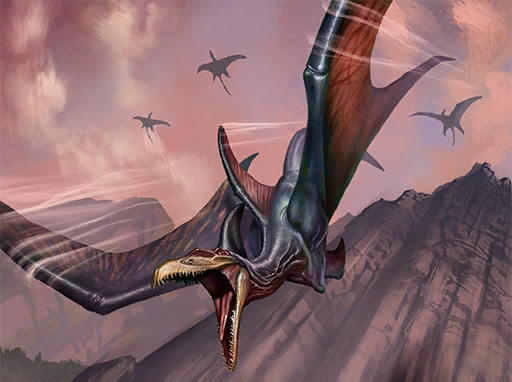
Screenshot from The Elder Scrolls: Legends showing a Cliff Racer in flight.
Remember the Cliff Racers?

Depressingly, I guess that means I’m unlikely to play a potential Elder Scrolls VII, even if it were to get made! I mean, on current form, a sequel to The Elder Scrolls VI might not launch till, say, the mid-2040s?

But the point stands! If Bethesda plans to continue with its current approach to making games, there’s a good reason to commission remakes or remasters of basically the entire back catalogue. Filling the ever-growing gaps in between major releases with these kinds of projects isn’t a bad idea, in theory, and as long as the project was handled well and not rushed, I could absolutely see a remade Morrowind finding an audience.
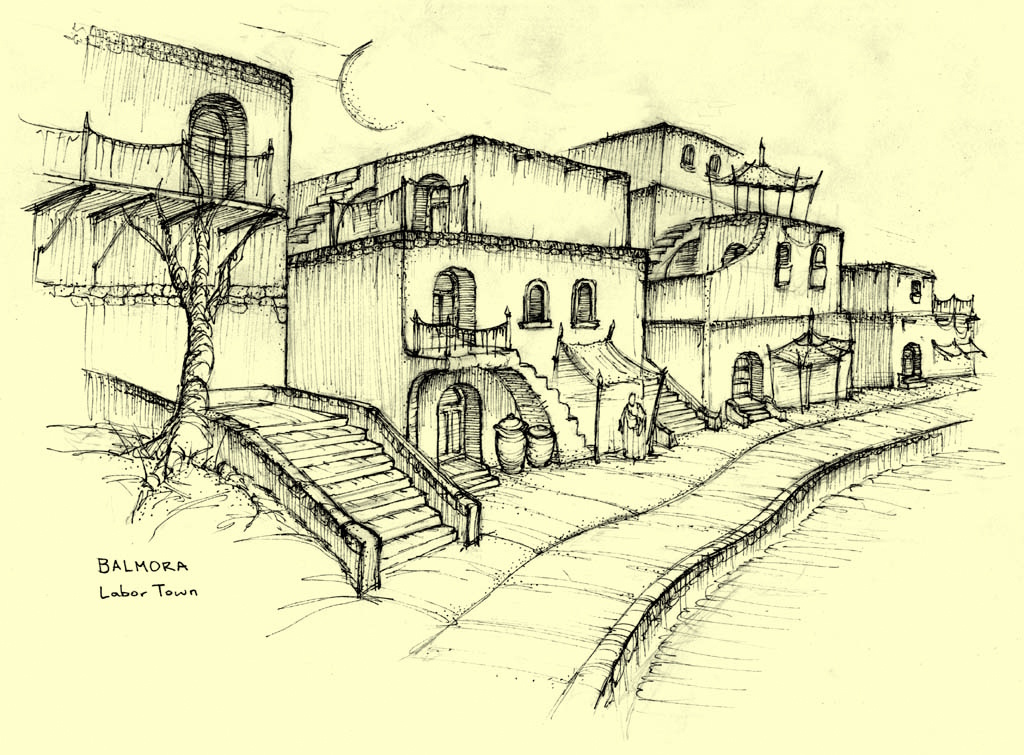
Concept art for The Elder Scrolls III: Morrowind showing Balmora.
Concept art for Morrowind showing the town of Balmora.

One of the things that can be disappointing or disheartening, sometimes, is hearing younger folks say they could “never” play a game from before, say, 2010 or 2005, because they find the gameplay to be clunky and the graphics too outdated. I guess that must’ve been how my parents felt when I criticised some of their favourite black-and-white films or TV shows from the ’50s! But as someone who played and fell in love with Morrowind in 2002, I would love it if new players could find an easy way into playing this incredible title.

A remake offers something to new players that even mods can’t. Yes, I agree that there are some fantastic graphics mods out there for Morrowind, capable of enhancing the game a lot. But a lot of folks don’t like to mess about with mods, have never done anything with mods, or don’t know how to get started – so an *official* remake is naturally going to find a much bigger audience. Compare the number of folks who played the Oblivion remaster to the number who’ve downloaded the most popular Oblivion graphical overhaul mods, just as an example.

Only one graphics mod (on popular modding site Nexus Mods) exceeded one million downloads for Oblivion, whereas the official remaster reached over nine million players in less than a year.
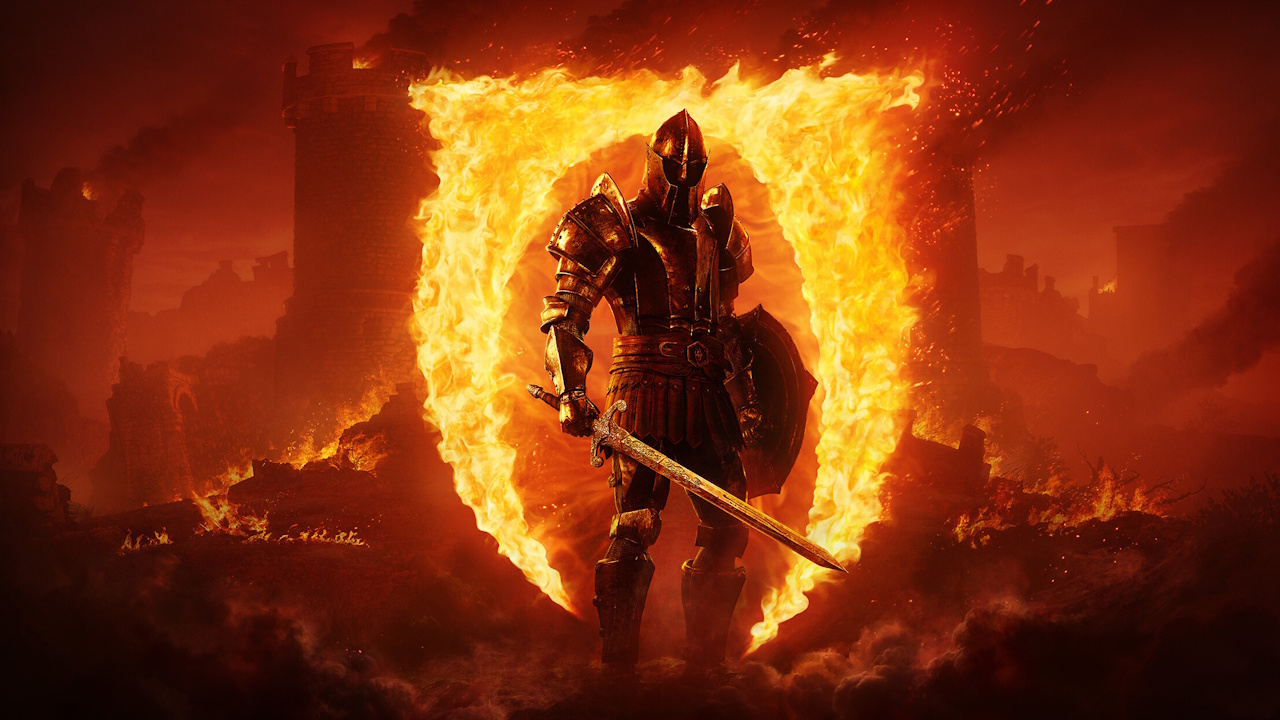
Key art for TES IV: Oblivion Remastered.
Last year’s Oblivion remaster reached way more players than any mod for the original game ever could.

The thing with a remake, though – especially if, as Nesmith suggested, a partner studio would recreate Morrowind’s world and NPCs in the engine used for Skyrim, or even the updated engine used for Starfield – is that there’d undoubtedly have to be changes and sacrifices. One of the double-edged swords of Oblivion and Skyrim when compared to Morrowind, in my opinion, is the removal of quite a few things: spells, weapons, character classes, and other features.

Did you know you could use spears and halberds in Morrowind? How about throwing knives and darts? There’s a levitation spell that lets you fly and hover – and it could be great for navigating the world and getting around obstacles. Mark and recall spells were so useful – allowing you to set a point on the map and return there by casting a spell, or even using a scroll or enchanted item. Morrowind also contained a lot of unique creatures that never appeared in Skyrim or Oblivion – and not just the ubiquitous Cliff Racers and Slaughterfish!
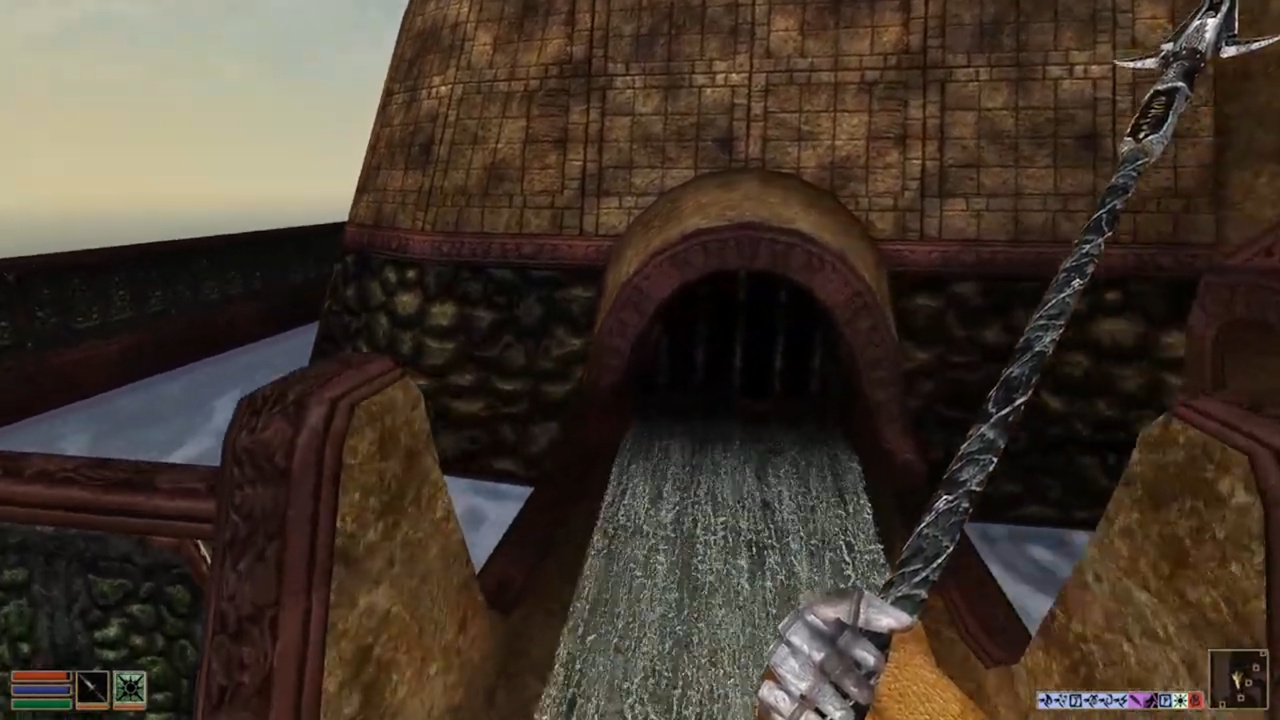
Screenshot of The Elder Scrolls III: Morrowind showing a player holding a spear.
Using a spear in Morrowind.

My point is that, unless a remake in the Creation Engine 2 *also* came with an overhaul to said engine, sacrifices would have to be made. Morrowind’s introductory sequence, with its classes, might have to be changed, and with no character classes in Skyrim at all… how well would that translate? And if a partner developer wanted to port the class system into a new engine… how difficult would that be, and how much work might be needed to get it to function properly? Bethesda’s most recent title, Starfield, had character backgrounds and a few traits, but nothing on the scale of Morrowind.

There are mods to bring classes to Skyrim, so obviously it’s technologically feasible to do so in that engine. Whether it would be easy, though, and how well Morrowind’s pre-made and custom classes would port… I don’t know. It would be a shame to lose something so central to the experience; a feature that gave Morrowind such genuine replayability. In fact, I’d go so far as to say that, if classes can’t be part of the game, don’t bother with the remake at all. If something so fundamental has to be stripped out, maybe it’s better to just… not do it.
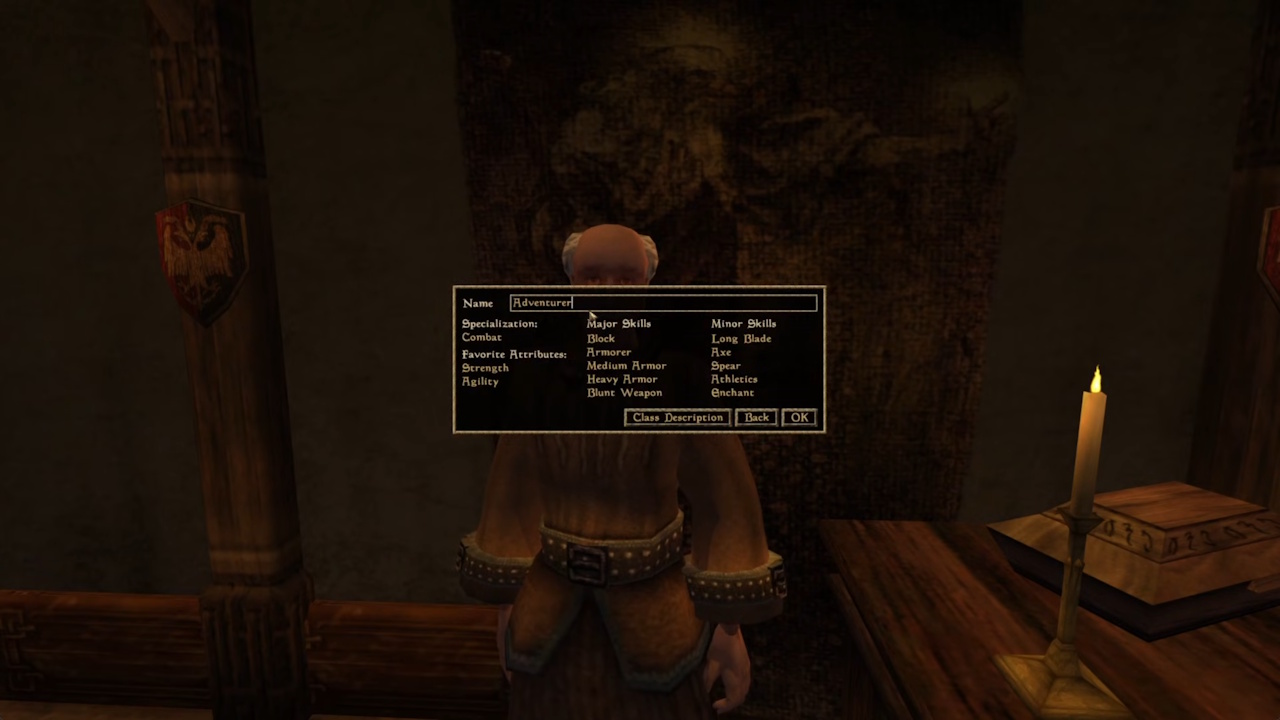
Screenshot from The Elder Scrolls III: Morrowind showing a custom class.
Creating a custom class.

So that’s really my biggest concern, if a remake were to be announced. Could a remake retain the diversity of in-game systems, magic spells, weapons, classes, and more that made Morrowind the in-depth role-playing adventure that it was? And if not… will the sacrifices be worth it? If we get a shinier, more visually-appealing game, but one that’s lacking in that depth… will it even be the same game? Sure, some storylines might be the same, with fully-voiced characters who all look way better and more high-res than they ever did. But if the game is fundamentally transformed into less of an RPG and more of an open-world action/adventure… would it even still be Morrowind?

In recent years, Bethesda has shown a preference for making everything in its games accessible and playable in a single playthrough. Morrowind didn’t have that. Joining one of the three Great Houses would permanently cut off the other two. Joining one of the vampire clans likewise cuts off the others. And there are two religions which are effectively mutually-exclusive, too. Would *modern* Bethesda be okay with that? Or would a workaround be forced into the game, allowing players to join every faction and play every quest on a single save file? Again… that would detract from what made Morrowind the game it was.
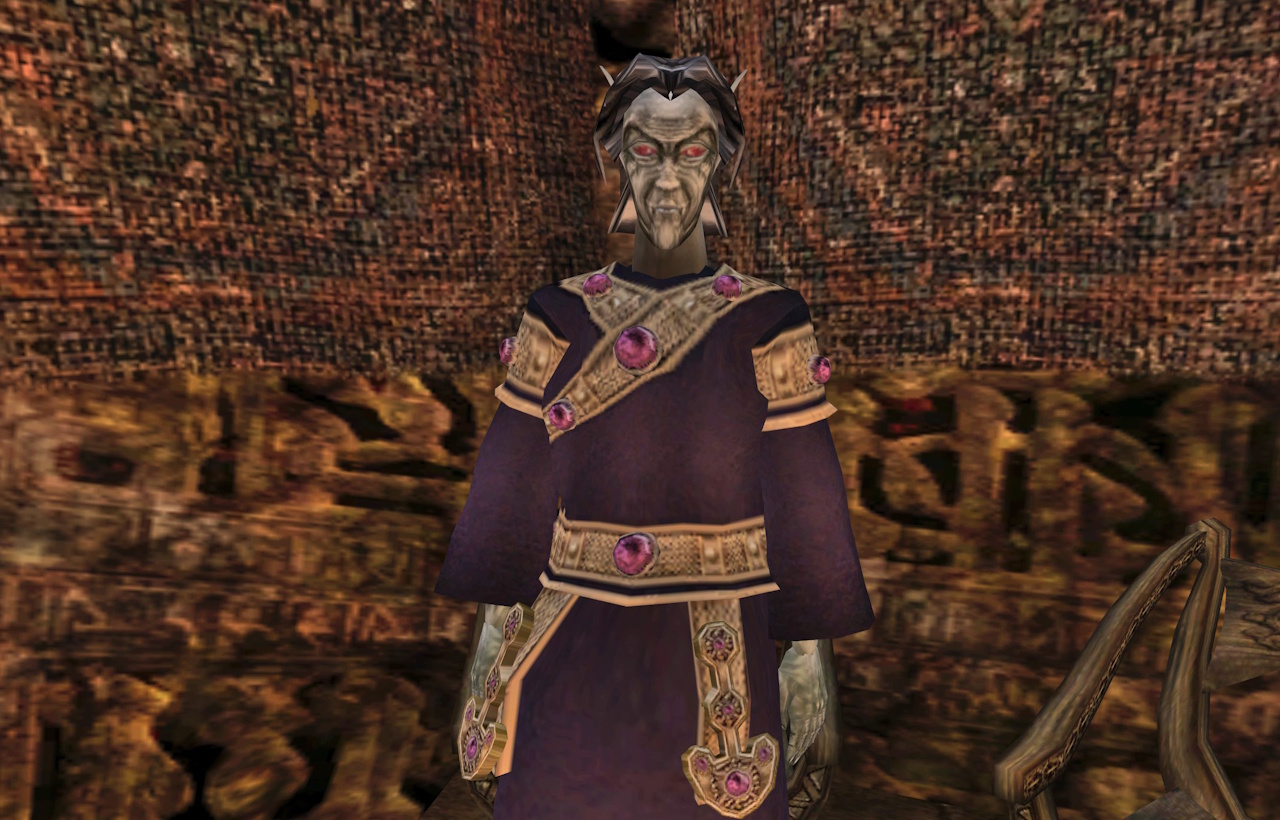
Screenshot of The Elder Scrolls III: Morrowind showing the head of House Telvanni.
Archmagister Gothren, the head of House Telvanni.

Then we come to killable NPCs. Morrowind was famous (or infamous) for allowing the player to kill anyone – including NPCs who were critical to the main quest and faction questlines. Because of its open world, it’s possible to stumble into a random building, ruin, or camp containing NPCs who may be critically important later in the game – and kill them to loot their stuff! But I can’t imagine *modern* Bethesda greenlighting something like that; today’s Bethesda seems to have far less confidence in the intelligence of its players.

Modern Bethesda games are less free and more… restricted. Oblivion, Skyrim, Fallout 4, and Starfield all have mission-critical NPCs who literally cannot die, and that makes those games fundamentally different from Morrowind. While Morrowind doesn’t have the “take any approach you like” game design as, say, Baldur’s Gate 3 does, it’s a much less linear and more open game than the likes of Starfield and Skyrim. In part that’s because it’s possible to get locked out of quests, or to have to find complicated workarounds if vital characters die.
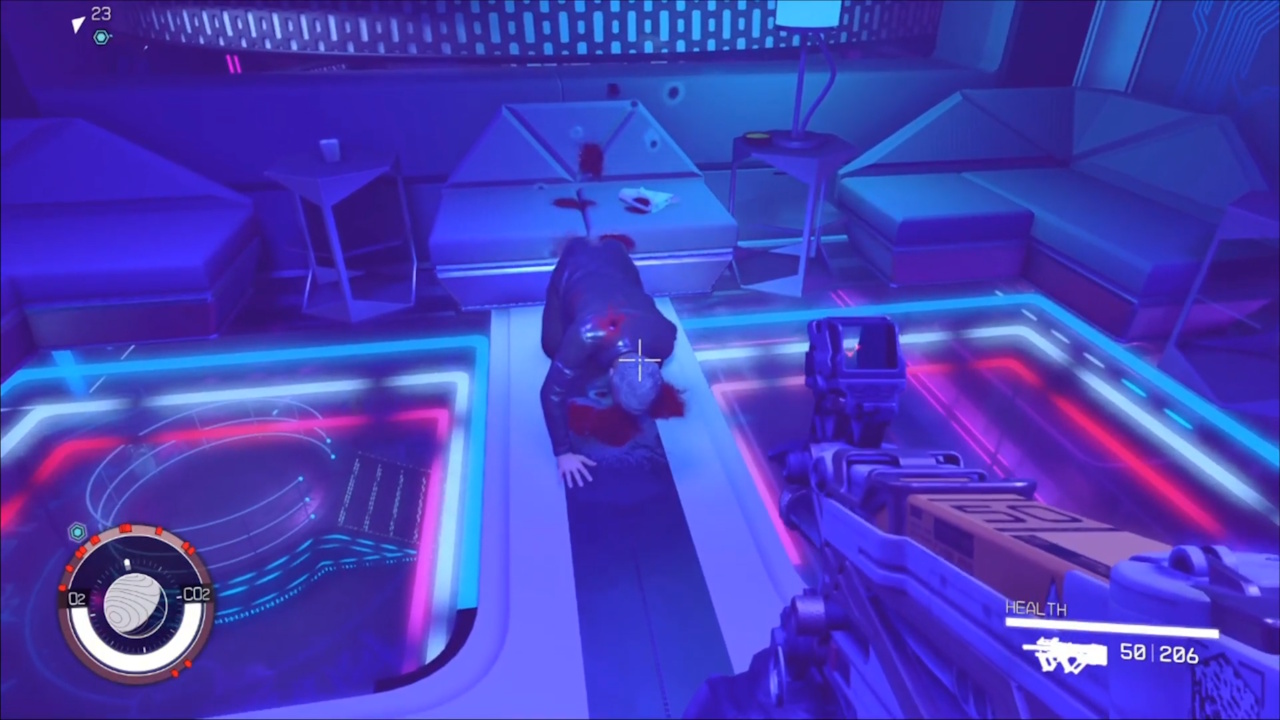
Screenshot of Starfield showing an essential NPC on Neon.
An unkillable NPC in Starfield.

I just can’t see the Bethesda of today being okay with that, even in a remake. Unlike character classes or lockable faction quests, the handful of killable NPCs who actually matter to the story isn’t massive, and I’d wager that *most* players don’t jump into a new save file and immediately rush to murder the god Vivec! But as a point of principle, removing the ability to kill these vital NPCs would also be a change for the worse, in my opinion. Morrowind didn’t need training wheels and guard rails in its original form… so why add them in now?

Then there’s the map and journal. Since Skyrim, if not Fallout 3, Bethesda has been a fan of quest markers; big on-screen arrows pointing you in the right direction. Morrowind didn’t do that – and some quest direction in the journal actually take a bit of thinking and puzzle-solving to figure out. Again, I can’t see today’s Bethesda being okay with that. But with a smaller map, wouldn’t quest markers make the game less fun? I’d argue they would.
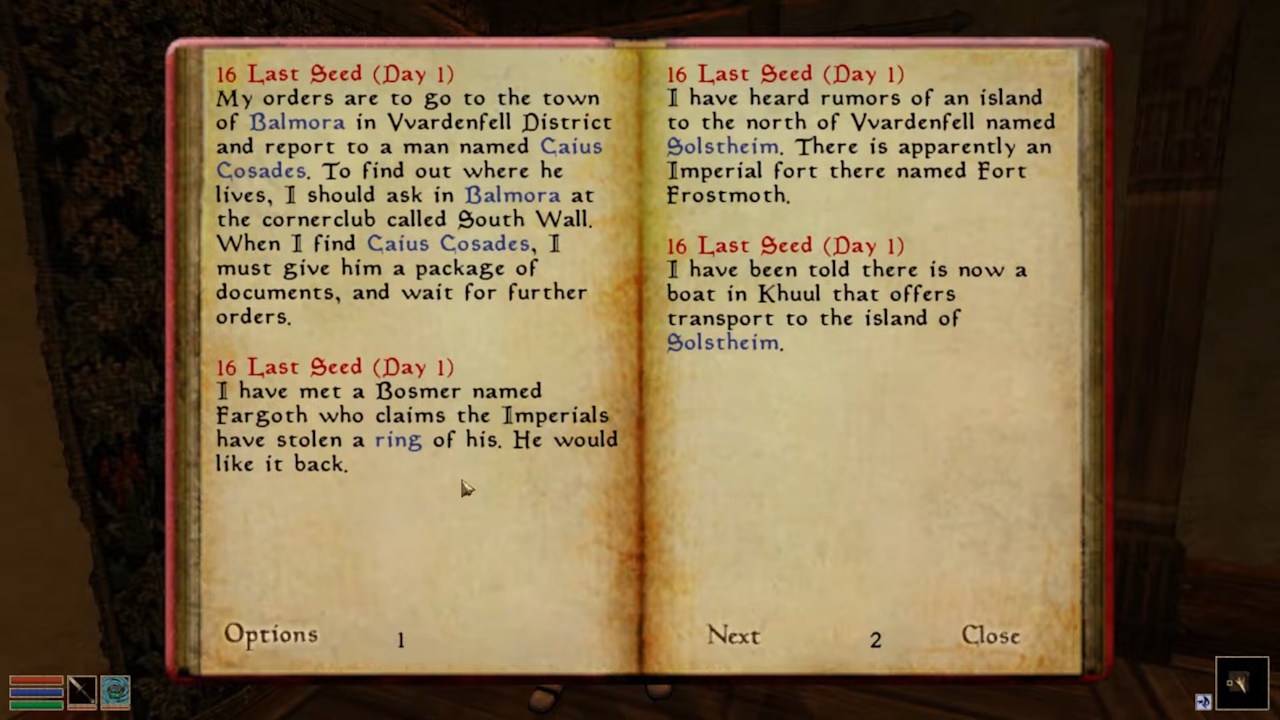
Screenshot of The Elder Scrolls III: Morrowind showing the journal.
The player’s journal in Morrowind.

If these things were added as toggleable options for players coming to Morrowind from more recent games, I’d be okay with it. I’m a big believer in accessibility in gaming, and I’m not trying to argue that games were better “back in my day,” when technological limitations prevented things like quest markers or unkillable NPCs from existing! And if someone wants the more streamlined experience of Skyrim but in Morrowind’s world… I mean, I’d be okay with giving players options to set that up. That way of playing could even be the default.

But if it was the *only* way to play a Morrowind remake, I think that would be a bit of a disappointment. I’m all for adding accessibility features, shortcuts, and even cheats to games to help players make the most of their time in a game world – but not always at the expense of other ways to play. And for me, as someone who played and loved the original Morrowind, I’d want to recreate as much of that experience as possible – just with a better, more modernised graphical style.
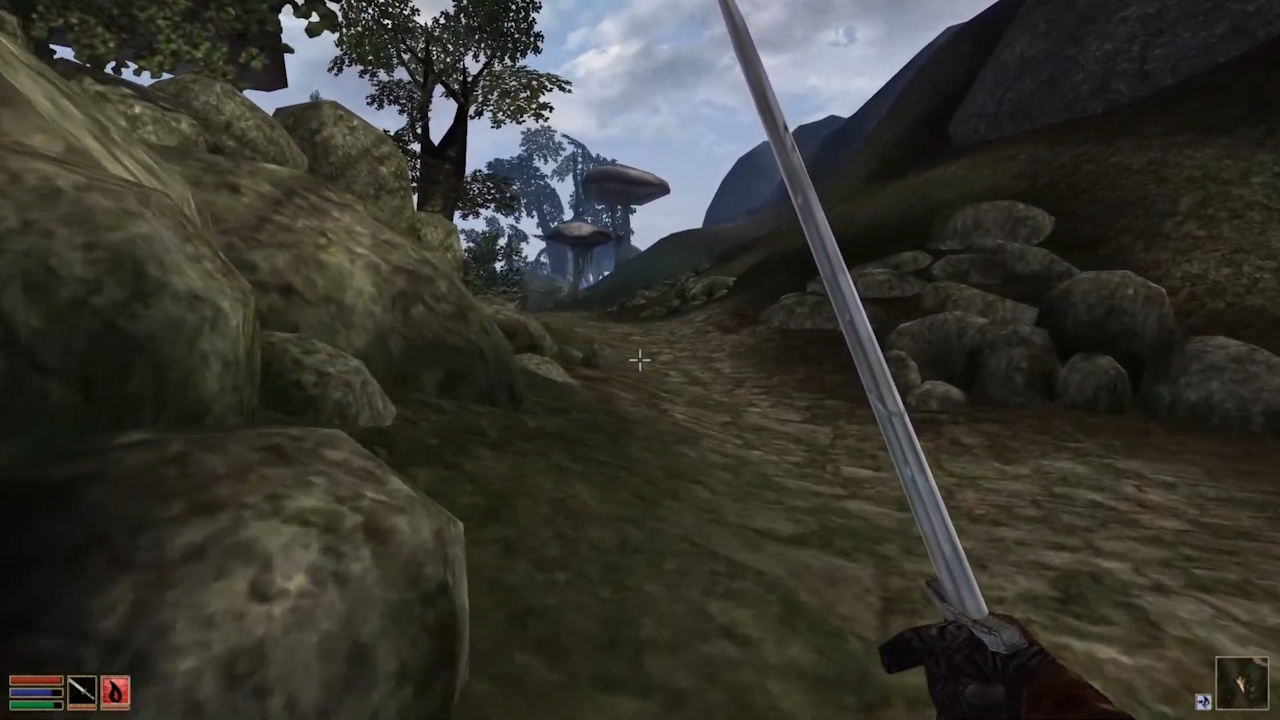
Screenshot of The Elder Scrolls III: Morrowind showing a player armed with a sword on a road.
Exploring the open world.

But okay, let’s not get upset about hypothetical changes to a probably-not-being-developed remake!

I think there are positives here – reasons why remaking Morrowind could work. And I think there are ways to do it that would give both new and returning players enough choices to tailor the experience to either the classic way to play, a more modern Starfield/Skyrim style of play, or something in between. And expanding Morrowind to give the game and its wonderful stories the opportunity to be experienced by a new generation of players is a fantastic idea. I’d say there’s *more* of a point to remaking Morrowind than there was to remaking Oblivion.

So… I disagree with Bruce Nesmith. Depending on how a remake was handled, there’s a ton of value in going back to Morrowind to give it an overhaul and present it to a new audience. As long as there were options for fans of the game to retain at least part of what made it so special the first time around, I’m all in favour of a remake.
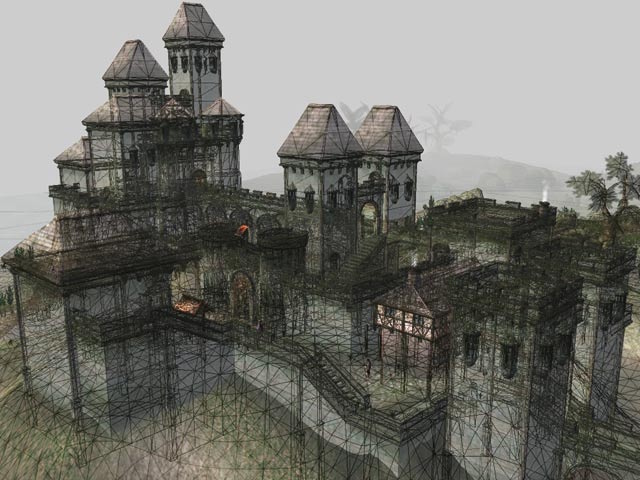
Pre-release render of Ebonheart from TES III: Morrowind.
An early wireframe render of the city of Ebonheart.

However, I think there are reasons to be concerned about a remake, given Bethesda’s recent form.

For one, I’d be *astonished* if a hypothetical Morrowind remake didn’t launch with a stupid “deluxe edition,” offering players a crappy digital sword, character skin, or something like that for a ridiculous extra fee. Then there’s Bethesda’s stripped-back game design, and how well Morrowind could be ported into an engine that doesn’t do character classes and that has fewer magic and weapon options. Bethesda’s insistence on making the entire game available in a single playthrough could mean that some of Morrowind’s replayability is likewise harmed.

But… despite some issues giving me pause, I think I’d still like to see a remake. Even if it wasn’t *as good* as the original experience, and even if some features had to be sacrificed, there’s still a fun story – or rather, “stories,” plural – at the heart of Morrowind that I’d love to see new players get the chance to experience. I don’t blame folks who grew up post-Skyrim looking back at games from the early 2000s and being turned off by clunky gameplay and outdated graphics; it’s natural to feel that way. And if I can’t convince younger folks to give Morrowind a shot on its own or with some of the player-made mods… a remake is a great option.
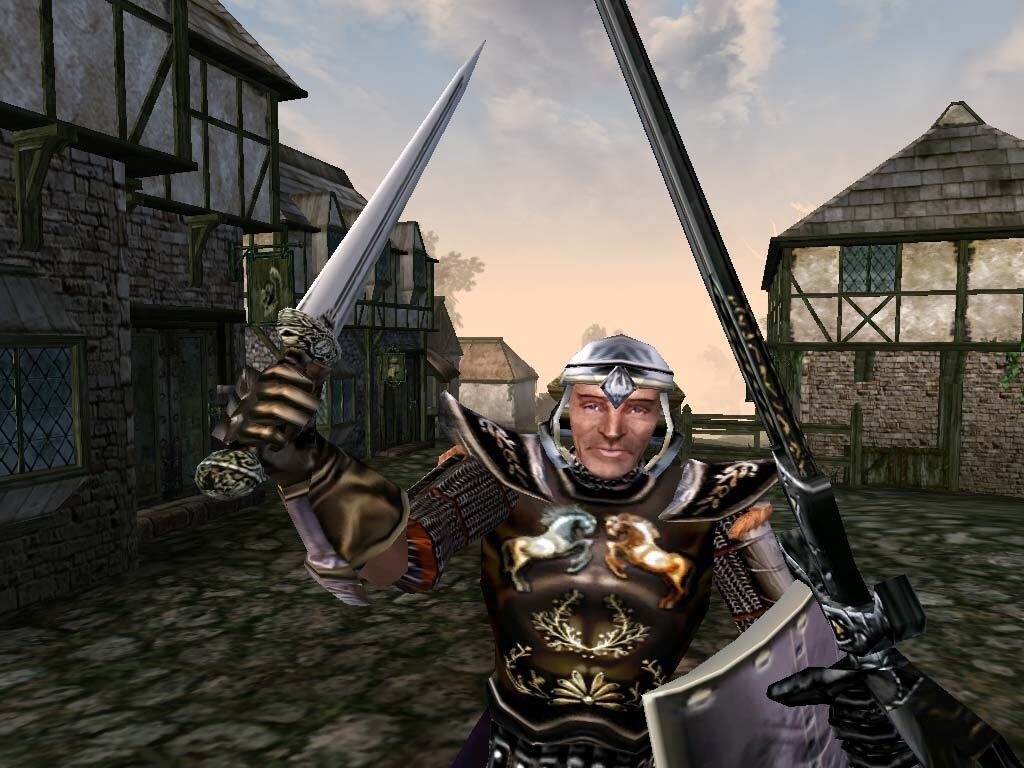
Promo screenshot of TES III: Morrowind showing combat with a guard.
Should Morrowind be remade?

That being said, I suspect Nesmith is right about one thing: Bethesda isn’t interested in this. The higher-ups likely share his view that the game is outdated and cringeworthy, and would need too much of an investment to make it “playable.” So… as much as I’d like to see it, I get the impression that a Morrowind remake isn’t coming any time soon. Never say never, of course, and there are good business reasons for moving forward with a project like this. But in the short-to-medium term? Don’t bet on seeing a Morrowind remake, I’m afraid.

I hope this has been interesting. Despite the fact that I don’t expect this to actually happen, Bruce Nesmith’s comments did, for a moment, spark some interest in the Bethesda fan community about a potential return to Morrowind, so I thought it was worth having a discussion about it! And if you really want to get back to the Dunmer’s home province, don’t despair! You can visit parts of Morrowind in The Elder Scrolls Online, the island of Solstheim in one of the Skyrim expansion packs, and there are a huge number of fan-made graphics mods and other overhauls which can take the original game and really modernise it. So… check out Nexus and other modding sites!

I keep meaning to fire up Morrowind again and have another adventure in that world. Maybe 2026 will finally be the year I complete the Tribunal Temple questline… who knows? Have fun out there… and watch out for Cliff Racers.


The Elder Scrolls III: Morrowind is out now for PC and Xbox consoles. The Elder Scrolls series – including Morrowind and all other titles discussed above – is the copyright of Bethesda Game Studios, ZeniMax Media, and/or Microsoft. Some art courtesy of UESP. This article contains the thoughts and opinions of one person only and is not intended to cause any offence.


You can find the original interview with Bruce Nesmith, including the full quote about Morrowind referenced above, by clicking or tapping here. (Warning: Leads to an external website).
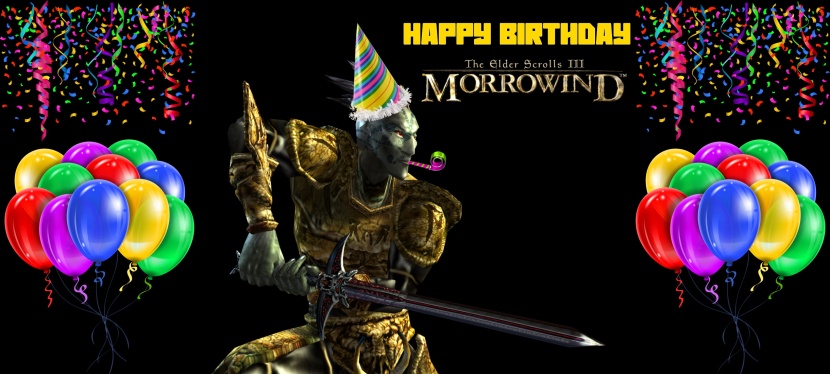
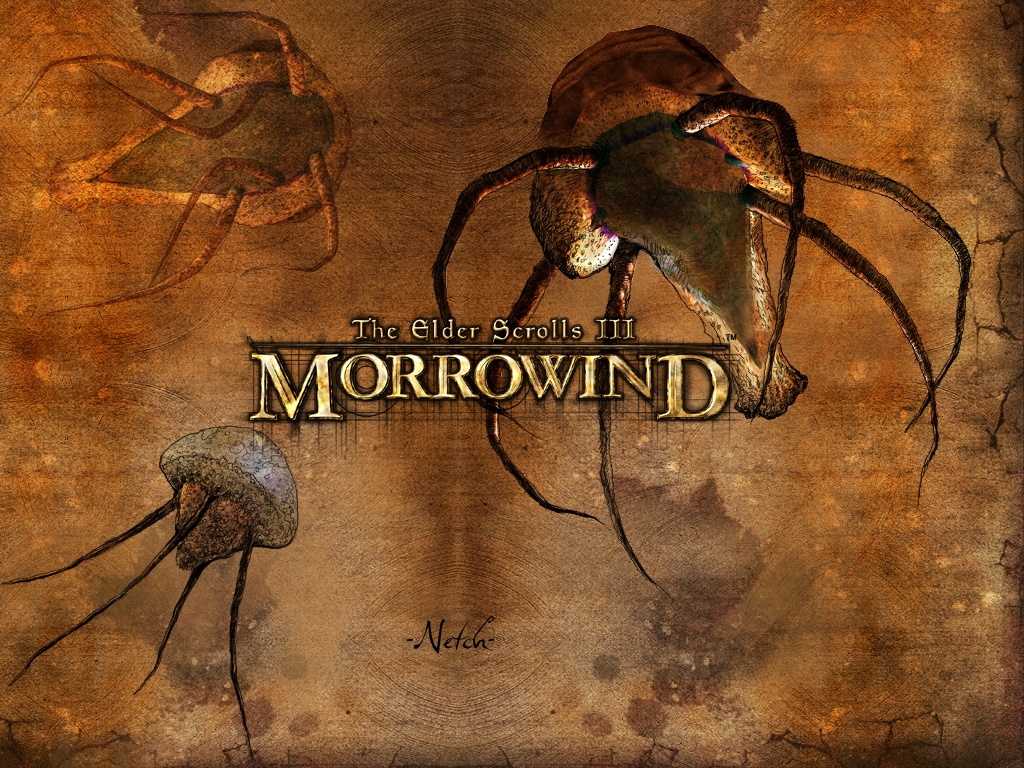
Happy Birthday, Morrowind!

Depending on where you are in the world, today or tomorrow will mark the 20th anniversary of The Elder Scrolls III: Morrowind. The open-world role-playing game was one of a few titles in the early 2000s that genuinely changed my relationship with gaming as a hobby – and kept me engaged when I might’ve otherwise began to drift away. To me, even twenty years later it still represents the high-water mark of the entire Elder Scrolls series, and I’d probably even go so far as to call it one of my favourite games ever.

It can be difficult to fully explain how revolutionary some games felt at the time, especially to younger folks who grew up playing games with many of the modern features and visual styles that still dominate the medium today. But in 2002, a game like Morrowind was genuinely groundbreaking; quite literally defining for the very first time what the term “open-world” could truly mean.

For players like myself who cut our teeth on the pretty basic, almost story-less 2D games of the 1980s on consoles like the Commodore 64 or NES, the technological leap to bring a world like Morrowind’s to life is staggering. Considering the iterative improvements that the last few console generations have offered, it’s something that we may never see again, at least not in such a radical form. Comparing a game like Morrowind to some of the earliest games I can remember playing must be akin to what people of my parents’ generation describe when going from black-and-white to colour TV!

One thing that felt incredibly revolutionary about Morrowind was how many completely different and unrelated stories were present. There was a main quest, and it was an interesting one, but instead of just random side-missions that involved collecting something or solving a single puzzle, there were entire questlines for different factions that were just as long and in-depth as anything the main quest had to offer. It was possible to entirely ignore the main quest in favour of pursuing other stories, and that made Morrowind feel like a true role-playing experience.

For the first time (at least the first time that I’d encountered), here was a game that gave me genuine freedom of choice to be whoever I wanted to be – within the confines of its fantasy setting. There were the usual classes – I could choose whether to be a sword-wielding warrior, a sneaky archer, a mage, and so on – but more than that, I could choose which stories I wanted to participate in… and choosing one faction over another would, at least in some cases, permanently close off the other faction to that character. That mechanic alone gave Morrowind a huge amount of replayability.

To this day there are quests in Morrowind that I haven’t completed – or even started! That stands as testament to just how overstuffed this game was, and as I’ve mentioned in the past, the amount of content in Morrowind eclipses both of its sequels: Oblivion and Skyrim. Morrowind offers more quests, more factions to join, more NPCs to interact with, more types of weapons to use, more styles of magic to use, and while its open world may be geographically smaller, it feels large and certainly more varied – at least in some respects – than either of its sequels.

I first played Morrowind on the original Xbox – the console I’d bought to replace the Dreamcast after that machine’s unceremonious exit from the early 2000s console war! But the PC version gave the game a whole new lease of life thanks to modding – and mods are still being created for the game 20 years later. There are mods that completely overhaul Morrowind’s graphics, meaning that it can look phenomenal on a modern-day PC, and there are so many different player-made quests, items, weapons, characters, and even wholly new locations that the game can feel like an entirely new experience even though it’s marking a milestone anniversary.

Although modding and mod communities had been around before Morrowind came along, it was one of the first games that I can recall to genuinely lean into and encourage the practice. The PC version of Morrowind shipped with a piece of software called The Elder Scrolls Construction Set as a free extra, and it contained everything players needed to get started with modding. I even had a play with the Construction Set when I got the PC version of Morrowind a few years after its release, and while I lack the technical skills to create anything substantial, I remember it being an interesting experience.

I followed a guide I found online and managed to create a companion for the main character, as well as added doors to a specific house so it could be accessed from any of the towns on the map! I also added a few items to the game, like an overpowered sword with a silly name. By this point, Morrowind and its mods were just good fun, and as I didn’t have a PC capable of running Oblivion when that was released a few years later, Morrowind mods were an acceptable stand-in!

Before Morrowind became overladen with mods, though, there were two incredible expansion packs released for the game. This was before the era of cut-content DLC or mini DLC packs that added nothing of substance, so both Tribunal and Bloodmoon were massive expansions that were almost like new games in their own ways. Both added new areas to explore, new factions, new characters, new items, and new questlines. While Tribunal was fantastic with its air of mystery, I personally enjoyed Bloodmoon even more. I like wintery environments, and the frozen island of Solstheim, far to the north of the main map, was exactly the kind of exciting environment that I’d been looking for.

So that’s it for today, really. I just wanted to take a moment to acknowledge the anniversary of one of my favourite role-playing games, to celebrate some of the things that made it great – and continue to make it a game that I’m happy to return to and to recommend to fans of the genre. Regular readers might’ve seen Morrowind on some of my “PC gaming deals” lists around Christmas or in the summertime, and when Morrowind goes on sale on Steam, for example, the game-of-the-year edition with both expansion packs can be less than the price of a coffee. It’s also on Game Pass following Microsoft’s acquisition of Bethesda – so there’s no excuse not to give it a try, at least!

In the twenty years since Morrowind was released, many other games have imitated its open-world layout, its factions, its branching questlines, and its diversity. Some newer games have bigger worlds, more characters, and so on… but Morrowind will always be a pioneer. It may not have got everything right, but it’s a landmark in the history of video games that showed us just how immersive and real a fantasy world could feel.

As one of the first games of its kind that I ever played, I have very fond memories of Morrowind. Often when I pick up a new open-world, fantasy, or role-playing title, I’ll find myself unconsciously comparing it to Morrowind, or noting that Morrowind was the first game where I encountered some gameplay mechanic or element for the first time. It really is an incredibly important game. So happy birthday, Morrowind! Here’s to twenty years!

The Elder Scrolls III: Morrowind is out now and can be purchased for PC or via Xbox Game Pass. The Elder Scrolls III: Morrowind is the copyright of Bethesda Game Studios and Microsoft. Some images above courtesy of UESP.net. This article contains the thoughts and opinions of one person only and is not intended to cause any offence.

Ten games to play instead of Cyberpunk 2077

Highly-anticipated (and almost certainly over-hyped) role-playing game Cyberpunk 2077 releases today. If, like me, you don’t really have £50/$60 to spend on a single game this close to Christmas – or you don’t have a PC or console capable of playing it – I thought it could be fun to go through a few alternatives.

I don’t hate Cyberpunk 2077. It’ll most likely be a decent game, and I’m sure I will eventually give it a shot. But there are many fun titles out there that offer comparable experiences – and most don’t cost as much! Here’s ten options for those of us who aren’t indulging in Cyberpunk 2077 on day one.

Number 1: Star Wars: Knights of the Old Republic & Star Wars: Knights of the Old Republic II – The Sith Lords (2003; 2004)

Coming after The Phantom Menace and Attack of the Clones had left the franchise in a pretty disappointing place, Bioware’s Star Wars epic and its Obsidian-produced sequel were outstanding. At a time when I wasn’t enjoying Star Wars’ cinematic output, these games came along and did a lot to save its reputation. For around £15 (on Steam) you’ll be able to pick up both titles and enjoy two of the best stories in the entire franchise. The two games are significantly better than several of the Star Wars films, so if you’re even slightly interested in a galaxy far, far away but haven’t given either title a try yet, it could be a great time to do so.

Number 2: Deus Ex: Human Revolution & Deus Ex: Mankind Divided (2011; 2016)

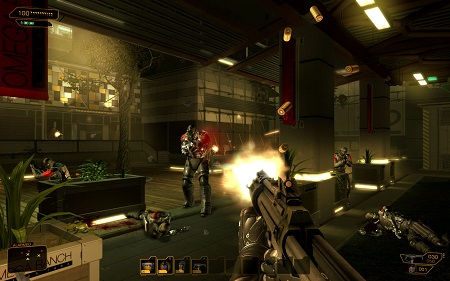
When I think about many of the components of Cyberpunk 2077 that people are most excited about – such as the ability to augment your human character, first-person gunplay, and different ways to reach objectives and complete missions – I’m reminded a lot of the Deus Ex series, especially its most recent offerings. Though a far more linear experience, for a lot less money you could play through a couple of solid stealth/action games that offer at least some of the same features as Cyberpunk 2077. It’s even set in a dystopian future where corporations are in charge!

Number 3: The Witcher 3 (2015)

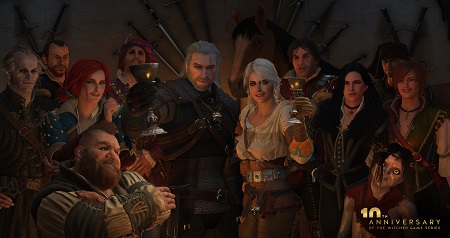
The Witcher 3 was CD Projekt Red’s last game before Cyberpunk 2077, and it’s widely hailed as a masterpiece. Though the two games are certainly different in terms of setting, point-of-view, and the like, if you’re like me and haven’t yet got around to playing one of the generation’s best role-playing games, this could be a great opportunity to do so. The Witcher 3′s huge success and positive reception is a big part of why Cyberpunk 2077 has seen such a massive hype bubble.

Number 4: Shenmue I & II (1999; 2001; re-released 2018)

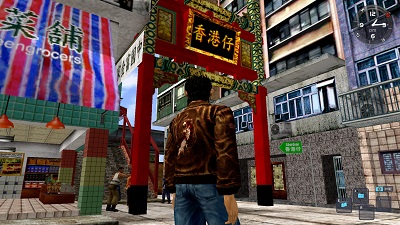
Though its story disappointingly remains incomplete, if you’re looking for a game with a truly engrossing narrative Shenmue could be just what you need. These two ambitious titles were originally released for the Dreamcast, sadly sharing the fate of that console and being underappreciated. Both were re-released for PC in 2018 as a single bundle, and if you missed them when they were new it could be a great time to jump in. Shenmue pioneered the idea of an open world before anyone even knew what that meant, and was the first game I ever played that felt genuinely cinematic. I think I’ll be recommending these games to people for as long as I live!

Number 5: Doom & Doom Eternal (2016; 2020)

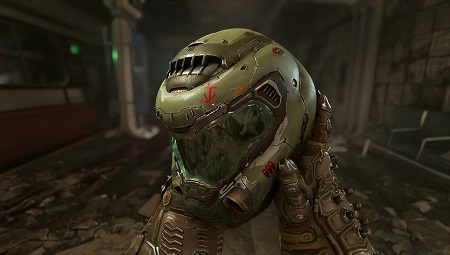
If Cyberpunk 2077′s big draw was its first-person shooting, Doom and Doom Eternal could be great substitutes. If you want to feel like a total badass, kicking butt and taking no prisoners (literally) then there’s no better choice. The rebooted Doom series ditched the horror vibe of Doom 3 and went back to its roots – shooting demons in the face by the absolute boatload. The two games both have fantastic soundtracks that perfectly suit the fast-paced, explosive gameplay. And Doom Eternal introduces a grappling hook. Need I say more?

Number 6: Grand Theft Auto V (2013)

Because of the ridiculous hype bubble that’s grown around Cyberpunk 2077, a lot of players are going to be disappointed when they realise it isn’t “Grand Theft Auto in the future.” So why not play the most recent entry in Rockstar’s crime saga instead? It’s a huge open world, there’s plenty to do, and if you want the experience of running amok causing havoc in a densely-packed city, this is about as close as you can get right now. There’s even a first-person mode (except on the Xbox 360/PlayStation 3.)

Number 7: Titanfall 2 (2018)

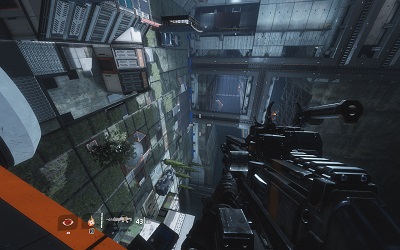
A fun, futuristic shooter with mechs. That’s what Titanfall 2 is, and this underappreciated gem was sadly released at a very competitive moment in the first-person shooter genre. That led to underwhelming sales, but if you’re willing to give it a shot you’ll find a truly exciting, action-packed experience. Part of the appeal of Cyberpunk 2077 is its first-person perspective, and while you won’t find as many customisation options or a branching story, what you’ll get with Titanfall 2 is some of the best gunplay ever put into a game with weapons that have a realistic kick.

Number 8: The Elder Scrolls III: Morrowind (2002)

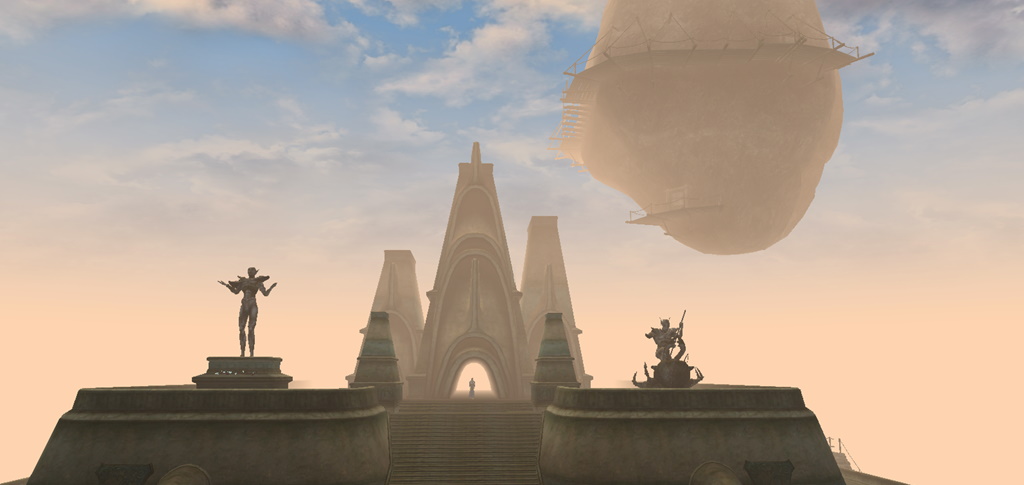
One of the best role-playing games every made, and the high-water mark of the Elder Scrolls series in my opinion, Morrowind is packed full of fun and interesting quests, random NPC encounters, and a diverse set of locations and environments across its open world. Eighteen years after it was released there are quests I’ve never completed and whole storylines I haven’t seen; it’s just too big to fit everything into a single playthrough. Despite being released a decade earlier, Morrowind has much more going on than Skyrim – more weapon types, more factions to join, and even more NPCs to interact with. You just have to look past its text-based interface, which can admittedly feel dated in 2020.

Number 9: Pillars of Eternity & Pillars of Eternity II: Deadfire (2015; 2018)

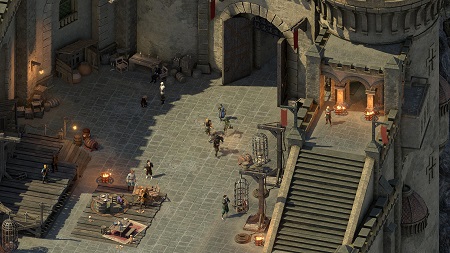
Both Pillars of Eternity and its sequel have a decidedly old-school feel, thanks in part to their visual style and use of an isometric perspective. Each game takes 40+ hours to beat – longer if you play more side missions and take your time – so there’s a lot of role-playing to get stuck into. It’s hard to say much more without spoiling the experience, but if you’re looking for an in-depth role-playing experience with fun customisation and where your in-game choices truly impact the story, look no further.

Number 10: Halo: The Master Chief Collection (2014; 2019)

When I think about “futuristic first-person shooters,” one series springs to mind ahead of all the others: Halo. The Master Chief Collection brings together the first six titles in the series (or every game except Halo 5) for hours and hours of single-player or co-op gameplay. Cyberpunk 2077 doesn’t offer co-op! The exciting tale of humanity’s war against an alien alliance known as the Covenant is detailed in these games, and although the quality of the series has waned somewhat in recent years, even Halo at its worst is still light-years ahead of many other games.

So that’s it. Ten games you could play instead of Cyberpunk 2077 while you wait for the day-one bugs to be patched out and for the game to drop in price! Or because you aren’t interested in one of the biggest releases of the year.

If nothing else, this was an opportunity to talk about some fun games and highlight them in the run-up to Christmas. Remember that the Steam holiday sale is likely coming up in a matter of days; it could be worth waiting to see if any of your favourites will be on sale. I highly doubt Cyberpunk 2077 will see even a 5% discount so soon after its release, but you never know!

All titles listed above are the copyright of their respective studio, developer, and/or publisher. Some screenshots and promotional artwork courtesy of IGDB. This article contains the thoughts and opinions of one person only and is not intended to cause any offence.

Ten more games I’d remaster (if I could)

A little while ago I looked at ten games from years past that I wish would be remastered and brought up-to-date. That list was fun to put together, but I ended up leaving off a number of titles that I had considered including. This new list will make up for that!

The same methodology applies as last time: more recent titles – which I’m defining as anything from this console generation or the one preceding it – are excluded by default. And the rest are games that I’ve personally played… albeit I haven’t touched most of them in years or even decades. Remember that this isn’t me saying that these games will be remastered. I’m just saying that, if I had unlimited resources, I’d like nothing more than to bring them up to date and give a new generation of players a chance to experience them.

Number 1: Super Mario Kart (SNES, 1992) and/or Mario Kart 64 (Nintendo 64, 1997)

I’d love to replay the classic tracks of the first two Mario Kart titles using the more modern engine used for Mario Kart 8. A few of the tracks from these two titles have reappeared in recent Mario Kart titles, but not all of them and the two games have never been remastered in their entirety complete with all of the tracks and the same roster of characters.

Super Mario Kart was one of the first games I bought for myself in the early ’90s; I think I’d played a demo of it in a shop and desperately wanted my own copy! Mario Kart 64 is probably my personal favourite entry in the series; it had such an amazing set of tracks. If you want to see some of the best racetracks from these titles and others that I think would be great for the next Mario Kart title, I have an article all about that. With 2022 being the 30th anniversary of the series – and with Nintendo’s love of anniversaries – they could certainly take that opportunity to bring one or both of these titles fully up-to-date!

Number 2: Space Harrier (Arcade, 1985)

On my first list I didn’t include any pre-1990 titles. Partly that’s because a lot of older games were rather basic. Space Harrier is undeniably in that category; it’s an on-rails shooter without any real story, the only objective is to shoot at aliens and creatures. But there aren’t many games like that in 2020, and perhaps with a major visual overhaul it could offer something different to players. The other option would be to take its main character, settings, and alien races and expand on them – turning Space Harrier from a run-and-gun shooter into something more like a story-driven action/adventure title in a unique sci-fi setting.

I never had the chance to play Space Harrier in a real arcade. The closest I got to that experience was playing it in Shenmue – that’s where I first encountered the title. But nostalgia is a big deal these days, and perhaps some people would be tempted to see a reworked version of this classic.

Number 3: Spirit of Speed 1937 (Dreamcast and PC, 1999)

Racing games are a lot of fun, and some modern titles do make an attempt to include older vehicles – classic cars from the golden age of motor racing. I could be wrong, but I don’t think there’s been another game like Spirit of Speed 1937, though, which was set in that era and exclusively featured pre-war vehicles.

I played the Dreamcast version of this game, and it was a lot of fun. It was also something wholly unique among racing games that were either fun but un-serious kart racers in the vein of the Mario Kart series, or modern-day racers and rally games featuring up-to-date cars. I believe that niche still exists today, and it would be a lot of fun to have a classic racer like this to fill it!

Number 4: Star Trek: Voyager – Elite Force

I’ve had an article in the pipeline for a while that I haven’t knocked into shape yet looking at the state of Star Trek video games. To make a long story short, while a number of them have been pretty good, practically none reached out beyond Star Trek’s preexisting fandom. Elite Force was different, and some fans of first-person shooters who didn’t give a hoot about Star Trek played and enjoyed the game when it released in 2000. Its multiplayer mode in particular was something gamers at the time appreciated.

Elite Force had a great single-player campaign too, which included down time in between missions where the player character – Ensign Munro – was able to explore parts of the ship. The story was perfectly Star Trek in its theme, and Voyager would even go on to use a vaguely similar premise for an episode called The Void which aired about six months after the game was released.

Number 5: The Elder Scrolls III: Morrowind (Xbox and PC, 2002)

It would have been hard to imagine in the 2000s, but there hasn’t been a game released in the Elder Scrolls series for almost a decade. Though Bethesda have promised us that The Elder Scrolls VI is in development, it seems years away. The company has remastered Skyrim several times and ported it to every platform under the sun, and while we continue to wait for The Elder Scrolls VI, why not bring Morrowind up to date?

Morrowind is undoubtedly my favourite game in the series. It massively expanded on previous entries, with a huge variety of quests and styles of play. It was possible to be a wizard, sneaky assassin, warrior, and all manner of other things. Beginning with its sequel, Oblivion, Bethesda actually began cutting content, and the most recent Elder Scrolls titles have far fewer NPCs, weapon types, factions, and so on. While we can argue about which game is “better” and get nowhere – such things are subjective, after all – for my money Morrowind offers players the biggest choice of things to do. It’s been eighteen years since I first played it, and I still haven’t completed every quest!

Number 6: Super Mario 64 (Nintendo 64, 1996)

I kept this title off my first list because there had been rumours floating around of a remaster being worked on. Sadly, as I noted when I looked at Nintendo’s lineup for Mario’s 35th anniversary, Super Mario 64 was only included in its original form as part of a bundle. But replaying this amazing game in the Super Mario Odyssey engine is something I really want to experience, and with the game’s 25th anniversary coming up next year, perhaps Nintendo will finally bring Super Mario 64 up-to-date.

I first played Super Mario 64 when it was released; it was the first Nintendo 64 game that I owned. I’m not sure if it was the first ever true 3D game I played, but it was certainly one of the earliest titles I got to enjoy that wasn’t 2D. It has a special place in my heart as “my” Mario game – I played the SNES versions of classic Mario titles, but even at the time they were “old” games, and Super Mario 64 was the first that I got to play when it was new.

Number 7: Medieval: Total War (PC, 2002)

Medieval: Total War is almost certainly my most-played game of the early 2000s. It followed on from the also brilliant Shogun: Total War, but took the setting from feudal Japan to the more-familiar western Europe. It was a game that was very easy to mod – I remember opening up the game’s files in Notepad and editing things like the year the game began, which factions controlled which province, and even the names of provinces! I loved the dual gameplay, which was unique among strategy games at the time – both a grand strategy game that required detailed faction management and real-time battles were present in the same title.

The Total War series is still going strong in 2020, and recent titles like Total War: Warhammer and Total War: Three Kingdoms are carrying the flag for the franchise on a massively improved engine. Medieval II: Total War did bring the series back to this setting in 2006, but even that game is rather outdated compared to the latest entries, and it would be amazing to see a remake of Medieval: Total War using the technology at the franchise’s disposal today.

Number 8: TimeSplitters 2 (GameCube, PlayStation 2, and Xbox, 2002)

Out of all the games I’ve ever played, TimeSplitters 2 may have the best ever multiplayer mode! It was certainly something that was a huge amount of fun to play on the original Xbox, with its goofy time-travel narrative taking players from Prohibition-era Chicago to futuristic Toyko and beyond. The TimeSplitters games were never going to be on par with other first-person shooter titles like Halo or the Call of Duty series, but the series had heart and did what it did incredibly well.

The recent remake of Destroy All Humans shows that there is a market for early/mid 2000s games with a sense of humour to be remastered, and I’d absolutely love to welcome back TimeSplitters 2 after all this time.

Number 9: The Simpsons: Hit and Run (Multiplatform, 2003)

Talk to anyone who was a gamer in the mid-2000s and I bet they’ll remember The Simpons: Hit and Run with a sense of nostalgia! I didn’t actually own this game for myself at the time (being a broke student) but a friend did and we played it regularly when I was at university. The game is basically a Simpsons-themed Grand Theft Auto-clone, playing on the popularity of that sub-genre in the wake of Grand Theft Auto III and Vice City, and while fans of Grand Theft Auto will find the more extreme violence of that series decidedly toned-down and cartoonish, it’s a solid game nevertheless.

Recent games have steered away from tie-ins with films and television shows, and the days of a big-budget game based on a popular series are all but gone. There was a time when many popular titles got video game adaptations, and while as a whole tie-in games picked up a (not undeserved) reputation for being pretty poor, there are some real gems too. The Simpsons: Hit and Run is absolutely one of them!

Number 10: Operation WinBack (Nintendo 64, 1999)

Despite languishing in relative obscurity in 2020, Operation WinBack – known as WinBack: Covert Operations in the United States – is an incredibly influential title. Doom was the father of the first-person shooter, and similarly Operation WinBack is the instigator of the cover-based third-person shooter genre. Titles like Gears of War and Mass Effect would not exist without Operation WinBack, and while its cover system – which was so unique at the time it debuted – is now a standard feature, there are still plenty of reasons to bring back this fun spy adventure.

Operation WinBack had a good story, one that would be at home in films like the Mission: Impossible or James Bond series. 2016’s Doom has proved that there’s an appetite among gamers for going back to the roots of established genres, so it could be time to return to the world of Operation WinBack.

So that’s it. Ten more titles that are – in my opinion – worthy of a remaster in 2020. Will any of them ever get one? Let’s just say if I were a gambler I wouldn’t put any money on it! Well… maybe one or two? Some of the biggest companies in the games industry have recently put lots of money into remakes and remasters, and some games that I’d never have expected – like Destroy All Humans and Command and Conquer – have been brought up-to-date. So there’s a chance. There’s always a chance!

Though several of these games are undoubtedly out of print, each one is worth playing in its original form if you’re able to track down a copy, and even though it’s been years or decades since I got to play some of them, I recommend every title on this list!

All titles listed above are the copyright of their respective developers, studios, and/or publishers. Some screenshots courtesy of IGDB. This article contains the thoughts and opinions of one person only and is not intended to cause any offence.