Happy Star Trek Day!

A Star Trek-themed spoiler warning.

Spoiler Warning: Beware of minor spoilers for Strange New Worlds Seasons 2-3.

Happy Star Trek Day, friends!

The 8th of September – i.e. today – was the date in 1966 when the very first episode of Star Trek premiered in the United States, and in recent years, it’s been celebrated within the fan community as “Star Trek Day.” Next year’s going to be the milestone 60th anniversary, but I thought we could take stock of where Star Trek finds itself, reflect on the importance of the franchise, and just geek out a little bit today, since it’s a special occasion.

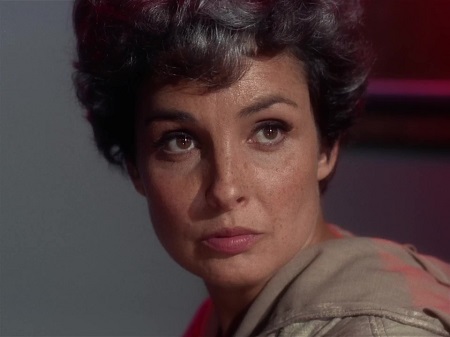
Though it was the first episode to be broadcast, The Man Trap wasn’t the first episode to be produced. After The Cage didn’t make the cut, Gene Roddenberry and co. were given a rare second chance to make a pilot, and they settled on Where No Man Has Gone Before. However, although the network liked this episode more than The Cage, it wasn’t considered as straightforward a story when it came to deciding on the broadcast schedule. Basically, by process of elimination, The Man Trap won out against the few other completed episodes in September 1966. And just the other day, I got to meet Budd Albright – one of the actors who was in The Man Trap. Being able to say I’ve met one of the performers who was in the first ever Star Trek episode is, without a doubt, one of the coolest things I can add to my resume as a Trekkie!
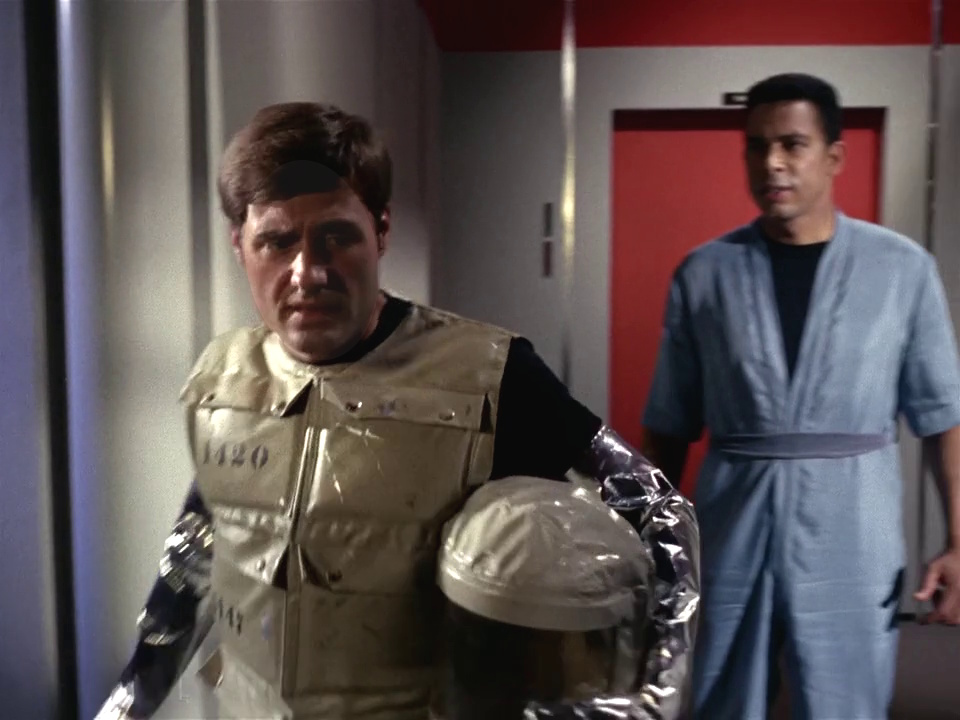
Still frame from Star Trek: The Original Series S01, E01, "The Man Trap," showing Barnhart and the M-113 Creature.
Budd Albright (left) in The Man Trap, which aired 59 years ago today.

When you look back with 59 years of hindsight, having seen how Star Trek attracted a fandom and expanded into a massive franchise, it’s easy to fall into the trap of saying its success was always a sure thing. But if you read up on the early production history of Star Trek, what amazes me is how it could’ve either been completely different… or might never have made it off the ground at all. Even today, if a television pilot gets rejected, being offered a second chance by a broadcaster is something that very rarely happens. In the mid-1960s, with sci-fi still a relatively new and untested genre on television – and an expensive one, thanks to sets, costumes, props, prosthetics, and special effects – it’s genuinely stunning to think that the higher-ups at the network were willing to give Gene Roddenberry that all-important second chance.

There were several key decisions taken early in the production of The Original Series that I genuinely believe took a great concept and turned it into something that became a phenomenon. The first was the avoidance of product placement; Gene Roddenberry was keen to avoid Kirk and Spock turning to the camera, cigarette in hand, and plugging brands like Lucky Strike. The second, and probably most important, was that The Original Series was filmed and broadcast in colour, at a time when colour TV was only just getting started. Doctor Who, one of Star Trek’s contemporaries in the ’60s, didn’t broadcast in colour until 1970, and American shows around the same time – like The Addams Family, The Twilight Zone, and The Fugitive – were all still airing in black-and-white.
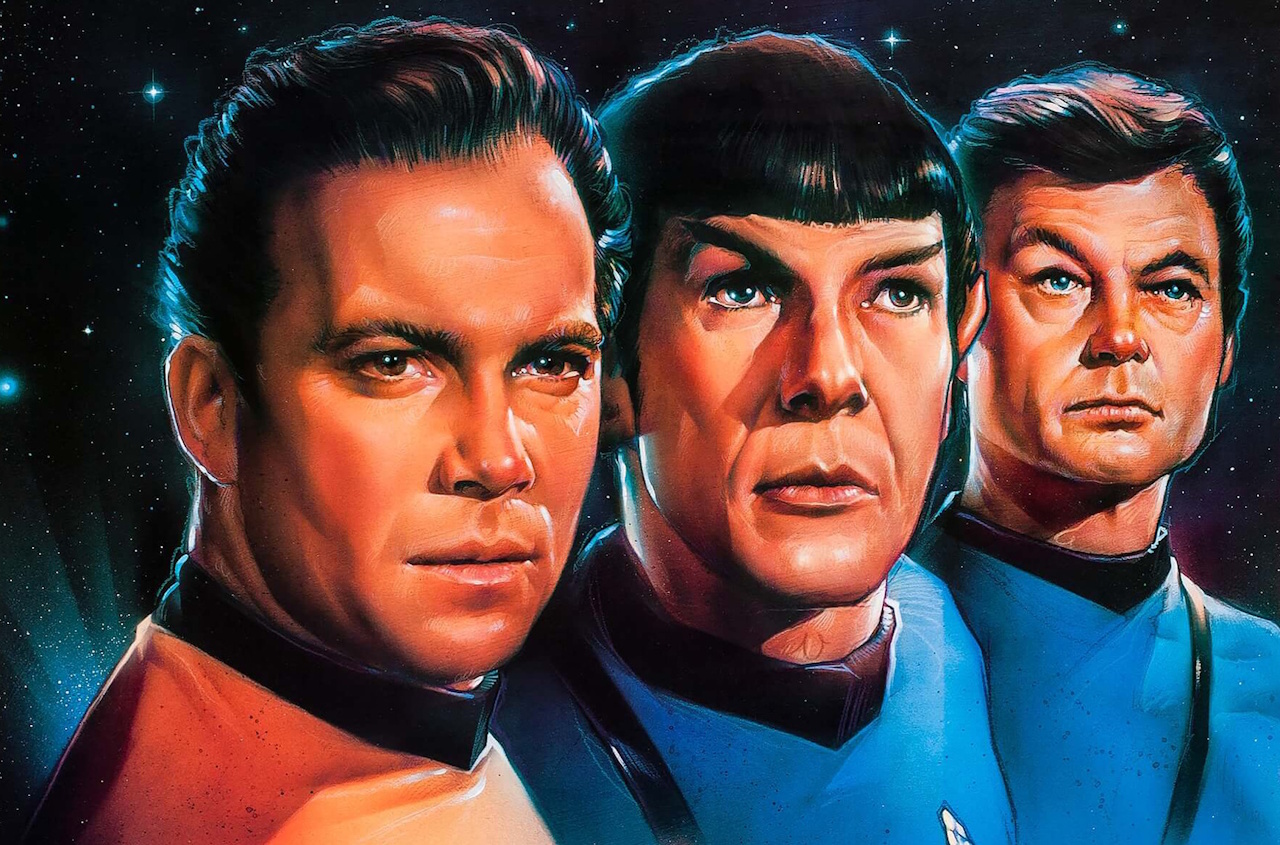
Kirk, Spock, and Dr McCoy from Star Trek on a promo poster for the series' Betamax release c. 1986 (cropped).
Kirk, Spock, and Dr McCoy.

Star Trek was cancelled in 1969 due to low ratings – but those ratings massively improved when the series was rebroadcast in the early 1970s – and I firmly believe that if it had been in black-and-white, not colour, it would’ve been more difficult for Star Trek to have garnered the level of support that led to the creation of The Animated Series and, eventually, The Motion Picture. I don’t know if colour was always the plan, and for a while, I remember reading that the only full cut of The Cage that existed was in black-and-white, though I’m not sure if that was just a pre-internet rumour! In any case, being filmed and broadcast in full colour definitely gave Star Trek a much-needed boost as colour TV was just about to take off.

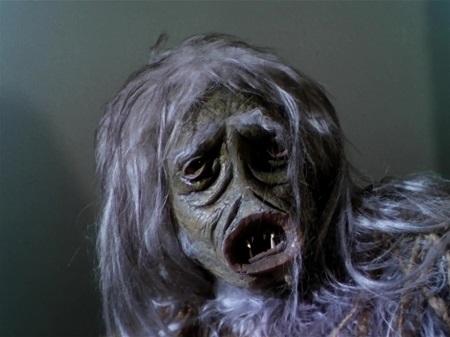
At the core of Star Trek, though, were great characters and fun stories – often, but not always, with morals and messages that reflected the world in which they were written in different ways. I said a few years ago that The Man Trap is more than just an “alien monster” story; what makes the episode so poignant and powerful are the reflections Kirk, Spock, McCoy and others have when they consider the implications that the Salt Vampire may have been the last of its kind… and they killed it in self-defence. Star Trek has always trusted its audience to think, and encouraged viewers to consider the implications and possibilities of its stories. Star Trek episodes are designed to be dwelt upon after the credits have rolled – which, I think, explains why there’s such a vocal and passionate fan community!
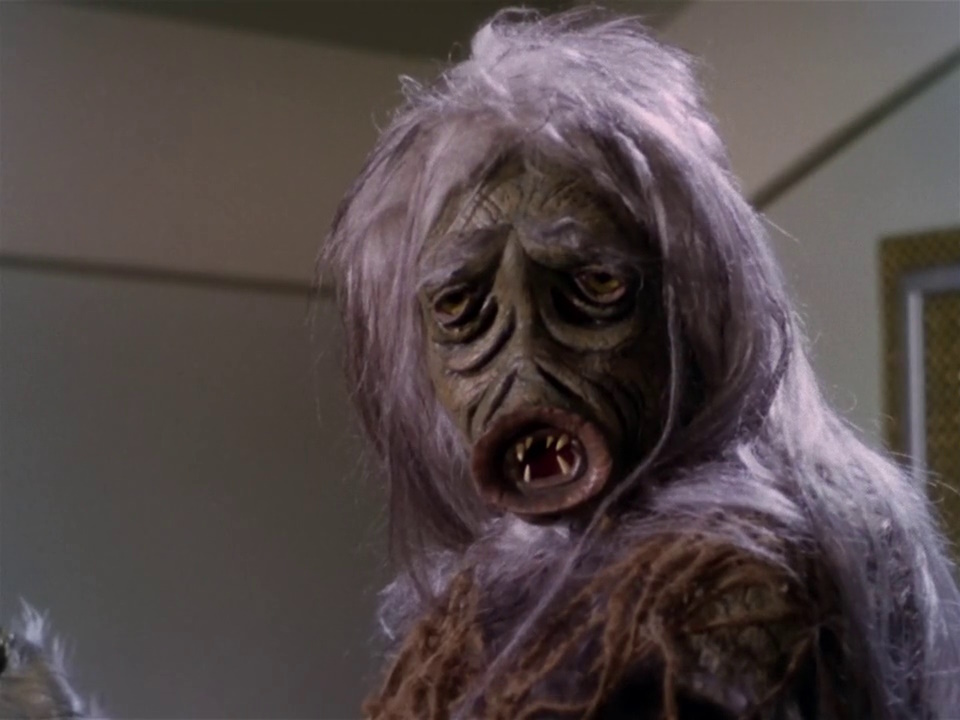
Still frame from Star Trek: The Original Series S01, E01, "The Man Trap," showing the M-113 Creature/Salt Vampire.
The M-113 Creature.

After The Cage was rejected, Gene Roddenberry and the team re-worked most of its characters. “Number One” was originally intended to be the stoic and logical one, but that role was reassigned to the new incarnation of Spock. Captain Pike was out, replaced with Captain Kirk. Dr Boyce became Dr McCoy, but retained a similar role as an older confidant of the captain. Characters like Sulu and Uhura were created, and the stage was set for the show we’re all familiar with.

If you’d told the cast and crew then, in 1966, that new episodes featuring Spock, Scotty, Uhura, and Nurse Chapel would still be airing 59 years later… well, I doubt anyone would have believed you!

But I think it says a lot about those characters, and the way The Original Series was written, that Strange New Worlds came to exist at all – let alone that it’s the best thing Star Trek has done in a long time. Those characters, their personalities, and the way they’d conduct themselves in their roles… it’s a huge part of what made Star Trek into the franchise it would become. We’re still watching episodes starring these same characters, alebit in an updated format, all these years later.
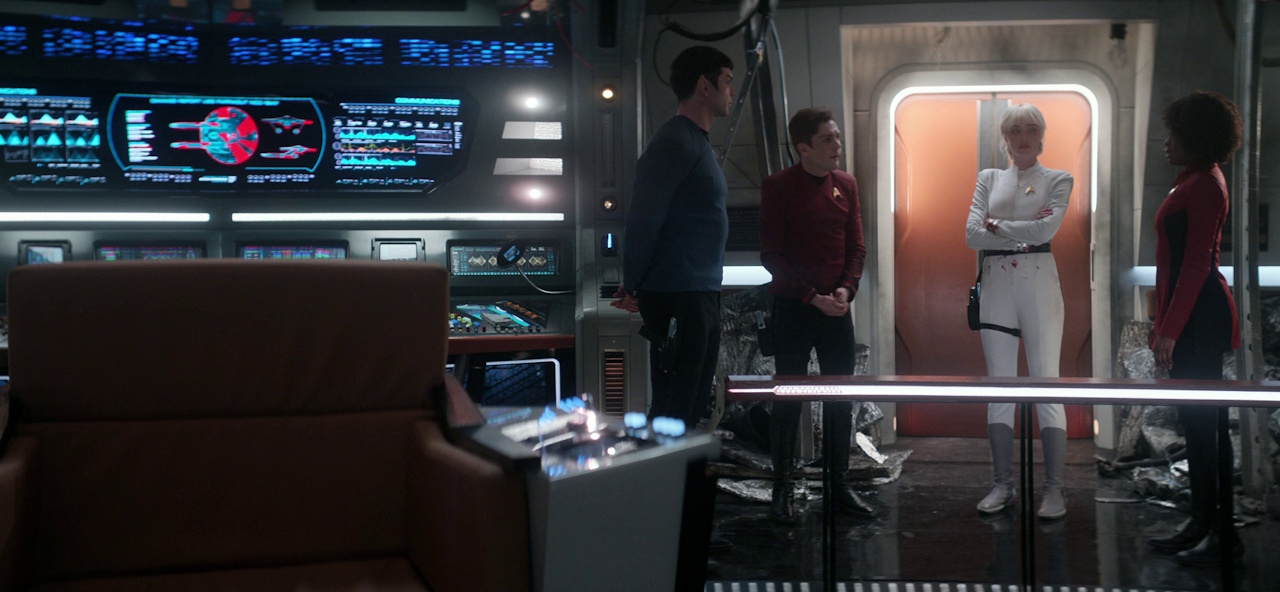
Still frame from Star Trek: Strange New Worlds 3x06 showing Spock, Scotty, Chapel, and Uhura on the bridge of the USS Farragut.
Spock, Scotty, Chapel, and Uhura in a recent Strange New Worlds episode.

I didn’t come to Star Trek via The Original Series. It was The Next Generation that first made me a Trekkie in the early 1990s. I’ve said this before, but Season 2’s The Royale is the first episode I can remember watching all the way through (though I think I’d seen at least parts of episodes before that, as well as having seen some action figures and props that my uncle had at the time.) In any case, I date my entry into the Trekkie community to 1991, when The Royale aired for the first time here in the UK. I went back to watch The Original Series here and there, when it was on TV and when I could afford to rent video tapes!

But as I progressed my journey into the Trekkie community through the 1990s, including attending my first-ever fan meetup and going to visit the Star Trek Exhibition around the time of the 30th anniversary, I came to watch The Original Series episodes and films. I’m afraid I couldn’t tell you what the first TOS episode I watched was; that memory is lost in the recesses of an addled brain! But I soon fell in love with Kirk, Spock, Dr McCoy, and the rest of the crew – just as the first generation of Trekkies had done a quarter of a century earlier. I don’t think I knew that The Man Trap had been the first episode to air until I got online around the turn of the millennium and started talking to other Star Trek fans; there was a debate, for a time, about which episode “technically counts” as the first one – should we go in broadcast order or production order? Broadcast seems to have won that argument, by the way!
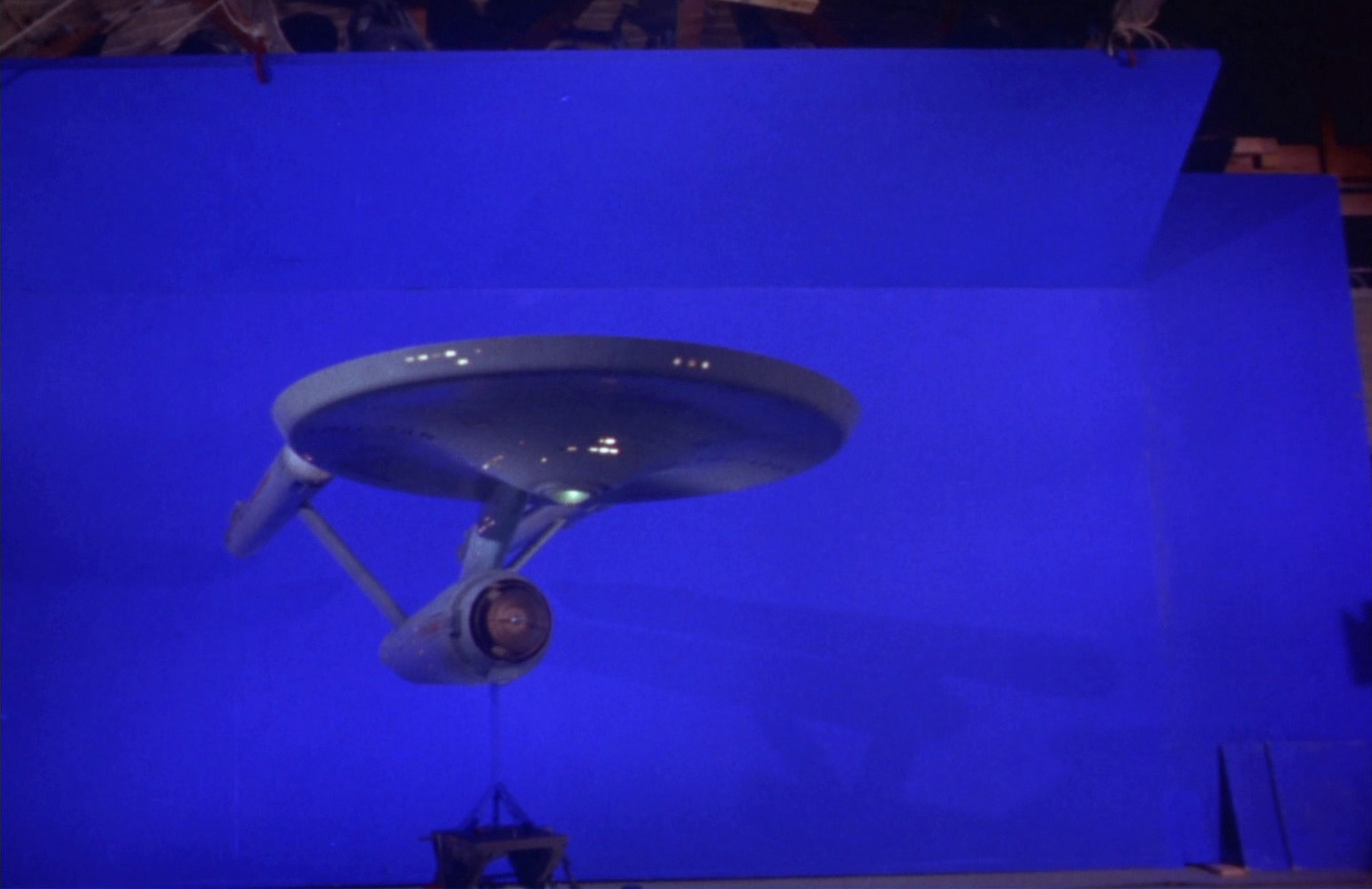
Behind-the-scenes photo/still frame from Star Trek: TOS showing the original USS Enterprise model against a blue screen.
The original USS Enterprise filming model.

Some people have gone so far as to suggest that, without Star Trek, there’d be no sci-fi on our screens today. I don’t agree with that assessment, I’m afraid. By 1966, when The Man Trap aired, Kuberick’s 2001: A Space Odyssey was in production. Other sci-fi and sci-fi-adjacent shows, like The Outer Limits, My Favorite Martian, and The Twilight Zone were already airing, and with the space race in full swing, there was a growing amount of attention on the genre. But without Star Trek, the sci-fi landscape would’ve been very different. Even back then, there was a lot of “doomerism” floating around. Star Trek is one of the very few entertainment properties – then or now – to present an optimistic vision of the future, where technology cures problems rather than causes them, where humanity has overcome its violent impulses rather than surrendered to them, and where the future is bright, not dark.

That’s what appealed to a lot of people about Star Trek: the core fundamentals of its setting. Technology could cure diseases. There was still an economy and private property, but humanity had moved to become a “post-scarcity society,” where an abundance of energy and resources meant we could dedicate our time to science, exploration, and other pursuits instead of being tied to a desk or working in a factory. Those elements of escapism appeal just as much today as they did 59 years ago – and they probably always will.
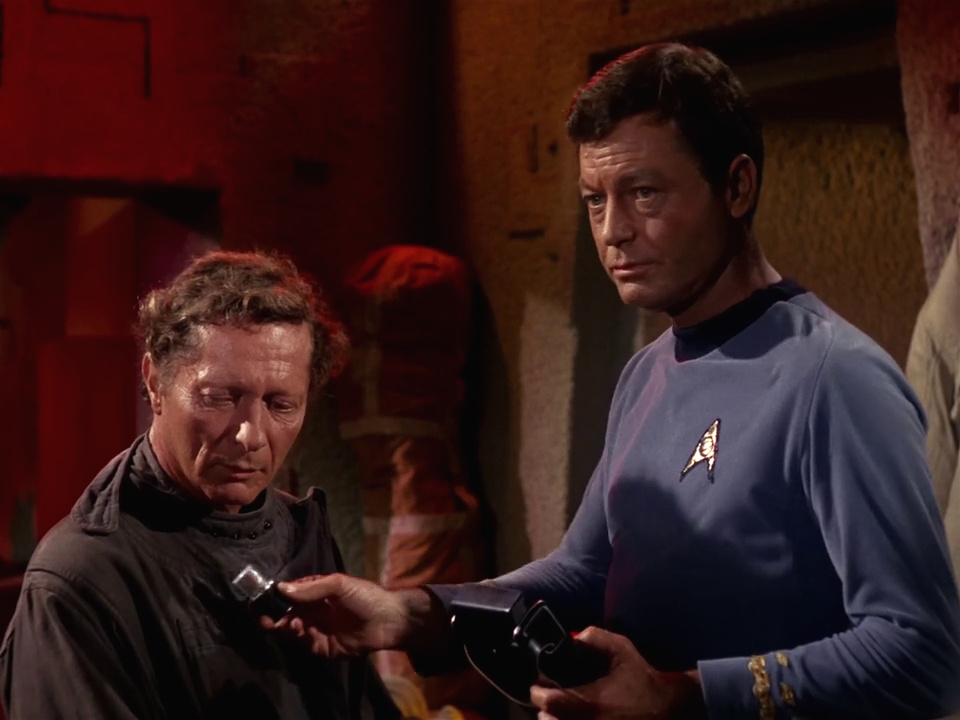
Still frame from Star Trek: The Original Series S01, E01, "The Man Trap," showing Dr McCoy holding his medical tricorder.
Dr McCoy with his medical tricorder in The Man Trap.

As someone who’s had health issues going back decades, I can say with certainty that one of the most appealing things about Star Trek’s vision of the future is the potential to cure diseases, and how it depicts an inclusive, friendly society that’s largely free from discrimination and hate. Technologies like the hypospray and medical tricorder are seen diagnosing and treating all manner of ailments and conditions. Some episodes suggested that limbs could be regenerated, scar tissue covered up, and even the ageing process itself could be reversed (in some stories, at least!) Dr McCoy (and later the likes of Dr Crusher, Dr Pulaski, and Dr Bashir) would be seen treating patients in state-of-the-art medical facilities, with bio-beds, computer monitoring, and research labs to develop brand-new cures.

Star Trek “predicted” technology that we take for granted today. What is the Enterprise’s viewscreen if not an early take on video-calling and FaceTime? Communicators seem an awful lot like mobile phones. Combadges? Bluetooth microphones and speakers. There are laser weapons in use by militaries around the world, and proposals for things like nuclear fusion reactors, ion thrusters, and even a “warp drive” concept of sorts – many of which are at least partly inspired by Star Trek. And there are countless individuals who have cited Star Trek as a reason for their interest in medical, scientific, or engineering fields.
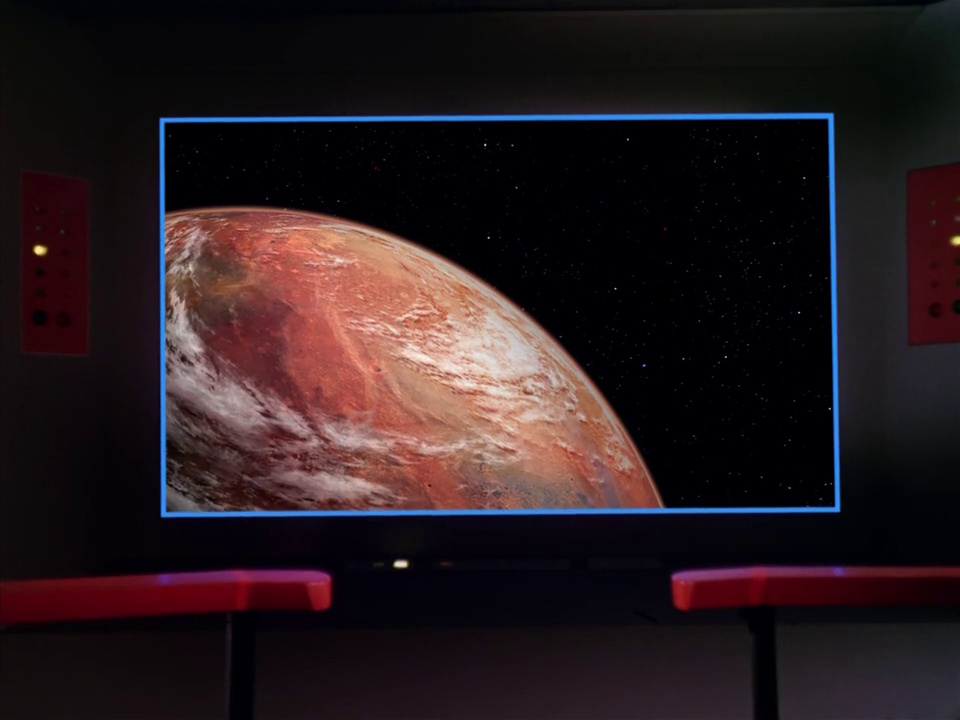
Still frame from Star Trek: The Original Series S01, E01, "The Man Trap," showing the main viewscreen.
The planet M-113 (remastered version) on the Enterprise’s main viewscreen.

So if that’s Star Trek’s legacy and early history… what’s next? What may lie in store for Star Trek as we pass its 59th birthday?

This is where, I’m afraid, things start to look a little less rosy. In my view, Skydance – Star Trek’s new corporate overlords – are not as interested in making new television shows as the previous incarnations of Paramount and CBS had been. I don’t believe it’s a coincidence that Discovery, Lower Decks, Prodigy, and Strange New Worlds were all cancelled after Paramount took the decision to go ahead with the Skydance merger. David Ellison, the CEO of Skydance and, by extension, the man with the final say over new Star Trek productions, does seem interested in some kind of feature film adaptation – and as luck would have it, there are supposedly at least two such projects currently being worked on. But with Paramount+ struggling, and not every recent Star Trek project being particularly well-received… I will not be at all surprised if the final episodes of Strange New Worlds and Starfleet Academy will bring an end to this era of Star Trek on TV.

With that being said, as depressing as it may sound, it isn’t always a bad thing for a franchise to take a break, get shaken up, and come back after some time has passed! It worked for Doctor Who in the mid-2000s, it arguably worked for Star Trek after Enterprise’s cancellation, and it’s at least possible to think that future Star Trek productions may benefit from learning the lessons of this era of streaming TV… as well as from having a bit of a hiatus.

Concept art of the USS Enterprise produced for Phase II/The Motion Picture.

I don’t have any “insider information,” by the way. But based on what’s been said publicly about potentially merging Paramount+ with Peacock (or some other streaming platform), David Ellison’s apparent preference for films over streaming TV, and the cancellation announcement for Strange New Worlds coming before Season 3 had even aired… that’s my gut feeling. No new Star Trek has been greenlit for a while, and one of the shows that had been announced – Tawny Newsome’s “workplace comedy” series – now seems to not be going ahead. So I think we have to contend with the possibility, as we pass the 59th anniversary, that Star Trek may once again be heading for a fallow period.

But there will be time to talk about that in more detail on another occasion!

Today, I want to raise a glass and toast to Star Trek’s success. Not many other entertainment properties from the mid-1960s are still around, still being worked on, and still so beloved as Star Trek. Very few franchises get anywhere near the 1,000-story mark – yet Star Trek, at time of writing, is just about 40 episodes shy of that incredible milestone. If Strange New Worlds and Starfleet Academy proceed as planned, as well as the films which are supposedly being worked on… hitting that 1,000-story mark seems within reach in the next few years.
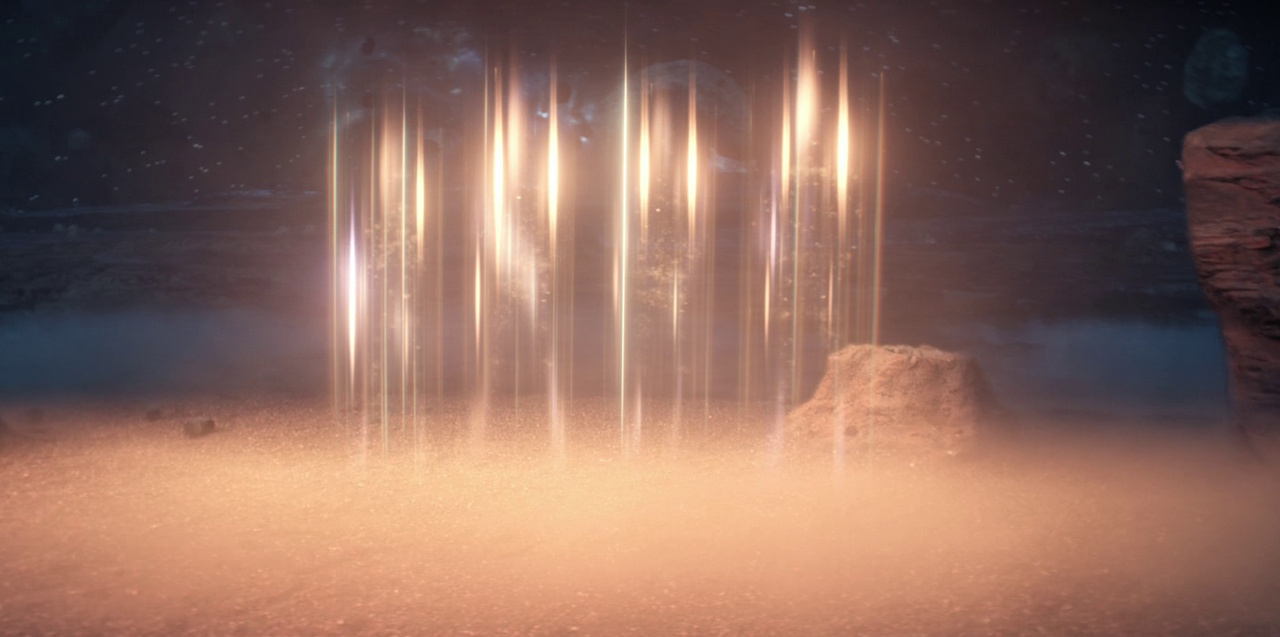
Still frame from Star Trek: Strange New Worlds 3x09 showing transporting.
Beaming down to a moon in the most recent Star Trek episode.

On a personal note, though I’ve dealt with burnout and felt the franchise had been over-saturated in the early 2020s, I’m still a huge Trekkie. I’ve been keeping up with Strange New Worlds this season, and I regularly go back to watch my favourites from The Next Generation era in particular. Being a Trekkie has been part of my identity, in a way, since I was a pre-teen, and now I’m in my forties! Nothing else in the entertainment world compares to Star Trek, for me, and even when I’m not actively watching the latest film or episode, Star Trek is still on my mind, its philosophy and vision of the future are still things I take into account, and my love for this franchise remains. The way I express that may fluctuate, sure, but I am still a Trekkie – and I daresay I always will be.

So happy Star Trek Day! Wherever you are in the world, whatever you’re doing, and regardless of whether you plan to watch The Man Trap (or any other episode) to mark the occasion, thank you for checking in, and I hope you have a wonderful Star Trek Day. This incredible franchise brought us together, today, 59 years on from that first episode – and I think that’s something pretty darn special.

Live Long and Prosper.


The Star Trek franchise – including all episodes and properties discussed above – is the copyright of Skydance/Paramount. Most Star Trek shows and films can be streamed on Paramount+ in countries and territories where the platform is available, or purchased on DVD and Blu-ray. This article contains the thoughts and opinions of one person only and is not intended to cause any offence.
Star Trek’s Scariest Alien Monsters!

A spoiler warning graphic.

Spoiler Warning: There are spoilers ahead for the following Star Trek productions: The Original Series Season 1, The Voyage Home, The Next Generation Season 1, Deep Space Nine, Voyager, Picard Season 3, and Strange New Worlds Season 1.

It’s Spooktober – the spookiest month of the year! So I thought we could have a bit of fun and talk about some of the scariest aliens and villains that the Star Trek franchise has brought to screen.

Star Trek isn’t a franchise that’s well-known for being all that frightening. I don’t think that’s a controversial statement at all – in fact, I’d wager that most TV viewers would consider it pretty tame, especially when thinking about the horror genre and alien monsters! But that doesn’t mean Star Trek is never scary. There are some wonderfully atmospheric episodes and stories scattered throughout the franchise’s fifty-eight-year history that have some of those more frightening elements.

Still frame from Star Trek: Picard Season 3 (2023) showing a Borg cube.

Today, rather than talking about individual stories or episodes, what I’d like to do is pick out some of the franchise’s scariest aliens, monsters, and villains – and talk about why they work so well, why they’re so intimidating, and perhaps even just the potential they have to be frightening or scary in future stories.

My usual caveat applies: everything we’re going to talk about is the entirely subjective opinion of one person only. If I miss something you think is blindingly obvious or if I include a “scary” alien that you think isn’t frightening in the least… that’s okay! There’s plenty of room in the Star Trek fan community for disagreement and differences of opinion.

With that out of the way, let’s talk about some of Star Trek’s scariest aliens and villains!

Number 1:
Q and the Q Continuum

Still frame from Star Trek: Picard Season 2 (2022) showing Q.

The Q are on the list less for their out-and-out fear factor and more for their potential. I don’t think there have been many terrifying or bone-chilling Q appearances – though I will entertain the argument that Q’s penchant for randomness can have an unsettling or unnerving quality. Things like conjuring up aliens in Napoleonic uniforms or a post-atomic courtroom would be incredibly frightening in real life, even if they’re portrayed more as chaotic and wacky when we see them unfold on screen.

The Q Continuum’s real fear factor comes from their apparently unlimited power. No other alien race in Star Trek is as powerful as the Q, and they could quite literally wipe out humanity, the Federation, or even the entire galaxy with a wave of the hand. Although we always see Q as humanoid, their true form is a mystery, and their power seems to be without limit – and without a reliance on technology. No war against the Q seems possible, and if they ever chose to move against the Federation (which they could do for reasons beyond our comprehension, or to prevent some kind of conflict in the far future that we have no inkling of right now) they could be far more destructive than even the Borg.

Number 2:
The Gorn
(As they appear in Strange New Worlds)

Still frame from Star Trek: Strange New Worlds Season 1 (2022) showing a juvenile Gorn.

The Gorn are one of Star Trek’s oldest alien races, appearing in the first season of The Original Series. But after that initial appearance and a few scattered mentions through The Next Generation era, they didn’t show up on screen again until Enterprise. That depiction wasn’t great, in my view – it relied too heavily on CGI that didn’t look great at the time and hasn’t aged well. But the return of the Gorn in Strange New Worlds has been a triumph.

After several episodes built up the terror of Gorn raids on the Federation, it was the episode All Those Who Wander that really showed us what this new depiction of the Gorn can do. Strange New Worlds’ writers unleashed the Gorn in an episode that, more than any other in the franchise, leans into the horror genre. The Gorn are depicted almost like the Xenomorphs from the Alien film series, possessing strength and stealth abilities that left the away team cornered.

Number 3:
The Founders/Changelings

Still frame from Star Trek: Deep Space Nine showing a changeling in their gelatinous state.

Maybe this one is a little controversial, but after the way Changelings were depicted in Picard’s third season I think we have a pretty good case to include them as a frightening bunch! The idea that shape-shifters could infiltrate Starfleet and the Federation was addressed in a fantastic Deep Space Nine two-parter: Homefront and Paradise Lost. These episodes took more of a political thriller/drama approach to the topic, but the core idea is a deeply unsettling one.

With the Dominion playing a growing role in Deep Space Nine, the idea of Changeling infiltrators was scaled back and only used sparingly – probably because it’s not an easy story to write or pull off successfully. But Picard Season 3 brought the idea back in a creative way, showing how deadly Changelings could be and how a Changeling plot could be an existential threat to the Federation.

Number 4:
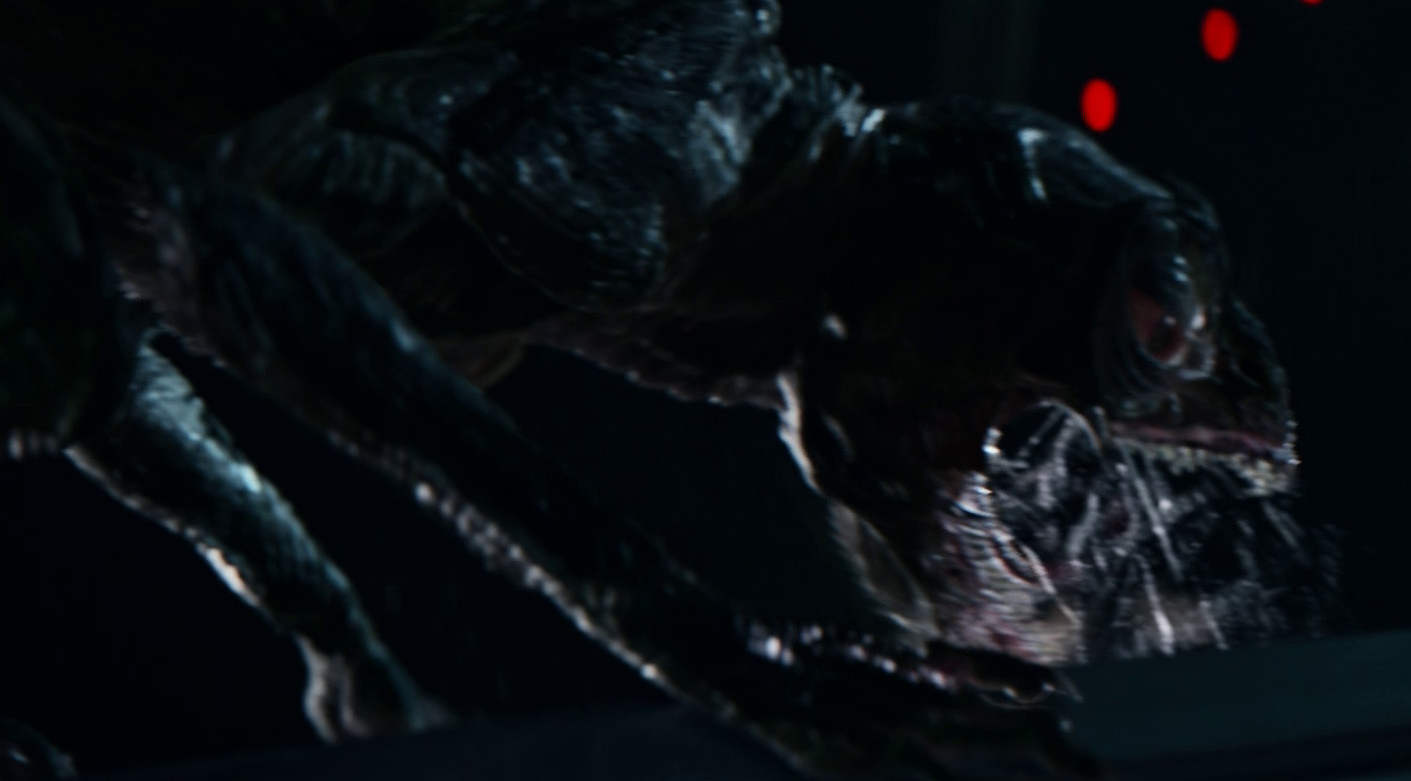
The M-113 Creature
(a.k.a. The Salt Vampire)

Still frame from Star Trek: The Original Series Season 1 (1966) showing the M-113 Creature.

The first ever alien to appear on The Original Series remains one of the franchise’s most frightening! The episode The Man Trap kick-started the Star Trek franchise back in 1966, and the Salt Vampire was the first alien that audiences saw Kirk and the crew wrangling with. As discussed above with the Changelings, the alien’s ability to change shape and blend in added to its fear factor – but moreover, its true appearance is pretty unsettling even today. There’s something to be said for those old rubber suits, eh?

The Salt Vampire is a sci-fi take on ancient legends and creatures from folklore, and that gives it a uniquely frightening feel. Preying on some of these old primordial fears lends the creature a genuinely intimidating vibe, and its grotesque appearance just adds to that. The Salt Vampire is, however, a tragic figure, as it appears to be the last of its kind; more akin to an animal acting out of instinct than a truly nefarious villain.

Number 5:
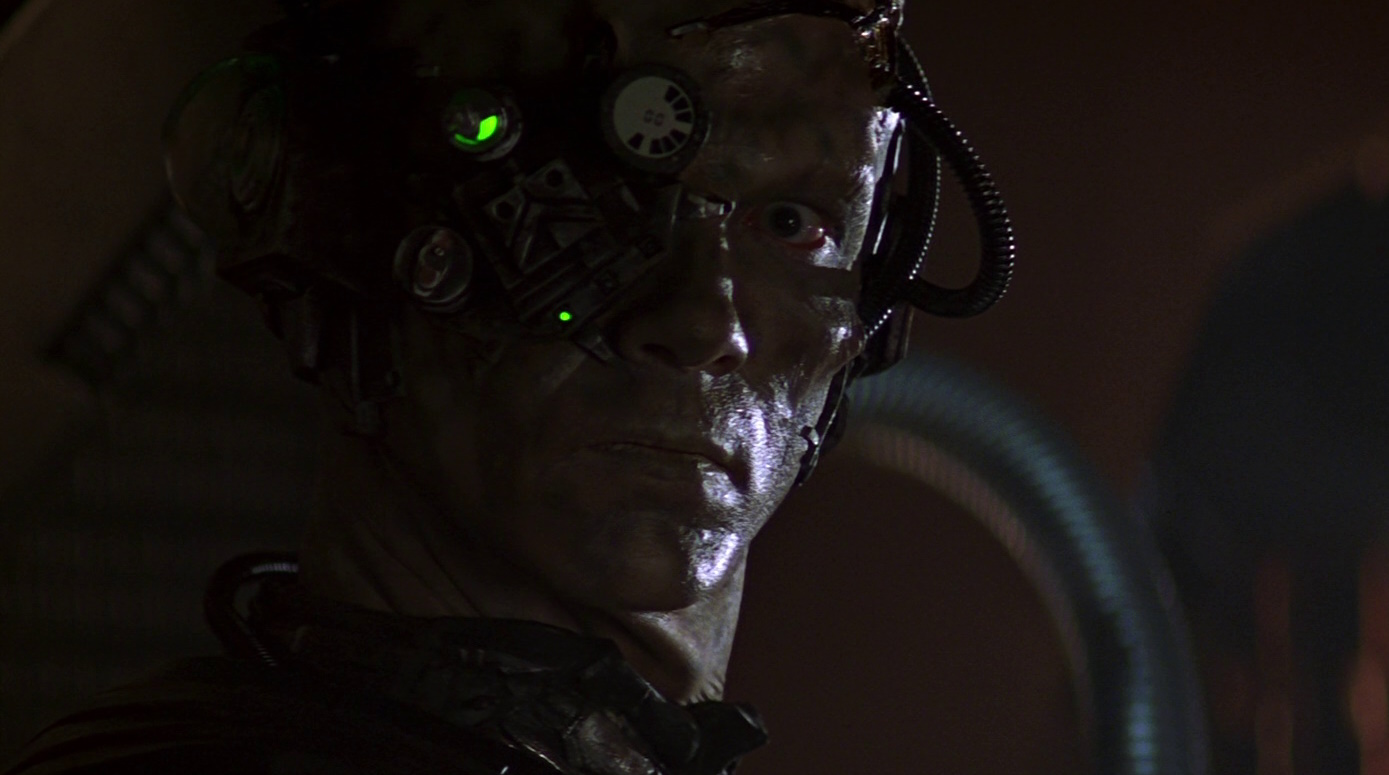
The Borg

Still frame from Star Trek: First Contact (1996) showing a Borg drone.

In my essay The Borg: Space Zombies, I go into a lot more detail on this topic, but the condensed version is this: the Borg fill a similar role to zombies in horror fiction, while also picking up on both Cold War-era fears of brainwashing and concerns about technology getting out of control. The idea of assimilation is incredibly clever, as it turns every ally the heroes lose into a new enemy to fight, making the Borg grow in strength at the exact same rate as Starfleet weakens.

The idea of being assimilated and losing one’s mind and identity is arguably a fate worse than death – and we’ve got several examples in Star Trek of ex-Borg wrangling with the consequences of what the Collective forced them to do. I would note that the Borg’s fear factor has declined over the years, particularly during the latter part of Voyager’s run. Seeing Starfleet triumph over the same adversary again and again – no matter how intimidating it may be on paper – does start to take the shine off things.

Number 6:
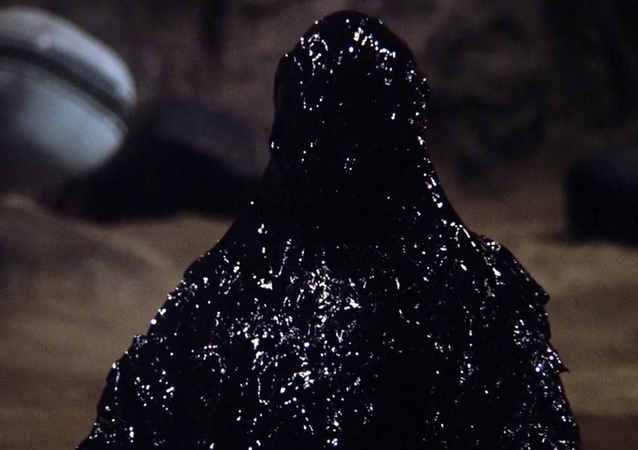
Armus

Still frame from Star Trek: The Next Generation Season 1 showing Armus.

Armus has the distinction of being the first alien monster to kill a main character on a Star Trek TV series. There were many ways The Next Generation’s writers could have written out Tasha Yar when Denise Crosby opted to quit the show, but killing her off was a bold move. And doing so in such a brutal way, with Armus not even batting an eye at her death… it was quite something to see.

If you have the DVD or Blu-ray of The Next Generation it’s worth watching the actors and producers talk about working on the episode Skin of Evil, because creating Armus and performing around the inky-black oil slick was incredibly difficult for everyone involved to say the least! Jonathan Frakes in particular had a very tough time with Riker’s scene when he was pulled under the surface. Armus is a scary-looking villain, and also one that had a profound, long-lasting impact on The Next Generation.

Number 7:
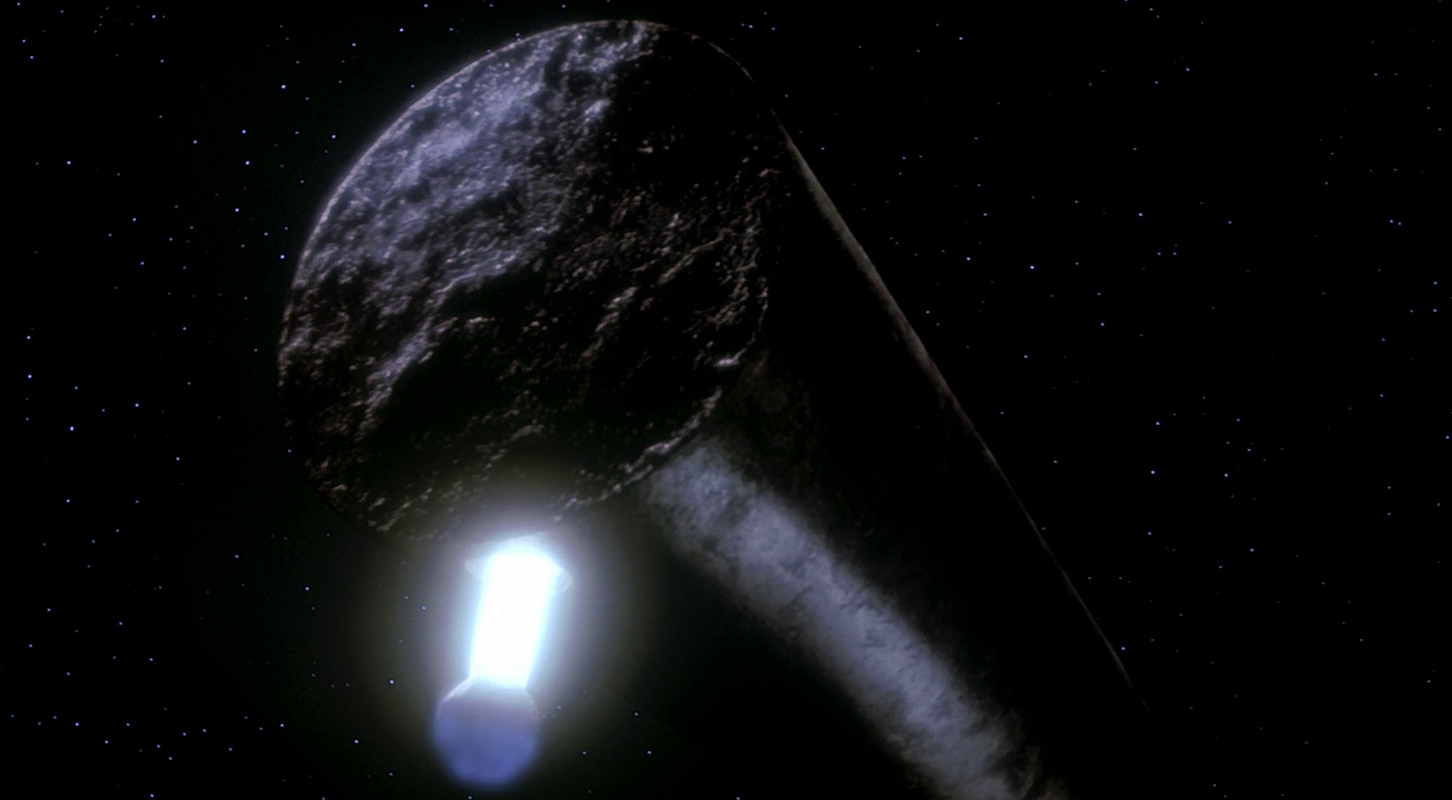
The “Whale Probe”

Still frame from Star Trek IV: The Voyage Home (1986) showing the Whale Probe.

Although the tone of The Voyage Home is pretty light-hearted and comedic, the so-called “whale probe” that kicks off the plot is an incredibly terrifying adversary, when you think about it. The probe disables Starfleet vessels with incredible ease, and is resistant to weapons and all attempts at communication. The people of Earth have no idea what it wants, what its purpose is, or how to reason with it.

This monolith simply arrives unannounced, doesn’t declare its intentions, and seems to wreak havoc on Earth and Starfleet. That’s a pretty scary concept, in my view, as it could’ve gone pretty badly for everyone involved if Kirk and the crew hadn’t intervened!

Number 8:
The Pah-Wraiths

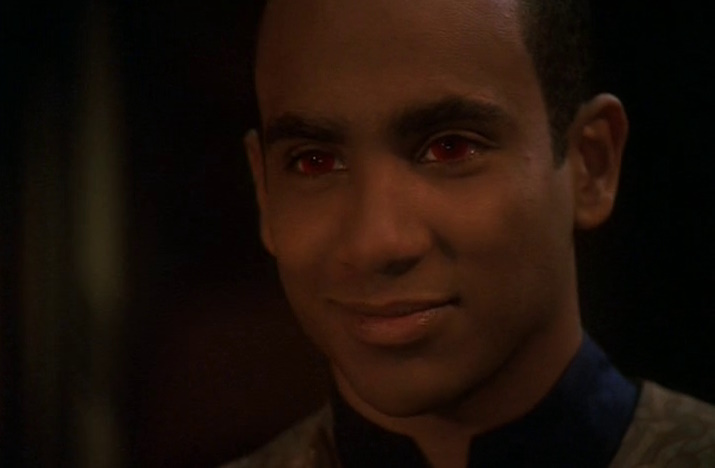
Still frame from Star Trek: Deep Space Nine Season 6 showing Jake Sisko possessed by a Pah-Wraith.

As with Armus, there’s something distinctly “evil” about the non-corporeal Pah-Wraiths. The way they’re presented in multiple Deep Space Nine episodes, where they’re deeply entwined with Bajoran religion, makes them out to be akin to demons or dark spirits – and we even see them “possess” several different characters. Their banishment to Bajor’s fire caves also ties into this demonic analogy.

In later seasons, Gul Dukat gets involved with the Pah-Wraiths, leading a cult on Empok Nor that’s genuinely unsettling in its depiction. The Pah-Wraiths have magical books, the power to turn people blind, and the desire to conquer the Prophets’ domain in the Wormhole; a truly frightening group!

Number 9:
The Conspiracy Parasite-Aliens

Still frame from Star Trek: The Next Generation Season 1 showing a parasite-alien.

The end of The Next Generation’s first season introduced a race of parasitic aliens that infiltrated Starfleet. Allegedly, the parasite-aliens were supposed to be connected to the Borg in some way, but this angle was later dropped. Still, they’re more than frightening enough on their own terms, and the idea that Picard and the crew wouldn’t be able to tell who was infected and who to trust made for an entertaining story.

Here in the UK, one scene toward the end of Conspiracy was cut from the original broadcast because of how gruesome it was! You know the one: where the “mother” parasite is killed and violently explodes. There’s something just unsettling about earwig-like alien parasites… just like the Ceti Alpha eel from The Wrath of Khan. Star Trek hasn’t revisited the parasite idea for a long time – maybe it could make for a fun and horrifying future episode?

Number 10:
The Krenim

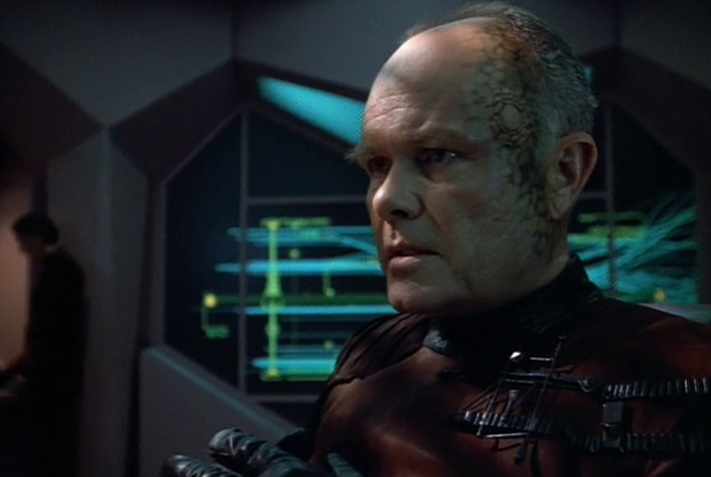
Still frame from Star Trek: Voyager Season 4 showing Annorax.

The Krenim appeared in the Voyager two-parter Year of Hell, using their time-manipulation technology as a weapon. Repeated Krenim attacks against the USS Voyager left the ship in ruins, running on fumes, and many members of the crew dead or maimed. The captain of the Krenim time-ship, Annorax, was Khan-like in his single-minded obsession with restoring the Krenim colony that housed his wife and family, making him a frightening adversary.

Year of Hell is a pretty shocking episode, particularly in its second half. Seeing Voyager badly damaged, with whole parts of the ship uninhabitable, really hammers home how dangerous the Krenim and Annorax are as villains, and for a time their technology really does seem to be more than a match for Janeway and the crew.

So that’s it!

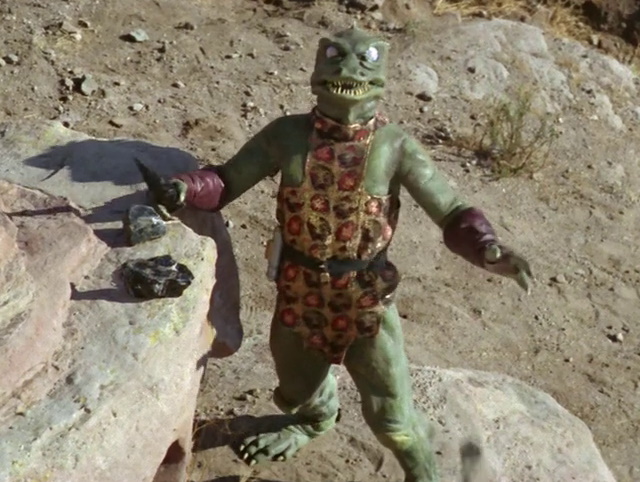
Still frame from Star Trek: The Original Series (1966) showing a Gorn.

We’ve picked out what I consider to be a selection of Star Trek’s most frightening aliens, monsters, and villains to celebrate the spooky season.

There are plenty of others that we could’ve included – either for their fully-blown fear factor or for their potential to do serious harm to our Starfleet heroes. And there are quite a few Star Trek episodes – a surprising number, really – that either lean fully into the horror genre or that have jump-scares or other frightening or unsettling moments. Last year, I put together a list of a few of them, which you can check out by clicking or tapping here if you’re interested!

So I hope this has been a bit of fun! I hope you’re having a fun and spooky October – and stay tuned, because I have a couple of other Halloween-themed ideas that may (or may not, time depending) make their way onto the website before the 31st. Don’t have nightmares!


Most of the films and episodes discussed above are available to stream on Paramount+ in countries and territories where the platform is available. They’re also available for purchase on DVD, Blu-ray, and video-on-demand. The Star Trek franchise – including all films, episodes, and other properties discussed above – is the copyright of Paramount Global. This article contains the thoughts and opinions of one person only and is not intended to cause any offence.

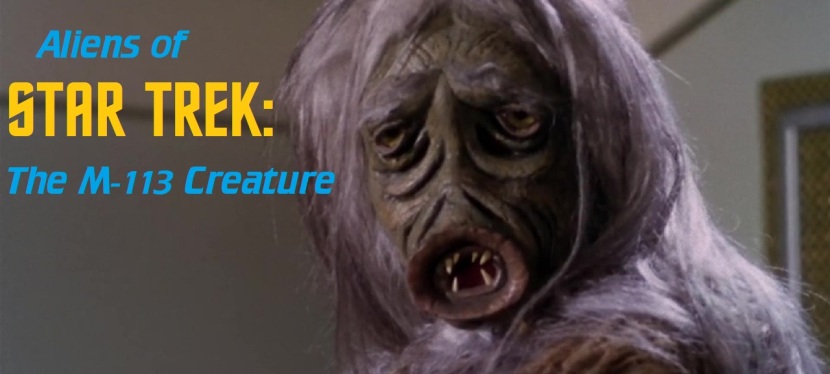
Aliens of Star Trek: The M-113 Creature

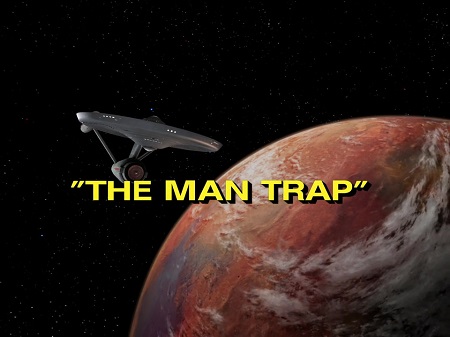
Happy Star Trek Day! Today marks fifty-four years since the first episode of The Original Series aired on American television, kicking off a franchise which is still going strong today. The Man Trap featured an alien called the M-113 Creature, but you may know it by its unofficial name: the Salt Vampire!

The early production history of Star Trek is complicated! After The Cage – the show’s original pilot – wasn’t picked up by network NBC, a second pilot was commissioned. This was very unusual, and rumours abound as to what happened. Gene Roddenberry and co. went away to work on a new pilot, and what resulted was Where No Man Has Gone Before. The new pilot dropped most of The Cage’s characters – only Spock would be retained – and reworked the series. It ultimately led to Star Trek being greenlit, and the show was picked up for a full season. Several episodes were filmed, including The Man Trap, and when NBC came to deciding the order in which the stories would air, it was selected as the premiere as its story was considered easier to follow by the executives at the network.

Happy 54th anniversary to The Man Trap… and to Star Trek!

So that’s a potted history of how The Man Trap came to be Star Trek’s first episode, despite the fact it wasn’t filmed first! The episode would see the crew take on a nefarious alien which was the last of its kind: the M-113 Creature.

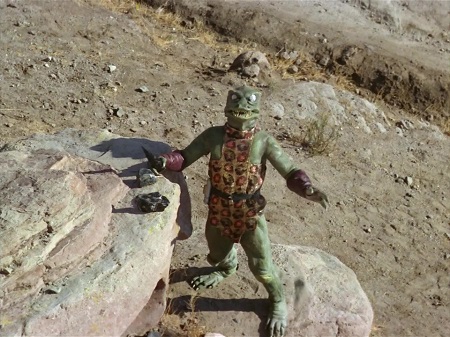
I’m going to go out on a limb and say that I really like the design of the creature and the special effects used to pull it off. The heavy rubber suits used for some of The Original Series’ aliens and creatures have a distinct aesthetic, but it’s one I think really works. The suits were very cleverly and lovingly designed, and compared to a lot of contemporary special effects have held up remarkably well over the decades. I’d even compare these kind of practical effects very favourably to lots of digital effects and CGI; no one will ever convince me that Enterprise’s CGI Gorn looks better than The Original Series’ rubber suit!

I think this Gorn still looks pretty good in 2020!

Though the M-113 creature was only seen in its true form very briefly, the same kind of special effects brought it to life in a horrifying way, yet with a unique look that is now emblematic of the Star Trek franchise. Many people who are only dimly aware of Star Trek would recognise the M-113 Creature and be able to identify it as a Star Trek alien; in that sense the creature is up there with races like the Borg and Klingons as being iconic.

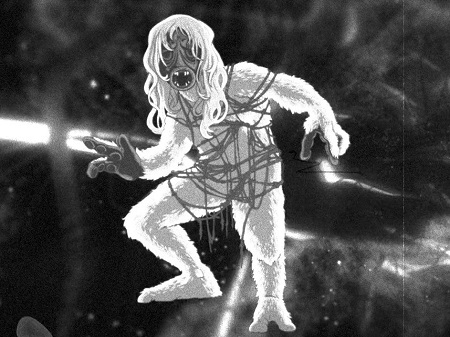
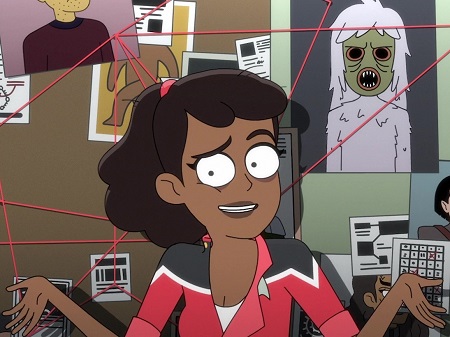
It’s been great to see a couple of recent references within Star Trek to the M-113 creature. It appeared in Ephraim and Dot – an animated episode of Short Treks that aired back in December. And just last week we caught a glimpse of the M-113 Creature in Cupid’s Errant Arrow, the fifth episode of Star Trek: Lower Decks. These fun little “Easter eggs” to Trekkies were greatly appreciated, and serve as a reminder of Star Trek’s origins all these years later.

The M-113 Creature seen in Ephraim and Dot…
…and again in Cupid’s Errant Arrow.

Though the creature the crew of the Enterprise encountered in The Man Trap was said to be the last of its kind, it’s arguable that may no longer be the case. Being mentioned in Lower Decks could be seen to imply that further M-113 Creatures have been discovered later in the 23rd and 24th Centuries, so we may not have seen the last of this iconic villain.

Nicknamed the “Salt Vampire” because of its ability to extract all of the salt from its victims, the M-113 Creature was a shapeshifter, able to take the form of other species, including humans. It also seems to have been sentient – able to mimic human behaviour and even hold in-depth conversations and form relationships.

The M-113 Creature was able to assume many forms.

Though distinct from later shapeshifting races – most notably the Founders of the Dominion – the M-113 Creature was the first such alien encountered in Star Trek. We’ve since seen a number of others, all of which owe at least a little something to their predecessor from The Man Trap. The concept of a shapeshifter is frightening, and that aspect has been used to great effect in several Star Trek stories.

The M-113 Creature also possessed several other abilities that made it a formidable adversary: it could telepathically sense the minds of sentient life forms – including humans – and use what it found to choose its appearance. This kind of tactic allowed it to get close to its prey and get them to let their guard down. It was also capable of paralysing people in order to get close to them when in its true form, and was incredibly physically strong – far more so than humans and Vulcans.

The M-113 Creature in its true form.

In The Man Trap, the sole surviving M-113 Creature (that we know of) took the form of Nancy Crater, a woman Dr McCoy had known; “that one woman”, as Captain Kirk put it. It lived with Crater’s husband, Robert, on the planet M-113 for a number of years. It was speculated that there had once been a civilisation of M-113 Creatures, but that the majority had gone extinct when the planet’s supply of salt was used up. Robert and Nancy Crater led an archaeological expedition to the world, encountering what could be the last survivor of the race.

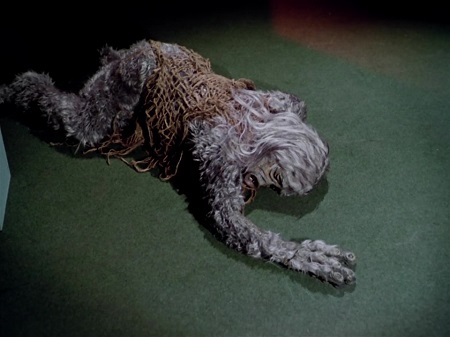
Despite possessing some degree of sentience, it wasn’t possible for the crew of the Enterprise to reason with the M-113 Creature that they encountered, and it was killed by Dr McCoy while attempting to feed on Captain Kirk. If it were possible to negotiate with it – or others of its race – Starfleet could have provided the aliens with a supply of salt in exchange for peace. Perhaps such a story could be included in a future episode of Star Trek!

The M-113 Creature after being killed by Dr McCoy.

Despite its monstrous appearance and villainous role in the story, the death of the M-113 Creature in The Man Trap is a sad occasion. Potentially the last of its kind, the entire race and everything they had created now seems lost to history. Starfleet aims not only to seek out new life, but also to find ways – where possible – to peacefully coexist. It’s ironic, considering subsequent Star Trek stories, that the first encounter with an alien ended with its death!

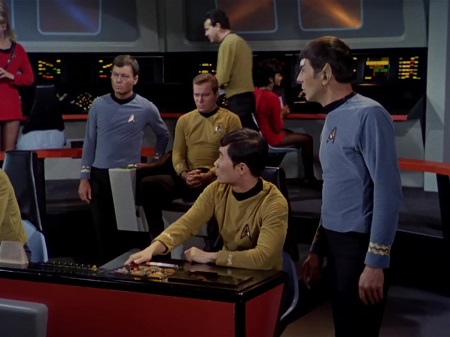
But in a way, the aftermath of the M-113 Creature’s death is what established Star Trek as being more than just typical mid-century B-movie sci-fi fare. It took an emotional toll on Dr McCoy to kill what he thought was his long-lost love, and it took a toll on Kirk and the crew to have killed off the last member of a species. But as the Enterprise prepares to leave orbit, Kirk, Spock, and McCoy gather on the bridge and remember the creature in what was a very poignant moment.

The crew of the Enterprise at the end of The Man Trap.

It’s moments like this, across The Original Series’ early episodes, that set up Star Trek as being something special. There was more to the story of the M-113 Creature than just a horrible monster for our heroes to outsmart. That story was emotional and complex, bringing up issues of morality that other television series and films struggle to get across even today.

Star Trek offered – and continues to offer, fifty-four years later – much more to its audience than just exciting space adventures. This is why the franchise has endured so long, and it all began on the 8th of September 1966 with The Man Trap and the M-113 Creature.

Star Trek: The Original Series is available to stream now on CBS All Access in the United States and on Netflix in the United Kingdom and other countries and territories. The series is also available on DVD and Blu-ray. The Star Trek franchise – including The Original Series and all other properties listed above – is the copyright of ViacomCBS. This article contains the thoughts and opinions of one person only and is not intended to cause any offence.