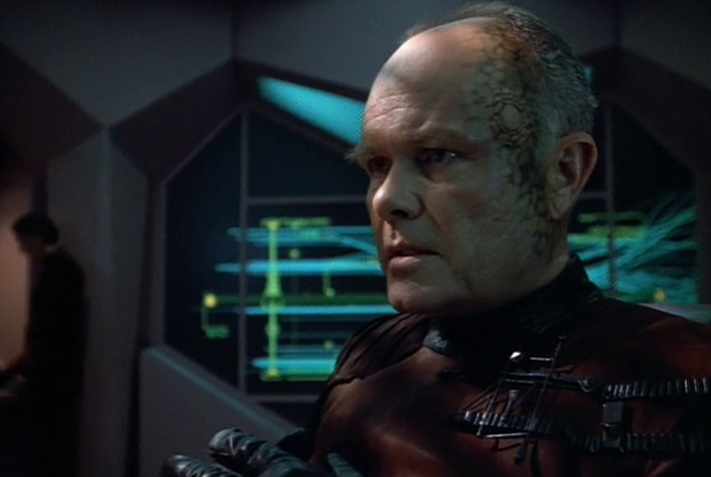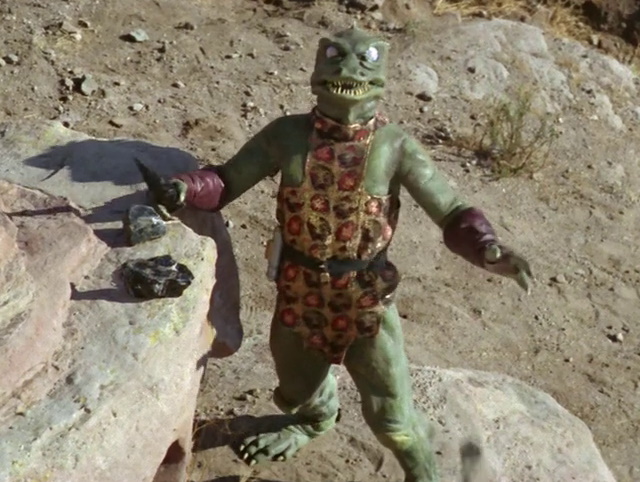

Spoiler Warning: There are spoilers ahead for Star Trek: The Next Generation. Spoilers are also present for the following Star Trek productions: The Wrath of Khan, The Search for Spock, Deep Space Nine, Enterprise, Picard Season 3, and Star Trek Online.
This past weekend, I had the opportunity to meet Denise Crosby at a Star Trek convention here in the UK! So what better way to celebrate than by returning to what is arguably Tasha Yar’s most iconic episode: Skin of Evil?
I haven’t written up a full article on this year’s Destination Star Trek convention, by the way; much of what I said last year about the organisation, great accessibility, and so on still applies, and I didn’t really want to repeat myself. If you join me later in the year for my “year in review” piece, I daresay I’ll discuss Destination a bit more then. And if you want to see what I made of last year’s event, you can find out by clicking or tapping here!
For now, suffice to say that it was wonderful to meet Denise Crosby, share a fist-bump, and pose for a photo. And that meeting is what convinced me to return to this episode for the first time in… well, a while, I guess!

Image: Destination Fan Events via Facebook
If you’re a Trekkie and a big fan of TNG, I daresay you already know the story of how Skin of Evil came about. In brief, Crosby became dissatisfied relatively early on, feeling that the character of Tasha Yar wasn’t being given much to do or getting much time on screen. As a result, she asked to leave the series while production on Season 1 was still ongoing; by January 1988, the script for what would become Skin of Evil had been drafted.
This is, in a very real sense, a landmark episode – not only for The Next Generation, but for Star Trek as a whole. We’d seen plenty of redshirts killed off before, and villains, too – but this was the first time that a *main* character had been killed (and stayed dead, so Spock doesn’t count!). Not only was that new for Star Trek, but it was a relative rarity in prime-time television at the time, too.
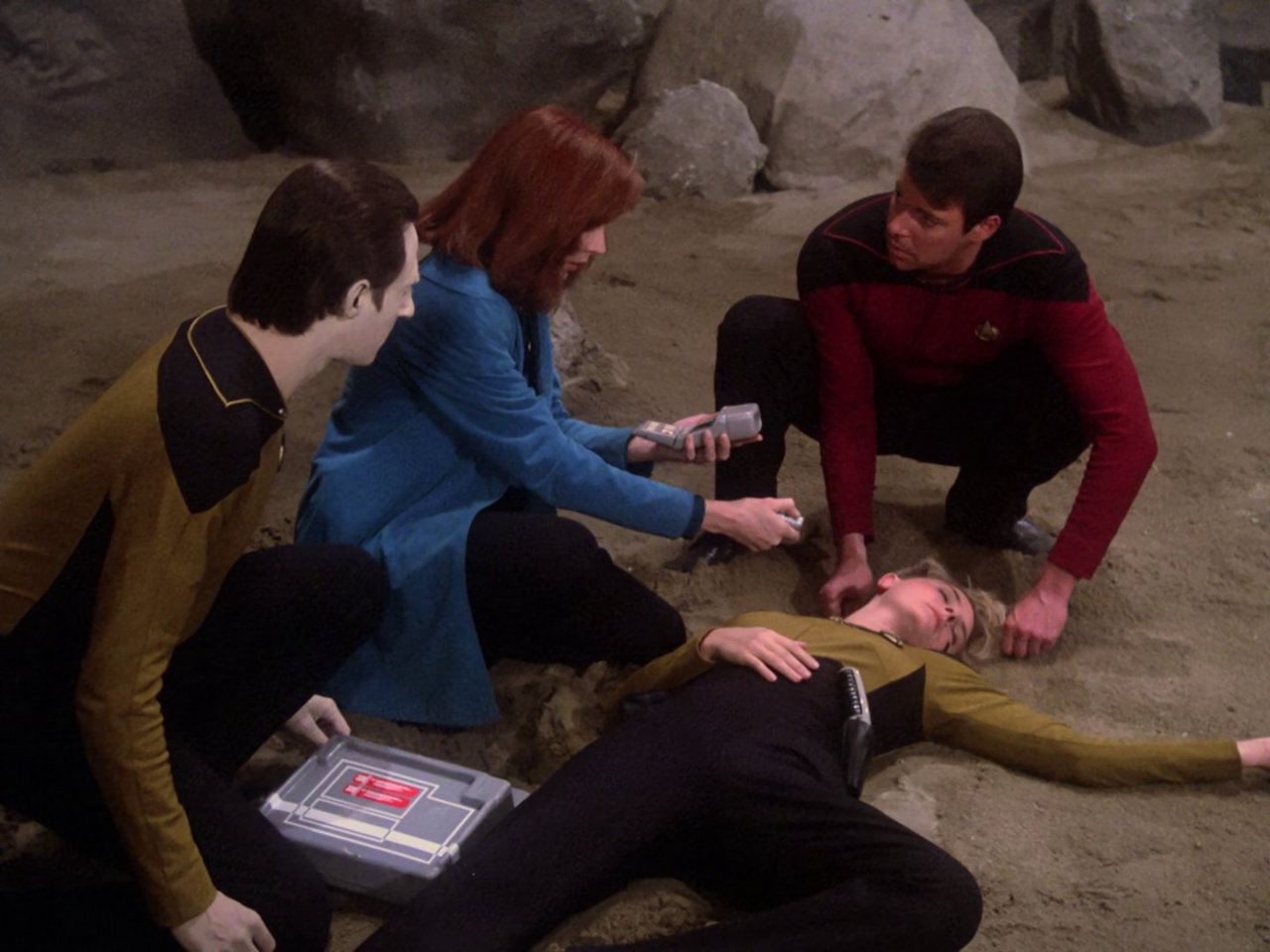
I’d argue that Tasha’s death set the stage for Worf to grow into the character we’ve come to know and love. Worf took over the security and tactical roles that had initially been hers; it’s hard to envision Worf’s subsequent development across both The Next Generation and Deep Space Nine if he’d remained a roving presence on the Enterprise-D. Tying him down to a role that both suited his skillset and – arguably – kept him in a pretty narrow lane defined his character. And as Worf is the character with the most appearances in Star Trek (285, according to Memory Alpha), that’s kind of a big deal! In that sense, Skin of Evil arguably did more for Worf than for any other character – including Tasha Yar.
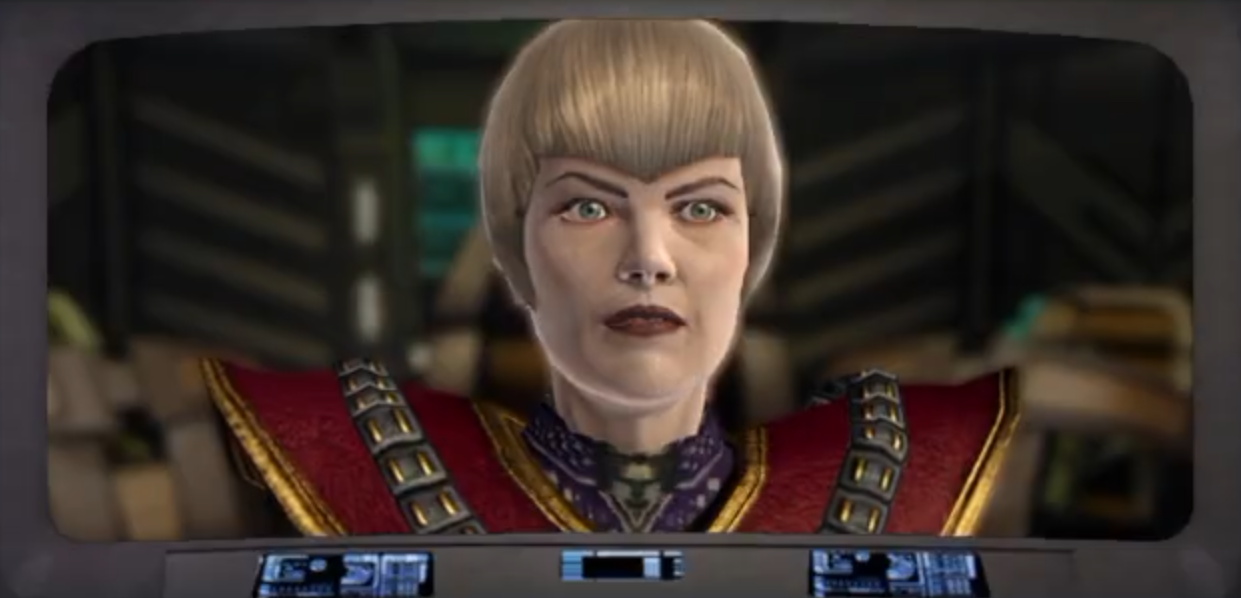
For her part, I think it’s fair to say that Denise Crosby quickly came to recognise that leaving the show was a mistake. As The Next Generation “grew the beard” and went from strength to strength, missing out on that must’ve stung. Crosby would return to the series in guest-starring roles as an alternate timeline’s version of Tasha Yar, and then as Yar’s half-Romulan daughter, Sela, for a pretty successful story arc. But Tasha Yar is not as big a character as she could’ve been, and I’ve always felt that there’s some regret from Denise Crosby because of that. Crosby has remained involved with the Star Trek fan community, though – not only making convention appearances, like the one I attended, but also producing the documentary Trekkies and its sequel, as well as appearing in the video game Star Trek Online.
Pictured: Star Trek Online
I first came to The Next Generation (and Star Trek as a whole) during the show’s second season, so it was only when episodes of Season 1 were repeated that I would’ve encountered Skin of Evil – and Tasha Yar as a character. That being said, it must’ve been sometime in the early ’90s, because I don’t have a particularly strong memory of watching Season 1 and thinking “wait, who’s that character standing at Worf’s post?” So I think my younger self just kind of rolled with it! I also couldn’t tell you exactly when I first watched Skin of Evil or what I made of it… though I do seem to have a fragment of a memory, wondering why – with all the 24th Century medical technology present in the show – Tasha’s life couldn’t be saved and Dr Crusher simply pronounced her dead.
We’ll get into all of that in a minute, though, because I definitely have some thoughts about the way this episode implemented its main storyline!
One thing I really wasn’t sure of, all these years later, is whether – or to what extent – Tasha’s funeral would still hit those emotional notes. Knowing what’s coming in a story can rob it of its impact, and having seen Skin of Evil more times than I can remember… well, I just didn’t know how I’d feel, I guess. Tasha’s death on Vagra II was expected on a re-watch, naturally, and the shock of the moment wasn’t there. But in her funeral scene? I still teared up.
On the technical side of things, I’d forgotten just how great Skin of Evil’s musical score is. As the ship races to Vagra II we get a tense, tension-building piece of music. On the planet, and in scenes with Armus, the music conveys a very real sense of danger. And finally, at Tasha’s funeral, the music changes again to take on an emotional, almost bittersweet tone as Picard and the crew listen to her final message. Ron Jones, the show’s regular composer for Seasons 1-4, wrote the episode’s score.
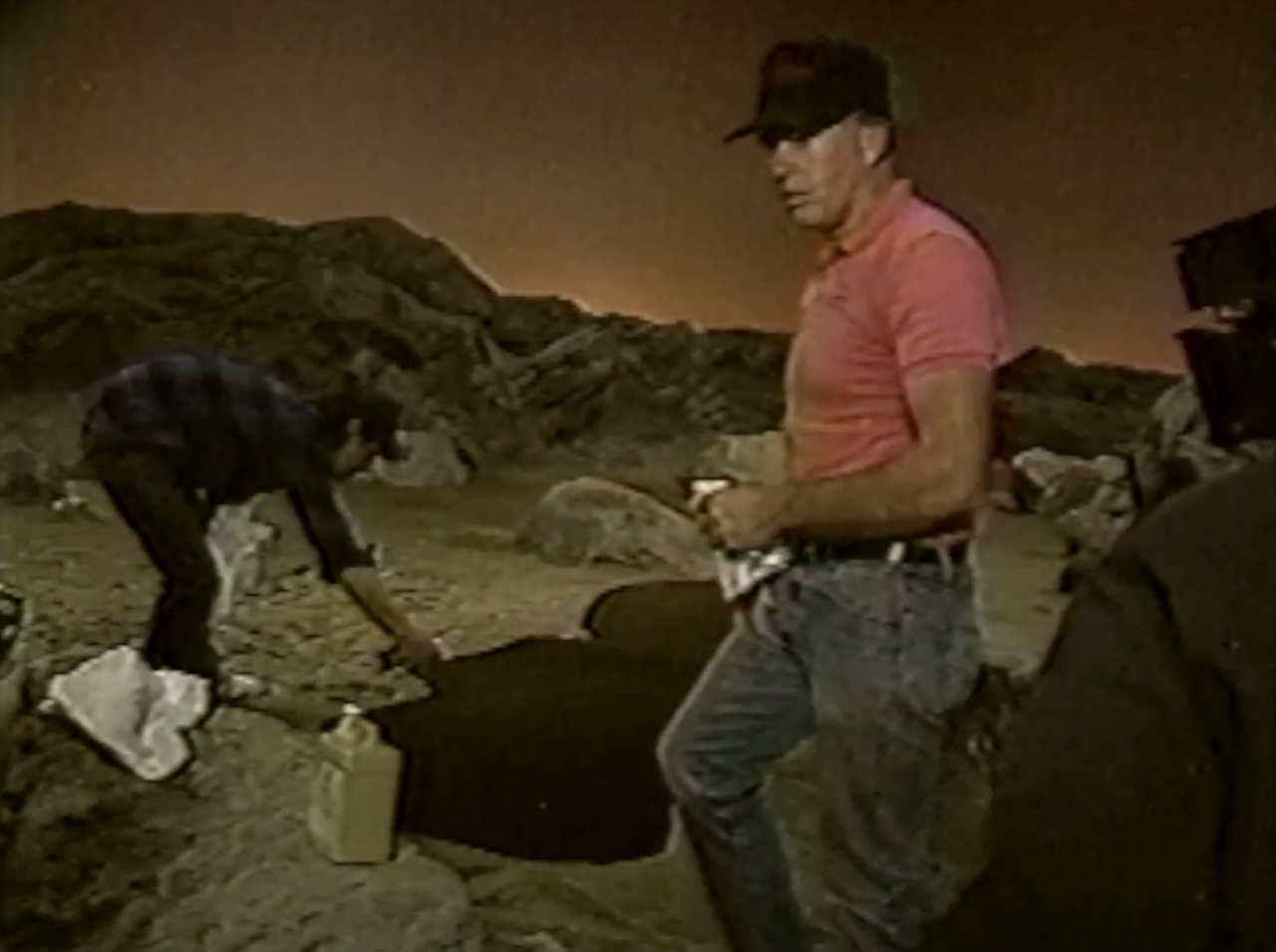
This is my personal bias coming through, but I’ve always liked what The Next Generation did with indoor sound stages – especially in the first season. Some of these settings feel much closer in visual terms to planets and locales from The Original Series than even to places we’d encounter just a couple of seasons later. For me, there’s a real charm to the way Vagra II (and similar places) are presented; it’s something Star Trek literally hasn’t done for decades. And while it may be less “realistic” in an objective sense, with fairly plain, flat terrain, scattered rocks, and a clear stage backdrop that, in this case, was an incredibly basic colour gradient… I really like the way these places look. It’s a limitation of both budget and technology, as well as a product of its time – and I think if one of Star Trek’s modern shows saw an away team land on a planet that looked like Vagra II, we’d criticise it! But… I just find it charming in episodes like this one.
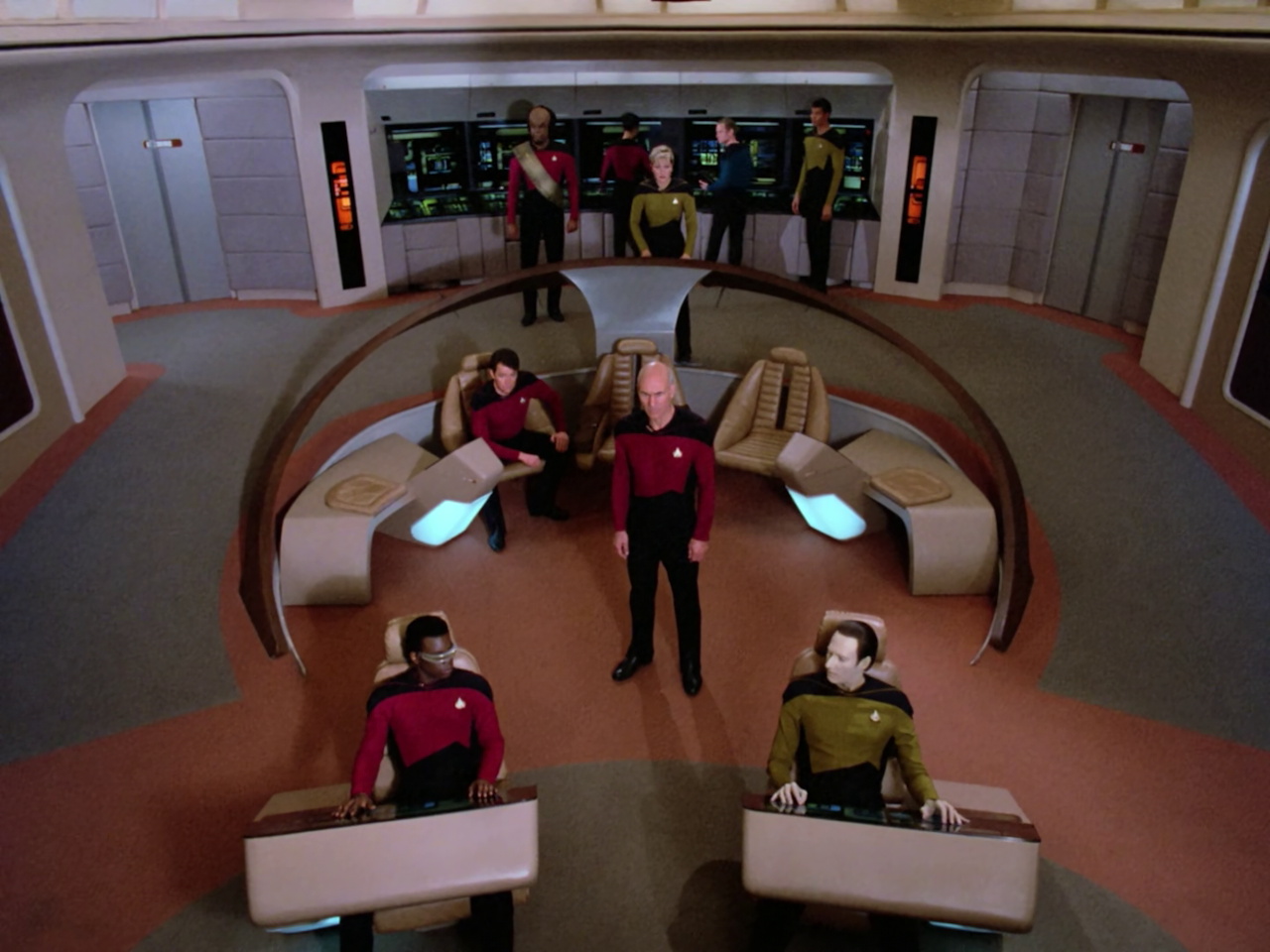
Skin of Evil also had some creative camera shots. The close-up on Picard, at the end of the funeral, lingered in such a way as to convey his emotional state, even as he didn’t really show a lot of emotion on his face. There was a great overhead shot of the bridge that we’d occasionally see in the show’s first season but very rarely thereafter. And some of the shots of Armus (and Riker submerged in the Armus goop) were also well-framed.
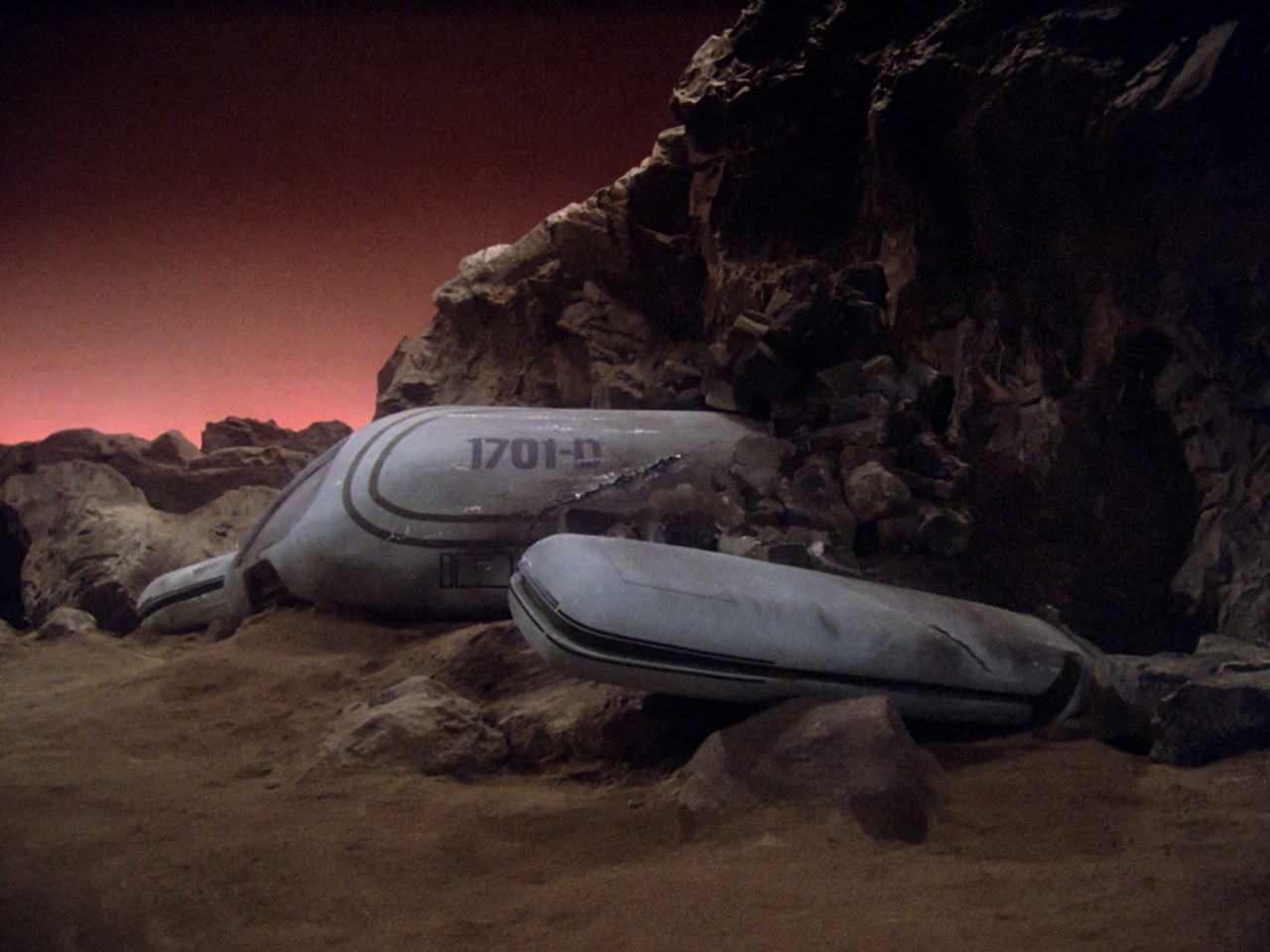
The wreck of the shuttle looked great on the surface of Vagra II. The damaged nacelles and the back section of the shuttle made for a striking visual effect when we first saw them – comparable, perhaps, to earlier Star Trek episodes like The Galileo Seven. The damaged shuttle interior, where Troi and the injured Ben spent most of the episode, was also brought to life well, and the red emergency lighting really set the tone.
We should also talk about the difficulties the team had in creating Armus, since we’re talking about sets and such.
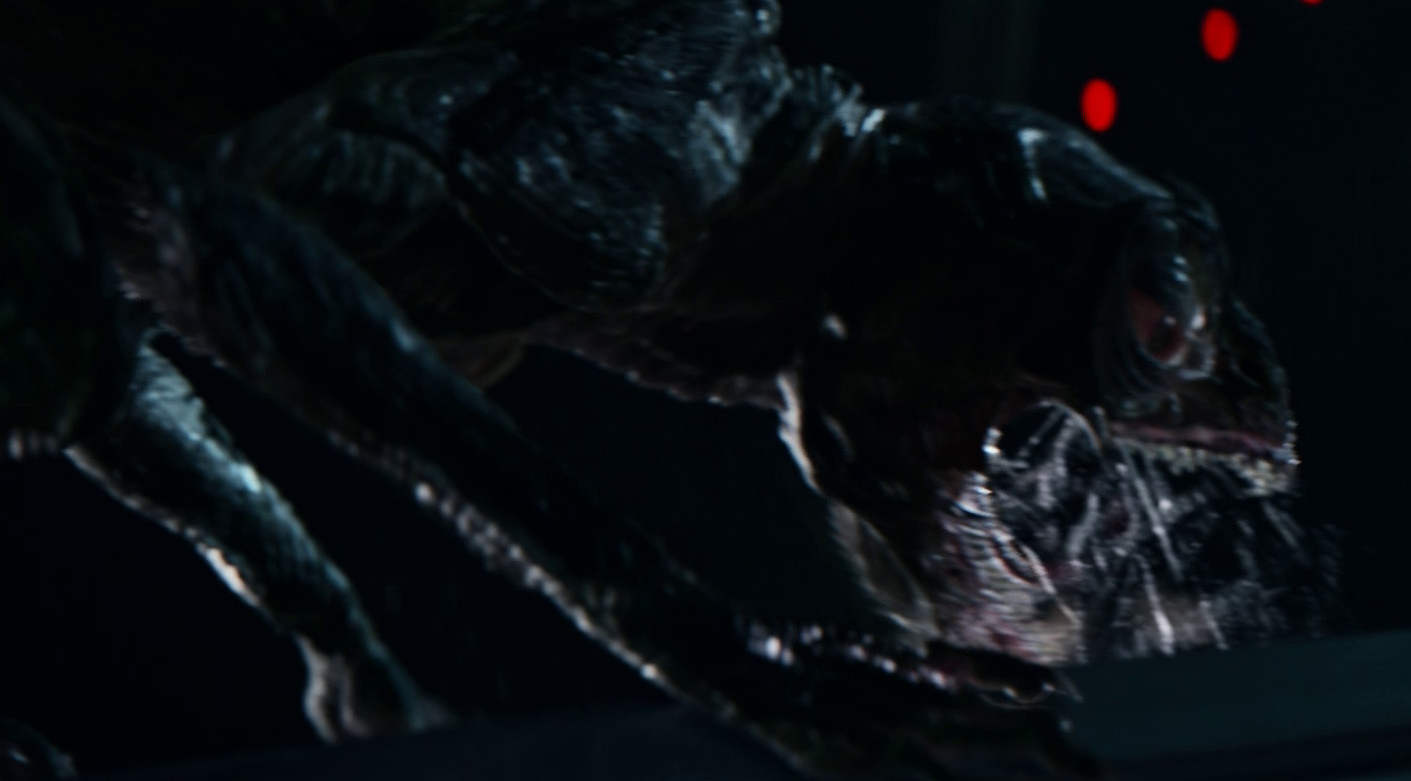
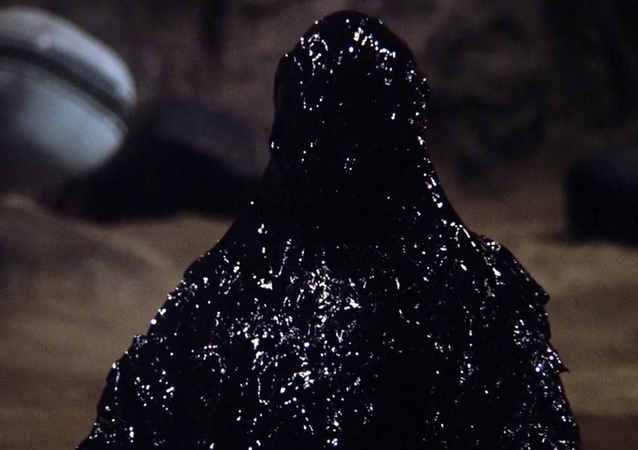
The costume used to depict Armus’ humanoid form wasn’t compatible with the liquid that enveloped it, and the glue used to hold parts of it together repeatedly came unstuck during filming. The viscous liquid – a mixture of printer’s ink and a thickening agent – was infamously unpleasant to work with, not least for Jonathan Frakes, who performed his own stunts in the episode, including being submerged in the stuff.
It sounds like working on that side of the episode was more of a challenge than the crew expected, but I think the finished product works about as well as it could! I don’t think anyone’s out there hailing Armus as one of Star Trek’s best or most iconic villains – which is a shame, given his role in killing off a main character – but the way he comes across on screen, dripping, jet black, oozing, and unpleasant… it made for a suitably menacing and intimidating effect. Seeing Armus rise taller than Riker – the tallest of the main cast – hammered that home.
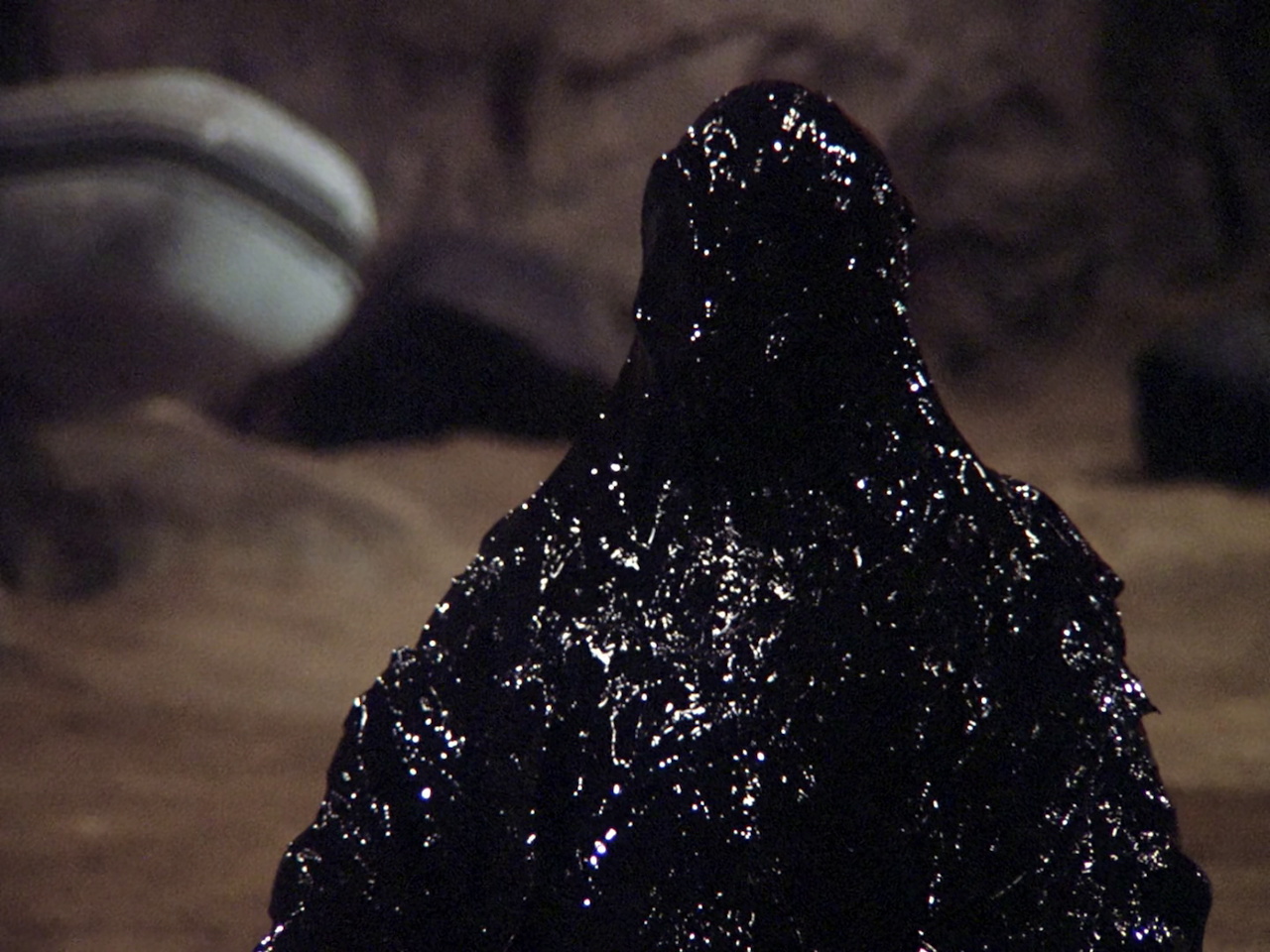
Armus is, though, a pretty one-note villain, if you think about it. Partly that’s by design: if he’s an entity composed *entirely* of an entire alien race’s worst and most negative qualities, well… there isn’t a lot of room for nuance, I guess. And partly, it should be said, it’s because this single forty-five-minute episode had other things to do. Worf had to accept his new role and play a major part on the bridge when Picard, Riker, and Data were all away. We had a sequence in Sickbay trying to save Tasha’s life. And then the funeral, at the end of the episode, needed sufficient time to hit those emotional notes. There wasn’t more time, sadly, for Armus to be much more than he was.
That also means that the resolution to the episode’s core problem – the need to save the shuttle crew – felt quite abrupt. After Picard and Troi hit on the idea of basically making Armus as upset as possible to weaken his forcefield… that was it. We got a short conversation as Picard pushed his buttons, leading to a pretty stereotypical “roar of anger,” before the away team were all beamed away to safety. A bit anticlimactic, perhaps, given what Armus had done earlier in the story.
In some ways, Armus feels like a different take on a familiar character from TNG’s first season: Q. They exhibit some of the same traits – a need to be amused or to have attention focused on them, trickster-like, teasing qualities, and powers that go far beyond what Starfleet in this era was able to counter. But while Q, even in his first appearances, had both a curiosity about humans and even, dare I suggest, a helpful streak… Armus is purely malevolent.
I liked Troi’s line about pity; how this creature, powerful and deadly though it could be, was still a tragic and sad figure. Armus represents one of the oldest warnings about immortality, in one sense: how one would feel after aeons alone, trapped with no one to talk to or nothing to do. That isn’t meant to justify or excuse his behaviour, but it does go some way to giving it an explanation or at least some context. To choose a real-world parallel: Armus is akin to the criminal who comes from a troubled past. Their past doesn’t give them free rein to do the bad things they’ve done, but it can go some way to explaining why those things happened, where they came from, and even why we should pity, rather than *hate*, someone in that position.
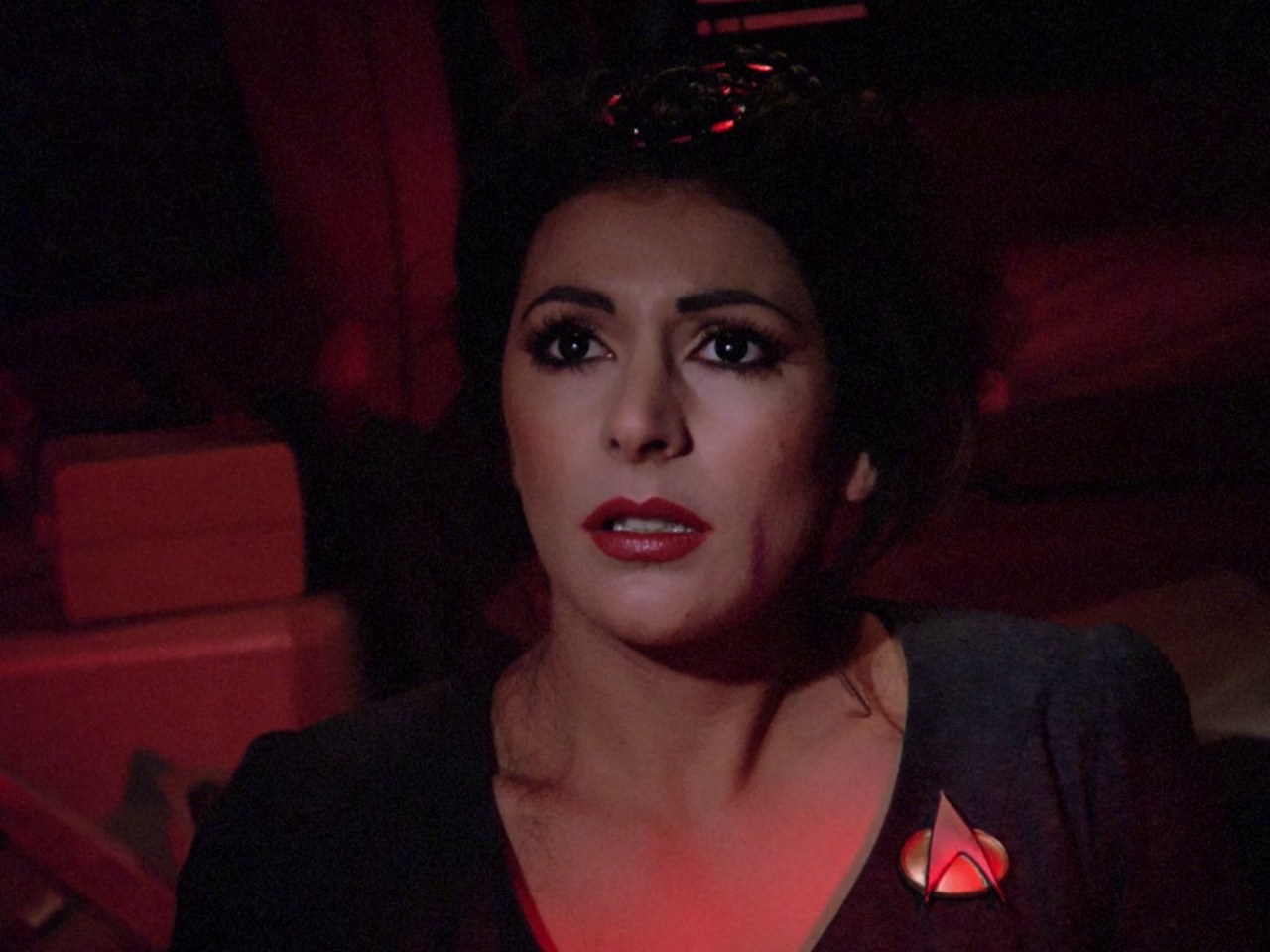
Troi was arguably Skin of Evil’s real star. This episode must be one of Marina Sirtis’ best and most challenging performances in the role, having not only to display very strong emotions, but doing so with no other physical performer to bounce them off. Every conversation Troi has with Armus, unlike those of the rest of the away team, takes place inside the shuttle with only Armus’ voice. It’s a tricky acting challenge, but Sirtis rose to the occasion wonderfully.
Troi was also the character who figured out how to beat Armus, laying the groundwork for the resolution to this storyline. It might’ve been possible, based on what we saw of their earlier conversations, for Troi to have single-handedly defeated Armus without Picard’s intervention; that’s a fun little “what-if” idea, I guess. But again, this was a good episode for both character and performer, and Troi really excelled – despite spending most of the episode trapped in a wrecked shuttle, barely moving.
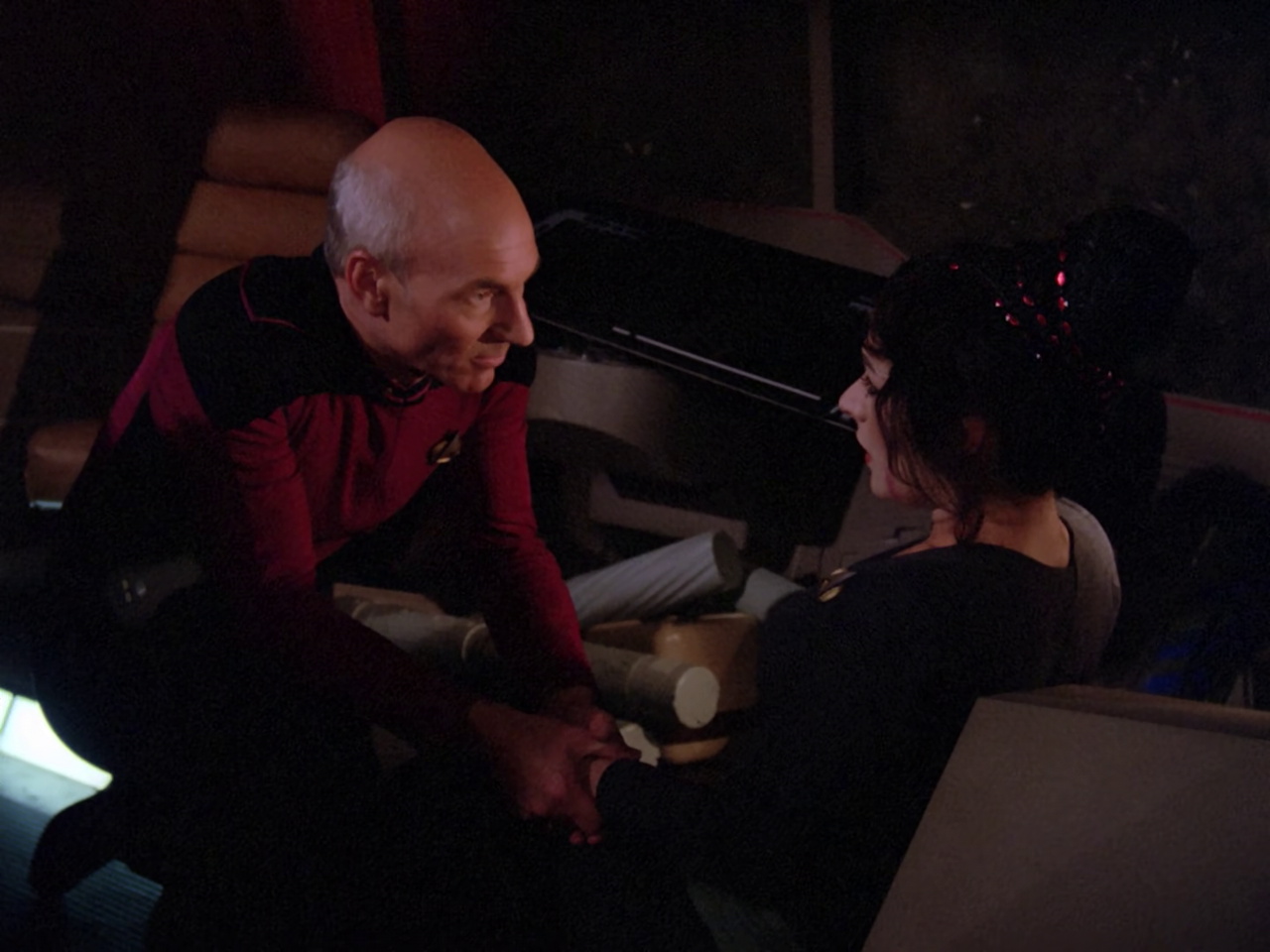
At this point in The Next Generation’s run, we had seen Picard on a handful of away missions, but we’re also aware that he’s a very different kind of captain from Kirk – taking a much more hands-off approach, with Riker usually leading the charge. So to see Picard volunteer to beam down to the planet himself was something a bit different, and I think it emphasised the severity of the situation. As I said above, Picard’s ultimate role *might* not have been totally necessary, but as the captain, it makes sense for him to play a leading role in this kind of story.
Picard’s dedication to helping his crew – the away team, Riker, Tasha, and the survivors of the shuttle crash – was on full display, and it’s one of the best early-season indications of this, in my opinion. We also get to see Picard having to wrangle with the emotional toll of losing someone under his command, someone he personally recruited, as well as someone he’d become friends with, while also having to remain in control of his emotions and guide the rest of the crew. Tasha’s death was cruel, and they were all suffering – but there was still a mission at hand and two injured crewmates to rescue. Picard had to be the one to tell them to keep their emotions in check long enough to help the shuttle crew, and that can’t have been easy.
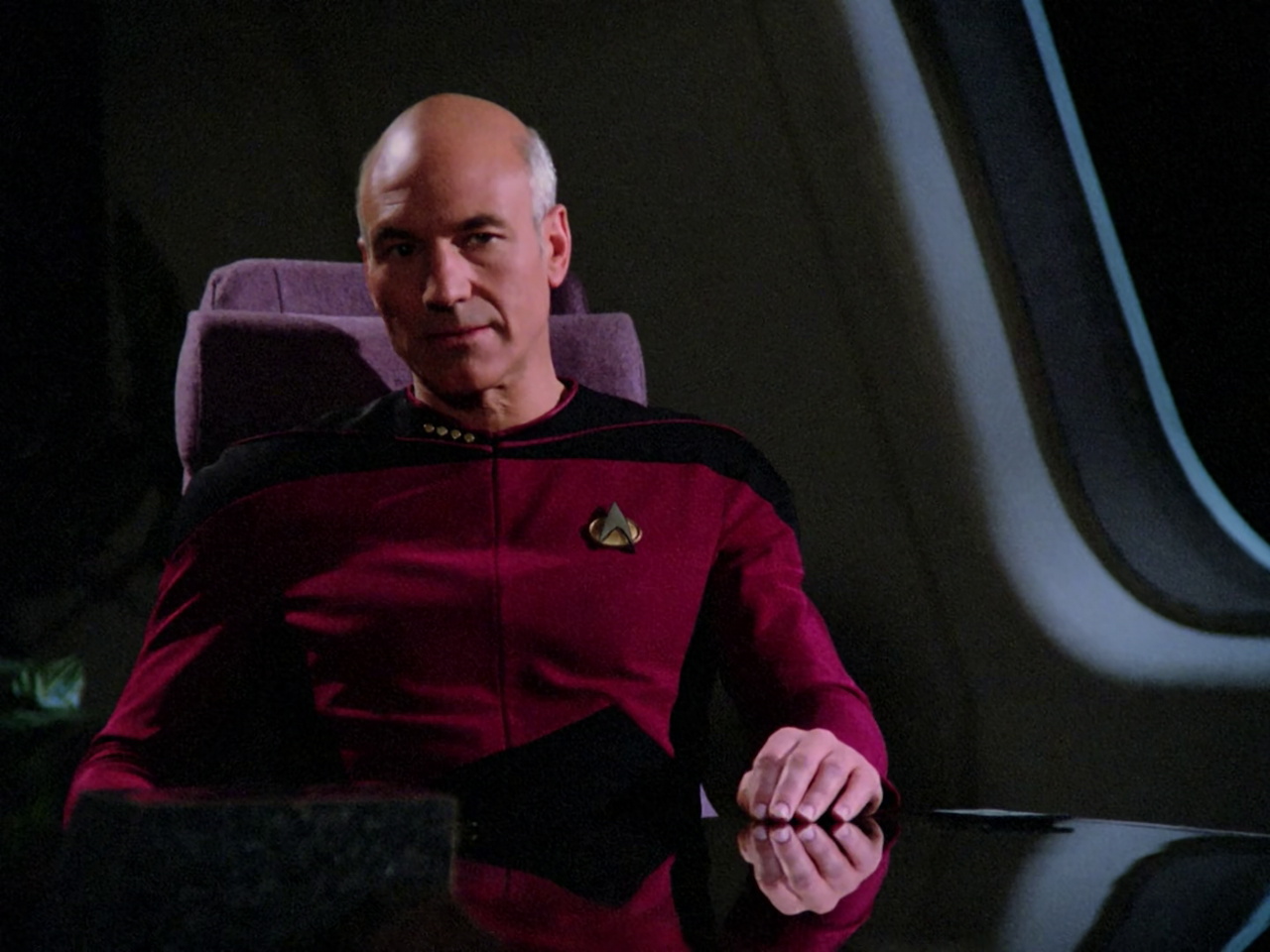
I mentioned Worf above, and for me, Skin of Evil feels like *the* inflection point for his character; the moment the version of Worf we’re most familiar with came into being. With Tasha’s death, Worf is given her roles at tactical and security by Picard, and we see a flicker of emotion on his face at that moment as he absorbs both the loss of a friend and the responsibility of assuming her dual roles aboard the ship. Worf instantly puts his own stamp on things, though – declining to join the away team, despite clearly wanting to avenge Tasha’s loss, because he believed his skills were better-utilised on the bridge.
Worf feels like a natural fit for the security and tactical roles – though that’s admittedly with the bias of hindsight! As I revisit Skin of Evil, though, I can’t help but wonder what might’ve been – what other role or roles would Worf have found aboard the Enterprise-D had Tasha remained a part of the series? It’s another of those interesting “what-ifs,” eh?
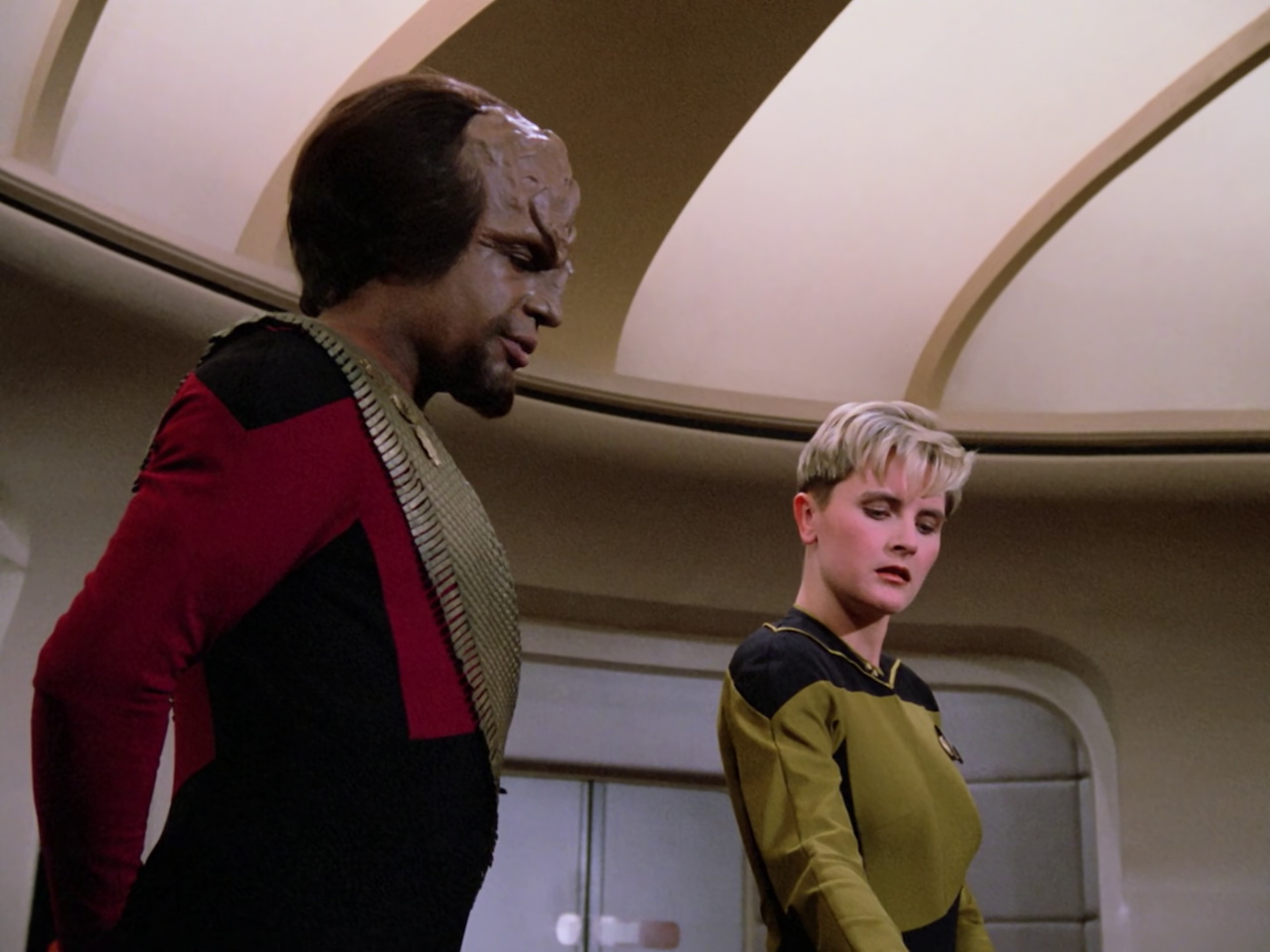
I was also reminded of how, even a full season into the show’s run, TNG lacked a chief engineer! Geordi wouldn’t take over that role until Season 2, and Season 1 showed off a succession of one-off characters in the engineering role. In this case, we meet (briefly) Leland T. Lynch, who was responsible for recalibrating the ship’s dilithium crystals at the start of the story. Lynch was a very minor part of the episode, and didn’t return after Skin of Evil, but he’s just a reminder, really, of how – despite having a successful formula from The Original Series to adapt – The Next Generation was still finding its feet, even a full season into its run. As with Worf above, we’ve come to see Geordi as inseparable from his role in engineering… but that wasn’t where he started.
Although Engineer Lynch’s work on the dilithium crystals kind of feels like padding to stretch out the episode’s runtime a little, it did lead to one cool visual moment: seeing the Enterprise-D in flight but without its nacelles illuminated. This made for a fun and different look, albeit just for a moment, and the need to reach Vagra II added a little tension to those opening moments after the shuttle crash, too.
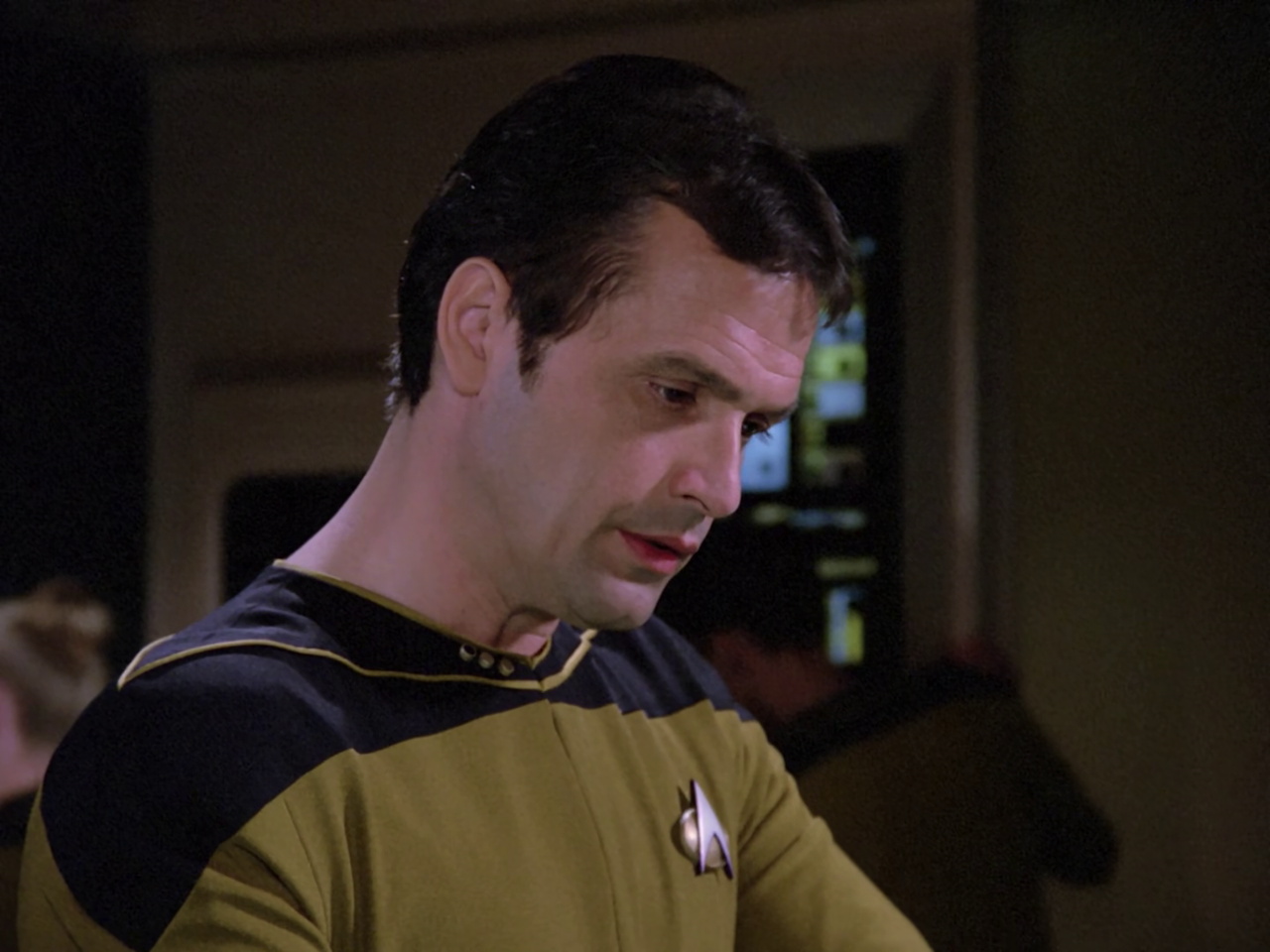
So let’s talk Tasha.
Skin of Evil is remembered not for Armus, nor Worf’s new role, nor even Troi’s struggle against Armus, but because it’s the episode where Tasha Yar was killed off. Although Star Trek had killed off Spock a mere six years earlier, that doesn’t really count because the next film brought him back to life again! So this was Star Trek’s first real encounter with death, if you think about it. Combine Tasha’s death here with Dr Crusher’s departure at the start of Season 2 (something caused by behind-the-scenes shenanigans), and it definitely felt like TNG was going through a shake-up.
This is something that Star Trek still doesn’t really do very often. If you remember my reviews of Discovery and Picard in recent years, you might remember me saying words to the effect of characters seeming to have “plot armour” even in seemingly impossible situations! And that’s because, to be blunt, I don’t think the franchise has *ever* done death particularly well. Spock’s was emotional and impactful… but was undone in the very next story. Jadzia’s, which came a decade after Skin of Evil, is arguably the most impactful… but others, like Kirk’s or Tucker’s, have proven incredibly controversial. And don’t get me started on redshirts and “glorified redshirts!”
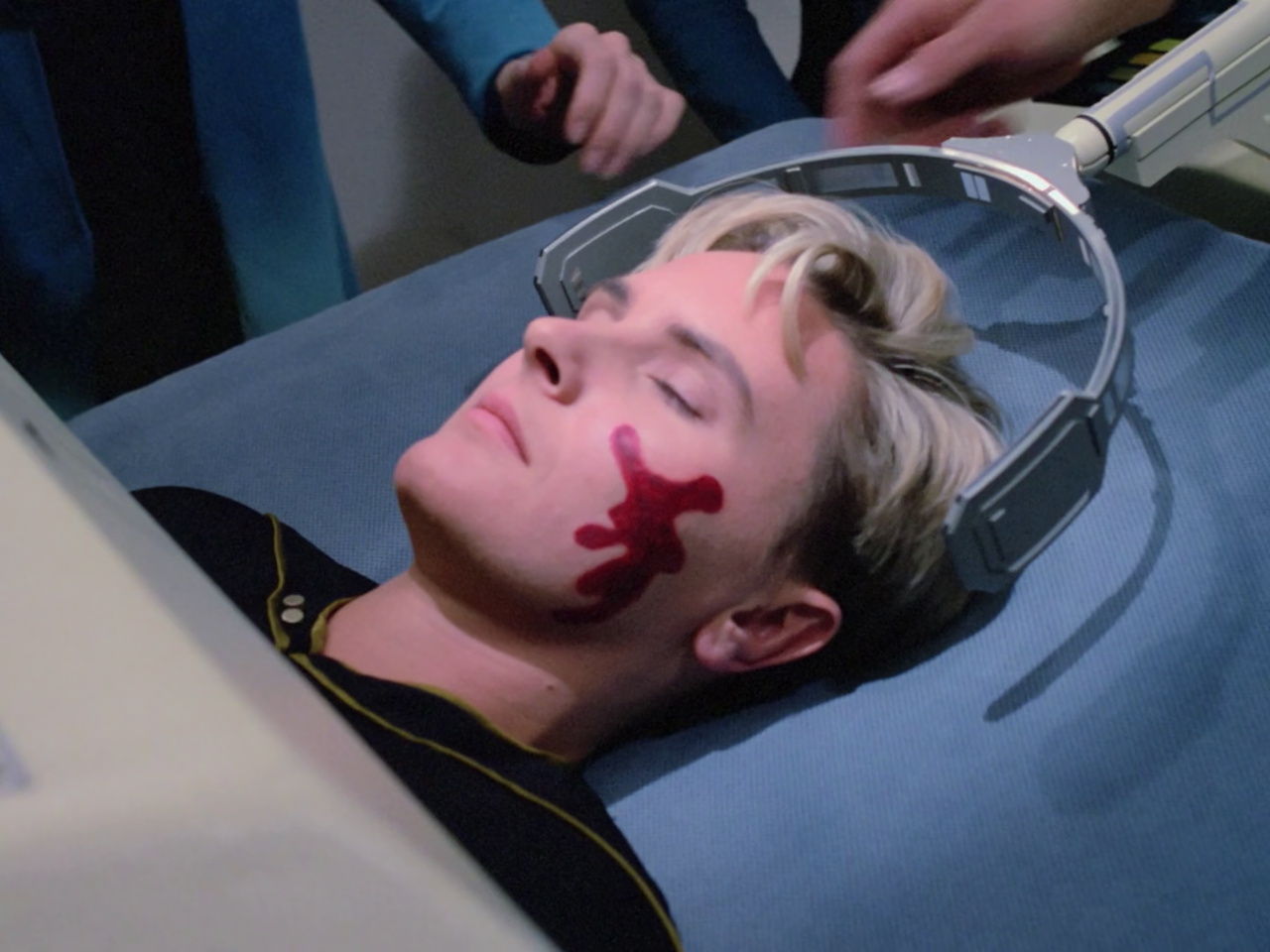
So this moment… it still matters to Star Trek, even as we close in on Skin of Evil’s fortieth anniversary. This is the moment where main characters could no longer be considered safe, where someone other than a redshirt went on an away mission… and didn’t come back. A character fans had gotten to know over more than twenty episodes, who had relationships with practically everyone else on the Enterprise-D just… straight-up died. And the show made a creditable effort to celebrate Tasha’s life and legacy in a funeral scene that still hits hard all these years later.
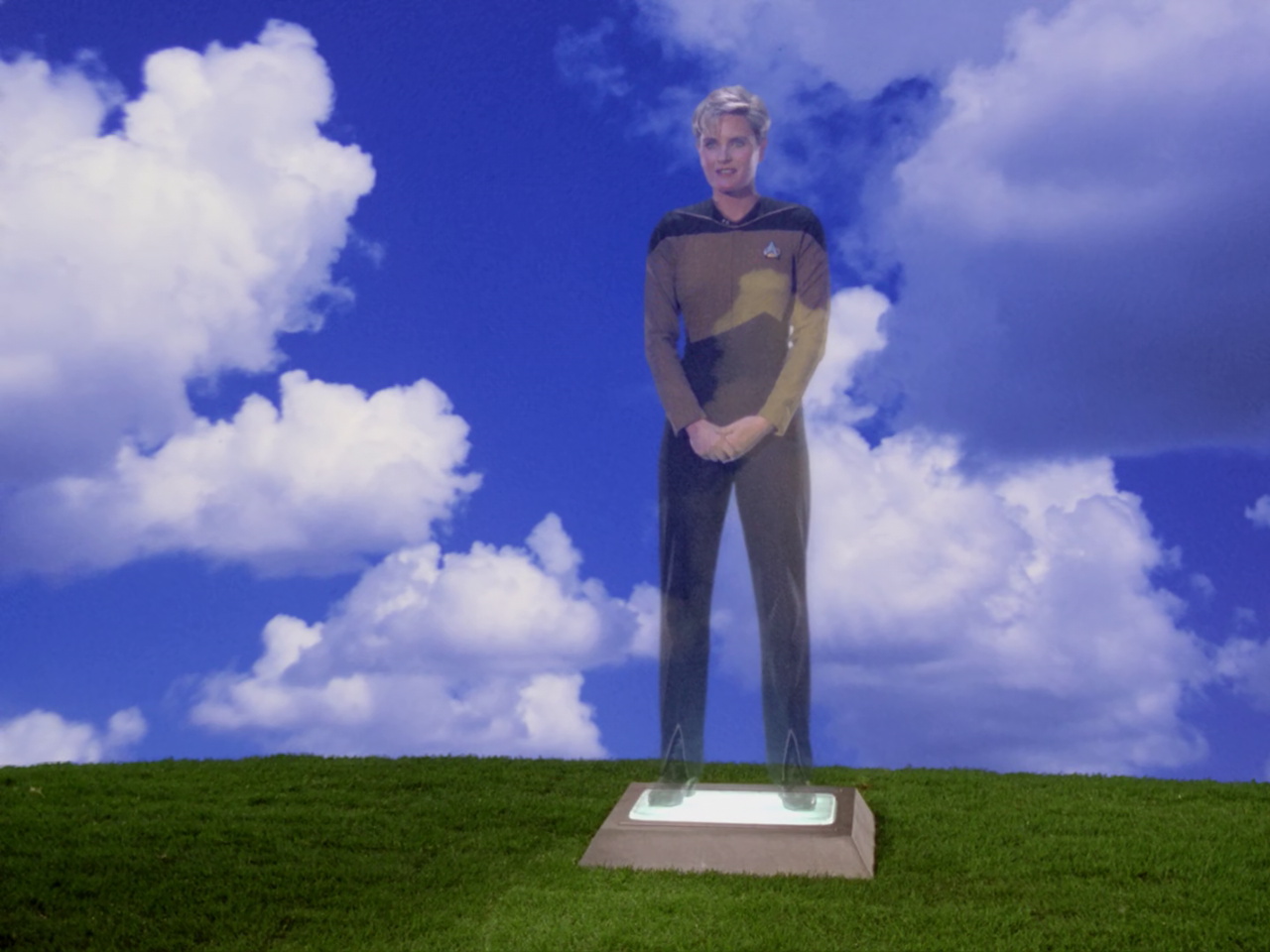
The contrast between the dim, desolate surface of Vagra II and Tasha’s funeral – in a sunlit, grassy meadow – is stark, and the visual impact of the two sequences is incredibly striking. At first, the moment felt less funereal than Spock’s had done aboard Kirk’s Enterprise, but this memorial service was for a different character, and a different *kind* of character, too. In my head canon, Tasha chose such a bright, sunlit, pastoral setting because it represented everything she got away from when she escaped to join Starfleet. And there’s something about the bright blue sky, white clouds, and natural grassland that feels, well… heavenly, at least if you buy into western or American depictions of the afterlife.
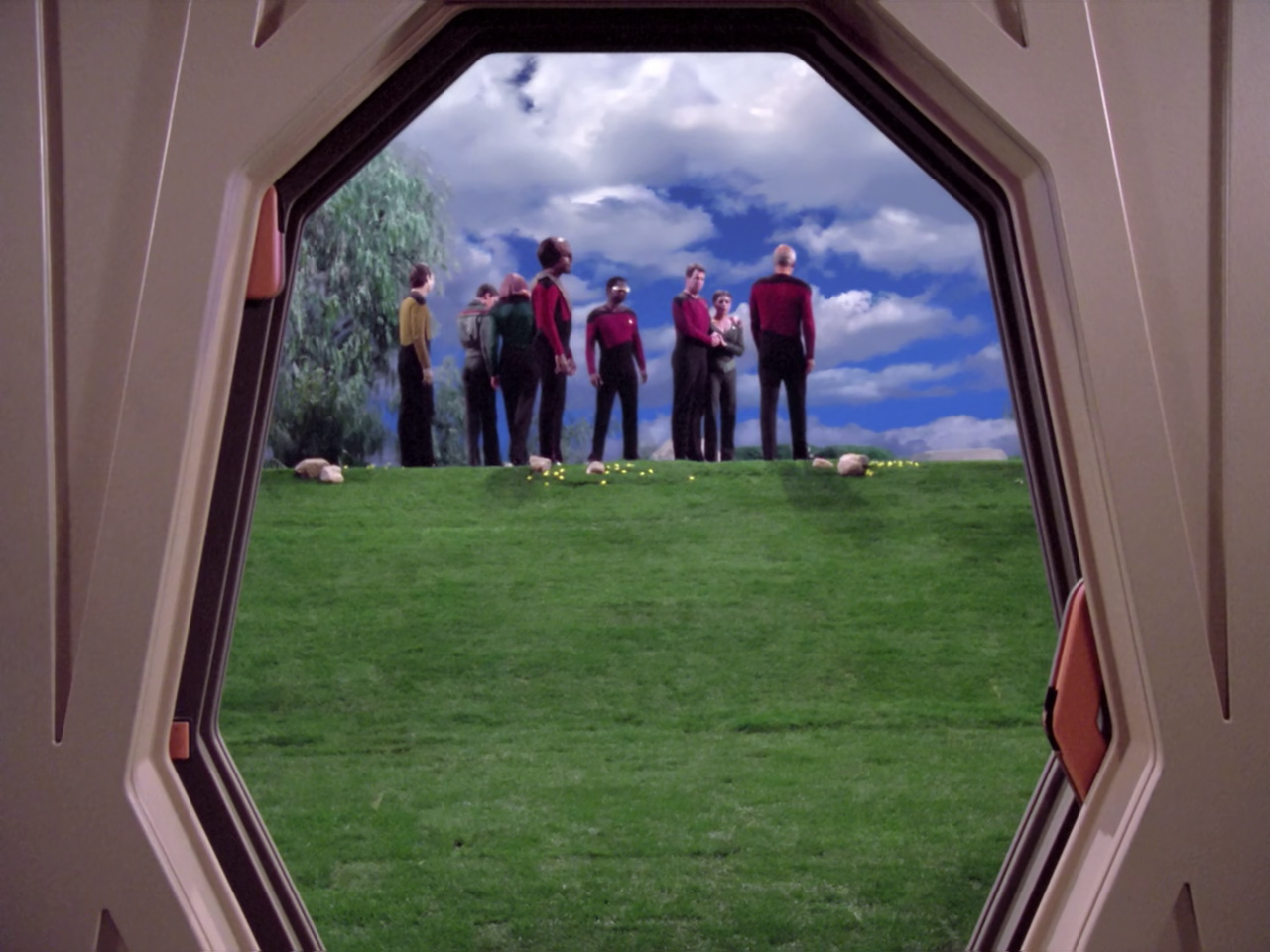
Skin of Evil needed this epilogue. If Tasha was going to be killed off – and not exit the show by some other means – then her death needed more than just expiring on a bio-bed in Sickbay. The funeral, and particularly Tasha’s own address to the gathered characters, was her swansong; the end of her time on the show. It mattered to those involved – the cast as well as the characters they played – but also to us as the audience. The funeral underlines that there is no technobabble solution – Tasha isn’t coming back and there will be no last-second reprieve. It allows us to bid a fond farewell to the Enterprise-D’s first tactical officer, and to draw somewhat of a line under the first iteration of the show’s principal cast.
Tasha Yar was always an enjoyable character. Her tragic backstory informed why she wanted to join Starfleet, and why she had the tactical and combat skills that she possessed, but it didn’t define her. She may not have been front-and-centre across Season 1, but just like most of the rest of the main characters, she had her moments, made connections with her shipmates, and took part in some iconic moments and storylines. Her loss in Skin of Evil would go on to define – and, I would argue, refine – The Next Generation going into Season 2.
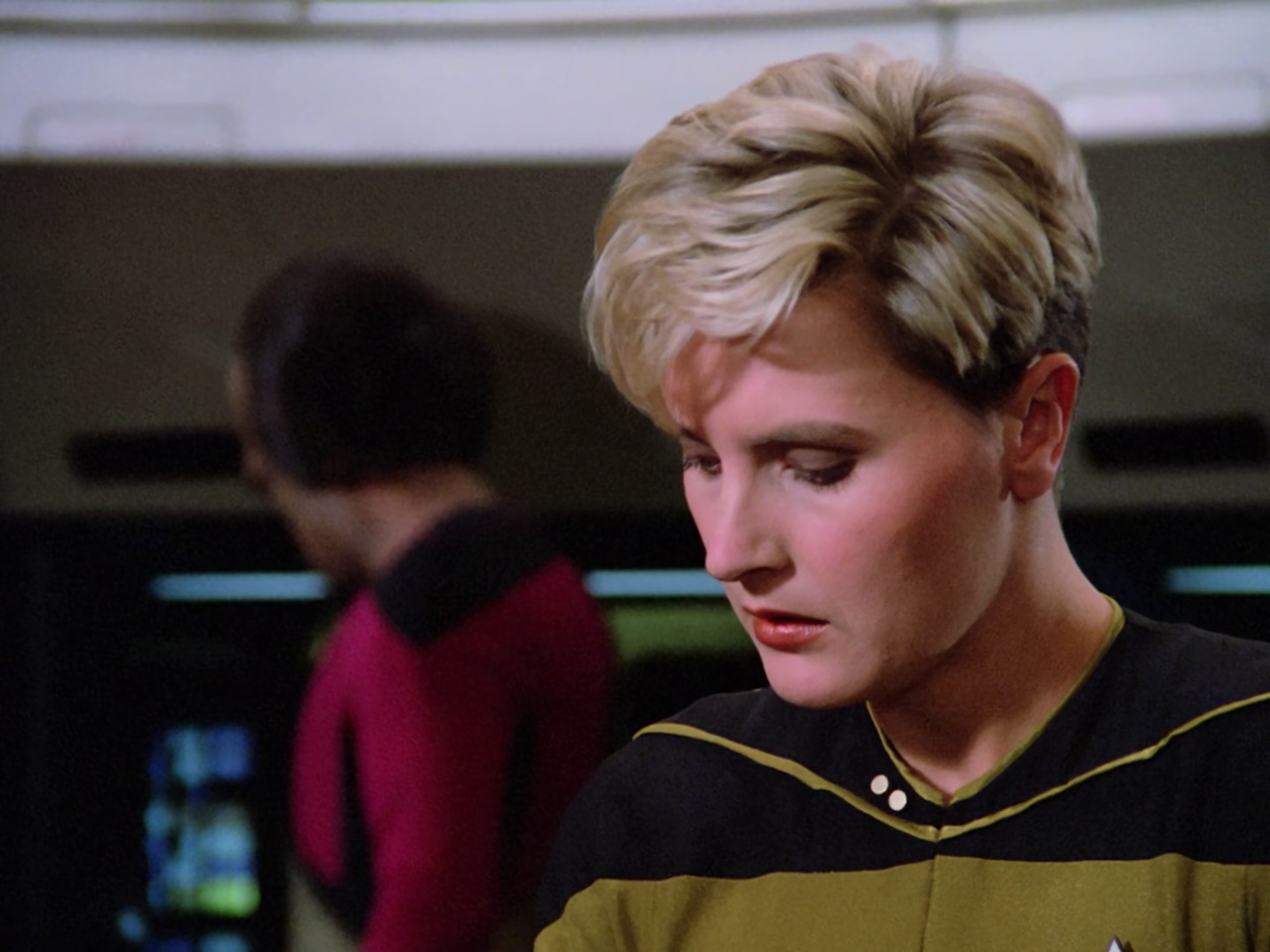
And, of course, Tasha would be back! Yesterday’s Enterprise introduced an alternate timeline version, she returned again in All Good Things right at the end of the show’s run, and her daughter – Sela – was an important character, too. Tasha even appeared, albeit only briefly, in Picard’s third season, proving that her legacy and importance lived on well past the events of this one episode. She would prove important to Data in particular (thanks in no small part to their… y’know… *encounter* in the episode The Naked Now). And all these years later, we’re still talking about Tasha Yar and her place in the series.
So I think that’s all for now.
Thanks for joining me on this re-watch. It was fun to revisit Skin of Evil, even though I wouldn’t necessarily consider it a personal favourite episode, or anything! Skin of Evil is more so an inflection point; a key moment in the history of The Next Generation, moving one character aside and arguably making room for others to step up. Slimming down what was arguably a slightly overladen cast probably helped the series going into the next part of its run, and for Worf in particular – an incredibly important character in all of Star Trek’s history – this moment cleared a pathway for him to become the character we know and love.
If you missed them, earlier this year I wrote up re-watches of The First Duty and The Royale, from Seasons 5 and 2 respectively, and I’d love to get around to more episode re-watches soon, too. I’ve also been reviewing Season 4 of Strange New Worlds, I reviewed Season 1 of Starfleet Academy, and the video game Across The Unknown. I hope you’ll check out some of those if you have the time!
Star Trek’s sixtieth anniversary is upon us, and it was wonderful to be able to celebrate that milestone at a convention. Meeting Denise Crosby was a wonderful experience, and it’s what prompted me to step back to Skin of Evil and write this piece. I hope this has been interesting, and I hope it wasn’t too controversial a pick for a Tasha Yar episode to revisit!
Thanks for joining me, and as always… Live Long and Prosper, friends!
Star Trek: The Next Generation is available to stream now on Paramount+ in countries and territories where the service is available, and is also available to buy on DVD/Blu-ray. The Star Trek franchise – including The Next Generation and all other properties discussed above – is the copyright of Skydance/Paramount. This article contains the thoughts and opinions of one person only and is not intended to cause any offence.