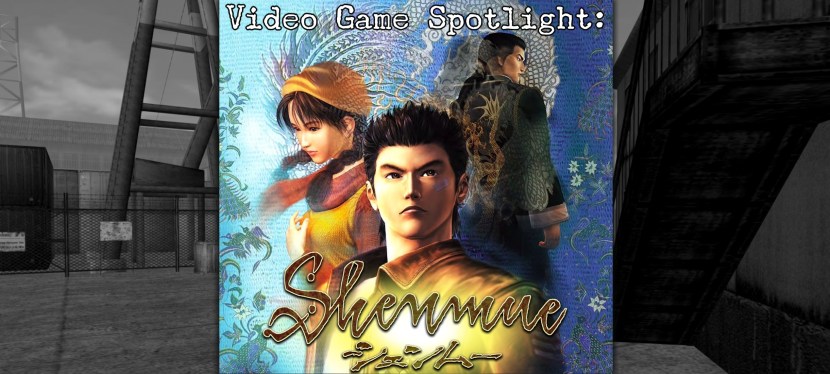
Video Game Spotlight: Shenmue

Spoiler Warning: There are spoilers ahead for Shenmue.

We’re marking an important anniversary today! Shenmue – a title which, for many folks, came to define the Dreamcast and Sega – launched in Japan on the 29th of December 1999. This game is one of my favourites, not only of the Dreamcast nor of the early 2000s, but… ever. Even twenty-five years later, and despite all of the problems that the saga has faced, Shenmue is still up there as one of my favourite games of all-time.

Here in the UK, we didn’t actually get Shenmue in December 1999. We’d have to wait eleven months for the game to arrive, but I already owned a Dreamcast at that point and I really couldn’t wait! I’d read all about Shenmue in the first issue of the UK’s Official Dreamcast Magazine, and I was immediately hooked in by how the game looked in those very first teaser screenshots, but more importantly how it was being described. This felt like a genuinely revolutionary title.
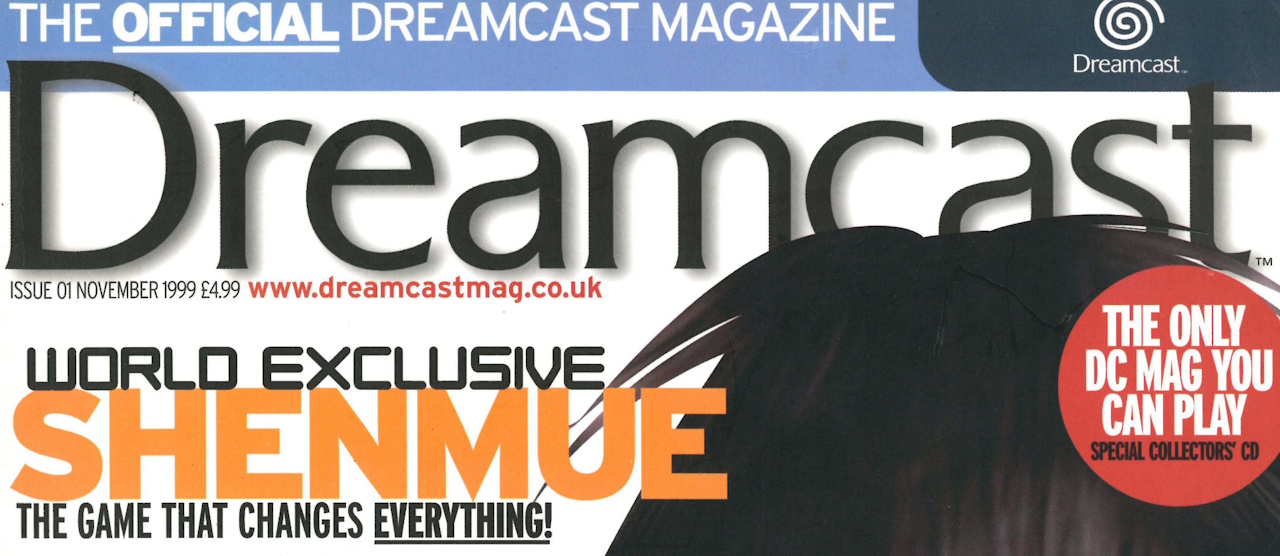
Crop of the Official Dreamcast Magazine (UK) November 1999 issue cover, featuring Shenmue.
Shenmue was teased ahead of its launch in the Official Dreamcast Magazine.

So for months I was left in limbo, waiting to get my hands on the game for myself! After the dust had settled on the excitement of the celebrations for Millennium Eve, a new year got underway – and I knew that, at some point in the year 2000, I’d finally be able to play Shenmue! It really was one of the entertainment experiences that I was most looking forward to – and it remained in that position all year.

Perhaps it’s because I picked up Shenmue in early December, but it’s a game that I associate with this time of year. There are some in-game Christmas events, too, with a Santa Claus figure appearing in Dobuita, snow falling, and Christmas Day being noted – if you’re still playing when the calendar reaches that point! So for me, Shenmue and the holiday season have always been joined at the hip, and it’s a game that feels particularly well-suited to this time of year. Playing Shenmue in December also, I would argue, adds a little something extra to the role-playing side of things!
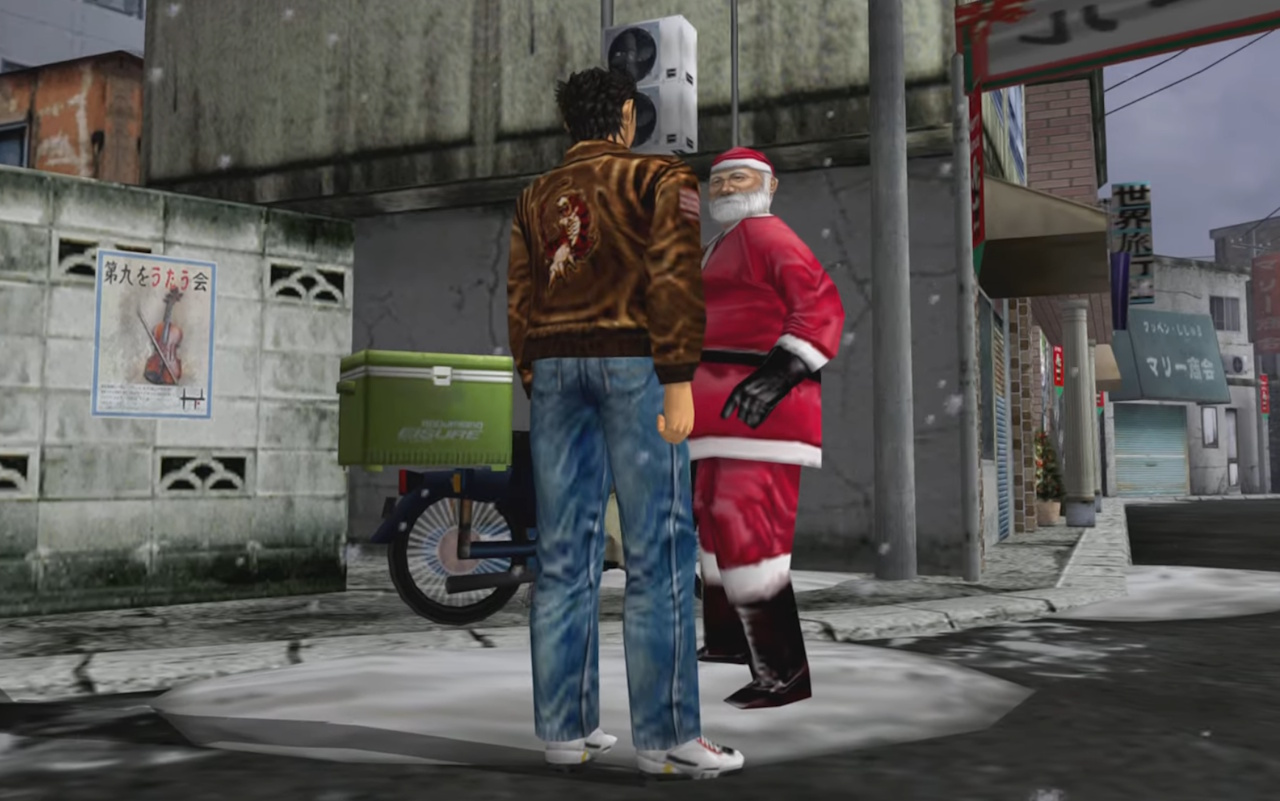
Screenshot of Shenmue (1999) showing Ryo meeting Santa Claus.
Ryo can meet Santa Claus in Dobuita!

I’ve enjoyed video games since I first picked up a joystick at a kids’ club in the late ’80s. This’ll have to be the subject of a longer piece one day, but I think what fascinated me the most about gaming was being able to control what was happening on the TV screen. I can’t remember a time without TV, and being able to be “in charge” of what was going on on the most important screen in the house… I remember it being a really powerful and exciting feeling.

But by 1999, I was beginning to feel that I’d gone as far as I could with games. Most games I’d played on the Super Nintendo and N64 were basically digital toys – and I don’t say that with too much disrespect intended! There had been some fun games on the N64, which was the console I’d owned before picking up a Dreamcast, and I was still enjoying several of them in 1999/2000. But none of those games were what you’d call “cinematic” or “grown-up,” and I guess I was beginning to feel like I was ageing out of the gaming hobby – particularly as I was working, commuting, going to school, and trying to balance all of that with my social life and finding time for friends and family.

Stock photo of a Dreamcast console.
Shenmue was released for the Dreamcast on this day in 1999.

But Shenmue changed all of that. It was the first game I played that felt gritty, realistic, and genuinely cinematic, telling a modern-day story set in the real world that would’ve been right at home on the big screen. It’s hard to speculate and deal in “what-ifs,” but I’ve wondered more than once if I’d have kept playing games beyond the early 2000s if it hadn’t been for Shenmue showing me what interactive media could be when it’s at its best.

It’s hard to put into words how many ground-breaking gameplay, visual, and narrative elements were present in this one single title. Things players have taken for granted for years – like lip-synced dialogue or hands with individual fingers – leapt out at me when I finally got my hands on the game for myself, and they felt like a gigantic leap forward from the blocky, polygonal graphics of the N64 generation.
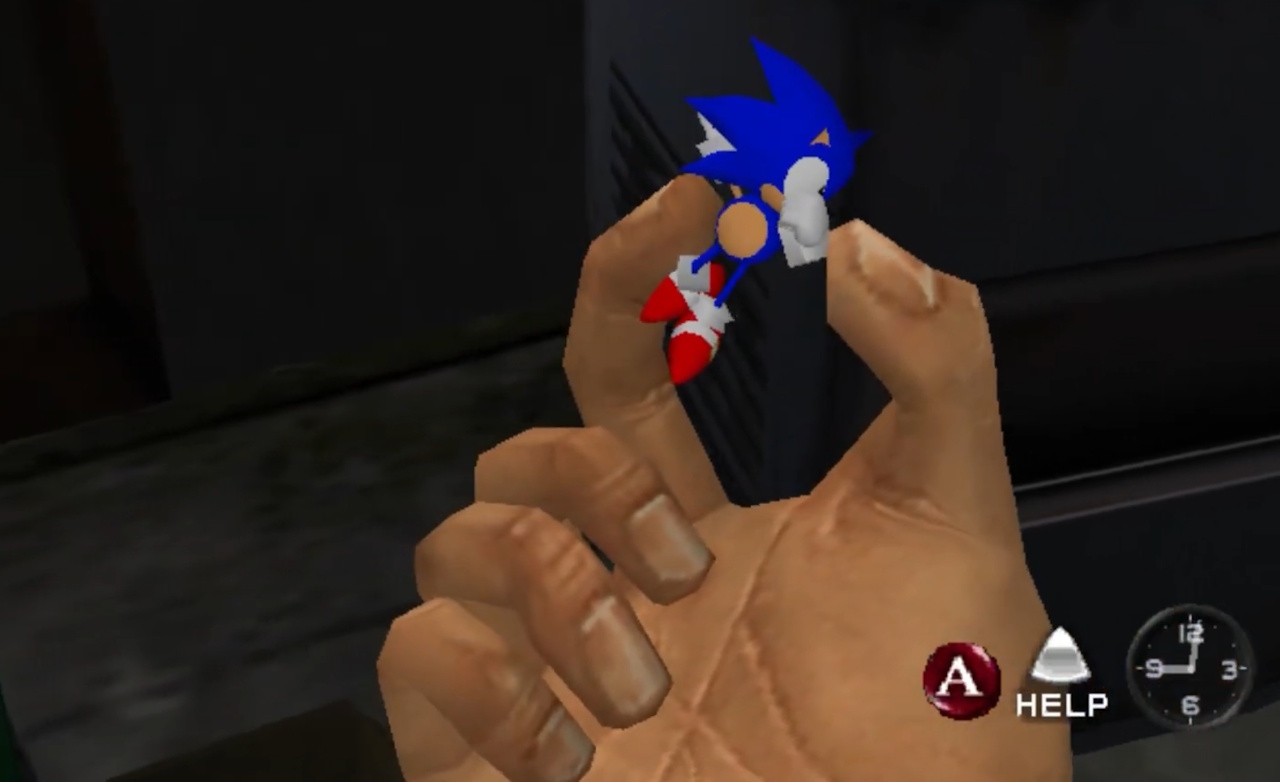
Screenshot of Shenmue (1999) showing Ryo holding a Sonic the Hedgehog toy.
Being able to hold in-game items and examine them up close was ground-breaking in 1999!

Perhaps the most impressive feature of Shenmue was its world. No one in 1999 knew what the term “open world” would come to mean, but Shenmue was the first game I played that is reasonably close to that category. The limitations of the Dreamcast still kept Shenmue divided up into several areas – but these were large, densely-packed, and diverse. Moreover, they were incredibly well-detailed, making just strolling down the street in Ryo’s home town of Yamanose feel like being transported thousands of miles across the sea to Japan.

Within Shenmue’s open world, every non-player character had a purpose. They ran a shop or went shopping, they swept the road outside their house and then went inside to take a break; they had jobs, they had objectives… and they felt real in a way that, even today, many NPCs just don’t. These characters, their schedules, and the way shops and businesses would open and close as the day wore on… they were completely revolutionary things at the time, and features that some open-world games today are worse and less realistic for failing to include. Shenmue also opened up almost every shop and building in the game for exploration – even those that had nothing whatsoever to do with the main story.
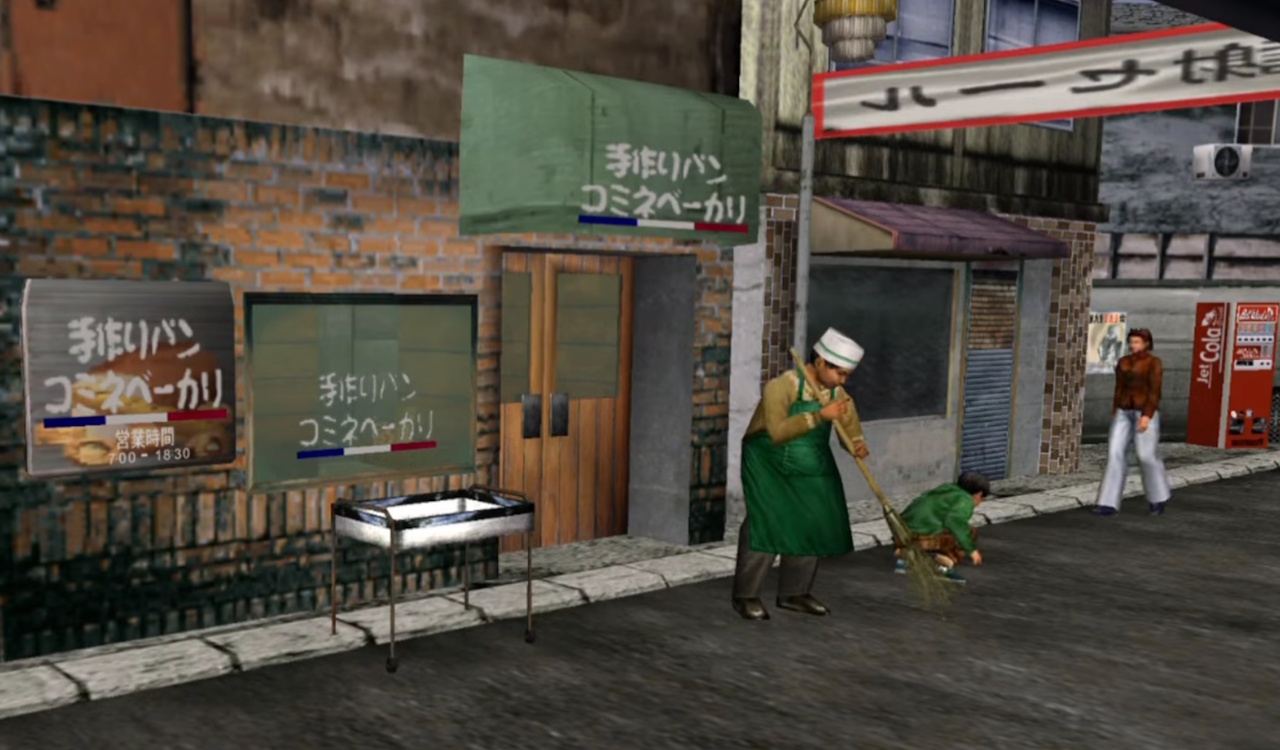
Screenshot of Shenmue (1999) showing the bakery in Dobuita.
NPCs going about their lives in Dobuita.

For someone who had grown up playing games that had been, up until that point, pretty linear experiences, the freedom Shenmue allowed me felt incredible. I was free to totally ignore Ryo’s quest, instead taking his pocket money and squandering it on collectible figures – or at the arcade! An arcade which, need I remind you, contained two full-size games from the 1980s, as well as a fun darts mini-game and a QTE mini-game to boot.

I hadn’t played Space Harrier before I played Shenmue, but I have a vague recollection of playing Hang On – or a game like it, at least – on a rare visit to an arcade at some point in the late ’80s or early ’90s. So to get that experience again inside of another video game… it was a huge treat. I spent hours playing these games-within-a-game; it was just so much fun to visit the arcade and put other activities and the quest on the back burner!
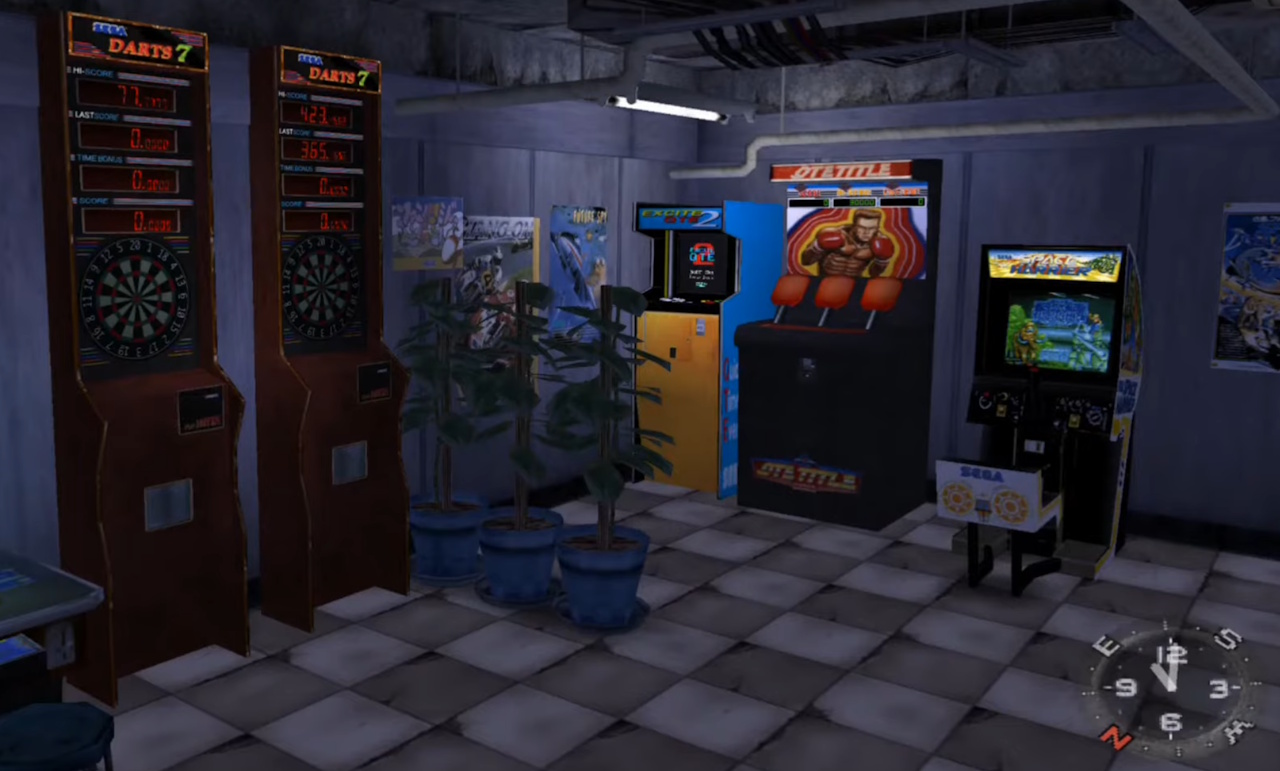
Screenshot of Shenmue (1999) showing the arcade.
I spent hours of my life (and Ryo’s) in the arcade…

Having Space Harrier and Hang On inside Shenmue’s arcade felt like a real power play from Sega – wrapping up two games inside of a much bigger, more elaborate game was a real flex and a way to show off how much bigger and better the Dreamcast was. And for someone who grew up in a rural area where there weren’t any arcades, being able to visit a digital arcade was pretty cathartic, too!

Shenmue began life in the mid-90s as Virtual Fighter RPG, a spin-off from Sega’s established fighting game series. Taking one of the Virtua Fighter characters as a starting point, creator Yu Suzuki began to build his magnum opus. Development was originally planned for the Sega Saturn console, but this later switched to the Dreamcast. The connection to Virtual Fighter was also abandoned, with the game taking on a fully standalone story. Shenmue and its sequel – Shenmue II – were in development at the same time, with work on the second game being well underway by the time the first game was released.
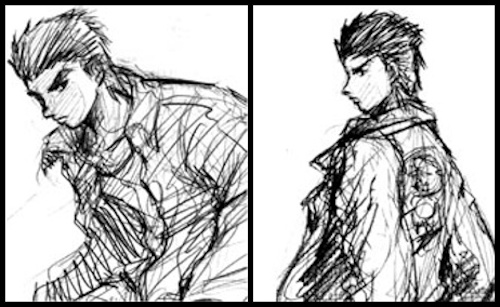
Concept art for Shenmue (1999) showing two sketches of Ryo.
Early concept art of Ryo Hazuki.

Shenmue is famous – or rather, infamous – for its development budget. In 1999, it was reported that the game cost over $70 million to make, though this also includes part of the development costs of Shenmue II. Regardless, Shenmue was an expensive undertaking, and a big gamble for Sega. If the Dreamcast had sold as Sega hoped, and Shenmue had been its “killer app,” recouping that investment would’ve been possible. But with the Dreamcast underperforming, there was no way for Shenmue to make its money back, leading to the game being best-remembered outside of its fan community as one of the most expensive failures in video gaming history – at least for the time.

Of course, I didn’t know any of that at the time I bought a Dreamcast! I was dimly aware of the game’s reputation as an expensive undertaking, but at the time that just seemed like an even bigger boast on the part of Sega! “The most expensive game of all-time” shipped with some incredible features and an insane level of detail, genuinely changing my relationship with games and setting expectations that, time and again, other titles fail to live up to in one way or another.
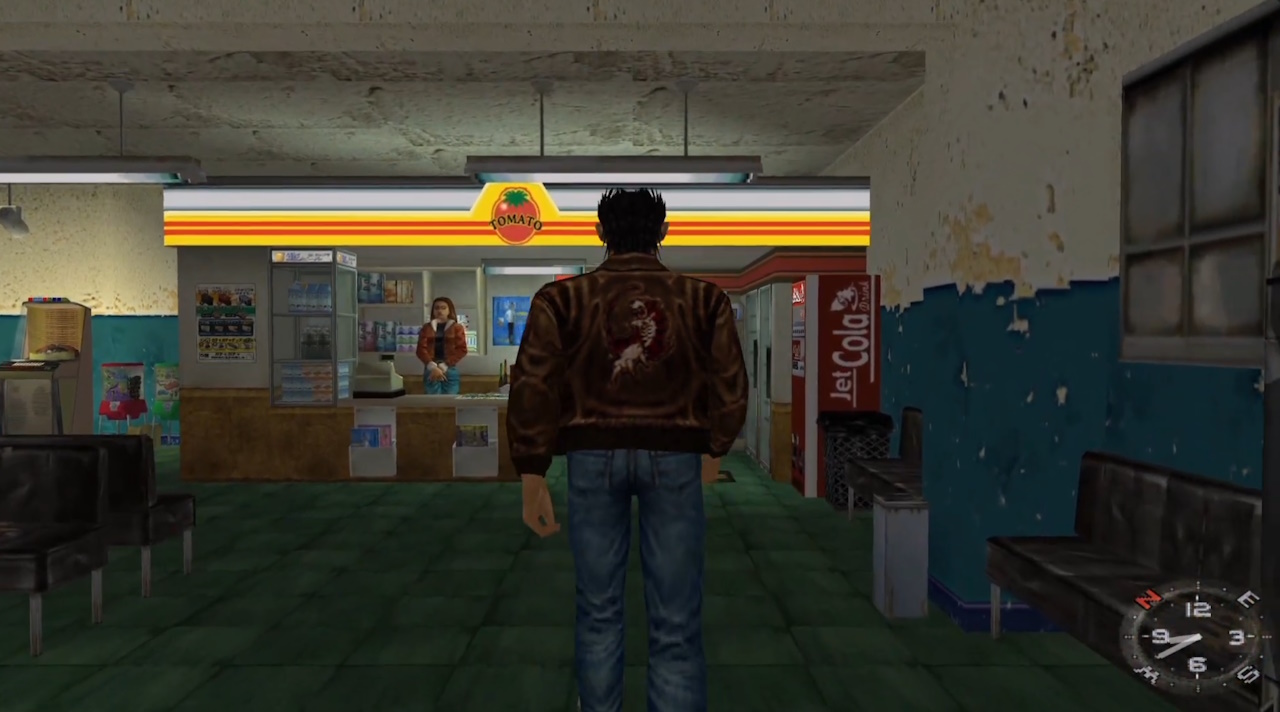
Screenshot of Shenmue (1999) showing Ryo in the cafe.
Ryo at the harbour cafe.

At the heart of Shenmue’s story was a relatable protagonist caught up in a quest for answers – and revenge. Ryo Hazuki is an incredibly well-written character, someone who’s sympathetic and relatable, while also being from a completely different culture and having at least some characteristics of an anti-hero. Several times in Shenmue, Ryo’s friends and confidants would try to dissuade him from pursuing his quest for revenge, but he’d remain steadfast.

The concept of revenge is a difficult one, and the game doesn’t shy away from that. Rather than reporting the crime of his father’s murder to the police – which you can literally attempt to do in-game using the telephone – Ryo is determined to solve things on his own. He wants to kill the man who killed his father – but along the way, he’s forced to confront difficult questions about who his father truly was and how well he really knew him. There’s a lot of complexity and nuance to this story, and while Shenmue firmly places the player in Ryo’s shoes, questions linger about how justified he is in taking this course of action.
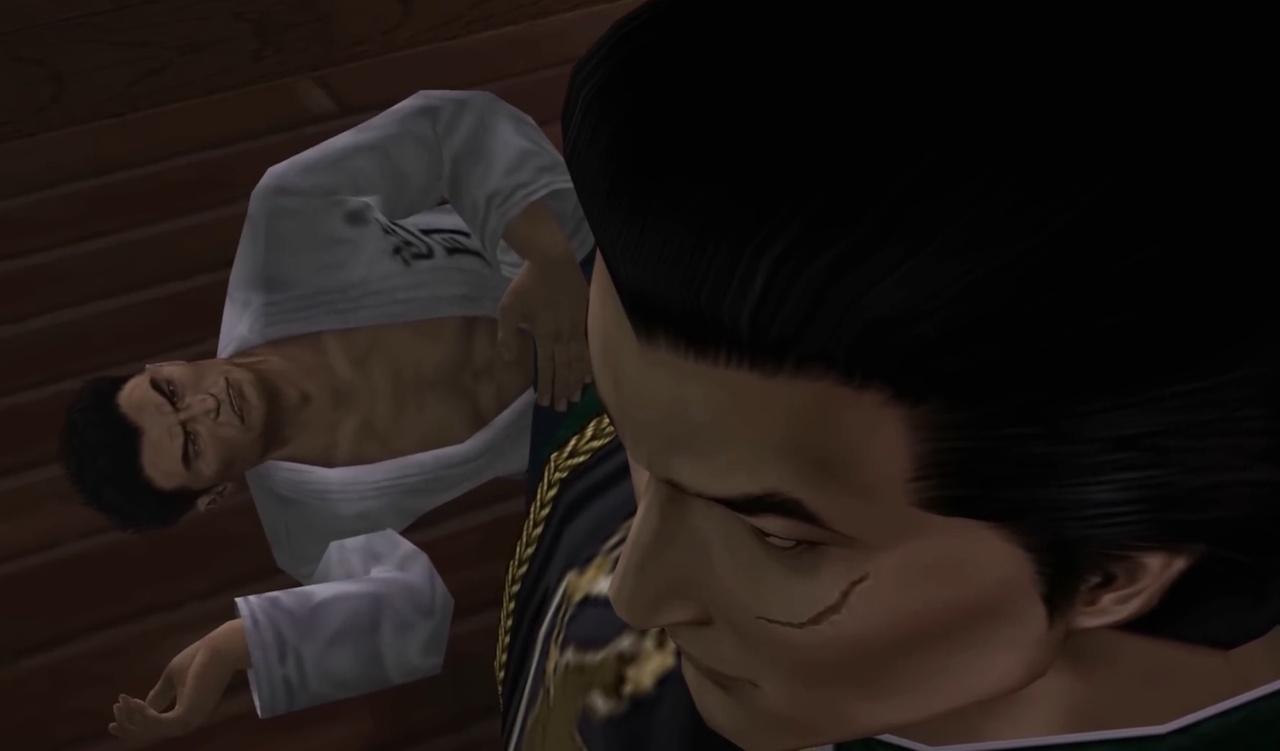
Screenshot of Shenmue (1999) showing Lan Di standing over Iwao at the beginning of the game.
Shenmue is a classic revenge story.

There are areas of Shenmue that, by today’s standards, seem a little dated. The control scheme was designed before twin analogue sticks were a standard part of control pads, and on the Dreamcast, movement still used a four-way D-pad. This could feel clunky and often led to awkward moments as Ryo struggled to navigate a doorway or successfully climb a flight of stairs!

The clunky controls also extended to fighting sequences. Complicated multi-button combos worked well in Virtua Fighter and other 2D fighting games of that era, but I never felt they translated all that well to a fully 3D environment. I’m far from the best gamer, but even in the Dreamcast days I’d find Ryo flailing around, swinging punches and kicks at mid-air as an opponent moved out of range or to one side. In bigger fights with multiple enemies, that was less of a problem. In one-on-one situations, though, it could occasionally get annoying!
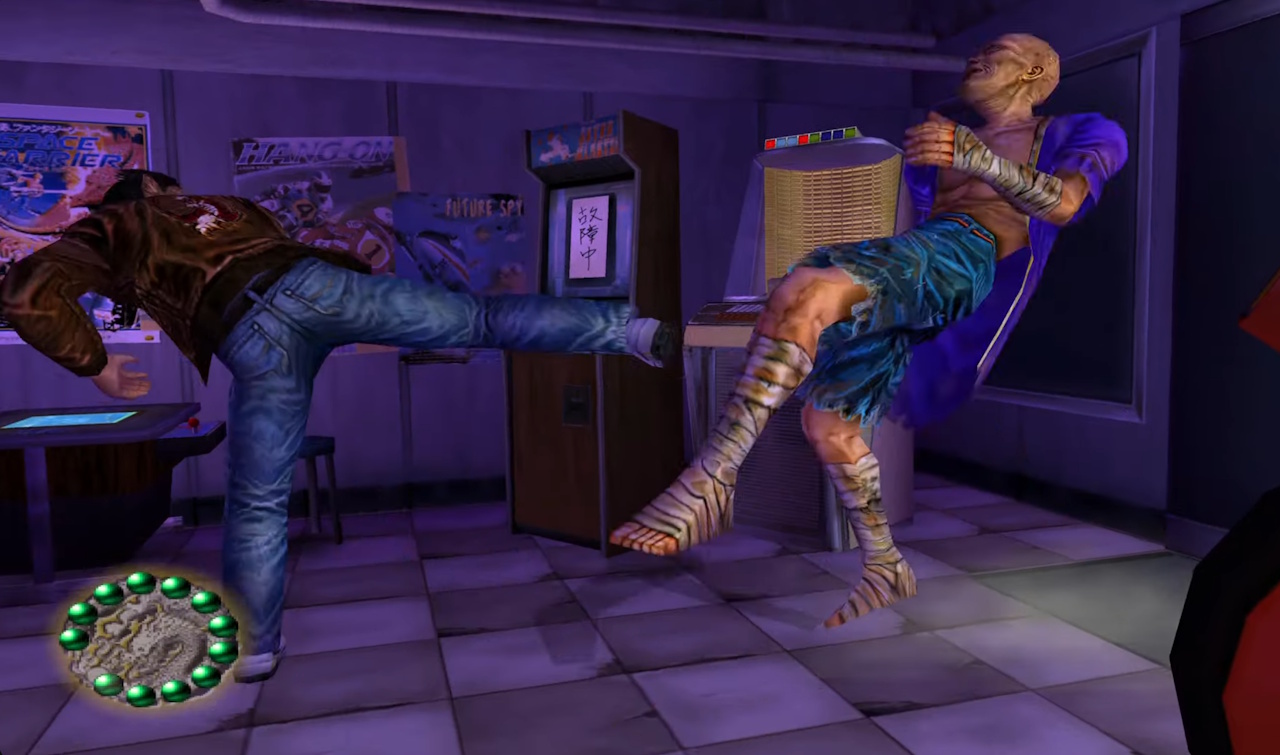
Screenshot of Shenmue (1999) showing Ryo fighting Chai at the arcade.
Ryo swings a kick at a villain.

In keeping with Shenmue’s philosophy of F.R.E.E – full reactive eyes entertainment; an early open-world, free-roaming idea – it was possible to practice fighting in one of several areas around the game world. I confess that I probably didn’t practice as much as I should’ve, and I didn’t make use of very many of the more complicated multi-button moves that Ryo could learn. I found that once I had a couple of solid kicks and strikes in my arsenal, the rest were just superfluous! Was that the right way to play? Well… isn’t that the fun of a game like Shenmue? That there are different ways to approach some of these sequences?

For me, the fighting portions of the game were really just bridges in between exploration and story sections. As long as I could get through a fight without losing repeatedly, I was content to play through them to advance the story. And that was a genuinely new feeling for me at the time – the idea that a video game could have such an engrossing story that the actual gameplay side of things was in a distant second place. Sure, I’d played story-driven games before Shenmue – titles like Shadows of the Empire and Jet Force Gemini come to mind – but this really was the first game with a realistic, gritty, and truly engaging story that I found myself getting lost in.
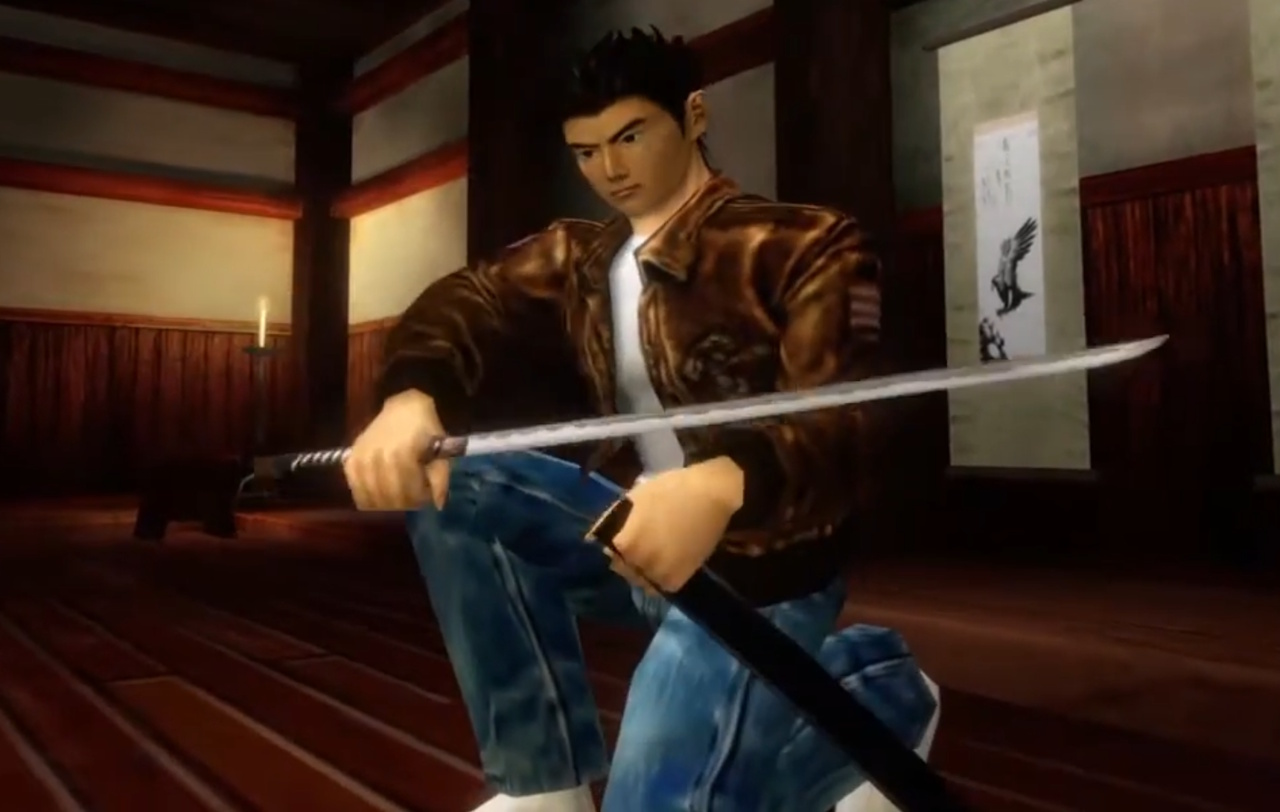
Screenshot of Shenmue (1999) showing Ryo with his father's sword.
The katana.

For better or worse, Shenmue was the game that coined the phrase “quick-time event” and introduced this mechanic to a wider audience. We can debate whether QTEs were invented by Shenmue or not, but Shenmue’s marketing came up with the name – and QTEs have, in the years since, become rather controversial!

I’d like to defend quick-time events in Shenmue. Firstly, they felt genuinely new and revolutionary at the time, taking a part of the game that would’ve otherwise been a non-interactive cut-scene and making it part of gameplay – with consequences for messing up. And secondly, QTEs as they appeared in the first Shenmue didn’t feel overdone or particularly obtrusive. Shenmue’s QTEs felt like a big leap forward in terms of interactive storytelling.
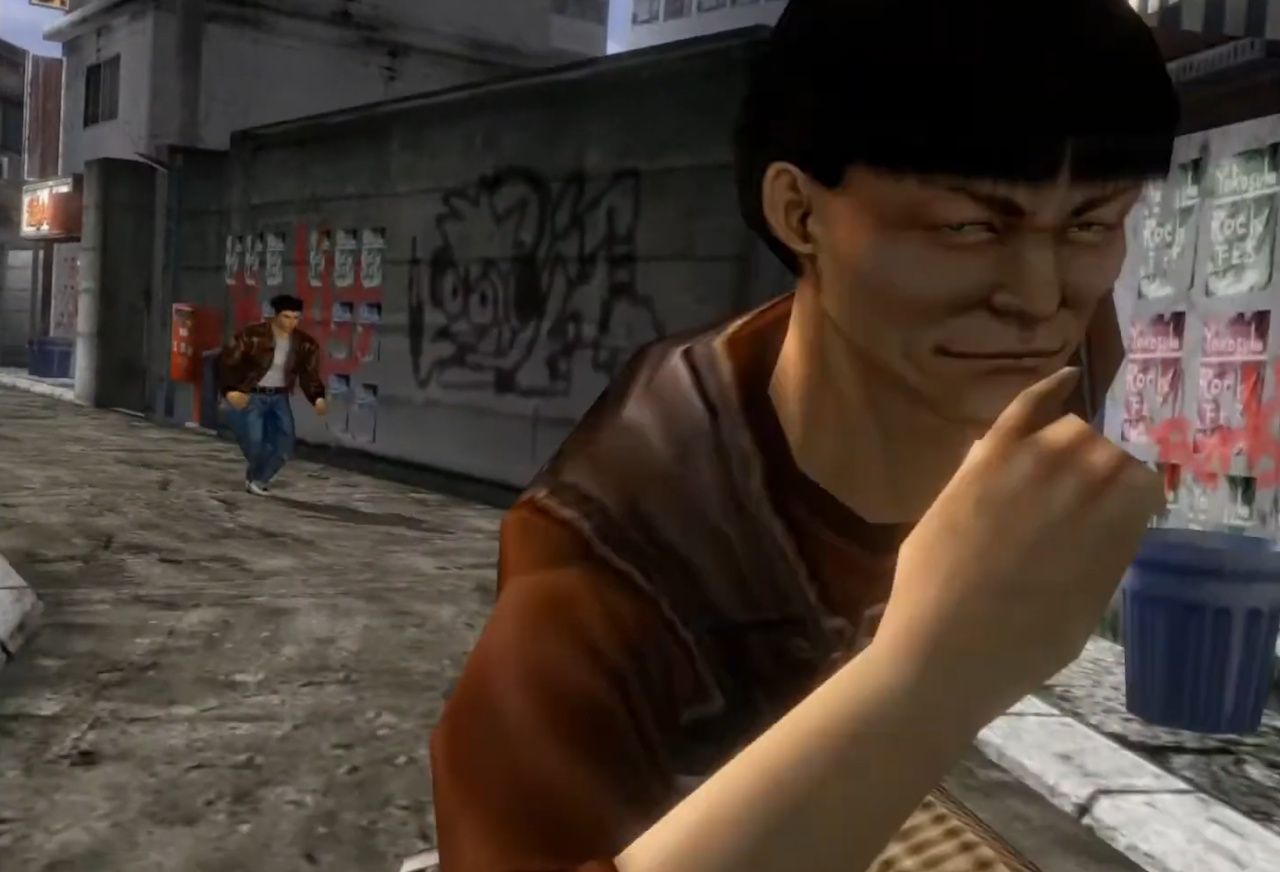
Screenshot of Shenmue (1999) showing Ryo chasing a travel agent during a quick-time event.
Shenmue even found a way to make cut-scenes interactive.

Quick-time events have acquired a reputation through over-use in other titles in the years since Shenmue – rather than because of the way they were used in this game in particular! And sure, as the title that popularised QTEs, Shenmue might come in for some criticism – and I get that. But I maintain that the way they’re used in Shenmue itself is actually fine, and if other games stuck to that formula, maybe players today would have less of an issue with QTEs. But we’re dangerously close to veering off-topic.

Aside from Ryo himself, who was an especially well-written protagonist, Shenmue’s world was populated with some wonderful secondary characters. Ryo’s friend/crush Nozomi is sweet, and the interactions the two have across the game really raise the stakes when she’s put in danger later on. Tom, Ryo’s friend who sells hot dogs, is a great character too – and the friendship the two built up really packs an emotional punch, especially when Tom leaves Japan toward the end of the game. Fuku-san and Ine-san are the familiar faces of home that Ryo leaves behind – and occasionally seems to push away – as part of his quest. And Ryo’s other friends all have an impact, too.
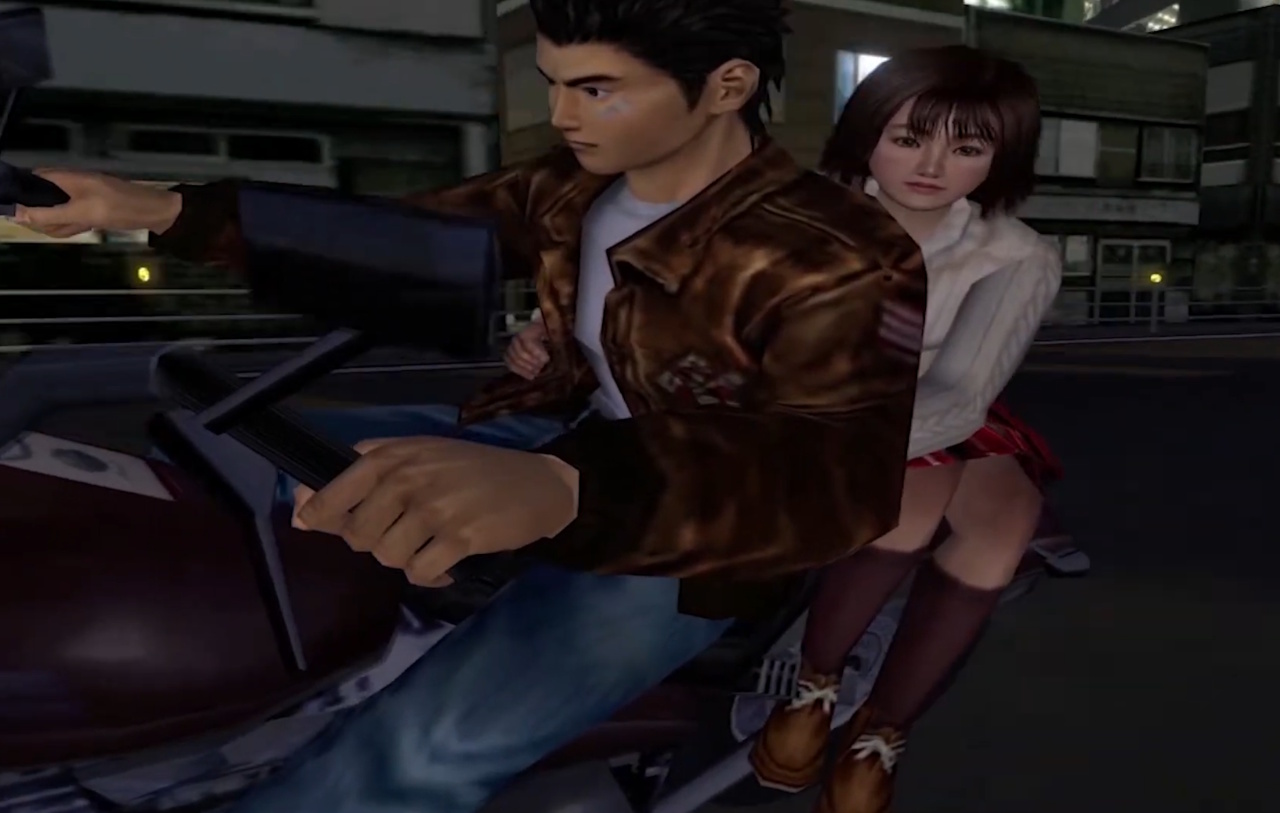
Screenshot of Shenmue (1999) showing Ryo and Nozomi on a motorcycle.
Ryo and Nozomi.

Then there are the villains. Lan Di, though only seen in person at the beginning of the game, just oozes strength and power, and the mystery tied up with Iwao, Ryo’s father, is tantalising. Then there’s Chai – a genuinely disturbing, weird little guy! Chai’s way of speaking, his facial appearance, and his crouching gait all come together to make a really unsettling presentation. The way Chai interfered with Ryo’s quest was infuriating, too – deliberately so! A truly well-crafted villain that, to this day, makes my skin crawl!

At the harbour we also have the occupants of Warehouse #8: Master Chen and Guizhang. This mysterious father-and-son duo have a connection to Ryo’s father – and to Lan Di. Just tracking them down is a whole mystery in and of itself, and sneaking into their base can be difficult! I’m not really in favour of mandatory stealth sections in games, but once you know what you’re doing and get your bearings in the Old Warehouse District, getting there shouldn’t be too difficult.
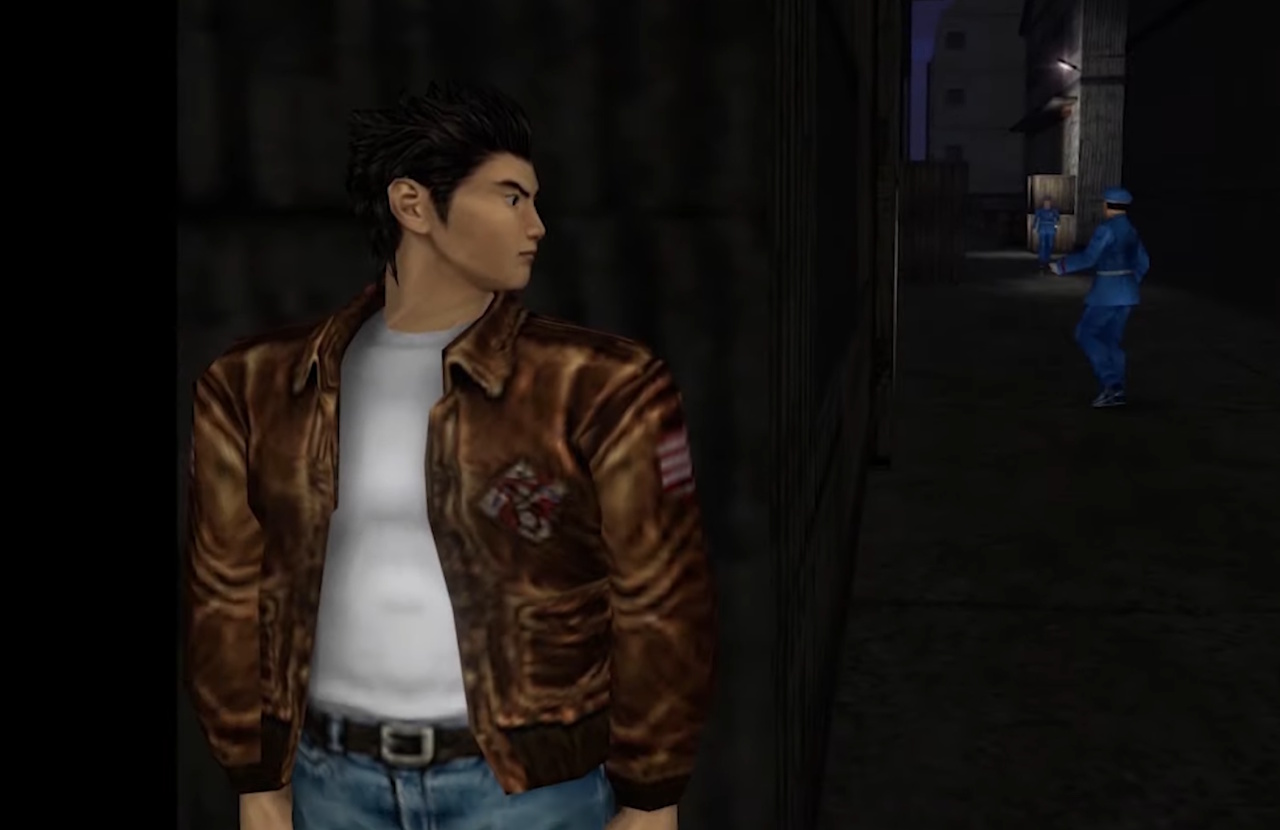
Screenshot of Shenmue (1999) showing Ryo hiding from security guards at the Old Warehouse District.
Hiding from guards in the Old Warehouse District…

The harbour is probably my favourite individual area of Shenmue’s game world. It’s so atmospheric, with large warehouses, a rippling sea, and tired sailors and workmen all milling around. Particularly at night, the harbour really feels like a real place – but also a strangely nostalgic one, if that makes sense. I could spend hours at the harbour just walking around, soaking it all in.

The harbour is also where Ryo would get a job – and despite what you might’ve heard, driving a forklift and stacking crates was a lot of fun! The forklift race at the beginning of each day was great, too – and another totally unexpected gameplay feature in a game laden with mini-games, creative mechanics, and different things to do. The forklift gameplay was also strangely relaxing; the kind of “cozy” gameplay that makes people fall in love with simulator titles. Picking up crates and stacking them just right was a lot of fun.
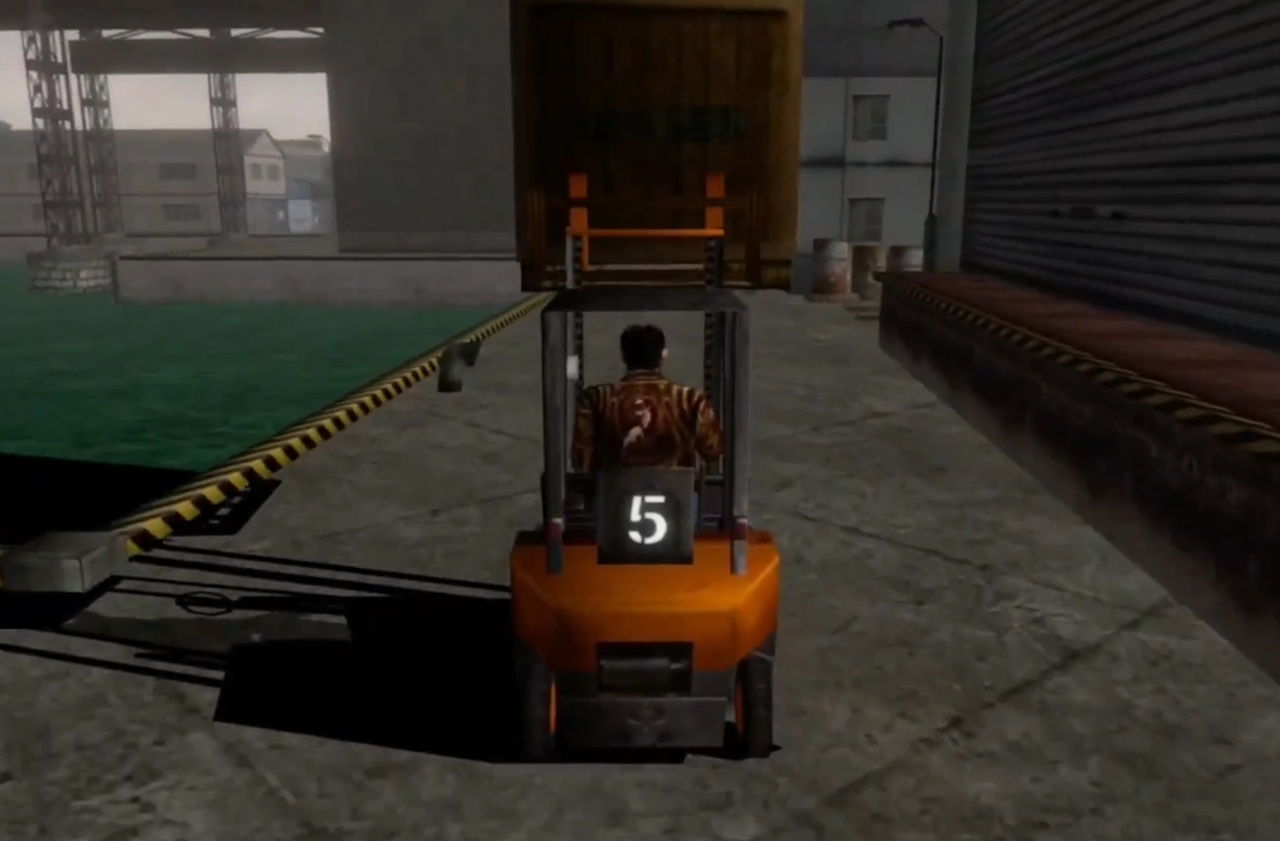
Screenshot of Shenmue (1999) showing Ryo driving a forklift at the harbour.
I genuinely enjoyed being a forklift driver.

The only downside to Ryo’s forklift job is that it’s relatively short and comes at the beginning of the end of Shenmue. By the time you start the job at the harbour, you’re basically on the path to the endgame and the climactic final battles – and I could’ve happily spent an in-game month or two just having fun playing forklift driver at the harbour!

Ryo and Guizhang team up to take on seventy opponents at the end of the game; an epic, climactic battle that throws wave after wave of opponents at them at the harbour. This battle is difficult, but it’s also a ton of fun compared with some of the earlier one-on-one boss fights. Ryo has moves that can knock back several people at once, like his spinning kick, and smashing your way through huge numbers of gangsters… there was nothing like it at the time! The closest comparison I can think of to the game’s climactic seventy-person battle (from the same time period) is Dynasty Warriors 2, which released about six months later.
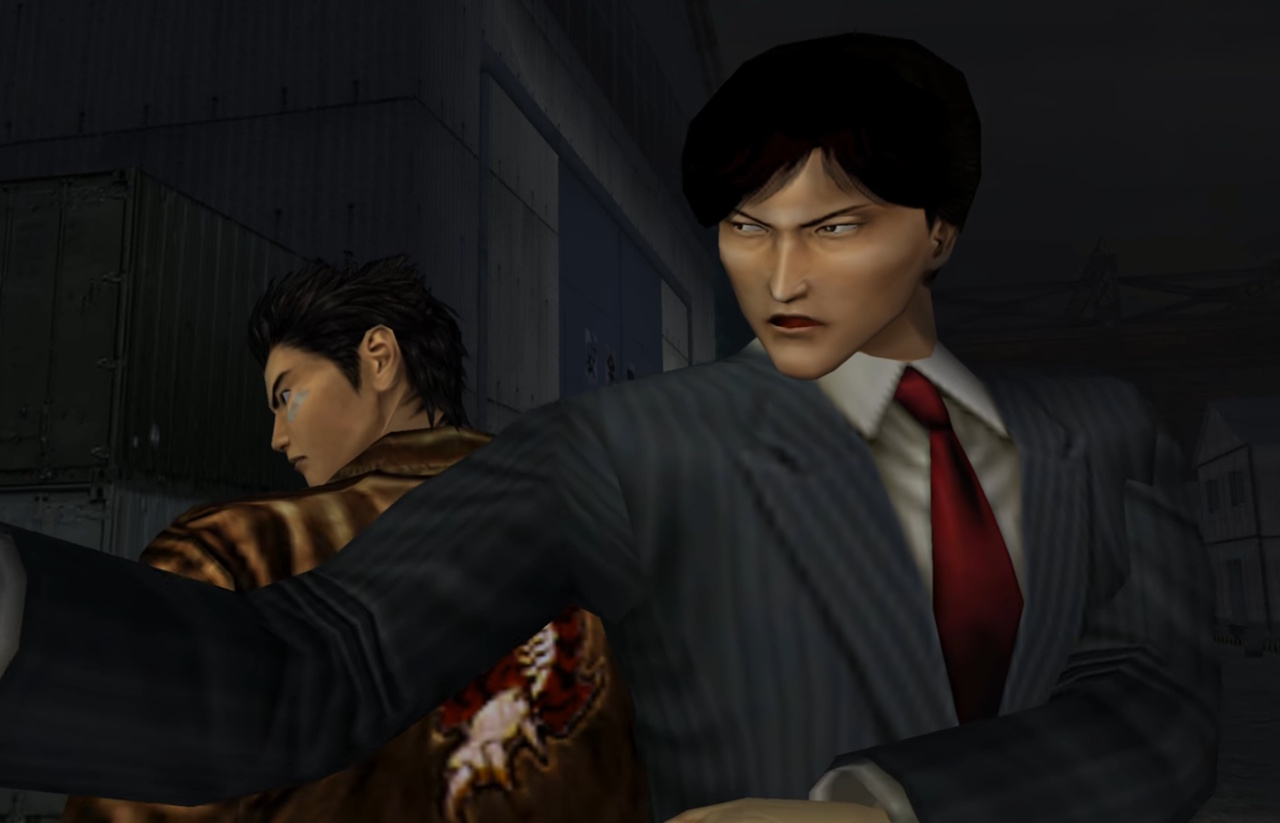
Screenshot of Shenmue (1999) showing Ryo and Guizhang preparing to do battle.
Ryo and Guizhang.

Shenmue was more than just a game. This landmark title completely changed how I came to see interactive media, set expectations for narrative games that, even today, many titles fail to live up to, created a living, breathing world years before anyone else even tried it, and above all, kept me invested in gaming as a hobby at a point in my life where I might’ve otherwise began to drift away. Twenty-five years on from its launch, it remains one of my favourite games of all-time.

For me, that’s Shenmue’s real legacy. It’s a game that set the bar for narrative action/adventure experiences, and even today I find myself comparing brand-new games to Shenmue, or noting that Shenmue was the first game I played with a particular feature or gameplay mechanic. I revisited Shenmue in 2017, shortly after it was re-released on PC, and I had a blast getting lost in that world all over again. Although some aspects of the game are definitely dated today, it’s amazing how well the world itself holds up.
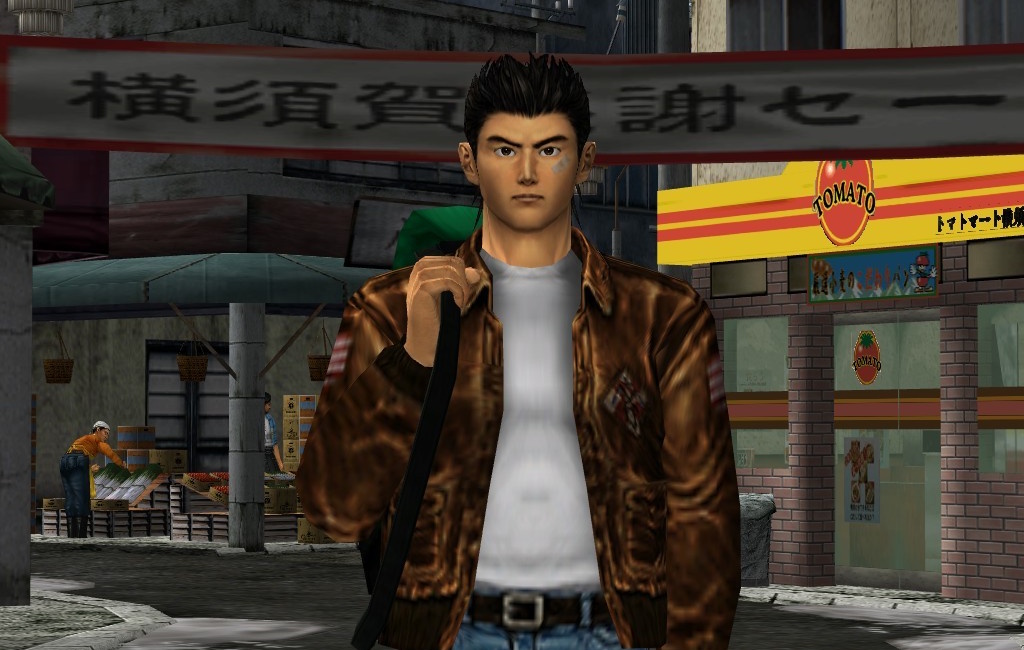
Screenshot of Shenmue (1999) showing Ryo walking toward the bus stop near the end of the game.
Ryo with his backpack, headed for Hong Kong.

I wanted to acknowledge Shenmue’s milestone quarter-of-a-century anniversary, and I hope I’ve been able to adequately convey just how much this game meant to me – and how much it continues to matter all these years later. Despite the disappointment I felt at the developers’ inability to bring the story to a conclusion, I still look back on Shenmue with incredible fondness.

I’m so glad I got to play through this game on the Dreamcast, and it’s still a title I find myself recommending to players who missed it the first time around. With a port currently available on PC and PlayStation 4 – usually at a reasonable price, especially when there are sales – it’s incredibly easy to get started with Shenmue, and I honestly can’t recommend it enough. Sure, it’s a piece of gaming history nowadays – but it’s also an incredible narrative experience.
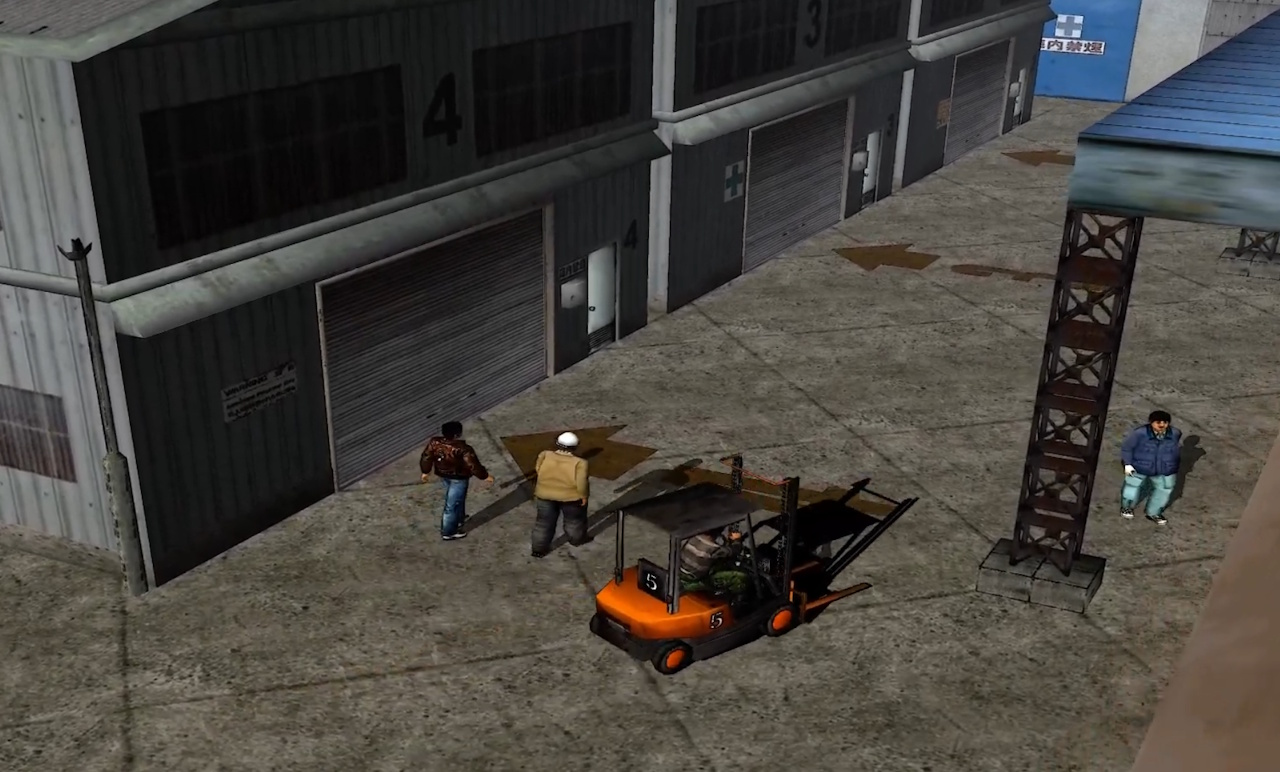
Screenshot of Shenmue (1999) showing a cut-scene at the harbour with Ryo, the foreman, and a forklift.
At the harbour.

A few weeks ago, I tackled the difficult question of whether the Shenmue saga has a future. Five years on from Shenmue III, is there a chance of yet another reprieve for this incredible – yet overlooked – series? Check out my answer to that question by clicking or tapping here! And at some point soon, I’d love to watch and review Shenmue – The Animation; the anime adaptation of the first two games. So be sure to check back for that.

Until then, I really hope this has been an interesting look back at one of my favourite games… ever. Shenmue blew my mind twenty-five years ago, and I really wanted to celebrate its anniversary in style. If you’ve never played it, do us both a favour and try and track down a copy! If you like games with a strong story, I really don’t think you’ll regret it. If you loved Shenmue in the Dreamcast days, or came to it after the fact when it was re-released, I hope you’ll join me in raising a glass to one of the most revolutionary, creative, and transformational games of its era.

Happy anniversary, Shenmue!


Shenmue I & II is available now for PC and PlayStation 4. Shenmue – The Animation may be available to stream on CrunchyRoll. Shenmue is the copyright of YSNet and/or Sega. Some images, screenshots, and artwork courtesy of Sega, YSNet, Shenmue Dojo, and Wandering Through Shenmue on YouTube. This article contains the thoughts and opinions of one person only and is not intended to cause any offence.
Video Game Spotlight: Midtown Madness

Twenty-five years ago today – that’s literally a quarter of a century – a brand-new racing game arrived on Windows 98 and Windows 95 PCs. Midtown Madness was an absolute blast and quickly became one of my most-played games of the year. With the millennium fast approaching, nothing was more fun than tearing up the streets of Chicago, getting into scrapes with the police, and taking part in some wild and dangerous races against the AI!

Midtown Madness celebrating its 25th anniversary makes me feel so incredibly old… but I’m glad to have the opportunity to talk about one of my favourite racing games of that era. Midtown Madness did something that I hadn’t really seen before in a video game – it opened up its entire city and let me drive wherever I wanted, however I wanted… even if that meant off-roading across grassy parks, scaring pedestrians on the pavement, or jumping over an open drawbridge! Two-and-a-half years before Grand Theft Auto III would take that series’ titular mayhem to an open-world environment, Midtown Madness was doing something remarkably similar.

Screenshot from Midtown Madness (1999) showing the game's title screen.
The game’s main menu – with a funky custom mouse cursor!

Although it didn’t feel that way at the time, when I look back at Midtown Madness with a quarter of a century of hindsight, it feels like a gaming landmark; an important title that did the “open world chaos” thing in its own way before some of the better-known titles in that space. In 1999 it felt incredibly new and innovative; a game that seemed to take the chaos of the likes of Grand Theft Auto but made it fully 3D. Looking back, it feels like a half-step between 2D games, racing games, and the kind of fully open-world titles that were right around the corner.

I’d also place Shenmue in that same category: the “almost-open-world” games that were the progenitors of the format. Released the same year as Midtown Madness, but in a completely different genre, Shenmue was also an early pioneer of many of the features that open-world games continue to take advantage of to this day. 1999, it seems, was one of the most important years in the development of open-world titles!

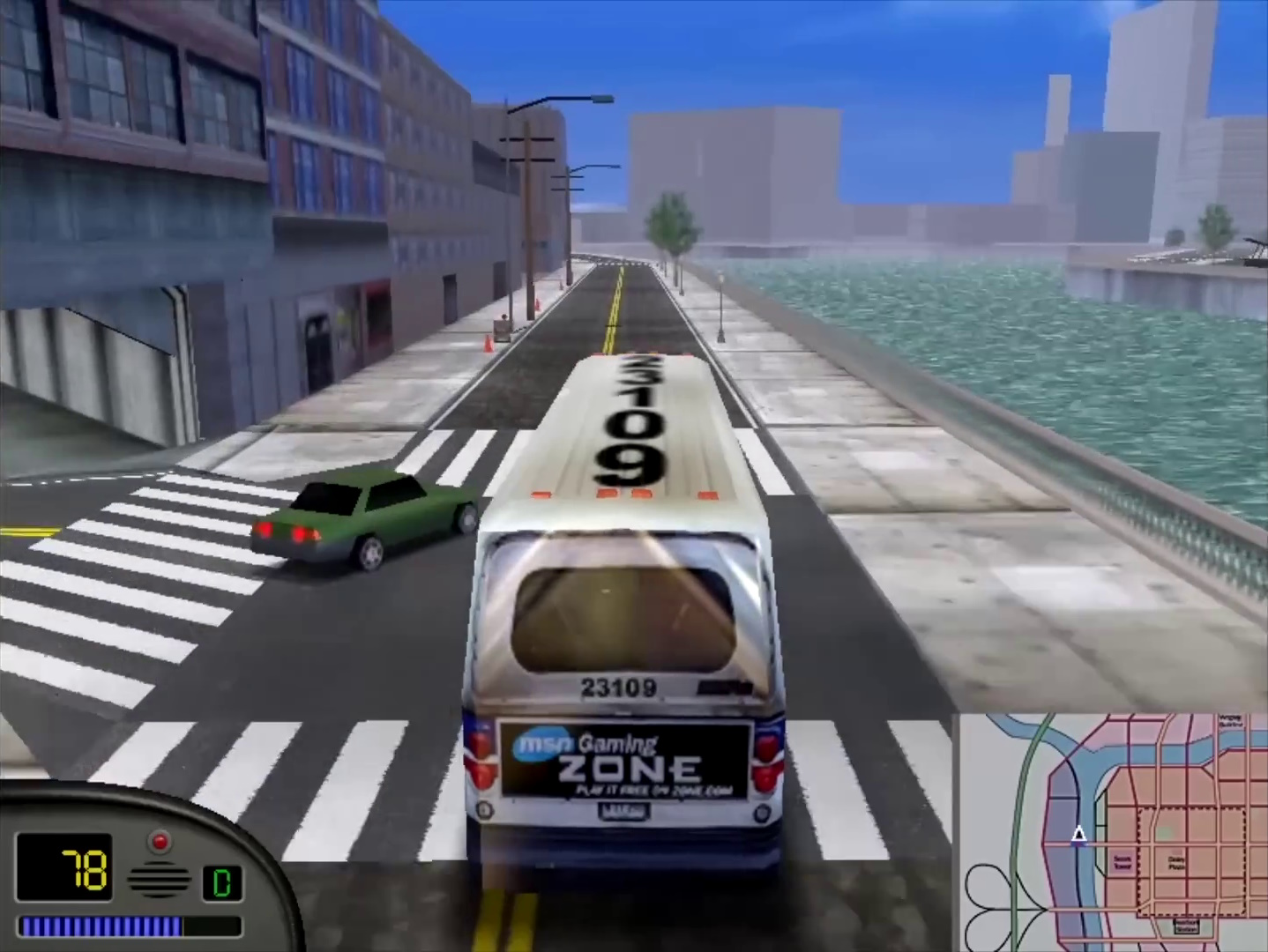
Screenshot of Midtown Madness (1999) showing a City Bus on a street by a river.
Driving a City Bus through the streets of Chicago!

I don’t have the receipt, unfortunately, but I think I must’ve picked up Midtown Madness within a week or two of its launch. I remember playing it that summer and into the autumn; it was one of the only up-to-date PC games that I owned at the time. I’d seen a preview of it in one of the gaming magazines that were prominent on newsagents shelves in those days, and it just looked like such chaotic fun that I could hardly wait to get my hands on it! I didn’t have a PC racing wheel or any fancy equipment – and as you’ll know if you’ve ever tried it, playing a racing game with a mouse and keyboard is painful! But that didn’t stop me, and I must’ve logged dozens upon dozens of hours in Midtown Madness… in between studying and working my part-time job, of course!

Taking on races was the only way to unlock half of the vehicles in the game – the other half were available right from the start. So I definitely took part in as many races as I needed to in order to unlock the likes of the city bus and the GTR-1 racecar! But where I had the most fun with Midtown Madness was driving around the city in free-roam mode – both as chaotically and as calmly as possible! The game’s rendering of downtown Chicago – while undeniably dated by today’s standards – felt like a technological marvel in 1999, and I loved every minute of exploring the city.

Screenshot of Midtown Madness (1999) showing a first-person perspective.
Driving around Chicago in Midtown Madness was a blast!

This wasn’t my first encounter with the Windy City. I’d been a huge fan of the medical drama ER in the second half of the ’90s, following every episode and every season as they were broadcast here in the UK. I think by mid-1999 we were on Season 3 or 4 of the show, which at that point still featured George Clooney and Julianna Margulies in starring roles! But because I felt a familiarity with Chicago – from its Lake Michigan waterfront to its “L” trains that ran on elevated tracks above the streets – I felt even more drawn to this digital recreation of the city. In fact, it was one of the first digital recreations of a real-world city that I can remember spending much time with.

Going into the millennium, I’d have had Midtown Madness’ in-game map pretty much committed to memory! I could find my way from one side of the map to the other, stopping to see the sights along the way – and the game recreated some of Chicago’s most famous landmarks. I’ve already mentioned the “L” – Chicago’s elevated metro system. But there was also the Sears Tower skyscraper, Navy Pier on the Lake Michigan shorefront, the planetarium, the Wrigley Field baseball stadium, and even the airport! All of these were a ton of fun to race through and explore.

Screenshot of Midtown Madness (1999) showing Wrigley Field.
Wrigley Field as it appears in the game.

Although the game came with options for tuning the physics engine and car performance, I didn’t spend too much time tinkering. The default settings seemed to work well enough, and I was always reluctant to mess about with them too much! Midtown Madness performed very well on the PC that I had at the time, with none of the bugs and glitches that seem to plague games today. Perhaps I’m looking back with rose-tinted glasses when I say that… but I genuinely cannot remember any bugs or performance issues that got in the way of the fun.

Obviously when you compare Midtown Madness with a racing game from the 2020s, like Forza Horizon 5, or open-world car games like Grand Theft Auto V, it feels incredibly dated. Graphics that felt great at the time look blocky in 2024, with far too few polygons, and the game has the overall look of a title from the late ’90s. The turn of the millennium would see advancements in graphics that would make Midtown Madness 3 – released less than four years later – look an awful lot better.

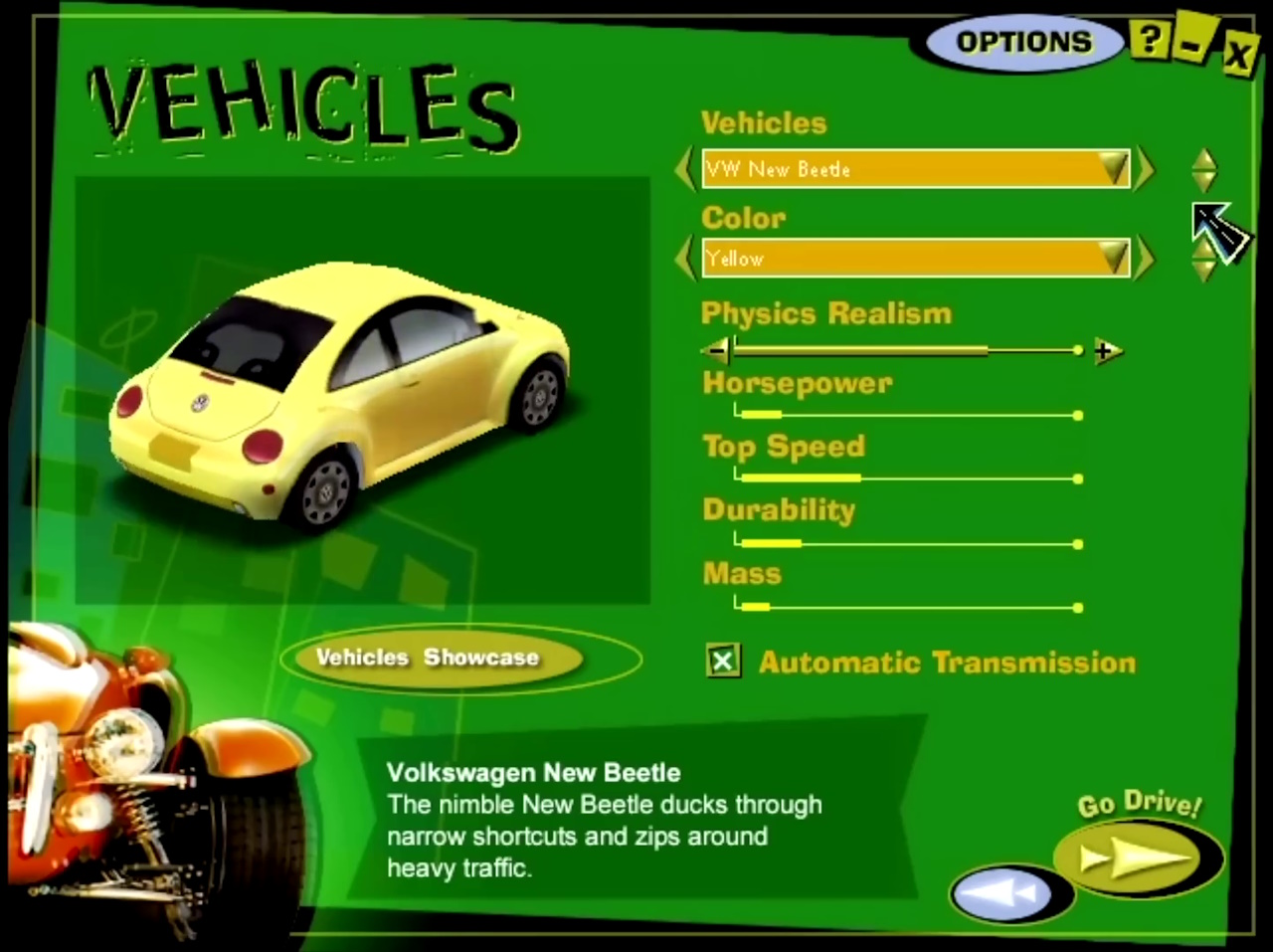
Screenshot of Midtown Madness (1999) showing the vehicle selection screen.
Choosing a car to race with!

And in terms of the game’s world, the relatively low numbers of vehicles on the road and pedestrians on the pavements doesn’t feel right for a massive metropolis like Chicago. There’s also a lack of diversity – there are only a handful of vehicle types and pedestrian models, and you’ll pretty quickly see all of them if you spend much time with Midtown Madness.

But those were the restrictions that game developers had to work with in 1999, and obviously an open-world city like Cyberpunk 2077 or a racing title like Gran Turismo 7 is going to surpass Midtown Madness in every way a quarter of a century later. That’s not what makes it such a special title – and no one is really asking it to go toe-to-toe with modern racing and open-world titles.

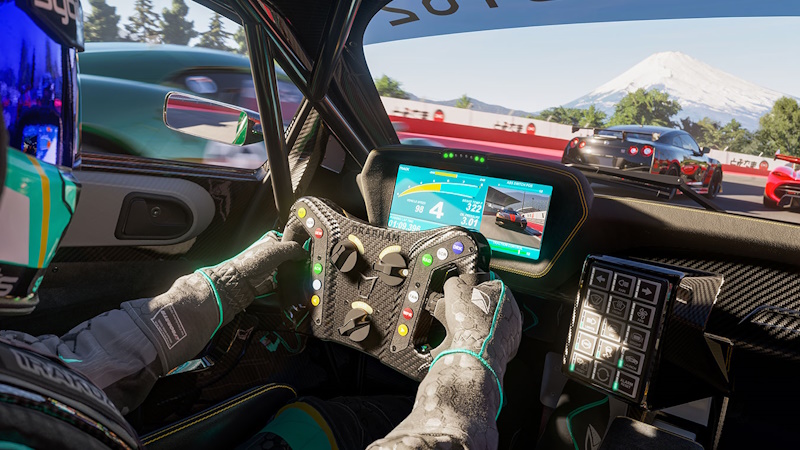
Promo image for Forza Motorsport (2023).
Ideas and gameplay mechanics that Midtown Madness pioneered are still in use in modern open-world and racing games today.

Instead, we have to view Midtown Madness – and, by extension, video games in general – as a stepping-stone. The premise or DNA of later titles like Test Drive Unlimited, Project Gotham Racing, or the Forza Horizon series is present in Midtown Madness, and the game was among the first to demonstrate open-world and free-roaming elements in a racing game, as well as the merits of letting players cause chaos and create their own fun. Those gameplay ideas have become commonplace in the years since Midtown Madness was released – and now extend far beyond the racing genre.

For me, Midtown Madness is an incredibly nostalgic title. I’d love to be able to play it again – but getting it to work on a modern PC, even with a virtual desktop running Windows 98, is a pain. The game can be easily found online in its complete form, but it would be fantastic if Microsoft could work with a company that specialises in porting retro games to modern systems and give it a proper re-release. After 25 years, I think Midtown Madness deserves better than to be left behind! Many other retro titles have been brought back over the past few years, so there’s almost no reason not to do it!

Screenshot of Midtown Madness (1999) showing the player's car being crashed into.
Getting side-swiped by a police car during a race. Ah, the memories!

I had such a great time with Midtown Madness as the millennium approached. It was one of the games I encountered in the late ’90s that seemed to be pushing boundaries and trying something different – and something genuinely engaging and fun. It felt like a step up from basically any other racing game I’d played up until that point, and one that definitely captured and held my attention.

As we mark the milestone 25th anniversary of Midtown Madness, I look around at open-world titles and racing games and still see a number of features that I first encountered in this landmark title. It was a truly fantastic game that gave me a ton of fun and with which I made some wonderful memories.

All that remains to say is this: happy anniversary, Midtown Madness!


Midtown Madness is currently out of print, but copies may be available second-hand. Midtown Madness remains the copyright of Microsoft, Angel Studios, and/or Rockstar San Diego. Some screenshots and still frames courtesy of LGR’s retrospective review and The Racing Madness Wiki. This article contains the thoughts and opinions of one person only and is not intended to cause any offence.
Video Game Spotlight: Ryse: Son of Rome

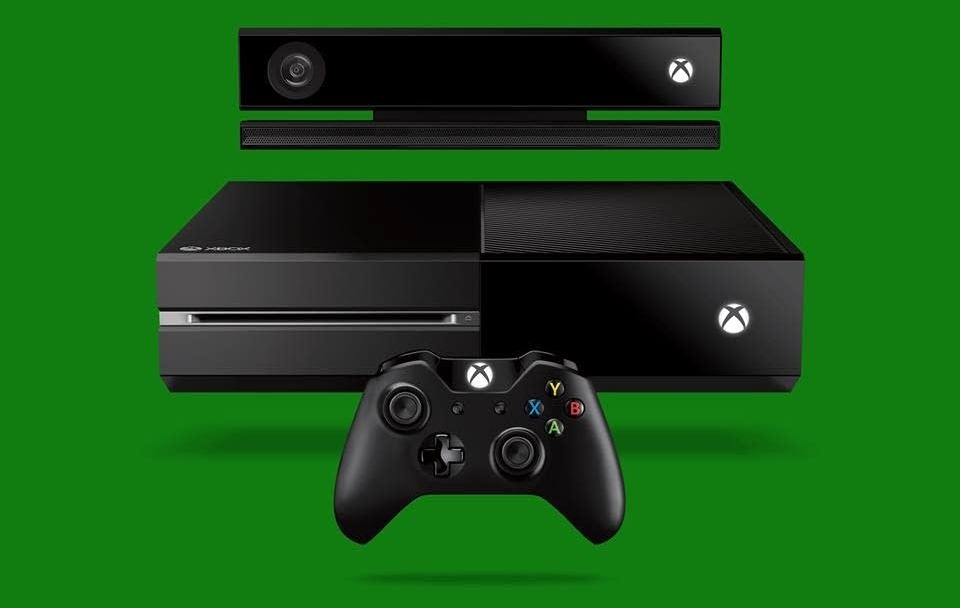
On the 22nd of November 2013 – a decade ago today – Ryse: Son of Rome was released. And on that very day, I bought a copy! Ryse: Son of Rome was one of the launch titles for the Xbox One, a console I also picked up on release day. With it being the game’s tenth anniversary, I thought it could be a bit of fun to shine a spotlight on this underappreciated title.

Ryse: Son of Rome was a good game to get started with as a new console generation was landing. For all of its flaws (especially with the original version of the machine), the Xbox One was a beefy system by 2013 standards; a powerhouse built for high-definition screens and great-looking games. Ryse: Son of Rome took full advantage of the Xbox One’s hardware to create characters and environments that still hold up ten years later.

Box art for Ryse: Son of Rome.

I still remember the excitement I felt as I headed into the city on the day the Xbox One launched. I didn’t know what game or games I might be able to afford, but the launch of a new console generation felt like a really exciting moment. At that time I was still working in the games industry so I’d been following the new consoles as their launches approached. The Xbox One had already stumbled, with controversies surrounding its always-online nature, sharing games between accounts, and the mandatory Kinect accessory that bumped the price up to $100 more than a PlayStation 4. But I’d been an Xbox player for more than a decade at that point and had played on both earlier consoles – and I’d even tried out the original Kinect – so I thought I’d stick with what I knew!

The only Xbox One bundles that were available to me included FIFA 14, so I ended up with that game and enough spare cash for one other. After checking out little more than the box art, I settled on Ryse: Son of Rome. It was one of only a handful of Xbox One-exclusive titles in November 2013, along with the likes of Forza Motorsport 5 and a rail-shooter called Crimson Dragon. There were a few other multiplatform titles, but one of the drawbacks to the Xbox One across really its entire lifespan was a lack of solid exclusive titles. Looking back, Ryse: Son of Rome was one of the better offerings.

Ryse: Son of Rome was an Xbox One launch title.

I’m a history buff, having studied the subject at university, and I have a soft spot for historical settings as a result. Even now, a full decade on from Ryse: Son of Rome’s release, there aren’t that many games that visit Ancient Rome. In fact, aside from strategy titles like Civilization VI or Age of Empires, I can’t think of many other games that even mention the Romans – let alone action/adventure titles that take place in that time period. In that sense, Ryse: Son of Rome still represents something a little bit different.

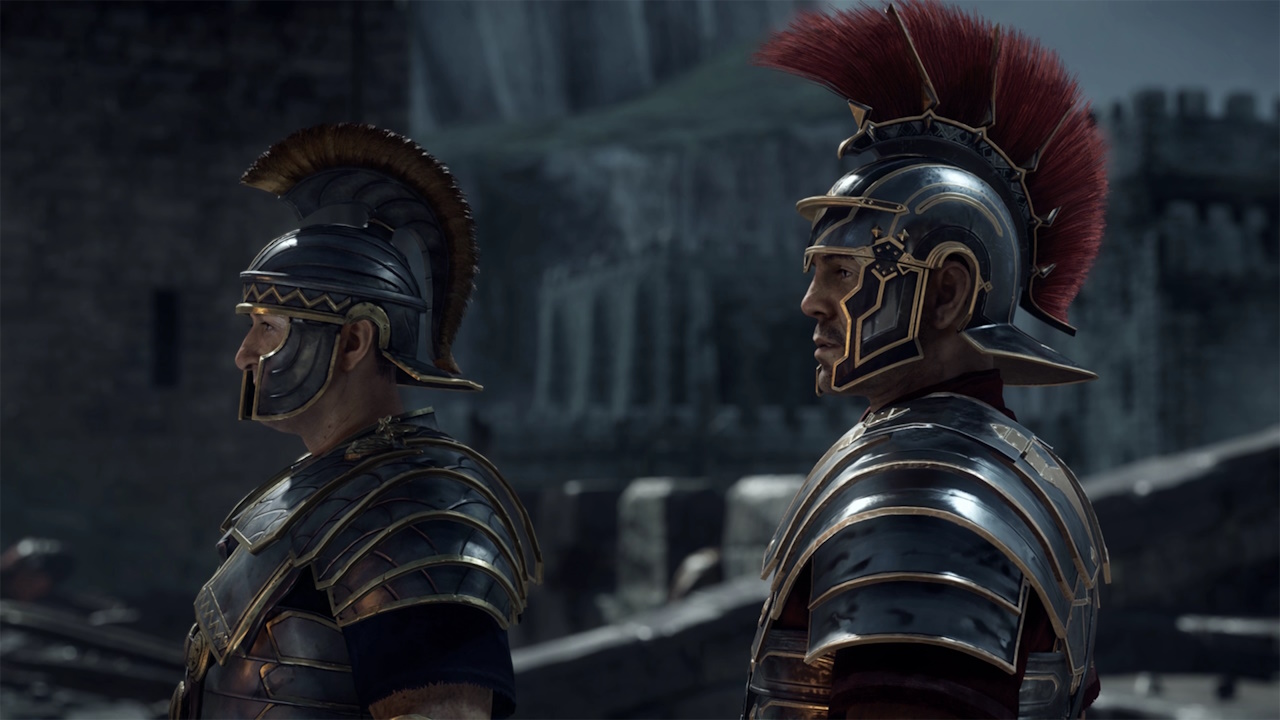
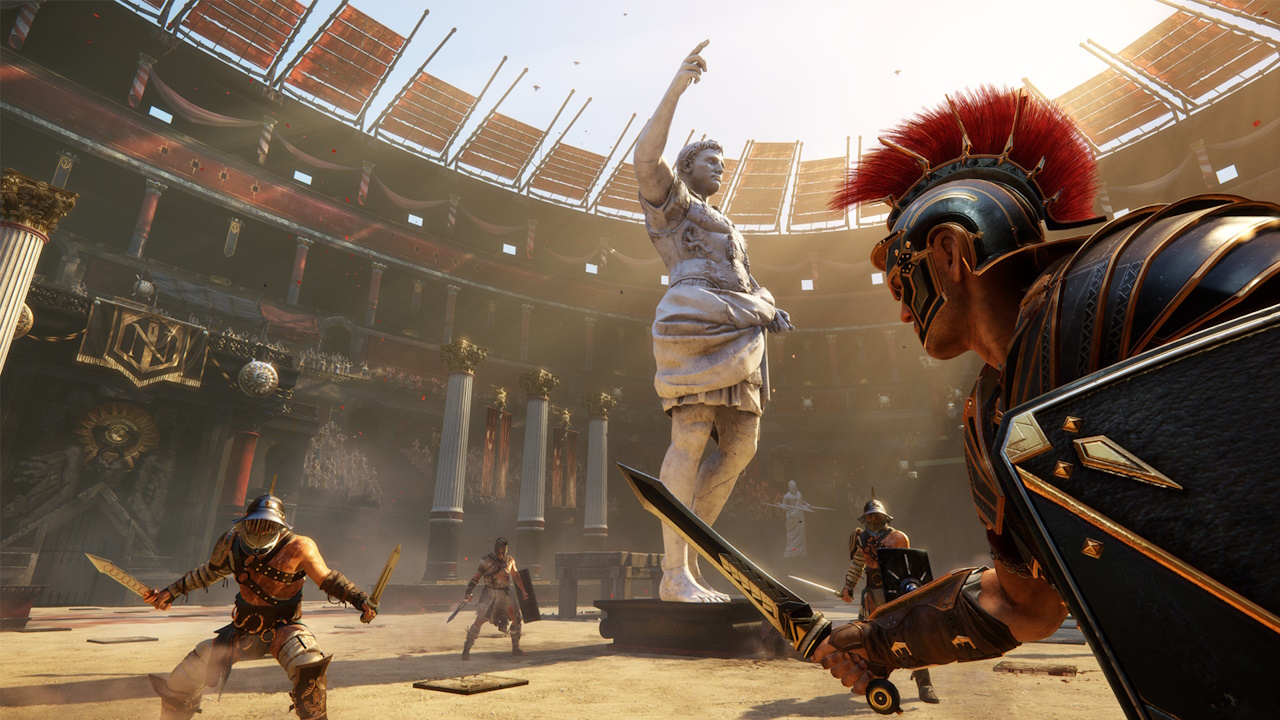
What I remember most about Ryse: Son of Rome was how darn good it looked! There was so much more detail in the faces of characters, in the weapons they wielded, and in the environments they battled through when compared to games I’d been playing on the Xbox 360 and PlayStation 3, and it felt like a new chapter for gaming as a hobby. Though titles like Mass Effect 2 or Grand Theft Auto V had looked decent on those machines, I could definitely feel the Xbox One and Ryse: Son of Rome kicking things into a higher gear.

Ryse: Son of Rome is a good-looking game!

The story of Ryse: Son of Rome was fairly formulaic and nothing exceptional, but it was still entertaining and well worth following to its conclusion. It’s a swashbuckling tale of revenge told through a frame narrative – with echoes of the likes of Gladiator, perhaps. I won’t say too much lest I spoil it for you, but while I’d never rank Ryse: Son of Rome as one of the all-time great gaming narratives, it was solid and enjoyable for what it was.

I was surprised, when I revisited the game earlier this month, at just how well it performs and how new it still manages to feel. If I picked up Ryse: Son of Rome today, on its tenth anniversary, I think I could be led to believe that it was a brand-new game. That says a lot about its art style and graphical fidelity – but also, perhaps, a little about how technology hasn’t advanced as much in the past decade as it had in the previous ten years.

Concept art for Ryse: Son of Rome.

I was a little surprised to see that Ryse: Son of Rome isn’t available on PC Game Pass – though it seems to be available on the console version of Microsoft’s subscription service. If you have an Xbox One or Xbox Series S/X and a Game Pass subscription, it’s an incredibly easy title to recommend to any fan of action/adventure games and single-player narrative experiences. Without the subscription, Ryse: Son of Rome is often on sale, and I think it was one of the titles in a recent Steam sale on PC that was less than £5. For that money, it’s once again an incredibly easy recommendation!

For full-price on launch day in 2013, I was satisfied – and if Trekking with Dennis had existed back then, you’d have seen a positive review. I would’ve mentioned the game’s relatively short length as a caveat (Ryse: Son of Rome clocks in around the six-hour mark), but with relatively few other exclusive titles, it was worth it at the time.

Ryse: Son of Rome was my gateway into the Xbox One generation!

So that was my experience with Ryse: Son of Rome! I think it’s an underappreciated title from the early days of the Xbox One; a hidden gem that a lot of folks aren’t aware of. With holiday sales coming up next month, it’s worth putting it on your wishlist or keeping an eye on it, because it really is a fun, somewhat different, and visually impressive adventure.

I promised I’d do more of these “spotlight” pieces, taking a retrospective look at some older titles that I enjoyed. So far, the only other game to have gotten the spotlight treatment is Banished, a PC town-building game that, again, I thoroughly recommend! You can check out my thoughts on that title by clicking or tapping here, and I hope you’ll stay tuned for more spotlights like this one in the future.

All that remains is to say this: happy tenth anniversary, Ryse: Son of Rome!

Ryse: Son of Rome is out now for Xbox One and PC and is also playable on Xbox Series S/X. Ryse: Son of Rome is the copyright of Crytek and/or Xbox Game Studios. Some screenshots and promotional artwork used above courtesy of IGDB. This article contains the thoughts and opinions of one person only and is not intended to cause any offence.

Happy Birthday, Morrowind!

Depending on where you are in the world, today or tomorrow will mark the 20th anniversary of The Elder Scrolls III: Morrowind. The open-world role-playing game was one of a few titles in the early 2000s that genuinely changed my relationship with gaming as a hobby – and kept me engaged when I might’ve otherwise began to drift away. To me, even twenty years later it still represents the high-water mark of the entire Elder Scrolls series, and I’d probably even go so far as to call it one of my favourite games ever.

It can be difficult to fully explain how revolutionary some games felt at the time, especially to younger folks who grew up playing games with many of the modern features and visual styles that still dominate the medium today. But in 2002, a game like Morrowind was genuinely groundbreaking; quite literally defining for the very first time what the term “open-world” could truly mean.

For players like myself who cut our teeth on the pretty basic, almost story-less 2D games of the 1980s on consoles like the Commodore 64 or NES, the technological leap to bring a world like Morrowind’s to life is staggering. Considering the iterative improvements that the last few console generations have offered, it’s something that we may never see again, at least not in such a radical form. Comparing a game like Morrowind to some of the earliest games I can remember playing must be akin to what people of my parents’ generation describe when going from black-and-white to colour TV!

One thing that felt incredibly revolutionary about Morrowind was how many completely different and unrelated stories were present. There was a main quest, and it was an interesting one, but instead of just random side-missions that involved collecting something or solving a single puzzle, there were entire questlines for different factions that were just as long and in-depth as anything the main quest had to offer. It was possible to entirely ignore the main quest in favour of pursuing other stories, and that made Morrowind feel like a true role-playing experience.

For the first time (at least the first time that I’d encountered), here was a game that gave me genuine freedom of choice to be whoever I wanted to be – within the confines of its fantasy setting. There were the usual classes – I could choose whether to be a sword-wielding warrior, a sneaky archer, a mage, and so on – but more than that, I could choose which stories I wanted to participate in… and choosing one faction over another would, at least in some cases, permanently close off the other faction to that character. That mechanic alone gave Morrowind a huge amount of replayability.

To this day there are quests in Morrowind that I haven’t completed – or even started! That stands as testament to just how overstuffed this game was, and as I’ve mentioned in the past, the amount of content in Morrowind eclipses both of its sequels: Oblivion and Skyrim. Morrowind offers more quests, more factions to join, more NPCs to interact with, more types of weapons to use, more styles of magic to use, and while its open world may be geographically smaller, it feels large and certainly more varied – at least in some respects – than either of its sequels.

I first played Morrowind on the original Xbox – the console I’d bought to replace the Dreamcast after that machine’s unceremonious exit from the early 2000s console war! But the PC version gave the game a whole new lease of life thanks to modding – and mods are still being created for the game 20 years later. There are mods that completely overhaul Morrowind’s graphics, meaning that it can look phenomenal on a modern-day PC, and there are so many different player-made quests, items, weapons, characters, and even wholly new locations that the game can feel like an entirely new experience even though it’s marking a milestone anniversary.

Although modding and mod communities had been around before Morrowind came along, it was one of the first games that I can recall to genuinely lean into and encourage the practice. The PC version of Morrowind shipped with a piece of software called The Elder Scrolls Construction Set as a free extra, and it contained everything players needed to get started with modding. I even had a play with the Construction Set when I got the PC version of Morrowind a few years after its release, and while I lack the technical skills to create anything substantial, I remember it being an interesting experience.

I followed a guide I found online and managed to create a companion for the main character, as well as added doors to a specific house so it could be accessed from any of the towns on the map! I also added a few items to the game, like an overpowered sword with a silly name. By this point, Morrowind and its mods were just good fun, and as I didn’t have a PC capable of running Oblivion when that was released a few years later, Morrowind mods were an acceptable stand-in!

Before Morrowind became overladen with mods, though, there were two incredible expansion packs released for the game. This was before the era of cut-content DLC or mini DLC packs that added nothing of substance, so both Tribunal and Bloodmoon were massive expansions that were almost like new games in their own ways. Both added new areas to explore, new factions, new characters, new items, and new questlines. While Tribunal was fantastic with its air of mystery, I personally enjoyed Bloodmoon even more. I like wintery environments, and the frozen island of Solstheim, far to the north of the main map, was exactly the kind of exciting environment that I’d been looking for.

So that’s it for today, really. I just wanted to take a moment to acknowledge the anniversary of one of my favourite role-playing games, to celebrate some of the things that made it great – and continue to make it a game that I’m happy to return to and to recommend to fans of the genre. Regular readers might’ve seen Morrowind on some of my “PC gaming deals” lists around Christmas or in the summertime, and when Morrowind goes on sale on Steam, for example, the game-of-the-year edition with both expansion packs can be less than the price of a coffee. It’s also on Game Pass following Microsoft’s acquisition of Bethesda – so there’s no excuse not to give it a try, at least!

In the twenty years since Morrowind was released, many other games have imitated its open-world layout, its factions, its branching questlines, and its diversity. Some newer games have bigger worlds, more characters, and so on… but Morrowind will always be a pioneer. It may not have got everything right, but it’s a landmark in the history of video games that showed us just how immersive and real a fantasy world could feel.

As one of the first games of its kind that I ever played, I have very fond memories of Morrowind. Often when I pick up a new open-world, fantasy, or role-playing title, I’ll find myself unconsciously comparing it to Morrowind, or noting that Morrowind was the first game where I encountered some gameplay mechanic or element for the first time. It really is an incredibly important game. So happy birthday, Morrowind! Here’s to twenty years!

The Elder Scrolls III: Morrowind is out now and can be purchased for PC or via Xbox Game Pass. The Elder Scrolls III: Morrowind is the copyright of Bethesda Game Studios and Microsoft. Some images above courtesy of UESP.net. This article contains the thoughts and opinions of one person only and is not intended to cause any offence.

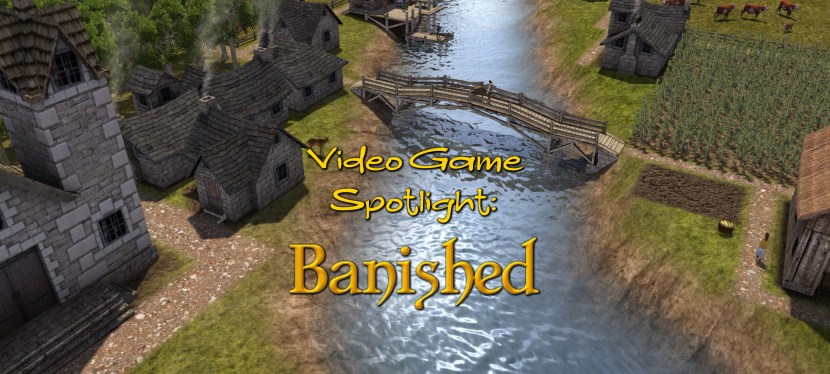
Video Game Spotlight: Banished

This is the first part of a new occasional series that I’ll be running here on the website in which I’ll be taking a look in more detail at some of my favourite video games. It’s a lot of fun to review brand-new games and keep up-to-date with all the goings-on in the video games industry, but sometimes it’s nice to step back and just geek out about some of my all-time favourites!

If you’re a regular reader of my gaming content you’ve probably seen me talk about Banished before; it’s a mainstay on my lists of recommended titles whenever there’s a big Steam sale! But despite having recommended Banished on several occasions going back to the website’s first month in operation in 2019, this is the first time I’ve taken a deeper look at the game.

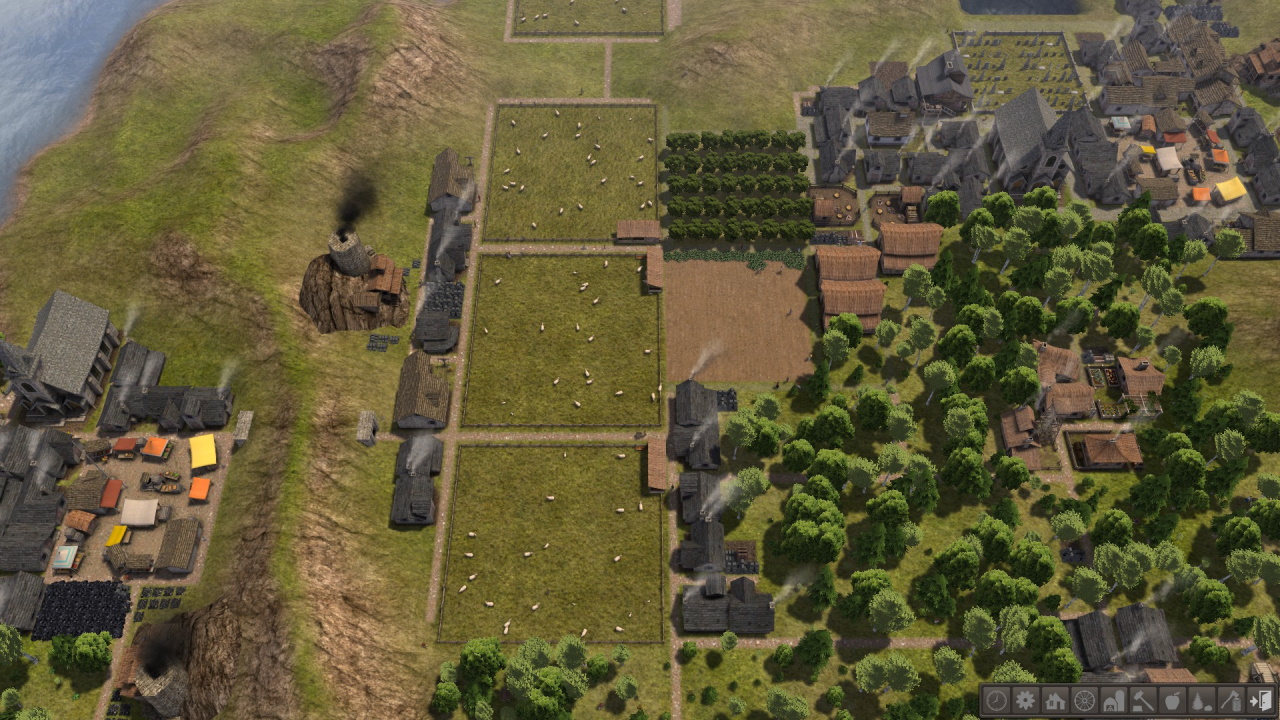
A recent town of mine in Banished.

Banished was released in 2014 for PC, and I honestly can’t remember where I first heard about it. The early- and mid-2010s were a mess for me for all manner of reasons, and my memory isn’t great even under the best circumstances! Suffice to say that I discovered Banished shortly after its launch, and for a relatively low price of admission when compared to titles in a similar city-building space, I thought it was at least worth a shot. The fact that I’m still playing it almost eight years later should tell you how I feel about it!

What astonishes me about Banished is that its developer – Shining Rock Software – is actually just one person. A single person managed to create this incredibly intricate and challenging game, one that exists in a pretty unique niche within the overall city-building game realm. I think that’s absolutely incredible, and well worth taking a moment to consider. Banished was a labour of love – and it shows. Maybe it doesn’t have the flashiest graphics or the most complex and numerous in-game mechanics, but it brings a lot to the table regardless. I’d still include Banished as one of my all-time favourite titles even if it had been put out by an entire studio backed up by a major publisher, but the fact that it’s an indie game made by a single person is just mind-blowing.

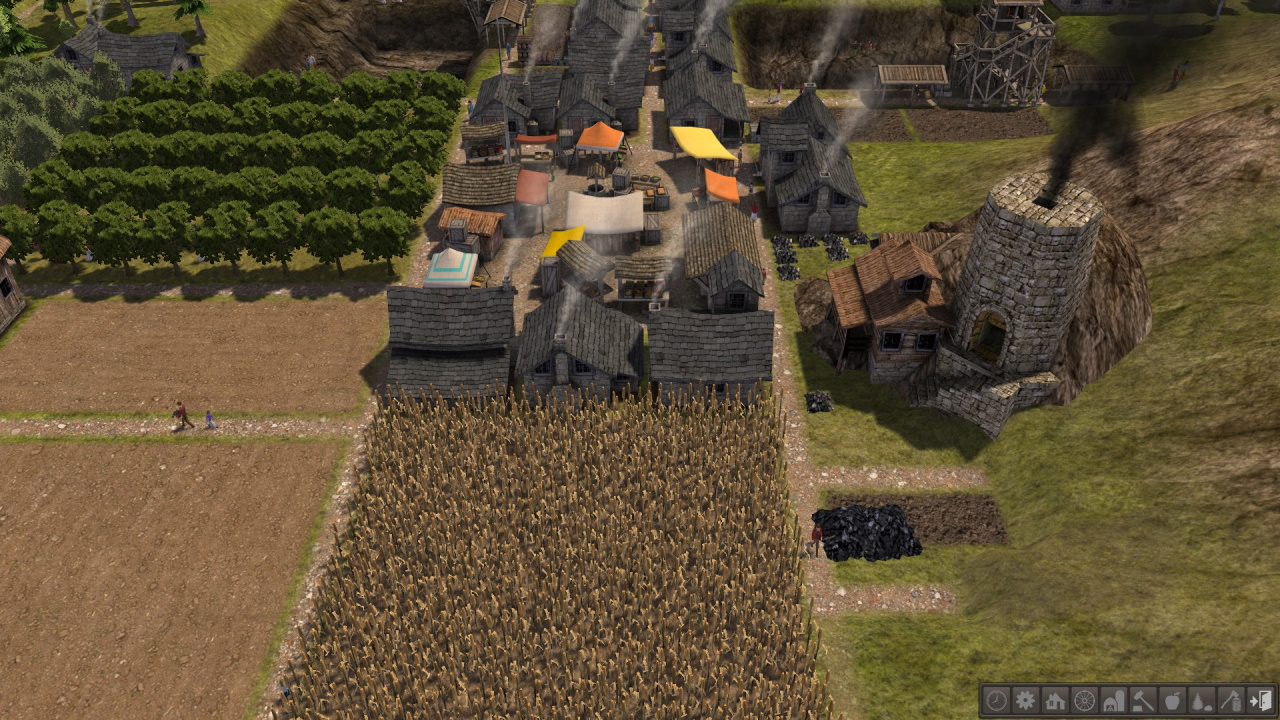
A market, crop fields, a mine, and houses.

I usually like to play games on the easiest mode available. Particularly with fast-paced titles like action games and shooters, I find that I just don’t have the reflexes, reaction time, or just the ability to play those kinds of games at that level. This should be the subject of a longer essay sometime, but as someone with disabilities, I really do believe that difficulty options are an accessibility feature that as many games as possible should include. I’ve been playing video games for more than thirty years; if I haven’t “got gud” by now, I’m not going to! But we’ve drifted off-topic.

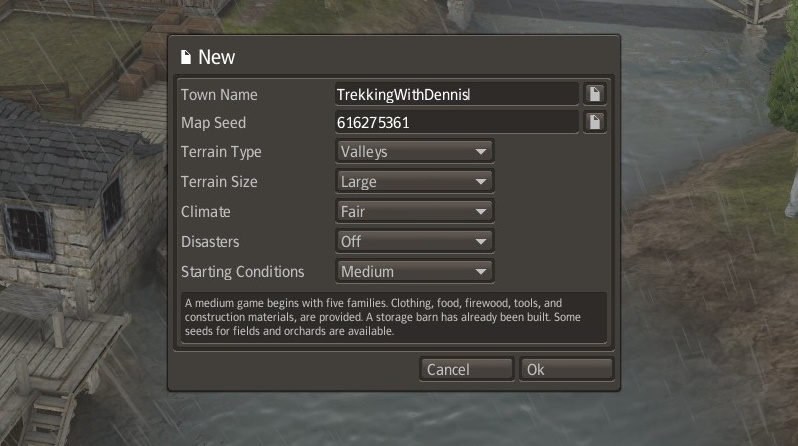
Banished offers several different difficulty options that can be combined in different ways to customise the experience. The number of families (and individual citizens) that the town has at the start, the harshness of the weather, and whether disasters (like fires breaking out) are switched on or off all make an impact, as does whether the randomly-generated map has more or fewer mountains. Instead of just offering a standard easy, medium, or hard mode, Banished allows players to really tailor the kind of experience they want to have – and I think that’s something more titles in the city-builder genre should try to emulate.

The “New Game” menu.

I would call Banished a game that’s deceptively complex. Its relatively small number of buildings and resources makes it seem, on the surface, that it should be relatively easy to get to grips with. Harvest enough resources to keep your small population healthy, happy, and well-fed. That’s all there is to it, right?

But when you get stuck in, there’s so much more to it than that. Balancing your resources so you aren’t over-producing and wasting storage space while also making sure you don’t produce too little of something and run out is like walking a tightrope at times! I’ve ended up in some very sticky situations because I had slightly too much or too little of something important at just the wrong moment – and it can be fatal, in some cases, if you get caught out.

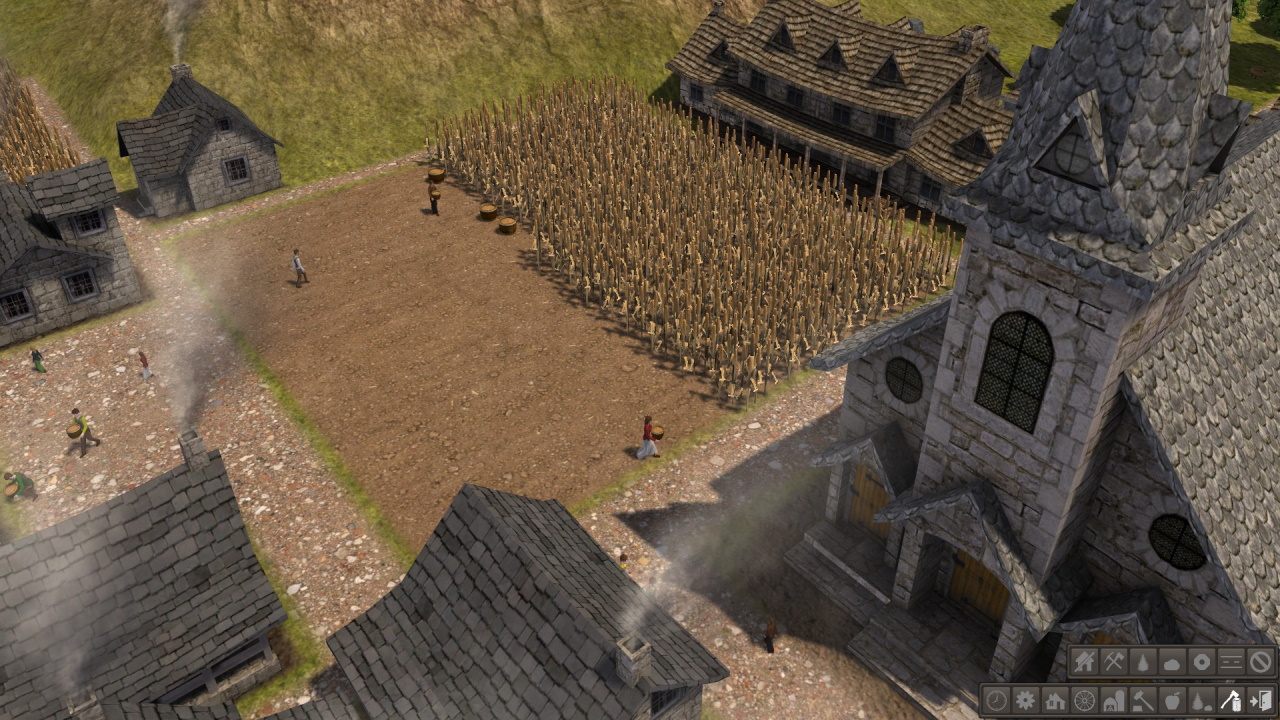
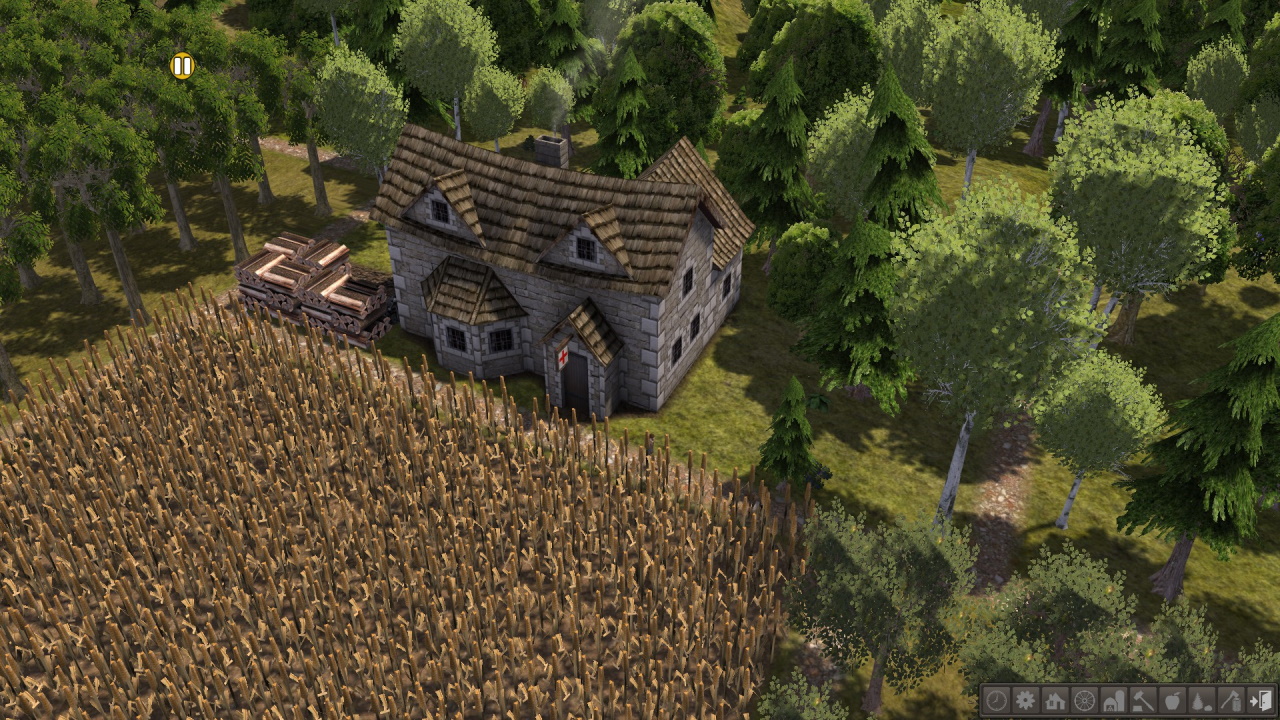
Harvesting a crop of wheat in Banished.

For example, it’s tempting to use all the logs your citizens gather to construct new buildings – especially at the beginning of the game when you don’t have many. But if you burn through your supply of logs too quickly and don’t have enough citizens assigned to chop down trees or work as foresters to replace them, come winter everyone will freeze because there won’t be enough firewood! Conversely, if you construct a woodcutter’s cabin and don’t keep a careful eye on how much firewood they’re making, they can easily chop up all of the logs you have meaning you won’t have any when you want to construct the next new building!

Banished isn’t a game you can set and forget. In order to truly succeed you need to be on top of your resources pretty much all the time. Even though there aren’t that many you need to manage, it’s a balancing act to stay on top of all of them at once. A single disruptive event can completely bowl you over if you aren’t careful, and when citizens don’t have the right balance of resources their health and happiness will drop, making them less productive. In the worst case they can die – starvation, cold, disease, and so on can all spell doom for the residents of your community!

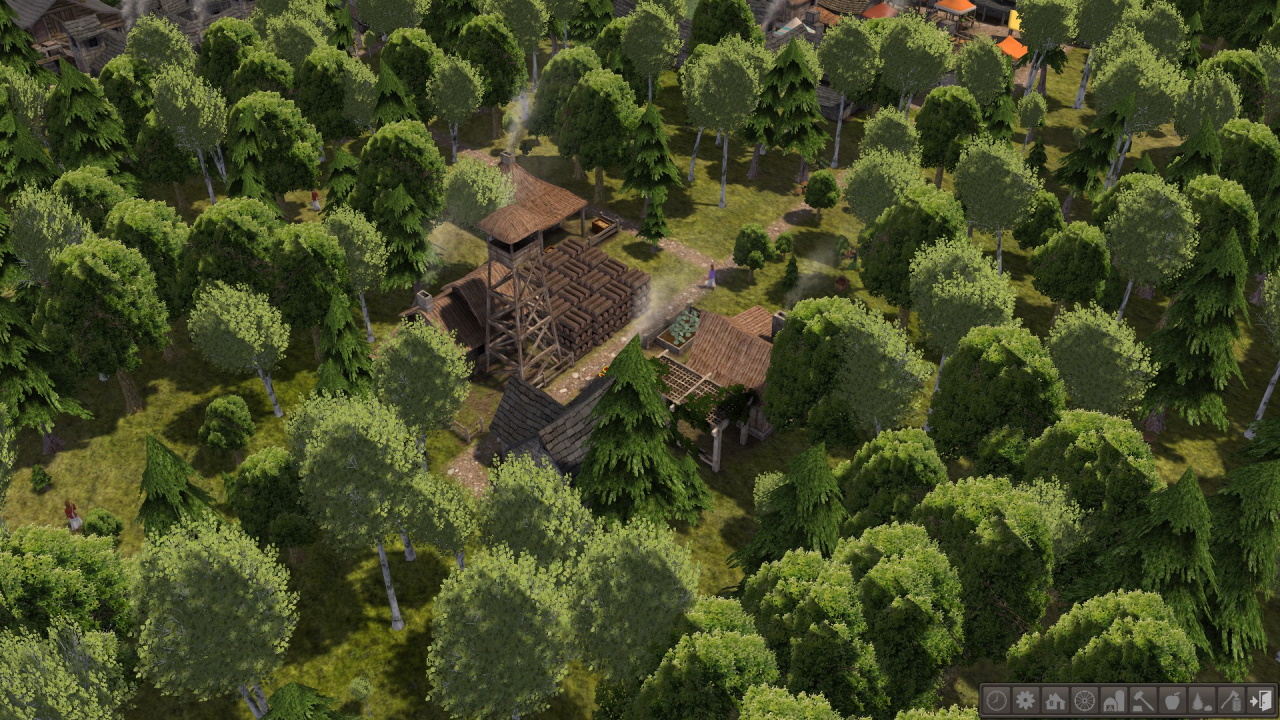
A small cluster of buildings in a forest.

Take a recent game I played as an example! While building up my town I was constantly hampered by a lack of stone to construct new buildings. Even after building a stone quarry this problem persisted for a while, so I prioritised things like building new houses closer to the quarry so I could get more stonecutters. I constructed other buildings in what I considered to be descending order of importance, prioritising things like making sure there was enough food for a growing population, which meant adding new crop fields, fishing docks, and assigning citizens to those jobs. After a while, there was an outbreak of disease – the measles, in this case. But because I hadn’t constructed any hospitals, the disease ripped through the population! By the time I’d figured out how badly I was screwed, half the town was infected. I pulled everyone off their jobs to get a hospital built, which happened in the nick of time. Doing that, however, meant that there was less food as the harvest went to waste as winter set in and the crops were still in the fields!

All in all, the citizens of my town had a very bad time because of a combination of bad luck and bad management on my part! A lot of citizens ended up dying because there was no hospital, and the disease was only stopped because a few hardy souls managed to scrape together enough resources to build a hospital from scratch at the last minute. It took a long time to recover from that!

Official Trekking with Dennis Top Tip:
Remember to build a hospital!

Like many great PC games, Banished happily encourages modding. There is (or was) a solid modding community, with mods adding in brand-new buildings, gameplay elements, and visual overhauls to name but a few. Shining Rock Software was keen from the very beginning for fans and players to get involved and develop their own mods for the game, and there are some very popular ones that really transform Banished into something different. Playing the game without any of these is fine – wonderful, even – but if you’re ready for a different experience after playing the original version, mods like Colonial Charter give Banished a whole new lease of life.

Returning to the original game, though, there’s plenty to enjoy. There are eight different types of crops, eight different types of fruit trees, and three different types of animals for the town to take care of. These are all different – and the differences aren’t merely cosmetic, either. Some crops grow faster than others, or grow better in different conditions. Citizens are healthier when they have a varied diet – and that includes multiple types of crops, fruits, meats, and the like.

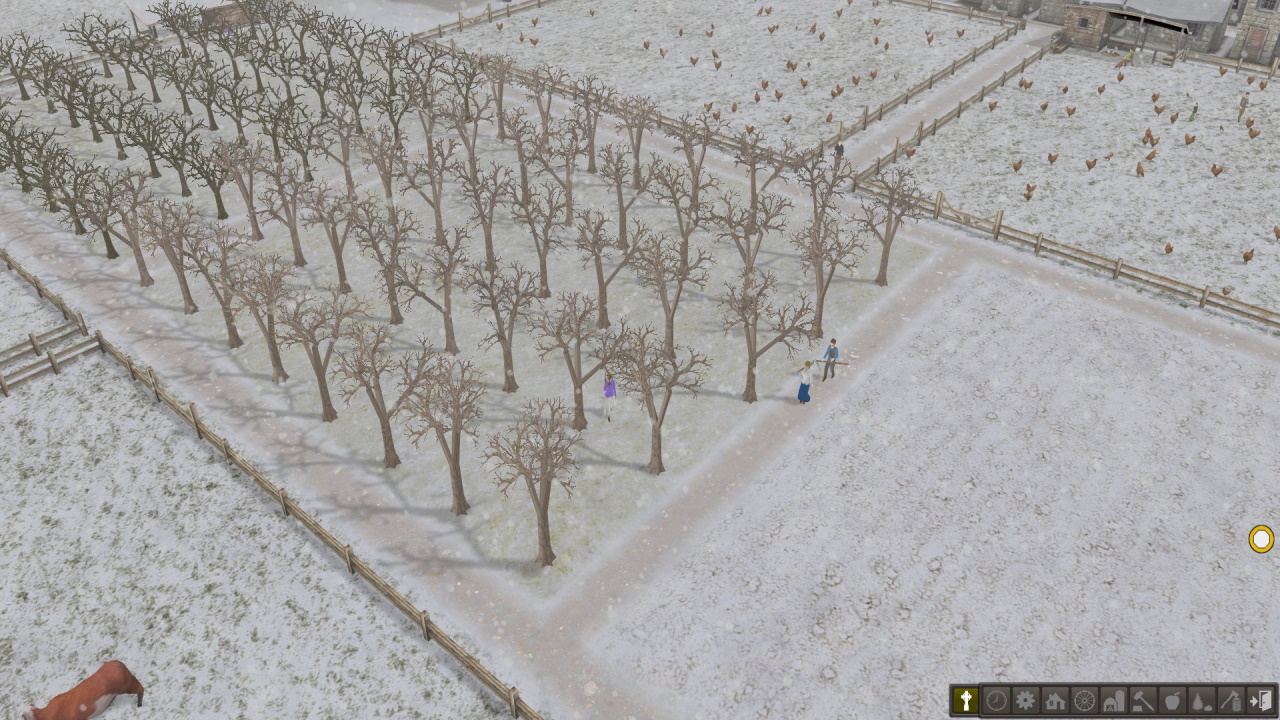
Citizens walking past an orchard in the winter.

The three different animals (cows, sheep, and chickens) all produce different resources for the town, too, and at different rates. Sheep will produce wool, which is great for making clothes, and cattle will produce leather – but you’ll get an awful lot more wool per sheep than leather per cow! Chickens will produce plenty of eggs! It can be easy to overproduce wool and eggs (in my opinion, at least) once you start building a lot of animal pastures – and this can eat up storage space that could be used for other goods!

There are many strategies that players have developed in the years since Banished was released. I play the game my own way, and I’m sure you can find a strategy that works for you either through trial and error or by looking them up online! The fact that there are so many different approaches to playing the game, and so many different recommendations and suggestions for how to get started, what to build first, and so on is testament to the fact that Banished truly is a complex and deep experience.

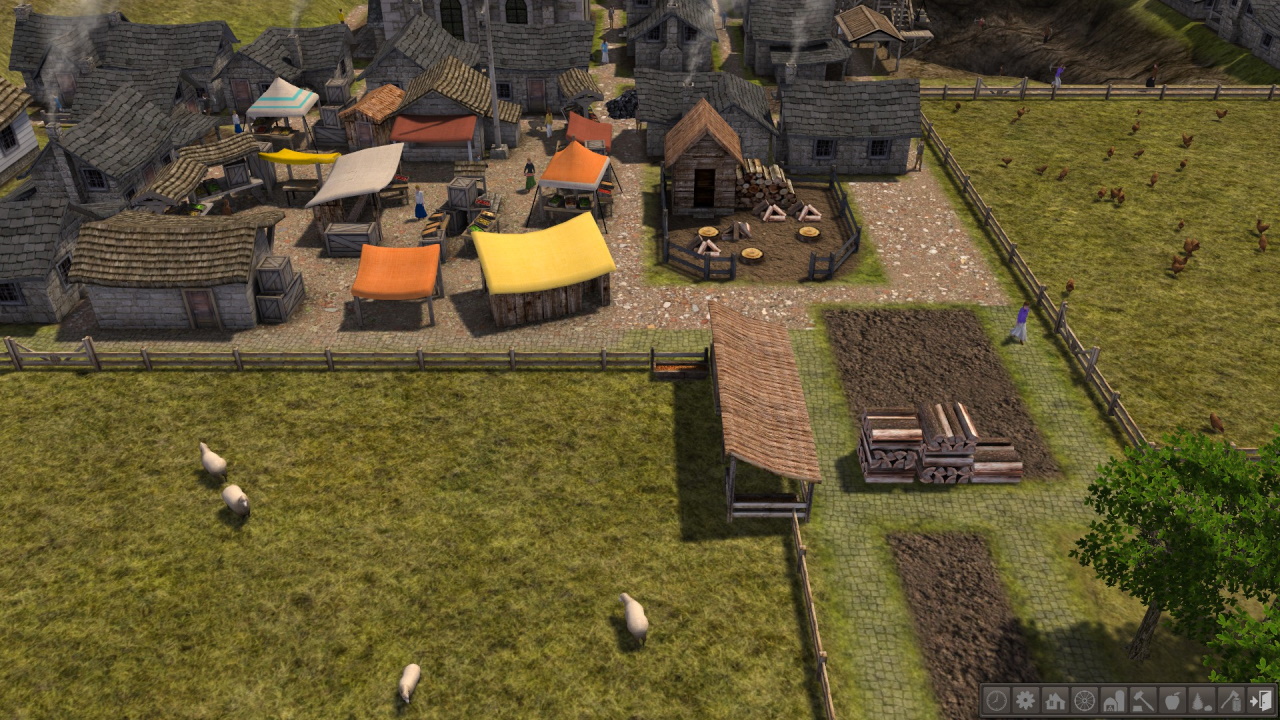
Pastures holding sheep and chickens near a market.

Banished is a game I can get lost in for hours at a time. Building up a small town, managing its starting resources, and then establishing a trading post to bring in different crops and herds is a ton of fun. Because maps are randomly generated, Banished feels different every time. Every game starts off in a different location, with a different combination of starting resources. There are some things I usually like to do first – my top tip is to make the first building you construct a school so your citizens will always be well-educated and thus more efficient – but other than that I like to play it by ear, see what resources I have in the immediate vicinity of my starting location, and then decide how best to expand!

If you haven’t tried Banished, keep an eye out for it when Steam sales roll around; in recent years it’s often been heavily discounted, meaning you can pick it up for the price of an expensive Starbucks coffee! Even at full price, though, Banished is a game I’d happily recommend to anyone who enjoys a richly-detailed and complex city-builder or strategy game. I would caveat that by saying that Banished isn’t a “casual” game that you can absent-mindedly play while distracted!

So that’s it for this time. After having talked about Banished on a number of occasions I wanted to give it its own full article here on the website. This “video game spotlight” series will hopefully be an occasional thing I do going forward, so keep an eye out for my take on a number of other titles that I’ve enjoyed over the years in future! Happy building!


Banished is out now for PC. Banished is the copyright of Shining Rock Software. This article contains the thoughts and opinions of one person only and is not intended to cause any offence.
Star Trek: Voyager – Elite Force (Twenty Years Later)

Spoiler Warning: There are minor spoilers ahead for Star Trek: Voyager – Elite Force and for Star Trek: Voyager.

On the 20th of September 2000, Star Trek: Voyager – Elite Force was released. That’s twenty years ago – to my great shock – so it seems like a great opportunity to take a brief look back at what is arguably one of Star Trek’s best and most successful video game adaptations.

The Star Trek franchise hasn’t had a lot of luck in the video game arena, despite the fact that there’s a good deal of crossover between Trekkies and gamers. Most Star Trek games really only appealed to existing fans, and failed to either cross over and win support among a wider gaming audience, or to bring in any new fans. Elite Force was – for a time, at least – an exception to that. As a result it’s fondly remembered not only by Trekkies but by many fans of first-person shooters in the early 2000s.

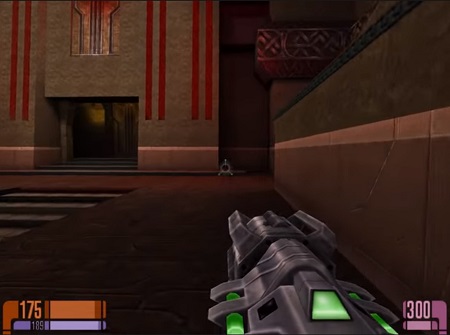
Star Trek: Voyager – Elite Force was released twenty years ago!

Elite Force was the first game released that was made using the Quake III engine (also known as id Tech 3) except for the original Quake III Arena, and many first-person shooter fans just after the millennium were excited to see what this new game engine would bring to the table. Elite Force also offered local and online multiplayer on PC at a time when the idea of playing games via LAN or online was becoming a bigger and bigger deal in the PC gaming sphere; it was certainly the first such game I ever played at a LAN party!

Using the tagline “Set phasers to frag!” – where “frag” is (or was) a gaming term for “kill” – Elite Force became a moderate success for its multiplayer mode. Gaming as a hobby was much smaller around the turn of the millennium than it is today, and also skewed younger in terms of the average age of gamers. Most players at the time were aware of Star Trek, which had been on a roll through the ’90s, and where Elite Force truly broke new ground for a Star Trek game was in reaching out beyond the franchise’s usual fanbase to appeal to non-fans. It’s unfortunate that the game’s release coincided with the end of The Next Generation’s era; I think if it had been released earlier in Voyager’s lifetime it might have been able to retain some of those new players and convert them to Trekkies. The idea of the “box set” hadn’t really materialised in 2000, so with Voyager already into its final season, and with The Next Generation and Deep Space Nine already over, there wasn’t much Star Trek content for those who did enjoy the game and its setting to get stuck into.

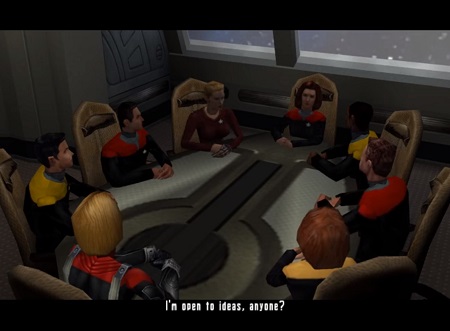
A cut-scene set in the briefing room.

In that sense, Elite Force was released at a time when the Star Trek franchise was entering a period of decline, and the end of Voyager’s run a few months after the game was released meant that the franchise wasn’t able to keep many of the players who gave Star Trek a chance. That’s a shame, but it can’t be helped!
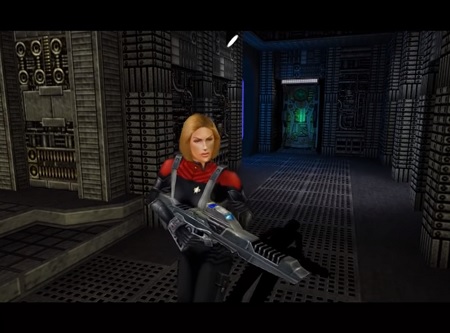
Beyond its multiplayer mode, Elite Force told a really interesting story. The game begins with the explanation that Captain Janeway and Tuvok have created a specialist “Hazard Team” for the USS Voyager, of which the player character is a member. Elite Force was one of the first games I played that allowed players to choose their character’s gender; Ensign Munro could be male or female. It was groundbreaking in the sense that the game didn’t change at all depending on the player’s decision – if Ensign Munro was a woman she was just as capable as if she were a man, and no one aboard the ship would behave differently. That decision alone represents Star Trek’s vision of an equal future. Gender representation in games is getting better, and there are some great female protagonists. But some franchises and series have still never offered players a female lead, and others struggle with writing a female protagonist successfully. Elite Force got this right twenty years ago, so there’s no excuse!

Elite Force let players choose to play as a female or male character. Both were fully-voiced.

To get back to the story, Hazard Team has been assembled in response to the threat of the Borg and other dangers the ship faces in the Delta Quadrant. The first level of the game is set aboard a Borg vessel – which soon turns out to be a holodeck simulation! I liked the creative use of Star Trek’s technology to explain some in-game features; players were said to have a personal transporter buffer which contained their inventory, explaining how it was possible to carry so many items at once. That was a neat little addition!

The USS Voyager itself was recreated using the aforementioned Quake III engine, and remains one of the best in-game depictions of any Starfleet vessel. It was such a shame when fan project Stage 9 was forcibly shut down by ViacomCBS a few months ago, as their recreation of the Enterprise-D was stunning. Elite Force did something similar with Voyager, and in between missions several large areas of the ship were able to be explored. This was a complete novelty at the time, and it was amazing to be able to wander around the ship looking at every little detail that developers Raven Software had built.

The bridge of the USS Voyager was one of many locations on the ship that could be explored.

When the USS Voyager is pulled into a rift in space, it comes under attack by scavengers who reside there. The Hazard Team is deployed on a number of missions to recover supplies, defeat opponents, and find a way for the ship and crew to escape. Interestingly, some Alpha Quadrant races (including humans) are present in the “graveyard,” along with Delta Quadrant races like the Malon.

I don’t want to spoil the story too much, because it is still possible to find copies of the game both for PC and PlayStation 2 second-hand if you want to try it for yourself. Suffice to say that I found the story of the single-player campaign to have a solid Star Trek feel to it. Fans of the franchise might find a couple of nitpicks here and there, but generally it was great fun. Voyager would use a somewhat similar premise – getting sucked into a rift in space populated by scavengers – in the seventh season episode The Void, which was broadcast a few months after the game was released.

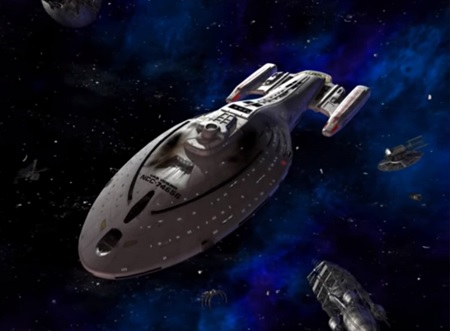
The USS Voyager in the “graveyard.”

Almost the whole Voyager cast stepped in to voice their characters. The main two in terms of the storyline and in terms of who Ensign Munro interacted with were Tuvok – who is the head of security and nominal leader of the Hazard Team – and Captain Janeway. Aside from Jeri Ryan, who was unable to voice Seven of Nine, and Jennifer Lien, whose character of Kes was not part of the game, the entire main cast were present. A couple of Voyager’s minor recurring characters (Chell and Vorik) were also voiced by their television series actors, which was a nice touch. The game was certainly far better for having the proper voice cast!

A darling of early-2000s LAN parties and a pioneer of first-person shooters in the online multiplayer space, Elite Force is a rare example of a Star Trek video game that broke the mould and expanded beyond the fandom. It’s also one of the better Star Trek video games both in terms of gameplay, where the Quake III engine provided a rock solid first-person shooter experience, and in terms of storyline, which for the most part felt like players were taking part in a real episode of Voyager. It’s a wonderful game, well worth playing for any Trekkie, and it would have been a shame to let its twentieth anniversary pass by unnoticed.

So here’s to Star Trek: Voyager – Elite Force! Happy anniversary!


Star Trek: Voyager – Elite Force probably remains the copyright of Activision-Blizzard. Star Trek: Voyager – Elite Force is available for purchase on PC via GOG. The Star Trek franchise – including Star Trek: Voyager – is the copyright of ViacomCBS. This article contains the thoughts and opinions of one person only and is not intended to cause any offence.