More Star Trek Narrative Clichés: Which Ones Should Stick Around?

A Christmassy spoiler warning.

Spoiler Warning: Beware spoilers for the following Star Trek productions: The Original Series, The Next Generation, Deep Space Nine, Voyager, Enterprise, the Kelvin films, Discovery, Picard, and Strange New Worlds.

A few days ago, I wrote a piece about more than a dozen narrative clichés in the Star Trek franchise. That article was inspired by a post on Tumblr (which had been re-posted by a Star Trek fan page on Facebook, where I saw it) and it really got me thinking! Star Trek has its own tropes and little sub-genres; many episodes and storylines can be characterised as “another Borg episode,” “a holodeck story,” and so on. In addition to the eleven clichés presented by the original poll, I added a few of my own – but it turns out that I barely scratched the surface!

So, just like last time, we’re going to take a look at a few more potential “clichés,” and ask a simple question: is it time for them to be retired? Or, to put it another way, has Star Trek taken these story concepts as far as they can reasonably be stretched? Should any of these stick around if more Star Trek is produced in the years ahead?

Thanks to Tumblr user “quasi-normalcy” for coming up with the original poll (which I’ve linked to below). And thanks to the Star Trek fan page on Facebook for dropping it onto my timeline! This idea has been a lot of fun, and a great way to spend a bit more time thinking about the franchise.
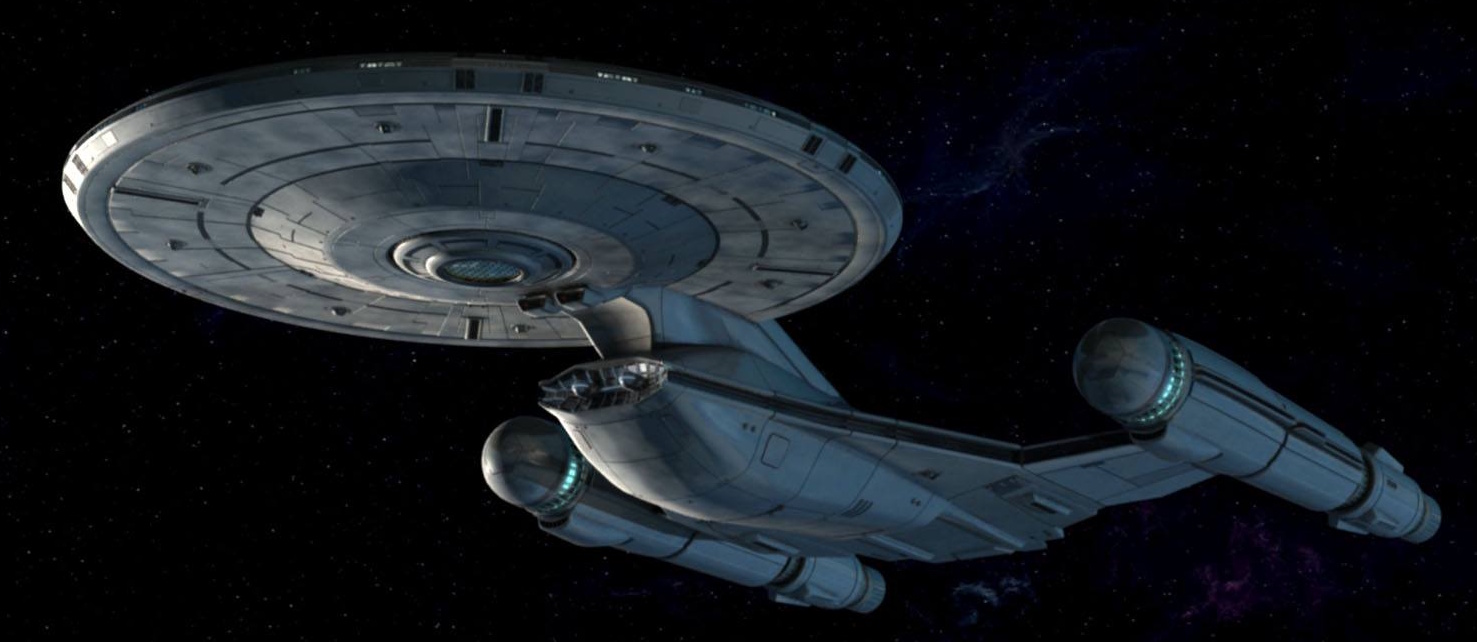
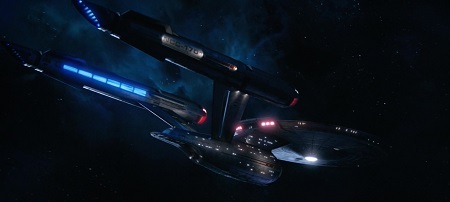
Early concept art of the USS Discovery from Star Trek: Discovery.
Early concept art of the USS Discovery.

I always like to give the same caveat whenever we’re about to jump into some potentially controversial Star Trek opinions: everything we’re talking about here today is subjective, not objective! If you hate all of my ideas, think I’ve totally got the wrong end of the stick, or just vehemently disagree with me about what makes for a good or bad Star Trek cliché, that’s okay! The Star Trek franchise is massive, and fans can and will disagree about what the best and worst episodes are. That’s the way it should be – we can still enjoy Star Trek, and remain friends, even if we don’t always agree about everything. I share this piece with the fan community in that spirit.

I’ll go through each cliché (or potential cliché) one by one, then give my verdict on whether it should stick around as part of the Star Trek franchise.

If you want to see my first piece on this topic, which contains the original eleven clichés from the Tumblr poll (and a few of my own), you can find it by clicking or tapping here. And this is your final chance to nope out if you don’t wanna read some potentially controversial Star Trek opinions!

Cliché #1:
Vulcans (or Androids) Are Invulnerable to the Problem-of-the-Week
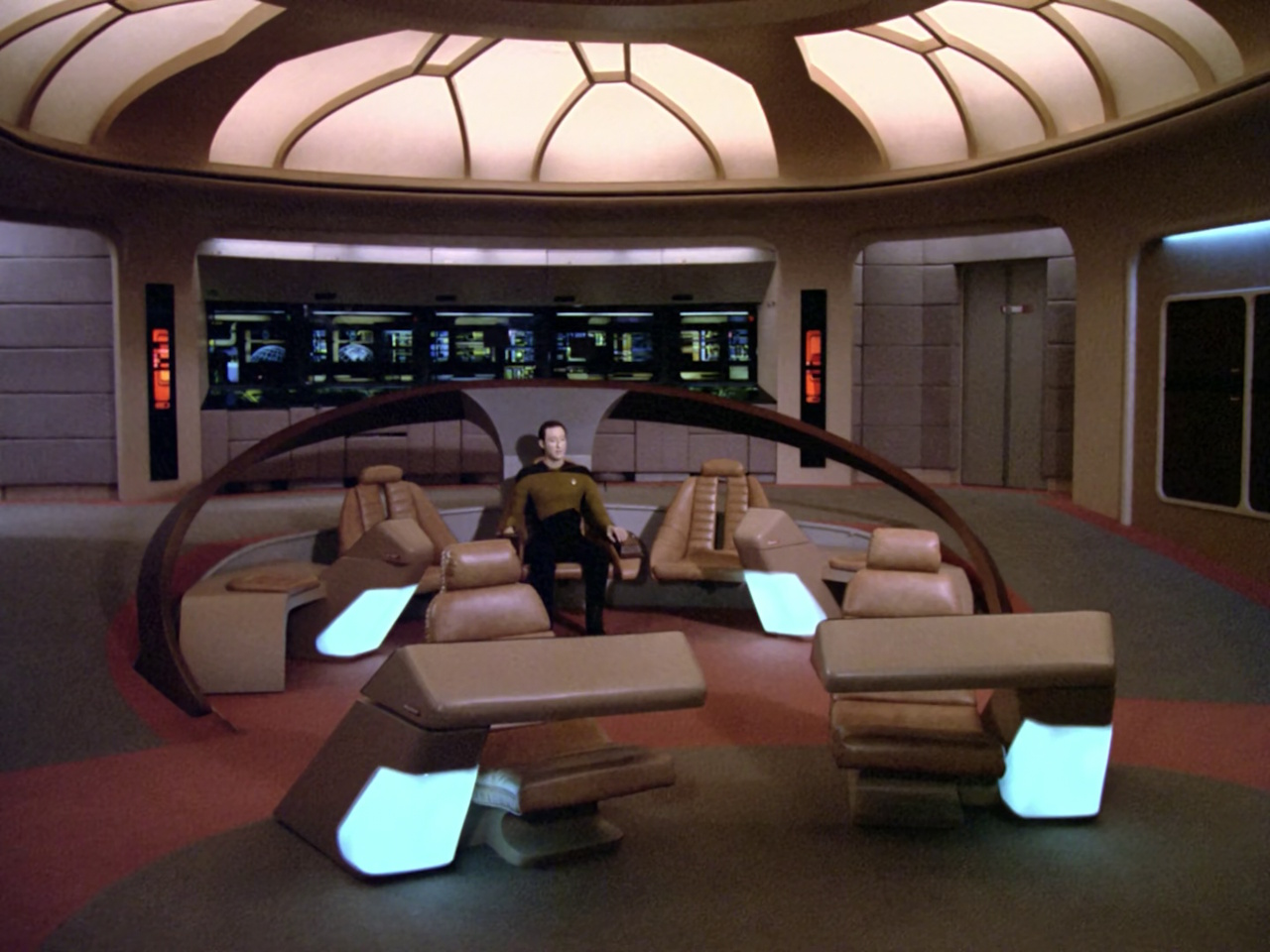
Still frame from Star Trek: The Next Generation showing Data on the bridge.
Data, alone on the bridge.

Everyone aboard the Enterprise catches a disease – except for Spock, whose Vulcan physiology makes him immune. The crew is being targeted by a salt-siphoning “vampire” – except for Spock, who, as a Vulcan, doesn’t have enough salt in his system for the creature to feed. Aboard the Enterprise-D, the crew’s DNA is changing – except for Data, who has no DNA. Everyone is rendered unconscious by aliens who want to remain hidden – except for Data, who, as an artificial life-form, can’t be knocked out by their technology. And on it goes!

Especially in The Original Series and The Next Generation, writers would find ways for Spock and Data to be invulnerable to whatever was going on. Additionally, they were depicted as being physically stronger, smarter, and with quicker reflexes than the rest of the crew – making them pretty overpowered from a storytelling point of view. This could work exceptionally well, but sometimes it could feel like the writers were pulling yet another technobabble excuse out of nowhere or lazily throwing together a deus ex machina ending to a story. When Spock or Data (and later Tuvok and T’Pol, too) would suddenly have a never-before-referenced magical ability that made them invulnerable to whatever was happening aboard the ship, it could start to feel stale. *Especially* if that trait or ability was never mentioned again.

My Verdict: Vaporise It With A Disruptor!

Cliché #2:
Vasquez Rocks (and the Toronto Quarry)
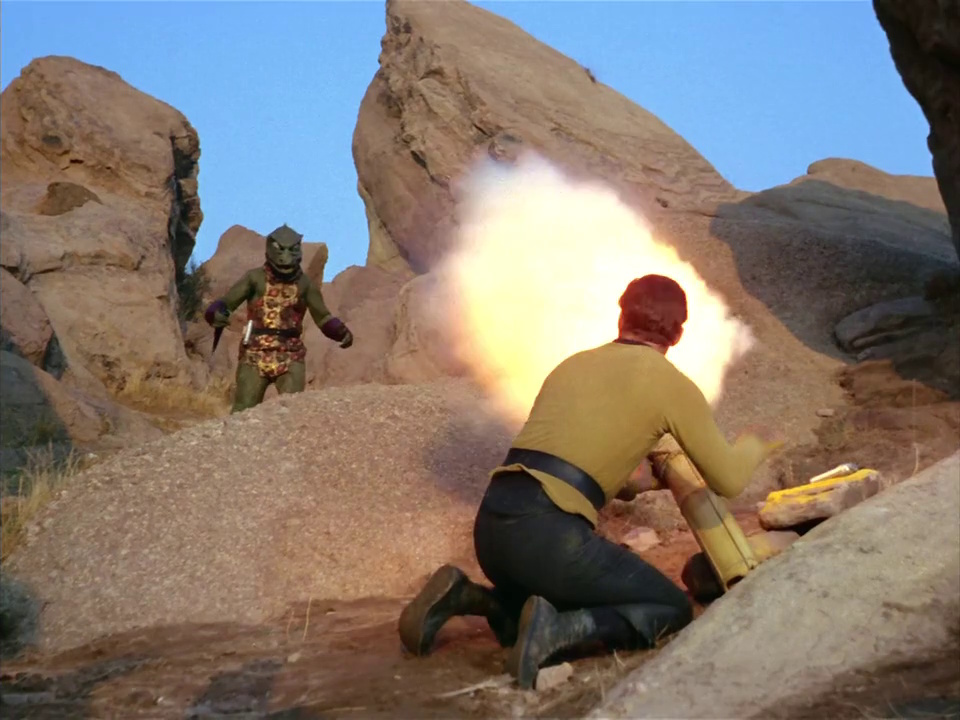
Still frame from Star Trek: The Original Series showing Kirk and the Gorn.
Vasquez Rocks was where Arena was filmed.

I think I’m right in saying that Vasquez Rocks – a national park in California, relatively close to Los Angeles – has appeared in five Star Trek TV shows and three films. Perhaps its most iconic appearance is still Arena, but it’s also stood in for the planet Vulcan, including in the Kelvin timeline, and as Raffi’s home in Picard’s first season. Since production moved to Canada when Discovery was commissioned, there’s a quarry somewhere in the Toronto area which has likewise appeared multiple times in that series and Strange New Worlds. And… after a while, it becomes kinda obvious, doesn’t it?

I said this a lot during Picard’s first season, but there’s nothing wrong at all with using a sound stage – or Paramount’s new AR wall – to create alien landscapes. Outdoor filming shoots can be great, and can convey a sense of scale that indoor sound stages lack. But if you go back to the same location over and over again, pretending it’s a different place or a different planet each time, viewers can and do pick up on that. Kirk’s fight against the Gorn captain is iconic – but the only time Star Trek should return there is if we’re getting another episode set on that same planet. The same applies to the Toronto quarry: decide what planet it represents and stick with that. Then, either use sound stages or different outdoor locations to depict other settings.

My Verdict: Vaporise It With A Disruptor!

Cliché #3:
The “Badmiral”
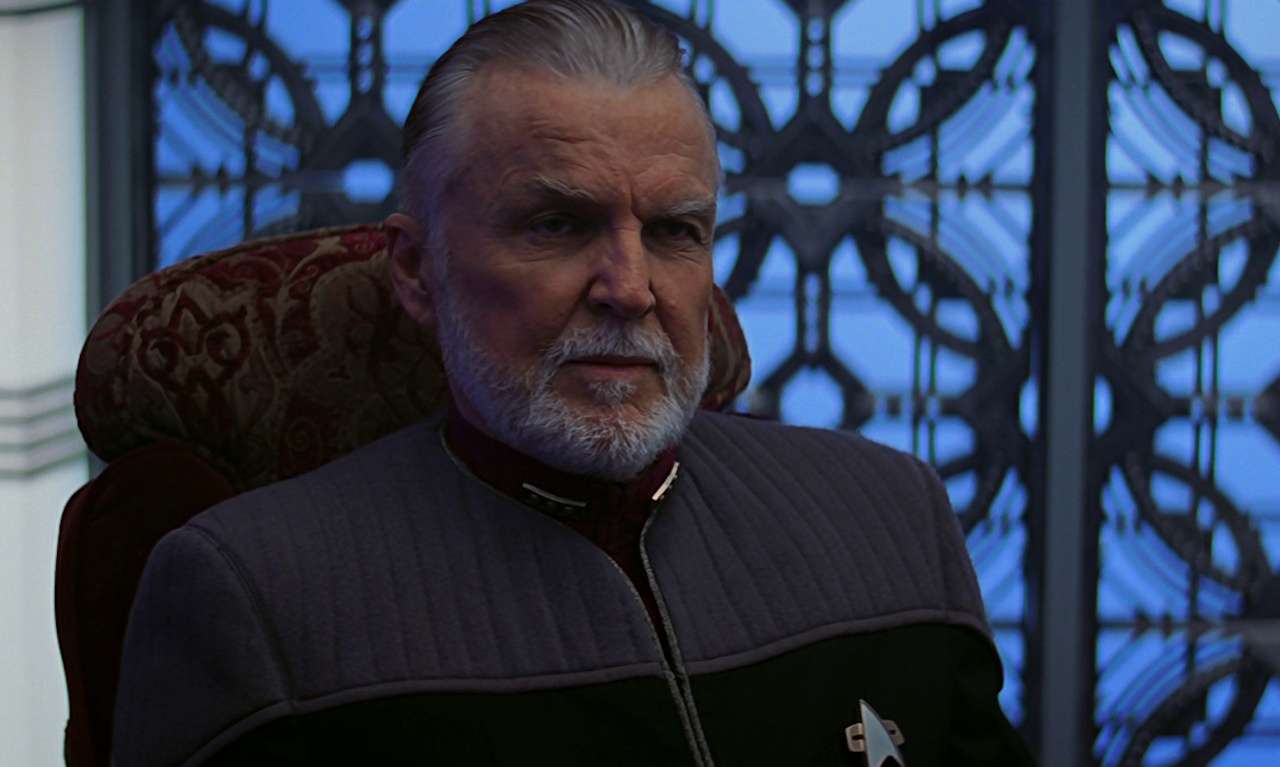
Still frame from Star Trek: Insurrection showing the admiral.
A “badmiral.”

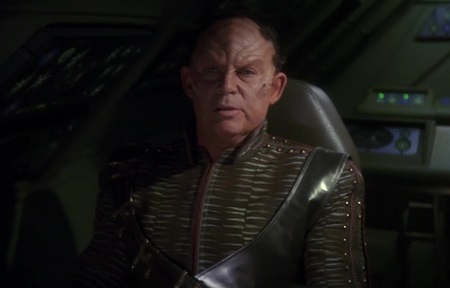
The “badmiral” – a portmanteau of the words “bad” and “admiral” – has become a stock villain in the Star Trek franchise. The typical badmiral is a high-ranking Starfleet flag officer who has an ulterior motive, is selfish, or simply doesn’t reveal everything they know, coming across as a roadblock for our heroes. There are some more nuanced badmirals – look at Layton in DS9, for instance – but others can fall into the trap of being pretty flat and one-note.

At this point, you’d be forgiven for thinking that *every* Starfleet admiral has fallen to the dark side, since it seems to happen so often! In fact, “good” admirals – like DS9′s Ross or Discovery’s Vance – are less commonly seen in the franchise than the bad ones! Because badmirals (and bad captains and commodores) can effectively pull rank and force our heroes to comply, there’s something a bit different about them when contrasted with a non-Federation enemy like the Klingons. In a lot of stories, this works exceptionally well. While I wouldn’t want Star Trek to lose the “badmiral” stock character, with today’s shows running to four or five relatively short seasons at the most, I think this kind of character has to be handled carefully and not over-used.

My Verdict: Keep It!

Cliché #4:
“We’re the Only Ship in Range!”
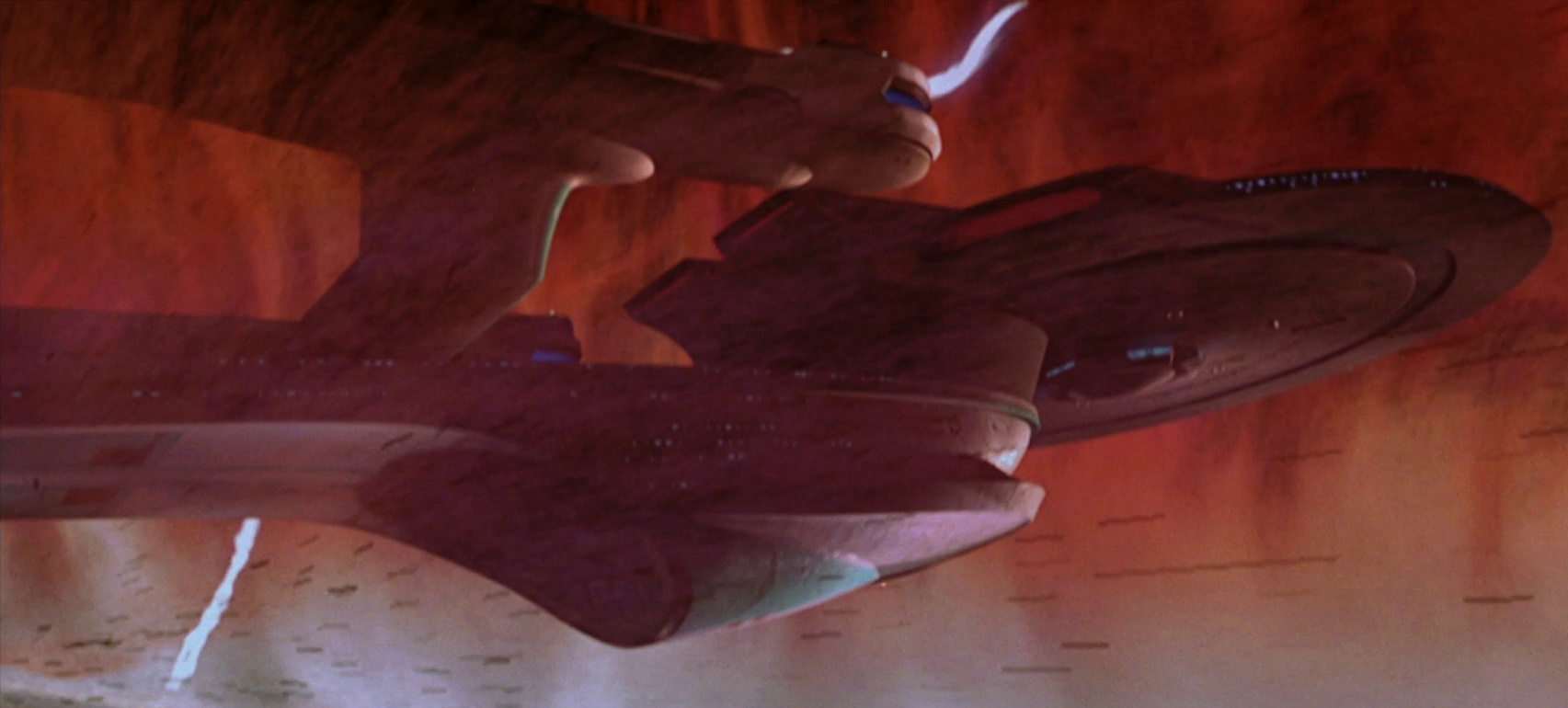
Still frame from Star Trek: Generations showing the Enterprise-B.
The Enterprise-B encounters the Nexus.

How many times has some variant of this line been used? For a state as massive as the Federation… they sure don’t seem to have very many ships! Perhaps the most egregious example of this is Generations (depicted above), where the brand-new Enterprise-B – which doesn’t even have weapons systems or a tractor beam – is literally the *only* starship within several light-years of Earth. How does something like that even happen? Imagine if the only military unit within a hundred miles of Washington DC was a single tank without its gun barrel.

Again, I get it: this line can set up a tense and exciting story with heroism, desperate last stands, rescue missions, and so on. There are some really fun stories that being “the only ship in range” has set up over the years. But it’s also true that it’s become a trope of the franchise. As with any cliché, over-use is the problem, and reducing the number of times it gets used in the future wouldn’t be a bad thing. I don’t think it’s strictly necessary to say it should be outright banned from all future episodes, but I could stand to see less of it!

My Verdict: Keep It!

Cliché #5:
Sole Survivors
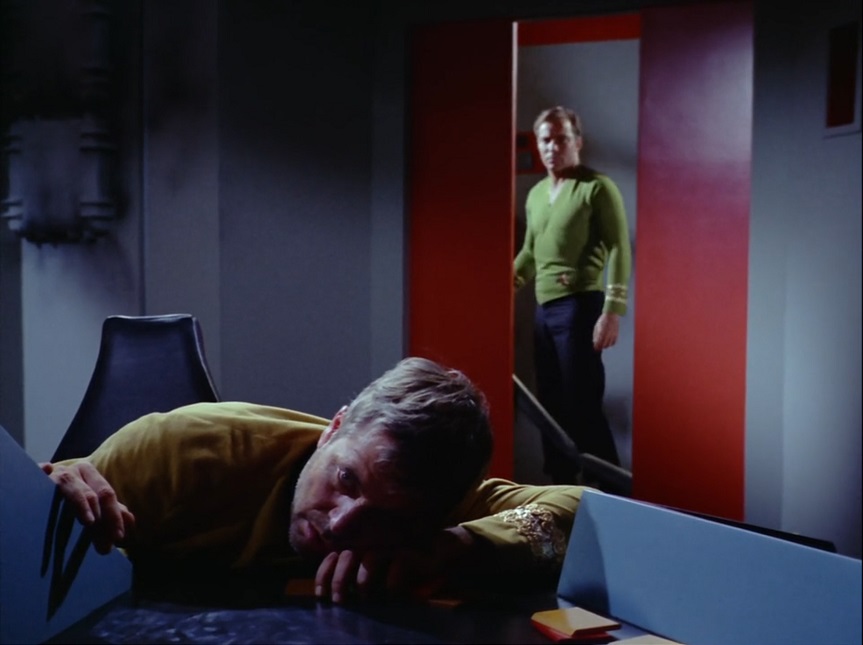
Still frame from Star Trek: The Original Series showing Kirk discovering Decker.
Commodore Decker.

A starship has been destroyed by a planet-killing superweapon. Another ship has been swarmed by the Gorn and crashed. An unknown assailant is destroying space stations one by one. A research vessel flies into a gravitational wave. What do all of these (and more) have in common? Afterwards, there was one single survivor to tell the story. This one leans on tropes way older than the Star Trek franchise – the marooned or shipwrecked sailor has been a part of fiction for centuries. But it is undeniably a cliché, and when you’re talking about starships, space stations, and entire planets, sometimes, having one sole survivor of a cataclysm can feel like it’s stretching my suspension of disbelief.

That being said, I can’t really pick out any examples where a “sole survivor” story has been out-and-out *bad* in the Star Trek franchise. Conversely, quite a lot of these are handled really well, with the survivor conveying what happened to our heroes in an interesting way. And who could forget the incredible Commodore Decker – one of The Original Series’ best one-off characters? He was a sole survivor, and yet I’d rank The Doomsday Machine as one of the best episodes of the entire show. So there’s room for sole survivors… sometimes.

My Verdict: Keep It!

Cliché #6:
Artificial Gravity Never Fails
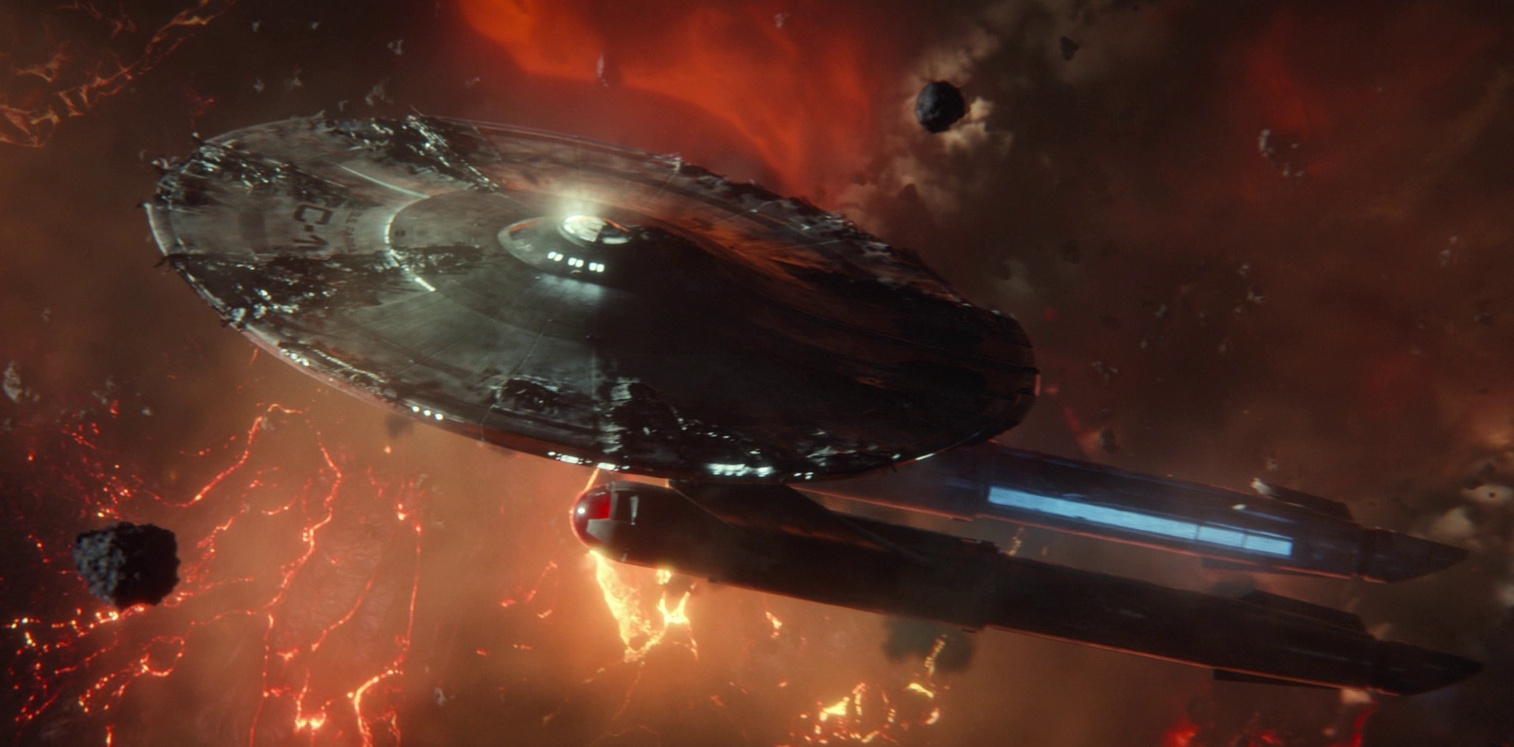
Still frame from Star Trek: Strange New Worlds showing the badly-damaged USS Farragut.
The badly-damaged USS Farragut.

No matter how badly damaged a starship or space station gets, artificial gravity always seems to be the last system standing. Ships will lose life support – literally breathable air and a survivable temperature – before they lose artificial gravity! There are only two or three times I can call to mind where a damaged ship saw its artificial gravity fail, and pretty much the only time it was plot-relevant was in The Undiscovered Country. So… how come artificial gravity is the most robust system on a ship, surpassing even life support?

I know there’s a production-side reason for this one: it would be prohibitively expensive to wire up everyone on the cast and all of their props and have them floating around. Especially in The Original Series, when budgets were tight, that kind of thing was off the table. But it’s pretty silly, if you think about it, when you see ships take a real battering, losing key systems, with their hulls buckling and broken… but everyone can still walk and run around like nothing had happened. Given the advances in technology, and modern Trek’s higher budgets, maybe we could see a few more stories where a ship loses its gravity, and where that becomes a story point.

My Verdict: Vaporise It With A Disruptor!

Cliché #7:
God-like Aliens Who Become Obsessed with One Random Human
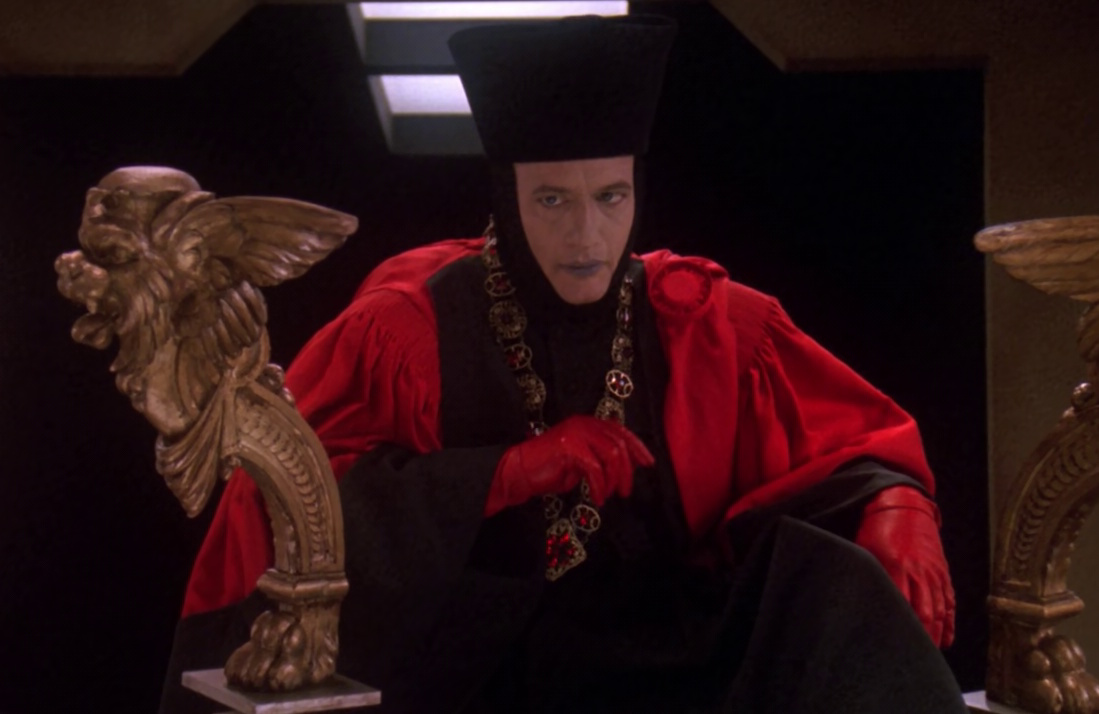
Still frame from Star Trek: The Next Generation showing Q.
Q.

Q has literally all of time and space to explore and play around in. Yet he becomes fixated on Jean-Luc Picard – a random 24th Century human. The Borg Queen has trillions of drones under her sway, controls thousands of star systems, and can assimilate whole populations at the drop of a hat. Yet she’s weirdly obsessed with Seven of Nine – another random human from the 24th Century – as well as Picard. When someone like Trelane came along, it was clear that Kirk and the crew were just his latest playthings. But Q, the Borg Queen, the Douwd known as “Kevin,” and others either fall in love with or become obsessed over one of our heroes. Which doesn’t really make a lot of sense, if you think about it.

Imagine having a favourite ant in your back garden. There are thousands of them living in an anthill, but you decide that *one* is special. That’s not a million miles away from what it’s like for the Borg Queen or Q when they decide to fangirl over their favourite humans. Star Trek can, from time to time, tell interesting stories this way, and the idea of Q in particular setting puzzles and “testing” Picard was used well most of the time. But it’s definitely become a cliché at this point, and I think it’s probably been taken as far as it can be.

My Verdict: Vaporise It With A Disruptor!

Cliché #8:
Everyone Breaks the Temporal Prime Directive
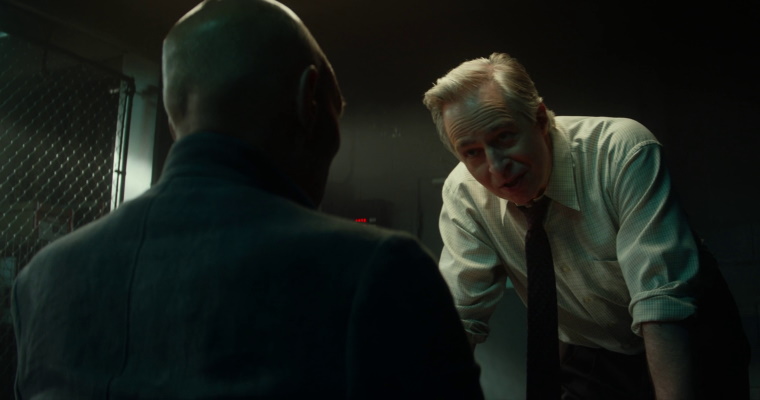
Still frame from Star Trek: Picard showing Picard and Agent Wells.
Picard breaking the Temporal Prime Directive.

In practically *every* story involving time travel, someone breaks the Temporal Prime Directive! The general order from Starfleet says that no one should interfere with any historical events, and must maintain the integrity of the timeline. But even those who claim to be dedicated to this cause – like Enterprise’s Crewman Daniels – routinely violate the Temporal Prime Directive, and often without good reason.

Time travel stories aren’t usually my favourites in Star Trek (especially if they involve visiting modern-day Earth), but even in the episodes I happen to really enjoy, there are countless violations of what is supposed to be one of the guiding principles of the Federation. Often, our heroes are on the side of preserving the timeline as much as possible – and that’s good. But even when that’s their stated aim, they don’t go about it in a stealthy way! How many times have characters befriended (or even fallen in love with) people from a different time period? And how often have they exposed themselves, telling people about the future? Giving characters an “unbreakable” rule, then forcing them to work around it, can make for a tense and engaging story. But when the same so-called rule is broken time and again (pun intended), it can lose some of its impact.

My Verdict: Keep It!

Cliché #9:
Conveniently-Situated M-class Planets
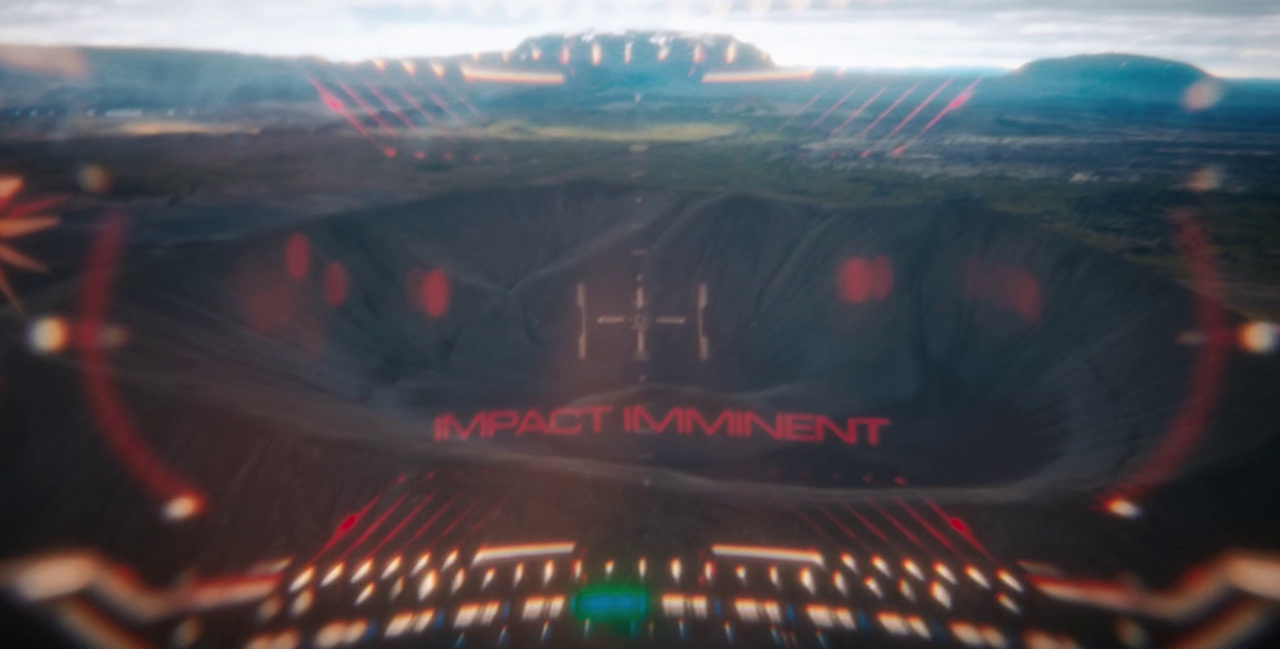
Still frame from Star Trek: Discovery showing a first-person view of Burnham crash-landing.
Impact imminent!

Michael Burnham arrives in the 32nd Century, but loses control of her suit and crash-lands. Where? Not on a barren rock, an asteroid, or into the corona of a star. But on one of Star Trek’s abundant conveniently-situated M-class planets! Almost any time a ship malfunctions, a shuttle crashes, or a transporter beam goes awry, our heroes find themselves on such a world. Just travelled through a wormhole to a mysterious location? Convenient M-class planet. Warp drive failing? Convenient M-class planet. Shuttle is spiralling out of control and about to crash? Convenient M-class planet!

Space is pretty big, actually. And if you think about it, most of the time our heroes spend on their ships won’t be in star systems – let alone in the habitable zone, where M-class planets can form. Most of the time they’ll be in deep space, and if they happen to be in a solar system, there are going to be way more uninhabitable rocks and gas giants than planets with breathable atmospheres and liquid water. I know M-class planets (and similar inhabitable words) are and always will be a core part of Star Trek. But once in a while it would be genuinely interesting to see a shuttle crash onto a lifeless moon, a ship caught in the gravity well of a gas giant, or something like that.

My Verdict: Keep It!

Cliché #10:
Caves and Caverns
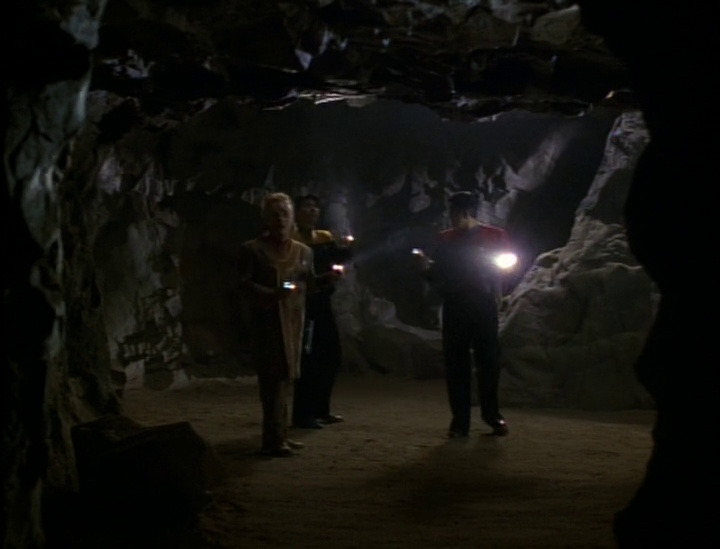
Still frame from Star Trek: Voyager showing an away mission to a cave.
Oh look, they’re in a cavern.

During The Next Generation era, Paramount must’ve used and re-used the same “cavern” set dozens of times! So many different alien locales were depicted using this same set, from the Romulan homeworld to the nameless planetoid AR-558. In The Original Series, too, there were many different cave or cavern locations visited. Thankfully, since Enterprise, the cavern set has been retired, and modern Star Trek stories don’t visit caves anywhere near as often.

Perhaps it’s because modern Star Trek doesn’t spend much time in caverns, but this could be a rare cliché that I’d actually be happy to see *more* of going forwards! There’s something just a little nostalgic, perhaps, about an away mission set in a cave, bringing up fond memories of older Star Trek shows. Even with that caveat, though, I think they have to be used sparingly – and if we were only talking about Star Trek shows from before the turn of the millennium, I’d absolutely say that caves and caverns have to go!

My Verdict: Keep It!

Cliché #11:
“It Was Only Trying to Communicate!!1!”
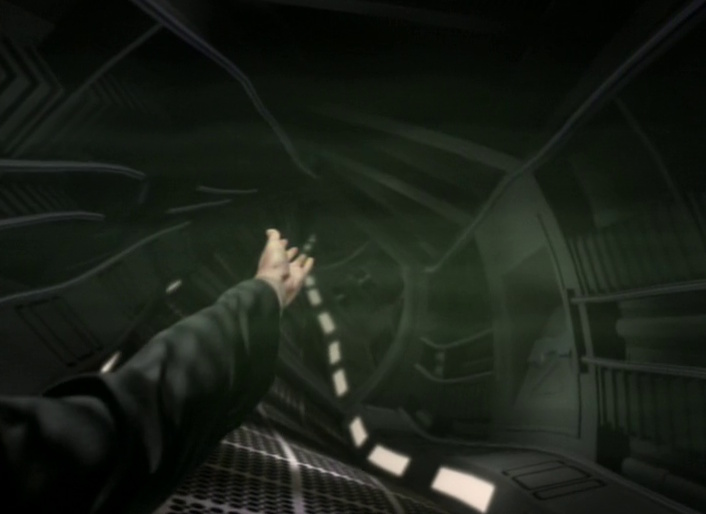
Still frame from Star Trek: Voyager showing a spacial distortion.
Twisted from Voyager’s second season.

A strange life-form (or alien monster) attacks the ship, hurts or threatens our heroes, drains the power, and then… in a shocking turn of events, it’s revealed that they weren’t *really* being aggressive, nor are they actually dangerous! Say it with me, folks: “They were only trying to communicate!” Perhaps they wanted to warn Starfleet of some imminent threat, or maybe our heroes had accidentally encroached on their territory. In any case, once everyone understands what’s going on, the threat dissolves, and we can all go on our merry way. How many Star Trek episodes play out exactly like that?

One thing Star Trek has been justifiably criticised for is that too many alien races fall into the “nose or forehead brigade,” and the franchise isn’t always great at creating alien races that feel truly otherworldly. This cliché – and it *is* a cliché – often comes up in episodes where writers and designers have genuinely tried to create a totally different, non-humanoid type of alien. It can work well, though the “big reveal” that the supposed aggressor or monster just wanted to have a chat or share some useful information has been seen often enough as to be predictable. As with a few entries above, it’s something that future Star Trek projects don’t need to totally abandon, but should use sparingly from this point on.

My Verdict: Keep It!

Cliché #12:
Ancient Aliens Visiting Earth
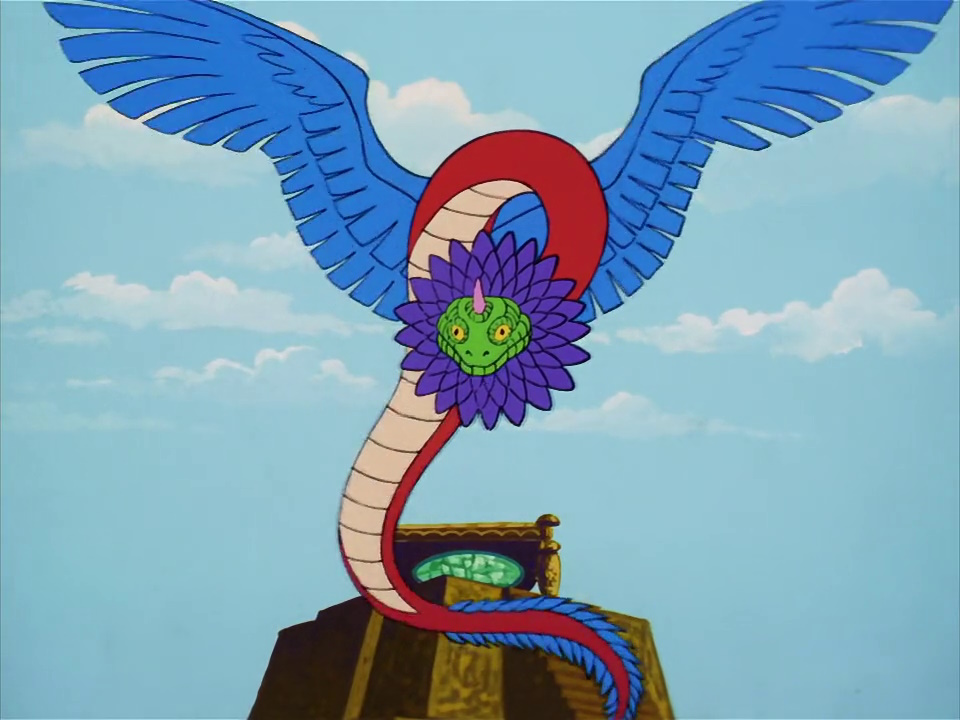
Still frame from Star Trek: The Animated Series showing Kukulkan.
Kukulkan.

Chakotay’s “Sky Spirits.” Kukulkan from The Animated Series. Q. The Skagarans. The El-Aurians. The Borg. The whale probe. The Briori. The Vulcans (multiple times). The Devidians. The aliens who pretended to be the gods of Ancient Greece. What do all of these – and many more – have in common? They visited Earth in the past, prior to the establishment of the Federation. At this point, there’s hardly a single period in Earth’s history where aliens *weren’t* visiting us! Perhaps I should look out of the window… maybe there’ll be a Cardassian, or something.

I think the problem here is that Star Trek has been running for such a long time that this “ancient aliens” trope has kind of gone beyond what’s plausible. Each of the individual cases above made for an interesting one-off episode or story, but if we’re to take Star Trek as a coherent, lived-in world… it begins to stretch my suspension of disbelief when there are just *so many* of these extraterrestrial visitors in humanity’s past. As individual stories, these kinds of things can work well, and some have been genuinely interesting explorations of the line between religion or mythology and real history, for example, or showing how far humanity has come in Star Trek’s optimistic vision of the future. But I can’t help but feel this trope has been taken as far as it can go, and adding yet more ancient alien visitors would be too much.

My Verdict: Vaporise It With A Disruptor!

Cliché #13:
The Infalibility of the Universal Translator
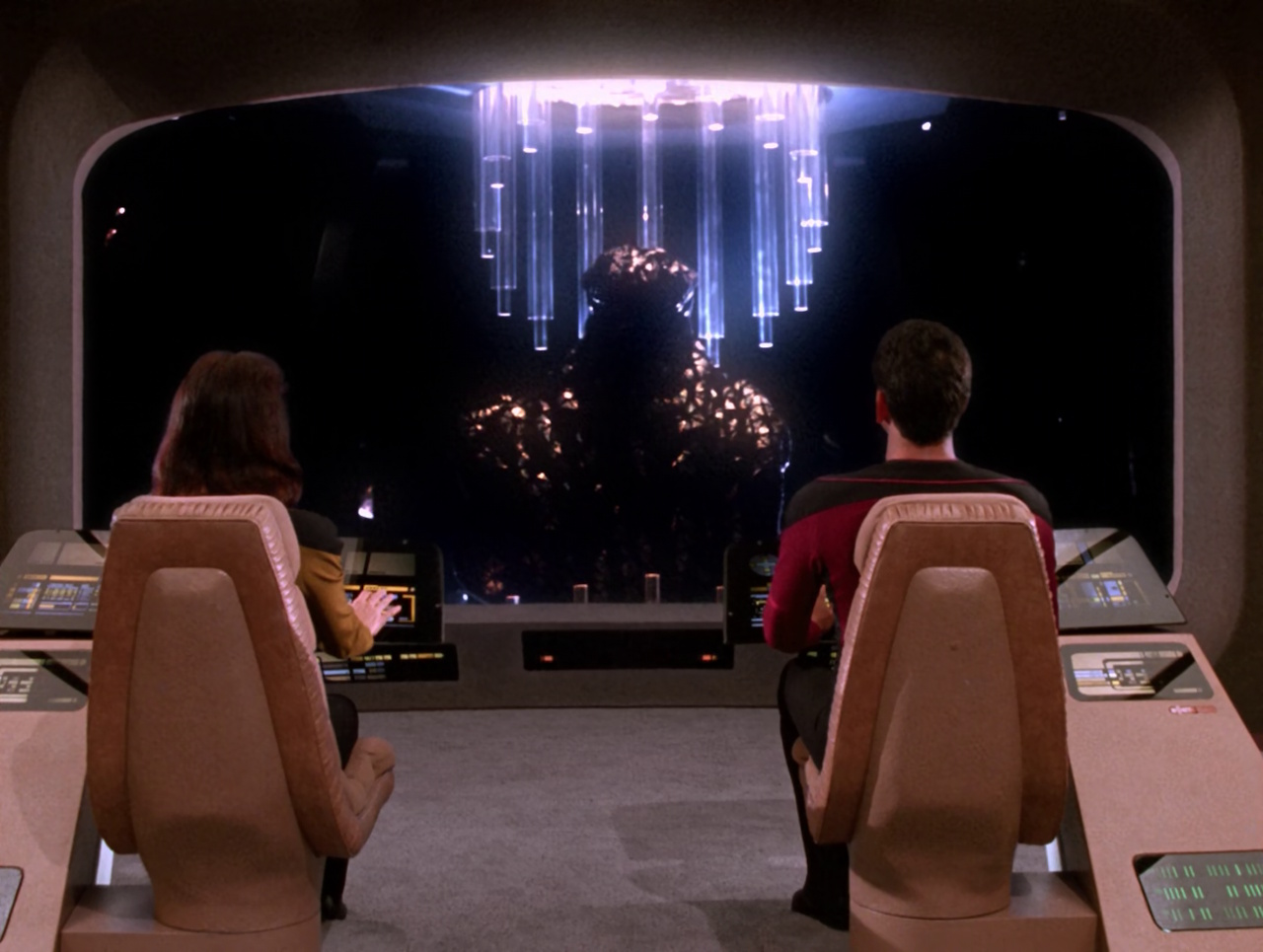
Still frame from Star Trek: The Next Generation showing two bridge consoles and a Sheliak on the viewscreen.
Communicating with an alien.

Wherever Starfleet goes – the Alpha, Beta, Gamma, or Delta Quadrants, or even beyond the galaxy – everyone can understand each other. The universal translator is presented as basically akin to magic, able to instantly translate brand-new languages it’s never been exposed to before. And that’s great… if you don’t think about it too much! But the universal translator is almost too good to be believable, sometimes, and it could be fun if – just for once, or on rare occasions – it *didn’t* work. Perhaps the universal translator just straight-up can’t interpret an alien language, leaving the crew to try to translate it the old-fashioned way. Or, as a more interesting idea, perhaps the universal translator is damaged or stops working, leaving the crew to realise they all speak different native languages and have to find ways to communicate and work together. Either of those could make for wonderful stories.

The universal translator is one of those “don’t think about it too hard” pieces of magical tech that facilitates other Star Trek stories. It wouldn’t be very interesting, for instance, if every episode started with the crew having to piece together an alien language before the rest of the story could get going! But there were some genuinely interesting moments in Enterprise with Hoshi as the ship’s communications officer/linguist, and I think we could get occasional episodes or plot points where the universal translator doesn’t work as intended.

My Verdict: Keep It!

Cliché #14:
Breaking Out of the Brig
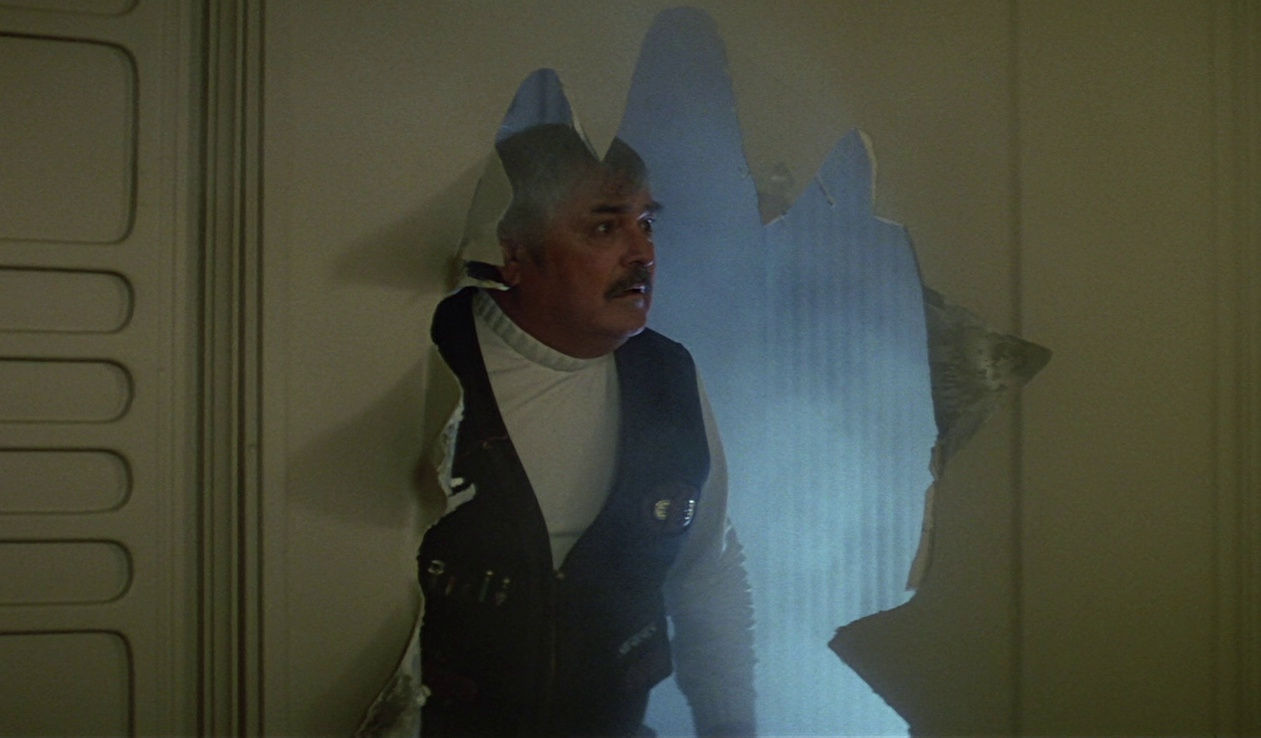
Still frame from Star Trek V showing Scotty breaking into the brig.
“Do you not know a jail break when you see one?!”

Whether it’s a main character wrongly imprisoned or a villainous rascal who’s been caught in the act, one thing is all but guaranteed: if they’re in a Starfleet brig, they’re gonna break out! In a recent Strange New Worlds episode, we saw Gamble/the Vezda escaping from the brig with ease. In The Final Frontier, Scotty famously helped Kirk, Spock, and Dr McCoy escape the Enterprise-A’s brig. Thanks to the Battle at the Binary Stars, Burnham was able to break out of the Shenzhou’s brig. And the list goes on!

A “prison break” story, or a story about hunting down an escaped villain, can be fun – and Star Trek has used this concept pretty well over the years. Because “escaping from the brig” can go in a lot of different directions depending on what kind of story we’re talking about, I don’t think I’d say it should *never* be re-used in Star Trek again. But it is undeniably a bit of a trope at this point, to such an extent that whenever a character is confined to the brig… you’re never sure if they’ll still be there a few minutes later!

My Verdict: Keep It!

Cliché #15:
Hitting the Self-Destruct Button
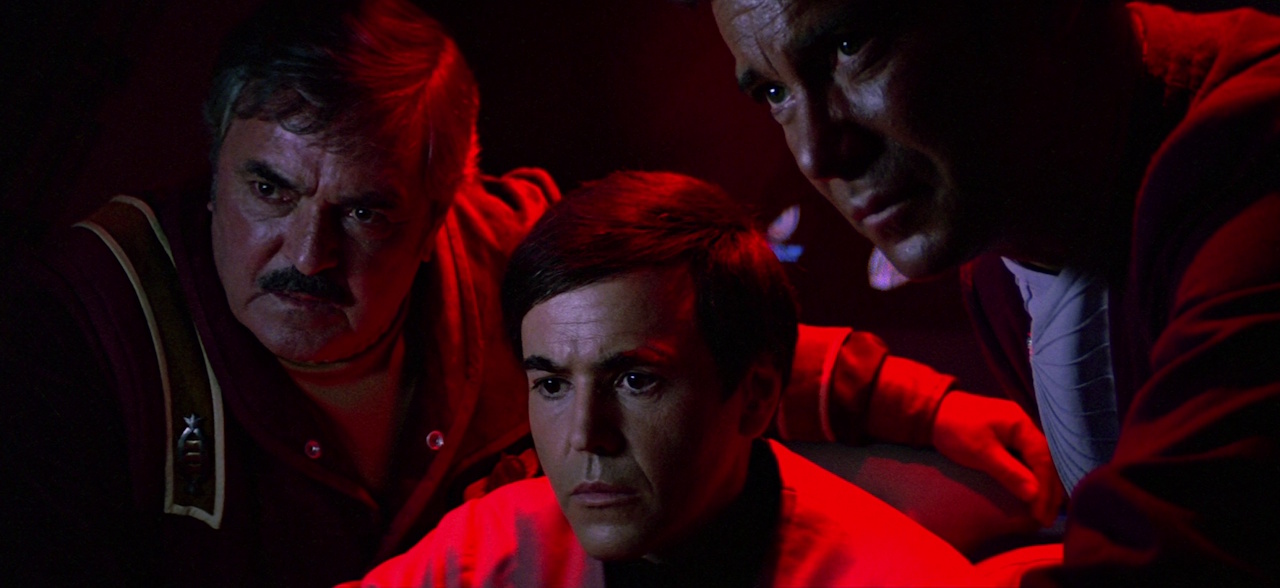
Still frame from Star Trek III showing Scotty, Chekov, and Kirk activating the self-destruct sequence.
Activating the Enterprise’s auto-destruct sequence.

Starfleet captains sure do order their ships to self-destruct a lot, huh? To be fair, *most* of the self-destructs that we see captains ordering in Star Trek don’t actually take place, and the order can sometimes be given as a feint or ruse to catch an enemy off-guard. But ever since it was first used in The Search for Spock, we’ve seen captains setting the auto-destruct sequence on quite a few occasions.

As a mechanism of last resort, automated self-destruction makes a lot of sense in-universe. Starfleet wouldn’t want their advanced vessels falling into enemy hands, and there are some instances where setting a ship to destroy itself can be used as a weapon or to make a last stand. These have usually happened at tense moments in dramatic stories – Kirk’s destruction of the Enterprise, for instance, or Picard ordering the Enterprise-E or Stargazer to self-destruct when faced with what seemed to be imminent assimilation by the Borg. All of these, in their individual stories, make sense and work well. As above, this is something Star Trek mustn’t over-use, though!

My Verdict: Keep It!

Cliché #16:
Aliens Being Indistinguishable from Humans
Still frame from Star Trek: Discovery showing Cleveland Booker.
Booker, a Kwejian.

Betazoids, El-Aurians, Kwejian, Betans, Iotians, Onlies, Kelvans, and many more. What do they all have in common? Despite supposedly being “aliens,” they’re physically indistinguishable from humans. Even the Klingons in The Original Series were like that, before they finally got prosthetic makeup beginning in The Motion Picture. As a limitation of 1960s budgets and prosthetics, it wasn’t really noticeable at first. But as time goes by, it becomes more and more obvious that the galaxy is populated with these identical species.

I have a pet theory which says that many of these supposed “aliens” – the Betans, Onlies, Iotians, and so on – are actually lost human colonies from the early days of pre-Federation human spaceflight. But that’s not how most of these planets and their inhabitants are presented on screen, and we’re meant to take at face value that they are, in fact, alien races. I don’t buy it! And frankly, given advances in technology, in terms of physical makeup, puppets, and now CGI, there’s no excuse for modern Star Trek creating a race like the Kwejian any more. We really ought to see more “alien-looking” aliens from this point on.

My Verdict: Vaporise It With A Disruptor!

Cliché #17:
Tiny Fleets

Still frame from Star Trek: Picard showing a fleet.
A Federation fleet in Picard Season 2.

I know I’m not the first person to point this out, but almost every time we see a fleet of ships in Star Trek… it’s too small. Think about it: there are around ten billion people just on Earth in Star Trek’s 24th Century, and the Federation spans hundreds of planets and colonies. Yet, when threatened by the Borg, the most Starfleet can muster is 40 starships, some of which were old and no longer in service. Even during the Dominion War, which saw some of the franchise’s best fleet battles, the scale of the Federation Alliance and Dominion/Cardassian fleets felt way too small compared to the interstellar empires they’re drawn from.

There are good explanations for this, of course. At first it was a budget thing – making physical models of hundreds of ships, then filming them in motion, was prohibitively expensive. And then there’s the complexity that massive fleets would add to a story for the audience; just keeping track of a spaceship battle involving thousands of vessels would be confusing. But I still feel that Star Trek could do more with larger fleets, and that some of the fleets we’ve seen on screen don’t line up with what we know of the Federation and other interstellar empires. To be blunt, they need more ships!

My Verdict: Vaporise It With A Disruptor!

Cliché #18:
Easily-Hacked Alien Computers/Tech
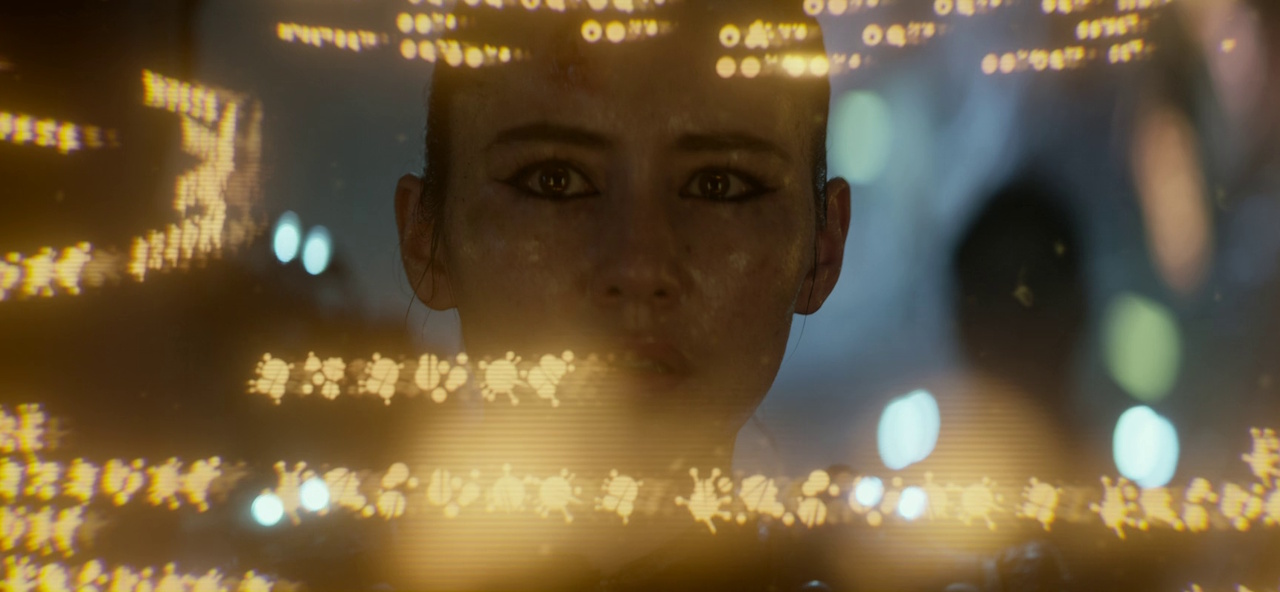
Still frame from Star Trek: Strange New Worlds showing La'an using a Gorn computer.
La’an hacking a Gorn computer.

I know that Starfleet officers are well-trained. But if you’ve never been aboard an alien vessel before, don’t know their language/writing system, and have limited or no experience using their computer interfaces… you shouldn’t be able to just tap a couple of buttons and seize control of their ship! Maybe someone like Data can get away with this, because of his inhuman abilities, but we often see human characters performing these seemingly miraculous feats. As I’ve said before, even if they just took an extra few seconds, sometimes, to acknowledge the difficulty of interfacing with a brand-new type of technology… that would at least be *something*.

Because deciphering an alien computer system isn’t usually the focus of the story, these moments tend to be raced through to allow other narrative beats to play out. And that can be okay… if you don’t stop to think about it for too long, I guess. Perhaps this is a bit of a nitpick, and you could certainly make the case that Starfleet trains its officers well, and that perhaps the basic way computers function is consistent across most alien races in the 23rd/24th Centuries. But even so… sometimes, I’d like to see someone struggling with this!

My Verdict: Vaporise It With A Disruptor!

Cliché #19:
Transported to the Other Side of the Universe (but Back Home in Time for Tea)
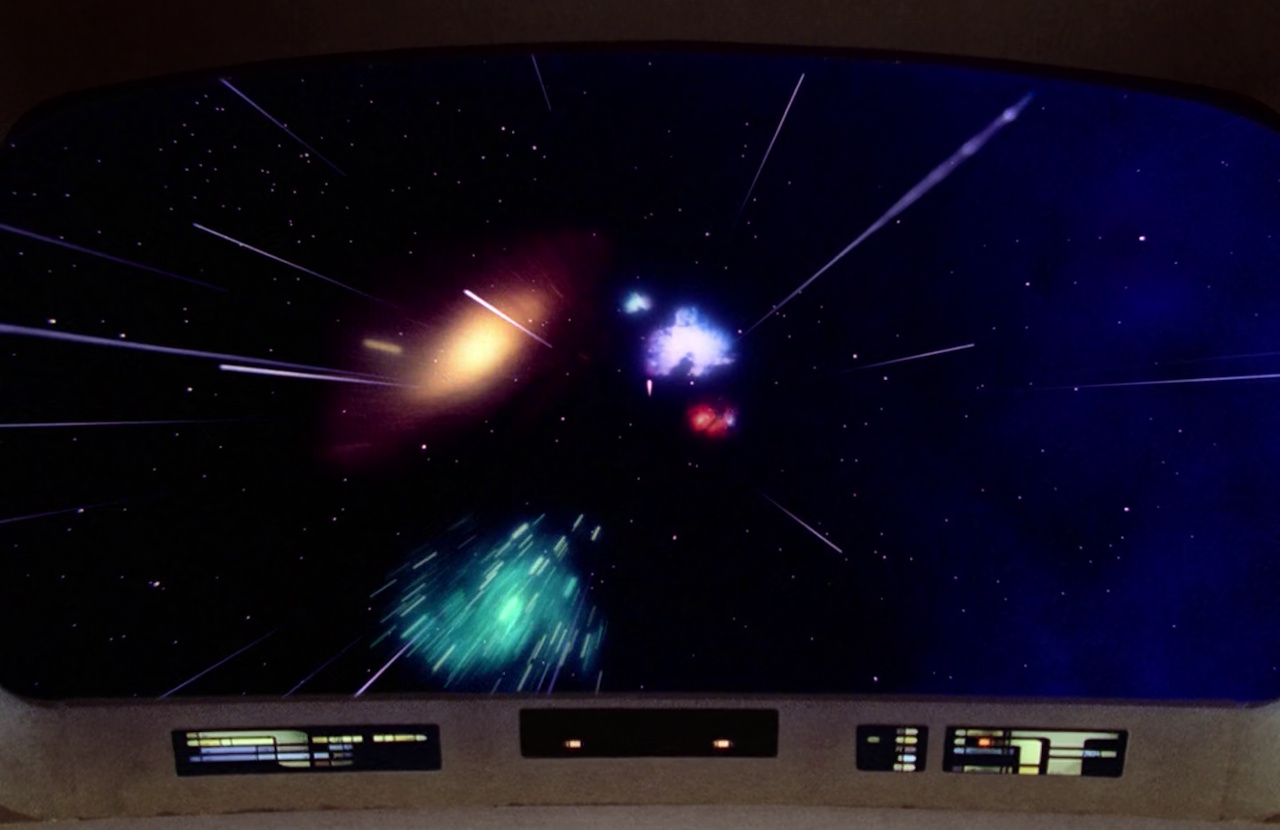
Still frame from Star Trek: The Next Generation showing the viewscreen and galaxies.
Flying past galaxies…

In many different stories, our heroes find themselves accelerated far beyond warp 10, teleported to a far-flung star system, or even in a whole different galaxy. But then, forty-five minutes later, they’re back home again! The only real exception to this is Voyager, which took this trope of the franchise and asked the obvious question: “what if there wasn’t a fast way home?” I really liked that idea!

Because some of these stories play out quite differently from each other (The Final Frontier is radically different from Where No One Has Gone Before, for example), I guess it doesn’t feel like a particularly egregious or overdone cliché in the way that some of the other entries above do. But it is still a bit of a trope of the Star Trek franchise to see our heroes transported to a faraway place… only to make it home before the credits roll.

My Verdict: Keep It!

Cliché #20:
The “Friendly” Visitor with a Dark Secret…
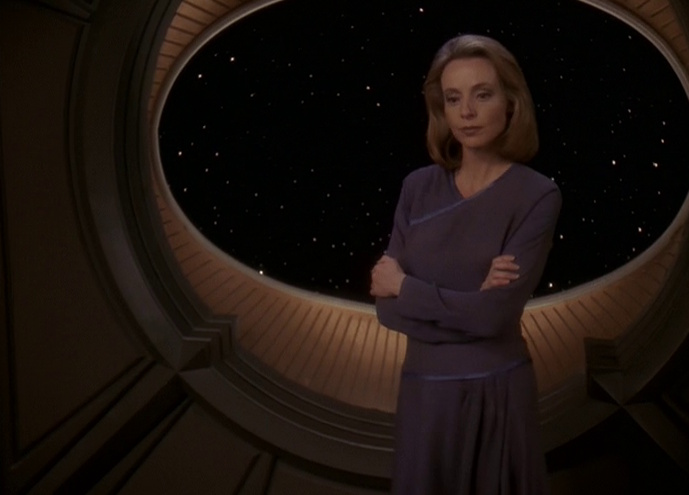
Still frame from Star Trek: DS9 showing Arissa.
Who could this be?

How many seemingly friendly characters show up, only for it to be revealed that they’re harbouring some kind of dark secret? I know that this one isn’t just a Star Trek thing; we see countless examples of this kind of stock character throughout all of fiction, really, and especially on episodic television. But just because it isn’t unique to Star Trek, that doesn’t make it any less of a cliché!

Because these kinds of stories can feel very different, depending on which show we’re talking about and even which individual characters are involved in the story, I’m inclined to give it a pass. There’s a big difference between, say, The Next Generation’s Man of the People and Voyager’s Ex Post Facto, which both feature apparently friendly characters who have some kind of secret. So there are ways to keep this kind of story feeling fresh and engaging, even while using the same basic character archetype.

My Verdict: Keep It!

So that’s it!
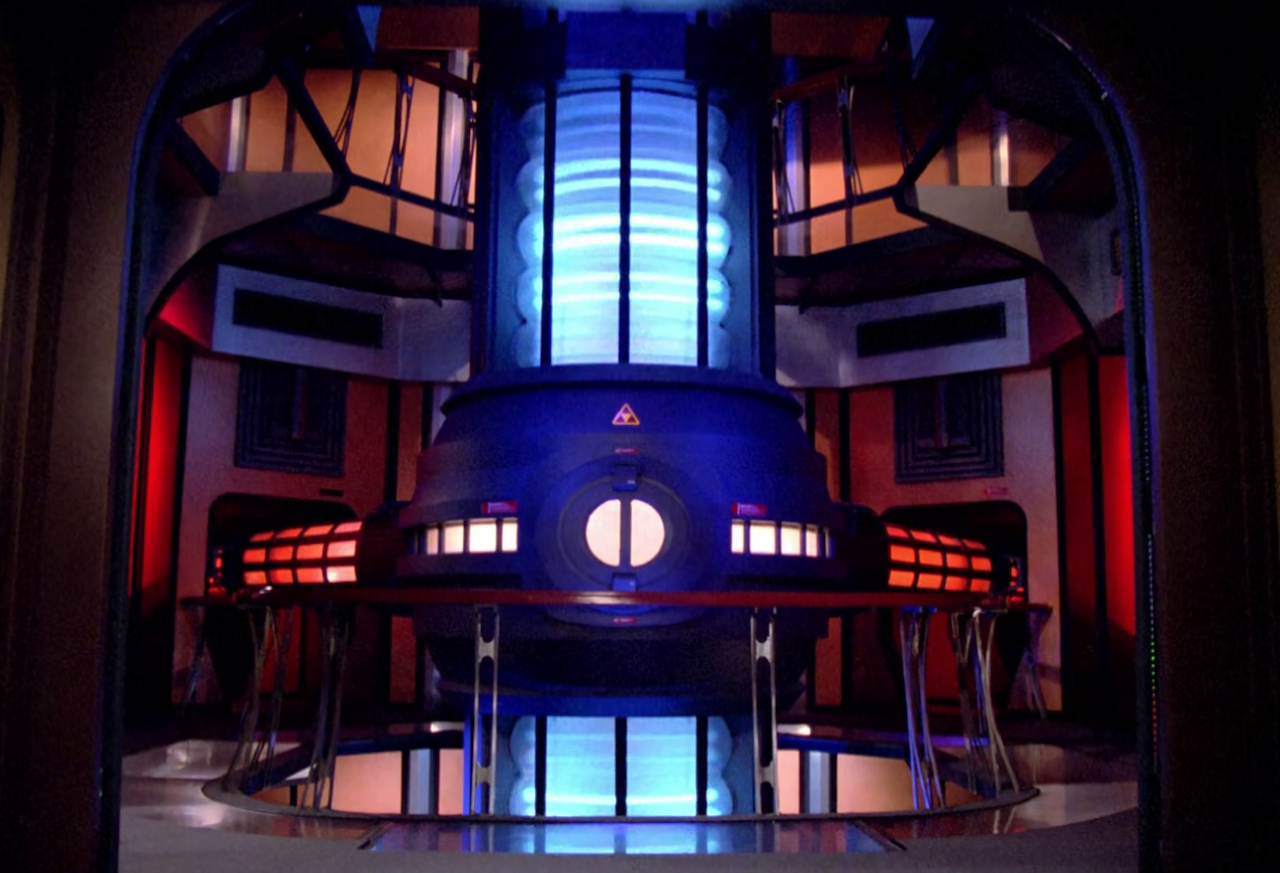
Still frame from Star Trek: The Next Generation showing the warp core.
The Enterprise-D’s warp core.

We’ve taken a look at some more of Star Trek’s narrative clichés, and decided whether or not they should be allowed to stick around in the future!

I hope this has been a bit of fun, or at least interesting. The original Tumblr poll (linked below) really hit me and gave me a ton of ideas. There may be more “clichés” to talk about in the future, too, but I think two long pieces on the topic is sufficient for now! But watch this space, because I might revisit this in the future, either with more potential clichés or to dive deeply into some of the ones we’ve already discussed. There are a few that could definitely be the subject of a longer article or essay one day!

Thanks for checking out my thoughts on all of these… and Live Long and Prosper!


You can find the original Tumblr poll (which has since closed) by clicking or tapping here, and my first piece on this subject by clicking or tapping here.

Most of the Star Trek franchise – including films and television series discussed above – is available to stream on Paramount+ in countries and territories where the platform is available, and is also available on DVD and/or Blu-ray. The Star Trek franchise – including all properties discussed above – is the copyright of Skydance/Paramount. This article contains the thoughts and opinions of one person only and is not intended to cause any offence.
Star Trek: Strange New Worlds Episode Review – Season 2, Episode 5: Charades

Spoiler Warning: There are spoilers ahead for Strange New Worlds Seasons 1 and 2. Spoilers are also present for the following Star Trek productions: The Original Series, Deep Space Nine, Voyager, Enterprise and Discovery.

Charades was an episode of two halves. One of these halves worked well, and the other… well, let’s just say that the other was not to my taste. It was undeniably a Star Trek episode to its very core, bringing to the fore concepts that the franchise has used going all the way back to The Original Series. We also got an interesting exploration of a previously unseen aspect of Vulcan culture, character development for both Spock and Nurse Chapel, and some comedic moments that stuck the landing.

On the other hand, Charades relied far too heavily on the kind of “cringe humour” that defined sitcoms like Friends, with parts of the “Spock must pretend to be Vulcan” storyline evoking the same kind of feelings as watching Robin Williams’ character try to be in two places at once in Mrs Doubtfire. That kind of situational humour really isn’t my cup of tea… and while I can tolerate it in small doses and for a one-off story, it means that Charades is unlikely to be an episode I’ll choose to revisit very often in future.

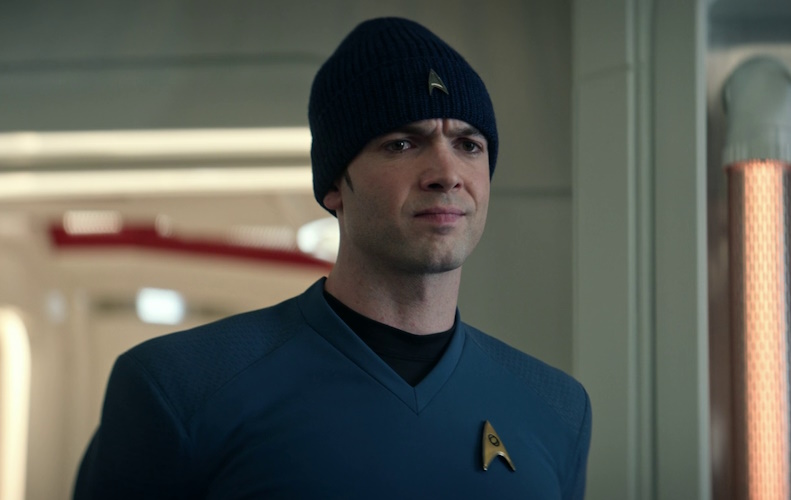
I watched most of the episode with this kind of expression on my face…

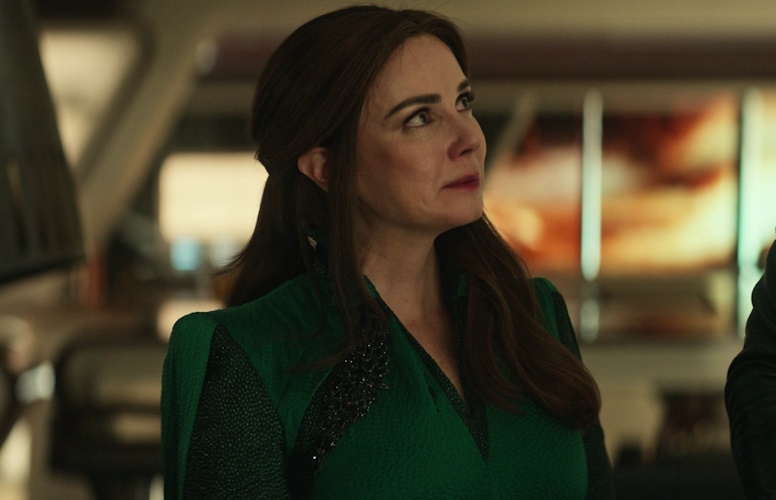
It was a treat to welcome back Mia Kirshner as Spock’s mother, Amanda. Kirshner reprised her role from Seasons 1 and 2 of Discovery, where she was seen alongside both Spock and Michael Burnham. Burnham wasn’t mentioned on this occasion, which I suppose is an interesting omission given that the story called back to Spock’s childhood and had a focus on the divide between humans and Vulcans. But Amanda’s presence was more than enough to carry this storyline – and I found it to be the most interesting and certainly the most impactful part of Charades.

It was hinted at, even as far back as The Original Series, that being a human married to a Vulcan could be difficult. Enterprise greatly expanded our knowledge of human-Vulcan relations, and showed how Vulcans could take an almost sneering view of a species they regarded as not as sophisticated or developed. Through Amanda’s story in Charades, we get to see how that manifests on an individual level, and how Vulcans can discriminate against humans – or even show revulsion and hate.

Charades was an unexpectedly strong episode for Spock’s mother, Amanda.

This ended up being a particularly powerful storyline. Amanda, as Spock came to realise, had to endure a great deal of hardship as a human living on Vulcan. Even as Vulcans came to accept him as one of their own, Amanda remains a perpetual outsider, constantly subject to being talked down to, shunned, disregarded, and treated differently because of who she is. The cool intellectual and logical nature of Vulcans means that this discrimination manifests differently – but it’s there nevertheless, and we come out of Charades with a much stronger appreciation for Amanda and her strengths after having seen what she continues to experience.

This idea that Vulcans’ aloofness and intellectual prowess can easily slide into a sense of superiority is nothing new in Star Trek; it was front-and-centre in depictions of the Vulcans in Enterprise in particular. But this very personal, individual exploration of that – and the impact it can have on non-Vulcans who have to endure it – is something different and interesting. Strange New Worlds has found a new way to build upon the lore of Star Trek, expanding our understanding of one of the franchise’s most iconic races – and their flaws.

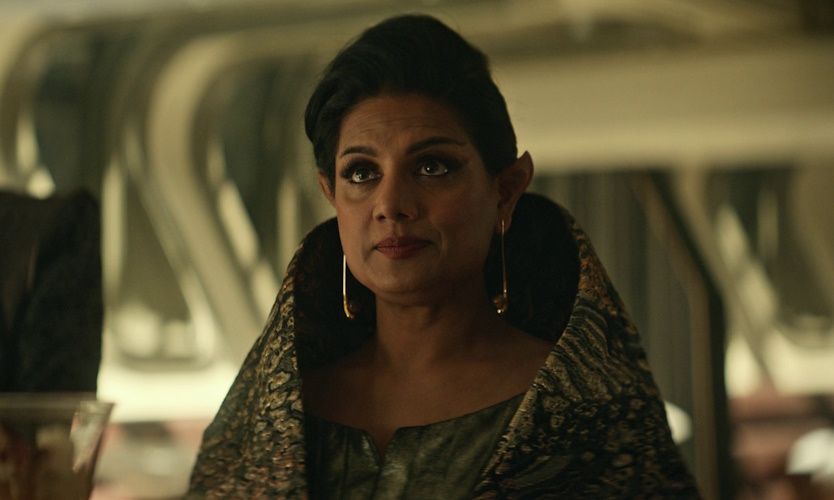
Through T’Pring’s mother we saw some of the flaws that Vulcans can fall victim to.

Star Trek has done the “character transformed” idea in multiple ways on multiple occasions, from Jadzia Dax’s friends embodying her Trill symbiont’s past hosts in Deep Space Nine through B’Elanna Torres being split into human and Klingon personalities in Voyager. So in that sense, Charades’ “Spock gets turned into a human” premise isn’t entirely original. But for a character who’s been struggling with his human and Vulcan sides, it was an interesting move.

However, I’d argue that Season 1’s The Serene Squall had already done much of the heavy lifting on Spock and his internal conflict. That episode reframed the idea as a kind of analogy for gender identity, and made a great deal of progress for Spock in terms of his character arc in this series – an arc that has to take him from the more emotional presentation seen in Discovery and get him much closer to the way he was in The Original Series. We also got Spock Amok in Season 1, which focused on Spock’s relationship with T’Pring and the stresses that his role in Starfleet and his half-human side was taking. On its own merit what Charades did in that regard was interesting – but given that The Serene Squall was a mere eight episodes ago… its impact is, I would argue, lessened.

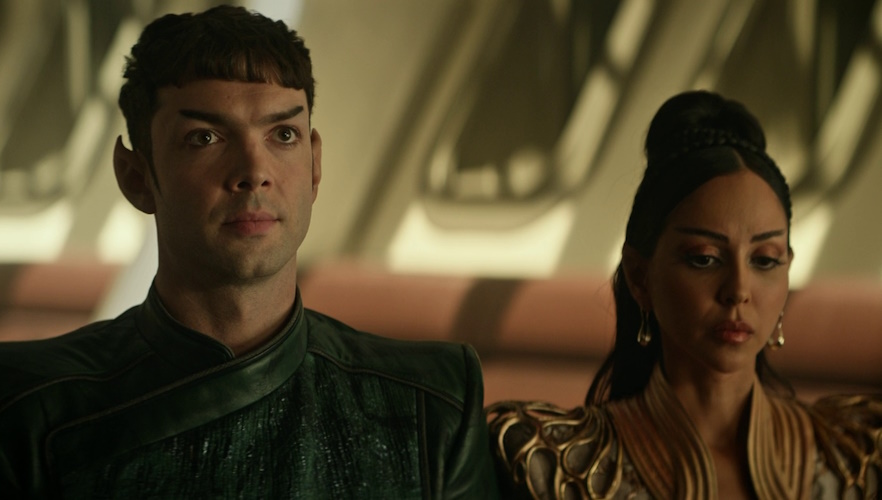
Spock and T’Pring.

And I think that speaks to a broader concern about Strange New Worlds as a whole: its focus on legacy characters and their characterisations. Out of fifteen episodes that have been broadcast so far, we’ve had two that focused primarily on Spock and his relationship with T’Pring, and two more in which Spock and Nurse Chapel’s relationship was a major plot point. Season 2 has also spent a disproportionate amount of time so far on legacy characters, with Una, Nurse Chapel, Dr M’Benga, Spock, Captain Kirk, Uhura and latterly Captain Pike all getting moments in the spotlight. This is starting to come at the expense of other characters.

Pelia, the Enterprise’s new chief engineer, was mentioned by name in Charades but hasn’t been seen on screen for a couple of episodes now. And while La’an and Ortegas both had lines of dialogue this week, they were swept along by a narrative current outside of their control. I’m all for learning more about Spock’s background, don’t get me wrong. As a Trekkie, and as someone who’s firmly invested in this world, I like the idea. But Strange New Worlds has a limited amount of time at its disposal; the show runs ten-episode seasons, and after this, only one more season is guaranteed to be produced. As fascinating as it is to spend time with Spock, given that this episode’s core story felt more than a little derivative of what we got in two episodes of Season 1, its main story is one that could have been reduced – if not skipped outright – in favour of stories focusing on some of the show’s new characters.

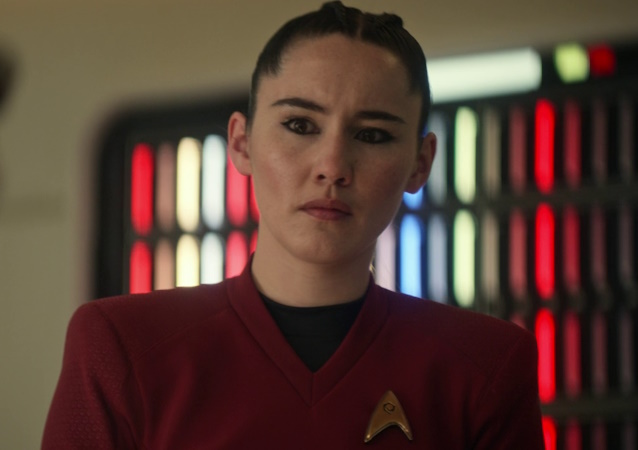
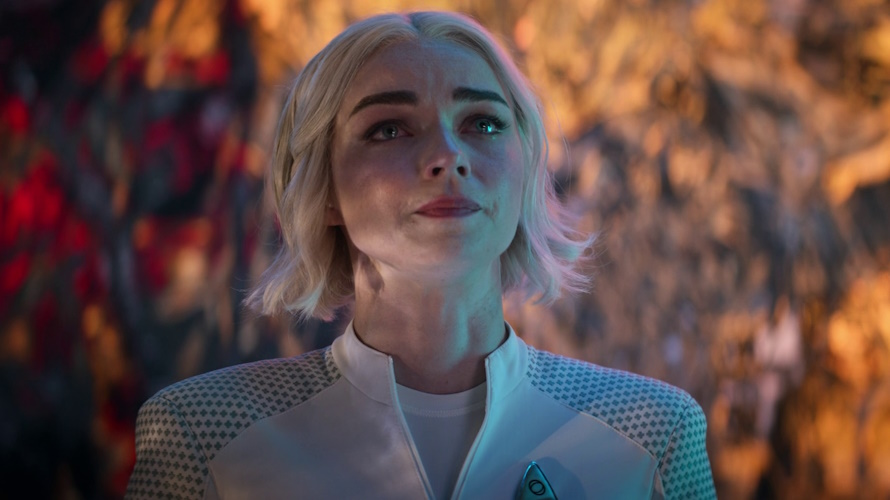
La’an had a minor role this week.

Charades’ style of “cringe humour,” something often seen in American sitcoms, really isn’t my thing. I found a few moments in the episode damn near painful to watch, particularly when jokes and gags were made at Spock’s expense. That is, however, purely a matter of personal taste, and as far as I can see, the episode’s sense of humour stuck the landing and achieved what it was aiming for… even if it isn’t something I personally enjoyed. There were absolutely some laugh-out-loud moments, moments where I had to pause Charades for fear of missing what would come next as I was laughing so hard. The premise of the episode is inherently silly: Spock being transformed into a human right before an important dinner with his fiancée. And as one of Strange New Worlds’ more lighthearted offerings, that side of the story worked as intended.

There is a slightly uncomfortable edge to some of this humour, though – and while I have no doubt that this was unintentional on the part of the writers and producers, it’s still worth acknowledging. Going all the way back to The Original Series, the character of Spock has stood apart from his crewmates. Though mental health, autism, and neurodivergence were never stated explicitly in Star Trek, Spock has, for the longest time, been someone that folks who are autistic or neurodivergent have related to. Charades stripped away part of this presentation, and did so largely for comedic purposes. That wasn’t always the most comfortable thing to watch, especially with the aforementioned “cringe” aspect to the episode’s humour. I don’t think we need to zero in on this, nor spend too long criticising Charades here, but it’s absolutely worth acknowledging this aspect of the story.

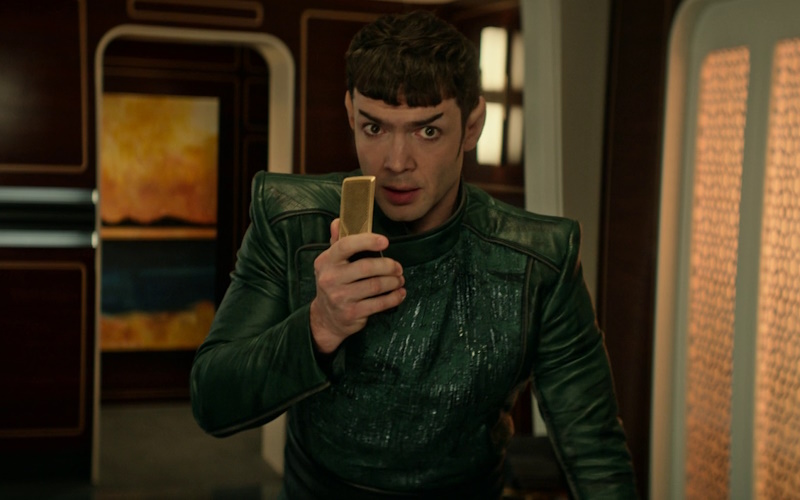
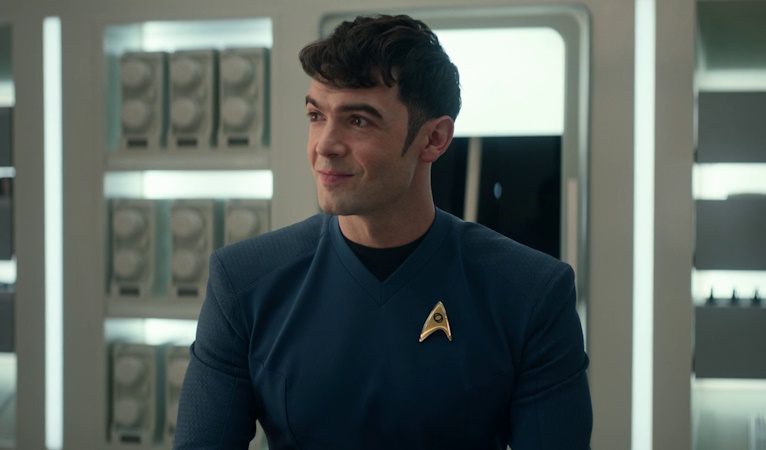
Charades seemed to poke more than its share of fun at Spock.

Conversely, and to be fair to Charades, it showed us a different side to Spock – but one that was equally rooted in many of the same neurodivergent aspects of his character. The episode’s script compared Spock’s handling of emotions to that of an adolescent, but if we continue our analogy for Spock being autistic or an “outsider” to the world of human emotion, what we see is someone experiencing these emotions in their strongest, most raw form. Just as many neurodivergent folks struggle to understand emotion, others feel them intensely, and this intensity was something new for Spock – but something no less interesting to see.

Again, the way this was played was largely for comedic effect, as Spock’s over-exaggeration of some of his feelings and emotions was part of this “cringe humour” thing that Charades had going on. But if we can look past that, I think there’s a case to be made that we saw a different side to Spock, one that flipped his logic and cool, usually emotionless presentation on its head – but it was a presentation of Spock that was no less relevant or relatable than it has been in the past.

We got a very different presentation of Spock this week.

There was a comment made before the season aired by one of the show’s executive producers (a comment I’ve now lost so I can’t find to quote from directly) that said something along the lines of “Strange New Worlds will push the boundaries of canon.” That alarmed me somewhat, because the series has to fit into a long-established world, and sometimes what producers and writers call “pushing the boundaries” can actually mean “ignoring and/or erasing.” And I think in Charades’ development of Nurse Chapel’s relationship with Spock, we get to see an example of this pushing of the boundaries.

The Original Series implied on several occasions that Chapel had feelings for – or at least a crush on – Spock. But it never went beyond that; the two characters, when they interacted, maintained a level of professionalism and perhaps friendship… but never anything more. There was no hint at a background of having once been lovers or ex-partners, and while nothing in The Original Series should explicitly rule out the kind of relationship that we see the two seemingly ready to embark upon in Charades, it’s certainly something that takes these two long-established characters and pushes them in a new direction.

What will become of the relationship between Spock and Chapel?

In the context of Strange New Worlds itself, this relationship works well. Pairing up Spock and Nurse Chapel succeeded in Season 1, and their relationship has only deepened since then. In a way, we could argue that this adds to our understanding of the characters and where they were in The Original Series – and as they interacted so infrequently in Star Trek’s first incarnation, it’s perfectly fine to bring them together in this way. It’s also not the only change made to either character from their original appearances.

That being said, putting Spock and Nurse Chapel into this kind of romantic (or at least physical) relationship is something that works best when taking Strange New Worlds in isolation. As new characters on a new show, they absolutely have the potential to do this. But for both characters, Strange New Worlds is a prequel, and it’s unclear how this relationship will work for either of them – nor how it will move either character closer to their TOS presentation.

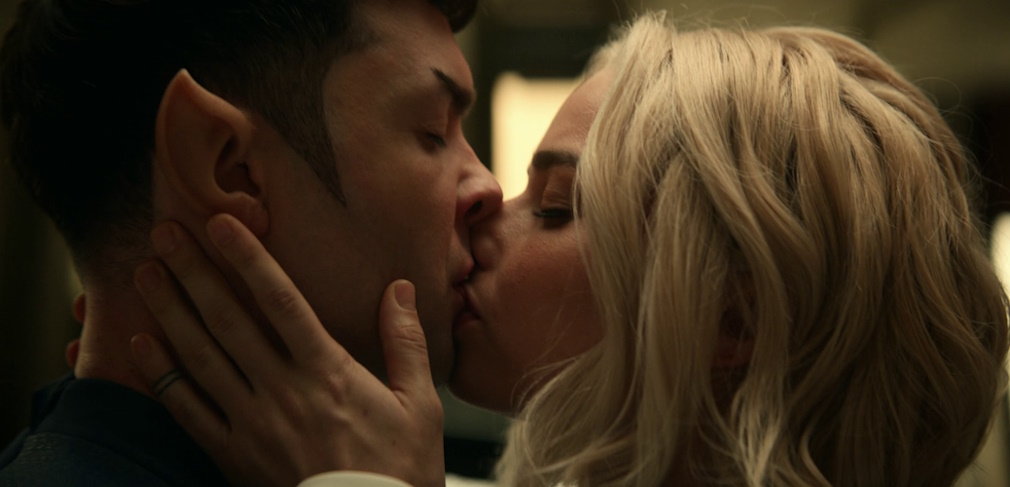
Spock and Chapel share a kiss.

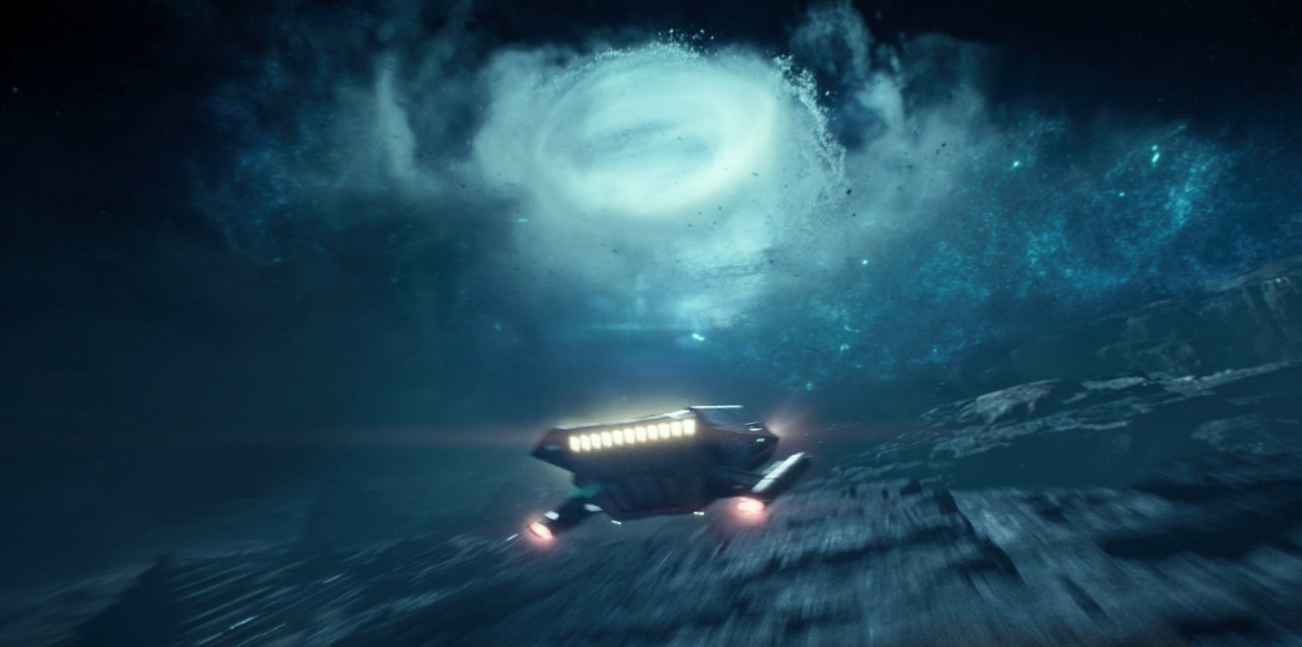
In terms of visual effects, Charades excelled. The mysterious anomaly on the surface of the moon was interesting, and its pale blue hue made it look different from other similar anomalies seen elsewhere in Star Trek. Within the anomaly itself, where Uhura, Ortegas, and Chapel ended up, I felt the “interdimensional space” set was perhaps a little small, but nevertheless succeeded at feeling sufficiently otherworldly. When compared to similar VFX sets, especially the Trill memory world from Discovery’s third season, there’s no contest, and it’s great to see that Paramount has massively improved its animation work.

There might’ve been a little of Season 1’s Children of the Comet in the set design used for the Kerkhovian interdimensional realm, but for most viewers I daresay that would pass unnoticed. Overall, it was an excellent and suitably “alien” space, both in terms of its appearance as an anomaly in space and when the away team arrived there in person.

The shuttle and the anomaly – a great CGI creation.

With a return to Vulcan and a focus on Spock’s family, there was the potential to bring back Sarek as well as Amanda. James Frain played the role of Sarek remarkably well in Discovery, and it would have been interesting to have seen more of the Spock-Sarek feud that was alluded to in The Original Series. Spock made the barest of references to their estrangement in Charades, but there might’ve been scope to do more had the episode retained a tighter focus on Vulcan and Spock’s family.

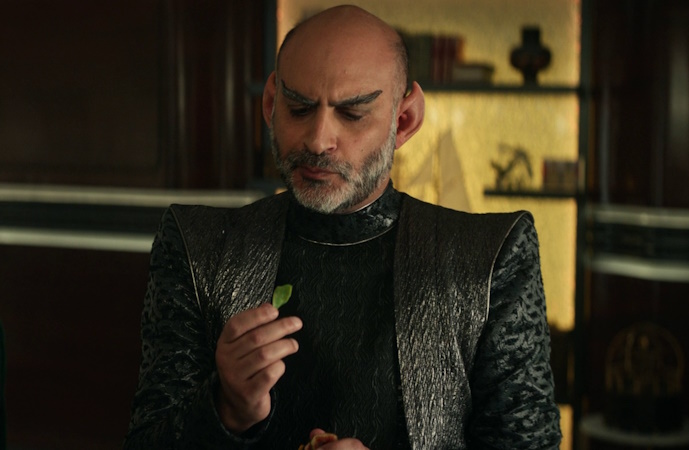
While T’Pring’s mother certainly leaned into the Enterprise style of aloof and arrogant Vulcans, I wasn’t really sure what to make of her father. T’Pring’s father seemed to be the archetypal “henpecked” husband, doing little more than agreeing with her and backing up her opinions. This kind of stock character has very little personality, and while it was intended to be lighthearted, I’m not sure how well it works in-universe when we think about how Vulcans tend to act. Is his behaviour logical?

T’Pring’s father.

Despite the inherent silliness of Spock’s sci-fi ailment, I was impressed by Nurse Chapel’s dedication to her patient. This side of the story took on a much more serious tone, and if we set aside the relationship drama angle for a moment, we got to see a great example of two dedicated medical professionals working against the clock to help a sick patient. Star Trek can do medical drama well, and while this wasn’t the main focus of Charades, it’s still a good example of how well medical stories can work in the franchise.

For Nurse Chapel we also got to see a bit more of her professional life – the “archaeological medicine” fellowship that she hoped to work with. This was interesting, as it seems to harken back to something we learned about Chapel in The Original Series: her engagement to a Federation archaeologist. The episode What Are Little Girls Made Of? introduced this relationship, and it’ll be interesting to see what – if anything – comes of it in Strange New Worlds, especially given Chapel’s newfound relationship with Spock. Will she break things off with Spock to pursue another partner? If so, what impact will that have on Spock? Maybe we’ll find out later this season… or in Season 3!

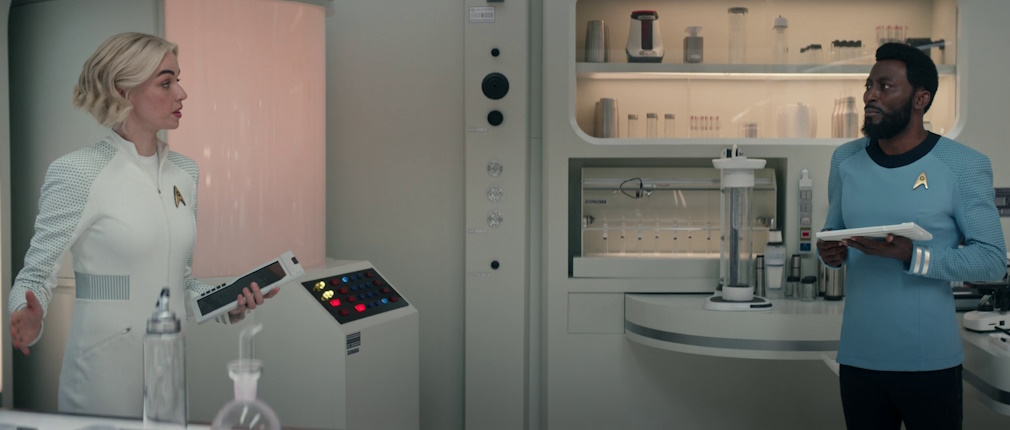
Nurse Chapel and Dr M’Benga in sickbay.

So I think I’ve said all I can about Charades for now. Its use of cringe humour means it ranks quite low on my list of Strange New Worlds episodes… but that isn’t to say it was out-and-out “bad.” It did its own thing and did it well, at least as far as I can tell. That style of humour simply isn’t to my taste, and it’s for that reason more than any other that I found it to be a less enjoyable experience than other episodes that the series has offered.

It took me a while to get around to this review, and I’m still getting caught up on Strange New Worlds after a longer-than-expected break. Thanks for bearing with me, and I promise to get around to full reviews of the remaining episodes of the season in due course!

Star Trek: Strange New Worlds Seasons 1-2 are available to stream now on Paramount Plus in countries and territories where the service is available. The Star Trek franchise – including Strange New Worlds – is the copyright of Paramount Global. This article contains the thoughts and opinions of one person only and is not intended to cause any offence.
Factions of Star Trek: Strange New Worlds

Spoiler Warning: There are spoilers ahead for Star Trek: Discovery Seasons 1-3, Short Treks, Star Trek: Picard, Star Trek: Lower Decks, and for other iterations of the Star Trek franchise.

Though Strange New Worlds Season 1 is still probably a year or more away from being broadcast, it’s never too soon to start thinking about the next live-action Star Trek show! Each Star Trek project brings something new and different to the table, but Strange New Worlds’ purported return to a more exploration-focused, episodic kind of storytelling is something I’m incredibly interested in and excited for. When I think about upcoming television series that I’m most excited about, Strange New Worlds has to be very close to the top of the list!

In addition to the three cast members reprising their roles from Discovery, we learned earlier in the year that five other major roles have been cast – but we didn’t learn anything about the characters, nor about any recurring or returning characters either. Strange New Worlds is currently in production, but was entirely absent from Star Trek’s First Contact Day digital event in April. We haven’t really heard much solid news from the production for a while!

Strange New Worlds is in production, and looks set for a 2022 broadcast.

Despite that, I thought it could be fun to look ahead to Strange New Worlds’ premiere, and this time we’re going to consider some of the factions present in the Star Trek galaxy that Pike and his crew could encounter! This isn’t going to be a comprehensive list of every Star Trek race or species, just those that I personally consider plausible for the new show.

As always, please keep in mind that I don’t have any “insider information.” I’m not stating that any of these factions will definitely appear in Strange New Worlds, all we’re going to do today is look at some factions from past iterations of Star Trek and think about where they could be in the mid-2250s. That’s all!

With that out of the way, let’s jump into the list!

Number 1: The Andorians

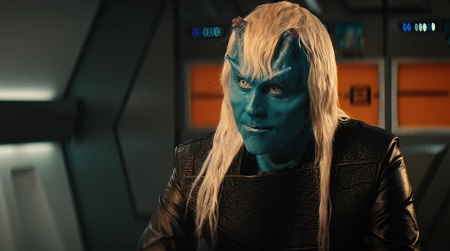
Ryn, an Andorian seen in Discovery Season 3.

As a founding member of the Federation, the Andorians are a firm ally in this era. Despite that, however, episodes like Journey to Babel in The Original Series showed that there is still a degree of mistrust particularly between Andorians and Vulcans. Much of what we know about the Andorians actually comes from Enterprise, where they featured far more prominently than in any other Star Trek series to date. After appearing in The Original Series and in the background in a couple of films, the Andorians were absent for practically all of The Next Generation era.

It would be amazing if one of Strange New Worlds’ main or recurring characters were Andorian! Having an Andorian crew member would be a first for any Star Trek show, and that could be a lot of fun. It would also be possible for the series to delve into Federation politics in a similar way to Journey to Babel, looking at how Andorian relations with other Federation members have improved – or not – over the years. Though he would be well over 100 years old by this point, it’s not inconceivable that Shran, the Andorian commander who tangled with Captain Archer in Enterprise, could still be alive in this era, and perhaps he could make an appearance.
Number 2: Arcadians, Ariolos, Arkenites, and others!

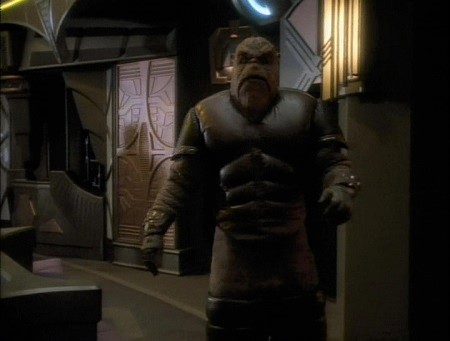
One of the only Arcadians ever seen in Star Trek.

Star Trek IV: The Voyage Home – and several other films starring the cast of The Original Series – followed the Star Wars trend of designing cool-looking aliens and then leaving them in the background or in minor supporting roles. The higher budget afforded to the films allowed for more aliens and different-looking aliens, but subsequent Star Trek projects haven’t brought back races like the Arcadians, Ariolos, Arkenites, and more.

However, Discovery Season 3 briefly featured a Betelgeusian character – the Betelgeusians were another race seen in the background of a film before being ignored in subsequent Star Trek projects. So I think there’s the possibility that one or more races only ever seen in films like The Voyage Home could appear in Strange New Worlds. Perhaps Captain Pike and the crew make first contact with one of them!

Number 3: The Bajorans

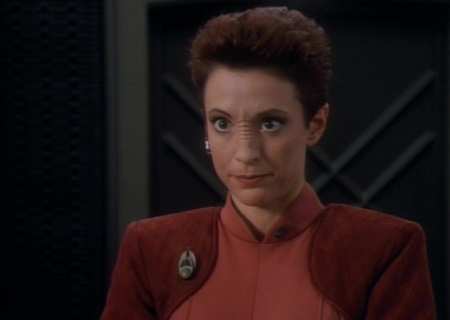
Major Kira was a 24th Century Bajoran – and a major character in Deep Space Nine.

The Cardassian Empire would not occupy Bajor until the late 23rd or early 24th Century, meaning that in the 2250s Bajor and the Bajorans will be very different to the way we remember them from Deep Space Nine. Pre-occupation Bajor operated a strict caste-based hierarchy, with very little mixing between castes. Bajorans were known to be artistic, creative, and deeply spiritual, as well as pioneers of space exploration.

This is tied to a pet theory I have that Captain Pike will make first contact with a previously-established Star Trek faction! I feel that the Bajorans are absolutely one of the contenders for such a mission of first contact, and it could be absolutely fascinating to learn more about the Bajorans and how they were prior to the Cardassian occupation. The Bajorans have recently been referenced in Discovery Season 3, so the creative team behind Star Trek clearly haven’t forgotten all about them! Perhaps that could be a hint at a more significant role in an upcoming project?

Number 4: The Barzan

Nhan, a Barzan character in Star Trek: Discovery.

By the mid-23rd Century, at least one Barzan – Nhan – served in Starfleet. Nhan served under Pike’s command on the Enterprise, and though Pike and some other members of the crew know her true fate – that she left the 23rd Century behind to head into the far future with the crew of Discovery – officially she was killed in action during the battle against Control.

I wonder whether Pike might visit Barzan II to pay respects to Nhan, or to convey the news of her being lost to her family. That could be an interesting story, as well as a way for Strange New Worlds to keep a thread of continuity going with Discovery. Despite Nhan’s departure from Discovery midway through Season 3 I’m hopeful she could return. The Barzan were not a Federation member by the mid-23rd Century, so there’s the possibility that Nhan’s death could complicate Federation-Barzan relations.

Number 5: The Benzites

Mordock, a 24th Century Benzite.

The Benzites have only appeared on a few occasions, so I think there’s scope to explore more of their culture and perhaps even show how they came to make first contact with the Federation. The first Benzite we met in Star Trek was in The Next Generation Season 1 episode Coming of Age, where Mordock beat Wesley Crusher to a place at Starfleet Academy. A couple of other Benzites were seen later in The Next Generation and in the background in Voyager and Lower Decks.

All we know about the Benzites is that they were not members of the Federation, and that they had maintained relatively limited diplomatic contact prior to the 24th Century. They’re another possible candidate for a mission of first contact, in my opinion!

Number 6: The Betazoids

Deanna Troi – a half-Betazoid – recently returned in Star Trek: Picard Season 1.

Betazed – the Betazoid homeworld – appears to be relatively close to Earth and Vulcan, at least according to dialogue in Deep Space Nine. If that’s the case, it stands to reason that humans and Betazoids may have already been in contact with one another prior to Captain Pike’s mission of exploration. They were also known to be a Federation member by the mid-24th Century. Another possible candidate for a mission of first contact? Maybe!

Betazoids have telepathic and empathic abilities which have been shown to be very useful to Starfleet in other Star Trek shows, so perhaps a Betazoid main or recurring character could fill a Troi-like role aboard the Enterprise. I think this is less likely, but it’s a possibility!

Number 7: The Borg

A Borg drone seen in First Contact.

Star Trek has made a mess of Borg-Federation contact thanks to revelations in Generations, Voyager, and Enterprise that humanity had contact with (or knowledge of) the Collective prior to Captain Picard making “official” first contact with them. I think it would be very difficult for Strange New Worlds to successfully pull off a Borg story without treading on too many toes, but at the same time I think it could be amazing to see Captain Pike face off against the Borg!

Perhaps this would work best as a time travel or even parallel universe story; perhaps Pike and the Enterprise accidentally cross into an alternate reality where the Borg were successful in assimilating Earth in the 21st Century (as seen in First Contact). They would need to find a way to get home, and may not even be aware of the name of their adversary. A long-shot for Season 1, perhaps, but a possibility! In the 23rd Century in the prime timeline, the Borg should be confined to the Delta Quadrant. They may not have transwarp technology by this point, though their technology should still outpace the Federation considerably.

Number 8: The Bynars

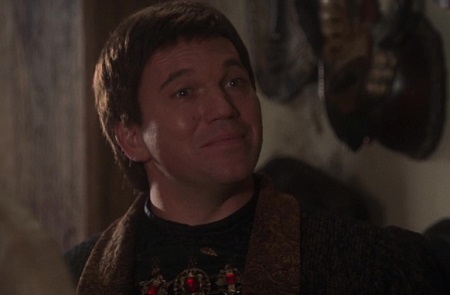
A pair of Bynars seen in The Next Generation.

Interestingly, though the Bynars were only ever seen on screen in The Next Generation Season 1, they were mentioned by name in Enterprise. The Federation were thus at least aware of the Bynars’ existence by the mid-23rd Century, and it’s possible that they had attempted to make first contact with the semi-synthetic race.
Given that modern Star Trek has dedicated a fair amount of time to exploring the relationship between organic and synthetic life, and how the possibility exists for that relationship to turn into conflict, bringing back the Bynars – who are a race connected to a “master computer” on their homeworld – could make for an interesting continuation of that theme.
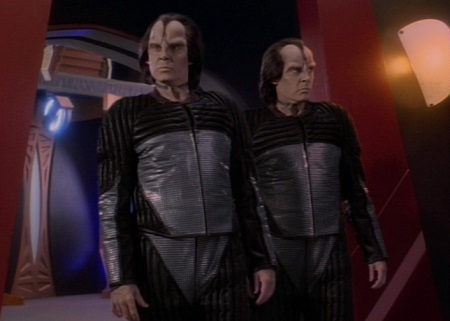
Number 9: The Caitians

Caitians served in Starfleet since at least the mid-23rd Century.
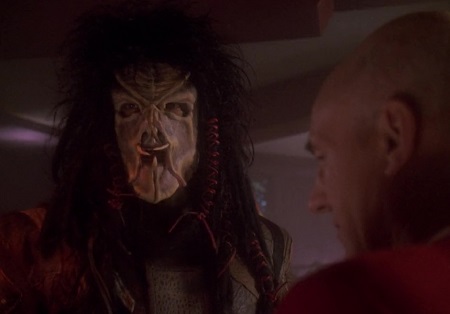
This feline-inspired species initially appeared in The Animated Series, and has recently been seen in Lower Decks, where Dr T’Ana is a Caitian. Their only live-action appearance to date has been in The Voyage Home, but with the Caitians returning to Star Trek in a big way thanks to Lower Decks, perhaps the time is right for them to make a major live-action appearance again.

The Caitians were presumably Federation members – or at least allies – by the time Kirk assumed command of the Enterprise, so it’s at least plausible to think that there could be other Caitian Starfleet officers during Pike’s tenure. It would be an interesting opportunity to learn more about a race that Star Trek has shown off on a few occasions but never really dug into.

Number 10: The Cardassians

A Cardassian seen in The Next Generation.

As with the Bajorans above, the Cardassians are a faction we know very well from their appearances in Deep Space Nine. What we haven’t seen, however, is first contact between the Federation and the Cardassians, which is something Captain Pike and the Enterprise could be responsible for! There was conflict between the Cardassians and Federation in the early or mid-24th Century, but aside from that – and their occupation of Bajor – much of early Cardassian history is unknown.

Cardassia Prime and Bajor are relatively close to one another, so it’s possible Captain Pike could encounter both if the Enterprise finds itself in that region of space. I really like the idea of Strange New Worlds showcasing first contact between the Federation and a race that we got to know in the 24th Century, so I think the Cardassians could be a great inclusion in the new series.

Number 11: Chameloids

A Chameloid taking humanoid form in the late 23rd Century.

Chameloids were shape-shifters, but were not affiliated with the Dominion. The only known Chameloid seen in Star Trek appeared on Rura Penthe in The Undiscovered Country. This individual played a role in Captain Kirk and Dr McCoy’s escape from the Klingon prison colony.

Shape-shifting aliens have been seen on a few different occasions in Star Trek (excluding Odo and the Founders, of course) and make for interesting adversaries. Perhaps Pike and his crew could encounter a Chameloid – they may even be responsible for “Martia” ending up on Rura Penthe!

Number 12: The Deltans

Ilia, a 23rd Century Deltan Starfleet officer.

We’ve only ever met one Deltan in Star Trek: Ilia, a Starfleet officer in The Motion Picture. The Deltans – and Ilia – were originally created for Phase II, the project which would eventually morph into The Motion Picture in the late 1970s. They were intended to be a somewhat ethereal race, older and wiser than humanity and offering a different perspective on the galaxy.

Deltans were also presented as very sensual, both in their sole appearance in The Motion Picture and when they were referenced in Enterprise’s fourth season. Considering that second mention in Enterprise, Deltans and humanity had encountered one another long before the events of Strange New Worlds. Perhaps Pike and the crew could lead a diplomatic delegation, or witness the Deltans joining the Federation?

Number 13: The Denobulans

Dr Phlox, a 22nd Century Denobulan.

The Denobulans are a race only ever seen in Enterprise, and perhaps Strange New Worlds could tell us why that is! Though I wouldn’t want to see any harm come to Dr Phlox’s people, it’s possible that some kind of disaster befell them in the years after Enterprise, accounting for their absence in the 23rd and 24th Centuries.

If that’s not the case, it would be great to learn what became of them! It seems likely that the Denobulan homeworld was relatively near to Earth and Vulcan, and given their friendly relations with Earth in Enterprise, perhaps the Denobulans became a Federation member relatively early on. A Denobulan could even join Pike’s crew as a main or recurring character!

Number 14: The Edosians

An Edosian seen in Lower Decks.

This three-legged, three-armed race were originally seen in The Animated Series, where Lieutenant Arex was an officer under Kirk’s command. Like many elements from that show, the Edosians seemingly vanished – until Lower Decks brought back an Edosian character last year! It was great fun to see another Edosian Starfleet officer then, and it may be the first of many Edosians that we’ll see going forward.

It was prohibitively expensive in the late 1970s and 1980s to bring an Edosian character to life in live-action, but times have changed and I’d argue that it’s more than achievable in 2021! It’s possible that Arex himself could make a return, serving under Pike’s command on the Enterprise, or perhaps Pike and the crew will encounter other Edosians out in space. Whether they’re Federation members or not is unknown, but maybe Strange New Worlds can clear that up!

Number 15: The El-Aurians

Dr Tolian Soran, an El-Aurian who lived in the 23rd/24th Centuries.

At least one El-Aurian – Guinan – visited Earth in the 19th Century, and based on the fact that the Federation came to the aid of El-Aurian refugees in Generations, they must’ve either been relatively near to Federation space or been able to travel there easily. The El-Aurians were assimilated by the Borg in the late 23rd Century, but Strange New Worlds potentially offers the opportunity to see the El-Aurians in their prime, before the Borg decimated their people.

Guinan is going to be making a return in Picard Season 2, so the El-Aurians are clearly still a factor in upcoming Star Trek projects! Having Pike and his crew encounter the El-Aurians could be a way for Strange New Worlds to tie itself to Picard and the 24th Century.

Number 16: The Kalar

A Kalar warrior in The Cage.

Captain Pike has already encountered the Kalar once! During the events of The Cage, Pike recalled an attack by Kalar warriors during a mission to Rigel VII, blaming himself for the deaths of three officers under his command. In Discovery we saw Pike revisit events with the Talosians and Vina, so perhaps it’s possible to bring back the Kalar too!

The Kalar were depicted as an un-advanced race incapable of spaceflight with technology that looked similar to the early medieval period or dark ages on Earth. It seems unlikely they’d have made any significant advancements since Pike’s earlier encounter with them, but it’s not impossible to devise a compelling reason to revisit Rigel VII.

Number 17: The Kelpiens and Ba’ul

Captain Saru was the first Kelpien to serve in Starfleet.

Captain Pike played a huge role in the development of the Kelpiens and Ba’ul in Discovery Season 2, arguably violating the Prime Directive to aid the Kelpiens by putting the entire species through vahar’ai – a biological evolution which transformed the meek, fearful Kelpiens into apex predators.

There will be massive consequences for what Pike did, and while Saru is arguably the best character for close examinations of the Kelpiens, Pike’s monumental role in shaping their future – and that of the Ba’ul, with whom the Kelpiens share a homeworld – could mean that a revisit to Kaminar is on the cards. The Ba’ul may blame Pike and the Federation for upsetting the delicate balance they had worked so hard to establish, seeking revenge. Or Kaminar may have descended into war, with the Kelpiens and Ba’ul at each others’ throats requiring Pike’s intervention.

Number 18: The Klingon Empire

Chancellor L’Rell was the Klingon leader in this era.

Even if it doesn’t happen in Season 1, I feel certain that Strange New Worlds will eventually feature some Klingon stories! Federation-Klingon relations are rocky after the end of the war seen in Discovery’s first season, and it would be interesting to see how Pike, L’Rell, and others try to maintain the peace in the years before Kirk’s five-year mission.

When considering Pike’s personal story, it was on the Klingon world of Boreth where he secured his fate – his impending disability – in exchange for a time crystal. Pike’s own views and relations with the Klingons are thus particularly complex, and as he comes to terms with what he saw in the vision the time crystal gave to him he may seek out advice from Klingons, or he may even try to revisit Boreth.

Number 19: The Lurians

Morn, a 24th Century Lurian.

The best-known Lurian in Star Trek is Deep Space Nine background character Morn. The first trailer for Discovery Season 3 in 2019 seemed to imply we’d see the Lurians return, as a Lurian guard was shown chasing after Booker and Burnham, but it turned out to be just a cameo! The Lurians were not Federation members as of the mid-24th Century, but appeared to maintain reasonably good relations.

Morn became a Star Trek icon during Deep Space Nine’s run, and I can’t decide if that means bringing the Lurians back in a major way would be a good thing or not! Perhaps it would be best to leave them be, a somewhat mysterious, enigmatic people, rather than bring them into the modern day and risk overexplaining them and losing the magic.

Number 20: The Malurians

A Malurian (wearing a disguise) in the 22nd Century.

The Malurians suffered a tragic fate in The Original Series, being wiped out by a self-aware probe. They also appeared in Season 1 of Enterprise, and seemingly conducted morally questionable actions! The Malurians were visited by the Federation shortly before they were rendered extinct, so it’s possible that the Federation in this era had some kind of relationship with them.

We don’t know very much about the Malurians, but their ultimate fate puts them in a rather unique position in this era. Perhaps we’ll learn that Pike and the crew helped the Malurians settle a small colony somewhere, paving the way for their survival!

Number 21: The Miradorn

A pair of Miradorn twins in the 24th Century.

The Miradorn made an appearance in Deep Space Nine, and were shown to be a race of twins – or at least where twins were commonplace. These sets of twins operated as two halves of a single person, with a very deep connection to one another. As of the mid-24th Century they appeared to be an independent power, maintaining relations with both the Federation and the Ferengi.

The Miradorn are another interesting race that I consider to have first contact potential. The twin aspect of their culture makes them different from many other Star Trek races, and they have a neat design that’s different without being excessively complicated.

Number 22: The Nausicaans

A Nausicaan was responsible for injuring a young Ensign Picard in the early 24th Century!

In the late 23rd and 24th Centuries, the Nausicaans were known as a violent people, often seen as pirates or criminals. They operated in an area of space relatively close to Earth and Vulcan, as they had been encountered by humanity in the 22nd Century. In addition to their criminal activities, Nausicaans in the 24th Century were occasionally seen as mercenaries and bodyguards.

The Nausicaans could appear in their typical pirate role in Strange New Worlds, becoming an adversary for Pike and the Enterprise to overcome. Or we could see them step out of that role for a change, with the show exploring more of Nausicaan culture.

Number 23: The Nibirians

A Nibirian in the alternate reality.

The Nibirians were seen in Star Trek Into Darkness – and thus their only appearance is in the alternate reality. However, given how similar the two realities are, it’s a safe bet that the Nibirians exist in the prime timeline. In Into Darkness they were shown to be a stone age people, very early in their development.

Given that the Nibirians were under threat from a volcano in Into Darkness, maybe Pike and the crew will have to come up with a creative way to save them, just as Kirk did in the alternate reality. If a return to the Kelvin timeline is on the agenda – which I doubt, but you never know – this could be a way to connect current Star Trek to the alternate reality.

Number 24: The Orions

In the 32nd Century, Osyraa had become the leader of the Emerald Chain – a major faction.

The Orions have recently featured in Season 3 of Discovery, and of course with Tendi in Lower Decks! In addition, Captain Pike has somewhat of a history with them, having encountered Orion slaves during the events of The Cage. For both of those reasons they seem like a contender to make an appearance in Strange New Worlds!

The Orions were an independent power in the 23rd Century, with at least some Orions involved in criminality, slavery, and the Orion Syndicate – a major organised crime outfit. They seem like they could be villains, then, but an interesting twist could be to make an Orion a crew member on the Enterprise, or an ally of Pike and the crew.

Number 25: The Pahvans

A noncorporeal Pahvan.

Captain Pike wasn’t involved in the USS Discovery’s mission to the planet Pahvo during the Federation-Klingon war, but I feel there’s scope to revisit these noncorporeal, pacifist aliens. Pahvo had a unique “transmitter” which allowed Discovery to detect cloaked Klingon ships, and thus the planet unintentionally played a role in the war.

It’s possible that Pahvo was attacked by the Klingons in retaliation, but the planet was marked on a star chart seen in Picard Season 1, which suggests the Federation may have maintained some kind of diplomatic relations with the Pahvans into the 24th Century. Regardless, there are perhaps leftover story threads from Discovery that Strange New Worlds could potentially pick up with the Pahvans.

Number 26: The Q Continuum

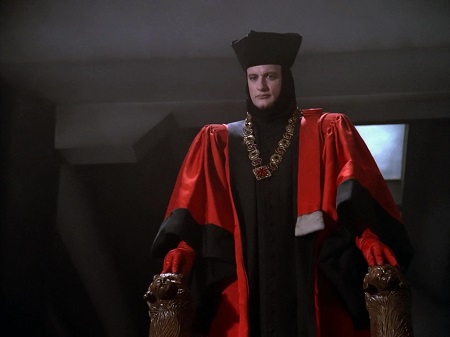
Q in his famous judge outfit.

It seems as though the Federation’s first encounter with the Q was when Picard and the Enterprise-D met Q during the events of Encounter At Farpoint, but we also know that members of the Q Continuum had visited Earth in the past, including during the American Civil War in the 19th Century. It’s thus possible that Pike and the crew could encounter a Q without realising who or what they’re dealing with!

With Q coming back in Picard Season 2, having the Continuum appear in some form in Strange New Worlds would be a way for the two shows to work together. This one is definitely more of a long-shot, but it’s not impossible!

Number 27: The Romulan Star Empire

Narek and Rizzo, two 24th Century Romulan operatives.

Any story involving the Romulans in Strange New Worlds would have to keep their true nature – as descendants of the Vulcans – a secret. Because no Romulan characters could appear on screen alongside Pike and the crew that naturally constrains the kinds of stories that can be told. However, in the episode Minefield, Enterprise managed to pull off an interesting Romulan story without going too far, so it can be done!

The Romulans were a belligerent power in this era, having already fought a major war with Earth less than a century earlier. Though there is peace between the Romulans and Federation, there are no formal diplomatic relations and there seems to be a lot of tension. The Romulans have recently been explored in a major way in Picard Season 1, and to a lesser extent in Discovery Season 3. They’re a major Star Trek faction, up there with the Klingons and Borg, so I can’t help but feel Strange New Worlds might try to find a way to include them – somehow!

Number 28: The Saurians

Linus, a Saurian Starfleet officer.

Linus, a secondary character in Discovery, is a Saurian – a race first seen in the background in The Motion Picture. The Saurians may well be Federation members by this time, and if they’re serving in Starfleet there could be other Saurian officers aboard the Enterprise. Despite Linus having made a number of appearances, we don’t know very much about his people.

The Saurians are a faction we could learn more about in Strange New Worlds. Pike and the crew could even visit the Saurian homeworld, perhaps to convey news about Linus being declared killed in action. It would be interesting to see more Saurians and learn more about their place in the Federation.

Number 29: The Selay

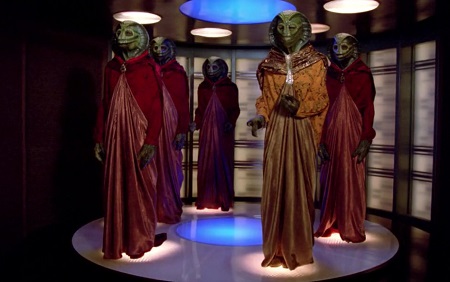
A group of Selay delegates in the transporter room of the Enterprise-D in the 24th Century.

We don’t know very much about the Selay. They appeared once in The Next Generation Season 1, and had a couple of blink-and-you’ll-miss-it background appearances in a couple of other episodes, but that’s it. Their appearance in Tapestry means that they had encountered the Federation by the early 24th Century, so perhaps they could appear in Strange New Worlds.

Modern Star Trek has taken several races that we don’t know much about and expanded on them. The design of the Selay – snake-like and very reptilian – is interesting, and the faction is ripe for an in-depth look!

Number 30: The Skagarans

Draysik, a 22nd Century Skagaran in the Delphic Expanse.

In Enterprise we learned that the Skagarans had visited Earth in the 19th Century, where they had abducted a group of humans to use as slave labour. There’s potential in that kind of storyline to either see Pike and the crew come up against an enemy who uses slaves, or to explore a post-slavery society and look at some of the long-lasting implications of keeping slaves in the past. This would allow Strange New Worlds to do something Star Trek has always done: use science fiction to examine real-world issues.

It would also be neat to bring back a faction from Enterprise in a major way, as this is something that hasn’t yet been done in modern Star Trek.

Number 31: The Suliban

Silik, a 22nd Century Suliban commander.

Speaking of factions from Enterprise that could return, how about the Suliban? Though initially antagonistic toward Earth, this was mostly driven by the interference of time-travellers from the future. Without that undue influence, perhaps Suliban-Federation relations have improved. I wrote once that it was possible that the Suliban had gone into some kind of isolation – which would account for their absence in the 23rd and 24th Centuries – so perhaps we could see that happen in Strange New Worlds.

I’d love to see an expanded role for the Suliban in Star Trek. Perhaps they could even be Federation members by this era, with Suliban officers serving aboard the Enterprise. It would be great to revisit a faction we only encountered in Enterprise, at any rate.

Number 32: The Talosians

Talosians seen in Discovery Season 2.

Discovery Season 2 brought back the Talosians in a big way, and Captain Pike played a major role in that storyline. Considering Pike’s feelings for Vina – a human inhabitant of Talos IV – it’s at least possible that he may keep in contact with the Talosians, even though he’d have to do so in secret for fear of breaching Starfleet regulations.

In this era, Talos IV was off limits to Starfleet due to the Talosians’ attempts to kidnap Pike and their powerful telepathic abilities. Revisiting the planet isn’t entirely impossible, though, as I reckon Pike would head there if the Talosians asked for his help.

Number 33: The Tellarites

Two Tellarite delegates aboard the Enterprise in the 23rd Century.

Along with the Vulcans, Andorians, and humans, the Tellarites were the fourth founding member of the Federation. Despite that, however, they had a complicated relationship with the other races, particularly the Vulcans.

The Tellarites are the one Federation founding member that we know the least about. They’ve only made a few appearances in Star Trek, often in minor or background roles, and aside from a few episodes in Enterprise and their first appearance in The Original Series, we haven’t seen much of them at all. I’m not sure how well a Tellarite main character would work simply because their deliberately unkind aesthetic doesn’t lend itself well to fitting with a character audiences want to root for – but in a way it would be interesting for Star Trek to try to overcome that hurdle!

Number 34: The Tholians

A 23rd Century Tholian captain.

The Short Treks episode Ask Not confirmed that the Tholians and Federation had been in conflict during this era. If Cadet Sidhu appears in Strange New Worlds as a significant character, including the Tholians could be an interesting story for her as she was the sole survivor of a Tholian attack.

The Tholians are one of the more “alien” races that we know of in Star Trek, being insectoid in appearance and coming from a high temperature environment that leaves them unable to tolerate standard environments. They could certainly appear in an adversarial role in Strange New Worlds.

Number 35: The Trill

Michael Burnham and Adira meeting a group of Trill in Discovery Season 3.

The Trill are a conjoined species – one part is humanoid, the other a symbiont. The symbionts are longer-lived than their hosts and can easily live for centuries. Discovery Season 3 recently revisited the Trill homeworld, and it would be neat to see the Trill return in Strange New Worlds as well.

It would even be possible for Dax to make an appearance. The Dax symbiont had a number of hosts before Jadzia and Ezri in Deep Space Nine, and it was certainly alive in the mid-23rd Century. Regardless of whether that happens, we know that the Trill were Federation members by the 24th Century, and Strange New Worlds could depict their early interactions with the Federation.

Number 36: The Vulcans

Spock!

Obviously we know that Spock is going to be a major character in Strange New Worlds! Over the course of Star Trek’s history we’ve already learned a great deal about the Vulcans, their history, and their culture. There’s still scope to expand that, though, and with Spock as a potential way into new Vulcan stories, I wonder if we’ll get to see more.

Spock’s relationship with Sarek could be explored, and it would be a way for James Frain to reprise his role from Discovery. We could also see more Vulcans joining Starfleet and serving in a wider variety of roles than just “science officer!”

Number 37: The Xindi

Degra, a 22nd Century Xindi.

As with the Suliban above, the Xindi have only appeared in Enterprise so far. We know a little more about their future, however, including that they eventually joined the Federation. Though their absence from Star Trek shows set in the 23rd and 24th Centuries suggests that may not have happened for a while, it’s possible that it happened earlier than we think!

Otherwise we could see the Xindi as another race that have isolated themselves and cut off diplomatic ties. Perhaps one of Pike’s missions will be to re-establish relations with the Xindi after decades without contact. The Xindi are five different races sharing a homeworld, and there’s potential to use that setting to explore the way different cultures interact and work together.

So that’s it! Some factions from Star Trek’s past that could appear in Strange New Worlds.

Hopefully it won’t be long before Captain Pike returns!

This has been a long one so I won’t drag things out much longer! Suffice to say that there are many different races, cultures, and factions from past iterations of Star Trek that could appear in some form in the new series. Obviously the show can’t fit all of those on the list above into its first season, but I hope there’ll be some attempts to revisit at least one or two factions we got to know in other Star Trek shows and films.

Hopefully it won’t be too long before we get to hear more news about Strange New Worlds – or even see a trailer! Whenever that happens make sure to check back as I daresay I’ll break things down here on the website. The show is definitely one I’m looking forward to!

Star Trek: Strange New Worlds will be broadcast on Paramount+ in the United States (and other regions where the platform is available) in 2022. Further international distribution has not yet been announced. The Star Trek franchise – including Strange New Worlds and all other properties mentioned above – is the copyright of ViacomCBS. This article contains the thoughts and opinions of one person only and is not intended to cause any offence.