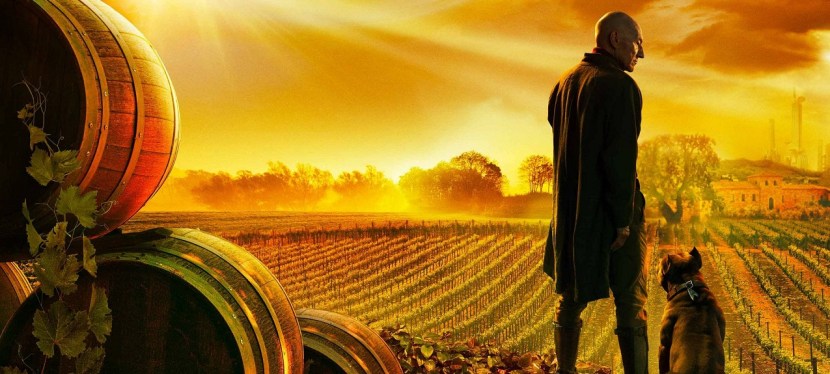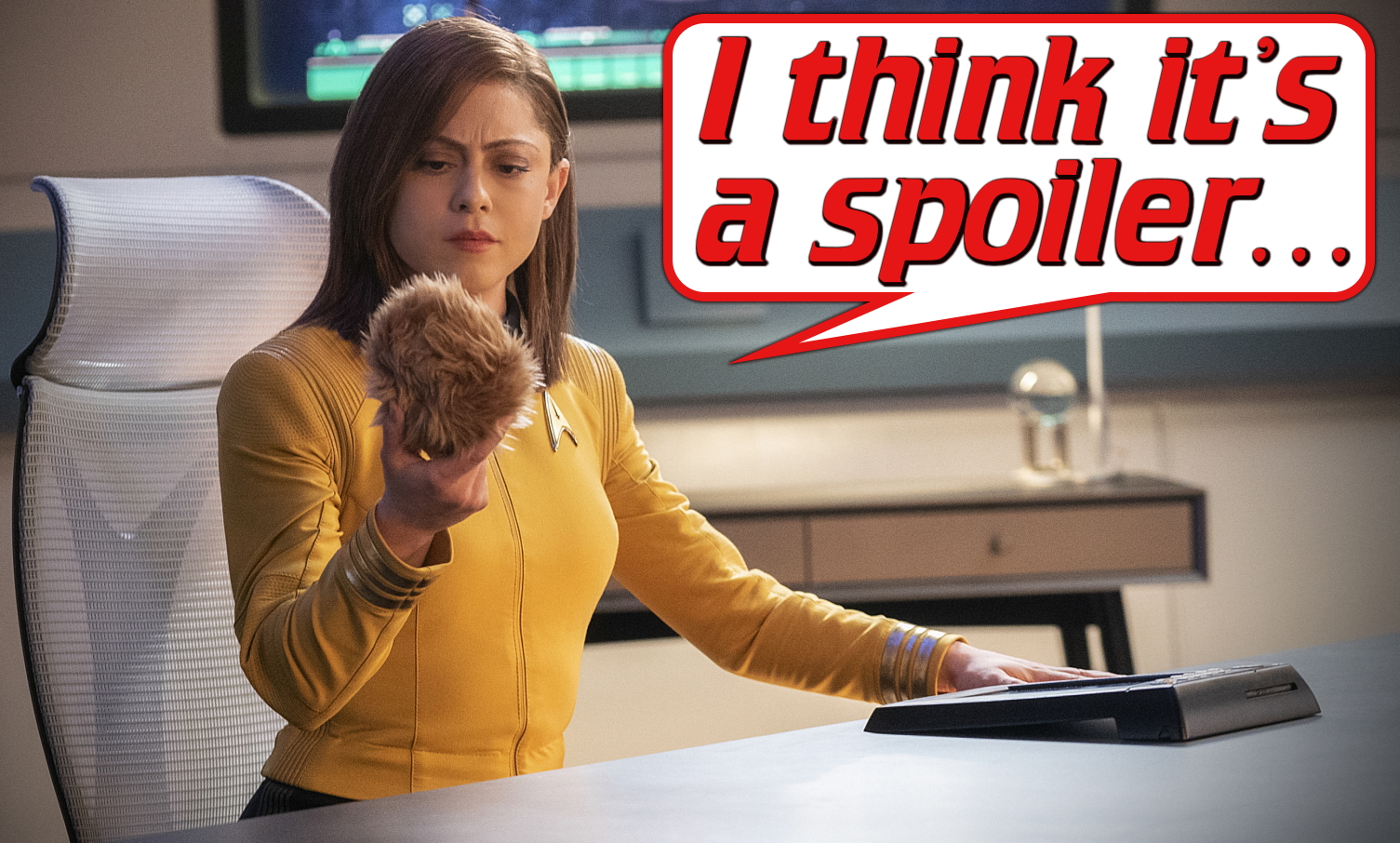
Six Star Trek: Picard theories

Spoiler Warning: There will be spoilers for Remembrance, the first episode of Star Trek: Picard, as well as for other iterations of the Star Trek franchise.

I don’t usually engage too much in theorising about my favourite shows, but Star Trek is somewhat of an exception! Remembrance, the first episode of Star Trek: Picard, introduced us to a lot of information about some of the events and individuals that have shaped the galaxy since Star Trek: Nemesis. And I got thinking about a few of those points, as well as other story points from the episode.

This is pure speculation. I don’t have “sources” – no one online does – and this is just a short collection of my own personal theories based on my viewing of Remembrance. It’s highly likely that none of these will turn out to be correct!

Number 1: Index, the hologram from the Starfleet archive, is sentient.

The hologram named Index in Picard’s personal archive.

After the attack on Mars, which was conducted by rogue synthetics, there was a “galactic treaty” which banned synthetic life. But “synthetic” is a very broad term – if they wanted to ban androids, why not just say “android”? If I’m right, then all sentient machines and AIs – not just androids – have been outlawed. This would include self-aware, fully sentient holograms.

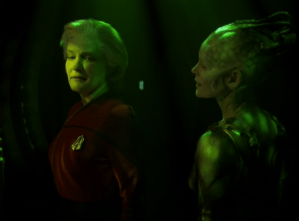
We’re aware of three who fall into this category. Vic Fontaine, who was a recurring character on Deep Space Nine in its final seasons, Professor Moriarty, who was accidentally created by the Enterprise-D computer, and The Doctor from Voyager. Of those three, Moriarty’s fate is unclear – he was trapped in his own holographic world by Picard and his crew, but whether his programme survived the destruction of the Enterprise-D isn’t known. Vic Fontaine and The Doctor may very well have still been active around the time of the attack on Mars – so what happened to them? I wonder if we’ll find out.

Regardless, if there is a ban on all artificial intelligence, including holograms, that should mean that Index, the hologram at the Starfleet archive, is just a piece of software and isn’t self-aware. But when I watched Remembrance, there was something in the performance that indicated a greater understanding of what was going on. The eye movements, the tiny smile when showing Picard the painting, and other very subtle clues contributed to this feeling, at least for me. I don’t know whether we’ll see Index again, or whether it will even matter, but I have a suspicion that she is sentient.

I hope that, one way or another, the question of holograms is addressed. The Doctor was obviously a huge part of the Voyager crew, and Vic Fontaine was important too, so it would be nice to know one way or the other what happened to them – even if it’s only implicitly through some throwaway comment about holograms.

Number 2: Bruce Maddox inadvertently caused the attack on Mars.

Picard with Bruce Maddox aboard the Enterprise-D.

Mars came under attack by rogue synthetics, destroying the fleet Picard hoped to use to aid the evacuation of Romulus. At that time, a senior figure in the Federation’s synthetic research was Bruce Maddox – who we met in The Measure Of A Man from the second season of The Next Generation. After the ban on synthetics went into effect, Maddox went underground and – so it seems, anyway – continued his research into synthetic life.

The underlying cause of the attack on Mars isn’t known as of Remembrance, despite the attack taking place over a decade earlier. I wonder if Maddox did something while creating or programming the synthetics to cause them to malfunction. In Star Trek: Insurrection, Data goes rogue too, attacking a cloaked Federation outpost and exposing the officers to the Ba’ku, who they had been observing. The reason was that Data’s core programming took over, and all he knew was “right and wrong” – and believing the mission to forcibly relocate the Ba’ku to be wrong, he attacked his Starfleet colleagues.

So there is precedent in Star Trek for an android to malfunction in a similar way. If there were something wrong in the synthetics’ programming, or if Maddox inadvertently triggered something, that could explain why they went rogue and attacked Starfleet.

It might also explain why Maddox went into hiding, and why he continues to work on synthetics in spite of the ban – perhaps he feels guilty over what happened. And perhaps he’s trying to prove – to himself and to the galactic community – that not all synthetics are bad, and that what happened was a one-off mistake.

Either way, I’m certain we’ll learn the reason for the synthetics’ attack by the end of the season.

Number 3: The Romulans who attacked Dahj were the Tal Shiar.

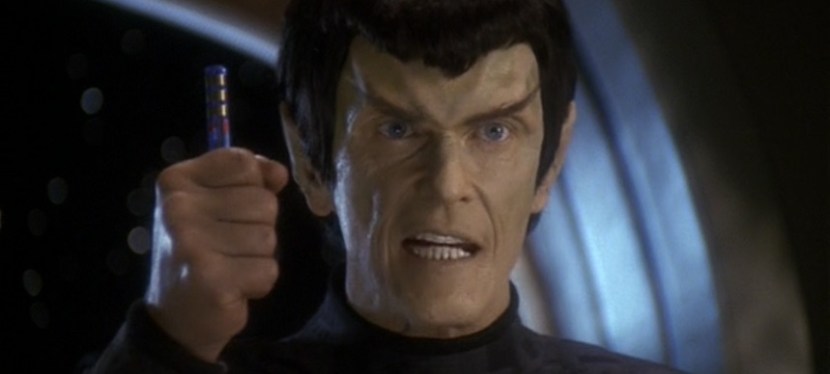
At least one of these attackers was Romulan – possibly working for the Tal Shiar.

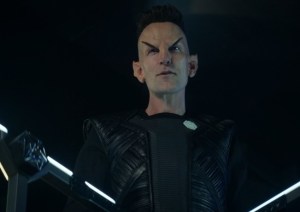
In Remembrance, Dahj is attacked twice by masked assailants, and during the second attack one of them loses his helmet and is revealed to be Romulan.

In the 24th Century, the Tal Shiar was the Romulan intelligence agency and secret police force. They were known to employ cutting-edge technology, and if any organisation had the capability to pull off two incursions on Earth without raising the alarm, it’s them. They were able to beam operatives to a location very close to Starfleet Headquarters in San Francisco, attack and seemingly kill a Federation citizen while she was with a retired Starfleet flag officer, and cover their tracks so that neither they nor their target appeared on Starfleet’s security monitors. That’s incredibly impressive, and of all the organisations we know of in Star Trek, the Tal Shiar are certainly near the top of the list when it comes to being able to pull it off. Given that at least one of the attackers was Romulan, it starts to add up.

It’s possible that the group weren’t all Romulan – we only saw the face of a single individual, after all – and even if they are, it doesn’t necessarily mean that they’re working for the Tal Shiar. However, the Romulan state has clearly survived in some form, and the Romulans remain an independent faction, so that implies that the machinery of their state, including the Tal Shiar, survived as well. The Tal Shiar and the Cardassians’ Obsidian Order were the two most significant intelligence agencies in the Alpha and Beta Quadrants the last time we saw the 24th Century, so if anyone could pull off an attack of this type so close to the heart of Starfleet – and manage to cover it up – it seems at least plausible that they’re involved.

Number 4: The Romulans/Tal Shiar are attacking synthetics as revenge for Mars.

Are these attackers checking to see if Dahj is synthetic?

Over 90,000 people died as a direct result of the attack on Mars. Some of those may have been Romulan, but by far the greater impact of the attack was that the rescue armada, designed to evacuate 900 million Romulans, was completely destroyed.

While the attack proved a significant blow to the Federation – losing a major shipyard and Earth’s closest neighbour becoming uninhabitable – the Romulans arguably suffered more as a result, not least because the Federation refused to rebuild the lost fleet. How many Romulans died as a result, because they couldn’t be evacuated before the supernova, isn’t clear at this stage, but it could number in the millions.

That gives Romulans a powerful reason to hate synthetics, and could explain why they send strike teams to Earth to capture or kill any synthetics they find.

Dahj describes synthetics as “murder machines” – a view tainted, no doubt, by the events on Mars. The Romulans, out of all the factions in the galaxy, would have felt that way even more strongly if the attack disrupted plans to evacuate their homeworld. Even more so than the Federation, this gives the Romulans a reason to be incredibly aggressive toward synthetics and a reason to strictly enforce the ban on synthetic life.

Number 5: Soji and Dahj aren’t synthetic after all – they’re human.

Could Dahj be human after all?

This one would be a major double-bluff. After Picard discovered that Data had painted Dahj’s likeness thirty years previously, it’s assumed by everyone that they’re androids created by Maddox – but what if they aren’t? What if, instead, they’re genetically enhanced humans? One of the ancestors of Data’s creator, Arik Soong, experimented with augmented humans in the 22nd Century. A trilogy of Enterprise episodes in Season 4 deal with this storyline: Borderland, Cold Station 12, and The Augments.

If Maddox – or someone else on his team – had shifted research away from synthetics to genetic engineering the result could be Soji and Dahj. Since Dr Jurati was absolutely convinced that sentient androids were a long way away from being achievable, it could make sense. Genetic engineering could also explain Dahj’s abilities, as we saw from augments in Enterprise and of course Khan that physical and mental abilities can both be enhanced. We also saw in The Next Generation that the ageing process can be accelerated for genetically enhanced children, so Dahj and Soji’s ages (twenty-ish) shouldn’t count against this idea.

In the 24th Century, the Federation could scan for life forms very accurately. Data would register on sensor scans very differently to a human, so if synthetic life was banned, surely the Federation would have measures in place to detect synthetics using already-available technology. Dahj and Soji weren’t detected as being out of the ordinary at all, so either their synthetic nature is completely concealed somehow, or maybe they’re not synthetic at all. If they are, as Picard puts it, “flesh-and-blood androids”, this raises an interesting question in itself – where do you draw the line between synthetic and non-synthetic? If Maddox and his team basically built two humans from the ground up, using organic materials and human DNA, are they human or synthetic?

The flip side to this theory – and the reason why it’s unlikely – is that genetic engineering is banned, just as synthetic research is. There’s no reason for Maddox and his team to switch lanes. And Maddox has been involved in android research for over three decades at this point – changing to genetic engineering would be a wholly new field of study.

Number 6: Someone hacked the synthetics.

More than a decade later, no one knows what caused the synthetics to attack Mars.

Why did the synthetics attack Mars? This is one of the key mysteries that Star Trek: Picard established, and I’m absolutely certain we’ll find out the real reason by the end of the season.

Connected to the idea above, that a mistake on Maddox’s part may have inadvertently led to the attack, it’s conceivable that someone hacked into the synthetics and commanded them to launch the attack.

The attack on Mars was a very specific action. The synthetics didn’t simply malfunction and attack any Starfleet or Federation personnel in their immediate vicinity. A team of them, working in tandem, took control of a number of ships, took down Mars’ defences, and launched a coordinated attack with all ships engaging simultaneously. That doesn’t seem like a malfunction – it was a specific, deliberate act.

If something Maddox did left the door open to a cyber attack that took control of the synthetics – or even if it was something he and his team could in no way have prevented – this would mean that someone deliberately targeted Mars, and by extension the rescue fleet.

The choice of target is also interesting – the synthetics could have attacked Earth, destroying the office of the Federation President and Starfleet Headquarters. That would have been a far more devastating blow to the Federation as a whole than the loss of one shipyard – which was building ships not even intended for the Federation to use for their own benefit. Again, this speaks to it being a deliberately chosen target, and thus a deliberate act by someone.

So who could the culprits be? Let’s make a list.

Section 31 – The shadowy, off-the-record intelligence agency has recently been featured heavily in Discovery (and is set to have its own series) and they’ve shown in the past that they’re not above taking incredibly aggressive action to further their objectives. If Section 31’s leadership believed the decision to help Romulus was a mistake – as they conceivably might have done – they may have decided to act to stop it.

The Borg – Borg technology is capable of things far beyond the knowledge of the Federation and other Alpha Quadrant powers. They’re skilled at working with AIs and machines as the Borg are themselves partially synthetic. They’re also no friend to the Federation or the Romulans, and we know thanks to the existence of a Borg cube that there has been some form of Borg activity in the region.

The Klingons – The Klingons and Romulans have cooperated in the past, but relations between the two Empires haven’t always been great. The Klingons may have seen the Romulan supernova as an opportunity to expand into Romulan territory, and may have decided to sabotage Federation efforts to help believing it would benefit them. While hacking synthetics and hiding behind the scenes may not be a stereotypically Klingon move, they may have chosen this route to avoid war with the Federation.

A rogue Romulan faction – It’s possible that elements within the Romulan government, military, or the Tal Shiar would have seen accepting Federation help as beneath them. Not wanting to be indebted to an old enemy, they may have sabotaged the evacuation, even if doing so condemned many of their fellow citizens to death.

The Dominion – Prior to the Dominion War, Dominion operatives attempted to break apart the Alpha and Beta Quadrant factions, pushing them into war with one another so that they could sneak in during the chaos. Their attempts to push the Federation and Klingons to war even worked for a time, before a changeling was exposed in the Klingon military. This fits with their modus operandi, at least as of the 2370s – whether the Dominion changed significantly as a result of their loss is unclear.

So that’s it. Six ideas that are probably all wrong, but were fun to write about nevertheless. I’m not the sort of person to get overly attached to any particular theory, certainly not to the point where I’d let it spoil my enjoyment of finding out what the writers and directors of the series actually intend to happen! I’ve seen that happen a lot in recent years – The Last Jedi probably being the best example, as a lot of people became very upset that their own pet theories about where the story would go didn’t pan out on screen.

Of the six above, Dahj and Soji being genetically enhanced humans seems the least likely, and the Tal Shiar being the mysterious masked attackers seems the most likely, at least to me. But as I say, they could very easily all be wrong.

Remembrance has set up some genuinely interesting story threads, and I can’t wait for Friday to get the next instalment and see where things go next.

The Star Trek franchise – including Star Trek: Picard – is the copyright of ViacomCBS. Remembrance, the first episode of Star Trek: Picard, is available to watch now on CBS All Access in the United States, and on Amazon Prime Video in the United Kingdom and other countries and territories. This article contains the thoughts and opinions of one person only and is not intended to cause any offence.
Ten things we learned from Remembrance

Spoiler Warning: There will be spoilers for Star Trek: Picard Season 1, Episode 1: Remembrance. There may also be spoilers for other iterations of the Star Trek franchise, including Short Treks and Discovery.

I know that for the last couple of weeks the blog has been dedicated almost entirely to Star Trek: Picard, but to be fair it’s been my most highly-anticipated series of the last few years! I do have a few non-Picard articles in the pipeline, but before my memories of the episode fade too much, I wanted to go over a few things we learned in Remembrance.

Considering that the episode was our first real look at the 24th Century since 2002 – I’m not counting Children of Mars or the brief scenes in 2009’s Star Trek – there was a lot that longstanding Star Trek fans wanted to know. Remembrance was peppered with enough little hints and pieces of background information to tide us over till next week – but without drowning out the plot in fan-service and nostalgia. Take note, Star Wars!

I have a full review of the episode already published – you can find it by clicking or tapping here. In that article I cover the plot in more detail, as well as giving my thoughts on various elements of the episode. Spoiler alert: I loved it.

Number 1: The “Prime Universe” or “Prime Reality” still exists!

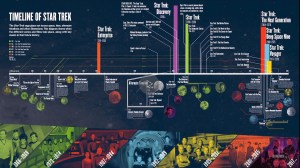
You may recognise this graphic from the official website; it shows the various Star Trek series and their place in the overall timeline of the franchise.
Credit: Star Trek.com

This one should’ve been a given, considering everything we’d been told beforehand. But some “fans” – and I use the term very loosely – have been obsessed in recent years with convoluted “theories” that the Star Trek timeline ended or diverged after Enterprise went off the air.

The basic argument went something like this – the Kelvin-timeline films had a contractual obligation to make everything look 25% different from what had come before, and this carried over into Discovery, meaning the new shows are set in an alternate reality and not the original Star Trek timeline. Obviously that’s completely untrue, and Remembrance confirmed it. This is the original timeline, the one Spock left behind when he travelled to the alternate reality.

Picard has many artifacts in his personal archive from The Next Generation and the TNG-era films, so this is definitely, 100%, the same reality. Picard is the same Picard from TNG – just older. Enterprise, Discovery, The Original Series, Deep Space Nine, and Voyager all took place in this timeline as well, before the events of this episode. Case closed, “theory” debunked. And as we saw dozens of TNG-era objects in Picard’s archive, the “25% different” nonsense is debunked too.

Number 2: The Ready Room – Star Trek’s aftershow – is actually worth watching.

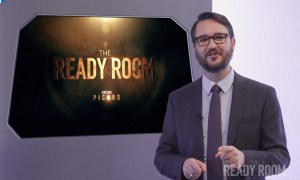
Wil Wheaton now hosts The Ready Room – discussing each episode of Star Trek: Picard after it’s released.
Credit: Star Trek on Facebook

During Discovery’s second season, I only tuned in to The Ready Room a couple of times, and I wasn’t particularly impressed. Airing on Facebook Live after each episode, the show would feature someone involved in the episode’s production and they’d discuss some of the behind-the-scenes goings-on with the host. This time around, the host of The Ready Room is Wil Wheaton – yes, Wesley Crusher himself!

And it’s clear that he’s a fan of Star Trek – a passionate one, too. He talked about Remembrance with such enthusiasm that he was a joy to watch, and the interviews with Hanelle M. Culpepper and Michael Chabon – the director of the episode and the showrunner respectively – were respectful and genuinely interesting.

Personally, I like to keep my in-universe and real-world experiences separate, so watching The Ready Room immediately after the episode isn’t something I want to do… I need to give myself a few hours at least to come back down to Earth! But when I was ready, I gave The Ready Room a chance and I’m glad I did. I look forward to tuning in again next week for another look behind the curtain.

Number 3: The Ferengi Alliance is still around – at least in some form.

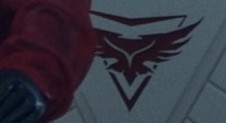
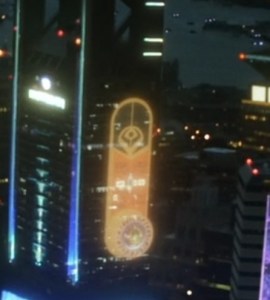
The emblem of the Ferengi Alliance seen in Boston.

This one was a blink-and-you’ll-miss-it “easter egg”, but toward the beginning of the episode during an establishing shot of Boston, the emblem of the Ferengi Alliance can be seen. It’s projected on the side of a Bostonian building right before the scene with Dahj and her boyfriend, but I noticed it immediately.

Towards the end of Deep Space Nine, Grand Nagus Zek had begun implementing reforms to Ferengi society. Women were allowed to fully participate for the first time, and basic state assistance was put in place for financially unsuccessful Ferengi. Rom was chosen to be the next Grand Nagus when Zek stepped down. That’s twenty-five years before Star Trek: Picard’s setting, but it’s interesting to see that the Ferengi Alliance still exists, and is presumably still an independent faction.

Number 4: The attack on Mars was far worse than we realised.

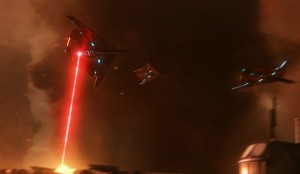
Ships commandeered by rogue synthetics attacked Mars.

In Children of Mars, the attack by the rogue synths looked serious, but its ultimate outcome was unclear as the episode ended when news of the attack was only just breaking. Remembrance takes place over a decade later, and the extent of the damage is now known. Picard lost the entire rescue armada, and over 90,000 people died.

Worse is that Mars, which had been home to Utopia Planitia, is “on fire to this day” – strongly implying that the shipyards couldn’t be rebuilt and that the planet, which we know to have been inhabited, now might be wholly uninhabitable. The loss of the Federation’s most significant shipyard will have had repercussions, and the loss of Mars, Earth’s closest neighbour and one of humanity’s earliest colonisation targets, will have been a psychological blow.

Number 5: The Rogue Synths are no longer active.

I’m fairly sure that these are either the rogue synths or other androids shut down around the same time.

We speculated a little about who the rogue synths might be in my final article about the factions of Star Trek: Picard. The question of whether they remained an active faction after the attack wasn’t clear then, but the galaxy-wide ban on synthetics makes it clear that the rogue synths are no more.

What became of the individuals who attacked Mars isn’t clear, though. It’s possible that they and their ships were destroyed by Starfleet, but it’s equally possible that they were able to be peacefully shut down and are currently in storage, like the Data-esque characters we saw in the trailer.

However, with the plot of Picard currently fixated on synthetic life, I think that the rogue synths will come back into play somehow. And even if they were all destroyed – or rather, killed – in the aftermath of the Mars attack, I’m confident that by the end of the season we’ll understand what led them to rebel and attack the shipyard.

Number 6: The Romulan situation is bad – but they aren’t completely out of the game.

These Romulans were able to launch an undetected attack very close to the heart of Starfleet.

With Picard’s armada having been destroyed, it’s unclear how many Romulans were saved before the supernova. However, it seems unlikely that the planned 10,000 ships were able to be built elsewhere, and that whatever evacuation could be ultimately cobbled together saved far fewer than the intended 900 million lives.

However, the Romulans remain a force to be reckoned with. Armed Romulan operatives were able to transport to two locations on Earth and attack Federation citizens – all without raising any alarm. One of the attacks took place spitting distance from a Starfleet archive which required Picard’s Admiral-level clearance – and in addition, the Romulans were able to conceal themselves and the target of their attack in such a way that they didn’t even appear on any Starfleet security feeds.

So while it’s clear that the Romulan Star Empire has suffered, their intelligence and military technology is keeping pace with, and arguably outmanoeuvring, that of the Federation. Whether these operatives are the Tal Shiar (the Romulan secret police/intelligence agency) or whether they’re even formally affiliated with the Romulan government is still unknown.

Number 7: Androids are banned.

Picard and Dr Jurati examine the disassembled body of B4.

After the attack on Mars, a “galactic treaty” went into effect, prohibiting synthetic life forms such as androids. Picard considers this to be a mistake, even morally wrong, but nevertheless the ban exists, and it appears to be something that all of the Alpha and Beta Quadrants’ major factions have subscribed to.

Describing the ban as “galactic” may suggest that it even extends to factions like the Dominion in the Gamma Quadrant and possibly even Delta Quadrant factions from Voyager, but I think that may be taking the word slightly too literally. For all intents and purposes, though, androids and other synthetic life forms are banned, and presumably any synths that were active at the time of the attack have been rounded up and forcibly shut down – raising some alarming questions about how this was done and whether synthetic life forms had any rights.

What does this mean for self-aware holograms, like The Doctor or Vic Fontaine? It’s unclear whether they were affected by the ban too, as the only hologram we’ve seen thus far was Index – who did not appear to be fully sentient. Index may have given a couple of very subtle hints at sentience, though, or maybe that’s just my interpretation of her movements and expressions.

Number 8: Some people flout the android ban and continue to work.

Dahj’s necklace was a symbol representing a particular method of creating androids.

Bruce Maddox, last seen in The Measure Of A Man from the second season of The Next Generation, disappeared in the aftermath of the attack on Mars and the ban on synthetics. A symbol he used to illustrate one of his theories about creating androids was seen on Dahj and Soji’s necklaces – implying that he created them, if indeed they are synthetics.

As with many points above, this raises as many questions as it answers. Was Dr Maddox involved, even inadvertently, in the attack on Mars? What purpose does creating Dahj and Soji serve? Who is supporting his research, and where is it being conducted?

Most significantly, if Dahj appeared to be fully human, how did Maddox manage to pull that off? If synthetic life is banned, and the Federation has sensors capable of detecting synthetics, then Dahj must have either been fully anatomically human, or must have employed some kind of system designed to fake that on all scans. We know Federation sensors in the 24th Century could differentiate Data from a human, so how Dahj and Soji haven’t been detected remains a mystery.

Number 9: There has been Borg activity in the Alpha and/or Beta Quadrants.

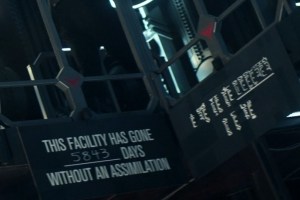
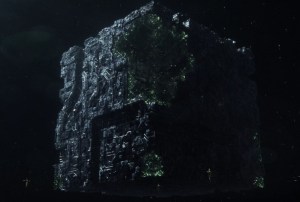
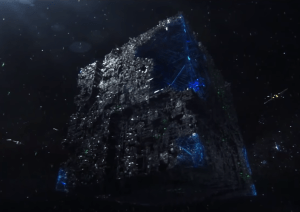
The Romulans have a base aboard a Borg cube.

There had been two Borg incursions into the Alpha and Beta Quadrants that we knew about before Remembrance. The first was in The Best Of Both Worlds from The Next Generation’s third season, where a single Borg cube attacked Earth and destroyed a huge Federation fleet at the Battle of Wolf 359. The second came a few years later when the Borg again sent a single cube to Earth during the events of First Contact. Both cubes were completely destroyed, such that they couldn’t have been reassembled.

The existence of another Borg cube in Romulan-controlled territory strongly suggests another Borg incursion on this side of the galaxy. When this took place and what its objective was isn’t known, but the fact that the Romulans were able to defeat it and still keep the vessel intact must have been a huge coup. The knowledge they could gain about the Borg may have unlocked whole new technologies for them – perhaps even explaining how Romulan operatives were able to conduct covert operations in San Francisco.

Number 10: The Federation pulled the plug on the mission to aid the Romulans.

“We withdrew.” – Picard became very upset when pushed on why he resigned.

Picard as an individual has the loyalty of at least two Romulans – but relations between the Federation as a whole and the remnants of the Romulan Star Empire may be much more frosty. In the aftermath of the attack on Mars, the Federation abandoned the rescue mission and didn’t rebuild the destroyed fleet – presumably forcing Picard to use other means to aid Romulus.

He was clearly successful to an extent – the presence of such loyal Romulan aides confirms this – but he resigned from Starfleet in protest at the decision, perhaps calling their bluff in a last-ditch effort to force his superiors to reconsider.

Picard states that Starfleet “withdrew”, shirking its duties in the aftermath of the supernova – and possibly other significant events. Whether this represents a change in Federation policy to become more insular and/or isolationist isn’t clear, but from Picard’s perspective at the time that was certainly the case.

There are surely going to be consequences as a result of the decision to effectively betray the Romulans after they had been assured of help. The fact that we see Romulan operatives on Earth at least hints at this, but the extent of the relationship will be seen later as the story unfolds.

So that’s it.

A few bits and pieces that we learned from Remembrance, the first episode of Star Trek: Picard. Many of these points lead to more as yet unanswered questions, but a series as carefully constructed as Picard would seem to be would surely not be setting up mysteries it doesn’t intend to resolve. After all, this isn’t a JJ Abrams film!

As I said last time, I felt that Remembrance absolutely knocked it out of the park, and as far as Star Trek premieres go, it’s at least on a par with Emissary, the opening episode of Deep Space Nine.

While it can be nice to binge-watch a whole series at once, I think that weekly instalments like this give us time to digest each episode fully before moving on to the next. And I’m glad that Star Trek hasn’t gone down the route of doing full-season dumps like Netflix does for some of its original programming. Breathing room, especially after an episode as entertaining, exciting, and interesting as Remembrance can be important to us as viewers, and I’m glad that it’s being released this way. It gives me time to ponder some of those questions and speculate wildly about potential plot points!

If the rest of the episodes this season are even close to being as good as Remembrance, we’re in for an amazing couple of months. And I’m even more glad that a second season of Star Trek: Picard has been confirmed – hopefully production will begin shortly so the season can be released in about a year’s time.

Live Long and Prosper!

Remembrance, the first episode of Star Trek: Picard, is available to watch now on CBS All Access in the United States, and on Amazon Prime Video in the United Kingdom and other countries and territories. Star Trek: Picard, and the entire Star Trek franchise, is the copyright of ViacomCBS. This article contains the thoughts and opinions of one person only and is not intended to cause any offence.

Factions of Star Trek: Picard part four – everyone else

Spoiler Warning: There will be spoilers ahead for the Star Trek franchise – including Short Treks, Star Trek: Discovery, and the trailers for Star Trek: Picard.

If you’re in the United States, you’ll be able to watch Star Trek: Picard tomorrow, you lucky thing! The rest of us have to wait an extra 24 hours… hopefully I can manage! This is the final part of my series of articles leading up to the release of the new show, and after this I expect my next piece – on the 24th or 25th – will be a review/breakdown of the first episode, which we now know is titled Remembrance.

Before we jump in and look at a few other factions from Star Trek, let’s briefly recap the articles here on the site in case you’ve missed any.

Firstly, I wrote a piece back in December explaining why I’m so excited for Star Trek: Picard. This was more of a personal look at my feelings regarding the upcoming series. The next piece I wrote was a review of Children of Mars – the Short Treks episode which was a prequel or prologue to the new show. Next, I wrote two articles which each highlighted ten episodes and/or films from Star Trek’s extensive back catalogue which may or may not be useful preparation for Star Trek: Picard. The first article contained episodes I think will surely have some relevance, and the second article looked at some episodes which are less likely to matter – but still might! After that, Picard had its red carpet premieres in Hollywood and London, so I wrote a short piece about that.

Finally, I began this series, looking at some of the factions we will encounter in Star Trek: Picard and giving some background information. First I looked at the Romulans, then the Borg, and finally the Federation.

This time – as a bonus and the final part of the series – we’re going to look at an assortment of other factions which seem less likely to be relevant to Picard. However, they may be mentioned in passing, may have been deliberately kept out of marketing material, or are just factions we know less about.

The Bajorans

Captain Picard has some history with the Bajorans, who were first introduced in The Next Generation. He took Ensign – later Lieutenant – Ro under his wing for a time, and was hurt by her ultimate defection to the Maquis. Of course most of what we know about Bajor and its people comes from Deep Space Nine, which was set in the Bajoran system.

Very briefly, the Bajorans were a much older race than humanity, and flourished more than 10,000 years prior to the events of Star Trek. In their star system is the only known stable wormhole – connecting Bajor to the Gamma Quadrant. The Prophets – a noncorporeal species with no concept of linear time – live in the wormhole and contacted the Bajorans throughout their history.

Ensign Ro and Captain Picard (with Worf and Data) visit a Bajoran refugee camp around the time the Cardassian occupation of Bajor was coming to an end.

In the late 23rd or early 24th Century, Bajor was violently conquered by their neighbours, the Cardassians. The Cardassian occupation stripped the Bajorans of significant quantities of resources, and many Bajorans were enslaved. A resistance movement sprang up, and for a variety of reasons the Cardassians withdrew from the Bajoran system in the mid-late 24th Century.

The new Bajoran government asked the Federation for help putting their planet and people back together, and a former Cardassian space station was occupied by the Federation and christened Deep Space Nine. The crew of DS9 discovered the wormhole shortly thereafter.

Bajor experienced a renaissance as a result of being the gateway to the Gamma Quadrant, and for a time many ships were passing through their system. However, their old enemies the Cardassians soon allied with the Dominion – an aggressive faction from the Gamma Quadrant – and when war broke out, Bajor – while officially neutral – was again occupied by the Cardassian-Dominion alliance until the Federation were able to drive them out.

Bajor came very close to joining the Federation! A ceremony to officially bring them into the fold was ultimately disrupted, and Bajor had not attempted to re-apply as of the end of Deep Space Nine.

Prior to the Dominion War, Bajor was a candidate for Federation membership. At one time they were on the cusp of being accepted, and an official ceremony was even planned to mark Bajor’s admission into the Federation. However, as of the finale of Deep Space Nine, Bajor had not yet officially become a Federation member – though it’s heavily suggested that it was still their goal.

In Star Trek: Picard, look out for signs that Bajor is a full Federation member, and that they have begun to heal after such a prolonged period of conflict. Also listen out for any mention of Deep Space Nine, as the station is located in the Bajoran system.

The Cardassians

The Cardassians, as mentioned above, occupied Bajor for a long period from the late 23rd Century through to the mid-late 24th Century. They were, as of the mid-24th Century, a regional power comparable in strength to other factions in the Alpha Quadrant – including the Klingons, Romulans, and even the Federation.

In wars and border conflicts with all of the aforementioned factions, the Cardassians held their own and even forced the Federation to concede settled planets as part of a peace treaty. These concessions, along with continued Cardassian aggression toward Federation border worlds, would ultimately lead to the Maquis attempting to secede from the Federation.

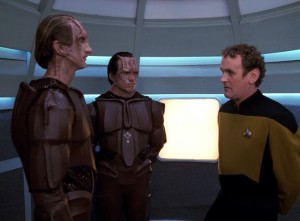
Despite the end of hostilities, some in the Federation retained a dislike of Cardassians even years later. Here, aboard the Enterprise-D, Miles O’Brien is forced to deal with Cardassians for the first time since he fought against them.

The Cardassian Union was, in some respects, similar to the Romulan Star Empire in that it was heavily militarised, and with a very powerful intelligence agency that also operated as a secret police. The Obsidian Order, as it was known, was responsible for keeping order in the Cardassian territory, and dominated the Cardassian state.

In the 2370s, the Cardassian Union entered a period of decline, withdrawing from Bajor and fighting a losing war against the Klingons. As a result, Gul Dukat was able to seize power and allied Cardassia with the Dominion – formally becoming a member of the Dominion under their rule. This would ultimately lead to the outbreak of the Dominion War, as a reinvigorated Cardassia sought to reconquer all of its old territory – including Bajor.

The dramatic moment when the Cardassians switched sides mid-battle, joining the Federation alliance and turning on the Dominion and Breen.

At the end of the war, fed up with an increasingly authoritarian Dominion occupation and too many concessions made to the Breen, a mass revolt began among Cardassian troops and later even Cardassian civilians. The Dominion responded by attempting mass genocide of the Cardassians, devastating Cardassia Prime in the process. Fortunately, the end of the war saved the Cardassians from complete extermination – though they were left in a thoroughly ruined state.

Again, be on the lookout for mentions of Deep Space Nine – as this station was close to Cardassian space. We may hear about the reconstruction of Cardassia after the war, and what state the Cardassian Union is in. It’s also possible that – due to the extent of the devastation inflicted – Cardassia has become a Federation protectorate.

The Delta Quadrant factions

The crew of the USS Voyager encountered dozens of species during their journey through the Delta Quadrant. From Ocampans and Talaxians to Kazon, Vidiians, Brunali, and Hirogen, each had their own territory and technology. Some Delta Quadrant races came into contact and conflict with the Borg, and if the Borg have resumed their expansion efforts in that region some of these species may be in jeopardy.

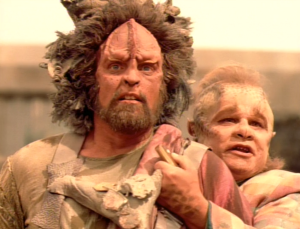
Jabin, a Kazon, and Neelix, a Talaxian. Both races were native to the Delta Quadrant.

With Star Trek: Picard seemingly taking place firmly in the Alpha and/or Beta Quadrants, I’d be surprised to see any Delta Quadrant factions making an appearance. However, it’s possible that an individual from one of these races may be encountered, especially given that part of the plot, as hinted at in the trailers anyway, may involve dealing with ex-Borg. If the Borg had assimilated a Talaxian, for example, and that individual had been de-assimilated in the Alpha Quadrant, it’s possible we could see them. It’s also possible that new technology allows for travel between the Alpha and Delta Quadrants, but again I think this is unlikely.

The Dominion

The Dominion, as mentioned above, originated in the Gamma Quadrant and allied with the Cardassians and Breen to attempt to conquer large parts of the Alpha Quadrant. At least three distinct races make up the Dominion. Their leaders are shape-shifting beings called The Founders. They designed and bred two servant races: The Jem’Hadar, who served as the bulk of their forces during the Dominion War, and the Vorta, who serve more as diplomats and an officer corps.

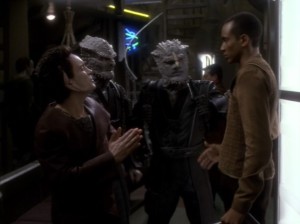
Aboard an occupied Deep Space Nine, Jake Sisko tries to talk with the Vorta named Weyoun while two Jem’Hadar soldiers look on.

I don’t expect the Dominion to feature in a significant way in Star Trek: Picard. They had, as of the end of Deep Space Nine, been forced to withdraw behind the Bajoran wormhole, and while they may be mentioned in passing, I would be surprised if they have a significant impact here.

The Ferengi

Early appearances in The Next Generation attempted to set up the Ferengi as a major antagonist to replace the Klingons, who had been pacified, and the Romulans, who had isolated themselves. This never really worked from a storytelling perspective, however, and the Ferengi quickly shifted into the money-obsessed species we saw in Deep Space Nine.

The Ferengi proved very aggressive during early encounters with the Federation.

The Ferengi, starting after The Next Generation’s first season, were a neutral power, more concerned with their own finances than galactic affairs. War could be profitable for them, but they also saw that a prolonged, devastating conflict (like the Dominion War) could be financially ruinous, and were cautious about becoming involved. They preferred to stay on the sidelines and trade.

Having been incredibly aggressive with their approach to capitalism for a long time, by the end of Deep Space Nine the Ferengi government was beginning to implement some reforms – this process may have continued under Rom, who was appointed the Ferengi Grand Nagus in 2375.

Rom would go on to become Grand Nagus of the Ferengi Alliance after his predecessor, Zek, set in motion a series of major reforms.

As an independent, neutral power, the Ferengi may prove useful to Picard and his crew if they need to operate outside of the jurisdiction of the Federation and other factions. However, aside from maybe the odd passing reference, I would be surprised to see much from them at least in Season 1.

The Klingons

A cold war between the Klingon Empire and the Federation had been building since the mid-22nd Century. The Klingons, upset by Federation exploration and expansion, ultimately ended up at war with the Federation in the mid-23rd Century – and the war proved devastating for a time.

However, after the crew of the USS Discovery were able to stop a plot by Starfleet which would have devastated the Klingon homeworld, the Klingon Great Houses came together and the Empire, under new leadership, sued for peace.

Federation and Klingon fleets face off at the Battle of the Binary Stars, which started the Federation-Klingon war.

Relations would remain frosty for much of the rest of the 23rd Century, but the destruction of the Klingon moon Praxis led to a peace agreement with the Federation called the Khitomer Accords – a peace treaty which would remain in place (with one brief lapse) for the duration of the 24th Century.

The Khitomer Accords would ultimately evolve from a peace treaty into an alliance, and Captain Picard himself spent time on the Klingon homeworld and was trusted by Klingon Chancellor K’mpec to be a neutral party as the Klingons chose a new leader. Gowron, despite breaking the peace treaty for a time, ultimately became a firm ally of the Federation during the Dominion War, and for a time, the Federation and Klingons stood alone against the forces of the Dominion.

Worf was the first Klingon to serve in Starfleet, serving on both the Enterprise-D and on Deep Space Nine. Also in the 24th Century, the Federation and Klingons participated in an exchange programme where officers could spend time serving on each other’s starships.

Captain Picard, immediately after officially installing Gowron as the new Klingon Chancellor.

With the Klingons having featured so prominently in Star Trek: Discovery, I’m sure there will be at least some reference to them in Picard. Keep an eye out for Worf – it’s possible he may make a cameo appearance or at least be mentioned, and the last time we saw him he was scheduled to become the Federation’s Ambassador to the Klingon homeworld. However, it’s possible that relations have deteriorated – we’ve seen in some episodes set in the future (like Endgame and All Good Things…) that the Klingons were once again enemies of the Federation.

The “Rogue Synths”

This faction was mentioned in the Short Treks episode Children of Mars. They were identified as being behind the attack on the Utopia Planitia shipyards on Mars, which set back Admiral Picard’s fleet as he attempted to aid the Romulans.

Who they are and where they came from is unclear, as this isn’t a faction we’ve met before.

The “stingray ships” operated by the “rogue synths” during their attack on Mars in the 2380s.

Based on the designs of the ships they used, I made stab-in-the-dark guesses that they could be affiliated in some way with the Klingons or the Romulans, as I could see that design of ship being a natural evolution from the 23rd and 24th Century ships used by those factions. However, it’s likely that I’m way off base with that.

The word “synth” seems like it’s short for “synthetic”, and the term has been used in other science fiction works to describe robots, droids, and artificial or machine intelligences. In the trailers for Picard, we’ve seen glimpses of a number of Data-esque characters who appeared to be in stasis or shut down, so the rogue synths could be a race of androids or AIs – perhaps even androids created by the Federation themselves.

Could these android-esque humanoids, seen in the trailers for Star Trek: Picard, be the “rogue synths”?

The attack on Mars seemed to be significant at the time – though it doesn’t appear to have set back the Federation in a major way. Who the rogue synths are, and whether they are still even an active faction during the new series, is something yet to be revealed.

The Suliban and Xindi

Two of the biggest antagonists in Star Trek: Enterprise, both the Suliban and Xindi were aided by time travellers to grow in power and strength. Following the NX-01 Enterprise’s intervention in the “temporal cold war”, the Suliban eventually became a somewhat-ally of Earth, even giving Captain Archer the information that showed it was the Xindi who were responsible for attacking Earth. What became of the Suliban Cabal after the 2150s is unclear, and as a new faction featured only in Enterprise, we haven’t seen them since.

The Xindi were a collection of five races: humanoids, arboreals, aquatics, reptilians, and insectoids, who all originated from one planet and achieved sentience together. Having been manipluated by extra-dimensional time-travelling beings known as the Sphere Builders, the Xindi attacked Earth with a weapon-probe that killed over 7 million people in the 2150s. The NX-01 Enterprise was dispatched to stop them before they could deploy an even larger weapon capable of destroying entire planets. Captain Archer and his crew were able to stop them, and in the process swayed some Xindi – primarily the humanoids and arboreals – to become friendly to Earth and her allies.

Degra, a Xindi-humanoid, and Jannar, a Xindi-arboreal.

By the 26th Century, the Xindi had joined the Federation, though whether this took place before or after the events of Star Trek: Picard is unclear. If we see any Xindi officers serving in Starfleet, that would be a good indication that they’re at least close to becoming Federation members, though it’s possible we may not see any indication of the Xindi or the Suliban, especially given that Enterprise wasn’t as successful as the TNG-era series.

So that’s it.

I think we’ve recapped pretty much all of the major factions encountered in Star Trek up to this point, or at least all of the ones who have a chance of being connected to the plot of Star Trek: Picard.

I’m hopeful that Picard will surprise me, and that we’ll not only see some glimpses of returning factions, but also some brand new ones, as well as new alliances or groupings that change things up.

Star Trek: Picard has to walk a fine line between looking back at Star Trek’s successes and building something new for the future. I’ve said before that, as excited as I am to see returning characters like Riker and Seven of Nine, I want the series to give new characters like Chris Rio and Dahj a chance to shine too. Spending too much time looking back would stray too far into fan-service, and as Star Wars has been learning to its cost, that doesn’t always work. When it comes to factions and species, the same is true.

As fans, we absolutely want to see the Klingons and the Cardassians and the Xindi – but only if doing so moves the story forward. Picard has its own story to tell, and while I hope we’ll find out a great deal about the shape of the galaxy and its factions as that story unfolds, there should to be new things in there too. We’ve already seen one new potential faction – the “rogue synths”. What role they have to play isn’t clear, but some of you will find out tomorrow!

Star Trek: Picard is upon us, and as I said I’ll be taking a short break until I’ve seen the premiere, then I’ll be back with a review. Live Long and Prosper!

The Star Trek franchise – including Star Trek: Picard – is the copyright of ViacomCBS. Star Trek: Picard premieres on the 23rd of January in the United States on CBS All Access and in the United Kingdom and other countries/territories on the 24th of January on Amazon Prime Video. This article contains the thoughts and opinions of one person only and is not intended to cause any offence.

Factions of Star Trek: Picard part three – the Federation

Spoiler Warning: There will be spoilers ahead for every iteration of the Star Trek franchise, as well as from the trailers for Star Trek: Picard and Star Trek: Discovery Season 3.

The Federation crest in the 22nd Century.

Over the last few days we’ve looked at a couple of the main Star Trek factions that seem certain to make an appearance in Star Trek: Picard. In case you missed them, you can find my articles on the Borg by clicking or tapping here, and on the Romulans by clicking or tapping here. In this article I’m continuing to look at some (hopefully) useful background information as we prepare for Star Trek: Picard, and oh boy, today’s faction is the big one!

Introduction

The United Federation of Planets – or simply “the Federation” for short – is the faction to which our protagonists and heroes in every iteration of Star Trek belong. Okay, maybe that isn’t strictly true, because we’ve seen non-Federation citizens as main characters in Deep Space Nine and Voyager, and because of its setting technically no one in Enterprise was a Federation citizen until after that show’s finale. But you know what I mean!

The Federation is not to be confused with Starfleet. Starfleet is the Federation’s deep-space exploration and military arm, but it is not synonymous with the entire Federation. Starfleet officers and enlisted personnel may hail from non-Federation worlds, and being a Federation citizen does not make an individual a member of Starfleet.

Members

The Federation, at the moment of its founding in 2161, consisted of four species, and throughout its history – with the possible exception of the future glimpsed in the trailers for Discovery’s third season – remained a faction which incorporated many different species under one banner.

The four founding members were: humans, Vulcans, Andorians, and Tellarites. These four species’ homeworlds are in relatively close proximity to one another in the Alpha Quadrant, and Vulcans were the first extraterrestrial race encountered by humanity.

The founding member species of the Federation: Vulcans, humans, Tellarites, and Andorians.

Other important members, as of the late 24th Century, were as follows: Betazoids, Bolians, Catians, Deltans, Rigellians, and the Zakdorn. The Federation also offered protectorate status to some species, including the Evora. The Bajorans, because of the heavy Federation presence in their system, could be arguably considered a Federation protectorate too, and were a candidate for full Federation membership.

Two of the most important criteria for a species to meet before being permitted to join the Federation were a united planet/species not divided into factions or nation-states, and having achieved the technological milestone of warp drive. Some species, like the Bajorans, fulfilled these criteria, but other factors prevented the Federation from seeing them as viable members for a time.

Amanda Grayson, Michael Burnham, and Sarek at a meeting of the Vulcan Expeditionary Group in the mid-23rd Century.

Members of the Federation were fairly autonomous. The Vulcans, for example, were seen to maintain their own fleet of starships, their own science academy which was at least equal in standing to Starfleet academy, their own “expeditionary group”, and their own government – even into the 24th Century. Spock was the first Vulcan to serve in Starfleet, though many others would follow. In the 24th Century, there were Starfleet ships whose crews were entirely made up of a single species – often Vulcans. However, the norm appears to be for multi-species crews.

22nd Century

In the aftermath of conflicts and skirmishes with the Klingons, and especially with the Romulans, four Alpha Quadrant powers – the Vulcans, humans, Andorians, and Tellarites – agreed to work together in the interests of safety and technological cooperation. The Andorians and Vulcans had long been adversaries – even before humanity achieved warp drive and joined the galactic community – but were able to set their animosity aside and band together. The ceremony which marked the Federation’s official founding took place in San Francisco on Earth.

Earth was arguably chosen to headquarter the Federation as a neutral venue controlled by neither the Vulcans nor the Andorians – whose confrontational past was still an obstacle to be overcome. Regardless of the reasoning, Earth remained the Federation’s headquarters into the late 24th Century, seemingly hosting the entire Federation government as well as Starfleet.

Travis Mayweather, Hoshi Sato, and Malcolm Reed of the NX-01 Enterprise attend the founding ceremony of the United Federation of Planets in 2161.

By the end of the 22nd Century, the Federation’s economy transitioned entirely away from money, as technology had improved for all members and was able to provide a better standard of living for all citizens. The Federation retained some form of “credit” which could be considered a currency, but by this point it’s assumed that technology like food synthesizers and the availability of energy to power everything meant that the entire economy was transformed. Picard states that, as of the 24th Century, the goal of humanity was to “better itself” rather than pursue material goods. This was a core part of Gene Roddenberry’s vision of the future.

23rd Century

In the 23rd Century, the Federation was focused on exploration of the Alpha and Beta Quadrants. First contact was made with many species in this region, and several would join the growing Federation. The Klingons were left feeling ill at ease with this expansion, particularly the presence of human colonies, and a cold war between the Federation and Klingons began brewing. This ultimately boiled over into a very costly war between the two factions, which was only ended when Starfleet threatened to use a superweapon to trigger mass volcanic eruptions on the Klingon homeworld which would have devastated the Empire. The Klingon Great Houses were thus forced to sue for peace, despite the Federation’s weakened position as a result of the war.

The crew of the USS Discovery discuss the tactical situation near the end of the Federation-Klingon war.

The Federation recovered quickly, however, and resumed the scientific and exploratory work that they had been engaged in prior to the Klingon war. In this era, Constitution-class starships, such as the USS Enterprise commanded by Captains Pike and Kirk, made up the bulk of Starfleet. The Federation also discovered the Mirror Universe around this time, populated by an aggressive, expansionist empire led by that universe’s Earth.

Aside from brief skirmishes with the Klingons and Tholians, the Federation remained mostly at peace in the second half of the 23rd Century, though it did face challenges such as a rogue AI created by Section 31, a planet-killing superweapon that entered the Milky Way from another galaxy, V’Ger, a hyperintelligent machine, Khan, a 20th Century despot who had been genetically enhanced, and a probe that threatened Earth.

The Federation continued its exploration, however, including missions further and further into deep space, often requiring ships and their crews to spend years at a time away from the faction’s core in the Alpha Quadrant.

An assembled Starfleet crew during the V’Ger incident in the late 23rd Century.

By the end of the 23rd Century, the Federation and Klingons had signed a peace agreement and were working together to alleviate the problems on the Klingon homeworld caused by a devastating explosion on the moon of Praxis. The Khitomer Accords would remain in force throughout the 24th Century – with a brief lapse in which the Klingons and Federation again engaged in a few skirmishes over the course of a few months.

24th Century

The Romulans and the Federation had a Neutral Zone separating their territories, and after failed attempts to invade and then to disrupt the budding peace process, the Romulans remained inactive from the Federation’s perspective for most of the first half of the 24th Century.

In the years prior to The Next Generation, which takes place in the 2360s, the Federation were involved in conflicts, wars, and/or skirmishes with: the Breen, the Cardassians, the Gorn, the Tholians, and the Tzenkethi. None of these wars appear to have been as significant nor as damaging as the earlier Klingon war.

Calvin Hudson, a former Starfleet officer, was an early leader of the breakaway Maquis.

When the Cardassians and Federation agreed to a peace treaty, several Federation worlds were transferred to Cardassia and were no longer under Federation jurisdiction despite being home to colonies. Some of these colonists, along with others on the Cardassian border, broke away from the Federation. Calling themselves the Maquis, they would attempt full secession from the Federation, which considered them little more than terrorists, but were ultimately eradicated in brutal fashion when the Cardassians allied with the Dominion.

By the mid-late 24th Century, the Federation’s two biggest adversaries were newly-contacted factions: the Borg and the Dominion. The Federation faced two major Borg attacks, where each time a single Borg vessel was able to take on a huge fleet of Federation ships, and a protracted war against the Dominion. Both events significantly drained the Federation’s resources.

The Borg, seen here on the viewscreen of the Enterprise-D, would attempt to assimilate the Federation twice in the mid-late 24th Century.

Prior to the outbreak of the Dominion War, a Starfleet Admiral named Leyton attempted a military coup against the democratic government, under the impression he was the only one capable of “saving” the Federation and its ideals from the manipulations of the Dominion and their shape-shifting Founders.

During the Dominion War, the Cardassians and Breen allied with the Dominion – who were originally from the Gamma Quadrant – and inflicted heavy losses on Starfleet and their Klingon and Romulan allies. Many ships were lost, and key Federation worlds such as Betazed were captured, as well as Deep Space Nine, which was the gateway to the Gamma Quadrant. It was only thanks to the intervention of the Prophets – a noncorporeal race who live in the Bajoran wormhole – that Dominion reinforcements were prevented from arriving, paving the way for the Federation alliance’s victory, but not before the Breen attacked Earth itself.

The Breen’s attack on Earth damaged Starfleet headquarters, and while it was able to be repulsed, it left many in the Federation badly shaken and emphasised how close they were to defeat.

Federation troops prepare to battle the Dominion on the planetoid AR-558 at the height of the Dominion War.

Shortly after the war’s end, the USS Voyager returned from the Delta Quadrant, bringing knowledge of that region as well as technology designed for battling the Borg. The Federation would also face an attack by the Romulans shortly thereafter, though relations between the two powers looked set to improve when the leader in power was defeated, and Romulan ships came to the Federation’s aid to prevent an attack on Earth.

Relations between the Romulans and Federation had reached a point where the Romulans turned to the Federation for help when facing the supernova crisis. Admiral Picard would lead a rescue armada to save as many Romulans as possible, though an attack by a faction called the “rogue synths” against Mars destroyed at least a portion of this fleet.

Beyond the 25th Century…

This should bring us up-to-date… only it doesn’t, because we’ve also seen some glimpses of the Federation’s future.

The crew of a 31st Century Federation timeship.

Cardassians, Xindi, and Klingons would all seem to have joined the Federation by the 26th or 27th Centuries, and by the 31st Century, the Federation was routinely travelling through time in much the same way as they had explored space from the 22nd-24th Centuries. They considered themselves in this era to be a kind of temporal police force, correcting errors in the timeline and trying to prevent other factions in a “temporal cold war” from rewriting history.

By the time the USS Discovery arrives – supposedly the late 32nd or early 33rd Century – the Federation appears to be in a much weaker state, perhaps having suffered numerous secessions and being set back technologically. But that’s a problem for Discovery to deal with in Season 3!

Society and Culture

The Federation, as a loose union of many races, doesn’t have one single culture of its own. While all member planets are committed to the principles of peaceful exploration and democratic governance, they each have their own distinct histories and cultures which mix together in the Federation without any one culture being dominated and forced out by another.

The crew of the USS Voyager celebrate First Contact Day – a Federation holiday marking the anniversary of first contact between Vulcans and humans.

Though we see far more humans than any other species, this is arguably for production reasons – it’s cheaper to have Ensign McRedshirt who will only be on screen for three seconds in one episode be human than have to put him through expensive prosthetic makeup or use time-consuming digital effects. So it’s worth remembering that while we, as the audience of a television series, see the Federation as a primarily human enterprise, humanity is just one part, and there were, as of the 24th Century, more than 150 Federation members. Some of these will have been colonies, but many were distinct species.

It isn’t exactly clear what the majority of Federation civilians do with their time. We’ve only seen two main characters in Star Trek thus far who were non-Starfleet Federation citizens: Wesley Crusher and Jake Sisko. Wesley would, in fairly short order, become an acting ensign and later go to Starfleet Academy, so he doesn’t really count. Jake was a bit of a drifter for much of DS9′s first half, until the show’s writers eventually settled on making him a novelist and journalist. We’ve seen his grandfather, Joseph Sisko, as a restaurateur, though in a world without money and with access to food replicators, how much of a need there is for that job and how he came to own/use the building is up for debate. We’ve also seen Picard’s brother, Robert, and his family running the vineyard that Picard himself will take over in the new series. Other non-Starfleet personnel we’ve seen have been primarily scientists or diplomats, and there was clearly a huge amount of scientific research being conducted in the 24th Century.

“I’m a reporter.” – Jake Sisko became a writer and journalist, showing one of the roles non-Starfleet personnel could play in the 24th Century.

The government of the Federation is similarly vague, but we know it has a legislature called the Federation Council, and an executive branch headed by a President. There is also a judicial system – though when it comes to Starfleet, military-style courts-martial rather than jury trials are the way justice is applied.

Technology

Vulcan was the first of the Federation worlds to develop faster-than-light travel, while humanity was still living in the Dark Ages around the fall of the Roman Empire! Andorians and Tellarites were also spacefaring before humanity, and the Andorians and Vulcans had a centuries-long conflict that was only resolved shortly before the Federation was founded.

Despite coming late to the party, humanity developed quickly from the end of World War III through to the mid-22nd Century, such that the Vulcans thought they were moving too fast and weren’t ready for significant missions into deep space. The Vulcans – and presumably the Tellarites and Andorians – had been somewhat conservative in their explorations prior to humanity becoming warp-capable, and by the 23rd Century, humans were venturing far deeper into the unknown than the Vulcans had in almost two millennia.

A late 23rd Century Starfleet away team with handheld phasers and a tricorder.

By the 24th Century, the Federation was one of the biggest powers in the Alpha Quadrant, and as such their technology kept pace with the Klingons, Romulans, Cardassians, and others. However, the Federation were limited by their lack of cloaking devices, which had been prohibited as part of an agreement with the Romulans. The Breen had a particular type of energy weapon which, for a time, was capable of draining even a fully-shielded Federation starship of all its power, and the Federation were similarly outgunned by the Dominion from the Gamma Quadrant, especially during early encounters. The Borg were also a significantly more powerful faction, as a single Borg cube was capable of defeating an entire Federation battle fleet.

Phasers were the Federation’s primary weapons, both shipboard and handheld. And photon torpedoes and later quantum torpedoes provided many starships with powerful antimatter explosives. The most powerful Federation starships were capable of surpassing warp 9.9 by the latter part of the 24th Century – though relative warp factors have always been a weak point in Star Trek storytelling! The Federation had sensors capable of penetrating certain types of cloaking devices, as well as scanning light-years away for very specific items, objects, or types of radiation.

Montgomery Scott invented “transwarp beaming” – a new kind of teleportation which was able to allow the Federation to transport huge distances, including from Earth to the Klingon homeworld and onto moving starships. This was invented in the late 24th Century, and Spock took it with him to the alternate reality’s 23rd Century.

The USS Voyager departs Deep Space Nine – she had a maximum cruising velocity of warp 9.975.

The Federation had experimented with time travel, artificial intelligences, cloaking technology – including a phase cloak capable of passing through solid objects, life-lengthening technology (such that a human living past 140 years of age was possible), and various trans-warp engines. Not all of these experiments were successful.

Conclusion

In the last two articles, I said that it was hard to know what state the Borg and Romulans were in as a result of two potentially massive catastrophes those two factions faced the last time we saw them. That doesn’t apply to the Federation, as everything we’ve seen in the trailers for Star Trek: Picard shows them running smoothly, just as we left them. It has been indicated that perhaps all is not well in the galaxy as a whole, but for the Federation it seems that, as of the beginning of Star Trek: Picard at least, things are going alright.

The trailer for Star Trek: Picard shows the Federation alive and well! But will it stay that way as the series progresses?

The Short Treks episode Children of Mars showed the Federation under attack by a faction called the “rogue synths” in the years prior to Picard. Whether this conflict lasted, and whether there were further significant losses beyond the Mars shipyards isn’t known, but again just going off the trailers it would seem that whatever impact the “rogue synths” attack(s) had was forgotten a few years later.

It’s only a couple of days now till we’ll have Star Trek: Picard on our screens. I’ve got one more piece planned in this series, and then I’ll probably take a break until I’ve seen the first episode (it comes out on the 24th here in the UK). I’m really looking forward to hanging out with Picard again and being back in the 24th Century. As before, I hope the information above has given you some background, or just a refresher, on the Federation as we await Star Trek: Picard.

The Star Trek franchise – including Star Trek: Picard – is the copyright of ViacomCBS. This article contains the thoughts and opinions of one person only and is not intended to cause any offence.

Factions of Star Trek: Picard part two – Borg

Spoiler Warning: There will be spoilers ahead for Star Trek, including the most recent season of Star Trek: Discovery, as well as the trailers for Star Trek: Picard.

As Star Trek: Picard gets closer, I’m continuing the series I began last time, looking at some of the factions we seem certain to encounter in the new series. We’ve already looked at the Romulans, as Star Trek: Picard will feature the franchise’s first ever Romulan main character. And today, it’s the turn of the Borg to be under the microscope!

History

There’s still a part of me that wonders if the AI named Control, featured in Star Trek: Discovery’s second season, will ultimately turn out to be connected in some way to the origins of the Borg, which thus far are shrouded in mystery. It definitely seemed for a while that the story was going to go that way, but for now we’ll have to treat it as unconfirmed at best.

The nanobots used by Control against Captain Leland are certainly reminiscent of Borg technology…

The Borg originated in the Delta Quadrant – the area of the galaxy farthest from Federation space. Due to the distances involved, the Borg had relatively few encounters with the humanity and the Federation prior to the 24th Century.

The Borg Queen claimed that the collective was developed over “thousands of centuries”, and began as any other organic humanoid species. The addition of their cybernetics came later. By the 15th Century, the Borg were known to other Delta Quadrant races, but they had only a few systems under their control. It’s implied that their technology was also much more limited, comparable to other factions at the time, though they were capable of faster-than-light travel.

Captain Janeway with Gedrin. His people, the Vaadwaur, encountered the Borg in the 15th Century.

Here’s where it gets a little messy – thanks to time travel.

In the 24th Century, as part of a plan to conquer the Federation, the Borg travelled back in time and attempted to assimilate Earth in the past: specifically in the year 2063, the year humans made first contact with the Vulcans. Though this attack was able to be thwarted thanks to the efforts of Captain Picard and the crew of the Enterprise-E, several Borg drones, as well as wreckage from their vessel, crashed on Earth, north of the Arctic Circle.

Earth scientists uncover the remains of 24th Century Borg drones – in the 22nd Century!

These Borg were uncovered over ninety years later by scientists, who inadvertently awakened the drones – and were promptly assimilated. This marked the second “first contact” between the Borg Collective and humanity. Because the drones were few in number, and only had access to a sub-light shuttle, they were ultimately defeated by the crew of the NX-01 Enterprise: but not before they sent a message to the rest of the Collective. In this time period, the Collective was still in the Delta Quadrant, and the message would take over two centuries to reach them – coinciding with the Borg’s later appearances in the 24th Century. Whether this forms a kind of “time loop” paradox, or whether the Borg would always have been interested in the Alpha Quadrant by the 24th Century is unknown.

There was no contact between the Borg and humanity after this incident, and records of it seem to have been lost – or deliberately kept hidden – by the next time humans encountered the Borg in the 24th Century. However, sometime in the 23rd Century, the El-Aurians (Guinan’s species) were attacked by the Borg, and several hundred El-Aurian refugees came to Earth – bringing with them stories of what happened to their homeworld. It was at this time that Starfleet officially began researching the Borg – though no connection was made between the El-Aurian’s conquerors and the Arctic Circle incident.

Pictured on the viewscreen of the Enterprise-B, the ships SS Robert Fox and SS Lakul were transporting El-Aurian survivors of the Borg’s attack on their homeworld when they became trapped in the Nexus.

By the mid-24th Century, some in Starfleet considered the Borg to be a myth, but two exobiologists, a married couple named Magnus and Erin Hansen, took a small exploration vessel to try to track them down. Taking their young daughter, Annika, with them, they would eventually be successful in finding the Borg, and ultimately followed them all the way to the Delta Quadrant, collecting a huge amount of information. Unfortunately they were discovered and assimilated after approximately two years. Annika Hansen would later be better known as Seven of Nine after being liberated from the Collective by Captain Janeway and the crew of the USS Voyager.

Because of the distance between the Delta Quadrant and Federation space, the Hansens’ research and knowledge of the Borg was not communicated to Starfleet. Instead, the Federation’s first “official” encounter with the Borg came when Q used his powers to deliberately throw the Enterprise-D into the path of a Borg cube – some 7,000 light-years from Federation space in System J-25. Captain Picard and the crew of the Enterprise-D attempted to make contact, and soon found themselves horribly outmatched in a fight with the Borg vessel. Q, after being begged by Picard, saved the Enterprise-D by returning it to Federation space before the Borg could assimilate the ship, but this incident prompted Starfleet to finally take the Borg threat seriously, and a task force was formed to tackle a likely Borg attack.

Magnus and Erin Hansen were the first humans to extensively study the Borg, though their knowledge was lost before it could be sent to the Federation.

The incursion the Federation feared came within a year of the J-25 incident, leaving them little time to prepare. A single Borg vessel was dispatched by the Collective, and after assimilating Captain Picard, used his tactical knowledge against the Federation, destroying almost forty ships and assimilating or killing over 11,000 people – including civilians. With such a large part of Starfleet destroyed, Earth was effectively defenceless, but after the assimilated Picard – now called Locutus of Borg – was liberated by the crew of the Enterprise-D, Data was able to use his link to the Collective’s hive mind to force all the drones aboard the vessel to regenerate – or “sleep” – which ultimately led to the vessel’s destruction.

A year or so later, Third of Five was encountered by the Federation, the sole survivor of a Borg scouting mission near Federation space. Captain Picard wanted to use him as a weapon to send a virus back to the Collective, but as his individuality reasserted itself, the drone, now named Hugh, returned to the collective voluntarily. His newfound identity, however, proved difficult for the collective to handle and Hugh, along with several other rogue Borg, would leave the Collective soon after.

The Enterprise-D makes the Federation’s first “official” encounter with the Borg.

There was then a lull in the Borg-Federation conflict lasting several years, before the Collective again sent a single cube to attempt to assimilate Earth. This ship, commanded by the Borg Queen herself, was the one which travelled back in time to 2063, possibly setting in motion the chain of events which led humanity and the Borg to encounter one another in the first place as part of a “temporal loop” paradox.

A battle took place near to Earth before this cube deployed a smaller spherical ship to travel through time, and several ships, including the Enterprise-E and the USS Defiant – which would normally be stationed at Deep Space Nine – took part in the battle. This was the Borg’s most recent attempt to directly attack Earth.

The Enterprise-E engages the Borg during the Battle of Sector 001.

After the Battle of Sector 001, the only encounters between the Federation and the Borg took place in the Delta Quadrant, where the USS Voyager was making its way home. The Borg were engaged in a losing war with a race known only by their Borg designation – Species 8472. Under the command of Captain Janeway, Voyager and her crew came to the Borg’s aid, trading their tactical knowledge of Species 8472 for safe passage through Borg space. The Collective dispatched Seven of Nine to be their representative aboard Voyager, and the crew would liberate her from the Borg when they broke the alliance.

The Species 8472 war proved incredibly costly to the Borg, and arguably set back any plans they may have had for further expansion at that time. Their space was at least 9,000 light-years across, extending beyond the range of Voyager’s sensors, and even extended to near the Beta Quadrant.

Two Borg cubes under attack by Species 8472 during the conflict between the two factions.

On one occasion the Borg attempted to recapture Seven of Nine, hoping to use her new knowledge of humanity as part of a third invasion/assimilation attempt, but this was thwarted by Voyager, who managed to again liberate Seven from the Collective. Voyager was able to use part of the Borg’s extensive transwarp network to get significantly closer to home.

This feat would be overshadowed, however, thanks to the actions of a time-travelling Admiral Janeway. In her timeline, Voyager had managed to make it back to Earth, but it had taken a long time. By travelling back to a point around seven years into Voyager’s trip through the Delta Quadrant, future Janeway was able to simultaneously get Voyager home much sooner, as well as deal a significant blow to the Collective.

A time-travelling Admiral Janeway infected the Borg – and their Queen – with a potentially devastating virus.

By outfitting Voyager with technology from the early 25th Century, the ship was easily able to overpower a number of Borg vessels, and future Janeway allowed herself to be assimilated in order to infect the Borg – and the Borg Queen herself – with a devastating virus she hoped would spread throughout the Collective.

Voyager was able to use the transwarp network to return to Earth, around 25 years before the era of Star Trek: Picard. It’s unclear what happened to the Collective after this point.

Leadership

For a long time, the Borg were assumed to be leaderless. The nature of their “hive mind” – a mechanical-telepathic link that all Borg are connected to – implied that there was no one individual leader, and that the Borg made decisions as one Collective, operating with one mind.

A Borg Queen during the Collective’s second attempt to assimilate Earth.

While this is true in some respects, the Borg Queen acts as the Collective’s leader, and is the only individual Borg – outside of those liberated by Starfleet or otherwise disconnected from the Collective – who appears to have any semblance of individuality or personality. The Queen describes herself as simply “the Borg” – and the question of whether she is truly a leader in the sense that we would understand, or whether she is in fact a personification of the Collective, is up for debate.

At least two Borg Queens have died – and it is likely that when the physical form of a Borg Queen is destroyed, a new one is created. The loss of a single Queen does not seem to significantly hamper the Collective’s efforts – so it’s at least possible that there may be multiple Queens in existence at any one time.

Technology

The Borg have assimilated thousands of species in full or in part. Their attacks seem to begin with outer colonies – as happened to the Federation – before a significant effort is launched against the homeworld of that race. While Borg efforts to attack Earth have been limited to a single vessel each time – albeit a very large vessel with thousands of drones aboard – assimilation of other races, such as those on the periphery of Borg space in the Delta Quadrant, seem to proceed with multiple ships and millions of drones.

Hugh, a mid-24th Century Borg drone. Hugh was freed from the Collective – and is set to make a return in Star Trek: Picard.

As a result of their conquests and assimilations, the Borg have gained knowledge and technological advancements which – as of the late 24th Century – outmatched and outgunned the Alpha Quadrant powers. Federation successes against the Borg came as a result of Captain Picard’s unique knowledge as someone who had spent time as part of the Collective. Voyager’s successes similarly came from Seven of Nine.

When the Borg assimilated an individual, the sum total of that person’s knowledge would be disseminated across the entire Collective. The same applied to the assimilation of starships – and presumably other technology as well. In practice this meant that if the Borg assimilated an individual with tactical knowledge – such as Picard prior to the Battle of Wolf 359 – they could use that knowledge to adapt.

One of the Borg’s distinctive cube-shaped vessels near the Paulson Nebula in the Alpha Quadrant.

Adaptations were quickly sent out to all Borg. Once they had encountered a weapon setting more than a couple of times, it would have to be altered to remain effective, and the same applied to deflectors and shields. Remodulating phasers and shields became a key tactic of the Federation during Borg engagements.

Borg communications were still limited by subspace technology, as it was noted by the crew of the NX-01 Enterprise that a message sent by Borg near Earth to their home in the Delta Quadrant would take two centuries to arrive – though this may have been related to their use of 22nd Century technology.

Society and Culture

The Borg operate as a single mind – with the aforementioned exception of the Borg Queen. As such, they don’t have what could really be termed a “culture”.

The basic tenet of Borg philosophy is that assimilation of other races brings both the Borg and the assimilated race closer to “perfection”. By merging biological and technological together, they hope to achieve their goal of “perfection”. This seems to be the basic driving force behind the Borg’s activities.

The interior of a Borg cube could hold thousands of drones – all connected to the Borg’s collective consciousness and working as one.

In a sense, an individual assimilated by the Borg can never die, as every memory and experience they had, both before and after assimilation, is stored permanently by the Collective. However, that individual loses all sense of individuality in the process, and exists only as part of the single “hive mind” of the Borg.

The Borg will assimilate anyone they perceive as useful and attack anyone they perceive as a threat. However, they will often ignore the presence of intruders if they are busy or if they don’t consider them a threat. They will assimilate children as well as adults, and the children will be placed in “maturation chambers” until they have grown enough to serve as useful drones. The Borg will also opt not to assimilate a species they perceive as useless or that they feel would detract from the “perfection” they are trying to create.

The interior of a Borg maturation chamber – with an assimilated child.

As of the mid-late 24th Century, the Borg occupied a vast expanse of the Delta Quadrant, and operated an extensive transwarp network which allowed their vessels to be present in at least the Alpha, Beta, and Delta Quadrants. No Borg activity was noted in the Gamma Quadrant, but explorations of that region of space were limited by the Dominion War. There may have been trillions or quadrillions of individual Borg drones at that time – perhaps even more than that.

Conclusion

Because of the events of the Star Trek: Voyager finale, Endgame, it’s hard to know what state the Collective is in. Admiral Janeway, travelling back in time, brought the crew of Voyager technological advantages which the Borg struggled to fight against, but more significantly she infected the Borg Queen with a virus. This virus was disseminated to other ships in the Collective. In addition, the Borg Queen’s entire complex, as well as a significant part of the Borg transwarp network and a number of Borg vessels, were destroyed by Voyager before they arrived back in the Alpha Quadrant.

As a result of these actions, as with the Romulans we simply don’t know how badly affected the Borg may have been, and how long it will have taken them to recover. Assuming they could recover from the virus, we’ve seen the Borg able to repair and rebuild their ships and technology incredibly rapidly, so in theory they could have rebuilt the entire complex and replaced the lost ships without too much hassle.

A damaged Borg cube – seemingly under Romulan control – was seen in the trailer for Star Trek: Picard.

I would assume that the Borg survived what future Janeway tried to do. Two reasons for this: in-universe, the Borg are so adaptable, numerous, and widespread that the losses Voyager inflicted should be survivable, and on the production side, I think that Star Trek needs the Borg to still be around and be a threat, even if their role in Star Trek: Picard Season 1 is limited.

We’ve seen a Borg cube seemingly under Romulan control in the trailers for Star Trek: Picard, and we know ex-Borg Seven of Nine and Hugh will have roles to play in the story. Hopefully the information above will you some background information on this faction, regardless of how significant their presence is on the story of the new series.

The Star Trek franchise – including Star Trek: Picard – is the copyright of ViacomCBS. This article contains the thoughts and opinions of one person only and is not intended to cause any offence.

Factions of Star Trek: Picard part one – Romulans

Spoiler Warning: There will be spoilers ahead from most iterations of Star Trek. The article also references details from the production of Star Trek: Picard, including the trailers.

The emblem of the Romulan Star Empire, as seen aboard one of their vessels.

In past articles, we’ve looked at some episodes and films from Star Trek’s back catalogue which may or may not be relevant to Star Trek: Picard, which premieres next week. Before the show kicks off I wanted to take a look in a little more detail at a few of the factions that we’re likely to encounter in the new series. This time we’ll look at the Romulans.

Early History

The Romulans are, biologically speaking, the same race as the Vulcans. Around what we’d call the 4th Century (1,700 years before today) the Vulcans were a warlike people, and had begun to develop atomic weapons. They were even on the cusp of faster-than-light travel, but their violent ways threatened to destroy them and their planet. A Vulcan named Surak began to teach Vulcans how logic could be used to suppress their emotions, and they soon evolved into the peaceful, contemplative race that we know today.

Surak, the Vulcan whose teachings inspired his people to embrace logic – and inspired the faction who would become the Romulans to leave their homeworld and head out into space.

However, a large group of Vulcans were not swayed by Surak, and after a war they left the planet and ventured out into space. These renegade Vulcans – “those who march beneath the raptor’s wing” – would eventually become the Romulans.

The twin planets of Romulus and Remus, in the Beta Quadrant, were chosen by this group to become their new home. The planet Remus was home to a native sentient race – the Remans – who the Romulans conquered and subjugated.

22nd Century

By the mid-22nd Century (i.e. the era of Star Trek: Enterprise), no one besides the Romulans themselves were aware of the connection between Vulcans and Romulans. The Vulcans knew of the Romulans only by reputation, and first contact between humans and the Romulan Star Empire occurred when the NX-01 Enterprise inadvertently stumbled upon a planet that the Romulans had annexed. There was no visual contact between Enterprise and the Romulans at that time, so their identity remained unknown.

As seen on the viewscreen of the NX-01 Enterprise, a Romulan vessel appears, surrounded by Romulan mines.

As an interesting aside, it seems by this point that the Romulan language had entirely diverged from Vulcan, such that the two were not mutually intelligible or even recognisable – even to Enterprise’s Vulcan science officer T’Pol.

Also around this time, early attempts by the Romulans to conquer Vulcan – under the guise of “reunification” – were ongoing. Covert Romulan agents were present on Vulcan, and attempted to push the Vulcan government into war with Andoria and Earth – but these attempts were thwarted.

“They claim to have annexed the planet in the name of something called the… ‘Romalan Star Empire'” – Hoshi Sato makes a first translation of the Romulan language.

The Earth-Romulan war broke out a few years later (this was apparently one storyline under consideration for the never-produced fifth season of Enterprise) and resulted in the establishment of the Neutral Zone between territory controlled by Earth and Romulan space. The Neutral Zone remained in place after the founding of the United Federation of Planets (the war having taken place prior to this).

23rd Century

The Romulans seem to have entered into a period of isolation following the war, at least from the Federation’s perspective. There was no contact from the Romulan Star Empire for almost a century – until a ship armed with a new type of cloaking device and plasma torpedoes began attacking starbases across the Neutral Zone in Federation space. This ship would be defeated by Captain Kirk and the crew of the Enterprise, but not before the Romulans were first seen and their links to the Vulcan people exposed for the first time.

The first Romulans ever seen by the Federation.

Around this time, the Romulans worked jointly with the Klingons – trading their technology for the Klingons’ successful D7 battle cruiser design. The Romulans built and used these Klingon-designed ships as part of their fleet. The Enterprise, still under Kirk’s command, was twice caught in the Neutral Zone by the Romulans, but neither occasion led to war.

Nimbus III – the “planet of galactic peace” – was established in the mid-23rd Century to be a place where Romulans, Klingons, and the Federation could cooperate peacefully. This planet was later attacked by Sybok, who commandeered the Enterprise-A.

Romulan representative to Nimbus III, Caithlin Dar (centre) aboard the Enterprise-A.

By the latter part of the 23rd Century, the Klingons and Federation were moving closer to peace. The Romulans attempted to disrupt this, assassinating Klingon Chancellor Gorkon and attempting to disrupt the Khitomer Peace Accords. Kirk and his crew stopped the plot, and the peace agreement went ahead.

24th Century

In 2311, an event known as the Tomed Incident led to a peace treaty with the Federation. Under the terms of the treaty, the Federation agreed not to develop cloaking technology, and the Romulans again withdrew behind the Neutral Zone. They would not re-emerge until several of their border outposts – as well as several Federation outposts – were mysteriously destroyed. According to the producers of The Next Generation, it was supposed to be the Borg who were responsible for this, but this was never confirmed on-screen.

Picard and Commander Riker attempt to hail a Romulan warbird, marking the first communication between the Romulans and the Federation in half a century.

In the mid-24th Century the Romulans and Klingons still engaged in skirmishes. One such battle saw the Enterprise-C destroyed while defending the Klingons. Thanks to time travel, this saw an alternate timeline version of Tasha Yar captured by the Romulans. She later gave birth to the half-human/half-Romulan Sela, who would go on to become a senior commander in the Romulan military.

The crew of the Enterprise-D, under the command of Captain Picard, tussled with the Romulans on a number of occasions. Geordi La Forge rescued an injured Romulan on the planet of Galorndon Core; Jarok, a senior admiral, defected to the Federation to try and prevent war; a Romulan agent escaped after impersonating a Vulcan ambassador; and the Romulans attempted to capture a space-dwelling lifeform.

Geordi La Forge trapped with a Romulan on the planet of Galorndon Core.

The Romulans also used experimental technology, including a type of cloaking device that would allow a cloaked ship to pass through solid objects. The Federation, in violation of the treaty mentioned above, also attempted to develop this technology – but both factions were unsuccessful.

Perhaps most significantly in this era, Spock – now an ambassador – travelled undercover (and without permission) to Romulus, to see whether genuine bilateral reunification would be possible with the Vulcans. Unlike Romulus’ attempts to conquer Vulcan, this would have been a peaceful coming together – but Sela hijacked the attempt and tried once again to invade. Spock’s movement, which brought Vulcan teaching to Romulus, had gained somewhat of a following, and Spock retained a connection to the Romulans even years later.

After the discovery of the Bajoran Wormhole, the Romulans and Federation began a collaboration effort. In exchange for the use of a Romulan cloaking device aboard the USS Defiant, the Federation agreed to share data with the Romulans regarding what they found in the Gamma Quadrant – including the Dominion. The Romulan intelligence agency – the Tal Shiar – allied with the Cardassian Obsidian Order to attack the Founders of the Dominion because they deemed them to be a threat – but this turned out to be a Dominion trap and the Tal Shiar lost dozens of ships.

Commander Sisko introduces Sub-Commander T’Rul, who oversaw the use of the USS Defiant’s cloaking device on a mission to find the Dominion.

When the Cardassians later allied themselves with the Dominion and war broke out between them and the Federation-Klingon alliance, the Romulans remained neutral. Captain Sisko and former Cardassian spy Garak hatched a plan to bring them into the war using a fake recording of the Dominion planning to invade Romulan territory, and it worked – though Garak had to commit murder to cover their tracks.

In the Dominion War, the Federation, Romulans, and Klingons worked together, and eventually the alliance was successful in defeating the Dominion and liberating Cardassia from their rule. Shortly before the war’s end, shadowy intelligence organisation Section 31 managed to place a Federation collaborator in a powerful and influential position.

Dr Bashir is interrogated by the Tal Shiar on Romulus during the Section 31 plot.

Friendly relations didn’t last, however, and shortly after the end of the Dominion War, a new leader rose to power. Shinzon was a clone of Captain Picard, and had a plan to attack Federation worlds using a new form of cloaking device and a powerful radiation-based weapon. Picard was able to stop him, but in the process Data was killed when he sacrificed himself to prevent the weapon being used to attack the crippled Enterprise-E.

A few years later, Picard – now promoted to Admiral – put together a rescue armada to aid the Romulans. A nearby star went supernova, and the supernova threatened not only Romulus and Remus but a number of other systems in their Empire. At least part of the intended rescue fleet was destroyed when a faction called the “rogue synths” attacked the Federation shipyards on Mars.

Ambassador Spock en route to Romulus during the supernova crisis.

The supernova could not be stopped in time, and ultimately destroyed Romulus. Ambassador Spock was able to use something called “red matter” to create a black hole and stop the supernova spreading further – but was attacked by a Romulan mining ship commanded by Nero. Both ships were sucked into the black hole, and ultimately travelled into a parallel universe – now known as the “Kelvin timeline”.

Society, Culture, and Technology

From a production point of view, the Romulans have two significant influences. First is the Roman Empire – much of the way Romulan society is organised, as well as the name “Romulan” itself, is derived from ancient Rome. Second is America’s Cold War adversaries, Russia and China. The concept of a Neutral Zone between the Romulans and Federation was based on both the Iron Curtain dividing Eastern and Western Europe and Cold War-era demilitarised zones, such as those in Korea and Germany.

The Romulan Star Empire wasn’t governed by an Emperor – at least, one is never seen on screen. Instead, a deliberating body called the Senate, led by a senior official called a Praetor, ran things in the Empire. A committee of the Senate called the “continuing committee” was seen as especially influential.

The powerful Continuing Committee of the Romulan Senate.

Despite these hints at democracy, the Romulan Star Empire was not a free society by any means. Being seen in public saying or doing the wrong thing could lead to imprisonment, and the Tal Shiar operated as a secret police as well as an intelligence agency. Because of the autocratic nature of the Romulan state, as well as the ever-present secret police, many Romulans became paranoid.

The Romulan military was powerful, and their technology kept pace with, and in some ways even surpassed, the other major powers in the Alpha and Beta Quadrants throughout their appearances on Star Trek.

Unlike their Vulcan counterparts, the Romulans never embraced Surak’s teachings, and as a result they held on to their emotions. Compared to Vulcans in Surak’s time, however, the Romulans seem to be more methodical and less quick to violence. They’re a faction who prefer to manipulate from behind the scenes rather than launch into a full-on conflict.

The main engine room of a Romulan warbird.

Romulan Ale was one of their more famous exports, but was illegal in the Federation. Not that that seems to have stopped plenty of officers indulging in it!

The Romulans used a different type of warp drive from the Federation and other factions. Their warp cores contained a “singularity” or a mini black hole, capable of powering their vessels. Their weaponry was similar to that of the Klingons, as shipboard and handheld weapons were called disruptors, not phasers.

Conclusion

The Romulans are a difficult faction to nail down when considering Star Trek: Picard, simply because we don’t know the extent of the damage the supernova inflicted upon them. Nor do we know what happened in the aftermath of the supernova regarding their relationship with the Federation.

The planet Romulus is destroyed by a supernova.

Logically, it would make sense that the Romulans set up a new capital on one of their colony worlds. As of the 24th Century, it’s implied that they control a vast expanse of space including potentially hundreds of worlds, and we’ve seen them assemble fleets with dozens if not hundreds of ships.

However, it isn’t clear what proportion of their population was on Romulus, nor how many other core Romulan worlds were destroyed or rendered uninhabitable, and all of these factors could affect the Romulans and put them in a much weaker position.

A large Romulan fleet at Deep Space Nine prior to the outbreak of the Dominion War. Are the Romulans in the era of Star Trek: Picard able to produce such a number of ships?

To use a real-world example, if the UK lost London, the government would set up a new capital in another city like Birmingham or Manchester. It would be bad, but ultimately survivable. But if several major cities were lost it would be much harder to recover. Without knowing the extent of the damage to other Romulan worlds and their population, as well as significant infrastructure like shipyards and factories, it’s hard to estimate the situation they will be in.

Regardless, I hope the details above give you some information about this faction, given that they’re set to have a significant role in Star Trek: Picard.

The Star Trek franchise – including Star Trek: Picard – is the copyright of ViacomCBS. This article contains the thoughts and opinions of one person only and is not intended to cause any offence.

Star Trek: Picard has red carpet premieres

Just a quick one today. I don’t set out to be a news site, but over the last couple of days Star Trek: Picard has had big premieres in Los Angeles and London – which I’ve seen thanks to following the official Star Trek social media sites. Supposedly the first three episodes of the upcoming series were shown to invited audiences – but no news of plot seems to have leaked out.

Which is fortunate, really. It’s nice to be able to go into the new series as unspoilt as possible. And as Star Trek: Picard gets closer and closer I’m actually tuning out of most online Star Trek news sources and websites in order to avoid spoilers. I did the same for Discovery, too. Sometimes with films I have no choice (health issues generally prevent me from being able to go to the cinema, so I end up seeing films later than everyone else) but for television series I really do like to go in unspoilt. And with Star Trek being so important to me, I’m especially keen to avoid seeing or hearing too much before I get to see Picard for myself.

Central London’s Piccadilly Circus underground station re-named in honour of Star Trek: Picard!
Photo credit: startrek.com

One piece of news that has come out from the premieres, however, came from Alex Kurtzman – the head of Star Trek programming at ViacomCBS and the head of production company Secret Hideout. There had been gossip in the anti-Star Trek community that Kurtzman was on his way out, but this is clearly not the case.*

When discussing the current state of Star Trek production, Kurtzman dropped the bombshell that, in addition to the shows that had already been announced, two new, as-yet-unannounced live action series are in early production!

To recap, that means that we currently have the following Star Trek projects on the go: Discovery, whose third season is wrapping up and a fourth looks all but certain; Picard, which already has a second season confirmed; Lower Decks, whose first season premieres later in 2020 and was picked up for a two-season order; the Section 31 series, which is in pre-production with filming likely to begin shortly; the untitled kid-friendly animated series; and the two brand-new live action shows that Alex Kurtzman just told us about. By my count, that brings us to seven Star Trek series in various stages of production! And in addition to those, there’s a fourth Kelvin-timeline film in early production, as well as at least the possibility of Quentin Tarantino’s Star Trek film somewhere down the line.

Alex Kurtzman on stage with Sir Patrick Stewart at the UK premiere of Star Trek: Picard.
Photo credit: startrek.com

When I’ve said in the past that it’s an absolutely amazing time to be a Star Trek fan, some people will have shrugged. But with such a huge amount of content coming, there really should be something for everyone – even those who didn’t like Discovery or the Kelvin films.

We can speculate about what might be in the works in terms of new Star Trek series next time! But if you can’t wait, you can check out a few of my own Star Trek story pitches by clicking or tapping here.

I can’t believe it’s only a week until we get to see Picard. Live Long and Prosper!

The Star Trek franchise – including Star Trek: Picard – is the copyright of ViacomCBS. This article contains the thoughts and opinions of one person only and is not intended to cause any offence.


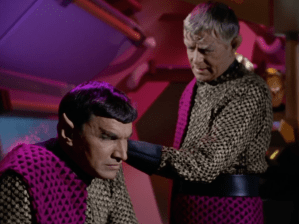
*As an aside, I’m always incredibly wary of anyone online who claims to have “sources” close to the production of any major franchise. We’ve seen this with some people regarding Alex Kurtzman’s position at ViacomCBS/Secret Hideout, and it just isn’t true. A lot of incredibly negative “fan” channels on social media, which deal in practically nothing but hate and bile, make a living doing what they do. And they have an incentive to keep the clicks and views coming in – so they make stuff up claiming to have anonymous “sources” which never existed. Either that or they’re being trolled by someone! So remember to keep your wits about you, and take any such claims with a grain of salt.

What to watch to be ready for Star Trek: Picard

Spoiler Warning: There are spoilers for the episodes and films on this list.

It’s only a few days till Star Trek: Picard premieres. Just saying that gets me excited, as I’ve been anticipating this series since it was announced! And in a broader sense, I’ve been waiting for the Star Trek franchise to move its timeline forward again since Voyager went off the air and Nemesis was in cinemas.

If you’re new to Star Trek, or haven’t watched any of the older series for a long time, it might be worthwhile to go back and take a look at some of the classics in anticipation of Star Trek: Picard. So let’s go together and get caught up on some of the episodes which may – or may not – be relevant to Picard’s story. At any rate, they’re all worth a watch before the show kicks off.

Number 1:
Endgame (Star Trek: Voyager, 2001)

Admiral Janeway and the Borg Queen in the Voyager episode Endgame.

Before The Avengers ever thought of it, Voyager had the first Endgame! And it was a heck of a ride involving a time-travelling Janeway giving her past self technology from the future in order to defeat the Borg. By changing the past, Janeway was able to get Voyager home far sooner than she had in her own timeline.

Time travel paradox aside (how could future Janeway exist if she erased her own timeline by interacting with her past self?) the episode sets up what could be an important story point regarding the Borg. As Voyager prepares to travel home, future Janeway infects the Borg Queen with a virus – one that has the potential to devastate the entire collective. Voyager is able to easily destroy many Borg vessels – and the Borg Queen’s complex – thanks to the enhancements future Janeway brought them, and the end of the episode is the last time we’ve seen the Borg in the Star Trek timeline. What happened to them after Endgame is a key question, and given that we’ve seen a Borg vessel and ex-Borg in the trailers for Star Trek: Picard, it may be one that the series will answer.

Seven of Nine, a key member of Voyager’s crew in its later seasons, is also set to feature in some form in Star Trek: Picard, and her relationship with the collective was always a point of interest. I definitely think it’s worth giving Endgame a rewatch before Picard kicks off.

Number 2:
Star Trek: Nemesis (Film, 2002)

Data and Picard in this scene from Star Trek: Nemesis.

This had to be on the list, right? Nemesis is as far forward as the Star Trek timeline had gotten – prior to last week’s Short Treks episode Children of Mars. And it was a Picard-centric story, focusing on his fight against a clone of himself created by the Romulans. As a story which features Picard heavily, as well as his relationship with the Romulans, this would already be an important one to watch. But because in this film Picard sees Data sacrifice himself to save him, it becomes even more meaningful in the story of Picard’s life.

We already know from the trailers that Data’s loss weighs heavily on Picard, and may even be a significant factor in his decision to leave Starfleet a few years after the events of Nemesis. As Data’s sacrifice is such an important moment in Picard’s later life, Nemesis is definitely worthy of a viewing before Picard premieres.

Other things to note from the film would be the Romulans and their relationship with the Federation. Nemesis takes place after the Dominion War (as seen in Deep Space Nine) and the Federation and Romulans had been allies. Is that alliance still in place? Is it possible that the surviving Romulans will have a good relationship with the Federation after the destruction of their homeworld? All interesting points to consider!

Number 3:
Children of Mars (Short Treks, 2020)

Picard’s blink-and-you’ll-miss-it cameo appearance in Children of Mars.

I have a full review of Children of Mars already written and posted, which you can find by clicking or tapping here. Suffice to say that it wasn’t my favourite episode of Short Treks, but nevertheless it was created to be a prequel to Star Trek: Picard. While it’s unclear whether the two principal characters the episode features – schoolgirls named Kima and Lil – will cross over to the main series, there’s a significant event depicted which certainly will be a story point in some form.

A faction called the “rogue synths” launches a massive attack on Mars, where the Federation’s Utopia Planitia shipyards are located. Who this group are and what their aims were isn’t clear, but it seems as though this attack was designed to disrupt efforts led by Admiral Picard to assist the Romulans as they faced the supernova which would ultimately destroy their homeworld. In that sense, the attack on Mars looks set to be significant in the backstory to Star Trek: Picard.

Unfortunately if you’re outside the United States, as I am, you won’t be able to watch this episode by “conventional” means. Amazon Prime, despite having the rights to show Picard, don’t seem to have shown this episode of Short Treks. I suppose it’s possible that they will put up Children of Mars on their streaming platform before Picard premieres, but realistically if you want to guarantee seeing it before the main series you will have to find another way to access a copy. I can’t recommend any one website or other method, but if you know your way around a computer I daresay you’ll be able to find it.

Number 4:
Disaster (Star Trek: The Next Generation, 1991)

Picard and the children in the stuck turbolift in Disaster.

Disaster is one of my personal favourite episodes of The Next Generation. Perhaps I should do a list of those one day! It’s a bottle show (i.e. a show taking place entirely on board the ship – these were usually done to save money on building new sets) but that doesn’t mean it doesn’t tell a very interesting story – or rather, a connected series of stories. As the Enterprise-D hits a “quantum filament”, it is left without power to most of its key systems. The main crew are split up, and are forced to play different roles than they usually would.

It’s a great example of characters working in the face of adversity, and of how the threat and danger in an episode of Star Trek doesn’t have to come from a menacing evil alien. Worf ends up delivering a baby, Counsellor Troi is the senior officer on the bridge and is forced to make significant command decisions, and most significantly for our purposes, Picard is stuck in a turbolift with a group of frightened children.

We’ve seen Picard in command countless times and we know he’s good at it – with his own crew. What Disaster does is show us how Picard can take control of any situation, even one he’s uncomfortable in as he’s never been keen on children. He’s able to get the situation under control and lead the kids to safety in the face of a difficult situation. It may not be the most significant TNG episode ever from Picard’s point of view, but it is nevertheless worth a watch.

Number 5:
The Battle (Star Trek: The Next Generation, 1987)

Accompanied by a Ferengi Marauder, the Enterprise-D takes the USS Stargazer under tow in The Battle.

The Next Generation’s first season was all about the show finding its feet. With the Klingons having been somewhat pacified, the show was looking for a new antagonist, and the Ferengi were initially created to fill that role. Though over the course of Deep Space Nine we’ve come to see the Ferengi more as a neutral power, interested in their own finances more than in galactic events, in early TNG they were much more aggressive.

The Battle was only the Ferengi’s second appearance, though we’re not really interested in the episode for that reason. Dai’mon Bok, a Ferengi captain, has somehow acquired the USS Stargazer – a ship previously captained by Picard. Over the course of the episode, we learn Picard had been in command at an event called the “battle of Maxia”, in which he defeated a Ferengi vessel using a warp speed technique called the “Picard manoeuvre”. The story fills in some of Picard’s pre-TNG history and proved to be a great opportunity for Patrick Stewart to show off his acting abilities, as the episode takes the character through a moment of (induced) madness.

Number 6:
The Best of Both Worlds, Parts I & II (Star Trek: The Next Generation, 1990)

Picard transformed into Locutus of Borg in The Best of Both Worlds.

I’ve kind of spoilt it in the above picture, but Picard’s assimilation by the Borg in The Best of Both Worlds was a truly shocking moment for The Next Generation to end its third season on. This was the first time we’d seen assimilation on screen, and for a character as significant as Picard to be captured was a phenomenal moment. The entire two-part episode is beautifully constructed, and the moments leading up to the reveal of the assimilated Picard are perfectly shot and edited.

In terms of Picard’s life, his experience with the Borg, and the guilt and regret he felt over the attack on Starfleet ships at Wolf 359, would stay with him for a long time. In First Contact we see how it could influence his judgement – Picard was usually level-headed, calm, and neutral, but when it came to the Borg his emotions could get the better of him leading to irrational decisions. Seeing how this came to be, and how one traumatic event can affect his character, could be very important to understanding his decision-making in Picard, especially if the Borg are involved.

Family, the second episode of Season 4 of TNG, follows on from The Best of Both Worlds and would also be worth a look-in as an epilogue of sorts to this story.

Number 7:
Star Trek: Discovery (2017-present)

Lorca and Saru during Discovery’s first season.

Given the significant changes to Star Trek storytelling that are present in Discovery, it would be well worth getting up to date with Star Trek’s most recent outing if you haven’t seen it already. I understand that some fans weren’t happy with the series for a number of reasons, but there are some definite high points in there which even the most hardline sceptic should be able to appreciate.

Jason Isaacs in Season 1 and Anson Mount in Season 2 both give amazing performances as two very different Starfleet captains, and Discovery tells two separate, season-long serialised stories in the style that Picard plans to adopt for its first season. If the Short Treks episode Children of Mars is any indication, the visual style of Discovery will also carry over to Picard at least in part. Whether you think this is a good thing or not is another matter, of course, but if you’ve somehow avoided Discovery this long, now could be a good time to give it a second chance.

Because of its serialised nature it’s hard to pull just one episode from Discovery and say “just watch this one”. But if I had to pick a single episode, I’d recommend An Obol for Charon from Season 2. Despite containing several ongoing story arcs, the main thrust of this episode – dealing with an ancient planet-sized lifeform – is largely a self-contained story, albeit one that would have a huge impact on the remainder of the season.

Number 8:
Star Trek: Generations (Film, 1994)

Captains Kirk and Picard meet for the first time inside the Nexus in Star Trek: Generations.

“Don’t let them promote you. Don’t let them transfer you, don’t let them do anything that takes you off the bridge of that ship, because while you’re there, you can make a difference.” Those were the words spoken to Picard by Captain Kirk in Star Trek: Generations. And for a time, it seemed as though Picard was following the advice his predecessor gave him. We saw Janeway promoted to Admiral in Star Trek: Nemesis while Picard remained a captain, even though for the audience she was a character we’d met much later and was noticeably younger. What could it have been that caused Picard to turn his back on Kirk’s advice?

In Generations, Picard loses several members of his family to a fire. Château Picard, where it seems he’s living in retirement at the beginning of the new series, was the place where his brother and family had lived. Family had been important to Picard, but he had been content that the family line would continue thanks to his brother having a family, but that was taken away from him in Generations. It’s a film in which he suffers another loss, too – the Enterprise-D.

Though casualties were said to be light, the loss of the ship he’d called home for more than seven years and had countless adventures aboard did have an effect on Picard, not that much of it is acknowledged on screen. Mostly, though, it’s Kirk’s sacrifice which is the key point worth noting from Generations, and even though the two men didn’t know each other particularly well, Kirk’s advice seemed to be taken to heart.

Number 9:
Tapestry (Star Trek: The Next Generation, 1993)

Given the chance to start over by Q, Picard ends up leading a very different life in Tapestry.

As Tapestry begins, Picard has been badly wounded. His artificial heart couldn’t tolerate the injury and he dies – only to be greeted by his long-time nemesis Q, and given a rare opportunity to make a fresh start.

Picard has an artificial heart because in his youth he was brutally stabbed! By choosing to avoid that fate, Picard set his life on a different path, one which didn’t lead to the man we knew, but a more timid and less successful man who had only made it as far as a junior lieutenant in Starfleet. He realises his mistake, and pleads Q to send him back to set things right, stating: “I would rather die as the man I was… than live the life I just saw.”

It’s another story that adds some colourful background to Picard’s story, and we see him in his youth before he settled down into the man we knew. Given that there are sure to be changes in his character between the last time we saw him and how he appears in Star Trek: Picard, it’s worth remembering that people do change over the course of their lives, and the person you are at 20 isn’t the same person you are at 50 or 70 or 90.

Number 10:
All Good Things… (Star Trek: The Next Generation, 1994)

Q takes Picard back in time in All Good Things…

The finale of Star Trek: The Next Generation was a strange one, with a time-travel concept and the return of Q. Across three time periods Picard had to figure out a puzzle – a spacial anomaly which would destroy humanity, and for which he was ultimately responsible!

If you’ve seen the science fiction film Arrival, then All Good Things… uses a similar concept. By learning to perceive time differently – realising that events in the future were impacting the past, not the other way around – Picard was able to prevent disaster. “We wanted to see if you had the ability to expand your mind and your horizons. And for one brief moment, you did.” So says Q, complimenting Picard on his ability to change the way he thought and attack the situation in a different way from a completely different line of reasoning.

Bringing to a close Q’s arc in The Next Generation, the episode also shows Picard as someone who is capable of things that he even doesn’t know about himself. Q gave him the push, but it was Picard who solved the mystery and saved humanity. We also get glimpses of Picard’s personal future – including his retirement at Château Picard. There’s the mention of a degenerative disease called irumodic syndrome which Picard is said to be suffering from in his later years – whether this will come into play in Star Trek: Picard is unknown.

Honourable Mentions:

I can’t end a list without adding in a few honourable mentions!

Star Trek (Film, 2009) – This is where we first hear about the supernova that destroyed Romulus from Spock. It’s a significant plot point in the film, but not one which is covered in great detail.
What You Leave Behind (DS9, 1999) – Concluding the Dominion War arc, which brought together the Federation and Romulans as allies, this episode is the most recent in which we saw many Star Trek factions like the Cardassians and Breen.
Skin of Evil (TNG, 1988) – Picard’s first on-screen experience with losing an officer and a friend, when Tasha Yar is killed in action.
Time Squared (TNG, 1988) – Picard must contend with the idea that he abandoned ship in the middle of a crisis when a duplicate of himself from the future is discovered.
The Defector (TNG, 1990) – A Romulan Admiral defects to the Federation to try to prevent a war, and Picard must deal with the information he provides.
The Raven (VOY, 1997) – Seven of Nine experiences flashbacks and uncovers her family’s half-assimilated ship where she was first captured by the Borg.
I, Borg (TNG, 1992) – The introduction of Hugh the Borg, and Picard’s attempt to weaponise him to defeat the collective.
Human Error (VOY, 2001) – Seven of Nine begins to discover more about her human side after years away from the Borg.
In The Pale Moonlight (DS9, 1998) – Sisko lies and cheats to bring the Romulans into the Dominion War as an ally – and Garak commits murder to cover up their actions. Did the Romulans find out between the end of the war and the events of Picard?
Sarek (TNG, 1990) – Picard came to know Spock well, but also met his father. Picard helped Sarek stay in control of his emotions as he suffered a serious Vulcan illness.

So that’s it.

A few episodes and films that might feed into the plot and background of Star Trek: Picard. Perhaps not everything will be relevant, especially given the scant information about the show’s plot that we actually have. I’ve made two significant assumptions based on the trailer and cast information that we’ve seen so far – firstly that the Borg will have some role to play in the story, and secondly that the Romulans will too. But it could be an elaborate misdirect and both of these factions will ultimately end up being little more than backstory. We’ll have to see.

Regardless, the episodes and films above should go some way to showing off Picard and Star Trek at their best as we prepare for the new series. It’s been a long time since I was this excited about the premiere of a new television series, and I can’t wait to tune in when Picard kicks off in just ten days’ time.

Live Long and Prosper!

The Star Trek franchise – including all films, series, and episodes listed above – is the copyright of Paramount Pictures and ViacomCBS. This article contains the thoughts and opinions of one person only and is not intended to cause any offence.
Why I’m so excited for Star Trek: Picard

Spoiler Warning:
I will be looking at material from the two trailers for Star Trek: Picard, as well as discussing the most recent season of Star Trek: Discovery. There will also be spoilers for other Star Trek films and series.

In either 1999 or 2000 – I can’t remember which – I was listening to the radio when the news of a new Star Trek show was breaking. In the UK, the complicated rights agreements in place for broadcasting Star Trek meant that – at least for households which didn’t have satellite television – we were quite behind where the various series were in their US airings. The Next Generation had concluded its run, though Deep Space Nine and Voyager hadn’t yet, and I was very interested to see what would be coming next for the franchise.

When it was announced that the new series – later titled Enterprise – would in fact be a prequel, I wasn’t impressed. Star Trek was about looking forward to the future, I felt, so why did they need to go back in time to before Captain Kirk? In addition, Star Wars Epsiode I: The Phantom Menace had been in cinemas, and there was a lot of talk at the time about how prequels as a concept were bad – some of which admittedly went over my head in my youth.

Nevertheless, I wasn’t convinced about a Star Trek prequel and during Enterprise‘s original run on television over here, I only tuned in sporadically. It wasn’t until I got the series on DVD a few years later that I got to watch it in its entirety. Enterprise actually told some great stories – and is a good example of how a show that “no one asked for” can actually be worth watching after all. But this isn’t a review of Enterprise.

We’d have to go back to the 1990s to find a Star Trek series with a new cast that wasn’t a prequel.

Since just after the turn of the millennium, when Voyager went off the air and Nemesis hit cinemas, the Star Trek franchise hasn’t moved its timeline forward. Instead, we’ve had Enterprise and Discovery – both of which are set before Kirk’s original five-year mission – and the Kelvin-timeline reboot films – which are also set in the 23rd Century, but in an alternate timeline. In all that time we’ve had some admittedly interesting stories, and in 2009’s Star Trek a very brief glimpse at the post-Nemesis future, but no real advancement of the overall narrative of the franchise. And while Enterprise, Discovery, and even the Kelvin-timeline films have told some fun, interesting, and “Star Trek-y” stories, they’ve all been firmly embedded in a time period we’ve seen before.

Any prequel has an uphill struggle when it comes to telling a dramatic and interesting story, as well as building tension. The reason is simple – we know what comes next. You can have a galaxy-ending threat as part of your narrative, but if we’ve seen the galaxy fifty or a hundred years hence, we know that the threat isn’t serious – and even if in the moment it’s possible to get caught up in the story, at the back of our minds we still know that there will be a way out of it. At least, that’s how it works for me. As an example, in season 3 of Enterprise we follow the crew as they race to stop the Xindi planet-killing weapon from destroying the Earth. And that’s a very exciting story – arguably Enterprise‘s best season – but while watching it, at the back of my mind I was always aware that in the 23rd and 24th Centuries, we’ve been to Earth and we’ve seen that it clearly wasn’t destroyed. The journey can still be entertaining if the destination is known, but for me at least, knowing the outcome robs the story of some of its drama and tension.

This is why series like Game of Thrones or The Walking Dead have been so successful with what I call the “disposable cast”. By routinely killing off key characters and getting rid of starring actors and actresses, simply being a main cast member isn’t enough to guarantee safety any more – and the sense that anything could happen is present all the time as a viewer, arguably raising the stakes.

Star Trek has occasionally lost main cast members, though these have more often been motivated by production reasons – such as a cast member leaving the series, or the showrunners deciding to “refresh” the cast by replacing someone – rather than for purely narrative ones. In most cases, as viewers we tend to feel that the main characters are safe, and it’s the redshirts like Ensign Bob, introduced for the first time five minutes ago, who are most in danger in any given scenario.

But as we’re now in a new phase of television, one dominated in the aftermath of shows like Game of Thrones with ideas like the “disposable cast” and serialised storytelling, there are new and exciting possibilities for Star Trek. We’ve already seen some of this in Discovery – the first two seasons each told season-long stories instead of being episodic, and we’ve seen characters like Lorca killed off, as well as Pike, Spock, and Una appearing for a single season, and of course Ash Tyler being left behind as Burnham leads the U.S.S. Discovery into the future. Sir Patrick Stewart, when interviewed regarding the new series, has gone on record saying that Picard will be “like a ten-hour movie” instead of a series of episodes – firmly stating that this will be another serialised show.

The vineyards of Château Picard form the Starfleet logo in the first teaser poster for the new series.

Personally I’m a fan of episodic television – I think it’s great to be able to drop into an episode of a show without needing to have followed the entire season to understand what’s going on. Previous iterations of Star Trek largely operate like this, though the aforementioned third season of Enterprise, as well as the Dominion War arc in Deep Space Nine, were serialised stories. But for shows like TNG and Voyager, it’s possible to jump into most episodes and follow a single story over forty-five minutes. I like that, and I think it makes for a good format. There’s no getting away from the move to serialised shows, though, and Picard is set to go down this route.

When the TNG-era series all concluded around the turn of the millennium, there were a lot of leftover story points. Although each crew had arguably reached their destination – Deep Space Nine ended its war, Voyager saw the crew make it home, and Nemesis saw the Enterprise’s crew go their separate ways – 500-odd episodes across 21 seasons of TV, along with four films, told over a 15-year period from 1987 to 2002 had a lot of stories to tell and taking that era of Star Trek off the air left a lot of open-ended, unfinished plot threads. There are too many to name here, but a few that spring to mind are: what would happen next for Cardassia after the war? How would the Klingon-Romulan-Federation alliance work with no common enemy? And what happened to the Borg after Voyager attacked their transwarp network and the Queen’s complex? In addition, finding out what happened next to a lot of the characters is something fans would like to know.

By this point in time, several members of Kirk’s crew have had their futures shown on screen. Kirk himself died saving Veridian III in Generations, McCoy lived to a ripe old age and helped christen the Enterprise-D when it launched, Spock ended up in the Kelvin timeline after trying to save Romulus, and Scotty emerged from transporter-suspension in the TNG episode Relics. But what happened next for the crews we’d seen in the TNG era is still unknown to fans – and there’s definitely scope to explore some of that within Picard.

I don’t feel that Picard should overload itself with characters, though. It’s a short series – clocking in at only ten episodes – and the more time it spends looking back, the less time there is to look forward. And the more time it spends with fan favourites of the past, the less time there is to show off the new crew. I’d like to give the new cast a chance to become fan favourites for the next generation (pun intended) of Star Trek fans. I really hope that in another thirty years’ time they’ll be clamouring to find out what happened next to some of these characters the way we are for those of the TNG era. So in that sense, Picard has to walk a line between what happened since Nemesis and what’s to come.

It’s my hope that Picard can strike that balance, and that while we’ll learn a great deal about the shape of the Star Trek galaxy and what happened next for some fan-favourite characters, we’ll also get an exciting original story in which those pieces of information are conveyed. The Next Generation didn’t spend too much of its time in its first season looking backwards – aside from DeForest Kelley’s cameo in Encounter at Farpoint and a couple of name-drops, TNG told its own story. Some elements of that story filled in the blanks for returning fans – we learn, for example, that the Klingons and Federation are at peace, and that the Romulans have isolated themselves for a number of years – but they weren’t in-your-face about it, and those story points unfolded naturally in the episodes in question. They didn’t feel tacked-on or shoehorned in in order to provide cheap fanservice – something I’d argue has happened in some recent Star Wars projects.

At the end of the day, Picard is taking the franchise forward in time – to the close of the 24th Century. And it’s the first time in a very long time that the timeline is going to advance. That is already a huge point in its favour, and without knowing much at all about the story, it’s enough to get me hyped up.
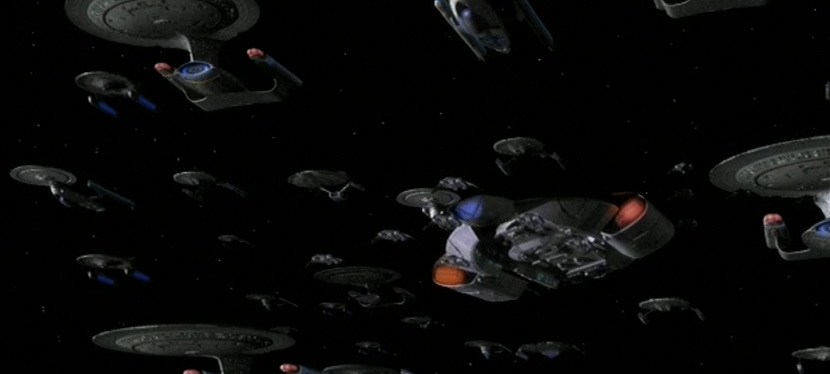
Jean-Luc Picard and Number One (the dog) on the second poster for Star Trek: Picard.

The two trailers for Picard have been great, and I can’t wait to catch up with Seven of Nine, Riker, Troi, and of course, Picard himself. I’m also really interested to learn more about the new cast – including, for the first time, a Romulan main cast member. It looks from the trailers that we’ll see some Borg story elements, as well as learning more about the Romulans after the destruction of their capital. All of those things seem absolutely fascinating, and while I have to admit I’d be hyped up for almost any Star Trek story that moves the narrative forward, the teases we’ve seen of Picard just look incredible.

I know that recent Star Trek projects haven’t thrilled everyone in the fanbase, but I really do hope that Trekkies who weren’t taken with Discovery will give Picard a try. The chance to see what comes next isn’t something we’re always going to get. A lot of shows – by far the majority – are one-off things, and when they’re done they’re done. Some even get cancelled too soon, before even the first part of their story can be told. So this opportunity that Picard presents is a rarity, one I intend to take full advantage of. If Picard is a success, it has the potential to be a launchpad for other series set in the same time period, taking the Star Trek franchise boldly into the 25th Century.
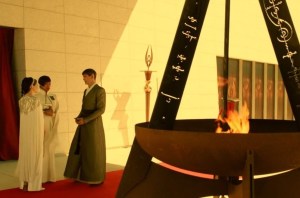
While I don’t expect Picard to spend its entire runtime catching up with galactic events and reintroducing old crewmates, I do hope we’ll get enough of that to feel like we’re back in that galaxy again – combined with enough new material and new characters to drive the story forward and give new fans a chance to get hooked in. Walking that line between the old and the new might be a challenge, but I’m confident that the producers, having cut their teeth on Discovery, can manage it with ease. And with Picard having just been renewed for a second season while I was writing this column, ViacomCBS are clearly confident of that too.

After almost two decades, Star Trek is finally ready to move forward again. With just over a month left to go, I can feel the excitement building already. Forget Christmas, forget New Year – it’s Star Trek: Picard that I’m most looking forward to right now!

Live Long and Prosper!

The Star Trek franchise, Star Trek: Picard, and all other Star Trek properties mentioned above are the copyright of ViacomCBS. This article contains the thoughts and opinions of one person only and is not intended to cause any offence.