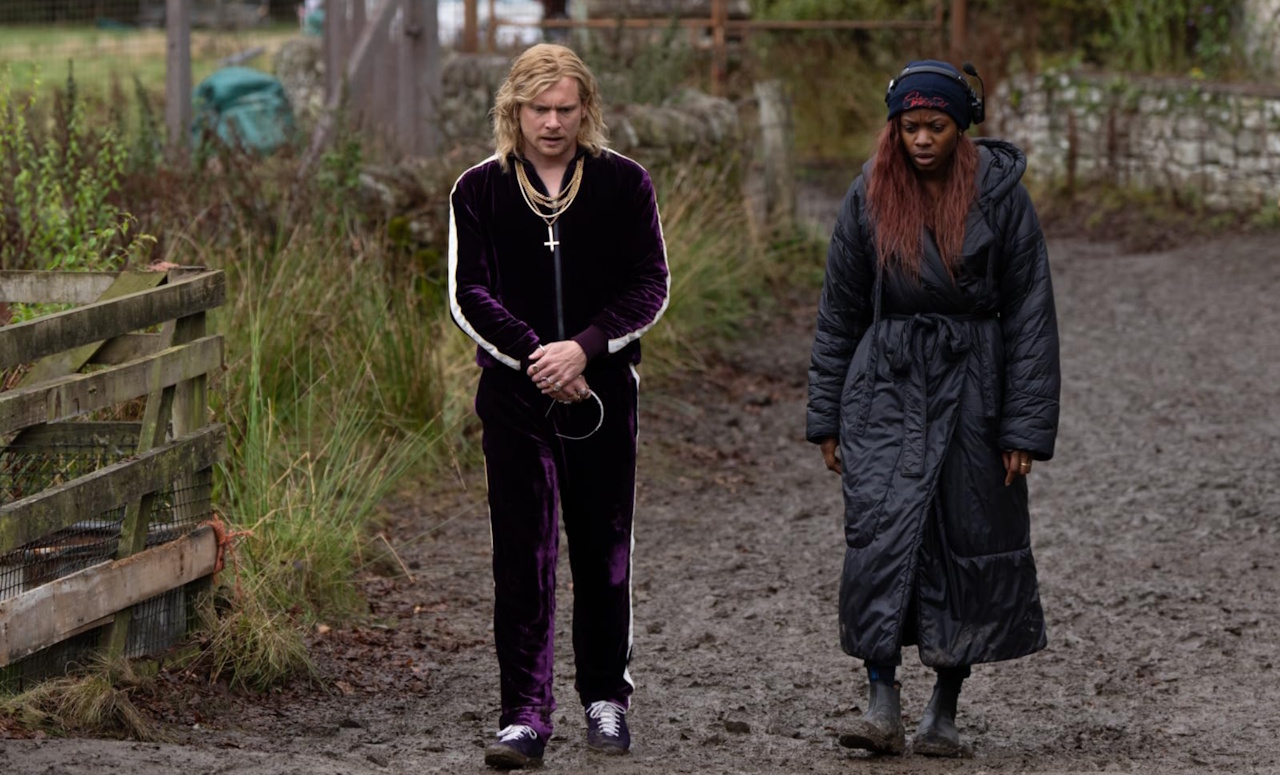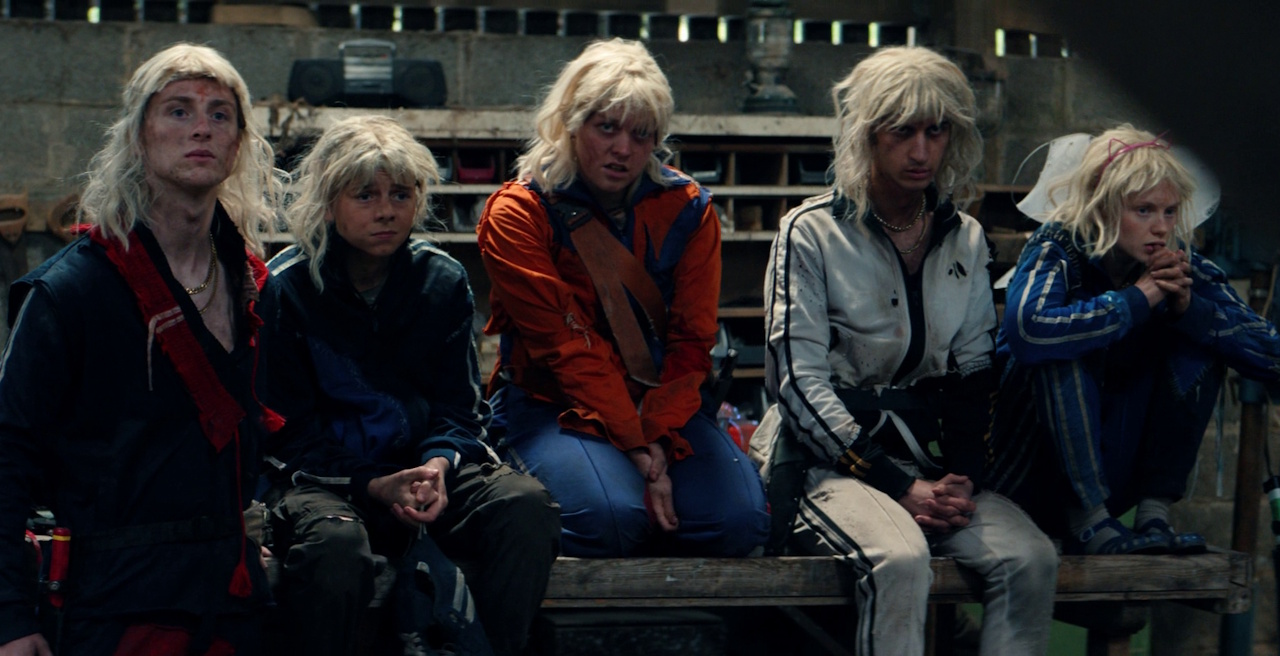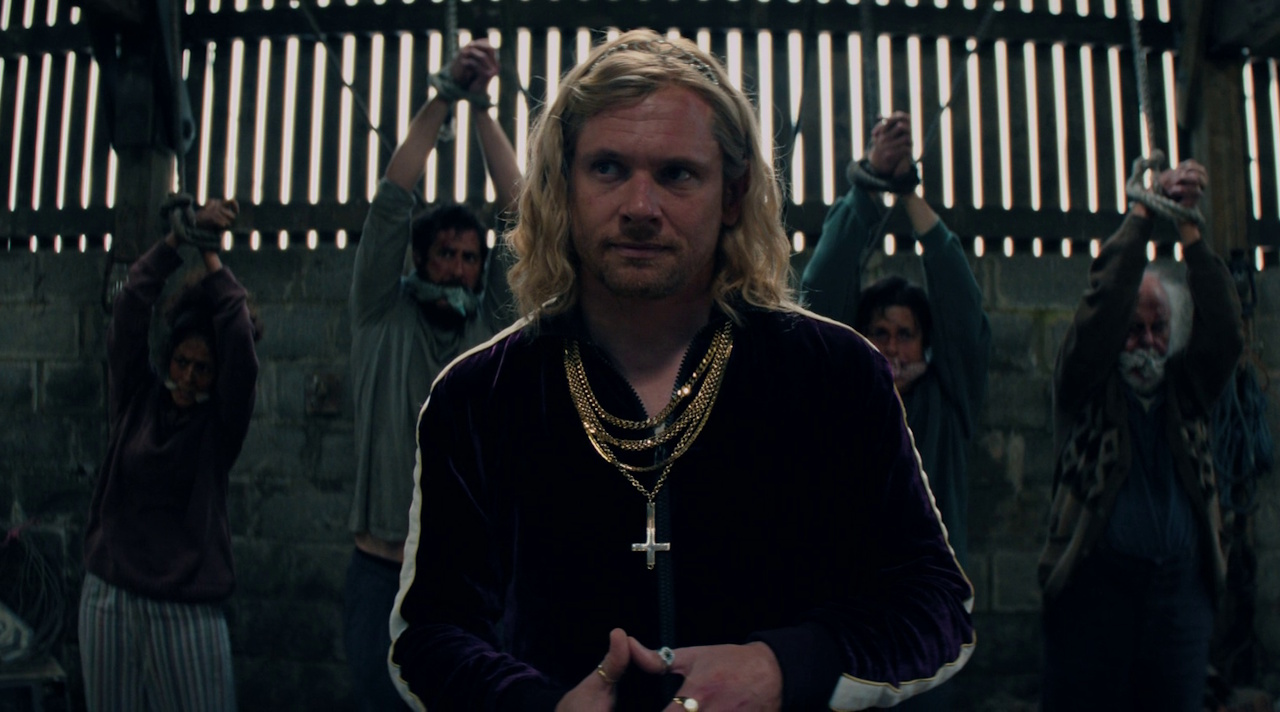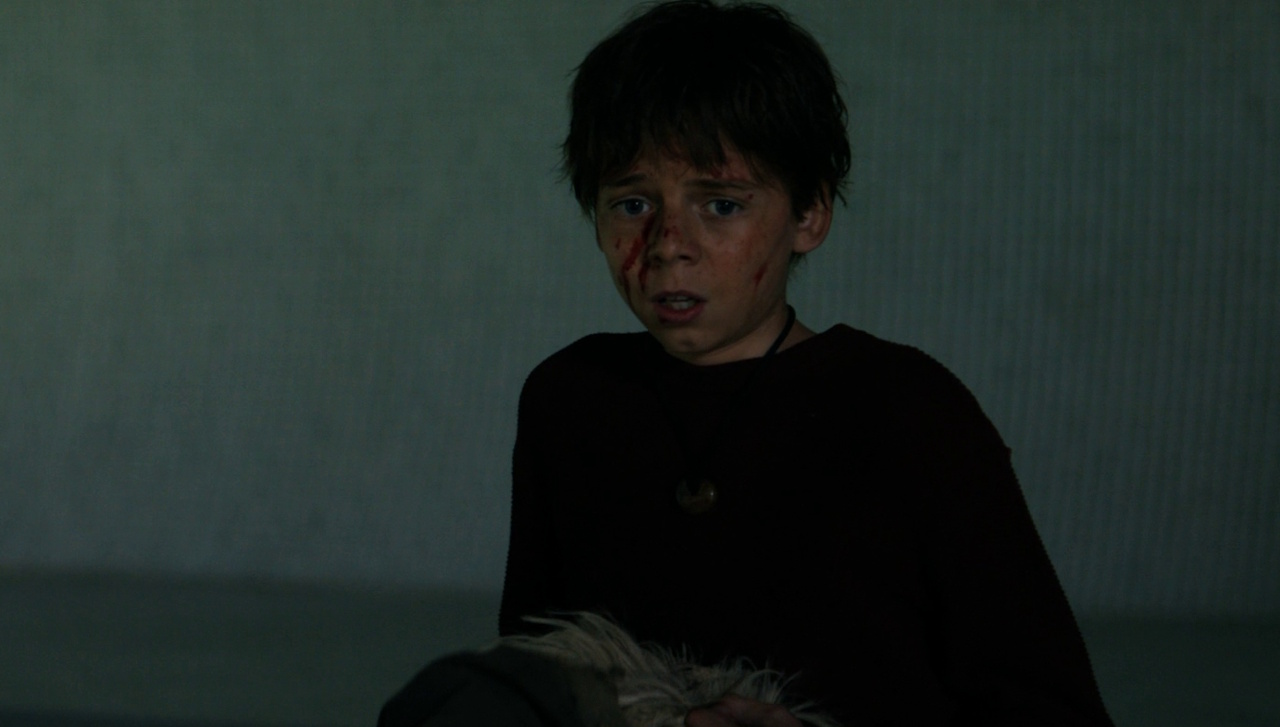
Spoiler Warning: Beware of spoilers for the films, games, and TV shows discussed below.
With Halloween rapidly approaching, I thought we could have a bit of fun by playing one of those “hypothetical question” games that you often see doing the rounds on social media. I’m going to choose one with a seasonally-appropriate horror theme, and try to go through a few possible answers, weighing up the pros and cons of each.
So what is this horror hypothetical, you rightly ask?
If you had to spend 72 hours (that’s three days) in one fictional universe from a horror property, which one would you choose? And, perhaps more pertinently: which horror franchise/universe presents the highest chance of survival?
Happy Halloween!
Let’s lay down some ground rules – because rules are always fun, right?
In this scenario, I’ll have to spend 72 hours in one fictional universe of choice – and it has to come from a recognised horror film, TV series, or video game. Scary episodes or levels of non-horror properties don’t count – so there’s no trying to wriggle out of it by picking something like Star Trek: Deep Space Nine’s Empok Nor. We’re talking full-blown horror only!
Most stories take place in a larger fictional world – but it wouldn’t be *any* fun at all to pick, say, The Texas Chain Saw Massacre and say that I’d avoid it by catching the first bus out of town, or to say that I’d survive in the Alien universe by just never going into outer space. So we’re assuming, for the purposes of the hypothetical, that I’m dropped in the middle of the danger zone. Running away is possible – but only using the equipment and technology that we’ve seen depicted on screen, *and* that I’m reasonably confident I’d be able to use. So… no hijacking a nuclear bomb or anything like that!
Argh!
I’m also going to assume that I’m in reasonably good health in these hypotheticals – which is categorically *not* the case in real life, unfortunately! But, again, it doesn’t seem like it’d be a lot of fun to have to take into account my limited mobility in every scenario. So, if you’ll indulge me, I’m going to assume I’m in better health than I actually am!
Finally, as I always like to say, everything we’re going to talk about is subjective, not objective. If you hate the horror franchises I’ve chosen, think I’ve totally messed up my survival, or just feel I’ve got the wrong end of the stick somehow… that’s okay! All of this is just a bit of Halloween-themed fun, at the end of the day. And since neither of us are ever going to be actually dropped into a horror franchise (well, fingers crossed), none of this really matters! It’s just for fun – and I share it with the interweb in that spirit.
I’ll talk a little bit about each scenario, then give it a survival chance at the end using a simple 1-10 scale, with one being the lowest chance of survival, and ten being the highest.
So with all of that out of the way, let’s get started.
Option #1: 28 Days Later
A zombie.
28 Days Later redefined the zombie genre, and it was genuinely one of the most terrifying depictions of zombies I’d ever seen. Fast “sprinters,” able to infect people with a single drop of blood, and blinded by rage… this is gonna be a tough one!
For the purposes of our 72-hour survival challenge, the best thing to do would be to shelter in place, using whatever resources are available in the immediate surroundings. Venturing outside, especially in a large city the size of London, seems like it would be immediately fatal, so as long as I have some kind of shelter and hopefully some water or something else to drink, I’d try to hunker down, keep quiet, and stay away from any windows!
Dying zombies.
That being said, we’ve seen how aggressive 28 Days Later’s zombies can be, and how a small flicker of light or a seemingly innocuous sound can attract an entire horde. Assuming we’re in London or a similarly-sized urban area, and all we have for defence is the contents of the average house… I don’t think this is going to end well, to be blunt about it. One loud snore, one step too close to a window, or one candle at night would be all it’d take to send the zombies crashing through the windows and doors.
I deliberately chose 28 Days Later ahead of something like The Walking Dead because of how much more intense and powerful its zombies appear. But that could be what screws us over! If we get lucky and the hordes pass us by, I think sheltering in place for 72 hours is plausible. But if we run out of water and have to venture out, if our base is compromised, or if we make one small mistake… that’s all it’d take.
Survival Chance: 3/10
Option #2: A Nightmare on Elm Street
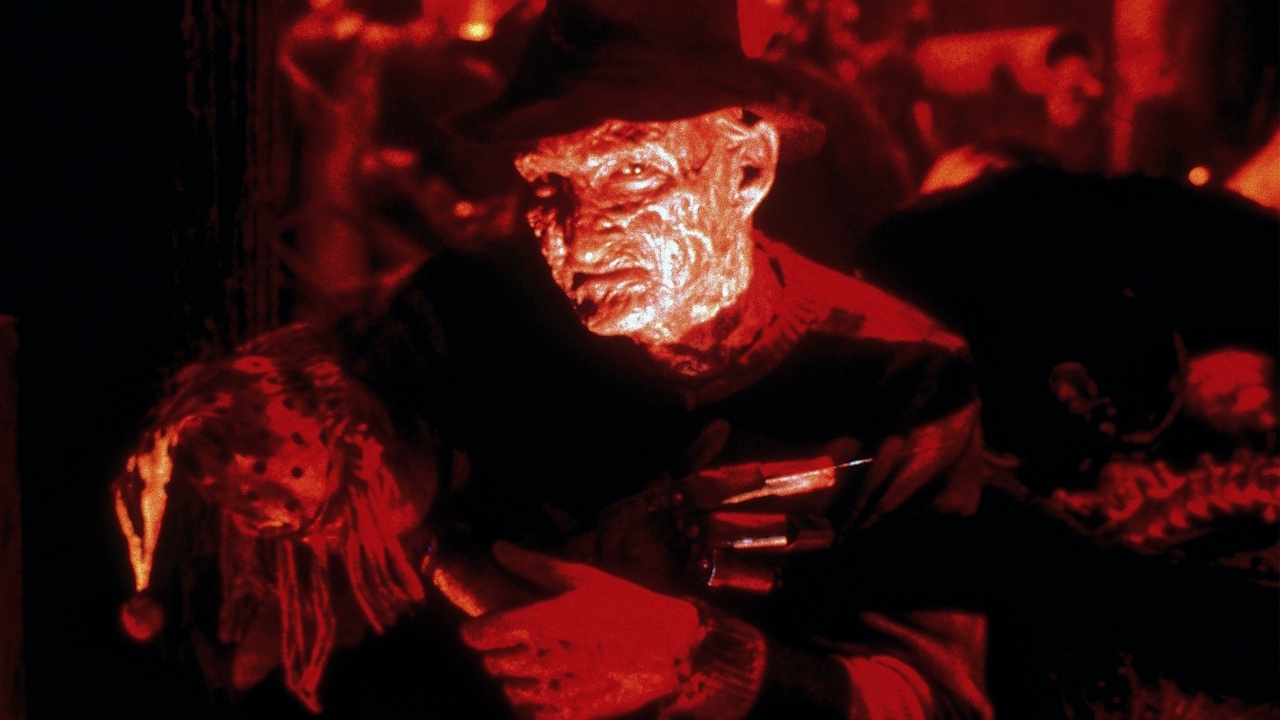
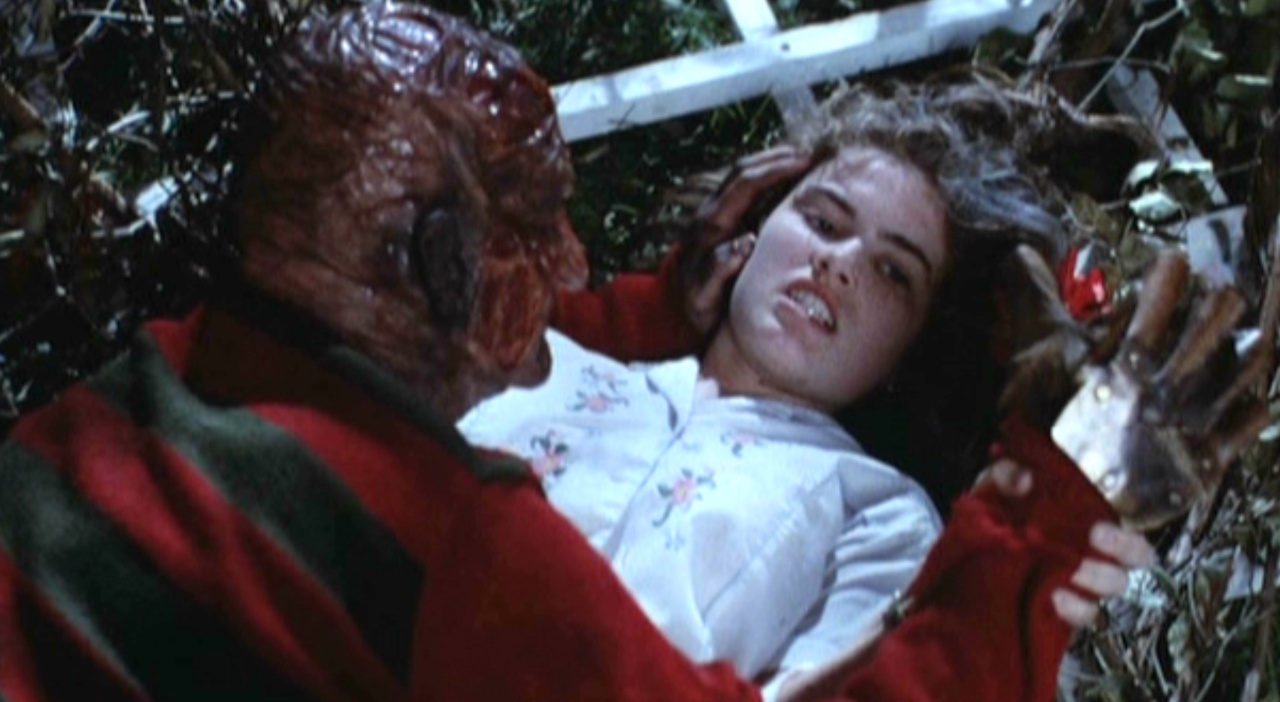
Freddy Krueger.
Freddy Krueger has one major weakness: he can only hurt me in my dreams. If this was a “survive indefinitely” challenge, that would be a problem! But if I have to make it 72 hours… I reckon I could manage to stay awake. A combination of caffeine pills, energy drinks, and coffee should keep the spooky lil’ guy at bay!
But okay, that’s getting dangerously close to cheating territory, I suppose. There have been more Nightmare on Elm Street films and spin-offs than I thought, and it seems as if Krueger’s backstory and the source of his powers have changed since the original. But if we assume that Krueger is fuelled by his victims’ fear, as the first film depicted, then trying to stay calm will be the biggest obstacle. And all that caffeine we just chugged? That probably won’t help with keeping calm!
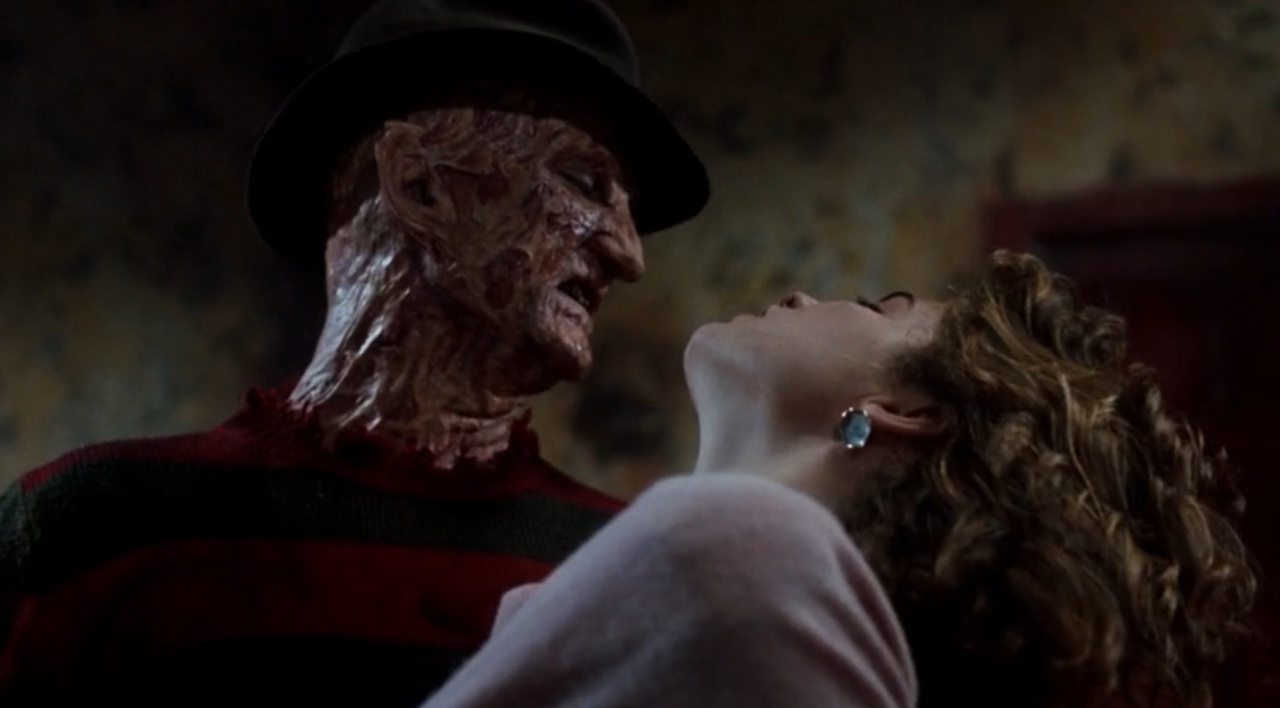
Krueger and Nancy in one of the sequels.
I don’t think I’d be able to figure out all of the other stuff depicted in the sequels: things like purifying Freddy’s bones or staging a group hypnotherapy session in order to enter his world and take the fight to him! So my plan, to be honest, would really be to try to stay awake for as long as possible. 72 hours seems like a stretch – that’s three full days – but if the alternative is a violent and painful death… well, that’s a pretty good motivator.
If possible, I’d try to meet up with anyone else who might be one of Freddy’s targets. Perhaps by working together, we could develop a more solid strategy!
Survival Chance: 6/10
Option #3: The Last Of Us (Video game version)
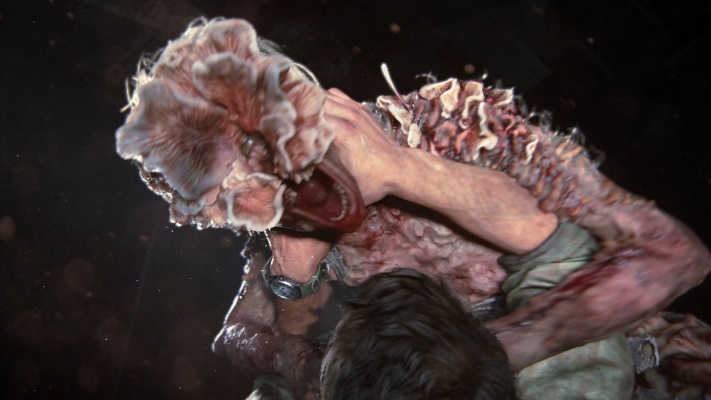
Fighting a clicker.
In this scenario, we survived the main event (or we were born after it) and we’re now a couple of decades into the post-apocalypse, as depicted in the main part of the story. For a 72-hour survival challenge, I’m torn between seeking out a safe zone, like Boston, where the first game starts, or simply finding an abandoned property and taking shelter.
In either case, I don’t want to spend much time on the road or travelling, as that seems like the time for the mushroom-zombies to strike! Finding a truly safe space outside of one of the established settlements or safe zones seems like it would be challenging, but trying to enter one of these places would also have its drawbacks. Some guards seem especially trigger-happy, so one wrong move (or sarcastic quip) could lead to a premature demise!
We don’t want to run into any of these…
The video game version of The Last Of Us also showed how deadly fungal spores could be. Without proper protection, spores would quickly infect me and bring my run to an end – and I can’t rely on having access to a proper hazmat suit or gas mask! And knowing me, I’d struggle to get the damn things on in time even if I was lucky enough to have them. This side of things makes venturing anywhere pretty dangerous, not least derelict buildings which could hold clouds of cordyceps spores.
Perhaps the least-bad option would be to just… pitch a tent in a field somewhere and hope that you’re far enough away from the zombies to survive for three days? There are also scavengers and gangs to worry about, though. Being alone in this post-apocalyptic world wouldn’t be a lot of fun, that’s for sure.
Survival Chance: 4/10
Option #4: The Thing
The Thing.
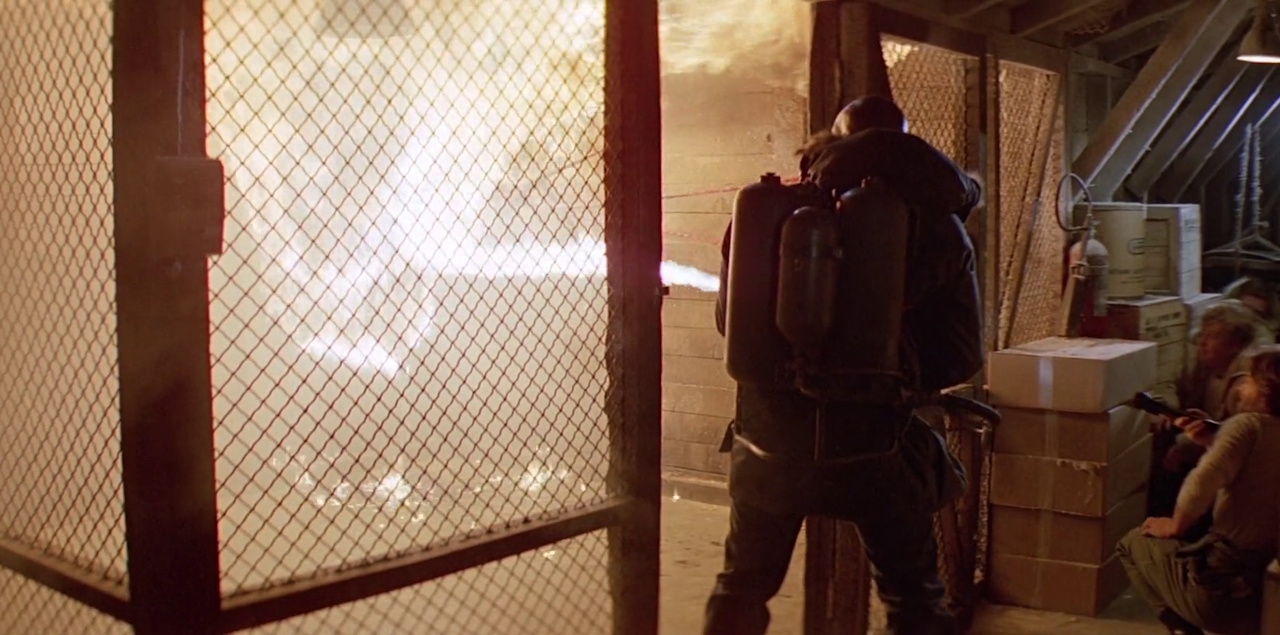
In The Thing, you’re trapped at an isolated outpost, unable to tell your friends from the creature, and… I think it’s gonna be a bad time! Unlike in other scenarios, going off alone and trying to hunker down won’t work; the Antarctic base is relatively small, and the creature seems to have a pretty good method of navigating it. Leaving the base, even if well-equipped, means facing Antarctica in the dark in the middle of winter… so I’m not making it 72 hours that way!
If possible, I’d try to organise the survivors into one group, occupying a “safe” room with resources, like the cafeteria. Taking shifts, so at least two or three people are awake at a time, I’d try to keep the creature at bay for as long as possible. But I have no doubt that the shape-shifting abilities would be a waking nightmare; not feeling 100% confident in trusting anyone would take a toll.
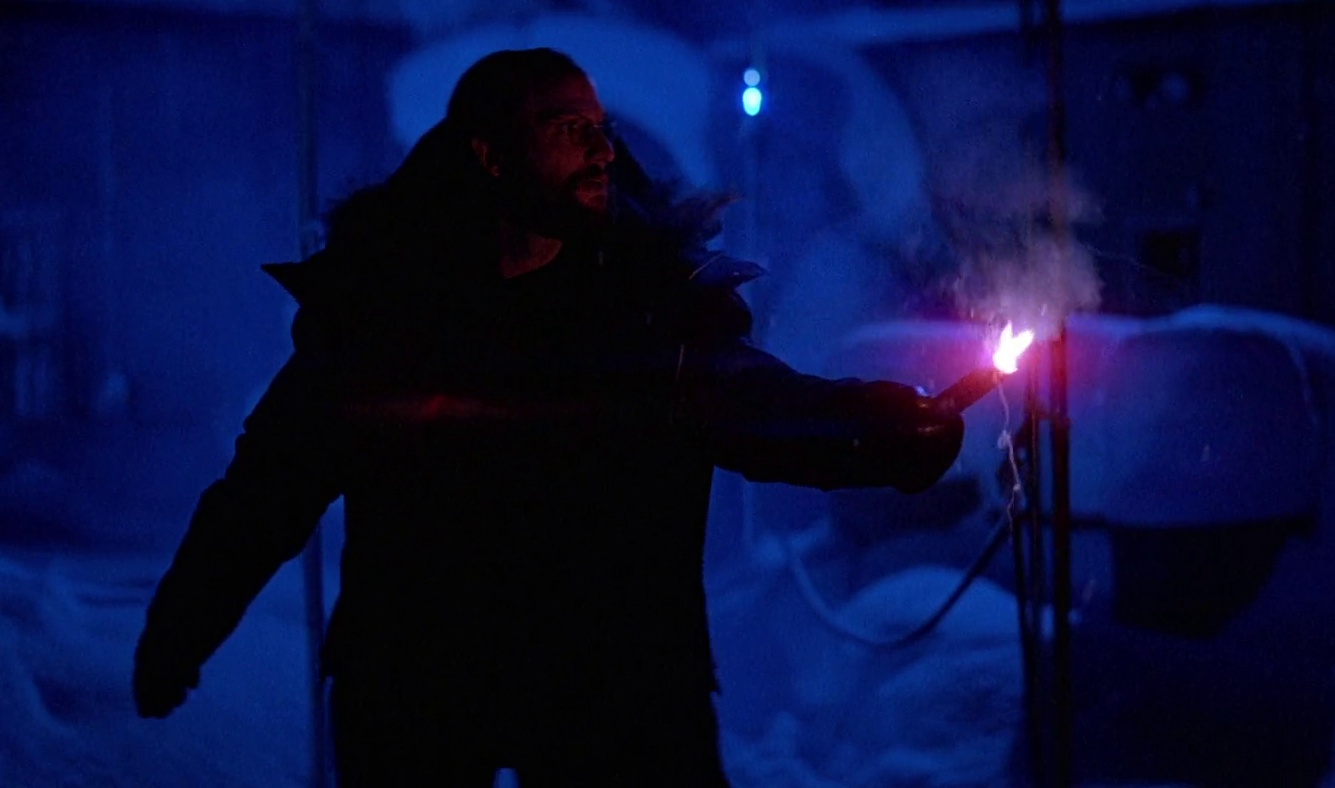
Kill it with fire!
With nowhere to run, the best way to survive 72 hours in this world would seem to be by befriending everyone at the facility and trying to stick together in one group. That means if there’s something to attend to outside of our safe room, the whole group goes. No one uses the bathroom alone, sleeps alone, or does anything alone. For someone who struggles with human interaction… that might not be the most fun I’ve ever had! But, as above, the fear of a violent death is a pretty good way to keep me motivated!
With all that being said, facing off against an intelligent and efficient predator like this, one with such a perfect ability to mimic animals and people… I don’t think the odds are especially high!
Survival Chance: 2/10
Option #5: Alien
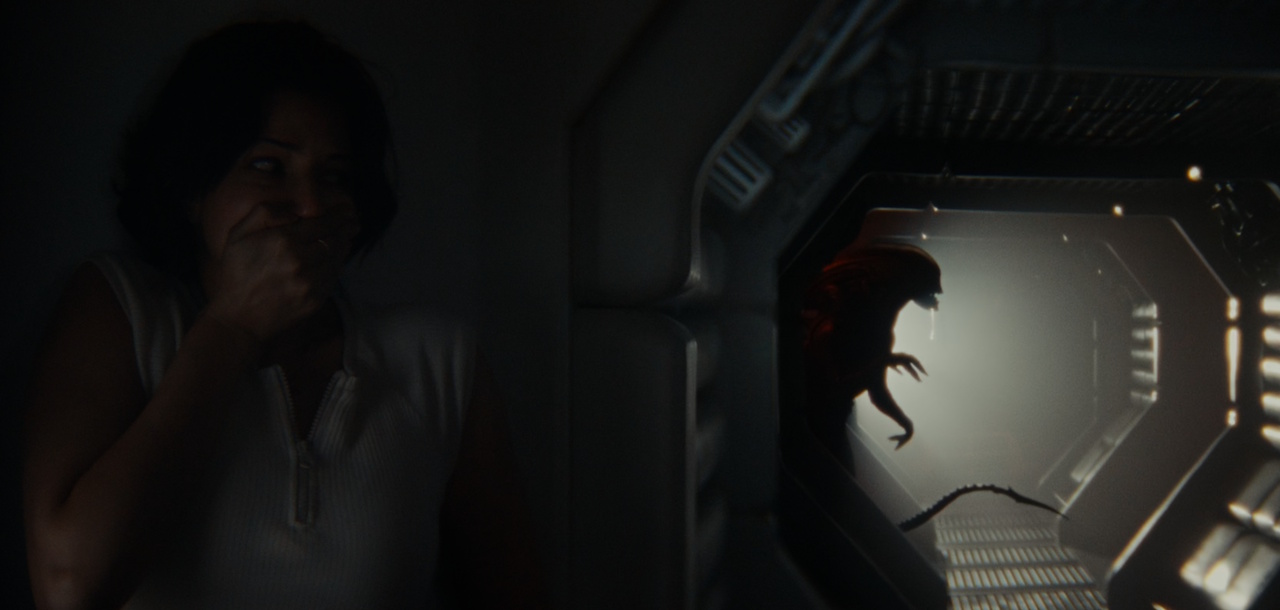
Hiding from a Xenomorph.
In space, no one can hear you scream… so let’s *try* not to have to scream! I think our survival chances in the world of Alien improve significantly if we’re on the ground – a colony or settlement – rather than aboard a spaceship or space station. But either way, the Xenomorph is coming for us, driven by little more than a desire to feed and breed.
If we have enough room, I’d try to put as much distance between us and the infection site as possible. We could try to commandeer a vehicle – like one of the ground transports seen in Aliens. Or, if trapped aboard a ship, sneakily trying to use an escape pod might be a viable option. Remember, we just have to survive for 72 hours – so getting as far away from the Xenomorph as possible should be top priority!
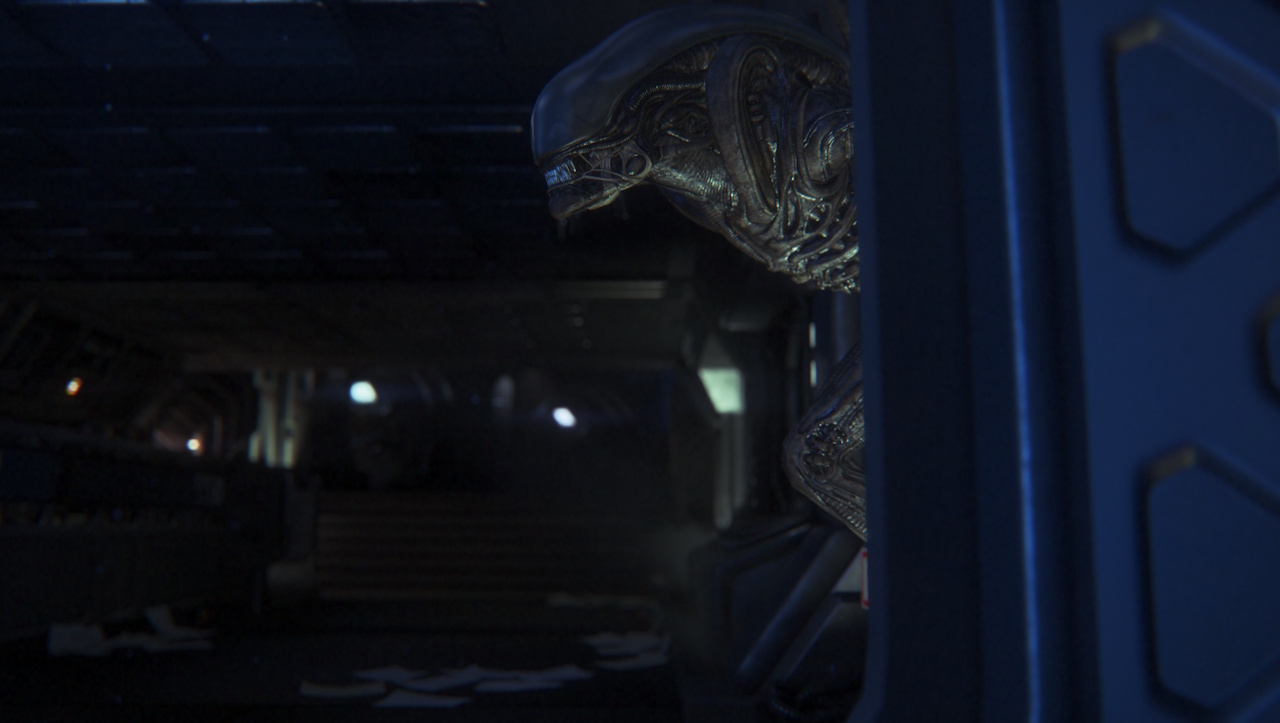
Alien: Isolation.
If escape isn’t an option, though, and we’re in a worst-case scenario aboard a cramped slow-moving spaceship, then I think – as the films and series have repeatedly shown – we’re pretty much screwed! If we catch the infection really early, and can kill the facehugger or infant Xenomorph, maybe things would look a lot brighter. But by the time we’ve passed the chest-burster stage and the little bugger has disappeared, our best bet is honestly to run to the escape pods.
I’ve recently been playing Alien: Isolation, and it’s genuinely one of the scariest games I’ve ever played – and perhaps second only to the original Alien film in terms of how terrifying the Xenomorph feels. Playing it was part of the inspiration behind this piece, as I honestly struggle to survive in the world of Alien – so it made me wonder which other horror properties might be equally as unforgiving!
Survival Chance: 2/10
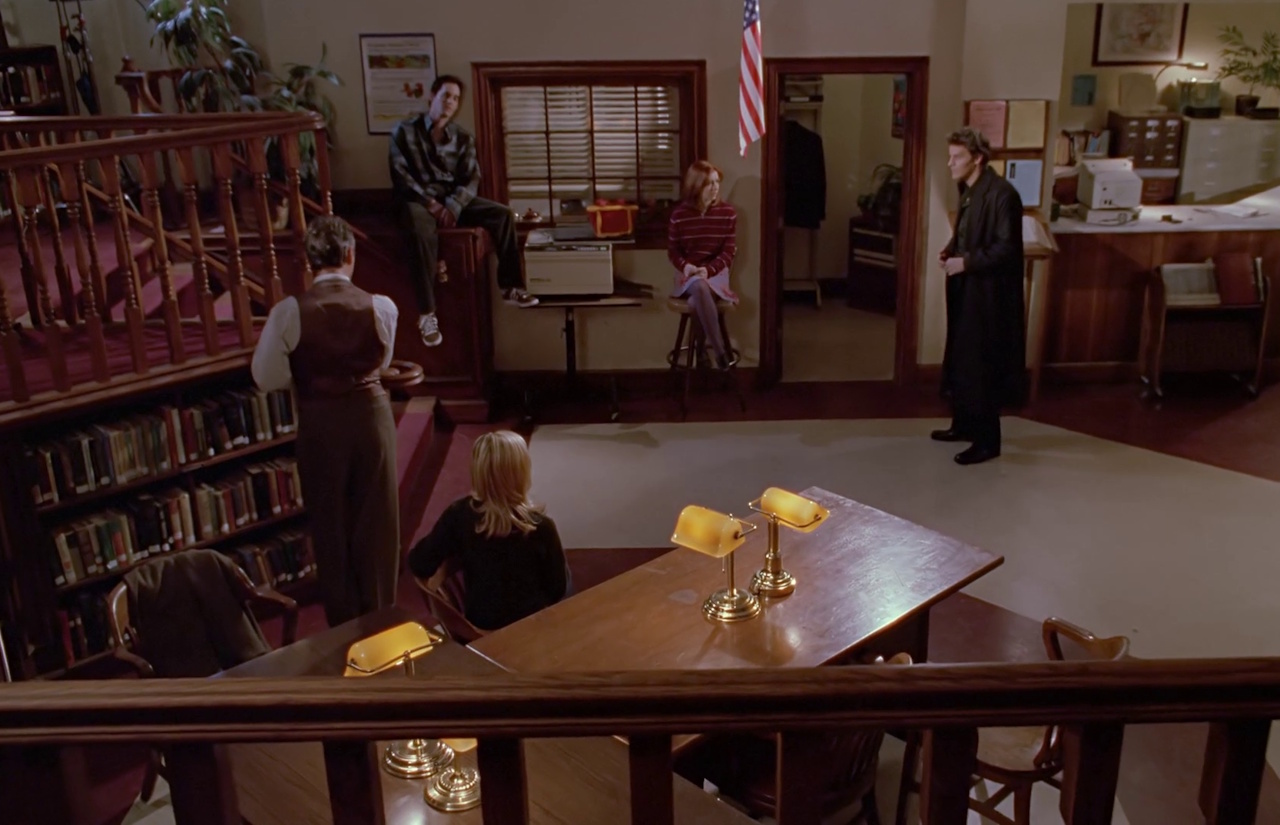
Option #6: Buffy the Vampire Slayer
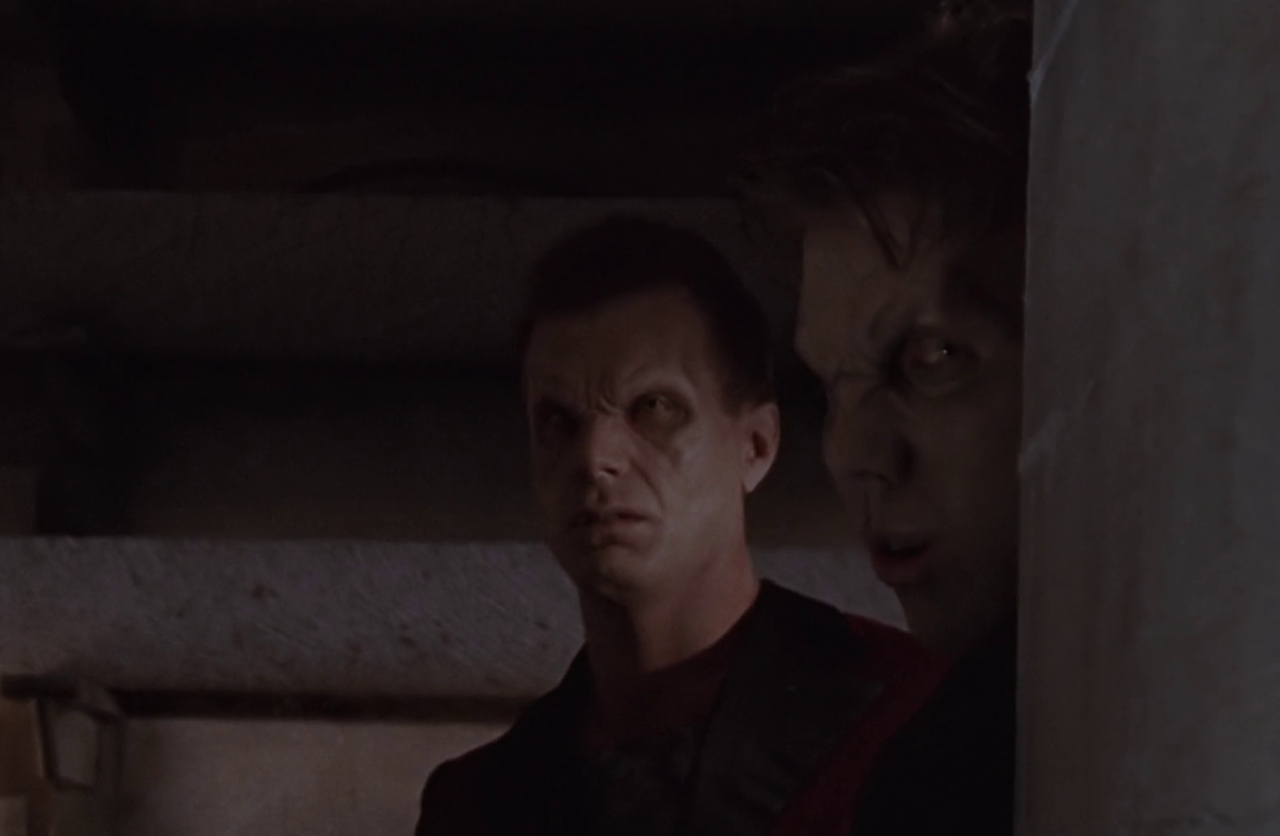
Vamps!
Gosh, where do we start with this one? There’s a lot more to Buffy than just vampires – so you can expect to be contending with werewolves, witches, ancient demons, and many other supernatural baddies! Honestly, just holding your own against vampires for 72 hours would be a stretch, but if other entities also join the hunt? This could be a very short challenge!
The flip side to all of that is, unlike in every other scenario we’ve examined so far, there’s a gang of people dedicated to hunting down and stopping the vampires and other creatures of the night. We wouldn’t even need to meet or befriend Buffy, Giles, Willow, or anyone else – if supernatural shenanigans are going down in Sunnydale, they’re probably already on the case. It might be too late for us if we’re the first victim of a new monster, but what are the odds of that happening in the first 72 hours?
The Scooby Gang.
Okay, you’re right – I guess seeking shelter at The Magic Box might not be a terrible idea! If we could make it there in the daylight, and explain we’re in danger… all we gotta do is hang out with the gang and wait! But if there’s no slayer, no Magic Box, and just a plethora of vampires and monsters terrorising Sunnydale… I think we’re in a lot of trouble. Stay inside, lock the door, and maybe try to get some kind of really strong UV lamp!
Because Buffy ran for seven seasons, the show sank its teeth into all kinds of monsters, vampires, and ghouls. Sunnydale is a very dangerous place, it would seem. If Buffy and the gang are there and willing to help, this could be a cakewalk. But if we’re unlucky and Buffy’s gone on vacation, we might’ve accidentally stepped into one of the most dangerous, monster-infested settings out there!
Survival Chance: 4/10 (8/10 with Buffy and co., 2/10 without)
So that’s it… for now!
Halloween snacks!
I hope this has been a bit of Halloween-y fun! I actually really like this “hypothetical question” idea, and it’s one I’d love to revisit in the future – both in horror and non-horror contexts. I’m already brainstorming more questions and scenarios to write about, so if you enjoyed this idea… watch this space!
But I suppose we should pick one of the six options, shouldn’t we, as the answer to the hypothetical posed at the beginning?
I think I’m still leaning towards A Nightmare on Elm Street. I’m confident that I could go 72 hours without sleep, even if it was 1984 and there were no energy drinks or caffeine pills, and all I had was coffee. I know it’s a bit of a sneaky answer, but the objective was to survive 72 hours in a horror setting – not defeat every demon and monster that inhabits it!
I’m choosing A Nightmare On Elm Street for this hypothetical!
So that’s gonna be my pick. Buffy the Vampire Slayer was tempting, but I think it’s only really survivable if you’re able to team up with the Scooby Gang as soon as you arrive. If you get to nightfall in Sunnydale without support – and without a place to hide – you’re toast. So A Nightmare on Elm Street it is.
As I think I said last time, this year, October has turned out to be a stupidly busy month, so I haven’t had time to write all of the horror and Halloween articles and columns that I’d originally planned. Such is life, I suppose! Some will undoubtedly have to go on the back burner until next Halloween. By the way, is that the first time you’ve heard someone talk about Halloween 2026?
A spooky ghost!
As I said above, this piece was partly inspired by the video game Alien: Isolation, which I’ve been slowly working my way through. Trying to survive in that world is genuinely tense and terrifying, and it got me thinking about other horror settings and how long I might last! I think the basic ground rules made for a fun thought experiment, at any rate.
So if I don’t catch you again before the 31st, I hope you have a fun and appropriately spooky Halloween! If you missed it, I wrote up a list of five seasonally-appropriate TV shows that you might want to check out before Spooktober comes to an end – you can find that piece by clicking or tapping here. And if you want a more personal look back at some of my Halloween memories, I wrote about that a couple of years ago – you can find it by clicking or tapping here.
Happy Halloween, everyone!
All films, TV shows, and video games discussed above are the copyrights of their respective studio, broadcaster, distributor, developer, publisher, etc. This article contains the thoughts and opinions of one person only and is not intended to cause any offence.
The first part of this review is free from major story spoilers. The end of the spoiler-free section is clearly marked.
I know what you’re thinking: Trekking with Dennis reviewing a horror film?! And it isn’t even October! What’s going on?
Well, I’ll let you in on a secret: 28 Days Later is one of my favourite horror films of all-time, and I enjoyed 28 Weeks Later, too. So when Danny Boyle announced there’d finally be a sequel to this genre-redefining zombie story a few years ago, I was immediately interested. Horror may not be my thing a lot of the time, but every now and then I don’t mind a good scare.
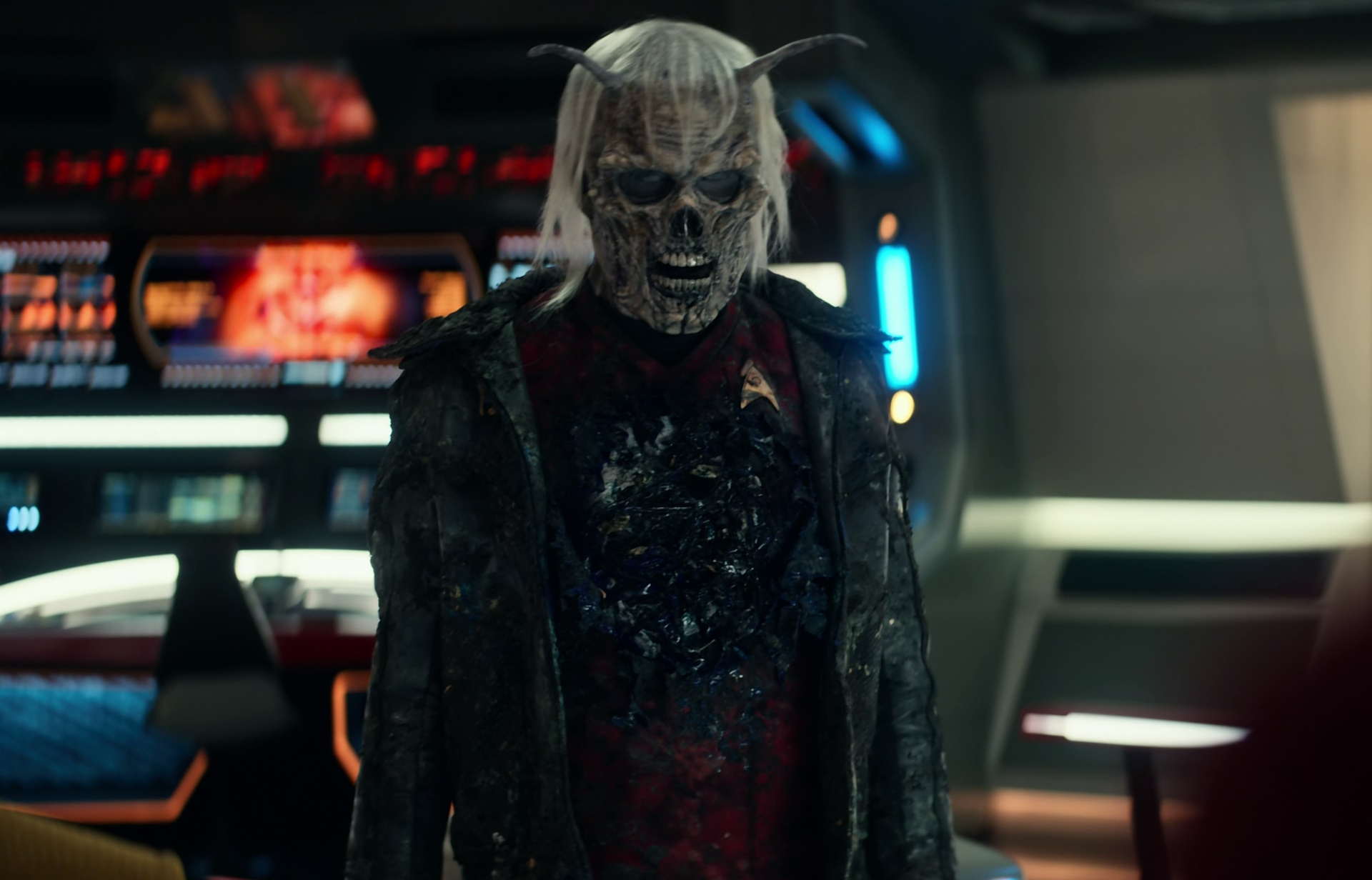
This is also my second zombie story in the span of a week! A few days ago, I watched Star Trek: Strange New Worlds’ zombie episode, so after this I think I’m gonna need a bit of a break from zombies for a while.
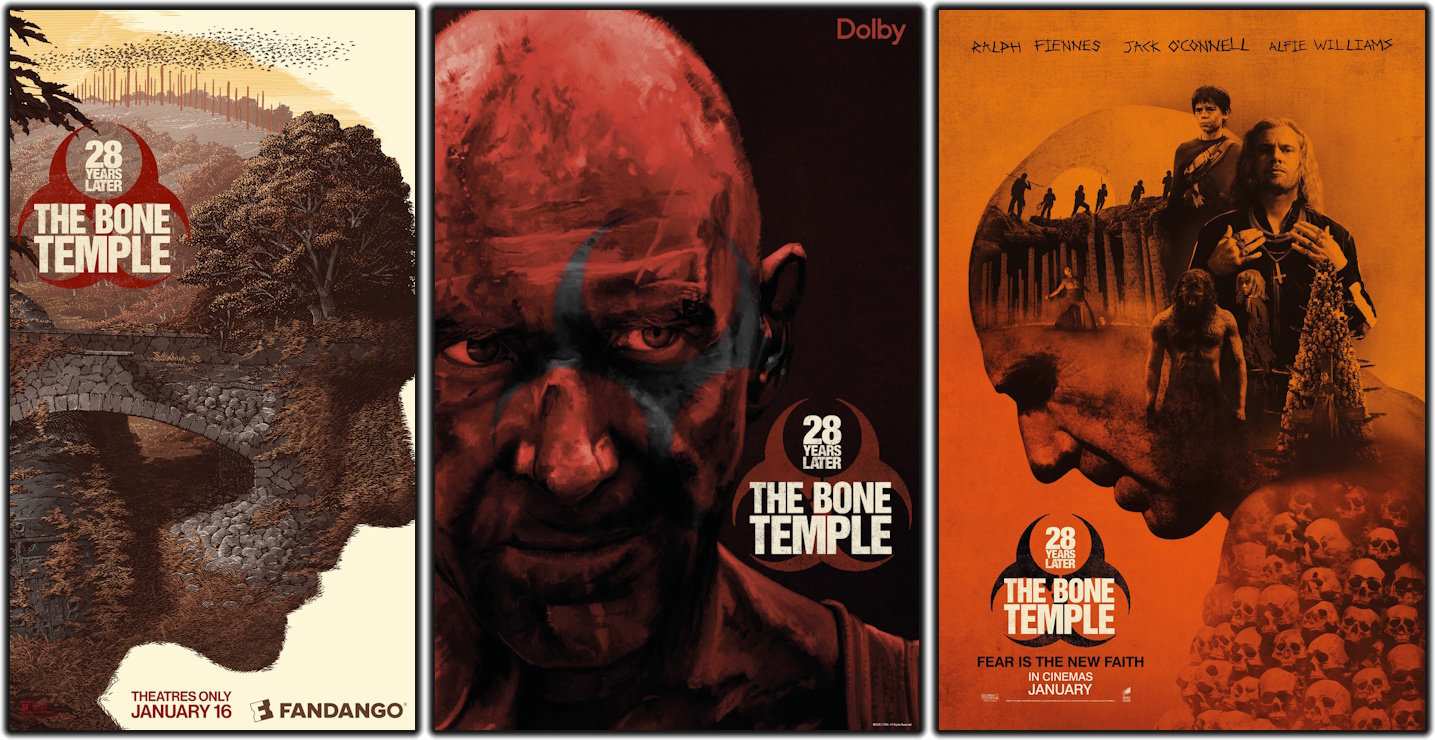
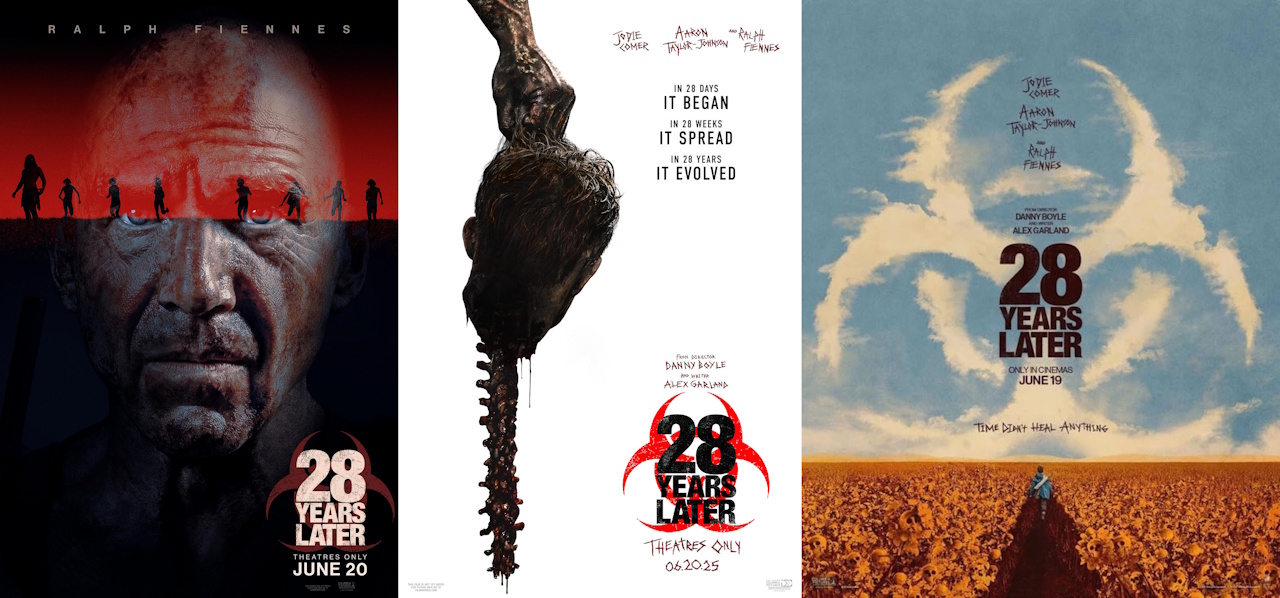
A trio of posters for the film.
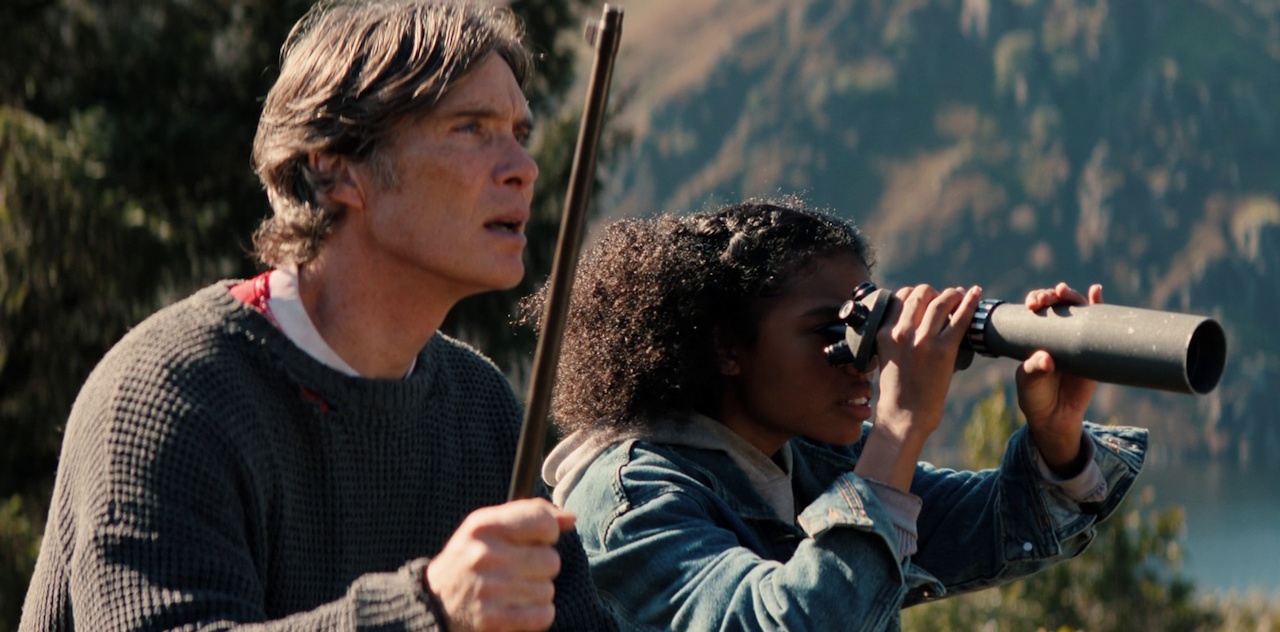
28 Years Later was… interesting. But I’ll be honest: it wasn’t really what I expected. Less a horror film than a coming-of-age family drama with a zombie backdrop, 28 Years Later leaned on its post-apocalyptic setting to tell a story focused on a handful of characters. Spike, the main protagonist, got most of the film’s attention, and that was certainly an interesting – and potentially controversial – choice.
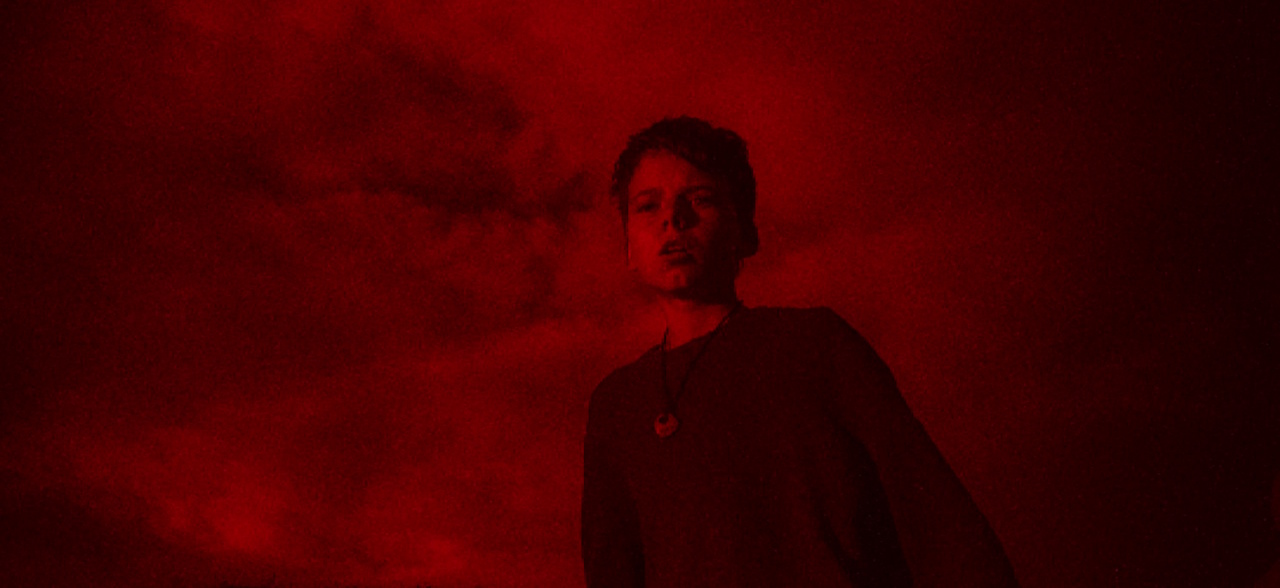
There was some fantastically creative cinematography in 28 Years Later. The film cut sequences from its post-apocalyptic present-day with imagery from war films and historical re-enactments, drawing parallels between those situations. The “Boots” refrain, heard in the trailer, surprised me by being an integral part of the film, not just a marketing stunt, and it was suitably haunting to hear that recitation atop imagery of zombies going feral. 28 Years Later was also creative with its use of colour; blood-red scenes were used for emphasis at key points in the story.
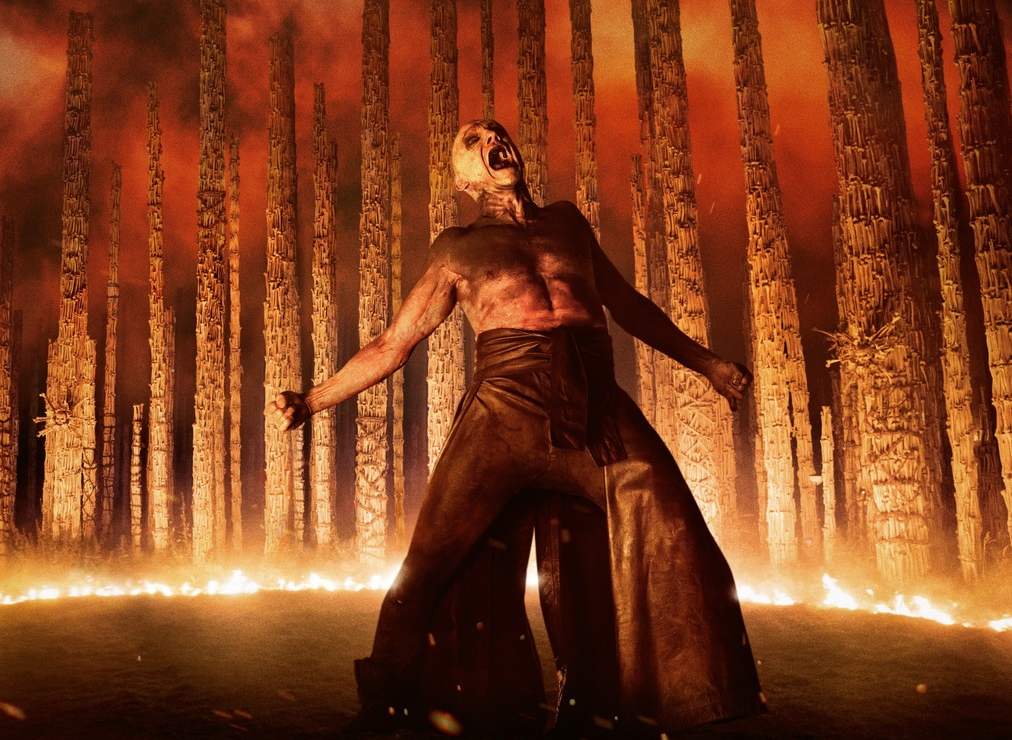
An example of a blood-red sequence.
If you know me, you’ll know I’m a scaredy-cat. And 28 Days Later is up there as one of the most frightening films I’ve seen; its depiction of sprinting infected redefined what zombies could be and made them genuinely terrifying. For me, 28 Years Later just… wasn’t all that scary. It was gruesome when it wanted to be, sure; blood, guts, and other viscera are almost omnipresent in its world. But its jump-scares felt rather predictable – I could sense that something was coming, even when the film wasn’t trying to signal it. And while these sprinting zombies retain some of their fear factor, I suspect that two-plus decades of other horror films – many of which were inspired, directly or indirectly, by Danny Boyle’s work – have kind of… lessened that, a little.
I put off watching 28 Years Later until I felt I was in a good frame of mind for horror… but I really didn’t need to. There were tense moments, without a doubt. And the film is not bereft of new ideas; special categories of infected, who are bigger and stronger than your “standard” sprinting zombies added a new danger. But when I think back to that first viewing of 28 Days Later, and how I could scarcely bring myself to walk into the kitchen the next morning when it was still dark… nothing in this film really came close to recapturing that level of horror.
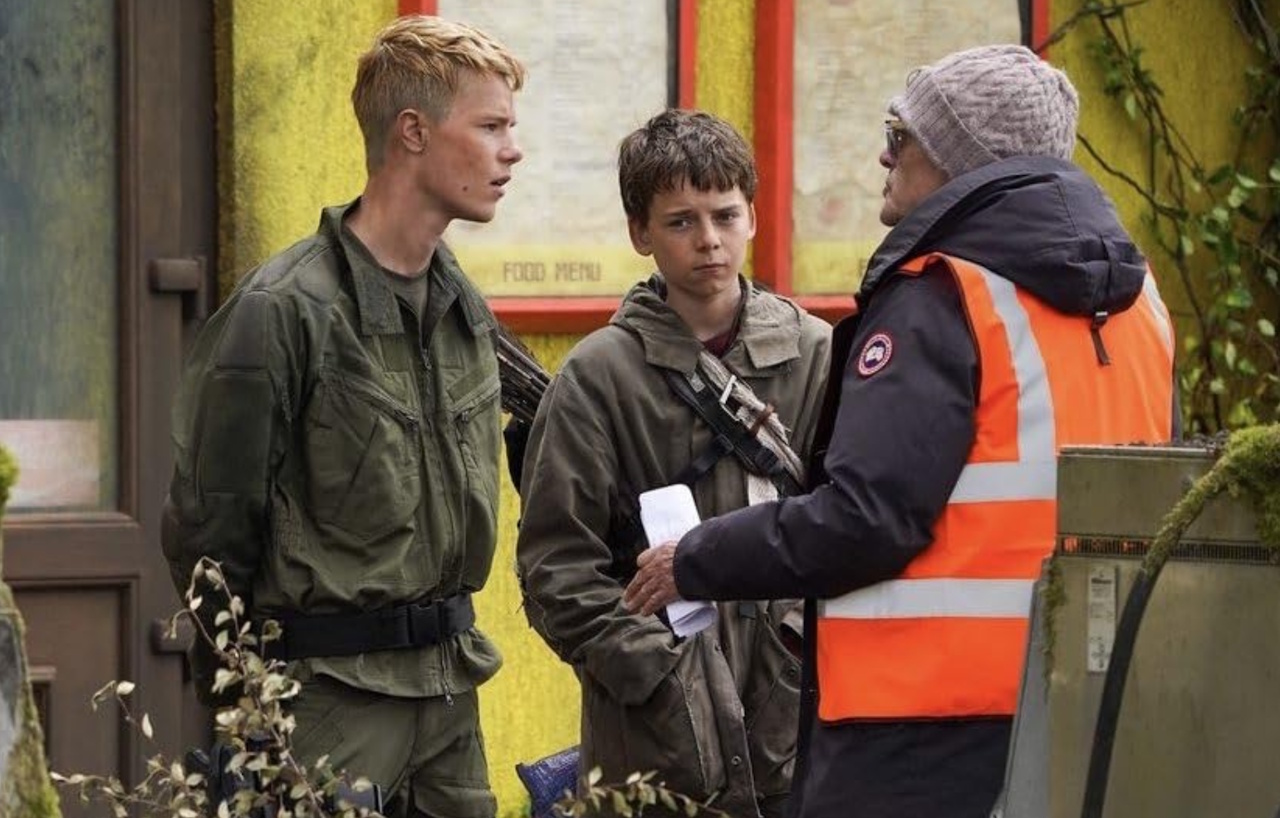
Director Danny Boyle (right) with Edvin Ryding and Alfie Williams on the set of 28 Years Later. Photo Credit: IMDB
I don’t mind that, by the way. In fact, after the intervening years have not been too kind to my own mental health, I think I prefer a film like this! But I do think it’s worth noting that the belated follow-up to one of the most horrifying depictions of zombies ever brought to screen – and a film that had a massive impact on the zombie genre – wasn’t actually as scary as I expected. And if a big old scaredy-cat like me can make it all the way to the end without wetting their pants, then maybe some folks with a greater appetite for horror than I might even find 28 Years Later to be… tame.
All that being said, this is still a film I’d happily recommend. If you enjoyed 28 Days Later and want to know what happened next, or if you just enjoy a good zombie flick, there’s a lot to appreciate and enjoy. Some of it is a bit more artsy and a bit less gory than some of the more mindless films in the zombie genre, but whether that’s offputting or something to celebrate just boils down to personal taste! Speaking for myself, I think 28 Years Later was about right. It struck a good balance without leaning too much into gory horror, and even though some of its character moments could feel a bit clichéd, I still rooted for young Spike and wanted to see him succeed on his adventure.
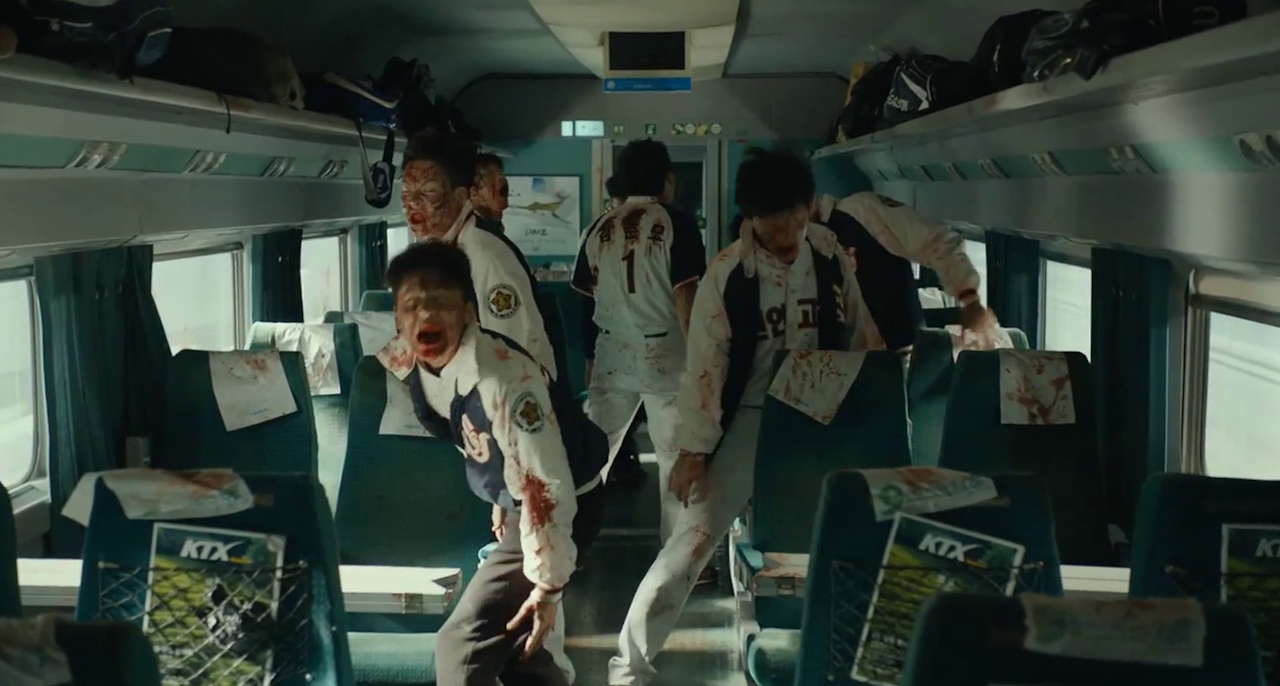
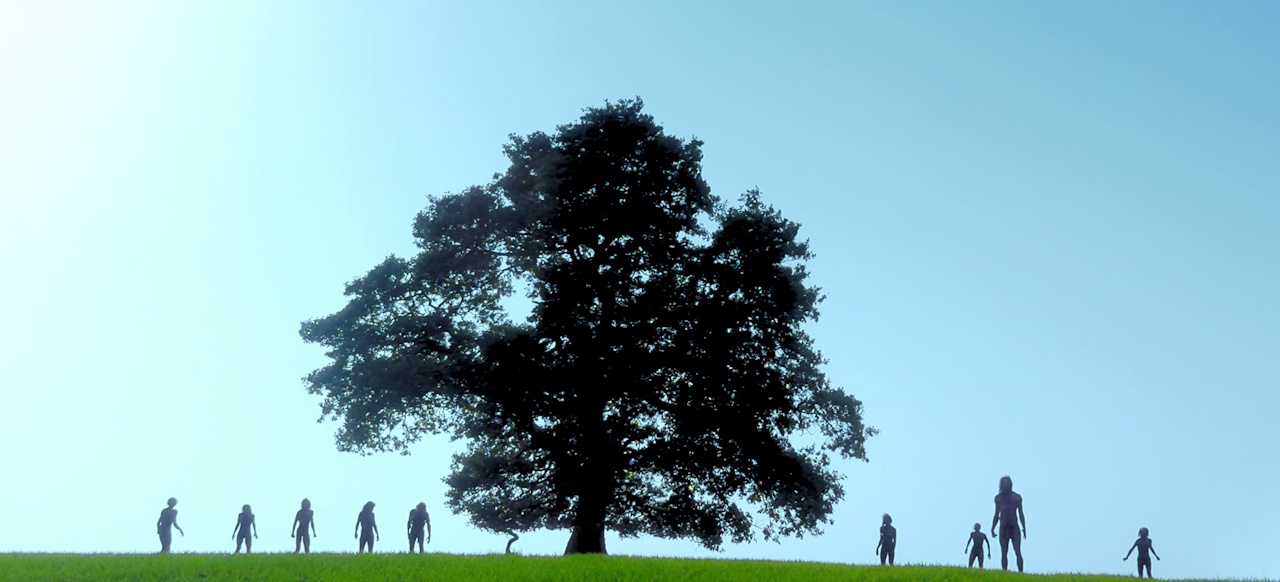
The infected are coming!
It was also interesting to catch a glimpse of post-apocalyptic life many years into the rage virus outbreak. Seeing how new communities formed, how people have to find new roles, and how some people just… seem to lose themselves. That was all interesting stuff.
So even if 28 Years Later wasn’t the scare-fest I’d been expecting, I generally enjoyed it for what it was. Up next, we’ll get into the narrative in a bit more detail – so if you don’t want to see spoilers for the film’s plot, this is your opportunity to jump ship! But I hope you’ll come back after you’ve seen 28 Years Later to get my take on the film’s story.
This is the end of the spoiler-free section. There are story spoilers for 28 Years Later (as well as 28 Days Later and 28 Weeks Later) from here on out.
I really did not expect 28 Years Later to be a coming-of-age story mixed in with family drama. Spike’s quest to help his mother was relatable and sweet, and all credit to young Alfie Williams, who took on a challenging role and rose to the occasion.
What I’d say, though, is that there were some pretty big clichés on this side of the story. Spike catching his dad cheating on his mum, and their subsequent confrontation… it played out like something from a low-budget soap, not the highly-anticipated sequel to a film that redefined a genre. It wasn’t poor, but it wasn’t great… and I don’t even think it was wholly necessary to jump-start Spike’s quest. His mother’s illness, and the knowledge of a doctor on the mainland, was enough.
There was a fair amount of personal drama on this side of the story.
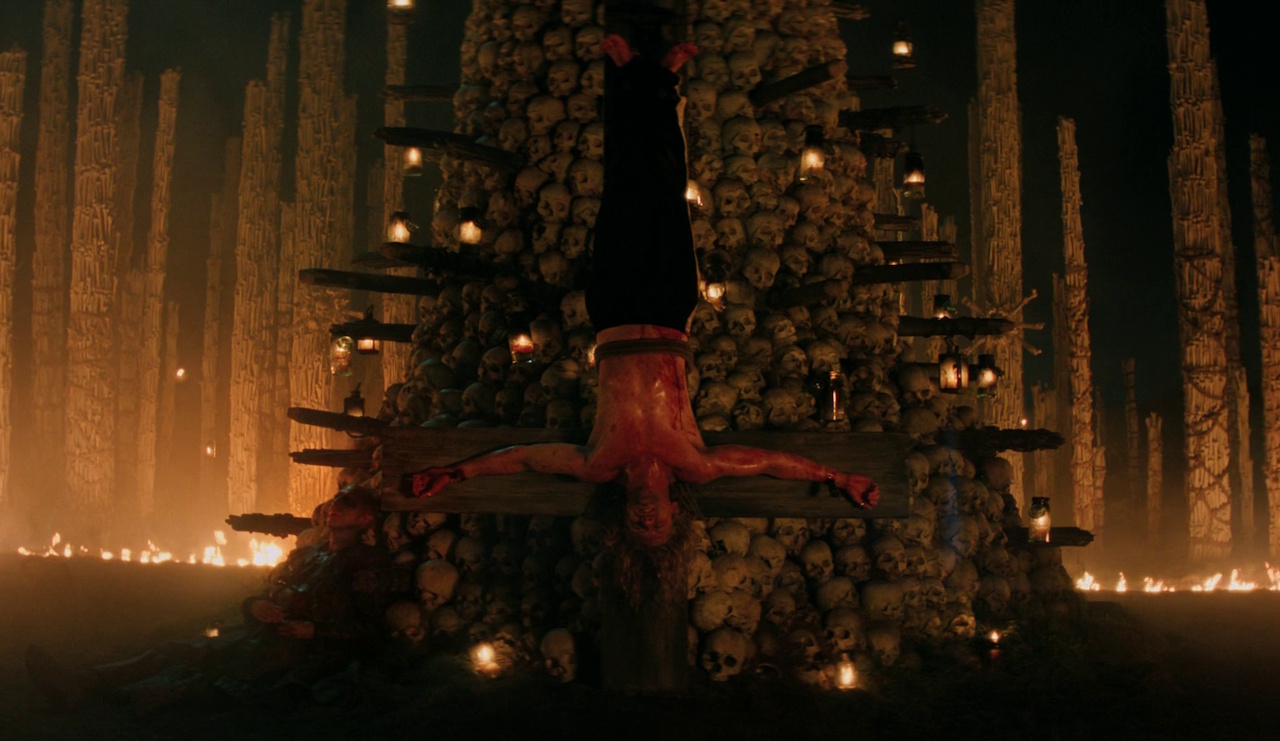
I also struggled to buy Spike’s rapid acceptance of his mother’s death. We got a bit of protest as Dr Kelson explained that her condition was terminal, but the film went pretty quickly from that moment to Kelson giving Isla her coup de grace, and Spike just kind of… went with it. Yes, he was drugged in the beginning, but after she died – at Dr Kelson’s hand – he didn’t really react. He placed her bleached skull atop the pile and that was that. On to the next quest – to bring the baby back to the village.
This had been Spike’s driving force for basically the entire film – his mum’s ill, he wants to help. He undertakes a very dangerous and deadly quest to help her, and when she can’t be helped he goes from grief and devastation to acceptance in basically an afternoon. Maybe you could read into that, something about the harsh realities of post-apocalyptic life making people more hardy… but it didn’t come across that way for me. It just felt either rushed or underdeveloped.
Isla’s death was handled pretty quickly, especially for Spike.
Many great horror films use their supernatural settings to take their characters on this kind of journey of growth, and I don’t think 28 Years Later was wrong to want to tell that kind of story. The apocalypse – zombie-related or otherwise – can make a great backdrop for character arcs, personal conflicts, and drama of all kinds. Spike had an understandable motivation, and Dr Kelson also felt like a real person – someone who’s been living in this world, figuring out how to survive for such a long time that he seems “crazy” to outsiders.
But that’s where the real characterisation seemed to stop. Erik, Jamie, the other villagers, and even Isla all felt pretty flat; less fleshed-out people than archetypes or caricatures, serving a narrative function, yes, but often in a shallow or obvious way. If you know me, you’ll know I’m always an advocate for stories that delve into themes of mental health, and Isla’s story in 28 Years Later definitely touched on that. But how she presented during her “episodes” was pretty tropey, and the way she’d snap out of it when the story demanded it – showing lucidity at key moments to have conversations or advance storylines – was pretty basic.
Isla.
Can we nitpick? I like to nitpick. How did Dr Kelson – some 28 years after the collapse of civilisation in the UK – manage to maintain a stockpile of medications like morphine and iodine? I mean, he was practically bathing in the stuff, and he’d need to re-apply his iodine defence any time he ventured beyond his skull island home, so… how much iodine must that be after almost thirty years? I think Kelson was probably the film’s second-most-interesting character after Spike… but as I say, I like to nitpick!
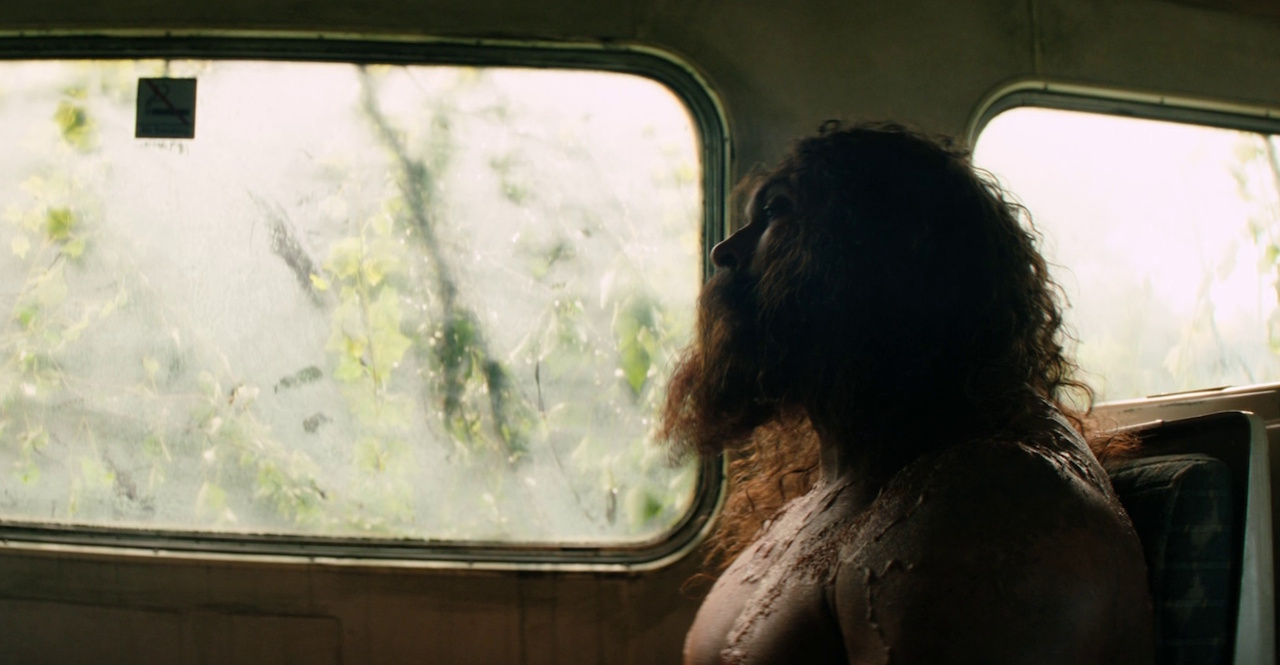
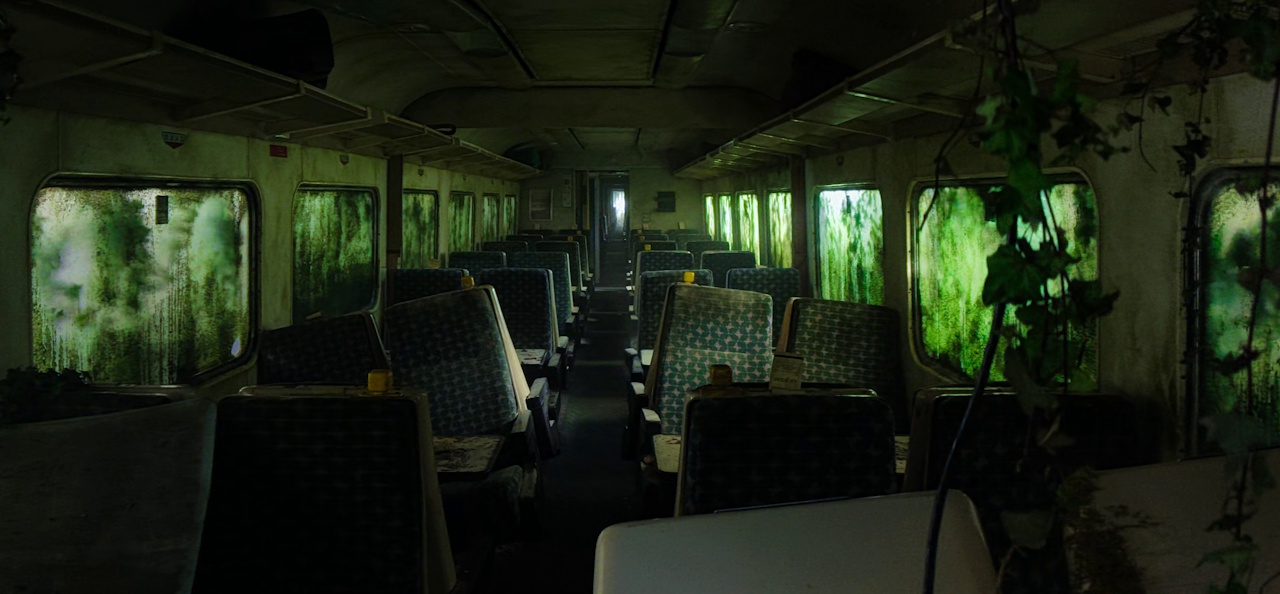
Those questions aside, I really liked 28 Years Later’s take on a post-apocalyptic world. The abandoned train was probably one of my favourite settings – not least because I’m a bit of a train fanatic! But catching glimpses of overgrown towns, the gas-filled petrol station, and decaying buildings and infrastructure was all interesting stuff. It really felt like a world that had been left to decay and collapse for 28 years.
The train.
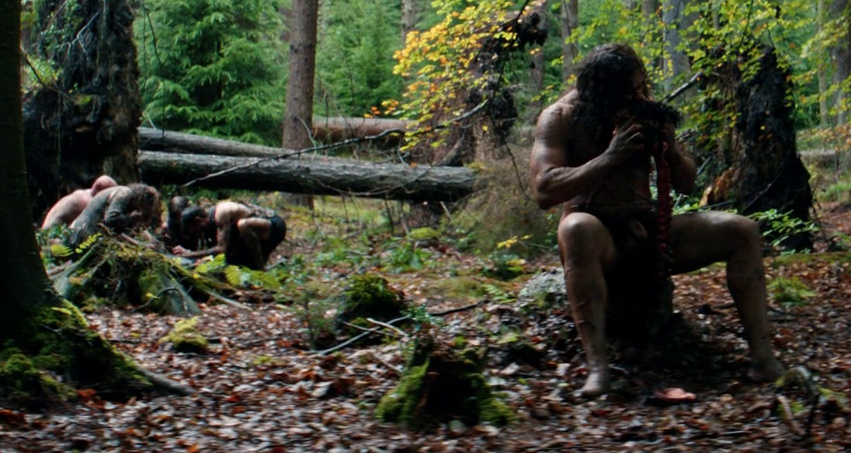
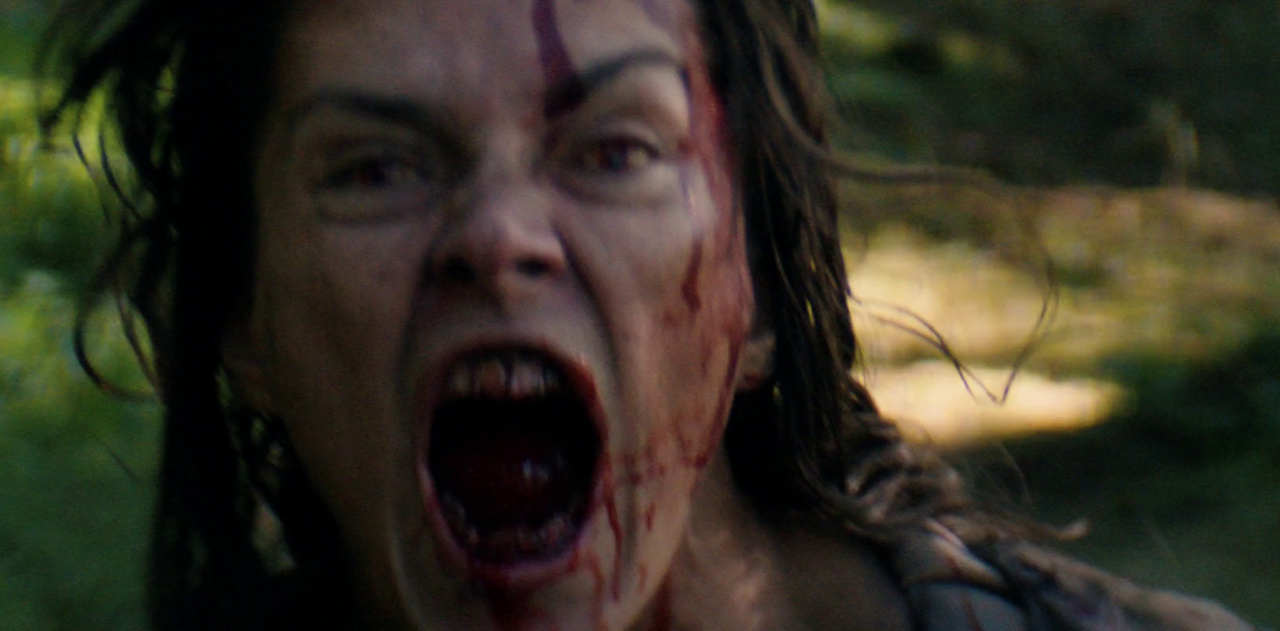
28 Years Later raised several questions that I hope next year’s sequel, The Bone Temple, can answer. How are the infected – which the first two films depicted as dying off en masse after a month or so – still alive in such great numbers this long after the virus broke out? The first two films made it pretty clear that the infected didn’t eat and would just die out, but 28 Years Later establishes that tribes of infected roam around, feeding on wildlife, and apparently breeding with one another, too. It’s a big change from the depiction of the infected in those first films, and it warrants an explanation.
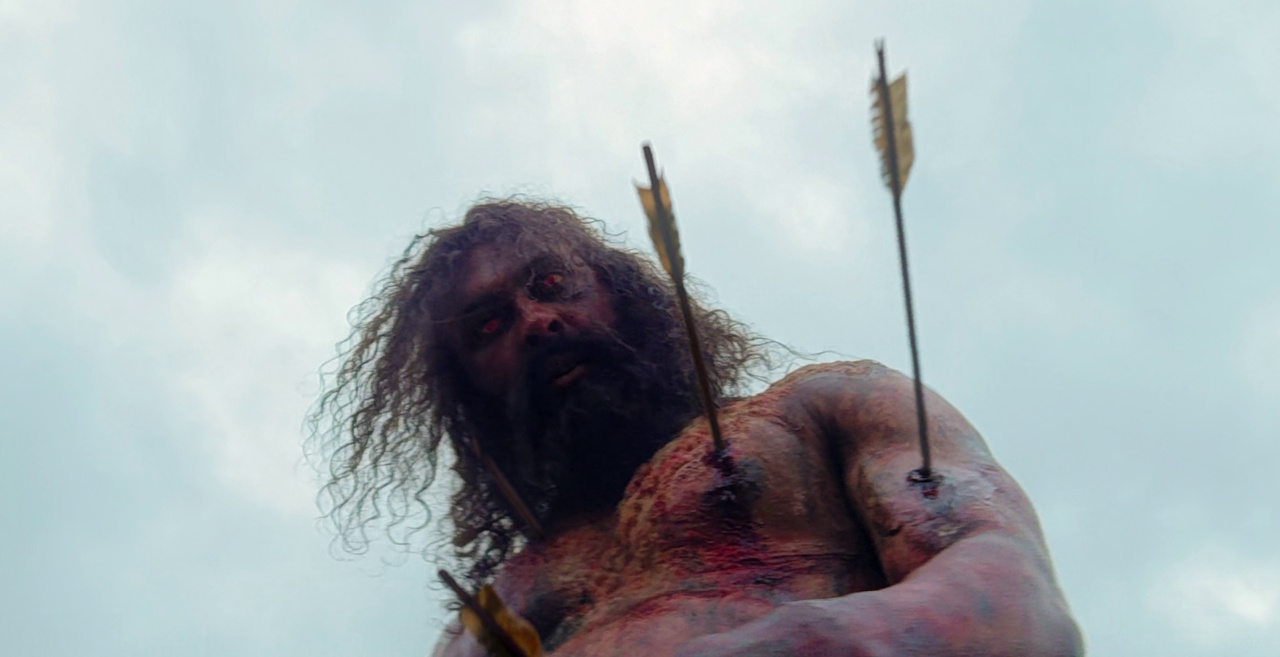
There were echoes of I Am Legend in this presentation of “alpha” infected. The idea that some infected could display greater intelligence, assuming some kind of leadership role in their group, reminded me of that film. It also reminded me of the Resident Evil video games, and how there could be “special” categories of zombies – usually serving as bosses! In that sense, I didn’t feel that the alpha was a particularly original creation, but still – it’s something that should be explained. Assuming, of course, that an explanation has been written.
“Samson,” one of the alpha infected.
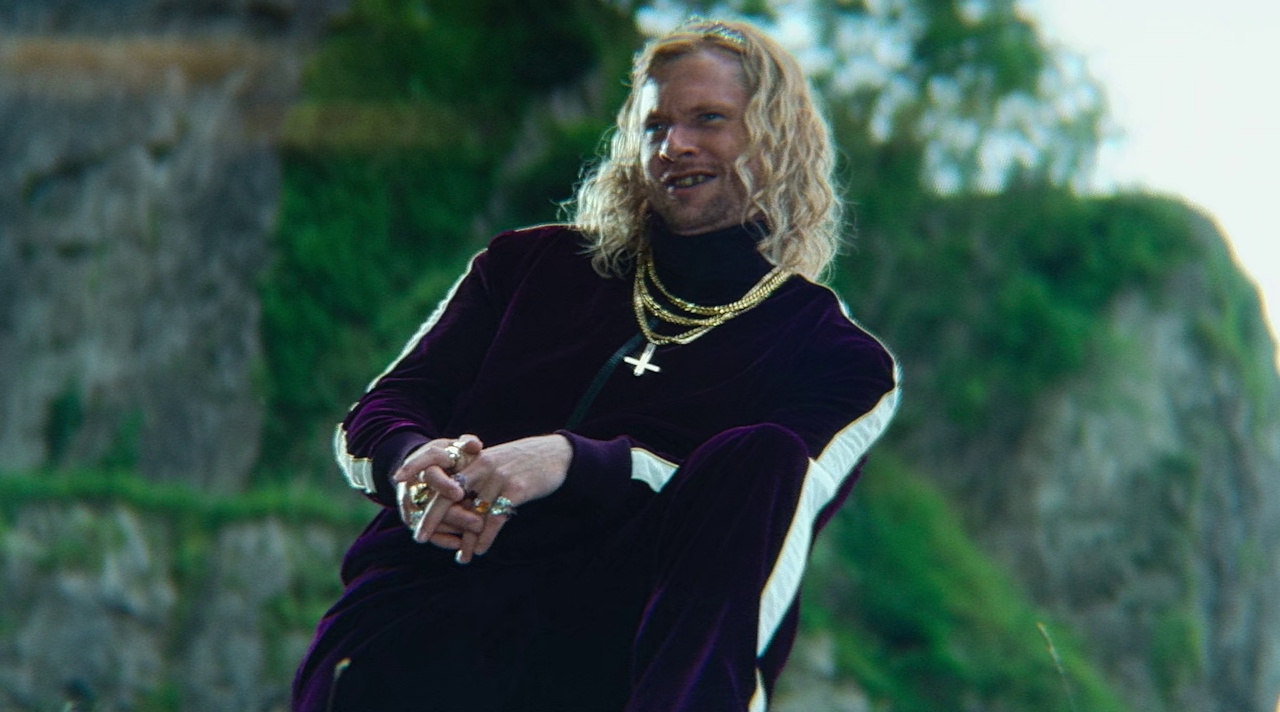
What do we make of the “Jimmy Savile” gang? I can’t help but feel that was done purely for shock value; Jimmy Savile being such a thoroughly vile person whose high-profile crimes shocked the entire country. In the film’s universe I guess it makes sense: Savile’s crimes weren’t uncovered until 2011, whereas in the universe of 28 Years Later, society collapsed in 2002. I remember watching Jim’ll Fix It as a kid in the ’80s, and the scale of what went on at the BBC with Savile is… even all these years later, words fail me.
But in the context of 28 Years Later, I hope – truly hope – that there’ll be more to this than just a cheap stunt to end this half of the story. Jimmy – the child from the beginning of the film – seems to have grown up to lead this gang of Savile impersonators… but why? Is it some attempt to cling to part of the world that they lost? Is it just a cult? Whatever it is, I hope there’s more to it than just an attempt to shock and offend, because otherwise it’s in pretty poor taste. I will reserve judgement, though, until I’ve seen The Bone Temple.
Jimmy.
So I think I’m all zombie-ed out for a while!
I hope this has been interesting. I can’t shake the feeling that a film I’d waited more than twenty years to see wasn’t as impactful as I’d expected, even though it was solid and entertaining in its own way. But I don’t dislike 28 Years Later, and I’d certainly recommend it to fans of the original films, horror fans, and even to folks like myself who aren’t horror aficionados but just want to check out some of 2025’s big releases.
I will await The Bone Temple and the continuation of this story with some trepidation. A good ending could reframe parts of 28 Years Later, making them feel better in hindsight. But equally, a poor ending or a lack of a suitable explanation for some of the film’s narrative beats could make both pictures feel… underwhelming. I guess we’ll see next year.
28 Years Later is available to stream now on Amazon Prime Video, and will be released on DVD, Blu-Ray, and other streaming platforms in the months ahead. 28 Years Later is the copyright of Columbia Pictures and/or Sony Pictures. This review contains the thoughts and opinions of one person only and is not intended to cause any offence.
Spoiler Warning: There are spoilers ahead for A Minecraft Movie.
In mid-2011, I was dating a partner who loved watching YouTube “Let’s Play” videos. One of their favourite games to watch was the as-yet-unreleased Minecraft, and they insisted I download it and give it a try. So while I can brag that I played Minecraft while it was still in beta… I’m sorry to say that I was unimpressed at first! I remember thinking that the game was a scruffy-looking thing all about building mud huts and digging holes in the dirt, but I played it with my partner for their sake more than mine. I eventually got the hang of it, and I remember building a few fun things like a castle with a lava moat and a pyramid made of red bricks that took forever to craft!
If you’d told me then that Minecraft would remain at the top of the charts for the next fifteen years, be worth billions of dollars, and be the subject of a big-budget Hollywood film, I’d have called you out on your bullshit – because there was no way any of that would be possible. Shows what I know, eh? A Minecraft Movie is the latest adaptation or addition to a growing franchise, one which now comprises multiple spin-off games, toys, merchandise, and even books. Minecraft has become a well-established brand in its own right; a household name that even elderly relatives and non-gamers are familiar with!
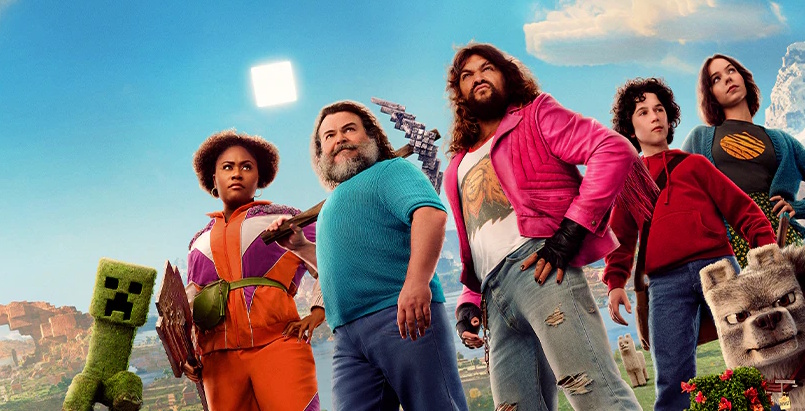
The main characters.
Even having seen Minecraft’s phenomenal growth and success, I still wouldn’t have thought it was a good choice to adapt for a narrative feature film. The main game is all about creativity and making your own fun – something that I felt wouldn’t translate well to a linear narrative on the big screen. But Warner Bros. teamed up with Mojang and owner Microsoft to do just that, bringing in established names like Jack Black and Jason Momoa to lead a star-studded cast. And you know what? I actually really liked A Minecraft Movie.
A Minecraft Movie was an incredibly fun watch. I sat there the whole time with a smile on my face as its fast-paced but easy-to-follow story raced past, and there were plenty of laugh-out-loud moments along the way. I felt the film was self-aware, not taking itself too seriously while staying true to what I remember of its source material. There was nothing ground-breaking here in terms of narrative or filmmaking, but that’s just fine. A Minecraft Movie’s writers, producers, actors, and director knew what kind of film they wanted to make and went all-in. The result was a surprisingly fun time. In fact, A Minecraft Movie is the best thing I’ve seen so far this year. Does that mean I have the emotional intelligence of a twelve-year-old? Let’s talk about that!
Minecraft has gotten its own feature film adaptation.
I chose those words carefully, and I don’t mean it as any kind of insult. A Minecraft Movie is a kids’ film first and foremost, but I’ve always said that the best films made for children have something to offer to adults, too – and A Minecraft Movie is firmly in that camp. While watching it, I felt echoes of being a kid all over again, as if it was a Saturday afternoon and this was the film my friends and I had chosen to watch at our local cinema. I got swept along in the simple good-and-evil story, the emphasis on creativity, and a typical yet incredibly fun and high-energy Jack Black performance… and I genuinely had a whale of a time.
The story that the team created was a good fit. It took elements from Minecraft’s surprisingly deep lore and used them to tell a pretty basic “stop the evil villain from conquering the world” story, one which found time to include most of its main characters and even had a sub-plot about a man missing his dog! I was concerned going into A Minecraft Movie that the story would be too basic; too much of a cookie-cutter storyline. But there was enough of a setup, enough characterisation, and enough of a journey for Henry and Steve in particular to make it absolutely stick the landing.
A behind-the-scenes look at one of the sets constructed for the village. Photo Credit: Minecraft Wiki
Jack Black is one of those performers who’s instantly recognisable in basically every major role he’s ever played. He brings a ton of energy to his performances – and I think that worked incredibly well here, even though I admit I was sceptical at first! In Minecraft (the main game, at least; I’m less familiar with the spin-offs), Steve is a blank slate for the player to inhabit. A film needs characters with understandable motivations and recognisable personality traits, and there were more than enough of both in this depiction of Steve. In one sense, Steve represents the ultimate escapist fantasy – he quit his mundane and boring life to chase his dreams, and found a whole new world in the process.
The high-octane energy that Jack Black brought to the role was pitch-perfect for the kind of film A Minecraft Movie wanted to be and for the kind of young audience it sought out. It was also a ton of fun to watch, as Jack Black’s performances usually are! Steve’s desire to reunite with his pet dog Dennis (a name I appreciated for obvious reasons!) kept him grounded, and it was a perfectly understandable reason for him to team up with the rest of the main characters.
Steve.
Henry felt like the film’s point-of-view character, at least at the beginning, and I think he worked well in that role. He was the “player character” insofar as he was figuring out the rules of the world before the gang encountered Steve, and I think anyone who’s played Minecraft, especially in the early days, can relate to figuring out how to knock down trees and craft basic structures! As an outcast, someone with few friends, and someone who struggled to fit in, Henry was also someone that I think a lot of the film’s younger audience will be able to relate to – as well as older folks like myself who remember being in a similar position once upon a time.
Continuing the idea of A Minecraft Movie as an escapist fantasy, Henry is kind of in the same category as Steve – looking to get away from a troubled life plagued by bullies in a new school. He’s introduced to a world where his creativity and imagination – two things kids have in droves – are incredibly important, and where he can put his unique skills and talents to use.
Henry escaped to a fantasy world.
Henry’s sister, Natalie, was less keen on hopping over to a new world – but she rose to the occasion! Natalie had struggled with taking care of her brother, but her adventures in the world of Minecraft helped her discover her inner strength and build a stronger bond with him. Though she was in focus less of the time, she still got a satisfying arc.
Teaming up with Natalie for parts of the film was Dawn, and though I wouldn’t say she got as much of an “arc” insofar as she began and ended the story in a similar place, her love for animals shone through – and became important as the story reached its climax. She was a fun character, and made a great foil for Garrett and teammate to Natalie throughout the adventure.
Natalie and Dawn.
Garrett was an interesting character. Maybe this is just me, but I felt echoes of a real-life gamer personality called Billy Mitchell in the conceptualisation of Garrett. Mitchell, if you’re unaware, was world champion of the original Donkey Kong arcade game and achieved the highest possible score on Pac-Man, and was the subject of the 2007 documentary The King of Kong.
If Henry and Steve represent the escapist fantasy, Garrett was actually the character who felt closest to reality. His financial struggles were relatable, and the facade he put up while dealing with the potential collapse of his business – and his own loneliness and self-esteem issues – is something that hit close to home. In terms of his personality, Garrett was obviously a bit of a clown and someone we aren’t meant to really root for. Someone who presents as arrogant, cocky, and just rude isn’t going to be the easiest character to support. But A Minecraft Movie was surprisingly delicate in its handling of this character, and what we glimpsed beneath the surface was a deeply lonely, sad, and self-pitying man – one who (eventually) stepped up to help his newfound friends.
Garrett had an interesting arc across the film.
A Minecraft Movie felt, in places, like a kids’ film from the ’80s or early ’90s, and perhaps that’s part of why I liked it so much. Seeing Henry struggle as the new kid at school with bullies before running away to a fantasy world… it’s giving me The NeverEnding Story vibes, which is one of my favourite films from when I was a kid! The two are different in tone, style, pacing, effects, and so on… but there are also some similarities in terms of characterisation and story that I think were important for me personally in relating to A Minecraft Movie.
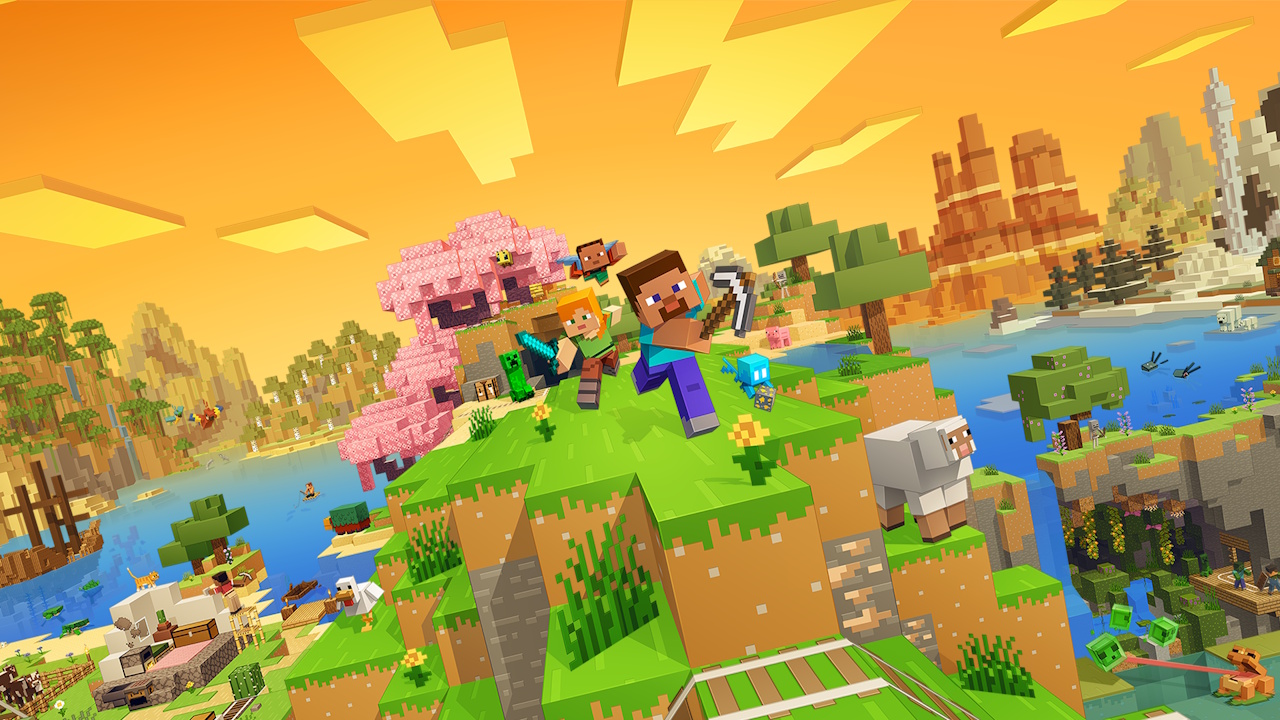
Visual effects in A Minecraft Movie took a bit of getting used to, to be honest. The game’s pixellated art style was completely changed for the film, with semi-realistic textures applied over Minecraft’s trademark cubes and blocks. When it came to things like trees and stones, I was fine with it. When it came to faces and animals… that’s where it took me a minute to adjust! I can see this being a possible point of contention; some game fans might not like the realistic direction, and some folks who are less familiar with the games might struggle with the blockiness of characters and animals in particular. But once I got used to the way the film looked, I didn’t have a problem with it. Some of the landscapes and vistas were genuinely impressive, and the way the film blended CGI with real actors and props was seamless and impressive.
Behind-the-scenes with some of the villagers! Photo Credit: Minecraft Wiki
The soundtrack was fantastic, too. An up-tempo score and high-energy pop and heavy metal songs were pitch-perfect for the film and its fast pace. Battling the bad guys – particularly toward the end of the film – was elevated by the use of music, and the entire soundtrack just made the film so much better. I’d also be remiss not to mention Steve’s Lava Chicken – the song reached number 9 on the UK music charts (and also charted in the United States and elsewhere) becoming the shortest-ever song to crack the top 20 at a mere 34 seconds long!
So that was A Minecraft Movie. It was fun. Simple, child-friendly fun.
I had a way better time with A Minecraft Movie than I could’ve anticipated, to be honest with you. This picture could’ve gone either way – it might’ve been utterly awful; the kind of kids’ film that might make the little ones smile but does absolutely nothing for me. Or it could’ve been “so bad it’s good;” the kind of film that’s worth watching ironically because of how poor the quality is across the board. But instead, A Minecraft Movie was genuinely enjoyable – a fast-paced, modern kids’ film that feels like a throwback to the ’80s and ’90s in the best possible way.
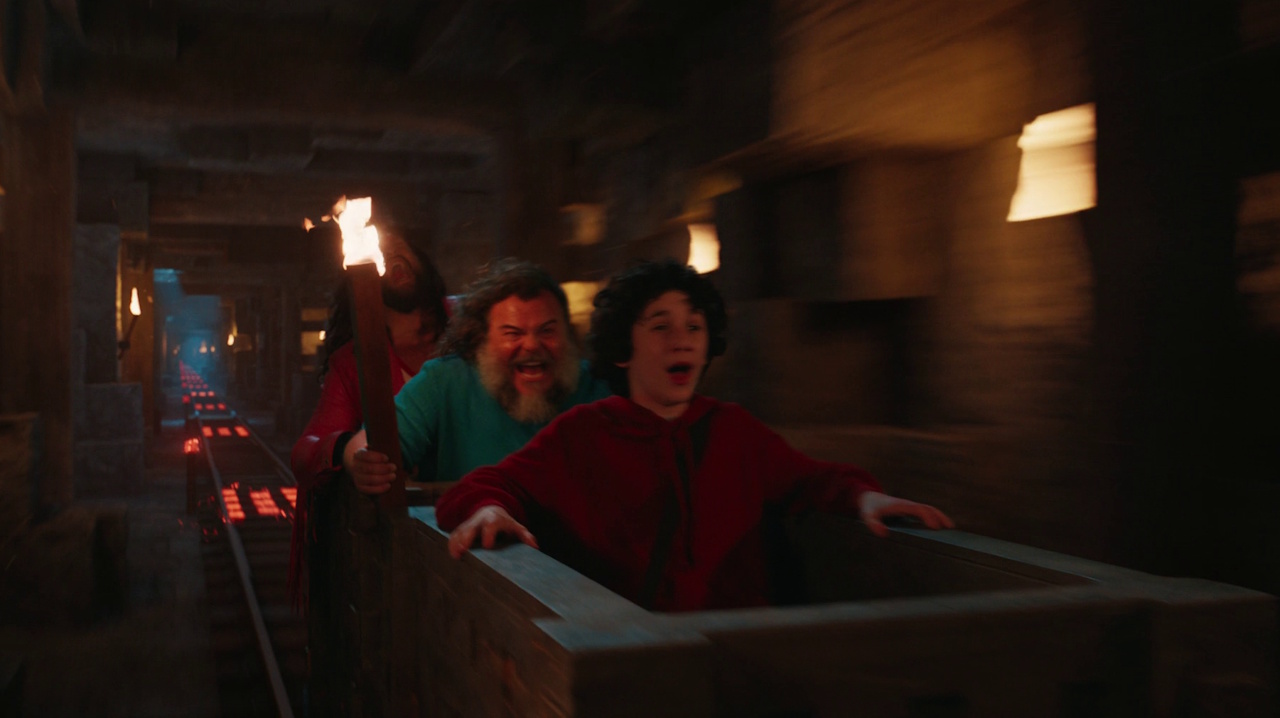
A Minecraft Movie was a fun ride.
A Minecraft Movie is an easy recommendation now that it’s available to watch at home. Whether you have little ones or not, and whether you’re familiar with the video game or not, I think it’s a ton of fun and easy to get stuck into. Having some basic knowledge of Minecraft might help elevate some plot points here or there, but the film is a soft landing for folks who don’t have that background, and I don’t think you’re going to miss much if you’ve never played the game or any of its spin-offs.
I doubt I’ll say that A Minecraft Movie is my favourite film of 2025. There’s still more than half of the year to go and some big blockbusters on the way. But in terms of pure entertainment and laugh-out-loud fun? I had a blast switching off and going on a whirlwind adventure in this strange blocky world! Definitely check out A Minecraft Movie if you haven’t already.
A Minecraft Movie is available to buy or rent now via Amazon Prime, Google Play, and other video-on-demand platforms. A Minecraft Movie will be released on DVD and Blu-ray in June 2025. A Minecraft Movie is the copyright of Warner Bros., Legendary Pictures, Mojang Studios, Vertigo Entertainment, and/or Microsoft. This review contains the thoughts and opinions of one person only and is not intended to cause any offence.
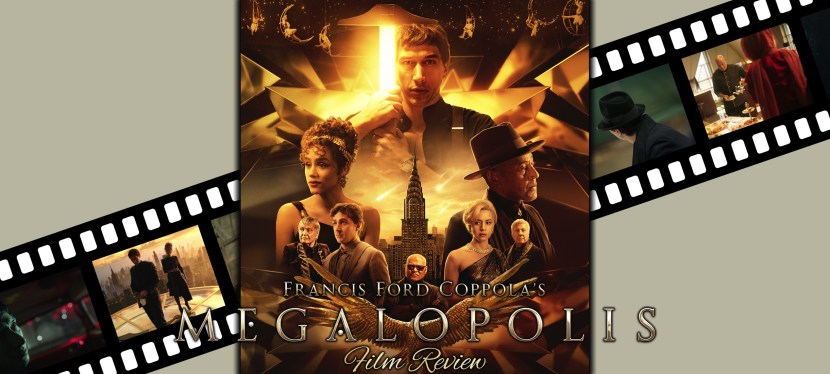
Spoiler Warning: Beware of minor spoilers ahead for Megalopolis.
One of the first films I ever owned on VHS was Apocalypse Now, which was directed by Francis Ford Coppola. It’s still one of my favourite films; a clever, chaotic, and occasionally subversive cinematic masterpiece that set an almost impossibly high bar for other epics and war films. Coppola is also famed for writing and directing The Conversation, the Godfather trilogy, and Bram Stoker’s Dracula, among others in a career spanning over sixty years.
Megalopolis was supposed to land somewhere among those greats – perhaps, in Francis Ford Coppola’s imagination, even eclipsing the best of them to be regarded as his magnum opus. The film spent decades in development hell, with Coppola originally beginning work on the idea during production on Apocalypse Now in the late 1970s. By 1983, the idea to transpose the Catilinarian conspiracy to modern-day New York – using the analogy of Ancient Rome to comment on the rise and potential fall of democracy in the United States – was fully-formed… but for some reason, no studio would agree to bankroll the picture. I wonder why?
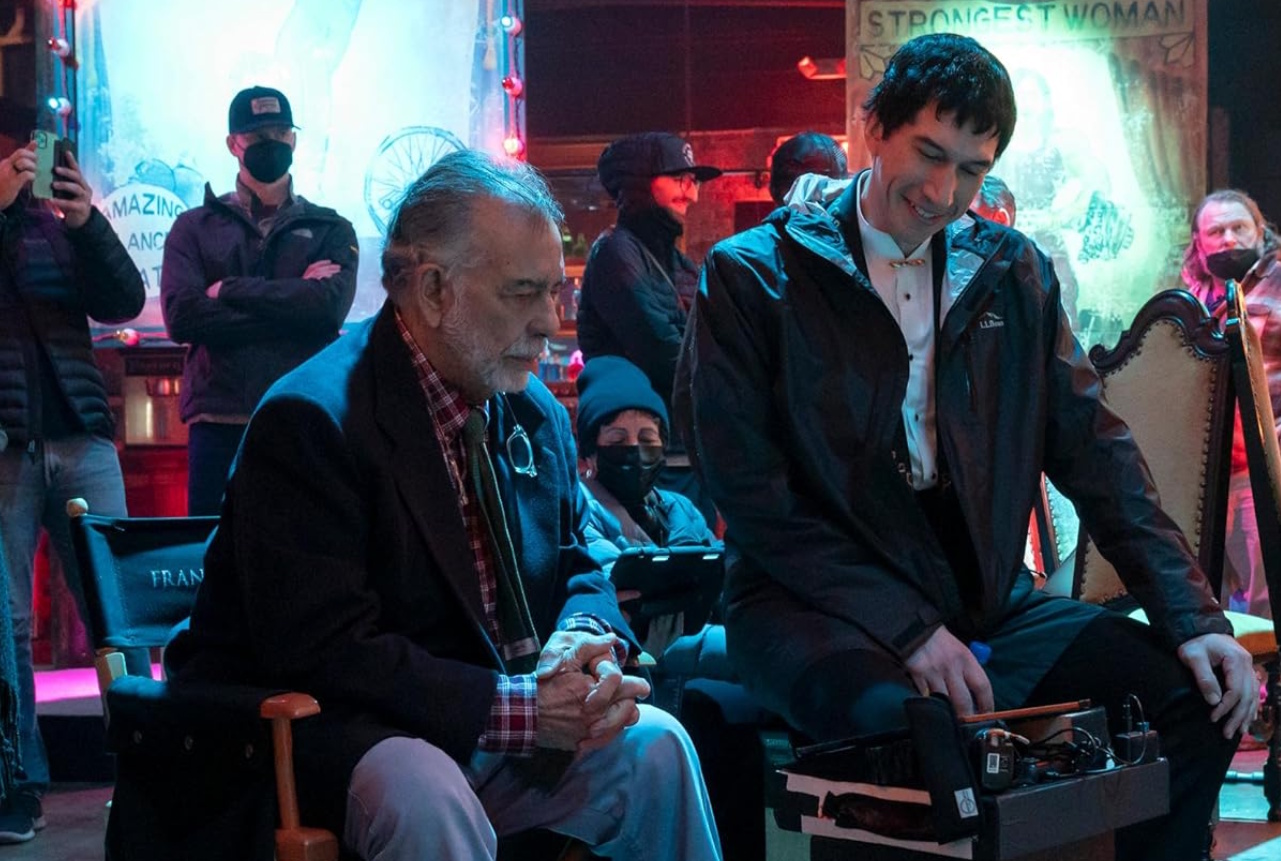
Director Francis Ford Coppola and star Adam Driver during production on Megalopolis.
Because no one in Hollywood would give Francis Ford Coppola the money to make Megalopolis, he funded the project entirely by himself. He had full control over the film; without a studio to kowtow to, the decision-making process about everything from the script to the cinematography to the marketing campaign ultimately fell to him. There’s no escape from the fact that this is Francis Ford Coppola’s vision – this is the film he wanted to make and waited decades to make.
So that begs the obvious question: is Megalopolis any good?
I am – to use some Ancient Roman-inspired language – a pleb. That word, if you’re unfamiliar, is derived from the Latin “plebian,” which was used in Ancient Rome to refer to all of the non-aristocratic classes. Commoners, if you will. And my cinematic tastes are definitely common! So for me, parts of Megalopolis went completely over my head and others were so bad they were quite literally laugh-out-loud funny. But maybe, just maybe, I also caught a tiny glimpse of the genius that Francis Ford Coppola has brought to several of his other films.
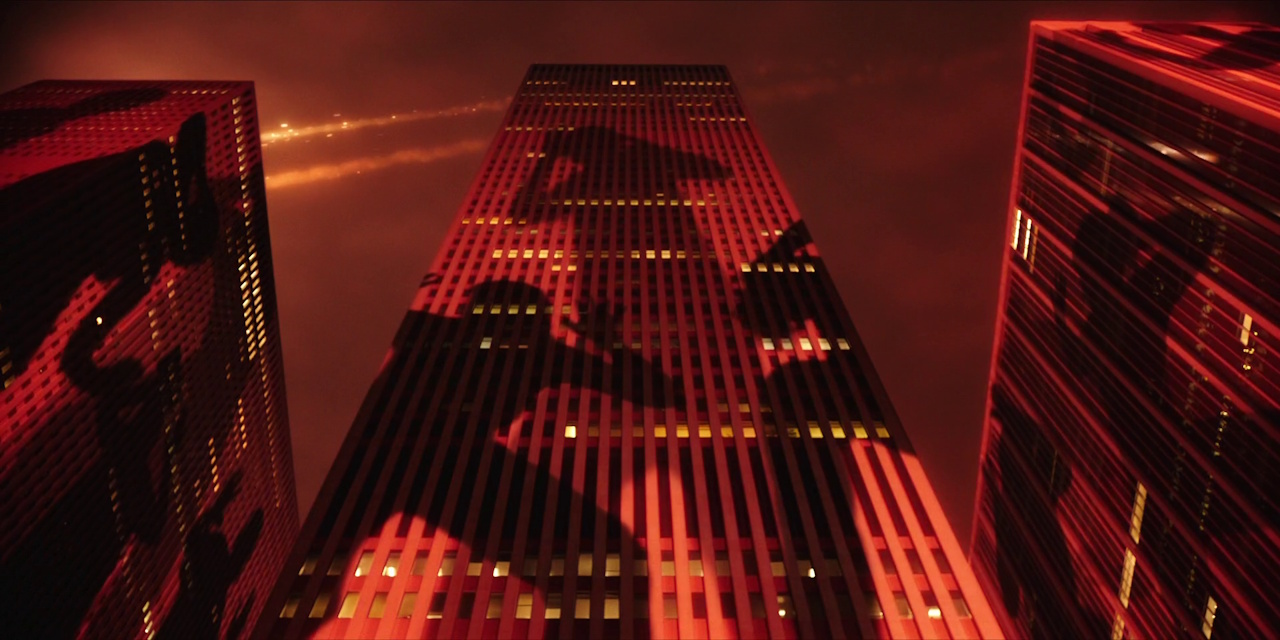
One of the first shots of the film.
Parts of Megalopolis were so experimental that they almost felt mad. Some scenes were akin to watching a fever dream, with imagery, language, and ideas all rolling around together in incredibly complex ways. It’s also the only film I’ve seen in years that felt like a stage play, with incredibly intense dialogue that mirrored its historical setting – and often quoted from it. I had to sit with Megalopolis for a while after I’d watched it to get my thoughts in order and let the film kind of drip through me… it was a strange experience.
And perhaps that word – “experience” – is how I’d best describe Megalopolis. I wasn’t just watching the film: I was experiencing it. It took me on a wild and sometimes incomprehensible ride through a re-imagined New York – or a twisted modern Roman Empire. It shook me up in more ways than one with its intensity… but then it also made me laugh because of how wooden and feeble other parts of it could be. It felt like I was watching two films at the same time: a stupidly over-the-top family melodrama and an experimental film about philosophy and politics.
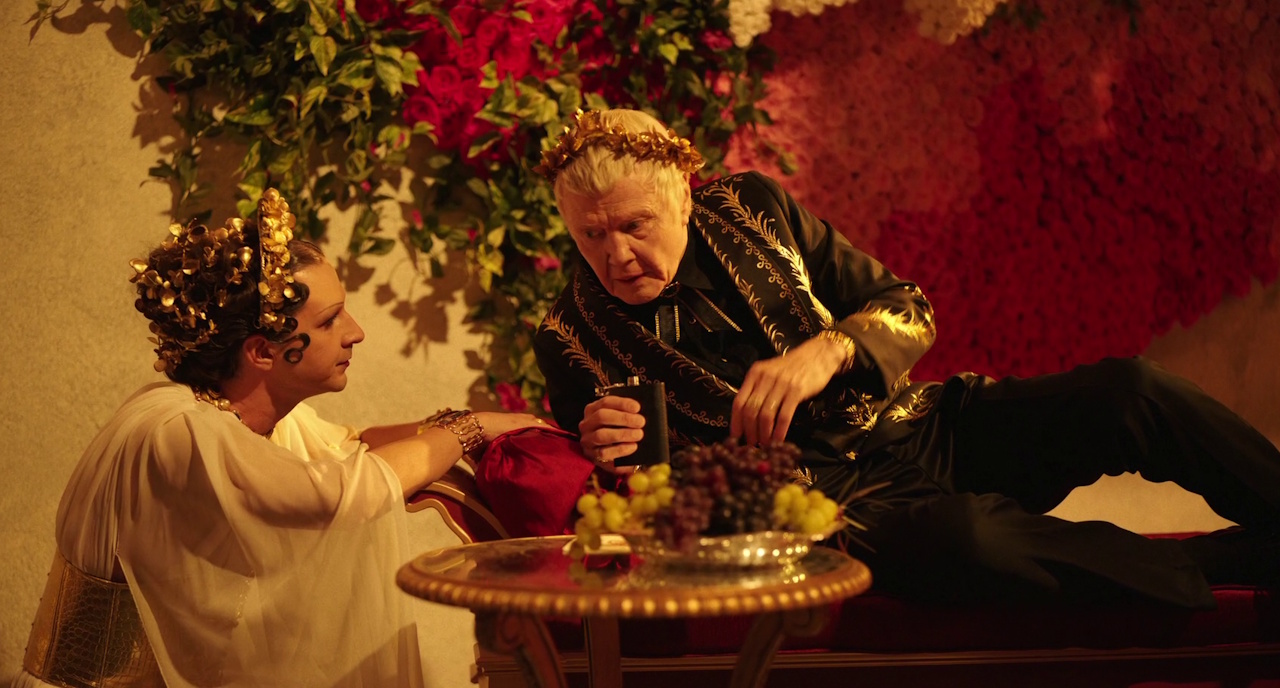
Clodio and Crassus.
I want to focus on the film’s subtitle for a moment. Although marketed as Megalopolis or Francis Ford Coppola’s Megalopolis, the title card shows us a subtitle that I think perfectly encapsulates why the film is the way it is: A Fable. Megalopolis isn’t intended to be a strictly realistic depiction of fully fleshed-out characters living their lives – it’s meant to be a fable. Cinema has moved in the direction of realism over the course of decades, such that a film like Megalopolis feels weird and even unpleasant to an audience no longer used to its style. But I think it reflects a conscious choice on the part of the director – as well as several of its key performers – to deliberately lean into this kind of storytelling.
Before we can judge Megalopolis, I think we need to understand what it is – or at least what it aims to be. And to me, the subtitle is the best evidence of that. In a cinematic landscape dominated by films that use realism in everything from scriptwriting and dialogue to set designs and visual effects, Megalopolis stands out. It deliberately doesn’t do that – and for me, that was pretty jarring at first. If I’d been watching a comparable production on the stage, I’d have factored it all in ahead of time. But going into the film basically blind, not really knowing what to expect, this kind of experimental, almost “art film” presentation completely threw me.
I didn’t know what I was getting myself into…
And that’s what made Megalopolis so difficult to wrap my head around. I was watching some pretty heavy, stilted, and just plain unrealistic dialogue and thinking to myself “what the heck is this?” Characters mostly had names inspired by figures from Ancient Rome, and Roman themes and aesthetics permeated all aspects of the film. Some sets looked incredibly artificial – like something you’d have seen in a film from the 1950s, with hand-painted backdrops, cheap plastic props, or incredibly basic green-screen effects. Maybe I’m reaching and maybe Megalopolis’ philosophical tone is getting to me… but I feel like the artificiality is part of the point. Megalopolis wants its audience to be aware that it’s a film – that it’s artificial.
More than once, I’ve said that a film needs more than just a message or a point. You can make the best or most obvious point in the world – but if you wrap it up in a crap story, it won’t connect with its audience. Megalopolis has messages and points to make – it has them in spades. Coppola wants to use the challenges Roman democracy faced to highlight what he clearly sees as comparable challenges to democracy in the United States today. Megalopolis also has things to say about the role of art in our lives, the importance of family, human progress, rabble-rousing and demagoguery, the goals of civilisation itself… and more. But does it communicate any of these in clear and effective ways?
Erm… no. No, it does not.
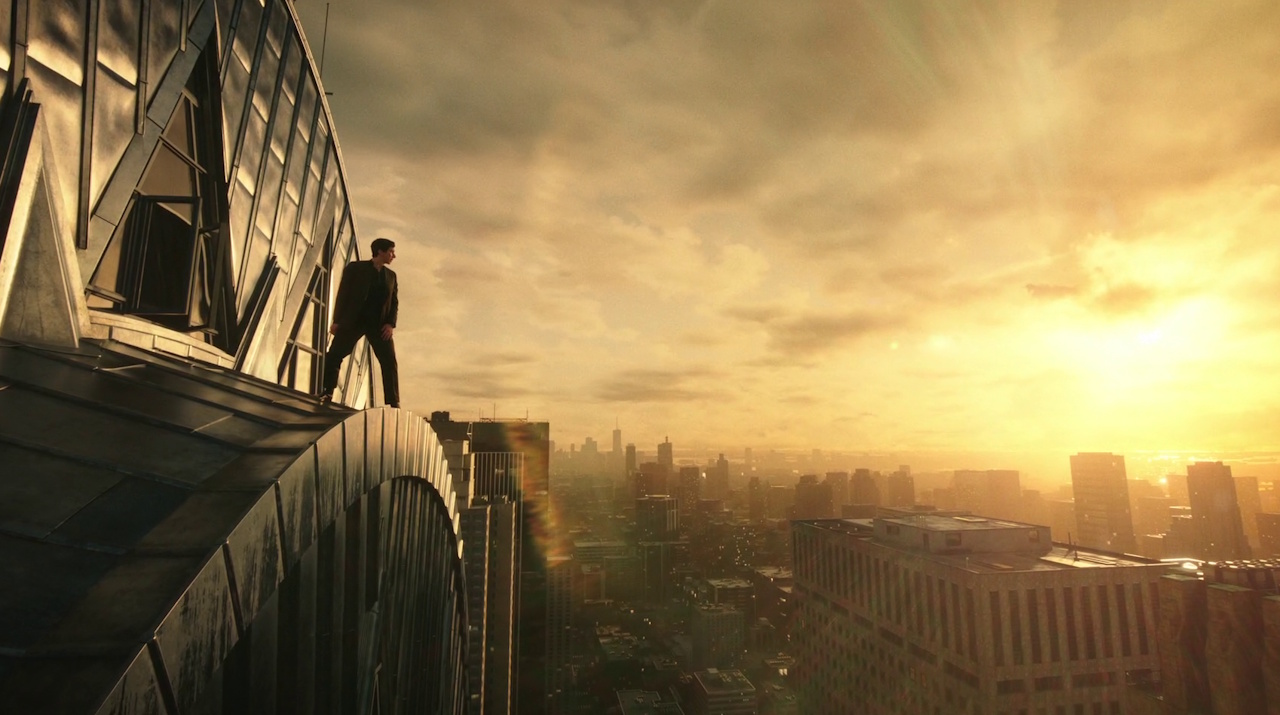
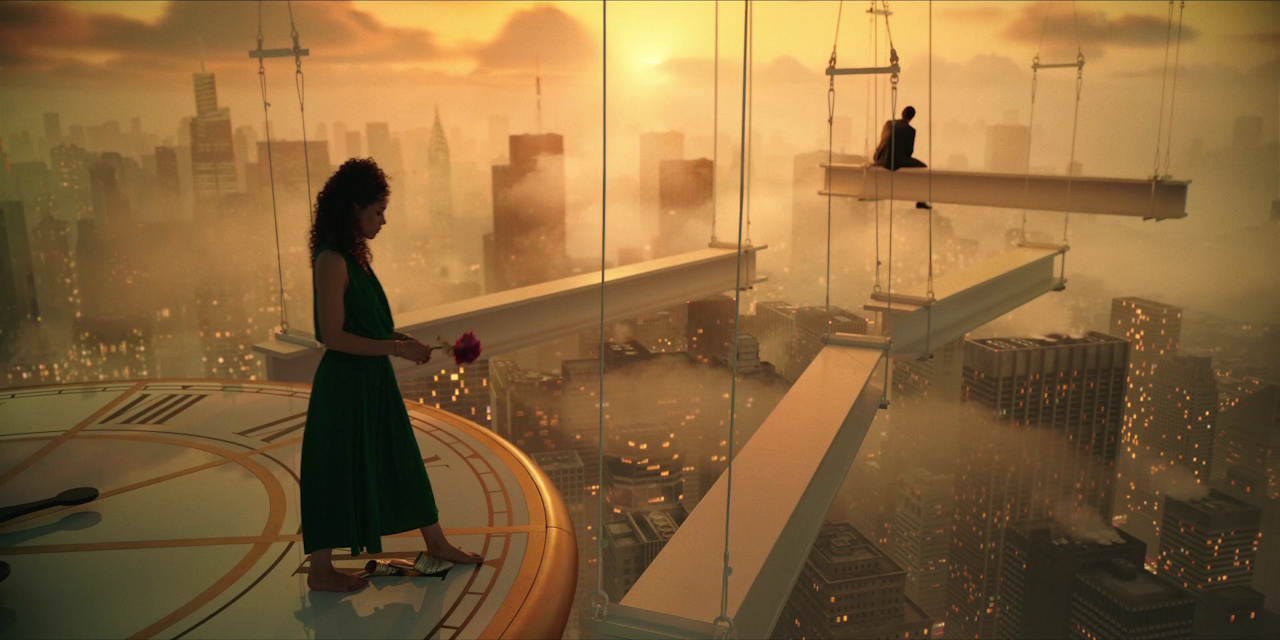
Julia and Cesar high above New Rome.
Megalopolis’ experimental, arty tone – with long sequences where the camera spins and Coppola applies every kaleidoscopic filter and effect he can find – can be hard to watch. Further, a script which is already dense and heavy is delivered, in places, with laughably stilted and wooden performances. I wrote the following in my notes about halfway through the film: “how on earth does a fantastic director get these dire performances out of such an excellent group of actors?” Even keeping in mind what I was saying about the film’s deliberately unusual style, its desire to come across as unreal, and its intent to be a modern-day fable, most of the performances are shocking.
The standout performer is, as you might expect, Adam Driver. Driver hasn’t ever been bad in anything I’ve seen; his performance in Marriage Story was Oscar-worthy, in my view, and he was one of the highlights of the Star Wars sequels, too. But the rest?
Nathalie Emmanuel’s accent was inconsistent, varying from passable generic North American to atrocious New Yorker. That aside, she was solid but unconvincing. Giancarlo Esposito seemed to have no clue what was going on or what he was reading, and I got the sense that he was as lost making the film as I was watching it. Jon Voight (fun fact: I met his brother once) was just plain terrible, and again seemed to have no idea what was going on. Aubrey Plaza was totally miscast and inadequate for the role she was tasked with playing. And Laurence Fishburne – a regular collaborator with Francis Ford Coppola – read almost all of his lines in what I’d call an “I don’t give a shit” monotone. He was supposed to be the film’s narrator, introducing the various chapters and reading aloud various quotations.
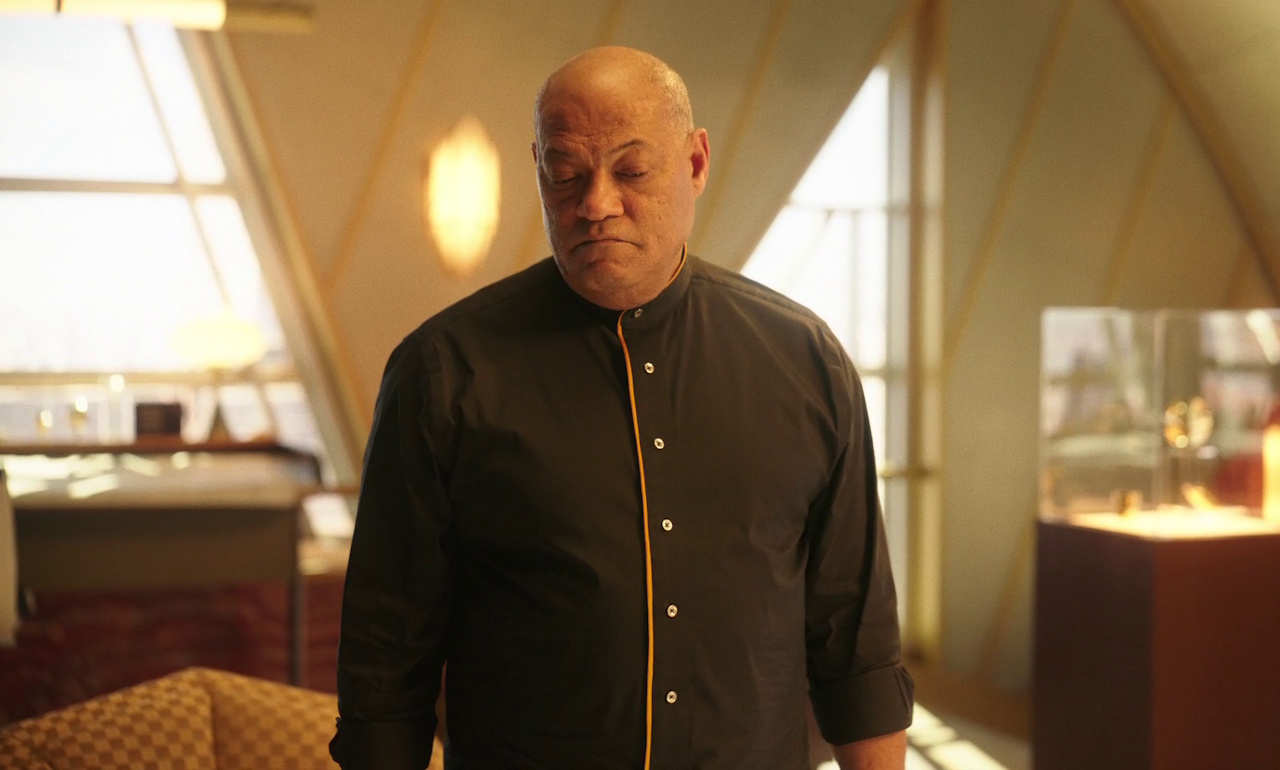
Laurence Fishburne was not at his best in Megalopolis.
It takes a twisted kind of skill as a writer, director, producer, and cinematographer to get this group of actors – who have all been outstanding in other productions – to churn out such atrocious performances. According to Coppola, he encouraged improvisation on set, and even re-wrote lines and whole scenes while Megalopolis was in production. And yeah… I think we noticed. It must be difficult for performers to stay in character and engaged when everything’s in flux or when co-stars ad lib and completely change a scene they’d been preparing for. With other reported challenges on set, I’m sure Megalopolis was a difficult environment for some of the folks involved both on camera and behind the scenes. That could account for some of the sub-par performances, perhaps.
I’m not joking when I say that I literally laughed out loud at how bad some scenes in Megalopolis were. Stilted, wooden, hammy performances of a script written to be deliberately meandering and convoluted, shot on obviously fake, plastic sets with weird lighting… yeah. That’s not doing it for me. Quite a few scenes also ended very abruptly, as if midway through a conversation. The intention seemed to be a “mic drop;” the character said what the director thought should be an explosive or thought-provoking statement, so the scene could end. But more often than not, it just felt like a poor editing choice rather than anything even halfway profound.
One of the least-convincing windows I’ve seen in a film in a long time…
I was not the intended audience for Megalopolis, I guess. But I’ve said that before about other films or television shows that I genuinely enjoyed, that surprised me, or that I at least found redeeming qualities in. Maybe Francis Ford Coppola is content to ignore the opinion of such a common plebian and will insist that this film is art. Maybe he’s right – maybe it is art. But it’s also weird, hard to follow, unnecessarily dense, and populated by a cast of cardboard cut-outs rather than characters. There was a point to be made about the vulnerabilities of the American political system and how it could be hijacked by a charismatic snake-oil salesman – something which is arguably a more timely message now than it was when Coppola came up with the idea some forty years ago. But all of that was lost thanks to a wordy, philosophical script and offputting cinematography. Megalopolis is a film that just… thinks too much of itself. It’s snooty and stuck up.
At least, that’s how it feels to me.
What I can admire about Megalopolis is its experimentation – even when the result didn’t really stick the landing for me. At a time when far too many films play it safe, leading to a pretty stagnant environment in which cinema doesn’t seem to be pushing the boundaries and innovating any more, Megalopolis wasn’t afraid to genuinely try different things. Many of those things aren’t actually brand-new – they’re throwbacks to an earlier era of filmmaking and storytelling. But at the same time, there’s clearly a reason why studio after studio and distributor upon distributor passed on Megalopolis. It’s too “out there” for most audiences, and they recognised that when Coppola couldn’t. I don’t usually give entertainment industry executives any praise whatsoever, but the people who looked at Megalopolis and said “no thanks” got it right.
This is how I imagine most people reacted when Francis Ford Coppola showed them the script for Megalopolis…
Weirdly, I’m glad to have watched Megalopolis. Cinema should be challenging, sometimes, and I think it’s worth taking a detour to a film like this from time to time. It’s not one of those “so bad it’s good” films, and I honestly don’t know whether I’d want to watch it again. But it feels like a film that’s worth watching once, if that makes sense. Maybe because it’s so different to most of what’s streaming or in theatres, or maybe because it’s a legendary director’s passion project… I don’t know. And this shouldn’t be taken as a recommendation! I couldn’t realistically say that you should watch Megalopolis; I think it’s confusing, poorly-acted, and disappointing in more ways than one. But I also can’t shake the feeling that, for a very specific type of film buff or deep thinker, it could be the best thing they’ve ever seen.
So that was Megalopolis. I’m glad I watched it, and if nothing else, it’s prompted me to learn more about the Catilinarian conspiracy! But I’m thinking I need a palate-cleanser before I watch anything else… something like an episode of Tom and Jerry or SpongeBob SquarePants just to switch gears and turn my brain off. All this philosophy and Ancient Roman history is giving me a headache.
Megalopolis is available to stream now on several video-on-demand platforms and is also out on DVD and Blu-ray. Megalopolis is the copyright of American Zoetrope, Caesar Film LLC, and/or Lionsgate Films. This review contains the thoughts and opinions of one person only and is not intended to cause any offence.

The first part of this review is free from story spoilers. The end of the spoiler-free section is clearly marked.
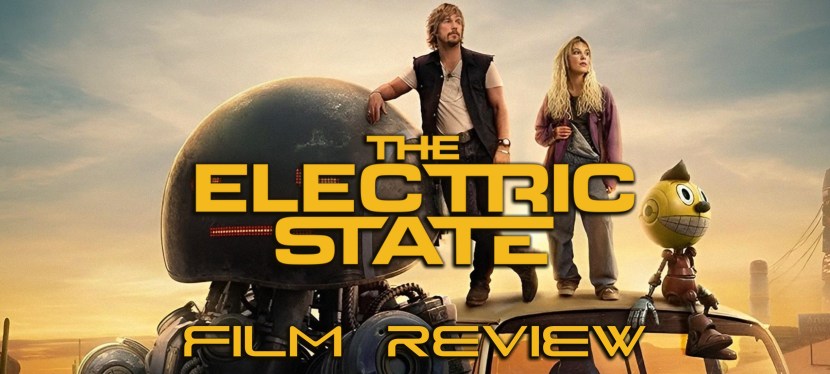
Well this is a bit of a rarity for yours truly: reviewing a film while it’s actually new and still relevant! I recently sat down to watch Netflix’s The Electric State, a film that had been on my radar for a little while. If you know me, you’ll know that I always like to give new sci-fi and fantasy adaptations a chance… and while The Electric State was imperfect and took a while to find its feet, the film managed to hit at least some of the right notes for me.
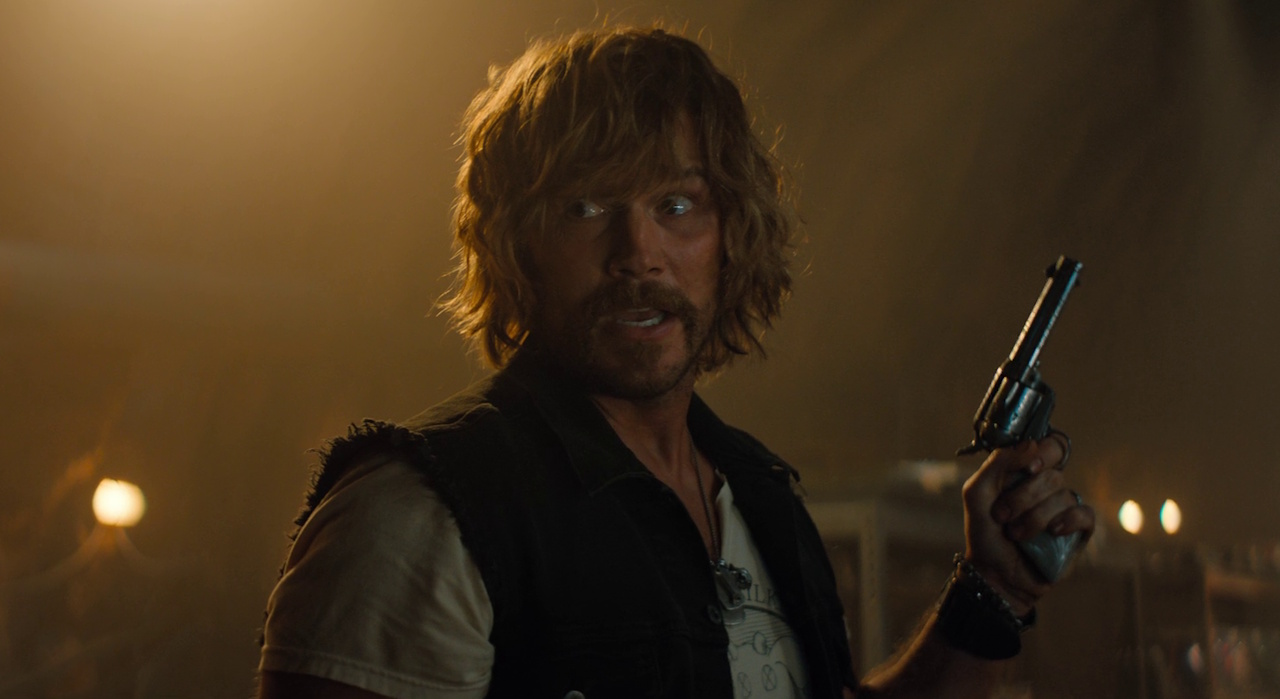
Let’s start with what I didn’t like. We’ll get into a bit more detail if you stick around for the spoilery portion of the review, but in brief… the two main acting performances weren’t spectacular. Chris Pratt seems to have become omnipresent in what’s occasionally termed “genre” cinema, and the best thing I could really say about him in The Electric State is that his performance was workmanlike. He turned up, churned out a passable performance, cashed his cheque, and that was it. I didn’t see much passion from him, or really any indication that he cared much about the role or the story. It was fine. But for the benefit of Netflix and other studios: you guys know other actors exist, right? Try someone else sometime… they might do a better job.
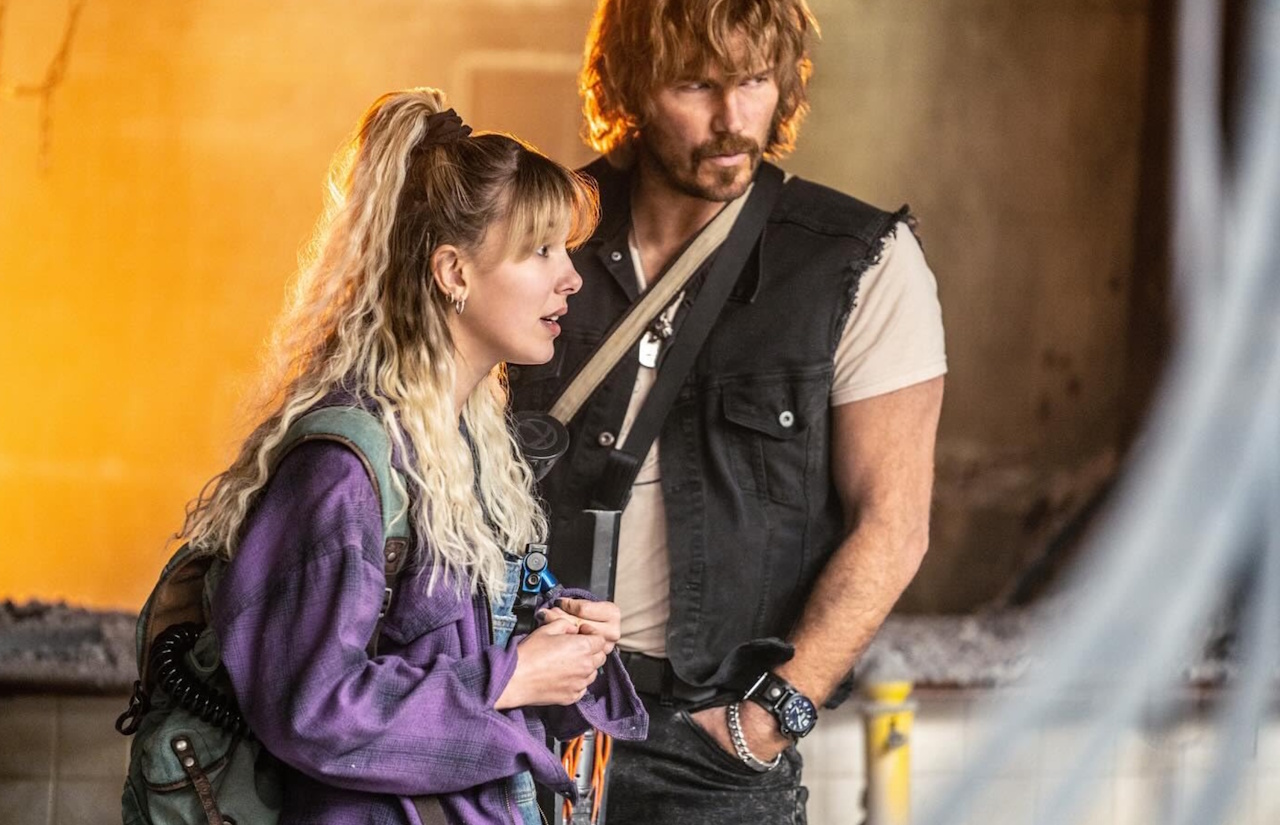
Chris Pratt in The Electric State.
I don’t like to pick on younger performers too much, so I’ll say this: Millie Bobby Brown was the lesser of The Electric State’s two leads. There were moments in her performance that captured some of the feelings and emotions that the Russo brothers wanted the film to convey… but there weren’t as many of them as the role really needed. Some of Michelle’s biggest scenes – moments where I should’ve been on the edge of my seat or bawling my eyes out – just didn’t stick the landing, and unfortunately that’s due more to the performer than the writing or direction. I don’t doubt that Brown was genuinely invested in the role, but I think it took her to the edge of her capabilities… at least for now. She’s definitely got room to grow in the years ahead, and I hope The Electric State will be a film to look back on in a few years’ time to see how far she’s come.
The Electric State was juggling quite a few characters, meaning there was no shortage of storylines to cram in – along with some of the film’s loftier concepts and ideas that we’ll talk about later. As a result, I felt several critically-important moments were rushed, with not enough development given to key characters nor enough time for events to unfold naturally. It takes time for people – humans and robots – to warm up to one another, to share ideas, and to commit to working together… but The Electric State, on too many occasions, didn’t have enough time to do the work. This left some scenes feeling blitzed through, while in others, characters seemed to act out of turn or without detectable motivations.
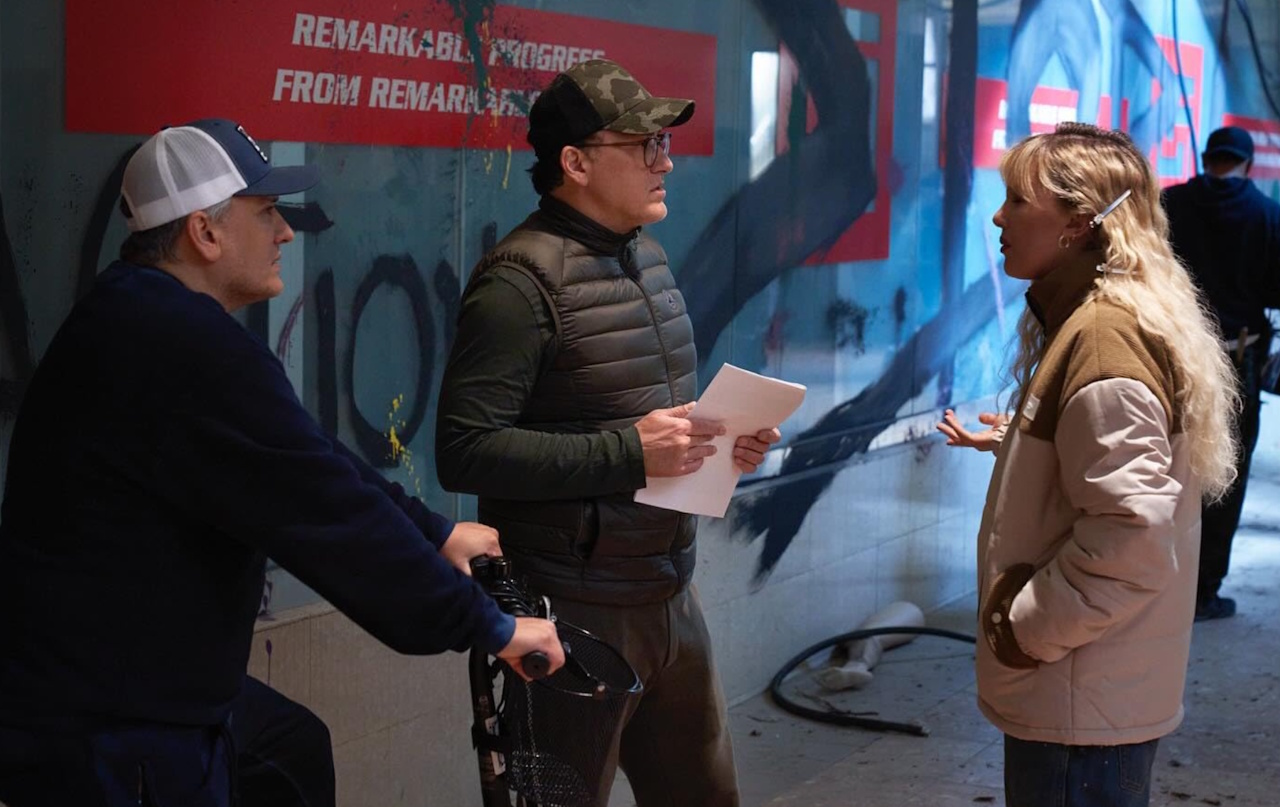
Directors the Russo brothers with star Millie Bobby Brown.
I’ve said this more than once in other reviews, but perhaps for a younger audience – raised on short-form videos – that kind of hectic pacing might work. You’ll have to check out other reviews from younger folks to see if that’s the case! But for this old critic, I’m afraid that I needed to spend a little more time with some of the characters at those moments; going from “we’ve just met” to “let’s team up and save the world” needs more than just lip-service if I’m going to really buy into it.
On a more positive note, the film’s core story was great – and if the worst thing I can say about the main narrative is that I wish I could’ve seen it play out at a more reasonable pace, that isn’t the worst thing in the world. It just means that, for me, some scenes and characters needed a bit more work. The bare bones of the story were there – and it was a strong, solid, and potentially quite emotional narrative. I could feel, hiding just beneath the surface, some of those character moments and narrative threads… and it’s a tad frustrating, more than anything else, that they didn’t get the deeper, fuller exploration that they deserved.
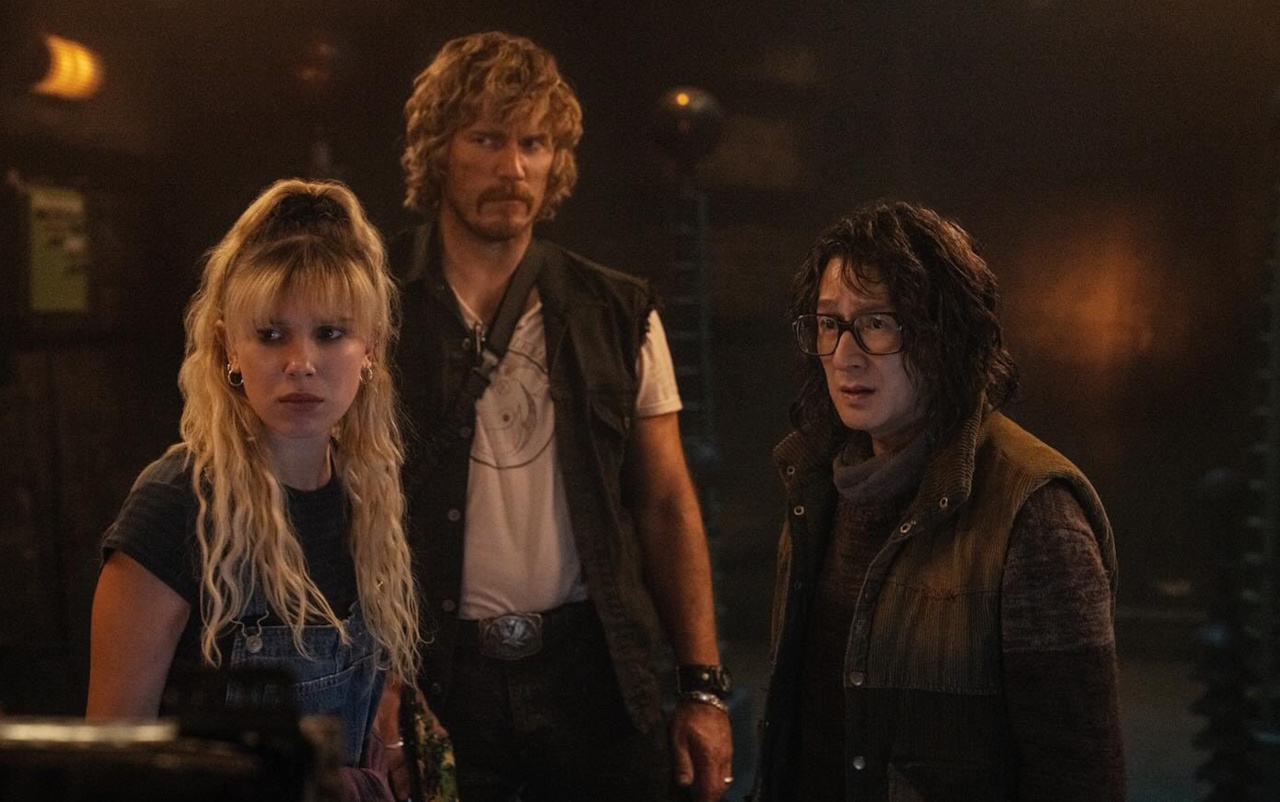
A trio of characters in a promotional still.
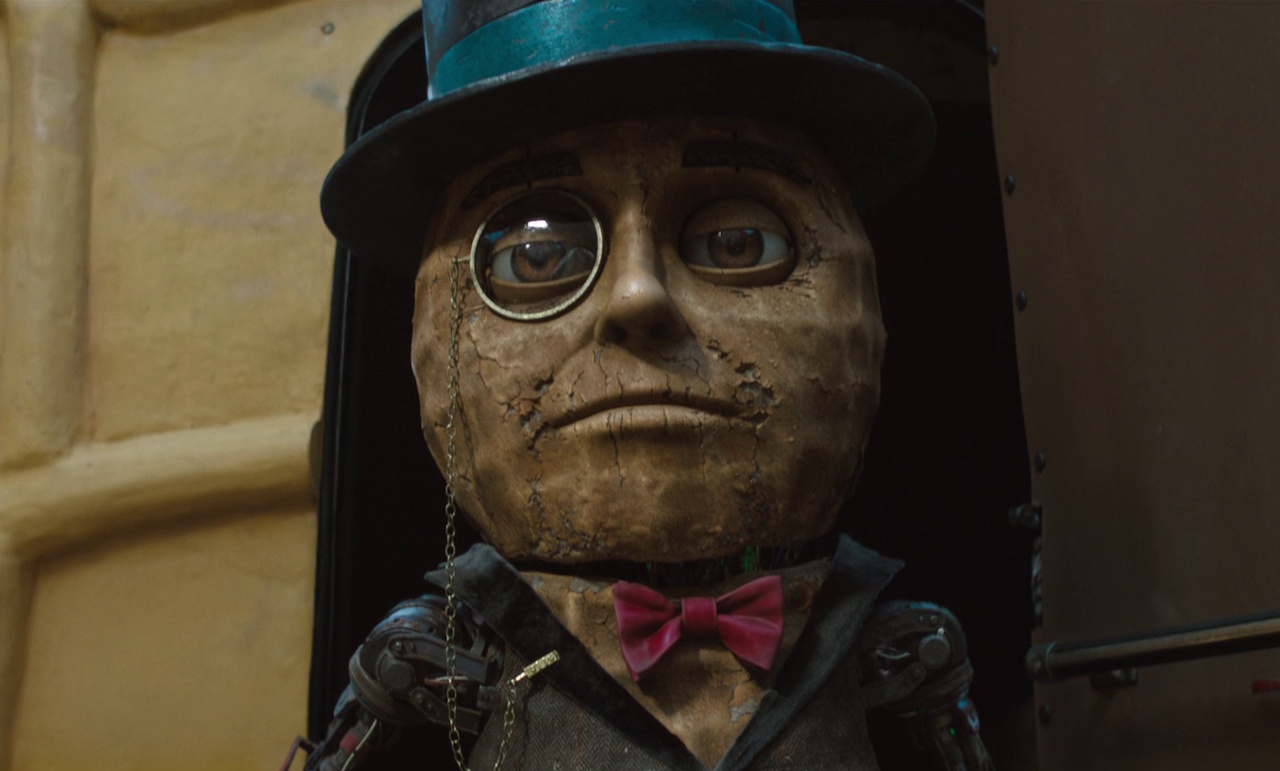
And perhaps that’s The Electric State in a nutshell – if Mr Peanut will excuse the pun. It was a film that had a genuinely good story… but it fell short of being great for the reasons outlined above. That doesn’t make it a bad film by any stretch, and I could see myself watching it again one day. But it’s a little disappointing that some of these ideas, characters, and storylines were held back or cut short. Perhaps The Electric State would’ve worked better as a miniseries – say, five or six hour-ish episodes – instead of a two-hour film.
The film’s soundtrack was fantastic, and I enjoyed some classic hits like Judas Priest’s Breakin’ The Law and Gloria Gaynor’s I Will Survive, as well as reinterpretations of Don’t Stop Believin’ by Journey and Wonderwall by Oasis. There were some truly great songs in the mix, and they were paired well with different moments in the film. The score was also fantastic – composer Alan Silvestri, who has also worked on titles like The Polar Express and Ready Player One – did a great job.
Michelle and Keats.
I don’t like to put a number on my reviews. One person’s idea of a seven out of ten might not be the same as another’s, and I think too many people skip over the actual review and just want to see numbers! But if you want to know if The Electric State is right for you, here’s what I’ll say: if you already have a Netflix subscription and you want to check out a different sci-fi title, you’ve got nothing to lose by firing it up. I would caution that it took me a while to fully get invested in The Electric State due to some of the issues outlined above, but once the film found its footing I was content to watch until the end. Would I be happy if I’d bought an entire month of Netflix purely to watch The Electric State, though? I think that’s a harder sell, to be honest with you.
Up next we’re going to talk about the plot in a little more detail. If you want to go into The Electric State un-spoiled, this is your warning to jump ship! If you’re still reading, let’s jump headfirst into the spoiler section of the review!
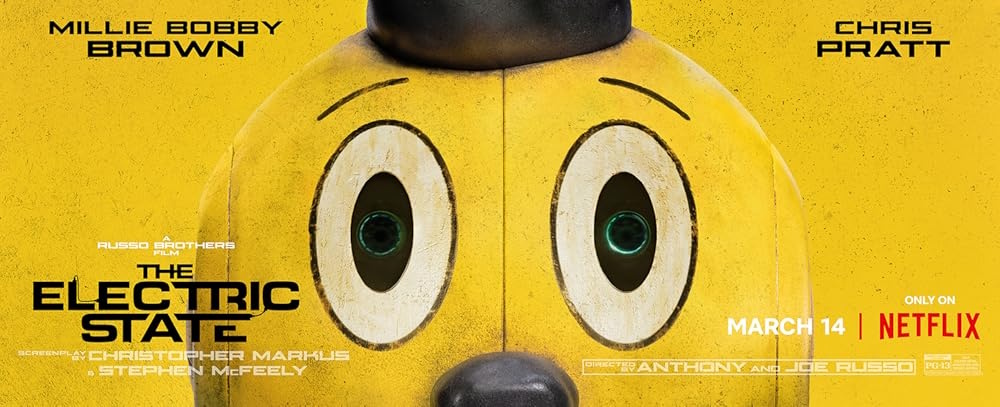
The film’s poster.
This is the end of the spoiler-free section. There will be story spoilers for The Electric State from here on out.
There are a couple of interesting real-world analogies that The Electric State was playing with – but I don’t think the pace of the film really managed to do justice to either. As I said above, a miniseries might’ve been a better fit for this story, because some of these potentially-interesting ideas about technological dependence, escapism, and abusive corporations deserved more time in the spotlight. In a stronger film, these ideas could’ve been key parts of the story; in The Electric State, they were basically just a backdrop for the adventure to play out in front of.
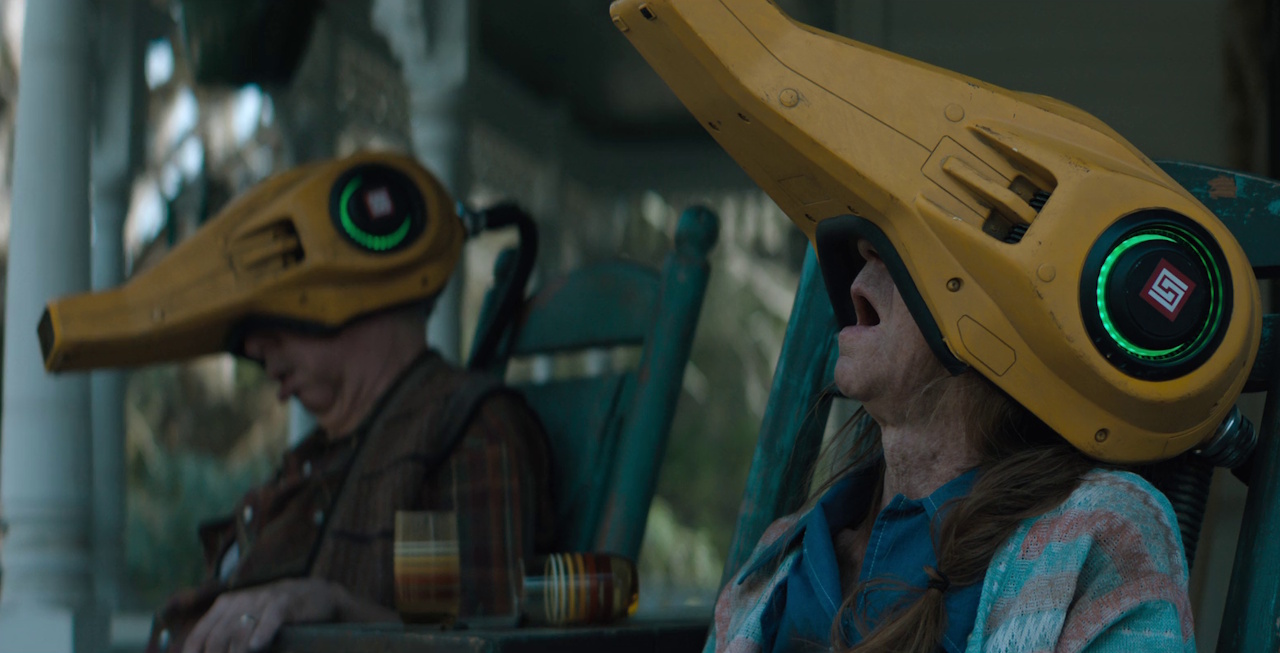
The neurocasters are a perfect metaphor for today’s smartphones, and the depiction of neurocaster addicts in The Electric State felt, in a couple of places at least, hauntingly accurate. How often do we hear about so-called “smartphone zombies” walking off bridges or into traffic, or even just bumping into people while lost in their own little worlds? The film’s message about putting down our devices, connecting with one another in real life, or even just – to borrow a Gen Z term – going outside to touch grass had potency. Unfortunately, this aspect wasn’t in focus for long enough to be as impactful as it should’ve been, and other storylines quickly overtook it.
The neurocasters could’ve been a timely metaphor.
And it’s a shame, because the time is right for a metaphor like this. There is value in a story that touches on themes of technological dependence and escapism – and I know from my own life that I spend too much time staring at a screen. The Electric State wanted to hold up a mirror to today’s society and say “look!” But it didn’t have enough time to really make this idea stick.
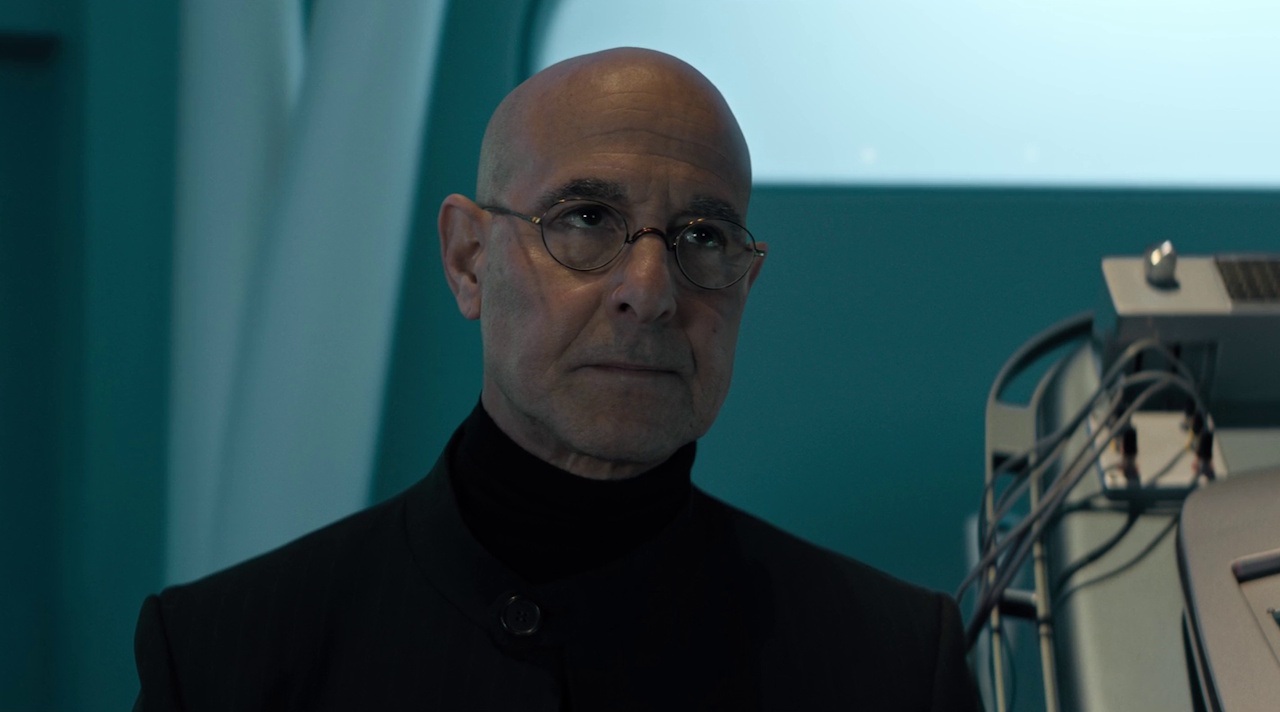
The same was true of the film’s corporate angle. Maybe I’m allowing current events to colour my reading of Sentre and Ethan Skate… but there was something in the presentation of this corporation and its shady leader that felt timely. A “big tech” company doing unethical things while putting on a friendly face in public… I mean, that hits close to home, right? Stanley Tucci was pitch-perfect in the role of Skate, by the way; he really made my skin crawl. And in this case, I mean that as a compliment!
Stanley Tucci played the villain exceptionally well.
I mentioned pacing earlier, and there were too many scenes in The Electric State that felt cut down or that I would’ve wanted to see expanded. Michelle’s encounter with the Cosmo robot, their first meeting with Keats and Herm, Mr Peanut’s colony of robots… all of these seemed to race by, and unfortunately, there was a lot left on the table (or the cutting-room floor). As a result, too many characters seemed to act unnaturally, being willing to team up when two seconds ago they’d been adversarial, or leaving their motivations unexplained. There was no clear explanation for why the Butcher’s drone – which had been crushed in a cave-in – could somehow be remotely re-activated without any kind of mechanical maintenance, no real explanation for why Keats didn’t abandon Michelle after he cost her his entire business, and so on.
Some characters felt less like real people than bare archetypes. Michelle’s foster father seemed to be “evil for no reason,” in line with some depictions of step-parents in old children’s stories. The doctor – the one who aided in Chris’ escape – also didn’t really have a lot of personality, though at least his motivation of wanting to do something to help a child in danger was understandable. I know I keep coming back to this idea, but a miniseries (or even just two films instead of one) could’ve lingered on some of these characters a bit longer, fleshing them out – and by extension, giving some more depth to what could feel like a pretty shallow world.
We needed to spend a bit more time with characters like Dr Amherst.
The idea of an artificial intelligence going rogue isn’t new, and we’ve seen it countless times in sci-fi. But because of The Electric State’s depiction of brightly-coloured robots based, at least in part, on fictional characters we’re familiar with, there was a bit more to it. The film also released at a moment where AI has been in the spotlight, with more and more folks using and becoming dependent on AI tools to do everything from homework to the business of government! Fears of rogue AI are nothing new, but The Electric State had at least a visually different – and occasionally striking – take on this idea.
Something we don’t always get in stories about robots turning against humanity is a peaceful outcome – and The Electric State offered a glimpse of what that could look like. Both sides started to see that there could be good in the other; that there might be a way to work together to achieve a lasting peace. Again, in the context of our troubled world, that isn’t a bad story to tell. However, this storyline also wasn’t all it needed to be to really bring that message home.
Is peace between humans and sentient robots possible?
At the core of the story were two character pairs: Keats and Herm and Michelle and Chris. Keats and Herm’s story of being on opposing sides of the war, only to end up together was a cute idea – but one I wish we could’ve seen more of. The Electric State wasn’t shy with its flashbacks, so why not flash back to the battlefield and show us, rather than just tell us, what happened to the two of them? Seeing it rather than just hearing about it would’ve been more impactful.
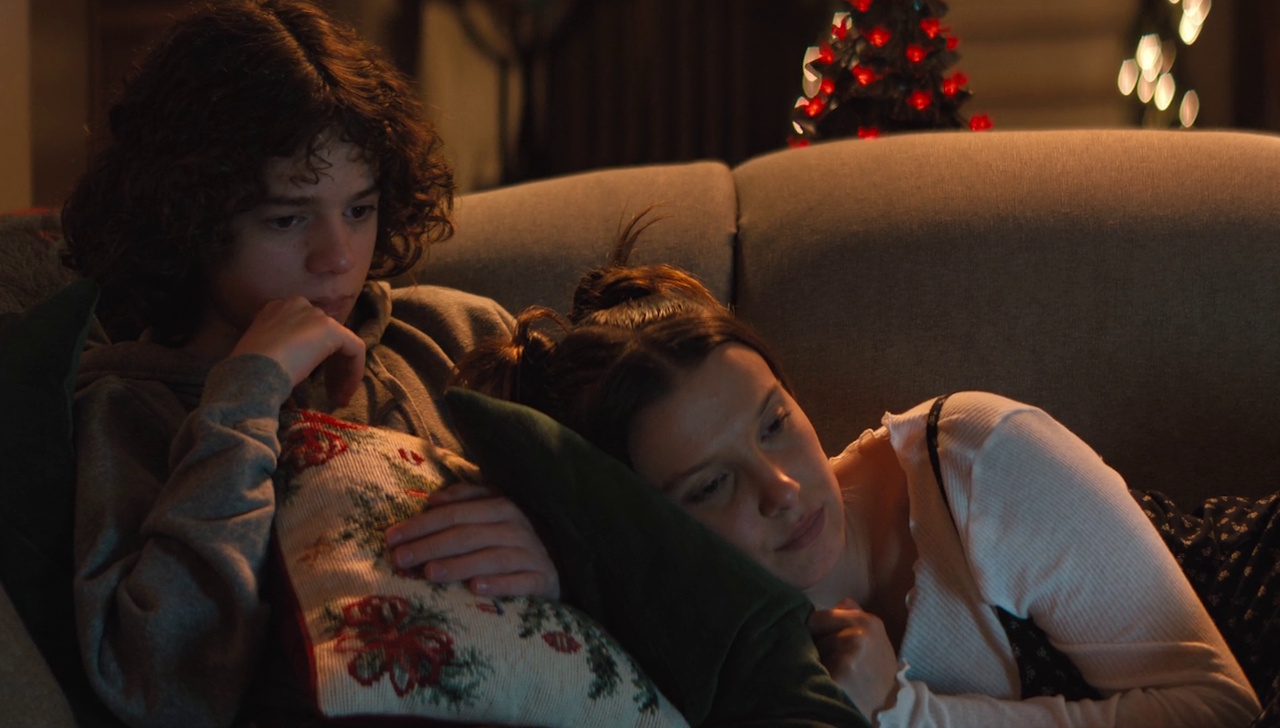
As for Michelle and Chris, there was a sweetness to a sister doing everything she could to help her brother. With this storyline being the film’s core – both narratively and emotionally – it was the most important one for The Electric State to get right. As above, I don’t think Millie Bobby Brown was outstanding in the role of Michelle; her best scene was probably the one at the mall where she, Cosmo, and several other robots were wordlessly watching the old cartoon. The young performers did their best, I have no doubt, and criticising the on-screen chemistry between them would feel a bit harsh. What I’ll say instead is that there were some good moments and some less-good moments on this side of the story. At times, it could feel like heavy lifting to remain fully invested in Michelle’s story.
Chris and Michelle in a flashback.
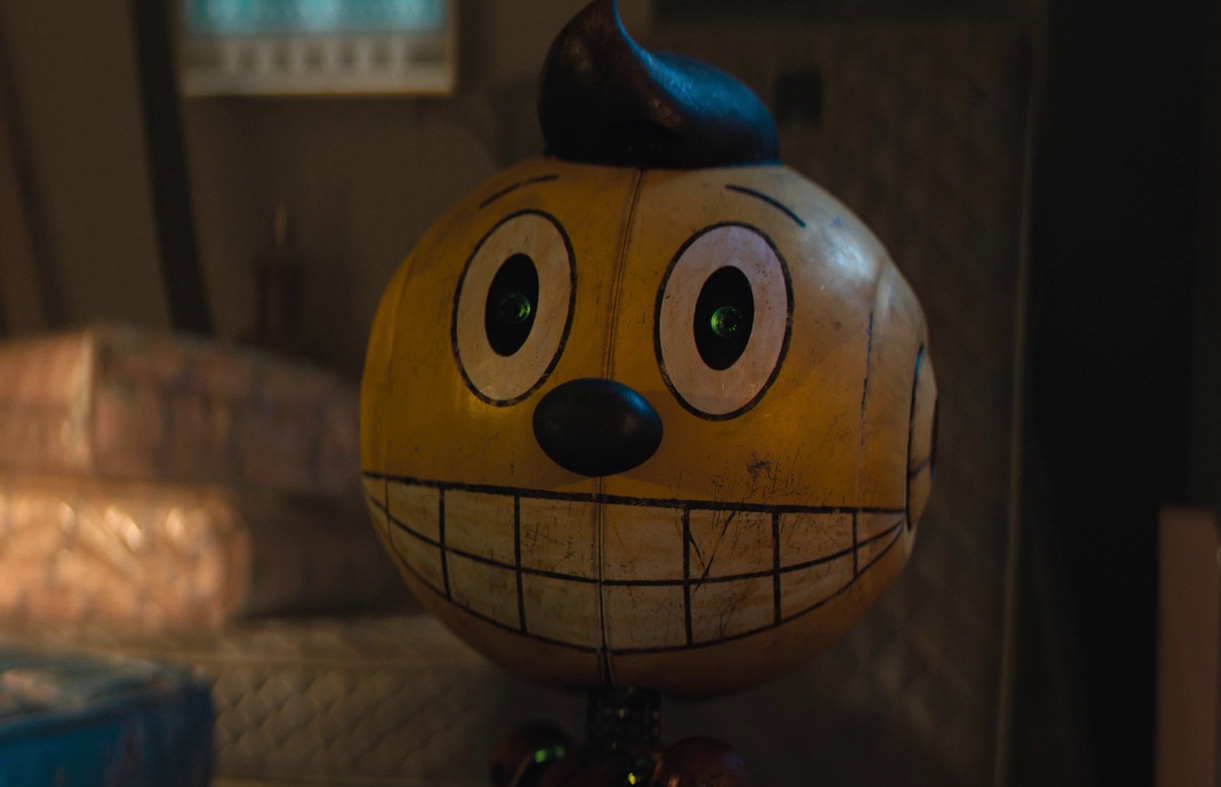
I touched on this above, but the designs of some of the robots were really interesting and made for a fun visual presentation. Inspired in part by the animatronics at Disney World and other theme parks, there were some genuinely neat designs in the mix. Cosmo – the robot inhabited by Chris – was perhaps the most important one to get right, and I think the animators and designers did a good job. A lot of the robots also looked dirty and decaying after years without maintenance, and that definitely came across.
One important point that I think The Electric State would’ve benefitted from explaining is why Cosmo couldn’t talk but every other robot we met could. I guess there was supposed to be some limitation – that Cosmo only had a handful of pre-programmed phrases – but this wasn’t really explained, and when we met a whole community of robots who could all talk much more freely… it felt a bit odd. The idea was interesting, and limiting Chris’ ability to communicate with Michelle served a purpose. But… it also meant that this pairing relied even more on Michelle to talk and emote, which wasn’t always the film’s strongest suit as we’ve already covered.
Chris seems to have had the bad luck of possessing the only robot in this world without the power of speech.
The Elecrtic State is supposedly set in 1994, and I guess Netflix was hoping that there’d be a lot of nineties nostalgia floating around to entice viewers. As someone who grew up in the ’90s… I didn’t really get much of a nostalgia blast from the film. There were some moments, sure: Sentre’s video presentation with ’90s-inspired graphics, some of the cars and vehicles on the road, the mall setting that would likely be half-closed today, and old PCs sporting CRT monitors and Windows 3.1 all spring to mind. But for a film that seemed to be pitching itself on its ’90s setting… I really didn’t feel all that much of it in the finished product.
Oh, and speaking of the nineties: that clip at the beginning of Bill Clinton? The voice was fine, but the ex-president’s face seemed to be very amateurishly pasted into the scene, and it didn’t look great. Visuals in The Electric State were generally good, but that moment wasn’t!
I liked this retro presentation of the neurocaster from the beginning of the film.
So that was The Electric State. It’s unlikely to win any awards, but it was okay for what it was. There’s plenty of room for new adaptations in a sci-fi genre that’s drowning in established franchises, reboots, and sequels, and I’m genuinely happy that Netflix gave the green light to a project like this. For my money, I’d be content to re-watch The Electric State in the future. I don’t think the film hit all of the high notes its directors were hoping for, and there are some limitations to the story and a couple of the key performances. But The Electric State wasn’t a terrible film.
I’ll be curious to take a look at the visual novel that the film is based on and see how different it is and how many changes were made. I stand by what I said earlier: this story, the one presented in the film, would’ve worked better if it had longer to play out. Netflix is well-known for its big-budget series… and perhaps expanding this story to five or six episodes instead of a single film would’ve been to The Electric State’s benefit.
Oh well!
The Electric State is available to stream now on Netflix. The Electric State is the copyright of Netflix and/or AGBO and Skybound Entertainment. This review contains the thoughts and opinions of one person only and is not intended to cause any offence.
Spoiler Warning: There are spoilers ahead for all fourteen Star Trek films, including Section 31.
Almost five years ago, I put all of the Star Trek films into a ranked list. I talked about what I liked and didn’t like about each, and tried to justify my choices! But since I wrote that list, a couple of things have happened. Firstly, I’ve gotten better at using images here on the website – that old piece looks pretty janky in comparison to some of my more recent articles. But secondly – and way more importantly – there’s been a new Star Trek film since then!
I think Trekkies are still a little divided on whether the made-for-streaming Section 31 should count as a Star Trek “film,” and I get that. But for me, Section 31 has the runtime of an (admittedly rather short) film, it’s not a series, miniseries, or anything like that, it has mostly original characters, and it was afforded a higher budget than any individual Star Trek episode would’ve been. For all intents and purposes, Section 31 counts as the newest Star Trek film – the fourteenth since 1979… and hopefully not the last!
Section 31 is the most recent Star Trek film, and it’s on this list!
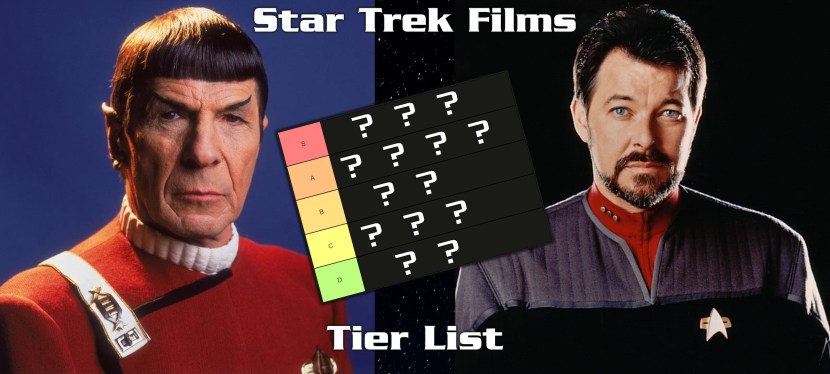
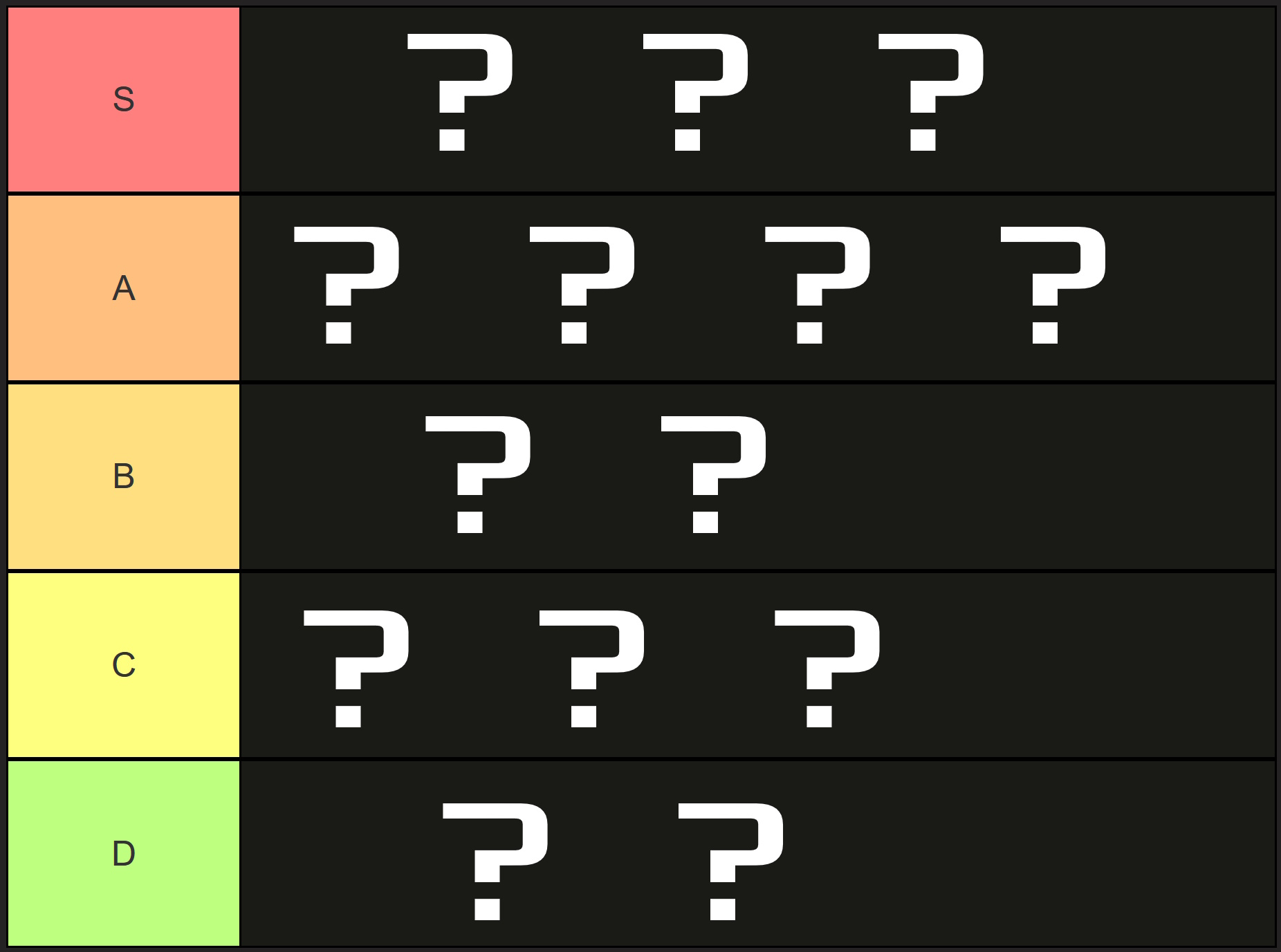
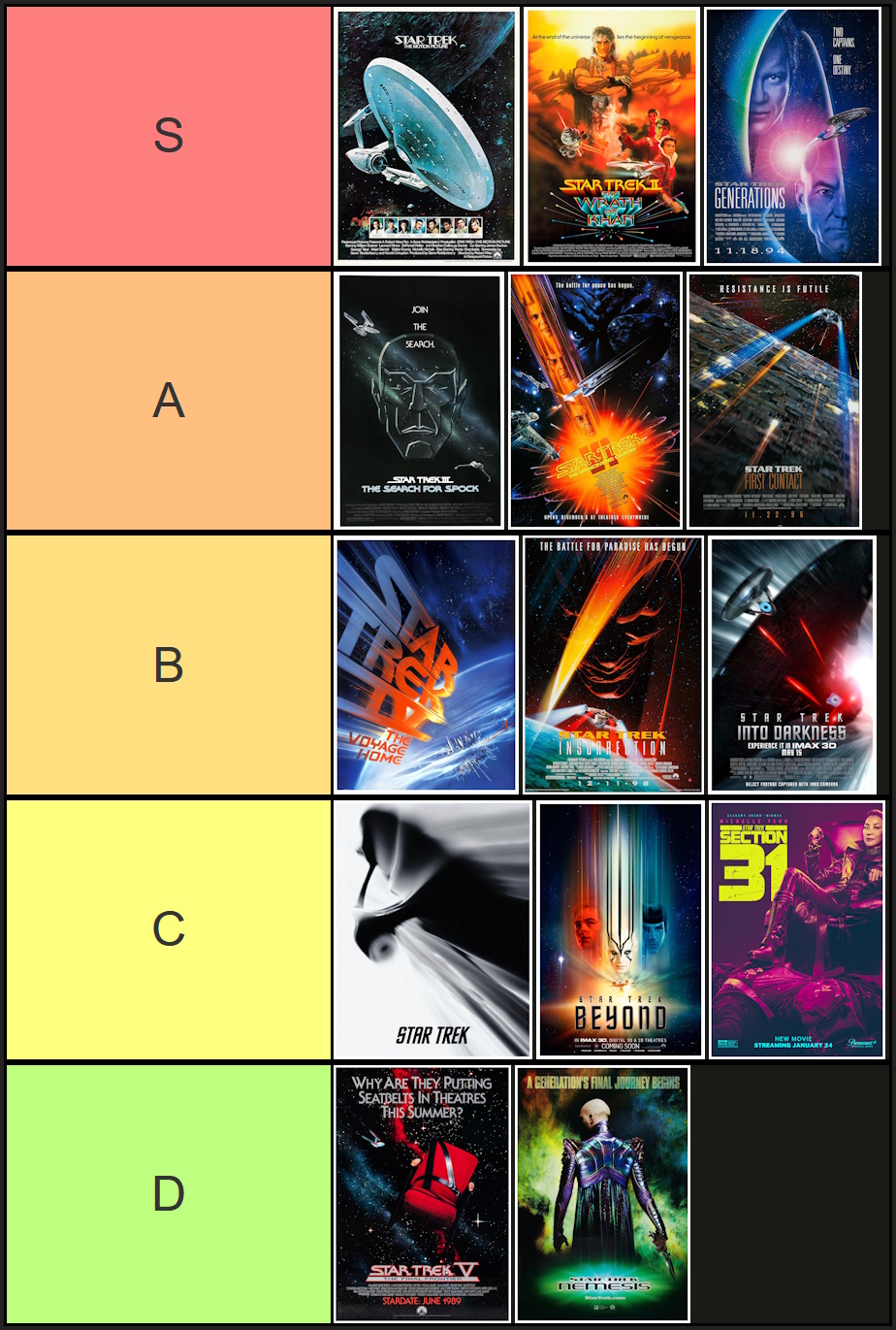
So today, I’m going to revisit the Star Trek films, this time using the internet-friendly tier list format that you might’ve seen on a couple of other occasions here on the website! I think most folks have a vague idea about tier lists at this point – but if you don’t, I’ll happily explain how it works.
Instead of giving each film a number from 1-14, which would be hard, we’re going to assign each film one of five tiers: D, C, B, A, and S. D-tier films are the least-enjoyable with noticeable flaws, C-tier titles are average or “just okay,” B-tier films are a step up, being above average, A-tier titles are getting really good, and S-tier is reserved for the absolute cream of the crop! Why is S-tier the top instead of A or something like A-plus? The truth is… I don’t know! But that’s the way everyone else does it, so I’m sticking with it! Some tier lists also include an F-tier for absolute disasters, but since I don’t consider any of the fourteen Star Trek films to be that bad, I’ve opted not to include it on this occasion.
Let’s fill out this blank tier list together!
Now that the explanation of the format is out of the way, a handful of important caveats!
Firstly, all of this is subjective, not objective. There is no “objectively best” Star Trek film, and even within the fan community opinions vary wildly on which titles are better and what makes for a good Star Trek story. So if I rank a title you hate highly or speak ill of your favourite… that’s okay! There ought to be enough room in the fan community for civil conversations and polite disagreement.
Secondly, this piece supersedes my old film ranking list, and I have made a couple of changes to where films were ranked five years ago. I’ll be leaving the old piece as it is, though – it’s a part of the website and it would be silly to delete it! But going forward, this is the official Trekking with Dennis Star Trek films tier list!
Admiral Kirk addressing his crew in The Motion Picture.
Third, I’ll rank each production in order of release, beginning with The Motion Picture and finishing with Section 31. Then I’ll show you the final tier list at the end. I’ll do my best to explain what I liked and/or didn’t like about each title to justify my ranking – but please feel free to vehemently disagree if you like!
Finally, all of this is just for fun! I like writing, I like Star Trek, and finding an excuse to talk about some of the Star Trek films that I love – or that I haven’t seen in a while – is supposed to be a bit of escapism. Nothing about this should be taken too seriously, because the point of Star Trek for me has always been entertainment and escaping to a fun vision of the future.
With all of that out of the way, let’s begin.
Film #1: The Motion Picture (1979) Tier: S
The Motion Picture had a complicated production history! It was originally envisioned as a television series, bringing Star Trek back as Phase II in the late 1970s after re-runs of The Original Series had been growing in popularity. Actors had been cast, sets were being designed, and scripts were written… but then, in 1977, another sci-fi film’s wild success led to Phase II being reimagined as a feature film. Star Trek as a cinematic franchise was born!
In my experience, Trekkies tend to underrate and underappreciate The Motion Picture. In a very literal sense, much of the visual language of Star Trek was born here, not in 1966: metal Starfleet badges, the warp core as an upright glowing tube, angled corridors, Starfleet Headquarters, the re-designed Klingons… and so much more. Sets built for The Motion Picture would remain in continuous use all the way through Enterprise’s cancellation in 2005, defining what makes Star Trek look like Star Trek for millions of viewers.
The Motion Picture also has one of what I consider to be the best starship introductions in the franchise – something that set the bar for other shows! Kirk and Scotty’s shuttlepod flight to the refit Enterprise – complete with Jerry Goldsmith’s Academy Award-nominated score – is beautiful, and I get teary-eyed every time I watch it. It’s one of the best moments in Star Trek for me, and everything about it is pitch-perfect.
I get that The Motion Picture’s main story isn’t for everyone. It was also a bit of a mess, with re-writes continuing even during filming, and that probably didn’t help. But for me, The Motion Picture plays out like an extended episode of The Original Series. It’s ethereal, thought-provoking, and not overladen with fast-paced action set-pieces. I think that’s to the film’s credit, even if many don’t agree.
I have a longer piece about The Motion Picture, written in 2019 to mark the film’s 40th anniversary. You can find it by clicking or tapping here.
Film #2: The Wrath of Khan (1982) Tier: S
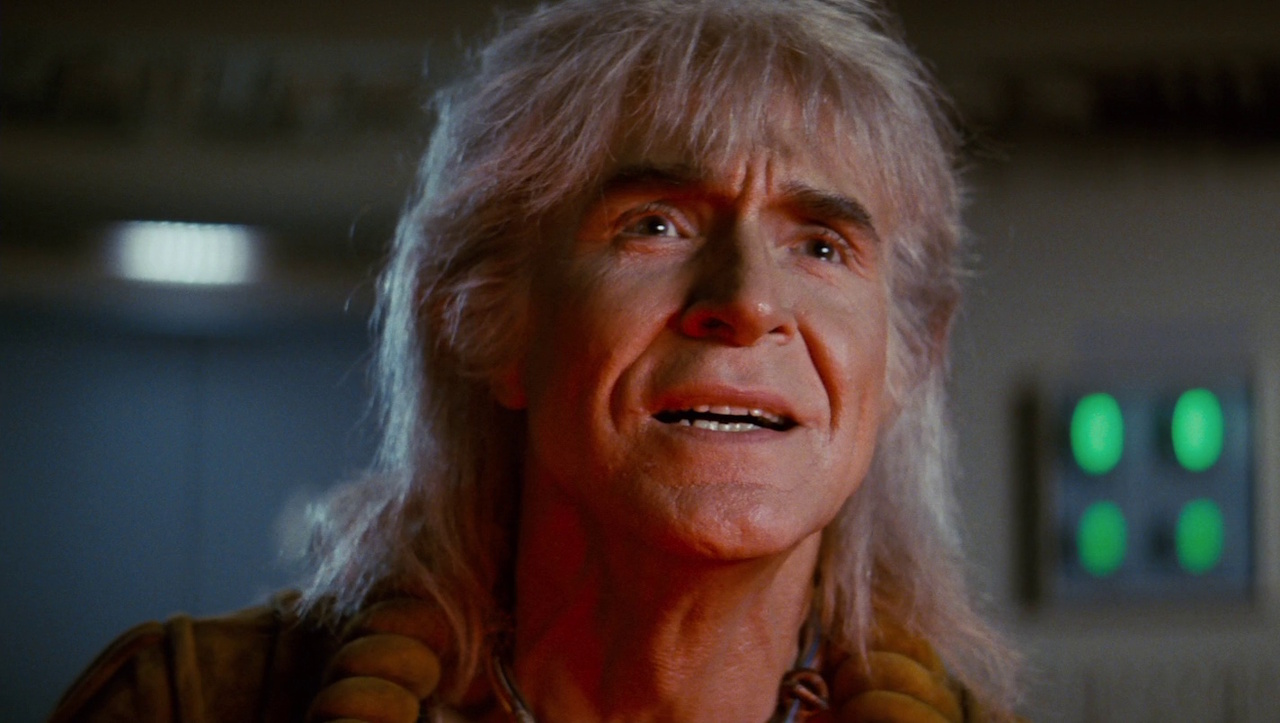
For many folks, The Wrath of Khan is still the Star Trek franchise’s high-water mark; a film that no other in the franchise has even come close to. I wouldn’t go that far personally – I think there are a couple of other equally brilliant films, as we’ll talk about in a moment – but The Wrath of Khan is definitely up there! The mix of sci-fi with high-octane action proved to be a perfect blend for Kirk and the crew, with a vengeance-obsessed Khan becoming one of the best villains not only in Star Trek, but in all of cinema.
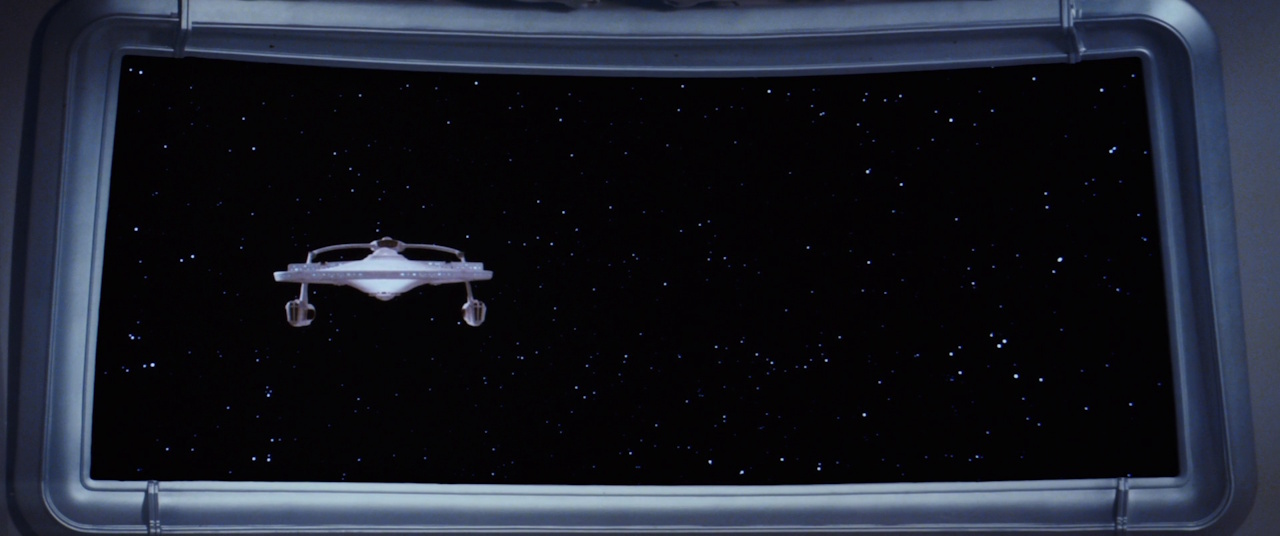
The Wrath of Khan has one of the best and most intense starship battles in the franchise. Drawing inspiration from submarine and naval battles in World War II films, the fight between the badly-damaged Enterprise and Khan’s USS Reliant is incredible. The sequence builds up tension masterfully – by showing the extent of the damage to the Enterprise, by robbing Kirk and Khan of their sensors in the nebula, and with Spock cleverly explaining Khan’s “two-dimensional thinking” as a way to convey the tactics of starship battles in a three-dimensional space.
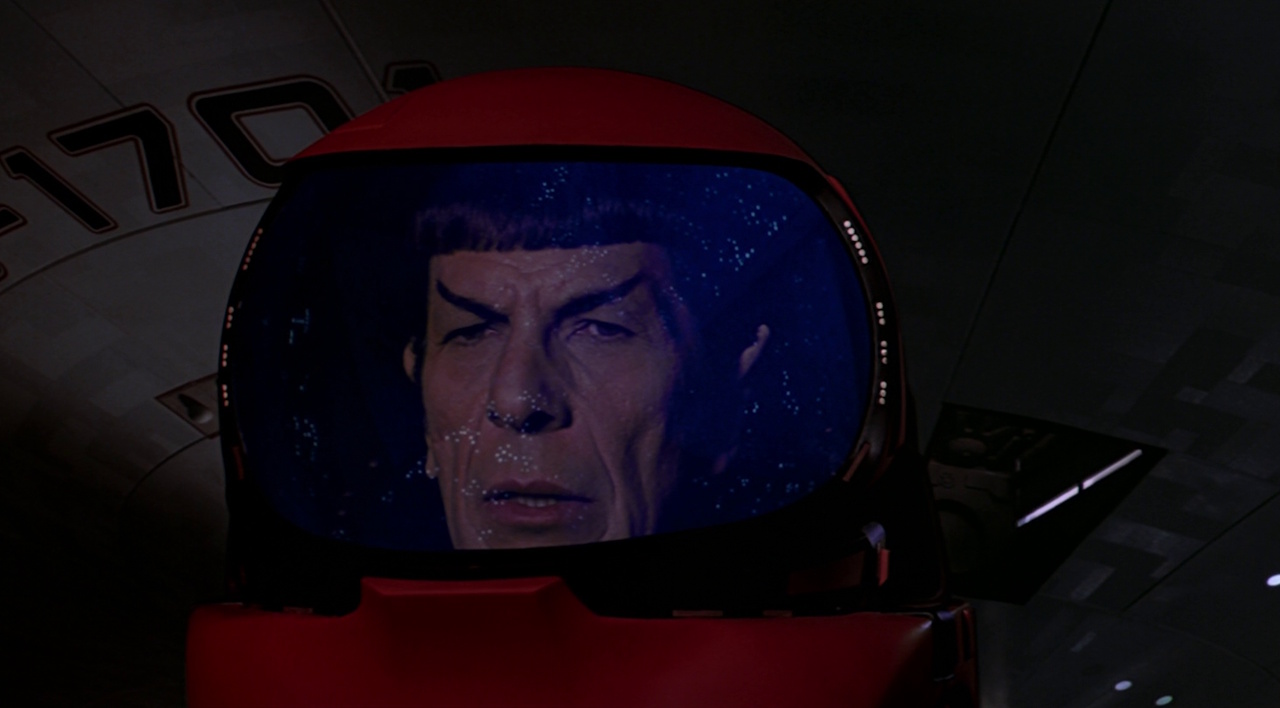
Toward the end of The Wrath of Khan, we also get one of the most poignant and emotional moments in any film in the franchise… or really anywhere in the entirety of Star Trek, come to that. Spock’s death – sacrificing himself to save the Enterprise and his friends – really hits hard. Even though on my first viewing of The Wrath of Khan I already knew that Spock would be resurrected, there’s still a real emotional weight to this moment. Star Trek has attempted to do similar things with other characters (we’ll look at a couple further down the list) but none came close to matching this moment.
Ultimately, The Wrath of Khan was the first film to wrest control of Star Trek away from its creator, Gene Roddenberry, and to try new and different things with this cast of characters. It’s very different in tone and style from The Original Series, but that turned out to be a net positive for many fans – and many new fans, too. The Wrath of Khan firmly established Star Trek as a cinematic franchise.
Film #3: The Search for Spock (1984) Tier: A
Sandwiched in between the ever-popular Wrath of Khan and the light-hearted Voyage Home, I think some folks can overlook The Search for Spock. As the middle part of a trilogy, the film has the difficult task of moving the story along but without being able to draw all of its story threads to a firm conclusion. For my money, though, it’s a great film – and it manages a complicated sci-fi story exceptionally well.
The Search for Spock gave us an extended look at the re-designed Klingons from The Motion Picture, and also introduced the Klingon Bird-of-Prey, arguably the faction’s most iconic spaceship. It’s the film which re-introduced the Klingons in a big way, expanded the Klingon language, and introduced starship and uniform designs that have become inseparable from the faction. The Klingon Empire as we know it would not be the same – and might not be a big part of Star Trek at all – without The Search for Spock and its main villain, Kruge.
I’ve always appreciated the design of the Genesis Planet. The story of its creation is a bit “out there,” even by Star Trek standards, but the practical sets, props, and puppets created to represent the Genesis Planet all feel like ’80s sci-fi at its best. And yes, as a child of the ’80s I’m acutely aware of my biases here! But when I compare the way that The Search for Spock looks to modern Star Trek, with its CGI and AR wall… I can’t help it. I know what I like!
As the film that destroyed the original USS Enterprise, The Search for Spock was always going to court controversy. But I don’t agree with the take that “all of the odd-numbered Star Trek films are bad,” lumping The Search for Spock in with The Final Frontier. There are some wonderful moments of characterisation for David Marcus, Kirk, Dr McCoy, and others. And thanks to the insistence of director Leonard Nimoy, all of the main cast members got moments in the spotlight.
I have a longer piece about The Search for Spock – which was the first Star Trek film I watched – and you can find it by clicking or tapping here.
Film #4: The Voyage Home (1986) Tier: B
Maybe this is a “hot take,” but I’ve never been wild about The Voyage Home. As with similar Star Trek stories involving time travel to the modern day, its ’80s setting has left the film feeling so much more dated than any other in the cinematic franchise, and while I enjoy a good ’80s comedy as much as anyone else… it’s not necessarily what I want from a Star Trek film.
That being said, I don’t hate The Voyage Home by any stretch. It has some incredibly funny moments as Kirk and the crew attempt to navigate a time period that’s completely alien to them. Moments like Kirk asking if $100 is “a lot” of money, or Scotty trying to use a mouse to talk to a computer spring to mind as laugh-out-loud moments, and Spock having to cover his Vulcan ears to pass as a human is a fun look. Kirk and Spock’s confrontation with a punk on a city bus was also a hilarious moment.
On the sci-fi side of things, I really like the design and power of the “whale probe.” I think it’s unintentionally one of the franchise’s most unnerving alien creations, too. Its design harkens back to The Doomsday Machine’s planet-killer, but its power is used completely differently. The idea that this machine could simply disable all of Starfleet – and Earth – without breaking a sweat is already frightening, but when it can’t be reasoned with or even communicated with… that’s outright terrifying. Sometimes the Star Trek franchise can lean too heavily on “nose and forehead” aliens, but the likes of the “whale probe” remind us that the galaxy is a dangerous and sometimes incomprehensible place.
The Voyage Home did something Star Trek has often done: used a sci-fi lens to examine real-world issues. In this case, the loss of biodiversity and humanity’s impact on the environment were in the spotlight. The message was simple: we can’t predict the consequences of even a single species going extinct, and we should do everything we can to preserve biodiversity on Earth. That’s a good message, and it’s presented in a fun, creative story.
Film #5: The Final Frontier (1989) Tier: D
I said at the beginning that I wasn’t giving any F-tier rankings, and The Final Frontier is kind of the reason why. I get why folks don’t like it, and I think it has some obvious narrative weaknesses, as well as a smattering of sub-par special effects that make it less visually impressive than other titles in the franchise. But it isn’t a complete cinematic failure on par with something like Baz Luhrmann’s Australia or The Rise of Skywalker, so I think we can safely say that even the least-impressive Star Trek films avoid that ignominious fate!
Star Trek has delved into religion and religious-adjacent subjects before, so the idea of an alien claiming to be the god figure from various cultures isn’t totally out of left-field. But the execution of this storyline leaves something to be desired, and I just don’t think The Final Frontier really knew what it wanted to say or where it wanted to take this heavy idea.
The film also suffers from a little too much interference from William Shatner, who exercised his contractual right to helm a Star Trek film after Leonard Nimoy had his turn in the director’s chair. Shatner wanted to tell a story that put Kirk – and Kirk alone – centre-stage, as the sole character who could stand up to Spock’s villainous half-brother. Changes were made to the first draft of that story, when Nimoy objected to Spock’s characterisation, but Shatner’s determination to put Kirk front-and-centre still comes across.
I don’t believe that The Final Frontier is irredeemably bad. There are some wonderful moments, too, like the campfire sequence with Kirk, Spock, and McCoy, Scotty’s line “I know this ship like the back of my hand,” and the away mission to Nimbus III. McCoy’s incredibly painful backstory is also one that hits close to home, and has to be one of DeForest Kelley’s best and most emotional scenes with the character. Kirk’s line to Sybok about “needing” his painful and traumatic moments – that they define who he is – is a powerful idea, too. I just feel that, taken as a whole, The Final Frontier misses the mark with some of its storylines and loftier concepts.
Film #6: The Undiscovered Country (1991) Tier: A
After the disappointment of The Final Frontier, it took some persuading for another Star Trek film to be greenlit. In 1991, with The Next Generation well underway and work progressing on spin-off ideas, there were some at Paramount Pictures who argued that Star Trek had moved on from The Original Series and its characters. A proposal to reboot Star Trek with a Starfleet Academy film was seriously considered, but ultimately Gene Roddenberry and others were able to convince the studio to allow the cast one final film to end on. The Undiscovered Country was thus given the green light.
The story here is great, and incredibly timely! The script uses the Federation and Klingons as a metaphor for the end of the Cold War; communists had been swept from power in 1989, and the Soviet Union was itself dissolved just days after the film’s premiere. The story of old rivals finding a path to peace, and old warriors with grudges finding a way to bury the hatchet, was an exceptionally powerful one – even if Gene Roddenberry hated the depictions of Kirk and Starfleet when he was shown an advance copy of the film.
We get to see an exploration of the Klingon Empire, including one of its brutal prison colonies, and how the Klingons of the 23rd Century came to be neighbours and rivals rather than enemies by the time of The Next Generation’s 24th Century. There was even a role for TNG’s Michael Dorn, who played an ancestor of Worf. The Undiscovered Country did a lot to bring Star Trek’s two eras together, and as one crew departed the stage, work on the next expansion of the franchise began. Deep Space Nine would premiere just over a year after The Undiscovered Country had been in cinemas.
The “Praxis effect” – a two-dimensional circular shockwave created by a planet exploding – was named for the destruction of the Klingon moon seen in The Undiscovered Country! In a very real sense, the film’s legacy goes far beyond the Star Trek franchise, with similar visual effects still being used in sci-fi and fantasy to this day. Special effects were great across the board, and The Undiscovered Country also has a fantastic ship battle between the Enterprise, Sulu’s Excelsior, and a cloaked Bird-of-Prey.
Film #7: Generations (1994) Tier: S
Is it controversial to say Generations is a good film? Because I honestly think it’s one of the franchise’s best. Bringing Kirk and Picard together was an absolute joy to watch, and I think it came at just the right moment, too – the film represents a handing of the torch from one crew to another. It didn’t come too soon, as this kind of story would’ve overshadowed The Next Generation’s characters before they’d found their feet. But by 1994, I really think the time was right for this kind of epic crossover.
I find Dr Tolian Soran to be an incredible villain, too. His motivations were easily understood, and while he absolutely needed to be stopped… part of me sympathises with him. The presentation of the Nexus as this heaven-like paradise realm, where time has no meaning and your heart’s desires can be made manifest, is the perfect motivation for someone like Soran – whose quest takes on a quasi-religious tone as a result.
Generations killed off Captain Kirk, drawing a line under Star Trek’s original incarnation. Kirk would, of course, remain important to Star Trek, and it wouldn’t be the final time we’d see a member of his crew on screen. But in that moment it did feel very final – and Kirk’s act of sacrifice to save Picard’s crew and the population of a planet he didn’t even know… it was an intensely emotional sequence.
Generations does a lot to explore the connection between Picard and Guinan, which would go on to be important in Star Trek: Picard, too. It was also a great film for Geordi and Data – the latter receiving his emotion chip and really expanding his programming beyond what he’d been capable of before. All of the main characters got a turn in the spotlight, and there were moments of mystery, emotion, and action throughout this wonderful film.
I wrote a longer piece about this film’s villain, Dr Soran, and you can find it by clicking or tapping here.
Film #8: First Contact (1996) Tier: A
First Contact is a fantastic film. But I’m docking a couple of points because of one element it introduces that I feel complicates – and crucially, detracts from – one of the franchise’s best, most iconic, and most frightening villainous factions. I’ll have to elaborate on this one day in a standalone piece, because there’s too much to fit into a few sentences right now, but in short: the Borg Queen kind of ruins the Borg for me. Worse, her presence takes away a lot of the Collective’s fear factor – especially when we get to her later appearances. I get it: First Contact is a feature film and it needed to have a single villain for Picard and Data in particular to face off against. But on the whole, I’d say the Borg Queen was not a net positive for the Collective or Star Trek.
But enough about that for now! First Contact re-introduced the Borg in style, depicting a deadly battle in space, and a slow-paced assimilation of the brand-new Enterprise-E. The scenes aboard the Enterprise’s lower decks in particular are incredibly tense; the Borg are far more frightening here than they had been in any of their earlier appearances. And although I have gripes with the Borg Queen as a concept, her scenes with Data and Picard – and the latter’s trauma stemming from his earlier assimilation experience – are all played exceptionally well.
First Contact also did a lot to set the stage for Enterprise – though that wasn’t necessarily the intention at the time! Enterprise does, though, build on what First Contact did with its depiction of Earth and humanity’s first efforts to build a faster-than-light engine. James Cromwell, who played Zephram Cochrane, would even have a cameo in Enterprise’s premiere.
Picard is the real star of the show this time, as he lets his emotions overwhelm him when faced with the Borg’s return. After the episode Family, we didn’t really get much exploration of Picard’s mental state and how he was coping with having been assimilated by the Borg, but First Contact took that as a starting point to tell a story touching on things like post-traumatic stress. It was genuinely interesting – and also left a lot for Star Trek: Picard to build on a quarter of a century later.
Film #9: Insurrection (1998) Tier: B
Insurrection gets an unfairly bad rap, in my opinion. I like some of the connections in the film to the wider world of Star Trek – nowhere else will you hear Troi and Riker mention the Dominion War, for instance! The Briar Patch is a fun idea both narratively and visually, leading to the crew being cut off from Starfleet HQ. It also sets up a particularly creative starship battle, which as always is something I appreciate!
Star Trek has, on several occasions, had a “badmiral” (a portmanteau of ‘bad’ and ‘admiral’) as a villain, and the concept of a rogue or renegade senior officer is an interesting one. The best villains have some degree of nuance, and Anthony Zerbe does an excellent job conveying this with the character of Admiral Dougherty. Dougherty genuinely believed that he was doing something great for the Federation… even though, with the story being told from the perspective of the Enterprise crew and the Ba’ku, he was the villain.
The Son’a were an interesting addition to Star Trek, and I’d love to explore a bit more of their culture one day – it’s a shame they’ve never returned. I would posit that the film’s twist – that the Son’a and Ba’ku are the same race – was imperfectly executed, but it was an interesting idea that achieved most of what it was aiming for. It’s also an idea that felt very “Star Trek,” harkening back to The Original Series episodes that had messages about war, race, and so on.
Insurrection has another great villain in Ru’afo, who doesn’t have that same nuance we were talking about, but was delicious to watch nevertheless thanks to an excellent performance from F Murray Abraham. It’s also a great film for Riker – who gets a turn in the captain’s chair during a tense battle, and also sees a starship manoeuvre named after him – and Data, whose “injury” and ethical reset kicks off the entire story. A story about a renegade crew who have to operate outside of the law to do the right thing? That’s something I love – and while I get there are criticisms of the main cast apparently acting “out-of-character,” that’s explained well enough in Insurrection itself.
Film #10: Nemesis (2002) Tier: D
Walking out of the cinema after the credits rolled, I remember feeling okay about Nemesis. But looking back, particularly after seeing Data being laid to rest in Star Trek: Picard’s first season, the deficiencies of the film are much more apparent. I would argue, with Brent Spiner ageing out of the role by 2002, that killing off Data made some degree of sense as a narrative point. But it wasn’t handled well in Nemesis, with the film rushing past Data’s death, pushing his friends to a “let’s all move on” type of ending that was just weirdly out-of-place and had completely the wrong tone.
Sci-fi tropes and character archetypes will land differently for different folks, and what I’d say about Nemesis’ main villain – played by Tom Hardy in one of his first big-screen roles – is that the idea of a clone of Picard isn’t as silly as it sounds! There’s genuine lore and story here, expanding our understanding of the Romulans and the way they operate, and I really did enjoy that side of the story. Shinzon also makes for a complex character; a human raised by Reman slaves, who has Picard’s DNA but none of his humanity.
Shinzon quite quickly turns to “I’m evil for no reason and I love it” with his characterisation, though, despite some early promise, and by the time the film moves to his plot to attack Earth and the Federation, the plot kind of goes off the rails. Much has been made of director Stuart Baird’s lack of experience and knowledge of Star Trek at the time of the film’s production (he hadn’t so much as watched a single episode of The Next Generation) and I think that comes across in the way the film treats most of the main characters, too.
After Insurrection hadn’t been particularly well-received, and with Enterprise struggling to find an audience, Nemesis didn’t do the Star Trek franchise any favours in 2002. It also seemed – for close to twenty years, anyway – to be a weak and unimpressive ending for The Next Generation characters and Star Trek’s 24th Century setting. As in any Star Trek project, pretty much, there are moments in Nemesis that work, but not enough of them to make the film a success.
Film #11: Star Trek (2009) Tier: C
I have some conflicting thoughts about 2009’s Star Trek. On the one hand, I was absolutely thrilled to learn of the film’s existence after Enterprise’s cancellation seemed to signal the demise of the entire Star Trek franchise. I did my best from 2006 to support the film while it was in production, and raced to the cinema to see it on the first day it was available. And I would make the case to anyone that Star Trek ’09 is a solid action/sci-fi film, a great introduction to Star Trek for newbies, and a successful title that proved the franchise could still bring in audiences and money at the box office.
But on the other hand, the film’s action-heavy storyline, re-cast classic characters, and fairly basic villain just aren’t what I come to Star Trek for. The new actors were given an exceptionally difficult job and were brave to take it on; I know some Trekkies who, to this day, have refused to watch any of the Kelvin timeline films because of the decision to re-cast Kirk and the crew. Some of the new actors got a lot of criticism before the film had even premiered due to that. Personally, I generally feel they all did a solid job… but there’s always gonna be a sense that they aren’t the “real” Kirk, Spock, Uhura, and so on. Some decisions – like pitting Kirk and Spock against one another, even coming to blows at one stage – really hammers home how different these versions of the characters feel.
Star Trek ’09 is unashamedly a reboot, and if you meet it where it is and you’re able to accept that, I think there’s a good time to be had with at least parts of it. But as someone who’d been a Trekkie for close to twenty years when the film premiered, who’d been immersed in the world of The Next Generation era in particular… I wasn’t really interested in a reboot. After Enterprise, I wanted to see Star Trek move its timeline forward again, not stepping back to re-cast classic characters for a pretty basic action story.
All that being said, I appreciate what Star Trek ’09 did for the franchise. If this film hadn’t found an audience and proved to studio executives that there was still life in Star Trek and still stories to tell here, that would’ve almost certainly been the end of the franchise, and I doubt we’d have seen Lower Decks, Strange New Worlds, and the rest of modern Star Trek. Keeping the flag flying for the franchise after it had burned out on the small screen is the real legacy of Star Trek ’09 – at least for me.
Film #12: Into Darkness (2013) Tier: B
I would argue that Into Darkness is the high-water mark of the Kelvin timeline. There are still issues with the characters, some contrivances with the story, and so on… but the film’s script is generally much stronger than either of the other Kelvin films. Not only that, but this particular story – featuring notorious villain Khan and a “badmiral” scheming from within Starfleet itself – lends itself much more to the kind of action-packed film that JJ Abrams wanted to make.
Captain Pike’s death in Into Darkness genuinely hit me – it was unexpected in the moment, and Kirk’s reaction to the loss of someone he viewed as a surrogate father figure was truly heartbreaking. It’s definitely one of the most powerful moments for this version of the character, and the way it spurs on the plot was good, too. I also liked the callback to Star Trek ’09 with the “transwarp beaming” idea returning, this time as a problem to be overcome.
If you were online and involved in Star Trek discussion groups and forums circa 2011-2013, you would’ve almost certainly had Into Darkness’ big reveal spoiled for you ahead of time. Unfortunately, fans correctly guessed that Benedict Cumberbatch would be playing the legendary Khan – and going into the film with that expectation certainly put a downer on the scene where Kirk learns the truth. I always prefer to see films un-spoiled, but this rumour was everywhere at the time, so it was unavoidable.
For a variety of reasons, this story just feels stronger and, most importantly, better-suited to these characters and this style of film. Into Darkness is a better film as a result, with a consistent tone, understandable character motivations, and a pair of solidly entertaining villains. There are some contrived moments – and I don’t think Kirk’s sacrifice and “death” works anywhere near as well as Spock’s did in The Wrath of Khan, which Into Darkness tries to emulate in more ways than one – but on the whole, it’s not a bad film by any stretch.
Film #13: Beyond (2016) Tier: C
Penned by Scotty actor Simon Pegg, Beyond was a genuine, well-intentioned attempt to bring the Kelvin timeline films slightly closer to “classic Star Trek” in terms of tone and themes, and I really do admire the effort. There are moments that link up with Star Trek’s past – most notably Enterprise – and parts of the film, particularly its opening scenes, succeed at recreating at least some of that “mission of exploration” feeling that the other Kelvin timeline films didn’t spend even a second on.
But there are some flaws and weaknesses, though. The destruction of the Enterprise is by far the weakest loss of a ship in the franchise, as we just don’t have anywhere near as much attachment to it as we did to the original Enterprise, the Enterprise-D, and other ships that have been destroyed. The sequence was tense, particularly as the crew rushed to their escape pods, but the emotional weight of the moment didn’t ring true for me.
I felt that an actor of Idris Elba’s calibre was also squandered on a pretty basic “I’m mean and I hate everyone” type of villain. Krall had potential – the “lost” captain who felt abandoned by Starfleet and the Federation, and whose xenophobic and war-like traits were a century or more out of date. But the film didn’t do enough with Krall, and the big reveal that this alien-looking alien was, in fact, a human didn’t really stick the landing. Again, it was interesting in theory but kind of wasted by the time it came to the screen.
I might be alone in this, but I detest the name “Jaylah” for the film’s new character. A homonym of “J-Law” – the tabloid nickname given to American actress Jennifer Lawrence, who was a big star at the time thanks to her role in The Hunger Games – this reference just felt cringeworthy and unnecessary. I’m happy for Star Trek to take inspiration from a wide range of other films, including the likes of The Hunger Games, but don’t stoop to this level when it comes to character naming. It’s just… well, it’s pretty pathetic, to be honest.
I couldn’t end this section without also noting that Beyond was rather overshadowed by the deaths of Leonard Nimoy and Anton Yelchin in the months leading up to its premiere.
Film #14: Section 31 (2025) Tier: C
You have to try to meet Section 31 where it is. It’s a B-movie; the Star Trek equivalent of The Fast and the Furious or Transformers, complete with a cookie-cutter plot, some pretty mindless action, and plenty of tropes of both action flicks and spy movies. Once I realised that that’s what I was watching… I just kind of went with it. On those terms, I found Section 31 to be just fine.
Where my disappointment comes in is in the wasted potential. There was scope for Section 31 to be the kind of film that brings new eyes to Star Trek for the first time, genuinely expanding the fan community by making what can feel like a nerdy and overcomplicated franchise approachable. I don’t believe Section 31 came close to achieving that goal, unfortunately. And from my perspective, that felt like the biggest point in its favour and a key reason for making it.
I would also argue that Georgiou’s arc in Section 31 was pretty repetitive, dragging up her Mirror Universe origin and forcing her through a story that we’d already seen a lot of in Discovery. Dragging her back from the more complex character we’d started to see so she could re-start that arc wasn’t great. And that’s before we get into the weeds on whether a redemption story for someone at least as evil and despotic as Star Wars’ Emperor Palpatine was even possible, let alone successfully executed in Section 31.
There are also gripes with how disconnected this film feels from the rest of Star Trek, with the barest of references and none of the franchise’s visual language present. If, however, you can set most of that aside… there are fun moments hiding under the surface. And as I said a moment ago, if you can meet Section 31 where it is, on its own terms, I think it’s a perfectly adequate B-movie.
We’ve put all fourteen Star Trek films into a tier list. So let’s take a look and see how we did:
Well, I hope that was worth it! As you can see, we have more films in the upper tiers than the lower ones, and even the “worst” Star Trek films still have redeeming qualities – at least in my opinion.
I wanted to put this list together after Section 31 had premiered, updating my older list to include the new film. This piece almost certainly concludes my Section 31 coverage for the foreseeable future, as I really don’t have much more to say about the made-for-streaming movie at this point. If you’ve been following my coverage of Section 31, thank you! I hope you’ve found my take to be interesting.
The USS Enterprise at warp.
At time of writing, there are supposedly two Star Trek films in pre-production or at least being worked on in some capacity. The first is a Beyond sequel, bringing back the Kelvin timeline cast for another outing. And the second is supposedly set in between Enterprise and Star Trek ’09, perhaps serving as a kind of Kelvin timeline prequel. You can read my thoughts on that idea by clicking or tapping here.
There have been other film proposals pitched over the years. Sir Patrick Stewart teased fans in early 2024 with news of a Picard movie idea, but I don’t think anything came of that. For my money, I’d like to see Paramount do more with the TV movie format, using it to tell one-off stories that wouldn’t necessarily fit anywhere else in the franchise. With new sets having been constructed, and the AR wall too, there are almost no limits on the kinds of stories that could be told as one-off specials – and the budget for such a production would be lower than a feature film, too! With Section 31 proving to be a disappointment, though, I’m not sure whether that’ll ever happen.
The Enterprise and the Excelsior in orbit over Khitomer.
So I hope this has been a bit of fun! Beginning with Generations, I watched every Star Trek film at the cinema. Unfortunately, due to my health, I won’t be able to do that in future – which is why I enjoyed having Section 31 as a TV movie! But if there ever is another full-length Star Trek film, I’ll do my best to support it here on the website.
Until next time… Live Long and Prosper!
Most of the Star Trek films are available to stream on Paramount+ in countries and territories where the platform is available. The first thirteen films are also available on Blu-ray and DVD, and a Blu-ray release of Section 31 is planned. The Star Trek franchise – including all films and properties discussed above – is the copyright of Paramount Global. This article contains the thoughts and opinions of one person only and is not intended to cause any offence.
Spoiler Warning: Beware of minor spoilers for some of the titles below.
Another year has gone by in the blink of an eye, it seems! It feels like just a couple of days ago that I was writing about my favourite entertainment experiences of 2023… and then 2024 just sprinted past. With only a few hours left to go until 2025, it seems like the perfect moment to take stock of what was a fun year, entertainment-wise.
As always, a couple of important caveats. Firstly, I’m just one person, and I don’t have every hour of the day to dedicate to entertainment. There are several big titles from 2024 that seem to have entirely passed me by for one reason or another, even though I may have originally intended to watch or play them! As a result, they can’t be entered into consideration for an award.
Who will win this year’s top awards?
Secondly, all of this is the entirely subjective opinion of one individual critic. If I give a made-up award to a title you despise or disregard one of your favourites… that’s okay. There should be enough room for respectful disagreement – and while I’ll try to make the case for why I think a title is worthy of a coveted Trekking with Dennis award, I know not everyone will agree. That’s totally okay, and there’s no need to get upset about pretend trophies and imaginary statuettes!
These awards are divided into categories and sub-categories. Where possible, I’ve selected a runner-up and a winner (second and first place, if you prefer), but for some there’s just a winner and no second place. I’ll try to explain what I liked (or didn’t like) about all of them.
With all of that out of the way, let’s hand out the End-of-Year Awards for 2024!
Best Documentary
🏆Winner🏆 Michael Palin in Nigeria
I was a huge fan of Michael Palin’s travel documentaries when he worked for the BBC. Around the World in Eighty Days, Pole to Pole, Sahara, and my top pick – Himalaya – are among my favourite TV programmes… ever. Full-stop. So it’s a little embarrassing to admit that I thought the ex-Monty Python star had hung up his boots years ago. I was wrong, and Palin has continued to produce travelogues for Channel 5, visiting North Korea, Iraq, and in 2024, Nigeria.
Nigeria is one of the world’s fastest-growing countries, and as its influence in Africa and beyond continues to grow, it’s natural to take an interest! I knew very little about Nigeria beyond the basics before Michael Palin took me on a whirlwind tour of the country, and as usual, his documentary was informative, creative, humorous, and exceptionally well-presented. Despite being 81 years old, Palin hasn’t lost a step and remains a wonderful and often funny guide to different parts of the world.
Best Web Series
🥈Runner-Up🥈 Oceanliner Designs
Oceanliner Designs is a brilliant and informative YouTube series all about ships and shipping. The RMS Titanic often features on the channel, but so do other, lesser-known ships and shipwrecks. As a fan of history, machinery, and ships, Oceanliner Designs is right up my alley! But even if you only have a passing interest in all things nautical, I still think the channel is worth checking out.
Mike, the presenter, has a gentle way of speaking, and scripts his videos incredibly well. Following the narrative of a doomed ship from the moment it left port – or even earlier, sometimes – is riveting and often harrowing stuff, but the tone of the videos keeps things grounded. I’ve learned a lot about ships and shipwrecks thanks to this channel – and I even discovered the wonderful Project 401 interactive Titanic experience via Oceanliner Designs.
🏆Winner🏆 Adventures in Aardia (Roll for Sandwich)
This is the first time I’ve picked a TikTok series for my Best Web Series award, which I think also reflects the growth of that platform over the past few years… as well as how much more time I’ve been spending with it! Roll for Sandwich is a whimsical yet simple concept: each component of a sandwich is determined by a roll of the dice in a Dungeons and Dragons-inspired way. It’s a really creative idea, and one that’s been so much fun that it’s spawned its own little sub-genre of foodie shows on TikTok: I’ve seen people making their own versions for barbeque food, hot chocolate, and even breakfast cereal.
Across 2024, I don’t think I’ve missed an episode of Roll for Sandwich. The short episodes are a ton of fun, even when the dice lead to some truly unfortunate or unpleasant combinations of ingredients! The addition of cantrips and spells for things like toasting the bread or swapping out an ingredient has been fun, too, and continues the Dungeons and Dragons theme. An all-around brilliant idea – and one that I’m so pleased has taken off!
Funniest Election Result
🏆Winner🏆 Liz Truss loses her seat
Depending on your political persuasion, you might not think it’s been a great year for election results. And I get that – believe me! But one result in particular was thoroughly deserved as well as being incredibly funny and cathartic. Disastrous former Prime Minister Liz Truss lost her seat in Parliament in the early hours of the 5th of July… and it was a truly delicious thing to watch.
Usually I don’t take much delight in the misery of a real human being… but after the damage Truss’ brief premiership inflicted on the UK and our economy, seeing her kicked out by her own party and her own constituents was schadenfreude of the best possible kind. I don’t agree with the talking heads and political journalists who say that this was a “Portillo moment,” either. Michael Portillo lost his seat in 1997 because he was a Conservative; Liz Truss lost her seat because she was Liz Truss. And I am so very glad that I stayed up all night watching the results – it was worth it for this moment alone.
Best Christmas Film
🏆Winner🏆 That Christmas
It’s been a few years since a brand-new Christmas film won me over – but That Christmas really was fantastic. Writer Richard Curtis weaved together a set of connected stories in a way that reminded me of his earlier film, Love Actually, and there was Christmas magic galore in the small English town of Wellington-on-Sea.
The holidays are coming to an end now, but if you missed That Christmas in 2024, make sure it’s on your watch list for next year! I really don’t think you’ll regret it. Oh, and is that the first time you’ve seen someone mention Christmas 2025?
Best Animated Film
🏆Winner🏆 Spellbound
At the start of 2024, I really thought that Disney’s Wish would swoop in and take this award. And while I didn’t hate or even particularly dislike Wish, I didn’t feel it was anywhere near as good as Spellbound – from Netflix and Skydance Animation. The film was creative, funny, and clever, and had an interesting premise that I’m sure will have kept younger viewers hooked. Add in a couple of solid songs and you’ve got a film that can absolutely go toe-to-toe with Disney.
Rachel Zegler excels in Spellbound’s lead role, and the film is really sweet and touching in places, as well as having a creative main story. Some great animation work brings all of the characters to life, making Spellbound a must-watch for kids and adults alike.
Worst Film
🏆“Winner”🏆 Rebel Moon (Parts One and Two)
Zack Snyder, you’ve done it again! For the second time, a film directed by Zack Snyder takes this award. After the boring slog that was his cut of Justice League a few years ago, Snyder’s Rebel Moon takes the “award” for worst film of 2024. Rebel Moon – which was released in two parts and was supposed to be the beginning of a Star Wars-inspired sci-fi universe – was derivative, poorly-written, bland, and ultimately forgettable.
I actually had to go back to Rebel Moon just to remind myself of some of the names of characters and factions – even though I’d only seen it a few months ago. Nothing about Rebel Moon feels memorable, interesting, or worth revisiting, and while I commend Zack Snyder, Netflix, and the other studios and investors that bankrolled the project for stepping out of the shadow of existing sci-fi franchises to try and create something new… this wasn’t the way to do it.
Best Film
🥈Runner-Up🥈 Twisters
I wasn’t at all convinced that the 1996 classic disaster film Twister needed a semi-sequel. And to be fair, Twisters is less a sequel and more a cynical attempt to cash in on a familiar name! But you know what? I enjoy a good disaster film, and taken on its own merit, there’s nothing wrong with Twisters at all. It kept me entertained for a couple of hours while I munched on some popcorn – and that’s basically all I needed it to do.
Twisters is never gonna be anyone’s idea of high art, but that’s okay. Sometimes we all need to switch off for a couple of hours and watch some action, some adventure, and some unfolding disasters!
🏆Winner🏆 Civil War
I thought Civil War was a very creative film. Going into it, based on the trailers, I was expecting a deeply political film… but it really wasn’t. Instead, it was more of a thoughtful examination of how people might react under challenging circumstances; a road trip movie with individual characters at its heart. The titular civil war was really the background for this story to play out in front of.
There were some well-composed scenes and sequences, creative use of sound and silence, and some pretty brutal depictions of conflict and death. With the story being told from the perspective of unarmed journalists, there was tension and a sense of danger all the way through – and some of the deaths were truly harrowing to watch. All in all, a very clever and thought-provoking picture that I’m happy to say was my favourite of 2024.
TV Series: Honourable Mention
🏆Winner🏆 Star Trek: Lower Decks Season 5
In 2025, I simply must get caught up with Lower Decks. But I couldn’t let the show’s final season pass unnoticed in my year-end awards; it’s been a great run, and I’m sad to see Lower Decks being wound down. The show’s light-heartedness, episodic nature, and fun characters have been fine additions to the Star Trek franchise, and I hope its cancellation won’t be Star Trek’s last adventure in the animated realm.
After I kind of burned out on Star Trek back in 2023, I’m still slowly working my way back. I watched Discovery’s fifth and final season this year, and I’ve been working through the episodes of Strange New Worlds that I missed, too. I’ll get around to Lower Decks sooner or later – but until then, I wanted to acknowledge the show and what it’s done for Star Trek.
Most Disappointing TV Series
🏆“Winner”🏆 Star Trek: Discovery Season 5
From one Star Trek project to another… and while I don’t like to pick on the Star Trek franchise too much, I’m afraid I have to say that Discovery’s fifth season was the most disappointing thing I watched in 2024. If you read my review earlier in the year you’ll know why, but the long and short of it is that the season was incredibly repetitive. Its main plot was another re-use of “the whole galaxy is in danger and only Michael Burnham, the Chosen One, can save it!!!” And major side-stories involved Burnham’s rocky relationship with Book, a pair of villains with a connection to a main character, and so on.
After four seasons that had used and re-used those same story outlines, I felt hopeful that Season 5 might try something different. Trailers and marketing material hinted at a kind of adventure quest, which could’ve seen Burnham and the crew setting off on a very different kind of mission. But unfortunately Discovery’s writers and producers lacked the boldness and/or the skill to do something genuinely different with the show and its characters. With that being the case, I stand by what I said in my review: it was the right time for Discovery to end.
Best TV Series
🥈Runner-Up🥈 The Lord of the Rings: The Rings of Power Season 2
The Rings of Power is – a little too slowly for some folks, perhaps – setting the stage for an engaging fantasy series. I thought that Season 2 was basically more of the same, so fans of Season 1 will have been pleased… but there was perhaps less on offer for people who didn’t feel Season 1 lived up to their expectations. I particularly enjoyed the arcs of Adar and Celebrimbor this time around, but the show’s connected storylines all had fun and interesting moments.
Durin and the dwarves continue to be a ton of fun – though I admit, I missed the bromance between Durin and Elrond this season. It can be hard to properly judge the middle seasons of a fully-serialised TV show; how we feel about what happened this time may ultimately change depending on how storylines and characters land in the future. But for now, suffice to say that The Rings of Power – with its big budget, intertwined storylines, and high fantasy setting – was one of the highlights of the year.
🏆Winner🏆 3 Body Problem Season 1
Netflix’s adaptation of a Chinese novel series, helmed by David Benioff and DB Weiss, is my pick for the best TV show of the year. 3 Body Problem was fantastic; grown-up science-fiction of the very best kind. There’s so much going on here, with a story about unseen aliens, humanity’s first contact with extraterrestrials, a cultish plot to cover it all up, and finally a warlike response from humanity to the threat posed by the San-Ti.
I was on the edge of my seat – not just because of the show itself, but because it seemed for a while as if Netflix wasn’t going to greenlight a continuation. We have belatedly learned that two more seasons are coming – and I genuinely cannot wait! There were moments of mystery, history, action, and adventure – so if you somehow missed 3 Body Problem, go back and check it out. I really don’t think you’ll be disappointed.
Video Game: Honourable Mention
🏆Winner🏆 EA Sports PGA Tour
PGA Tour wasn’t released this year (it came out in 2023) but it’s my most-played game of the year by quite a long way. I would be remiss to let the year end without acknowledging that, because I’ve really had a lot of relaxing fun playing this unexpectedly enjoyable title. PGA Tour took me back to playing the likes of Actua Golf 2 in the late 1990s, bringing back nostalgic memories while also serving up a detailed and graphically impressive golf experience.
I don’t give a shit about golf in real life – and if you asked me who the current world champion is or even what the difference is between a wood and an iron, I wouldn’t know. There’s a lot of your typical EA monetisation nonsense in PGA Tour – and that’s offputting, especially as I only want to play in single-player mode. But despite all of that, I had a lot of fun on the golf course in 2024.
Worst Visual Downgrade
🏆“Winner”🏆 South Park: Snow Day
The creators of South Park had already perfected the video game formula: The Stick of Truth and its sequel, The Fractured But Whole, were fantastic. Those two games genuinely felt like playing through an extended episode of the TV show – and the visual style was just perfect. Both games nailed the look, sound, and feel of South Park.
So why – why?! – was this absolute abomination created? There was a way to make a multiplayer South Park game using the same engine or at least the same visual style as the previous titles, but this boring battle royale/multiplayer game looks at least two generations out of date and just… shit. If The Stick of Truth had never existed, I still don’t think Snow Day would’ve been anyone’s pick for game of the year. But having seen what a proper South Park game could look like… the disappointment was off the charts.
The “Much-Needed Kick Up The Backside” Award
🏆Winner🏆 Palworld
After years of ripping off its players, stagnating, and failing to improve in any meaningful way, the Pokémon series encountered something brand-new in 2024: a genuine, bona-fide competitor. And Palworld has clearly shaken the cowardly executives at Nintendo to their core, as the little bed-wetters have resorted to trying to sue the game and its developer out of existence. That is shameful.
Palworld took the Pokémon formula and, by all accounts, improved on it in many different ways, creating a game that even die-hard Poké-fans admit is just plain fun. After years of having the monster-battling sub-genre to itself, Nintendo has stagnated and now doesn’t know how to respond. Palworld was the kick up the backside that Pokémon needed – and a solid game in its own right.
Most Overpriced Port
🏆“Winner”🏆 Red Dead Redemption PC Version
Rockstar… does your shameless greed know no bounds? A basic port of a fourteen-year-old game with no graphical upgrades or gameplay improvements should not be on sale for £40. Don’t get me wrong, I’m glad that Red Dead Redemption is finally and belatedly available for PC players, and I’d love to give it a try one day. But £40 is way too high a price for a bog-standard port. There are brand-new games on the market for less than that; this version of Red Dead Redemption isn’t worth it.
For a company that started out by making PC games, Rockstar has a weirdly antagonistic relationship with PC gaming nowadays. We already know that Grand Theft Auto VI isn’t going to get a simultaneous PC release – because Rockstar, despite the billions of dollars coming in from Grand Theft Auto V’s online mode, has cheaped out on development. Red Dead Redemption II was also late with its PC release. But I really can’t understand this move – pricing Red Dead Redemption at, say, £15-20 would’ve been fair and would’ve generated some positive buzz around the port. Every review I’ve seen of the port has talked about its price in a negative light, and there was just no need for it. It’s greed, plain and simple.
Best Strategy Game
🥈Runner-Up🥈 War Hospital
A big caveat here: War Hospital launched back in January with some noticeable bugs and issues. However, there have been updates since then that have improved the experience, and it’s now in a state where I feel it’s earned its award. War Hospital has a unique premise – running a hospital during the First World War, managing resources, and caring for patients. Think Theme Hospital, but grittier and more depressing!
I felt that War Hospital had a genuinely creative idea at its heart, and that’s what drew me to the title. The gameplay was solid, making good on the original premise. I’d love to see the game expanded upon somehow – or perhaps a sequel created that allows for a bit more freedom, as I found War Hospital to be a little more linear than I’d expected. Regardless, it was an interesting experience – and something a little different in the strategy/tycoon genre.
🏆Winner🏆 Manor Lords
Manor Lords reminds me of one of my favourite city-builders: Banished. But the game goes far beyond what Banished had to offer, with more buildings, unit types, professions, and a much more in-depth and complex management system. It’s a game that I want to spend more time with in 2025, as I feel I’ve only just scratched the surface.
Being able to walk around the town I’d built in third-person was really a lot of fun. It added so much to the experience to be able to jump in and roam the streets (alright, mud tracks), meeting the villagers who call the place home. There’s more to come from Manor Lords, as the game is still technically in “early access,” so watch this space. I expect to see improvements and new features in 2025 and beyond.
Best Cozy Game
🏆Winner🏆 Tiny Glade
I thought I was mastering Tiny Glade – a cute little “diorama-builder.” But that was before I hopped online and saw the incredible creations that other players have made! They put my poxy little huts and towers to shame! But that’s okay… I had a blast playing Tiny Glade this year and putting my artistic hat on.
Tiny Glade is all about crafting a scene. Using some pretty simple tools, it’s easy to add everything from trees to ponds, but buildings are the real stars of the show. I love the idea of creating a cozy cottage in the middle of a forest – or an intimidating tower overlooking a bridge. There’s a lot of fun to be had here, but it’s the kind of gentle fun that doesn’t require a lot of fast button-mashing!
Game of the Year
🥈Runner-Up🥈 The Plucky Squire
The Plucky Squire wasn’t on my radar at all in 2024, but it came out of nowhere to genuinely impress me. Developers All Possible Futures crammed so many different and creative gameplay ideas into this one single title that it’s hard to know where to begin! There’s also a cute story at the game’s core, pushing you forward.
The transition from 2D to 3D gameplay works so well in The Plucky Squire, and feels a cut above the way it worked in Super Mario Odyssey. The game is fundamentally a platformer, but it has so much else going on across a relatively short eight- or nine-hour runtime. If you missed The Plucky Squire – as I very nearly did – please give it a look. I really don’t think you’ll be disappointed.
🏆Winner🏆 Little Kitty, Big City
Little Kitty, Big City is absolutely adorable. An adventure game in which you get to play as a cute black cat feels like something tailor-made for me, and I was really excited to jump in. What I found was nothing short of beautiful – a game with a fantastically old-school art style, but one that genuinely made me feel like I was a cat. The scale of the world, the verticality of some of the buildings, and the jumping and pouncing animations… it was all pitch-perfect.
There are even hats to collect to dress up your adorable kitty cat – and plenty of other animals and critters to meet on your journey back home. This really was an incredibly sweet and cute game, the most enjoyable I’ve played all year. So, little kitty, come and collect your well-deserved award! Or, y’know… push it off the counter onto the floor.
So That’s It For 2024!
We’ve handed out this year’s imaginary statuettes! Photo Credit: Getty/BBC News
Did any of your favourites win a Trekking with Dennis award? Or did I surprise you with my choices this year? In any case, I hope it’s been a bit of fun to stroll through 2024 with me, picking out some of my favourites – and a couple of less-favourite entertainment experiences, too!
There’s more to come in 2025, and the website isn’t going anywhere. In the next few days, I’ll take a look ahead to some of the films, TV shows, and video games that I’m most looking forward to in the new year – and I hope you’ll join me for that. But before that, we’ve got New Year’s Eve to prepare for!
The fireworks display in London on Millennium Eve.
Whatever your plans are for tonight, I hope you have a wonderful time ringing in the new year. 2025 will be the beginning of the second half of the 2020s, if you can believe that! The halfway point of the decade seems to have come around very quickly – and 2024 also seems to have raced past.
Here’s hoping that 2025 will be a safe, healthy, and enjoyable year for us all! I hope you have fun tonight – and I hope my silly little End-of-Year Awards were interesting and/or entertaining, too.
See you next year!
All titles listed above are the copyright of their respective studio, publisher, broadcaster, distributor, etc. This article contains the thoughts and opinions of one person only and is not intended to cause any offence.
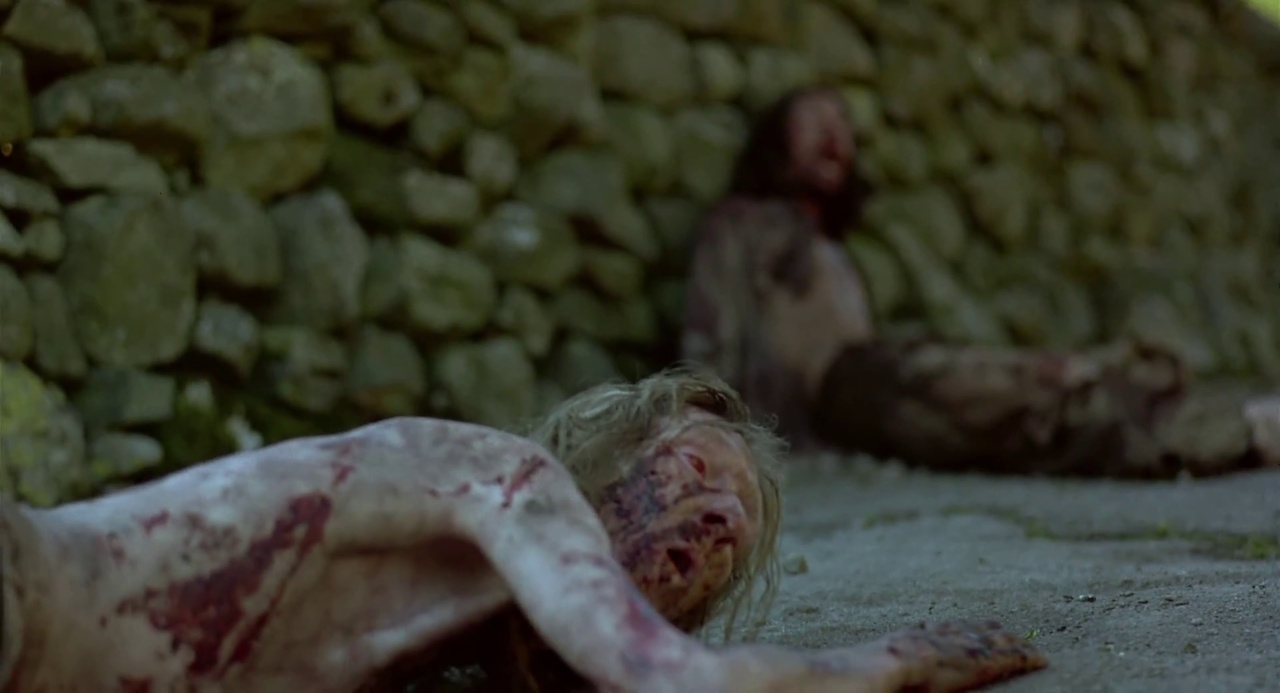
The first part of this review is free from major plot spoilers. The end of the spoiler-free section is clearly indicated.
With Christmas approaching, I like to enjoy a festive film or two! And after That Christmas had been recommended to be by a family member, I thought it would be worth re-subscribing to Netflix for a month or two in order to check it out. And you know what? I’m glad I did – That Christmas is one of the sweetest and most fun Christmas films that I’ve seen in years!
That Christmas is a film with heart, populated by a really great cast of characters. A story that brings different groups of characters together for one big Christmas mission always hits me right in the feels – and that’s what That Christmas delivers. It’s a film for kids, sure – but there’s a lot for adults to enjoy, too.
Santa Claus in That Christmas.
There’s some fantastic animation work present in That Christmas. I’ve talked before about how snow can be difficult to get right in animation, but That Christmas really nails the look and feel of both snowfall and deep snow lying on the ground. Christmas wouldn’t be Christmas without snow – and as both a playground for some of the younger characters and an obstacle for the adults, the snow serves both a narrative function and manages to look fantastic, setting the tone of the film.
Voice acting is stellar across the board – even for younger characters. That Christmas features some well-known names – Doctor Who’s Jodie Whittaker, Brian Cox, and Bill Nighy all play big roles. But there are also some newer performers and younger voice actors with whom I wasn’t familiar, and they all did a fantastic job of bringing their characters to life.
Several of the film’s younger characters.
That Christmas also has a great soundtrack. There are a couple of familiar festive hits in there, and one brand-new song: Under The Tree by Ed Sheeran. Earlier in the year, Under The Tree was being talked up as a potential Christmas number one; it didn’t get there, peaking at a lowly number 92 in the charts a couple of weeks ago. But for my money it’s a sweet song – and it plays at a particularly emotional moment in the film. To land a songwriter of Ed Sheeran’s calibre is a coup for That Christmas, even if the song didn’t storm the charts on its own!
That Christmas was based on a book: That Christmas and Other Stories by Richard Curtis, which released earlier in 2024. Curtis is a great writer and scriptwriter, being known for co-writing the likes of Mr Bean, Blackadder, and perennial festive favourite Love Actually. I actually felt echoes of the latter in That Christmas, particularly in the way the film started off with different character pairs and groups, but gradually weaved their stories together. That Christmas is much more overtly about the holiday than Love Actually, though!
Writer Richard Curtis (left) with director Simon Otto at an animation festival earlier in 2024. Photo Credit: Netflix
So I think I’ve said as much as I can without getting into story spoilers. If you just want to know whether or not I recommend That Christmas, the answer is an emphatic “yes!” It’s a fantastic holiday film, one that will almost certainly be hailed in the years to come as a classic. I know that I’ll be returning to it next Christmas – and every Christmas thereafter for as long as I’m still alive and kicking!
Now we’re going to talk in a bit more detail about a few of the storylines. Nothing in That Christmas is earth-shattering, but if you want to watch the film completely un-spoiled, this is your opportunity to jump ship. If you want to come back after you’ve seen it to get my full thoughts, that would be great, too!
This is the end of the spoiler-free section of the review. Expect story spoilers for That Christmas from here on out!
I absolutely love a story about Santa Claus. I’ve talked about this before, but for me, Christmas wouldn’t be Christmas without Santa and that mysterious magical quality that he brings. In That Christmas, Santa’s role is really interesting, as he gives other characters in the story a bit of a push in the right direction – through the medium of gift-giving.
Santa’s defining trait in every story are the presents he delivers on Christmas Eve. But in That Christmas, these presents become integral to the plot, with all of the children receiving gifts that help some other part of the story. Using Santa Claus in this way – instead of just delivering generic toys to the good children – was really creative and fun. It presents Santa as being a kind of omniscient observer, and someone who wants to do good, but who doesn’t get actively involved. We don’t see Santa join in the search for the missing Evie at the climax of the story, but the gifts he provided to some of the kids gave them the boost they needed to aid in the search on their own terms.
The search party setting out to look for Evie.
I also liked the visual presentation of Santa, Dasher, and particularly the sack full of presents! Something that can be hard to depict in Christmas stories is Santa’s sack – how could he possibly fit presents for all of the world’s children in one sack? Some films simply show an incredibly large sack on an oversized sleigh, but That Christmas kept things smaller and much more in line with visual depictions of Santa in popular culture. The answer to this apparent contradiction was simple: a blue-tinted magical glow inside Santa’s sack.
We didn’t ever get to see inside the sack, but it was implied through this neat little visual effect that there’s bona fide Christmas magic at work – and that’s how Santa is able to carry the sack and deliver all of the gifts. I really liked this idea, and I think it added to the magical feel of the character.
Santa’s magical sack.
As to the reindeer, though… I suspect the reason only one reindeer was included was to make the sequences easier to animate, as well as perhaps to limit the number of speaking roles. I’m not sure I would’ve chosen Dasher as the only reindeer – Rudolph is surely much more associated with Christmas! But I really liked Dasher’s personality, which was brought to life thanks to a wonderful vocal performance from Guz Khan.
That Christmas found many ways to tug at the heartstrings, but no more so than with the aloof, strict, and apparently very lonely school teacher Ms Trapper. I think many of us can remember having a teacher that we found to be unpleasant or overly strict; it’s an almost universal childhood memory! Ms Trapper reminded me, at first, of Miss Trunchbull – from Roald Dahl’s Matilda. I certainly felt echoes of that character in Fiona Shaw’s performance. But it soon turned out that Ms Trapper – while being strict – was an ultimately caring character with a tragic side.
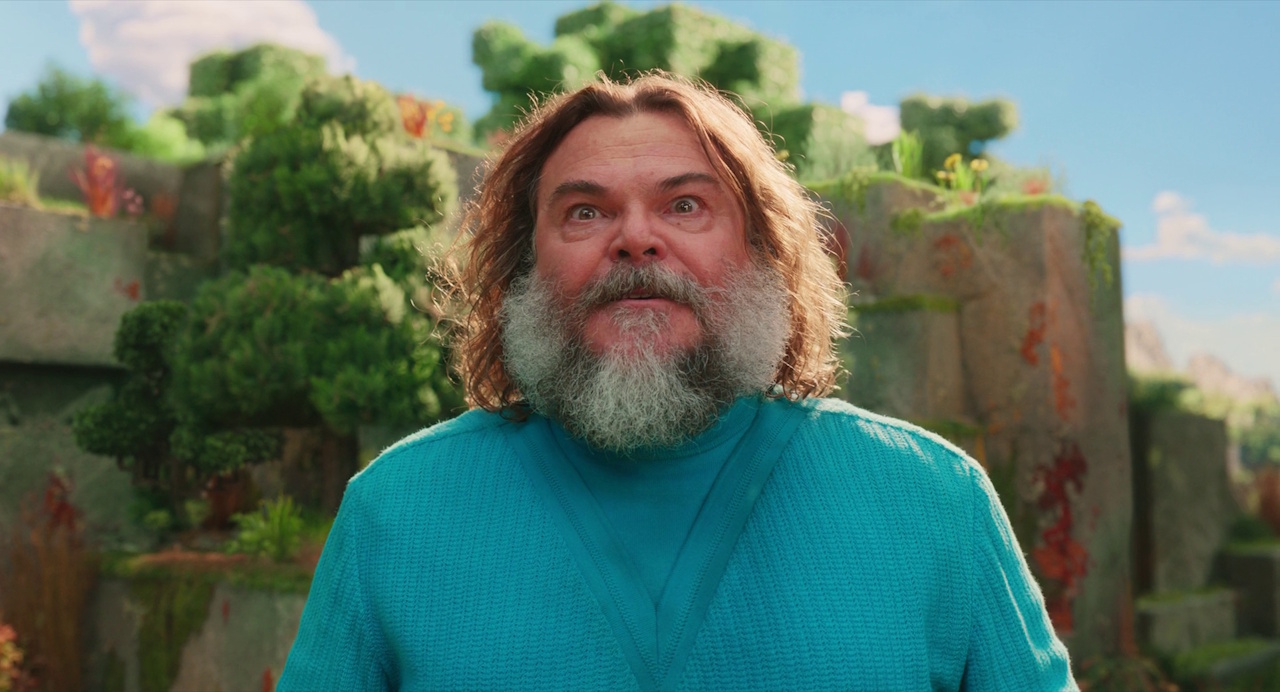
Danny with Ms Trapper.
Pairing her up with the young Danny Williams made for one of That Christmas’s most emotional and sweet stories. The lonely teacher and the boy feeling abandoned made great foils for one another, both during the town’s snow day and later, as they teamed up to make Danny’s mum’s Christmas special and then setting out to aid in the rescue of the stranded adults in the mini-bus. There were some adorable moments between the two as Danny came to appreciate his teacher and Ms Trapper’s strict facade started to show some cracks.
Also on the Williams side of the story was a relatable conversation about healthcare – and Britain’s overworked NHS in particular. Mrs Williams was a nurse, and was called into action repeatedly at Christmas time, sacrificing time with her family in order to be there for her patients. During the pandemic, we celebrated NHS workers. But with the service under increasing pressure, it’s worth drawing our attention to the real heroes who continue to work there and continue to provide care for people who need it the most.
There was a surprisingly realistic portrayal of life as an NHS nurse.
I’m always gonna love a sweet story about a “bad” but ultimately reformable character – and we got that with the Beccles twins. After realising her misbehaviour had caught up to her, Charlie made the ultimate sacrifice to give the Christmas presents back to her sister after Santa – deliberately, surely! – put them on her side of the room. This led to the revelation that Charlie’s actions were all intended to make Sam smile, further adding to the adorableness of this storyline!
The twins were great characters, and their contrasting personalities made for entertaining viewing. Unlike in some stories, I always got the sense that the sisters really enjoyed each other’s company – even though they had wildly different perspectives on practically everything. This set up Charlie’s big act of kindness and the later revelation perfectly; it would have been harder to pull off if we’d seen the twins fighting or arguing with one another.
The twins on Christmas morning.
The blended family – The McNutts, Forrests, and Muljis – were an interesting bunch. I felt the adults here were a little too incompetent, perhaps… getting stranded very easily and being unable to get themselves out of the situation by, y’know, walking a few metres. But that can be a trope of kids’ fiction, and it kept the adults out of the way so that the kids could have their version of a “perfect Christmas,” free from the oppressive traditions forced upon them by their parents. As the setup for a fun story, I think it worked well enough.
The standout character here was Bernadette – the eldest of the children and the designated babysitter for her siblings and cousins. There was a duality to her characterisation: she both took a lead role in caring for the kids and giving them a wonderful and memorable Christmas – all the while keeping them distracted while their parents were missing – and then later realised her own limitations when Evie went missing. There’s a story here about growing up too fast, and how even the most mature kids are still just kids, at the end of the day.
Bernadette with Evie and her mother.
The climactic search effort to save Evie was fantastic. It brought everyone together and gave the kids a starring role, while still including all of the adult characters, too. A toddler lost in the snow was a plotline that had genuine stakes – and seemed to put into context all of the other conflicts, arguments, and problems that the characters had been facing. The threat to little Evie, as she wandered off into the cold night, led everyone to put their issues aside and step up to help. It was brilliantly done, well-written, and a wonderfully engaging storyline.
Evie’s disappearance had a huge impact on Bernadette, as she blamed herself for what happened. But no-one else blamed her – even her parents – and the way everyone in the community came together to help was fantastic. I also really liked the visual effect of text messages being sent across Wellington-on-Sea, represented by little text boxes above everyone’s homes. It was a very creative way to show the community spreading the word and leaping into action.
This was a very creative and powerful visual effect.
With every story in That Christmas being connected and serving a purpose, the escaped turkeys ultimately led to Evie being found – and the planning that went into every aspect of the film’s narrative was on full display. As the characters came together to celebrate finding the lost girl, I really felt how well-scripted and well-planned the entire story had been. Even aspects that seemed less interesting at first – like the over-the-top presentation of the unpleasant farmer – had all been in service of a cleverly-woven narrative, and it really was fantastic to see it all come together.
So if you’ve watched your usual festive favourites too many times this December, and you need something new… give That Christmas a chance. I really think it’s one of the best, most creative, and just plain fun Christmas films that I’ve seen in a while! And if I’m still here next Christmas – which, touch wood, I will be – I’ll definitely be firing it up again.
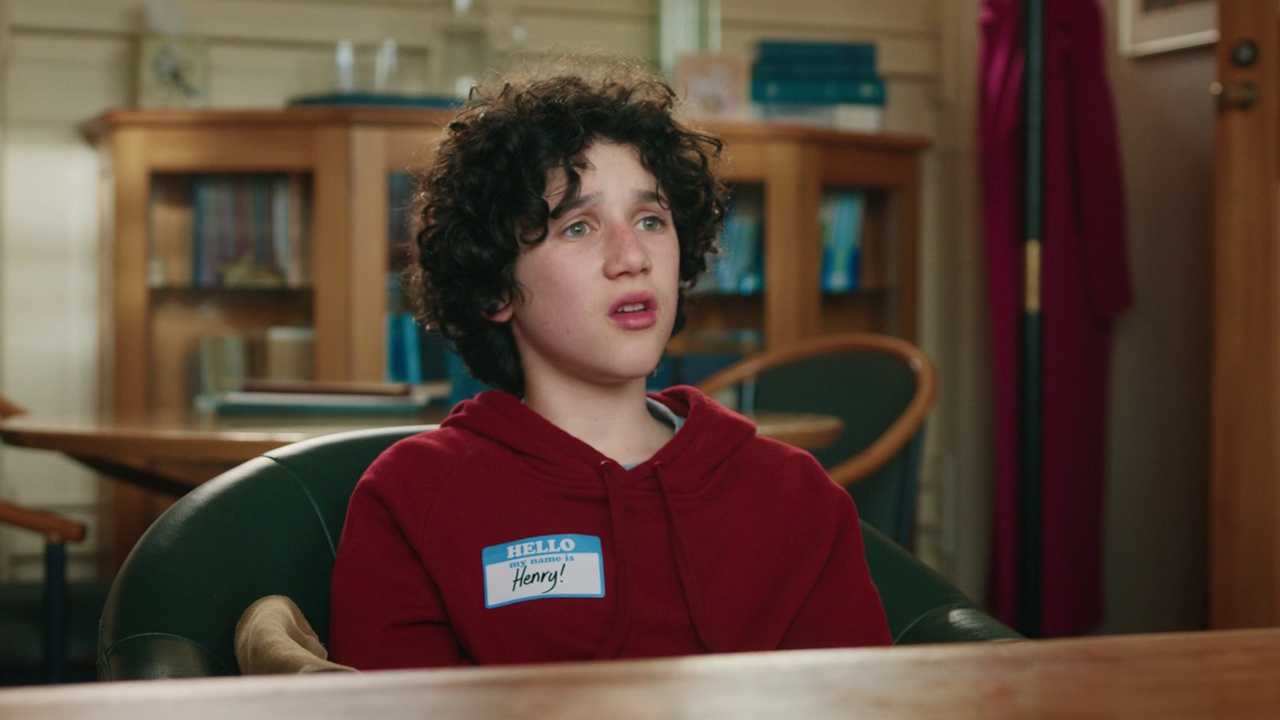
Merry Christmas!
I really had a great time with That Christmas. It’s clever, funny, and dramatic in different places, with a great cast of young and older characters who all feel real and whose motivations seem genuine. It’s also distinctly British in its tone and setting, reminding me in more ways than one of Christmases when I was younger, as well as harkening back to perennial festive favourites like 1991’s Father Chrismas as well as Richard Curtis’ own Love Actually. If you enjoyed either of those, I daresay you’ll find a lot to love in That Christmas, too.
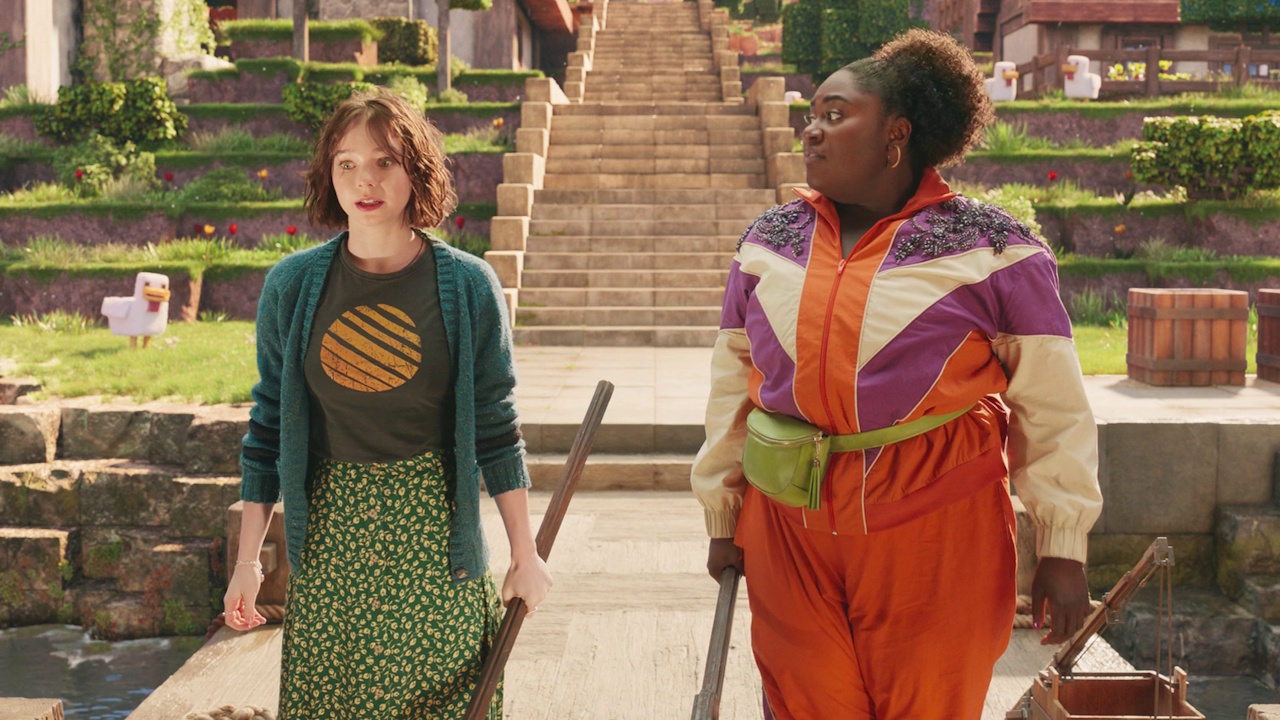
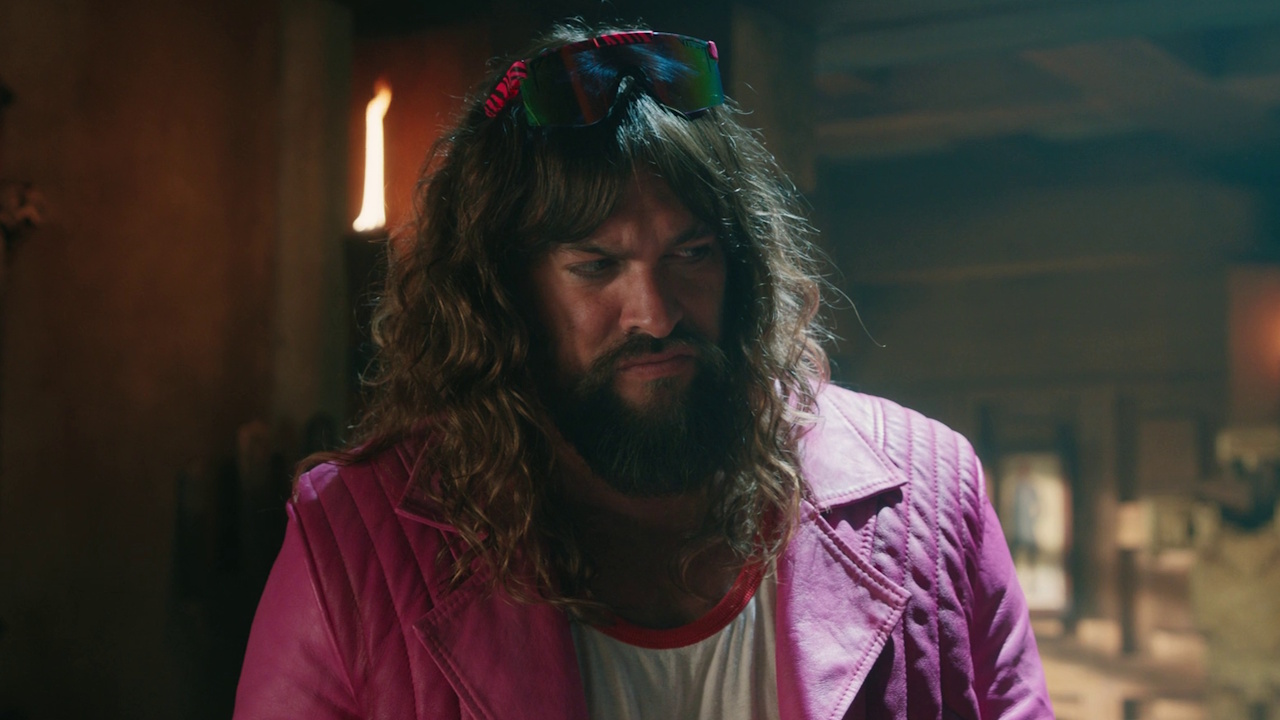
I’m glad this was recommended to me – and now, in turn, I pass the recommendation on to you and yours this Christmas! With a couple of days left to go before the big day, there’s still time to jump in and give That Christmas a watch. With so little on TV this Christmas, it could even be your big Christmas Day film; I think That Christmas would be fantastic in that role.
Until next time – and Merry Christmas!
That Christmas is available to stream now on Netflix. That Christmas is the copyright of Netflix and/or Locksmith Animation. This review contains the thoughts and opinions of one person only and is not intended to cause any offence.