
Game Studios in Danger

A spoiler warning from SpongeBob SquarePants.

Spoiler Warning: Beware spoilers for the following games: Batman: Arkham Knight, Mass Effect 3, Halo Infinite, and The Last of Us Part II.

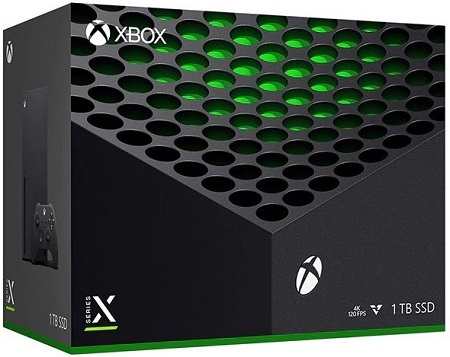
Microsoft’s latest round of layoffs has really hammered home how shaky some parts of the games industry feel as the 2020s roll along. Big games – like the remake of Perfect Dark, Rare’s long-awaited Everwild, and an unnamed title from ZeniMax Online – have all been canned as Microsoft “restructures” its gaming division… despite making literally more money than it ever has in its corporate existence. And all of this comes after some ridiculous studio closures barely twelve months ago. But the Xbox situation got me thinking… which other games and studios could be in danger?

So that rather depressing topic is what we’re going to tackle today. To be clear: I don’t think the entire games industry is heading for some kind of repeat of the 1983 “crash.” Gaming is too big nowadays, and there are so many people playing games, that the idea of gaming as a whole ever disappearing or experiencing that kind of huge slowdown just doesn’t seem feasible anymore. So to reiterate that last point: I am not predicting an industry-wide “crash.” But there are multiple publishers and developers that I believe are in danger – and one badly-received game could, in some cases, lead to their exit from the industry altogether.

This piece was prompted by the Microsoft and Xbox news, but it’s not only Microsoft-owned studios that could be on the chopping block. There are issues at outfits owned by Sony, too, as well as third-party publishers and developers.
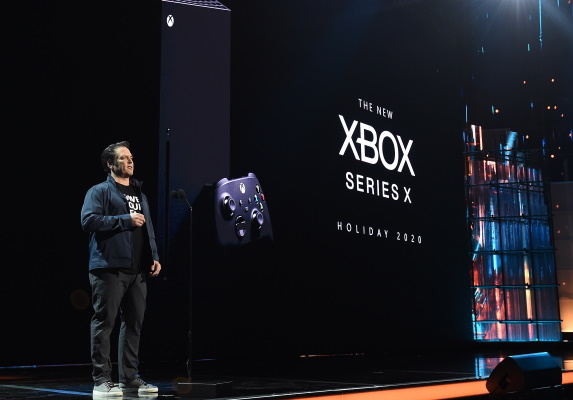
Phil Spencer on stage at the launch of the Xbox Series consoles.
Xbox just announced another round of layoffs.

A few caveats before we go any further. Firstly, if you or someone you know works at one of these companies, please know that I don’t mean this as any kind of attack or slight against you or the quality of your work. This industry can be brutal, and as a commentator/critic, what I’m doing is sharing my view on the situation. What I’m categorically *not* doing is saying any of these companies “should” be shut down. I really don’t want to see more people in the industry put out of work. I spent a decade working in the games industry, and I worked for companies that went through tough times. I know what it’s like to feel like your job is on the line… and the last thing I want to do is rub salt in the wound or make things worse.

Secondly, I have no “insider information” from any of these developers or publishers. I’m looking in from the outside as someone who hasn’t worked in the industry for more than a decade at this point. Finally, all of this is the entirely subjective, not objective, opinion of just one person. If you disagree with my take, think I’ve got it wrong, or you’re just convinced that a company’s next game is sure to be an absolute banger… that’s totally okay. Gamers can be an argumentative lot sometimes, but I like to believe there’s enough room in the wider community for polite discussion and differences of opinion.

With all of that out of the way, let’s get started.

Endangered Studio #1:
Halo Studios
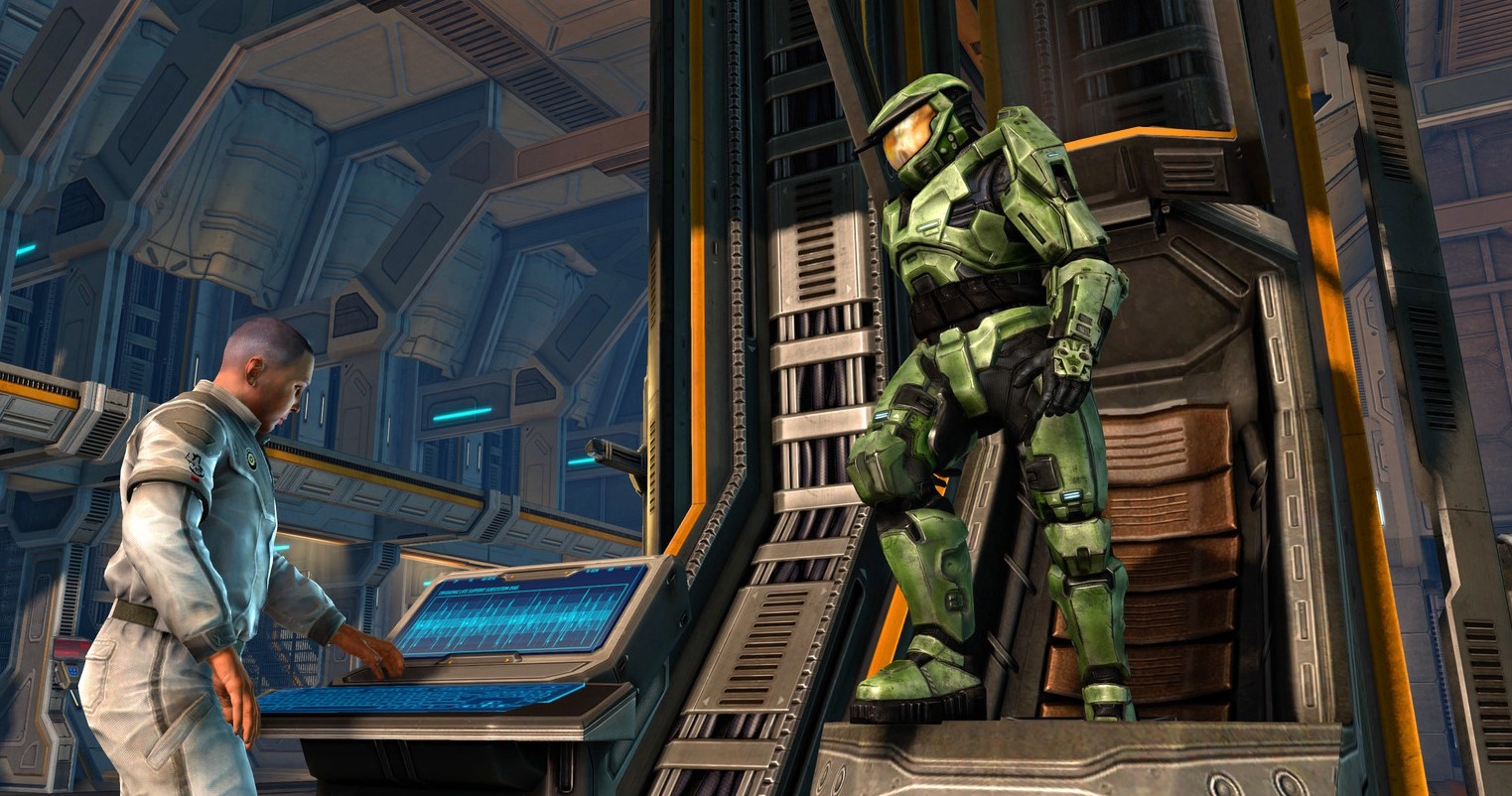
Promo screenshot of Halo: The Master Chief Collection showing the beginning of the first game.
Is the long-running Halo series in trouble?

Halo Studios, formerly known as 343 Industries, is Microsoft’s in-house development team working on the Halo franchise. But… well, it wouldn’t be a stretch to say that 343/Halo Studios has never released a *big* hit. The closest they’ve come, in more than a decade, was remastering the original Halo games… and even then, we have to give the huge caveat of the bugs and performance issues that plagued early versions of the remasters.

Whether we look at Halo 4, Halo 5, Halo Infinite, the Halo Wars spin-off, or the mobile games… Halo Studios hasn’t exactly taken the gaming world by storm. Infinite was supposed to be the Xbox Series X’s “killer app;” a launch title to really sell people on the new console and make it a must-buy, just as the original Halo: Combat Evolved had done some twenty years earlier. That didn’t happen, and the reception to that game – including from yours truly – was pretty mixed.
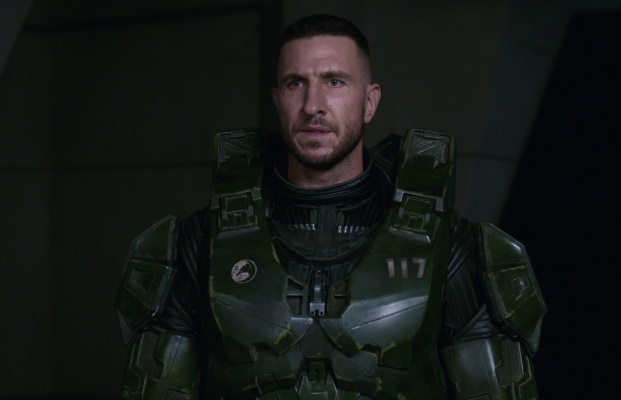
Still frame from the Halo TV series showing the Master Chief without his helmet.
The cancellation of the TV adaptation won’t help.

Although Halo Studios has been hit by Microsoft’s layoffs in recent weeks, and a recent leak suggested that “no one at the studio is happy” with the state of their next title right now, I still think Xbox will give them another chance. The Halo series and Xbox are inseparable, at least in the minds of some players, and the name recognition and series reputation still count for something. But I don’t think those things will count indefinitely, so if the next Halo game isn’t a smash hit, Halo Studios will be in trouble.

This also comes after the failure of the Halo TV series. I happened to think the show was decent for what it was, but I understand where a lot of the criticism was coming from. That hasn’t helped Halo Studios’ case, though, and one of the best opportunities to grow the brand was squandered.

As a final note: every story has a natural end. I would suggest, perhaps, that Halo – or at least the Master Chief’s story – has pushed past that point. Recent narratives felt overly complicated, and I felt that Halo Studios was having to invent increasingly silly reasons for why the Master Chief was still fighting the Covenant and the Flood. Maybe the franchise just needs a break?

Endangered Studio #2:
Ubisoft
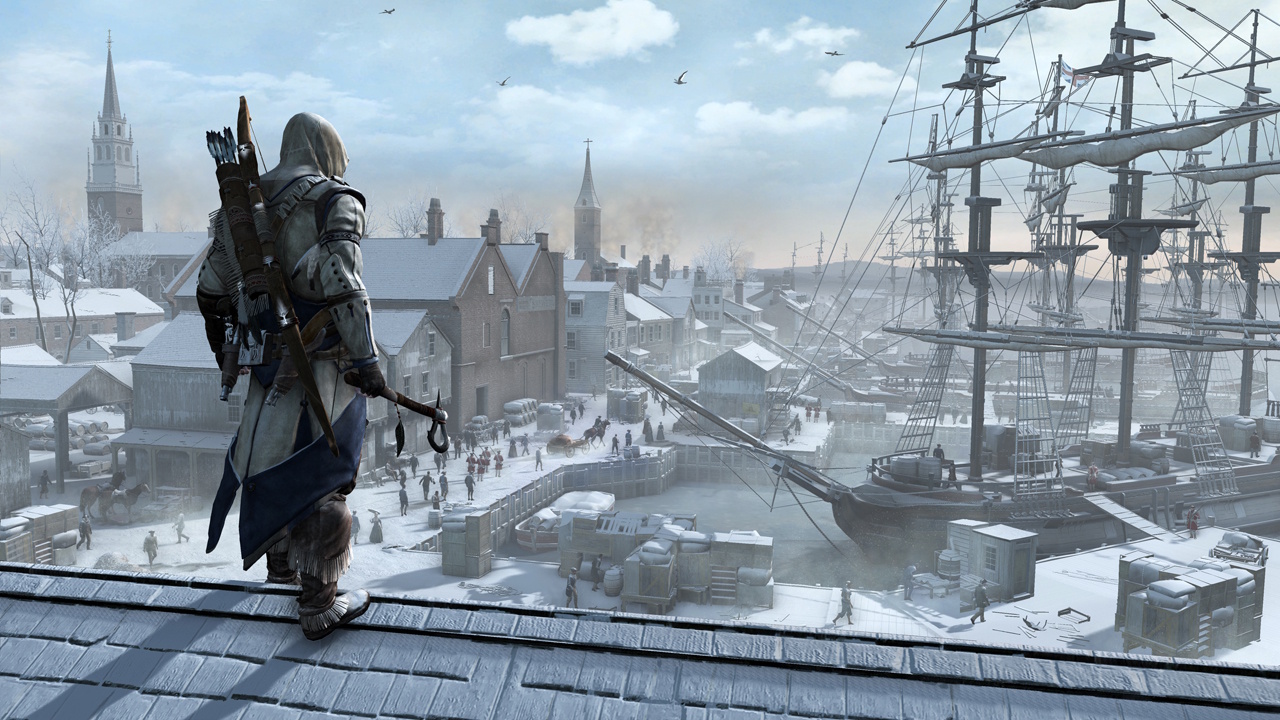
Promo art for Assassin's Creed 3.
Ubisoft publishes the Assassin’s Creed series, among others.

Ubisoft hasn’t been in great shape for quite some time. I think it’s fair to say that Ubisoft’s open world level design has stagnated, and a lot of players have kind of hit the wall when it comes to that style of game. But because the studio has doubled-down on that formula and that way of making games… it might be hard to find a way back.

Ubisoft has slapped its open world style on franchises like Assassin’s Creed, Far Cry, Avatar, and even Star Wars… but many recent games have felt pretty repetitive; the same thing every time, just with a different coat of paint. I’m on the record saying that the open world formula doesn’t work for a lot of games, and although I don’t play a ton of Ubisoft titles… I think the repetitiveness of their games is a contributing factor, at least. Open worlds can be fun, but they can also be bloated and uninspired.
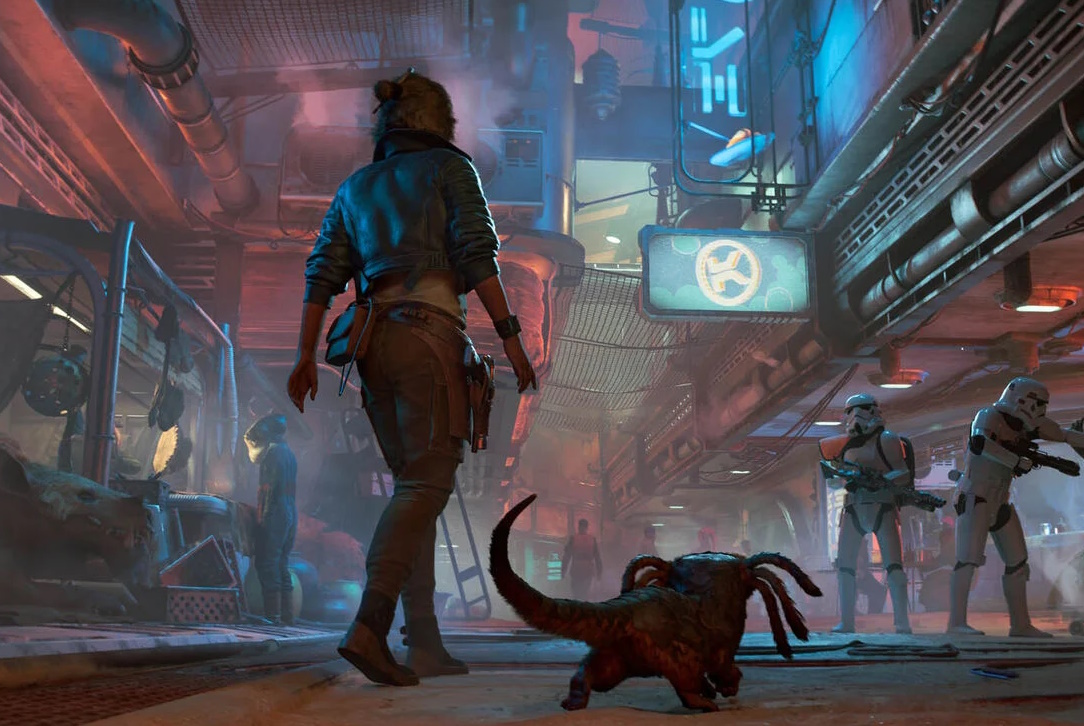
Promo art for Star Wars: Outlaws showing Kay Vess and Nyx.
Star Wars: Outlaws wasn’t particularly well-received.

Earlier in 2025, a lot of folks seemed to be saying that Ubisoft’s financial situation basically meant that Assassin’s Creed: Shadows was the company’s “last chance.” I’m not sure I’d have gone that far myself; there are clearly other projects in the pipeline that at least have some potential. But Shadows seems to have been a modest success, at least, which has probably bought the company some time. A remake of the popular Assassin’s Creed: Black Flag could be a much-needed boost, too, if it succeeds at grabbing a new audience.

But in the longer-term, Ubisoft needs to try new things. Its open world formula worked for a while, but repetitiveness and stagnation seem to have crept in. There are only so many open world “collect-a-thons” that anyone can be bothered to play, and if it feels like the same game is just being given a new skin every time… that’s not a lot of fun, in the end. Just Dance can’t keep the company afloat forever, so something’s gotta change, and soon.

I’m still crossing my fingers for that Splinter Cell remake, though!

Endangered Studio #3:
Nintendo

Still frame from the Nintendo Direct broadcast announcing the Switch 2 showing three Nintendo executives.
Nintendo recently launched the Switch 2 console.

Bear with me on this. Nintendo is a titan of the games industry… but it’s also a more vulnerable company than folks realise. I don’t think people fully appreciate how big of a risk the Switch 2 has been with its high price, sole exclusive launch title, and repetitive design and branding. The console may have sold well in its first couple of weeks on sale – though, as I noted, it didn’t seem to have sold out everywhere – but that’s to be expected from a company with a well-trained legion of super-fans! The real question is still whether casual players, families, and people less connected to the gaming world will be willing to shell out for a console that’s now competing with the PlayStation 5 and Xbox Series X in terms of price.

I don’t know anyone – not one single person – who only owned a Nintendo Switch as their sole gaming device. I’m sure some people do, but most folks I spoke to bought a Switch for one of three reasons: to play a handful of Nintendo exclusives, like Mario Kart 8 and Animal Crossing: New Horizons, to play some of their favourite games in a handheld format, or for their children to play some kid-friendly titles. The Switch was well-positioned for any of those use cases… the Switch 2, at its higher price point, is less so.
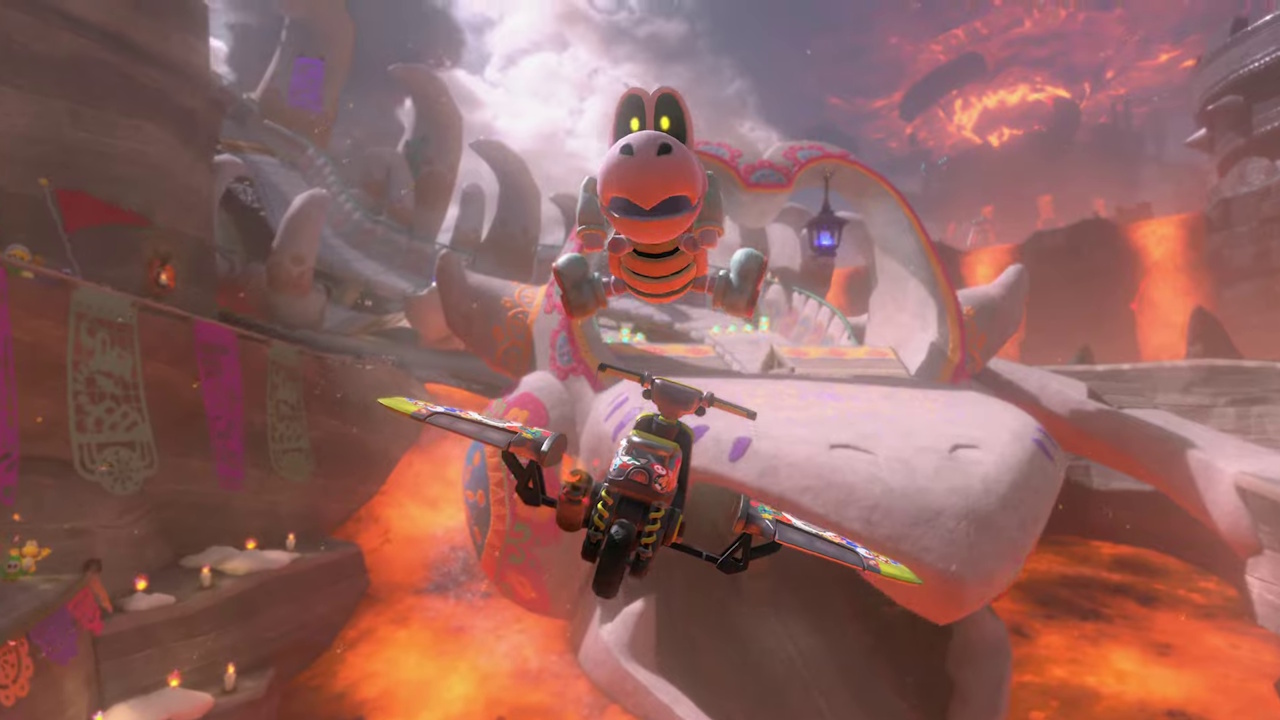
Still frame from the Mario Kart World broadcast showing Dry Bones.
The Switch 2 and its games are expensive.

In 2013/14, when the Wii U was clearly faltering, Nintendo still had the 3DS to turn a profit and keep its corporate head above water. But now, the company is all-in on the Switch 2… meaning there’s less room for manoeuvre if things don’t go to plan. Because of Nintendo’s unique position in the industry, if its hardware falters it’s gonna be in big trouble, and the Switch 2 represents a departure from a successful business model. The Wii, the Switch, and Nintendo’s handhelds have all been well-positioned and well-priced to attract casual players… I’m not so sure the Switch 2 is. The company has some cash in reserve to keep going for a short while… but not indefinitely.

For those of you screaming that “it’ll never happen!!1!” I would remind you of Sega’s unceremonious exit from the console market just after the turn of the millennium. If you’d asked any gamer in the late ’90s what the future held for Sega, no one would’ve predicted that the Dreamcast’s failure would lead to the company shutting down its hardware division altogether. Nintendo is at the tippy-top of the games industry, and the Switch has been a phenomenally successful console. But its position is more precarious than people realise, and it would only take one console failure to throw the company into chaos. To be clear: I don’t necessarily think that Nintendo would just shut down and that would be that… but a Sega-style exit from the hardware market, and far fewer Nintendo games being produced, could happen. Never say never.

Endangered Studio #4:
Naughty Dog
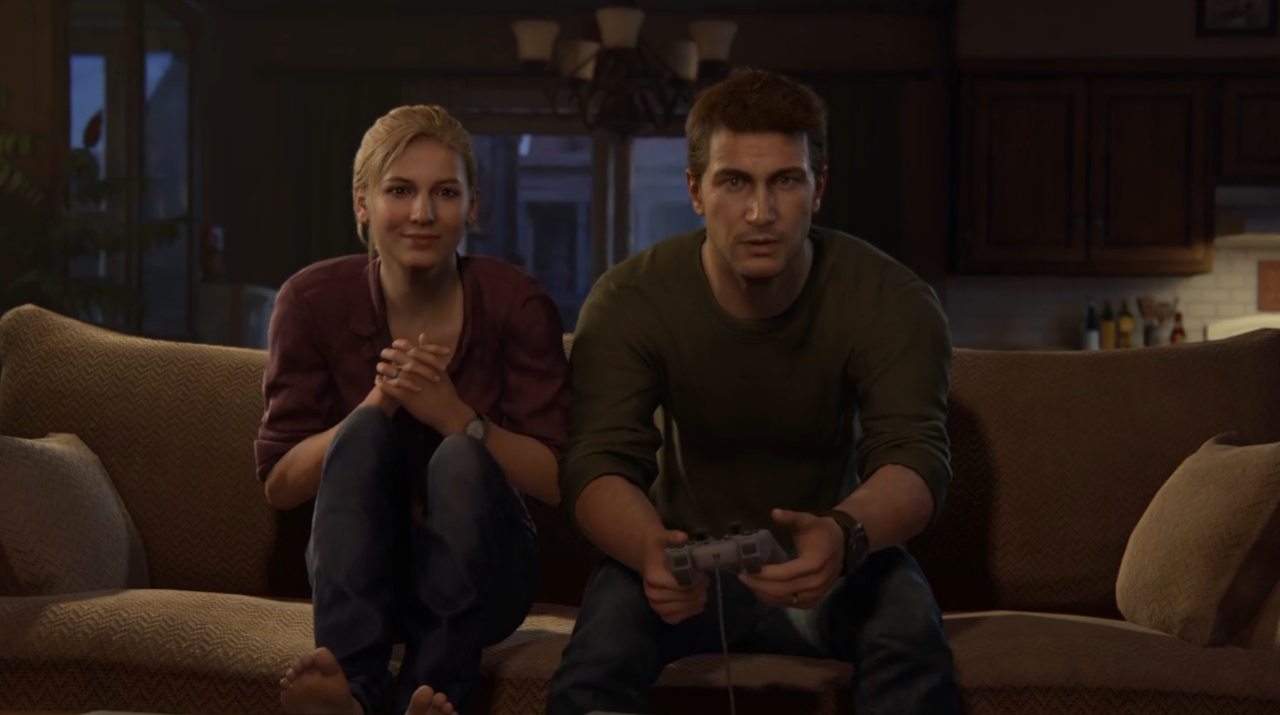
Screenshot from Uncharted 4 showing Elena and Nate playing on a PlayStation console.
A gaming “Easter egg” in Uncharted 4.

Naughty Dog developed Crash Bandicoot for the first PlayStation, the Jak and Daxter games, the Uncharted series, and The Last of Us. Although The Last of Us Part II proved controversial (I once said a 3/10 seemed like a fair score for that game), it seems to have sold pretty well, and the first title has been remastered… twice. But when Naughty Dog premiered a trailer for Intergalactic: The Heretic Prophet, the reception was less than glowing.

That game seems like it’s still a way off, too, and it might realistically launch as one of the final titles of the PlayStation 5 generation. But with the Uncharted series seemingly on the back burner, and after the controversy surrounding The Last of Us Part II… can the studio survive if Intergalactic underwhelms? I think there’s a very real possibility that Sony would be swift and brutal in that event.
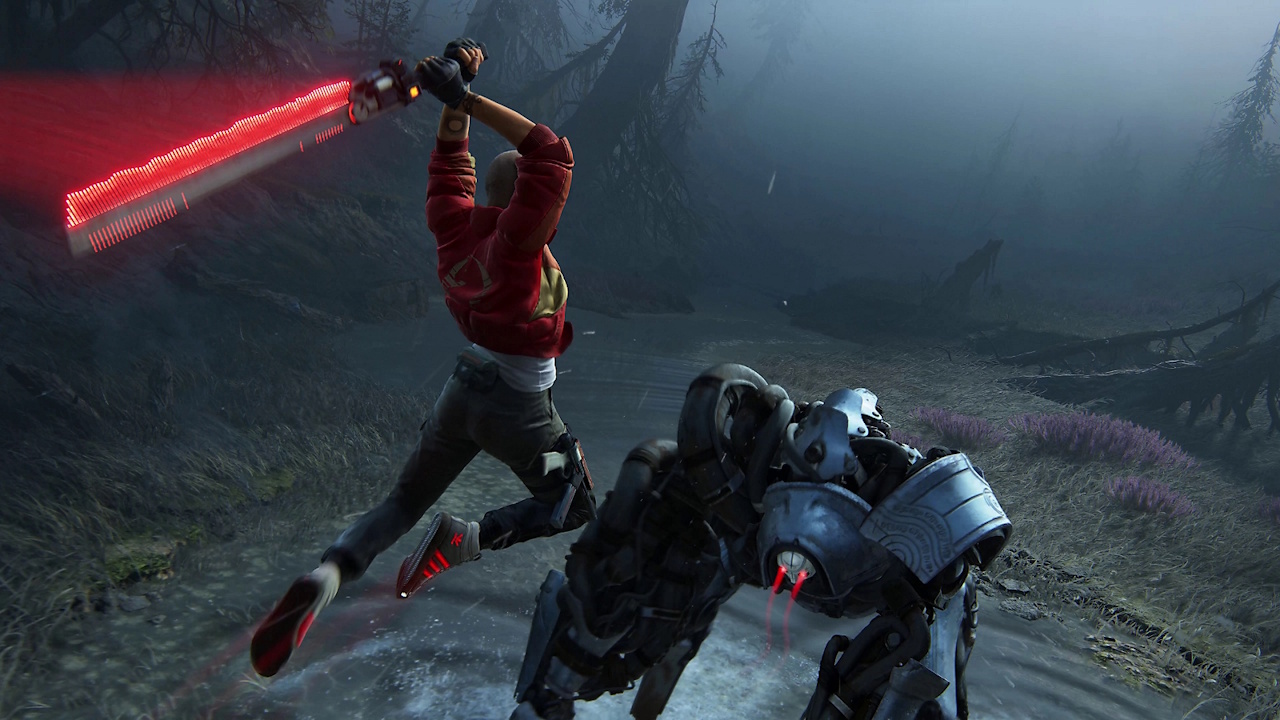
Promo art for Intergalactic: The Heretic Prophet showing the protagonist fighting a robot.
Will Intergalactic be well-receieved by players when it’s ready?

It’s silly to pre-judge any title based on a single trailer that didn’t show so much as a frame of actual gameplay. Intergalactic: The Heretic Prophet might have a silly, clunky name… but we really don’t know much about its story or what it’ll feel like to play. Naughty Dog has pedigree (get it?) so I think there are reasons to be optimistic about their next game. But I can also see a world in which Intergalactic doesn’t succeed in the way Sony is surely demanding.

There are some upcoming games that are generating a ton of buzz and excitement. So far, Intergalactic isn’t amongst them. Maybe that will change as we get closer to the game’s launch and the marketing campaign kicks off. But maybe it’ll always be one of those games that just… didn’t do much for a lot of people. If that’s the case, Naughty Dog could be in trouble.

Endangered Studio #5:
Turn 10

Promo art for Forza Motorsport showing a driver.
It’s already the end of the road for Forza Motorsport.

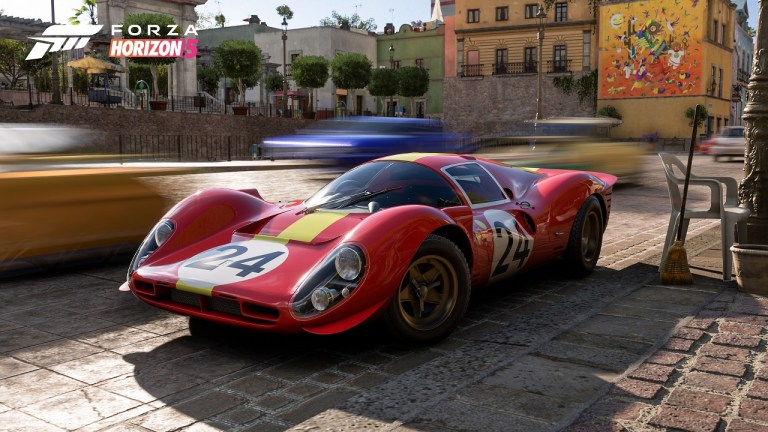
Turn 10 are the folks behind Forza Motorsport. Or they were. As of July 2025, the Motorsport series seems to be going on hiatus, with Turn 10 suffering significant layoffs. The spin-off Forza Horizon series had been developed by another Microsoft subsidiary: Playground Games. But with Playground working on the new Fable title, it seems as if Turn 10 might be working on Forza Horizon 6 in the months ahead.

The Forza Horizon games are a ton of fun… but they’re also more arcadey, and the open world design isn’t Turn 10’s style. I can’t help but feel the studio only still exists after Forza Motorsport’s disappointment because Microsoft needs someone to take over the Horizon brief now that Playground Games is busy with Fable. After Forza Horizon 6 launches, if the main Motorsport brand is still on the back burner… what could Turn 10 realistically do?

Promo still for Forza Horizon 5 showing a race.
Forza Horizon 5 was great, though…

If Xbox is going to persevere with its home consoles in the future – and I suspect that it will – then those consoles will need at least one proper racing game. Turn 10 had been providing that for the brand since 2005, back when the first Forza Motorsport launched on the original Xbox. There are third-party racing games, of course, and Microsoft has several on Game Pass, including rally titles, Formula 1 games, and more. But Forza should be a genuine competitor to Sony’s Gran Turismo series, and again, it should be giving players an incentive to consider picking up an Xbox console.

With Turn 10’s main series seemingly shut down, at least for the foreseeable future, and after having already suffered with layoffs, I’m not sure where the studio finds a successful future. Maybe if Forza Horizon 6 knocks it out of the park… but even then, I could see Microsoft returning that series to Playground Games.

Endangered Studio #6:
Bethesda Game Studios

Still frame from the Starfield promo broadcast showing Bethesda head Todd Howard.
Hi, Todd…

To be clear: we’re talking about Bethesda the developer, not all of the studios under Bethesda’s publishing umbrella. There are several factors here, so let’s go over all of them. Starfield was a disappointment and its DLC didn’t salvage the project. Fallout 4 and Fallout 76, despite achieving success in recent years, launched to controversy. The Elder Scrolls VI is still a ways off, which has pushed a potential Fallout 5 to the mid-2030s or beyond. Fallout 4 and Fallout 76 are thus the only Fallout titles that Microsoft can push to players enamoured with the Fallout TV series.

For me, this boils down to the success or failure of The Elder Scrolls VI. If that game truly lives up to the hype and reaches the high bar set by Skyrim, then Bethesda will be okay and will continue developing games for years to come. If it doesn’t, and it ends up closer in reputation and sales to Starfield… that could be it. Curtains. Microsoft will retain the studio’s various IP, but could conceivably distribute the ones that still have potential to other development teams. Speaking of which…
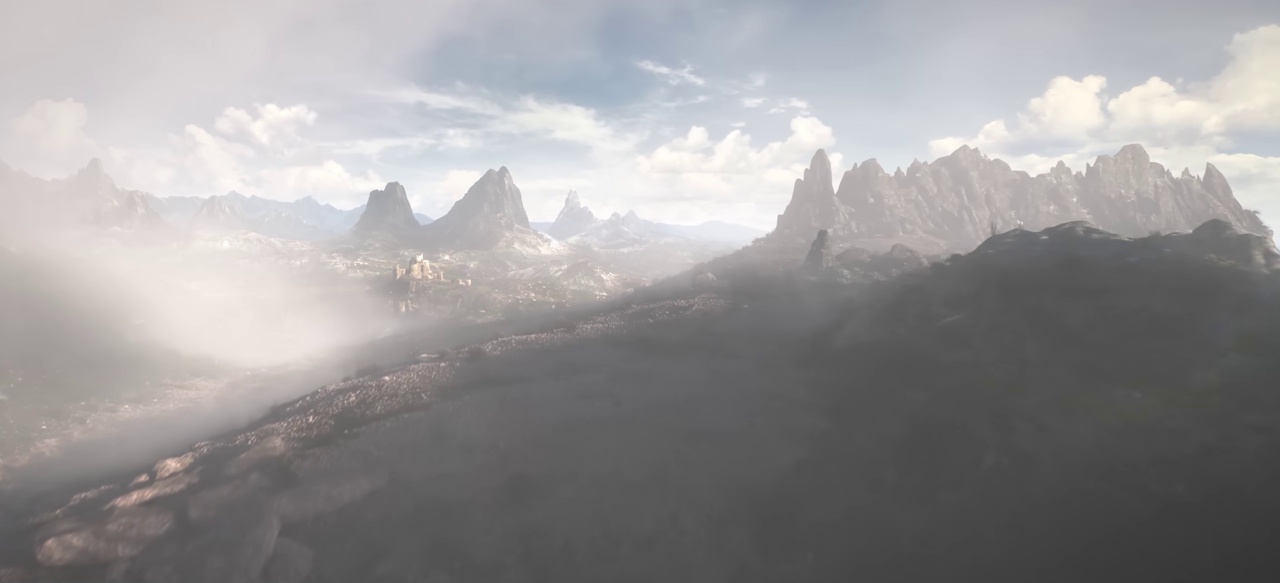
Still frame from the Elder Scrolls VI teaser showing mountains shrouded in fog.
Can The Elder Scrolls VI save Bethesda?

With the Fallout TV show proving to be a hit, it’s pretty clear that Microsoft is hankering for a new game. There have been all kinds of rumours, with a Fallout 3 remaster seemingly the only one that’s guaranteed at this stage. But could Microsoft tap one of its other developers to make another Fallout spin-off, or perhaps something like a New Vegas remaster? If that were to happen, and if that hypothetical game were to eclipse Bethesda’s entries in the long-running series, that could be another nail in Bethesda’s coffin. Bethesda only has two well-known franchises under its belt, so if one of those were taken away – even on an alleged “temporary” basis – that could be hugely symbolic.

Here’s my take: Bethesda made some great games in the 2000s, but has shown absolutely no ability to move with the times in the almost fifteen years since Skyrim. The studio’s leaders seem to have bought into their own hype, believing that every game they develop will automatically be as well-received as Skyrim… and can be heavily-monetised without repercussions. There is still merit in the original Bethesda formula; an open-world game that turns players loose and opens up factions, questlines, and exploration. But other studios are doing similar things… and doing them way better. Bethesda feels like a bit of an outdated dinosaur, still clinging to Skyrim’s success more than a decade later. One more poorly-received game could be the end of the line.

Endangered Studio #7:
Bungie
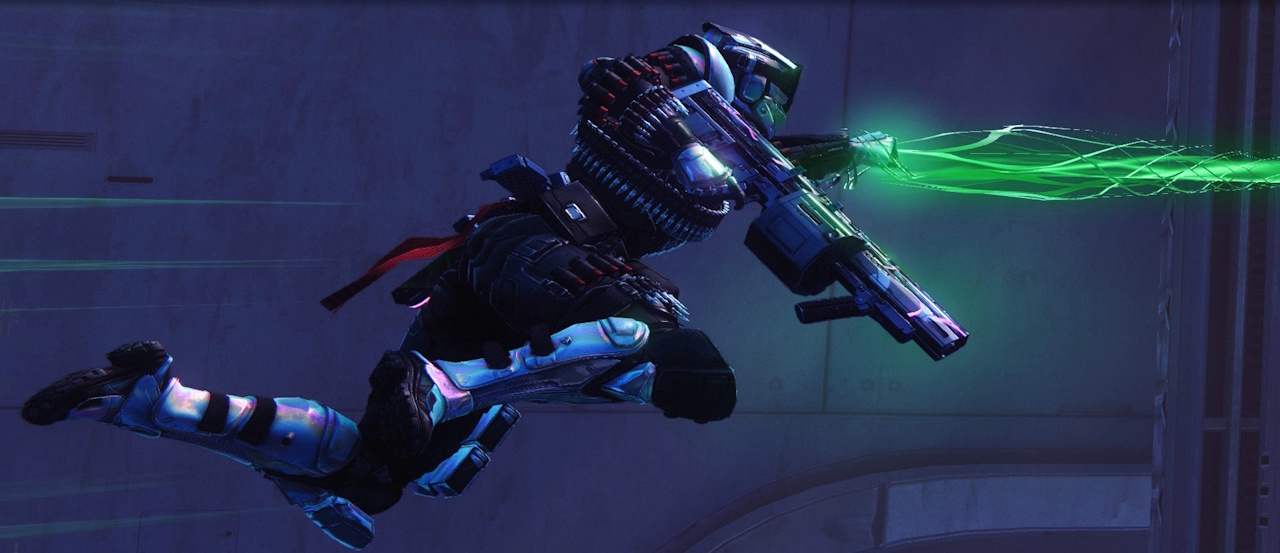
Promo art for Bungie's Destiny 2.
Promo art for Bungie’s Destiny 2.

We talked about the Halo series a moment ago, but that franchise’s new developer isn’t the only one in trouble. The originators of the Halo franchise, Bungie, are in dire straits right now, and could be only a year or so away from closure. The Destiny games may have sold reasonably well, but I don’t think it’s unfair to say that the whole “live service” thing didn’t exactly go to plan for Bungie. Then came the development of Marathonsomething I talked about a few weeks ago.

Marathon was in a world of trouble after a seriously underwhelming closed playtest left critics and fans feeling like the game needed a lot of work. Then came the news that Bungie had – not for the first time – plagiarised a whole bunch of art assets for the game without payment or credit to the artist. These pieces quite literally define Marathon’s “quirky” visual style… which was pretty much the only thing the game had going for it.
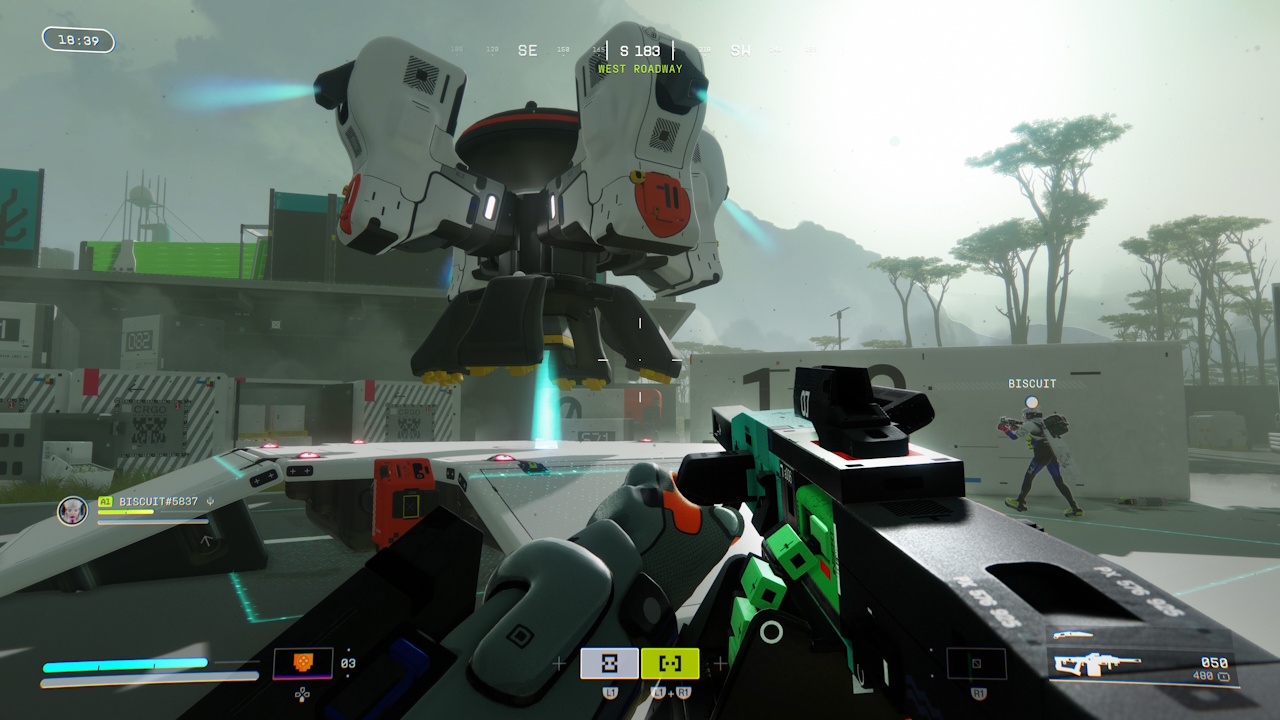
Promo still for Marathon showing a first-person battle.
Marathon is in a huge amount of trouble.

Sony recently acquired Bungie for what many have argued was an overly inflated price. A delay to Marathon has recently been announced, but any goodwill or positive buzz that the game could’ve had has entirely evaporated at this point. It’s at a point where even a total overhaul won’t be enough; Marathon is pretty much dead on arrival, even after the delay. So… what happens to Bungie if that’s the case?

Sony can be just as brutal as everyone else when it comes to killing off underperforming studios. Just ask Firewalk, Pixelopus, Bigbig Studios, or London Studio. Bungie should not consider itself safe simply by virtue of its name or its high price tag… if Marathon fails, which it inevitably will, there are gonna be some tough questions asked by Sony. If Bungie can’t prove that they have something big lined up… that could be it.

Endangered Studio #8:
BioWare
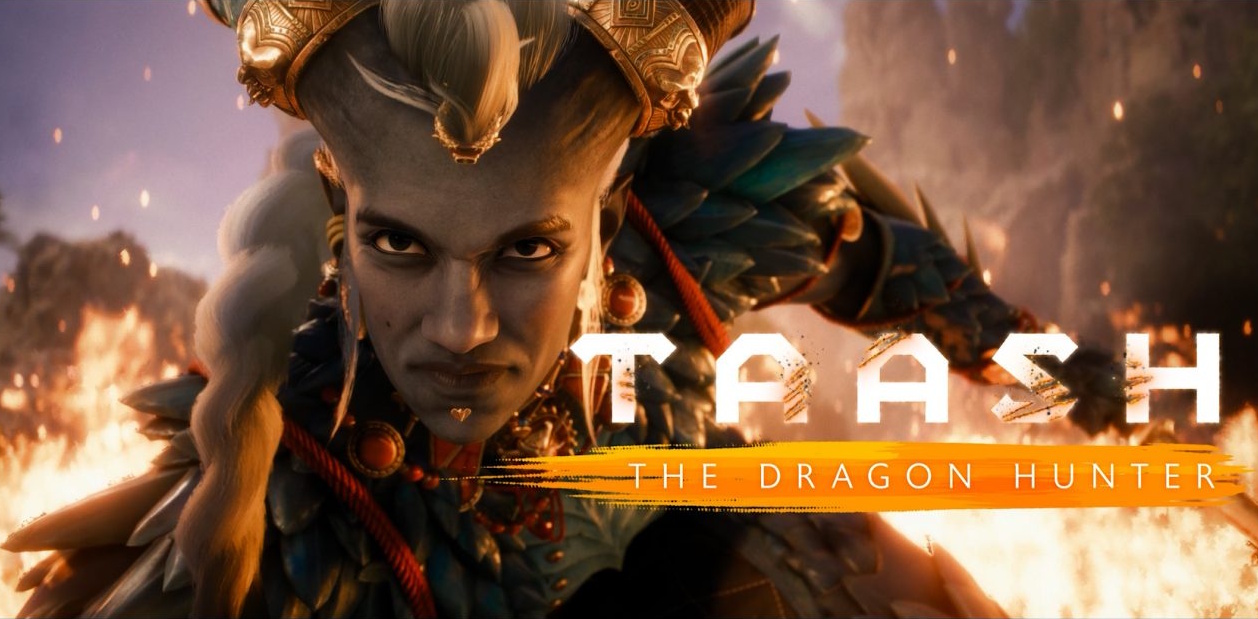
Promo art for Dragon Age: The Veilguard showing the character of Taash.
Taash from Dragon Age: The Veilguard.

Mass Effect: Andromeda. Anthem. Dragon Age: The Veilguard. BioWare has endured basically a decade of failures since the launch of Dragon Age: Inquisition, and it’s difficult to see Electronic Arts being willing to put up with another title that doesn’t live up to expectations. And I’m afraid there are serious questions about the studio’s next project: a sequel to the beloved Mass Effect trilogy.

I have a longer piece in the pipeline that I’ve been working on for a while about the importance of endings – and how, in the modern entertainment industry, very few stories are allowed to come to a dignified, natural end. The Mass Effect trilogy, with its buildup to the defeat of the Reapers, is an example of that… and it’s hard to see how telling another story in that universe won’t feel tacked-on, repetitive, or underwhelming in comparison to what’s come before. That was a big part of the Andromeda problem, in my opinion: after literally saving the galaxy, there’s basically nowhere for Mass Effect to go.
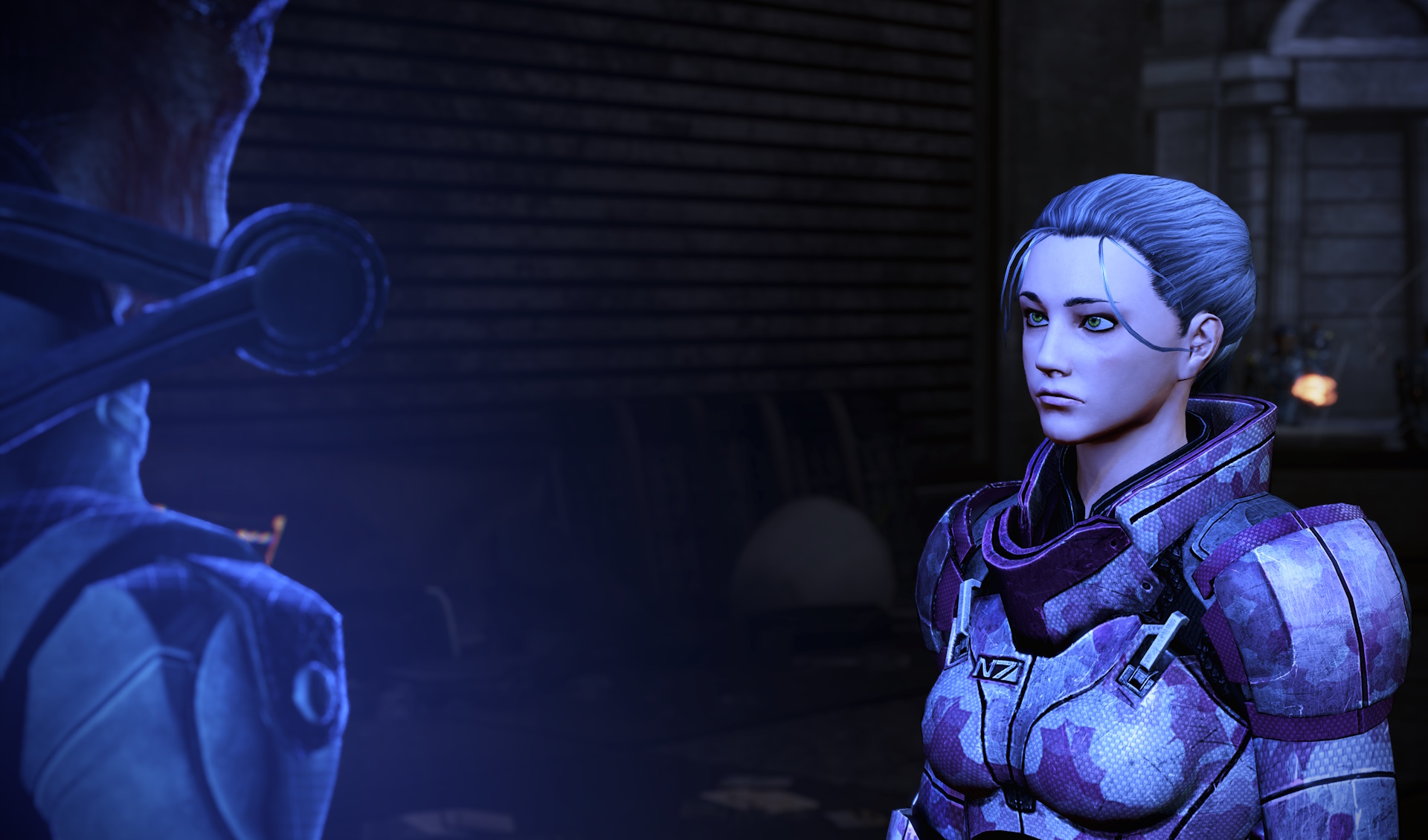
Screenshot of Mass Effect: Legendary Edition showing a custom Commander Shepard having a holo-call with Mordin.
Where does Mass Effect go after literally saving the galaxy?

I don’t buy the criticisms of Dragon Age: The Veilguard failing because it was “too woke.” I think a lot of armchair critics seized on a single line from one character and tried to make the game all about that. But there were clearly issues with The Veilguard, not least its stop-start development, multiple changes in focus, and deviation from the art style of the earlier games. I hope BioWare has learned something from that experience… but, to be blunt, they should’ve learned those lessons already from Andromeda and Anthem.

I will almost certainly play Mass Effect 4. So BioWare can take comfort in the fact that they have at least one guaranteed sale right here! But… am I optimistic? I’m curious, sure, and I want the game to be good. But I also can’t shake the feeling that it’s going to be a story that’s just going to struggle to make the case for itself. Why, after Shepard beat the Reapers, do I need to see this new story? What’s going to be the hook? And without that… will it be worth playing? This is surely BioWare’s absolutely final chance, and with EA notorious for shutting down underperforming studios, everything is now riding on Mass Effect.

Endangered Studio #9:
Firaxis Games
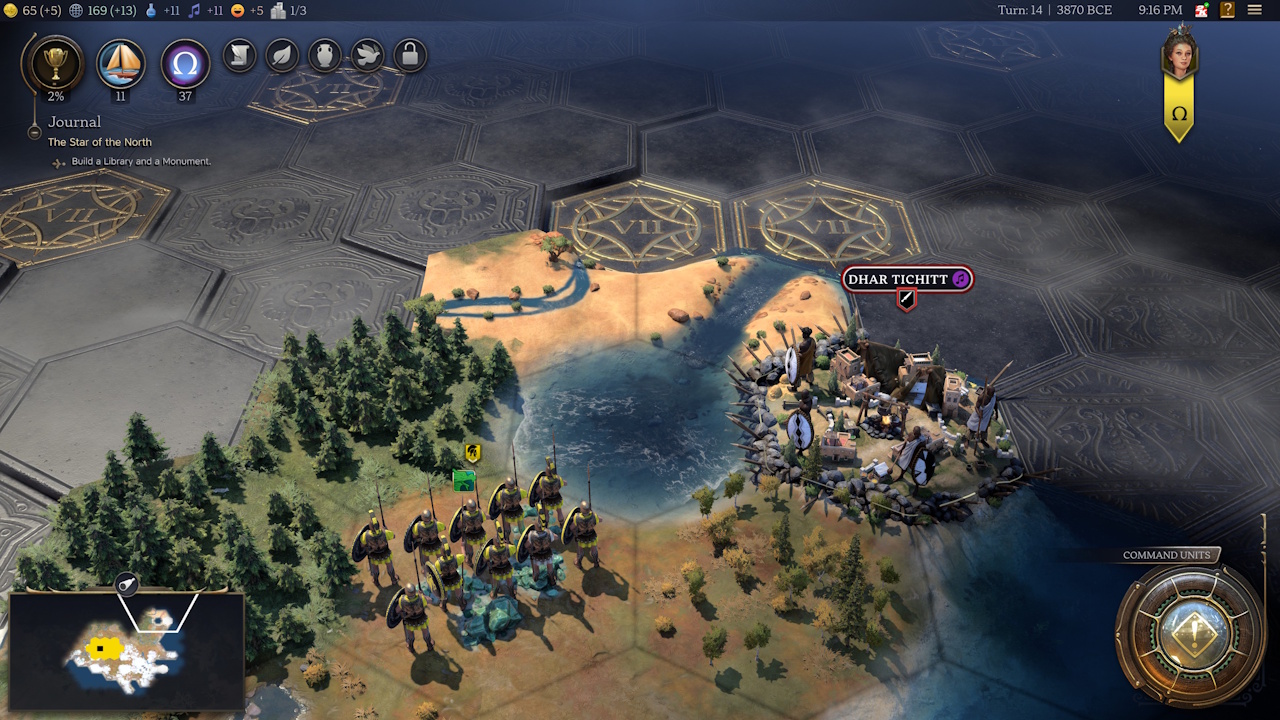
Screenshot of Civilization VII showing troops moving near a hostile AI village.
Are the barbarians at the gates?

Like BioWare above, Firaxis is on a bit of a weak run right now. XCOM: Chimera Squad underperformed on PC, leading to its console port being cancelled. And Marvel’s Midnight Suns was also considered a disappointment by parent company Take-Two Interactive. Then we come to this year’s Civilization VII, which is struggling right now. Civ VII is currently underperforming, with players seemingly preferring to stick with Civ VI or even Civ V, and there’s criticism of various aspects of the game – not least its three-era structure.

I believe Civilization VII has potential, but there’s clearly a limited window of time to really showcase that potential before panic sets in. At time of writing, there have only been a couple of significant updates to the base game, which launched almost six months ago. Players are still calling on Firaxis to patch bugs, rebalance key features, and add more to the game… and many of those players seem to have drifted back to Civ VI while they wait.
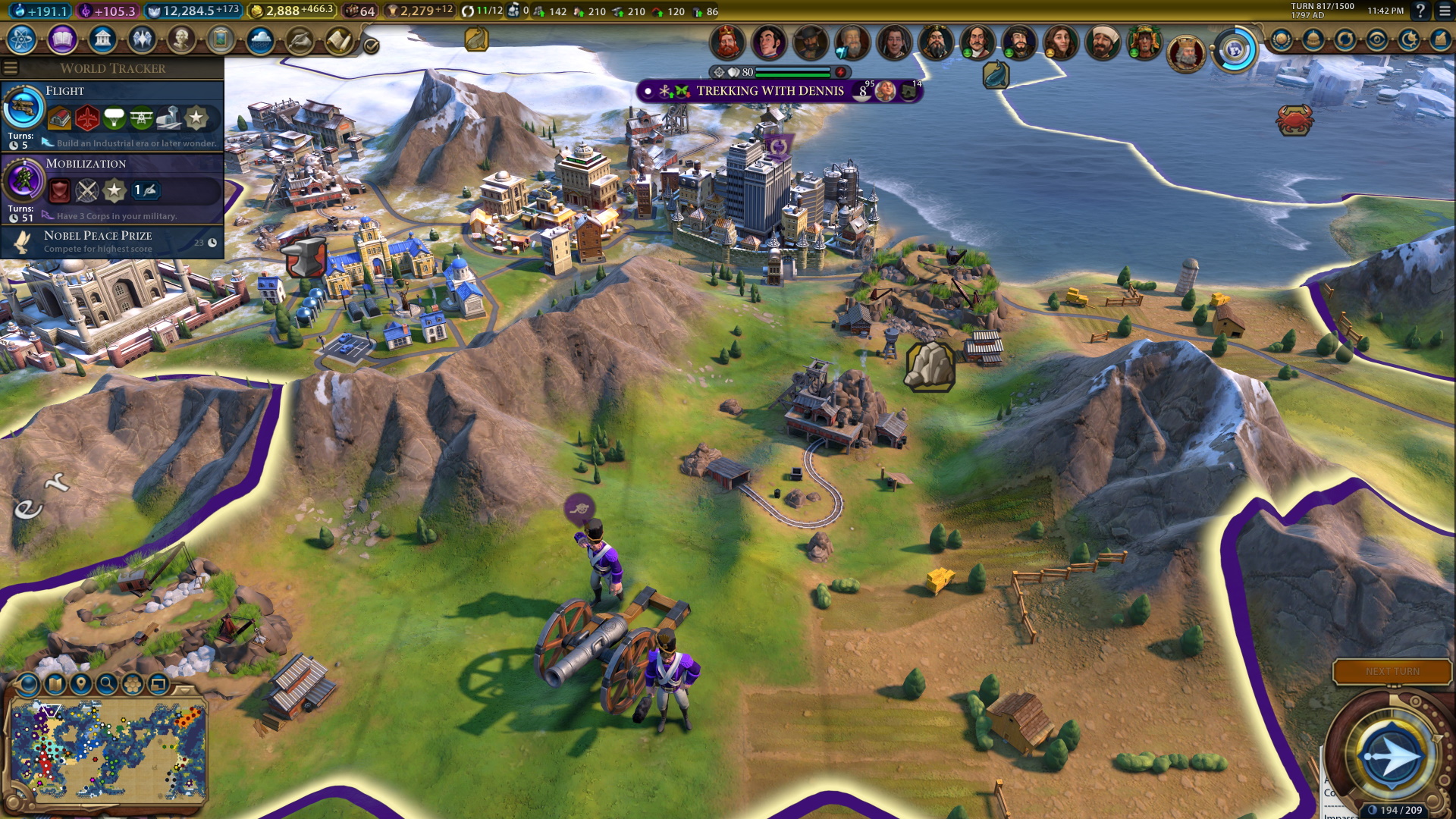
Screenshot of Civilization VI showing a ranged unit next to two mountain tiles, with a city in the background.
A lot of players tried Civ VII but have already drifted back to Civ VI.

Other “digital board games” inspired by the venerable Civilization series have been eating Firaxis’ lunch, too. They don’t have the genre all to themselves any more, and I think we’re seeing the limitations of releasing a partial game, then hoping to sell expensive DLC to patch the holes. Civ VI did that, too, but there was arguably a stronger foundation to build upon and a fun base game to get players interested in the DLC in the first place.

I suspect Firaxis will get another chance. Even if work on Civilization VII were to end sooner than expected, 2K still recognises the strength of the series and its name recognition. But if a hypothetical Civ VIII or some other sequel or spin-off were to flop, too? That’s when Firaxis could be in real trouble.

Endangered Studio #10:
Rocksteady Studios
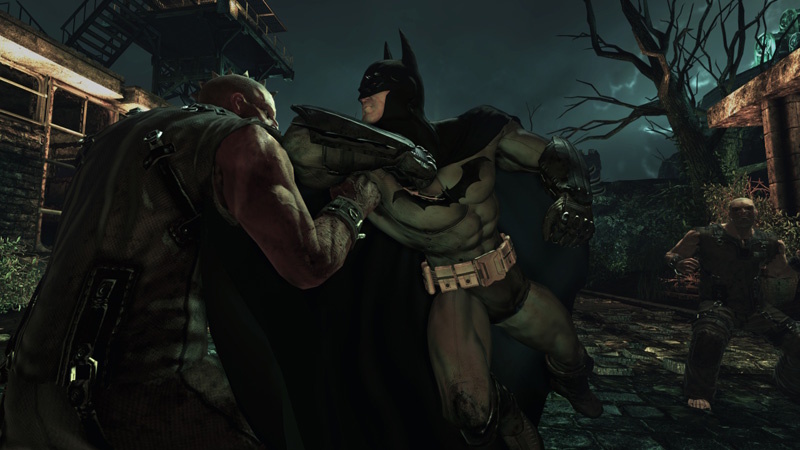
Promo art for Batman: Arkham Asylum showing the title character.
Batman and a villain in Arkham Asylum.

No, not Grand Theft Auto developers Rockstar, we’re talking about Rocksteady – the team behind the Batman: Arkham series and last year’s critically panned Suicide Squad: Kill the Justice League. In 2015, Arkham Knight suffered horribly with a ridicululously poor PC port, but the Arkham series has been otherwise popular and well-received, especially by Batman fans. But in 2024, Suicide Squad: Kill the Justice League was not, and left many players wondering how such a bad game could’ve taken Rocksteady such a long time to craft.

The bottom line is this: Kill the Justice League has lost parent company Warner Bros. Games more than $200 million. That’s… well, that’s not exactly great news when you’re trying to keep the lights on! These live service types of games are notorious for being expensive flops in a lot of cases, and what often follows an expensive, poorly-reviewed title is a studio closure.
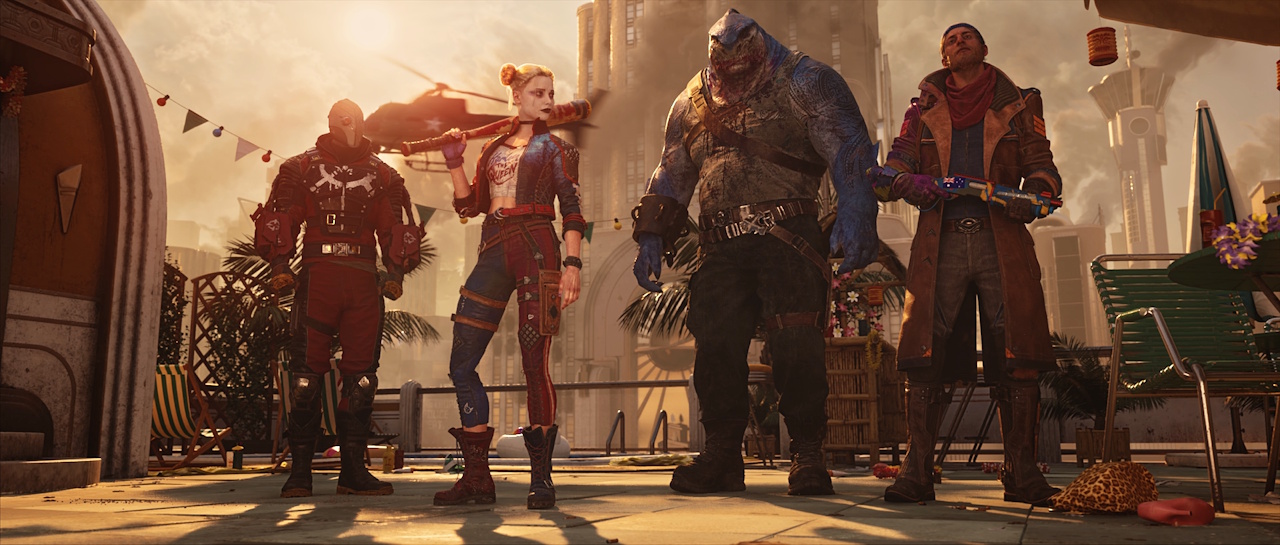
Promo still for Suicide Squad: Kill the Justice League showing the main characters.
Suicide Squad: Killed Its Studio

There are rumours that Rocksteady has already been laying off staff, first in the QA department, and later in other technical fields, too. The studio also has no new game on its schedule at time of writing; it seems some staff are still working on Kill the Justice League in supporting roles, while others may be working to assist Portkey Games with a new version of Hogwarts Legacy. Again, that doesn’t bode well for the studio.

Practically all of the studios we’ve talked about today were once well-regarded and had at least some popular and successful titles in their back catalogues. But with the Arkham series having wrapped up a decade ago, I don’t think its lingering goodwill will be enough to save Rocksteady. Kill the Justice League was a game outside of the studio’s area of expertise, seemingly forced on them by Warner Bros. Games, and it sucks that they couldn’t stick to making the kinds of single-player titles at which they excelled.

So that’s it.
An Xbox "Duke" controller on a green background.
Xbox prompted me to think about this topic…

We’ve talked about a few developers and publishers that *could* be in danger in the months and years ahead.

As I said at the beginning: I’m never rooting for anyone to fail. Well, except really low-quality shovelware or games with abusive gambling baked in! But those obvious exceptions aside, I don’t want to see games fail or studios closed down, and I especially don’t want to see hard-working developers and other industry insiders losing their jobs. There’s more than enough of that going around without adding to it.

But as a critic and commentator who talks about gaming, I wanted to share my opinion on these studios in light of what’s been going on in the games industry. There are plenty of examples of high-profile failures, collapses, and shutdowns. Whether we’re talking about Atari, Interplay, most of Maxis, Sega, THQ, Lionhead, Acclaim, or Neversoft, one thing is clear: being a well-known brand with a good reputation isn’t enough. The games industry is cutthroat, and not all companies – not even those that seem to have scaled the heights and reached the very top of the gaming realm – can be considered safe.
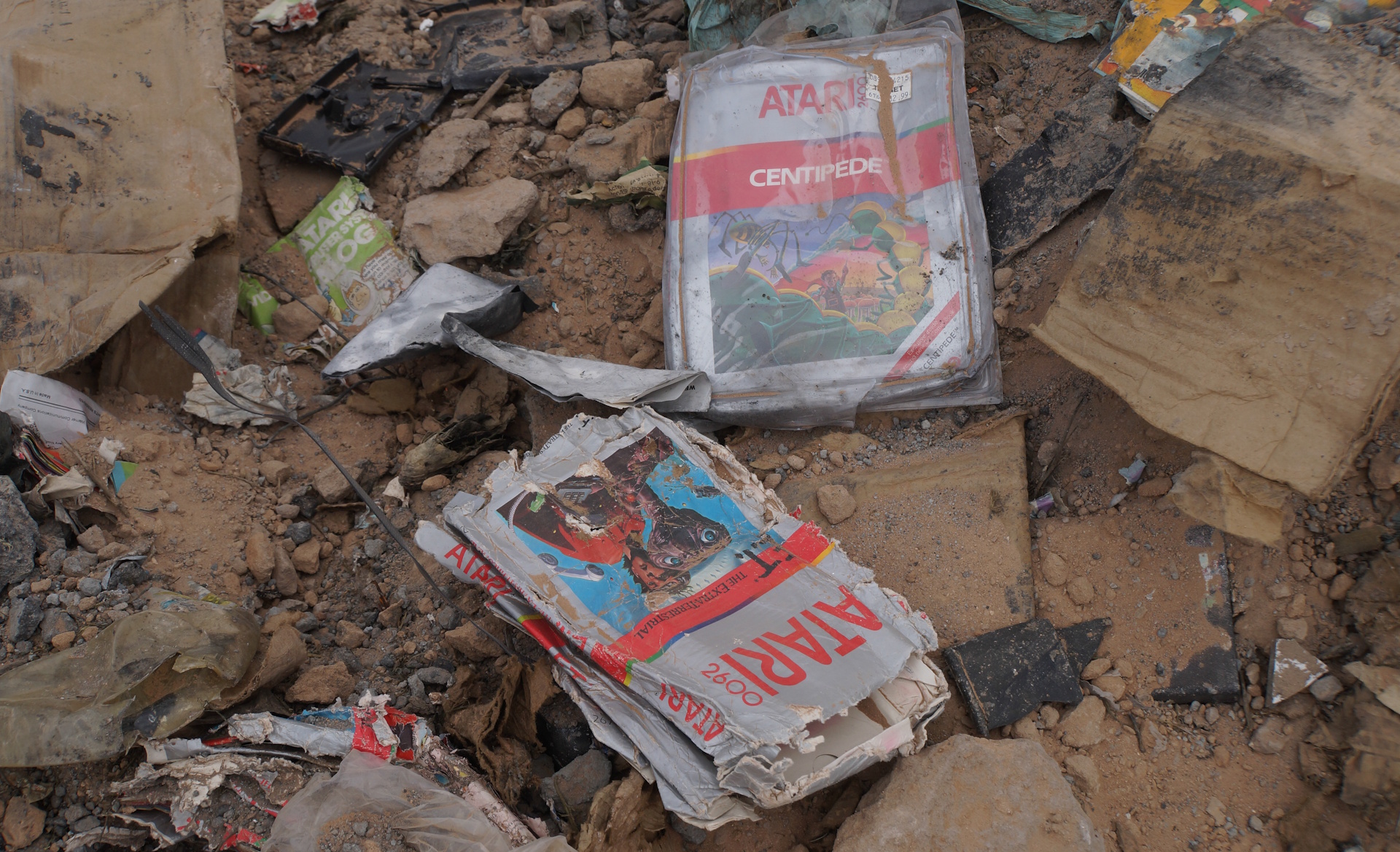
Two Atari games in a landfill from the 1983 crash, excavated in 2014.
Atari was one of the biggest names in gaming once upon a time…
Photo: taylorhatmaker, CC BY 2.0 https://creativecommons.org/licenses/by/2.0, via Wikimedia Commons

Maybe I’m wrong about some or all of these companies – and in a way, I hope that I am. But at the same time, gaming is like any other industry and it needs innovation. If the same companies dominate the gaming landscape forever, things will quickly stagnate. What gives me hope is that there are plenty of smaller studios producing new and innovative titles, and some of them will go on to be the “big beasts” of tomorrow.

So I hope this has been… well, not “fun,” but interesting, at any rate. And please check back here on Trekking with Dennis, because there’s more gaming content and coverage to come!


All titles discussed above are the copyright of their respective developer, studio, and/or publisher. Some screenshots and promotional artwork courtesy of IGDB. This article contains the thoughts and opinions of one person only and is not intended to cause any offence.

Games Industry “Hot Takes”

A few months ago, I put together a list of “hot takes” about video games. As much as I enjoy gaming as a hobby, there are things that annoy me and things to criticise! There were a few other things that I considered including, but they didn’t really fit with that list. These “hot takes” have less to do with games themselves and more to do with the games industry, development, and gaming as a whole – so that’s what we’re going to discuss today!

If you’re interested in checking out that earlier list, by the way, you can find part one by clicking or tapping here, and part two by clicking or tapping here.

Whenever I use the term “hot take” it’s because I’m acutely aware that we’re talking about something contentious! So before we get started, let’s re-emphasise that: these are all topics of debate among players and critics, and mine may well be the minority position. I don’t pretend to be 100% right, and I welcome disagreements and differences of opinion.

A stock photo of a crying girl.
Let’s not throw a tantrum if we disagree, okay?

I worked in the games industry for close to a decade, and I worked with large and small games companies in that time. I’ve got a bit of a feel for how development works from the time I spent “on the inside,” and I know that developers are passionate people who care deeply about their art. But that doesn’t mean games get a free pass; a bad game is a bad game, no matter how well-intentioned it may have been!

As I always like to say: all of this is just the subjective opinion of one player, and I believe that there should be enough room in the community for differences of opinion and respectful disagreement. The topics we’re going to get into today are the subject of discussion and debate, and there isn’t a right answer – just opinions.

If you aren’t in the right headspace to see some potentially controversial games industry opinions, this is your final chance to nope out – because we’re about to jump into the list!

“Hot Take” #1:
“Game development is hard” isn’t an excuse for selling a sub-par title.

Stock photo of a woman working at a computer with two monitors.
A lot of people work really hard on some absolutely shite games…

Speaking as both a player and as someone who used to work in the industry, believe me when I say that I get it. Game development is undeniably difficult, it isn’t straightforward, and there are many, many reasons why a game may not be as good, enjoyable, or polished as we’d like it to be. There can be problems getting an engine to work, fixing one bug might cause ten more to pop up elsewhere, and the more complex and in-depth a title is, the greater the chance of these kinds of issues occurring. Publishers and corporations also meddle, moving the goalposts and pushing developers to hit unreasonable deadlines. So I get it. But that doesn’t make “development is hard” a good enough excuse.

Here’s a helpful analogy: suppose I buy a house, move in, and every time I turn on the washing machine, the electric goes off. Then when I ring the electrician, he basically says “wiring a house is really hard. You wouldn’t get it because you aren’t an electrician.” That’s not an excuse. If I go to a bakery and the bread is stale and mouldy, I likewise wouldn’t accept the excuses that “baking is really difficult,” or “running a business and keeping track of sell-by dates is hard.” The same basic principle applies to video games.

Stock photo of loaves of bread in a bakery.
You wouldn’t accept sub-par bread from a baker, so why should you accept a sub-par game from a developer?

I will acknowledge and agree that game development is hard, and that bigger games are harder to make; it’s an almost exponential scale of difficulty. But trying your best and failing is still failing, and in a competitive marketplace where most games aren’t free, if you release a sub-par, broken, uninspired, or inferior game, you’re gonna get called out for it. Media criticism exists for this purpose, and just because a critic has never worked in the games industry or has no experience with development doesn’t invalidate their criticism.

When a game is listed for sale, even if it’s discounted or at a low price, players still have expectations – and those expectations aren’t “wrong” just because they didn’t see how hard the game was to create. If you’re a brand-new developer releasing your first-ever game for free and asking for feedback, then maybe some of the harshest words should be held back. But this asinine argument is too often made by publishers and executives who work for massive companies. When a game underperforms, they trot out the trusty old “game development is hard” argument as a rebuttal to critics.

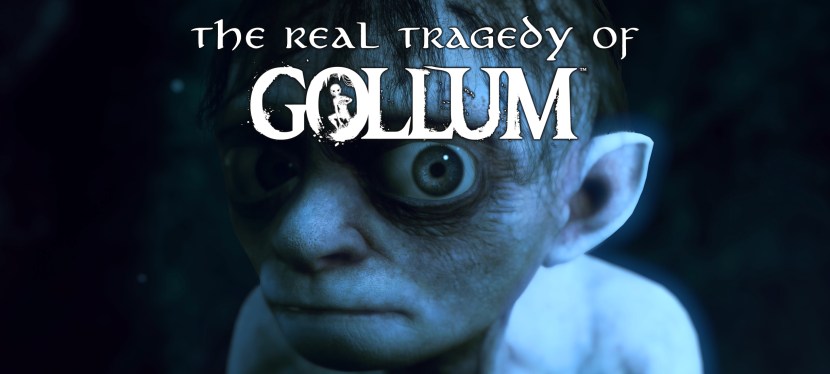
Screenshot of The Lord of the Rings: Gollum showing a serious bug.
The Lord of the Rings: Gollum was widely criticised upon its release for being riddled with bugs and glitches.

In no other business or industry would customers be told that “my job is hard, you should be grateful for what you got” as a response to genuine criticism. Selling a game that’s outdated, riddled with glitches, or just not fun can’t be excused in this way, and developers – no matter how hard they may have worked and no matter what programming hurdles they may have had to overcome – have to accept that. Criticism is inevitable in entertainment and media, and even if a developer had created an impossibly perfect game, there’d still be players who didn’t like it in whole or in part, or who just weren’t interested in its narrative or its gameplay. That’s unavoidable.

Some developers and studios actively make things worse for themselves by trying to respond to criticism in this way. It never works, it never succeeds at garnering sympathy, and practically zero players come away from this conversation having more positive thoughts about the game. It’s an argument that needs to go away, and developers and publishers should think long and hard before reacting to genuine criticism with this irritating whine.

“Hot Take” #2:
Subscriptions are happening and physical discs and cartridges are dying out.

A stock photo of Mega Drive games.
A selection of Sega Mega Drive game cartridges.

This is a subject I’ve tackled before in a longer column here on the website. In that piece I took a look at the media landscape in general, talking about how the move away from physical media started with music, then moved to film and TV, and is now belatedly arriving in gaming, too. You can find that piece by clicking or tapping here, if you’re interested! But for the games industry specifically, a move away from discs and cartridges has been happening for a long time – and the rise of subscriptions could well be the final nail in the coffin.

In the very early days, no one owned a video game outright. If you wanted to play a game, you had to go to where the games were: an arcade. It was only with the growth of home consoles in the ’80s that physically owning a video game became possible for a mainstream audience, and even then, renting games or even whole systems was still a big deal. Many of the SNES, Nintendo 64, and Dreamcast games that I played in through the ’90s and into the new millennium were rented, not purchased outright. The idea of owning a massive media library is, when you think about it, a relatively new phenomenon that was kicked into a higher gear when DVD box sets became a thing in the mid-2000s.

Concept art for Wreck-It Ralph showing the arcade.
Arcades (like this one from Wreck-It Ralph) used to be the only place to play video games.

In that sense, we could argue that subscriptions aren’t “changing” the way people engage with media, they’re just a return to the 20th Century status quo. For much of the history of film, television, music, and gaming, audiences have had a temporary or impermanent relationship with media… and to me, that’s absolutely fine. It’s a trade-off I and many other players are happy to make.

I could probably count on my fingers the number of games I’d want a permanent hard copy of… because most games aren’t gonna be played on a loop forever nor returned to every few months. Just like when I used to rent SNES and N64 games in the ’90s, I’m totally okay with not having a huge library of titles gathering dust on a shelf (or metaphorical dust in a digital library), because once I’ve beaten a title like Donkey Kong 64 or Bioshock, I’m in no rush to play them again.

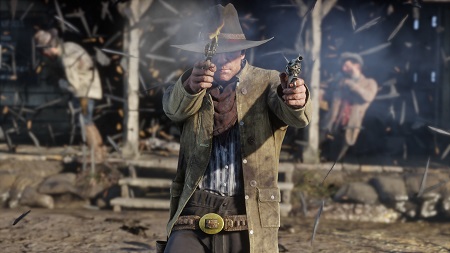
Promo screenshot of Red Dead Redemption II.
Red Dead Redemption II is one of just a handful of games I might conceivably want a hard copy of.

Speaking as someone on a low income, subscription services like Netflix and Xbox Game Pass open up a huge library of titles to me – allowing me to play more games than I’d ever be able to afford if I had to buy or even rent them individually. I’ve played dozens of games over the past couple of years that I’d never have bought for myself, and some of them have become personal favourites. Subscriptions like Game Pass are a great way into gaming for players on a budget – because for a single monthly fee a huge library of titles become available.

If the trade-off for that is that titles are occasionally removed from the platform and become unplayable… well, I’m okay with that. And for one-in-a-generation masterpieces like Red Dead Redemption II or Baldur’s Gate 3, I’m happy to splash out. When you consider that an annual subscription to Game Pass is more or less the same price as buying one or two games… you start to see why people are choosing to sign up. I wouldn’t be surprised at all if Xbox, PlayStation, or both choose to go all-digital later in the decade when their next-generation machines are ready.

“Hot Take” #3:
Microtransactions have no place in single-player games.

A screenshot of part of Starfield's in-game shop.
*cough* Starfield *cough*

I’m not wild about microtransactions in general – but in online multiplayer games and especially free-to-play titles, I accept that they’re an established funding model. They should still be regulated and prevented from being exploitative, but in those genres the microtransaction model seems to work well enough. But in a single-player game? Microtransactions need to GTFO.

Going back decades, games have released expansion packs – and large pieces of content that add new maps, quests, characters, and so on are usually okay. Look at something like Morrowind’s expansion Bloodmoon, or a more recent example like Phantom Liberty for Cyberpunk 2077. These are the kinds of expansion packs that have always been okay. Some are better than others, sure, and some expansions offer much more in terms of value. But as a general rule, I’m okay with expansion packs.

A still frame from the trailer for Cyberpunk 2077: Phantom Liberty showing Johnny Silverhand in a helicopter.
Phantom Liberty is a great example of an expansion pack that offers good value.

But in a single-player game, I shouldn’t be asked to purchase a “premium currency,” weapon skins, cosmetic items, and so forth. These microtransactions have no place in a single-player title, and there’s no excuse for adding them in other than pure, unadulterated greed. If a game like No Man’s Sky can remain profitable for Hello Games for close to a decade without charging for a single additional piece of content, there’s no excuse for the disgusting in-game marketplace in a title like Starfield.

I love a game with cosmetic customisation. Making my character feel personal to me goes a long way to enhancing the experience and making my playthrough feel like “mine,” so I enjoy having the option to change a hairstyle, outfit, or do things like re-paint a vehicle. But these things are an integral part of the game experience – not something to charge extra for. Exploiting players by locking basic items behind a paywall is despicable – and that’s before we say anything about “XP boosters,” damage multipliers, and other pay-to-win or pay-to-skip-the-grind items.

Steam page for No Man's Sky showing that the game has no DLC.
Oh look, it’s all of the DLC available for No Man’s Sky

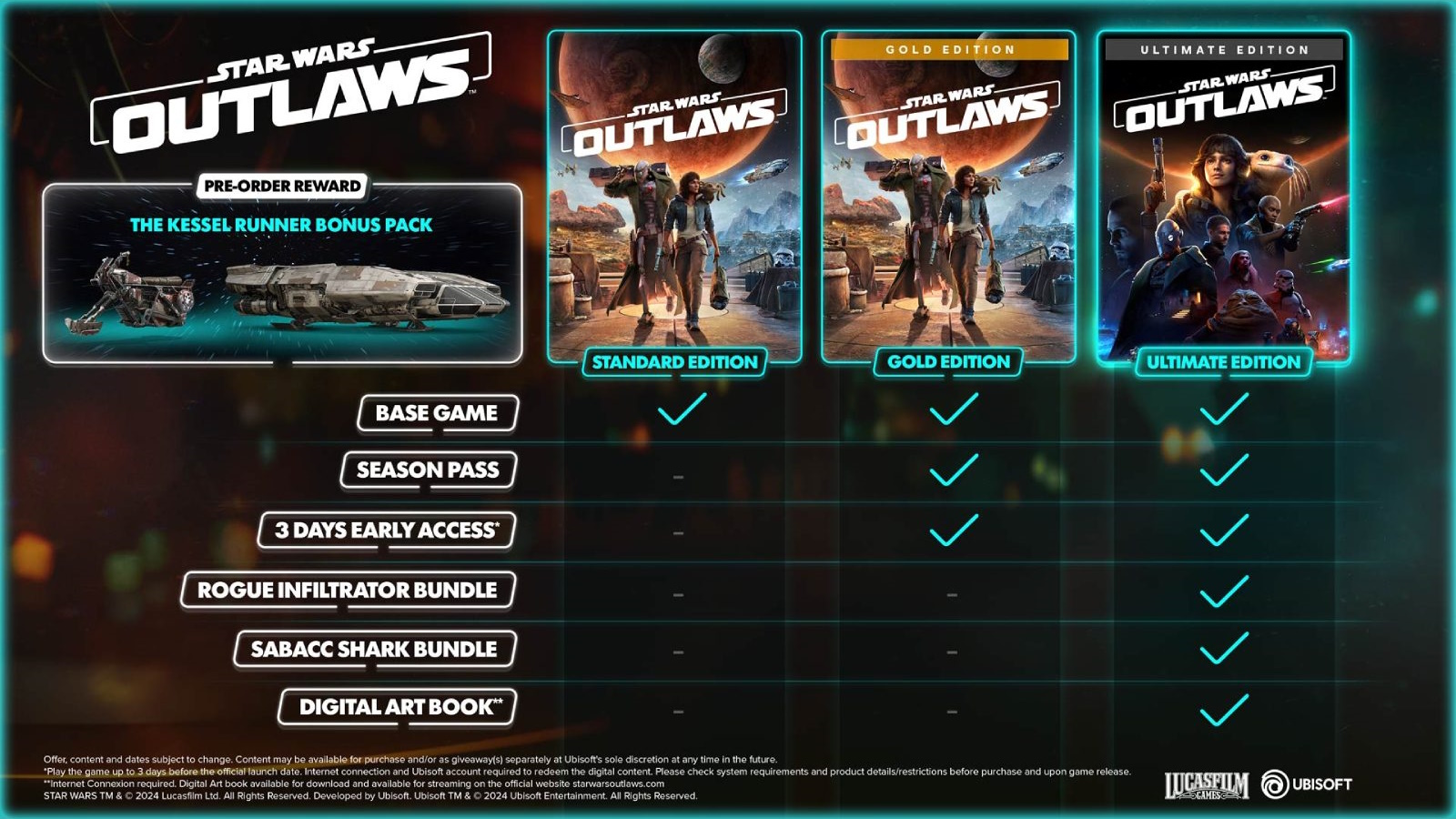
I’ll also include in this category “super premium deluxe editions” of games that come with exclusive content. You might think that Han Solo’s vest in Star Wars Outlaws is okay to lock behind a paywall, but some games do this with whole quests. Hogwarts Legacy infamously locked an entire mission behind a paywall, and it’s far from the only game to have done so in recent years. Offering an in-game item as a pre-order bonus is one thing, locking a whole chest full of items and even pieces of gameplay behind an expensive “luxury edition” that can easily run to $100 or more is just scummy.

If I’m paying full price for a game, I don’t expect that game to reach into my wallet and try to grab even more cash every time I want to use a consumable item or change my character’s appearance. I tend to avoid online multiplayer games, where this phenomenon primarily exists, but inserting a microtransaction marketplace into a single-player game where it has absolutely no business being is enough to make me uninstall that title and never return to it. I’ll even refund it if I can. Some studios have even taken to concealing in-game marketplaces at launch, hoping to garner better reviews and more sales, before adding them in a few weeks or months later. Truly disgusting stuff.

“Hot Take” #4:
You aren’t paying for “early access,” you’re being charged an additional fee to play the game on its real release date.

Early access info for Indiana Jones and the Great Circle.
An example of what I’m talking about.

“Early access” is controversial in general, but let me just say before we start that I’m generally supportive of smaller studios and indie developers using early access as a way to get feedback and even to keep the lights on during what can be a difficult process. I very rarely touch an early access title, but independent devs should always feel free to use whatever tools are available to them, including launching an early access version of their game. But that’s where my patience with early access ends.

Recently we’ve seen two pretty shitty trends in the games industry: firstly, massive studios backed up by big publishers have been abusing early access, sometimes leaving a game officially unreleased for four, five, or six years, charging almost full price for it all the while. And secondly, the issue we’re looking at today: “early” access for an extra charge.

Promo graphic for Star Wars Outlaws showing the different versions of the game.
Ubisoft wanted to charge players an extortionate amount of money to play Star Wars Outlaws on its real release date.

This kind of “early” access usually grants players access to a game a few days or maybe a week ahead of its official release date, but by that point the game is finished and should be ready to go. The “early” version that players get is usually no different from the launch version, and there’s no time for a studio to act on player feedback or patch bugs. This is a scam, plain and simple, and an excuse for wringing even more money out of players.

If a game launches on the 1st of September for players who pay £100, and the 6th of September for players who “only” pay £65, then the release date is the 1st of September. They’ve just charged more to players who want to play on release day – or, if you flip things around, deliberately penalised players who didn’t splash the extra cash. These versions of games – which I think we should call “real release date” versions – are often $20, $30, or $40 more expensive than their delayed counterparts.

A stock photo of a hand holding burning dollar bills.
And who has that kind of money to waste these days?

Buying a game on day one is a risk nowadays. So many games – even those that go on to be hailed as masterpieces – arrive on launch day with bugs, glitches, and other problems. So paying extra to play what is almost always a demonstrably shittier version of a game just feels… stupid. I’ve been burned by this before, and just as with pre-orders, I’ve sworn to never again pay for so-called “early” access.

I’d like to see digital stores like Steam, Epic Games, and ideally Xbox and PlayStation too clamp down on this practice. Early access should be reserved for studios that need it, and charging players extra to play a game on release day is something that should be banned outright.

“Hot Take” #5:
Players’ expectations aren’t “too high.”

A stock photo of an angry man holding a PlayStation control pad.
It isn’t the players that are wrong…

There have been some fantastic games released over the last few years. Red Dead Redemption II, Baldur’s Gate 3, and Kena: Bridge of Spirits all come to mind in the single-player space, but I’m sure you have your own favourite. These games are, in a word, masterpieces; titles that did everything right and are rightly considered to be at the very pinnacle of not only their genres but video games as an art form in general. So… if your game doesn’t get that kind of glowing reception, whose fault is it?

Some developers think it’s the fault of players, and that we’ve had our expectations set “too high.” They argue that it was unrealistic to expect their game to be as engaging or entertaining as others in the genre, and we should be grateful for what we got. They worked hard on it, after all.

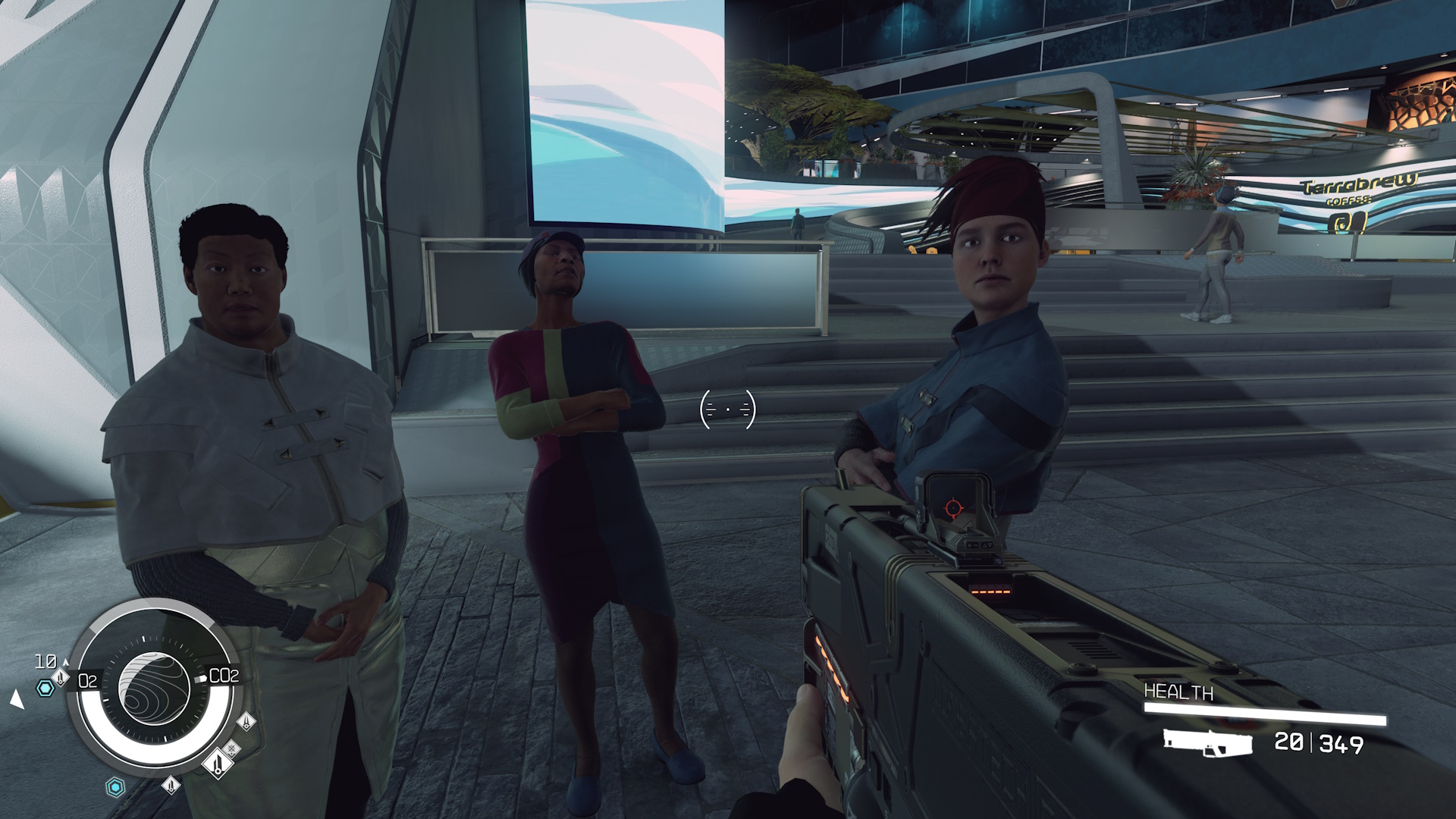
A screenshot from Starfield showing a first-person perspective and three NPCs.
I wonder which game might’ve prompted this “hot take.”

The tl;dr is this: it isn’t the fault of players if they don’t like your game – it’s yours. Complaining about high expectations makes no sense when other titles have demonstrably been able to meet and even exceed those expectations, so if you learned nothing from your competition, once again that isn’t anyone else’s fault but yours! That’s to say nothing of the out-of-control and frequently dishonest marketing that promises players way more than the game can deliver. Studios and publishers are responsible for reining in hype and keeping their marketing honest. That, more than anything else, will help players set appropriate expectations.

I get it: it isn’t fun to be criticised or see your work picked apart. It’s even less fun to see a game you worked hard on for a long time compared negatively to another title in the same space. But to lash out at players – the people who are supposed to be your customers and the people it’s your job to entertain – just doesn’t make any sense to me. Not only is it wrong, but it also risks building up resentment and ill-will, so the next time you work on a game and get it ready for launch, players will be even more sceptical and perhaps even quicker to criticise.

A stock photo of a smartphone showing social media apps.
This is a problem exacerbated by social media.

Thankfully, it isn’t all developers who say this – at least not in public! I heard complaints like this from time to time when I worked in the industry, but most developers I worked with were smart enough to keep such thoughts to themselves if they had them. So we’re fortunate that it’s only a minority of developers who take this argument into the public square.

Some developers need to get off social media. Social media is a great tool, don’t get me wrong, and being able to communicate directly with players can be useful in some situations. But if a developer is so thin-skinned that they feel the need to react in real-time and respond to every armchair critic and Twitter troll… that can’t be good for them, and it certainly isn’t good for the company they work for. For their own good, some developers need to shut down their social media profiles!

So that’s it… for now!

A promo graphic of an Xbox Series control pad.
I hope this wasn’t too controversial!

I’m always finding more “hot takes” and things to criticise in the games industry, so I daresay this won’t be the last time I put together a piece like this one! Despite what I’ve said today, I still really enjoy gaming as a hobby and I find there are far more positives than negatives. And if you hated all of my points, just remember that all of this is the entirely subjective opinion of a single old gamer.

So I hope this has been a bit of fun… and maybe a little thought-provoking in places, too. If you don’t agree with any of my points that’s totally okay! I tried my best to present my arguments as articulately as possible, but these are “hot takes” so I’m sure plenty of people can and will disagree with all of them. If I gave you a chuckle or you found this discussion interesting in some way, then I reckon I’ve done my job!

Until next time… and happy gaming!


All titles discussed above are the copyright of their respective publisher, studio, and/or developer. This article contains the thoughts and opinions of one person only and is not intended to cause any offence.

Concord… Oof.

We’ve just seen one of the biggest and most expensive failures in the history of video games. That isn’t hyperbole: Sony’s hero-shooter Concord is now one of the worst flops of all time. Whole books could be written on this topic, with Concord becoming a case study in how not to develop and launch a game – but for now, I’ll try my best to break down what happened, what went wrong for Sony… and most curiously of all, why it won’t actually matter to the company or its PlayStation brand.

The tl;dr is this: Concord was launched years too late into a massively competitive genre, one that has already seen high-profile flops from big studios and developers. Its art style was generic, it didn’t stand out from the pack, and it offered prospective players no reason to switch from other, better-established titles in the hero-shooter genre. But worst of all, Sony was demanding $40/£35 for a game in a genre where the most successful titles are free-to-play. There was no way players were gonna take a punt on an expensive new game when there are so many free ones with huge, established playerbases.

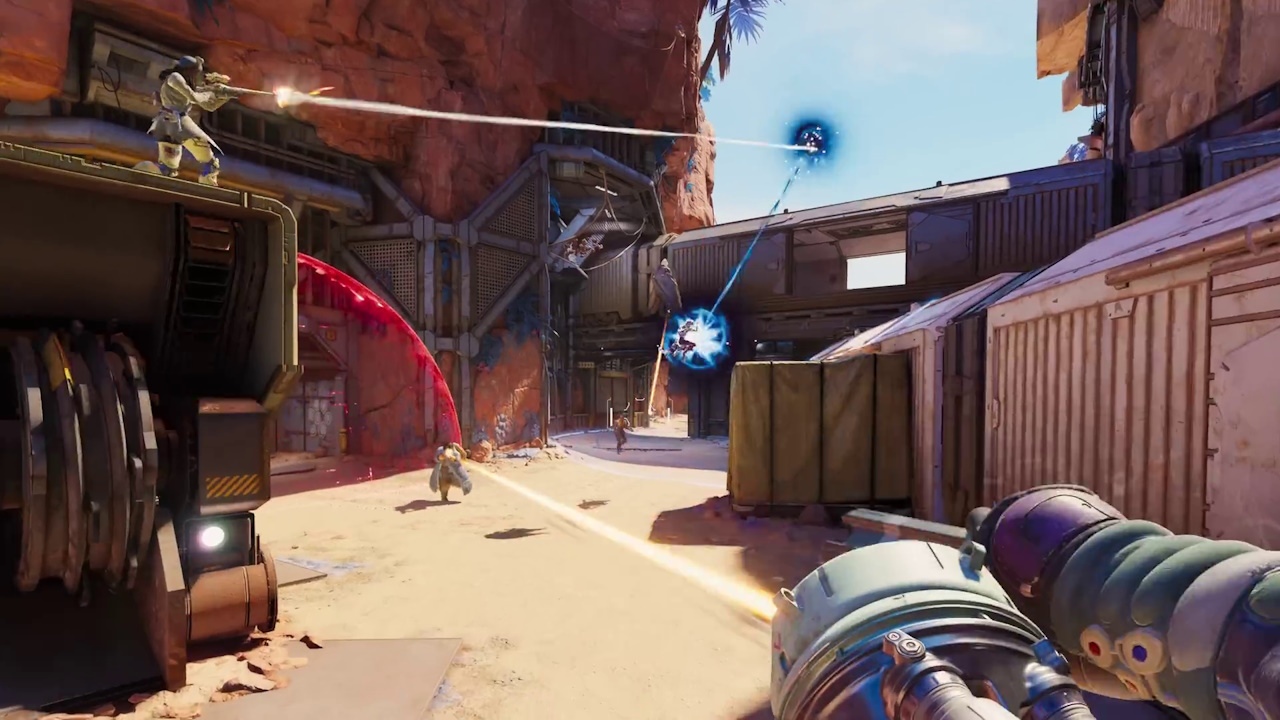
Still frame from the release trailer for Concord (2024) showing gameplay.
Everything about Concord just screams “generic.”

But that isn’t all there is to say. Concord caught criticism for “being woke,” finding itself on the wrong side of the culture war in the video games arena. Releasing at the same time as both Dustborn – which was also highly criticised for its social justice narrative – and Black Myth Wukong, which the “anti-woke” crowd have rallied around thanks to dubious claims surrounding its development and supposed rejection of “interference” by companies allegedly pushing “an agenda.” Concord was harmed by these comparisons, no doubt.

There’s also the fact that the live service/games-as-a-service marketplace is oversaturated. There are only so many players who want always-online competitive multiplayer titles, and most of them are already committed to one or two games. If Concord had been free-to-play, more people might’ve been willing to at least fire it up and give it a try. But for the stupidly high price that Sony demanded? It’s really no surprise that Concord failed to make a dent in this very difficult market.

Still frame from the release trailer for Concord (2024) showing the game's tagline.
Concord promised to let players “battle across the galaxy!”

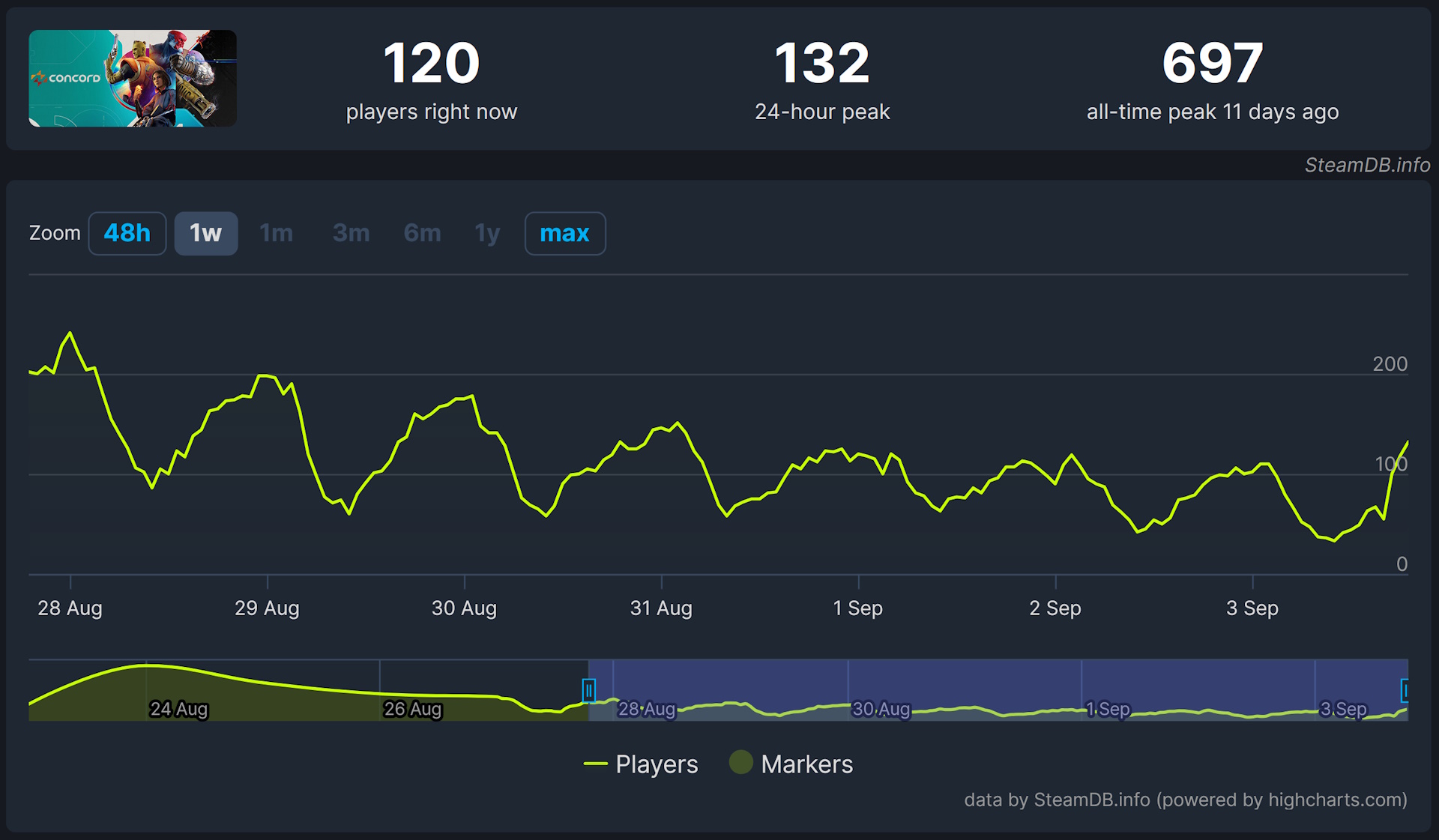
Shortly before I started to write this article, Sony announced that everyone who bought Concord would be given a full refund and the game would be pulled from sale. The game was only released at the end of August; Concord didn’t even last two weeks before Sony pulled the plug. And unlike in the past when some publishers have killed their live-service games… I completely understand why Sony did it and I can even say without a hint of irony that it was the right call. If no one is playing your live service game – and Concord, at least on PC, was seeing player counts of well below 100 concurrent users – then keeping it online is only going to cost money. And Concord has already proven to be a huge expense for Sony.

The claim that Concord had been in development for “eight years” seems to stem from a single quote from one of the developers and hasn’t been fully confirmed. But at the very least, the game was in full development for well over five years, and Sony even pulled resources away from other titles to support Concord. The game has cost Sony well over $100 million, not even counting the money spent on marketing it over the last couple of months. This is certainly one of the most expensive failures that the video games industry has ever seen.

Screenshot showing Concord's player count.
Concord’s player count on the 3rd of September 2024.
Image Credit: SteamDB.info

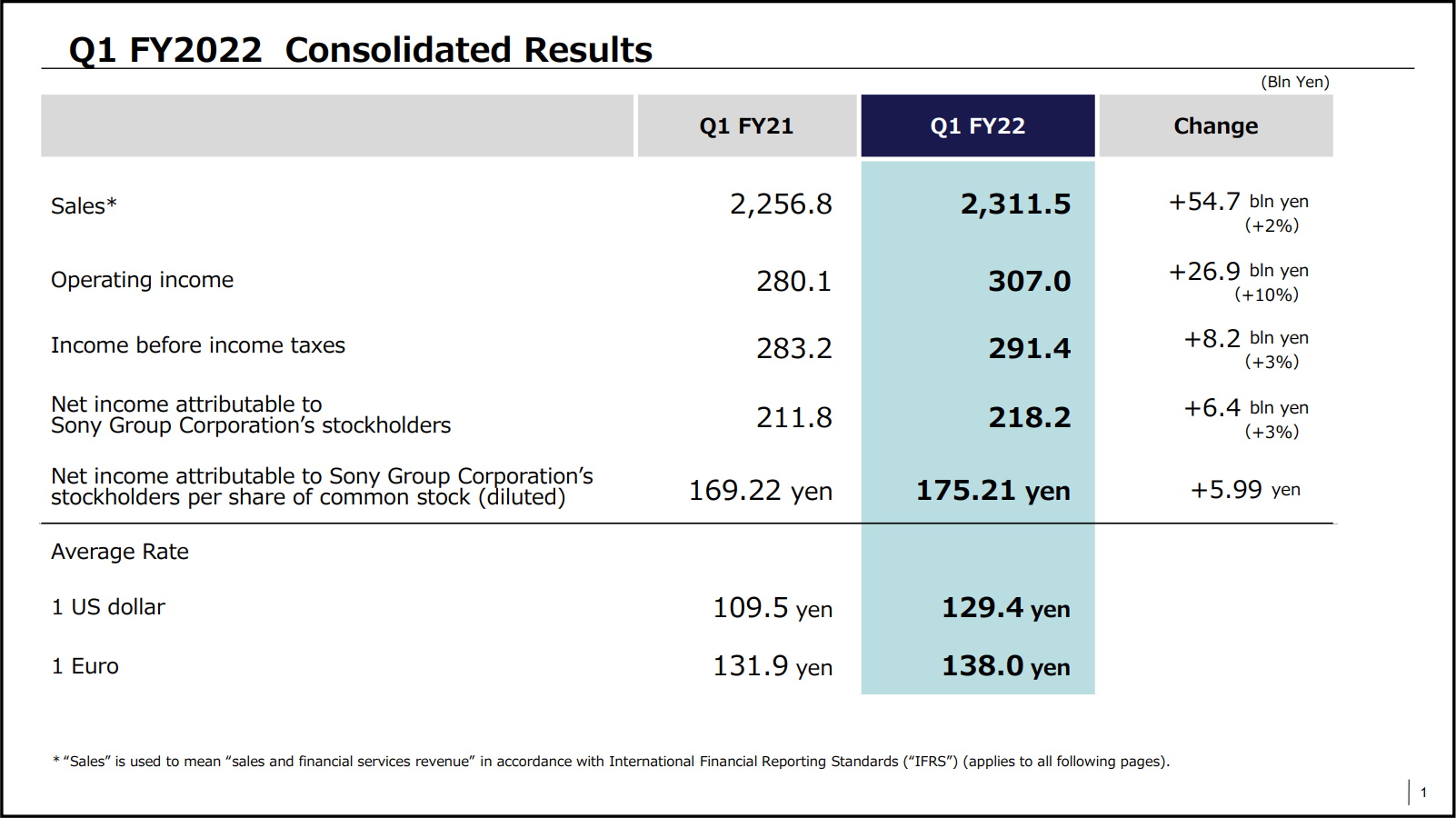
But the strange thing is that Concord’s failure really won’t have much of an impact on Sony. The company doesn’t have all of its eggs in one basket, and both its hardware and software divisions are making money hand over fist elsewhere. Sony may even be able to write off Concord’s development costs – or a large portion of them, at any rate – as a loss against its tax bill, further reducing the impact of the game’s catastrophic launch.

This is something that’s increasingly happening in the video games industry. The few massive corporations that dominate the gaming landscape are quite happy to spend vast sums of money on creating new games, because they only need to find one successful title out of a whole bunch. Sony can write off Concord without doing much harm to its broader business model. Would the company have preferred it if Concord had been the next big thing, dethroning Overwatch and Grand Theft Auto V to become the best-selling multiplayer game of the decade? Sure! But you can bet that no Sony executive will lose any sleep over its failure. They have many more titles coming along across a range of genres – and they only need one or two to become big hits.

Screenshot of Sony's profits in the first quarter of FY 2022.
Sony’s profits from the first quarter of 2022. The company absolutely will not care or even notice Concord’s failure.

If developer Firewalk Studios had been working independently, Concord’s failure would have undoubtedly ruined the company and its leadership team. And while it’s still quite possible – likely, even – that Firewalk will be shut down by Sony as a result of this situation, Sony itself will carry on virtually unscathed. Such is the nature of the business now that gaming has gone down this corporate path.

Concord was created to be Sony’s answer to Overwatch, Apex Legends, and Valorant. The company saw the potential in the hero-shooter genre and thought it could find a way in, hoping to print money on the scale of some of those other games. But nothing about Concord stood out – the game itself looked like a cheap copy of more successful titles. Which is what it was, at the end of the day.

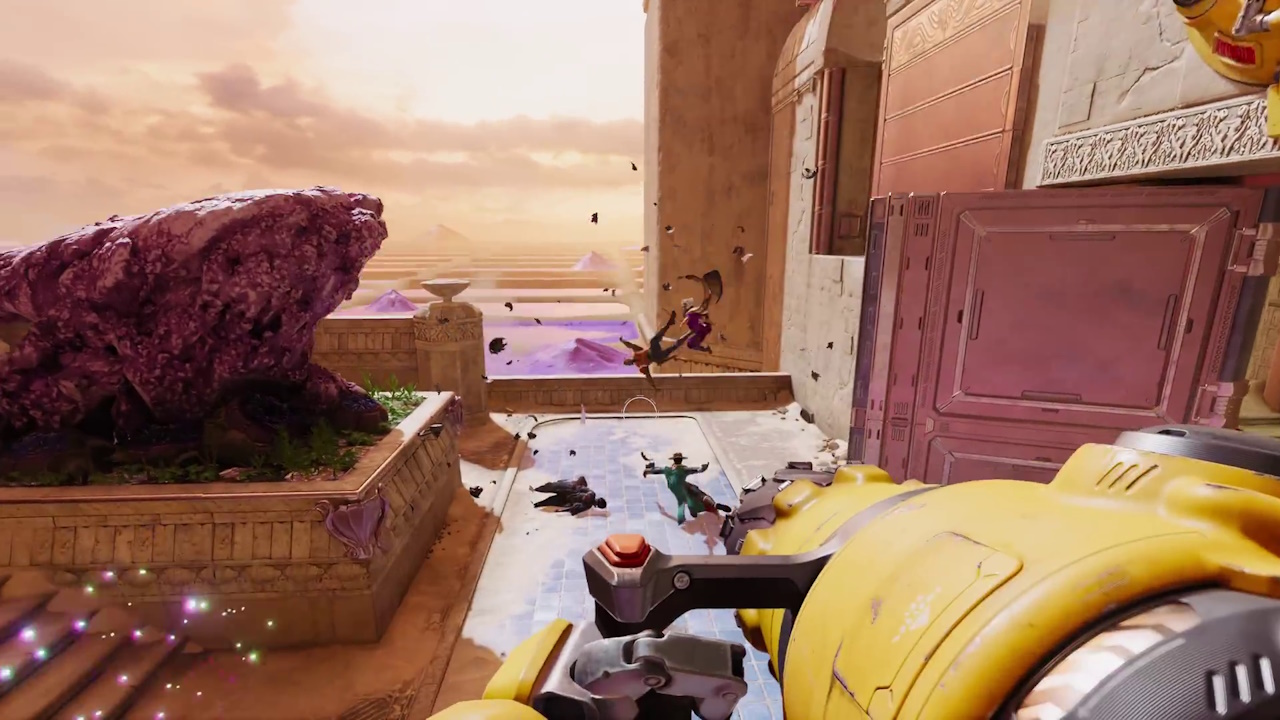
Still frame from the release trailer for Concord (2024) showing gameplay.
Concord was supposed to be a competitor to the likes of Overwatch and Apex Legends.

Games need something to get players interested. The first thing many players notice – consciously or subconsciously – is the way a game looks. And everything I’ve seen of Concord from its level design, weapons, and characters just looked derivative and unimpressive. There’s nothing wrong with games taking inspiration from successful titles – remember when first-person shooters were literally known as “Doom clones?” But in the current highly-competitive market, a new title trying to garner attention and support from players who are already immersed in other titles needs something to stand out. And Concord had nothing.

I feel for the developers who poured years of work into Concord. I spent a decade working in the games industry, and I know that developers are passionate people who genuinely care about making the best, most creative titles they can. Concord’s failure will be a crushing blow to the people who worked hard to bring it to life, and we mustn’t forget the human element in this story. The game could also be damaging to people’s careers and future prospects in the industry – particularly if Firewalk Studios is shut down, as seems likely.

Firewalk Studios' logo as of 2024.
Will Sony keep Firewalk Studios around after this flop?

Because Concord’s potential failure was built into Sony’s plans, nothing will happen to the company. The situation is embarrassing for Sony, sure – no one wants to win the gold medal for “worst-selling game of all-time.” But Sony has the money and the market share to walk it off, and when Concord is completely forgotten in a few weeks’ time, there genuinely won’t be any consequences for the company or for the executives who pushed for this game to be created, marketed, and sold in the way that it was. Sony will refocus its efforts on its next live service, always-online multiplayer title… and then the next one after that, if it also ends up like Concord.

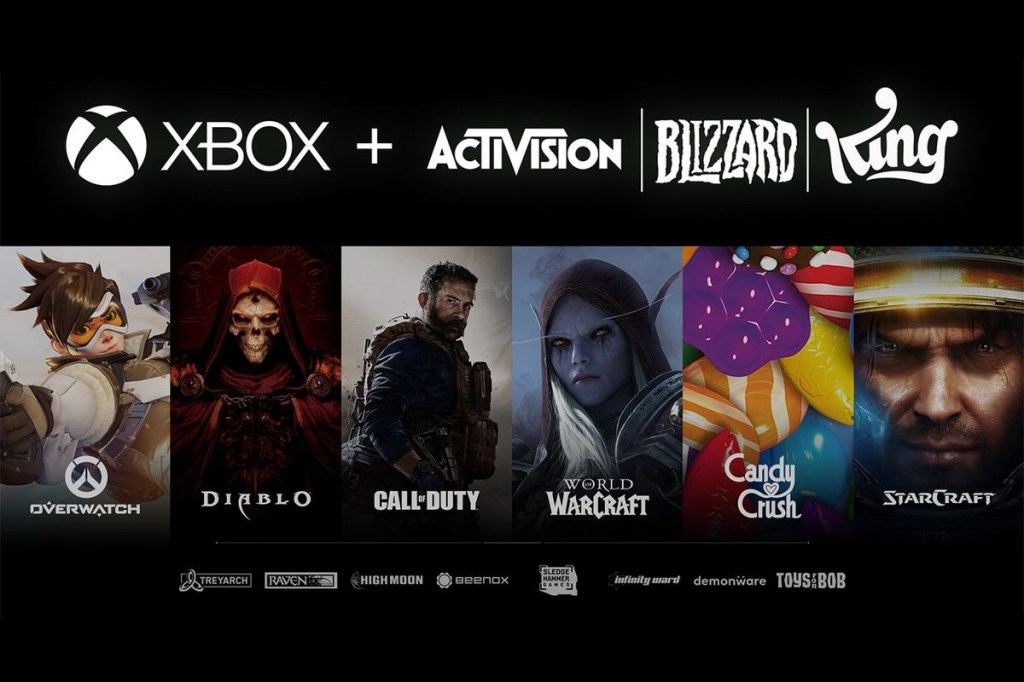
We are firmly in an era of “live service spirals,” and the industry’s big corporations can afford to keep sharting out games like Concord every few months, if necessary. They’re all just hoping to either create or buy the “next big thing,” and they’re willing to waste as much money as necessary to ultimately make as much money as possible. This is why Microsoft bought Activision and why Sony shelled out to buy Bungie, just to pick on two recent developments.

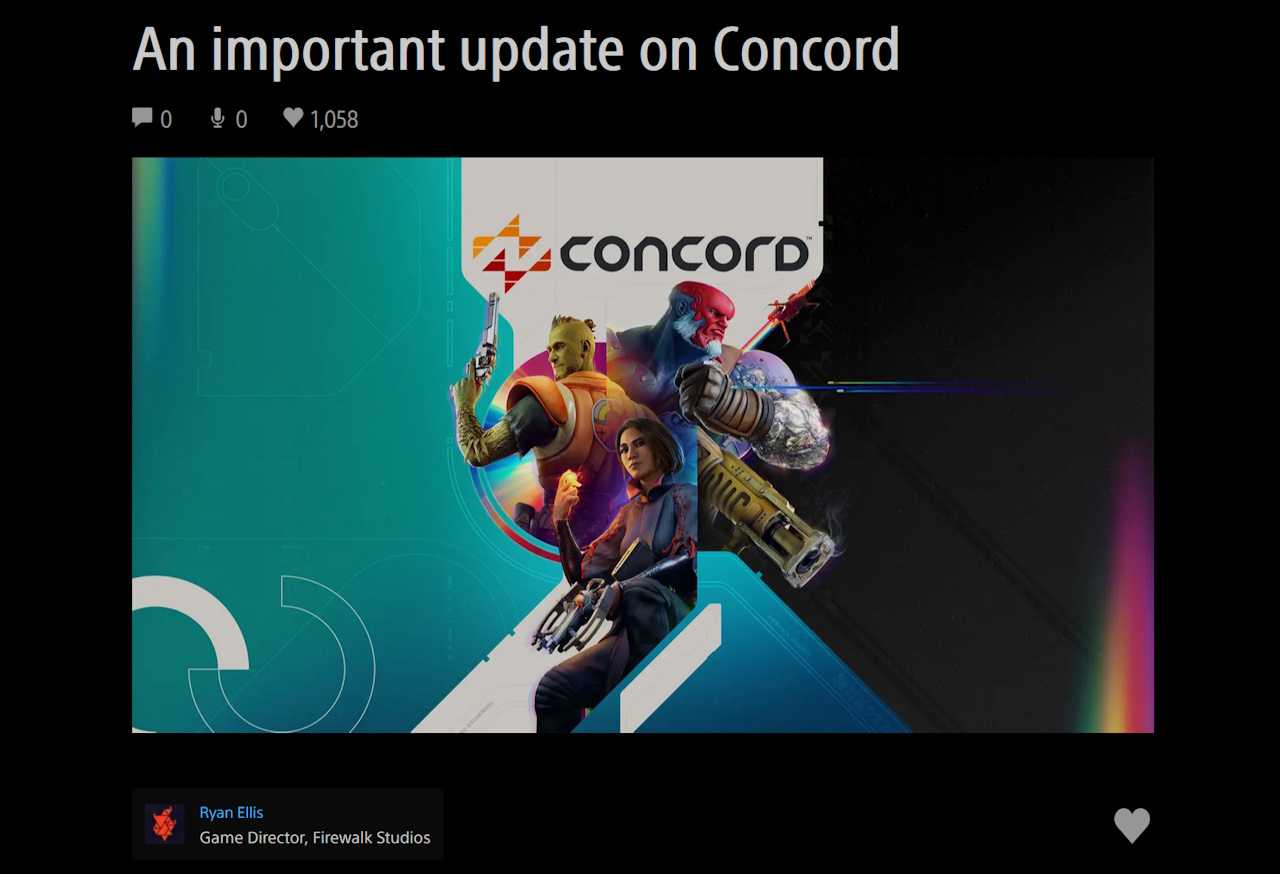
Screenshot of Sony's blog post announcing Concord's imminent shutdown.
The “important update” turned out to be the game’s imminent shutdown and de-listing.

Concord was dead on arrival. Asking for £35 in a marketplace where other games are free-to-play while offering nothing interesting-looking or unique would have doomed it regardless of other factors. Releasing alongside the popular and successful Black Myth Wukong and the derided Dustborn didn’t help by comparison, but the fundamental premise of the game was really what killed it. For a game that took five-plus years to make and cost well over $100 million, that’s appalling. These corporations need people, somewhere in the chain of command, who know the industry and its trends and will pull the plug or restart development way before release. Concord should have been shut down or completely changed months if not years ago – and it’s on Sony’s leadership that that didn’t happen.

Sony is capable of doing that: remember when the Knights of the Old Republic remake was almost killed? That was, at least in part, Sony’s doing – the company saw a “vertical slice” of the game and hated it so much that the development studio that had been working on it was removed and production completely re-started. If they could do that to the KotOR remake – a title that should be a guaranteed hit – why was no one stepping in to insist on changes to Concord?

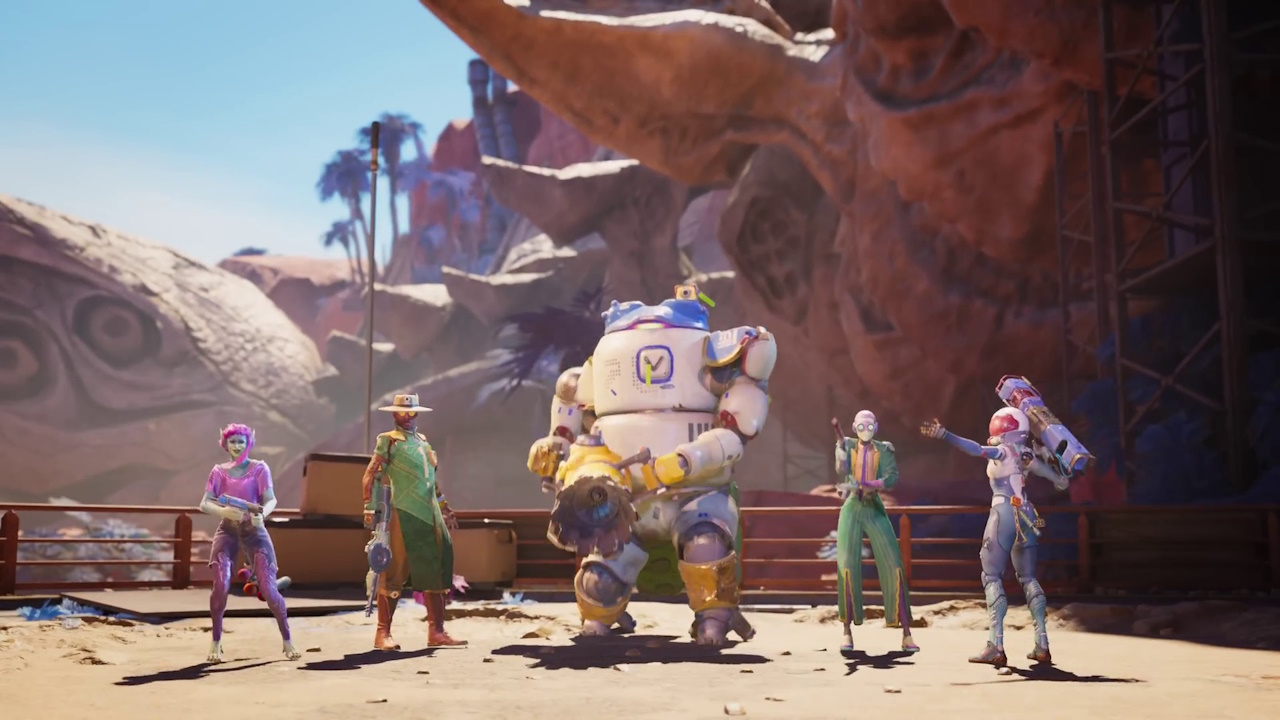
Still frame from the release trailer for Concord (2024) showing playable characters.
The playable characters from Concord.

It’s a shame. I never like to see a big game fail in this way, and I really feel sympathy for the development team who undeniably worked their socks off to make Concord. But this failure is a consequence of the way modern games are created – Concord wasn’t an organic idea that a passionate developer had. It was a corporate product, designed from day one to make as much money as possible by piggybacking on successful trends. Sony won’t care that it didn’t work, because the company has other upcoming titles that its executives hope will succeed.

So farewell, Concord. Despite Sony’s ambiguous wording leaving open the possibility of the game returning one day, perhaps in a free-to-play form, I suspect that won’t happen. The embarrassment associated with the name “Concord” has hardened hearts against it, and wasting even more money trying to convert it to a freemium title honestly won’t be worth it. Even if Concord re-launched in a few months’ time as a free title, I don’t see it getting off the ground, so the least bad option is to just quietly kill it off. I hope that Firewalk Studios and its developers will be able to move on to other, more successful projects.

Unfortunately, Concord’s failure was all but inevitable.


Concord is in the process of being de-listed with refunds offered to all players. Concord will be fully shut down on the 6th of September 2024. Concord remains the copyright of Firewalk Studios and Sony Interactive Entertainment. This article contains the thoughts and opinions of one person only and is not intended to cause any offence.

Don’t Reply To Negative Reviews, Bethesda…

Just when I thought I’d said everything I was ever going to say about Starfield

Bethesda’s customer support/public relations team has had to handle some absolute nightmares over the past few years. The line “we aren’t planning on doing anything about it” in response to a complaint about the Fallout 76 “canvas bag” fiasco will be forever etched in my mind – and that’s just the start! I used to work in the games industry, specifically in marketing, so this kind of story is right up my alley… so to speak.

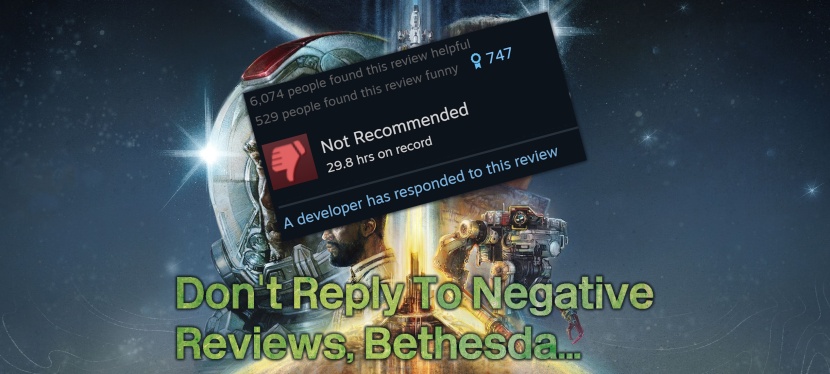
If you haven’t already heard, Bethesda’s PR team has begun posting replies to negative reviews on Steam… and it’s going about as well as you might expect.

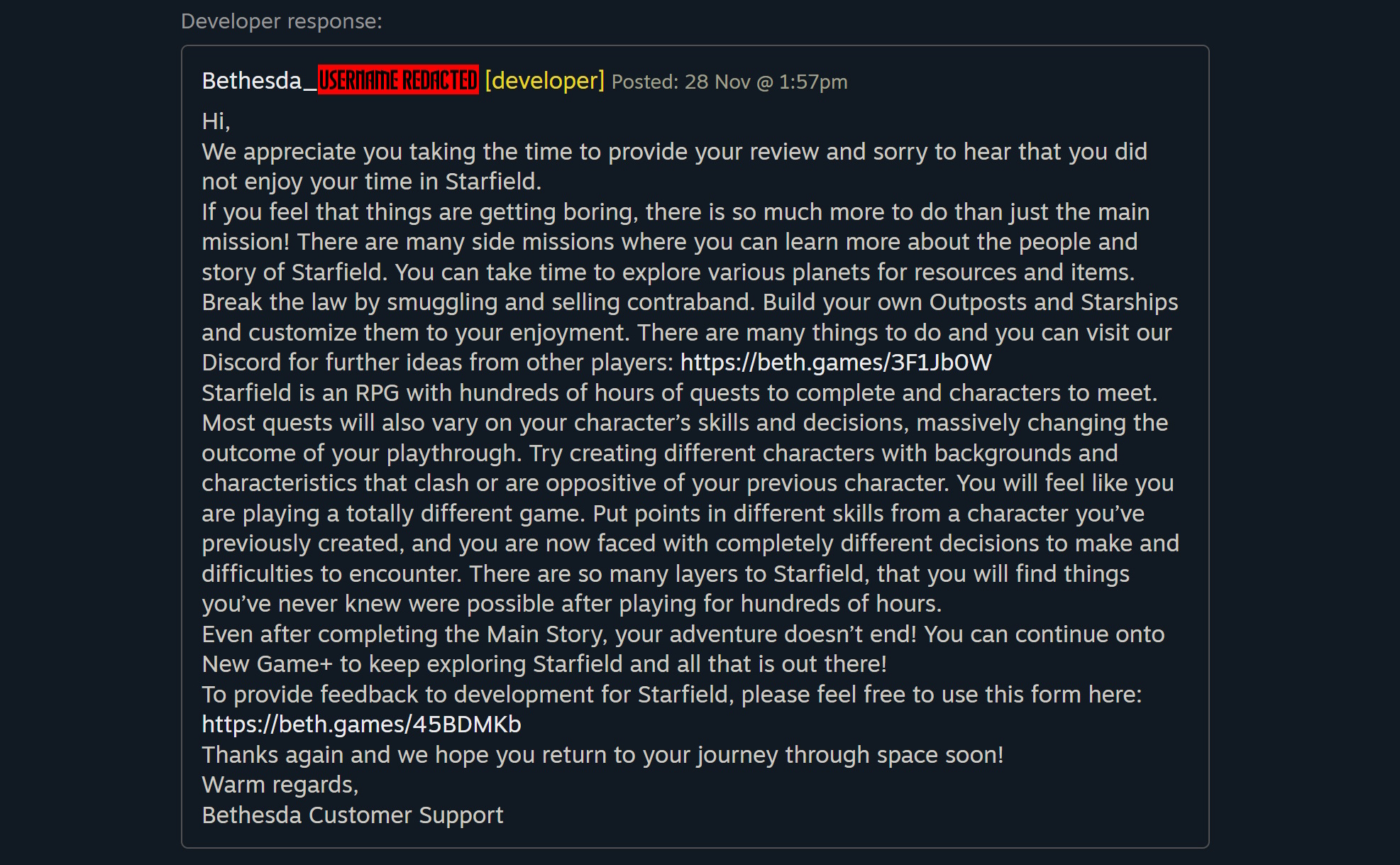
An example of a response to a negative review of Starfield from Bethesda.
(I have redacted the developer’s username for the sake of privacy.)

Here’s a great rule of thumb for any developer, publisher, or creative of any kind: don’t reply or respond to reviews. Ever. Period. End of story. Just don’t do it – it never goes well, and ends up coming across as whiny, arrogant, or both.

There are legitimate points of criticism in practically any work of media, and there are always going to be differences of opinion even among professional critics and journalists. A developer might think that they’ve made the “perfect” video game – but it’s a universal truth that even the absolute best of the best receive the odd negative review. Going after critics and players who have something negative to say is just a bad look – and it shouldn’t happen.

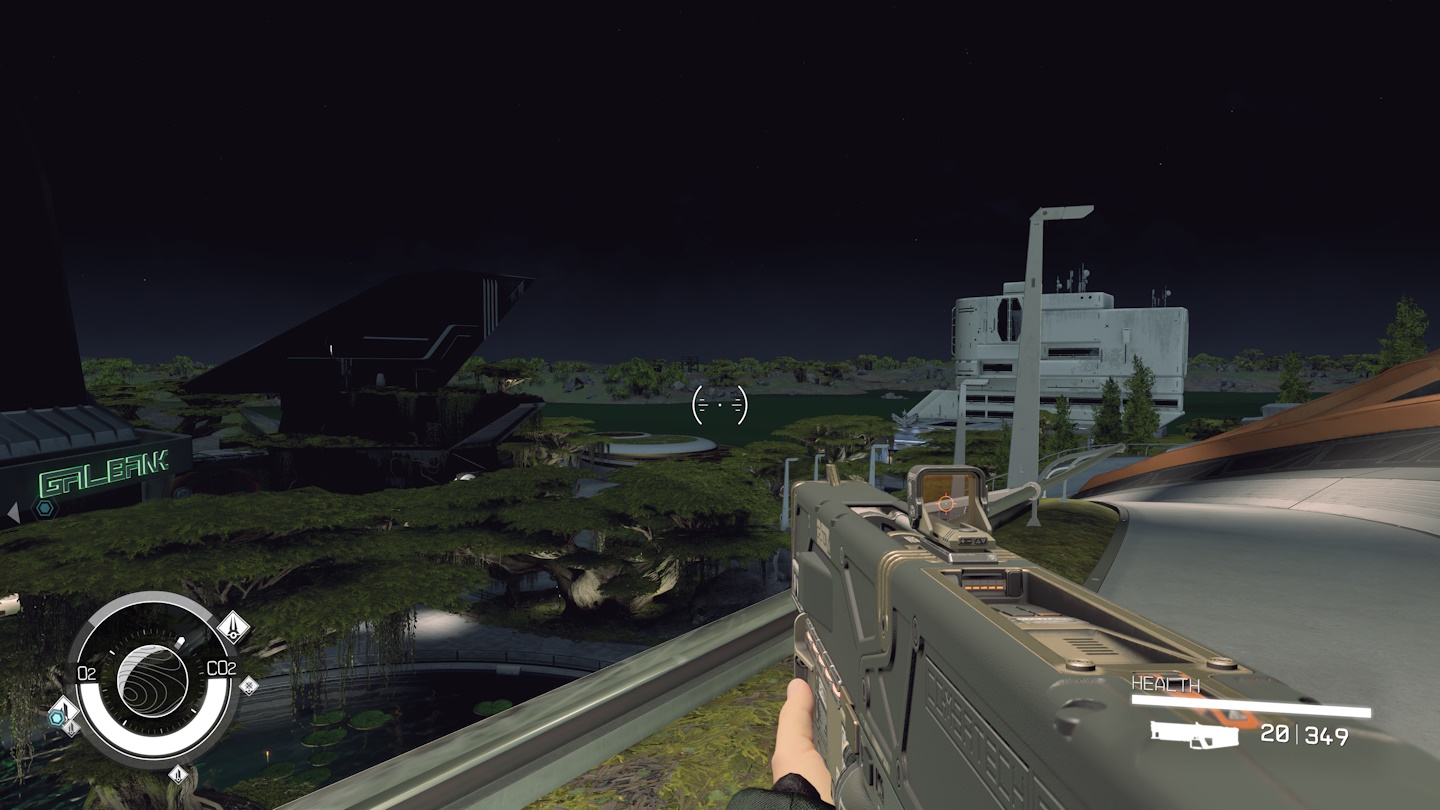
A view of New Atlantis in Starfield.

If Starfield was some obscure indie title made by a couple of amateur developers, I’d still encourage them never to reply to negative reviews – but I could at least understand, on a purely human level, where such responses were coming from. If a project that I’m passionate about and poured a lot of work into suddenly seems to be coming under attack, it’s natural to want to react to that, either to try to convince reviewers to change their minds or to “fight back.” It’s still a bad idea, but at least it’s understandable in that case.

But Bethesda is a big company, and it’s backed up by Microsoft – one of the largest and most valuable corporations on the planet. For these companies to literally pay some of their employees to use official Bethesda developer accounts to reply to negative reviews is just… well, it’s pretty shocking, to tell the truth.

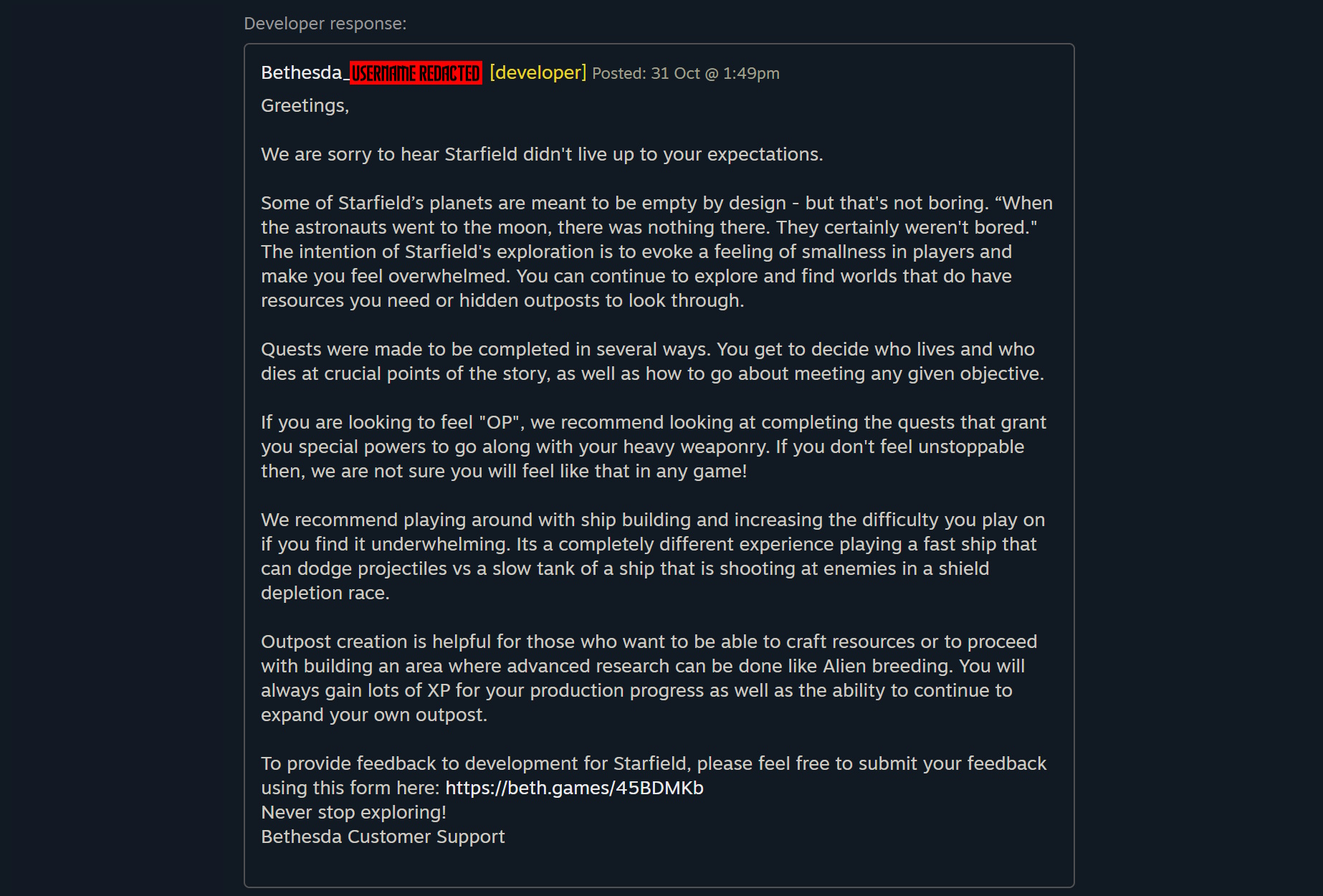
Another response to a negative Steam review.
(Developer username redacted.)

Whether you think Starfield is the “game of the year” or a dumpster fire, you have to accept that other people have different points of view. And Steam reviews are one way in which players can express their opinions about the game. A company the size of Bethesda has to accept that not every review can be positive – and they kind of have to take that on the chin when it happens. It’s a reality of the games industry.

The internet has democratised media criticism – and that’s a fantastic thing. No longer are reviews the sole domain of professional journalists with university degrees; anyone can now offer up their half-baked thoughts and opinions on films, games, and TV shows. And I think that’s absolutely wonderful. One of the best things that Steam does – and other platforms like Metacritic and Rotten Tomatoes do, too – is aggregating reviews, presenting audiences with an overall picture of how players feel about the titles on offer. No one individual review is, therefore, a deal-maker or deal-breaker; players are now able to consider a much broader range of opinions.

The internet has opened up media criticism to anyone with a keyboard – and there are going to be a whole range of opinions on practically every video game, film, and TV show.

But the fact that any old idiot can set up a website – or post a review on a platform like Steam – means that not all reviews are going to be fair, accurate, or even relevant. Some reviews of Starfield criticised the game for absolutely silly reasons, and again on a human level, I can understand wanting to react to that and scream “it’s not fair!” But as a corporation, Microsoft has to be better than that. Bethesda and Xbox have to be professional.

Telling a player that they’re “wrong” to feel the way that they do about Starfield is bizarre – and it doesn’t do anything to endear Bethesda to its fans. Many reviews of Starfield echo my own thoughts on the game: people genuinely wanted to enjoy it, but found it to be visually last-gen, narratively weak, repetitive, and so on. Those criticisms may feel harsh to the talented developers who put a lot of time and effort into creating Starfield… but telling players that they shouldn’t feel that way or they just “don’t get” what Starfield was meant to be is an incredibly silly way to react.

Computer panels in Starfield.

There are two good ways to respond to criticism. Firstly, Bethesda and Xbox can prioritise fixing commonly-noted issues with the game. Rolling out updates and patches that, for example, improve the quality of the in-game map or reduce the frequency of copy-and-paste levels and environments would be a good place to start. Saying to players “we hear your concerns and we’re acting on them” is the appropriate reaction.

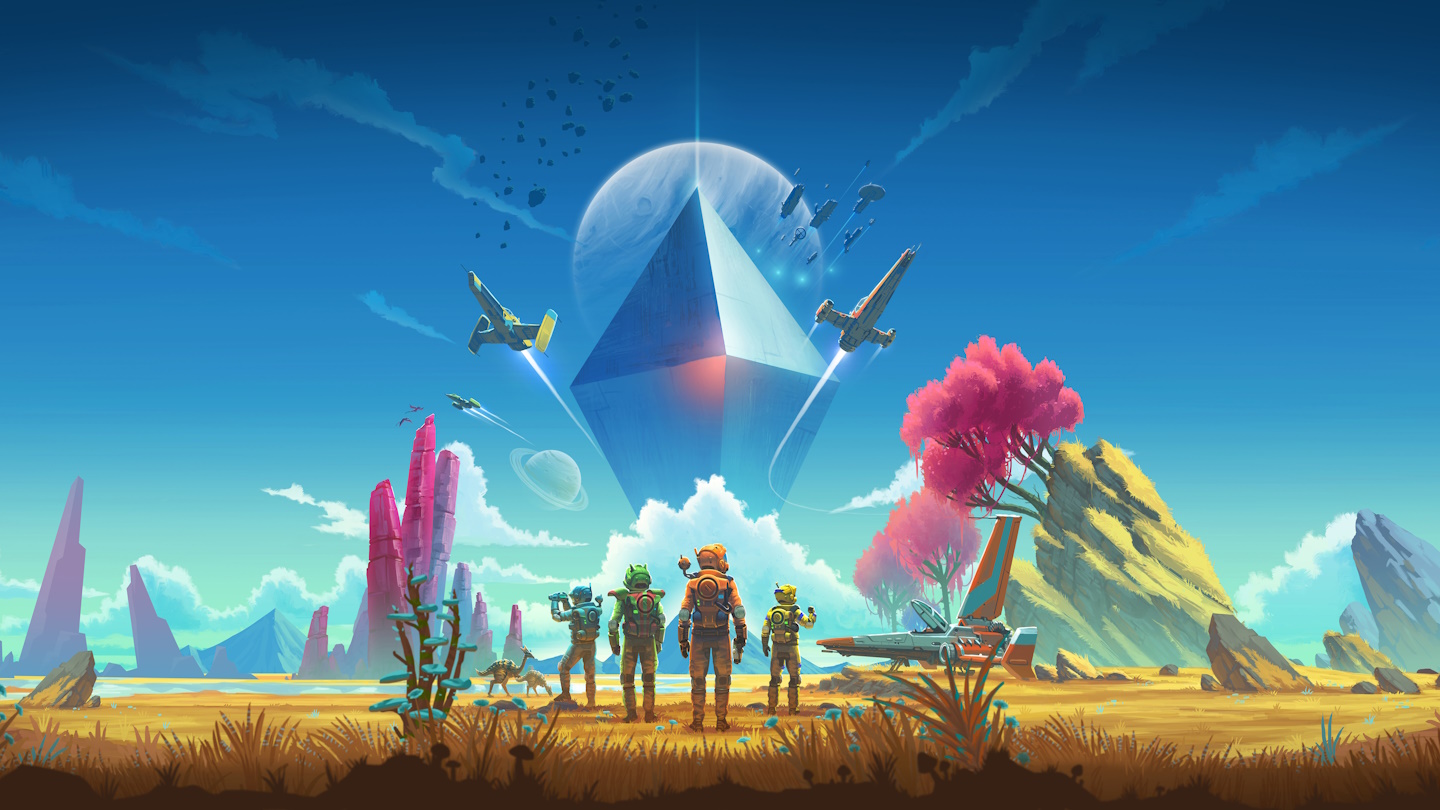
Look at what Hello Games did when No Man’s Sky came in for some absolutely ruthless criticism upon launch. Instead of lashing out at players, telling them to appreciate what the game had to offer, they knuckled down and got back to work. That game has received more free updates and patches than I can count – and it’s now in a far better and more enjoyable state than it was when it launched. Hello Games prioritised adding features that players wanted and fixing issues that players criticised – and the result is that, several years later, the game can claim to have made a comeback.

Bethesda could learn more than one lesson from Hello Games…

The second way to react to criticism is to make sure that the things players don’t like won’t be present in the next game a studio creates. While I personally wasn’t offended by Starfield’s abundance of loading screens, it’s one of the most common complaints about the game that I’ve read over the past couple of months. I don’t believe it’s possible to remove the loading screens in Starfield – thanks to the game’s reliance on the outdated Creation Engine that Bethesda has been using, in some form, for close to a quarter of a century – but it *is* possible for Bethesda to acknowledge the way players feel about loading screens and ensure that they won’t be present to the same extent in The Elder Scrolls VI.

Although the first Mass Effect game was well-received, it picked up criticism in 2007 for its inventory management and weapon overheating. By the time Mass Effect 2 rolled around a few years later, those problems had been fixed. Inventories were streamlined, weapon overheating was gone, and players had a much better time with the game. BioWare took those criticisms on board and worked to ensure that the things players didn’t like were gone from the next game in the series.

Inventory management was criticised in Mass Effect 1 – so BioWare streamlined it in Mass Effect 2.

When Bethesda responds to criticisms of Starfield being “boring” – in the subjective opinion of one player – by saying things like “When the astronauts went to the moon, there was nothing there. They certainly weren’t bored.” it feels incredibly arrogant and smug. Trying to shut down “wrong” opinions about the game by attacking players – some of whom spent dozens or hundreds of hours playing before leaving their reviews – is genuinely shocking coming from a major studio. I’ve never seen anything quite like it, in fact – not on this scale, at any rate.

So Bethesda, here’s some free advice from someone who used to work in video games marketing: just stop. Stop what you’re doing – and if possible, apologise to the players you attacked. Refrain from ever responding to reviews again, and take the criticism as it comes. Even if you’d made an impossibly perfect game, there’d still be some people who didn’t like it or felt it wasn’t for them. That’s the way it goes, and you can’t afford to be so thin-skinned in this marketplace! You are doing actual damage to your reputation by retaliating in this way – so stop it.

A custom spaceship landing on a planet in Starfield.

What a mess, eh?

I really felt that I was done talking about Starfield until this came along. I was quite content to put the game back on the shelf, perhaps returning to it in a year or two to see if expansion packs and updates had improved it. But never in a million years did I expect to see Bethesda lashing out in this way. It’s unprofessional, petty, thin-skinned, and just plain wrong. It has done nothing to address legitimate points of criticism of the game, nor has it helped the reputations of either Starfield or Bethesda itself. I’m genuinely shocked to see this.

Somewhat ironically, given Starfield’s copy-and-paste buildings and “points of interest,” at least some of these reviews seem to have themselves been copied-and-pasted… or perhaps written by an AI bot. I hope Bethesda learns another lesson from this mess and doesn’t keep up this attack on critics of Starfield. No matter how great you might think the game is, and how much fun you had with it, you have to concede that not everyone feels the same way, and that there are genuine reasons to be dissatisfied, underwhelmed, or even downright pissed off at Starfield.

Do better, Bethesda.

Starfield is out now for PC and Xbox Series S/X, and is also available via Game Pass. Starfield is the copyright of Bethesda Game Studios, Xbox Game Studios, and Microsoft. This article contains the thoughts and opinions of one person only and is not intended to cause any offence.
Ten of my gaming pet peeves

A couple of years ago, I put together two lists of things I really dislike about modern video games – but somehow I’ve managed to find even more! Although there’s lots to enjoy when it comes to the hobby of gaming, there are still plenty of annoyances and dislikes that can detract from even the most pleasant of gaming experiences. So today, I thought it could be a bit of fun to take a look at ten of them!

Several of these points could (and perhaps one day will) be full articles or essays all on their own. Big corporations in the video games industry all too often try to get away with egregiously wrong and even malicious business practices – and we should all do our best to call out misbehaviour. While today’s list is somewhat tongue-in-cheek, there are major issues with the way big corporations in the gaming realm behave… as indeed there are with billion-dollar corporations in every other industry, too.

Gaming is great fun… but it has its annoyances!

That being said, this is supposed to be a bit of fun. And as always, I like to caveat any piece like this by saying that everything we’re going to be talking about is nothing more than one person’s subjective take on the topic! If you disagree with everything I have to say, if you like, enjoy, or don’t care about these issues, or if I miss something that seems like an obvious inclusion to you, please just keep in mind that all of this is just the opinion of one single person! There’s always room for differences of opinion; as gamers we all have different preferences and tolerance levels.

If you’d like to check out my earlier lists of gaming annoyances, you can find the first one by clicking or tapping here, and the follow-up by clicking or tapping here. In some ways, this list is “part three,” so if you like what you see, you might also enjoy those older lists as well!

With all of that out of the way, let’s jump into the list – which is in no particular order.

Number 1:
Motion blur and film grain.

Film grain and motion blur options in Ghostwire Tokyo.

Whenever I boot up a new game, I jump straight into the options menu and disable both motion blur and film grain – settings that are almost always inexplicably enabled by default. Film grain is nothing more than a crappy Snapchat filter; something twelve-year-olds love to play with to make their photos look “retro.” It adds nothing to a game and actively detracts from the graphical fidelity of modern titles.

Motion blur is in the same category. Why would anyone want this motion sickness-inducing setting enabled? It smears and smudges even the best-looking titles for basically no reason at all. Maybe on particularly underpowered systems these settings might hide some graphical jankiness, but on new consoles and even moderately good PCs, they’re unnecessary. They make games look significantly worse – and I can’t understand why anyone would choose to play a title with them enabled.

Number 2:
In-game currencies that have deliberately awkward exchange rates.

Show-Bucks bundles in Fall Guys.

In-game currencies are already pretty shady; a psychological manipulation to trick players into spending more real money. But what’s far worse is when in-game currencies are deliberately awkward with their exchange rates. For example, if most items on the storefront cost 200 in-game dollars, but I can only buy in-game dollars in bundles of 250 or 500. If I buy 250 in-game dollars I’ll have a few left over that I can’t spend, and if I buy 500 then I’ll have spent more than I need to.

This is something publishers do deliberately. They know that if you have 50 in-game dollars left over there’ll be a temptation to buy even more to make up the difference, and they know players will be forced to over-spend on currencies that they have no need for. Some of these verge on being scams – but all of them are annoying.

Number 3:
Fully-priced games with microtransactions.

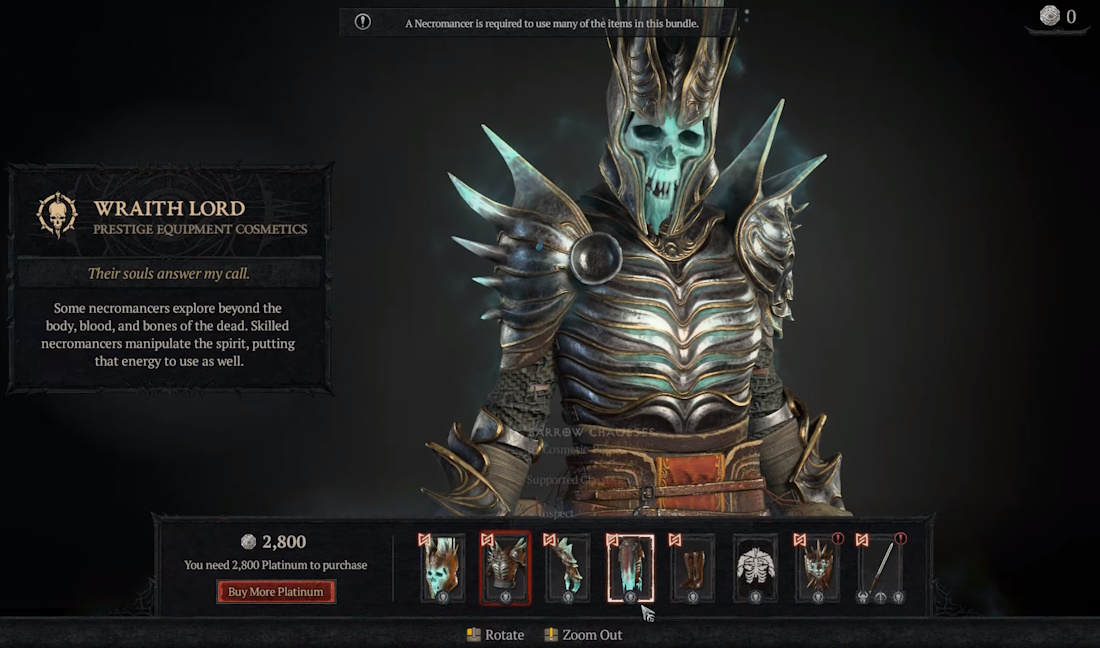
The in-game shop in Diablo IV.

If a game is free – like Fortnite or Fall Guys – then microtransactions feel a lot more reasonable. Offering a game for free to fund it through in-game purchases is a viable business model, and while it needs to be monitored to make sure the in-game prices aren’t unreasonable, it can be an acceptable way for a game to make money. But if a game costs me £65 up-front, there’s no way it should include microtransactions.

We need to differentiate expansion packs from microtransactions, because DLC that massively expands a game and adds new missions and the like is usually acceptable. But if I’ve paid full price for a game, I shouldn’t find an in-game shop offering me new costumes, weapon upgrades, and things like that. Some titles absolutely take the piss with this, too, even including microtransactions in single-player campaigns, or having so many individual items for sale that the true cost of the game – including purchasing all in-game items – can run into four or even five figures.

Number 4:
Patches as big as (or bigger than) the actual game.

No patch should ever need to be this large.

This one kills me because of my slow internet! And it’s come to the fore recently as a number of big releases have been buggy and broken at launch. Jedi: Survivor, for example, has had patches that were as big as the game’s original 120GB download size – meaning a single patch would take me more than a day to download. Surely it must be possible to patch or fix individual files without requiring players to download the entire game all over again – in some cases more than once.

I’m not a developer or technical expert, and I concede that I don’t know enough about this topic on a technical level to be able to say with certainty that it’s something that should never happen. But as a player, I know how damnably annoying it is to press “play” only to be told I need to wait hours and hours for a massive, unwieldy patch. Especially if that patch, when fully downloaded, doesn’t appear to have actually done anything!

Number 5:
Broken PC ports.

This is supposed to be Joel from The Last Of Us Part 1.

As I said when I took a longer look at this topic, I had hoped that broken PC ports were becoming a thing of the past. Not so, however! A number of recent releases – including massive AAA titles – have landed on PC in broken or even outright unplayable states, plagued by issues that are not present on PlayStation or Xbox.

PC is a massive platform, one that shouldn’t be neglected in this way. At the very least, publishers should have the decency to delay a PC port if it’s clearly lagging behind the console versions – but given the resources that many of the games industry’s biggest corporations have at their disposal, I don’t see why we should accept even that. Develop your game properly and don’t try to launch it before it’s ready! I’m not willing to pay for the “privilege” of doing the job of a QA tester.

Number 6:
Recent price hikes.

It must be some kind of visual metaphor…

Inflation and a cost-of-living crisis are really punching all of us in the face right now – so the last thing we need are price hikes from massive corporations. Sony really pissed me off last year when they bragged to their investors about record profits before turning around literally a matter of weeks later and announcing that the price of PlayStation 5 consoles was going to go up. This is unprecedented, as the cost of consoles usually falls as a console generation progresses.

But Sony is far from the only culprit. Nintendo, Xbox, Activision Blizzard, TakeTwo, Electronic Arts and practically every major corporation in the games industry have jacked up their prices over the last few years, raising the basic price of a new game – and that’s before we look at DLC, special editions, and the like. These companies are making record-breaking profits, and yet they use the excuse of “inflation” to rip us off even more. Profiteering wankers.

Number 7:
The “release now, fix later” business model is still here.

The player character falling through the map in Star Wars Jedi: Survivor.

I had hoped that some recent catastrophic game launches would have been the death knell for the “release now, fix later” business model – but alas. Cyberpunk 2077 failed so hard that it got pulled from sale and tanked the share price of CD Projekt Red… but even so, this appalling way of making and launching games has persisted. Just in the first half of 2023 we’ve had titles like Hogwarts Legacy, Redfall, Jedi: Survivor, Forspoken, and The Lord of the Rings: Gollum that arrived broken, buggy, and unplayable.

With every disaster that causes trouble for a corporation, I cross my fingers and hope that lessons will be learned. But it seems as if the “release now, fix later” approach is here to stay. Or at least it will be as long as players keep putting up with it – and even defending it in some cases.

Number 8:
Day-one DLC/paywalled day-one content.

An example of a “digital deluxe edition” and its paywalled content.

It irks me no end when content that was clearly developed at the same time as the “base version” of a game is paywalled off and sold separately for an additional fee. The most egregious example of this that comes to mind is Mass Effect 3′s From Ashes DLC, which was launched alongside the game. This DLC included a character and missions that were completely integrated into the game – yet had been carved out to be sold separately.

This practice continues, unfortunately, and many modern titles release with content paywalled off, even if that content was developed right along with the rest of the game. Sometimes these things are designed to be sold as part of a “special edition,” but that doesn’t excuse it either. Even if all we’re talking about are character skins and cosmetic content, it still feels like those things should be included in the price – especially in single-player titles. Some of this content can be massively overpriced, too, with packs of two or three character skins often retailing for £10 or more.

Number 9:
Platform-exclusive content and missions.

Spider-Man was a PlayStation-only character in Marvel’s Avengers.

Some titles are released with content locked to a single platform. Hogwarts Legacy and Marvel’s Avengers are two examples that come to mind – and in both cases, missions and characters that should have been part of the main game were unavailable to players on PC and Xbox thanks to deals with Sony. While I can understand the incentive to do this… it’s a pretty shit way of making money for a publisher, and a pretty scummy way for a platform to try to attract sales.

Again, this leaves games incomplete, and players who’ve paid full price end up getting a worse experience or an experience with less to do depending on their platform of choice. That’s unfair – and it’s something that shouldn’t be happening.

Number 10:
Pre-orders.

Cartman from South Park said it best:
“You know what you get for pre-ordering a game? A big dick in your mouth.”

Pre-ordering made sense – when games were sold in brick-and-mortar shops on cartridges or discs. You wanted to guarantee your copy of the latest big release, and one way to make sure you’d get the game before it sold out was to pre-order it. But that doesn’t apply any more; not only are more and more games being sold digitally, but even if you’re a console player who wants to get a game on disc, there isn’t the same danger of scarcity that there once was.

With so many games being released broken – or else failing to live up to expectations – pre-ordering in 2023 is nothing short of stupidity, and any player who still does it is an idiot. It actively harms the industry and other players by letting corporations get away with more misbehaviour and nonsense. If we could all be patient and wait a day or two for reviews, fewer games would be able to be launched in unplayable states. Games companies bank on a significant number of players pre-ordering and not cancelling or refunding if things go wrong. It’s free money for them – and utterly unnecessary in an age of digital downloads.

So that’s it!

A PlayStation 5 console.

We’ve gone through ten of my pet peeves when it comes to gaming. I hope this was a bit of fun – and not something to get too upset over!

The gaming landscape has changed massively since I first started playing. Among the earliest titles I can remember trying my hand at are Antarctic Adventure and the Commodore 64 title International Soccer, and the first home console I was able to get was a Super Nintendo. Gaming has grown massively since those days, and the kinds of games that can be created with modern technology, game engines, and artificial intelligence can be truly breathtaking.

But it isn’t all good, and we’ve talked about a few things today that I find irritating or annoying. The continued push from publishers to release games too early and promise patches and fixes is particularly disappointing, and too many publishers and corporations take their greed to unnecessary extremes. But that’s the way the games industry is… and as cathartic as it was to get it off my chest, I don’t see those things disappearing any time soon!

All titles mentioned above are the copyright of their respective developer, studio, and/or publisher. This article contains the thoughts and opinions of one person only and is not intended to cause any offence.
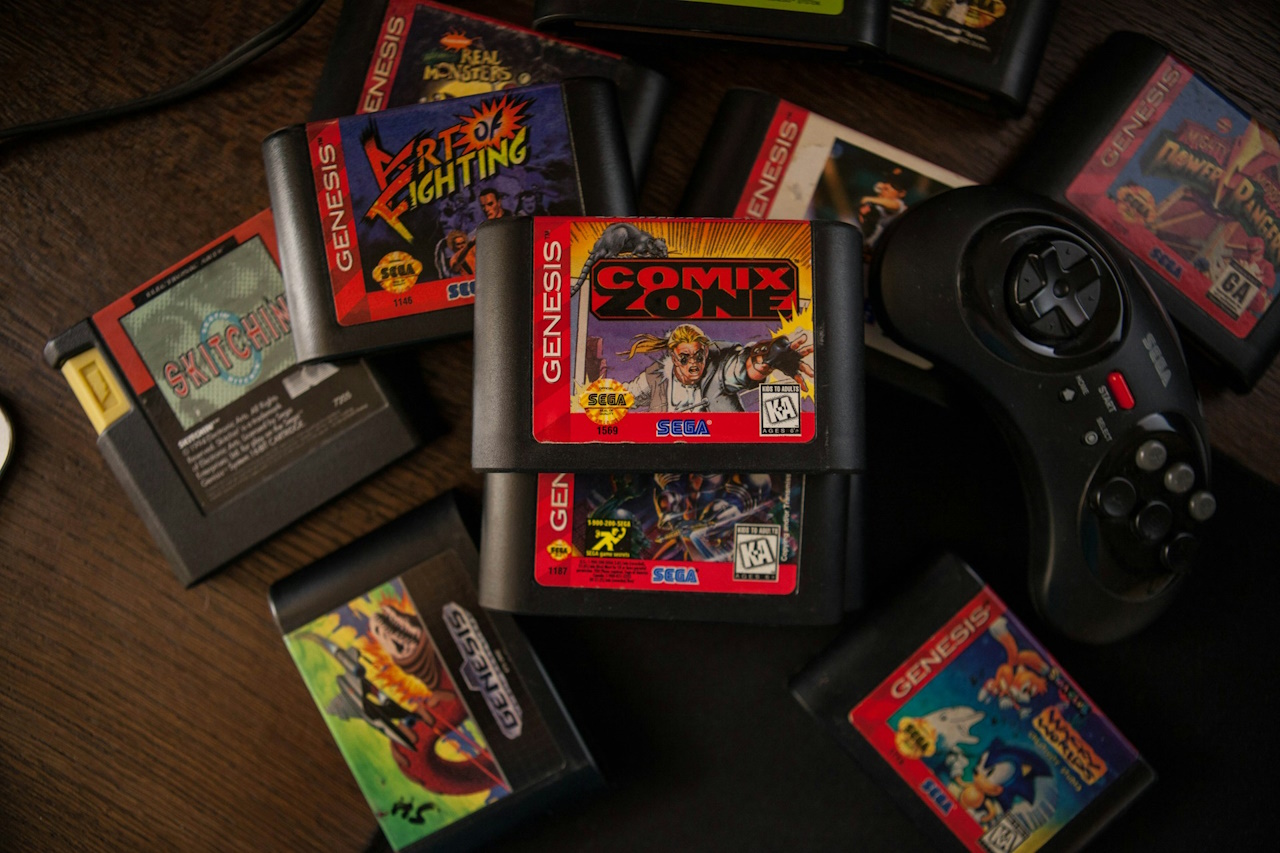
The real tragedy of The Lord of the Rings: Gollum

The Lord of the Rings: Gollum has become the latest game in 2023 to be launched in a buggy, broken state. Some outlets have gone so far as to call it “the worst game of the year,” and in a year where titles like Hogwarts Legacy, Jedi: Survivor, Redfall, and The Last Of Us Part 1 have been sharted out in unfinished states by major publishers, there’s a lot of competition for that title!

I want to try to treat The Lord of the Rings: Gollum as fairly as possible. Developer and publisher Daedalic Entertainment isn’t one of the games industry’s biggest corporations, with relatively few titles having been developed across its fifteen-year history – and even fewer that I’d heard of. A company with around 100 employees made Gollum, whereas corporations like Activision Blizzard or Microsoft have far more resources at their disposal when it comes to game development.

A promotional screenshot of the game.

As much as I detest the “release now, fix later” business model that too many games corporations have adopted over the past couple of console generations, smaller studios working on passion projects have always been in somewhat of a different category. I’m far more willing to be sympathetic to an independent game developer than I am to one of the industry’s major publishers, simply because the realities of game development and working to a deadline or with a limited budget can go some way to explaining why a game may be released in a worse-than-expected state.

With Gollum having already suffered several lengthy delays, and with Daedalic Entertainment being a relatively small studio, I could forgive a degree of jankiness. That being said, I could forgive quite a bit more jankiness if Gollum had been more appropriately-priced, say around the £30 mark instead of greedily pushing for £50. And of course, a “special edition” will set you back an extra £10.

Gollum in an out-of-bounds area.

Some adverts and marketing material for Gollum have tried to paint the game as the kind of expansive adventure title that you’d get from a major publisher, and combined with the high price, I fear that unrealistic expectations were set. Even if the game had been released in a fully-complete, bug-free state, I daresay a lot of folks would still have found Gollum’s core gameplay and story to be underwhelming.

To me, there are two lessons from Gollum that the games industry – and smaller studios in particular – need to pay attention to. The first, of course, is that the accursed “release now, fix later” business model never works. No matter how good your game could have been, if you try to launch it before it’s ready, you’re going to have a bad time! The second lesson is that games need to be targeted, marketed, and priced appropriately. Gollum isn’t a AAA action-adventure that could go toe-to-toe with the likes of Shadow of Mordor or the earlier Lord of the Rings movie tie-in games. So why present it as that kind of experience? Marketing the game like that was only ever going to lead to disappointment.

Gollum was never meant to be comparable to the likes of Shadow of Mordor.

I don’t know what may have transpired behind the scenes at Daedalic Entertainment that led to Gollum’s disappointing release. I don’t think it’s an unfair assumption, though, that the game had a difficult and troubled development – perhaps with a degree of “feature creep” as the original vision for a small-scale title comparable to Daedalic’s past offerings may have been expanded. Either way, delays clearly added to the game’s cost, and eventually Daedalic decided that they couldn’t wait any longer and needed to push the game out. The result was Gollum’s troubled launch.

On a personal note, The Lord of the Rings: Gollum is one of the titles I’d been looking forward to in 2023. Not simply because a return to the world of Middle-earth is always welcome in the gaming realm, but because it seemed like something genuinely different. A game in which the protagonist is an anti-hero or even a contemptible villain was already enough to pique my curiosity, but there was also the kind of gameplay that Gollum seemed to be promising: puzzle-heavy, stealthy, and with a degree of platforming.

Gollum can get stuck in the environment due to a bug.

For me, the real tragedy of Gollum’s release isn’t just that a game I was looking forward to was pushed out too early in a broken, unfinished state. It isn’t even that Gollum is unlikely to ever be completely fixed and brought up to the level that it should be able to reach. No, the real tragedy of this whole situation is that it will almost certainly dissuade other developers – and especially other publishers – from taking risks like this in future.

However you look at it, the decision to create a stealth-puzzle-platformer based on a character like Gollum was a huge risk. This is the kind of game that just doesn’t get made any more, with the games industry retreating to the safest, most overtrodden ground for the most part. Fewer studios are willing to take on risky projects like Gollum, with publishers doubling-down on well-known franchises, popular genres, and looking for any kind of online experience that can generate “recurring revenue streams.”

Making a game like this was already a risk.

With the undeniable failure of Gollum – a failure that seems impossible to overcome, even if Daedalic continues to work on the game for years to come like Hello Games has done with No Man’s Sky – there’s a real danger that the lesson the games industry as a whole will take from this mess will be to continue its retreat from any project that falls outside of the mainstream. Gollum was always going to be a game with limited appeal; a niche product at best. It was also a game that felt innovative in both its premise and the kind of gameplay that it offered – and I truly fear that fewer games that meet those kinds of descriptors will be greenlit in future.

The games industry is already dominated by a handful of genres, most of which haven’t offered much by way of genuine innovation in years. Corporations are quick to chase the next “big” trend, with a focus on whatever looks likely to rake in the largest amount of cash possible. What was appealing about a game like Gollum, at least to me, was that it was a title that didn’t seem to care about those things; it knew what it wanted to be, what kind of gameplay it wanted to employ and what kind of story it aimed to tell, and wasn’t about chasing trends. The games industry needs more of that – because that’s where innovation almost always comes from.

Gollum with a baby bird in a promotional screenshot.

Even on a good day, Gollum was never going to be a genre-busting epic. If it had launched in a better state, I daresay I’d have had fun with it for the twelve or so hours that it would’ve lasted, then I’d have put it down and moved on. But the games industry needs these kind of experiences. It needs the diversity that smaller games bring. And it needs at least some of those titles to exist outside of the self-published, independent space. Gollum could have been precisely the kind of “double-A” release that used to exist in between the big franchises and the small independent titles. Once upon a time, there were a fair few games in that category.

My fear is that the spectacular failure of Gollum, which has been one of the main gaming news headlines over the past week or so, will have a chilling effect that will extend far beyond Daedalic Entertainment. Projects that aim to create a game that might be a bit more of a niche product, outside of the mainstream and perhaps not in one of the biggest genres, will become suspect. Smaller-scale games in that “double-A” space will be less likely to be backed. And innovative, potentially-interesting stories and ideas will be passed over in favour of projects that feel “safer” to publishers.

I hope that I’m wrong, and that smaller studios won’t be impacted by Gollum’s very public failure. But I really do fear for the repercussions that this debacle could have on an industry that needs titles like Gollum. Not every game is going to be Call of Duty or Fortnite, and especially for players who long for single-player experiences, games like Gollum that offer something a little different will continue to appeal. Let’s just hope that this broken, borderline-unplayable mess doesn’t ruin that for everyone else.

The Lord of the Rings: Gollum is out now for PC, PlayStation 5, and Xbox Series S/X. The Lord of the Rings: Gollum is the copyright of Daedalic Entertainment. The Lord of the Rings and Middle-earth are the copyright of the Tolkien Estate. Some images and promotional art used above are courtesy of Daedalic Entertainment. Images of bugs and glitches via Digital Foundry on YouTube. This article contains the thoughts and opinions of one person only and is not intended to cause any offence.
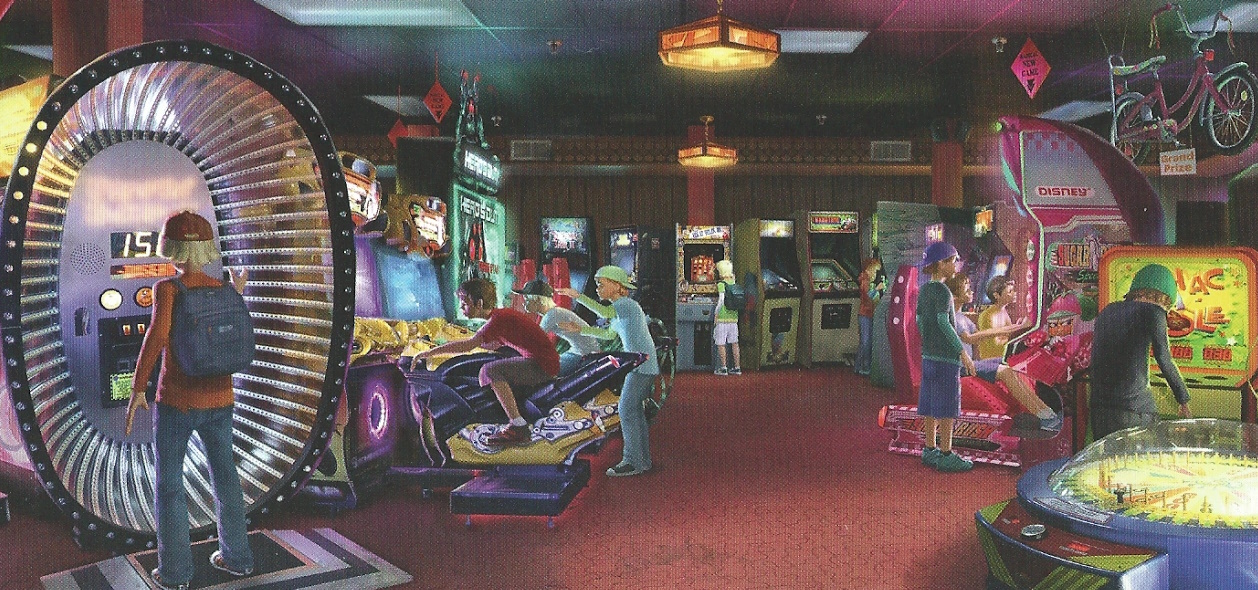
Microsoft buys Activision Blizzard

Well that certainly came out of nowhere! Microsoft has opened its wallet once again, this time buying up massive video games publisher Activision Blizzard for a whopping $69 billion. Nice.

After receiving criticism during the previous console generation for the lack of exclusive games on its Xbox One system, Microsoft has stepped up in a big way in the last few years. Early moves brought on board companies like Obsidian and Rare, and then last year came another shock announcement: the acquisition of ZeniMax – the parent company of Bethesda. All of those laid the groundwork for something big, and Microsoft has now added Activision Blizzard to its lineup, bringing on board hugely popular games and franchises like Call of Duty, Overwatch, World of Warcraft, and even popular mobile game Candy Crush.

Microsoft will soon own Candy Crush!

At almost ten times the price of its Bethesda purchase, Microsoft clearly has big plans for Activision Blizzard and its games. Even by the standards of other corporate takeovers, $69 billion is a lot of money – an almost unfathomable amount. As Microsoft looks to expand its Xbox and PC gaming platforms, though, it makes a lot of sense to bring on board a company like Activision Blizzard.

Keep in mind that Microsoft is currently pushing hard to take gaming as a whole in a new direction, pioneering a subscription model based on the likes of Netflix – indeed, Game Pass was originally pitched as the video game equivalent of Netflix. Though on the surface the company seems to be taking a two-pronged approach, with its Xbox home console family and PC gaming being separate, in many ways that isn’t really the case any more. Microsoft’s goal is to bring these two platforms as close together as possible, offering most games to players regardless of their chosen platform. One need only look to two of the biggest releases of the past year as an example: both Halo Infinite and Forza Horizon 5 came to both Xbox and PC, despite originally being franchises that were exclusive to consoles.

Forza Horizon 5 was a massive title for both Xbox and PC – and came to Game Pass on release day.

Let’s step back for a moment. My initial reaction to this news was disbelief! But after double-checking my sources and confirming that this was, in fact, not some kind of elaborate prank, my next thoughts were of the Activision Blizzard scandal, and how from Microsoft’s point of view this may not have been the best time to announce this acquisition.

There’s no denying that Activision Blizzard is a tainted brand in the eyes of many players, with the severity of the sexual abuse scandal cutting through to make the news in mainstream outlets when it broke last year. Perhaps somewhat counter-intuitively, the scandal is part of the reason why Microsoft may have felt that the timing was right – Activision Blizzard shares had lost basically a third of their value over the last few months (down from almost $100 per share to below $65 prior to the acquisition announcement). Microsoft arguably made a savvy deal in some respects.

Activision Blizzard is a company embroiled in scandal right now.

There also seems to be a sense from at least some quarters of the gaming press and gaming community that Microsoft is “swooping in” to save Activision Blizzard from the scandal, perhaps even preserving the jobs of some employees or protecting games and franchises from cancellation. I didn’t really expect this reaction, and while it’s safe to say there’s been plenty of criticism to balance out some of the positivity, overall the mood of players seems to be more in favour of this acquisition than opposed to it.

We should talk about exclusivity before we go any further. Despite the hopeful – almost desperate – claims being made in some quarters, Microsoft isn’t going to publish Activision Blizzard titles on PlayStation forever. Once the deal has gone through and existing contracts have been fulfilled, expect to see all of Activision Blizzard’s new titles and big franchises become Xbox, PC, and Game Pass exclusives.

Starfield is a highly-anticipated Bethesda title – and it will be an Xbox and PC exclusive following Microsoft’s acquisition of Bethesda.

This is exactly what happened with Bethesda. Some players clung to the argument that Microsoft somehow wouldn’t want to limit the sales of some of these games to Xbox and PC players only, with some even going so far as to claim that we were witnessing the “death of console exclusives.” That hasn’t happened (to put it mildly) and we’re now expecting massive games like Starfield to become Xbox, PC, and Game Pass exclusives.

When Microsoft first jumped into the home console market in 2001 with the original Xbox, a lot of games industry critics and commentators argued that the company would open its wallet and spend, spend, spend in order to compete with the likes of Sega, Nintendo, and Sony. Microsoft certainly made some sound investments in games early on, but it’s really taken almost twenty years for some of those concerns to be borne out – and by now, the gaming landscape has so thoroughly shifted that it doesn’t feel like a bad thing any more.

It’s been more than two decades since Microsoft jumped into the home console market.

When Microsoft announced the acquisitions of the likes of Oblivion, Rare, and even Bethesda, there was still a sense that the games industry was pursuing its longstanding business model: develop games, release them, sell them, turn a profit, repeat. But now I believe we’re actually in the midst of a major realignment in the way the entire games industry operates – a realignment that’s shaping up to be as disruptive as Netflix’s emergence as a streaming powerhouse in the early 2010s.

Microsoft isn’t making all of these big purchases just to make games and sell them individually. That approach will remain for the foreseeable future, of course, but it isn’t the company’s primary objective. In my view, this is all about Game Pass – Microsoft’s subscription service. Microsoft has seen how successful the subscription model has been for the likes of Netflix – but more importantly for the likes of Disney with Disney+.

Disney+ is both an inspiration and a warning for Microsoft and Game Pass.

As streaming has become bigger and bigger in the film and television sphere, more companies have tried to set up their own competing platforms. In doing so, they pulled their titles from Netflix – something we saw very recently with Star Trek: Discovery, for example, which will now be exclusively available on Paramount+. Microsoft is not content to simply license titles from other companies – like Activision Blizzard – because they fear that a day is coming soon when other companies try to become direct competitors with their own platforms – muscling in on what Microsoft sees as its turf. If Sony gets its act together and finally manages to launch a Game Pass competitor on its PlayStation consoles, Microsoft will be in an out-and-out scrap, and pre-empting that fight is what acquisitions like this one are all about.

If Netflix had had the foresight to use a portion of the money it had been making in the early 2010s to buy up film studios or television production companies, it would have lost far fewer titles over the last few years, and wouldn’t have needed to pivot so heavily into creating its own content from scratch. I think that the Activision Blizzard deal is one way for Microsoft to shore up its own subscription service ahead of a potential repeat of the “streaming wars” in the video game realm.

The official announcement image.

So it isn’t just about “more games for Game Pass” – this deal is about Microsoft’s vision for the future of gaming as a medium, and also their concerns about other companies trying to elbow their way in and become serious competitors. Spending $69 billion may be a huge financial hit up front, but if it pays off it will mean that Game Pass will remain competitive and profitable for years – or even decades – to come. That’s the attitude that I see through this move.

And I don’t believe for a moment that Microsoft is done. Activision Blizzard may be the company’s biggest acquisition to date, but it won’t be the last. When the deal is done and has officially gone through – something that most likely won’t happen for at least twelve months – expect to see Microsoft lining up its next big purchase, and it could be yet another games industry heavyweight. There have been rumours in the past that Microsoft had considered making a move for Electronic Arts, for example… so watch this space!

Could another big purchase be on the cards in the next couple of years?

As a player, these are exciting times – but also turbulent times. I increasingly feel that it’s hardly worth purchasing brand-new games, because several massive titles that I’ve spent money on have ended up coming to Game Pass. In the last few days the Hitman trilogy has arrived on the platform, Doom Eternal landed on Game Pass last year, and even Mass Effect: Legendary Edition is now on the platform less than a year after its release. What’s the point in buying any new games any more? Let’s just wait and it seems Microsoft will eventually bring them to Game Pass!

This is, of course, an attitude Microsoft wants to foster. If Game Pass is an appealing prospect, players will stop buying games. Once they’re “locked in” to the Game Pass ecosystem, Microsoft thinks it’s got them for the long haul. This is how Netflix, Disney+, and other streaming platforms view their audiences, too: once someone has been hooked in, they tend to stay hooked in. That’s why they put the majority of their time and energy into recruiting new subscribers rather than ensuring current subscribers stay signed up.

This is all about Game Pass.

So it’s an interesting moment in gaming, and one that has the potential to herald an entirely new chapter in the medium’s history. People who decry the death of buying individual titles increasingly feel like they’re on the losing side; relics of an era that’s rapidly drawing to a close. Subscriptions have basically become the norm in film and television, with sales of DVDs, Blu-rays, and the like in what seems to be terminal decline. Television viewership, along with cable and satellite subscriptions, are likewise declining.

And who really feels that the death of broadcast television is something to mourn? Subscription platforms offered viewers a better deal – so they snapped it up. If Game Pass can do the same for gaming, more and more players will jump on board.

The Call of Duty series will soon join Game Pass.

Speaking for myself, I’ve been a subscriber to the PC version of Game Pass for almost a year-and-a-half. In that time, my subscription has cost me £8 per month ($10 in the US, I think). Call it eighteen months, and that’s £144 – or roughly the same amount of money as three brand-new full-price video games. In that time I’ve played more than three games, meaning Game Pass feels like a pretty good deal. If Microsoft continues to splash its cash on the likes of Activision Blizzard, bringing even more titles to the platform without asking me to pay substantially more for my subscription, then as a consumer I gotta say it’s worth it.

One corporate acquisition on its own does not irreversibly shift the gaming landscape. But we’re on a trajectory now that I believe will see gaming move away from the old way of doing business into a new era where subscriptions will be a dominant force. There will be advantages and disadvantages to this, but I don’t see it slowing down. As the likes of Sony and even Nintendo try to compete with Game Pass, if anything we’re likely to see this trend speed up.

Watch this space – because this certainly won’t be Microsoft’s last big move.

All titles mentioned above are the copyright of their respective studio, developer, and/or publisher. Some promotional screenshots courtesy of IGDB. This article contains the thoughts and opinions of one person only and is not intended to cause any offence.
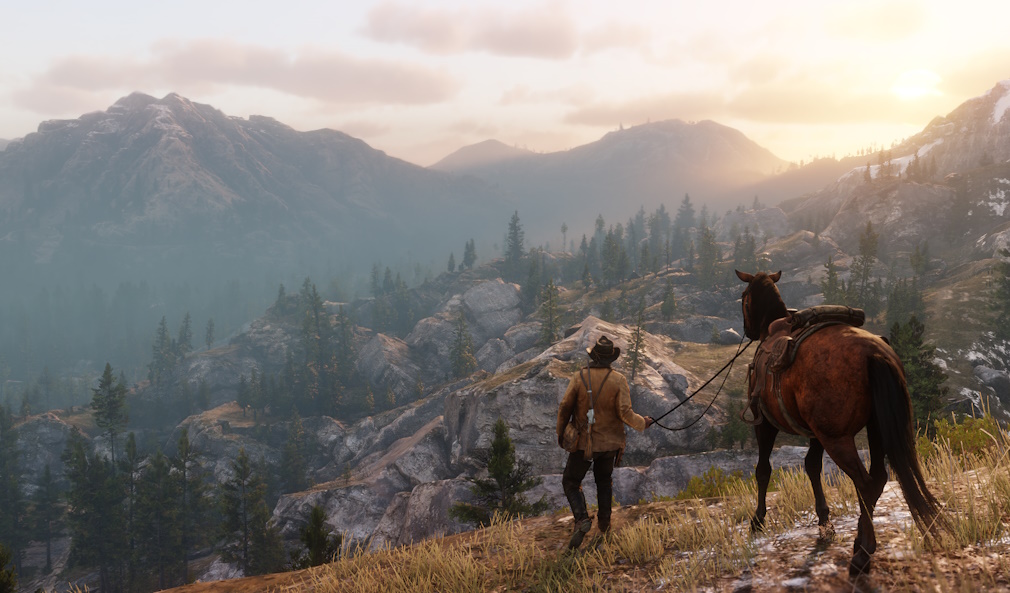
Wrangling with the Activision Blizzard scandal

I’ve found it difficult to know what to say about the Activision Blizzard scandal, and how to cover the story in a way that’s appropriate in style and tone. It goes without saying that what happened at Activision Blizzard, as well as the company’s pathetic reaction to it, is incredibly serious, but I feel that a lot of the commentary and discussion around the scandal, even from well-established critics and publications, missed the mark.

To briefly recap what’s been going on in case you didn’t know, Activision Blizzard has been sued by the state of California in the United States for violating the rights of female (and other) employees. Activision Blizzard is accused of fostering a culture of sexual harassment and discrimination that is so intense that at least one employee is believed to have committed suicide following an extended period of harassment. The lawsuit is ongoing and unresolved at time of writing, but Activision Blizzard has acknowledged that there are “issues” with its corporate culture, and at least one senior executive has now resigned. Activision Blizzard employees also staged a walkout in response to the company’s handling of the scandal.

Some outlets have referred to this as a “frat boy” culture (a reference to the loutish, sexually aggressive behaviour of some college fraternities in the United States), but I don’t think that term comes close to describing what’s alleged to have happened at Activision Blizzard. Nor does it do justice to the severity of the accusations.

Sexual harassment is said to be rife at Activision Blizzard.

Other reports have suggested that this kind of sexual harassment is a problem that plagues the games industry as a whole. I agree, though I’d also add that this kind of behaviour can happen at any kind of company in any industry; it’s an industry problem, not specifically a games industry one. Tackling institutional or systemic misogyny and sexual harassment in the workplace is clearly an ongoing struggle, particularly in the United States and other parts of the world where workers’ rights are not as well-protected as they are in parts of Europe, for example.

I used to work in the games industry. I spent several years with a large games company based in Germany, and as a freelancer I worked with about a dozen small and large games companies in the years after I left my position at that company. I was fortunate that, in the decade or so I spent working in the industry, I never saw or experienced harassment or bullying of that nature. But as I often say, one person’s experience is not a complete worldview, and the fact that I didn’t see sexual harassment first-hand during the years I worked in the industry doesn’t mean it wasn’t happening.

Activision Blizzard has this statement on their website – quite unironically, it seems.

In recent years we’ve learned a lot more than ever before about abusive management practices and “corporate cultures” at large video games companies. Rockstar is just one of many companies that have been called out for their awful practices during “crunch” times – and crunch is something I definitely saw and experienced first-hand during my time working in the industry. Other companies like CD Projekt Red and even the sainted Nintendo have been criticised for this as well. Then there was Ubisoft, a company which faced comparable accusations of sexual harassment – and worse – to Activision Blizzard.

All of these cases – and many more besides – follow a pattern which is all too familiar in the days of 24/7 rolling news and social media outrage mobs: the story blows up, has its five minutes in the spotlight, then disappears. News of the Ubisoft scandal broke barely a year ago, yet practically no outlets, publications, or even independent commentators have so much as mentioned it for months. New Ubisoft games like Watch Dogs: Legion, Immortals Fenyx Rising, and Assassin’s Creed Valhalla have all been released since the scandal, and what happened? Practically all of the outlets and critics who went hell-for-leather against Ubisoft for all of five minutes forgot the scandal and reviewed their latest games – often giving them glowing recommendations. Assassin’s Creed Valhalla has an average score from professional critics of 80/100 on Metacritic, for example.

A similar scandal involving Ubisoft doesn’t appear to have harmed its recent games.

So we come to the Activision Blizzard scandal itself. The reaction from amateur and professional commentators alike was unanimous – the company is to be condemned for not only allowing this behaviour, but rewarding those involved and covering for senior managers and executives. And that is a sentiment I wholeheartedly agree with, not that it should even need to be said. Practically everyone who hears about what’s been going on at Activision Blizzard will have felt that such behaviour is unacceptable – and potentially criminal, as the lawsuit alleges. Those instincts are spot on, and I don’t disagree in the slightest.

But then I started to hear some very familiar statements and promises, accompanied by the same semi-hysterical language and, in some cases, blatant over-acting on podcasts and videos by folks trying to channel their original instinctive outrage into clicks, views, and advertising revenue. Critics and publications began inserting themselves into the story. Articles and columns weren’t about Activision Blizzard so much as they were about the writers and critics themselves, and how the scandal made them feel.

Some of this is unavoidable; when people are paid to discuss a big news story, how they feel about the story often creeps into even the most well-intentioned journalism. But in this case a lot of folks seemed to go way beyond that, promising their audiences that they will “boycott” future Activision Blizzard releases and discussing at length their own feelings and opinions on the subject. Many of these stories ceased to be about Activision Blizzard and became a “look at me” kind of thing, with publications and critics using the backdrop of the scandal to score attention, clicks, and money for themselves.

A visual metaphor.

This happens a lot on social media, where scandals and news stories are often less about the events themselves and more about the people discussing them. The term “virtue signalling” is often used to derisively critique people who feign outrage or interest in a story while it’s popular, and there seemed to be an awful lot of virtue signalling coming from professional and amateur commentators as news of the Activision Blizzard scandal was breaking.

Having been down this road before, both with companies that saw comparable scandals and with other companies that received justified or unjustified criticism, let me say this: the vast majority of the folks promising to “boycott” future Activision Blizzard titles will do nothing of the sort. A small minority may stick to their guns beyond the next few weeks and months, but eventually critics and publications will return to the company. Activision Blizzard has big releases planned, including the next Call of Duty title, a remaster of Diablo II, and the long-awaited Diablo IV. Not to mention that the company manages hugely popular online titles like Overwatch and World of Warcraft. I simply don’t believe that most of the people who’ve jumped on this story and criticised the company in such a public way will be able to resist the temptation of talking about some of these titles – particularly if hype and excitement grows, as it may for the likes of Diablo IV.

I’m pretty sure that a lot of critics and commentators will be back for Diablo IV, regardless of what they may have said about Activision Blizzard in the last few days.

We’ve been here too many times for me to have any confidence in people sticking to any promises or commitments that they may have made in the heat of a (scripted and well-planned) rant to camera about Activision Blizzard. Not only that, but the backlash a publication or critic can expect to receive for reneging on such a promise is basically non-existent. They might get a few comments calling them out for going back on their word, but that’s all. If history is any guide, most readers or viewers won’t even remember the Activision Blizzard scandal in a few weeks’ time, let alone be willing to hold a publication or critic to account for failing to live up to a commitment not to cover their future releases.

As the news of the scandal was breaking and I saw the increasingly manufactured outrage from professionals and amateurs unfolding, I felt there was no way to cover the story without getting sucked into all of this. I don’t like my website to be a space for negativity, so I haven’t talked about the Activision Blizzard scandal until now.

Trying to step back from the quagmire surrounding the story and address it head-on is a challenge, but here we go. There needs to be a complete overhaul of Activision Blizzard from the top down. Senior executives and managers need to be investigated to see what they knew and whether or to what extent they were complicit in the behaviour or in covering it up. The company needs to make real changes to the way it deals with its employees, and there needs to be some way of enforcing that and holding the company to that commitment. If those things can’t happen, the only other option is for the company to disband and be shut down.

Activision Blizzard CEO Bobby Kotick.

In 2021 it’s so incredibly depressing that we’re still dealing with sexual harassment of women in the workplace. It feels like the kind of story that should’ve been dealt with fifty years ago or more, and the fact that this kind of behaviour can still happen, and happen so openly at a large company, is unacceptable and deserves all of the criticism it gets – and more.

But at the same time, much of the criticism that I’ve seen smacked of the kind of soft-touch, blink-and-you’ll-miss-it coverage that has been all too common in recent years. And I note echoes of similar scandals at other large companies in the video games industry that have all but disappeared despite no senior managers or executives even being fired, let alone prosecuted for their actions.

The even more depressing truth is that I expect the vast majority of critics and players to drift back to Activision Blizzard in the weeks and months ahead, regardless of the outcome of the lawsuit and regardless of whether any substantial changes are actually made at the company. Activision Blizzard will try to get away with doing the bare minimum, making superficial changes and perhaps finding a scapegoat or two to fire in public. The company will then likely spend a lot of money on a marketing blitz for upcoming titles, wooing critics with everything they can muster.

A new Call of Duty game is scheduled to be released this year.

I could be wrong, and this could be the first time a company actually sees long-lasting consequences from its customers. But I doubt it. The sad truth is that most people don’t care. They want to be left alone to play Overwatch or Call of Duty, and even if they joined in the discussion and said they’d never buy another Activision Blizzard game again, chances are it’s only a matter of months before they go back on that and quietly pick up Diablo IV or whatever game they get excited about after seeing a slick, expensive marketing campaign. The same goes for publications and professional critics. Having made hay with their righteous indignation at the company’s behaviour, they’ll go right back to reviewing their games and publishing lists of “the ten worst Call of Duty levels ever!!!” because they know hardly anyone will remember or even notice their empty words and hollow promises.

As for me, I’m not making any such commitment. I don’t play games like Call of Duty, and I can count on one finger the number of Activision Blizzard’s upcoming games I was even vaguely interested in. I’ll do my best to keep tabs on this story as the lawsuit and the fallout from it rumbles on, but I think the ending will be depressingly familiar. Activision Blizzard will bring in people to manage the “optics” of the scandal, they’ll do the bare minimum to convince people they’re taking it seriously, and sooner rather than later it’ll drop off the radar entirely. The company will lay low for a while, then return with their latest game – and most folks will have forgotten all about it. That’s what happened with Ubisoft, with Rockstar’s crunch scandal, and many, many others. Despite the way people have reacted to Activision Blizzard in recent days, I’ve seen nothing that makes me think this scandal will play out any differently.

This is why it’s been so difficult to know what to say about the Activision Blizzard scandal. It’s such a serious story that it deserves to be covered extensively, but at the same time the manufactured outrage and over-acting has been cringeworthy to watch and listen to in some quarters. I’m not calling out any one individual critic or commentator for their coverage, but as a general point this is how I feel about it. It’s been interesting to see the story hit the mainstream press, but even then it barely lasted a day before dropping out of the headlines. Activision Blizzard will try to ride this out, and for my two cents, I think most players and publications are going to let them, just as they let other companies survive their respective scandals.

All titles mentioned above are the copyright of their respective publisher, developer, etc. Some stock images courtesy of Pixabay. This article contains the thoughts and opinions of one person only and is not intended to cause any offence.
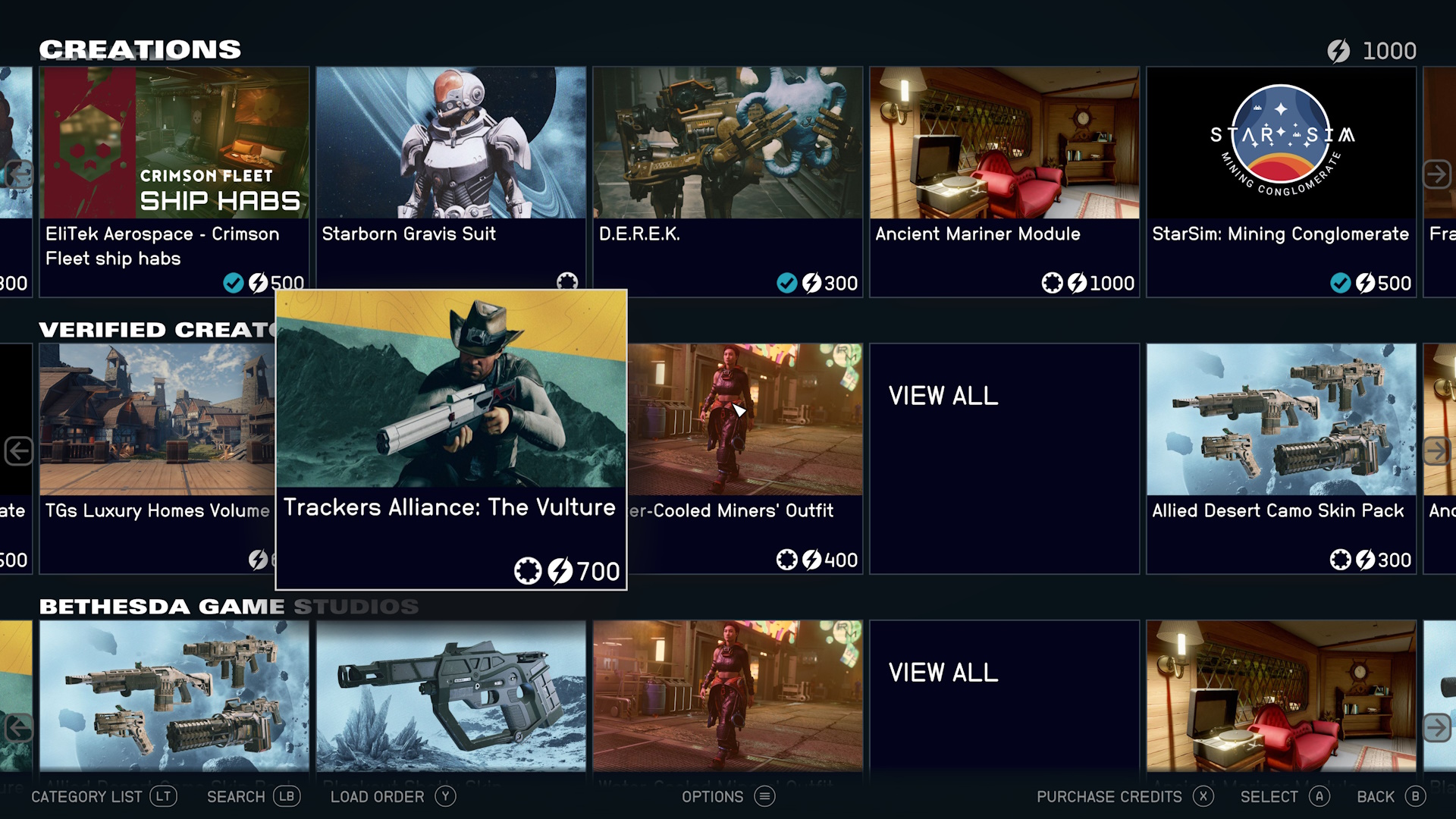
The “live service” spiral

Have you ever wondered why so many so-called “live service” games fail to live up to expectations and ultimately get shut down? Or why so many of these types of titles are actively despised by players all around the world?

I’ve lost count of the number of times an exciting-sounding game has been announced only for me to end up sighing with disappointment when I hear the dreaded words “live service.” To many players, those words have come to epitomise all of the worst things about gaming as a hobby in 2021, and it’s got to a point where a game has to offer something truly exceptional before I’ll even consider stepping over the live service hurdle to give it a shot.

This is how “live service” games make me feel!

I’ve talked on a number of occasions about the “release now, fix later” business model that has corrupted the modern games industry. In short, games companies see the internet as an easy way to roll out patches and fixes after a game has been released, thanks to the ubiquity of internet connectivity on every gaming platform nowadays, so they figure they can release a game in an incomplete state and fix it after launch. Though games like Mass Effect: Andromeda and Cyberpunk 2077 prove that this isn’t a phenomenon unique to live services, these kinds of titles are almost universally afflicted.

Many live service games launch with a “roadmap” – another dreaded gaming neologism that rightly turns off anyone who hears it. In lieu of actual gameplay features, levels, and content, the game arrives in a threadbare state with a so-called roadmap, which is little more than a euphemism for promises of updates and new content. All too often, though, the promised updates never arrive because the game gets shut down. The roadmap leads to a dead end.

How’s that roadmap working out for you, Anthem?

If a game felt complete – with enough characters, levels, and whatever else it needs – promises of further content would be no bad thing. It would give the game’s fans something to look forward to while they enjoyed what was available at launch. But it’s rare that a live service feels complete at launch, and most roadmaps end up promising content that should have been part of the original game.

So we come to what I’m calling the “live service spiral.” Here’s how it goes: a live service game launches to mediocre reviews from critics and players, with many criticising its threadbare state and unfinished nature. Though there is a roadmap promising further content to come at some nebulous future date, many players who were considering picking up the game instead adopt a “wait-and-see” approach, biding their time until the promised updates arrive and the game is actually worth playing. But this leads to lower-than-expected sales, which in turn means that the publisher panics and decides to cancel the roadmap, ending development on the game and cancelling planned updates and patches. The game’s remaining players drift away, disappointed, to await the next title and begin the cycle again.

The first Destiny game was an early example of this phenomenon.

In 2021, having seen so many of these live services stumble out of the gate and get unceremoniously shut down shortly thereafter, I have less and less sympathy for players who still believe the hype and get hooked in with promises. If a game isn’t good enough when it launches to be worth my time – and more importantly, my money – why should I give it either on the back of vague promises? And if you choose to invest in a live service game knowing how many have come and gone in the blink of an eye, why should I offer you my sympathy when the next one follows the pattern and also fails?

So many games have been in this position. Just in the last few years we can call to mind titles like Anthem, Star Wars Battlefront, WWE 2K20, Destiny 1, and probably Marvel’s Avengers within the next few months. So there are more than enough examples to serve as warnings that this business model is not worth investing in.

Marvel’s Avengers could be next on the chopping block.

Here’s the basic problem that games industry managers and executives can’t seem to wrap their corporate heads around: for every Fortnite or Grand Theft Auto Online there are a dozen or more Anthems or Destinys. For every title that adopts a live service model and makes a success of it, there are dozens more that fail. And if a company isn’t willing to put money and effort into creating a title that players actually want to spend their time playing, desperately chasing the faltering live service trend will always be a losing proposition.

Many live service games were doomed from the very moment they were conceived in the mind of a business executive. Someone with precious little understanding of the industry looked at Fortnite or Rainbow Six Siege, and without knowing the first thing about those games nor realising they’re about a decade too late, said to their team “make me one of those.” From that very moment the game was dead on arrival – but nobody realised it, or at least nobody had the balls to tell the publisher.

Not every game will see the success of titles like Fortnite. Companies need to set realistic expectations.

All the way through development and through the extensive marketing campaign that followed, dedicated developers tried their best to build a game to the specifications of some moron in a suit, and it was all for nothing. All of that time, effort, and money was pissed away chasing after a concept that’s already played out for a company that never understood it in the first place. In many cases, “crunch” and other abusive working practices saw developers and other employees suffer actual quantifiable harm, all for the sake of a meaningless, useless piece of shit game like Anthem. Imagine working yourself half to death for the sake of Anthem, only to see the game shut down months after it launched.

Hopefully the backlash some of these games generate, combined with lacklustre sales and continued failures to meet expectations, will see this business model slowly start to die off. But all of us need to be very careful about throwing our money into any live service game that comes along in future. Companies have proven time and again that they see these games as disposable and they’re willing to cut and run from a failing project no matter how many players get screwed over in the process. If they treat their own games with such little respect, why should we buy into such a model?

We have to find a way to break the live service spiral, to show games companies that this business model is no longer viable. Some noteworthy failures, like those mentioned above, will start to cause a rethink in corporate boardrooms, but the process needs to accelerate. Not just for the sake of us having better games to play, but for the physical and mental health of those in the industry working on these titles.

All titles mentioned above are the copyright of their respective studio, developer, and/or publisher. This article contains the thoughts and opinions of one person only and is not intended to cause any offence.
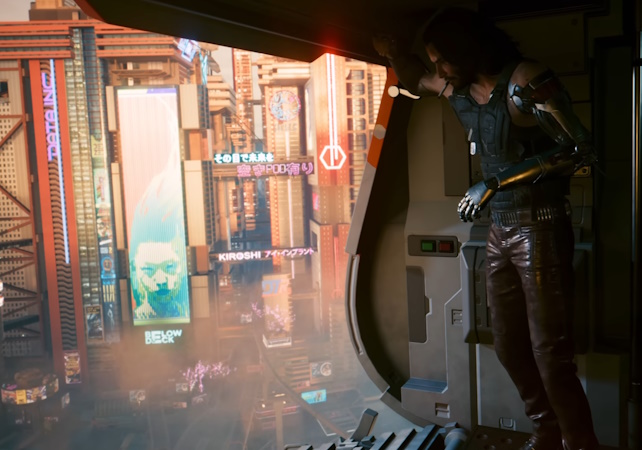
More of the worst things about modern video games

A couple of months ago I took a look at some of the trends I hate the most in the modern games industry. But one list wasn’t comprehensive enough, apparently, because I’ve found ten more of the worst things to look at today!

Gaming as a hobby has come a long way since I first owned a Super Nintendo. Games have evolved from being little more than electronic toys to being a legitimate artistic and storytelling medium in their own right, and many of my favourite entertainment experiences of all time are in the gaming realm. Games can equal, and in some cases surpass, film and television.

Mass Effect 2 has to be one of the best stories I’ve ever experienced.

But not everything about gaming is fun! There are annoyances and problems with games today, some of which didn’t exist a few years ago, and others which have dogged the medium since its inception. As always, this list is entirely subjective, so if I criticise something you like, or ignore something you hate, please keep in mind that all of this is just the opinion of one person. If you want to check out my previous list, you can find it by clicking or tapping here.

With all that out of the way, let’s get started!

Number 1: Checkpoints

Cal Kestis at a checkpoint in Star Wars Jedi: Fallen Order.

Is it 1996? No? Then let’s stop using checkpoints and allow players the freedom to save their game whenever and wherever they need to! With relatively few sensible exceptions – like in the middle of a boss fight or during a cut-scene – there’s no reason why modern games can’t incorporate a free save system.

Checkpoints were a limitation of older hardware and software; games and consoles weren’t always able to offer players the ability to save the game anywhere, so designated save zones – or checkpoints – had to be incorporated. This was already a step up from passwords that you had to write down (remember those?) but checkpoints are simply unnecessary and out-of-date in modern games.

Control also uses a checkpoint system.

With gaming having grown in the years since checkpoints were the only way to manage save files, more people from different backgrounds are getting into the hobby – including many more adults, working-age people, and folks with less free time. Having to replay a lengthy section of a game because the game didn’t offer the freedom to save when you needed to is incredibly frustrating, and considering that there is no technical reason for not implementing a proper save system, in my opinion there’s no excuse.

Whine all you want about “vision” and “integrity” and that players should “git gud,” but a lot of folks simply want to play through a fun and entertaining narrative. We also want to play through it once, not multiple times because of the lack of a convenient save function. Checkpoints seemed to have largely disappeared until the likes of Dark Souls brought them back as part of its “extreme difficulty” shtick. But there’s a difference between a challenge and something frustrating; checkpoints are definitely in the latter category.

Number 2: Boring and/or repetitive side-missions

“Another settlement needs our help.”

It’s no good bragging about the number of quests or missions in your game if 80% of them are the same – or equally as bad as each other! Open-world games tend to fall victim to this, but it’s a phenomenon that can plague all manner of different titles.

These kinds of missions follow one of a couple of different formulae: “go to location X and pick up item Y” or “go to location X and kill Y number of enemies.” Then that’s it. Mission over, receive a few experience points or a random, usually-not-worth-it item, and repeat. Such quests are nothing but padding for a game that should’ve been shorter and more focused.

The Mako in Mass Effect: Legendary Edition.

Even otherwise good games can end up going down this route. Mass Effect 1 is a case in point. The main story missions in the game are phenomenal, and while the stories which set up some of the side-missions sound like they could be potentially interesting, each one basically consists of “drive vehicle to location, kill enemies, press button.” Because 90% of the side-missions use basically identical maps and environments, this gets old fast – even if the storyline setting up the mission seems superficially interesting.

If you can’t make a good side-mission, skip it. I’d rather play a game that isn’t as long but doesn’t have this unnecessary fluff padding it out and, frankly, wasting my time.

Number 3: Collect-a-thons

Another feather. Yay.

On a related note, many open-world games have recently begun being padded out with miscellaneous items to collect. Upon picking up a feather, for example, the game will tell you that you’ve discovered 1/100 – only 99 more to go! These items almost always have no impact on the plot or gameplay of a title, and often don’t even give out a reward for finding all of them. At most you might get a trophy or achievement for collecting all of them.

At least boring side-missions usually have some kind of setup. A villager needs you to kill the rats in his basement, an admiral needs you to shut down all four computer cores, etc. Though the missions themselves are junk, a modicum of thought went into their creation. Collect-a-thons have no such redeeming feature. Often the items to be collected are so random that they have no link whatsoever to the plot or character.

Pigeons in Grand Theft Auto IV are another example.

Why does my grizzled war veteran on a mission to save the world need to spend his time hunting down 100 feathers or 50 leaves? If the items did something – anything – like if they could be used for crafting or if they were notes or recordings containing lore and info about the game world, well at least there’d be a point. It wouldn’t necessarily be a good point, but still.

These items are added into games – often in obscure or hard-to-reach places – purely to pad out the game and extend its runtime. They serve no purpose, either narratively or in terms of gameplay, and while I have no doubt that some players find collecting every single in-game item fun, for me I’d rather the effort and attention wasted on features like this was refocused elsewhere. One side-mission, even an average one, would be better than 100 random pieces of shit to collect.

Number 4: Online cheating

An aimbot for popular game Fortnite.

If you have a single-player game and want to turn on god mode or assisted aiming, go for it. Cheats can sometimes be accessibility features, offering a route through a game for players with disabilities, as well as providing a way to skip the grind for players who don’t have much time. But when you go online and play against real people, you damn well better leave the cheats behind!

There are so many examples of cheating players getting caught and banned that it can be kind of funny. Even some professional and wannabe-professional players have been caught out and learned the hard way that the internet never forgets. But no one should be doing this in the first place.

Some losers even cheated at Fall Guys, for heaven’s sake…

Trying to take away the most fundamental tenet of competition – fairness – is so phenomenally selfish that I don’t even know what to say. If there were a financial incentive – like winning the prize money at a big tournament – I could at least recognise that some folks would be tempted to try to take the easy route to payday. But in a game like Fall Guys where it’s supposed to be fun… I just don’t get why someone would feel the need to cheat.

Some games have a bigger problem with cheating than others, and games that don’t get a handle on a cheating problem fast can find themselves in serious jeopardy. It’s unfortunate that the anonymity of the internet means that a lot of players simply get away with it, with some even going so far as to use “disposable” accounts, so that if one gets banned they can just hop to another and keep right on cheating.

Number 5: Overly large, confusing levels

Looks like fun…

We kind of touched on this last time when considering empty open worlds, but some games have poorly-designed levels that are too large and almost maze-like. Getting lost or running in circles – especially if no map is provided – can become frustrating very quickly. These kinds of levels are often repetitive and bland with little going on.

Some games have levels which are simply not well laid-out, making it difficult to find the right path forward. I’ve lost count of the number of times I was trying to explore, thinking I was investigating a side-area, only to find it was the main path forward, and vice versa. Advancements in technology – particularly as far as file sizes go – have meant that levels and worlds can be physically larger. Sometimes that’s a good thing, but sometimes it isn’t!

This also applies to featureless open worlds or maps without landmarks for ease of navigation.

If a game has a map, or if a level is well-signposted (either literally or figuratively) then it shouldn’t matter how large it is. Players will be able to figure out where to explore and where to go to proceed with the story or quest. But too often that isn’t the case, and getting lost, backtracking, or not knowing where to go are all annoyances! Not every level has to be massive. Some work far better when kept concise, especially if the number of things to find or do in the level are limited.

Obviously I don’t include in this category mazes or levels which are deliberately designed to be puzzling. Some games make clever use of deliberately puzzling levels, where exploring and figuring out the right path is all part of the fun. Others just screw up their level design and leave players wandering around, confused.

Number 6: Orphaned franchises/unfinished stories

I’m not even going to say it…

Though the phenomenon of a story being abandoned partway through is hardly new – nor even unique to gaming – the rise of more cinematic, story-driven games since the turn of the millennium has brought this issue to the fore. The first encounter I had with this was in 2001 when Shenmue II dropped off the face of the earth (following abysmal sales in Japan and elsewhere) meaning that the saga was never finished.

But it isn’t just financial failures that don’t land sequels. The lack of a third game in the Half-Life series has become a joke at this point, more than fifteen years after the last mainline entry in the series. Fans have been clamouring for Half-Life 3 for a long time, and the recent success of VR title Half-Life: Alyx proves there’s a market and that the game’s audience is still here.

Will there ever be a Bully 2?

Sometimes a studio gets busy with other projects. There hasn’t been a new Elder Scrolls game, for example, in part because Bethesda has worked on the Fallout franchise and Starfield in the years since Skyrim was released. But there are also plenty of cases where a developer or publisher finds a cash-cow and abandons all pretence at making any new game so they can milk it dry.

Look at Rockstar with Grand Theft Auto V’s online mode, or Valve with its Steam digital shop and the success of online games like Dota 2 and Counter-Strike: Global Offensive. Those studios could make new games or sequels to existing games, but instead choose to focus on older titles. Similarly, studios like Bethesda found success by porting existing games to new and different hardware, as well as releasing new or updated versions of older games.

Number 7: Ultra Special Super Extreme Deluxe Editions

How many different “editions” does a game need?!

I’m not talking about so-called “collector’s editions” of games, which are often simply the game plus a statue or other memorabilia. Those can be fine, because if someone is willing to part with silly money to get a resin statue of an in-game character who am I to judge? What I greatly dislike are games that are sold with multiple “editions” – i.e. a “basic” version with missing features, then several progressively more expensive versions with those missing features added back in.

Some games take this to silly extremes, with a “basic” version retailing for full price (£55/$60) and the most expensive “deluxe” edition being far more expensive for the sake of adding in-game content (extra skins, missions, etc.) that were literally developed alongside the main game then cut out. Some of these ultra extreme special editions can retail for £80, £90, or even £100 in some cases, and that’s just deceptive.

Sports games, like the FIFA series, do this a lot.

This is an evolution of the “day-one DLC” phenomenon that was present a few years ago. In the case of Mass Effect 3, for example, an entire main character, a mission to recruit them, and all of their scenes and dialogue, was literally developed along with the game, perfectly integrated and designed to be part of the game, then cut out and sold as downloadable content literally on the day the game launched.

In multiplayer titles, the extreme special supreme editions can come with in-game advantages, making them literally pay-to-win. In free-to-play games, perhaps a degree of paying for an advantage is to be expected – but some of these games are asking full price, then giving a competitive advantage to players who pay above full price.

Number 8: Unrepresentative trailers/marketing material

Anthem made a fake trailer… and look what happened to the game.

I used to work in video games marketing, and I thought I’d seen every shady trick in the book! But some of the trailers and marketing material that publishers show off in the run-up to the launch of a new game can be downright deceptive. Some games, like notorious failure Anthem, even went so far as to create fake “in-game” footage to be shown off at marketing events, which is incredibly bad form.

Cyberpunk 2077 is another example. That game was developed to run on high-end PCs and next-gen consoles, and the Xbox One/PlayStation 4 version was so poorly-optimised when it launched that many folks considered it to be literally “unplayable.” The trailers and marketing material hid this fact, and developer CD Projekt Red deliberately kept those versions of the game away from reviewers. The result was that no one realised how broken the game was until it was too late.

CD Projekt Red didn’t show things like this in the Cyberpunk 2077 trailer…

Mobile games are notorious for putting out trailers that are entirely unrepresentative of the games they’re selling. Many mobile games are samey, basic tap-a-thons with unimpressive graphics and mediocre gameplay, yet the trailers make them seem like big-budget console-quality games. In a way this isn’t new; 2D games in the 8-bit era were often marketed with cartoons and fancy graphics that made them look far better than they were!

The thing is, unrepresentative marketing always comes back to bite a company. Just ask CD Projekt Red, whose implosion in the aftermath of Cyberpunk 2077′s abysmal launch will enter gaming history.

Number 9: Massive patches and updates

Yikes.

Last time I criticised ridiculously huge file sizes for games, and this time I want to pick on updates and patches in particular. There’s no feeling more disappointing than sitting down to play a game you’ve been looking forward to all day only to find that either the game or the console needs to download a stupidly large update before you can jump in.

Some updates can be dozens of gigabytes, and if you’re on a slow internet connection (like I am) or have limited downloads, it can take forever to update the game – or be outright impossible. Once again, folks with limited time for gaming are in trouble here; even on a reasonably fast connection, a massive update can cut into or erase the time someone set aside for gaming.

After buying a brand-new console, downloading patches and updates can be a time-consuming task.

The stupid thing is that many of these updates appear to change absolutely nothing! I’ve lost track of how many times Steam has updated itself on my PC, for example, only to look exactly the same every time. While it’s good that games companies can roll out bug fixes, patch out glitches, and even fix cheating issues remotely, these things can happen at the most inconvenient times!

In the run-up to Christmas it’s now commonplace, even in mainstream news outlets, to see advice given to update new consoles and games before giving them out as presents. Little Timmy’s Christmas would be ruined if he had to spend all of Christmas Day waiting around for his new PlayStation to update before he could use it!

Number 10: We’re drowning in sequels, remakes, and spin-offs

The Final Fantasy series is up to its fifteenth mainline title…

It’s increasingly rare for a games company to produce a new game that isn’t based on an existing franchise or property. Don’t get me wrong, this isn’t an issue unique to gaming – it’s happening on television and in cinema too. We’re 100% in the era of the franchise.

As great as it is to play a sequel to a much-loved title, it’s also great fun to get stuck into a completely new story with new characters and a new world. Unfortunately, as is the case in television and cinema, companies are increasingly viewing brand-new stories as risky – if fans don’t respond well then their investment will have been wasted!

How many Call of Duty games have there been by now?

Sooner or later, I think this franchise and sequel mania has to break. It can’t go on forever, not least because existing franchises will run out of material and fans will lose interest. But right now it shows absolutely no signs of abating, and some video game franchises have become annual or almost-annual fixtures. The Call of Duty series is a case in point – there’s been a new game every year since 2005.

I appreciate studios willing to stick their necks out and take a risk. Control is a good recent example of a successful new IP, and Starfield will be Bethesda’s first wholly new property in decades when it’s finally ready. But there’s certainly less storytelling innovation than there used to be, and fewer new games in favour of sequels, franchises, and spin-offs.

So that’s it. Ten more things that bug me about modern gaming!

I’m sure I’ll be able to think of more later!

Although we’ve now found twenty annoying trends in modern gaming, the hobby is generally in a good place. Technological improvements mean games look better than ever, and the increase in gaming’s popularity has seen more money enter the industry, as well as quality standards generally rising rather than falling. There are problems, of course, but the industry as a whole isn’t in a terrible place.

At the end of the day, it’s fun to complain and have a bit of a rant! The last list I published seemed to be well-read, so I hope this one has been a bit of fun as well! Now if only someone would make a Star Trek video game… perhaps the lack of one warrants a place on my next list!

You can find my first list of the worst things about modern video games by clicking or tapping here.

All titles mentioned above are the copyright of their studio, developer, and/or publisher. Some screenshots and promotional art courtesy of press kits on IGDB. This article contains the thoughts and opinions of one person only and is not intended to cause any offence.
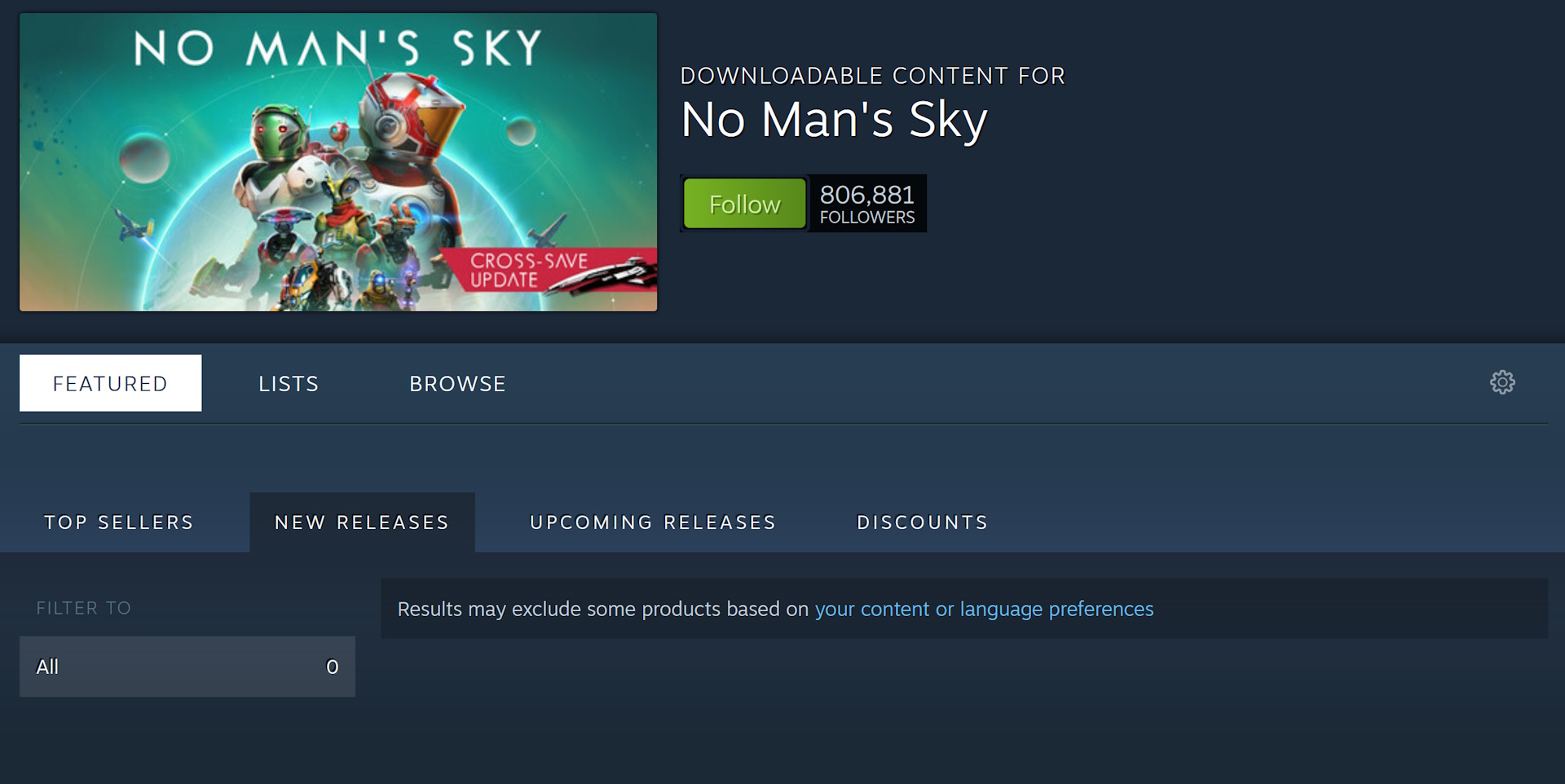
Some next-gen ports are receiving a well-earned backlash

Whenever a new console generation kicks off, it’s inevitable that there will be some games that are released on both new and old systems. This is perfectly understandable in many cases, as games which are new and have had a lot of time and effort put into their development want to get the widest audience possible. Many titles in this category go unnoticed, or at most some reviewers will point out that the game may not be fully-optimised for new hardware. But some other titles are the subject of pretty heavy criticism, and I can fully understand why.

When it was announced that Grand Theft Auto V would be ported to the Xbox Series X and PlayStation 5, many fans were upset. This was a game initially developed for the Xbox 360 and PlayStation 3, and it’s going to be ported again? Grand Theft Auto V has been a juggernaut this console generation after getting its start in 2013, but after more than seven years fans are itching for a new entry in the series.

Grand Theft Auto V was originally released in 2013 for the Xbox 360 and PlayStation 3.

In 2014, when Grand Theft Auto V was re-released on current-gen consoles, it was barely a year old. No one at the time begrudged Rockstar the chance to port the title to new hardware because there was an understanding that the game had been a big undertaking. As the Xbox 360/PlayStation 3 era drew to a close, it made sense to bring some new titles to the new systems.

But that was six years ago, and in that time Rockstar has developed and published precisely one new game – Red Dead Redemption II. There are arguments to be heard that the pace of game development as a whole has slowed, and I don’t want to ignore the reality that developing an open-world game on the scale of Grand Theft Auto V is a colossal undertaking. But that doesn’t excuse what seems to many fans to be the company taking shortcuts.

Red Dead Redemption II is Rockstar’s only game in seven years.

What’s worse is that the time and effort spent on creating a next-gen port could arguably be better spent creating a new title. Even in a studio with the financial resources of Rockstar, porting existing games does take time, resources, and personnel away from other projects. So it’s not just a case of corner-cutting – fans feel that the company is wasting time.

Practically every current-gen title is going to be “forward-compatible” with new hardware anyway. What that means is that any Xbox One game should work on the Xbox Series X, and any PlayStation 4 game should work on PlayStation 5 by default – including titles like Grand Theft Auto V. So there’s no need to spend time and money reworking a seven-year-old game for new hardware; existing versions will work just fine.

Both next-gen consoles will be backwards-compatible with current games by default.

If the upgrades were going to be free, allowing players who own a current-gen copy of the game to experience the tweaks and changes on new hardware, I don’t think anyone would mind. In fact, players have praised companies like CD Projekt Red, whose 2015 title The Witcher 3: Wild Hunt is receiving such a free upgrade. But Rockstar – and other companies too – plan to re-release their old games and get gamers to shell out more money for the next-gen version. It feels decidedly anti-consumer.

Even though I’m not a big online multiplayer person, I recognise the appeal that Grand Theft Auto V has as an online experience. But after seven years I feel that online experience has run its course, and most players will be ready for a new challenge. Those who want to stick with what they already have can either continue to play on Xbox One/PlayStation 4 or can even bring their existing copy of the game to the new consoles; there’s no need to buy it all over again.
Grand Theft Auto V is getting a next-gen re-release in 2021… eight years and two console generations later.

Another company that has been roundly criticised for its approach to next-gen is 505 Games, publisher of Control. This is a game I’ve been looking forward to playing, as it has great reviews, but it’s another example of next-gen upgrades being denied to existing fans. The only way to play Control will be to buy it again on the new consoles, and to many fans the small upgrade seems like a big expense.

The Last Of Us was similarly criticised at the beginning of the PlayStation 4 era for being re-released in a “remastered” state less than a year on from its PlayStation 3 debut. At the time I was genuinely shocked by the gall of developer Naughty Dog; how can a game less than a year old be remastered already? But The Last Of Us sold very well on PlayStation 4, cementing this business model in the minds of executives as one that works and will rake in cash for comparatively little effort.

The Last Of Us was re-released on PlayStation 4 mere months after its PlayStation 3 premiere.

At the end of the day, that’s what this is all about. Money. Re-releasing a game with a few minor upgrades and hardware-specific tweaks is relatively inexpensive and offers companies huge financial rewards. It should be no surprise to learn that a big company wants to make more money, and I get that we live in a society where profit and growth matter. It’s just that it feels so anti-consumer, and even big companies need to be aware of their reputations. It’s easy to dismiss criticism and backlash as coming from just a whiny minority of hardcore fans, but companies like Electronic Arts have found – to their great cost – just what can happen when they push players too far.

It’s only in the last console generation that the idea of cross-generation releases has been such a big deal anyway. In the days of the SNES and the Nintendo 64 the idea of a game from one system being ported wholesale to new hardware just didn’t exist. There were ports, but they tended to be things like Super Mario All-Stars, which was a compilation of several games instead of a single title, and offered players good value as a result.

There weren’t many ports in the SNES era, and those that did exist were bundles like Super Mario All-Stars.

But if you’d told me in 2005, when the Xbox 360 was launched, that the original Halo game was just going to be straight-up ported to the new system and that players would be expected to “just buy it again” I’d have been absolutely gobsmacked. What a nonsense idea that would have been even as recently as 2005! We’ve come to accept some of these things in the fifteen years since, but even by today’s standards, some of the proposals for next-gen re-releases are drawing well-earned backlash.

Though it wasn’t possible to predict the impact of the coronavirus pandemic even a few short months ago, the changing situation in the world should be something companies take note of. There’s a good chance that many folks are going to have less disposable income at least in the short-term, and being asked to re-purchase a seven-year-old game on a new console is definitely not something that should be considered under current circumstances. Even were it not for the pandemic, I think this practice would still be inappropriate and anti-consumer. But given where things currently sit, it’s even worse.

This is the kind of practice that can start big companies on a slippery slope to reputational damage and more widespread criticism, and I would advise them to tread carefully. Rockstar – or any other company engaged in a similar practice – could garner a lot of goodwill today by announcing that the next-gen version of whatever game they’re working on will be free to anyone who currently owns it. Or, on the flip side, they could continue to draw criticism and ire for their greed and lack of care.

All titles mentioned above are the copyright of their respective studio, developer, and/or publisher. Some screenshots and promotional artwork courtesy of press kits on IGDB. This article contains the thoughts and opinions of one person only and is not intended to cause any offence.