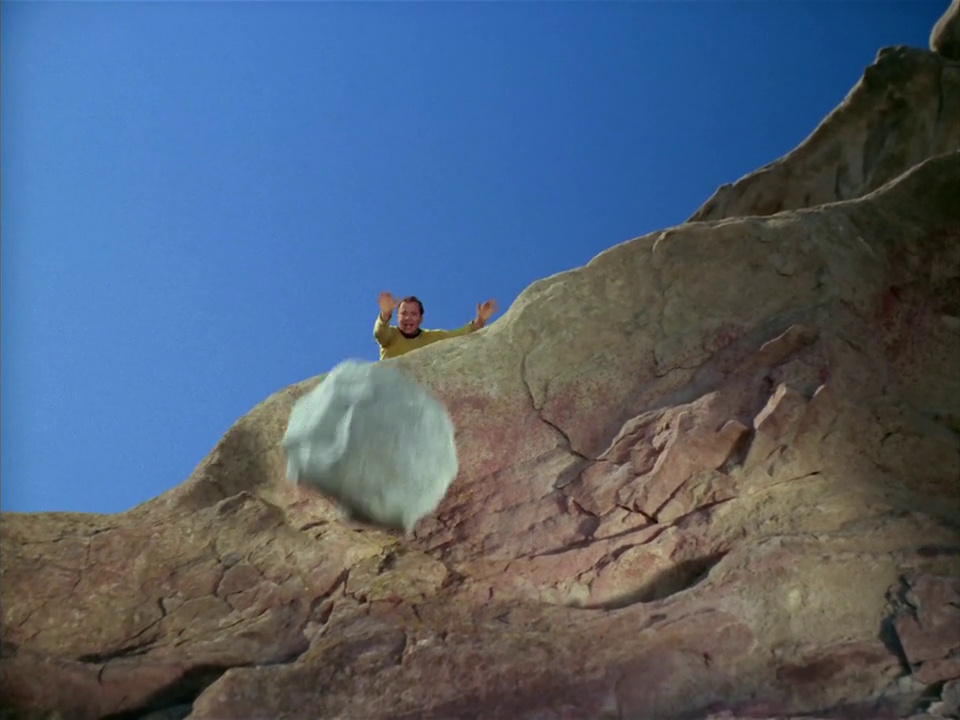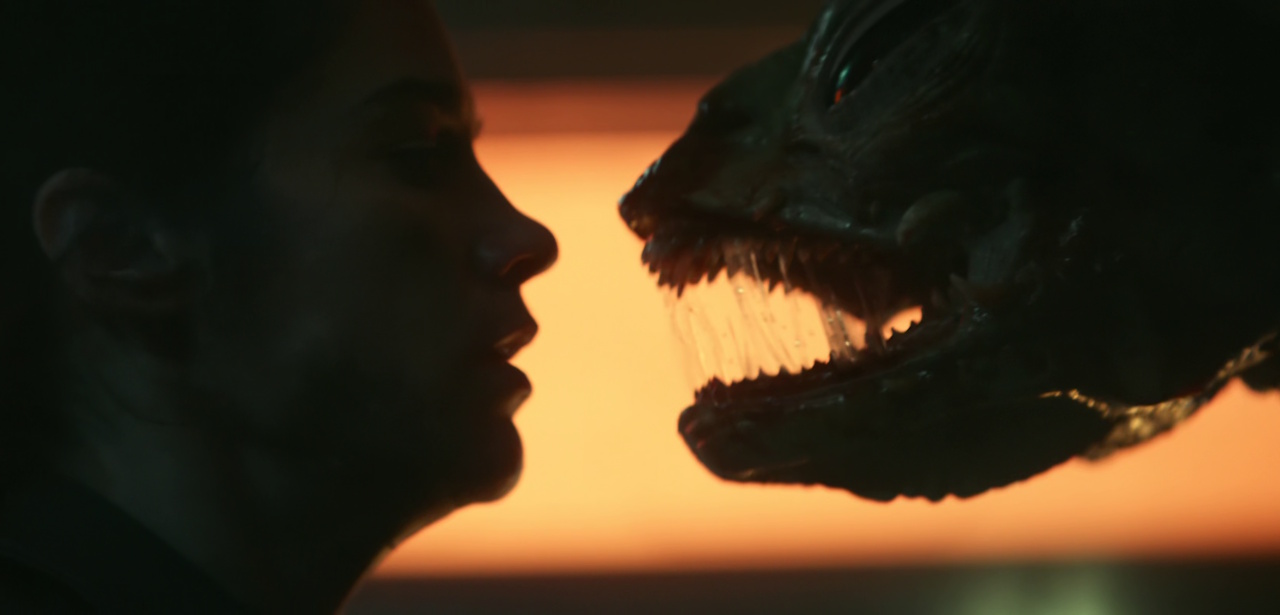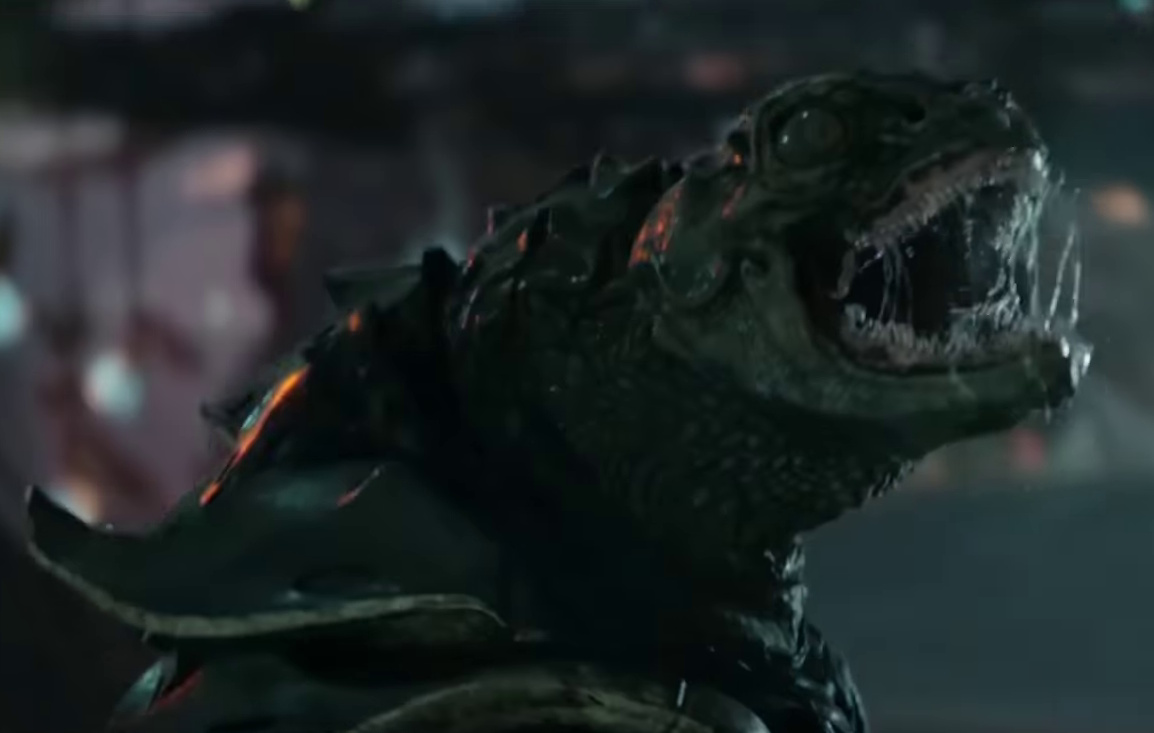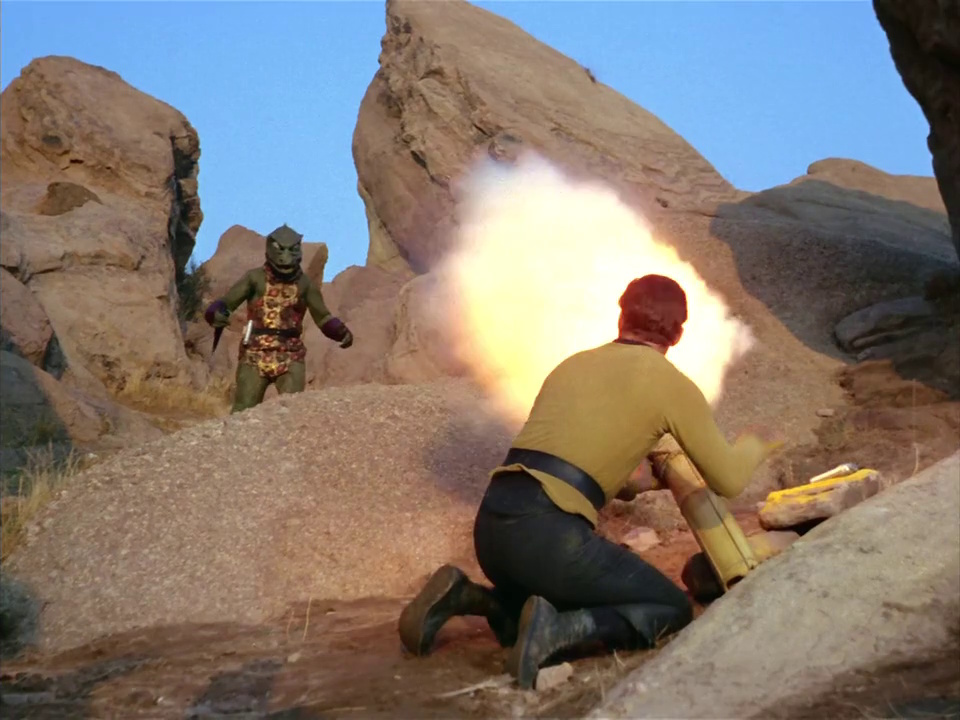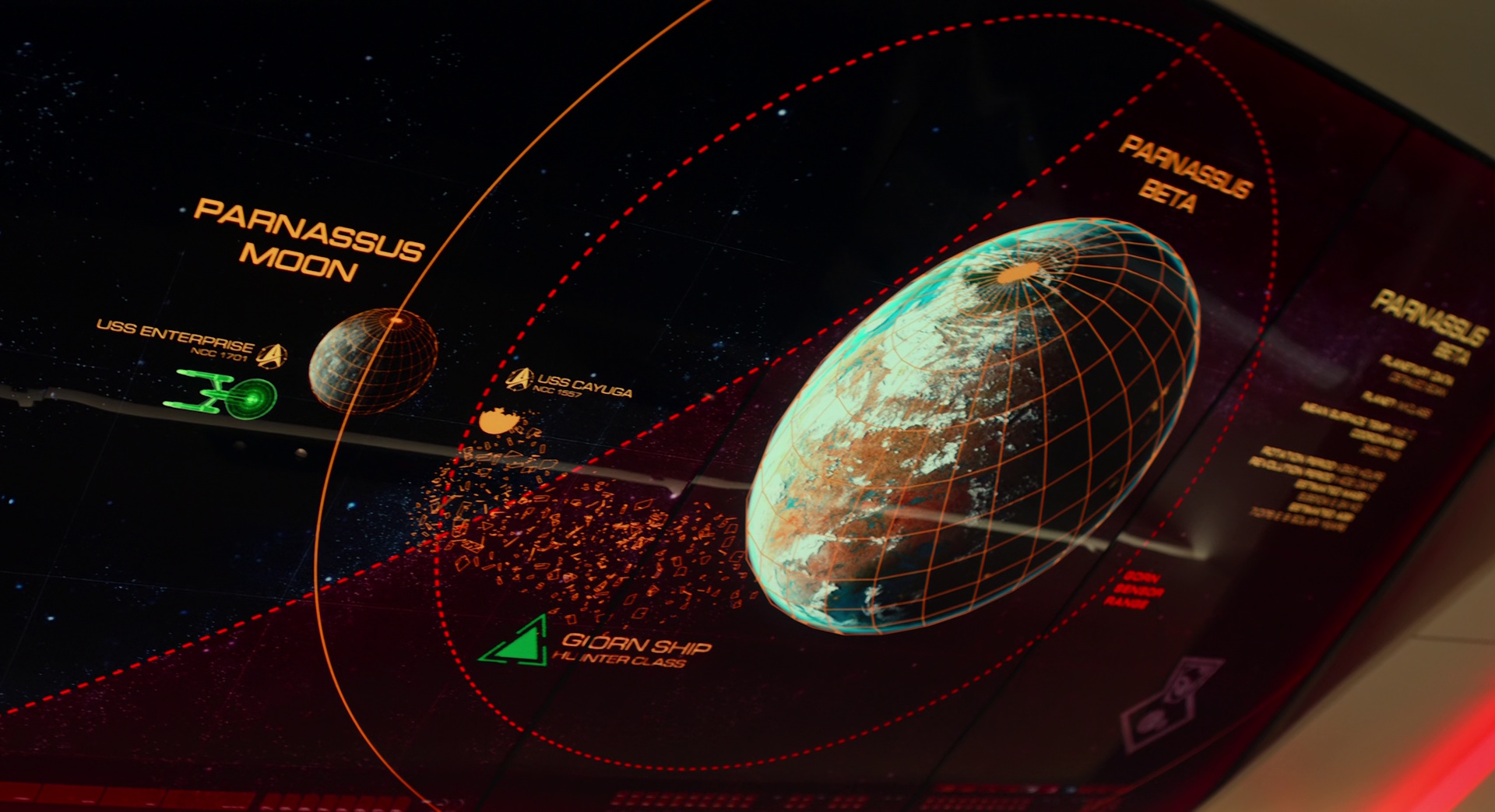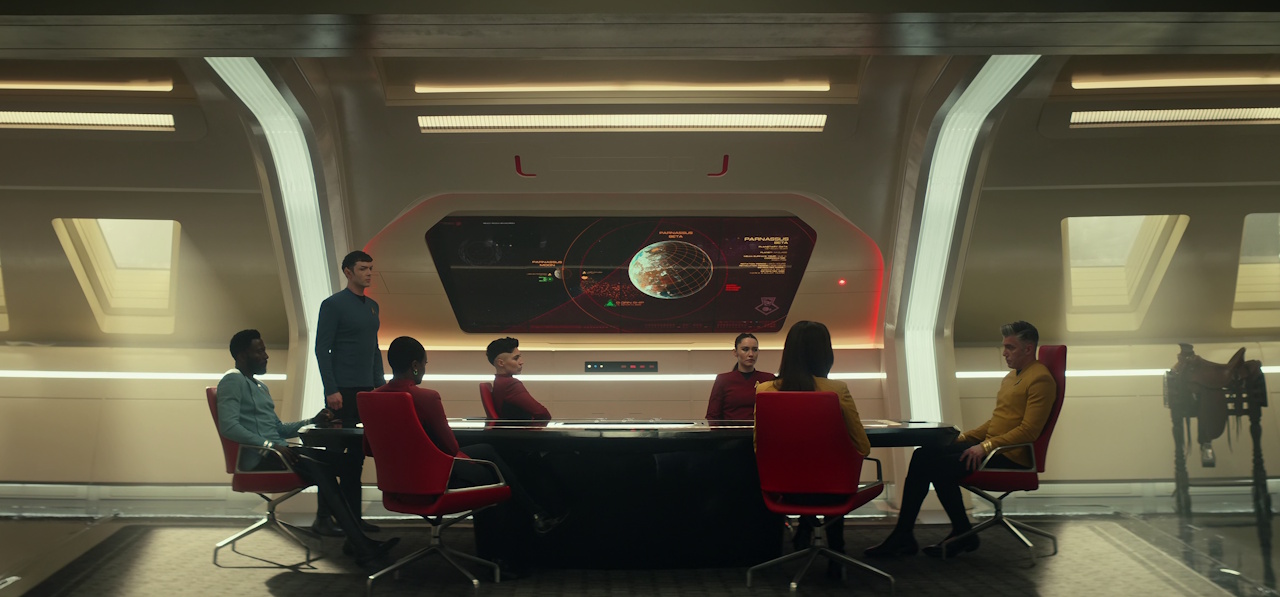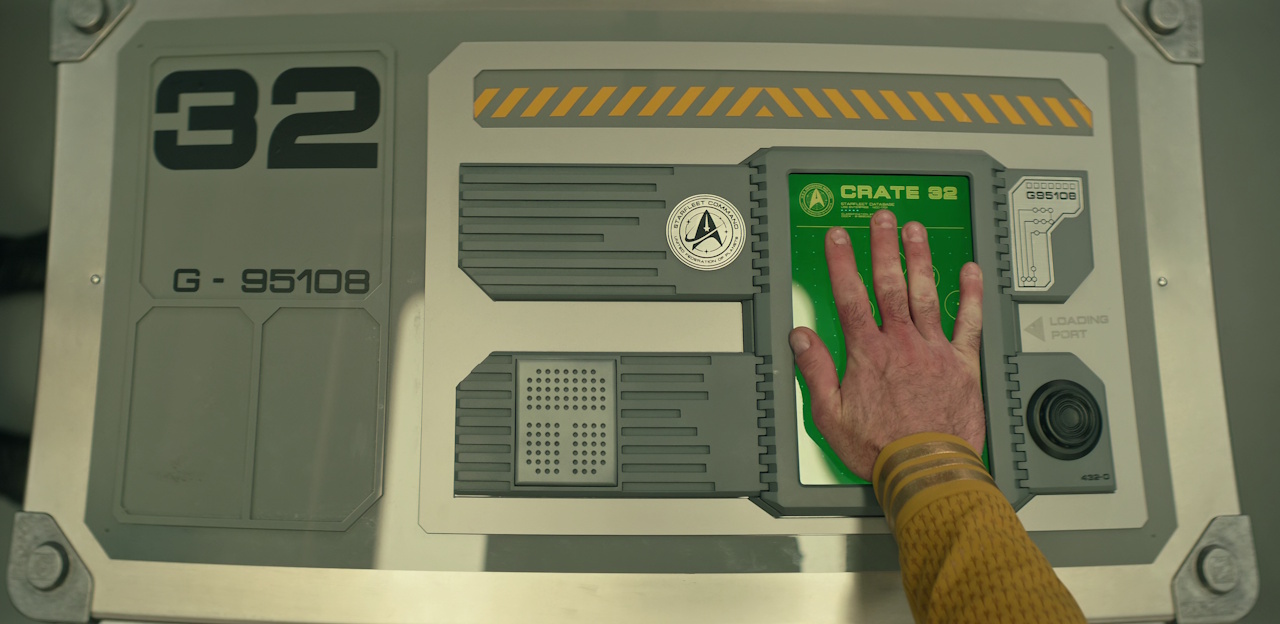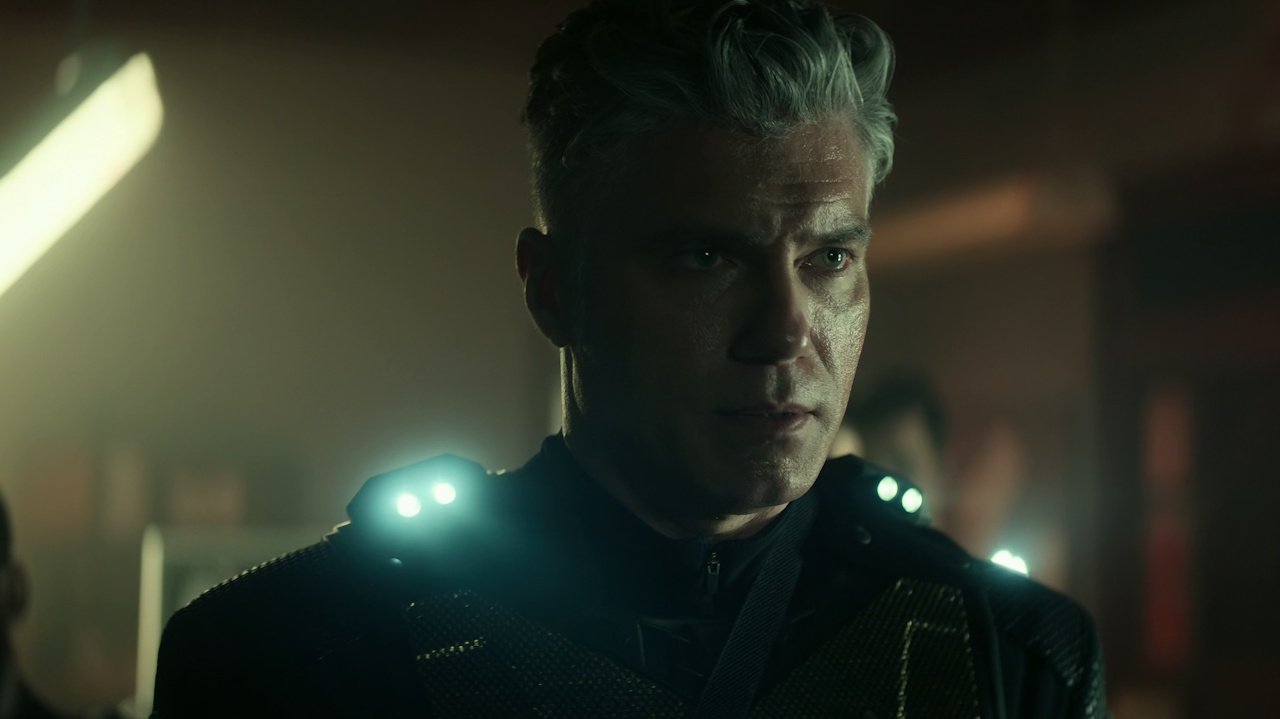
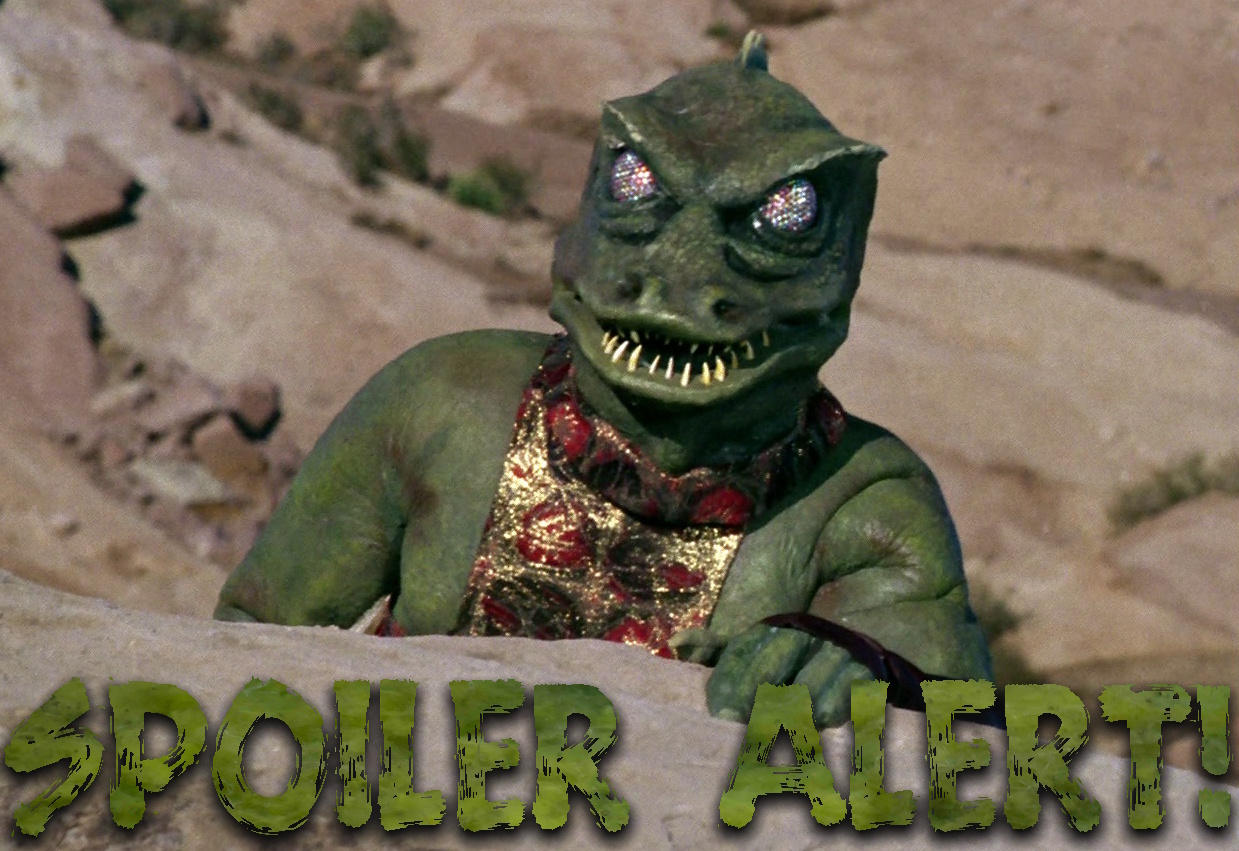
Star Trek: Strange New Worlds Episode Review – Season 3, Episode 9: Terrarium

Star Trek-themed spoiler warning.

Spoiler Warning: There are spoilers ahead for Strange New Worlds Seasons 1-3. Spoilers are also present for the following Star Trek productions: The Original Series Season 1, The Search for Spock, The Next Generation Season 3, Discovery Season 2, and Picard.

Of all the main characters on Strange New Worlds, we’ve spent the least amount of time with Erica Ortegas. She’s been a presence on the show and has had some memorable scenes, but she hasn’t gotten a major storyline or a spotlight episode… until now. There are reasons for that, of course, and we don’t have to go over all of it again. But I know that a lot of Trekkies – myself included – have been waiting for an episode in which Ortegas would get her moment to shine.

And what an episode it was!

Terrarium was intense, dramatic, emotional, and just fantastic. It’s rare for me to sit down to write a review having taken no notes, but I was so absorbed in the story that I genuinely didn’t have a second’s pause to write anything. The only negatives I can find from Terrarium are total nitpicks; the kinds of silly things only the most detail-obsessed Trekkies might ever care about. The episode really was exceptional. One of the best from all three seasons of the show without a doubt.
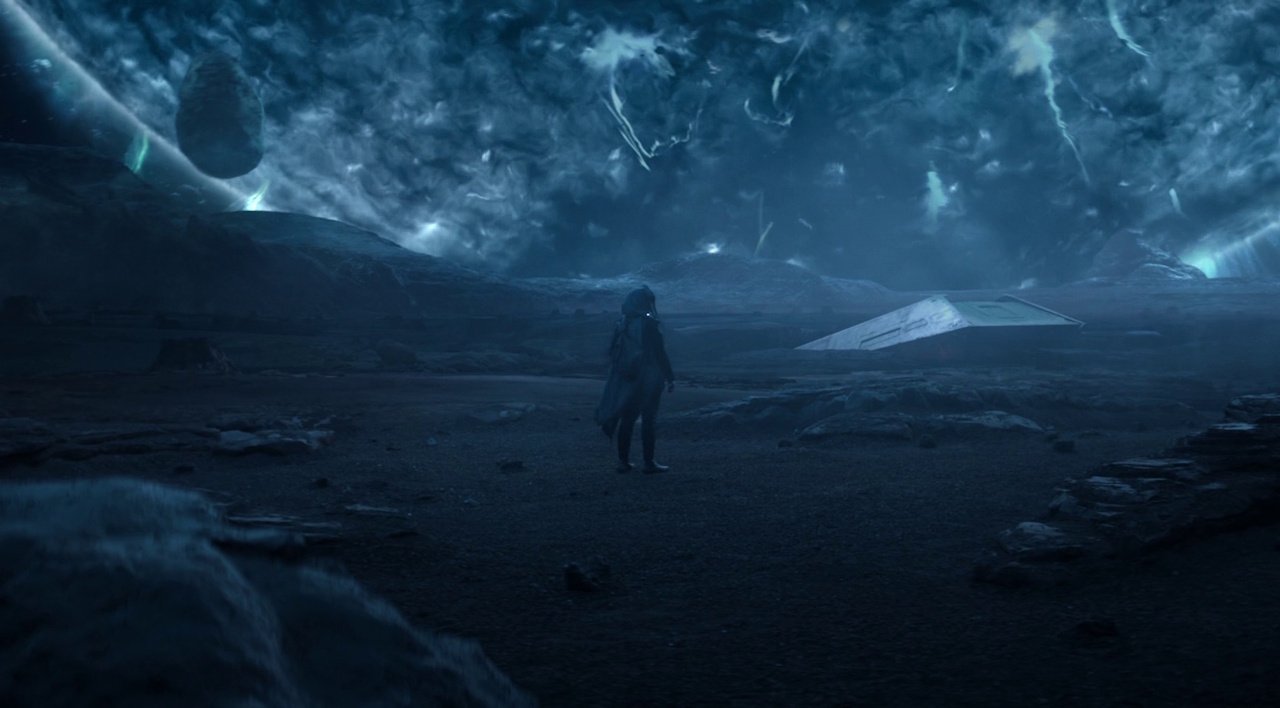
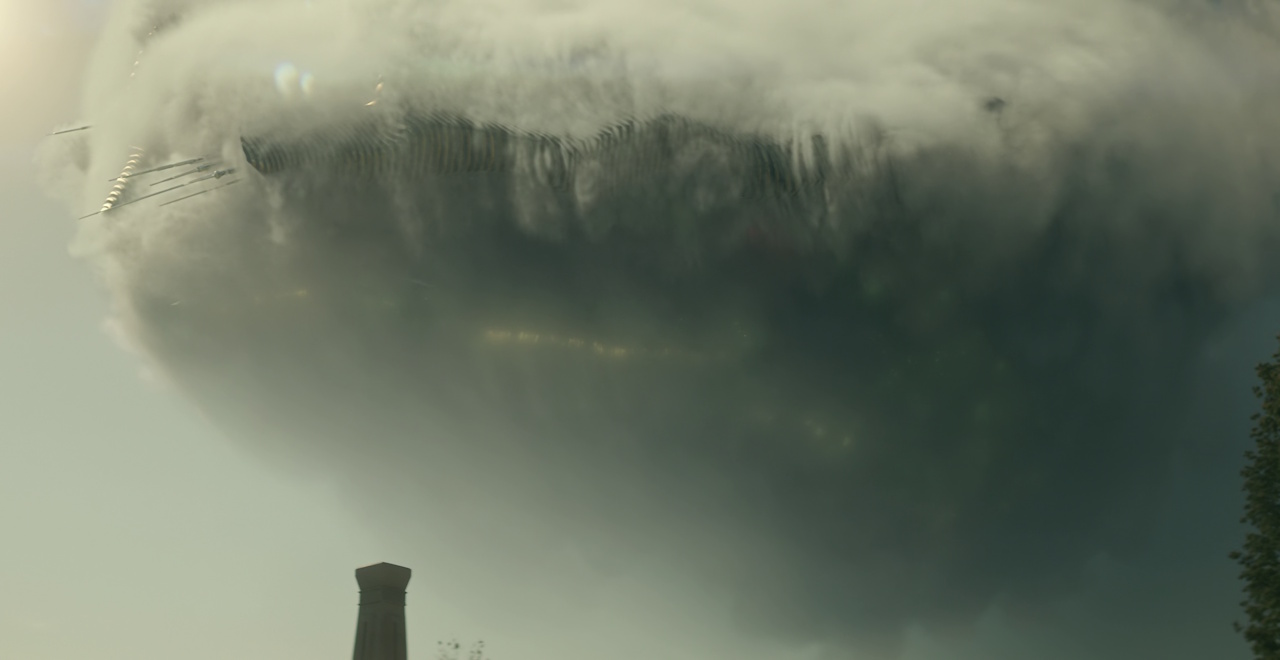
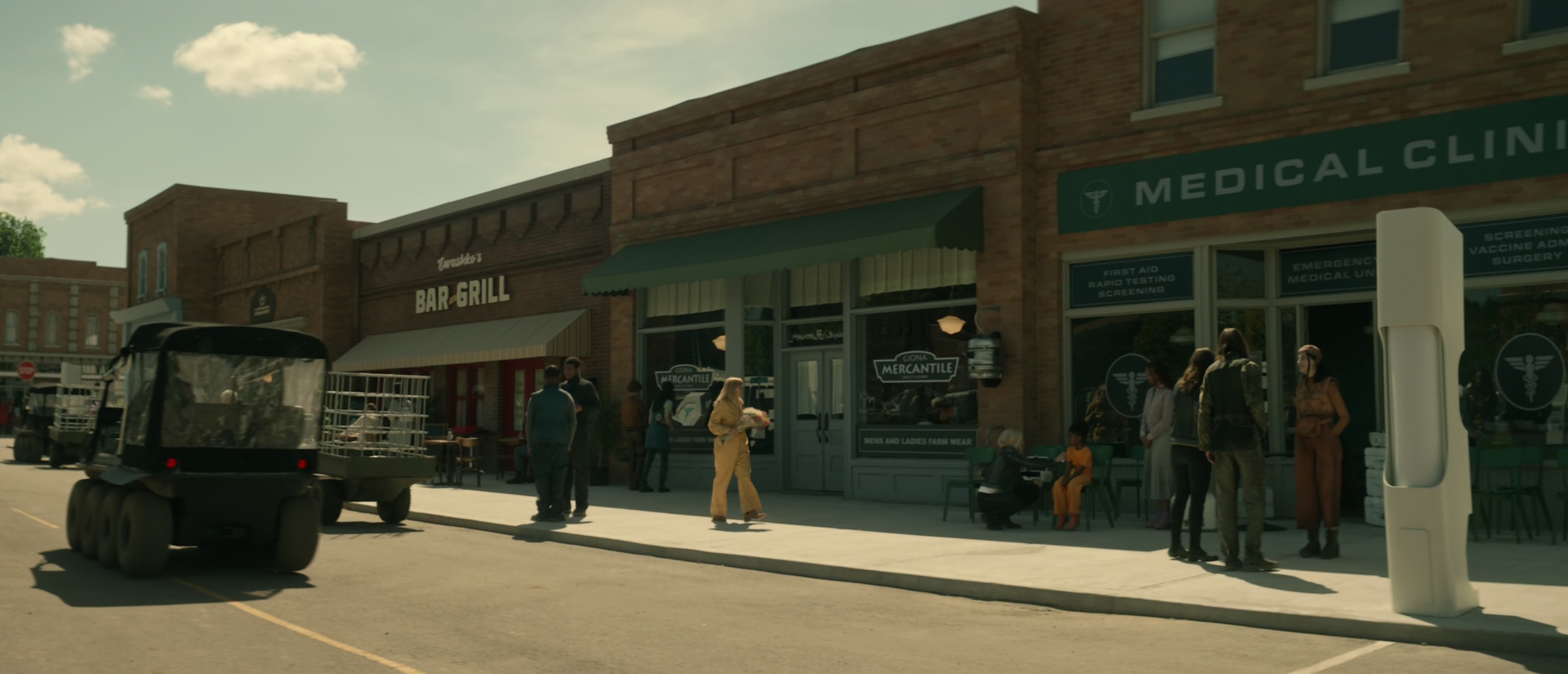
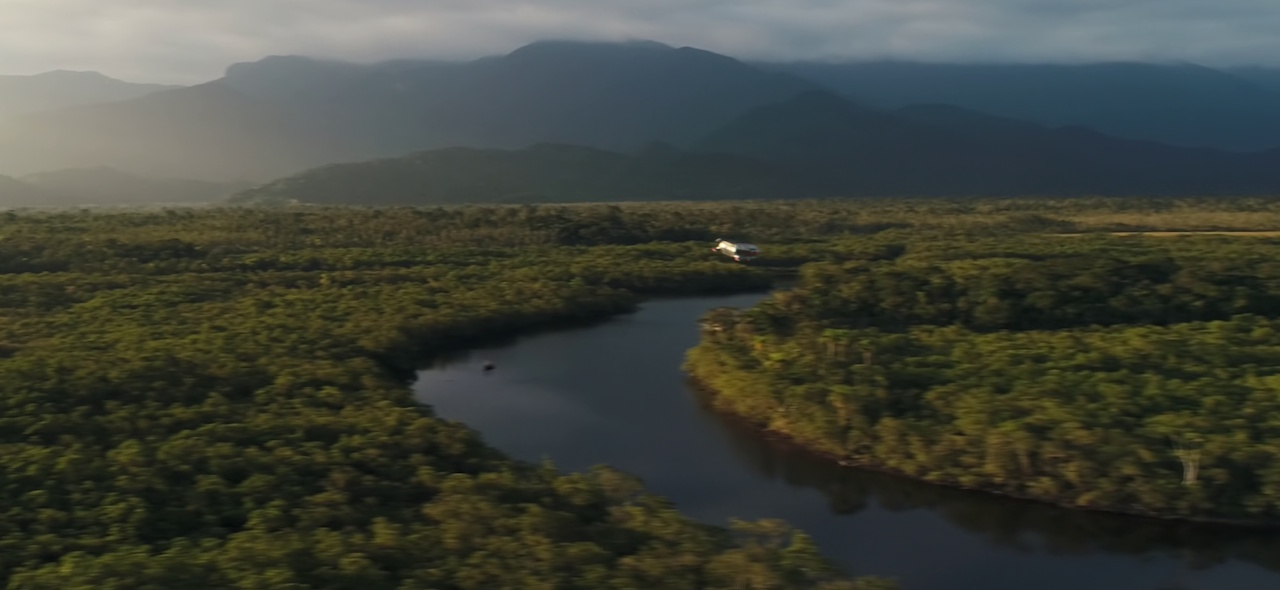
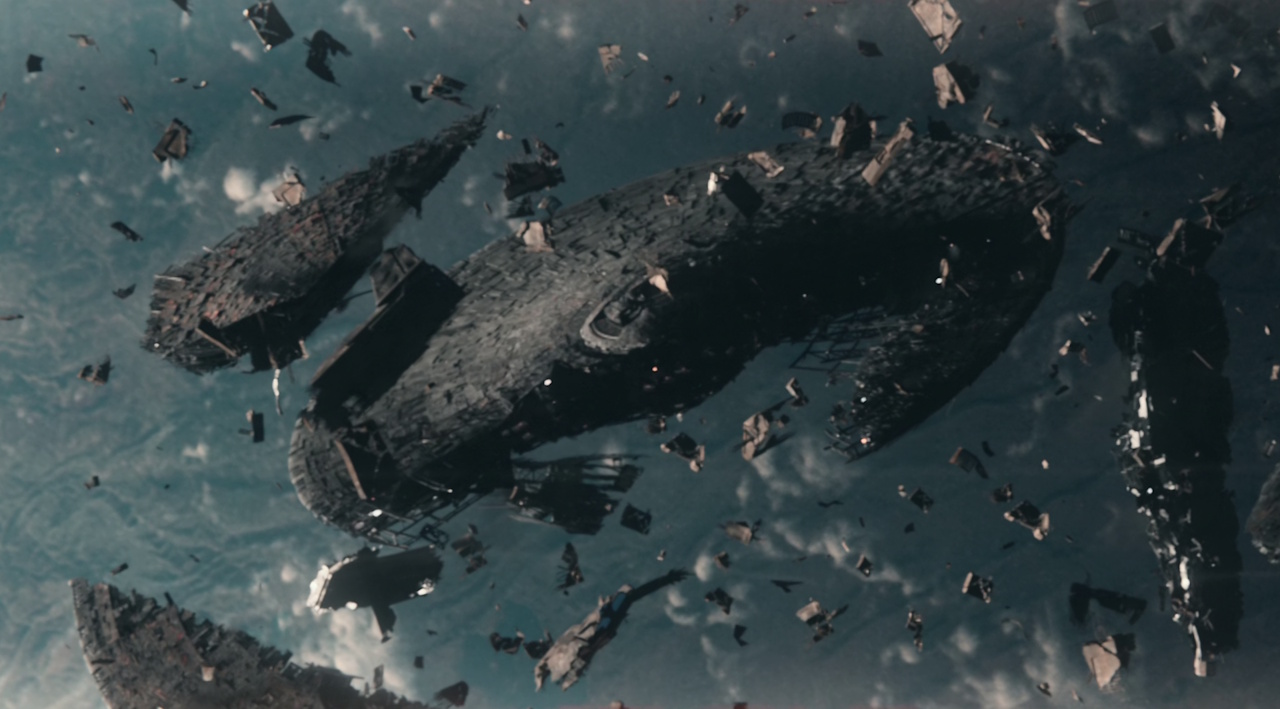
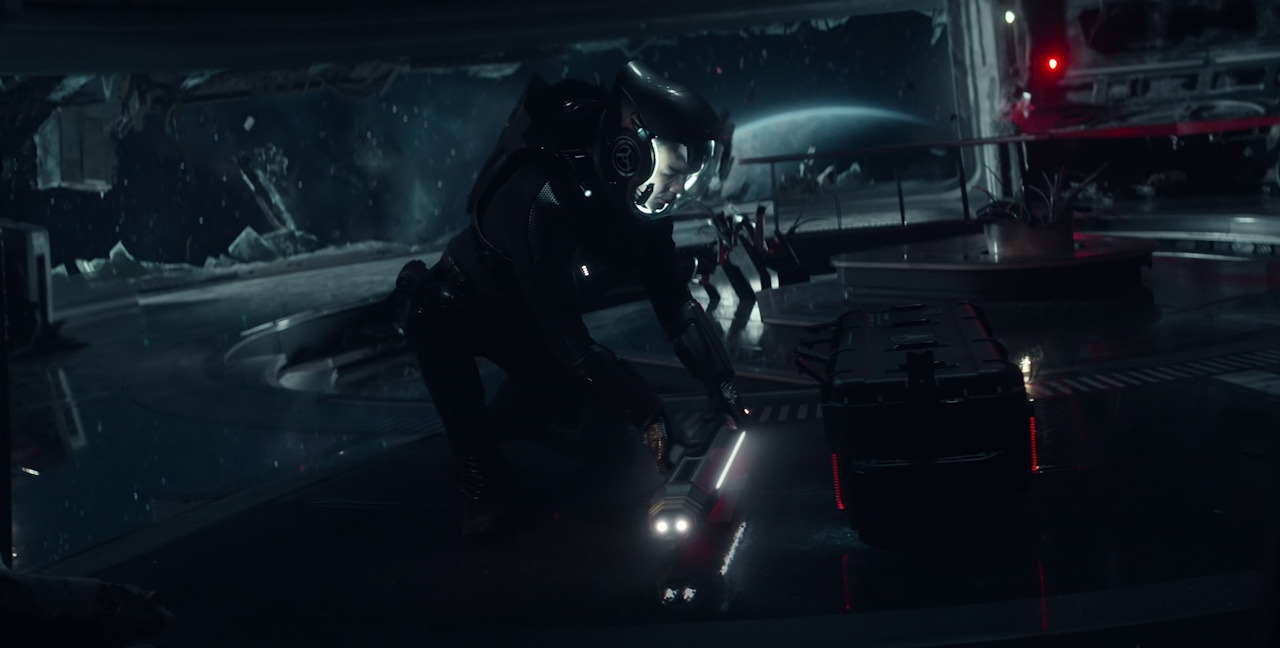
Still frame from Star Trek: Strange New Worlds 3x09: Terrarium, showing the crash site and Ortegas.
Uh-oh, Ortegas is in a spot of bother…

Because Strange New Worlds is a prequel, and because we know that several of the characters it includes will go on to have careers in Starfleet during The Original Series era, it isn’t always easy for the show to create a genuine sense of danger. We know Pike’s fate, we know where Spock will end up, and we know Uhura, Scotty, Chapel, Dr M’Benga, and others all have futures beyond the series. In the modern entertainment landscape, that can change how we perceive stories which put these people in the firing line.

In the aftermath of shows like The Walking Dead and Game of Thrones – shows which use what I’ve termed the “disposable cast,” where any main character can be killed off at almost any moment – television storytelling has shifted. Being a main character is no longer a guarantee of safety. Star Trek has struggled to keep pace, with characters in Picard and Discovery almost all surviving even the most apocalyptic dangers (or being resurrected afterwards!) But Strange New Worlds has already been different – Season 1 saw the untimely demise of the brand-new character of Hemmer. Terrarium got me to feel like Ortegas was genuinely in danger of losing her life and being written out of the show in a way that stories like Shuttle to Kenfori simply couldn’t for Pike and M’Benga. And I think that shows the advantages, in this new media environment, of using brand-new characters as opposed to relying too heavily on legacy characters whose fates and futures are set in stone.
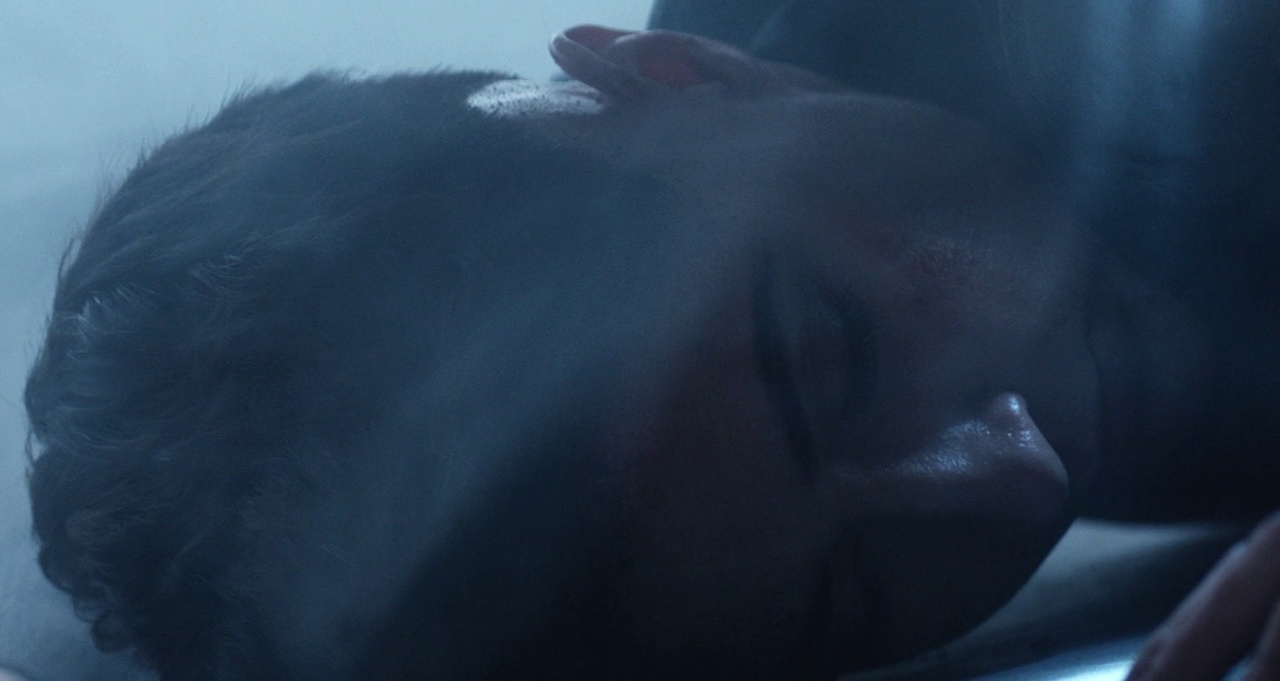
Still frame from Star Trek: Strange New Worlds 3x09: Terrarium, showing Ortegas right after the crash.
This genuinely felt like it could’ve been the end for Ortegas…

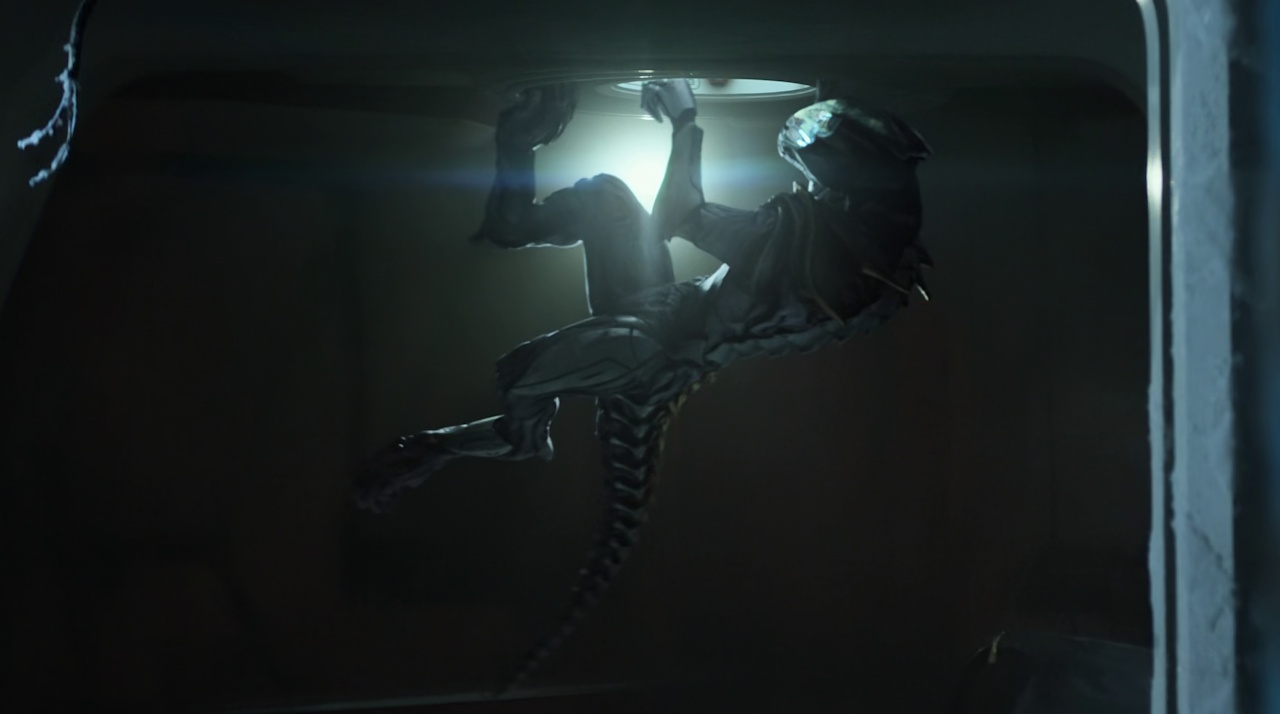
I said recently that I don’t like when Star Trek stories blatantly rip off what’s come before, but I appreciate it when they “rhyme.” And for me, Terrarium reminded me of The Next Generation Season 3 episode The Enemy, in which Geordi La Forge and Bochra, a Romulan, are similarly trapped together on the desolate planet of Galorndon Core. The barren, stormy world, the pairing up of a Federation officer with a member of an enemy faction… Terrarium uses these same elements in a similar way, but still feels like a totally distinct story. That isn’t easy to pull off, and the differences between the stories – the shuttle crash, the wormhole, the difficulty of communicating with the Gorn, and Ortegas’ hostility toward the Gorn as she still processes her trauma – are a big part of what makes Terrarium work.

If I might make one criticism that falls outside of nitpick territory, it would be the editing and pacing of a few of the scenes. In short, Ortgeas seemed desperate for food and water immediately after crash-landing, and the passage of time was not particularly well-communicated at first. Pike said, at one point, that they’d been searching for her for over two days, and by the time she was eventually rescued, even more time seemed to have passed. Ortegas might’ve spent a couple of days on the moon before encountering the Gorn. Or a week. Or a few hours. Or maybe she and the Gorn lived together for a couple of weeks before the rescue? Some of those scenes just felt a little… choppy, if that makes sense – particularly the sequence after Ortegas crash-landed, and the scenes in the run-up to her first meeting with the Gorn. I can’t help but feel adding a card or some text saying “48 hours later…” or something like that might’ve helped at a couple of points.
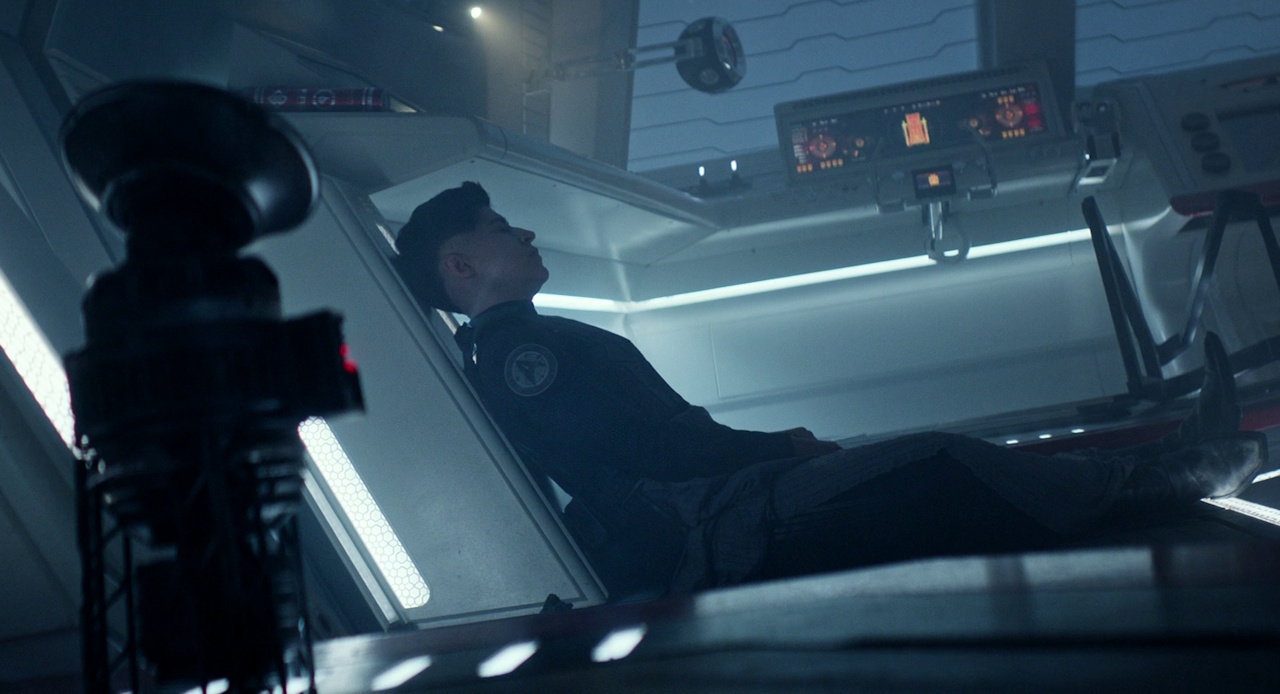
Still frame from Star Trek: Strange New Worlds 3x09: Terrarium, showing Ortegas on the shuttle, resting.
It wasn’t totally clear to me how much time passed in between some of these sequences.

Can I skip to the end and talk about that? Because the end of Terrarium was brutal. After working together, surviving together, and planning out an escape together… for Ortegas’ Gorn friend to just be gunned down by La’an and the redshirts was harrowing. Star Trek stories almost always present our heroes as being in the right – even if they do something bad or against the rules, it’s almost always for a noble reason. La’an and the security team just opened fire without warning against an unarmed opponent, killing her in cold blood. I was shocked – and I’m genuinely struggling to call to mind a similar moment anywhere in Star Trek, in which the death of a friendly character was handled with such ruthlessness by Starfleet personnel.

The writers took a narrative necessity – that the Federation couldn’t have a Gorn just hanging out aboard the flagship years before the events of Arena – and turned it into a truly shocking twist ending for this kind of “let’s all learn to live together in peace” storyline. Ortegas is probably the second character, after La’an, to have held such genuine fear and hatred for the Gorn, and it seemed as if Terrarium was trying to echo Arena and similar Star Trek “morality plays” with a story all about overcoming hatred, finding common ground, and learning to work together. All of that was ripped away with seconds to spare – after Ortegas and the Gorn had risked everything to achieve rescue. It was… well, it was brutal. There’s no other word for it.
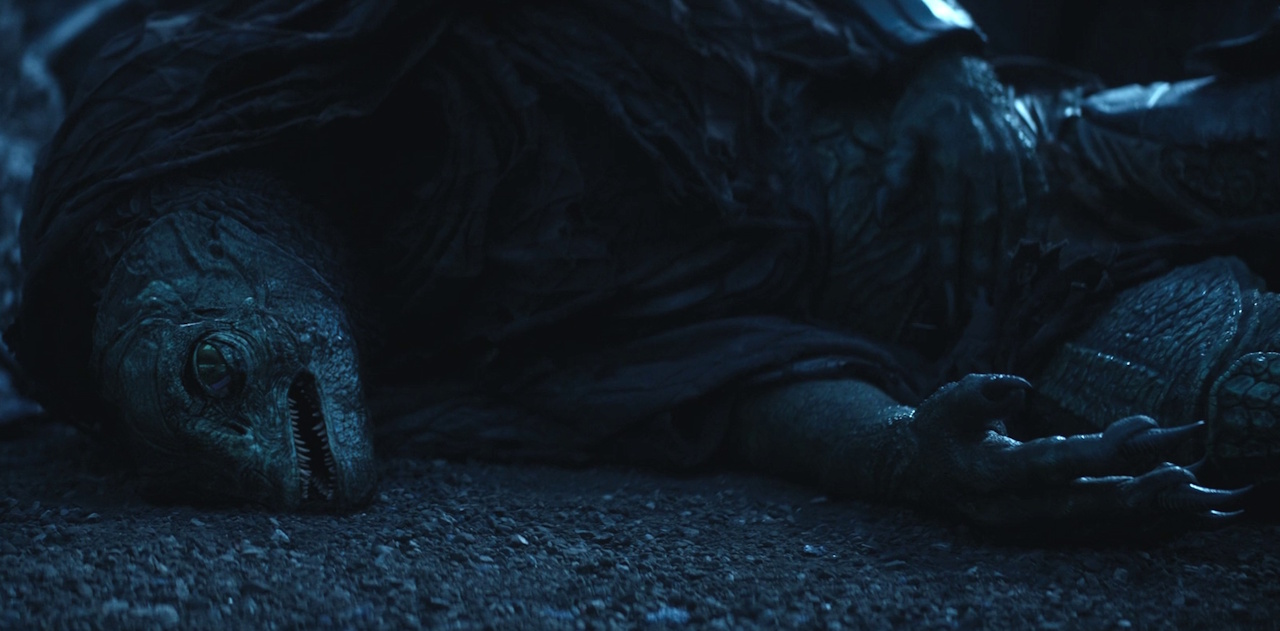
Still frame from Star Trek: Strange New Worlds 3x09: Terrarium, showing the dead Gorn.
Shocking and brutal.

Ortegas still learned a lot, of course. She overcame her fear and hatred for the Gorn, and as the Metron told her at the end of the episode, that was real and she’ll be able to retain all of that knowledge and those feelings. She’ll also be able to convey to Starfleet that the Gorn can, under the right circumstances, be dealt with, reasoned with, and communicated with – which, hopefully, are things that could set the stage for dialogue in the future. So those “morality play” ideas are still present, they still matter, and they’re still a big part of the episode’s story. It feels very “Star Trek” in a way that not every modern episode has done!

But the ending is straight out of the modern entertainment playbook! Arena ended with Kirk injuring the Gorn, but refusing to kill him. The Enemy ended with La Forge and his Romulan counterpart being rescued. But Terrarium went for the twist ending, the shock of seeing Ortegas’ new friend gunned down right at the moment of victory. Betrayed by Starfleet – unintentionally, perhaps, and even arguably understandably – but that doesn’t make it feel better.
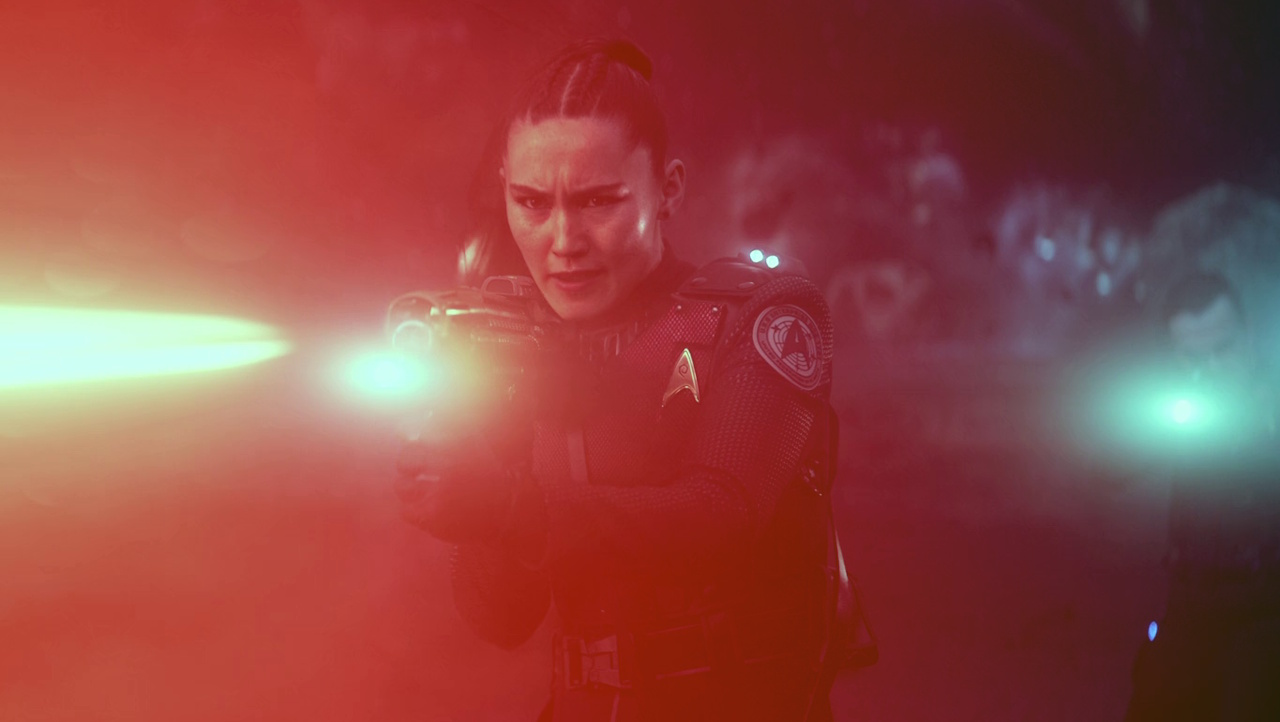
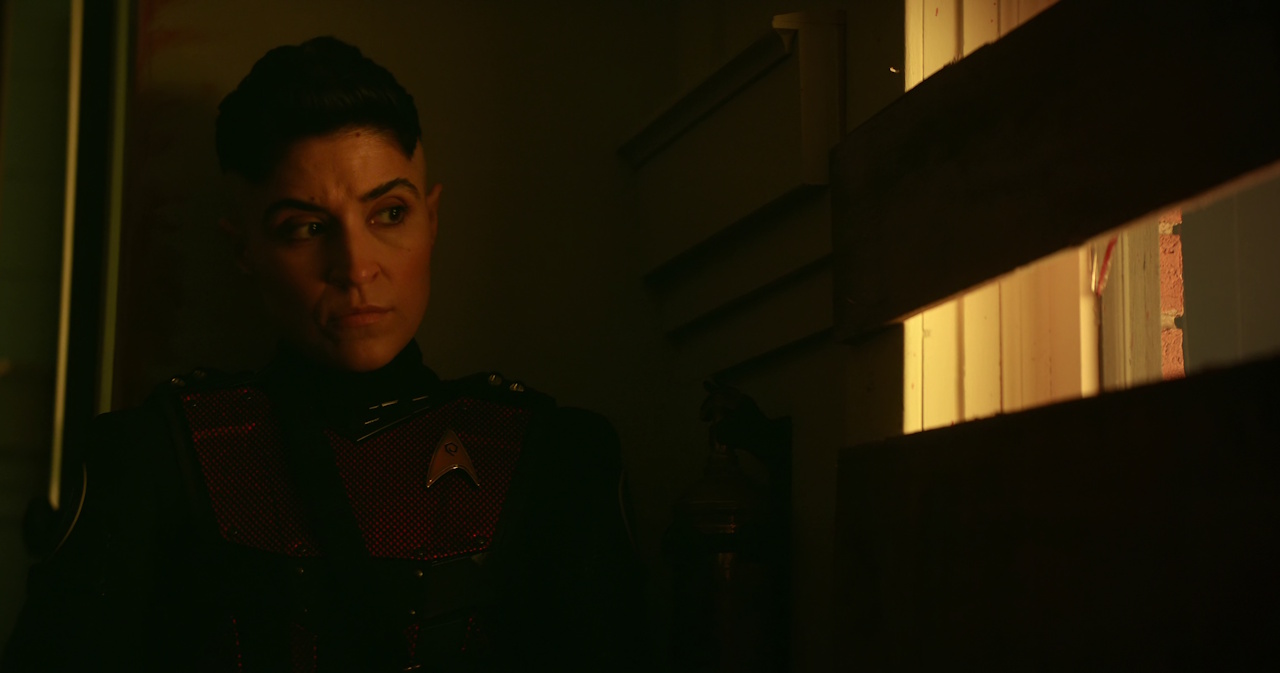
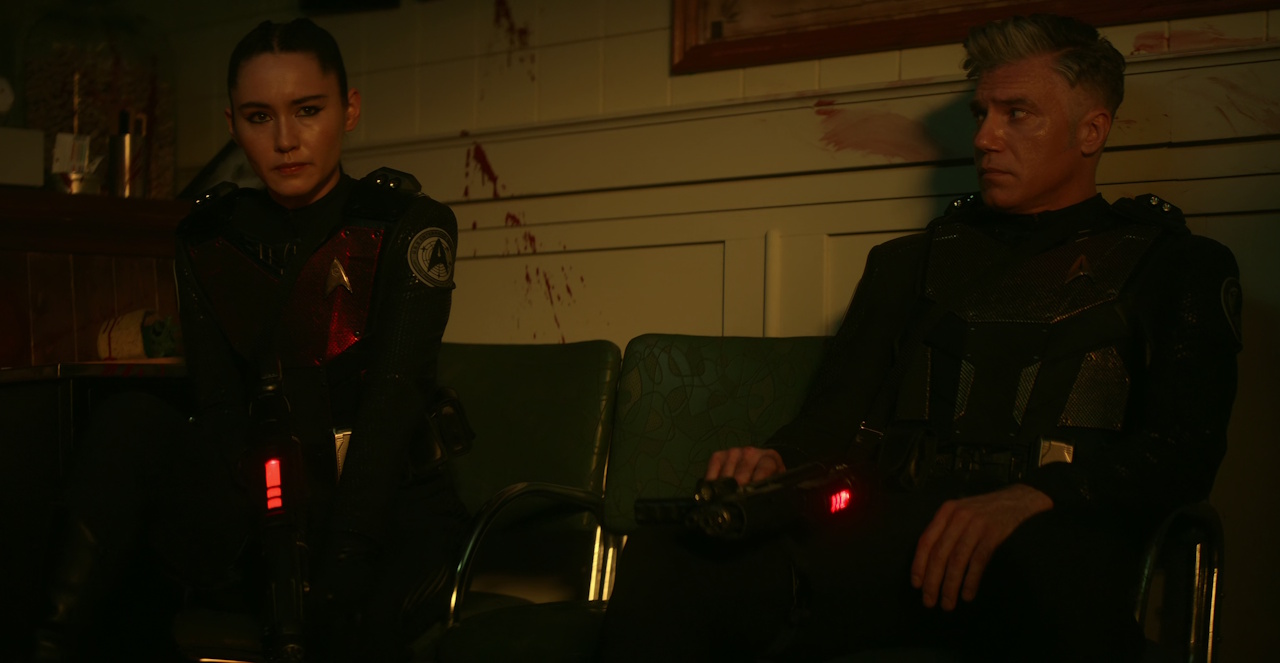
Still frame from Star Trek: Strange New Worlds 3x09: Terrarium, showing La'an firing her phaser rifle.
La’an firing her phaser rifle.
(Colour/brightness tweaked for clarity)

If anything, I’d say this kind of ending ramps up the “morality play” angle. Terrarium is different from the likes of Arena and The Enemy, which got happier, or at least more positive endings. But the final act of Terrarium hammers home its message about bridging cultural divides, working with someone from a different race, and finding comradeship with an enemy. Ripping that away so coldly, and for no good reason, shows us how far Starfleet and the Federation still have to go – and how the “good guys” can still make mistakes or be too quick to anger.

This is what Star Trek has always been about – just updated with a more modern style. What was the point of The Enemy, if not learning to see an enemy as an equal? Or Arena – that “the other” is not a monster, but a person? Kirk starts his battle with the Gorn by talking of the revulsion he feels for the reptilian monster, but stops short of killing him at the end. Terrarium builds from the same narrative foundation, but twists the knife right at the end. Ortegas may have learned to let go of her fear and her hate… but Starfleet is still too quick to reach for the phaser.
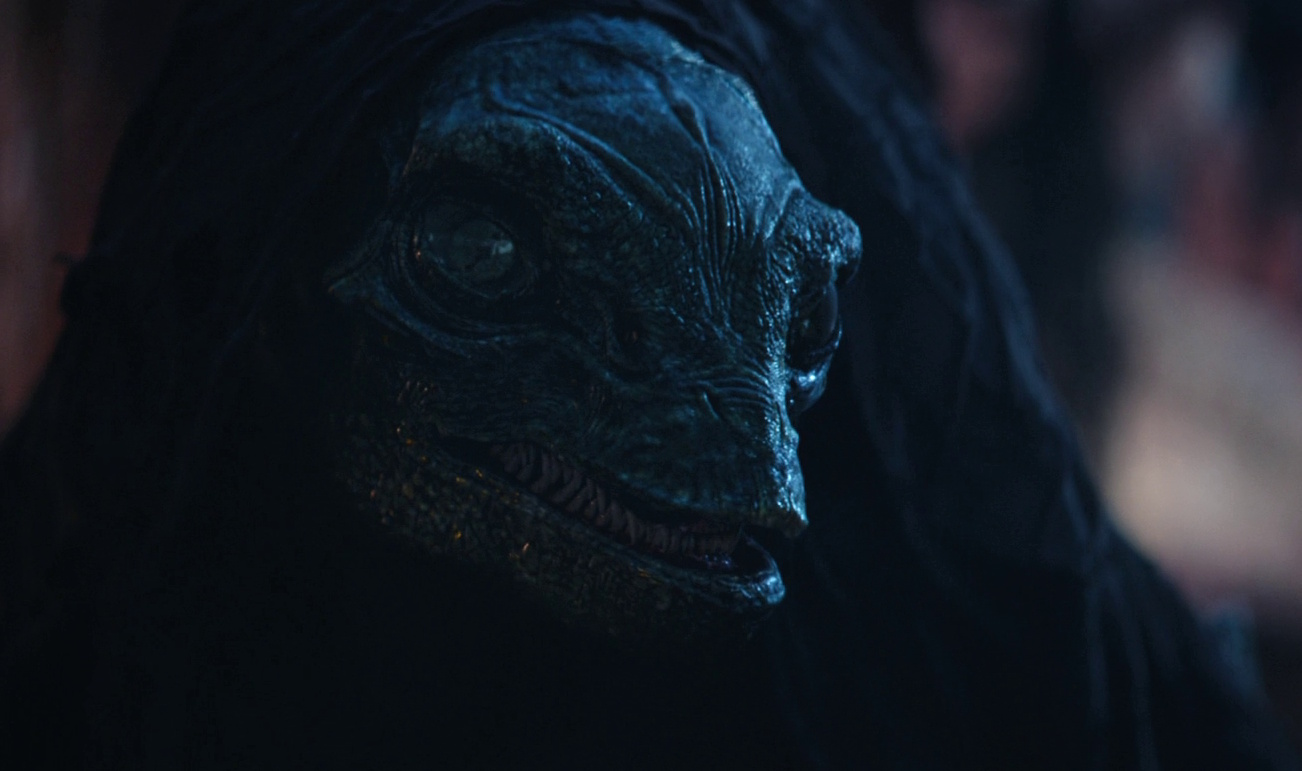
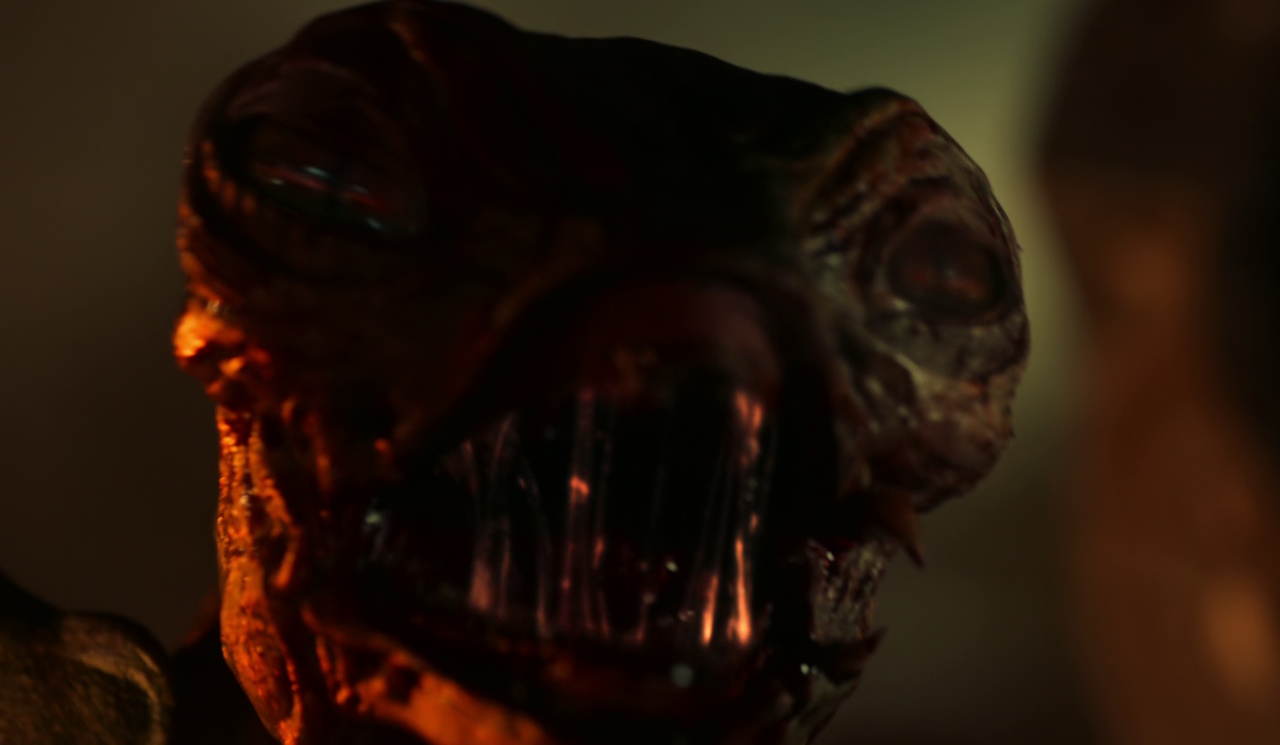
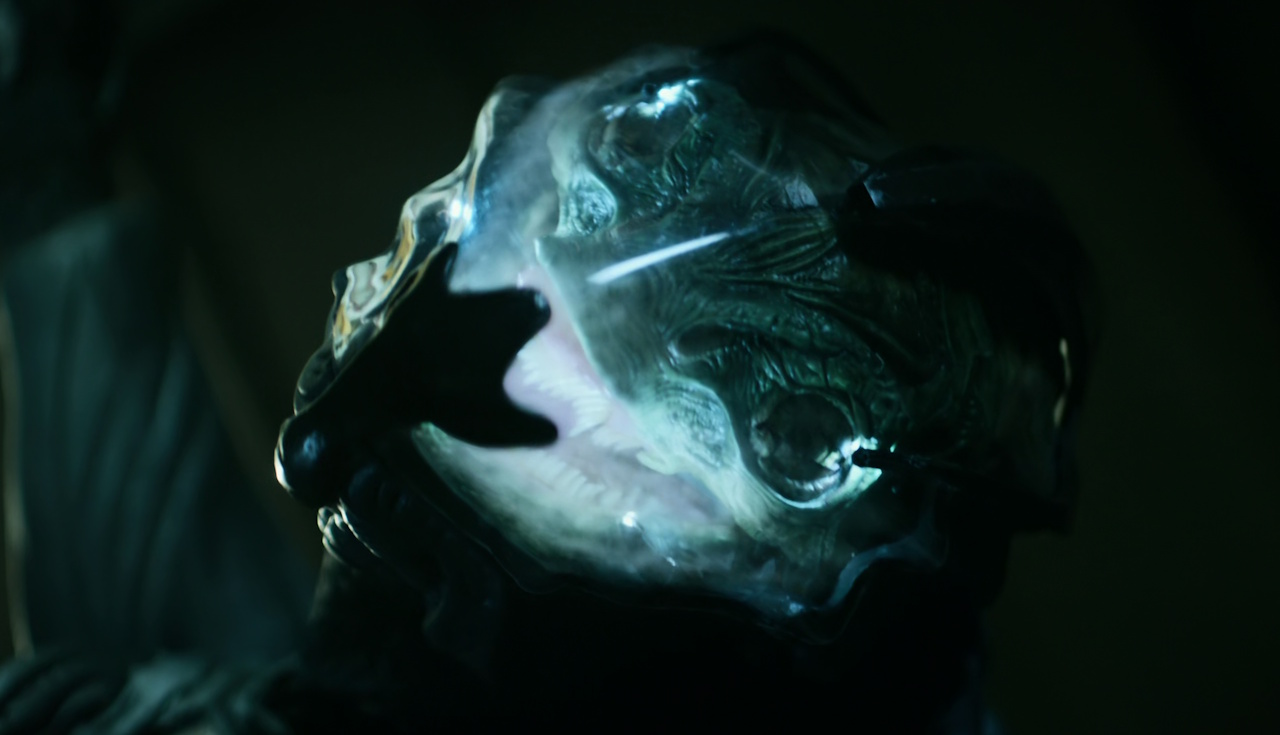
Still frame from Star Trek: Strange New Worlds 3x09: Terrarium, showing a close-up of the Gorn.
Ortegas came to see the Gorn as a friend.

Despite feeling like she was genuinely in danger the entire time, I’m glad Ortegas lives to fight another day. The opening act of Terrarium, which showed Ortegas with Spock and Uhura, felt comparable in tone to how Discovery set up Airiam’s death, or how, earlier this season, Ensign Gamble was sent on the away mission that claimed his life. That kind of setup, knowing what we know of modern Star Trek, has an almost eerie feel, so when Ortegas’ mission went wrong and she crash-landed, I really did feel like she was in danger.

Given that Strange New Worlds has been adding to its roster of legacy characters, fleshing them out, and even trying to set up a “Year One” spin-off focusing on the likes of Kirk, Spock, and Scotty… I wondered if Ortegas might be about to be brushed aside to bring someone like Sulu on board. But I’m very glad that didn’t happen (or at least, it hasn’t happened yet) because she’s someone we’re still getting to know – and she’s such a fun character. Ortegas is cut from the same cloth as Voyager’s Tom Paris insofar as she’s a genuinely passionate pilot, not just a helmsman. Having that kind of person in the pilot’s seat – both of the Enterprise and in shuttlecraft – is a ton of fun, and I can feel her passion for the role every time she takes the helm. Shuffling her out of the way to make way for Sulu (or another legacy character) wouldn’t sit right with me.
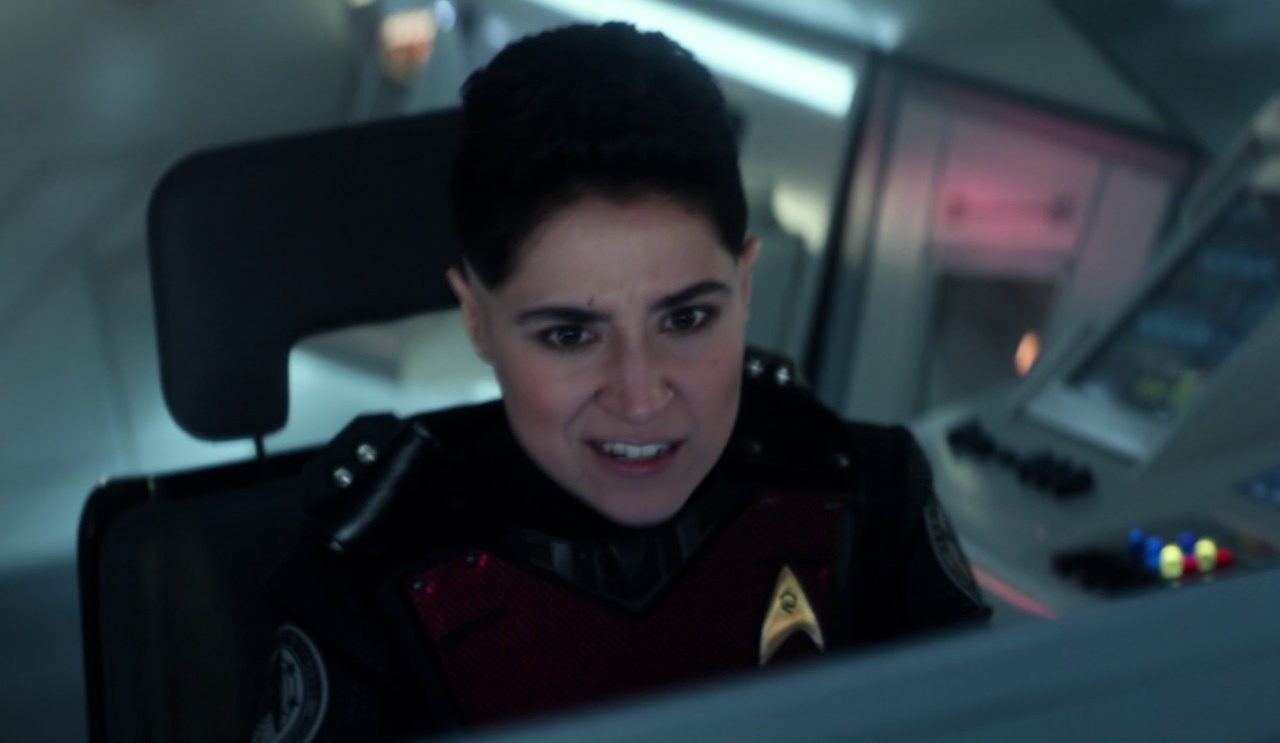
Still frame from Star Trek: Strange New Worlds 3x09: Terrarium, showing Ortegas piloting her shuttle.
Ortegas is at home in the pilot’s seat.

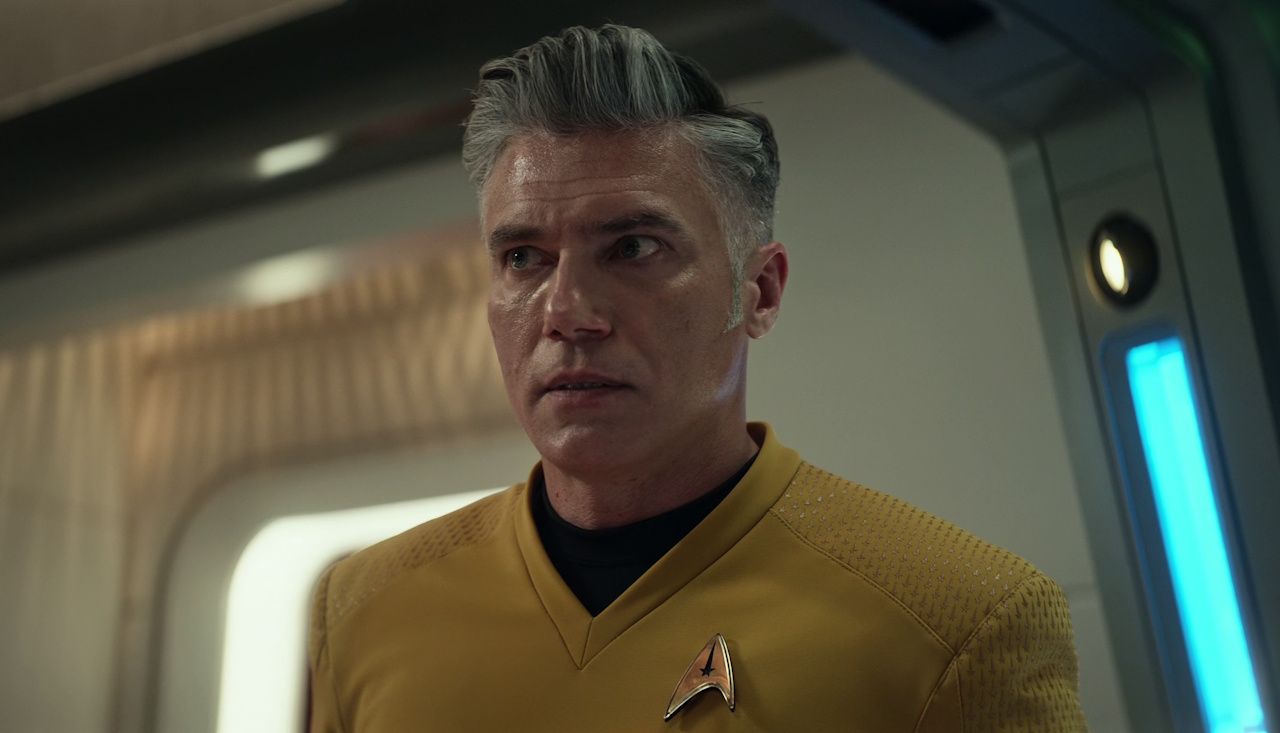
Speaking of piloting… what do we make of Captain Pike taking the helm? I absolutely loved it – and I think Terrarium is a great episode for Pike, despite him not being the centre of attention. I wrote last week that, across the three seasons of Strange New Worlds that we’ve had so far, several episodes saw Pike transformed into a different person, recreated as a hologram, or just… behaving out-of-character. It’s gotten to the point where I feel like it’s almost a refreshing change of pace to see Pike as the upstanding, decent, honourable Starfleet captain that we remember – the character who, as Trekkies, we were so desperate to see given his own show.

Pike taking the helm also reminded me of another Next Generation Season 3 episode: Booby Trap. That episode sees Picard – to the shock of everyone on the bridge – take the helm to guide the Enterprise-D out of a sticky situation, and Pike’s turn at the helm definitely brought up echoes of that story for me. I would’ve liked to see Pike take his seat, perhaps… but maybe that would’ve been too similar, I don’t know. Either way, it was a really great moment, and it drew on Pike’s history as a Starfleet test pilot, which Strange New Worlds has brought up on a few occasions. I like that this is an ongoing aspect of his character and wasn’t newly-invented for Terrarium; these consistent story threads make a series and a setting feel so much more real.
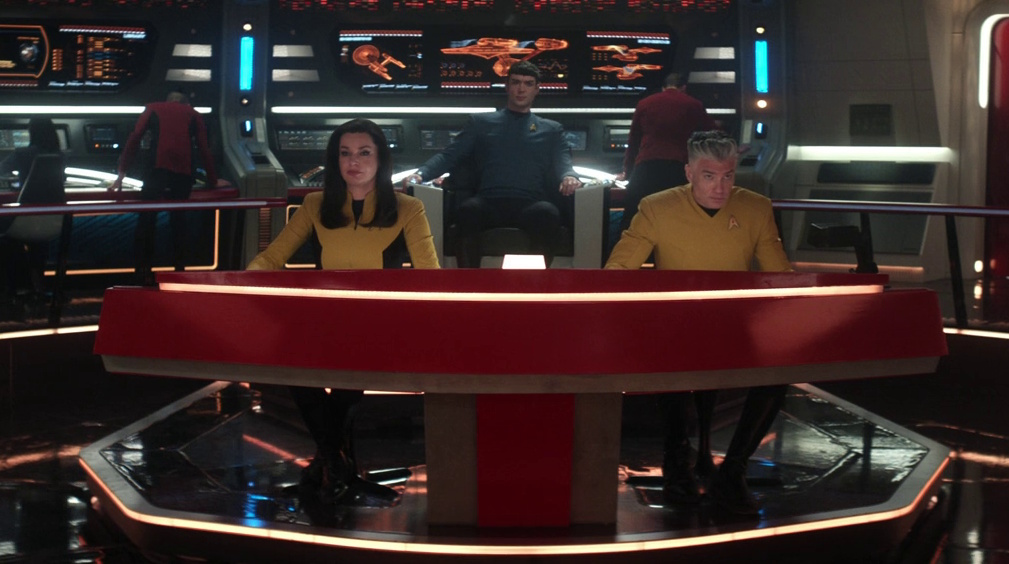
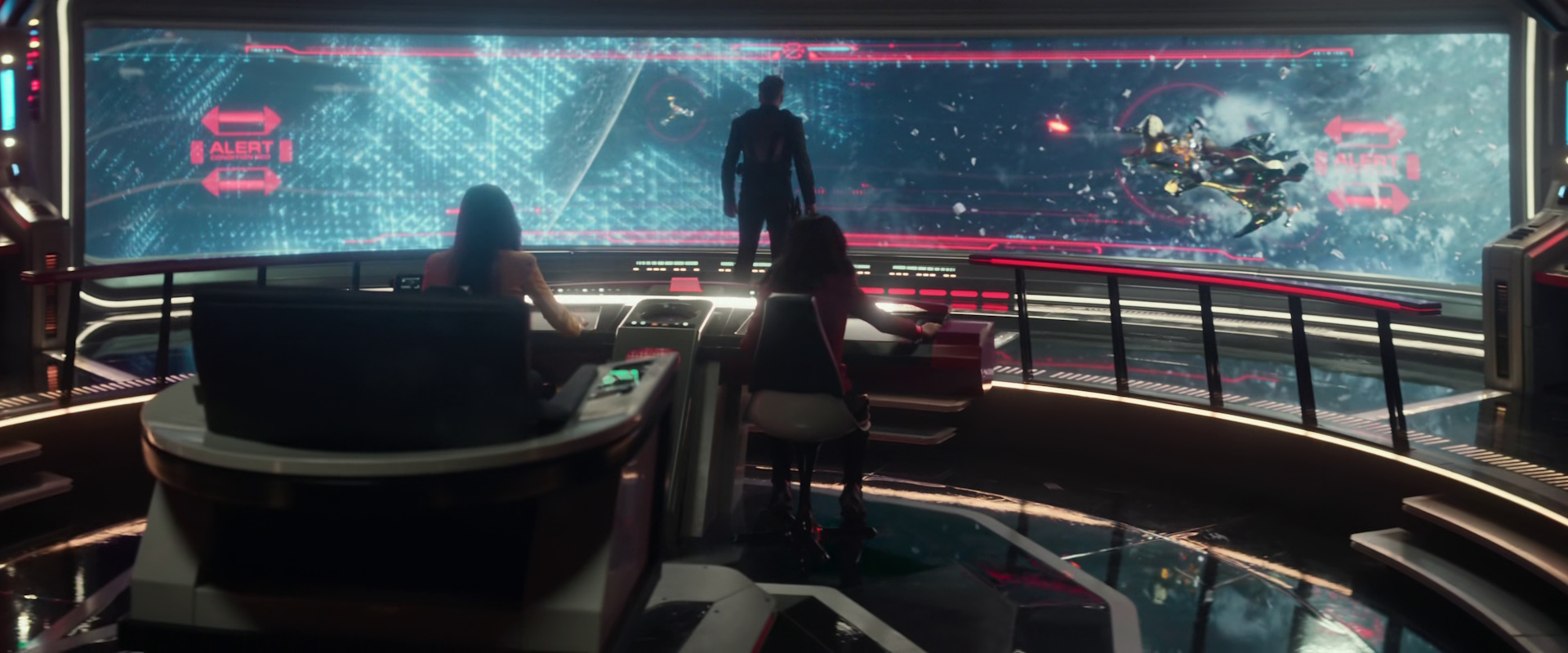
Still frame from Star Trek: Strange New Worlds 3x09: Terrarium, showing Spock in the captain's chair with Una and Pike at the helm/navigation console.
Captain Pike at the helm.

Pike’s side of the story also brought up the weight of command and the difficulties of making command decisions. This is something we know weighs on the captain – in The Cage (and The Menagerie) Pike spoke about how he felt the burden of command and how being responsible for the ship and crew was taking a toll on him. In Terrarium, Pike had to balance the needs of the many with the needs of the one (to quote a future Mr Spock), wanting to do everything in his power to search for and save the wayward Ortegas – but having a time limit to deliver vaccines to a colony world.

I loved Pike’s line to Uhura that he knew she “fudged the numbers,” and he would’ve undertaken the rescue mission regardless. I think that says a lot about the kind of captain he is, and the way he handles his ship and crew. Pike was confronted with a genuinely impossible situation, but he stayed calm, he did everything he could to buy his crew as much time as possible to look for Ortegas, and his role this week reminded me exactly why I was so keen on “the Captain Pike show” back in 2019!
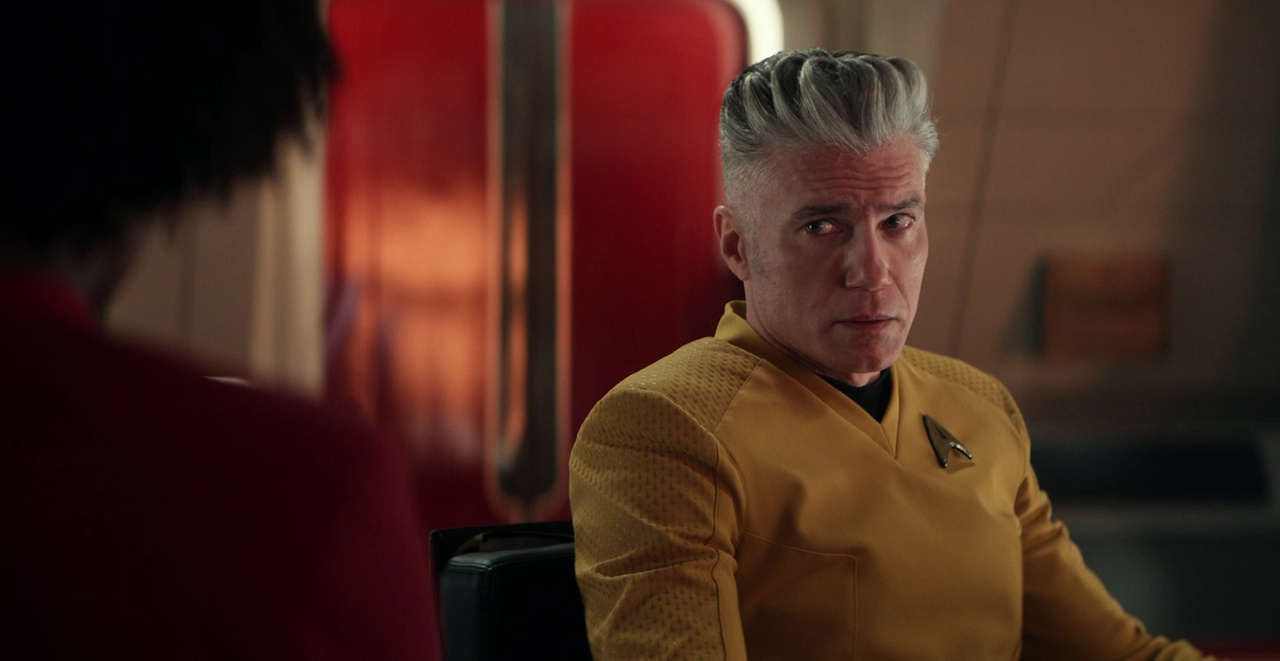
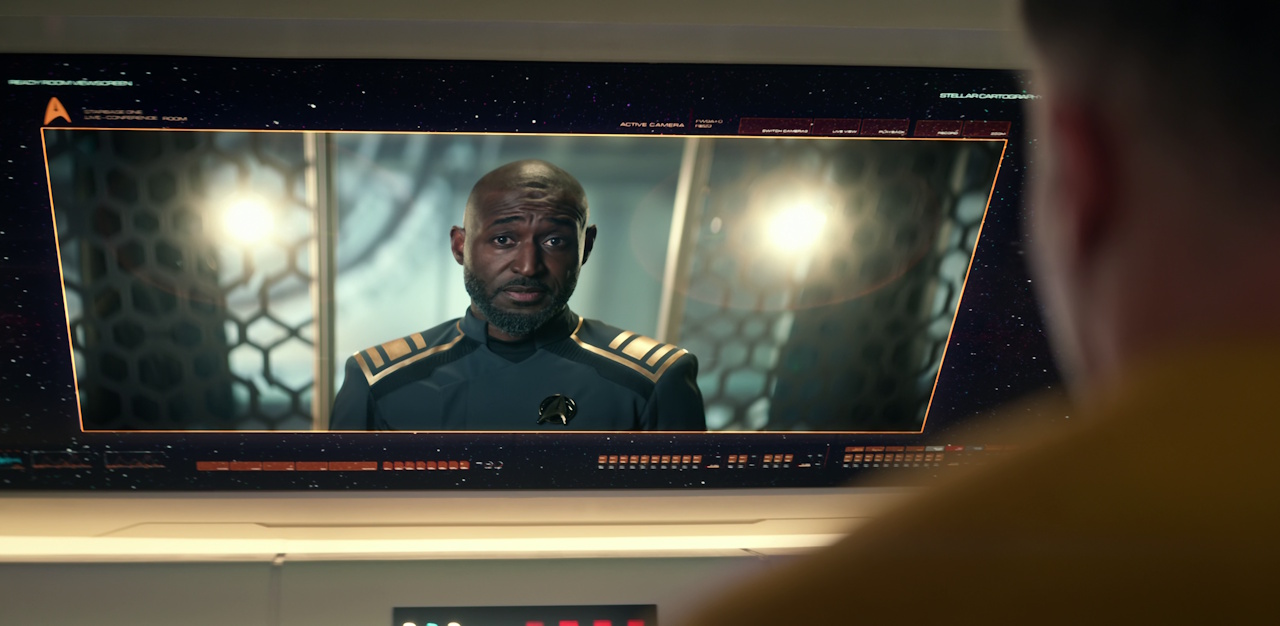
Still frame from Star Trek: Strange New Worlds 3x09: Terrarium, showing Pike looking at Uhura.
This was a great episode for both Uhura and Pike.

Did you spot a reference to The Doomsday Machine? Decker – a commodore by the time of The Original Series – was in command of the USS Constellation, the ship Pike and the Enterprise were set to rendezvous with in Terrarium. I just thought that was a neat little reference. It doesn’t need to be expanded into something massive, with the Constellation and Commodore Decker being shown on screen next week, but it was a cute little nod and wink to Trekkies – and another reminder that all of these stories are taking place in a shared setting. It wasn’t a big thing, but it was neat that the writers went the extra mile, instead of saying that the vaccines were to be delivered to Captain Bob of the USS Whatsisname.

Terrarium was also a fantastic episode for Uhura. Her empathy and love were on full display as she supported Ortegas ahead of her first solo mission in months, then became the strongest advocate for searching for her, even when Spock seemed (perhaps a little too keen) to throw cold water on her plans. We’ve seen Uhura grow in confidence across Strange New Worlds so far, and as Pike remarked, bending the rules is a new frontier for her! But it came from an understandable place, and had been set up incredibly well earlier in the episode.
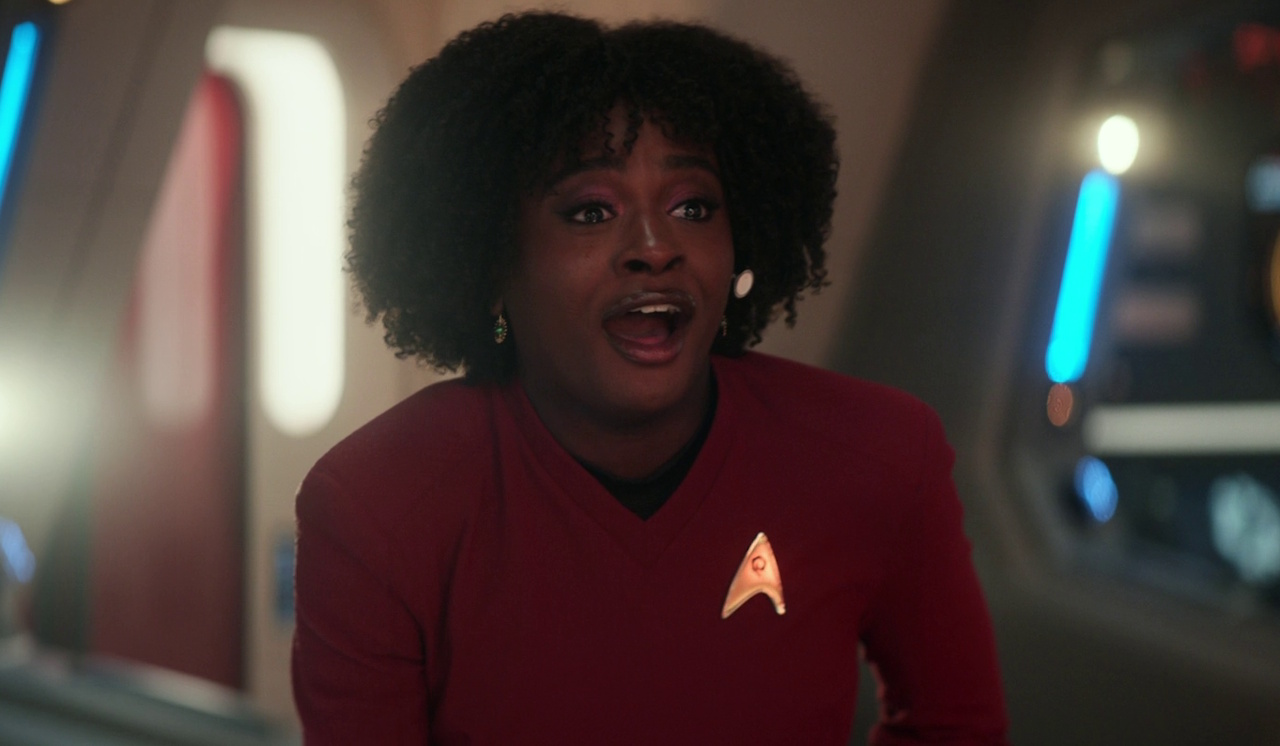
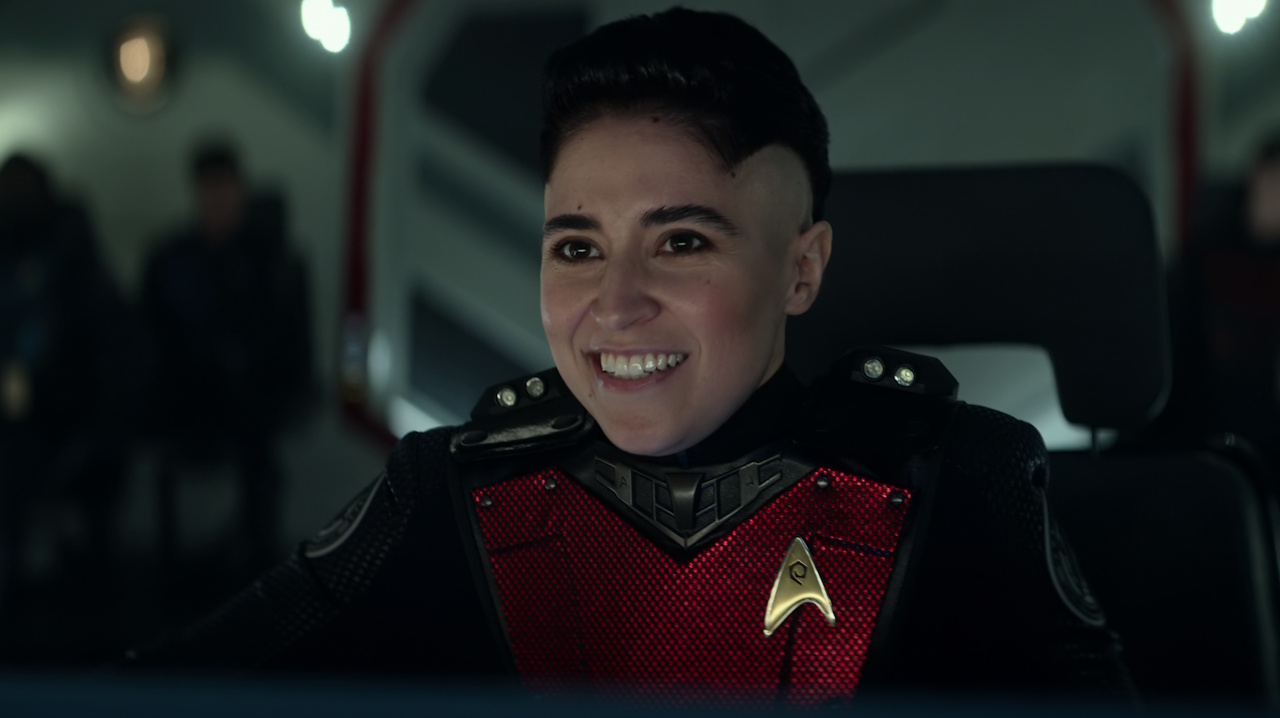
Still frame from Star Trek: Strange New Worlds 3x09: Terrarium, showing Uhura on the bridge, happy.
Uhura at the episode’s climax.

Uhura has had several “moments” across the first three seasons of Strange New Worlds in which she becomes more confident, solidifies her relationship with Starfleet, or just grows in some way. And Terrarium was another great example, building on storylines like visiting the comet, bonding with Hemmer, and inspiring the crew to sing their way out of trouble. The notion that Uhura would do anything to help a friend in need… that’s a core part of the character we remember, and seeing her bend the rules, thinking that was the only way to help Ortegas? It sets up Uhura joining Kirk’s mission to steal the Enterprise in Star Trek III, as well as countless other examples of her going out of her way to help her friends.

Spock was, perhaps, a little too quick to dismiss some of Uhura’s ideas – but this was never really presented as a conflict; more so a hurdle for Uhura to overcome. And Spock, despite his initial predictions of failure, didn’t come across as being a jerk for the sake of it. He even stayed with Uhura, continuing to help her work on her simulations, which I think also says a lot about how far he’s come across the show so far. After so many “Spock comedy” storylines – something I talked about at length last week – it’s nice to see Spock in a more familiar and straight-laced role. It’s also nice to see Spock contributing, but taking a back seat to other characters. This side of the story mostly looked at Uhura and, to a lesser extent, Pike. Spock played a role, but he doesn’t always have to be centre-stage.
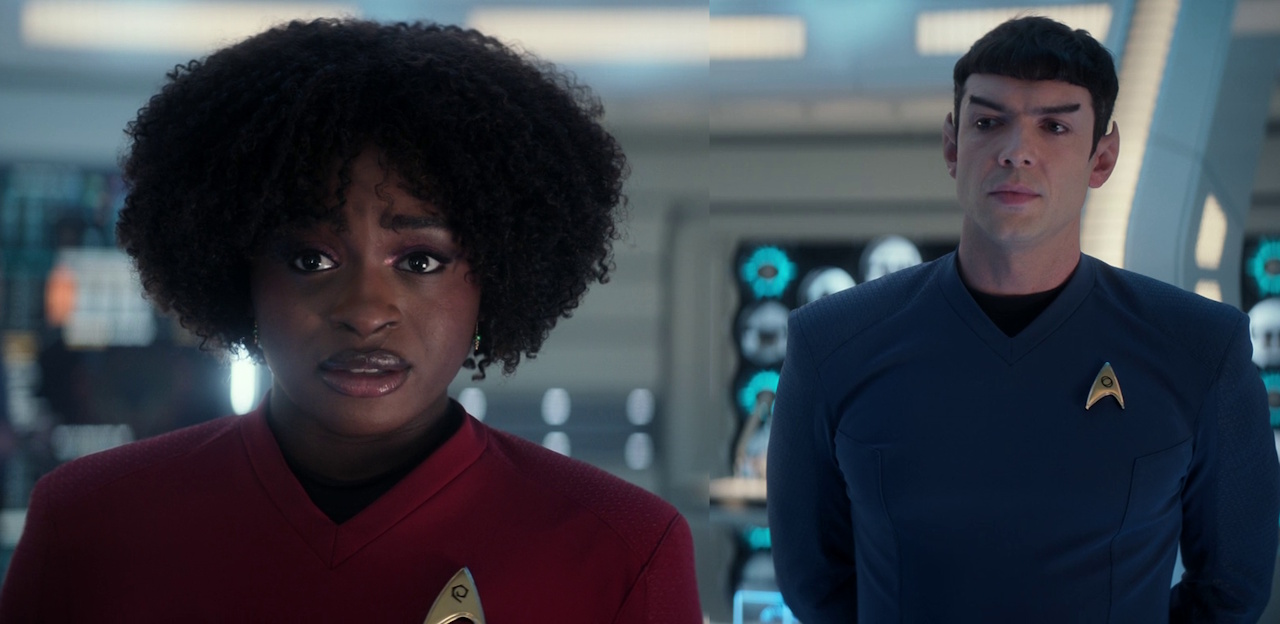
Combo of two still frames from Star Trek: Strange New Worlds 3x09: Terrarium, showing Spock and Uhura in the science lab.
Uhura and Spock.

So let’s return to the main part of the story: Ortegas and the Gorn.

I really liked the moon that Ortegas crashed on. It made fantastic use of the AR wall, and just felt like such a barren and desolate place. Seeing the wind sweeping across the surface of the moon, with nothing but dust and rocks in sight, with occasional quakes and rumbles shaking the ground… it made for a very unnerving place to have crash-landed; very lonely, very bleak. The addition of the flaming blue gas giant in the sky obviously added a huge sense of impending danger, which was intimidating. The camera work on the surface of the moon, combined with the AR wall, actually led to a really great effect – something Paramount hasn’t always been competent at if you look back at some other recent Star Trek projects, like Discovery’s fifth season.

And this sense of being lost, alone, and trapped in a desolate, barren wasteland was really hammered home by the presence of the wormhole. I don’t think we ever learned exactly how far away the wormhole’s terminus was from where the Enterprise was situated – but, as Spock said, it could be basically anywhere in the universe. That added so much to the sense of isolation and abandonment compared to, say, an episode like The Enemy, in which the Enterprise-D was still in orbit, even if for technobabble reasons it wasn’t possible to beam out Geordi right away. Again, that sense of genuine danger – that we might be about to lose Ortegas from the series entirely – was ramped up by just how badly wrong this mission was going.
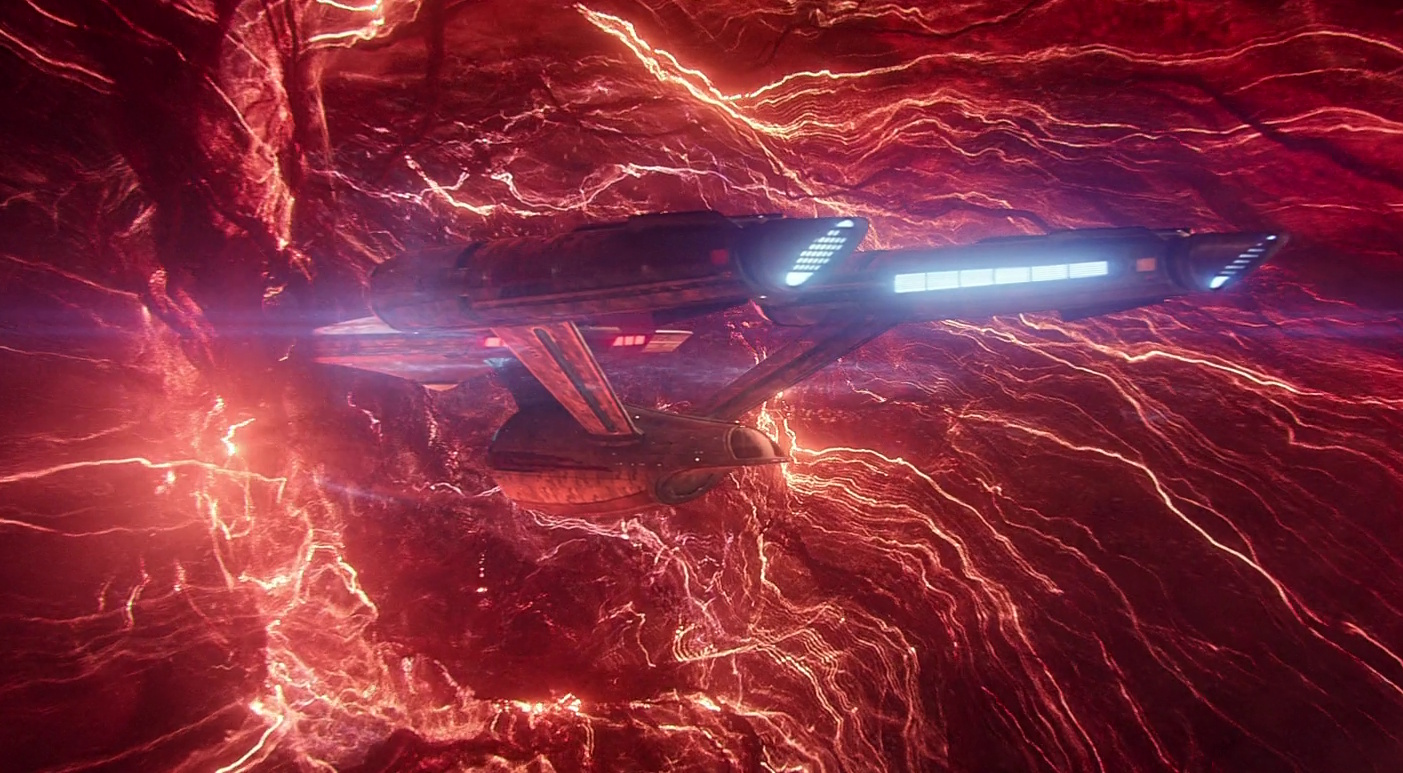
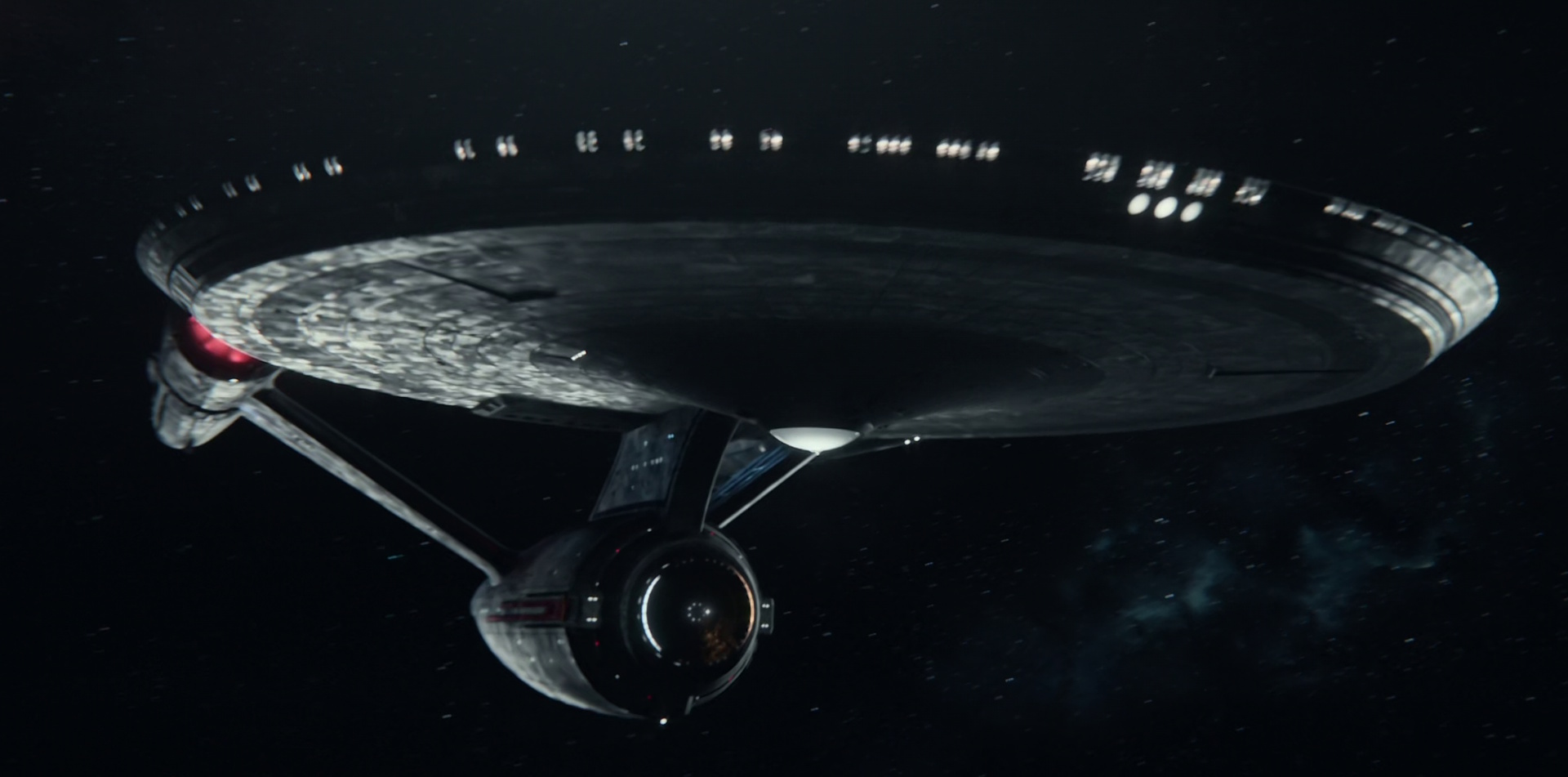
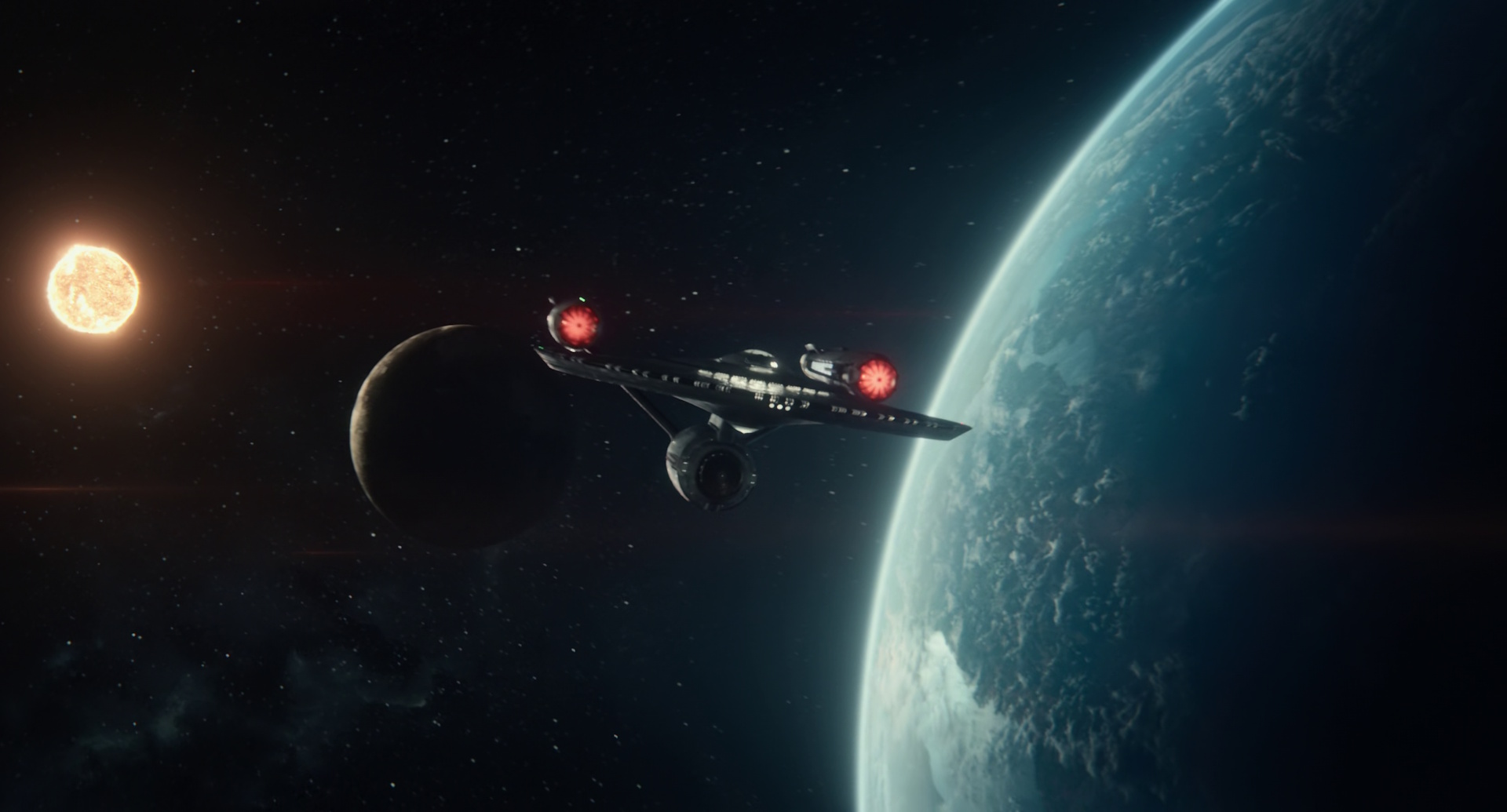
Still frame from Star Trek: Strange New Worlds 3x09: Terrarium, showing the USS Enterprise wedged in a wormhole.
The Enterprise in the wormhole.

A couple of weeks ago, I said that I was worried that Ortegas’ injury and trauma from the beginning of the season hadn’t been picked up in a big way, and that if it did come back, it would be harder to pull off effectively after having seen her “back to normal.” And I stand by that to an extent – I think if, instead of Terrarium, we’d gotten a Discovery-style “let’s all talk about our feelings” story, it would have been difficult to put Ortegas into that after several episodes had passed in between her injury, her insubordination, and her apparent recovery. But because of the way Terrarium approached it – putting her face-to-face with a Gorn for the first time since the end of Hegemony, Part II – it actually worked incredibly well.

Ortegas’ character arc built on her earlier encounter with the Gorn and the lingering trauma it caused her without feeling like we’d missed a step. By throwing her into this tense survival situation, we got to see her going from “just kill me already you alien monster,” to “okay, we can be friends.” And Terrarium built this up slowly and carefully, taking us from Ortegas’ shock at spotting the Gorn, trying to hide, fearing for her life, and eventually coming to terms with the fact that they’d have to work together to have any chance of escape. It was incredibly well written – and given that Melissa Navia was the only one to actually have any dialogue on this side of the story, incredibly well performed and emoted. Having to act out an incredibly intense and emotional storyline against a person in a Gorn suit can’t have been easy – but she made it look easy! This is why, for almost three full seasons, a lot of us have been champing at the bit for a proper Ortegas episode!
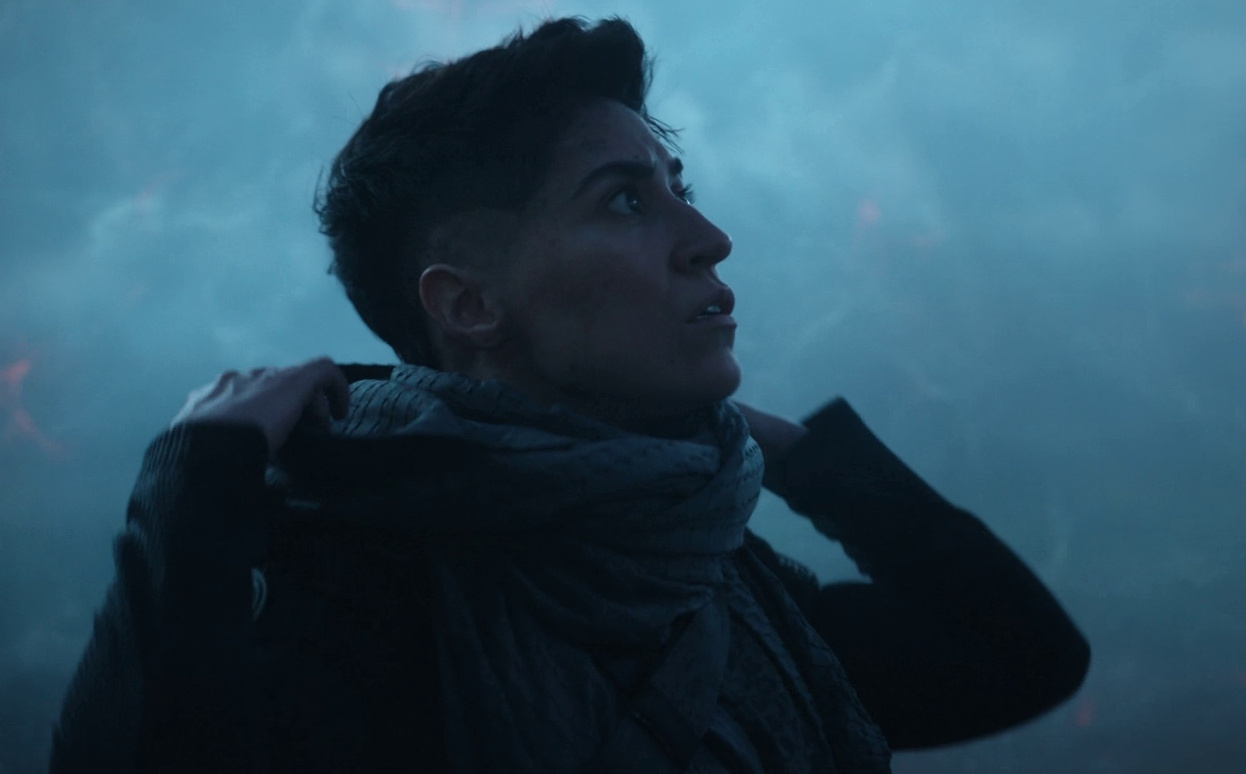
Still frame from Star Trek: Strange New Worlds 3x09: Terrarium, showing Ortegas inside the shield dome.
Melissa Navia absolutely excelled.

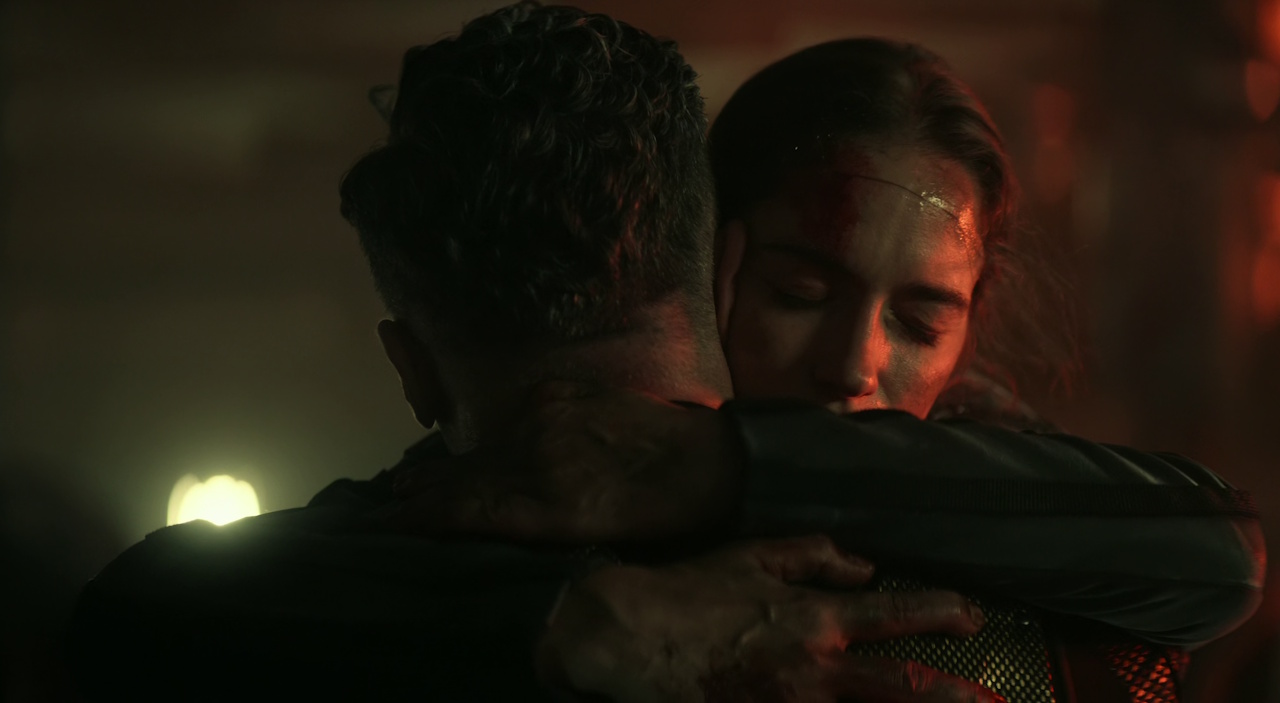
We got to see Ortegas run the gamut of emotions. The elation of her mission and the piloting challenge, the anxiety and loneliness after the crash-landing, the sheer terror of her first Gorn encounter, a slowly-developing friendship which culmintaed in board games, and the abject grief at her new friend’s utterly brutal execution. And Melissa Navia had to do all of that (well, almost all of it) on her own, with no other actor to bounce her lines off of. It’s an incredible solo acting performance, one which really encompasses a huge range of different emotional states across a dangerous and nearly fatal away mission.

After Strange New Worlds has reimagined the Gorn to be closer to Alien’s Xenomorphs or other horror movie monsters, it was incredibly refreshing to see a different and softer take this time. We got to see a Gorn – for the first time in the entire series, really – not as “the other,” or a monster, but as a person. This Gorn showed Ortegas – and by extension, us as the audience – that the Gorn are more than just mindless killing machines who see humans as food. They have a complex language, a culture, they enjoy playing games, they can get sick and injured… again, to tie into the theme of Star Trek stories as “morality plays,” we’re seeing the Gorn – through Ortegas’ eyes – as people… basically for the first time since they were re-worked for Strange New Worlds. This only makes the brutal killing of the Gorn at the end of the story hit so much harder and feel so much worse.
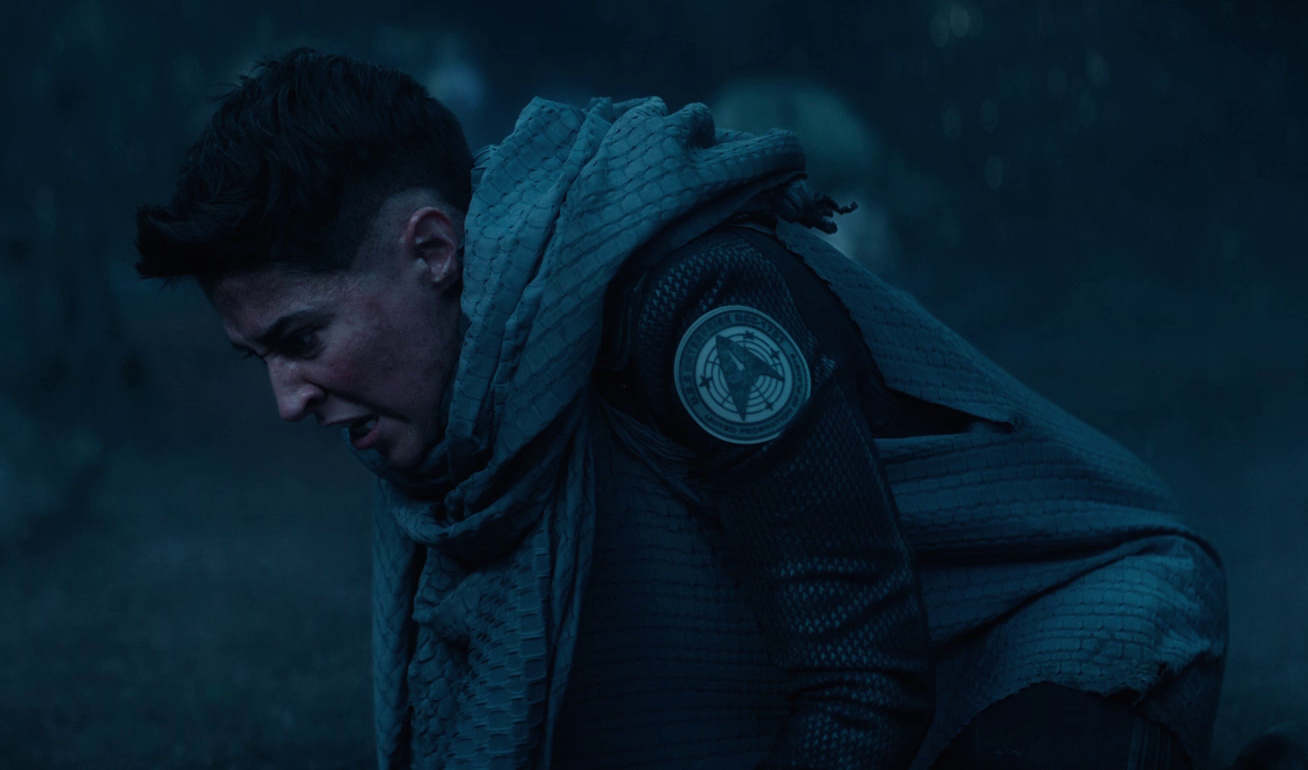
Still frame from Star Trek: Strange New Worlds 3x09: Terrarium, showing Ortegas on her knees.
Ortegas at the end of the story.

May I nitpick? If you know me… you know I must!

If you can transport down to a moon, it stands to reason that you can also transport up from a moon, right? So why did La’an have to beam down to search for Ortegas? And why did La’an beam down with a squad of redshirt tactical officers for a rescue mission, instead of – oh, I dunno – a doctor? The “we have to deliver these vaccines on time” added an extra source of tension to the episode, but it felt a bit exposition-y – mostly because of the timing of its introduction. If the episode had begun with Pike saying, “we’re en route to deliver these vaccines, but we stopped off briefly to study this unusual phenomenon,” I think it would’ve worked a lot better than Una springing it on us after Ortegas had already gone missing. The “scanning ability” percentage wasn’t really explained, and I could’ve entertained a brief line of technobabble discussing it, especially given its importance to Uhura and Pike’s storyline.

But, as I said, all of those are incredibly minor points, and none of them detracted from the finished product. I include them here because, well, I’m a Trekkie – and as Trekkies, we love nothing more than to pick at the tiniest little details in Star Trek, sometimes!
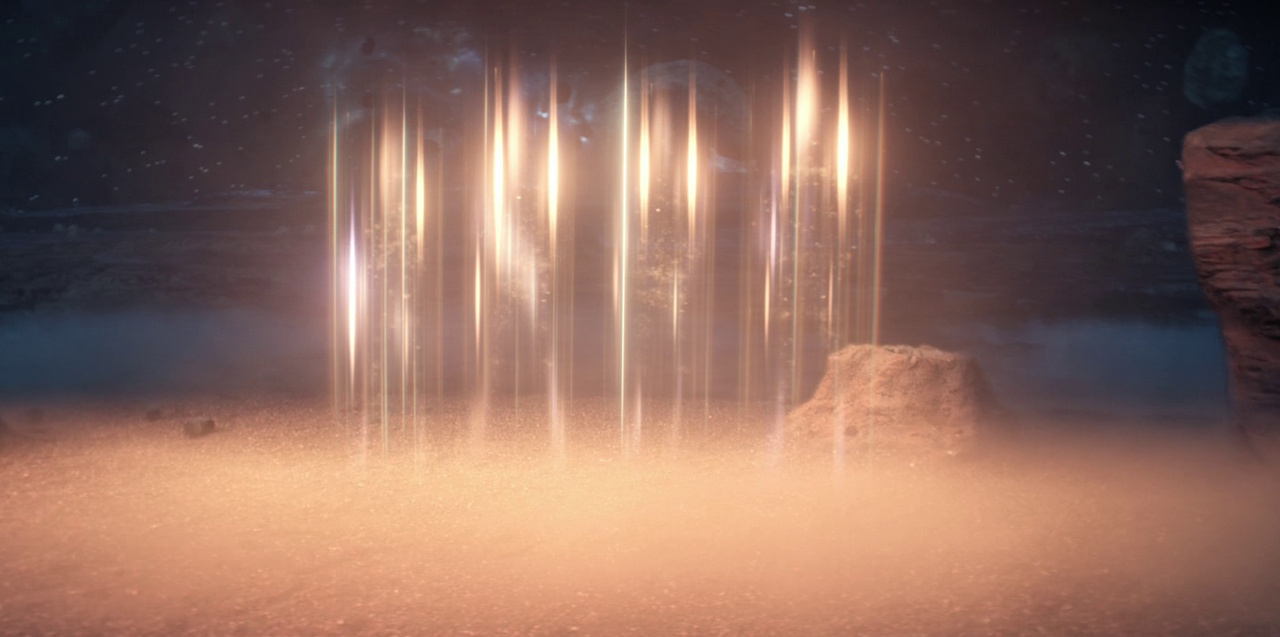
Still frame from Star Trek: Strange New Worlds 3x09: Terrarium, showing the away team beaming down.
The rescue team beams down.

Terrarium joins Shuttle to Kenfori and Through the Lens of Time as one of my favourites from Season 3. It was fantastic all around, with great moments for Pike and Uhura, as well as an incredibly intense story for Ortegas.

I loved this completely different way to include the Gorn. Don’t get me wrong – I’ve enjoyed Strange New Worlds’ reinterpretation of the Gorn, by and large. But I also think we were beginning to come up against the limits of the “alien monster” idea, so to show a softer, more personable side to the Gorn – and to put Ortegas, who had suffered so severely at their hands, right in the middle of it – was a fantastic storytelling decision, and one that was executed incredibly well. Melissa Navia got her first major spotlight episode – and rose to the occasion, overcoming a difficult acting challenge.

I really can’t heap enough praise on Terrarium, as you can probably tell! It truly is an outstanding episode, one that harkens back to the likes of Arena and The Enemy from those older shows, but puts a completely different spin on a familiar setup thanks to a brutal ending. I’m not sure I’d have chosen to include Arena’s Metrons; I’m just not convinced that brief scene at the end added an awful lot or that the story really needed it. But doing so helps to square a circle, perhaps, while hinting at a “different” take on the Gorn by the time of Kirk’s encounter in Arena.
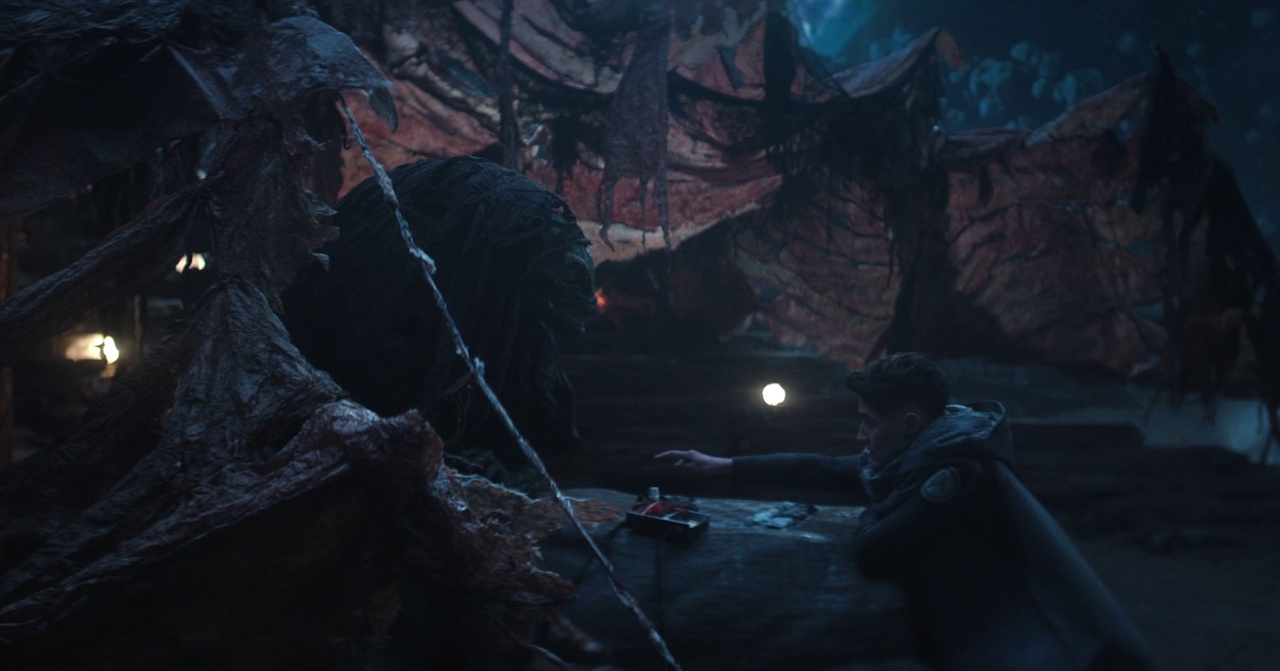
Still frame from Star Trek: Strange New Worlds 3x09: Terrarium, showing Ortegas and the Gorn playing chess.
Playing chess with a Gorn.

So that was Terrarium. Absolutely fantastic. No notes – literally, in my case!

Season 3 has been pretty good, overall. Strong episodes like Terrarium are a nice balance after a weaker offering like Four-and-a-Half Vulcans last week, and I’m rooting for an excellent season finale to close things out with a bang! Can you believe Season 3 is almost over, already? I’m actually feeling pretty sad about that.

The final episode of the season will be titled New Life and New Civilizations. So far, there’s been nothing released – no promo photos, no blurb, no trailer. Something big could be hiding under the surface, then! Check out my latest theory about Captain Pike and Captain Batel, if you’re interested – you can find it by clicking or tapping here. And join me next week for the final episode review of the season. Oh, and if you missed it, I met Martin Quinn (Scotty) over the weekend at a Star Trek convention here in the UK. Click or tap here to check out my write-up of the events of the day. Live Long and Prosper, friends!


Star Trek: Strange New Worlds Seasons 1-3 are available to stream now on Paramount+ in countries and territories where the platform exists. The first two seasons are also available on DVD/Blu-ray. The Star Trek franchise – including Strange New Worlds and all other properties discussed above – is the copyright of Skydance and/or Paramount. This review contains the thoughts and opinions of one person only and is not intended to cause any offence.
Star Trek: The Original Series Episode Re-Watch: Season 1, Episode 18: Arena

A Star Trek-themed spoiler warning.

Spoiler Warning: There are spoilers ahead for Star Trek: Strange New Worlds Seasons 1, 2, and 3, Star Trek: Enterprise Season 4, and Star Trek: The Original Series Season 1.

It’s been more than five years since I set up this website. In that time, I’ve written hundreds – literally hundreds – of articles, essays, and reviews all about Star Trek. But this’ll be the first time I’ve written up a full re-watch of an episode of The Original Series. I must be the first Trekkie in history to write up a re-watch of an episode of The Animated Series before The Original Series! But this catastrophic failure of Trekkie-dom comes to an end today, as we sit down together to watch the classic first season episode Arena.

I’m going to split this article into two parts. We’ll talk about Arena on its face, including some of the episode’s production history – and the reason why the creator of the iconic Gorn costume went uncredited and unknown for almost a decade after the episode aired – and then we’ll talk about the Gorn themselves in a bit more detail. Spoiler alert if you haven’t watched Strange New Worlds and still plan to, but the Gorn appear prominently in that show. That’s actually part of the reason why I wanted to re-visit Arena ahead of the third season premiere!

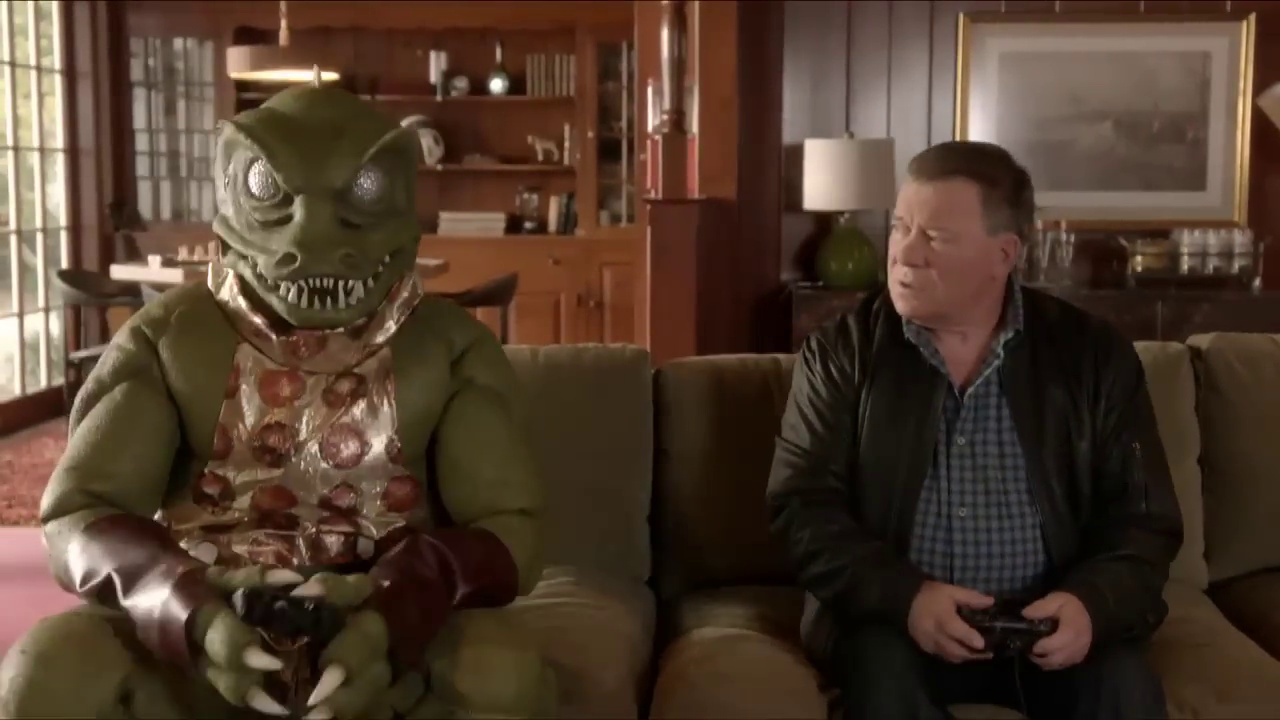
Still frame from a TV advert for the Star Trek video game circa 2013 showing William Shatner and someone in a Gorn costume.
The Gorn and Captain Kirk…

Arena is an iconic episode – and the Gorn captain has to be one of The Original Series’ most recognisable villains. In fact, I was a little surprised not to see Arena on the list when I did my recent recap of IMDB’s top-rated Star Trek episodes – according to that site’s users, Arena ranks a measly 19th out of The Original Series’ 79 episodes! I think I’d have put it a fair bit higher than that; it’s gotta be a top ten episode, at the very least! It has a strong story, expanding our understanding of the Federation, while also containing enough of that esoteric sci-fi “weirdness” that makes Star Trek the franchise we know and love.

It’s also best-known, of course, as “the Gorn episode,” introducing the famous reptillian species to the franchise. But Arena is as much about another alien race – the Metrons – as it is about the Gorn. The Metrons feel, with the benefit of decades of hindsight now, almost like a prototype of what would become the Q Continuum – millennia ahead of the Federation, considering themselves to be enlightened, but not above a bit of interference in galactic affairs. The Metrons have never returned to Star Trek, though, and I can kind of understand why: for a “morality play” like Arena, they work well as a somewhat neutral arbiter. But as the franchise has expanded, we’ve seen fewer of these kinds of stories. Modern Star Trek in particular lends itself much more to the inclusion of the Gorn than it does the Metrons!

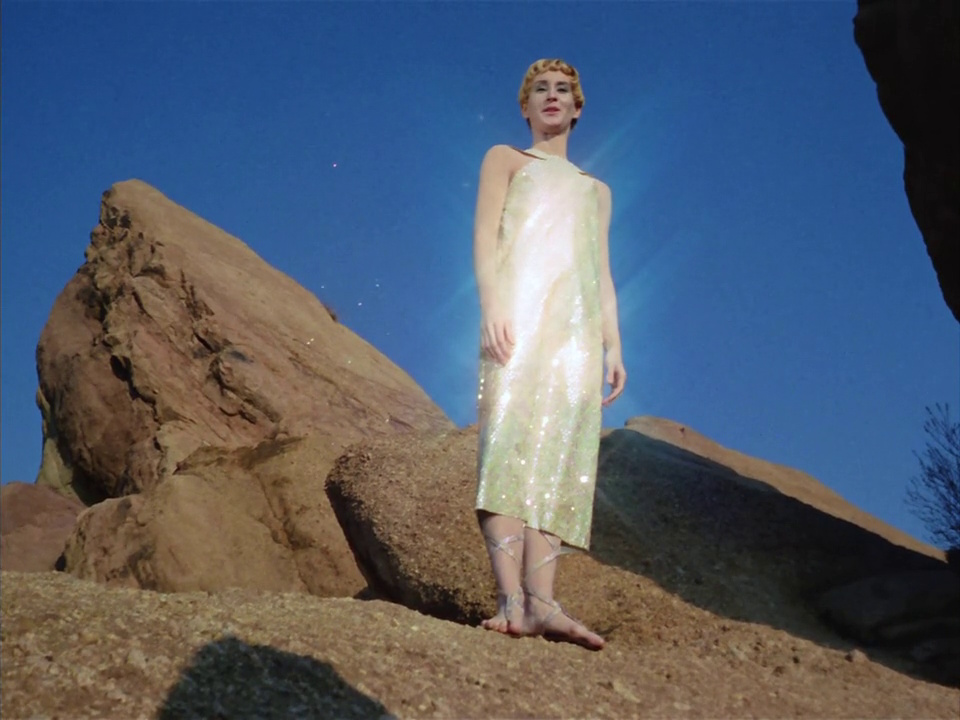
Still frame from Star Trek: The Original Series Season 1 episode Arena, showing a Metron.
An unnamed Metron from the end of the episode.

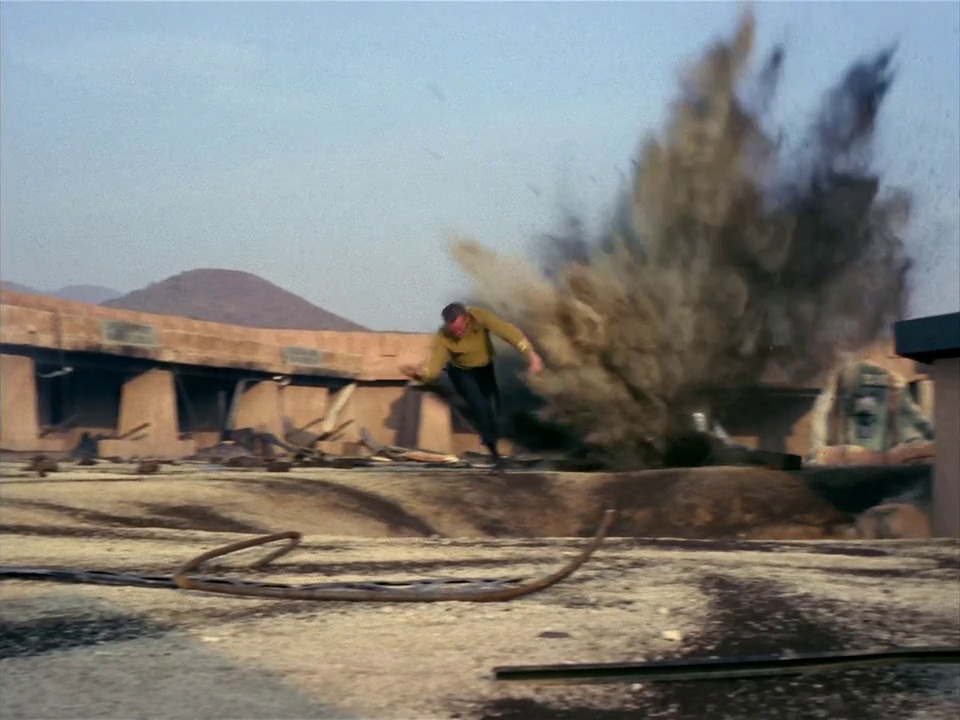
Because the battle at Vasquez Rocks is so well-remembered, it can be easy to overlook the first part of Arena – but the away mission to Cestus III is one of the first season’s most tense combat sequences. Drawing on war films for inspiration, with an unseen enemy and whistling noises reminiscent of World War II-era mortars, the entire away mission to the destroyed outpost is – for the time, anyway – really exciting stuff. This is also one of the first away missions to be shot on location – i.e. not on a sound stage or backlot. Following the previous episode, Shore Leave, which was also shot in the Los Angeles area, Arena took the cast and crew to a set near Vasquez Rocks which had been built a few years earlier for a different television series.

I think I’m right in saying that it’s this away mission sequence in Arena, which used several pyrotechnic explosions to create the effect of the Gorn attack, that led to both William Shatner and Leonard Nimoy suffering from tinnitus – a condition that causes ringing in the ears and can be painful. The Original Series used pyrotechics throughout its run, but this battle sequence pushed the performers to act in close proximity to these explosive devices. Knowing the impact the sequence had on the actors, that does taint how we view it. Because as exciting and intense as the Cestus III mission was, no television scene is worth suffering from life-long after-effects.

Still frame from Star Trek: The Original Series Season 1 episode Arena, showing Kirk being flung into the air by an explosion.
One of the explosions on Cestus III.

The first part of Arena, it could be argued, plays out similarly to Balance of Terror, which would’ve premiered just a month or so earlier. The attack on a Federation outpost, pursuing a powerful but unseen enemy… it starts the story in a familiar way. But the episode soon takes a completely different turn with the intervention of the Metrons. What begins with a deadly raid and an attack on the away team seems to be building up to another starship battle – but just as the Enterprise seems to be catching up to the Gorn vessel, the Metrons rebuke both ships and crews for their violent nature.

The Metrons are an interesting addition to the story. Rather than just another enemy encounter or a straightforward action story, their intervention puts a different spin on things. Kirk, who seemed hell-bent on revenge at first, is forced to confront the way he handled the interaction, and this idea of revenge at any cost – mutually assured destruction, perhaps – is thrust into the spotlight in an uncomfortable way.

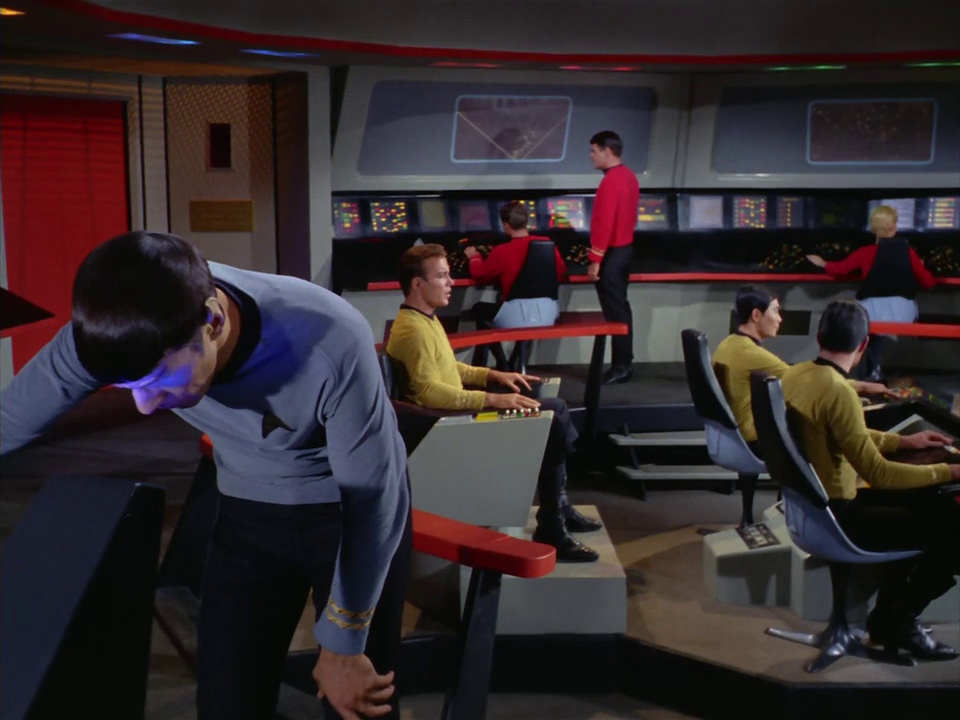
Still frame from Star Trek: The Original Series Season 1 episode Arena, showing the crew on the bridge.
Spock, Kirk, and the crew on the bridge while the chase unfolded.

That’s part of the context behind Arena, this idea that seeking revenge isn’t healthy and is, in itself, a violent urge. But there’s more to it than that. The revelation that the Gorn considered Cestus III to be one of their planets, and that’s why they attacked the outpost, reframes things for Kirk, Bones, and the rest of the crew. The Federation may not have been aware of the Gorn claim, but either way, they settled an outpost on a planet that someone else considered to be their territory. There’s another analogy here that I think is particularly interesting.

The Original Series draws inspiration from the western genre. The idea of space as a new “frontier” conjures images of the wild west, and in Arena itself, Kirk refers to himself and the Enterprise as the only lawmen in this region of the galaxy. The Gorn, therefore, are this story’s metaphorical Native Americans, having a pre-existing claim to the land and attacking the Federation settlers who’d moved in on their territory. Maybe that wasn’t exactly how the story was written, but I think that reading is there, just beneath the surface. And for the 1960s – when the western genre was still riding high at the box office, with films like El Dorado, Ride in the Whirlwind, and The Good, the Bad, and the Ugly – that’s kind of a progressive idea. To make the point that, in this case, the Federation may have been in the wrong… that’s a pretty neat inversion of the typical western-inspired frontier story.

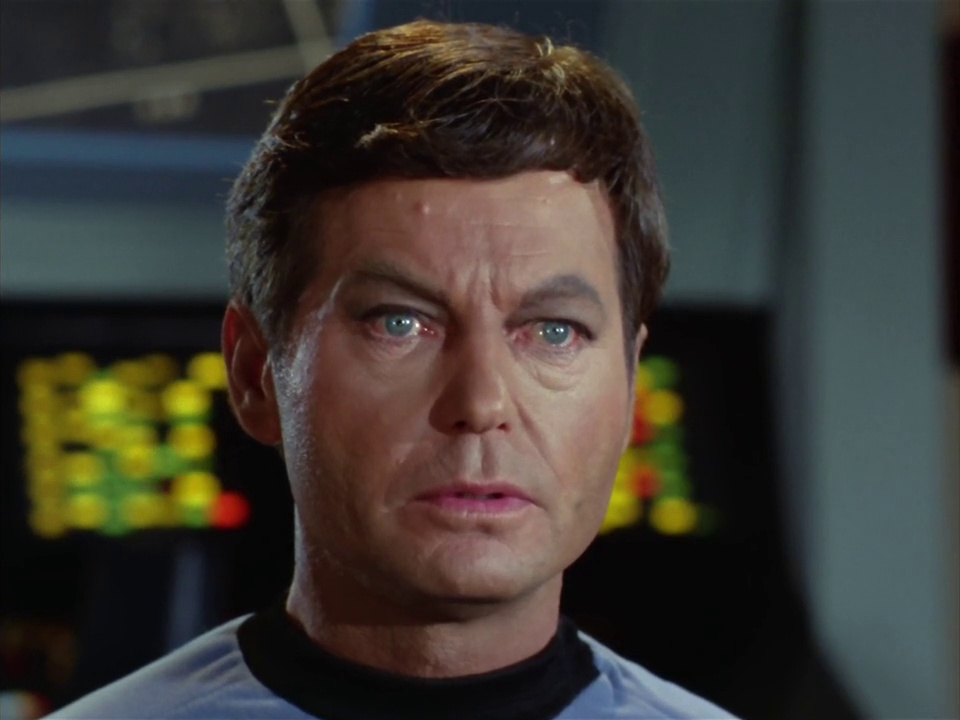
Still frame from Star Trek: The Original Series Season 1 episode Arena, showing Dr McCoy.
Dr McCoy put it best: “we could be in the wrong.”

Vasquez Rocks has become an iconic location within the Star Trek franchise, and that really began here in Arena. The filming location, which is just inside the famous “thirty-mile zone” around the film studios in Los Angeles, has appeared in The Next Generation, Voyager, Enterprise, Picard, and two of the Kelvin films as well as The Original Series and The Voyage Home. It was a great choice for Kirk’s battle against the Gorn commander, and even though I’ve criticised some modern Star Trek productions for re-using the same filming locations too often, I think Vasquez Rocks is such an iconic spot that it gets a pass!

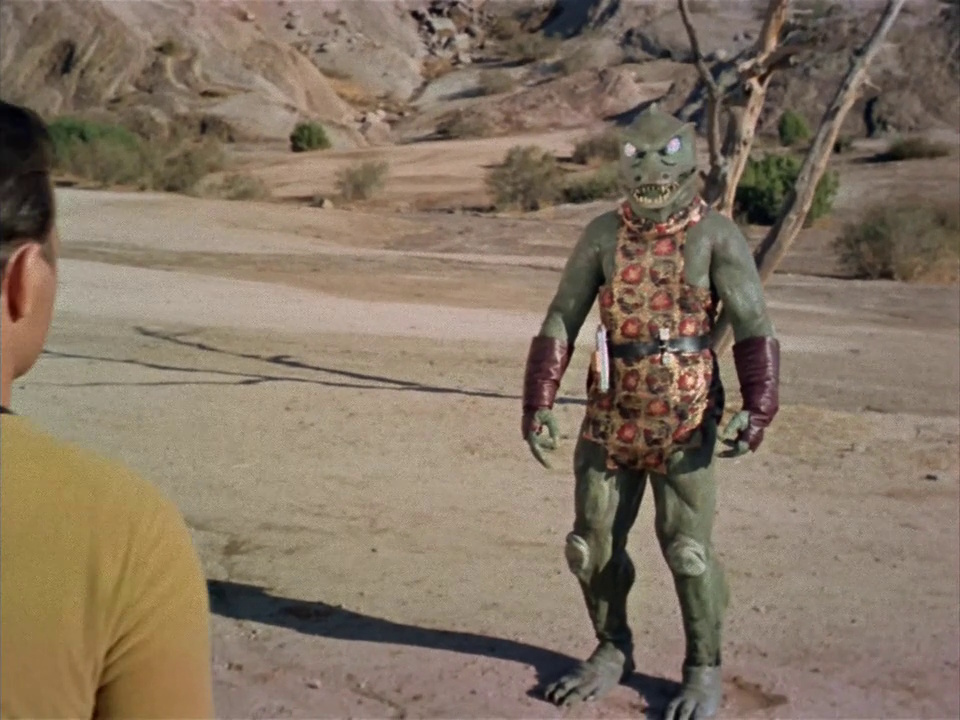
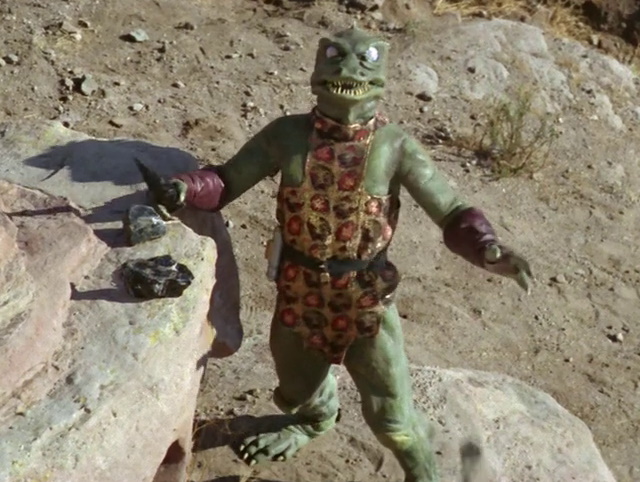
I absolutely love the original Gorn design, and even though it might not be as “realistic” as the updated variant seen in Strange New Worlds… I think there’s something special about the original costume. I always compared the Gorn to a Tyrannosaurus Rex – but that’s because I first watched Arena after having seen Jurassic Park in the mid 1990s! The design draws inspiration from real-world reptiles like the komodo dragon, using reflective, almost insect-like eyes and needle-sharp teeth to complement the monstrous design.

Still frame from Star Trek: The Original Series Season 1 episode Arena, showing Kirk and the Gorn captain's first encounter.
I just love this costume.

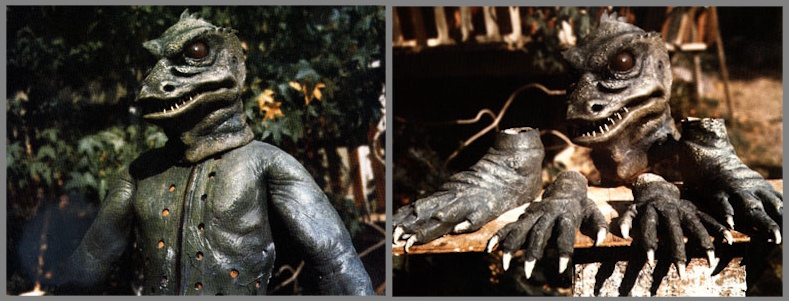
Wah Chang designed the Gorn costume as well as many other iconic Star Trek props. The tricorder, the flip-open communicator, and tribbles were all his creations – but he went uncredited for all of it, and was unknown until members of the Star Trek fan community uncovered his role in the 1970s. Chang seems to have been commissioned by Desilu – Star Trek’s production company – in a weird legal grey area; director and producer Bob Justman wanted to use Chang’s work, but Chang wasn’t a member of the prop-makers union. In a kind of workaround, Desilu would “purchase” items from Chang, but he was never credited on screen for any of his creations.

This is another great example of the early Star Trek fan community pulling together! Chang’s role was eventually uncovered in the 1970s by Trekkies, who were keen to find out more about some of the show’s iconic props and designs. It’s one of those fun little stories that, were it not for the dedication of fans, would’ve simply never come to light. Chang’s contributions to Star Trek – not only the episode Arena, but really across the entire first season – helped to define the look and feel of this vision of the 23rd Century. Who knows where Star Trek would’ve been without him?

Two set photos from Star Trek: The Original Series showing the Gorn costume.
The original Gorn costume.

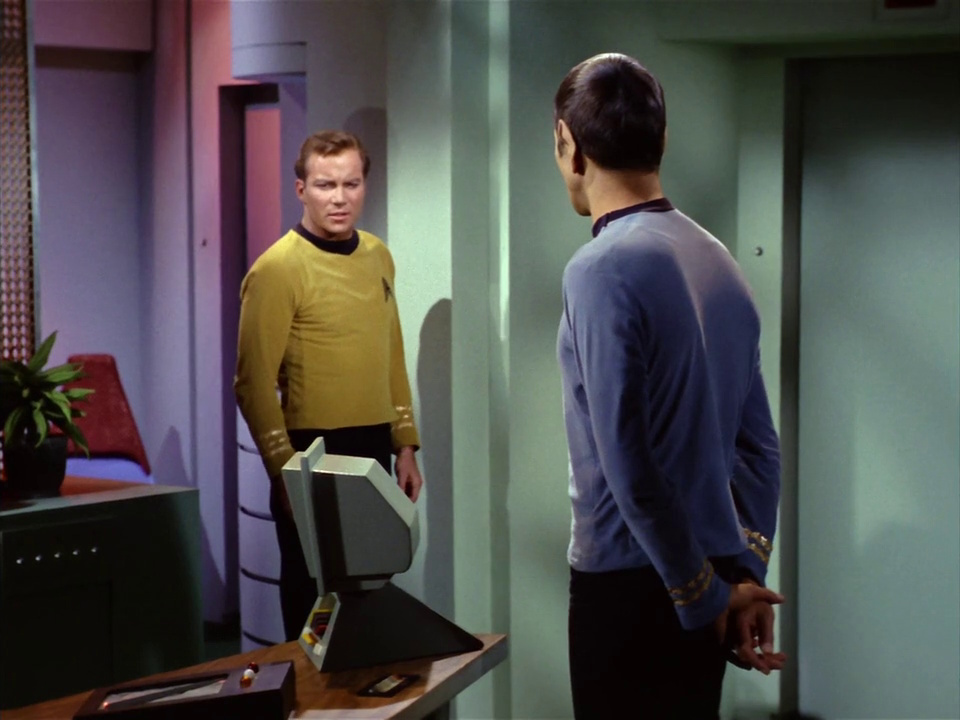
There are some great moments between Kirk and Spock in Arena, as they wrangle with the aftermath of the Gorn attack on Cestus III and what it could mean. In the context of Arena itself, disregarding any other Gorn stories, we can see both points of view. Kirk argues that the attack – which seems, at first, to be completely unprovoked – could be the precursor to a wider invasion, and as the only ship in the area, it falls to the Enterprise to prevent that. But Spock is also correct – without more information about what happened, who perpetrated the attack, and why… Kirk is kind of jumping to conclusions. His line about seeking revenge hits particularly hard.

We’ll get into this more in a moment when we discuss the Gorn, but this is one area where more recent Star Trek productions – and Strange New Worlds in particular – arguably re-frame this conversation. As a veteran of conflicts against the Gorn while serving under Pike’s command, Spock is acutely aware of how bloodthirsty and vicious the Gorn can be, and how single-minded they are when staking their claims to planets that the Federation already occupies. There is wiggle-room here, and nothing in Strange New Worlds explicitly contradicts Arena (at least as of the end of Season 2). But it does change how we perceive these conversations – which, it shouldn’t need to be said, supposedly take place a decade or so after the events of that show.

Still frame from Star Trek: The Original Series Season 1 episode Arena, showing Kirk and Spock in Kirk's cabin.
The conversation in Kirk’s cabin.

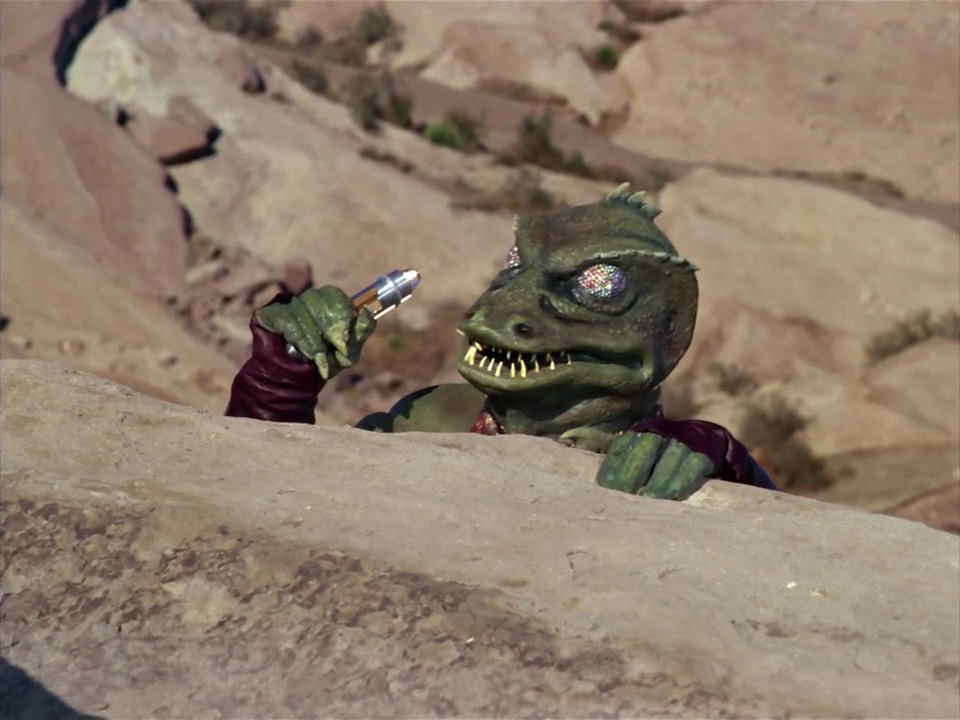
Kirk’s hand-to-hand battle with the Gorn captain is a ton of fun. The lumbering monster reminds me of the titular Creature from the Black Lagoon with its heavy rubber suit and somewhat clumsy movements, and I just really love that kind of old-school style of creature design. The rubber suit may be old-fashioned compared to, say, the new dinosaur-inspired Gorn depiction from Strange New Worlds… but I think it’s light-years ahead of the awful CGI rendition that we got in Enterprise! The very “sixties” fabric used for the Gorn captain’s uniform just adds to the charm.

The fight has its tense and serious moments. Kirk’s two-handed attack, which we’ve seen him use to great effect across the show’s first season, has absolutely no impact on the powerful and muscular Gorn, which was interesting. We also see the Gorn’s own ingenuity as he devises a trap – Kirk ends up injured and seemingly about to be impaled… just in time for the ad break! But the fight also has moments that, almost sixty years later, seem almost cartoonish or campy. The obviously polystyrene rocks – which look even less convincing in HD on a large television set – are part of that.

Still frame from Star Trek: The Original Series Season 1 episode Arena, showing the Gorn captain using a communicator.
The Gorn captain.

Then there’s Kirk’s “Wile E. Coyote” moment! Sneaking up on the Gorn captain from atop Vasquez Rocks, Kirk plans to drop a very large boulder on his opponent. And look, I get it: it’s a smart move given the circumstances. But the way this sequence is framed and shot makes it look like something straight out of the old Road Runner cartoon. It’s a ton of fun, but perhaps less tense or serious to a modern audience than it was intended to be in 1966!

The fight ends with Kirk choosing to show mercy to his defeated and injured opponent, impressing the Metrons and showing that, despite his earlier feelings about the attack on Cestus III, Kirk has learned something from the experience. His final conversation with Spock suggests that Federation diplomats might be able to contact the Gorn and peacefully resolve the Cestus III dispute. This resolution was clearly successful, because according to Deep Space Nine, Cestus III had a Federation colony again in the 24th Century… though we never saw this on screen for ourselves!

Still frame from Star Trek: The Original Series Season 1 episode Arena, showing Kirk and a boulder.
Captain Kirk’s plan was clearly inspired by the great tactician Wile E. Coyote.

With Strange New Worlds’ third season coming up, I want to talk a little bit more about the Gorn, and how Arena still has relevance to Star Trek today.

The Gorn have become Strange New Worlds’ most important villain, filling a role that the Klingons arguably did in The Original Series, the Borg did in The Next Generation, or the Cardassians and Dominion did in Deep Space Nine. Gorn stories have had profound impacts on Pike and the crew, from La’an’s tragic backstory, through Hemmer’s untimely death, and ultimately leading to the attack on Parnassus Beta, the infection of Captain Batel, and the abduction of Ortegas and many surviving colonists.

Strange New Worlds took the barest of outlines of the Gorn – a race who, since Arena, had only made a couple of other appearances in Star Trek – and changed them into a genuinely intimidating and threatening villain. Strange New Worlds’ depiction of the Gorn blends together the likes of Jurassic Park’s velociraptors with Alien’s iconic Xenomorphs. The new series takes the foundation established by Arena – that the Gorn are kind of monstrous reptillians – but pads it out with newer inspirations from the horror and sci-fi genres.

Still frame from Star Trek: Strange New Worlds Season 2 episode Hegemony showing Captain Batel and a Gorn.
An updated depiction of the Gorn from Strange New Worlds.

If you take a straight reading of Star Trek as a whole, from the point of view of a “canon purist,” then I guess I can understand why this change might not work. It *is* a change, at the end of the day, and with Strange New Worlds being a prequel, the fact that a major conflict against the Gorn happened just a few years earlier – involving several of the same characters – arguably gets close to treading on Arena’s toes. I’m not a “canon purist,” though, and I’m perfectly happy to enjoy both of these different depictions of the Gorn on their own terms.

I wish I had the photoshop skills to bring Arena’s Gorn captain into Strange New Worlds! I think that would be a really funny visual, and would make a great little Star Trek meme. Highlighting the differences in these depictions would be fun, and much of that would come from how different they appear to be – even though, I would argue, in terms of how they’re depicted, the Gorn aren’t actually all that inconsistent.

Still frame from the Star Trek: Strange New Worlds Season 3 trailer showing a Gorn.
A Gorn from the Strange New World Season 3 trailer.

Think about it: the attack on Cestus III and the total destruction the Gorn wrought isn’t far off what we see on Parnassus Beta in Strange New Worlds. The Gorn captain still makes the same kinds of horror-inspired “monster” noises, emphasising how different this life-form is to our familiar characters. The differences are really twofold: the limitations of the visual effects of the time compared to a more modern production with a higher budget, and perhaps more importantly, the limitations imposed on broadcast television at the time in terms of how graphic and horrifying visuals could be. For the mid-1960s, the Gorn captain is pure horror – and I think we can forget that because of how much time has elapsed and the kinds of things television shows today can do that they couldn’t do back then.

All that being said, I still adore the original Gorn design. I think it was incredibly creative, and Arena is just a fantastic episode all around, really. I think the parts we tend to overlook – the mission to Cestus III, the spaceship chase, and the involvement of the Metrons – are arguably the story’s most interesting parts, and to reduce Arena to Kirk and the Gorn squabbling in the desert is incredibly reductive and does Arena a huge disservice.

Still frame from Star Trek: The Original Series Season 1 episode Arena, showing Kirk firing his cannon at the Gorn captain.
Captain Kirk fires his makeshift cannon.

So that’s it for now. The Gorn are coming back, though… and soon! Strange New Worlds’ third season is just a couple of weeks away at time of writing, and I’m really looking forward to the resolution of the cliffhanger from Hegemony last season. I’ll do my best to write up reviews of Hegemony, Part II and the rest of the episodes in a more timely fashion this time around!

I hope this has been a bit of fun. I’ve been wanting to do a full write-up of an Original Series episode for ages, but I kept putting it on the back burner for one reason or another. Stay tuned, though, because I’ll definitely return to Star Trek’s roots before too long! I’d love to tackle one of my favourite episodes next: The Doomsday Machine! I have no idea when that’ll be… but one of these days, for sure.

Live Long and Prosper!


Star Trek: The Original Series (a.k.a. Star Trek) is available to stream now on Paramount+ in countries and territories where the platform is available. The series is also available on DVD and Blu-ray. The Star Trek franchise – including The Original Series, Strange New Worlds, and all other properties discussed above – is the copyright of Paramount Global. This article contains the thoughts and opinions of one person only and is not intended to cause any offence.
Star Trek: Strange New Worlds Episode Review – Season 2, Episode 10: Hegemony

A Star Trek-themed spoiler warning graphic.

Spoiler Warning: There are spoilers ahead for Star Trek: Strange New Worlds Seasons 1-2. Minor spoilers are also present for the following Star Trek productions: The Original Series Season 1, The Undiscovered Country, and Lower Decks Season 2.

I’m kind of glad that it’s taken me such a long time to finish watching Season 2 of Strange New Worlds. A lot of you have been sitting with the cliffhanger ending to Hegemony for over a year already, but I’ll glide smoothly into Season 3 in just a matter of weeks! Are you jealous?

Joking aside, Hegemony was a great episode – and the Star Trek franchise’s first big cliffhanger ending to a season in a while. There are a couple of narrative beats that I wasn’t as keen on, which we’ll get into in due course, but Hegemony was a fantastic way to end the season. There was a constant sense of tension throughout, which peaked at key moments in the story, a fun re-introduction of a classic character from The Original Series, and plenty of action to boot. I’d probably say that Hegemony doesn’t quite hit the same level as A Quality of Mercy did at the end of Season 1, but that’s an exceptionally high bar for any episode to aim for!

Still frame from Star Trek: Strange New Worlds Season 2 Episode 10 (2023) showing the arrival of the Gorn ship.
The Gorn are coming!

In The Next Generation era, it seemed that almost every season would end with the words “to be continued!” From The Best of Both Worlds at the end of TNG Season 3 to Zero Hour at the end of Enterprise’s third season, there were only three seasons of Star Trek that didn’t end on a cliffhanger. But since the franchise returned to the small screen in 2017, we’ve tended to get self-contained serialised stories that run for a single season apiece. The closest is arguably Discovery Season 2, which ended with the ship and crew heading into an uncertain future – but that season also wrapped up all of its other key storylines by the time the credits rolled (probably because cancellation was a legitimate concern).

I respect the confidence of Strange New Worlds’ writers and producers to create a story like this as a way to end Season 2. It was bold because a third season was not confirmed (at least, not publicly) at the time Hegemony was being written. A season-ending cliffhanger also feels like “classic Star Trek” in the best possible way, and coming at the end of a largely episodic season that’s seen Pike and the crew thrown into a mix of different adventures… it just feels right. I’ve said more than once that Strange New Worlds is the high-water mark of modern Star Trek, and Hegemony with its cliffhanger ending is yet another example I can point to when critics ask what I mean by that!

Still frame from Star Trek: The Next Generation (cropped) showing the words "To Be Continued..."
Hegemony is the first season-ending cliffhanger in a while!

Hegemony’s cliffhanger ending does leave me feeling concerned, though, at least in one sense. Obviously we know, and have known for a while, that Seasons 3 and 4 are coming – and that’s great! Strange New Worlds isn’t going to be abandoned with this ending left unresolved. But one of the best things about Strange New Worlds has been its return to a more classic style of episodic storytelling – something which, I would argue, really suits the Star Trek franchise. Particularly after the wholly-serialised Discovery and Picard, bringing Star Trek back to its roots – while retaining character arcs and other modern trappings – has been wonderful to see.

Because Hegemony ended in such a way as to tease a longer story – perhaps a season-long arc involving a conflict with the Gorn, akin to Deep Space Nine’s Dominion War – I’m a little concerned about Season 3 stepping away from that episodic style. I hope I’m wrong, and the very small glimpses of Season 3 that we’ve caught so far don’t seem to be all about the Gorn, which is positive. I’m just hoping that what’s made Strange New Worlds such a joy to watch over the past couple of years won’t be watered down by the Gorn story that debuted in Hegemony, as it’s a storyline that could easily lead to that kind of longer arc.

Still frame from Star Trek: Strange New Worlds Season 2 Episode 10 (2023) showing the bridge of the Enterprise with Pike standing close to the viewscreen.
Captain Pike watches from the bridge as the Gorn attack.

That being said, I won’t deny that I love a good battle or war story in Star Trek – and the aforementioned Dominion War arc in Deep Space Nine happens to be one of my favourites. Within Deep Space Nine’s longer seasons, there was still plenty of time for one-off stories alongside episodes about the war, and if the Gorn war is to continue in Strange New Worlds across Season 3, I’d hope the writers and producers will be able to strike a similar balance. It’s more difficult to do that in an age of cut-down ten-episode seasons than it was when Star Trek shows would regularly churn out twenty-two or even twenty-six in a year… but getting a mix of different stories should still be possible.

Hegemony built on Season 1’s excellent episode All Those Who Wander in more ways than one, and if there is going to be a longer, more protracted conflict that plays out over several episodes, we can re-frame that story as a serious bit of foreshadowing. After Memento Mori had re-introduced the Gorn in style, All Those Who Wander ramped up the fear factor, making the classic Star Trek race feel more like the Xenomorphs from Alien. It was this horror tone that continued though Hegemony, both in scenes set on the planet Parnassus Beta and aboard the wreck of the USS Cayuga.

Still frame from Star Trek: Strange New Worlds Season 2 Episode 10 (2023) showing a close-up of a young Gorn.
Strange New Worlds has re-invented the Gorn.

As an aside: I love the name Parnassus Beta for a planet! It feels like something straight out of The Original Series, using a Latin- or Greek-sounding word for the name of the system. Where I was less keen, unfortunately, was the very generic “21st Century North American town” design used for the planet’s surface. Hand-waved away with a “but they wanted it to look like this, though” line from Captain Batel… I just felt the designers could’ve done something to make Parnassus Beta look a little more futuristic.

And look, I get it: there are limited budgets for any episode of Star Trek, so decisions have to be taken and compromises need to be made. Given that we mostly saw Parnassus Beta in the dark and boarded up after the Gorn attack, I think it was passable enough. Its introduction reminded me a little of The Original Series episode Operation – Annihilate! parts of which were filmed on location in California. In that sense that “classic Trek” vibe was present… but I’m not sure that’s necessarily a positive in this case! I guess I’d just have preferred to see a more futuristic take on a human colony rather than one that very clearly took place on a studio backlot (the Parnassus Beta scenes were filmed on a set created by Amazon Prime Video for the series Reacher, according to Memory Alpha).

Still frame from Star Trek: Strange New Worlds Season 2 Episode 10 (2023) showing a street on Parnassus Beta.
Parnassus Beta.

As underwhelming as Parnassus Beta may have been in daylight, after the Gorn descended – and seemingly blocked out the sun – the place took on a completely different atmosphere. There were elements borrowed from both the horror and war genres on this side of the story. Parts of Parnassus Beta felt like they were from a World War II film with commandos parachuting into occupied Europe; others felt more like a werewolf or vampire flick. The monstrous young Gorn even reminded me of Jurassic Park’s velociraptors.

And this was reflected in the way the sets were designed and dressed. Boarded-up windows, thrown-together shelters, blood-stained walls showing the aftermath of a battle or abduction… this blend of horror and war tones soaked Parnassus Beta and turned a really bland and uninspired 21st Century settlement into a colony under siege. The aftermath of the Gorn attack was chaotic and bloody, with the few survivors that Captain Pike and the away team encountered hiding from the aggressors outside.

Still frame from Star Trek: Strange New Worlds Season 2 Episode 10 (2023) showing Ortegas on the planet's surface.
Parnassus Beta came alive after the Gorn attack.

The descent to Parnassus Beta in the shuttle was a fun sequence. It was great to see Ortegas in her element; she’s up there with Tom Paris, for me, as one of the few bona fide pilots in Star Trek, and it’s clear how good she is at her job and how much she loves it. There was a NASA vibe to her line about being a test pilot, and I liked that little harkening back to the early days of spaceflight.
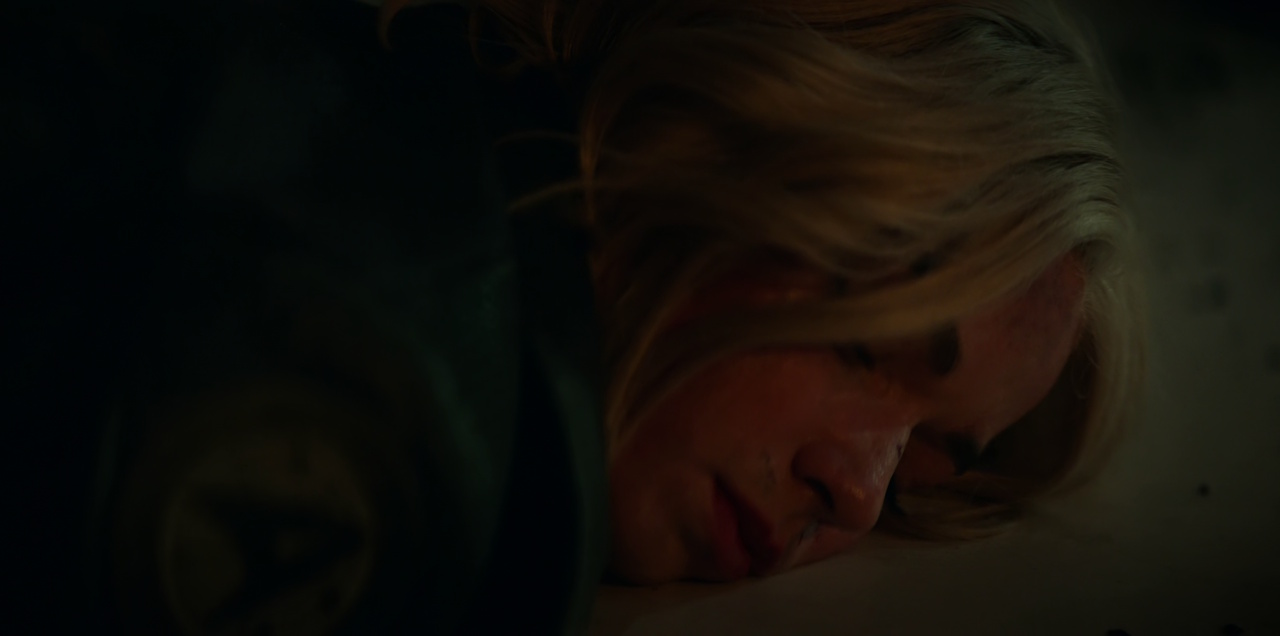
Melissa Navia, who plays Ortegas, had asked for a reduced role in Season 2, so I was glad to welcome her back for this sequence. The “dropship” idea was creative, and we got to catch a glimpse of the surface of Parnassus Beta beyond the confines of the colony. It looked like a jungle or rainforest, at least at first glance, which was neat.
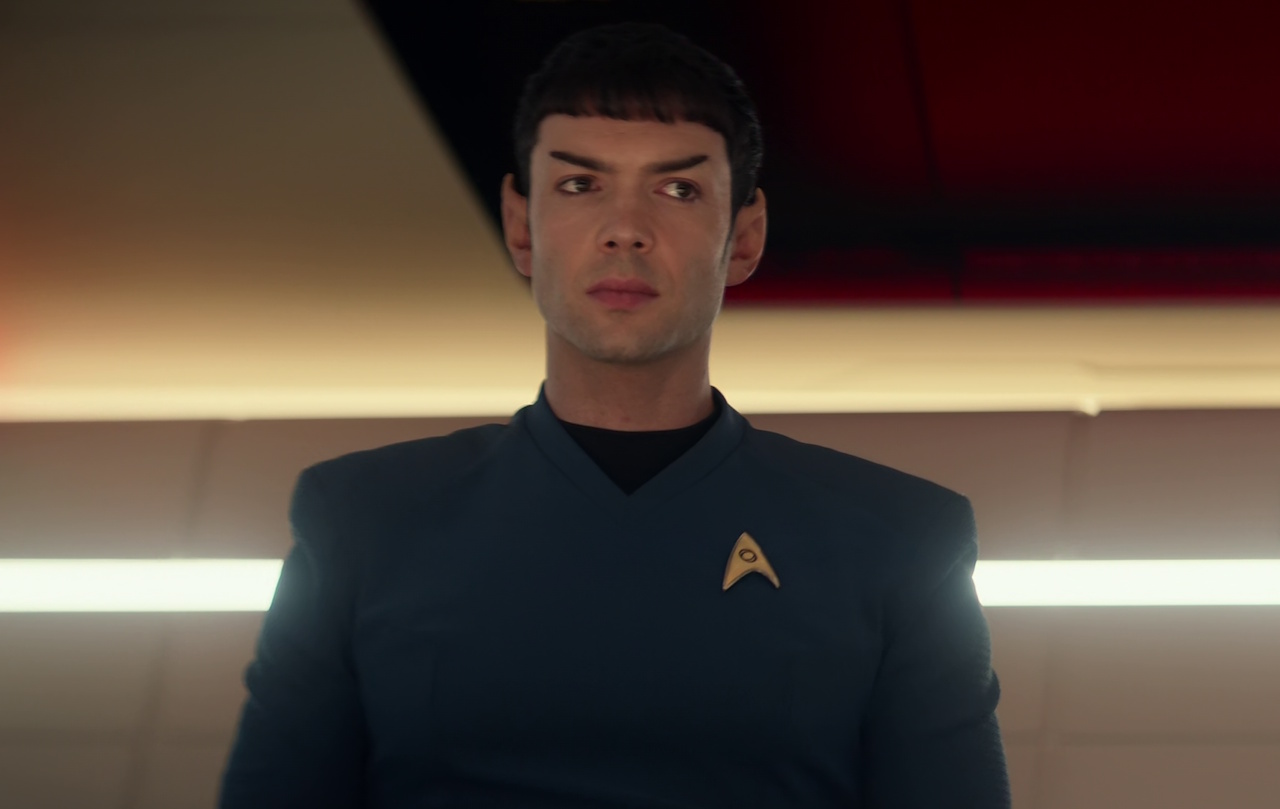
Still frame from Star Trek: Strange New Worlds Season 2 Episode 10 (2023) showing Ortegas piloting a shuttle.
Ortegas in the pilot’s seat.

Let’s talk about Parnassus Beta’s status as a non-Federation human colony – and how that relates to both the episode Hegemony and the rest of Star Trek! As Trekkies who like to get lost in this world, it’s genuinely interesting to learn more about the galaxy, and how not every human colony is founded with Federation membership in mind. I think the existence of a colony like Parnassus Beta ties into classic episodes, not only where non-Federation worlds have been featured… but where Starfleet repeatedly encounters very human-like “aliens!”

I made the same point during Lower Decks’ second season after we were introduced to the Hysperians: a non-Federation group of humans who’ve based their society around medieval chivalry. The way in which these colonies are established and governed could account for the existence of planets like 892-IV in Bread and Circuses, the Earth twin world in Miri, and even Sigma Iotia II from A Piece of the Action. All of these feature societies inspired by old Earth civilisations… and I kind of like the idea that, somewhere in the 21st or 22nd Centuries, before the Federation existed and kept meticulous records, humans settled on distant worlds and brought aspects of their culture with them. You could even throw in the Irish stereotypes from Up The Long Ladder as another example… though maybe the less said about that the better, eh?

Still frame from Star Trek: Strange New Worlds Season 2 Episode 10 (2023) showing the USS Enterprise.
The USS Enterprise arrives at Parnassus Beta.

The point is… as disappointing as Parnassus Beta may have been from a visual standpoint, it does match up with other Star Trek stories about human colonies, particularly colonies outside of the Federation’s jurisdiction. Star Trek was first imagined, in the 1960s, as taking inspiration from America’s “Wild West,” and what could be more fitting than independent groups striking out on their own to settle the “wilderness?” And – if we continue to stretch the metaphor – what could be more fitting than the existing residents of that wilderness, whom the colonists apparently didn’t care enough to find out about, striking back?

So does that make the Gorn the Native Americans in our analogy? I guess that’s a little uncomfortable, too. But never mind! Parnassus Beta was an interesting setting in concept, and the relationship between Starfleet and some of these outlying human colonies is something I’d like to see explored in more detail in the future. Knowing what we know about the Maquis and other human settlements beyond the borders of the Federation, it was really interesting to get a tease of that in a 23rd Century context.

Still frame from Star Trek: Strange New Worlds Season 2 Episode 10 (2023) showing the landscape of Parnassus Beta with a shuttle flying above it.
The shuttle arrives at Parnassus Beta.

However, Parnassus Beta and its non-Federation status led to one of the biggest contrivances in Hegemony. Admiral April explained to Captain Pike that Starfleet wanted to avoid all-out war with the Gorn… which is fair enough. And to that end, the Federation was willing to essentially sacrifice the thousands of settlers on Parnassus Beta by refusing to sanction a response or a rescue operation, effectively ceding the planet to the Gorn and abandoning the colonists to a rather grizzly fate. That part tracks, and as much as we might be on Pike’s side and want to help, there’s an internally consistent logic to this side of the story.

But the attack on the USS Cayuga changes the dynamic completely – and no one in Hegemony so much as mentioned that. The Gorn didn’t only attack a non-Federation colony: they also attacked and destroyed a Starfleet ship. The Federation may have no jurisdiction over Parnassus Beta, and I could believe that they’d be willing to abandon the planet to its fate in an attempt to appease the Gorn. I mean, we have similar stories in The Next Generation and Deep Space Nine with human colonists near the Cardassian border, and the same thing happened there. But the attack on the Cayuga was an attack on Starfleet and the Federation; it was an act of war.

Still frame from Star Trek: Strange New Worlds Season 2 Episode 10 (2023) showing the wreck of the USS Cayuga.
The Gorn had attacked the USS Cayuga and murdered most of her crew.

This is the central conceit of Hegemony, and it doesn’t work. In order for us to believe that Starfleet and the Federation want to avoid war with the Gorn, we have to believe that they’re willing to do so at all costs, including sacrificing their own officers and ignoring the attack on two of their own ships. Because we later learn from Scotty that not only was the Cayuga destroyed, but so was his ship, the USS Stardiver. Starfleet may not have known about the Stardiver at the time of April’s message, but they did know about the Cayuga.

In order to get to the rest of the episode and its genuinely wonderful and engaging story, we first have to get around this narrative obstacle. And try as I might to rationalise it, it doesn’t make a lot of sense. “Open war is upon you, whether you would risk it or not.” Those were Aragorn’s words in The Lord of the Rings, as he explained to King Theoden that Saruman and Sauron were on the march, and there was no way to avoid taking part in the battles to come. In the case of Hegemony, the Gorn have declared war on the Federation by the attacks on the Stardiver and Cayuga, no matter what Starfleet’s Admirals might want. By refusing to sanction a rescue mission or allowing the Enterprise to retaliate, forcing Pike to stay on one side of an arbitrary, Gorn-designated demarcation line, Admiral April and Starfleet were not acting rationally within our understanding of Starfleet and the Star Trek universe.

Still frame from Star Trek: Strange New Worlds Season 2 Episode 10 (2023) showing Pike's conversation with Admiral April.
Admiral April ordered Pike to avoid antagonising the Gorn… after he already knew that the Gorn had attacked at least one Starfleet vessel.

And I think this is why I’d rank Hegemony lower than last season’s All Those Who Wander. Gorn attacks on Starfleet are a regular enough occurrence that Starfleet has contingencies in place, but when the Gorn obliterate a Federation starship they’re unwilling to recognise the reality of the situation. Maybe there’s meant to be a metaphor there, something about the drawbacks and limitations of appeasement or the necessity of smaller states being protected under the umbrella of larger alliances. But I don’t believe that’s how it comes across – it reads, to me, like everyone in the episode basically ignored this massive event in order to skip to the action set-pieces and to give Pike’s mission a “disobeying orders” foundation.

If we take our Wild West metaphor from a moment ago and drag it out further, this would be akin to the United States in the late 1800s seeing an army unit attacked on the frontier and doing nothing to respond because the town they were visiting happened to be outside of US jurisdiction. Would that have happened? Would any modern-day military accept an attack on one of its units and refuse to respond in kind? Starfleet is the Federation’s military – and while the attack on the USS Cayuga need not lead to all-out war, at the very least it would give Pike and Starfleet some leeway to respond instead of blindly agreeing to the Gorn’s terms without so much as attempting to negotiate. If we were solely dealing with the attack on the colony, this story would’ve worked so much better. But by bringing the Cayuga into it, it complicates things – and not in a good way, unfortunately.

Still frame from Star Trek: Strange New Worlds Season 2 Episode 10 (2023) showing an Okudagram of Parnassus Beta.
Starfleet Command ordered Pike and the crew to stay on their side of this demarcation line.

There’s something inherently un-Starfleet about abandoning officers to their fate – especially when that fate has been shown to be nothing short of an agonising death. We could point to dozens of episodes across the history of the franchise – from The Galileo Seven in The Original Series to First First Contact in Lower Decks – where Starfleet officers have done everything in their power, including breaking the rules, to avoid leaving someone behind. And while that’s exactly what we see Pike and the crew do… they’re forced to disobey a very un-Starfleet order in the process.

Some Star Trek stories have a “badmiral” as either a quasi-antagonist or a straight-up villain. Others have shown admirals who are out of touch or even incompetent. And occasionally, as in a couple of notable Deep Space Nine episodes featuring Admiral Ross, we’d catch a glimpse of the weight of command. These stories could show how someone in a senior position has to deal with more than what we see on screen; our protagonists aren’t always privy to all of the information or don’t have a bigger-picture view of the situation.

Still frame from Star Trek: Strange New Worlds Season 2 Episode 10 (2023) showing the senior officers in Pike's briefing room.
Pike and the senior officers in the briefing room.

The best spin I can put on Hegemony’s Admiral April is that he isn’t sharing everything he knows, or that he’s struggling with the burden of command at a time of war. However… I don’t think that’s really how it comes across, and it feels like the writers of the episode far too quickly brushed aside the implications of an attack on the USS Cayuga and the USS Stardiver in order to tell a story about Pike and the crew disobeying orders to do the right thing. The problem, at least for me, is that the weak setup risks undermining that story. When it’s a story that works so well and has so many highlights… that’s just a bit of a shame.

But I guess, in the grand scheme of things, all of this probably feels like a glorified nitpick. Hegemony did explain that Parnassus Beta was outside the Federation, and Admiral April’s orders were clear. Perhaps I’ve overthought this aspect of the story somewhat… but it didn’t sit quite right with me for the reasons I’ve tried to explain.

Still frame from Star Trek: Strange New Worlds Season 2 Episode 10 (2023) showing Captain Pike's hand activating a sealed crate.
A crate of experimental anti-Gorn weaponry.

Captain Pike’s storyline in Hegemony works… in the context of his relationship with Captain Batel and of his relatively small arc across Season 2. By the way: am I imagining things, or was Pike less of a presence in most of the stories this season? It felt like he was all over Season 1 but had been taking more of a back seat this time around. Perhaps we’ll have to explore that subject on another occasion.

To get back on topic: when I look at Pike’s story in Hegemony, I’m also looking at it in the context of Season 1. In particular, Pike doesn’t seem to have learned the lessons of A Quality of Mercy – at least insofar as triggering a potentially massive, Federation-threatening war goes. Pike’s personal story in last season’s finale was all about his impending disability and finding a way out of it… but it was also a story that touched on how to deal with a challenging adversary and how a few seemingly small mistakes can lead to conflict.

Still frame from Star Trek: Strange New Worlds Season 2 Episode 10 (2023) showing Captain Pike on the away mission.
Did Pike act recklessly in Hegemony?

To me, it seems as if the Captain Pike of Hegemony hasn’t even met the Captain Pike of A Quality of Mercy. Sure, he has a personal stake in rescuing any potential Cayuga survivors due to his relationship with Captain Batel. But the actions he takes are deliberately provocative, disobeying an order from Admiral April and putting himself and his entire crew at ground zero of a potential war with the Gorn. For him to not even acknowledge the events of last season as he starts down this path feels… strange.

Both episodes put Pike face-to-face with a complex situation, a powerful enemy, and a potential conflict. Both episodes make clear that one mistake could lead to all-out war. Pike sees firsthand – and also hears from his future self – what the consequences of the Romulan war would end up being. Shouldn’t one of the lessons he learned last season be to be more cautious? Or are we going to try to argue that Kirk’s “shoot first, ask questions later” approach was the right one, so that’s what Pike ultimately took away from the situation?

Still frame from Star Trek: Strange New Worlds Season 2 Episode 10 (2023) showing Captain Pike in uniform on the bridge.
Why do I feel like Captain Pike hasn’t remembered what he learned last season?

It just feels a bit of a narrative oddity that Pike is in a comparable situation just ten episodes later, but doesn’t appear to acknowledge it in any way. Maybe he’d still prioritise his relationship with Captain Batel and want to do everything he could to rescue her, the colonists, and any other survivors. I mean, that seems like the right outcome based on everything we know of the character. But how a character reaches their destination is just as important – and is often more important – than the destination itself. Pike could still have led this unsanctioned rescue mission, but having seen A Quality of Mercy and the difficult challenge he faced when coming into conflict with the Romulans… I just feel this episode could’ve done something to acknowledge that and make it clear how Pike felt and how he was drawing on those earlier experiences.

We talked about Strange New Worlds as an episodic series, and that’s genuinely one of the best things about it from my perspective as a Trekkie. But it’s never been an entirely episodic show, and that blend of the “monster of the week” with characters who grow and evolve feels like the perfect mix of classic and modern television storytelling. While I guess this probably seems like another big nitpick, for me it felt odd that Captain Pike was thrust into two comparable situations just ten episodes apart… and the latter story made no attempt to acknowledge that fact.

Still frame from Star Trek: Strange New Worlds Season 2 Episode 10 (2023) showing Captain Pike in the final shot of the episode.
Captain Pike at the end of the episode.

We’ll shelve that for now, and focus on one of the weaker elements of Hegemony for just a moment. I found Spock and Chapel to be a wonderful pair across the first two seasons of Strange New Worlds, and Spock’s reaction to Chapel’s apparent death or abduction genuinely did a lot to carry the storyline. His scenes with Una in particular were powerful, and I don’t want what I’m about to say next to detract from that. This was great character-focused storytelling.

But… Chapel was one of a handful of characters whose presence, for a storyline like this, dramatically lowers the stakes. Strange New Worlds is a prequel to The Original Series, so anyone who’s seen it or has more than a passing familiarity with it knows that the likes of Uhura, Spock, and Nurse Chapel are characters on that show. That means, from the point of view of Strange New Worlds, they’re indestructible. For a storyline that wanted to have high stakes, and to put a character in danger… picking one of the characters that fans know will still be around when the credits roll took a lot away from it.

Still frame from Star Trek: Strange New Worlds Season 2 Episode 10 (2023) showing Nurse Chapel laying unconscious on the floor.
Chapel was never in any danger.

When Captain Batel was missing, I could genuinely believe that Strange New Worlds was about to kill her off. When she revealed to Captain Pike her parasitic Gorn infection, I likewise believed that her death could be imminent (though we’ll talk about that more in a second!) But when Nurse Chapel was apparently dead, killed along with the rest of the Cayuga’s crew… it simply wasn’t possible. And that knowledge lowered the stakes for me on this side of the story. Spock’s reaction to it did a lot to help this part of the episode and carry it across the line, as did Pike’s embrace of Chapel when he realised she’d survived. But on its own, I’m afraid it was a victim of the “prequel problem” that some storylines end up facing.

Although this storyline did a lot for Spock, giving him an emotional problem to tackle that he struggled with, I can’t help but feel there were other characters Strange New Worlds could’ve chosen to endanger. Someone like Pelia, Una, or La’an would’ve genuinely felt at risk of death in a way that Chapel didn’t, and the reaction of Spock – or a different character who might’ve been closer to the person in danger – could’ve still been present. Again, this is a consequence of Strange New Worlds being a prequel and using so many legacy characters. In future seasons, that constraint may get even tighter.

Still frame from Star Trek: Strange New Worlds Season 2 Episode 10 (2023) showing Spock sitting in a chair.
This was a good storyline for Spock, in spite of a weak foundation.

Spock excelled in Hegemony, for me, in his scenes with Una. I know not everyone watched (or liked) Short Treks, but if you remember the short episode Q&A… I felt their conversation was built on those foundations. That short episode saw Spock’s initial arrival aboard the Enterprise – several years before The Cage and Discovery’s second season – and put Spock and Una together as they got stuck in a turbolift.

This sequence leaned into their relationship – the beginnings of which had been shown in Q&A – and it also gave Una an excellent opportunity to shine. In this moment she wasn’t merely a commander, taking over from Pike on the bridge as he led the dangerous away mission, but a mentor, counsellor, and friend. It was absolutely worth the detour to remind us of that side of Una – and her capabilities as a leader who could inspire and offer comfort to those under her command.

Still frame from Star Trek: Strange New Worlds Season 2 Episode 10 (2023) showing Una looking at Spock.
Una with Spock on the bridge.

Scotty – this younger version of the character – got one of the best introductions in modern Star Trek. It reminded me more than a little of Star Trek ’09 and how that incarnation of Scotty first appeared, only with much darker undertones. For the first time in Star Trek, Scotty is being played by a Scottish actor, which is great to see. James Doohan did a fantastic job as Scotty in The Original Series, becoming one of the franchise’s most iconic and oft-quoted characters, so there are big shoes to fill for Martin Quinn – assuming Scotty will stick around in Season 3. Based on what we saw in Hegemony, I’m impressed.

Strange New Worlds has been transformative for Nurse Chapel, taking a secondary character from The Original Series and giving her some genuine depth. For Uhura and Spock, we’ve seen them as younger, less-experienced, slowly growing and evolving into the characters we’re familiar with. Scotty, for me, would probably lean more on the Spock side than the Chapel side, and I think there’s room to show where he came from before he became the miracle-worker that we all remember!

Still frame from Star Trek: Strange New Worlds Season 2 Episode 10 (2023) showing Scotty's introduction.
Scotty has made his Strange New Worlds debut!

I’m going to assume Scotty will be at least as present in Season 3 as Paul Wesley’s Kirk has been in Season 2, and there really is a ton of potential in this introduction. I’d love to explore more of his relationship with Pelia, which was hinted at in Hegemony, perhaps learning why this brilliant engineer didn’t get a good grade in her class at Starfleet Academy. There seems to be a bit of tension there, and a power imbalance, but I could see Pelia guiding Scotty as he grows into the role of the Enterprise’s chief engineer.

On the other hand, Scotty’s introduction and his technobabble explanations of force-field traps and Gorn transponders means he arrives almost fully-formed – at least in terms of his technical mastery. Scotty’s janky, thrown-together Gorn transponder is one piece of evidence that was highly significant to the story, but also his force field trap and the lure he created should be included there as well. Scotty clearly possesses all of the ingredients to become the chief engineer we’re familiar with – even the confidence to interrupt two senior officers when they were having a conversation!

Still frame from Star Trek: Strange New Worlds Season 2 Episode 10 (2023) showing Scotty with his transponder device.
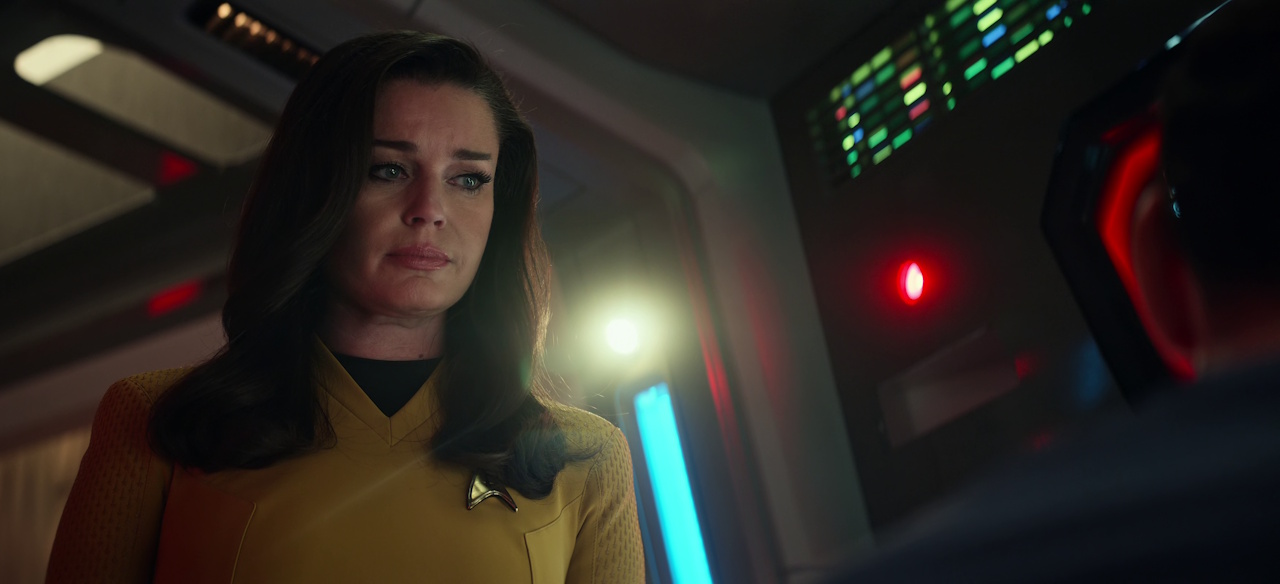
Scotty aboard the crashed shuttle.
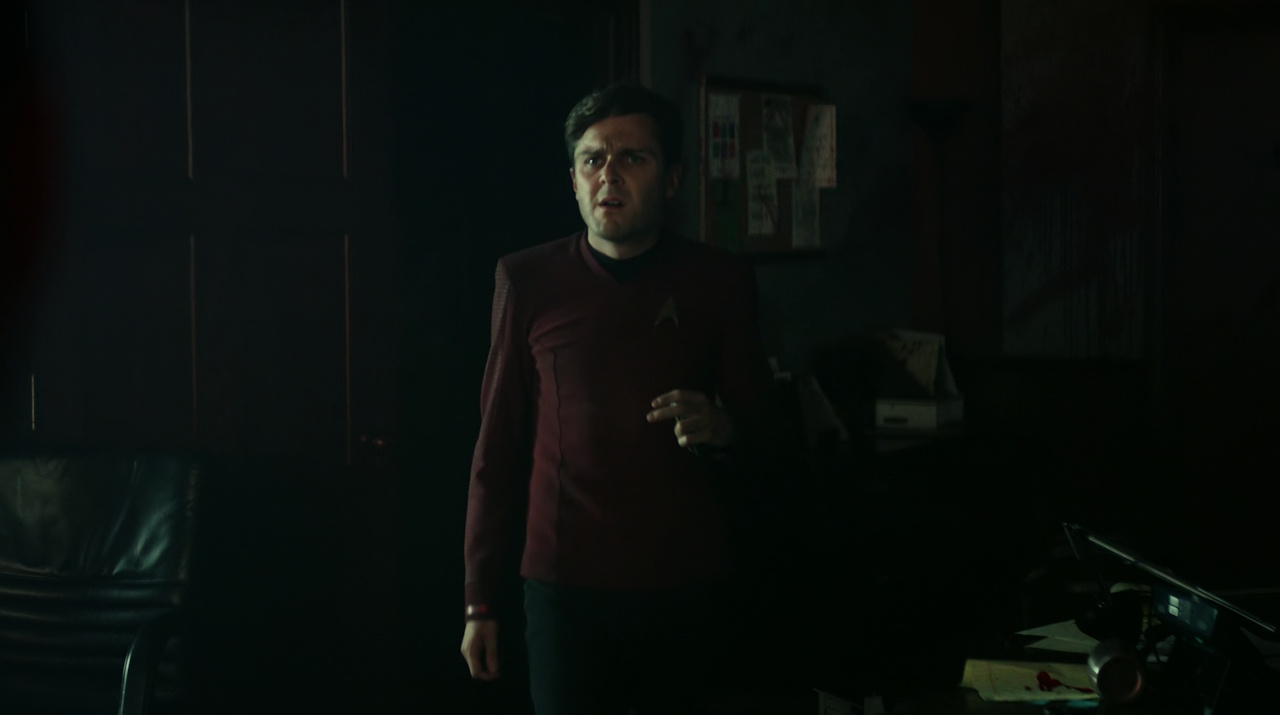
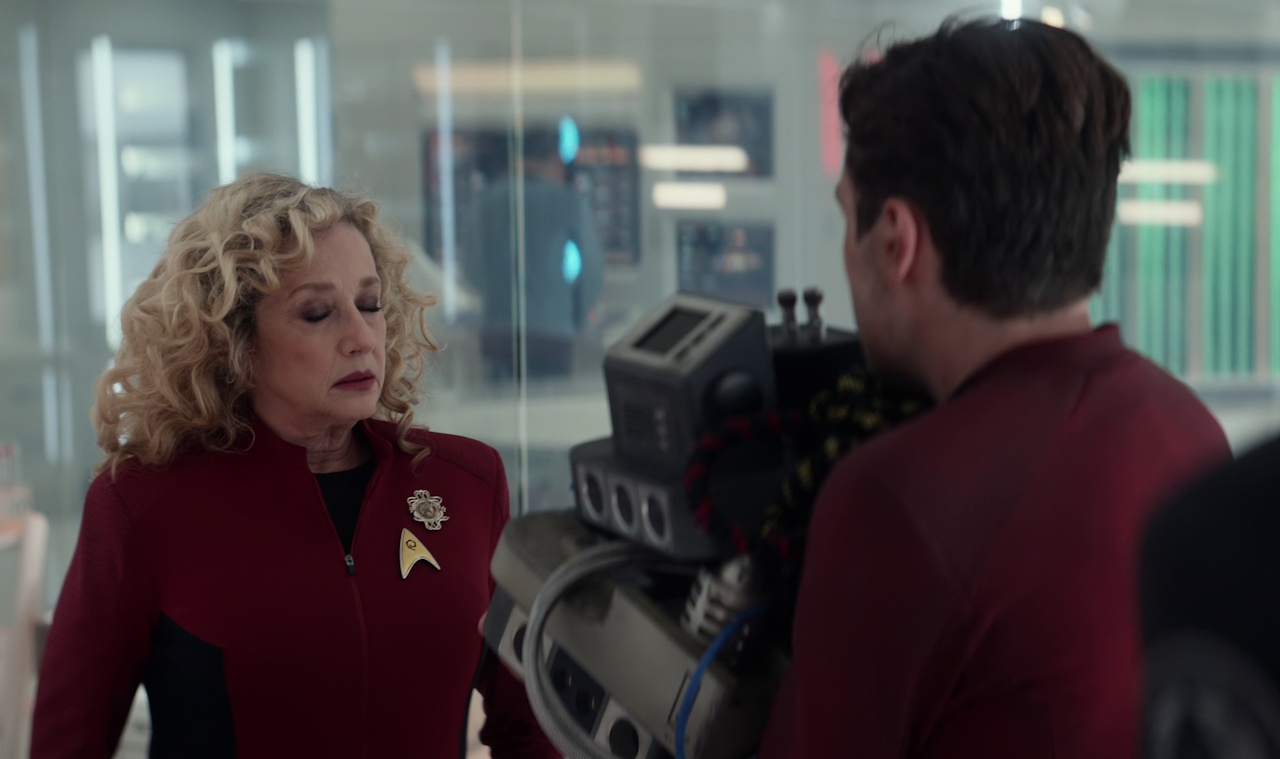
The question I have, with Scotty’s introduction, is what will become of Pelia? Pelia has been, for me, a bit of a disappointment this season. Not in terms of her moments on screen; I think she’s fantastic, and Carol Kane has done a wonderful job bringing her to life. But rather, Pelia has been almost absent since she joined the crew. Her biggest moment arguably came in Tomorrow and Tomorrow and Tomorrow – but that was a version of the character from more than two centuries in the past. Moments where engineering solutions have been needed have instead fallen to characters like Spock, Ortegas, and even Uhura, with Pelia playing a much smaller and more supporting role than I’d have expected from the chief engineer in a Star Trek series.
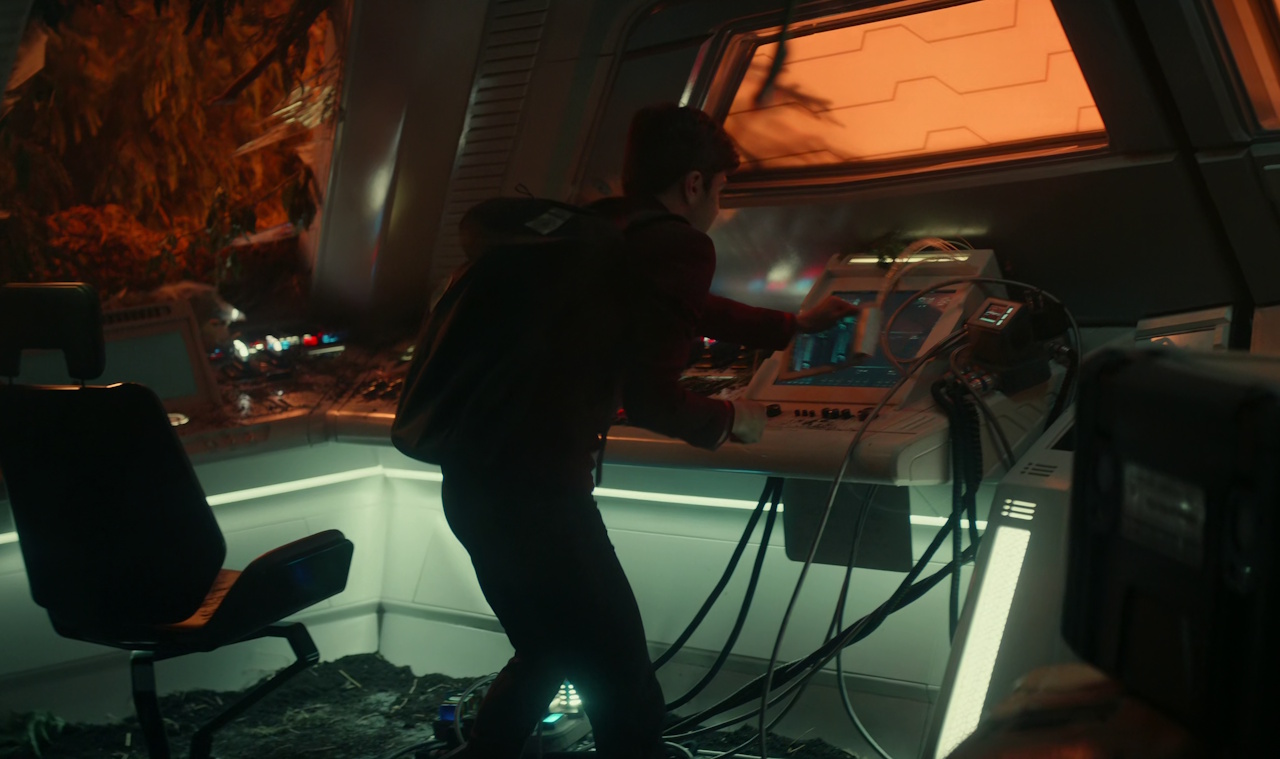
So if Scotty is about to join the crew of the Enterprise on either a temporary or permanent basis, becoming even a secondary character as Kirk has been… where does that leave the already-reduced role for Pelia? I think it would be a shame if she was brushed aside to give more screen time to Scotty; as much as I like bringing back legacy characters and bridging the gap between Pike’s Enterprise and Kirk’s, I don’t want all of the show’s time to be spent on that. There needs to be a balance between old and new characters – and with Pelia already seeming to play second fiddle, even in her own department, bringing Scotty aboard could make things worse.

Still frame from Star Trek: Strange New Worlds Season 2 Episode 10 (2023) showing Pelia reuniting with Scotty.
Pelia and Scotty have met before…

The counterpoint to that, of course, is that with an established relationship to build on, and with Pelia’s knowledge of the Enterprise and her systems, we could get a kind of mentor relationship going on. Seeing Scotty grow – in confidence, if not in ability – into the character we’re familiar with under Pelia’s tutelage could be fun to see. And furthermore, it could give the writers more of a reason to include her in stories set in engineering.

The technobabble on Scotty’s side of the story, though – to get back on track – was wonderful. His explanations for how he threw together the false sensor reading generator and the Gorn transponder were pure technobabble and pure Star Trek, and I really do love that! It felt like classic Star Trek in the best way possible, and technobabble explanations with big, random words thrown in have always been a part of what made the franchise so fun. The props created to represent these pieces of kit were also throwbacks, resembling things we’ve seen in The Original Series. Again, I’m absolutely there for all of that!

Still frame from Star Trek: Strange New Worlds Season 2 Episode 10 (2023) showing Sam Kirk holding a sensor device.
Sam Kirk with Scotty’s sensor device.

I touched on Captain Batel a moment ago, and I’d like to get into her storyline in a bit more detail. Batel is very much an auxiliary character to Captain Pike – she’s giving him a reason to keep going in light of his impending accident, and the relationship they’ve embarked on is cute, sweet, and a little awkward, sometimes. They make a fun, very relatable pair. Pike’s fear of losing her – and his relief at discovering that she was still alive – was expertly emoted by Anson Mount.

Gorn eggs, though… was it too soon to bring back this idea after All Those Who Wander? I mean, it’s only been eleven episodes since Hemmer was infected and killed off, and I felt that Hegemony might be straying a little close to repetitive territory with Captain Batel’s infection. If this idea was brand-new for the episode, I think it would’ve been a lot more powerful – but it would’ve needed setting up, and there probably wasn’t time for that! If Strange New Worlds limits this infection to Hemmer and Batel, it will probably be okay. But I’d encourage the writers to avoid adding even more Gorn egg infections in Season 3!

Still frame from Star Trek: Strange New Worlds Season 2 Episode 10 (2023) showing Captain Batel's infected forearm.
Was it too soon to bring back the parasitic eggs?

Batel’s infection raises a big question, though: is she going to survive? On the one hand, it would be a profoundly odd storytelling move to have her infected but alive at the cliffhanger only to say “oops, we can’t save her” and kill her off in the first episode of Season 3. But on the other hand… Captain Batel kind of has to go, one way or another. I don’t mean that because I don’t like her character; on the contrary, she’s been a wonderful addition to the series, she’s given Pike a whole new dimension that we hadn’t really seen before, and Melanie Scrofano has put in a truly exceptional performance. She brings the right balance of command authority and personal warmth to make Batel a believable character – and a sweet partner for Captain Pike.

But at the same time, Pike’s knowledge of his future means their relationship can’t be sustained. Either they’ll have to break up, or… well, the writers will find another way to get Captain Batel out of the way. There could be an engaging story there, with Pike having to come to terms with grief and loss. Batel was a great character for Hegemony to put in danger (twice) because her departure from the show feels like an inevitability one way or another. Unlike with Chapel, who we all knew had to survive somehow, Captain Batel really did feel – and still does feel – like she could be about to be killed off.

Still frame from Star Trek: Strange New Worlds Season 2 Episode 10 (2023) showing Captain Batel hugging Captain Pike.
A sweet embrace.

Partly this is because of the kind of show Strange New Worlds has been. Killing Hemmer before the end of Season 1 was a serious loss for the show… but it also really raised the stakes for all of the other new characters. With the exceptions of those we know survive to The Original Series or beyond, no one is safe. I criticised Discovery and Picard during their runs for putting their characters into dangerous situations, but refusing to go one step further and killing off all but the most minor secondary characters. Strange New Worlds has successfully raised the stakes in that regard, and if Captain Batel joins Hemmer in the “murdered by Gorn eggs” grave… that feeling will only grow.

Main character deaths are a hallmark of modern television storytelling, and in that sense Strange New Worlds is taking the lead of shows that pioneered what I’ve termed the “disposable cast” – the likes of The Walking Dead and Game of Thrones, where no character could feel safe. There are limitations to this, due to the presence of legacy characters and the show’s prequel status, but as we saw this time with Captain Batel, Strange New Worlds can still elicit those feelings – and do so in style.

Still frame from Star Trek: Strange New Worlds Season 2 Episode 10 (2023) showing Captain Batel and a young Gorn.
Captain Batel may not be long for this world…

I liked the zero-g battle between Spock, Chapel, and the adult Gorn aboard the wreck of the USS Cayuga. It felt a little silly to me that other areas of the ship retained their artificial gravity… I mean, did you see the state of the wreck? There was hardly anything left of the Caygua, so how was gravity still functioning?! But on the damaged bridge, in spacesuits and without gravity, the fight was genuinely exciting. Slowed by the lack of gravity and air, Spock wasn’t able to grab his phaser in time, and as it went spinning across the vacuum, I felt a lot more of the tension and excitement than I had until that point.

I think I’m right in saying that this is the first adult Gorn to be seen on screen in Strange New Worlds. I confess that I have a real die-hard appreciation for the old rubber suit from Arena; there’s just something special about those old practical effects that the modern redesign can’t touch. But for the way this version of the Gorn are being depicted, as scarily intelligent monsters, I liked the way this character looked. And I appreciate that there was an effort to use real practical effects for this sequence – a performer in a Gorn suit – rather than making the entire thing a CGI creation.

Still frame from Star Trek: Strange New Worlds Season 2 Episode 10 (2023) showing a Gorn wearing a helmet.
A Gorn in a spacesuit…

After the tense fight with the Gorn commander, his death actually felt pretty brutal. Drifting out into space with a damaged helmet, injured and leaking air… that’s a pretty gruesome way to go for anyone! The fact that it happened to a monstrous Gorn might’ve taken something away from that, but I actually found it to be an incredibly brutal moment – at least by Star Trek’s usual standards.

Sticking with the wreck of the Cayuga, I thought the set redresses worked pretty well. Sometimes in Star Trek, it can be pretty obvious when an existing set is being recycled and is supposed to be a new setting – Discovery’s transporter room trying to pass itself off as a Ba’ul prison cell in Season 2 is still one of the worst, and the first example that comes to mind! But the changes made to the corridor and especially to the damaged bridge really sold me on the wreck of the Cayuga as a real place, and it made a fun setting for Spock’s stand-off with the Gorn.

Still frame from Star Trek: Strange New Worlds Season 2 Episode 10 (2023) showing Spock on the wreck of the Cayuga, activating a rocket.
Spock on the Cayuga’s ruined bridge.

Should we address the status of Gorn-Federation contact? I mean, we’ve done other nitpicks so far in this review… so why not? If you wanna get technical about it, The Original Series first season episode Arena made it pretty clear that Starfleet hadn’t encountered the Gorn before. Because I didn’t review individual season 1 episodes of Strange New Worlds (the show wasn’t “officially” available outside of the United States for months after its premiere) I didn’t get a chance to address this at the time.

Long story short… I don’t really give a shit if Strange New Worlds contradicts Arena. Internal consistency and “canon” are important up to a point, but given the quality of the writing in all of Strange New Worlds’ Gorn episodes so far, I really don’t think it matters. If we were dealing with a bigger faction, one that had played a role in numerous episodes across multiple shows, then I might be more on the side of the canon purists. But given that the Gorn only ever appeared once in The Original Series and once in Enterprise, I’m content for Strange New Worlds to explore this faction in more depth. I think they work better as antagonists because of how unexplored they are than Discovery’s Klingons did, and I’m genuinely enjoying this “spacefaring monster” idea.

Still frame from Star Trek: The Original Series Season 1 showing the Gorn captain.
The Gorn captain from Arena.

This depiction of the Gorn led to an interesting conversation between characters. How do we define a “monster,” and given that the Gorn are clearly at least as intelligent as humans, do they even fit that definition? In fact, seeing as the Gorn appear to have access to technology that surpasses the Federation’s capabilities – a jammer that can block transporters, sensors, tricorders, and warp engines all at once is clearly much more advanced than anything Starfleet has – is “monster” even close to accurate?

As an aside: did it seem like the Gorns’ jammer affected their own sensors? Because it felt that way to me, and I wonder if we might learn more about how the Gorn acquired this technology in a future episode. The idea that their most powerful weapon also renders their own ships and soldiers blind is an interesting one – and after Scotty’s comments about a solar flare sending the Gorn into a hunting frenzy, we could be primed to learn more about them. My theory? I wonder if there’s someone behind the scenes manipulating the Gorn or pushing them to attack the Federation.

Maybe we’ll have to elaborate on that idea one day!

Still frame from Star Trek: Strange New Worlds Season 2 Episode 10 (2023) showing an adult Gorn trying to open a hatch.
Could someone (or something) be influencing or manipulating the Gorn?

The “monster” conversation was a genuinely interesting one. It reminded me a little of Kirk’s anti-Klingon feelings in The Undiscovered Country, and it could’ve been a great way to make a point about how all of us can very easily “other-ise” cultures and peoples that we don’t understand. All-out war is a very real possibility here, but Star Trek has always been a franchise that promoted understanding, bridging cultural differences, and peaceful exploration. Perhaps there’s a story, somewhere, about how the Gorn don’t see humans as equals, and how it’ll take negotiation and convincing to get them to, y’know, stop eating us.

I could’ve happily spent longer on this conversation, and I think La’an would’ve been an interesting character to linger on. We’ve already seen her history with the Gorn, her fear, and how her feelings toward them can drive her… but how would she react to negotiation and peace? That could be an interesting angle for the series to explore. I love a good alien monster as much as the next sci-fi fan, don’t get me wrong, but the Gorn aren’t mindless animals – they’re warp-capable and intelligent, and I’d like to see that side of things explored in more detail one day.

Still frame from Star Trek: Strange New Worlds Season 2 Episode 10 (2023) showing La'an and Captain Pike sitting on a bench, taking shelter.
La’an and Captain Pike on Parnassus Beta.

This review is already running long, so I think we’d better start to wrap things up. Hegemony was an outstanding episode, up there with the best of the best from Seasons 1 and 2. It was a fantastic way to close out Strange New Worlds’ wonderful second season, while also teeing up a story that could – in theory – run for multiple episodes across Seasons 3 and 4. The conflict with the Gorn is fascinating, and the Gorn themselves make for a wonderfully monstrous and intimidating adversary. My only concern is that Strange New Worlds has been a breath of fresh air with its return to episodic storytelling, exploration, and even some of Star Trek’s more ethereal and “weird” storylines… and I don’t want to sacrifice that for a serialised season-long story. Discovery and Picard already burned me out with repeated “the entire Federation is in imminent danger” storylines… so I hope that Hegemony can be a two- or three-part story and nothing more.

There were a couple of contrivances that saw Starfleet Command (and everyone else in the story) skip over the Gorn’s attack on a Federation vessel, and I confess I found that difficult. But once I got past that, the rest of the episode played out in truly exciting style, closing out the season with a bang. I had a truly wonderful time with Captain Pike and really the entire crew – and I can’t wait to find out what happens next when Season 3 arrives later this year.

Still frame from Star Trek: Strange New Worlds Season 2 Episode 10 (2023) showing the USS Cayuga at the beginning of the episode.
The USS Cayuga.

This finally finishes my Strange New Worlds Season 2 episode review series – a series that I began when the show was first airing back in 2023. It took me so long because I basically burned out on Star Trek for a while, and I still have two full seasons of Lower Decks and some Prodigy episodes to get caught up on before I’m fully back up to speed with Star Trek. I’m probably the only reviewer who watched Section 31 before Subspace Rhapsody and Hegemony, so I hope you’ll forgive the lateness of these final reviews.

As I said at the beginning, though, it kind of worked out well for me, because now I don’t have so long to wait for the continuation of this wonderful story! Season 3 is well into post-production, and while we don’t have a broadcast date just yet, I would expect to see it in the summer or perhaps early autumn. There’s less congestion to the schedule this time around, so hopefully Paramount will give Star Trek room to breathe. That’ll give me time to get caught up on some of those other shows, right?

Season 3 will be on our screens before too long, though, so I hope you’ll join me for more reviews and perhaps a dash of theory-crafting. No promises, but I’d like to think I’ll get through Season 3 in a more timely fashion this year! And until then, stay tuned here on the website for more Star Trek content. In the first couple of months of 2025, I’ve already reviewed Section 31 and written up my recollections of Voyager to celebrate that show’s thirtieth anniversary. There’s more to come, so until then… Live Long and Prosper!


Star Trek: Strange New Worlds Seasons 1 and 2 are available to stream now on Paramount+ in countries and territories where the platform is available. The series is also available on DVD and Blu-ray. The Star Trek franchise – including Strange New Worlds and all other properties discussed above – is the copyright of Paramount Global. This review contains the thoughts and opinions of one person only and is not intended to cause any offence.