Artemis II Inspired Me

Even as the astronauts suited up and boarded the impressive Space Launch System rocket… I was sceptical. When the countdown got to ten minutes, and then paused… I was *even more* sceptical! Would this long-delayed, oft-postponed mission to the moon ever make it off the launchpad? Or would this be just another broken promise, another failure, and another let-down in a long line? After so many cancellations and disappointments courtesy of NASA, I’m afraid my faith in these things has been well and truly sapped.

But the idea of a return to the moon – even just for a flyby, this time – was so incredible, intense, and inspirational that even as I sat there, watching that stalled clock… I found myself *wanting* to believe it. As the minutes passed, and various NASA ground control crew talked to each other over the radio, it didn’t seem like a sure thing, but I felt my hopes slowly starting to build. And then… it actually happened. Artemis II took humanity back to the moon.
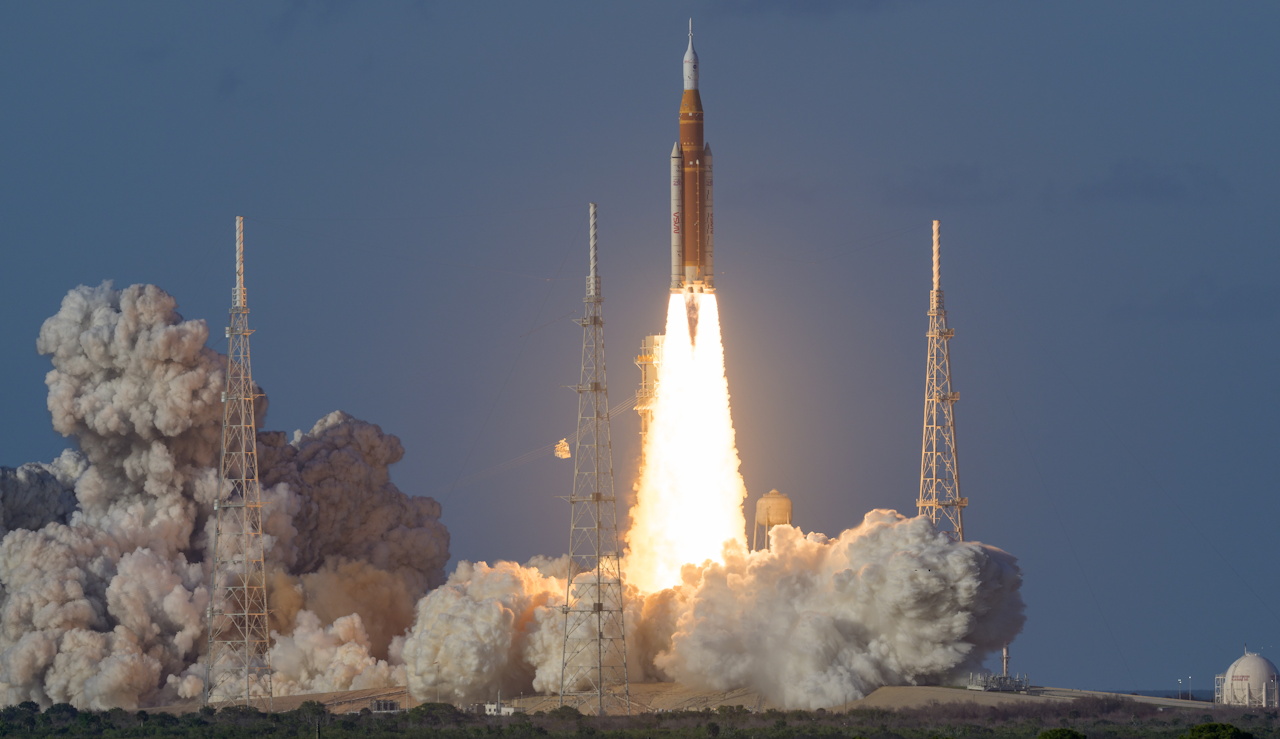
Artemis II/SLS launching from Florida
The launch of Artemis II.

Here on the website, we’ve talked a few times about real-life space exploration. Specifically, I’ve shared my scepticism about recent space projects, and how a crucial element of space exploration – the inspirational factor – has gone missing more often than not. Flights to low Earth orbit have become so commonplace that I don’t really consider the most recent astronauts, space station visitors, and space tourists to truly be “pioneers” any more, which I guess says a lot about how far we’ve come as a spacefaring species! But on the other hand, I’ve come to feel distinctly uninspired by and even bored of repeated missions to the ISS, test launches for new rockets and vehicles, and even sending *another* rover to the same planet where we’ve already got one!

Space exploration *needs* that inspirational element. Without it, how are we to convince a new generation that there’s anything worth doing in space? If all we’re able to do any more is go back to the same space station time and again, or send identical-looking robots to the same planet over and over again, or launch the same wealthy bajillionaires into space for ten minutes over and over again… why would *anyone* be interested in that? And without that interest, that inspiration… how can humankind take the next big steps in space technology and space exploration?

That’s where Artemis II came in.
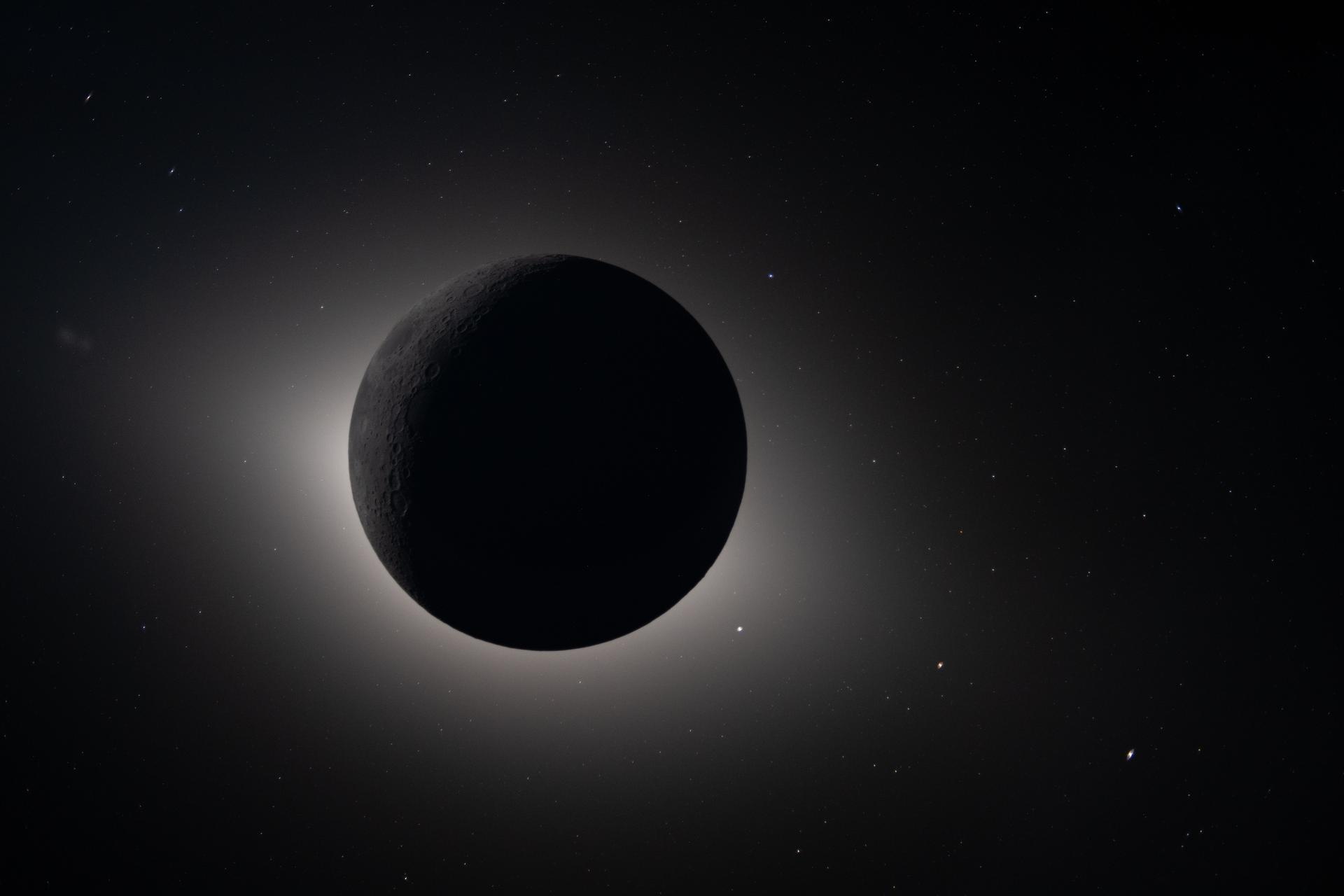
The moon as seen from Artemis II
The moon as seen by the crew of Artemis II.

I’m the wrong side of forty, but in my entire lifetime, no humans had so much as left low Earth orbit. The last mission to the moon was all the way back in 1972, meaning you’d need to be past fifty to have even been alive for that – sixty-plus to remember it with any real clarity. Artemis II was the culmination of decades’ worth of effort to take humanity back to the true frontiers of space exploration – and the first spaceflight in years to really feel like it was inspiring masses of people and capturing the imagination of the public at large.

I watched the live stream of Artemis II’s launch – which was late at night here in the UK – while on a video call with my sister. My niece was born just last year, and my sister and I talked at length about how exciting it was that, within her first year of life, something that feels so profound and huge was happening. Artemis II took humans further from Earth than we’ve ever been before, and also paved the way for a new landing on the surface of the moon sometime in the next few years. Those are incredible achievements, and I was thrilled to be able to watch the mission as it unfolded.
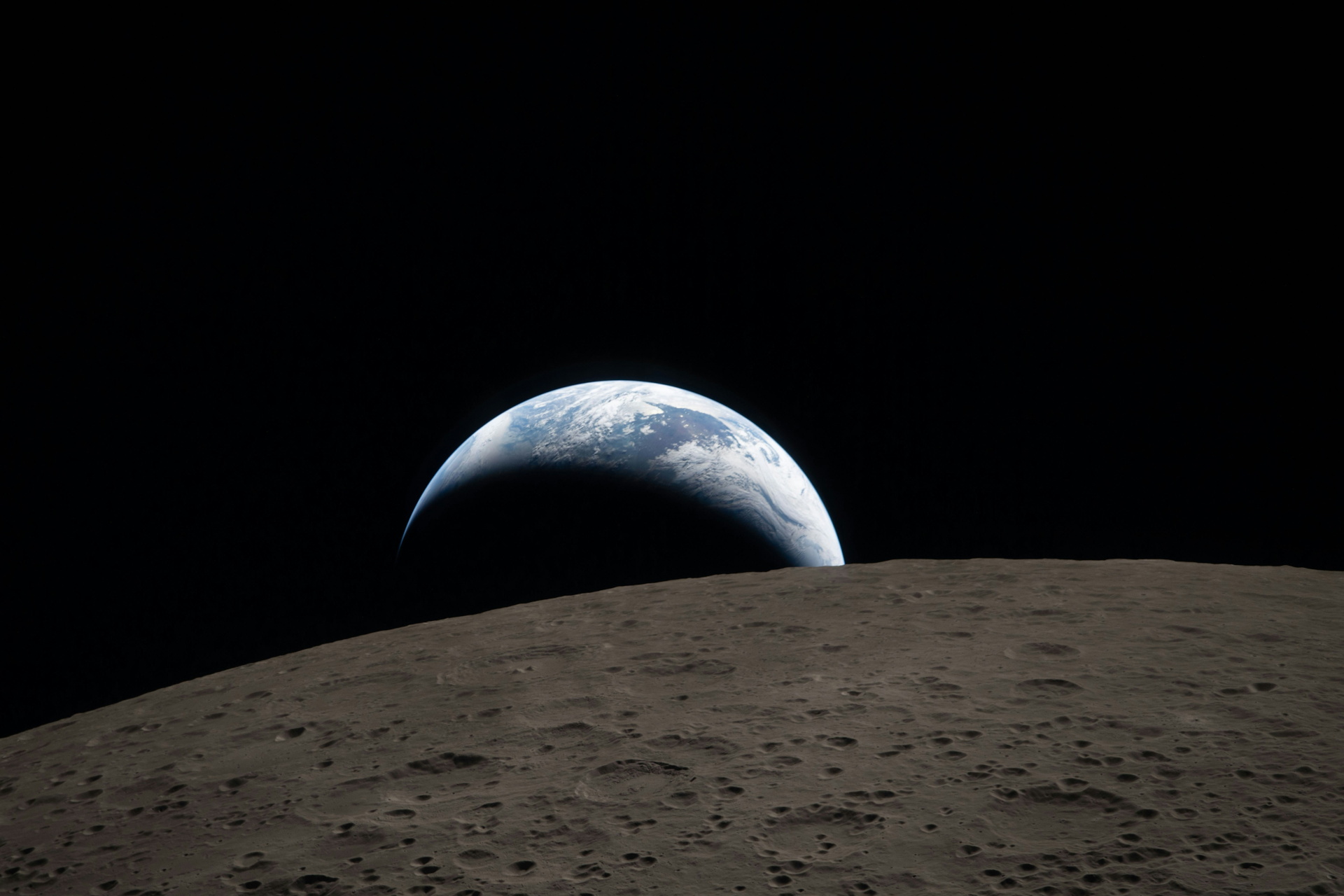
Earthrise from Artemis II
Earthrise.

As Artemis II cruised to and around the moon, I periodically checked in with NASA’s live streams. I wouldn’t say I was glued to my screen for the duration of the mission, but I certainly spent a good amount of time seeing this mission unfold as close to first-hand as I could. And one evening, when the clouds had parted and the sky was clear, I perched outside on my garden wall, just gazing up at the moon. “It’s incredible,” I remember thinking to myself, “that right now, people are… there.” Was this what it felt like in the 1960s, during the first Apollo missions? Apollo 8 was the Apollo programme’s equivalent; the first mission to leave Earth behind and orbit the moon. I wonder how many people, in 1968, perched on their garden walls and gazed up at the moon, as I just did.

Artemis II feels like NASA (and the Americans in general, I suppose) planting a flag and saying, “we’re back, we’re really doing this.” And after so many false starts, cancellations, and disappointments… I’m glad to see it. And this isn’t some kind of flag-wavy thing; I’m not an American, and I’d have been just as excited if China or India or the European Space Agency had managed to launch a similar moon-orbiting mission. Space isn’t the sole preserve of one faction or one nation, and it should be something we can explore together – or at least somewhere we can celebrate all achievements, no matter where they originate.
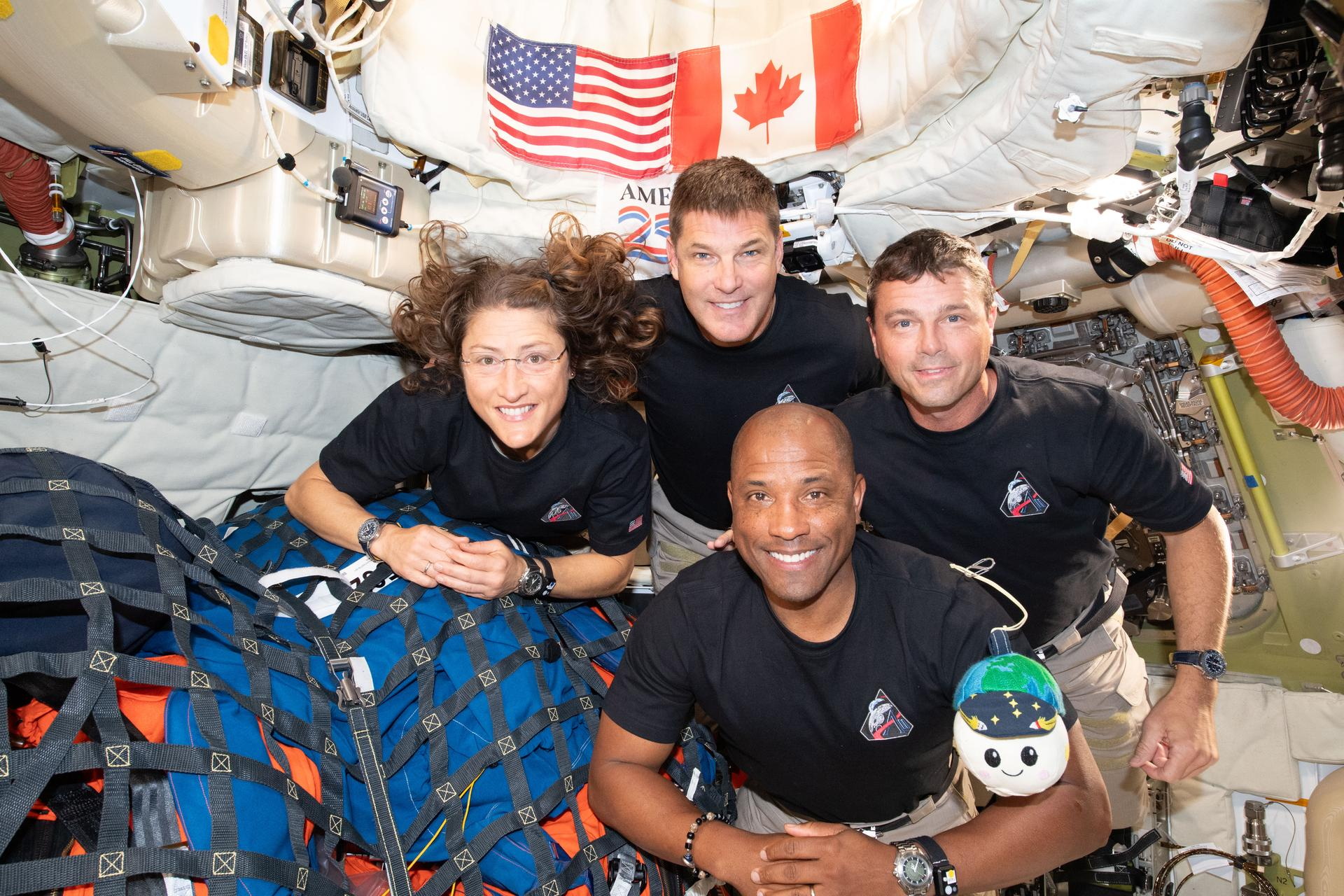
The crew of Artemis II during the mission.
Clockwise from left: Christina Koch, Jeremy Hansen, Reid Wiseman, and Victor Glover.

There are still innumerable hurdles for current and future space missions to overcome. Going beyond the moon to send humans to visit the likes of Mars or Venus – our closest planetary neighbours – still feels out of reach with current technology, despite recent advancements and promises of a Martian colony springing up! And there will be more setbacks to come, for sure; Artemis III has been “downgraded” from its moon landing to another trial run, and Artemis IV has been pushed back to 2028. But that potential moon landing – humans setting foot on the moon’s surface for the first time in more than half a century, and for the first time in my lifetime… well, it feels a lot closer today than it did just a few months ago.

Sci-fi is what really kick-started my love for all things space. As a geeky little kid, I can remember reading every book about outer space that I could get my hands on, and being *obsessed* with the Space Shuttle and NASA. Going to space – actually sending real people up there – felt magical, like something out of Star Trek. But as time passed (and as I got older), that excitement seemed to fade. And there haven’t been very many missions in the last few years to truly recapture it. The last two I can remember before Artemis II were New Horizons’ visit to Pluto, which completed the “set” of the nine planets I learned about in school, and William Shatner’s trip to space. The idea of sending Captain Kirk himself into space in real life… that definitely tickled me!
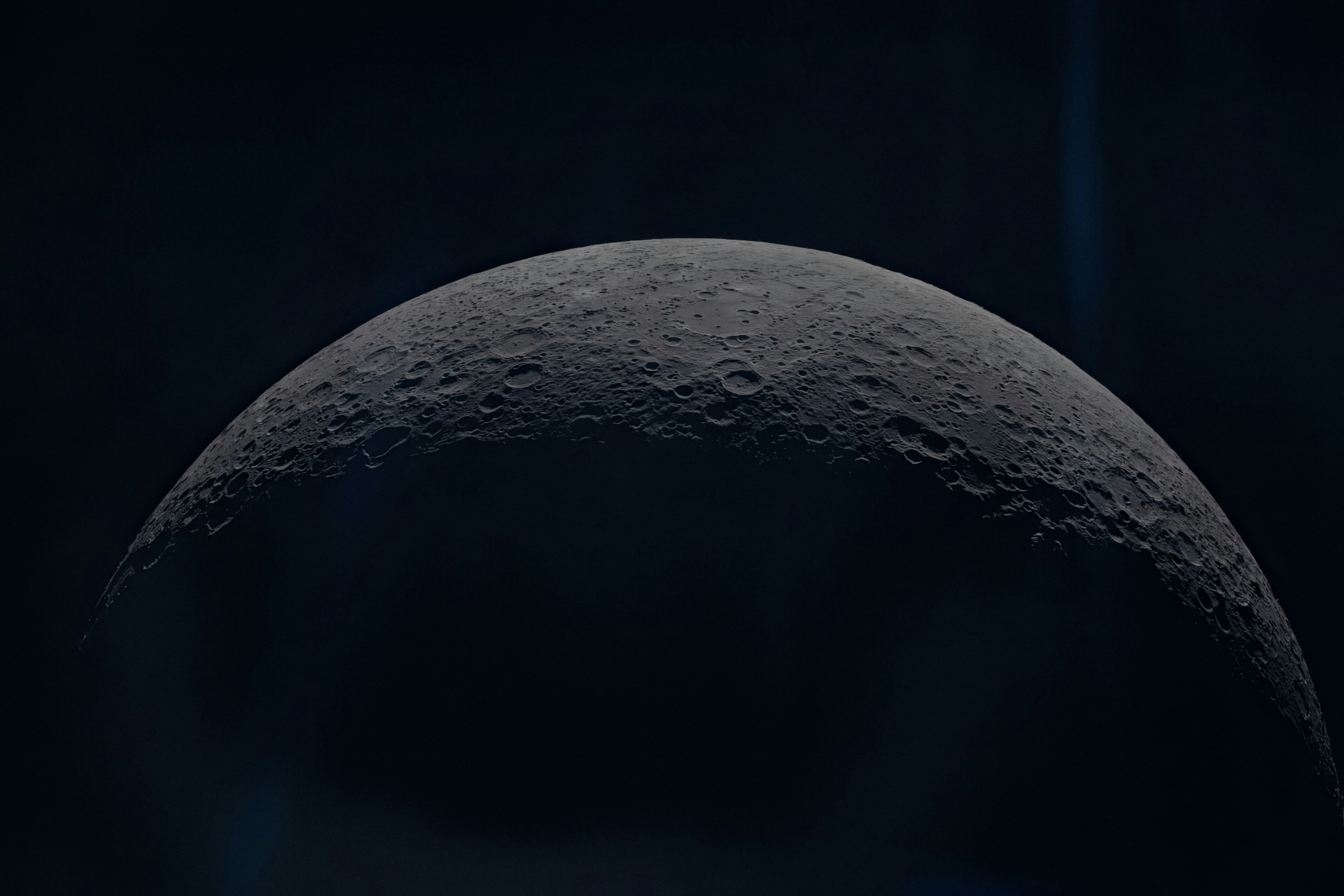
The moon as seen from Artemis II
We really went back to the moon. Wow.

I’m still not sure what the future will hold for space exploration. Events here on Earth have a tendency to get in the way, unfortunately, and with wars, political disruption, economic problems, and all kinds of other issues already plaguing us… I can’t say I have 100% confidence in Artemis IV landing on the moon a couple of years from now. But I feel more confident in the possibility – the idea that it plausibly *could* happen – than I did at the beginning of the year.

And that’s pretty neat! It’s a feeling I haven’t had in a long time, really.

So, as I said at the beginning: Artemis II inspired me. It’s a rare space mission in the 2020s to truly recapture that sense of excitement, that humanity was going “where no one has gone before” – quite literally, in this case, as Artemis II went further than any of the Apollo missions, setting a new record! It’s important that space exploration retains that sense of wonder and excitement if we’re to inspire the next generation of astronauts and rocket scientists, and I hope that many of my niece’s generation will look at Artemis II with the same sense of wonder that I had when I looked at the Apollo missions and the Space Shuttle. Who knows… maybe one day *she’ll* suit up and blast off to the final frontier. I may not be here to see it, but she’ll have an incredibly proud uncle either way.


Some images above are courtesy of NASA. This article contains the thoughts and opinions of one person only and is not intended to cause any offence.
Film review: Moonfall

This review is in two parts: a spoiler-free section and a section containing spoilers for the story. The end of the spoiler-free section is clearly marked.

Disaster movies are something of a guilty pleasure of mine, so I’d been looking forward to Moonfall since it was announced. I was hoping for some big, dumb blockbuster fun – and Moonfall delivered. This isn’t a film that’s going to win any of the big awards – at least, it doesn’t deserve to! But as an entertaining way to spend a couple of hours, I’d recommend it to fans of science-fiction, disaster films, and brainless summer blockbusters.

Director Roland Emmerich has an established track record in the disaster movie genre, having directed The Day After Tomorrow and 2012, both of which were big hits in the 2000s. Many of Emmerich’s hallmarks are present in Moonfall, including some very familiar character and story tropes. If you were turned off by the “flawed protagonist who loves his family” action-hero character that Emmerich seems to use in all of his films, maybe Moonfall won’t be right for you! But for my money, the film delivered what I wanted it to – and managed to pack an emotional punch even while suffering major contrivances, an utterly ridiculous plot, and dialogue that could be incredibly hammy.

Moonfall is the latest film from director Roland Emmerich.

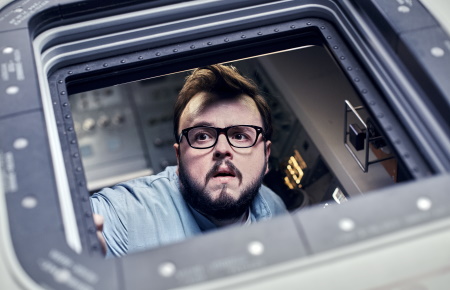
All of the actors in Moonfall gave it their all, despite the film’s ridiculously over-the-top disaster storyline, and I’d single out the performances of Halle Berry, Eme Ikwuakor, and Charlie Plummer as being especially praiseworthy. I’d never seen John Bradley in anything outside of Game of Thrones (where he played Samwell Tarly), so I wasn’t sure at first how suitable I’d find him for a role in a title like Moonfall. But to my pleasant surprise I enjoyed Bradley’s performance a great deal, and I found him believable as conspiracy theorist KC Houseman.

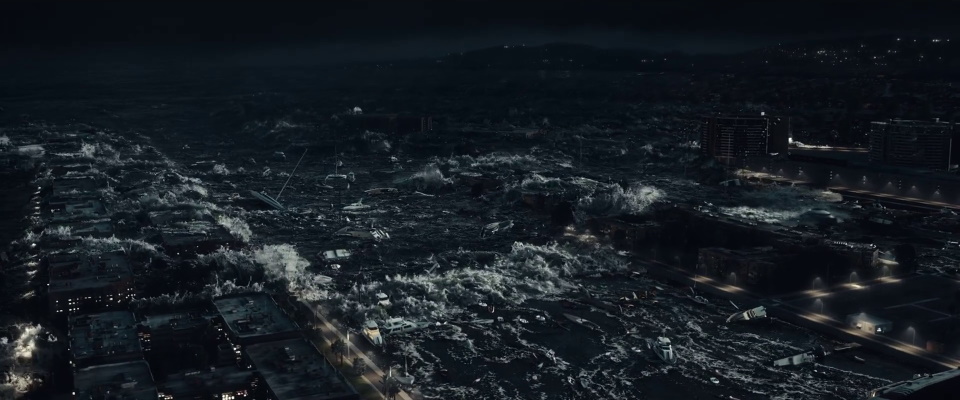
There were some definite CGI misses in Moonfall, but none were terribly egregious. Water can be a difficult thing for CGI animators to do well, and given that the film had a lot of other CGI sequences that worked, I can excuse those that were wide of the mark. There wasn’t anything catastrophic; rather some sequences that depicted large volumes of water felt outdated – akin to something we might’ve expected to see ten years ago rather than from a blockbuster in 2022.

John Bradley in a promotional photo for Moonfall.

I had a good time with Moonfall, all things considered. It had a plot that was less science-fiction than pure fantasy, and that required any understanding of actual science and physics to go out of the window! But there’s room in the wide world of geeky entertainment for titles like this one, and not every story has to rely on real-world understandings of gravity and physics to tell a fun, exciting, and occasionally emotional story.

If you’ve never liked disaster films, Moonfall probably isn’t the picture to change your mind. And if you like your sci-fi heavier on the sci than the fi, Moonfall will probably be a frustrating experience. Heck, we could nitpick it to death if we wanted to! But if you can suspend your disbelief for a couple of hours – and if you want a film that doesn’t ask too much of you either intellectually or in terms of effort and engagement – Moonfall might just be a fun ride. I know it was for me!

Up next we’re going to talk about some of the story elements in more detail.

Spoiler Warning: This is the end of the spoiler-free section! Expect spoilers for Moonfall from here on out.

So let’s get something straight: Moonfall has a ridiculous plot. Even by the standards of other disaster films – like Volcano’s lava eruption in Los Angeles or the Mayan end of the world in 2012 – what Moonfall brings to the table with its “the moon is an ancient spaceship constructed by humans from another part of the galaxy” story… it’s just plain bonkers. A rogue AI comprised of millions of nano-machines sending the moon crashing into the Earth is likewise utterly silly, and Moonfall asks a lot to get its audience to suspend our disbelief!

But that doesn’t mean it’s one of those “so bad it’s good” films. There’s a lot to love about Moonfall in its own right, including a different take on some familiar concepts. The idea of rogue AI could’ve been explored in more detail if there’d been more time, but it’s a surprisingly timely narrative inclusion given that we may be on the cusp of unlocking that kind of technology right here in the real world. As documentaries such as the brilliant We Need To Talk About A.I. from a couple of years ago have shown, there are legitimate concerns surrounding artificial intelligence, concerns that Moonfall takes to an extreme – but not entirely unfathomable – conclusion.

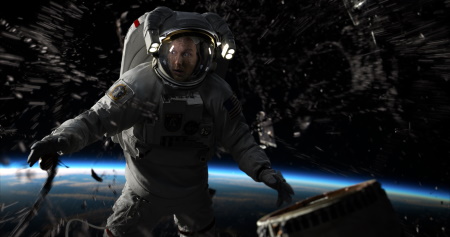
Astronaut Brian Harper encountered an evil ancient AI.

Many story tropes and character archetypes that Roland Emmerich has used before are included in Moonfall, right down to the “new spouse of the hero’s ex who dies in the disaster.” For folks who’ve seen the likes of The Day After Tomorrow and 2012, characters like protagonist Brian Harper will feel very familiar – perhaps even a little samey. But Emmerich does a good enough job at establishing the stakes for the characters through their connections to their families and friends, adding an emotional imperative to the story that it would otherwise lack.

There are more than just echoes of past Emmerich films through some of these characters. The washed-up hero, the scientist everyone ignored, the gung-ho military leaders, the children of the main protagonists who are trying to get to safety… we’ve seen these people before in different incarnations in other titles. But to me, that was fine. The actors who brought these characters to life did a good job, and I can’t really fault any of the performances. Given that the story was silly – and I’m sure everyone involved could recognise that – there’s a level of professionalism and dedication that deserves to be respected.

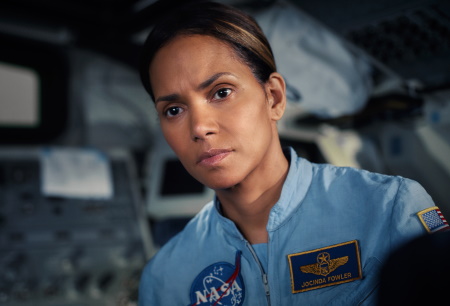
Halle Berry as Jocinda Fowler in Moonfall.

As mentioned, some of the CGI sequences – those dealing with the flooding caused by the moon’s activities in particular – weren’t spectacular. It feels as though Moonfall’s creators poured the vast majority of its CGI budget into the “swarm” – the AI nanobots that were the cause of all the trouble. The swarm looked spectacular, giving me a hint of things like the Borg Collective from the Star Trek franchise without being too derivative.

The white dwarf star at the moon’s core was also an impressive CGI feat. Stars in sci-fi can be difficult to get right, and we’ve seen massive improvements in the way they’ve been depicted in the wake of titles like Interstellar. Moonfall managed to get this aspect right, and while the star wasn’t on screen for a huge amount of time, when it was it managed to look exceptional.

Some of the flooding sequences didn’t look great, despite outstanding CGI work elsewhere.

There were some unintentionally funny moments in Moonfall courtesy of some incredibly hammy dialogue, and especially in the first forty or fifty minutes or so of the film I found myself chuckling away at these. When you have legitimately good actors saying, with a straight face, lines like “I’ve uncovered what might be the most important discovery in human history!” or “everything we thought we knew about the nature of the universe has just gone out the window!” it’s hard not to crack a smile.

The forced conflict between NASA, the military, and the film’s protagonists is another Emmerich hallmark, with the authorities refusing to believe the truth, seemingly trying to cover it up, and then launching an overly-aggressive military response at the last minute. Pitting Halle Berry’s character of Jocinda Fowler against the head honchos of NASA and the military was certainly a cliché, especially when there were characters who openly told us that “just following orders” meant that they have blood on their hands, or that they “lied to the American people.” But I can let such things slide in a film that I don’t need to take too seriously.

The protagonists’ kids had to escape the disaster too.

I didn’t come to Moonfall looking for a nuanced or sympathetic presentation of dementia. But even so, the way that the film handled the character of KC Houseman’s mother was pretty poor. It fell into some really unnecessary stereotyping of dementia, showing Mrs Houseman going from lucid to amnesiac in a split-second. As I find myself saying sometimes: if there isn’t time in a film with other priorities to create a more realistic and nuanced presentation of an illness or health condition, it can be better to just skip it altogether. We didn’t gain anything by learning about Mrs Houseman’s failing health, nor did it do much to inform the character of KC. So overall, a bit of a disappointment that a blockbuster would lean so heavily on a pretty clichéd presentation of what is a complex and debilitating illness.

There was quite a bit of product placement in Moonfall – another clear sign of an Emmerich blockbuster. When compared with the likes of 2012, though, the product placement felt a lot more subtle. There were logos and car brands that were clearly being shown off, but for the most part it passed by inoffensively enough. I tend not to get too worked up over product placement if it isn’t too in-your-face.

Houseman, Harper, and Fowler inside the moon.

So that was Moonfall, really. A dumb, stupid blockbuster with a ridiculously silly plot, recycled character tropes, hammy dialogue, and naff special effects… that I thoroughly enjoyed for what it was. Moonfall was never going to be Oscar bait, and I think everyone involved with its production recognised from the start the kind of film they were creating. This was sci-fi that was heavy on the fi, and very light on the sci!

But Moonfall did what it set out to, and it was perfectly entertaining popcorn fare. It’s a film that doesn’t want you to think too deeply about the physics involved, nor the implications for the world left behind for the survivors. Moonfall exists for the two hours that you watch it, and then it’s over. Its characters got to their “happily ever after” moment, and that’s all it has to say. There’s no epilogue, no post-credits scene to tee up a sequel. It’s purely a one-and-done disaster film with sci-fi trappings.

I set my expectations appropriately and ended up having a good time with Moonfall. And I think that’s about all there is to say!

Moonfall is out now to stream for a fee on Amazon Video, Google Play, YouTube, Apple TV, and other streaming platforms. Moonfall will be released on DVD and Blu-ray on the 9th of May 2022. Moonfall is the copyright of Lionsgate Films and ACG International. This review contains the thoughts and opinions of one person only and is not intended to cause any offence.