Today is a special occasion! Five years ago, on the 30th of November 2019, I made my first post here on Trekking with Dennis, kick-starting a writing project that’s now been running for half a decade! I can scarcely believe it’s been five years already, but as I do every year, I wanted to step back for a moment and reflect on the website’s progress as well as talk about a few personal things that don’t really fit in anywhere else.
Firstly, I want to make note of the fact that this website is now my longest-running project… ever. I’ve been writing here on Trekking with Dennis for five whole years – which is longer than any individual job I’ve ever had, and longer than any other side-gig or hobby I’ve ever had. In many ways, five years doesn’t seem like a lot of time. It feels like it passed in the blink of an eye, to be honest with you! But at the same time, five years is half of a decade, more or less one-eighth of my life to date, and a pretty decent amount of time to be occupied by one thing! I’ve taken a few breaks here and there, sure, but there’s always something in my writing pile and I’ve usually been able to find something that interests me to talk about.
I still enjoy the process of writing here on the website.
Beginning in late 2022, I definitely found myself writing less often than I had been when I started out – and that trend has continued this past twelve months, too. The first couple of months of 2024 saw eight pieces published in eight weeks, and I guess it’s beginning to stretch the truth to say that I write “several new articles and columns every week” – a boast that’s still on the homepage at time of writing! But I’m happy doing things this way, and as I said last year: writing what I want to write about at my own pace was the entire point of this website.
This past year I’ve had a pretty big problem with my internet connection. I’ve been disconnected for weeks at a time on two occasions – in December 2023 and June/July 2024 – and I’ve had shorter disconnections lasting anywhere from a few hours to a couple of days seemingly at random throughout the year. I’m still not convinced that my ISP has solved the problem; there seems to be confusion about whether there’s a “software” or “hardware” issue at the core of these repeated disconnections. I was able to work around it, getting back online using my phone’s hotspot and mobile data. But it’s been a pain in the backside to say the least – and probably a minor contributing factor to writing fewer posts this past twelve months.
I’ve had some internet connectivity problems over the past twelve months.
Back in June, I published my 800th piece here on Trekking with Dennis. At time of writing I’m now at 828 posts… which is a pretty decent amount in five years! I’m still slowly chugging away toward that 1,000-post milestone – but barring any major problems, we’ll get there eventually. Though on current form it might not be until 2026! Still, it’s fun to look back on some of these articles and columns, sometimes. I remember most of them… though occasionally a piece will pop up that seems to have been entirely wiped from my memory, for some reason! I put that down to a combination of age and my general mental health!
With all of this looking back comes some reflection. There are several pieces in my writing pile that I haven’t completed this year for one reason or another, and a couple that proved more personal or more difficult to tackle than I initially expected. Sometimes, when the website may appear to be on hiatus, I am actually still working… but with no real deadlines to force my hand, articles and columns don’t get rushed to publication. There are a handful that I’d like to think will make it in the next couple of months… but watch this space, I guess. I don’t feel a huge amount of pressure.
It’s some kind of spaceship…
As we come to the end of the first half of the 2020s, that sense of time marching on that originally inspired me to carve out a small slice of the internet for myself has returned. But this time, I feel a little different about it. I have an archive of my own to look back on thanks to Trekking with Dennis, and as self-indulgent as it may seem, stepping back to re-read some of the pieces I’ve written over the last five years – most of which I’ve not returned to since their original publication – has been genuinely interesting.
Time catches up with all of us in the end, and although my health has been in what I’ve jokingly called a “managed decline” for a while, these moments of reflection re-emphasise that things aren’t static. Day to day, it can feel like not very much changes. But looking back over a short five-year span, I feel different. In some ways, I’ve grown and improved: I had the confidence to build my own computer for the first time, and running Trekking with Dennis has undoubtedly helped both my writing and design skills (though the latter is still lacking, for sure!) But in others, I notice a decline. My arthritis has worsened, and that’s having an impact on things like my ability to play games – especially for long periods of time. And my general health is noticeably worse than it was five years ago; some basic tasks are more difficult now than they were then, even though the difference day to day means it hadn’t really registered until I took a step back.
I’m still not the best artist or designer in the world…
I mentioned that this website is the longest project I’ve ever had, and I confess that I feel a sense of pride in sticking with it for five years already. I’ve always been a “jack of all trades” in some ways; I dabble in different hobbies, activities, and even career paths without ever really settling. These things seem like fun at the time… but again, when reflecting and looking back, what I see is a succession of half-finished ideas, failed projects, and the debris of various hobbies that never got off the ground.
As a couple of examples, back in about 2015 I built the base-boards for a model railway, spent some money on pieces of track and the like, but only ever modelled a very small section of it before drifting away. I bought a guitar in 2006 that I played for about a year, on and off, but I was never satisfied with my progress and never took it any further. During my career in the games industry I moved several times, never sticking in one position or at one company for longer than a couple of years – before quitting altogether to focus on being a freelancer. That also didn’t last for very long.
I never learned to play the guitar…
I guess what I’m saying is that I feel like I’ve finally settled on… something. Trekking with Dennis may not be the best website in the world. It may not have the most consistent output, nor even really stick to one theme or type of content. But it’s mine, and I’ve stuck with it longer than I’ve ever managed to stick with anything else. I haven’t been perfect; there are Star Trek episodes, seasons, and plenty of other things I should’ve reviewed or talked about that I didn’t get around to. But despite that, there’s something here that I can look back on with… well, some semblance of pride. And that’s kind of a new feeling for me.
When you’ve lived a bit of an itinerant life, never settling in one place for very long, never sticking with a job or even hobby for very long, and when you’ve got a divorce and other broken relationships in the past… having some consistent thing running for this long feels like an accomplishment. And maybe this is nothing but self-congratulatory drivel from someone who still has no real achievements to speak of. But I’ll take what I can get!
Am I giving myself too much credit here?
So here’s to five years – the first five, at least. I don’t like to set goals, but having completed five years of writing and reviewing… why not push for five more? Why not try to make it to November 2029 and see how much more accomplished I’ll feel with an entire decade under my belt instead of just half? Why not make this article something I can look back on in another five years’ time and reflect on how much more progress I’ve made? Maybe that’s my next objective: to stay alive long enough to reach that milestone!
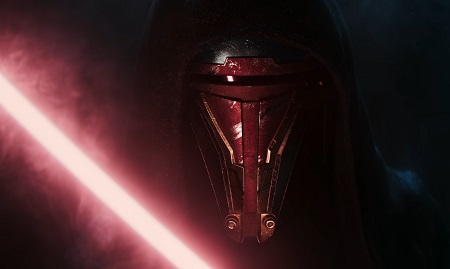
And there are plenty of things to look forward to over the next five years. Obviously there’s gonna be more Star Trek: two new seasons of Strange New Worlds for starters, as well as Starfleet Academy, the Section 31 TV movie, and the untitled comedy series. There are films on the horizon that I’m looking forward to, and remakes of a couple of great games from years past: Max Payne and Knights of the Old Republic. I’d love to still be here when all of these projects are released to be able to talk about them and share my thoughts on them with all of you.
I’m still looking forward to the KotOR remake!
I should’ve mentioned this at the beginning, but this isn’t my “end-of-the-year” piece. I find it so frustrating to see publications putting together their “best of the year” lists or articles summarising the events of the year this early! There was one I saw a few days ago – in late November – that claimed to be a “summary” of the events of 2024… while there’s still almost five weeks left! That’s bonkers to me, so if you’re new around here please rest assured that my review of the year’s entertainment experiences will come at the end of December! That’s when I like to hand out some made-up awards and imaginary statuettes to my favourite entertainment experiences of the year.
So that gives me a few weeks to catch up on some of the projects I’ve missed, eh?
If you’ve stuck with me this far through this awfully indulgent stream-of-consciousness ramble, thank you! I hope you’ve enjoyed at least some of what I’ve had to say over the past twelve months. Whether you’re here as a fellow Trekkie, a gamer, or just as someone who enjoys blogs and websites about the wide world of geeky entertainment, I genuinely hope that I’ve written something this past year (or over the past five years) that you’ve found interesting or enjoyable. Thank you for your support, for clicking on the website, and for coming back to check out my totally unsolicited opinions on some of my favourite entertainment topics. See you… out there!
– Dennis Saturday, 30th November 2024
All properties mentioned above are the copyright of their respective broadcaster, studio, developer, distributor, company, etc. Some stock images may be courtesy of Unsplash. This article contains the thoughts and opinions of one person only and is not intended to cause any offence.
1999 was probably one of the most fun and exciting years of my life! It’s been a quarter of a century since then, so I thought we could spend a few minutes looking back and reflecting as we acknowledge that milestone.
I think it can be hard to explain to folks who didn’t live through the millennium – or who are too young to remember it clearly – but the end of the ’90s really was a landmark event for many of us. 1999 was the final countdown to the biggest party of the century, and it also came along at an interesting point in history that really amplified many of those celebratory qualities. I’d like to take a look at all of that today, share some of my recollections of the year, and also look at a few films, games, and TV shows that debuted in or were running through 1999.
Let’s load up some old memories together!
Let’s get one thing clear right off the bat, before the pedants jump in! Technically the year 2000 wasn’t the first year of either the 3rd millennium or the 21st Century – those honours fall to 2001. But for all intents and purposes, New Year’s Eve 1999 is when the switch happened for most of us: this was the moment the ’90s ended, the moment years began with a 2 instead of a 1, and the moment it felt like things had switched. At the time that seemed to annoy some nerds… but who cares, right? It’s party time!
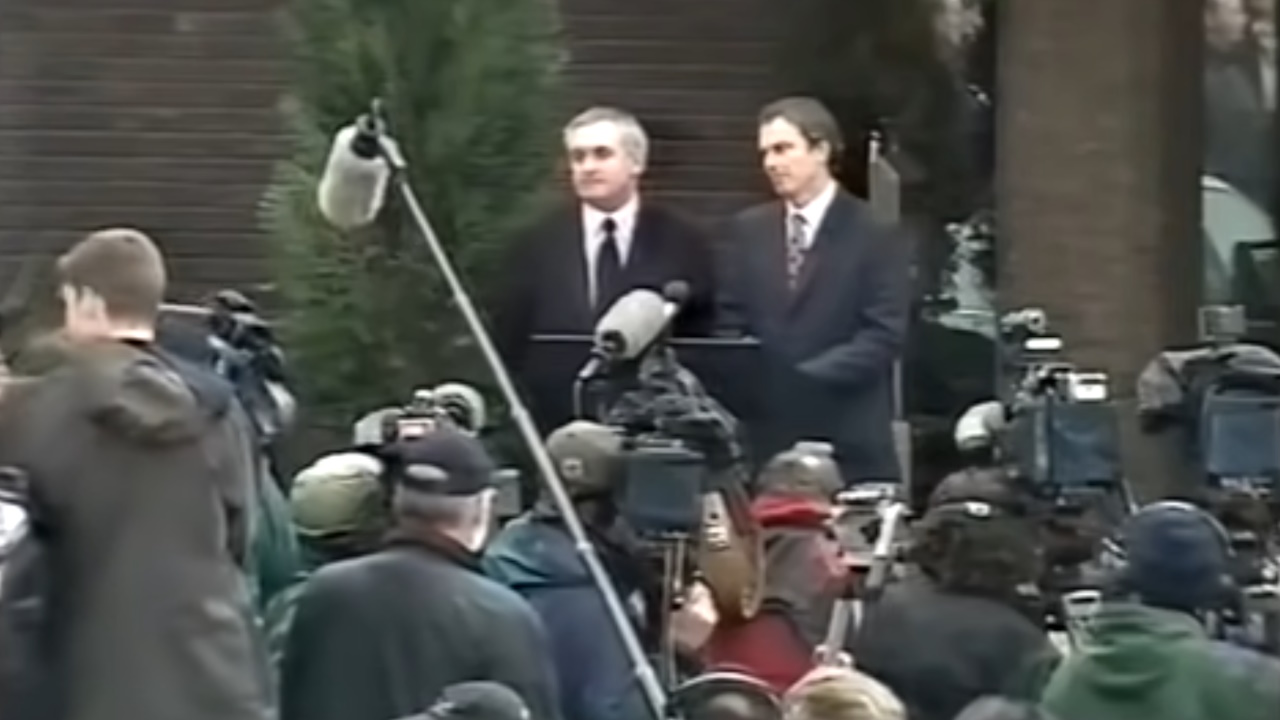
1999 also coincided with a rare alignment of social, economic, political, and diplomatic positivity and stability – at least here in the UK. The end of “the Troubles” in Northern Ireland after decades, the end of the Cold War and the collapse of the Soviet Union, a new and relatively popular government with a substantial governing majority, inflation at a low and stable level, the economy growing, British entertainment from books to bands taking the world by storm… the tail end of the ’90s was quite the time to be coming of age!
The Good Friday Agreement brought an end to decades of conflict in Northern Ireland in 1997.
The end of the Cold War in particular led to one of history’s most infamously wrong assessments: Francis Fukuyama’s book The End of History and the Last Man. Fukuyama argued that the collapse of communism meant that liberal democracy had “won,” and that humanity had reached “the end of history.” As strange and silly as that argument may sound today, that was how many people felt at the time.
Technology was also in its ascendency – and the growth in computing power year on year seemed to be without end. A PC I bought in 1997 – for no small amount of money at the time – felt pretty out-of-date by 1999, struggling to run more up-to-date games and software that rapid advances in technology made possible. This was also the time of the switch from 2D to 3D graphics in games, and what I consider to be the real beginning of video games as a narrative art form that could rival film and television. Later in the year, to mark the anniversary of its release, we’ll take a look at one of the landmark games of this era that really encapsulated that feeling for me.
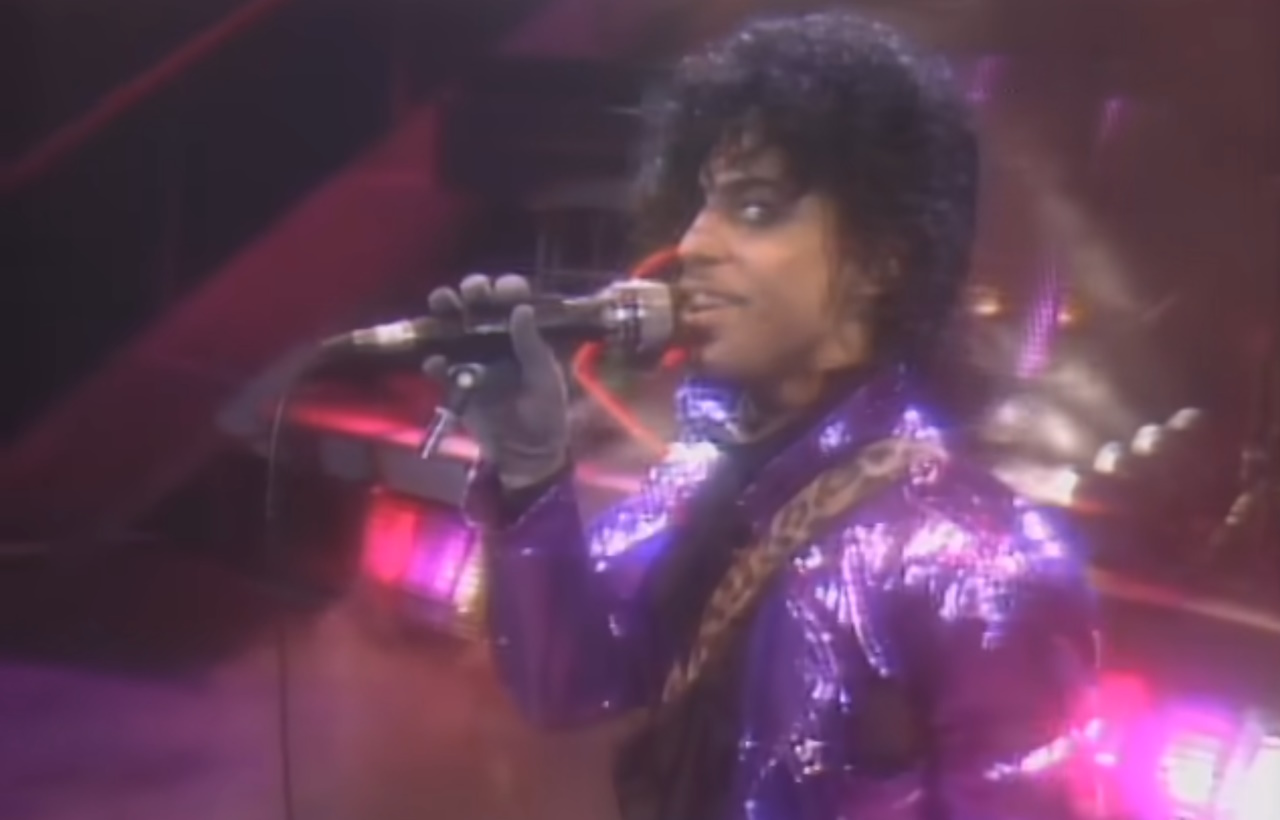
Do you remember this song?
As dawn was breaking on New Year’s Day 1999, I remember being hit with a sense of “wow, this is really it!” It felt like there was about to be a 365-day-long buildup to the party of a lifetime – a party that would end when the year 2000 began! As Prince sang on his hit song 1999, which had been released seventeen years earlier: “2000 zero-zero, party’s over, oops, out of time!” Do you remember that song? It must’ve been played incessantly on the radio in 1999, and I’m sure it was the last song many folks heard at New Year’s Eve parties that year!
But before we reached the biggest party of the millennium, there was an entire year to get through! For me, this was a year of school, Saturday jobs, trips into town with friends, and being stuck at home with the family. I know that I’m looking back with rose-tinted glasses and over-romanticising some of those memories, because school in general wasn’t great for me, and my anxiety kept me on edge a lot of the time. But there were some highlights: I starred in a school play in the spring, then took a leading role in organising the end-of-term Christmas event for the first time. My elderly English teacher used to drag a bunch of us to church to perform a reading or two, but in ’99 I was given the task of organising it – choosing the music, the running order, and so on. It felt like a huge responsibility at the time – and I remember it being a lot of fun.
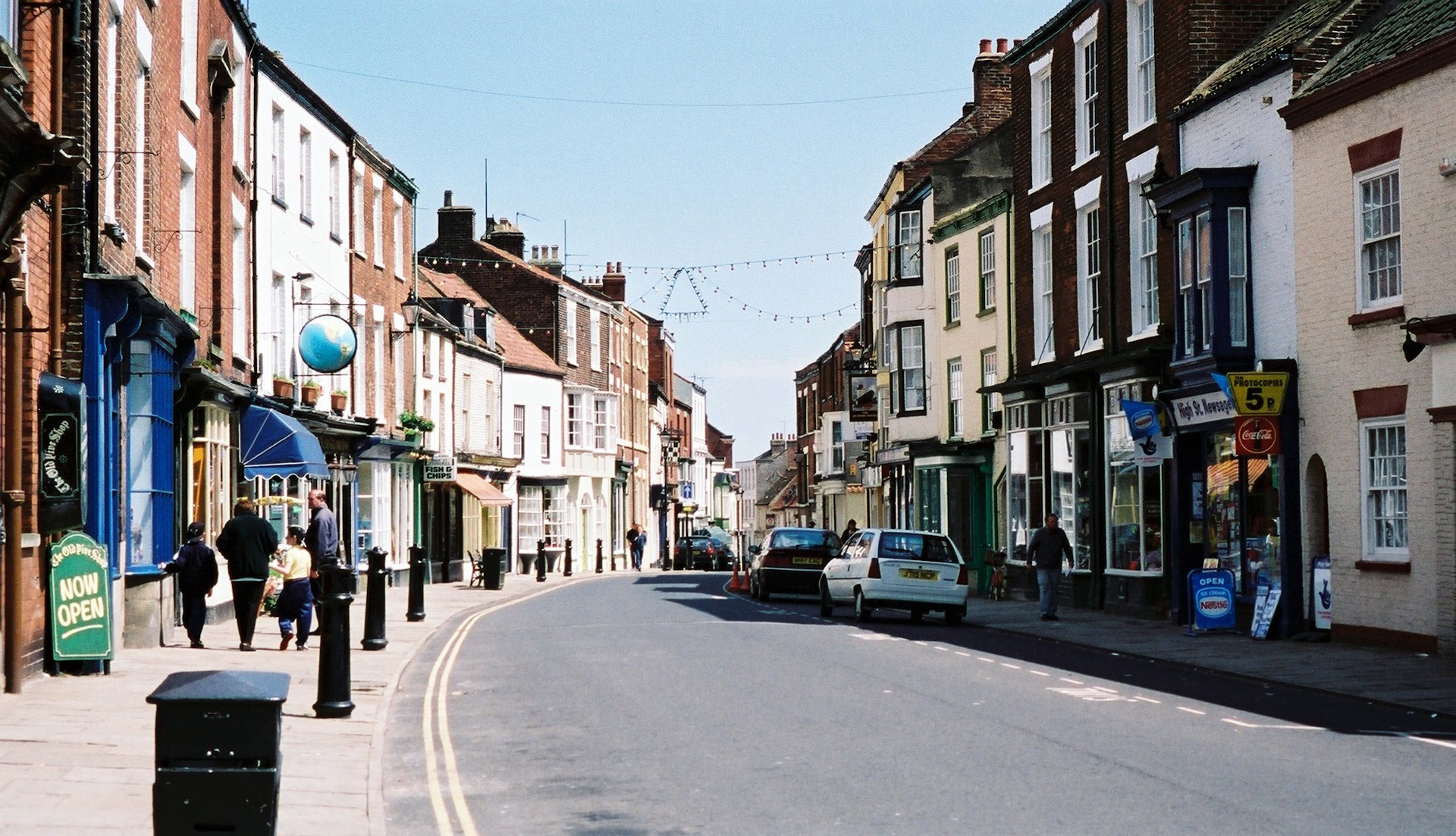
A typical British high street in 1999. Photo Credit: James Cridland via Flickr; james.cridland.net, CC BY 2.0
In terms of media, I was doing pretty good in 1999! My parents had a VCR in the living room, and with a few blank tapes of my own, I was free to record and re-watch some of my favourite films and TV episodes. I was also able to rent videos – there was a local video rental place that had a selection of the latest films, and the local library service had also expanded into video for the first time. The library was actually a great place to find VHS tapes – it was cheaper than the rental shop at only £1 per video, and you got to keep them for an entire week! Toward the end of the ’90s, Star Trek even started popping up at the biggest library in the area.
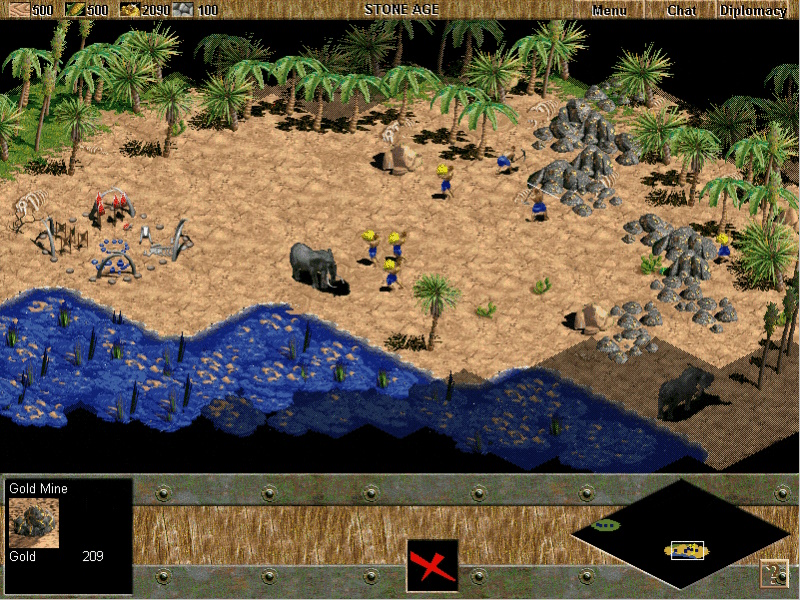
I also had a PC, and although I was only running Windows 95, I was still able to play some pretty fun games. I would’ve certainly still been playing Age of Empires and The Rise of Rome expansion pack in 1999, and probably Actua Golf 2, as well. I got Midtown Madness in the summer, and I played that to death! Tearing up the streets of Chicago and getting chased by the police was so much fun.
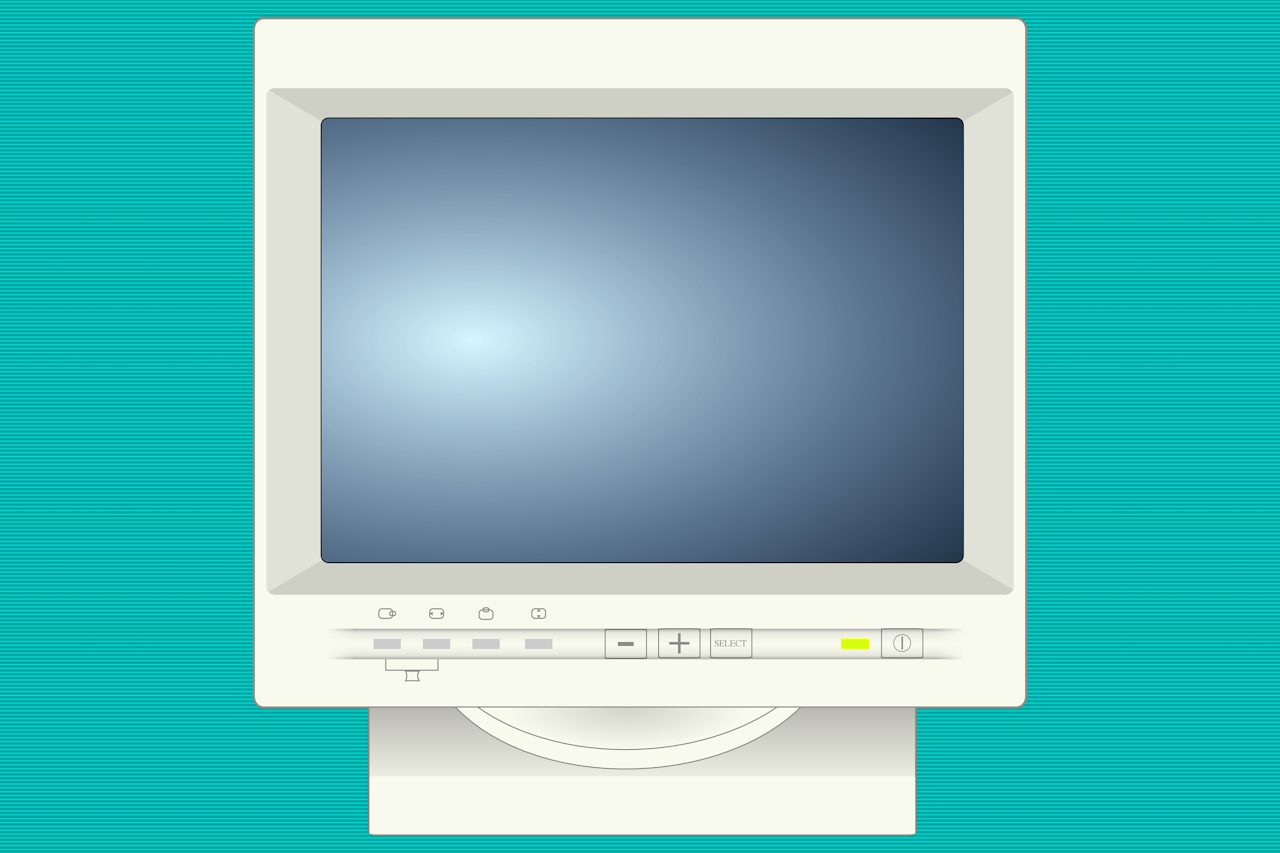
Remember when computers were beige?
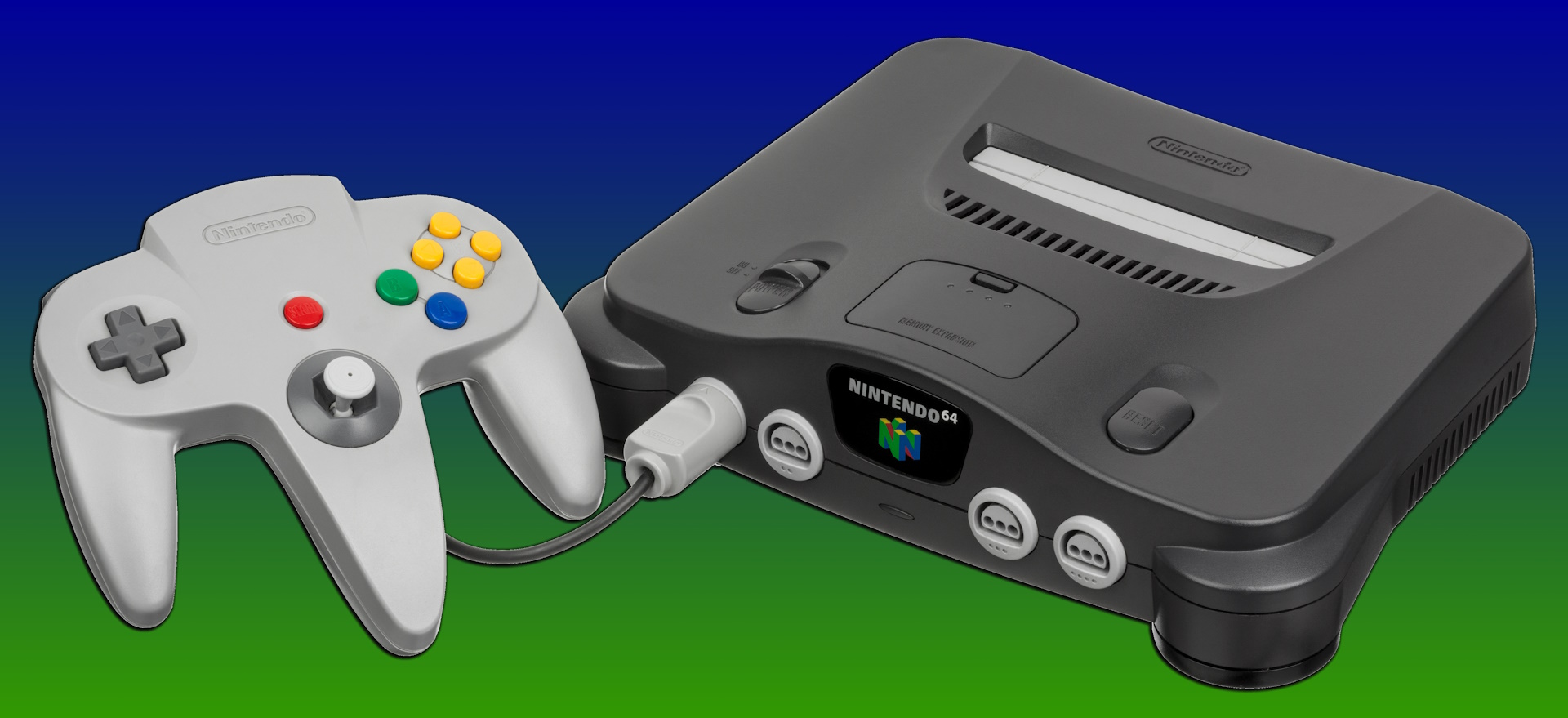
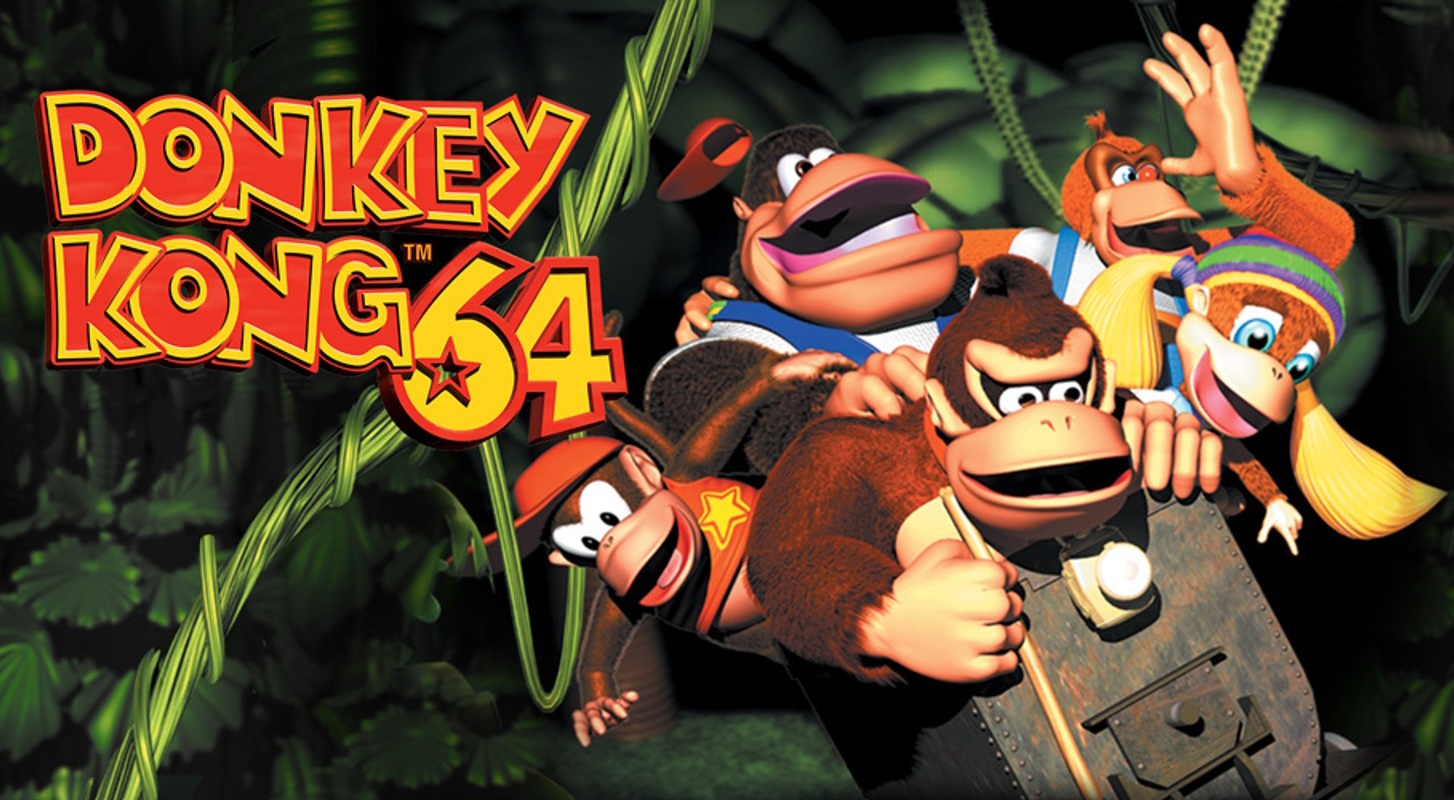
But my PC was meant to be used for school and homework first and foremost – so my gaming platform of choice was a Nintendo 64. 1999 was the year of Donkey Kong 64, Fifa ’99, and Jet Force Gemini – as well as multiplayer offerings like the venerable Mario Kart 64 and Mario Party, which were great fun whenever I had people over and we could hang out together in the living room! Nintendo is one of the few companies these days to still regularly make couch co-op titles, with the focus of multiplayer games long ago having moved online. Again, this is the nostalgia talking: but I do miss the old days of playing games with a friend or two huddled around the TV!
1999 was the year that the Dreamcast launched in the UK – soon to be followed and overshadowed by the PlayStation 2. I wouldn’t get a Dreamcast until the following year, but it’s worth noting as this was also the year that Shenmue was released. To this day Shenmue is one of my favourite games of all-time, and it was the first game that I played that truly felt cinematic. The Dreamcast was a massive leap forward compared with my old Nintendo 64, which had already been an enormous jump from the old 2D world of the SNES just a few years earlier. The rate of technological change – which, as a teenager, I mostly experienced through the growing and evolving graphics of video games – was phenomenal during this era.
The venerable Nintendo 64 was my games console of choice in 1999.
And I think that kind of encapsulates 1999 and the late ’90s in general: the rapid advancement of technology and the rapid uptake of technology. Prices continued to fall through the ’90s, making these things affordable. In 1990, my household didn’t have a computer, a games console, or a mobile phone. By 1999, we had two computers, two games consoles, and a mobile phone each for myself and my parents (my younger sister would get one a few years later).
That’s unprecedented, isn’t it? The level of change in technology and connectivity – I don’t think anything like it has happened before or since. It’s a trend that would continue into the 2000s and beyond – and depending where you are in the world it might’ve been a bit earlier or a bit later. But for me, at least, it feels like this period of great change is anchored around 1999 and the turn of the millennium.
A Motorola mobile phone. I had a similar one in 1999.
Maybe that’s because it was my “coming-of-age” moment, and maybe everyone looks back on their late teens in a similar way. But I’m not so sure about that! If I compare 1999 with when my parents would’ve been in the same position in the early ’60s, I just don’t see the same kind of technological change. Societal changes, sure – the ’60s was the decade of the Beatles, the sexual revolution, and so on. But would they look back on, say, 1965 the same way as I look back on 1999? I doubt it.
This technological change came along at a time of optimism and hope. As the millennium approached, things really seemed to be looking up… and that’s a feeling which, looking back, I don’t think I’ve felt again in twenty-five years. Definitely not to the same degree. By the time we got to 9/11 and the wars in Afghanistan and Iraq, that sense of hope for a more peaceful future had faded. When the financial crash happened a few years later and austerity policies came in, it was entirely dead.
There was a real sense of optimism as the sun set for the final time in 1999.
But let’s not end on such a depressing note, eh?
I’ve picked five films, five games, five TV shows, and five songs from 1999 that I think are worth your time, and I thought it could be fun to go through them together. The lists are not exhaustive (obviously) and are in no particular order. They’re just a few titles from this landmark year that I enjoyed – and kind of encapsulate the mood of the year for me.
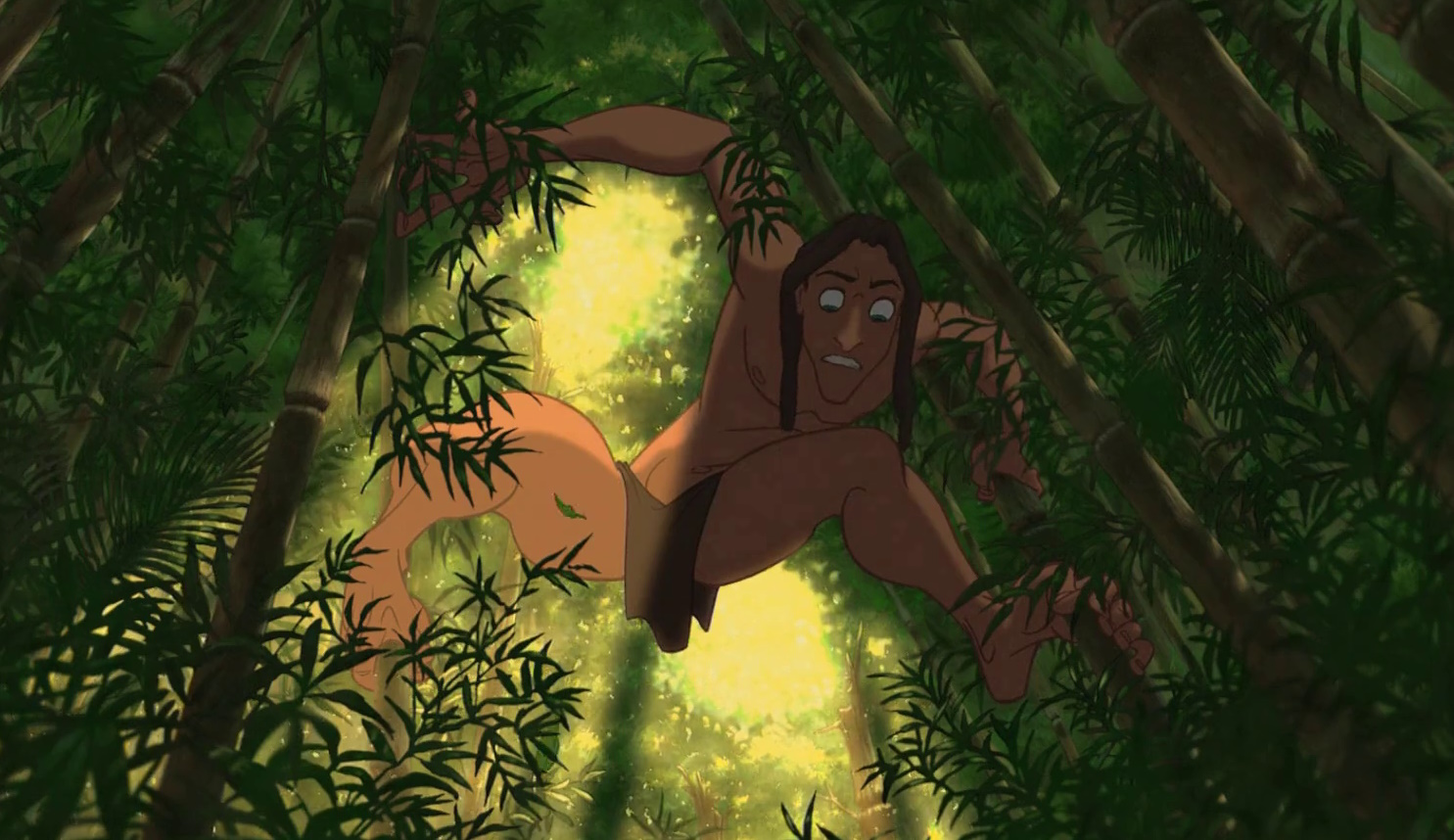
Film #1: Tarzan
Tarzan feels like an underappreciated gem from the Disney renaissance. A great soundtrack from Phil Collins contributed to making this Disneyfied take on the classic tale of the “wild man of the jungle” feel unique and special, and the film really packs an emotional punch. There are some adorable scenes between Tarzan and his adoptive family, as well as some great moments of humour, too. Tarzan can feel overlooked, sometimes – slipping into the cracks in between bigger releases that continue to see attention from Disney. But it’s a great film in its own right, and well worth a watch.
Film #2: Deep Blue Sea
Genetically-engineered sharks? What could go wrong?! Everything, apparently, and this horror/disaster film shows us how. The premise is undeniably silly, but after sequels to Jaws had failed to recapture the fear factor of sharks, Deep Blue Sea demonstrated that there were still plenty of things to do with the ocean’s apex predators. Samuel L. Jackson is the standout performer, and the film is also an early project for producer Akiva Goldsman – known more recently for his work on the Star Trek franchise. A “guilty pleasure” type of film, perhaps… but it was a blast to watch at the cinema back in 1999!
Film #3: Star Wars Episode I: The Phantom Menace
The Phantom Menace isn’t my favourite Star Wars film, and that’s putting it mildly! But as someone who’d come to appreciate the Star Wars franchise in the ’90s, I was undeniably excited to watch it at the cinema for the first time. Getting tickets wasn’t easy, and the theatre was packed! The Phantom Menace may not have been my thing, but it successfully brought on board legions of new Star Wars fans and set the stage for the franchise’s continued expansion.
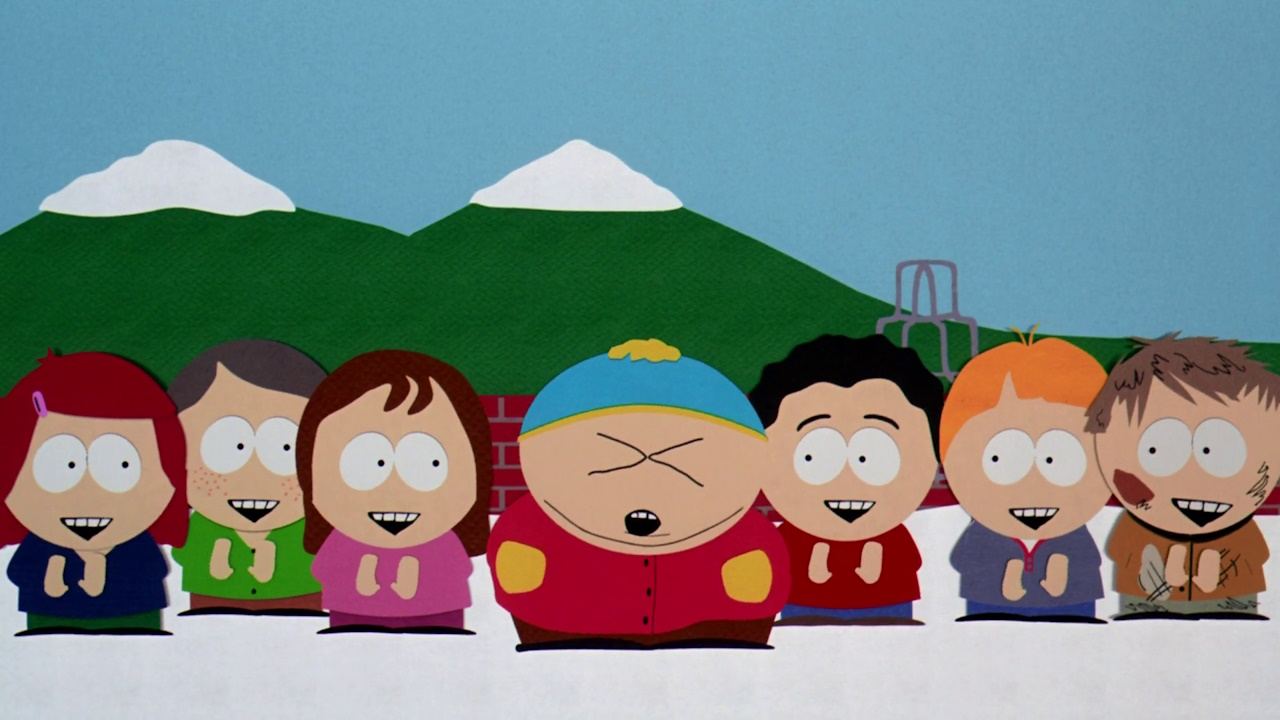
Film #4: South Park: Bigger, Longer, and Uncut
After the first season of South Park had proven to be a hit, creators Matt Stone and Trey Parker branched out and made a feature film. Bigger, Longer, and Uncut is typical South Park fare – it’s crude, rude, and tremendously funny. South Park still manages to stay fresh; recent episodes about the pandemic and the special Worldwide Privacy Tour have been great. But in many ways, the film still feels like the series’ high-water mark. Oh, and it had a great soundtrack!
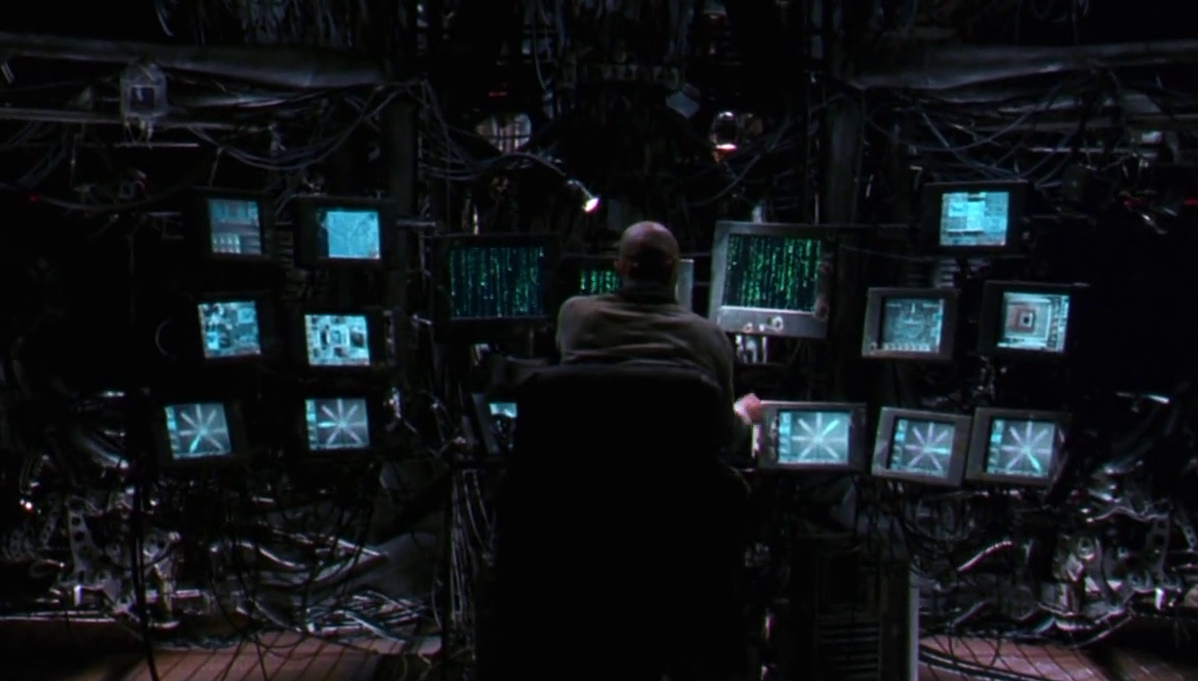
Film #5: The Matrix
The Matrix is excellent on so many levels! It’s a pioneering work of cinematography, with its innovative “bullet-time” being repeated – but never bettered – in many other works of media in the years since. Its sci-fi story of humans trapped in a pleasant but fake world dominated by machines rests atop a deep metaphor that I think many folks can find relatable. I certainly do. And who knows: maybe the machines were right. Maybe 1999 was the perfect time period for their digital world!
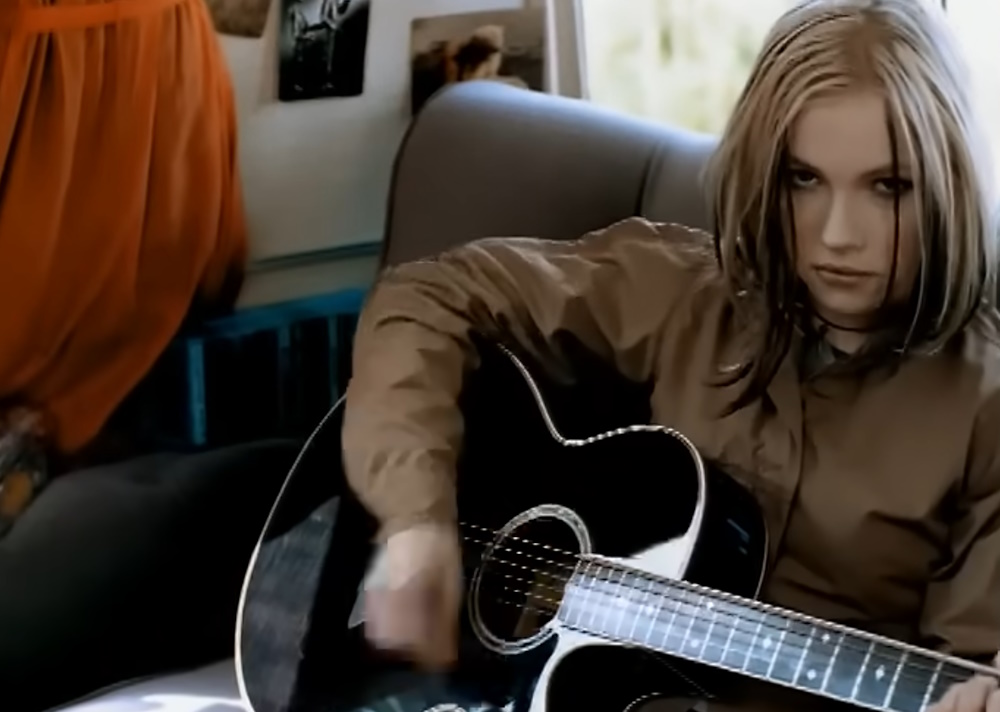
Song #1: Sitting Down Here – Lene Marlin
This song’s gentle acoustic pop melody masks some pretty dark lyrics about following and spying on a love interest! But Sitting Down Here is pleasant to listen to, and I can remember buying the CD single after hearing it on the long-running music show Top of the Pops!
Song #2: Ready to Run – The Dixie Chicks
Country music isn’t as popular here in the UK as it is in its native land, but I’ve always had a soft spot for the genre. The Dixie Chicks are one of the late ’90s/early ’00s most popular country acts, and I daresay many British people would have at least heard one or two of their songs. Their album Fly was released in ’99, and it was a great album. Ready to Run was the lead single from the album and it peaked at number two on the US country chart – as well as reaching a creditable 53rd place in the UK charts.
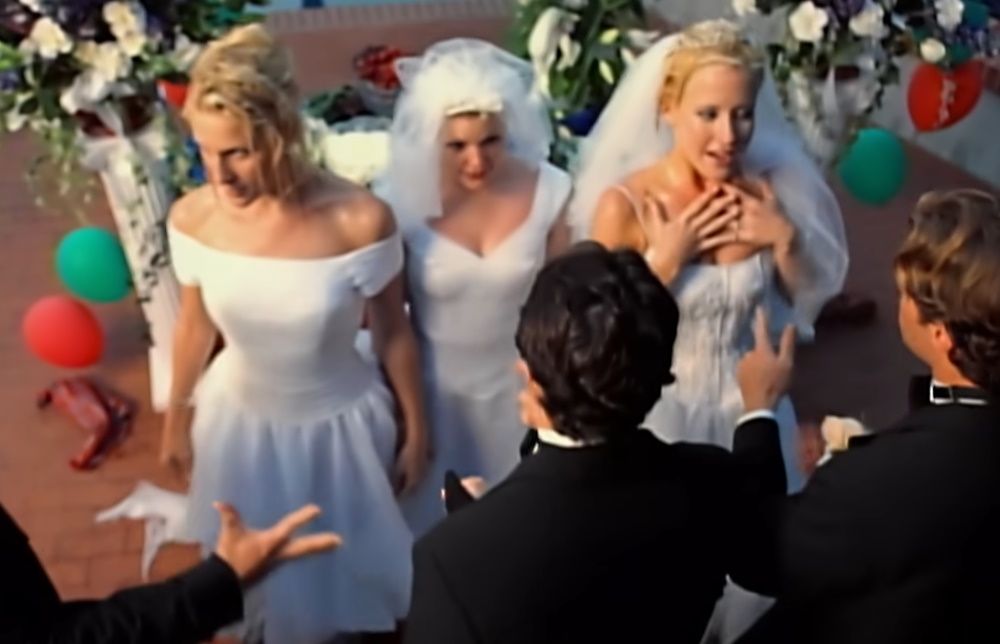
Song #3: We’re Going To Ibiza! – Vengaboys
The Vengaboys, a Dutch electronic dance/club group, broke through to worldwide fame in 1999 thanks to their Party Album. By far the biggest hit was Boom Boom Boom Boom, but We’re Going To Ibiza! also topped the charts here in the UK. Sometimes it felt like you couldn’t turn on the radio without hearing the Vengaboys, but I didn’t mind! The up-tempo, happy songs were a ton of fun.
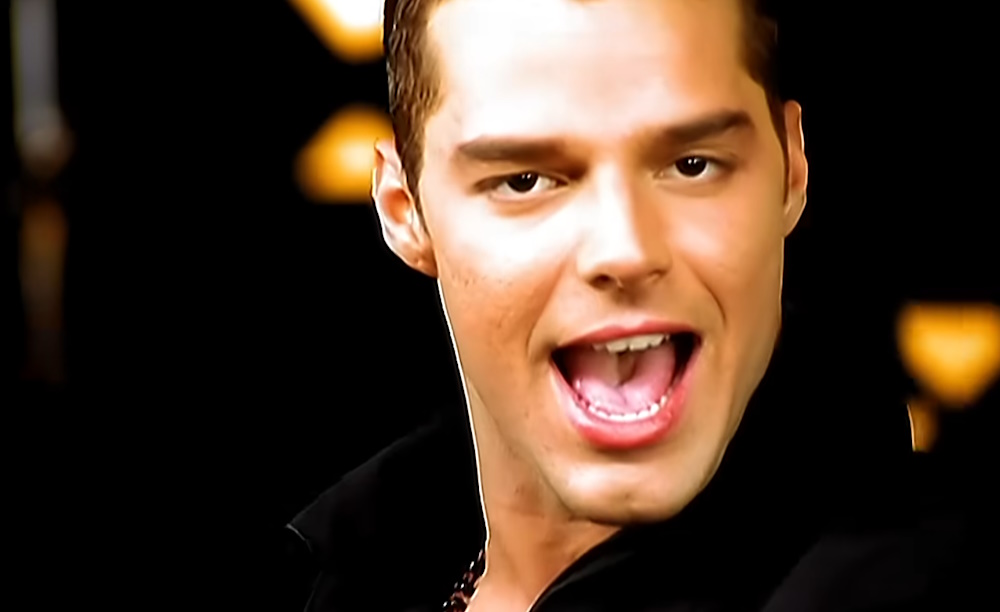
Song #4: Livin’ La Vida Loca – Ricky Martin
Ricky Martin’s English-language debut topped the charts around the world, and in style! Livin’ La Vida Loca is just a hugely fun track, the kind that makes you want to get up and dance! I remember it being played at the Millennium Eve party I attended, and it was just a great song to let loose and dance to.
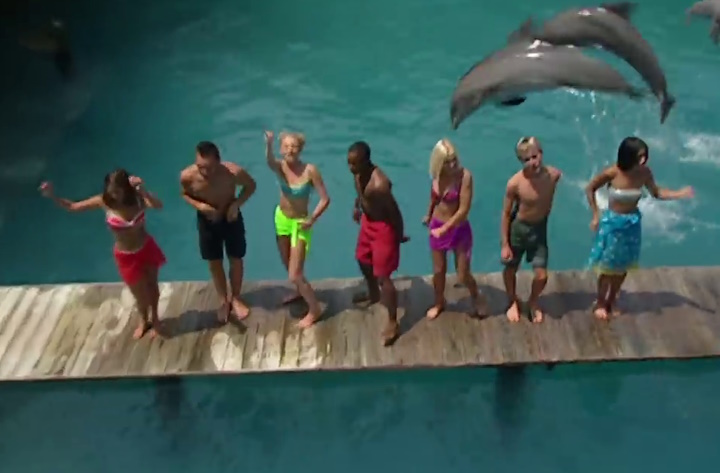
Song #5: Bring It All Back – S Club 7
S Club 7’s first chart-topper, Bring It All Back kicked off the pop band’s career in mid-1999. It was also the theme song to their Miami 7 TV show, and it was a fun bubblegum pop song to dance to… even though it seemed incredibly cringeworthy in the friend groups I moved in in those days! Still, listening to S Club 7 in secret was possible – and a guilty pleasure at the time!
TV Show #1: SpongeBob SquarePants
I had no idea that SpongeBob SquarePants was still running, but the Nickelodeon staple debuted in 1999 in the United States. I don’t think I encountered it until the first film in 2004, but I daresay I was dimly aware of it through its merchandise. As with the best of kids’ TV, SpongeBob has jokes and storylines that appeal to adults, too – which goes some way to explaining its ongoing popularity!
TV Show #2: Star Trek: Deep Space Nine
Here in the UK, we were a season or two behind the USA when it came to Star Trek in the late ’90s – but I was thoroughly enjoying DS9′s Dominion War story arc. Captain Sisko is probably my favourite Star Trek captain, too, so there was a lot to love as DS9 continued its run, solidified its cast of secondary characters, and told some wonderful stories. Voyager was on the air, too, making it a great time to be a Trekkie!
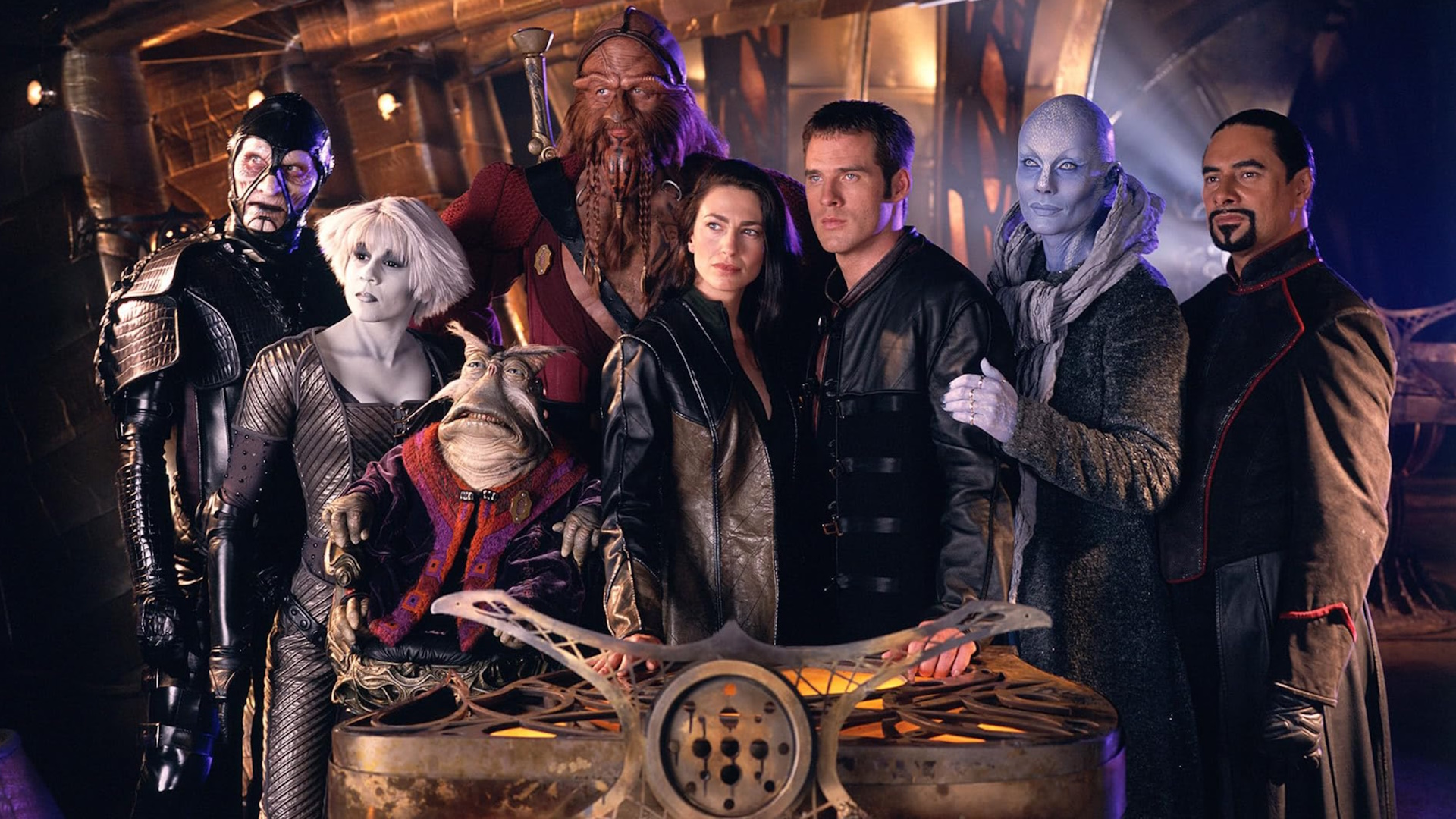
TV Show #3: Farscape
Cancelled before its time, Farscape was a brilliant work of sci-fi. Taking inspiration from Star Wars, Star Trek, Battlestar Galactica, and more, this underappreciated television series was truly fantastic to watch. Some excellent puppets and prosthetics brought its world to life, and a truly engaging main character and main villain kept the series on track. The idea of an organic, living spaceship was also something new as human astronaut John Crichton found himself in a far-flung part of the galaxy.
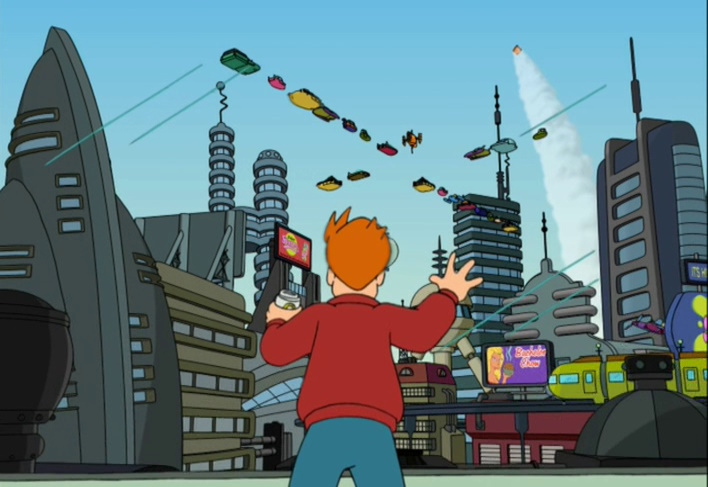
TV Show #4: Futurama
Another great sci-fi series – but with a completely different style and focus – Futurama was developed by Matt Groening of The Simpsons fame. As we were getting excited for the start of the 21st Century, Futurama shot forward in time by 1,000 years – with protagonist Fry emerging from his accidental cryogenic sleep in 2999! The show has plenty of humour and was inspired by some of my favourite sci-fi properties, and its first season in particular was a blast.
TV Show #5: Buffy the Vampire Slayer
In the UK, I think we were only up to Season 2 of Buffy the Vampire Slayer by 1999, but I was having a ton of fun with the show and its great cast of characters. A decidedly different take on the monster-of-the-week drama/horror format, Buffy brought vampires, werewolves, and other tropes of the horror genre to modern-day California, and the interplay between Buffy’s life as a regular high schooler and the secret world of vampire-hunting made for a really unique series.
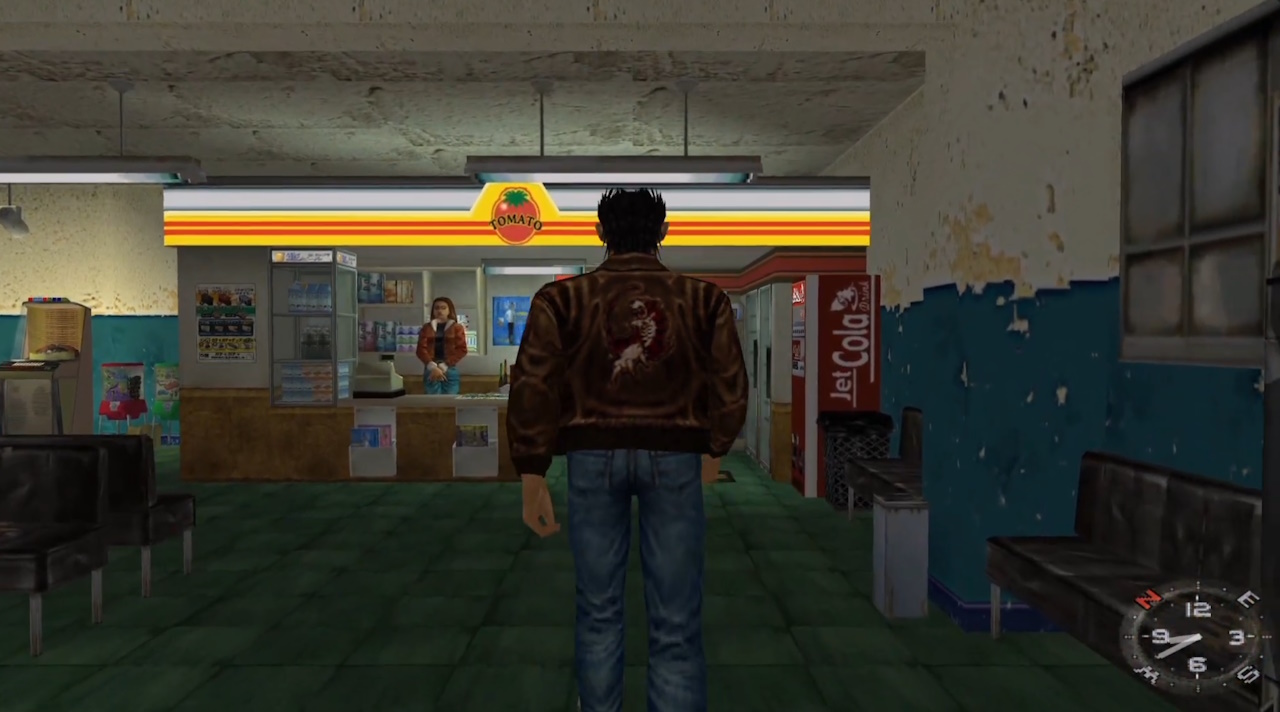
Video Game #1: Shenmue
We’ll talk more about Shenmue in December to mark its anniversary, but for now let me just say that this was a landmark game for me. At a time when I could’ve begun to drift away from gaming, Shenmue came along and showed me a glimpse of what video games of the future could be: cinematic, intense narrative experiences that could absolutely go toe-to-toe with films and TV programmes. Although it didn’t sell particularly well, Shenmue was a game light-years ahead of its time.
Video Game #2: Midtown Madness
I have a longer piece about Midtown Madness that you can find by clicking or tapping here! But the tl;dr is this: the game was a ton of fun. It was the first racing game I played that let you roam around its open world, and getting into scrapes with the police and generally causing chaos on the streets of Chicago was a blast. There were cool vehicles to unlock, plenty of different modes to get stuck into, and a mountain of fun to be had… even if I was stuck trying to play it with a mouse and keyboard!
Video Game #3: Donkey Kong 64
Unfairly maligned by some critics today, Donkey Kong 64 was one of my favourite N64 titles. Yes, there are a lot of things to collect – and collect-a-thons can be annoying, sometimes. But if you look past that, the game has a lot to offer with a variety of gameplay styles, mini-games, and character-specific objectives and levels that make for a wonderfully diverse title. DK’s first foray into the 3D world felt great in 1999.
Video Game #4: Age of Empires and The Rise of Rome expansion pack
Released in 1997, Age of Empires was my first historical real-time strategy game. I’d played a bit of Command and Conquer prior to picking it up, but stepping back in time to control real-world civilisations was so much fun. There were some neat campaign missions, but where I had the most fun was playing deathmatches against a friend – once we’d figured out how to get a LAN up and running! To this day, teal-coloured Sumeria is my nemesis!
Video Game #5: Star Trek: Hidden Evil
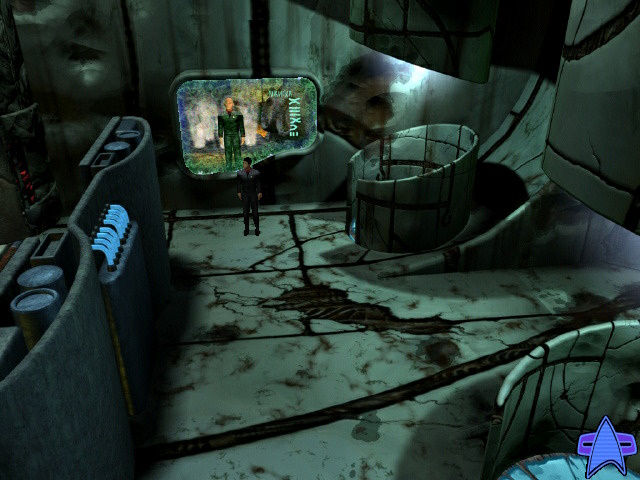
Hidden Evil is a pretty standard PC adventure game of its time… but as a Trekkie, getting any new story to sink my teeth into was great in 1999! Playing as a human raised by Vulcans was an interesting idea, and being able to use the Vulcan nerve pinch as an in-game attack felt innovative. Gameplay wasn’t anything to write home about, but the story was great – and the game brought in Patrick Stewart and Brent Spiner to voice their iconic characters. I still have my copy of the game on a shelf somewhere!
So that’s it.
The Pacific island nation of Kiribati was the first place on Earth to ring in the year 2000.
Those are a few of the songs, films, games, and TV programmes that I enjoyed in and around 1999. All that was left to do was get ready for New Year’s Eve. During the day, 2000 Today rang in the millennium across the world, beginning in New Zealand and Australia and slowly working its way to the UK! That evening I attended a big party, celebrating the arrival of the year 2000 with friends, neighbours, and strangers – and a bit too much to drink! I even strutted my stuff on the dancefloor.
1999 was a great year – but also an interesting one, looking back. It was the end of an era in more ways than one, for the world but also for me personally. And it was a time where I felt hopeful and optimistic in a way that I just… don’t any more. Maybe that’s life events, ageing, and changing circumstances – or maybe 1999 really was a uniquely special point in time.
In any case, I hope this has been an interesting look back. Reminiscing and wallowing in these memories has been fun and occasionally bittersweet – but my recollections of 1999 are far more positive than negative as I look back on the year a quarter of a century later.
All properties discussed above are the copyright of their respective owner, publisher, distributor, etc. This article contains the thoughts and opinions of one person only and is not intended to cause any offence.
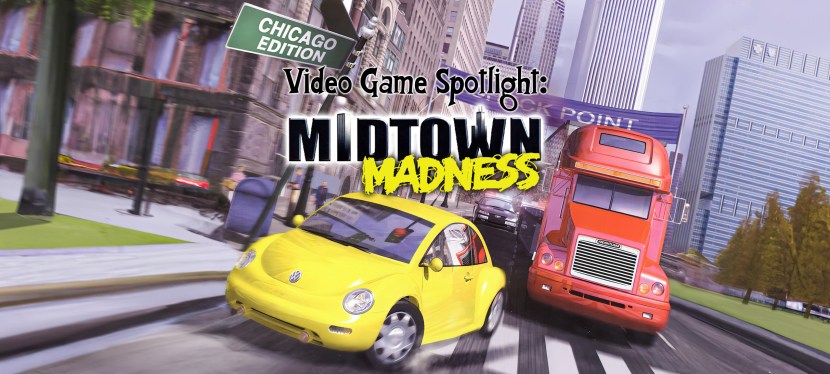
Twenty-five years ago today – that’s literally a quarter of a century – a brand-new racing game arrived on Windows 98 and Windows 95 PCs. Midtown Madness was an absolute blast and quickly became one of my most-played games of the year. With the millennium fast approaching, nothing was more fun than tearing up the streets of Chicago, getting into scrapes with the police, and taking part in some wild and dangerous races against the AI!
Midtown Madness celebrating its 25th anniversary makes me feel so incredibly old… but I’m glad to have the opportunity to talk about one of my favourite racing games of that era. Midtown Madness did something that I hadn’t really seen before in a video game – it opened up its entire city and let me drive wherever I wanted, however I wanted… even if that meant off-roading across grassy parks, scaring pedestrians on the pavement, or jumping over an open drawbridge! Two-and-a-half years before Grand Theft Auto III would take that series’ titular mayhem to an open-world environment, Midtown Madness was doing something remarkably similar.
The game’s main menu – with a funky custom mouse cursor!
Although it didn’t feel that way at the time, when I look back at Midtown Madness with a quarter of a century of hindsight, it feels like a gaming landmark; an important title that did the “open world chaos” thing in its own way before some of the better-known titles in that space. In 1999 it felt incredibly new and innovative; a game that seemed to take the chaos of the likes of Grand Theft Auto but made it fully 3D. Looking back, it feels like a half-step between 2D games, racing games, and the kind of fully open-world titles that were right around the corner.
I’d also place Shenmue in that same category: the “almost-open-world” games that were the progenitors of the format. Released the same year as Midtown Madness, but in a completely different genre, Shenmue was also an early pioneer of many of the features that open-world games continue to take advantage of to this day. 1999, it seems, was one of the most important years in the development of open-world titles!
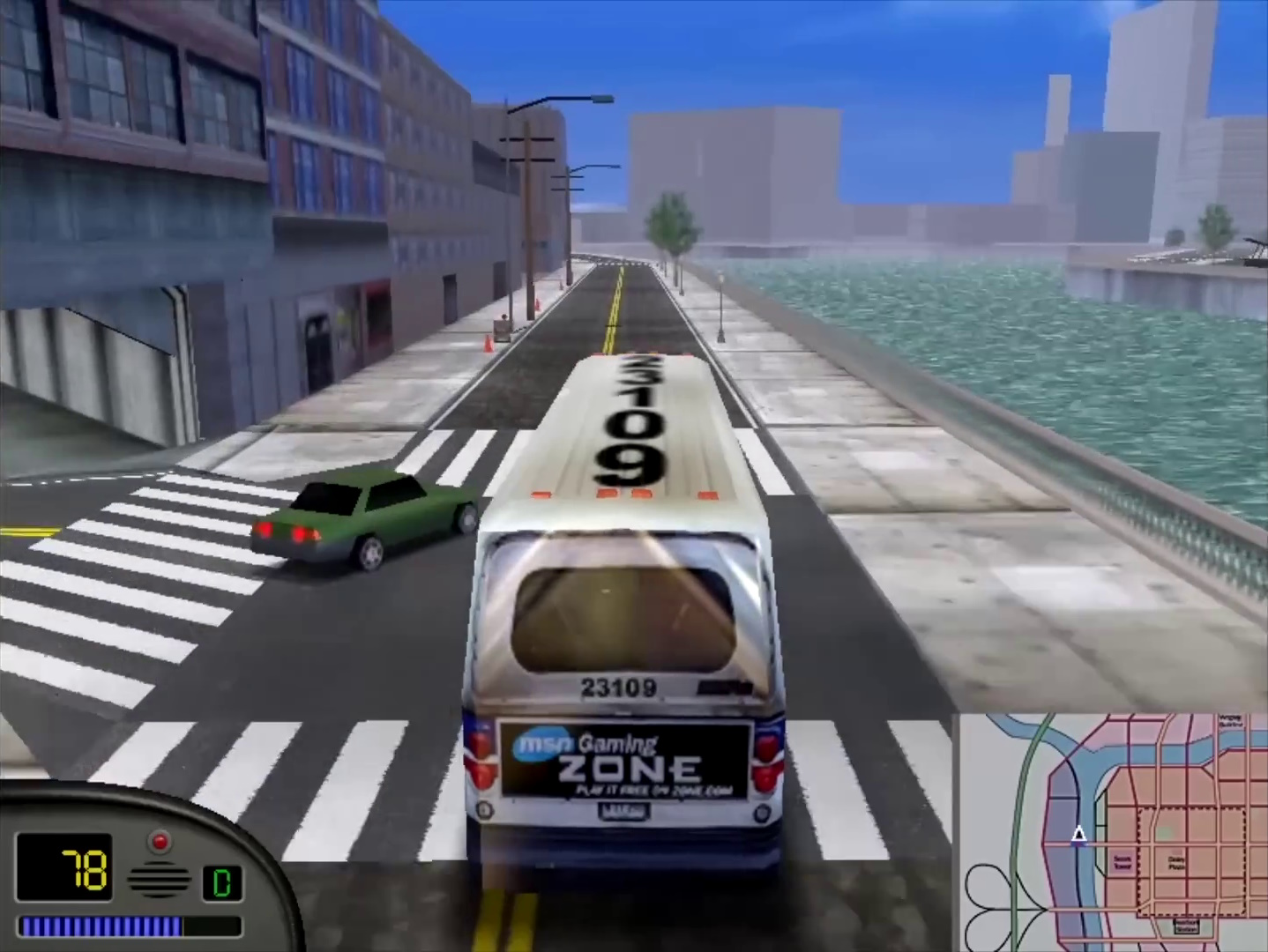
Driving a City Bus through the streets of Chicago!
I don’t have the receipt, unfortunately, but I think I must’ve picked up Midtown Madness within a week or two of its launch. I remember playing it that summer and into the autumn; it was one of the only up-to-date PC games that I owned at the time. I’d seen a preview of it in one of the gaming magazines that were prominent on newsagents shelves in those days, and it just looked like such chaotic fun that I could hardly wait to get my hands on it! I didn’t have a PC racing wheel or any fancy equipment – and as you’ll know if you’ve ever tried it, playing a racing game with a mouse and keyboard is painful! But that didn’t stop me, and I must’ve logged dozens upon dozens of hours in Midtown Madness… in between studying and working my part-time job, of course!
Taking on races was the only way to unlock half of the vehicles in the game – the other half were available right from the start. So I definitely took part in as many races as I needed to in order to unlock the likes of the city bus and the GTR-1 racecar! But where I had the most fun with Midtown Madness was driving around the city in free-roam mode – both as chaotically and as calmly as possible! The game’s rendering of downtown Chicago – while undeniably dated by today’s standards – felt like a technological marvel in 1999, and I loved every minute of exploring the city.
Driving around Chicago in Midtown Madness was a blast!
This wasn’t my first encounter with the Windy City. I’d been a huge fan of the medical drama ER in the second half of the ’90s, following every episode and every season as they were broadcast here in the UK. I think by mid-1999 we were on Season 3 or 4 of the show, which at that point still featured George Clooney and Julianna Margulies in starring roles! But because I felt a familiarity with Chicago – from its Lake Michigan waterfront to its “L” trains that ran on elevated tracks above the streets – I felt even more drawn to this digital recreation of the city. In fact, it was one of the first digital recreations of a real-world city that I can remember spending much time with.
Going into the millennium, I’d have had Midtown Madness’ in-game map pretty much committed to memory! I could find my way from one side of the map to the other, stopping to see the sights along the way – and the game recreated some of Chicago’s most famous landmarks. I’ve already mentioned the “L” – Chicago’s elevated metro system. But there was also the Sears Tower skyscraper, Navy Pier on the Lake Michigan shorefront, the planetarium, the Wrigley Field baseball stadium, and even the airport! All of these were a ton of fun to race through and explore.
Wrigley Field as it appears in the game.
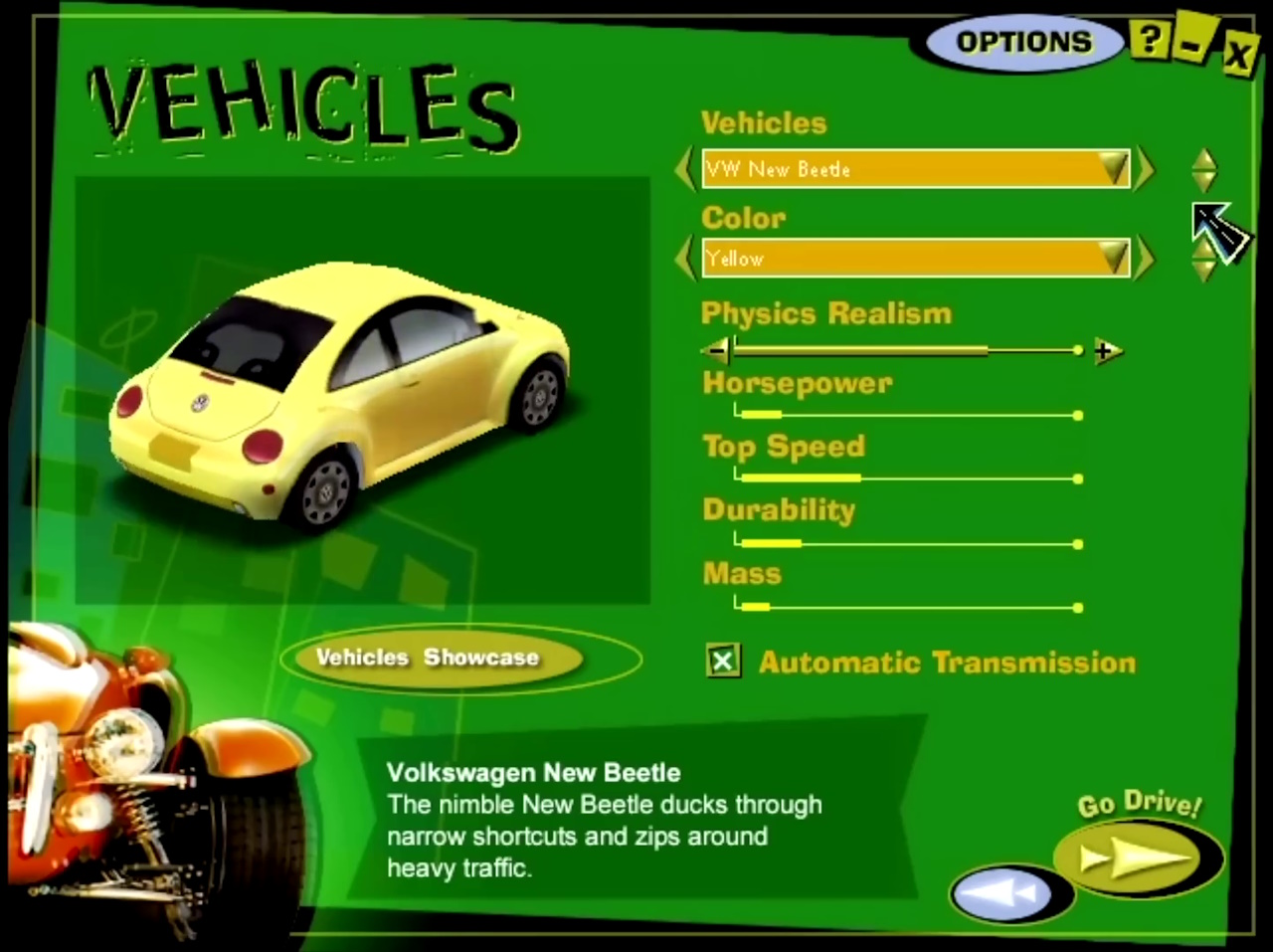
Although the game came with options for tuning the physics engine and car performance, I didn’t spend too much time tinkering. The default settings seemed to work well enough, and I was always reluctant to mess about with them too much! Midtown Madness performed very well on the PC that I had at the time, with none of the bugs and glitches that seem to plague games today. Perhaps I’m looking back with rose-tinted glasses when I say that… but I genuinely cannot remember any bugs or performance issues that got in the way of the fun.
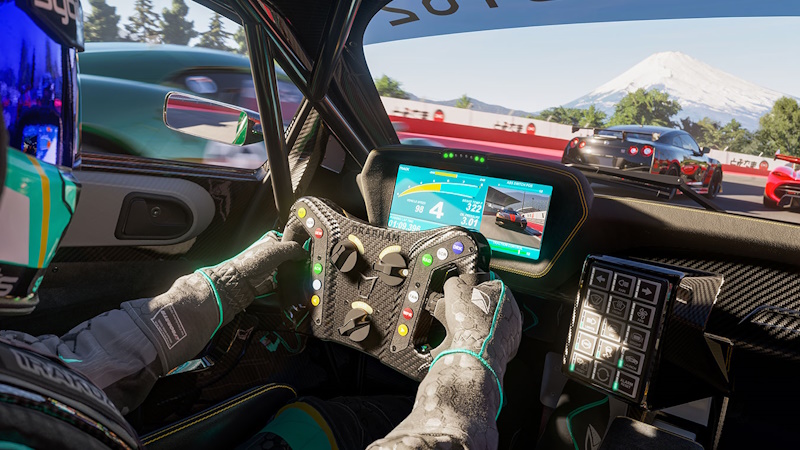
Obviously when you compare Midtown Madness with a racing game from the 2020s, like Forza Horizon 5, or open-world car games like Grand Theft Auto V, it feels incredibly dated. Graphics that felt great at the time look blocky in 2024, with far too few polygons, and the game has the overall look of a title from the late ’90s. The turn of the millennium would see advancements in graphics that would make Midtown Madness 3 – released less than four years later – look an awful lot better.
Choosing a car to race with!
And in terms of the game’s world, the relatively low numbers of vehicles on the road and pedestrians on the pavements doesn’t feel right for a massive metropolis like Chicago. There’s also a lack of diversity – there are only a handful of vehicle types and pedestrian models, and you’ll pretty quickly see all of them if you spend much time with Midtown Madness.
But those were the restrictions that game developers had to work with in 1999, and obviously an open-world city like Cyberpunk 2077 or a racing title like Gran Turismo 7 is going to surpass Midtown Madness in every way a quarter of a century later. That’s not what makes it such a special title – and no one is really asking it to go toe-to-toe with modern racing and open-world titles.
Ideas and gameplay mechanics that Midtown Madness pioneered are still in use in modern open-world and racing games today.
Instead, we have to view Midtown Madness – and, by extension, video games in general – as a stepping-stone. The premise or DNA of later titles like Test Drive Unlimited, Project Gotham Racing, or the Forza Horizon series is present in Midtown Madness, and the game was among the first to demonstrate open-world and free-roaming elements in a racing game, as well as the merits of letting players cause chaos and create their own fun. Those gameplay ideas have become commonplace in the years since Midtown Madness was released – and now extend far beyond the racing genre.
For me, Midtown Madness is an incredibly nostalgic title. I’d love to be able to play it again – but getting it to work on a modern PC, even with a virtual desktop running Windows 98, is a pain. The game can be easily found online in its complete form, but it would be fantastic if Microsoft could work with a company that specialises in porting retro games to modern systems and give it a proper re-release. After 25 years, I think Midtown Madness deserves better than to be left behind! Many other retro titles have been brought back over the past few years, so there’s almost no reason not to do it!
Getting side-swiped by a police car during a race. Ah, the memories!
I had such a great time with Midtown Madness as the millennium approached. It was one of the games I encountered in the late ’90s that seemed to be pushing boundaries and trying something different – and something genuinely engaging and fun. It felt like a step up from basically any other racing game I’d played up until that point, and one that definitely captured and held my attention.
As we mark the milestone 25th anniversary of Midtown Madness, I look around at open-world titles and racing games and still see a number of features that I first encountered in this landmark title. It was a truly fantastic game that gave me a ton of fun and with which I made some wonderful memories.
All that remains to say is this: happy anniversary, Midtown Madness!
Midtown Madness is currently out of print, but copies may be available second-hand. Midtown Madness remains the copyright of Microsoft, Angel Studios, and/or Rockstar San Diego. Some screenshots and still frames courtesy of LGR’s retrospective review and The Racing Madness Wiki. This article contains the thoughts and opinions of one person only and is not intended to cause any offence.
Autumn is my favourite time of year. I love the sense of slowly-building anticipation as the holiday season approaches, and October is really the first part of an extended holiday season that will run all the way through to New Year. As I was erecting my modest array of Halloween decorations (and window shopping for more on Amazon), it got me thinking about Halloween celebrations in years gone by.
I’ve always felt that it’s a bit of a shame that Halloween is when it is. Here in the UK, we have Bonfire Night on the 5th of November – known to some of you, no doubt, thanks to the film adaptation of V for Vendetta! Because Halloween and Bonfire Night are so close together, one often eclipses the other, and I just think that’s a little sad. In recent years I’ve felt that Bonfire Night is rather living in Halloween’s shadow, and that Halloween is the more popular event – especially for the little ones. If there was just a couple of weeks between them instead of a mere five days, spreading things out a little, that would be better. But I suppose we can’t just reschedule an historical event to suit modern times!
Memories of Bonfire Night and Halloween are intertwined…
When I was a kid, the “Americanised” version of Halloween was just beginning to establish itself here in the UK. I don’t think I ever went trick-or-treating, but I can remember several Halloween discos and events that were organised by a kids’ club that I attended in those days. It was great fun – and a chance for me to indulge in some of the sweets and treats that my strict parents didn’t allow in the house.
As an aside, I have to confess that I’m a tad confused about the timing of modern Halloween’s arrival in the UK. My parents, who both grew up in London in the late ’40s and ’50s, seem to have competing recollections of the holiday. I know there’s always been some kind of traditional event around that time of year, but as to when modern events like costume parties and trick-or-treat made it to the UK, I really can’t be sure.
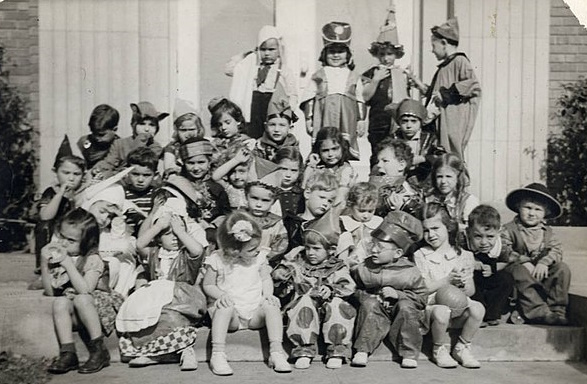
A preschool class celebrates Halloween in the United States, c. 1939.
My father insisted that Halloween only became “a thing” when my sister and I were growing up in the ’80s and ’90s, and claimed never to have done anything to celebrate it before then. But my mother can distinctly remember my grandfather painstakingly carving a jack-o-lantern for her out of a turnip when she was five or six years old. In the post-war period, we didn’t have crops like pumpkins here in the UK – or at least not in large quantities. I’ve always wondered what a turnip jack-o-lantern might’ve looked like!
So even within my own family there are two competing ideas about when Halloween started to take off over here! But speaking for myself, Halloween as a holiday has existed in more or less its present form since I was a small child. I can’t remember a year without some kind of Halloween celebration, in fact. And I really do have fond memories of Halloween as a child – some of which, I fear, have rather blended in with other autumnal memories!
Let’s talk about Halloween!
One of my earliest memories is actually of Bonfire Night. I can remember being perhaps three or four years old, sitting on a hay bale in a field, watching the fire. It’s one of those strangely vivid memories where I can recall the precise texture of the straw underneath me, feel the cold wind blowing through, and even taste the spongey gingerbread cake that I was holding in my hand. I associate all of those things with this time of year, and that memory is an especially cherished one. There was laughter from other kids ringing in my ears, the smell of diesel fuel that someone had used as a fire starter, and the faces of friendly neighbours and locals who are, sadly, long gone now.
Despite its themes of horror, ghosts, monsters, and the like, Halloween has always felt to me like a kids’ holiday. Getting dressed up and eating sweets are definitely things that the little ones appreciate! But those incredibly positive memories of Halloween parties as a kid is definitely part of why I feel that way. I can’t remember all of my Halloween costumes, but I distinctly remember one plastic skeleton mask that I must’ve had when I was seven or eight years old. That thing was made of the most horrible, brittle plastic – and the edges of the mask were sharp enough to cut through diamond! But wearing the mask and going to a Halloween disco at the local kids’ club was great fun, and seeing everyone else’s masks and costumes was part of that.
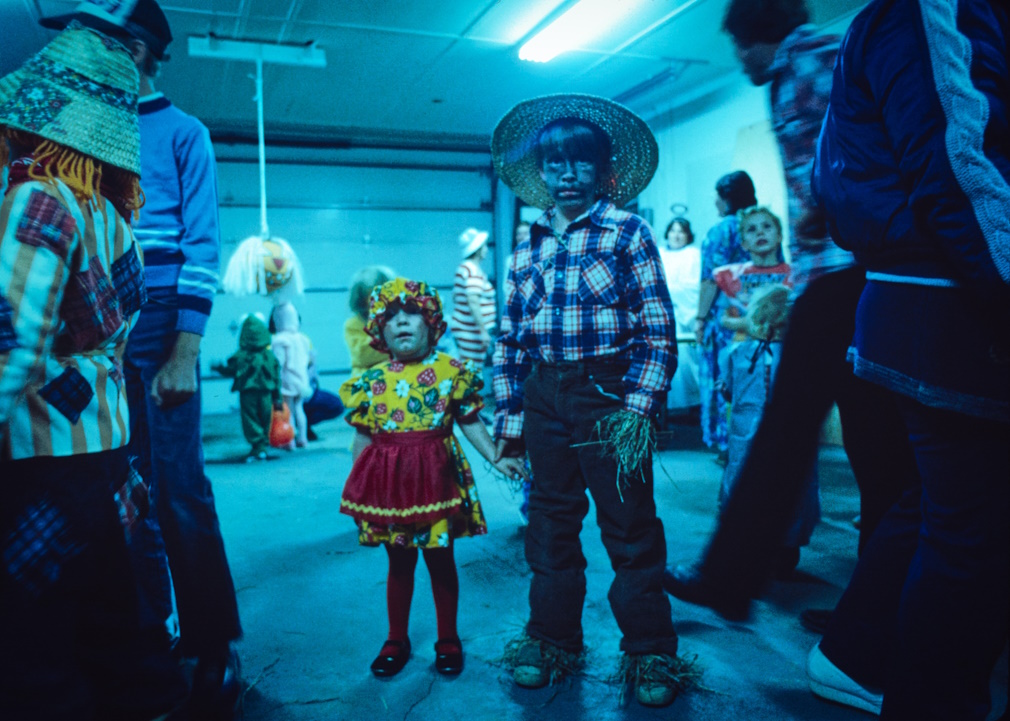
Kids in their Halloween costumes.
Another big part of Halloween for me is the food. I know what you’re thinking: surprise surprise, the fat person wants to talk about food! But it’s true: Halloween doesn’t seem like a big food holiday in the same way as Christmas or Thanksgiving, but for me the food is no less important. Those early childhood memories of Halloween all include different foods – especially sweet treats. My parents didn’t allow my sister and I to have many sweet things at home, and what they could afford was usually only the cheapest value range versions. At the kids’ club I mentioned I’d always have a few pennies (literally, just a few) to spend on penny sweets, and I took full advantage as often as I could! But at Halloween, I remember there being a buffet of snack foods that, to my young eyes, must’ve looked like an absolute feast of all the things I would never get at home!
What I remember most, though, and what I love so much about Halloween food, is how the theme of the holiday carries through. Everything is made to look or feel like something else – sausages decorated to look like bloody fingers, marshmallows with little eyes and teeth so they resemble skulls, and even bottles of pop dyed vibrant shades of green, blue, black, and other unnatural colours to look like poison or witches’ potions! Food could also be incorporated into games and challenges, like the traditional game of apple-bobbing that we used to play. There are some phenomenally creative ideas out there to make even the simplest snack fit with the Halloween theme. And I’m absolutely in love with all of them!
Look at these adorable Halloween cupcakes!
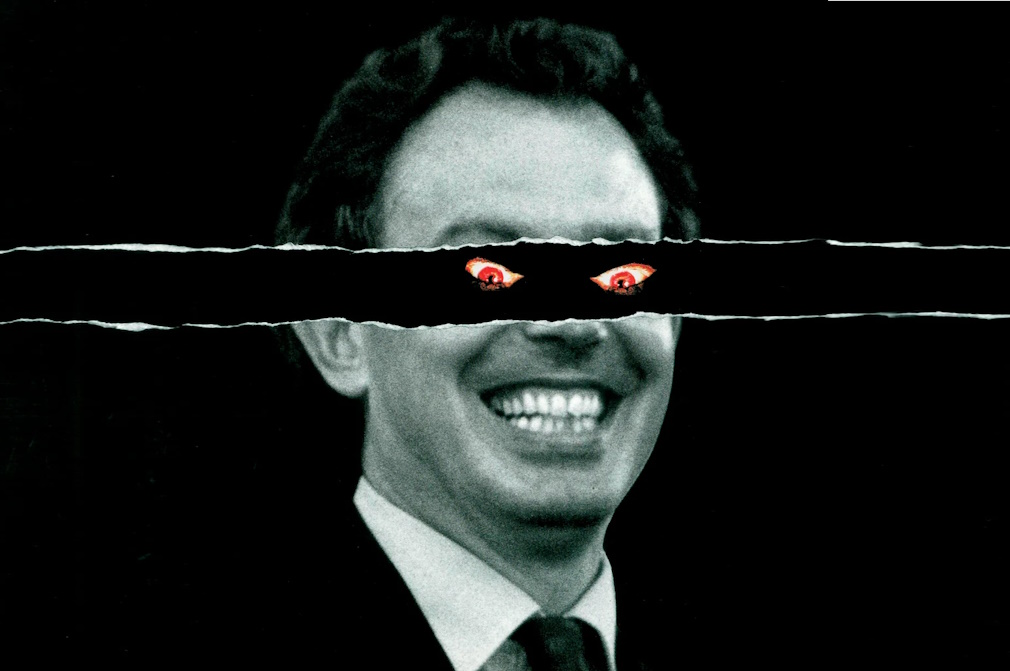
This might’ve been Halloween 1997 or 1998 – I genuinely can’t remember which. But as a teenager I came up with what remains to this day my best-ever Halloween costume. I got a mask at a party shop in a big shopping centre of newly-elected Prime Minister Tony Blair, and with an ill-fitting suit borrowed from my uncle, dressed up as the PM for a Halloween party that a friend of mine was hosting! That was great fun, and as we were all older by then, alcohol was definitely part of the equation! I can remember my friend racing around, desperately trying to give people coffee to sober them up.
Looking back now, with Blair being such a universally despised figure (at least among folks of my generation), making a costume of him seems fitting in a bitter sort of way! After all, isn’t the theme of many Halloween stories that the real monsters are us humans? I can’t think of many figures from the past thirty years more monstrous than Blair the War Criminal. I can’t believe that I voted for him at my first ever general election!
I think we’ve drifted off-topic somehow.
Turns out this poster was right after all…
Ah yes, Halloween! That’s what we were talking about.
On another occasion a couple of years later, I was taking part in an exchange programme while at university. I got to spend my first Halloween in the United States, seeing first-hand how the Americans really go all-out for the event. I was shocked when I went to the local shopping mall and saw a dedicated Halloween store selling all kinds of costumes, decorations, and more… in August! Apparently these pop-up Halloween stores are an annual thing, and they begin to appear in late summer to get ready for the spooky season. I’d never seen anything like it – and in the days before social media and YouTube, seeing an all-American Halloween in person was truly something special.
The university I was visiting had several big Halloween parties and events, and I even had my first encounter with trick-or-treaters that year! Several groups of students visited the off-campus house that I was renting, and a group of younger kids did, too. By the end of the night I’d ran out of treats to hand out! Ever since, I’ve made sure to keep my pantry well-stocked ahead of Halloween.
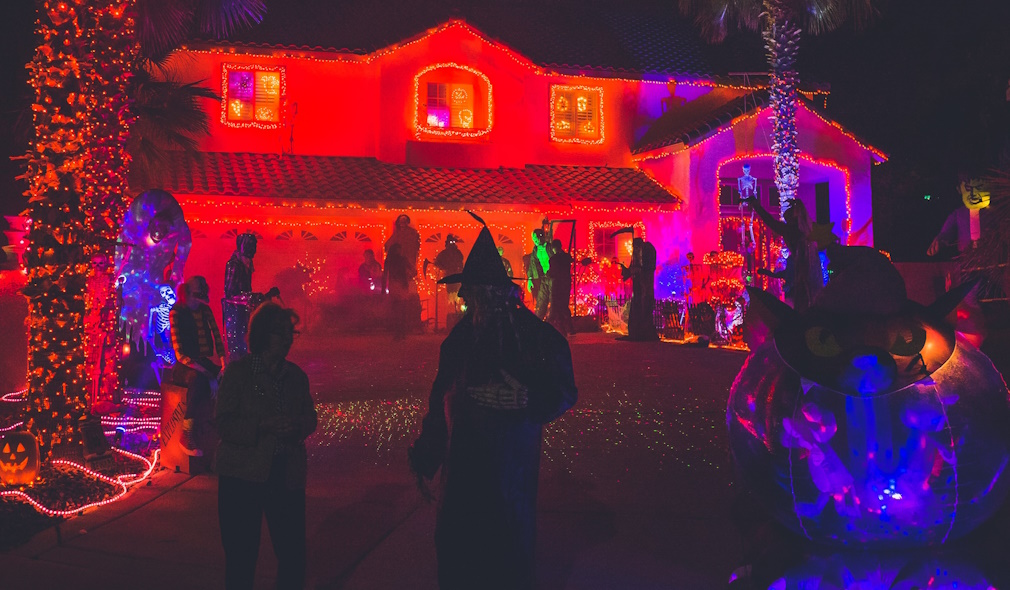
A Halloween party.
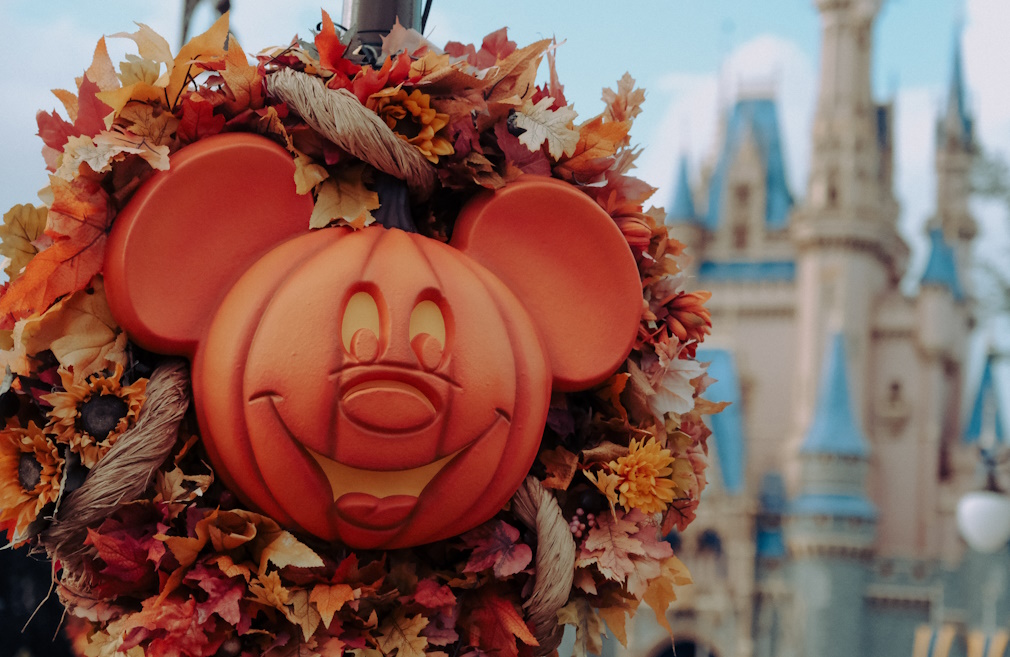
Also in the United States I had the pleasure of spending time at Disney World in the run-up to Halloween. I was able to take a break and visit Disney with a friend, and we got to see all of the decorations and special events that the Disney folks put on for the celebration. It was great fun, and I have a particularly fond memory of riding the Haunted Mansion attraction after dark, surrounded by all of the Halloween theming at the park.
Any Halloween fan should try – time and finances permitting – to visit one of the Disney parks for Halloween. I know the parks are stupidly expensive these days, but if you’re going anyway, picking a time of year like Halloween – when there’s something extra going on – is well worth it. I think there was some kind of after-hours Halloween event that I attended that year, too… but I’m not sure if they still do that in this post-lockdown era.
If you ever have the opportunity to visit one of the Disney parks around Halloween, I thoroughly recommend it!
These days, Halloween tends to be a quieter affair! My days of discos and parties are long gone, and after digging the decorations out of storage and making sure I’m well-stocked in the event of a trick-or-treater incursion, I tend to spend Halloween itself with a lightly spooky film or TV special. As a kind of homage to those earlier Halloween nights, I’ll often prepare a modest buffet of finger food and snacks, too. It might not be the same as a big party – but it suits me just fine!
I hope you’ve enjoyed this stumble down memory lane. I don’t have another creative outlet, and I thought writing up some of my memories and nostalgic recollections of Halloweens gone by would be a bit of fun. Hopefully it was interesting, at any rate.
Horror and jump-scares aren’t usually “my thing,” and my Halloween tastes tend to veer more towards the kid-friendly than the outright terrifying. But that’s the nice thing about Halloween, in a way: it can be whatever you want to make of it. If you want to go all out, rent the scariest film ever made, and watch it with the lights out – go for it! But if, like me, you’d rather curl up with some snacks and something a bit less frightening, that option is open too. I love Halloween.
Some photos used above courtesy of Unsplash. This article contains the thoughts and opinions of one person only and is not intended to cause any offence.
Spoiler Warning: There are spoilers ahead for the Star Wars franchise, including The Book of Boba Fett and The Mandalorian Seasons 1-2.
At time of writing we’re halfway through Obi-Wan Kenobi – the Disney+ miniseries following the Jedi Master’s adventures in between the prequel films and the original trilogy. This article was partly inspired by that project, but I’ll try to avoid spoilers for those who haven’t seen it yet. And I’m trying to avoid jumping the gun and being overly critical of Obi-Wan Kenobi until I’ve seen the remaining episodes.
So the question I want to wrangle with today is a complicated one, and we can look at it in different ways and from different angles. Can the Star Wars franchise survive if all it does is look backwards? Can it coast indefinitely on past successes? Are these deep dives into minor chapters of its sole original story all we can ever expect to see? Or maybe, one day soon, will Star Wars have to try something genuinely new and different?
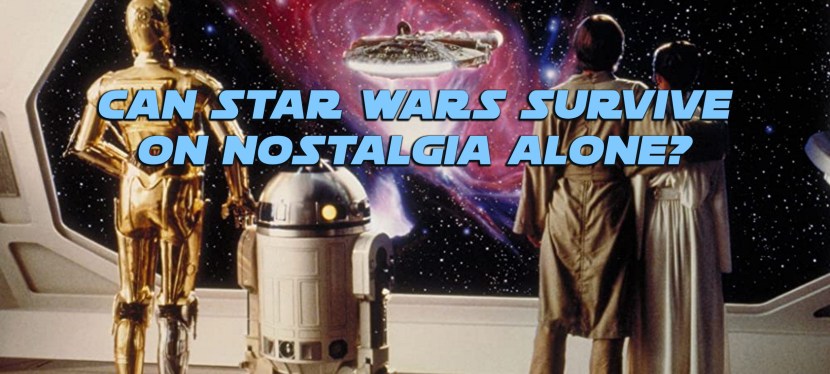
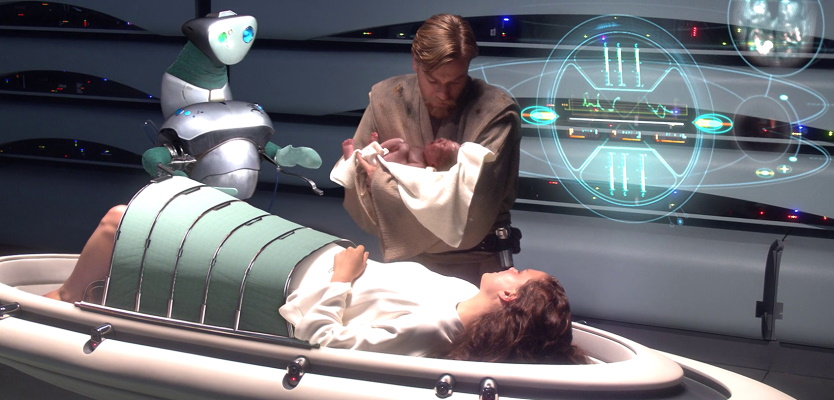
Can Star Wars continue to rely on bringing back characters like Obi-Wan Kenobi?
For all the talk of prequels, sequels, and spin-offs, Star Wars has really only ever told one single story since it premiered in 1977. Every project that we’ve seen since then padded out that story; the prequels provided background information about characters like Anakin and Obi-Wan, the sequels picked up the stories of Han, Luke, Leia, and of course Palpatine, spin-off projects like Rogue One fed directly into the events of the original films, and even The Mandalorian and The Book of Boba Fett brought back the Force and Luke Skywalker.
The Star Wars galaxy has tens of thousands of years of history; the Republic existed for millennia prior to the rise of the Empire. And it has an uncertain future in the wake of Palpatine’s schemes. Yet every single Star Wars project brought to screen so far across more than forty-five years of the franchise’s existence has taken place within the same sixty-year span of galactic history centred around the rise and fall of the Empire.
Every Star Wars project to date has been set within the same sixty-year period.
In addition, of the tens of thousands of inhabited planets that exist in the vast Star Wars galaxy, the franchise continues to revisit the same ones over and over again. Tatooine, for instance, has been a major setting despite its purported status as an “unimportant backwater.” Most recent Star Wars projects have, to their credit, visited a new planet or two… but the same handful of old ones keep cropping up over and over again.
Star Wars feels like it has an incredibly rich and deep setting, one with millennia of history and a vast landscape of different worlds inhabited both by humans and some very interesting non-human aliens… but on both the big screen and in the new streaming shows, we’re continually shown the same few years and the same few locales over and over again. It’s like going to an all-you-can-eat buffet and finding row upon row of dishes from all across the world, then constantly refilling your plate with chicken nuggets. I like chicken nuggets as much as the next person… but let’s try something different next time.
The Jedi Temple on Coruscant during the prequel era.
None of this is to say that I haven’t enjoyed at least some of what Star Wars has offered up over the last few years. I named Rogue One my favourite film of the 2010s, and with good reason – it really is an outstanding story. And despite the heavy nostalgia plays, I was surprised to find myself having a good time with The Book of Boba Fett earlier this year. So Star Wars can, at least for the moment, continue to find enjoyable ways to play in the tiny corner of the vast sandbox that it’s been restricted to. But can that continue for very much longer?
I suppose this gets at a more fundamental question: is Star Wars defined by the handful of characters that we’ve met so far? Are the likes of Darth Vader and Luke Skywalker all that Star Wars can ever be? Or is there room for fans to find brand-new characters to fall in love with; characters who are different from the hero and villain archetypes that the franchise has introduced so far?
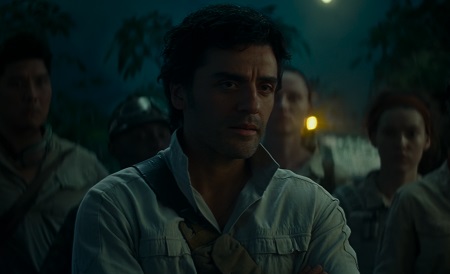
Is Star Wars bigger than Luke Skywalker? And do fans even want a Star Wars project without these familiar characters?
Many Star Wars fans seem happy to continue to explore the lives of characters like Obi-Wan Kenobi, Boba Fett, and Luke Skywalker, seeming to prefer that the franchise take a path not dissimilar to the old Expanded Universe. In the EU, that same handful of characters was thrown haphazardly into multiple stories set before, during, and after the events of the films – and with modern Star Wars retaining a focus on those classic characters in that same time period, it feels like we could be going down a familiar path.
However, there are other options available if someone higher up at Disney or Lucasfilm is feeling bold. Set aside characters like Leia and Han Solo and step away from the rise of Palpatine. Tell a story set in a completely different era, perhaps one that doesn’t focus on the Jedi and the Force. Visit completely different worlds, introduce a new alien or two, and tell a story that isn’t simply a riff on what the franchise has already done.
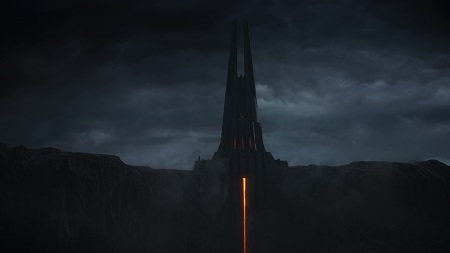
Darth Vader’s castle on Mustafar.
The Star Wars galaxy could be a setting for all kinds of different projects. There’s no reason why we couldn’t see everything from an ER-inspired medical series to a hard-boiled film noir crime drama – all set in the Star Wars galaxy. Forget the story outlines that have been seen already and take the setting as a blank canvas. Instead of telling a repetitive tale about a young Jedi from a desert planet who fights a nasty but ultimately redeemable family member/villain, do something else. Literally anything else.
Would Star Wars fans want to see a show in this setting that steps away from the Jedi, the Force, and the Empire? Surely there has to be room for that in a setting as vast and untapped as the Star Wars galaxy. By diversifying the way it tells stories, Star Wars could build a solid foundation for the future.
Would anyone be interested in a medical drama set in the Star Wars galaxy, for instance?
It seems obvious that this nostalgia-heavy, backwards-looking Star Wars can’t last forever. Heck, it can’t last more than a few years at most, because sooner or later the franchise is going to exhaust all of the characters and settings that the original films and the prequel films had to offer. What will come next after The Book of Boba Fett and Obi-Wan Kenobi? Will it be Jar-Jar: A Star Wars Story? Even if Star Wars pulls out every single minor character and tries to expand their role into a fully-fledged Disney+ series, there’s a hard limit on how long that can last.
And there’s a real danger, too, that revisiting classic characters to give them additional stories could detract from powerful moments in the original Star Wars saga. The Book of Boba Fett may have gotten away with bringing its obviously-dead title character back to life, but one thing fans seem to universally agree on is that The Rise of Skywalker failed to successfully resurrect Palpatine, and that his ham-fisted inclusion in a story that was never meant to be his ended up being a weight around the neck of the sequel trilogy.
“Somehow Palpatine returned.”
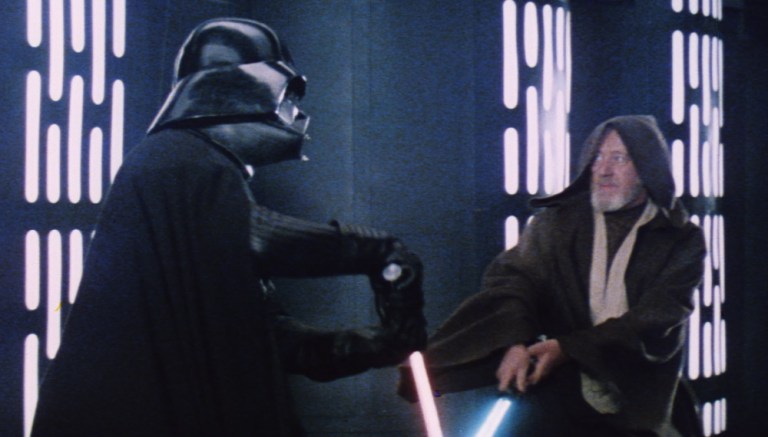
This was my concern going into Obi-Wan Kenobi – and no, there aren’t going to be any major plot spoilers here, don’t worry. But in a general sense, I was worried that any story featuring Kenobi set in this time period would have to be incredibly careful not to overwrite or damage moments like his reunion with Darth Vader aboard the Death Star.
Even if it could avoid those pitfalls, there was still an open question about how ultimately necessary a series like Obi-Wan Kenobi would be. We’ve already seen the most interesting and most important parts of Kenobi’s story; what could this miniseries add to that that wouldn’t end up feeling incredibly tacked-on? How would it avoid the trap of sending Kenobi on a rip-roaring adventure that you’d think he might’ve mentioned?
Darth Vader and Obi-Wan Kenobi’s duel aboard the Death Star.
Several of Star Wars’ recent projects – including ones I personally enjoyed, like Rogue One – could have been reworked to be set at a different time, in a different location, and featuring different characters. The same fun stories could be present, but by stepping away from the familiar into something different and new, there’d be no danger of treading on the toes of any of the powerful and impactful moments from earlier Star Wars stories.
When I think about the idea of expanding Star Wars and telling new stories in its wonderful galaxy, my mind doesn’t immediately go to Luke Skywalker and a handful of other classic characters. We’ve seen their lives play out already, and adding new chapters partway through – or unnecessary epilogues – just doesn’t feel worthwhile. Moreover, what we’ve seen so far are the most interesting and most important chapters of their lives, dealing with the rise and fall of the Empire, the death and rebirth of the Jedi Order, the Galactic Civil War, and so on. At best, anything else feels tacked-on, and at worst it undermines parts of that original, powerful saga.
The twin suns of Tatooine.
Both for the sake of telling engaging and exciting stories and as a point of simple practicality, Star Wars can’t keep relying on the same few characters, the same few planets, and the same tiny sliver of its vast and expansive setting. Sooner or later the creative team will have exhausted the potential of every major and minor character from the originals, the prequels, the sequels, and spin-offs… and what then? The choice will be either to bring Star Wars to an end or to try something else.
There’s so much untapped potential in a setting as wide and deep as the Star Wars galaxy. There are tens of thousands of years of history to explore, an uncertain future to chart, and more planets, aliens, and factions to explore than we could reasonably list. We could see a story charting the very beginnings of the Republic and Jedi Order, or the franchise could step away from its familiar niche into completely different genres; mystery, crime, horror, adventure, even romance or comedy. All it would take is a degree of boldness on the part of the producers in charge – a willingness to try something experimental with the franchise they own.
So that’s my answer to the question posed above. Star Wars can’t keep doing this forever. Something’s going to have to change if the franchise is to survive long-term, and the sooner attempts are made to make the switch – to figure out what might work and what won’t – the smoother the transition will be. After forty-five years, it’s time for Star Wars to set aside the Skywalkers, Palpatines, and Kenobis.
The Star Wars franchise – including all films and television shows discussed above – is the copyright of Lucasfilm and The Walt Disney Company. This article contains the thoughts and opinions of one person only and is not intended to cause any offence.
Spoiler Warning: There are spoilers ahead for the following: The Mandalorian Seasons 1-2, The Rise of Skywalker, Star Trek: Discovery Seasons 1-3, Star Trek: Picard. Minor spoilers may be present for other iterations of both the Star Wars and Star Trek franchises.
I’ve been working on my review of Season 2 of The Mandalorian, which was shown on Disney+ at the end of last year, and I found myself saying the same thing several times. I will (eventually) finish that review, but for now I wanted to take a step back and look at two of the biggest sci-fi/space fantasy franchises, and one crucial difference between them.
Whether it’s the prequel trilogy, sequel trilogy, spin-offs, or even the recently announced slate of upcoming projects, Star Wars is intent on sticking close to its roots. I’ve made this point before, but Star Wars as a whole has only ever told one real story – that of Palpatine, Anakin, Luke, and Rey. Every film and television series in Star Wars’ main canon either directly tells part of that story or is inextricably tied to it. The inclusion of Luke Skywalker and other legacy characters in The Mandalorian doubles down on this.
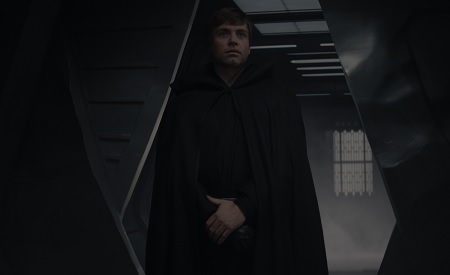
Luke Skywalker recently appeared in The Mandalorian.
In contrast, Star Trek has continually tried new and different things. The Next Generation took its timeline 80+ years into the future and left much of the franchise’s first incarnation behind. Deep Space Nine took the action away from starships to a space station. Enterprise was a prequel, but not one which told the early lives of any classic characters. The Kelvin films attempted to reboot Star Trek as a big screen popcorn blockbuster. Discovery took a serialised approach to its storytelling, and Picard picked up that format but used it to tell a very different type of story. Lower Decks is perhaps the biggest departure to date, branching out beyond sci-fi into the realm of animated comedy. Though there are common threads binding the franchise together, each project is one piece of a much larger whole, and the Star Trek galaxy feels – to me, at least – much more vast as a result.
Where Star Wars has told one overarching story, Star Trek has told hundreds, many of which are totally separate and distinct from one another. And that concept shows no sign of slowing down. Indeed, both franchises are doubling down on what they do best: Star Wars is focusing on classic characters and looking inwards, Star Trek is expanding and trying new things.
Captain Burnham will take Star Trek: Discovery to new places.
That willingness to change, to explore totally different and unrelated aspects of its setting, is what sets Star Trek apart from Star Wars right now – and arguably is one of the big points of divergence going all the way back to the mid-1980s. It may also explain why so many fans are excited about The Mandalorian and even the dire Rise of Skywalker, while some Star Trek fans have never been interested in Discovery, Picard, and Lower Decks.
Nostalgia is a big deal in entertainment, and while I would argue Star Wars has overplayed that particular card far too often, there’s no denying it has seen success with that formula. That’s why we’re seeing the Obi-Wan Kenobi series, the Ahsoka series, the Lando series, and even the Cassian Andor series all getting ready to debut on Disney+ in the next few years.
Star Wars continues to bring back characters, themes, and designs from its past.
Someone far cleverer than I am said something a while ago that really got me thinking. If a franchise – like Star Wars, in this case – relies so heavily on nostalgia to the point of never trying anything new, it won’t survive beyond its current generation of fans. Because bringing in new fans – the lifeblood of any franchise – is increasingly difficult when every project is designed exclusively with existing fans in mind. How can Star Wars survive when its current fanbase moves on if everything it does is fan service? What kind of appeal does the Obi-Wan Kenobi show have to someone new to Star Wars? Basically none.
With the exception of Star Trek: Picard, which did rely on the strength of its returning character, I think any Star Trek project has the potential to bring in new fans. Some shows and films are definitely enhanced by knowing more about Star Trek and its setting, but even in Discovery, where main character Michael Burnham is related to classic character Spock, there really wasn’t anything that required a lot of background knowledge.
Spock in Star Trek: Discovery.
Star Trek is not only trying new things, but the people in charge are conscious to allow each project to stand on its own two feet. They are parts of a greater whole – and while I have argued many times here on the website that Star Trek could do more to bind its ongoing series together, it’s still possible to watch one show and not the others without feeling like you’ve missed something important.
What we see are two very different approaches to storytelling. Both Star Trek and Star Wars were reborn in the mid-2010s out of a desire on the part of their parent companies to use nostalgia as a hook to bring in audiences. That should not be in dispute, and I don’t want to say that Star Trek somehow avoids the nostalgia trap. But where Star Wars really only has nostalgia going for it, Star Trek continues to branch out, using nostalgia as a base but not allowing it to overwhelm any project.
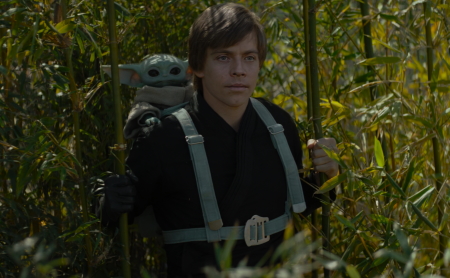
“Baby Yoda” is symbolic of Star Wars’ reliance on nostalgia in many ways.
Neither approach is “right” or “wrong;” such things are subjective. I don’t want to sound overly critical of Star Wars either, because despite my personal feelings, there’s no denying many of the creative decisions made are popular – even The Rise of Skywalker, which was eviscerated by critics, was well-received in some areas of the fandom. It just strikes me as interesting and noteworthy that these two major franchises are taking very different approaches to the way they construct their narratives.
Whether it’s the inclusion of Luke Skywalker himself, the aesthetic of practically everything in the show, or a storyline which returns the franchise to the Jedi and the Force, The Mandalorian oozes nostalgia from every orifice – and if that’s what fans want and will lap up, then that’s okay. It was too much for me, and I stand by what I said last year during the show’s first season: I was expecting to see “the adventures of a gunslinger far from the reaches of the New Republic;” a show which would take Star Wars away from some of those themes to new places. That was my preference – a personal preference, to be sure, and judging by the positive reaction not only to The Mandalorian but to spin-off announcements like the Obi-Wan Kenobi series (and the return of Darth Vader to that series) I’m in the minority.
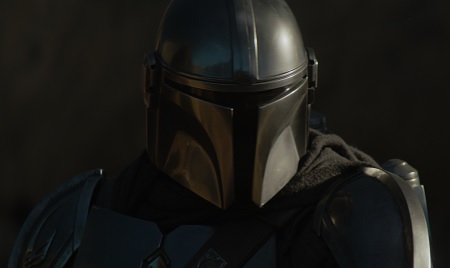
Mandalorian armour (i.e. Boba Fett’s armour) seen in The Mandalorian.
Star Trek takes a different approach. Both Picard and Discovery in their most recent seasons moved the timeline forward, brought in new characters, and dealt with contemporary themes. There were touches of classic Star Trek in both shows, including in aesthetic elements like set design and costuming, but in both cases the franchise feels like it’s moving forward.
Costuming is an interesting point to consider, as it’s representative of where both franchises find themselves. As early as 2015’s The Force Awakens, Star Wars was stepping back, relying on Stormtrooper armour, First Order uniforms, and especially the costumes worn by Rey that were practically identical to those seen in the original films. This was continued in The Mandalorian, not only with the main character’s Boba Fett armour, but with the use of Original Trilogy Stormtrooper armour and costumes for many villains. In contrast, Star Trek took its main characters out of uniform entirely in Picard, and Discovery has introduced a whole new set of uniforms and a new combadge for the 32nd Century. Where Star Wars looks back to its heyday, Star Trek looks forward, incorporating some of its classic designs into wholly new variants.
Discovery’s new combadges (as seen in the opening titles).
What we see in these costuming choices is a reflection of where both franchises are narratively. Star Wars continues to look back at the only truly successful films the franchise has ever made: the Original Trilogy. Frightened of trying anything truly new and unwilling to leave that comfortable ground, it’s stuck. As I wrote once, the Original Trilogy has become a weight around the neck of modern Star Wars, as projects not only become constrained by those films, but continue to fail to live up to them.
Star Trek looks forward, tries new things, and embraces change. Not every new project will win huge support and be successful, but some will, and every project has the possibility to be a launchpad for others, taking the evolving franchise to completely different places.
The Original Trilogy is – in my opinion at least – holding Star Wars back.
It’s clear which approach I prefer, and that I’d like to see more innovation and change from Star Wars. Though I was certainly underwhelmed by some of the recent announcements made by Disney and LucasFilm, I’m hopeful that, despite being held back in many ways by an overreliance on nostalgia, some decent films and series may stumble out the door.
Each franchise could learn something from the other, though. Star Trek’s projects are split up, and while Discovery’s third season made an admirable effort to connect to Picard, that was not reciprocated. Lower Decks had many callbacks and references to ’90s Star Trek, but otherwise stands alone. The franchise could work harder to bind its different projects together, reminding audiences that they’re watching one piece of a greater whole.
The Qowat Milat, who debuted in Picard, later appeared in Discovery. But the franchise could do more to bring its projects together.
Star Wars could see how a successful sci-fi franchise doesn’t need to be constrained by its original incarnation, and that shaking things up can work. The Mandalorian felt to me as though it was retreating to Star Wars’ comfort zone, and while that move may be popular right now with the fandom, it doesn’t really provide a solid foundation for expansion in the way Star Trek’s shows and films have done.
At the end of the day, both franchises are testament to the power of nostalgia to bring fans back. But they undeniably take very different approaches to that. Star Wars is conscious to try to make everything feel like its first couple of films – to the point that it can be overwhelming. Star Trek certainly doesn’t overwhelm anyone with nostalgia – to the point that some recent projects have been criticised for feeling like they aren’t part of the franchise at all.
Whichever approach you ultimately feel works best, one thing is clear: neither franchise is disappearing any time soon! The first half of the 2020s -and hopefully beyond – will see several different projects from both Star Trek and Star Wars, and as a fan of both and of sci-fi and fantasy in general, that’s great news. Long may it continue!
The Star Trek franchise – including all properties mentioned above – is the copyright of ViacomCBS. The Star Wars franchise – including all properties mentioned above – is the copyright of LucasFilm and Disney. This article contains the thoughts and opinions of one person only and is not intended to cause any offence.



























 Trekking with Dennis