The weirdly contradictory nature of Star Trek: Picard

Spoiler Warning: There are spoilers ahead for all three seasons of Star Trek: Picard – including the series finale and post-credits scene.

For a series that only ran to thirty episodes across three seasons, Star Trek: Picard spent a lot of time overwriting itself! Across all three seasons of the show there were these weirdly contradictory moments where new storylines would appear from nowhere, completely changing what came before. One or two of these instances might pass by relatively unnoticed, or could feel like little more than nitpicks. But for a relatively short series to have so many… it speaks to something bigger, I feel.

I hope in future we’ll get a Chaos on the Bridge-type of documentary or exploration of what went on behind-the-scenes on Star Trek: Picard, because to say that production was “difficult” feels like an understatement. There were clearly major problems on the production side of the series, and I don’t just mean its pandemic-enforced delays. The evidence for this is the contradictory nature of the series itself, and how at the very least there was clearly no overall plan for how the story should be structured. Consistency is an important element of any good story – and Picard absolutely fails on that measure.
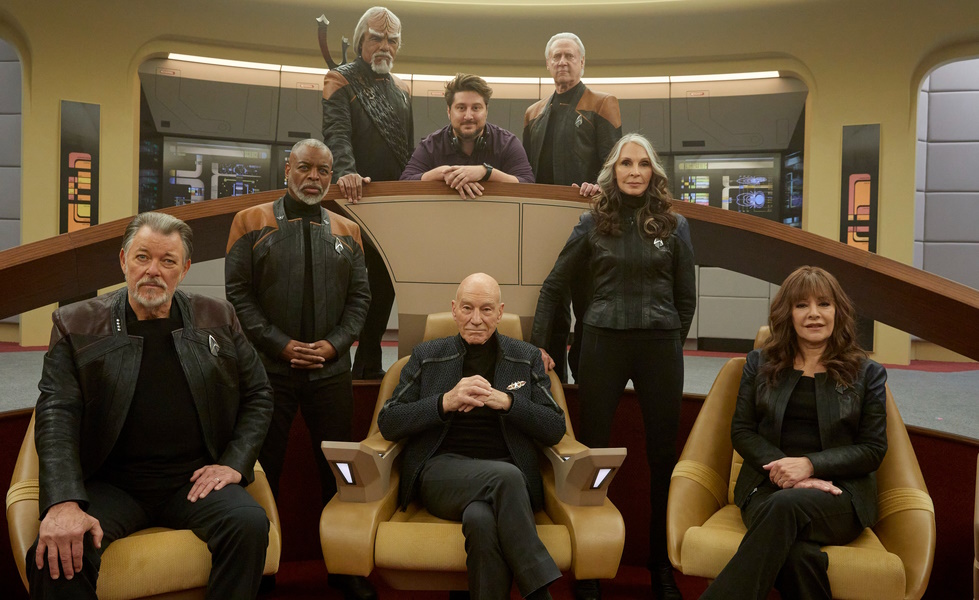
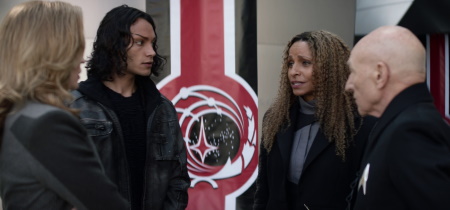
Seasons 2-3 showrunner Terry Matalas with Sir Patrick Stewart and the rest of the cast of The Next Generation.

I have a longer piece in the pipeline about Picard’s abandoned and unfinished storylines, but today I thought it could be interesting to take a short look at ten storylines that ended up being overwritten by some pretty sloppy, messy writing that failed to build on the foundations that had been laid in earlier episodes and seasons.

As always, a few caveats. If you loved all of these stories and felt they were perfectly-executed, or if you hated the original setup and feel that it was right and fitting to overwrite or ignore it, that’s okay! We all have different opinions about what makes for a good Star Trek story, and I’m not trying to claim that I’m somehow objectively right and that’s the end of the affair. In several cases, I’d actually agree that the overwrite or retcon was better than what had been previously established. This is all just the opinion of one old Trekkie, and as I always say, there ought to be room in the Star Trek fan community for polite discussion and disagreement! Although I have my issues with Picard, particularly when it comes to the show’s second season, by and large I’m a fan not a hater.

So with all of that out of the way, let’s take a look at some of Picard’s weirdly contradictory storylines.

Contradictory story #1:
Seven of Nine is a captain! Oh wait, no she isn’t…
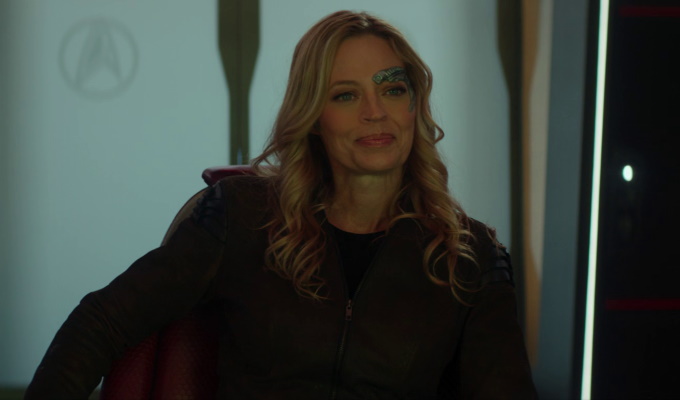
Seven in the captain’s chair at the end of Season 2.

At the end of Season 2, Seven of Nine was breveted into Starfleet by Picard as Captain of the Stargazer. This story point was already a bit… odd. Firstly, it raises the question of why, if offering a brevet position to someone outside of Starfleet is so simple, Admiral Janeway didn’t do that for Seven years ago. It also seemed unnecessary, as with Picard on the bridge, the Stargazer already had a senior officer present who could give orders.

But this already flimsy setup ended up being overwritten by the very next episode – when Seven was bumped down to the rank of commander and found herself serving as first officer of the Titan. There are a lot of contradictions in Picard, but this one feels even more peculiar because it’s something that literally changes from one episode to the next – episodes that, in spite of being one season apart, were produced and filmed at the same time.

Contradictory story #2:
Data’s dead. Deader than dead. Lol jk, he’s alive again!

Data awaits his final shutdown.

One of the few redeeming features of the two-part Season 1 finale was the laying to rest of Data, and giving him the emotional send-off that Nemesis didn’t have time to do justice to. It went a long way to making up for other deficiencies in the rushed and muddled end to Season 1, and the sequences with Picard and Data in the “digital afterlife” were powerful and deeply emotional.

But despite Data being as dead as it’s possible to be in Star Trek, with both his physical body and the surviving part of his consciousness having been destroyed and shut down respectively, Season 3 resurrected Data. We’ll have to go into this storyline in more detail in the future, because there’s a lot more to say. But for me, Data’s resurrection never really found a narrative justification, and it felt like the showrunner and writers wanted desperately to reunite the cast of The Next Generation – at any cost.

Contradictory story #3:
Welcome aboard the Stargazer! Wait, I mean the Titan…

The USS Titan.

In Season 2, the ship that Picard and co. didn’t spend enough time aboard was the USS Stargazer. In Season 3, they jumped over to the Titan – even though the sets were all the same (with a few minor tweaks here and there). I don’t really understand why this happened. What was the point of setting Season 3 aboard a nominally different starship? The exact same setup could have brought Riker and Picard to the Stargazer as it did to the Titan.

If the two ships had significant aesthetic differences, maybe it would be okay. And compared with some of the other points on this list, I admit it’s relatively minor. But it still feels odd to introduce the new Stargazer, build CGI models for it, and only use it in one-and-a-bit episodes.

Contradictory story #4:
Q’s dying… oh wait, no he isn’t.
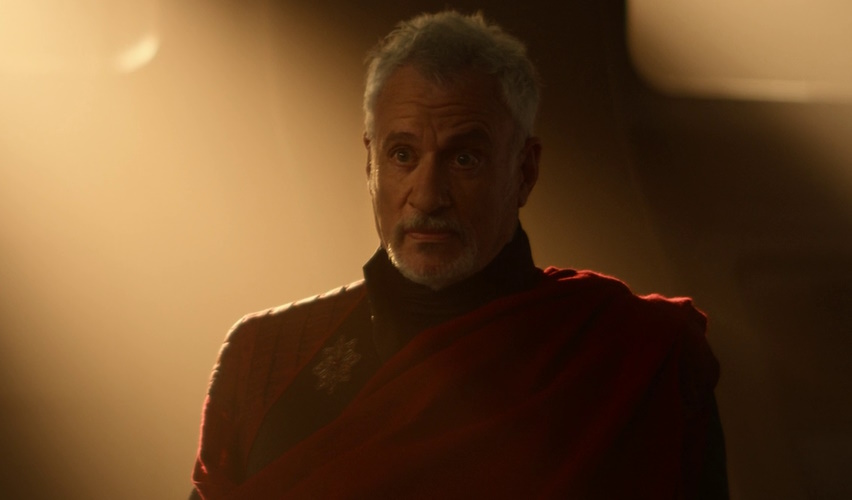
Q at the end of Season 3.

I know what you’re thinking: Q already explained his “return” by telling Jack Crusher not to think about time in a linear fashion. While that’s a perfectly rational in-universe explanation for Q’s return at the end of Season 3, it doesn’t get around the fact that Q, whose death was such a vital part of the entire plot of Season 2, is a profoundly odd choice of character to use for that one epilogue scene.

Picard’s writers pinned the convoluted and disappointing story of Season 2 on Q, and Q’s entire motivation was his imminent death. To undo that – even if there’s a technical explanation for it – only a few episodes later feels wrong. It undermines the already-weak story of Season 2 and makes me wonder what the point of it all was.

Contradictory story #5:
The Borg are back! The Borg are back! The Borg are back!

A Borg Cube.

However you look at it, and whatever nitpicky excuses there may be about who are and aren’t the “real” Borg, there’s no getting away from the fact that across its three seasons, Picard re-introduced the Borg three times. All three of the stories rely, either in whole or in part, on the Borg, and while Picard himself has a connection with the Borg after the events of The Best of Both Worlds and First Contact… there’s a whole galaxy out there filled with alien races that the show’s writers and producers could have used.

While Season 3’s Dominion/changeling rug-pull is probably the worst example of this, it really speaks to a broader problem with the show’s production. Picard’s writers, especially in Season 3, were unwilling to abide by what the show had already set up. The Borg are great fun, don’t get me wrong, but by the time we got to yet another Borg story in Season 3, I was feeling burned out.

Contradictory story #6:
The mysterious anomaly has set up a fascinating story! Let’s never mention it again.

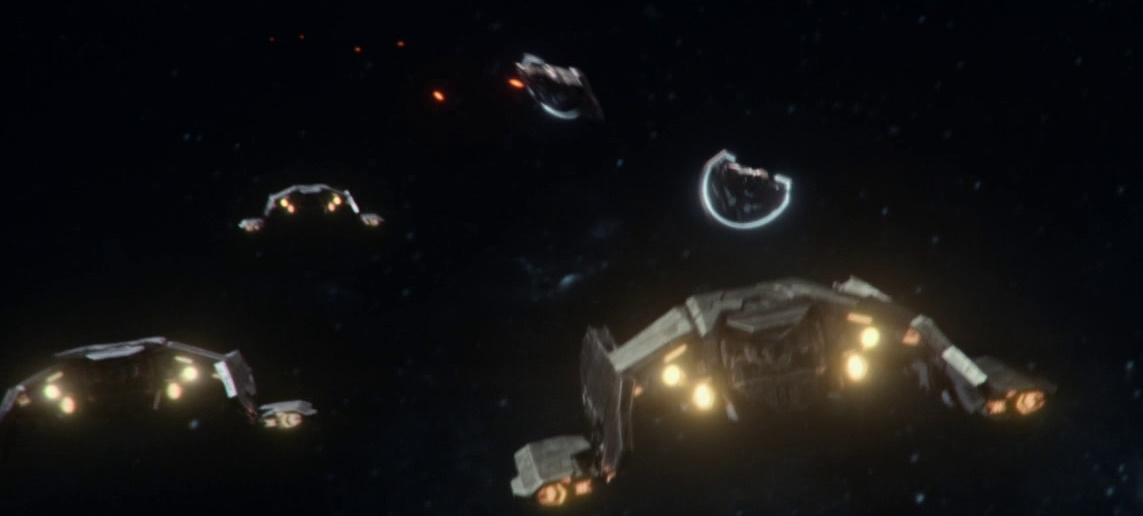
Led by the Borg, a Federation fleet stops the anomaly.

The story of Season 2 was bookended by a mysterious anomaly that the Jurati-led Borg faction believed could be an attack against the Alpha Quadrant. Once the anomaly had been stopped, the Jurati-Queen promised to take her Borg faction and stand watch over the anomaly as a “guardian at the gates.” Her Borg faction were even granted provisional membership in the Federation as they did so.

This story felt like it had huge potential. Who could have been powerful enough to create a weapon on that scale? How would Picard and his friends be able to defeat them? What would it be like to see a Federation-Borg alliance? But alas, this storyline was dumped, orphaned, and never mentioned again. Was no explanation ever written? Why end Season 2 on this cliffhanger if it was never going to be resolved?

Contradictory story #7:
Soji’s a massively important character… let’s dump her.

Promo photo of Isa Briones as Soji.

Soji played a huge role in Season 1, serving as both the reason for Picard’s mission and later as someone who needed to be talked down from making a mistake. We spent a lot of time with her in the show’s first season, watching as she was manipulated by Narek, as she learned the truth of her own origin and who her people were, and as she came to work with and respect Picard.

It was disappointing that Soji was essentially forgotten after the end of Season 1, with a barebones cameo appearance and nothing more. Isa Briones got to play a minor role in Season 2 as the daughter of antagonist Adam Soong, but this storyline was samey and boring. As a new, young character – and a synthetic life-form – Soji had huge potential. It’s such a shame that a role couldn’t be written for her after Season 1.

Contradictory story #8:
Picard has a new relationship with Laris! No wait, Laris has fucked off and now he has a kid with Dr Crusher.

Laris and Picard at the end of Season 2.

The entire story of Season 2 – its raison d’être, at least according to Q – was that Picard was alone, prevented by his childhood trauma from being able to find love. At the end of the season, after ten episodes of shenanigans in the 21st Century, Picard finally returned to his vineyard – and to Laris. The two seemed ready to embark upon a new relationship together.

But nope! Laris made a small cameo appearance at the beginning of Season 3, and was never mentioned again. Picard’s story in Season 3 focused on his past relationship with Dr Crusher, a relationship that led to him having a son he’d never met. The season’s epilogue even showed Picard and Dr Crusher jointly escorting their son to his first Starfleet assignment – with Laris nowhere to be found. As I said above: Season 2 was already a weak, flimsy story. Undermining its ending like this was a poor decision.

Contradictory story #9:
Elnor’s dead. Oh wait, he’s back! No… he’s gone again.

Elnor at the end of Season 2.

Although I wasn’t thrilled to see Elnor killed off in the first half of Season 2, as time went on, it seemed to be working. Raffi’s story of coming to terms with loss and grief was one of Season 2’s stronger elements, and while I would’ve still said I was disappointed in Elnor’s wasted potential, at least his loss had mattered. Until it was all undone with seconds to spare.

If Elnor had a major role to play in Season 3 – and there was absolutely space for him – then I could at least have understood this reversal. But after Elnor was resurrected, he got one very brief scene in which he looked confused on a viewscreen, and another in which his dislike of a beverage made him the butt of a joke. After that, Elnor disappeared from Picard never to be seen or mentioned again. What was the point? Why undo a powerful story for the sake of an overdone sight gag?

Contradictory story #10:
Riker and Troi are happy and settled on Nepenthe. Just kidding, they hate it there.

Picard approaches Riker’s outdoor kitchen.

Nepenthe might be my favourite episode of Season 1. It slowed things down, stepped away from some of the drama, and reintroduced us to Riker and Troi – now happily married and living peacefully outside of Starfleet. In spite of the loss of their son, Riker and Troi seemed settled on Nepenthe with their daughter in a home that was important to their son and their family. It was a surprise, to say the least, when Season 3 tried to undo all of that.

In the episode Surrender, Riker and Troi were reunited as captives aboard Vadic’s ship. And while imprisoned, they both spoke about how they hated the “creaky old cabin” that had been their home. The end of the season implied that one or both of them may be back in Starfleet, and all the emotional storytelling present in Nepenthe was taken away.

So that’s it!

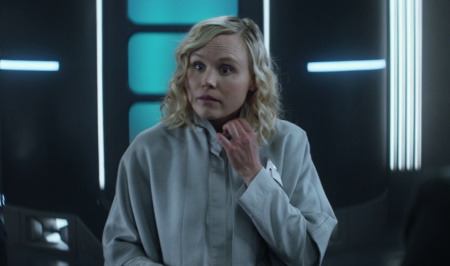
Dr Jurati on stage in Season 2.

Although there were some interesting stories – and some complete ones – overall, it’s not unfair to call Star Trek: Picard a contradictory series, one that either intentionally or unintentionally overwrote or ignored key characters and storylines. We’ll talk about some of these in more detail on another occasion, but for now I think we’ve covered the basics.

Picard was clearly a troubled production, one that jumped from one writing and production team to another, and that’s part of why the series as a whole feels so contradictory. I think I could overlook one or two of these things – and I might even support the decision to drop a character or change a storyline that wasn’t working or that failed to resonate with audiences. But for a series that ran to a mere thirty episodes across three seasons… we shouldn’t be able to pull out ten large contradictions like this.

Stay tuned, because I have a lot more to say about Picard even though the series has concluded! A longer retrospective is in the pipeline, and I’ll also be taking a look at abandoned and unfinished storylines, too.

Star Trek: Picard Seasons 1-3 are available to stream now on Paramount+ in the United States and other countries and territories where the service is available, and on Amazon Prime Video in the UK and around the world. The Star Trek franchise – including Picard and all other properties discussed above – is the copyright of Paramount Global. This article contains the thoughts and opinions of one person only and is not intended to cause any offence.
Star Trek: Picard review – Season 2, Episode 2: Penance

Spoiler Warning: There are spoilers ahead for Star Trek: Picard Seasons 1-2. Spoilers are also present for the following Star Trek productions: The Next Generation, First Contact, Nemesis, and Voyager.

After such an incredibly strong start to Season 2 last week, there was almost nowhere left for Penance to go in terms of action and excitement! But the season continues in strong form with another excellent episode, one with a very different tone to its immediate predecessor.

After the explosive end to last week’s episode, Picard and the crew of the Stargazer found themselves transported – as if by magic – to a strange, twisted reality, one in which the human-centric Confederation reigns. But the surprising thing they learned (which had essentially been explained already in the trailers and teasers) is that this isn’t some alternate reality or parallel universe, but rather the prime universe after something or someone had changed the past.

Seven, Elnor, Raffi, and Picard reunited in the Confederation timeline.

The Confederation definitely strayed into Mirror Universe territory with its militaristic aesthetic, demagoguery, and clear love of violence, but I actually found it more interesting to watch as a viewer than practically any story set in the Mirror Universe. There’s one key reason for that, I think: practically all of the characters we spent time with in Penance were from the original timeline, meaning that the actors were playing their familiar, more complex and nuanced roles.

One of my primary complaints about the Mirror Universe in practically all of its appearances, from The Original Series right through to Discovery, is that it feels like hammy, over-the-top pantomime. It’s a setting that’s written in such a way that it tricks even great actors like Sonequa Martin-Green into putting in incredibly poor, one-dimensional performances as their Mirror Universe counterparts, and I think if we’d had to spend a lot of time with Confederation Picard or Confederation Rios, we could’ve been in a similar position in Penance.

Sticking with our established characters – and not their alternate counterparts – was good for Penance.

Luckily that didn’t happen, so what we got is a genuinely interesting setting – it’s the Mirror Universe but also not the Mirror Universe at the same time. Q even used the familiar expression “through a mirror, darkly” (a riff on a similarly-titled Enterprise episode!) to describe the Confederation timeline, and similar themes of presenting our characters with a dark, twisted version of reality are present here, just as they are in the Mirror Universe.

In this case, though, it’s arguable that Picard and the crew might feel worse about how things have turned out. In the Mirror Universe, we’re dealing with similar-looking but very different people; dark counterparts to our familiar characters. But the Confederation timeline aims to say that Picard – our familiar Picard – would have behaved this way if he’d been born and raised here. Picard is confronted not with a doppelgänger, but with an alternate version of himself.

A recording of the Confederation timeline version of Picard.

This isn’t the first time we’ve been here with Picard, if you think about it! In Nemesis, Picard had to deal with a clone of himself, and at one point in the film he came to the realisation that, if he had led the life that Shinzon had, he’d have turned out exactly the same way. Here, in the Confederation timeline, Picard must deal with the fact that this version of himself has been such an all-conquering general, subjugating alien races and bringing a xenophobic, human-centric ideology to the galaxy.

Speaking of “all-conquering,” something I’d be very interested to learn more about is the Confederation’s conquest of the Borg. Dr Jurati specifically stated in Penance that the Confederation’s technology is comparable to the Federation’s in the prime timeline, and we saw just last week how completely overpowering the Borg were when facing the Federation. So how did General Picard beat the Borg? And having destroyed literally the entire Borg Collective, why does the Confederation seem to be having such a problem keeping the planet Vulcan under control?

Rios watches the Battle of Vulcan from La Sirena.

It’s possible that this will be explored in more detail in the episodes ahead, and there could be a connection here between the Borg of the Confederation timeline and the Borg in the prime timeline that we saw in The Star Gazer, perhaps. I’d certainly be interested to see a conversation between the captive Borg Queen and Picard on this subject; if she is the sole survivor of her entire people, she would certainly have a thing or two to say to him!

It’s also possible, of course, that the Confederation’s conquest of the Borg won’t be referenced again – and personally, I think that would be a bit of a disappointment. Maybe Picard’s trip back in time – which seems to be coming in the next episode, despite the cliffhanger ending this week – will wipe out the Confederation timeline, and what we saw of it in Penance will be all we ever see. But as I’ve said before, as Trekkies who feel a connection to the Star Trek galaxy, we always want to dig deeper and learn more about this wonderful setting. To brush aside something as potentially huge as the Borg being defeated would be a shame.

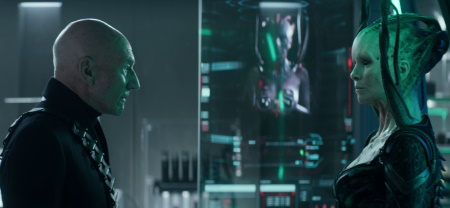
Picard comes face to face with the Borg Queen.

Like The Star Gazer before it, Penance revelled in the lore and history of Star Trek. We got our first major references to Deep Space Nine since live-action Star Trek returned to the small screen thanks to mentions of Gul Dukat (also known in this timeline as “Skull Dukat!”) and General Martok; two of General Picard’s defeated adversaries. There was also a reference to one General Sisko, which was awesome! As a big fan of Deep Space Nine, it’s wonderful to see modern Star Trek make reference to it.

I doubt that we’ll see anyone from Deep Space Nine on screen this season, but the callbacks were definitely appreciated. Aside from Sarek, though, the conquests Q showed to Picard weren’t really characters or villains that I’d have associated very strongly with Picard himself. There was scope to reference someone like Dathon, the Tamarian captain from the episode Darmok, who has a stronger association with Picard than the likes of Gul Dukat or General Martok – characters we never saw him meet on screen. That’s not to be critical, though – I adored the Deep Space Nine references and for something relatively minor that most viewers won’t have thought twice about, it was a great way to include a couple of references to this part of Star Trek!

Confederation Picard was quite the collector of skulls, apparently!

Was it a little bit of a contrivance that the characters were all able to find each other so soon after their arrival in this new timeline? And if we get really nitpicky about it, shouldn’t they have considered the possibility that someone else might’ve found themselves transported there too? Captain Rios didn’t seem to even consider looking for any of his officers or crew from the Stargazer, for example. It didn’t cross my mind during my first time watching Penance, but as I was going through it for a second time it gave me a moment’s pause.

That being said, I liked very much that the characters were all split up after their arrival in the Confederation timeline. Although we can call it somewhat of a contrivance that they were able to contact one another and get back together within a single episode, the fact that they all found themselves in different places, occupying very different roles, was something that Penance pulled off very well considering that it all had to be done in the runtime of a single episode.

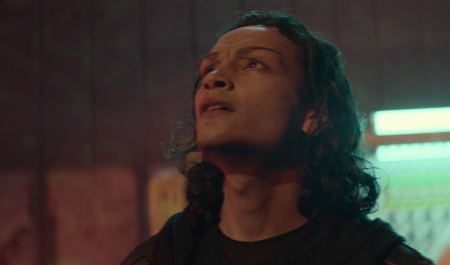
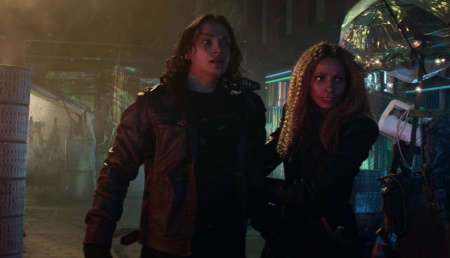
Elnor, shortly after his arrival in the Confederation timeline.

Around the 23-minute mark, when Elnor has been cornered by Confederation security forces, there was a very odd visual moment where one brief shot looked very different – and of significantly lower quality – to the others. It hardly ruined the episode, but it was noticeable even on a first viewing that this one shot of Elnor didn’t look right. It seemed as if it was using a green screen and the shot had been spliced into the episode at the last minute.

Other than that, though, the visuals, CGI, and other special effects in Penance were outstanding. The battle Rios found himself engaged in over Vulcan was one of the most fast-paced that the Star Trek franchise has ever shown, and it had almost a Star Wars starfighter feel, as other ships of La Sirena’s class fought against Vulcan ships that drew on designs from Enterprise for their visual inspiration.

La Sirena and other Confederation ships battling Vulcans.

So let’s talk about Q: what could be going on with him? Picard seemed to think that there was something wrong; the implication being that Q, like Picard, is coming to the end of his life, perhaps? I’m not sure if this is the route the story will go, though, and I have a couple of theories that I’ll expand on in my next theory post. It was definitely a change to see a more aggressive, less jovial characterisation of Q, though. For all the puzzles and tricks Q has laid for Picard in the past, he never treated any of them in the same way as he did here. If I didn’t know better, I’d say that Q was angry.

Could the root of this anger be a sense of disappointment that Q feels in Picard? When Season 1 kicked off, Picard had been in self-imposed isolation on his vineyard for more than a decade, having chosen to resign from Starfleet and cease participating in Federation and galactic affairs. As someone Q had taken a very strong personal interest in, could Q have taken that decision personally? Could he have felt that Picard was failing to live up to the potential that Q initially believed him to have? If so, perhaps that might explain Q’s attitude in Penance.

Why is Q so grumpy?

When I put together a list of episodes that I felt could be good background viewing for Picard Season 2, I deliberately included stories like Q Who, Tapestry, and All Good Things. These episodes I feel encapsulate the Q-Picard relationship; the adversarial but not villainous nature of Q, the way Q sees himself as a guide, the way Q has even tried, in his own twisted way, to help Picard. All of these things feel quite far removed from the way Q appeared in Penance, but as we almost certainly haven’t seen the last of him this season, I’m sure we’ll learn more about Q’s role and motivations.

We don’t even know for certain at this stage that it was Q who damaged the timeline. At most, I think we can say with reasonable certainty that Q used his powers to ensure that Picard and the rest of the crew were aware of the change that transpired, but the question of his guilt – or the extent of his complicity in these strange events – is still open.

Q and Picard at Château Picard.

Just like Sir Patrick Stewart makes it feel as if The Next Generation never ended, John de Lancie stepped back into the role of Q seamlessly. Yes, there’s a noticeable change in the way Q was characterised in Penance, but the performance was outstanding and hit all of the right notes for bringing back the Q that we remember. I’m thrilled to have Q back, and right now I’m genuinely curious to see where this new timeline and history-changing event go!

Dr Jurati provided some darkly comedic moments in Penance, and was strangely relatable. We’ve seen her anxious babbling before in Season 1; in a similar vein to characters like Discovery’s Tilly she has a tendency to overshare or not know when to stop talking! Those moments with Seven and the Magistrate were funny, but where I found Dr Jurati at her most relatable were her moments of vulnerability. The Borg Queen rounded on her, sensing how she feels like an outsider no matter what timeline she’s in – and I think that’s something a lot of people can relate to.

Dr Jurati provided both comic and relatable moments this week.

Feeling like an outsider, feeling like your “friends” aren’t really your friends, and so-called imposter syndrome are all things that any of us can feel at different points in our lives, but speaking as someone who is neurodivergent, I think it hits home in a different way. It seems like Penance is setting up a story about manipulation using Dr Jurati’s natural insecurities as a base, and we could see a very interesting allegory play out in future episodes, taking this complex dynamic between Dr Jurati and the Borg Queen to different thematic places.

Notable by her absence was Soji. If this Confederation timeline only has basic F8-type synths (as we saw with Harvey at Picard’s vineyard, for example) then it’s not inconceivable to think that Soji may not exist at all. However, if Q’s statement to Picard about him being given a synthetic body in this timeline is correct – and we have no reason to think he’s lying about that, necessarily – then obviously the synth-creating process had reached the same level, and thus Soji may exist!

Harvey the synth.

With Picard and the crew being prevented from going back in time in the closing seconds of Penance, I wonder if next week we’ll see Soji make an appearance. Otherwise she seems set to miss the entire adventure – and that would be a shame. Soji was a huge part of Season 1, but noticeably didn’t appear in a big way in any of the pre-season trailers and teasers. I wonder if that’s because she’s going to take on a different appearance, or whether there’s something even bigger going on with her that we don’t know at this stage. Time will tell!

Where The Star Gazer had deliberately embraced many different 24th Century Star Trek design elements, Penance was striking out in its own direction, trying something new. There was a definite “Mirror Universe” feel to some of it, but even then the Confederation felt distinct. The scenes with Raffi and Elnor definitely honed in on a very specific kind of dystopia – the police state – that we haven’t really explored in the Mirror Universe before, and it felt shocking and frightening as a result. The way that the sequence with Elnor immediately preceding his arrest was filmed was incredibly claustrophobic, and did an excellent job at communicating just how different this new timeline is.

Elnor and Raffi.

Penance leaned into the “fish out of water” angle with most of its characters, too. Seven’s husband – the Magistrate – seemed to catch on very quickly that something wasn’t right, and kept her and everyone else under suspicion the entire time. Having him watching over her shoulder, and getting too close for comfort to Dr Jurati, Picard, and everyone else was successful at keeping the tension high, and Jon Jon Briones – father of Isa Briones, who plays Soji – put in a riveting performance as a villain. He was perfect for the role, and when he materialised on La Sirena at the end of the episode, it felt like the culmination of a wonderful performance that managed to be menacing and disconcerting but without ever falling into the Mirror Universe trap of hammy over-acting.

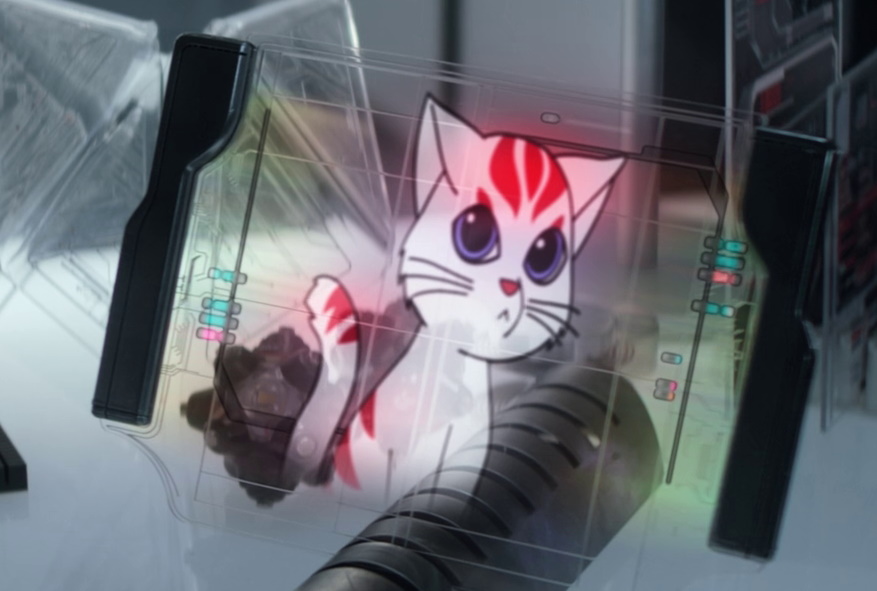
As a cat lover, Spot-73 was incredibly cute! Actor and comedian Patton Oswalt brought a lot of life to the cute animated critter, and although we didn’t get a lot of time with Spot-73, those moments were cute, funny, and also set up the apparent loneliness and isolation felt by this timeline’s version of Dr Jurati – something that, as noted, the Borg Queen was able to hone in on.

Tell me I’m not the only one who wants a Spot-73!

Does Laris’ apparent death in this timeline mean she won’t accompany Picard back in time? I had thought we might see more from her this season! It was clearly a moment that affected Picard greatly, and really hammered home just how different – and evil – this timeline’s version of the character is. Laris’ death also gives Picard an added motivation; he now has someone to save, and someone to get back to if he can save the future. Establishing their closeness last week was paid off in a very different and unexpected way here.

Overall, I had a great time with Penance. I don’t think it’s necessarily fair to compare it directly with The Star Gazer; the two episodes are doing entirely different things, and both achieve the feelings and objectives that they were clearly aiming for. Purely subjectively, because of things like the design of the USS Stargazer and the excitement of the Borg’s return, I would probably say I had more fun last week – but Penance was an interesting exploration of a very different timeline, and also managed to include a lot of Star Trek references!

The Magistrate at the end of Penance.

I have so many questions – and the story feels very unpredictable right now. Two episodes in and we’ve seen most of the scenes from the trailers already, with the exception of some of the 21st Century clips. The pre-season marketing did a great job of teasing just enough about the story to get fans interested and excited, but without spoiling big reveals like the Federation fleet, the USS Stargazer, and other key story elements.

There’s a lot to look forward to as Picard Season 2 finds its feet! Will Elnor survive his injury? What will the Magistrate do next? I can hardly wait to find out!

Sorry for the delay in getting to this review! With two episodes of Star Trek premiering within hours of each other (on Fridays in the UK, remember) writing two big reviews is a lot. This weekend I was also building my new computer, something that cut into my writing time quite a bit too. But it’s here now – and stay tuned for my weekly theory updates, too!

Star Trek: Picard Season 2 is available to stream now on Paramount+ in the United States, Scandinavia, Latin America, and Australia, and on Amazon Prime Video in the United Kingdom and the rest of the world. The Star Trek franchise – including Picard and all other properties mentioned above – is the copyright of Paramount Global. This article contains the thoughts and opinions of one person only and is not intended to cause any offence.