Video Game Spotlight: Shenmue II

A Shenmue-themed spoiler warning.

Spoiler Warning: Beware spoilers for Shenmue and Shenmue II.

Happy twenty-fifth anniversary to Shenmue II!

The sequel to my favourite game of the Dreamcast era came along in September 2001, less than two years after Shenmue’s launch in Japan – and less than a year after the game launched here in the UK. By this point, though, it was already clear that the Dreamcast was on its last legs; Sega had announced earlier in the year that the Dreamcast would cease production.

Having been developed alongside the first game, Shenmue II was largely complete, and I guess there was a hope that launching the game would help Sega recoup at least a percentage of the money that had been spent on one of the most expensive titles of all-time. But you know the outcome by now: Shenmue II didn’t do anywhere near as well as its predecessor – selling, by some estimates, as little as 10-15% of the 1.3 million copies that the first game managed. An Xbox port, which launched just over a year later, did a little better, though… so at least there’s that!
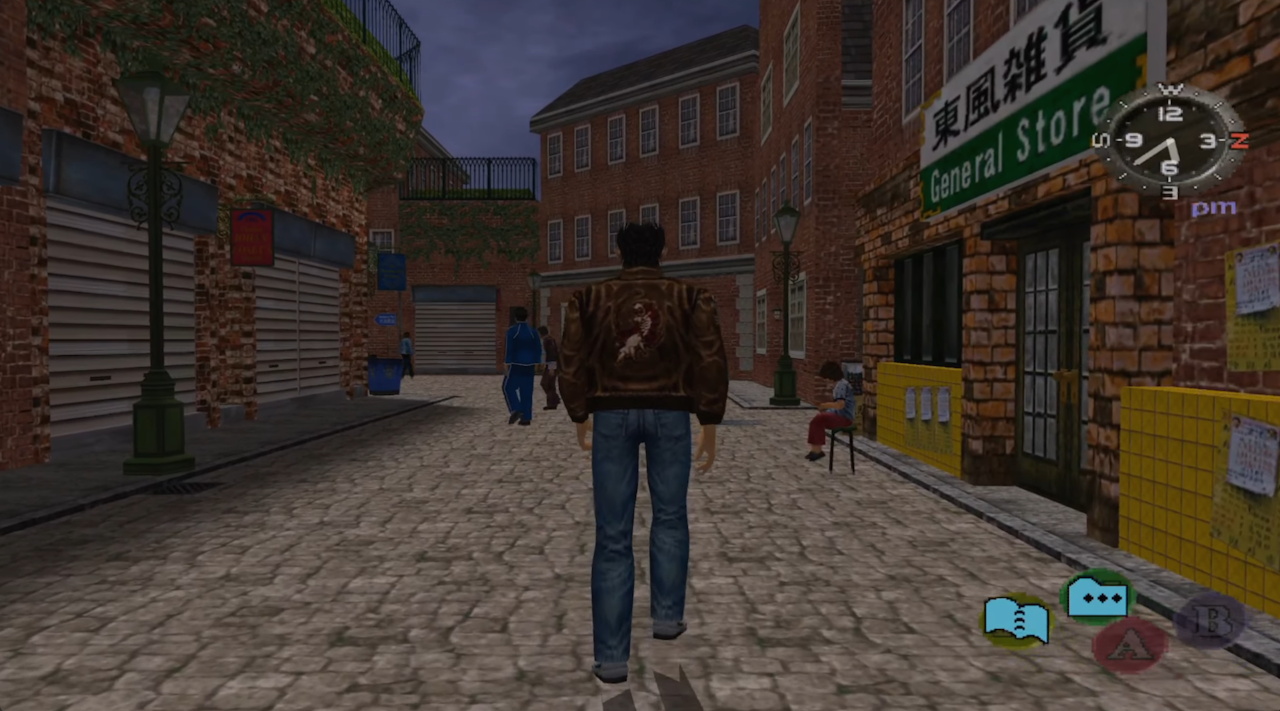
Screenshot of Shenmue II showing Ryo passing the general store
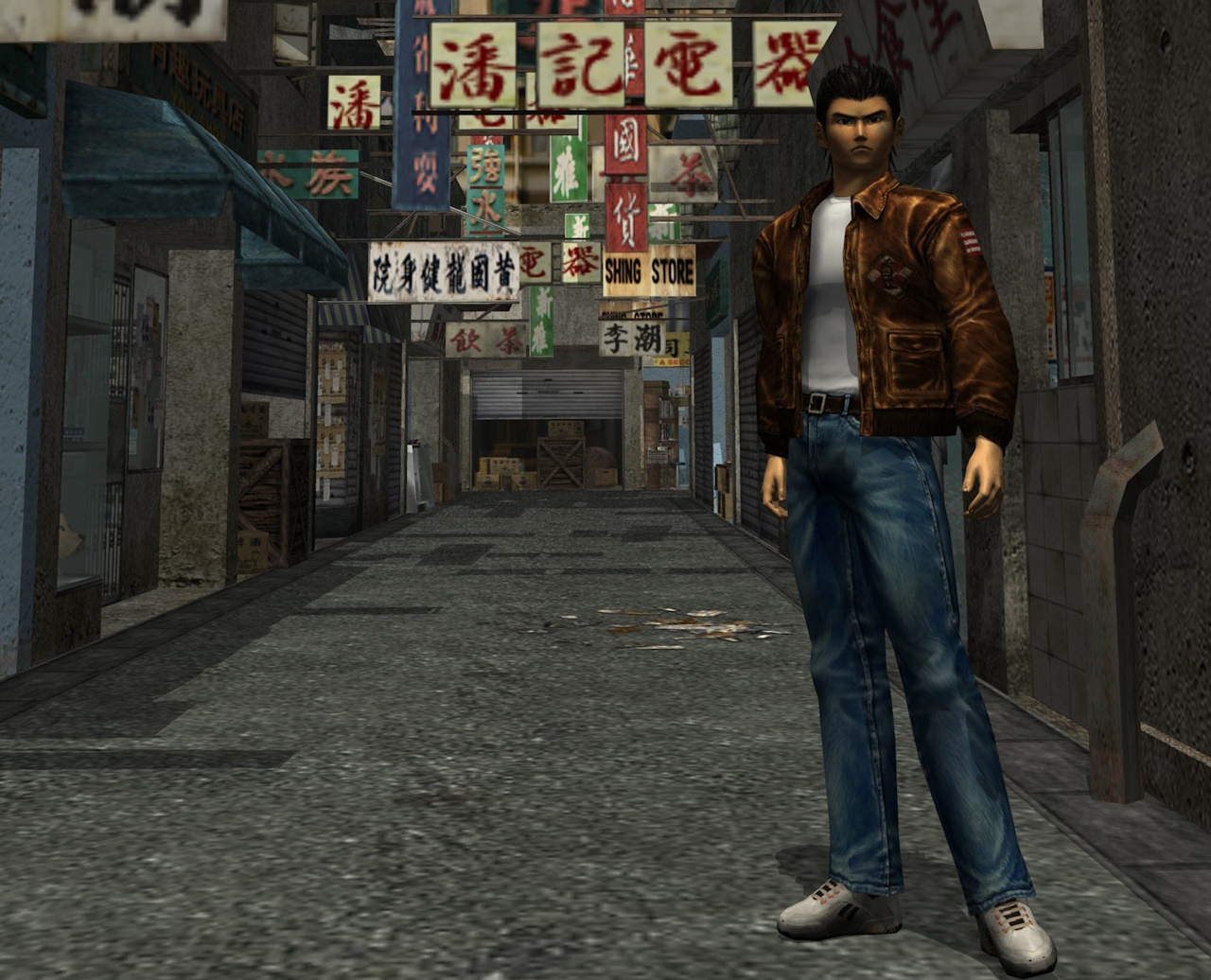
Stepping into Hong Kong.

I picked up Shenmue II for the Dreamcast pretty much as soon as it launched. Even though I knew the Dreamcast was on the way out, I still really wanted to dive into the next chapter of what was, at that point, my favourite video game ever! And my first impressions of Shenmue II were very positive. Here was the next part of Ryo’s story, which took him far from home to the shores of Hong Kong.

By the time I played Shenmue II, I must’ve gone through the first Shenmue at least five or six times. It really was my absolute favourite game at that moment; a title that utterly transformed my relationship with gaming as a whole and showed me a glimpse at what the future of the medium could look like. I’d played Shenmue almost incessantly since picking it up in December 2000, so I was intimately familiar with Yamanose, Sakuragaoka, Dobuita, the Yokosuka harbour, and Ryo’s family dojo.
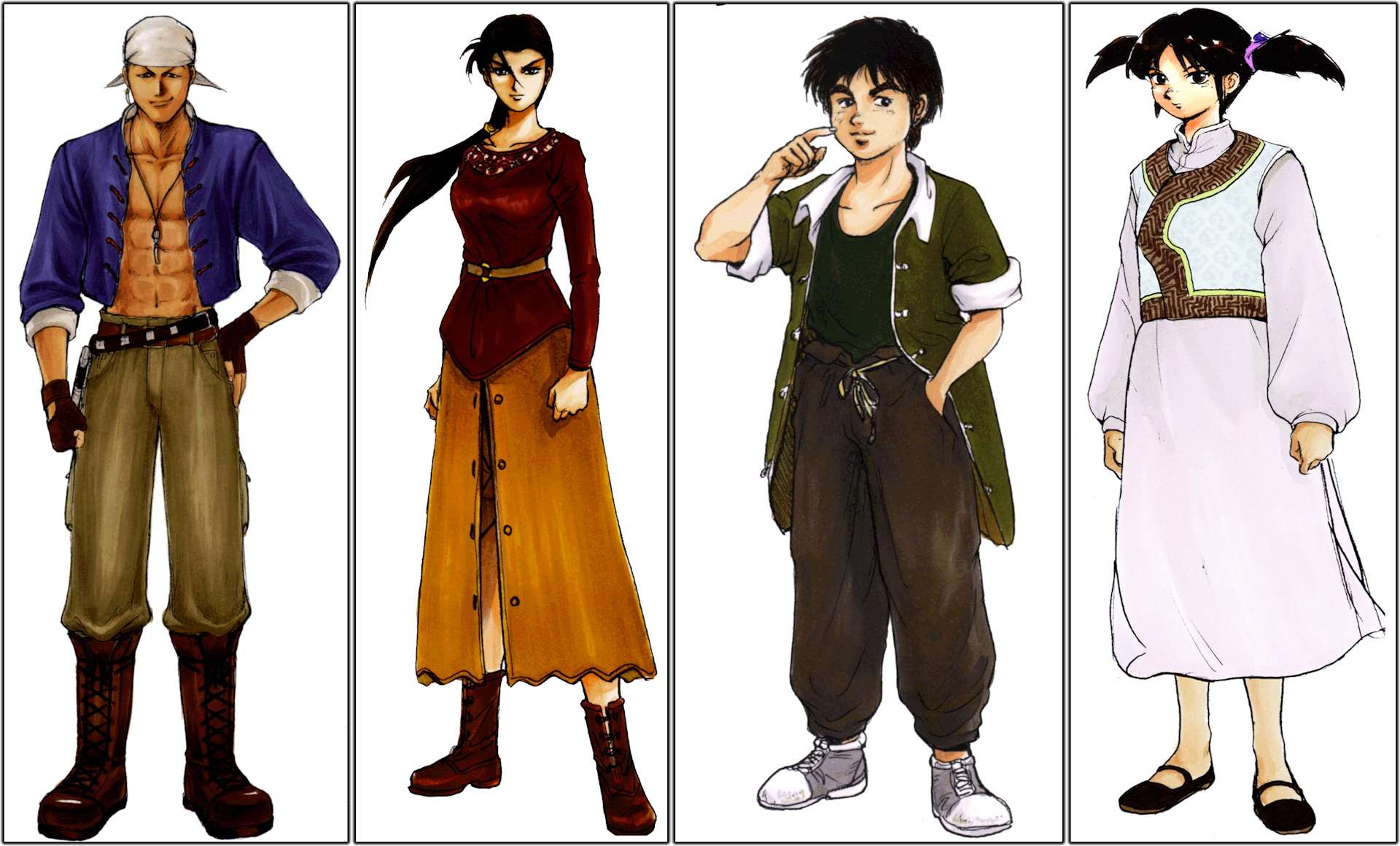
Four character concepts from Shenmue II
Concept art of Ren, Xiuying, Wong, and Fangmei.

That meant, when I sat down to play Shenmue II nine or ten months later, that I really *felt* the sense of stepping away from the familiar and leaping into the unknown – just as Ryo was doing. Because I’d spent so long wandering the streets of Japan with Ryo, getting immersed in that world, buying toys, going to the arcade, and getting home in time for Ryo’s curfew… going to Hong Kong really felt like I was leaving “home” behind and striking out in a completely new place. I don’t think that feeling would’ve hit me in quite the same way had I only played Shenmue once; it really took that familiarity from repeat playthroughs to make stepping into Hong Kong feel quite so odd and… different.

Although the gameplay is very familiar – thanks to being developed alongside the first game, by the same team, and for the same hardware – the setting of Shenmue II feels very different to the Yokosuka area that I’d become so at home in. Gone were the friendly neighbours and locals; people Ryo had known since childhood and regularly stopped to chat with. And in their place? Strangers, scammers, criminals… and a mysterious girl on a motorbike!
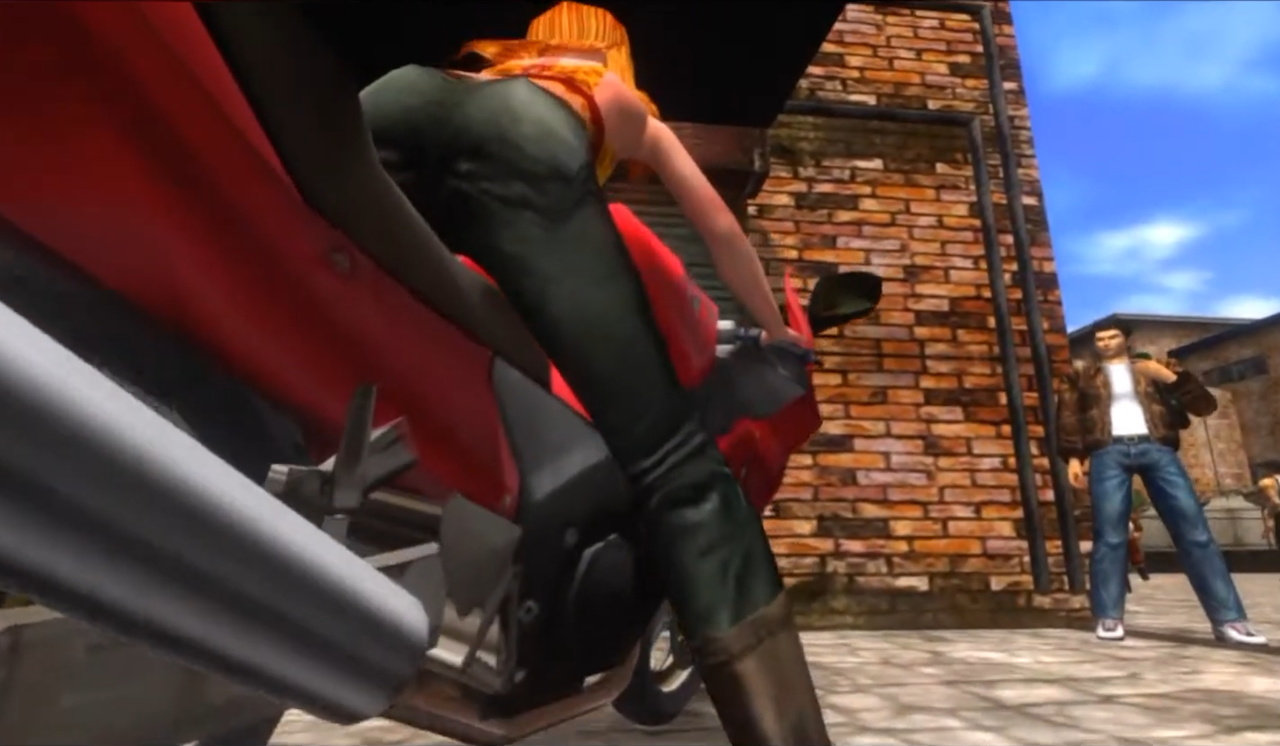
Screenshot of Shenmue II showing Joy and Ryo
Ryo meets Joy for the first time.

Those first moments of stepping into Hong Kong felt tense, but also adventurous. I can vividly recall the first steps Ryo took along the Aberdeen harbour, rucksack still on his back, making his way into this strange, new place. The bedroom I’d become so familiar with was gone, replaced by a cheap flophouse by the harbour, and then… just when I thought I was beginning to find my feet after visiting a few of the shops and bars, Ryo got his bag stolen!

The opening act of Shenmue II really was intense.

The first Shenmue had quite literally redefined my relationship with gaming as a hobby. At a time when I might’ve begun to drift away as my life got busier, Shenmue came along and showed me what games in the 2000s could be; these intense narrative experiences that would be right at home on the big screen. Shenmue II didn’t feel as revolutionary, in that sense, because I’d been sitting with the first game for months already, and I’d already fully absorbed that transformation. But it was really only the second game I’d ever played to fully embody that style – the “F.R.E.E.” proto-open world thing.
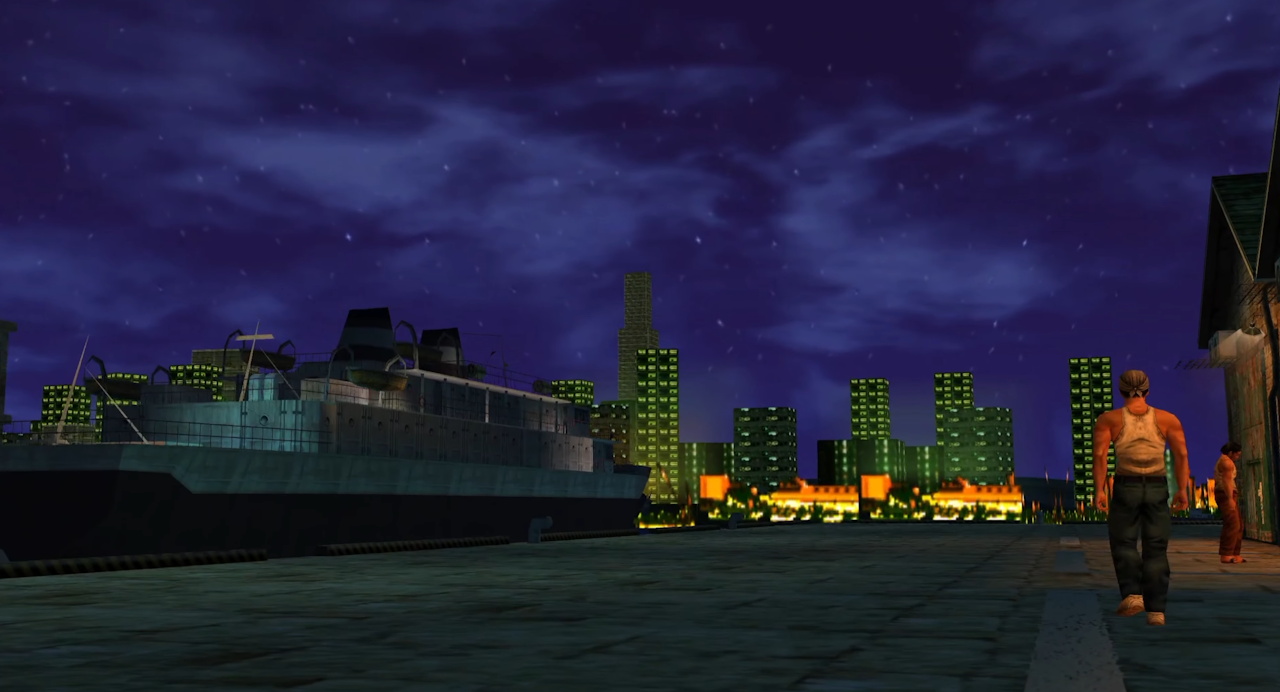
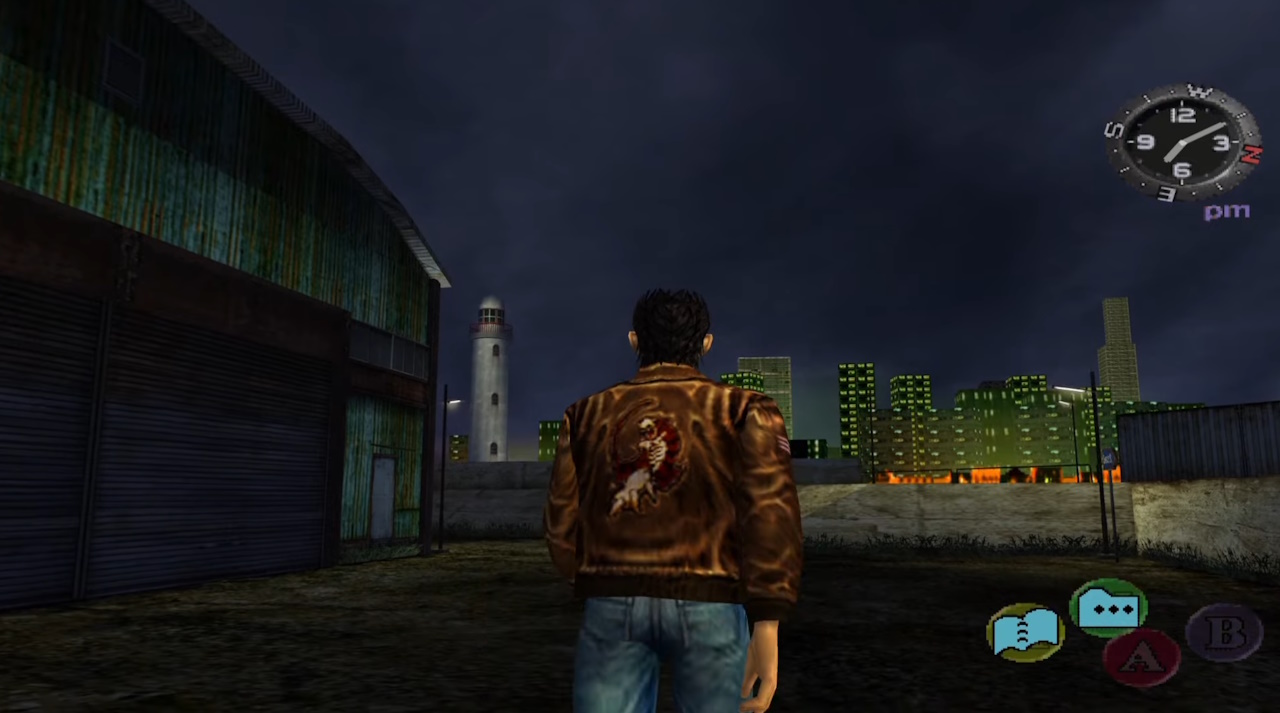
Screenshot of Shenmue II showing the harbour at night
The harbour at night.

Shenmue II’s Hong Kong felt densely-populated, even compared to the first game’s slice of Japan. Once Ryo got out of the harbour area and into Wan Chai, there were people *everywhere*, and even if most of them only had one or two lines, what was cool was that you could approach and try to talk to all of them. As in Shenmue, shops and restaurants that you had no need to visit and didn’t serve any narrative function could be entered at will and explored, and there was so much going on in Hong Kong’s cramped streets that the world felt *alive* in a way that, even today, many game worlds just… don’t.

I felt like there was a bit more diversity of environments in Shenmue II compared to the first game, too. While you really only got the rural area right at the end, each of the areas of the city felt distinctive – some were more modern, others clearly older and more run-down. The harbour had beautiful views across the water; the city streets were so built-up and vertical that you couldn’t see very far. There were luxurious hotels and arcades in some areas, literal ruins or people living on boats in others.
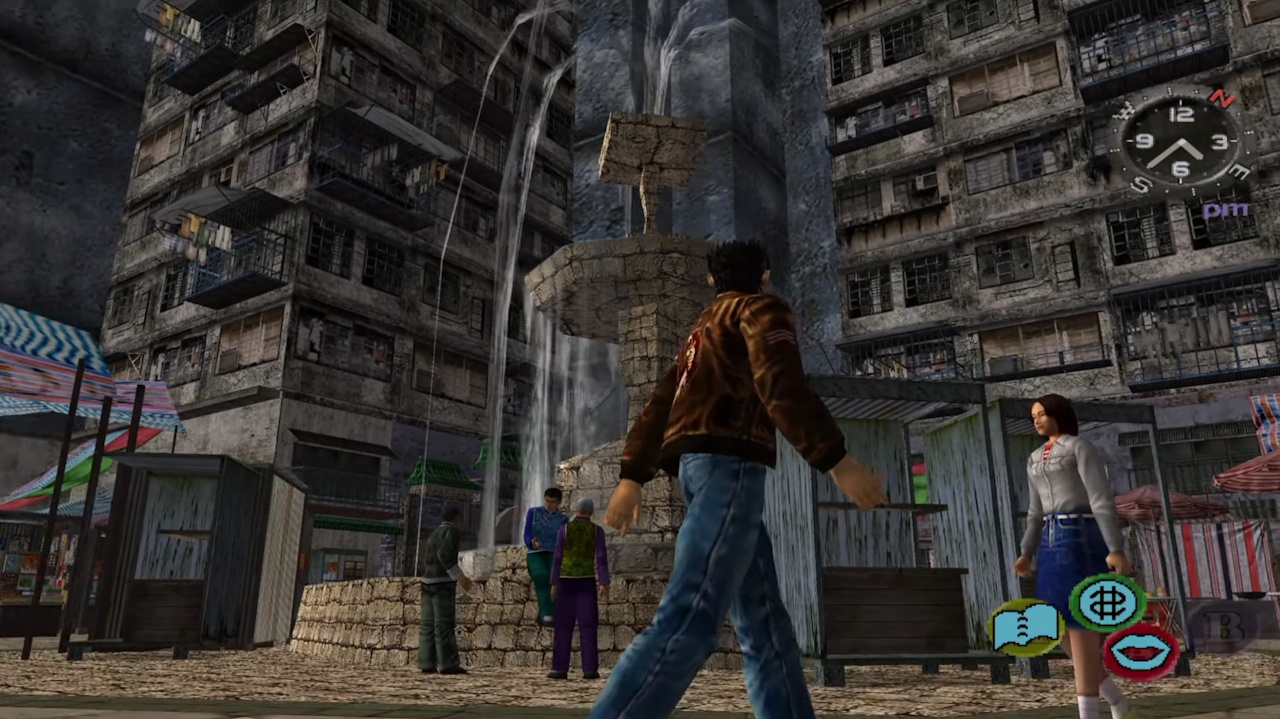
Screenshot of Shenmue II showing Ryo in Kowloon
Kowloon.

Shenmue II also captured a moment in time. The Hong Kong of 1987 is very different to how it was even when the game launched; the handover in 1997 changed a lot for the city and its people, as did the clearing of the Kowloon Walled City. By the time Shenmue II launched, the way of life that some of the game’s characters had was already gone… and that’s something that I didn’t feel from the first game in the same way.

When Shenmue launched, I was engrossed by its Japanese setting – but also, I genuinely enjoyed playing through a depiction of the real world in the (almost) modern day. I didn’t see Shenmue as this ’80s nostalgia-fest – which I think you’d definitely get a lot more of if the game had been made in the 2020s. But because Hong Kong changed so much in the years between the game’s setting and its launch, it feels like it captured a piece of history, really – a world that just didn’t exist any more. And that’s a bit of an odd feeling, too, even if I couldn’t quite put my finger on it all those years ago.
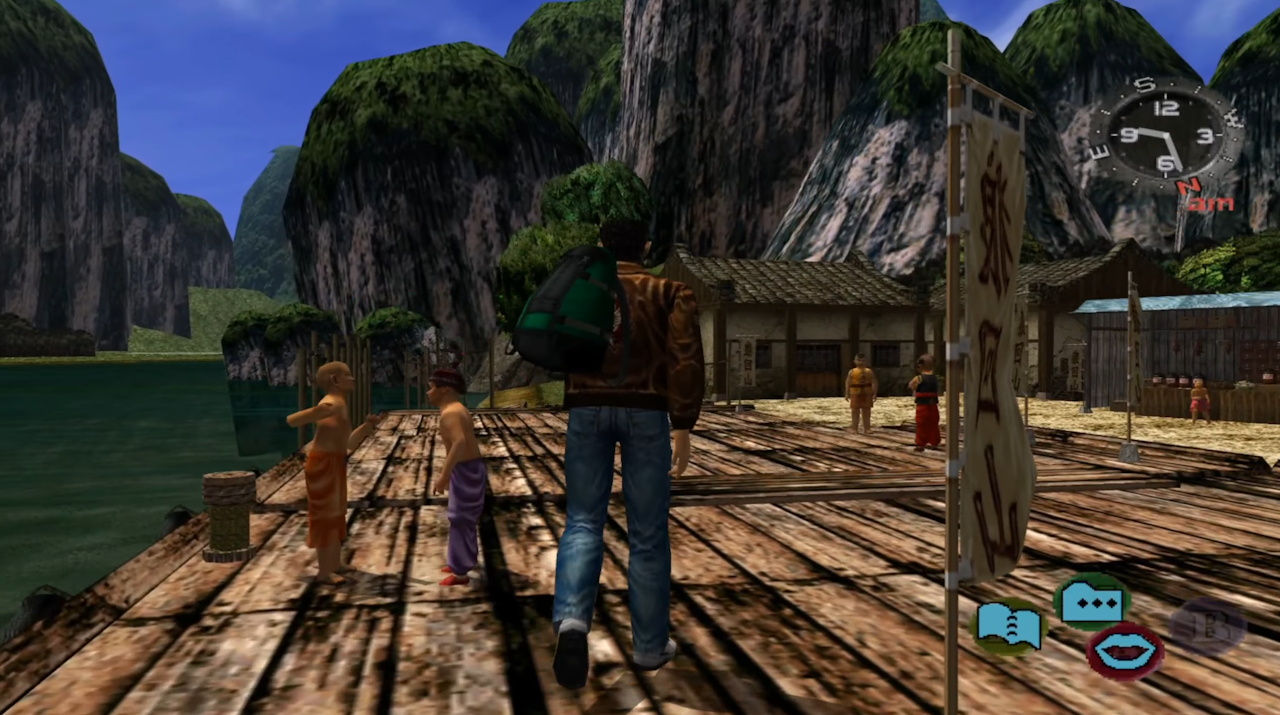
Screenshot of Shenmue II showing Ryo arriving in Guilin
Arriving in Guilin.

Gameplay-wise, Shenmue II does what any good sequel should: it keeps what worked and expands upon it. The game plays similarly to its predecessor, with collectables, QTEs, mini-games, martial arts moves, and combat – but some of these elements feel more refined, or at least different. You don’t get to drive a forklift, but you can work a part-time job. You can gamble, buy and sell capsule toys, and make money. Money is arguably *more* important this time around – not only does Ryo need, for parts of the game, to pay for his lodgings, but there’s no pocket money from Ine-san to top up his wallet, and there are a couple of points where Ryo needs a certain amount of money to progress the main story.

Quick-time events have developed a bit of a reputation with some players in the years since Shenmue launched, and as the first game to popularise the mechanic, I think these games get a bit of a bad reputation. You have to try to cast your mind back to 2001; quick-time events took what would’ve been cut-scenes and found a way to make them interactive. This was revolutionary at the time, and even if some games have overused or misused QTEs over the last quarter of a century, I’ll always give Shenmue and Shenmue II a pass when it comes to their inclusion.
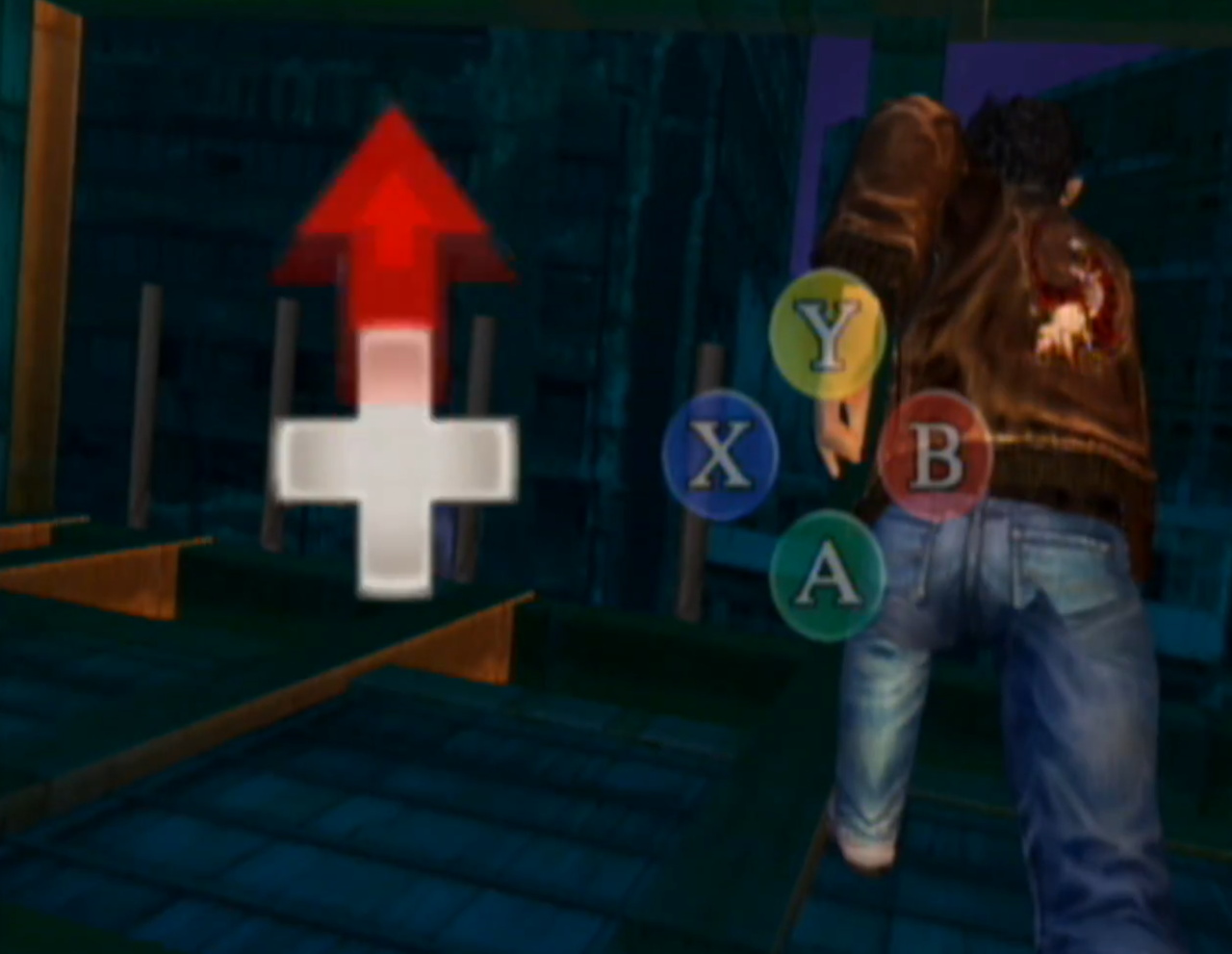
Screenshot of Shenmue II showing a QTE
QTEs have become somewhat infamous, eh?

Shenmue II expands the series’ roster of characters. Ryo makes friends and allies in Hong Kong – Xiuying and Ren being, perhaps, the most noteworthy. The characters are diverse – Ryo can befriend younger characters, like Wong and Fangmei, as well as people his own age, like Ren and Joy, and even meet older folks like Guixiang and Jianmin. There are some incredibly memorable characters that Ryo will meet on his journey, and when it’s time to say goodbye to some of them… well, even all those years ago, I can remember how bittersweet that felt. Like, it was great to be progressing through the story – but sad that the likes of Xiuying couldn’t come along for the next chapter.

There are also some great villains and anti-heroes. I’ve already mentioned Ren and Wong; both characters get off on the wrong foot with Ryo, but become more friendly as the story unfolds. In terms of bosses and baddies, the one that sticks in my mind is the game’s biggest boss – figuratively and literally – Dou Niu. I remember that fight being incredibly difficult back on the Dreamcast, but the reward of beating him and advancing to the final part of the story was just… indescribably fantastic!
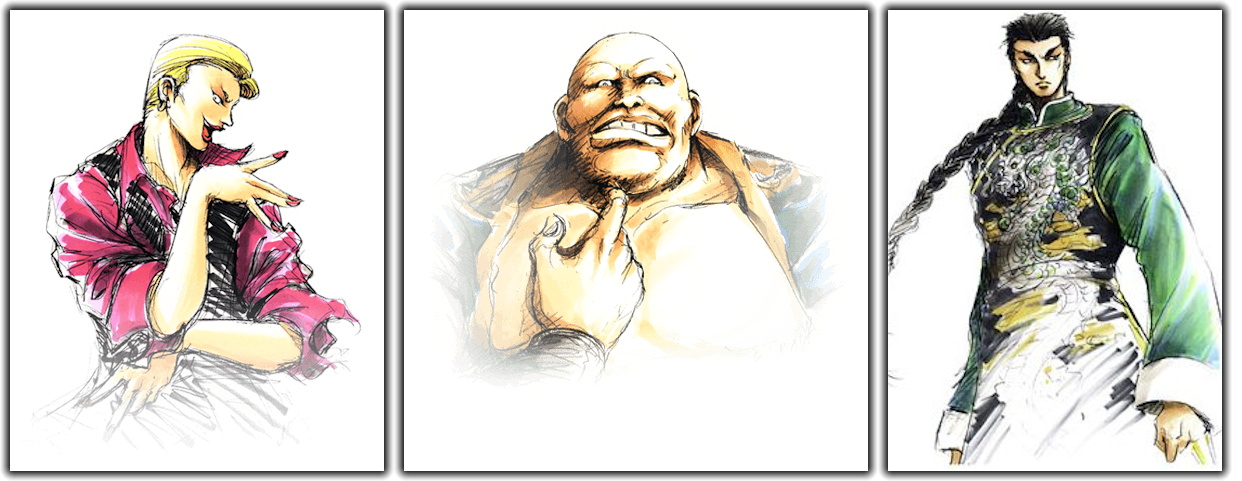
Concept art for Shenmue II showing Yuan, Dou Niu, and Lan Di
Yuan, Dou Niu, and Lan Di: a trio of villains!

Shenmue is a game I’ve always associated with the winter time and festive season; the first game takes place in December, and at points, there’s even some explicitly Christmas theming that you can encounter. But Shenmue II has more of a springtime flavour, I guess, although I wouldn’t say it’s quite so intensely tied to one specific moment in the year in the way its predecessor is. As in the first Shenmue, it’s possible to run out of time – though you almost have to deliberately choose to trigger the game’s bad ending, because both Shenmue and Shenmue II are pretty lenient when it comes to timing and running out the clock.

Ryo’s quest for revenge still feels just as relatable as it had in the first game, and it remains his driving force. But the story is incredibly well-written, and Ryo is challenged in his assumption that he can simply track down the murderous Lan Di and enact his revenge. Ryo has to learn patience – as exemplified by the book-carrying and leaf-catching mini-games that I just *know* some fans of faster-paced action games despise! But there’s more to Shenmue II than mindless action; the game’s story leans into the idea that Ryo isn’t ready for the challenge ahead, and that he needs to take time to slow down, hone his skills, and build up to that climactic confrontation.
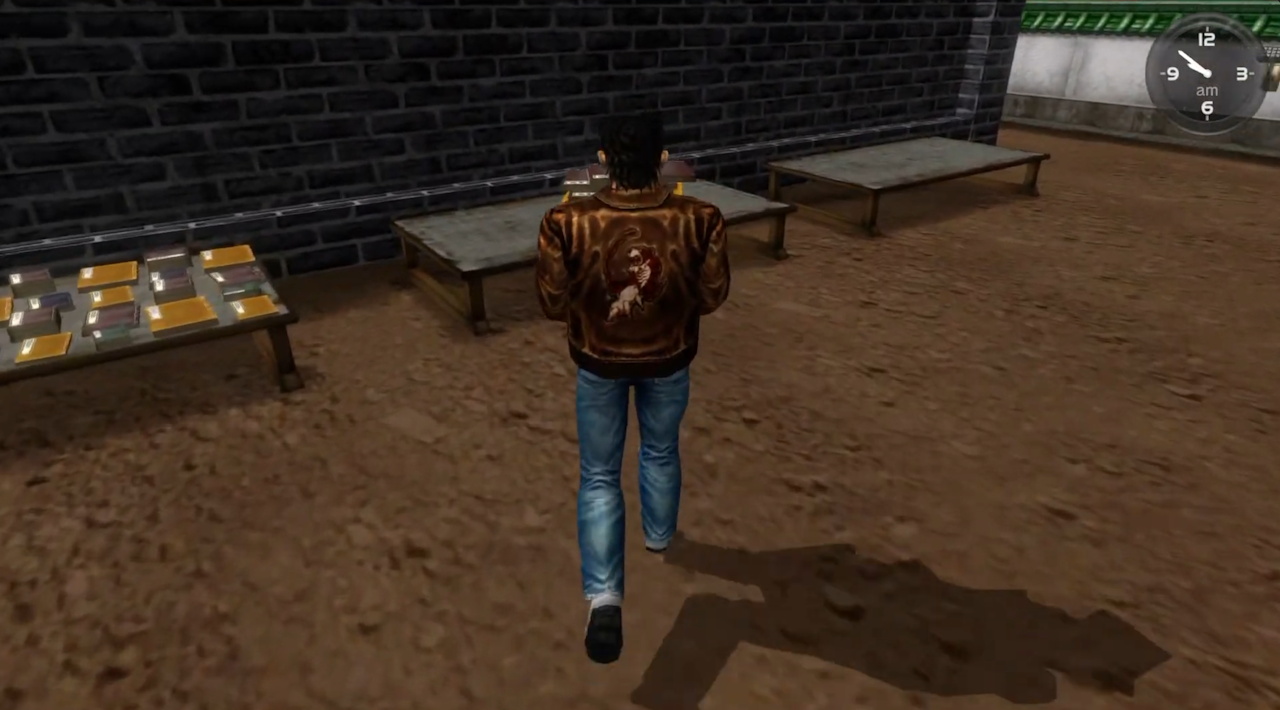
Screenshot of Shenmue II showing Ryo airing the books at the Man Mo temple
Airing out the books…

It’s just such a shame that the Dreamcast’s demise meant that the story couldn’t be continued in the way it should’ve been. It’s also disappointing that, when a reprieve was belatedly granted and Shenmue III finally entered production… well, it wasn’t the ending that it should’ve been.

But this isn’t a forum to debate Shenmue III, is it?

To get back on topic, Shenmue II did exactly what I hoped it would do in 2001: it expanded the story, took Ryo to new places, introduced him to new friends and new enemies alike, and began to unravel some of the mysteries that the first game had so expertly set up. Many questions weren’t resolved by the time the credits rolled – and, in many ways, leaving Ryo and Shenhua in a mysterious, otherworldly, and magical cave felt like a cruel cliffhanger! But the way these storylines advanced felt satisfying at the time.
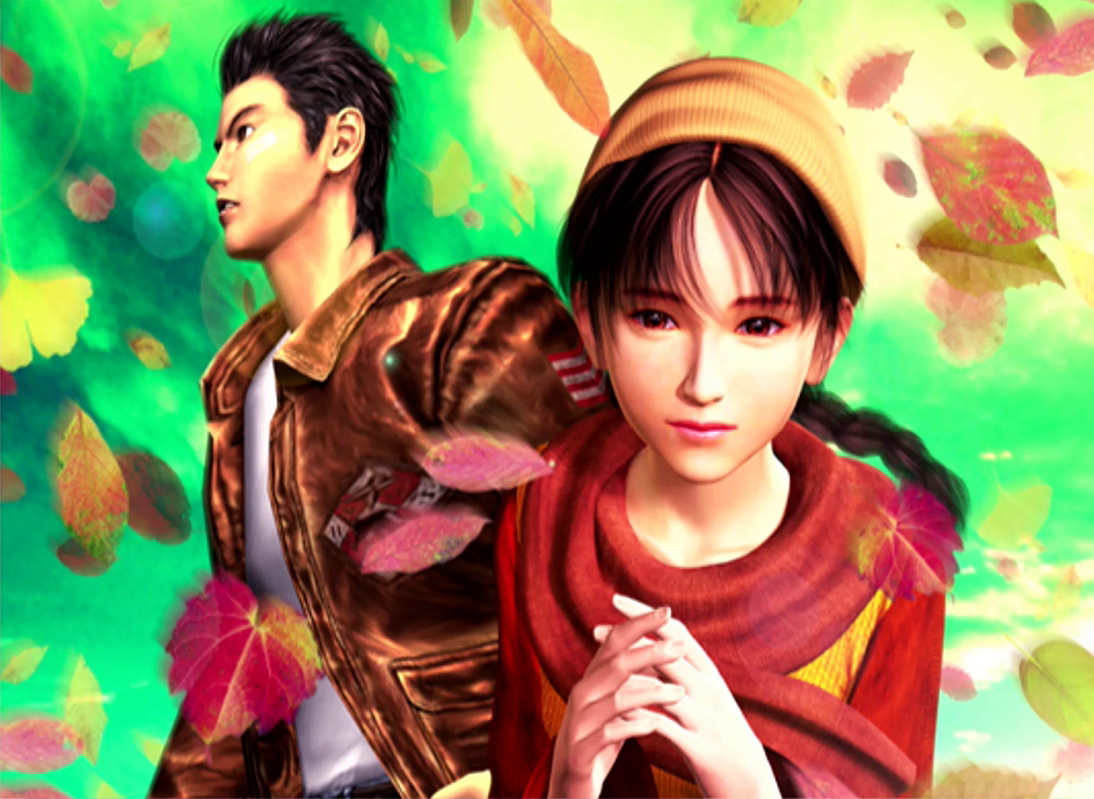
Screenshot of Shenmue II showing Ryo and Shenhua
Ryo and Shenhua.

Because I played Shenmue II on the Dreamcast, there was no English audio available. And I think I’m remembering correctly when I say that this was the first time I’d played any game in Japanese. I know absolutely nothing of the Japanese language, of course – though with subtitles, the game was perfectly fine to play! But I wonder if that experience of playing the game in Japanese changed how I think about Shenmue II. In some ways, it probably meant I had to concentrate a little more; relying on subtitles meant I couldn’t look away, even for a second, lest I risk missing something important! On the other hand, I think that language barrier was another reason why Shenmue II’s world felt just a bit more different and “alien” than the first game’s had.

I don’t object to non-English media, of course, and Shenmue II was almost certainly the first video game I played that didn’t have an English translation. I guess folks from other countries are laughing at that; if your first language is anything other than English or Japanese, chances are a lot of games you were playing in the ’90s and into the 2000s weren’t in your native tongue! But for me, as someone who grew up in the UK and speaks English, that was just another thing that made Shenmue II a little… different.
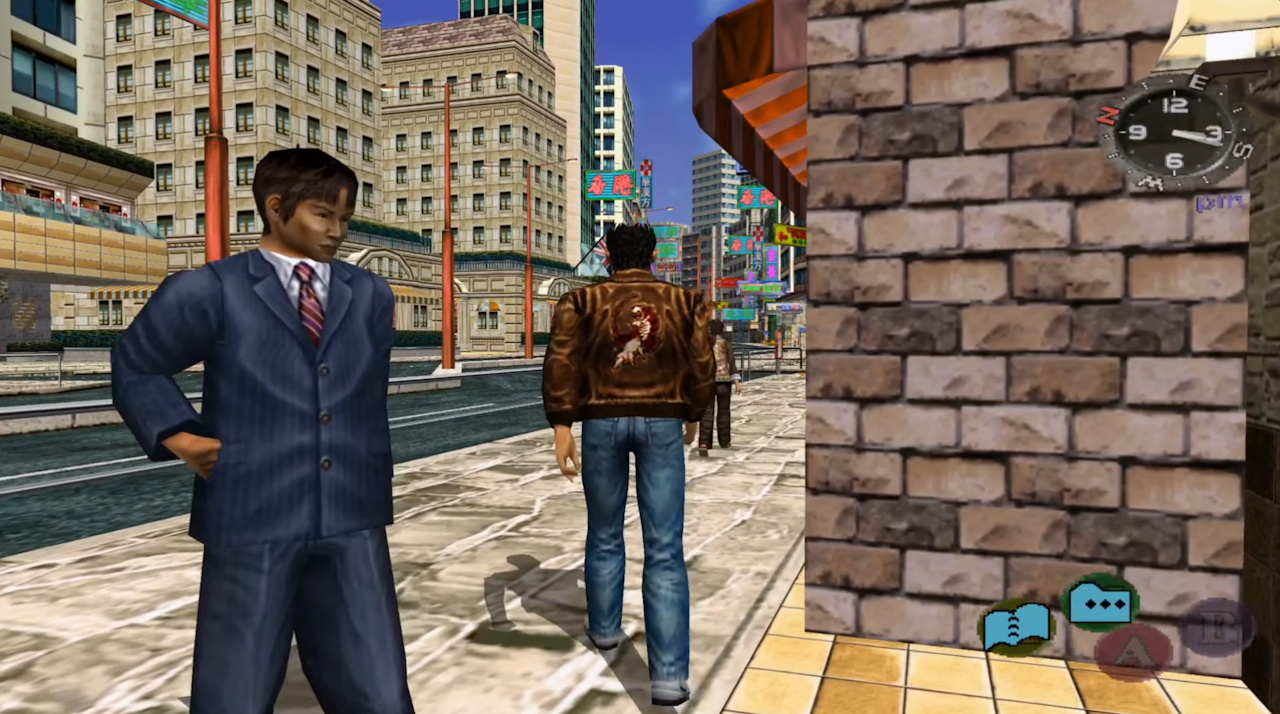
Screenshot of Shenmue II showing Ryo walking
I played Shenmue II on the Dreamcast where it only had Japanese audio.

Looking back on it now, a quarter of a century later, I don’t think Shenmue II is quite as big or revolutionary a title as its predecessor. But it continued and expanded on that wonderful story – and I really do wonder why so many people who played the first game didn’t come back for the sequel. Was it just the Dreamcast having already been cancelled? Were people – especially in Japan – already moving on to new hardware? Or was the first game even more of a niche thing than I appreciated back then? I guess the answer is a combination of those things, as is often the case!

Perhaps it’s because I played the first Shenmue over and over, but I feel the first game has more memorable locations than its sequel. There are places in all of Shenmue’s main areas that just stick in my mind or that capture a very specific kind of atmosphere. The cafe at the harbour, the car park in Dobuita, the candy store in Sakuragaoka, the arcade, and so on. Shenmue II, in contrast, has some absolutely beautiful and well-crafted locations, but I don’t think as many of them are “iconic” in the same way.
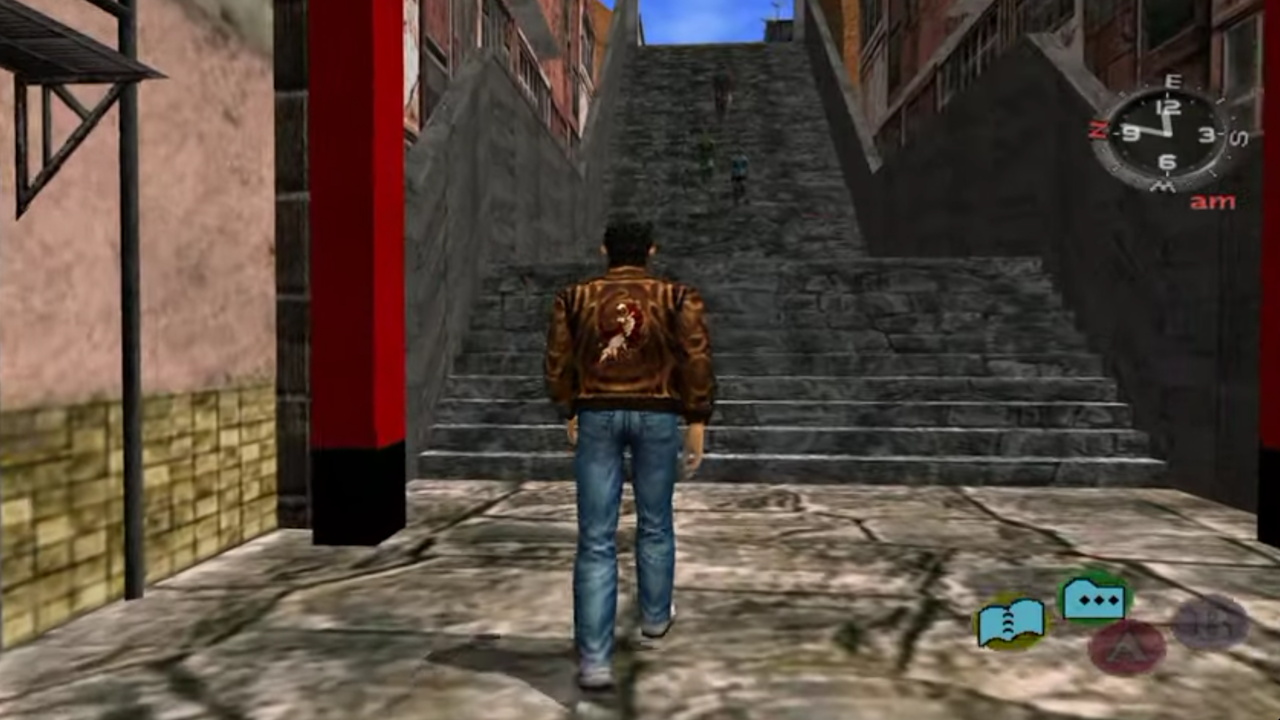
Screenshot of Shenmue II showing the stairs in Scarlet Hills
The stairs leading to Man Mo temple.

However, I’d also say that Shenmue II has by far the better character roster. Ren, Xiuying, Dou Niu, Wong, Fangmei, and more are all absolutely fantastic, deep characters, and compared to the first title… I just think Shenmue II takes the win on that front! That’s not to say that any of the first game’s characters are “bad,” but the way the story unfolds and these characters are introduced more naturally just gives the second game the edge.

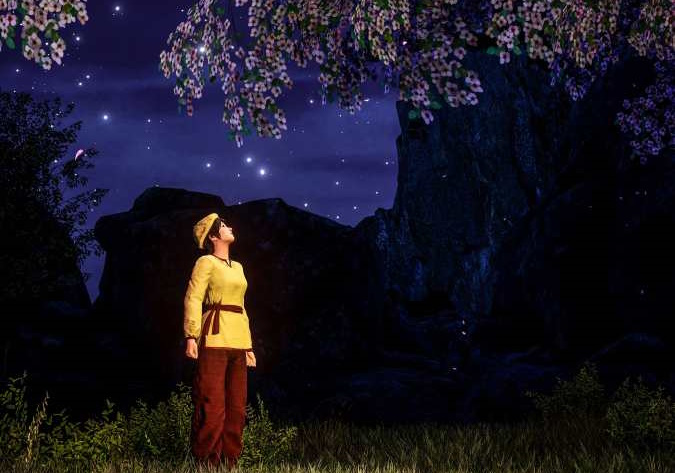
There are some very memorable moments in Shenmue II. Obviously, visiting the mysterious cave in Guilin has to be among them; this was, for more than eighteen years, as far as Ryo’s story got. Moreover, it was the moment when this grounded story of revenge set in a realistic, modern-day setting took a turn in more of a fantastical direction. And that was truly an interesting development!
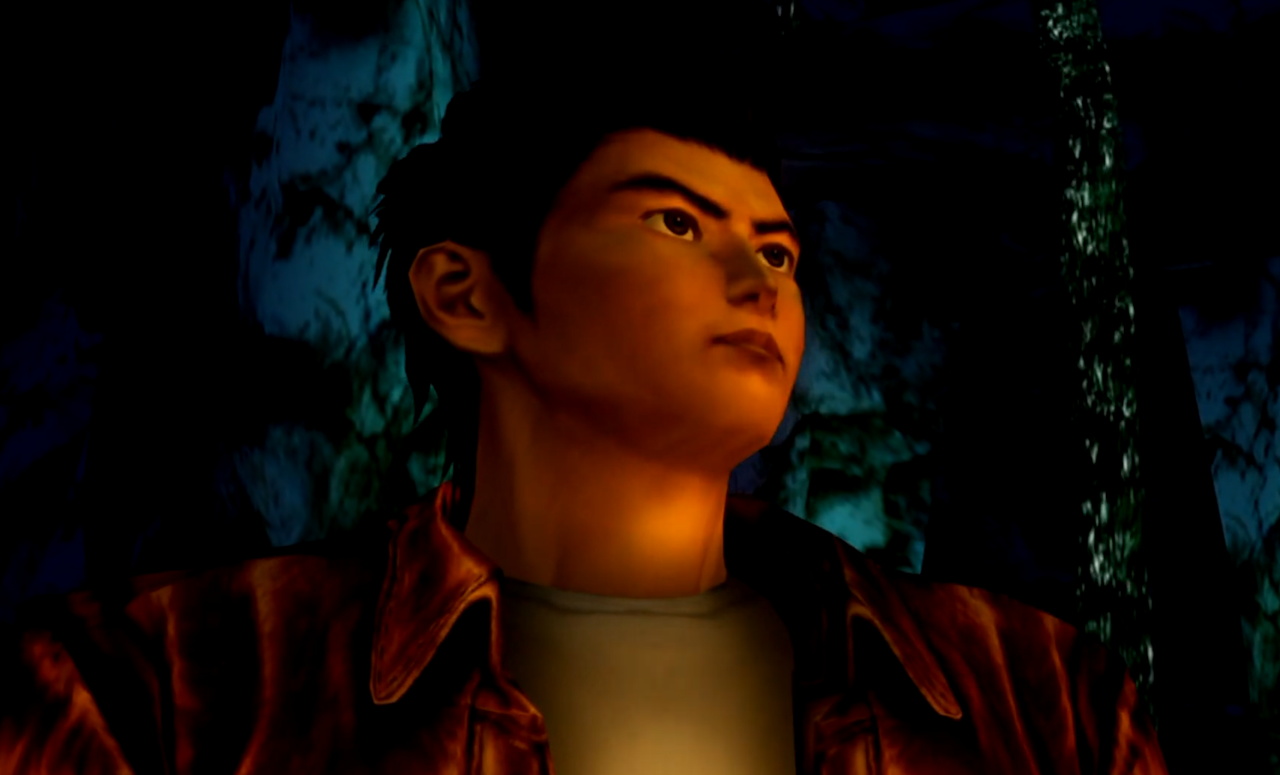
Screenshot of Shenmue II showing Ryo at the end of the game
Ryo at the end of the game.

The long QTE section of ascending the Ghost Hall Building in Kowloon is also incredibly memorable – probably because of just how damn long it took me to perfectly progress through that particular challenge! Often if I encounter a similar section in a game – balancing on beams or boards, navigating narrow or dangerous elevated paths, and so on – it reminds me a lot of Shenmue II! I think I noted that in a review of a recent gameIndika.

In terms of narrative or character moments, Ryo realising that the person he’d been sent to track down – this famous martial arts master who he hoped would help him – was… shock horror, a *woman* is still pretty funny. It says a lot about Ryo, his expectations, and his biases – and I love how the story takes him to task for making such assumptions, particularly when Xiuying easily kicks his butt! Then there’s Ryo catching up with Wong on his boat-home, giving Fangmei a birthday gift, and the burgeoning friendships Ryo develops with Joy and Ren. There’s some great stuff here, and it’s beautifully brought to life in the game, making the world and characters feel real.
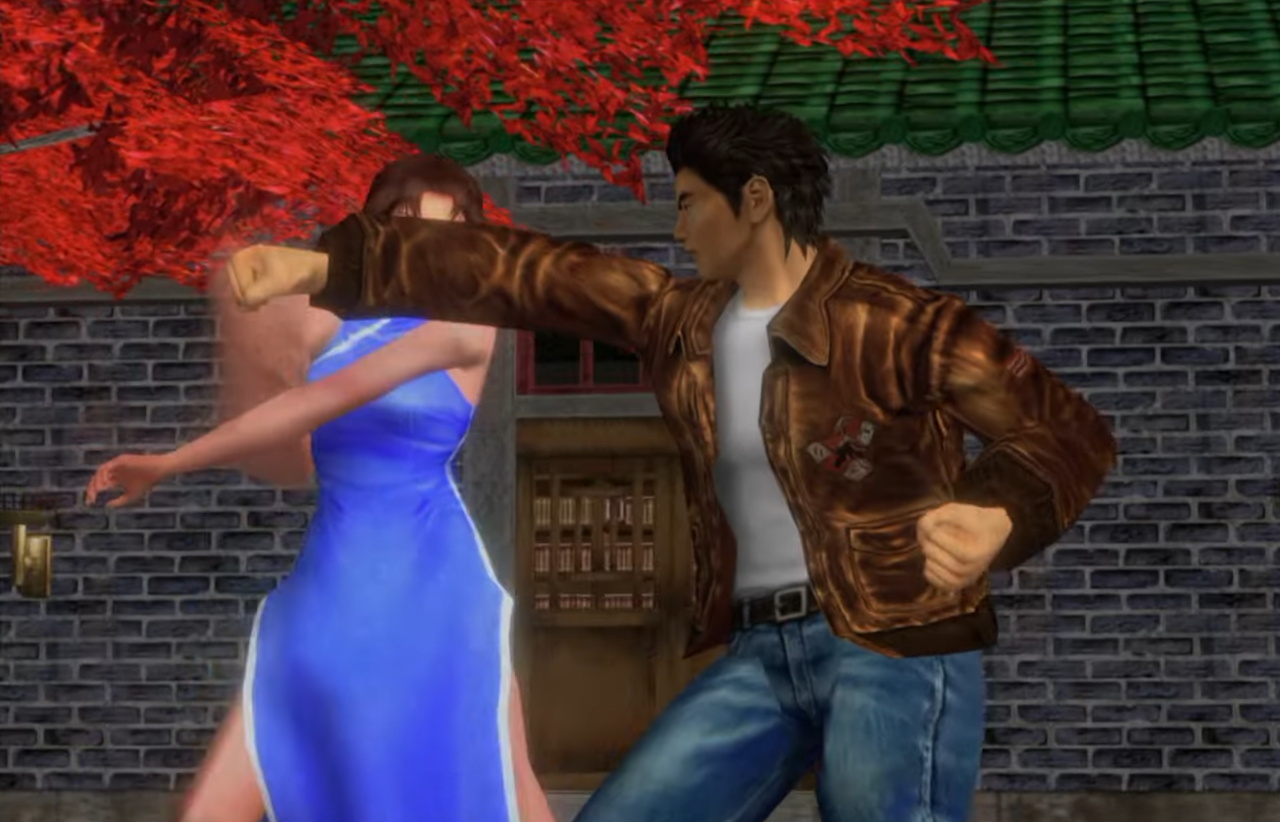
Screenshot of Shenmue II showing Ryo fighting Xiuying
Ryo has his expectations challenged… and gets his butt kicked.

I still haven’t watched Shenmue: The Animation, but it’s on my list, and I hope to get to it sooner or later! As I think I said last time, when we celebrated the first game’s anniversary, I’ll be curious to see how well the story translates to a completely new medium. And having just started to dip my toes into anime this year, I’m definitely interested in continuing that by revisiting Shenmue and Shenmue II.

So I hope this has been a fun look back!

Shenmue II is a great game – and, even more so than its predecessor, is sorely underrated and underappreciated. The mystery of the mirrors unfolds, Ryo’s quest for revenge continues, and along the way, he meets some fascinating characters in a dense, lived-in world. I adored Shenmue II back in 2001… and I still appreciate its successes today, a quarter of a century later.
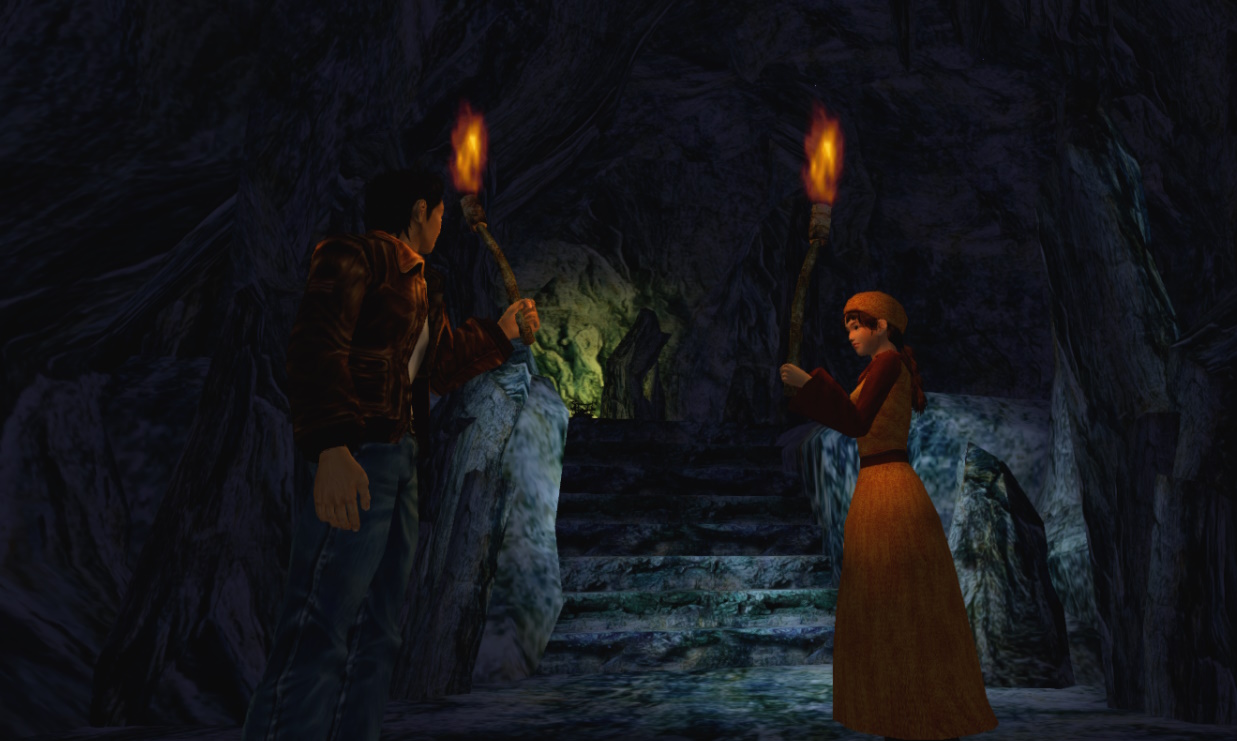
Screenshot from Shenmue II showing Ryo and Shenhua in the cave
The cave at the end of the game.

Thanks for joining me on this retrospective. I really need to do more of these “video game spotlight” pieces; I have at least a dozen other games that I’d like to talk about in this format! If you missed it, I wrote up a similar 25th anniversary piece for the first Shenmue, which you can find by clicking or tapping here. Earlier this year, I also talked a little about the hoax trailer for a fourth game, and you can check out my thoughts on that by clicking or tapping here. And all of my other pieces about the Shenmue saga can be found by clicking or tapping here.

For me, Shenmue II is still where this story ended. Incomplete and on a cliff-hanger… a masterpiece of the Dreamcast generation that, for reasons beyond its control, wasn’t able to be continued. I have my doubts, but if – *if* – a fourth Shenmue game ever makes it to production… I’d still like to see how this story ends. Never say never, I suppose.


Shenmue I & II is available now for PC and PlayStation 4. Shenmue – The Animation may be available to stream on CrunchyRoll. Shenmue is the copyright of YSNet and/or Sega. Some images, screenshots, and artwork courtesy of Sega, YSNet, Shenmue Dojo, and Wandering Through Shenmue on YouTube. This article contains the thoughts and opinions of one person only and is not intended to cause any offence.
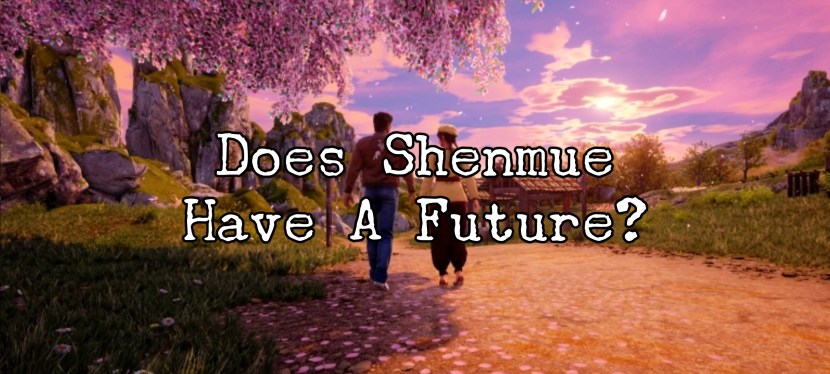
Does Shenmue Have A Future?

One of the first subjects I wrote about here on Trekking with Dennis almost five years ago was the Shenmue saga – Shenmue III specifically. With 2024 being the fifth anniversary of Shenmue III and the twenty-fifth anniversary of the first Shenmue… I thought it could be interesting to look at what – if anything – may lie ahead for the series.

For context, I played and loved both Shenmue and Shenmue II when I owned a Dreamcast just after the turn of the millennium. I was left disappointed by Sega and Yu Suzuki’s inability to conclude the story, as I found it incredibly fun and engaging. As I’ve said more than once here on the website, Shenmue was the first game I played that felt truly cinematic; as if its story would be right at home on the big screen. The combination of its open level design, realistic NPCs who seemed to have lives of their own, the modern-day setting, and engrossing narrative all came together to make it one of the best games I’ve ever played – and its sequel was just as good.

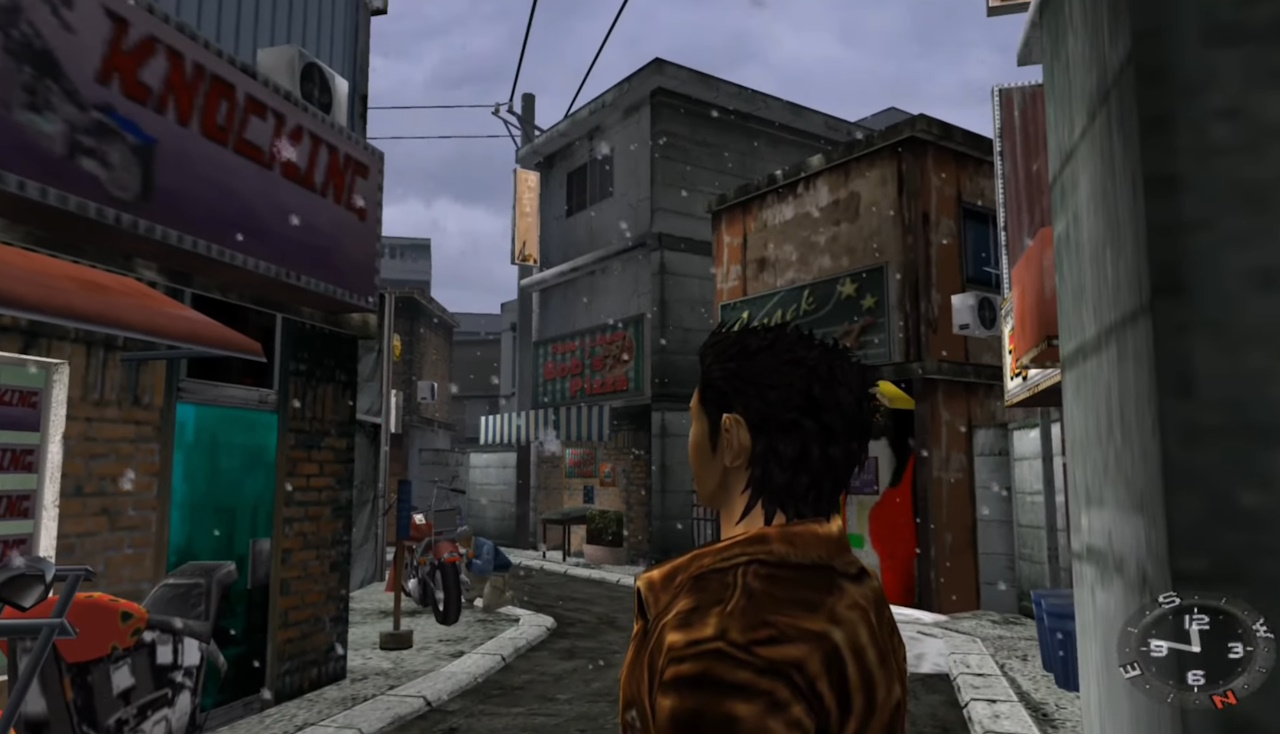
Screenshot of Shenmue I showing Ryo in Dobuita.
Shenmue’s world was unlike any I’d ever experienced in a video game before.

But here’s the thing: Shenmue was a failure. While critically acclaimed and spawning a vocal fan community that persists to this day, by every other metric the Shenmue saga completely failed. The incredibly expensive undertaking never came close to making its money back for Sega, and the failure of the Dreamcast meant that there was no way to recoup most of the two games’ development costs. Even a release of Shenmue II on Xbox didn’t help things. As bitterly upset as I may have been, I came to accept that this ahead-of-its-time masterpiece was underappreciated and would remain unfinished.

When Yu Suzuki and his independent development studio YSNet were able to buy the rights to Shenmue from Sega, it seemed as if things might be looking up. A Kickstarter campaign came along at just the right moment – when interest in crowd-funding was close to its peak – and the latent Shenmue fan community stumped up an astonishing $7 million with the hopes of concluding the saga. Backed up by additional investment from Sony, Epic Games, and others, it seemed as if the failed series was about to get one last chance.

Logo of YSNet.
Shenmue III was developed by YSNet.

A re-release of Shenmue I & II came to PC and PlayStation 4 consoles a couple of years ahead of Shenmue III’s launch. For the first time in well over a decade (since I put my Dreamcast and most of its games in a box in the attic) I re-played the games – and I had a blast all over again. But then came what I considered to be devastating news from YSNet.

The Shenmue saga was always planned as a multi-game story. Shenmue and Shenmue II told the first chapters, but there were several chapters still to tell. For reasons that, years later, I still find pig-headed and incomprehensibly stupid, YSNet was unwilling to adapt the planned story to make Shenmue III the saga’s finale. Instead, it would simply move the story along… presumably with the expectation of high sales or another crowd-funding campaign to keep Shenmue going. That always seemed completely impossible to me – and as much as I hate to say it, I was right about that. I didn’t even bother to buy Shenmue III in 2019, because what was the point? The game had, in my opinion, one job: to finish the Shenmue story. Yu Suzuki and his studio had been given a once-in-a-lifetime chance to do that by a dedicated group of fans… and they blew it.

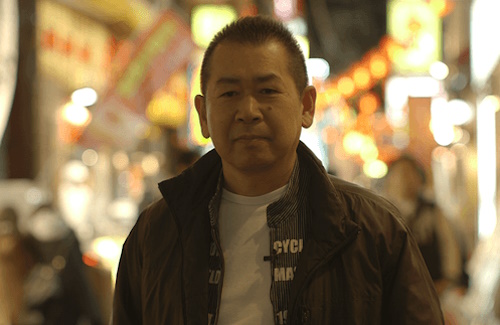
Photograph of Yu Suzuki.
Yu Suzuki, creator of the Shenmue series.
Photo Credit: YSNet; ysnet.games

The re-release of Shenmue I & II (and no, I don’t consider it a “remaster” or anything close; it’s a port) didn’t sell particularly well on PC and PlayStation – which was an ominous warning sign for Shenmue III. When Shenmue III finally launched amidst controversy over its Epic Games exclusivity on PC, it also didn’t sell very well. It seemed to me as if most of the people who might’ve conceivably been interested in buying it had already backed the Kickstarter project – one of the benefits of which was a copy of the game upon release. In its first week, Shenmue III grazed the lower reaches of the PlayStation sales charts in Japan… but didn’t even register anywhere else.

I did eventually buy Shenmue III when it was on sale on Steam. I haven’t played it yet, despite owning it for a while, and I have no real plans to. But when it was on sale for £15 or so, it seemed like a reasonable purchase. And if there’s ever news of a fourth game… maybe I’ll get around to checking it out.

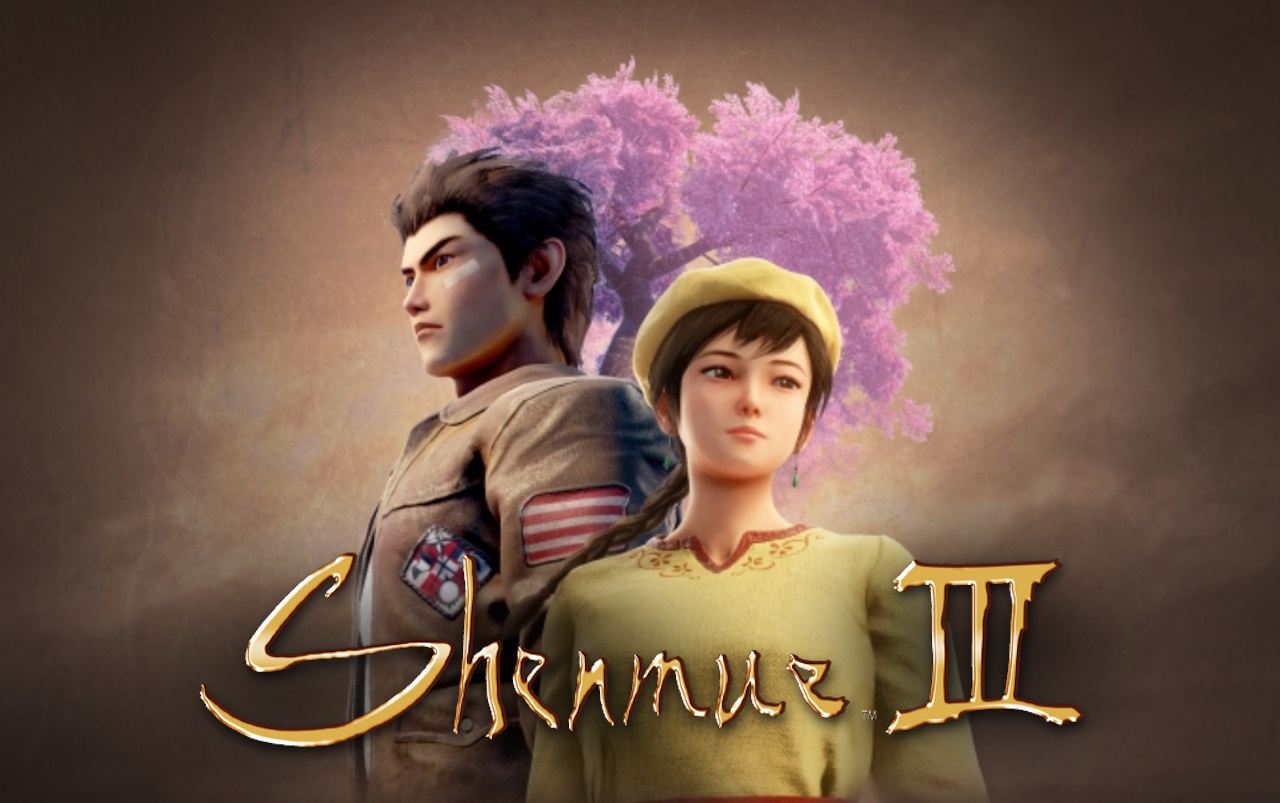
Promo image for Shenmue III with the game's logo attached.
I did belatedly purchase Shenmue III… but I have no plans to play it right now.

The way I see it, lacklustre sales for both the re-release of Shenmue I & II and Shenmue III demonstrate pretty clearly that this series has no mainstream appeal. Shenmue III was the last opportunity to change that – but again, the game failed to do so. So at this point, the remaining fans of the series are pretty much shouting into a void; tweet-a-thons that garner a few thousand posts at the very most feel like the last wriggles of a series in its death throes.

Shenmue’s anime adaptation also failed to bring renewed interest to the saga. I don’t have the numbers to hand, but Shenmue: The Animation ran for a single season back in 2022, and during that time, sales of the re-release and Shenmue III barely moved.

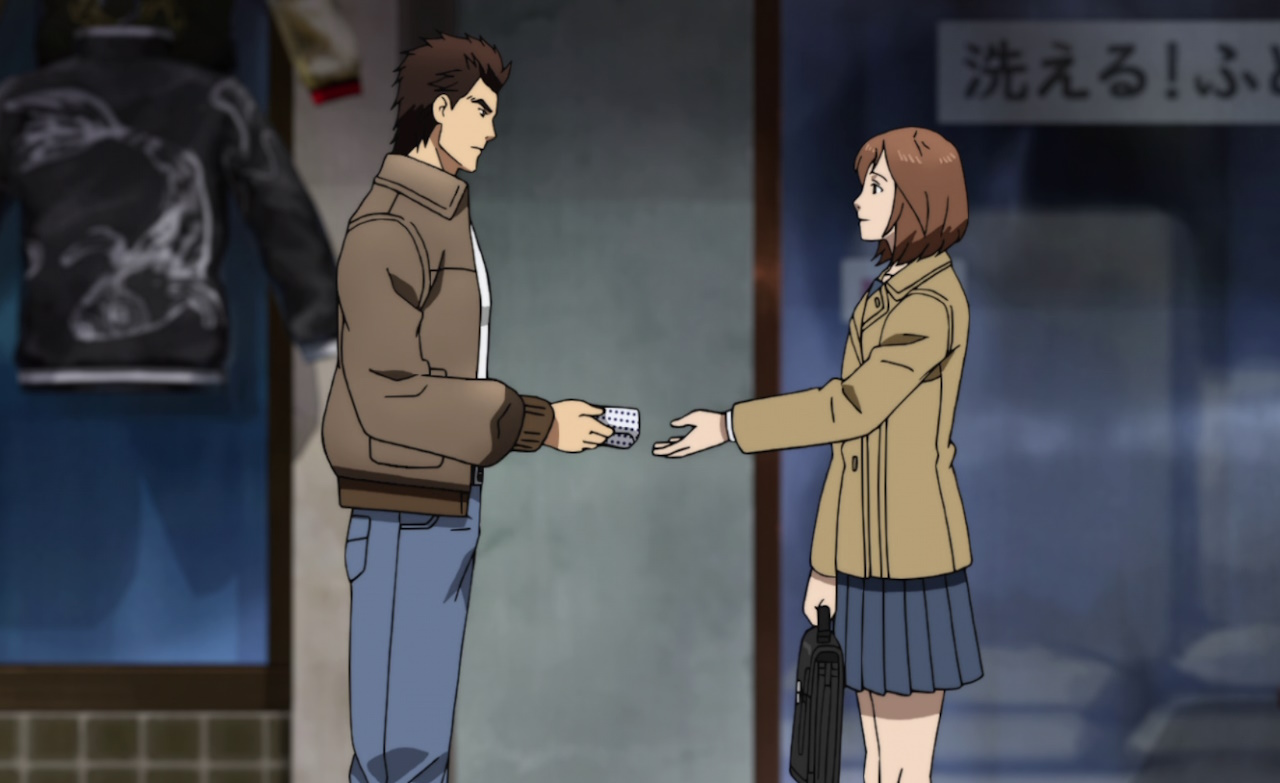
Still frame from Shenmue: The Animation showing Ryo and a female character.
There was an anime adaptation of Shenmue a couple of years ago.

Shenmue: The Animation was itself cancelled after just one season. Having adapted the story of the first two games, there was scope for a second season to dip into Shenmue III or perhaps even go beyond that… but the audience just wasn’t there either in Japan or in the west.

There was finally some Shenmue news just a few days ago, though. A new publisher – ININ Games, a company with a focus on older, retro titles – picked up the publishing rights to Shenmue III, and there’s been talk of potential ports to the Nintendo Switch and other platforms. This is by far the biggest news for Shenmue since Shenmue III’s launch back in 2019… and while I don’t expect it to really go anywhere, it’s at least noteworthy that someone, somewhere, thinks Shenmue is worth spending a little money on.

Promo image for Shenmue II showing Ryo in Hong Kong.
Ryo in Hong Kong.

At this point, twenty-five years on from the first game and five years after Shenmue III failed to light up the board, I really don’t see Shenmue IV ever getting off the ground. YSNet burned a lot of its bridges with members of the fan community with their first Kickstarter campaign, and with the decline of crowd-funding in general, raising millions of dollars that way seems like it’s off the table. With a clear and demonstrable lack of success with both the re-released titles and Shenmue III, getting significant outside investment also feels pretty unlikely.

However, the new publishing deal for Shenmue III and talk of a potential port of the game to a new platform has raised some hopes in the fan community. So let’s think about what Shenmue IV could and should look like.

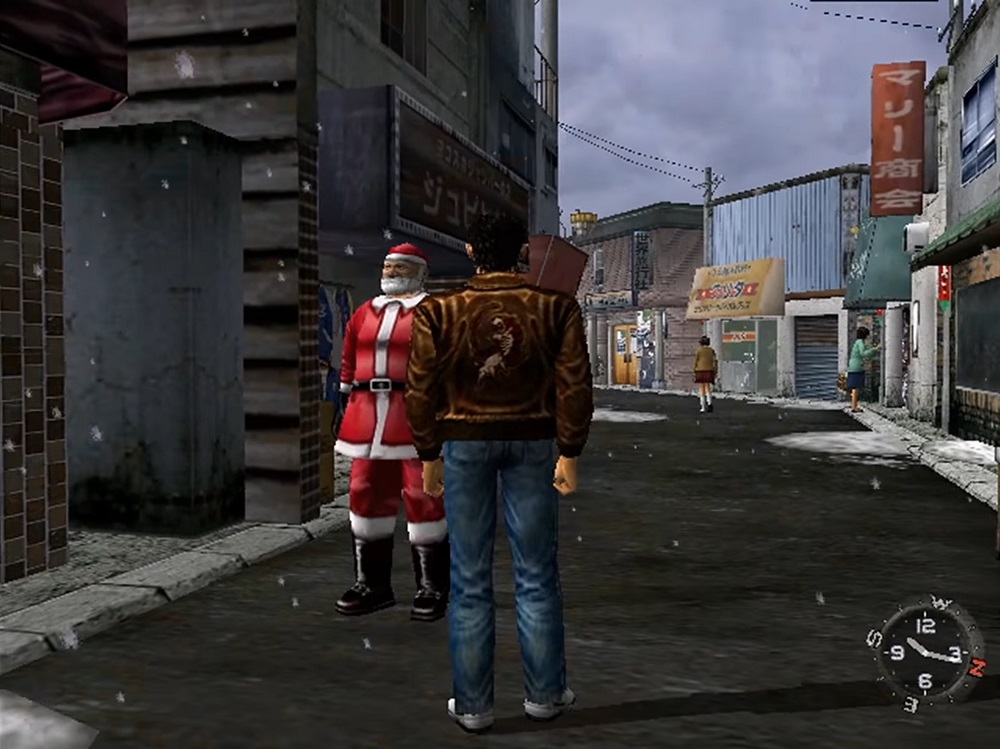
Screenshot of Shenmue I showing Ryo and Santa Claus in Dobuita.
Meeting Santa Claus in Dobuita.

For me, the bottom line is this: Shenmue IV needs to be the end. I don’t care how many chapters Yu Suzuki originally planned in the ’90s. I don’t care how much of the story would need to be slimmed down or skipped in order to get to the end. At this point, if the stars align and through some absolutely miraculous good fortune Shenmue IV is able to get off the ground, it simply must bring the story to an end. That was what Shenmue III was supposed to do – and having failed again, there may not be another chance.

Shenmue IV won’t bring in new fans – not in any significant numbers, anyway. The re-release didn’t do that and neither did Shenmue III, so as much as I wish the games were held in higher esteem and celebrated more widely, it’s time to acknowledge that Shenmue is and always has been a niche product with a small audience. But that could be a positive thing! Without needing to worry about making a game with broader appeal, YSNet could tailor Shenmue IV to the built-in audience it already has, keeping things simpler for the team.

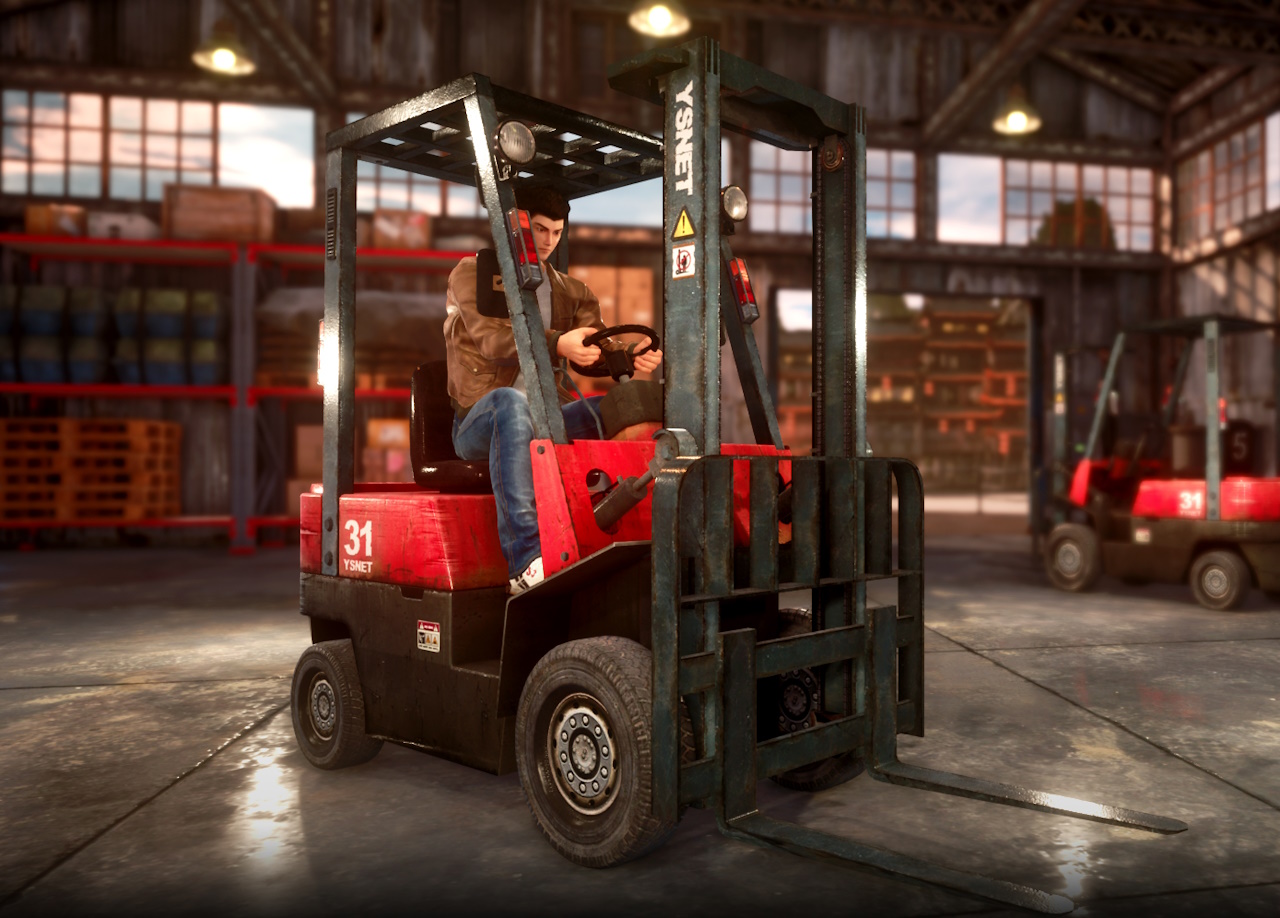
Promo image for Shenmue III showing Ryo driving a forklift.
A promo image for Shenmue III.

And there are ways to tell other chapters of the story if Yu Suzuki is still insistent on doing so. A book, graphic novel, or even a series of cheaply-animated YouTube shorts could cover whatever gaps may emerge from condensing two or three games’ worth of story into a single title. Shenmue IV wouldn’t need to cut out one massive chunk of narrative, either: it could pick up different pieces of the story with in-game cut-scenes covering the basics of the rest. In short, there are ways around this stumbling block – as there were in the 2010s when Shenmue III was being developed. Unlike last time, however, someone needs to come in and make cuts to the bloated story and gameplay – and if Yu Suzuki and his team can’t or won’t do it, then it needs to be an outsider.

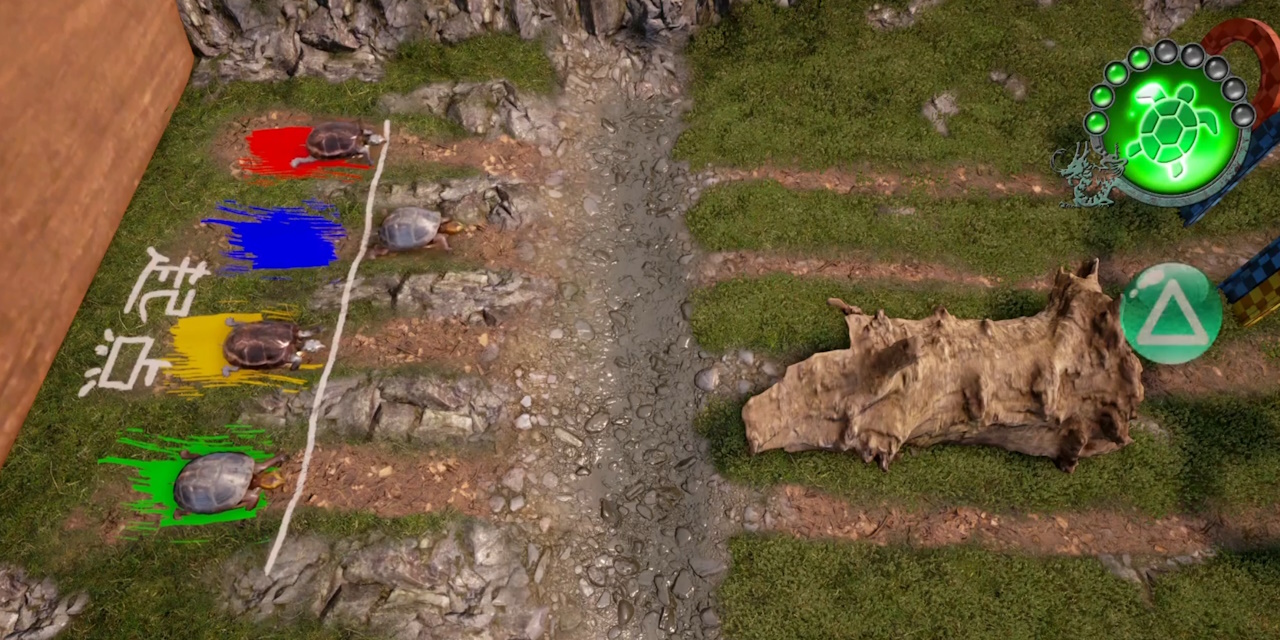
I haven’t played Shenmue III and I’ve managed to avoid major spoilers since it launched. But clips of the game that I’ve seen have included things like mini-games, a stamina system that limited how far Ryo could run, and other such bloat. Cutting some of this stuff out to focus on the core narrative – that of Ryo’s quest to track down the murderous Lan Di – would go a long way to helping a hypothetical next title move along at a much more reasonable pace.

Screenshot of Shenmue III showing a tortoise race.
Cutting back on things like mini-games could help a future Shenmue game stick to what matters: the story.

There’s an expression that I think is relevant here: “don’t let ‘perfect’ be the enemy of ‘good.'” In this case, I will happily concede that a cut-down Shenmue IV with some of its QTEs, mini-games, and open-world exploration elements removed wouldn’t be the ideal experience. It wouldn’t be completely true to the Shenmue series, either. But if it finished the story – a story I began almost a quarter of a century ago – it would be worth it. I’ll make that compromise to see the end of Ryo’s story… and that’s what I genuinely expected would happen with Shenmue III. In that sense, I’ve already committed myself to and steeled myself against those kinds of compromises.

Both Yu Suzuki himself and some die-hard Shenmue fans evidently hate this idea. But my question to them is a pretty basic one: if it’s this cut-down game or nothing, what would you rather have? I know that, speaking for myself, I’d rather see the story brought to an end, even if the journey to that end point is shorter and less free-roaming than the first chapters of the story. If you don’t agree… how long are you willing to hang on in the hopes that the “perfect” version of Shenmue IV and Shenmue V that you have in your head will ever make it to release?

Wouldn’t something be better than nothing at all?

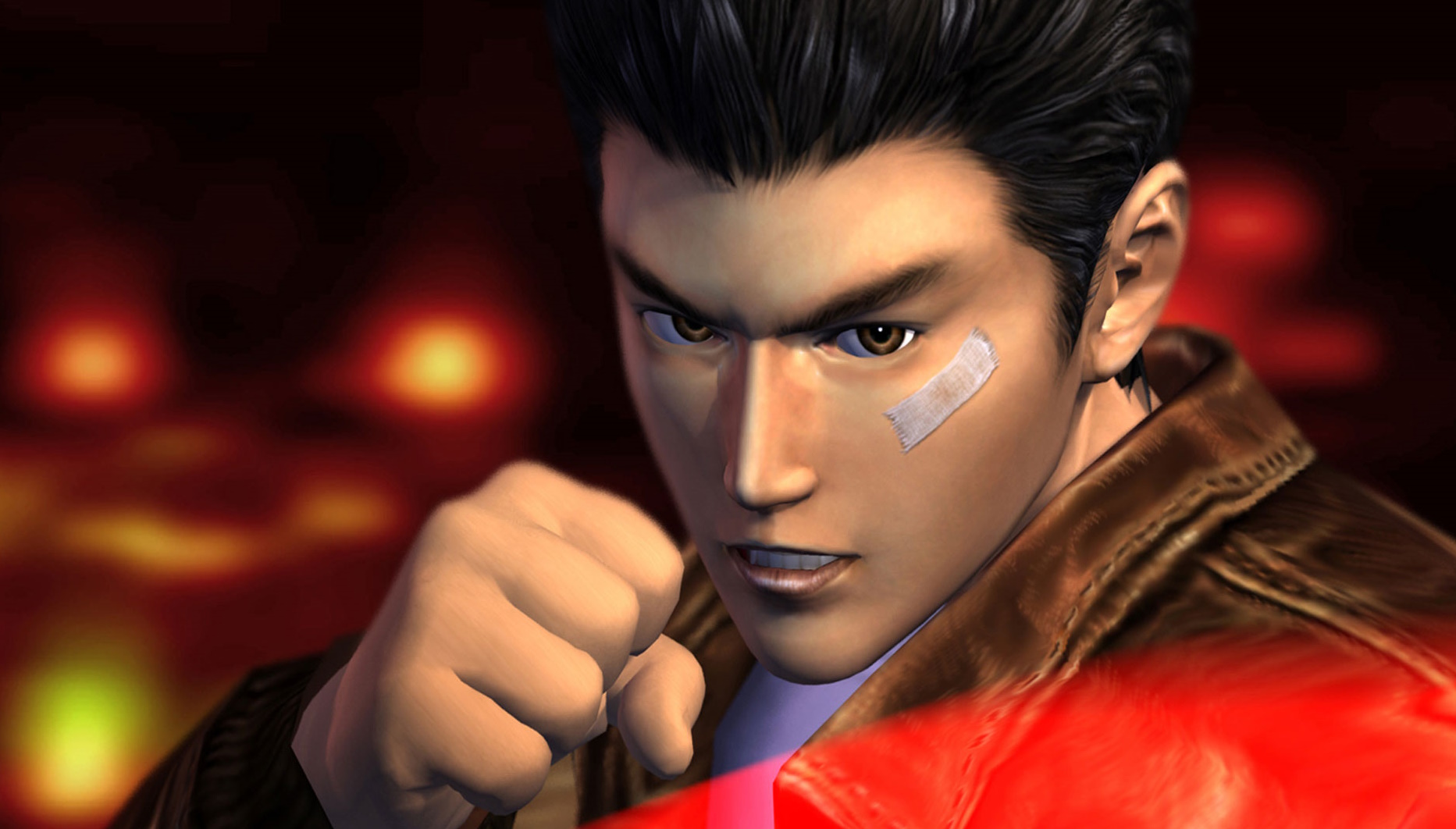
Promo wallpaper for Shenmue/Shenmue III showing Ryo raising his fist.
Them’s fightin’ words!

I’m not getting any younger. I’m the wrong side of forty and, as regular readers will know, I’m not in great shape health-wise. There’s a non-zero chance that I won’t be here in ten years’ time, and with arthritis already affecting my hands and fingers, my ability to play games is beginning to wane. In short… I don’t have the time to wait for a mythological Shenmue-loving corporation to step in and fund development. If I was Elon Musk I’d happily do it… but who has that kind of money just lying around?

Shenmue is one of my favourite games of all-time. More than that, it’s the game that showed me what interactive media could be in the new millennium, and at a time in my life where I might’ve begun to drift away from the hobby, it’s a title that kept me engaged and kept me playing. I love Shenmue and Shenmue II. And I would have given anything to see its story continue. But we’re at a point now where repeated failures and some poor decision-making have left the series’ future not so much uncertain as dead. Shenmue is, in my opinion at least, almost certainly not coming back.

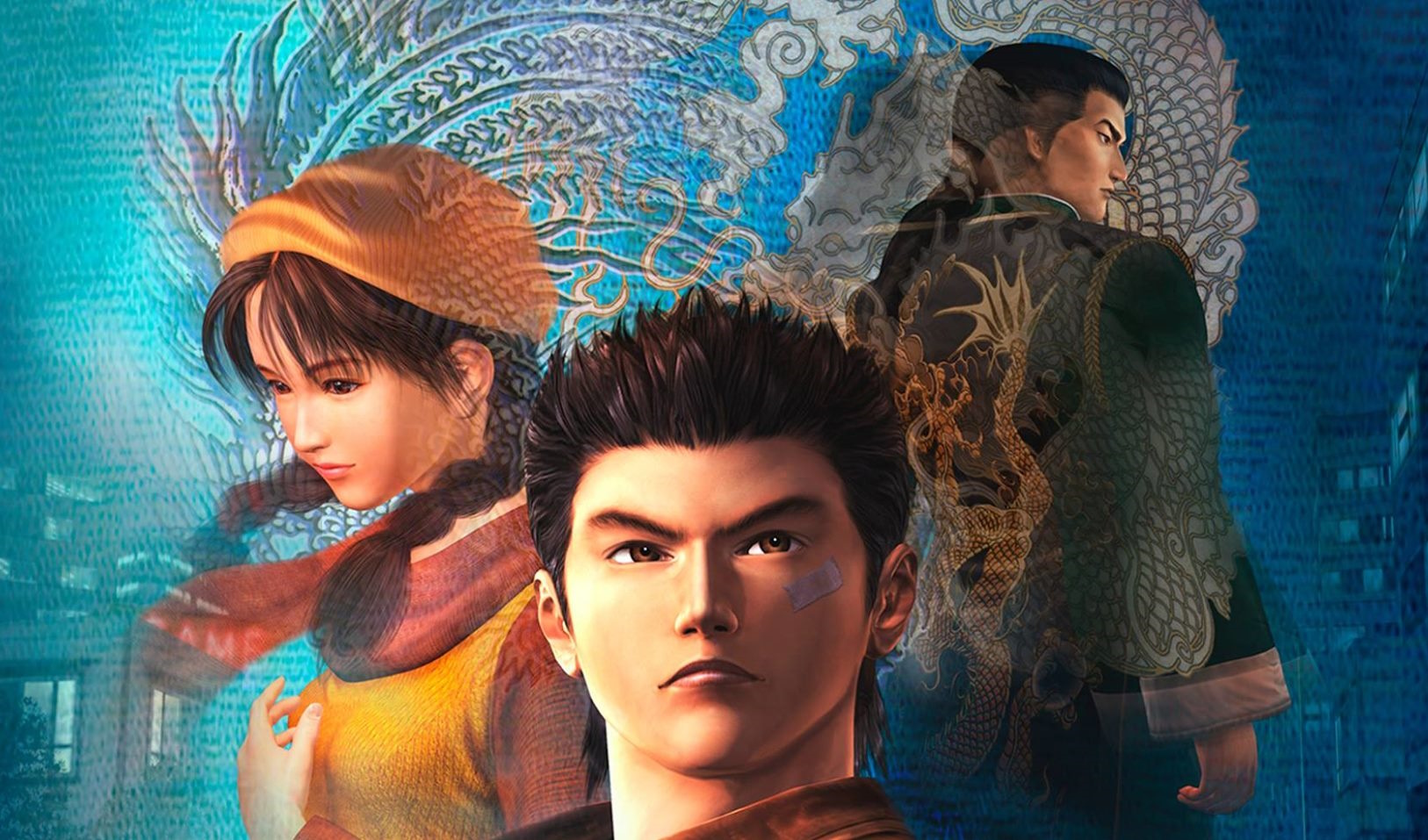
Box art/promo art for Shenmue I showing Ryo, Shen Hua, and Lan Di.
I’d love to be wrong, but I don’t see a future for Shenmue right now.

Maybe you’re of the opinion that, even if it takes another quarter of a century, we should let YSNet do its thing and tell the story they want to tell in the way they want to tell it. I’m telling you now: I don’t have that kind of time. If this new publisher is interested in another game – and despite my scepticism, I hope that they are – then my only request is this: make it the final game. Finish the story somehow, even if that means cutting back on the scope of the narrative and/or gameplay. If Ryo is going to get a miraculous third chance that, from a business standpoint, he categorically does not deserve, then have the decency to finish his story and bring the Shenmue saga to a belated conclusion.

But that’s the same red line I had back in the 2010s, and YSNet blew it. Yu Suzuki and his studio squandered the best (and probably the only) chance they had to conclude Ryo’s story, and as much as I’d like to think they’ll get a reprieve… I still struggle to see it. Five years on from Shenmue III and I feel more justified than ever in my stance back then. I said in 2019 that I was unwilling to pick up the threads of that story only to end up disappointed for the second time when it’s yet again left incomplete – and with nothing beyond vague suggestions about what YSNet might like the next game to look like, as well as sales so underwhelming that they’d make any company baulk at the notion of signing on, I get to take a very bitter victory lap… one I really don’t want to take.

Promo image for Shenmue III showing Shen Hua.
Shenmue III was the best chance to tell the rest of the story.

If you asked me now, in November 2024, whether we’ll ever see a fourth Shenmue game, my answer would be almost certainly not. I don’t see how the series has a future, despite a new publisher signing on and talk of a potential Shenmue III port to another console. A few thousand remaining fans tweeting into the void isn’t gonna change that, because as loud and vocal as Shenmue fans can be, we’re a tiny and ever-diminishing number.

There are multiple tragedies in the Shenmue saga. The first game was light-years ahead of its time, pioneering a dense, lived-in open world years before anyone else even tried it. The world of those first two games still outpaces many modern titles in terms of depth and complexity. The demise of the Dreamcast and a player base that preferred faster-paced action-packed titles doomed the series… but that isn’t where the tragedy ends.

Screenshot of Shenmue II showing Ryo in Hong Kong.
The harbour in Hong Kong.

YSNet’s failure to recognise that the crowd-funding campaign was lightning in a bottle; a once-in-a-lifetime chance to bring a dead series back to life… that’s the final tragedy of Shenmue. Fans gifted Yu Suzuki a golden opportunity to conclude the story he started more than fifteen years earlier… and he blew it. He allowed “perfect” to become the enemy of “good,” and stubbornly refused to deviate from a planned multi-game series even when it should’ve been clear that there would never be another opportunity to bring Ryo’s story to an end.

I could’ve lived with Shenmue and Shenmue II as a disappointingly incomplete story; a millennial masterpiece that, for reasons beyond anyone’s control, would remain unfinished. But I’ve really struggled to forgive Yu Suzuki and YSNet for taking the incredible opportunity presented to them by the fan community and pissing it away on a frivolous, bloated, still-unfinished third game.

And as to the future? Maybe the jury really is still out. Maybe this ININ Games genuinely sees the potential in Shenmue IV. But until the game’s officially in production and ready to go, I’ll be sceptical. I’m pretty sure that this is where the Shenmue saga ends.


Shenmue I & II and Shenmue III are available now for PC and PlayStation 4. The Shenmue series – including all titles and properties discussed above – may be the copyright of YSNet, ININ Games, Sega, and others. Some images courtesy of Shenmue Dojo and IGDB. This article contains the thoughts and opinions of one person only and is not intended to cause any offence.