Spoiler Warning: Beware of minor spoilers for the Kelvine timeline films and Strange New Worlds.
In a little over six months from now, it’ll be ten years – an entire decade – since Star Trek Beyond hit cinemas. Beyond is the most recent film in the Kelvin timeline – the Star Trek spin-off films set in an alternate reality. There have been multiple attempts in the nine-plus years since its release to get a sequel off the ground, including a couple of years ago when Paramount announced – and then had to rapidly un-announce – a film that wasn’t ready. That was a clusterfuck, eh?
Every so often, if you follow some of the big Star Trek fansites and social media pages, an interview will pop up with a member of the Kelvin cast, and they always make the right noises, sounding positive and hopeful about one day returning and making another film. But if recent reports are to be believed, the newly-merged Skydance/Paramount corporation is ready to “move on” from the Kelvin timeline. While a new Star Trek film is supposedly being planned, it won’t involve the Kelvin timeline or the cast of the rebooted series. I thought we could discuss that today.
The bridge in Star Trek ’09.
I know the Kelvin films weren’t every Trekkie’s favourite part of the franchise – to put it mildly! Heck, I *still* know people who refuse to even watch them because of how upset they were at both the recasting of classic characters and the more action-heavy storytelling. But we should all be able to acknowledge what the films – and the 2009 reboot in particular – did for Star Trek at a time when the franchise had been cancelled after more than fifteen years on the small screen.
We wouldn’t have seen Discovery, Picard, Lower Decks, Strange New Worlds or really any of the Star Trek productions we’ve enjoyed over the last decade were it not for the success of the Kelvin timeline films. Star Trek ’09 demonstrated to investors that, despite declining viewership on TV in the 2000s, there was still life in the Star Trek franchise, and still new stories to be told. These films carried the torch for Star Trek during what could’ve been its darkest hour, and they set the stage for the franchise’s revival.
Director J.J. Abrams on the set of Star Trek Into Darkness.
With all that being said, regular readers will undoubtedly remember me saying that I don’t believe there’s a place for a new Kelvin timeline film. I wrote about this in 2020 and 2021, and while my original reasons for saying that have now shifted in light of the spate of cancellations this year… I stand by the original point. I know Beyond seemed to tease a sequel in its closing moments, and there will always be a part of me that wants to see reboot Kirk’s adventures aboard the Enterprise-A. But given the changes not just to Star Trek over the past ten years, but the entertainment landscape as a whole… I’m not sure a 2009-style film is the right fit any more. After almost a decade, audiences have moved on and expectations have changed.
Then there’s Strange New Worlds. What was the original idea behind Star Trek ’09? It was to show “young Kirk” and “young Spock” at Starfleet Academy, then undertaking their first missions together. Well… we’ve seen that. And thanks to Strange New Worlds, we’ve also seen the prime timeline version of that, too. Strange New Worlds has introduced several other legacy characters, and thanks to being able to develop those characters a lot more because of the extended runtime a television show permits, I’d argue it’s done a lot more with some of those characters than the entire Kelvin trilogy did.
Kirk and Spock at the Academy in Star Trek ’09.
At this point, if we returned to the Kelvin timeline a decade after Beyond, we wouldn’t be seeing “young Kirk” and “young Spock” on one of their first missions. We’d be seeing Kirk and Spock on their five-year mission – or perhaps even *after* that, in the latter part of the 23rd Century. There are things that the Kelvin timeline could do with that idea, sure… but we’ve already seen plenty of Kirk and Spock at this point, haven’t we? Between TOS, the Kelvin films, Strange New Worlds, and the rest of Star Trek, we’ve spent a lot of time with these characters already. So… what could a new Kelvin film do that we haven’t already seen?
This leads me to my most fundamental point: Star Trek needs to move on. Not just from the Kelvin timeline, but from the 23rd and 24th Centuries in general. Since the turn of the millennium, we’ve had Enterprise, Discovery, Strange New Worlds, and the Kelvin timeline – all of which were prequels. Then we had Prodigy and Picard, which were direct sequels to Voyager and The Next Generation. The closest Star Trek came to originality was Lower Decks, ironically enough! And that show called back to The Next Generation era over and over again, and brought in numerous guest-stars.
What *new* adventures might lie ahead for the Star Trek franchise?
A new film at this point should have the freedom to go in a totally different direction, and shouldn’t be too tied up with what came before. That doesn’t mean it can go breaking all of the rules of canon, of course, but after so many sequels, prequels, and spin-offs, it’ll be nice to get something truly original for once. Won’t it?
If Star Trek continues to look backwards at its own history, and keeps trying to bring back characters from the past, that limits the franchise’s potential to grow and expand. I became a Trekkie in the early 1990s not because of Kirk, Spock, and Dr McCoy, but because of Picard, Riker, and Data. If Star Trek, in the ’80s, had doubled-down on The Original Series and those classic characters, we’d have missed out on so much – not only The Next Generation, but Deep Space Nine, Voyager, and more. After such a long time, and with so much having happened since Beyond was in cinemas… a new film taking a new approach just feels like the best option.
Simon Pegg (Scotty) and director Justin Lin on the set of Star Trek Beyond.
There are risks, of course. Into Darkness remains the cinematic Star Trek franchise’s high-water mark in terms of financial success, and all three of the Kelvin films turned a profit. Creating something brand-new, with a new director and a new cast of characters, might not achieve the same level of success as a Beyond sequel. Figuring out how to attract audiences who turned out for Into Darkness – but who may have skipped *everything* Star Trek has done since – will be the biggest challenge Skydance faces when it comes to pitching the new film.
And there’s kind of limited room for manoeuvre here. In 2009, a lot of people who hadn’t watched the likes of DS9 and Enterprise showed up specifically because Star Trek was billed as a reboot. The universe was going to be reset, you didn’t have to have followed any of the increasingly convoluted storylines from the previous fifteen-plus years… this film was its own thing. But can you re-reboot a franchise and achieve the same level of success a couple of decades later? Does the name “Star Trek” carry the same weight it did in 2009, after not really managing to reach out to a big new audience on streaming? I think those are valid questions as this new film may be getting underway.
A silhouette of the Enterprise was one of the first teaser images released for Star Trek ’09.
I don’t lament the demise of the Kelvin timeline. It laid the groundwork for Star Trek’s return to its small screen home in 2017, which I truly appreciate, but then it kind of lost its place – at least for me as a Trekkie. By the time Pike and Spock joined Discovery a couple of years later, and we were getting news of new projects featuring Picard, Section 31, and a new animated series, it really seemed like Star Trek was back. Strange New Worlds, with its focus on many of the same characters as those in the Kelvin films, occupies a very similar space, and I’m just struggling to see what a new Kelvin film could really have to say after five seasons of Strange New Worlds and everything else Star Trek has done over the past nine-plus years.
At the same time, there’s a sense that Star Trek’s executives never took *full* advantage of the alternate reality that the Kelvin films presented. We could’ve seen, just as one example, Captain Kirk taking on the Borg – something that would be impossible to do in the prime timeline. Or we could’ve done more with the idea of a crossover from the prime timeline, bringing in William Shatner and George Takei alongside Leonard Nimoy. That can’t happen now.
The Enterprise.
But the Kelvin films – or perhaps we should start saying “the Kelvin trilogy” – have a place in the history of Star Trek. They carried a torch for the franchise at a time when total cancellation and annihilation seemed not only likely, but were actively happening, and they set the stage for several great streaming shows that expanded the franchise in new ways. That isn’t a bad legacy by any means.
And as we look to the future? Star Trek seems set to enter a fallow period as the 2020s come to a close. After Strange New Worlds finishes its run, all we know for sure is that Starfleet Academy is getting a second season – and then there’s this potential new film. Star Trek XV – or whatever we’re going to end up calling it – has a lot to live up to in some ways, as it may have to pick up the mantle from the Kelvin timeline and keep Star Trek alive at a time when there might not be anything else going on. But this new film, thanks to being its own thing, has almost limitless storytelling possibilities, and won’t be constrained by what came before. That worked well in 2009, and it set the stage for bigger and better things. I’m going to keep my fingers crossed that this new film, in whatever form it ultimately takes, will be much more like Star Trek ’09 and less like the unfortunate Section 31.
So I hope this has been interesting. Part of me wonders if, in another ten or fifteen years, we may yet get a belated Kelvin timeline revival. Who knows! But nostalgia can be a big deal in entertainment, and if there are enough Kelvin fans clamouring for it… never say never, right? I will keep my ear to the ground and if there’s any news about a new Star Trek film in the weeks and months ahead, I daresay I’ll have more to add, so be sure to check back from time to time. And if you want to see what else I’ve had to say about the Kelvin timeline over the years, you can check out my dedicated Kelvin timeline page by clicking or tapping here. Until next time, friends!
Star Trek ’09, Star Trek Into Darkness, and Star Trek Beyond are available to stream now on Paramount+ in countries and territories where the platform is available. All three films are also available on DVD and Blu-ray. The Star Trek franchise – including all films and other properties discussed above – is the copyright of Skydance/Paramount. This article contains the thoughts and opinions of one person only and is not intended to cause any offence.
Spoiler Warning: There are spoilers ahead for all fourteen Star Trek films, including Section 31.
Almost five years ago, I put all of the Star Trek films into a ranked list. I talked about what I liked and didn’t like about each, and tried to justify my choices! But since I wrote that list, a couple of things have happened. Firstly, I’ve gotten better at using images here on the website – that old piece looks pretty janky in comparison to some of my more recent articles. But secondly – and way more importantly – there’s been a new Star Trek film since then!
I think Trekkies are still a little divided on whether the made-for-streaming Section 31 should count as a Star Trek “film,” and I get that. But for me, Section 31 has the runtime of an (admittedly rather short) film, it’s not a series, miniseries, or anything like that, it has mostly original characters, and it was afforded a higher budget than any individual Star Trek episode would’ve been. For all intents and purposes, Section 31 counts as the newest Star Trek film – the fourteenth since 1979… and hopefully not the last!
Section 31 is the most recent Star Trek film, and it’s on this list!
So today, I’m going to revisit the Star Trek films, this time using the internet-friendly tier list format that you might’ve seen on a couple of other occasions here on the website! I think most folks have a vague idea about tier lists at this point – but if you don’t, I’ll happily explain how it works.
Instead of giving each film a number from 1-14, which would be hard, we’re going to assign each film one of five tiers: D, C, B, A, and S. D-tier films are the least-enjoyable with noticeable flaws, C-tier titles are average or “just okay,” B-tier films are a step up, being above average, A-tier titles are getting really good, and S-tier is reserved for the absolute cream of the crop! Why is S-tier the top instead of A or something like A-plus? The truth is… I don’t know! But that’s the way everyone else does it, so I’m sticking with it! Some tier lists also include an F-tier for absolute disasters, but since I don’t consider any of the fourteen Star Trek films to be that bad, I’ve opted not to include it on this occasion.
Let’s fill out this blank tier list together!
Now that the explanation of the format is out of the way, a handful of important caveats!
Firstly, all of this is subjective, not objective. There is no “objectively best” Star Trek film, and even within the fan community opinions vary wildly on which titles are better and what makes for a good Star Trek story. So if I rank a title you hate highly or speak ill of your favourite… that’s okay! There ought to be enough room in the fan community for civil conversations and polite disagreement.
Secondly, this piece supersedes my old film ranking list, and I have made a couple of changes to where films were ranked five years ago. I’ll be leaving the old piece as it is, though – it’s a part of the website and it would be silly to delete it! But going forward, this is the official Trekking with Dennis Star Trek films tier list!
Admiral Kirk addressing his crew in The Motion Picture.
Third, I’ll rank each production in order of release, beginning with The Motion Picture and finishing with Section 31. Then I’ll show you the final tier list at the end. I’ll do my best to explain what I liked and/or didn’t like about each title to justify my ranking – but please feel free to vehemently disagree if you like!
Finally, all of this is just for fun! I like writing, I like Star Trek, and finding an excuse to talk about some of the Star Trek films that I love – or that I haven’t seen in a while – is supposed to be a bit of escapism. Nothing about this should be taken too seriously, because the point of Star Trek for me has always been entertainment and escaping to a fun vision of the future.
With all of that out of the way, let’s begin.
Film #1: The Motion Picture (1979) Tier: S
The Motion Picture had a complicated production history! It was originally envisioned as a television series, bringing Star Trek back as Phase II in the late 1970s after re-runs of The Original Series had been growing in popularity. Actors had been cast, sets were being designed, and scripts were written… but then, in 1977, another sci-fi film’s wild success led to Phase II being reimagined as a feature film. Star Trek as a cinematic franchise was born!
In my experience, Trekkies tend to underrate and underappreciate The Motion Picture. In a very literal sense, much of the visual language of Star Trek was born here, not in 1966: metal Starfleet badges, the warp core as an upright glowing tube, angled corridors, Starfleet Headquarters, the re-designed Klingons… and so much more. Sets built for The Motion Picture would remain in continuous use all the way through Enterprise’s cancellation in 2005, defining what makes Star Trek look like Star Trek for millions of viewers.
The Motion Picture also has one of what I consider to be the best starship introductions in the franchise – something that set the bar for other shows! Kirk and Scotty’s shuttlepod flight to the refit Enterprise – complete with Jerry Goldsmith’s Academy Award-nominated score – is beautiful, and I get teary-eyed every time I watch it. It’s one of the best moments in Star Trek for me, and everything about it is pitch-perfect.
I get that The Motion Picture’s main story isn’t for everyone. It was also a bit of a mess, with re-writes continuing even during filming, and that probably didn’t help. But for me, The Motion Picture plays out like an extended episode of The Original Series. It’s ethereal, thought-provoking, and not overladen with fast-paced action set-pieces. I think that’s to the film’s credit, even if many don’t agree.
I have a longer piece about The Motion Picture, written in 2019 to mark the film’s 40th anniversary. You can find it by clicking or tapping here.
Film #2: The Wrath of Khan (1982) Tier: S
For many folks, The Wrath of Khan is still the Star Trek franchise’s high-water mark; a film that no other in the franchise has even come close to. I wouldn’t go that far personally – I think there are a couple of other equally brilliant films, as we’ll talk about in a moment – but The Wrath of Khan is definitely up there! The mix of sci-fi with high-octane action proved to be a perfect blend for Kirk and the crew, with a vengeance-obsessed Khan becoming one of the best villains not only in Star Trek, but in all of cinema.
The Wrath of Khan has one of the best and most intense starship battles in the franchise. Drawing inspiration from submarine and naval battles in World War II films, the fight between the badly-damaged Enterprise and Khan’s USS Reliant is incredible. The sequence builds up tension masterfully – by showing the extent of the damage to the Enterprise, by robbing Kirk and Khan of their sensors in the nebula, and with Spock cleverly explaining Khan’s “two-dimensional thinking” as a way to convey the tactics of starship battles in a three-dimensional space.
Toward the end of The Wrath of Khan, we also get one of the most poignant and emotional moments in any film in the franchise… or really anywhere in the entirety of Star Trek, come to that. Spock’s death – sacrificing himself to save the Enterprise and his friends – really hits hard. Even though on my first viewing of The Wrath of Khan I already knew that Spock would be resurrected, there’s still a real emotional weight to this moment. Star Trek has attempted to do similar things with other characters (we’ll look at a couple further down the list) but none came close to matching this moment.
Ultimately, The Wrath of Khan was the first film to wrest control of Star Trek away from its creator, Gene Roddenberry, and to try new and different things with this cast of characters. It’s very different in tone and style from The Original Series, but that turned out to be a net positive for many fans – and many new fans, too. The Wrath of Khan firmly established Star Trek as a cinematic franchise.
Film #3: The Search for Spock (1984) Tier: A
Sandwiched in between the ever-popular Wrath of Khan and the light-hearted Voyage Home, I think some folks can overlook The Search for Spock. As the middle part of a trilogy, the film has the difficult task of moving the story along but without being able to draw all of its story threads to a firm conclusion. For my money, though, it’s a great film – and it manages a complicated sci-fi story exceptionally well.
The Search for Spock gave us an extended look at the re-designed Klingons from The Motion Picture, and also introduced the Klingon Bird-of-Prey, arguably the faction’s most iconic spaceship. It’s the film which re-introduced the Klingons in a big way, expanded the Klingon language, and introduced starship and uniform designs that have become inseparable from the faction. The Klingon Empire as we know it would not be the same – and might not be a big part of Star Trek at all – without The Search for Spock and its main villain, Kruge.
I’ve always appreciated the design of the Genesis Planet. The story of its creation is a bit “out there,” even by Star Trek standards, but the practical sets, props, and puppets created to represent the Genesis Planet all feel like ’80s sci-fi at its best. And yes, as a child of the ’80s I’m acutely aware of my biases here! But when I compare the way that The Search for Spock looks to modern Star Trek, with its CGI and AR wall… I can’t help it. I know what I like!
As the film that destroyed the original USS Enterprise, The Search for Spock was always going to court controversy. But I don’t agree with the take that “all of the odd-numbered Star Trek films are bad,” lumping The Search for Spock in with The Final Frontier. There are some wonderful moments of characterisation for David Marcus, Kirk, Dr McCoy, and others. And thanks to the insistence of director Leonard Nimoy, all of the main cast members got moments in the spotlight.
I have a longer piece about The Search for Spock – which was the first Star Trek film I watched – and you can find it by clicking or tapping here.
Film #4: The Voyage Home (1986) Tier: B
Maybe this is a “hot take,” but I’ve never been wild about The Voyage Home. As with similar Star Trek stories involving time travel to the modern day, its ’80s setting has left the film feeling so much more dated than any other in the cinematic franchise, and while I enjoy a good ’80s comedy as much as anyone else… it’s not necessarily what I want from a Star Trek film.
That being said, I don’t hate The Voyage Home by any stretch. It has some incredibly funny moments as Kirk and the crew attempt to navigate a time period that’s completely alien to them. Moments like Kirk asking if $100 is “a lot” of money, or Scotty trying to use a mouse to talk to a computer spring to mind as laugh-out-loud moments, and Spock having to cover his Vulcan ears to pass as a human is a fun look. Kirk and Spock’s confrontation with a punk on a city bus was also a hilarious moment.
On the sci-fi side of things, I really like the design and power of the “whale probe.” I think it’s unintentionally one of the franchise’s most unnerving alien creations, too. Its design harkens back to The Doomsday Machine’s planet-killer, but its power is used completely differently. The idea that this machine could simply disable all of Starfleet – and Earth – without breaking a sweat is already frightening, but when it can’t be reasoned with or even communicated with… that’s outright terrifying. Sometimes the Star Trek franchise can lean too heavily on “nose and forehead” aliens, but the likes of the “whale probe” remind us that the galaxy is a dangerous and sometimes incomprehensible place.
The Voyage Home did something Star Trek has often done: used a sci-fi lens to examine real-world issues. In this case, the loss of biodiversity and humanity’s impact on the environment were in the spotlight. The message was simple: we can’t predict the consequences of even a single species going extinct, and we should do everything we can to preserve biodiversity on Earth. That’s a good message, and it’s presented in a fun, creative story.
Film #5: The Final Frontier (1989) Tier: D
I said at the beginning that I wasn’t giving any F-tier rankings, and The Final Frontier is kind of the reason why. I get why folks don’t like it, and I think it has some obvious narrative weaknesses, as well as a smattering of sub-par special effects that make it less visually impressive than other titles in the franchise. But it isn’t a complete cinematic failure on par with something like Baz Luhrmann’s Australia or The Rise of Skywalker, so I think we can safely say that even the least-impressive Star Trek films avoid that ignominious fate!
Star Trek has delved into religion and religious-adjacent subjects before, so the idea of an alien claiming to be the god figure from various cultures isn’t totally out of left-field. But the execution of this storyline leaves something to be desired, and I just don’t think The Final Frontier really knew what it wanted to say or where it wanted to take this heavy idea.
The film also suffers from a little too much interference from William Shatner, who exercised his contractual right to helm a Star Trek film after Leonard Nimoy had his turn in the director’s chair. Shatner wanted to tell a story that put Kirk – and Kirk alone – centre-stage, as the sole character who could stand up to Spock’s villainous half-brother. Changes were made to the first draft of that story, when Nimoy objected to Spock’s characterisation, but Shatner’s determination to put Kirk front-and-centre still comes across.
I don’t believe that The Final Frontier is irredeemably bad. There are some wonderful moments, too, like the campfire sequence with Kirk, Spock, and McCoy, Scotty’s line “I know this ship like the back of my hand,” and the away mission to Nimbus III. McCoy’s incredibly painful backstory is also one that hits close to home, and has to be one of DeForest Kelley’s best and most emotional scenes with the character. Kirk’s line to Sybok about “needing” his painful and traumatic moments – that they define who he is – is a powerful idea, too. I just feel that, taken as a whole, The Final Frontier misses the mark with some of its storylines and loftier concepts.
Film #6: The Undiscovered Country (1991) Tier: A
After the disappointment of The Final Frontier, it took some persuading for another Star Trek film to be greenlit. In 1991, with The Next Generation well underway and work progressing on spin-off ideas, there were some at Paramount Pictures who argued that Star Trek had moved on from The Original Series and its characters. A proposal to reboot Star Trek with a Starfleet Academy film was seriously considered, but ultimately Gene Roddenberry and others were able to convince the studio to allow the cast one final film to end on. The Undiscovered Country was thus given the green light.
The story here is great, and incredibly timely! The script uses the Federation and Klingons as a metaphor for the end of the Cold War; communists had been swept from power in 1989, and the Soviet Union was itself dissolved just days after the film’s premiere. The story of old rivals finding a path to peace, and old warriors with grudges finding a way to bury the hatchet, was an exceptionally powerful one – even if Gene Roddenberry hated the depictions of Kirk and Starfleet when he was shown an advance copy of the film.
We get to see an exploration of the Klingon Empire, including one of its brutal prison colonies, and how the Klingons of the 23rd Century came to be neighbours and rivals rather than enemies by the time of The Next Generation’s 24th Century. There was even a role for TNG’s Michael Dorn, who played an ancestor of Worf. The Undiscovered Country did a lot to bring Star Trek’s two eras together, and as one crew departed the stage, work on the next expansion of the franchise began. Deep Space Nine would premiere just over a year after The Undiscovered Country had been in cinemas.
The “Praxis effect” – a two-dimensional circular shockwave created by a planet exploding – was named for the destruction of the Klingon moon seen in The Undiscovered Country! In a very real sense, the film’s legacy goes far beyond the Star Trek franchise, with similar visual effects still being used in sci-fi and fantasy to this day. Special effects were great across the board, and The Undiscovered Country also has a fantastic ship battle between the Enterprise, Sulu’s Excelsior, and a cloaked Bird-of-Prey.
Film #7: Generations (1994) Tier: S
Is it controversial to say Generations is a good film? Because I honestly think it’s one of the franchise’s best. Bringing Kirk and Picard together was an absolute joy to watch, and I think it came at just the right moment, too – the film represents a handing of the torch from one crew to another. It didn’t come too soon, as this kind of story would’ve overshadowed The Next Generation’s characters before they’d found their feet. But by 1994, I really think the time was right for this kind of epic crossover.
I find Dr Tolian Soran to be an incredible villain, too. His motivations were easily understood, and while he absolutely needed to be stopped… part of me sympathises with him. The presentation of the Nexus as this heaven-like paradise realm, where time has no meaning and your heart’s desires can be made manifest, is the perfect motivation for someone like Soran – whose quest takes on a quasi-religious tone as a result.
Generations killed off Captain Kirk, drawing a line under Star Trek’s original incarnation. Kirk would, of course, remain important to Star Trek, and it wouldn’t be the final time we’d see a member of his crew on screen. But in that moment it did feel very final – and Kirk’s act of sacrifice to save Picard’s crew and the population of a planet he didn’t even know… it was an intensely emotional sequence.
Generations does a lot to explore the connection between Picard and Guinan, which would go on to be important in Star Trek: Picard, too. It was also a great film for Geordi and Data – the latter receiving his emotion chip and really expanding his programming beyond what he’d been capable of before. All of the main characters got a turn in the spotlight, and there were moments of mystery, emotion, and action throughout this wonderful film.
I wrote a longer piece about this film’s villain, Dr Soran, and you can find it by clicking or tapping here.
Film #8: First Contact (1996) Tier: A
First Contact is a fantastic film. But I’m docking a couple of points because of one element it introduces that I feel complicates – and crucially, detracts from – one of the franchise’s best, most iconic, and most frightening villainous factions. I’ll have to elaborate on this one day in a standalone piece, because there’s too much to fit into a few sentences right now, but in short: the Borg Queen kind of ruins the Borg for me. Worse, her presence takes away a lot of the Collective’s fear factor – especially when we get to her later appearances. I get it: First Contact is a feature film and it needed to have a single villain for Picard and Data in particular to face off against. But on the whole, I’d say the Borg Queen was not a net positive for the Collective or Star Trek.
But enough about that for now! First Contact re-introduced the Borg in style, depicting a deadly battle in space, and a slow-paced assimilation of the brand-new Enterprise-E. The scenes aboard the Enterprise’s lower decks in particular are incredibly tense; the Borg are far more frightening here than they had been in any of their earlier appearances. And although I have gripes with the Borg Queen as a concept, her scenes with Data and Picard – and the latter’s trauma stemming from his earlier assimilation experience – are all played exceptionally well.
First Contact also did a lot to set the stage for Enterprise – though that wasn’t necessarily the intention at the time! Enterprise does, though, build on what First Contact did with its depiction of Earth and humanity’s first efforts to build a faster-than-light engine. James Cromwell, who played Zephram Cochrane, would even have a cameo in Enterprise’s premiere.
Picard is the real star of the show this time, as he lets his emotions overwhelm him when faced with the Borg’s return. After the episode Family, we didn’t really get much exploration of Picard’s mental state and how he was coping with having been assimilated by the Borg, but First Contact took that as a starting point to tell a story touching on things like post-traumatic stress. It was genuinely interesting – and also left a lot for Star Trek: Picard to build on a quarter of a century later.
Film #9: Insurrection (1998) Tier: B
Insurrection gets an unfairly bad rap, in my opinion. I like some of the connections in the film to the wider world of Star Trek – nowhere else will you hear Troi and Riker mention the Dominion War, for instance! The Briar Patch is a fun idea both narratively and visually, leading to the crew being cut off from Starfleet HQ. It also sets up a particularly creative starship battle, which as always is something I appreciate!
Star Trek has, on several occasions, had a “badmiral” (a portmanteau of ‘bad’ and ‘admiral’) as a villain, and the concept of a rogue or renegade senior officer is an interesting one. The best villains have some degree of nuance, and Anthony Zerbe does an excellent job conveying this with the character of Admiral Dougherty. Dougherty genuinely believed that he was doing something great for the Federation… even though, with the story being told from the perspective of the Enterprise crew and the Ba’ku, he was the villain.
The Son’a were an interesting addition to Star Trek, and I’d love to explore a bit more of their culture one day – it’s a shame they’ve never returned. I would posit that the film’s twist – that the Son’a and Ba’ku are the same race – was imperfectly executed, but it was an interesting idea that achieved most of what it was aiming for. It’s also an idea that felt very “Star Trek,” harkening back to The Original Series episodes that had messages about war, race, and so on.
Insurrection has another great villain in Ru’afo, who doesn’t have that same nuance we were talking about, but was delicious to watch nevertheless thanks to an excellent performance from F Murray Abraham. It’s also a great film for Riker – who gets a turn in the captain’s chair during a tense battle, and also sees a starship manoeuvre named after him – and Data, whose “injury” and ethical reset kicks off the entire story. A story about a renegade crew who have to operate outside of the law to do the right thing? That’s something I love – and while I get there are criticisms of the main cast apparently acting “out-of-character,” that’s explained well enough in Insurrection itself.
Film #10: Nemesis (2002) Tier: D
Walking out of the cinema after the credits rolled, I remember feeling okay about Nemesis. But looking back, particularly after seeing Data being laid to rest in Star Trek: Picard’s first season, the deficiencies of the film are much more apparent. I would argue, with Brent Spiner ageing out of the role by 2002, that killing off Data made some degree of sense as a narrative point. But it wasn’t handled well in Nemesis, with the film rushing past Data’s death, pushing his friends to a “let’s all move on” type of ending that was just weirdly out-of-place and had completely the wrong tone.
Sci-fi tropes and character archetypes will land differently for different folks, and what I’d say about Nemesis’ main villain – played by Tom Hardy in one of his first big-screen roles – is that the idea of a clone of Picard isn’t as silly as it sounds! There’s genuine lore and story here, expanding our understanding of the Romulans and the way they operate, and I really did enjoy that side of the story. Shinzon also makes for a complex character; a human raised by Reman slaves, who has Picard’s DNA but none of his humanity.
Shinzon quite quickly turns to “I’m evil for no reason and I love it” with his characterisation, though, despite some early promise, and by the time the film moves to his plot to attack Earth and the Federation, the plot kind of goes off the rails. Much has been made of director Stuart Baird’s lack of experience and knowledge of Star Trek at the time of the film’s production (he hadn’t so much as watched a single episode of The Next Generation) and I think that comes across in the way the film treats most of the main characters, too.
After Insurrection hadn’t been particularly well-received, and with Enterprise struggling to find an audience, Nemesis didn’t do the Star Trek franchise any favours in 2002. It also seemed – for close to twenty years, anyway – to be a weak and unimpressive ending for The Next Generation characters and Star Trek’s 24th Century setting. As in any Star Trek project, pretty much, there are moments in Nemesis that work, but not enough of them to make the film a success.
Film #11: Star Trek (2009) Tier: C
I have some conflicting thoughts about 2009’s Star Trek. On the one hand, I was absolutely thrilled to learn of the film’s existence after Enterprise’s cancellation seemed to signal the demise of the entire Star Trek franchise. I did my best from 2006 to support the film while it was in production, and raced to the cinema to see it on the first day it was available. And I would make the case to anyone that Star Trek ’09 is a solid action/sci-fi film, a great introduction to Star Trek for newbies, and a successful title that proved the franchise could still bring in audiences and money at the box office.
But on the other hand, the film’s action-heavy storyline, re-cast classic characters, and fairly basic villain just aren’t what I come to Star Trek for. The new actors were given an exceptionally difficult job and were brave to take it on; I know some Trekkies who, to this day, have refused to watch any of the Kelvin timeline films because of the decision to re-cast Kirk and the crew. Some of the new actors got a lot of criticism before the film had even premiered due to that. Personally, I generally feel they all did a solid job… but there’s always gonna be a sense that they aren’t the “real” Kirk, Spock, Uhura, and so on. Some decisions – like pitting Kirk and Spock against one another, even coming to blows at one stage – really hammers home how different these versions of the characters feel.
Star Trek ’09 is unashamedly a reboot, and if you meet it where it is and you’re able to accept that, I think there’s a good time to be had with at least parts of it. But as someone who’d been a Trekkie for close to twenty years when the film premiered, who’d been immersed in the world of The Next Generation era in particular… I wasn’t really interested in a reboot. After Enterprise, I wanted to see Star Trek move its timeline forward again, not stepping back to re-cast classic characters for a pretty basic action story.
All that being said, I appreciate what Star Trek ’09 did for the franchise. If this film hadn’t found an audience and proved to studio executives that there was still life in Star Trek and still stories to tell here, that would’ve almost certainly been the end of the franchise, and I doubt we’d have seen Lower Decks, Strange New Worlds, and the rest of modern Star Trek. Keeping the flag flying for the franchise after it had burned out on the small screen is the real legacy of Star Trek ’09 – at least for me.
Film #12: Into Darkness (2013) Tier: B
I would argue that Into Darkness is the high-water mark of the Kelvin timeline. There are still issues with the characters, some contrivances with the story, and so on… but the film’s script is generally much stronger than either of the other Kelvin films. Not only that, but this particular story – featuring notorious villain Khan and a “badmiral” scheming from within Starfleet itself – lends itself much more to the kind of action-packed film that JJ Abrams wanted to make.
Captain Pike’s death in Into Darkness genuinely hit me – it was unexpected in the moment, and Kirk’s reaction to the loss of someone he viewed as a surrogate father figure was truly heartbreaking. It’s definitely one of the most powerful moments for this version of the character, and the way it spurs on the plot was good, too. I also liked the callback to Star Trek ’09 with the “transwarp beaming” idea returning, this time as a problem to be overcome.
If you were online and involved in Star Trek discussion groups and forums circa 2011-2013, you would’ve almost certainly had Into Darkness’ big reveal spoiled for you ahead of time. Unfortunately, fans correctly guessed that Benedict Cumberbatch would be playing the legendary Khan – and going into the film with that expectation certainly put a downer on the scene where Kirk learns the truth. I always prefer to see films un-spoiled, but this rumour was everywhere at the time, so it was unavoidable.
For a variety of reasons, this story just feels stronger and, most importantly, better-suited to these characters and this style of film. Into Darkness is a better film as a result, with a consistent tone, understandable character motivations, and a pair of solidly entertaining villains. There are some contrived moments – and I don’t think Kirk’s sacrifice and “death” works anywhere near as well as Spock’s did in The Wrath of Khan, which Into Darkness tries to emulate in more ways than one – but on the whole, it’s not a bad film by any stretch.
Film #13: Beyond (2016) Tier: C
Penned by Scotty actor Simon Pegg, Beyond was a genuine, well-intentioned attempt to bring the Kelvin timeline films slightly closer to “classic Star Trek” in terms of tone and themes, and I really do admire the effort. There are moments that link up with Star Trek’s past – most notably Enterprise – and parts of the film, particularly its opening scenes, succeed at recreating at least some of that “mission of exploration” feeling that the other Kelvin timeline films didn’t spend even a second on.
But there are some flaws and weaknesses, though. The destruction of the Enterprise is by far the weakest loss of a ship in the franchise, as we just don’t have anywhere near as much attachment to it as we did to the original Enterprise, the Enterprise-D, and other ships that have been destroyed. The sequence was tense, particularly as the crew rushed to their escape pods, but the emotional weight of the moment didn’t ring true for me.
I felt that an actor of Idris Elba’s calibre was also squandered on a pretty basic “I’m mean and I hate everyone” type of villain. Krall had potential – the “lost” captain who felt abandoned by Starfleet and the Federation, and whose xenophobic and war-like traits were a century or more out of date. But the film didn’t do enough with Krall, and the big reveal that this alien-looking alien was, in fact, a human didn’t really stick the landing. Again, it was interesting in theory but kind of wasted by the time it came to the screen.
I might be alone in this, but I detest the name “Jaylah” for the film’s new character. A homonym of “J-Law” – the tabloid nickname given to American actress Jennifer Lawrence, who was a big star at the time thanks to her role in The Hunger Games – this reference just felt cringeworthy and unnecessary. I’m happy for Star Trek to take inspiration from a wide range of other films, including the likes of The Hunger Games, but don’t stoop to this level when it comes to character naming. It’s just… well, it’s pretty pathetic, to be honest.
I couldn’t end this section without also noting that Beyond was rather overshadowed by the deaths of Leonard Nimoy and Anton Yelchin in the months leading up to its premiere.
Film #14: Section 31 (2025) Tier: C
You have to try to meet Section 31 where it is. It’s a B-movie; the Star Trek equivalent of The Fast and the Furious or Transformers, complete with a cookie-cutter plot, some pretty mindless action, and plenty of tropes of both action flicks and spy movies. Once I realised that that’s what I was watching… I just kind of went with it. On those terms, I found Section 31 to be just fine.
Where my disappointment comes in is in the wasted potential. There was scope for Section 31 to be the kind of film that brings new eyes to Star Trek for the first time, genuinely expanding the fan community by making what can feel like a nerdy and overcomplicated franchise approachable. I don’t believe Section 31 came close to achieving that goal, unfortunately. And from my perspective, that felt like the biggest point in its favour and a key reason for making it.
I would also argue that Georgiou’s arc in Section 31 was pretty repetitive, dragging up her Mirror Universe origin and forcing her through a story that we’d already seen a lot of in Discovery. Dragging her back from the more complex character we’d started to see so she could re-start that arc wasn’t great. And that’s before we get into the weeds on whether a redemption story for someone at least as evil and despotic as Star Wars’ Emperor Palpatine was even possible, let alone successfully executed in Section 31.
There are also gripes with how disconnected this film feels from the rest of Star Trek, with the barest of references and none of the franchise’s visual language present. If, however, you can set most of that aside… there are fun moments hiding under the surface. And as I said a moment ago, if you can meet Section 31 where it is, on its own terms, I think it’s a perfectly adequate B-movie.
We’ve put all fourteen Star Trek films into a tier list. So let’s take a look and see how we did:
Well, I hope that was worth it! As you can see, we have more films in the upper tiers than the lower ones, and even the “worst” Star Trek films still have redeeming qualities – at least in my opinion.
I wanted to put this list together after Section 31 had premiered, updating my older list to include the new film. This piece almost certainly concludes my Section 31 coverage for the foreseeable future, as I really don’t have much more to say about the made-for-streaming movie at this point. If you’ve been following my coverage of Section 31, thank you! I hope you’ve found my take to be interesting.
The USS Enterprise at warp.
At time of writing, there are supposedly two Star Trek films in pre-production or at least being worked on in some capacity. The first is a Beyond sequel, bringing back the Kelvin timeline cast for another outing. And the second is supposedly set in between Enterprise and Star Trek ’09, perhaps serving as a kind of Kelvin timeline prequel. You can read my thoughts on that idea by clicking or tapping here.
There have been other film proposals pitched over the years. Sir Patrick Stewart teased fans in early 2024 with news of a Picard movie idea, but I don’t think anything came of that. For my money, I’d like to see Paramount do more with the TV movie format, using it to tell one-off stories that wouldn’t necessarily fit anywhere else in the franchise. With new sets having been constructed, and the AR wall too, there are almost no limits on the kinds of stories that could be told as one-off specials – and the budget for such a production would be lower than a feature film, too! With Section 31 proving to be a disappointment, though, I’m not sure whether that’ll ever happen.
The Enterprise and the Excelsior in orbit over Khitomer.
So I hope this has been a bit of fun! Beginning with Generations, I watched every Star Trek film at the cinema. Unfortunately, due to my health, I won’t be able to do that in future – which is why I enjoyed having Section 31 as a TV movie! But if there ever is another full-length Star Trek film, I’ll do my best to support it here on the website.
Until next time… Live Long and Prosper!
Most of the Star Trek films are available to stream on Paramount+ in countries and territories where the platform is available. The first thirteen films are also available on Blu-ray and DVD, and a Blu-ray release of Section 31 is planned. The Star Trek franchise – including all films and properties discussed above – is the copyright of Paramount Global. This article contains the thoughts and opinions of one person only and is not intended to cause any offence.
Spoiler Warning: There are spoilers present for Star Trek: Discovery and Star Trek: Picard.
Alright, let’s talk about some troubling Star Trek news, I guess.
First of all, I want to say that more Star Trek on our screens is a good thing. I always like to give that caveat before I say anything even remotely negative about announcements and rumours because I know I can be misinterpreted. Given Paramount’s dire financial situation, recent Star Trek cancellations on the small screen, and the repeated failures of big-screen Star Trek projects in recent years, the fact that we’re getting announcements about new Star Trek content at all is a positive development. The franchise isn’t dead and doesn’t seem to be going away in the immediate term – and that is good news.
But – and you knew there had to be a “but” after all of that – recent Star Trek film announcements are not only not what I’d hoped to see, but I think they really represent how out-of-touch Paramount is and how far removed its executives have become from the Star Trek fan community. The kinds of projects Paramount wants to greenlight seem to be poised to repeat recent and not-so-recent mistakes, and also appear to be based on a total misread of where Trekkies – and a more casual wider audience – are right now.
Paramount Global is the corporation that owns and manages Star Trek.
Earlier in the year we talked about the announcement of a Kelvin timeline prequel film, as well as the prospects of a sequel to 2016’s Beyond. It’s recently been reported that the so-called “origin story” is moving ahead, with talks ongoing to sign Simon Kinberg – who previously worked on films like Deadpool, The Martian, and the X-Men series – as a producer. Kinberg may also have a role in guiding or producing future Star Trek films after that.
This prequel is not the kind of project I’d choose to make if I were in charge of the franchise over at Paramount – and it seems to me that Paramount is repeating and doubling-down on the same mistake that the Star Trek franchise has been making for almost a quarter of a century. Going all the way back to the announcement of Enterprise around the turn of the millennium, prequels are just not what most fans have wanted to see. You can see that from Enterprise’s lacklustre viewing figures during its original run, leading to its premature cancellation.
Enterprise – Star Trek’s first prequel – struggled with viewership throughout its four-season run.
Moreover, Discovery had the same problem when it was announced in 2016 – and that show’s place in the Star Trek timeline caused it a plethora of issues. As I said when I took a longer look at Discovery’s creation and its status as a prequel – which you can read for yourself by clicking or tapping here – the show’s writers taking Burnham and the crew out of the 23rd Century in the Season 2 finale seems to be a tacit admission of the fact that it should never have been set in that time period to begin with.
Most of Paramount’s executives and key investors are old. They’re of the baby boomer generation, and while I doubt whether any of them are or ever were Star Trek fans, when they think of the franchise their thoughts naturally turn to The Original Series – to Kirk, Spock, and Dr McCoy, and the adventures of the original Enterprise. When they consider pitches for new Star Trek projects and think about where to spend their money, that unconscious bias is present – and I would argue that it’s leading to them pushing the Star Trek franchise in very much the wrong direction.
Too many senior people at Paramount Global still think of this when they hear the name “Star Trek.”
Discovery would have always been a controversial production, I suspect, but one of the biggest problems fans had with the show was its place in the timeline. Very little about Discovery in its first two seasons would’ve needed to change if the series had been set a decade after Nemesis instead of ten years before Kirk’s voyages aboard the Enterprise. Some character details would need to be different, but the fundamentals of the show would have worked the same – and it wouldn’t have picked up the controversy and bad feelings that came with being a prequel.
The biggest request from Star Trek fans over the past year-and-a-bit has been a Picard spin-off. Originally pitched by Terry Matalas, Picard’s showrunner during its second and third seasons, the series tentatively titled Star Trek: Legacy has proven incredibly enticing to Trekkies. However, with Matalas recently being tapped by Marvel and Disney to work on new projects for them, Legacy as originally envisioned seems not to be going ahead. That was always a possibility – and for all we know, the original pitch might’ve been crap. But the point remains: if Paramount was listening to Star Trek fans, a sequel, not a prequel, would surely be the next Star Trek project.
A sequel to Star Trek: Picard would be very popular with the Star Trek fan community.
Let’s assume that this “origin story” film goes ahead. A dangerous assumption given Paramount’s breathtaking incompetence, perhaps, but for the sake of argument we’ll entertain it for a moment. What would a film like that realistically do for Star Trek? It could connect with the Kelvin films, perhaps, and call back to Enterprise in some capacity. It could perhaps harken back to First Contact, which continues to be a pretty popular film, or maybe even scrape the barrel by making reference to some of the events in Picard’s awful second season. But beyond that? What could a film in this era explore that we don’t already know or can’t reasonably infer from other Star Trek projects?
There are events in Star Trek that we’ve never seen on screen but that shows or films have made reference to. Some of these might actually be interesting to explore in more detail one day – but not as a flagship big-screen project. These are the kinds of incidental stories that might work as one-off episodes in longer seasons, or perhaps as standalone episodes of Short Treks. Committing movie-level money to a prequel set in between Star Trek’s least successful series and most controversial series… it just feels idiotic. It’s indicative of a corporation and group of executives who are too far removed from the fan community.
Behind-the-scenes during production on Season 1 of Discovery.
I can just about see the case for a Beyond sequel – a fourth Kelvin timeline film. I still don’t agree that it would be the best way for Paramount to spend money on Star Trek, but given the relative financial success of the Kelvin films and the alternate reality setting that’s a step away from the prime timeline, I can at least understand why a return to that cast and series would be appealing. But that doesn’t apply to a different prequel, one set before the events of 2009’s Star Trek and basically everything else in the franchise.
Since its inception in the ’60s – and even more so since The Next Generation premiered – Star Trek has been a franchise that looked forward and moved forward. The core of Star Trek is about the future, and representing a positive, optimistic vision of the 23rd and 24th Centuries that can be inspiring to people today. Creating a prequel that looks back at Star Trek’s own fictional history felt wrong when Enterprise did it, re-telling the stories of Kirk and co. felt strange when the Kelvin films did it, and creating yet another prequel didn’t go to plan when Discovery did it, either. Star Trek is not a franchise well-suited to prequels and it never has been. If there is to be more Star Trek in the months and years ahead – and I hope that there will be – it should continue to move the timeline forward.
One of the first promotional images revealed for Discovery in 2016.
I don’t know what might be in the script for this supposed “origin film” that sparked all of this discussion. But based on everything I’ve seen as a viewer from Enterprise through the Kelvin films to Discovery, Strange New Worlds, and beyond, I can’t imagine that it could only ever work as a prequel. With some tweaks and adaptations, I would bet the farm that this new story would work just as well – perhaps even better – if it was set in the Picard era or beyond. Making it a sequel, not a prequel, would not only give Trekkies what we’ve been asking for more of for a long time, but it would probably make for a better, more solid standalone film – and perhaps even create something that could serve as a launchpad for new films and TV shows.
If Paramount wants to set a Star Trek project in an era with few direct connections to the rest of the franchise, that option exists as well. Shooting beyond Discovery’s 32nd Century could be a possibility, but I would also advocate for a film or show set in the 26th or 27th Centuries – far removed from the events of The Next Generation era. If new characters aboard a new ship are going to have a new, disconnected adventure, why not go down that route? There would be far fewer pitfalls as there’d be basically no need to worry about the integrity of “canon” or having to avoid using certain storylines or factions.
We know practically nothing about Star Trek’s 26th Century. Pictured: The USS Enterprise-J.
I really hope that Paramount’s executives will listen to feedback. I’m sure I won’t be the only one sighing dejectedly at the announcement of another prequel and trying to make the case for more Star Trek set further along the timeline instead. I’m not asking for everything to be a direct sequel to everything else – look at the problems that approach is causing for Marvel and, to a lesser extent, Star Wars. Not everything in Star Trek has to be connected. But if you gave me a choice between a film set fifty years before The Original Series or fifty years after Picard, I wouldn’t even hesitate. And I would argue that a plurality of the fan community, if not an outright majority, is also longing to see the next Star Trek project set somewhere in the 25th Century or beyond.
Now that I’ve had my say, I’ll return to something I mentioned at the beginning. More Star Trek is always a good thing, and if it’s a choice between cancellation and this “origin story” film, well… I’ll take the origin story. I won’t support it wholeheartedly – I simply can’t do that right now. But if this film does end up going ahead in its currently-envisioned form, I will watch it, review it, and do my best to be supportive of it as the next part of Star Trek. There’s precedent here, in a sense: while I wasn’t a big fan of Enterprise during its original run and wasn’t the biggest supporter of the Kelvin films, they all had standout moments. Perhaps more importantly, Enterprise, the Kelvin films, and Discovery all carried the flag for the Star Trek franchise and eventually led to the expansion that we’ve seen in the first half of the 2020s. Better things came out of all of those projects, and without their existence Star Trek would be in a very different place today.
Although I wasn’t wild about some of the Star Trek prequels, they did eventually lead to better things. Pictured: Strange New Worlds Season 1.
Paramount continues to surprise me with some of these moves. I’m not sure that there’s much oversight or management of the Star Trek franchise at the moment, and there’s certainly no readily apparent picture of longer-term goals or ambitions emerging. Cinema and streaming projects remain totally disconnected from one another – despite Paramount’s reunification several years ago bringing them back together. I will keep my ear to the ground about this “origin story” idea, the Beyond sequel, and any other Star Trek projects… but I don’t have high hopes for any of them right now, and I remain disappointed that Legacy doesn’t seem to have been seriously considered.
Regardless, if there’s news, further announcements, or anything else about an upcoming Star Trek film, I’ll do my best to cover it and share my thoughts with you here on the website! And if any of these films ever actually enter production and end up being released – which I have my doubts about – I’ll certainly be previewing them and reviewing them as well. I hope this has been interesting – and not too depressing – as we look ahead to one possible vision of Star Trek’s future.
The Star Trek franchise – including all films, shows, and properties discussed above – is the copyright of Paramount Global. No release dates have been set for the sequel to Star Trek Beyond, the “origin story” film, or any other Star Trek film. This article contains the thoughts and opinions of one person only and is not intended to cause any offence.
Paramount has tried and failed multiple times to get a sequel to 2016’s Star Trek Beyond into production… so it was a surprise to learn that the corporation has tapped yet another writer and director to work on a script. I’m beginning to lose count, but if we don’t include the Section 31 TV movie and disregard – for now – Sir Patrick Stewart’s Picard movie concept/pitch that I talked about the other day… is this the fifth time Paramount has announced a new Star Trek film in just the last couple of years? Or is it the sixth?
At this point, I’m a die-hard sceptic, unfortunately. There have been so many false starts, premature announcements, and just straight-up failures with this project that even when I’m halfway through watching the film I’ll still be doubting its existence! Paramount’s commitment to making a new Star Trek film may be rock solid, but the corporation’s basic competence is in serious question. So I guess what I’ll say is this: I’ll believe it when I see it!
An explosive moment during filming on Star Trek Into Darkness.
It feels odd to be covering two separate Star Trek films just days apart. I’m loathe to call Sir Patrick Stewart’s comments about a hypothetical Picard film an “announcement,” because the more I’ve watched his interview, the less convinced I am that the script he was hyping up is anything more than a speculative pitch. But even so, 2024 has been kick-started with some interesting Star Trek news!
One thing that seems clear from Paramount is that neither of the two Star Trek films currently in development are connected to Picard. One is the repeatedly-failed Beyond sequel, and the latest announcement sounds like it could be a prequel – or perhaps a film set in between Enterprise and 2009’s Star Trek whose place in the timeline will undoubtedly prove controversial! But are either of those concepts worth pursuing? And with Paramount’s dire financial situation and a potential takeover of the company happening later this year… will any of these hypothetical films ever make it to screen?
Director JJ Abrams and Kirk actor Chris Pine during work on 2009’s Star Trek.
The last time we talked about a potential Beyond sequel, I had this to say:
“I don’t think we still need the Kelvin timeline. And if I were in the room, I’d argue that there are better ways for Paramount to spend money on Star Trek than greenlighting a new film starring this cast…”
That was almost a year ago… and honestly, I don’t think much has changed since then – at least not in terms of my attitude to a new Kelvin timeline film, be it a sequel or prequel.
Concept art of the Kelvin timeline’s USS Enterprise.
Midway through 2023 I began to feel burned out on Star Trek. Part of the reason for that is the complicated, downright convoluted nature of the franchise, with different shows all being set in different periods along the timeline. There has been a lot of Star Trek over the past couple of years, and franchise fatigue is definitely in danger of setting in. Given all of that, there’s even less space for another new film with new characters – or different variants of current characters – than there was before.
What Star Trek needs more than anything else is space to cool off. The past few years have been frenzied, with Paramount seemingly greenlighting any idea that came along with little regard for how oversaturated the franchise has gotten, nor for how well the different shows work together. If Star Trek is to survive much longer, then producing fewer shows and films – perhaps with a tighter focus on a single setting and time period – is what’s needed. This scattershot approach of different parallel realities and eras just adds to the confusion of Star Trek as a whole and makes it difficult – if not impossible – to bring new fans on board. And as I’ve said countless times before: that’s vital to the franchise’s future prospects.
Paramount has arguably mishandled Star Trek over the past few years.
The Kelvin timeline served a purpose in the late 2000s and early 2010s. Star Trek and Into Darkness proved definitively that audiences hadn’t entirely fallen out of love with Star Trek – and that the franchise could still do new things even after decades in production. Without the Kelvin timeline films it’s hard to see how Discovery and the rest of modern Star Trek would have been possible. So I don’t want to diminish or disregard the Kelvin films and their place in the history of Star Trek.
However, that’s not the question before us right now. Instead, we need to seriously evaluate whether or not there’s a place for a new Kelvin film in 2024. When considering everything that Star Trek has done since 2016 – which is almost 200 episodes of television across five-and-a-half different shows, lest we forget – what role could a new Kelvin film play? I’m not sure there’s a place for one film in that timeline, let alone two.
The Kelvin timeline is named for the USS Kelvin.
The Kelvin timeline’s big selling point – from a corporate point of view, at least – is its profitability. Although Beyond was considered a disappointment, it still brought in money at the box office, and Into Darkness is the Star Trek franchise’s highest-grossing film. If Paramount is worried about Star Trek paying its way, I can see the appeal a new Kelvin film might have to a faceless suit in a boardroom.
As well-received as Strange New Worlds and Picard have been, they haven’t been able to drag Paramount Plus across the line and into profitable territory. A lot of Trekkies and viewers liked what they saw, but that hasn’t translated into Paramount Plus becoming a must-have subscription. If a new film were to prove successful and bring in millions at the box office, it could shore up Paramount’s finances in the short-term… as well as the corporation’s commitment to Star Trek. That might be the single biggest point in its favour from my point of view!
Strange New Worlds has been well-received by many Star Trek fans.
But when I think about what I’d like to see most of all from Star Trek, a new Kelvin film doesn’t even break into the top ten… or top twenty. There have been some interesting pitches and ideas over the past few years, from Discovery spin-offs to animated shorts. Right now, I’m more interested to see Star Trek explore more of the Picard era – the early 25th Century. That feels like something that has huge potential and could really drive the franchise forward – comparable, in some respects, to what The Next Generation and the other Star Trek shows of the ’90s did.
With the fan campaign for Legacy still doing the rounds and still being talked about almost a year after Picard ended, that’s where I’d choose to focus my energy if I had a foot in the door of the Paramount boardroom! But even if Legacy couldn’t go ahead as currently envisioned, the Picard era is still ripe for further exploration and feels like the right setting for future Star Trek projects.
A new series or TV movie set in the Picard era is very appealing.
So I guess that’s where I’m at. In a perfect world – one where the Star Trek franchise had limitless budgets and creative freedom – I’d say go for it. But when budgets are constrained and there isn’t the time or money to do everything, priorities have to be set – and speaking for myself, as a Trekkie, the Kelvin timeline just doesn’t feel necessary. There’s no compelling reason to return there, and with several prominent characters also taking part in Strange New Worlds – a series that I sincerely hope will continue beyond its third season for several more years – there’s also a narrative risk. Competing versions of the same character could trip over one another, or come across as repetitive and having nothing new to say.
On the practical side of things, after so many false starts and cock-ups I have absolutely no faith in Paramount any more. The corporation has screwed up these announcements multiple times, including in 2022 when a humiliating un-announcement had to be made just days after one of the aborted Beyond sequel ideas had been officially put on the schedule. I’m not convinced at this stage that either of the two films allegedly in development will see a release – or even start filming.
Fool me once, shame on you. Fool me six times in a row with the same announcement? I’m not even sure there’s an expression for that!
Spock and Kirk in a promo photo for 2009’s Star Trek.
If you want to get excited and hyped at the idea of Star Trek returning to the big screen after the longest-ever gap in between films, I feel ya. I’d love to be able to jump on board the hype train and ride it all the way to Starfleet Headquarters! But Paramount has sapped my faith over the past couple of years, and I’m at a point where I don’t have any confidence in the corporation or any announcements it makes. I genuinely don’t know whether this latest Star Trek film will even come close to entering production.
Despite my reservations about both Paramount as a whole and a Beyond sequel or prequel as narrative concepts, I will do my best to talk about them here on the website. If there’s big news, casting details, or a trailer, I hope you’ll join me for my thoughts and analysis. Just because a new film set in the Kelvin timeline wouldn’t be my first choice doesn’t mean I won’t treat it fairly and give it a chance to impress me.
Still crossing my fingers for that Legacy announcement, though!
The Star Trek films should be available to stream on Paramount+ in countries and territories where the service is available, and are also available on DVD and Blu-ray. The Star Trek franchise – including all films and properties discussed above – is the copyright of Paramount Global. This article contains the thoughts and opinions of one person only and is not intended to cause any offence.
Spoiler Warning: There are spoilers ahead for the Kelvin timeline films: Star Trek, Star Trek Into Darkness, and Star Trek Beyond. Spoilers are also present for Star Trek: Strange New Worlds.
One of the worst things to happen to the Star Trek franchise last year was the disastrous announcement and rapid un-announcement of a sequel to 2016’s Star Trek Beyond. The film quickly fell apart as it became clear that Paramount had done nothing to secure the main cast, director, or even schedule filming dates and plan location shoots.
But it wasn’t bad for the Star Trek franchise because I desperately wanted to see a new Kelvin timeline film. In fact, I don’t know of any Trekkies in my immediate circle who would say that they’re desperate to get back to the Kelvin timeline! The reason why it was such a disaster is how damaging a mess like this is for Star Trek as a brand.
Promo art for 2009’s Star Trek.
From the point of view of fans and the franchise’s broader audience, this kind of situation might not seem like a big deal, and I get that. But for folks who work in the entertainment industry, seeing how poorly Paramount handled this is going to have longer-term implications.
A sequel to Star Trek Beyond has failed to get off the ground for basically seven years at this point. More than one script that would have brought back the Kelvin crew has been considered, and pre-production has begun at least twice, yet the film hasn’t materialised. The chaos last year, with the film being pulled from schedules just a few weeks after its announcement, is just the latest in a long line of blunders from Paramount – and anyone working in Hollywood, whether they’re a lowly production assistant or a talented, well-known director, is now going to be thinking twice about attaching themselves to a disorganised corporation that’s repeatedly failed to make this film.
Paramount really screwed this up.
Matt Shakman, who had previously worked on WandaVision for Marvel and has also directed episodes of Game of Thrones, had been tapped by Paramount to sit in the director’s chair, but he exited the project when things fell apart last year. Recent comments that Shakman made have seemed to suggest that a Star Trek Beyond sequel may still be in the works, and several outlets have seized upon this news to begin speculating about what may or may not be happening behind the scenes.
But as you might’ve guessed from the title of this article, I’m not convinced that there’s a place for the Kelvin timeline any more. Maybe it’s time to leave it behind, and put the considerable money that would’ve been thrown its way into other projects.
Is it time to bid farewell to these versions of the characters?
More Star Trek is always a good thing, and that’s the caveat I will always give whenever we have discussions like this! If there is to be a new Kelvin film, I’ll definitely tune in when it comes to streaming or Blu-ray (my health prevents me from taking trips to the cinema any more, regrettably). It’s also worth noting that when Star Trek goes to the cinema it tends to pick up a much bigger audience than it does on television or streaming – and reaching out beyond the existing fandom and viewer base has to be considered a priority for Paramount in the months and years ahead.
With those points in mind, though, if I were in charge of the franchise for Paramount, a fourth Kelvin timeline film is categorically not the project I would choose to give the green light to.
Sorry, captain.
Since Beyond premiered in 2016, we’ve had 144 episodes of Star Trek across six different productions – if you count Short Treks, that is. The Star Trek universe has massively expanded to include a huge variety of new shows set in different eras, appealing to diverse audiences, and with varying styles. I’m just not sure where the Kelvin timeline fits in with everything else Star Trek is currently doing – and in addition, adding an alternate timeline into the mix when the franchise is already playing in so many different time periods risks making Star Trek look even more complicated and convoluted than it already does.
Strange New Worlds has picked up several characters who are also present in the Kelvin timeline, and there’s a real risk that these two projects would trip over one another – or at least tread on each other’s toes. If I had to choose only one set of these recast or reimagined characters to stick with, I’d definitely choose the Strange New Worlds versions; Season 1 was absolutely outstanding, and seeing where Captain Pike and the crew will go next is one of my most-anticipated entertainment experiences of the year.
Strange New Worlds is a fantastic series; the high-water mark of modern Star Trek.
The Kelvin timeline served a purpose in 2009 when its first instalment premiered. It rebooted things, reimagined Star Trek for a new century, and stripped away some of the more niche and convoluted aspects of a more than forty-year-old franchise to ensure it would appeal to the widest possible audience. And it succeeded in that regard, with all three films turning a healthy profit and proving definitively that there was still life in a franchise that many had written off.
Without the Kelvin timeline, it’s hard to see how we’d have gotten Discovery, Picard, and the modern Star Trek productions that we’re continuing to enjoy, so we absolutely owe it a debt of gratitude for what it accomplished. But its original purpose has long since evaporated, with the idea of seeing “young” Kirk and Spock in their Academy days having been replaced by taking a look at their five-year mission. With Strange New Worlds also including Spock, Uhura, and even Kirk himself in some capacity, I just don’t see where their Kelvin counterparts fit any more.
Seeing Kirk and co. at the Academy was one of the original concepts present in the Kelvin timeline.
As we can infer from Paramount’s failure to negotiate contracts with the Kelvin stars, several of them are probably beyond the reach of the corporation’s current budget. Zoë Saldaña has found fame in Avatar and the Marvel Cinematic Universe, Chris Pine has been in Wonder Woman for DC, among other roles, and Karl Urban has received praise for his role in The Boys on Amazon Prime Video. While these people weren’t “unknowns” in 2009 by any means, their star power has risen, and with it, the money they’d expect to receive for a film like this has also increased.
A new Kelvin timeline film would be an expensive undertaking – far more expensive even than Into Darkness, which holds the franchise record with an approximate $190 million budget.
The Kelvin cast with JJ Abrams at the Star Trek Beyond premiere in 2016. Image Credit: StarTrek.com
As a comparison, Season 3 of Picard is estimated to have cost Paramount somewhere in the region of $9 million per episode, and Discovery is also somewhere in the $8-9 million per episode range. Some quick maths tells us that, even if the new Kelvin timeline film were to cost the same as Into Darkness and not a penny more, it would still be more expensive than producing two ten-episode seasons of modern Star Trek shows.
Paramount does not have unlimited funds! And even when compared to the likes of Disney, Amazon, and Netflix, Paramount has to be a lot more careful with where it spends its money. I’d very much rather have two seasons of modern Star Trek than one new Kelvin timeline film – especially if those seasons are going to be anywhere near as good as Strange New Worlds Season 1 was!
Paramount doesn’t have money to burn…
It feels like the abandoned film helmed by Matt Shakman was the Kelvin timeline’s last realistic chance at a revival. Its collapse has caused all sorts of problems for the Star Trek franchise, especially with ambitions to return to the cinema still being held by Paramount, and those issues shouldn’t be overlooked. But it may be for the best in the long run.
It’s true that Beyond teased a sequel in its final moments, with Kirk and his crew looking out as the Enterprise-A was being constructed. There will be some fans who truly wanted to see where those versions of the characters might go next. But with Star Trek seemingly finding its feet again on the small screen, and having firmly returned to the prime timeline, I just don’t think there’s a place for it any more.
Beyond definitely teased a continuation of the Kelvin story.
When the Beyond sequel was announced last year, it didn’t exactly light up the board, even within the Star Trek fan community. There was chatter and interest, of course, but there wasn’t the kind of hype bubble that there was in 2007-08, for example, when the first film was in production. Partly that’s because Star Trek as a whole is right on the cusp of oversaturation and franchise fatigue, with 51 episodes being broadcast in 2022 alone. But partly, it must be said, it’s because there was just never a whole lot of excitement for the Kelvin timeline to begin with.
I’d watch a new Kelvin timeline film… but I wouldn’t be wildly excited about in the way I am for Strange New Worlds Season 2, for example. And even if the film managed to pull in a decent audience at the box office, these versions of the characters are tried and tested by now. The chances of Star Trek 4 bringing in scores of new viewers to the franchise for the first time is slim.
What kind of audience numbers would a new Kelvin film bring in?
The Kelvin timeline served a purpose in the 2000s and 2010s. The trilogy did a lot of good, and paved the way for the success Star Trek is currently enjoying. But it’s also difficult to see how to integrate it into the franchise as it currently exists – it’s off to one side in its own little narrative box. And because several of its characters are now part of Strange New Worlds, there’s even a danger that it could feel repetitive to bring back the likes of Spock and Uhura.
So to answer the question I posed at the beginning: no. I don’t think we still need the Kelvin timeline. And if I were in the room, I’d argue that there are better ways for Paramount to spend money on Star Trek than greenlighting a new film starring this cast – whether that means new seasons of television or alternative pitches for feature films.
The crew in Beyond.
The damage done to Star Trek as a whole by the film’s collapse last year can’t be overstated, and may take time to fully appear. Paramount needs to get a grip, because mistakes like that can’t afford to happen again. But maybe it will be for the best. The money that could have been spent on a sequel to Beyond can be reallocated… and with no new live-action Star Trek projects currently announced, that could mean that the likes of Discovery and Strange New Worlds will be able to continue for an extra season apiece.
There are reportedly other feature film pitches that Paramount is working on, and the Beyond sequel was one of two that were supposedly announced over the last couple of years. Whether the other film, written by Discovery and Short Treks writer and producer Kalinda Vazquez, is still going ahead… who can say? Paramount’s disorganisation and chaos is boundless, it seems!
Regardless, if there’s news about a Beyond sequel or any other Star Trek feature films in the months ahead, I’ll be sure to take a look at it here on the website. So I hope you’ll stay tuned!
The Star Trek films should be available to stream on Paramount+ in countries and territories where the service is available, and are also available on DVD and Blu-ray. The Star Trek franchise – including all films and properties discussed above – is the copyright of Paramount Global. This article contains the thoughts and opinions of one person only and is not intended to cause any offence.
Spoiler Warning: There are spoilers ahead for the following Star Trek productions: Picard Seasons 1-2, Discovery Season 3, Strange New Worlds, the Kelvin timeline films, Deep Space Nine, and The Next Generation.
Today I thought we could have a bit of fun! There are many so-called “hot takes” about the Star Trek franchise flitting about online, and I thought it could be a change of pace to share a few of my own. These are – based on my limited engagement with the wider Star Trek fan community, at least – opinions that aren’t widely held or especially popular. I’ll do my best to explain why I feel the way I do about each of the six subjects we’re going to consider below.
More than ever, I ask you to keep in mind that all of this is subjective, not objective! I’m not saying that these opinions are factual and unquestionable; this is just my singular perspective on a handful of very complex topics. As with everything in media, there are going to be a range of views, and while I’ll try to justify my opinions below, I know that a lot of people can and do disagree. And that’s okay! There’s room in the Star Trek fan community for respectful disagreement about all manner of things.
With all of that out of the way, this is your last chance to jump ship if you aren’t interested in some potentially controversial Star Trek opinions!
“Hot Take” #1: Star Trek: Picard transformed Seven of Nine into an enjoyable character for the first time.
Seven of Nine in Picard Season 2.
Star Trek: Picard hasn’t been perfect across its first two seasons, but one thing that it absolutely got right is Seven of Nine’s characterisation. Seven was an unexpected character for the series to introduce – she’d never interacted with Jean-Luc Picard on screen before, and the pair hadn’t even the barest bones of a relationship to build on. In that sense, I was surprised (and maybe a little concerned) when it was made clear that she’d be featured in a big way in the first season.
Perhaps I should explain myself before we go any further. Seven of Nine was introduced midway through Voyager’s run in the two-part episode Scorpion. At first she seemed to be a character with a lot of potential, and I enjoyed what she brought to the table in early Season 4 episodes such as Scientific Method and The Raven. But Seven very quickly became repetitive. Week after week she’d learn some lesson in “how to be more human” from the Doctor or Captain Janeway, but she’d seem to forget all about it and revert to her semi-Borg self by the next episode. This was exacerbated by the fact that Voyager’s latter seasons seemed to include a lot of Seven-heavy episodes and stories, making her a prominent character.
Publicity photo of Seven of Nine during Voyager’s run.
That’s how episodic television works, and I get that. Most other Star Trek characters up to that point in the franchise’s history also “reset” in between episodes, and we could talk at length about how characters like Miles O’Brien could go through some horrible trauma one week only to be happily playing darts at Quark’s a few days later as if it never happened. But with Seven of Nine, a combination of her prominence and storylines that often revolved around learning and taking to heart some aspect of what it means to be human and exist outside of the Borg Collective meant that her week-to-week resets and lack of significant growth really began to grate. Toward the end of Season 7, Seven was given an arc of sorts that threw her into a relationship with Chakotay – but I’m hardly the only person who feels that didn’t work particularly well!
So by the time Voyager ended, I was burnt out on Seven of Nine. Out of all the main characters from Voyager, she was perhaps the one I was least interested to see picked up for a second bite of the cherry – but I was wrong about that. Where Seven had been static and repetitive in Voyager, Picard gave her that development I’d been longing to see, and it was incredibly cathartic! Even though Seven’s post-Voyager life hadn’t been smooth, it had been human, and seeing her experience genuine emotions like anger, betrayal, and later through her relationship with Raffi, love, was something I didn’t know I wanted. Having seen it now, though, there’s no way I’d want to lose this element of Picard.
Seven with Admiral Picard.
The death of Icheb, which was shown in one of Picard Season 1’s most gory sequences, became a key part of Seven’s character arc. His loss devastated her – and the idea that Seven of Nine could be devastated was already a colossal leap for her character. That it spurred her on to one of the most human of desires – revenge – is even more significant for her. And this growth continued across the rest of Season 1, with Seven coming face-to-face with the Borg and even becoming a leader (of sorts) for the liberated ex-Borg on the Artifact.
Even though Season 2 was a mixed bag (at best) with some lacklustre storylines, Seven of Nine shone once again. Her relationship with Raffi added a whole new dimension to her character, and after seeing her experiencing anger and negative emotions in Season 1, Season 2 gave her a chance at love. Season 2 also saw Seven revelling in a new experience, having hopped across to a new timeline and found herself in a body that had never been assimilated. That set her on an arc to accepting herself for who she is – including her Borg past.
Seven without her trademark Borg implants.
Seven’s journey has been beautiful to see, but also cathartic. To me, her journey in Picard feels like it’s righted a twenty-year wrong, finally giving Seven of Nine genuine development and an arc that stuck. While I’m sure fans can and will debate individual plot points (like Icheb’s death or Seven’s off-screen involvement with the Fenris Rangers), taken as a whole I’ve really enjoyed what Picard did with what had been one of my least-favourite characters of The Next Generation era.
I’m keeping my fingers crossed for more from Seven of Nine – and if you’d told me in 2000-2001 that I’d write those words I wouldn’t have believed you!
“Hot Take” #2: I don’t like The Inner Light.
Picard/Kamin in The Inner Light.
Often held up as an example of The Next Generation at its best, I’ve never enjoyed The Inner Light. It’s an episode I usually skip over without a second thought when re-watching The Next Generation, but I put myself through the chore of viewing it recently; it’s part of what inspired me to put together this list!
The Inner Light steps away from the exciting adventures of the Enterprise-D to show us a pre-warp civilisation living on a random alien backwater planet, and while exploring strange new worlds is part of the gig, the way this episode in particular does that is just not interesting or enjoyable in the slightest. It’s certainly “different” – and I will concede that point. Star Trek has never been shy about experimenting, after all! But this particular experiment didn’t work, which is probably why we haven’t really seen another episode quite like it.
Picard with the Kataan probe.
I don’t like to say that something “doesn’t feel like Star Trek,” not least because that vague and unhelpful phrase has become associated with a subgroup of so-called fans who use it to attack everything the franchise has done since 2009. But to me, The Inner Light feels about as far away from what I want and hope to see from an episode of Star Trek as it’s possible to get.
By spending practically its entire runtime in the past, with Picard taking on the role of an alien blacksmith in a pre-warp society, The Inner Light abandons not only the entire crew of the Enterprise-D, but also many of the fundamental adventurous elements that are what makes Star Trek, well… feel like Star Trek. Its deliberately slow pace doubles-down on this sensation, and The Inner Light seems to drag as a result, coming across as boring.
Picard/Kamin playing the flute.
I’m not particularly bothered by the way the Kataan probe operates – that seems technobabbley enough to get a pass. But after Picard has been hit by the probe and the majority of the episode is then spent on Kataan with Kamin and his family… I’m just not interested. Sir Patrick Stewart is a great actor, and what happened to the Kataan people is both tragic and a timely reminder of our own burgeoning environmental catastrophe (something that we haven’t even tried to fix more than a quarter of a century later). But despite all of the elements being in place, the story just doesn’t grab me like I feel it should. At the end of the day, I can’t find a way to give a shit about Kataan, nor about Kamin or anyone else.
There are many episodes of Star Trek with races and characters who only appear once, and yet very few of them manage to evoke that same “I just don’t care” reaction. Just within Season 5 of The Next Generation we have characters like Hugh the Borg and Nicholas Locarno, or aliens like the Children of Tama and the Ux-Mal, all of which manage to hook me in and get me invested in their storylines. I’d generally consider The Next Generation’s fifth season to be one of its best, with many of my favourite episodes. But The Inner Light isn’t one of them.
Picard/Kamin overlooking the village of Ressik.
There are points to The Inner Light that did work. The Ressikan flute theme, for example, is a beautiful piece of music, and Picard’s flute-playing ability (which he learned during the events of The Inner Light) would become a minor recurring element for his character going forward, notably appearing in episodes like Lessons. And the underlying premise of a probe that transmits a message in this way could have worked; it feels quite Star Trek-y in and of itself.
But for me, The Inner Light just isn’t fun to watch. It’s boring, uninspiring, and I can’t find a way to get invested in the story of Kataan and its people – despite good performances from Sir Patrick Stewart and the other actors present.
“Hot Take” #3: Modern Trek needs to pick a single era (and timeline) and stick to it.
Admiral Vance and Captain Burnham in the 32nd Century.
Star Trek, perhaps more so than any other major entertainment franchise, is convoluted. As Trekkies, we love that! The fact that modern Star Trek can explore different timelines, different eras, and broadcast different shows that are entirely separate from one another makes for a diverse and interesting presentation. It also means that we can simultaneously step back in time to before Captain Kirk’s five-year mission while also seeing what came next for Captain Picard twenty-five years after the events of Nemesis.
But try to look at Star Trek from the point of view of a newcomer. Every single one of the five shows currently in production is set in a different time period and location, and just figuring out where to start with Star Trek – or where to go next for someone who’s enjoyed watching one of the new shows – is the subject of essays, articles, and lists. It’s beginning to remind me of Star Wars’ old Expanded Universe – a combination of games, books, comics, and so on that had become so convoluted and dense after decades in production that it felt offputting.
Cadet Elnor in the 25th Century.
In order for Star Trek to successfully convert viewers of one of its new iterations into fans of the franchise, it needs to simplify its current output. A fan of Strange New Worlds might think that their next port of call should be Picard or Lower Decks – but they’d be completely lost because those shows are set more than a century later.
The lack of a single, unified setting also prevents crossover stories – and these aren’t just fun fan-service for Trekkies like us! Crossovers link up separate Star Trek outings, bringing fans of one show into close contact with another. Just as The Next Generation did with Deep Space Nine (and DS9 did with Voyager), modern Star Trek should make the effort to link up its current shows. There are links between Discovery and Strange New Worlds – but any crossover potential has evaporated due to Discovery shooting forward into the far future.
Beckett Mariner and Jennifer the Andorian in the late 24th Century.
This also applies to alternate realities, most significantly the Kelvin timeline which is supposedly being brought back for a fourth film. The Kelvin films served a purpose in the late 2000s and early 2010s, but as I’ve argued in the past, is it really a good idea to bring back that setting – as well as its presentation of characters who have recently been recast for Strange New Worlds – with everything else that Star Trek has going on?
In 2009, it was possible for new fans to jump from the Kelvin films to other iterations of Star Trek and keep up with what’s going on. But we’ve had more than 100 new episodes of Star Trek since then across several different eras, some including recast versions of characters who appeared in the Kelvin timeline films. I’m not so sure that a new Kelvin timeline film serves its intended purpose any more.
Captain Pike in the 23rd Century.
I wouldn’t want to see any of the shows currently in production shut down before their time. We’ve only just got started with Strange New Worlds, for instance, and I’m hopeful that that series will run for at least five seasons (to complete Captain Pike’s five-year mission!) But as the current crop of shows wind down, the producers at Paramount need to consider their next moves very carefully. Where should Star Trek go from here, and where should its focus be?
Discovery’s 32nd Century is certainly a contender, and setting the stage for new adventures years after the stories we know provides a soft reboot for the franchise while also opening up new storytelling possibilities. But it would also be great to see Star Trek return to the late 24th or early 25th Centuries of the Picard era, picking up story threads from The Next Generation era – Star Trek’s real “golden age” in the 1990s. Setting all (or almost all) of its films, shows, miniseries, and one-shot stories in a single, unified timeline has many advantages, and would be to the franchise’s overall benefit.
Stay tuned, because I have a longer article about this in the pipeline!
“Hot Take” #4: Far Beyond The Stars is an unenjoyable episode, albeit one with a very important message.
Benny Russell in Far Beyond The Stars.
This is my way of saying that “I don’t like Far Beyond The Stars” while still giving credit to the moral story at its core. Star Trek has always been a franchise that’s brought moral fables to screen, and Far Beyond The Stars does this in a very intense – and almost brutal – way, shining a light on America’s racist past and present.
But as I’ve already discussed with The Inner Light above, the way in which this story is presented doesn’t really work for me. I find Benny Russell’s story sympathetic… but because what’s happening is so far removed from the events of Deep Space Nine, it’s difficult to turn that investment over the course of a single episode into anything substantial. The “it was all a dream or a vision” explanation also hammers this home; whatever was happening to Captain Sisko was taking place outside of the real world – perhaps inside his head, perhaps as a vision from the Prophets – and thus it doesn’t feel like it matters – in the context of the show – in the same way as other, similar stories.
Julius and Benny.
Far Beyond The Stars is comparable to The Inner Light insofar as it steps out of the Star Trek franchise’s fictional future. In this case, the story returns to our real world a few short years in the past. While there are occasional flashes of Star Trek’s signature optimism, the darker tone of the story combines with its real-world setting to feel different; separate from not only the events of Star Trek, but its entire universe.
“But that’s the whole point!” fans of Far Beyond The Stars are itching to tell me. And I agree! Far Beyond The Stars knows what it’s trying to be and knows the kind of story it wants to tell and goes for it, 100%. I’d even say that it achieves what it set out to. But that doesn’t make it a fun watch, an entertaining story, or an episode I’m keen to revisit. As with The Inner Light, I almost always skip over Far Beyond The Stars when I’m watching Deep Space Nine.
The unnamed preacher.
Perhaps if I were an American, more of Far Beyond The Stars’ real-world elements would hit closer to home. But when I first saw the episode in the late ’90s here in the UK, I confess that at least parts of it went way over my head. That’s perhaps my own bias showing – but the whole point of this exercise is to discuss parts of the Star Trek franchise beginning with my own biases and opinions!
Having re-watched Far Beyond The Stars after spending time living in both the United States and South Africa – two societies which continue to wrangle with legacies of structural and systemic racial discrimination – I definitely felt its hard-hitting message a lot more. In fact, Far Beyond The Stars could be a great episode to use as a starting point for a broader conversation about race and structural racism. But having a moral message – especially a very on-the-nose one – doesn’t always make for the most interesting or enjoyable story.
Sisko sees himself reflected as Benny Russell at the end of the episode.
I don’t find Far Beyond The Stars to be “uncomfortable” to watch. The racial aspects of its story have purpose, and even with the progress that America has made since the turn of the millennium, many of the racial issues that Far Beyond The Stars highlights are just as relevant today as they were twenty-five years ago. But I guess what I’d say about the episode is that it doesn’t deliver what I personally find interesting and enjoyable about an episode of Star Trek.
Taken as a one-off, I can put up with Far Beyond The Stars. It didn’t become a major recurring thing in Deep Space Nine, and while Captain Sisko would recall the events on more than one occasion, it didn’t come to dominate the latter part of Deep Space Nine’s run in any way. So in that sense, I’m content to set Far Beyond The Stars to one side, acknowledging what it brought to the table in terms of allegory and morality while being content to rewatch it infrequently.
“Hot Take” #5: Canon matters – up to a point.
The original USS Enterprise.
There seems to be a black-and-white, either/or debate in the Star Trek fan community when it comes to the franchise’s internal canon. Some folks are adamant that the tiniest minutia of canon must be “respected” at all costs, criticising things like the redesign of uniforms or even the recasting of characters because it doesn’t fit precisely with what came before. Then there are others who say that “it’s all just a story,” and that canon can be entirely ignored if a new writer has an idea for a story. I don’t fall into either camp!
Canon matters because internal consistency matters. Internal consistency is – for me, at least – an absolutely essential part of the pathway to suspension of disbelief. If I’m to believe that transporters and warp cores exist, the way they work and the way they’re presented on screen has to be basically consistent from one Star Trek story to the next.
The USS Discovery at warp.
The same applies to characters. If a character has a background as an assassin and that’s a central part of their characterisation in one story, the next episode can’t arbitrarily change that and make them into a marine biologist because the plot demands it. Characters need to feel like real people, and the world they inhabit needs to operate by its established rules.
Luckily for Star Trek’s writers, there is a lot of flexibility in those rules! Most of the specifics of how individual pieces of technology work have never been delved into in any detail, and there’s a lot we don’t know about even the most basic of things within the Star Trek universe. So new writers find themselves with considerable leeway if they want to make a change or do something differently for the sake of a story.
A combadge from an alternate timeline.
But there is a limit to that – or at least there ought to be. And the Star Trek franchise has tripped up by introducing new elements that seem to tread on the toes of what has already been established, even if they don’t technically overwrite anything. Spock’s family is a case in point. The Final Frontier gave Spock a half-brother who had never been mentioned, and then Discovery came along and gave him an adopted sister as well. Neither of these additions overwrote what we know of Spock’s family history… but they definitely came close.
On the other side of things, I’m quite okay with Star Trek making changes and updates to its visual style. The redesign of the USS Enterprise that debuted in Discovery and has been expanded upon for Strange New Worlds is a great example of one way that the franchise has modernised its look without really “damaging” established canon. All that’s required to get around the apparent visual changes – for anyone who feels it’s necessary – is to say that the Enterprise must’ve undergone some kind of retrofit in between Pike’s command and Kirk’s.
Sarek and Michael Burnham in Discovery’s premiere.
Where canon matters to me is in terms of characterisation and story. If we’ve established, for example, that the Vulcans and Romulans are related to one another, then future stories must remain consistent with that; there can be no “Romulan origin story” that tries to say that they evolved separately, for example. Likewise for characters. We all love a good character arc – but if a character’s personality and background are established, changing those fundamentals in an arbitrary manner should be off the table.
So to the canon purists, my message is going to be “loosen up a little!” And to the canon ignorers, what I’d say is “internal consistency matters.”
“Hot Take” #6: The Kelvin films got a lot right – and could be textbook examples of how to reboot a franchise.
Spock, Kirk, and Dr McCoy in Star Trek Beyond.
Even today, more than a decade after 2009’s Star Trek kicked off the Kelvin timeline, I still have Trekkie friends who have refused to watch them. Other fans who showed up at the cinema were unimpressed with what they saw, and the Kelvin films can feel like a controversial part of the Star Trek franchise sometimes. For my two cents, though, although the Kelvin films were imperfect and certainly different to what had come before, they managed to get a lot of things right. I’d even say that Star Trek and Star Trek Into Darkness could be used as textbook case studies in how to reboot a franchise successfully!
Modern Star Trek – from Discovery to Picard and beyond – would simply not exist without the Kelvin films. When Enterprise was cancelled in 2005, it really did feel as though the Star Trek franchise itself had died and wouldn’t be returning. Even as someone who hadn’t been a regular viewer of Enterprise, that still stung! But if there had been doubts over the Star Trek brand and its ability to reach out to new audiences and bring in huge numbers of viewers, 2009’s Star Trek shattered them.
Transwarp beaming.
Into Darkness eclipsed even the massively high numbers of its predecessor and remains the cinematic franchise’s high-water mark in terms of audience figures and profitability, so it’s not exactly shocking to learn that Paramount hopes to return to the Kelvin cast for a fourth outing next year! These films took what had been a complicated franchise with a reputation for being geeky and nerdy and skimmed off a lot of the fluff. What resulted was a trio of decent sci-fi action films that may just have saved the franchise’s reputation.
The Kelvin films also gave Star Trek a visual overhaul, modernising the franchise’s aesthetic and visual style while still retaining all of the core elements that longstanding fans expected. Transporters were still there – but they looked sleeker and prettier. Warp drive was still present – but a new visual effect was created. Many of these aesthetic elements have remained part of the franchise ever since, appearing in the various productions that we’ve seen since Star Trek returned to the small screen in 2017.
The USS Enterprise.
By establishing an alternate reality, the Kelvin films found scope to take familiar characters to very different places. We got to see how Kirk and Spock met for the first time at Starfleet Academy – a premise that Gene Roddenberry had considered all the way back during The Original Series’ run – but with a twist. Star Trek reintroduced us to classic characters, but put its own spin on them, providing a satisfactory in-universe explanation for why so many things were different.
But at the same time, the inclusion of Leonard Nimoy’s Spock from the prime timeline anchored the Kelvin films, providing a link to what had come before. This reboot wasn’t about erasing anything; it was an expansion of Star Trek into a new timeline, one that had basically unlimited potential to tell some very different stories. The trio of films took advantage of that, and while I would argue that there’s no pressing need to revisit the Kelvin timeline right now, I absolutely do appreciate what they did for Star Trek.
Two Spocks.
As a reboot, the Kelvin films succeeded in their ambition. They reinvented Star Trek just enough for mainstream audiences to discover the franchise – many for the first time. Some of those folks stuck around and have become big Trekkies all off the back of what the Kelvin films did. They updated Star Trek without overwriting anything, and they set the stage for further expansion and growth. By every measure, the Kelvin films were successful.
That isn’t to say they’re my favourite part of the franchise! But as a fan who wants Star Trek to stick around and continue to be successful, projects like the Kelvin films are essential.
So that’s it!
Were those takes as hot as a supernova?
I hope that this was a bit of fun rather than anything to get too seriously upset about. Everyone is entitled to their own opinions about the episodes, films, characters, and storylines that Star Trek creates, and whether I’m thrilled about something, hated it, or have mixed feelings, I will always try to explain myself and provide reasons for why I feel the way that I do. But at the end of the day, all of this is just the subjective opinion of one person!
We’re very lucky to have so much Star Trek content coming our way in the next few years. It seems like the franchise will make it to its sixtieth anniversary in 2026 with new films and episodes still being produced, and there can’t be many entertainment franchises that could make such a claim to longevity!
There are definitely points on the list above that I could expand upon, and I’m sure I could think of a few more “hot takes” if I tried! So stay tuned for more Star Trek content to come here on the website as we move into the summer season.
The Star Trek franchise – including all properties mentioned above – is the copyright of Paramount Global. This article contains the thoughts and opinions of one person only and is not intended to cause any offence.
Spoiler Warning: There are spoilers ahead for the entire Star Trek franchise, including the most recent seasons of Discovery and Picard, as well as recently-revealed teasers for upcoming seasons and projects.
The announcement a couple of days ago that a brand-new Star Trek film is in the works was incredibly exciting! There hasn’t been a feature film in the franchise since 2016’s Star Trek Beyond, the third film in the Kelvin (or JJverse) series. Since The Motion Picture made its debut in 1979, the Star Trek franchise has been reasonably consistent in its cinematic output, with the longest gap between films to date coming between Nemesis’ release in 2002 and JJ Abrams’ 2009 Star Trek reboot. Aside from that seven-year gap, we’ve seen Star Trek films every three or four years on average, and there have been thirteen films released since 1979.
I’ve always considered Star Trek to primarily be a television franchise, and its return to the small screen in 2017 felt like a proper homecoming. As interesting as the Kelvin timeline films were, I was far happier to see Star Trek back on television. That’s not because the Kelvin films – or any other Star Trek films – were bad, it’s just that the television format seems to work particularly well and lend itself to the kinds of stories Star Trek does best.
Star Trek will soon be back in cinemas!
As I said when I wrote up a short piece about the film’s announcement, no information was provided by Paramount Pictures or ViacomCBS about the film other than its June 2023 release date. So it would be foolish to speculate, wouldn’t it?
Foolish, perhaps, but also a lot of fun! So this time we’re going to take a look at a handful of possible settings, scenarios, and ideas for Star Trek 2023 and what it might be all about. My usual caveat applies: I don’t have any “insider information,” nor am I suggesting any of these film ideas will turn out to be correct. This is pure guesswork and speculation on my part. That’s all.
With that out of the way, let’s jump into the list!
Number 1: A direct sequel to Star Trek Beyond.
The redesigned USS Enterprise in 2009’s Star Trek.
Attempts have been underway since before the release of Star Trek Beyond to get a fourth Kelvin timeline film off the ground. At one point, rumours swirled of a script that would have brought back Kirk’s father George – who had been played by Thor actor Chris Hemsworth in the opening scenes of 2009’s Star Trek. Pre-production on that project appeared to make headway, but – again, according to widely-reported rumours – the salaries of some of the principal cast members, including Kirk actor Chris Pine, were said to have derailed the project.
Beyond ended with a strong tease at a potential sequel. Kirk and his crew gazed out over the new USS Enterprise-A as construction on the vessel was completed, and there was a sense that the film was setting up a new story. After more than five years it hasn’t happened, and as I said when I considered the pros and cons of a return to the Kelvin timeline, Star Trek’s return to the Prime Universe and the expansion of the franchise to new shows and projects means that, at least in my opinion, the Kelvin timeline doesn’t really feel like a good fit right now.
The Kelvin crew in Star Trek Beyond.
In many ways, it would make more sense for any new feature film to at least have some connection or tie to the shows currently being produced, even if it isn’t a direct spin-off from any of them. The Kelvin timeline was a way to reboot Star Trek in 2009 after three decades of near-continuous production had burnt it out in the minds of many viewers. That doesn’t feel necessary right now. And going back to the Kelvin timeline after years in the Prime Universe risks overcomplicating things for a more casual audience.
So there are mixed feelings on this one! On the one hand, the story of the Kelvin timeline abruptly ends after Beyond, despite teases of a sequel. And the Kelvin timeline films were incredibly successful, bringing in huge audiences and plenty of money! But on the other hand, the reinvigorated Star Trek franchise has gone in a different direction since 2017, and I don’t see where a Beyond sequel fits any more.
Number 2: Captain Worf.
Worf in First Contact.
Michael Dorn, who played Worf in The Next Generation, Deep Space Nine, and four Star Trek films, has often talked about his desire to reprise the role. Since at least the early 2010s, Dorn has talked at every opportunity about his pitch to Paramount and ViacomCBS for a “Captain Worf” series, miniseries, or film. Perhaps, after years of pestering them, he finally got his wish?
At this stage we can’t rule it out! Knowing so little about the upcoming project means, in theory, that practically any Star Trek pitch that we know about could be in contention. Maybe the “Captain Worf” concept was one that the company liked, and a feature film was considered the best possible option for it. One advantage to it, at least in theory, would be that Michael Dorn is well-versed in both Star Trek and the project’s central character, meaning it would be less challenging to get started with when compared to a wholly new concept. Given that the film has just over two years to go from announcement to release, that could be a significant help!
Worf in Season 1 of The Next Generation.
However, I’ve never been sold on the “Captain Worf” idea, personally speaking. Worf is a fun character, but I see two distinct disadvantages if he were to be the central focus of a new story. Firstly, Worf is the character we’ve spent the most time with in all of Star Trek to date – he appeared in 270 episodes and four films across fifteen years. We’ve seen most aspects of his life unfold on screen already, including his role as a father, husband, friend, and Starfleet officer. Do we really need more Worf?
And secondly, Worf is a great secondary character, but the “Captain Worf” concept would put him centre-stage. That’s great for Michael Dorn, of course, but I’m not sure Worf is the most nuanced or interesting character to spend so much time with. Both Worf and Voyager’s B’Elanna Torres have explored the “Starfleet-versus-Klingon” concept on many occasions, which is perhaps Worf’s biggest point of internal conflict and the best reason to do a project like this. It could be interesting, and a chance to return to the 24th or early 25th Century would be great. But I’m not sold on this being the right way to do it.
Number 3: Ceti Alpha V.
My Ceti Alpha V mock-up.
A few weeks ago I looked at a pitch by The Wrath of Khan and The Undiscovered Country director Nicholas Meyer for a miniseries tentatively titled Star Trek: Ceti Alpha V. That project was planned as a three-part miniseries, but it could have been adapted into a feature film, I suppose!
This concept would focus on iconic villain Khan in the years between his exile by Kirk in Space Seed and his return in The Wrath of Khan. He and his followers were marooned on the titular planet Ceti Alpha V, and had to endure disaster following the explosion of nearby Ceti Alpha VI.
Khan in The Wrath of Khan.
As I wrote then, I’m not convinced that we need to see that part of the story! It wouldn’t really explain anything from The Wrath of Khan, as seeing Khan’s descent into madness for ourselves across several hours of television – or an entire film – isn’t necessary in any way to explain his actions or characterisation. Everything we needed to know about Khan is present in Space Seed and The Wrath of Khan.
As a feature film, though, a project like this has merit. It would pull on those nostalgic strings, connect to the franchise’s most well-regarded piece of cinema, and feature an iconic Star Trek character. From Paramount’s point of view, those advantages may make it worthwhile!
Number 4: Borg Invasion.
A Borg Cube over Earth in The Best of Both Worlds, Part 2.
If you’re a regular around here you might remember a Borg Invasion concept being one of my “unsolicited Star Trek pitches” last month! This is a concept that I’ve long felt would be fascinating, and while I envisioned it as a television series, it could perhaps be made to work as a film trilogy instead – potentially making Star Trek 2023 the first part of a short series of films.
But we’re getting ahead of ourselves! The Borg are one of the franchise’s most iconic villains, participating in one of Star Trek’s most highly-regarded episodes – The Best of Both Worlds – and best films – First Contact. The faction itself also hasn’t been seen on screen in any major way since 2003’s Enterprise Season 2 episode Regeneration, perhaps making them due for a comeback!
Borg drones in the Enterprise episode Regeneration – the last time we saw any “active” Borg on screen!
Discovery’s second season told a story which had the potential to be a Borg origin story, and Picard Season 1 also touched on the Borg, in particular Picard’s lingering trauma following his assimilation. But neither series brought back the Borg in a big way, despite the potential existing for either to do so. Could that be because ViacomCBS knew that Paramount Pictures (its subsidiary) was in the early stages of working on a new Borg film? Maybe!
The Borg are terrifying, and such a film would be action-packed and tense in equal measure. It’s been 25 years since Star Trek: First Contact took the Borg to the big screen for their only visit to the cinema so far, so I can’t help but wonder if they’re about to make a reappearance! Whether a Borg story would look to bring back any familiar characters or not is not clear – it wouldn’t have to, but as always in Star Trek, I’d be thrilled to see practically anyone connected to the franchise make a return.
Number 5: The Kelvin timeline version of The Next Generation.
The Season 1 cast of The Next Generation. Is a reboot on the cards?
2009’s Star Trek reboot presented an opportunity to go back to the drawing board and take another look at Kirk, Spock, Dr McCoy, and the rest of the crew of The Original Series. Ever since, (some) fans have been wondering what would happen to The Next Generation in the alternate reality – would the same crew have been assembled, or would its members even exist given the dramatic changes to the timeline?
Perhaps this is something we should explore in more detail another day, but I think that the existence of Chekov in the alternate reality, and the fact that he joined Starfleet, could be taken as evidence of the alternate reality not straying too far from the Prime Universe. Chekov was born after the incursion of Nero’s ship and the destruction of the USS Kelvin, so in theory we could argue that most people we met in past iterations of the franchise should have an alternate reality counterpart – just as they have a Mirror Universe counterpart too.
Did this moment in Discovery Season 3 hint at something to come?
Discovery Season 3 made a small reference to the Kelvin timeline – or at least, an ambiguous reference that felt like a Kelvin connection! In the episode Terra Firma, Part 1, the mysterious Kovich told Dr Culber of a “time soldier” who crossed over from the alternate reality to the Prime Universe. This soldier was wearing a uniform style seen in the first couple of seasons of The Next Generation, so it seems as though there was a comparable era of Starfleet in the alternate reality.
Could Discovery have been dropping a hint at this film? Possibly! Even if that’s just coincidence, it reinforced the existence of the Kelvin timeline – a fact that was known to Starfleet by the 32nd Century. Perhaps it was a subtle reminder to Trekkies that the alternate reality still exists, getting us ready for a new project? The Next Generation is very popular with fans, and rebooting it may seem like a solid idea for Paramount Pictures. Though I know some fans who detest the Kelvin films – or who refused to watch on principle – there’s no denying the reboot was a success, and rebooting The Next Generation could be as well.
Number 6: A Discovery film – if the show ends with Season 4 or Season 5.
Captain Burnham at the end of Season 3.
Speaking as we were of Discovery, its fourth season is due for release later this year. While there is no word yet on Season 5 – at least officially – it seems likely that the show will be renewed for a fifth season, which would presumably be broadcast in 2022. But what will happen next?
Both The Original Series and The Next Generation were followed up by films starring the casts of the shows, and perhaps something similar could be on the cards for Discovery, with Captain Burnham leading her crew onto the big screen. By 2023 we’ll have had at least one – probably two – more seasons of Discovery, so the crew will be almost as familiar to audiences as Kirk and his officers were when The Motion Picture was in production!
The USS Discovery.
If there is to be a fifth season of the show, that would mean production on Season 5 would likely be ongoing at the same time as this film, so maybe this is an indication that there won’t be a Season 5. With a number of other Star Trek television projects in various stages of development – including the untitled Section 31 series which is itself a spin-off from Discovery – perhaps the plan is to end the series after Season 4 and turn it into a feature film franchise instead, with television attention refocused onto other projects.
It would be a big change, but I can see at least one big advantage to a Discovery film: it would firmly establish the 32nd Century in the minds of audiences. I’ve felt for a while that Star Trek needs to try to condense its disparate timelines and time periods as much as possible, and the 32nd Century is by its very nature totally open-ended when it comes to storytelling potential. A Discovery film could be a “soft reboot,” relaunching Star Trek in the 32nd Century and setting the stage for new projects.
Number 7: A Deep Space Nine film – the return of Sisko.
Captain Sisko in Take Me Out To The Holosuite.
I was perhaps overly-critical of a “Captain Worf” idea in the entry above, but one character who I’ve been hoping to see return for over twenty years now is Captain Sisko. The ending of What You Leave Behind – the last episode of Deep Space Nine – more so than any other Star Trek finale left things open. Sisko entered the realm of the Bajoran Prophets, but promised to return in due course.
That return could happen at literally any point in the timeline; the Prophets don’t see time as linear. Sisko could thus appear in the Strange New Worlds, Picard, or Discovery eras – despite the fact that those shows take place centuries apart! But given the importance of his return to Star Trek, perhaps a Sisko feature film is on the cards.
Sisko in Move Along Home.
Sisko would be such a great point-of-view character. His absence from galactic affairs for decades or even centuries would allow the writers of the film to dump a lot of exposition onto the audience without it feeling like it came from nowhere. His return could both set up the plot of a new Star Trek story and provide the audience with a way in; introducing us to new characters, factions, technologies, and the state of the galaxy itself in whatever time period he finds himself.
Such a story could also return to Bajor, looking at whether the Bajorans ever joined the Federation, as well as the aftermath of the Dominion War. The Dominion War arc is one of my favourites in all of Star Trek, and a follow-up of some kind would be absolutely amazing to see. If Sisko returned during the Picard era, he could reunite with people like Major Kira or Dr Bashir, and a mini-reunion of some of the Deep Space Nine crew would be wonderful.
Number 8: A Nemesis sequel.
The Enterprise-E undergoing repairs at the end of Nemesis.
A direct sequel to Nemesis seems unlikely, especially with Picard Season 2 underway and planned for next year. But the official announcement of Star Trek 2023 mentioned a film set after Nemesis as one possibility. That seems incredibly interesting! Would it be set in the Picard era, perhaps with the crew of La Sirena in major roles?
The surviving crew of the Enterprise-D and Enterprise-E have largely gone their separate ways, at least as of Picard Season 1. Riker and Troi live in semi-retirement on the planet Nepenthe. Picard is off with the crew of La Sirena. Worf and Geordi were mentioned by name, but there’s no indication that either are still even in Starfleet at this point! Season 2 of Picard may answer these questions, as well as establish what became of Dr Crusher, and if so that could set the stage for a reunion on the big screen.
Acting Captain Riker in the Picard Season 1 finale.
As above with Discovery, Picard Season 2 is currently filming, meaning that production on Star Trek 2023 would have to wait if it wanted to include Picard himself. But there is another possibility: that a Nemesis sequel would focus on other characters. Perhaps it would look at Riker and Troi in more detail, especially if they returned to Starfleet following the events of Picard Season 1.
Star Trek 2023 may follow Riker’s time in command of the USS Zheng He, and perhaps he reunites with Worf, Dr Crusher, Geordi, or even Wesley! Or we could see the return of characters from Deep Space Nine and/or Voyager, such as Ezri Dax or Tuvok. With Captain Janeway coming back in Prodigy, anything’s possible right now!
Number 9: A Kelvin timeline crossover with either Strange New Worlds or Discovery.
Captain Kirk in Into Darkness.
One of the really enticing possibilities that came up when Strange New Worlds was announced was the possibility of some kind of Pike and Spock crossover story. I would be surprised in some ways to see Strange New Worlds – a highly-requested but completely untested – series hit the big screen, but a Kelvin timeline crossover could be a great way to do it.
Pike and Spock could team up with their alternate reality counterparts, perhaps looking to return to their own universe following some kind of crossover event. The two “young Spocks” would have to logically stand off – Kelvin Spock has already met Prime Spock but he can’t let young Prime Spock know that! It might be confusing, with two different versions of the characters, but it could be a lot of fun too.
Captain Saru in Discovery Season 3.
Alternatively the Kelvin cast could cross over with Discovery’s 32nd Century. Not only have we had the aforementioned reference to the Kelvin timeline during Discovery’s third season, but we know that crossing between the two universes also seems to mean crossing into a different time period. Perhaps someone in the Kelvin timeline accidentally opens a black hole, sending them to Discovery’s 32nd Century.
The reverse would be interesting too, and could draw on themes present in episodes of Voyager like The ’37s. If Captain Burnham and the crew of Discovery found themselves in an alternate 23rd Century, how many of them would struggle with the idea of remaining there, trying to rebuild their lives in a different universe, but perhaps a setting more familiar to them than the 32nd Century? That could be fascinating to explore – as would any crossover between two sets of crews!
Number 10: The Earth-Romulan War.
The NX-01 Enterprise encounters two Romulan ships in the Season 2 episode Minefield.
Picard Season 1 brought back the Romulans in a big way, and they also appeared in Discovery Season 3. The faction is clearly a big part of Star Trek right now, but one aspect of their history has never been explored – despite plans to do so in 2004-05. The unproduced fifth season of Enterprise would – allegedly – have included the Earth-Romulan war, one of humanity’s first major interstellar conflicts.
Fans have long wondered what this would have looked like – even as far back as the Earth-Romulan War’s first mention in The Original Series Season 1 episode Balance of Terror. We saw the first hints of Romulan aggression in Enterprise, as they attempted to disrupt the Earth-Vulcan alliance and start a Vulcan-Andorian War. Captain Archer managed to prevent that from happening, but as we know from Star Trek’s history, conflict with the Romulans broke out regardless.
A Romulan Bird-of-Prey as seen in Lower Decks.
This would be a great opportunity to bring back Captain Archer, T’Pol, or other major characters from Enterprise. It wouldn’t necessarily be an “Enterprise film,” but it could be a film that included at least some of the same characters. A single film might not be able to tell the story of the entire conflict, but it could certainly look at its most decisive battle – and with so little information having been shared on screen, it’s an almost-blank slate for any new writer or producer to play with.
The drawback, really, is that it would be hard to connect such a film to the ongoing Star Trek franchise, which has series set in the 23rd, 25th, and 32nd Centuries. Going back to a time shortly after Enterprise would isolate Star Trek 2023, and while it could be the springboard for more 22nd Century adventures to come, it could also end up feeling disconnected.
So that’s it. Ten possibilities for Star Trek 2023.
It’s quite likely that all of these suggestions are completely wrong; Paramount Pictures and ViacomCBS are just as likely, in my opinion, to want to take the cinematic franchise in a new direction with a new crew than they are to revisit something from Star Trek’s past. But that doesn’t mean it wasn’t a lot of fun putting this list together and considering the possibilities!
Star Trek 2023 probably won’t bring back these uniforms!
Star Trek 2023 is a truly exciting prospect. I desperately hope that it will come to streaming instead of the cinema – as you may know if you’re a regular reader, my poor health means I can’t get to the cinema in person any more. Probably it will be given a theatrical release, though, which will mean months of trying to avoid as many spoilers as possible for me! Time will tell.
For now, though, suffice to say I’m intrigued by the prospect of the first new Star Trek film since Beyond, and potentially the first film to feature a different cast of characters since 2009. Whether or not this is the previously-announced project written by Discovery and Short Treks producer Kalinda Vazquez is also not clear. We know basically nothing about this film right now except its planned release date! Hopefully we’ll learn more soon, so stay tuned. I’ll be sure to take a look at any casting information, behind-the-scenes details, or any other news that comes our way.
The currently-untitled Star Trek film is scheduled for release on the 9th of June 2023. This film is the copyright of Paramount Pictures and ViacomCBS, as is the entire Star Trek franchise. This article contains the thoughts and opinions of one person only and is not intended to cause any offence.
Spoiler Warning: There are spoilers ahead for the three Kelvin timeline films and for other iterations of the Star Trek franchise.
A couple of weeks ago it was reported that a fourth Kelvin timeline film, which has supposedly been worked on since at least 2019, was “paused”. That’s usually Hollywood-speak for “cancelled” and “never going to happen”, but there are other potential Star Trek film projects in the works, so the Kelvin timeline may yet be granted a reprieve. While rumours can be all over the place when looking at the production side of Star Trek, two things came up often in discussions around the potential film: the return of Chris Hemsworth’s character of George Kirk being a story point, and the salaries of some of the main cast – including Kirk actor Chris Pine – being a stumbling block. I have no idea whether there’s even a grain of truth to any of these rumours, but the potential for a fourth Kelvin timeline film got me thinking.
What would be the pros and cons of a new film in the alternate reality – especially now that we have prime timeline Star Trek back on the small screen? It’s a big question, and I’ve broken it down into a short list of points for and against making a new film in this series. Let’s look at them in turn.
Pro: Star Trek Beyond clearly teased a sequel.
The Enterprise-A was seen at the end of Star Trek Beyond.
The Kelvin timeline story hasn’t ended. The crew are back together, and despite the loss of the original USS Enterprise, at the end of Beyond we saw the christening of a new Enterprise-A – the clear implication being that Kirk would assume command and bring his crew with him.
Something similar happened in the prime timeline at the end of Star Trek IV: The Voyage Home. In 1986, when that film premiered, Star Trek: The Next Generation was in early production, and some may have argued that Star Trek was moving on and didn’t need another Kirk-led film. While the next film in the series, The Final Frontier, was hardly a great success, The Undiscovered Country was – and it was a far better send-off for the original crew. If the Star Trek films had ended with The Voyage Home we’d have missed out on a great story and a more fitting end to Kirk and the crew’s adventures.
If the film series were to end now, it would arguably feel incomplete. The tease at the end of Beyond would still be there, taunting fans with a never-realised continuation to the story.
Con: And which fans are those?
Look, it’s all of the Kelvin timeline’s hardcore fans.
Despite their popularity with a wider audience – something which we’ll look at in a moment – I’ve never really found that the Kelvin timeline films had much of a following of their own. They’re summer blockbusters in the vein of something like the Transformers series; popcorn flicks that people will happily watch – and then immediately forget about.
Within the Star Trek fan community, the Kelvin timeline films haven’t picked up a following of their own. I’m not even counting the many Trekkies who didn’t see the films because they didn’t like the premise; the Kelvin timeline just doesn’t have its own fandom. People have other iterations of the franchise that they prefer – the Kelvin timeline films are, at best, someone’s second choice.
There are sub-groups of Trekkies – some may like The Original Series, others favour The Next Generation or Deep Space Nine, etc. And the new Star Trek shows since 2017 have fans of their own too. But the Kelvin timeline films don’t seem to have that kind of following; there’s no group of dedicated Trekkies who favour them above everything else in the franchise. People I’ve spoken with are in two camps: they either detest the Kelvin timeline films or they think they’re just okay.
With all that in mind – who would a fourth film even be made for?
Pro: The films brought in huge numbers of non-Trekkies.
The Kelvin timeline films appealed to a wider audience than any prior Star Trek production.
Though they may lack a hardcore following, the Kelvin timeline films succeeded beyond any other Star Trek project at bringing in huge audiences. 2009’s Star Trek was an overwhelming box office success, bringing in more than double the money of any other film in the series – and Into Darkness did even better, becoming the high-water mark of the entire Star Trek film franchise’s financial success. Beyond was considered a “disappointment” – but it still raked in over $340 million on a $180 million budget, making it hugely profitable for Paramount Pictures. 2009’s Star Trek also won an Academy Award – the only Star Trek film to ever achieve that feat.
So there’s clearly an audience for another film set in the Kelvin timeline, and any such project should be a guaranteed money-maker for Paramount and ViacomCBS. Bringing the crew back together and putting a seasoned director in charge – as they did in 2009 – would generate plenty of buzz, and the aforementioned wider audience that saw and enjoyed the first three films will surely show up for the next entry.
Star Trek isn’t made for Trekkies. That may sound odd, but it’s true. Hardcore fans will only ever be a small portion of any franchise’s audience, and I’ve said countless times that the Star Trek franchise needs to reach out far beyond this small pond if it’s to survive long-term. The new animated series Star Trek: Lower Decks has potential to help in that regard, but so does a new Kelvin timeline film.
Con: The unique premise of the films no longer exists.
Cadet Kirk.
In 2008-09, during the buildup to the release of Star Trek, one angle that was really interesting was the idea that the films would show “young” Kirk and Spock in their Starfleet Academy years. We’d get to see how all of the characters came to meet one another, and although the films would be recasting the classic characters, we’d see them in their younger days, before Kirk assumed command of the Enterprise and set out on his five-year mission.
That premise no longer exists. The end of Star Trek saw the characters graduate from the Academy, and Beyond explained that Kirk and his crew were engaged in their five-year mission of exploration. That premise is exactly the same as The Original Series, and the unique aspect of the films is gone, replaced by a copy of what came before.
With Strange New Worlds looking to pick up the exploration angle of Star Trek, do we really need a Kelvin timeline film to do the same thing? It’s certainly arguable that we don’t.
Pro: There’s the possibility for crossovers.
A Pike-Pike story? Heck yes, sign me up!
I mentioned this as one concept that could be fun to see in Strange New Worlds – but how about a crossover? Pike and Spock from the Kelvin timeline and Pike and Spock from the prime timeline working together to achieve some goal or defeat a nefarious villain could be a fascinating story and a great piece of cinema or television.
This concept doesn’t just have to be limited to Pike and Spock either; we could see crossovers with literally any group of characters. The idea of a ship and crew from one side of the divide between parallel realities having to work with others to make it home again is something that could be really fun to watch.
Con: The Kelvin timeline will be retreading too much ground.
Spock, Kirk, and McCoy during their five-year mission.
Pike and Spock are the leads in their own upcoming series – Strange New Worlds. Do we really need two “young Spocks” in Star Trek? There’s a risk that the two productions will trip over one another, and that the Kelvin timeline film will do nothing for Spock’s character in particular that hasn’t been done in Discovery or Strange New Worlds.
That’s in addition to the point mentioned above – that we’ll be seeing Kirk, Spock, McCoy, and the rest of the crew undertaking the same five-year mission that was depicted in The Original Series. Some fans have argued for a return to Star Trek’s spirit of exploration, but with at least one television show focusing on precisely that, where would a Kelvin timeline film fit in?
Fundamentally this comes down to a couple of characters – most notably Spock. Ethan Peck’s version of the character has gone down very well with fans of Discovery, and I’m just not convinced the franchise has room for two identical characters. If I had to choose only one… I’m sorry to Zachary Quinto but I’d rather keep Ethan Peck’s take on the character.
Pro: Quentin Tarantino may be working on a script.
Renowned director Quentin Tarantino has supposedly pitched a Star Trek film. Photo credit: Georges Biard via Wikimedia Commons
Quentin Tarantino has written and directed some of cinema’s recent classics. Titles like Reservoir Dogs, Pulp Fiction, the Kill Bill duology, Inglorious Basterds, and Once Upon A Time In Hollywood are all hailed as phenomenal works of cinema. His violent style can be controversial – and some may argue a bad fit for Star Trek – but he’s an incredibly talented filmmaker, one that any franchise would love to bring on board.
It’s worth pointing out that there’s no guarantee his pitch – if it even exists and is still being considered – would involve the Kelvin timeline crew. But the timing of the rumour coincided with the Kelvin timeline’s production, so it’s at least a possibility.
I know some people dislike Tarantino’s style. But even they would have to admit that he does what he does very well, and any film that has his name attached draws a lot of attention – which translates into big numbers at the box office.
An R-rated Star Trek film just for the sake of it wouldn’t be my first choice. But if the story works well, I’m not opposed to it either. Recent Star Trek projects have not been shy about trying new things, so Tarantino could be a good fit for an expanded franchise.
Con: Anton Yelchin’s tragic death means that a major character will be absent.
Anton Yelchin died tragically in 2016, shortly before the premiere of Star Trek Beyond. This is a sensitive topic, and I thought long and hard about including it here, but I think it’s important because it’s hard to imagine another film without him.
Yelchin had taken over the role of Pavel Chekov in 2009’s Star Trek, and while Chekov is arguably less of a “main” character than Kirk, Spock, or McCoy, he was still a big part of all three of the Kelvin timeline films. In 2016, the producers of Star Trek Beyond stated that the role would not be recast for any future films, and it would be very difficult for a new creative team to go back on that promise without the support of Yelchin’s family, the other cast members, and the wider fan community.
Chekov’s absence would be hugely significant and very noticeable; a hole at the heart of the crew. While it’s possible to work around that, as other films have done under similar circumstances, I’m not sure how well it would succeed. Chekov filled a unique role in the crew as its youngest member, and without his occasionally comedic presence, there will be a key element missing from any future story.
Pro: The alternate reality setting allows for a huge amount of creative license.
Could we see Kirk face off against the Borg? Maybe… but only in the Kelvin timeline.
Now we come to perhaps the biggest point in favour of the alternate reality: nothing after Enterprise happened. Canon is nonexistent – aside from that established by the first three films – so writers and producers have a blank slate to tell any kind of story they want without worrying about treading on the toes of established canon.
Have you always wanted to know how Kirk would fare against the Borg? The Kelvin timeline could do that, as bringing the Borg into a story doesn’t affect prime canon. How about the Dominion War breaking out more than a century earlier? The Kelvin timeline could do that too. Or what if William Shater finally got his wish to reprise the role of Kirk? He mentioned it as recently as a few weeks ago, and the best way to bring back Shatner’s Kirk – who of course died in the prime timeline – could be in the alternate reality.
When considering 2009’s Star Trek as a reboot, one of the best things it did was use an alternate reality setting, because that has opened up endless possibilities for the film franchise going forward. The examples above are just a few options off the top of my head, but there are so many more, including stories that could never work in the prime timeline.
Con: The Star Trek franchise will be more convoluted than it already is.
The official Star Trek website posted this guide to the franchise’s timeline(s) a few months ago.
It’s only fair to follow the biggest pro with the biggest con, and in my opinion the biggest drawback to continuing the Kelvin timeline films now is that the Star Trek universe is already incredibly complicated. It’s difficult for casual viewers to get the hang of which show is taking place in which time period, but if you throw an alternate reality into the mix as well, the whole thing just becomes convoluted.
Bringing in and retaining new fans is the key challenge for the Star Trek franchise going forward, and one thing that has to be avoided is putting people off. Star Trek has been running for so long and has so many different iterations that it can already feel overwhelming for newcomers; the Kelvin timeline films may draw large crowds, but if those crowds don’t stick around and jump over to other parts of the franchise because it’s too complicated, it’s almost not worth the trouble.
So that’s it.
Some of the pros and cons of making a fourth Kelvin timeline film. As always, the caveat applies that this is just my opinion; I don’t know whether a film will be made or is even under consideration.
Kirk and Spock (with John Harrison in the background) in Star Trek Into Darkness.
If it were left up to me, I think what I’d say is that the Kelvin timeline films have run their course. They achieved what they set out to: rebooting a Star Trek franchise which had become stale after decades in production, and set the stage for a resurgence in the franchise’s wider popularity, which culminated in Discovery, Picard, and Star Trek’s return to the small screen.
While there is certainly scope to use the alternate reality setting to tell more stories, I don’t feel that it’s necessary right now. There are so many other Star Trek projects in various stages of production that the franchise is hardly going to be lacking in content at least through the first half of the 2020s. A Kelvin timeline film would be a complete outlier when compared to the rest of the franchise, simply because of its setting. That’s not to say that there’s no place for a new film and never will be, just that it would be superfluous at the moment.
The Enterprise goes to warp.
Hopefully the Star Trek franchise, having found a new home on CBS All Access, will remain in production for a long time to come. Branching out into different genres, and telling stories in a more modern way has certainly helped build a foundation for future success. I’ll always be grateful for what the Kelvin timeline films did. They took Star Trek from a run-down franchise that was losing fans and viewership and turned it around. Not only that, they modernised the franchise and proved that it still had a huge potential audience. Star Trek’s current success is built on the shoulders of what these three films did. But despite that, I don’t think there’s a need to return to the same setting and the same cast to make another film.
One thing we’ve seen Star Trek attempt to do with Short Treks is tell one-off stories. Take a one-off story and make it last two-and-a-half hours and you’ve got a feature film – and there are so many possibilities within the franchise to tell such stories. With CBS All Access being Star Trek’s new home, the franchise could even experiment with direct-to-streaming films (something that may have to happen if this pandemic drags on), and there are countless possibilities for what kind of films could be made and what kind of stories could be told. There’s no reason why a Kelvin timeline film can’t be part of that… but there’s also no compelling reason that I can see why it needs to be either.
The Star Trek film franchise – including all titles mentioned above – is the copyright of Paramount Pictures and ViacomCBS. Photos and stock images courtesy of Unsplash and Wikimedia Commons. This article contains the thoughts and opinions of one person only and is not intended to cause any offence.



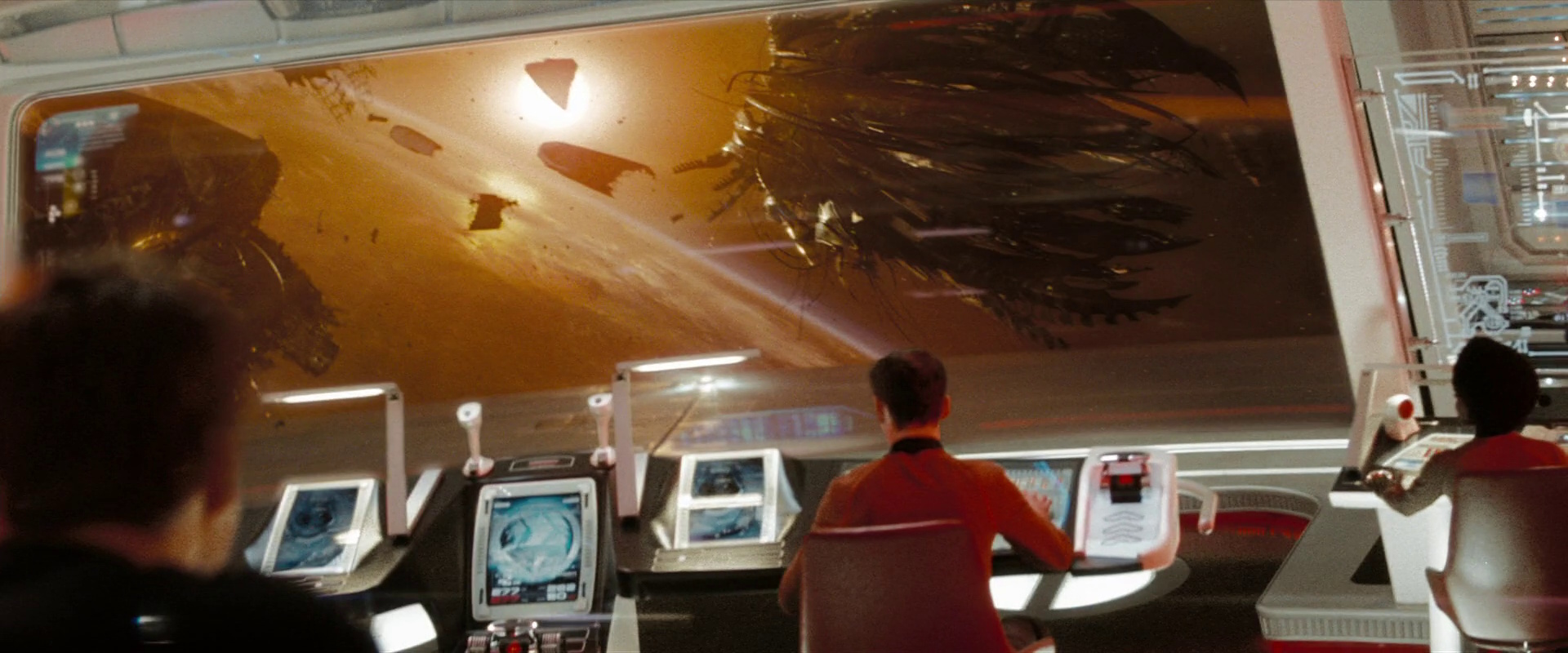
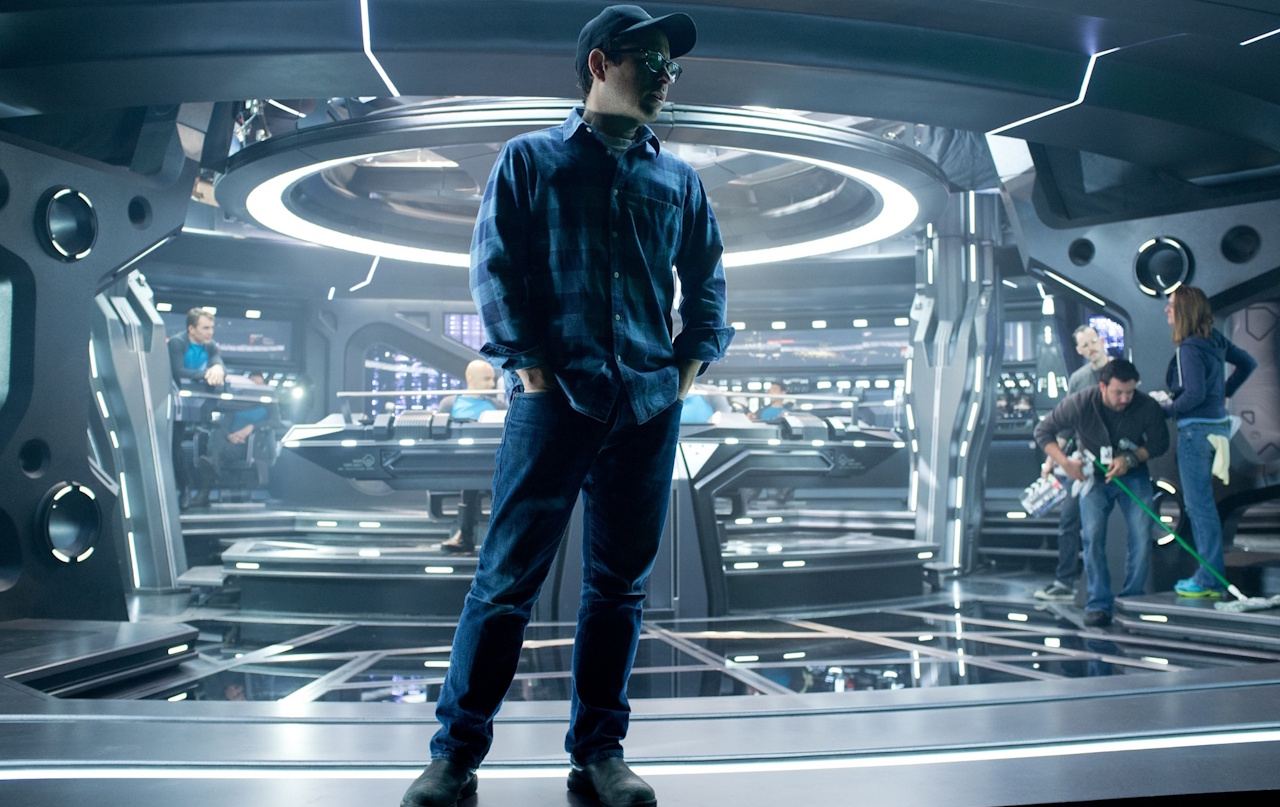
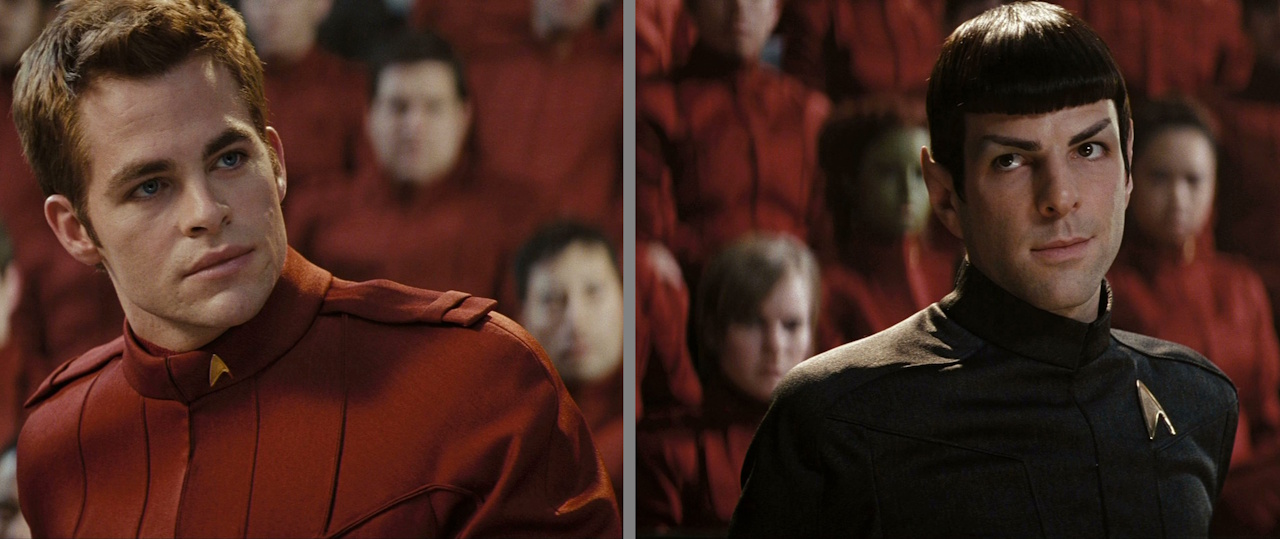
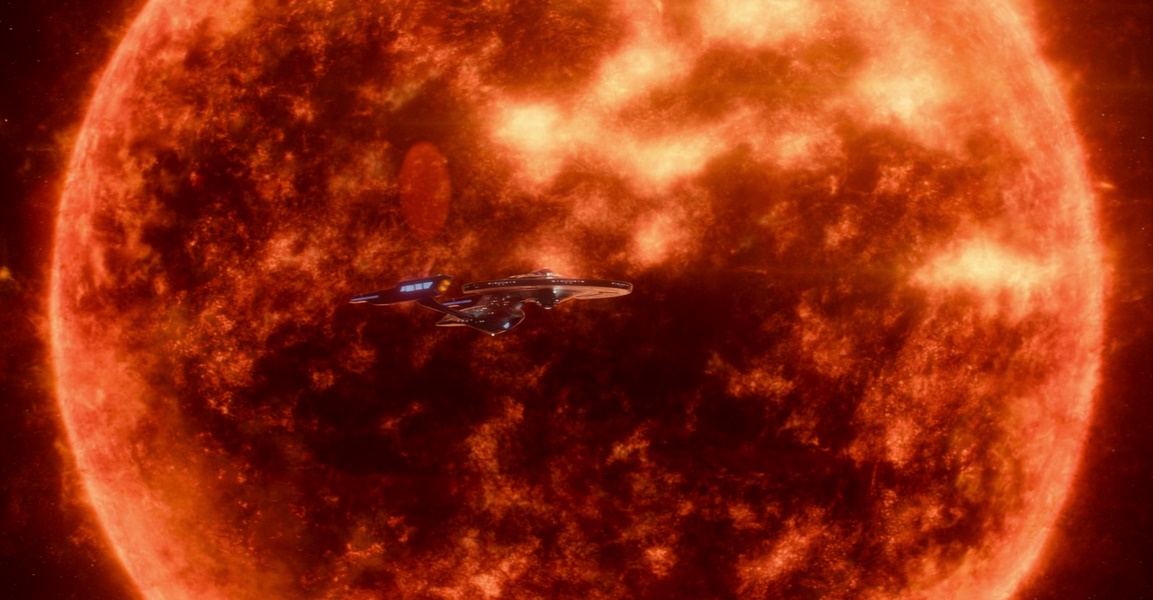
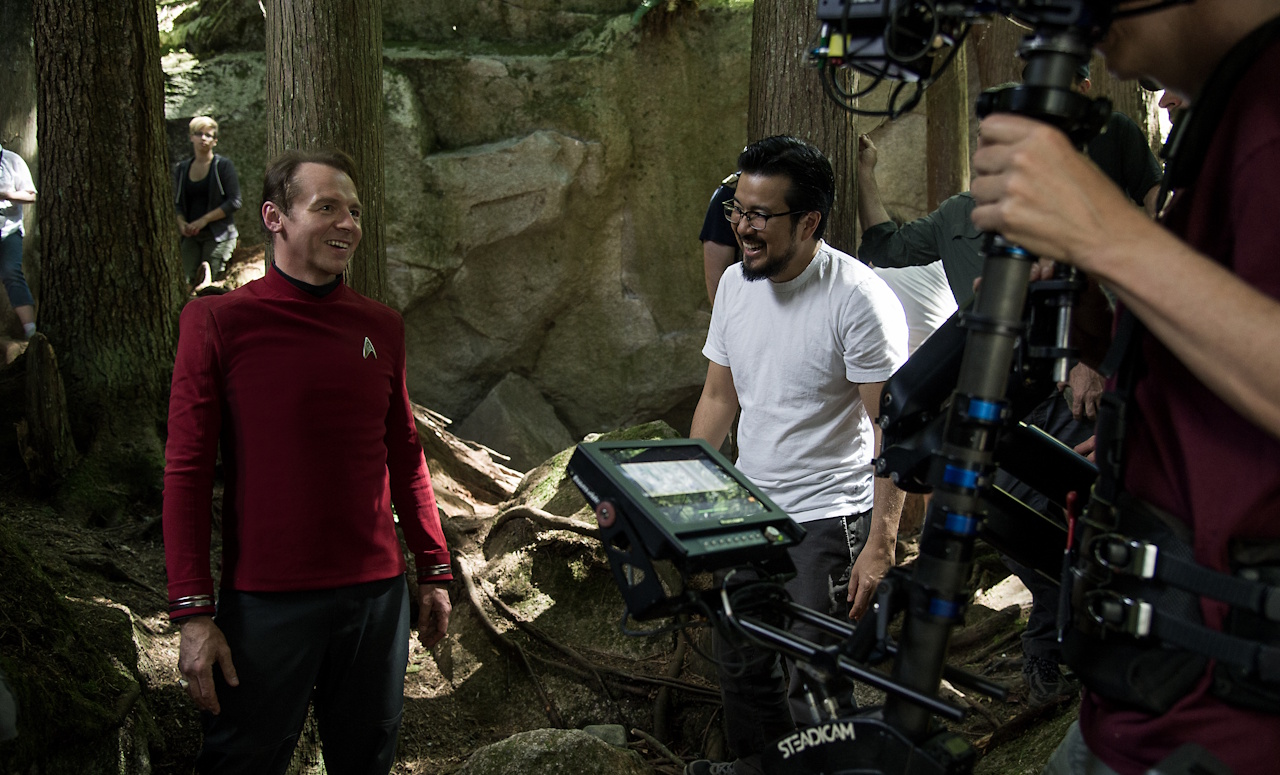

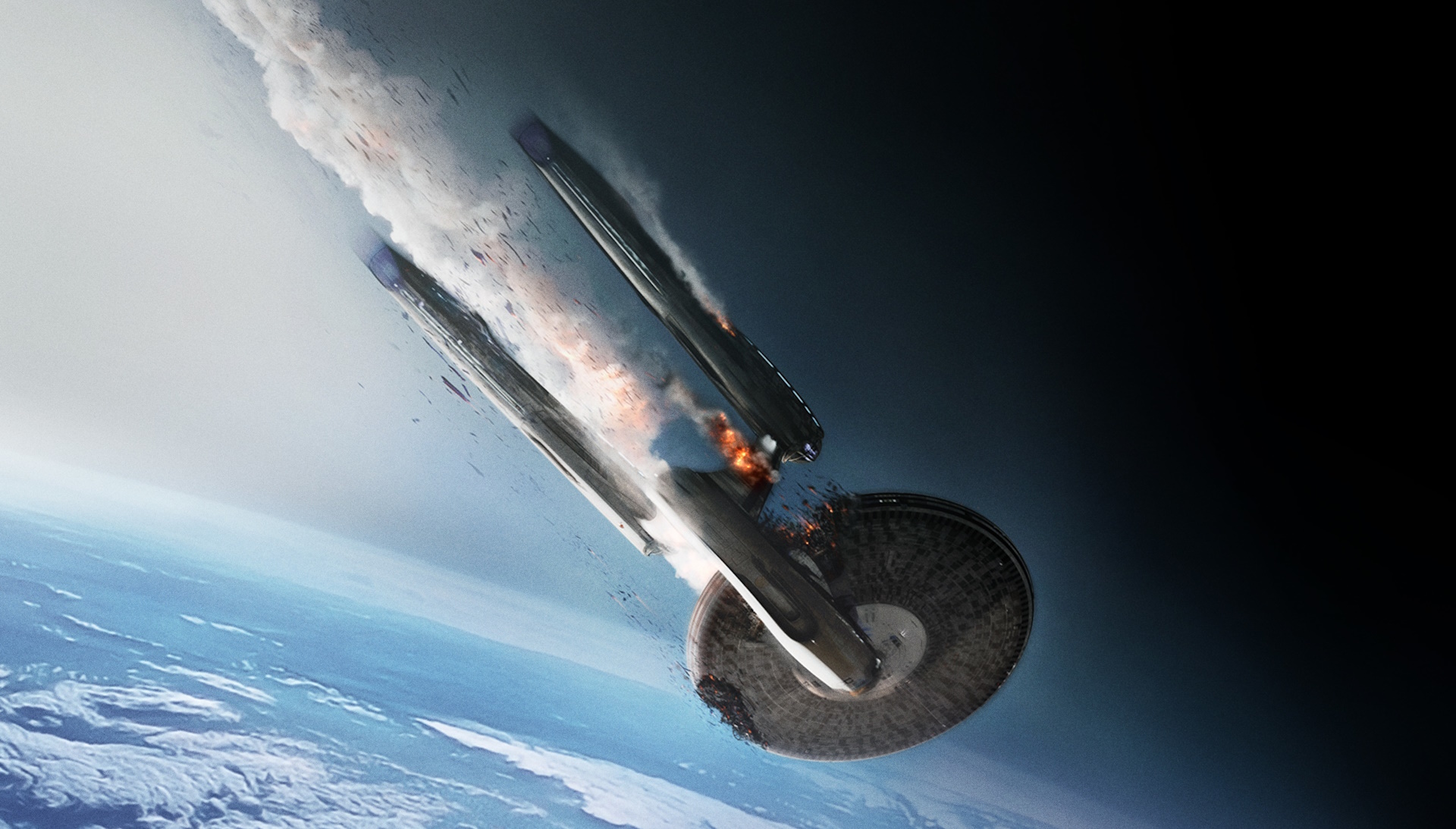
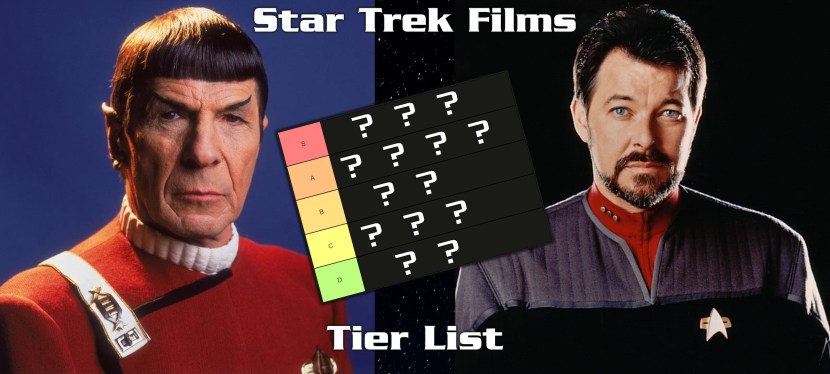



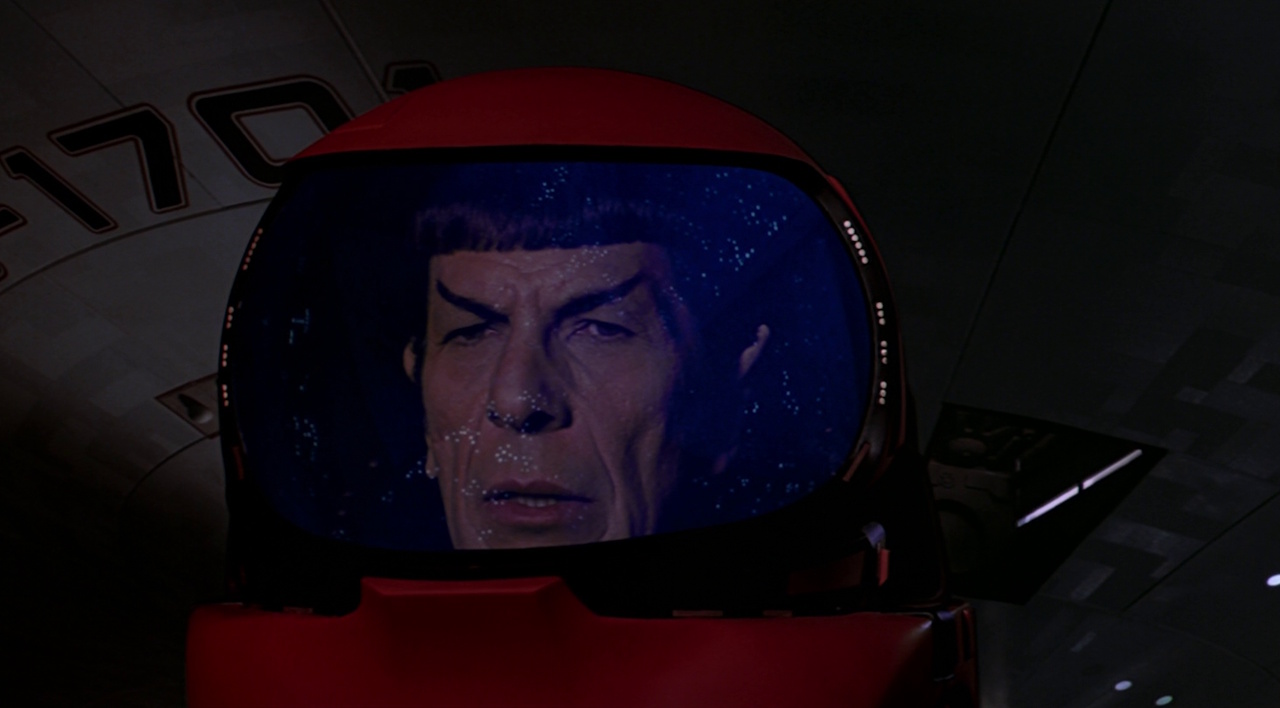


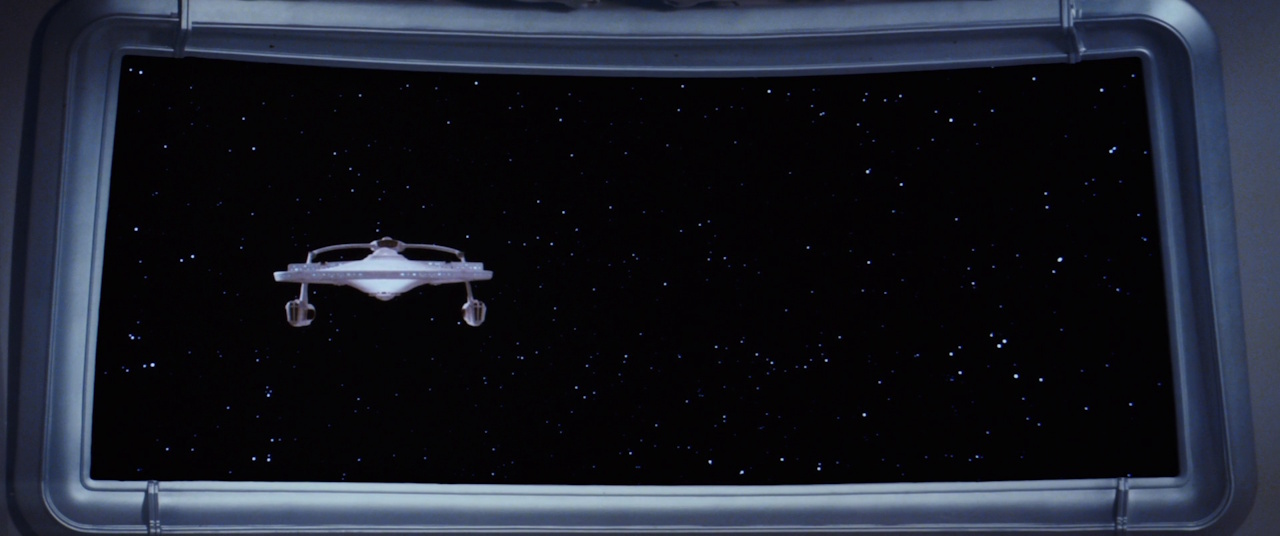

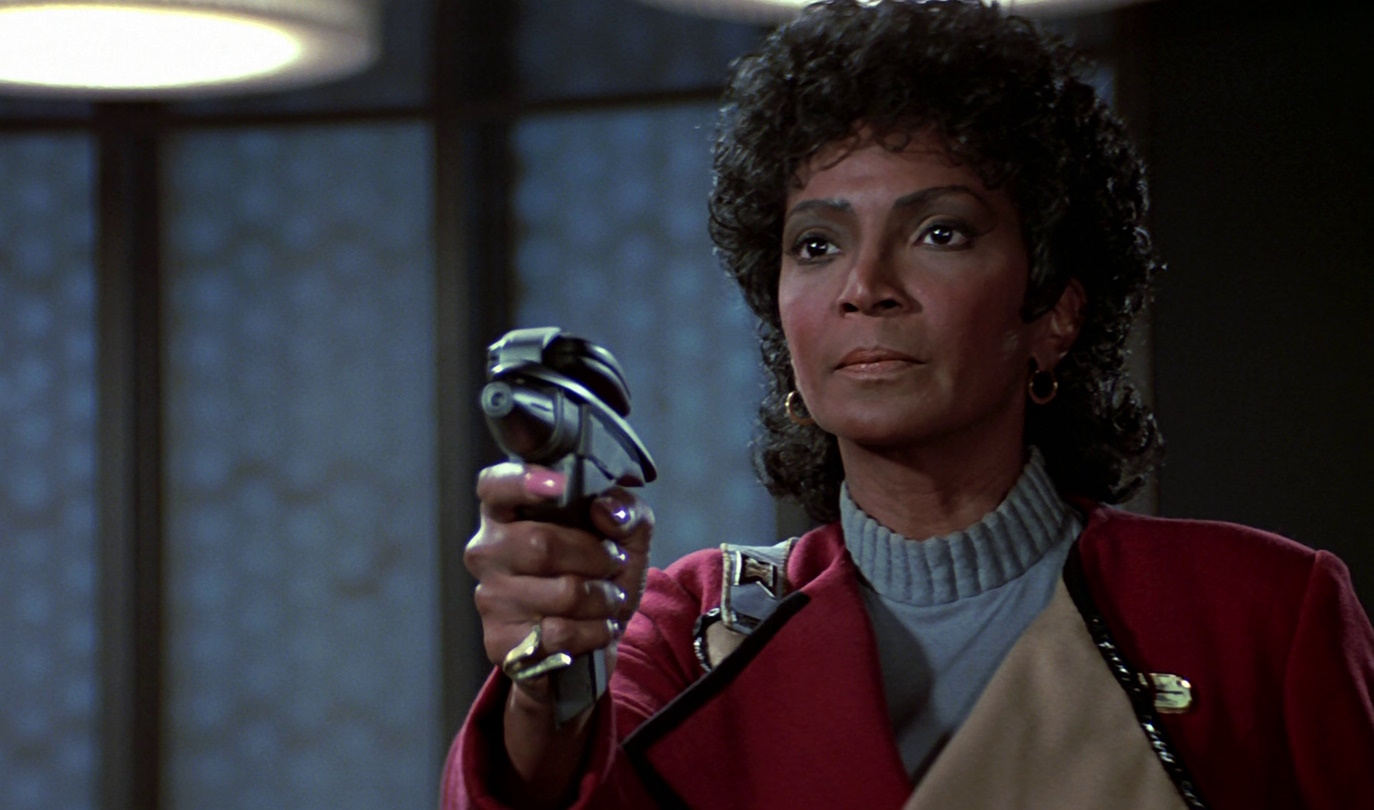
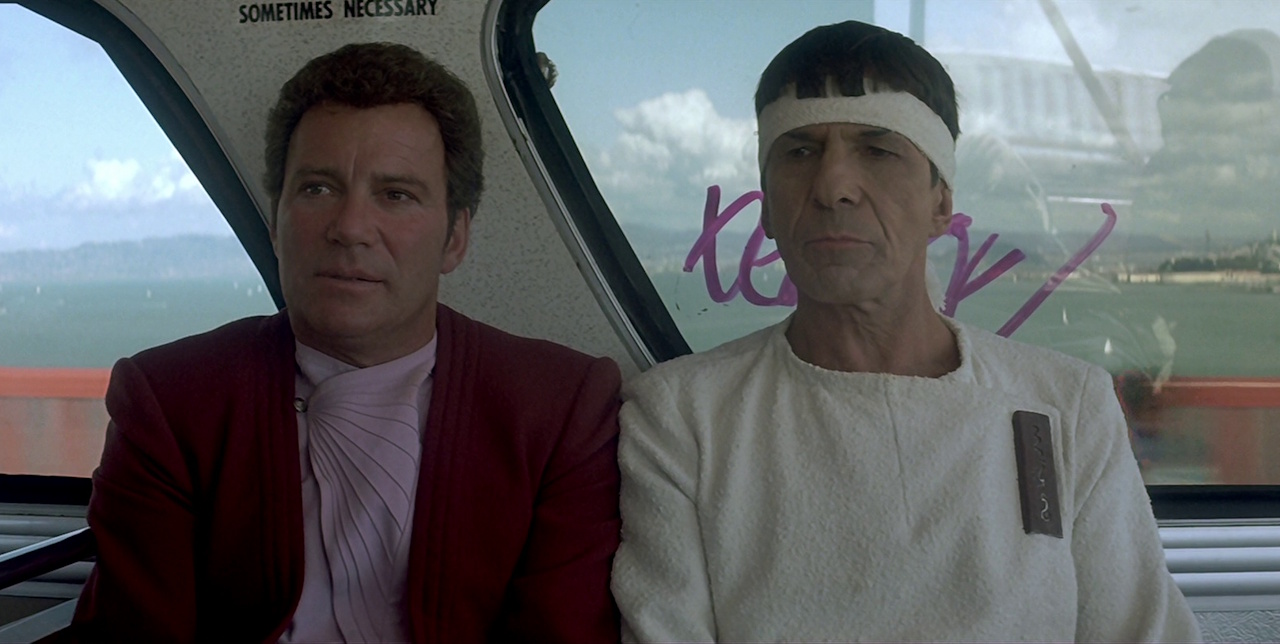

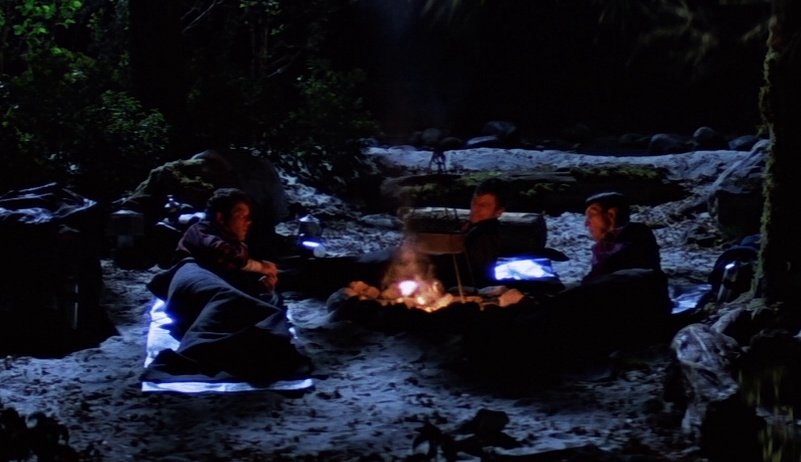
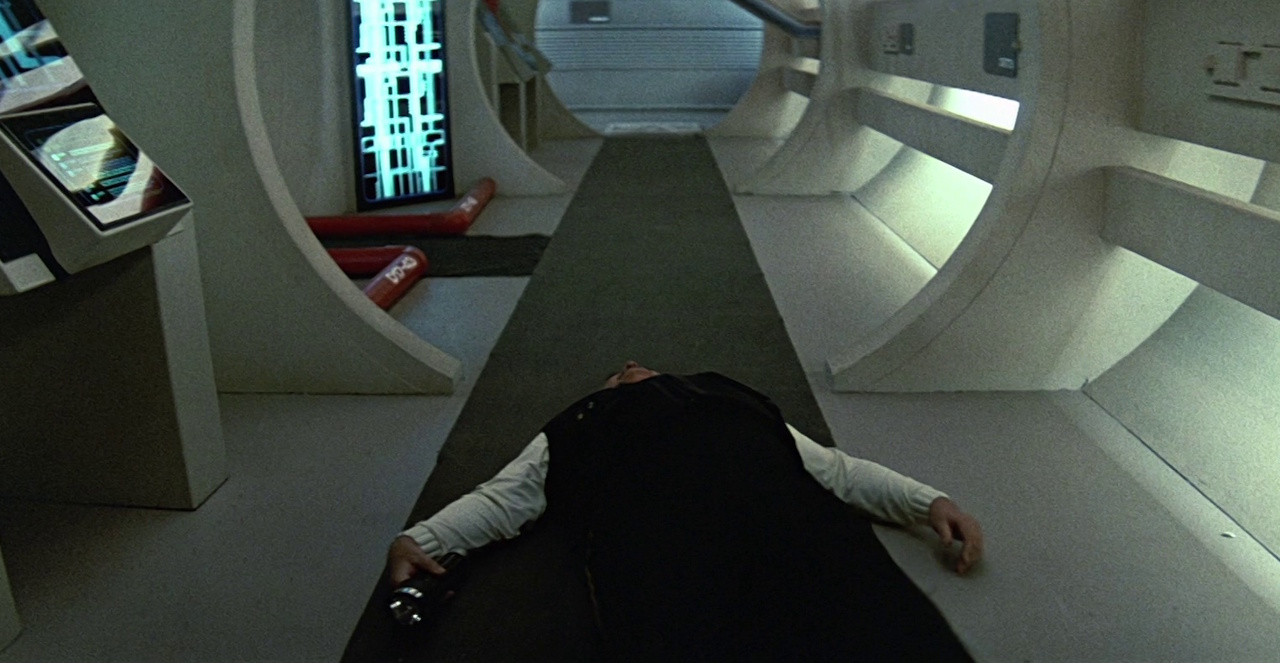
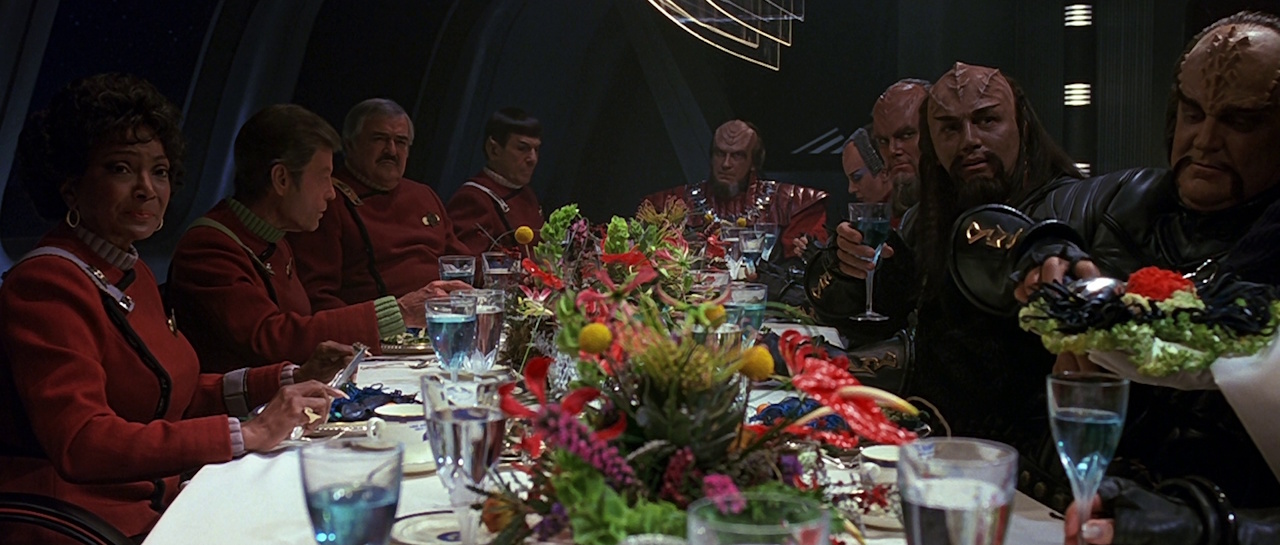
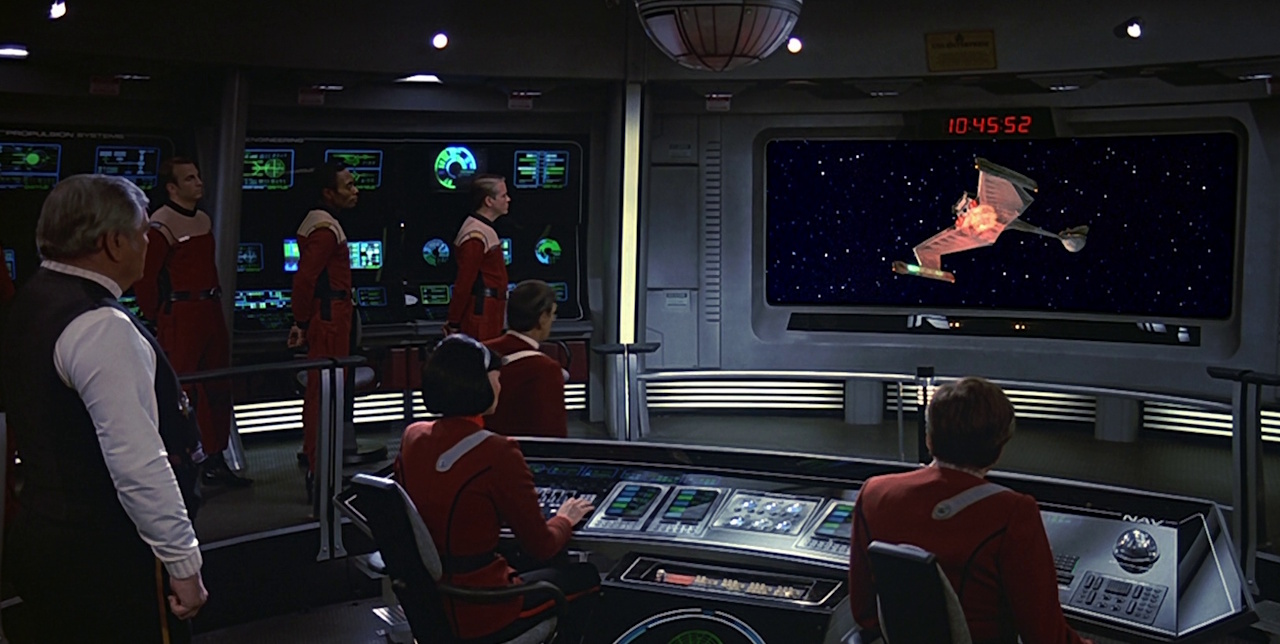

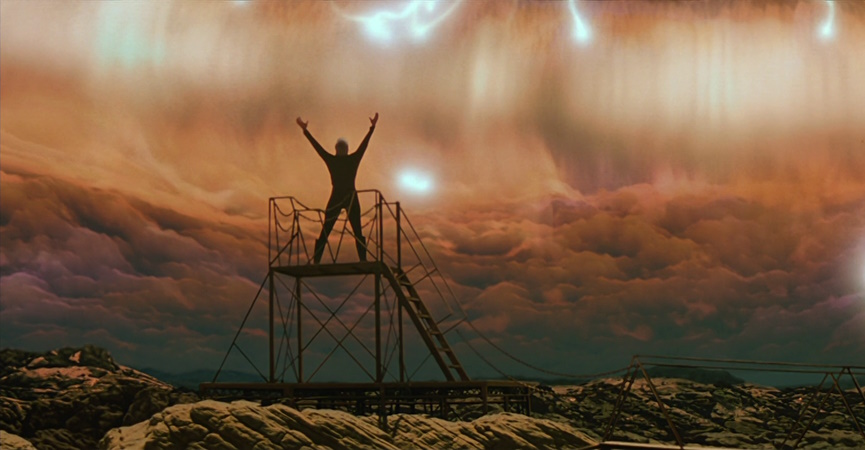

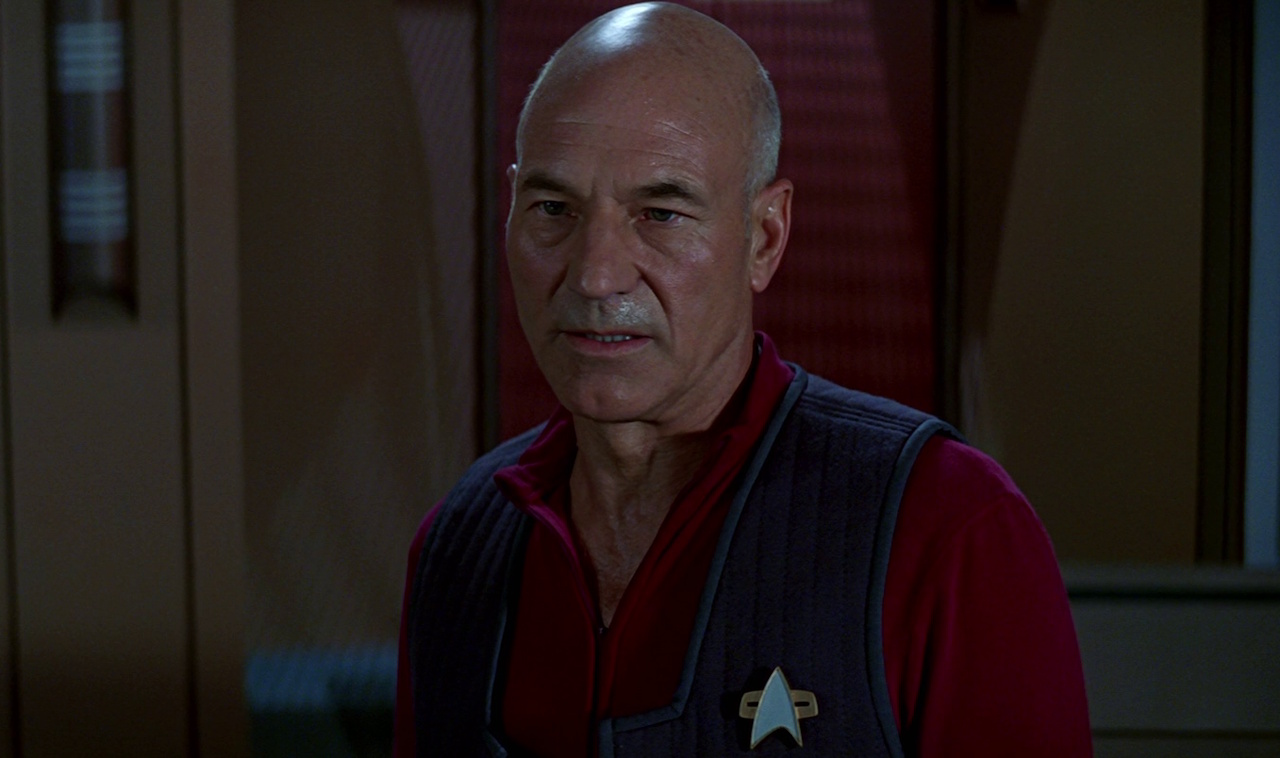

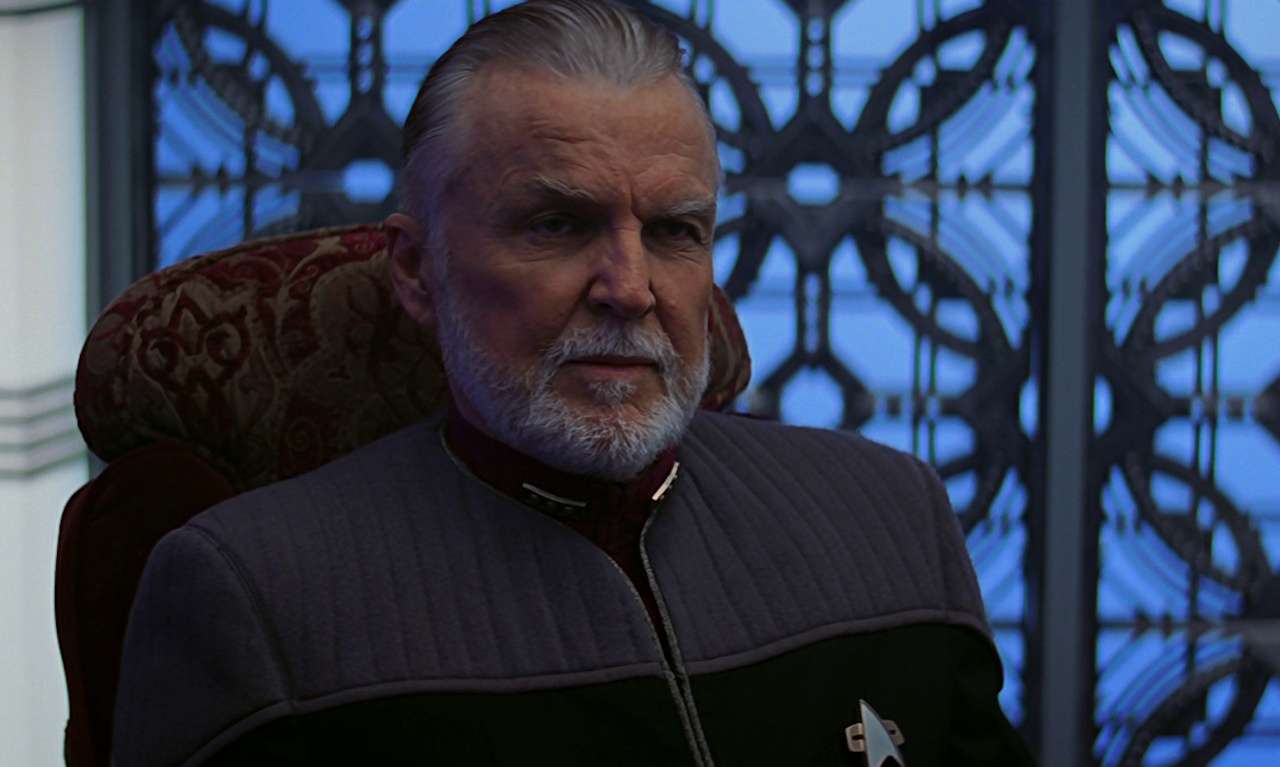

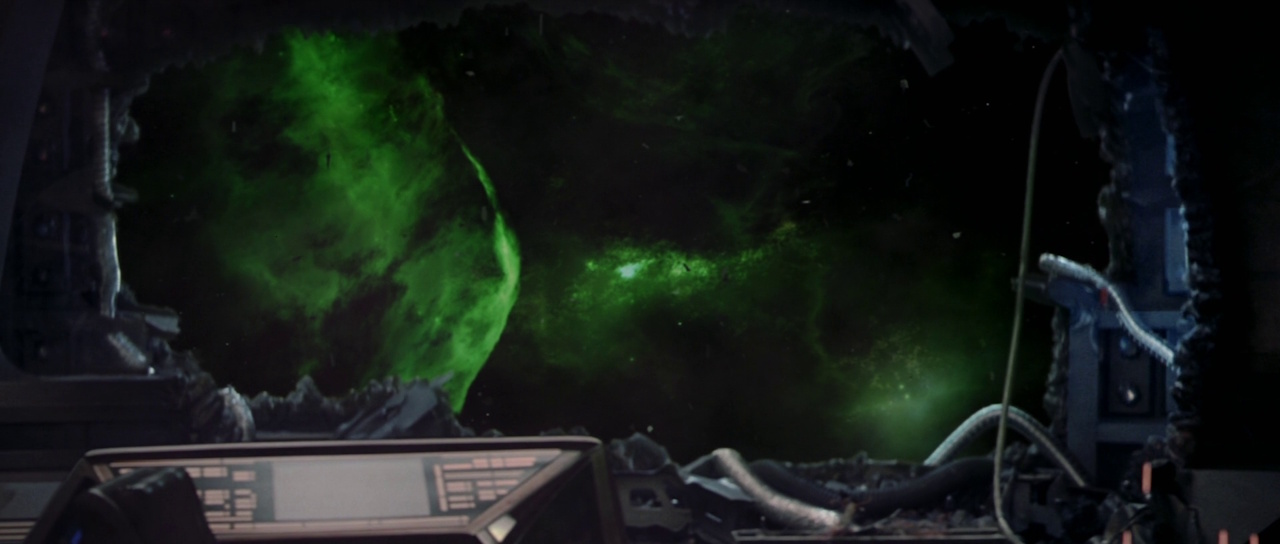
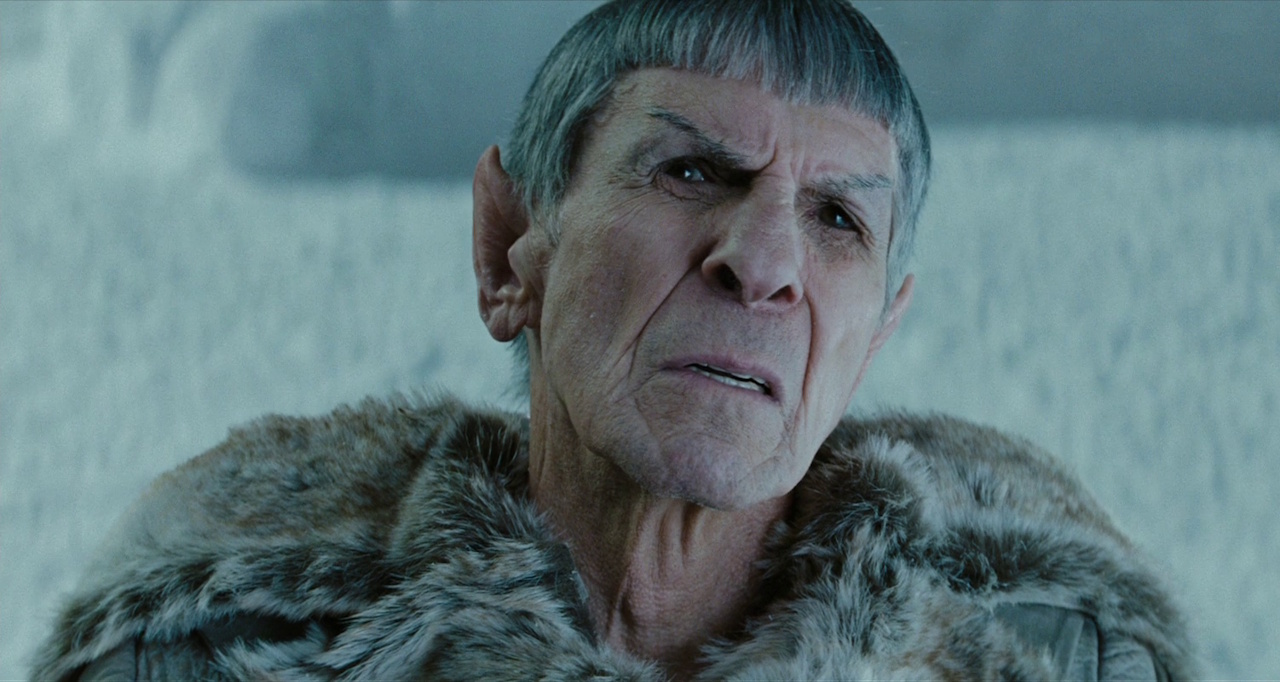

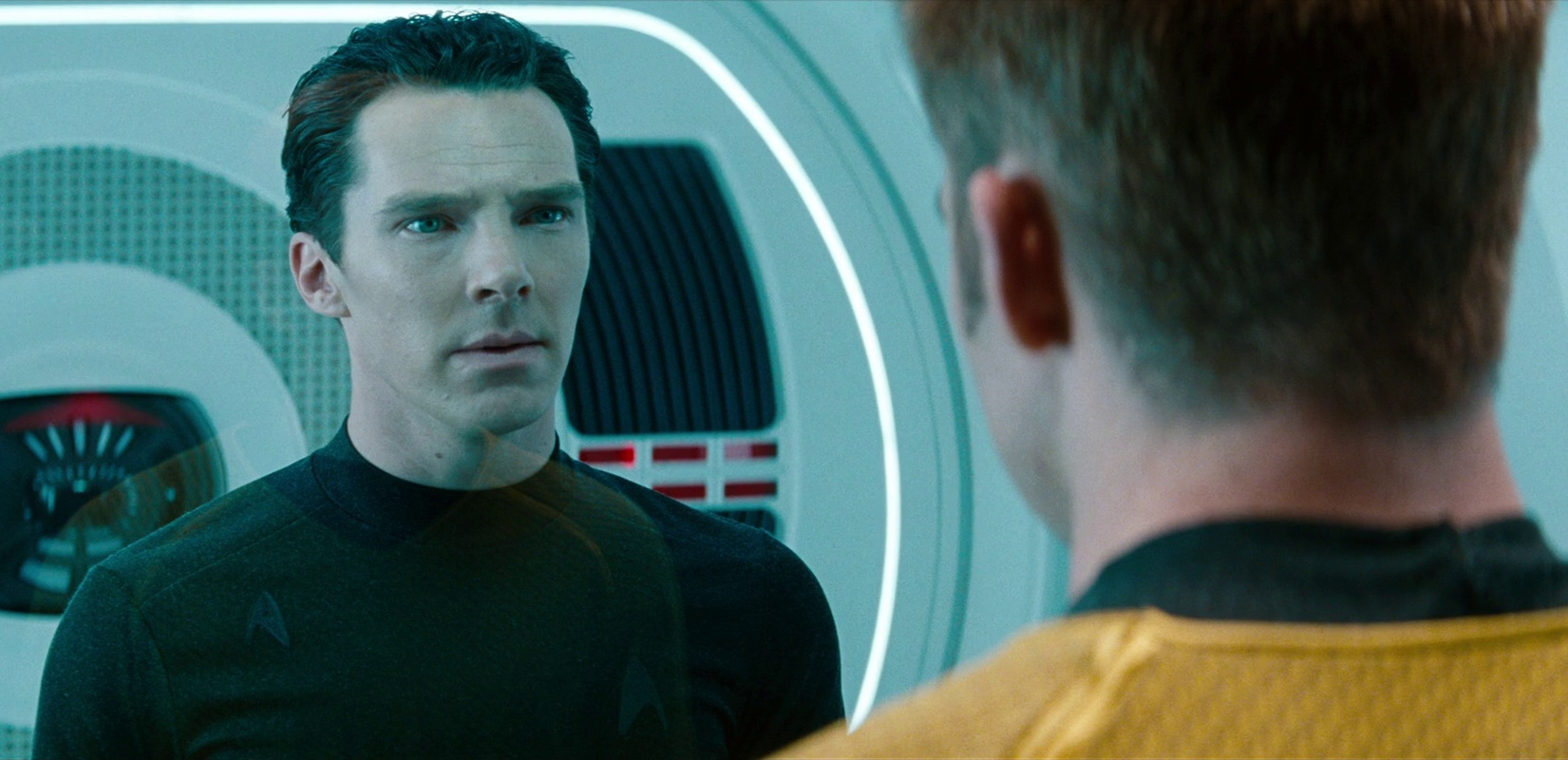
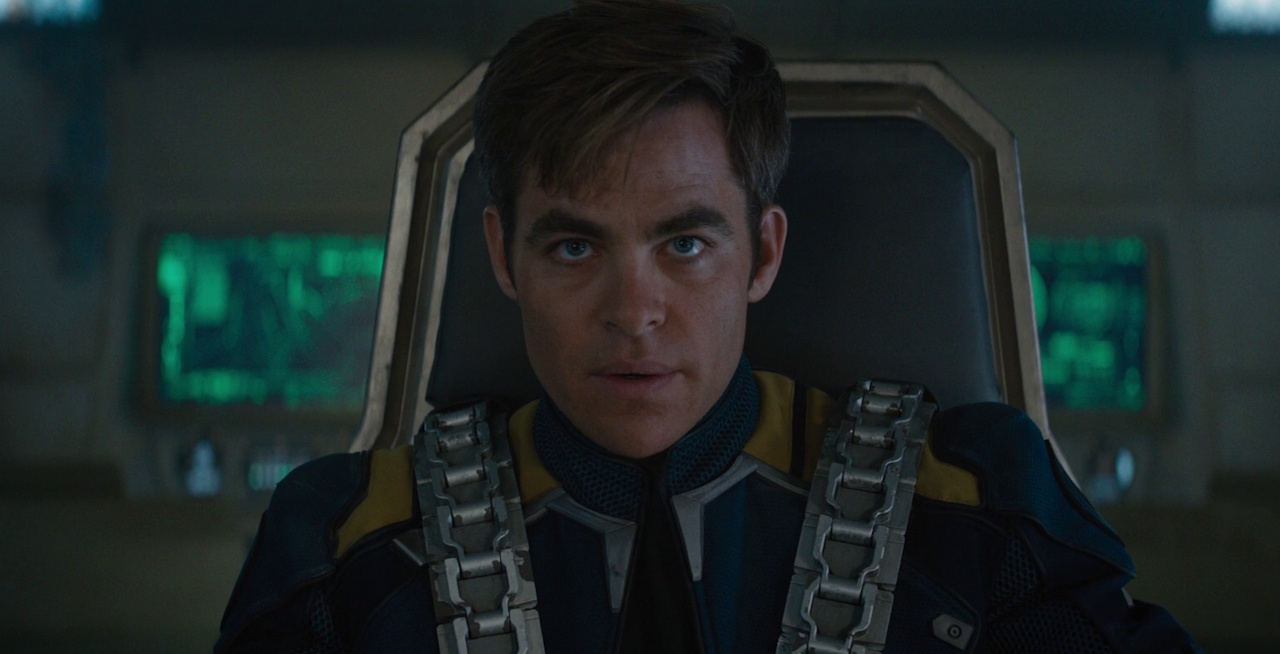

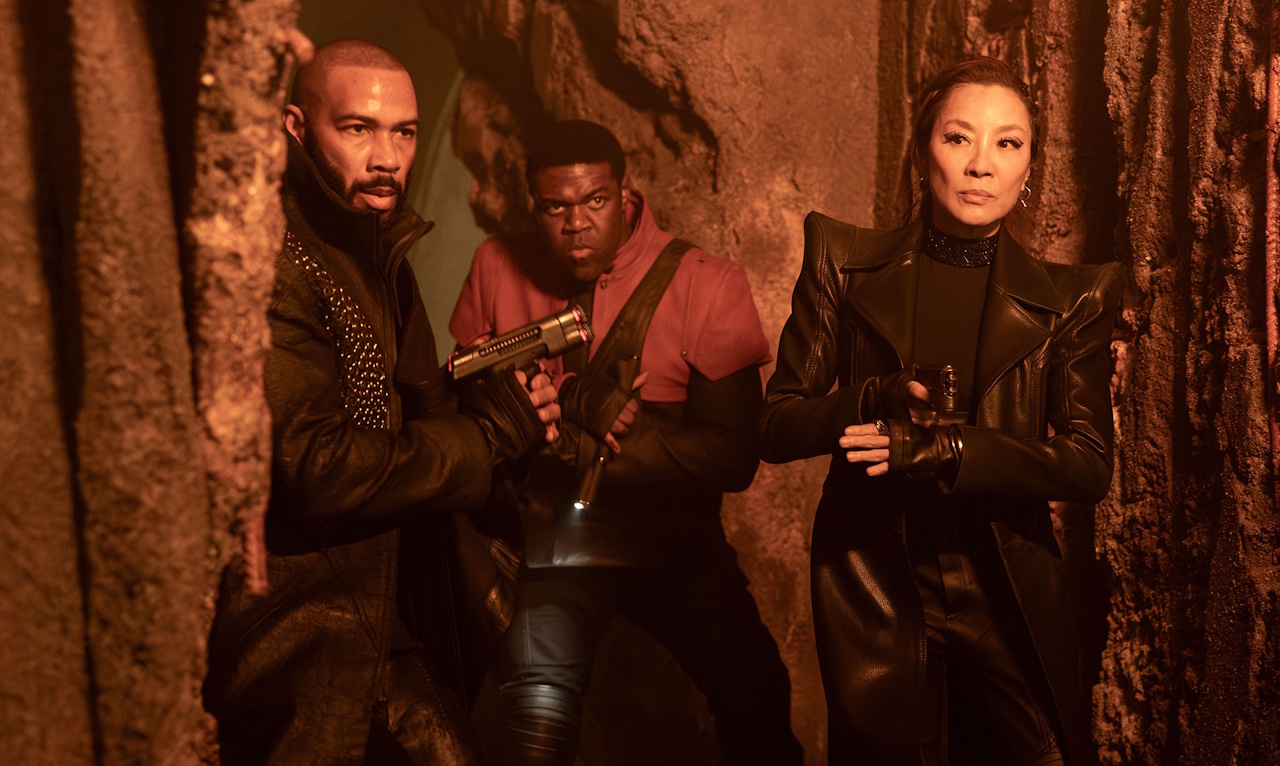
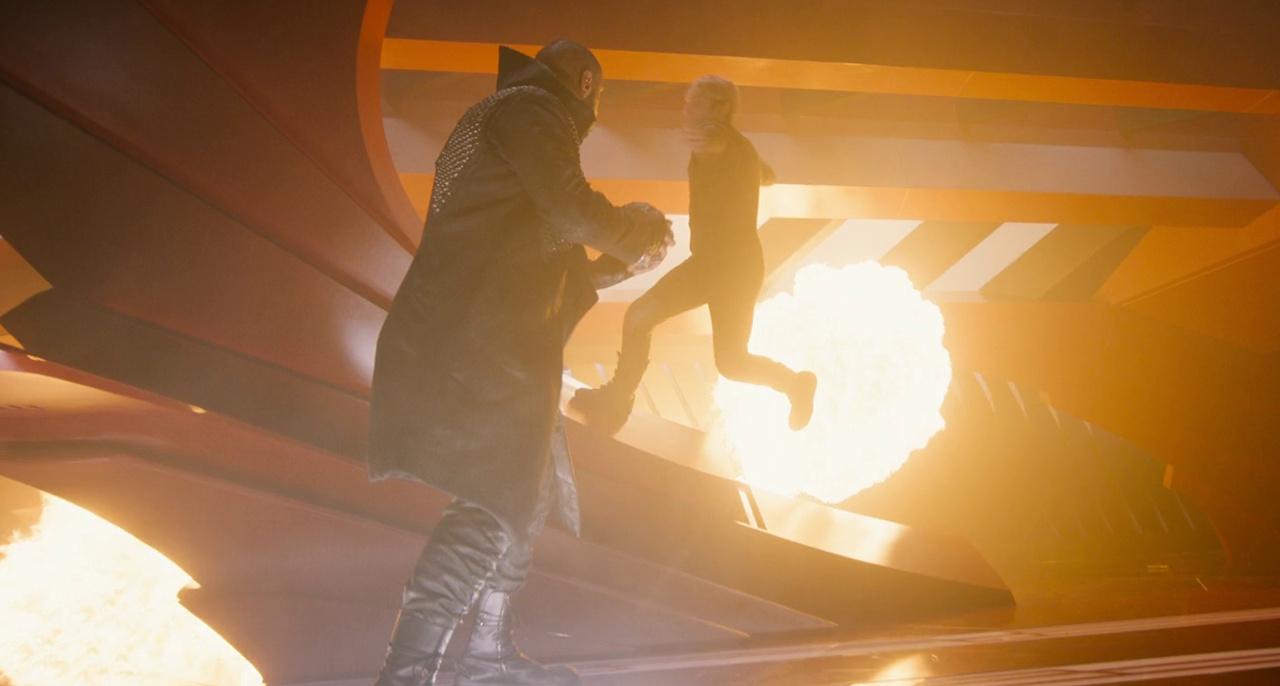
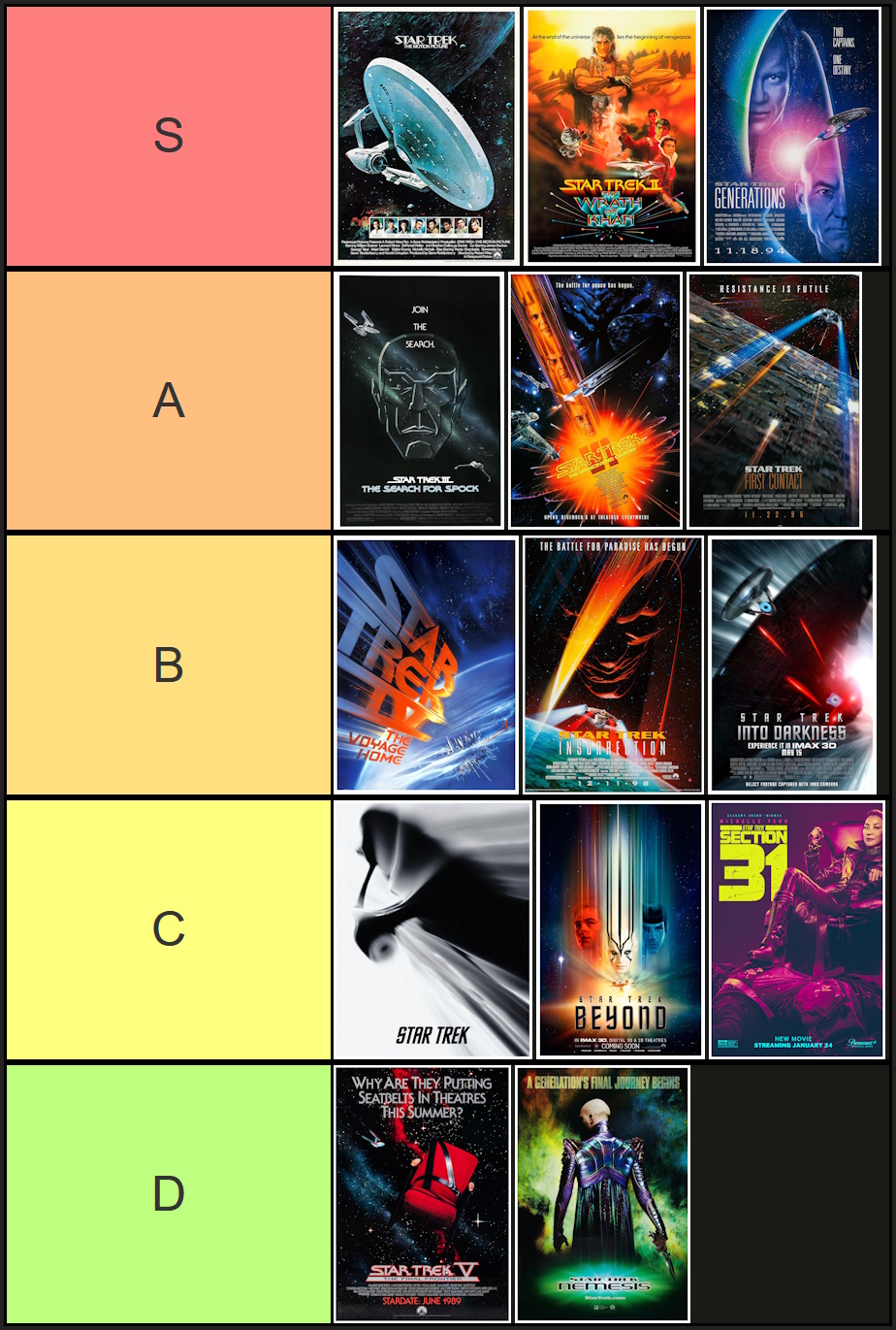


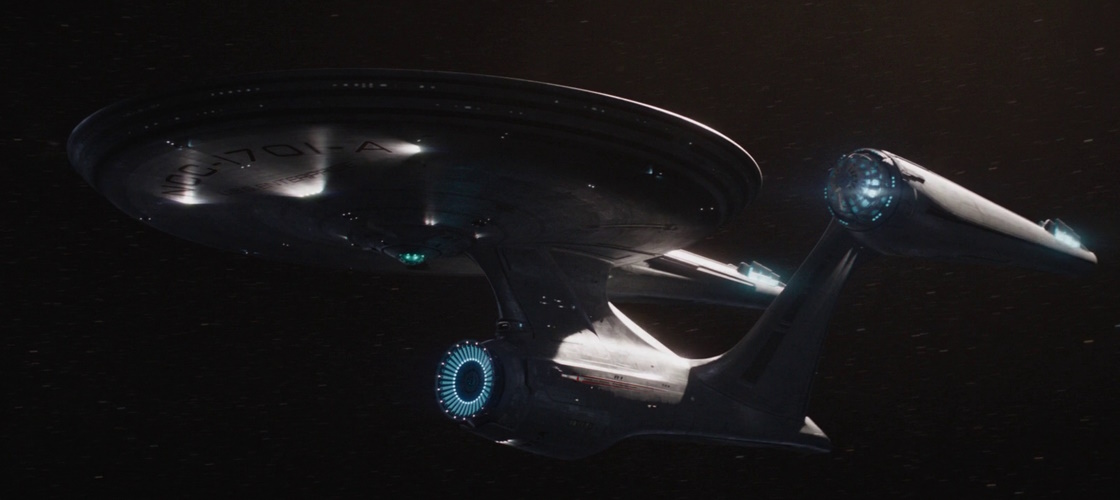




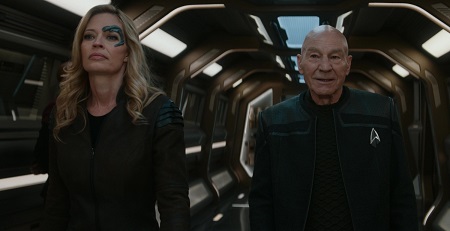


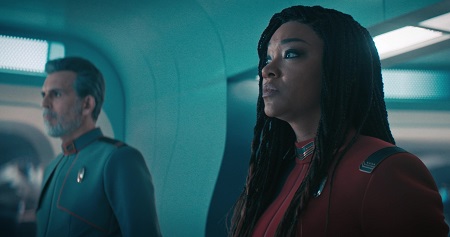

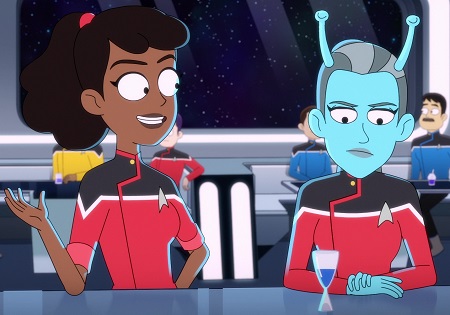


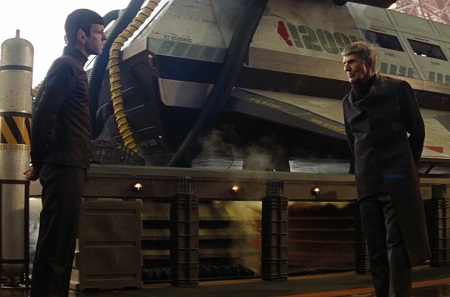



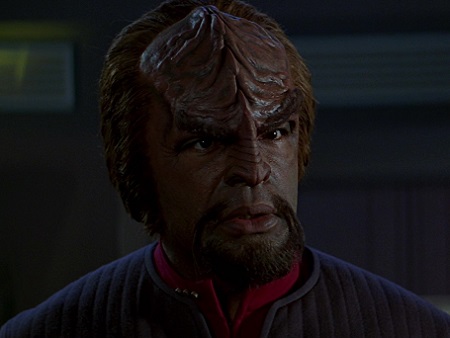
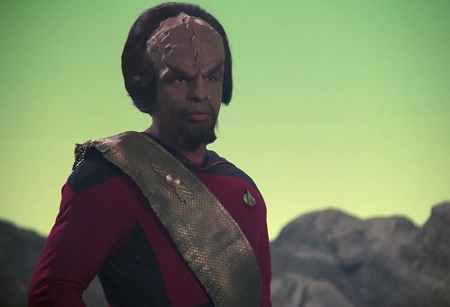

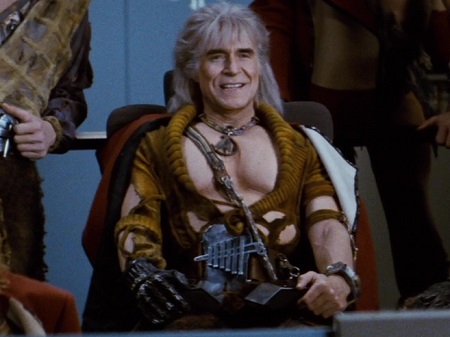

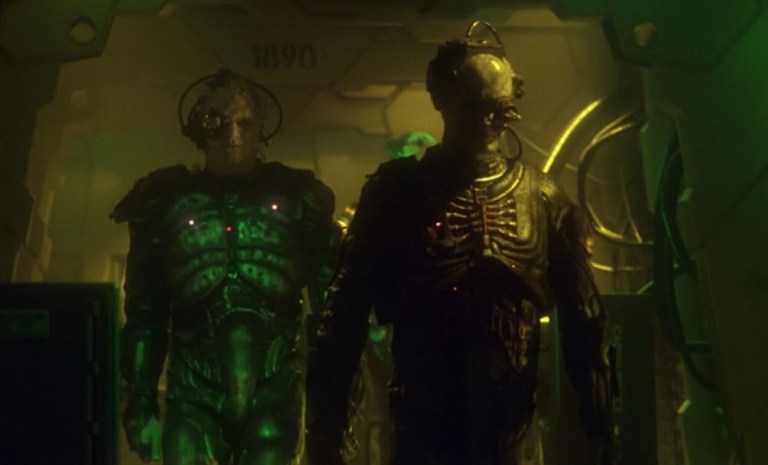
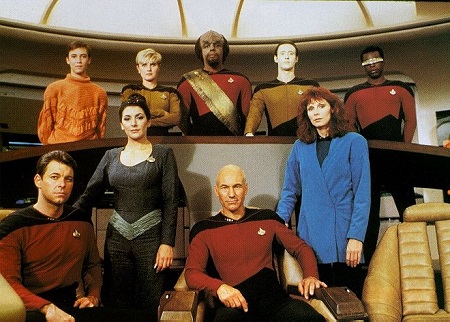


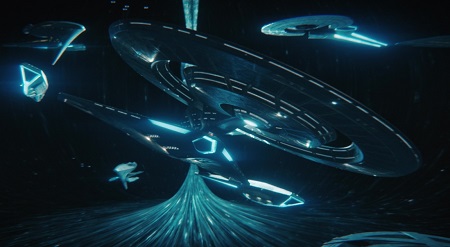


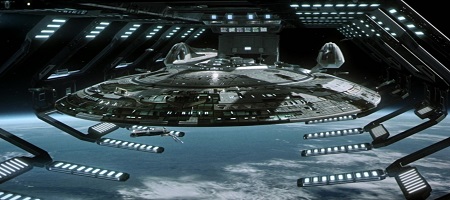

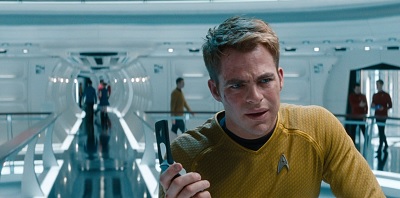
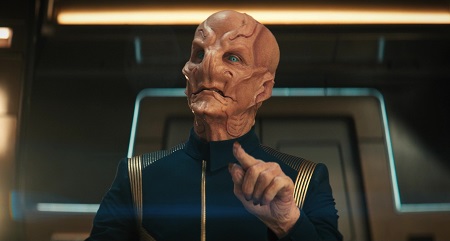

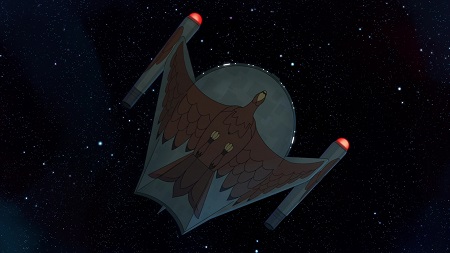
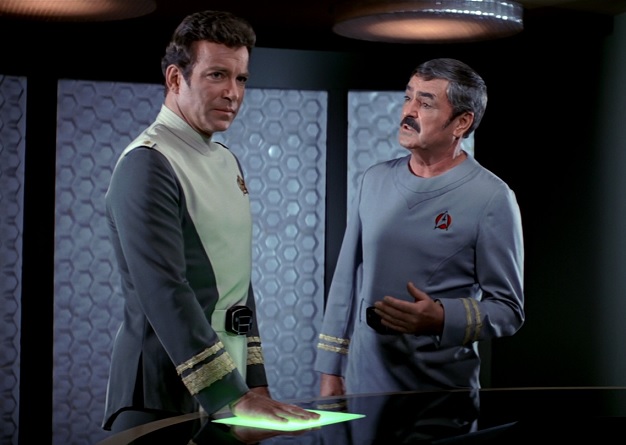


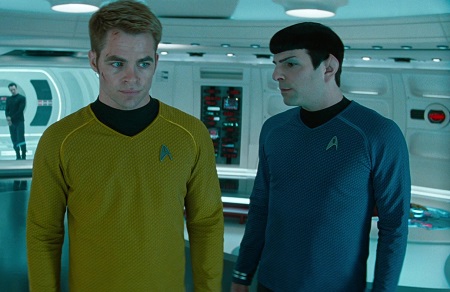
 Trekking with Dennis