Ten More Things That Have Always Bugged Me In Star Trek

A Star Trek-themed spoiler warning graphic.

Spoiler Warning: There are spoilers ahead for the following Star Trek productions: The Original Series Seasons 1 & 3, The Wrath of Khan, The Next Generation Season 1, The Undiscovered Country, Enterprise Seasons 2 & 3, Star Trek 2009, Discovery Seasons 2 & 4, Strange New Worlds Season 1, and Section 31.

Last year, I wrote up a tongue-in-cheek list of some of the little things that have always bugged me in Star Trek! Today, I thought we could have a little bit more fun at the franchise’s expense by talking about a few more. These are incredibly small things that don’t even rise to the level of “nitpicks,” but every time I see or hear them in their respective stories, they bug me! I know none of them will ever be explained in canon – nor do they really need to be – but I hope you’ll forgive an old Trekkie for airing their thoughts!

Star Trek fans have a bit of a reputation – especially on fan sites like this one – for nitpicking and being sticklers for canon and internal consistency, and I’m acutely aware that that’s how this list could come across. For me, this is written with tongue firmly embedded in cheek – it’s not meant to be taken completely seriously. While I do concede that all of these things “bug me,” as the title says, none of them ruined my enjoyment of any film or episode. These are minor things that aren’t worth arguing about or getting upset over – and I share this piece with the fan community in that spirit.

Promotional photo of several main characters from Star Trek: Enterprise, circa 2001.
Several main characters from Star Trek: Enterprise.

A couple of important caveats before we go any further. All of this is the entirely subjective opinion of a single Star Trek fan. If I raise points you vehemently disagree with, if none of these things bothered you, if you think I’ve misunderstood something, or if you feel I’m overreacting… that’s okay! There’s room enough in the Star Trek fandom for polite discussion and differences of opinion. And as I said above, none of this really matters anyway as these are all exceptionally minor points.

Finally, I’m not counting out-of-universe explanations. “It’s just a story,” or “because the writer/director wanted to do things that way” do not count! Sometimes, in order to tell a more entertaining story, the minutiae of canon or some element of internal consistency has to get pushed aside – that’s the way it goes in the world of entertainment. But that’s not what we’re here to talk about on this occasion.

Phew. With all of that out of the way, let’s jump into the list.

Number 1:
Why did Khan have a Motion Picture/Wrath of Khan-era Starfleet badge? Where did he even get it?
Star Trek II: The Wrath of Khan
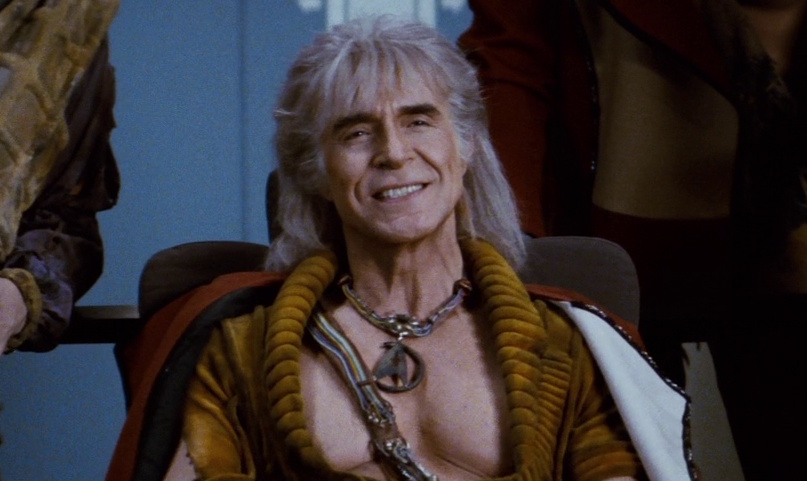
Still frame from Star Trek II: The Wrath of Khan showing a close-up of Khan aboard the USS Reliant.
Khan sporting his famous necklace.

Look at Khan’s outfit when Chekov and Captain Terrell encounter him and his surviving crewmates on Ceti Alpha V. After he takes off his overcoat, Khan is wearing a necklace which appears to be made from a damaged Motion Picture-era Starfleet badge – or a monster maroon belt buckle, perhaps. But how did he acquire this item? Khan and his people have been marooned on the planet since the time of The Original Series – years before either of those uniform styles were in use.

If Khan was wearing a piece of a Starfleet uniform, surely he should be wearing one of the gold, red, or blue shirts that we’re familiar with from The Original Series – or perhaps a pair of Starfleet boots from that era! It’s always stood out to me as a bit of an oddity of apparel; when you look at his necklace more closely, it’s clearly worn and weathered indicating it’s something he’s kept for years – perhaps as a symbol of his quest for vengeance against Kirk and Starfleet. But given that no Starfleet ships visited the Ceti Alpha system in between the events of Space Seed and The Wrath of Khan, it’s an item he simply shouldn’t have had access to.
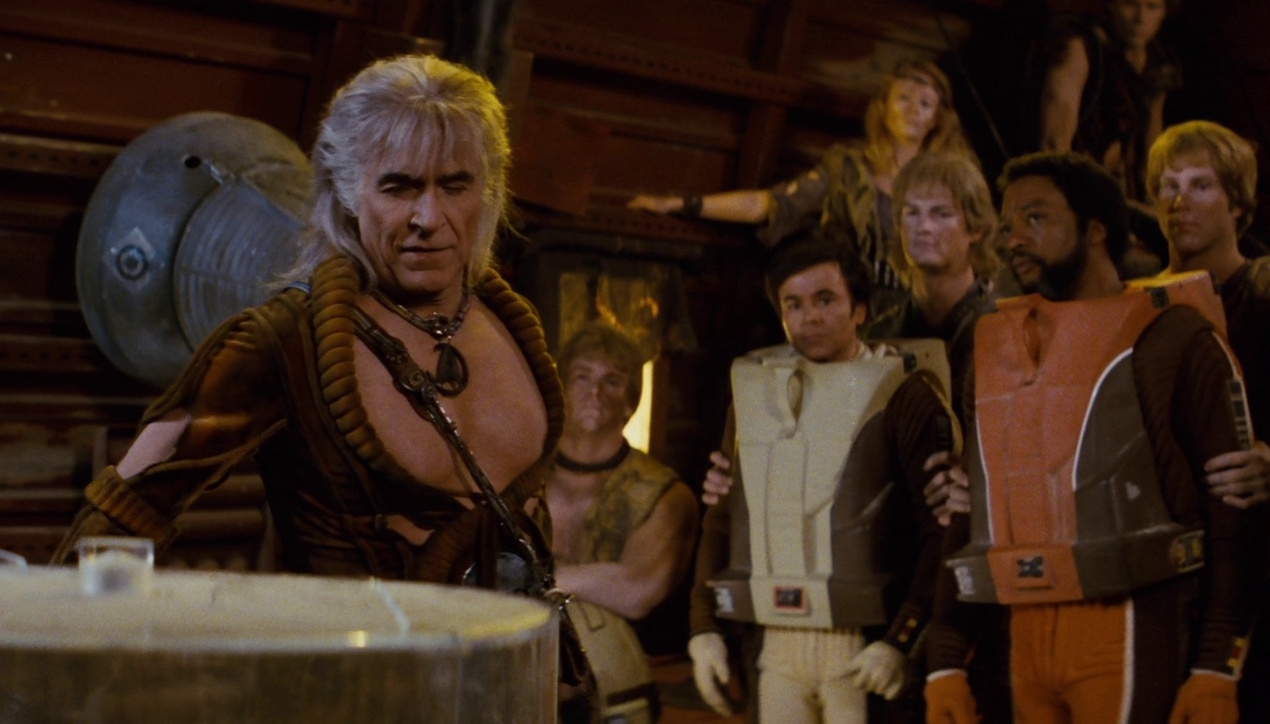
Still frame from Star Trek II: The Wrath of Khan showing Khan, Chekov, Captain Terrell, and several augments aboard the derelict Botany Bay.
Khan was already wearing the necklace when Chekov and Terrell arrived.

If Khan started wearing the necklace after his encounter with Chekov, I’d say that he took the piece from him or from someone else on Reliant’s crew. But he clearly converted part of a Starfleet uniform into this necklace during his time on the planet, before his meeting with the crew of the Reliant – so that explanation doesn’t work.

There’s no getting around the simple fact that Khan shouldn’t have this badge or belt buckle. Nothing like it was seen in The Original Series, and even if we extend our search to other 23rd Century shows like Discovery or Strange New Worlds, very generously assuming that another Starfleet vessel visited Ceti Alpha V before the destruction of Ceti Alpha VI, there are still no comparable badges, buckles, or anything with a Starfleet delta of the right shape and size for Khan to convert into a necklace. Unless he used his people’s very limited resources to smelt a perfect Starfleet delta the exact same shape and size… I don’t know where he got it from!

Number 2:
Aren’t the Cherons (or Cheronians) extinct?
Star Trek: Section 31

Still frame from Star Trek: The Original Series Season 3 showing Lokai, a black-and-white alien from the planet Cheron.
Lokai, one of the last surviving members of his race.

In the recent Section 31 TV movie (which you can read a review of by clicking or tapping here) we meet a character aboard Georgiou’s space station who looks very similar to a Cheron/Cheronian. The Cherons were encountered in the iconic episode Let That Be Your Last Battlefield – where the final two members of the species met Kirk and the crew of the Enterprise.

I like Let That Be Your Last Battlefield, and it’s an episode with a disappointingly timeless message about how racism and division will eventually lead to conflict, war, and extinction. The entire point of the story was that the Cherons wiped themselves out because they couldn’t get over their hatred of one another – even though, to us, they appeared to be the same species. It’s a message that was poignant at the time it was written – with the American civil rights movement ongoing – and has remained so to this day.

Still frame from Star Trek: Section 31 showing the character of Virgil.
Is Virgil from Section 31 meant to be a Cheron?

Section 31 confused me with its Stardate and therefore its place in the timeline – but no matter whether it was meant to be set in the mid-23rd Century or the early 24th Century, there simply shouldn’t be any surviving Cherons left. If Section 31 takes place before Let That Be Your Last Battlefield, then I guess technically two members of the species remain. But if, as the producers have told us, the film takes place in between The Undiscovered Country and The Next Generation, then the entire species is extinct – wiped out because they couldn’t overcome their hatred for one another.

Of all the things modern Star Trek could’ve chosen to retcon… the survival of the Cherons isn’t one I’d have wanted to see. It serves no purpose to bring in a character like that as a one-off campy joke, and furthermore, it undermines the powerful message of a classic story. My personal head-canon (which I really should write up one day) is that this character at Georgiou’s bar wasn’t actually a real Cheron, but someone basically cosplaying as one. I think that’s actually the least-bad spin I can put on the matter!

Number 3:
Does the Enterprise-D’s saucer section have warp drive or not?
Star Trek: The Next Generation
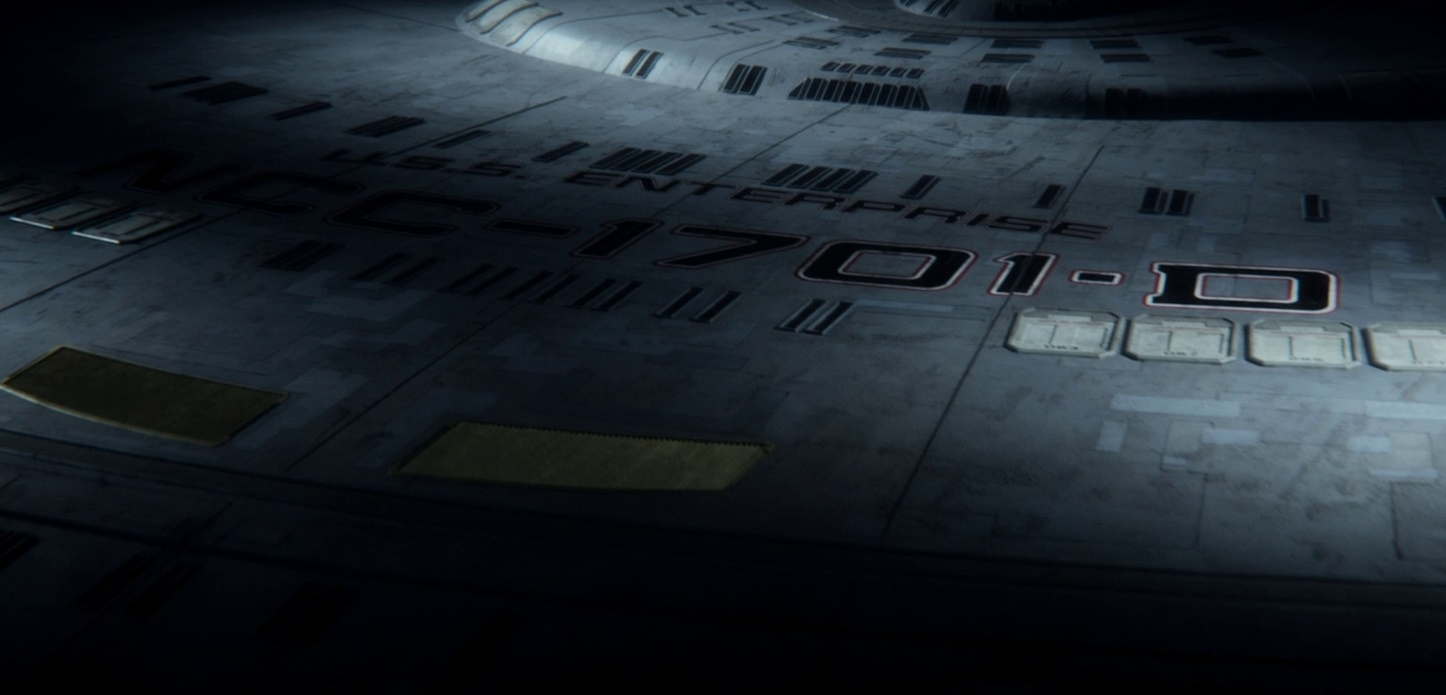
Still frame from Star Trek: Picard Season 3 showing a close-up of the Enterprise-D's saucer.
Close-up of the Enterprise-D’s saucer section.

According to most sources I can find – including in episodes where saucer separation occurs or is mentioned – the Enterprise-D’s saucer section has impulse engines only. Impulse engines allow for travel at speeds below warp one – i.e. below the speed of light. But this seems to contradict not only what we see on screen in episodes like Encounter at Farpoint… but the entire point of saucer separation as it’s explained in the show.

Except for situations like a warp core breach, where the destruction of the ship is imminent, what’s the main purpose of saucer separation? As stated in Encounter at Farpoint, The Best of Both Worlds, and other episodes, the star-drive section is where most of the Enterprise-D’s heavy armaments are – so the point of saucer separation is to evacuate civilians, scientists, and other non-combatants. The saucer section can be commanded by a junior officer with orders to set course for the nearest safe system or starbase, getting families and scientists out of the danger zone or battlefield. The star-drive section is then free to engage the enemy.
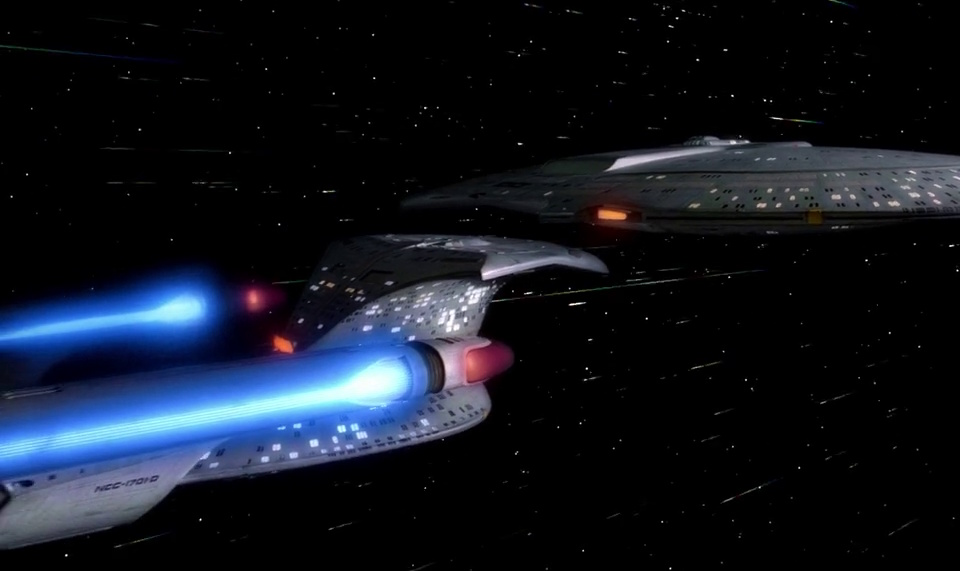
Still frame from Star Trek: The Next Generation Season 1 showing the Enterprise-D initiating a saucer separation.
Saucer separation in progress.

But at sub-light speeds, this won’t work. Any enemy ship could easily catch up to and overtake a fleeing saucer section travelling at impulse, or hit it with a torpedo or disruptor blast while it’s still in range. And at impulse speeds the saucer section would be decades away from help even if it was relatively close to a friendly base or star system. That’s not to mention that, in Encounter at Farpoint, the saucer section travels an apparently sizeable distance under its own power to reach Deneb IV after the encounter with Q. The Enterprise-D was at warp – apparently not in the Deneb system – yet the saucer was able to travel all that way, either at warp or at faster-than-light speeds, which seems to contradict what we know of the Enterprise-D and its capabilities.

So does the saucer section have warp engines? Or if saucer separation happens at warp, can the saucer cruise at warp for a while before slowing down? I think that contradicts what we know of how warp drive works and how warp bubbles are generated and sustained by warp cores… but there’s at least a degree of ambiguity there, I guess. What still doesn’t make sense, though, is how launching the saucer section at sub-light speeds is supposed to help the ship’s civilian crew escape from danger in a galaxy populated by warp-capable villains.

Number 4:
Why can’t the crew of the USS Reliant count to six?
Star Trek II: The Wrath of Khan
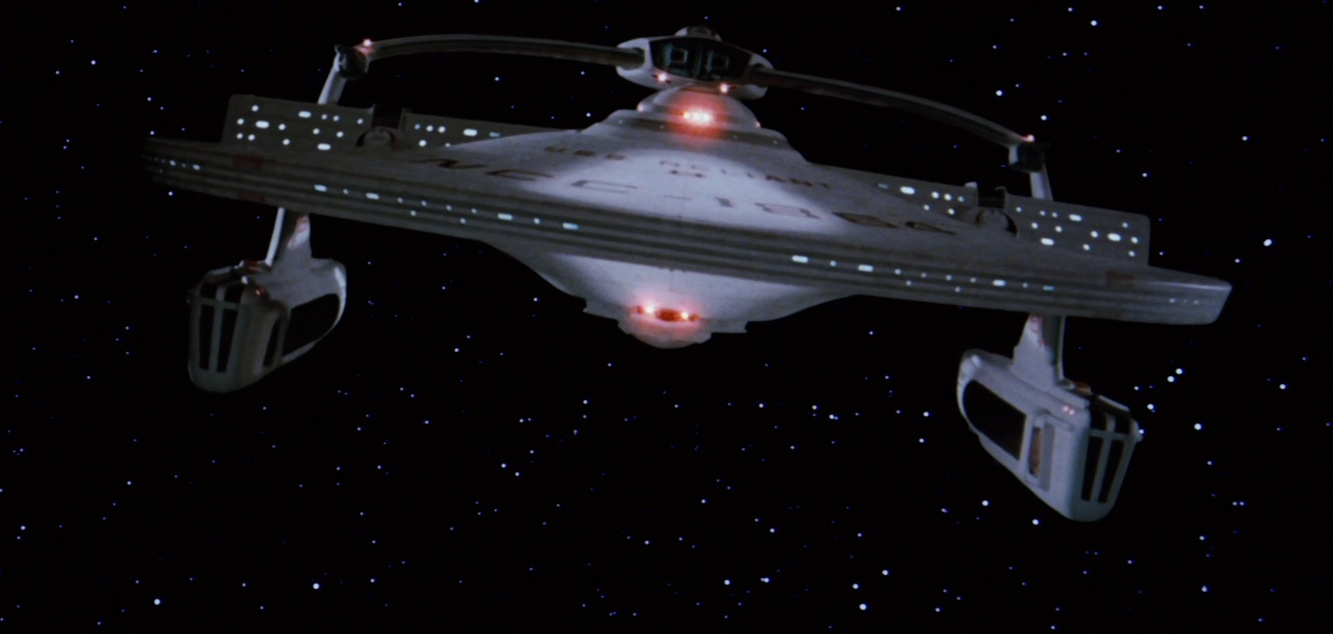
Still frame from Star Trek II: The Wrath of Khan showing the USS Reliant head-on.
The Miranda-class USS Reliant.

I know, I know: we’ve done The Wrath of Khan already! But this one really is dumb if you stop to think about it, so it’s definitely making the list. When the USS Reliant was scouting for planets as part of the Genesis project, it entered the Ceti Alpha system – a system that Starfleet has visited at least once before. The crew knew that there were supposed to be six planets… but no-one aboard can count, apparently.

Somehow – and I have no idea how this could’ve happened in the 23rd Century with all the technology aboard the USS Reliant – the crew mistook Ceti Alpha V for the destroyed Ceti Alpha VI, leading to them running into Khan and his band of augments. But there’s no way a mistake this glaringly obvious should’ve been able to happen at all.
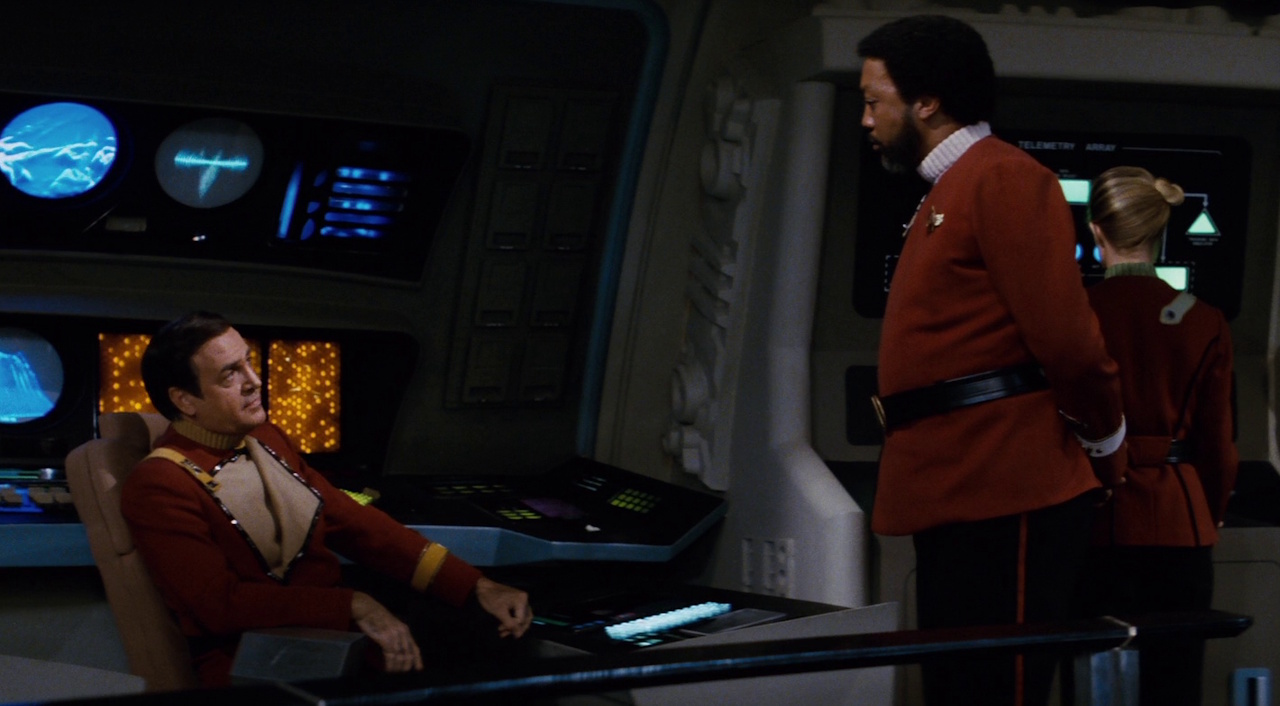
Still frame from Star Trek II: The Wrath of Khan showing Captain Terrell, Commander Beach, and another officer on the bridge of the USS Reliant.
Three senior officers on the bridge of the USS Reliant.

Upon entering the system – or hours ahead of arriving, using long-range sensors – Reliant’s crew should’ve noticed that, y’know, an entire planet is missing. If nothing else, the debris or dust cloud left behind by the explosion of Ceti Alpha VI – which is unlikely to have dissipated fully in a few short years – should’ve been a dead giveaway. But even if some kind of solar wind blew all the dust and rocks far outside the system, there were still only five planets where there should’ve been six! You’d think someone would’ve noticed this and at least mentioned it to the captain.

That’s to say nothing of Starfleet’s apparent lack of record-keeping. The Ceti Alpha system should’ve been flagged up as containing a dangerous colony of criminals: the augments. We know, thanks to the likes of Strange New Worlds, that Khan and his people were still notorious centuries after they tried to rule all of Earth, so surely Starfleet would want to prevent unwitting starships from stumbling upon their colony. The Talos system is restricted by Starfleet for much the same reason, as we saw in The Cage. But even if Kirk conveniently forgot to record that mission or tell Starfleet what became of Khan… why couldn’t anyone on the USS Reliant count to six?!

Number 5:
Can’t ships just fly over or under the Galactic Barrier?
Star Trek: The Original Series, Star Trek: Discovery
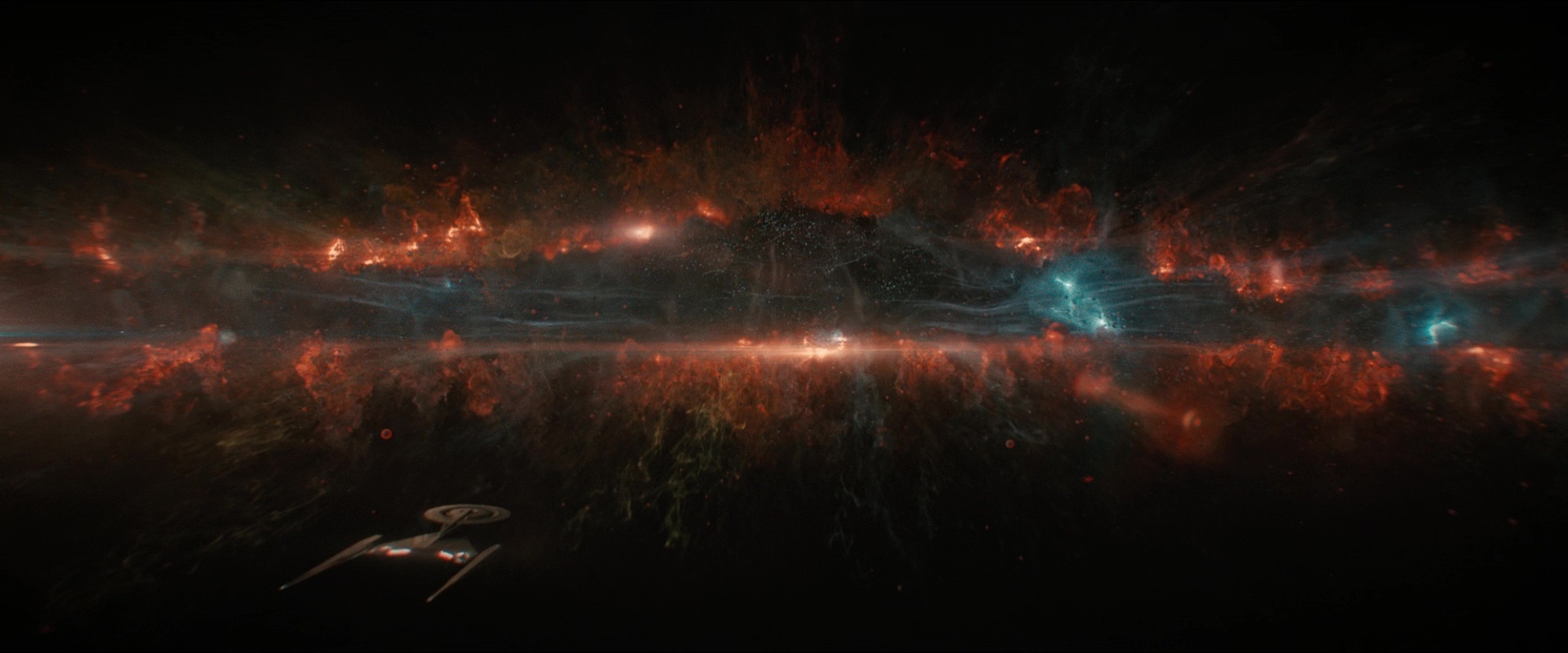
Still frame from Star Trek: Discovery Season 4 showing the USS Discovery at the Galactic Barrier.
The Barrier at it appeared in Discovery.

Star Trek has, on occasion, exhibited what Mr Spock might call “two-dimensional thinking.” By that I mean that many ships and objects in space appear as if they’re on a perfectly flat plane – but space is three-dimensional. One example of this appears to be the Galactic Barrier – the forcefield-like object that apparently surrounds the edge of the galaxy, preventing spacecraft from leaving.

Even in Discovery, though, which is the Galactic Barrier’s most significant appearance to date, the phenomenon (which doesn’t exist in real life) appears to be a mostly two-dimensional ring around the edge of the galaxy rather than a three-dimensional bubble. Which raises a simple question: why not simply fly over or under it? Starships are obviously capable of manoeuvring in three dimensions, so why fly through something you could easily fly around?
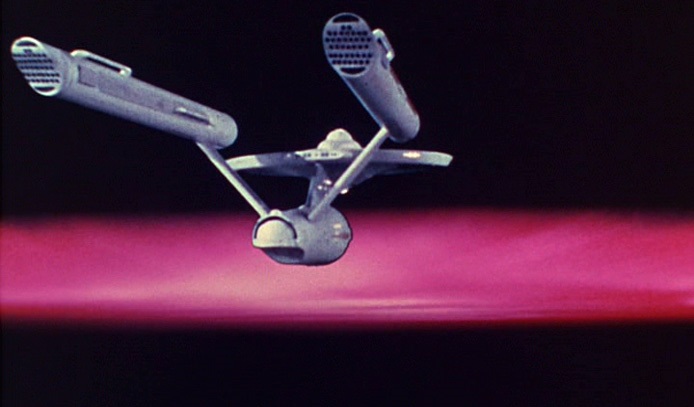
Still frame from Star Trek: The Original Series Season 1 showing the USS Enterprise approaching the Galactic Barrier.
The USS Enterprise approaches the Galactic Barrier.

Unless the Barrier is meant to surround the entire galaxy from all possible angles, there’s not really a good explanation for this. The way it’s been depicted on screen makes it seem like it’s something any starship could easily get around, even if doing so would take a bit longer. If this was a one-off visual effect from The Original Series I might be tempted to let it lie, but Discovery brought back the Galactic Barrier in its fourth season, presenting it as a pretty significant hurdle for Captain Burnham and the crew to overcome.

As an aside, I’m not sure that was a great idea! There are some elements of The Original Series, The Animated Series, and even from early in The Next Generation that just about work in context… but wouldn’t really translate well to a story made today. For me, as I think I said at the time of Discovery’s fourth season, the Galactic Barrier is one of them. And the way it’s presented and visualised on screen just kind of hammers home how two-dimensional some of the franchise’s space sequences can feel.

Number 6:
Why is artificial gravity always the last system to fail when a ship is damaged?
Star Trek VI: The Undiscovered Country et al.
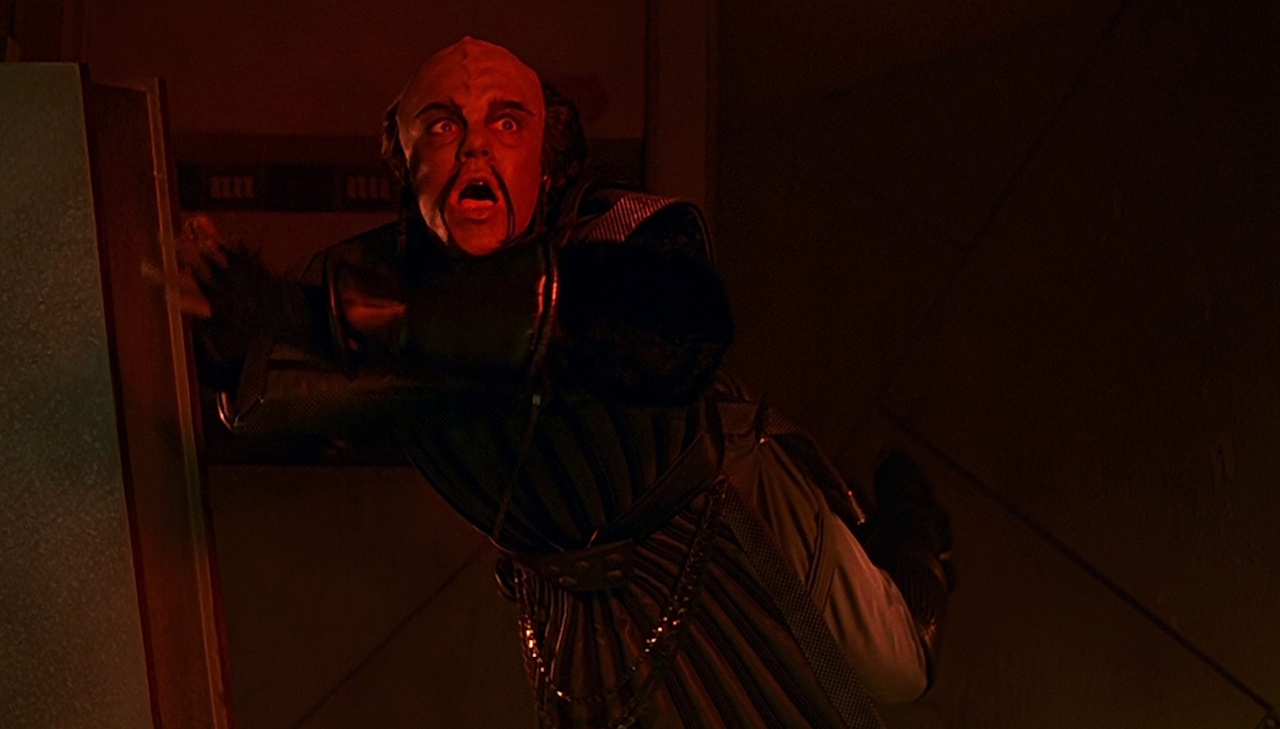
Still frame from Star Trek VI: The Undiscovered Country showing a Klingon floating helplessly.
A Klingon officer floating after his ship’s artificial gravity was knocked offline.

I think I can count on one hand the number of times a starship’s artificial gravity has been damaged in Star Trek. The only time it was plot-relevant was in The Undiscovered Country, where the damage to the artificial gravity on the Klingon ship Kronos One was instrumental to the plot to assassinate Chancellor Gorkon. But aside from that… can you think of a single time in the franchise’s 950 episodes and films where a ship has lost gravity?

We’ve seen starships take a real beating sometimes: the Enterprise in The Wrath of Khan, Voyager in Year of Hell, the NX-01 in Damage, and even non-Starfleet ships like the Cardassian vessel in The Wounded, or the Romulan warbird in Balance of Terror, but none of them ever lost their artificial gravity. This system appears to be more robust even than life-support, which we’ve seen fail on a number of occasions while artificial gravity was still operational.
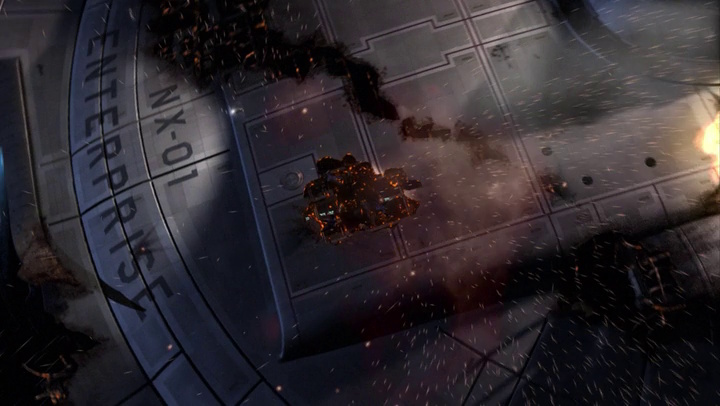
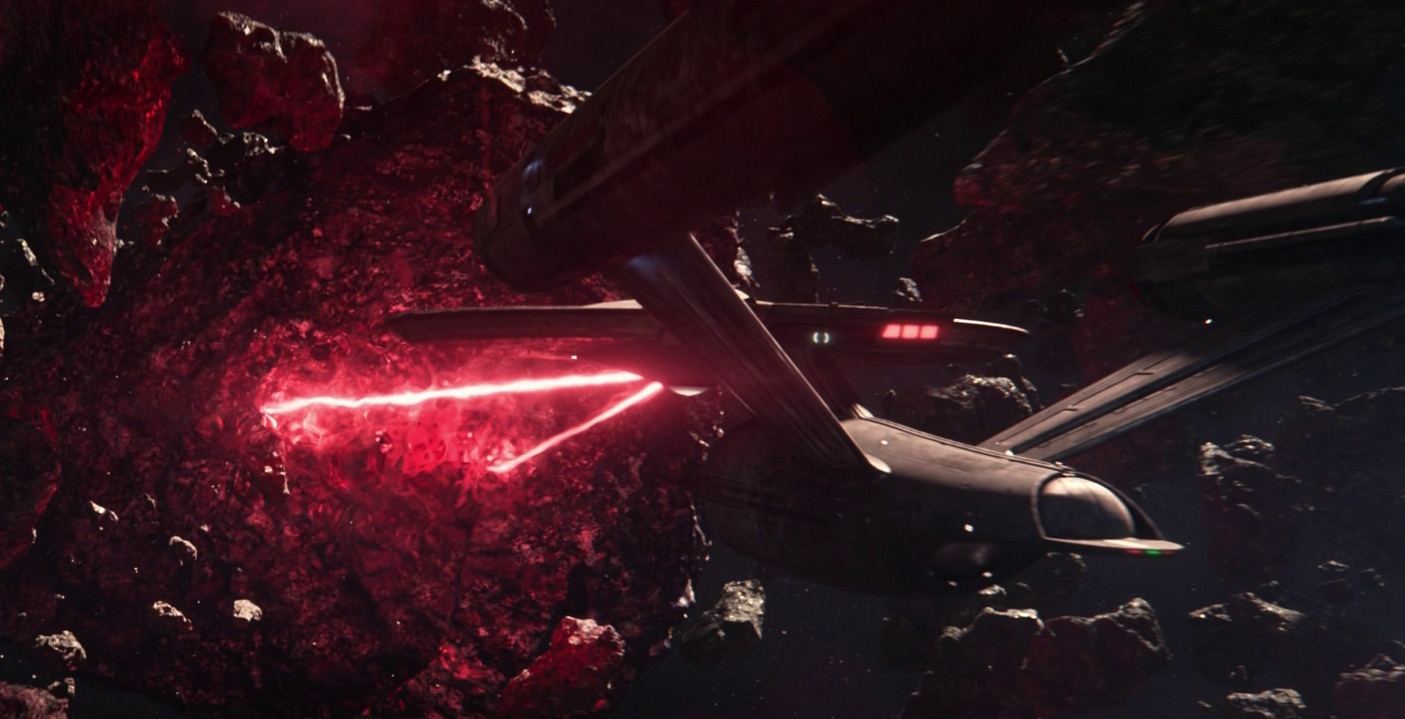
Still frame from Star Trek: Enterprise Season 3 showing the NX-01 Enterprise heavily damaged.
Even serious damage, such as to the NX-01 Enterprise pictured here, doesn’t usually stop artificial gravity from functioning.

You’d think prioritising something like breathable air and a survivable temperature would take precedence over artificial gravity, with ships being designed in such a way that life-support would be the most resilient and sturdy system. I know there’s some ambiguity in the way these technologies work in Star Trek, but artificial gravity must require some amount of power to function – and even if it’s powered by a wholly separate system, anything that disables the entire ship should deactivate artificial gravity. It would also make a logical target during ship-to-ship combat, as knocking out an opponent’s gravity would cripple their ability to operate the ship.

There are even times where disabling artificial gravity would be to the advantage of a crew trying to defend their ship. Perhaps the best example of this is the Borg attack on the Enterprise-E in First Contact, but there are other times where a boarding party, raiders, or pirates could have been at least slowed down and hampered if the crew deactivated artificial gravity on one or two decks. I suppose it’s good for Star Trek that the way artificial gravity works is deliberately vague, and it’s one of those “you’ve just gotta suspend your disbelief” things. But from an in-universe point of view, the apparently indestructible nature of this system, and the overlooked tactical advantages of trying to disable an adversary’s artificial gravity, don’t make a lot of sense.

Number 7:
Shouldn’t Starfleet have persevered with the Spore Drive?
Star Trek: Discovery
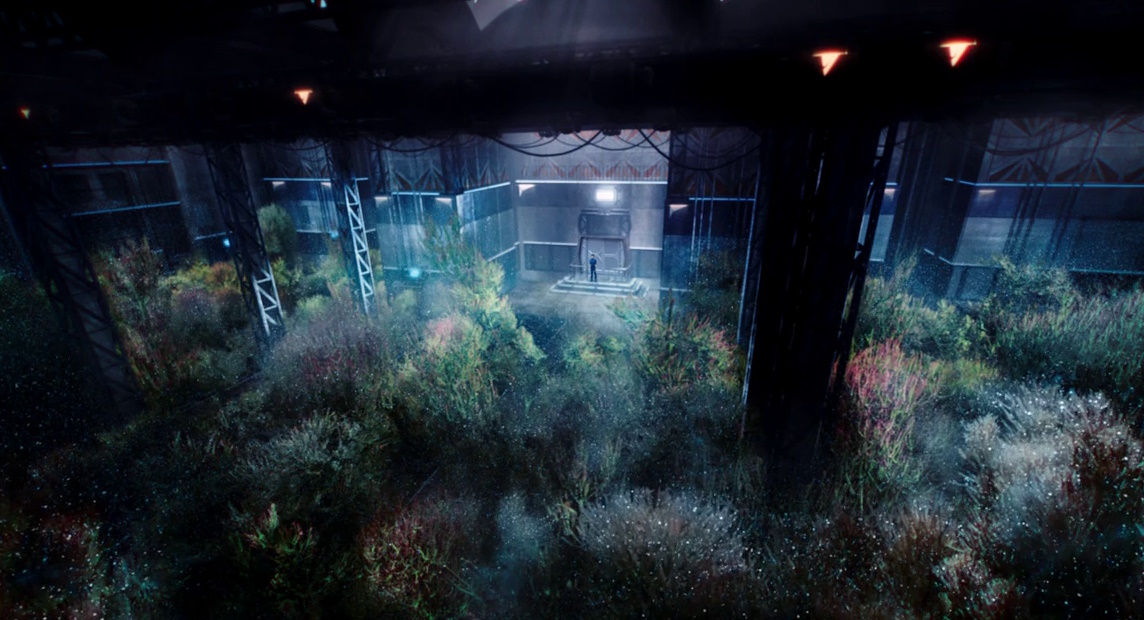
Still frame from Star Trek: Discovery Season 1 showing the mushroom cultivation area aboard the ship.
The cultivation bay aboard the USS Discovery.

After the loss of the USS Glenn and the apparent destruction of the USS Discovery, we’re led to believe that Starfleet abandoned its Spore Drive programme – even though the technology was proven to work and would be beyond useful to the organisation. For Starfleet, with its dual military and scientific missions, the Spore Drive was a phenomenal leap forward with so many applications. I genuinely cannot believe that they’d just abandon it after a few setbacks – especially after the Klingon Empire had come to learn of its existence.

We would later see, in Discovery’s third season, that basically any empathic race could – in theory – interface with the Spore Drive. That doesn’t seem like such a huge leap that Starfleet couldn’t have figured it out over time, especially with races like the Betazoids and Vulcans on hand. But even if using an empath as a navigator wasn’t possible, it still seems like such a ridiculously overpowered and useful piece of kit that Starfleet – and Section 31 in particular – would want to continue to develop it.
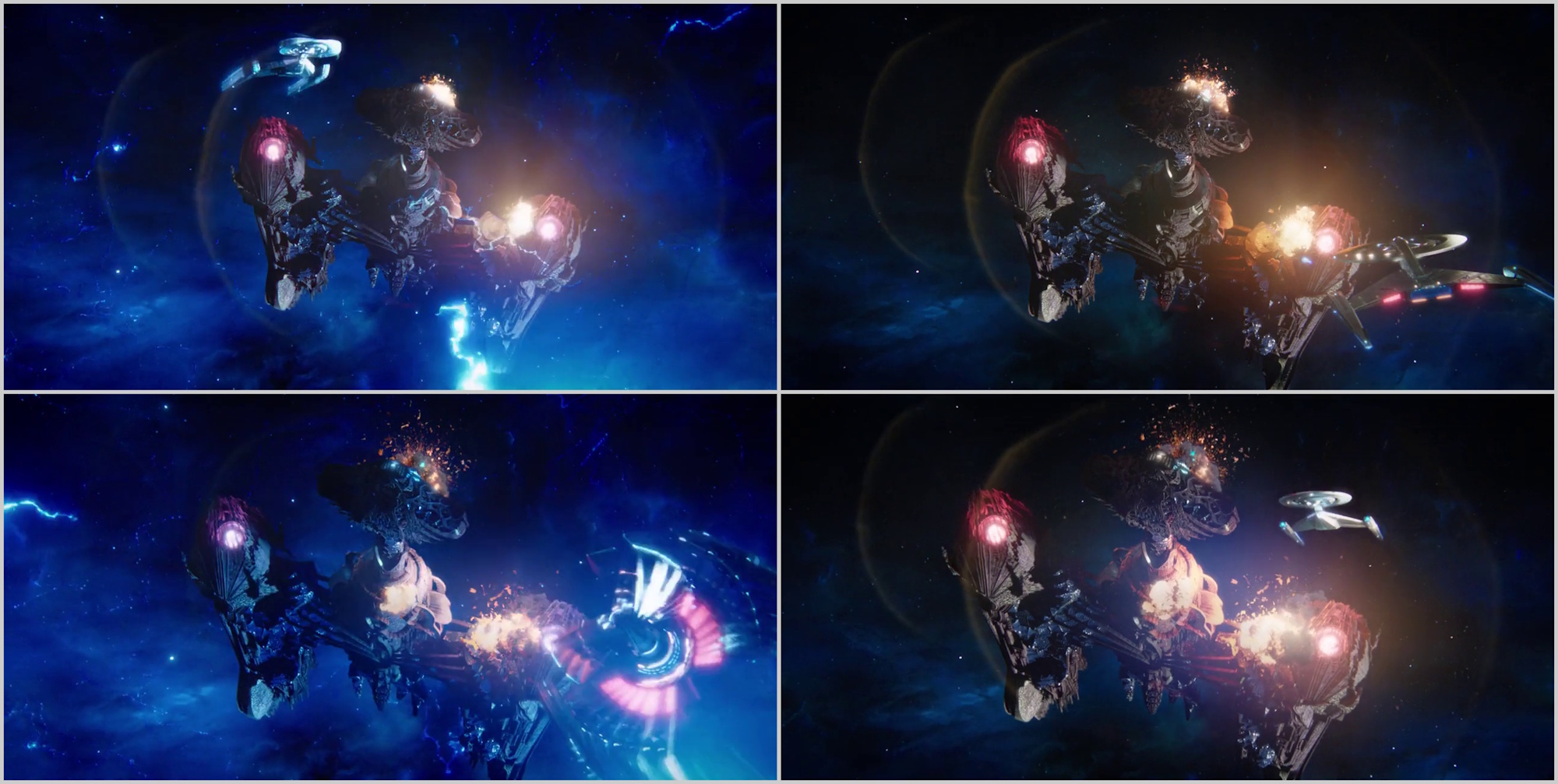
Four still frames from Star Trek: Discovery Season 1 depicting the USS Discovery at the Battle of Pahvo.
The Battle of Pahvo (pictured) proved the Spore Drive’s worth as a military tool.

Look at the Spore Drive’s capabilities. Two of its biggest achievements were cracking the Klingons’ cloaking device – becoming basically invulnerable to attacks in the process – and leaping tens of thousands of light-years across the galaxy to the planet Terralysium. For Starfleet’s military, the Spore Drive’s ability to jump so fast that attacks from disruptors and torpedos are ineffective is huge – it could redefine starship combat in the Alpha Quadrant. And for the organisation’s mission of exploration, being able to jump to literally anywhere in the galaxy renders warp drive obsolete and would mean Starfleet can investigate any interesting-looking phenomena with ease – while still being back home in time for tea.

The Spore Drive is an example of a “prequel problem;” if Discovery had been set years or decades after Nemesis – in the same period as Picard, for example – then it wouldn’t be an issue. We could simply say that the Spore Drive would become Starfleet’s new method of travel. But because Discovery was set before The Original Series, I don’t think there’s any way to create a satisfactory explanation for why Starfleet, Section 31, or other factions didn’t continue to develop and refine it.

Number 8:
Why would the Xindi fire a small weapon at Earth months ahead of their main attack?
Star Trek: Enterprise
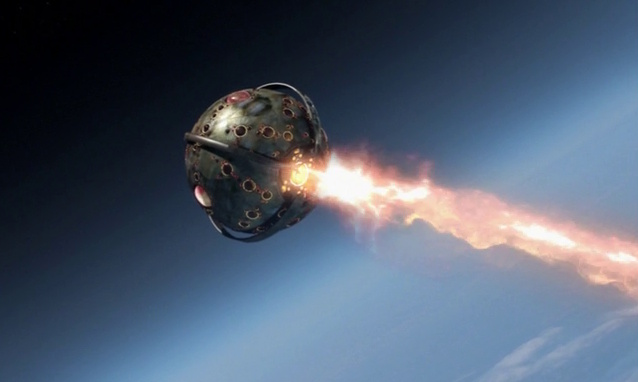
Still frame from Star Trek: Enterprise Season 2 showing a small spherical Xindi weapon firing.
The Xindi’s first weapon.

Sun Tzu, the legendary Chinese general, wrote two-and-a-half thousand years ago that a good commander should “always mystify, mislead, and surprise the enemy if possible.” And throughout history – from the ancient world to the Second World War and beyond – surprise attacks and misdirection have been incredibly powerful tools that successful generals and strategists have employed. So why would the Xindi – backed up by a faction from the far future, no less – launch a minor attack that alerted Earth and humanity to their much larger upcoming attack?

If the Xindi needed to test the range and abilities of their weapon, they could pick another target in a different system. This target would be a comparable distance away from where they planned to launch their weapon, and could also be a planet of roughly the same size and mass as Earth. This would give their scientists and engineers the data they needed without compromising the secrecy of their operation. All they achieved by targeting Earth with their initial, much smaller weapon was alerting humanity and Starfleet to their existence – which ultimately set the stage for their defeat.
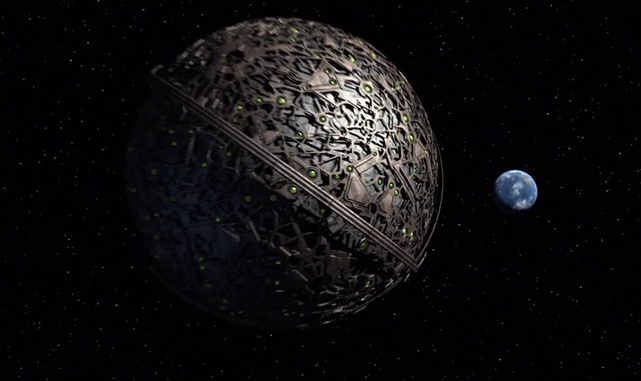
Still frame from Star Trek: Enterprise Season 3 showing the Xindi weapon arriving at Earth.
The much larger second Xindi weapon approaches Earth.

This is a military blunder so exceptionally basic that, if I were the Sphere-Builders, I’d have cut all contact with the Xindi and written off the entire operation. The miniature version of the weapon wasn’t designed to deal the kind of damage that the larger version was, but it was still damaging enough to put all of humanity and Starfleet on full alert – kick-starting a chain of events that led to Captain Archer confronting and stopping the Xindi and their Sphere-Builder allies.

All the Xindi would’ve had to do was pick a different target for their weapons testing. A planet the same size as Earth in a system roughly the same distance away would be ideal – or an unarmed probe sent to Earth if scouting that route was deemed necessary. Even if the Xindi and Sphere-Builders were so cocky and arrogant that they considered themselves to be unstoppable, it was still a catastrophic, primary school-level mistake to send the small weapon directly to Earth months before the larger weapon was ready.

Number 9:
How did Nero’s trip back in time create an alternate reality instead of changing the prime timeline?
Star Trek (2009)
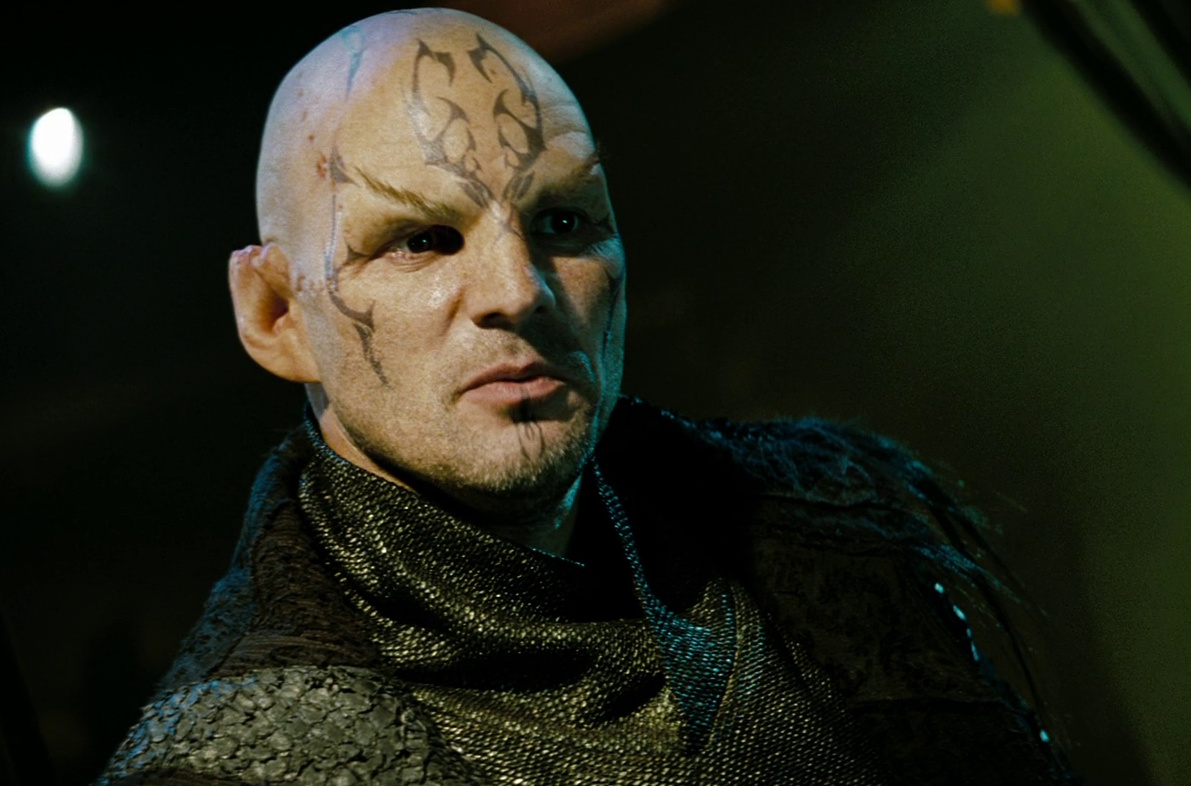
Still frame from Star Trek (2009) showing a close-up of Nero.
Nero.

The way it’s explained on screen in Star Trek, Nero travelled back in time from 2387 to 2233 via an artificial black hole created by Red Matter. Somehow, though, the changes Nero and later Spock would go on to make to the past didn’t overwrite the events of the prime timeline, but exist in their own separate universe. This doesn’t seem to gel with what we know of time travel and temporal paradoxes in Star Trek.

Starfleet vessels have encountered all kinds of temporal phenomena over the years, none of which led to the creation of a parallel universe. Even in cases where ships got caught up in time-travel shenanigans, the end result was either a permanently altered timeline – as in stories like The Voyage Home or Past Tense – or overwritten events that no-one remembered – as in stories like Cause and Effect or Year of Hell. None of these led to the creation of a permanent alternate reality that persisted after the phenomenon that created it had been dealt with – so why did the Red Matter black hole do so?

Still frame from Star Trek (2009) showing the Narada emerging from a black hole.
Nero’s ship, the Narada, arrives in the 23rd Century.

The best explanation I can come up with is this: Star Trek exists in a multiverse. Along with to the prime timeline, the Mirror Universe, and others that we’ve seen, there must be multiple additional parallel universes – some of which are identical to or indistinguishable from the prime timeline. Somehow, Red Matter creates a portal between universes, allowing for travel from one to another. Nero and Spock entered a parallel universe identical to the prime timeline – but it’s a parallel universe that already existed before they arrived.

That’s a pretty convoluted explanation, and it isn’t explained that way on screen. Instead, the alterations to the timeline that Nero perpetrated – from the destruction of the USS Kelvin to the attack on Vulcan and beyond – should have permanently altered the prime timeline based on what the characters told us and what we already know from other iterations of Star Trek.

Number 10:
Couldn’t Captain Pike just retire and live as a hermit?
Star Trek: Strange New Worlds

Still frame from Star Trek: Strange New Worlds Season 2 showing Captain Pike at a diplomatic dinner.
Captain Christopher Pike.

I found Pike’s arc in Discovery and the first season of Strange New Worlds to be interesting and relatable. I’ve been in a similar position to Captain Pike: being told that my health was going to get dramatically worse and knowing that it’s inevitable. It made Pike an incredibly sympathetic character, and one whose story brought a tear to my eye more than once. But… is Pike’s devastating accident and disability genuinely unavoidable?

The more Pike comes to learn about the future, the more he seems to uncover ways to avoid his supposedly-inevitable fate. In the fantastic Season 1 episode A Quality of Mercy, Pike learned – thanks to a time-travelling version of himself – that if he avoided his fate but remained in Starfleet, he’d accidentally trigger a chain of events that led to a devastating war between the Federation and Romulans. This conflict was something only Kirk and Spock could prevent, but Pike’s place on the bridge and Spock’s serious injury would keep the war going and prevent any hope for peace in the future. This seemed to strengthen Pike’s resolve and set him back on course for the accident that would leave him disabled.
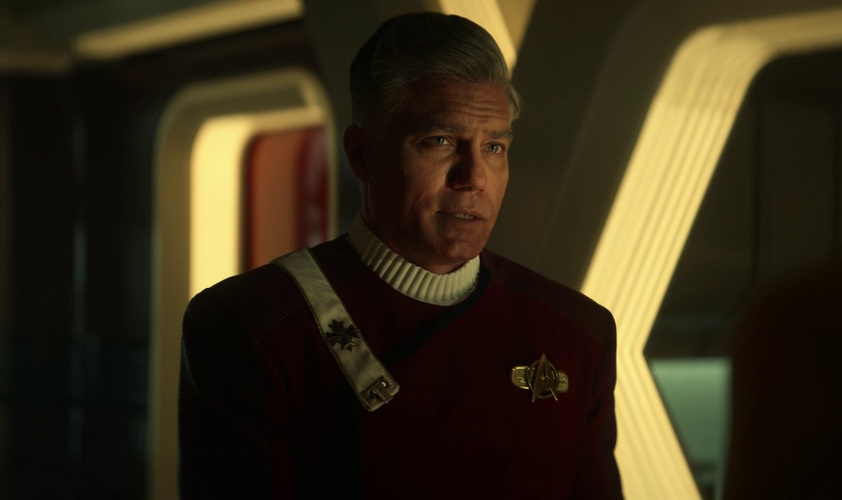
Still frame from Star Trek: Strange New Worlds Season 1 showing a future Captain Pike in a 'monster maroon' uniform.
Pike in an alternate future.

But… couldn’t he choose a radically different path? Sure, remaining in Starfleet after he was supposed to suffer the accident led to a horrible alternate future. But if Pike resigned his commission the day before the accident and went to live in a cave somewhere, what would change? Nothing, right? Pike could remain alive and relatively healthy, enjoying a well-earned retirement without the need for Talosian mind-games, and the rest of the galaxy could continue unaffected.

Maybe we’ll find out, in Seasons 3, 4, or beyond, why that kind of scenario couldn’t work. But it seems to me that, as long as Pike kept his head down and stayed away from Starfleet and galactic affairs, there wouldn’t be any harmful side-effects. Furthermore, knowing what he knew of the Romulan incursion, he could’ve even reacted differently in that situation to prevent the conflict from escalating. I guess the point of A Quality of Mercy was to hammer home that there’s no way to predict how any changes to the timeline could affect the Federation – and that’s a fair point, I suppose. But on a personal level, I could forgive Pike for trying to wrest back control of his destiny from the Klingon time crystal that doomed him.

So that’s it… for now!
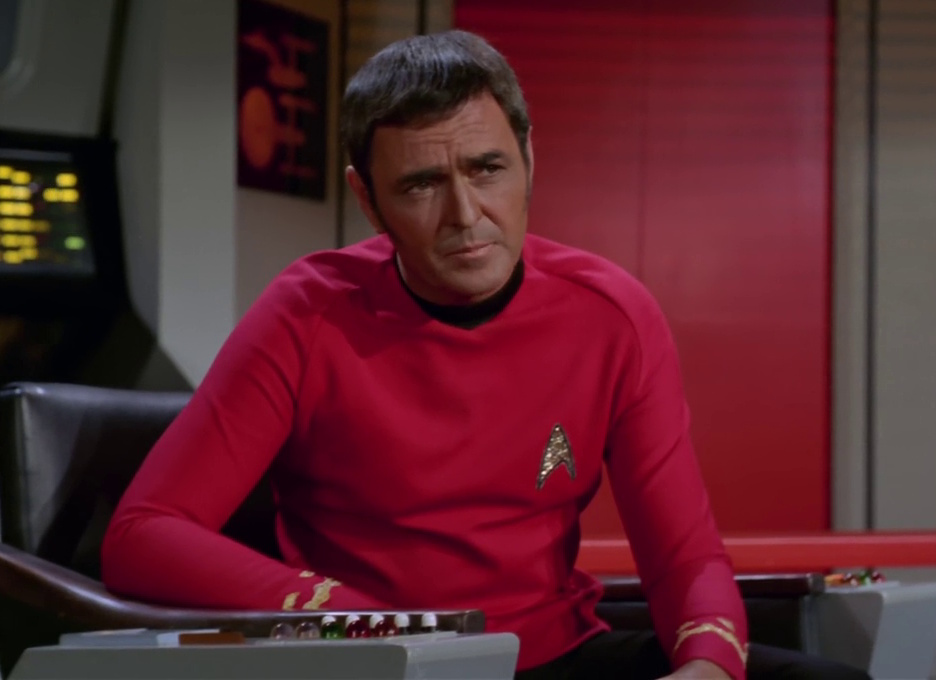
Still frame from Star Trek: The Original Series Season 3 showing Commander Scott in the captain's chair of the Enterprise.
It’s Scotty!

I hope this has been a bit of fun! Some of these things are more irritating than others, but to be honest with you, none of them are really that big of a deal. They only matter to folks like you and I – people who spend a bit too long thinking about Star Trek!

This might be a subject I’ll revisit in the future, so if your favourite little inconsistency or goof didn’t make the list this time, it’s possible I’ll get to it on another occasion. And if you want to check out my earlier list to read about ten other little things that bug me in Star Trek, you can find it by clicking or tapping here.
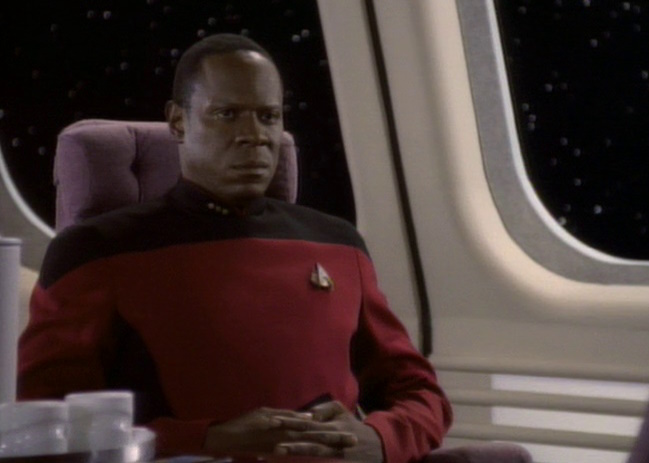
Still frame from Star Trek: Deep Space Nine Season 1 showing Commander Sisko aboard the Enterprise-D.
Commander Sisko looks rather grumpy…

Stay tuned, because there’s more Star Trek content to come here on the website as 2025 gets underway. Later this year we’ve got a new season of Strange New Worlds to look forward to, and if you missed my review of Section 31 you can find it by clicking or tapping here. I also wrote up my recollections of Voyager to mark the series’ thirtieth anniversary, and you can find that by clicking or tapping here.

Until next time… see you out there!


Most of the Star Trek shows, films, and episodes referenced above can be streamed now on Paramount+ in countries and territories where the platform is available, and may also be available on DVD and/or Blu-ray. The Star Trek franchise – including all shows, films, episodes, characters, and other properties discussed above – is the copyright of Paramount Global. This article contains the thoughts and opinions of one person only and is not intended to cause any offence.

Ten Things That Have Always Bugged Me In Star Trek

A spoiler warning graphic.

Spoiler Warning: Beware spoilers for the following Star Trek productions: The Original Series, The Next Generation, Deep Space Nine, Voyager, Enterprise, Discovery, Picard, Generations, and First Contact.

Let’s have a little bit of fun today at the expense of the Star Trek franchise! I’ve been a Trekkie for almost thirty-five years at this point, and I’ve seen a lot of Star Trek in that time! For a franchise that now runs to over 900 individual episodes of television, Star Trek’s internal consistency and the attention to detail shown by the writers and creative teams are generally incredibly good, and there aren’t many true inconsistencies or things to get worked up about. But that doesn’t mean there are zero!

If you’re a regular reader, you might’ve seen me use the expression “glorified nitpick” in some of my Star Trek episode reviews. Sometimes I’ll point out something that I felt didn’t work very well or that seemed to run counter to what we already knew about a situation or character. Well… most of what we’re going to talk about today doesn’t even rise to that level! These aren’t things that I’m cross about or that “ruined” an episode or story for me. They’re just, as the title says, little things that bug me!

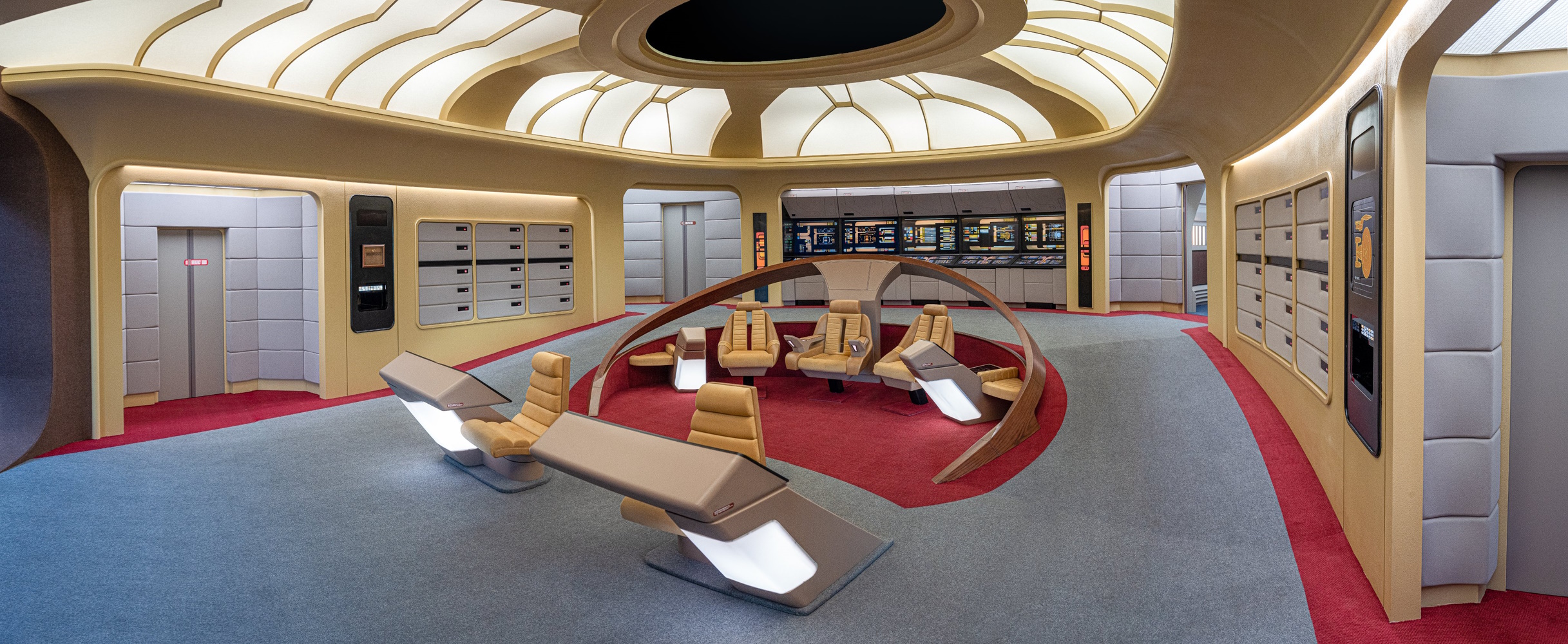
Publicity photo for Star Trek: Picard showing the rebuilt Enterprise-D bridge.
The bridge of the Enterprise-D.

Before we go any further, here are my usual caveats! Firstly, all of this is my entirely subjective opinion. If you disagree with any or all of the points below, think I’m “overreacting,” or feel that I’ve totally got the wrong end of the stick… that’s okay! These are just a few stray thoughts that I have about Star Trek, and most of them are so minor that they’re not gonna be worth getting into an argument about! Secondly, this is intended as light-hearted, tongue-in-cheek fun – so I encourage you not to take me too seriously and to engage with this article in that spirit!

Finally, I’m not counting the old excuses of “it’s just a story” or “because the writers thought it worked better that way” as explanations! Sure, everything in Star Trek is “just a story,” and if the writers needed to move characters into place or kick off certain storylines in a way that opens up a minor inconsistency, that’s just the way it goes sometimes. But as a fan, and as someone engaged with this fictional setting, that excuse doesn’t really work for me – and it never has. So it’s true that “none of this is real,” but that doesn’t change anything for me!

With all of that out of the way, let’s get started!

Number 1:
Why was the unfinished Enterprise-B the only ship within several light-years of Earth?
Star Trek: Generations

Still frame from Star Trek: Generations showing the launch of the Enterprise-B.
The Enterprise-B embarks upon her ill-fated maiden voyage.

Kicking off the plot of Generations is the maiden voyage of the Enterprise-B under the command of Captain John Harriman. Joining him for the voyage are Captain Kirk, Montgomery Scott, and Pavel Chekov, but during what was supposed to be a short shakedown cruise entirely within the Sol system, a distress call was received that took the Enterprise-B right into the path of a dangerous energy ribbon called the Nexus.

But here’s my question: why did Starfleet have no other ships anywhere close to the SS Robert Fox and SS Lakul? This is Sol – the home system of the Federation and Starfleet, where Starfleet Headquarters, the Federation government, and Spacedock are all located. With the Enterprise-B on a glorified joy-ride to show her off to a gaggle of journalists, and with weapons and other essential systems still not installed… why would she be the only ship in the area?

Still frame from Star Trek: Generations showing the Enterprise-B in the Nexus.
The Enterprise-B encounters the Nexus.

Think about it: this would be like the only military unit within a hundred miles of Washington DC being a single brand-new tank without its gun barrel. If the Enterprise-B’s shakedown cruise had taken her beyond Sol, then things might feel a little better. But having no other starships anywhere close to the stricken refugee vessels always struck me as bizarre!

If Starfleet leaves its home system and institutions of government so sparsely defended, it’s a miracle that the Klingons, Romulans, or Borg haven’t been able to warp into the system and conquer Earth! Jokes aside, I think the opening of Generations is pretty great – and the film in general is one of my personal favourites. But that doesn’t mean I can just overlook what appears to be Starfleet’s atrocious planning and non-existent defences!

Number 2:
What’s the United Earth Space Probe Agency?
Star Trek: The Original Series

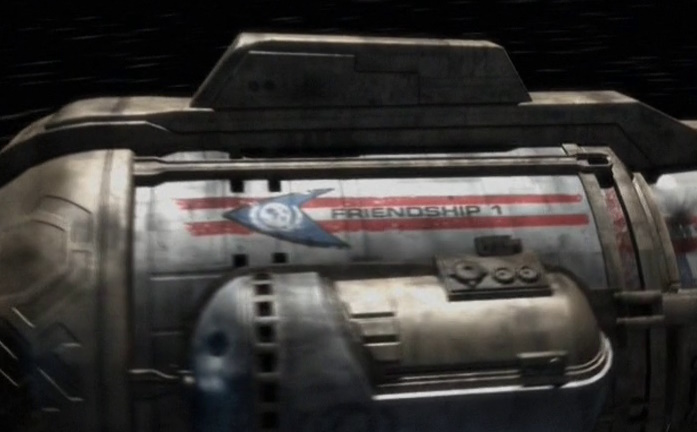
Still frame from Star Trek: Voyager showing the probe Friendship One.
Friendship One, a probe launched by the UESPA.

Prior to settling on more familiar terms like the United Federation of Planets and Starfleet, the United Earth Space Probe Agency (or UESPA) was an organisation that was mentioned in a couple of early Star Trek stories. But what the organisation is and what its relationship is with Starfleet and the Federation was never elaborated upon, and plot points in Enterprise have further muddied the waters.

The out-of-universe explanation for this one is simple enough: as Star Trek was being created and those early episodes were being written, some titles and names were still being decided upon. It wasn’t even settled until well into production on The Original Series’ first season that the show was set in the 23rd Century – the original pitch for the series didn’t specify an exact time period, and the 27th Century was also suggested as a possibility.

But as I said at the beginning, out-of-universe explanations don’t count!

Still frame from Star Trek: The Original Series showing Kirk and Spock.
The UESPA was mentioned a handful of times in the first season of The Original Series.

Enterprise could have put this to rest, but instead the series – quite understandably – wanted to use familiar names like Starfleet, so the UESPA wasn’t included in a big way. Occasional references to it have popped up, including in Voyager where the UESPA had sent out at least one unmanned probe, but nothing to definitively explain what it was and whether it was independent of Starfleet.

To me, the “United Earth” part of the name seems to suggest that it’s a human-only organisation, but with humanity’s ships all seemingly flying under the Federation flag, what role there could be for a United Earth fleet – and where any of its ships or probes actually are – remains unknown.

Number 3:
Why was Starfleet unable to detect the octonary star system?
Star Trek: Picard

Still frame from Star Trek: Picard showing eight stars in formation.
Eight stars in perfect gravitational harmony.

In Season 1 of Picard, the ancient super-synths that I nicknamed the “Mass Effect Reapers” literally moved eight stars to form a stable octonary star system. They did so to make their presence known, and on the planet in that system they left their beacon behind. But… how did Starfleet – with all of its sensors, missions of exploration, advanced telescopes, and stellar cartography departments – fail to notice such an apparently obvious and incredibly interesting stellar phenomenon?

Using technology that we have right now – today, in the early 21st Century – we can look not only at stars, but detect the planets orbiting them, view distant galaxies, and even find black holes. I find it impossible to believe that Starfleet hasn’t at least scanned the entire Milky Way, detecting every star and star system – so how did they miss something so obviously artificial in nature?

Still frame from Star Trek: Picard showing Raffi and the ENH.
The symbol representing the octonary star system.

If Picard had explained that, for instance, the Romulans deployed a cloaking device to shield the octonary system, or that Starfleet did know about the system but couldn’t explore it because of its location behind the Neutral Zone, then I’d have nothing to complain about. But a fairly sizable plot point in one episode involved the crew of La Sirena finding out that this star system had been deliberately hidden from Romulan star charts… when surely the Federation, who aren’t that far away from it in the same region of the galaxy, would have been able to see it through their telescopes! Again, if this system was in a far-flung part of the Gamma or Delta Quadrants, I’d still argue that Starfleet should’ve detected it, but its distance could be its saving grace. However, the octonary star system was supposedly in or near Romulan space – meaning it’s a mere stone’s throw away from the Federation.

In The Next Generation, the Enterprise-D is transported by Q to a system that would’ve taken them years to reach at top speed. But Starfleet already had a designation for this system: J-25. To me, that implies that the Federation has already categorised at least the Alpha and Beta Quadrants, even if ships haven’t been able to explore all of these systems yet. So once again… how did Starfleet miss an entire eight-star solar system?

Number 4:
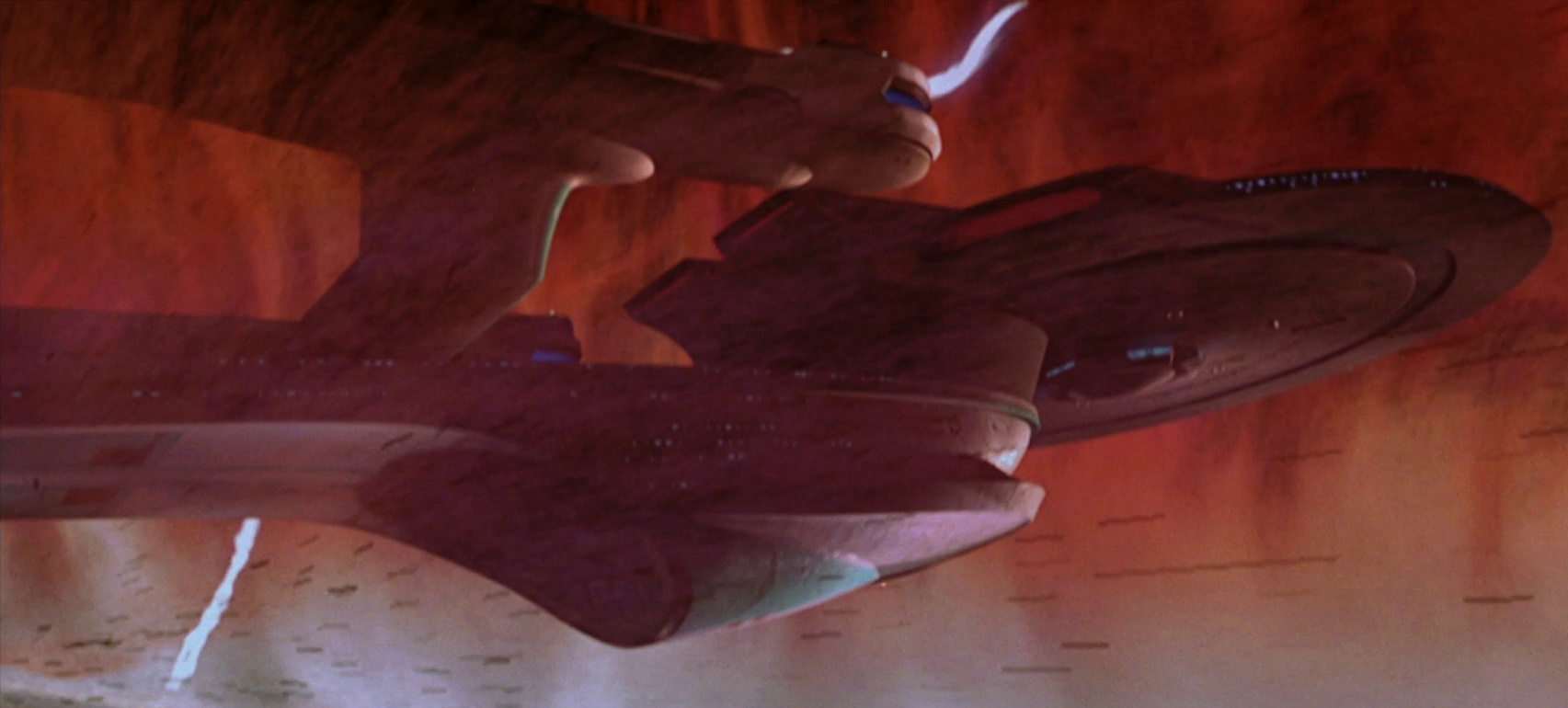
How did the Enterprise-E reach Earth so quickly from its position near the Neutral Zone?
Star Trek: First Contact

Still frame from Star Trek: The Original Series showing a map on the main viewscreen.
A map of part of the Neutral Zone.

Star Trek’s geography has always been kept vague, and I think that’s been to the franchise’s overall benefit! But there are a few places where the distance between planets and systems seems to be inconsistent. At the beginning of First Contact, for example, we have the Enterprise-E sent away from the main fleet to patrol the Neutral Zone – despite an imminent Borg incursion. But when the battle turns against the Federation fleet, Picard is able to get the Enterprise back to Sector 001 in what seems to be a matter of hours, if not minutes.

Prior Star Trek stories, including in The Original Series and The Next Generation, had seemed to depict the Romulan Empire as being on the Federation’s far border, with outlying colonies disappearing in The Neutral Zone and “Earth Outposts” in Balance of Terror all being depicted as far-flung places. Even if we assume that Romulus is relatively close to Earth, and that the Enterprise-E was very conveniently positioned at the near end of the Neutral Zone, getting back to Earth while the battle was still raging still feels like a tall order.

Still frame from Star Trek: First Contact showing the Enterprise-E firing phasers.
The Enterprise-E at the Battle of Sector 001.

Warp factors in Star Trek are kept pretty vague – so that could account for some of this apparent discrepancy, I suppose. If the Enterprise-E could travel significantly faster than the Enterprise-D, the travel time from the Neutral Zone could be reduced. Again, it still seems to rely on the ship being fortunate with its positioning, but maybe that’s something that could be accounted for by Captain Picard preparing for this eventuality!

Still, it’s always struck me as more than a little odd that the Enterprise-E was able to reach Earth in time. Not only was Picard able to follow the Borg Sphere through the portal it created, but there was even time to save the USS Defiant and Worf before destroying the main Borg Cube. A very quick turnaround indeed!

Number 5:
Why wasn’t there a debate about which route to take?
Star Trek: Voyager

Still frame from Star Trek: Voyager showing Captain Janeway.
Captain Janeway ordered her crew to take the most direct route back to Earth.

After the crew of the USS Voyager found themselves stranded on the far side of the galaxy, Captain Janeway very quickly ordered her crew to set a course for Earth. But the most direct route to Earth, through the Delta Quadrant and later the Beta Quadrant, took the ship right into the heart of Borg territory. Janeway knew this – Starfleet had at least some idea of where the Borg’s territory was located. Even if the Delta Quadrant offered the quickest way home, I’m surprised that nobody objected or tried to propose an alternative – especially when there was a good one.

Before getting transported to the Delta Quadrant, the USS Voyager made a stop at Deep Space Nine. And what’s located right next to the station? The Bajoran Wormhole! The wormhole offers a shortcut to the far side of the Gamma Quadrant – and heading in the direction of the wormhole rather than directly for Earth is something that Janeway and the crew could have considered.

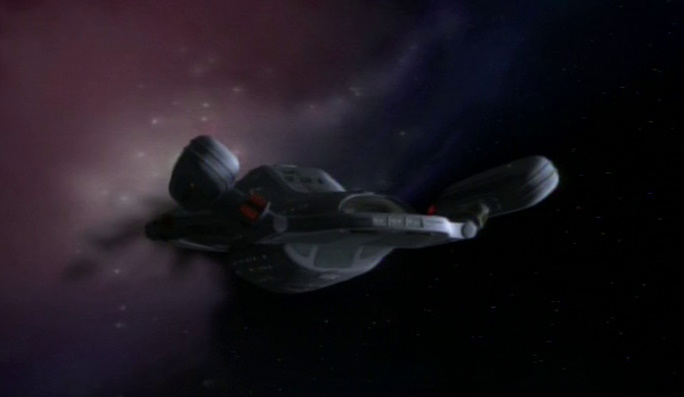
Still frame from Star Trek: Voyager showing the rear of the USS Voyager.
The USS Voyager prepares to begin its long journey.

At this point in the timeline, the Dominion War hasn’t started – so that can’t be used as a justification for not heading that way. And while all we have to go on are non-canon sources, there’s at least some tentative evidence that the wormhole’s terminus is located roughly the same distance from the Ocampa homeworld as Earth. If that’s the case, it would be no slower to head that way. Based on the Borg threat alone, I would have argued that heading for the wormhole is actually the smarter play.

Obviously Voyager was pitched as “the Delta Quadrant show,” and we got some fantastic stories out of that premise. But given the way that Voyager’s writers handled the Borg when that time came… maybe there’s an out-of-universe argument to be made here, too! In any case, even if Janeway had ultimately made the decision to head back to Earth via the most direct route, some discussion or debate would have been an interesting inclusion as the series got going. It could’ve been a way to draw some dividing lines between Starfleet and Maquis characters – making more of the “one ship, two crews” idea that Voyager never really explored in much depth.

Number 6:
Why did Michael Burnham and the USS Discovery head into the far future?
Star Trek: Discovery

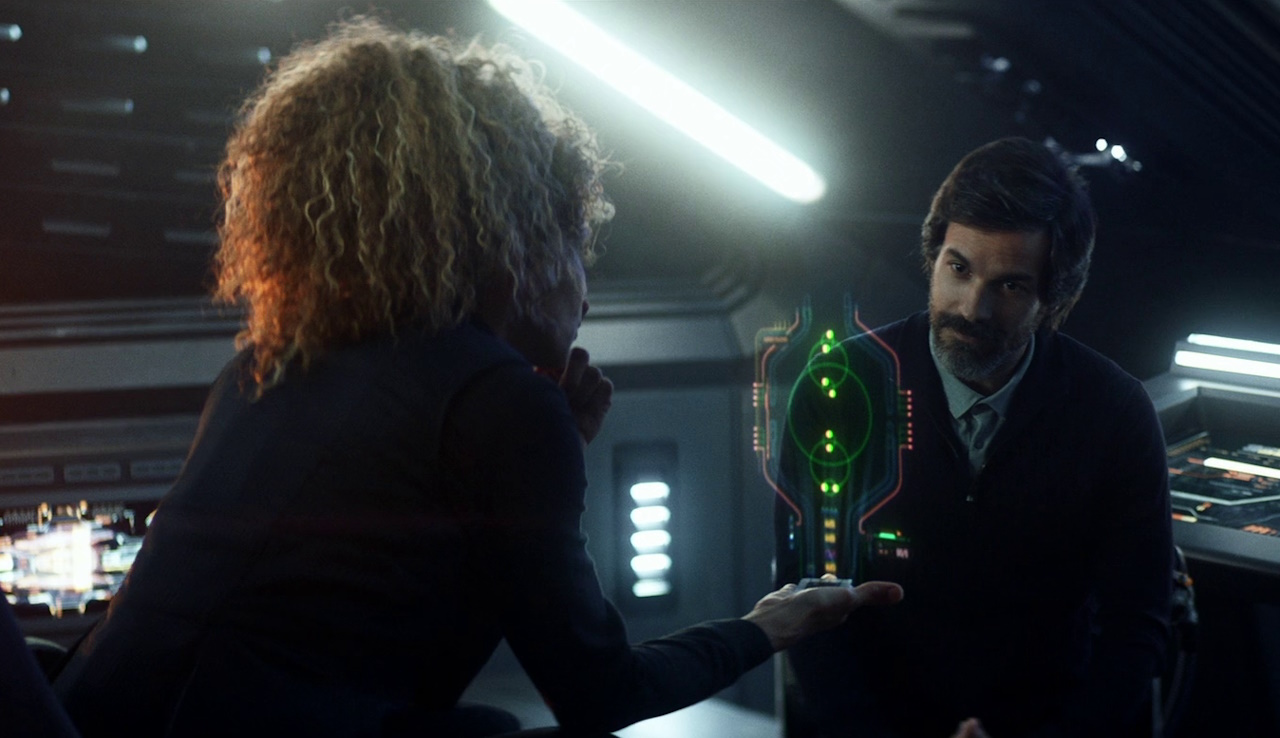
Still frame from Star Trek: Discovery showing the Red Angel opening a time-wormhole.
The USS Discovery approaches the time-wormhole.

Wait, stop! I know what you’re thinking: “this is the entire plot of Season 2 and was well-explained! They had to leave the 23rd Century to stop Control from wiping out all life in the galaxy!” And you’re correct, of course – but I’m not looking at the season as a whole or the entire plan. I’m focusing in on the final moments before Burnham opened the time-wormhole and the ship disappeared.

During the climactic battle against Control, the “assimilated” Captain Leland boarded the USS Discovery to attempt to seize control of the ship and its invaluable Sphere data. But after being cornered by Georgiou, Leland – Control’s human avatar – was defeated and killed. At that moment, the entire battle seemed to stop, and as Pike and his crew noted aboard the Enterprise, Control’s entire fleet of drone ships were simply hanging there, apparently dead or deactivated.

Still frame from Star Trek: Discovery showing Control's fleet.
Control’s fleet of drone-ships.

At this moment – before Burnham had entered the time-wormhole and before Saru, aboard Discovery, had followed her – there should have been a moment’s pause. Maybe Burnham herself couldn’t see what was going on, but Saru and Pike could, and even communicated with one another confirming the death of Captain Leland. There was still time for the time-wormhole to be closed, for Discovery and Enterprise to regroup, and potentially for Discovery to remain in the 23rd Century.

Even if Pike and Saru had decided that the risk of Control re-establishing itself was too great, it’s bizarre to me that neither of them even considered the possibility for a moment. With their enemy apparently vanquished – at least temporarily – and with Discovery’s spore drive meaning the ship could’ve evaded Control by jumping to a different part of the galaxy, there was time to regroup and come up with a plan that didn’t involve stranding everyone in a totally different century.

Number 7:
How could Starfleet possibly prioritise anything other than hanging onto Bajor and the wormhole?
Star Trek: Deep Space Nine

Still frame from What We Left Behind showing Deep Space Nine.
Deep Space Nine remastered, from the documentary What We Left Behind.

I adore Deep Space Nine’s Dominion War arc – it’s one of the best (and most under-appreciated) in the franchise, in my opinion. But as the war got started, Starfleet made what appears to be a catastrophic strategic blunder. In the episode Call to Arms, which ended the show’s spectacular fifth season, Sisko informs his crew that Starfleet won’t be sending any reinforcements to hold DS9 – their priorities lie elsewhere.

We later learn that Starfleet used the diversion of the attack on DS9 to destroy a Dominion-Cardassian shipyard… but given the strategic importance of the wormhole, and the fact that the Dominion is more than capable of producing vast quantities of ships and Jem’Hadar troops in the Gamma Quadrant, it never made sense to me that Starfleet wouldn’t have thrown every available resource at the galaxy’s most strategically vital location.

Still frame from Star Trek: Deep Space Nine showing a battle in space.
DS9 could only hold off the Dominion-Cardassian attack for a short time.

The minefield that the crew of DS9 erected bought the Federation some time (as did the subsequent intervention by the Prophets), but Starfleet must’ve known that, even with the best will in the world, the minefield wouldn’t last forever. With the Dominion in control of Bajor and DS9, they could work on shutting it down without interference. The successful attack on the Toros III shipyard may have been little more than a morale-boosting pyrrhic victory.

In war, you’d almost always rather be defending a position than having to attack – and it would have been far easier to try to hold onto DS9 while the station was still under Federation control than to try to re-capture it later after the Dominion had been given a chance to entrench. For a number of reasons, the decision to essentially abandon the station is questionable at best! If part of the story had been to show Starfleet’s admiralty as out-of-touch or incompetent, that might’ve worked. But that didn’t happen, either, so I’m just left wondering what went wrong at Starfleet Command! Still, at least we got some spectacular episodes out of this storyline.

Number 8:
What happened to Dr Pulaski?
Star Trek: The Next Generation

Still frame from Star Trek: The Next Generation showing Diana Muldaur as Dr Katherine Pulaski.
Dr Pulaski in the episode Time Squared.

Although I really liked the character of Dr Pulaski in Season 2 – you can find a longer piece about her here, if you’re interested – I think it’s fair to say that she didn’t really knock it out of the park! A letter-writing campaign from viewers and an intervention by Patrick Stewart contributed to Gates McFadden being re-hired in time for Season 3… and then Dr Pulaski was just never mentioned again.

The nature of her departure always struck me as odd, and it feels more than a little disrespectful to both an actor and a character who, for better or worse, had been a part of the series for an entire season. When Dr Crusher disappeared at the beginning of Season 2, there was at least some effort to pay lip service to her absence – it was explained that she was on another assignment at Starfleet Medical on Earth. Dr Pulaski didn’t even get that, and to the best of my knowledge has never been so much as mentioned since.

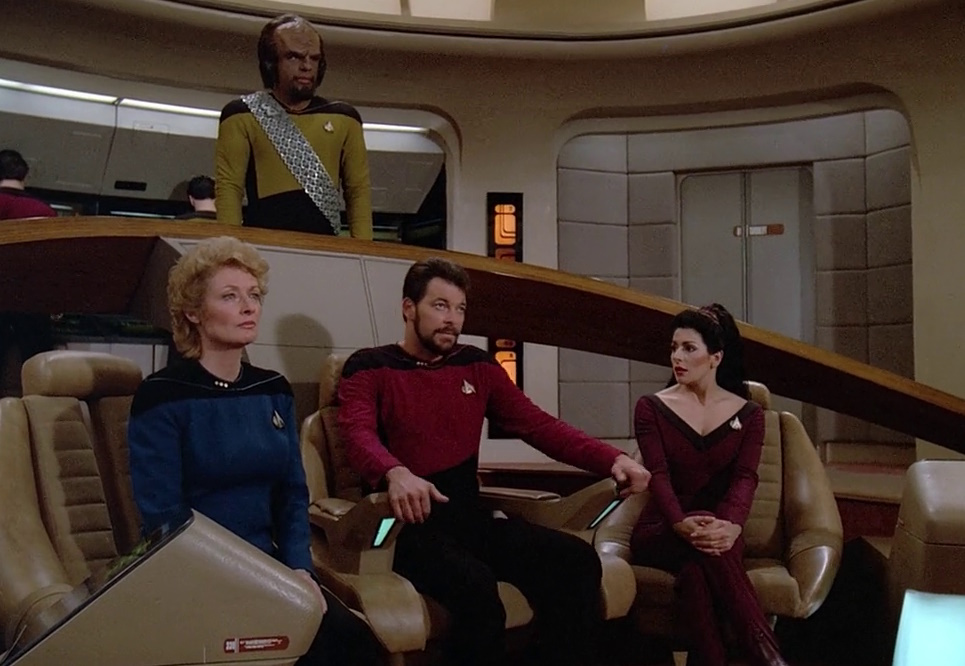
Still frame from Star Trek: The Next Generation showing several characters on the bridge.
Dr Pulaski with Riker, Worf, and Troi on the bridge.

We can argue the toss about the benefits or drawbacks of keeping her around – and I go over that in a bit more detail in my character study which I’ve linked above, if you want to see my thoughts on that. But whether you think she was a fun addition to the crew, an annoyance, or whether you just liked Dr Crusher better… you gotta admit that it’s odd that she didn’t get so much as a log entry from Captain Picard to acknowledge her departure.

The second season of The Next Generation was my “first contact” with the Star Trek franchise. The first episode I can solidly remember watching is The Royale – which Dr Pulaski is barely in! But maybe that’s why I’ve always had an appreciation for her character. I like the dynamic that she brought to the crew as someone a bit older, a bit less personable, and who had history with some characters and seemed to be developing new relationships with others. There have been opportunities in recent years for Dr Pulaski to have returned – or at least to have been mentioned. But I doubt that will happen now!

Number 9:
Who invented the cloaking device and when did Starfleet first encounter it?
Star Trek: Enterprise

Still frame from Star Trek: Enterprise showing Enterprise and two Romulan ships.
Two 22nd Century Romulan vessels de-cloaking.

This is a point that I have a personal “head canon” explanation for that I’d love to elaborate on in a full article one day! I’ll get into that in a moment, but for now, suffice to say that this is a classic example of a “prequel problem.” In short, The Original Series first season episode Balance of Terror clearly established that the Federation had never encountered a ship that could cloak, but Enterprise and Discovery – both set prior to The Original Series but produced decades later – show Romulan and Klingon ships operating under cloak and Starfleet being fully aware of this.

This raises several questions! What are cloaking devices, how do they work, and why would Starfleet not share the details of their existence with its captains, at the very least? Kirk and his crew seemed shocked that the Romulan vessel could cloak – but the Romulans had been seen cloaking and de-cloaking more than a century earlier, as had other races like the Suliban. We can debate whether the words “cloak” or “cloaking device” were spoken in those episodes – but the technology appears to be functionally the same, so semantics won’t cut it here!

Still frame from Star Trek: Strange New Worlds showing a Romulan vessel cloaking.
A Romulan ship engaging its cloaking device in the 23rd Century.

When Enterprise was on the air I wasn’t a regular viewer, but I remember that I did catch the episode Minefield – in which a Romulan vessel is seen de-cloaking – and that led to me creating my own “head canon” explanation for this problem. I remember seeing debates on Star Trek message boards in the early 2000s about this topic, and I felt that all the producers would need to do would be to explain, somehow, that there are different types of cloaking devices. Perhaps Starfleet felt that they’d cracked the code, but the Romulans then invented a newer and better cloak. Perhaps there was even a cloaking and un-cloaking arms race between the factions.

In short, I think Star Trek can just about get away with this one by explaining that, when Starfleet figured out how to penetrate one style or type of cloaking technology, the Romulans or Klingons would refine it, re-modulate it, or invent something new. It’s not a perfect explanation, but it plugs most of the hole that Enterprise and Discovery have dug. I still think it would be nice to see something like this made official, in-universe – and let’s be honest: it would be better if these prequel-created plot holes didn’t exist in the first place!

Number 10:
What’s up with the inconsistent uniform changes?

Still frame from Star Trek: The Next Generation showing Captain Rachel Garrett.
Captain Rachel Garrett of the Enterprise-C.

The series premiere of The Next Generation established that the Enterprise-D’s voyages took place almost 75 years after Kirk’s tenure in the captain’s chair, but the “monster maroon” uniforms from The Original Series films would often make appearances in flashbacks or episodes set in the past. Starfleet appeared to have stuck with that design for decades, albeit with a few minor tweaks. Using those uniforms for such a long time already felt odd, but then things started to take a turn!

The Next Generation switched uniforms at the beginning of Season 3 for its main characters, but the Season 1-2 uniform variant was still showing up on secondary characters and background characters well into Season 4. There was also a total mess in Generations, which seemed to depict a moment of transition from one uniform style to another – although Deep Space Nine seemed to have established that space stations might use different uniforms from starships? I’m still not sure about that!

Still frame from Star Trek: Lower Decks showing the four main characters.
Two different uniform styles seen in Lower Decks.

Deep Space Nine made an abrupt switch to the gray-shouldered uniforms midway through its run (to coincide with First Contact’s premiere), and that was okay, I guess. Far more of an instant transition than we’d seen in Generations or The Next Generation, but not necessarily a problem. But then the alternate reality films and post-2017 TV shows have really shaken things up! I’ve said before that I don’t like to get hung up on minor things like aesthetic choices, and I was generally accepting of Discovery’s all-blue look, even if it was supposedly set in between The Cage and The Original Series whose uniforms are well-known. But Lower Decks definitely complicated things by seeming to suggest that different “tiers” of starship would get different uniforms… for some reason.

In short, Star Trek hasn’t always been consistent or clear with the way Starfleet uniforms are used, how long they’re in use for, or which types of officer/crewman should wear what type of uniform. When watching an individual episode – or even a whole season of TV – this doesn’t really seem all that noticeable. But when you pick out different stories or take a big-picture look… these inconsistencies stick out.

So that’s it!

Still frame from Star Trek: Strange New Worlds showing the USS Enterprise.
The USS Enterprise in Strange New Worlds.

We’ve nitpicked the Star Trek franchise and pulled out ten little things that have always bugged me! As I said at the beginning, none of these really spoil Star Trek for me, and I’m more than willing to overlook minor inconsistencies or small plot holes – especially in strong, otherwise entertaining stories. But when you step back and take a look at Star Trek – or any fictional world, come to that – there are always gonna be things that don’t quite make sense or that don’t seem to fit with the rest of the setting.

All of this was just for fun, and I hope it was an interesting look at a handful of minor issues that have emerged over the years. When a franchise has been running on and off for close to sixty years, that kind of thing is inevitable! Although I’ve been feeling a bit burned out on Star Trek of late, it was still enjoyable to jump back into some of these stories – several of which I hadn’t seen for years – to put together this list.

Until next time – and Live Long and Prosper!


The Star Trek franchise – including all films and series discussed above – is the copyright of Paramount Global. Most Star Trek films and episodes are available to stream on Paramount+ in countries and territories where the service is available. This article contains the thoughts and opinions of one person only and is not intended to cause any offence.