
Spoiler Warning: There are spoilers ahead for Star Trek: The Original Series.
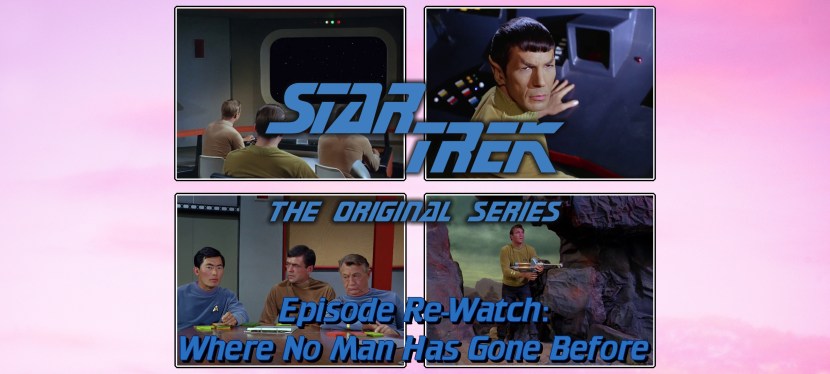
2026 marks Star Trek’s landmark 60th anniversary – and six decades later, we’re still getting brand-new episodes and stories! That’s something incredibly special; a milestone few other franchises have ever reached or will ever reach. Today, as part of my ongoing celebrations of the 60th anniversary, I thought we could step back in time, not only to the first season of The Original Series, but to a particularly special – and rather unusual – episode. Today, we’re watching Where No Man Has Gone Before – Star Trek’s second pilot.
After The Cage wasn’t picked up by NBC in 1965, Gene Roddenberry and his team were given a rare and unusual second chance to salvage Star Trek. The resulting script was Where No Man Has Gone Before, and after almost the entire cast – sans Leonard Nimoy as Spock – was changed, the new episode entered production. Recycling the sets which had been built for The Cage, but which were subsequently dismantled and rebuilt ahead of filming the rest of what we now know of as The Original Series, the episode has a completely distinct look, one which simply doesn’t appear anywhere else in the franchise.
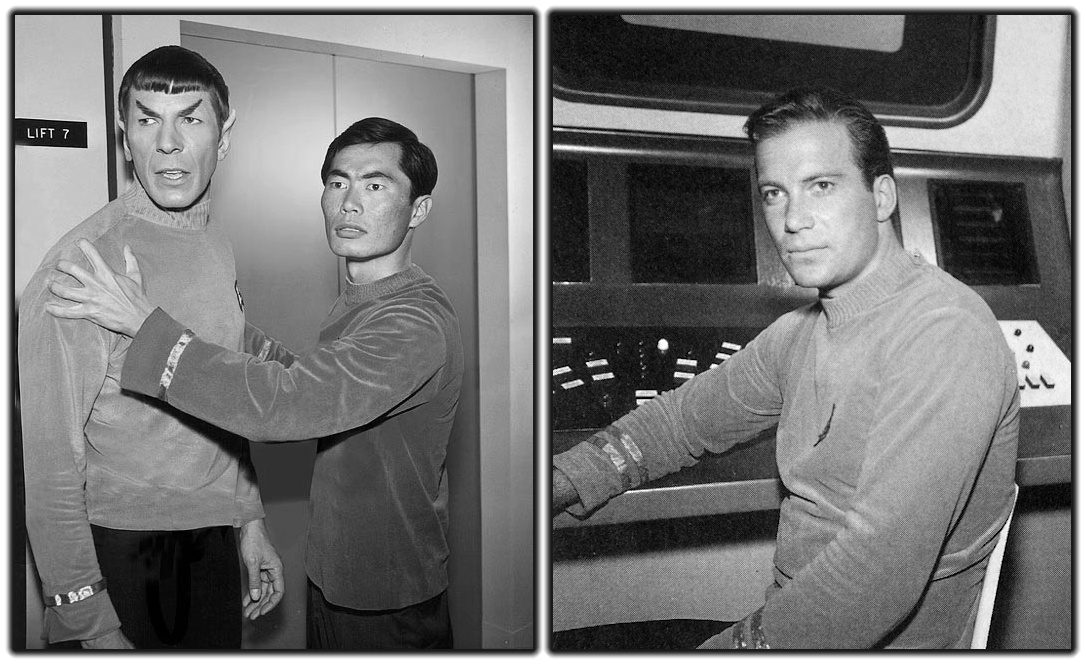
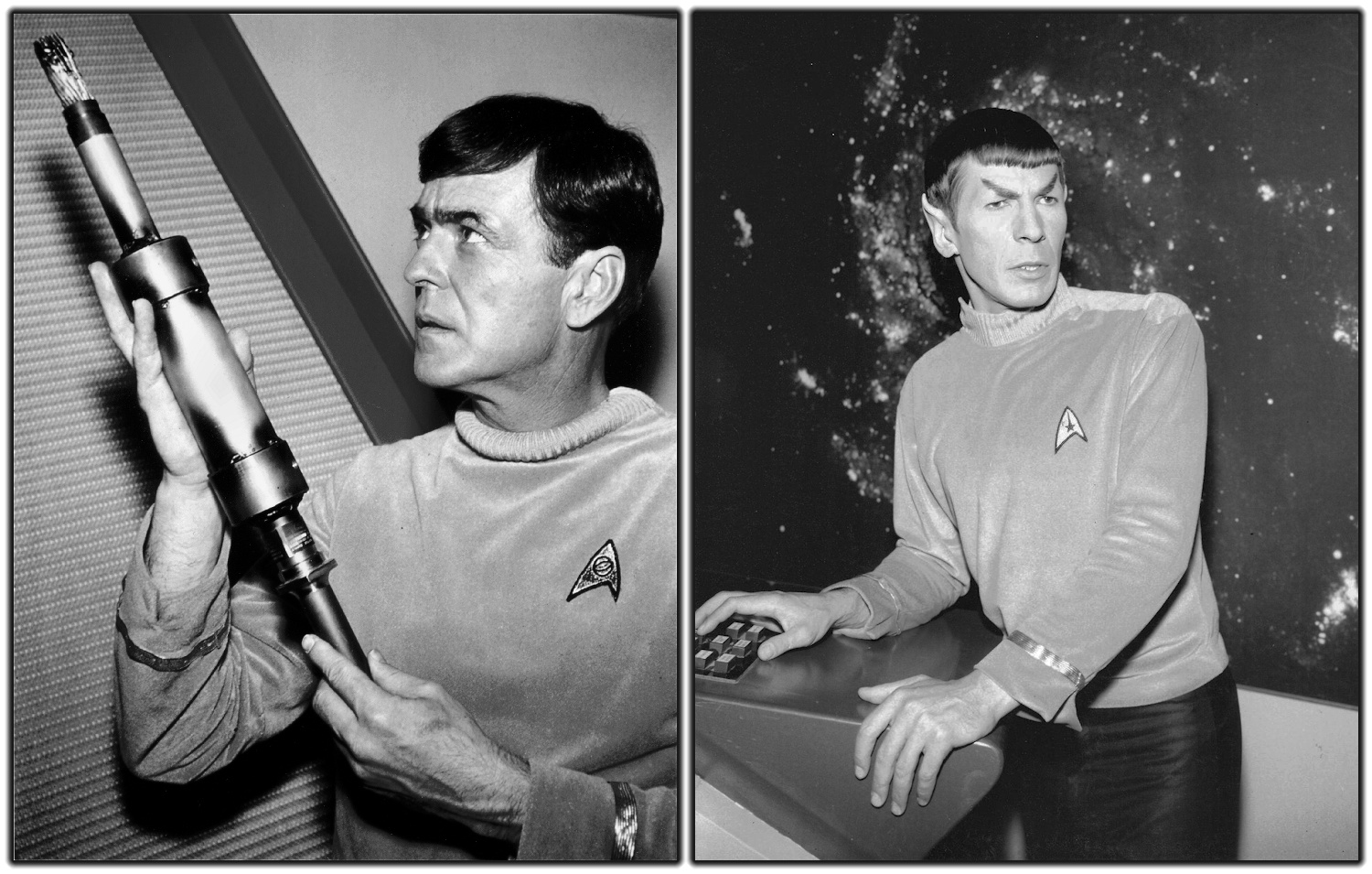
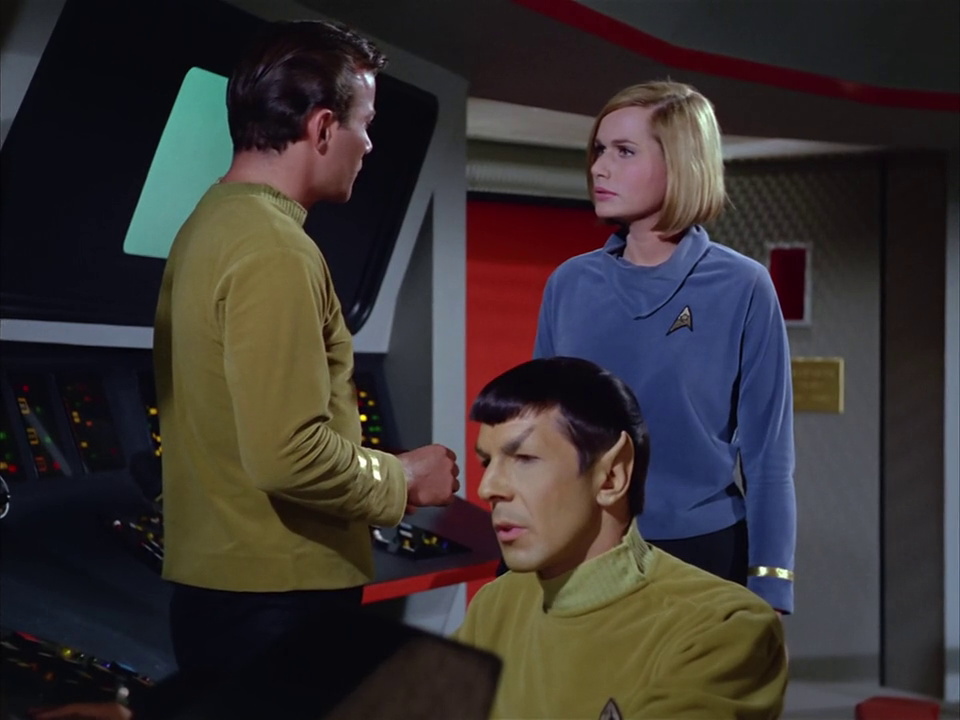
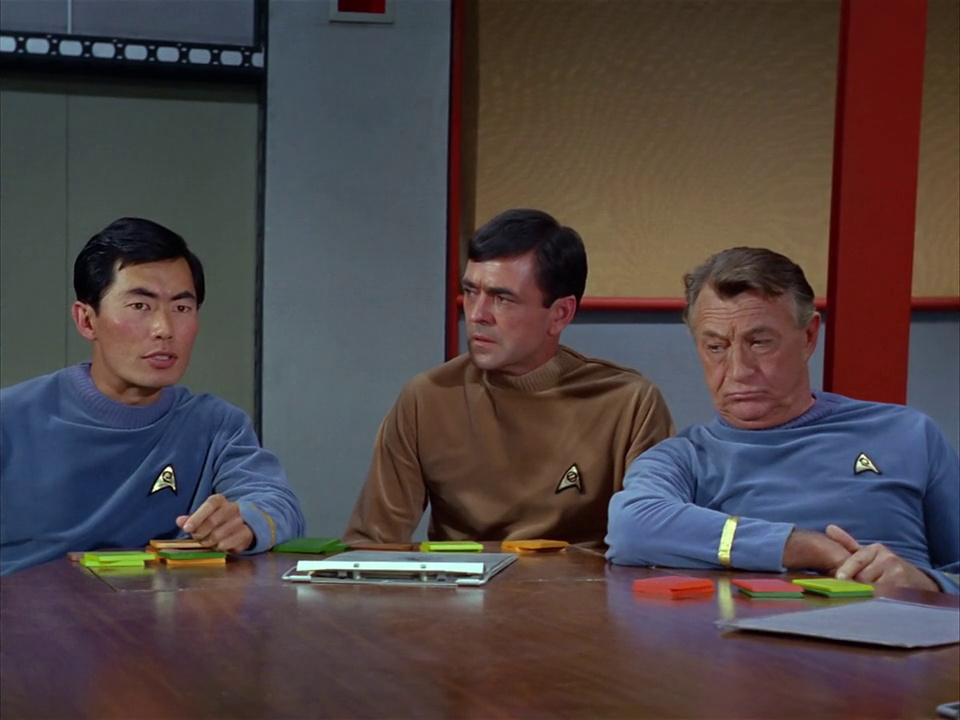
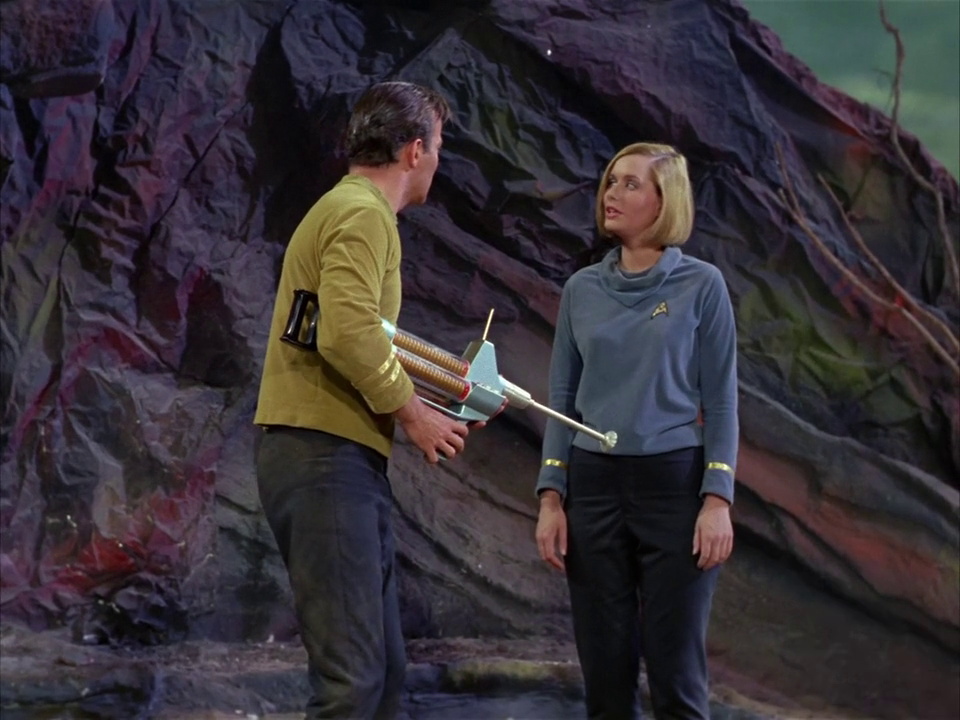
The uniforms may be the most obvious, with Star Trek’s (in)famous red shirts nowhere to be seen! Instead, the entire crew wears either blue, a different shade of “gold” that almost looks green or khaki, or beige. And, with the exception of Kirk, the remaining characters we’d come to know – Spock, Scotty, and Sulu – are all wearing a different colour than we’d expect. Spock gets a uniform similar to Kirk’s in command gold, Sulu – who isn’t the helmsman this time, but some kind of mathematical aide – wears medical blue, and Scotty is in one of the beige uniforms that seem to have taken the place of engineering/security’s red.
The uniforms are also different in the way they appear: visual zippers on the shoulders, a softer, ribbed crew-neck collar that evokes World War II-era naval uniforms, and smaller, slightly different Starfleet delta patches, too. These uniforms are similar to those seen in The Cage, which is another quirk of production. But for the main crew and characters we’d come to know, this was the only time we’d ever see them in these particular uniforms.
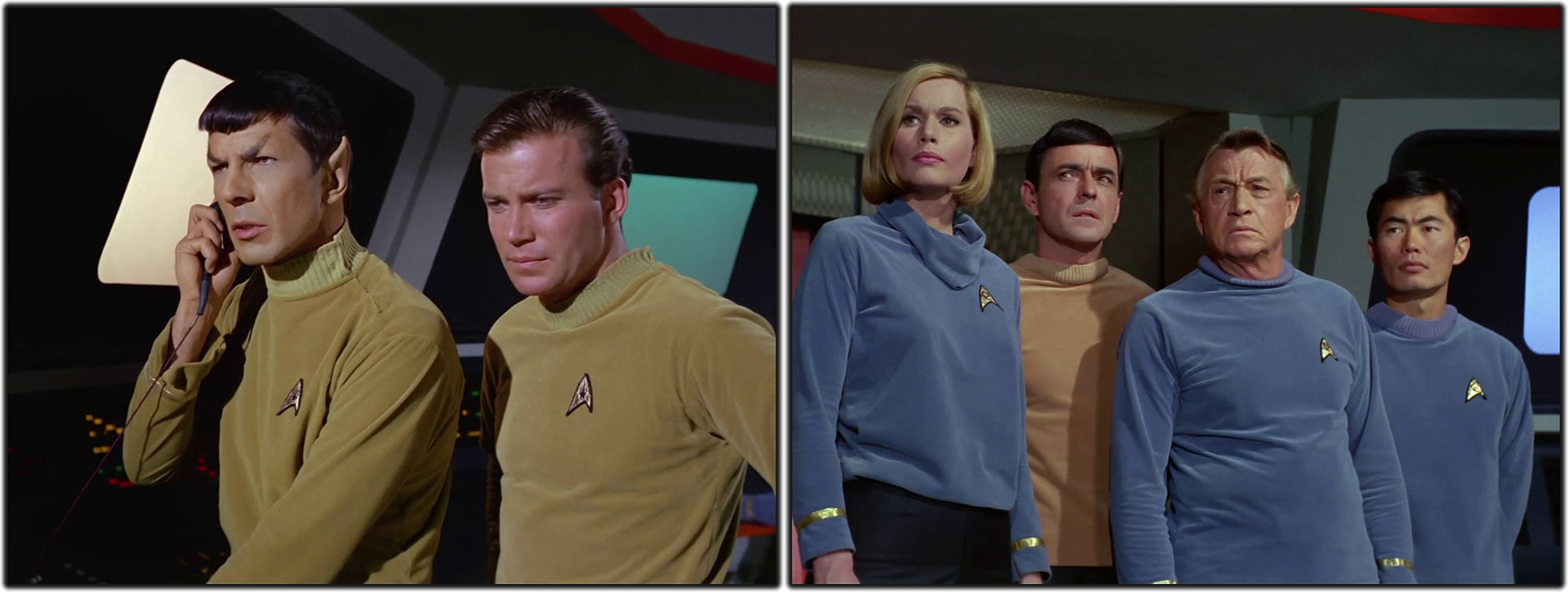
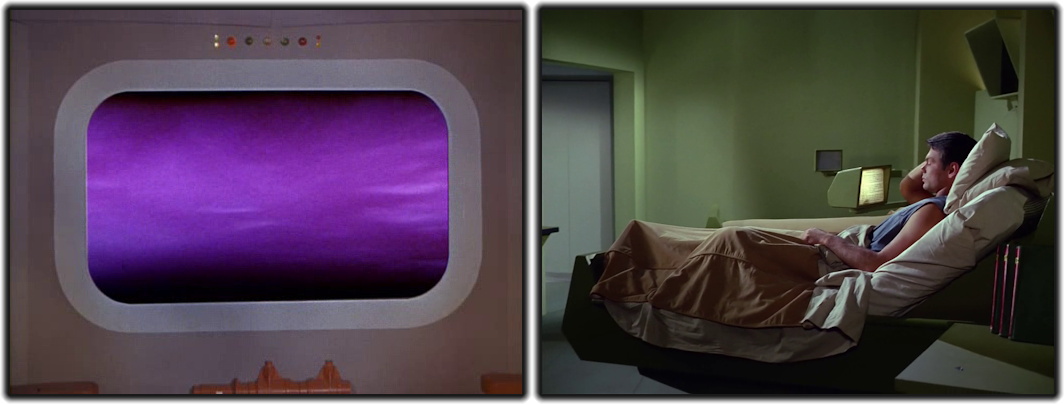
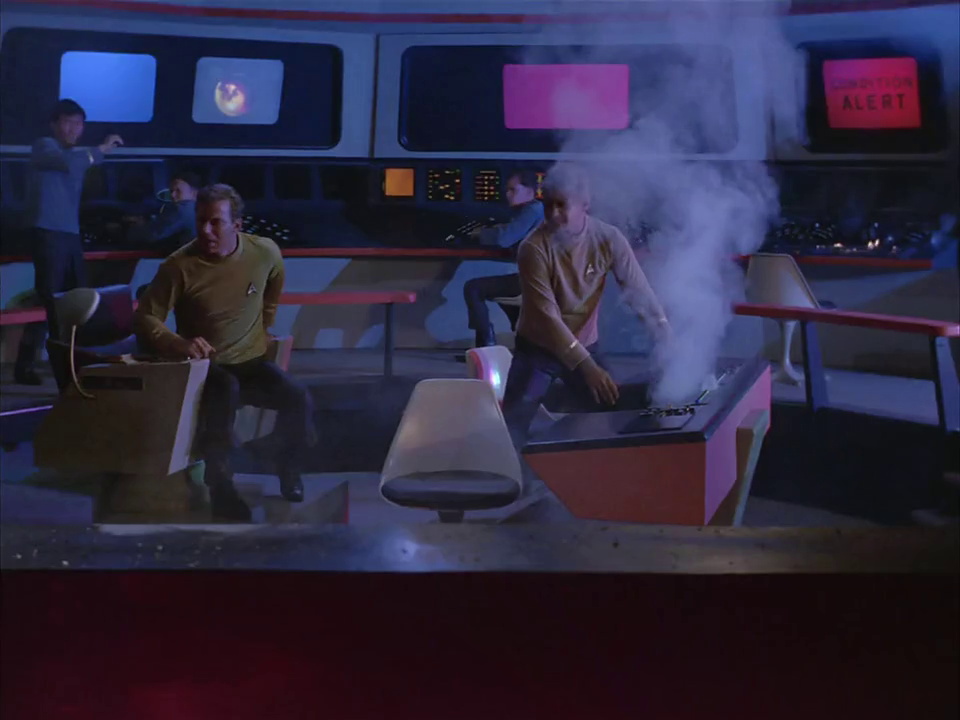
Then there are the sets. The bridge is different – albeit in ways that may not be obvious at first. Kirk’s chair has a large communicator on one side, which I think I’m right in saying wasn’t seen again. The main viewscreen, though, is the most clear and obvious point of difference; its corners are far more rounded than they would be in the rest of the show, again evoking more of that World War II naval style in some ways. The set was moved to a different sound stage when The Original Series entered full production, which is why it looks different here.
Sickbay, which is one of the only other Enterprise rooms where the episode spends much time, is also quite different, with different coloured walls and simpler upholstery than we’d see in the rest of the show. Some doors in Where No Man Has Gone Before are grey or silver instead of the more familiar red, chairs are a different colour and have shorter backs, and the Enterprise as a whole just feels a little… different. You weren’t making that up, if you felt something was “off” upon watching this episode! Things really are different.
Unusually for a pilot episode, Where No Man Has Gone Before wasn’t the first to be broadcast. That honour fell to The Man Trap, which executives at NBC apparently felt was a simpler, more straightforward story. This episode was pushed back and aired as the third of Season 1 in the United States… but interestingly, when Star Trek came to the UK in 1969, it actually was the first episode that the BBC chose to broadcast. I wonder why that happened?
Here’s a fun question: how many times, across The Original Series, do we see Captain Kirk wielding his phaser rifle? This iconic, legendary prop, which is well-known to all of us Trekkies and instantly recognisable, must’ve been used a lot… right? Well, no! The phaser rifle *only* appears here, in Where No Man Has Gone Before, and despite being seen in publicity photos of William Shatner in his role as Kirk, it never appears again in the entire series. According to Star Trek legend Bjo Trimble, Gene Roddenberry disliked the design, feeling that it looked “too lethal” for his calmer, more rational vision of humankind’s future.

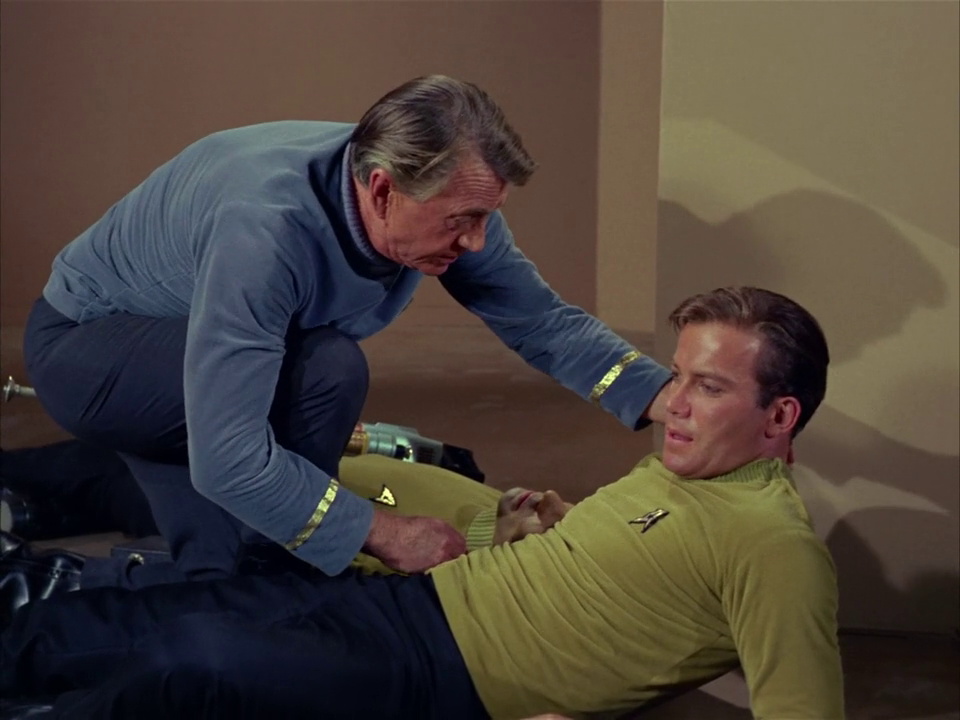
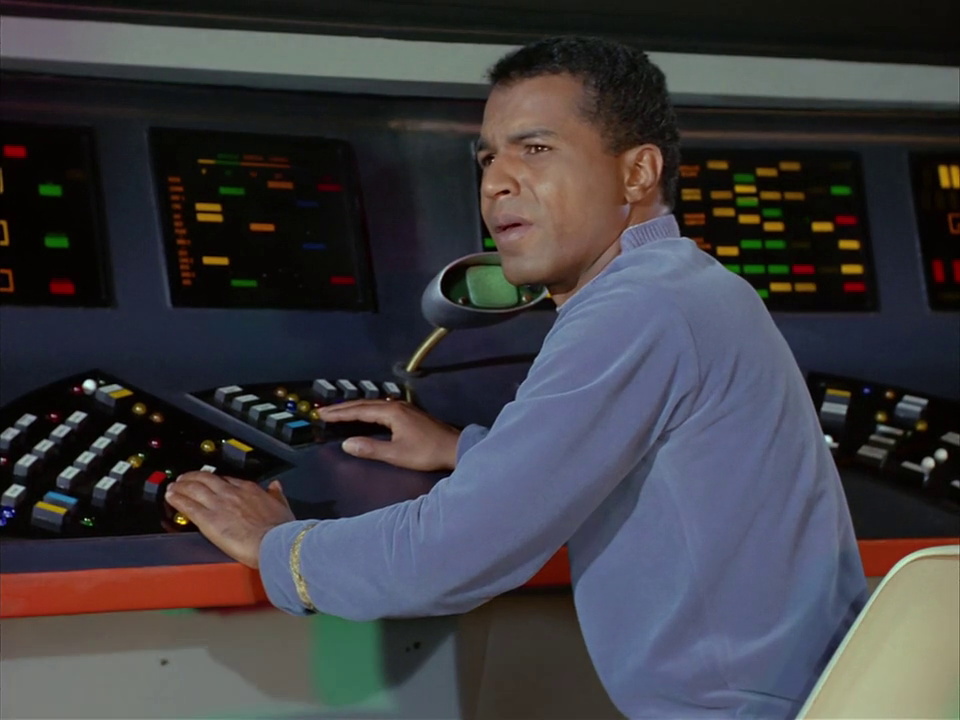
In addition to Chekov, who wouldn’t be seen until Season 2, Where No Man Has Gone Before is also noteworthy insofar as it was produced before Nichelle Nichols was cast as Uhura, and before DeForest Kelley was cast as the ship’s doctor. The role of communications officer is instead taken by Lieutenant Alden, played by Lloyd Haynes, and standing in for DeForest Kelley is Paul Fix, who plays the character of Dr Mark Piper.
I’ve always felt that Dr Piper – in his limited on-screen moments – is a bit of a half-step between The Cage’s Dr Boyce and the main show’s Dr McCoy. He’s similar to both characters in as much as he’s older than Kirk, but he comes across as being a bit less serious than Dr Boyce, slouching during a conference meeting, but also less lighthearted or quippy than Dr McCoy would be. The archetype that Gene Rodenberry wanted to create – the older, slightly wiser ship’s doctor, who could be a guide to the captain both in medical matters and beyond – was clearly present in Dr Piper and Dr Boyce, but these versions feel… less refined, if that makes sense. Like, I can see where Dr McCoy is going to materialise, but the full personality of the character isn’t there yet.
As an interesting aside, Gene Roddenberry had his heart set on casting DeForest Kelley for both The Cage and Where No Man Has Gone Before, but was overruled by others involved in the production. It was only when Star Trek was fully greenlit that Rodenberry got his man – and I think we can all agree that it was the right call! Still… it’s interesting to see what might have been.
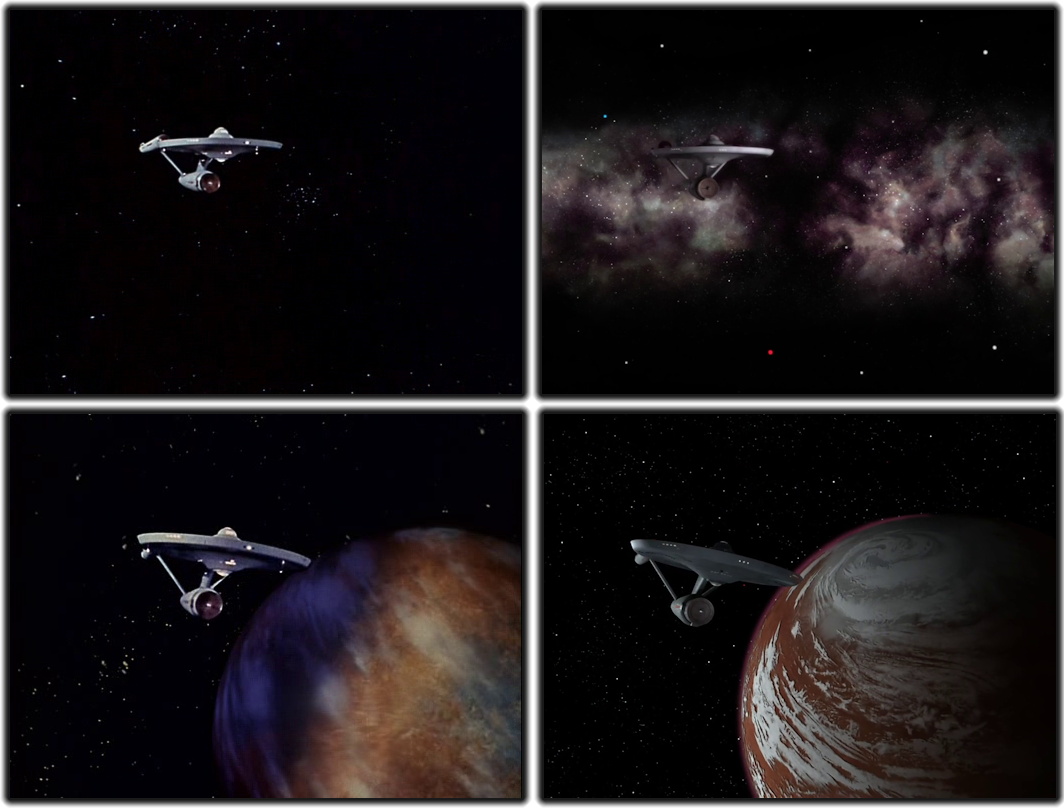
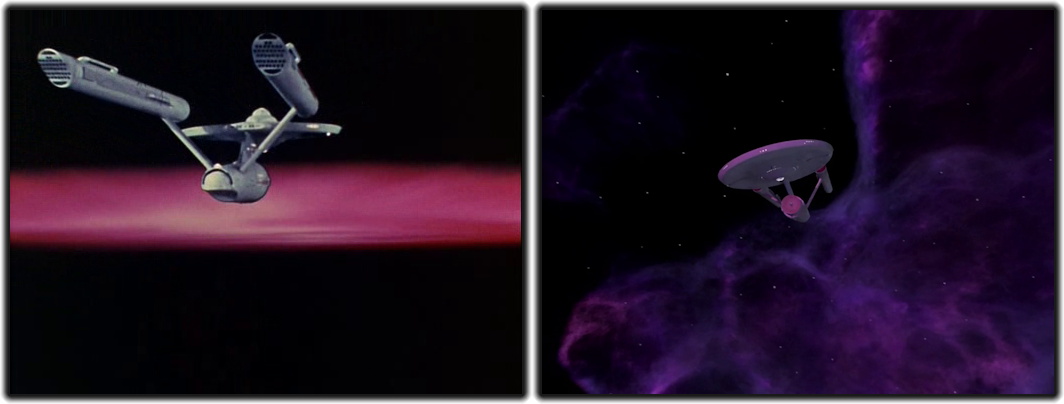
I usually prefer to watch Star Trek on streaming nowadays… or at least I do during the months where I pay for Paramount+! But on this occasion, I actually went back to my old DVDs; the streaming versions are the remastered ones, complete with new special effects and CGI shots of the Enterprise. And while the remastered version of The Original Series does look, by every objective measure going, “better,” I wanted the classic look this time. There are differences in the way the episode looks – the Galactic Barrier, for instance, looks very different, as do a few other VFX shots. The Enterprise itself is also a fully CGI model in establishing shots.
As a Trekkie, there are a lot of things that seem “wrong” about Where No Man Has Gone Before. What I mean by that is… with the hindsight that six decades and almost 1,000 subsequent stories can provide, there are things in the story that just don’t seem to fit. Spock being so quick to advocate for Mitchell’s extrajudicial execution, the Enterprise being on a mission to scout outside of the galaxy, some confusion about warp drive and impulse engines, and how fast impulse actually is when trying to get between star systems… all of these things feel a little “off.” To what extent that will bother you, or whether you can set it all aside and enjoy the story for what it is will be a matter of personal taste!
For me… I kind of place Where No Man Has Gone Before along with The Cage in almost their own category. These are fun Star Trek stories, of course, but they’re also unique oddities within the broader franchise; episodes which almost seem to take place apart from the rest of The Original Series. I think I can fall victim to being overly nitpicky sometimes (check out some of my other episode write-ups and reviews for that!) and the temptation is there with Where No Man Has Gone Before to say that things like the uniforms, the attitudes of some of the characters, and the Enterprise’s strange mission all seem to be, for want of a better word, “wrong.” But placing the episode in context, and understanding it for what it is, helps me set a lot of that aside. Even though it’s not an episode I re-watch all that often, I still had a good time when I revisited it, and I found myself getting swept along for the ride.
That’s testament to the power that Star Trek still has some six decades later! There are undeniably outdated things in Where No Man Has Gone Before: papier-mache rocks, for instance, or Kirk and Mitchell’s attitude towards women. But the story itself is timeless; a classic morality fable about the dangers of granting a mere mortal the powers of a god. Given where we are today with conversations about artificial intelligence and its potential to far exceed us in terms of its capabilities, and the so-called “alignment problem,” stories like Where No Man Has Gone Before actually seem *more* relevant, not less.
So I like that we catch a glimpse of a kind of “alternate reality” for both Star Trek the show and the USS Enterprise in-universe. We see Kirk, presumably at a slightly earlier moment in his command, with different crewmates, wearing different uniforms, and even with a slightly different design to parts of the ship. It makes for a fun “what if;” what might The Original Series have looked like if *this* series – the one we catch a glimpse of for just one episode – had been continued with zero changes? Would these uniforms have been as iconic, with their toned-down colours and no red? Would the phaser rifle have become a standard part of the Federation’s arsenal? Would Dr Piper have been as well-received and well-remembered as Dr McCoy? And would some of the characters we don’t spend as much time with in the episode – like Alden or Yeoman Smith – have gone on to fill the absent roles of Uhura, Rand, or Chapel? I guess we’ll never know, eh?
I think I’m right in saying that extra-sensory perception, or ESP, wasn’t mentioned again after Where No Man Has Gone Before. Obviously, we’ve seen similar abilities in races like the Talosians, Betazoids, Q Continuum, and more – and humans would occasionally gain similar powers in some stories. But it was never again expressed in quite this way, with Starfleet apparently keeping track of humans who possessed these seemingly magical powers.
It’s interesting that this vision of the future sees almost a blend of magic and science. ESP, even in the 1960s, was a fringe idea at best, but Where No Man Has Gone Before wraps it up in the language of science, presenting it as something to be merely noted and catalogued, the way we might expect Starfleet to make note of someone’s height or allergies. Because ESP is this kind of pseudoscientific, paranormal thing – which, if we think sceptically, has never been proven to exist – it feels odd to see it included in a Star Trek episode in this manner. I don’t hate it, and when you look at other stories in The Original Series, The Animated Series, and even early Next Generation episodes, it doesn’t feel that out-of-place. But once you get past, say, Season 2 of TNG, it’s not the kind of storyline I’d expect to see. Star Trek could make a comparable episode today, but if one were commissioned, I don’t think the ESP angle would be included at all – at least, not in this straightforward, scientific way.
So we’ve talked a lot about what makes Where No Man Has Gone Before stand apart, different from the rest of Star Trek. Let’s move on to ways in which the episode *does* feel familiar!
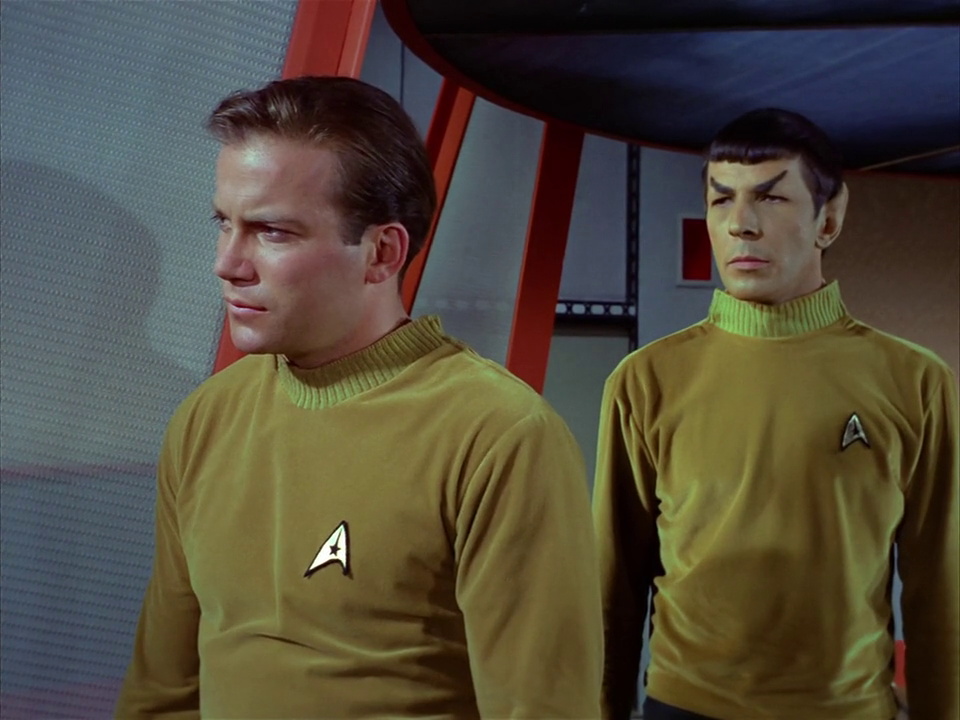
I recently had the opportunity to meet William Shatner – Captain Kirk himself – at an event here in the UK. Click or tap here to check out my thoughts on that, by the way; it’s a big part of why I wanted to write up another TOS episode re-watch! Shatner’s Captain Kirk arrives in Where No Man Has Gone Before basically fully-formed as the character we know and love: friendly with his crew, especially close to Spock, flirty with women, and with a strong sense of duty and protectiveness for his ship. Those traits would go on to define the character, and they’re all present here, in what was the first time Kirk was conceived and brought to the screen.
Spock has changed from The Cage, but in terms of the character we’re most familiar with, he’s also more or less fully-formed. Where No Man Has Gone Before was the first time (in production order, I mean) that the Vulcans were established as being a logical, unemotional people, and Spock embodies that here in a way he didn’t in The Cage.
The barest bones of Scotty can be glimpsed; James Doohan is already doing the accent, and while we don’t exactly see Scotty as a miracle-worker (major repair tasks and the retrofitting of Delta Vega’s station fall to other characters this time), he’s at least established as the Enterprise’s senior engineer. Sulu is a bit of an oddity; as I said above, he’s not a helmsman, nor even a bridge officer, and if uniform colours mean *anything* in this particular story, he might well be supposed to be affiliated with the science or even medical divisions. But nevertheless, we have George Takei in his familiar role, and Sulu gets a few lines.
Dr Piper is a Dr McCoy prototype, as discussed above, and although he doesn’t get a ton of screen time or a lot of lines, you can see the outline for that kind of character in Paul Fix’s performance. So, once again, we have the bare bones of a familiar character – albeit that this one isn’t played by the actor we’d expect to see!
The Enterprise, despite some key differences that we’ve already discussed, still feels familiar. The bridge is set up the same, despite the different main viewscreen, and the captain’s chair, Spock’s science station, the red turbolift doors, and the helm console are all exactly as we’d remember them. Minor differences may be a result of the set being dismantled and rebuilt at a different location, but by and large, the internal areas of the Enterprise that we see are still familiar enough not to feel totally “wrong.”
The exterior of the ship is also exactly the same. Where No Man Has Gone Before re-uses the filming model that had been built for The Cage, and some establishing shots of the ship would go on to be mainstays of The Original Series. The remastered Blu-ray version has different CGI shots; the Enterprise moves in ways we didn’t really see in the show’s original run. But, like I said, that’s partly why I wanted to watch my old DVD copy on this occasion!
For a one-off character, Gary Mitchell is surprisingly well-written. He fits seamlessly into The Original Series at this very early stage, and if Where No Man Has Gone Before was the first episode you ever watched, I could see what happens to him being genuinely shocking – especially to an audience some sixty years ago. I genuinely buy into Kirk and Mitchell’s friendship. Some one-off characters who are introduced as supposed besties of someone on the main cast don’t always stick the landing – their inclusions can, sometimes, feel a little *too* forced. But Mitchell and Kirk have chemistry together, thanks to William Shatner’s performance playing well with guest star Gary Lockwood.
Opinions on Mitchell himself may vary, I suspect, due to the passage of time. Writing in 2026, some six decades on from the character’s debut, I view Mitchell as being kind of arrogant and unlikable from the get-go; his dismissive attitude to the Enterprise’s helm officer and his unpleasant interaction with Dr Dehner being examples of this. But to an audience back then, I think Mitchell was meant to come across as kind of similar to Kirk; a ladies’ man with a sense of humour, perhaps even a happy-go-lucky attitude that would contrast with his later god-like powers.
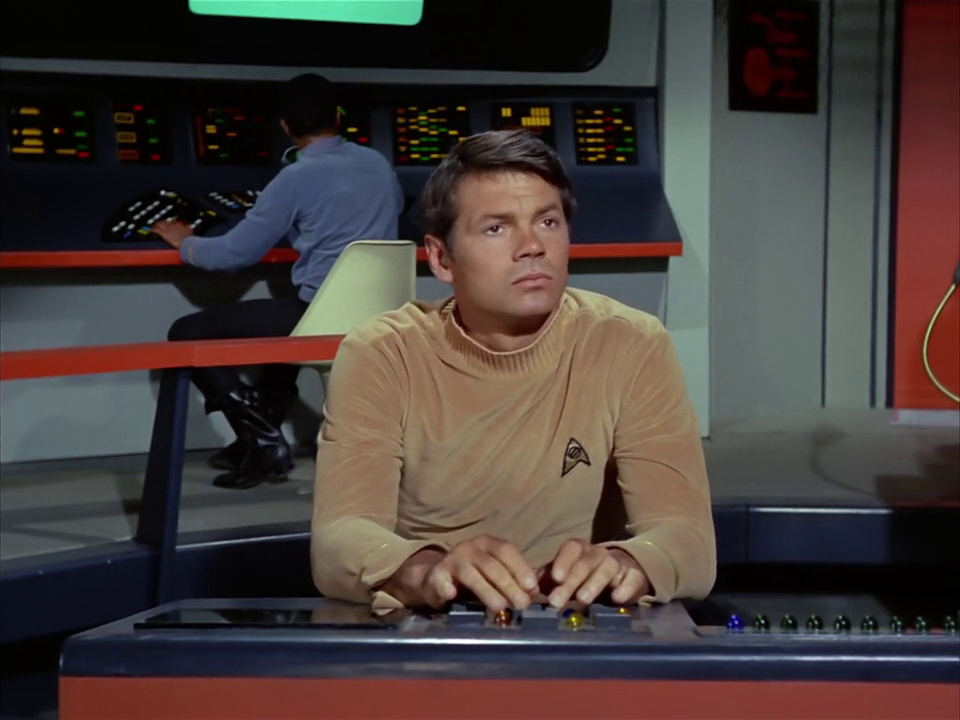
I would argue, though, that Mitchell’s early scenes with Kirk on the bridge and in the turbolift are at least meant to inform us of a selfish or arrogant side – something that would make his developing powers even harder to handle. Because Mitchell starts out as arguably a flawed person, there’s room for him to abuse the powers he develops later on in a way that feels plausible. If a character like Kirk had been given such powers, it would be harder, perhaps, to imagine that he’d want to misuse them; Kirk has a stronger moral core – or at least, I feel he does with the benefit of more than a hundred other episodes and films! But Mitchell has that arrogant streak from the get-go; a flaw that makes him susceptible to being corrupted by power.
But is that the moral of the story? That *only* a flawed person would abuse power?
I suspect the real intention was to show that a normal guy – as Mitchell is supposed to be, for the era in which Where No Man Has Gone Before was produced – is always going to be too tempted to abuse power. He’s an example of, to quote Kirk in the episode itself: “absolute power corrupting absolutely.” Mitchell was intended to be just an “everyman,” a regular Starfleet officer who couldn’t handle that kind of power. None of us can… and that’s supposed to be the point.
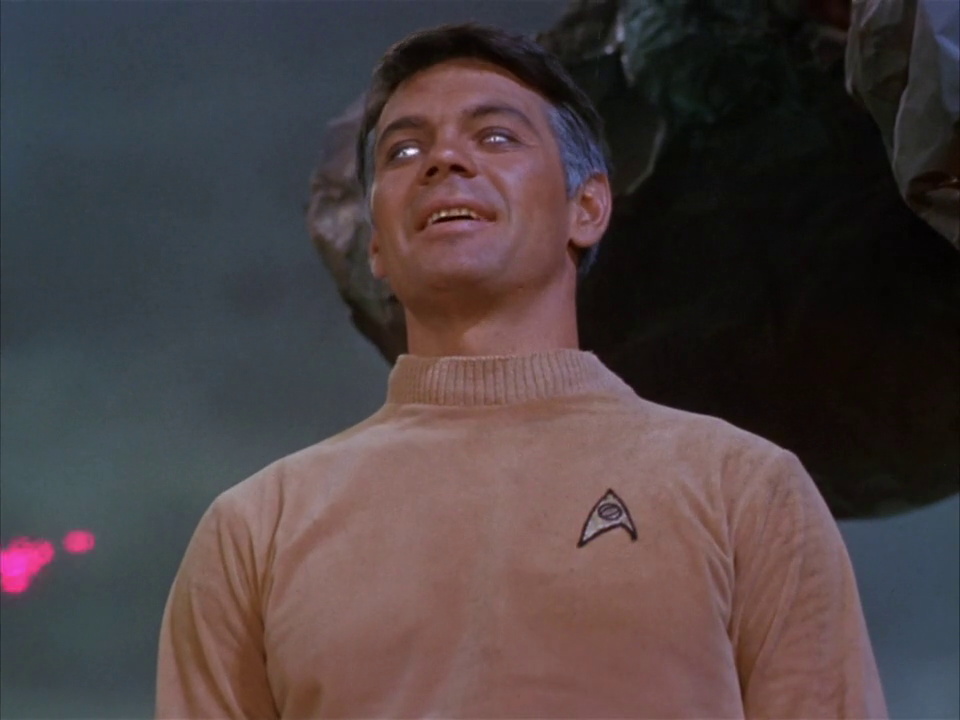
Gene Roddenberry saw Star Trek, in part, as a vehicle for conveying these kinds of morality fables. Yes, there’s a vision of the future where humankind has overcome all kinds of obstacles, and there’s an incredibly positive outlook which, at the height of the Cold War, seemed impossible to a lot of folks. That inspirational side, that optimism, and that sense of hope are still part of the franchise to this day. But there’s also storytelling by metaphor – Gary Mitchell receives god-like powers, but those powers can be read as a metaphor for political power. Mitchell’s transformation, seen through that lens, is a warning against granting *anyone* – even a likeable guy or an “average Joe” like Gary Mitchell – too much power. I wonder if you can think of a contemporary example of someone like that… a politician, perhaps?
Then there’s Dr Dehner. Her powers take longer to manifest, and seem to be a little behind Mitchell’s – whether that’s because she’s supposed to be weaker, or because powers grow and improve over time isn’t 100% clear in the story itself, but it’s still an interesting question. It’s fascinating that Dr Dehner, not Mitchell, is the character able to be reasoned out of her power-mad state. If we take what I was saying before about storytelling by fable and metaphor, I think we can argue that Where No Man Has Gone Before wants to present intelligence, and perhaps education, as being virtues; that Dr Dehner, as a psychiatrist and a more intelligent and thoughtful person than Mitchell – was able to snap out of it and resist the temptation of unlimited power.
So I hope this has been interesting.
Where No Man Has Gone Before is, in many ways, an odd little curiosity; produced more than a year before the rest of The Original Series’ first season, it doesn’t integrate with it perfectly. But the outline of what Star Trek would become is present here – some characters aren’t fully fleshed-out yet, and others would be added, removed, or changed entirely. It makes the episode feel… unique. A distinct offering, and a rare glimpse at a vision for the series that’s both similar and different. Compared to The Cage, the episode is a lot closer to the rest of The Original Series. But compare it to any story produced later and it stands apart.
My encounter with William Shatner last month, and Star Trek’s big 60th anniversary year, were the catalysts for returning to Where No Man Has Gone Before. And you know what? I had fun with it! It’s an episode I haven’t actually re-watched in a few years, at this point, and it’s been even longer since I went back to my TOS DVD collection and watched the show in its un-remastered form. It was a lot of fun.
As the 60th anniversary nears, I have a few other ideas for episode re-watches, essays, discussion pieces, and more. Some of those may eventually make their way onto the website – so please stay tuned for that! And just next month we’ll be graced with Strange New Worlds’ fourth season. I plan to write individual episode reviews, so if that’s something you’re interested in, I hope you’ll join me for that.
Thanks for checking out my thoughts on this unique episode. If you’re interested in more of my take on TOS, I have write-ups of The Original Series episode Arena and The Animated Series episode How Sharper Than A Serpent’s Tooth, which you can find by following those links. And I’ve got pieces about The Motion Picture and The Search For Spock, too. Click or tap those links to check them out.
As always… Live Long and Prosper, friends!
Star Trek: The Original Series (a.k.a. Star Trek) is available to stream now on Paramount+ in countries and territories where the platform is available. The series is also available on DVD and Blu-ray. The Star Trek franchise – including The Original Series, Strange New Worlds, and all other properties discussed above – is the copyright of the Skydance-Paramount corporation. This article contains the thoughts and opinions of one person only and is not intended to cause any offence.

