Thoughts on Streaming Schedules

Back in 2021, I watched and generally enjoyed Amazon Prime Video’s The Wheel of Time adaptation. I’d read the first couple of books in the series, and although it was a long time ago and I couldn’t remember many of the details of the story, I was still interested to see what a studio with Amazon’s means could bring to the fantasy realm. In the aftermath of the success of Game of Thrones, many studios were scrounging around for fantasy properties to adapt! I was pleased with the result in 2021.

The Wheel of Time has just returned to our screens after a break of almost two years – and it’s this scheduling that I want to talk a bit about today. The Wheel of Time’s first season ran to a scant eight episodes, which isn’t out of the norm for streaming shows these days, but is still a lot shorter than a typical television show from years gone by. But a short run of episodes combined with a very long break in between seasons has meant that I’ve basically forgotten all of what happened last time – and I almost missed The Wheel of Time’s return entirely. It was only when I saw an advertising banner splashed across Amazon’s homepage that I even remembered the series existed.
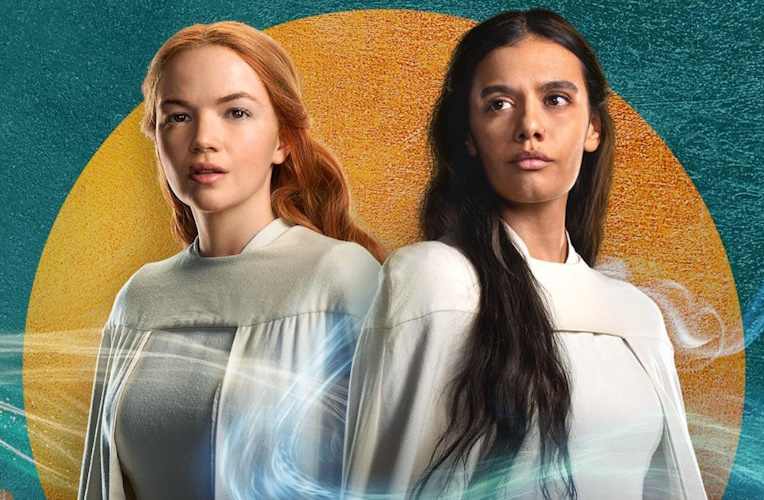
Promo poster for The Wheel of Time Season 2.

This is far from an isolated example. Amazon’s Lord of the Rings: The Rings of Power also ran for eight episodes in its first season – and also looks set to take a break of at least eighteen months before its second season will be ready. The same is true of shows like The Witcher and Stranger Things on Netflix or Paramount+’s Halo adaptation. These long breaks, when combined with short seasons, are actually doing a lot of harm to these shows – and I’m surprised that none of the big streaming companies have caught on yet.

The pandemic was a major disruptive force across the entertainment industry, shutting down or prolonging many productions. And I get that – I really do. The knock-on effects of that disruption are still being felt, and while that partially explains some of these long breaks, that’s not the whole story. Made-for-streaming shows like The Wheel of Time just aren’t interested in deadlines and schedules any more, and I think that’s to their detriment.
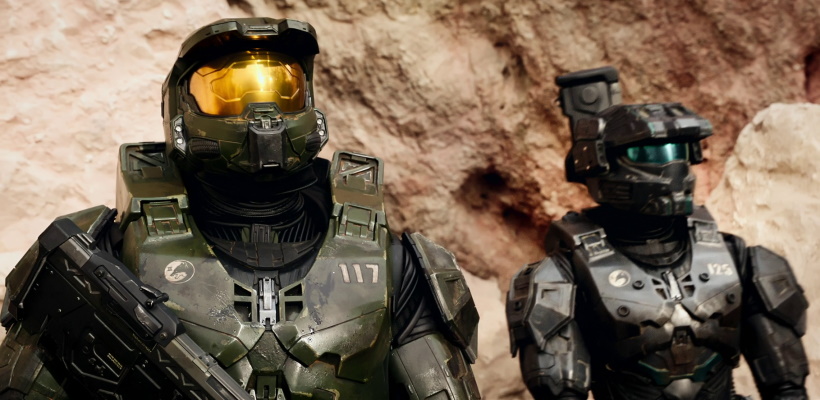
Still waiting on that second season of Halo

Most viewers of any series are not hard-core fans. The vast majority of a show’s audience are casual viewers, folks who tune in while the show is running but don’t spend too much time thinking about it after the credits have rolled on the season finale. Those people basically pay for a production and determine whether or not it will be a success, so keeping them engaged is vitally important. It’s great when a show can be “made for the fans,” but the reality is that most viewers will never be in that hard-core category.

When a series disappears for almost two years, the way The Wheel of Time did, it makes it so much harder to retain the kind of casual audience that it relies on. I would generally consider myself to be someone who likes fantasy, and I ranked The Wheel of Time as being one of my favourite shows of 2021… but even I’m struggling to remember who’s who and what happened last time. It’s just been so long, and I’ve had other things to watch since. Sure, my ageing, addled brain isn’t as switched-on as some people’s might be… but that’s beside the point!
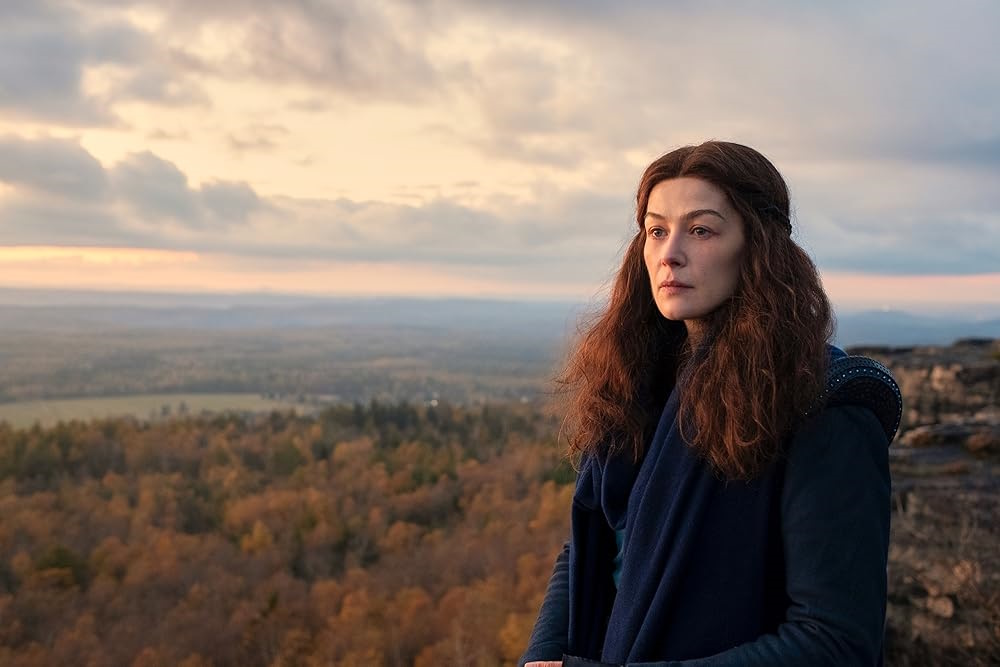
Who’s this again?

With shorter seasons of ten, eight, or even six episodes becoming increasingly common, it’s more important than ever for shows to not wait too long in between seasons. It’s also worthwhile, in my opinion, for streaming platforms to release shows at roughly the same time of year – at least the same season. There’s no need for rigid schedules on a streaming platform in the way there used to be on broadcast television, but if people get used to watching a particular show in the spring or the autumn, sticking with that for future seasons makes a lot of sense to me.

This must sound like a very long-winded way of saying “oops, I forgot that The Wheel of Time was a thing!” But this phenomenon goes beyond one single series or even one single streaming platform. There are perfectly understandable reasons for productions to be disrupted – whether we’re talking about the pandemic, the recent writers’ and actors’ strikes, or something else – and I’m not trying to single out Amazon or The Wheel of Time unfairly. I just really feel that these long breaks are to the detriment of practically every series and make it much harder to retain viewers.

SAG-AFTRA and WGA members on strike in 2023.

One of the benefits of the “streaming wars” over the past few years has been a glut of high-quality, big-budget entertainment on the small screen. Now I’ll be the first to tell you that not all of these shows were enjoyable, but some have been outstanding. With advancements in technology meeting a corporate need to drive and retain subscribers, the past few years have seen some of the best-looking television shows ever made. And that’s fantastic.

But when these shows disappear for years at a time – after only running to a handful of episodes – it becomes increasingly difficult to keep up. There’s a lot of choice of what to watch right now, even in genres that used to be considered small niches like fantasy. Studios like Amazon have to do better at keeping production and post-production schedules tight so that these kinds of long breaks can be avoided, especially if they only want to produce eight episodes in a season.
The Wheel of Time is produced by Amazon Studios.

So The Wheel of Time is back – and it’s already been renewed for a third season, so I guess we shouldn’t worry about the series being abandoned! But I hope Season 3 will be able to premiere in 2024, not 2025 or 2026. I’m only just beginning to figure out who’s who and what’s what all over again, and the last thing I need is for the series to disappear for nigh-on two years again!

As the streaming wars continue to rage, the studios that manage to get a grip on this situation will do well. Rigid schedules may no longer be necessary, and the flexibility that streaming allows for is, I would argue, a net positive for television production overall. But scheduling still matters, and taking two years to produce a single eight-episode season feels excessive. Worse than that, I fear it will prove harmful to any show’s prospects. Streaming services don’t only need to be concerned with signing up new subscribers, they need to worry about retaining current subscribers – and making sure that the shows people are watching don’t vanish for long periods of time is going to be part of that.

This was a bit of a whine; I’m sorry about that! And The Wheel of Time isn’t the only offender, it just happened to be the best recent example of this phenomenon. I do enjoy the series… I just hope I won’t have to wait so long for the next season. Time’s marching on, after all!

The Wheel of Time is available to stream now on Amazon Prime Video. Season 1 is also available for purchase on DVD/Blu-ray. The Wheel of Time is the copyright of Amazon Studios and Amazon Prime Video. This article contains the thoughts and opinions of one person only and is not intended to cause any offence.

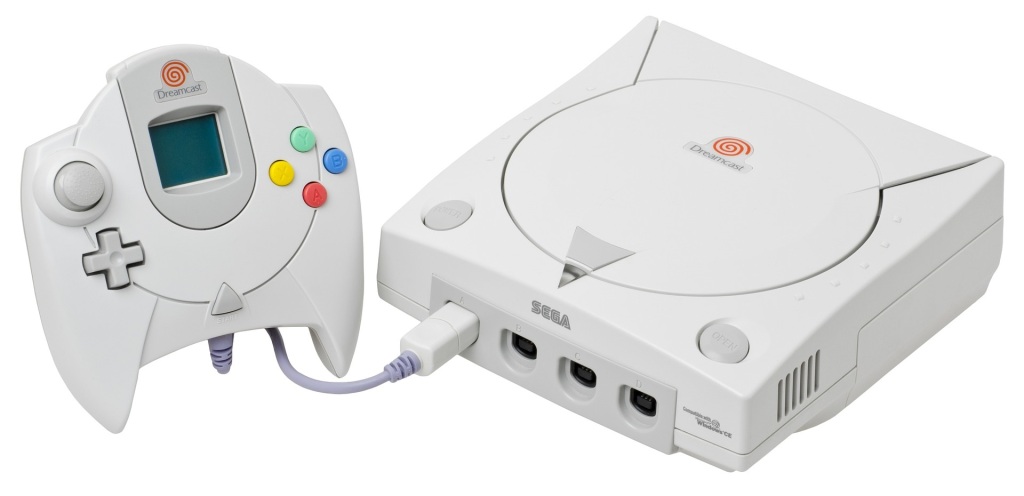
How Sega and the Dreamcast offer a valuable lesson for streaming platforms

In 2001 I was bitterly disappointed by the failure of the Dreamcast – a console I’d only owned for about a year and had hoped would carry me through to the next generation of home consoles. For a variety of reasons that essentially boil down to mismanagement, worse-than-expected sales, and some pretty tough competition, Sega found itself on the verge of bankruptcy. The company responded not only by ending development on the Dreamcast, but by closing its hardware division altogether.

At the time, Sega seemed to be at the pinnacle of the games industry. For much of the 1990s, the company had been a dominant force in home video game consoles alongside Nintendo, and as the new millennium approached there were few outward signs of that changing. It was a massive shock to see Sega collapse in such spectacular fashion in 2001, not only to me but to millions of players and games industry watchers around the world.

The Sega Dreamcast failed in 2001.

Thinking about what happened from a business perspective, a demise like this was inevitable in the early 2000s. Both Sony and Microsoft were arriving in the home console market with powerful machines offering features like the ability to play DVDs – something that the Dreamcast couldn’t do – but at a fundamental level the market was simply overcrowded. There just wasn’t room for four competing home consoles. At least one was destined for the chopping block – and unfortunately for Sega, it was their machine that wouldn’t survive.

But the rapid demise of the Dreamcast wasn’t the end of Sega – not by a long shot. The company switched its focus from making hardware to simply making games, and over the next few years re-established itself with a new identity as a developer and publisher. In the twenty years since the Dreamcast failed, Sega has published a number of successful titles, snapped up several successful development studios – such as Creative Assembly, Relic Entertainment, and Amplitude Studios – and has even teamed up with old rival Nintendo on a number of occasions!

The end of the Dreamcast was not the end of Sega.

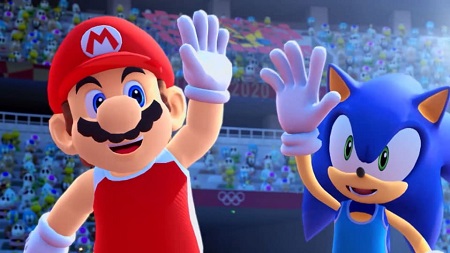
I can’t properly express how profoundly odd it was to first see Super Mario and Sega’s mascot Sonic the Hedgehog together in the same game! The old rivalry from the ’90s would’ve made something like that impossible – yet it became possible because Sega recognised its limitations and changed its way of doing business. The board abandoned a longstanding business model because it was leading the company to ruin, and even though it does feel strange to see fan-favourite Sega characters crop up on the Nintendo Switch or even in PlayStation games, Sega’s willingness to change quite literally saved the company.

From a creative point of view, Sega’s move away from hardware opened up the company to many new possibilities. The company has been able to broaden its horizons, publishing different games on different systems, no longer bound to a single piece of hardware. Strategy games have been published for PC, party games on the Nintendo Wii and Switch, and a whole range of other titles on Xbox, PlayStation, handheld consoles, and even mobile. The company has been involved in the creation of a far broader range of titles than it ever had been before.

Sega’s mascot Sonic now regularly appears alongside old foe Super Mario.

So how does all of this relate to streaming?

We’re very much in the grip of the “streaming wars” right now. Big platforms like Netflix, Amazon Prime Video, and Disney+ are battling for subscribers’ cash, but there’s a whole second tier of streaming platforms fighting amongst themselves for a chance to break into the upper echelons of the market. The likes of HBO Max, Paramount+, Apple TV+, Peacock, BritBox, and even YouTube Premium are all engaged in this scrap.

But the streaming market in 2021 is very much like the video game console market was in 2001: overcrowded. Not all of these second-tier platforms will survive – indeed, it’s possible that none of them will. Many of the companies who own and manage these lower-level streaming platforms are unwilling to share too many details about them, but we can make some reasonable estimates based on what data is available, and it isn’t good news. Some of these streaming platforms have simply never been profitable, and their owners are being propped up by other sources of income, pumping money into a loss-making streaming platform in the hopes that it’ll become profitable at some nebulous future date.

There are a lot of streaming platforms in 2021.

To continue the analogy, the likes of Paramount+ are modern-day Dreamcasts in a market where Netflix, Amazon, and Disney+ are already the Nintendo, Xbox, and PlayStation. Breaking into the top tier of the streaming market realistically means one of the big three needs to be dethroned, and while that isn’t impossible, it doesn’t seem likely in the short-to-medium term at least.

Why did streaming appeal to viewers in the first place? That question is fundamental to understanding why launching a new platform is so incredibly difficult, and it’s one that too many corporate executives seem not to have considered. They make the incredibly basic mistake of assuming that streaming is a question of convenience; that folks wanted to watch shows on their own schedule rather than at a set time on a set channel. That isn’t what attracted most people to streaming.

Too many corporate leaders fundamentally misunderstand streaming.

Convenience has been available to viewers since the late 1970s. Betamax and VHS allowed folks to record television programmes and watch them later more than forty years ago, as well as to purchase films and even whole seasons of television shows to watch “on demand.” DVD box sets kicked this into a higher gear in the early-mid 2000s. Speaking for myself, I owned a number of episodes of Star Trek: The Next Generation on VHS in the 1990s, and later bought the entire series on DVD. I had more than enough DVDs by the mid-2000s that I’d never need to sign up for any streaming platform ever – I could watch a DVD every day of the year and never run out of different things to watch!

To get back on topic, what attracted people to streaming was the low cost. A cable or satellite subscription is easily four or five times the price of Netflix, so cutting the cord and going digital was a new way for many people to save money in the early 2010s. As more broadcasters and film studios began licensing their content to Netflix, the value of the deal got better and better, and the value of cable or satellite seemed ever worse in comparison.

Streaming isn’t about convenience – that’s been available for decades.
(Pictured: a 1975 Sony Betamax cabinet)

But in 2021, in order to watch even just a handful of the most popular television shows, people are once again being forced to spend cable or satellite-scale money. Just sticking to sci-fi and fantasy, three of the biggest shows in recent years have been The Mandalorian, The Expanse, and The Witcher. To watch all three shows, folks would need to sign up for three different streaming platforms – which would cost a total of £25.97 per month in the UK; approximately $36 in the United States.

The overabundance of streaming platforms is actually eroding the streaming platform model, making it unaffordable for far too many people. We have a great recent example of this: the mess last week which embroiled Star Trek: Discovery. When ViacomCBS cancelled their contract with Netflix, Discovery’s fourth season was to be unavailable outside of North America. Star Trek fans revolted, promising to boycott Paramount+ if and when the streaming platform arrived in their region. The damage done by the Discovery Season 4 debacle pushed many viewers back into the waiting arms of the only real competitor and the biggest danger to all streaming platforms: piracy.

Calls to boycott Paramount+ abounded in the wake of the Star Trek: Discovery Season 4 mess.

The streaming market does not exist in a vacuum, with platforms jostling for position solely against one another. It exists in a much bigger digital environment, one which includes piracy. It’s incredibly easy to either stream or download any television episode or any film, even with incredibly limited technological know-how, and that has always represented a major threat to the viability of streaming platforms. Though there are ethical concerns, such as the need for artists and creators to get paid for their creations, that isn’t the issue. You can shout at me until you’re blue in the face that people shouldn’t pirate a film or television show – and in the vast majority of cases I’ll agree wholeheartedly. The issue isn’t that people should or shouldn’t engage in piracy – the issue is that people are engaged in piracy, and there really isn’t a practical or viable method of stopping them – at least, no such method has been invented thus far.

As more and more streaming platforms try to make a go of it in an already-overcrowded market, more and more viewers are drifting back to piracy. 2020 was a bit of an outlier in some respects due to lockdowns, but it was also the biggest year on record for film and television piracy. 2021 may well eclipse 2020’s stats and prove to have been bigger still.

The overcrowded streaming market makes piracy look ever more appealing to many viewers.

Part of the driving force is that people are simply unwilling to sign up to a streaming platform to watch one or two shows. One of the original appeals of a service like Netflix was that there was a huge range of content all in one place – whether you wanted a documentary, an Oscar-winning film, or an obscure television show from the 1980s, Netflix had you covered. Now, more and more companies are pulling their content and trying to build their own platforms around that content – and many viewers either can’t or won’t pay for it.

Some companies are trying to push streaming platforms that aren’t commercially viable and will never be commercially viable. Those companies need to take a look at Sega and the Dreamcast, and instead of trying to chase the Netflix model ten years too late and with far too little original content, follow the Sega model instead. Drop the hardware and focus on the software – or in this case, drop the platform and focus on making shows.

Some streaming platforms will not survive – and their corporate owners would be well-advised to realise that sooner rather than later.

The Star Trek franchise offers an interesting example of how this can work. Star Trek: Discovery was originally available on Netflix outside of the United States. But Star Trek: Picard and Star Trek: Lower Decks went to Amazon Prime Video instead – showing how this model of creating a television show and selling it either to the highest bidder or to whichever platform seems like the best fit for the genre can and does work.

Moves like this feel inevitable for several of these second-tier streaming platforms. There’s a hard ceiling on the amount of money folks are willing to spend, so unless streaming platforms can find a way to cut costs and become more competitively priced, the only possible outcome by the end of the “streaming wars” will be the permanent closure of several of these platforms. Companies running these platforms should consider other options, because blindly chasing the streaming model will lead to financial ruin. Sega had the foresight in 2001 to jump out of an overcrowded market and abandon a failing business model. In the two decades since the company has refocused its efforts and found renewed success. This represents a great model for streaming platforms to follow.

All films, television series, and video games mentioned above are the copyright of their respective owner, studio, developer, broadcaster, publisher, distributor, etc. This article contains the thoughts and opinions of one person only and is not intended to cause any offence.