Star Trek: Strange New Worlds Episode Review – Season 2, Episode 6: Lost In Translation

Spoiler Warning: There are spoilers ahead for Star Trek: Strange New Worlds Seasons 1 and 2.

Welcome back to my Strange New Worlds Season 2 episode review series. I know it’s been a while, and I’ll address that briefly before we jump into the review proper.

Last year, while Strange New Worlds was airing, I began to feel burned out on Star Trek as a whole. I also found myself writing less frequently here on the website, and I think I just needed a bit of a break from what had been a pretty hectic schedule for the franchise. There’s been a lot of Star Trek on our screens over the last couple of years in particular – some of which has been quite heavy, with themes of mental health that hit close to home for me. Long story short, I ended up taking a break from Strange New Worlds halfway through Season 2… but now I’m finally ready to jump back in. I’m going into these episodes completely fresh; this is my first time watching Lost in Translation and I haven’t seen the remaining Season 2 episodes yet.

So I hope you’ll excuse the lateness of this review! I plan to pick up where I left off last year, and while I don’t promise to do one review a week… hopefully by the end of the year – or at least by the time Season 3 is upon us – I’ll have finally wrapped up this batch of episodes.
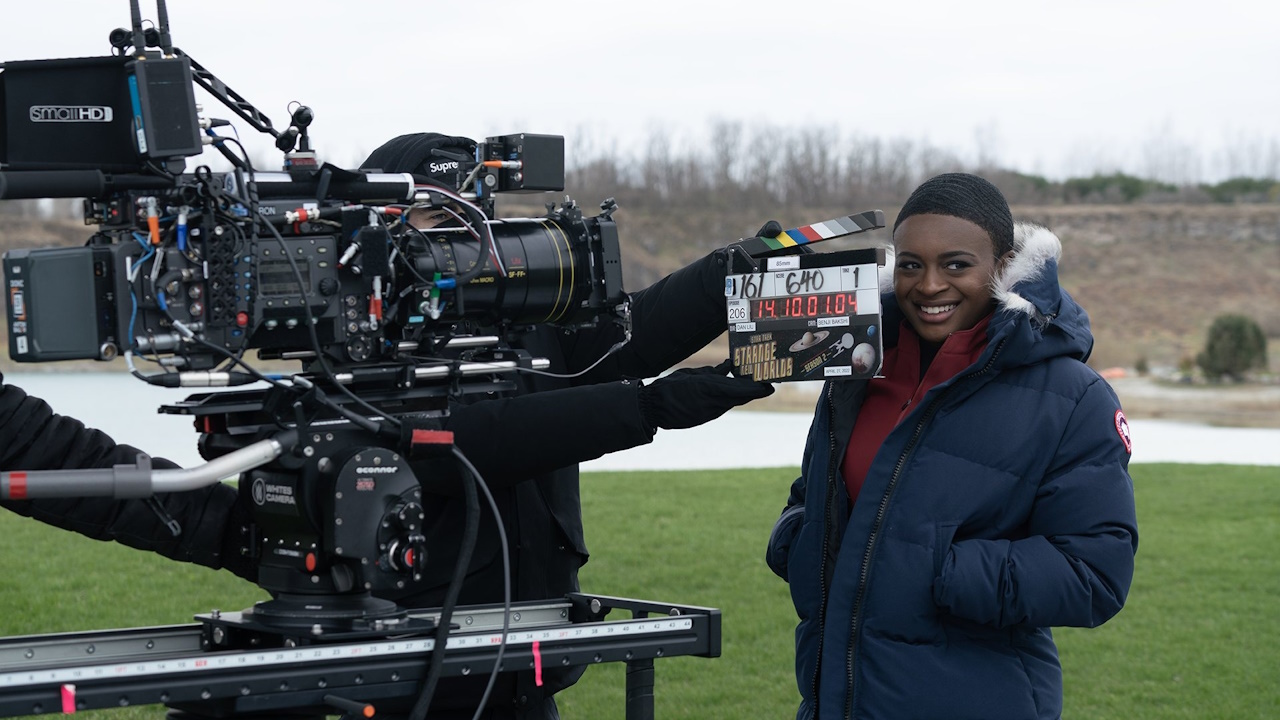
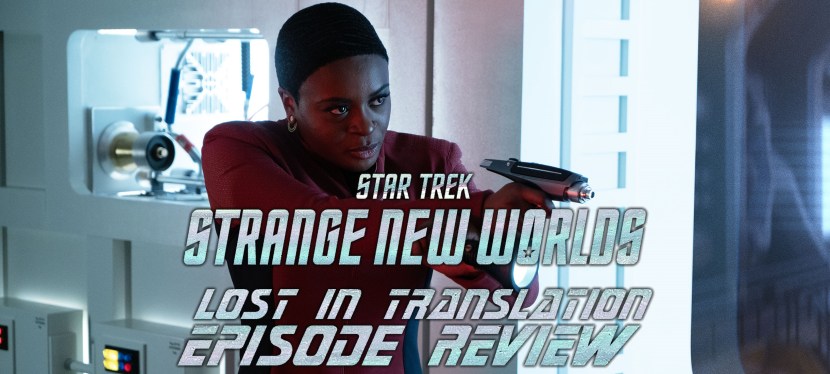
Behind-the-scenes photo from the Star Trek: Strange New Worlds episode Lost In Translation (2023) showing a camera rig and Uhura.
Behind-the-scenes photo from the set of Lost in Translation.

Onward, then, to Lost in Translation!

This episode put a somewhat dark and distinctly modern spin on Star Trek’s trusty old “they were only trying to communicate!” premise, and it worked pretty well. Outside of the main thrust of the story were a couple of moments of characterisation that I felt either weren’t set up particularly well or that might’ve needed an extra moment or two in the spotlight, and there was a rare CGI miss for Strange New Worlds as the series used a sub-par visual effect that had also appeared in Picard’s third season. Other than that, though, I had a pretty good time with Lost in Translation; it was a nice way to return to Strange New Worlds after an absence of more than a year.

I think I’ve noted this before in either my Season 1 review or one of my earlier Season 2 episode reviews, but I just adore the opening title music. I got goosebumps listening to the theme this time after not hearing it for months, and the way composer Jeff Ruso deconstructed and then recreated the music from The Original Series is really something special.
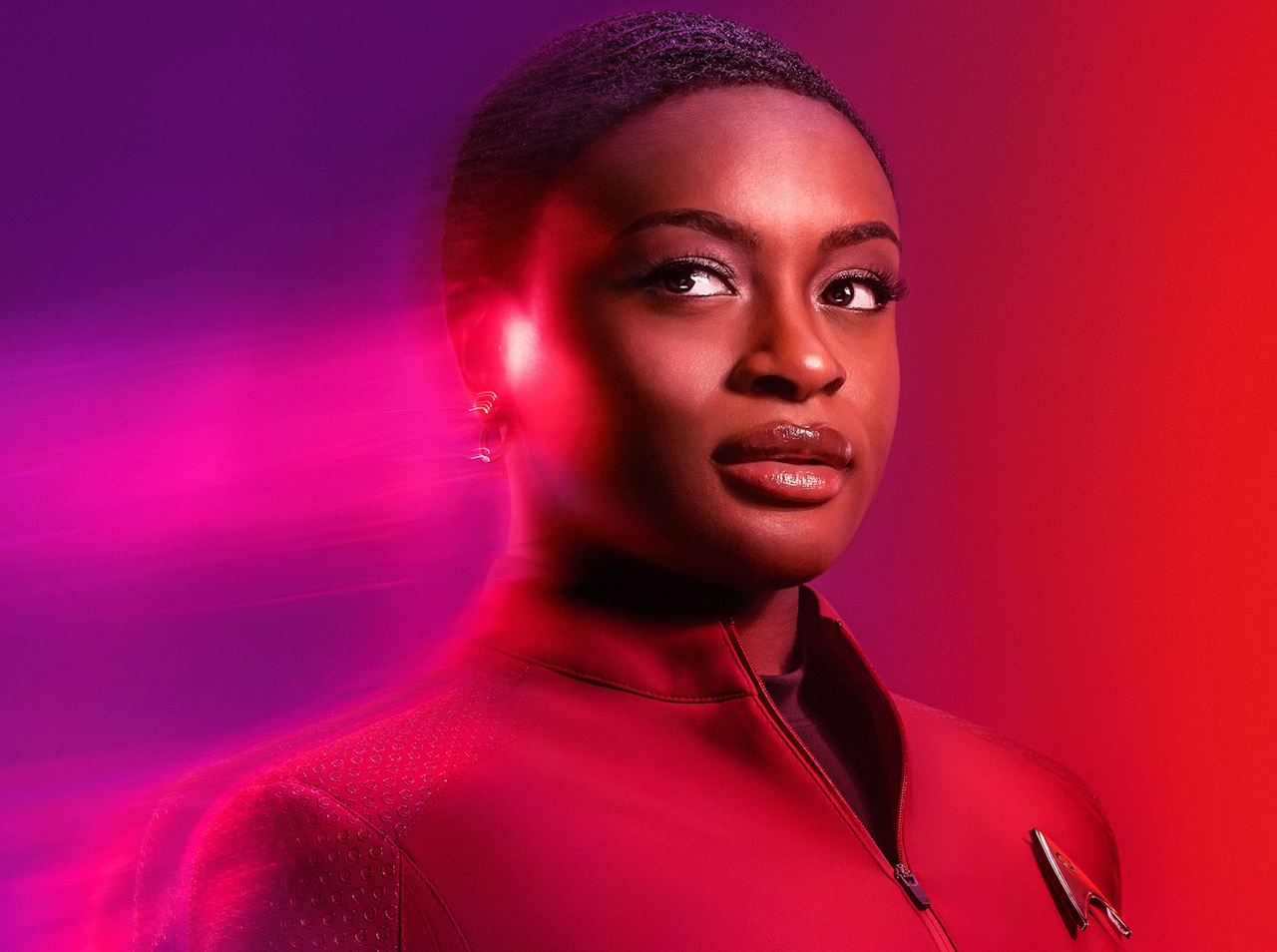
Promo poster for Star Trek: Strange New Worlds Season 2 (2023) showing Uhura. Cropped.
Lost in Translation focused on Uhura.

Let’s talk about what I didn’t like in Lost in Translation – which, thankfully, isn’t too much this time around.

There were a couple of pretty abrupt scenes where two different sets of characters seemed to have fallen out with one another off-screen, and the way this was communicated wasn’t great. First we had the two Kirk brothers: Sam and Jim. Their rivalry came from an understandable place, but it needed way more buildup to have been effective. We’ve seen these characters on screen together more than once in Strange New Worlds already, and there was no indication in those earlier appearances that Sam might feel Jim’s rise through the ranks was a sore spot.

And when we boil it down… this argument felt incredibly petty. Jim Kirk has just been promoted, becoming the youngest-ever first officer in Starfleet. And Sam feels jealous of that because their father – who we’ve never met and hasn’t been mentioned before – likes Jim more because of it? Have I even got that right? For the brothers to go from sharing a hug on the transporter pad to Sam storming off – twice, I might add – just felt so incredibly ham-fisted and rushed. There was the smallest nugget of an interesting idea at the core of this, and both actors did the best with the material they had. But this argument/sibling rivalry needed way more time on screen and more development, ideally over more than one episode. Strange New Worlds has done well so far with its blend of episodic storytelling and serialised character arcs… but this one didn’t stick the landing this time.
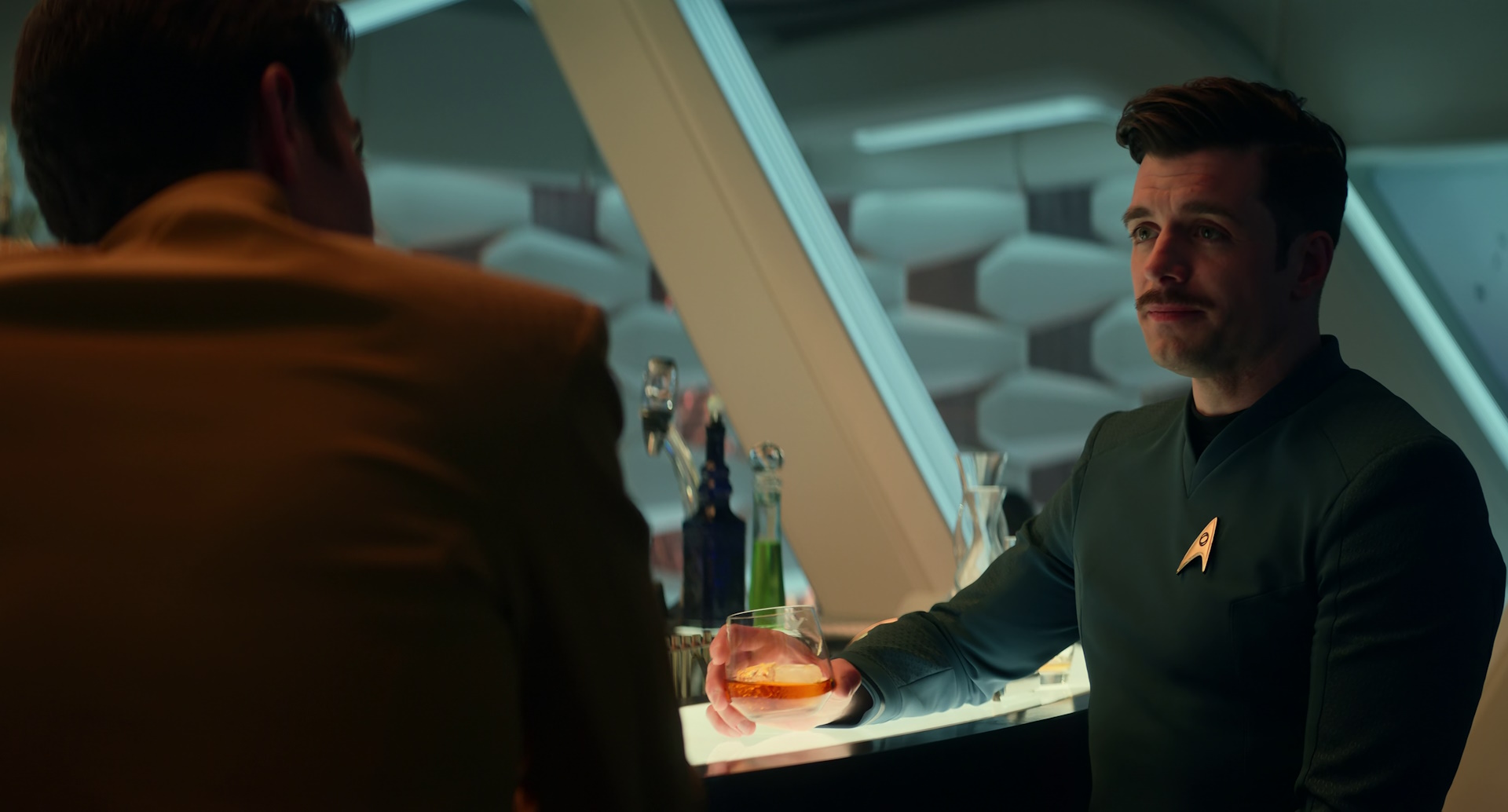
Still frame from Star Trek: Strange New Worlds Season 2 (2023) showing Jim and Sam Kirk at the bar.
Jim and Sam argued at the bar.

In a similar vein we have Una and Pelia’s conflict. This one has the benefit of being resolved (or apparently resolved, at least) by the end of the episode, meaning that the final scenes they shared together in the shuttlecraft and the conversation that Pelia forced went some way to compensating for their earlier conflict. But the same basic issue arises as with the Kirk brothers above: it needed more setup and more time on screen to play out.

This kind of conflict between two main characters can’t be a one-and-done, throwaway thing in a single episode; it deserves to have more time spent on it. Not for the first time in modern Star Trek I find myself saying this: if there isn’t enough time to do justice to a storyline that needs room to unfold… skip it. Don’t forget it entirely, but put it back on the shelf for later and find something smaller that would be a better fit for the short runtime available – then when you have the time to fully explore this kind of grief-driven character conflict, return to it and do it properly. This isn’t an isolated issue, unfortunately, as we’ve seen similar problems in all of the modern live-action Star Trek productions since 2017.
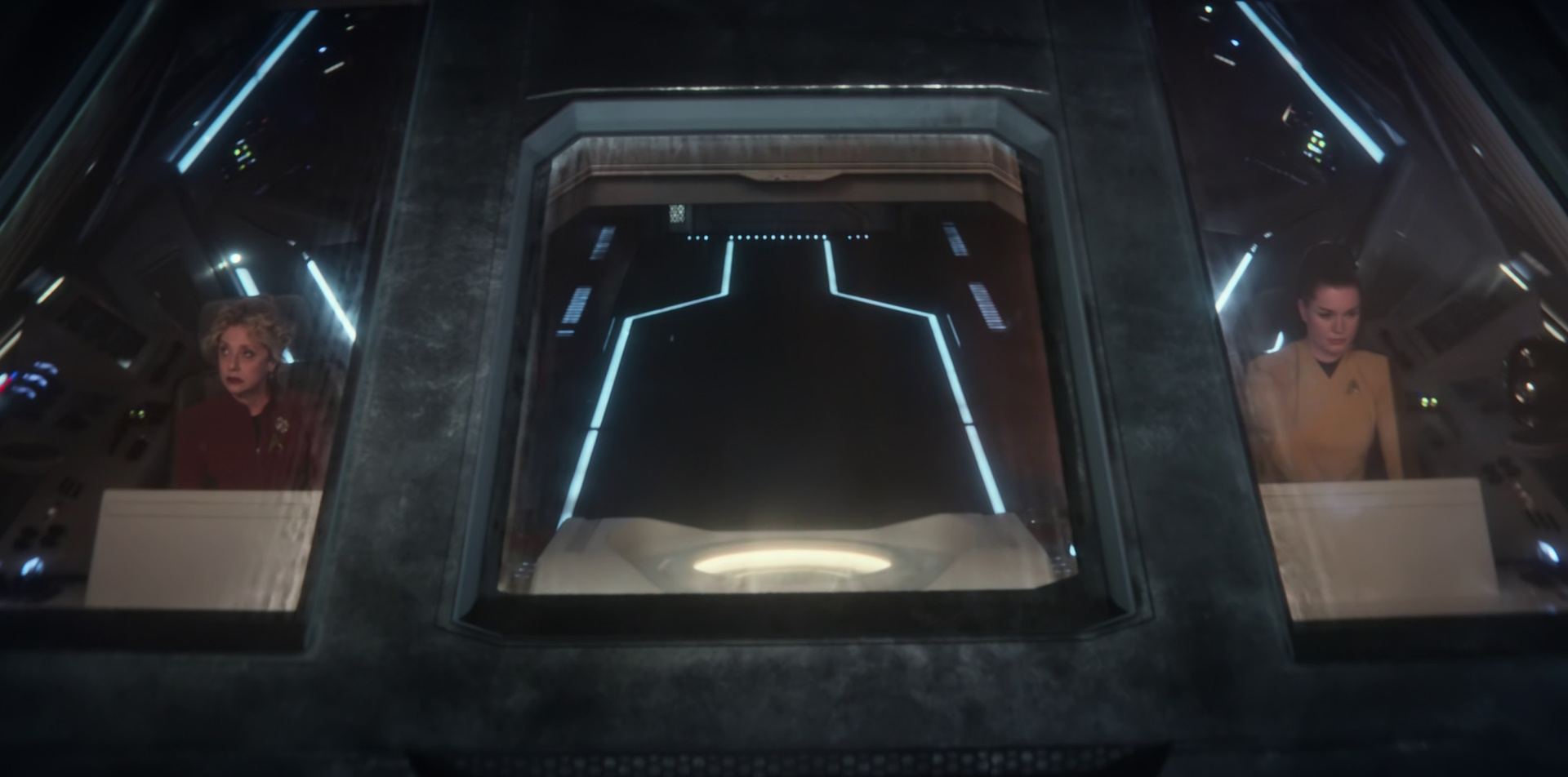
Still frame from Star Trek: Strange New Worlds Season 2 (2023) showing Una and Pelia on a shuttle.
Pelia and Una on their way back to the Enterprise.

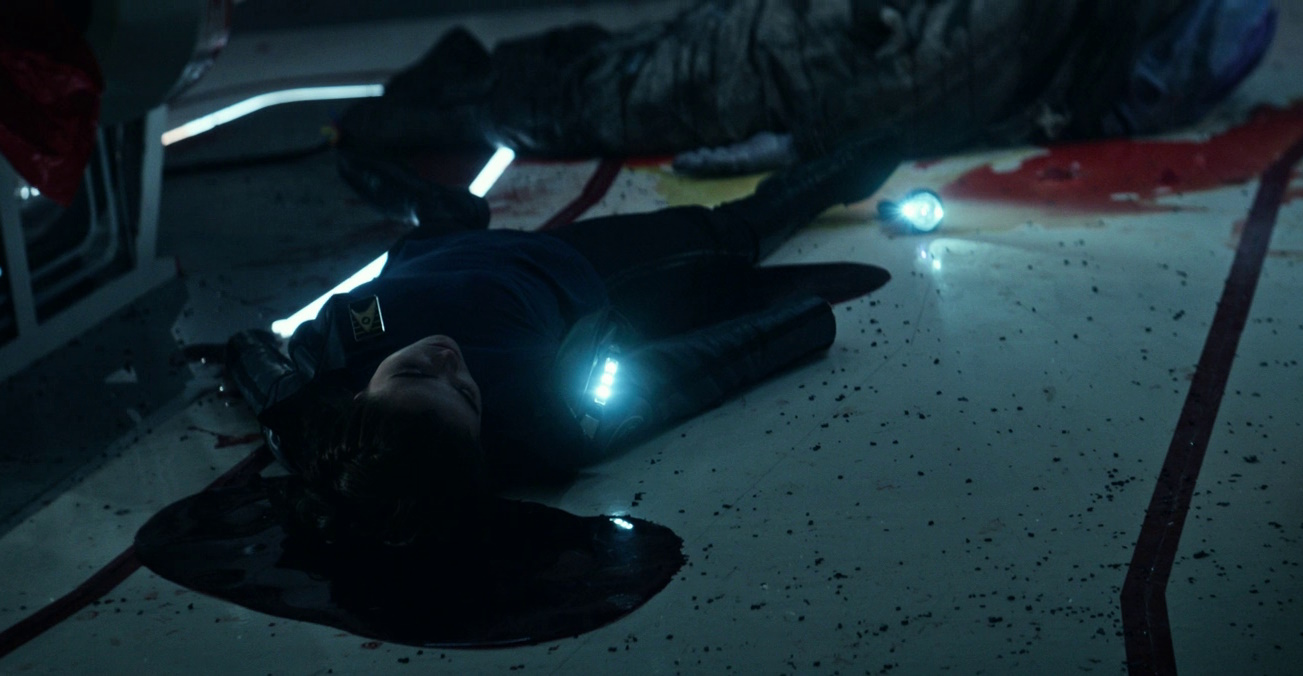
There was one particularly poor use of CGI in Lost in Translation, and I think it’s worth looking at briefly. The scene where the doomed redshirt Lieutenant Ramon is blasted out into space had some great animation work for the USS Enterprise and the nebula that the ship was in – and visual effects across the rest of the episode were pretty good. But Ramon’s death was poor, and the “freezing” effect used as his body was floating in space was a long way wide of the mark.

It’s a lot harder to accurately animate a person – and facial features in particular – than it is to do things like spaceships, planets, and inanimate objects, and unfortunately that’s what we saw with Ramon’s death. The CGI model just wasn’t up to scratch, and although other elements of the same animated sequence looked good, the individual at the centre didn’t. Earlier in 2023, I noted the exact same problem with the death of another character in Star Trek: Picard Season 3. This character was also ejected into space, iced over, and died – and the same issues were present. Paramount has done a lot of great work with CGI and animation in modern Star Trek… but there’s still a long way to go to get some of these character models and effects to where they need to be. It didn’t ruin the entire episode – but it was noticeable in that sequence, particularly because the rest of the animation work was so good.
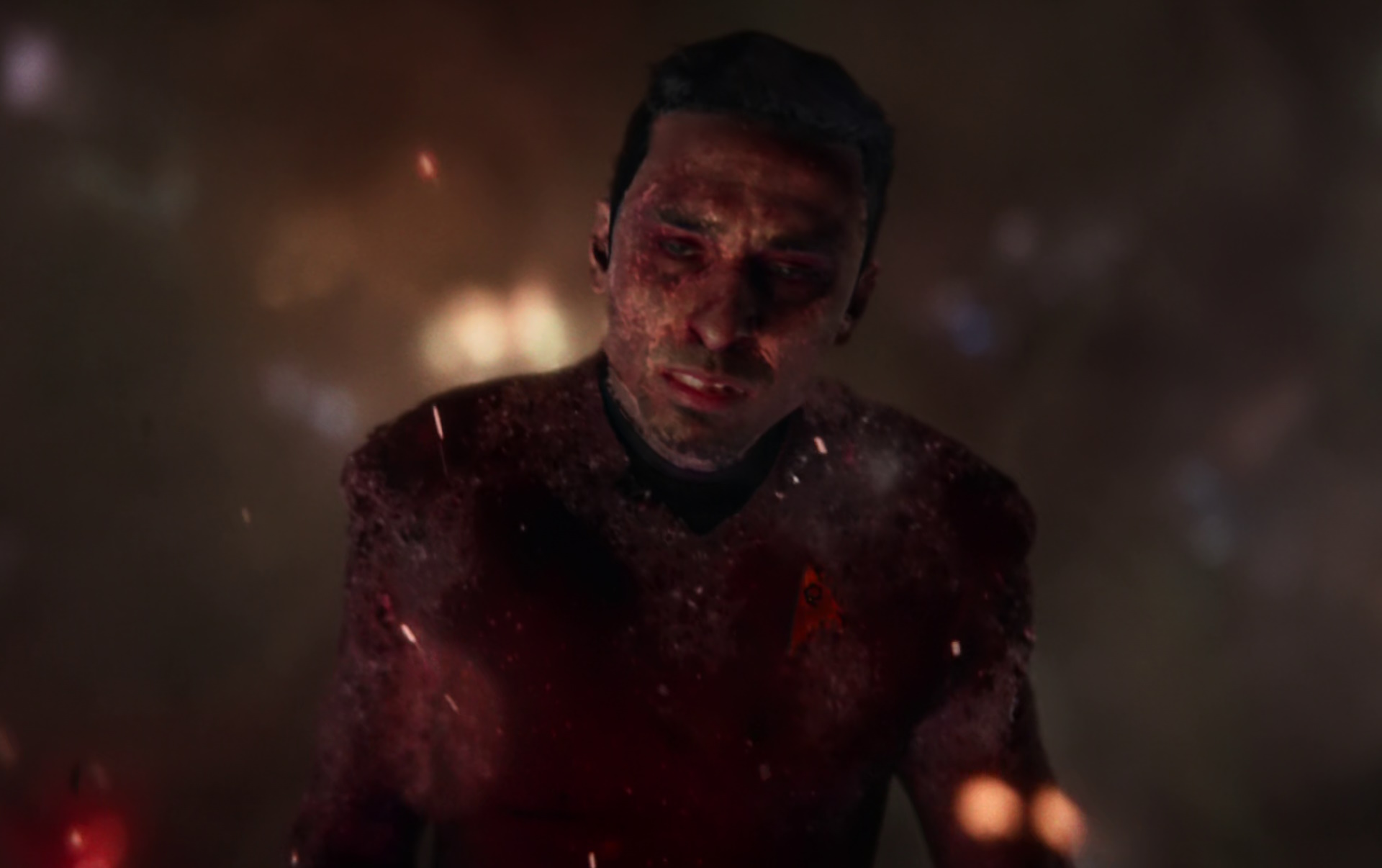
Still frame from Star Trek: Strange New Worlds Season 2 (2023) showing a CGI shot of Ramon.
This CGI moment didn’t look great.

So those are the only parts of Lost in Translation that I can say I didn’t really like or that didn’t work for me. Next, I’d like to talk in a broader sense about a character who returned in this episode – and their death in Season 1.

The episode All Those Who Wander is one of my favourite Star Trek stories of the last few years – probably of all-time. It’s an episode that shows how Star Trek isn’t always going to be the kind of nerdy sci-fi franchise that people think, and how it can dip its toes in genres like horror. It’s a gruesome, shocking story – and one that comes with a final, brutal twist right at the end.

All Those Who Wander wouldn’t have been so impactful if Hemmer had survived – and I fully appreciate that. One of the things his death showed is that most of Strange New Worlds’ characters don’t have “plot armour” and therefore can’t be considered as safe as main characters in previous shows. That’s great in some ways – it’s modern, it can ramp up the tension and drama at key moments, and it represents a franchise that’s still growing and evolving even after more than half a century in production.
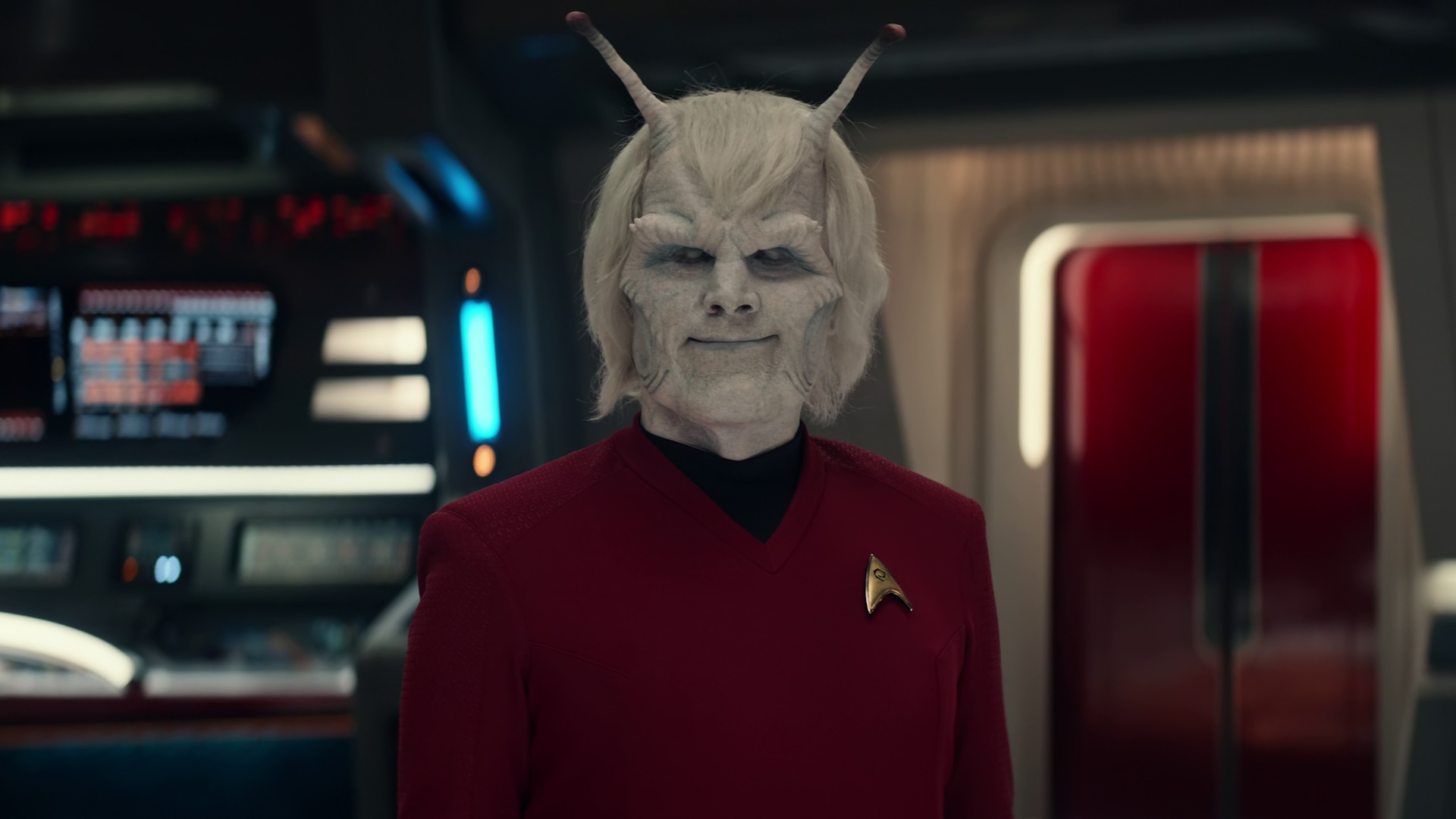
Still frame from Star Trek: Strange New Worlds Season 2 (2023) showing Hemmer.
An illusory Hemmer at the end of Lost in Translation.

But – and you knew there had to be a “but” coming after all of that – Hemmer was a great loss for Strange New Worlds. Killing off such an interesting character so soon, and after he’d only really had a chance to make an impact in a couple of episodes was an odd decision, and I can’t help but see parts of Lost in Translation as a reaction to Hemmer’s death. Perhaps the decision to bring him back in this way is even a bit of an admission on the part of the writers that they miss this character and regret not being able to do more with him.

Pelia is great. She adds a comedic flair to Strange New Worlds that the series needs, and she has a way of making even tense and dangerous moments feel lighter. Many stories have already benefitted from her inclusion – and I have no doubt that others will in the future, too. But that doesn’t mean Hemmer’s early demise feels any better. And it’s impossible to talk about Lost in Translation without going back to Season 1 and thinking about what might have been if Hemmer had stuck around. As a blind character, as a member of a race that Star Trek hasn’t explored in depth since Enterprise, and as a pacifist working on a ship that might be called into action… there was a lot of potential in Hemmer that we never got to see realised.
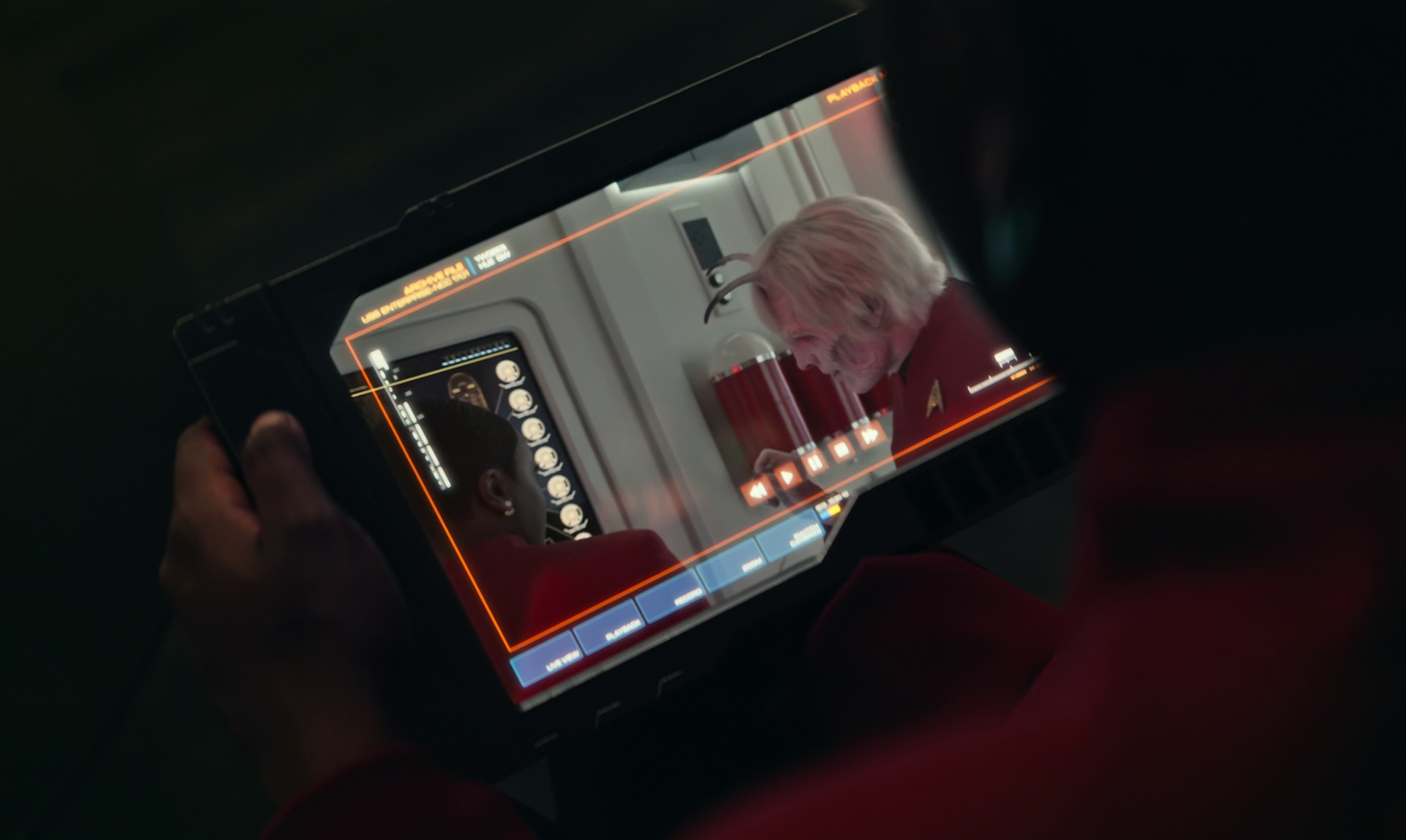
Still frame from Star Trek: Strange New Worlds Season 2 (2023) showing Uhura watching a recording.
Uhura watches a recording of Hemmer on a padd.

I was entirely unprepared for the zombie Hemmer jump-scare just before the credits – and I about pissed myself when his mangled, decaying corpse showed up, growling at poor Uhura. That was an incredibly well-executed moment, and it left me on edge for much of the rest of the story, especially when Uhura was hallucinating and the camera panned around. I kept expecting another jump-scare at that level!

We talked a moment ago about a CGI effect that missed the mark – but the makeup and prosthetics used to create Hemmer’s hallucinatory form were absolutely pitch-perfect. I genuinely cannot fault the way Hemmer appeared in those moments, and the changes from how he looked when alive to the bloodied, decaying, zombified form that appeared to Uhura must’ve taken a lot of time both at the planning stage and in the makeup chair.
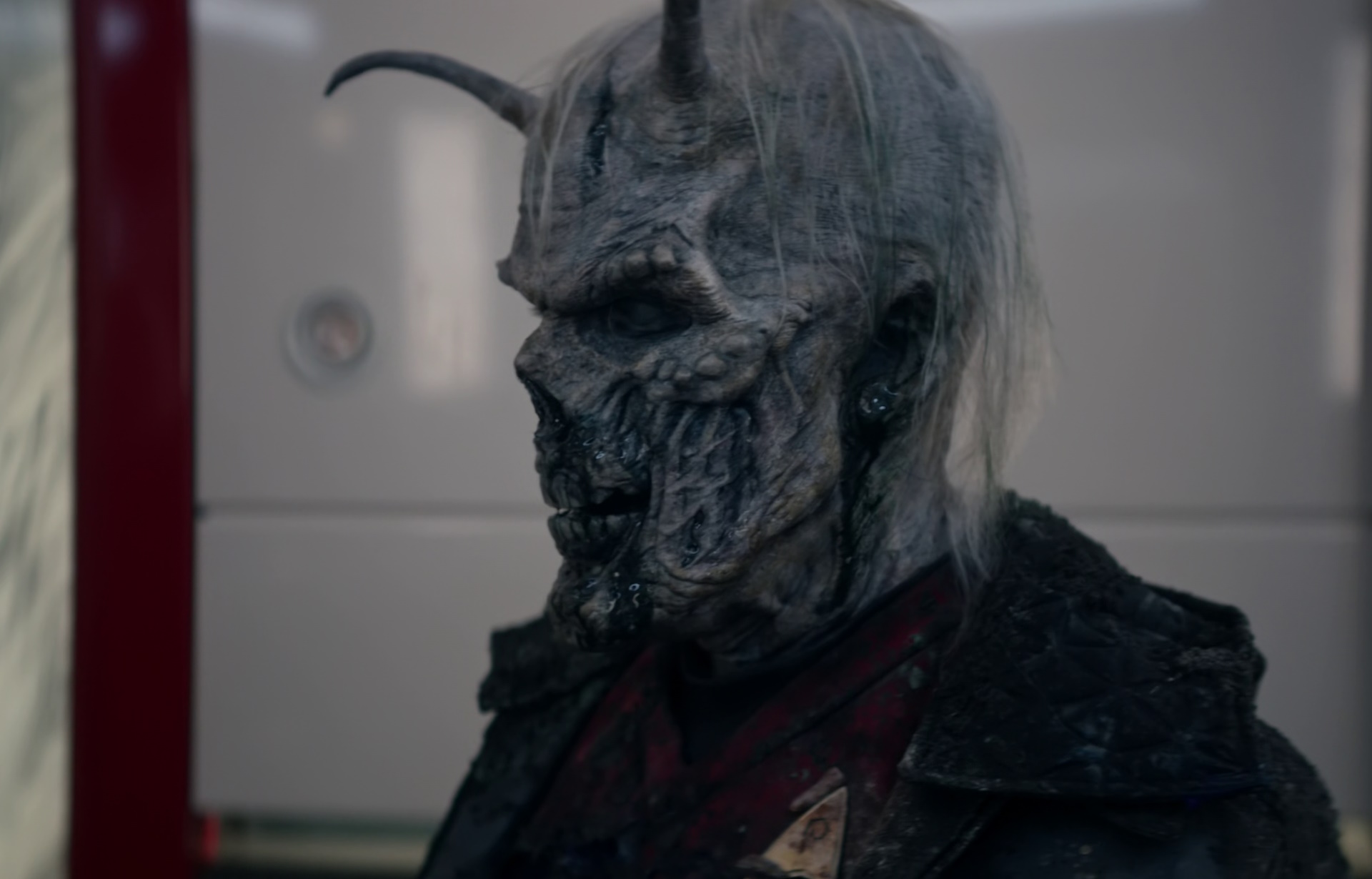
Still frame from Star Trek: Strange New Worlds Season 2 (2023) showing a zombified Hemmer.
I very nearly needed to change my pants after this jump-scare.

It makes a lot of sense to use a character like Hemmer to tell a story about grief and loss – and I would argue that Strange New Worlds managed to do a far better job on this front than the likes of Picard or Discovery when those shows attempted to look at comparable themes. The reason for this is Hemmer: we as the audience had known this character, seen him interact with the crew across several Season 1 episodes, and were mentally prepared for him to continue on as part of the show. His death was shocking and untimely – so we can absolutely see how his death would have had a major impact on characters like Una and Uhura.

Hemmer and Uhura struck up a friendship in Season 1, and he played a role in helping her choose to remain in Starfleet when she was having doubts. This friendship was expanded upon in Lost in Translation, as we got to see them working together through the recording that Uhura carried with her. This also helped build up the sense of grief and mourning that was key to this side of the story. It was well-written, beautifully performed, and is a storyline that I think should be relatable to anyone who’s been through the loss of a close friend or family member. We often talk about Starfleet and crews on Star Trek as akin to families; this is another side of that analogy.
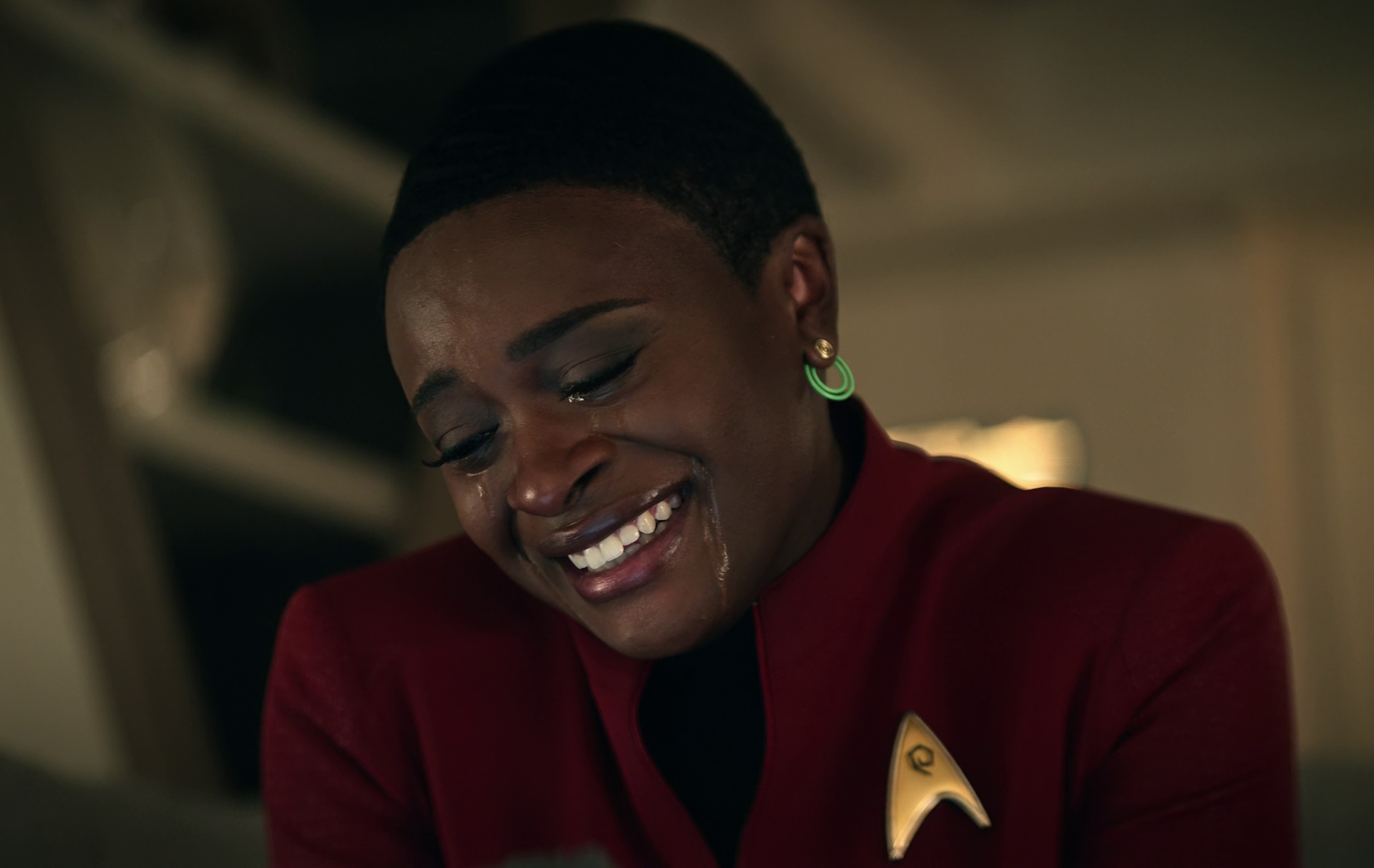
Still frame from Star Trek: Strange New Worlds Season 2 (2023) showing Uhura crying.
Lost in Translation was, in part, a story about grief and loss.

Uhura and Hemmer had that closeness in Season 1, but I’m struggling to remember a comparable moment between he and Una. Despite my criticism of the rather short and abrupt nature of her conflict with Pelia, I think the underlying theme of coming to terms with loss and having to see someone new as a “replacement” for a fallen friend or comrade was an interesting one. Again, it’s something that should be relatable to a lot of folks in the audience – I just fear in this case that the way this particular conflict was handled may have got in the way of the message.

Hopefully Una and Pelia have come to an understanding, at least, and future episodes might be able to build on this relationship, taking them from adversarial to something closer to friendship. If future stories are plotted out that way, we might be able to look back somewhat more kindly on their conflict in Lost in Translation.
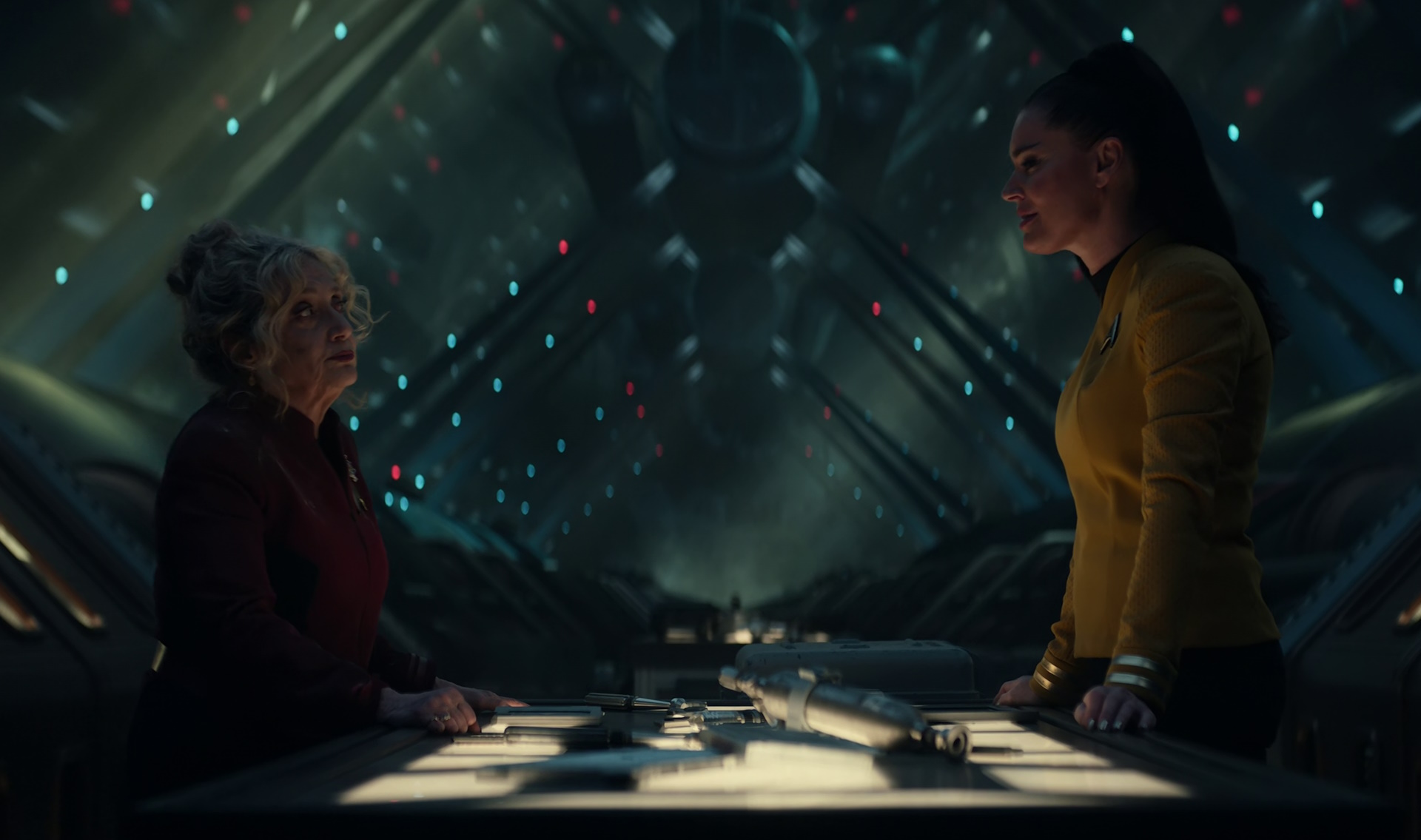
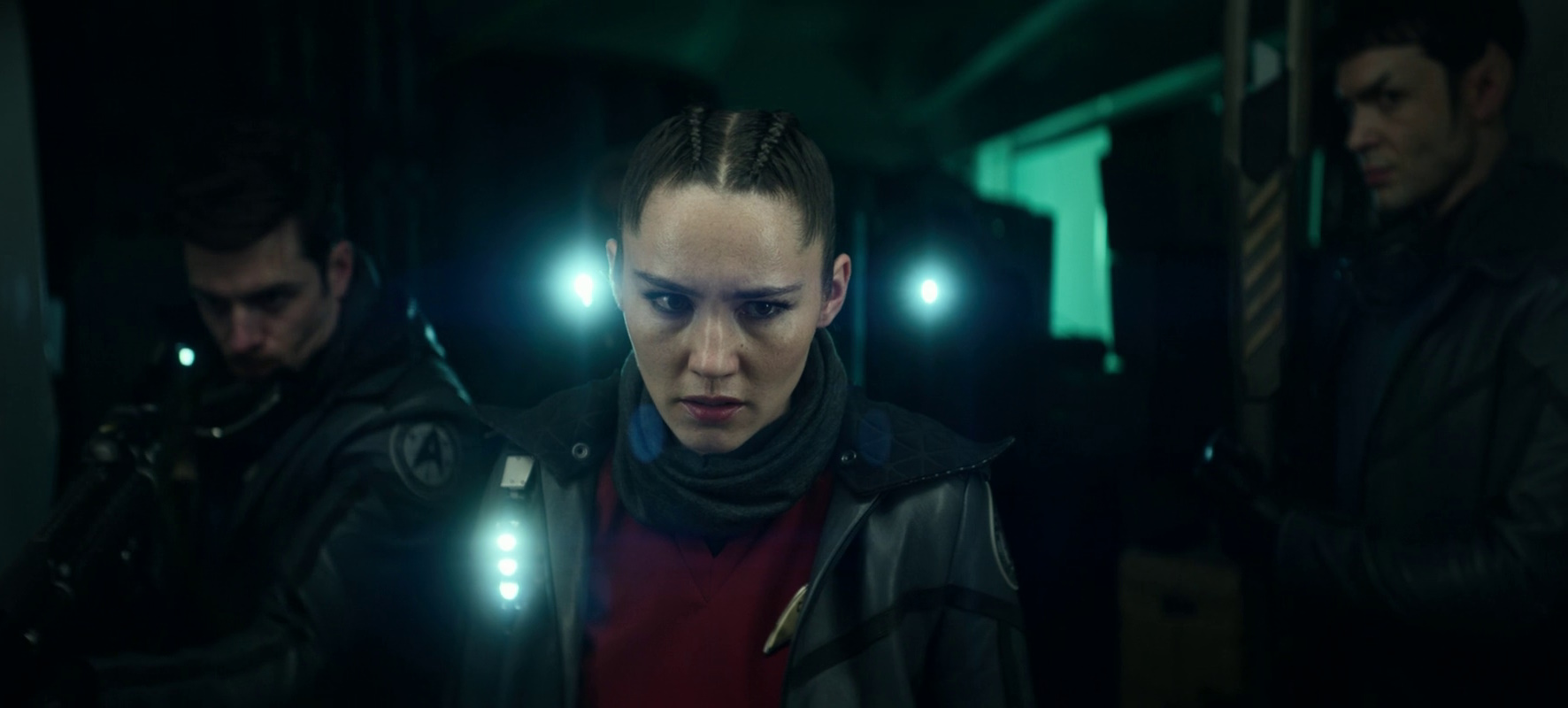
Still frame from Star Trek: Strange New Worlds Season 2 (2023) showing Pelia and Una arguing.
Pelia and Una aboard the refinery station.

I’ve lost count of the number of times Star Trek has used the “it was only trying to communicate!” storyline! Some of these have worked better than others, to be blunt – and it isn’t unfair to call it a trope of the franchise. Season 1’s Children of the Comet wasn’t a million miles away from that premise – and also featured Uhura in a big way. Lost in Translation is a very dark interpretation of this narrative idea, though, and I think it worked quite well.

Maybe this is a reach (actually, it’s definitely a reach) but I felt that there were at least some superficial similarities to Voyager’s Season 6 episode The Haunting of Deck Twelve. That story was different in tone – with its frame narrative and “ghost stories around the campfire” style – but it also featured nebula-dwelling lifeforms caught in a starship, desperate to survive and get home. I doubt it was intentional, but it’s interesting, at any rate!
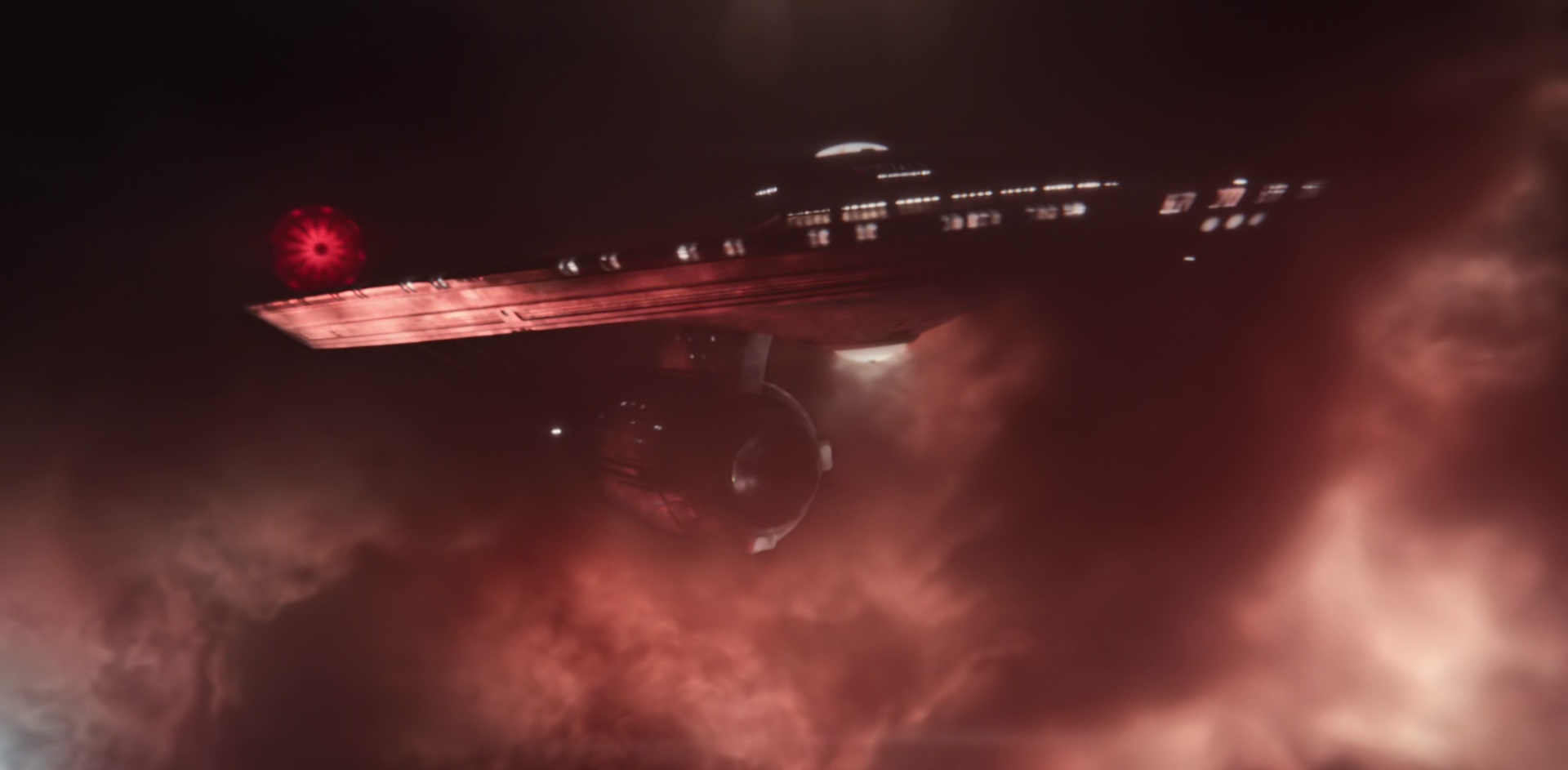
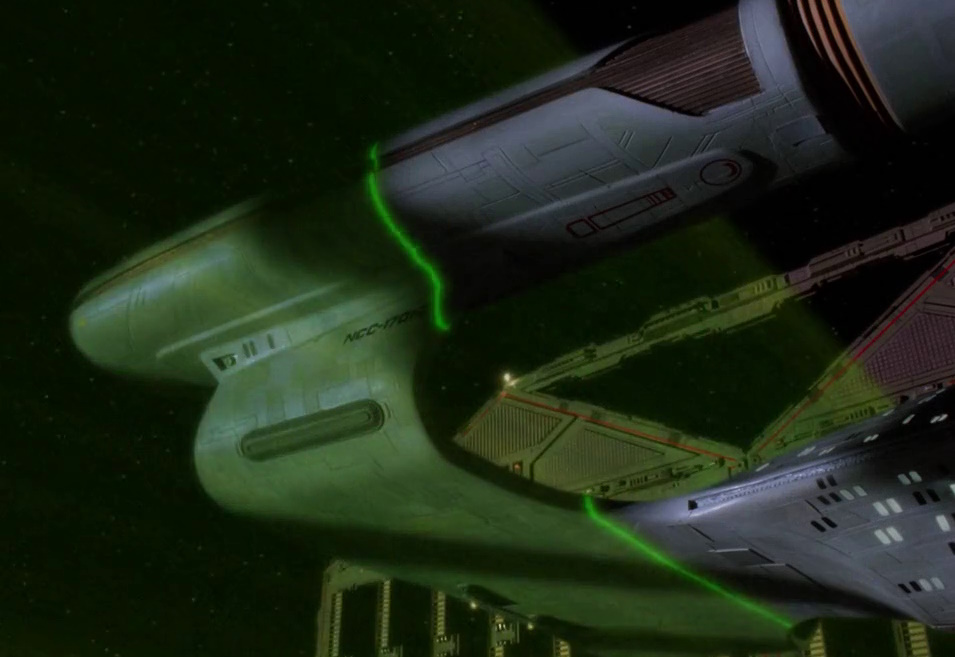
Still frame from Star Trek: Strange New Worlds Season 2 (2023) showing a CGI shot of the USS Enterprise in a nebula.
The life-forms made their home in this nebula.

We’re used to seeing aliens in Star Trek that are very humanoid. Recent and not-so-recent stories have even tried to provide an in-universe explanation for the abundance of humanoid alien races… with limited success, in my opinion! But episodes like Lost in Translation remind us that the galaxy is also home to alien races that are so very different from humanity that it can be hard to even conceptualise – let alone find a way to communicate. These stories have always been interesting to me – and while Strange New Worlds gave us a more action-heavy, even horror take on that idea, I thought it worked exceptionally well.

There was plenty of room for science and for problem-solving as Uhura, Kirk, Pelia, and others all struggled to understand what was happening. Maybe it’s because I’m a seasoned Trekkie, but I felt maybe some of the characters – Spock in particular, perhaps, but also Pike and Pelia – should have suspected that something alien was going on when both Uhura and Ramon fell ill while the station was experiencing sabotage… but I can’t really hold that against the episode. I have to remind myself, sometimes, that Strange New Worlds is set before most of the rest of Star Trek – so the characters wouldn’t necessarily know what to look for and wouldn’t have the experience of those other stories to draw upon.
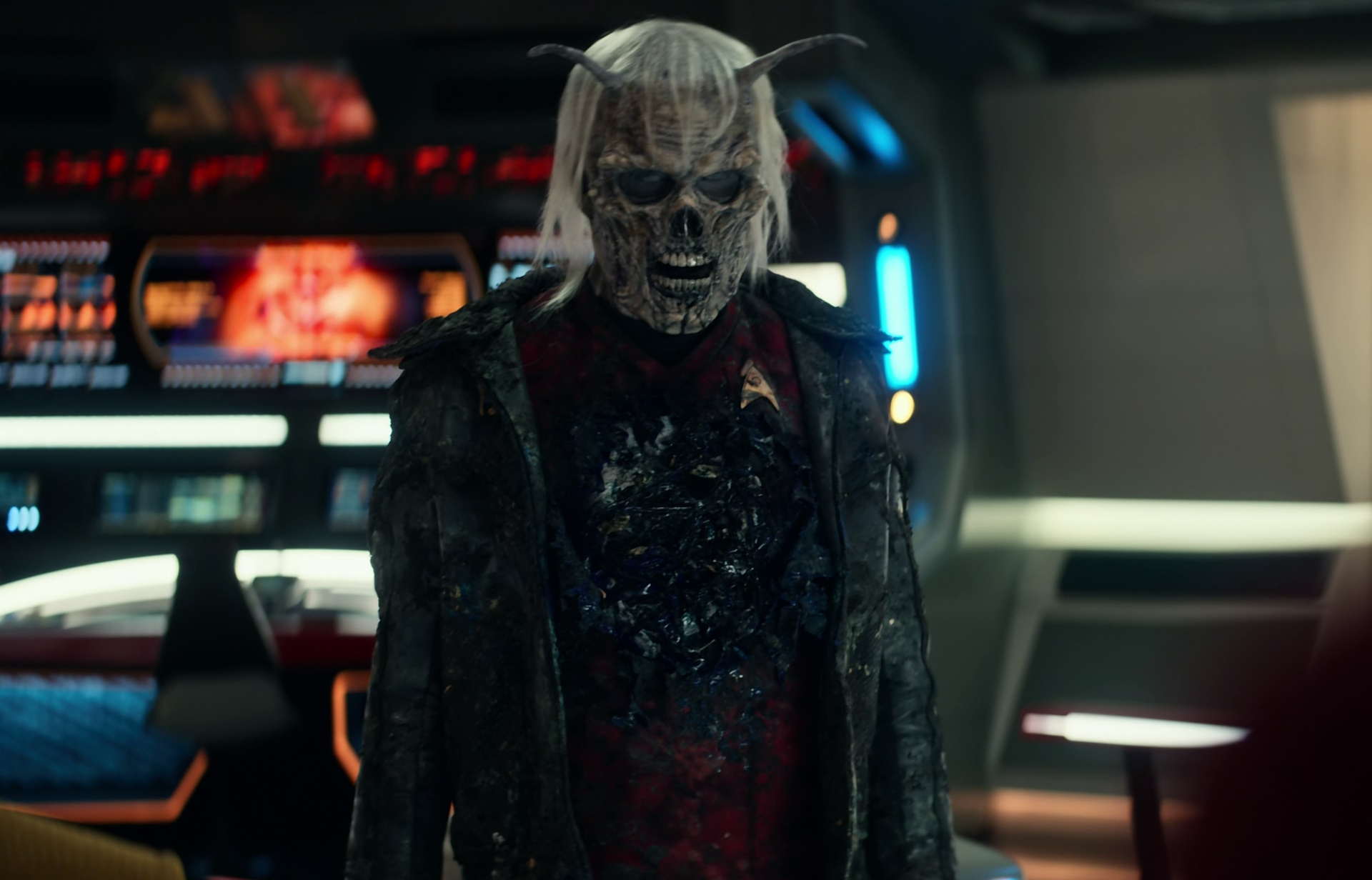
Still frame from Star Trek: Strange New Worlds Season 2 (2023) showing zombie Hemmer.
The aliens were able to communicate through illusions and hallucinations.

Pairing up Uhura with Kirk was great – and seeing how they got to meet for the first time in the prime timeline was great fun. There’s a lot of history with these two characters that Strange New Worlds had to respect – and I think the writers did them justice on this occasion. I also like the idea that it was Uhura who made the introduction between Kirk and Spock – that feels fitting, somehow.

At first I thought we were going to learn that Kirk was another of Uhura’s hallucinations! That seemed to be a possible route for the story to have taken. I’m glad it didn’t turn out that way, though, especially as the episode wore on and we got to see some genuinely sweet moments between them. Kirk is a flirt and a womaniser – something we know from his appearances across The Original Series, the Kelvin films, and beyond. But I felt the way this was handled in Lost in Translation – with Uhura shutting him down pretty quickly – was both a little bit funny and true to both of their characters. Any inclusion of characters from The Original Series has to be handled carefully, and pairing up Uhura and Kirk for basically an entire story could have gone awry. I’m glad that it didn’t.
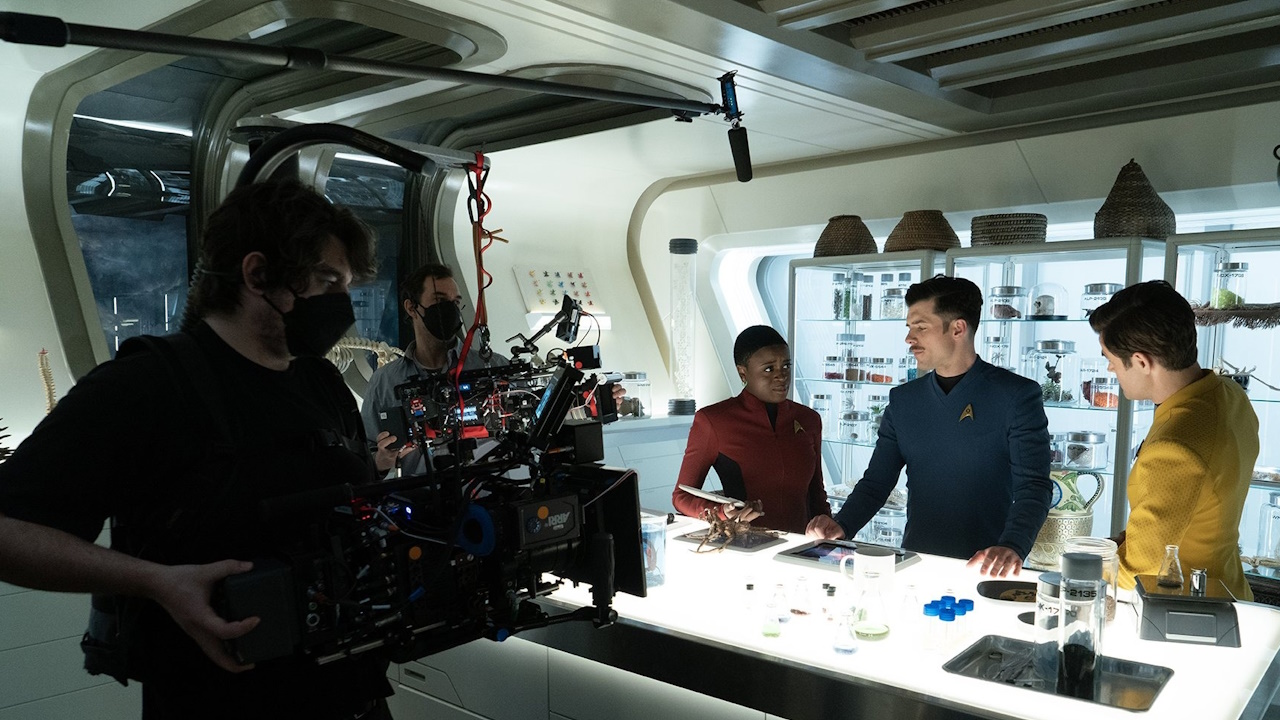
Behind-the-scenes photo from the Star Trek: Strange New Worlds episode Lost In Translation (2023) showing a camera rig and three characters.
Celia Rose Gooding, Dan Jeannotte, and Paul Wesley during production on the episode.

We spoke earlier about character conflicts that hadn’t been set up particularly well. Lost in Translation also offers at least one counter-point to that: the developing relationship between La’an and Kirk. After the events of Tomorrow and Tomorrow and Tomorrow earlier in Season 2 left La’an pretty devastated, she’s clearly still struggling with the memories she has of alternate-timeline Kirk. Running into him was difficult for her, and while that part of the episode was only in focus briefly, I think it worked well. As a storyline that is (hopefully) going to be picked up in a future story, these small steps can be important. We’ve followed La’an and Kirk in two episodes now – maybe by their third or fourth meeting, something more will come of it.

In terms of sets, I liked the new nacelle control room that we saw Uhura, Pelia, and Ramon using. It even had the angled ladder that Scotty would famously crawl into in The Original Series any time the Enterprise needed repairs! There may not be a ton of uses for a nacelle room, but being able to put that set together sometimes for engineering scenes is a neat idea.
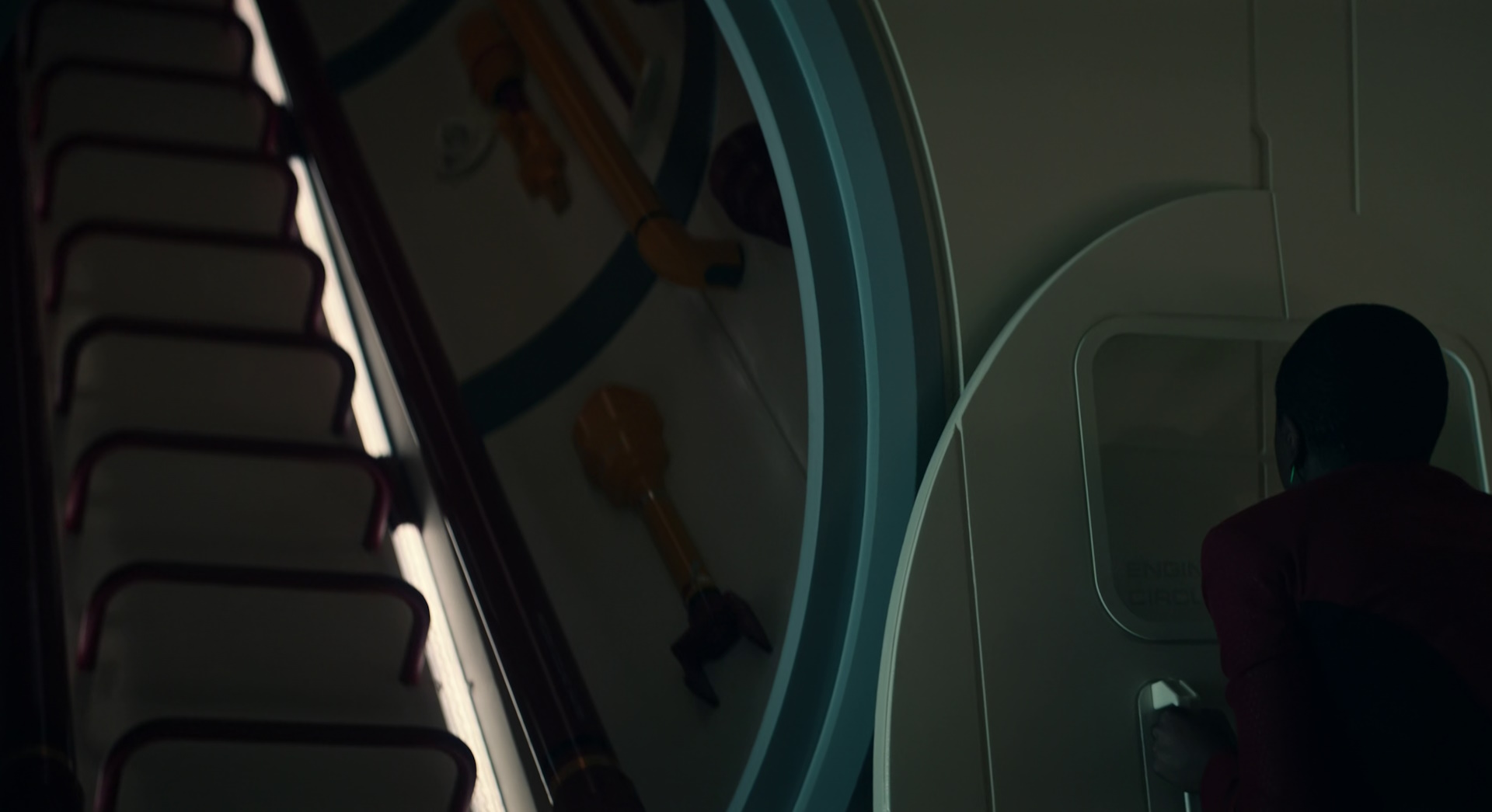
Still frame from Star Trek: Strange New Worlds Season 2 (2023) showing Uhura opening a hatch.
Did this ladder feel familiar to you?

The refinery/space station set didn’t feel all that special, but thanks to some creative use of the AR wall and animated wide-angle shots, we got at least some of the sense of scale that the place needed. It also had a pretty industrial feel – not unlike modern-day oil rigs or refineries, which I suppose will have been the inspiration.

Uhura’s hallucinatory shuttle crash was also really well done, with transitions between the indoor sets and outdoor filming locations feeling particularly creative. The wreck of the shuttle looked great, and although we only saw parts of the interior in an out-of-focus shot, that choice was clever, too.
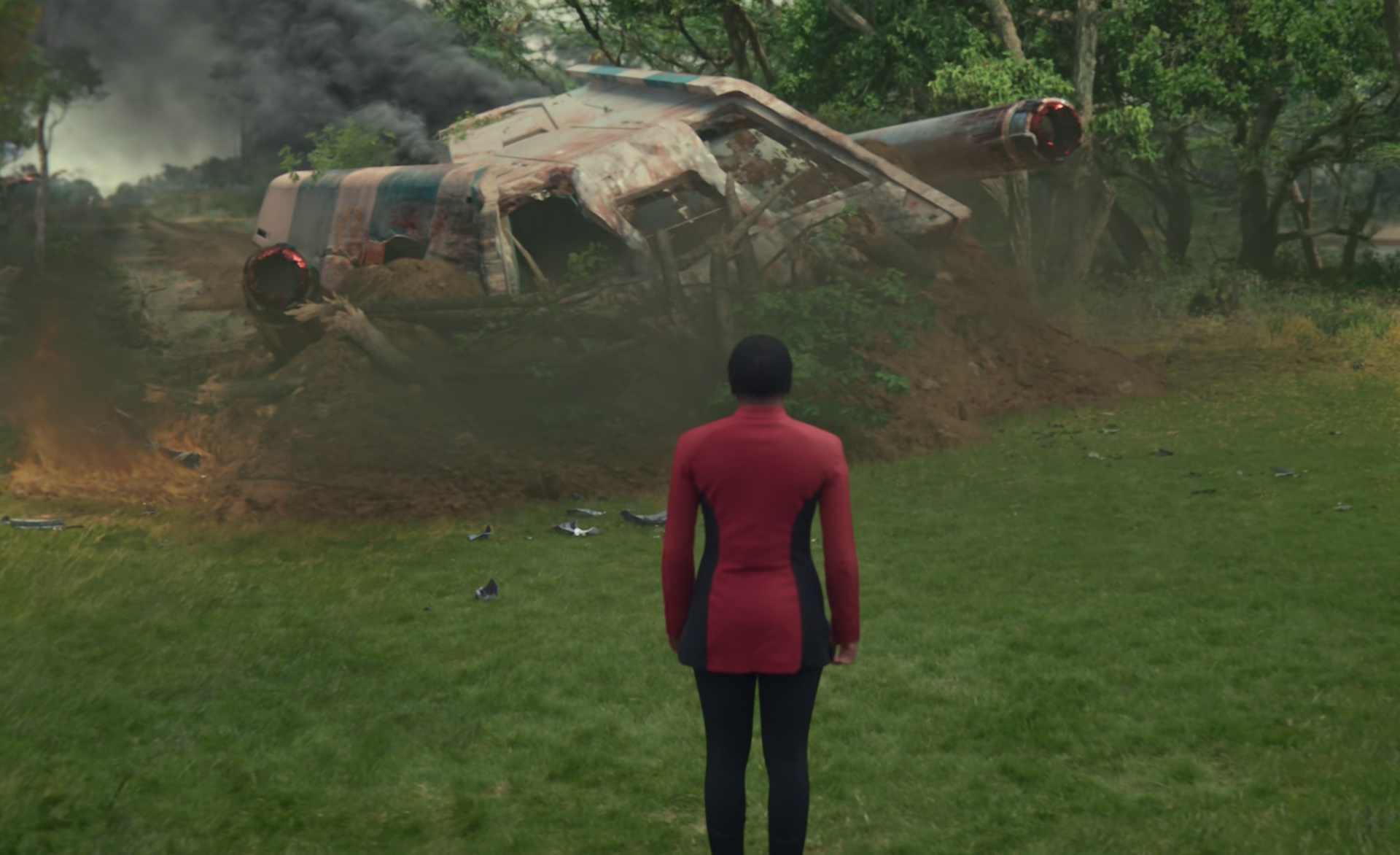
Still frame from Star Trek: Strange New Worlds Season 2 (2023) showing Uhura by a crashed shuttle.
Uhura with the wrecked shuttle.

Speaking of creative cinematography, the scene in the corridor as Uhura felt the walls closing in around her, then stretching away, looked fantastic – and I think I’m right in saying that most of that was camera work rather than post-production special effects. It was creative, at any rate, and it really hammered home the panic and fear that Uhura felt at that moment.

So I think that’s all I have to say this time.

Lost in Translation was a good episode, and one that put a different spin on a familiar premise. We got to see Kirk’s first meetings with both Uhura and Spock, which was fantastic, but at the episode’s heart was some creative storytelling that touched on themes of grief and the loss of a friend. After Hemmer’s demise in Season 1, I’m glad that Strange New Worlds hasn’t just forgotten about him and moved on, and remembering him through the way he helped his friends and the impact he made on his crew was touching.
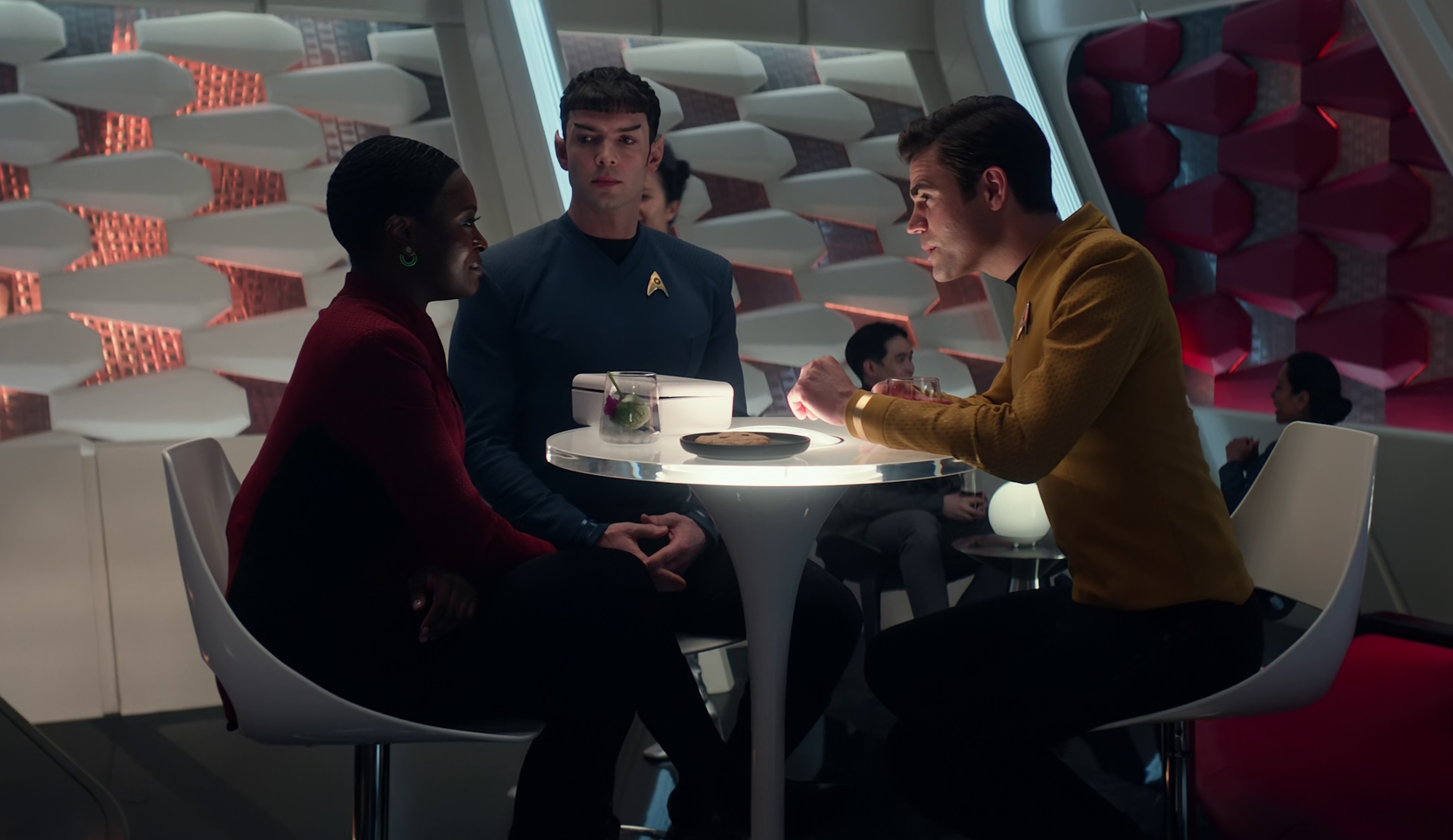
Still frame from Star Trek: Strange New Worlds Season 2 (2023) showing Uhura, Spock, and Kirk at a table.
A famous first meeting!

Not everything in Lost in Translation worked as well as it could’ve, and perhaps trying to cram in two character conflicts like this was a bit too much for the episode’s runtime. Hopefully, now that the Una-Pelia conflict has been resolved, we can see a bit more from those two in a future episode, building on the foundations that were laid this time. As for the Kirk brothers… I think we need to see a little more from them if the series wants to do this whole “sibling rivalry” argument justice!

After a break of more than a year, Lost in Translation has been a nice way to return to Strange New Worlds! Not every episode of Star Trek can be a great one, but I’m glad that I didn’t end up coming back to the series with a dud! That might’ve been offputting as I aim to review the remainder of the season. Thankfully it didn’t happen this time – and I hope you’ll stay tuned for reviews of the remaining four episodes in the days, weeks, and possibly months ahead!


Star Trek: Strange New Worlds Seasons 1 and 2 are available to stream now on Paramount+ in countries and territories where the platform is available. The series is also available on DVD and Blu-ray. The Star Trek franchise – including Strange New Worlds and all other properties discussed above – is the copyright of Paramount Global. This review contains the thoughts and opinions of one person only and is not intended to cause any offence.
Five Spooky Star Trek Episodes for Halloween

Spoiler Warning: Spoilers are present for each of the episodes on the list below.

Happy Halloween!

To celebrate the spookiest day of the year, I thought it could be a bit of fun to choose five Star Trek episodes that have a “horror” theme or vibe. The Star Trek franchise has dabbled in many genres across its fifty-seven-year history, and there are a handful of episodes that definitely have horror overtones. Though the Star Trek franchise is never quite on par with a dedicated horror film or TV show, there are still some decidedly creepy, spooky, or downright frightening stories – as well as scenes and sequences across many more episodes.

This time, I’ve pulled out five episodes that I think could make for entertaining Halloween viewing! The episodes come from five different shows across Star Trek’s history, and while they’re all very different, the overall trend here is one of horror. So if (like me) you’re a bit of a scaredy-cat… maybe you shouldn’t watch them!

Are you ready to cower in fear?

As always, a couple of caveats. This list is just for fun, and I share it in a light-hearted manner. I’m not saying that these episodes are somehow “objectively” the best horror-themed stories in the history of Star Trek – nor even that all of them are among the best that the franchise has to offer. This is all just the opinion of one Star Trek fan, shared in the spirit of Halloween.

I don’t have any other major rules or criteria for this list – other than the episodes had to be horror-themed, spooky, or frightening! I wouldn’t say any of them are the scariest things I’ve ever seen; this is still Star Trek, after all! But echoes of the horror genre are present throughout.

With all of that out of the way, let’s jump into the list!

Episode #1:
Empok Nor
Deep Space Nine Season 5

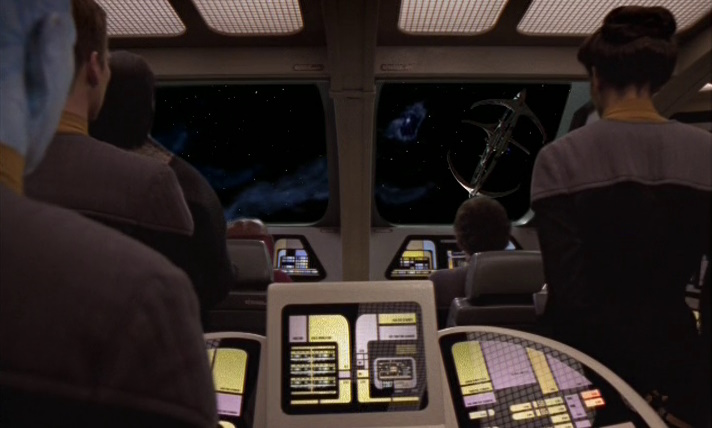
Approaching Empok Nor in a Runabout.

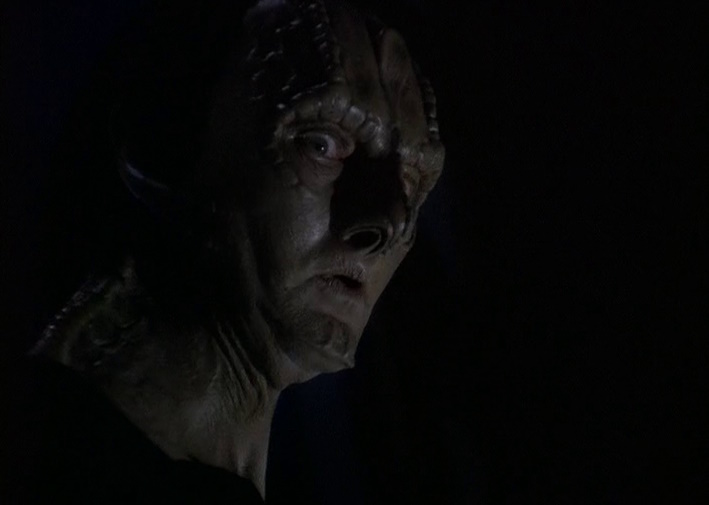
I adore DS9′s fifth season. It has so many incredibly strong episodes, and Empok Nor is definitely one of them. There’s a genuine fear factor to the presentation of Garak – a character who has already been established, by this point in the series’ run, as being mysterious and even dangerous. Seeing him go “rogue,” and using some of his skills from his time in the Obsidian Order against our Starfleet heroes is truly disturbing.

The interplay between Garak and O’Brien, conducted largely by communicator once the episode gets going, is also fantastic! It reminds me in more ways than one of the film Die Hard, but with a decidedly darker edge. The board game analogy that Garak repeatedly brings up also adds to the unsettling presentation of his character, showcasing his descent into “madness.”

Garak.

For a Star Trek episode, Empok Nor is also surprisingly violent, with the deaths of several redshirts (or the aftermaths, at least) being shown in graphic detail. There wasn’t much blood or viscera shown – this was pre-watershed television in the ’90s, after all – but when compared with what other Star Trek stories were doing around the same time, the death and mutilation shown in Empok Nor is positively graphic!

The episode manages to ramp up the tension and fear as it progresses, and uses the familiar Deep Space Nine sets and stages in a unique way. Changes in lighting coupled with a distinct lack of DS9′s regular background characters populating the station creates a truly creepy backdrop that heightens the episode’s frightening elements. It has wonderful performances from Andrew Robinson, Colm Meaney, and the late great Aron Eisenberg in particular. All in all, an outstanding start to our list!

Episode #2:
Terminal Provocations
Lower Decks Season 1

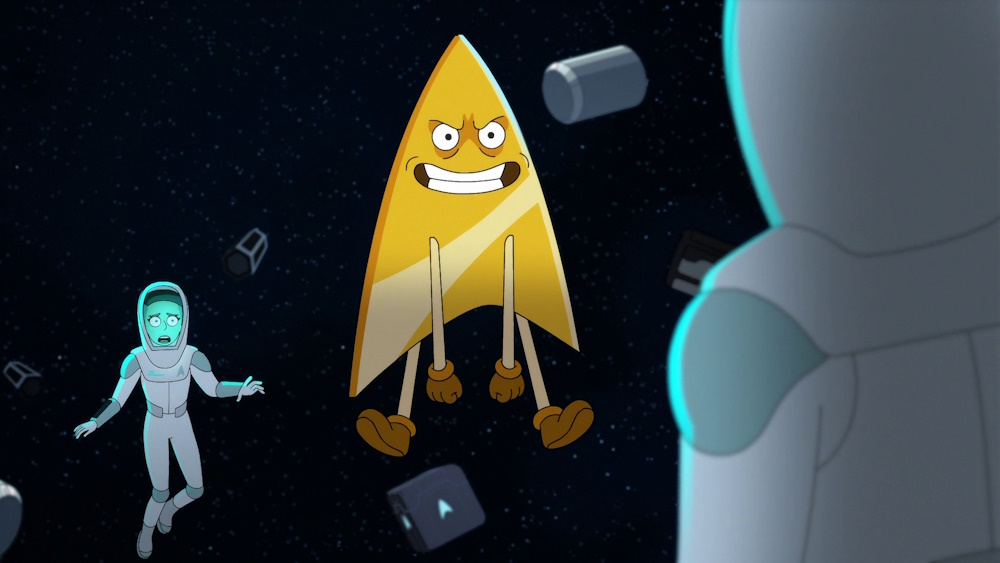
Creating an AI? What could possibly go wrong?

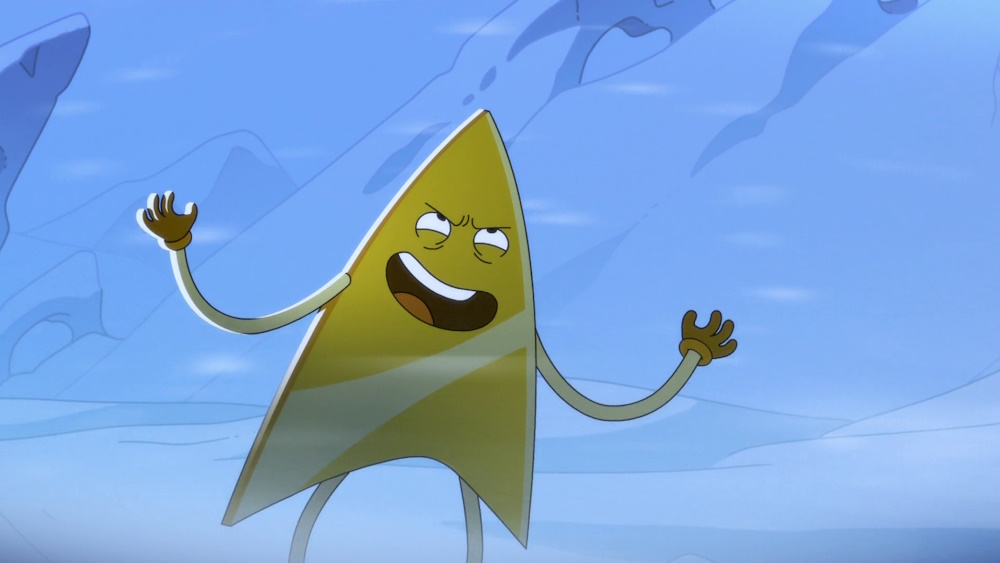
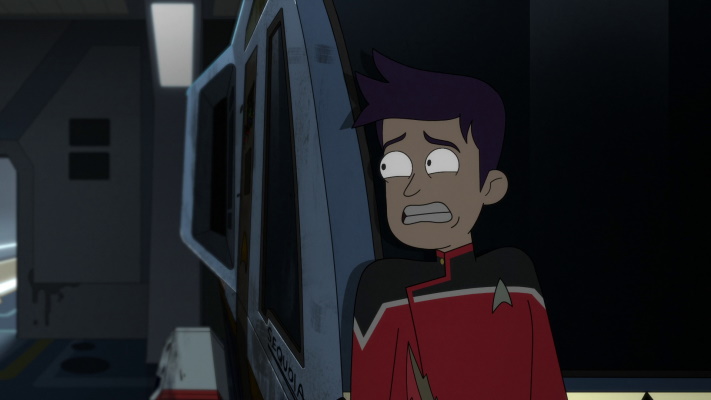
This episode, from Lower Decks’ first season, is on the list for one reason: Badgey! Badgey is a truly disturbing villain, and a reflection of contemporary fears of artificial intelligence gone wrong. An unsettling combination of Microsoft Office’s “Clippy” and renegade AI villains like the Terminator, Badgey really succeeds at unnerving me!

The other side of Terminal Provocations sees Boimler and Mariner team up with a friend of theirs to try to undo a mistake – a mistake that soon evolves into another monster to defeat. This computer-core monster is less frightening than Badgey, but it’s still worth noting that it has a couple of creepy moments of its own.

Here’s Badgey!

“Trapped on the holodeck” is a Star Trek trope going back to the introduction of the setting in The Next Generation, and there have been several episodes that have managed to evoke a sense of danger from that premise. But Terminal Provocations is arguably the first where this concept has been spun out to be something truly frightening, and the first to use the “broken holodeck” idea to lean into a horror story.

As Badgey pursues Rutherford and Tendi across a variety of environments, we get to see the villainous construct in several different – and increasingly dangerous – situations. The tension on this side of the story builds to a surprisingly emotional climax – one that seems to be in the vein of the likes of Frankenstein. Click or tap here to see my review of the episode, written shortly after its original broadcast in 2020.

Episode #3:
Starship Mine
The Next Generation Season 6

The Enterprise-D undergoing a baryon sweep.

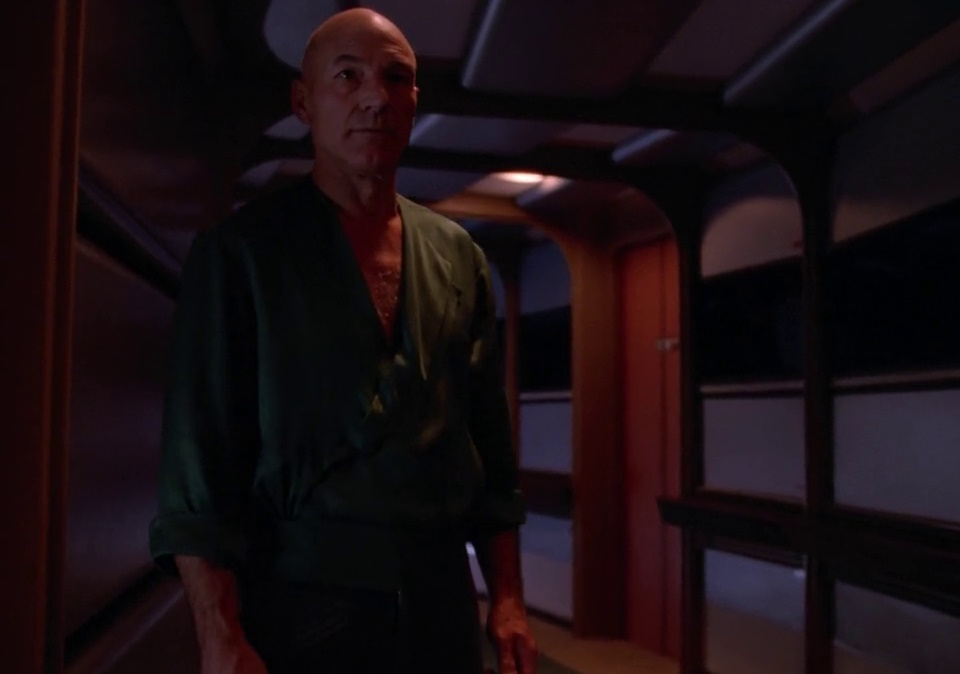
Less out-and-out terrifying than creepy and unsettling, Starship Mine sees Picard trapped aboard a deserted Enterprise-D – while a gang of wannabe terrorists try to steal a dangerous explosive material. As above with Empok Nor, seeing the usually-populated ship abandoned and deluminated is enough to set the stage in a most unnerving way.

The baryon sweep which begins to slowly work its way through the Enterprise-D is a frightening concept, too, and the stakes involved are communicated well. By the time Picard is face-to-face with the deadly phenomenon, we’ve already seen first-hand what it can do to people, and we can see just how deadly it is. Knowing the layout of the Enterprise-D, with Ten-Forward being the forwardmost part of the ship, is a good bit of information to have, too, as it really hammers home that Picard and the villainous Kelsey have literally nowhere left to run.

Picard is trapped aboard the Enterprise-D.

Playing a game of cat-and-mouse with hostile terrorists aboard the Enterprise-D is surprisingly fun, and Starship Mine put Picard at the centre of the action – which is a narrative space he didn’t always get to occupy. Picard is a very different kind of captain than Kirk had been, so to see him in this kind of spy/action hero role is something different, too.

I also felt that Picard’s actions at the climax of the episode show a ruthlessness that we seldom get to see; a dark, cunning, and utterly cold presentation of the character that’s disturbing in its own right. Maybe Starship Mine isn’t the scariest episode in the franchise – but it’s unsettling in its own way.

Episode #4:
All Those Who Wander
Strange New Worlds Season 1

A gory scene…

Across a truly spectacular first season, Strange New Worlds dipped its toes in a variety of different genres. All Those Who Wander is the show’s take on horror – and it absolutely nailed it. All Those Who Wander might be the out-and-out scariest episode on this list – and perhaps even the most overtly frightening that the Star Trek franchise has ever attempted.

The DNA of films like Predator and Alien is present throughout, and All Those Who Wander takes a familiar setting, characters, and even an alien race that we thought we knew and catapults them into a desperate fight for survival against an adversary who feels every inch the predator.

La’an and the away team prepare to do battle.

Setting the story aboard a crashed starship on a desolate, icebound planet was a masterstroke, and the hallways of the USS Peregrine feel incredibly claustrophobic as the away team is quite literally being hunted by an apex predator. The Gorn feel like a perfect fit for this role, too, and both the episode and Strange New Worlds as a whole manage to expand our knowledge of the race without treading on the toes of established canon too much. Gorn eggs being parasitic was a particularly masterful stroke of writing – one that loaded the story of All Those Who Wander for a last-second detonation.

There have to be stakes in horror; as the audience, we need to feel that our characters are genuinely in danger, not safe from all turmoil and threats thanks to heavy plot armour. Part of that means that killing off major, named characters – not just nameless redshirts – has to be on the table. And throughout All Those Who Wander, our heroes genuinely seem to be in danger.

Episode #5:
The Haunting of Deck Twelve
Voyager Season 6

Who’s ready for a ghost story?

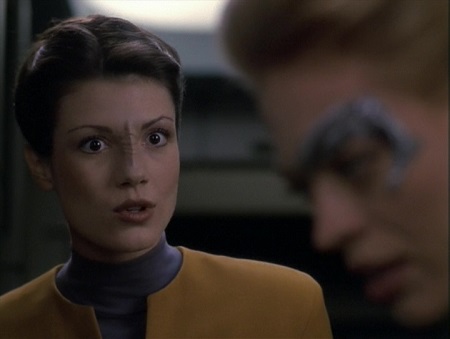
We’ve already talked about this episode here on the website – I covered it in-depth for Halloween a couple of years ago. But it’s such a unique and fun spooky story that I think it’s worth including on a list like this one! Click or tap here, by the way, if you’re interested in a more in-depth look at the episode and its spookiness.

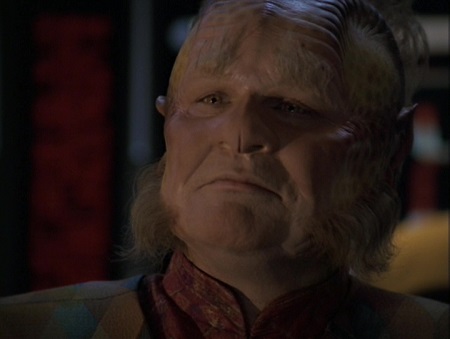
What I love about The Haunting of Deck Twelve is its “ghost stories around the campfire” framework. Neelix, a character so often used as comic relief, makes for such an interesting narrator – and there’s a sense, as the episode progresses, that we can’t entirely rely on his recollection of the events. This just adds to the tension, for me, and makes the frame narrative work so incredibly well.

Neelix investigates…

Halloween is a holiday for the little ones, despite its horror theme and frightening elements. And The Haunting of Deck Twelve brings Voyager’s full complement of Borg kids into the story in a relatable and understandable way. The way the frame narrative and flashbacks come together is great, and the episode is stronger than it would have been without Neelix and the kids to set the stage.

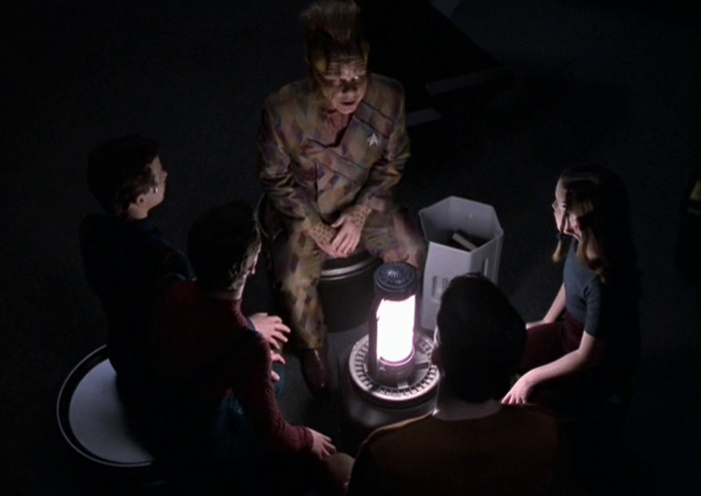
There are several jumpscares in this episode, as the USS Voyager encounters a brand-new form of life and begins to suffer malfunctions. Seen through the eyes of the kids listening to Neelix’s tale, these moments are elevated. At points, it genuinely feels like we’re right there around the “campfire” with Neelix and the Borg children.

So that’s it!

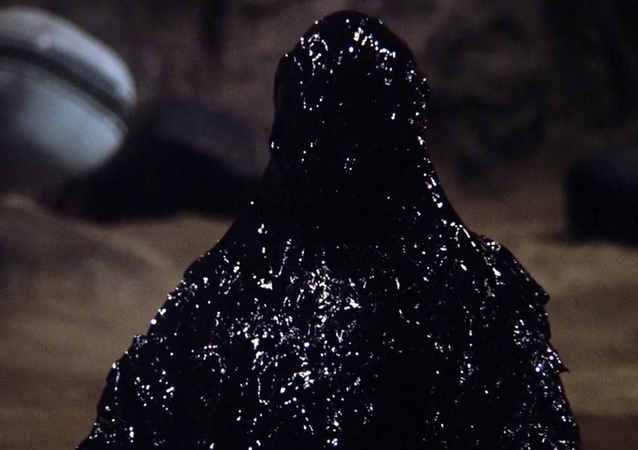
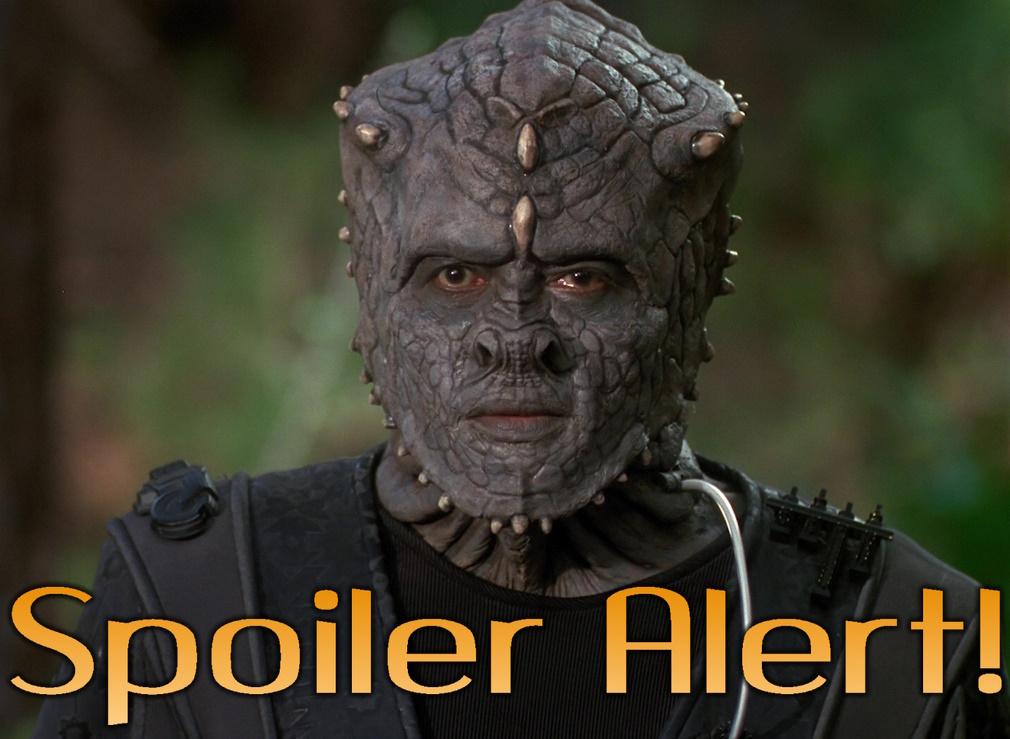
Armus.

I hope this was a bit of fun. There are other examples of the Star Trek franchise trying out a scary or horror-inspired story, but these are five of my personal favourites. All are great episodes in their own right, too!

As I said a few weeks ago, I’ve been feeling kind of burned out on Star Trek. I’m still not sure that I’m in the right frame of mind to jump headfirst back into Star Trek and start writing reviews and such… and maybe that’s the scariest thing you’ll read this Halloween! Just kidding… but franchise fatigue and burnout are issues that the Star Trek franchise is currently dealing with.

Whatever you’re doing this year, whether you’re heading out to a party or preparing a selection of goodies for trick-or-treaters… I hope you have a fantastic Halloween! As for me… well, I’ve got the builders in. So I’ll be dealing with that! Happy Halloween!

Most Star Trek films and TV shows can be streamed on Paramount+ in countries and territories where the service is available, and can also be purchased on DVD and/or Blu-ray. The Star Trek franchise – including all TV series and episodes listed above – is the copyright of Paramount Global. This article contains the thoughts and opinions of one person only and is not intended to cause any offence.
Star Trek: Voyager re-watch – The Haunting of Deck Twelve

Spoiler Warning: There are spoilers ahead for Star Trek: Voyager, Star Trek: Picard, and for other iterations of the Star Trek franchise.

Happy Halloween! With the scariest day of the year upon us, I thought it could be fun to delve into Star Trek’s spooky side for a change! The Haunting of Deck Twelve was the penultimate episode of Voyager’s sixth season, and premiered in the United States on the 17th of May 2000. It’s framed as a campfire ghost story, with Neelix recounting the supposedly-true story of spooky goings-on aboard the ship to the Borg children: Icheb, Mezoti, Azan, and Rebi. Naomi Wildman, the USS Voyager’s other child, is conspicuously absent.

When it was announced earlier this month that Kate Mulgrew will reprise her role as Captain Janeway in the upcoming animated series Star Trek: Prodigy, I wanted to write up a Voyager episode here on the website. Despite being up and running for almost a year now I haven’t done so, though I did pick out ten great episodes from the series. Voyager is, to many fans, a less-favoured series than The Next Generation or Deep Space Nine, and can sometimes feel like an also-ran among Star Trek’s canon. However, I definitely feel that the show got a lot of things right, had some excellent characters, and told some unique and interesting stories. Many of Voyager’s alien races were different from what we’d seen before (due to the Delta Quadrant setting) and have yet to be revisited in any detail.

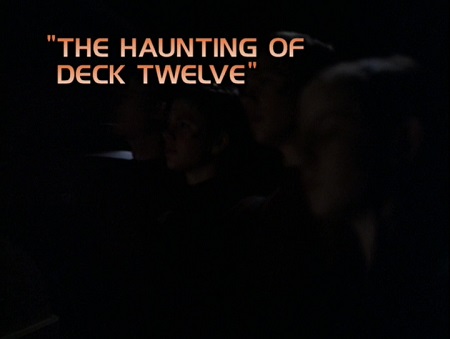
The episode’s title card.

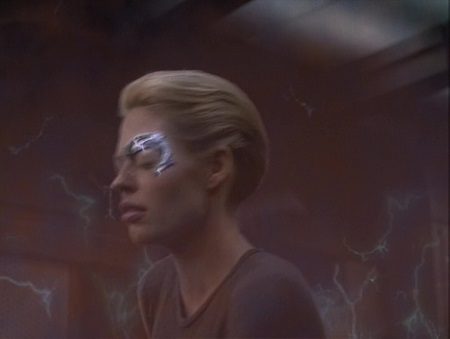
Voyager is certainly a series I enjoy. I find ranking the different Star Trek shows very difficult, because each one really brings something different to the table. Voyager is comparable in many ways to The Original Series and The Next Generation in that it’s set aboard a moving starship and the crew routinely conduct missions of exploration. However, its overarching story of the ship being stranded a long way from home makes it something different. Not every aspect of Voyager was perfect – the “one ship, two crews” storyline never really took off, and in later seasons especially, I found Seven of Nine to be a pretty boring, flat character – but as a series it tried to do some different things and succeeded in telling some excellent stories.

Is The Haunting of Deck Twelve one of them? Well, that’s an interesting question!

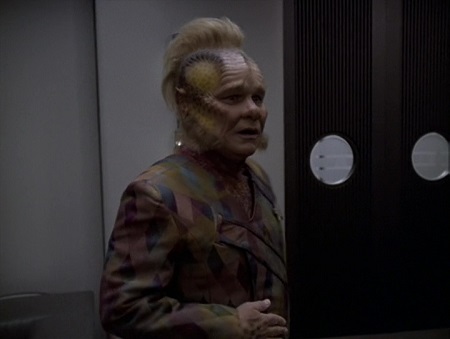
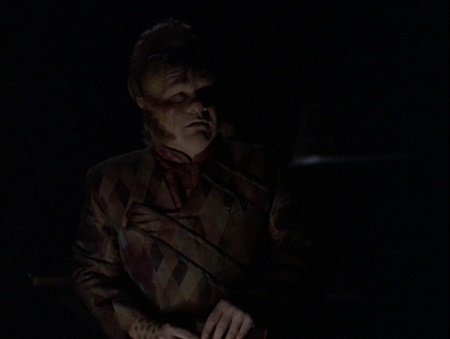
The episode begins with a beautiful shot of the ship in flight. The usual inspiring musical score immediately sours, however, and we get a horror-style minor chord sting as the camera fades in to Neelix in an empty mess hall. Neelix walks around looking concerned – an expression that can’t be easy to convey under such heavy prosthetic makeup – and nervously straightens a chair before turning out the lights. He’s then startled by Seven of Nine as he turns to leave, and tells her he’s feeling jumpy “after what happened last time.” A suitably mysterious line!

A nervous Neelix prepares to leave the mess hall.

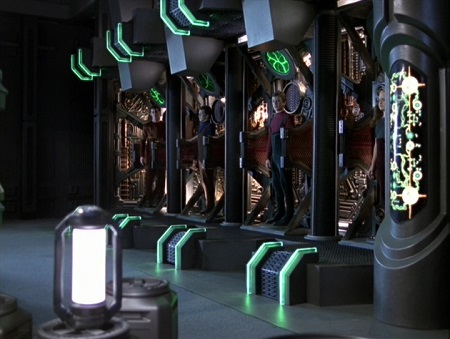
Seven explains that main power will soon be shut down, interrupting the Borg children’s regeneration (remember that Borg don’t “sleep,” but rather regenerate in alcoves) and she wants Neelix to keep them company. This is the setup for the frame narrative that much of the rest of the episode would use.

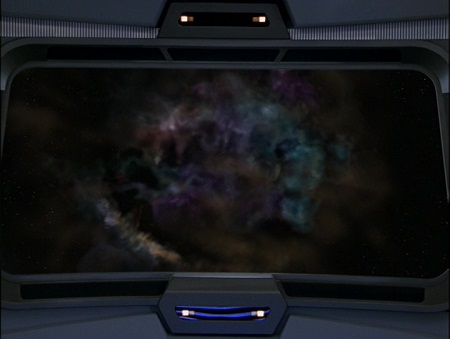
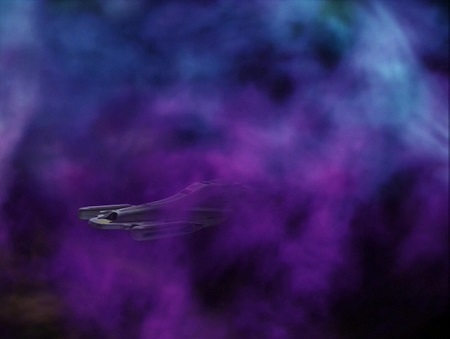
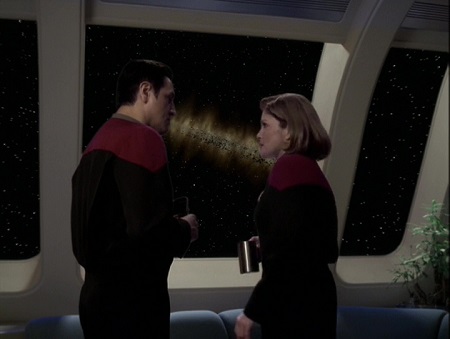
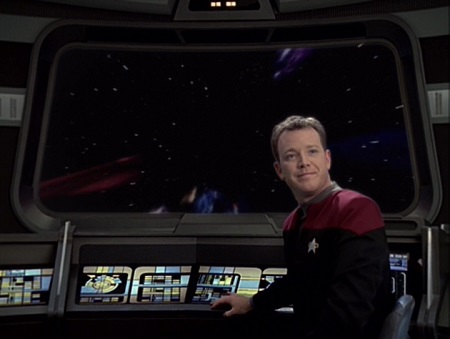
On the bridge we get a comparatively rare example of a starship powering down its engines and using inertia to continue moving. In Star Trek, ships at warp don’t seem able to do this (presumably for reasons related to subspace) but there’s no reason why a ship traveling at sublight speeds shouldn’t be able to fire its engines and then coast! Yet for some reason it isn’t mentioned very often. As Voyager drifts toward a nebula, Tom Paris and Harry Kim comment on its spooky appearance; the nebula is depicted in shades of brown, orange, purple, and blueish-grey, but I wouldn’t have said it looks any more frightening than any of the other nebulae the ship has visited. Perhaps the officers’ overactive imaginations (which Tuvok is happy to point out) stem from the fact that they know what’s coming. As the audience, we still don’t!

The nebula on Voyager’s viewscreen.

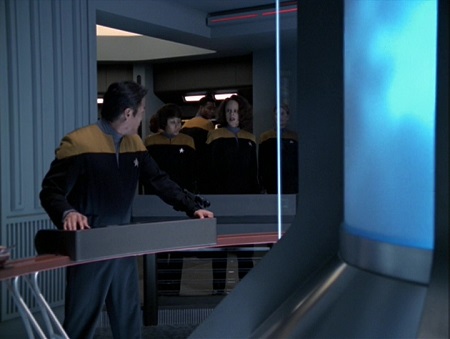
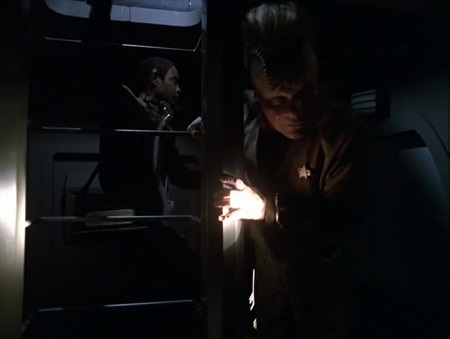
Harry confirms that the ship is ready – and we soon see what for. Main power is deactivated ship-wide; the bridge goes dark, a corridor soon follows, and the Doctor deactivates himself in sickbay. The shot of two background crew members in the hallway was particularly well put together. Filmed from a low angle, the lights in the hallway went out in sequence, and the pair of officers then activated their wrist-mounted torches. Seven of Nine’s astrometrics lab goes dark too, save for a single computer panel on the wall. Seven was oftentimes a rule-breaker, and on first viewing I wondered if she had unilaterally decided her work was too important to stop!

In the cargo bay, Neelix greets the Borg children as they’re shocked awake by the shutting down of their Borg alcoves. And it was my first time seeing Icheb since his reappearance in the episode Stardust City Rag from Star Trek: Picard Season 1 earlier in the year. In main engineering, Torres and the crew shut down the warp core, presumably completing the process of turning off everything aboard the ship, which is now illuminated only by wrist-mounted torches and lanterns. Spooky stuff.

B’Elanna Torres and her team switch off the warp core.

There are many things we can consider iconic within Star Trek, and for my money the warp core is absolutely one of them. The concept of the warp core as an upright glowing column first appeared in Star Trek: The Motion Picture in 1979 and has carried through the franchise in some form ever since, even reappearing in Lower Decks and Short Treks. Though the way this vital piece of technology functions has always been deliberately ambiguous, its design and aesthetic are emblematic of Star Trek, and when you see a warp core you know you’re aboard a Federation starship.

Back on the bridge, Harry confirms every deck is without power. Janeway signals Seven of Nine with the cryptic message “we’re ready.” And after a neat shot of the unpowered ship coasting into the nebula – which suddenly appears a much brighter shade of purple than it had on the viewscreen – the opening titles roll.

Is this the same nebula we saw a minute ago?

Voyager followed on from Deep Space Nine in having a slower-tempo, softer theme. The themes for The Original Series and The Next Generation were upbeat, representing the excitement of adventure and exploration. Voyager’s stands in contrast to that, but is nevertheless a beautiful piece of music in its own right. The title sequence itself is a representation of the long journey the ship and crew will take; no one scene lingers, and Voyager moves past different planets and nebulae before going to warp.

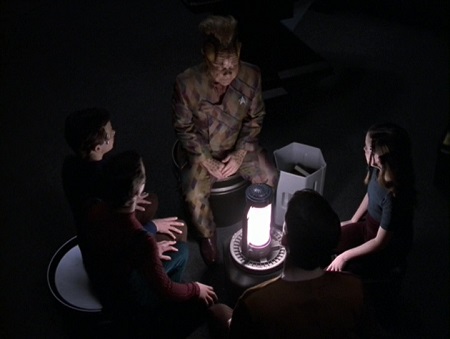
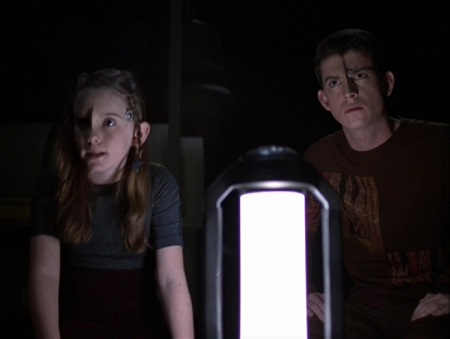
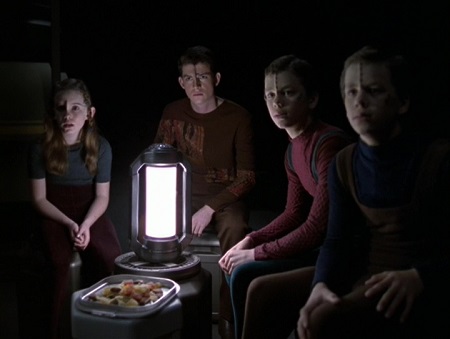
When the action resumes we’re back in the cargo bay with Neelix and the kids. Icheb immediately demands to know about the loss of main power, and seems dissatisfied with Neelix’s explanation. Neelix tries to distract the kids with various campfire supplies, but they aren’t buying it. The way this scene was set up and shot was clever; there’s only one light source (a lantern) which serves as the “campfire” analogue, leaving the rest of the cargo bay in darkness. There’s just enough light to illuminate Neelix and the kids, but that’s all.

Neelix in the cargo bay.

Icheb insists that Neelix be more forthright about what’s happening, and Mezoti asks if what’s going on is related to deck 12, which she has heard is haunted. It’s clear that, with part of the deck under lockdown and inaccessible without a high security clearance, something is going on!

After very little persuasion, Neelix relents and agrees to tell the kids about what’s happening and how it connects to deck 12. In a way, this is just as cathartic for him as it is for them, as he’s nervous about Voyager’s mission to the nebula. And I think we get a showcase in how great a character Neelix can be in episodes like this. Though the “one ship, two crews” concept never really worked in Voyager, as the Maquis had been wholly assimilated into the Starfleet crew even as early as the first season, Neelix always stood apart. At times he would bend the rules because he isn’t from a Starfleet background, and here, with the kids, he’s quite happy to go against what he was asked to do and tell them a story about what’s going on.

Sitting around the “campfire.”

We get a “Borg take things too literally” joke when Neelix tells the kids that the story isn’t suitable for “the faint of heart,” which was funny. Contrary to what some folks wanted to tell you in the run-up to the release of Star Trek: Lower Decks earlier in the year, the franchise has always had these moments of humour. And this one was on point – even if the “Borg takes things too literally” joke was generally overdone on Voyager thanks to Seven of Nine!

As the children insist Neelix tell them everything, he gives them a final warning that it’s a spooky story! It all began with a routine deuterium-collecting mission to a nebula several months ago… and thus begins the bulk of the episode, told in flashbacks with occasional narration from Neelix, who seems more than happy at the chance to tell a story!

Neelix and Tuvok in a flashback.

Neelix tells Tuvok that he’s concerned about “crew morale,” despite Tuvok noting that the crew in the mess hall seem perfectly fine. Neelix wants to know how long the ship will be in the nebula – so he can reassure everyone else, of course. Tuvok, very perceptively, realises that it’s Neelix who’s on edge, and his suspicions are confirmed when Neelix seems to snap at him in the middle of the mess hall. Clearly the stress of the nebula has been getting to him.

It will take days before the deuterium collection work is finished, though, and all Tuvok can suggest is that Neelix put up some curtains. A truly helpful and empathetic response from Voyager’s resident Vulcan! Neelix seems happy with this, however, and dashes off to find some material with which to make curtains.

Tuvok speaks with Neelix in the mess hall.

Meanwhile on the bridge, the turbulence is getting worse. Harry suggests to the captain a technobabble explanation for why the nebula is “destabilising,” and then we get a jump-cut back to Neelix and the kids in the cargo bay. Icheb accuses Neelix of misleading them on the specifics, noting that “bussard collectors do not emit nadeon emissions.” Neelix tells him that the specifics aren’t important to the story – and we have another part of the setup, the “unreliable narrator.”

Using this term might be a bit of a stretch, but it’s important for the remainder of the story. Neelix’s recollections are imperfect, and while the main thrust of the episode’s narrative is ultimately revealed to be true, it’s not unfair to think that Neelix has embellished certain other elements for the sake of storytelling! I liked the way this was set up, and for a story with a frame narrative like this one, it works really well.

Neelix’s recollection of what Harry Kim said was not accurate – according to Icheb, at least.

Neelix wasn’t on the bridge during this moment, so how could he have known everything that was said? Again, this is something we’ll keep in mind during any scene where Neelix isn’t physically present! As Neelix prepares to hand out a plate of snacks to the kids in the cargo bay, we jump back to the action on the bridge.

A minor inconsistency, perhaps, as Janeway contacts Torres to tell her they’re going to stop the “dilithium” collection – not deuterium, which is what everyone else had been talking about – but this could simply be another of Neelix’s misremembrances. Before the ship can successfully leave the nebula, however, it’s struck by some kind of electrical discharge! The kids pipe up, asking if this was the ghost.

Voyager is zapped!

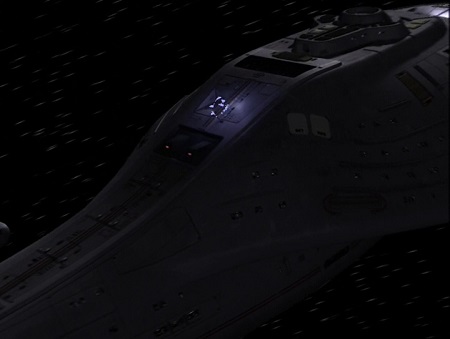
On the bridge, the crew report minor damage and some power outages, but nothing serious and no injuries. Voyager resumes its course having harvested as much dilithium/deuterium as it could, and everyone seems to think that they got away with it. However, as Neelix explains, the ship had picked up a “mysterious stowaway.” At the same time, we see a CGI rendition of the ship leaving the nebula, complete with a glowing ball of lightning that slips through the hull – just like a ghost would!

The late 1990s and early 2000s weren’t a great time for CGI. However, on the small screen it looks a lot better – or at least less bad – than it does in some big-screen productions made around the same time. I’m looking at you, Star Wars prequels. Star Trek had been experimenting with CGI since The Next Generation was on the air, and while I’d absolutely love nothing more than for Voyager to be properly remastered, which would include redoing almost all of these CGI effects, I have to admit that it doesn’t look too bad here.

The stowaway.

The kids ask a bunch of questions about the stowaway, and Neelix confirms that it was a space-dwelling creature. However, they keep trying to press him to tell what exactly the life-form was, but when offered the choice between debating what the creature was and resuming the story, the kids ultimately choose – after exchanging glances – to continue with the story. Thank goodness, I want to know how it ends!

After leaving the nebula, Voyager begins to suffer some unusual malfunctions. Chakotay reports to Captain Janeway some of the damage done by the “zap” as the ship escaped the nebula, including the loss of artificial gravity on one deck. That would’ve been fun to see! We so rarely see a loss of gravity on Star Trek – due, of course, to the practical difficulties in filming such a sequence. The artificial gravity systems aboard a starship are invariably the last things to fail even when every other system is compromised, so for it to have been damaged here is, I would argue, a major issue.
Chakotay in the captain’s ready-room.

As Chakotay explains his findings, the captain’s replicator malfunctions, and I just love Janeway’s nonchalant response as she tells Chakotay he can “add replicators to [his] list.” Even when annoyed she manages to be in control, and I have no doubt she’ll make a great captain in the upcoming series Star Trek: Prodigy.

As Janeway speaks to the ship, Chakotay tells her that he used to have similar chats with his Maquis vessel – something I think we saw him do in Caretaker, the series premiere. Either way, it was a fun acknowledgement of Chakotay’s Maquis past. Chakotay didn’t get many scenes, let alone stories of his own, during the latter part of Voyager’s run, so it was nice to see him here alongside Captain Janeway. Though he lost his Maquis side pretty quickly as the show got going, he found a role as Janeway’s older and more seasoned advisor, as well as her moral compass. Those roles suited him. Looking out the ready-room window Janeway spots a meteorite cluster – and thinks it’s the same one Voyager has already been past. Is the ship now flying in circles?

Chakotay and Janeway spot the meteorites.

Not to nitpick, but technically a “meteorite” is something that falls to Earth, not something in space! On the bridge, Tom Paris insists the ship hasn’t been traveling backwards or in circles, yet the presence of the meteors suggests otherwise. Tuvok runs a (very fast) diagnostic that reveals a problem – Voyager is heading back the way it came.

As the captain orders an all-stop, Paris begins to launch into a speech about how the ship relies too much on sensors and technology. Before he can say too much, however, the warp engines activate by themselves and can’t be shut down. The malfunctions suddenly get a lot worse. The communications system goes down. The computer, when asked to locate B’Elanna, lists the locations of every officer aboard the ship, and Chakotay’s turbolift to engineering takes him to the mess hall instead.

Tom Paris at his post – just before the warp engines malfunction.

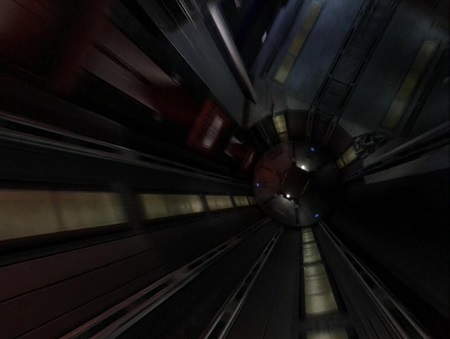
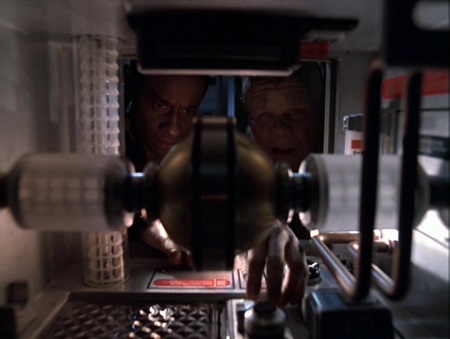
As Chakotay steps back into the turbolift and, once again, asks it to go to engineering, we get a rare look inside the turbolift shaft. As Neelix explains in a voiceover that the turbolift was falling, we see a neat CGI sequence of the turbolift itself, including the inside of the turboshaft, complete with horizontal tubes. This is a rarity, and for us nerds, a bit of a treat to catch a glimpse of the inner mechanisms of one of the franchise’s staple technologies.

Chakotay’s turbolift inside the turboshaft.

Another jump-cut back to the cargo bay sees Neelix teasing the kids by pausing his story, offering them snacks. Mezoti informs him that “snacks are irrelevant!” and insists he continue the story. I loved this line, it was very “Borg,” but also a typical reaction from a little girl who wants her story. Not to mention that it was funny.

Here I think we see the frame narrative working well. The story of the malfunctions is interesting, as is the idea of a nebula-dwelling life-form, but Neelix and the kids give the episode a kind of light-hearted brevity that stands in contrast to the serious goings-on, yet somehow works really well.

“Snacks are irrelevant!”

The frame narrative also allows The Haunting of Deck Twelve to still tell us as the audience about some dramatic events – like Chakotay being pinned to the ceiling of the turbolift as it fell – but without having to go to the expense of filming them! Chakotay storms into engineering, but B’Elanna says she’s pinpointed the problem and is on her way to fix it.

Crewman Celes – who appeared in Good Shepherd a few episodes previously – makes a welcome return. One thing Voyager lacked was a Deep Space Nine-style secondary cast, yet its “lost in space” narrative would have allowed for that. Some background officers like Vorik, Chell, and Carey got to make repeated appearances, but none had a major impact on the story in the same way as Deep Space Nine’s secondary characters did.

Crewman Celes with Seven of Nine.

Seven of Nine accuses Crewman Celes of causing a power failure, despite her having only just opened a panel. It was clear, despite Seven’s rush to judgement, that this was connected to the ongoing malfunctions aboard the ship. Seven of Nine presses a few buttons on the exposed panel, and the lights in the hallway begin to flicker.

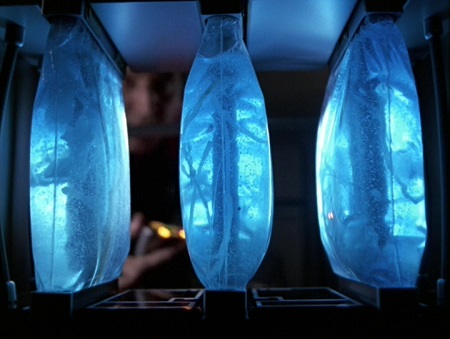
Chakotay and B’Elanna have arrived at their destination – some damaged gel-packs. Voyager uses “bio-neural circuitry” in its systems, something that was set up way back in Season 1. These systems are supposedly faster and more reliable, but more difficult to replace. The aesthetic used for the gel-packs – which are a neon blue colour – was pretty neat, and I think still holds up today as a fun and suitably futuristic piece of technology.
The gel-packs.

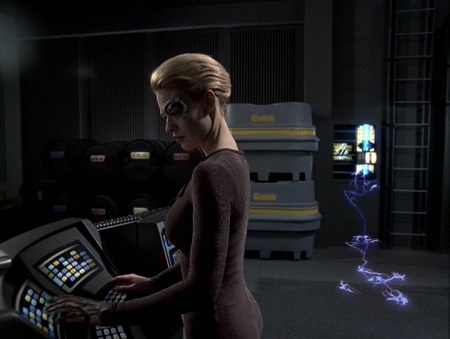
The problem has “jumped” from one set of gel-packs to another, this time near Seven of Nine’s cargo bay 2. With no communications, Neelix explains in voiceover, B’Elanna and Chakotay couldn’t contact her to warn her something was going on! As the camera focuses in on Seven, who is working at her console in the cargo bay, the mysterious stowaway appears to materialise behind her…

Seven of Nine and the nebula life-form.

The Borg kids are shocked and alarmed – this was happening in this very cargo bay! Mezoti once again insists on Neelix telling the rest of the story, and shuts down Icheb when he tries to interrupt! The life-form jumped into the Borg alcoves near to Seven of Nine, and then released a strange gas into the cargo bay; gas that looked a lot like the nebulae we’ve seen!

Unable to escape the cargo bay – as forcefields have been set up outside the main doorway – Seven is trapped and begins to choke on the gas. The lantern in the cargo bay suddenly goes out, just as the kids are beginning to get excited and anxious about the story and what happened to Seven of Nine. Neelix is able to fix it easily – I wonder if he did that on purpose!
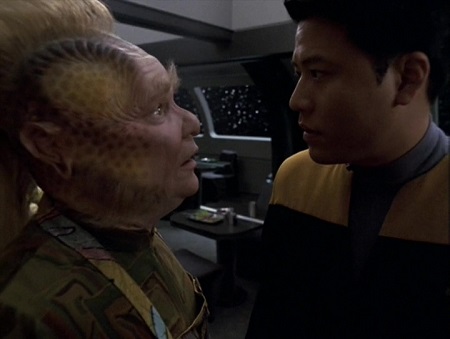
Seven of Nine chokes on the gas.
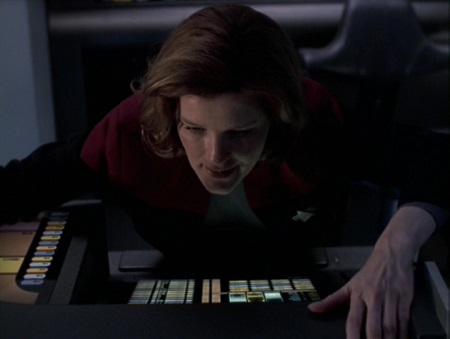
Chakotay and B’Elanna arrive just in the nick of time, and after phasering the forcefield control panel manage to get Seven of Nine to sickbay. Malfunctions increase across the ship, including in the mess hall where Neelix is cooking and Harry Kim is having a meal.

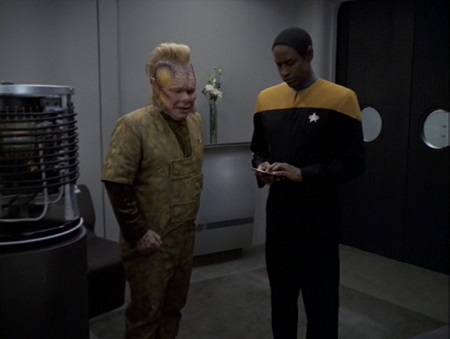
Kim – despite being just an ensign – orders everyone to report to their stations. The lights continue to flicker, and Neelix nervously asks if he can tag along with Harry. However, Kim reminds him that the mess hall is his post before departing, leaving a nervous Neelix alone in the mess hall – as the lights go out.

Neelix and Harry.

Neelix says to the kids that Voyager was “dead in space,” though gravity and life-support still seem to be working! The bridge is overheating, and we got a cute moment with Paris and Tuvok as the latter explains the Vulcans don’t sweat unless the temperature reaches a staggering 350°K – about 77°C or 170°F.

Following the earlier scene with Chakotay in the ready-room, Captain Janeway once again tries talking to the ship. This time, she offers to make a deal, a maintenance overhaul in exchange for no more malfunctions! I like this side to her character; it took a serious story but gave it another light-hearted aspect that I think worked well in conjunction with Neelix’s frame narrative.

Janeway tries to bargain with Voyager.

Her bargaining seems to have worked – helm control has been restored! But as soon as Paris steps up to the console to plot a course he’s zapped by an energy discharge – leaving him with some nasty-looking burns. As Janeway and another bridge officer try to help Paris, the bridge is suddenly deprived of oxygen and they must all evacuate. The practical makeup effects for Paris’ burns were gruesome – and come as quite a shock.

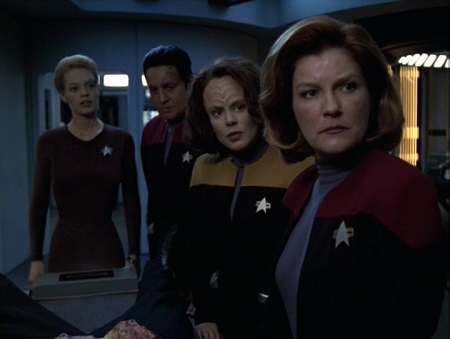
Paris is brought to sickbay – where it seems that injuries are becoming a problem across the ship. The Doctor immediately diagnoses Paris as the victim of an EM surge, similar to the electrical discharge that struck Seven of Nine when she was trapped with the nebula gas. Standing around Tom’s bio-bed, Seven, Chakotay, B’Elanna, the Doctor, and Captain Janeway come to a typical Star Trek realisation – there’s an alien intelligence at work.

The group in sickbay.

The alien is trying to use Voyager’s systems to make an environment for itself – just like the nebula. And it’s attacking anyone who tries to interfere or undo its work, as all of the crew it’s hit have been doing precisely that. I called this a “typical Star Trek revelation” because it’s not uncommon in the franchise when something unusual or unexplained happens for the reason to ultimately be “life, Jim, but not as we know it!” That line, by the way, was used in the song Star Trekkin’.

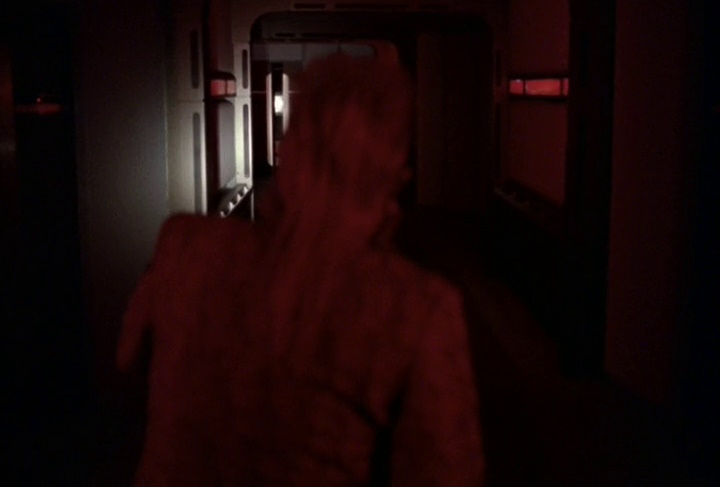
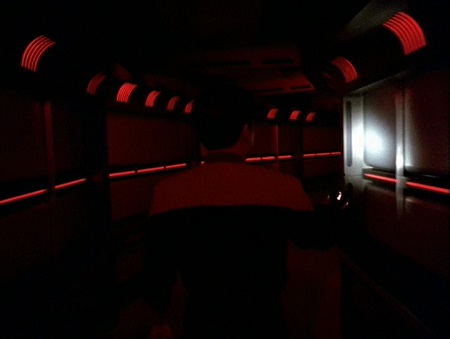
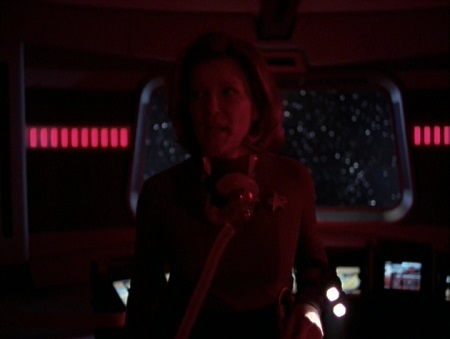
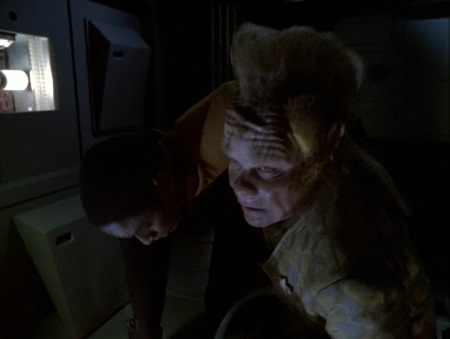
The Doctor suddenly goes off-line (though no one seemed to move when Janeway ordered his programme to be transferred to the mobile emitter) and power fails in sickbay. In voiceover, Neelix explains how power was failing across the ship, deck by deck. In a dark hallway, lit only by the intermittent red alert/emergency lights, Harry Kim gets a scare – and so do we! It turns out he’s just bumped into Crewman Celes, and neither of them know what’s happening. This sequence was very atmospheric, with the intermittent red lights and Harry’s wrist-mounted torch being the only sources of illumination. It felt very eerie, and meant that when Celes appears, it’s hard not to jump even if you know what’s coming!

Harry in the dark hallway.

Celes starts rambling about Borg and Hirogen and the ship being under attack, and Harry tries his best to calm her down. The two set off for engineering, where Kim assumes the captain will have set up a command post due to the environmental failure on the bridge.

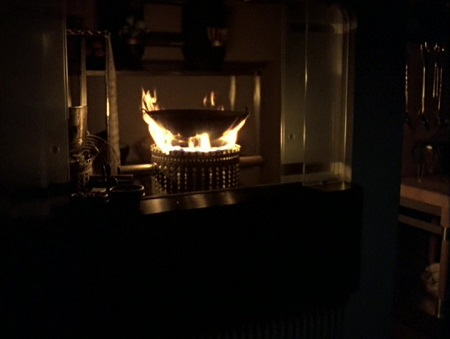
Neelix, meanwhile, has been stuck at his post in the mess hall. He’s lit a fire under one of the pans which provides some additional light alongside his torch, and we hear the doors hiss open. This music across the episode has been fantastic, horror-inspired and very atmospheric. Here it reaches another high, adding tension to an already-tense moment as Neelix looks around the deserted mess hall.

The Haunting of Deck Twelve uses light in imaginative ways to build tension.

As Neelix exits the mess hall, with no one answering his calls, he sees the source of the noise: a malfunctioning door opens and closes repeatedly at the end of a hallway. This shot was another that builds up that sense of fear; Neelix is all alone, and I think many ghost stories have some kind of door opening or closing of its own volition, meaning the episode plays off that trope. It was very spooky indeed!

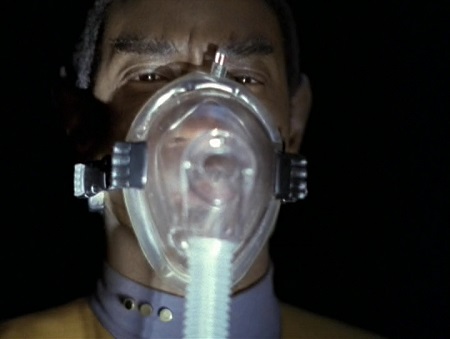
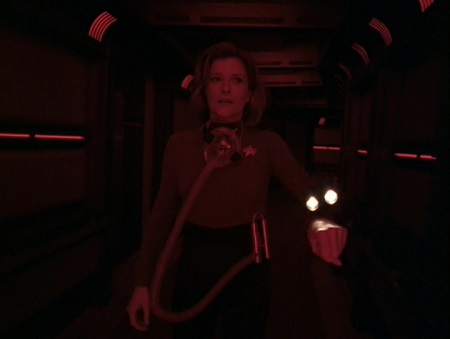
When Tuvok wordlessly appears behind Neelix as he investigates the door, all of the tension from the mess hall through the hallway scene boils over, and we get the second of two jumpy moments! Tuvok has come to the mess hall to evacuate Neelix, and is wearing some kind of portable oxygen mask. Neelix admits to the kids that he was very frightened as he and Tuvok must crawl through the jeffries’ tubes and descend eight decks to make it to the captain’s command post.

Tuvok in his mask.

In a break from the flashbacks, Neelix gives the kids a lesson in fear. Icheb tells him he shouldn’t be afraid, but Neelix retorts that fear can be good thing – keeping people safe. For kids especially, I think this is a very important message. Not only because it shows that it really is okay to be scared and that everybody gets scared sometimes, but that there’s nothing to be ashamed or embarrassed about with showing fear. Fear, as Neelix rightly says, can be useful, and it’s an important emotion. The Borg kids need to know this as they rediscover their emotions, but many of Star Trek’s younger viewers would do well to remember this too!

After Mezoti elaborates on her first experience with being afraid, Neelix gets back to the story. Aside from Collective, the episode which introduced us to the Borg kids, I’d argue that The Haunting of Deck Twelve is one of the most important for their development, particularly as they wrangle with the feelings and emotions they have after being disconnected from the Borg collective. This is precisely for the reasons we discussed – learning to show and handle emotions is vital. In the flashback, Neelix tells the kids that he was stuck with only Tuvok for company.

Tuvok and Neelix on their journey.

Neelix attempts to make small-talk, but Tuvok isn’t having it. While crawling through the tubes, Neelix begins to tell a story-within-a-story: that of a Talaxian ship that similarly underwent a systems failure, leading to the crew drawing lots to see who would survive. Mezoti and Icheb pipe up, wondering what the bodies of the dead Talaxians looked like, and whether they resorted to cannibalism, before Neelix resumes his story. This moment definitely felt like “ghost stories around the campfire” in the way the episode was going for!

Neelix and Tuvok encounter a jeffries’ tube slowly filling with nebula gas and can’t progress any further. Tuvok opens a panel and plans to vent the gas – but we know that anyone doing so has been attacked! There is an alternate route, but Tuvok says it will take hours to reach engineering that way. I was still nervous for Tuvok as Neelix jumps the story to engineering…

Tuvok attempts to use environmental controls to vent the gas.

In main engineering, Harry expresses regret at leaving Neelix in the mess hall. The nebula life-form has gotten into the main computer, and is now unable to be contained. However, the life-form uses the communications network to contact the captain. She responds to its attempts to communicate, assuming the life-form has learned how to use the systems to communicate.

Using the ship’s computer, the life-form summons the captain to astrometrics, and it’s worth taking a moment to remember Majel Barret-Roddenberry, who was the voice of Starfleet’s computers from The Original Series all the way through The Next Generation era and even up to 2009’s Star Trek. She was the wife of Gene Roddenberry, Star Trek’s creator, and has almost certainly appeared – in voiceover form – in more Star Trek episodes than anyone else. Here, as the life-form attempts to communicate, it’s her voice it uses.

Janeway decides to go to astrometrics.

Despite Chakotay’s concern about a trap, Janeway proceeds to astrometrics. There isn’t much of a choice, as the alternative appears to be letting the life-form take over the ship. Back in the jeffries’ tube, Tuvok works on the panel while attempting to calm Neelix down. We get a flashback-within-a-flashback, as Neelix remembers with fondness his birthday party.

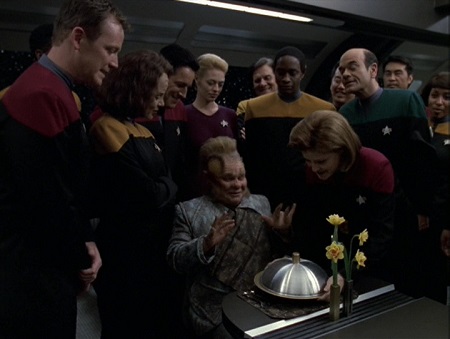
However, the memory turns sour as Neelix imagines himself attacked by the nebula gas! This was another well-executed deception, taking what should have been a safe moment for Neelix, and for us as the audience, and turning it into something scary. I loved the visual before that moment as Neelix sat down with the crew all around him. He clearly has great fondness for all of them – and they for him.

Neelix’s birthday dinner.

Tuvok jumps as Neelix yells out, and the kids ask what happened. In astrometrics, the life-form points Janeway to the nebula and restores helm control. Seven of Nine objects, thinking it may be a precursor to an invasion. However, Janeway believes the life-form just wants to return to its home and agrees. The malfunctions are not as random as they appeared; all were designed to push Voyager back to the nebula.

Janeway can empathise strongly with the desire to return home – after all, that’s what she and the crew are doing too. Perhaps with that in mind she agrees to return the ship to the nebula. It allows her access to the bridge as Neelix tells us in voiceover that the relationship between them was “fragile.”

Captain Janeway makes a breakthrough in communicating with the life-form.

Upon returning to the nebula, however, there’s a problem: there is no longer a nebula! Whatever happened to destabilise it earlier has caused it to dissipate entirely, leading to the life-form throwing a major tantrum! It tries to turn off life support and tells the crew to abandon ship, but luckily Captain Janeway is able to talk it down.

This is classic Janeway – she’s an explorer and a scientist, but also a diplomat. When the life-form threatens her crew, she steps up and shows her diplomatic abilities, saving the ship and crew. This is the climax of the storyline, as Janeway must act to save the ship, and it shows why she’s such an amazing captain.

Janeway on the bridge trying to talk to the life-form.

Neelix explains to the kids that this was Voyager’s only chance, but it doesn’t go well at first. The life-form refuses to communicate or unlock any more systems, and Janeway appears to be out of options.

Back in the tube, Tuvok is – perhaps predictably – shocked by a discharge from the panel he was working on. Neelix describes this as one of his worst fears. Again we see great makeup work to represent Tuvok’s grisly plasma/EM burns. Neelix uses the story of the Talaxian ship from earlier as a bad example, saying that he won’t leave the injured Tuvok to his fate despite nebula gases pouring into the tube. Tuvok attempts to order Neelix, but in an uncharacteristic moment of bravery, Neelix disobeys and lifts Tuvok to his feet. Neelix can certainly be a scaredy-cat, and at times Voyager derived humour from that. But here he, like the captain, steps up and does what’s needed. Fear may be important, as we discussed earlier, but so is overcoming it.

Neelix carries Tuvok away from the nebula gas.

The two share the single oxygen mask as they make their way through the gas. Why Tuvok didn’t bring a second mask with him on his mission to retrieve Neelix is, well… unknown. But it makes the story more exciting, so perhaps it’s best not to nitpick!

Janeway is making her way back through the deserted ship, continuing to reason with the life-form. She tells the life-form to run a diagnostic, confirming that systems will fail aboard the ship. This means that the life-form cannot survive aboard Voyager without the crew, and it’s this revelation which turns the tide.

Janeway continues to negotiate.

Neelix and Tuvok reach main engineering just as the captain has given the order to abandon ship. The crew race to the escape pods, though B’Elanna’s warning that the pods may not be able to be ejected felt ominous. The reply that “we’ll push them out if we have to” feels unhelpful here too, and little more than hyperbole!

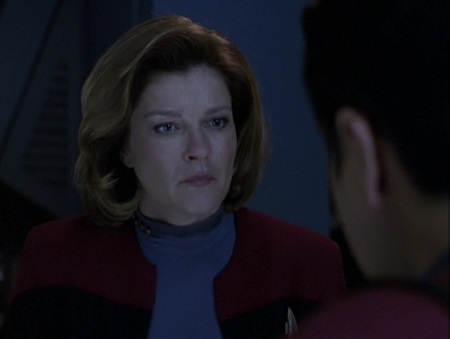
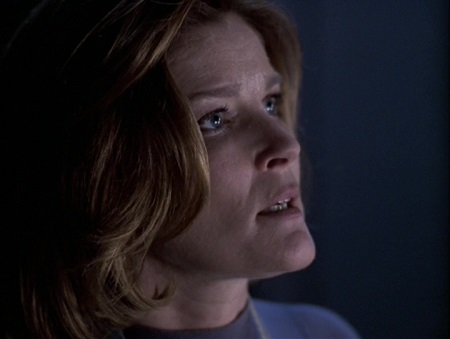
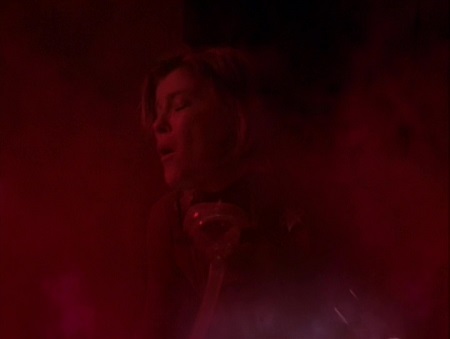
Chakotay is the second-to-last to reach a shuttlebay/escape pod, but before Capain Janeway can join him the door is sealed. The life-form seems to think it can keep the captain as its slave to maintain the ship’s systems, but she refuses, telling the life-form that they will die together. The life-form, however, was bluffing, and realising it cannot survive aboard Voyager without the crew, relents. Kate Mulgrew’s performance as the pained and asphyxiating captain was riveting, and I couldn’t look away from the horrifying scene.

Janeway suffocates in the nebula gas.

As Neelix explains, the creature’s bluff had been called. The crew were able to return and all systems were restored. However, one section of deck 12 was set aside for the creature to live, and the captain pledged to return it to a suitable nebula as soon as the ship detected one. Mezoti turns to Icheb to gloat; she told him there was a monster on deck 12!

It was no monster, of course, just a lost creature that wanted to return home. Moments later, main power is restored and the lights are back on. As the kids head back to their alcoves, Neelix says he made the whole thing up, and had this been the end it would have been a disappointment on par with “it was all just a dream.” Icheb in particular seems content to believe Neelix made it up, and the kids step back into their alcoves and begin regenerating.

The kids get into their alcoves.

However, this wasn’t the end of the episode! In the final scenes, Neelix returns to the bridge. The whole trip to the nebula took three hours, and he reassures the captain that the kids weren’t frightened. He told them a story, he says, to pass the time.

Neelix then asks if everything is alright. Harry activates the viewscreen, showing the nebula from the beginning of the episode. It now seems to crackle with lightning or some kind of electrical energy – the life-form is home. Neelix says he hopes it “lives happily ever after” in its new nebula.

Neelix delivers the final line of the episode.

So there we go. Star Trek: Voyager’s campfire ghost story! The life-form, despite Neelix’s claim at the end, was indeed real. But how much of his story was, and how much did he embellish or exaggerate for the sake of making it engrossing for the kids? I suppose we’ll never know, but I choose to believe that it was largely accurate.

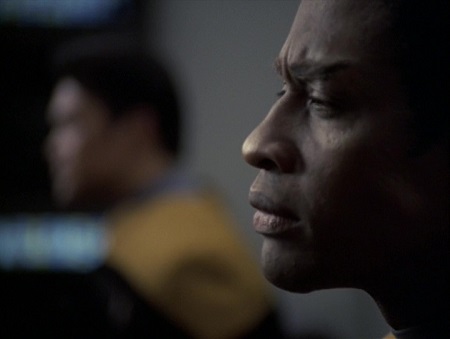
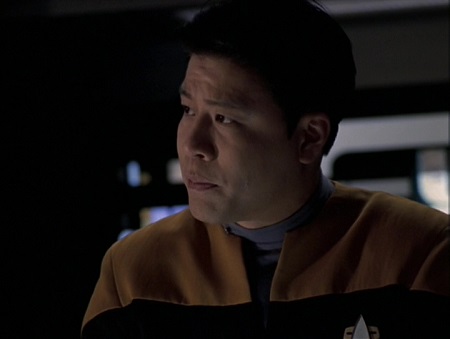
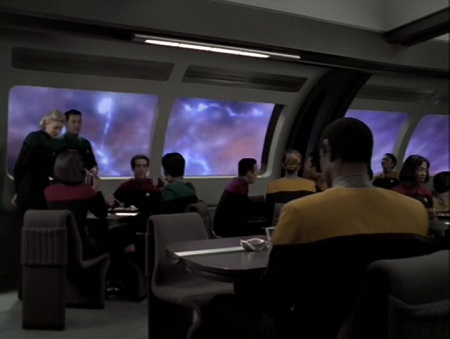
It was a truly fun piece of television, something different from Star Trek’s usual output while, at the same time, being very familiar. The “it wants to communicate” trope is something we see a lot, particularly in older Star Trek shows, and it’s a trademark of the franchise at this point! But the manner in which The Haunting of Deck Twelve uses this familiar theme makes it stand out. We could have just had the story from the flashbacks, but instead it was chosen to use Neelix and the kids around their “campfire” as a frame, and I really think that worked. It made the episode something different from Star Trek’s past offerings, and I like that.

The campfire frame narrative made The Haunting of Deck Twelve something different.

So I hope this was a bit of fun for Halloween! Whatever you’re doing today or tonight, I hope you have a great time and some spooky fun. I will be writing up this week’s episode of Discovery, so don’t worry. But I didn’t want to let Halloween pass unmarked, and The Haunting of Deck Twelve ticked a lot of boxes for being a fun Star Trek story to re-watch at this time of year.

Star Trek: Voyager is available to stream now on CBS All Access in the United States, and on Netflix in the United Kingdom and elsewhere. The series is also available on DVD. The Star Trek franchise – including Star Trek: Voyager – is the copyright of ViacomCBS. This article contains the thoughts and opinions of one person only and is not intended to cause any offence.