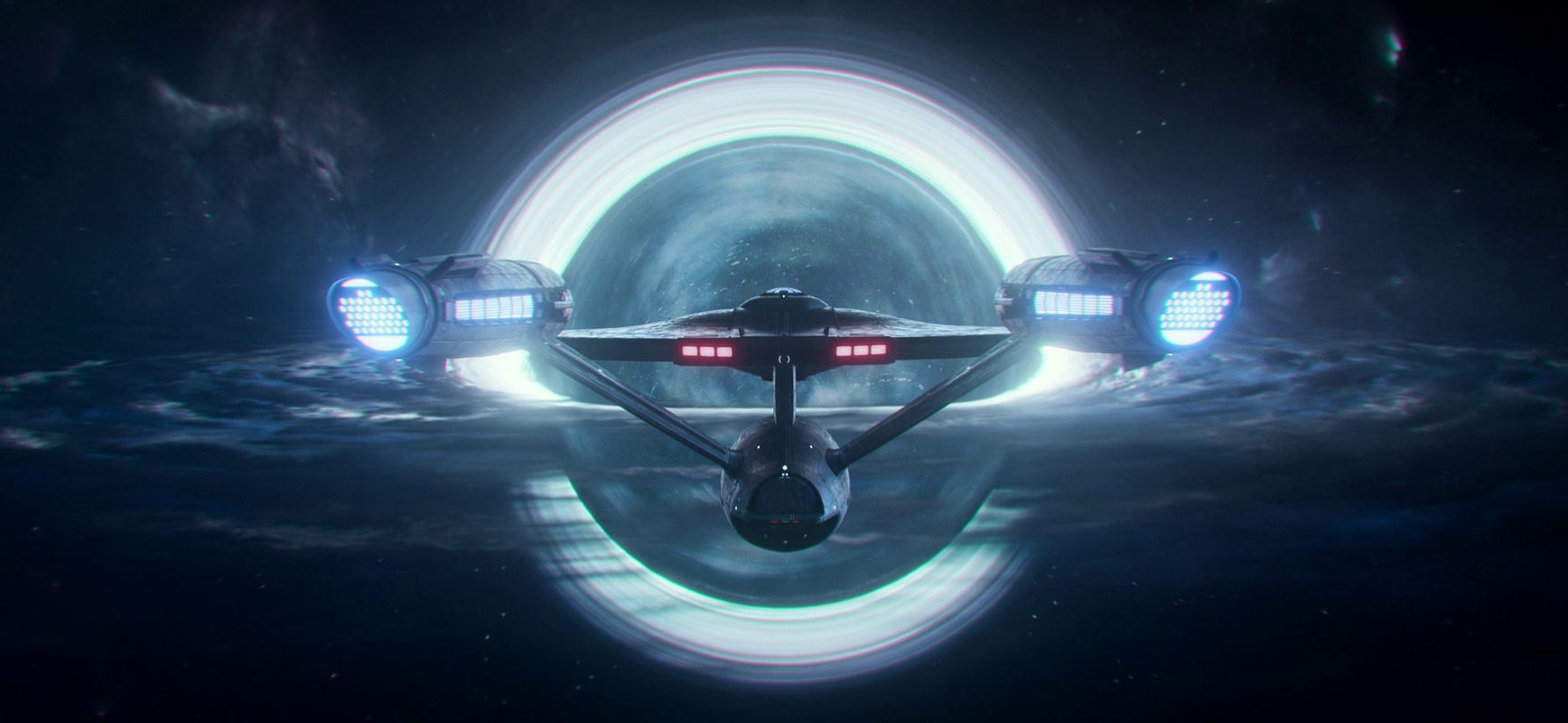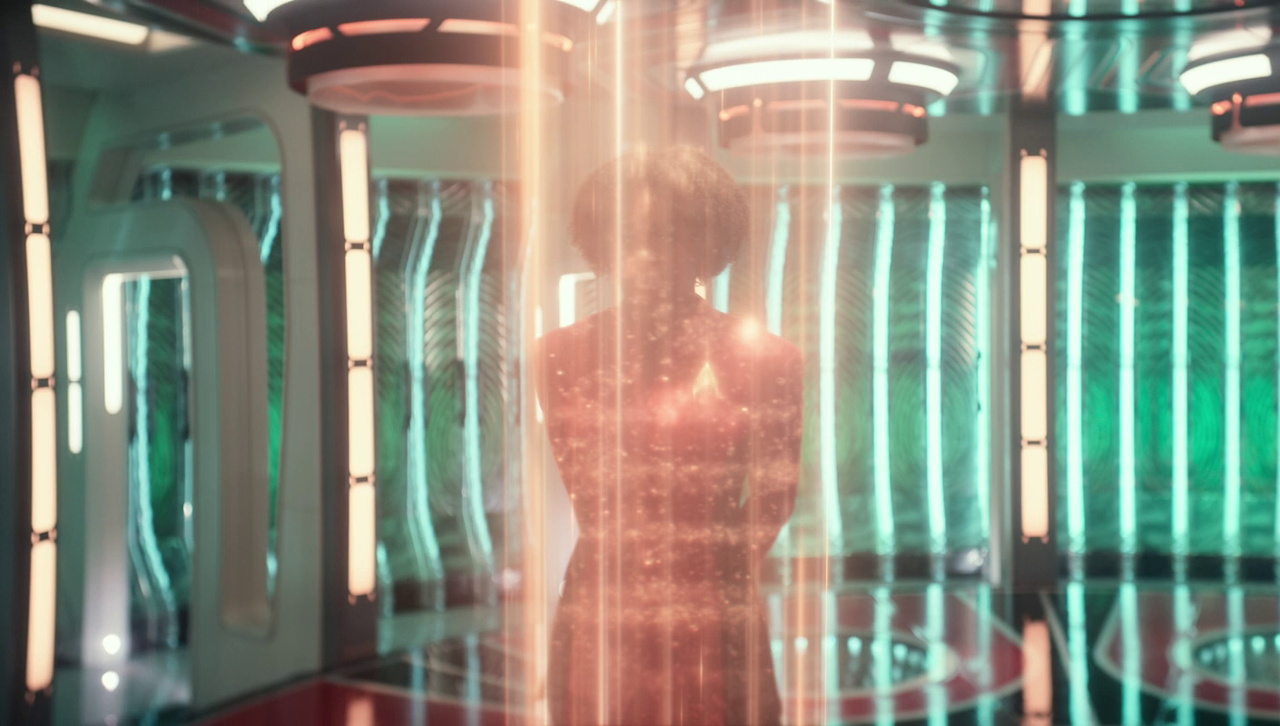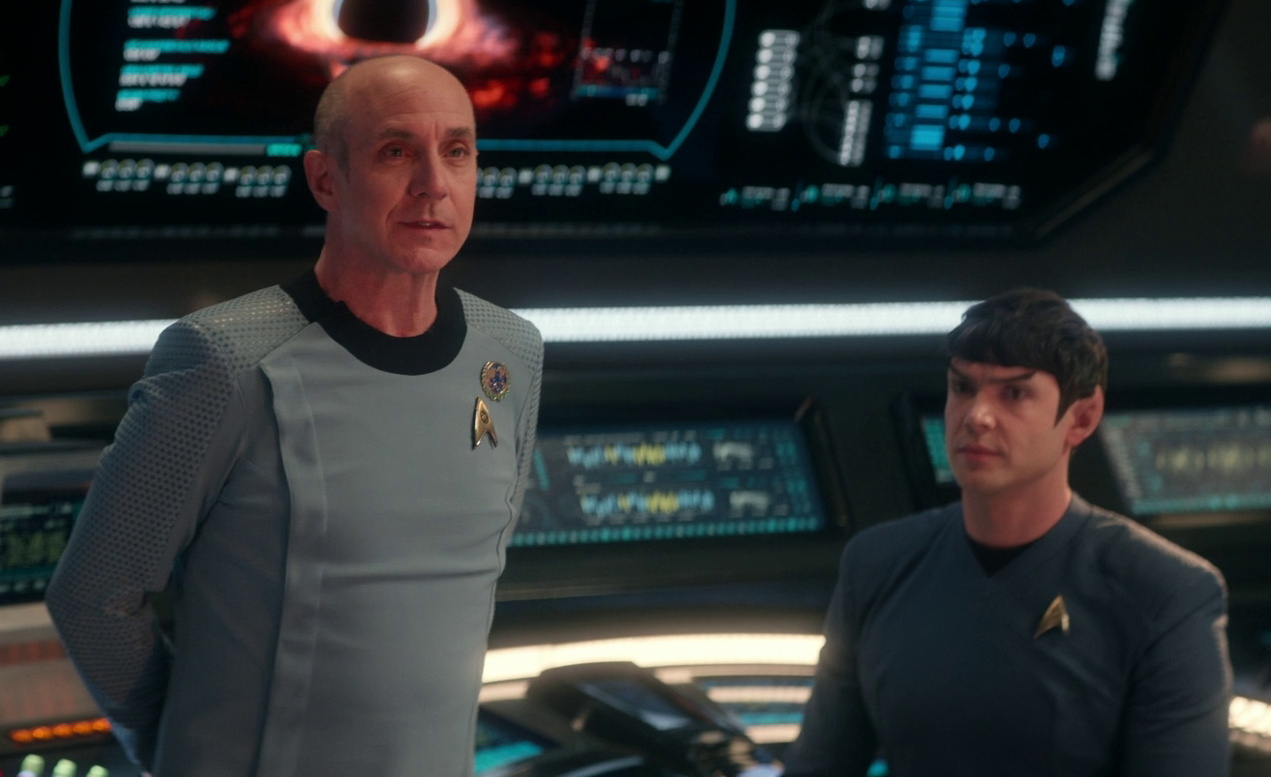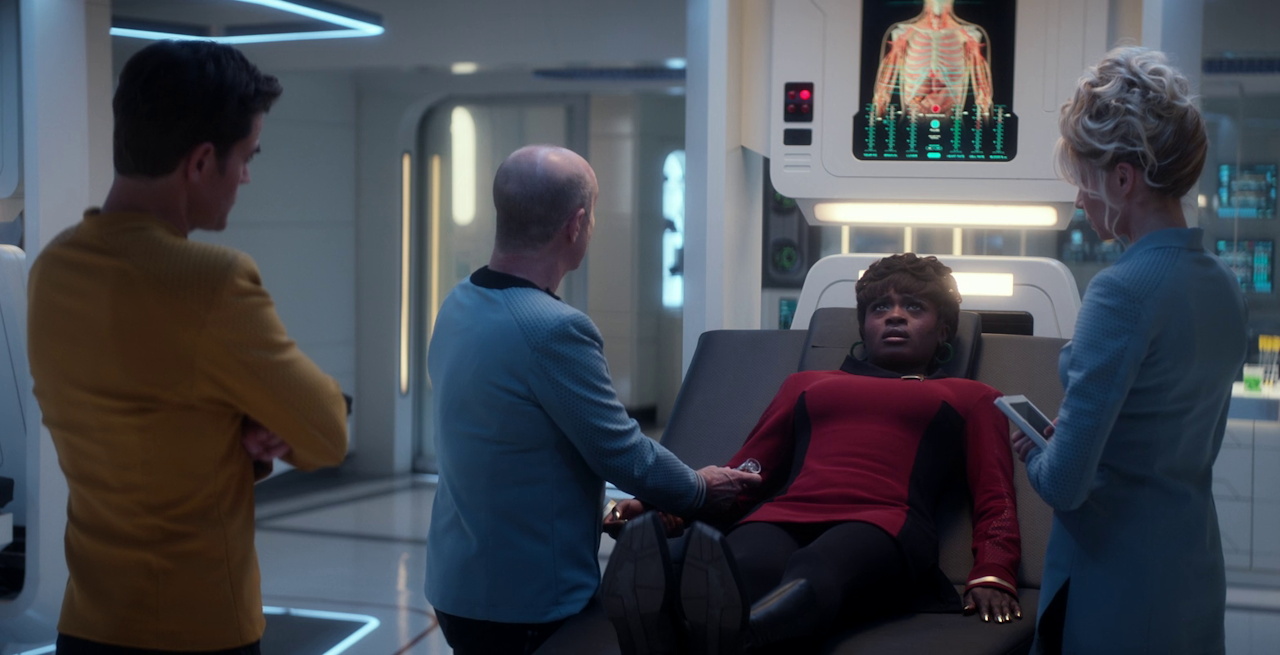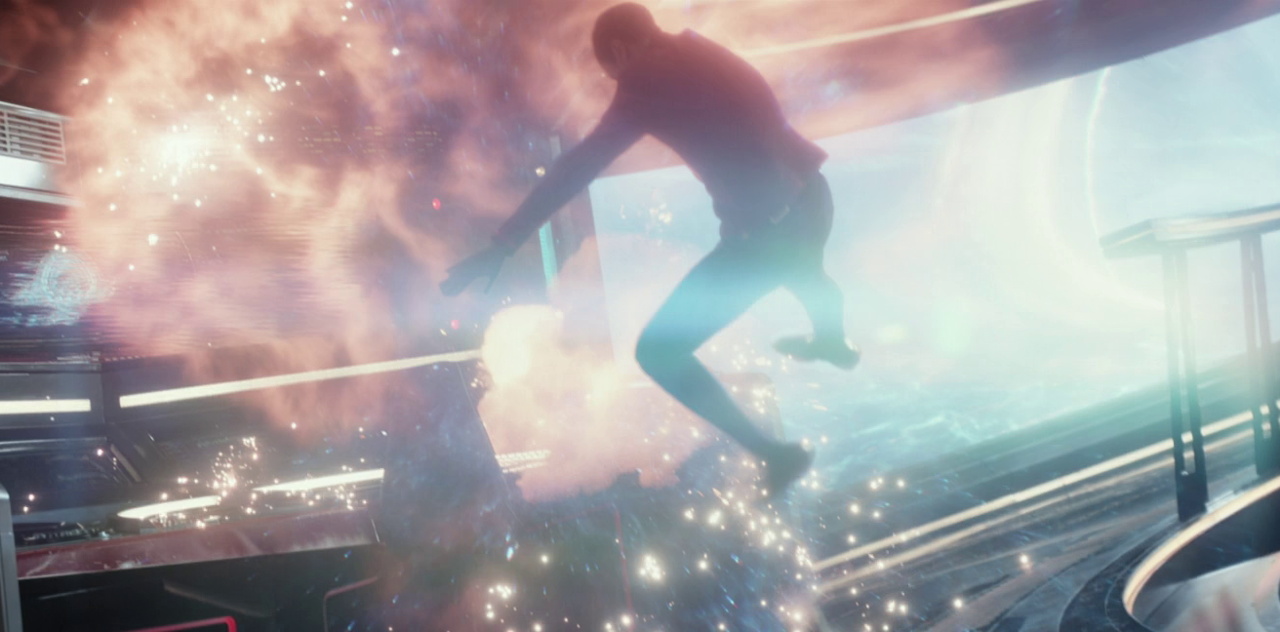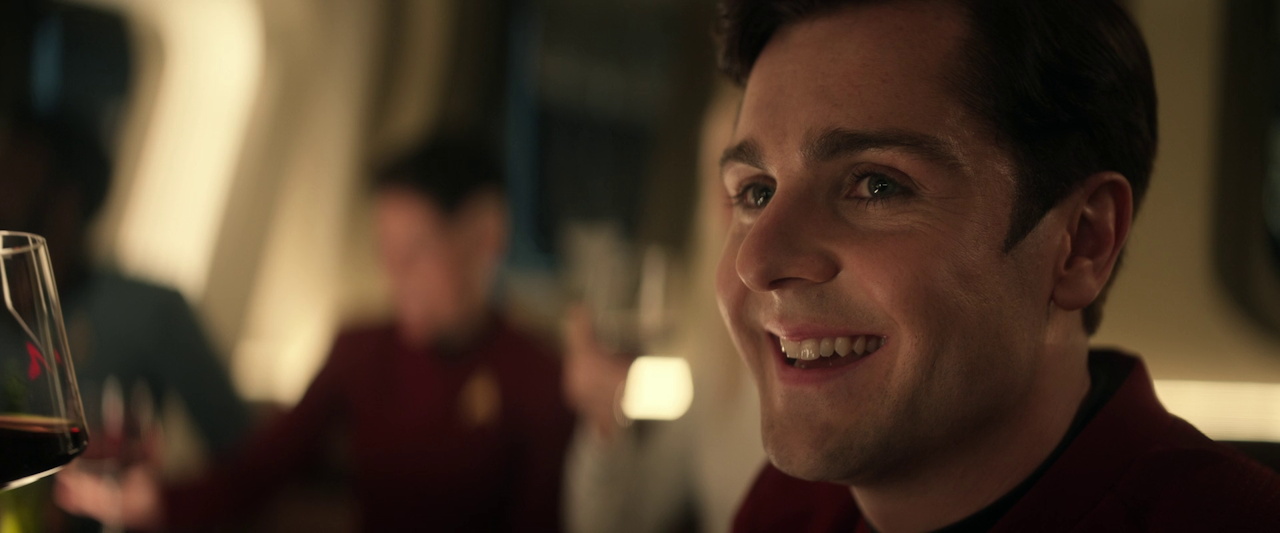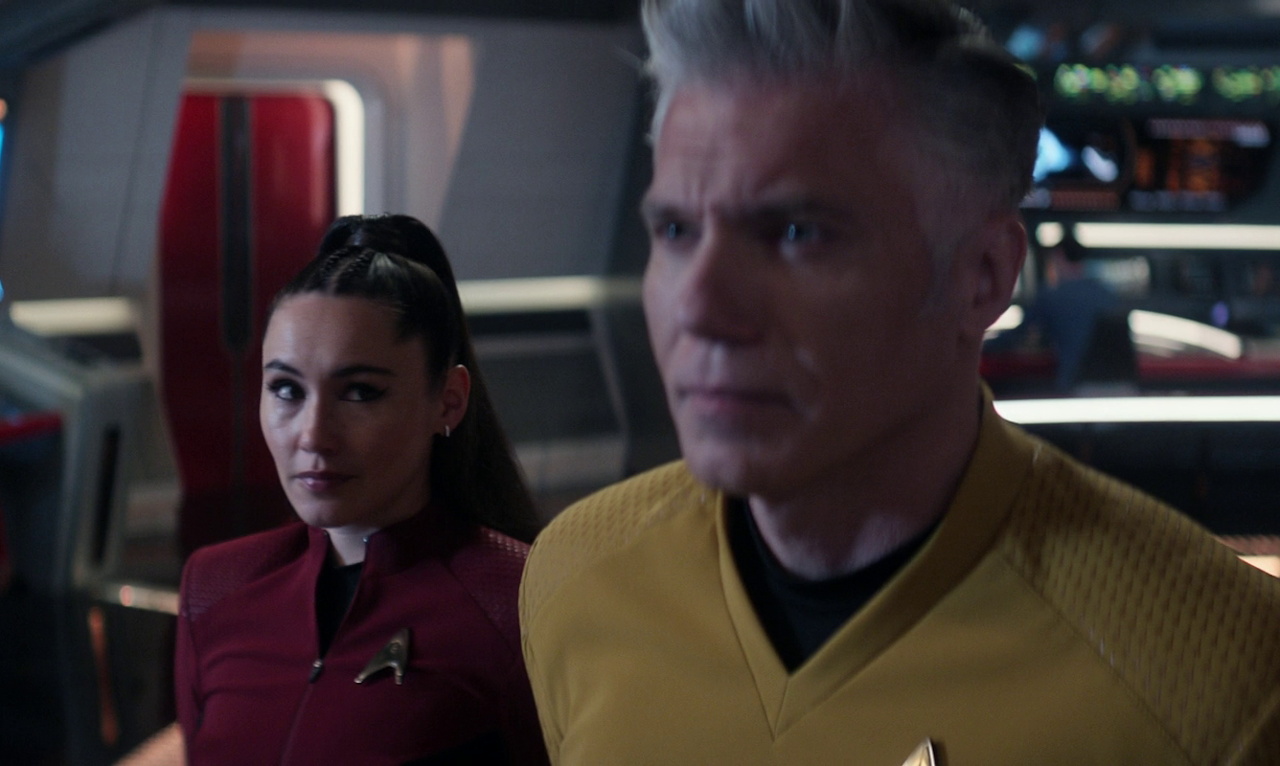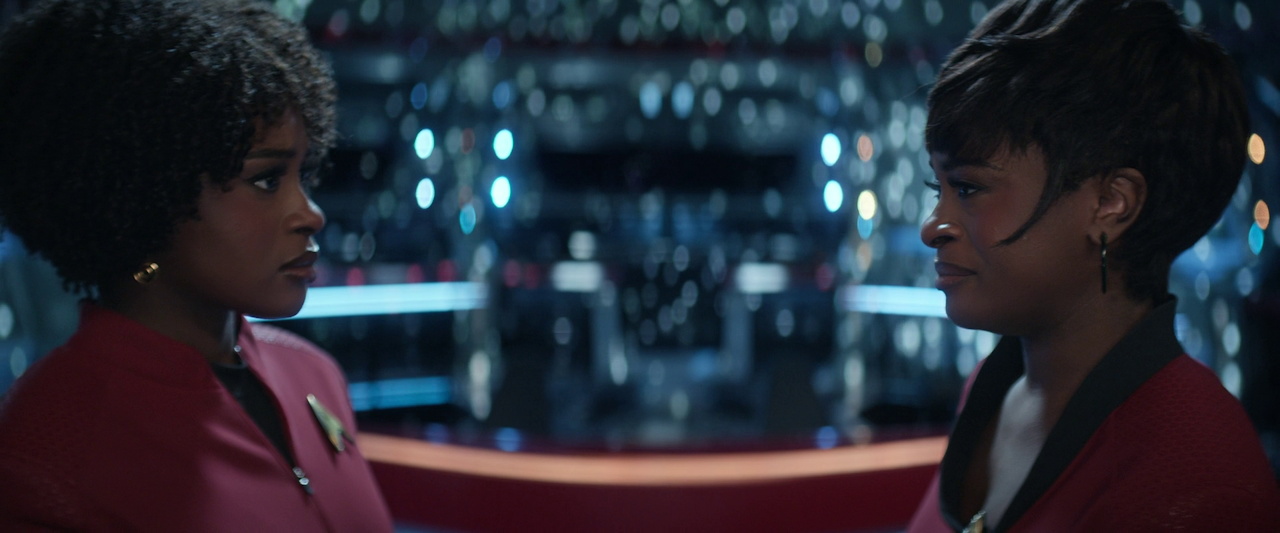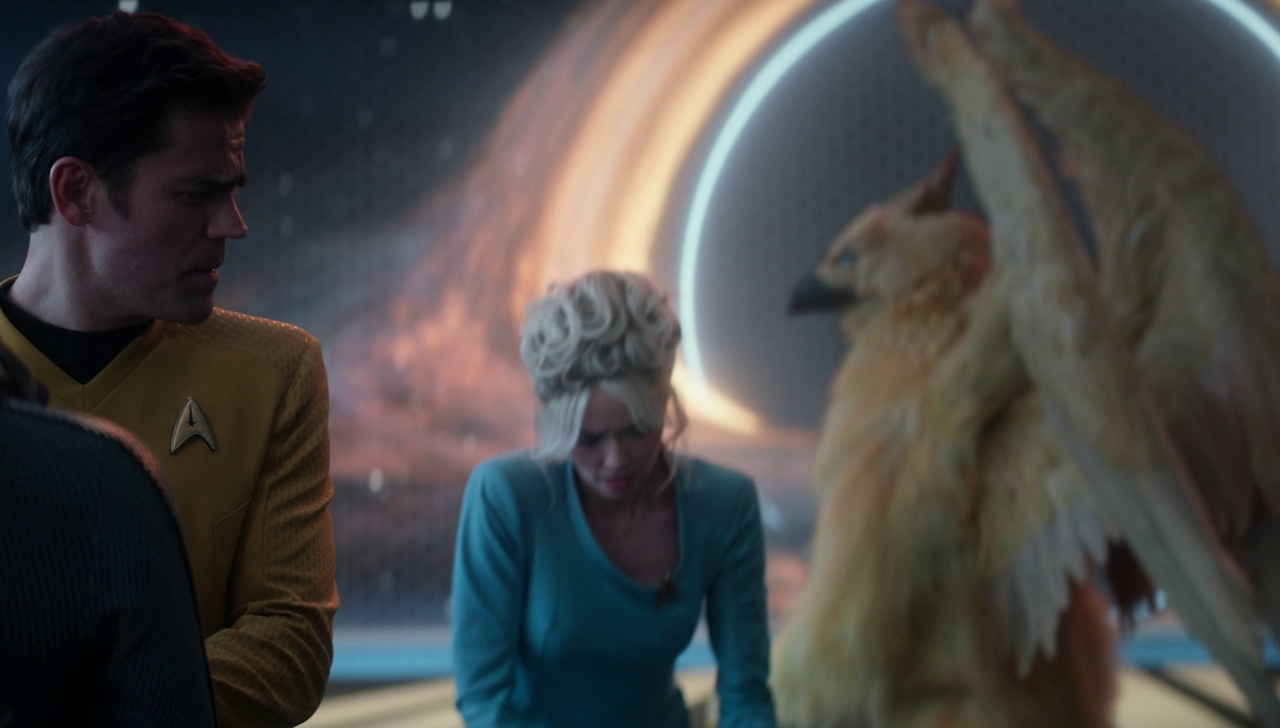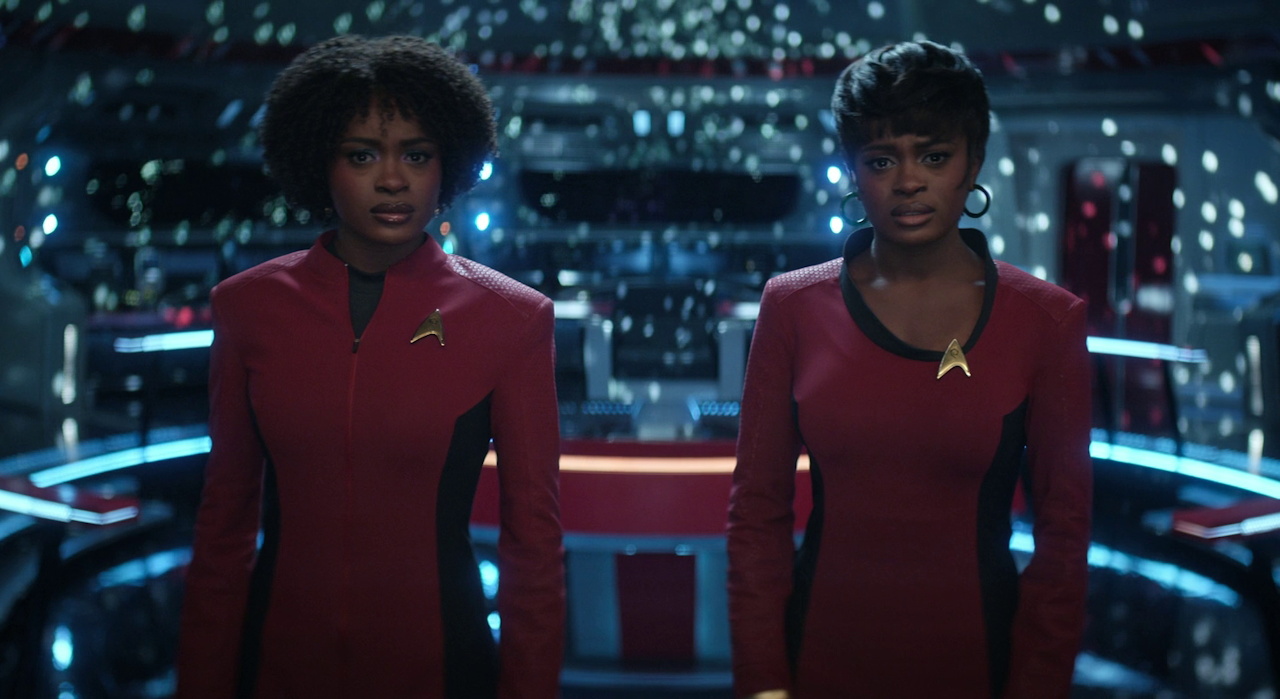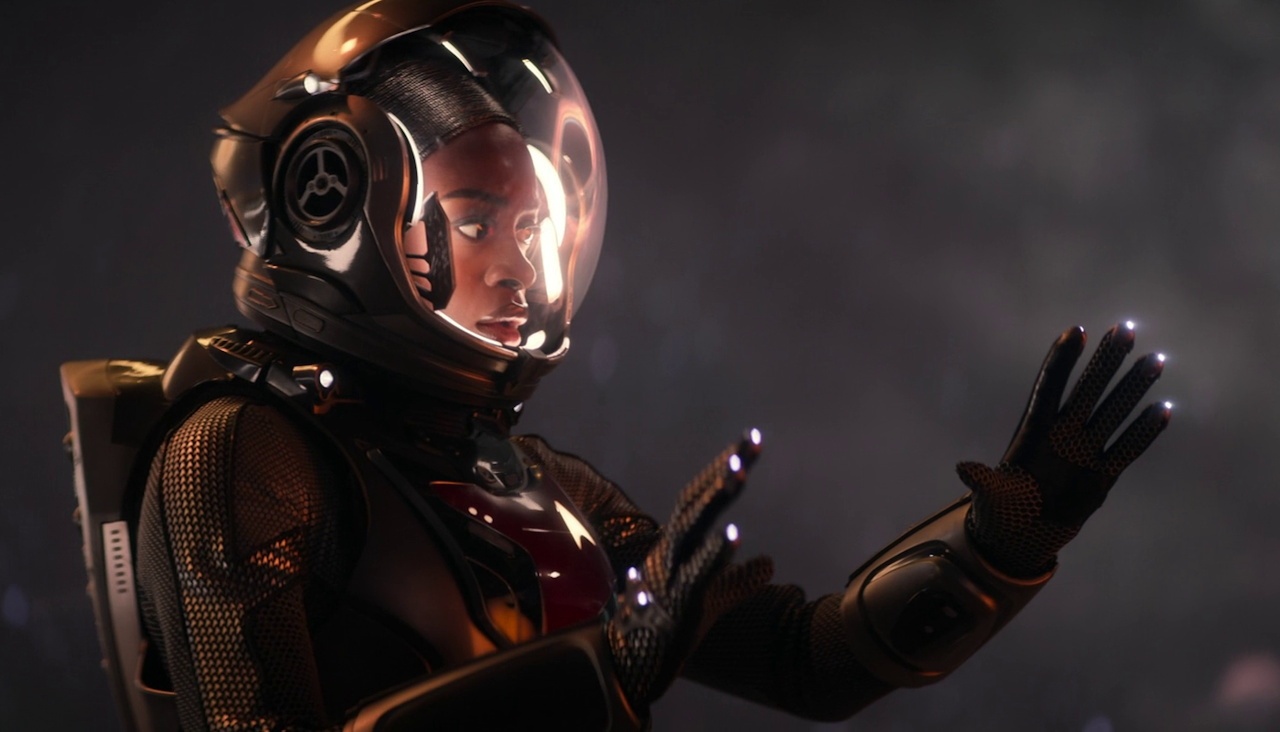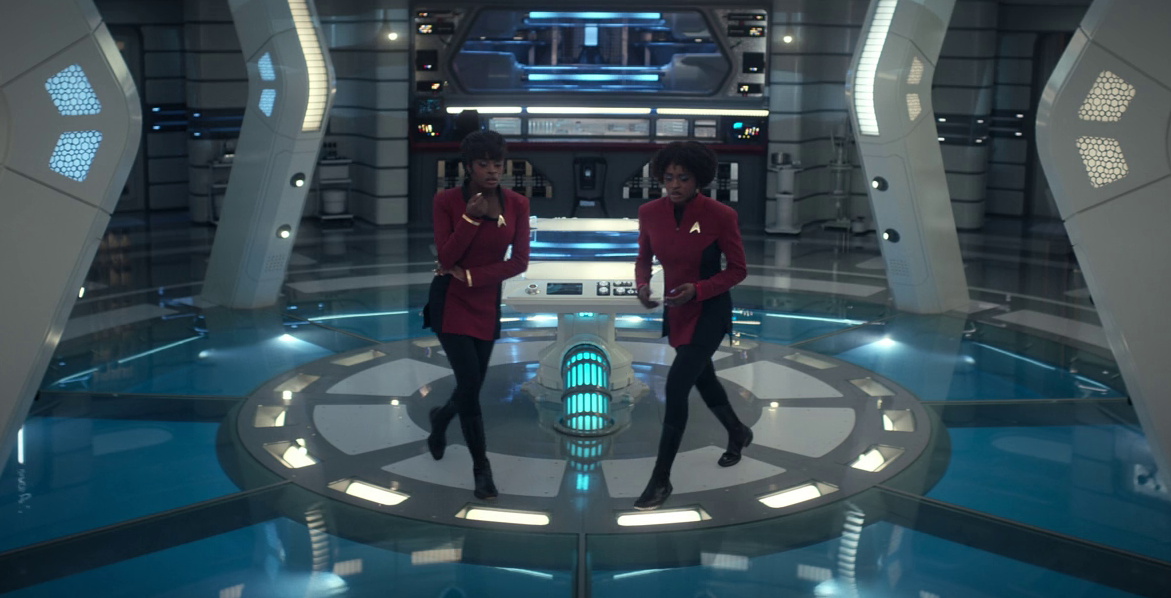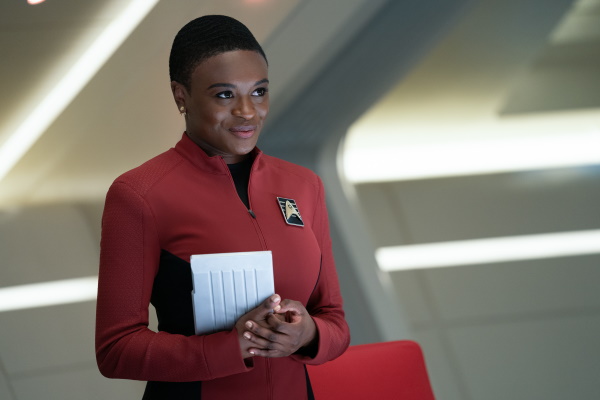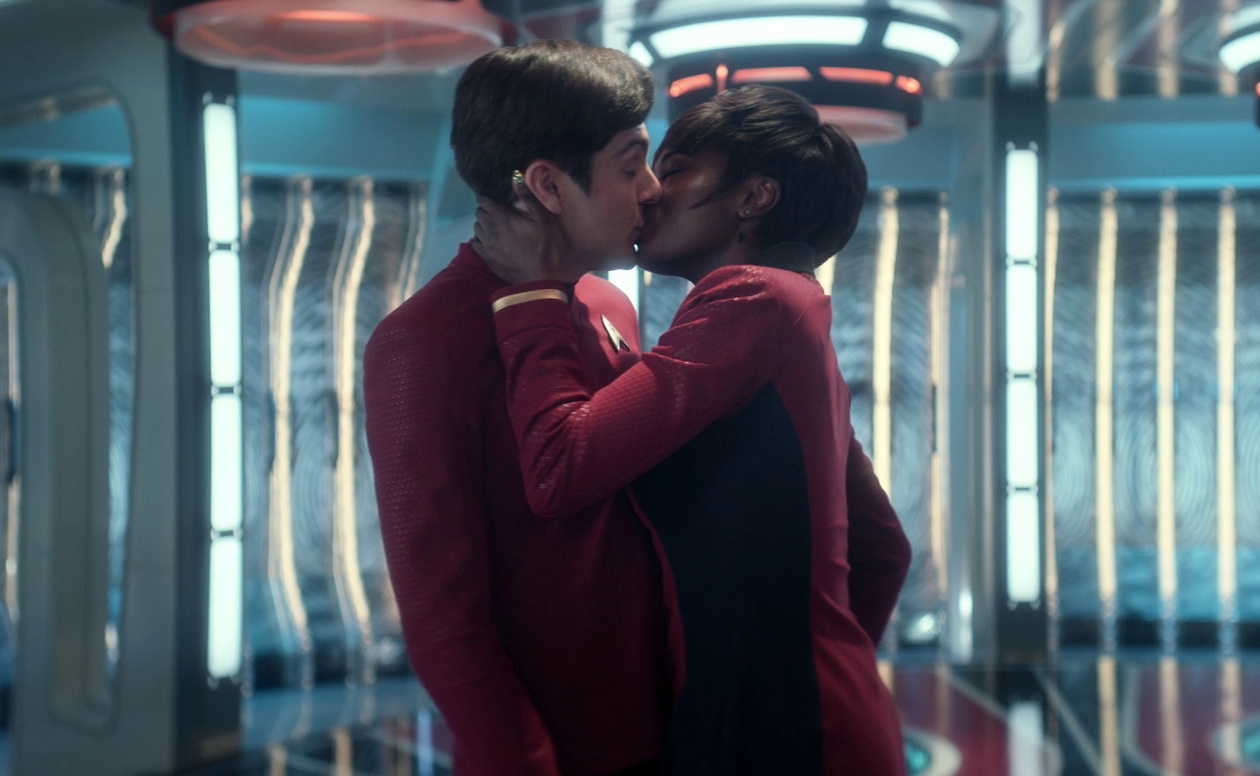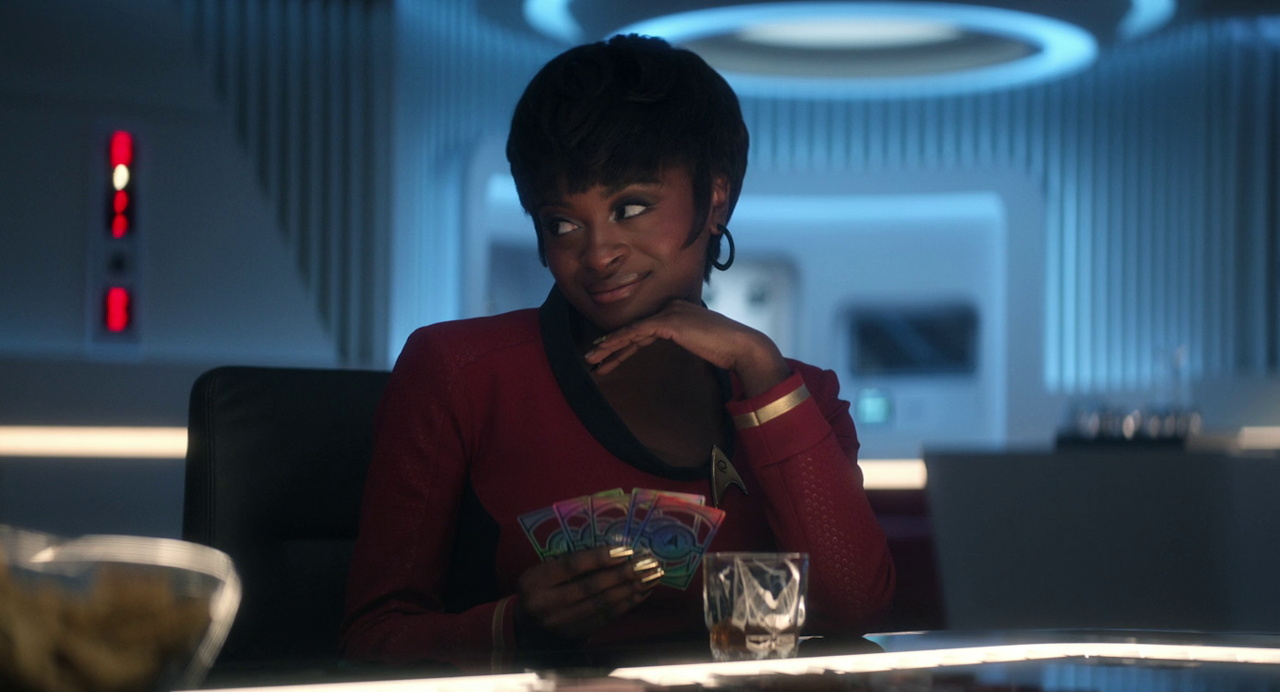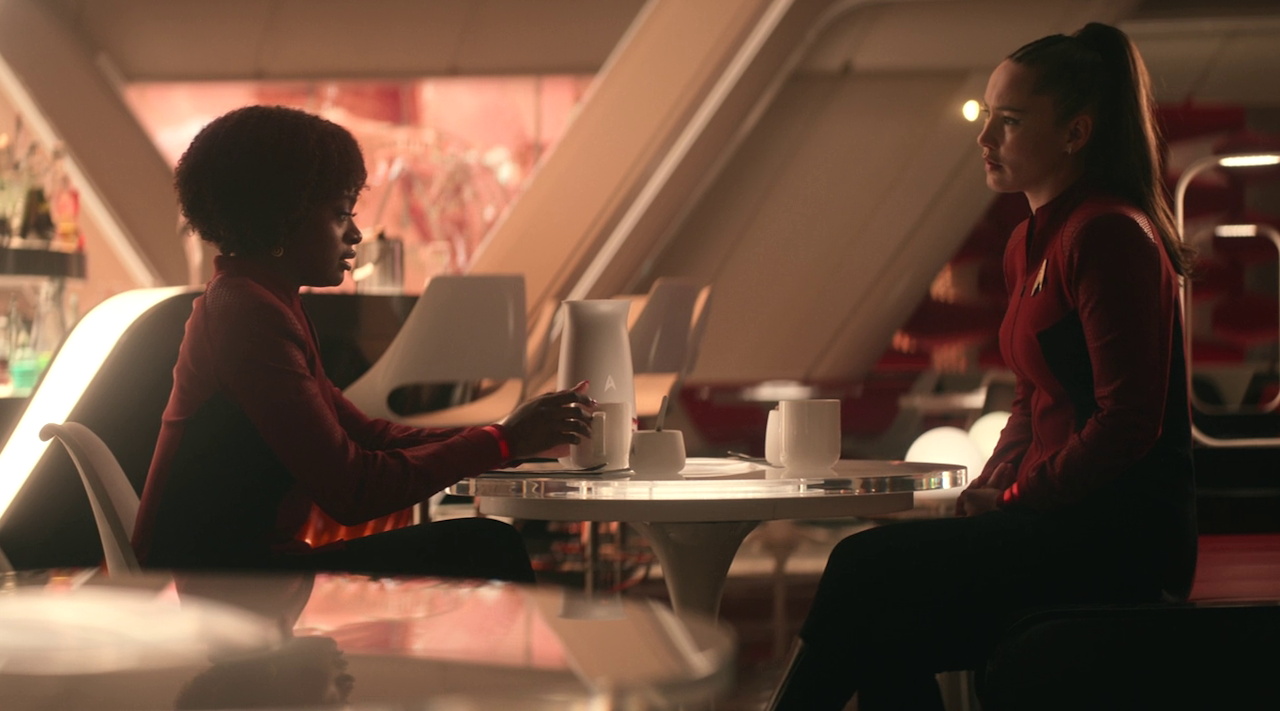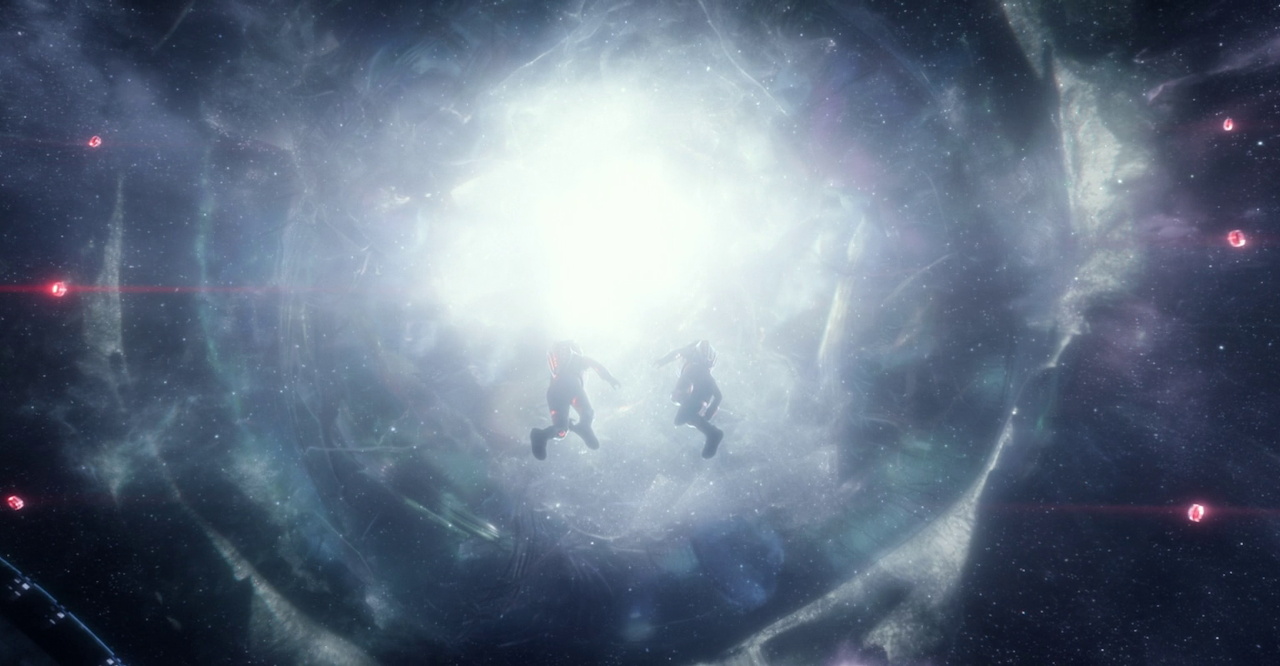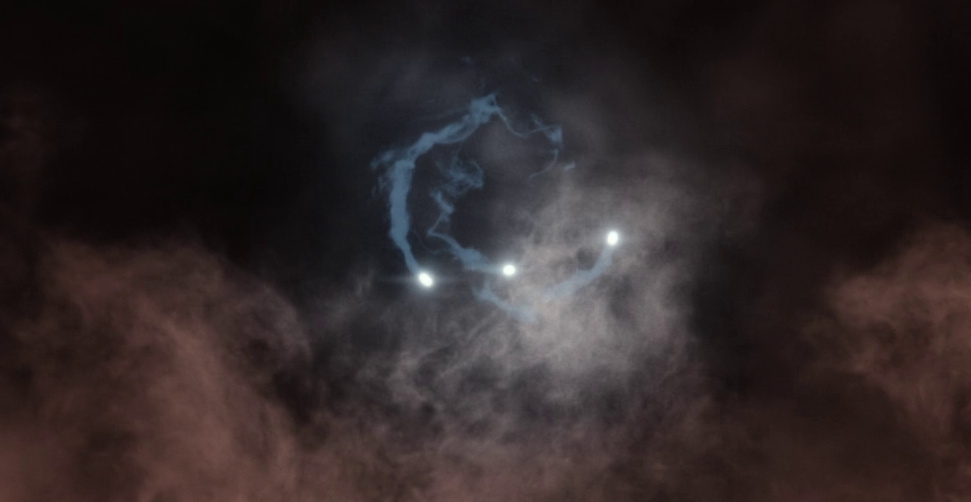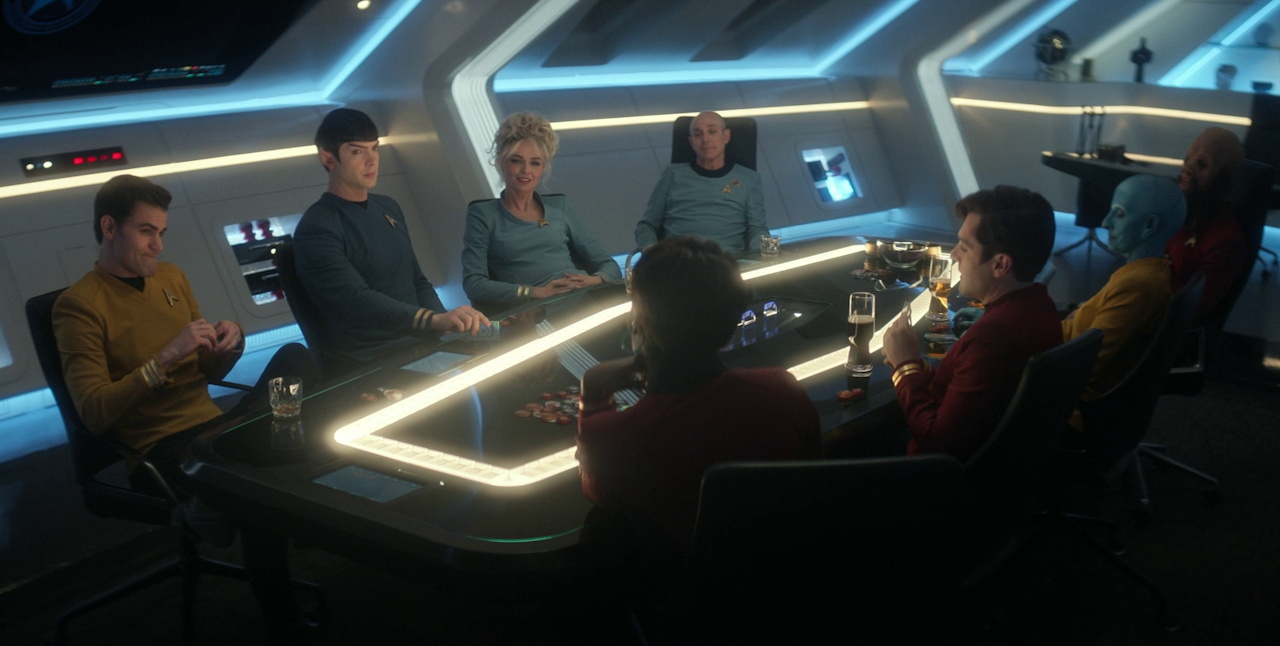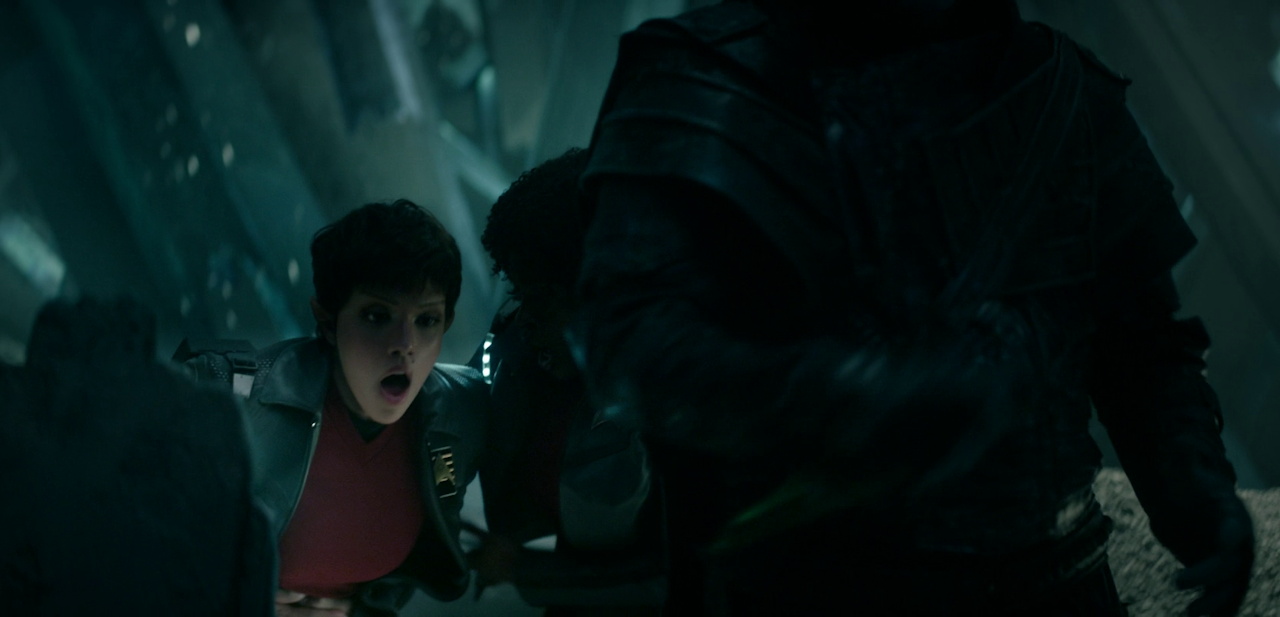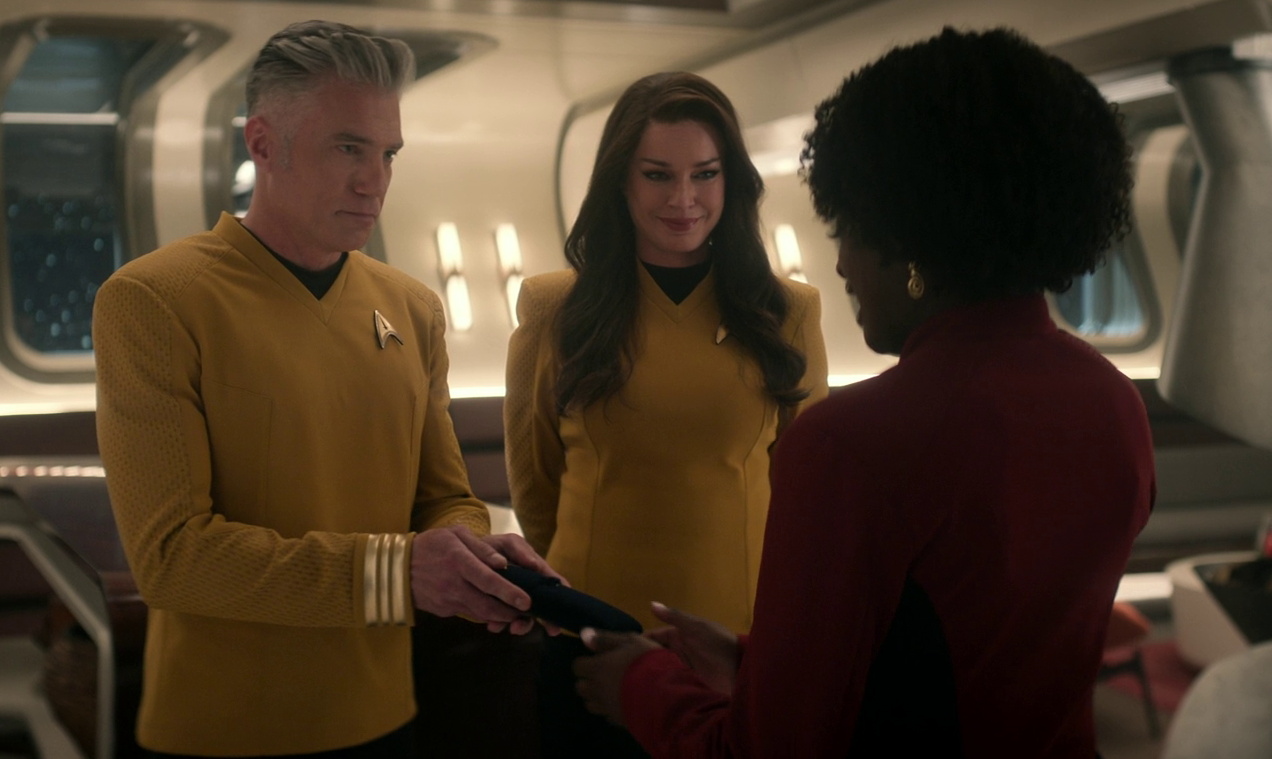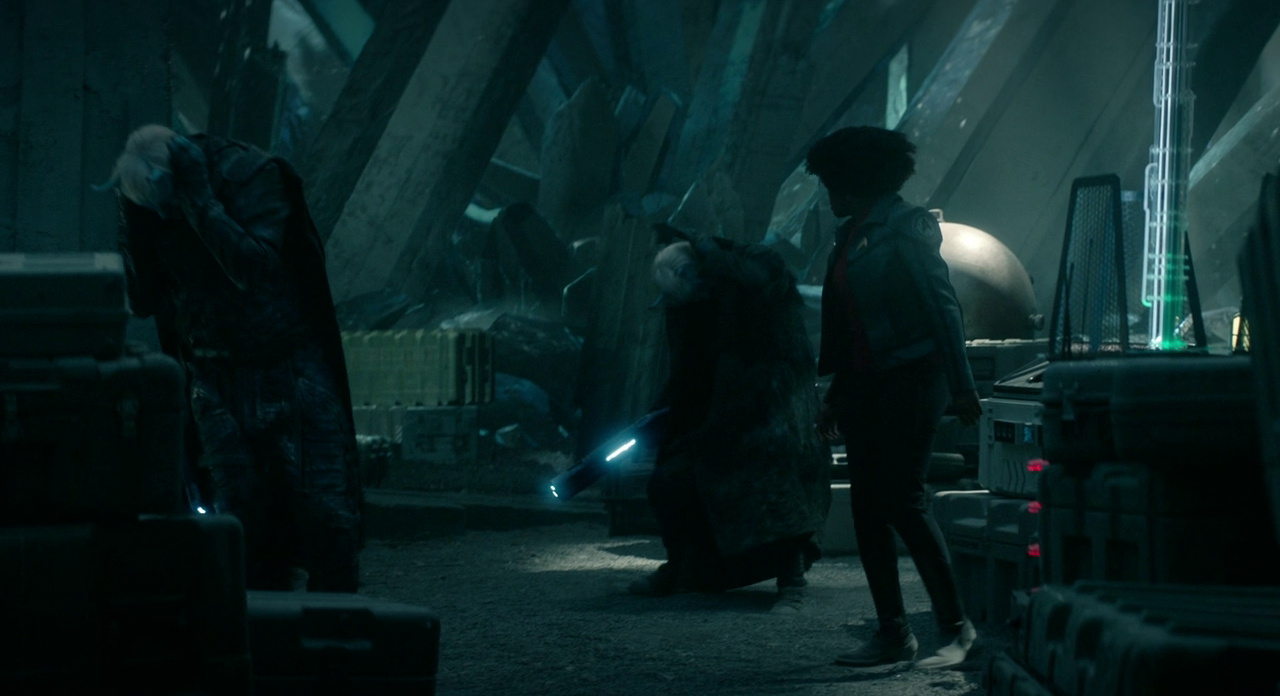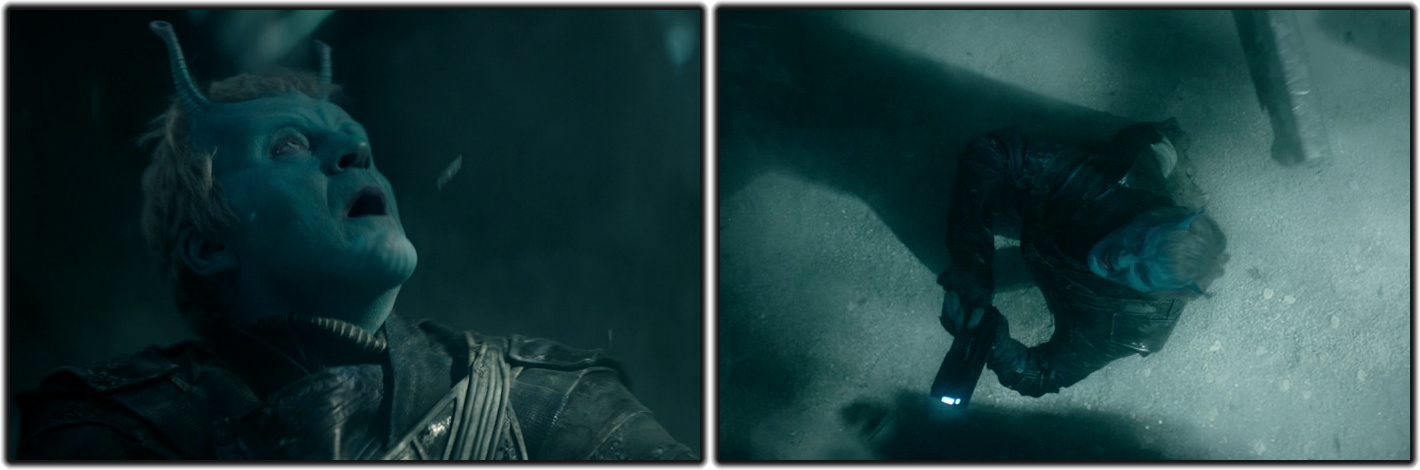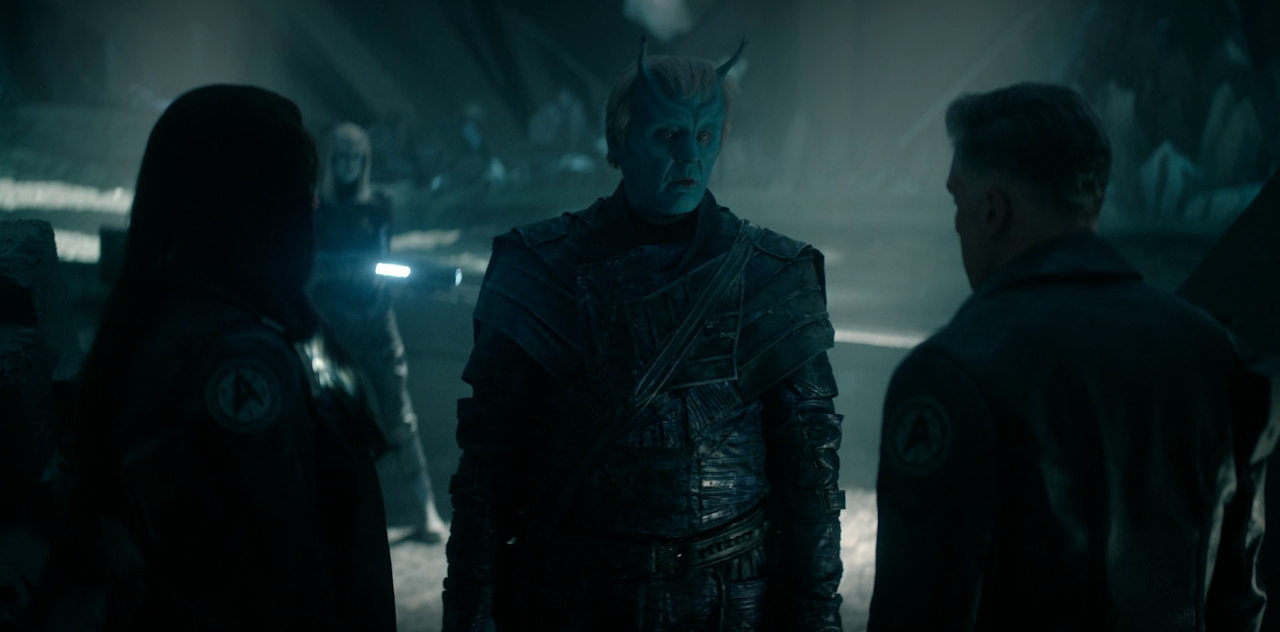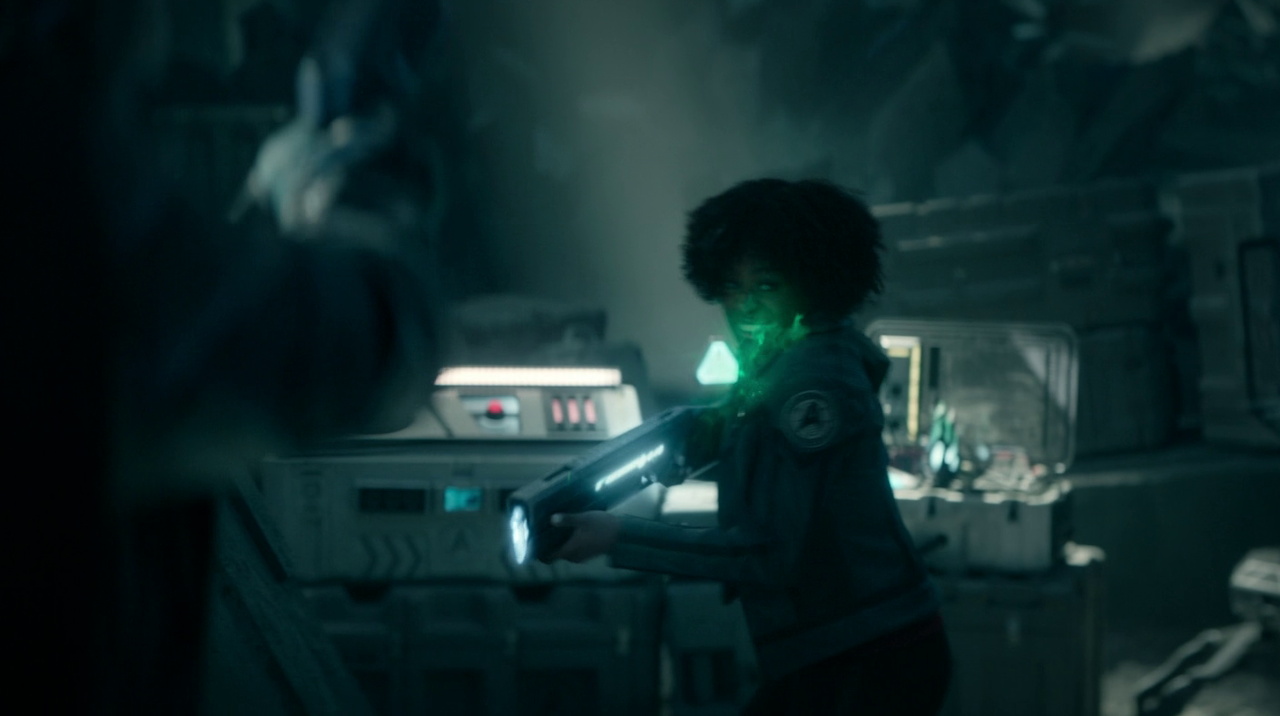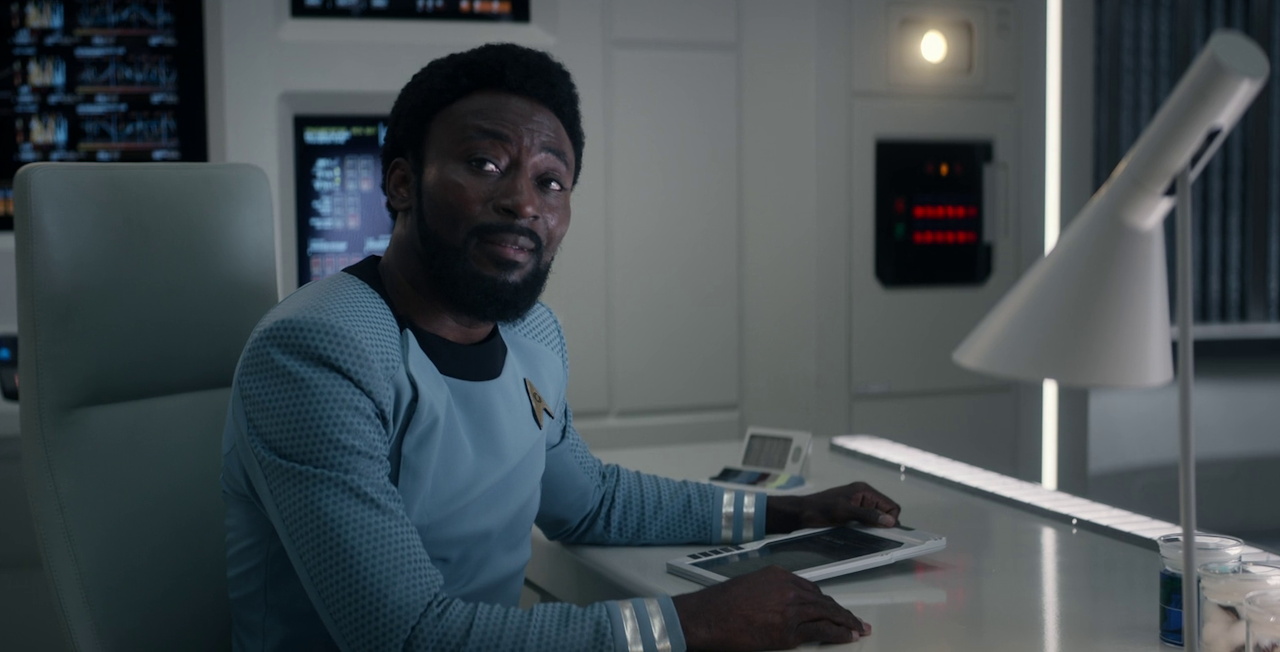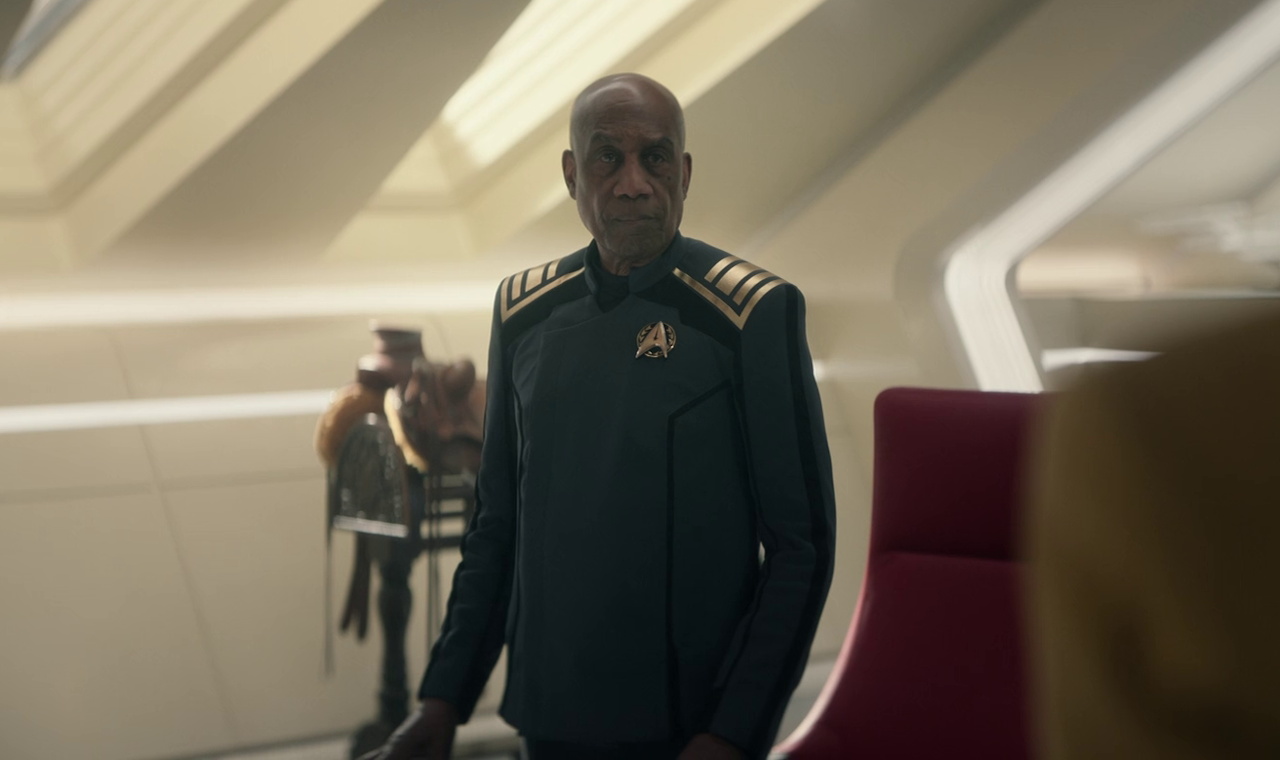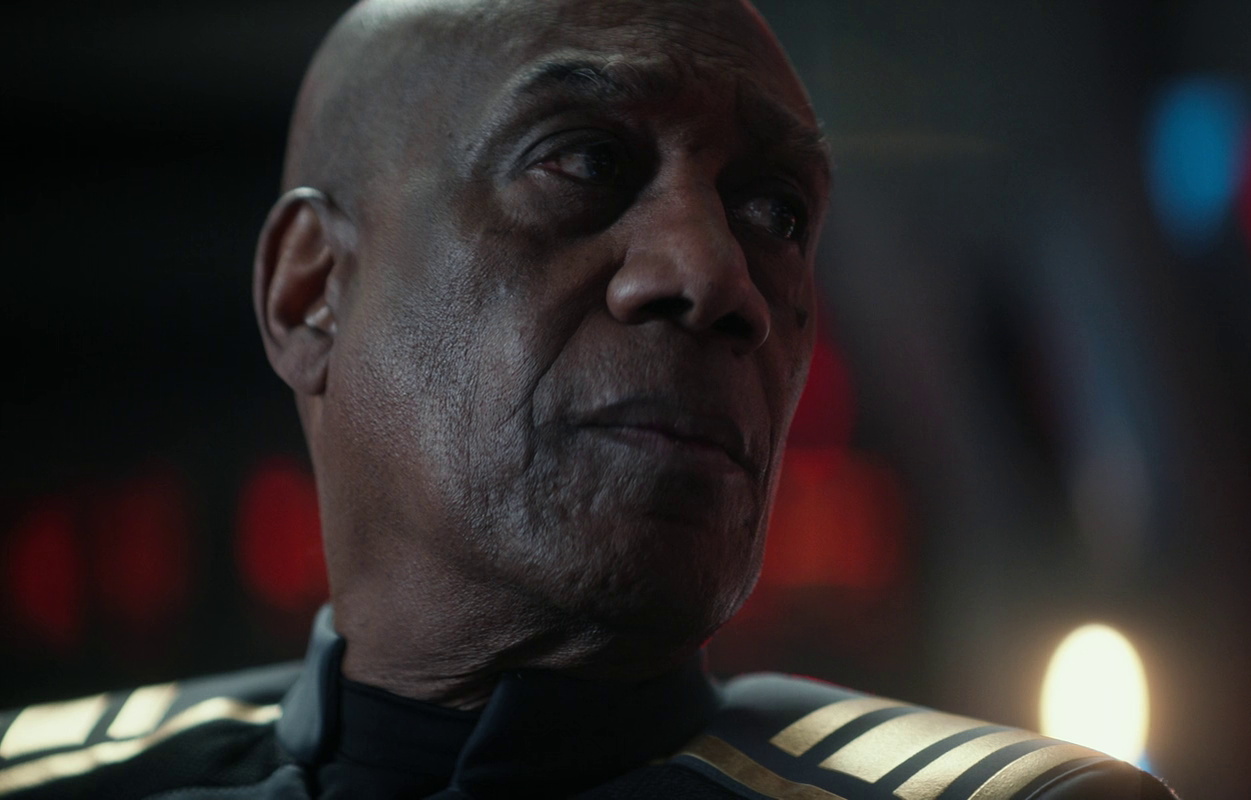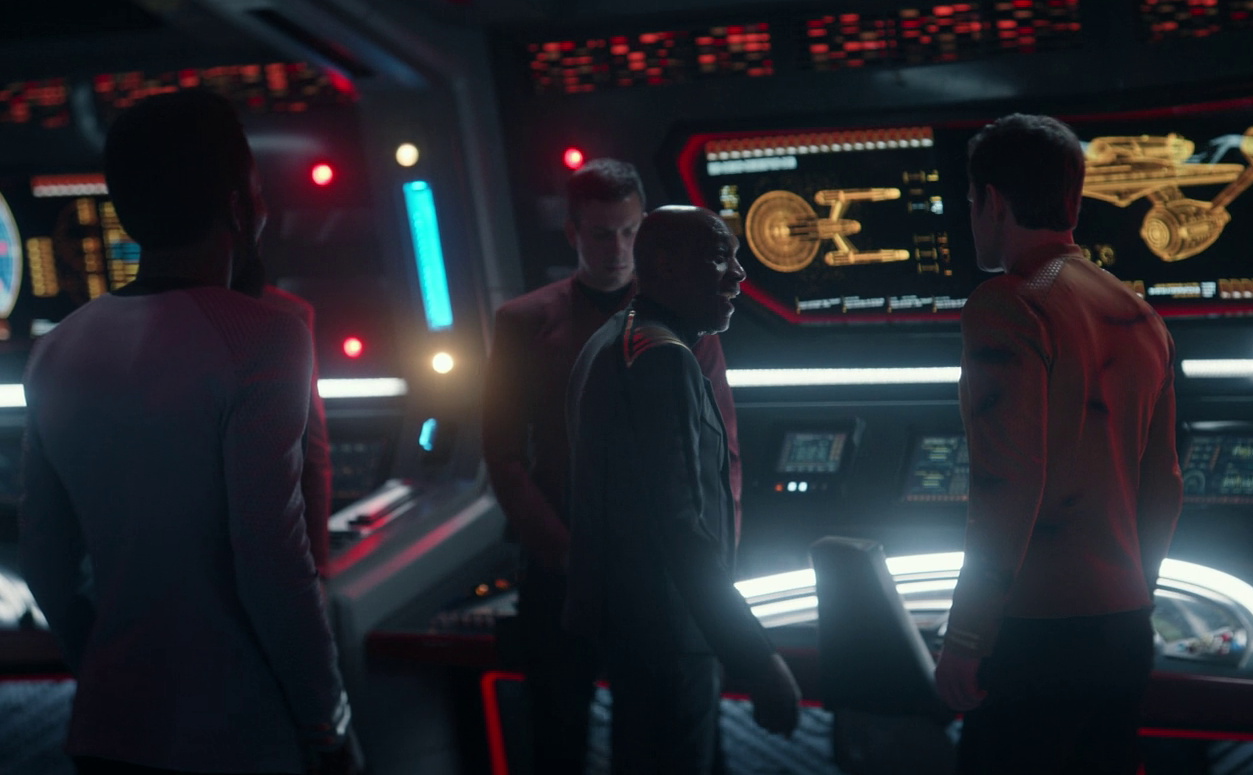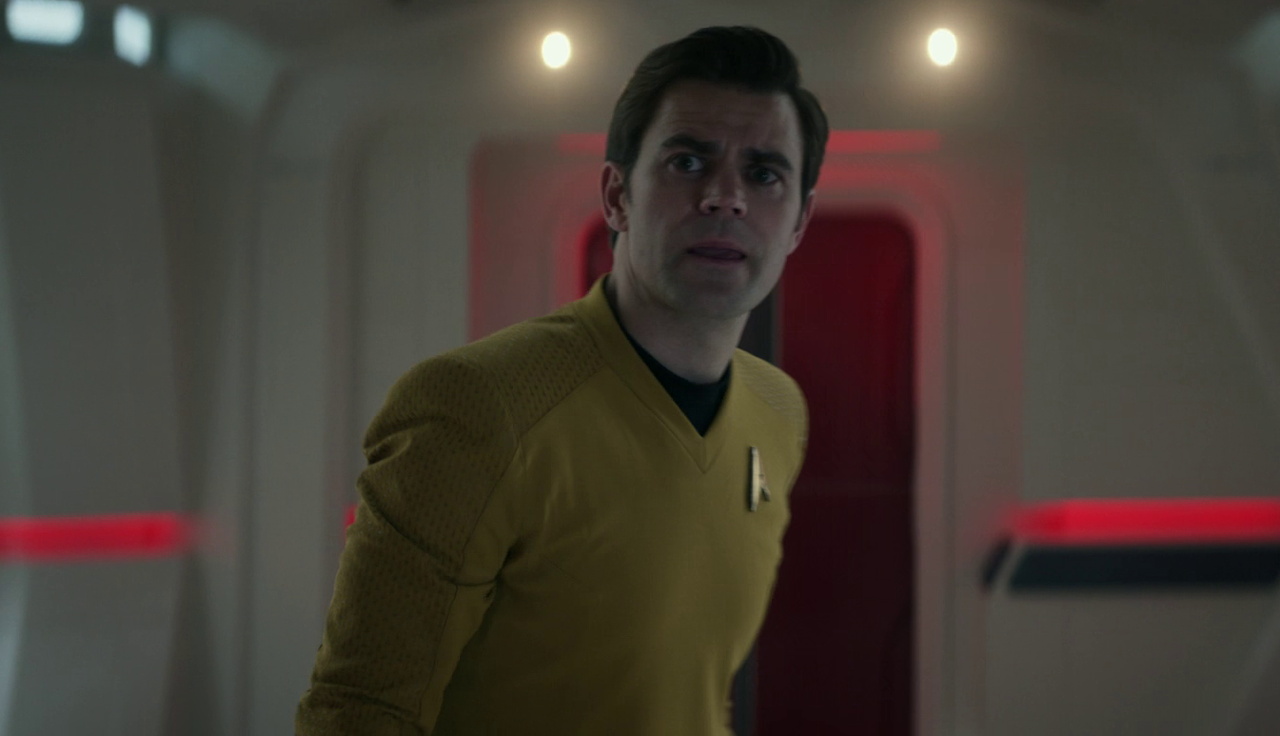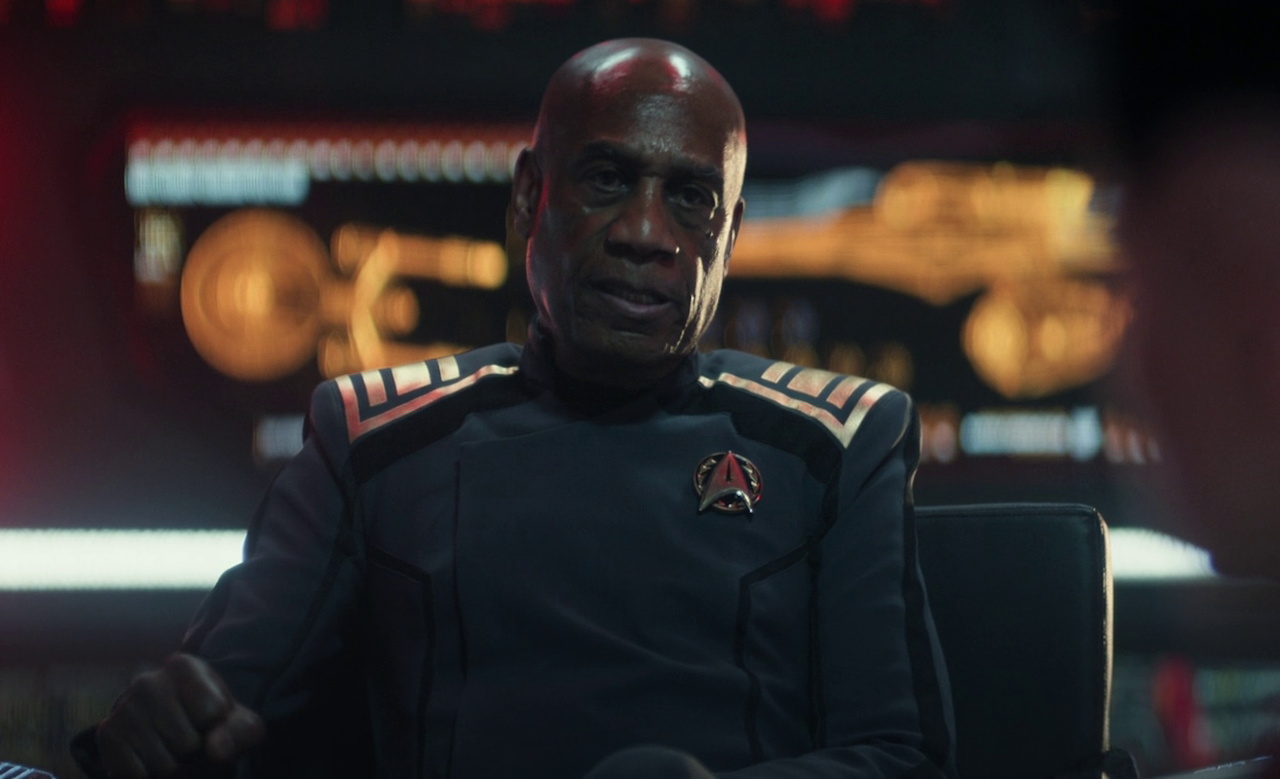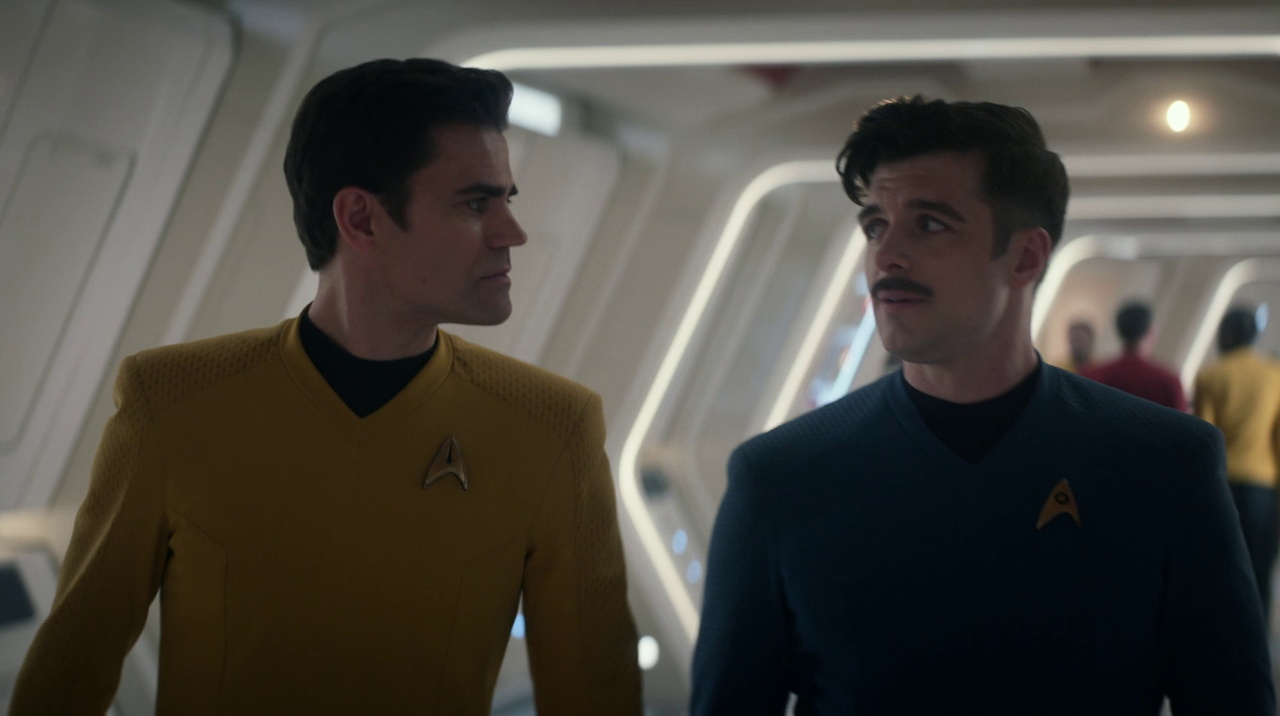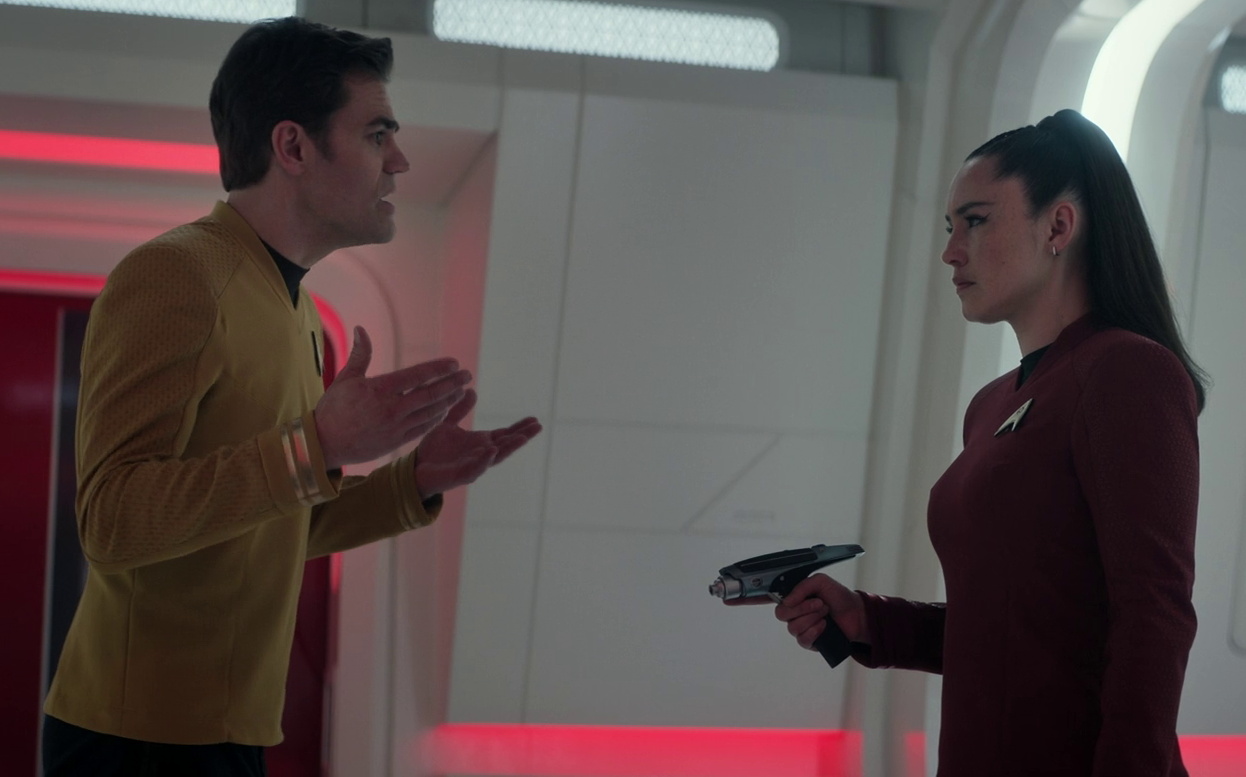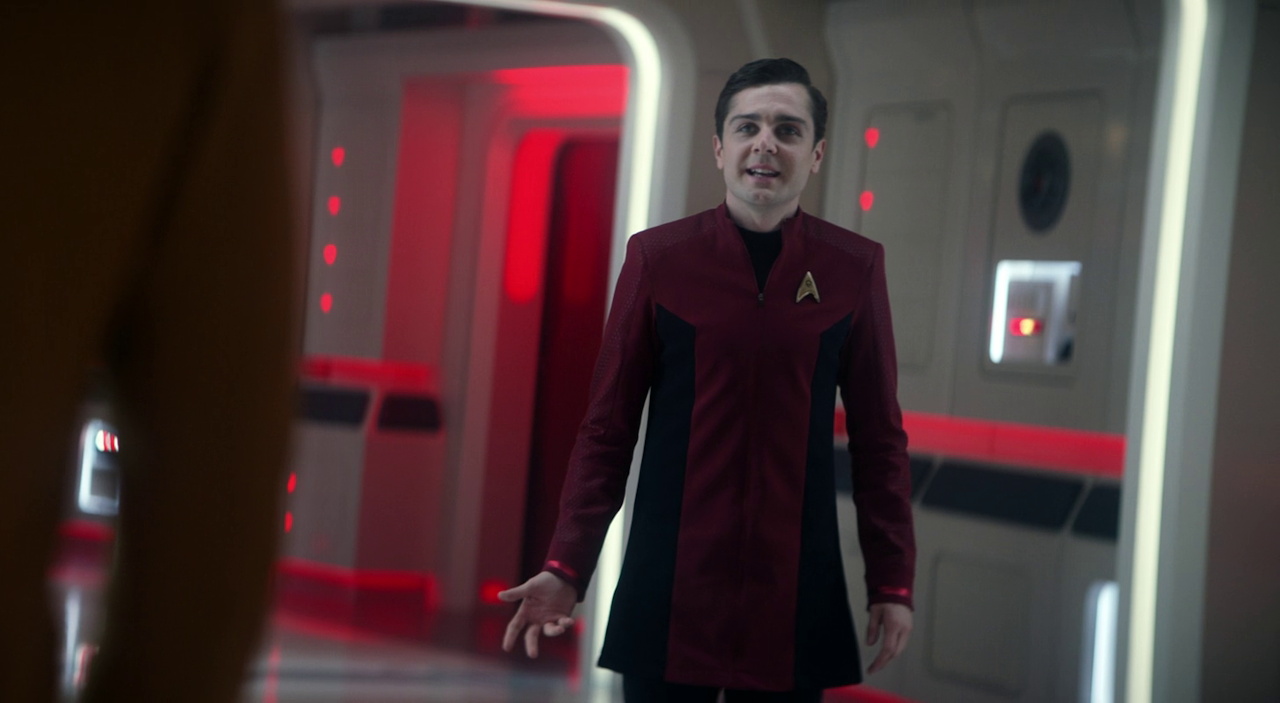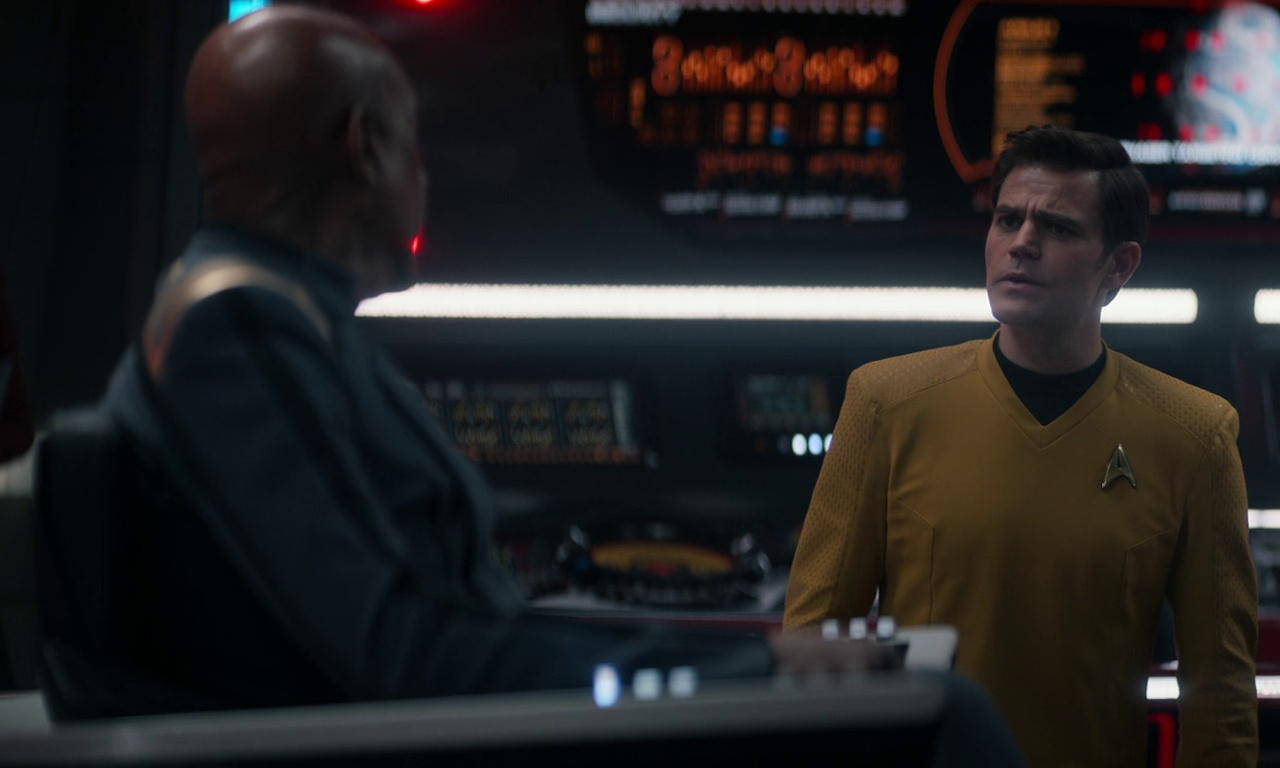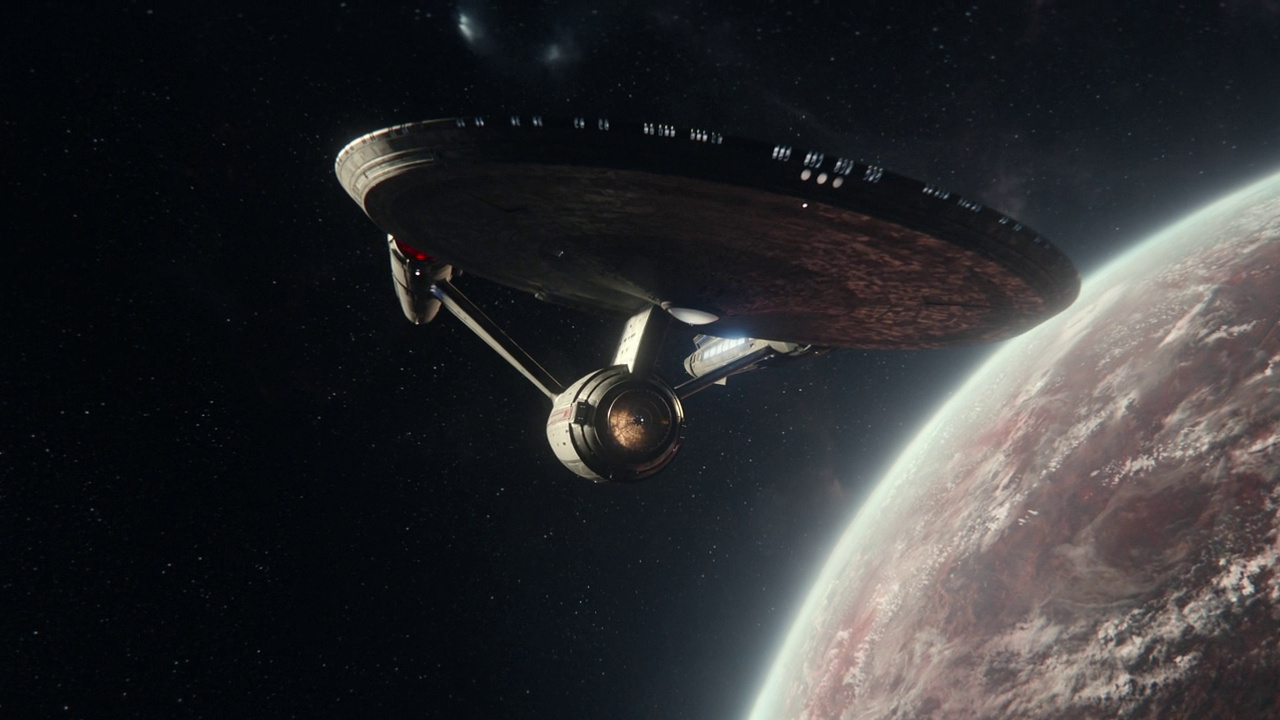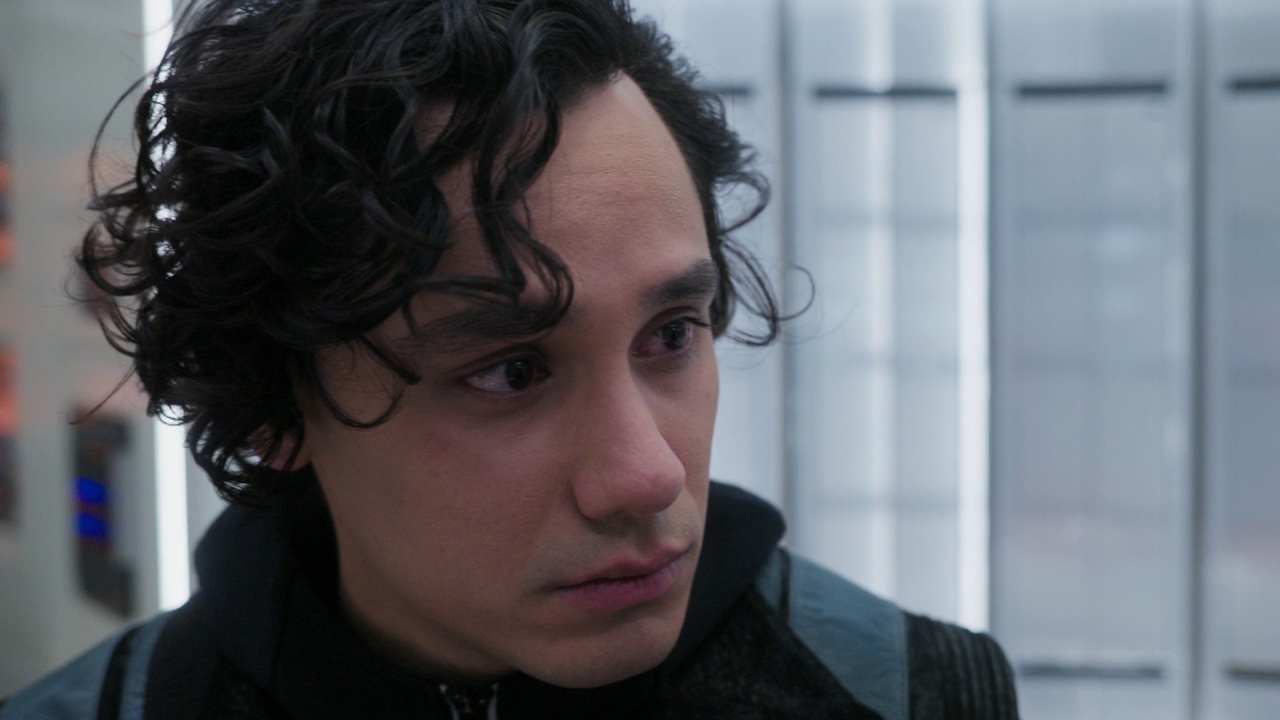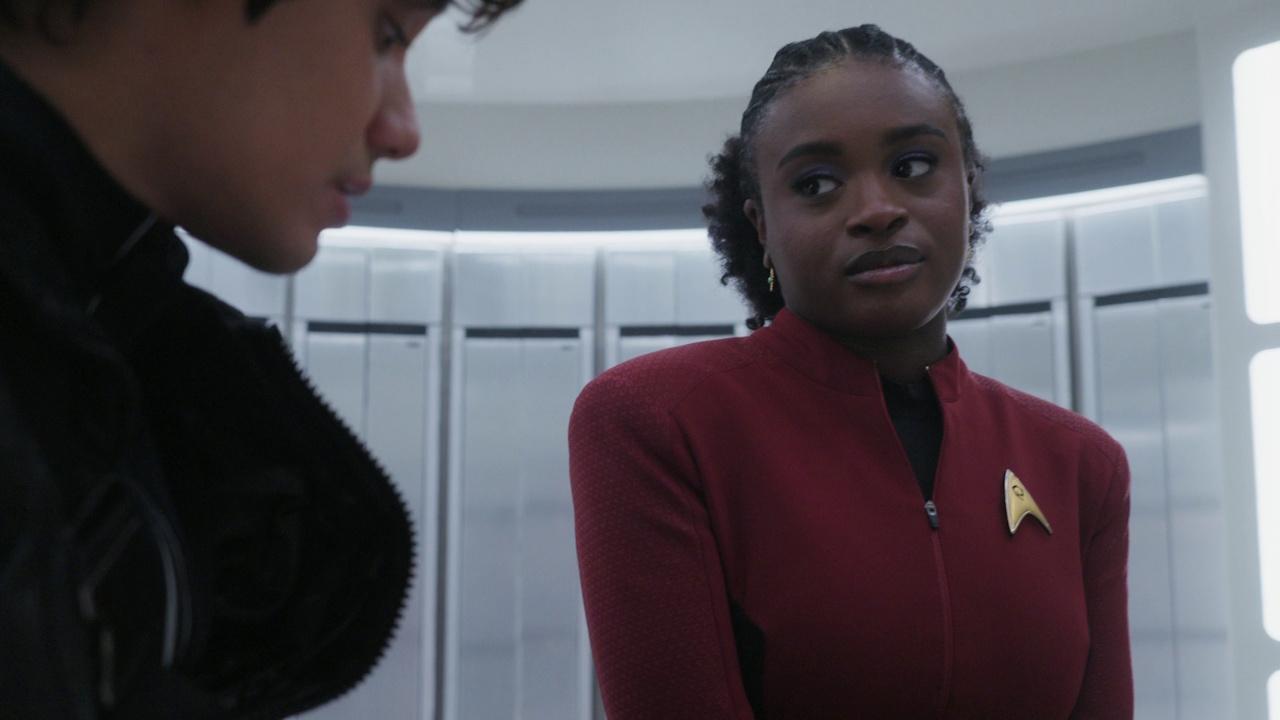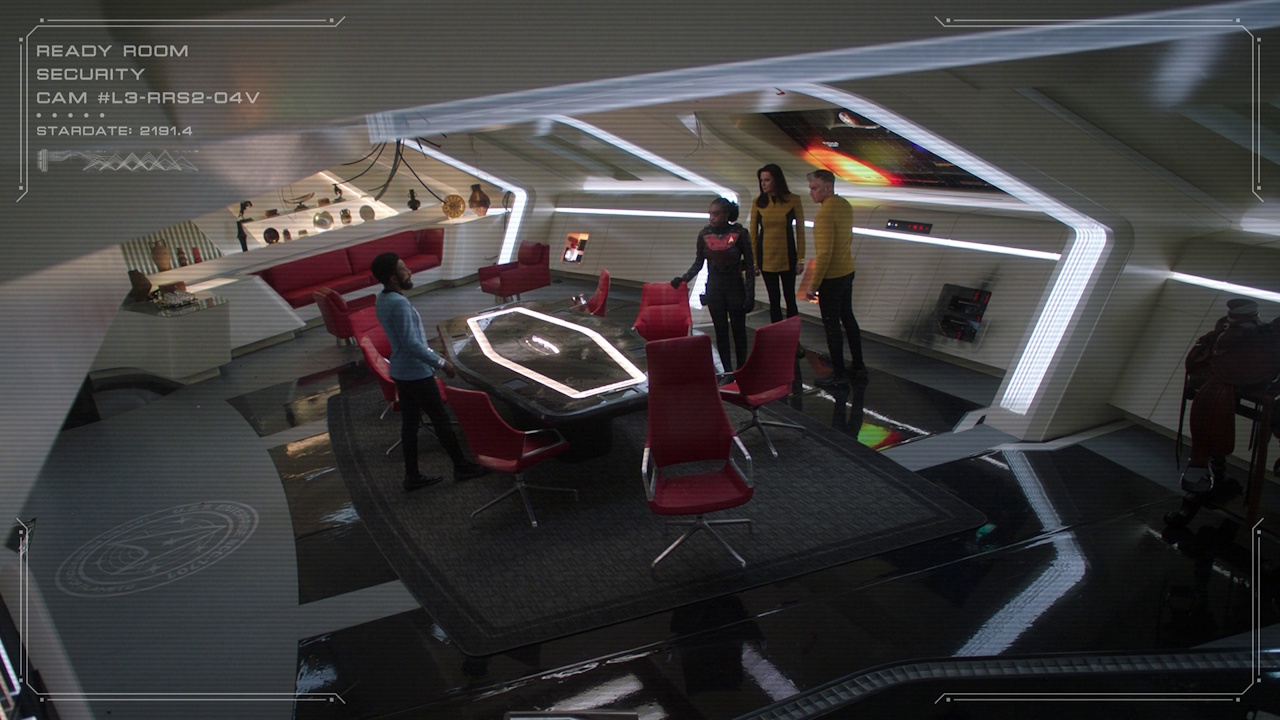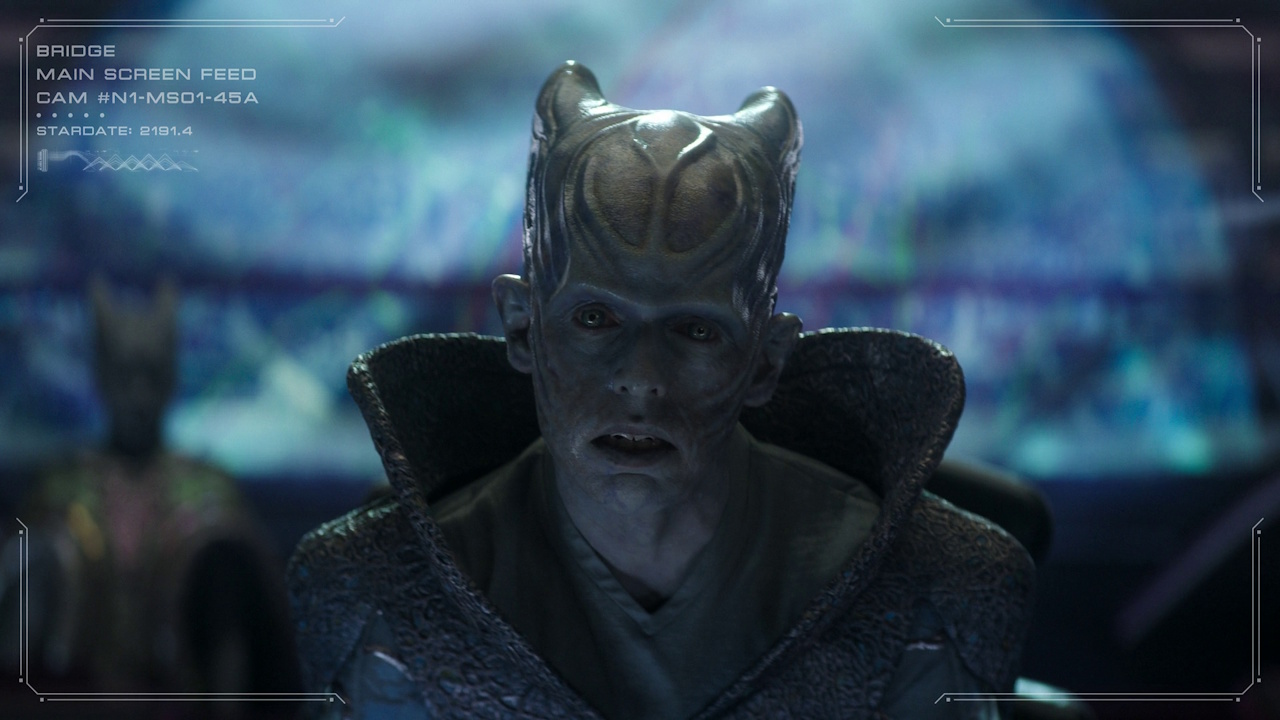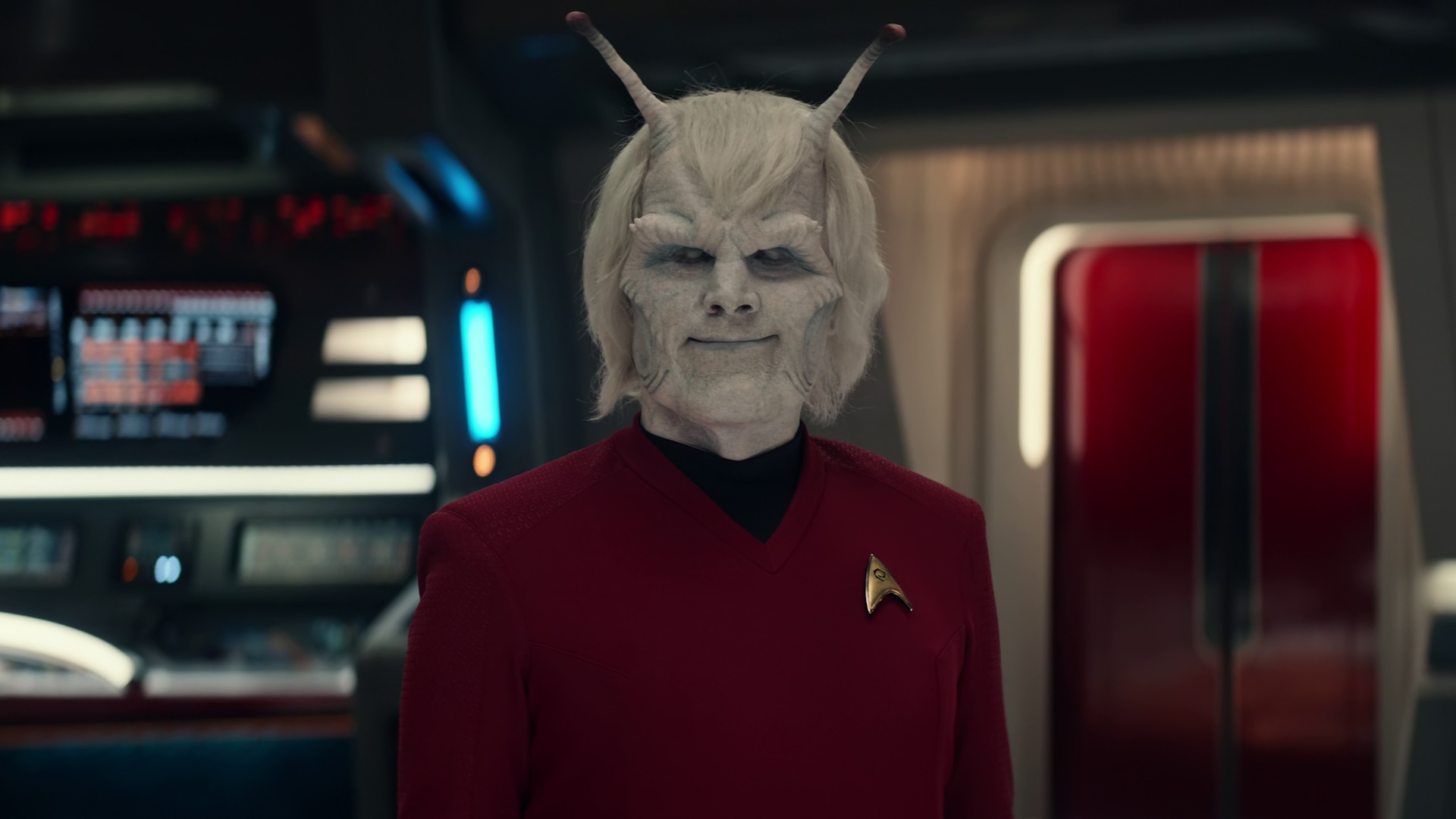
Star Trek: Strange New Worlds Episode Review – Season 4, Episode 4: A Case of Chiaroscuro

A Star Trek-themed spoiler warning (black and white)

Spoiler Warning: There are spoilers ahead for Star Trek: Strange New Worlds Seasons 1-4. Spoilers are also present for the following Star Trek productions: The Original Series, The Search for Spock, The Next Generation, Deep Space Nine, Enterprise, and Lower Decks.

I think I ought to start this week’s review with a bit of an explanation of how I try to approach new episodes of Star Trek. On the one hand, I’m obviously going to tell you whether I personally enjoyed the story, the character moments, the presentation, the score… all of that *subjective* stuff. But I also try to keep in mind, when writing a review, what an episode was aiming for and how well it measured up to those objectives.

That’s why I can look at an episode like last week’s Human Best Friend and say that I truly enjoyed its sense of humour, its pastiche of films like The Hangover, and its genuinely well-written character moments – and why, conversely, I’ll tell you that the otherwise outstanding horror offering The Griffin Incident came with a glaring narrative flaw. I’ll even admit – however begrudingly – that Season 2’s Subspace Rhapsody was competently made, musically solid, and even had some solid characterisation… even though I will literally never watch that absolute travesty ever again!

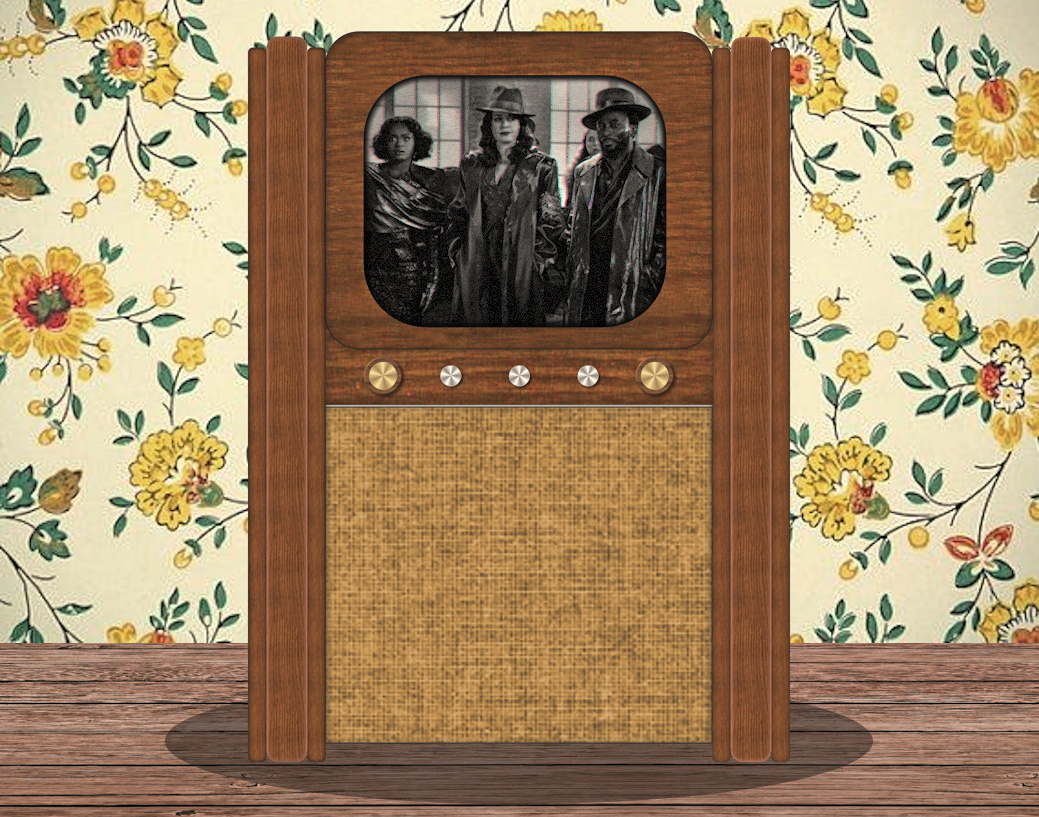
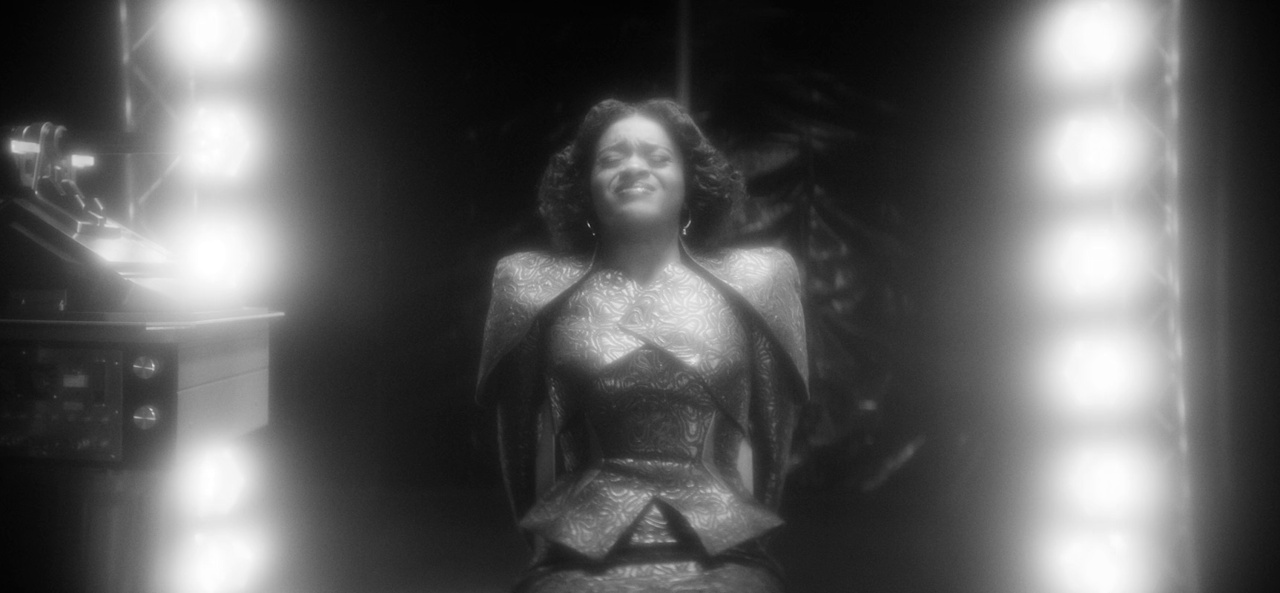
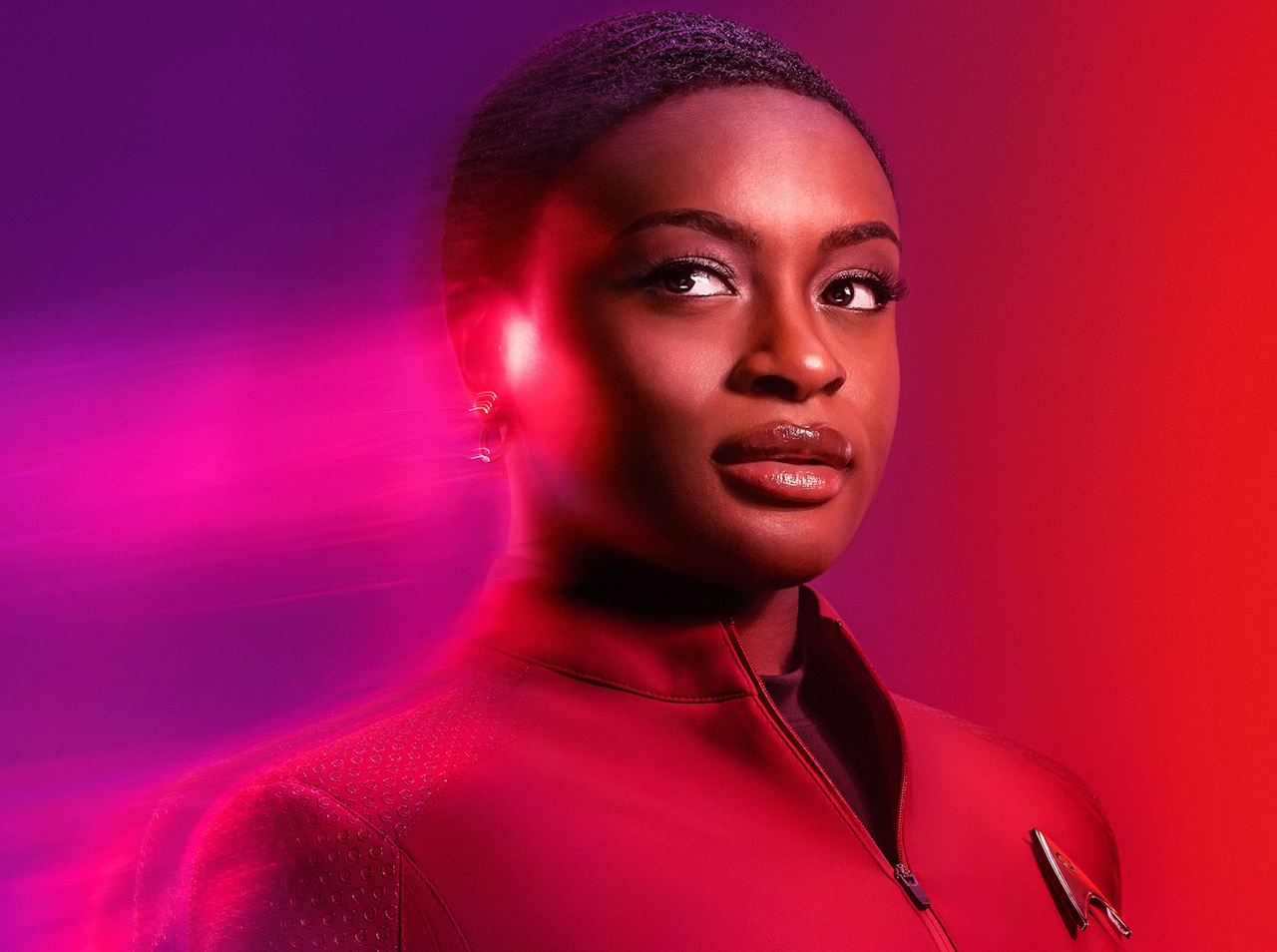
Stylised promo photo from Star Trek SNW 4x04 showing a vintage television set
I considered doing all of the still frames like this… but don’t worry, I thought better of it!

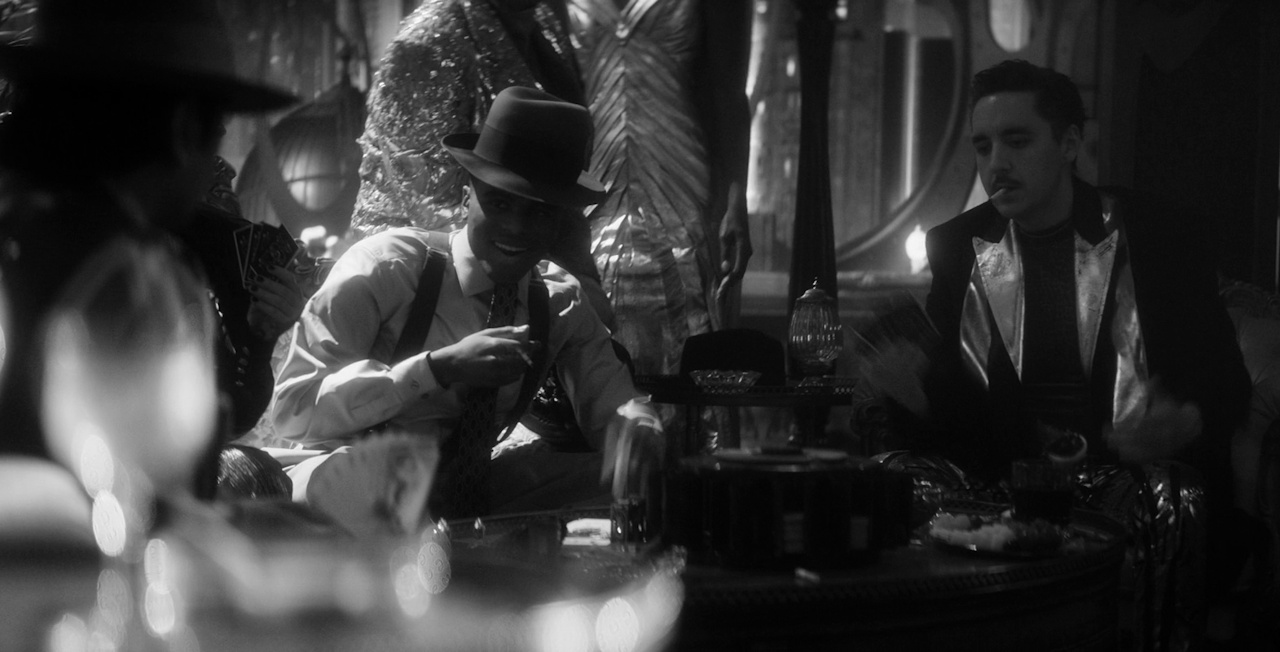
Why did I start my review of A Case of Chiaroscuro with that explanation-come-caveat? Well, the truth is… I *really* don’t like watching black-and-white films and TV shows. I realise that’s a horrible generalisation, and there are some exceptions – Christmas films, like Miracle on 34th Street, for instance. But, generally speaking, I just struggle to get immersed in black-and-white media, and *modern* productions which deliberately use black-and-white – as A Case of Chiaroscuro does – almost universally feel gimmicky and silly to me.

Again, this is a *subjective, not objective* take – but I wanted to be up front about my bias here, because my general dislike of black-and-white has undoubtedly coloured (pun very much intended) my thoughts on A Case of Chiaroscuro.

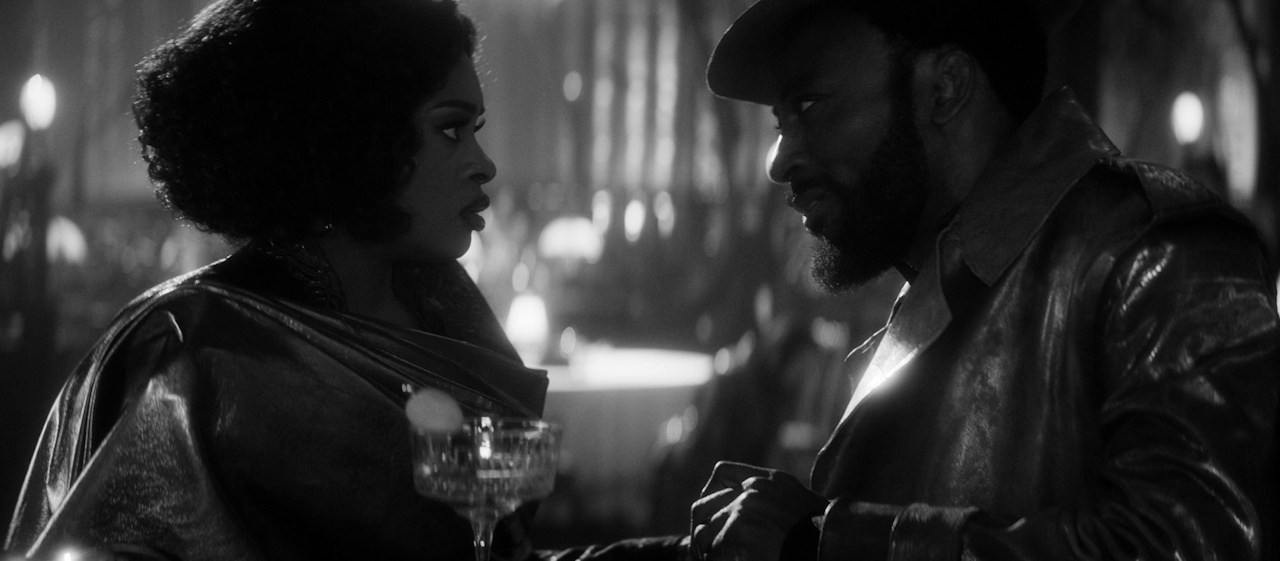
A Case of Chiaroscuro was a faithful recreation of the kind of ’30s and ’40s noir movies that inspired it. Not only in terms of its use of black-and-white, but the entire episode’s visual style and presentation all drew from that source, as did its score. Narratively, A Case of Chiaroscuro also leaned heavily on noir and melodrama from a bygone era. And regardless of whether I *liked* that in a personal sense… I respect the commitment to the bit.

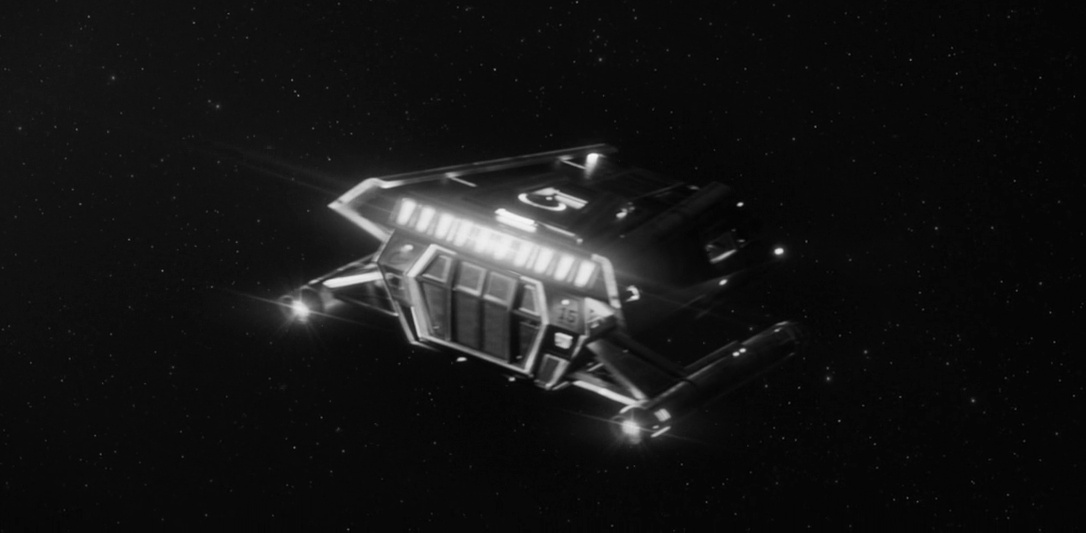
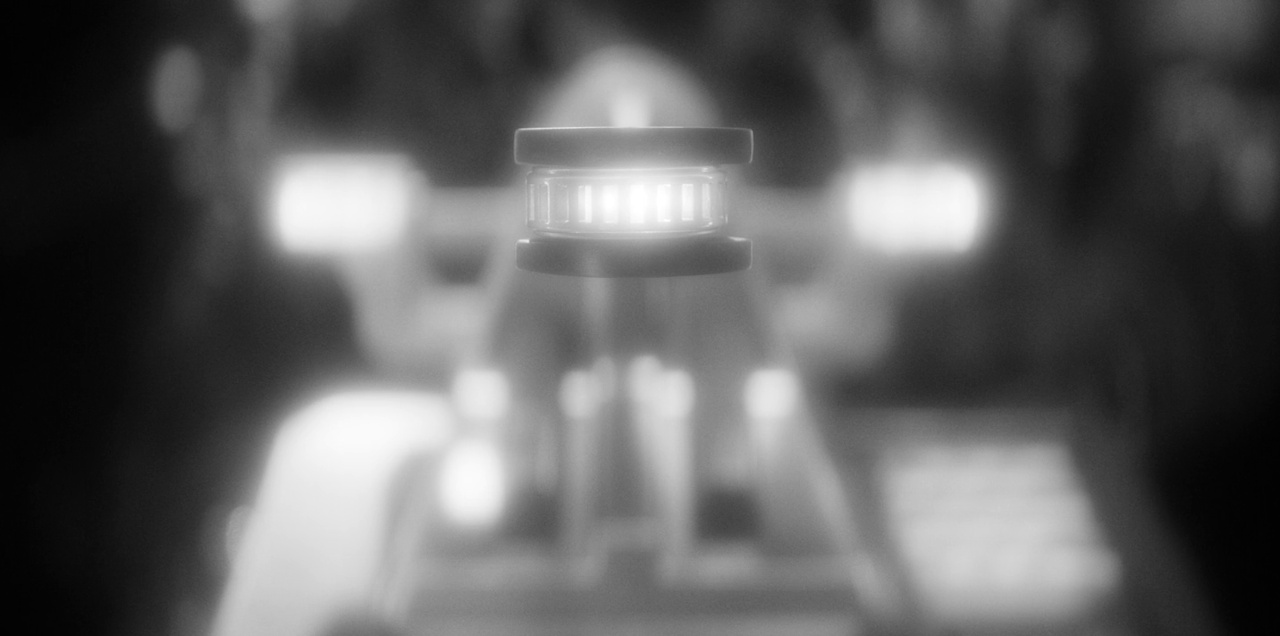
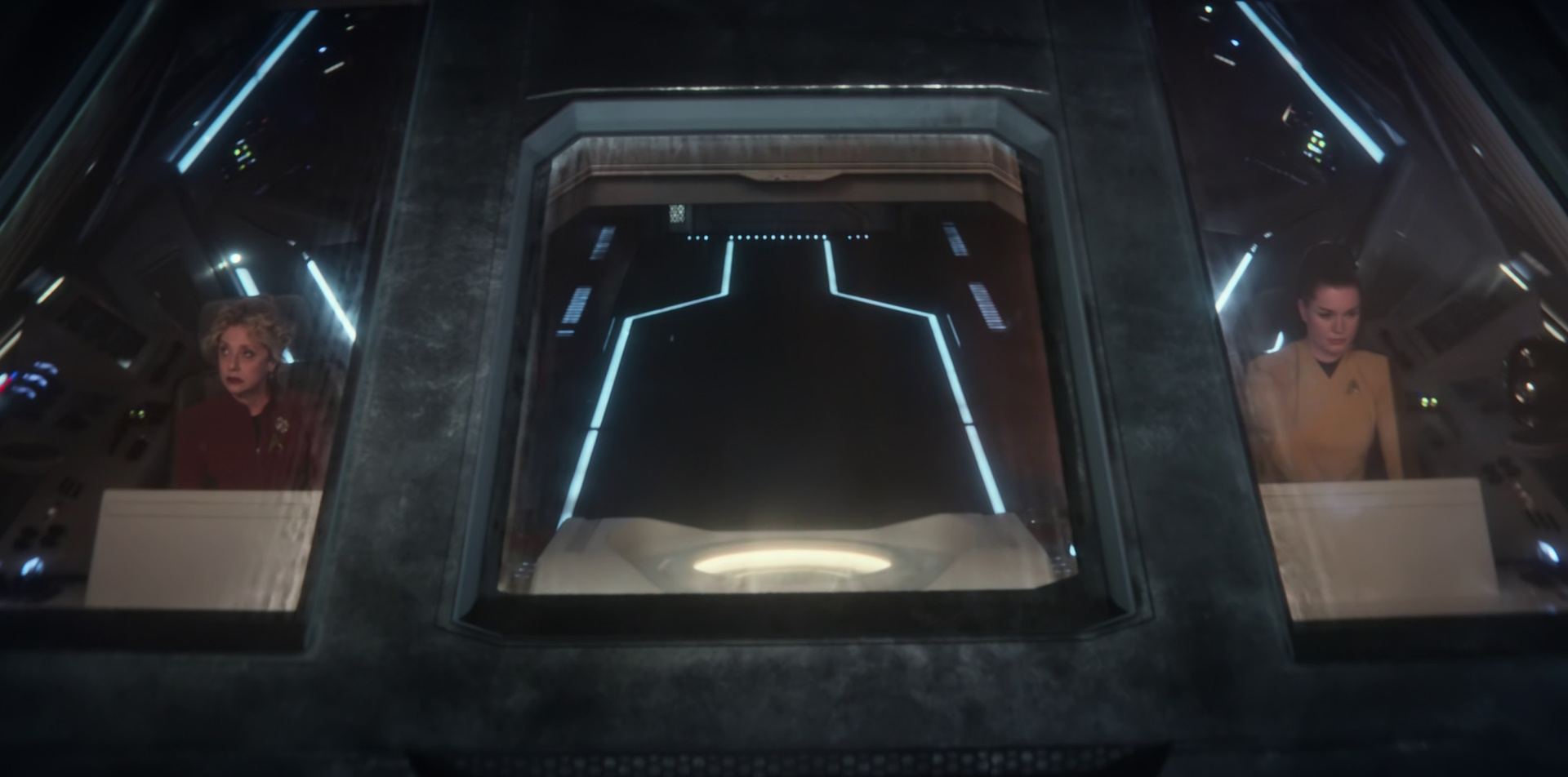
Still frame from Star Trek SNW 4x04 showing the shuttle
A shuttle in black-and-white.

However, more so than any other story so far this season – and really, any other story in Strange New Worlds, save, perhaps for Subspace RhapsodyA Case of Chiaroscuro felt like “a bit.” Its noir inspiration was *so* omnipresent in everything from the set design and music to the soft-focus close-up shots and narrative melodrama that it feels less like an actual story within the Star Trek universe and more like a pulpy television serial. It was hard to take A Case of Chiaroscuro as seriously as I wanted to – because, by turning the dials all the way up and not just drawing inspiration from film noir but actively copying as many aspects of it as possible, the episode imported all of what I’d consider to be the genre’s flaws.

By choosing to employ an outdated kind of storytelling – not just the black-and-white, but a melodramatic narrative with over-the-top twists and turns and cardboard cut-out secondary characters who didn’t feel like real people – A Case of Chiaroscuro feels… vintage. But that isn’t a good thing in this case, if we’re talking about an episode of Star Trek that I want to watch and enjoy. Most of the episode didn’t just look dated, but it also *felt* out-of-date; TV serials and movies like this were past their prime even sixty years ago, when The Original Series was on the air. And while there absolutely are interesting points in A Case of Chiaroscuro that I can wholeheartedly say that I enjoyed… the final product is simply too gimmicky for my personal taste.

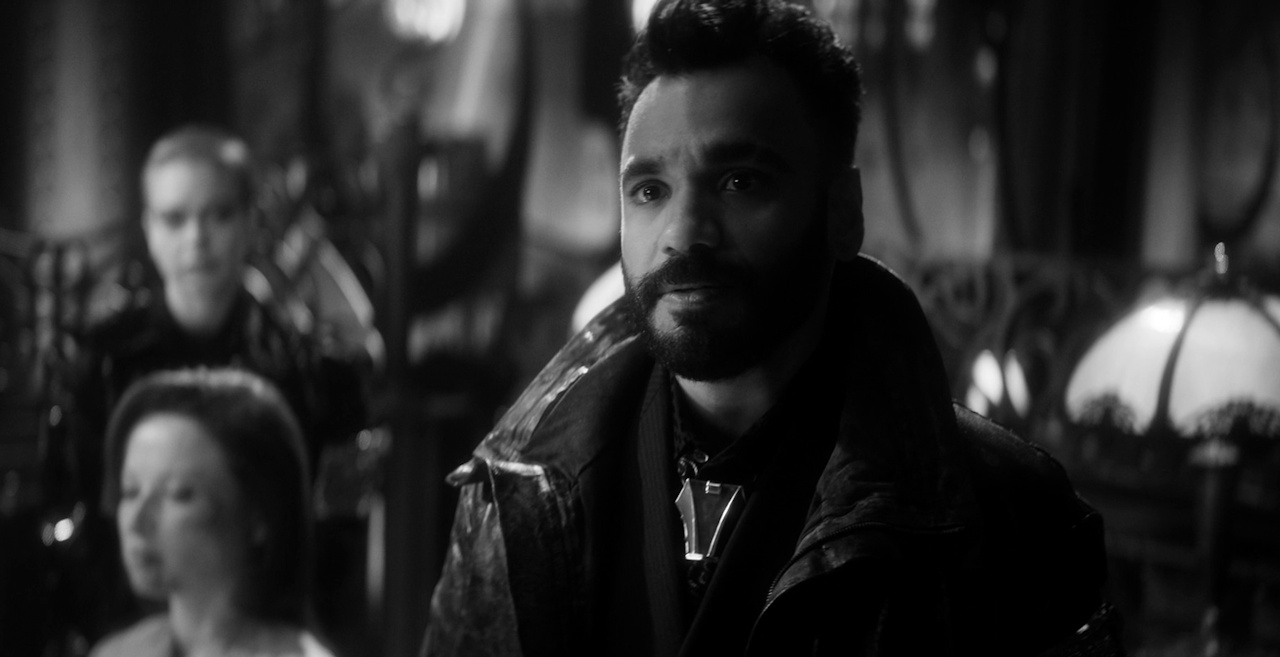
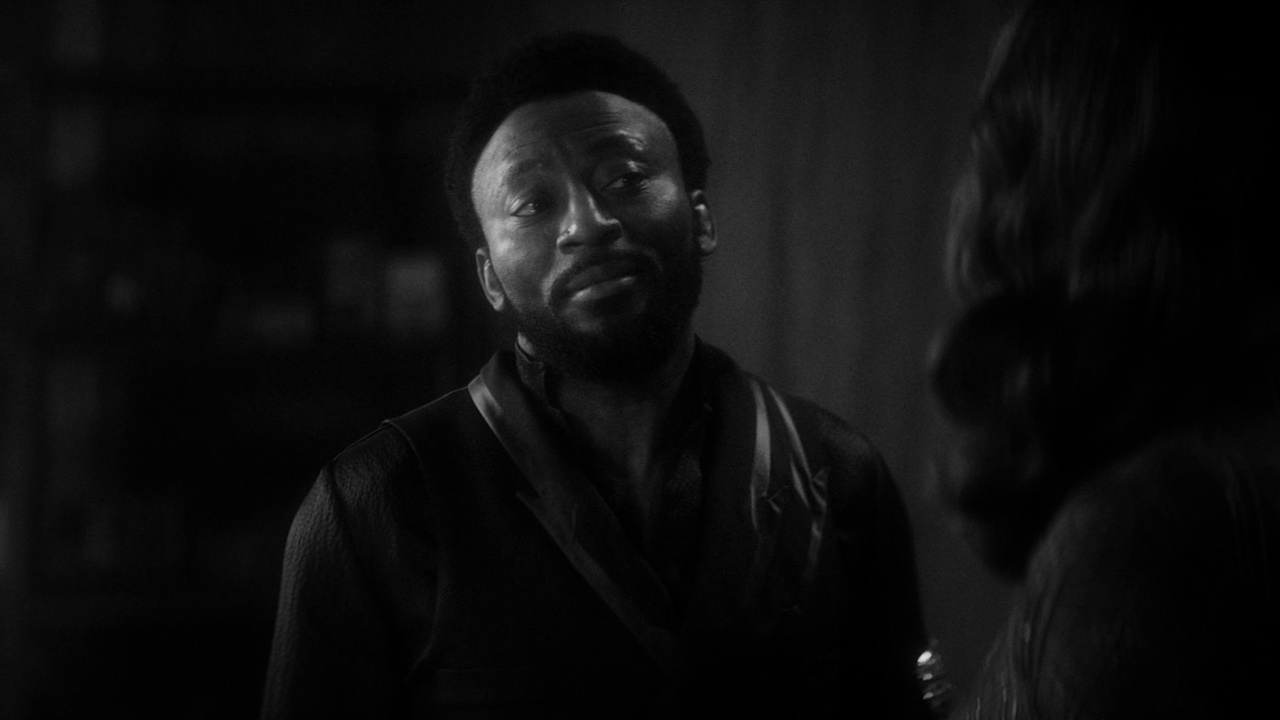
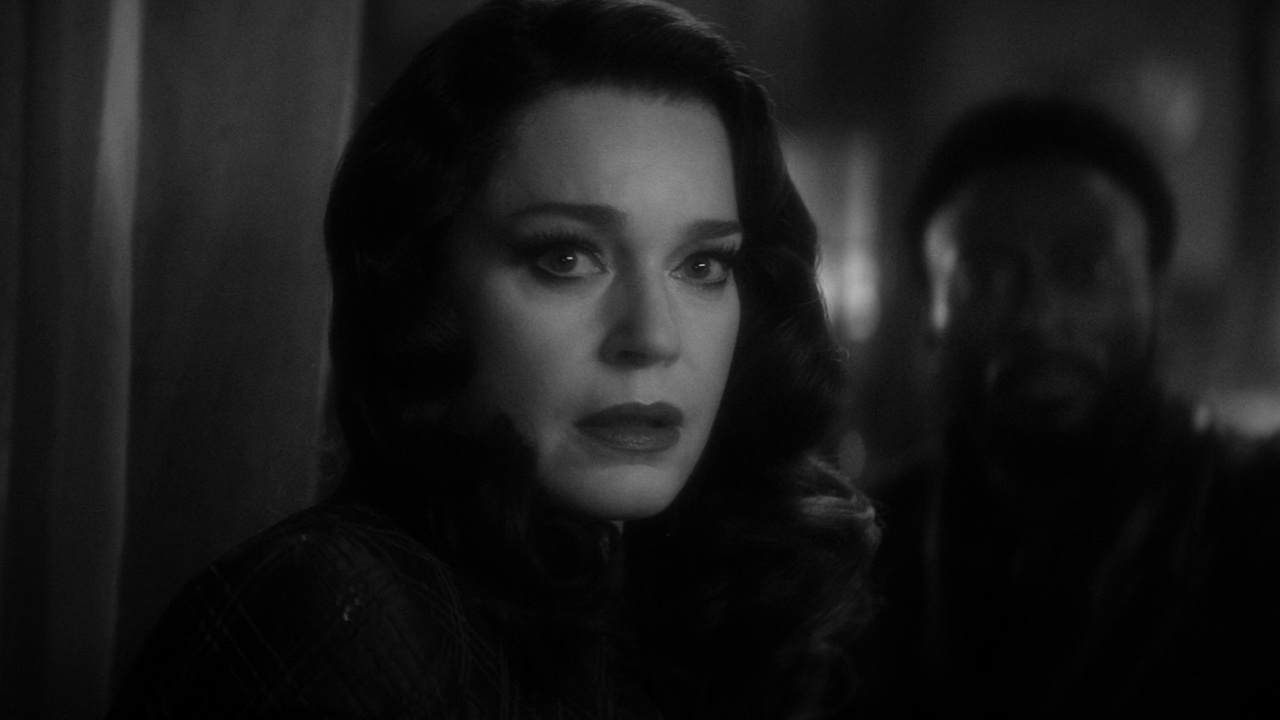
Still frame from Star Trek SNW 4x04 showing the collaborator
The collaborator.

I concede, though, that A Case of Chiaroscuro knows exactly what kind of story it wants to tell, and sets out to tell it earnestly and successfully. I can absolutely see this being considered a highlight of the season – and perhaps even of Star Trek as a whole – for Trekkies who have a fondness for these kinds of mystery-thriller noir stories. And, as I’ve said before, it’s to the credit of the former Paramount corporation that the executives were willing to greenlight a project like this, to spend a not insignificant amount of money on scripts and sets, and to – for lack of a better word – allow Star Trek to be “weird.” I can’t think of many other big-budget streaming productions that would’ve so wholeheartedly embraced the kind of genre-shifting that Strange New Worlds has done… and, for all of the many, many flaws and failings of the old Paramount, I think they deserve at least some kudos for giving the thumbs-up to a story like this one.

So… another “big swing” in Season 4, then! Adventure, horror, comedy, and now film noir… and we still have the puppet episode yet to come. I think this season will go down in the history books for just how many different ideas the writers brought to the table – and I can appreciate the diversity, the semi-episodic storytelling, and the willingness to go to places Star Trek hasn’t always gone before. Even if the results, on this occasion, weren’t “my thing.”

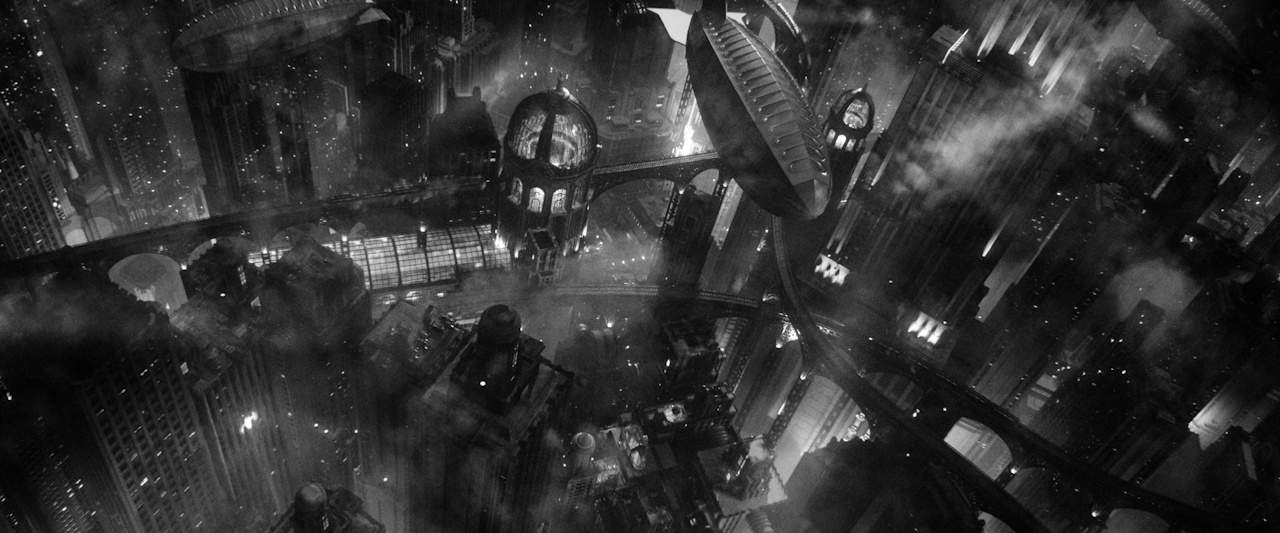
Still frame from Star Trek SNW 4x04 showing the city from above
The city on Mat’Aar XII.

Let’s concentrate on the part of the episode which I liked… or at least the part I felt wasn’t as weak as the main story.

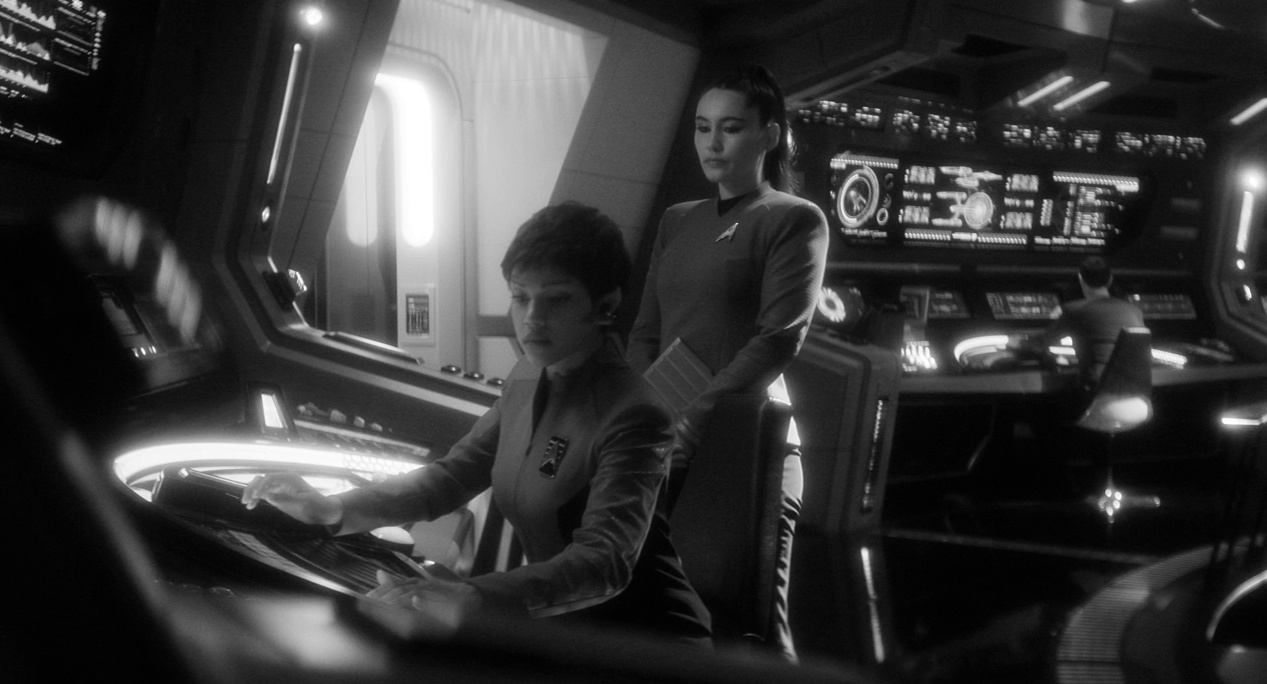
Back aboard the Enterprise – but still in black-and-white – we have La’an’s investigation of a mysterious signal. The probe – little more than a macguffin to kick-start the episode’s two main storylines – may have been tampered with, or at least La’an believed so.

I liked the way that the episode framed this, and the way the story convinced us as the audience that what we were seeing was nothing more than La’an overreacting. Even the little recap at the beginning of the episode, which went back to last season, showed how La’an might be succumbing to paranoia. And, as her storyline unfolded, A Case of Chiaroscuro tried very hard to convey to us that La’an was seeing things that weren’t really there.

Still frame from Star Trek SNW 4x04 showing La'an's padd
La’an investigated some missing data.

This made the ultimate reveal – that the probe *had* in fact been meddled with – hit a bit harder. I still don’t think that this storyline was executed perfectly; both Spock’s dismissal of La’an’s concerns and Chapel’s confession felt rushed. But that’s a consequence of this being the B-plot of an episode that had its attention elsewhere. Had we not already got a major La’an storyline already this season, I might’ve said I’d have liked to see this B-plot fleshed out into its own episode. But, that limitation aside, I liked this storyline.

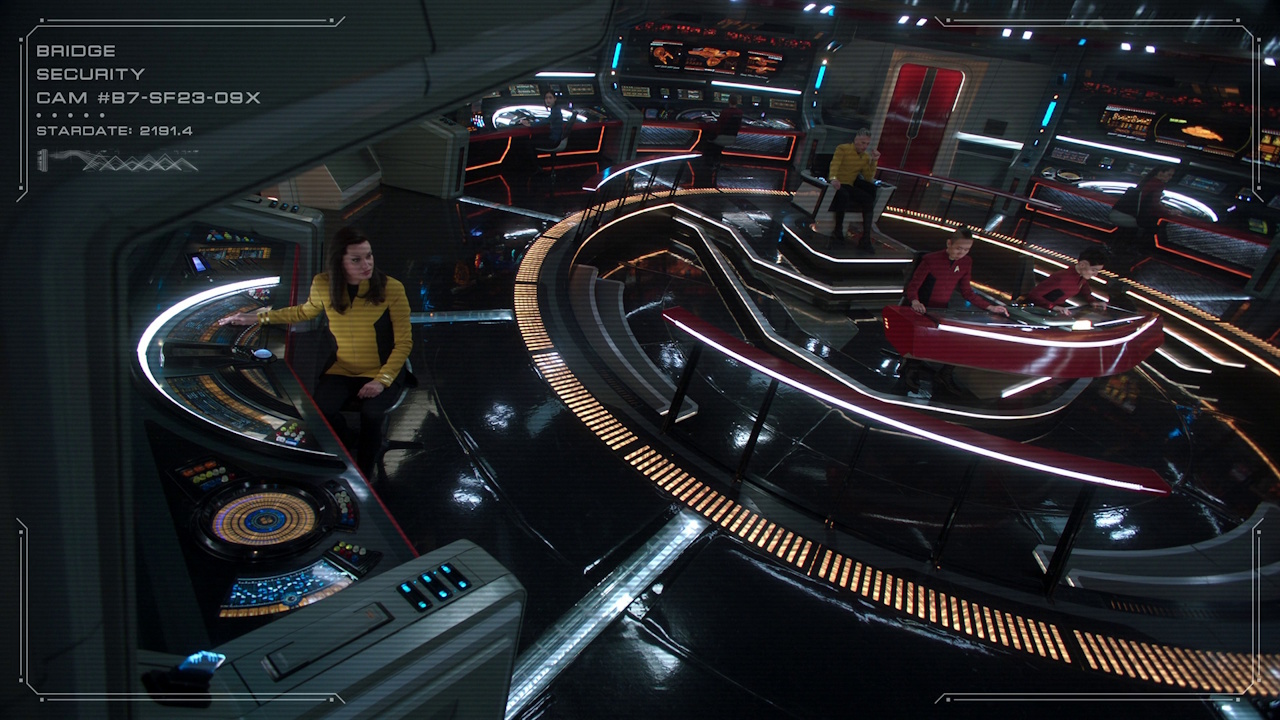
Firstly, the Vulcan cadet – I’ve now learned her name is A’sha – finally got something plot-relevant to do after her introduction in the season premiere. Maybe it’s this episode’s noir tone and double- and triple-crosses, but I can’t help but wonder if A’sha is going to turn out to be a spy or something! But maybe that’s too much of a reach based on her limited screen time. In any case, it was nice to see her on the bridge and for her to get something to do. Modern Star Trek hasn’t always handled its secondary characters especially well, but it’s nice to get *some* conversations and interactions outside of the main cast; it populates the Enterprise and makes the broader world of Star Trek feel more lived-in and real.

Still frame from Star Trek SNW 4x04 showing La'an and A'sha
La’an with Cadet A’Sha.

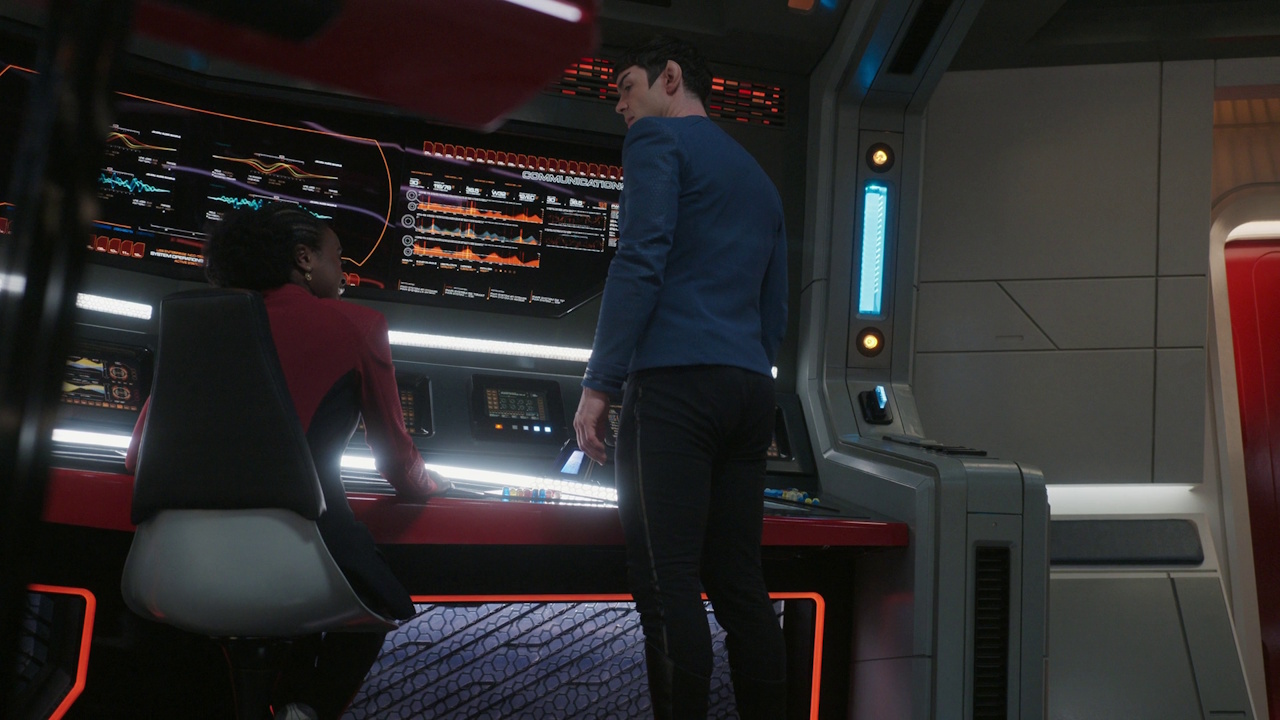
I wasn’t wild about the speed with which Spock dismissed La’an’s concerns – though, in a noir-style story, it made me question whether *he* might’ve been complicit in… whatever may or may not have been going on, so I guess that’s not all bad. I do wonder, though, what recent events – including last week’s argument in the bar and now this dismissive reaction – might mean for La’an’s relationship with Spock.

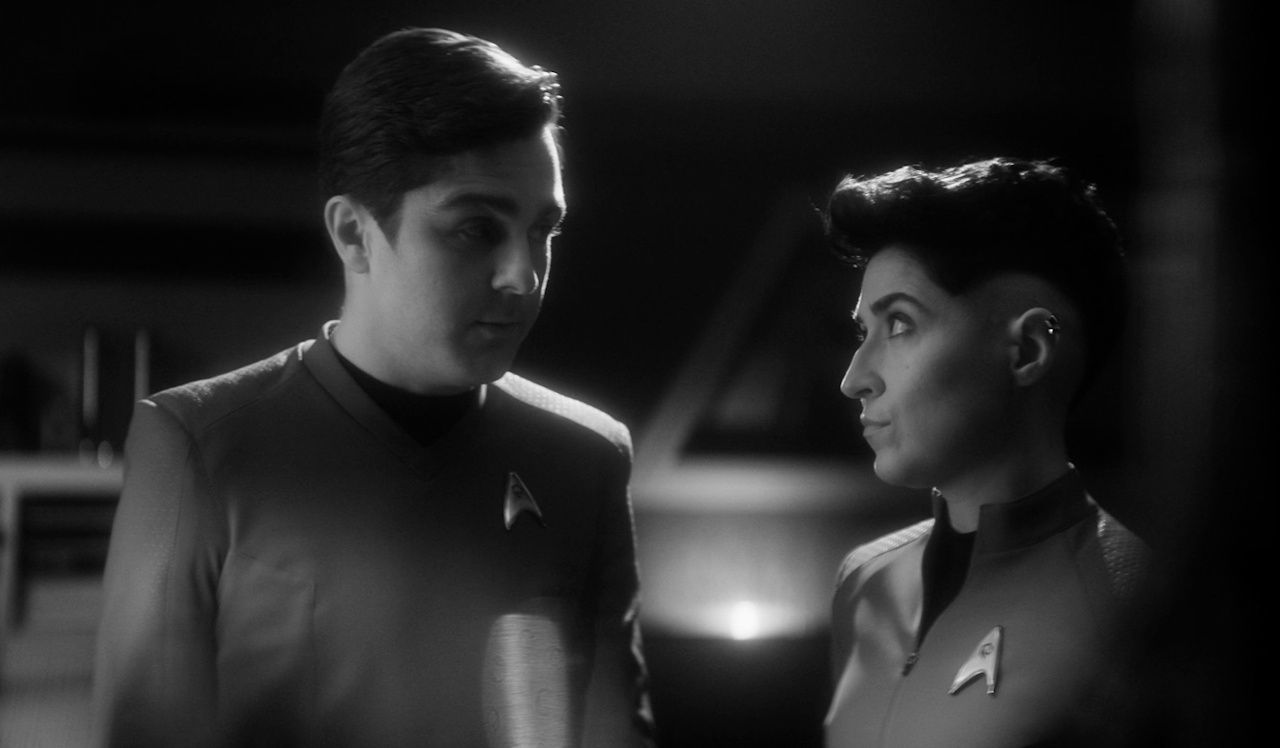
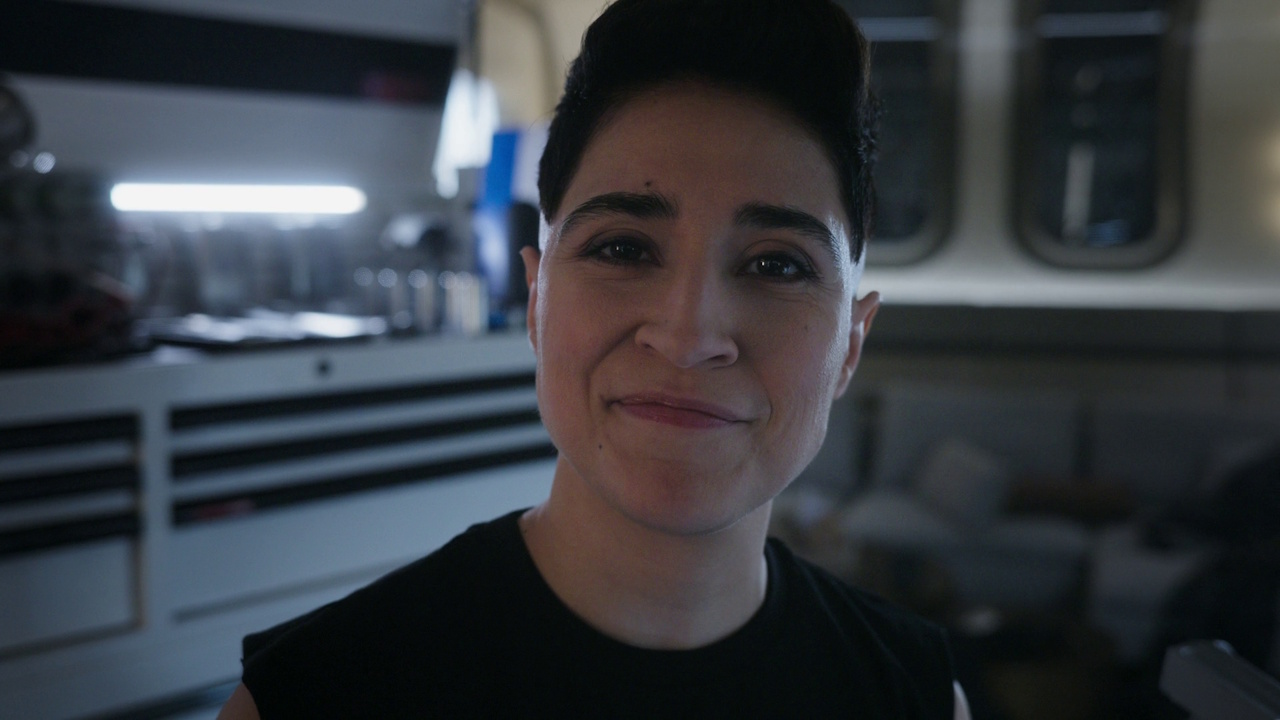
We also got a bit of a follow-up to last week’s episode as Ortegas and Scotty were seen hanging out together. I wondered, when they seemed to be in the same quarters, whether this might be another hint at some kind of romantic relationship, but La’an stated they’re “friends now,” at the end of the episode – and I think that’s how we’re meant to read it. In any case, it was cute to see them together after their adventure, and I appreciate how Strange New Worlds retains these character relationships and moments that it develops.

Still frame from Star Trek SNW 4x04 showing Scotty and Ortegas
Scotty and Ortegas are friends now, after last week’s adventure.

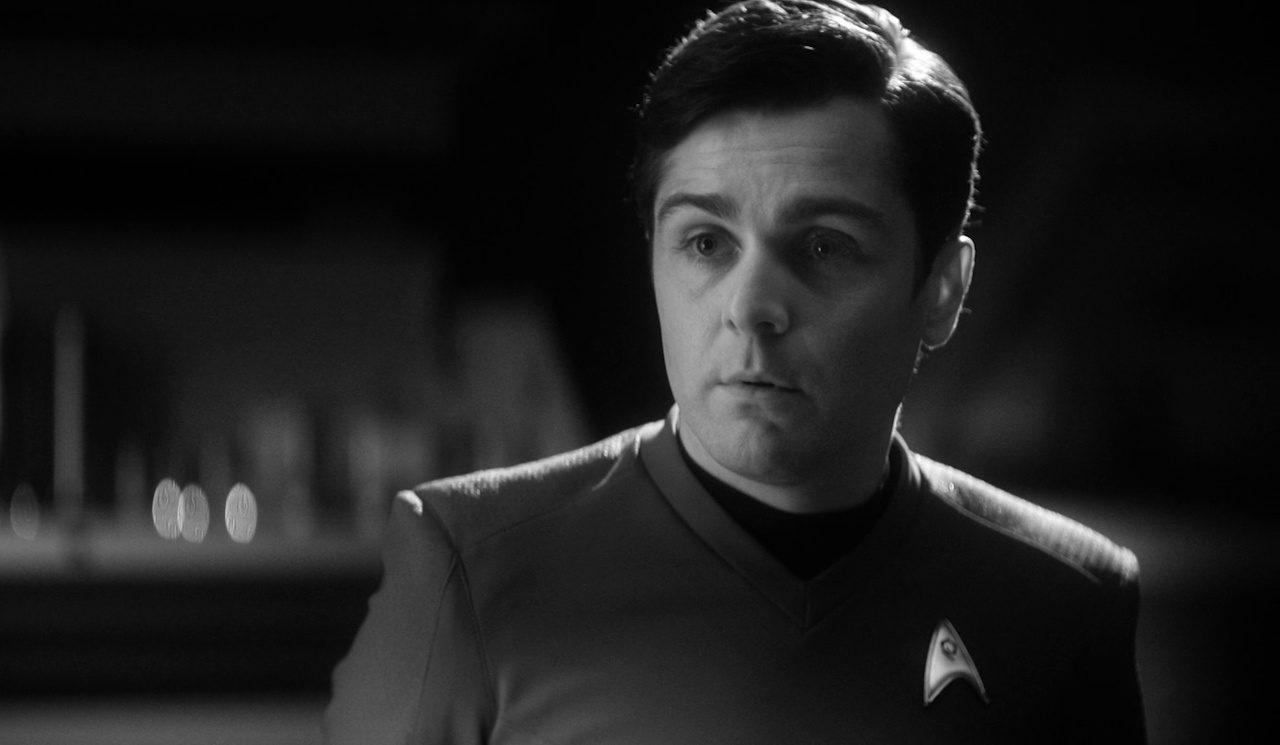
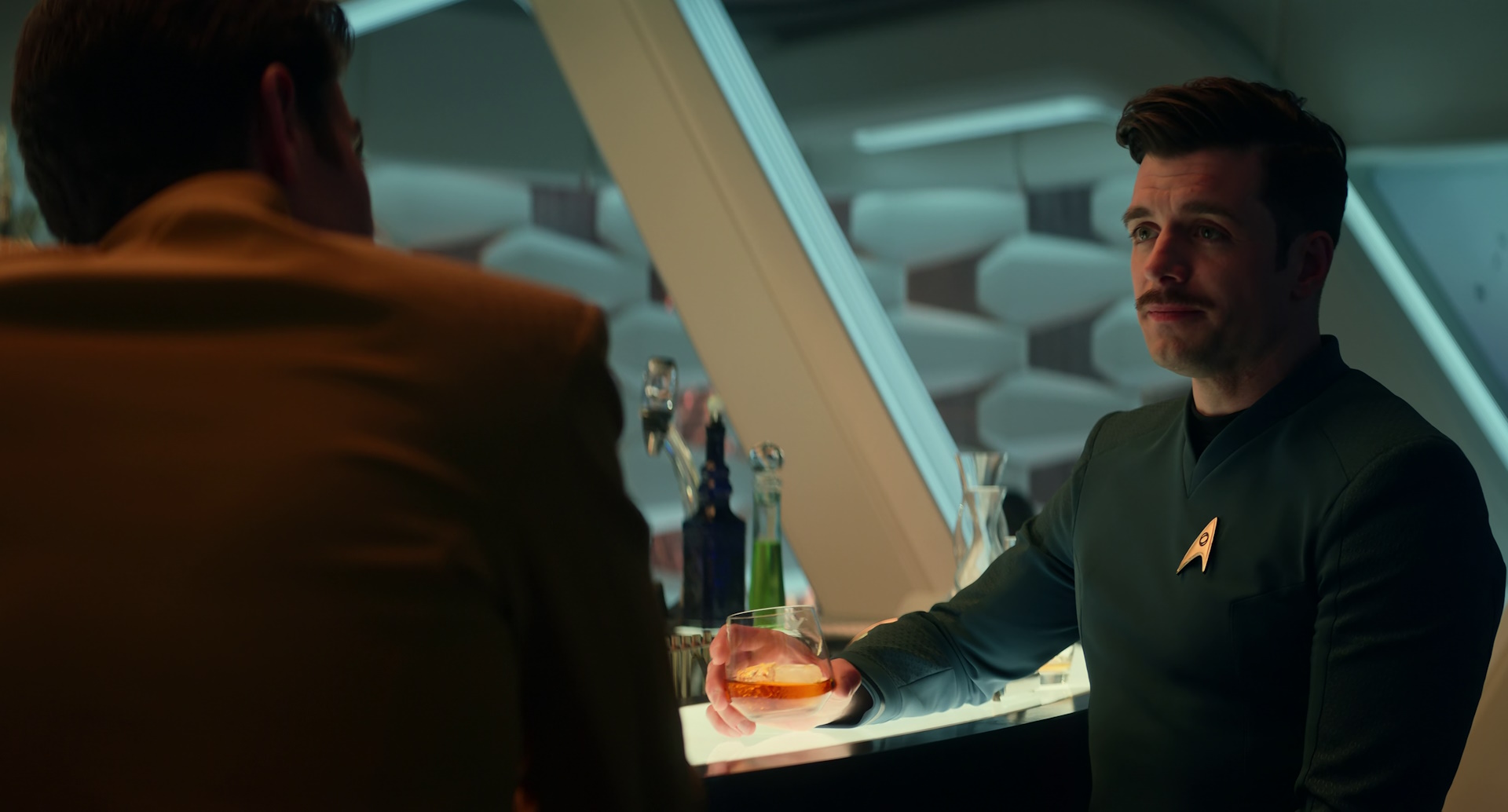
Scotty gave us a great line of technobabble about how he was keeping tabs on the Klingon ship, and that was both fun and very “Star Trekky,” for want of another term. I felt Dr M’Benga’s line about why everything was in black-and-white was a bit hand-wavey earlier in the episode, as technobabble goes, but Scotty’s was definitely more in line with what we’ve seen before. Not sure why he was keeping it a secret from the ship’s security officer, of all people, but I guess it worked as an excuse for La’an to chase leads and catch up with other members of the crew.
One thing I didn’t really like, though, was Scotty’s line about being “trapped in a transporter buffer;” a reference to his ultimate fate and the TNG episode Relics. If this had been a one-off, I wouldn’t have minded (I think), but so far this season, La’an has called back to The Search for Spock and Dr M’Benga made another reference to Relics just last week. Occasional callbacks to past iterations of Star Trek – or calls forward, I guess, to these characters’ fates and ultimate destinations – are okay, but they really ought to be *occasional*. Otherwise they come across as heavy-handed and overwhelming… and it just isn’t necessary and stops being fun. A single line like this is great; a nod and wink to long-time Trekkies. Too many just feel like navel-gazing, self-referential fluff… or just a plain lack of originality, I guess. And because we’ve had several of these lines in earlier episodes – one of which already featured Scotty – this one was a bridge too far. On its own? Totally okay. But after seeing several others already this season, I felt it crossed that invisible line between being a playful in-joke and becoming excessive.

Still frame from Star Trek SNW 4x04 showing Scotty
Don’t call it “foreshadowing”…

The conclusion of this storyline sees Chapel confessing to being the one who interfered with the probe and deleted its data. Though, as I said, this felt kind of rushed, it was nice that in this kind of storyline, the ending was difficult to deduce and there was still time for a twist. I think both Chapel and La’an got good moments of characterisation here: Chapel didn’t just let La’an think paranoia was overtaking her, instead confessing even though doing so could’ve had real consequences for her, and La’an chose loyalty to a friend over following the letter of the law.

For both characters, those are positive things – and while not “out of character” by any stretch, it’s still good to see both of them doing the right thing and choosing friendship, not blind rule-following. Chapel’s decision to delete the incriminating data felt understandable, even though I wish we’d gotten a longer scene explaining it, and La’an’s choice to keep the issue between them said a lot about her character. If, as I’ve theorised, we could be seeing the beginning of the end for La’an – either aboard the Enterprise or, y’know, alive – moments like this will be all the more important.

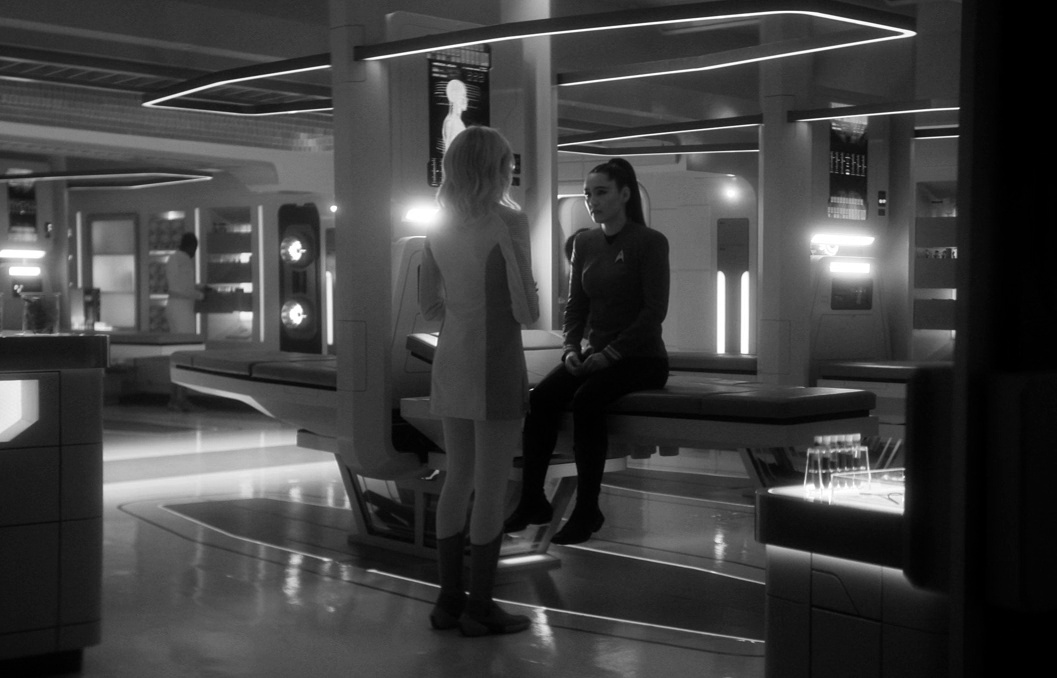
Still frame from Star Trek SNW 4x04 showing La'an and Chapel
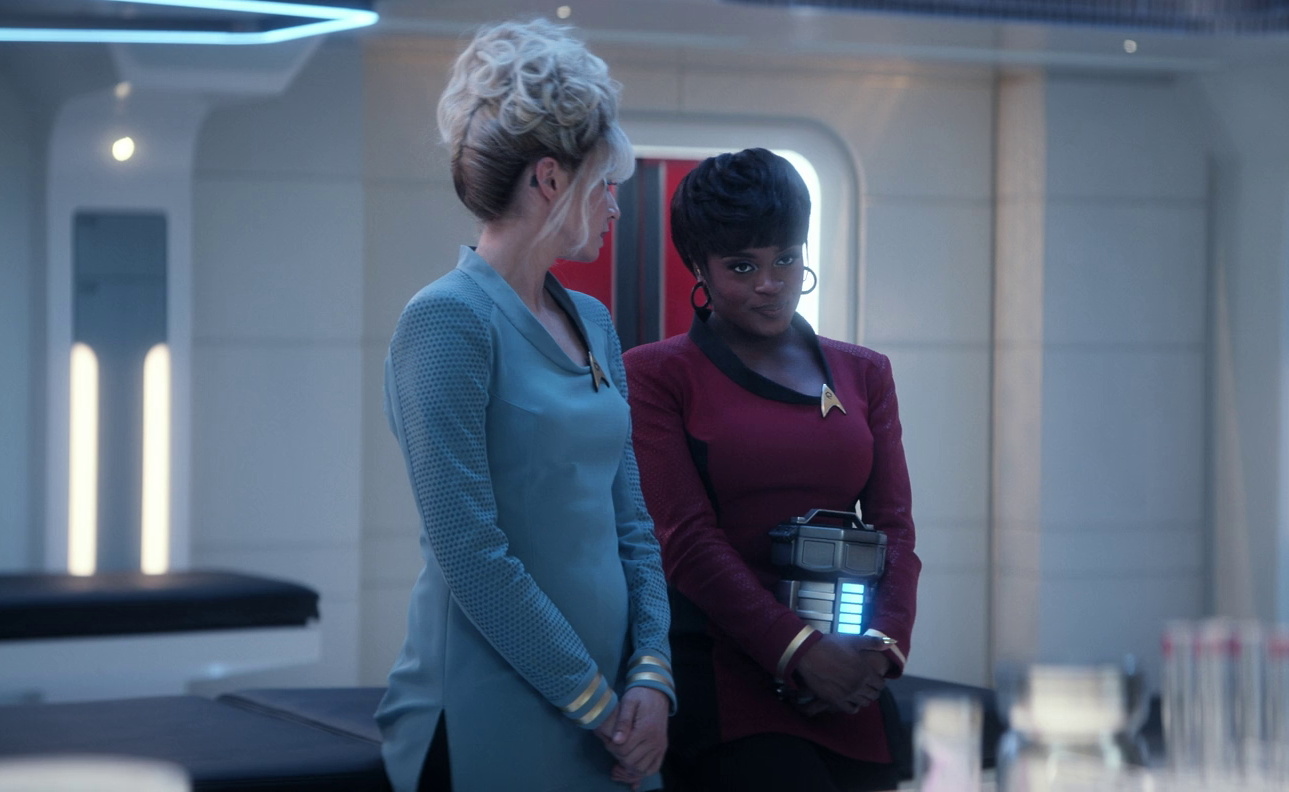
Nurse Chapel with La’an in Sickbay.

La’an got this week’s secondary story, with the main focus of A Case of Chiaroscuro being on Una. But these two stories were thematically linked, and that made these two otherwise disconnected parts of the episode feel a bit closer together. La’an had to wrangle with her own paranoia and consider whether she was imagining things, or whether there actually was an issue with the probe. But the end of this story saw her choosing to do the right thing by a friend, even if that ment bending the rules.

Una’s story ends in a similar way. She chooses to bend the rules – in this case actively, whereas La’an’s was more passive, I suppose – to facilitate the rebels’ plan on Mat’Aar XII. But both characters had to deal with intrigue, mysteries, and ultimately, both had to decide whether to do the right thing – or what the “right” thing even is when faced with complex and nuanced situations.

Still frame from Star Trek SNW 4x04 showing Una and M'Benga
Una’s storyline was similar, in thematic terms, to La’an’s.

Before we get further into the main thrust of the mysteries on Mat’Aar XII, I want to talk briefly about the Klingons.

A Case of Chiaroscuro wasn’t really a Klingon episode. The Klingons were present, sure, and they played a significant narrative role – but the bulk of the story was focused on the main characters and the intrigue on Mat’Aar XII. But the episode did something for the Klingons that I think is kind of important – and that I approve of!

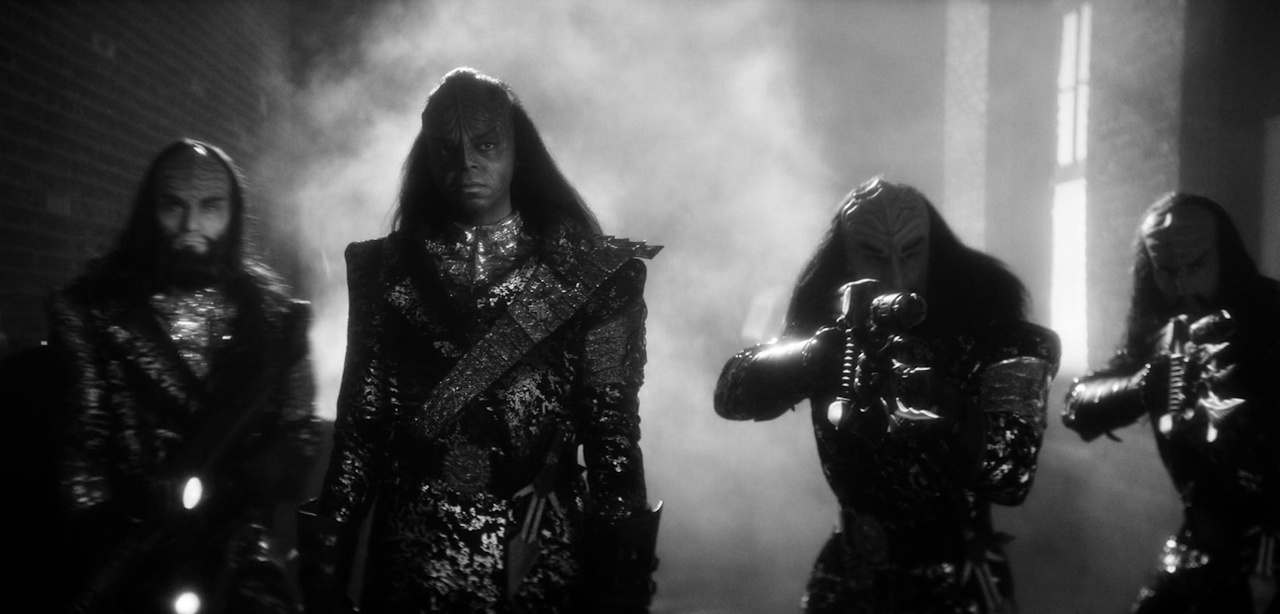
I’ve said, on the record, that I felt Enterprise’s “Klingon-augment virus” storyline was one of the show’s weakest, and that the change in prosthetic makeup for the Klingons in between TOS and The Motion Picture simply did not need to be called attention to nor given an in-universe explanation. Thankfully, modern Star Trek has walked away from that idea, and we’ve already seen Klingons in Strange New Worlds with the more familiar design. That continued here – even with the character of Kor. Kor is a Klingon who tangled with Kirk in The Original Series and returned in three episodes of Deep Space Nine, too.

Still frame from Star Trek SNW 4x04 showing Kor and three Klingons
Kor with his band of Klingons.

In Kor’s TOS and TAS appearances, he sports the original Klingon aesthetic, but this was updated for DS9. So if you want to be fussy about it, now we have a contradiction! But I don’t really see it as a contradiction at all. Just as when Kor appeared in DS9, prosthetic forehead and all, Star Trek was kind of drawing a line under TOS and updating things without drawing attention to it. And I read this prequel version of Kor in much the same way. Some parts of Star Trek… well, they can (and should) be ignored. Some stories didn’t work, some aesthetic changes could be made as new technologies and higher budgets allowed, and this is the result.

And hey, if you want to be picky and make everything in Star Trek fit? Let’s just say that Kor contracted the virus in between his posting to Mat’Aar XII and his run-in with Kirk!

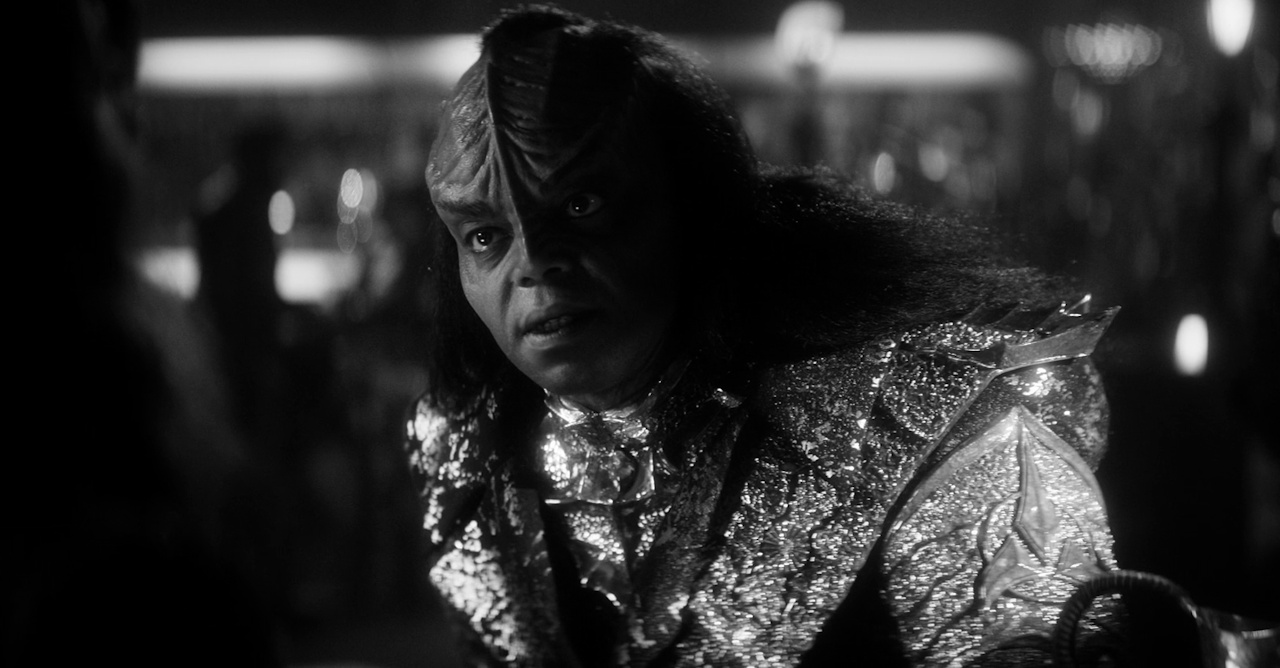
I felt that Demore Barnes’ take on the character of Kor was one of the best parts of this weaker side of the story. Barnes – who you might recognise from Supernatural, Hannibal, or Twelve Monkeys, among other high-profile TV roles – was absolutely excellent in this villainous role, showing us a nuanced take on a Klingon leader that didn’t just rely on anger, aggression, and murder. In this kind of noir-inspired story, that’s how a villain should behave. Was bringing Kor into the show a bit of cheap nostalgia bait for Trekkies? Well… maybe. And I could entertain the argument that *this* version of Kor doesn’t fully line up with the way the character behaved in TOS and DS9. But that doesn’t mean I didn’t enjoy the performance or Kor’s role in the story!

Still frame from Star Trek SNW 4x04 showing Kor
I enjoyed this new take on the established character of Kor.

The Klingons, in their original incarnation some sixty years ago, were famously meant to be metaphorical stand-ins for the Soviet Union, with the Federation representing the United States or the broader western alliance. And A Case of Chiaroscuro called attention to the “cold war” that exists between the Klingons and Federation in this time period. That little connection was neat, and the lines referring to it were well-delivered.

But in this story, the Klingons felt less like 1960s Soviets and more like 1940s Nazis with the way their occupation of Mat’Aar XII came to life. Roving gangs of collaborators, uniformed soldiers, symbolic armbands, and propaganda messages being broadcast all linked up to create a really unsettling feel to the entire city; even seemingly “safe” spaces like the bar or the office felt like they could be raided or interfered with at any moment.

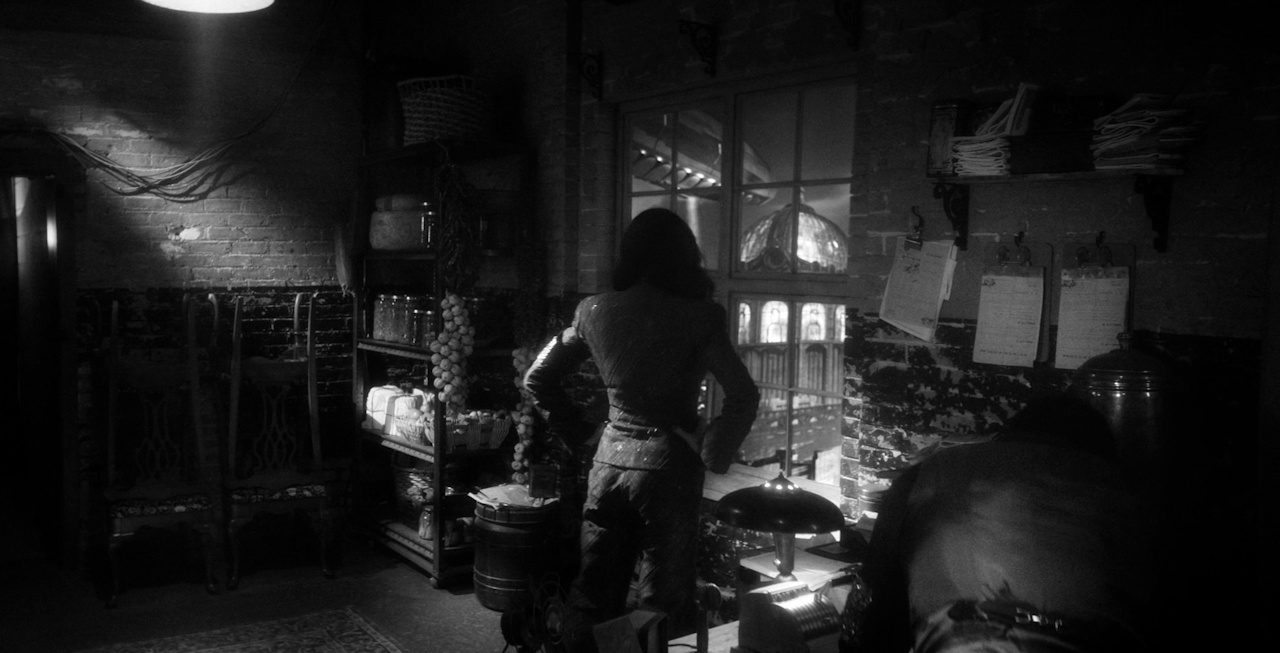
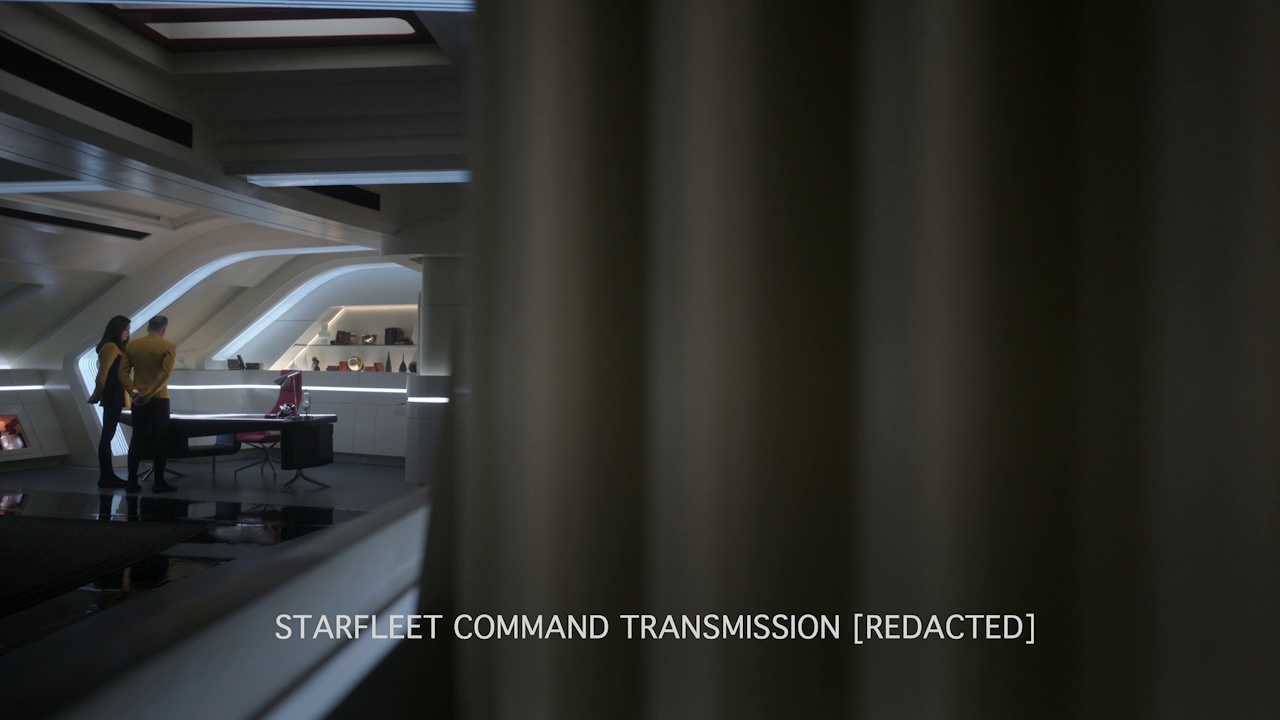
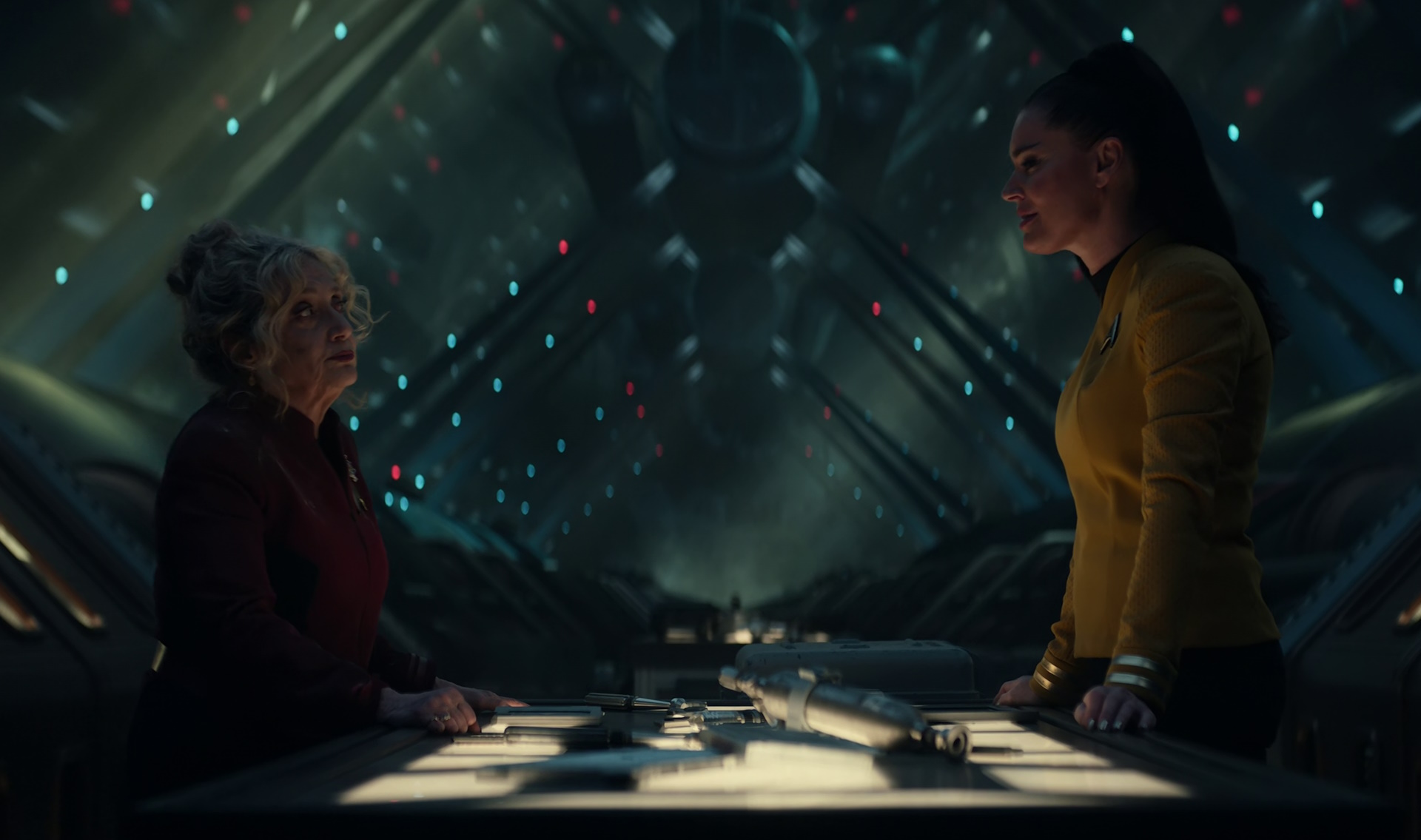
Still frame from Star Trek SNW 4x04 showing Una in her doppelgänger's office
Una in the doppelgänger’s office.

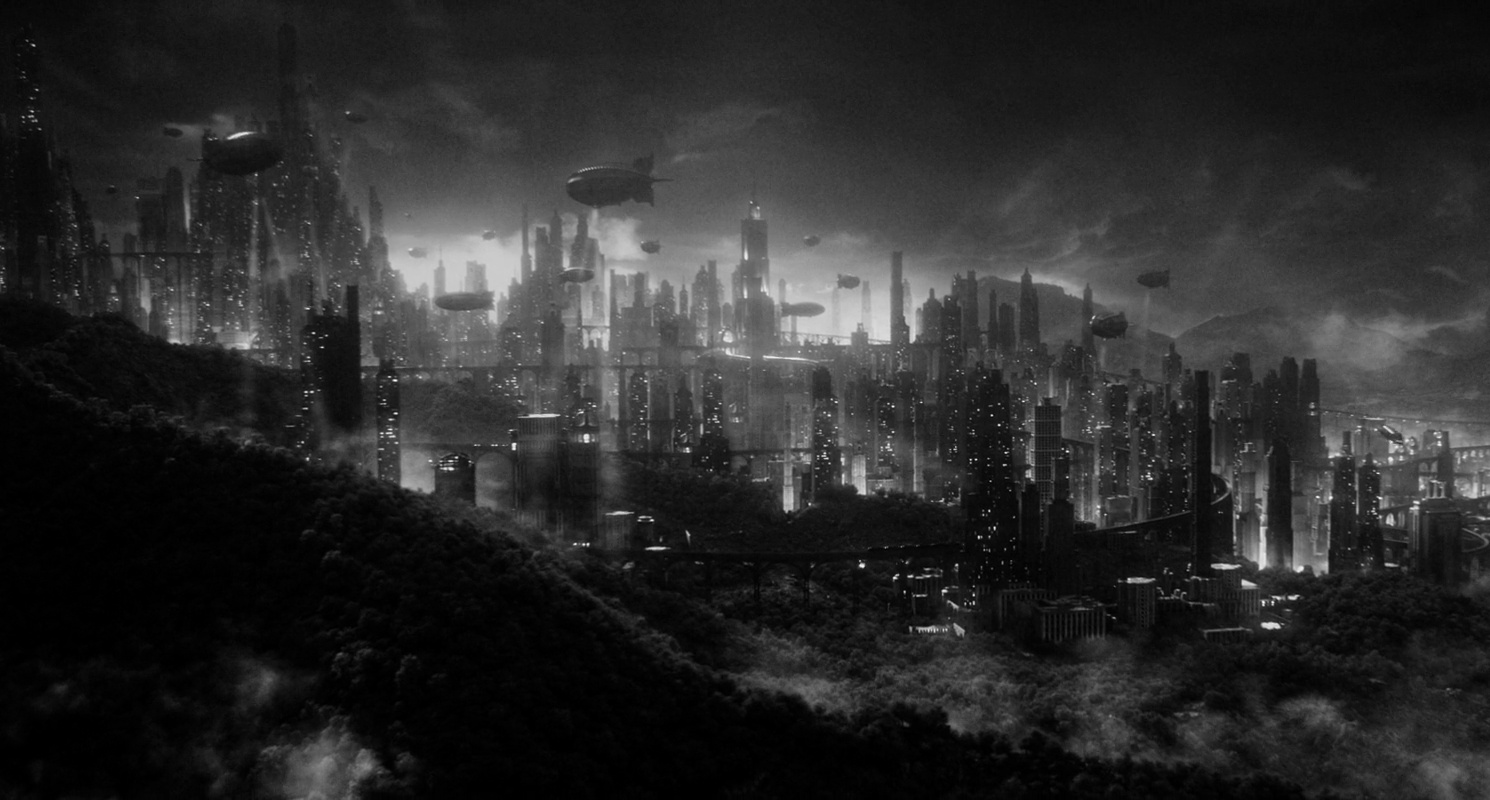
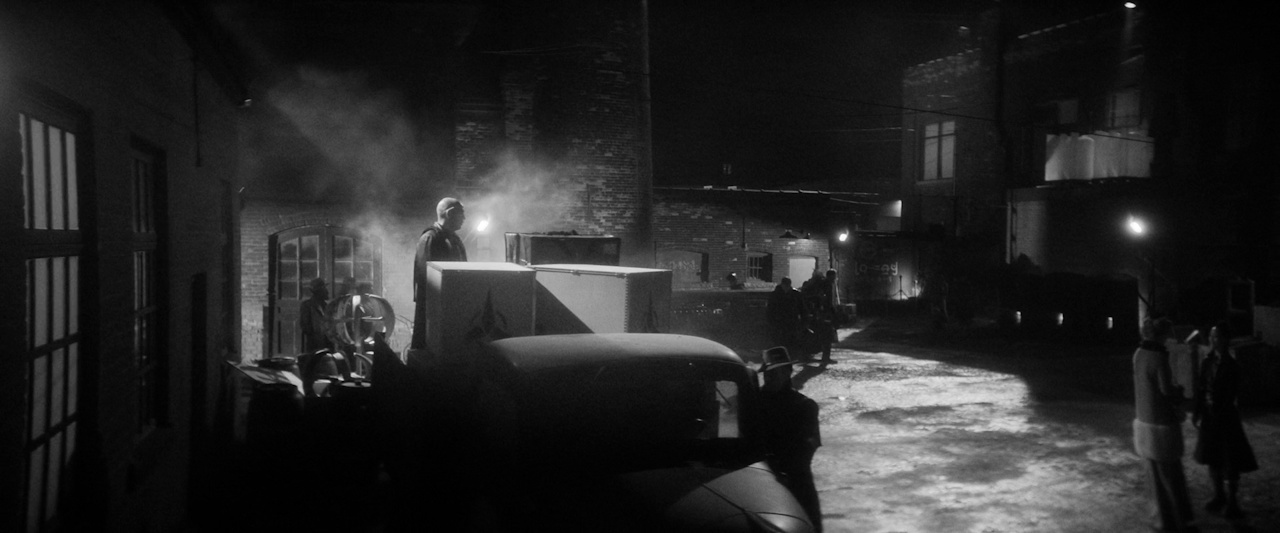
The sets and stages used to create Mat’Aar XII were genuinely very well done. I got a “Paris in World War II” kind of vibe; that this city was very much under occupation. The ’40s-style barrage balloons, the spotlights, and the art deco-style architecture (which was mostly seen in CGI establishing shots) all added to this sensation, as did the claustrophobic street set with its archway checkpoint. The white steam or smoke – another hallmark of films from this era – was well-used, too. As I said above, every aspect of A Case of Chiaroscuro leaned into this film noir style, and that extends to the way the sets were designed. The city was undeniably atmospheric.

Parts of A Case of Chiaroscuro reminded me a little of A Piece of the Action from TOS – the “gangster episode” where Kirk and co. visit a planet whose inhabitants were inspired by a book about 1920s Chicago. Some of the costumes, sets, and vehicles – all inspired by the first half of the 20th Century – gave me that feeling, and even the Klingons’ disruptors seemed to resemble Tommy guns! Obviously, A Piece of the Action was, itself, drawing on stories from the ’30s and ’40s for inspiration – G-Men, Invisible Stripes, and others – and there’s a difference between the kind of noir story present here and the simplified gangster/crime drama of that older episode. But, as I’ve said before, it can be nice when Star Trek stories… rhyme.

Still frame from Star Trek SNW 4x04 showing the city on Mat'Aar XII
I liked these establishing shots of the city, and how atmospheric they felt.

The main storyline’s central conceit was that Una is the exact doppelgänger of Mat’Aar XII’s resistance leader. And… I gotta be honest: I hated this and the stupid way it was “explained.” Basically, Dr M’Benga says that “well, space is big so we all have doppelgängers,” and that hand-wavey line is the only explanation offered for this really contrived setup. I admit that I don’t see an easy narrative pathway to tell this exact story without having Una share the exact same look as the resistance leader, but the way it was handled left a lot to be desired.

As I said in my review of The Griffin Incident: this is Star Trek. And in Star Trek, we like our technobabble explanations! You don’t have to be 100% scientifically accurate. You can make something up and then invent fancy-sounding technical words to fit. But in Star Trek stories, I don’t think it’s too much to ask that major narrative points receive more of an explanation than we got in A Case of Chiaroscuro. It was just a weaker narrative setup than the story deserved.

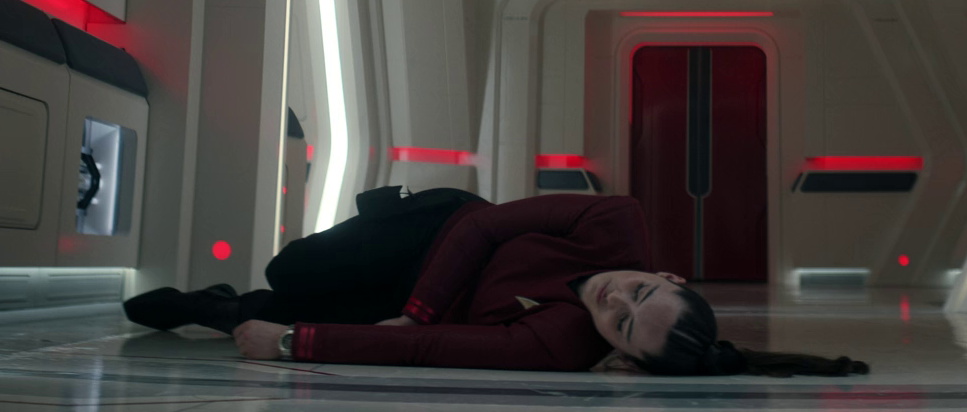
Still frame from Star Trek SNW 4x04 showing the doppelgänger's corpse
The doppelgänger’s corpse.

Once you got that out of the way, though, A Case of Chiaroscuro was a good episode for Una’s character journey. Her story intersected with her Illyrian heritage – something that we learned about in Season 2 – and gave her an arc about “doing the right thing” even if that meant breaking the rules. For a character who’s usually portrayed as a by-the-book kind of officer, this was a turn – albeit one that makes sense in context.

One thing I didn’t really follow, on this side of the story, was whether the Prime Directive should’ve been applied to Mat’Aar XII and its inhabitants. The planet’s own technology looked like it was from the 20th Century, with only the Klingons in possession of what might reasonably look like 23rd Century tech. But, despite being undercover the entire time, none of the away team mentioned the Prime Directive even once. Does it cease to apply when a planet meets another interstellar power, maybe?

Still frame from Star Trek SNW 4x04 showing Una and Dr M'Benga with the bartender
So I guess the Prime Directive doesn’t apply…

To get back to Una, there was a lot of noir-style intrigue on this side of the story, as Una’s doppelgänger appeared, at first, to be a collaborator, then a rebel leader, and the episode did a reasonably good job of making it difficult to know who she could fully trust. Most of the Mat’Aar XII inhabitants felt fairly two-dimensional – which, let’s be honest, is kind of a hallmark of many films of the era A Case of Chiaroscuro is mimicking – but the question of which one of them betrayed Una’s doppelgänger still felt like an open one as the story progressed.

One thing I don’t really like in Star Trek – and *especially* in modern Star Trek – is just how many alien races are literally identical to humans! There aren’t enough “alien-looking” aliens in Star Trek’s galaxy, and while this was a contrivance during the early days of The Original Series with all of its budgetary and technical limitations… it’s something I wish modern Star Trek would dump. On this occasion, given that Una needed to be an exact lookalike of this rebel leader, I guess you can say the story wouldn’t have worked. But the episode itself even referenced this, with Uhura wondering aloud what the native population of Mat’Aar XII look like. It’s just something that, in older shows – and TOS in particular – I could overlook, but I don’t think it really fits modern Star Trek or a modern sci-fi setting any more, and I’d rather see the franchise invent more aliens who look truly otherworldly and different. With a few changes, we could’ve said that Mat’Aar XII was a human colony under occupation, or… something.

Still frame from Star Trek SNW 4x04 showing Mat'Aar-ians
Mat’Aar-ians.

That issue also extends into Uhura’s storyline. After being arrested by the Klingons for not showing her ID, Uhura was taken to a Klingon facility to be tortured. But despite having access to 23rd Century scanners, tricorders, and some kind of brain-alyser, the Klingons never found out that she wasn’t actually a Mat’Aar-ian. How’s that possible? Even human-looking aliens, surely, have different DNA or other identifying markers? That’s how sensors and tricorders across Star Trek are able to differentiate between different races.

As an aside, though, I actually really liked the design of the Klingon torture device. It was a retro throwback – and, in this case, I mean that as a positive thing! I suspect that, if the episode was in full colour and trying to employ a more modern visual style, something like that would’ve looked dated and out-of-place, but in this kind of story, the brain-alyser looked pitch-perfect! There’s something about its simple design that just felt like the perfect TOS throwback, and it looked great.

Still frame from Star Trek SNW 4x04 showing the torture machine/brain-alyser
The brain-alyser.

To wrap up Una’s story, I thought the ending was pretty predictable; I clocked what Una had done – planting the macguffin bomb thing on the collaborator – long before the episode revealed it. But at the same time, it says something about her character that she’d get so involved in this planet’s cause and crusade for freedom. Una bent (or broke) the rules in order to help the people of Mat’Aar XII in their fight against the Klingon occupation, despite knowing that doing so could have massive consequences. She took a risk, but it always felt like a calculated risk.

Dr M’Benga referenced his service in the Klingon War – something that’s become a defining trait of his character, especially in more recent seasons. The show’s writers clearly like this idea of “the doctor who’s also a special forces killer,” and they’ve really latched onto that. I would like to see Dr M’Benga in different storylines, though, as I feel his arc with the Klingons and his backstory from his war days has been reasonably well explored, and with limited time remaining to do anything else… well, time’s a-ticking, sadly.

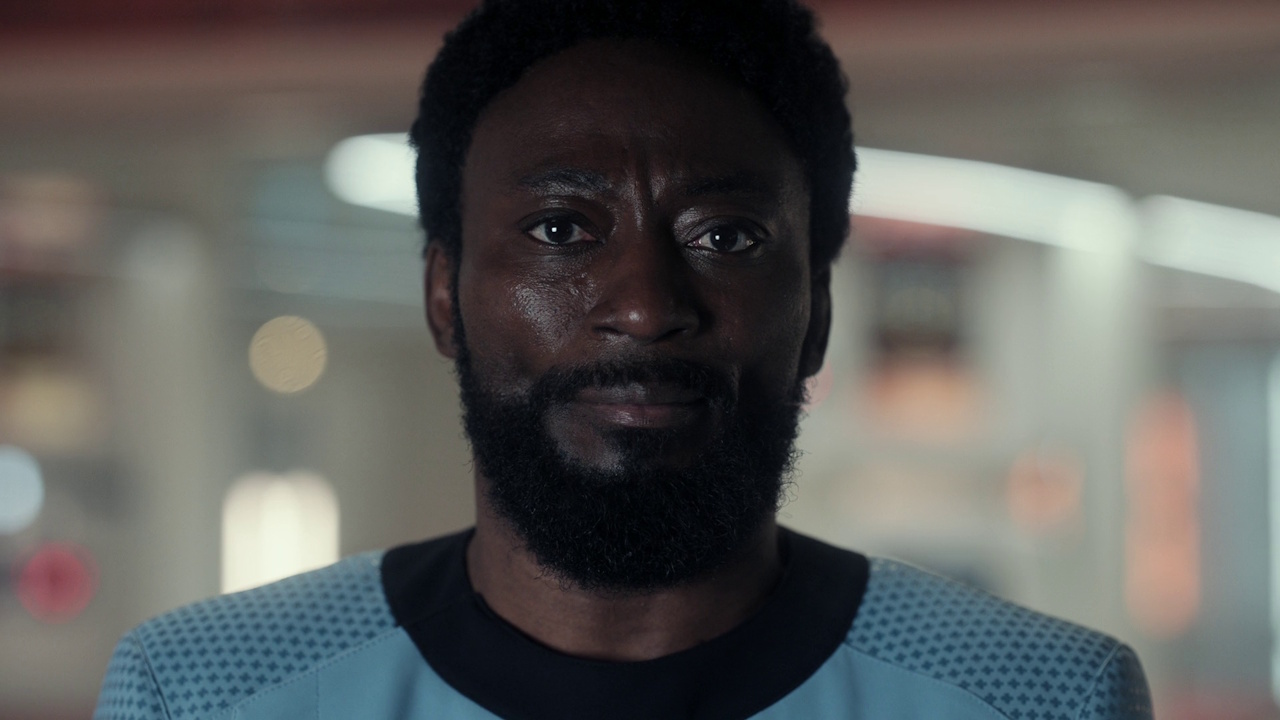
Still frame from Star Trek SNW 4x04 showing M'Benga
Dr M’Benga.

That being said, Dr M’Benga was a great choice to involve in a story like this, not least because of the Klingon element. He managed to be a mentor to both Una and Uhura at different points, offering advice, making note of how the Mat’Aar XII resistance was operating, and kind of serving as an exposition device for us as the audience, too! His war service felt like a natural thing for him to bring up in the context of the story, and while there were some contrivances – like how he could instantly recognise Kor, for example – they’re minor enough to not be bothersome.

Dr M’Benga guided Una, keeping her from making too many mistakes, but this was still Una’s story first and foremost, so we didn’t get any gratuitous scenes of him massacring legions of Klingons, or using his special forces background as an excuse to take the lead. Again, given the kind of story this was, and who it was centred around, that worked pretty well. From an in-universe standpoint, Dr M’Benga has told us many times that he wants to leave his past behind him, so again, his taking a back seat makes sense, too.

Still frame from Star Trek SNW 4x04 showing Uhura and M'Benga
Uhura and Dr M’Benga.

Celia Rose Gooding put in a great performance as Uhura this week. This younger version of the character is still, in some ways, finding her feet – and this mission took her far outside her comfort zone in more ways than one. Uhura’s friendship with Dr M’Benga was on full display, and the two characters played off one another exceptionally well in those supporting roles for Una and the noir-intrigue story.

However, I didn’t really feel like Uhura was ever in any real *danger,* even when she was literally facing the Klingons and their torture machine. Partly this is because Strange New Worlds is a prequel, and we know, in the backs of our minds, that Uhura will make it off-planet, back to Starfleet, and resume her career (relatively) unscathed. However, for a storyline involving literal torture… I think the episode could’ve made more of it. Perhaps Uhura will reference this experience in a future episode; I didn’t get the feeling, though, that this was an “Ortegas with the Gorn” or a “La’an’s DNA” type of situation, where a character’s storyline in one episode is clearly being set up for something more. But I guess we’ll have to wait and see on that front!

Still frame from Star Trek SNW 4x04 showing Uhura being tortured by the brain-alyser
Will this storyline lead to anything more for Uhura?

A couple of final points before we wrap things up.

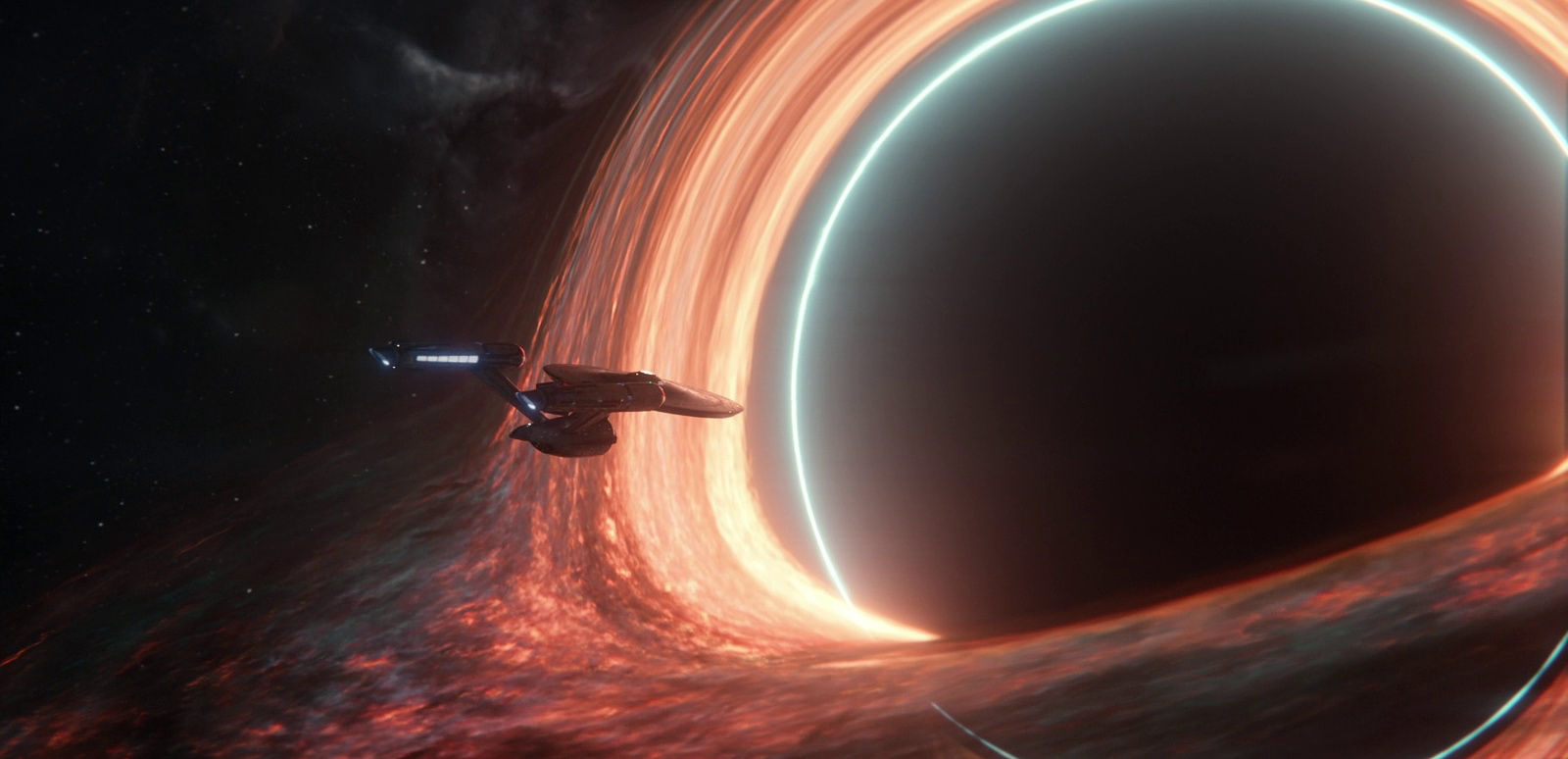
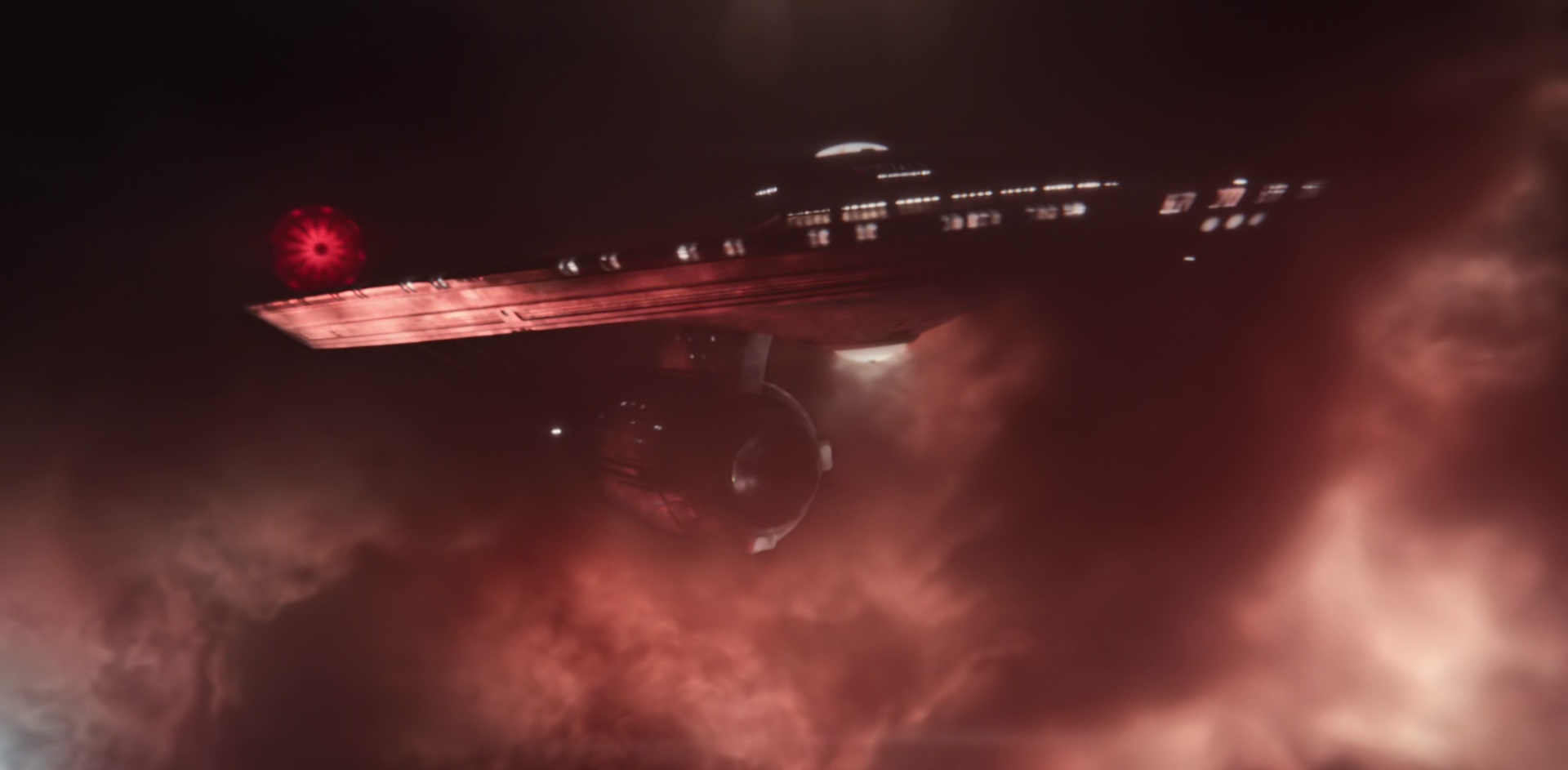
This is at least the second Strange New Worlds episode where ships (or a shuttle, in this case) have literally been within visual range of one another, but – for no other reason I can discern than “because plot” – the adversary’s ship doesn’t notice or detect our heroes. In this case, a Klingon battlecruiser just wasn’t aware of either the probe or the shuttlecraft until the shuttle passed through the planet’s sensor grid. I know that, in prior Star Trek stories, the range at which sensors are effective can vary a lot depending on the needs of the story… but even with that in mind, this feels like a real stretch.

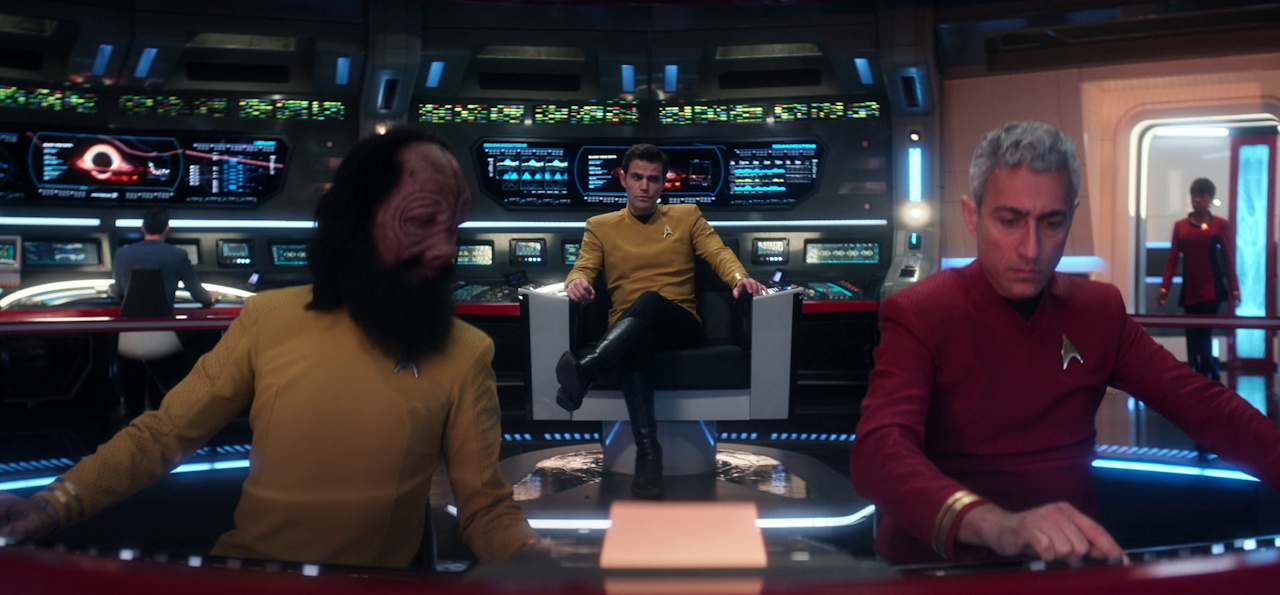
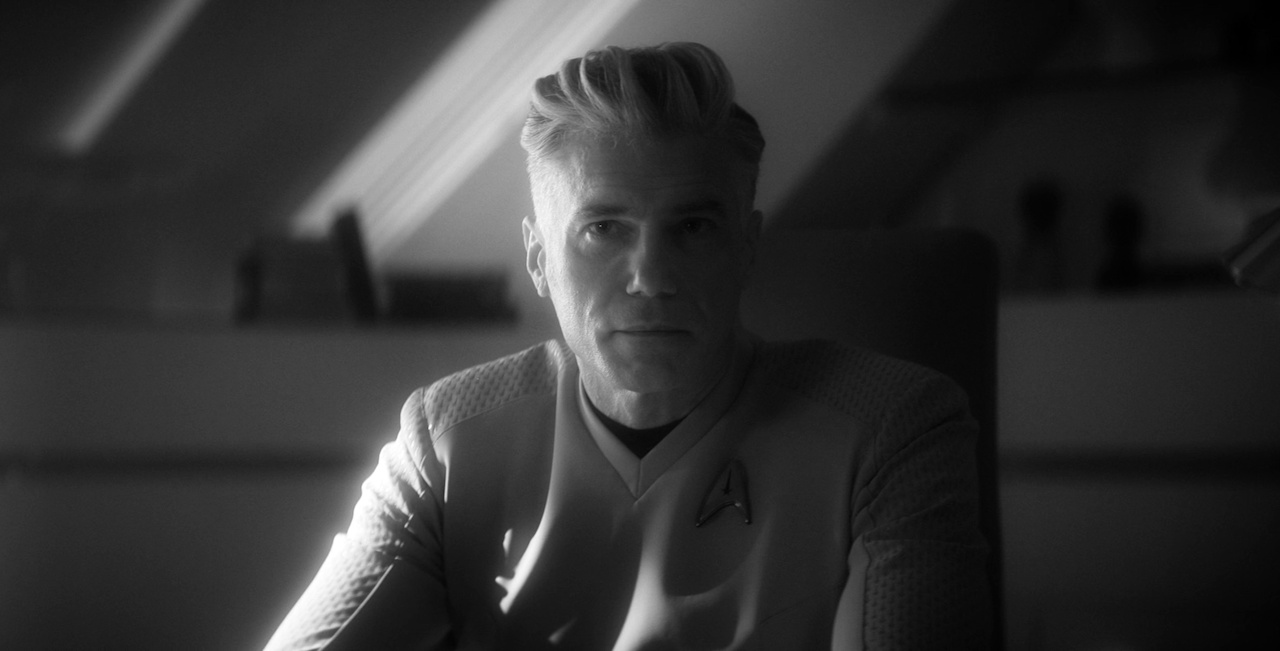
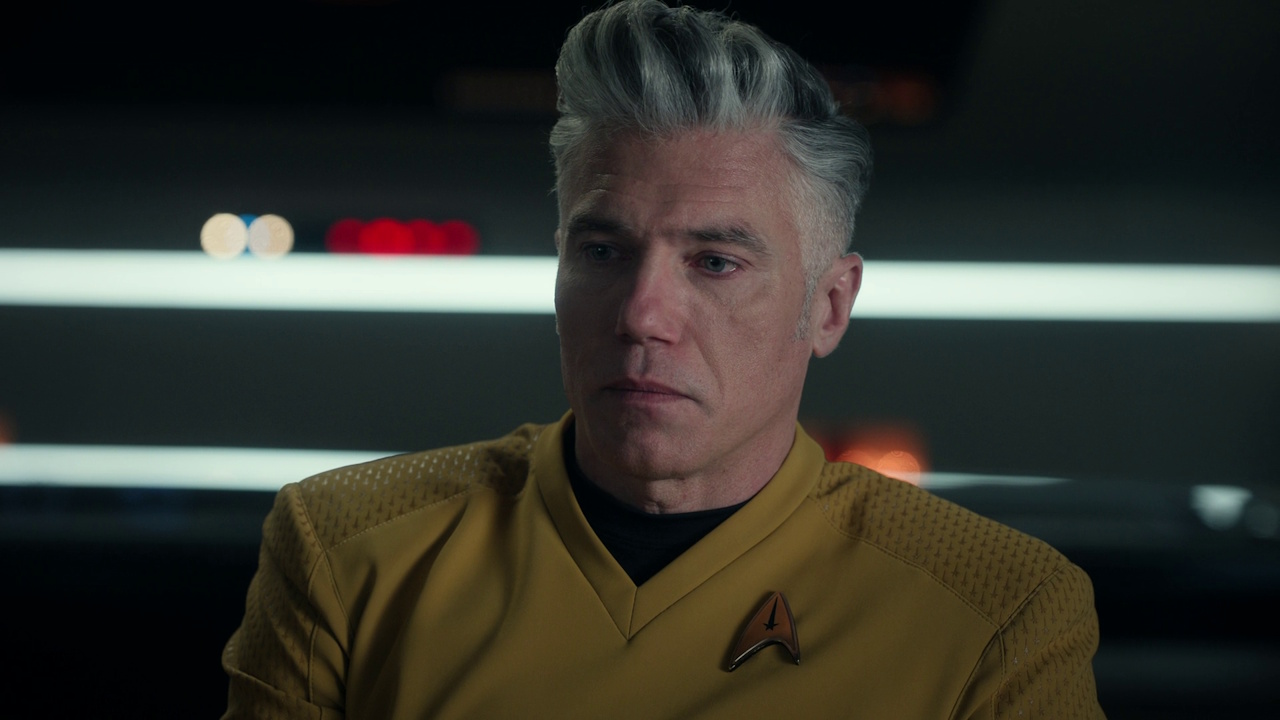
For the third episode in a row, Captain Pike had very little to do. I think I said this last season, too, but one of the main appeals of “the Captain Pike show” that fans – myself included – were clamouring for back in 2019 was Anson Mount and his incredible take on this character. We’re now a mere twelve episodes away from the end of the show’s run… and I kind of want to get a few more stories with Pike before the curtain falls. Star Trek has always done spotlight episodes where one or two characters are in focus – and this episode was very much an Una story, with supporting roles for Uhura and M’Benga, and a B-plot for La’an. And that’s great! But with limited time remaining, I’d like to spend a bit more time with the Enterprise’s captain.

Still frame from Star Trek SNW 4x04 showing Pike
Captain Pike hasn’t had much to do for several episodes now.

As the dust settles, I’m left with one feeling more than any other: A Case of Chiaroscuro just isn’t an episode I’m in a rush to revisit, and as and when I return to Strange New Worlds in the future, it’s an episode I’m more likely to skip than sit through. Despite its earnestness and the way it fully embraced its film noir and mystery inspirations… it just wasn’t for me. Partly that’s the black-and-white; a gimmick that felt, well… nothing more than gimmicky. But it’s also, at least in part, due to some outdated and two-dimensional tropes among the secondary characters, the melodrama that the episode imports directly from its source material, and the simple fact that this genre is quite a niche thing nowadays.

That being said, I tried very hard to give A Case of Chiaroscuro a fair shake, and not pre-judge it based solely on the fact that it was going to be in black-and-white. And, as I said above, I respect both Strange New Worlds’ creative team and the leaders at Paramount for creating a story like this and getting it across the line in a way that stayed largely true to the kinds of stories that inspired it. It’s something very few other franchises would attempt, and – at least in that sense – it’s a very “Star Trekky” thing!

Still frame from Star Trek SNW 4x04 showing the yard set with vehicles
A Case of Chiaroscuro stayed true to its noir inspirations.

Next week, Strange New Worlds is going to serve up a Level-Five Transporter Accident – the (in)famous “puppet episode” that was teased in pre-season marketing. I honestly don’t know what to expect from that one; I like that they went to the Jim Henson Company to get proper puppets made, and there’s a potential tie-in, I guess, with an episode of Lower Decks that could be interesting. It’s certainly going to be another “big swing” after this week’s noir-style story.

I hope this has been interesting! As I often say: please keep in mind that all of this is just the *subjective, not objective* take of one old Trekkie. If you liked A Case of Chiaroscuro a lot more than I did, feel it’s irredeemably awful, or just don’t agree with my take… that’s okay! There’s plenty of room in the Star Trek fan community for differences of opinion and respectful disagreement.

Thanks for joining me for this review, and as always… Live Long and Prosper, friends!


Star Trek: Strange New Worlds Seasons 1-4 are available to stream now on Paramount+ in countries and territories where the platform is available. The first three seasons are also available on DVD and/or Blu-ray. The Star Trek franchise – including Strange New Worlds and all other properties discussed above – is the copyright of the Skydance-Paramount corporation. This review contains the thoughts and opinions of one person only and is not intended to cause any offence.
Star Trek: Strange New Worlds Episode Review – Season 3, Episode 7: What Is Starfleet?

A Star Trek-themed spoiler warning.

Spoiler Warning: There are spoilers ahead for Star Trek: Strange New Worlds Seasons 1-3. Minor spoilers are present for Picard Season 1, The Original Series, and Deep Space Nine.

Strange New Worlds remains a fun, episodic, and eclectic series. Just in Season 3 so far, we’ve had a zombie episode, a noir mystery on the holodeck, and a dimension-bending away mission. So when this week’s episode was presented in the style of a Panorama or PBS Frontline documentary… yeah. That tracks!

What Is Starfleet was incredibly creative and well put-together. It draws clear inspiration from modern documentary films and investigative journalism, splicing action with interviews, and the way it unfolded made it a genuinely interesting watch. It could also feel intrusive and more than a little frustrating, particularly as the action would cut away from what was unfolding to focus on another interview or clip that didn’t seem to move the main story along. The overall result? An episode I have mixed feelings about, I’m afraid.

Still frame from Star Trek: Strange New Worlds S03E07 "What Is Starfleet?" showing the documentary title card.
The documentary’s title card.

Beto is not a totally brand-new character, having been built up over several earlier episodes. That should be a saving grace for What Is Starfleet, because we’ve at least started to get to know Beto, and we’ve seen him interacting with and getting to know some of the characters on the show already. But… the way this documentary was presented felt intrusive to practically all of the other characters. And because they are our real protagonists and have been for two-and-a-half seasons already… we’re on their side more than on Beto’s, even when naked plot contrivances seemed to be painting Starfleet and Captain Pike in a less flattering light.

It was obvious that the only two characters who were even potentially interested in being interviewed were Uhura and Erica Ortegas – and both of those come with caveats. Captain Pike, Dr M’Benga, Spock, Una… none of them were okay with this. They were complying because they’d been ordered to, but they really weren’t game for having their personal and professional lives exposed and dissected on camera. And again, because they’re the people we care about more than Beto, a significant chunk of What Is Starfleet felt uncomfortable, like it was being presented from the wrong character’s point of view.

Still frame from Star Trek: Strange New Worlds S03E07 "What Is Starfleet?" showing Dr M'Benga.
Most characters – like Dr M’Benga – were unwilling participants in the documentary.

Maybe that’s supposed to be part of the point. Some films and TV programmes want you to feel uncomfortable, want to show off negative or less-positive traits from some of their characters, and this documentary format is particularly well-suited to doing that. But if that was how it was meant to come across, then I question both the intent and the execution. What would be the point, in a series like Strange New Worlds, of trying to light up in neon some of the main characters’ ambiguities and questionable backstories? What do we gain by that? Because it feels like something that was contrived for the sake of being an uncomfortable experience… not to lead to any kind of character growth or narrative payoff.

And we aren’t just considering this documentary within the confines of Strange New Worlds – but in the context of 950+ Star Trek stories over almost six decades. Impugning the character, values, and overall decency of Starfleet, as Beto seems to aspire to do in the beginning… it doesn’t sit right.

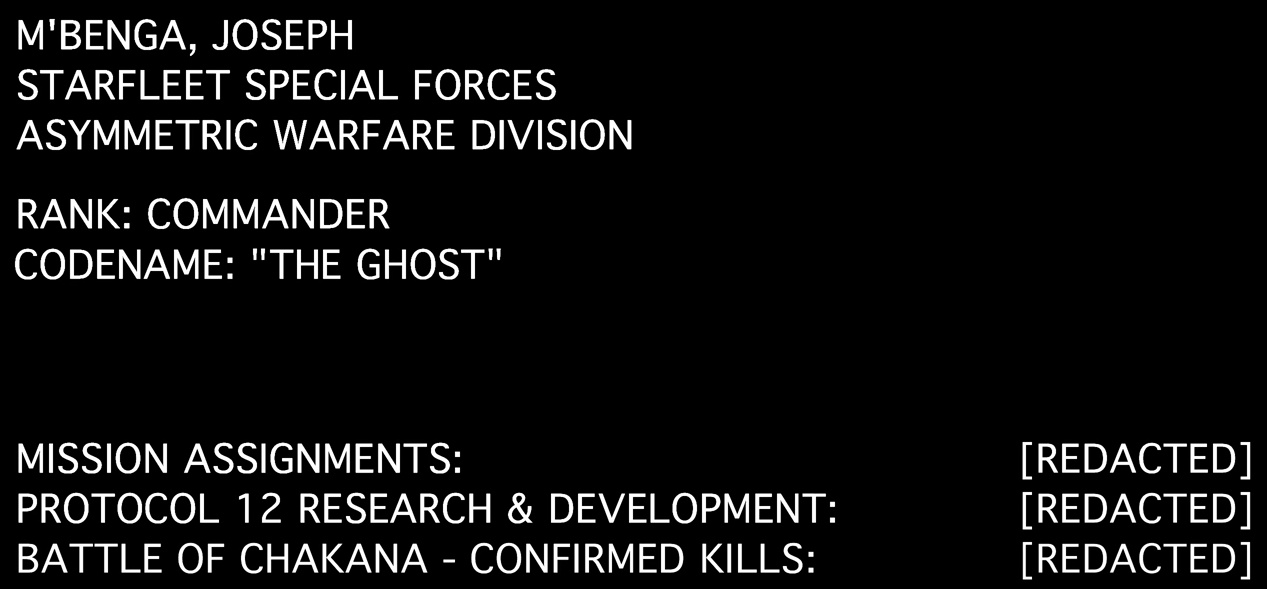
Still frame from Star Trek: Strange New Worlds S03E07 "What Is Starfleet?" showing Dr M'Benga's war record.
Dr M’Benga’s wartime record.

This side of the episode also horribly mixed its metaphors. Though I question whether it could be successfully pulled off, presenting the Federation and Starfleet as akin to an “empire,” ruthlessly expanding, using questionable weapons of mass destruction, threatening non-members… there could be real-world parallels there. It’s the distinction between how the United States likes to see itself – a paragon of virtue, extolling democracy and freedom – versus how the country can be seen by other countries around the world. Asking us as the audience to consider, even for a moment, whether non-Federation members and non-Starfleet personnel might see these organisations in that way has potential. It worked in Deep Space Nine with stories about Bajor and especially with the Maquis.

But the ending completely undermines all of that. Beto goes from making a hard-hitting investigative piece, complete with implicit accusations of war crimes and empire-building, to making a puff piece; basically pro-Starfleet propaganda. Though I don’t think this story, told in this format, had the kind of complex morality that would’ve lent itself to a discussion of Starfleet as a tool of imperialism… if that’s the angle you want to go for, you kind of have to commit to it. What Is Starfleet didn’t, resulting in an ending that felt abrupt and tonally wrong compared to everything that led up to it.

Still frame from Star Trek: Strange New Worlds S03E07 "What Is Starfleet?" showing Pike holding a wine glass.
The end of the episode came across like a puff piece – or a recruitment commercial.

In an episodic show, you get contrivances sometimes – it’s part of episodic storytelling. In order to get to the main event, sometimes you have to brush aside an important point or sideline a character. It’s never great, but it’s a compromise of the medium. Even with that context, though… Starfleet’s off-screen orders for the Enterprise to work with this alien race and deliver their biological weapon felt incredibly flimsy. It was clearly set up to be as dark and negative as possible, so that the episode (and Beto as the filmmaker) could imply as many bad things as possible.

And again, contrivances are a hazard of episodic TV. There are many instances in Star Trek where the Enterprise has been ordered somewhere “just because,” jump-starting the events of a more interesting storyline. But there really aren’t that many episodes I can think of where the reasoning behind Starfleet’s orders is so deliberately obtuse.

Still frame from Star Trek: Strange New Worlds S03E07 "What Is Starfleet?" showing Pike and Una conversing with Starfleet Command.
There was no reason for Starfleet to be so annoyingly secretive other than “because plot.”

There was scope for a potentially interesting conversation about the “Nuremberg defence.” If you’re unfamiliar with that term, it refers to the expression “I was only following orders,” something many of the defendants at the Nuremberg trials after World War II would go on to claim. In the context of this story, Starfleet basically ordered Pike and the crew to transport a pretty terrifying weapon – a weapon created by interfering with a sentient life-form. The secrecy and “need-to-know basis” for the information pertaining to the mission at least suggests or hints at Starfleet’s higher-ups being aware of what they were doing.

But What Is Starfleet doesn’t do that. It flips things around, showing how Starfleet is “just us, the good people who serve,” and that kind of ignores a massive in-universe point about the nature of orders, who’s giving them, and what outside agendas might be involved. We didn’t get a satisfactory explanation for why Starfleet was inserting itself into this war between two non-Federation worlds, nor whether they knew of the capabilities of this sentient, genetically-modified weapon of mass destuction. “I was only following orders” is not an acceptable defence today, in the modern world, for something like the trafficking of sentient beings, let alone transporting weapons of mass destruction to one side in a war your state is not a participant in. So why would that be okay in the 23rd Century?

Still frame from Star Trek: Strange New Worlds S03E07 "What Is Starfleet?" showing the Jikaru.
The episode sets up an interesting and morally complex idea – then dumps it right when it could’ve mattered.

What Is Starfleet could’ve posed those kinds of questions – but when it came to the crux, the episode’s writers and director baulked. They teed up these questions about Starfleet inserting itself into someone else’s war, not as a peacemaker but as a gun-running, human trafficking ally, and about how the chain of command operates. But then, after an admittedly emotional chat with Uhura about his personal agenda and ulterior motive, Beto does a complete 180 and turns his documentary’s final act into a celebration of all things Starfleet that’s so sickeningly upbeat that it comes across like propaganda or an enlistment ad.

And so… from both an in-universe perspective, and for us as the audience, Beto’s documentary feels fundamentally unsatisfying and tonally wrong. It’s as if you’d sat down to watch what you thought was a hard-hitting episode of PBS Frontline or Panorama about the war in Iraq, the lies that led to the war, and the criminal actions of the military… only for the film to end with a feel-good story about camaraderie and friendship, and an ad to join the army at your nearest recruitment station. Starfleet is – as the documentary points out – the Federation’s military, after all, so when the episode and the documentary end with this kind of puff piece… that’s how it comes across to me, at any rate.

Still frame from Star Trek: Strange New Worlds S03E07 "What Is Starfleet?" showing the dinner party.
This didn’t feel like the right ending.

A couple of weeks ago, Pelia was one of the most fun and engaging characters when dealing with Beto and his camera. She seemed to relish in hamming it up, almost hoping for her turn in the spotlight. That could’ve added a small amount of levity to what was a quite heavy story this time, and What Is Starfleet could’ve looked at the connection between Pelia and Beto, as well as, perhaps, how a filmmaker might deal with an overly enthusiastic participant. But, for no discernible reason, Pelia was entirely absent.

Given the Jikaru’s energy/electromagnetic abilities, and the damage sustained to the ship and shuttle, there was scope to bring in an engineering character, but neither Scotty nor Pelia appeared. If I had to choose just one of them, I’d have picked Pelia – I just think she brought something completely different to the table when dealing with Beto. It would’ve been fun for us to see him having to deal with her antics, but she could’ve also had a role in the story. Not only could we have seen her attending to the Enterprise’s shields, and perhaps Beto struggling to keep his composure during an interview, but Pelia could’ve also helped Pike deal with the intrusion of having a camera in his face. I’ve felt her absence in several stories this season – but none more so than this one.

Still frame from Star Trek: Strange New Worlds S03E07 "What Is Starfleet?" showing an engineer reparing damage to the Enterprise.
Where were Pelia and Scotty during all of this?

All of this must make it sound like I hated What Is Starfleet. I didn’t. I liked the creativity. I liked that, after 950+ episodes and films, Star Trek can still break new ground and try different things. I liked that, hidden underneath the documentary format, there was a classic Star Trek story which felt like it came straight out of The Original Series or Deep Space Nine. And I liked many of the character moments – particularly Pike’s conversations with Una, and Uhura’s with Beto. I just think that some of the episode’s goals weren’t clear, and that maybe there was a bit of story meddling which ultimately led to quite a jarring shift in tone.

This was a non-linear approach to storytelling – the narrative was broken up by interviews and vignettes, but underneath it there was a classic Star Trek episode. I’d still have the same complaint about Starfleet Command’s unnecessary secrecy and obtuse orders without the documentary format, but on that side of the story, that’s pretty much the only weak link. The tale of an alien race corrupting a life-form for its own selfish purposes, and Starfleet intervening, coming down firmly on the side of protecting sentient life? That’s a classic “morality play” right out of The Original Series. And the idea of Starfleet potentially investigating this kind of weapon, inserting itself in a foreign conflict? The same kind of morally challenging storytelling was on display in Deep Space Nine.

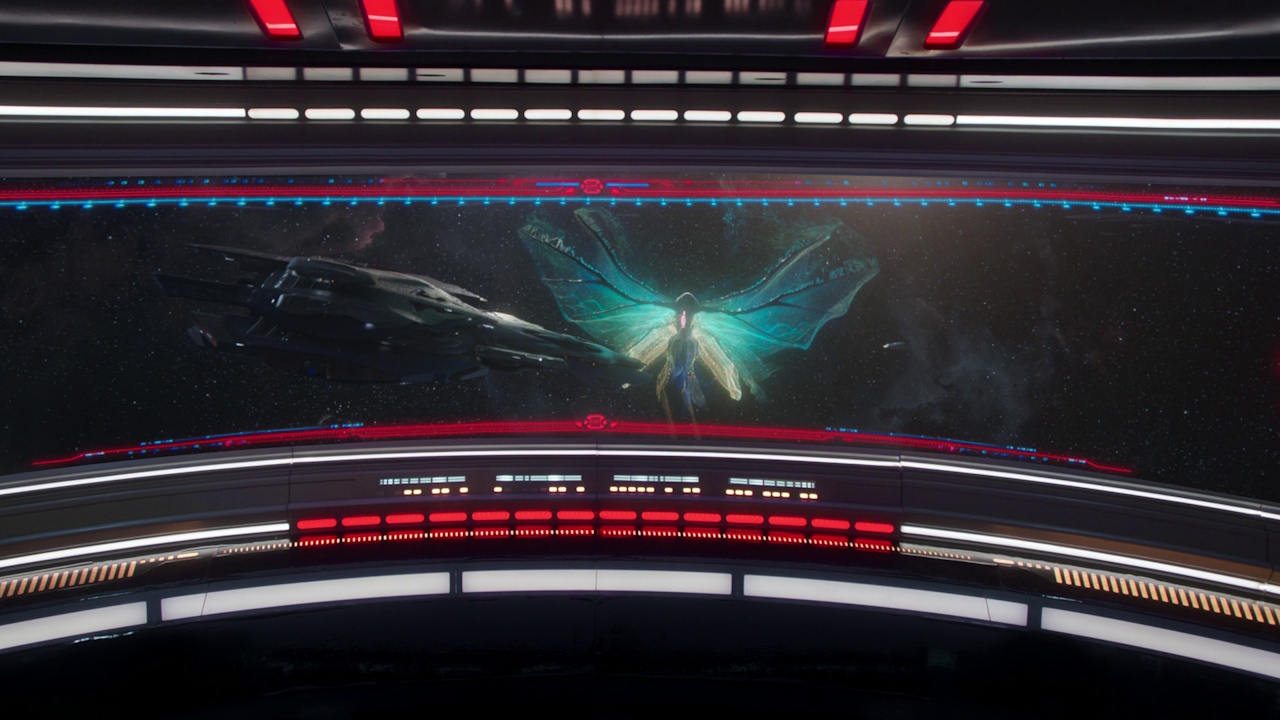
Still frame from Star Trek: Strange New Worlds S03E07 "What Is Starfleet?" showing the main viewscreen showing the Jikaru and the Lutani warship.
The Jikaru and the Lutani warship.

I think the core story at the heart of What Is Starfleet would’ve made for a perfectly entertaining episode in its own right. And maybe, without the documentary trappings, it might’ve even been a bit more fun! I like when Star Trek gets into these morally grey areas – why was the Enterprise ordered to help this non-Federation member with Klingon ties? Did Starfleet Command know that the Lutani were illegally enslaving a sentient species to serve as weapons of mass destruction? Seeing Pike and the crew coming to that realisation was great… but without the unique format, I can’t help but feel it might’ve worked even better.

Because the interviews didn’t really expand our knowledge or understanding of any of the featured characters, basically just re-telling things we already knew, like Uhura’s family, Ortegas’ injury, Spock’s half-human side, or Dr M’Benga’s war record, there’s a strong case to be made that they… got in the way. And that what could’ve filled that space had they not been present was a more in-depth look at the Lutani, their unethical experiments on the Jinkaru, and Captain Pike’s realisation that his orders were morally wrong. That version of the episode – one played straight, without the documentary fluff – would have been fun to see.

Still frame from Star Trek: Strange New Worlds S03E07 "What Is Starfleet?" showing Pike being interviewed.
Captain Pike.

There are a couple of other in-universe points I want to tackle re. the documentary, then I promise we’ll move on to discuss other parts of the episode!

Firstly, this documentary idea leaned on something modern Star Trek has done that I’ve never been particularly comfortable with. In short, the idea of making a documentary about the crew of the Federation flagship means that, to the ordinary Federation citizen, Captain Pike and at least some members of his crew are gonna be akin to celebrities. The implications are that either people knew who they are already, or that the documentary is going to raise their profiles and make them famous, for want of a better word.

I’ve never really liked that idea. In some Star Trek stories, it could work. When Enterprise did it in Season 4, turning members of its crew into heroes, there was a narrative purpose – but when we’ve seen similar attempts, such as in Picard’s premiere episode, or with Boimler in Lower Decks fangirling about certain Starfleet officers, it just felt weird and uncomfortable. I like to see the characters in Star Trek as everyday folks doing their jobs in this fun future setting. Some of them are exceptional, yes, but part of that is because they live in a post-scarcity future where “exceptional” is becoming the norm. They aren’t meant to be their world’s equivalent of celebrities, so this idea of a documentary all about them – making them famous people in the 23rd Century – just isn’t sitting right.

Still frame from Star Trek: Strange New Worlds S03E07 "What Is Starfleet?" showing Uhura and Spock on the bridge.
Uhura and Spock.

Then we have an interesting in-universe question: would a documentary like this actually make it to air? Would Starfleet be okay with a documentary implying one of its senior medical personnel is a war criminal? Or that showed a sensitive mission involving a non-Federation member, a weapon of mass destruction, and classified orders? If this was an independent production, maybe. But the whole idea behind Beto’s work is that he’s been commissioned by Starfleet to make this film – Pike and the crew are basically under orders to work with him and let him observe them, otherwise you can bet Pike wouldn’t have allowed him on the bridge. With that context, would Starfleet be okay with this film?

Starfleet Command would undoubtedly like the ending – how could they not? It’s basically pro-Starfleet propaganda and a recruitment ad rolled into one. But the rest of the film really does portray the organisation and several members of the crew in an extraordinarily negative light, so the idea that the people at Starfleet HQ who originally wanted this documentary to be made would give it the green light is ridiculous. And, also from an in-universe perspective, I’m not sure I buy the idea of Starfleet declassifying all of this footage of its operations, broadcasting it to all and sundry. Maybe that’ll become an issue in another episode – perhaps the Klingons watched Beto’s documentary, figured out some weakness in the Enterprise, and are planning an attack. I doubt it, but it could at least be a way to incorporate the documentary into a future episode.

Still frame from Star Trek: Strange New Worlds S03E07 "What Is Starfleet?" showing the bridge of the Enterprise.
Might the Klingons have watched Beto’s documentary?

Okay, that’s enough about the documentary for now.

So I guess Strange New Worlds isn’t going in the direction I thought it was with Ortegas and her hinted at PTSD-like condition. Her scenes in the documentary this week, in which she discussed her injury and recovery, seem for now to be the culmination of that storyline, and I don’t really see how, with three episodes remaining this season, this storyline can come back in a significant way. It was understated and not what I expected, but I can respect What Is Starfleet for the undramatic and mature way it approached this storyline.

I confess I’d been expecting more of an ending, though. I don’t think it feels unsatisfying, but Ortegas’ storyline had been set up right at the start of the season, then we got her big blow-up with Una in Shuttle to Kenfori, and I’d been sort of waiting ever since for this unnamed PTSD-adjacent mental health condition to return. With Ortegas never having gotten a major storyline of her own, this could’ve been her turn in the spotlight. I think there’s value in a storyline that basically says, “yeah, I was struggling, but with determination and time I’m doing better.” I wish we’d seen a bit more of it over the course of the season, though; Ortegas seemed to go from struggling badly to snapping out of it in between episodes, where recovery and coming to terms with trauma is a process, not an instantaneous thing.

Still frame from Star Trek: Strange New Worlds S03E07 "What Is Starfleet?" showing Erica Ortegas smiling.
I wish we’d gotten a bit more time with Ortegas this season to explore her mental health – but this ending was solid in an understated way.

Uhura was at the heart of What Is Starfleet, and her connection with Beto was interesting. However, there was a moment towards the end where Uhura seemed to go from “I can’t believe you’re recording this, leave me alone” to “I’m having an invasive medical procedure, bring your camera” in no time at all. Conflict between characters is great; it adds to the extension in a situation like this. And I get that Uhura was absolutely the right character to call out Beto on his agenda and potential conflict of interest. But I think we needed at least one scene in between their blow-up in the ready room and Uhura’s visit to sickbay to sell that they’re still on speaking terms.

That being said, Beto’s realisation that he was compromising his work and coming into it with an agenda was played incredibly well. I liked how the camera lingered on Beto – picking up on his line a couple of weeks ago about the camera being programmed to follow the strongest emotions in the room – as he sat with the idea that he was projecting onto Starfleet his anger and fears after what happened to his sister.

Still frame from Star Trek: Strange New Worlds S03E07 "What Is Starfleet?" showing a close-up of Beto, looking emotional.
Beto.

The scene was also incredibly well-written, and it built on Uhura and Beto’s established relationship particularly well. I think we were getting to a point where, in theory, anyone *could* have called out Beto for his anti-Starfleet agenda, but if it had been Pike or Dr M’Benga, for example, it wouldn’t have packed as much of a punch. It took Uhura to see through Beto – not only what he was doing, but why he was doing it and why he felt the way he did. It was a great way to build on a fun character dynamic from earlier in the season, taking the pair in a more serious and dramatic direction.

Has it killed any possibility of an Uhura-Beto romance, though? After she called him out like that, and after Beto had been pushing his agenda the whole time, I can see both of them not wanting to take things any further. Maybe that’s a reach – or maybe Beto will be gone after this episode, now his documentary is over – but I liked the idea of giving this younger version of Uhura some kind of romantic entanglement. Spock can’t be the only one who gets to have that kind of storyline, after all!

Still frame from Star Trek: Strange New Worlds S03E07 "What Is Starfleet?" showing Beto and Uhura.
Beto and Uhura made for a fun pair earlier in the season.

One thing I really liked about Beto, and I admire about the character on a personal level, is how he left all of that in the documentary. He could’ve said “cut!” and left out the part where Uhura basically calls him out on his own show for his bias and anti-Starfleet sentiments. But he didn’t. It added to the feeling that this was the kind of “warts and all” investigative piece that What Is Starfleet’s writers were drawing inspiration from. And I think it (belatedly, perhaps) paints Beto in a positive light. For all his flaws, he was dedicated to the truth more than to his own image.

I felt echoes of Jake Sisko in this side of Beto. In the DS9 fourth season episode Nor Battle To The Strong, we see Jake and Dr Bashir diverted to a warzone – where Jake fails to distinguish himself in combat. Jake writes up his experiences for the Federation News Network, including his cowardice, his abandoning of Bashir, and the sheer dumb luck for which he was hailed as a hero. Beto, in What Is Starfleet, does something similar by allowing his conversation with Uhura – and by extension, the agenda he had going into the documentary – to make it into the final cut. Both men exposed their own flaws and vulnerabilities. As I’ve said before… Star Trek doesn’t copy itself, but sometimes, story beats just rhyme.

Still frame from Star Trek: Strange New Worlds S03E07 "What Is Starfleet?" showing Beto lost in thought.
Like Jake Sisko in Nor Battle To The Strong, Beto kept his documentary open and honest, even about his own flaws.

I’m not sure that this was a particularly good episode for Captain Pike. I don’t mean that in terms of screen time, but characterisation. Pike went hard on the “need-to-know” aspect of his orders, which made sense in the context of the story, but didn’t do wonders for a man who’s supposedly on friendly terms with his crew. There was a bit of broken trust there, I felt, and it begs the question of how much Pike knew about the Jikaru and what the Lutani had been doing to them before the mission got underway.

It was nice to see how Pike – eventually – came around to the idea that the Jikaru was sentient, and that interfering with it was morally wrong, even if it was within the scope of his orders. But it took him a while to reach that conclusion, even after Uhura and Spock had pressured him about it. And it doesn’t account for what he may or may not have known about the mission and the circumstances surrounding the Lutani and their unethical experimentation on a sentient life-form. Sometimes less is more… but here, we needed to know from Captain Pike, firsthand, that he was as surprised as everyone else about what was going on.

Still frame from Star Trek: Strange New Worlds S03E07 "What Is Starfleet?" showing Pike, Una, Uhura, and M'Benga in the ready room.
Pike with Una, Uhura, and Dr M’Benga.

Though we didn’t spend much time with the Lutani, I enjoyed the two characters we got to see. The first scientist died in a pretty gruesome way, succumbing to her injuries in sickbay. The second Lutani, the commander of their warship, got a one-on-one with Captain Pike, and I liked this character. There was a desperate edge to him; pleading for this unethical super-weapon his people had developed as it was, in his view, a last line of defence.

The actor, Shaun Majumder, reminded me of DS9′s Armin Shimerman in terms of how he spoke, and that was kind of fun to listen to! The Lutani are probably going to be among Star Trek’s many one-time-use aliens; I don’t expect we’ll see them coming back in a big way. But they had a neat design – the silver-grey colour at least helps them stand out from other “nose and forehead” humanoid aliens. Nothing to write home about, perhaps, but a solid and pretty nuanced antagonist for the story they were a part of.

Still frame from Star Trek: Strange New Worlds S03E07 "What Is Starfleet?" showing the Lutani commander.
The Lutani commander.

Ever since Discovery debuted, live-action Star Trek has used a cinematic “letterbox” aspect ratio… and I hate it! Okay, “hate” might be too strong a word, but c’mon… what’s wrong with a standard widescreen ratio that actually fits properly on most people’s TV screens? It feels like every episode has content cut off; like I should be seeing more of the action. What Is Starfleet finally ditched that – and it was consistent in using a 16:9 aspect ratio for the entire episode, unlike A Space Adventure Hour, which only used it for its show-within-a-holdeck-programme-within-a-show segments.

I admire Strange New Worlds’ producers for going all-in with whatever ideas they have. We got the animated ending to Those Old Scientists in Season 2. We got the a cappella opening theme in the musical episode. We got a 16:9 aspect ratio this week, mimicking those TV documentaries and investigative news pieces that the episode drew inspiration from. Long may this experimentation continue!

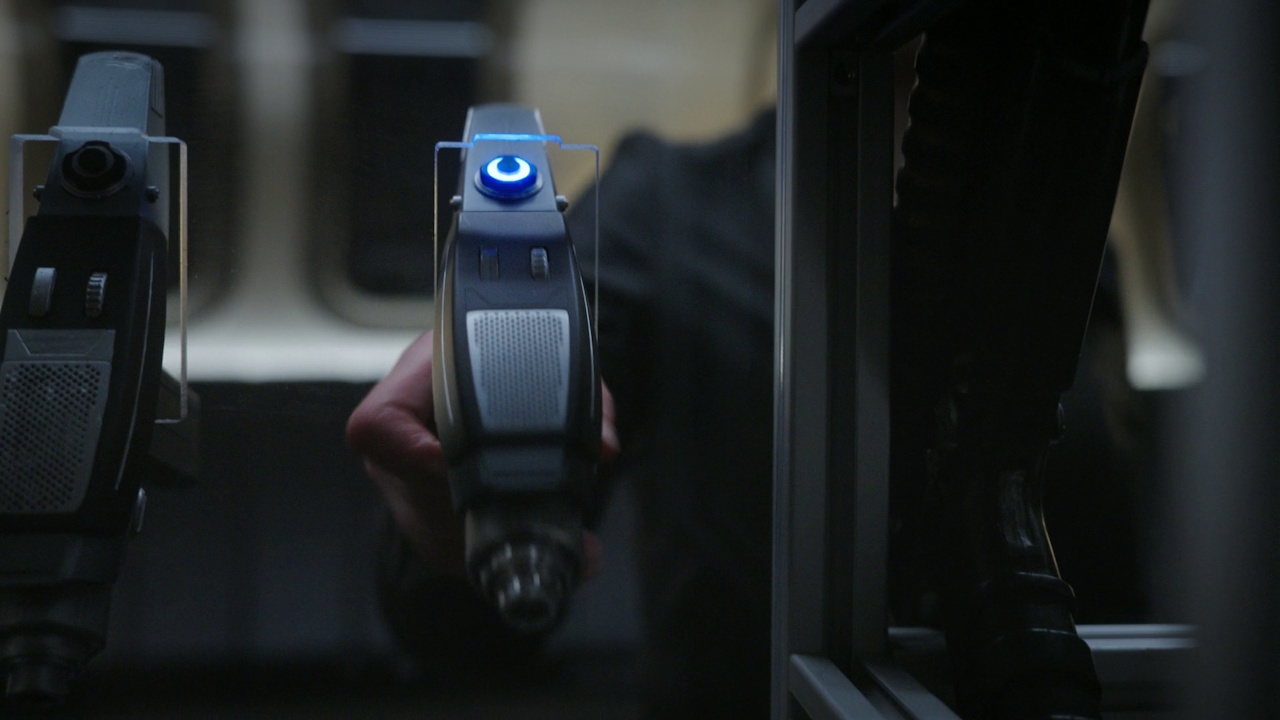
Still frame from Star Trek: Strange New Worlds S03E07 "What Is Starfleet?" showing a hand reaching for a phaser.
A phaser pistol in the armoury.

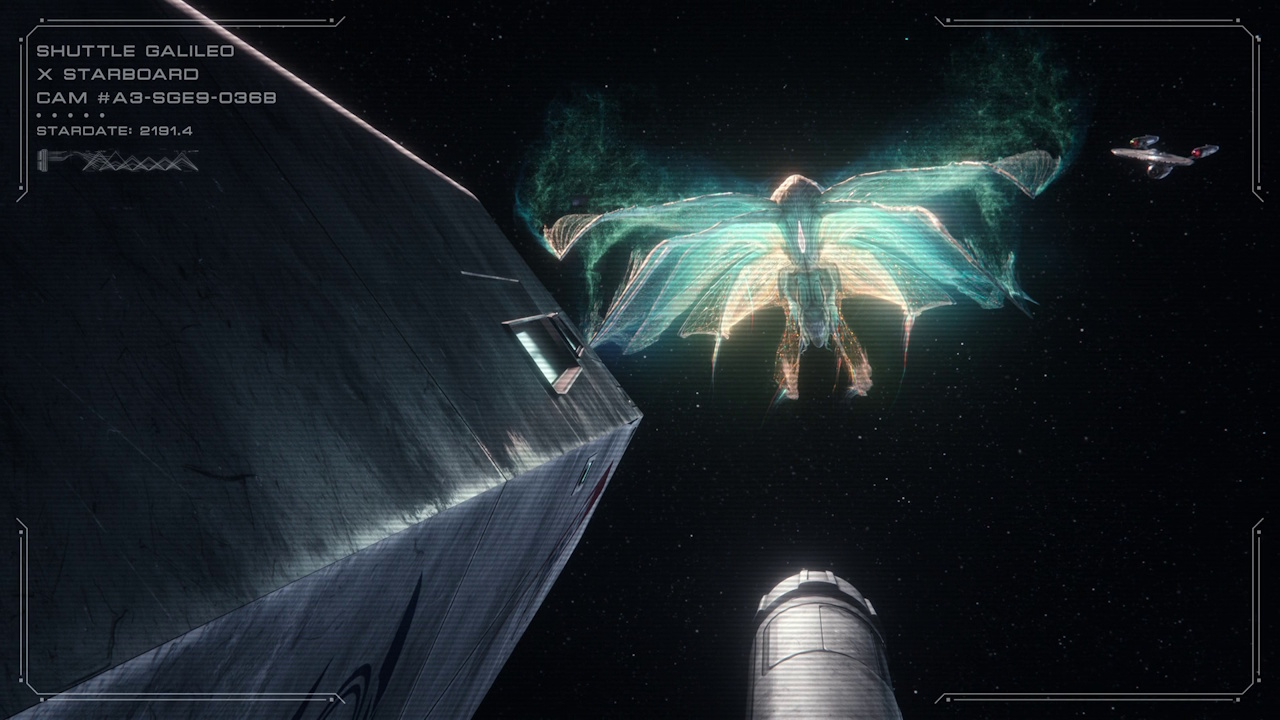
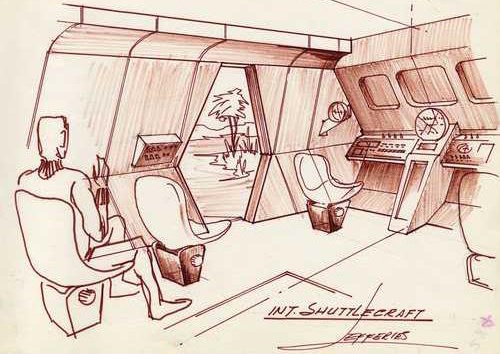
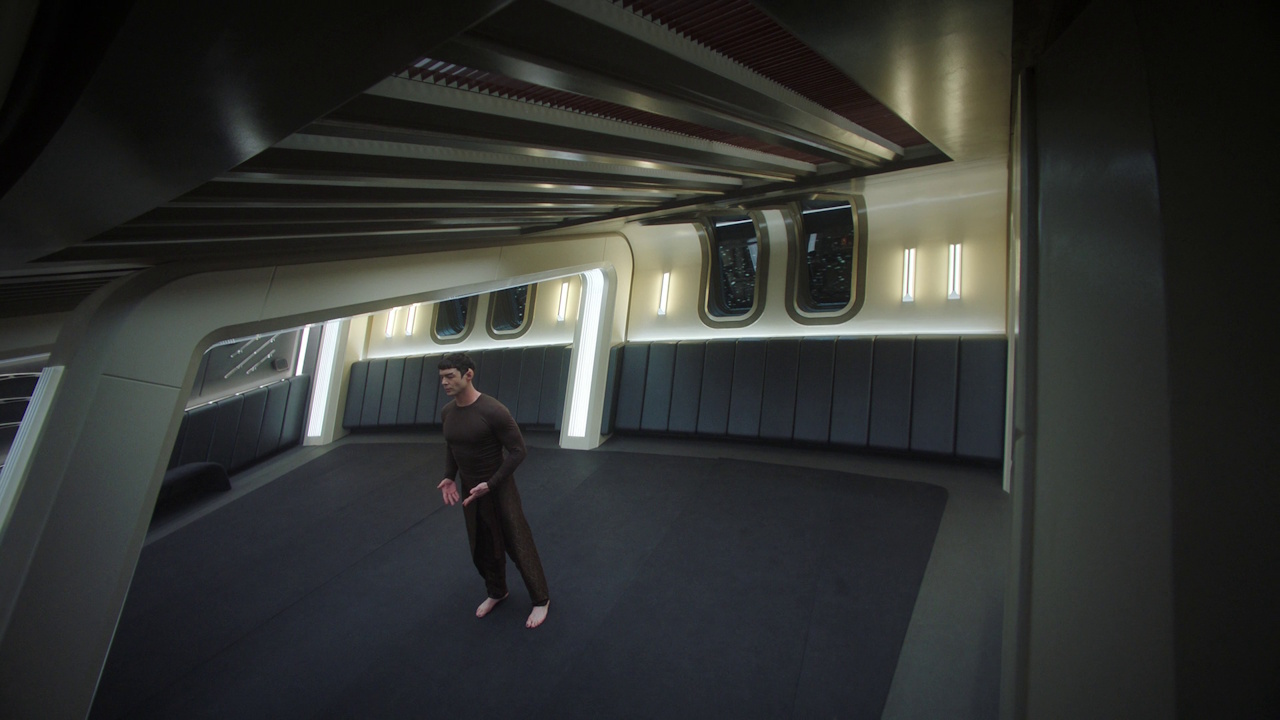
It was a ton of fun to see the shuttle Galileo again. The Galileo was made famous in The Original Series episode The Galileo Seven, and a shuttle bearing the same name has been a mainstay in Strange New Worlds since Season 1. Maybe I’m misremembering, but I felt the design of the shuttle that we saw this week was much closer to that TOS presentation than to earlier Strange New Worlds episodes – it felt a lot more familiar to me, at any rate.

The sequence aboard the shuttle was one of the most tense in What Is Starfleet, with Spock attempting a long-range mind-meld with the Jikaru. I’m not sure how we went from “Spock’s the only one who can do this because of Vulcan telepathy” to “anyone can thanks to this gadget,” but I guess that’s a minor point. The danger of the shuttle mission was well-established, and as the camera lingered on Pike, you could see how worried he was for the safety of the away team.

Concept art created for Star Trek: The Original Series showing the interior of the shuttle Galileo.
The Original Series concept art showing the shuttlecraft interior.
Image Credit: Matt Jeffries via Forgotten Trek.

I’ll continue to compliment Strange New Worlds for taking a step back from Spock’s love life. When Chapel joined the away mission (why not Dr M’Benga?) I was a little worried that they’d drag that up again, but I was pleasantly surprised. There’s so much more Strange New Worlds can do with Spock than either comedy or romantic storylines, and I’m glad we got to see him in that kind of role this week. What Is Starfleet leaned into Spock’s role as the Enterprise’s science officer, but it also allowed him – in his own words and at his own pace – to touch on his half-human heritage.

This continues a trend from Enterprise (and really, as far back as The Original Series) of Vulcans being a pretty prejudiced lot. Despite their lofty claims of enlightenment and aloof nature, Vulcans are just as prejudiced as humans when it comes to race and racial purity. Enterprise took a deep dive into this side of the Vulcans, but it was always present. I remember Sarek’s line of Spock being “so human” in The Final Frontier, just as one example. Considering that next week’s episode is titled Four-and-a-Half Vulcans, calling attention to Spock’s heritage in What Is Starfleet might prove to be some clever foreshadowing. Or just a timely reminder.

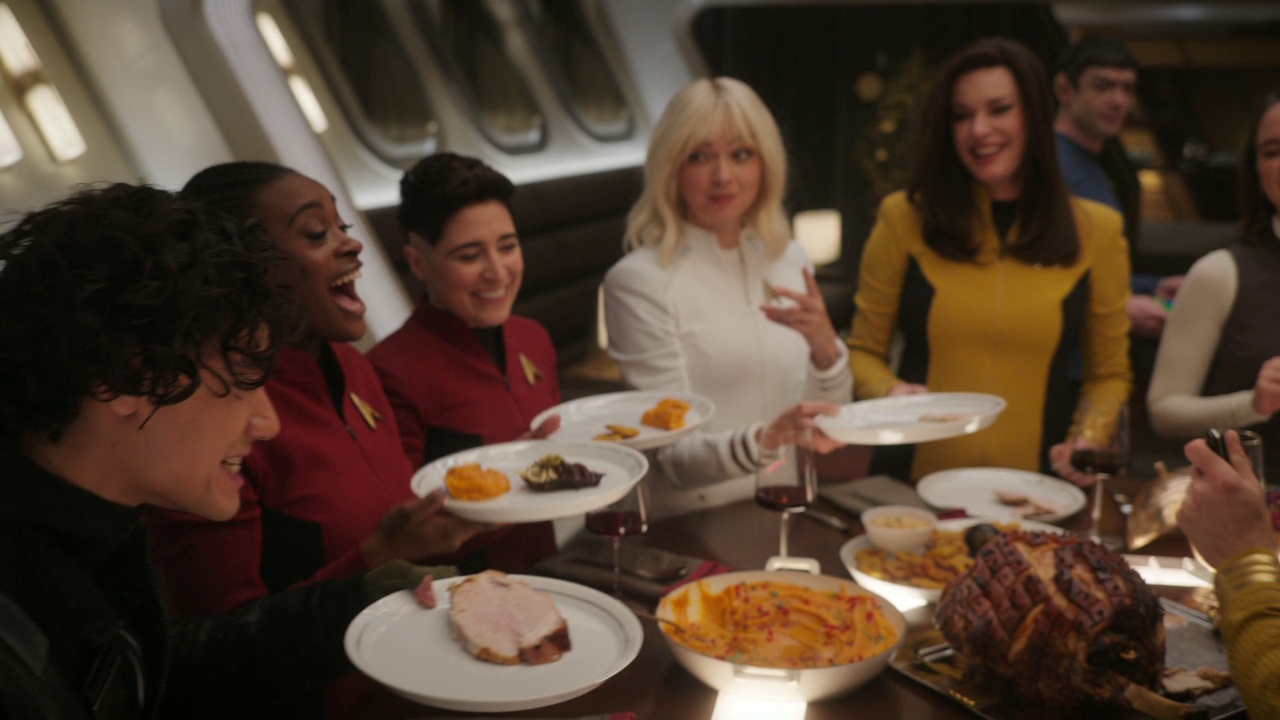
Still frame from Star Trek: Strange New Worlds S03E07 "What Is Starfleet?" showing Spock's training.
Part of Spock’s training/meditation.

Alright, let’s start to wrap things up.

What Is Starfleet was a creative idea for an episode. Beto’s earlier appearances this season built up to it, meaning the idea of a full-blown documentary episode didn’t come from nowhere. The writers, producers, director, and editors clearly had a lot of fun researching documentary films and investigative news pieces, and the resulting episode emulates that style incredibly well. There were also great moments of characterisation for Beto and Uhura in particular, with Mynor Lüken and Celia Rose Gooding putting in incredible performances to bring their characters to life.

However, there are some flaws that keep What Is Starfleet from really soaring. I really felt the absence of Pelia, as her chaotic energy and previous run-in with Beto could’ve added a lot. I can’t help but feel that a more traditional episode, playing the story straight without the documentary style, might’ve been a better fit for this story of the Jikaru and Lutani, and would’ve allowed a bit more time for characters like Pike to shine. And, unfortunately, the documentary itself feels quite jarring, with a massive tonal jump from “investigative hit piece” to “recruitment ad” right at the end.

Still frame from Star Trek: Strange New Worlds S03E07 "What Is Starfleet?" showing Spock in away team armour.
Spock.

A bit of a mixed bag, then. Nothing was out-and-out bad, and I will happily watch What Is Starfleet again. It’s a self-contained episode, one that doesn’t require a lot of background information from earlier stories to shine. Ortegas’ storyline is probably the most reliant on what came before, but I think it’s explained well enough within the documentary itself – and particularly through Uhura’s conversation with Beto – that even that aspect can be understood without much prior knowledge. I’m a little underwhelmed by this apparent resolution to Ortegas’ story, but at the same time I can respect Strange New Worlds for going for a more realistic and less drama-laden ending to her struggles.

We caught a glimpse of Captain Batel in the dinner party sequence right at the end, but this is now the second week in a row where her deadly, near-fatal illness and unconventional treatment haven’t been mentioned. As above, I love episodic television, and I don’t want Strange New Worlds to turn into a serialised show like Picard or Discovery. But… sooner or later, we have to pick up this storyline, right?

Next week, we have Four-and-a-Half Vulcans. I’ll level with you: I’m not looking forward to another “Vulcans are so stuck up, let’s use that for laughs!” story outline. Strange New Worlds has scope to do so much more with Spock and the Vulcans, yet almost every time they’ve appeared it’s been in a comedy story with a flippant tone. I hope I’m misjudging Four-and-a-Half Vulcans, and I’ll do my best to go into it with an open mind! But I’m concerned at this early stage. I guess we’ll find out, though!


Star Trek: Strange New Worlds Seasons 1-3 are available to stream now on Paramount+ in countries and territories where the platform exists. The first two seasons are also available on DVD/Blu-ray. The Star Trek franchise – including Strange New Worlds and all other properties discussed above – is the copyright of Skydance and/or Paramount. This review contains the thoughts and opinions of one person only and is not intended to cause any offence.
Star Trek: Strange New Worlds Episode Review – Season 2, Episode 6: Lost In Translation

Spoiler Warning: There are spoilers ahead for Star Trek: Strange New Worlds Seasons 1 and 2.

Welcome back to my Strange New Worlds Season 2 episode review series. I know it’s been a while, and I’ll address that briefly before we jump into the review proper.

Last year, while Strange New Worlds was airing, I began to feel burned out on Star Trek as a whole. I also found myself writing less frequently here on the website, and I think I just needed a bit of a break from what had been a pretty hectic schedule for the franchise. There’s been a lot of Star Trek on our screens over the last couple of years in particular – some of which has been quite heavy, with themes of mental health that hit close to home for me. Long story short, I ended up taking a break from Strange New Worlds halfway through Season 2… but now I’m finally ready to jump back in. I’m going into these episodes completely fresh; this is my first time watching Lost in Translation and I haven’t seen the remaining Season 2 episodes yet.
So I hope you’ll excuse the lateness of this review! I plan to pick up where I left off last year, and while I don’t promise to do one review a week… hopefully by the end of the year – or at least by the time Season 3 is upon us – I’ll have finally wrapped up this batch of episodes.

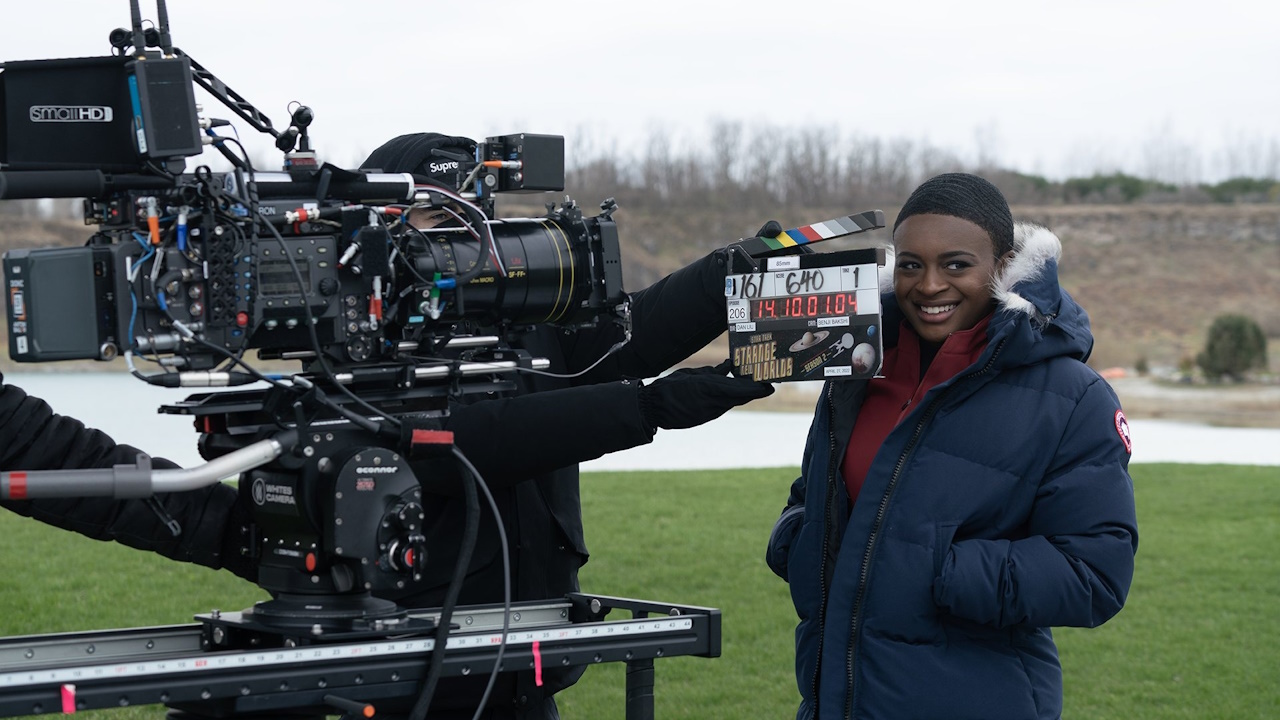
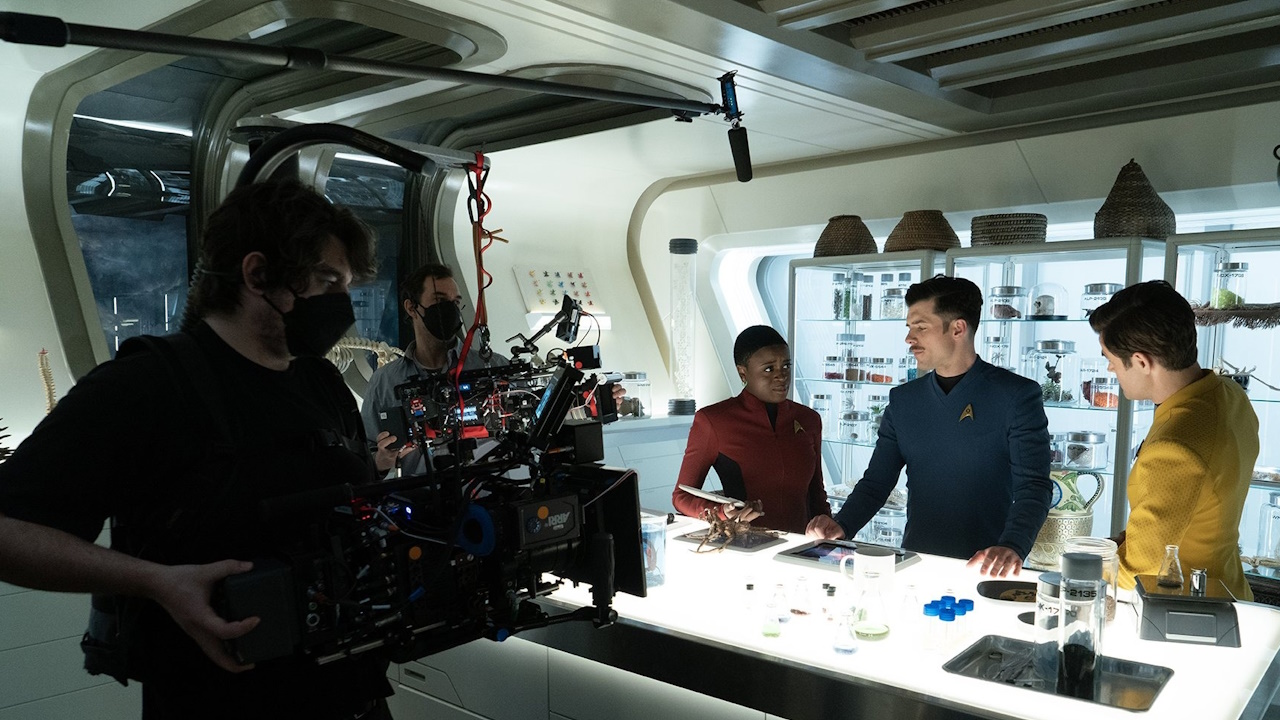
Behind-the-scenes photo from the Star Trek: Strange New Worlds episode Lost In Translation (2023) showing a camera rig and Uhura.
Behind-the-scenes photo from the set of Lost in Translation.

Onward, then, to Lost in Translation!

This episode put a somewhat dark and distinctly modern spin on Star Trek’s trusty old “they were only trying to communicate!” premise, and it worked pretty well. Outside of the main thrust of the story were a couple of moments of characterisation that I felt either weren’t set up particularly well or that might’ve needed an extra moment or two in the spotlight, and there was a rare CGI miss for Strange New Worlds as the series used a sub-par visual effect that had also appeared in Picard’s third season. Other than that, though, I had a pretty good time with Lost in Translation; it was a nice way to return to Strange New Worlds after an absence of more than a year.

I think I’ve noted this before in either my Season 1 review or one of my earlier Season 2 episode reviews, but I just adore the opening title music. I got goosebumps listening to the theme this time after not hearing it for months, and the way composer Jeff Ruso deconstructed and then recreated the music from The Original Series is really something special.

Promo poster for Star Trek: Strange New Worlds Season 2 (2023) showing Uhura. Cropped.
Lost in Translation focused on Uhura.

Let’s talk about what I didn’t like in Lost in Translation – which, thankfully, isn’t too much this time around.

There were a couple of pretty abrupt scenes where two different sets of characters seemed to have fallen out with one another off-screen, and the way this was communicated wasn’t great. First we had the two Kirk brothers: Sam and Jim. Their rivalry came from an understandable place, but it needed way more buildup to have been effective. We’ve seen these characters on screen together more than once in Strange New Worlds already, and there was no indication in those earlier appearances that Sam might feel Jim’s rise through the ranks was a sore spot.

And when we boil it down… this argument felt incredibly petty. Jim Kirk has just been promoted, becoming the youngest-ever first officer in Starfleet. And Sam feels jealous of that because their father – who we’ve never met and hasn’t been mentioned before – likes Jim more because of it? Have I even got that right? For the brothers to go from sharing a hug on the transporter pad to Sam storming off – twice, I might add – just felt so incredibly ham-fisted and rushed. There was the smallest nugget of an interesting idea at the core of this, and both actors did the best with the material they had. But this argument/sibling rivalry needed way more time on screen and more development, ideally over more than one episode. Strange New Worlds has done well so far with its blend of episodic storytelling and serialised character arcs… but this one didn’t stick the landing this time.

Still frame from Star Trek: Strange New Worlds Season 2 (2023) showing Jim and Sam Kirk at the bar.
Jim and Sam argued at the bar.

In a similar vein we have Una and Pelia’s conflict. This one has the benefit of being resolved (or apparently resolved, at least) by the end of the episode, meaning that the final scenes they shared together in the shuttlecraft and the conversation that Pelia forced went some way to compensating for their earlier conflict. But the same basic issue arises as with the Kirk brothers above: it needed more setup and more time on screen to play out.

This kind of conflict between two main characters can’t be a one-and-done, throwaway thing in a single episode; it deserves to have more time spent on it. Not for the first time in modern Star Trek I find myself saying this: if there isn’t enough time to do justice to a storyline that needs room to unfold… skip it. Don’t forget it entirely, but put it back on the shelf for later and find something smaller that would be a better fit for the short runtime available – then when you have the time to fully explore this kind of grief-driven character conflict, return to it and do it properly. This isn’t an isolated issue, unfortunately, as we’ve seen similar problems in all of the modern live-action Star Trek productions since 2017.

Still frame from Star Trek: Strange New Worlds Season 2 (2023) showing Una and Pelia on a shuttle.
Pelia and Una on their way back to the Enterprise.

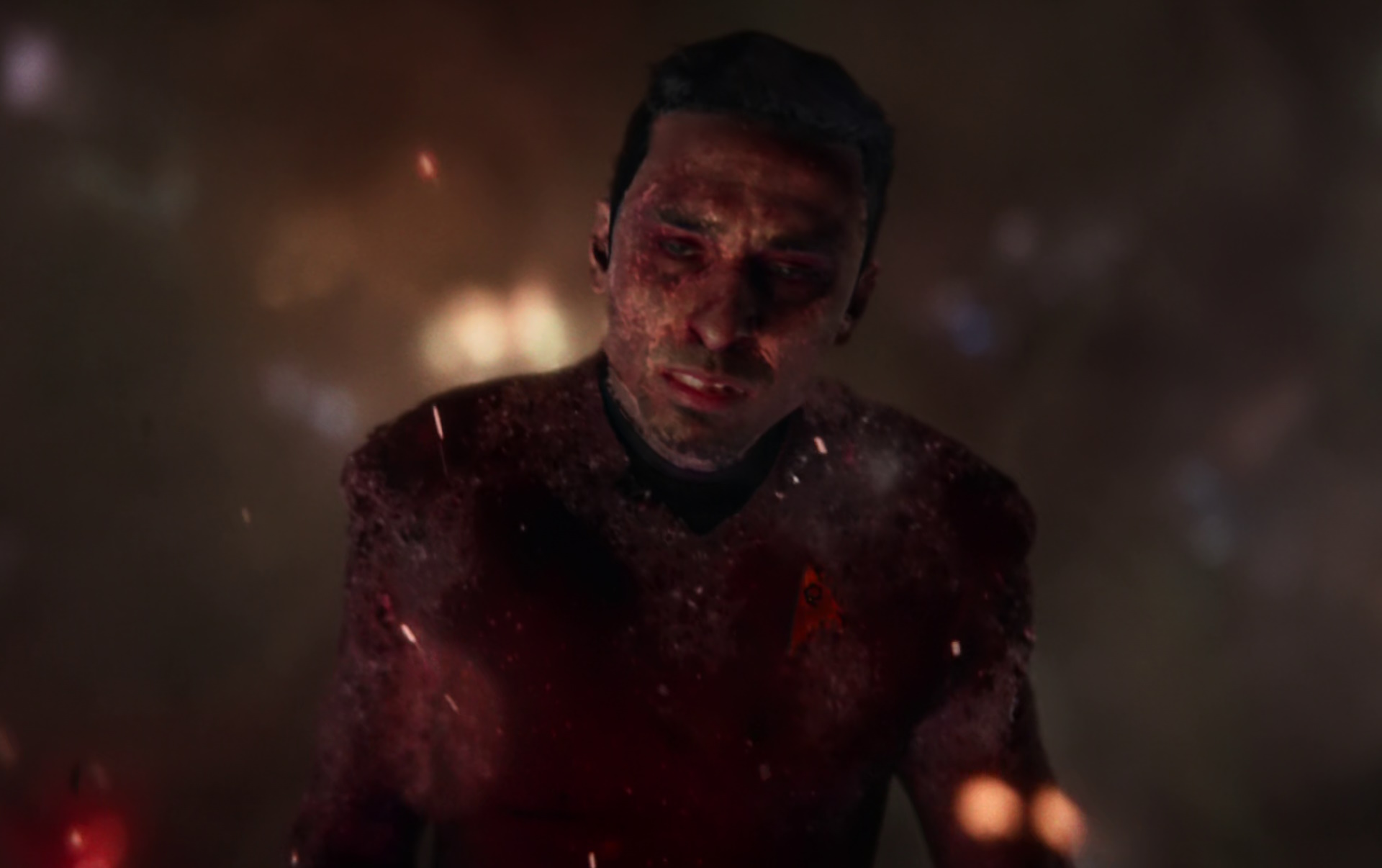
There was one particularly poor use of CGI in Lost in Translation, and I think it’s worth looking at briefly. The scene where the doomed redshirt Lieutenant Ramon is blasted out into space had some great animation work for the USS Enterprise and the nebula that the ship was in – and visual effects across the rest of the episode were pretty good. But Ramon’s death was poor, and the “freezing” effect used as his body was floating in space was a long way wide of the mark.

It’s a lot harder to accurately animate a person – and facial features in particular – than it is to do things like spaceships, planets, and inanimate objects, and unfortunately that’s what we saw with Ramon’s death. The CGI model just wasn’t up to scratch, and although other elements of the same animated sequence looked good, the individual at the centre didn’t. Earlier in 2023, I noted the exact same problem with the death of another character in Star Trek: Picard Season 3. This character was also ejected into space, iced over, and died – and the same issues were present. Paramount has done a lot of great work with CGI and animation in modern Star Trek… but there’s still a long way to go to get some of these character models and effects to where they need to be. It didn’t ruin the entire episode – but it was noticeable in that sequence, particularly because the rest of the animation work was so good.

Still frame from Star Trek: Strange New Worlds Season 2 (2023) showing a CGI shot of Ramon.
This CGI moment didn’t look great.

So those are the only parts of Lost in Translation that I can say I didn’t really like or that didn’t work for me. Next, I’d like to talk in a broader sense about a character who returned in this episode – and their death in Season 1.

The episode All Those Who Wander is one of my favourite Star Trek stories of the last few years – probably of all-time. It’s an episode that shows how Star Trek isn’t always going to be the kind of nerdy sci-fi franchise that people think, and how it can dip its toes in genres like horror. It’s a gruesome, shocking story – and one that comes with a final, brutal twist right at the end.

All Those Who Wander wouldn’t have been so impactful if Hemmer had survived – and I fully appreciate that. One of the things his death showed is that most of Strange New Worlds’ characters don’t have “plot armour” and therefore can’t be considered as safe as main characters in previous shows. That’s great in some ways – it’s modern, it can ramp up the tension and drama at key moments, and it represents a franchise that’s still growing and evolving even after more than half a century in production.

Still frame from Star Trek: Strange New Worlds Season 2 (2023) showing Hemmer.
An illusory Hemmer at the end of Lost in Translation.

But – and you knew there had to be a “but” coming after all of that – Hemmer was a great loss for Strange New Worlds. Killing off such an interesting character so soon, and after he’d only really had a chance to make an impact in a couple of episodes was an odd decision, and I can’t help but see parts of Lost in Translation as a reaction to Hemmer’s death. Perhaps the decision to bring him back in this way is even a bit of an admission on the part of the writers that they miss this character and regret not being able to do more with him.

Pelia is great. She adds a comedic flair to Strange New Worlds that the series needs, and she has a way of making even tense and dangerous moments feel lighter. Many stories have already benefitted from her inclusion – and I have no doubt that others will in the future, too. But that doesn’t mean Hemmer’s early demise feels any better. And it’s impossible to talk about Lost in Translation without going back to Season 1 and thinking about what might have been if Hemmer had stuck around. As a blind character, as a member of a race that Star Trek hasn’t explored in depth since Enterprise, and as a pacifist working on a ship that might be called into action… there was a lot of potential in Hemmer that we never got to see realised.

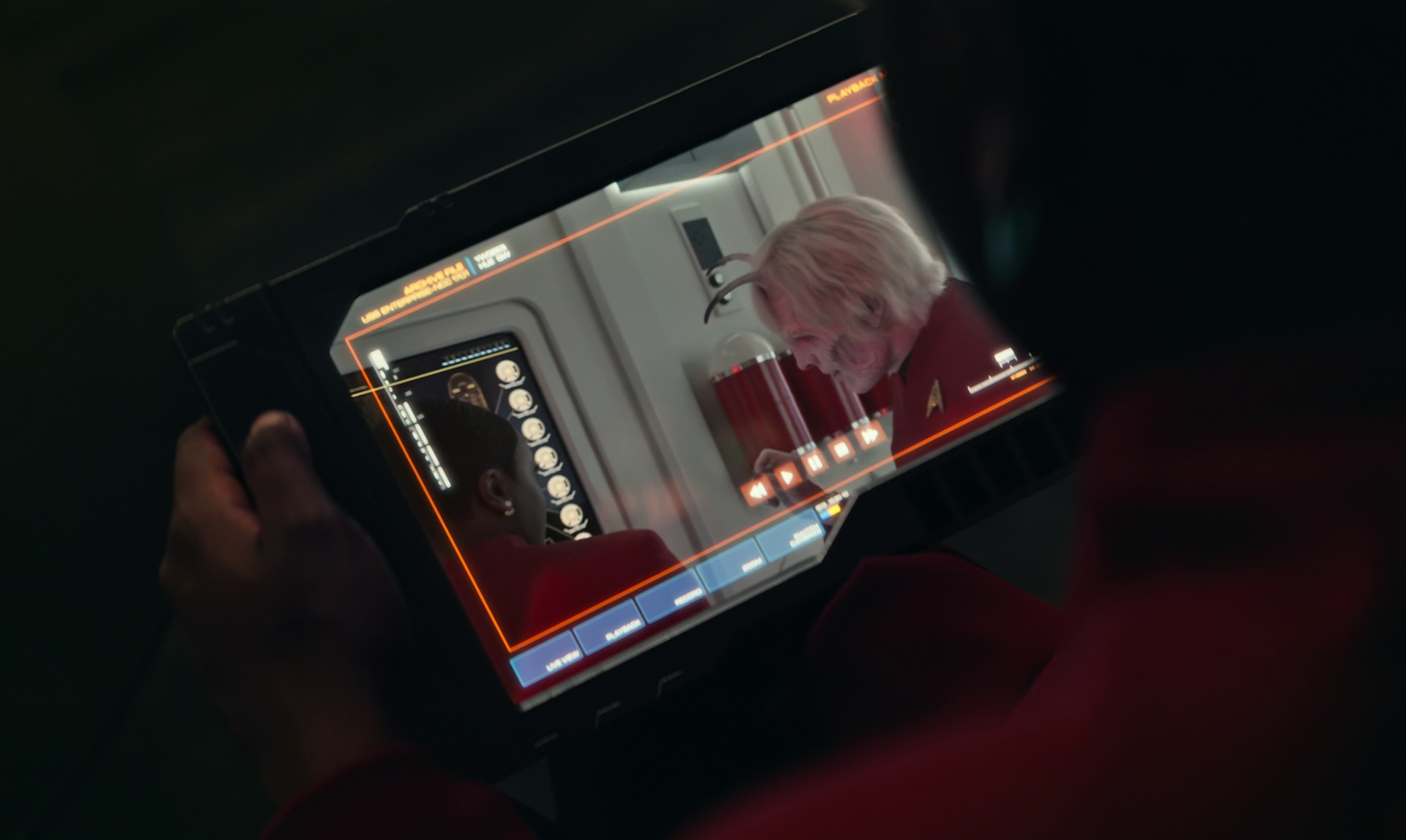
Still frame from Star Trek: Strange New Worlds Season 2 (2023) showing Uhura watching a recording.
Uhura watches a recording of Hemmer on a padd.

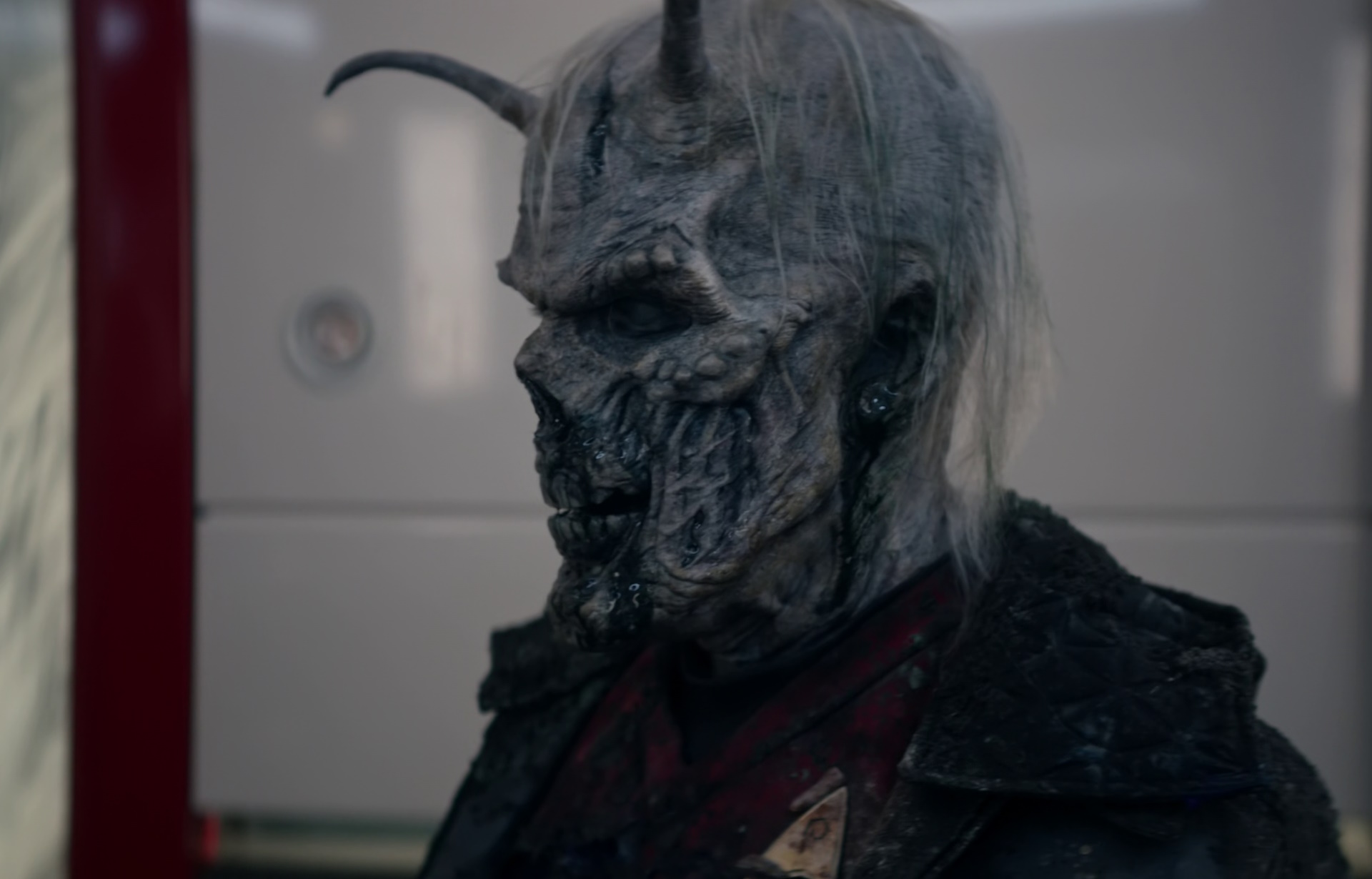
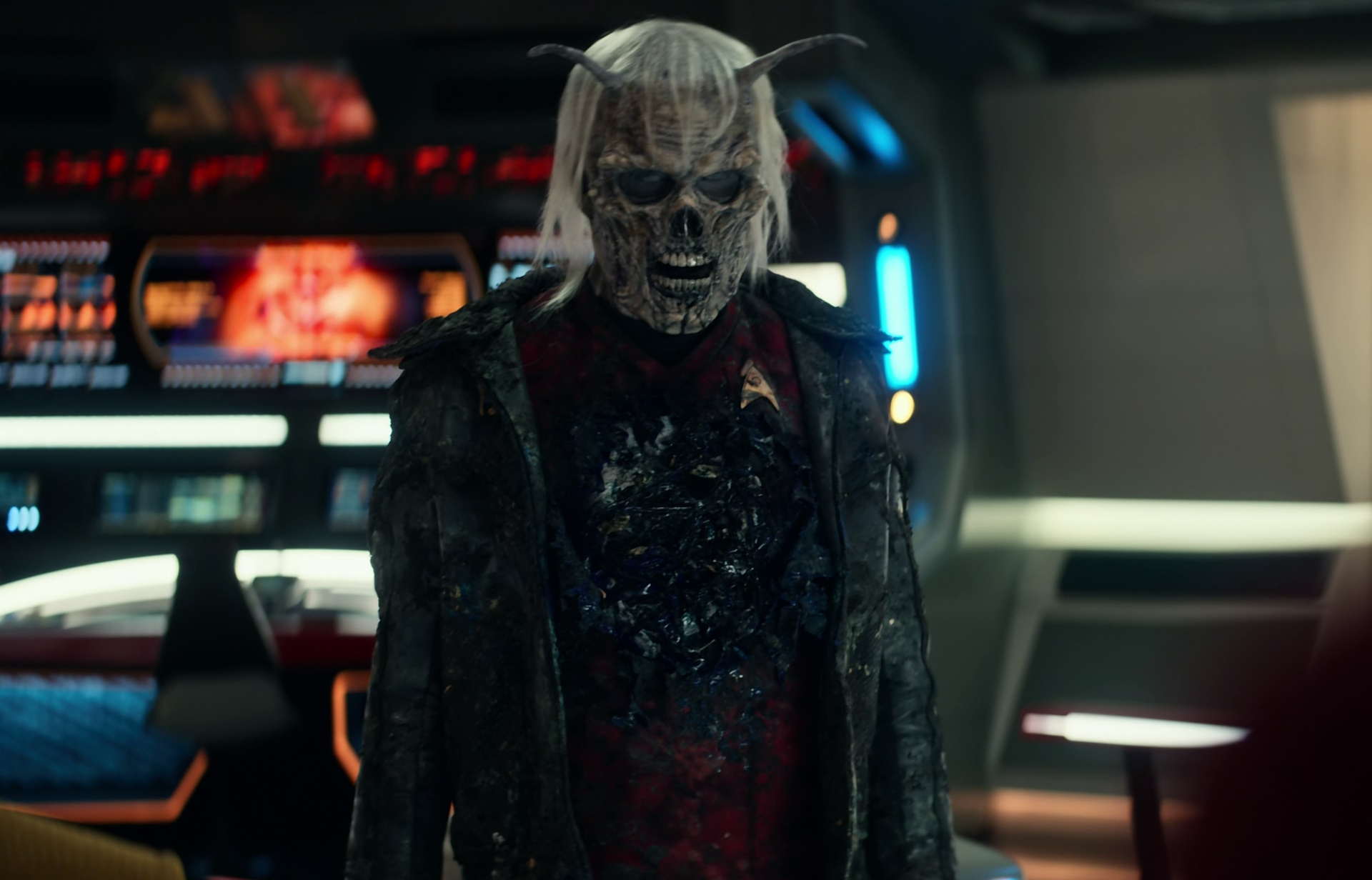
I was entirely unprepared for the zombie Hemmer jump-scare just before the credits – and I about pissed myself when his mangled, decaying corpse showed up, growling at poor Uhura. That was an incredibly well-executed moment, and it left me on edge for much of the rest of the story, especially when Uhura was hallucinating and the camera panned around. I kept expecting another jump-scare at that level!

We talked a moment ago about a CGI effect that missed the mark – but the makeup and prosthetics used to create Hemmer’s hallucinatory form were absolutely pitch-perfect. I genuinely cannot fault the way Hemmer appeared in those moments, and the changes from how he looked when alive to the bloodied, decaying, zombified form that appeared to Uhura must’ve taken a lot of time both at the planning stage and in the makeup chair.

Still frame from Star Trek: Strange New Worlds Season 2 (2023) showing a zombified Hemmer.
I very nearly needed to change my pants after this jump-scare.

It makes a lot of sense to use a character like Hemmer to tell a story about grief and loss – and I would argue that Strange New Worlds managed to do a far better job on this front than the likes of Picard or Discovery when those shows attempted to look at comparable themes. The reason for this is Hemmer: we as the audience had known this character, seen him interact with the crew across several Season 1 episodes, and were mentally prepared for him to continue on as part of the show. His death was shocking and untimely – so we can absolutely see how his death would have had a major impact on characters like Una and Uhura.

Hemmer and Uhura struck up a friendship in Season 1, and he played a role in helping her choose to remain in Starfleet when she was having doubts. This friendship was expanded upon in Lost in Translation, as we got to see them working together through the recording that Uhura carried with her. This also helped build up the sense of grief and mourning that was key to this side of the story. It was well-written, beautifully performed, and is a storyline that I think should be relatable to anyone who’s been through the loss of a close friend or family member. We often talk about Starfleet and crews on Star Trek as akin to families; this is another side of that analogy.

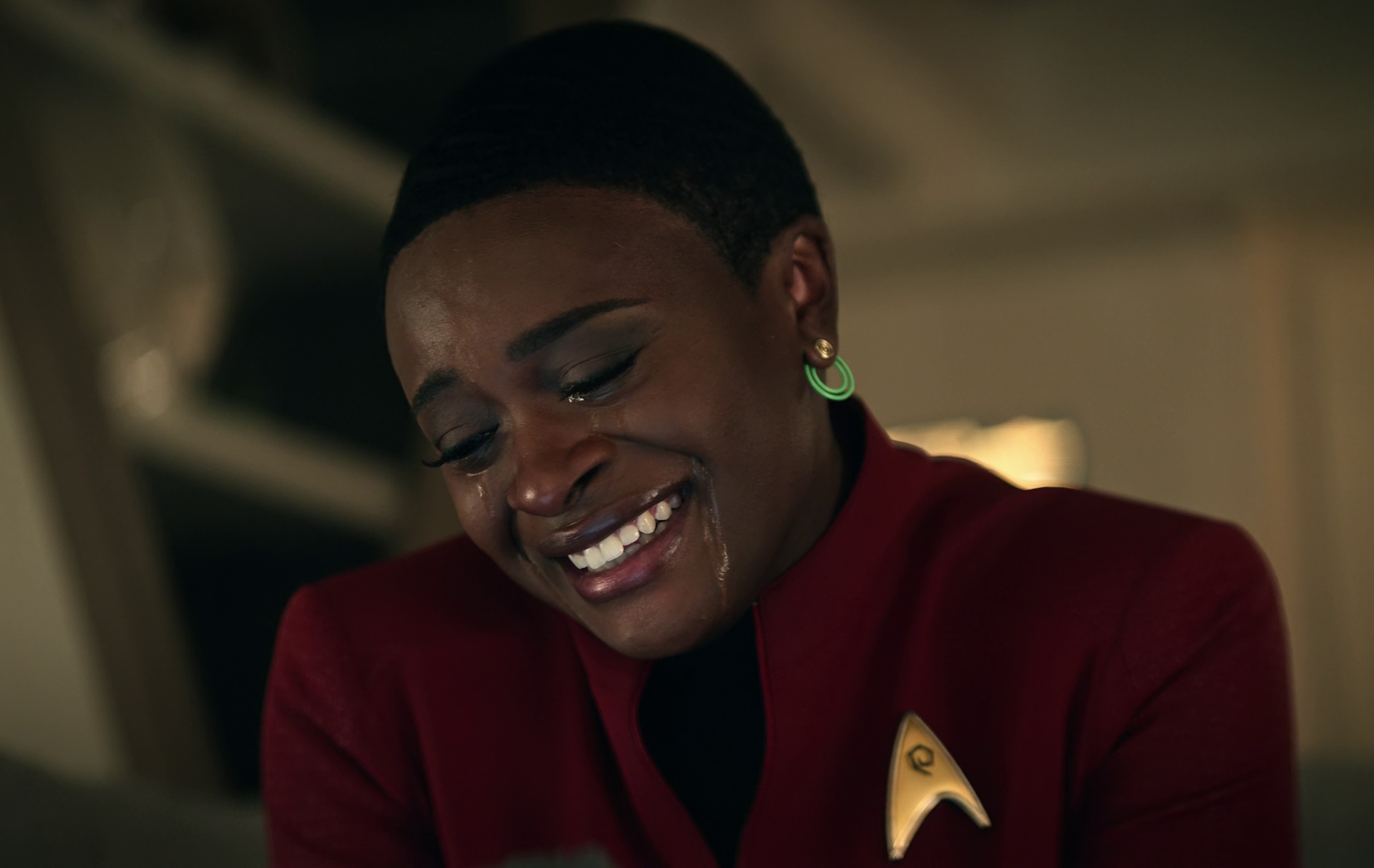
Still frame from Star Trek: Strange New Worlds Season 2 (2023) showing Uhura crying.
Lost in Translation was, in part, a story about grief and loss.

Uhura and Hemmer had that closeness in Season 1, but I’m struggling to remember a comparable moment between he and Una. Despite my criticism of the rather short and abrupt nature of her conflict with Pelia, I think the underlying theme of coming to terms with loss and having to see someone new as a “replacement” for a fallen friend or comrade was an interesting one. Again, it’s something that should be relatable to a lot of folks in the audience – I just fear in this case that the way this particular conflict was handled may have got in the way of the message.

Hopefully Una and Pelia have come to an understanding, at least, and future episodes might be able to build on this relationship, taking them from adversarial to something closer to friendship. If future stories are plotted out that way, we might be able to look back somewhat more kindly on their conflict in Lost in Translation.

Still frame from Star Trek: Strange New Worlds Season 2 (2023) showing Pelia and Una arguing.
Pelia and Una aboard the refinery station.

I’ve lost count of the number of times Star Trek has used the “it was only trying to communicate!” storyline! Some of these have worked better than others, to be blunt – and it isn’t unfair to call it a trope of the franchise. Season 1’s Children of the Comet wasn’t a million miles away from that premise – and also featured Uhura in a big way. Lost in Translation is a very dark interpretation of this narrative idea, though, and I think it worked quite well.

Maybe this is a reach (actually, it’s definitely a reach) but I felt that there were at least some superficial similarities to Voyager’s Season 6 episode The Haunting of Deck Twelve. That story was different in tone – with its frame narrative and “ghost stories around the campfire” style – but it also featured nebula-dwelling lifeforms caught in a starship, desperate to survive and get home. I doubt it was intentional, but it’s interesting, at any rate!

Still frame from Star Trek: Strange New Worlds Season 2 (2023) showing a CGI shot of the USS Enterprise in a nebula.
The life-forms made their home in this nebula.

We’re used to seeing aliens in Star Trek that are very humanoid. Recent and not-so-recent stories have even tried to provide an in-universe explanation for the abundance of humanoid alien races… with limited success, in my opinion! But episodes like Lost in Translation remind us that the galaxy is also home to alien races that are so very different from humanity that it can be hard to even conceptualise – let alone find a way to communicate. These stories have always been interesting to me – and while Strange New Worlds gave us a more action-heavy, even horror take on that idea, I thought it worked exceptionally well.

There was plenty of room for science and for problem-solving as Uhura, Kirk, Pelia, and others all struggled to understand what was happening. Maybe it’s because I’m a seasoned Trekkie, but I felt maybe some of the characters – Spock in particular, perhaps, but also Pike and Pelia – should have suspected that something alien was going on when both Uhura and Ramon fell ill while the station was experiencing sabotage… but I can’t really hold that against the episode. I have to remind myself, sometimes, that Strange New Worlds is set before most of the rest of Star Trek – so the characters wouldn’t necessarily know what to look for and wouldn’t have the experience of those other stories to draw upon.

Still frame from Star Trek: Strange New Worlds Season 2 (2023) showing zombie Hemmer.
The aliens were able to communicate through illusions and hallucinations.

Pairing up Uhura with Kirk was great – and seeing how they got to meet for the first time in the prime timeline was great fun. There’s a lot of history with these two characters that Strange New Worlds had to respect – and I think the writers did them justice on this occasion. I also like the idea that it was Uhura who made the introduction between Kirk and Spock – that feels fitting, somehow.

At first I thought we were going to learn that Kirk was another of Uhura’s hallucinations! That seemed to be a possible route for the story to have taken. I’m glad it didn’t turn out that way, though, especially as the episode wore on and we got to see some genuinely sweet moments between them. Kirk is a flirt and a womaniser – something we know from his appearances across The Original Series, the Kelvin films, and beyond. But I felt the way this was handled in Lost in Translation – with Uhura shutting him down pretty quickly – was both a little bit funny and true to both of their characters. Any inclusion of characters from The Original Series has to be handled carefully, and pairing up Uhura and Kirk for basically an entire story could have gone awry. I’m glad that it didn’t.

Behind-the-scenes photo from the Star Trek: Strange New Worlds episode Lost In Translation (2023) showing a camera rig and three characters.
Celia Rose Gooding, Dan Jeannotte, and Paul Wesley during production on the episode.

We spoke earlier about character conflicts that hadn’t been set up particularly well. Lost in Translation also offers at least one counter-point to that: the developing relationship between La’an and Kirk. After the events of Tomorrow and Tomorrow and Tomorrow earlier in Season 2 left La’an pretty devastated, she’s clearly still struggling with the memories she has of alternate-timeline Kirk. Running into him was difficult for her, and while that part of the episode was only in focus briefly, I think it worked well. As a storyline that is (hopefully) going to be picked up in a future story, these small steps can be important. We’ve followed La’an and Kirk in two episodes now – maybe by their third or fourth meeting, something more will come of it.

In terms of sets, I liked the new nacelle control room that we saw Uhura, Pelia, and Ramon using. It even had the angled ladder that Scotty would famously crawl into in The Original Series any time the Enterprise needed repairs! There may not be a ton of uses for a nacelle room, but being able to put that set together sometimes for engineering scenes is a neat idea.

Still frame from Star Trek: Strange New Worlds Season 2 (2023) showing Uhura opening a hatch.
Did this ladder feel familiar to you?

The refinery/space station set didn’t feel all that special, but thanks to some creative use of the AR wall and animated wide-angle shots, we got at least some of the sense of scale that the place needed. It also had a pretty industrial feel – not unlike modern-day oil rigs or refineries, which I suppose will have been the inspiration.

Uhura’s hallucinatory shuttle crash was also really well done, with transitions between the indoor sets and outdoor filming locations feeling particularly creative. The wreck of the shuttle looked great, and although we only saw parts of the interior in an out-of-focus shot, that choice was clever, too.

Still frame from Star Trek: Strange New Worlds Season 2 (2023) showing Uhura by a crashed shuttle.
Uhura with the wrecked shuttle.

Speaking of creative cinematography, the scene in the corridor as Uhura felt the walls closing in around her, then stretching away, looked fantastic – and I think I’m right in saying that most of that was camera work rather than post-production special effects. It was creative, at any rate, and it really hammered home the panic and fear that Uhura felt at that moment.

So I think that’s all I have to say this time.

Lost in Translation was a good episode, and one that put a different spin on a familiar premise. We got to see Kirk’s first meetings with both Uhura and Spock, which was fantastic, but at the episode’s heart was some creative storytelling that touched on themes of grief and the loss of a friend. After Hemmer’s demise in Season 1, I’m glad that Strange New Worlds hasn’t just forgotten about him and moved on, and remembering him through the way he helped his friends and the impact he made on his crew was touching.

Still frame from Star Trek: Strange New Worlds Season 2 (2023) showing Uhura, Spock, and Kirk at a table.
A famous first meeting!

Not everything in Lost in Translation worked as well as it could’ve, and perhaps trying to cram in two character conflicts like this was a bit too much for the episode’s runtime. Hopefully, now that the Una-Pelia conflict has been resolved, we can see a bit more from those two in a future episode, building on the foundations that were laid this time. As for the Kirk brothers… I think we need to see a little more from them if the series wants to do this whole “sibling rivalry” argument justice!

After a break of more than a year, Lost in Translation has been a nice way to return to Strange New Worlds! Not every episode of Star Trek can be a great one, but I’m glad that I didn’t end up coming back to the series with a dud! That might’ve been offputting as I aim to review the remainder of the season. Thankfully it didn’t happen this time – and I hope you’ll stay tuned for reviews of the remaining four episodes in the days, weeks, and possibly months ahead!


Star Trek: Strange New Worlds Seasons 1 and 2 are available to stream now on Paramount+ in countries and territories where the platform is available. The series is also available on DVD and Blu-ray. The Star Trek franchise – including Strange New Worlds and all other properties discussed above – is the copyright of Paramount Global. This review contains the thoughts and opinions of one person only and is not intended to cause any offence.