Star Trek “Bottom Fives” – Arguing with IMDB Again!

A Star Trek-themed spoiler warning.

Spoiler Warning: Spoilers are present for the following Star Trek productions: The Original Series, The Next Generation, Deep Space Nine, Voyager, and Enterprise.

A couple of months ago, I wrote a piece here on the website in which I looked at the “top five” episodes from each of the first five series… at least, according to the randos who rate episodes over on IMDB! There were some predictable picks… and a few surprises. Seriously, who would’ve expected that Blink of an Eye would be everyone’s favourite Voyager episode? Not me, that’s for sure!

So today, we’re going to do something similar… but with the lowest-rated episodes from those first five Star Trek shows. I think it could be a lot of fun to look at some of the stories that other fans and viewers don’t like, and consider some of the reasons why. I’m bracing myself for a few surprises here, too!

If you missed it, please check out my earlier piece for a look at the “top fives.” You can find it by clicking or tapping here.

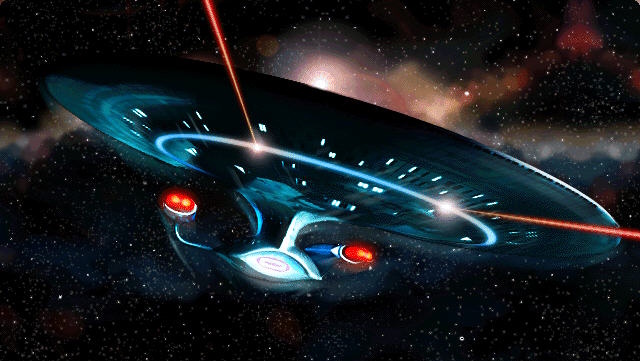
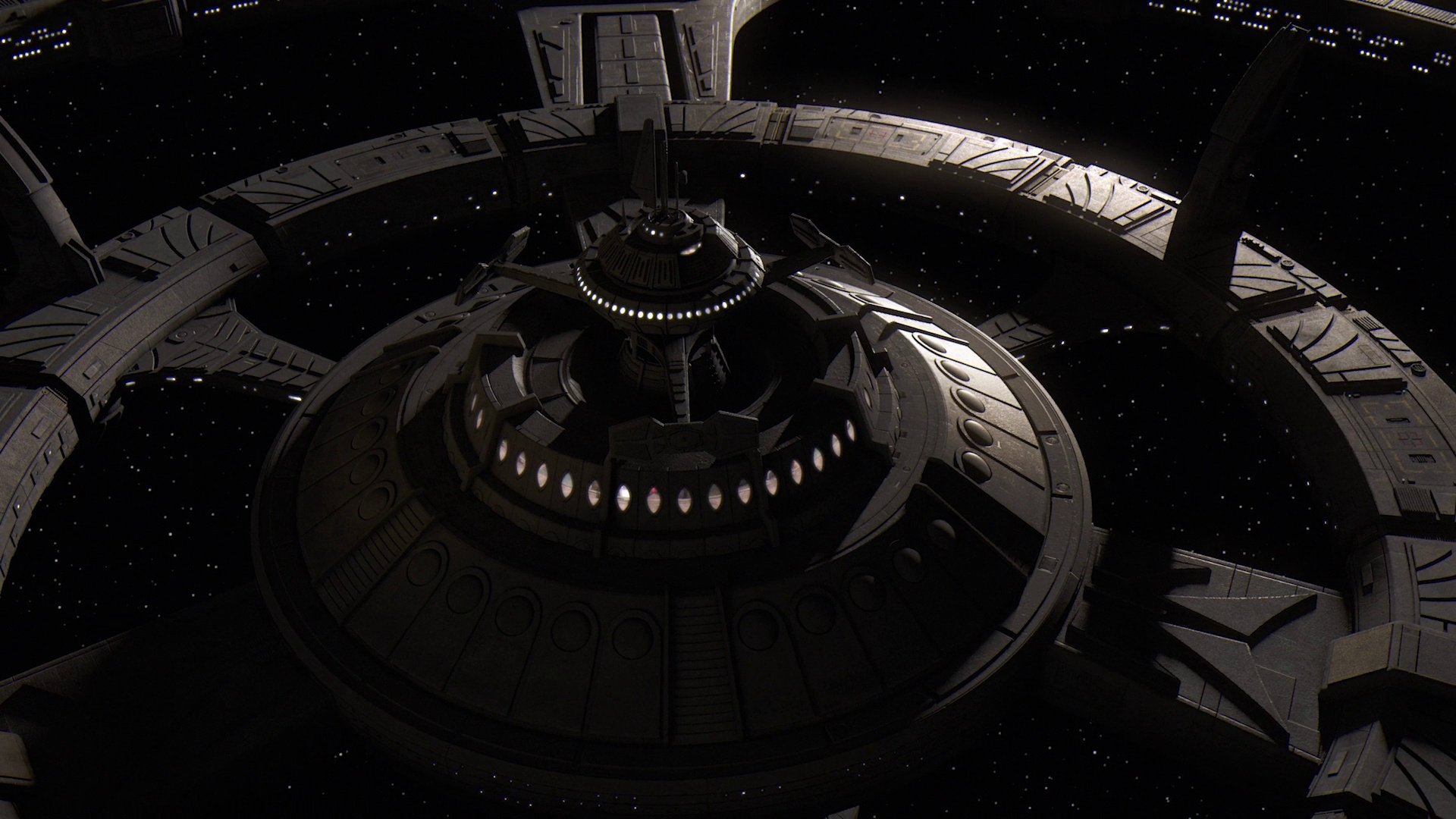
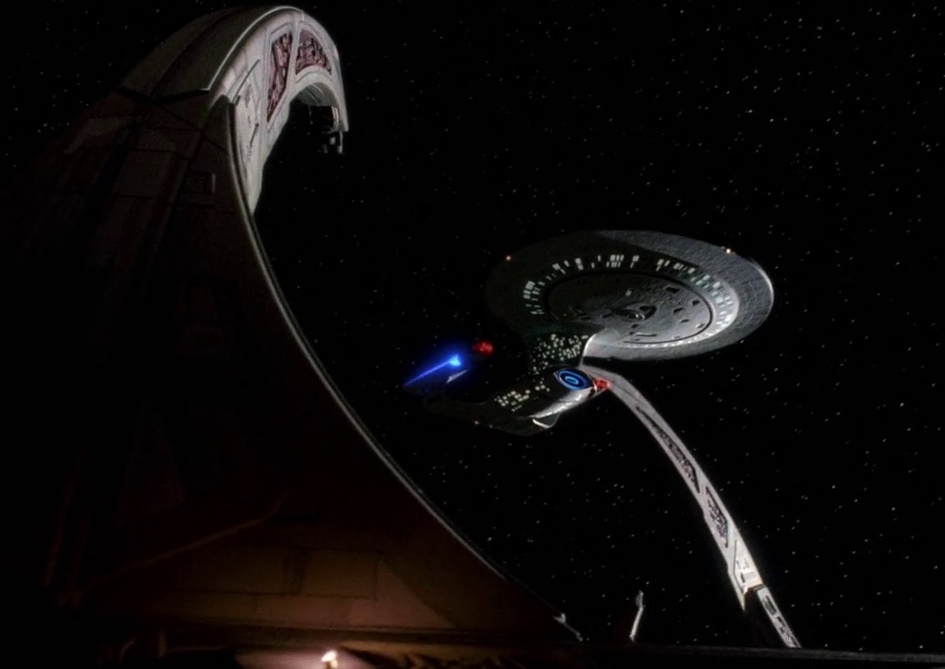
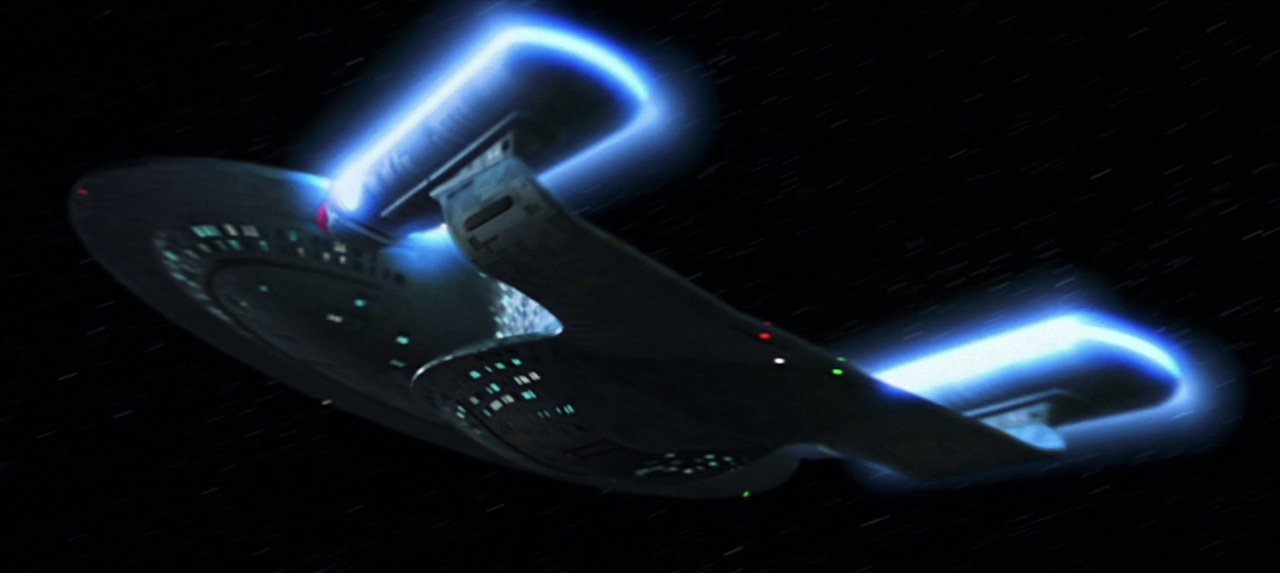
The Enterprise-D.

My usual caveat applies: everything we’re going to talk about is subjective, not objective. If I dump all over one of your favourite episodes, or talk positively about a story you hate… that’s okay! There’s enough room, and enough maturity, in the Trekkie community for differences of opinion and respectful disagreements that don’t descend into toxicity and argument.

This post, like my earlier one, will cover the first five live-action Star Trek shows: The Original Series, The Next Generation, Deep Space Nine, Voyager, and Enterprise. No Animated Series or films are included. I’ll start with TOS and move forward chronologically; the episodes will be ranked according to their IMDB ratings, from highest to lowest – i.e. beginning with the fifth-worst and finishing on the worst-rated episode for each of the five shows. The IMDB ratings are taken as of September 2025 (and might change over time!)

I’ll discuss what I don’t like (or do like) about each episode, and then I’ll answer a simple question: does it deserve the hate? Or, to put it another way: would I personally rate the episode as being among the worst in the franchise?

Now that all of that’s out of the way, let’s jump into the episodes.

The Original Series Episode #5:
The Omega Glory, Season 2
IMDB Rating: 6.1/10

Gene Roddenberry intended to hold up a mirror to society, using Star Trek episodes as “morality plays” to comment on or critique things out here in the real world. Many of these episodes are wonderful. The Omega Glory is arguably too on-the-nose, though, with its very literal depiction of the aftermath of a Cold War turned hot. Roddenberry himself wrote The Omega Glory, so it’s a bit of a shame to see it rated so lowly by viewers and fans.

There’s a lot of competition in TOS’s second season, and compared to stronger offerings like The Doomsday Machine, Journey To Babel, The Trouble With Tribbles, and The Ultimate Computer, I can see why The Omega Glory struggles to keep up. There’s also, by modern standards, somewhat uncomfortable racial stereotyping – which Roddenberry intended to flip on its head with The Omega Glory’s big revelation – but I’m not sure it works as well as he’d hoped.

Does It Deserve The Hate?
​☑️​Yes.​☑️​

The Original Series Episode #4:
Spock’s Brain, Season 3
IMDB Rating: 5.7/10

No list of “the worst Star Trek episodes” would be complete without Spock’s Brain. And this is a trend we’re about to see a lot more of; Season 3 of The Original Series is generally considered to have a number of weaker offerings, in part due to the show’s reduced budget. But I’ll be honest: I’ve always found Spock’s Brain to be weirdly fun… in a “so bad it’s almost good” kinda way.

I also think the episode has become iconic, or at least symbolic of a particular moment in the history of Star Trek. This was the first episode of Season 3 – a season that wouldn’t have existed at all without a letter-writing campaign by fans. It’s also a story that showed how far Kirk (and Spock’s other friends) were willing to go to save him when he was in danger. Is it a ridiculously silly premise? Yes. Is it executed perfectly by all involved? No. But do I watch it anyway and smile? Yes!

Does It Deserve The Hate?
⛔No.⛔

The Original Series Episode #3:
The Alternative Factor, Season 1
IMDB Rating: 5.7/10

The Alternative Factor is the episode with Lazarus (and Anti-Lazarus, his counterpart from an alternate universe). To be honest, I’d pretty much forgotten about The Alternative Factor; nothing about it leaps out at me as being particularly memorable. “Forgettable” is not synonymous with “terrible,” but I think it’s at least noteworthy that The Alternative Factor just didn’t leave much of an impression on me. None of the special effects or locations stand out, Lazarus and Anti-Lazarus don’t have any unique makeup or prosthetics, and the whole look of the episode is just a bit bland.

In terms of story, The Alternative Factor is small and kind of silly – with Lazarus in particular being quite over-the top – while simultaneously trying to present its core conflict as a multiverse-ending threat. It’s worth noting that there were production issues with The Alternative Factor, including an extensive re-write to remove a romantic sub-plot and the original actor contracted to play Lazarus failing to show up for work when production had already commenced.

Does It Deserve The Hate?
​☑️​Yes.​☑️​

The Original Series Episode #2:
The Way To Eden, Season 3
IMDB Rating: 5.4/10

I don’t think The Way To Eden is all that bad, to be honest – especially not for a Season 3 episode which was produced with a lower budget. Maybe there are some issues with the way Chekov is written, but on the whole I really don’t dislike this episode at all. It’s very much a product of its time – the followers of Sevrin are clearly based on the American countercultural movement, which was reaching its peak in 1969 – but so are many Star Trek episodes, and I don’t think that alone should count against it.

It’s also not the only Star Trek story to involve a cult-like group who are seeking paradise (or some other prophecy fulfilment). I actually quite like some of the details in the script – one of the members of the group is the son of an ambassador whose people are negotiating with the Federation, which I feel adds a lot to the broader lore of the Star Trek galaxy. Is The Way To Eden the strongest TOS episode, or a great way to introduce new fans to the franchise? Probably not. But I don’t think it’s atrocious, either.

Does It Deserve The Hate?
⛔No.⛔

The Original Series Episode #1:
And The Children Shall Lead, Season 3
IMDB Rating: 5.2/10

As with The Alternative Factor above, this isn’t an especially memorable episode for me. The core premise of an alien entity manipulating a group of children isn’t necessarily bad, but the execution leaves a lot to be desired. The way the story was resolved, too, leaned on a pretty big cliché, and some less-than-spectacular acting performances.

There were interesting ideas in And The Children Shall Lead, like several members of the crew seeing visual manifestations of their fears. Gorgan’s powers, too, could have been tense and even frightening if handled better. There’s also something distinctly eerie about a child or group of children in this kind of story; that’s why films like The Exorcist work so well. But again, the execution rather than the premise is what lets the episode down.

Does It Deserve The Hate?
​☑️​Yes.​☑️​

The Next Generation Episode #5:
Angel One, Season 1
IMDB Rating: 5.7/10

Angel One wanted to be a Roddenberry-style “morality play,” using Star Trek’s sci-fi setting to consider the real-world issues of sexism and a patriarchal society. It did that by turning the tables and depicting a civilisation where women, not men, were the dominant ones. That aim may have been worthwhile or even admirable – but the execution was clumsy, at best. The B-plot, depicting a virus spreading on the Enterprise while the away team was on the planet, wasn’t particularly strong, either – though I enjoy the visual of Data, alone, on the bridge!

Angel One might be best-remembered among Trekkies for some of its costumes! The costumes worn by the male inhabitants of Angel I, as well as by Riker later during the away mission, were typical Season 1 silliness, reminiscent of some of the costumes created twenty years earlier for TOS. And that’s Angel One in a nutshell, really – it’s one of several Season 1 episodes that plays out like an Original Series story.

Does It Deserve The Hate?
⛔No.⛔

The Next Generation Episode #4:
Man of the People, Season 6
IMDB Rating: 5.7/10

I’ve always felt that Man of the People had an interesting premise. And Star Trek stories have often posed deep moral questions to the audience; in this case, we’re considering whether “the greater good” can be served by a man who harms people around him. There’s a metaphor there, buried in the story, about bad people doing good things, and the age-old question of whether the ends can justify the means when significant harm is being caused.

However… Man of the People doesn’t execute its ideas flawlessly, and the focus on Troi “acting out” earlier in the episode is a bit much for me. Apparently, there were issues on the production side – which led to the script being rushed and the story being bumped up the filming schedule. I daresay that’s noticeable in the finished product.

Does It Deserve The Hate?
​☑️​Yes.​☑️​

The Next Generation Episode #3:
Code of Honor, Season 1
IMDB Rating: 5.1/10

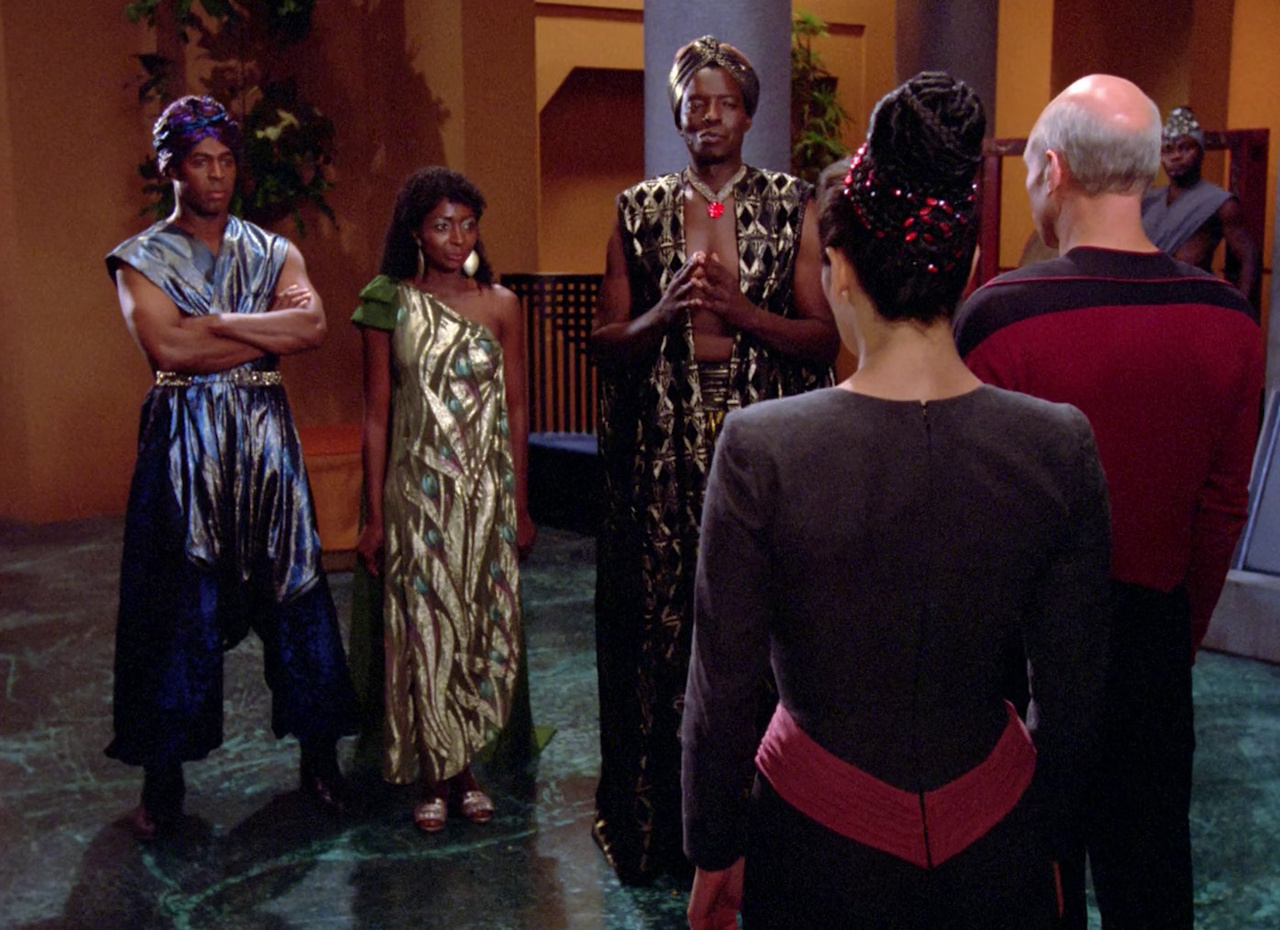
I might’ve ranked this one even lower! Code of Honor is a complete misfire; an episode featuring a civilisation of “African stereotypes in space” that’s so utterly awful it’s hard to know where to start. I’ve said before that the fact that this episode was produced for The Next Generation in the 1980s genuinely boggles my mind, and it’s an example of how, despite Star Trek’s lofty ambitions, the franchise hasn’t always gotten it right.

If I were to find any positive notes in this mess, it would be that Tasha Yar gets something to do, and that the episode is an early example of Captain Picard being willing to go out on a limb for a member of his crew. But those points, unfortunately, are completely lost in an episode swarming with awful production decisions. I can barely even re-watch Code of Honor as a result.

Does It Deserve The Hate?
​☑️​Yes.​☑️​

The Next Generation Episode #2:
Sub Rosa, Season 7
IMDB Rating: 4.8/10

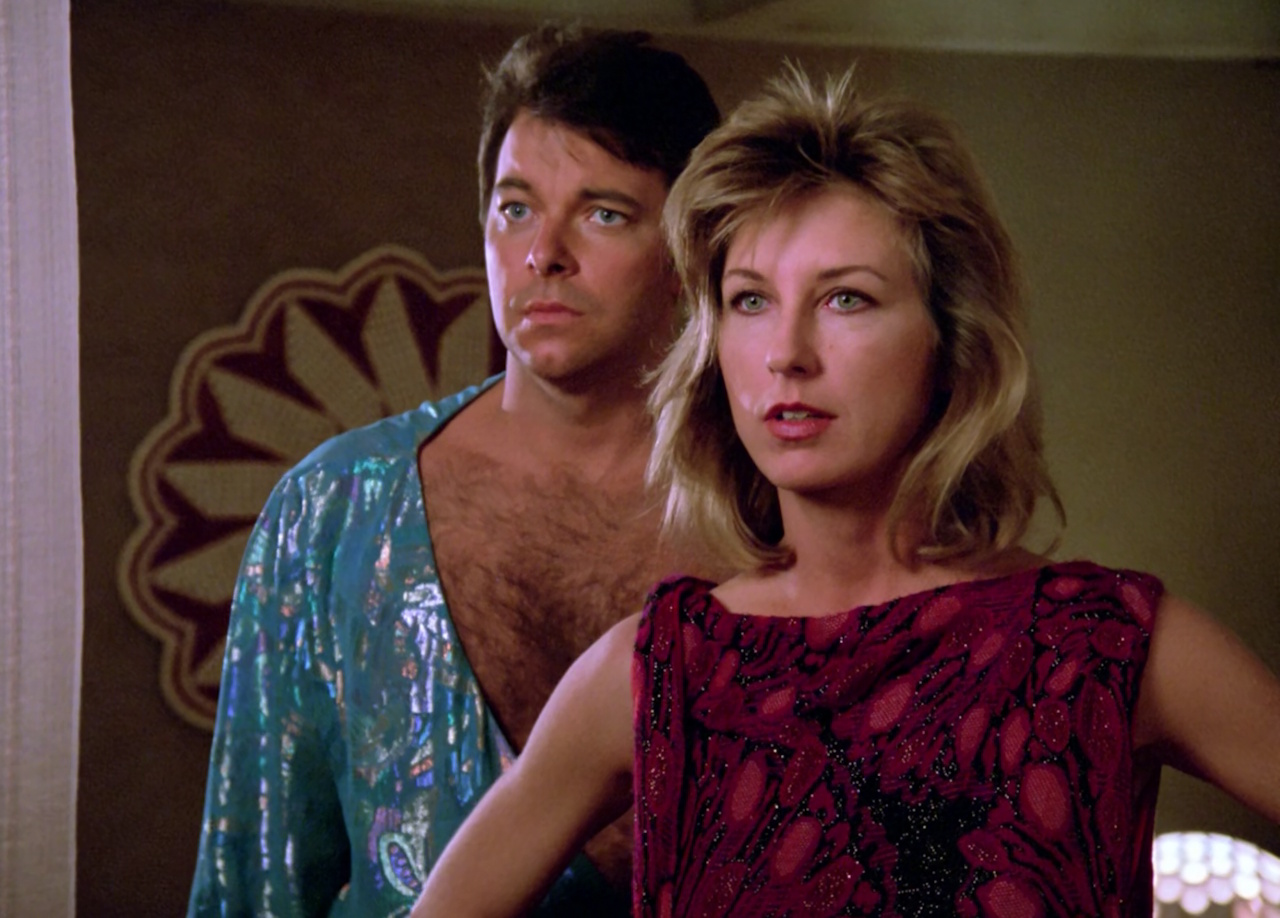
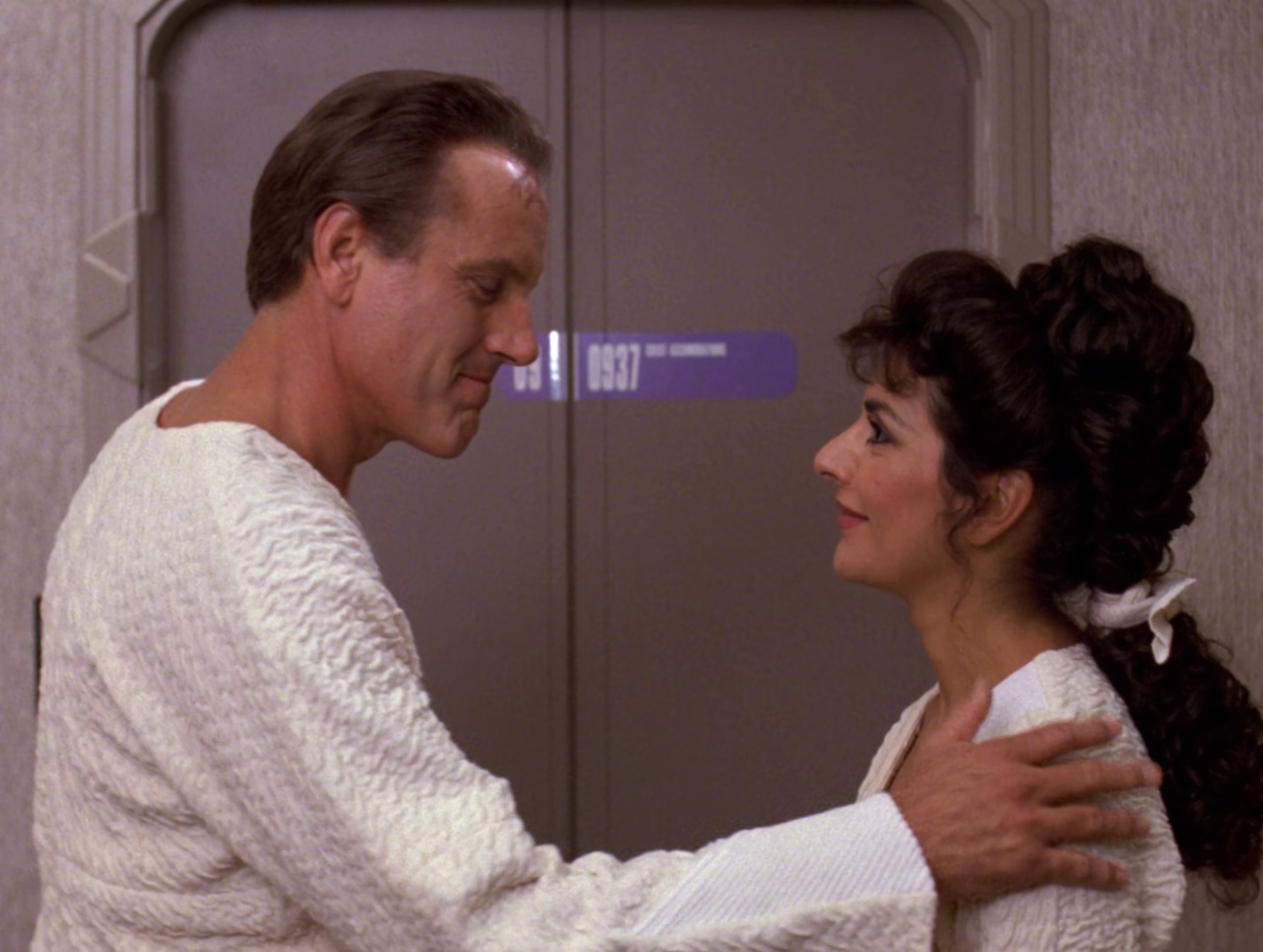
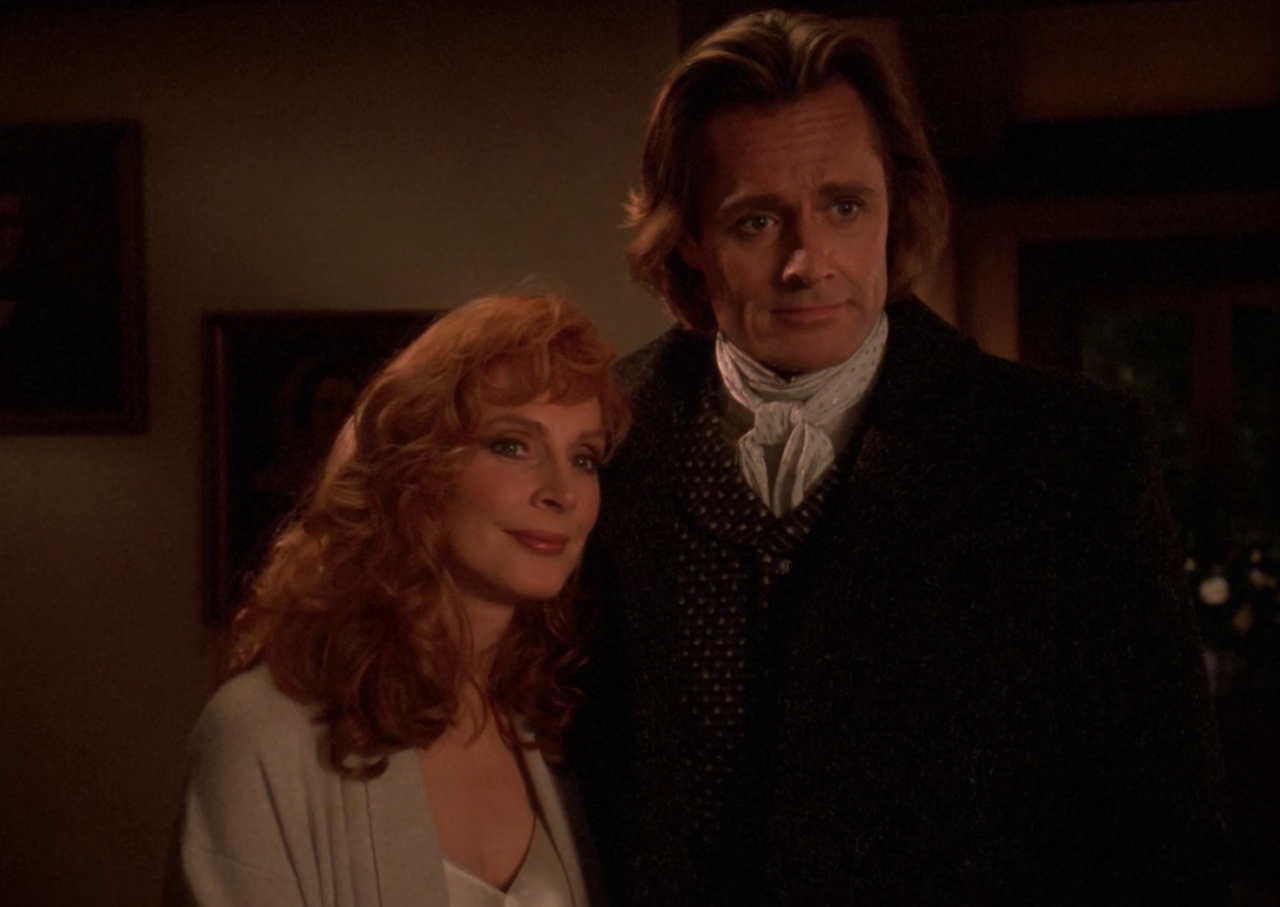
I… I’m sorry, everyone. I’m almost ashamed to admit this… but I actually kinda like Sub Rosa. And, if I may defend its honour for a moment, I’d suggest that the memes that the episode spawned are at least partially to blame for its low rating. Yes, Sub Rosa’s “sex with a ghost” storyline is silly. Got it. Message received! But there’s more to the story than that, and the episode treats Ronin as an alien entity, not as a “spirit.” I also really like the sets used for the Caldos Colony – the place feels very different to almost anywhere else in Star Trek, at least up to this point in the franchise.

Star Trek hasn’t always been great at depicting aliens that feel, well… alien. And if there’s one thing to say about Ronin, it’s that the idea of a non-corporeal parasitic entity is, if nothing else, very alien. Caldos Colony is a fun setting, we got to learn more about Dr Crusher’s early life, and there was a bit of silliness in the story, too. Plus, Star Trek got some great memes out of this one! Honestly, what’s not to love?

Does It Deserve The Hate?
⛔No.⛔

The Next Generation Episode #1:
Shades of Gray, Season 2
IMDB Rating: 3.3/10

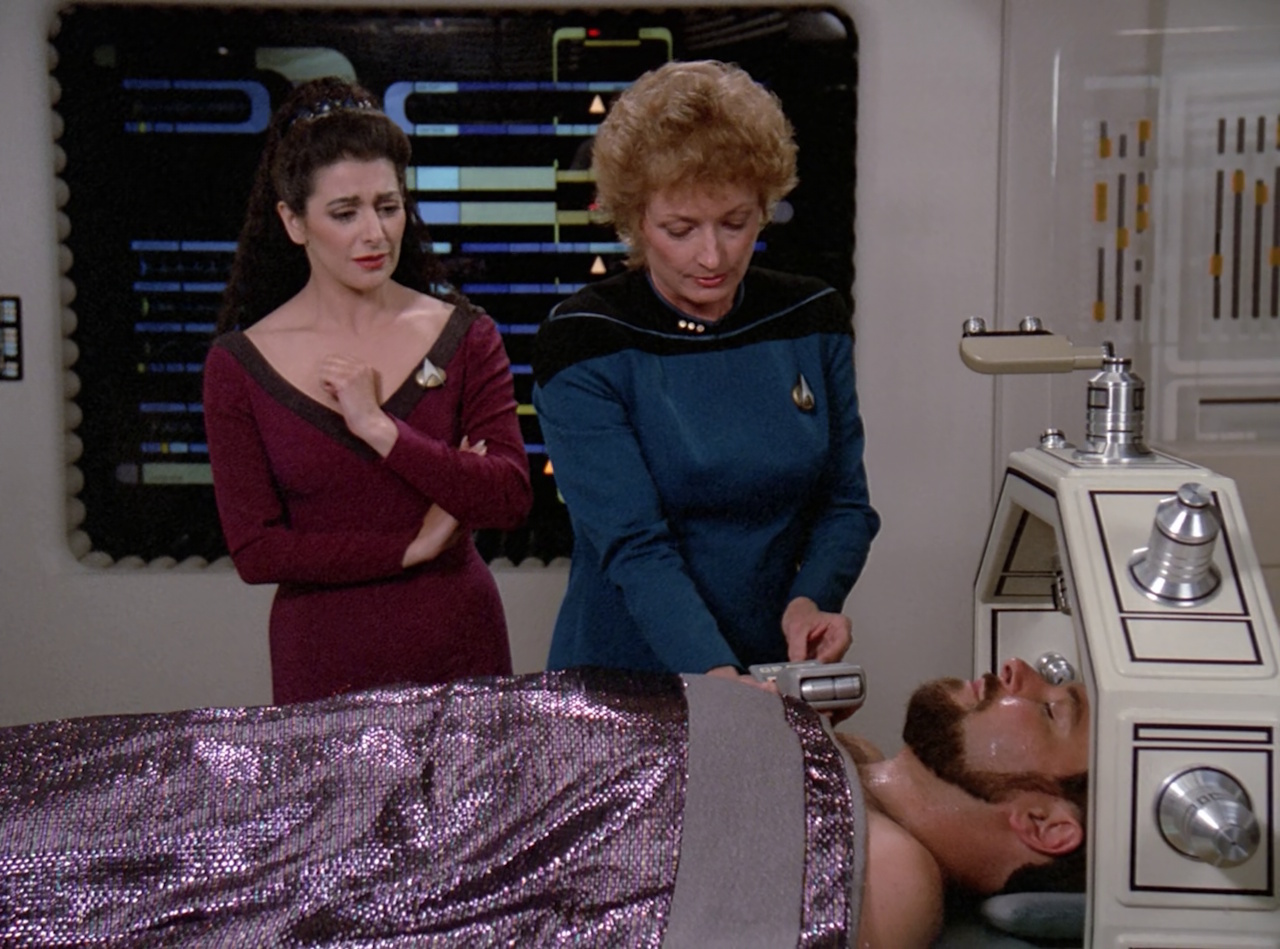
I’m astonished to see Shades of Gray receiving any support whatsoever; this is a rare 1/10 or even a 0/10 episode for me – and for most Trekkies I’ve spoken with, too. It absolutely deserves its place as the worst-rated TNG episode… and I suspect the production team knew that when they put it together. If you’ve been a Trekkie for as long as I have, you know the story by now: production on TNG Season 2 overran both its schedule and budget, and a compromise had to be made late into production. Shades of Gray – a clip show – was the result.

Because television production has changed over the years, I doubt we’ll ever get another episode like Shades of Gray in the Star Trek franchise – and that’s for the best. It’s an especially weak episode, and its only original element – the frame narrative depicting Riker’s injury and illness – does nothing to hold its random assortment of clips together. It was a poor way to say goodbye to Dr Pulaski, too, and a serious disappointment as the show’s otherwise fantastic second season came to an end.

Does It Deserve The Hate?
​☑️​Yes.​☑️​

Deep Space Nine Episode #5:
Profit and Lace, Season 6
IMDB Rating: 5.8/10

Profit and Lace is DS9′s “trans” episode… kind of. Star Trek has wrangled with questions of gender on many occasions, and even in the ’90s, when the topic of gender and being trans was usually treated just awfully on television, the franchise largely got it right. Quark’s temporary sex change, as it’s presented in this episode, though… I dunno. As an examination of attitudes toward gender, and how females are treated in a society which still sees them as second-class… there were interesting ideas. But the execution of all of it was just flawed.

There’s a tonal clash between the heavier themes, as interpreted by Alexander Siddig (who directed the episode), and the lighter way Profit and Lace was originally written. A different director might’ve taken the episode in much more of a comedic direction – which would’ve suited the way it was written, though it would’ve come at the expense of being just another late ’90s “trans comedy” story. I get what the episode was going for, and I think a more serious approach to the subject matter – both the gender division in Ferengi society and Quark’s “transition” – was the right call. But the script didn’t carry the themes, and what resulted was a bit of a mess.

Does It Deserve The Hate?
​☑️​Yes.​☑️​

Deep Space Nine Episode #4:
Resurrection, Season 6
IMDB Rating: 5.7/10

Oof, Season 6 is not doing well in these rankings so far! To be honest, though, I get it when it comes to Resurrection. If you know me, you’ll know I’m not really a fan of the Mirror Universe as a setting; it’s one-note, and has a tendency to trick even competent performers into putting out hammy, over-acted, one-dimensional performances – all of which are on display with Mirror Kira and Mirror Bariel, unfortunately. Prime Kira also seems to act out-of-character, falling so easily for Mirror Bariel so long after the original Bariel’s death.

DS9′s executive producer, Ira Steven Behr, has suggested that Resurrection’s place in the season – coming after the intense opening phase of the Dominion War, Starfleet’s recapturing of the station, and then Worf and Dax’s wedding – contributed to fan dissatisfaction, feeling that “nothing” the show had done immediately after those intense stories would’ve been satisfying. I’m not convinced on that, I’m afraid. Season 6 has some of my favourite DS9 episodes. The likes of Who Mourns for Morn, The Magnificent Ferengi, and One Little Ship are all standalone stories that, had they taken this broadcast slot, wouldn’t have been as poorly-received as this uninspired Mirror Universe story.

Does It Deserve The Hate?
​☑️​Yes.​☑️​

Deep Space Nine Episode #3:
The Muse, Season 4
IMDB Rating: 5.6/10

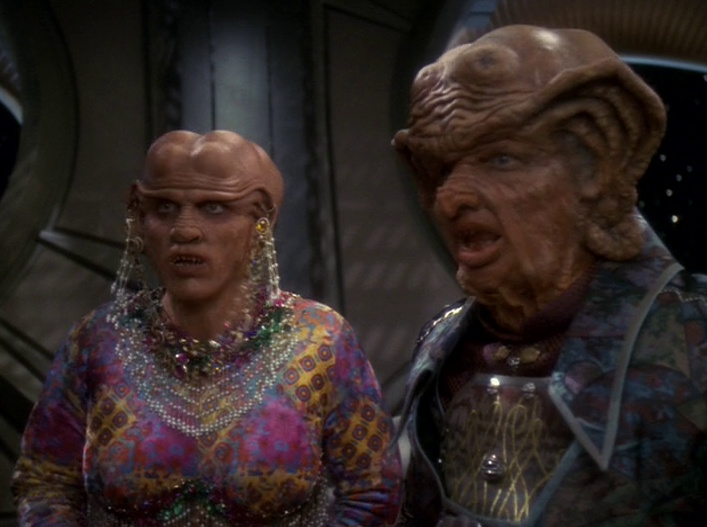
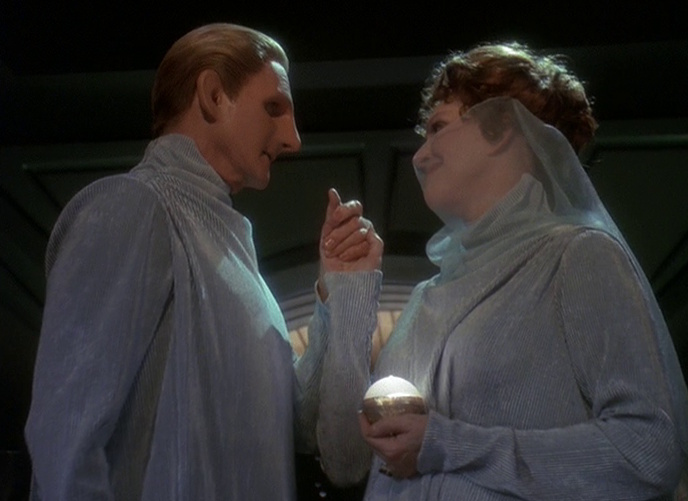
I feel a bit sorry for The Muse! Jake Sisko was too often overlooked in Deep Space Nine, so to rank one of the rare Jake-focused episodes so lowly wouldn’t have been my preference. However, if I may be so bold, it isn’t Jake that’s upset people (mostly). Rather, it’s The Muse’s Lwaxana Troi and Odo B-plot that, I would suggest, is the reason for such a low rating. Lwaxana wasn’t always well-received by Trekkies, despite her illustrious performer, and her relationship with Odo was, to the best of my recollection, never especially popular.

On Jake’s side of the story, I like the idea of a kind of parasitic entity latching onto his creativity. The Muse does a lot to establish Jake’s writing career, and it’s just an interesting idea to see Onaya taking advantage of his talent. There’s a great moment between Jake and Ben toward the end of the episode, something we’d see less and less of as DS9 continued its run. And while this side of the story was imperfect, it was at least a creative idea.

Does It Deserve The Hate?
⛔No.⛔

Deep Space Nine Episode #2:
Meridian, Season 3
IMDB Rating: 5.6/10

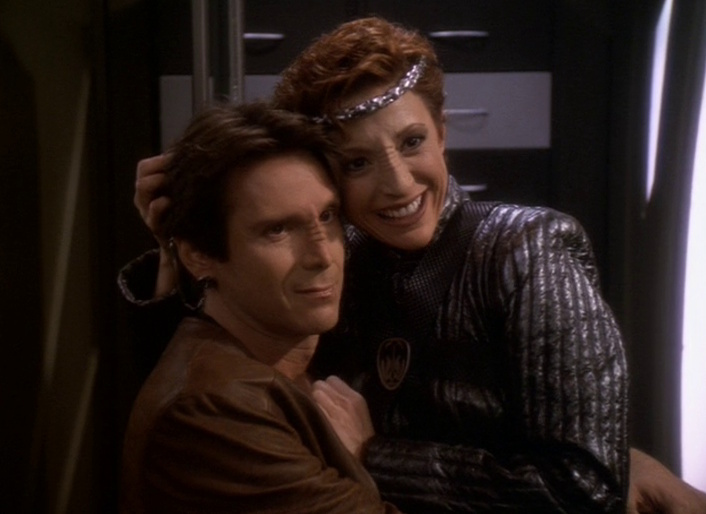
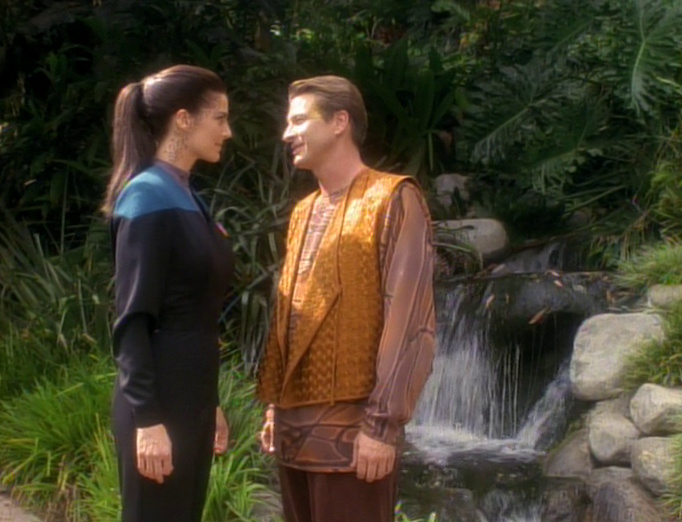
It sounds like Meridian – whose story concept was based on a novel set in Scotland – had a bit of a troubled production. An expensive location shoot for the planet Meridian seems to have led to some scenes being rewritten or cut altogether, which may have affected the finished product. The main gripe folks seem to have, though, is the behaviour of Jadzia Dax. As with Kira in Resurrection, which we discussed above, Dax falls head-over-heels for someone she’s just met – and that leads to her wanting to give up her life on DS9, leave her friends behind, and move to this random planet which can’t exist in normal space.

I would suggest that everyone involved – the entire cast, guest stars, and director Jonathan Frakes – did the best they could with that concept, but it was just a fatally flawed premise to begin with. Meridian has some neat ideas, like the disappearing planet, which feels “very Star Trekky;” i.e. something you wouldn’t see in any other sci-fi universe! But the way it handled Dax was poor, and a B-plot about Quark selling perverted holosuite programmes does nothing to help the episode, either.

Does It Deserve The Hate?
​☑️​Yes.​☑️​

Deep Space Nine Episode #1:
Let He Who Is Without Sin…, Season 5
IMDB Rating: 5.5/10

I gotta be honest: I’m surprised to see this as the “most-hated” DS9 episode. I knew Let He Who Is Without Sin wasn’t wildly popular, but I don’t think I expected it to be considered the absolute worst in the series! There are definitely some issues, though. I think it’s universally agreed nowadays that Leeta and Bashir didn’t work as a couple, so that’s part of it. But then there’s how the episode handles Worf – setting him up as the Star Trek equivalent of Mary Whitehouse, crusading against the supposed immorality of the Federation.

I think there was the kernel of an interesting idea here, if Let He Who Is Without Sin had taken it in a different direction. There are folks who live in tourist-focused places who feel the incursion of tourists is detrimental to their communities. And there was also a way to use the New Essentialists to comment on the growing Christian purity movement in the United States, for example. But for a variety of reasons, this isn’t Deep Space Nine’s strongest episode. I don’t think I’d personally say it was the very bottom of the barrel, but I get where much of the dissatisfaction is coming from.

Does It Deserve The Hate?
​☑️​Yes.​☑️​

Voyager Episode #5:
Favorite Son, Season 3
IMDB Rating: 6.0/10

I genuinely had a hard time remembering Favorite Son at first. But it’s the episode where Harry is transformed into a Taresian – a Delta Quadrant species dominated by murderous females. An episode about a female-dominated society ending up as one of the worst-rated in its series? Huh… I’m starting to see a pattern emerging!

I actually quite like both of the core concepts here. An alien race that reproduces by forcibly converting members of other species could make for a genuinely interesting antagonist, and a kind of “praying mantis” alien that murders its mate after intercourse could also be a dangerous threat. Maybe Favorite Son didn’t execute these ideas perfectly, but I’m not sure it warrants a place on this list for that reason alone.

Does It Deserve The Hate?
⛔No.⛔

Voyager Episode #4:
Sacred Ground, Season 3
IMDB Rating: 5.8/10

Sacred Ground does something Star Trek has always done – used a sci-fi lens to examine things out here in the real world. The topic in question this time is faith: can the scientifically-minded Captain Janeway be persuaded to take a “leap of faith” in order to save someone she cares about? I really like that idea, and I think Sacred Ground does interesting things with it. Where it was arguably let down was its focus on the Spirits themselves, perhaps, as well as some of Janeway’s tribulations not being visually spectacular.

However, I think the episode works well. It’s coherent, well-directed, and while we can argue whether or not it’s in character for Janeway or whether a Star Trek story should come down on one side or the other of the “science-versus-faith” question, I didn’t feel the way it was handled in the episode was in any way poor. It’s slow-paced, esoteric, and “weird,” for want of a better word – but so is a lot of Star Trek, and that’s why we like it!

Does It Deserve The Hate?
⛔No.⛔

Voyager Episode #3:
Elogium, Season 2
IMDB Rating: 5.8/10

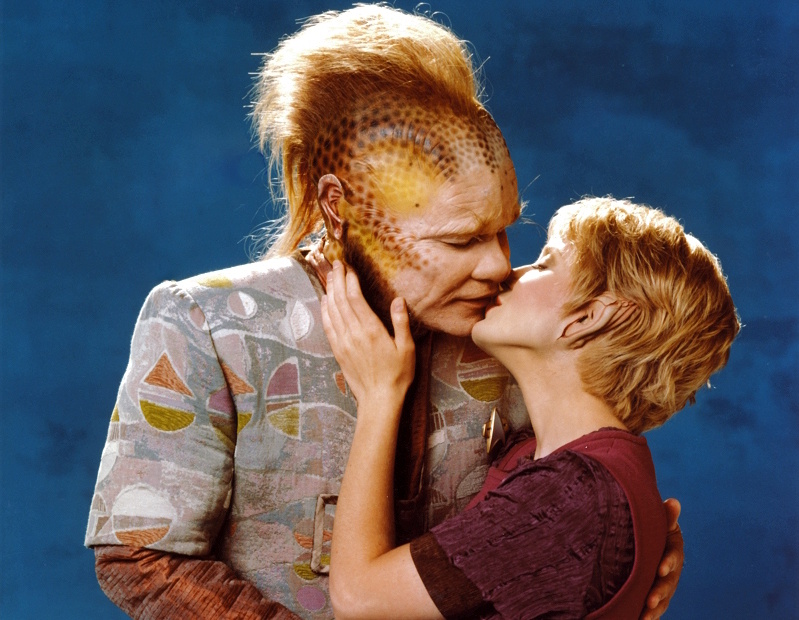
Elogium is a Neelix-Kes relationship story about Kes going through Ocampan “puberty” and deciding whether or not to conceive a child with Neelix. Should I go on, or have I already explained enough about why it absolutely deserves to be ranked so low?! Joking aside, I think I’m not alone in saying that Neelix’s infatuation with Kes was one of the absolute worst elements of Voyager’s first couple of seasons, and if it had been in focus in the way it is in Elogium more often, it would genuinely have ruined his character.

Elogium takes that icky foundation and somehow manages to make it even worse, by suggesting that, prior to this story, Kes wasn’t even fully-developed as an adult! I really struggle to find any redeeming features in this episode – or the wider Neelix and Kes relationship.

Does It Deserve The Hate?
​☑️​Yes.​☑️​

Voyager Episode #2:
Threshold, Season 2
IMDB Rating: 5.3/10

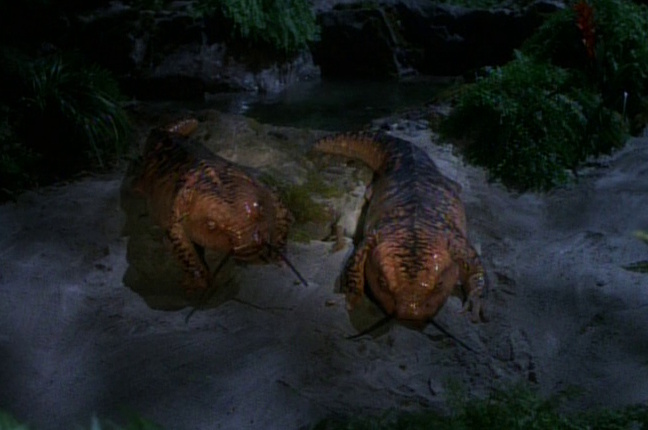
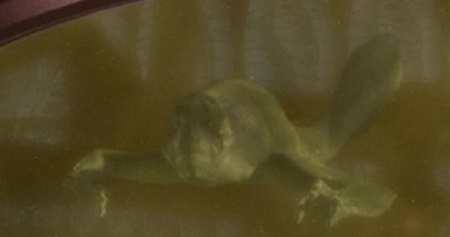
Threshold has basically become a meme in the Star Trek fandom at this point, so I’m not surprised to see it on this list. It’s an undeniably silly idea, even within the confines of Star Trek’s universe – accelerating past Warp 10 causes Paris and Janeway to “hyper-evolve” into a kind of salamander-like lifeform. They then proceed to… mate.

What’s worse, though, and where I’d really take issue with Threshold, is that Chakotay, Tuvok, and the rest of the crew basically infested a random Delta Quadrant planetoid with Paris and Janeway’s mutant offspring. Rather than collecting the salamander babies, they just left them there, presumably contaminating that planet’s entire ecosystem! I don’t like the idea of Warp 10 as this kind of impenetrable barrier, either, and I think Star Trek works best when these things aren’t overexposed in the way warp drive was here.

Does It Deserve The Hate?
​☑️​Yes.​☑️​

Voyager Episode #1:
The Fight, Season 5
IMBD Rating: 5.0/10

Although I’d never try to argue that The Fight is a shining example of the best of Star Trek, I will defend it to a point. It’s weird, esoteric, and probably a little too confusing, feeling like a fever dream in places. But that’s kind of the point; it’s a story that wants to show a very different kind of alien species and their attempts to communicate. As a concept, these aliens – and their “chaotic space” realm – were not inherently bad, and Star Trek has never shied away from seeking out very different forms of life.

I liked Boothby’s return here, and his connection to Chakotay, which had been explored earlier in the season. I get why this episode feels confusing, and I gotta admit, I can feel that way too when watching it! But I’m not sure it deserves to be called Voyager’s worst, either. Not when the likes of Threshold and Elogium exist!

Does It Deserve The Hate?
⛔No.⛔

Enterprise Episode #5:
Fortunate Son, Season 1
IMDB Rating: 6.5/10

I think Fortunate Son introduced some genuinely interesting lore about pre-Starfleet human spaceflight, and I found that side of the episode to be fascinating. Travis Mayweather comes from a family of spacers – spacefaring humans who transport cargo to and from Earth and human colonies in this pre-Federation era – and getting to meet some of these spacers was a ton of fun. I liked the conflict that Ryan and Mayweather had; Mayweather’s decision to leave his ship and join Starfleet being a sore spot for the spacer.

The Nausicaans made for fun antagonists, too. As a relatively unexplored alien race, I think they were much better here than, say, the Klingons might’ve been. The episode presented a moral conundrum for both Archer and Mayweather, too, and ended on what I felt was the right note. It’s the kind of story that Star Trek productions in the 23rd or 24th Centuries would have struggled with – the ECS Fortunate is explicitly shown to be outside Archer and Enterprise’s jurisdiction.

Does It Deserve The Hate?
⛔No.⛔

Enterprise Episode #4:
Precious Cargo, Season 2
IMDB Rating: 6.4/10

I’ll be honest: I’d forgotten all about Precious Cargo! In theory, the idea of an episode with a strong connection to The Next Generation is not a bad idea, and that premise could have been made to work. However, I think it’s pretty well agreed that there were issues with the story, which probably weren’t helped by last-minute re-writes.

There are worse Star Trek episodes, and worse Enterprise episodes, at least in my opinion. But I will concede that Precious Cargo isn’t a particularly strong – or memorable – instalment, as indicated by the fact that I’d forgotten all about it. There are some things I like, like seeing Archer willing to help out a random ship in distress, but overall, I can see why it’s not held in higher regard.

Does It Deserve The Hate?
​☑️​Yes.​☑️​

Enterprise Episode #3:
Daedalus, Season 4
IMDB Rating: 6.2/10

I did not expect to see Daedalus anywhere near this list, to be blunt about it. I genuinely enjoy this episode in its entirety, and I’m honestly struggling to see what it is that folks don’t like. We get to meet the inventor of the transporter, which is one of the really cool things that only a prequel like Enterprise could’ve done, and we get a genuinely interesting character piece that looks at the “burden of genius,” and how an inventor struggled with the idea that he’d peaked too young.

You may have seen me refer to some Star Trek episodes as “the transporter done goofed,” which has become a stock narrative concept in the franchise. But Daedalus takes that idea and really runs with it, digging into the history of the transporter, how it works, how it was originally tested, and how badly wrong it went. The episode has great guest stars, an unnerving “entity” in the form of the corrupted transporter signal, and a fun story for Archer, too. I don’t really get why it’s so disliked.

Does It Deserve The Hate?
⛔No.⛔

Enterprise Episode #2:
Extinction, Season 3
IMDB Rating: 6.0/10

Extinction feels like a cross between TNG’s Genesis and Voyager’s Favorite Son – the latter of which is also on this list! I suspect its biggest problem is its place in the series – coming just three episodes into the season-long “stop the Xindi” storyline. It’s a bit of a diversion, stepping away from that story just as it had begun, really. In that sense, I can understand some of the disappointment fans might’ve had at the time.

Perhaps that sense of repetition from those other Star Trek stories doesn’t help, but I’d argue that Extinction doesn’t really do as well with the core idea as either of those other episodes. There are some creative designs and prosthetics in the story, and it’s fun to see Mayweather taking the captain’s chair. But all in all, it’s just not a very strong or engaging episode.

Does It Deserve The Hate?
​☑️​Yes.​☑️​

Enterprise Episode #1:
These Are The Voyages…, Season 4
IMDB Rating: 5.3/10

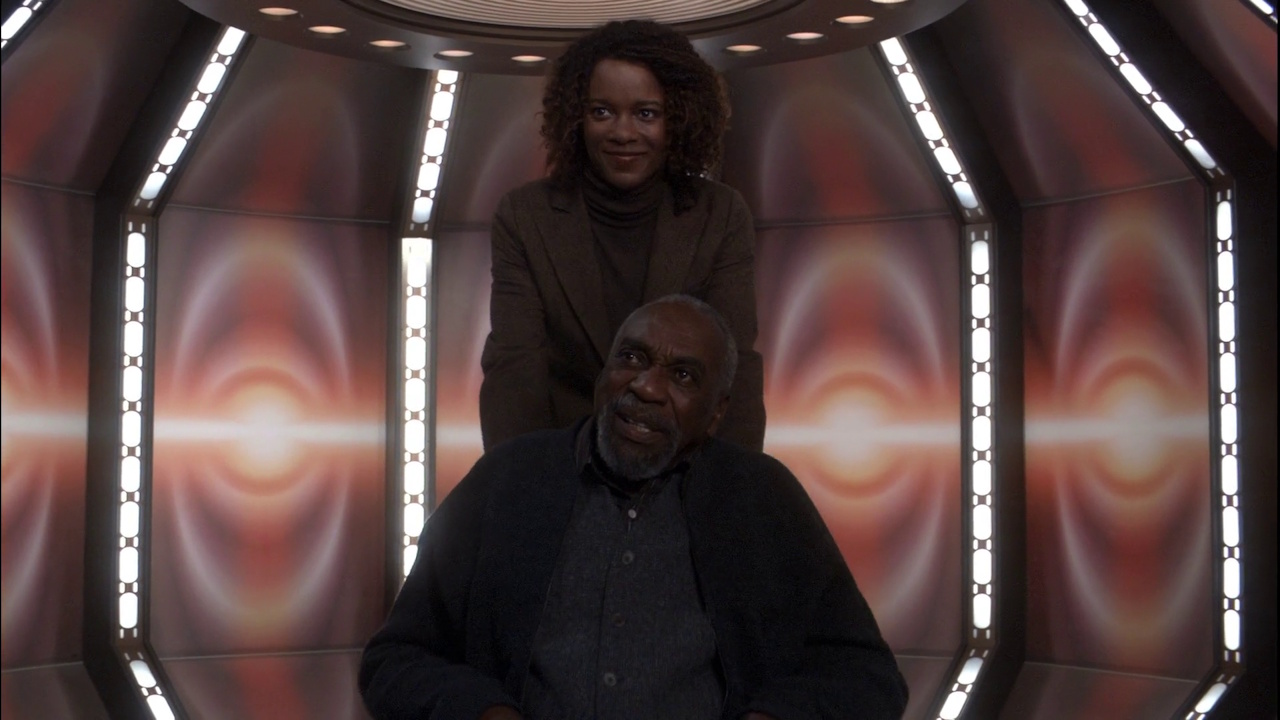
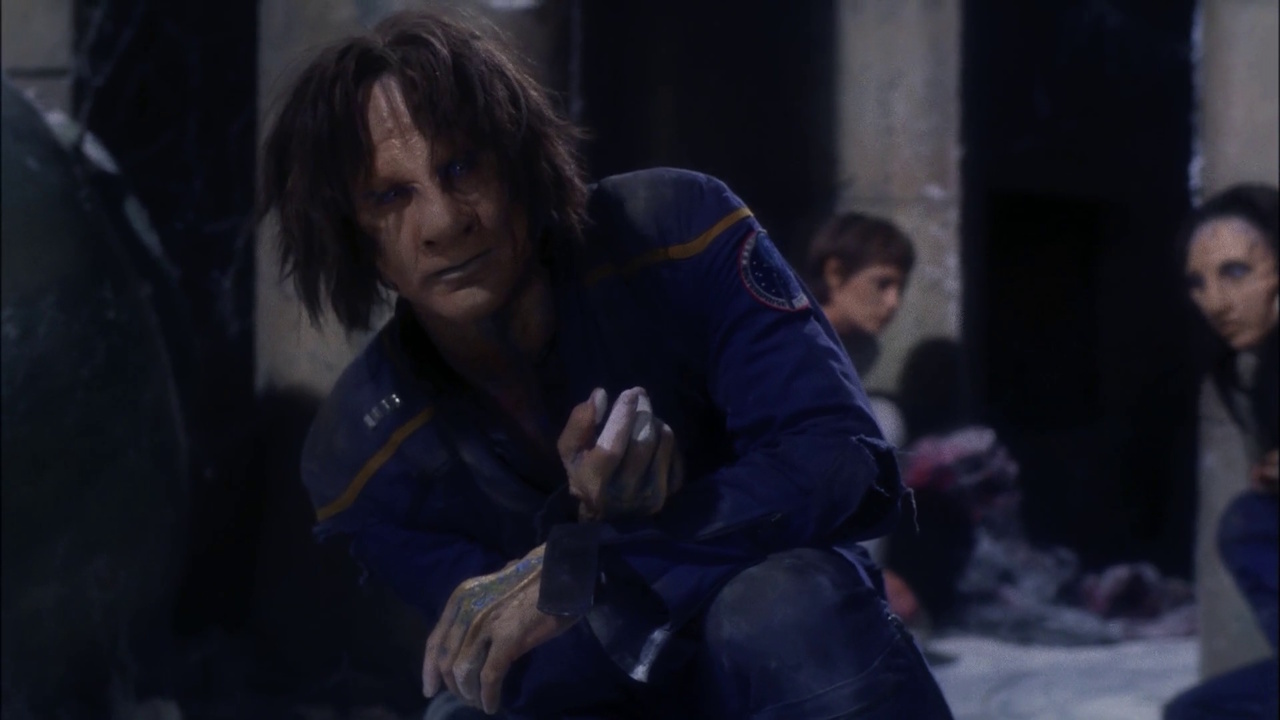
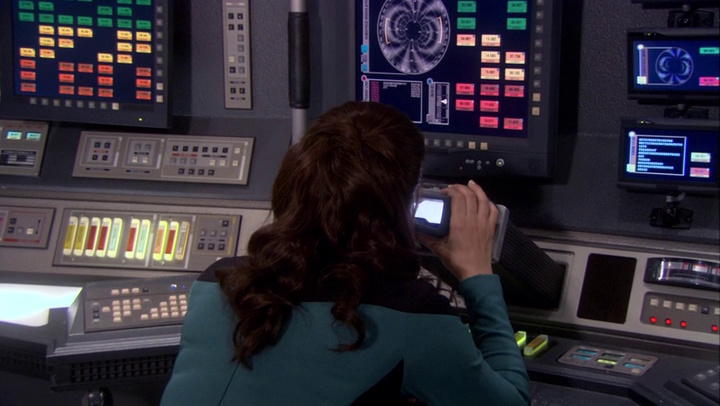
I doubt any of us are surprised to see that These Are The Voyages is considered Enterprise’s worst episode. Originally conceived as a “love letter” to Star Trek fans, the episode just doesn’t work as a series finale, unfortunately. Relegating the entire main cast to the status of holograms aboard the Enterprise-D was such a weak way for fans to part ways with these wonderful characters. Even though the intentions were good… the end result wasn’t.

This episode also caused a lot of controversy for killing off Trip Tucker. There were some interesting elements in the mix: seeing Archer at the founding ceremony of the Federation was creative, and not inherently a bad idea. I like crossovers, and I think a story like These Are The Voyages – putting Enterprise’s crew on the holodeck with this kind of frame narrative – could have worked. Just not as a way to end the entire show – and, for a time, the entire Star Trek franchise.

Does It Deserve The Hate?
​☑️​Yes.​☑️

So that’s it!

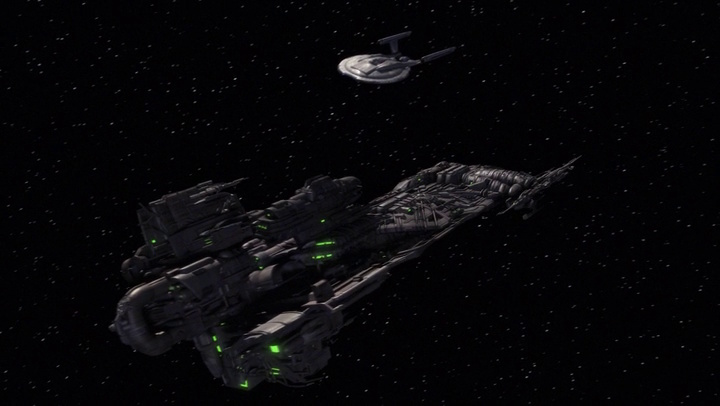
The Enterprise-D at Deep Space Nine.

We’ve looked at the top five lowest-rated episodes (or the bottom five, if you prefer) for the first five Star Trek shows. There were a few surprises along the way, but by and large, I think I expected to see most of these episodes rated quite lowly – even if I don’t necessarily agree with all of the criticisms Trekkies have of them!

This piece complements my earlier “top fives” piece, which you can find by clicking or tapping here. I hope you’ll take a look at that one if you missed it earlier in the year; it’s basically the same format, just with the five highest-rated episodes from the first five Star Trek shows.

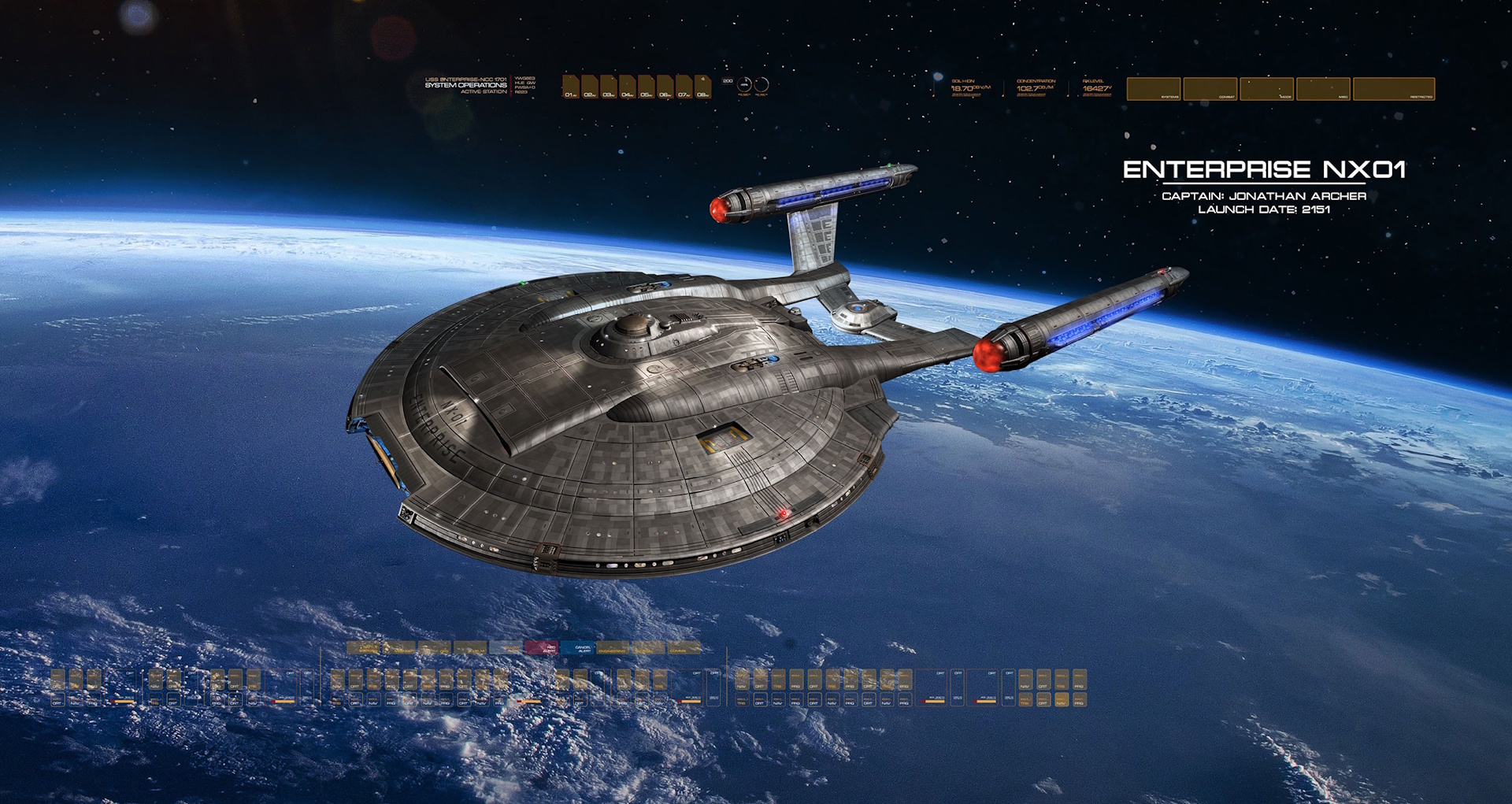
A render of the NX-01 as seen in Strange New Worlds.

I don’t think any of the modern Star Trek shows have enough episodes to really justify doing the same thing, but in the months ahead I might do something like a top and bottom three episodes from some of the recent productions as a kind of follow-up to this. So if that’s the kind of thing you’re interested in… stay tuned, I guess!

I hope this has been a bit of fun, at any rate. I’d genuinely forgotten all about a couple of these episodes, so it was fun to step back into these shows and watch them for what must be the first time in years. And even when Star Trek’s at its worst… I think we can agree that there are still things to enjoy or view in a positive light. That’s my takeaway from this thought experiment, at any rate!

There’s more Star Trek content on the way here on the website, so I hope you’ll join me again sometime soon. Until then… Live Long and Prosper!


All five Star Trek series discussed above can be streamed on Paramount+ in countries and territories where the platform is available. The Star Trek shows are available to purchase on DVD; The Original Series, The Next Generation, and Enterprise are also on Blu-ray. The Star Trek franchise – including all shows, films, and other properties mentioned above – is the copyright of Paramount Global. Credit to IMDB for the episode ratings, which were accurate at time of publication in September 2025. This article contains the thoughts and opinions of one person only and is not intended to cause any offence.
The End of an Era

A Star Trek-themed spoiler warning graphic

Spoiler Warning: Beware of minor spoilers for Star Trek: Enterprise.

I’m a few days late (my cat needed an emergency trip to the vet; she’s fine now, don’t worry!) but the 13th of May was the twentieth anniversary of Enterprise’s final episode. These Are The Voyages saw the controversial series end in similarly controversial fashion, with what many fans continue to believe is one of the least-impressive finales in the franchise’s history. But this piece isn’t about These Are The Voyages. Instead, I thought it would be interesting to step back in time to those dark days in 2005 and think about how far Star Trek had fallen – and the franchise’s seemingly-impossible resurrection barely four years later.

I’ll let you in on a little secret – a secret which, for someone who runs a website partly themed around Star Trek, might seem shocking! I wasn’t a regular Enterprise viewer during the show’s original run. Here in the UK, Enterprise was broadcast on Channel 4 in the first half of the 2000s, and while I still considered myself a Trekkie at the time, I just found myself less interested in the show and what it was trying to do. It coincided with a busy period in my life, too, which probably didn’t help!

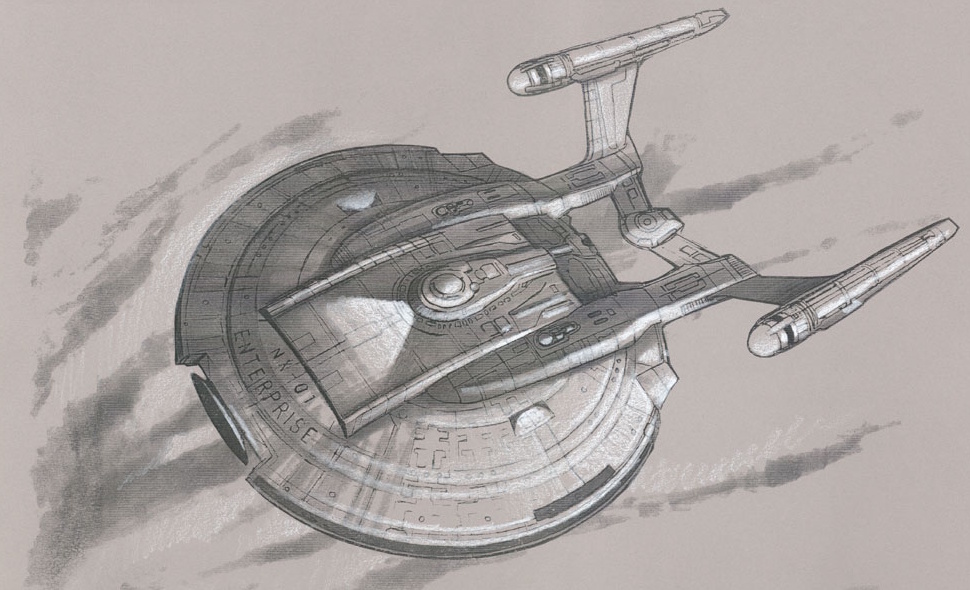
A sketch of the NX-01 Enterprise from Star Trek: Enterprise (originally a downloadable desktop wallpaper from the official Star Trek website).
A sketch of the NX-01 Enterprise.

It wasn’t until years later, after Enterprise had gone off the air, that I bought the DVD box sets and watched the series in full. I’ve said it before and I’ll say it again: I misjudged Enterprise when it was in production, and I regret not watching the show and doing more to support it during its original run. For me, Enterprise has become a great counter-argument to an expression one hears all the time in online fan communities and the wider discourse around media in general: “no one asked for this/who’s asking for this?” In 2001, I don’t think many Trekkies were asking for a prequel series like Enterprise. But twenty years later the series’ reputation has been rehabilitated for a lot of those folks, with Enterprise routinely being held up alongside the shows of The Next Generation era and included in Star Trek’s “golden age.”

I first came to hear of Enterprise’s announcement on the radio sometime around the turn of the millennium, and I can vividly remember thinking that I didn’t want a Star Trek prequel. The franchise had always been about looking ahead to the future, so stepping back in time for a kind of navel-gazing series about its own fictional history – which would have to be heavily constrained by the weight of hundreds of episodes dictating what could and couldn’t be introduced – just seemed wrong for Star Trek. And all of this was happening at a time when another infamous prequel – The Phantom Menace over in the Star Wars franchise – had been received incredibly poorly. I tuned in for Enterprise’s premiere in late 2001, but after that I only watched the series sporadically until I picked up those DVDs.

The main cast of Star Trek: Enterprise Season 3.
The main cast in a publicity photo for Season 3.

But as I said: this isn’t meant to be all about Enterprise!

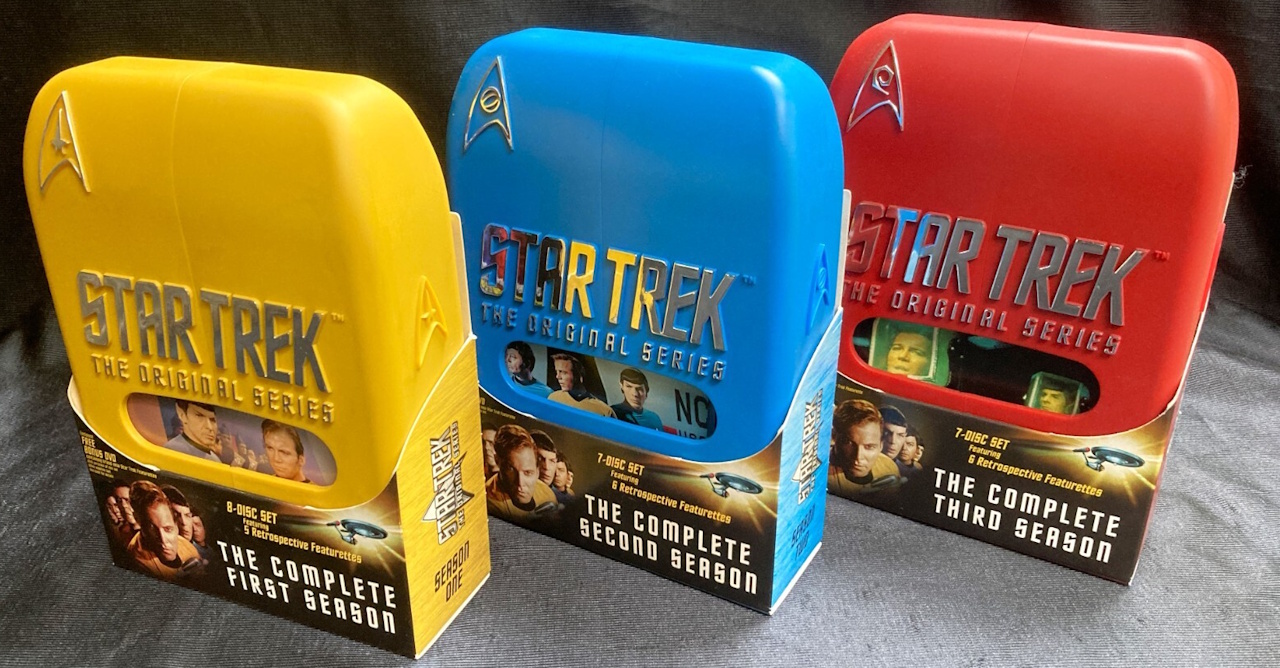
In 2005, although I hadn’t been a regular viewer of Enterprise, I was still bitterly disappointed to learn that no more Star Trek was being made. Ever since I’d first found my way into the fan community almost fifteen years earlier, Star Trek had been a mainstay on our TV screens. I’d bought most of the films and a few episodes on VHS, I was starting to collect The Original Series and The Next Generation on DVD (remember those big chunky plastic boxes the first sets of DVDs came in?) and I had action figures, video games, and other merch, too. Star Trek’s apparent cancellation felt… personal. It felt like I was losing a part of myself – and a connection to my childhood/adolescence.

By 2005, I was done with school and university and I was working full-time. When we’re in our late teens and early twenties, life can feel like it’s changing fast, and that was the case for me, too. I’d moved out, first to a shared flat at university, then all the way across the Atlantic for a year-long exchange programme, and then again to a large city for work. I was in what I thought was my “forever” relationship and was working toward an engagement, and juggling all of these changes while balancing my fragile mental health. One of the few consistent things in my life was Star Trek, and even though I wasn’t particularly bothered about Enterprise at the time, I just expected the franchise would continue indefinitely. I guess you could say I was taking Star Trek for granted, unable to conceive of the idea that there’d be no new films or episodes being produced.

Photo of the chunky plastic boxes used for Star Trek: The Original Series DVDs in the mid-2000s.
Remember when Star Trek DVD box sets looked like this?

I was also far less aware of behind-the-scenes events in those days – or perhaps I just didn’t do the legwork to find out! I was dimly aware of the fact that Enterprise and Nemesis hadn’t been well-received in some quarters of the fan community and hadn’t been financially successful, but what that really meant for Star Trek was kind of over my head. The idea that the franchise might disappear entirely due to this lack of support – and an inability to turn enough of a profit – was something that didn’t really click for me until it happened.

If you’d asked me in the days after Nemesis but before Enterprise’s cancellation what I thought the future held for Star Trek, I’d have said that I’d expect Enterprise to run to the “standard” seven seasons, and toward the end of its run there’d be at least one new series announced. On the Star Trek forums and fansites of the time, rumours abounded of pitches for new shows! Two that we know were actively worked on included one set on the USS Titan with Troi and Riker, and another titled Star Trek: Federation, which would’ve been set hundreds of years after The Next Generation era. Ironically, both of these ideas would be seen on screen – albeit in very different ways from how they were originally pitched – in the rebooted Star Trek franchise after 2017!

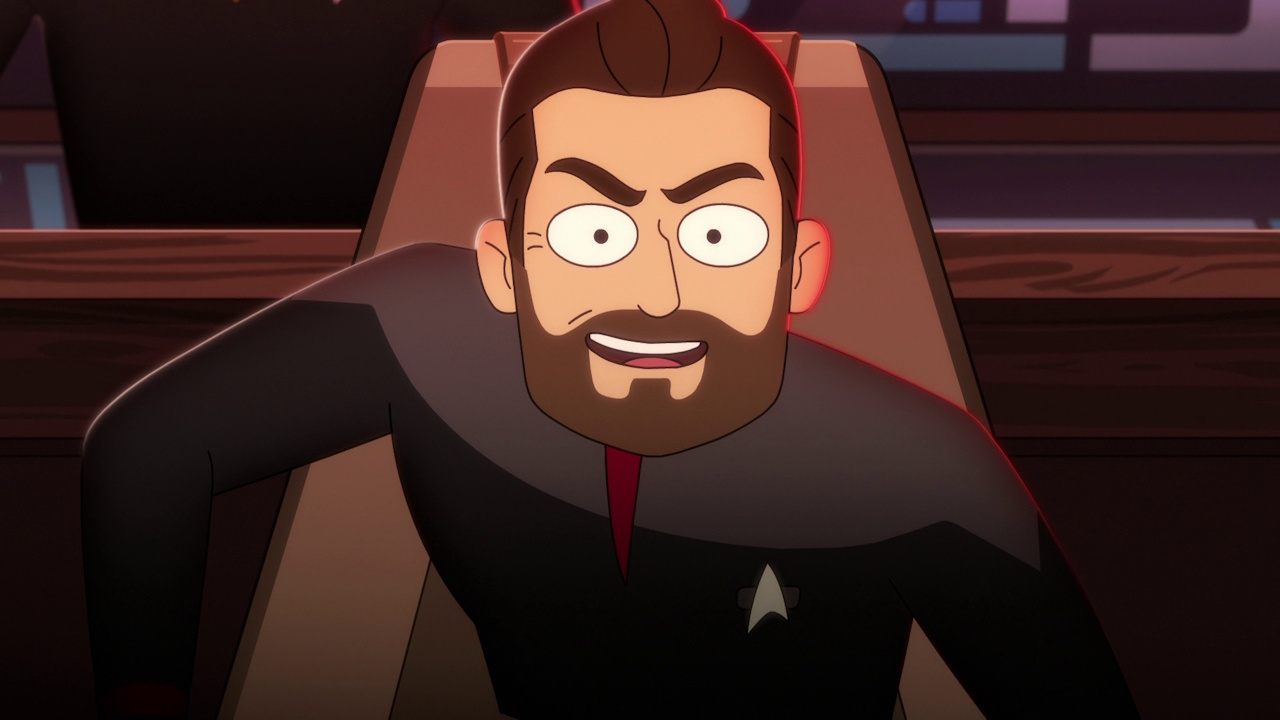
Still frame from Star Trek: Lower Decks Season 2 showing Riker.
We did eventually get to see Riker’s time in command of the Titan!

All of this is to say that Enterprise’s cancellation, and the fact that Viacom/Paramount weren’t interested in commissioning a new series, came as a huge shock in 2005 – and a bitter personal blow. Star Trek had been a big part of my life, especially in the 1990s as I navigated school, social life, adolescence, and all of the drama and nonsense that comes with that! It had been an escape from the real world sometimes, a chance to feel like I was part of a better world, and even a way to connect with people around me – especially at university. It took a while for the idea of Star Trek’s cancellation to sink in – and I’d be lying if I said it wasn’t a depressing idea and something I struggled with.

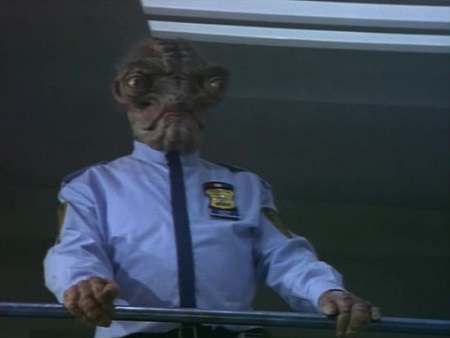
I was far from the only person to have been left disappointed by a television show being cancelled, of course. And I’m sure we all have our examples of single-season shows that didn’t get the love and attention we feel they deserved! Two of mine, by the way, would be Space Precinct and Terra Nova – but those are stories for another time, I guess! To get back on track, Enterprise’s cancellation was – as I say in the title of this piece – the “end of an era.” The series had come to an end, but so had Star Trek itself. That was difficult for me to really wrap my head around, and I spent several days in a bit of a tailspin, frequenting Star Trek forums and fansites, desperate for any news of a new show or some kind of last-second reprieve. Obviously nothing was forthcoming.

Still frame from Star Trek: Enterprise 4x26 showing Troi on a holographic replica of the NX-01 operating a scanner.
Scanning for signs of life…

Taking stock of Star Trek as a whole felt incredibly bittersweet. There had been some fantastic adventures with all of the different crews of Deep Space Nine, Voyager, and the various Starships Enterprise – but I still wanted more. After feeling lonely and isolated as the only Trekkie in the small rural area where I grew up, I’d gone on a journey with the franchise as it grew in popularity, finding new friends who shared at least some of my passion for Star Trek. I’d even tried to introduce my then-girlfriend to the franchise – though she wasn’t particularly interested, despite my best efforts!

I could appreciate the good times I’d had with Star Trek: classic stories like The Best of Both Worlds, the intrigue of tales like In The Pale Moonlight, and Voyager’s epic seven-year journey home. With the franchise being converted to DVD, and re-runs still happening on television, I didn’t feel like I was in danger of never seeing Star Trek again… but I still wanted more. This property that had been so big in the ’90s, so omnipresent on our television screens, and just so damn good couldn’t possibly be over. I was left feeling dejected.

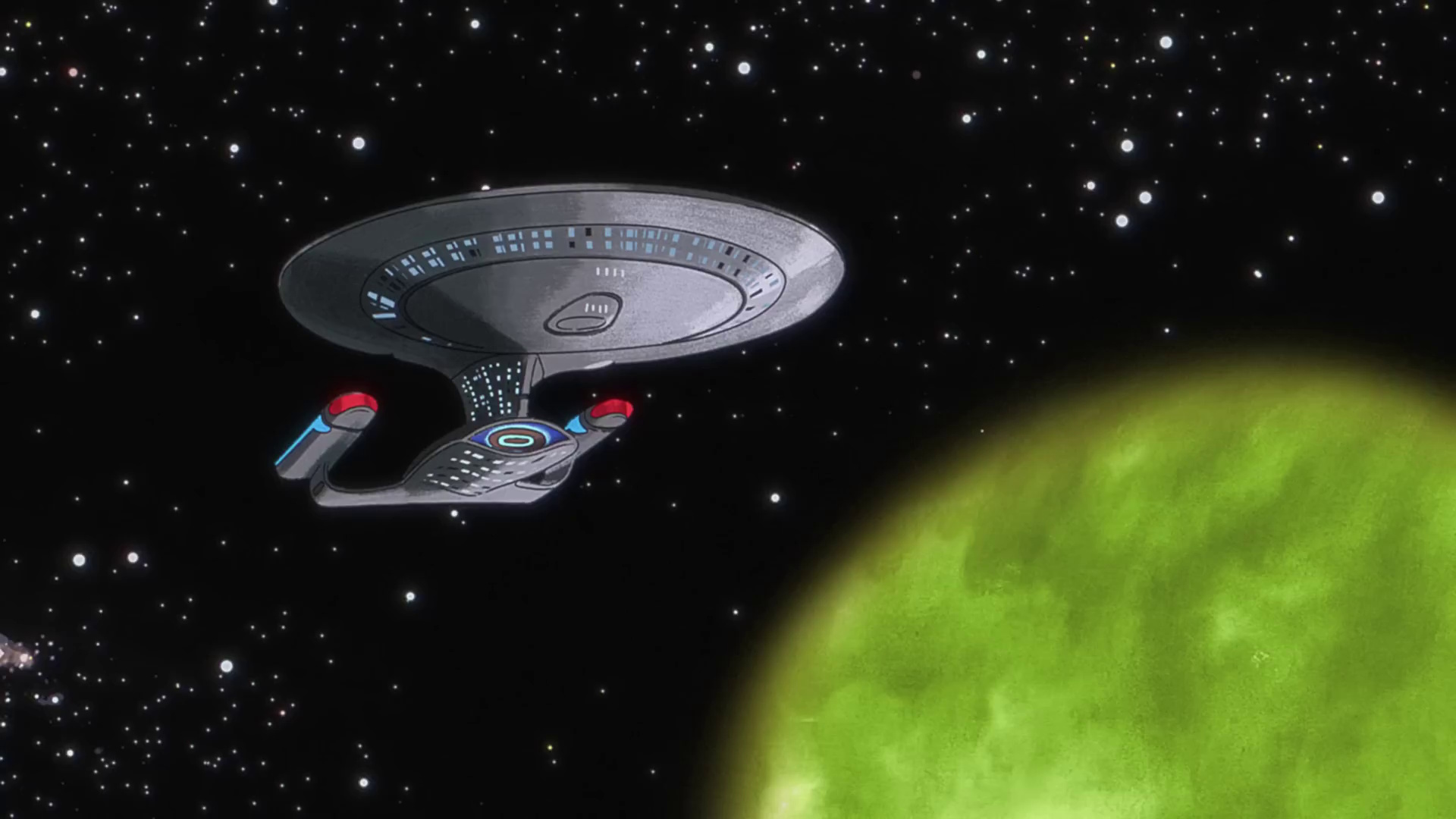
Still frame from Star Trek: The Next Generation Season 2 (The Royale) showing the Enterprise-D orbiting a green planet.
I’d been a massive fan of Star Trek through the 1990s.

For the franchise to have fallen so far in such a short span of time was stunning. The second half of the ’90s saw three Star Trek shows on the air pretty much continuously here in the UK: The Next Generation, Deep Space Nine, and Voyager were on television three nights a week, and when new seasons weren’t airing re-runs of older episodes would take their place. Star Trek books, action figures, and other products were in shops, even in the small towns around where I grew up. Star Trek versus Star Wars was the nerdiest argument you could have… and it just seemed as if the franchise was on top of the world. Star Trek had made it – so how did it all go so wrong so quickly?

In 1996 and 1998, there’d been three Star Trek projects in the span of a single calendar year: seasons of Deep Space Nine and Voyager, and the films First Contact and Insurrection. It seemed like you couldn’t move for Star Trek, and as the Trekkie in my friend group, I was finding myself being asked more and more often about the franchise and which episodes were best. Star Trek’s growth just seemed… unassailable.

Still frame from Star Trek: Insurrection showing Data wielding a phaser pistol.
In 1998, there’d been three Star Trek projects on our screens at the same time.

By early 2005, rumours of Enterprise’s struggles were all over fansites and forums. But even so, I genuinely expected a reprieve for the franchise as a whole. Enterprise could be written off as an unsuccessful experiment, and Star Trek could get back to producing another show like The Next Generation or Deep Space Nine. That was how I felt, and even when I saw people discussing cancellation and talking about the failures of Nemesis and Enterprise together, I guess I was just in denial about the severity of the problem.

When the news broke, it was a shock. And it really felt like the end of an era; we’d soon come to see Star Trek as this complete package – ten films, five shows, and that’s it. The recent arrival of the DVD box set meant that Star Trek would never be too far away, and I planned to finish my collection and acquire every single episode! But when it seemed as if Star Trek was really over… I was upset.

Still frame from Star Trek: Enterprise 4x26 showing holo-Archer in a damaged section of his ship.
Captain Archer (or rather, a hologram of him) in These Are The Voyages.

It wouldn’t be too long, though, before a new rumour hit the internet! A Star Trek revival was being planned, helmed by the incredibly successful J J Abrams – creator of Alias and Lost and the director of Mission: Impossible III. To go from the dejection of Enterprise’s cancellation and Star Trek’s apparent end to this reboot within a year or so was wild; the mid-2000s were a strange time to be a Trekkie, that’s for sure! This film would ultimately turn out to be Star Trek ’09, the reboot that kicked off the Kelvin timeline trilogy.

So what’s the point of revisiting 2005 twenty years later? Why drag up those old feelings and memories now that Star Trek is back on our screens in a new streaming landscape?

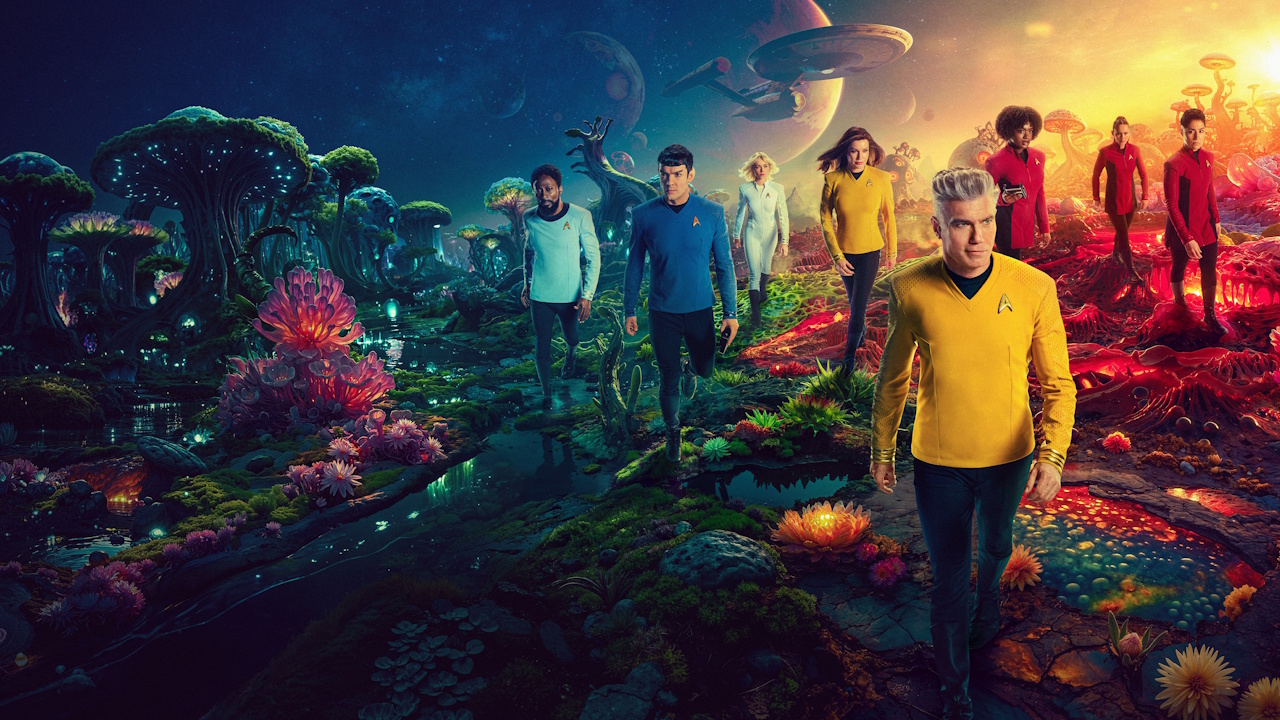
Promotional poster for Star Trek: Strange New Worlds Season 3 showing Pike and the crew.
Star Trek’s back… right?

The truth is… I feel echoes of 2005 right now. If you’re a regular reader, you might remember my essay 2022: A Great and Terrible Year for Star Trek, in which I took Paramount and the franchise’s producers to task for the many missteps and mistakes they’d been making. The worst problem, at least as far as I see it, is franchise fatigue. Star Trek has quickly become oversaturated in the first half of the 2020s, and it’s genuinely difficult to keep up with everything, even as a big fan and as someone who literally runs a Star Trek website.

Moreover, Star Trek’s fan community doesn’t seem to be adding a lot of new members, despite some valiant attempts by writers and creative folks. Projects like Prodidy, Strange New Worlds, and Section 31 should’ve been rolling out the welcome mat to untold numbers of new viewers and fans, but mismanagement by Paramount has squandered many of those opportunities. At time of writing, I think Star Trek is maybe a year away, two at the most, from another 2005.

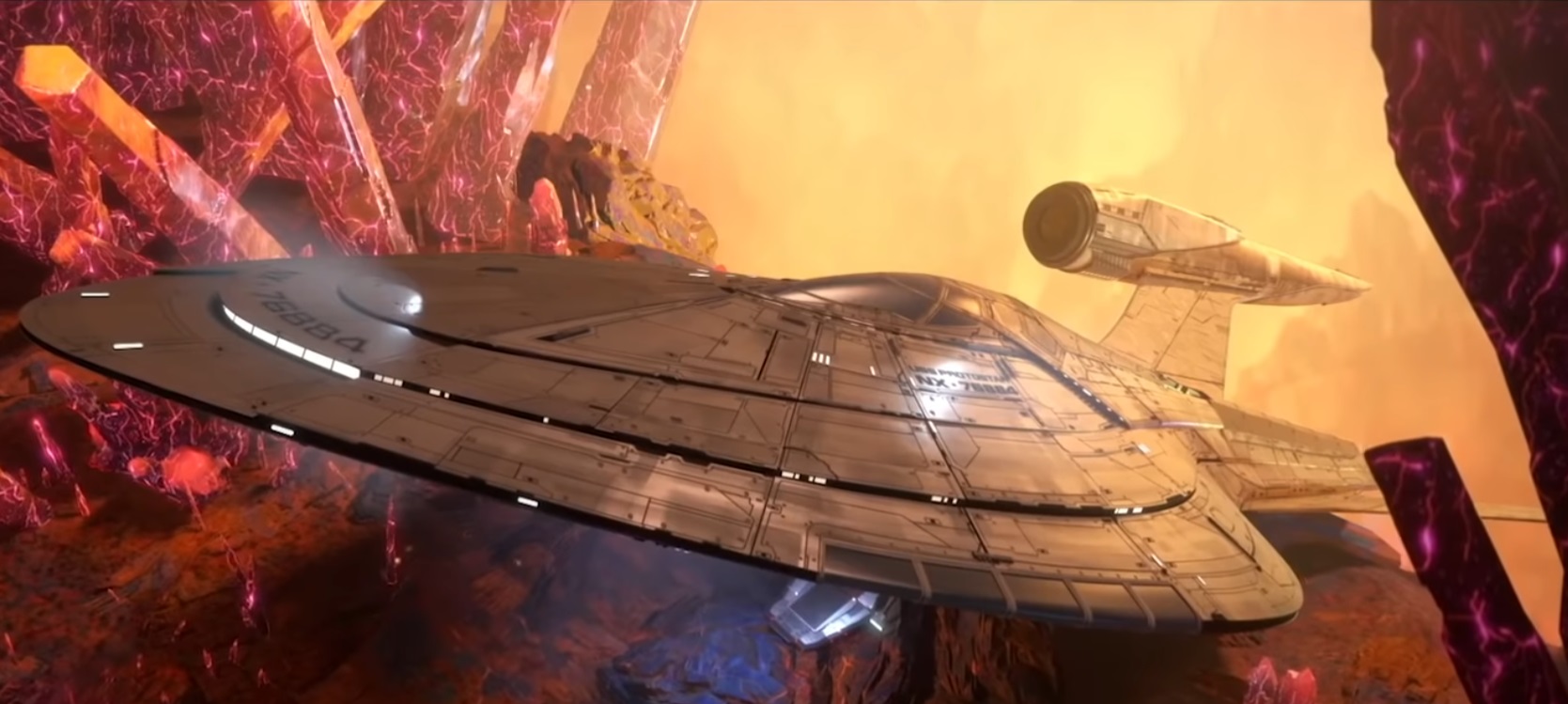
Still frame from Star Trek: Prodigy 1x01 showing the discovery of the USS Protostar.
The wreck of the USS Protostar…

And I don’t want that to happen. There are still lessons that Paramount hasn’t learned from 2005 that need to be applied. And there are new challenges that the franchise faces in a transformed media landscape that Paramount has utterly failed to get to grips with. As I’ve said before: 20th Century thinking is desperately failing to keep Paramount afloat in the 21st Century.

I love Star Trek. I loved it in 2005 and I love it today. I want to see Star Trek continue because I want as many people as possible to fall in love with this incredible universe and the wonderful characters who inhabit it. But as Paramount is caught up in a complicated buyout/merger, and as its streaming platform continues to struggle, I don’t see a bright future for Star Trek. I hope that I’m wrong, and I hope the franchise’s name still has the power to bring in curious viewers. But as I look around at cancellations, mismanaged projects, franchise fatigue, and more… I definitely feel echoes of 2005 all over again. I hope the next couple of years won’t also turn out to be the end of an era.


Star Trek: Enterprise and most other Star Trek films and shows discussed above can be streamed on Paramount+ in countries and territories where the platform is available, and may also be available on DVD and/or Blu-ray. The Star Trek franchise – including all properties discussed above – is the copyright of Paramount Global. This article contains the thoughts and opinions of one person only and is not intended to cause any offence.
Ten Star Trek Storylines That Should Be Non-Canon

Spoiler Warning: There are spoilers ahead for the Star Trek franchise.

We’ve recently talked about some of my Star Trek “head canon” – i.e. theories and ideas I have about Star Trek that aren’t confirmed on screen, but make sense to me! Click or tap here to check out that piece, by the way… I talk about things like cloaking devices, the Borg, and more. If that article was about things in Star Trek that aren’t canon but should be, then today we’re gonna do the exact opposite! These are ten Star Trek storylines that I fully believe should be non-canon.

Before we go any further, a couple of important caveats. First of all, this is a controversial subject! As Trekkies, we all have different opinions about what makes a fun and successful Star Trek story… and that’s okay. There should be enough room within the Star Trek fan community for differences of opinion and disagreement without spiralling into arguments. Everything we’re going to talk about is the entirely subjective opinion of one Star Trek fan, and I’m well aware that my opinion will be the minority one in some cases. As I’ve said before: no theory or opinion is worth getting angry or worked up over!

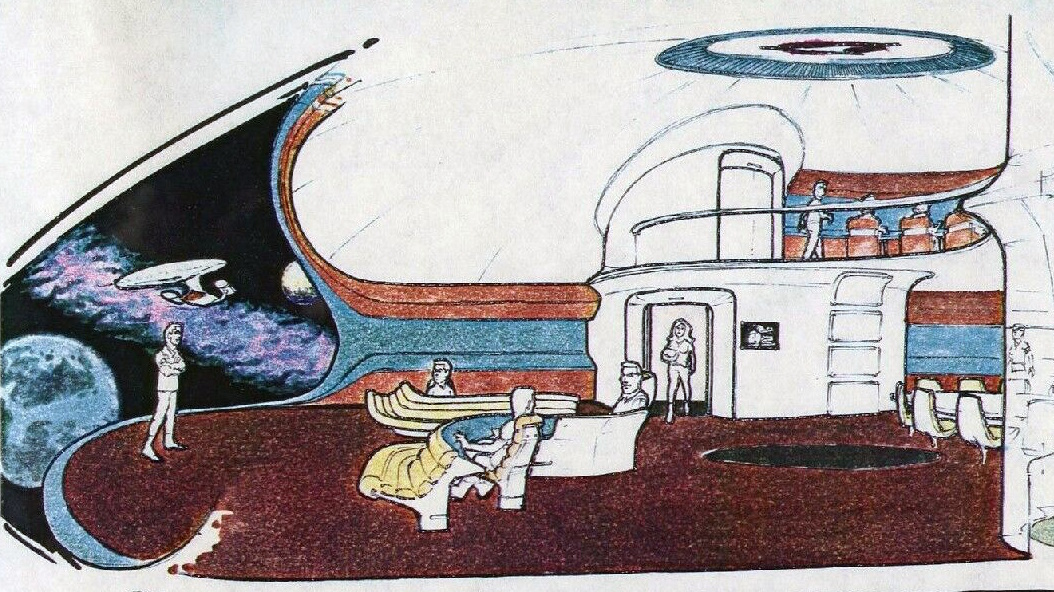
Early concept art of the Enterprise-D.
Image Credit: Forgotten Trek/Frogland Archive

It should go without saying, but none of these stories or episodes will ever actually be “removed” from Star Trek’s canon. The title is really a tongue-in-cheek way of me saying that I either dislike a particular storyline or feel that its presence in the broader Star Trek universe is a stumbling block for other narratives that I prefer. This isn’t like that awful clickbait article that did the rounds a few months ago claiming that “Discovery is non-canon now!!1!” This is just for fun; a thought experiment for people like us who like to spend a bit more time with the Star Trek franchise after the credits have rolled.

With all that being said, if you aren’t in the right headspace to get into some potentially controversial Star Trek topics, this is your last chance to nope out!

Let’s jump into the list.

Storyline #1:
The destruction of Romulus.
Star Trek ’09, Picard, Discovery, et al.

Romulus was destroyed by a supernova.

In Star Trek ’09, the destruction of Romulus was kind of haphazardly thrown in as a way to justify Spock’s involvement in the story and tee up Nero as a villain. And at the time that film was being written, I guess it’s not unfair to say that a full-scale revival of the Star Trek franchise on the small screen seemed beyond unlikely! But after Star Trek was brought back and returned not only to the prime timeline but to the late 24th Century (and beyond), the destruction of Romulus has proven to be a difficult storyline for subsequent productions to navigate.

Picard was the first to pick up this story thread in its first season, showing a few flashbacks to Admiral Picard and his Romulan rescue plan. Romulan refugees also cropped up in Season 1… but the show didn’t really know what to do with them or how to handle the Romulans as a whole after the loss of their homeworld. The character of Elnor could’ve been a great point-of-view character for exploring this post-destruction Romulan Empire… but Picard’s writers had other ideas, and the character was abandoned.

Elnor was unceremoniously dumped before we could spend much time with him.

Discovery brought back the idea of Romulan-Vulcan reunification in the far future, and managed at least one creditable effort with that premise. But again, this story was a one-off and didn’t really go much further, even when Vulcan leader T’Rina became a recurring character. The fact that Romulus had been destroyed – centuries in the past from this vantage point – didn’t really come up in a big way, either, and I reckon Discovery’s Ni’Var storyline could’ve worked just as well without it.

The Romulans are one of Star Trek’s most iconic villains – perhaps in third place behind only the Klingons and Borg. To destroy their homeworld – the core of their empire – for what was essentially a throwaway scene and the backstory of an over-the-top villain… I dunno. It feels extreme, which Star Trek ’09 was in some ways. But any stories set after the late 24th Century are now constrained by this massive narrative beat, and will arguably miss out on one of the franchise’s best villains. The Romulans are certainly one of Star Trek’s most shadowy, clandestine factions, and damaging them so severely that it would take them decades if not centuries to recover, while also impoverishing at least some of their survivors… it places real constraints on future stories.

Storyline #2:
Suspiciously human-like aliens on many different planets.
The Original Series

These are meant to be aliens. From outer space.

When we reach the final frontier and explore strange new worlds… we’re going to meet aliens and totally new forms of life. We aren’t going to encounter an exact duplicate of Earth, a planet where everyone dresses like it’s Germany in the 1930s, or a planet where whose inhabitants – who don’t look even remotely alien – think they’re living in Ancient Rome. In a word… these old episodes of The Original Series (and some from The Next Generation, too) aren’t sci-fi enough!

There’s a perfectly reasonable explanation for this, of course: it was the ’60s, and The Original Series had a limited budget to work with. The show would use stages and props that had been built for other projects, or Paramount’s backlot, meaning explanations had to be found and aliens created to fit with those existing sets. There were also limitations to the prosthetics, puppets, and practical effects that could be designed and built, and with twenty-five episodes per season to write… some liberties had to be taken with the way aliens looked and behaved.

Kirk leads an away team to Miri’s planet: a clone or twin of Earth.

But for me… let’s just say I’ve always been less keen on these too-human alien societies. I think there’s an interesting head canon explanation (that I go into in more detail in a standalone piece that you can find by clicking or tapping here) that basically says that these are lost or forgotten human colonies from the early days of pre-Federation spaceflight. But that only works if you buy into my theory! As presented on screen, we’re meant to take these societies to be Earth-like aliens… and I just don’t think that works if we’re taking Star Trek seriously as a sci-fi universe.

Space is big and space is weird – so there are bound to be incomprehensible things out there for our heroes to encounter. But too often, especially in The Original Series, we’d get these “aliens” that were not only physically indistinguishable from humans, but whose societies and even planetary geography was identical to some part of human history, too. Don’t get me wrong, many of these episodes are a ton of fun and they’re part of what made Star Trek what it is today. But I just don’t think they have a place in the franchise any more… and they haven’t for decades.

Storyline #3:
Most of the mission to 2024.
Picard Season 2

Los Angeles as seen in Picard Season 2.

I’ve had a piece in my writing pile for a couple of years tentatively titled “Star Trek: Picard – The Movie,” in which I’m going to argue that Picard’s second season (which I generally didn’t like) would work so much better as a cut-down two-hour-ish movie rather than a ten-episode season. I’d keep the attack on the Stargazer and the arrival of the Borg, I’d keep the Confederation timeline and the Borg Queen’s corpse, and I’d keep Agnes’ assimilation. But after that I’d cut out almost all of the 21st Century stuff, including all the revelations about Picard’s past and Q being on his deathbed, streamline the story by saying Q’s real objective was to prevent the mysterious anomaly from destroying the Federation, and launch Picard and his friends back to the bridge of the Stargazer.

For me, Picard’s second season spent way, way too long wallowing in a boring 21st Century environment that robbed the story of basically everything that feels like Star Trek, and I didn’t enjoy it. There was the kernel of an interesting idea, with Picard having to confront childhood trauma. But that storyline completely fell apart, it didn’t expand our understanding of Jean-Luc Picard as a character in any meaningful way, and parts of it felt almost like “torture porn;” throwing Picard (and other characters like Raffi and Rios) into a series of traumatic events that served no real narrative function. Picard’s story just didn’t give us much of anything, Raffi’s was undone with seconds to spare at the end of the season, and Rios’ story was written in a weirdly contradictory way to facilitate his exit from the series.

The new USS Excelsior.

So I’d cut out all of that, and I’d streamline Picard’s second season into a much more reasonable two-hour movie. There’d still be time for what I said in my review was one of the best and most frightening presentations of the Borg that we’d seen in decades, there’d still be a way for Q to play a part, and we could hop over to the Confederation timeline for a little while to get a Mirror Universe-inspired alternate reality look at Picard and Earth. But the mission to the 21st Century could be seriously cut back to only a few minutes, with perhaps one objective for Picard and the gang: to ensure the Europa Mission launches on cue.

I really ought to finish writing up my longer piece on this idea, because I can’t fully do justice to it in just a few paragraphs! Stay tuned here on the website, because I daresay I’ll get around to it one of these days! For now, suffice to say that Picard’s random wandering through 21st Century Los Angeles (and a suspiciously California-like France) should be dumped.

Storyline #4:
Captain Archer versus the Borg.
Enterprise Season 2: Regeneration

Reed and Archer take on the Borg.

I genuinely enjoy Regeneration as a one-off episode, and I think it was a fun idea to bring the Borg into Enterprise… even if it was pretty obvious that the reason for doing so was to boost the show’s flagging ratings. But stepping back and thinking about what it means for the history of Borg-Federation contact, Regeneration really screws with a timeline that has already been meddled with!

There are three angles to approach this from, and all of them are bad. Firstly, we have what this storyline says about Picard and the crew of the Enterprise-E. First Contact made clear that Picard had ordered his ship hidden so as not to accidentally interfere with humanity’s first warp flight and the Vulcans’ arrival on Earth. But apparently they totally ignored, forgot about, or didn’t think to scan for Borg debris from the ship they’d destroyed. It presents Picard and co. as incompetent at best when it comes to cultural contamination, and given how meticulous we know he is… it just doesn’t track that there’d be all this debris left behind, including fully intact and functional Borg drones.

An assimilated shuttle versus the Enterprise.

Next, the Borg sent a message to the Collective in the Delta Quadrant, basically making the whole First ContactRegeneration story a time-loop paradox. It also seriously muddles the question of how and when the Borg first encountered humanity. Was it when they received this message? Was it when they assimilated the Hansen family in the 2340s? Voyager had already messed with the Borg quite a lot thanks to Seven of Nine and the Borg Queen, so this additional complication was not helpful! Turning the story of humanity’s first contact with the Borg into this kind of paradox is not what I wanted to see.

Finally, there’s what this story says about Starfleet. Captain Archer encountered a race of cybernetic beings who sent a message to the Delta Quadrant. Years later, the Federation took in El-Aurian refugees whose planet had been attacked by the Borg. Yet for some reason, by the 24th Century, all knowledge of both of these events was suppressed, deleted, or just not taught at the Academy. Given how hard Archer and his crew had to work to stop a handful of drones, you’d think they’d have recorded the details of what they did and what they were up against so that future Starfleet explorers wouldn’t be starting from scratch. This is a typical “prequel problem” of the kind Enterprise created on more than one occasion. For all of these reasons combined, though, Regeneration’s 22nd Century Borg storyline joins this list.

Storyline #5:
Warp 10 as a hard limit on travel.
The Next Generation, Voyager Season 2: Threshold, et al.

The Enterprise-D jumps to warp.

Star Trek has been pretty inconsistent with how warp speeds and travel times are depicted. I have a head canon explanation that basically says Starfleet re-designates warp factors as newer and faster engines are created… but that only goes part of the way to plugging some of the apparent plot holes that almost six decades’ worth of stories have accumulated! Long story short, most Star Trek productions from The Next Generation onward present warp one as the speed of light and warp ten as an unachievable goal; a speed that would allow instantaneous travel anywhere in the galaxy. But that doesn’t fit with what we see on screen.

What is “transwarp?” Is it speeds faster than warp 10? The Borg seem to be able to travel beyond warp 10 through their transwarp network, potentially cutting the time needed to reach Earth from the fringes of the Delta Quadrant from decades to hours. Then there’s the notorious Voyager episode Threshold, which saw Tom Paris and Captain Janeway travel faster than warp 10 (though still not fast enough to reach Earth), before mutating into salamanders.

It’s Paris and Janeway…

I think it would be so much better if Star Trek dropped this idea that warp 10 is a kind of hard limit. Speeds beyond what we understand as warp 9.9999 are clearly possible, as we see the Borg, the Kelvan Empire, Arturis’ species, and many others are able to travel far faster than Starfleet. So why not drop this idea in favour of new warp factors – perhaps a show or film set in the Picard era could introduce the first warp 12 engine, for example, and Star Trek could grow from there.

Threshold as an episode can pretty much be written off, too! I don’t think anyone will miss it. Recent developments, like the Kelvin timeline’s transwarp beaming and Discovery’s spore drive, can also be used to travel great distances in a short period of time. There’s potential for future stories to pick up these threads, too.

Storyline #6:
The Prophets are responsible for Sisko’s birth.
Deep Space Nine Season 7: Image in the Sand + Shadows and Symbols

A photo of Sisko’s Prophet-posessed mother.

Star Trek has never believed in things like fate or destiny, and for me, this storyline about the Prophets deliberately conceiving Benjamin Sisko so he could one day become their emissary is dangerously close to that idea. It also turns Sisko’s entire arc across Deep Space Nine into a giant predestination paradox; he became the emissary because the Prophets created him. It challenges and undermines really his entire personality all for the sake of having a twist in a couple of episodes.

Part of what was interesting about Deep Space Nine was the intersection of religion and science. The Bajorans worshipped the “gods” of the wormhole, but Sisko and the rest of the Starfleet crew saw them as just another alien race to make first contact with. And Star Trek has always leaned more on the science angle than the religious whenever questions like this have come up; as the audience, we’ve always been on Starfleet’s side, too, seeing entities and aliens like these as another race in the galaxy – not deities who are responsible for guiding the lives of our heroes. Deep Space Nine ventured into spirituality in a big way, and until Seasons 6 and 7 mostly stayed on the right side of that line.

A high-definition render of the Bajoran Wormhole from the documentary What We Left Behind.

These episodes kicked off a longer story arc across Season 7 which also involved Kai Winn and Dukat. The conflict between the Pah-Wraiths and Prophets took on this Christian apocalyptic tone, with Sisko akin to an almost Christ-like figure, predetermined from before his conception to play a pivotal role in this struggle. While this story was interesting in its own right, it’s also inherently un-Star Trek in a significant way.

Because the Prophets exist outside of linear time, that gave Deep Space Nine’s writers a lot of wiggle-room. But for me, this paradox was a bridge too far. Star Trek can and should tackle religious themes, but in my view it works best when stories take a more detached and scientific approach to these topics.

Storyline #7:
The Klingon-Augment virus.
Trials and Tribble-ations, Enterprise Season 4, et al.

A Klingon affected by the Augment virus.

I don’t believe that every single aspect of Star Trek demands an on-screen explanation. The Klingons that Kirk met in The Original Series look different from those that we’d later see in The Motion Picture and from The Search for Spock onward – and that’s okay. Fans could make head canon explanations if they wanted, but there was just no need for an in-universe explanation of this change in prosthetic makeup… especially not one so convoluted.

The origins of this can be traced back to the otherwise excellent Trials and Tribble-ations – the Deep Space Nine episode made for the Star Trek franchise’s 30th anniversary. That story saw the crew of DS9 interacting with Kirk’s crew, using newly-developed editing techniques to integrate new characters with old footage. It was an incredibly creative episode and a fun story… but it came with a problem! At one point, a couple of characters make reference to the way Klingons look, asking Worf about it. This was the first on-screen acknowledgement that something had changed.

Worf’s line in Trials and Tribble-ations was the first on-screen acknowledgement of the aesthetic changes the Klingons underwent.

Enterprise, several years later, took this idea and ran with it, crafting an intricate (and pretty dumb) multi-epiosde arc that introduced the Klingon-Augment virus: a genetically-engineered creation that infected Klingons with human DNA, physically changing their appearances. In the writers’ minds, this “closed a plot hole,” but I would argue very strongly that it was one that never needed to be closed. Even if it did, and even if we desperately want to find a way to acknowledge the change in makeup used for the Klingons with an in-universe explanation… I just found this particular story to be convoluted and weak.

More recent Star Trek projects have, thankfully, quietly dropped this idea. The Kelvin films and Discovery admittedly had their own issues with re-interpreting the aesthetics of the Klingons, but Strange New Worlds – which is set in the 23rd Century and has featured the Klingons on more than one occasion – has basically reset the way they look. There’s no reason to bring up this idea again – and I sincerely hope Star Trek can continue to walk away from it!

Storyline #8:
The Burn (as part of the prime timeline).
Discovery Seasons 3-5

The Burn.

Discovery’s second season probably had some of its best individual performances, thanks to the inclusions of Captain Pike and Spock. But for me, most of Discovery’s best episodes actually came after the series shot forward into the far future, leaving behind much of what we’re familiar with in the Star Trek galaxy. Unfortunately, though, Discovery’s writers and creatives wanted the show to focus more on Burnham’s increasingly soap opera-like personal relationships and attempts at depicting characters overcoming traumatic events (that mostly didn’t work as intended). As a result, we didn’t spend as much time as I’d have liked with either the Federation or other factions in this potentially-interesting setting.

Another piece I’ll have to write up in full one day is whether Discovery’s “post-apocalyptic Star Trek” idea worked or even came close to working. But for now, I think we can at least make the case that the Burn is a pretty depressing future for the prime timeline, and that pushing Discovery’s far future into some kind of pocket universe or alternate reality wouldn’t be a terrible idea for the franchise as a whole.

Discovery never really did anything with its “rebuild the Federation” idea.

I’m hopeful that there will be more Star Trek on our screens in the years ahead – and that at least some of it will return to the 24th and early 25th Centuries. But any show or film using that setting (or really any pre-Burn setting) becomes, by default, a prequel to Discovery’s third season. That means, in the backs of our minds, we know that no matter what our new heroes might do, however they might find creative ways to save the day… the Federation and much of the galaxy is going to end up devastated in a few hundred years anyway. It puts a brake on future Star Trek stories in a way that we haven’t really seen before.

If Discovery had done more with the idea of rebuilding the Federation and restoring Starfleet values to the galaxy, that feeling would persist but it would be somewhat lessened, I feel. But because that didn’t happen, the Burn and its aftermath really are little more than fluff; background details for other, less-interesting stories to play out in front of. Given the sheer scale of the Burn and the devastation it wrought… that’s not good enough for me. I don’t want to remove Discovery’s latter seasons entirely, as there’s some good storytelling in there and some fun episodes. But finding some way to push it out of the prime timeline and into some kind of alternate reality… let’s just say it would be a net positive. Maybe in Starfleet Academy?

Storyline #9:
Neelix’s romance with Kes.
Voyager Seasons 1 & 2

Blegh.

This is an uncomfortable one… but Neelix’s love for Kes in some early episodes of Voyager didn’t have the cutsey or romantic vibes that the writers may have been hoping for. The age gap between Neelix and Kes made the whole thing feel a bit… icky. Thankfully it wasn’t in focus for too long, because if it had been I genuinely think it could’ve ruined Neelix as a character.

Ocampans are a very short-lived species, and Kes was either one or two years old in Voyager’s premiere. The implications of that when considering Neelix’s feelings are just unpleasant, but even if you push that to the back of your mind, there’s no getting away from the fact that Kes is basically a teenager or young adult while Neelix is in the Talaxian equivalent of middle age.

A jealous Neelix.

We’d also see Neelix getting possessive of Kes, with episodes like Parturition and Twisted being prime examples of this. The contrast between Neelix’s usual jovial, friendly persona and the jealousy and anger he could feel has genuinely uncomfortable undertones. For anyone who’s ever been in a toxic relationship with a narcissistic or possessive partner, there are parallels in this presentation of the two sides of Neelix that could be triggering.

I wish we’d got to spend more time with Kes; in my view, she was unfairly dumped from Voyager. In recent years there’s been speculation as to exactly what happened behind-the-scenes, informed, at least in part, by actress Jennifer Lien’s struggles and issues. I don’t really want to get into all of that, but suffice to say that I would have happily kept Kes as part of Voyager’s roster if I’d had the option. But I’m glad that this Neelix romance angle didn’t stick around beyond the first couple of seasons – and that it was only present in a big way in a handful of stories.

Storyline #10:
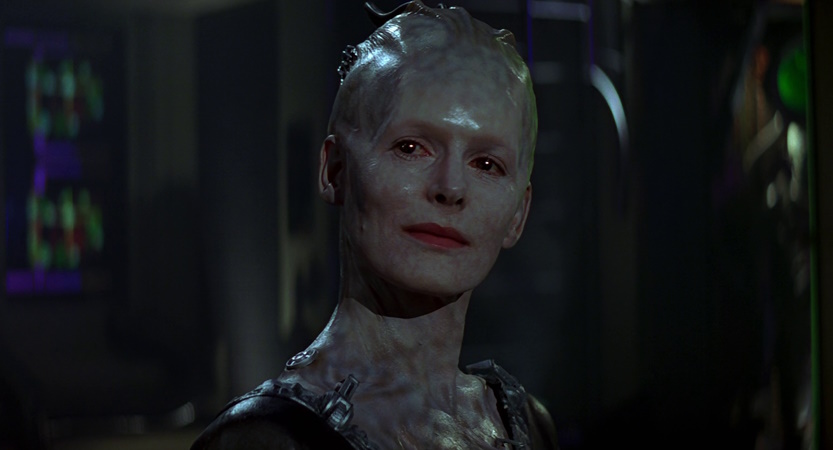
The Borg Collective has a leader.
(And she’s weirdly obsessed with a couple of random humans for some reason).
First Contact, Dark Frontier, et al.

The Borg Queen in her first appearance.

This could be one of my most controversial Star Trek “hot takes,” but… the Borg Queen kind of ruins the Borg. What made the Collective so scary in its first appearances was that it was akin to a force of nature; incomprehensible, unstoppable, and unable to be reasoned with. The Borg operated as one hive mind, with no individuals or individuality, united in common purpose: the pursuit of technology and an unknowable idea of “perfection.”

The Borg Queen was created because the producers/writers of First Contact believed that the film needed a villain for Picard and Data to wrangle with – a unique individual Borg who could have more personality than any drone. But this completely misunderstands what the Borg represented and what made them so frightening. In doing so, it robbed the faction of one of its most important and unique features. The Borg Queen’s apparent obsession with Picard, Seven of Nine, and humanity as a whole developed from this… and really takes a lot away from the original concept of the Borg as this incomprehensible, uncaring, unknowable adversary.

A different depiction of the Borg Queen.

A big part of many Star Trek episodes (so much so that it’s become a cliché) is “they were only trying to communicate!” Many of the franchise’s stories present our heroes with apparently hostile aliens or scenarios, only to learn later that what they wanted was to talk or be understood. Other stories introduce a villain who can ultimately be reasoned with, even if they initially seemed hell-bent on destruction. The Borg’s original presentation, prior to the introduction of the Borg Queen, precluded even the pretense of negotiation, compromise, or really any kind of meaningful communication. The Borg had one objective, and there was no way to dissuade them from it. They viewed humanity and the Federation as a resource, and nothing more.

By introducing a Borg leader, someone who has a unique personality (even though she claims to be a manifestation of the Collective; I’m not buying that based on how she comes across on screen) the most unique trait the Borg had has been erased. And what replaces it is little more than a generic “I’m evil for no reason and I love it” scenery-chewing bad guy. The Borg, prior to the Queen’s appearance in First Contact, were so much better, so much more frightening, and completely unique.

So that’s it… for now!

The Klingon monastery on Boreth.

We’ve talked about ten Star Trek storylines that should be non-canon… at least in my completely subjective opinion!

I hope this has been interesting. It’s certainly been a bit of fun for me to revisit some of these episodes and stories. Some, like Enterprise’s Borg episode, are totally fine in isolation… but start to create problems when you think about them in the wider context of the Star Trek franchise. Others, like Neelix and Kes as a couple, didn’t work from day one and I’d be happy to just pretend the whole thing never happened! None of these storylines will ever actually be “removed” from Star Trek’s canon, though, so if one of your favourites is on the list, don’t panic!

We’ve talked about questions of canon quite a lot in the past few weeks, and I’ve had a lot of fun writing about some of these subjects. My “Borg teasing” theory is something that I’ve been kicking around for literally decades, and I also had fun adding to my list of minor things in Star Trek that bug me! I don’t know what’s next – perhaps a longer write-up of one or two of the points on this list could make for a fun article or essay. Stay tuned, though, because there’s plenty more Star Trek to come here on the website in the weeks and months ahead!


Most of the TV shows and films referenced above are available to stream on Paramount+ in countries and territories where the platform is available. The Star Trek franchise is also available on DVD and Blu-ray. The Star Trek franchise – including all episodes, films, and other properties discussed above – is the copyright of Paramount Global. This article contains the thoughts and opinions of one person only and is not intended to cause any offence.
Five television shows that ended too soon

Spoiler Warning: There are spoilers ahead for the titles on this list.

A few days ago I put together a list of five television shows that ran too long. This is the counterpoint to that list, because today we’re going to look at five television shows that ended too soon! As I said last time, I’d always rather be in a position of lamenting a show cancelled before its time rather than feeling a series dragged on too long and ran out of fun material. As we’ve recently seen with Game of Thrones, a bad ending can sour audiences on the entire show, and even shows that started off great can be a chore to go back and re-watch if they got worse as time went on.

So speaking for myself, I find it better for a show to end too soon, while it’s still good, rather than run and run until storylines are exhausted and the show becomes a shadow of its former self. But that doesn’t mean seeing a favourite series unceremoniously cancelled is a nice feeling! All of the shows we’re going to look at today had potential to be so much more than they were, if only they’d been able to run for at least one more season apiece.

Game of Thrones didn’t drag on too long, but its disappointing ending means going back to re-watch it isn’t something I’m keen on at the moment.

There can be different reasons why it feels like a show ended before its time. In some cases it’s obvious – a major storyline unresolved, mysteries still unexplained, and a narrative unfinished. Some of the shows on this list fall into exactly this category. But other shows conclude having generally wrapped up most of their narrative elements and after resolving character arcs and points of drama, yet still the feeling of wanting more can persist.

As always, this is just one person’s opinion. If you disagree, or if you think these shows ended at just the right time, that’s great! We’re all entitled to our opinions about entertainment and media, and if my opinion doesn’t align with yours this time, that’s okay! So without further ado, let’s take a look at my picks.

Number 1: Terra Nova (2011)

Promo poster for Terra Nova.

Terra Nova began with a very interesting premise – the discovery of a wormhole-like singularity that allowed humans to travel to the distant past and establish a colony. The 22nd Century, when part of the series is set, was nightmarish and dystopian due to overpopulation and pollution, which is what drove protagonist Jim and his family to make the dangerous journey back in time.

I mentioned Terra Nova last time, and it was only when I thought about the show again – ten years after its cancellation – that I considered putting together this list! As with other entries on the list, lower than expected viewing figures almost certainly explains the show’s premature cancellation. Perhaps we can blame that on the shift in viewing platforms in the early 2010s away from broadcast television toward streaming, but even so perhaps Terra Nova’s premise was just too niche for mainstream audiences.

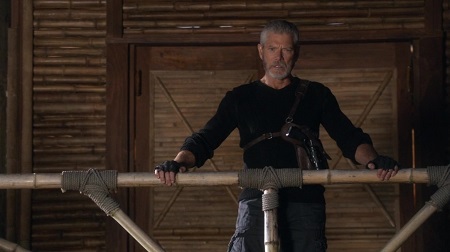
Stephen Lang as Nathaniel Taylor in Terra Nova.

What I liked about Terra Nova is the creativity in its premise. Not only was there some kind of conspiracy tied to the faction operating the time-wormhole, but events at the colony were unpredictable as well, with a renegade faction battling the established leadership. In addition, Terra Nova introduced new fictional species of dinosaurs to its prehistoric setting, something that the Jurassic Park franchise wouldn’t do for another four years!

Terra Nova ended on a very strange and tantalising cliffhanger, but with its cancellation, that story was never resolved on screen. In a half-hearted effort to reach out to fans of the series, the DVD box set came with a “make your own motion comic” feature, allowing fans to download some artwork to make up their own continuations – but by all accounts, the motion comic was pretty limited in its options. Thus the Terra Nova story ended in disappointing fashion, despite showing promise. It’s worth a watch if you’re interested in sci-fi and dinosaurs, but if you do sit down to watch the only season of the show, just be aware that its story was never finished.

Number 2: Space Precinct (1994-95)

The opening title of Space Precinct.

Gerry Anderson is renowned among a certain subset of sci-fi fans – most of whom are probably British – for creating shows like Space: 1999, as well as “supermarionation” (i.e. filmed with puppets) kids shows Thunderbirds, Stingray, and Captain Scarlet – all of which were mainstays of my childhood television viewing! In the mid-1980s, Anderson began working on the concept that would eventually become Space Precinct – a police procedural show set in space.

Space Precinct is set in the year 2040 – which means, in 2021, that we’re closer to when it was set than when it was made! Just in case you didn’t feel old enough already! Main protagonist Patrick Brogan transfers from the New York City police force to a role in the Demeter City police on the planet Altor – a kind of “space ’90s New York” complete with rampant crime and corruption!

Captain Podly – a Creon. The design of both the aliens and costumes in Space Precinct were unique and fun, and while arguably “of their time” I think they still look pretty good today!

What I appreciated about Space Precinct when I watched it in the mid-1990s was the blend of sci-fi and policing. Almost every episode could have been, with a few tweaks and a few less aliens, part of a modern-day police procedural, and that gave it a unique selling point. The show had some wonderful alien designs, realised with physical prosthetics for the most part, and the way aliens like the Creons and Tarns were created could have become iconic.

Sadly, Space Precinct only got a single season before it was cancelled – allegedly due to poor viewing figures in the United States. Sky and the BBC, who broadcast the show here in the UK, invested a decent amount of money in the project, and I remember collecting a number of action figures based on the main characters – though goodness only knows where they are now! It’s still possible to pick up the series on DVD, and if you can find it it’s well worth a watch, and easily holds up when compared to other early/mid-90s sci-fi fare. Oh, and it has a great theme tune!

Number 3: Firefly (2002)

Promo photo showing the cast of Firefly.

No list of prematurely cancelled shows would be complete without Firefly. A truly bizarre decision on the part of schedulers and executives at American broadcaster Fox saw Firefly’s first few episodes aired out of order. Though the show does have episodic elements, some storylines work far better when viewed in the correct order, and that may be one reason why the show failed to connect with audiences first time around. Rather than give it time or make another attempt, Fox cancelled the series before the first season had even concluded.

Firefly was a fascinating mix of sci-fi and western, with a far greater western emphasis than the likes of Star Trek and Star Wars. It had a fun cast of characters and the excellent writing was backed up by some beautiful world-building, leading to the world of Firefly feeling genuinely real in a way few franchises ever manage to pull off. It was such a shame that it didn’t get a fair shake from its broadcaster and original audience.

Nathan Fillion as Mal in Firefly.

I only encountered the series a couple of years after it went off the air, when a colleague recommended it to me. Like many folks, I discovered Firefly thanks to the DVD box set, and even though I knew going in that the series had no ending, it was still disappointing to reach the final episode and have to leave Mal and his crew with no conclusion.

As you may know, however, a fan campaign succeeded in reviving Firefly for a one-off film. 2005’s Serenity wrapped up the story in a bittersweet way. Considering the original plan was for a seven-season run, one season plus a feature film still leaves me feeling short-changed, even if the film was a solid conclusion to the original characters’ stories. So far, the world of Firefly has never been revisited – but I truly feel there’s scope to do so. A spin-off or a show set in the same universe would make for a wonderful addition to Disney+ – and I believe that The Walt Disney Company will own the rights to the show following their acquisition of large parts of Fox. Will it ever happen? Doubtful, but a fan can dream!

Number 4: Star Trek: Enterprise (2001-05)

The Season 1 cast of Star Trek: Enterprise.

It wouldn’t be one of my lists without at least some Star Trek, right? Unlike other entries on this list, Enterprise managed a decent run at four full seasons and just shy of 100 episodes. And also unlike the other shows we’ve talked about, I actually fully understand the decision to cancel it. By 2005, Star Trek had been in continuous production for almost twenty years – longer, if we trace production back to the films as well as television shows. And there was a sense that audiences were beginning to get burnt out after four television shows and six films.

Enterprise had been threatened with cancellation going back to at least its second season, but had managed to survive two prior cancellation scares. However, its fourth season would turn out to be its last. Because we’ve subsequently learned about potential storylines for the unproduced Season 5, I think Enterprise warrants a place on this list – because it sounds like a season of television I’d have loved to see!

The NX-01 Enterprise.

According to some of the production staff who have been interviewed in the years since Enterprise went off the air, Season 5 would have focused on the Earth-Romulan War, a conflict first mentioned in The Original Series. And if we look at some of the events in Season 4, notably the trio of episodes The Forge, Awakening, and Kir’Shara, we can see what could be argued to be the beginnings of a Romulan storyline in the show.

I’ve explained previously that I wasn’t a huge Enterprise fan during its original run, only tuning in sporadically. But despite that, Enterprise’s cancellation struck a raw nerve in 2005, and it seemed for a time that Star Trek was dead and never coming back. Ultimately, though, Enterprise being cancelled led to a reimagining of the franchise, culminating in Discovery, Picard, and the other shows and films we’re enjoying currently. So while I can say I regret not seeing this unproduced Earth-Romulan War story in Season 5 of Enterprise, things worked out alright for Star Trek in the end!

Number 5: FlashForward (2009-10)

Title card for FlashForward.

FlashForward had a unique premise, one which took sci-fi and time travel concepts but mixed them up in a way I had never really seen before. The basic premise was that practically everyone on Earth lost consciousness at the same moment and experienced the titular “flash forward” – with everyone seeing what appeared to be a vision of their lives around six months in the future. The show follows a team of FBI agents as they try to unravel the mysterious event.

I’d really never seen anything quite like FlashForward, which I watched at the behest of my partner at the time. We got very into the series when it was running, and we were both disappointed to learn it had been cancelled. The first and only season of the show ended on a cliffhanger, with a second “flash forward” event taking place.

Peyton List in FlashForward.

FlashForward had a great cast, including John Cho (Sulu in the Kelvin films) and Peyton List (Rizzo in Picard Season 1). It was a well-financed production with great special effects and set designs to compliment its exciting premise, and felt like a show that was headed for success. At the time, around the turn of the last decade, shows like Fringe and Lost were showing that sci-fi shows with different and unique settings could be a success – but sadly, FlashForward was only given a single season.

Initially a ratings hit for network ABC, FlashForward saw a big drop in viewership as its season rolled on, and its this decline that led to it being axed. Unfortunately the story was already set and the final episodes had already been filmed, meaning there was no way to conclude the story.

So that’s it. Five shows that ended too soon to stand in contrast to the other list of five shows that outstayed their welcome!

Season 33 of The Simpsons is coming up later this year, while most of the shows listed above only managed one season. Life is so unfair sometimes!

Though it’s always better for a series to end on a high note leaving fans clamouring for more, rather than running too long and seeing a decline, the entries on this list were cancelled prematurely. Television executives always seem very quick to pull the plug on an underperforming series, even when there seems to be genuine potential for a revival.

Most television shows take at least a full season to establish themselves. It takes time for actors to get to know their co-stars, for audiences to familiarise themselves with aspects of the story and setting, and thus it’s often not until a show hits its second or even third season before everything falls into place. Some executives don’t allow that to happen, which is a shame. And sadly we’ve begun to see this attitude spill over to streaming services, with Netflix in particular killing off several of its own shows while they were still very popular with fans. Hopefully it’s a trend that will decline as audiences find new ways to access entertainment and media – but I’m not holding my breath!

I enjoyed all of the shows on this list, but sadly that enjoyment is tinged with at least a little disappointment at the stories we never got to see, or the mysteries left unresolved. While I can heartily recommend all five, that recommendation has to come with a caveat as a result of their being cut short.

All titles listed above are the copyright of their respective network, broadcaster, studio, and/or distributor. This article contains the thoughts and opinions of one person only and is not intended to cause any offence.
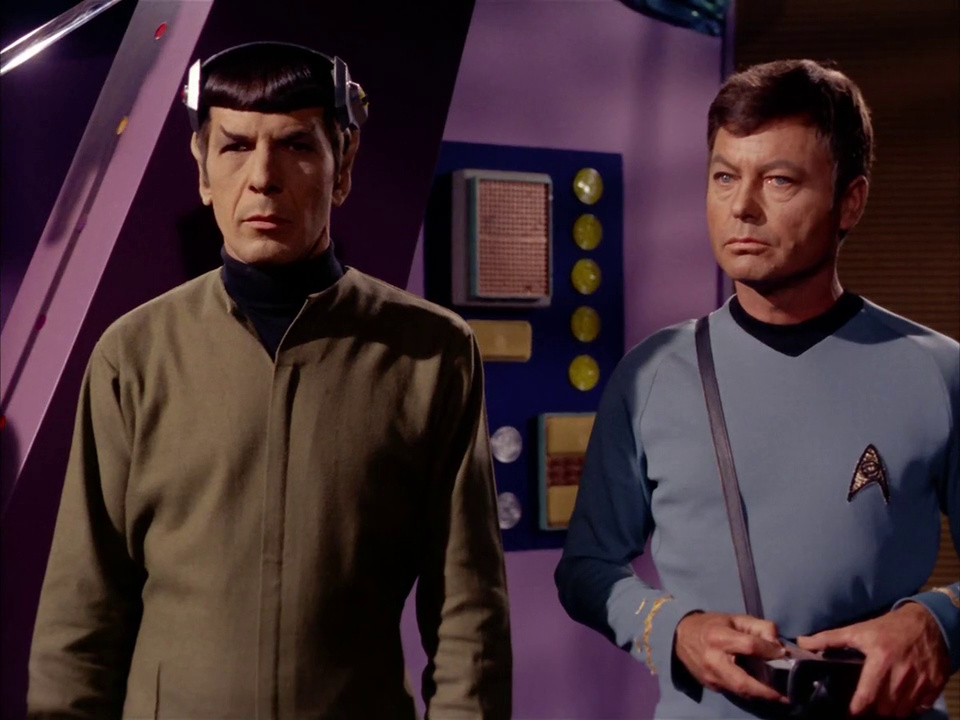
Will we ever see the Suliban or Xindi return?

Spoiler Warning: There are spoilers ahead for Star Trek: Enterprise, Star Trek: Discovery, and for other iterations of the franchise.

Star Trek: Enterprise is the only series in the franchise to be set in the 22nd Century. As such, it exists semi-independently, with very few opportunities for characters, factions, themes, or storylines to cross over and appear in newer Star Trek projects. As a prequel, many of the characters and events that debuted in Enterprise were not mentioned or referenced in shows that supposedly took place years later – as those storylines had not yet been conceived.

Enterprise thus exists in a strange place in Star Trek’s broader canon. There was a brief mention of Captain Archer in both Season 1 of Discovery and the 2009 film Star Trek, but both were little more than blink-and-you’ll-miss-it affairs.

Captain Archer’s name was briefly seen on a monitor in the Discovery Season 1 episode Choose Your Pain.

I’ve written about this phenomenon before in relation to Star Wars, where I termed it the “prequel problem.” Introducing wholly new story elements in a prequel is a risky storytelling strategy, as not only might it adversely impact the original work (or franchise, in this case) but it could also cut off the prequel in terms of story, isolating it and making connections with the original work difficult.

While Enterprise managed to avoid most of the pitfalls that befell the Star Wars prequel trilogy, one area where I feel the “prequel problem” is noticeable is in terms of two of the main antagonist factions the show introduced: the Suliban and the Xindi.

A Suliban…
…and two of the five extant Xindi races.

Both factions played significant roles in Enterprise across its first three seasons in particular. The Xindi, it could be argued, became one of the key driving forces in the expansion of Starfleet, leading to early deep-space exploration and allowing Starfleet to hone many of the skills and technologies it would use in future missions of exploration and discovery.

The attack by the Xindi on Earth was also a significant moment, one which history should preserve for future generations of Starfleet officers and Federation citizens. While some of the events of the Temporal Cold War (or Temporal Wars, as Discovery called them) may have arguably been classified, the existence of the Suliban clearly was not, and both factions could – and almost certainly should – still be around in the 23rd, 24th, and 32nd Centuries.

The Xindi weapon-probe which attacked Earth.

Setting aside the obvious production-side reason that the Suliban and Xindi were created for Enterprise years after The Original Series and The Next Generation went off the air, in order to answer my question of whether we’ll ever see either return we need to consider possible reasons for their absence. In short, is there anything we could point to from an in-universe point of view to indicate why these major factions would have simply disappeared by the 23rd or 24th Centuries?

There are many factions and races seen in Star Trek that have only made a single appearance in the franchise so far, including many that could easily be revisited. The First Federation, encountered in The Original Series Season 1 episode The Corbomite Maneuver, are one example, as are the Sheliak, from The Next Generation Season 3 episode The Ensigns of Command. While we know the Milky Way galaxy is populated by a large number of alien races, some simply choose not to have much contact with the Federation.

The First Federation appeared once in The Original Series and have yet to return to Star Trek.

Location is an issue in this case, though. Enterprise depicted Earth’s first major mission of exploration, and the races encountered in the show – presumably including both the Xindi and Suliban – can’t have been located that far away (relatively speaking). The NX-01 Enterprise had a maximum speed of warp 5, limiting its possible range.

Star Trek has kept many locations and their distances from one another deliberately vague to allow for maximum storytelling leeway, and that’s probably no bad thing. I don’t want to get into the weeds on just this one point, but in short what I’m trying to say is that both the Suliban and Xindi are likely to be much closer to Earth than, for example, Bajor or Talos IV.

The planet Talos IV – a long way from Earth.

We’ve never seen it suggested that the Suliban ever joined the Federation in future, but the Xindi certainly had. Xindi were known to serve in Starfleet by the 26th Century – according to the time-travelling Crewman Daniels – and this further suggests that Federation-Xindi relations existed and grew over the years, even if they didn’t officially join up until centuries later.

In the aftermath of their conflicts with Earth, both of which were due to external manipulation by time travelling factions, it’s possible that both the Suliban and Xindi simply chose to cut off all contact, isolating themselves and maintaining no relationship with the Federation, and this is arguably the most likely in-universe explanation for the lack of appearances in the 23rd and 24th Centuries.

The Suliban Helix – their mid-22nd Century base.

However, it’s still possible that there were accidental encounters out in space, or that the Federation pursued a policy of attempting to reestablish contact and diplomatic relations behind the scenes, even if those attempts were rebuffed. Discovery’s Season 1 premiere gives us an interesting glimpse at how Starfleet handled the reappearance of a faction they had no contact with – let’s hope that second contact went better with the Suliban or Xindi than it did with the Klingons!

Bringing either the Suliban or Xindi into modern Star Trek would be a huge way to connect the ongoing franchise back to Enterprise in a way that hasn’t yet been attempted. I think it’s absolutely worth doing for that reason alone, and in a way, just as Discovery did with the Klingons, the two factions could be changed to fit the needs of a new story.

Degra, a member of the Xindi Council in the mid-22nd Century.

In fact, there’s arguably far greater scope to reimagine both the Suliban and Xindi than there ever was with the Klingons! The Klingons had been thoroughly established across fifty years of Star Trek before Discovery came along, and while the show managed some aesthetic changes (I genuinely loved the ancient Egyptian influence in parts of the Discovery redesign) it was constrained by both past and future depictions of the Klingon Empire. There are two huge reasons why the Suliban and Xindi don’t have similar constraints.

The first is that both the Suliban and Xindi were only seen in the 22nd Century. Depending on which series they were to reappear in, there’s been either a century, two-and-a-half centuries, or an entire millennium for their cultures to have changed, allowing the writers of modern Star Trek to adapt either faction to a far greater degree than the writers of Discovery Season 1 could with the Klingons.

The Klingon redesign was controversial when Discovery made its debut.

Secondly, this will be our first time seeing either faction free of the manipulation of time travelling villains. The changes made by interference in the timeline to both the Suliban and Xindi is impossible to overstate, and after finally freeing themselves from their time travelling benefactors, we simply don’t know what position either faction would be in.

Both of these reasons mean that, in my opinion at least, there’s a lot of potential in both the Suliban and Xindi if they did return. Since we know that the Xindi joined the Federation, perhaps Discovery Season 4 could bring back at least one Xindi character in the 32nd Century, establishing that the Xindi remained loyal even in the aftermath of the Burn.

Daniels explained to Captain Archer that the Xindi joined the Federation by the 26th Century.

The Suliban are more complicated, and could make for a return either as an antagonist or ally of the Federation, depending on which way the writers and producers wanted to take things. There’s no proof that the Suliban would simply become friendly toward the Federation and Earth, even after Silik’s death, and if they had withdrawn and cut off ties as I suggested above, they may have continued to have a burning hatred of Earth and the Federation.

Strange New Worlds could see the return of the Suliban, perhaps through the kind of deep space encounter that I mentioned. If such a story makes clear that it’s the first time anyone from the Federation has seen a Suliban in roughly 100 years, this would go some way to closing the hole their absence in the 23rd and 24th Centuries generated.

What might the Suliban be like a century or a millennium after we last met them?

I could see Pike trying hard to establish some kind of diplomatic ties with the Suliban, only to see his efforts fail and the Suliban attacking the Enterprise. A skirmish like this wouldn’t lead to a larger conflict necessarily, but it would again confirm that the Suliban remained isolated and unfriendly well into the 23rd Century.

Discovery, as mentioned above, could bring back the Xindi. While we certainly could see them on friendly terms with the Federation, we could also see either the Suliban or Xindi looking to exact revenge for the Burn – an event I’m sure at least someone blames the Federation for!

A Xindi-Aquatic.

Given that Enterprise is less well-remembered than the Star Trek shows of the 1990s, perhaps we won’t see a major tie-in any time soon. There have been a couple of name-drops as mentioned, with the Suliban being mentioned once in Lower Decks. But so far, no major connection has been made. While we can say that the setting of modern Star Trek shows precludes all but a few major character crossovers, I think the absence of major factions like the Suliban and Xindi is more obvious, and at the very least, establishing an in-universe reason for why they disappeared after the mid-22nd Century would be worth doing.

Both factions have interesting elements that could be explored. The Suliban – or at least, some individuals – had undergone extensive genetic engineering at the behest of someone from the future, and the impact of that genetic engineering on Suliban society could be explored. Did they, as their one reference in Lower Decks seemed to hint at, retain some of their abilities, like shape-shifting? If so, did those traits get passed down to future generations? What are the consequences of their involvement in the Temporal Wars and their fight with Earth?

Hardly anything from Enterprise has appeared in modern Star Trek… yet.

The Xindi are not a single species. They are, in fact, five different species that evolved together on one planet. A sixth species had been wiped out by the mid-22nd Century. In a way, the Xindi could be a microcosm of the Federation – different species working together. There’s potential for the Xindi to be an analogy for real-world problems of different races and groups working together, and thus the faction presents a way for Star Trek to do something it’s always done: use its sci-fi setting to look at real-world issues.

I would make the argument that there are good reasons to bring back either faction. Not only are they relatively blank slates – getting blanker the further into the future their reappearances end up being – but bringing them into a current Star Trek project would connect back to Enterprise, something which hasn’t been done since Star Trek returned to the small screen almost four years ago.

Discovery had opportunities in its first two seasons to make reference to either the Suliban or Xindi – or other factions or events from Enterprise – but failed to do so in any significant way. With Strange New Worlds (and possibly the Section 31 series) picking up the baton for the 23rd Century, it perhaps makes arguably the most sense to bring them back there. But I could also see it being possible for an appearance in Picard, Discovery, or even Lower Decks or Prodigy. In short, there are many ways either faction could come back.

Whether the Suliban or Xindi ever will come back, though… well, that’s up to the creative team in charge of Star Trek!

Star Trek: Enterprise Seasons 1-4 are available to stream now on Paramount+ in the United States and other territories where the service is available. Further international streaming is available via Netflix. The series is available on DVD and Blu-ray too. The Star Trek franchise – including Enterprise and all other properties mentioned above – is the copyright of ViacomCBS. This article contains the thoughts and opinions of one person only and is not intended to cause any offence.
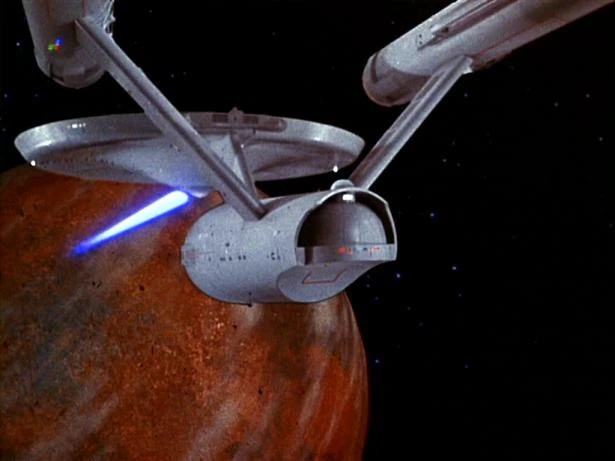
Five secondary characters from Star Trek’s past that I’d bring back

Spoiler Warning: There are spoilers ahead for Star Trek: Picard Season 1, Star Trek: Lower Decks Season 1, Star Trek: Discovery Seasons 1-3, and the casting of Star Trek: Prodigy. There are further spoilers for older iterations of the Star Trek franchise.

A few days ago I took you through a short list of five main characters from past iterations of Star Trek that I’d love to see come back. This time, in a similar vein we’re going to look at five secondary or recurring characters that likewise could make for interesting returns to the franchise. Though most Star Trek shows have primarily focused on a main cast of characters, every series to date has featured at least one or two recurring characters as well.

For this list, I’m counting characters who appeared on more than one occasion – not one-off guest stars. And as with my previous list on this topic, these are characters I’d like to see return to the franchise in a general sense, not characters I’m predicting will appear in any specific upcoming show or film.

As always, I have no “insider information!” This is purely for fun and a chance to highlight some of these characters, as well as speculate about what their futures (or pasts) might be like beyond what we saw of them in their original appearances.

Number 1: Shran

We don’t know for sure how long Andorians live, but it’s at least a possibility that Shran – who appeared in Enterprise as an antagonist and later ally to Captain Archer – could still be alive in the 23rd Century. If he is he’d be well over 100 years old, but that doesn’t necessarily count against characters in Star Trek!

Jeffrey Combs played Shran, and also played recurring characters Brunt and Weyoun on Deep Space Nine. As someone who has close ties to the franchise, it would be wonderful to bring him back. It was amazing to hear JG Hertzler’s voice in Lower Decks last year, and it would be amazing to welcome back Jeffrey Combs as well.

Shran offers the Star Trek franchise an opportunity to tie in Enterprise in a significant way. At the moment, Enterprise is very much an outlier in the Star Trek canon; cut off all on its own in the 22nd Century. Despite there being opportunities in the three films and two seasons of television set in the 23rd Century, only the briefest references to Enterprise have been made since it went off the air in 2005.

Strange New Worlds is the prime candidate for Shran to reappear, but if the untitled Section 31 series uses a 23rd Century setting, he could potentially appear there as well. Shran was depicted primarily as a soldier, but the passage of time could have softened that side of him, and I would love to see him occupy a less-aggressive role, perhaps as a Federation ambassador. However, if there were a story featuring the Andorians in a major way, we could certainly see him included there as well.

Number 2: Garak

We got to know Garak very well across the latter part of Deep Space Nine, and his backstory as a spy was given plenty of attention. What we don’t know, of course, is what came next – what happened to Garak after the Dominion War was over?

Sooner or later, I hope Star Trek takes us back to Bajor and Cardassia in a major way, looking at the aftermath of that conflict. I know that the Dominion War wasn’t wildly popular with everyone – some of my Trekkie friends regard it as the worst part of ’90s Star Trek! But it was a major event in the fictional history of the franchise, one which seriously impacted the Federation. Exploring its aftermath, and looking at how the Federation managed to rebuild, would be worth doing.

Garak was last seen on Cardassia Prime at the end of the Dominion War. With Damar dead and the Dominion withdrawing, it’s possible he would have been in some kind of leadership role, at least temporarily. His years living with the Federation on DS9 would have put him in a unique position to liaise between Cardassia and the Federation alliance.

However, I don’t think Garak would have necessarily stayed in a leadership position. As a former agent of the Obsidian Order he represents Cardassia’s past – an empire governed from the shadows. Having fought hard to overthrow their Dominion oppressors, the Cardassians may have wanted to look to civilian leadership. I doubt Garak would have been re-exiled or returned to DS9, but may have gone into quiet retirement instead.

Number 3: Morn

Morn was really just a background character in Deep Space Nine, but the fun alien design was unique and made him instantly recognisable. As a result he became a somewhat ironic fan favourite, and ultimately got his own episode in Season 6: Who Mourns for Morn? Though he never spoke a line in the series, Morn was a significant character at points, and during the Dominion War smuggled information to the Federation from the occupied station, allowing for the success of Operation Return.

In at least one future timeline, Morn took over Quark’s bar, so perhaps a story that revisited DS9 could see him in that role. If Quark’s is still around, perhaps Morn is simply seen there as a regular patron – he appeared to be semi-retired, after all. Even if a return to DS9 simply saw him in his familiar background role, that would be good enough!

Who Mourns for Morn already explained a lot of his backstory, so there really isn’t a lot of room to go into more detail in that regard. A story that brought back almost any of the Deep Space Nine cast could include Morn, though, perhaps as a trusted confidante. With Picard and the crew of La Sirena operating outside of Starfleet, if they found themselves in Bajoran space perhaps they’d need someone like Morn – he seems like the type who could be very helpful at flying under the radar!

Maybe this would completely ruin things, but I would dearly love to see Morn speak if he did return. Even a single line of dialogue would be more than enough! I’m sure some fans will scream and say “no! Leave Morn alone!” but I think it could be a really sweet moment if done well. If we did return to DS9, seeing Morn sitting on his usual barstool would feel like a homecoming of sorts – almost as though no time had passed.

Number 4: Naomi Wildman

Naomi Wildman made 19 appearances across Voyager, the majority of which came in Seasons 5 and 6. The show tried to explore the idea of her being the only child on a ship full of adults, but only really managed to land that kind of story once – in the episode Once Upon A Time. The introduction of Icheb and the other ex-Borg children potentially gave Naomi playmates, but we never truly saw much of this. And on at least one occasion, Naomi was not included in a story that focused on the Borg children – the episode The Haunting of Deck Twelve.

As a character who quite literally grew up in space, and aboard the lost USS Voyager no less, Naomi may have a rather unique perspective after growing up. How did she react to Voyager’s return to Earth – which would have happened when she was around six years old? In at least one future timeline she’d joined Starfleet, but whether she’d do so in the prime timeline is unknown.

Naomi had a close relationship with Seven of Nine, who is currently a recurring character in Picard. She was also close with Icheb, who we know was killed a few years prior to the events of Picard. Exploring her post-Voyager relationships with those two characters could prove very interesting. If Picard Season 2 – or any future seasons of the show – spend more time with Seven, we could be reintroduced to Naomi and learn what she’s been up to.

The death of Icheb, if explored in more detail, could also be an opportunity to bring her back. Did they remain in touch after returning to the Alpha Quadrant? Icheb joined Starfleet – did Naomi join too? If so, maybe they served together before Icheb’s untimely demise. Otherwise we could see Naomi return in any story featuring main cast members from Voyager. So perhaps an appearance in Prodigy – where Captain Janeway is set to return – is on the cards?

Number 5: Jack Crusher

Jack Crusher was the deceased husband of Dr Beverly Crusher and father to Wesley Crusher. He served on the USS Stargazer under Captain Picard’s command, and that’s about all we know. He was killed during an away mission, and it was at least implied that Picard bears a degree of responsibility for that, either through something he did or didn’t do.

As a deceased character, Jack Crusher could only come back via a flashback, time-travel story, or story set in the past. But where I think there’s scope to see more of him is in Star Trek: Picard, particularly if Beverly and/or Wesley Crusher return. We could learn the circumstances of his death, and it could be a very interesting story if Jack Crusher’s death were somehow connected to some event taking place in the current Picard era.

For example, Picard, Dr Crusher, and the crew of La Sirena may have to travel to the world where Jack was killed, only to learn that the beings responsible for his death were the super-synths, the Zhat Vash, or someone else that we met in the new series. There would be something cyclical about bringing back, even if just in flashback form, Jack Crusher.

In the future timeline shown in The Next Generation’s finale, Picard had married Dr Crusher. While there was no evidence for or against that outcome in Picard Season 1, any story that explores Picard and Dr Crusher’s post-Nemesis relationship could be made to include flashbacks to Jack. He was a significant character in both of their lives, and in addition, his legacy may have been a factor in Picard and Dr Crusher never taking their relationship beyond friendship in the prime timeline. A story that took them back to his death could be interesting for both of them.

So that’s it! Five recurring or secondary characters who I believe could be welcomed back to the Star Trek franchise in some form.

This was the second part of a two-part miniseries looking at the possibility for certain characters to reappear in the franchise. It’s unlikely to be the last time we talk about such things – with so many different Star Trek projects on the go, practically anyone from the past could come back in some capacity!

Aside from those who have been definitively killed off within the prime timeline, I would argue that basically any character could return. Not all of them would be suitable for the current crop of shows, but if the franchise continues its renaissance… who knows? Maybe we’ll finally get Star Trek: Morn after all!

The Star Trek franchise – including all series mentioned above – is available to stream now on Paramount+ in the United States and other territories where the service exists, and on Netflix in the United Kingdom and elsewhere. The Star Trek franchise – including all properties mentioned above – is the copyright of ViacomCBS. This article contains the thoughts and opinions of one person only and is not intended to cause any offence.
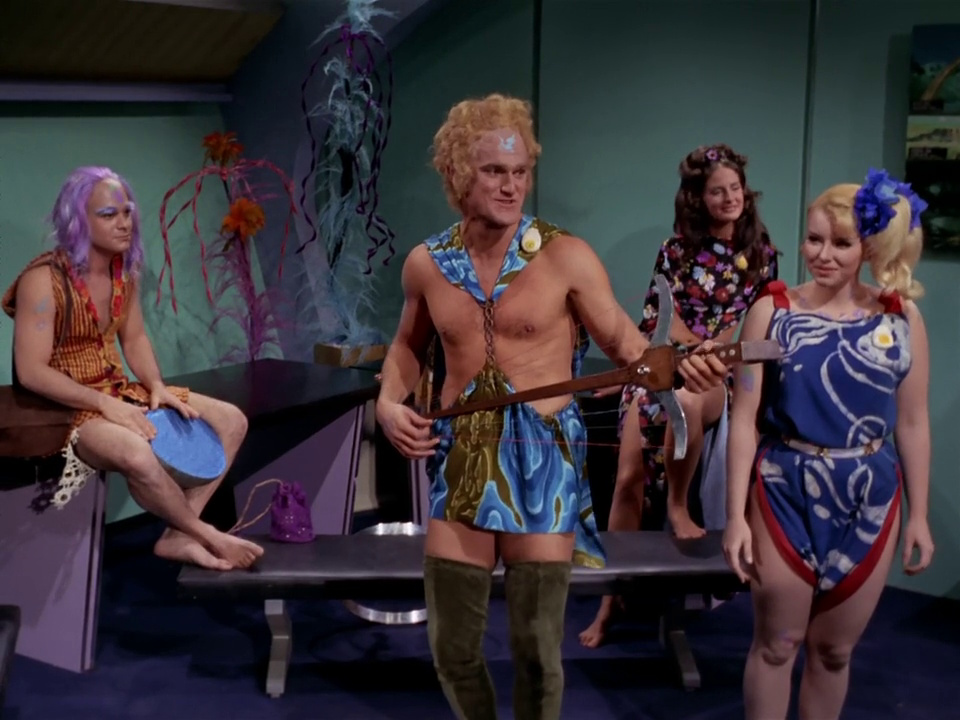
Five main characters from Star Trek’s past that I’d bring back

Spoiler Warning: There are spoilers ahead for Star Trek: Picard Season 1, Star Trek: Discovery Season 3, and for other iterations of the franchise.

This is going to be the first part of a short two-part series in which I look at a few significant characters from past iterations of Star Trek that I would love to see return. Rather than tying these characters to a specific series, film, or ongoing project, this list is more general. I’m not advocating, for example, for any of these characters to necessarily appear in Picard or Strange New Worlds, but rather to return to the franchise at some point, when a suitable story could be written.

The Original Series Season 2 cast (without George Takei).

It goes without saying that practically every major character (at least those who weren’t killed off) could be brought back in some capacity, and with the franchise continuing to expand I think it’s increasingly likely that we’ll get some significant moments where characters reappear. For the sake of this list I’m not counting characters who are starring in shows that are currently in production, so I’ll be limited to characters from The Original Series, The Next Generation, Deep Space Nine, Voyager, Enterprise, and the films.

The Next Generation cast in Season 4 – plus Whoopi Goldberg as Guinan.

By my count there are 42 characters across those five series that we could call “major” – i.e. they regularly had their names listed in the main credits, and weren’t considered guest stars or just recurring secondary characters. This time I’m picking on just five, and my usual caveat applies: I don’t have any “insider information!” This is just a short list of characters that I think could be fun to bring back in some capacity, nothing more.

The Deep Space Nine cast in Season 4.

Of the 42 characters that occupied major starring roles in at least one season of the five aforementioned shows, I’m excluding five: James T Kirk from The Original Series, Data and Tasha Yar from The Next Generation, Jadzia Dax from Deep Space Nine, and Trip Tucker from Enterprise. All the exclusions are for the same reason: those characters have died in-universe. While there could be convoluted ways to bring back alternate versions (such as we saw with Sela, for instance) the original character can’t return after death.

The Season 2 cast of Voyager.

Though it may be controversial, I don’t believe that the death of an actor necessarily excludes a character from returning. The Kelvin films recast the entire main cast of The Original Series, and Star Trek: Picard recently recast a couple of legacy characters as well. So characters whose primary actors have passed away are still in contention.

Now that we’ve laid down the ground rules, let’s take a look at my choices.

Number 1: Chakotay

This one is inspired by the return of Seven of Nine in Season 1 of Picard. I’ve written about this before, but Seven’s return to Star Trek was cathartic for me, because the passage of time allowed her to be a very different, more emotional, and much more human character than she ever was in Voyager. Seven was sometimes annoying and difficult to root for, especially toward the end of Voyager’s run, and basically the reason was that she’d always seem to “reset” after learning what should have been a big and important lesson in how to be human. It made her character bland and repetitive. But we’re not here to talk about Seven of Nine!

Chakotay didn’t have a lot to do in Voyager, despite being the first officer. There were a handful of episodes in which he was given a storyline, but a lot of the time he was just a presence, someone there for other characters to bounce ideas off or to tell Captain Janeway he didn’t recommend she do something we all knew she’d end up doing anyway. In short, bringing back Chakotay is something I would see as a chance for his character to get a Seven of Nine-like “redemption,” with some genuine development and a significant storyline.

One thing Voyager touched on briefly but never really explored was the way Chakotay felt about the deaths of the Maquis. The episode Extreme Risk focused on B’Elanna as she struggled to come to terms with what happened to their former colleagues, but Chakotay never really got a similar moment. As part of a larger story looking at the aftermath of the Dominion War, learning what happened to the Maquis’ colonies in the aftermath of that conflict could include Chakotay, as one of those worlds was his home.

We could also learn that Chakotay was allowed to remain in Starfleet following Voyager’s return to the Alpha Quadrant, and may even have been given his own command. Given that Voyager quite quickly dropped the Maquis angle, I’m not sure this is the route I’d go down because it doesn’t seem like it offers a lot of development or growth potential for his character, but it’s a possibility.

The final few episodes of Voyager’s seventh season saw a burgeoning relationship building between Chakotay and Seven of Nine. With Seven now a recurring character in Picard, and with the possibility of her entering into a relationship with main character Raffi, we could potentially explore what happened between Seven and Chakotay. Voyager’s finale certainly suggested that he had strong feelings for her, even after her death in that timeline.

Unfortunately, for reasons that aren’t especially clear, the producers of Voyager lost interest in – or didn’t know what to do with – the “one ship, two crews” concept that had been part of the show’s inception. Chakotay and the rest of the Maquis were absorbed into the crew by midway through Season 1, and while lip service was paid to Chakotay’s Maquis past at numerous points, I think that’s one aspect of his background that would be ripe for exploration. In any 24th or early 25th Century story that looked at Bajor, Cardassia, and the aftermath of the Dominion War, I’d spend at least an episode or two considering the legacy of the Maquis, and Chakotay could play a major role in such a story.

Number 2: T’Pol

I’ve mentioned T’Pol before in relation to Strange New Worlds, and that series is certainly one where we could see her crop up. Because of Enterprise’s place in the timeline, unless Star Trek plans on returning to the 22nd Century for some other story, there aren’t many characters who could realistically still be active and able to play a major role. The 23rd and 24th Centuries (as well as Discovery’s 32nd Century) are where current Star Trek projects are focused – and I have to say I think that’s the right call. Enterprise was an interesting experiment, but I see no pressing need to return to the 22nd Century at this stage.

The story I’d include T’Pol in would go something like this: she’s a senior Federation ambassador by the mid-23rd Century, and accompanies Captain Pike on a diplomatic mission. The mission would make first contact with a race we met in The Next Generation era, such as the Cardassians. We’d thus tie together all three of Star Trek’s eras in one story! I think an episode like that would be incredibly rewarding for longstanding fans of the franchise; a “love letter” to the fans.

But there are many other roles T’Pol could occupy. Having spent so long with humans during those early days of humanity striking out into space, she could prove an invaluable guide or advisor to a young Spock. Whether Spock is “the first Vulcan in Starfleet” is a point of contention without an obvious answer, but even if he wasn’t it’s clear that the Vulcans continued to operate an independent fleet into the 23rd Century, and thus Vulcans serving in Starfleet seem to have been rare. T’Pol is well-placed to be a kind of mentor to Spock for this reason.

However, both of those story concepts take T’Pol out of her usual scientific role, and perhaps a story could be devised which would be better-suited to her career as a scientist. I’m still thinking of a 23rd Century story, but one which perhaps requires high-ranking Federation scientists to work on a mystery or puzzle.

Number 3: Dr Pulaski

I’ve never met a fan of The Next Generation who likes Dr Pulaski as much as I do. I understand why she wasn’t popular with fans, replacing Dr Crusher after one season and especially because of her early run-ins with Data that amounted to anti-android bigotry. But where Dr Crusher could be fairly bland, Dr Pulaski had a really strong personality that shone through.

On another occasion we’ll talk about Dr Pulaski and how her introduction in Season 2 of The Next Generation was an attempt to shake up the new series and bring in a Dr McCoy-type character. But for now I want to consider how she could return, and what sort of role she could have.

Picard Season 1 missed an opportunity to bring back Dr Pulaski – or another medical officer from The Next Generation like Alyssa Ogawa – in the second episode. Picard receives bad news from a doctor he knew while serving aboard the USS Stargazer, Dr Benayoun. This was a new character created for Picard, and if I’d been writing it I might have chosen to bring back Dr Pulaski at this moment instead. I don’t know if that was ever suggested, because it’s well-known that actress Diana Muldaur didn’t have a great time working on The Next Generation. But it would have been neat to see!

One series that has been doing great with references to less well-known parts of canon is Lower Decks, and perhaps that means Dr Pulaski would be a good fit to return there. I don’t know if Diana Muldaur is still working, nor whether she’d be well enough or willing to reprise the role. But it was at least a little sad that Dr Pulaski was dropped in The Next Generation Season 3 with no explanation. There’s scope, I feel, to learn what came next for her – even if the character has to be recast.

Almost any medical story or story involving characters from The Next Generation Season 2 could see Dr Pulaski return, and of course Star Trek: Picard has to be the prime candidate of the shows currently in production. She could, for example, be one of the chief medical officers assigned to help the surviving ex-Borg now that they’re (presumably) under Federation protection. Or how about this: in a storyline that clearly shows how much she’s changed her attitude to synthetic life, she could be the head of a Federation medical team sent to Coppelius to help the synths. This would cement her “redemption” from her earlier interactions with Data, and would perhaps provide a suitable epilogue to her role in The Next Generation Season 2.

Number 4: Benjamin Sisko

Captain Sisko is probably the character whose return I’ve touted the most! Because of the unique nature of his disappearance in the Deep Space Nine finale – vanishing into the realm of the Bajoran Prophets – he could return literally anywhere, in any time period. The Prophets don’t experience time in the same linear manner as humans, so they could send him to a point in his future, his past, or anywhere along the Star Trek timeline.

This is why I’ve proposed Sisko as a character who could appear in Picard, Strange New Worlds, and Discovery – because he could be sent back by the Prophets at any moment in time. I would argue he would have more to do in a story set in the late 24th or early 25th Centuries than he might in the 23rd or 32nd, but in any story that brought back Bajor, Sisko could play a major role.

He could also be part of a story looking at the aftermath of the Dominion War, at Cardassian relations with the Federation, and of course at Deep Space Nine itself. I think Sisko has the potential to be a useful character too. If he joined the story right at the moment of his return to normal spacetime, he could potentially be a point-of-view character, and an excuse for a film or episode to dump a lot of exposition that could otherwise feel clunky and out-of-place. This would be done under the guise of other characters bringing Sisko up to speed on what he’s missed – and we could catch up on galactic affairs right along with him!
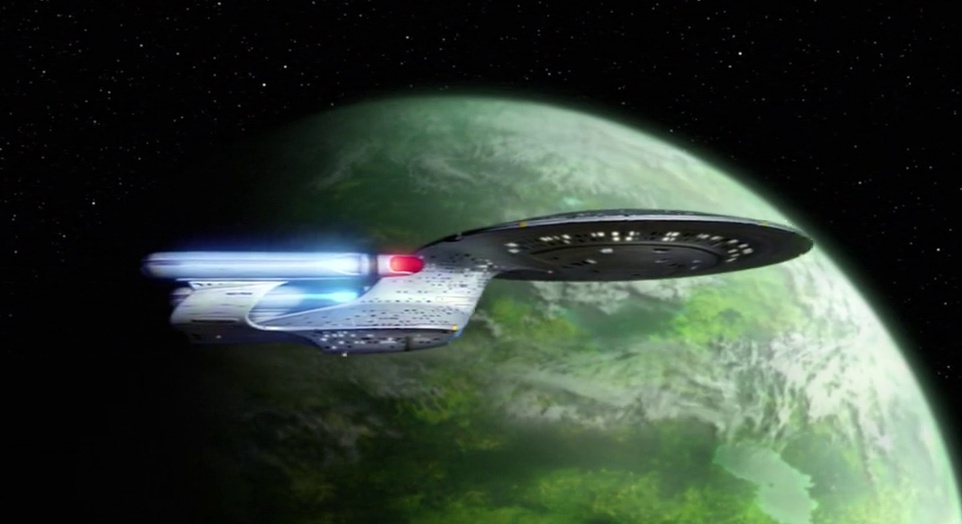
Of all the characters on this list, Sisko is the one whose story feels the most unfinished. There was almost a cliffhanger ending to his role in Deep Space Nine, with a tease that one day he’ll be coming back. Whether we’ll ever see that on screen is another matter, of course, and Avery Brooks has seemed less willing to reprise the role than some other Star Trek actors. But you never know!

Number 5: Montgomery Scott

It would be relatively easy for Scotty to crop up in Strange New Worlds as a junior engineer – or in any other 23rd Century series, for that matter. But that’s not really what I’m proposing this time. That idea has merit, and I think I included Scotty in one of my character ideas lists for Strange New Worlds. However, this time what I’m suggesting is Scotty in the 24th Century.
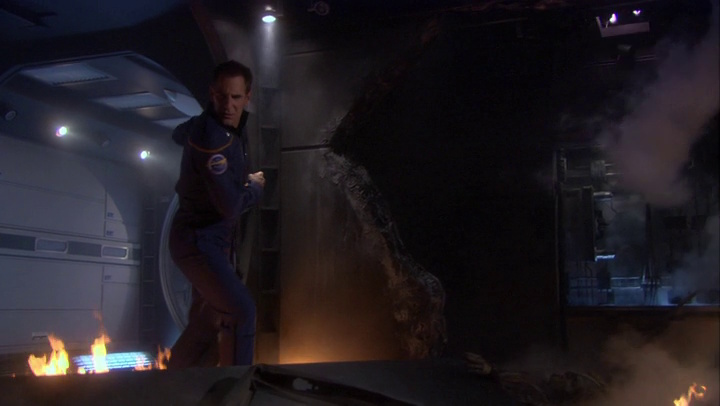
Relics, the Season 6 episode of The Next Generation, established that Scotty had been kept alive in a form of transporter stasis of his own devising for over eighty years, finally rematerializing when the crew of the Enterprise-D encountered his crashed ship. After working briefly with Geordi La Forge, Captain Picard, and others, Scotty was given a shuttle and set out to explore the new century on his own. We would later learn in 2009’s Star Trek that Scotty had gone back to work, developing a method of “transwarp beaming” that became important to the plot of that film.

After that, however, what became of Scotty is a mystery. He had initially intended to retire, so did his stint with Starfleet continue? Or did he resume his planned retirement in the 24th Century, catching up on the eight decades of galactic history that he’d missed? He reunited with Spock, apparently, and it’s at least possible he would have been able to visit the elderly Dr McCoy as well.

Scotty offers a “coming out of retirement” story, perhaps prompted by some horrible event or disaster that requires an engineering solution. We could learn, for example, that he’d worked alongside Geordi La Forge in preparing the Romulan rescue fleet, or even that he was helping to rebuild the Mars shipyards after the attack by the Zhat Vash. Those are two ideas based on events from Picard Season 1, but of course there are many, many other ways Scotty could have contributed to Starfleet and the Federation in the late 24th Century.

So that’s it… at least for now. The second part of this short series will look at five secondary or recurring characters who I also think could be fun to bring back!

With so many ongoing and upcoming Star Trek projects occupying different places in the timeline, there really is scope to bring back almost any major character, and I hope the creative team don’t feel constrained! As a Trekkie I think I’d be happy with literally any of them making an appearance, though of course it would have to make sense in-universe as well as not be offputting for casual viewers.

The cast of Enterprise during Season 1.

We mentioned the episode Relics, and I think that story manages to walk that line exceptionally well. For fans of The Original Series, Scotty’s return was an amazing treat. But for folks who weren’t familiar with the older series, his inclusion in the episode still managed to make sense. The story was well-written, and while knowing more about who Scotty was and where he’d come from certainly added to it for Trekkies, it didn’t put off casual viewers by demanding a lot of knowledge of Star Trek canon. That’s the kind of model any future episode, film, or story that brings back a character should try to emulate.

We can also point to If Memory Serves, from the second season of Discovery. That episode began with a short recap of the events of The Cage, establishing what happened to Captain Pike on Talos IV, who the Talosians were, who Vina was, and so on. By beginning an episode which features a returning character with a clip or compilation of their past Star Trek exploits, almost any character could be integrated into an ongoing production.

The Discovery Season 1 cast (without Wilson Cruz).

The Star Trek franchise has been running for over five decades, and has a huge roster of wonderful characters. The fact that there are too many to put on the list – or the fact that the list could literally include every single one – is testament to the quality of the franchise and the creative teams who’ve contributed to it over the years.

Stay tuned for the next part in this series, where I’ll look at five secondary or recurring characters who I’d also love to see come back!

The Star Trek franchise – including all series mentioned above – is available to stream now on Paramount+ in the United States and other territories where the service exists, and on Netflix in the United Kingdom and elsewhere. The Star Trek franchise – including all properties mentioned above – is the copyright of ViacomCBS. This article contains the thoughts and opinions of one person only and is not intended to cause any offence.