
Spoiler Warning: There are spoilers ahead for Star Trek: The Motion Picture and other iterations of the Star Trek franchise.
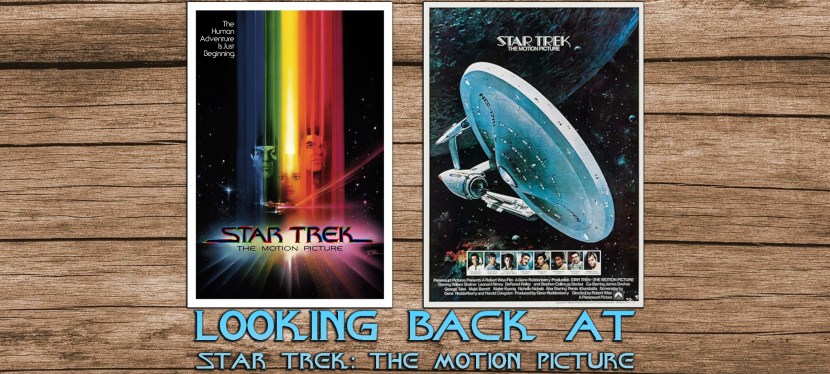
On the 7th of December 1979, ten years after going off the air (and five years since The Animated Series went off the air), Star Trek was back. Star Trek: The Motion Picture premiered, and while it has been overshadowed in many ways by its sequel, Star Trek II: The Wrath of Khan, the film was a success – albeit not an overwhelming one according to distributors and producers – and reinvigorated the franchise. Make no mistake, if it weren’t for The Motion Picture, Star Trek as we know it wouldn’t exist today – there would’ve been no Wrath of Khan, and from that there’d have been no Next Generation or any future series or film. In a very real sense, The Motion Picture paved the way for the franchise’s future, and the success Star Trek enjoys today owes a lot to this film.
The Motion Picture was a risk for Paramount Pictures. Star Trek had shown that it had a number of very vocal fans – the letter-writing campaign in 1968 to get the series renewed demonstrated this – but its wider popularity was an unknown quantity, especially on the big screen. Reruns of The Original Series had garnered a larger audience than its 1966-69 original run, but there were still question marks over whether to make a new television series or to go down the box office route.
Indeed, the project that would eventually become The Motion Picture started out life as Star Trek: Phase II, a television series that was to reunite the original cast – without Spock – for another five-year mission onboard the Enterprise. After a project called Planet of the Titans failed to get off the ground in the mid-1970s, by 1977 Phase II was officially in production. It has been said many times that the success of another 1977 project – Star Wars – is what led Gene Roddenberry and Paramount to reconsider the television series and make a film instead. While there is undoubtedly a kernel of truth to that, there were other factors at play too. The script which would eventually become The Motion Picture was originally set to be the pilot episode for Phase II but after a series of revisions and discussions between the creative team and the studio, the decision was made to enter production as a film instead, and two versions of the script were submitted – one by Gene Rodenberry and one by Harold Livingston, who’d been a producer on Phase II. Livingston’s script was chosen (by Michael Eisner – future CEO of Disney) and Star Trek: The Motion Picture was officially greenlit.
As an interesting aside, Phase II remained officially “in production” even after the decision was taken to switch focus to a film, and for much of 1977 the official line from the studio was that a series, originally set at 13 episodes, was being produced. It wasn’t until 1978 that the film would be officially announced.

So that’s a brief potted history of how it came to be. But despite making around $139 million on a budget of $46 million, Paramount considered the film a disappointment. The big risk had paid off, but not as much as they’d hoped. The expensive special effects and continued revisions to the script even during production were cited as reasons why, as was the less action-heavy, more ethereal storyline.
For me personally, it’s the lack of action and the deliberate slow pacing that gives this film something that others lack – a sense of “Star Trek-ness”. Star Trek was always into the weirder, more esoteric side of science fiction, especially prior to The Motion Picture, and this film stands alongside episodes of The Original Series as a pure science fiction work, not an action-sci fi film like The Wrath of Khan or First Contact. While some people might find its slower pace to be a grind, to me it makes it akin to watching a feature-length episode of the series, rather than just another action flick.

Because of the overwhelming popularity of The Wrath of Khan within the fanbase, The Motion Picture often gets a bad rap. People have said that “all of the odd-numbered Star Trek films are bad”, including The Motion Picture in with Search for Spock and The Final Frontier. Both of those titles have good and bad moments – the latter suffering perhaps from too much involvement from William Shatner – but to me, The Motion Picture is in a different league.
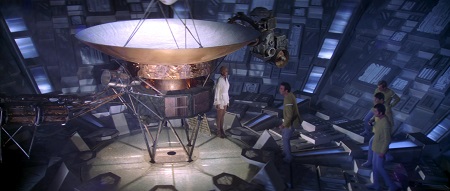
Some criticism of the film is that it feels like a two-and-a-half hour episode of The Original Series. But why should that be a criticism? The Motion Picture masterfully builds up its drama – the V’ger cloud’s attack on the Klingons, its destruction of the Epsilon IX station, and finally the death of new character Ilia all add to the stakes. While none of these are particularly dramatic, nor gory, that doesn’t detract from the threat, it heightens it. V’ger is shown to be a being of such incredible power that it can make whole fleets of starships vanish in a heartbeat. We don’t need huge explosions or a punch-out to learn this. V’ger’s power is also confirmed by the reaction of characters. So as the film progresses, we know what’s at stake.
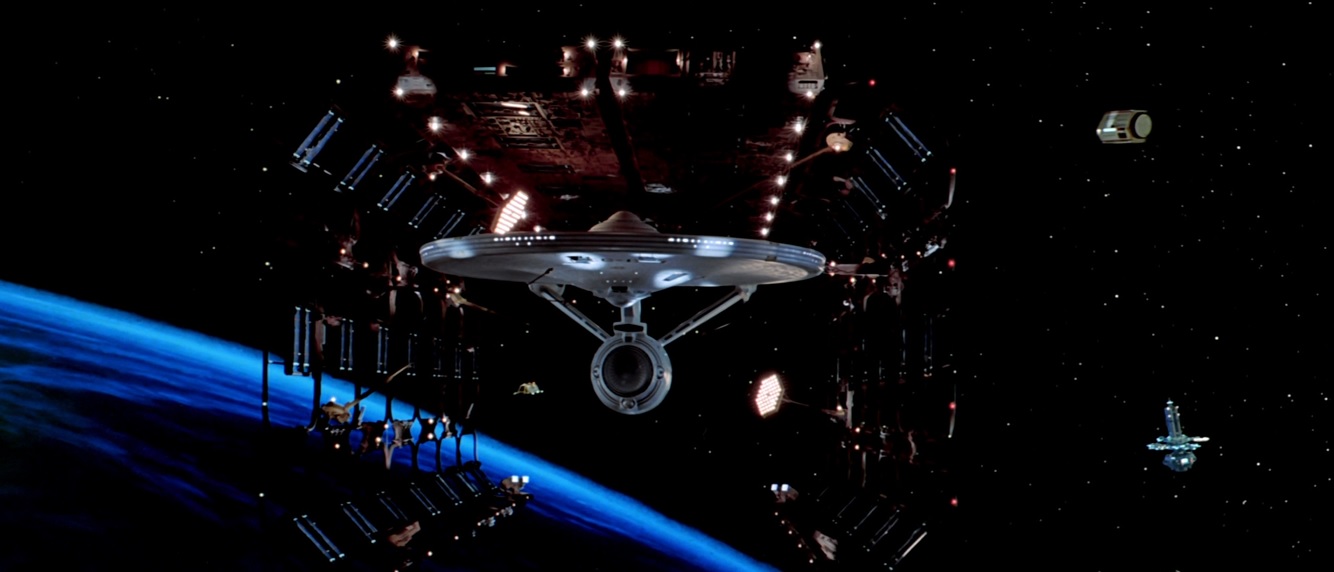
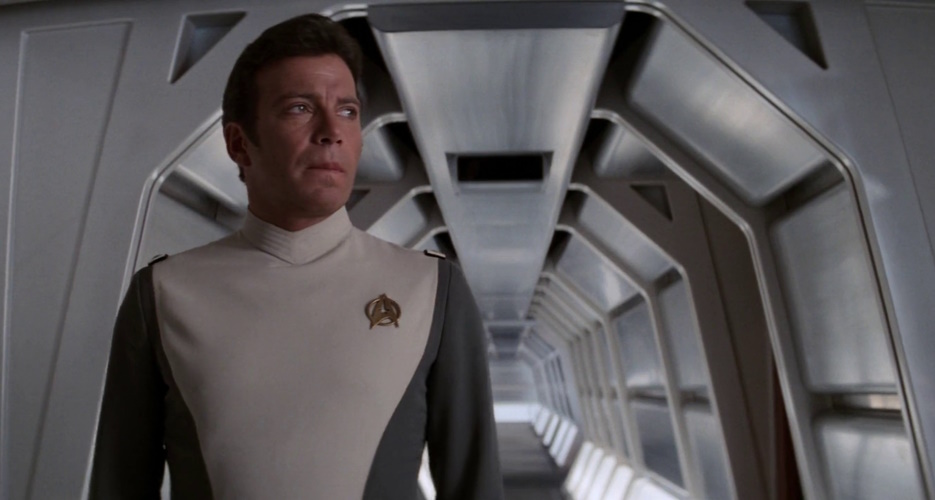
To change lanes completely, I happen to really like the aesthetic of The Motion Picture. It’s very 1970s in some ways – the orange and brown tones, and some of the uniform choices in particular, but that’s not necessarily a negative thing. Kirk’s uniform as an admiral happens to be one of my all-time favourite Star Trek uniforms. The high collar, the belted tunic, and the simple curved lines in grey and white combine with a metallic gold Starfleet insignia to make an understated yet interesting uniform. I’m not a cosplayer by any means, but if I ever were to make myself a uniform, that would be the one I’d go for. And while we’re talking about things that look great, the sweeping shot over the Enterprise when Kirk is being taken aboard by shuttlepod is absolutely perfect. Combined with an amazing score – for which composer Jerry Goldsmith was nominated for an Academy Award – the full sequence is one of the most inspiring and moving in all of Star Trek, speaking for myself as a fan. When the music ramps up right as we see the Enterprise from the front for the first time, it can be quite emotional. I could happily watch that sequence over and over again.
Many of the sets built in 1978-79 were in continuous use (albeit in modified form) right through to Enterprise‘s cancellation in 2005. Some of the reuses are quite apparent in The Next Generation, so in that sense, the design choices made in The Motion Picture carried through the next two decades of Star Trek as a franchise. The panelling and angles on corridors in particular can be seen on the Enterprise-D and the USS Voyager, and the idea of a warp core as a large upright glowing tube is also something that has carried on right through Star Trek – even cropping up in CGI form in the most recent of the Short Treks episodes. Much of what we consider to be “Star Trek” in terms of aesthetic has its roots not in 1966 but in 1979 – future productions built on what designers and artists had created here. The Next Generation and Voyager in particular owe significant parts of their design to The Motion Picture.
The storyline of The Motion Picture is certainly different from many science fiction outings. It isn’t a film about defeating and destroying an enemy, it’s a film about bridging the gulf and communicating with a new form of life. V’ger, set up to be the film’s antagonist, wanted to evolve – to merge physically with its creator. The crew of the Enterprise could’ve used that moment of weakness to attack it, and maybe even destroy it – and in a different film perhaps that would’ve been the finale. But The Motion Picture builds up to this moment, and it isn’t the death and vanquishing of a foe that we see, but communication, and ultimately the creation of new life. Klingons, Romulans, Cardassians, and the like may be fun to see on screen, but Star Trek is all about “seeking new life” – and what could be newer and more different than a hyperevolved, massively intelligent machine?
This side of Star Trek, though, has always been more of a niche product. When fans are asked about their favourite films, The Wrath of Khan and First Contact are usually somewhere up near the top, as well as episodes like The Best of Both Worlds, or DS9’s The Way of the Warrior. These are all action-heavy stories, and while Star Trek has enough room for both these and the slower-paced, thought-provoking ones, The Motion Picture falls firmly into the second category. With that comes being underrated and overlooked by fans who prefer more action-oriented stories.

When Spock describes V’ger as being little more than “a child”, he sets the stage for understanding, and from that, communication. The ultimate revelation that V’ger was, in fact, a probe of human origin was truly unexpected. The Motion Picture had an incredibly ambitious story which sought to blend these elements together. The cyclical nature of a returning spacecraft, the massive differences that almost certainly will exist between humankind and anything we might encounter in outer space, and at the heart of it all, the returning characters – not all of whom had enough to do, arguably. But the core dynamic between Kirk, Spock, and McCoy was still there. Perhaps The Motion Picture needed more fine-tuning, and perhaps its scope was too vast for a single film to properly encompass, but as a story it makes you stop and think. The galaxy isn’t just going to be humanoids, there are going to be things out there completely beyond our understanding. And the choices we make today – like probing outer space – may have consequences well into the future that we could never foresee.
As an inspirational message, I think that can’t be understated. Seeking out new life and new civilisations – the raison d’être of Starfleet – isn’t always going to be smooth sailing. But if we’re willing to look at things from a different point of view, to listen, to understand, and to communicate, we can find a way to coexist even with someone who seems to be big and threatening. I know the real world doesn’t always work that way, but Gene Roddenberry was always about showing us how humanity can be better than we are in the present day. Speaking personally, I find that aspect of The Motion Picture to be inspiring. As a work of science fiction, that’s the kind of message I admire and what I’d like to see more of on our screens.
Above all, The Motion Picture relaunched the Star Trek brand for a new decade, one which would culminate in The Next Generation and a return to television. If it weren’t for this film, Star Trek would look very different today – if it even existed at all. We can argue about which Star Trek film we like best, and at the end of the day it’s always going to be a subjective choice, but I’d definitely rank The Motion Picture highly on any list. Not just for what it did for the franchise, though that is incredibly important, but as a work of science fiction that wasn’t afraid to tell a thought-provoking story.
Star Trek: The Motion Picture is available to stream now on Paramount Plus in the United States, the United Kingdom, and other countries and territories where the platform is available. The film is also available to buy on DVD and Blu-Ray. Star Trek, Star Trek: The Motion Picture, and all other Star Trek properties mentioned above are the copyright of Paramount Global and/or Paramount Pictures. This article contains the thoughts and opinions of one person only and is not intended to cause any offence.