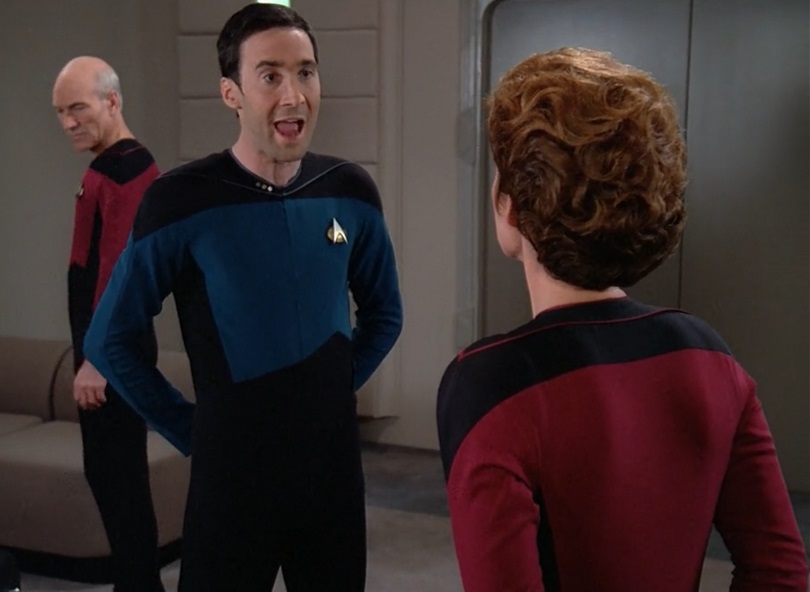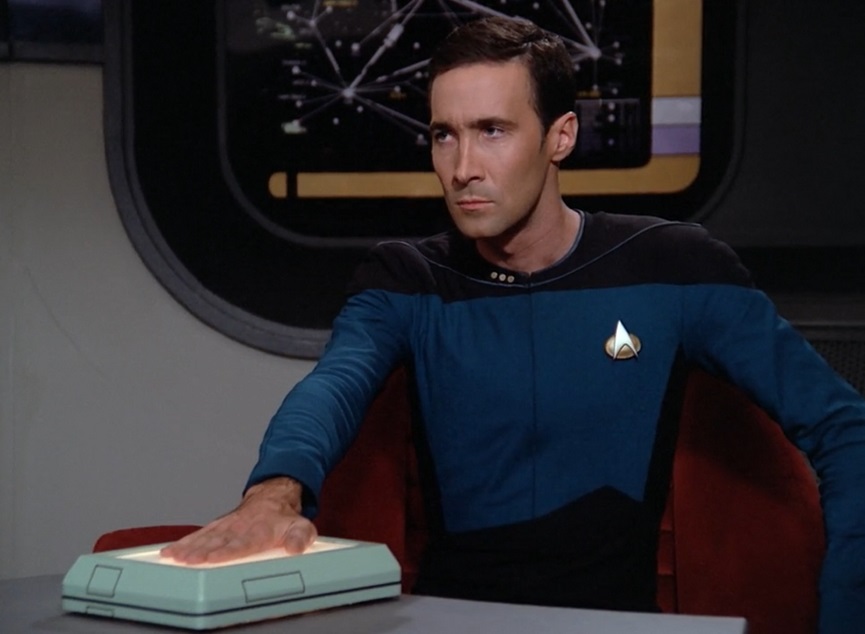
Star Trek: Picard review – Season 2, Episode 7: Monsters

Spoiler Warning: There are spoilers ahead for Star Trek: Picard Seasons 1-2. Spoilers are also present for the following Star Trek productions: The Next GenerationVoyagerFirst Contact, and Discovery.

I found Monsters to be a frustrating experience – with the odd moment of sheer brilliance. While the story edged along in incremental steps, overall this side-mission inside Picard’s mind seemed to drag just a little too long. That being said, when the amateur Freudian psychoanalysis let up, we got some interesting moments with Seven of Nine and Raffi as they hunted for Dr Jurati, and from Picard and Guinan as the episode drew to a close.

Despite having mixed feelings about the season overall – particularly its time travel story – some of the promotional images released for Monsters looked intriguing, so after a couple of weeks where I’d been uninterested to the point of near-apathy in Picard, this time around I managed to work up some excitement and interest for the latest outing. To summarise, I guess I’d say that Monsters didn’t deliver what I’d hoped for, and the show’s 21st Century setting continues to be a drag, but there were some genuinely insightful and interesting moments, especially as the episode neared its end.
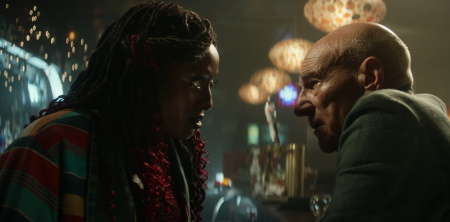
The final few minutes of the episode were the best.

As last week’s episode drew to a close, I felt that there was potential in a story that explored some of Picard’s psyche, and that seemed to be borne out by a couple of the promotional images released before the episode aired. These pictures showed Picard sitting aboard a 24th Century vessel, meeting with a new character who was wearing what looked like a new Starfleet uniform variant. Based on those pictures and that setup, I was hopeful that a season which has been content to stay in the modern-day for the most part might actually show us a little more of Star Trek’s future – the part that I find a thousand times more interesting, exciting, and inspiring.

Unfortunately we didn’t really get any of that – at least, not in the way I had hoped. We returned to the château of Picard’s childhood, and spent a lot of time running around in the dungeons while monsters from low-budget horror films chased after Picard, his mother, and later Tallinn. I think the problem with this story is more fundamental than just its B-movie horror aesthetic, though. If a decision is made to psychoanalyse a character in this fashion, diving deeply into their subconscious mind and buried memories, by the time we reach the end we should feel like we learned something – anything, really – that could inform and educate us about why the character behaves a certain way or has a particular personality trait. We came to the end of this coma-dream with Picard awakening… and I don’t feel like I understand him any better than I did before watching this entire drawn-out storyline.

Tallinn was attacked by one of the B-movie monsters.

We’ve spent a lot of time with Picard over the past thirty-five years, and in that time we’ve seen him go through many significant and traumatic events. There are more things from his past that we’ve only heard about in passing; lines of dialogue in The Next Generation that informed a story or gave us a tidbit of information about the man and his personal history. This episode, and the framework it used, could have explored any of those. Just off the top of my head, we could’ve seen Picard wrangle with the death of Jack Crusher – husband of Beverly Crusher – during his time in command of the Stargazer. We could’ve seen him dealing with the trauma of Tasha Yar’s death, or the loss of his family in a fire at the château that we heard about in Generations.

Instead, Monsters chose to introduce a wholly new backstory element to Picard’s character, giving him a moment in his youth in which he was traumatised by being trapped in the passageways below his family’s château, as well as his mother’s mental health condition. I can deal with the fact that this seems to clash with depictions of Picard’s mother in The Next Generation; the two shows are very different, and while there’s definitely a major difference in tone, there’s nothing that stands out to me as being wholly contradictory. But what I find difficult to get on board with is the fact that this entire sequence feels meaningless to the story overall – we didn’t learn anything significant about Picard, nor did we unlock anything that might be key to understanding the story of the season.
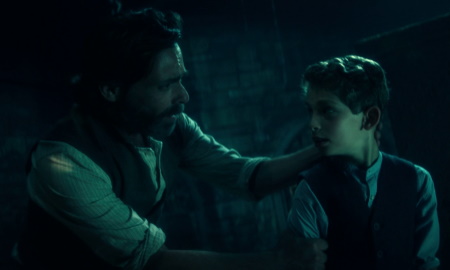
A faded memory from Picard’s youth.

I don’t recall it ever being mentioned prior to Monsters that Picard had a fear of confined spaces. I can recall many occasions in the past where we’d seen him in the Jeffries’ tubes, for example, and that never seemed to bother him. If it had been mentioned even an episode or two ago we could’ve at least said that Season 2 was trying to set it up, but even that didn’t happen, so I find it being brought up here particularly odd. Not only that, but this supposed claustrophobia didn’t even feature in a big way in the story at all – there was no moment where Picard was in a confined space either in reality, in his mind, nor in his memories. The dungeon was certainly a frightening place, but young Picard seemed to be trapped in a pretty large room.

Obviously trauma and the development of phobias is a more complicated thing than that, and I get that. But even so, this attempt to depict Picard’s supposed trauma feels weak. More importantly, though, it doesn’t seem to have accomplished much of anything, certainly not enough to justify producing an entire episode dedicated to it.

Picard and Tallinn inside his subconscious mind.

Star Trek: Picard promised to show us the beloved character in his later years, going on new adventures with a new crew but still fundamentally the same man we remembered from his debut thirty-five years ago. There was scope in a story about memory and digging into someone’s trauma and psyche to draw on something from Star Trek’s past – either something that was underdeveloped during The Next Generation era or something merely referenced – to flesh out some unknown or unseen part of Picard’s character. This episode took that open goal and missed it by a country mile by telling a disconnected and just plain odd story that feels functionally and narratively irrelevant. A ten-episode series can’t afford to waste time – something Picard learned to its cost in Season 1 – so Monsters feels not only like a disappointment, but an episode that could potentially be a weight around the neck of the entire season.

When I deconstructed the failings of Et in Arcadia Ego (the two-part Season 1 finale) a few weeks ago, I concluded by saying that I hoped the lessons of that rushed pair of episodes had been learned. Whole storylines ran out of road, characters disappeared, new factions came and went in the blink of an eye, and narrative threads that could’ve been weaved together had there been more time ended the season just dangling, unresolved. With three episodes remaining in Season 2 to resolve this new story, I feel a sense of anxiety. The past three episodes essentially revolved around the astronauts’ party and its aftermath, without much input from Q or significant progression of the season’s main story arcs. There isn’t a lot of time to get back on track – especially if we get any more short episodes like the half-hour Two of One last week.

We’ve spent a significant chunk of the season’s runtime dealing with Picard’s comatose mind.

To return to the dungeon and the monsters, when this storyline kicked off with young Picard and his mother, it seemed like it had potential. As someone with mental heath issues myself, I briefly felt some of what I’ve experienced being reflected in the depiction of Yvette Picard. There was scope to expand upon this – and perhaps a future episode will tell us more about her nameless condition. Unfortunately, though, what we got in Monsters may have began in a relatable way – so much so that, for a brief moment, it felt uncomfortably close to my own personal experience – but it quickly descended into pantomime and farce.

Mental health conditions are not easy to depict in fiction. It takes time, it needs a nuanced portrayal, and it requires a creative team who all understand the condition in question and what the purpose of its depiction is. Yvette’s condition wasn’t shown for its own sake, and wasn’t even trying to be a sensitive or sympathetic depiction of whatever unnamed condition she suffered from. It existed purely to attempt to inform us as the audience about the trauma Picard himself feels from those events, and that already relegates it to a kind of secondary status that perhaps was always going to prevent a nuanced or at least decent attempt to portray it.
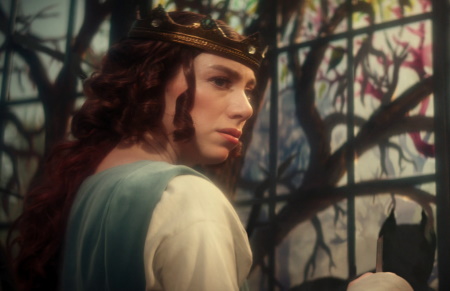
Yvette Picard’s mental health condition was basically a backdrop for other parts of the story.

The Star Trek franchise hasn’t always dealt with mental health particularly well. I noted as recently as Season 1 of Picard how the franchise can lean into unhelpful one-dimensional stereotypes, and Yvette feels barely a step ahead of that. The decision to include hallucinatory elements was potentially an interesting one – but to then turn around and make those hallucinations B-movie horror monsters rendered any impact it could’ve had utterly meaningless.

I’ve tried to be an advocate for better depictions of mental health in fiction, but more than once I’ve found myself exasperatedly saying that if a story can’t get it right – or at least make an effort to do better with the way mental health is depicted – then maybe it’s preferable to leave it alone. If there isn’t time in a series like Picard – which understandably has its focuses elsewhere – to show Yvette’s mental health condition in more detail and more sympathetically, then maybe this angle shouldn’t be included. With a few rewrites, the story could get to the same place while skipping over a pretty uninspired and occasionally problematic one-dimensional depiction of an unnamed but somewhat stereotypical “mental illness.” Otherwise it feels like the series is paying lip service to an important subject; touching on it in the most basic and meaningless of ways.

The nature of Yvette’s condition wasn’t revealed or explained.

So what was this story trying to say? That Picard’s desire to explore strange, new worlds is connected to trauma related to his mother? That seems incredibly clichéd and basic, even by the generally poor standards of mental health stories that we’ve just been talking about. I want to believe that this story has more to give; some twist or turn that will pull out a passable ending to a narrative thread that will otherwise be disappointing in the extreme. I’ve jumped the gun before with these kinds of things and been too quick to criticise, so I guess we need to wait and see what comes next. On its own merits, though, this part of Monsters – the part that took up the majority of the episode’s runtime – was poor.

There was a glimpse of something better (or at least something different) at the close of the episode. Picard visited Guinan’s bar to try to “summon” Q (or another member of the Q Continuum, this wasn’t 100% clear). I liked that we got callbacks to past iterations of Star Trek; Guinan’s “claw” pose that we saw in Q Who made a comeback, for example. And this part of the story filled in a blank from all the way back in The Next Generation’s second season, potentially explaining the animosity between Guinan and Q, or at least the El-Aurians and the Q Continuum.
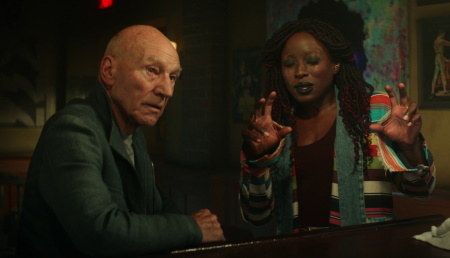
We learned a little about the relationship between the El-Aurians and the Q Continuum this week.

This is the kind of thing I’d hoped Picard Season 2 would do more of. Season 1 had a fairly narrow focus on the Romulans and synths, and while we got a deeper dive into one aspect of Romulan culture in particular, there was a lot more that the last season could’ve done to connect its narrative threads to Star Trek’s broader canon. Because of how it quickly stepped out of the prime timeline and then shot back in time, Season 2 hasn’t really had much of an opportunity to do this, and when elements from Star Trek’s past have been introduced they haven’t really been explored or fleshed out in a substantial way; take Tallinn and the mysterious organisation she works for as a case in point. So I greatly appreciated the Guinan-Q connection here.

Picard and Guinan being apprehended may yet have a deeper significance to the story – if the “FBI Agent” isn’t who he claims to be, for example. Stay tuned for my theory post for more on that! But if it really is the FBI and 21st Century Earth authorities, I’m actually kind of glad that the story went down this road! Picard and the crew, despite their best intentions, have made a lot of noise since arriving in the 21st Century – so it makes perfect sense that, in the highly-surveilled world of 2024, the authorities would be attempting to track them.

Agent Wells, FBI.

We got several cute moments this week with Seven of Nine and Raffi. Their relationship, which had been teased at the end of Season 1, hadn’t developed as much as I’d hoped or expected this season, and with Seven being sidelined for the entirety of last week’s outing, I’m glad that the show’s writers haven’t entirely forgotten about this angle. We caught snippets of their conversation aboard La Sirena that suggested that their relationship is built on solid foundations, even if they don’t always have time to acknowledge it to each other, and I think in a busy episode with a lot of storylines on the go, I can accept such moments of exposition.

What I would say, though, is that we’re really feeling the impact of modern Star Trek’s shorter seasons, and I noticed that in particular with Seven and Raffi this week. After they returned to La Sirena, tracking down Dr Jurati, figuring out how the Borg code got into the ship’s computers, and coming up with a plan to counteract it and figure out what happened could’ve been an entire episode in itself during The Next Generation and Voyager eras. As it is, we got a couple of lines of dialogue and a cut-down sequence. That isn’t bad, but it’s definitely something that could’ve been expanded upon.

Raffi and Seven of Nine discovered that Dr Jurati has been assimilated.

Rios now officially irks me. His regression from the Starfleet captain we were reintroduced to in The Star Gazer to the Han Solo-inspired rogue that we met at the beginning of Season 1 had been bugging me all season long, but now it feels like there isn’t time to do anything about it. If we hadn’t seen Rios in such a different – and arguably better – state in The Star Gazer, I guess I’d just roll with his storyline. But because we’d got a glimpse of Rios at his best and seen what he can be, this Season 1 presentation feels wrong. The fact that he doesn’t seem to care at all about the ship and crew he left behind (on the brink of self-destruction and death, no less) is the icing on a particularly unpleasant cake.

One of Rios’ lines this week also felt unearned. He referred to Picard as a “father figure” that he had been seeking, but I just don’t feel that from Rios in any way. I can’t actually remember a significant moment that the two characters have shared in either season of the show, aside perhaps from Picard’s remark all the way back in Season 1 that Rios kept his ship to Starfleet standards. They’ve just been on different narrative trajectories, and while they seem quite happy to work together, I’ve never felt that Rios saw Picard that way.

Rios told Teresa how he feels about Picard.

“Show don’t tell” is the advice that creative writing teachers often give their students; show the audience how a character feels, what they’re thinking, etc. through their actions and behaviour, don’t just try to dump clumsy lines of expository dialogue and assume that’s good enough. And that’s basically the Rios situation. I’d seen nothing from him to make me feel he saw Picard as a father figure, so this line of dialogue didn’t land in the way it should’ve.

One of Rios’ lines this week was pitch-perfect, though, and continues a season-long trend of making references to Star Trek IV: The Voyage Home. When Teresa was figuring out the truth about who Rios is, we got a riff on the lines spoken by Dr Gillian Taylor and Captain Kirk in that film when Rios told her that he’s from Chile, but works in outer space. It was an incredibly neat reference, and I genuinely wasn’t expecting to see The Voyage Home called back to in so many different and unexpected ways this season.

Rios probably got the episode’s best line while speaking to Teresa.

Was Rios right to tell Teresa the truth? And then, having done so, was taking her and Ricardo to La Sirena a good idea? Part of me feels that Rios will bring Teresa and Ricardo to the 25th Century with him – as Kirk did with Gillian Taylor – so stay tuned for my theory update for my thoughts on that! Regardless of whether it was a smart idea, the moment where Teresa materialised on La Sirena’s transporter pad was pitch-perfect, and Sol Rodriguez captured that moment wonderfully.

Dr Jurati was only glimpsed this week, but the Borg Queen’s influence is clearly growing. The “endorphin rush” concept is an interesting one, with the Borg Queen needing to trigger endorphins in order to speed up or help the assimilation process. I certainly hope we learn more about how this works, as well as what exactly the Borg Queen is doing. Is this, as Seven seemed to think, the “birth” of a new Borg Queen? If so, that presumably tees up Dr Jurati (or rather, her assimilated body) for being the masked Borg Queen seen in The Star Gazer at the beginning of the season! There’s also the possibility on this side of the story to learn more about the Borg and how Borg Queens work in a general sense.

Will Dr Jurati become the new Borg Queen?

I would’ve liked Monsters to spend more time on this side of the story. With the bulk of the story dealing with the coma-dream that Picard was experiencing, it feels as if the episode had its focus in the wrong place. Whatever’s happening with Q is clearly still important – but the potential for a Borg Queen to be loose in the 21st Century and growing in power should bring everything to a screeching halt. Picard and the crew need to tackle this problem, and they need to do so urgently! But as far as we know based on what we saw on screen this week, Seven of Nine and Raffi haven’t even told Rios or Picard what they’ve learned about Dr Jurati.

As I suggested in my last theory post, there’s all sorts of ways that this story could go. A Q-Picard truce or even a temporary alliance is one possibility, with a weakened Q working with Picard to prevent the assimilation of Earth. But it feels like the season is running out of road to tell all of the stories that have been set up. We didn’t get any advancement this week of Kore or Dr Soong’s stories, for example, and Q himself – despite being mentioned – was also absent. If we’re to see this Borg Queen story play out in anywhere close to as much depth as it deserves, a change in focus is urgently needed.
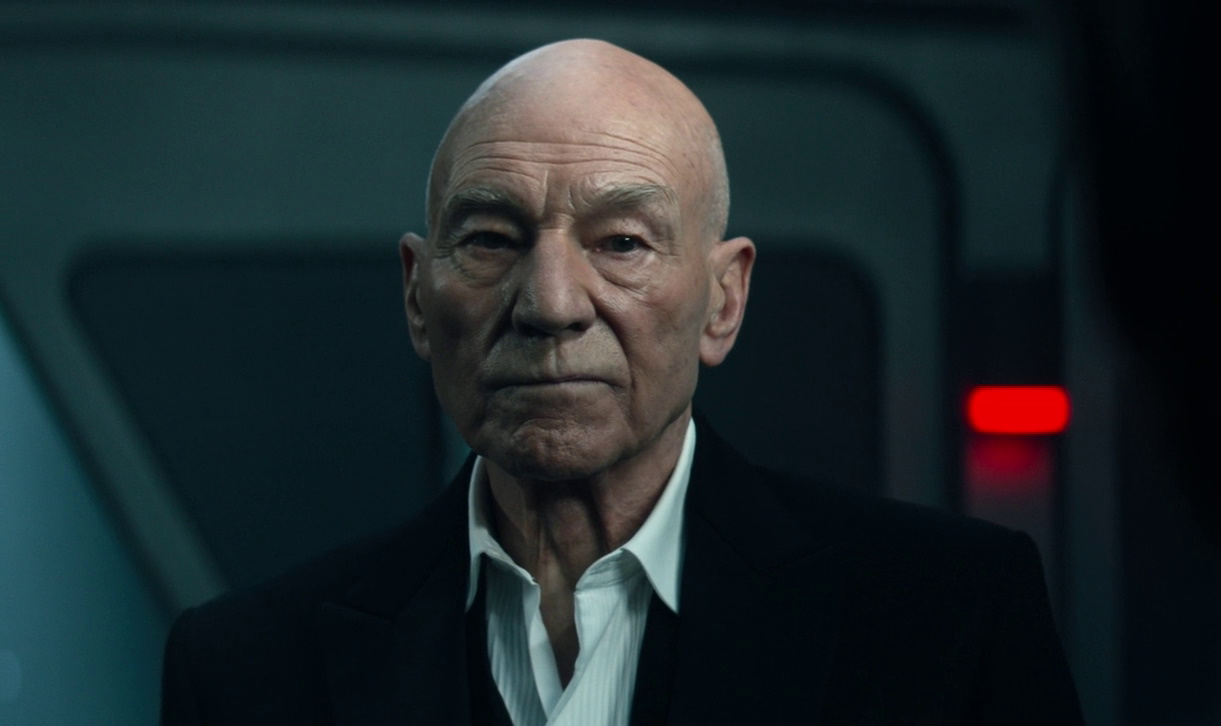
Picard in Monsters.

So I guess that was Monsters. It was an episode that dragged in places, one that feels like an unnecessary sojourn in a short season that really doesn’t have time for such indulgences. Yes, it’s possible that the story of Picard’s youthful trauma will come back later in the season in a way connected with Q. But even assuming that will be the case, Monsters feels like a gratuitous and self-indulgent look at this part of Picard’s backstory and psyche that simply ran too long.

I’m reminded in a way of Nepenthe and, to a lesser extent, Absolute Candor from Season 1. These two episodes advanced the main story of Season 1 in increments, but given the way the story ran out of road by the time we got to Et in Arcadia Ego, they feel somewhat like wasted time in retrospect. Monsters feels like it could end up the same way – but unlike the two Season 1 outings mentioned, it wasn’t a strong or particularly enjoyable episode in its own right. If we look back on the season later and feel that more time was needed to allow things like the Borg Queen story, Q’s story, or Kore and Dr Soong’s stories to play out, Monsters will feel like the standout example of what should’ve been cut.

There were interesting ideas here, and if the same framework or story concept had been used in a different way, I think we could’ve been looking at the episode in more of a positive light. But the barebones and clichéd depiction of Yvette’s mental health condition, the uninspired “haunted castle” and B-movie monsters, and the more interesting storylines being sidelined makes it one of the season’s most disappointing outings so far.

Star Trek: Picard Season 2 is available to stream now on Paramount+ in the United States, Scandinavia, Latin America, and Australia, and on Amazon Prime Video in the United Kingdom and the rest of the world. The Star Trek franchise – including Picard and all other properties mentioned above – is the copyright of Paramount Global. This article contains the thoughts and opinions of one person only and is not intended to cause any offence.

17.04.22
Additional thought:

It only occurred to me as I was re-reading this review, but one thing to say about Monsters – and the season overall by extension – is that the season’s main characters, as well as important secondary characters all feel disconnected from one another. They don’t seem to be communicating at all, with Rios taking Teresa and Ricardo to La Sirena seemingly without consulting Picard or anyone else, and Raffi and Seven of Nine chasing Dr Jurati also without a word to Picard or Rios. This is in addition to Q doing his own thing away from everyone else, and Kore and Dr Soong off on their own, too. There are occasional bridges between these groups of characters; meetings or pairings in which they get together. But for the most part, everyone feels like they’re in their own little narrative box, taking part in their own story that’s disconnected from everything else. This is a very odd way to structure a season of television in a show like Star Trek: Picard.

Star Trek: Picard review – Season 1, Episode 4: Absolute Candor

Spoiler Warning – There will be spoilers ahead for Absolute Candor – the fourth episode of Star Trek: Picard – as well as for all previous episodes in Season 1. There may also be spoilers for other iterations of the Star Trek franchise.

What a wild ride Absolute Candor was! After a trilogy of episodes directed by Hanelle M. Culpepper kicked off the series, Star Trek legend and former Star Trek: The Next Generation star Jonathan Frakes stepped up to direct this outing for Picard and his new crew – and he’ll also be directing next week’s instalment too.

After the first three episodes set up a lot of story points and mysteries, Absolute Candor felt like the first episode so far to begin the task of exploring and unravelling them. That’s not to say it answered everything – we still have far more questions than answers right now. But some details are beginning to come into focus, especially regarding Picard’s history between when we last saw him in Star Trek: Nemesis and when we met him again in Remembrance at the beginning of this season.

As with the last two episodes, Absolute Candor opens with a flashback sequence. But rather than seeing Mars this time, as Maps and Legends and The End is the Beginning showed us, this time we’re with an out-of-uniform Picard on a planet called Vashti, in the Beta Quadrant. It’s clear quite quickly that this sequence takes place before the attack on Mars – Picard is still working very hard to relocate as many Romulans as possible with time ticking down to the supernova. He’s clearly very popular with many of the Romulans on Vashti, though if he’s working I’m not exactly sure why he’s not in uniform. Picard, at least as we remember him from The Next Generation, was quite a stickler for such things as uniforms – though perhaps as an Admiral he had more leeway in this matter.

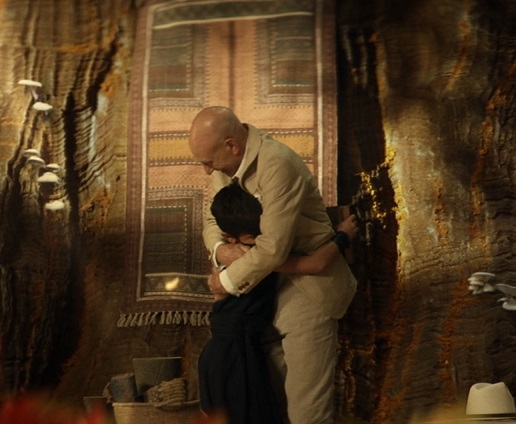
Elnor hugs Picard in a flashback sequence.

Vashti is presented as a kind of “frontier outpost”; it’s dusty, it’s bustling with Romulans, and Picard is in his element here. At least, the town setting on Vashti looks like this. The next setting Picard visits – a convent or nunnery – has a very obvious Japanese inspiration. This blend of aesthetics keeps the two parts of Vashti distinct from one another, with the serenity and safety of the convent contrasting with the unpolished nature of the pioneer town. This contrast will come into play later, but we’re getting ahead of ourselves. We saw a Romulan using the same style of cards that Ramdha (the Romulan Soji wanted to talk to in the last episode) was using, and their inclusion was a nice way of tying things together, as well as adding to the “wild-west” vibe that the town on Vashti has going for it.

Picard has struck up a relationship with Elnor, a young boy who has been taken in by the nuns. He brings him a gift – a copy of the book The Three Musketeers – and promises to teach him how to fence. His dislike of children is referenced here by the nuns and Elnor, but he reassures the boy, saying he is “very fond” of him. There’s a grandfatherly element to Picard that we haven’t really seen before – obviously emphasised by his age. In The Next Generation, we saw him take on a semi-fatherly role to Wesley – after dismissing his “no children on the bridge” rule – so this is hardly out of character. He also kept the “Captain Picard Day” banner from his time aboard the Enterprise-D, again showing that his attitude to children has considerably softened over the years.

Fencing lessons.

Midway through the promised fencing lesson, Picard gets a call on his combadge (the GenerationsDeep Space NineVoyager style is back for this sequence) from Raffi. And we know what this must be before anything happens; she’s about to tell him of the attack on Mars. Because we knew this – it had even been included in the montage of previous episodes that played at the very beginning – I don’t think we needed Picard’s line in response. Shock like this can be hard to play right, and it’s no criticism of Sir Patrick Stewart that the line, in which he says “what do you mean synths have attacked Mars?” just fell flat and didn’t really work. A simple facial expression would have conveyed everything we needed to know; the line was unnecessary and detracted from the scene.

Everyone is concerned, and Picard promises to get to the bottom of it and return soon, saying that their work must continue, and then the credits roll. Having seen Seven of Nine feature prominently in the trailers, Jeri Ryan’s name being included in the credits wasn’t a surprise. But, given her role in the episode, it was a bit of an unnecessary spoiler – especially for people who may have skipped the trailers. Seven of Nine only shows up right at the end of the episode. She’s an anonymous pilot flying a small ship, and that whole scene is structured around keeping her identity hidden until the last possible moment, making her appearance on the bridge of La Sirena a surprise – but as this was the last scene in the episode, and we’d seen her name in the opening credits, the element of surprise was lost which was a shame, I felt.

Picard reacts with shock when he learns of the synths’ attack.

After the credits we’re back in the present day, and after a brief shot of La Sirena in space we get a conversation between Dr Jurati and Capt. Rios. It seems like this may be Jurati’s first time in space, and more than anything she just feels bored while the ship warps to their destination. I mentioned last time how the comment Raffi made at the end of last week’s episode about Dr Jurati not being subject to any kind of security check could be some foreshadowing of her being a double-agent, and this conversation, innocent though it may have seemed on the surface, could also be seen as her probing Rios for information in a disarming style. I’m not sure exactly why yet, but I have a feeling she isn’t to be trusted.

Raffi interrupts the awkward conversation to demand to know where the ship is going – apparently Picard wants to make a stop at Vashti before heading to Freecloud, though he seems to have only told Rios of this, as Raffi and Dr Jurati had no idea. The next scene was confusing for a moment, as Picard appears to be back on the vineyard – but apparently it’s just a holoprogram that Zhaban requested that the “hospitality hologram” on La Sirena recreate for Picard. As with every hologram on the ship, it’s been reprogrammed to have Rios’ appearance.

“Mr Hospitality” on the holodeck.

There’s a close-up shot of Dahj’s necklace on Picard’s desk – presumably a recreation as part of the holoprogram, but this isn’t clear. As I said in my review of Remembrance, I really feel this is a weak prop. The visually unimpressive design just makes it blend in, and for something that was supposed to be so noticeable, and that’s supposed to be a symbol for creating androids, it just looks bland. For a one-off item I could forgive that, and it would be little more than a minor costuming/prop nitpick. But the necklace keeps cropping up, as it did here in the close-up, and I wish it looked better given its role in the story thus far.

Raffi interrupts Picard’s conversation with the hologram, demanding to know why he’s insistent on going to Vashti. It’s clear Picard has been out of touch with goings-on in the galaxy for some time; Vashti will not be the way he remembers it. Rios and Dr Jurati join in as Picard calmly explains that he wants to return to the convent we saw in the flashback – because the nuns there are warriors, and he hopes one of them can be persuaded to join their crew for the mission. He suspects they are being tracked – though interestingly he refers to their opponents as the Tal Shiar, not the Zhat Vash. He will do so again later in the episode when talking to Elnor, and I have a feeling this will come back to be a point in future episodes. Whether Picard doesn’t believe in the existence of the Zhat Vash, or whether he simply doesn’t want to go to the trouble of explaining to everyone what they are isn’t clear.

Raffi attempts to persuade Picard to head straight for Freecloud and abandon the mission to Vashti.

We get two little hints in this scene that may come into play in future episodes. First is that Raffi makes a comment about how Picard’s decision to go to Vashti makes her “seriously question [his] mental state” – could this be a hint about the terminal condition that Dr Benayoun mentioned in Maps and Legends? Secondly, Picard calls Raffi out on her keenness to get to Freecloud, but Rios says she seems apprehensive about it. What is Raffi planning to do on Freecloud? We know she said at the end of last week’s episode that she’s going there for her own reasons, but here we get a hint that she may not be looking forward to it. Why that is isn’t clear at this stage either.

Vashti, according to Raffi and Rios, is in a bad way, seemingly outside of anyone’s jurisdiction with warlords controlling the planet and the space around it. Picard is surprised by this, and his lack of awareness of the situation shows us, as mentioned earlier, just how out of touch he is with the state of play. Rios mentions a warlord who has control of an “antique bird-of-prey” – and anyone who’s seen the trailers will have spotted that ship, sporting a design not seen since The Original Series.

The nuns, Picard says, are the best fighters he’s ever seen – and enemies of the Tal Shiar. The “Way of Absolute Candor” is mentioned here for the first time, and it appears to be almost the complete antithesis of Surak’s Vulcan teachings. The Qowat Milat, as the nuns are called, believe in “total communication of emotion”. Raffi makes one last attempt to convince Picard to ditch the Vashti idea and head straight for Freecloud, but Picard says that he “may never pass this way again” – another reference to his condition. While this is, in a sense, a side-quest to Picard’s main objective of finding Maddox and Soji, he is taking advantage of his return to space to travel to Vashti to revisit Elnor.

“I may never pass this way again.”

Travelling in space in Star Trek has never really been treated as a big deal. It was something routine, even if some individuals we met had never done so – like Joseph Sisko in Deep Space Nine. But in Star Trek: Picard we’ve had several instances that show us space travel is not just as easy as getting on a starship and taking off. Picard’s appeal to Admiral Clancy in Maps and Legends was brutally shot down, but not before she could say he couldn’t be trusted to take people into space. Next we have Dr Jurati, who is seemingly on her first space voyage, and now Picard himself, who, granted, has been a kind of self-imposed exile in La Barre, but it seems as though travel to Vashti isn’t easy. It took Picard contacting Raffi to track down a pilot who would even take them to Freecloud, when surely everything we’ve seen in prior Star Trek suggests that interstellar travel should be commonplace – and simple. It’s a surprise in terms of the way space travel has been handled thus far in the series, I think, and it’s less in line with past Star Trek and more like something we might expect to have seen in a different kind of science fiction series. I know there are perfectly valid story reasons for why Picard couldn’t just buy, rent, or otherwise acquire a shuttle or runabout – like how they have the Zhat Vash on their tail – but the tone is not what I expected, I have to admit. And it’s the kind of nitpick only some returning fans might have that doesn’t really detract from the story. But when you stop and think about it – surely it should have been easy for Picard and the others to go to Freecloud or Vashti or anywhere else they might’ve wanted.

Next, we get a scene aboard the Artifact, where Soji is watching a video of Ramdha from before she was assimilated, while playing with a similar deck of cards to those Ramdha was using in The End is the Beginning. Last time Ramdha called Soji “the destroyer”, and Soji hears that name again, this time in Romulan. Apparently “Seb-Cheneb” (which seems to be the Romulan name for “the destroyer”) is related to a day called Ganmadan – “the annihilation”. How this ties into Soji’s background and why Ramdha accused her of being Seb-Cheneb isn’t known at this point, but Soji is clearly disturbed by the implications.

Ramdha as she appeared prior to assimilation, seen on a holo-recording.

After this brief scene we’re back on La Sirena, now in orbit of Vashti but without permission to approach the planet’s defences. Picard says they should simply tell whoever is running the show down on the surface that it’s him – expecting that will allow them to transport to the surface. But apparently Raffi and Rios have already tried that, and it’s clear that the Romulans on Vashti don’t want anything to do with him any more.

After bribing the Romulans, Picard is able to beam down to Vashti. The atmosphere is so different from its appearance in the flashback; the once-bustling town is squalid and run-down, with hard-up refugees glaring at Picard. It’s clear that some of them recognise him, and one whispers something into a communicator. Given that Raffi becomes concerned later in the episode when Picard has been identified by the inhabitants, it makes very little sense as to why they’d let him beam down, alone and unarmed, into the middle of the town.

Regardless, Picard tries to speak to some of the locals, who all ignore him. I liked the use of the phrase “jolan tru”, which returns from its appearance in The Next Generation two-part episode Unification – which saw Picard and Data go undercover on Romulus to find Spock after he travelled there. While “jolan tru” isn’t as iconic in the franchise as the Klingon word “qapla!”, it’s nevertheless a neat little throwback. It would have been easy to disregard that and create a new word or greeting in Romulan, but I’m glad they brought back this element from Picard’s past adventures.

This isn’t the “homecoming” that Picard would have wanted, and despite repeated warnings from Raffi and Rios about the state of Vashti and his own lack of popularity there, the Romulans’ reaction to his presence clearly hurts and disappoints him.

In this scene, I feel like Vashti was channelling Star Trek V: The Final Frontier’s depiction of Paradise City on the planet Nimbus III. That settlement, in a barren desert, was supposed to be a symbol of “galactic peace” – cooperation between the Federation, Klingons, and Romulans. But, much like Vashti, it quickly fell into disrepair as the project was sidelined. There was great hope, both for Vashti and Nimbus III, to be successes, but both ultimately failed and became what we saw on screen. Whether the throwback was intentional or not I can’t say, but I definitely picked up a similar tone when Picard was on Vashti.

Sybok’s followers approach Paradise City on Nimbus III in Star Trek V: The Final Frontier.

Picard travels to the convent, where he meets the nun from the flashback sequence. The nuns are perhaps the only people on Vashti who aren’t unhappy to see Picard return – though she does remark he’s “got old” since their last encounter. And I want to give a little credit here to hair and makeup. My reviews often focus on plot and story at the expense of other elements of a production – it’s something I’m trying to work on! But the way Picard appears in the flashbacks and in the up-to-date sequences does differ – and part of that is his hair. In the flashbacks, Picard has sported a close-cropped version of his grey-white hair that we remember from The Next Generation, and is notably completely bald in the rest of the show. This subtle change does age and de-age him somewhat in the two sequences, as well as differentiating them from one another. It’s subtle, such that it was hard to put my finger on at first, but I think it works well without having to rely on excessive makeup or expensive (and imperfect) digital techniques to make him look younger for the flashback scenes.

As Elnor appears – now a fully grown man – Picard reacts with shock. Before we can see what happens, however, the action cuts back to the Artifact. Ramdha isn’t dead, but she’s been sedated or placed in stasis, and Soji has paid her a visit. Narek stops by – he seems to have been tracking her movements – and she tells him something which I think is important – she felt like Ramdha had “seen” her. Even though she doesn’t know why, as she is unaware of her true nature, she felt like Ramdha had some kind of insight, something that she saw or recognised in Soji that is true. And not to spoil my next theory post, but I have a feeling there may be more Soji and Dahj lookalikes out there somewhere – one of which Ramdha may have encountered. That’s one explanation, anyway, but I don’t want to sink too much into theory-crafting right now!

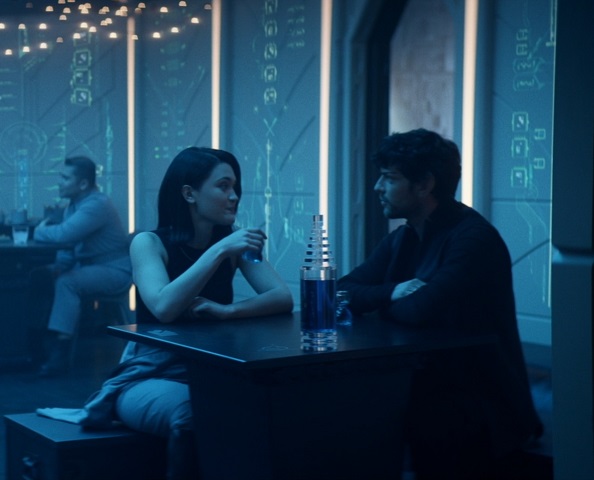
At a canteen or mess hall on the Artifact, Soji and Narek sit down and discuss what happened last week. She asks him flat-out if he’s been following her, and it seems that this sequence takes place immediately after last week’s episode, as Soji says she “just now” visited the disordered Romulans. She presses him, asking if he works for the Tal Shiar. He says no, of course, but she is unconvinced. We can’t trust Narek at this point, so when he says he doesn’t know what happened to the Romulan vessel or to Ramdha, we – like Soji – don’t believe him. He plays his cards close to his chest and clearly knows more than he’s letting on. In this scene, I wonder if the blue drink they were sharing was meant to be Romulan Ale? This drink has appeared a number of times in Star Trek and it would be a nice reference if it were!

Soji and Narek share a drink on board the Artifact.

Narek tells Soji he wants to show her a “Borg ritual”, and for a moment I wondered if he might actually know something about Borg behaviour or even their origins. But it turns out it was a joke/metaphor, as the two slide in their socks along an uninhabited part of the Artifact. Narek presses her on her background – she learnt to speak Romulan “some time before May 12, 2396” – which is give-or-take three years before the events of the series. Given that Dr Jurati believed that Dahj only had around three years’ worth of genuine background – everything in her records before then seemed to have been made up – this fits with what we know. Could the 12th of May 2396 be Soji and Dahj’s activation or creation date? Narek pushes Soji too hard for information, saying he knows she wasn’t aboard a ship she claims to have been on around that time, and she takes offence and leaves, pushing past him on the way.

Back on Vashti, Picard explains to the nun that he wants someone to join his cause. Elnor offers him a meal, then storms off, clearly upset at Picard’s reappearance just like the Romulans in town had been. It’s here that we learn – contrary to my expectations, I have to admit – that Picard did nothing to aid the Romulans either on their homeworld or on Vashti after the attack on Mars. After his resignation, he simply went home to the château. No wonder the Romulans are so upset – Picard had been the face of the Federation when they promised to help, and after only a tiny fraction of that help had been delivered, they reneged on it and Picard simply disappeared. He seems never to have returned to Vashti after the flashback sequence at the beginning of the episode, even abandoning Elnor.

An awkward reunion.

The nun calmly scolds Picard – “because you could not save everyone, you chose to save no one”, she tells him, and it’s true, Picard even admits it himself. The attack on Mars is not the issue in and of itself, it was merely the catalyst for what really happened to Picard – Starfleet and the Federation broke their commitment, and when he threatened to resign in protest, instead of recognising the error of their ways and doing things his way, they simply accepted his resignation. This moment is what broke him. The attack on Mars set the stage, but Picard was reminded thereafter not just of Starfleet’s petty factional politics, but of his own unimportance to the organisation he’d dedicated his life to.

He can’t go back and undo it, building up a new fleet and saving lives. It’s too late for that – and it is a regret that he will have to live with. I’m sure we will see more of Picard wrestling with those feelings in future episodes, but for now at least, the nuns give him a chance to begin to make things right for at least one Romulan – Elnor. The shot of Elnor standing outside the convent, holding a thin-bladed sword with the reddish-coloured leaves in the background was clearly inspired by Japan. Elnor is, in this moment anyway, a samurai warrior.

Elnor with his sword on Vashti – definitely a Japanese-inspired look.

Picard and Elnor sit together, and it’s an awkward conversation as Elnor clearly feels aggrieved by Picard’s abandonment. He had seen Picard as a father figure, clearly, and his disappearance from Elnor’s life left him with the nuns. Picard steers the conversation away from the past to his mission to find Maddox and Soji, but Elnor says that, as Picard is only interested in him now that he finds him useful, he’s inclined to abandon him the way he was abandoned, and storms off.

Dejected, Picard heads back to town. Rios tells him that he’ll have to wait seven minutes before they will be able to transport him through the planet’s defences – and alarm bells started ringing immediately for me! This whole sequence was so well-constructed. The seeds were sown in earlier scenes: having to bribe his way to the surface, the cold reception he received from the townspeople, the nun confirming he abandoned the rescue project, Raffi on board the ship finding out that he’d been spotted and identified, and now finally the fact that he’ll have to wait alone for rescue. A lot can happen in seven minutes – Picard is clearly in danger.

His stubbornness gets the better of him back in the town, and he sits down at a table in one of the saloon-type places, much to the ire of the Romulans who were already there. One confronts him, as we knew was sure to happen, and it turns out that he had once been a Senator – before the supernova.

We get a little more information here about the rescue armada. Some of the ships were already in service at the time of the attack on Mars, and over a quarter of a million Romulans had been relocated to Vashti at the time of the attack. Rather than waiting for the whole fleet to be complete, Picard and Raffi had been working in the meantime. The Senator – and the other Romulans – detest Picard, both for his own failings and for the decision made by the Federation to pull out of helping them. The former seems fair, but the latter does not as we know how hard Picard fought to convince Starfleet to rebuild the fleet and continue to help.

Picard is confronted by an impoverished former Romulan Senator.

The Romulans throw him a sword and push him into the street to duel – we saw Picard showing young Elnor how to fence, and we’ve also seen him fence on at least one occasion in The Next Generation, but Picard is clearly outmatched here by the towering Romulan. He refuses to fight and tries to talk his way out of the situation, when Elnor shows up. He says “choose to live” – and we assume he’s speaking to Picard, encouraging him to pick up the sword he’d thrown down. But as the Romulan lunges for Picard, Elnor steps in and kills him. His statement was a threat – not to cross an assassin of the Qowat Milat. As another Romulan prepares to pull his disruptor and shoot Elnor, he and Picard are beamed aboard La Sirena.

We do have to again examine Picard’s frame of mind here. He berates Elnor for killing the Romulan Senator, but it’s obvious that he would have killed Picard in a heartbeat. The state of the galaxy, and Picard’s own relationship with the Romulans and other factions is not what it was fourteen years ago – yet he doesn’t seem to have fully grasped that reality yet. Elnor stepping in was the only option in that fight – the only other outcome was Picard’s death. As a great diplomat, as well as a former friend to the Romulan people, it must be hard for him to accept that his words mean nothing to them any more.

Elnor has committed himself to Picard’s cause – and now the whole crew is finally assembled. The last main character has slotted nicely into place, and four episodes in, we finally have the whole cast! This slower-paced introduction of the main characters has been spectacularly successful. Instead of trying to dump them all at once in the first episode, we’ve taken our time and got to know more about each of them as the show introduced them, and that’s really been a great way to handle it.

As Dr Jurati meets Elnor, she finally finds out the answer to a question she – and we as the audience – had from earlier: what was the Qowat Milat’s criteria for signing up? The answer – they only volunteer for lost or hopeless causes.

Elnor and Dr Jurati meet aboard La Sirena.

Narek receives a visit from Rizzo back on board the Artifact. She teases him about his “robot girlfriend”, and half-strangles him to get him to tell her the only useful piece of information he’s found so far – he believes, as Ramdha did, that Soji is Seb-Cheneb or “the destroyer”. He cautions her, pleadingly, about avoiding another activation – as happened to Dahj in Remembrance. But Rizzo tells him that the endgame is the same – they plan to kill Soji when they find out where she and Dahj came from. She gives him one more week to get more information out of her, before she will take action. I’m sure that the “one week” timeframe is no coincidence – it’s a reference to something happening in the next episode!

The episode closes with a final scene aboard La Sirena. The bird-of-prey mentioned earlier, and seen in the trailers, is fighting Rios’s ship, trying to push them into the planet’s defence grid which will destroy them. We get to see the scale of La Sirena better here – it’s much smaller than the bird-of-prey, and is thus more manoeuvrable. However, it takes the intervention of another ship to disable the bird-of-prey and save La Sirena – and as that ship is about to be destroyed, Picard makes the decision to beam its pilot on board. The pilot is, of course, revealed to be Seven of Nine.

Seven of Nine’s appearance was unfortunately telegraphed well before she beamed aboard.

Overall, I really enjoyed Absolute Candor. The Qowat Milat are an interesting and unique faction within Star Trek, at least that I’m aware of, and Romulan society – both pre- and post-supernova – is being explored in much richer detail than we’ve ever seen before. Unlike with the Klingons in Discovery, who many have argued overwrote some aspects of Klingon culture and design that had been present in past iterations of Star Trek, nothing we’ve seen of the Romulans so far contradicts what we already knew – it merely advances the story of the faction and adds to our knowledge and understanding. In that sense, the Romulans were a much better choice for Star Trek: Picard’s main faction than the Klingons were for Discovery. Whereas the Klingons’ history and culture had been explored in depth thanks to Worf and B’Elanna being main characters, and the Klingons’ prominent role in many episodes and films, the Romulans, despite being a known faction, were much more of a blank slate for the new creators to work with.

Having the full cast together is great, and now that we’re four episodes in we really should be expecting that. Elnor has two very clear influences, at least in my opinion. This episode played up a distinctly Japanese aesthetic for him – the way the convent was styled and his weapon in particular. The way he fights is reminiscent of samurai stories and martial arts films, further adding to that. But there’s also what I think is a pretty clear nod to Tolkein-esque elves in his appearance – particularly his clothing and his hair. Elnor’s look borrows much from Peter Jackson’s Lord of the Rings and The Hobbit film trilogies – though Elnor is more emotional and less stoic than most of the elves in those films.

I enjoyed a number of the little nods and winks to returning fans: the TOS bird-of-prey, the use of the phrase “jolan tru”, the older style of combadge in the flashback sequence, the bottle of what looks like Romulan Ale on the Artifact, and the comparable state of Vashti and Nimbus III. It’s so clear from practically every moment, whether Picard is on screen or not, that this show is 100% a Star Trek show, and I really needed that. Discovery had plenty of great Star Trek-y moments too, but sometimes those could get drowned out by other elements of the plot. And the Kelvin films similarly had some highs and some lows when it came to feeling like a genuine part of the franchise. Picard, thus far at least, has had very few low points in general, and oozes that elusive Star Trek quality in every single scene.

I loved the return of the TOS-era bird-of-prey.

It was great to see La Sirena in her first real firefight. Rios is clearly a good captain and a skilled pilot – but I’m a little concerned that the ship was so easily outmatched by a vessel a century-and-a-half old. I’m not sure this bodes all that well for future battles, but with Seven of Nine and – possibly – others tailing Picard, perhaps they can count on some additional support.

One of my friends, who I know isn’t a Star Trek fan, texted me yesterday to show me that they were sitting down with family to watch the latest episode. Apparently it has become a big deal for them to watch it together and they’ve loved seeing Picard’s new adventures. I know this is one person and it’s anecdotal, but I really get the impression that Star Trek: Picard is breaking through to new and old fans alike in a way that Discovery never really did. And that’s fantastic news – as someone who loves Star Trek and wants to see more of it, I’m always thrilled when it seems to be a success.

Seeing Seven of Nine again, after such a long hiatus, was great as well, even though she was only on screen briefly. We’ve seen Hugh back, of course, but many returning fans will have much more of a connection to Seven of Nine than to Hugh. The first few episodes have all been about bringing the crew together and setting up mysteries – and this time I finally feel that we’ve turned the page and are now beginning to get some more information about what’s been going on. There’s still so much to learn in the next few episodes, and I can’t wait for next week, where Jonathan Frakes will be back to direct Stardust City Rag. What a great name for an episode!

Absolute Candor – and the previous three episodes of Star Trek: Picard – are available to stream now on CBS All Access in the United States, and on Amazon Prime Video in the United Kingdom and other countries and territories. The Star Trek franchise – including Star Trek: Picard – is the copyright of ViacomCBS. This article contains the thoughts and opinions of one person only and is not intended to cause any offence.

Star Trek: The Next Generation Re-Watch – Season 2, Episode 9: The Measure of a Man

Spoiler Warning: There will be spoilers for the first three episodes of Star Trek: Picard – as well as for The Measure of a Man from TNG Season 2.

When I was compiling two lists of episodes to watch prior to the release of Star Trek: Picard, I only included The Measure of a Man, from The Next Generation’s second season, as an afterthought in one of my “honourable mentions” sections. Despite having seen some androids briefly in one of the trailers, and even after having seen Mars come under attack in the Short Treks episode Children of Mars, I still wasn’t convinced this episode would be important. I wound up including it in my second list of episodes, but not because of androids or Bruce Maddox, but because of how it showed an aspect of Picard’s character – his staunch defence of the rights of different life-forms.

We now know, of course, that Maddox has a key role in Star Trek: Picard, though whether he’s actually going to appear in person or is merely a narrative force is unclear right now. And of course we’ve learnt a lot more about synthetics and the development and subsequent prohibition of synthetic life. Thus, at this point, The Measure of a Man warrants a re-watch and a closer re-examination.

Watching an episode so long after its original airdate, and after we’ve seen so much Star Trek content that was produced subsequently, it’s worth trying to stay objective and be aware of where the three characters we’ll be focusing on are at this point in the timeline. Obviously Maddox was a guest star, and aside from a reference in the fourth season, was never seen or heard about again until Picard premiered. But Data and Picard are arguably different than we might remember considering how early we are in The Next Generation’s run. This episode aired before Q Who introduced the Borg, before Picard was assimilated, and before Data had really developed a strong personality that extended beyond his original programming.

Data plays poker with his crewmates in the opening scene from The Measure of a Man.

The Next Generation operated differently to Discovery and Picard – it was much more of an ensemble show with each crewmember having their own stories and episodes, rather than focusing primarily on one character’s story. So Data and Picard, by this point in the show, still have significant parts of their backstories unexplored.

The episode opens, as many episodes of The Next Generation did, with Picard narrating his captain’s log. Nothing too exciting – the Enterprise-D is due to dock at a starbase, pick up and drop off some members of the crew, and switch out some science experiments that have presumably been running in the background. On board, we see Data, Riker, O’Brien, La Forge, and Dr Pulaski playing poker. Data seems confused by some of the “superstition” that the others apply to their playing – he can’t quite grasp the concept of “luck” in a game of chance. Again, it’s worth remembering how early we are in Data’s story! This might be the first game of poker he’s played, and just as he struggled with the others feeling lucky or unlucky, he was completely unprepared for bluffing – it’s such an illogical way of playing, after all.

In this moment, Data is still very much a machine, regarding the game as “simple”, based around mathematical probability and assuming that everyone will play logically. Having this sequence be the setup for an episode about taking him apart to find out what makes him tick is an interesting choice; we see Data at his most mechanical, but we also see in him an adaptability and a desire to learn and grow. The costuming choice to give Data a poker visor was also a great call – he’s approximating and mimicking human behaviour, but without fully understanding it.

Seeing Data easily outmanoeuvred by Riker – despite holding a better hand – emphasises how much he still has left to learn. Riker wasn’t betting on the strength of his cards, he was simply betting that Data would fold – Data thus missed a key element of playing poker. But he learns from this experience, much like a child would.

As an interesting aside, the next shot shows the Enterprise-D approaching Starbase 173. The model used for the Starbase was in fact a re-use of the Regula One station from Star Trek II: The Wrath of Khan and is virtually unchanged in its appearance (except for, I believe, its scale in relation to the Enterprise-D). This model was itself a re-use from Star Trek: The Motion Picture. With CGI generally being so good nowadays, it’s almost hard to imagine a time when a single model would have to be re-used over and over again – and The Measure of a Man was not the last appearance of this model by any means.

Aboard the station, Picard is reunited with Phillippa Louvois, accompanied by a very romantic soundtrack. He seems very surprised to see her, and she is clearly an old flame of his – someone who he didn’t part with on good terms judging by their conversation! But the passage of time can be a great healer, and where other people may have held a grudge, Picard is amused, and maybe even happy to see her again. The credits roll, and then we’re back with Picard and Louvois, sitting down to have a longer conversation.

Louvois holds the rank of captain – putting her on equal footing with Picard – and her uniform matches his. She’s not the first woman captain featured in The Next Generation – there was at least one other in Season 1 – but she gets a significant amount of screen time here. She explains that she’s the JAG (judge advocate general – i.e. a military judge, or in this case a Starfleet judge) for this sector, and the way she talks about it makes it seem like a remote part of the Federation, far from any other Starbases. It’s the frontier!

The Enterprise-D at Starbase 173.

We find out about Louvois’ history with Picard – she was the officer responsible for his court-martial after his previous command was lost. We’ve seen the Stargazer before in The Next Generation, in the episode The Battle, and we also know that Dr Crusher’s husband was serving on the Stargazer under Picard’s command when he was killed. Louvois says that a court-martial is “standard procedure” when a ship is lost, but Picard accuses her of being overly aggressive in her prosecution of him – and says that’s why she left Starfleet for a time. There’s a very complicated history here. Louvois calls Picard out on his arrogance – which to be fair, he actually was in this scene. But the chemistry and sexual tension between them is noticeable – there’s much more to their relationship than something professional or friendly.

After the awkwardness of seeing Picard called a “damn sexy man”, an Admiral approaches and Louvois excuses herself – but not before taking the opportunity to try to embarrass Picard in front of their superior. The Admiral introduces Commander Bruce Maddox, but they don’t immediately discuss Maddox’s proposal as the Admiral wants a tour of the Enterprise while it’s visiting his new Starbase. Maddox joins the Admiral on the tour, and they visit the Enterprise’s bridge. There is some discussion of the Starbase’s location being near the Neutral Zone, but the focus is clearly on Maddox, cutting to a close-up of him staring at Data.

Maddox interrupts the small-talk about the Romulans and the legacy of past starships Enterprise, clearly impatient. The Admiral tells Picard that Maddox is here “to work on your android”, then promptly leaves the bridge. Data, Picard, and Maddox have a conversation set to a backdrop of very tense music. Clearly all is not well. Maddox, it turns out, opposed Data’s entry into Starfleet Academy some years prior, claiming Data was not a sentient being and was thus not eligible. Picard asks what Maddox plans to do and he replies calmly that he is “going to disassemble Data.”

The way Maddox has been set up thus far is of someone who is impatient and impersonal – arguably lacking in empathy. He refers to Data as “it”, a term one might use for an inanimate object. Data is, anatomically speaking, male. In the second episode of The Next Generation’s first season, The Naked Now, Data sleeps with Tasha Yar and though we don’t see it on screen it’s confirmed that he is, for all intents and purposes, male. So Maddox dehumanising Data in this way, while subtle, shows us the kind of person he is.

Maddox explains his reasoning in the next scene – seeing Data when he first applied to the Academy sparked a desire in Maddox to learn more about the work of Dr Soong, Data’s creator. His intention is to dismantle Data, learning how he functions, in order to recreate him and produce copies. Maddox believes himself to be close to a breakthrough, and Data is intrigued at the prospect, in part no doubt because he’s been essentially alone as the only one of his kind. Riker, on the other hand, seems much more concerned. Data asks Maddox a technobabble-laden question, and when Maddox replies that he hasn’t been able to get the basics of a positronic brain working, Data’s tone changes from interest to concern – and after a couple more questions from both Riker and Picard, Data pipes up and says that Maddox’s research is inadequate. Picard says he will not allow Data to undergo the procedure, but Maddox has a trump card – Data is to be reassigned under his command.

Maddox makes his case to Picard – as well as to Riker and Data – in the briefing room of the Enterprise-D.

In the next scene, Data arrives in Picard’s ready room and the two have a conversation about what to do regarding Maddox. Data says he will not undergo the procedure, but Picard is playing devil’s advocate – wondering aloud whether there is merit to Maddox’s idea. Data uses the example of La Forge’s visor, and claims that his status as a non-human is why Picard would even consider letting Maddox experiment on him. Picard dismisses him but is clearly troubled by the implications. He gets to work reading Starfleet case law regarding officer transfers.

After what must be some time, Picard visits Louvois in her office aboard the Starbase, and is clearly very angry about Data’s forced transfer. The usual calmness we associate with Picard is gone, replaced by a firey demeanour borne perhaps from a combination of frustration at the legalese he’s been trying to wade through and his previous conversation with Data. After all, Data did essentially say that Picard and Maddox are being racist (or species-ist) in their treatment of him. Louvois gives Picard a “nuclear option” for getting Data out of the procedure – his resignation. There’s no other way to stop the transfer, and as Picard doesn’t trust Maddox, this seems to be the only way. Again the complicated past between Picard and Louvois complicates their conversation, but the advice she gives him is sound. And as she’s the senior officer in the sector for legal matters, that should be it.

Back aboard the Enterprise-D, Data is packing his belongings, and pauses briefly over a hologram of Tasha Yar. Maddox enters the room while Data has his back turned, and picks up a book that Data had been reading. Barging in without ringing the door chime is another way Maddox demonstrates to the audience that he doesn’t regard Data as warranting the same rights or respect as a human or other life-form. He tries to reassure Data that his knowledge and memories will remain intact despite the procedure, but Data retorts that the facts may remain, but the feelings associated with them will be lost. He then uses the example of the poker game from earlier in the episode – that the moment-to-moment reality, the essence of his experiences, is not just a case of data and facts. Maddox, Data claims, does not have the necessary expertise to preserve Data’s memories and personality.

It’s at this moment that Data explains that he has resigned. Maddox becomes angry and tells him that one way or another he will serve under his command – and undergo the procedure. It’s clear that Maddox’s attempts at gentle persuasion were all for show; this is how he really feels. Believing Data to be a “thing”, an object not a person, he pays lip service to Data’s feelings while not understanding them or even recognising their existence. In the next scene, Picard and Maddox are in Louvois’ office, where Maddox has started a legal process to prevent Data leaving Starfleet, saying that as a non-sentient being he cannot resign of his own volition.

Maddox presents the argument that if he’s successful, every Federation starship could have its own Data on board, allowing for much greater exploration and potentially even saving lives. He’s “sick of hearing about rights” – a shocking statement in and of itself – and selfishly makes the point that this is his life’s work, and he doesn’t want it to be ruined by what he sees as the ignorance of Picard and Louvois. Data, in Maddox’s view, is “just” a machine, and because of that does not have the right to either refuse to undergo the procedure or to resign.

While Picard listens in, Maddox makes his case to Capt. Louvois.

Picard has a great line here: “Starfleet is not an organisation that ignores its own regulations when they become inconvenient.” In Remembrance, the first episode of Star Trek: Picard, this is essentially his own reasoning for leaving Starfleet. He felt that they had an obligation to help the Romulans and failed to do so – ignoring their own regulations, and a promise made, because it had become difficult in the aftermath of the attack on Mars.

Maddox manages to convince Louvois that there may be law to support the notion that Data – like the Enterprise’s computer – is not a “person” in the legal sense, but is merely the property of Starfleet. Picard urges her to use the same passion she showed at his court-martial. Though Maddox and Picard don’t interact much here, as they mostly direct their remarks to Louvois, it’s clear that they have very quickly developed a loathing for one another. Picard feels Maddox is essentially ignoring Data’s rights as a sentient being, and Maddox believes that Picard doesn’t understand the issue and is unfairly getting in the way of his work.

Back aboard the Enterprise, Data is attending a farewell party. Riker, Troi, Worf, Pulaski, and Wesley are all present in Ten-Foward, and Data receives several gifts from his friends, but La Forge is sat alone, away from the group. He’s feeling very down about the whole situation. In this moment, we see Data at his most human – La Forge is arguably his best friend among the crew, and when he says he will miss him, he really means it.

Louvois summons Riker and Picard to tell them that, according to her research and legal precedent from 300 years ago, Data is legally the property of Starfleet and not a person. Picard challenges her ruling, but the fact that the Starbase is new and she has no one working with her threatens to cause a problem. The solution is that Picard and Riker will take on the role of advocates – Picard arguing for Data and Riker against him.

This is the point in the episode which is the most questionable, I feel, as a point of plot. Riker is chosen to prosecute Maddox’s case as a senior officer, but Maddox himself is of equal rank to Riker and would be a better candidate – especially as Riker states very clearly that he can’t advocate a position he fundamentally disagrees with. I’m no expert on the law, let alone on military law, but surely there must be someone else who could have taken on the position. Or, if not, it should have been possible to send for lawyers from elsewhere – Maddox’s experiment is not time-sensitive and could have waited for the case being resolved. As it is, however, Riker and Picard agree to proceed with the case.

La Forge wishes Data good luck at his going-away party aboard the Enterprise-D.

As the scene ends, I think we see the real genius of setting up Louvois as having history with Picard. If he’d been facing off against a random, faceless judge or JAG, we would know the stakes but we’d be confident in his abilities and ultimate victory in the case. But knowing Louvois is a “hardball”, someone who prosecuted Picard aggressively in the past regarding his conduct on the Stargazer, it raises the stakes and there’s a real sense in this moment that Picard and Data could lose. Because we’ve always seen Picard to be a rule-following officer, an exemplar of Starfleet’s code of conduct, and an all-round upstanding captain and diplomat, knowing that Louvois went after him in the past makes her seem all the more aggressive in her handling of the law. We get the sense that things could end badly, that the one factor Picard has no control over in the case – the judge – is someone who will work hard against him and Data. This information, conveyed only in a few brief lines of dialogue in their earlier two encounters in the episode, has set the stage and told us all we need to know.

Data again visits Picard in his ready room, and Picard explains the ruling and the challenge he’s making to it. He offers Data the opportunity to select another officer to provide his defence, but Data declines – an important moment given the earlier conversation they had in the same room. We then see Riker studying the law in preparation for the case, feeling pretty rotten about what he has to do. He looks up Data’s technical schematics, smiling to himself as he thinks he’s found something – then his mood and the background music turn sour as he realises the implications. Riker doesn’t want, after all, to win the case. And getting caught up in it for a moment and allowing himself to feel excitement at a breakthrough ends up making him feel worse about the task.

At the hearing, Riker calls Data to take the stand. Could Data have refused, as he’s essentially being compelled to serve as both evidence and a witness for his own prosecution? I think that’s a matter of law again! And if he did refuse to take the stand, would there have had to have been another case to answer the question of whether he has the right to refuse to testify? Regardless, Data takes the stand and his commendations and decorations from Starfleet are listed by the Starbase computer (notably not the usual computer voice). Riker asks the simple question “what are you?” to which Data responds that he is an android. Riker pushes him for the definition of the word, which includes a sentence that androids “resemble” humans, but are obviously not, in fact, human. He then pushes Data on his creator, making the point that Data was artificially made.

None of this, really, seems relevant to the hearing. Data’s nature is known to all parties and his defence does not depend on proving himself to be anything other than an android. But for dramatic effect it’s important, as essentially the fact that Data was man-made is the entirety of the prosecution’s case against him. Interestingly, and completely unrelated to the events of the episode, Data states that his total memory capacity is “800 quadrillion bits”. If a 24th Century “bit” is assumed to be the same as today’s computer bits, that would put his memory at 800 petabits, or 100 petabytes as there are eight bits to one byte. While this is a lot of memory, it’s not as huge as it may sound even by today’s standards. It’s roughly an order of magnitude less than the most up-to-date estimates of the size of the data stored on the internet, for example. And that’s something which is growing all the time. It is, however, much greater than the capacity of a human brain or memory – though the comparison is an inexact one as we don’t store and process memories and information in the same form. But there are computers and servers in the world today which can store as much or more information that Data can – something which would obviously have been hard to conceive when The Measure of a Man aired in 1989, before the invention of what we know of as the internet today.

Riker looks up Data’s schematics in preparation for the hearing.

As Riker continues with his demonstrations, Maddox is seen smiling to himself – he seems to think the two of them have the case sewn up. Data is forced to bend a steel rod to demonstrate his physical prowess to the hearing, and Riker then removes his forearm and hand – apologising to Data as he does so. Riker then tries to explain that Data was made “to serve human needs”; that is his sole purpose. Of course, having already seen Data with his “brother” in the first season episode Datalore, we know this isn’t really true. Lore was a companion to the colonists on Omicron Theta, and Data was designed to be so too. Riker has also fallen into the habit of referring to Data as “it” in this moment, and as he continues his speech about Data he walks behind him – hitting a hidden “off switch”, which we’d previously seen Data show to Dr Crusher and others in the aforementioned episode Datalore.

Picard and Louvois are both shocked by this, and Riker sits back down. He clearly thinks that this is a case-winning move, and the look of shame and self-loathing on his face confirms that. Maddox smiles, smugly. Picard requests a recess and tells Guinan, back on board the Enterprise, that Riker’s words in the hearing “almost” convinced him of Data’s status.

Guinan’s response, that if Data is ruled to be merely property, it could pave the way for “whole generations of disposable people” warrants a closer look. And we have to step back and consider The Measure of a Man and its place in our own history. In 1989, we’re 25 years out from the Civil Rights Act and Voting Rights Act which put an end to legal segregation in parts of the United States. In living memory for a significant portion of the audience was segregation – itself a hangover from the days of slavery. And this line, delivered in a very calm manner by a black woman, absolutely references slavery without her ever using the term by name. The implication for Picard is clear – if he loses the case, and androids are ruled to be property and not people, it’s the first step to the creation of a slave underclass in the Federation.

This moment changes the way Picard approaches the case. The word “property”, he believes, is merely a euphemism for slavery. And he returns to work with a renewed sense of purpose. Again, given his state of mind in the first three episodes of Star Trek: Picard, I’d direct anyone who says that Picard “would never get depressed” to look to this moment and others from The Next Generation to see how he can become defeatist and sit in self-pity. It took Guinan here to give him the kick he needed, just as it took Dahj to snap him out of how he’d been feeling in Remembrance.

During a recess in the hearing, Picard is counselled by Guinan.

Back at the hearing, Picard says that humans are simply “machines of a different type” to Data, and his mechanical status is not relevant to the case. Picard asks Data to return to the stand, and presents him with the bag he packed earlier in the episode – demonstrating that Data has a semi-emotional attachment to things like his medals and a book gifted to him from Picard. The final item from Data’s bag is the hologram of Tasha Yar, and after some gentle prompting from Picard, Data discloses he and Yar had been intimate – to the surprise of Louvois and Maddox.

Maddox then takes the stand, and Picard runs him through three tests for sentience. This is also, by the way, the first time the Daystrom Institute is named on screen. Maddox lists three criteria for sentience – intelligence, self-awareness, and consciousness. Picard proceeds to quiz him on why these apply to him – a human – and not to Data. Maddox is forced to concede that Data is intelligent and that he’s self-aware, as Data’s intelligence was never in question and he’s clearly aware of his place in the hearing and the potential consequences it could bring.

Maddox then talks briefly about his plans to disassemble Data – to rebuild him and thousands more like him. Picard challenges that by doing so, he will be creating a race of beings – a race that meet two of Maddox’s own criteria for sentience. If there’s even a chance that Data could meet the third, would the Federation have created a race of slaves? This is where we see Picard at the most passionate he gets, not just in the context of this episode but in almost all of his appearances in Star Trek to date. Aside from the emotional reaction he has to the Borg in First Contact, I can’t remember seeing him more energetic and involved. He cares for Data’s rights, but his conversation with Guinan shifted his whole perspective on the case, and now he has an even greater passion and reason to win. He admits to the court that he doesn’t know whether Data has consciousness, nor what that would mean if a race of Datas were created from Maddox’s work. But the implication he makes, as Guinan did earlier, is clear – they’re on a cliff-edge, with slavery at the bottom.

Picard also turns on its head the Starfleet mantra – “to seek out new life”. “There it sits,” he says as he gestures to Data. As he concludes his speech we see Riker smile for the first time since the hearing began. He’s never seen Picard so animated, and he clearly thinks the argument is a case-winner. And in short order he’s proven right. Louvois says she must allow Data the freedom to explore his life and consciousness for himself, and without explicitly ruling on his “personhood”, she rules that he is not the property of Starfleet and that he has the right to choose.

Bruce Maddox takes the stand.

Maddox and Data have a moment of semi-reconciliation at the end of the hearing, as Maddox cancels the order to have Data transferred, and Data tells him to keep working and suggests that he may be able to agree to the procedure in future when more work has been undertaken. Maddox, disappointed by the ruling no doubt, appears to have had his opinion and perspective on Data shifted at least slightly by Picard’s argument – emphasised by his use of the word “he” right at the end.

Picard invites Louvois to dinner – as they reconcile too. Back aboard the Enterprise, Riker has declined to attend a party in Data’s favour, feeling that he came too close to costing his friend his life. But Data reminds him that if he had refused to participate, the ruling would have been made against him, and the episode ends with the two of them heading to the party.

So, when considering Star Trek: Picard, what do we get from The Measure of a Man? Obviously we see Dr Maddox, some thirty-five years prior to the events of the new series. We see his attitude toward androids – he considers them to be tools, not people. But we also see his attitude shift right at the end, swayed by Picard’s argument and the time spent with Data over the course of the episode. Maddox, despite moments of smugness, isn’t a classic villain. Instead, the episode shows what is basically a difference of opinion. Maddox, having studied androids from a theoretical standpoint for years, but with no practical real-world experience in living and working with Data holds the opinion that Data cannot be sentient. But Picard, Riker, and others, despite not having the same technical background as Dr Maddox believe Data to be their friend despite his synthetic nature. The episode thus shows the difference between theory and practice – and why practice is usually better and more appropriate!

Maddox obviously continued his work, as Data encouraged him to do. In the episode Data’s Day from Season 4, he dictates a letter to Maddox, confirming this. However, by the time of Star Trek: Nemesis, which takes place around fifteen years later, Data is still believed to be the only extant android – Lore having been disassembled. The discovery of B4 – an earlier version of Data – in that film is thus presented as a big deal. However, as we now know from Short Treks and Star Trek: Picard that teams of androids – albeit rather basic ones from a personality point of view – were working on Mars only a few years after Nemesis, Maddox must have been quite far along in his work by that point. It’s also possible that the discovery and disassembly of B4 provided Maddox with some of the missing pieces of the puzzle that he’d hoped to gain by dismantling Data.

Watching The Measure of a Man divorced from all thought of Picard is difficult, especially as we’re partway through the first season of the new show. But taken as a standalone episode, it’s an interesting piece of drama, the kind Star Trek has always been good at. Without any battles, explosions, or really any action at all, the episode manages to be riveting, especially in the hearing scenes. And of course it’s a great example of Star Trek using its science fiction setting to talk about real-world issues. In this case the issue was slavery rather than artificial intelligence, but looking back on it knowing the way technology has changed since, it can absolutely be viewed through than lens too.

Maddox was, aside from his single reference a couple of years later, a one-off character who served a fairly one-dimensional purpose for most of the episode. Bringing him back in a big way for Picard is something I absolutely was not expecting, and whether we get to see him on screen or not, his influence is all over the show. The Measure of a Man is not required viewing for Picard. The new show is structured and written in such a way that the role Maddox takes in the story could be swapped out for any other name and the story would be identical. But it does provide interesting background and backstory.

The development of a “race” of androids was clearly successful in the years after Nemesis.

Having had Maddox’s name dropped multiple times across the first three episodes, I would be surprised to learn we aren’t going to see him at all. A single reference would’ve been a cute throwback to The Measure of a Man and Data’s Day; a wink to returning fans. But with him being set up as perhaps the creative force behind Soji and Dahj, and with tracking him down being the driving force for the current storyline, I think he practically has to appear – at least in some capacity, even if it’s just in recordings – before the end of the season.

The legal precedent laid down in this episode was clearly not applied throughout the Federation. In the Voyager episode Author, Author, not only does The Doctor – a sentient hologram – have to undergo a very similar legal hearing, but we learn that thousands of Emergency Medical Holograms are being used as labourers in mines and on vessels across the Federation. And of course, in Picard we see that Maddox had been somewhat successful in creating his “slave race” of android labourers. There are disturbing implications there, which I wonder if the show will touch on in later episodes.

I enjoyed going back to The Measure of a Man. I wouldn’t like to guess how many times I’ve seen it already; as with most of the rest of The Next Generation and its spin-offs I’ve watched and re-watched it on a number of occasions.

The fourth episode of Picard premieres tomorrow here in the UK – though if you’re in America you may have seen it already! I’m looking forward to seeing if Picard and his new crew stay on Maddox’s tail as they head to Freecloud.


The Star Trek franchise – including Star Trek: The Next Generation and Star Trek: Picard – are the copyright of ViacomCBS. This article contains the thoughts and opinions of one person only and is not intended to cause any offence.