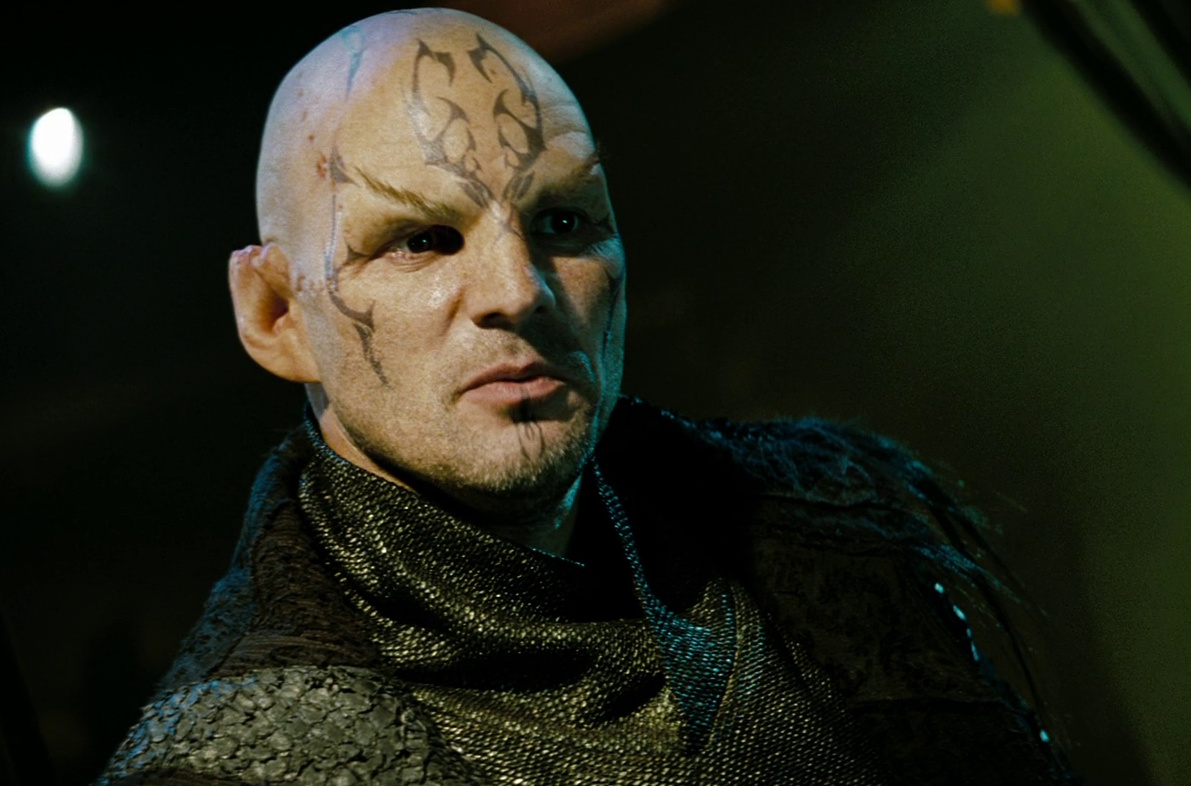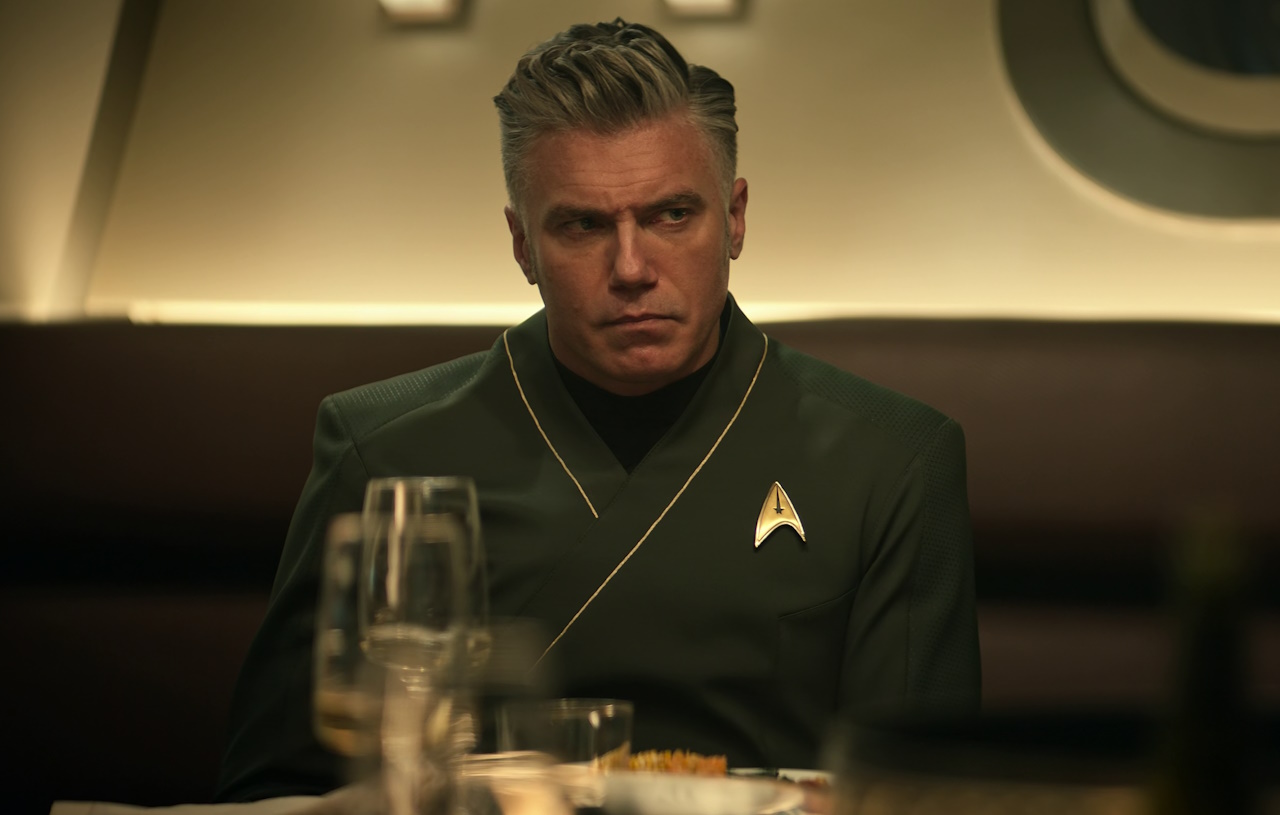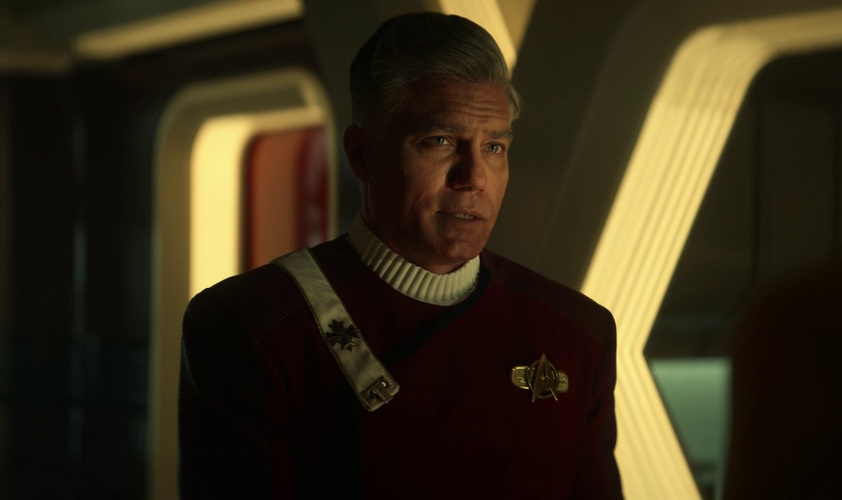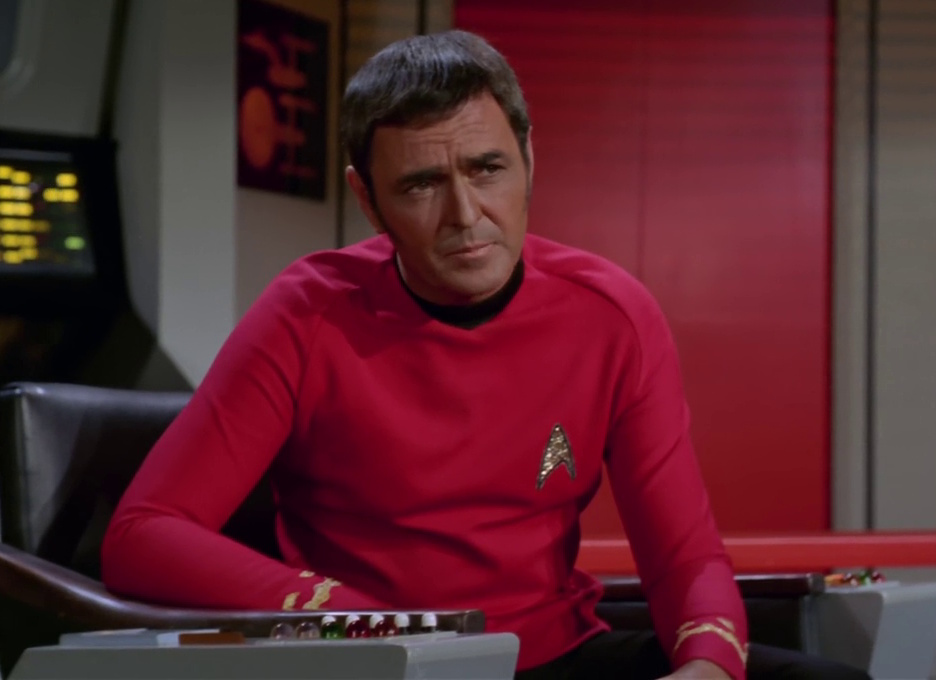
Star Trek: Khan – Thoughts on the Trailer

A Star Trek-themed spoiler warning.

Spoiler Warning: Beware potential spoilers for the upcoming Star Trek: Khan audio drama. Spoilers are also present for Space Seed, The Wrath of Khan, Into Darkness, Lower Decks, and Picard.

For a franchise which could be just a couple of years away from total cancellation, Star Trek had a lot to say at this year’s Comic-Con event! We’ve already covered the big Starfleet Academy news, which included a trailer and introductions to the main cast, as well as Year One – a pitch for a Strange New Worlds successor series. This time, we’re finally getting around to talking about Star Trek: Khan – an audio drama which will be released next month.

This is Star Trek’s first ever official audio drama – billed, for some reason, as a “scripted podcast.” I’m calling it an audio drama (because that’s what seems to be the best fit) but you might also consider it akin to a radio play or even an audiobook. In any case, it’s audio only – which is something new for Star Trek. Obviously there have been Star Trek audiobooks before, and there are fan-made audio dramas, too. But this is the first time Paramount has really pushed a brand-new Star Trek story in this format, and it’s an interesting choice.
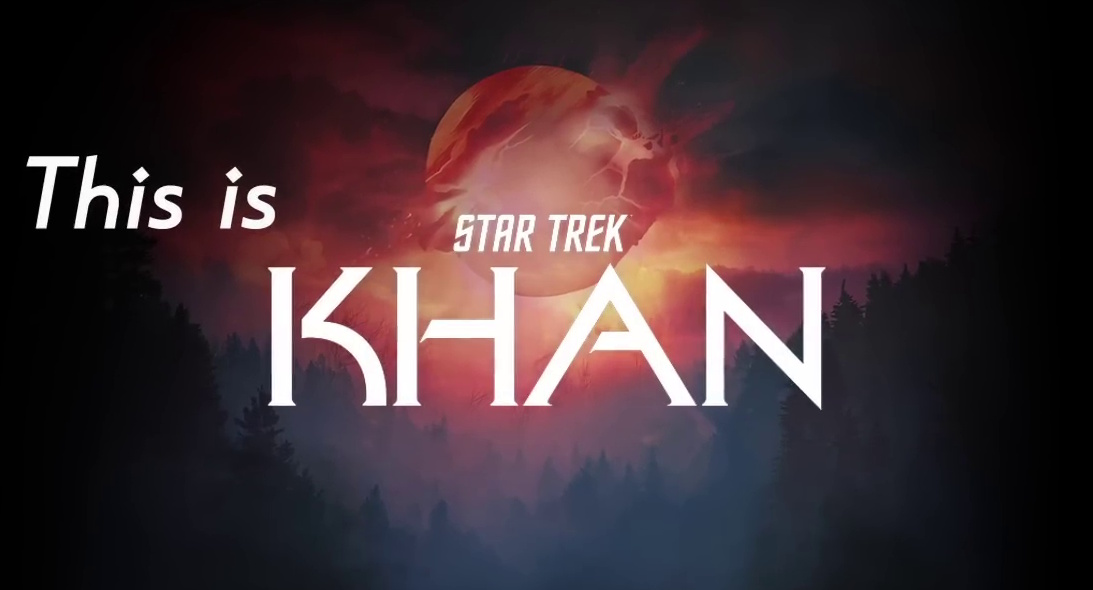
Still frame from the Star Trek: Khan trailer showing the audio drama's title.
Khan is coming soon!

Obviously the main factor here is money. Nicholas Meyer – who originally pitched this idea a few years ago – envisioned it as a miniseries, which is also a format Star Trek doesn’t have much experience with. Even if you aren’t sold on Star Trek: Khan as a concept, I still think there’s merit in the miniseries approach, and I’d hope it’s something Skydance/Paramount might consider in the future if and when a suitable story comes along. If Khan is a success, perhaps more audio dramas will be in the offing, too.

It’s been a while since we talked about this project, so let me bring you up to speed. Khan is set on the planet Ceti Alpha V in between the events of Space Seed – in which Khan awoke in the 23rd Century after years in suspended animation – and The Wrath of Khan. When the project was still little more than a rumour, I discussed it here on the website. This was in early 2021, and I said then that I felt this project – which was going by the working title Ceti Alpha V – looked set to tell the least-interesting chapter of Khan’s life. What could we learn from this story that we didn’t already know or couldn’t reasonably infer from Space Seed, The Wrath of Khan, and even Khan’s appearance in Into Darkness?
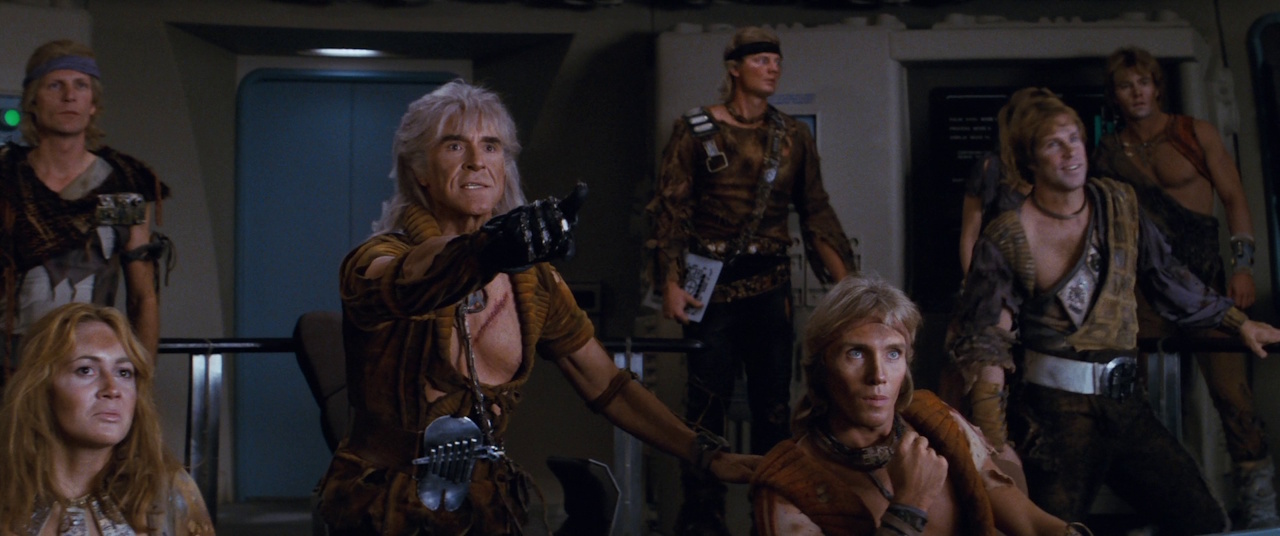
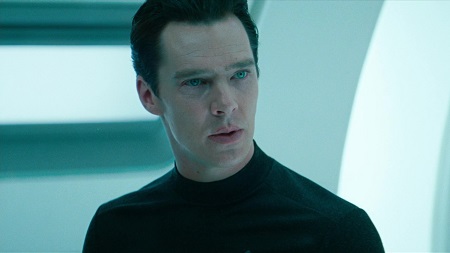
Still frame from Star Trek II: The Wrath of Khan showing Khan and his crew on the bridge of the USS Reliant.
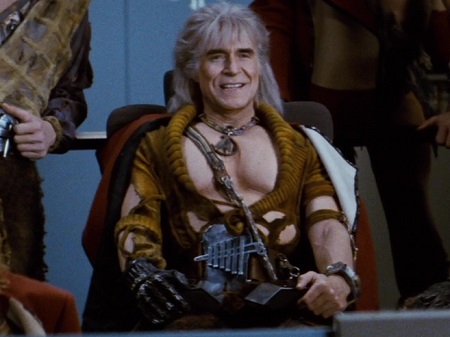
Khan with his crew in The Wrath of Khan.

When Khan switched from being a televised miniseries to an audio drama… I felt that was probably for the best. At Paramount’s “Star Trek Day” event in 2022, Nicholas Meyer took to the stage to announce that his project had been reworked into an audio drama. And I noted at the time that he didn’t exactly seem thrilled about that! Maybe I’m reading too much into this, but I noted in the Khan trailer that Meyer is no longer credited as one of the podcast’s writers, instead simply getting a “based on a story by” credit. Maybe Meyer was disappointed that his Ceti Alpha V idea didn’t proceed on television as he’d hoped. Or maybe changes were made to his original idea – which I doubt would’ve included Sulu and Tuvok!

In any case, Nicholas Meyer’s core idea is going ahead, but not in the format he intended and not with a script he penned. Personally, I think that’s worth being aware of; Meyer is a Star Trek legend. He wrote The Wrath of Khan, The Undiscovered Country, and also worked on The Voyage Home – three of the films fans rate most highly. It’s quite possible that, without Meyer’s work on The Wrath of Khan in particular, Star Trek would have struggled in the 1980s – and the franchise as we know it could very well not exist today. So to know that he had a script written, but his work has been changed substantially enough that he’s no longer credited as a writer… it gives me pause, at least.

Still frame from Paramount's Star Trek Day 2022 broadcast showing Nicholas Meyer announcing Star Trek: Khan.
Nicholas Meyer in 2022.

Let’s be positive, though, and talk about some of the things from the Khan trailer that I actually found interesting!

Firstly, the idea of a frame narrative is a fun one – and it’s also something that, because of the characters involved, could really only work in this audio format. Well alright, I guess it would’ve worked in animation, too! But bringing back George Takei to voice Sulu and Tim Russ to play Spock, with the frame narrative presumably set aboard the Excelsior… that’s a really fun idea. Both Takei and Russ have been back in modern Star Trek; Takei reprised his role of Sulu in Lower Decks, and Russ played a significant role in Season 3 of Picard.

I often see fans lamenting that we don’t know much about Star Trek’s “lost era;” i.e. the years in between The Undiscovered Country and The Next Generation. While probably right at the beginning of that time period, it seems as if Khan’s frame narrative will be set in the “lost era,” which is something kind of neat. I doubt we’ll get much of an exploration of the wider state of the galaxy! But it’s still nice to see a project being potentially set after The Undiscovered Country.
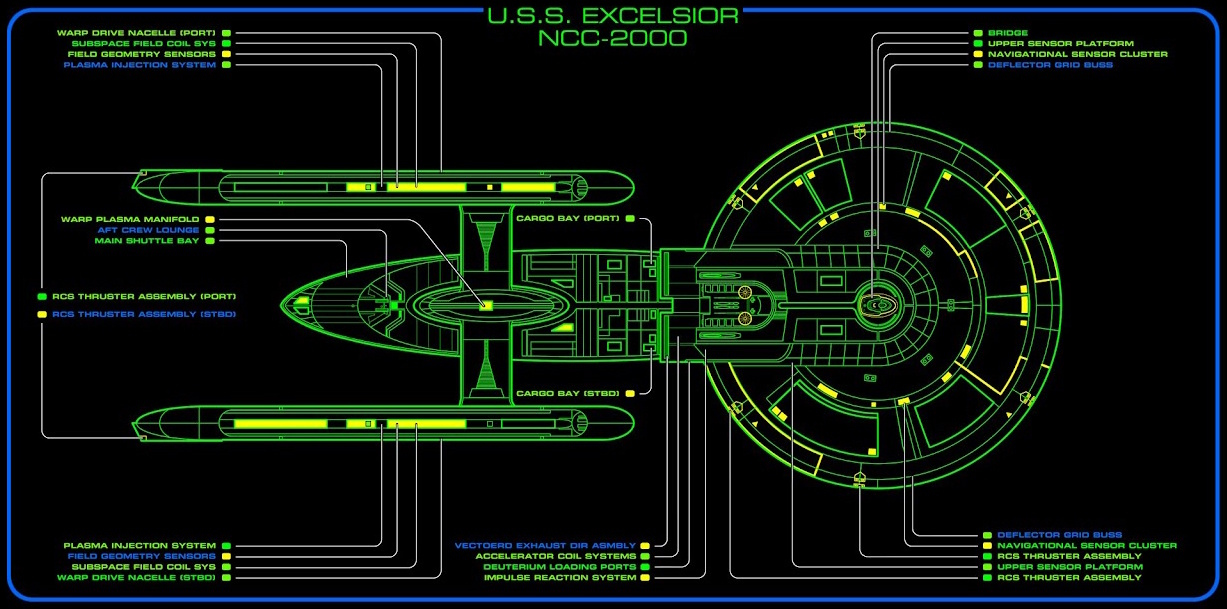
A graphic of the USS Excelsior's MSD.
Parts of Khan will be set aboard the Excelsior during Sulu’s time in the captain’s chair.

Tuvok’s inclusion is also a pretty deep cut to a single Star Trek episode! In 1996, Flashback was one of two stories created to celebrate Star Trek’s thirtieth anniversary. It delved into Tuvok’s backstory, depicting his time serving under Captain Sulu’s command aboard the USS Excelsior, and it was a pretty fun crossover. We got to see an expanded role for Janice Rand, picking up her story aboard the Excelsior, too, and another character from The Undiscovered Country – Dimitri Valtane. Though its “memory virus” storyline wasn’t the strongest, it’s still a fun episode, and we got to see some interaction between Tuvok and Sulu, as well as a brief moment with Janeway and Sulu, too.

It makes me feel so incredibly old to think that the 30th anniversary celebrations were almost 30 years ago! But I’m glad that Star Trek’s writers and creatives haven’t forgotten about Flashback; it’s a fun way to return to this era, an unexpected pair of legacy characters to include in a story like this one, and it might just give us a bit more information about Sulu’s time in the captain’s chair. I really like this part of Khan, even though it likely won’t be in focus all that much.
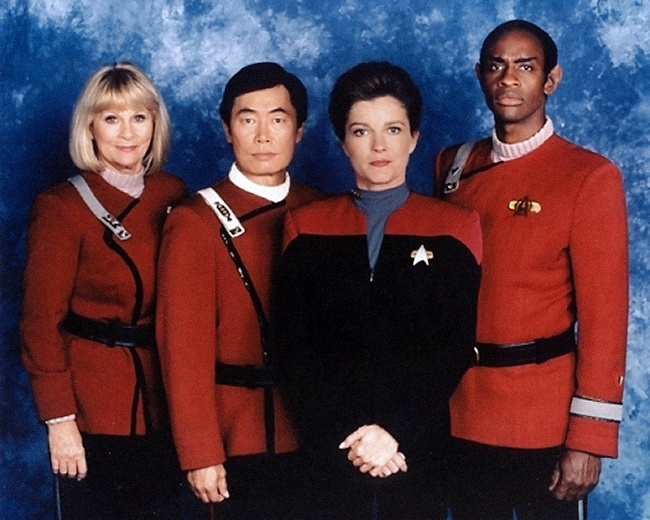
Promotional photo for Star Trek: Voyager Season 3, showing Rand, Sulu, Janeway, and Tuvok.
Promo photo released for Flashback in 1996.

Sulu was present, of course, during the events of Space Seed and The Wrath of Khan, which makes his inclusion here a neat little thread of continuity. Takei first played Sulu all the way back in 1966; to think he’s still involved with the character – and the Star Trek franchise – all these years later… it’s fun and also exceptionally sweet. Fans have been asking to see more of Captain Sulu for a long time; I remember on message boards and forums in the 1990s, a “Captain Sulu show” was often brought up as fans discussed fantasy Star Trek projects. Obviously Khan isn’t the same, but it’s not a million miles away, either, thanks to Takei’s involvement.

This is also potentially one of the last Star Trek projects to include a significant role for a performer from The Original Series, and I think we should acknowledge that. We’ve had Walter Koenig’s voice in Picard, archival recordings of a few characters in Short Treks and Prodigy, and Takei in Lower Decks as previously noted. But time moves ever onwards, and these opportunities are becoming scarce. Whether we ultimately like or dislike Khan, I think we can at least appreciate George Takei’s involvement and that we got one more adventure with Hikaru Sulu.
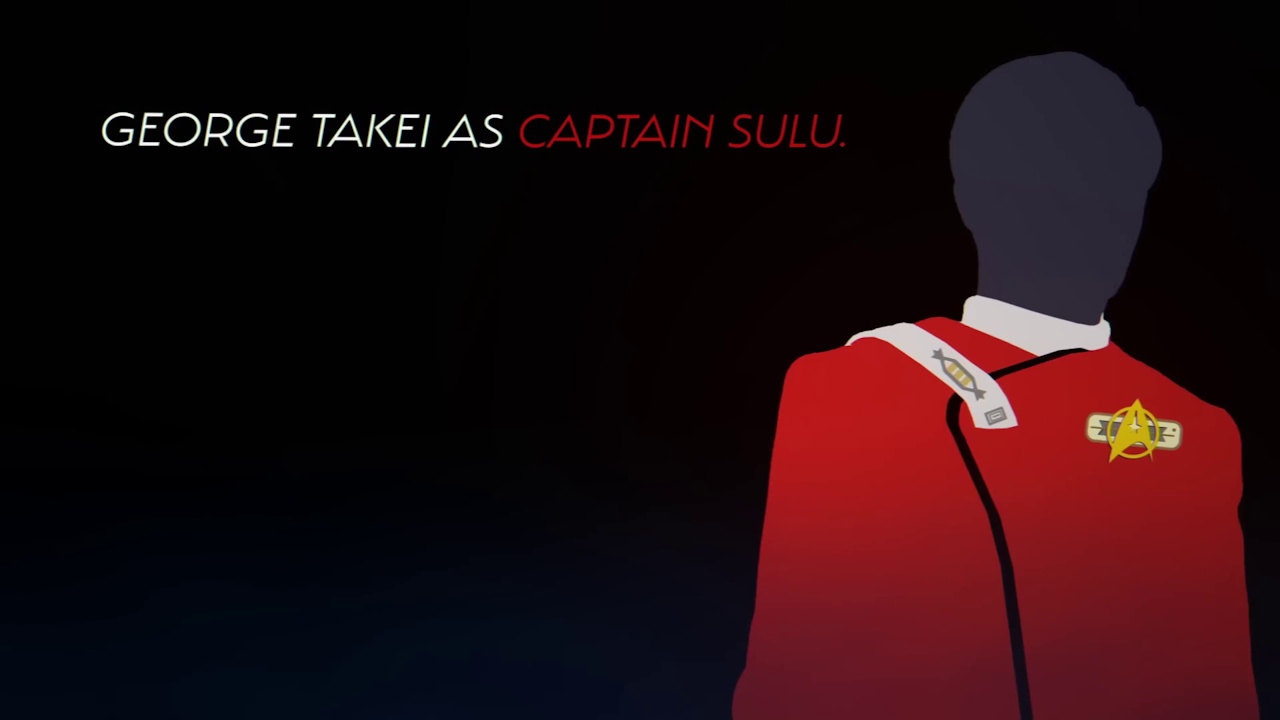
Still frame from the Star Trek: Khan trailer showing Sulu.
We’re getting one more adventure with Captain Sulu.

Naveen Andrews, best-known for his role on the TV series Lost, will take on the role of Khan. And this could be one of the best casting decisions in a long time! Andrews is a fantastic actor, and while we didn’t hear that much from him in the trailer, what little there was sounded fantastic. This feels like a truly inspired casting decision, and whatever the story may ultimately be, I’m certain that Naveen Andrews’ portrayal is going to be one of the highlights.

So there are positives as we look ahead to Khan’s release next month. Revisiting Sulu, entering the “lost era,” Tuvok’s return, and getting a new take on an iconic character by a fantastic actor… those are all points in the production’s favour. I also like the idea of Star Trek leaning into audio dramas and different kinds of projects as a way to potentially keep the franchise alive in the years ahead. If there isn’t the budget to commit to a full TV show or film, a radio play like this could be a great option to preserve Star Trek and ensure new stories are still able to be produced.
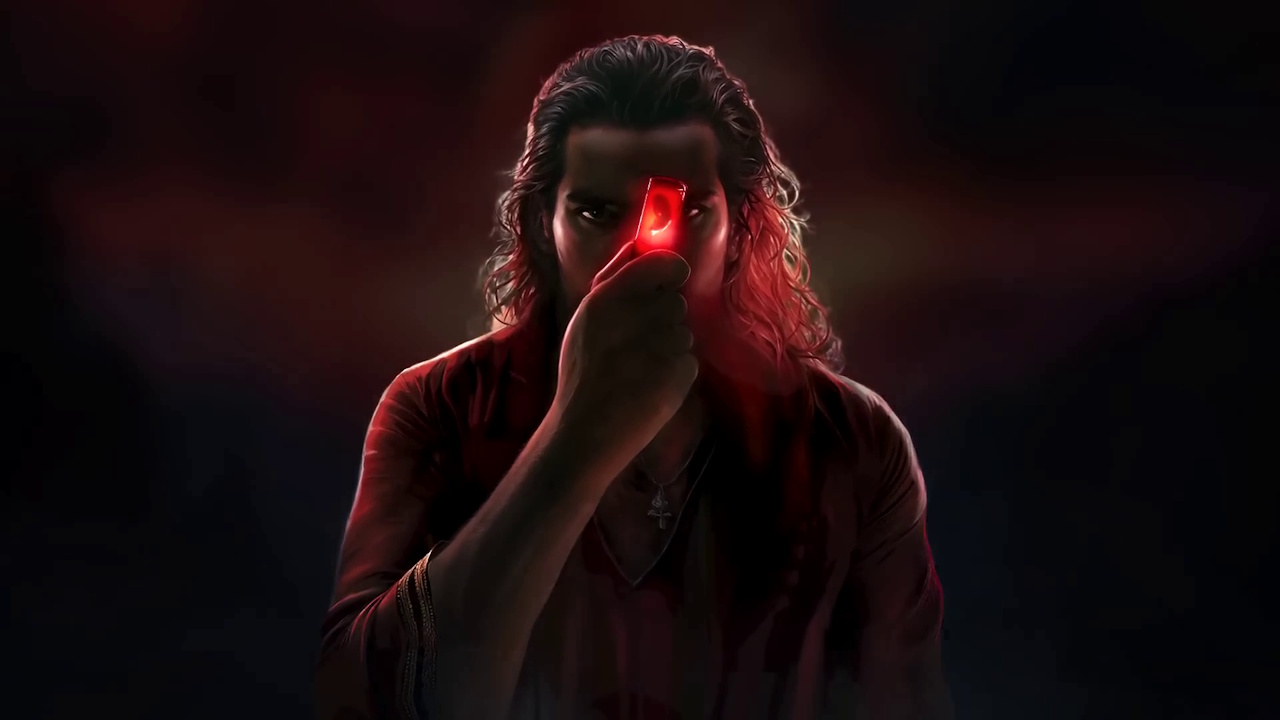
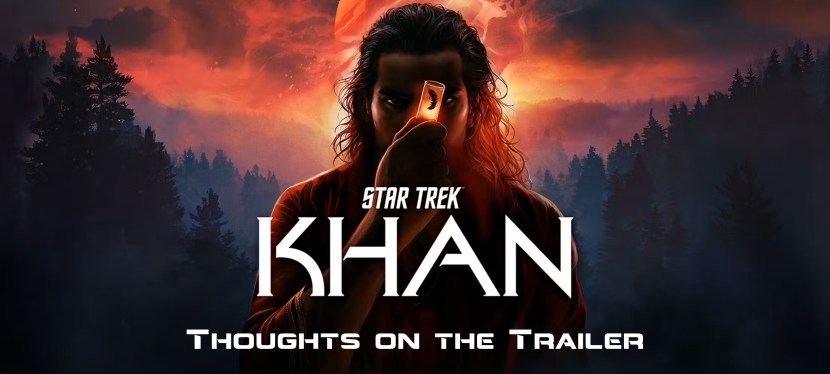
Still frame from the Star Trek: Khan trailer showing Khan holding a Ceti eel.
Khan with a Ceti Eel.

The main image shown off in the trailer – which looks like it could also be the “cover art” for the podcast – shows Khan holding a small vial. Inside that container is what looks like a small Ceti eel – the mind-controlling earwig-like creatures that Khan used on Chekov and Captain Terrell in The Wrath of Khan. The film made it clear that Khan already knew all about these creatures, so perhaps part of the audio drama will depict Khan and his crew studying them.

Not every alien in Star Trek requires a deep dive, and as with Khan himself, I think we know enough about the Ceti eels from the film to understand what they are, how they operate, and why Khan would be so fascinated by them! But I’m always up for an exploration of Star Trek’s alien life, and perhaps there could be a way to connect Khan’s time on Ceti Alpha V and/or the Ceti eels to other parts of Star Trek. Making those kinds of connections could be fun, and just exploring the anatomy of the Ceti eels could also be interesting if it’s handled well.
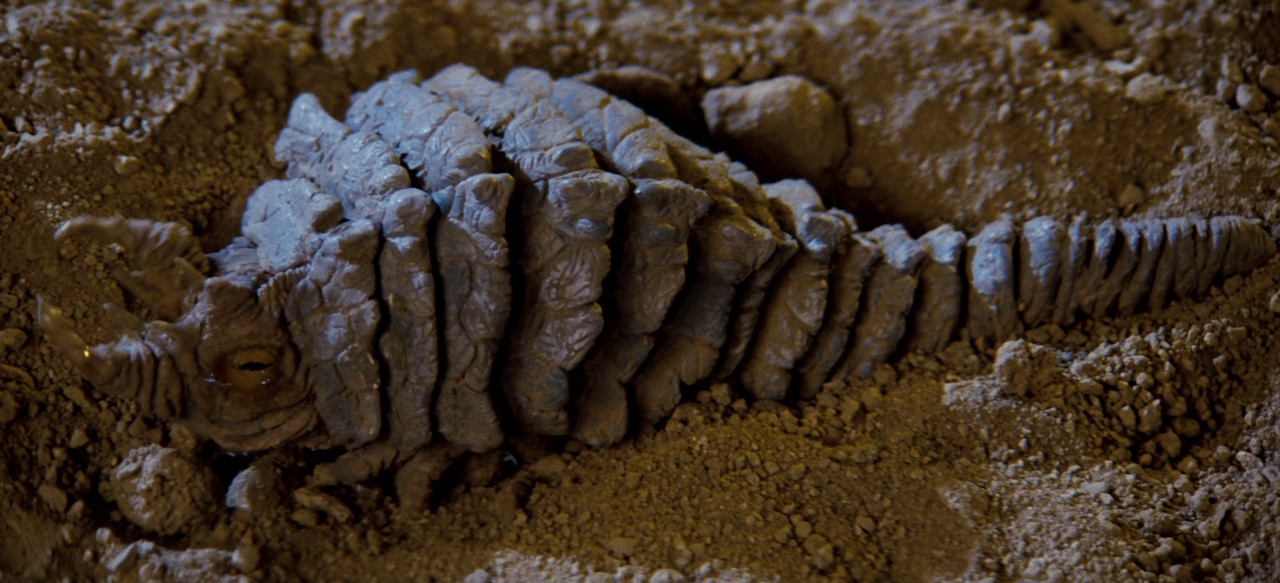
Still frame from Star Trek II: The Wrath of Khan showing a Ceti eel.
A Ceti eel as seen in The Wrath of Khan.

With all of that being said, nothing in the Khan trailer really convinced me that I was wrong in my earlier assessment: that this audio drama won’t be telling the least-interesting chapter of a story where we’ve already seen the beginning, the end, a prequel, a reimagining, and basically all of the good parts. There’s a real danger that what we’ll get will be akin to the Obi-Wan Kenobi miniseries over in the Star Wars franchise: the absolute worst kind of tacked-on story that feels like cheap fan-fiction. Khan could, perhaps, even prove harmful to Space Seed and The Wrath of Khan if – just as an example – we get some kind of storyline that sees Khan leave the planet, track down Kirk, and battle him in a one-on-one duel.

Furthermore, the trailer added another element which I hadn’t previously considered could be part of a Khan story, and it’s really making me concerned. In the trailer, the new character of Dr Lear says that “the logs I retrieved on Ceti Alpha V only confirm my belief that Khan was much more than a mad tyrant.” But… Khan *is* a mad tyrant; that’s who he is. He’s a narrative warning against eugenics and genetic engineering by showing how badly wrong it could go. And in 2025, when we’re seriously considering the possibilities of artificial intelligence and inventing a sentient life-form that could be intellectually superior to humanity… there’s a message in Khan’s story that’s still incredibly relevant.

Still frame from the Star Trek: Khan trailer showing a quote from Dr Lear.
This statement from Dr Lear has me concerned…

I’m worried that Khan will go out of its way to humanise this villainous character – and in doing so, rob him of what made him so powerful, so intimidating, and such a good character in the first place. We don’t need a story about how Khan was actually a misunderstood “nice guy” who just wanted what’s best for his friends. Maybe that’s how Khan saw himself, in part, but it isn’t how we as the audience need to see him. And we don’t need a story told partly from his perspective to understand who he is, how he thinks, or why he behaved the way he did. All of the necessary pieces to understand Khan were present in Space Seed and The Wrath of Khan, and were added to on somewhat in Into Darkness.

It can be fun, sometimes, to flip the script and look at things from the villain’s point-of-view. And some Star Trek stories are all about that – presenting the Federation as being in the wrong, showing why hostile aliens act the way they do, and so on. That’s been present going all the way back to The Original Series. But some villains are just villains – and trying to soften them, present their side of the story, or show them as being “in the right” ruins not only the character, but the story, too. And I am genuinely worried that this attempt to present Khan as a more complex, nuanced, and dare I suggest human individual won’t actually add much to Star Trek – and risks seriously undermining one of its best stories.
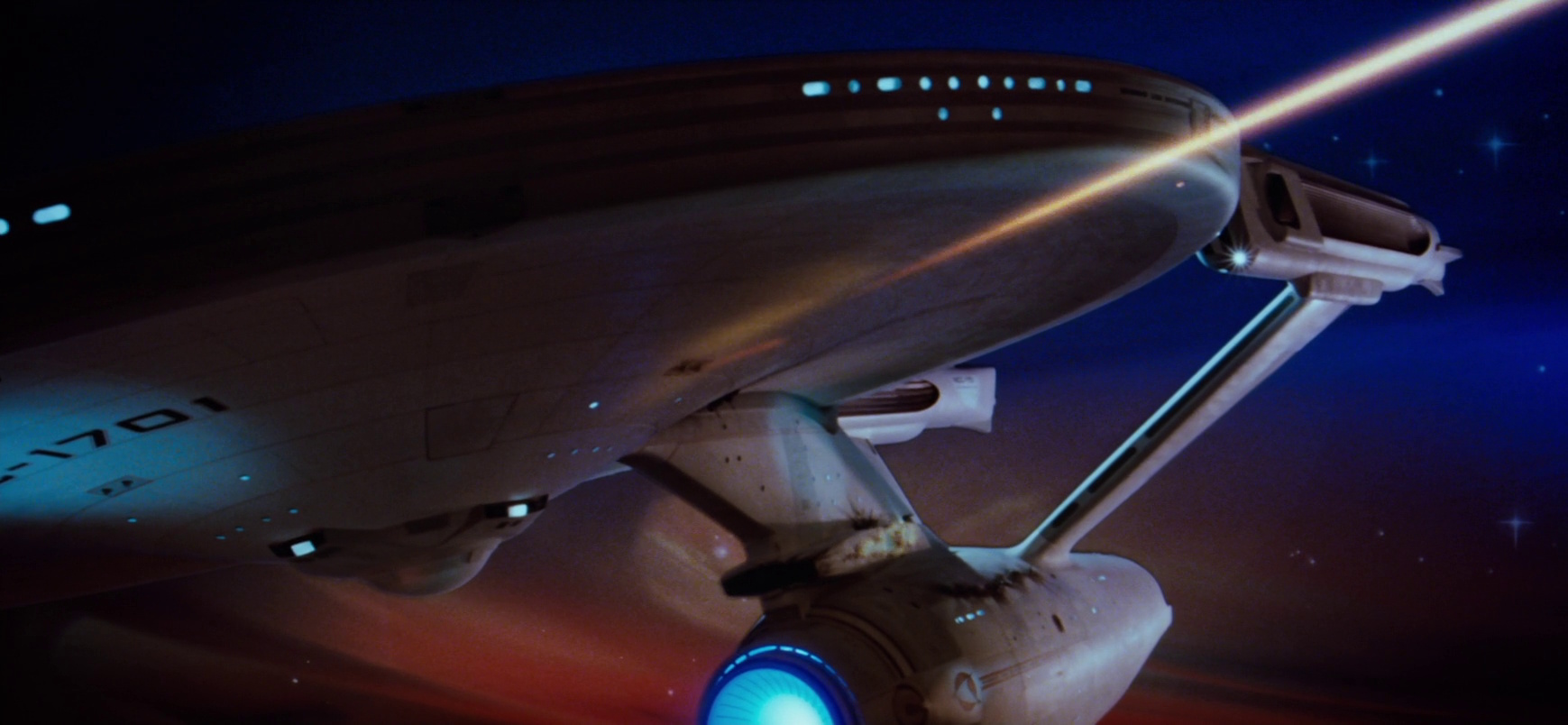
Still frame from Star Trek II: The Wrath of Khan showing the Enterprise during the battle in the nebula.
The Enterprise in The Wrath of Khan.

This was always going to be a potential pitfall – and it’s one of the reasons why I was never keen on the Khan idea when it was first pitched. But hearing this new character in the trailer talking about there being “more to the story,” and how Khan was “so much more” than what we’ve seen… it’s really making me nervous about the direction the audio drama is going to take. If Dr Lear ends up as a kind of villain – perhaps someone who’s fallen for Khan’s posthumous propaganda – then maybe we can look on this narrative thread more kindly. But if the story’s going to try to present Khan sympathetically, and Dr Lear as being right about him all along… where does that leave Tuvok and Sulu?

I doubt a lot of Trekkies would be thrilled if Sulu’s return is turned into some kind of story about how *he’s* the one in the wrong, how he and Tuvok unfairly judged Khan, and how Khan was really just a big misunderstood cuddle-buddy. That… that wouldn’t be great. And while I could be completely wrong, the tone of the trailer – and Dr Lear’s comments in particular – seem to be hinting at a story which could go in that kind of direction.
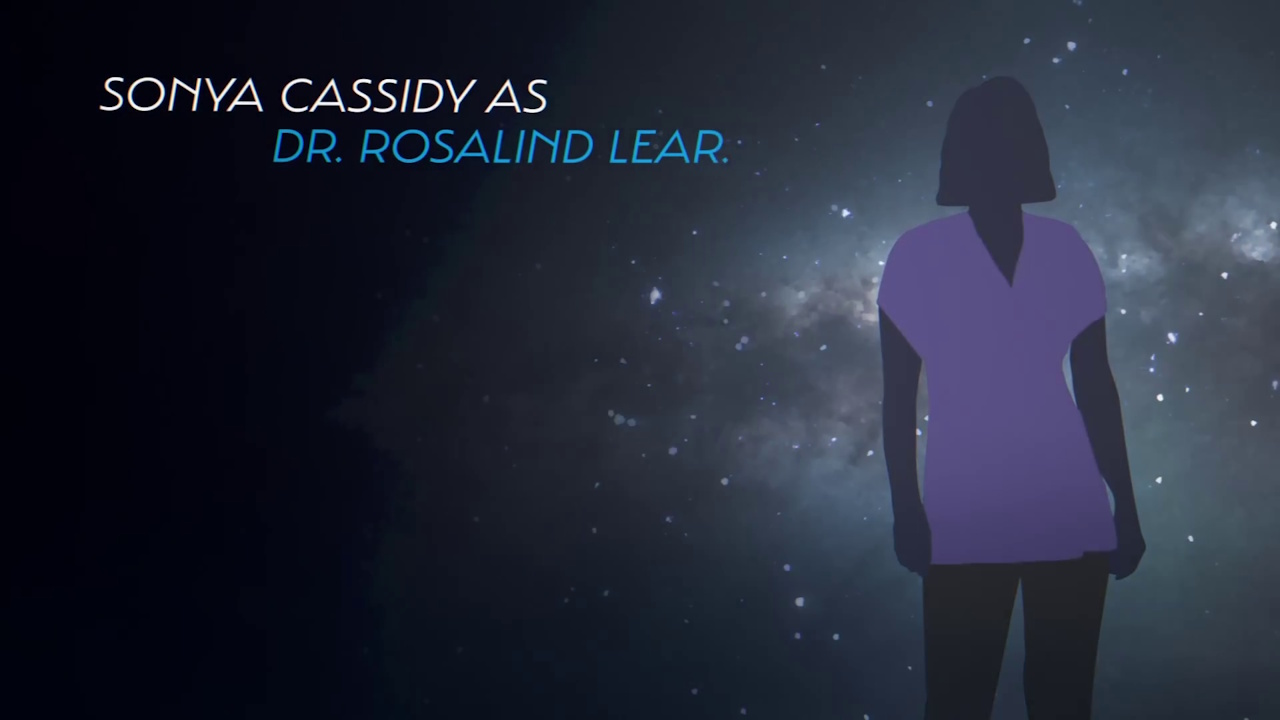
Still frame from the Star Trek: Khan trailer showing Dr Lear.
Dr Lear is a new character created for Khan.

What I will say on that side of things, though, is that Starfleet does bear some responsibility for what happened to Khan and the Botany Bay survivors. After marooning them on Ceti Alpha V, it seems as if Starfleet just abandoned them to their fate. Worse, Starfleet doesn’t even seem to have kept proper records of the Ceti Alpha system, despite the dangers Khan and his augments were known to pose. How else do we explain the crew of the USS Reliant being totally unaware of the Botany Bay until after beaming down to Ceti Alpha V? In the eighteen years Khan and his people were stranded, not one Starfleet vessel visited to check up on them.

If there’s any room for nuance in Khan’s story, it’s here. Starfleet was either incompetent or downright malicious in its treatment of Khan and his people, stranding them on a hostile planet – uninhabited by sentient life, yes, but with a complete ecological system of its own – and then abandoning them. No one cared enough to check in on them, even though surely the Ceti Alpha system was close enough to Federation space that something as major as the destruction of an entire planet would have been noticed.

(Speaking of which, why could no one aboard the USS Reliant count to six?)
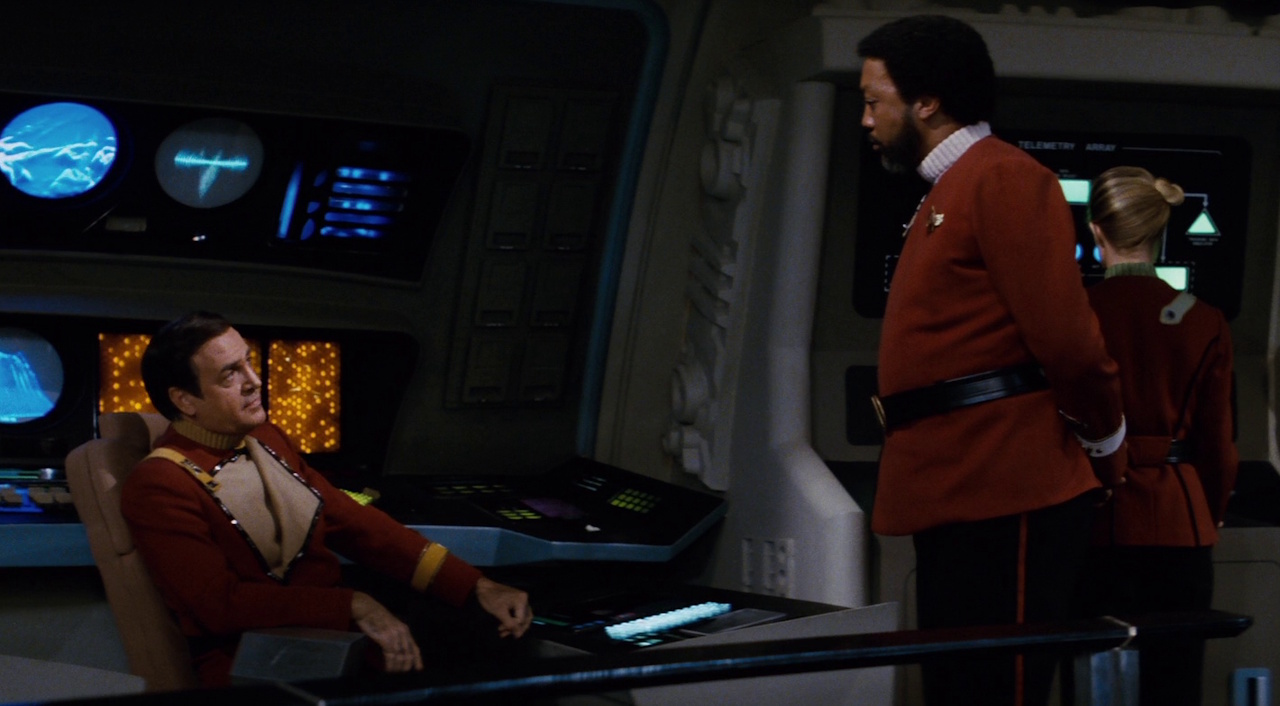
Still frame from Star Trek II: The Wrath of Khan showing two Starfleet officers on the bridge of their ship.
Captain Terrell with the USS Reliant’s science officer.

Then there’s Kirk’s role. The trailer mentioned Kirk by name – though he better not actually appear in the production; god help us if he does – and I guess we’re going to see more of Khan’s revenge obsession in the years before The Wrath of Khan. If we take our criticism of Starfleet and pin it on one person, could this audio drama focus in on Kirk’s role? Maybe Kirk neglected to tell Starfleet about Khan and what happened during Space Seed. Maybe no one except for the Enterprise crew ever knew that the augments were marooned there. If that’s the case, maybe Khan’s desire for revenge takes on a slightly different feel. If Kirk had logged what happened correctly, maybe someone would have swung by the Ceti Alpha system to check on Khan.

That’s just a theory, though I think it shows how difficult it may prove to thread the needle on this kind of “mid-quel” story. Anything we learn about Khan, Kirk, or anyone else has to fit with Space Seed and The Wrath of Khan, and mustn’t tread on their toes. That’s not an easy thing to do… and there are examples from other franchises – and from within Star Trek – showing just how badly things can go wrong when attempting this kind of story.
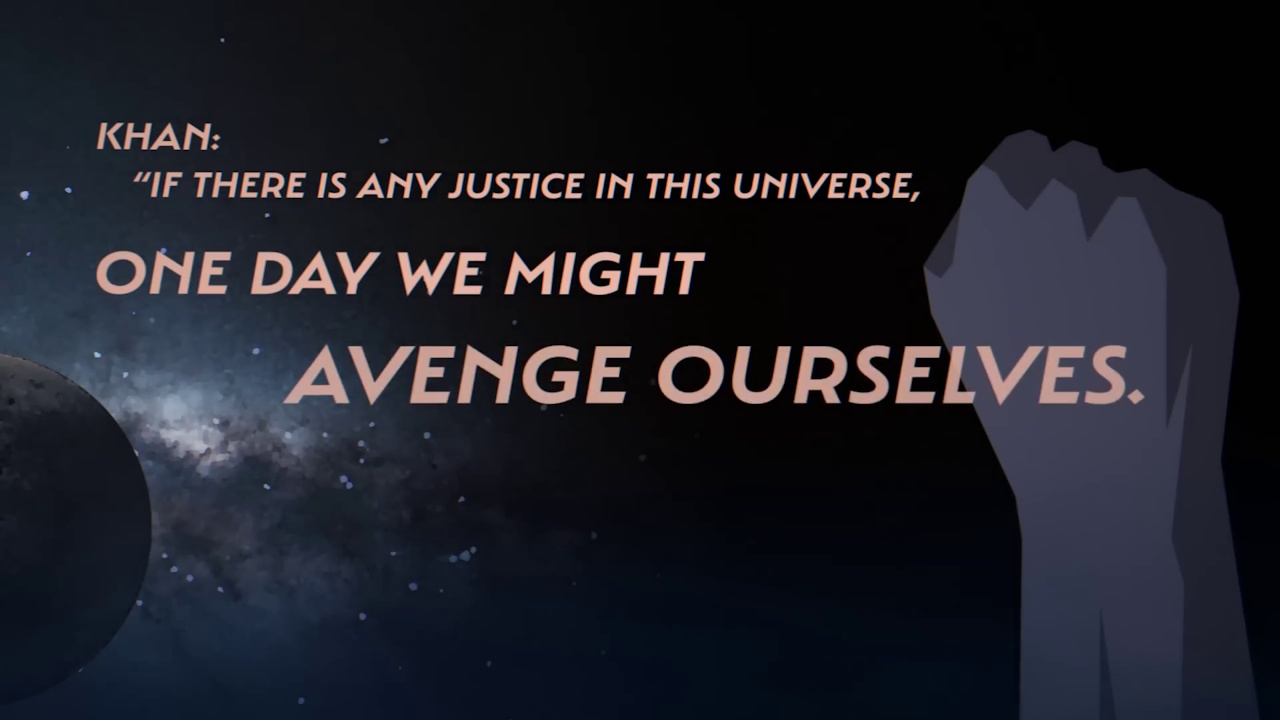
Still frame from the Star Trek: Khan trailer showing a quote from Khan and a raised fist.
Khan wants revenge on Captain Kirk. Who would’ve guessed?

Returning to Dr Lear, her statement that “monsters are made, not born” is another line I’m concerned about. This ties into what we were talking about; how the story could be an attempt to show Khan’s perspective and how Starfleet and Kirk were the ones in the wrong. Obviously Khan believes that – we knew that during The Wrath of Khan. But do we actually need a full audio drama dedicated to explaining that idea in more detail? And can it be done without detracting from Khan’s characterisation in those earlier stories? I’m afraid I’m still not convinced.

So let’s wrap things up.

Star Trek: Khan will premiere on the 8th of September – Star Trek Day. It’ll run for nine episodes, with the finale airing in early November. I plan to tune in, even though I’m not really sold on the premise, nor on some of what we saw in the trailer. At this stage, I don’t intend to review individual episodes, but I’ll hopefully be able to write up a review of the full audio drama once it’s aired. Check back in November for that!
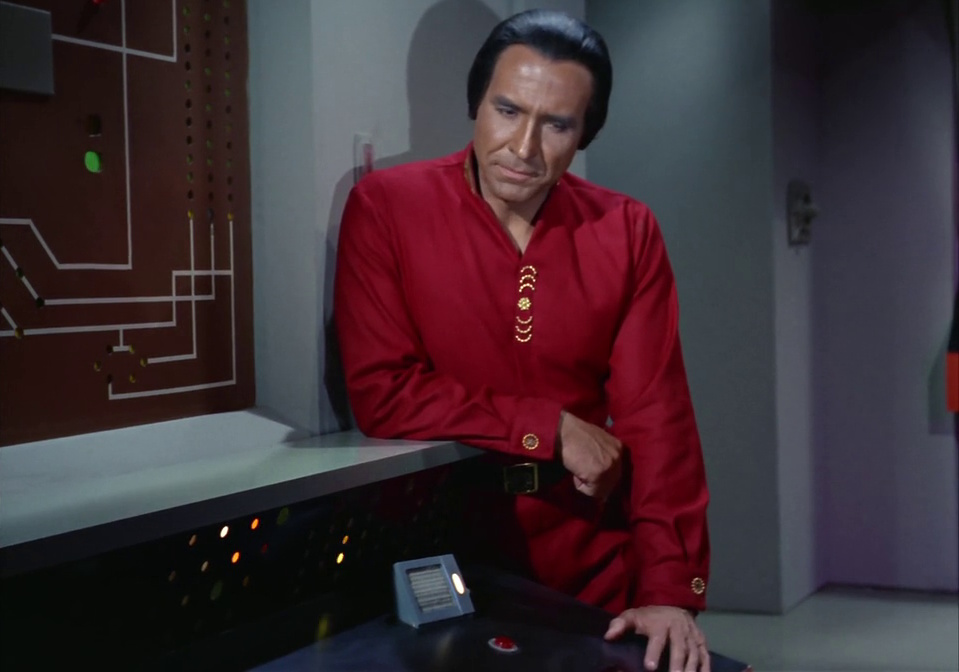
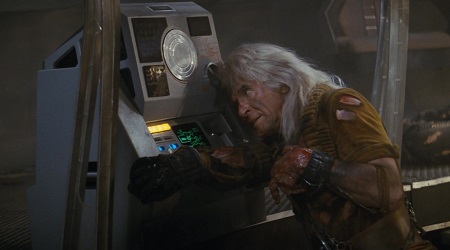
Still frame from Star Trek: TOS 1x22: Space Seed showing Khan in engineering.
Khan in Space Seed.

I wouldn’t have given the green light to this project, either in this audio form or as its original miniseries pitch. But I’m not writing it off just yet, and there are reasons to be hopeful… or at least a bit less pessimistic! I often say that “no one asked for this” is a terrible argument, and often the best productions are those that “no one” seemed to be interested in at first. It’s with that attitude that I plan to approach Star Trek: Khan, and I’ll do my best to give it a fair shake despite my misgivings.

I hope this has been interesting! I think we’ve finally covered all of the big Comic-Con news, now. If you haven’t checked in for a while, I’m back to writing weekly Strange New Worlds episode reviews – we’re almost halfway through Season 3 already, if you can believe that! And there’s more Star Trek content to come here on the website in the weeks ahead.

See you on Ceti Alpha V!


Star Trek: Khan will premiere as a scripted podcast/audio drama on multiple podcast platforms on the 8th of September 2025, with further episodes to follow weekly. Star Trek: Khan, and all other properties discussed above, are the copyright of CBS Studios, Paramount Global, and/or Skydance. This article contains the thoughts and opinions of one person only and is not intended to cause any offence.
Ten More Things That Have Always Bugged Me In Star Trek

A Star Trek-themed spoiler warning graphic.

Spoiler Warning: There are spoilers ahead for the following Star Trek productions: The Original Series Seasons 1 & 3, The Wrath of Khan, The Next Generation Season 1, The Undiscovered Country, Enterprise Seasons 2 & 3, Star Trek 2009, Discovery Seasons 2 & 4, Strange New Worlds Season 1, and Section 31.

Last year, I wrote up a tongue-in-cheek list of some of the little things that have always bugged me in Star Trek! Today, I thought we could have a little bit more fun at the franchise’s expense by talking about a few more. These are incredibly small things that don’t even rise to the level of “nitpicks,” but every time I see or hear them in their respective stories, they bug me! I know none of them will ever be explained in canon – nor do they really need to be – but I hope you’ll forgive an old Trekkie for airing their thoughts!

Star Trek fans have a bit of a reputation – especially on fan sites like this one – for nitpicking and being sticklers for canon and internal consistency, and I’m acutely aware that that’s how this list could come across. For me, this is written with tongue firmly embedded in cheek – it’s not meant to be taken completely seriously. While I do concede that all of these things “bug me,” as the title says, none of them ruined my enjoyment of any film or episode. These are minor things that aren’t worth arguing about or getting upset over – and I share this piece with the fan community in that spirit.

Promotional photo of several main characters from Star Trek: Enterprise, circa 2001.
Several main characters from Star Trek: Enterprise.

A couple of important caveats before we go any further. All of this is the entirely subjective opinion of a single Star Trek fan. If I raise points you vehemently disagree with, if none of these things bothered you, if you think I’ve misunderstood something, or if you feel I’m overreacting… that’s okay! There’s room enough in the Star Trek fandom for polite discussion and differences of opinion. And as I said above, none of this really matters anyway as these are all exceptionally minor points.

Finally, I’m not counting out-of-universe explanations. “It’s just a story,” or “because the writer/director wanted to do things that way” do not count! Sometimes, in order to tell a more entertaining story, the minutiae of canon or some element of internal consistency has to get pushed aside – that’s the way it goes in the world of entertainment. But that’s not what we’re here to talk about on this occasion.

Phew. With all of that out of the way, let’s jump into the list.

Number 1:
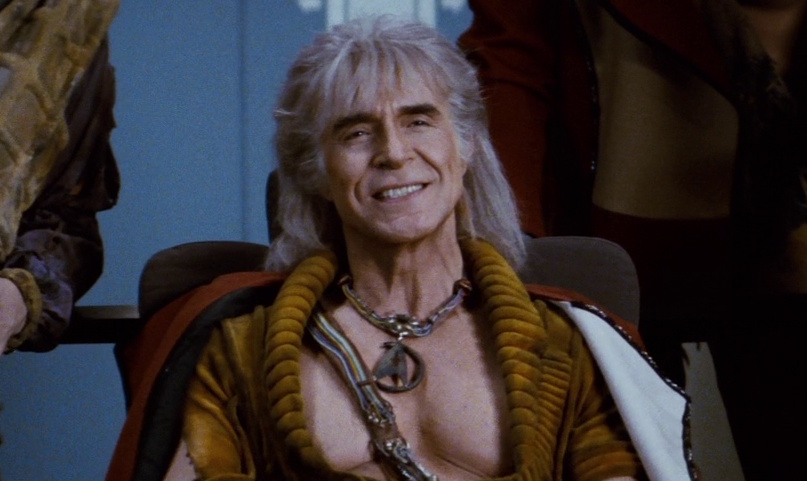
Why did Khan have a Motion Picture/Wrath of Khan-era Starfleet badge? Where did he even get it?
Star Trek II: The Wrath of Khan

Still frame from Star Trek II: The Wrath of Khan showing a close-up of Khan aboard the USS Reliant.
Khan sporting his famous necklace.

Look at Khan’s outfit when Chekov and Captain Terrell encounter him and his surviving crewmates on Ceti Alpha V. After he takes off his overcoat, Khan is wearing a necklace which appears to be made from a damaged Motion Picture-era Starfleet badge – or a monster maroon belt buckle, perhaps. But how did he acquire this item? Khan and his people have been marooned on the planet since the time of The Original Series – years before either of those uniform styles were in use.

If Khan was wearing a piece of a Starfleet uniform, surely he should be wearing one of the gold, red, or blue shirts that we’re familiar with from The Original Series – or perhaps a pair of Starfleet boots from that era! It’s always stood out to me as a bit of an oddity of apparel; when you look at his necklace more closely, it’s clearly worn and weathered indicating it’s something he’s kept for years – perhaps as a symbol of his quest for vengeance against Kirk and Starfleet. But given that no Starfleet ships visited the Ceti Alpha system in between the events of Space Seed and The Wrath of Khan, it’s an item he simply shouldn’t have had access to.

Still frame from Star Trek II: The Wrath of Khan showing Khan, Chekov, Captain Terrell, and several augments aboard the derelict Botany Bay.
Khan was already wearing the necklace when Chekov and Terrell arrived.

If Khan started wearing the necklace after his encounter with Chekov, I’d say that he took the piece from him or from someone else on Reliant’s crew. But he clearly converted part of a Starfleet uniform into this necklace during his time on the planet, before his meeting with the crew of the Reliant – so that explanation doesn’t work.

There’s no getting around the simple fact that Khan shouldn’t have this badge or belt buckle. Nothing like it was seen in The Original Series, and even if we extend our search to other 23rd Century shows like Discovery or Strange New Worlds, very generously assuming that another Starfleet vessel visited Ceti Alpha V before the destruction of Ceti Alpha VI, there are still no comparable badges, buckles, or anything with a Starfleet delta of the right shape and size for Khan to convert into a necklace. Unless he used his people’s very limited resources to smelt a perfect Starfleet delta the exact same shape and size… I don’t know where he got it from!

Number 2:
Aren’t the Cherons (or Cheronians) extinct?
Star Trek: Section 31

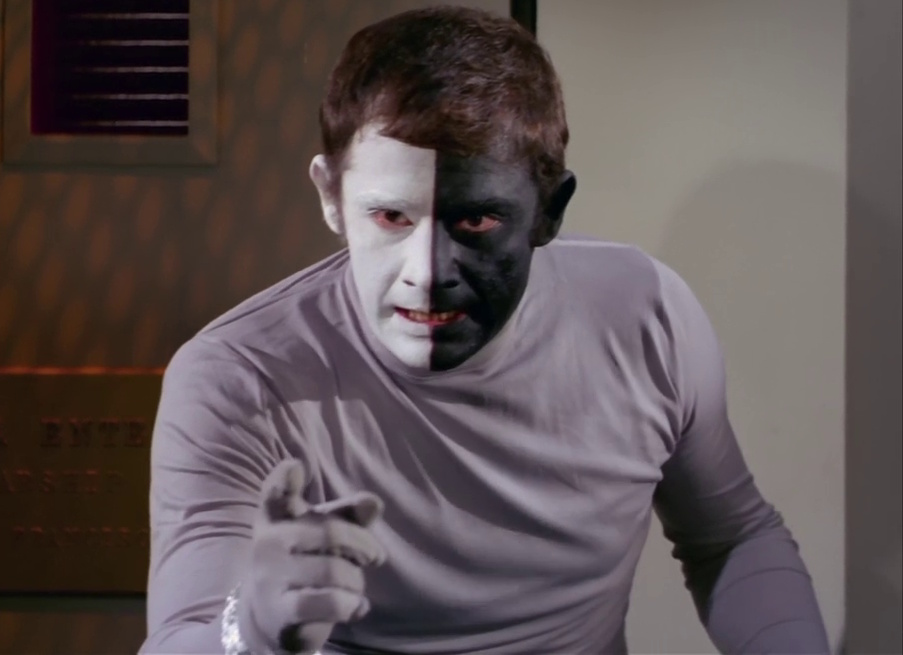
Still frame from Star Trek: The Original Series Season 3 showing Lokai, a black-and-white alien from the planet Cheron.
Lokai, one of the last surviving members of his race.

In the recent Section 31 TV movie (which you can read a review of by clicking or tapping here) we meet a character aboard Georgiou’s space station who looks very similar to a Cheron/Cheronian. The Cherons were encountered in the iconic episode Let That Be Your Last Battlefield – where the final two members of the species met Kirk and the crew of the Enterprise.

I like Let That Be Your Last Battlefield, and it’s an episode with a disappointingly timeless message about how racism and division will eventually lead to conflict, war, and extinction. The entire point of the story was that the Cherons wiped themselves out because they couldn’t get over their hatred of one another – even though, to us, they appeared to be the same species. It’s a message that was poignant at the time it was written – with the American civil rights movement ongoing – and has remained so to this day.

Still frame from Star Trek: Section 31 showing the character of Virgil.
Is Virgil from Section 31 meant to be a Cheron?

Section 31 confused me with its Stardate and therefore its place in the timeline – but no matter whether it was meant to be set in the mid-23rd Century or the early 24th Century, there simply shouldn’t be any surviving Cherons left. If Section 31 takes place before Let That Be Your Last Battlefield, then I guess technically two members of the species remain. But if, as the producers have told us, the film takes place in between The Undiscovered Country and The Next Generation, then the entire species is extinct – wiped out because they couldn’t overcome their hatred for one another.

Of all the things modern Star Trek could’ve chosen to retcon… the survival of the Cherons isn’t one I’d have wanted to see. It serves no purpose to bring in a character like that as a one-off campy joke, and furthermore, it undermines the powerful message of a classic story. My personal head-canon (which I really should write up one day) is that this character at Georgiou’s bar wasn’t actually a real Cheron, but someone basically cosplaying as one. I think that’s actually the least-bad spin I can put on the matter!

Number 3:
Does the Enterprise-D’s saucer section have warp drive or not?
Star Trek: The Next Generation

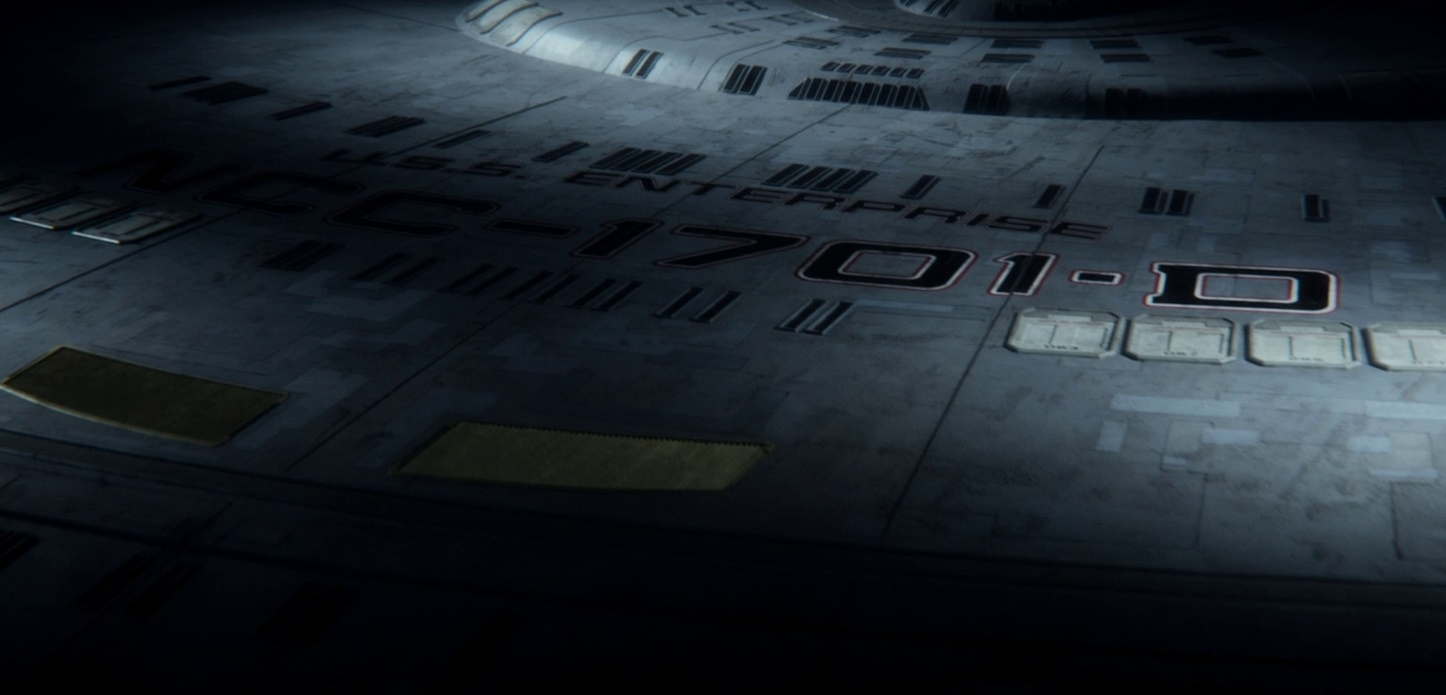
Still frame from Star Trek: Picard Season 3 showing a close-up of the Enterprise-D's saucer.
Close-up of the Enterprise-D’s saucer section.

According to most sources I can find – including in episodes where saucer separation occurs or is mentioned – the Enterprise-D’s saucer section has impulse engines only. Impulse engines allow for travel at speeds below warp one – i.e. below the speed of light. But this seems to contradict not only what we see on screen in episodes like Encounter at Farpoint… but the entire point of saucer separation as it’s explained in the show.

Except for situations like a warp core breach, where the destruction of the ship is imminent, what’s the main purpose of saucer separation? As stated in Encounter at Farpoint, The Best of Both Worlds, and other episodes, the star-drive section is where most of the Enterprise-D’s heavy armaments are – so the point of saucer separation is to evacuate civilians, scientists, and other non-combatants. The saucer section can be commanded by a junior officer with orders to set course for the nearest safe system or starbase, getting families and scientists out of the danger zone or battlefield. The star-drive section is then free to engage the enemy.

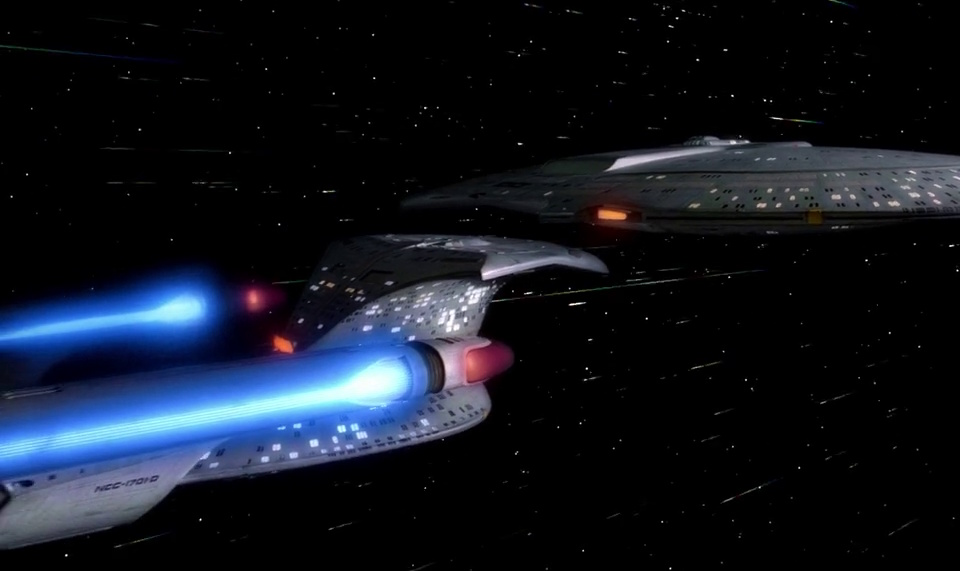
Still frame from Star Trek: The Next Generation Season 1 showing the Enterprise-D initiating a saucer separation.
Saucer separation in progress.

But at sub-light speeds, this won’t work. Any enemy ship could easily catch up to and overtake a fleeing saucer section travelling at impulse, or hit it with a torpedo or disruptor blast while it’s still in range. And at impulse speeds the saucer section would be decades away from help even if it was relatively close to a friendly base or star system. That’s not to mention that, in Encounter at Farpoint, the saucer section travels an apparently sizeable distance under its own power to reach Deneb IV after the encounter with Q. The Enterprise-D was at warp – apparently not in the Deneb system – yet the saucer was able to travel all that way, either at warp or at faster-than-light speeds, which seems to contradict what we know of the Enterprise-D and its capabilities.

So does the saucer section have warp engines? Or if saucer separation happens at warp, can the saucer cruise at warp for a while before slowing down? I think that contradicts what we know of how warp drive works and how warp bubbles are generated and sustained by warp cores… but there’s at least a degree of ambiguity there, I guess. What still doesn’t make sense, though, is how launching the saucer section at sub-light speeds is supposed to help the ship’s civilian crew escape from danger in a galaxy populated by warp-capable villains.

Number 4:
Why can’t the crew of the USS Reliant count to six?
Star Trek II: The Wrath of Khan

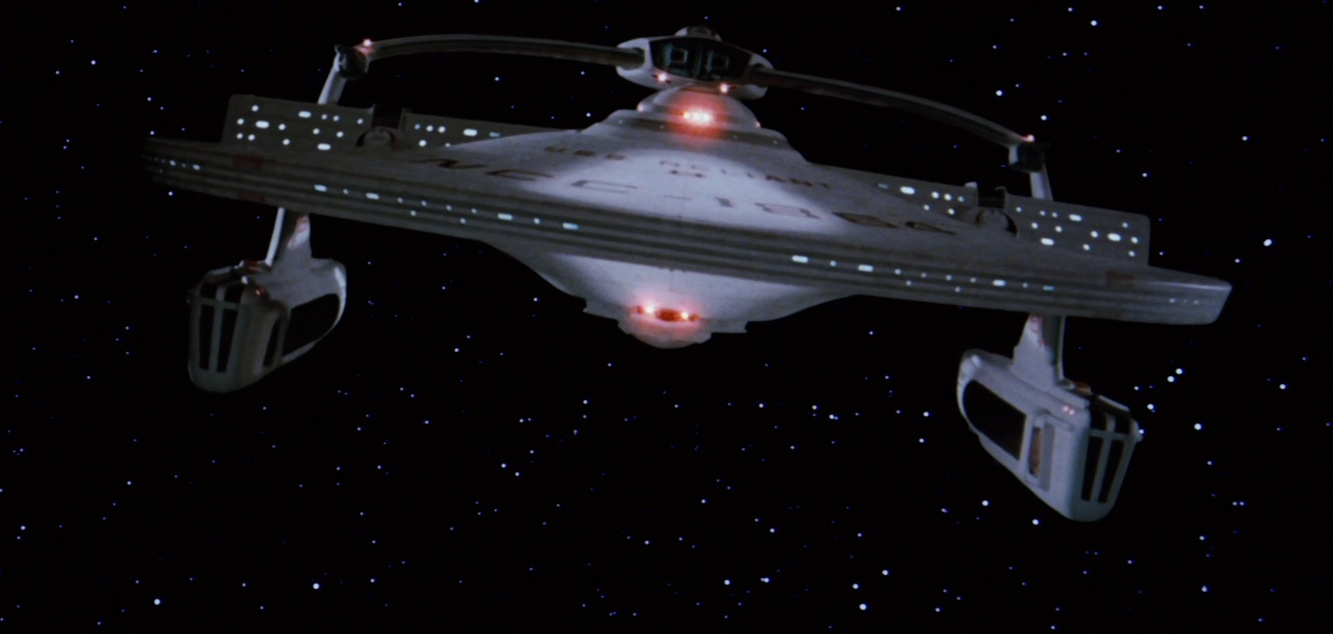
Still frame from Star Trek II: The Wrath of Khan showing the USS Reliant head-on.
The Miranda-class USS Reliant.

I know, I know: we’ve done The Wrath of Khan already! But this one really is dumb if you stop to think about it, so it’s definitely making the list. When the USS Reliant was scouting for planets as part of the Genesis project, it entered the Ceti Alpha system – a system that Starfleet has visited at least once before. The crew knew that there were supposed to be six planets… but no-one aboard can count, apparently.

Somehow – and I have no idea how this could’ve happened in the 23rd Century with all the technology aboard the USS Reliant – the crew mistook Ceti Alpha V for the destroyed Ceti Alpha VI, leading to them running into Khan and his band of augments. But there’s no way a mistake this glaringly obvious should’ve been able to happen at all.

Still frame from Star Trek II: The Wrath of Khan showing Captain Terrell, Commander Beach, and another officer on the bridge of the USS Reliant.
Three senior officers on the bridge of the USS Reliant.

Upon entering the system – or hours ahead of arriving, using long-range sensors – Reliant’s crew should’ve noticed that, y’know, an entire planet is missing. If nothing else, the debris or dust cloud left behind by the explosion of Ceti Alpha VI – which is unlikely to have dissipated fully in a few short years – should’ve been a dead giveaway. But even if some kind of solar wind blew all the dust and rocks far outside the system, there were still only five planets where there should’ve been six! You’d think someone would’ve noticed this and at least mentioned it to the captain.

That’s to say nothing of Starfleet’s apparent lack of record-keeping. The Ceti Alpha system should’ve been flagged up as containing a dangerous colony of criminals: the augments. We know, thanks to the likes of Strange New Worlds, that Khan and his people were still notorious centuries after they tried to rule all of Earth, so surely Starfleet would want to prevent unwitting starships from stumbling upon their colony. The Talos system is restricted by Starfleet for much the same reason, as we saw in The Cage. But even if Kirk conveniently forgot to record that mission or tell Starfleet what became of Khan… why couldn’t anyone on the USS Reliant count to six?!

Number 5:
Can’t ships just fly over or under the Galactic Barrier?
Star Trek: The Original Series, Star Trek: Discovery

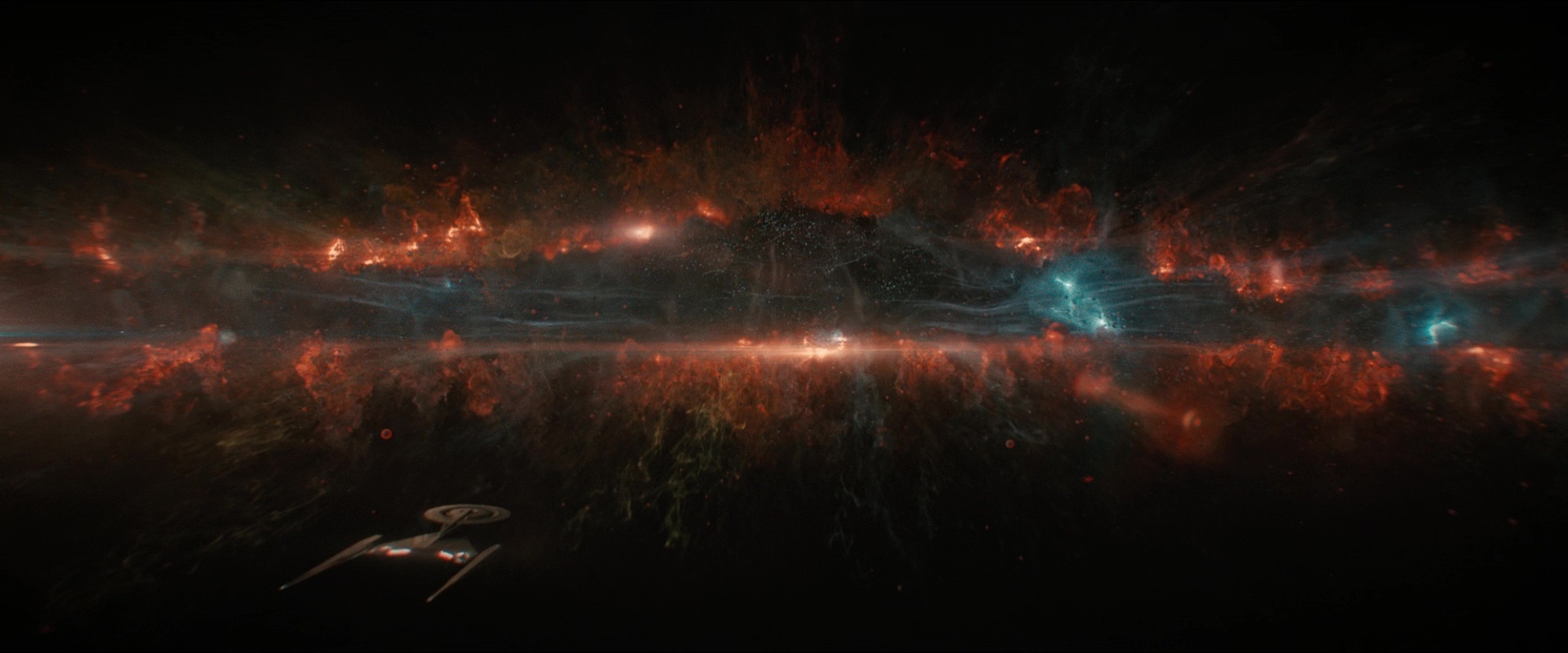
Still frame from Star Trek: Discovery Season 4 showing the USS Discovery at the Galactic Barrier.
The Barrier at it appeared in Discovery.

Star Trek has, on occasion, exhibited what Mr Spock might call “two-dimensional thinking.” By that I mean that many ships and objects in space appear as if they’re on a perfectly flat plane – but space is three-dimensional. One example of this appears to be the Galactic Barrier – the forcefield-like object that apparently surrounds the edge of the galaxy, preventing spacecraft from leaving.

Even in Discovery, though, which is the Galactic Barrier’s most significant appearance to date, the phenomenon (which doesn’t exist in real life) appears to be a mostly two-dimensional ring around the edge of the galaxy rather than a three-dimensional bubble. Which raises a simple question: why not simply fly over or under it? Starships are obviously capable of manoeuvring in three dimensions, so why fly through something you could easily fly around?

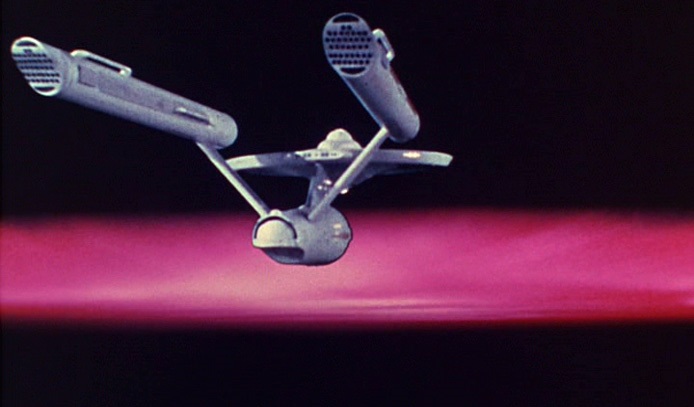
Still frame from Star Trek: The Original Series Season 1 showing the USS Enterprise approaching the Galactic Barrier.
The USS Enterprise approaches the Galactic Barrier.

Unless the Barrier is meant to surround the entire galaxy from all possible angles, there’s not really a good explanation for this. The way it’s been depicted on screen makes it seem like it’s something any starship could easily get around, even if doing so would take a bit longer. If this was a one-off visual effect from The Original Series I might be tempted to let it lie, but Discovery brought back the Galactic Barrier in its fourth season, presenting it as a pretty significant hurdle for Captain Burnham and the crew to overcome.

As an aside, I’m not sure that was a great idea! There are some elements of The Original Series, The Animated Series, and even from early in The Next Generation that just about work in context… but wouldn’t really translate well to a story made today. For me, as I think I said at the time of Discovery’s fourth season, the Galactic Barrier is one of them. And the way it’s presented and visualised on screen just kind of hammers home how two-dimensional some of the franchise’s space sequences can feel.

Number 6:
Why is artificial gravity always the last system to fail when a ship is damaged?
Star Trek VI: The Undiscovered Country et al.

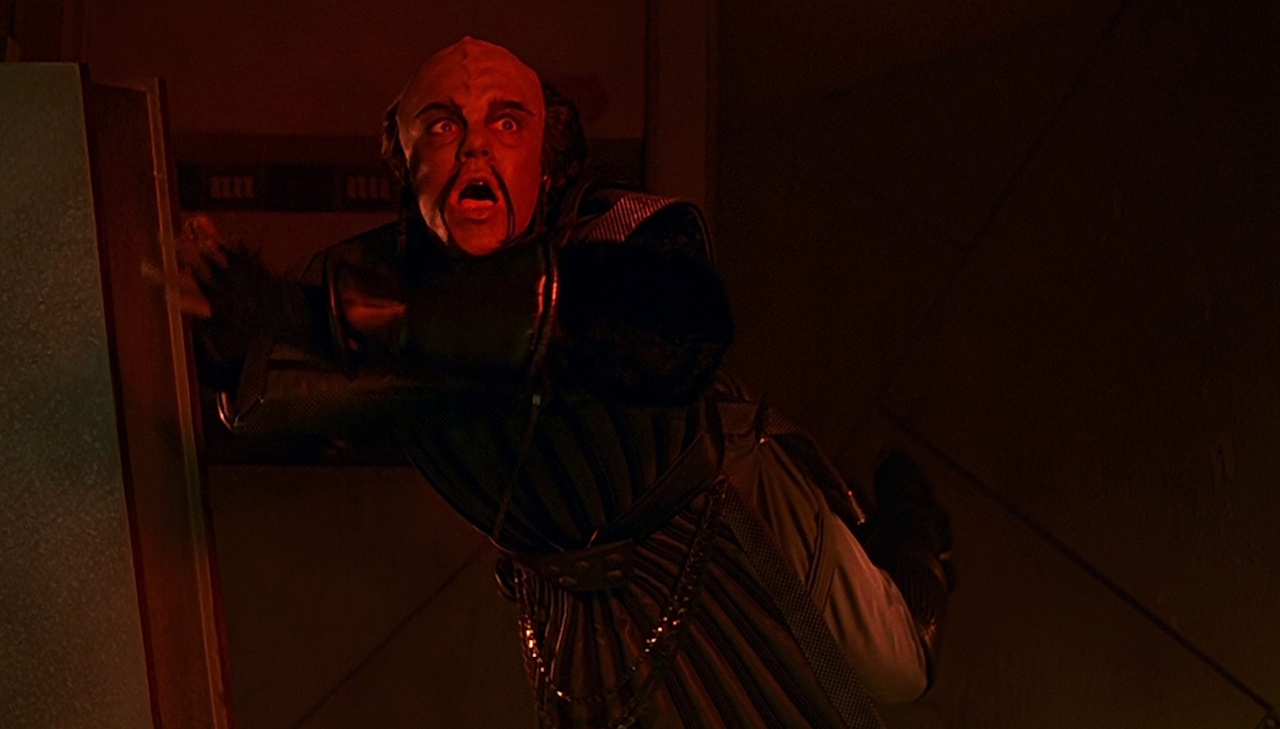
Still frame from Star Trek VI: The Undiscovered Country showing a Klingon floating helplessly.
A Klingon officer floating after his ship’s artificial gravity was knocked offline.

I think I can count on one hand the number of times a starship’s artificial gravity has been damaged in Star Trek. The only time it was plot-relevant was in The Undiscovered Country, where the damage to the artificial gravity on the Klingon ship Kronos One was instrumental to the plot to assassinate Chancellor Gorkon. But aside from that… can you think of a single time in the franchise’s 950 episodes and films where a ship has lost gravity?

We’ve seen starships take a real beating sometimes: the Enterprise in The Wrath of Khan, Voyager in Year of Hell, the NX-01 in Damage, and even non-Starfleet ships like the Cardassian vessel in The Wounded, or the Romulan warbird in Balance of Terror, but none of them ever lost their artificial gravity. This system appears to be more robust even than life-support, which we’ve seen fail on a number of occasions while artificial gravity was still operational.

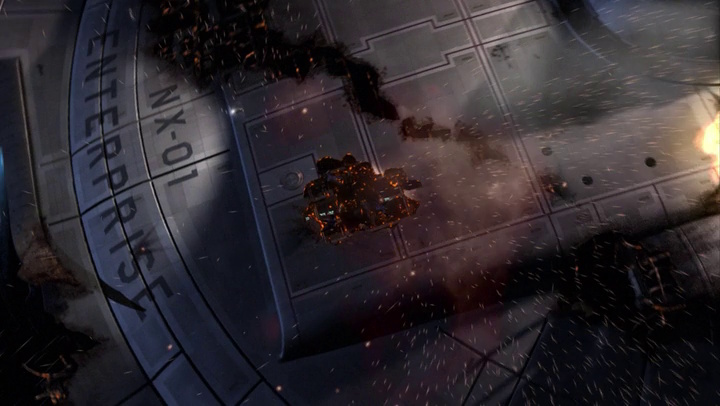
Still frame from Star Trek: Enterprise Season 3 showing the NX-01 Enterprise heavily damaged.
Even serious damage, such as to the NX-01 Enterprise pictured here, doesn’t usually stop artificial gravity from functioning.

You’d think prioritising something like breathable air and a survivable temperature would take precedence over artificial gravity, with ships being designed in such a way that life-support would be the most resilient and sturdy system. I know there’s some ambiguity in the way these technologies work in Star Trek, but artificial gravity must require some amount of power to function – and even if it’s powered by a wholly separate system, anything that disables the entire ship should deactivate artificial gravity. It would also make a logical target during ship-to-ship combat, as knocking out an opponent’s gravity would cripple their ability to operate the ship.

There are even times where disabling artificial gravity would be to the advantage of a crew trying to defend their ship. Perhaps the best example of this is the Borg attack on the Enterprise-E in First Contact, but there are other times where a boarding party, raiders, or pirates could have been at least slowed down and hampered if the crew deactivated artificial gravity on one or two decks. I suppose it’s good for Star Trek that the way artificial gravity works is deliberately vague, and it’s one of those “you’ve just gotta suspend your disbelief” things. But from an in-universe point of view, the apparently indestructible nature of this system, and the overlooked tactical advantages of trying to disable an adversary’s artificial gravity, don’t make a lot of sense.

Number 7:
Shouldn’t Starfleet have persevered with the Spore Drive?
Star Trek: Discovery

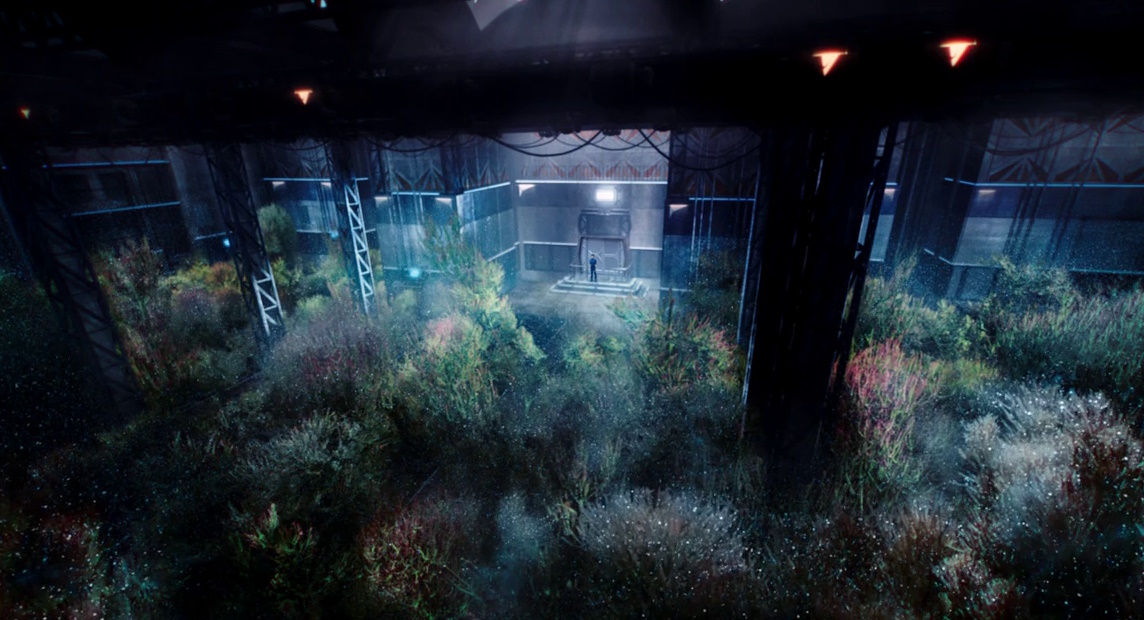
Still frame from Star Trek: Discovery Season 1 showing the mushroom cultivation area aboard the ship.
The cultivation bay aboard the USS Discovery.

After the loss of the USS Glenn and the apparent destruction of the USS Discovery, we’re led to believe that Starfleet abandoned its Spore Drive programme – even though the technology was proven to work and would be beyond useful to the organisation. For Starfleet, with its dual military and scientific missions, the Spore Drive was a phenomenal leap forward with so many applications. I genuinely cannot believe that they’d just abandon it after a few setbacks – especially after the Klingon Empire had come to learn of its existence.

We would later see, in Discovery’s third season, that basically any empathic race could – in theory – interface with the Spore Drive. That doesn’t seem like such a huge leap that Starfleet couldn’t have figured it out over time, especially with races like the Betazoids and Vulcans on hand. But even if using an empath as a navigator wasn’t possible, it still seems like such a ridiculously overpowered and useful piece of kit that Starfleet – and Section 31 in particular – would want to continue to develop it.

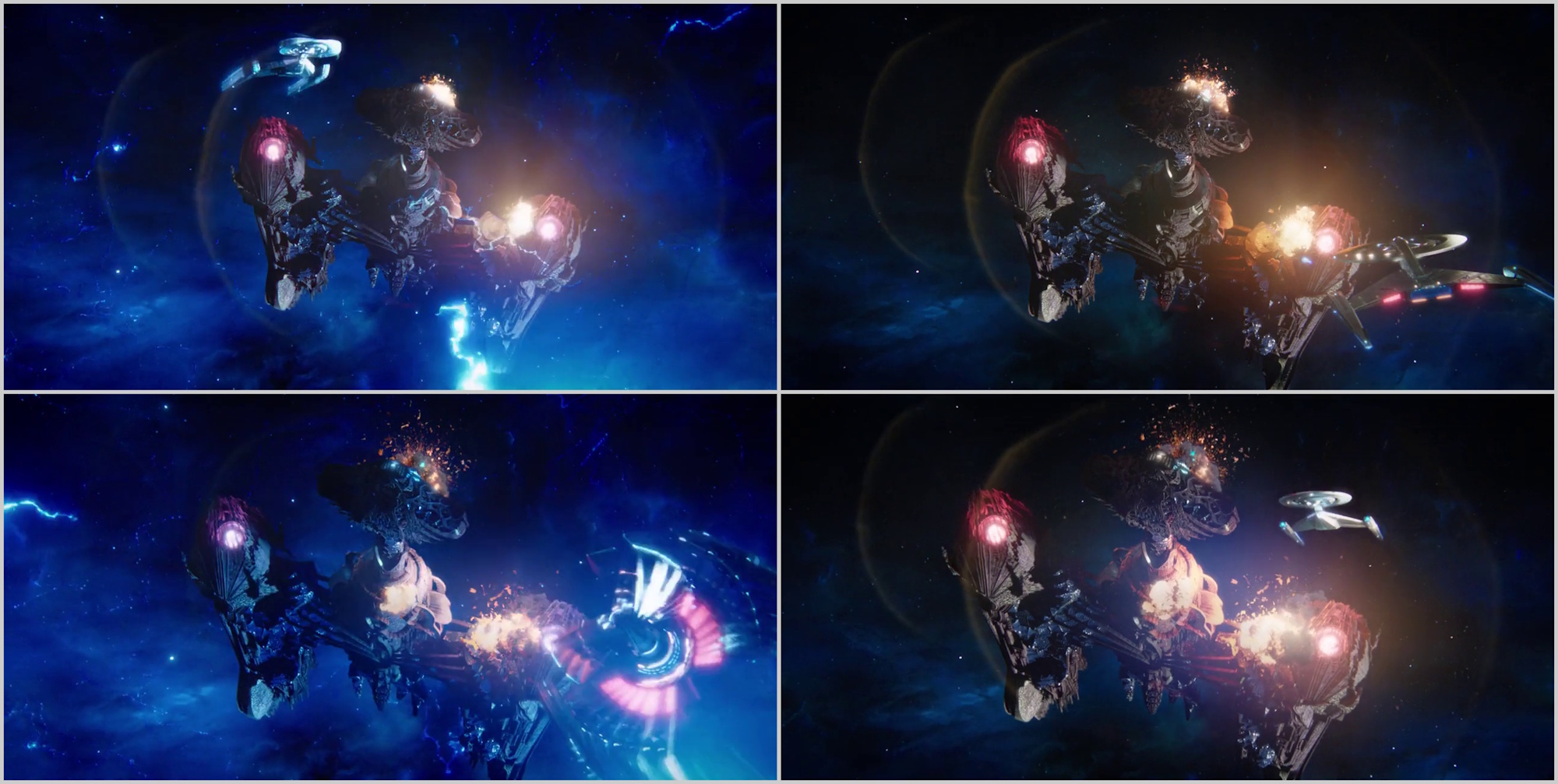
Four still frames from Star Trek: Discovery Season 1 depicting the USS Discovery at the Battle of Pahvo.
The Battle of Pahvo (pictured) proved the Spore Drive’s worth as a military tool.

Look at the Spore Drive’s capabilities. Two of its biggest achievements were cracking the Klingons’ cloaking device – becoming basically invulnerable to attacks in the process – and leaping tens of thousands of light-years across the galaxy to the planet Terralysium. For Starfleet’s military, the Spore Drive’s ability to jump so fast that attacks from disruptors and torpedos are ineffective is huge – it could redefine starship combat in the Alpha Quadrant. And for the organisation’s mission of exploration, being able to jump to literally anywhere in the galaxy renders warp drive obsolete and would mean Starfleet can investigate any interesting-looking phenomena with ease – while still being back home in time for tea.

The Spore Drive is an example of a “prequel problem;” if Discovery had been set years or decades after Nemesis – in the same period as Picard, for example – then it wouldn’t be an issue. We could simply say that the Spore Drive would become Starfleet’s new method of travel. But because Discovery was set before The Original Series, I don’t think there’s any way to create a satisfactory explanation for why Starfleet, Section 31, or other factions didn’t continue to develop and refine it.

Number 8:
Why would the Xindi fire a small weapon at Earth months ahead of their main attack?
Star Trek: Enterprise

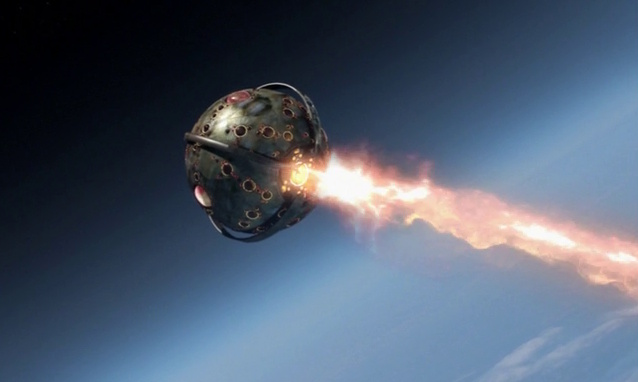
Still frame from Star Trek: Enterprise Season 2 showing a small spherical Xindi weapon firing.
The Xindi’s first weapon.

Sun Tzu, the legendary Chinese general, wrote two-and-a-half thousand years ago that a good commander should “always mystify, mislead, and surprise the enemy if possible.” And throughout history – from the ancient world to the Second World War and beyond – surprise attacks and misdirection have been incredibly powerful tools that successful generals and strategists have employed. So why would the Xindi – backed up by a faction from the far future, no less – launch a minor attack that alerted Earth and humanity to their much larger upcoming attack?

If the Xindi needed to test the range and abilities of their weapon, they could pick another target in a different system. This target would be a comparable distance away from where they planned to launch their weapon, and could also be a planet of roughly the same size and mass as Earth. This would give their scientists and engineers the data they needed without compromising the secrecy of their operation. All they achieved by targeting Earth with their initial, much smaller weapon was alerting humanity and Starfleet to their existence – which ultimately set the stage for their defeat.

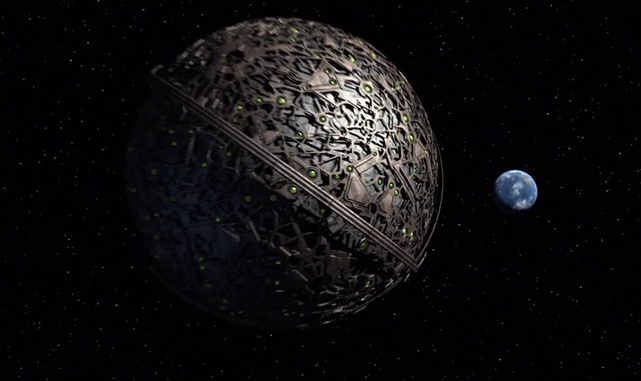
Still frame from Star Trek: Enterprise Season 3 showing the Xindi weapon arriving at Earth.
The much larger second Xindi weapon approaches Earth.

This is a military blunder so exceptionally basic that, if I were the Sphere-Builders, I’d have cut all contact with the Xindi and written off the entire operation. The miniature version of the weapon wasn’t designed to deal the kind of damage that the larger version was, but it was still damaging enough to put all of humanity and Starfleet on full alert – kick-starting a chain of events that led to Captain Archer confronting and stopping the Xindi and their Sphere-Builder allies.

All the Xindi would’ve had to do was pick a different target for their weapons testing. A planet the same size as Earth in a system roughly the same distance away would be ideal – or an unarmed probe sent to Earth if scouting that route was deemed necessary. Even if the Xindi and Sphere-Builders were so cocky and arrogant that they considered themselves to be unstoppable, it was still a catastrophic, primary school-level mistake to send the small weapon directly to Earth months before the larger weapon was ready.

Number 9:
How did Nero’s trip back in time create an alternate reality instead of changing the prime timeline?
Star Trek (2009)

Still frame from Star Trek (2009) showing a close-up of Nero.
Nero.

The way it’s explained on screen in Star Trek, Nero travelled back in time from 2387 to 2233 via an artificial black hole created by Red Matter. Somehow, though, the changes Nero and later Spock would go on to make to the past didn’t overwrite the events of the prime timeline, but exist in their own separate universe. This doesn’t seem to gel with what we know of time travel and temporal paradoxes in Star Trek.

Starfleet vessels have encountered all kinds of temporal phenomena over the years, none of which led to the creation of a parallel universe. Even in cases where ships got caught up in time-travel shenanigans, the end result was either a permanently altered timeline – as in stories like The Voyage Home or Past Tense – or overwritten events that no-one remembered – as in stories like Cause and Effect or Year of Hell. None of these led to the creation of a permanent alternate reality that persisted after the phenomenon that created it had been dealt with – so why did the Red Matter black hole do so?

Still frame from Star Trek (2009) showing the Narada emerging from a black hole.
Nero’s ship, the Narada, arrives in the 23rd Century.

The best explanation I can come up with is this: Star Trek exists in a multiverse. Along with to the prime timeline, the Mirror Universe, and others that we’ve seen, there must be multiple additional parallel universes – some of which are identical to or indistinguishable from the prime timeline. Somehow, Red Matter creates a portal between universes, allowing for travel from one to another. Nero and Spock entered a parallel universe identical to the prime timeline – but it’s a parallel universe that already existed before they arrived.

That’s a pretty convoluted explanation, and it isn’t explained that way on screen. Instead, the alterations to the timeline that Nero perpetrated – from the destruction of the USS Kelvin to the attack on Vulcan and beyond – should have permanently altered the prime timeline based on what the characters told us and what we already know from other iterations of Star Trek.

Number 10:
Couldn’t Captain Pike just retire and live as a hermit?
Star Trek: Strange New Worlds

Still frame from Star Trek: Strange New Worlds Season 2 showing Captain Pike at a diplomatic dinner.
Captain Christopher Pike.

I found Pike’s arc in Discovery and the first season of Strange New Worlds to be interesting and relatable. I’ve been in a similar position to Captain Pike: being told that my health was going to get dramatically worse and knowing that it’s inevitable. It made Pike an incredibly sympathetic character, and one whose story brought a tear to my eye more than once. But… is Pike’s devastating accident and disability genuinely unavoidable?

The more Pike comes to learn about the future, the more he seems to uncover ways to avoid his supposedly-inevitable fate. In the fantastic Season 1 episode A Quality of Mercy, Pike learned – thanks to a time-travelling version of himself – that if he avoided his fate but remained in Starfleet, he’d accidentally trigger a chain of events that led to a devastating war between the Federation and Romulans. This conflict was something only Kirk and Spock could prevent, but Pike’s place on the bridge and Spock’s serious injury would keep the war going and prevent any hope for peace in the future. This seemed to strengthen Pike’s resolve and set him back on course for the accident that would leave him disabled.

Still frame from Star Trek: Strange New Worlds Season 1 showing a future Captain Pike in a 'monster maroon' uniform.
Pike in an alternate future.

But… couldn’t he choose a radically different path? Sure, remaining in Starfleet after he was supposed to suffer the accident led to a horrible alternate future. But if Pike resigned his commission the day before the accident and went to live in a cave somewhere, what would change? Nothing, right? Pike could remain alive and relatively healthy, enjoying a well-earned retirement without the need for Talosian mind-games, and the rest of the galaxy could continue unaffected.

Maybe we’ll find out, in Seasons 3, 4, or beyond, why that kind of scenario couldn’t work. But it seems to me that, as long as Pike kept his head down and stayed away from Starfleet and galactic affairs, there wouldn’t be any harmful side-effects. Furthermore, knowing what he knew of the Romulan incursion, he could’ve even reacted differently in that situation to prevent the conflict from escalating. I guess the point of A Quality of Mercy was to hammer home that there’s no way to predict how any changes to the timeline could affect the Federation – and that’s a fair point, I suppose. But on a personal level, I could forgive Pike for trying to wrest back control of his destiny from the Klingon time crystal that doomed him.

So that’s it… for now!

Still frame from Star Trek: The Original Series Season 3 showing Commander Scott in the captain's chair of the Enterprise.
It’s Scotty!

I hope this has been a bit of fun! Some of these things are more irritating than others, but to be honest with you, none of them are really that big of a deal. They only matter to folks like you and I – people who spend a bit too long thinking about Star Trek!

This might be a subject I’ll revisit in the future, so if your favourite little inconsistency or goof didn’t make the list this time, it’s possible I’ll get to it on another occasion. And if you want to check out my earlier list to read about ten other little things that bug me in Star Trek, you can find it by clicking or tapping here.

Still frame from Star Trek: Deep Space Nine Season 1 showing Commander Sisko aboard the Enterprise-D.
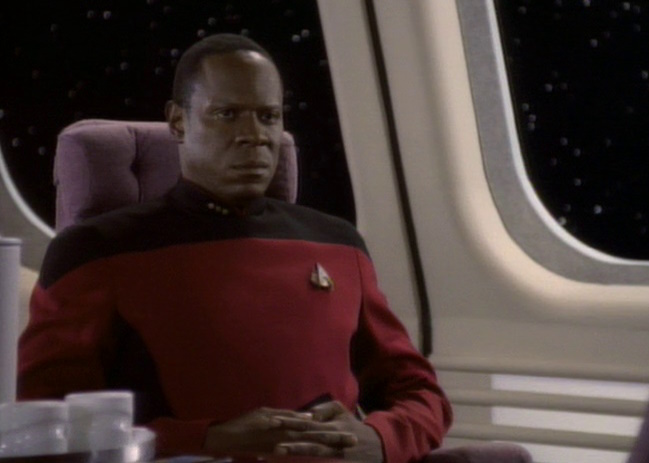
Commander Sisko looks rather grumpy…

Stay tuned, because there’s more Star Trek content to come here on the website as 2025 gets underway. Later this year we’ve got a new season of Strange New Worlds to look forward to, and if you missed my review of Section 31 you can find it by clicking or tapping here. I also wrote up my recollections of Voyager to mark the series’ thirtieth anniversary, and you can find that by clicking or tapping here.

Until next time… see you out there!


Most of the Star Trek shows, films, and episodes referenced above can be streamed now on Paramount+ in countries and territories where the platform is available, and may also be available on DVD and/or Blu-ray. The Star Trek franchise – including all shows, films, episodes, characters, and other properties discussed above – is the copyright of Paramount Global. This article contains the thoughts and opinions of one person only and is not intended to cause any offence.

There are two unannounced Star Trek projects being worked on. What could they be?

Spoiler Warning: There are spoilers ahead for the Star Trek franchise, including Picard Season 2, Strange New Worlds Season 1, and Discovery Season 4.

It’s been known for a while that there are unannounced Star Trek projects that are being worked on behind-the-scenes, and from time to time someone senior at Paramount will re-confirm this fact in public! Just last month at Comic-Con, we got yet another statement about these secretive projects, this time from Alex Kurtzman himself – the man who’s in charge of the overall direction of the Star Trek franchise. Kurtzman stated that there are two unannounced series that are in active development, so today I thought it could be a bit of fun to speculate about what exactly those projects could involve!

In the past I’ve put out lists of prospective Star Trek shows, but this time I want to be more focused. Rather than wild speculation or pure fantasy, I want to stick as close as possible to what we know based on statements that have been made in public, filings by Paramount, and plausible rumours from around the Star Trek franchise. Rather than saying “here’s a list of my fantasy Star Trek projects,” I want to try to stay realistic and consider some projects that feel genuinely plausible. So that’s what we’re going to do today – no “hospital ship” or “colony world” concepts here! As nice as those would be from my perspective, they don’t seem like ideas that are being actively considered by Paramount at the moment.

Alex Kurtzman is in charge of the Star Trek franchise for Paramount.
Photo Credit: Gage Skidmore, CC BY-SA 2.0 https://creativecommons.org/licenses/by-sa/2.0, via Wikimedia Commons

Despite wanting to stick to the real world as much as possible, my usual caveat applies: I have no “sources” close to the production of Star Trek nor any “insider information.” I’m not trying to say that any of these projects are definitely going to be made, let alone that an announcement may be imminent! I’ve tried to base the entries on this list on statements from people involved with Star Trek, official notices and filings from Paramount, and plausible, persistent rumours – but all of it could be easily wrong or otherwise untrue. So please take all of this with more than a few grains of salt!

The reason why I’m putting together this list now is twofold. Firstly, Star Trek Day is coming up in just under three weeks from now, and there’s the possibility of a big announcement as part of that event. Secondly, Season 3 of Picard will be that show’s last, so in my view Paramount will already have something lined up to replace it – and an announcement of that project may be forthcoming sooner rather than later. Announcing Picard’s replacement too close to its third season risks overshadowing the show as it comes to an end; getting the announcement out of the way ahead of time will give fans time to properly digest it.

So with all of that out of the way, let’s jump into the list!

Series #1:
Section 31

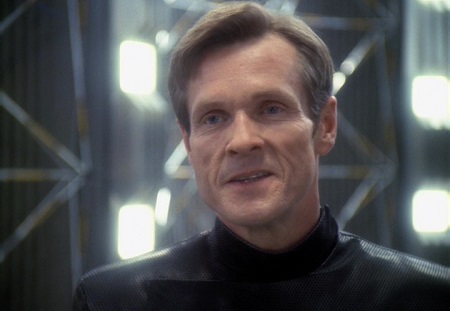
Sloan, director of Section 31 during the Dominion War era.

Although a series based around Section 31 has technically been “announced,” the lack of any official news for almost four years at this point clearly means that the series has hit some bumps in the road. While I wouldn’t be surprised at all to learn that it’s been cancelled altogether, it’s still possible that the Section 31 series will be reworked and perhaps even re-announced along with a premiere date.

As I’ve said more than once, the Section 31 series was announced far too early. Not only was it completely overshadowed by the hugely positive response from fans to Captain Pike and Spock in Discovery’s second season – something that seemed to catch Paramount completely off-guard – but its main character desperately needed the development she would receive in Discovery’s third season in particular before she could begin to feel like someone who could carry her own spin-off.

At the time the Section 31 series was first announced, many fans viewed Georgiou as a kind of sociopathic monster.

When the Section 31 series was first discussed, Michelle Yeoh’s Empress Georgiou was about as flat and one-dimensional as Star Trek characters get. Moreover, she wasn’t just a villain, she was a psychopathic, genocidal monster who kept slaves, ate sentient beings, and seemed to revel in torture, violence, and death. Even for an organisation as roguish and off-the-books as Section 31, Empress Georgiou seemed extreme – and asking fans to support a series centred around a character like that was, for many, too much.

It wasn’t until the two-part Season 3 episode Terra Firma that we really saw a change in Georgiou. After spending time away from the Mirror Universe she began to view aliens as equals rather than sub-human, and had even adopted some Federation-inspired ways of thinking. By the time she stepped into the Guardian of Forever’s portal she had changed just enough that she could be an anti-hero rather than an out-and-out villain, and both she and the Section 31 series needed that development.

Georgiou enters the Guardian of Forever’s portal in Terra Firma, Part 2.

My gut still says that the Section 31 series isn’t going to happen, and we should brace for a quiet cancellation sometime in the future rather than a big announcement. I haven’t heard anything about the series since its premature announcement back in January 2019 that sounded even slightly positive, and with Star Trek branching out in different directions, it’s possible that Section 31 simply missed the boat.

However, at time of writing the Section 31 series still exists, Paramount has retained the trademarked name, and it isn’t impossible to think that it will be revived. Perhaps a new team of writers and producers will take over the project and rework it in some way – potentially even without Empress Georgiou.

Series #2:
Seven of Nine and Raffi

Seven of Nine and Raffi at the end of Picard Season 2.

With Picard concluding its run before any of the other current Star Trek projects, a spin-off from that series feels like a distinct possibility when considering its replacement. The time period that Picard established – the dawn of the 25th Century – is not represented by any other current Star Trek project, so if Paramount wants to keep that era alive – and potentially bring in more legacy characters from Deep Space Nine and Voyager – then a series occupying the same timeframe could be a possibility.

A lot of work went into Picard Season 2 in terms of sets being constructed for the brand-new USS Stargazer – but those sets were only used in the premiere and the second half of the season finale. That seems like a lot of work for relatively little screen time, so part of me has been wondering ever since whether those sets may be destined for use in a spin-off project!

Could a Seven and Raffi series be set aboard the new USS Stargazer?

With Seven of Nine being awarded a role in Starfleet at the end of Picard Season 2, she could be being groomed for command. Depending on how she and Raffi get on in Season 3 – which we’ll see in the first half of next year – a spin-off could see those two characters headline a new show, perhaps one set aboard the USS Stargazer.

Seven of Nine was, at one time, my least-favourite Voyager character. But Picard has given her some much-needed development that led into a wonderful arc across both seasons of the show so far, culminating in her taking the Stargazer’s captain’s chair in the Season 2 finale. I would never have expected to write these words in 2000-2001, but I think I’m ready for a Seven of Nine series!

Seven of Nine takes the captain’s chair.

Both Seven and Raffi have tactical backgrounds, so we could potentially see a series set aboard a kind of rapid-response vessel. The Stargazer’s mission could be less about exploration and more tactical in nature, potentially serving as Starfleet’s “muscle” in dangerous situations. That concept isn’t one that Star Trek has done before (not as a whole series, at least) so it would be something different for the franchise.

There are other 25th Century concepts that could replace Picard, but a direct spin-off featuring at least one new character that was introduced in that series could be just what the Star Trek franchise needs. Keeping some consistency and some ties between different projects isn’t a bad idea, and I’m sure that a Seven and Raffi series could find a way to stand on its own two feet without the presence of Admiral Picard.

Series #3:
Project Khan and/or Ceti Alpha V

Iconic Star Trek villain Khan could make a return.

Earlier this year it was reported that Paramount had trademarked the name Project Khan. This follows on from a pitch by The Wrath of Khan writer/director Nicholas Meyer, whose project would focus on Khan’s life in between the events of Space Seed and The Wrath of Khan. Although these two ideas could be totally separate, there does seem to be an appetite from someone at Paramount to see this iconic villain make a comeback.

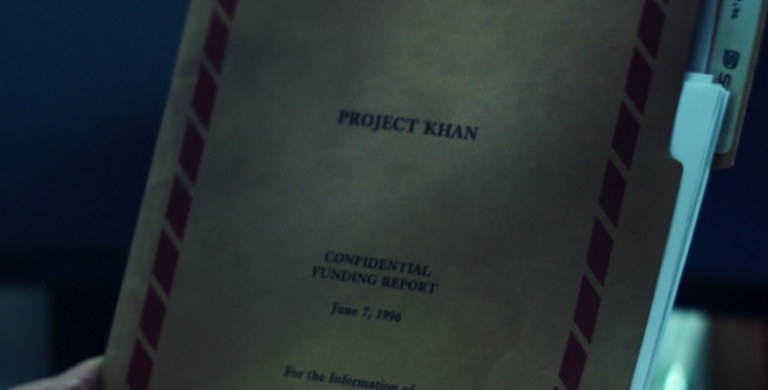
If we take the two ideas as separate for now, Project Khan could be connected to the Eugenics Wars, and could even be a spin-off from Picard. Season 2 antagonist Adam Soong very prominently picked up a folder titled “Project Khan” at the end of his storyline, with the series seeming to imply that he plans to resume working on some kind of genetic engineering.

How might this moment from Picard Season 2 connect to Project Khan?

This is a complete hypothetical, but if we were to get a series starting from that point, Khan himself may not appear. This could be a Brent Spiner project with Adam Soong attempting to recreate Khan’s work in the 21st Century, and could potentially see things like the outbreak of World War III, which purportedly happened in that era. Such a series could see the return of Chris Rios and Dr Teresa Ramirez – they could be trying to stop Dr Soong’s work.

Alternatively, Project Khan could step back to before the events of Picard and focus on Khan’s rise to power in the 20th Century. This would be an interesting concept, but it would have to be handled delicately. In short, the Star Trek timeline has, until now, been pretty vague about events in the modern day and how they relate to real-world history. If it were set in the 1990s, Project Khan could completely transform our knowledge of that era – but it could also tread on the toes of a number of other Star Trek stories.

Khan in Space Seed.

Then we come to the Ceti Alpha V pitch. As much as I admire Nicholas Meyer’s work on Star Trek, I have to be honest: this isn’t a series I would give the green light to if I were in charge. We’re talking about the least-interesting chapter of a story where the ending is already known, and I just don’t see what Ceti Alpha V could tell us about Khan or his ambitious plans that we don’t already know from Space Seed and The Wrath of Khan.

There is the tantalising possibility that a Khan-focused project could connect with Strange New Worlds, though, as the character of La’an Noonien-Singh is a descendant of Khan. That could certainly be a point in favour of doing a new Khan story. Last year I took a longer look at the Ceti Alpha V concept, and you can find that article by clicking or tapping here.

Series #4:
Starfleet Academy

The logo of Starfleet Academy in the 24th Century.

Last year (at Star Trek Day) Alex Kurtzman came pretty close to confirming that a Starfleet Academy series may be in the works. It’s certainly the nearest we’ve gotten to any kind of outright confirmation – and as above, Starfleet Academy is a title that Paramount has trademarked, this time all the way back in 2018.

Combine that with what felt like a bit of a backdoor pilot during Discovery’s fourth season, and I think we have a solid case to make that a Starfleet Academy series could be in the works! The Discovery Season 4 episode All Is Possible featured Lieutenant Tilly heading off on an away mission with a trio of new Starfleet cadets at the recently-reopened Starfleet Academy. It ended with her deciding to take up a permanent teaching post at Starfleet Academy and departing the USS Discovery – although she would reappear in the season finale.

Tilly’s departure.

All Is Possible definitely feels like a backdoor pilot, although the attention wasn’t on Tilly and the cadets all of the time. Tilly’s presence would connect the series to Discovery in a major way, and there’d be the possibility of crossover episodes with both shows set in the same 32nd Century time period. A Starfleet Academy show could also feature David Cronenberg’s character of Dr Kovich – a somewhat mysterious character who I still can’t figure out!

Alternatively, a Starfleet Academy series could ignore the 32nd Century and instead be set in the 25th. This version of the series could feature characters like Raffi and Elnor – the latter of whom is a cadet, and who was resurrected at the last minute in a sequence in the Season 2 finale that feels seriously underwhelming right now. Perhaps Elnor’s survival could be given new meaning and purpose if he were to be a major character in a Starfleet Academy series.

Cadet Elnor.

As a series concept, Starfleet Academy has been around the longest! While The Original Series was still in production in the 1960s, Gene Roddenberry came up with the idea of a show that would have focused on young Kirk and Spock during their Academy days – something we eventually saw (albeit in an alternate timeline) in 2009’s Star Trek reboot film.

I feel like a Starfleet Academy series could be a strong addition to the franchise. Not only would it be something different, but it could also be a great first contact for younger viewers – and perhaps even a second port of call for those who’ve recently become fans of Prodigy, too – as they find their way into the Star Trek fandom. Having several cadets as major characters would mean younger viewers could find this iteration of Star Trek easier to relate to and get started with, and that can only be a positive thing. I took a longer look at the Starfleet Academy concept last year, and you can find that article by clicking or tapping here.

Series #5:
Enterprise Season 5/The Earth-Romulan War

The NX-01 Enterprise and two Romulan vessels.

This one is a bit more speculative, but I’m not the only one to wonder if there may be an attempt to bring back the 22nd Century in the near future. Calling this one “Enterprise Season 5″ might be a bit of a stretch, but any 22nd Century project could bring back at least some of the characters from that series for another adventure.

Prior to its cancellation in 2005, there were plans being drawn up for a fifth season of Enterprise. According to one of the show’s producers, if it had gone ahead Season 5 would’ve shown more of the origins of the Federation, and particularly the Earth-Romulan War that was first referenced in The Original Series. That could be the starting point for a revived Enterprise or a new 22nd Century series.

The Earth-Romulan War was established in The Original Series Season 1 episode Balance of Terror.

The Earth-Romulan War is a major event in Federation history, one that pushed the founding members of the Federation closer together. It was also a devastating conflict in its own right, and a series focusing on the war could have echoes of Deep Space Nine’s Dominion War arc. Star Trek can do war stories incredibly well – as we’ve seen in episodes of Discovery and Strange New Worlds just in the last couple of years – so this could be a great fit for an expanding franchise.

Any franchise has to be careful about coming across as too backwards-looking and introspective if it dives deeply into chapters of its own lore and backstory, but I think there’s space as Star Trek continues its renaissance to potentially step back to the time of the Earth-Romulan War. I know a lot of fans would happily welcome back Captain Archer or any other members of the Enterprise crew, so this project could be a real “love letter to the fans.”

The NX-01 Enterprise.

There were a number of factors that led to Enterprise’s cancellation in 2005, and although it was sad at the time, in many ways the Star Trek franchise needed a break and a reset. But maybe the time is right to bring back some of the characters and stories that had been conceived for unproduced seasons of Enterprise now that the franchise is back on solid ground.

There are definitely arguments to be made against establishing yet another different time period for Star Trek, as the franchise can already feel overcomplicated, especially for newcomers. But there are points in favour of returning to the 22nd Century, too, particularly if a series had a relatively tight focus on something like the Earth-Romulan War.

Series #6:
Captain Worf

Worf on a promo poster for Picard Season 3.

Along with most of the rest of the main crew members from The Next Generation, Worf will be returning in Season 3 of Picard next year. It’s no secret that actor Michael Dorn has been talking up his own “Captain Worf” idea for the better part of a decade, and with the casting announcements for Picard, part of me has been wondering if that show’s final season might lead into a Worf spin-off.

As the character with the most Star Trek appearances to date – 274, in case you were wondering – we’ve spent a lot of time with Worf already! We’ve seen our favourite Klingon wrangle with his heritage and his duty to Starfleet, gain promotions, establish friendships with two different casts of characters, become a father, get married, become a widower, and much more besides. Is there room for another chapter in Worf’s life after the events of Deep Space Nine? I still think that’s an open question!

Is there room for new Worf-focused stories?

This one really depends on how Picard Season 3 goes down. Executive producer Terry Matalas has described Picard Season 3 as being a “send-off” for the crew of The Next Generation, presumably including Worf, and that sounds pretty definitive and final. We may see some characters killed off as the season goes on, especially if Picard and the crew are facing off against some kind of galaxy-ending threat. Even if Worf survives, it’s possible that all of the characters’ stories will come to a conclusive end, and if that’s the case there may be no room – and no need – for a Captain Worf series.

But it’s also possible that Picard Season 3 will be testing the waters to see whether certain spin-off ideas are viable. We’ve already considered the possibility of a Seven of Nine and Raffi series, and that’s one possibility. But maybe there’s a chance that, if fans respond incredibly positively to Worf in his new role, he could finally take the lead in his own series.

Worf as he appeared in Season 1 of The Next Generation.

For me, I feel that Worf in a leading role is an untested idea, and one that may not work. Although there are nuances in Worf’s characterisation, many episodes of The Next Generation and Deep Space Nine played up his Klingon traits, and while I’d never call him something like “flat” or “one-dimensional,” there’s definitely a case to be made that a character like Worf works best in a supporting role rather than a leading one.

But we can reserve judgement on that until we see what role has been created for Worf in Season 3 of Picard. Maybe he’ll get a fantastic ending to his decades-long story, one that feels conclusive and satisfying, rounding out his arc and tying up loose ends from both The Next Generation and Deep Space Nine. But maybe, just maybe, he’ll establish himself as the next character deserving of a spin-off project.

So that’s it!

Where will Star Trek go next?

Paramount (and subsidiary CBS Studios) has trademarked other names associated with the Star Trek brand that may be connected with shows or films that are currently in development, but it’s very difficult to know what to make of some of them! Vague titles like Star Trek: Destiny, Star Trek: Revolution, or Star Trek: Reliant have all been trademarked over the past few years – though several of these have now lapsed and haven’t been renewed. It isn’t clear whether any or all of these names were even intended to be used for films and television shows, or whether they were meant for merchandise and other projects. The interesting-sounding Star Trek Continuum trademark, for example, isn’t connected with a film or TV show at all, but is instead an official line of awful-looking NFTs.

For now at least, these are the Star Trek projects that seem to be the most likely based on what we’ve heard through official and unofficial channels. It’s definitely possible that work is ongoing in secret to develop some completely different Star Trek projects that we can’t predict at the moment, but in terms of what may be announced in the weeks or months ahead, the projects we’ve talked about today feel the most likely.

Next month’s Star Trek Day could be the venue for a big announcement…

Although trademarks exist for Ceti Alpha V and Starfleet Academy, if it were up to me I’d pick a 25th Century series to fill the hole that will be left when Picard finishes its run. Lower Decks and Prodigy will still be representing the late 24th Century, but I think it’ll feel like something’s not right if the 25th Century that Picard has only just begun to explore is abandoned with that show’s conclusion. Not only because we won’t get to carry on the journey, but because that era feels like the natural next step for a franchise that found so much success in the 1990s with shows set in the 24th Century.

But we’ll have to wait and see what the creative team at Paramount has in store! I think it’s possible – but by no means guaranteed – that an announcement could come as soon as next month. The Star Trek Day live broadcast has promised “announcements, reveals, and surprises” in its official press release, and the inclusion of certain actors – such as Jeri Ryan and Michelle Hurd – could hint at something big to come.

I hope this has been a bit of fun! I tried to steer clear of baseless rumours and fan-fantasies to focus instead on concepts and pitches that are known to exist and that seem plausible. But we’ll have to wait and see whether any of them are really going to happen!

The Star Trek franchise – including all properties (and potential properties) discussed above – is the copyright of Paramount Global. This article contains the thoughts and opinions of one person only and is not intended to cause any offence.
Star Trek 2023: what could it be?

Spoiler Warning: There are spoilers ahead for the entire Star Trek franchise, including the most recent seasons of Discovery and Picard, as well as recently-revealed teasers for upcoming seasons and projects.

The announcement a couple of days ago that a brand-new Star Trek film is in the works was incredibly exciting! There hasn’t been a feature film in the franchise since 2016’s Star Trek Beyond, the third film in the Kelvin (or JJverse) series. Since The Motion Picture made its debut in 1979, the Star Trek franchise has been reasonably consistent in its cinematic output, with the longest gap between films to date coming between Nemesis’ release in 2002 and JJ Abrams’ 2009 Star Trek reboot. Aside from that seven-year gap, we’ve seen Star Trek films every three or four years on average, and there have been thirteen films released since 1979.

I’ve always considered Star Trek to primarily be a television franchise, and its return to the small screen in 2017 felt like a proper homecoming. As interesting as the Kelvin timeline films were, I was far happier to see Star Trek back on television. That’s not because the Kelvin films – or any other Star Trek films – were bad, it’s just that the television format seems to work particularly well and lend itself to the kinds of stories Star Trek does best.

Star Trek will soon be back in cinemas!

As I said when I wrote up a short piece about the film’s announcement, no information was provided by Paramount Pictures or ViacomCBS about the film other than its June 2023 release date. So it would be foolish to speculate, wouldn’t it?

Foolish, perhaps, but also a lot of fun! So this time we’re going to take a look at a handful of possible settings, scenarios, and ideas for Star Trek 2023 and what it might be all about. My usual caveat applies: I don’t have any “insider information,” nor am I suggesting any of these film ideas will turn out to be correct. This is pure guesswork and speculation on my part. That’s all.

With that out of the way, let’s jump into the list!

Number 1: A direct sequel to Star Trek Beyond.

The redesigned USS Enterprise in 2009’s Star Trek.

Attempts have been underway since before the release of Star Trek Beyond to get a fourth Kelvin timeline film off the ground. At one point, rumours swirled of a script that would have brought back Kirk’s father George – who had been played by Thor actor Chris Hemsworth in the opening scenes of 2009’s Star Trek. Pre-production on that project appeared to make headway, but – again, according to widely-reported rumours – the salaries of some of the principal cast members, including Kirk actor Chris Pine, were said to have derailed the project.

Beyond ended with a strong tease at a potential sequel. Kirk and his crew gazed out over the new USS Enterprise-A as construction on the vessel was completed, and there was a sense that the film was setting up a new story. After more than five years it hasn’t happened, and as I said when I considered the pros and cons of a return to the Kelvin timeline, Star Trek’s return to the Prime Universe and the expansion of the franchise to new shows and projects means that, at least in my opinion, the Kelvin timeline doesn’t really feel like a good fit right now.

The Kelvin crew in Star Trek Beyond.

In many ways, it would make more sense for any new feature film to at least have some connection or tie to the shows currently being produced, even if it isn’t a direct spin-off from any of them. The Kelvin timeline was a way to reboot Star Trek in 2009 after three decades of near-continuous production had burnt it out in the minds of many viewers. That doesn’t feel necessary right now. And going back to the Kelvin timeline after years in the Prime Universe risks overcomplicating things for a more casual audience.

So there are mixed feelings on this one! On the one hand, the story of the Kelvin timeline abruptly ends after Beyond, despite teases of a sequel. And the Kelvin timeline films were incredibly successful, bringing in huge audiences and plenty of money! But on the other hand, the reinvigorated Star Trek franchise has gone in a different direction since 2017, and I don’t see where a Beyond sequel fits any more.

Number 2: Captain Worf.

Worf in First Contact.

Michael Dorn, who played Worf in The Next Generation, Deep Space Nine, and four Star Trek films, has often talked about his desire to reprise the role. Since at least the early 2010s, Dorn has talked at every opportunity about his pitch to Paramount and ViacomCBS for a “Captain Worf” series, miniseries, or film. Perhaps, after years of pestering them, he finally got his wish?

At this stage we can’t rule it out! Knowing so little about the upcoming project means, in theory, that practically any Star Trek pitch that we know about could be in contention. Maybe the “Captain Worf” concept was one that the company liked, and a feature film was considered the best possible option for it. One advantage to it, at least in theory, would be that Michael Dorn is well-versed in both Star Trek and the project’s central character, meaning it would be less challenging to get started with when compared to a wholly new concept. Given that the film has just over two years to go from announcement to release, that could be a significant help!

Worf in Season 1 of The Next Generation.

However, I’ve never been sold on the “Captain Worf” idea, personally speaking. Worf is a fun character, but I see two distinct disadvantages if he were to be the central focus of a new story. Firstly, Worf is the character we’ve spent the most time with in all of Star Trek to date – he appeared in 270 episodes and four films across fifteen years. We’ve seen most aspects of his life unfold on screen already, including his role as a father, husband, friend, and Starfleet officer. Do we really need more Worf?

And secondly, Worf is a great secondary character, but the “Captain Worf” concept would put him centre-stage. That’s great for Michael Dorn, of course, but I’m not sure Worf is the most nuanced or interesting character to spend so much time with. Both Worf and Voyager’s B’Elanna Torres have explored the “Starfleet-versus-Klingon” concept on many occasions, which is perhaps Worf’s biggest point of internal conflict and the best reason to do a project like this. It could be interesting, and a chance to return to the 24th or early 25th Century would be great. But I’m not sold on this being the right way to do it.

Number 3: Ceti Alpha V.

My Ceti Alpha V mock-up.

A few weeks ago I looked at a pitch by The Wrath of Khan and The Undiscovered Country director Nicholas Meyer for a miniseries tentatively titled Star Trek: Ceti Alpha V. That project was planned as a three-part miniseries, but it could have been adapted into a feature film, I suppose!

This concept would focus on iconic villain Khan in the years between his exile by Kirk in Space Seed and his return in The Wrath of Khan. He and his followers were marooned on the titular planet Ceti Alpha V, and had to endure disaster following the explosion of nearby Ceti Alpha VI.

Khan in The Wrath of Khan.

As I wrote then, I’m not convinced that we need to see that part of the story! It wouldn’t really explain anything from The Wrath of Khan, as seeing Khan’s descent into madness for ourselves across several hours of television – or an entire film – isn’t necessary in any way to explain his actions or characterisation. Everything we needed to know about Khan is present in Space Seed and The Wrath of Khan.

As a feature film, though, a project like this has merit. It would pull on those nostalgic strings, connect to the franchise’s most well-regarded piece of cinema, and feature an iconic Star Trek character. From Paramount’s point of view, those advantages may make it worthwhile!

Number 4: Borg Invasion.

A Borg Cube over Earth in The Best of Both Worlds, Part 2.

If you’re a regular around here you might remember a Borg Invasion concept being one of my “unsolicited Star Trek pitches” last month! This is a concept that I’ve long felt would be fascinating, and while I envisioned it as a television series, it could perhaps be made to work as a film trilogy instead – potentially making Star Trek 2023 the first part of a short series of films.

But we’re getting ahead of ourselves! The Borg are one of the franchise’s most iconic villains, participating in one of Star Trek’s most highly-regarded episodes – The Best of Both Worlds – and best films – First Contact. The faction itself also hasn’t been seen on screen in any major way since 2003’s Enterprise Season 2 episode Regeneration, perhaps making them due for a comeback!

Borg drones in the Enterprise episode Regeneration – the last time we saw any “active” Borg on screen!

Discovery’s second season told a story which had the potential to be a Borg origin story, and Picard Season 1 also touched on the Borg, in particular Picard’s lingering trauma following his assimilation. But neither series brought back the Borg in a big way, despite the potential existing for either to do so. Could that be because ViacomCBS knew that Paramount Pictures (its subsidiary) was in the early stages of working on a new Borg film? Maybe!

The Borg are terrifying, and such a film would be action-packed and tense in equal measure. It’s been 25 years since Star Trek: First Contact took the Borg to the big screen for their only visit to the cinema so far, so I can’t help but wonder if they’re about to make a reappearance! Whether a Borg story would look to bring back any familiar characters or not is not clear – it wouldn’t have to, but as always in Star Trek, I’d be thrilled to see practically anyone connected to the franchise make a return.

Number 5: The Kelvin timeline version of The Next Generation.

The Season 1 cast of The Next Generation. Is a reboot on the cards?

2009’s Star Trek reboot presented an opportunity to go back to the drawing board and take another look at Kirk, Spock, Dr McCoy, and the rest of the crew of The Original Series. Ever since, (some) fans have been wondering what would happen to The Next Generation in the alternate reality – would the same crew have been assembled, or would its members even exist given the dramatic changes to the timeline?

Perhaps this is something we should explore in more detail another day, but I think that the existence of Chekov in the alternate reality, and the fact that he joined Starfleet, could be taken as evidence of the alternate reality not straying too far from the Prime Universe. Chekov was born after the incursion of Nero’s ship and the destruction of the USS Kelvin, so in theory we could argue that most people we met in past iterations of the franchise should have an alternate reality counterpart – just as they have a Mirror Universe counterpart too.

Did this moment in Discovery Season 3 hint at something to come?

Discovery Season 3 made a small reference to the Kelvin timeline – or at least, an ambiguous reference that felt like a Kelvin connection! In the episode Terra Firma, Part 1, the mysterious Kovich told Dr Culber of a “time soldier” who crossed over from the alternate reality to the Prime Universe. This soldier was wearing a uniform style seen in the first couple of seasons of The Next Generation, so it seems as though there was a comparable era of Starfleet in the alternate reality.

Could Discovery have been dropping a hint at this film? Possibly! Even if that’s just coincidence, it reinforced the existence of the Kelvin timeline – a fact that was known to Starfleet by the 32nd Century. Perhaps it was a subtle reminder to Trekkies that the alternate reality still exists, getting us ready for a new project? The Next Generation is very popular with fans, and rebooting it may seem like a solid idea for Paramount Pictures. Though I know some fans who detest the Kelvin films – or who refused to watch on principle – there’s no denying the reboot was a success, and rebooting The Next Generation could be as well.

Number 6: A Discovery film – if the show ends with Season 4 or Season 5.

Captain Burnham at the end of Season 3.

Speaking as we were of Discovery, its fourth season is due for release later this year. While there is no word yet on Season 5 – at least officially – it seems likely that the show will be renewed for a fifth season, which would presumably be broadcast in 2022. But what will happen next?

Both The Original Series and The Next Generation were followed up by films starring the casts of the shows, and perhaps something similar could be on the cards for Discovery, with Captain Burnham leading her crew onto the big screen. By 2023 we’ll have had at least one – probably two – more seasons of Discovery, so the crew will be almost as familiar to audiences as Kirk and his officers were when The Motion Picture was in production!

The USS Discovery.

If there is to be a fifth season of the show, that would mean production on Season 5 would likely be ongoing at the same time as this film, so maybe this is an indication that there won’t be a Season 5. With a number of other Star Trek television projects in various stages of development – including the untitled Section 31 series which is itself a spin-off from Discovery – perhaps the plan is to end the series after Season 4 and turn it into a feature film franchise instead, with television attention refocused onto other projects.

It would be a big change, but I can see at least one big advantage to a Discovery film: it would firmly establish the 32nd Century in the minds of audiences. I’ve felt for a while that Star Trek needs to try to condense its disparate timelines and time periods as much as possible, and the 32nd Century is by its very nature totally open-ended when it comes to storytelling potential. A Discovery film could be a “soft reboot,” relaunching Star Trek in the 32nd Century and setting the stage for new projects.

Number 7: A Deep Space Nine film – the return of Sisko.

Captain Sisko in Take Me Out To The Holosuite.

I was perhaps overly-critical of a “Captain Worf” idea in the entry above, but one character who I’ve been hoping to see return for over twenty years now is Captain Sisko. The ending of What You Leave Behind – the last episode of Deep Space Nine – more so than any other Star Trek finale left things open. Sisko entered the realm of the Bajoran Prophets, but promised to return in due course.

That return could happen at literally any point in the timeline; the Prophets don’t see time as linear. Sisko could thus appear in the Strange New Worlds, Picard, or Discovery eras – despite the fact that those shows take place centuries apart! But given the importance of his return to Star Trek, perhaps a Sisko feature film is on the cards.

Sisko in Move Along Home.

Sisko would be such a great point-of-view character. His absence from galactic affairs for decades or even centuries would allow the writers of the film to dump a lot of exposition onto the audience without it feeling like it came from nowhere. His return could both set up the plot of a new Star Trek story and provide the audience with a way in; introducing us to new characters, factions, technologies, and the state of the galaxy itself in whatever time period he finds himself.

Such a story could also return to Bajor, looking at whether the Bajorans ever joined the Federation, as well as the aftermath of the Dominion War. The Dominion War arc is one of my favourites in all of Star Trek, and a follow-up of some kind would be absolutely amazing to see. If Sisko returned during the Picard era, he could reunite with people like Major Kira or Dr Bashir, and a mini-reunion of some of the Deep Space Nine crew would be wonderful.

Number 8: A Nemesis sequel.

The Enterprise-E undergoing repairs at the end of Nemesis.

A direct sequel to Nemesis seems unlikely, especially with Picard Season 2 underway and planned for next year. But the official announcement of Star Trek 2023 mentioned a film set after Nemesis as one possibility. That seems incredibly interesting! Would it be set in the Picard era, perhaps with the crew of La Sirena in major roles?

The surviving crew of the Enterprise-D and Enterprise-E have largely gone their separate ways, at least as of Picard Season 1. Riker and Troi live in semi-retirement on the planet Nepenthe. Picard is off with the crew of La Sirena. Worf and Geordi were mentioned by name, but there’s no indication that either are still even in Starfleet at this point! Season 2 of Picard may answer these questions, as well as establish what became of Dr Crusher, and if so that could set the stage for a reunion on the big screen.

Acting Captain Riker in the Picard Season 1 finale.

As above with Discovery, Picard Season 2 is currently filming, meaning that production on Star Trek 2023 would have to wait if it wanted to include Picard himself. But there is another possibility: that a Nemesis sequel would focus on other characters. Perhaps it would look at Riker and Troi in more detail, especially if they returned to Starfleet following the events of Picard Season 1.

Star Trek 2023 may follow Riker’s time in command of the USS Zheng He, and perhaps he reunites with Worf, Dr Crusher, Geordi, or even Wesley! Or we could see the return of characters from Deep Space Nine and/or Voyager, such as Ezri Dax or Tuvok. With Captain Janeway coming back in Prodigy, anything’s possible right now!

Number 9: A Kelvin timeline crossover with either Strange New Worlds or Discovery.

Captain Kirk in Into Darkness.

One of the really enticing possibilities that came up when Strange New Worlds was announced was the possibility of some kind of Pike and Spock crossover story. I would be surprised in some ways to see Strange New Worlds – a highly-requested but completely untested – series hit the big screen, but a Kelvin timeline crossover could be a great way to do it.

Pike and Spock could team up with their alternate reality counterparts, perhaps looking to return to their own universe following some kind of crossover event. The two “young Spocks” would have to logically stand off – Kelvin Spock has already met Prime Spock but he can’t let young Prime Spock know that! It might be confusing, with two different versions of the characters, but it could be a lot of fun too.

Captain Saru in Discovery Season 3.

Alternatively the Kelvin cast could cross over with Discovery’s 32nd Century. Not only have we had the aforementioned reference to the Kelvin timeline during Discovery’s third season, but we know that crossing between the two universes also seems to mean crossing into a different time period. Perhaps someone in the Kelvin timeline accidentally opens a black hole, sending them to Discovery’s 32nd Century.

The reverse would be interesting too, and could draw on themes present in episodes of Voyager like The ’37s. If Captain Burnham and the crew of Discovery found themselves in an alternate 23rd Century, how many of them would struggle with the idea of remaining there, trying to rebuild their lives in a different universe, but perhaps a setting more familiar to them than the 32nd Century? That could be fascinating to explore – as would any crossover between two sets of crews!

Number 10: The Earth-Romulan War.

The NX-01 Enterprise encounters two Romulan ships in the Season 2 episode Minefield.

Picard Season 1 brought back the Romulans in a big way, and they also appeared in Discovery Season 3. The faction is clearly a big part of Star Trek right now, but one aspect of their history has never been explored – despite plans to do so in 2004-05. The unproduced fifth season of Enterprise would – allegedly – have included the Earth-Romulan war, one of humanity’s first major interstellar conflicts.

Fans have long wondered what this would have looked like – even as far back as the Earth-Romulan War’s first mention in The Original Series Season 1 episode Balance of Terror. We saw the first hints of Romulan aggression in Enterprise, as they attempted to disrupt the Earth-Vulcan alliance and start a Vulcan-Andorian War. Captain Archer managed to prevent that from happening, but as we know from Star Trek’s history, conflict with the Romulans broke out regardless.

A Romulan Bird-of-Prey as seen in Lower Decks.

This would be a great opportunity to bring back Captain Archer, T’Pol, or other major characters from Enterprise. It wouldn’t necessarily be an “Enterprise film,” but it could be a film that included at least some of the same characters. A single film might not be able to tell the story of the entire conflict, but it could certainly look at its most decisive battle – and with so little information having been shared on screen, it’s an almost-blank slate for any new writer or producer to play with.

The drawback, really, is that it would be hard to connect such a film to the ongoing Star Trek franchise, which has series set in the 23rd, 25th, and 32nd Centuries. Going back to a time shortly after Enterprise would isolate Star Trek 2023, and while it could be the springboard for more 22nd Century adventures to come, it could also end up feeling disconnected.

So that’s it. Ten possibilities for Star Trek 2023.

It’s quite likely that all of these suggestions are completely wrong; Paramount Pictures and ViacomCBS are just as likely, in my opinion, to want to take the cinematic franchise in a new direction with a new crew than they are to revisit something from Star Trek’s past. But that doesn’t mean it wasn’t a lot of fun putting this list together and considering the possibilities!

Star Trek 2023 probably won’t bring back these uniforms!

Star Trek 2023 is a truly exciting prospect. I desperately hope that it will come to streaming instead of the cinema – as you may know if you’re a regular reader, my poor health means I can’t get to the cinema in person any more. Probably it will be given a theatrical release, though, which will mean months of trying to avoid as many spoilers as possible for me! Time will tell.

For now, though, suffice to say I’m intrigued by the prospect of the first new Star Trek film since Beyond, and potentially the first film to feature a different cast of characters since 2009. Whether or not this is the previously-announced project written by Discovery and Short Treks producer Kalinda Vazquez is also not clear. We know basically nothing about this film right now except its planned release date! Hopefully we’ll learn more soon, so stay tuned. I’ll be sure to take a look at any casting information, behind-the-scenes details, or any other news that comes our way.

The currently-untitled Star Trek film is scheduled for release on the 9th of June 2023. This film is the copyright of Paramount Pictures and ViacomCBS, as is the entire Star Trek franchise. This article contains the thoughts and opinions of one person only and is not intended to cause any offence.
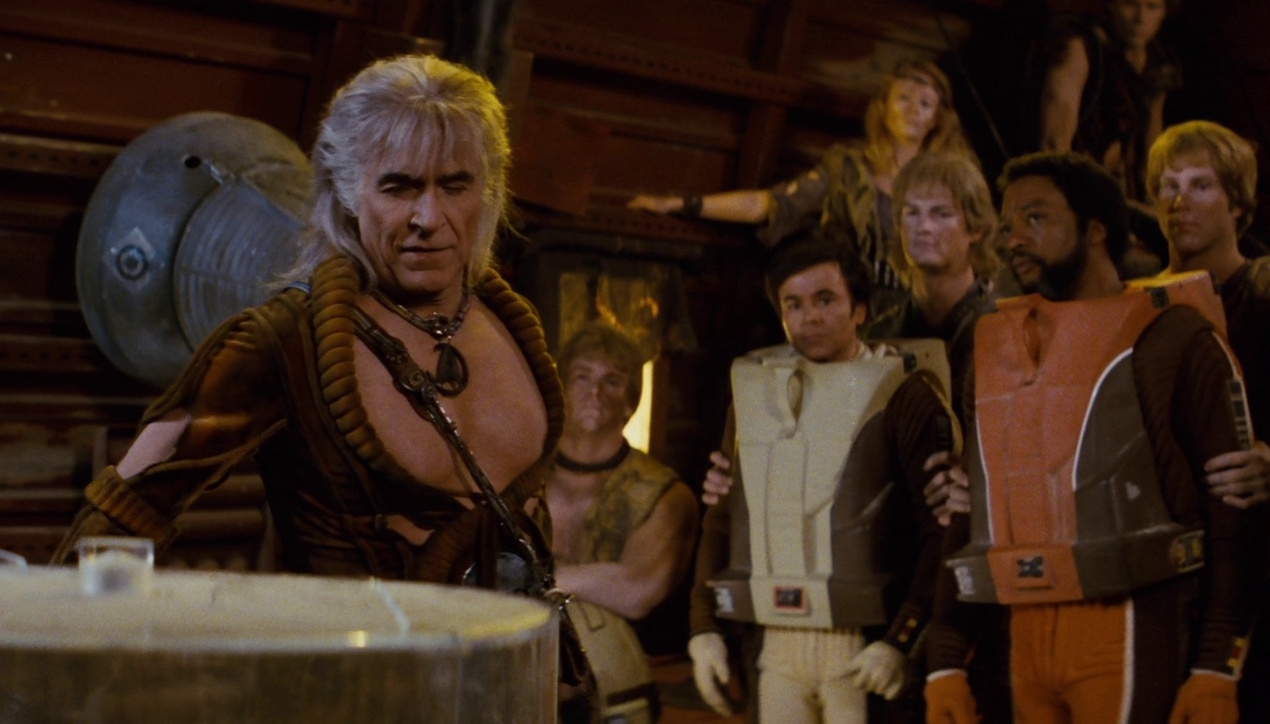
Thoughts on the potential Ceti Alpha V/Khan miniseries

Spoiler Warning: There are spoilers ahead for Star Trek II: The Wrath of Khan, Star Trek Into Darkness, Star Trek: Discovery, and for other iterations of the franchise.

If you don’t follow the ins and outs of the Star Trek rumour mill, maybe you missed talk of a potential Khan-focused project. I know I had until relatively recently! But apparently the proposed miniseries – codenamed Star Trek: Ceti Alpha V – has been written, and is floating somewhere in that nebulous “maybe” zone – better known as “development hell.”

This story, penned by The Wrath of Khan and The Undiscovered Country director Nicholas Meyer, would fill in a gap in the story of iconic villain Khan, focusing on his life in between his exile by Kirk in Space Seed and his re-discovery by the crew of the Reliant in The Wrath of Khan. Along with being the director of both of those films, which are generally considered among the best of cinematic Star Trek, Meyer also co-wrote their stories, so I don’t want to dismiss out of hand his work or ideas on this project.

That said… I’m not entirely sure this is something worth doing.

Khaaaaaan!

The fact that Ceti Alpha V is said to be a miniseries, perhaps consisting of a mere three episodes, would condense its story and avoid dragging it out too much – and that’s certainly a good thing. However, the reason why that might be necessary and the one saving grace this project has is because Ceti Alpha V would be looking at what is arguably the least-interesting part of Khan’s life and story.

Space Seed saw Khan awaken in a new century, still feeling superior to unaltered humans and intent on recapturing his long-lost empire. The Wrath of Khan saw him seek revenge on Kirk, the man who he feels wronged him by marooning him and his crew on the doomed world. Aside from the destruction of Ceti Alpha VI, which could be an interesting thing to see, I suppose, seeing Khan’s descent into madness and a revenge obsession just doesn’t feel necessary or interesting.

Khan in command of the USS Reliant in The Wrath of Khan.

The concept reminds me in some ways of the Star Wars prequels. Though that trilogy of films was beset by all kinds of issues, the fundamental problem was that it was telling the less-interesting part of an already-complete story – and that’s the trap Ceti Alpha V feels like it’s on the precipice of falling into. We didn’t need a three-film saga showing the awkward childhood and the rise and fall of Anakin Skywalker to understand that he was an evil villain who could be redeemed by the residual love he had for his son. All the elements of Darth Vader’s redemption story were already present in the first three Star Wars films, and the prequels ended up not just being unnecessary fluff, but they actively detracted from Vader as an imposing, intimidating villain.

What would Khan do in a potential Ceti Alpha V miniseries that we don’t already understand from both Space Seed and The Wrath of Khan? At best what we’ll see is a padded out version of what we already know happened: the explosion of Ceti Alpha VI, the ecological ruin of Ceti Alpha V, the deaths of his wife and members of his crew. And at worst we’ll see Khan engage in some awfully tacked-on story akin to the worst parts of the Star Wars Clone Wars cartoon.

Khan in Space Seed.

Sorry to keep hitting you with Star Wars comparisons, but the way I feel about this Ceti Alpha V project is similar in many ways to how I feel about the upcoming show Star Wars: Obi-Wan Kenobi. That series will follow Kenobi in between the prequels and the first Star Wars film… but the problem is that we already know what he did in those years: sat in exile in his desert hut.

Ceti Alpha V would also almost certainly recast the character of Khan for what will be the second time. Benedict Cumberbatch did a decent job in Star Trek Into Darkness a few years ago, but I seriously doubt he’d reprise the role here. While Star Trek has seen success with the recasting of classic characters – Captain Pike and Spock, most notably – doing so again here would just seem to add a further complication to the franchise.

Benedict Cumberbatch took over the role of Khan for Star Trek Into Darkness.

Unlike Star Wars, Star Trek has managed to successfully move beyond its original incarnation. The Original Series remains an important part of the franchise and its legacy, but as we look ahead to the 2020s – and hopefully beyond – we see projects like Prodigy, Lower Decks, the Section 31 series, and shows set in both the 25th Century with Picard and the 32nd Century with Discovery. I’m not sure that we need to revisit Khan right now – he’s a character whose story is arguably complete, and Star Trek as a whole is not in a place where this kind of backwards look is needed to bring in audiences.

As a Trekkie I would of course be interested to see a Khan miniseries. And also I’d be very interested to see any project with strong involvement from Nicholas Meyer. I just don’t see it being a necessary addition to the franchise based on where we are right now, and that’s before we get into the fact that, as mentioned, this would seem to be offering to tell the least-interesting part of a story that has already concluded.

The script for this project was written by Nicholas Meyer.
Photo Credit: Mike Muegel, CC BY 2.0 https://creativecommons.org/licenses/by/2.0, via Wikimedia Commons

There is plenty of scope for Star Trek to see the return of classic characters from The Original Series era – and we have seen a number of such characters in Discovery already. With Picard Season 2 in the offing and the return of Captain Janeway in Prodigy, we’re also welcoming back some characters from the 24th Century too. Maybe we just don’t need Khan right now?

Despite my feelings overall, I don’t think we should entirely dismiss the idea of Ceti Alpha V. I truly dislike the expression “nobody asked for this,” and I would point to Enterprise as a series that I likewise felt would have little to offer that ended up being a great Star Trek show that really embodied the spirit of exploration. So I don’t want to just say that Ceti Alpha V wouldn’t have merit; it may even succeed at bringing in fans of The Wrath of Khan – which is arguably the biggest point in its favour.

We already know how Khan’s story ends.

Will it get made? I don’t know. Meyer has suggested that the script itself is either almost complete or fully ready, so perhaps it’s only one step away from being greenlit. If I were in charge I think I’d look at other projects first before deciding whether or not to go ahead with something like this, though.

That’s just my opinion – and as I always say, the Star Trek franchise is a big tent, able to welcome all kinds of different stories. Just because this wouldn’t be top of my list doesn’t mean it lacks merit or would be unenjoyable – and I daresay if it does enter production I will tune in! One thing I definitely like the sound of are short-format stories like made-for-streaming films or miniseries. Just like Short Treks, miniseries like this proposal could be used to tell all kinds of stories in the Star Trek galaxy – and more Star Trek on our screens is always a good thing.

Star Trek II: The Wrath of Khan and all other Star Trek titles mentioned above are the copyright of ViacomCBS. This article contains the thoughts and opinions of one person only and is not intended to cause any offence.