Thoughts on Sisko and Starfleet Academy

A Star Trek-themed spoiler warning.

Spoiler Warning: There are major spoilers ahead for Star Trek: Starfleet Academy Season 1. Spoilers are also present for Star Trek: Deep Space Nine, Star Trek: Strange New Worlds, and the comic series Star Trek: Godshock.

We’re going to get into serious spoiler territory for one of the recent episodes in Starfleet Academy’s first season, so if my little spoiler warning graphic didn’t put you off… just beware. I don’t want to ruin the show for anybody!

This isn’t going to be a “review” of the episode Series Acclimation Mil. I’m not doing individual episode reviews for Starfleet Academy this year, and in this piece, we’re really only going to get into one of the episode’s storylines. There will be a review of Season 1 as a whole in March, and I’m sure I’ll touch on the episode (and this storyline) again at that point. So check back for that if you want to get my thoughts on the entire season more broadly. And I have a review of the two-part premiere, which you can find by clicking or tapping here.
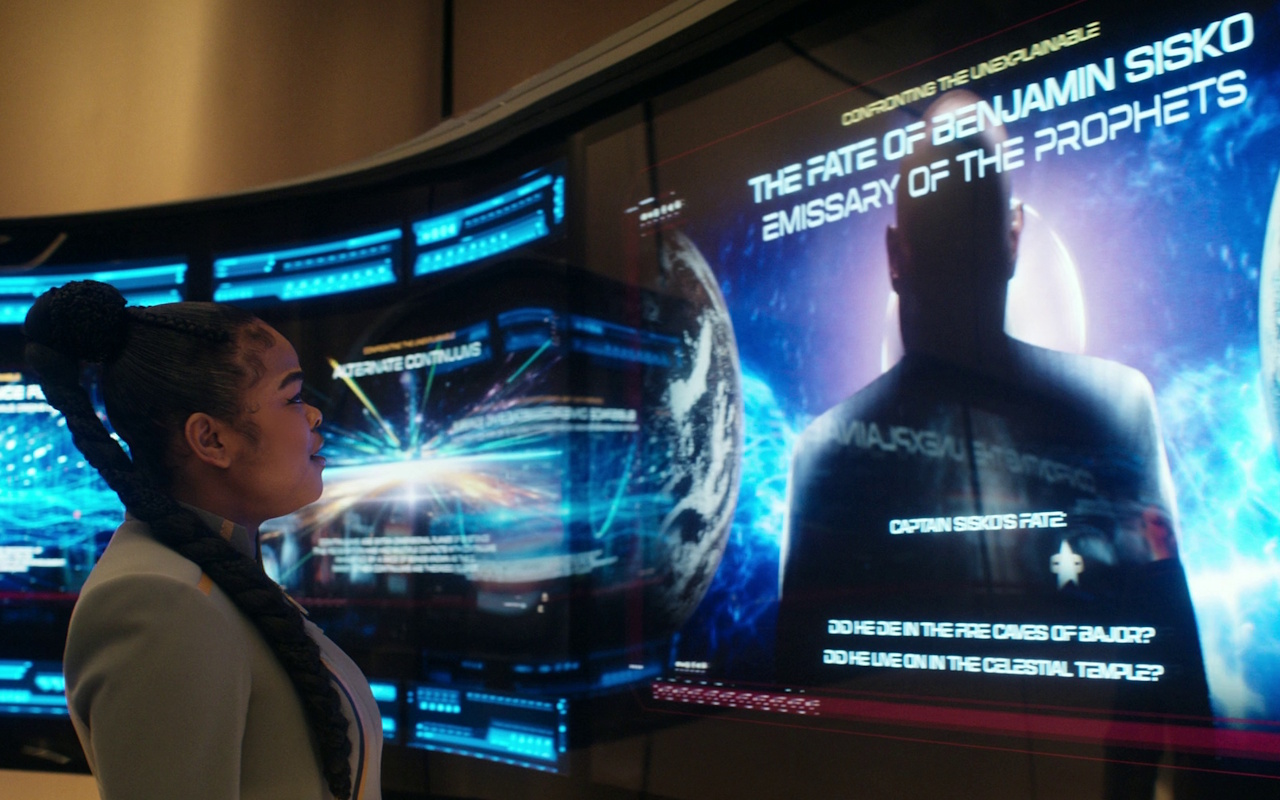
Still frame from Star Trek SFA S1 showing Sam and a Sisko poster.
Sam “confronts the unexplainable” in Starfleet Academy.

Series Acclimation Mil returned to Star Trek: Deep Space Nine in a pretty big way, and I wanted to talk about that element in a longer format, in a way that I don’t think I could do justice to in my season review piece. DS9 is a hugely important series for me, and this episode was clearly well-intentioned, with writer Tawny Newsome wanting to draft a “love letter” to the series and to Captain Sisko in particular.

But… is that how it came across?

Captain Sisko is, on balance, almost certainly my favourite Star Trek captain. And if you put my back against the wall and pushed a phaser to my head, forcing me to choose, I’d also name Deep Space Nine as my favourite Star Trek show. Out of all the Star Trek shows, DS9 got what is arguably the most definitive and complete series finale, but Captain Sisko’s story was deliberately left ambiguous. In Starfleet Academy, the episode Series Acclimation Mil picked up this narrative thread and aimed to tell a story about the intersection of religion and science, as well as one that really celebrated the legacy of Star Trek’s first African American captain and series lead. I admire the intention, and I don’t doubt that everyone involved, from the writers and producers to the performers, came into this story for the right reasons and genuinely intended for it to be a celebration of Sisko and DS9.
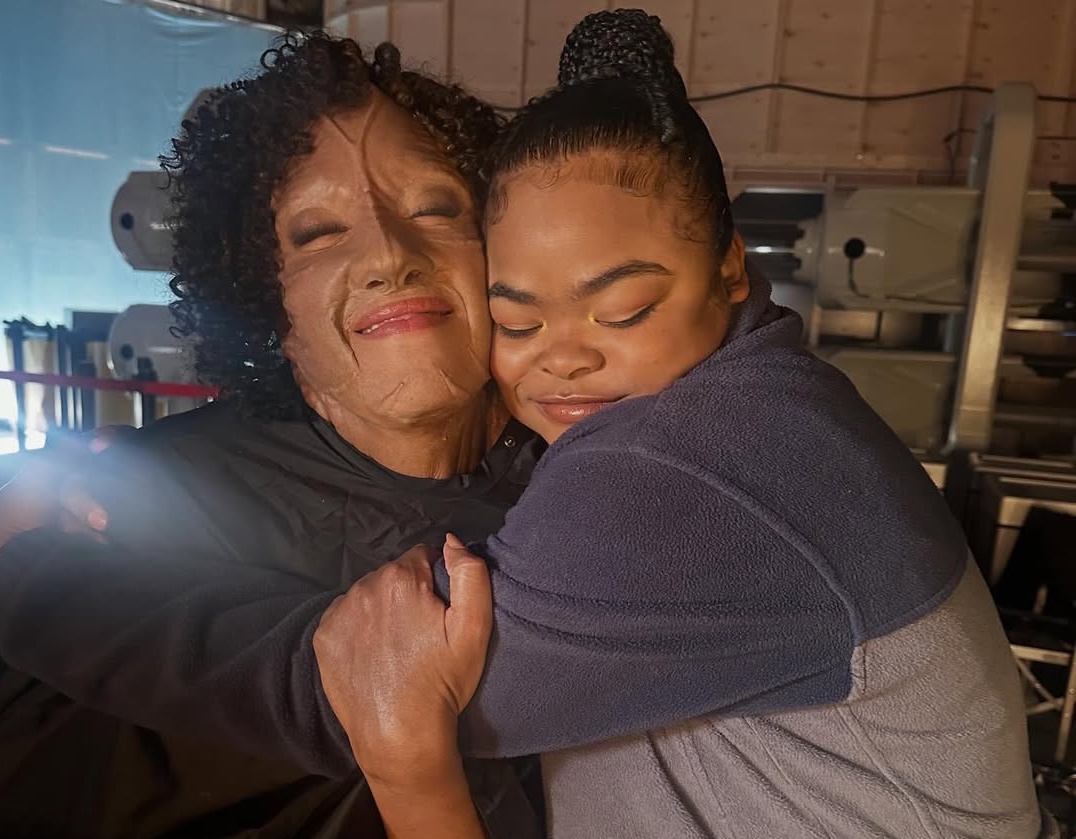
Behind-the-scenes photo from Star Trek SFA showing Newsome and Brooks.
Tawny Newsome (left) wrote and had a role in Series Acclimation Mil, along with series regular Kerrice Brooks (right).

Fundamentally, I think Starfleet Academy was the wrong choice of series for an episode like this for one simple reason: its place in the timeline. If this were a Picard-era series (as I argued it should be once upon a time), we might be having a different conversation. But because Starfleet Academy takes place in the 32nd Century, more than 800 years after the events of DS9′s finale… the story it was able to tell, far from celebrating Sisko and his legacy, arguably detracts from it.

When work on What You Leave Behind was ongoing, Sisko actor Avery Brooks insisted on a change to the script. The original version of DS9′s finale saw Sisko “ascending” to become a Prophet, permanently leaving the world behind as he moved to live in the Celestial Temple. But Brooks felt that the idea of a black man (Star Trek’s first African American captain, too) effectively “abandoning” his pregnant wife and son wasn’t the right message for Sisko’s story to end on. And so that ambiguity was written into What You Leave Behind, allowing Sisko to one day “return,” as he said to Kassidy in his final vision.
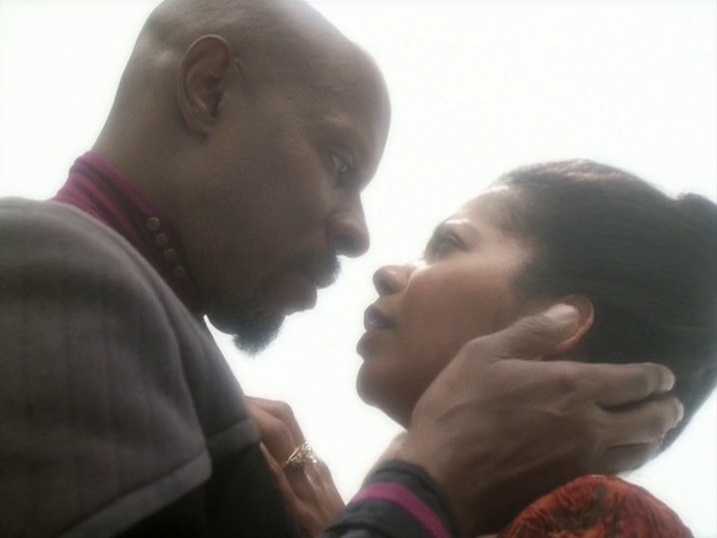
Still frame from Star Trek DS9 showing Sisko and Kassidy's vision.
Sisko’s final appearance to Kassidy.

For years, that was the end of it. DS9 was over, but fans could speculate about how and when Sisko would return. There was even a comic series – Star Trek: Godshock – in which Sisko returns from the Wormhole about three years after the events of DS9′s finale. I’m not a comic book fan myself, but this was an officially-licensed publication, and while comics aren’t strictly part of Star Trek’s canon, they can be a good format for telling stories involving legacy characters who can no longer be involved in Star Trek on the screen.

Avery Brooks, who played Sisko in all seven seasons of DS9, has effectively retired. His last on-screen credits came shortly after Deep Space Nine ended, and his final involvement with the Star Trek franchise came in the 2006 video game Star Trek: Legacy (not to be confused with the proposed Picard spin-off of the same name), in which he reprised his role in voiceover form. Following DS9, Brooks worked as a professor at Rutgers University, and was also involved with the Smithsonian Institution. As far as I know, an on-screen return to Star Trek or the role of Sisko was never officially proposed, but it seems, from what I can gather, that Brooks would have turned down such an approach. He may have done so if the writers of Starfleet Academy had asked.
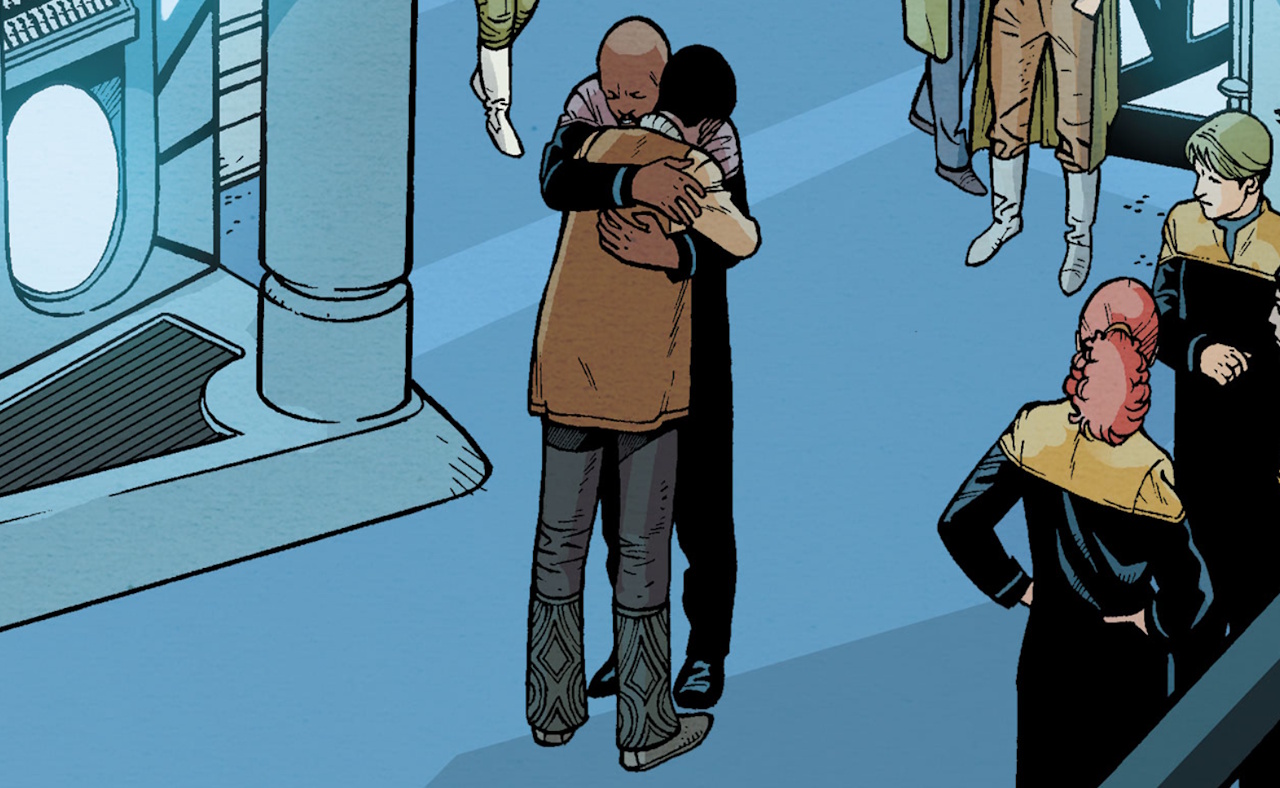
Crop from the comic Star Trek: Godshock showing Jake and Ben Sisko embracing.
Jake and Ben Sisko’s reunion in Godshock.

Recasting such an iconic and important character wouldn’t sit right with me – nor with a lot of other Trekkies, I suspect. So with Brooks effectively out of the picture, not wanting to return as Sisko… the idea of a Godshock type of story, in which Sisko very definitely kept his word and came back from the Celestial Temple, is off the table. Starfleet Academy was left without the most important element of any Sisko story – the man who portrayed the character – but tried to go there anyway.

I will concede that, given the restrictions and limitations placed on the story by Avery Brooks’ absence, the kind of story told in Series Acclimation Mil was probably about as good as it could get. But that’s not really the point. My argument is that, without Avery Brooks being involved, and without Sisko able to keep his word and return from the Wormhole during the lifetime of his wife, son, and other friends… this story shouldn’t have been attempted. If they asked Brooks to return and he said no, or if it was communicated to them clearly that Brooks was unavailable, this story should simply have been set aside, and something else written for the character of Sam.
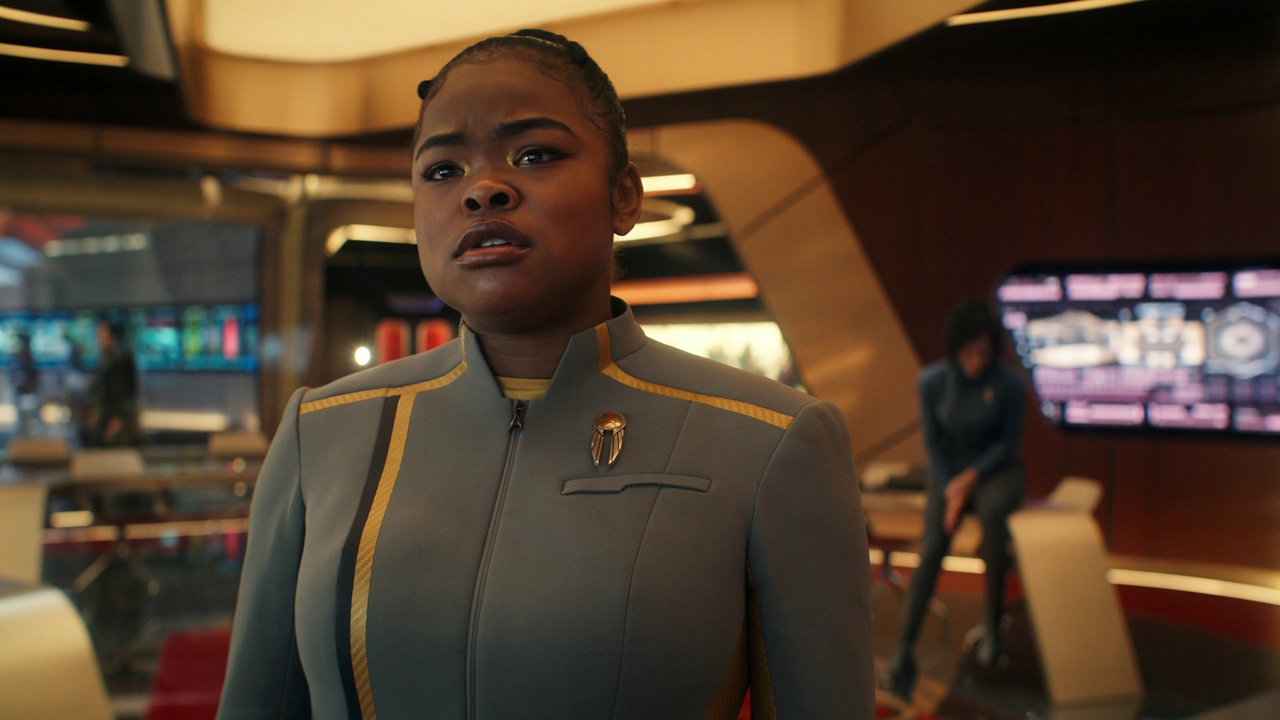
Still frame from Star Trek SFA 1x05 showing Sam.
Sam in Series Acclimation Mil.

There are other ways to celebrate DS9, and other characters from that series who could’ve been included. Series Acclimation Mil introduced us to a brand-new host for the Dax symbiont, for example – something I argued Discovery should’ve done during its various Trill episodes – but we spent very little time with her and learned practically nothing about her. Or Starfleet Academy could’ve picked up on Lower Decks’ idea that O’Brien was widely celebrated in the far future, doing something with that character’s legacy. The Klingon story could’ve revisited Worf and his ties to Starfleet, with Starfleet Academy having already visited Bajor there was scope to do something with Kira, or we could finally learn more about Cardassia, perhaps touching on the legacy of someone like Garak.

But really, DS9 wasn’t the point. This was an episode intended to celebrate the legacy of Star Trek’s first African American captain. So… what else could Starfleet Academy have done to acknowledge Star Trek’s African American connections? A great choice would be Uhura – the first African main character in Star Trek. I’d have loved to see a crossover, perhaps involving Cadet Sam meeting Strange New Worlds’ Uhura on the holodeck. Or the show could’ve called back to the legacy of Geordi La Forge, or Travis Mayweather – two characters brought to life by African American performers. Avery Brooks may have been the first to be a series lead, but there are other African American performers Starfleet Academy could’ve called on for this kind of celebratory story.
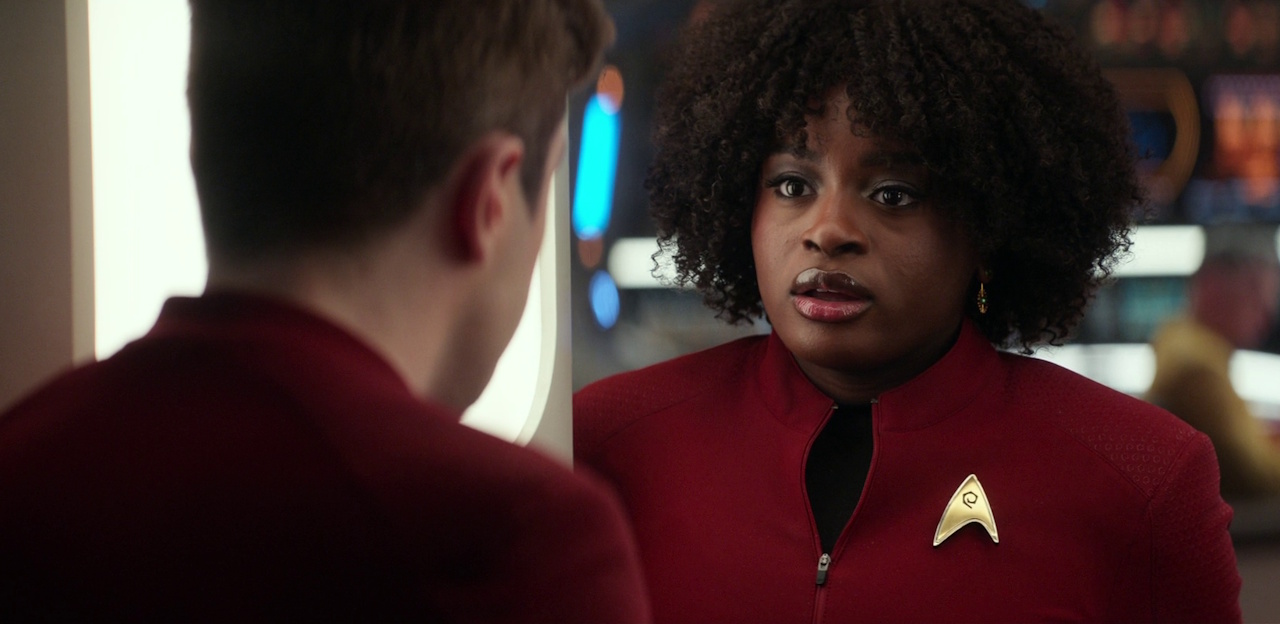
Still frame from Star Trek SNW showing Scotty and Uhura.
Uhura in Strange New Worlds Season 3.

And I am firmly in the camp that says “celebrate DS9″ and “celebrate Star Trek’s African American performers and heritage!” I think those are fantastic ideas, especially in this landmark 60th anniversary year. The Original Series was groundbreaking for African American representation on television, thanks to Nichelle Nichols’ main role, with even the venerable Martin Luther King saying so. There is a lot to celebrate on that front, and I don’t begrudge the writers of Starfleet Academy wanting to do so.

Unfortnately, though, the very celebratory episode that they set out to create has, I would argue, done a bit of damage to Sisko’s character – turning him into the very “delinquent dad” that Avery Brooks argued against almost three decades ago. By choosing Sisko over other characters, and because of the limitations placed on the story by both Starfleet Academy’s place in the timeline and Brooks’ retirement from acting, Series Acclimation Mil answered one of Star Trek’s “unanswerable” questions in pretty much the worst way possible.
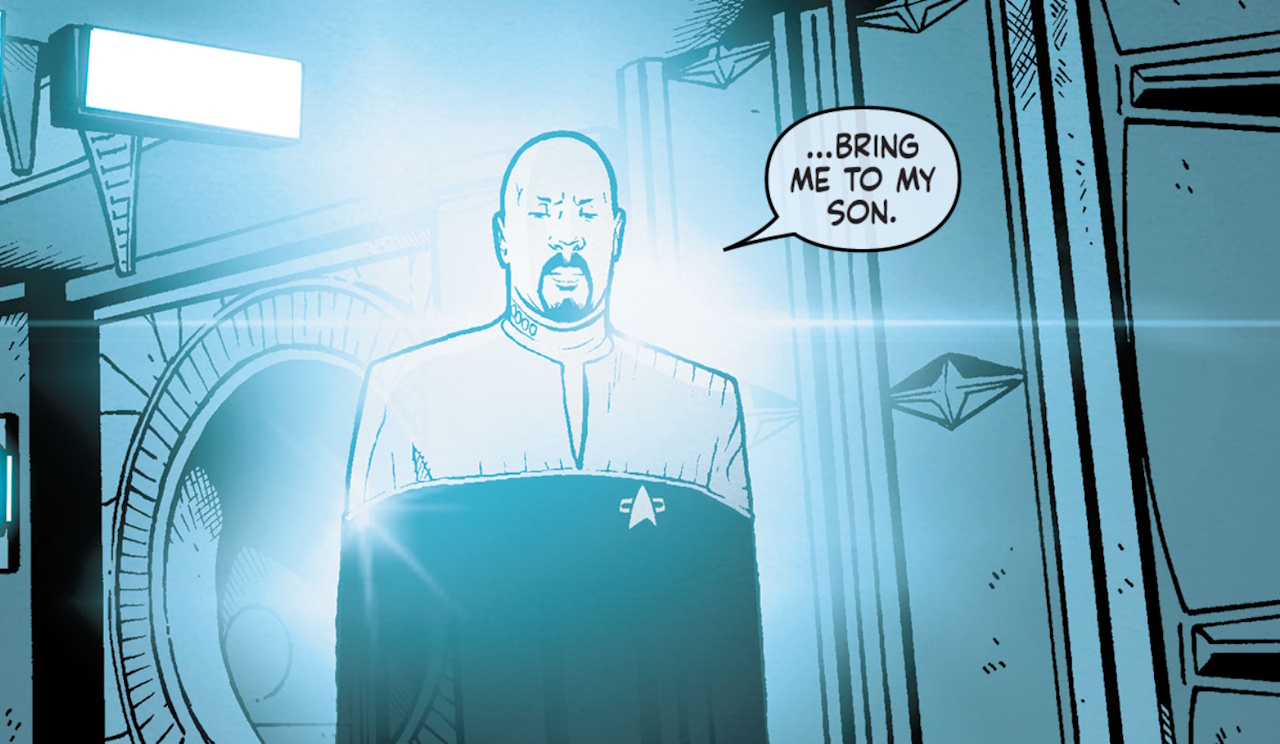
Crop from the comic Star Trek: Godshock showing Sisko's return.
Sisko’s first words after returning in the comic Godshock.

Regardless of where you stand on the episode’s crucial question of “did Sisko die or enter the Celestial Temple,” Series Acclimation Mil confirmed that, in Star Trek’s canonical prime timeline, Sisko never returned. He stayed away from the galaxy for more than eight centuries, breaking his promise to his wife, never seeing his son grow up, and never contacting Dax or any of his other friends.

And I would further argue that the episode’s central question, which Sam sets herself the task of answering, *was already answered a quarter of a century ago*!

Deep Space Nine’s finale didn’t end with Sisko falling into the Fire Caves. There was one final scene involving Sisko: his vision to Kassidy Yates. This was presented in the story as a vision from the Prophets, and the character was not a random Prophet impersonating Sisko, but Sisko himself. What You Leave Behind definitely and clearly stated that Sisko didn’t die and was taken by the Prophets to their Celestial Temple. And his final words to his wife? “But I *will* be back.”
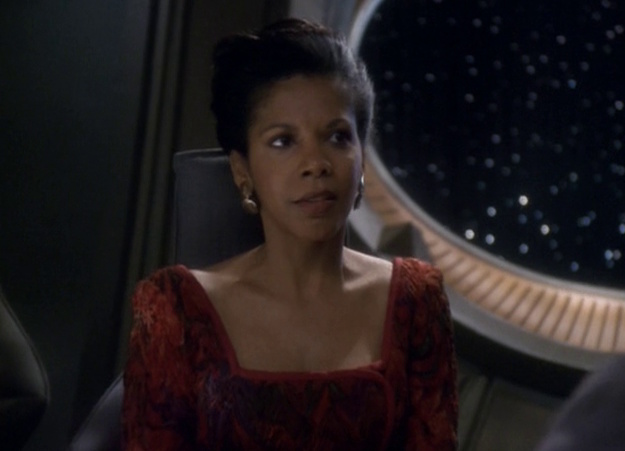
Still frame from Star Trek DS9 showing Kassidy.
Sisko promised Kassidy that he would return.

I never read that scene in What You Leave Behind as leaving any room for doubt or ambiguity. Sisko didn’t die – he was taken to the Wormhole by the Prophets. And he intended to stay with them only for as long as necessary to learn whatever they needed to teach him, but he absolutely, categorically planned to return.

So what does Series Acclimation Mil have to say about that? What does this episode now mean for Sisko, the Prophets, and DS9?

There are a couple of ways we can interpret things, I guess, if we go back to DS9′s finale. Firstly, we could say that Kassidy either didn’t receive a vision from the Prophets at all, and hallucinated a reunion with Sisko out of grief, or that she received a vision from a different Prophet who pretended to be Sisko to give her a bit of hope to tide her over. That kinda sucks.

HD still frame from What We Left Behind showing Sisko.
Captain Sisko.

Alternatively, we could say that Sisko wanted to leave the Wormhole… but was unable to do so in time. Maybe his lessons with the Prophets went on longer than he thought. Maybe he “lost track of time” in a dimension that exists… outside the normal flow of time? Maybe the Prophets kept him prisoner and prevented him from leaving, even though he really wanted to. Or maybe only Sisko’s “soul” still exists, and with his physical body having been destroyed, he had no way to come back.

Again, none of those ideas hold *any* appeal whatsoever, at least not for me.

So we’re back to some fundamental questions: was this the right moment for an episode like this? Was Starfleet Academy the right series – or the right *kind* of series? Without Sisko himself, and without recasting the character, was it wise to attempt this kind of story? Could other ways have been found to celebrate Star Trek’s African American performers, Deep Space Nine as a series, or both?
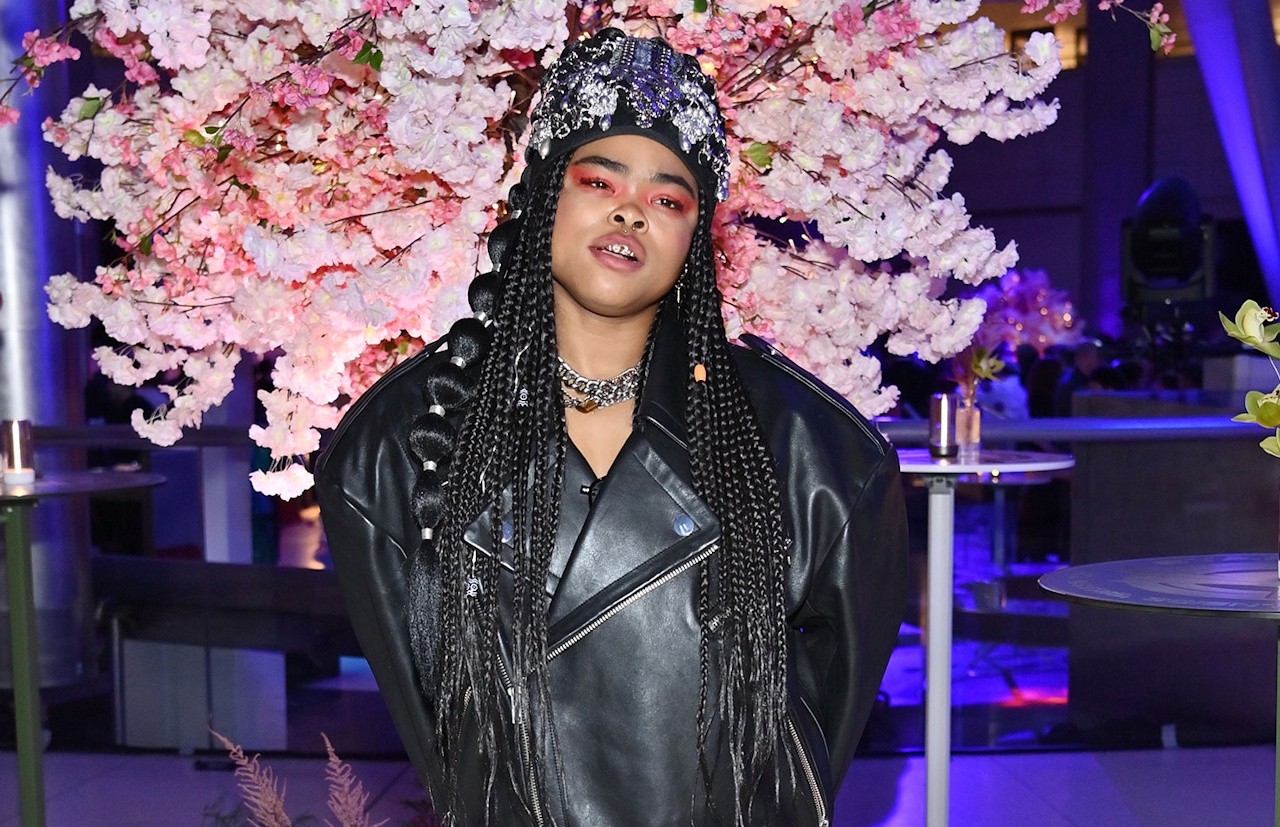
Photo from the Star Trek SFA premiere of Kerrice Brooks.
Kerrice Brooks, who plays Sam in Starfleet Academy.

I wouldn’t have given the green light to this episode, if I had the opportunity over at Paramount. Not because I don’t want to pick up the dangling thread of Sisko’s story, and not because I don’t want Star Trek to do more with DS9, but because of what this story does to Sisko’s character. Despite what Newsome, Cirroc Lofton, and others have said on behalf of Avery Brooks – that he gave the episode “his blessing,” and that that was important to them – Series Acclimation Mil, in my view, harms Sisko’s characterisation, it harms Star Trek as a whole, and it gives a fundamentally unsatisfying answer to a question that didn’t really need to be asked.

We already knew that Sisko was alive in the Celestial Temple; Starfleet Academy didn’t even need to ask that question. And we already knew that he planned to return. What We Left Behind – Looking Back at Star Trek: Deep Space Nine even saw the show’s original creators and writers putting together their own idea of what Sisko’s return might’ve looked like. Combine that with the comic book, fan theories, and more… and I think us Trekkies have had more than enough ways to envision Sisko’s return, even if none of that could ever be “officially canon.”
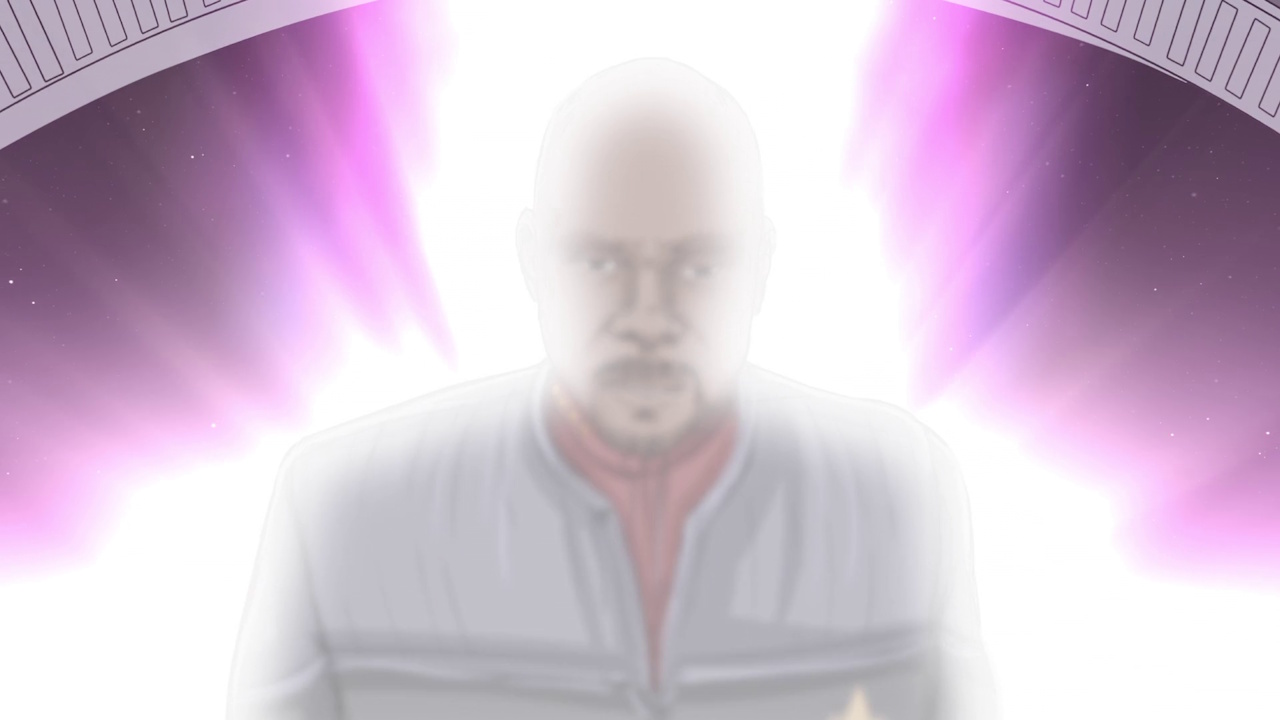
Still frame from What We Left Behind (DS9 documentary) showing Sisko's return.
Sisko’s return as imagined in What We Left Behind.

By sidelining all of that, Starfleet Academy’s writers set out to answer the question of what happened to Sisko using their own ideas – but also being severely hampered by the unavailability of Avery Brooks, and the show’s place in Star Trek’s timeline. The result was an episode that betrayed Brooks’ final intervention on Sisko’s behalf at the end of DS9′s run, turning the character into the “absent black father” trope that has been so harmful on TV and in movies. Whatever in-universe reasons we might try to concoct to excuse Sisko, or whatever successes Series Acclimation Mil may have had elsewhere – and there absolutely were highlights and successes – that point is so basic, so existential, and so fundamentally awful that it would warrant scrapping the entire thing and writing it off.

In defence of the episode, I will say that Cirroc Lofton’s appearance hit all of the right emotional notes for me, and especially towards the end, I felt myself tearing up. Jake Sisko’s return to Star Trek – in holographic and visionary forms – made the best of a bad situation, and I don’t want to take away from Lofton’s masterful performance in Series Acclimation Mil. Nor from the work of Kerrice Brooks, who stepped up to take on a spotlight episode for the first time and really nailed it. Both performances were exceptional, and I can tell that Lofton, in particular, really wanted to celebrate the legacy of his on-screen dad and the series he’d been a part of.

It’s just such a shame that, to tell a story about Sisko at this moment and in this series… it had to be *this* story.
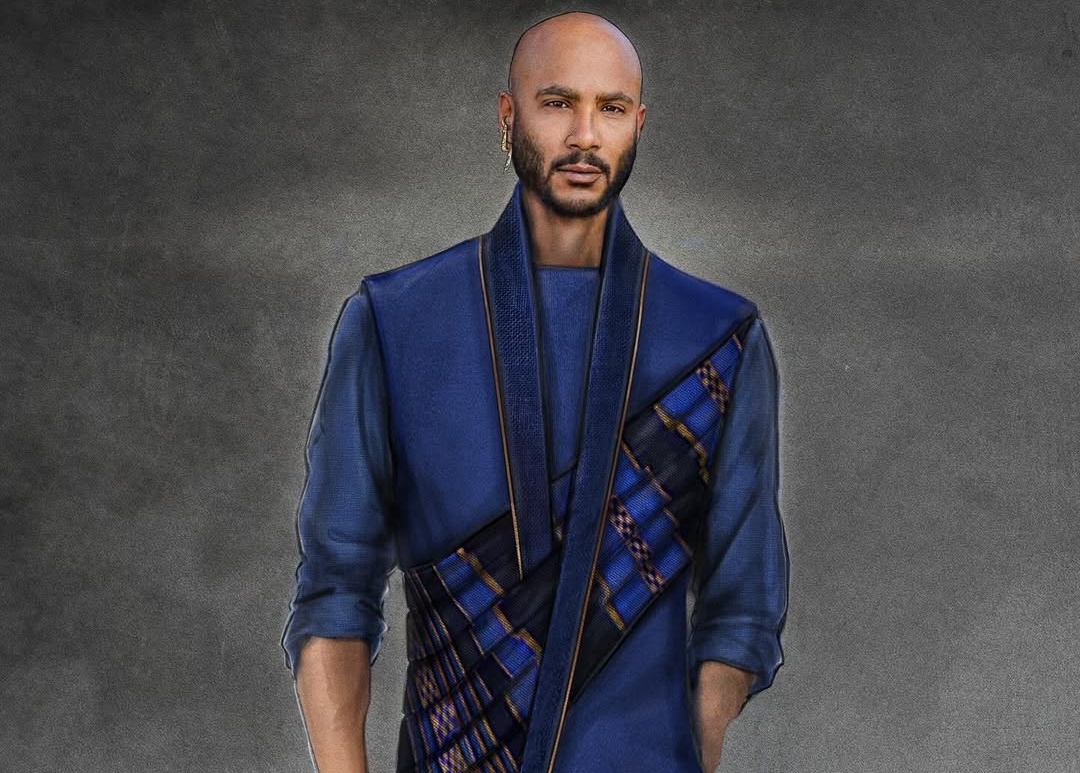
Star Trek SFA concept art: Jake Sisko.
Concept art of Jake Sisko, created for Starfleet Academy.

Series Acclimation Mil conflicts with, or changes how we have to interpret, other Star Trek episodes, too. What was the message of The Visitor? Widely considered to be one of DS9′s finest episodes, The Visitor depicted an older Jake Sisko trying to figure out a way to rescue his father from a temporal anomaly. The older Jake argues passionately that his younger self needed his father, and it also seems as if Sisko’s absence from the timeline ultimately proved harmful to the Federation – DS9 had fallen into disrepair, and Starfleet needed to get permission from the Klingons to even enter the Bajoran system.

That timeline’s Jake Sisko gave his life to send his father back to the Defiant, so that his younger self would have the dad he needed. Now we know that Jake’s sacrifice bought Ben… what? A couple of extra years? And that Kassidy had to raise their child alone, while Jake’s writing career seems to have unfolded similarly to how it did in The Visitor, with only a couple of books being published. I just… I just don’t like what it says about Sisko, his promise to return, and how he ultimately ended up abandoning the family he seemed willing to do anything for.
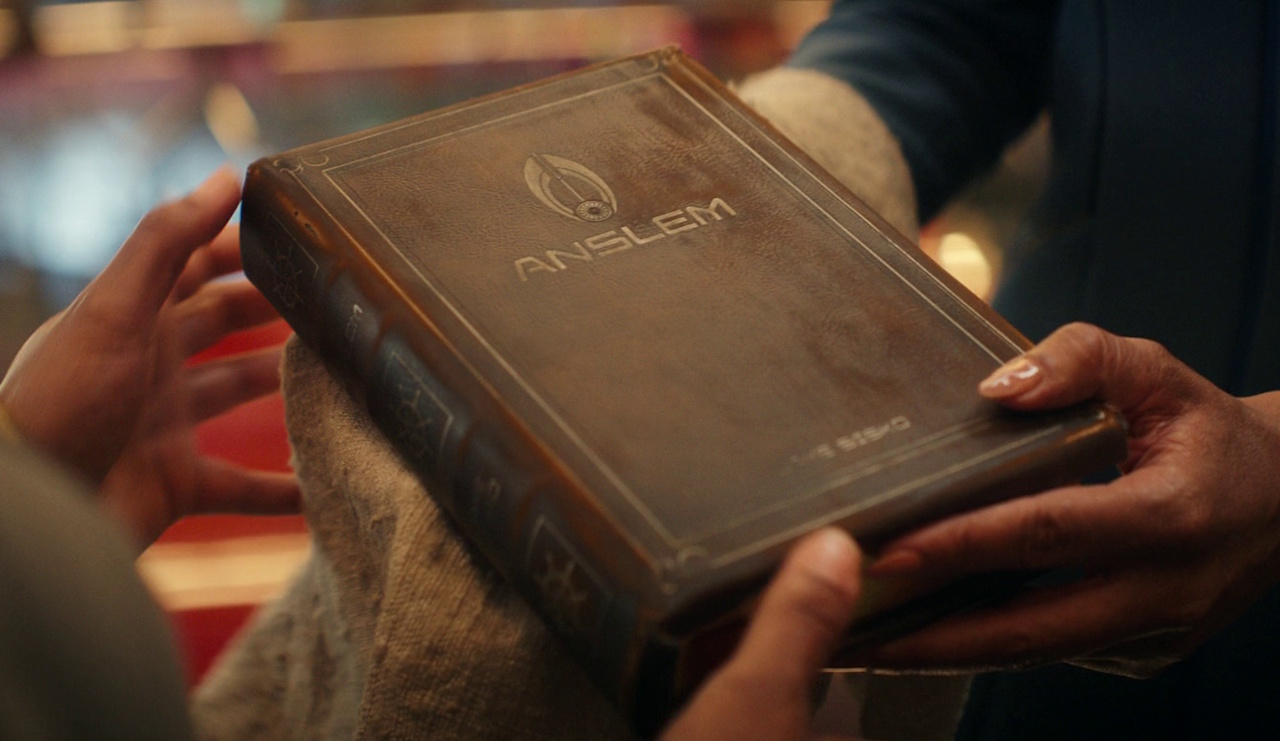
Still frame from Star Trek SFA S1 showing Jake's book Anslem.
Anslem, Jake Sisko’s finished book.

I respect the good intentions behind Series Acclimation Mil, both as an episode that aimed to celebrate Deep Space Nine and Star Trek’s first African American captain. And Jake Sisko’s appearance, in particular, did a lot to elevate the story, connect it back to DS9, and lean into the legacy of Benjamin Sisko. This wasn’t an episode concocted thoughtlessly, nor purely as a business decision to play the nostalgia card and make money. There was genuine artistry behind it, and it was a well-intentioned effort.

Which makes it all the more disappointing, in a way, that the final cut of the story does so much harm to Sisko’s character. If Series Acclimation Mil had been just a cheap overplaying of the nostalgia card by a corporation running out of ideas… maybe I’d feel less bad or less guilty at tearing into it so much. Because this isn’t an easy essay to write, to be blunt about it. I don’t take any pleasure in writing these words, nor in crapping all over the hard work and good intentions that went into the story’s creation. But I have to be honest with you at how the episode made me feel, and how I feel it harms the last words of the man who is still my favourite Star Trek captain.
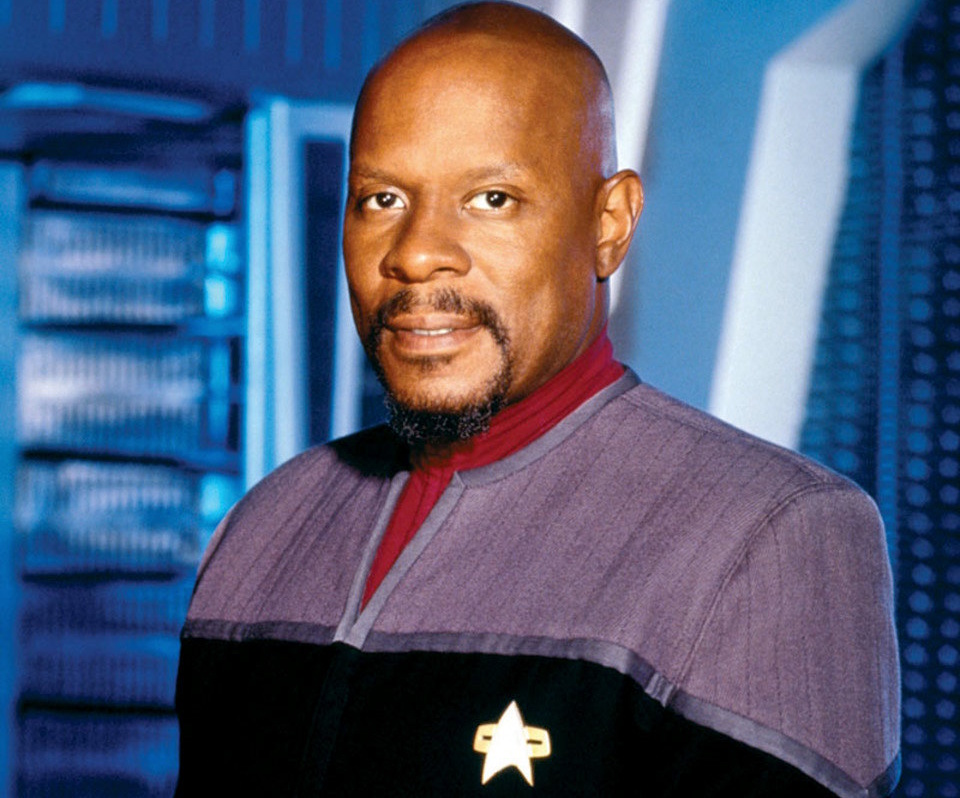
Publicity photo of Avery Brooks as Captain Sisko.
Captain Sisko.

When Picard went off the air, and Lower Decks came to the end of its run… that was realistically the last chance to do a Sisko story that could’ve worked, and that might’ve felt right. I would have thoroughly enjoyed a story about cadets learning about Captain Sisko and his legacy in that era, too, had Starfleet Academy been a different show. But because of its place in the timeline, and because of the kind of episode it had to be in the absence of Avery Brooks… I’m firmly of the opinion that no episode at all would have been better than this.

I’ve said this before, and I’ll probably have to say it again before too long: stories end. Every story eventually reaches a natural end point. While, as fans, we might like to imagine what came next for our favourite characters… when the credits roll, the curtain falls, or we reach the last page, that should be it. Too often in the modern entertainment industry, characters or stories are unnaturally resurrected for unnecessary epilogues, telling us more than we needed or wanted to know about what came next. And for me… Series Acclimation Mil falls into that category, even if there were genuine reasons for its creation beyond a mere corporate nostalgia play.
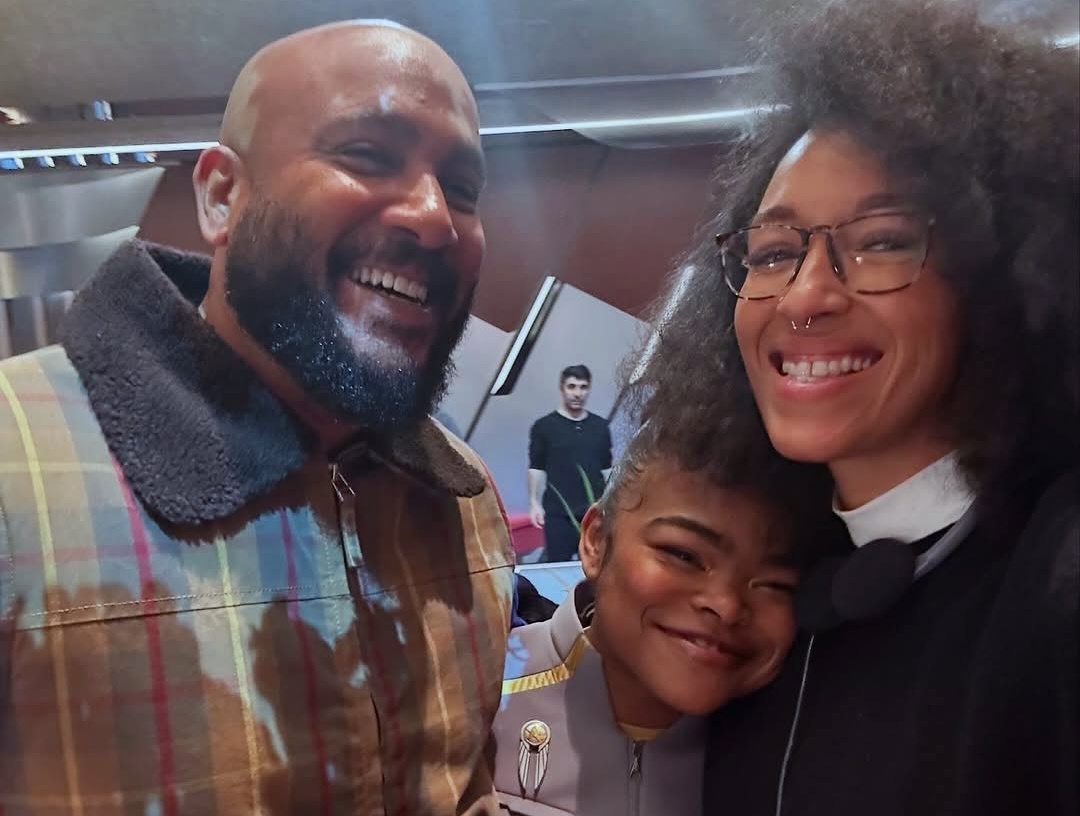
Behind-the-scenes photo from Star Trek SFA S1 of Cirroc Lofton, Kerrice Brooks, and Tawny Newsome.
DS9′s Cirroc Lofton (left) with Kerrice Brooks (centre) and Tawny Newsome.

It’s no exaggeration to say that I’d rather have seen no continuation of Sisko’s story than this one. And even with Avery Brooks’ “blessing,” and his willingness to allow the Starfleet Academy team to use one of his spoken-word recordings to close out the episode… I’d rather Sisko had remained in What You Leave Behind, his fate confirmed, his return scheduled… and for Star Trek to never acknowledge it again. That would have been better, and more respectful, than the story this episode told.

So that’s my take on how Sisko was handled in Series Acclimation Mil.

This is a delicate subject, as it touches on themes of race, and modern Star Trek’s handling of the franchise’s first African American captain. As you may know, I’m British, not American, so I don’t have the same connection to Sisko as perhaps some folks out there might. But he’s a character I love and I’ve always respected, and I really do mean it when I say that a better end to Sisko’s story would have been his ambiguous promise to return at the end of What You Leave Behind. I can’t *hate* the episode Series Acclimation Mil, because seeing Jake again was a treat, it’s nice to know Dax is still around, and the cadets got into some interesting scrapes while Sam was chasing down Sisko’s legacy. But, damn… what a horrible fate for Sisko in canon, just to disappear and never be heard from again.
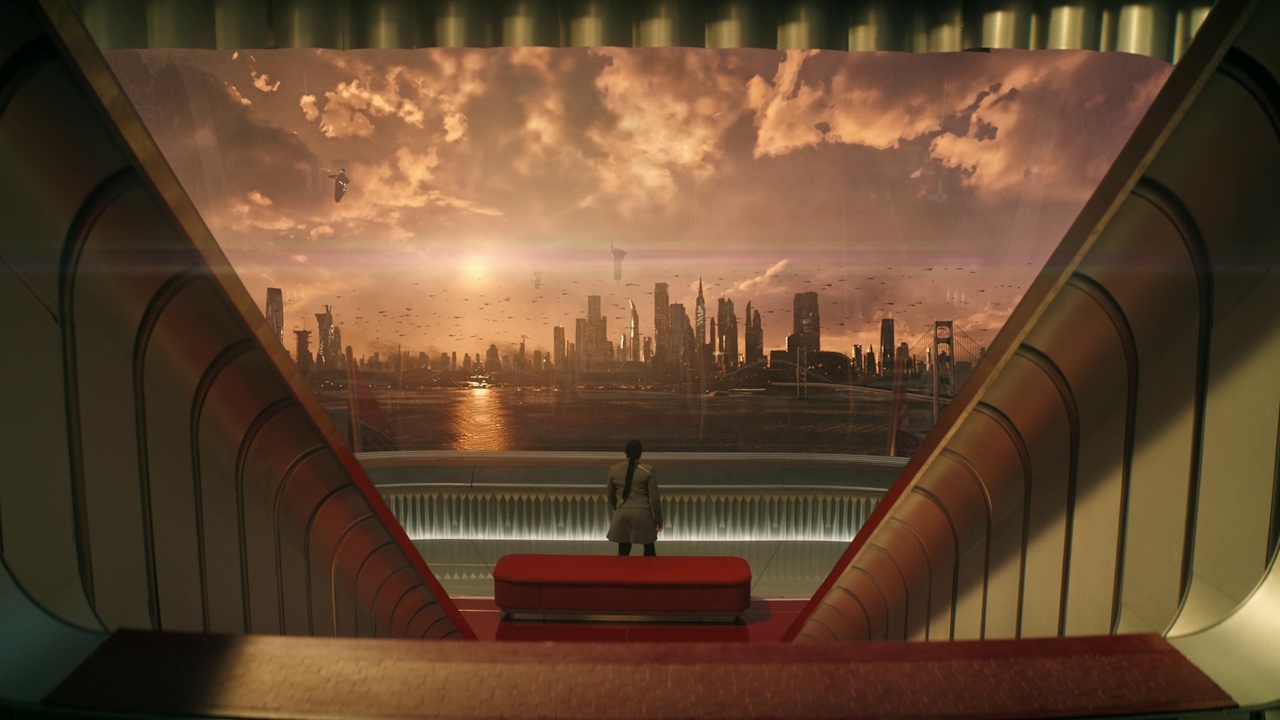
Still frame from Star Trek SFA showing Sam and San Francisco.
The final shot of the episode.

If you made it this far, thank you for reading. I tried to approach the subject as sensitively as possible, and despite my feelings about Series Acclimation Mil, this piece shouldn’t be interpreted as an “attack” on the writers, producers, performers, or behind-the-scenes folks. I genuinely respect and appreciate the intentions behind the story, even if the end result isn’t something I enjoyed or wanted to see.

Next month, when Starfleet Academy’s first season wraps up, I’ll write up a full review, which may touch on other elements of Series Acclimation Mil that I didn’t discuss this time. I wanted this piece to be laser-focused on Sisko and what the episode said about him, rather than a broader review of the episode. So I hope you’ll join me for that.

Thanks again for reading… and Live Long and Prosper.


Star Trek: Starfleet Academy Season 1 is streaming now on Paramount+ in countries and territories where the service is available. The Star Trek franchise – including Starfleet Academy, Deep Space Nine, and other properties discussed above – is the copyright of the Paramount-Skydance Corporation. This article contains the thoughts and opinions of one person only and is not intended to cause any offence.
What If…? Star Trek Edition!

Spoiler Warning: There are spoilers ahead for the following Star Trek productions: The Search for Spock, The Next Generation Season 3, Nemesis, Deep Space Nine, Voyager, and Star Trek 2009.

Over on Disney+, Marvel has recently put out a series of animated short films with a very interesting premise. These shorts asked what might’ve happened in the Marvel universe if circumstances had changed, characters had taken different actions, or things had ended differently.

Alternate history has always been a subject that fascinated me! So with that in mind, we’re going to consider a few “what ifs” from the Star Trek franchise – from an in-universe point of view, naturally! There are more than 800 Star Trek stories at time of writing, meaning that there are literally hundreds of potential scenarios where a different decision or different outcome could have radically changed the Star Trek galaxy.

Inspired by Marvel’s What If…? series, we’re going to put a Star Trek spin on this concept!

As always, please keep in mind that all of this is one person’s subjective opinion! I’m indulging in fan-fiction and pure speculation based on my own thoughts about how some of these scenarios might’ve unfolded. If you hate all of my ideas, or something you like wasn’t included, that’s okay! Within the Star Trek fandom there’s enough room for different opinions.

With that out of the way, let’s consider some Star Trek “what ifs!”

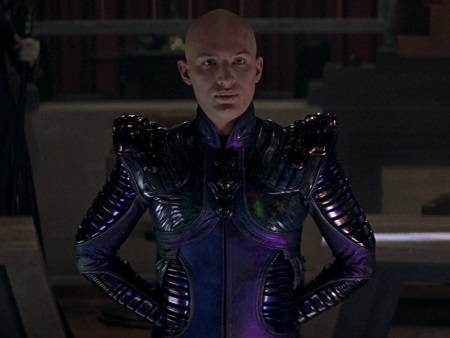
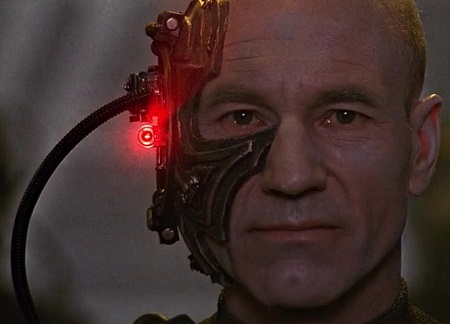
Number 1: What if… Captain Picard couldn’t be saved after being assimilated?

Locutus of Borg.

This isn’t going to go the way you might be expecting! In this scenario, the events of The Best of Both Worlds play out as we saw on screen: Picard is captured, the Borg defeat the Federation at Wolf-359, Riker and the Enterprise race to confront them over Earth, and Captain Picard is able to communicate to Data how to defeat them. The Borg cube explodes, and the Federation lives to fight another day! But unfortunately Captain Picard then dies – severing his connection to the Collective and/or removing his Borg implants was too much for his body and mind to take, and he doesn’t survive beyond the end of The Best of Both Worlds, Part II.

As Starfleet and the crew of the Enterprise-D mourn the loss of Captain Picard, Captain Edward Jellico is assigned to the ship as his replacement, and many of the events later in The Next Generation proceed unaltered. As Q would tell Picard in the episode Tapestry, even without him in command the Enterprise-D and Starfleet would be fine.

Captain Edward Jellico.

The Federation, armed with new knowledge of the Borg, developed new ships like the Defiant-class and Sovereign-class, and were even able to defend against a second Borg incursion a few years later – albeit at great cost. But the loss of Captain Picard would have a huge impact later, in the year 2379. A coup on Romulus brings a human clone to power – Shinzon. Shinzon’s plot to destroy the Federation was only stopped because of his personal connection to Picard, a connection that fascinated him and that he hoped could save his life.

Without that obstacle in the way, Shinzon sees no reason to wait or to play nice with the Federation before implementing his plan. He takes his flagship, the Reman warbird Scimitar, and heads straight for Earth before the Federation even has time to respond diplomatically to the change in government on Romulus. Under cloak, the Scimitar deploys its thalaron radiation weapon – massacring all life on planet Earth and crippling the Federation government and Starfleet command.

Without Captain Picard to pose a distraction, Shinzon was able to launch his attack on Earth.

With war now assured between the Romulans and Federation, Romulan commanders who had been sceptical of Shinzon rally to the cause. All-out war breaks out between the Romulan Empire and the residual Federation, but without a government or command structure to provide a coordinated response, and seriously demoralised from the attack on Earth, things don’t go well for Starfleet. The Scimitar proves to be an unstoppable force all on its own, and its thalaron radiation weapon is able to devastate multiple other planets: Betazed, Andoria, Alpha Centauri, Mars, and others. The Federation is forced to sue for peace on very unfavourable terms.

However, Shinzon wouldn’t live to see the Romulan victory. Without the original Picard, there was no way to save his life from the DNA degradation that he was suffering from, and shortly after the Federation’s defeat Shinzon dies. His Reman viceroy would succeed him as the new leader of the Romulan Empire, an empire which now incorporated large swathes of what had once been Federation space. Whether the Romulans could hold all of this territory, and whether their empire would accept a Reman leader, are now open questions…

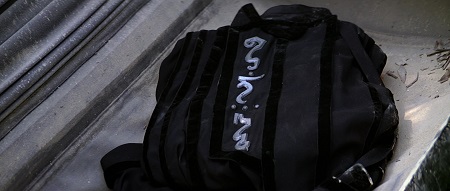
Number 2: What if… Spock wasn’t resurrected on the Genesis Planet?

Spock’s empty coffin on the Genesis Planet.

This scenario sees the events of The Wrath of Khan unfold exactly as we saw on screen. Khan stages an attack on the Enterprise, steals the Genesis device, and is defeated at the Battle in the Mutara Nebula. Spock sacrifices his life repairing the Enterprise’s warp drive, allowing the ship to outrun the blast of the Genesis device. But in our alternate world, Captain Kirk doesn’t give Spock a Starfleet funeral. Instead Spock’s remains are returned to Vulcan, in line with his and his family’s wishes. There is no chance for a resurrection because Spock never came into contact with the Genesis Planet.

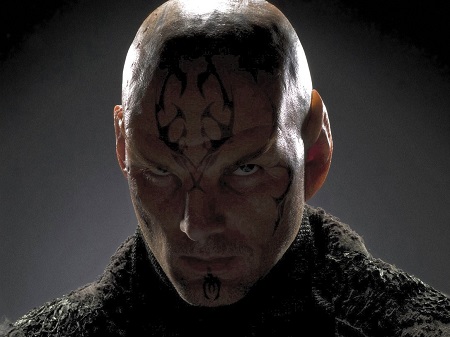
Spock would indeed prove instrumental in several key events later in his life that now can’t happen. But we’re going to focus on the Kelvin timeline today. Spock’s actions in the Kelvin timeline saved Earth from Nero’s attack – but without his presence there’s no one to stop the crazed Romulan commander.

Nero.

Assuming that Nero arrived in the Kelvin timeline thanks to Red Matter (presumably deployed by someone else from the Federation as part of a plan to save Romulus), he has no reason to wait for Spock before enacting his revenge plan. After destroying the USS Kelvin (killing the infant Kirk in the process), Nero races to Vulcan and destroys the planet in the year 2233 – decades earlier than he would during the events of Star Trek 2009. Before the Federation even has time to realise what’s happening, and with Vulcan still collapsing, Nero heads to Earth and deploys his weapon for the second time – destroying the planet.

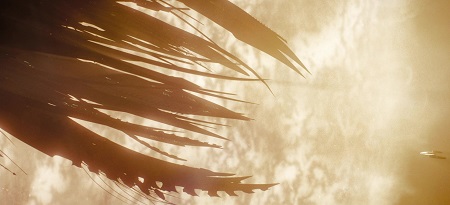
Nero then moves on quickly, targeting Tellar Prime and other Federation member worlds and colonies. The devastating losses mean it takes Starfleet a while to reorganise, but eventually the remaining fleet comes together to make a last stand over Andoria – the last remaining Federation member world. The battle against Nero’s powerful flagship is long and incredibly difficult, but Starfleet eventually prevails through sheer numerical advantage – despite suffering huge losses.

The Narada and the USS Kelvin.

Nero’s defeat wouldn’t mark the end of the rump Federation’s problems, though. With many planets and colonies destroyed, more than half the fleet lost, and millions of people turned into refugees, the Federation is an easy target. First the Klingons come, seizing planets and systems near their borders. Then the Gorn, the Tholians, and the Romulans also join in, picking off star systems that the Federation could no longer manage to defend. Federation space shrinks to a small area in the vicinity of Andoria.

The Andorians were not happy with the large numbers of refugees who sought them out, though. Plans were put in place to resettle humans, Vulcans, Tellarites, and others on new colony worlds, even though doing so would leave them vulnerable. After being kicked out by the Andorians, the remaining Federation members maintained their alliance more out of fear and necessity than anything else. How long these small populations can survive in a hostile galaxy is unknown…

Number 3: What if… the USS Voyager went the other way?

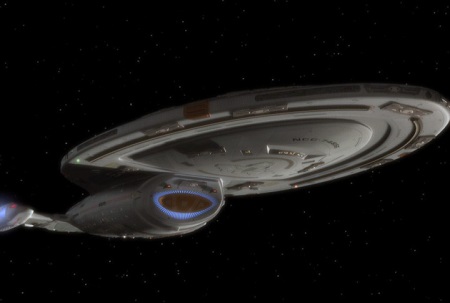
The USS Voyager.

The events of Voyager’s premiere episode, Caretaker, play out much the same as they did on screen in this scenario. But after that, things take a very different turn – literally! The Maquis raider Val Jean, under Chakotay’s command, is transported to the Delta Quadrant by an entity known as the Caretaker. The USS Voyager is likewise transported by the Caretaker’s Array, and after the death of the Caretaker and a short battle with the Kazon, Captain Janeway orders the destruction of the Array. Voyager must find a way home.

Instead of taking the most direct route to Earth, Captain Janeway and the crew of Voyager consider an alternative idea – heading for the Gamma Quadrant, and the far side of the Bajoran Wormhole. From there it would only be a short journey back to Earth! The crew debate the ideas for a while, and there isn’t a clear consensus. No starship has ever undertaken such a long journey before, so there really aren’t ground rules for route planning when it comes to long-distance interstellar travel.

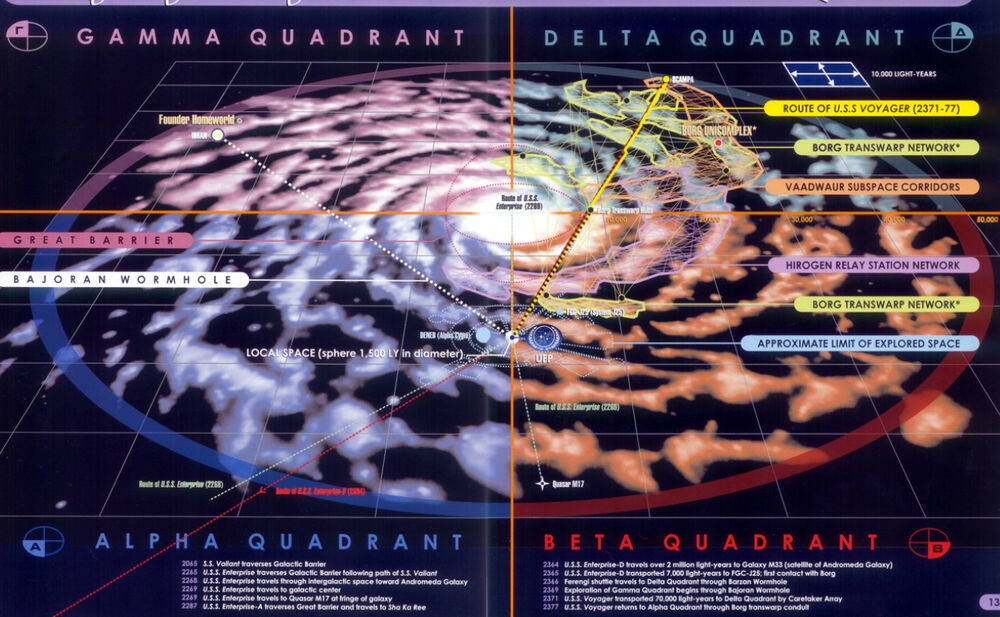
A non-canon map of the Star Trek galaxy.
Image Credit: Star Trek Star Charts (2002) via Memory Beta

Using the map above (which is non-canon) as a guide, the crew quickly figure out that both a direct route home via the Delta and Beta Quadrants or an indirect route via the Gamma Quadrant and Bajoran Wormhole are roughly the same length and would take roughly the same amount of time.

The two crews can’t agree at first. Chakotay and the Maquis, keen to avoid going anywhere near Cardassian space and fearing being turned over to Cardassian authorities upon their return, firmly advocate for the Delta Quadrant route. Neelix claims to be familiar with space in both directions and along both routes, but ultimately the decision falls to Captain Janeway.

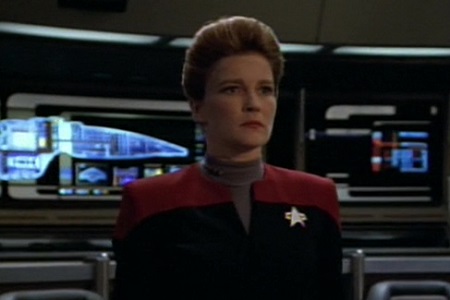
The choice of route ultimately falls to Captain Janeway under the “my ship, my decision” principle.

Somewhat ironically when considering her actions in Endgame, Janeway chooses the Gamma Quadrant route. Why? She’s fearful of the Borg, naturally. Whatever dangers and obstacles may await Voyager in the Gamma Quadrant, she tells her crew, Starfleet has known for years that the Borg’s home territory is the Delta Quadrant. Taking that path seems positively suicidal in comparison, so Voyager will instead head for the Gamma Quadrant terminus of the Bajoran wormhole.

Voyager’s superior technology makes battling the Kazon sects in the area around the Caretaker’s Array relatively easy, but they have to be careful to avoid space claimed by the Haakonian Order – the conquerors of Neelix’s people, the Talaxians. After they leave their starting region, though, the truth is that we simply don’t know very much at all in canon about this area of space. Would Voyager find a faster way home through some technological means or natural phenomenon? Or would the ship and crew have to undertake a slow, decades-long journey to reach the wormhole? Would they even survive at all, or instead fall victim to some villainous faction or dangerous anomaly present in this unexplored region?

Number 4: What if… the USS Discovery didn’t go into the far future?

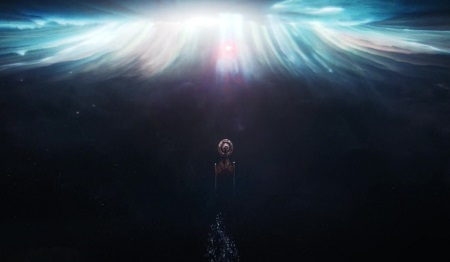
Michael Burnham and the USS Discovery at the mouth of the time-wormhole.

I already have a theory discussing in detail why I think the USS Discovery didn’t need to go into the far future based on the outcome of the battle in Such Sweet Sorrow, Part 2 – and you can find that one by clicking or tapping here. For the sake of this scenario, though, all we’re going to say is that somehow Captain Pike, Burnham, and Saru figured out a way to defeat the Control AI without sending the USS Discovery into the 32nd Century.

Obviously some changes wouldn’t appear until the 32nd Century. Without the USS Discovery and Michael Burnham, no one is able to discover the source of the Burn or the huge cache of dilithium in the Verubin nebula. Without the USS Discovery and its Spore Drive to fight over, the Emerald Chain doesn’t stage a bold attack on Starfleet HQ. Su’Kal would almost certainly die alone when the KSF Khi’eth is destroyed – whether that event would trigger a second Burn is unclear.

A second Burn could occur.

But more substantial changes could have taken place in the Star Trek galaxy centuries earlier. With the Spore Drive still in existence in the 23rd Century, it stands to reason that Starfleet would have continued to explore the technology – it works, after all, so if a new way of navigating the mycelial network could be discovered, the Spore Drive would be an absolute game-changer for the Federation.

At some point, Starfleet scientists would hit upon the idea of using empaths to connect to the mycelial network in place of augmenting human DNA. After promising test flights using Betazoid and even Vulcan navigators, in the late 23rd Century Starfleet is able to begin a wider rollout of the Spore Drive. At first a handful of ships are kitted out as rapid-response vessels, able to jump across Federation space at a moment’s notice to assist with emergency situations.

Starfleet is able to kit out a whole fleet of Spore Drive-enabled starships.

The Spore Drive would soon attract the attention of other factions, however. Unwilling to allow the Federation a massive tactical advantage, particularly in the aftermath of the Federation-Klingon war, the Klingon Empire begins development on their own Spore Drive programme. The Romulans follow suit, and by the early part of the 24th Century the Spore Drive has become a mainstay of interstellar travel in the Alpha and Beta Quadrants.

No longer limited by geography or travel time, Starfleet is able to jump to interesting-looking phenomena across the galaxy with ease, initiating dozens of first contacts decades ahead of schedule. On one unfortunate occasion, however, a Spore Drive ship jumps to the Delta Quadrant… right into the heart of Borg space. The Borg quickly assimilate the vessel, taking the Spore Drive technology for themselves and putting a target on the Federation’s back. Due to the distances involved, Starfleet remains unaware of what happened, merely recording the USS Discovery-C as “missing in action…”

Number 5: What if… Benjamin Sisko wasn’t the Emissary of the Prophets?

Commander Benjamin Sisko.

Ignore for a moment the revelation from Image in the Sand about Benjamin Sisko’s Prophet-induced conception! For this scenario, we’re considering that there were two occupants of the Runabout which first discovered the Bajoran Wormhole: Sisko and Jadzia Dax. Though the Prophets would choose Sisko as their Emissary, they could just as easily have chosen Dax instead.

Jadzia Dax returns from the wormhole having been anointed by the Prophets as their Emissary, and receives much respect and adoration from the Bajorans. Meanwhile, Sisko makes good on his threat and quits Starfleet, returning to Earth. Jadzia is promoted to the rank of commander and given “temporary” command of DS9, due in no small part to the way the Bajorans feel about her.

Jadzia Dax assumes command of Deep Space Nine.

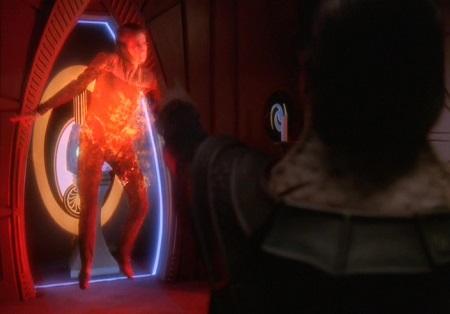
First contact with the Dominion occurs, and shortly afterwards the Dominion and Cardassians form an alliance – the work of Dukat, formerly the commander of Bajoran occupying forces on Bajor. The Dominion Cold War begins. Behind the scenes, Dukat is researching the Pah-wraiths, the ancient noncorporeal enemies of the Prophets. In disguise he travels to Deep Space Nine with a lone Pah-wraith, and in the course of unleashing the entity into the wormhole, kills Jadzia.

With no Emissary on the outside to come to their aid, the Prophets are fighting a losing battle against the Pah-wraiths while the Dominion War rages. The loss of Dax, though distressing to the crew of DS9 and her husband Worf, doesn’t appear to matter to the Federation war effort… not at first. In fact, the wormhole’s closure appears to provide the Federation alliance a reprieve, as the threat of Dominion reinforcements is reduced.

Jadzia is killed by the Pah-wraiths.

However, without the Orb of the Emissary re-opening the wormhole and expelling the Pah-wraiths, things go badly for the Prophets. When Dukat is able to implement the next phase of his plan and release the rest of the Pah-wraiths from the Fire Caves, there’s no one to stop him. The Pah-wraiths seize control of the wormhole, and as a thank you to Dukat they destroy the Federation minefield, allowing a massive fleet of Dominion reinforcements through the wormhole. The Dominion conquer DS9 and Bajor with ease.

With no way to stop Dominion reinforcements pouring in through the wormhole, the Federation alliance moves into attrition mode, trying to hold the existing front line for as long as possible against repeated Dominion attacks. Though the Pah-wraiths don’t actively take part in the fighting, their involvement allowed Dukat and the Dominion to swing the balance of the war back in their favour. By controlling Deep Space Nine and the wormhole, the Cardassian-Dominion alliance has the Quadrant’s most significant asset. It seems like only a matter of time until the Federation will have to sue for peace, if the Dominion would even accept…

So that’s it! Five Star Trek “what ifs!”

There are many more “what if” scenarios in the Star Trek universe!

I can already think of more, so watch this space. I might return to this concept in future. I hope this was a bit of fun, and a chance to consider some alternative outcomes to some of the events we’ve seen across Star Trek’s history. I tried to pick a few different ideas from different productions – otherwise this could’ve been “five Captain Picard what ifs!”

As always, this was really just an excuse to spend a little more time in the Star Trek galaxy. It’s totally fine if you disagree with any of the storylines I’ve suggested today, or if you think this whole concept was a silly idea! None of this will ever make it to screen, and it was more of a thought experiment and creative writing project than anything else. I had fun putting this together – and I hope you enjoyed reading it.

What If…? and the logo for the series are the copyright of Marvel and The Walt Disney Company. The Star Trek franchise – including all films and series mentioned above – is the copyright of ViacomCBS. This article contains the thoughts and opinions of one person only and is not intended to cause any offence.
Ten character ideas for Star Trek: Picard Season 2

Spoiler Warning: There are spoilers ahead for Star Trek: Picard Season 1 as well as for other iterations of the Star Trek franchise.

I really hope Star Trek: Picard Season 2 goes ahead. With all of the delays and cancellations flying around in this unpredictable environment, and with California – where the show is filmed – being one of the worst-hit locales, I’ll be at least slightly concerned about the show’s future until I know for sure that filming has wrapped!

Regardless of events in the real world, I wanted to take a look at some characters from past iterations of Star Trek that it could be fun to see make a return in Season 2 of Picard. I wrote a similar list of characters that I think would make fun additions to Strange New Worlds, and this one is going to be in a similar vein.

Jean-Luc Picard.

The usual caveat that I always give applies here: I have no “insider information”. Nor am I suggesting in any way that any of these characters will appear. I’m simply saying that I think it could make for a fun and interesting story if they did.

Season 1 surprised me by bringing back several characters that I would have never expected – Seven of Nine, Icheb (briefly), Hugh the Borg, and of course Bruce Maddox, who was the driving force behind the plot of the first half of the season in particular. With that in mind, here are a few picks for characters it could be fun to see return.

Number 1: Dr Beverly Crusher

Dr Crusher with her son Wesley in Star Trek: Nemesis.

Of The Next Generation’s main cast, only Beverly and Wesley Crusher weren’t confirmed to be alive in Picard Season 1. Data has died, of course, and we saw the return of Riker and Troi. La Forge and Worf were both mentioned by name, and I take that as confirmation that they’re alive. But no mention was made of the Crushers, and given Picard’s closeness with Beverly in particular, that strikes me as odd.

Is Dr Crusher dead? We have no evidence for that really – and no, lack of evidence that she’s alive is not evidence that she’s dead! There weren’t really any points at which the conversations Picard had could have turned to discuss Dr Crusher, so it may simply be the case that he was busy and so didn’t talk to or about her during his mission to find Soji.

In at least one future timeline – that seen in The Next Generation’s finale, All Good Things – Picard and Dr Crusher had married. Again there was no evidence of this in Season 1 of the show, and I took several remarks by and about Picard to mean that he had been alone in his retirement in France. But there’s nothing to say that he couldn’t have had a relationship with Dr Crusher in the years between Nemesis and his resignation from Starfleet.

Picard and Crusher had come close to romance at several points but never crossed that line. Partly this was Picard feeling responsible for the death of her first husband, who died under his command years previously. But perhaps something could have inspired them to take their relationship beyond friendship – such as two close friends of theirs rediscovering their own romance. In Nemesis, Riker and Troi were married, and indeed remain so as of Picard Season 1. Could that event have been the catalyst for Picard and Crusher to realise it was now or never for them?

Number 2: Narek

Narek’s storyline may not have been everyone’s favourite in Season 1, but I liked that it was unpredictable and that he didn’t follow the trope of being the “spy with a heart of gold” who falls in love with his target. Sadly, Narek was simply abandoned about halfway through Et in Arcadia Ego, Part 2. We don’t know what became of him after he worked with Rios, Raffi, and Dr Soong to try to stop Soji building the beacon.

The last we saw of Narek he was being wrestled to the ground by Soji’s synth allies – in what was a pretty weak scene. But we’ll set aside criticisms of the finale for now. What happened to him next is a mystery.

There are several possibilities, though. He may have been taken into captivity by the synths as he was a Romulan spy and had been instrumental in leading the Zhat Vash to Coppelius. He could have been recovered by the Romulans during their brief visit to the system, probably by beaming him aboard one of their ships. He could have been taken into custody by the Federation to be interrogated about the Zhat Vash. It’s even possible – though unlikely – that he left Coppelius aboard La Sirena with Picard.

Regardless, Narek’s story feels incomplete. I want to see more of him and learn what impact Soji’s decision to stand down had on him. Did he still believe synths needed to be destroyed when he saw firsthand that Soji could be reasoned with, and that the prophecy he believed in was not going to come true? We simply don’t know, as the finale robbed his character of any conclusion. There’s more for Narek to say and do – and though I don’t expect to see him back, I hope we at least learn what became of him.

Number 3: The Lower Decks ensigns.

No, not those ones. The four survivors from The Next Generation Season 7 episode Lower Decks. There was Lavelle, who was promoted to lieutenant at the end of the episode, Nurse Ogawa, Taurik, and Ben the waiter. Of the four, perhaps the one I’d be most interested to see is Lavelle, whose story of receiving a promotion in the aftermath of the death of his friend could certainly be given an epilogue. I picture him having ascended through the ranks to be a commander or captain by this point in the timeline.

Nurse Ogawa would be nice to bring back too, given her role as a secondary character across a number of episodes from Seasons 4-7 of The Next Generation – as well as two films. In an episode which focused on Dr Crusher’s reunion with Picard, perhaps she could make an appearance too. She could also be a senior medical officer in her own right, perhaps being someone Picard or one of La Sirena’s crew seeks help from.

I recently re-watched Lower Decks, and you can find my thoughts on the episode by clicking or tapping here.

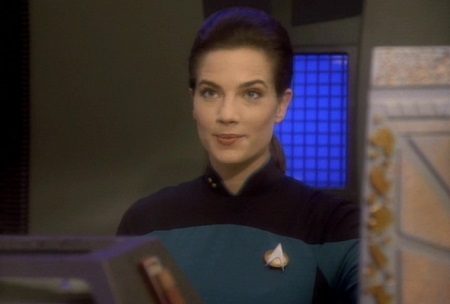
Number 4: Ezri Dax

This ties into a theory I have that the Dax symbiont could make an appearance in Star Trek: Discovery, which we know from the trailer is going to have Trill characters. I keep talking about the need for modern Star Trek to get some threads of consistency going between the various shows – which are split up across multiple time periods right now. One way this could happen is for Dax to appear in both Discovery and Picard.

What became of Dax after the end of Deep Space Nine is totally unknown. There were novels in which she became a captain, but of all the Star Trek novels, those struck me as some of the worst examples of fan-fiction! I think it’s much more likely she continued her role as a counsellor and scientist rather than made an attempt to move into command, though twenty-five years on from when we last saw her she could really be doing almost anything. She and Dr Bashir may still be together – or their relationship at the end of Deep Space Nine may have been little more than a fling.

Because Ezri only got one season before Deep Space Nine ended, she’s a character we didn’t get to know as well as we otherwise might’ve, and even the last time we saw her she was still adjusting to her new life as a joined Trill. Just like with Seven of Nine in Season 1 of Picard, it would be great to see her years later having made that transition and adjustment and being a more settled character.

Picard may even have need of a counsellor – having your consciousness transplanted into a new body is going to be a shock for anyone, and as someone who seemed to have made his peace with dying, he’s now been thrust into a new phase of life. Maybe Ezri, whose own life was majorly disrupted by the Dax symbiont, could offer her services?

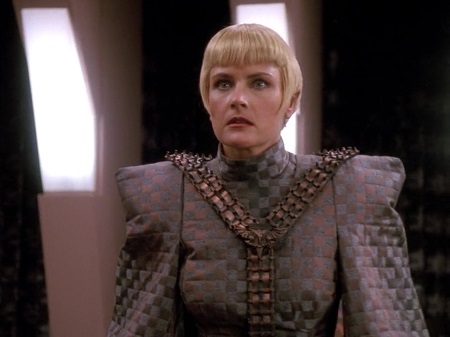
Number 5: Sela

When I looked at the Romulans in the run-up to Season 1, I wrote that I didn’t think we’d see Sela back, and I wasn’t particularly bothered because she wasn’t someone Picard knew very well. That was in the context of Sela being some kind of high-ranking Romulan, and after two major defeats in her two engagements with Picard, I highly doubt she’s in any kind of leadership position.

Whether the Romulans will feature as prominently in Season 2 is unclear, but perhaps there could be an opportunity to see Sela again in a different way. She could be a minor officer, having been demoted after her failures and may even hold a grudge against Picard. She could have been involved with the Zhat Vash. Or she could have been exiled by the Romulans, perhaps as a result of her failures in The Next Generation.

Sela is not the most interesting Star Trek villain, and she’s not the most exciting adversary Picard ever faced. But now that the series has survived its first season and is standing on its own, Sela could make a return in a way that would be interesting. Her relationship with Picard as the daughter of Tasha Yar was touched on in The Next Generation, but arguably never resolved. Perhaps there’s a chance to resolve it now, one way or another.

Number 6: Ro Laren and Thomas Riker

Although these two characters never interacted on screen, they share a similar – and ambiguous – fate. Both Ro Laren and Thomas Riker defected to the Maquis in the years before the Cardassian-Dominion alliance and the Dominion War, and what became of them after that is unclear.

Thomas Riker (a transporter-created clone of William Riker) was taken into captivity by the Cardassians not long before war broke out, and as far as we know, remained in captivity from that point onward. However, it seems logical to assume that – if he survived the war – he would have been rescued by the Federation. With William Riker having made an appearance in the first season, the potential conflict between the two characters could be an interesting reason to bring back Thomas as well.

Ro Laren’s fate is a little less clear. The Maquis were wiped out by the Cardassians and their Dominion allies when they were on the verge of declaring independence, and many Maquis were killed. However, it stands to reason that some were captured alive, so it’s possible Ro was among them.

The reason why I feel they could show up together is if Season 2 were to take a look at Cardassia, Bajor, and the aftermath of the war, they may be able to play a role in that story. I doubt they could both still be in Cardassian captivity twenty-five years later, but they may be working together in the former Maquis territories. With Picard taking a look at the Federation and Starfleet from the outside, and showing both organisations as being flawed, a potential Maquis story could take advantage of that.

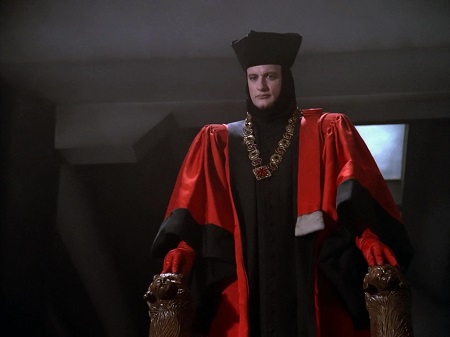
Number 7: Q

Q could be an interesting character to bookend Picard’s story. He appeared in Encounter at Farpoint, when we first met the Enterprise-D’s captain, and there would be something poetic about Q appearing in whatever season or episode will mark Picard’s end as a Star Trek character. While I hope there will be a third and perhaps fourth season of Picard, if it is to end with Season 2 I’d definitely bring Q back.

When Picard “died” in the Season 1 finale, I half-expected him to encounter Q in the afterlife. This would have been wrong for many reasons, of course – not least because it would have been very confusing to large parts of the audience! Nevertheless, if that were to have been Picard’s end it could have been very fitting.

Q in “the afterlife” in the episode Tapestry.

I wonder if we’ll learn that Q visited Picard during his self-imposed isolation in France. That seems like something he might have done – to try to prompt some kind of reaction from his adversary. Q has no concept of ageing or even of death really, so the notion of Picard getting old and becoming depressed would be things he might have wanted to examine.

Q seemed to consider Picard a friend, if it’s possible for him to have friends, and he certainly went out of his way to help him on several occasions. I’m sure Q would be upset at the thought of Picard dying, and even if he were to have no impact on the story, could still be one of the characters seen at a funeral service or wake for Picard if the show is to end with the character’s death.

Number 8: Nella Daren

This is a sad one, as original actress Wendy Hughes passed away in 2014, but her character could be recast as Dr Maddox and Icheb were in Season 1. Lieutenant Commander Daren was an officer who briefly served aboard the Enterprise-D as a scientist. But more interestingly, she was one of the few characters linked romantically to Picard during The Next Generation’s run.

Could she have resumed her relationship with Picard at a later date, when they weren’t serving together? As with Dr Crusher above, it’s at least possible. The episode which featured Daren was Lessons, from the sixth season of The Next Generation, and it was a solid episode that appears to have been well-received. There’s no reason why we couldn’t learn what happened to her after she was transferred off the Enterprise-D.

Giving Picard a romantic interest may not seem to be a natural fit for the series. But romance (or past romance) can be a great source of drama in storytelling, and as he readjusts to life outside his vineyard Picard may be interested in rekindling relationships that fell by the wayside.

Number 9: Thadiun Okona

Okona was only seen in one episode of The Next Generation’s second season – but so was Bruce Maddox, so we shouldn’t count that against him! Why would this roguish character be a good fit, though? Well, Picard is currently operating outside of Starfleet, and unless that changes, finding allies who know their way around the rules could be useful and important.

I see at least a little of Okona in the character of Chris Rios, perhaps because they’re both independent captains of small ships. I wonder how they’d react to one another? A story which required Picard and the crew of La Sirena to think creatively could suit a character like the “outrageous” Okona.

William O. Campbell, who played Okona, was recently the lead in a series called Helix on the SyFy channel, so he is still active as an actor. Perhaps he could be tempted to reprise the role.

Number 10: Dr Leah Brahms

Dr Brahms appeared twice in The Next Generation, albeit once only as a hologram. She was a colleague and love interest for Geordi La Forge, and it was implied in at least one future timeline that they had married. Any story featuring him could thus include Brahms as well.

Dr Brahms was also said to work at the Daystrom Institute – which would potentially make her a colleague of Dr Jurati, assuming she was still there after more than twenty years. Perhaps they know each other, and that could be another point of connection. Dr Brahms was an expert in warp drive, and if La Sirena needed to undergo repairs or upgrades, she could prove useful in such a story.

So that’s it. Ten characters who could – but most likely won’t – appear in Star Trek: Picard Season 2. I managed to avoid putting Benjamin Sisko on a list of character reappearances for once! Whoever would have guessed that, eh?

Jokes aside, I think we will see several characters from past iterations of Star Trek crop up in Star Trek: Picard Season 2, whenever it may eventually be broadcast. Season 1 brought back several unexpected characters, and I hope we’ll get more of that next time as well.

Some of these characters may not be a good fit for whatever story the showrunners and writers have in mind for Season 2, so we’ll have to wait a little longer to learn what became of them after we last saw them. That’s okay, because what matters most is that whichever characters come back are the right ones for the story.

It remains my hope that Star Trek: Picard will serve as a launchpad for more Star Trek adventures at the dawn of the 25th Century, and while there has been no confirmation of that just yet, there is at least one other Star Trek project in development that we have no details on. Could it be another show in the same era? Possibly!

The Star Trek franchise – including Star Trek: Picard and all shows and films mentioned above – is the copyright of ViacomCBS. This article contains the thoughts and opinions of one person only and is not intended to cause any offence.
Could Voyager’s Doctor appear in Star Trek: Discovery?

Spoiler Warning: There are spoilers ahead for Star Trek: Picard Season 1, Star Trek: Discovery Season 2, Star Trek: Voyager, and other iterations of the franchise.

Star Trek: Discovery’s premiere brought back Sarek, Spock’s father who had been first introduced in The Original Series. Season 2 saw Spock himself as well as Captain Pike and Number One make appearances, so Discovery is a series that has no qualms about reintroducing legacy characters. But its 23rd Century, pre-The Original Series setting precluded the use of most of Star Trek’s characters, as the bulk of the franchise’s 780+ episodes and films take place later in the timeline.

Discovery’s move forward in time should also mean that no legacy characters could have significant roles. After all, who could possibly still be alive more than eight centuries after the events of Star Trek: Picard? I can think of one character, but not in the way you might expect!

Voyager’s Doctor – or at least a version of him – could be alive in the 32nd Century.

As a hologram who doesn’t age, we could definitely argue that The Doctor – played by Robert Picardo for all seven seasons of Star Trek: Voyager – might have survived this long. But that isn’t the angle I’m taking.

The 23rd episode of Season 4 of Star Trek: Voyager, Living Witness, takes place in the 31st Century. After the USS Voyager had an encounter with a species called the Kyrians in the 24th Century, some pieces of technology were left behind, including a backup copy of The Doctor. Reawakened in the 31st Century, he stayed with the Kyrians for a number of years, righting the wrongs in their historical records about Voyager and its crew.

The episode is interesting in itself, and well worth a watch, but from our point of view today what I want to consider is the episode’s ending. After living with the Kyrians for years – perhaps decades – The Doctor took one of their ships and left the planet, hoping to retrace Voyager’s path and return to the Alpha Quadrant.

A photo of The Doctor in a museum at the end of Living Witness.

We know from later seasons of Voyager that it only took them another three years or so after leaving Kyrian space to make it home – though that did involve the use of the Borg transwarp network, among other helping hands – so the journey is definitely achievable. The Doctor, unlike us mere humans, doesn’t need food or any other supplies personally, so as long as his ship was functional, even if it took him decades he would have been able to make it back to Federation space – and if it took him several decades, the timeline starts to line up for a crossover with Discovery.

One thing that I’m cautiously interested in when it comes to Discovery’s third season is the potential to learn more about what happened to some of the characters we knew in other Star Trek shows. Perhaps we won’t learn the specifics of what happened to individuals, but we may learn broad strokes about what happened to their planets and cultures, and we could infer from that what may have happened to them. The series looks – if we take its trailer at face value – as if part of the story will be about restoring a declining or defeated Federation. Characters who originated in an era where the Federation was strong and just would be well-suited to that task, and they may find an unlikely ally in this version of The Doctor.

Restoring the Federation may be part of Discovery’s third season storyline.

On the production side of things, Star Trek has recently had great success bringing back Brent Spiner as Data and Sir Patrick Stewart as Jean-Luc Picard. Spiner’s role as Data is a great comparison, because both Data and The Doctor are artificial, and thus not susceptible to ageing. Brent Spiner had said as early as the mid-2000s that he felt he’d “aged out” of the role of Data, yet the makeup and visual effects used in Star Trek: Picard worked very well. Obviously if you try to compare the way he looked earlier this year to the way he looked in 1987’s Encounter at Farpoint there’s a difference, but it’s not immersion-breaking. All this is to say that there’s no reason why Robert Picardo couldn’t reprise his role too.

Digital de-ageing effects have been used more and more often in recent years, even on television, and while the technology isn’t cheap, it shouldn’t be prohibitively expensive either. So that option would be viable for the team behind Star Trek as well.

But the big question is what kind of role The Doctor could play in a 32nd Century Discovery story.

Robert Picardo in a 2017 episode of Lucifer.

If I were writing it, the way I’d see him involved would be working alongside Burnham, Saru, and the crew of Discovery to restore the Federation. They’re looking at things from a 23rd Century viewpoint, but The Doctor could fill in more than a century’s worth of gaps in their knowledge. The Federation in the 24th Century is very similar to how it was in the 23rd in terms of morals and outlook, so I could absolutely see them working in common cause.

Rebuilding or reinvigorating the Federation is a noble task, and while I’ve documented my misgivings about Star Trek taking on a kind of post-apocalyptic setting previously, one way I think it could be made to work is if at the end of the season the Federation was back up and running. The Doctor could be invaluable to Discovery’s crew in accomplishing such a task, and with Data now permanently gone from the Star Trek universe, there aren’t many others who could still be around in this era.

The Doctor could help the crew of Discovery in the 32nd Century.

Perhaps after Season 2, which brought back several legacy characters for major roles, Discovery wants to stand on its own two feet again. Indeed, part of the reason for shifting the show’s timeline so far into the future is specifically because the producers and showrunners wanted to get away from the constraints of the 23rd Century – and the fan criticisms that came as a result of using that setting. So perhaps bringing back a legacy character in Season 3 isn’t on the agenda.

But The Doctor could still appear in Season 4 – and reports suggest that pre-production is underway on Discovery’s next adventure. While I think that The Doctor could be a good fit for a “rebuilding” type of storyline for the reasons already mentioned, if Season 4 takes the show in a different direction, perhaps that would be something more suited to his medical expertise, such as curing a disease. For all we know at this stage, a disease could be involved in damaging the Federation in this time period!

If not The Doctor, there are a few other characters who could – in theory – still be active in the 32nd Century. Let’s look at them briefly:

Number 1: Soji

Spoiler warning for Star Trek: Picard Season 1, but Soji is synthetic; an android. At the end of the season, Picard was told that his new synthetic body wouldn’t keep him alive for centuries, but there’s no reason Soji should have the same limitation. In many ways, Soji would make for a better crossover character than almost anyone else, as she’s a main character in an ongoing series. The crossover would thus be between two Star Trek shows that are currently in production, providing a link between them.

We could also add into the mix the other synths from Coppelius, including Sutra (aka Evil Soji) and even Dr Soong, if he was successful in creating himself a new synthetic body (and there’s no reason why he wouldn’t have been).

Number 2: Lore

Lore was said to have been disassembled after his final appearance in The Next Generation, but we learned nothing of his fate after that. I speculated during Star Trek: Picard’s first season that Dr Maddox may have had access to Lore’s components while working on Soji and the other synths, but this was never confirmed on screen. It’s at least possible that Lore survived in disassembled form until the 32nd Century.

However, with Star Trek having gone out of its way to write Data out of the franchise, and to give Brent Spiner a new character in Dr Soong, I think any re-emergence of Lore is highly unlikely.

Number 3: Benjamin Sisko

I’ve mentioned Captain Sisko so often in relation to characters who could re-appear that you may think he’s become an obsession of mine! However, his story as of the end of Deep Space Nine was deliberately written in such a way that he could come back at literally any point in the Star Trek timeline. After being saved by the Bajoran Prophets, Sisko went to stay with them for a while – and they exist outside of linear time, meaning he could essentially travel to any point in time, including the 32nd Century.

Avery Brooks, who played Sisko, hasn’t always seemed willing to reprise the role, and recently declined to appear in the documentary What We Left Behind. However, there’s no reason why the character couldn’t be recast for future appearances.

Number 4: The Dax symbiont

While still arguably unlikely, this seems perhaps the least-unlikely of all the characters we’ve looked at so far. The trailer for Discovery’s third season showed Trill characters as well as what looked like a scene set on the Trill homeworld. We know, thanks to Deep Space Nine, that Trill symbionts can live for centuries; how many centuries exactly has never been stated as far as I’m aware. That leaves an opening for Discovery to bring back Dax – as well as an excuse to recast the character.

With centuries of knowledge, Dax could be a huge help to the crew of Discovery for the same reasons we’ve already talked about. Rebuilding the Federation will be a huge task, and it will take people who knew how it worked to help out.

So that’s it. A handful of other characters to go along with The Doctor who could – but probably won’t – appear in Star Trek: Discovery’s 32nd Century setting. As the show gets nearer to being broadcast (mid-October, in case you missed that announcement) my optimism is growing. Season 2 was decent, and despite my misgivings about taking the series away from its setting and into the far future, I think it has potential to tell interesting stories. I’m cautiously optimistic!

It seems unlikely that The Doctor, or any of the other characters mentioned, will make an appearance, but from an in-universe perspective it’s not entirely impossible. We’ve seen with Star Trek: Picard that bringing back legacy characters and referencing events that took place in a past episode or story are both things that the people in charge of Star Trek are willing to consider, so it’s at least possible to think we could see someone from the past reappear in Discovery.

Most of all, this was a bit of fun. We got to look back at Living Witness, which was a unique entry in Star Trek: Voyager, as well as speculate on the fates of The Doctor and some other well-known characters from past and present iterations of Star Trek. I’ll take any excuse to spend more time in the Star Trek galaxy!

Star Trek: Voyager is available to watch now on CBS All Access in the United States, and on Netflix in the United Kingdom and elsewhere. Star Trek: Discovery Season 3 will be available to stream beginning on the 15th of October 2020. The Star Trek franchise – including all properties mentioned above – is the copyright of ViacomCBS.