Five Changes I’d Have Made To Star Trek: Picard

A spoiler warning graphic.

Spoiler Warning: There are spoilers ahead for Star Trek: Picard Seasons 1-3.

It’s been more than a year since Star Trek: Picard finished its run, but the series has been on my mind again. With Paramount seemingly focused on more Star Trek prequels in the immediate term, and the Legacy spin-off idea dead and buried in its original form, Picard could be our only live-action look at the early 25th Century for a long time. That got me thinking about the show’s successes… but also a few places where I would have made changes if I’d been in charge!

See, Picard was far from the perfect production – at least in my subjective opinion. I’ve already drawn attention to several places where storylines and plot points seemed to overwrite one another – which is strange, particularly in a series that only ran to thirty episodes across three seasons. You can find that article by clicking or tapping here, by the way! But today I wanted to consider five changes I’d have made that I believe would’ve improved the series.
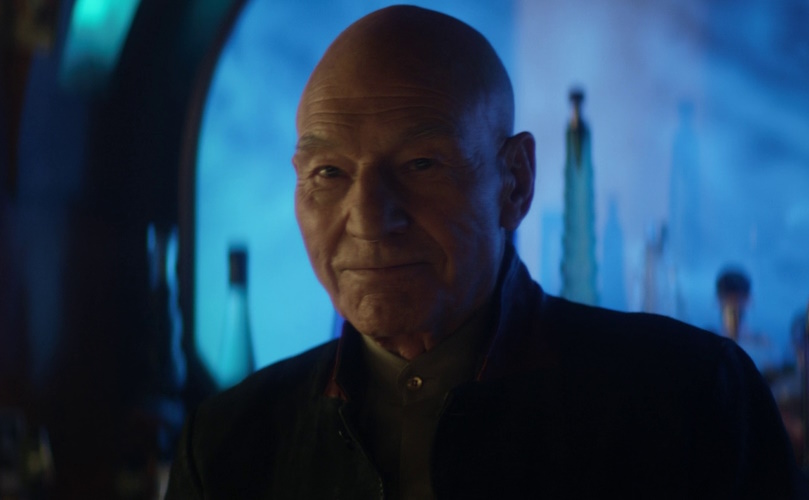
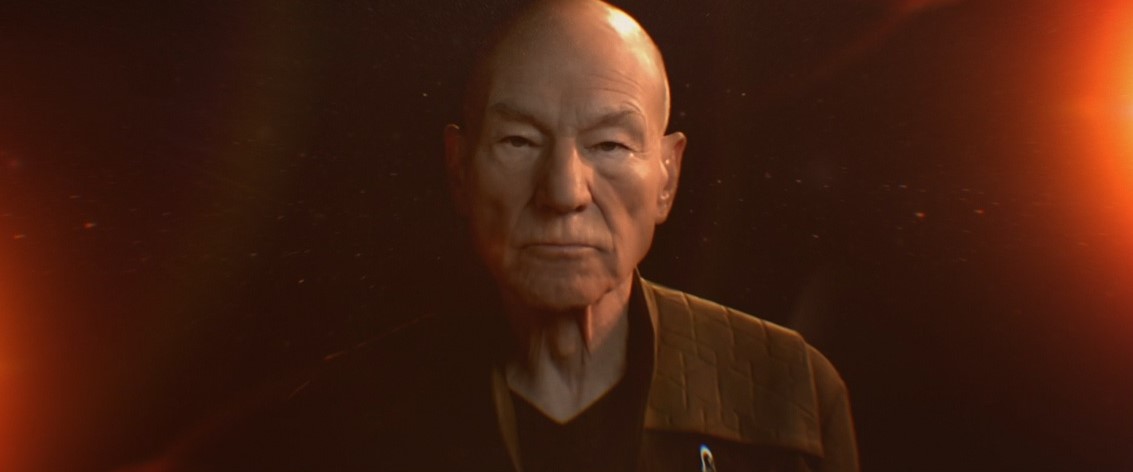
Jean-Luc Picard in Season 3.

As always, a couple of important caveats! A couple of these points are contradictory, meaning one idea or the other might’ve worked in the series, but probably not both! That’s okay, and I’m happy to consider the merits of both as standalone ideas. I’m not trying to claim that Picard’s writers should have implemented all of these changes exactly as I’m proposing them! For a variety of reasons, both in-universe and on the production side of things, it may not have been possible to do some or all of these things even if the writers’ room had wanted to. So to re-emphasise that last point: I know that some or all of these ideas may not have been practical. This is all a moot point now anyway; the series is over. This list is a mix of fantasy and speculation from an old Trekkie – and nothing more!

I also want to say that, while I had some issues with the way Picard was written, by and large I’m a supporter of the series. In fact, I’d like to see more Star Trek set in the time period that Picard introduced us to – and one of the reasons why I think continuing to talk about the show is important is to make that point to Paramount. It also can’t hurt to point out some inconsistencies and other points that future writers and producers might be able to learn from! So that’s my mindset as I put together this list.

With all of that out of the way, let’s get started!

Change #1:
Replace Dr Benayoun with Dr Pulaski in Season 1.

Still frame from Star Trek: Picard Season 1 (2020) showing the character of Dr Benayoun.
Picard with Dr Benayoun in Season 1.

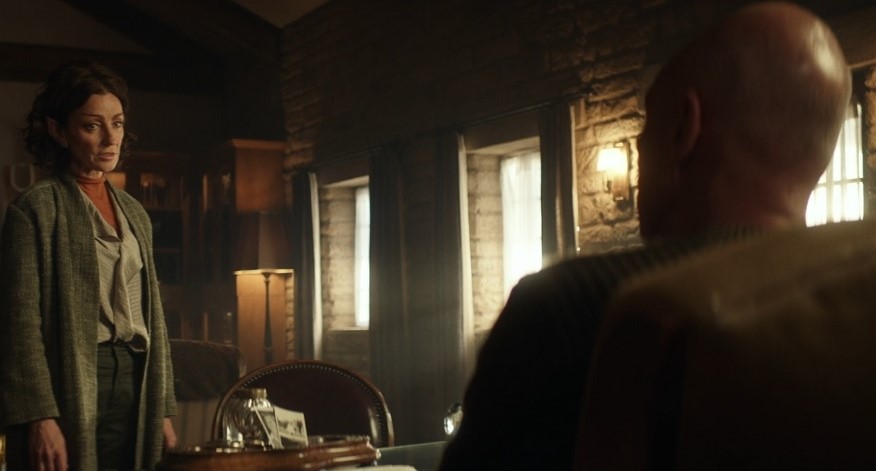
The second episode of Season 1 saw Picard consulting a doctor who was also an old friend as he prepared to return to space for the first time in several years. The character we ultimately got was someone brand-new: Dr Benayoun. In a way, this character could have been interesting if his role had been expanded upon; he served on the USS Stargazer with Picard, presumably prior to the events of The Next Generation, and I’m always going to be interested in storylines that expand upon the backstories of our favourite characters! But Dr Benayoun’s role was pretty small and he didn’t really give us any new information about Picard’s life prior to assuming command of the Enterprise-D, unfortunately.

If I had been writing this scene, I’d have moved heaven and earth to bring back Diana Muldaur as Dr Pulaski. At this point in the series, we’ve only seen Picard himself and a dream version of Data, so there’s absolutely a case to be made that bringing back a legacy character would have been perfect for this moment. There could have been a slightly extended conversation between the two, perhaps with Dr Pulaski commenting on how she saved Picard’s life when she performed surgery on him, or recounting another of their shared adventures in Season 2 of The Next Generation.
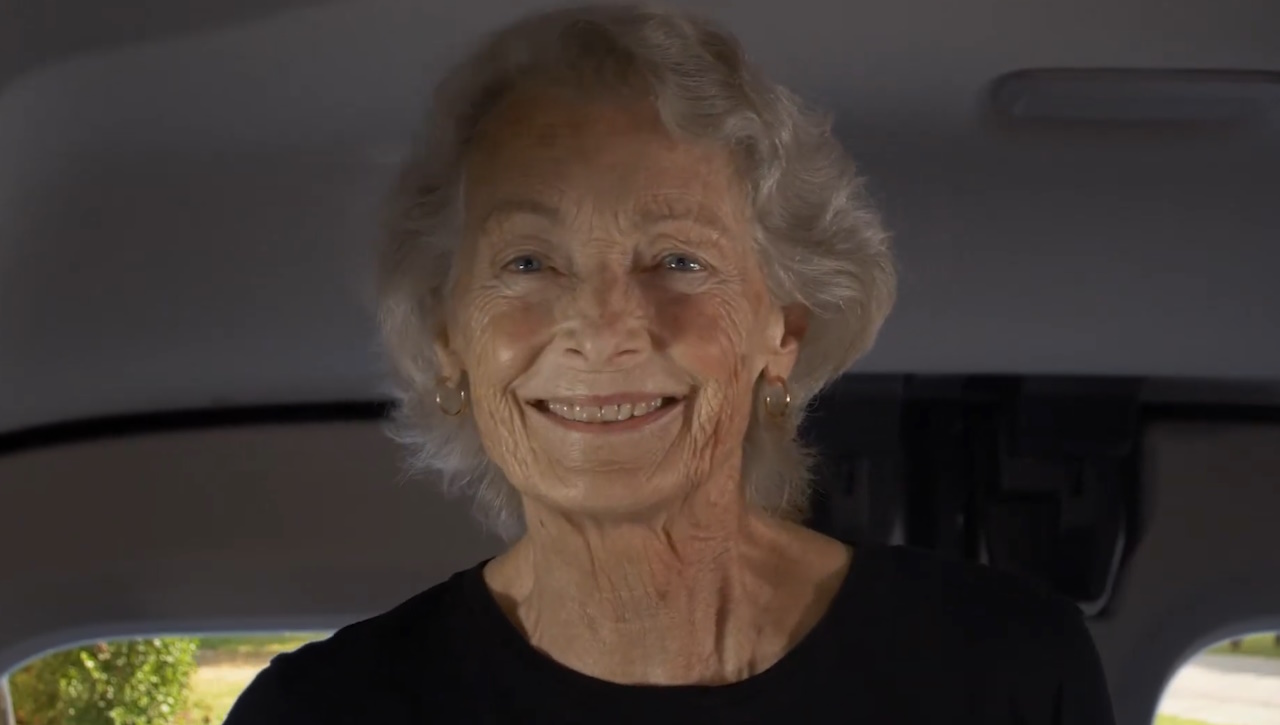
Still frame from Finding Hannah (2022/23) showing actress Diana Muldaur.
Diana Muldaur, who played Dr Pulaski in Season 2 of The Next Generation.

I said before Picard premiered that I didn’t want the series to try to be The Next Generation Season 8, but moments like this would have been perfect for small cameos from established characters. With Dr Crusher being held in reserve for a possible future role, Dr Pulaski would have been the perfect fit for this sequence. We could have learned a little about why she left the Enterprise-D, with that perhaps having been a sore spot in her relationship with Picard. Or we could’ve learned what she’s been up to in the intervening years – did she return to work at Starfleet Medical, perhaps, or take another assignment on a starship?

I’ve been a fan of Dr Pulaski for a long time, and I think this sequence could’ve been an opportunity to right a thirty-year wrong and give the character the closure and send-off she never got. Diana Muldaur has still been active as an actress in recent years – despite being well into her eighties at time of writing – appearing in the trailer for a film called Finding Hannah in 2022. Despite some negative feelings on both sides, it may have been possible to bring her back during production on Picard’s first season in 2018 and 2019. I think it could have added a fun extra dimension to the sequence in that second episode, especially for older Trekkies.

Change #2:
Leave Data dead after Season 1.
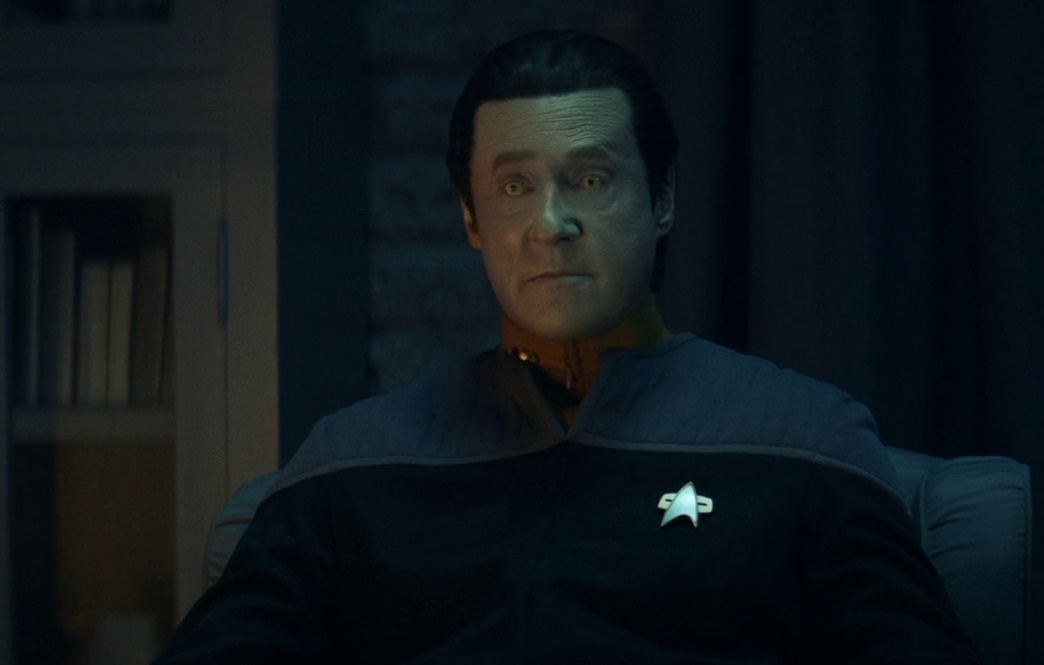
Still frame from Star Trek: Picard Season 1 (2020) showing the character of Data.
Data in the “digital afterlife.”

One of the few redeeming features of an otherwise disappointing finale to Season 1 was the storyline involving Data. Data had been killed years earlier during the events of Star Trek: Nemesis, but that film arguably didn’t take enough time to give the character the send-off he deserved. As I wrote when reviewing Picard’s first season, the scenes involving Picard laying Data to rest were beautiful, emotional, and just what the episode needed – and I could finally see why, eighteen years on from Data’s first death, they were necessary for the character.

Season 3, however, undid all of that. Not only did that decision detract from one of the only decent parts of the Season 1 finale, but it was actually a pretty convoluted plot point that was difficult to follow and relied on a lot of technobabble and “magic.” It never really found a narrative justification beyond showrunner Terry Matalas’ desire to reunite all of the main characters from The Next Generation – no matter the cost.
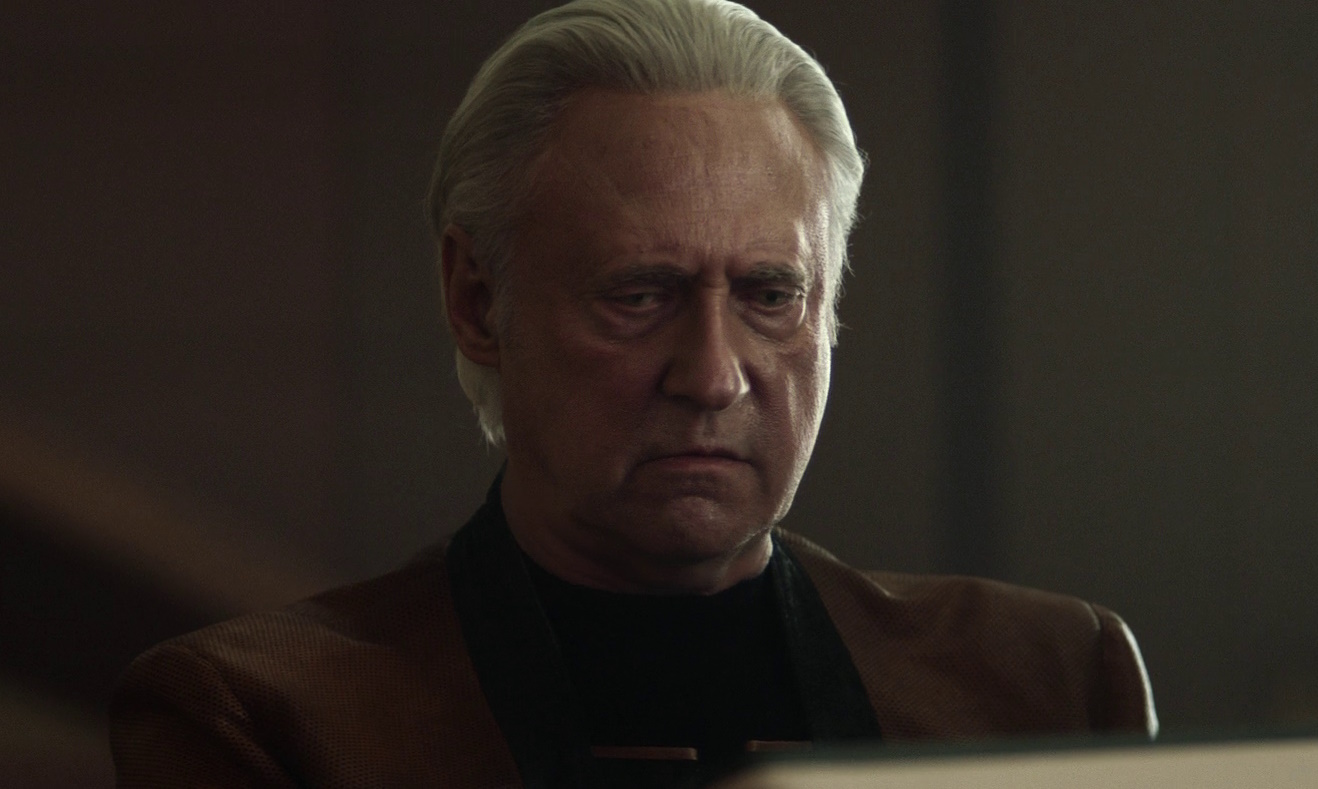
Still frame from Star Trek: Picard Season 3 (2023) showing the character of Data.
Data at his post in Season 3.

In Star Trek’s universe, Data was as dead as it was possible to be. His body had been destroyed years earlier, and Season 1 saw the final shutdown of the residual part of his mind that had been preserved – at Data’s own request. With both body and mind gone, there should have been absolutely no way back for Data. But thanks to the magical deus ex machina of a backup body and a backup mind… Data was resurrected in Season 3. That never sat right with me, but if there had been a significant narrative role for the character in those final episodes, perhaps I could’ve come to terms with it. There really wasn’t, though, and aside from one scene in which Data technobabbled his way to regaining control of the Titan, we didn’t really get a lot more from him for the rest of his time on screen.

I believe Data would have been better-served in Season 3 by being memorialised by his friends. Leaving alone the touching moments between he and Picard in what I termed the “digital afterlife” in Season 1 would have made those moments more powerful to revisit… instead of feeling like a storyline that’s been overwritten. Of all the dead characters in Star Trek, Data was the hardest to bring back because he’d “died” twice, both in body and soul. I don’t think the decision to resurrect him just a few episodes after that intensely emotional send-off was the right one, and I don’t think it was done for the right reasons, sadly.

Change #3:
Either leave Elnor dead or include him in Season 3.
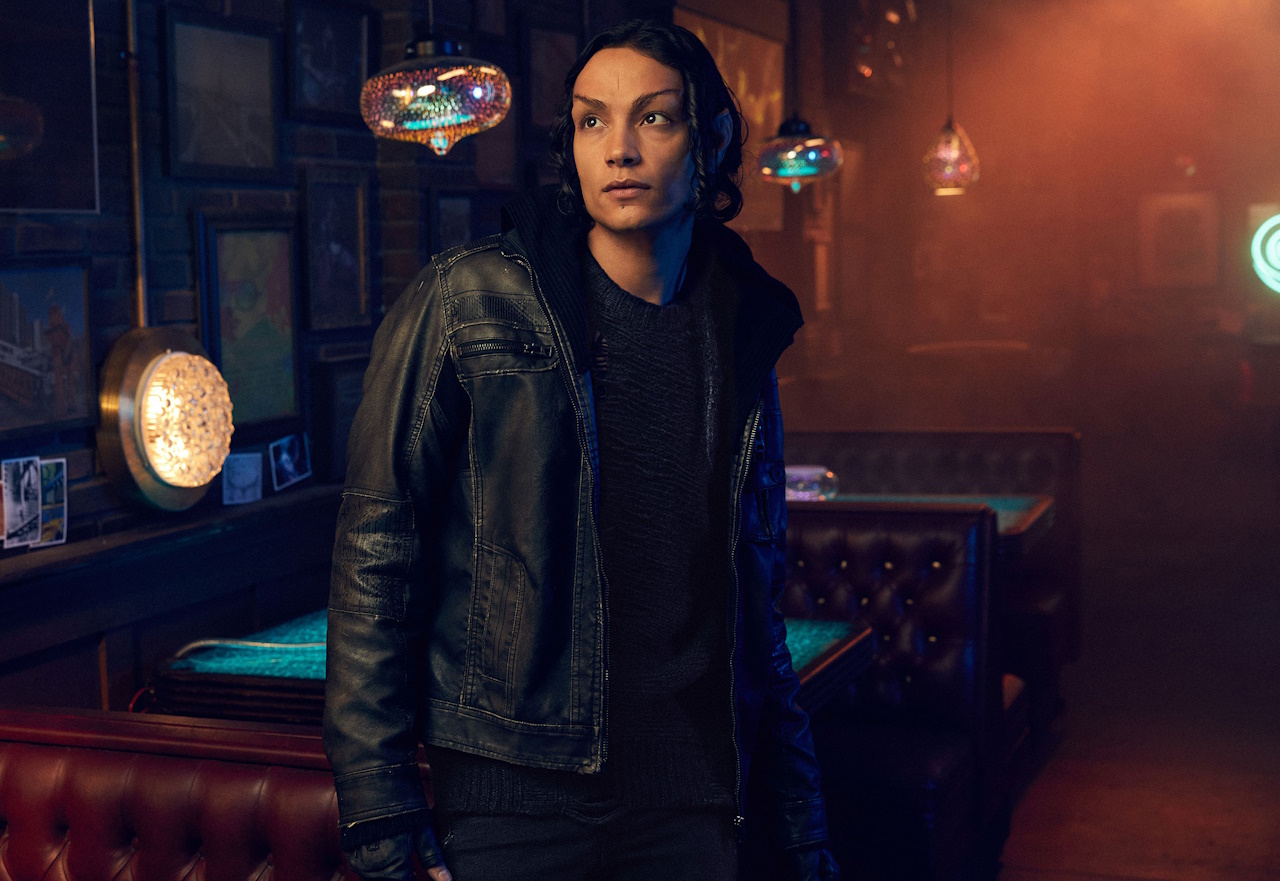
Promo photo for Star Trek: Picard.
Elnor in a promo photo for Season 2.

This is a storyline that I’ve said several times that I genuinely do not understand. Let’s keep in mind that Seasons 2 and 3 went into production back-to-back, with the same creative team in control. Early in Season 2, Elnor was killed – and while I wasn’t thrilled with that at first, as the season unfolded, the way in which Raffi came to terms with his loss made it matter. In fact, I’d go so far as to call the Raffi-Elnor storyline in Season 2 one of the few high points of a season that had relatively few of those.

It was always going to feel strange, then, when Elnor was resurrected at the last second by Q. The fact that Elnor didn’t get much to do in the second half of the Season 2 finale hammered that feeling home; a sight gag showing Elnor disgusted by a beverage was basically his only moment of note after his return. Was it worth undoing that powerful story for an overdone bit of slapstick? He barely got any screen time nor even a proper reunion with Raffi. But nevertheless, as the credits rolled on Season 2 I thought Elnor’s return could find a narrative justification in Season 3.

Still frame from Star Trek: Picard Season 2 (2022) showing the character of Elnor.
Elnor at the end of Season 2.

Elnor, however, was totally absent from Season 3 and wasn’t even mentioned. If I was writing the season, I’d have dropped one of the La Forge sisters and included Elnor instead, having him aboard the Titan in a secondary role and ultimately becoming one of the young officers who gets assimilated. That moment could’ve actually felt stronger and more powerful with Elnor’s inclusion, as we’d be confronting a threat to a character we’d been with for three seasons instead of someone brand-new.

However… given Elnor’s absence from Season 3, I can’t help but feel that leaving him dead would have been the least-bad option. At least that way Raffi’s story of coming to terms with her grief would have meant something, and we could’ve talked about the bold decision to kill off a new, young character in a Star Trek series – something that the franchise isn’t really known for doing. While I absolutely feel that there could have been room for Elnor in Season 3, his death was such a big part of the story of Season 2 that I think undoing it would have probably been a mistake regardless.

Change #4:
Connect the anomaly in Season 2 to either Season 1’s “super-synths” or Season 3’s Borg incursion.

Still frame from Star Trek: Picard Season 2 (2022) showing the anomaly and the fleet.
The Borg-Federation fleet defends the Alpha Quadrant against the mysterious anomaly.

One thing that modern Star Trek has never managed to get quite right is serialisation. This will have to be the subject of a longer article one day, but for now suffice to say that Discovery, Picard, and to a lesser extent Strange New Worlds too all rely on season-long storylines that don’t carry over from one season to the next. There are reasons for this in Discovery’s case – the series flirted with cancellation more than once. But, as I understand it, Picard was planned from day one as a three-season show… so why were none of its storylines picked up in subsequent seasons?

There are two choices here, and they’re probably mutually-exclusive (without some major rewriting) so realistically we’d have to settle on one or the other! But I think the Season 2 anomaly is an interesting narrative idea that could have connected with either the super-synths from Season 1 or the Borg incursion in Season 3. Either of these powerful factions could have been responsible for the attempted attack on the Alpha Quadrant that Picard and co. prevented at the climax of Season 2 – and I think it would have been far better than just leaving this incredibly important event without a proper explanation.
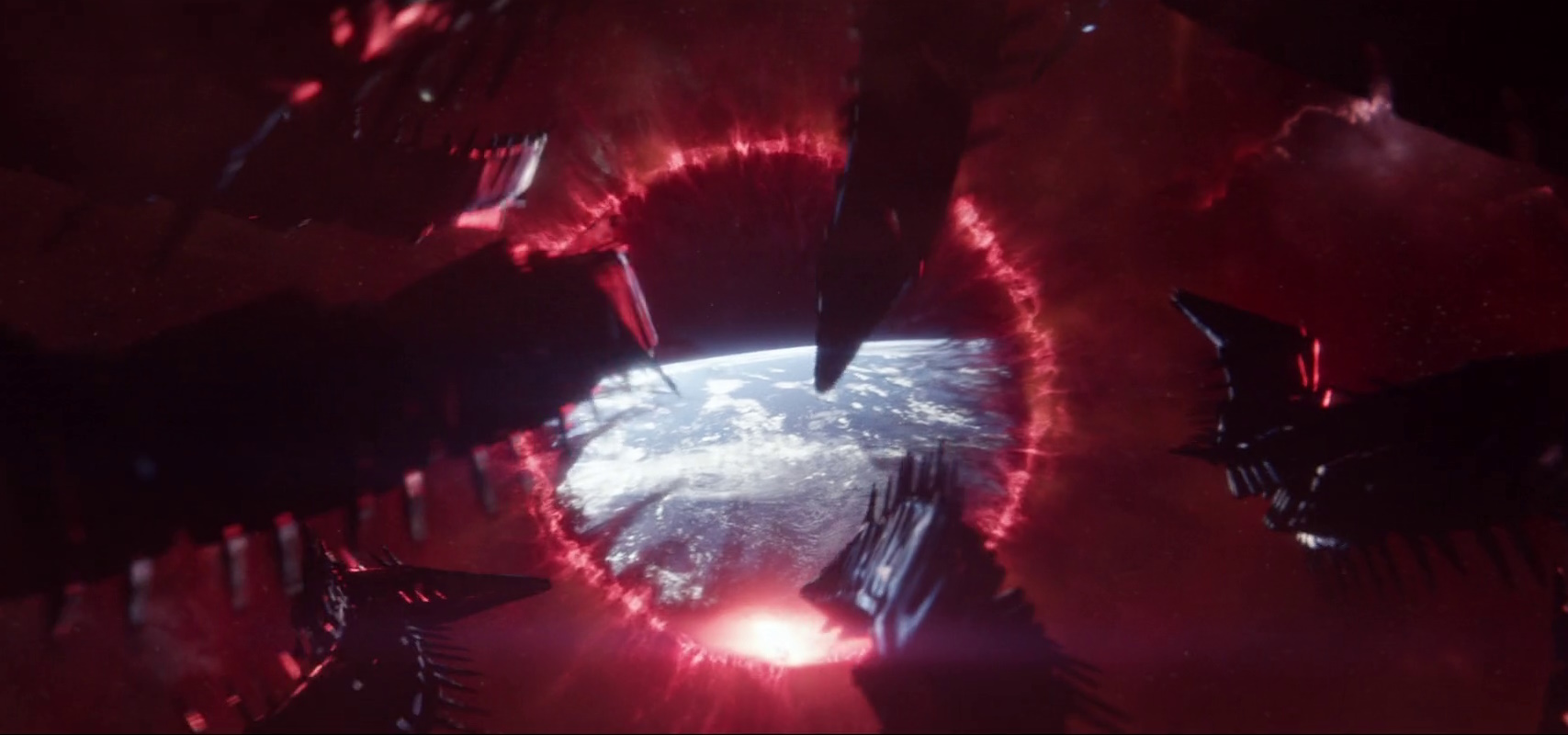
Still frame from Star Trek: Picard Season 1 (2020) showing menancing mechanical tentacles.
The mechanical noodles of the Season 1 super-synths.

The mysterious anomaly bookended the story of Season 2, and connected to Picard, his friends, and the adventure they had in the intervening episodes. Unlike in many Star Trek stories, the anomaly was explicitly identified as an “attack,” meaning that there must be some faction or powerful force behind it. The Borg and the super-synths from Season 1 would fit the bill as being powerful enough to launch an attack of that magnitude.

Tying one of these factions into the anomaly story would have helped Picard feel a bit more cohesive. Given the abundance of overwritten plot points, dropped characters, and abrupt changes in direction across the series, having something to tie disparate story threads together would be a good thing. If I had to pick one, I’d say that the super-synths would be the ideal faction to include here, simply because we know relatively little about them, and a super-synth attack could set up a future Star Trek series or film. But given that the Borg would return in Season 3, dropping a hint or two that they could be responsible could have been a great cliffhanger to end on at the end of Season 2.

Change #5:
Have the Enterprise-A and Enterprise-D fighting alongside one another at the end of Season 3.
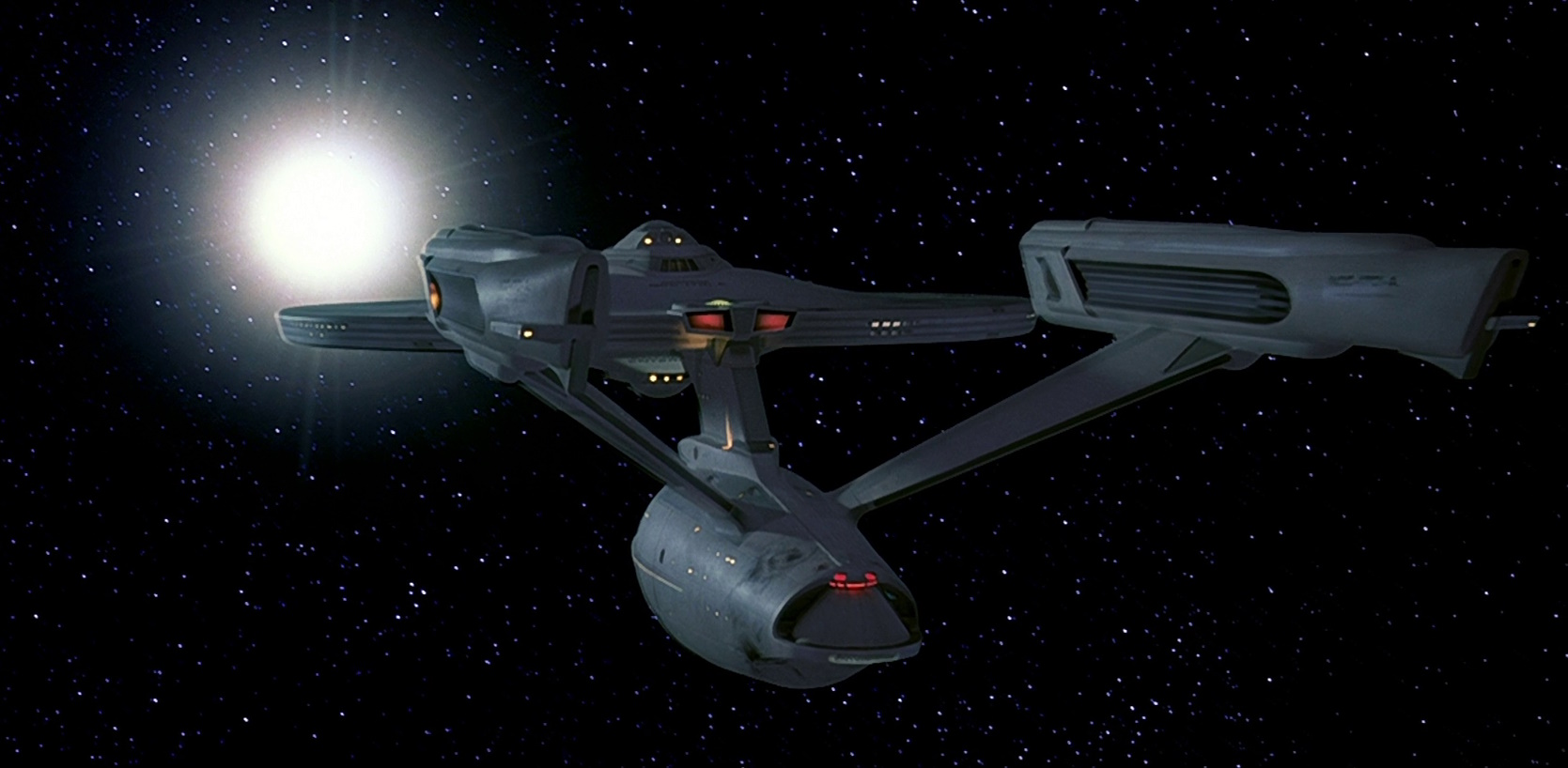
Still frame from Star Trek VI: The Undiscovered Country showing the Enterprise-A.
The Enterprise-A’s final voyage.

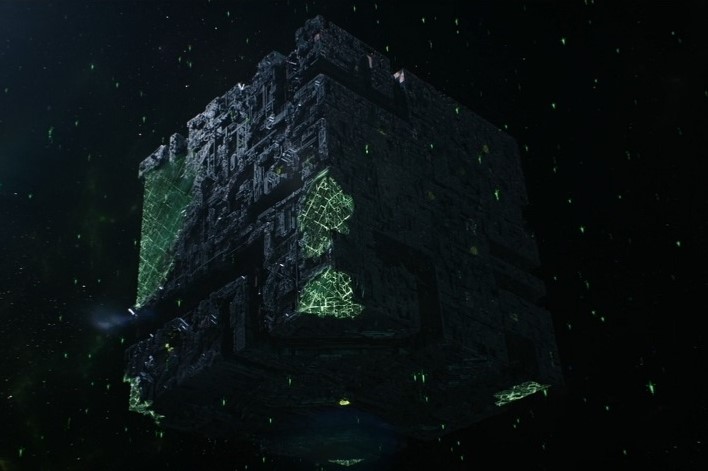
Season 3 introduced us to the Fleet Museum, which is a really interesting idea that I enjoyed. It was also a Trekkie’s dream, as multiple vessels from past iterations of the franchise were present. Along with Geordi’s pride and joy – the restored Enterprise-D – was the Enterprise-A, Captain Kirk’s ship that we saw in The Final Frontier and The Undiscovered Country. How cool would it have been if, along with the Enterprise-D, Picard and co. found some friends or allies to crew the Enterprise-A and join them as they took the battle to the Borg?

I know that Picard’s third season was a “love letter” to The Next Generation, and I can absolutely understand not wanting to detract from seeing the Enterprise-D and her crew back in action. But as a Trekkie, one of the fantasies that I’ve always had has been to see different crews and different ships standing shoulder-to-shoulder – especially in a story like this one, where the battle lines have been drawn and the Federation seems to be on the cusp of defeat!
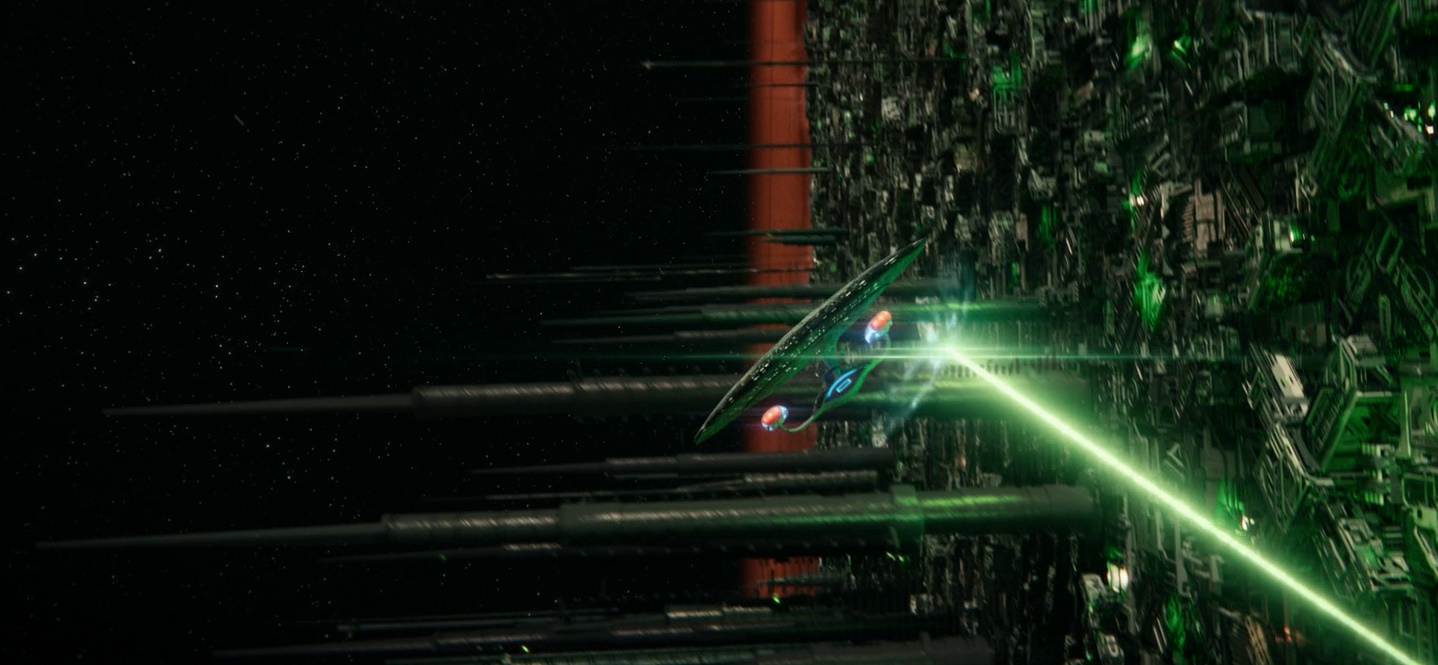
Still frame from Star Trek: Picard Season 3 (2023) showing the Enterprise-D in battle.
Wouldn’t it have been cool to have the Enterprise-A here for this moment?

Bringing the Enterprise-A along would fit narratively, too. Part of the story was about older people still having something to offer; stepping back into the fray to save their younger colleagues. The Enterprise-D and her crew were one way to embody that storyline, but including the Enterprise-A would have been in the same narrative ballpark. There could have even been some technobabble about how the Borg wouldn’t know what to do with a ship that old, making the Enterprise-A a useful addition to the battle. If this point in the story had been reached a little earlier – say with three episodes left instead of one-and-a-bit – I’d have absolutely found a way to include the Enterprise-A.

A digital model had already been created – albeit a static one for the Fleet Museum – but I’m sure with relatively little work it could have been transformed into a moving, flying model. And as for the bridge… I don’t think an entire set would need to be built. For brief scenes shown on the Enterprise-D’s viewscreen, perhaps a redress of the Strange New Worlds or Discovery sets would have sufficed. This would’ve also been a great way to include a character or two from The Next Generation era – perhaps someone like Ezri Dax or Captain Jellico – to take command. Seeing two Enterprises riding into battle side by side… I can’t think of anything more exciting in that kind of story.

What might have been, eh?

So that’s it!
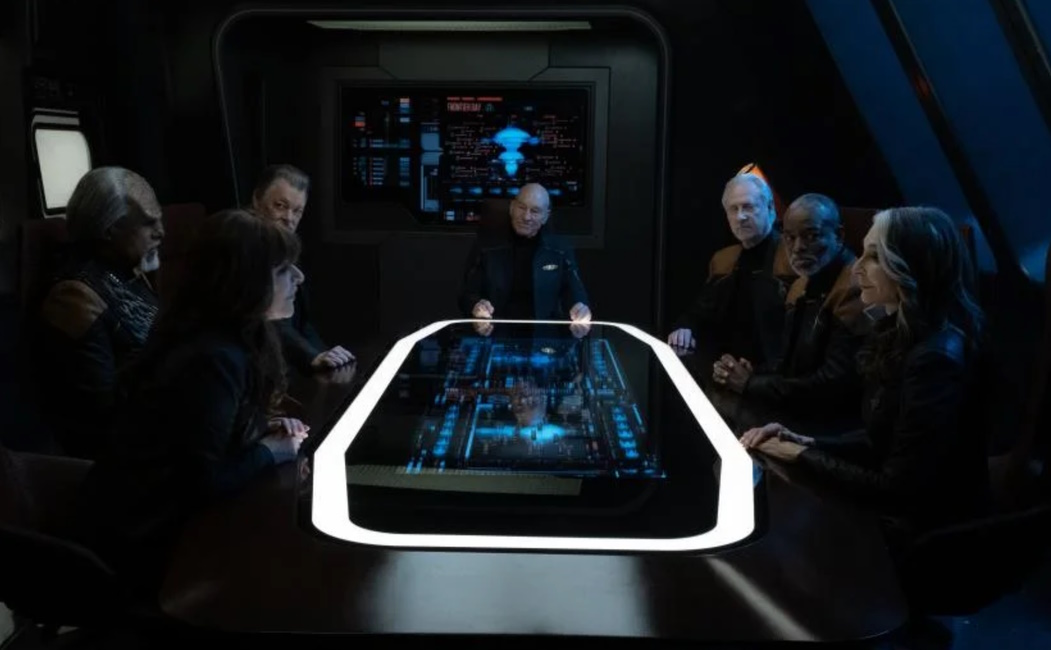
Still frame from Star Trek: Picard Season 2 (2022) showing the main characters around the conference table.
Picard and his crew.

We’ve looked at five changes I’d have made to Star Trek: Picard.

I’m still holding out hope that a new series, film, or other project set in the Picard era will be announced, but with Paramount’s financial troubles and other Star Trek shows being cancelled… I’m not sure when or even if that’ll happen. If it does, though, I hope lessons can be learned from Picard, both in terms of narrative and on the production side of things. As good as the series could be when everything was working right, there are some definite low points that detract from its successes.

The points on this list are pure fantasy at this stage, of course! But as Picard was being broadcast, I couldn’t help but feel that a few tweaks or changes here and there might’ve improved things – so I’m glad to finally put metaphorical pen to paper and make a few of my suggestions. I hope these ideas have been interesting, at any rate – and not something to get too worked up or upset over! If you hate all of these ideas, you can take solace in the fact that none of them were or ever will be included in Star Trek: Picard!

I still have a few pieces about Picard in the pipeline, including a longer retrospective/post-mortem of the series as a whole. I don’t know when I’ll get around to writing all of those, but I hope you’ll stay tuned. It’s bound to happen eventually! Until next time… live long and prosper!


Star Trek: Picard is available to stream now on Paramount+ in countries and territories where the platform is available. The series is also available to purchase on DVD/Blu-ray. The Star Trek franchise – including Picard and all other properties discussed above – is the copyright of Paramount Global. This article contains the thoughts and opinions of one person only and is not intended to cause any offence.

Star Trek: Picard + Star Trek: The Next Generation crossover theory: Lore

Spoiler Warning: There are spoilers ahead for Star Trek: Picard Season 1, Star Trek: The Next Generation, and for other iterations of the franchise.

Season 1 of Star Trek: Picard expanded our knowledge and understanding of the Star Trek galaxy in the 24th Century. As the lore of Star Trek grows (pun intended!) one thing I find fun is seeing how any new information we get can be made to fit with past iterations of the franchise, and in the case of Picard, I think I’ve hit on a theory that is plausible based on some new facts that we learned last year.

I previously touched on this theory as part of my essay on Commodore Oh a few months ago, but I thought it warranted being expanded and given its own article – so that when it’s finally confirmed on screen I can say “I told you so!” Or not. In short, this theory connects Data’s brother Lore to the Zhat Vash, the faction introduced in Star Trek: Picard.

Lore in Datalore.

Before we go any further and get into the weeds, let’s recap. Lore was introduced in The Next Generation Season 1 episode Datalore, and would return in Brothers in Season 4, as well as the Season 6 finale Descent, and Descent, Part II which opened Season 7. He was, in effect, Data’s “evil twin,” and would go on to cause havoc for Data and the crew of the Enterprise-D. We would also learn that Lore was responsible for luring a spacefaring lifeform called the Crystalline Entity to his homeworld, killing most of the citizens of the colony.

Next we have the Zhat Vash, who were introduced in Star Trek: Picard. An ancient, secretive Romulan sect, the Zhat Vash were on an anti-synthetic crusade. They believed that the development of artificial life would lead to all life in the galaxy being exterminated, and sought to wipe out synthetics wherever they found them. As part of their plan to prevent the Federation developing synths, a Romulan agent named Oh infiltrated Starfleet shortly after the discovery of Data in 2338.

Commodore Oh infiltrated Starfleet.

This theory begins with something that The Next Generation never really explained: Lore being evil. Apparently this is a flaw in at least some Soong-type androids, as we’d also see Sutra exhibiting many similar traits to Lore in the two-part finale of Picard Season 1. But is there more to it than a simple mistake, as Dr Soong believed?

Though the Zhat Vash despise synthetic life, as part of their crusade to exterminate synths from the galaxy they seem to have learned a great deal about them – including how to reprogram them. In Picard Season 1, we learned that rogue synths had attacked Mars, destroying Admiral Picard’s fleet. It was the intervention of the Zhat Vash, hacking into the synths and reprogramming them, that caused this attack. If the Zhat Vash possessed the ability to do this in the 2380s, it’s at least possible that they were able to do something similar to Lore in the 2330s.

The Zhat Vash were able to reprogram Federation synths, leading to the attack on Mars.

Lore was activated months (or possibly years) before Data, and lived with his creator on the Omicron Theta colony. Dr Soong’s reputation seems to have been known within the Federation, and his work doesn’t appear to have been classified or somehow kept secret. The Zhat Vash seem to have been able to infiltrate the Federation with relative ease, having two spies inside Starfleet that we know of, and even if a Zhat Vash operative in this era were not an especially high-ranking officer, given the openness of Dr Soong’s work and the dedication the Zhat Vash have to their cause, I think we can reasonably suggest that they would have come to know what he was doing, and thus of the existence of Lore.

As I suggested in my last crossover theory, it stands to reason that the Zhat Vash will have been deeply alarmed about the Federation and their synthetic research. In the mid-23rd Century, two Federation AIs went rogue: Control (as seen in Discovery Season 2) and the M-5 multitronic unit (as seen in The Original Series second season episode The Ultimate Computer). Although it seems to be androids that were the main focus of Zhat Vash attention, as Laris made clear, the Romulans fear all kinds of AI – so these events would certainly have upset them enough to keep an eye on Starfleet and the Federation.

A fleet of ships under Control’s command went rogue and attacked the USS Enterprise and the USS Discovery.

That makes it even more likely, in my opinion, that the Zhat Vash would have found out about Dr Soong and Lore on Omicron Theta. If they were following Dr Soong’s work on positronic brains, they may have been working on ways to shut down his research or reprogram Lore. As mentioned, none of this appears to have been classified, and while Dr Soong kept his work private, it may have been possible for the Zhat Vash to infiltrate Omicron Theta and gain access to his research.

Their main goal was to prevent the rise of synthetic life. A single android was bad enough, but what they feared most was a civilisation of them. But Dr Soong didn’t have a civilisation – he had one single operational android. From the Zhat Vash’s perspective in the 2330s, if they could force Lore to be shut down – and ideally kill Dr Soong at the same time – the Federation would be unable to replicate the work and would thus be unable to build more.

Lore in Descent, Part II.

At some point following his activation, Lore began to exhibit “emotional instability” to the point that he upset and worried the colonists on Omicron Theta. This doesn’t appear to have happened from the moment of his activation, though, which lends credence to the idea that he was reprogrammed – perhaps rather crudely in an attempt to force Dr Soong to take him offline.

However, before Dr Soong could take action to shut him down, Lore contacted the Crystalline Entity, which arrived and wiped out the Omicron Theta colony. If Lore had been reprogrammed, was this something he chose to do of his own volition? It seems a very specific action to take if he wanted to kill the colonists – he was more than capable of physically overpowering and outwitting them if he wanted to kill them.

The Crystalline Entity “feeding,” as seen in Silicon Avatar.

The destruction of Omicron Theta can be seen as a classic Romulan move. By using the Crystalline Entity, not only was Lore assumed destroyed, but so were Dr Soong, his assistants, and all of his research, setting back synthetic research in the Federation by decades. Of course we know that Dr Soong and Lore both escaped – but that clearly wasn’t part of the Zhat Vash’s plan! Perhaps they underestimated Lore.

Most importantly, though, having the Crystalline Entity wipe out Omicron Theta absolved the Romulans of any direct involvement, as well as potentially destroyed any evidence that they had ever been there. It reminds me in many ways of the false flag operation that they ran on Mars; the synths were reprogrammed and forced to go rogue, an event which so thoroughly shocked the Federation that the Zhat Vash were able to persuade them to shut down all synthetic research.

Laris first told Admiral Picard – and us as the audience – about the existence of the Zhat Vash.

With Lore being the only extant android, a “clean” attack on the colony, wiping out the entire site and all of its inhabitants, would work very well from the Zhat Vash’s perspective. Openly attacking Omicron Theta would surely have started a conflict with the Federation, and if that could be avoided through this kind of cloak-and-dagger operation, well that seems exactly like something they would seek to do.

So that’s the extent of the theory, and any Zhat Vash involvement afterwards appears to have ignored Lore. Perhaps they figured that the existence of Data showed that the Federation would not stop until they were forced to, or at least that it was no longer possible to stop Federation AI research by killing one android. This would explain why they didn’t take any aggressive action against Data during The Next Generation era, and could also explain why Dr Soong went into hiding after the Omicron Theta attack – he may have been hiding from the Zhat Vash.

Data in Star Trek: Generations. The Zhat Vash appear to have been either unable or unwilling to attack him.

This theory fits with Lore’s appearances in The Next Generation and doesn’t step on the toes of anything as far as I can see. It provides backstory to why Lore acted the way he did, and explains his motivations for doing so in a different way. It also elevates Lore from simply being an “evil twin” trope into more of a tragic character – we will never know what Lore could have been were he not interfered with.

Crucially, this theory fits with what we learned of the Zhat Vash in Picard Season 1, both in terms of their goals and their methods. It seems at least possible that the Zhat Vash are responsible for the attack on Omicron Theta and for reprogramming Lore, turning him into the malevolent adversary that Data and the crew of the Enterprise-D had to deal with.

Commodore Oh.

This could have even been the first mission of a young Zhat Vash operative named Oh. Maybe she was the one sent to Omicron Theta to deal with Dr Soong, and this entire situation is her doing.

So that’s it. That’s my theory! I doubt it will ever be confirmed, but you never know! It seems plausible to me, at least. I hope this was a bit of fun and an excuse to jump back into the Star Trek galaxy. As always, please remember not to take this theory, or any other fan theory, too seriously. Theory-crafting is supposed to be enjoyable, and the last thing we need right now is something else to argue about!

Star Trek: Picard Season 1 is available to stream now on CBS All Access (soon to be rebranded as Paramount+) in the United States, and on Amazon Prime Video in the United Kingdom and elsewhere. The Star Trek franchise – including Picard and The Next Generation – is the copyright of ViacomCBS. This article contains the thoughts and opinions of one person only and is not intended to cause any offence.

Ten things we learned from Maps and Legends

Spoiler Warning: There will be spoilers ahead for Maps and Legends and Remembrance, as well as for other iterations of the Star Trek franchise.

Maps and Legends was a solid episode, and a good continuation of the story that Remembrance set up. Despite not quite reaching the same heights as the first episode of the season, it was enjoyable nevertheless, and we got a lot of new information that, while setting up story elements for later in the season, also tells us about the Star Trek galaxy in the final year of the 24th Century.

You can read my full review of Maps and Legends by clicking or tapping here, and in this article I’m going to look at ten points of interest from the episode as we wait impatiently for the next one!

Number 1: The Romulans seem to be doing better than we thought.

One of the Romulan guards aboard the Artifact.

Because Picard has at least two Romulans working with him at the Château, and because of the total destruction of his planned rescue armada, I surmised after watching Remembrance that the Romulan situation was pretty bad. Though I wrote then that “they aren’t completely out of the game”, it seemed that things were rough for the surviving Romulans.

But we learnt a lot more in Maps and Legends about the status of the Romulans, and it seems things aren’t actually as bad as we’d thought. Obviously the supernova and the loss of their capital has caused significant upheaval, but the Romulans seem to be doing remarkably well despite this.

The Romulan Free State – which I’m assuming is a successor to the Romulan Star Empire based upon its control of the Artifact and that it seems to have a strong military – remains an independent faction. While there is cooperation with the Federation at least, as seen from Soji and other non-Romulans aboard the Artifact, they seem to be in a pretty good position all things considered.

Not only are their operatives – now known to be a new Romulan faction called the Zhat Vash – able to freely operate on Earth, even at the heart of Starfleet, but Romulan intelligence agents have penetrated Starfleet itself.

My personal belief at this stage is that Commodore Oh, despite what was hinted at in Maps and Legends, is actually a Vulcan who’s simply a co-conspirator. But Lieutenant Rizzo is absolutely confirmed to be a Romulan agent. The goal of the Zhat Vash is seemingly to track down and eliminate synthetic life, but I’m sure having an operative strategically placed within Starfleet intelligence brings the Romulans other dividends! And if they managed to get one person in, given an organisation the size of Starfleet it’s at least possible that there are others.

The Romulans have always been a secretive faction, and their power plays in other iterations of Star Trek have tended to be more covert than overt, so this really fits nicely with what we know about them and how we might expect them to behave.

For a more detailed look at the Romulans, I wrote an article before Star Trek: Picard premiered which you can find by clicking or tapping here. Suffice to say, however, that this isn’t their first tussle with Starfleet, nor their first time using undercover agents to try to gain the upper hand. The Khitomer conspiracy, which Kirk and his crew managed to stop at the last moment, had heavy Romulan involvement. Indeed, this seems to be one of the inspirations for the Starfleet conspiracy aspect of Picard’s storyline.

Number 2: The Borg survived the events of Voyager’s finale.

Endgame saw a time-travelling Admiral Janeway infect the Borg with a virus and provide future technology to Voyager’s crew.

It was always a bit of a long shot to think that Admiral Janeway’s actions in Endgame, the finale of Star Trek: Voyager, would have wiped out the Collective entirely. After all, they survived the loss of one Borg Queen during the events of First Contact, and that barely seemed to affect them at all. Not to mention the war they fought against Species 8472 that was said to have cost them thousands of ships and millions of drones.

One of the reasons that the Borg are so dangerous is their adaptability. And the virus that future Janeway introduced, as well as the upgrades she provided to Voyager, may have worked in the short term, but once the Borg have adapted they essentially become useless. This makes me wonder very much about the grey badges worn by Soji and others aboard the Artifact – will they lose their effectiveness, and if the remaining Borg on that “graveyard” were to wake up, would they be able to adapt to the technology the Romulans and others have deployed?

Borg stories can be difficult in Star Trek for the simple reason that the Borg Collective, in theory, is an overwhelmingly powerful opponent for our heroes. A single Borg cube was able to destroy almost 40 Federation ships in their first engagement, and a second cube came very close to assimilating Earth a few years later. In Voyager we saw them deploy dozens of ships against a Delta Quadrant species, conquering and assimilating the planet very quickly. If they used similar tactics against the Federation they’d surely be successful. So just knowing that the Collective still exists, that they’re out there waiting, is dramatic in itself.

Ever since the Enterprise-D first confirmed the existence of the Borg more than thirty years prior to the events of Star Trek: Picard, Starfleet has maintained a tactical division working on technologies and strategies to defeat them. But as we saw in The Best of Both Worlds and in First Contact, Federation technology lags far behind what the Borg are capable of. If they could so easily shrug off a devastating war against Species 8472, the damage inflicted upon them in Endgame would have scarcely registered. The lost ships and complex could be easily rebuilt – the Borg control so much Delta Quadrant territory as to have near limitless resources – and the virus that future Janeway used would be rendered harmless once an adaptation could be found. Adaptations to the virus and the technology she brought from the future would be rolled out to the entire Collective in a short span of time, and it would all be essentially useless thereafter.

The Artifact is cut off from the Collective, and given it has been under Romulan control for a long time (possibly even a couple of decades depending on how we interpret the number of “cycles” that the Romulans claim to have had it) it seems unlikely that the Borg are coming back for it anytime soon. But there could still very well be dangers lurking in the “grey zone” – and as I said in my review, I have a feeling that Soji’s new friend, the Trill doctor, isn’t going to last very long. There was too much foreshadowing for that not to happen!

Number 3: It’s looking increasingly likely that someone hacked the synthetics and compelled them to attack Mars.

The moment F8 turns on his human colleagues – was he hacked?

I wrote previously that the attack on Mars was not random. It was a calculated, deliberate action against a well-chosen target. For the synths to all malfunction at once, and all decide to go after Mars instead of, for example, other Federation targets, or instead of simply killing nearby humans or going on a rampage, strongly suggests that they were being controlled by an outside force.

F8, the synthetic who the first part of the episode focuses on, appears to receive a transmission, or to be processing something. He stops what he’s doing, his eyes change, and then he begins to take down the Martian defences in his sector. It’s only when the humans on his work crew attempt to interrupt him that he fights them; if he and the other synthetics had suddenly been overcome with a simple urge to rebel, it seems more likely that he’d have just attacked the people in his vicinity rather than performing the complex task of compromising the shields and defensive weapons around Mars.

Because the entire attack unfolds in a matter of just seconds, whatever happened to F8 had to have affected all of the synths practically simultaneously. This adds further credence to the idea that they were hacked, as does F8’s suicide. If this had been some kind of synthetic rebellion, a terrorist attack to highlight the plight of synthetics or to inspire rebellion among others, it wholly failed because as a consequence of what happened on Mars, synthetic life was banned and synthetic research largely shut down. The suicide of F8 – and presumably the other synths as well – would make sense if an outside hacker were covering their tracks. By destroying the synths after they’d achieved their goal of destroying the fleet and shipyard, there was no evidence to understand what happened, nor point to any culprit other than the synths themselves.

When it comes to who was responsible for the hack, however, we can only speculate as there’s basically no evidence to go on at this point in the story.

Number 4: Starfleet has been infiltrated.

Lt. Rizzo and Commodore Oh are co-conspirators.

I mentioned this above when discussing the Romulans, but at least one Romulan agent has managed to infiltrate Starfleet, and not just any branch of Starfleet, either. Commodore Oh appears to be a senior officer in Starfleet security, specifically the department of Starfleet security responsible for security on Earth.

There were a couple of elements in play here that I felt riffed off past Star Trek storylines. Star Trek: Picard has been great at that so far; throwing the audience little hints, names, visual details, and now thematic elements that harken back to previous iterations of the franchise. In particular, the Commodore Oh-Rizzo-Narek group of characters plays on themes we saw in The Undiscovered Country. In that film, Romulan agents, including undercover agents in Starfleet, attempted to disrupt Federation-Klingon peace efforts. There were also very subtle hints, I felt, at The Next Generation’s first season, particularly the episodes Coming of Age and Conspiracy – a duology of episodes dealing with parasitic organisms which were attempting to gain control of the Federation.

Playing up these themes is great; returning fans get further confirmation that this really is Star Trek, taking place in the same timeline, and for new fans it’s so subtle that it doesn’t get in the way of the story one iota.

From a story point of view, I have a suspicion that Commodore Oh is in fact a Vulcan, not a Romulan, and is simply a co-conspirator. Perhaps the Zhat Vash, because they have centuries’ worth of experience in tracking down synthetics, are a natural ally for someone like Oh as she tries to enforce the “galactic treaty” banning synthetics.

Lt. Rizzo, however, is very much a Romulan agent. Whether she’s the only one of the Zhat Vash undercover in Starfleet isn’t clear, but she definitely has it in for Soji.

Number 5: The show has broken viewership and streaming records.

The logo for CBS All Access original shows.

Star Trek: Picard was the most-watched series ever on its channel when it premiered on Canadian television. More than 1.1 million viewers tuned in to the CTV Sci-Fi Channel to watch Remembrance last week, which is a new record for the channel. Great job, Canadian Trekkies!

Additionally, CBS All Access broke the 10 million subscribers mark in the week leading up to Picard premiering. It’s possible that, due to the way CBS All Access reports subscriber numbers, not all of those are paid subscriptions as some may be a free trial, but it’s good news regardless. CBS All Access is the platform for Star Trek in the United States, and if the franchise is to survive long-term we need CBS All Access to succeed. This is a good indication that it’s on track to do well at least for now.

Finally, both Remembrance and Maps and Legends are among the most-pirated television episodes right now. While this of course means that CBS and others aren’t making money from those views, it does indicate that there’s a huge number of people interested in seeing Picard right now. Discovery, by the way, never came close to being the most-torrented or most-downloaded show, not even its premiere. Other shows that have been massively pirated in the last twelve months include Game of Thrones, The Witcher, and Chernobyl – all of which were hugely successful for their parent companies. Piracy should be seen as a reflection of how much interest there is in a series, so seeing Picard right up near the top is, despite what ViacomCBS might be inclined to think at first, remarkably good news.

The level of excitement for Picard was sky-high before Remembrance premiered. I’ve had friends and family who didn’t watch Discovery and who may not have watched any Star Trek property since the 1990s asking me about Picard and telling me they’re going to tune in, so I think that the show is really riding high right now. Hopefully the interest and excitement can be maintained over the whole season and the series can continue to be the biggest hit – so far, at least – for this new generation of Star Trek shows.

Number 6: The rank of Commodore still exists!

Commodore Oh in uniform.

In The Original Series, and I want to say in The Animated Series as well (but I’m not 100% sure on that), there were several characters who held the rank of Commodore. Starfleet ranks imitate United States Navy ranks, where a Commodore is essentially a nonspecific rank offered to senior Captains. Previously the rank was used for a Captain who was in command of more than one ship – a kind of half-step between a Captain and an Admiral.

But since the era of The Original Series we haven’t seen anyone in Starfleet holding that rank (at least not in canon). It was possible that, as in the United States Navy today, the rank was less commonly used or only honorary, but this is evidently not the case.

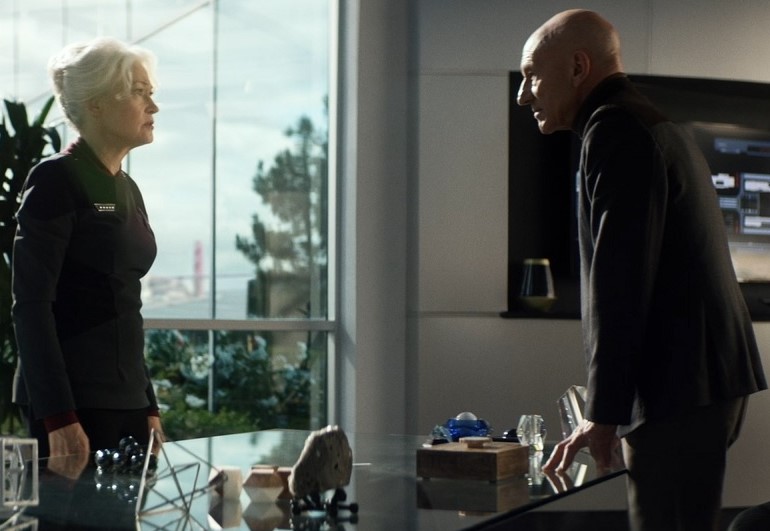
Commodore Oh is clearly a senior commander in Starfleet security on Earth, and may even be wholly in charge of Earth’s security as she seems to report directly to Admiral Clancy, who is in charge of Starfleet. This is a serious responsibility, and her rank reflects this.

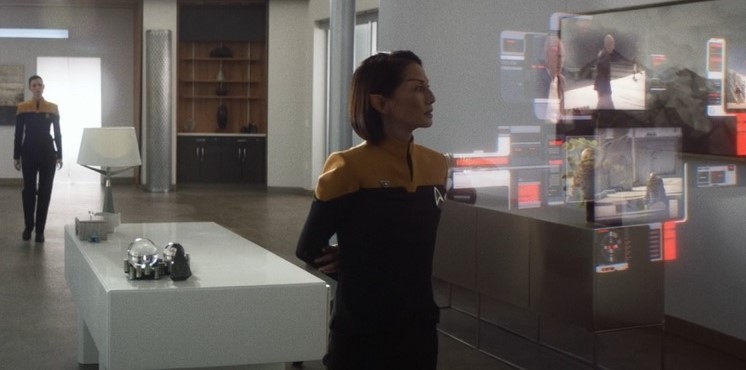
Her uniform is a point of note, however. Red has been the colour of command officers since the The Next Generation era, yet she is wearing the yellow/gold of security. Her uniform is also the same as Lt. Rizzo’s, and not the same as Admiral Clancy’s, despite both a Commodore and an Admiral technically being flag officers. She has a single rank pip, which presumably denotes her status as a Commodore, and her rank pip has a background to it as opposed to the pips Lt. Rizzo has, which are plain.

I looked at the combadges used in the new Starfleet uniforms in my review of Maps and Legends, but hopefully as we see more of the uniforms in the next few episodes I’ll be able to do more of a breakdown. One thing I did spot, though, was that the coloured portion of the uniform features a Starfleet logo pattern, similar to the uniforms of the Kelvin-timeline films.

Number 7: There may be more Sojis and Dahjs out there.

Picard with Bruce Maddox – the man who we assume built Soji and Dahj – aboard the Enterprise-D.

This was implied during the conversation between Rizzo and Oh. They talk about finding a “nest” of synthetics, and interrogating Dahj and Soji to learn where they came from so they can be tracked to their source.

It makes sense that, if it was possible to create Soji and Dahj three years ago, there could be more that have been built subsequently. When Soji said, at the end of Remembrance, that she had a sister I wasn’t convinced that she was referring to Dahj at first. I thought it might’ve been an interesting story point to learn that she was talking about someone else, but Dahj’s last name being confirmed seems to put that particular theory to bed.

However, it’s possible that there are still others out there like Soji, and that she and Dahj weren’t the only ones created by Dr Maddox – or whoever it turns out is ultimately responsible.

Number 8: The Artifact may have been under Romulan control for decades.

The Romulans have controlled the Artifact for a long time.

I hinted at this above, but three moments in Maps and Legends suggest that the Romulans may have been holding onto that Borg cube and its technology for a very long time.

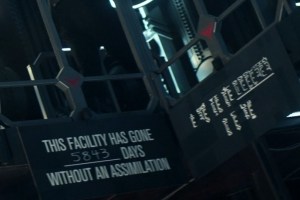
Firstly we have the sign hanging in the checkpoint area. It says, in English and in Romulan, that the Artifact has “gone 5843 days without an assimilation”. 5843 days is around sixteen years, so the Romulans must’ve had control of the Artifact for at least that long.

This ties in closely with the next scene, where Soji is assisting with the dismantling of Borg drones recovered from the Artifact. The drone she and her Romulan colleagues are working on – that the Romulans call “Nameless” – is said to have been in regeno-stasis for fourteen years. Depending on what precisely regeno-stasis means (a combination of stasis with Borg regeneration?), this drone has been inactive for some time. However, the most recent assimilation aboard the Artifact took place longer ago than the drone has been inactive – so that raises the question of what was happening aboard the Artifact at that time. Were there still Borg alive and working on board when the Romulans first arrived? If so, were they still connected to the Collective at that time? The Collective currently sees the Artifact as a “graveyard” according to Narek, but if there were still Borg alive for potentially two years after the Romulans captured it, could the rest of the Collective be aware of what’s going on?

Finally, back at the checkpoint scene, we have the number of “Ops Cycles” stated by one of the Romulan guards. Maps and Legends takes place during or at the beginning of Ops Cycle 9834. If Ops Cycles are equivalent to standard Earth days, that would mean that the Artifact has been under Romulan control for almost 27 years – which would put them capturing the Borg vessel sometime around the year 2372. This would coincide with the second season of Voyager and the fourth season of Deep Space Nine, prior to the outbreak of the Dominion War. While this is a possibility, I think it’s more likely that we’re looking at a 14-16 year timeframe for the Romulans’ capture of the Artifact, which would place it not too far away from the attack on Mars. Could the Borg have been involved with that?

Number 9: The Romulans have a new emblem.

The Romulans’ new emblem.

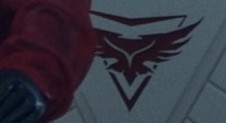
This was a blink-and-you’ll-miss-it affair, but the Romulans do indeed have a new emblem. It appears to be a stripped-down version of the one we’d seen in The Next Generation era. That emblem featured what appeared to be a winged creature gripping something in its talons, and this design, in a dark red/maroon colour, is a similar shape with a spread-wings design.

It can be glimpsed briefly behind Soji while she’s working on the Nameless Borg drone, and if I had to speculate – which you know I do – I’d say it’s the emblem of the new Romulan Free State.

The new emblem can also be seen – though much less clearly – on the railings in the checkpoint scene aboard the Artifact. There may have been other appearances that I didn’t notice!

Number 10: Picard is dying.

Dr Benayoun brought Picard the worst possible news.

This was arguably the biggest revelation of the episode. Picard asked his doctor – who happens to be an old crewmate from the Stargazer – to certify that he’s fit for duty to Starfleet as part of his plan to get reinstated. But his scans revealed something in the parietal lobe (a section of the brain).

Dr Benayoun isn’t sure exactly what the abnormality represents, but all of the conditions it could cause “end the same way” – i.e. in Picard’s death.

In The Next Generation’s finale, All Good Things, Picard learned that he would suffer from something called Irumodic Syndrome, and this was clearly a reference to that. Picard tells Dr Benayoun that he had been told this parietal lobe issue could become a problem, and Benayoun refers to the collection of conditions that could afflict Picard as “syndromes”. Irumodic Syndrome looked to be something similar to Alzheimer’s disease insofar as it was a degenerative condition.

Later in Maps and Legends, Laris sarcastically asks Picard if he’s suffering from “dementia”, which I think is another reference to Picard’s age and state of health.

This diagnosis, such as it is, changes the tone of the show. No longer is Picard merely coming out of retirement, overcoming his depression, and finding a cause worth getting involved with. All of those elements are still present, but in addition is the sense that his time is running out. Whatever condition he has – presumably Irumodic Syndrome – is terminal. And, if Dr Benayoun is right, it won’t be a pleasant death.

Picard is now a man facing his own mortality, and more than that, he’s facing the prospect of losing himself before the disease kills him. This is clearly an allegory for degenerative conditions faced by many people today as they enter old age – I mentioned Alzheimer’s disease but there are many others. Many of us will have known someone who suffered from such a condition. There are several people I can call to mind in my family and among friends and neighbours. There will be consequences for Picard as a result of this diagnosis. We may not see his decline and death on screen – though that may be something the showrunners have in mind for later seasons – but as Picard assembles his crew and ventures into space, at the back of our minds we’ll be wondering if this really will be his final mission. Unlike in the past, when he’d been able to escape even what seemed to be insurmountable challenges like being assimilated by the Borg, this time there is no escaping his own mortality.

So that’s it.

Ten things from Maps and Legends. Despite being two episodes in already, Star Trek: Picard is still playing its cards close to its chest; we have far more questions than answers right now. The biggest answer we got from Maps and Legends, or at least the closest thing to an answer we got, is that the synthetics on Mars were almost certainly hacked or otherwise interfered with. Who did it and why, however, remains unknown.

As I said last week, I’m glad that we’re getting the episodes on a weekly basis instead of having the whole season at once. Star Trek: Picard has a lot going on, and I think if I’d binge-watched the full season I would have missed a lot of things, especially little references, throwbacks, and easter eggs.

I’m incredibly excited to learn more about the conspiracy in Starfleet, Soji and Dahj’s origins, and to finally meet the rest of the main cast – we’re almost certainly going to meet Santiago Cabera’s character next week and I’m a fan of his. There’s so much still to come, and The End Is The Beginning can’t come quickly enough!

Maps and Legends, the second episode of Star Trek Picard, is available to watch now on CBS All Access in the United States, and on Amazon Prime Video in the United Kingdom and other countries and territories. The Star Trek franchise – including Star Trek: Picard – is the copyright of ViacomCBS. This article contains the thoughts and opinions of one person only and is not intended to cause any offence.

Star Trek: Picard review – Season 1, Episode 2: Maps and Legends

Spoiler Warning: There will be spoilers ahead for Maps and Legends, as well as for the previous episode of Star Trek: Picard and other iterations of the Star Trek franchise. If you haven’t seen the episode yet and don’t want to know what happened, now’s your chance to jump ship!

A week seems like a long time when you’re waiting for something, and waiting for the release of Maps and Legends, the second episode of Star Trek: Picard, seemed to take forever. After Remembrance had been so stunningly good last week, I was hoping that Maps and Legends would manage to be just as enjoyable. In case you missed it, you can find my review of Remembrance by clicking or tapping here.

Though I don’t think it hit quite the same highs as last time, Maps and Legends was nevertheless a solid episode that advanced the story – albeit at a slower pace than Remembrance. There were some great performances again, especially from Sir Patrick Stewart, and we learned a lot more about the synthetics and the Romulans.

The end of the opening titles features Picard looking at the camera.

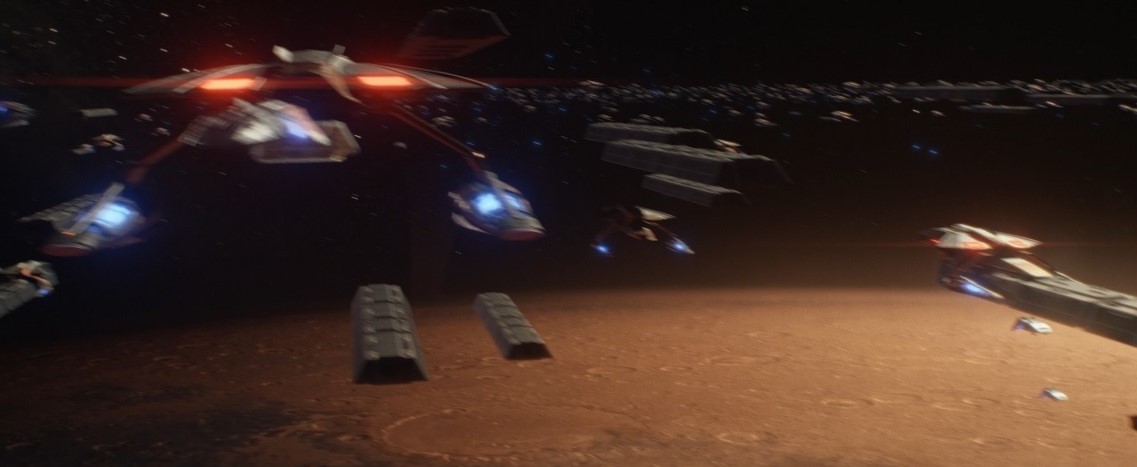
The episode opens with a step back in time – to fourteen years prior to last week’s episode and the rogue synths’ attack on Mars. We get a better look at the rescue armada – Picard’s fleet that was under construction – than we did in the Short Treks episode Children of Mars from a few weeks ago. Unlike in that short episode, where the few ships that we briefly glimpsed looked very similar to vessels of the Discovery era, my impression of the ships being built in orbit of Mars was that they were much more in line with the 24th Century. And I’m glad, because while some elements of Discovery’s visual style crossing over is inevitable given that the two shows are being produced simultaneously, the two eras are separated by one-and-a-half centuries from an in-universe perspective, so we shouldn’t really be seeing that many similarities in things like starship design.

To pick out a couple of specific examples, I felt that the tapered look that the warp nacelles on the rescue ships had was reminiscent of the Enterprise-E. This would make sense as the Enterprise-E would have been active in this era – the attack on Mars having taken place around six years after the events of Nemesis. Secondly, the red impulse engines mounted on the “saucer” section of those vessels is a familiar element of Federation starship designs, and has been seen on many vessels across all iterations of Star Trek. I’m assuming, anyway, that the glowing red sections were impulse engines – that’s what they look like to me. Unlike the vessels in Children of Mars, these ones felt like they definitely were late-24th Century Starfleet ships. This could be simply a change in the viewing angle, but they looked like an altogether different design to me.

Oh, and while we’re breaking down this briefest of scenes, the CGI work was absolutely excellent. The ships really felt like they were hanging there in orbit of Mars, and the whole shot, though it only lasted a few seconds, did a great job establishing the scale of the fleet. Previous iterations of Star Trek have, on occasion, struggled with such large numbers of ships – a consequence of the days when they had to use hand-built scale models.

The scale of Picard’s planned rescue armada was huge – there were going to be 10,000 ships.

The action starts with a crew working on Mars. The synths we’d seen in the trailer – who I speculated might’ve been deactivated as part of the purge on synthetic life in the aftermath of the attack – turned out to actually be workers on Mars from this time period. They were in some kind of storage – presumably sent there to rest in between shifts.

Unlike Data, these synthetics were far less “human” in the way that they acted and behaved. Dr Jurati told us last time that no one had ever been able to recreate the process used to build Data – and that’s apparent from looking at these synths. Even when we first met him in The Next Generation’s premiere, Encounter at Farpoint, Data had a personality. He had the desire to expand his programming and become more human – almost akin to a craving or a desperate want. He came close to achieving his goal in Generations, seven years later, when an emotion chip was installed allowing him to feel sensations like amusement, fear, and disgust. The androids we met in Maps and Legends, though, are missing all of that. They have clearly been programmed to be interactive – they respond when spoken to, answer questions, fake a smile when told a joke – but they lack any personality or character of their own. Clearly Maddox’s work was incomplete at this stage.

It’s also interesting to note that, as of Nemesis, no Data-esque androids were known to exist aside from the few examples made by Dr Soong (Data’s creator). Work on these synths must’ve been well underway by then, however, to have teams of them deployed to Mars only a few years later.

A few days ago I wrote an article detailing six of my own pet theories for Star Trek: Picard. And one of the theories I had, based on what we saw in Remembrance, was that the synthetics on Mars were hacked. While this is still very much an unconfirmed theory, we may have seen some more evidence in Maps and Legends that points to it being true. The work crew are going about their day, when their android – F8 (is that a play on the word “fate”?) – seems to malfunction. He stops, appears to process something – perhaps downloading or receiving a transmission – then starts working feverishly on one of the computer terminals. He may have been the one responsible for taking down Martian defences, or at least one section of them. Mere moments later, after F8 has turned on the work crew, killing them and two guards, the “stingray ships” arrive and the attack on Mars unfolds.

We saw the briefest of glimpses from this scene in the trailers – but now we know these were some of the rogue synths on the day they attacked Mars.

Whatever happened to F8 had to also have happened to other synthetics simultaneously – the attack unfolded in a matter of seconds. He wasn’t physically interfered with, so whatever altered his programming had to have been a transmission coming from somewhere else, or perhaps an innate flaw in his programming that activated for some reason. It also seems that the rogue synths killed themselves in the aftermath of the attack. F8 fires a phaser into his own head, presumably destroying his positronic brain. If something similar happened to all the synths it would explain why no reason for the attack has been discovered: they left no evidence behind. The fact that F8 killed himself is another hint, in my opinion, that he and his fellow synths were hacked. This would be the hacker trying to conceal the evidence of their crimes.

After the opening titles we’re back at Château Picard, where Laris and Zhaban are talking with Picard about who might’ve been responsible for killing Dahj. They initially suspect the Tal Shiar (the Romulan intelligence agency), but Laris has another idea – an older, much more secretive Romulan faction called the Zhat Vash. Romulans, according to Laris, don’t work with androids, AIs, or any other synthetics because of a deep-seated fear and loathing of them, and the Zhat Vash hate synthetics even more passionately than other Romulans. They may have been responsible for the attack on Dahj as part of their crusade against synthetic life. This is a fascinating idea, but I didn’t feel that the way this information was conveyed – a single scene with one character dumping a lot of expository dialogue – was particularly strong.

We were always going to learn more about the Romulans in Picard, with the show being so tied up in the aftermath of the supernova, but this was especially interesting to me notwithstanding how it came across on screen. In the Romulans’ appearances throughout Star Trek, they’ve never indicated that they hated or feared artificial intelligence, yet apparently it’s a Romulan trait going back hundreds of years or more. The Romulans have always been a paranoid race, and this fits in nicely with what we already knew about them. Whether there’s a reason for this fear – such as an historical attempt at building their own AIs that went awry – is unclear. It’s possible that the synths’ actions in destroying the rescue armada has given the Zhat Vash additional motivation to hunt down any remaining synthetics – as well as perhaps covert support from elements within the Federation, but more on that later.

Laris tells Picard about the Zhat Vash.

The scene at the vineyard is spliced with another taking place at Dahj’s apartment in Boston. Picard and Laris travelled there to look for clues – but whoever attacked Dahj has since been back and completely cleaned everything. Laris uses some kind of illegal scanning device to recreate some of the events leading to Dahj’s death, but the holo-recording she manages to piece together cuts out abruptly – thanks to the way the apartment has been surgically cleaned up. They are, however, able to confirm the existence of Soji – who is now confirmed 100% to be Dahj’s “twin”. Soji is offworld, but they don’t know exactly where.

I’m not sure why, but I wasn’t certain until this point that Dahj was the “sister” that Soji referred to in the previous episode. For some reason I was thinking that there might be others, and that they may have been two members of a larger group. But Dahj’s last name – Asha – was spoken in Maps and Legends and it’s the same as Soji’s.

The action then returns to the Romulans’ Borg cube, where Soji and the Romulan she met at the end of the last episode, Narek, have wasted little time in becoming intimate. He’s incredibly secretive, giving non-answers to most of the questions Soji asks him, and it turns out “Narek” may not even be his real name – when asked, he says it’s “one of” his names. Does that mean it’s one part of his full name, or does it mean perhaps that he has numerous aliases?

The Borg cube, incidentally, is occupied by the Romulans, but it’s hinted that they may not have been responsible for its damage. The Borg Collective is also implied to still be active, as the cube is disconnected from the rest of the Collective – “a graveyard” as far as the Borg are concerned, according to Narek. So the events of Voyager’s finale, Endgame – in which a time-travelling Janeway infects the Borg Queen with a virus and equips Voyager with anti-Borg armour and technology – doesn’t seem to have wiped out the Collective as a faction in the Star Trek galaxy. Good to know!

We now know that the Romulans call this Borg cube “the Artifact”.

Picard meets with his doctor at the vineyard, and apparently the two know each other from having served together on the USS Stargazer. I liked this inclusion, it was a reference to Picard’s past but without being too distracting or overt. However, it would have been a perfect opportunity to bring in someone from Star Trek’s own past, like Dr Pulaski or Nurse Ogawa – both of whom Picard served with on-screen in The Next Generation. But that’s just a creative decision, and having Dr Benayoun be someone new was a perfectly valid choice.

Dr Benayoun brings bad news. Picard had asked him to certify to Starfleet that he was fit and well to return to active spacefaring duty, but the doctor has discovered something in Picard’s scans that may be a terminal illness. There are hints that this could be the “Irumodic Syndrome” mentioned in The Next Generation’s finale, as Picard says he was warned something like this might be coming, and Dr Benayoun refers to the collection of conditions that may be present as “syndromes”. As with the Stargazer reference, this was a nod to The Next Generation for returning fans that in no way interfered with or got in the way of the overall story. The news of his impending illness pushes Picard even harder to unravel the mystery of Dahj – before it’s too late.

Dr Benayoun brings Picard bad news.

He travels to San Francisco, to Starfleet Headquarters. We saw this in the trailers, and Picard has made an appointment with Admiral Clancy – who is seemingly in charge of Starfleet. He asks to be reinstated to track down Dr Maddox and learn what happened with Dahj, and offers to be demoted to Captain for the mission if it will sway her. Apparently she and Picard had tussled before, during the Romulan rescue attempt, because she angrily refuses his request. They debate the Romulan issue, and it emerges that some member worlds of the Federation (it’s not stated which ones) threatened to secede from the Federation if help was provided to the Romulans. Admiral Clancy felt – and still feels – that calling off the rescue mission after the attack on Mars was the right thing to do because it preserved the Federation.

Though I doubt we’ll learn exactly who may have been threatening to withdraw, it would be interesting to know. Could the Vulcans be among those uncomfortable with helping the Romulans, perhaps? After multiple attempts by the Romulans to forcibly conquer them, perhaps the Vulcans decided to leave them to their fate. Pure speculation, but I can’t help wondering.

This scene was, frankly, a little clichéd: the hero asking for help and getting turned down by a superior officer who believes everything is fine the way it is is a trope seen throughout fiction. Sir Patrick Stewart was passionate, however, and we’re seeing more and more of the Picard we remember coming to the surface after his time away from Starfleet. Guest star Ann Magnuson – who played Admiral Clancy – gave a solid performance too, and the argument that the two characters have really emphasises how Picard is now seen – and sees himself – as an outsider to Starfleet.

This is a significant shift in tone from practically anything we’ve seen in Star Trek before. In other series like Deep Space Nine and Voyager, non-Starfleet main characters have felt like they were largely on the same page as Starfleet, sharing the same basic ideals and goals. Even someone like Quark, arguably the most non-traditional main character in Star Trek to date, had a longstanding association with the Federation, and the Maquis in Voyager were so quickly absorbed into the crew (a consequence of the writers not really knowing what to do with the Maquis-Starfleet conflict after the first few episodes) that they don’t really count as being anything different from a thematic perspective. To be fully on the outside – a rebel, if you don’t mind thinking about it that way – is something we haven’t really seen before. Putting together a non-Starfleet crew, as Picard is with Dr Jurati, Raffi, and others we’ve yet to meet, is also something new.

Admiral Clancy and Picard have a heated argument.

Picard leaves the meeting dejected, and the action returns to Soji aboard the Borg cube. We learn that the cube has been named “the Artifact”, and as we’d seen in both the trailers and the previous episode, is under Romulan control. Interestingly, however, the Romulan Star Empire isn’t named, and instead the cube is controlled by the Romulan Free State. In the video game Star Trek Online, the Romulans broke into two factions: a continuation of the Empire and a democratic state called the Romulan Republic. Whether something similar has happened here, or whether the Romulan Free State has replaced the Empire as a result of the supernova is unknown, but the Free State clearly has resources and a powerful military judging by their security guards.

Soji assists a newbie on the Artifact – a Trill doctor – as they get ready for work. Part of the cube – seemingly the part where Soji and her crewmates live – has been rendered entirely safe and free of any Borg activity. There are even private rooms which have been built into the cube. But beyond this area Soji, the Trill doctor, Narek, and others all have to take extra precautions – including wearing a grey combadge-like device. This device serves as a warning system, with a Romulan guard telling Soji and the assembled crew to get out of danger if the grey badge flashes green. It may also be some kind of shield or even a cloaking device to keep wearers safe from residual Borg activity – we’ve seen similar technology in Voyager.

Though the guard seemed to be revelling in his role, and the other Romulan security personnel clearly take their jobs very seriously, this scene gave me the impression of a tourist trap. We’ve all been somewhere like that, I’m sure, where the tour guide or someone from the local area tells a gaggle of tourists to be extra careful because where they’re going is dangerous – but of course it’s all a play to make them feel more excited. Whether that was intended isn’t clear but that’s the impression I got!

I can’t help but feel that the Trill doctor isn’t long for this world, though – perhaps she’ll end up assimilated before long. There was just too much “everything will be fine” from Soji for that particular cliché not to play out!

The Trill doctor getting ready for her first foray into the Artifact. Will she make it out?

The Romulans, counter to what we might have expected, seemingly allow researchers and doctors from other factions – including the Federation – access to their Borg cube for study. Soji is assisting in disassembling some of the drones who remain on the Artifact. Their components are collected by the Romulans and, presumably, studied in more detail. How exactly this fits into their “no AI, no synthetics” mantra is unclear, but as the Borg are known to have technology far more advanced than the Federation, perhaps they’re hoping to learn more about that. Soji is clearly uncomfortable with the callous way the Romulans are treating the Borg drone she’s helping with, even though it appears to be dead.

The Borg drone – Nameless – being disassembled was suitably gory for an episode of Star Trek. The removal of his eyepiece revealed some raw flesh, and the whole makeup and prosthetics departments should be complimented for their work here. Indeed all of the visual effects here, from the holo-screens projected in mid-air through to the look of the Borg bodies and their components, were absolutely on point. The scene really got across the look and feel of a disabled Borg ship being pulled apart.

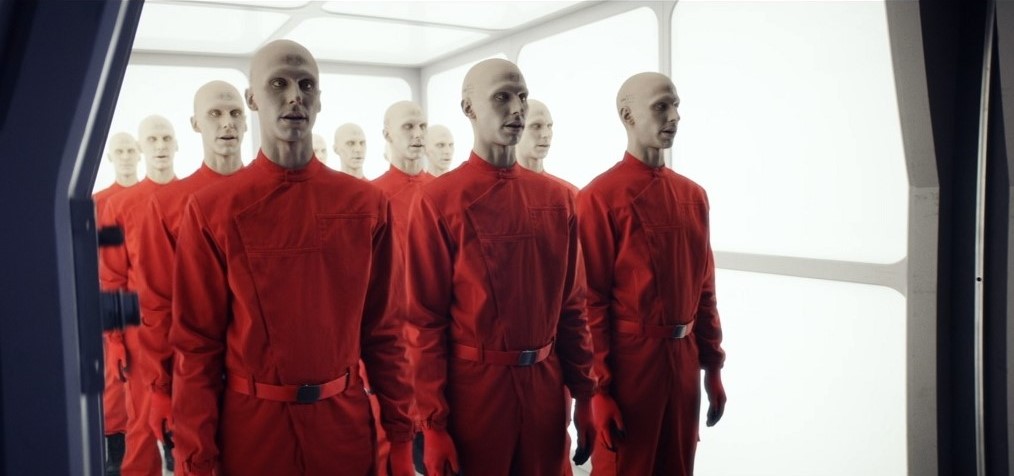
Another of the scenes from the trailers was Soji and others in the red jumpsuits aboard the Borg cube. I know some folks online had speculated that it was a prison, but it seems that this isn’t the case. There are also scans on the Artifact to presumably detect Borg activity. This ties into what I said last time about Soji and Dahj being able to register as fully human on scans, but clearly Soji has been able to get aboard the Artifact, a militarised, secure facility, without raising any alarms. How exactly that’s accomplished is still unknown.

Back at the vineyard again, and Picard meets with Dr Jurati. They discuss Dr Maddox and the synths, and she seems sure that Dr Maddox would have modelled Soji and Dahj on Data’s painting to pay homage to him. She’s also researched more about Dahj – and it seems she may have only existed for three years or so. Her credentials and background have been faked, and prior to that time there’s no record of her existing. Dr Maddox is mentioned again, but Dr Jurati can’t speak to his motivations for creating Dahj and Soji.

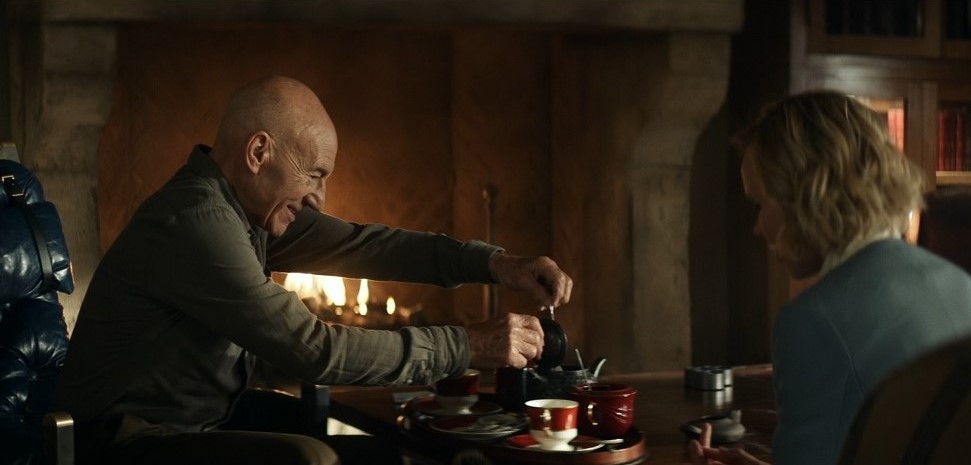
Picard makes tea for Dr Jurati at the Château.

However, it seems that Dahj may have been looking for something at the Daystrom Institute. Soji is aboard the Artifact, the Romulan-occupied Borg cube, and Dahj had been accepted to work/study at Daystrom. Picard and Jurati seem to suspect that they have been programmed to look for something – something common to these locations, or two separate somethings perhaps. Whatever it may be, however, it clearly isn’t all that time-sensitive given that Dahj had been active for three years and had only just made her way to the Daystrom Institute. Whoever built and/or programmed them – Picard and others assume it’s Dr Maddox but that could be a deliberate misdirect – evidently has time to wait.

Picard is is then seen putting on his old Nemesis-era combadge, and contacts someone called Raffi – immediately asking her not to hang up on him, showing that they clearly have some history!

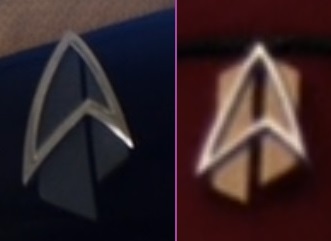
Starfleet combadges have changed since Nemesis, featuring a design similar to that seen in TNG-era shows’ depictions of the future, which was a nice touch. The new combadge is an understated design, a hollow silver outline over a dark background, combining elements of The Original Series, Discovery, and the TNG-era shows all in one, with the most obvious influence being the future combadge we saw in those 24th Century shows. The Next Generation, Deep Space Nine, and Voyager all featured this same design when they set episodes in the future, so to use a visually similar combadge here is a great way to tie Picard to the rest of the franchise from a design standpoint.

Starfleet combadges in Picard (left) and Voyager’s future (right).

At Starfleet Headquarters, Admiral Clancy contacts someone called Commodore Oh, who appears to be a Vulcan, to discuss Picard’s visit. She is clearly alarmed by the idea that Romulan agents may be operating on Earth, and Oh says she will investigate. However, Commodore Oh is working with a Lieutenant named Rizzo and they are responsible for the attack on Dahj – though killing her before they could interrogate her was clearly a mistake. Furthermore it’s revealed that Rizzo is a Romulan disguised as a human, and is very close with Narek – she refers to him as “brother”, though whether this is literal or not is unclear. Narek is, however, implicated in this plot, and his relationship with Soji seems a facade simply to get close to her. Rizzo – which is probably not her real name – says she will travel to the Artifact to complete their mission with Soji. What she plans to do isn’t clear, but it seems like Soji is in real danger.

It’s possible that Commodore Oh is a Romulan agent. That’s heavily implied by Maps and Legends, but it could also be the case that she’s a Vulcan who’s simply cooperating with the Romulans. While it may be easy enough for a well-organised intelligence agency to have one of their operatives disguised as a lieutenant, I think it would be much harder to create the fake identity of someone of such high rank as Commodore – not least a Commodore who is in charge of what looks like a whole department of Starfleet security and/or intelligence. That, to me at least, suggests she may be a Vulcan who’s simply decided to work together with this Zhat Vash faction, who are mentioned by name.
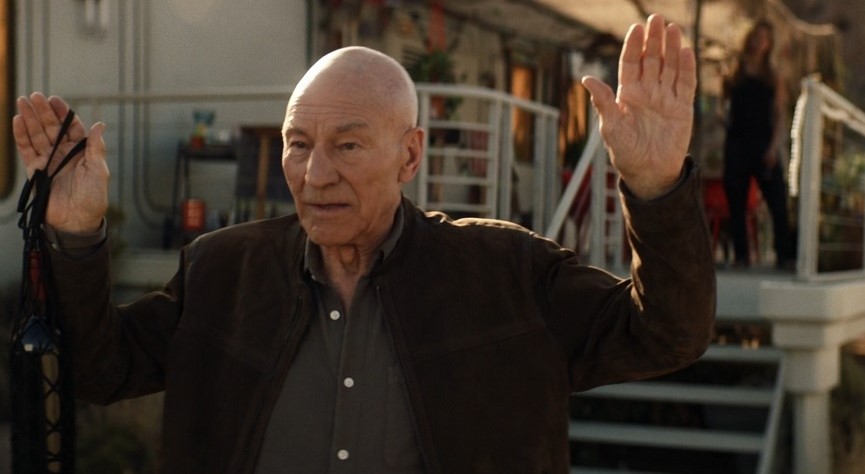
When Picard proposes to go back into space, looking for Soji and answers, Laris refuses to go, saying he’ll get himself killed. Zhaban suggests Picard contact his old crew – Riker, Worf, and La Forge are all mentioned by name – and have them join him on the mission, but Picard, seemingly still haunted by what happened to Data, won’t put them in danger. He travels to see Raffi, another new main character played by Michelle Hurd, and she points a phaser at him and tries to get rid of him. By telling her about the “Romulan assassins”, he manages to persuade her to at least hear what he has to say.

An evidently complicated relationship between Picard and Raffi – considering she points a weapon at him!

There was a lot going on in Maps and Legends, but the action was mainly taking place on the vineyard and on the Artifact. I had expected, as we’re now two episodes into a ten-episode series, that Picard may have left Earth before the end of the episode, or that we might’ve met more than one of the other new starring characters. I think that’s why this episode feels slower-paced than last time. Star Trek: Picard is clearly working towards bringing this crew together and getting off Earth, but it’s a slow build.

The Romulans having a fear, mistrust, and hatred of synthetic life, while wholly new to Star Trek, does fit in with their paranoid nature and I think it’s an interesting element to the faction. The fact that we’re no longer using the term “Romulan Star Empire”, and instead the “Romulan Free State” is also a point of note, but since the Tal Shiar are confirmed – by Zhaban and Laris – to still exist, I wonder how “free” the Free State really is.

The only part of the episode that I wasn’t so keen on was Laris’ exposition dump regarding the Zhat Vash. While this faction is clearly going to be an important element to the story, simply having one character talk about them instead of letting us, as the audience, learn more about them through seeing them on screen, interacting with others, or even seeing our characters find evidence for them, fell a bit flat. Exposition is always hard to get right, and in an episode with limited runtime it can be hard to avoid it feeling like just a pure information dump. While it’s helpful to know who we’re dealing with – the antagonists now have a name, at least – the scene was just a little clumsy in my opinion.

That’s really my only significant criticism. There are other nitpicks, but they’re all very minor things that in no way detract from the episode or the story. Maps and Legends was a good follow-up to Remembrance, and the show feels like it’s coming together. Hopefully next time we’ll get to see more of the new crew, and possibly even give them a destination. If this Lt. Rizzo is already preparing to head to the Artifact, they don’t have a lot of time if they’re to get there first to help Soji.

Lt. Rizzo arrives to meet Commodore Oh.

There were a couple of uses of the word “fuck” in Maps and Legends. Though we’ve seen swear words before in Star Trek, both of these instances – by Laris in Dahj’s apartment and by Admiral Clancy – felt scripted and forced. I’m not sure if it had more to do with the way the lines were written or delivered, but I didn’t think that either felt natural. Instead the uses of “fuck” felt artificial, as if a team of writers had sat around and said “hey we’re allowed to use the F-word! So where can we put it?” It’s nothing to do with foul language “having no place in Star Trek”, because we’ve seen it used before and it’s generally okay when it’s done right. I just felt that neither of these uses were done right. It’s worth noting that times have changed since The Next Generation and other Star Trek shows were on the air. CBS All Access and Amazon Prime Video don’t have to be as constrained when it comes to their use of language, and television audiences are far more accepting of it too. As I said I don’t think that the use of such language in Star Trek is an issue in itself, but the way it was done here fell flat for me.

Toward the end of The Next Generation’s first season there was a conspiracy in Starfleet by parasitic organisms to infiltrate and take over the Federation. Picard and his crew stopped that before it could proceed. There was also the Khitomer conspiracy seen in The Undiscovered Country, which involved both undercover Romulan agents and some Starfleet personnel working together. I got the impression that the Commodore Oh-Lt. Rizzo-Narek grouping of characters was drawing inspiration from both of those sources, and I liked that. A few of the components of those characters’ actions are comparable to those previous Star Trek adventures, and whether the showrunners were conscious of that or not, it adds a nice little extra element to the story. Without being a copycat or even being particularly overt, using the feel or concept of those stories is a nice way to tie some of these things together. And thematically, it brings Picard in line with something we’ve seen before, which is again a nice little tie-in to the rest of the franchise.

I liked Picard’s line about science fiction during his conversation with Dr Jurati. In case you didn’t know, Sir Patrick Stewart came very close to turning down The Next Generation in 1986-87, and though he’s now inseparable from the franchise – as indeed he also is from the X-Men film series – he’s not by nature a science fiction fan nor an actor who would’ve chosen such roles. In the context of a science fiction series a main character saying they were never interested in sci-fi is funny in itself, but knowing that little bit of background information makes it even more amusing, and I’m sure it was put in as an acknowledgement of Sir Patrick!

Overall I had a great time with Maps and Legends. It was a good follow-up to Remembrance – even though it wasn’t quite as spectacularly good as that episode had been. The Zhat Vash add an extra dimension to the Romulans, and their motivation for attacking synthetics, which I had assumed to be vengeance for lost lives in the supernova, is a little clearer. But there’s still plenty of mystery – who really built Soji and Dahj? Where are they now? What were they created for? Who’s in charge of the Zhat Vash? Is Commodore Oh a Romulan? Who is Raffi, and how does she know Picard? So many questions – hopefully we’ll start to find some answers soon!

Santiago Cabera was in a television series a couple of years ago called Salvation, which I thoroughly enjoyed. When I heard he was going to be in Picard I was very pleased, and it looks like we might finally get to see his character next week, so I’m looking forward to that as well.

Stay tuned over the next few days, as I’m sure there will be much more to talk about before next week’s episode, The End Is The Beginning.

Maps and Legends, the second episode of Star Trek: Picard, is available to watch now on CBS All Access in the United States, and on Amazon Prime Video in the United Kingdom and other countries and territories. The Star Trek franchise – including Star Trek: Picard – is the copyright of ViacomCBS. This article contains the thoughts and opinions of one person only and is not intended to cause any offence.