Whoopi’s “whoopsie” – what might it mean for Star Trek: Picard?

This article deals with the subjects of the Holocaust and racism and may be uncomfortable for some readers.

It goes without saying that the Holocaust is an incredibly sensitive and delicate subject. Even titling this article Whoopi’s “whoopsie” might be enough to seem flippant or even offensive to some folks – but I just couldn’t resist the pun. If you haven’t heard about this controversy, I’ll briefly recap what happened before we get into some analysis and a consideration of what – if anything – it could mean for Star Trek: Picard Season 2.

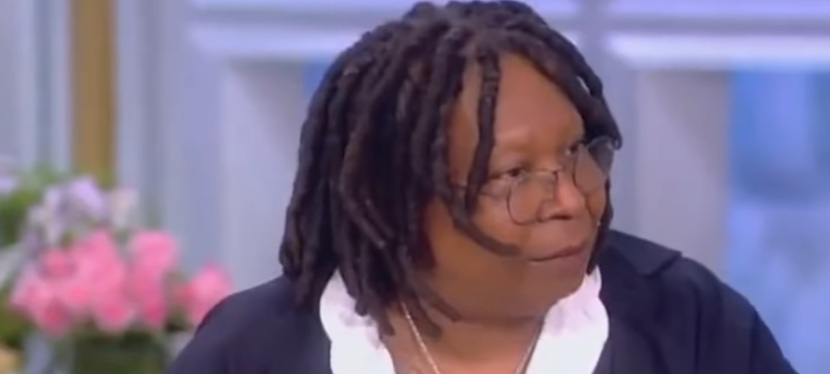
Whoopi Goldberg, who plays the role of Guinan in the Star Trek franchise, is the co-host of The View, an American daytime television talk show. She’s known in that context for being bold and outspoken, particularly on issues of race in the United States. On a recent episode of The View, Goldberg made controversial remarks about the Holocaust, claiming that the event “isn’t about race” because it concerned “two white groups of people.” I encourage you to view the full exchange in context (you can find it on YouTube) but suffice to say that controversy soon ensued – and the condemnation of Goldberg’s comments even reached mainstream news outlets on this side of the Atlantic.
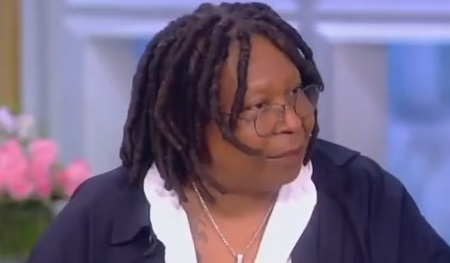
Whoopi Goldberg on a recent episode of The View.

Goldberg has offered her apology for the remarks she made, and it’s worth pointing that out before we go any further. She apologised for “the hurt [she] caused” and reiterated her support for Jewish people and Jewish communities around the world. It’s not for me to decide whether her apology is up to code, and again I encourage you to read it in full. I felt it important to point out that she has issued an apology before proceeding any further.

The Holocaust is such a unique event in the history of our world that it almost beggars belief that a 66-year-old woman, who otherwise seems to be well-informed and whose job it is to discuss current events, could be so profoundly ignorant or misinformed about what it is. Holocaust education, at least here in the UK, has been a big part of the history curriculum in schools for at least fifty years – if not longer – and there are many institutions around the world dedicated to preserving the memory of Holocaust victims and promoting education about the Holocaust. Less than a week ago, on the 27th of January, we marked Holocaust Memorial Day, a worldwide event held on the anniversary of the liberation of the Auschwitz concentration camp.

A photograph of the iconic entrance to Auschwitz concentration camp.

On a school trip to Germany almost thirty years ago I visited Sachsenhausen concentration camp and saw firsthand the kind of facilities that the Nazis used to keep political prisoners, Romani, Jews, and everyone else that they deemed “sub-human” or “undesirable.” Seeing the camp is something that has stuck with me for decades, and the sombre lessons that my class had about the Holocaust and the extermination of Jews are likewise seared in my memory.

British-made documentary series The World At War has one of the best educational pieces about the Holocaust that I’ve ever seen in its episode Genocide, and if you can find a copy I can’t recommend it highly enough. It’s a harrowing watch, but for anyone who wants to learn more about this defining moment in history, and the events that led to it, The World At War presents the history of the Holocaust about as well as possible, and includes interviews with survivors.

Title card for The World At War episode Genocide; recommended viewing for anyone wishing to learn more about the Holocaust.

Outside of conversations and discussions about Nazi Germany and the Holocaust itself, it’s almost never a good idea to bring up the Holocaust. Politicians, commentators, directors, and even journalists have all found themselves in trouble for saying something stupid or ill-informed, or for using the Holocaust as an unfair comparison to something else happening in the world. And when making unprepared, unscripted remarks – as Whoopi Goldberg appears to have been – misspeaking is all the easier.

I can’t defend what Whoopi Goldberg said. It was so ignorant and stupid that she deserves all of the backlash she receives. It’s also indicative, at least to me as a non-American, of America’s continuing obsession with black-and-white race issues that completely ignore every other marginalised group. Almost sixty years after Martin Luther King dreamed of a country where everyone would be judged by the “content of their character,” America seems more race-obsessed than ever – and that obsession with black-versus-white racism comes at the cost of marginalising or completely ignoring practically every other group.
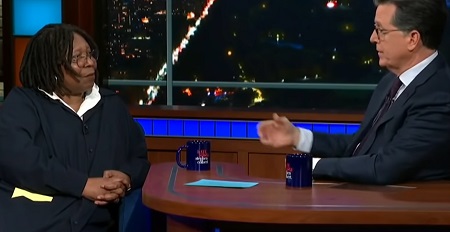
Whoopi Goldberg with Stephen Colbert.

Part of Whoopi Goldberg’s defence of her original remarks, made during an appearance on The Late Show With Stephen Colbert, drew on her own understanding of race and racism as an African-American, and appear to me to reinforce the idea that too many Americans have a strange, warped misunderstanding of what race even is – as well as who can and can’t be racist and how racism itself works. To me, that’s indicative of a fundamental failure of the American education system and of the way racial issues in America are discussed and debated.

So that’s my read on what happened. Given the outrage that Whoopi Goldberg’s comments understandably generated, I wanted to step back and consider what impact, if any, the controversy now engulfing her may have on Star Trek: Picard Season 2, which is scheduled to premiere in just over four weeks from today. Goldberg is set to reprise her role of Guinan, bringing the character back to our screens for the first time since 1994’s Star Trek: Generations, and she was recently featured in a big way in the latest trailer.
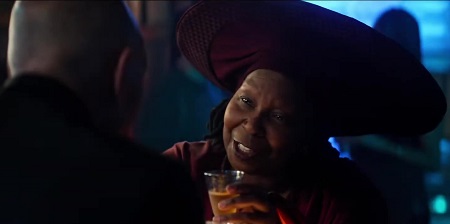
Admiral Picard with Guinan in the Picard Season 2 trailer.

At time of writing, no one involved with Star Trek: Picard Season 2 has made a public statement on the Whoopi Goldberg controversy, but I don’t see how that can be sustainable, especially when the cast and crew get on the publicity circuit and start giving interviews in the run-up to the season premiere. Whoopi Goldberg, having just made her first big appearance in the new season’s marketing, may have been slated to make appearances or give interviews about the show – but I’m not sure whether that will happen at all now, or whether her role may be scaled back.

Sometimes they say that “there’s no such thing as bad publicity,” but take it from someone who used to work in marketing: this is about as bad as it gets in terms of publicity! The last thing anyone involved in Star Trek: Picard needs is for Whoopi Goldberg’s comments to overshadow the show’s return, so in my opinion the producers and actors need to get together and put out a statement relatively quickly, and certainly before they get out on the publicity circuit. That way they’ll be able to refer to their statement when the inevitable questions are asked.
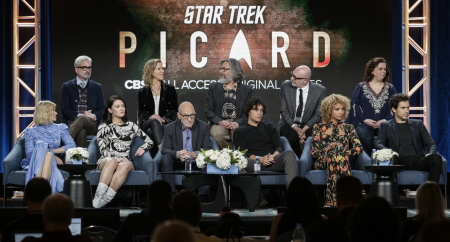
A publicity event in the run-up to Picard Season 1 in 2020.

I’ve heard from several people who say that they’re either not going to watch Picard Season 2, or that they’re far less enthusiastic about supporting the upcoming season in light of Whoopi Goldberg’s comments. There’s a danger for ViacomCBS that this will snowball if they don’t handle it well, perhaps leading to an unofficial boycott or significantly fewer viewers tuning in, so the corporation and its marketing team really need to get out in front of this as quickly as possible.

There’s a theory from the world of literary criticism that I think is worth discussing: “death of the author.” Originally proposed in 1967 by French critic Roland Barthes, death of the author basically argues that we should consider a work of literature on its own merits, separating the writing from the writer. Death of the author has since been applied to other forms of media, including television and film, and in this context we’re looking at whether it might be possible to separate the performance from the actor – to enjoy Guinan without celebrating Whoopi Goldberg.
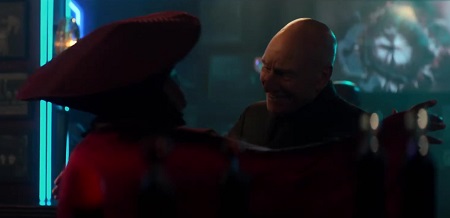
Guinan and Admiral Picard embracing in the Picard Season 2 trailer.

The two sides to this never-ending discussion are as follows: either it’s possible and desirable to separate the art from the artist, considering the merits of a piece without any consideration for who the author or artist was, or it isn’t possible or desirable to do so, and that the context of who the creator was matters in a fundamental way to the work in question. With actors this is, perhaps, more readily apparent because we can see and hear them; it’s far more difficult to put an actor out of our mind while watching and listening to them in real-time.

My take on death of the author varies somewhat. If an artist, author, or performer is long-dead, it’s much easier in my view to analyse their work, and even enjoy their work, without paying too much attention to who they were. The performance has outlived the performer, so to speak. But when dealing with living people, I find this far more difficult to do. I understand Barthes’ arguments about objectivity and judging a work on its own merits, but when people hold outspoken or particularly harmful points of view, I find it much more difficult to set that aside for the sake of art or entertainment.
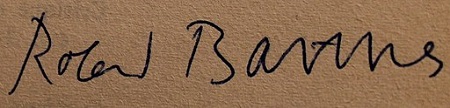
Signature of Roland Barthes, who first espoused the theory known as “death of the author.”
Image Credit: Wandrg, CC BY-SA 4.0 https://creativecommons.org/licenses/by-sa/4.0, via Wikimedia Commons

J.K. Rowling is perhaps the best example of this, in my opinion. Her blatantly transphobic statements and support for “gender critical” groups and causes has made it significantly harder for me to enjoy the Harry Potter series for which she’s best-known. I find it difficult to separate Harry Potter, either in book or film form, from J.K. Rowling in light of her offensive statements and the positions that she’s known to hold.

So when I hear Trekkies say that they can no longer support Star Trek: Picard in light of Whoopi Goldberg’s comments, I fully understand. I can empathise with that position because it’s very similar to how I see the Harry Potter series, and I wouldn’t want to tell anyone that they should feel differently. It can be difficult to set aside the artist and just focus on the art, especially when dealing with an actor who we have to see and listen to.

Harry Potter author J.K. Rowling.

I would say, though, that Whoopi Goldberg is nowhere near as important to Star Trek: Picard as someone like J.K. Rowling is to Harry Potter. She may only appear in one or two episodes, and as recently as last month it wasn’t even certain that she’d be appearing at all; her appearance in the trailer confirmed it. Had remarks like these been made by someone like Sir Patrick Stewart or one of the show’s senior producers, Star Trek: Picard would be in a lot more trouble. In my view, it’s probable that the show will be able to weather this storm, even if it loses some viewers in the process.

Whoopi Goldberg has offered an apology, and in the coming days I would expect to hear something from the Picard Season 2 cast and crew, disavowing her comments and perhaps dropping her from the publicity circuit or reducing her importance to the show’s marketing campaign. That will most likely allow Picard Season 2 to get through the next few weeks in the run-up to the show’s broadcast.
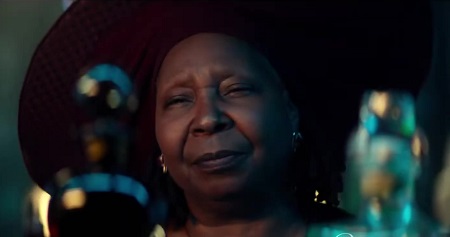
Whoopi Goldberg as Guinan in the Picard Season 2 trailer.

In a way, this couldn’t have come at a worse time. With the new season premiering in just over four weeks from now, this is the moment for the marketing campaign to truly gear up and start promoting the show’s return. It’s been two years since Picard Season 1 went off the air, so for casual viewers and for fans who aren’t keeping up-to-date with the ins and outs of Star Trek, simply getting the message out about Picard’s return has to be top priority. There’s no doubt in my mind that this controversy will be a distraction, one that the show absolutely does not need.

But I don’t believe it will be a fatal distraction, at least not as things stand. Whoopi Goldberg isn’t likely to be cut or edited out of Picard Season 2, and even seems likely to retain her job on The View, despite her remarks. There’s enough time over the next month for the marketing team to move past this controversy, which, like so many others, will have a relatively short shelf-life on social media before fading away.

I’m disappointed with Whoopi Goldberg. Her character of Guinan is so calm, ethereal, and wise that it can be jarring, as a Trekkie, to see Whoopi Goldberg talking up a storm on The View at the best of times, and this controversy is an even more extreme example. However, I note that she has at least made an attempt to apologise – and seems to be sincere. And on the positive side, her initial ignorance of the Holocaust may have shone a light on a far broader lack of understanding and proper education about the event in the United States, potentially exposing more people to the reality of what happened, thereby preventing this kind of blinkered, ignorant point of view from being espoused in future. Better education and a better understanding of the Holocaust are badly needed, it seems, and Whoopi Goldberg may have inadvertently aided that cause.

Star Trek: Picard Season 2 will premiere on the 3rd of March 2022 on Paramount+ in the United States, and on the 4th of March on Amazon Prime Video in the United Kingdom and around the world. The Star Trek franchise – including Picard and all other properties mentioned above – is the copyright of ViacomCBS. This article contains the thoughts and opinions of one person only and is not intended to cause any offence.
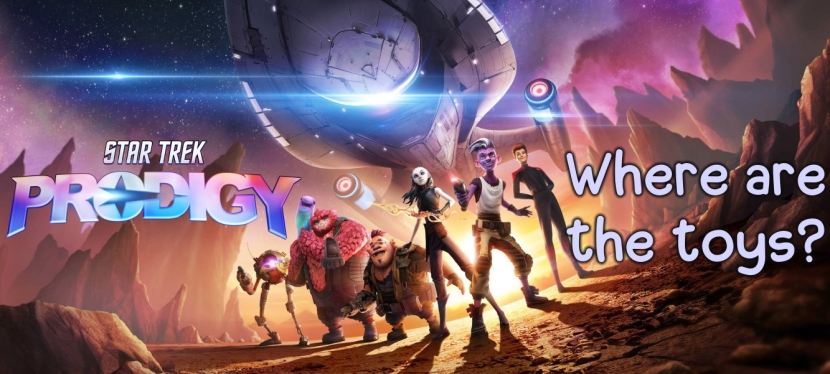
Where are the Prodigy toys?

Sometimes it feels as though ViacomCBS doesn’t know how to manage a major international franchise like Star Trek. The amateurish rollout of Paramount+ internationally is a great example, as is the streaming service losing all of the Star Trek films for several months. I’ve covered these topics before, and without retreading too much old ground let’s just say that ViacomCBS and Paramount+ need to get a grip, otherwise fans – especially fans from outside of the United States – are going to run out of patience with the corporation, and the casual viewers who make up the majority of any television audience won’t even find out about the latest shows and films.

Today, though, I wanted to tackle a different way in which ViacomCBS is mismanaging the Star Trek brand: toys and merchandise.

Maybe it’s true that action figures for a show like Star Trek: Picard wouldn’t sell particularly well. That series primarily targetted an adult audience – fans of The Next Generation (or at least folks who remember that series) and who are primarily 35+. There was at least some attempt to sell Picard merchandise both before and during the show’s first season, though, with things like T-shirts and even “Château Picard” wine available via the official Star Trek shop.

Château Picard hoodie, anyone?

In the 1980s and ’90s, Star Trek gave even the venerable Star Wars a run for its money in the merchandising and toy departments. Not only were there action figures of practically every minor character to ever make an appearance on The Next Generation, Deep Space Nine, and Voyager, but there were video games, pinball machines, pretend-play toys, playsets, model kits, dress-up outfits, and much more besides. In the ’90s I managed to assemble a modest Star Trek collection of my own, primarily the Playmates line of action figures as well as a few model kits – I was a big model builder back then!

But since the franchise returned to the small screen in 2017, there hasn’t been any noticeable effort on the part of ViacomCBS to merchandise the Star Trek brand – meaning that the corporation is missing out on a significant additional revenue stream from its biggest brand, one that would supplement the income it makes from streaming the various shows and films. Just look at Star Wars: sales of merchandise long ago eclipsed the box office receipts for all of the films combined.

Star Wars has so much merchandise that Disney can literally make merchandise-themed Star Wars films and games.

As I said, it’s possible that not every Star Trek project would warrant the same level of merchandise and toys. But even then, ViacomCBS has been lacking. Look at the Eaglemoss collection of Star Trek starships as a prime example: Star Trek: Picard Season 1 debuted in January 2020, but it took until June 2021 – almost eighteen months later – to release a single model starship from the series.

A corporation the size of ViacomCBS shouldn’t need to be told that the prime time to cash in on a show is while it’s being broadcast. That’s merchandising 101. Waiting eighteen months is pathetic and ridiculous – and it isn’t the fault of collectibles company Eaglemoss. The fault lies with ViacomCBS for not securing these merchandising agreements sooner.

The same is true of Discovery, which only started getting significant merchandise well after Season 1 had come and gone. And even now we’ve passed the second season of Lower Decks, Star Trek’s official shop still carries precious little by way of products from the series.

It took ViacomCBS more than eighteen months to release this model of Picard’s La Sirena.

That brings us to Star Trek: Prodigy, which premiered a couple of weeks ago – for those viewers whom ViacomCBS deemed worthy of being permitted to watch the series. The rest of us outside of North America are still waiting to know if and when we’ll be allowed to watch it (lawfully). But that’s beside the point right now.

Prodigy is a show made for kids. It has more going on, things that adults will enjoy, but its main focus is on the younger audience – making it a prime candidate for selling toys, games, and other merchandise. So… where are all the Prodigy toys?

There are a mere ten Prodigy items for sale from the official Star Trek shop, most of which are the show’s basic logo slapped on mugs and T-shirts.

It’s no good launching a line of Prodigy toys next year. Kids who are streaming the show now want those toys now – and with the holidays approaching it’s literally the best time of the year to be in the toy business. I can understand why ViacomCBS might’ve felt a Soji action figure or an Admiral Picard doll wouldn’t sell like hot-cakes, but Prodigy should be absolutely perfect for all sorts of tie-in products.

Many cartoons and television shows made for kids are little more than twenty-minute toy advertisements. Whole franchises like Transformers and My Little Pony have been created as toys first, cartoons second, and they make a lot of money for their respective companies that way. I’m not suggesting Prodigy should go to that extreme, but even nowadays with kids spending more time with smartphones, tablets, and other electronic gadgets there’s still room for toys and games.

Kids do still play with toys…

For a television show aimed at kids to be broadcast with no kid-friendly tie-in products strikes me as profoundly strange in the current commercial climate. And some folks might be thinking “hey, that’s actually a good thing!” because it means ViacomCBS isn’t doggedly chasing every last dollar. But to me it’s yet another indication of the truly amateurish way that the corporation is handling its biggest franchise.

One of the earliest memories that I have of Star Trek isn’t a television episode or film, it’s a product. My uncle – who boasts a fabulous collection of Star Trek merchandise – showed me a toy phaser from The Original Series that must’ve been made in the ’70s or possibly the early ’80s, which lit up and made a sound when the trigger was pushed. I don’t think seeing that toy was what pushed young me to become a Trekkie, but good quality toys that look like fun absolutely can be the way kids first get interested in a franchise like Star Trek.

I think this was the toy phaser I’m remembering…

Prodigy is full of fun, unique, and colourful designs that would make for amazing toys, dolls, playsets, and pretend-play scenarios. The series is aimed at children, and from the point of view of a longstanding Trekkie, I want it to be successful at converting at least some of those kids into fans of Star Trek as a whole. The entire reason for creating a show like this is to bring new, younger fans into the fandom – and to lay the groundwork for Star Trek’s continued success. As I’ve said before: if Star Trek remains the sole preserve of fans who loved the franchise in the ’60s and/or the ’80s and ’90s then it won’t survive – and it won’t deserve to survive. New fans are the lifeblood of any fandom.

So when I see ViacomCBS mishandling the brand and not taking full advantage of it I feel truly disappointed with a corporation that doesn’t seem to know what it’s doing. Before Prodigy had aired a single episode there should’ve been the following basic tie-in products at a bare minimum: action figures and/or dolls of each of the main characters, at least one playset of the USS Protostar, dress-up costumes of the main characters – including a Starfleet uniform – and pretend-play toys of things like phasers and tricorders. These items should’ve been available worldwide at a reasonable price so that kids who like the show could remain engaged with Star Trek outside of the half-hour per week where they’re watching the episodes.

The USS Protostar from Prodigy.

Some of ViacomCBS’ other failures when it comes to Star Trek actually feel less significant than this massive missed opportunity. It isn’t just about making money on each product sold – and in the short term, while the show and Paramount+ build up their reputations, it’s even possible that the corporation would make a moderate loss. But the longer-term prospects of merchandising a show like Prodigy are significant. As kids who don’t watch the show see the toys at their friends’ houses they’ll ask what Star Trek is and maybe get into the series for themselves. With Star Trek toys on the shelves of every major supermarket and toy shop, people who weren’t aware of the franchise’s return will realise that Star Trek is back. This kind of word-of-mouth advertising pays for itself, and that’s something very difficult to pull off on social media (especially given the truly crap way ViacomCBS manages Star Trek on social media – but one battle at a time, eh?)

I’ve made no secret over the past couple of years that I have issues with the way ViacomCBS has handled the Star Trek brand. And I don’t raise these points out of spite – I want them to manage Star Trek better because I care about Star Trek’s future success. Right now, decisions like these make it seem as though Star Trek is very much a lesser brand even in the minds of the people who are supposed to be running it. When you can turn up at any supermarket or toy shop and see dozens of Star Wars toys, yet nothing at all from Star Trek, it’s disappointing.

The premiere of Prodigy, a series aimed at kids, should have come with at least some toys and games to go along with the show. Making money from that kind of merchandising arrangement is one reason why, but another far more important reason is engagement – making sure that kids remain engaged with Prodigy, its world, and its characters when they aren’t watching the show is key to keeping them coming back. In 2021, practically every kids show has some kind of tie-in product – and it’s a damning indictment of the sloppy, amateurish way that ViacomCBS has handled the Star Trek brand that Prodigy doesn’t.

Star Trek: Prodigy is available to stream now on Paramount+ in the United States. No international broadcast has been announced. The Star Trek franchise – including Prodigy and all other properties mentioned above – is the copyright of ViacomCBS. This article contains the thoughts and opinions of one person only and is not intended to cause any offence.
There’s no such thing as a “sponsored review”

#notspon

The growth of the internet has meant that anyone can be a critic or reviewer nowadays. This website is, in a way, testament to that. I never trained as a journalist or critic, and while I took classes both at school and university on subjects like literature and creative writing, and have been a writer in my career, I’m by no means a professional critic. Nor are most bloggers, YouTubers, and others in the digital world of media criticism. While some online criticism can be of a lower standard as a result, the broader picture is that there’s much more diversity in the way we approach and think about media, with reviewers now coming from many different backgrounds instead of all being journalism majors from a select few universities. This is a good thing.

But some online critics, especially when they start to get a following, can be tempted down a deeply unethical path by companies willing to pay for positive reviews and attention. This is especially prevalent on YouTube, but the reality is it can happen anywhere, and we must all be careful what we read or watch online.

YouTube is a great place to find independent media reviewers, but some videos are adverts disguised as criticism.

This article was prompted by a video I spotted on YouTube, and while I will spare the YouTuber’s blushes by not mentioning them by name, I feel that it encapsulates a wider issue that seems to plague discussion surrounding gaming and technology in particular. The video was titled: “Final Fantasy VII Review #ad” (or words to that effect) and was a paid promotion for the newly-released remake of Final Fantasy VII posing as a review. While, to his credit, the young man did put the “ad” hashtag, calling this piece of work a “review” is unacceptable. This is, sadly, something that I see regularly and there are many examples on YouTube and many other websites, apps, and social media platforms.

Let’s be clear: a piece of work can be a review or it can be an advertisement. It cannot be both.

I’ve written adverts and reviews in my career as a writer. I started out writing marketing content for a large games company, working primarily on their website. Later, while working as a freelancer, I wrote for many different companies, often with the intention of selling their products. I know how marketing works, the kind of language used, and how scripts and articles can be written specifically to sell products. I also know, thanks to this website, what it’s like to write from the other side and express a legitimate opinion as an independent critic.

No one pays me anything for writing here on Trekking with Dennis. I paid for this website, its hosting, and its domain name. This isn’t my job, it’s a side-project for fun and to give me a small creative outlet. Not only that, but if I were ever approached by someone and asked to promote a product or service, I’d tell them that if they wanted to hire me to write for their website I’d happily take it under consideration, but that no paid-for article will ever be published here. This website exists purely to express my thoughts and opinions on the subjects I’m interested in.

Trekking with Dennis will always be independent.

There is a solid line between a review and an advertisement, and crossing that line destroys any integrity a self-proclaimed critic may have. It also damages the brand that is paying for such a promotion, as it demonstrates that they have no faith in their product to receive positive reviews on its own merits. It’s a tacit admission that their product is sub-par and that a financial incentive is necessary for anyone to look upon it favourably.

Companies count on most people ignoring the small print and simply watching the video or reading the article and seeing the product receive unadulterated praise. And the truth is that it works – many people don’t recognise or understand the difference between something paid-for and a genuine review in which the critic is able to express his or her own thoughts. Companies get away with this because they nominally comply with the rules which state a critic must be up-front about paid-for “reviews”, but they can do it in very subtle ways that mean most people don’t even notice. On YouTube, this means using the “ad” hashtag. That alone is good enough for parent company Google – the video itself need not state anywhere that it’s a paid promotion. On a blog or website, it might be included somewhere in the small print underneath the main body of text, making it easy to overlook. This is duplicitous, sneaky advertising, and on a website like YouTube, whose audience is disproportionately comprised of young people, it’s deliberately designed to be as subtle as possible so that many of them will not even be aware that a video purporting to be a “review” is in fact an advertisement.

You may have recently heard of a mobile phone game called Raid: Shadow Legends. Many YouTube channels carry ads and sponsorships for this game, and while it has come in for criticism for the way the company behind the game handles its paid promotions, they are at least clear that the game is being advertised. They make no attempts to disguise the fact that video segments dedicated to discussing the game are sponsored, and while there may be legitimate criticisms of the stilted script or the dishonesty in some of these paid promotions, they are at least clearly paid promotions and not attempting to pass themselves off as genuine criticism.

This isn’t a dig at one specific YouTuber – though I am no longer subscribed to his channel – nor even at the platform in general. People want to make money, and I understand that – especially in the current economic climate. But we need to make sure that the line between advertisement and criticism remains solid and does not become blurred, lest people lose faith in any and all forms of online criticism. For a critic to pen an article or produce a video claiming to be a genuine review while receiving payment is unacceptable, no matter what hashtag or small print they use. No one is saying they cannot produce an advertisement for that company or that product, but it must be labelled as such and not lie and try to pass itself off as something that is is not and never can be. Integrity matters.

All properties mentioned above are the copyright of their respective studios and/or publishers. This article contains the thoughts and opinions of one person only and is not intended to cause any offence.