Star Trek: The Next Generation Episode Re-Watch: Season 1, Episode 22: Skin of Evil

A Star Trek-themed spoiler warning.

Spoiler Warning: There are spoilers ahead for Star Trek: The Next Generation. Spoilers are also present for the following Star Trek productions: The Wrath of Khan, The Search for Spock, Deep Space Nine, Enterprise, Picard Season 3, and Star Trek Online.

This past weekend, I had the opportunity to meet Denise Crosby at a Star Trek convention here in the UK! So what better way to celebrate than by returning to what is arguably Tasha Yar’s most iconic episode: Skin of Evil?

I haven’t written up a full article on this year’s Destination Star Trek convention, by the way; much of what I said last year about the organisation, great accessibility, and so on still applies, and I didn’t really want to repeat myself. If you join me later in the year for my “year in review” piece, I daresay I’ll discuss Destination a bit more then. And if you want to see what I made of last year’s event, you can find out by clicking or tapping here!

For now, suffice to say that it was wonderful to meet Denise Crosby, share a fist-bump, and pose for a photo. And that meeting is what convinced me to return to this episode for the first time in… well, a while, I guess!
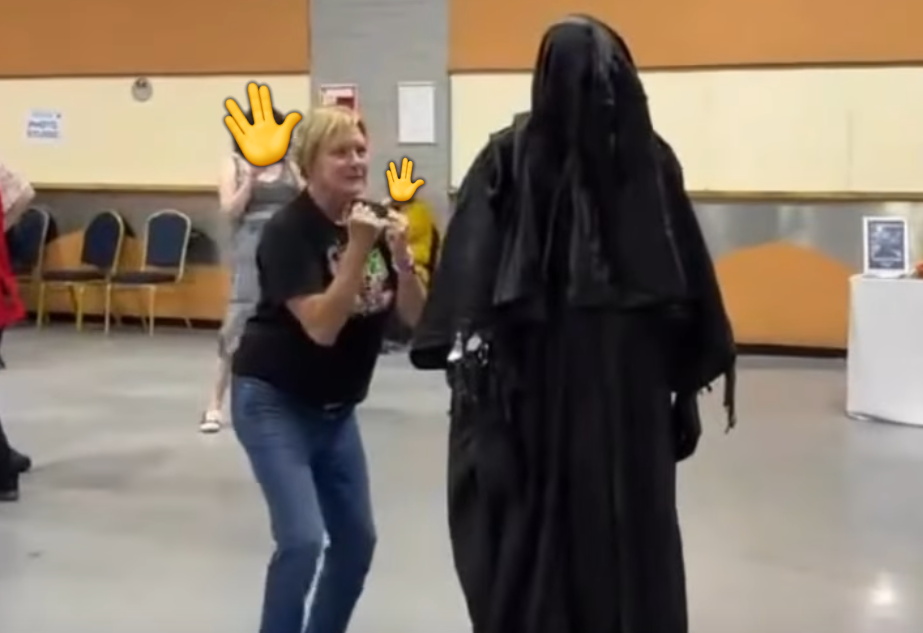
Still frame from a video clip of Denise Crosby at Destination Star Trek 2026
Denise Crosby faces off against “Armus” at a Star Trek convention in the UK.
Image: Destination Fan Events via Facebook

If you’re a Trekkie and a big fan of TNG, I daresay you already know the story of how Skin of Evil came about. In brief, Crosby became dissatisfied relatively early on, feeling that the character of Tasha Yar wasn’t being given much to do or getting much time on screen. As a result, she asked to leave the series while production on Season 1 was still ongoing; by January 1988, the script for what would become Skin of Evil had been drafted.

This is, in a very real sense, a landmark episode – not only for The Next Generation, but for Star Trek as a whole. We’d seen plenty of redshirts killed off before, and villains, too – but this was the first time that a *main* character had been killed (and stayed dead, so Spock doesn’t count!). Not only was that new for Star Trek, but it was a relative rarity in prime-time television at the time, too.
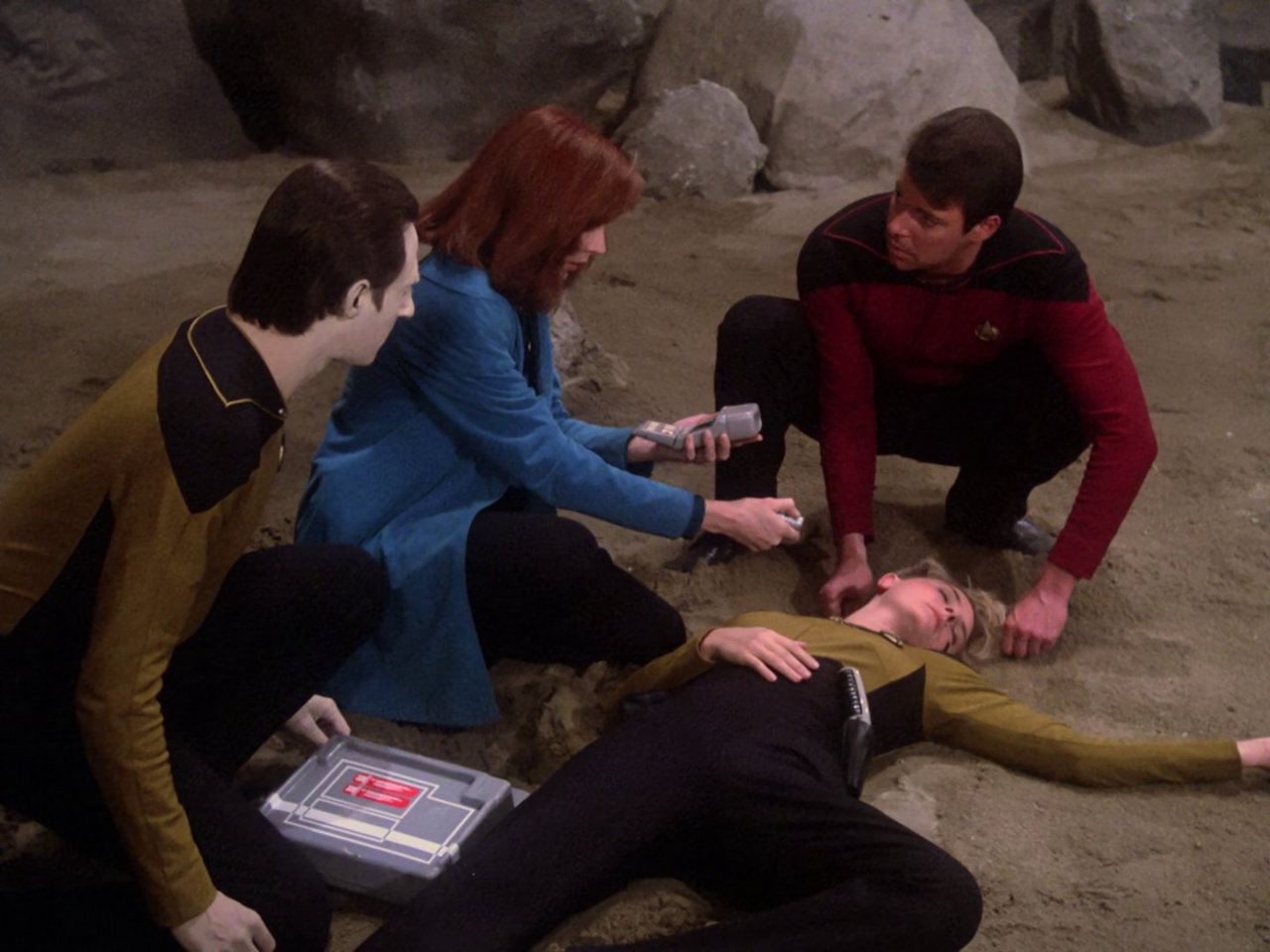
Still frame from Star Trek TNG 1x22 showing Tasha's death
Tasha’s death was a first for Star Trek.

I’d argue that Tasha’s death set the stage for Worf to grow into the character we’ve come to know and love. Worf took over the security and tactical roles that had initially been hers; it’s hard to envision Worf’s subsequent development across both The Next Generation and Deep Space Nine if he’d remained a roving presence on the Enterprise-D. Tying him down to a role that both suited his skillset and – arguably – kept him in a pretty narrow lane defined his character. And as Worf is the character with the most appearances in Star Trek (285, according to Memory Alpha), that’s kind of a big deal! In that sense, Skin of Evil arguably did more for Worf than for any other character – including Tasha Yar.

For her part, I think it’s fair to say that Denise Crosby quickly came to recognise that leaving the show was a mistake. As The Next Generation “grew the beard” and went from strength to strength, missing out on that must’ve stung. Crosby would return to the series in guest-starring roles as an alternate timeline’s version of Tasha Yar, and then as Yar’s half-Romulan daughter, Sela, for a pretty successful story arc. But Tasha Yar is not as big a character as she could’ve been, and I’ve always felt that there’s some regret from Denise Crosby because of that. Crosby has remained involved with the Star Trek fan community, though – not only making convention appearances, like the one I attended, but also producing the documentary Trekkies and its sequel, as well as appearing in the video game Star Trek Online.
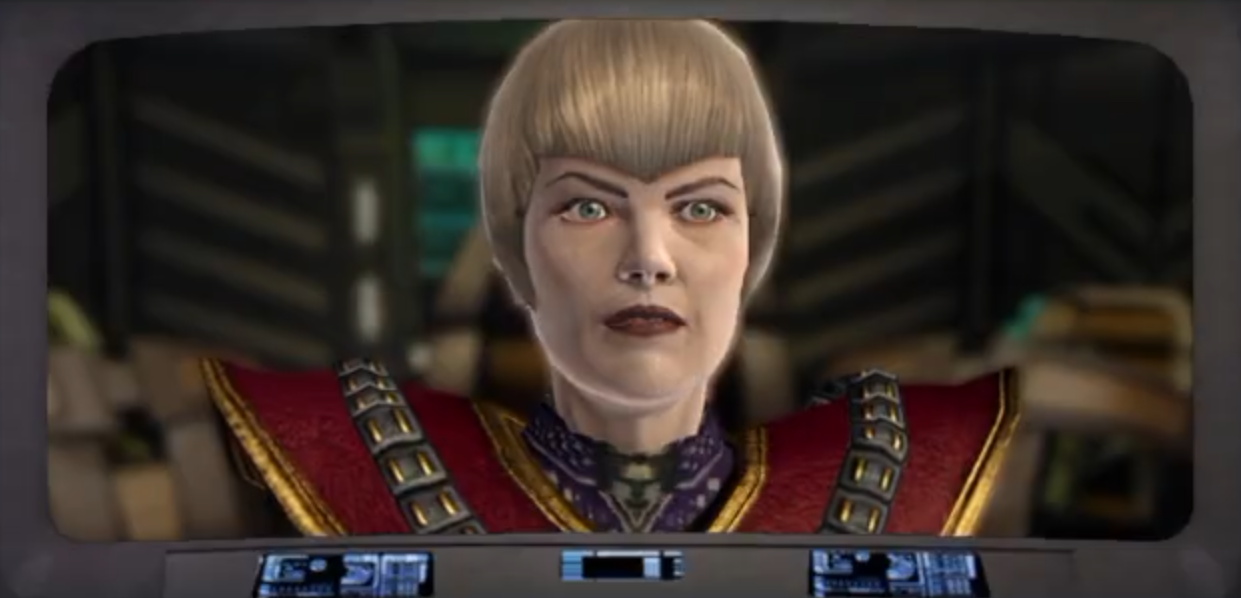
Screenshot from Star Trek Online showing Sela
Denise Crosby has returned to Star Trek on multiple occasions since Tasha was killed off.
Pictured: Star Trek Online

I first came to The Next Generation (and Star Trek as a whole) during the show’s second season, so it was only when episodes of Season 1 were repeated that I would’ve encountered Skin of Evil – and Tasha Yar as a character. That being said, it must’ve been sometime in the early ’90s, because I don’t have a particularly strong memory of watching Season 1 and thinking “wait, who’s that character standing at Worf’s post?” So I think my younger self just kind of rolled with it! I also couldn’t tell you exactly when I first watched Skin of Evil or what I made of it… though I do seem to have a fragment of a memory, wondering why – with all the 24th Century medical technology present in the show – Tasha’s life couldn’t be saved and Dr Crusher simply pronounced her dead.

We’ll get into all of that in a minute, though, because I definitely have some thoughts about the way this episode implemented its main storyline!

One thing I really wasn’t sure of, all these years later, is whether – or to what extent – Tasha’s funeral would still hit those emotional notes. Knowing what’s coming in a story can rob it of its impact, and having seen Skin of Evil more times than I can remember… well, I just didn’t know how I’d feel, I guess. Tasha’s death on Vagra II was expected on a re-watch, naturally, and the shock of the moment wasn’t there. But in her funeral scene? I still teared up.
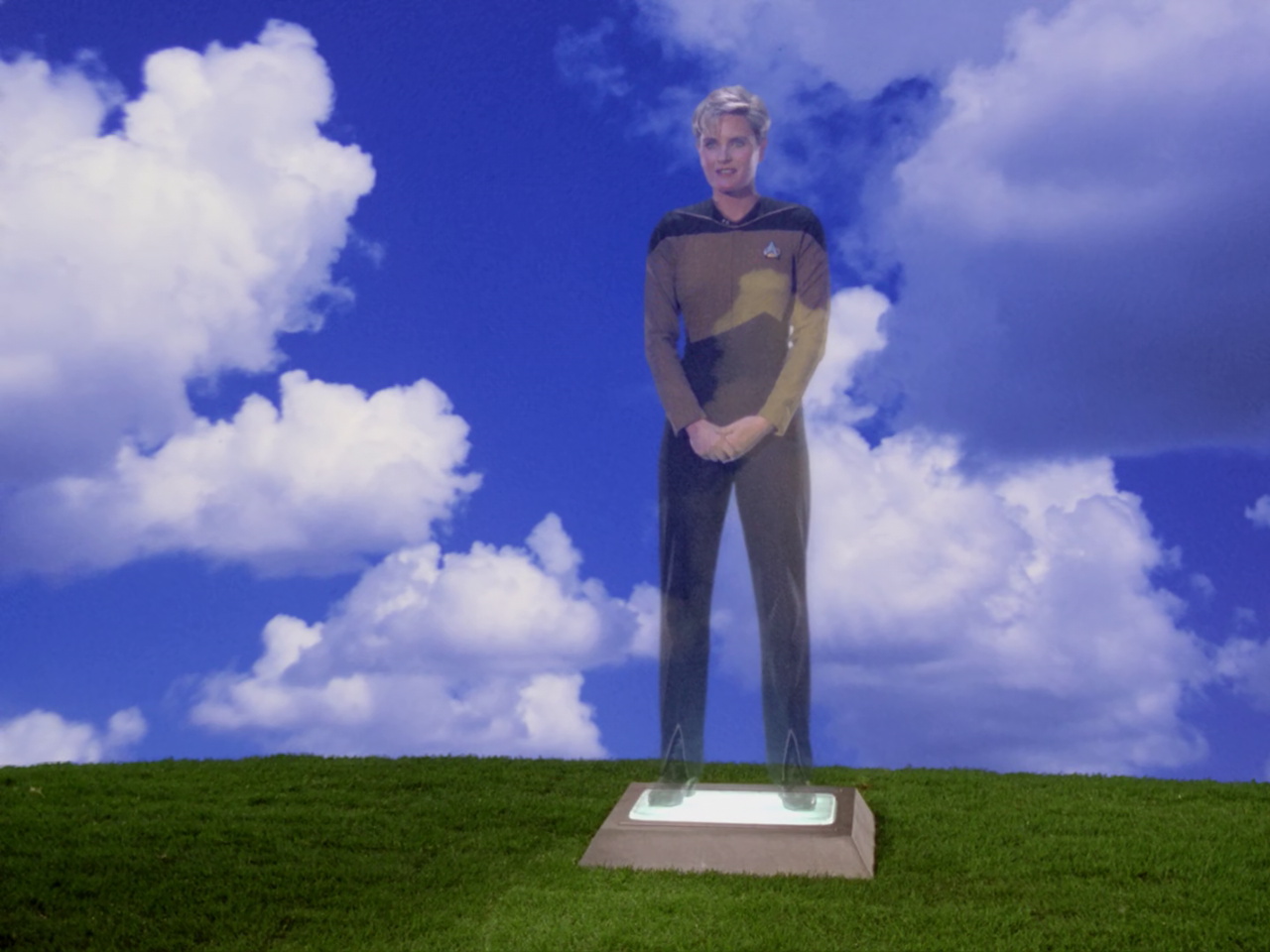
Still frame from Star Trek TNG 1x22 showing Tasha's hologram at her funeral
Tasha at her own funeral.

On the technical side of things, I’d forgotten just how great Skin of Evil’s musical score is. As the ship races to Vagra II we get a tense, tension-building piece of music. On the planet, and in scenes with Armus, the music conveys a very real sense of danger. And finally, at Tasha’s funeral, the music changes again to take on an emotional, almost bittersweet tone as Picard and the crew listen to her final message. Ron Jones, the show’s regular composer for Seasons 1-4, wrote the episode’s score.

This is my personal bias coming through, but I’ve always liked what The Next Generation did with indoor sound stages – especially in the first season. Some of these settings feel much closer in visual terms to planets and locales from The Original Series than even to places we’d encounter just a couple of seasons later. For me, there’s a real charm to the way Vagra II (and similar places) are presented; it’s something Star Trek literally hasn’t done for decades. And while it may be less “realistic” in an objective sense, with fairly plain, flat terrain, scattered rocks, and a clear stage backdrop that, in this case, was an incredibly basic colour gradient… I really like the way these places look. It’s a limitation of both budget and technology, as well as a product of its time – and I think if one of Star Trek’s modern shows saw an away team land on a planet that looked like Vagra II, we’d criticise it! But… I just find it charming in episodes like this one.
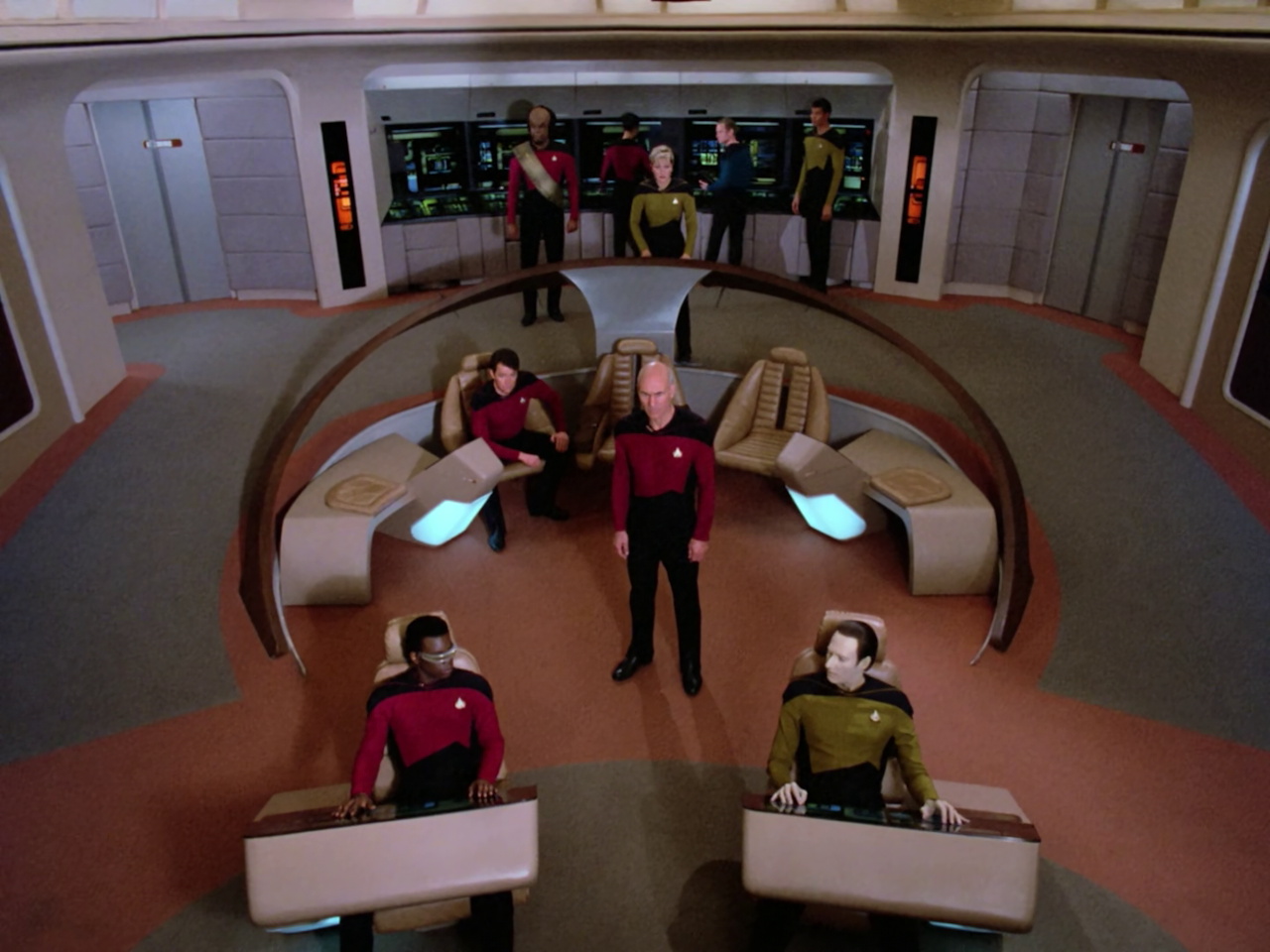
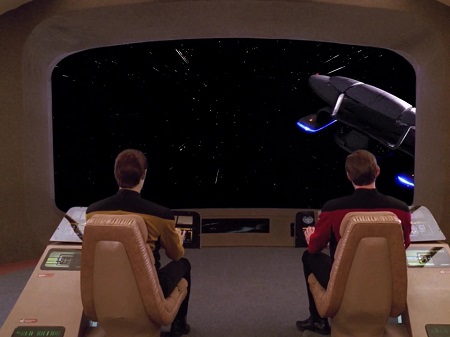
Still frame from Star Trek TNG 1x22 showing the Enterprise-D bridge set
I like this overhead shot.

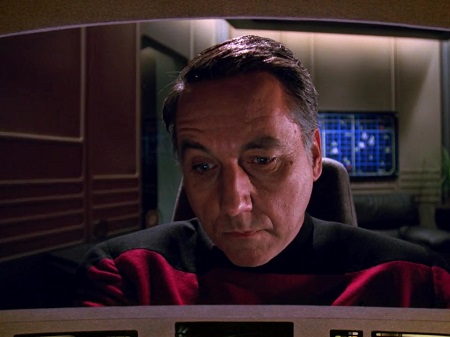
Skin of Evil also had some creative camera shots. The close-up on Picard, at the end of the funeral, lingered in such a way as to convey his emotional state, even as he didn’t really show a lot of emotion on his face. There was a great overhead shot of the bridge that we’d occasionally see in the show’s first season but very rarely thereafter. And some of the shots of Armus (and Riker submerged in the Armus goop) were also well-framed.

The wreck of the shuttle looked great on the surface of Vagra II. The damaged nacelles and the back section of the shuttle made for a striking visual effect when we first saw them – comparable, perhaps, to earlier Star Trek episodes like The Galileo Seven. The damaged shuttle interior, where Troi and the injured Ben spent most of the episode, was also brought to life well, and the red emergency lighting really set the tone.
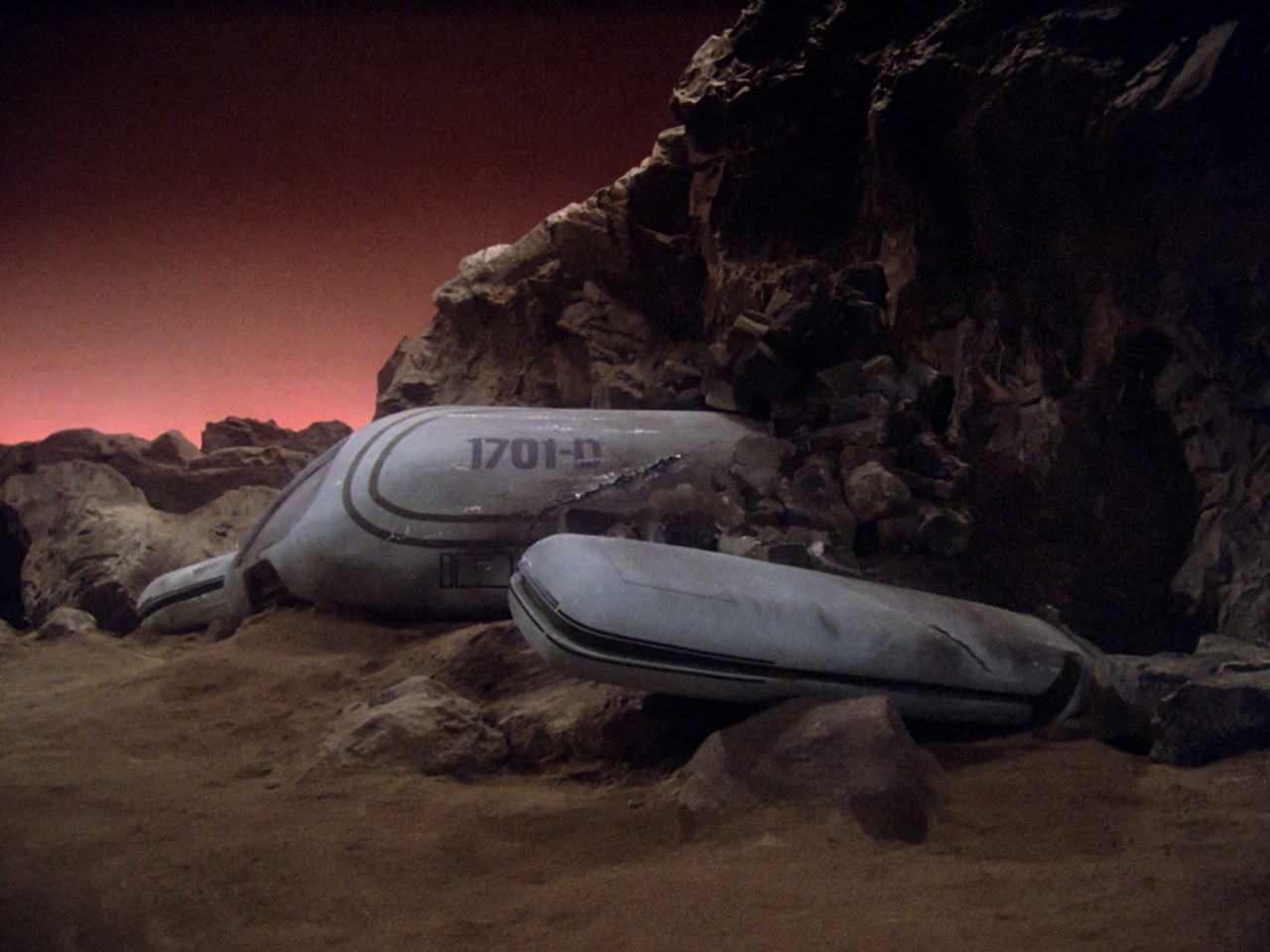
till frame from Star Trek TNG 1x22 showing the wrecked shuttle
The shuttle crash site.

We should also talk about the difficulties the team had in creating Armus, since we’re talking about sets and such.

The costume used to depict Armus’ humanoid form wasn’t compatible with the liquid that enveloped it, and the glue used to hold parts of it together repeatedly came unstuck during filming. The viscous liquid – a mixture of printer’s ink and a thickening agent – was infamously unpleasant to work with, not least for Jonathan Frakes, who performed his own stunts in the episode, including being submerged in the stuff.

It sounds like working on that side of the episode was more of a challenge than the crew expected, but I think the finished product works about as well as it could! I don’t think anyone’s out there hailing Armus as one of Star Trek’s best or most iconic villains – which is a shame, given his role in killing off a main character – but the way he comes across on screen, dripping, jet black, oozing, and unpleasant… it made for a suitably menacing and intimidating effect. Seeing Armus rise taller than Riker – the tallest of the main cast – hammered that home.
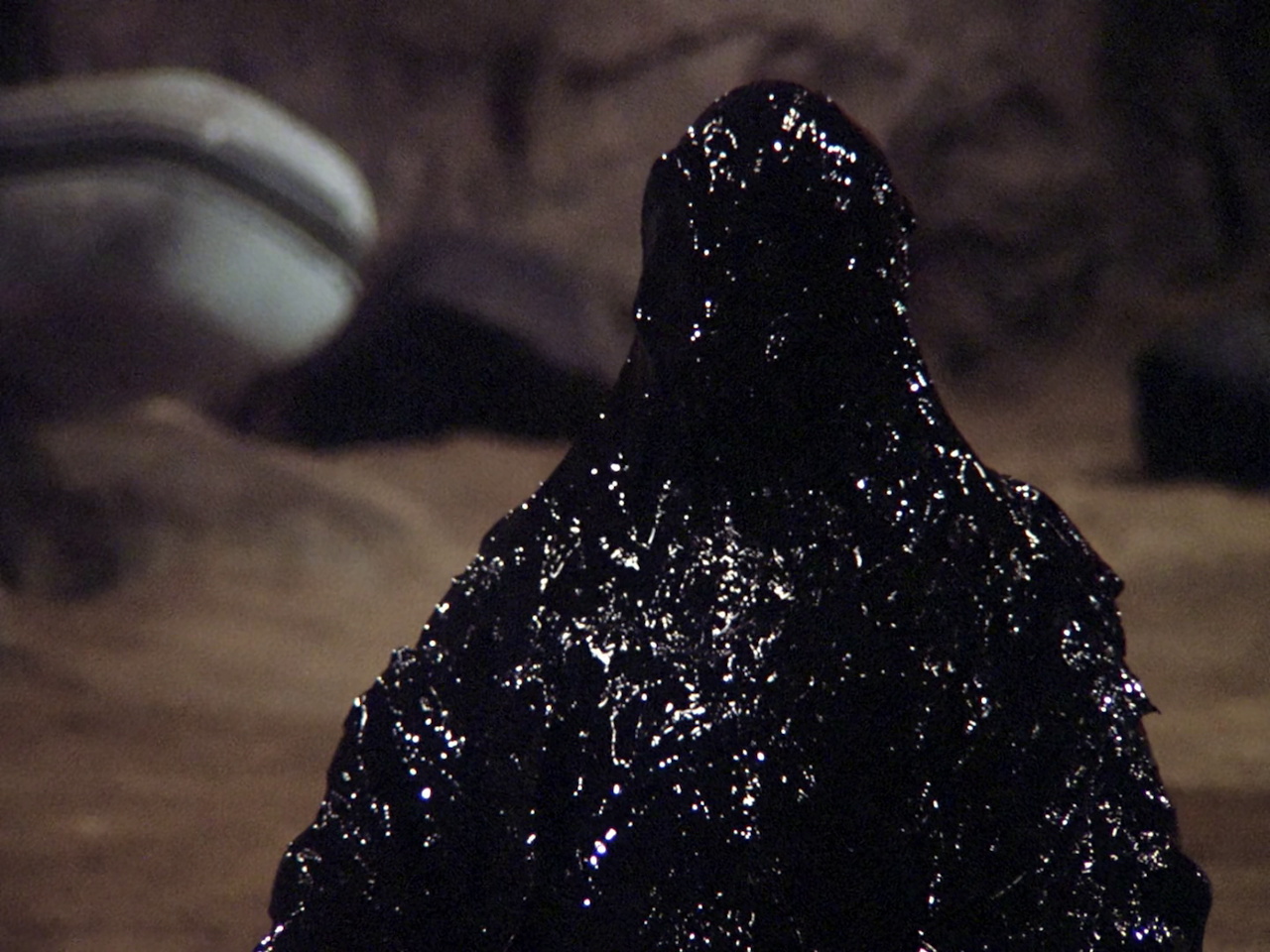
till frame from Star Trek TNG 1x22 showing Armus
Armus.

Armus is, though, a pretty one-note villain, if you think about it. Partly that’s by design: if he’s an entity composed *entirely* of an entire alien race’s worst and most negative qualities, well… there isn’t a lot of room for nuance, I guess. And partly, it should be said, it’s because this single forty-five-minute episode had other things to do. Worf had to accept his new role and play a major part on the bridge when Picard, Riker, and Data were all away. We had a sequence in Sickbay trying to save Tasha’s life. And then the funeral, at the end of the episode, needed sufficient time to hit those emotional notes. There wasn’t more time, sadly, for Armus to be much more than he was.

That also means that the resolution to the episode’s core problem – the need to save the shuttle crew – felt quite abrupt. After Picard and Troi hit on the idea of basically making Armus as upset as possible to weaken his forcefield… that was it. We got a short conversation as Picard pushed his buttons, leading to a pretty stereotypical “roar of anger,” before the away team were all beamed away to safety. A bit anticlimactic, perhaps, given what Armus had done earlier in the story.
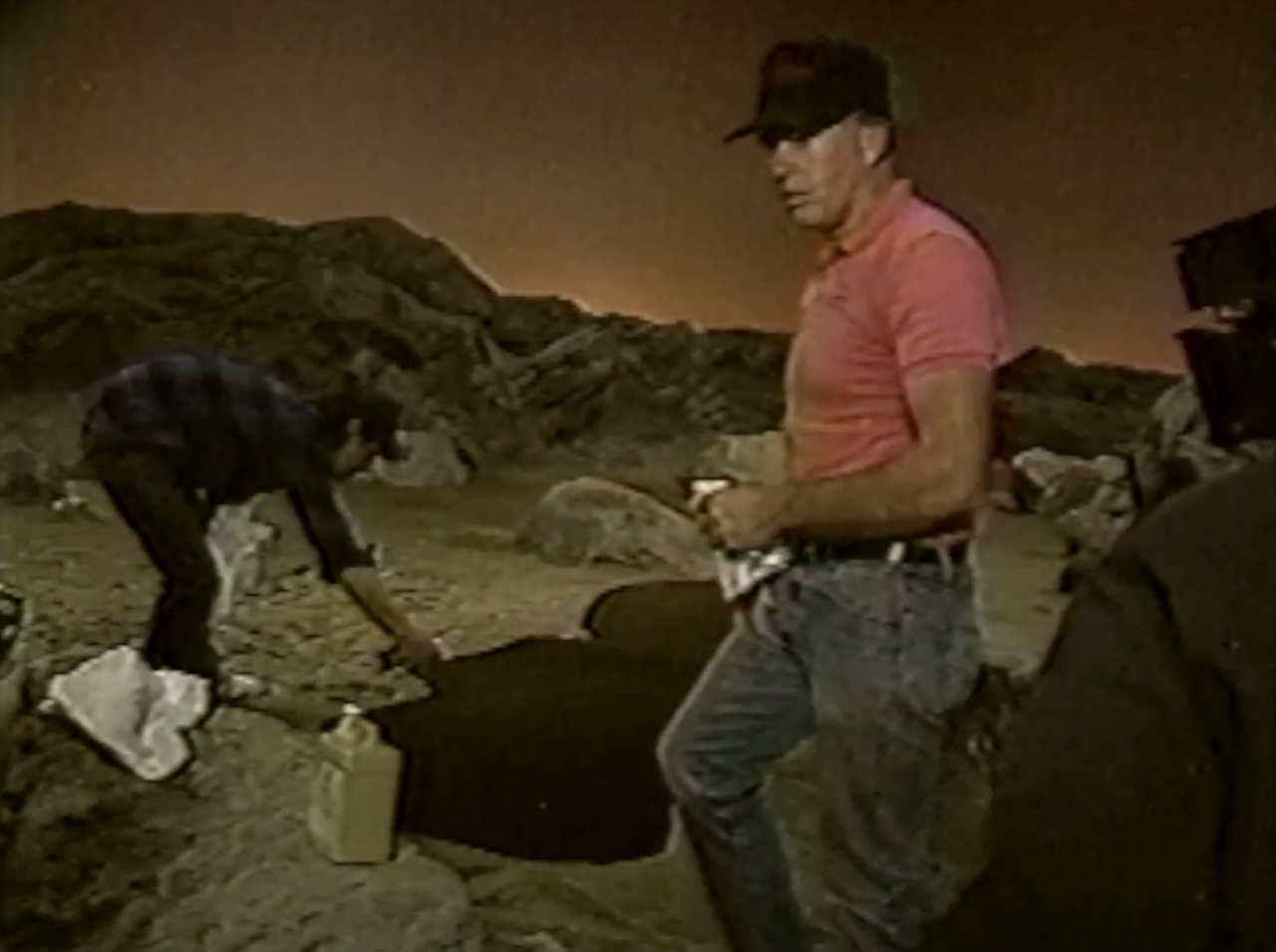
Behind-the-scenes still from Star Trek TNG 1x22 showing production crew on set
Members of the production crew on the set of Skin of Evil.

In some ways, Armus feels like a different take on a familiar character from TNG’s first season: Q. They exhibit some of the same traits – a need to be amused or to have attention focused on them, trickster-like, teasing qualities, and powers that go far beyond what Starfleet in this era was able to counter. But while Q, even in his first appearances, had both a curiosity about humans and even, dare I suggest, a helpful streak… Armus is purely malevolent.

I liked Troi’s line about pity; how this creature, powerful and deadly though it could be, was still a tragic and sad figure. Armus represents one of the oldest warnings about immortality, in one sense: how one would feel after aeons alone, trapped with no one to talk to or nothing to do. That isn’t meant to justify or excuse his behaviour, but it does go some way to giving it an explanation or at least some context. To choose a real-world parallel: Armus is akin to the criminal who comes from a troubled past. Their past doesn’t give them free rein to do the bad things they’ve done, but it can go some way to explaining why those things happened, where they came from, and even why we should pity, rather than *hate*, someone in that position.
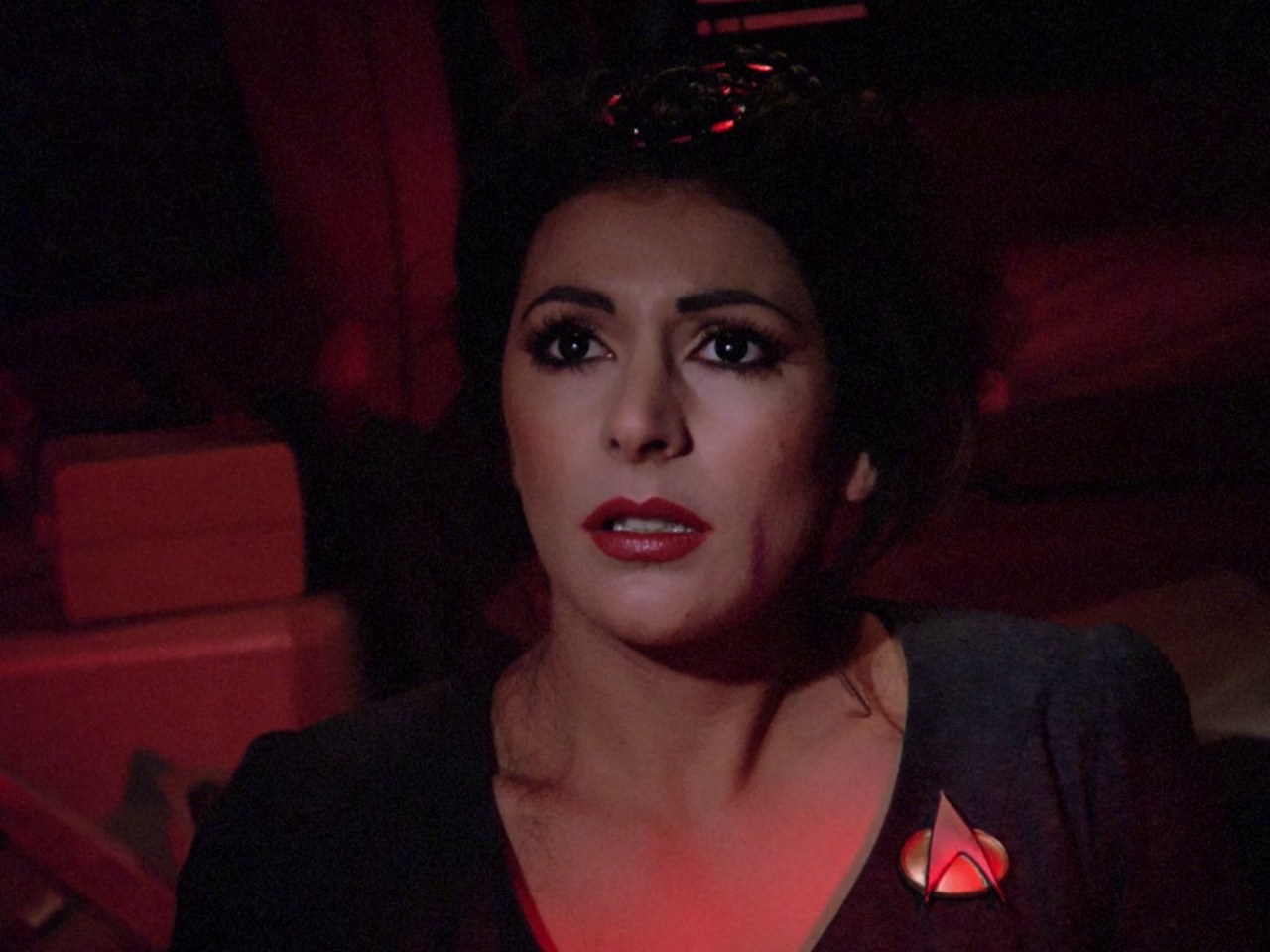
till frame from Star Trek TNG 1x22 showing Troi
Troi.

Troi was arguably Skin of Evil’s real star. This episode must be one of Marina Sirtis’ best and most challenging performances in the role, having not only to display very strong emotions, but doing so with no other physical performer to bounce them off. Every conversation Troi has with Armus, unlike those of the rest of the away team, takes place inside the shuttle with only Armus’ voice. It’s a tricky acting challenge, but Sirtis rose to the occasion wonderfully.

Troi was also the character who figured out how to beat Armus, laying the groundwork for the resolution to this storyline. It might’ve been possible, based on what we saw of their earlier conversations, for Troi to have single-handedly defeated Armus without Picard’s intervention; that’s a fun little “what-if” idea, I guess. But again, this was a good episode for both character and performer, and Troi really excelled – despite spending most of the episode trapped in a wrecked shuttle, barely moving.
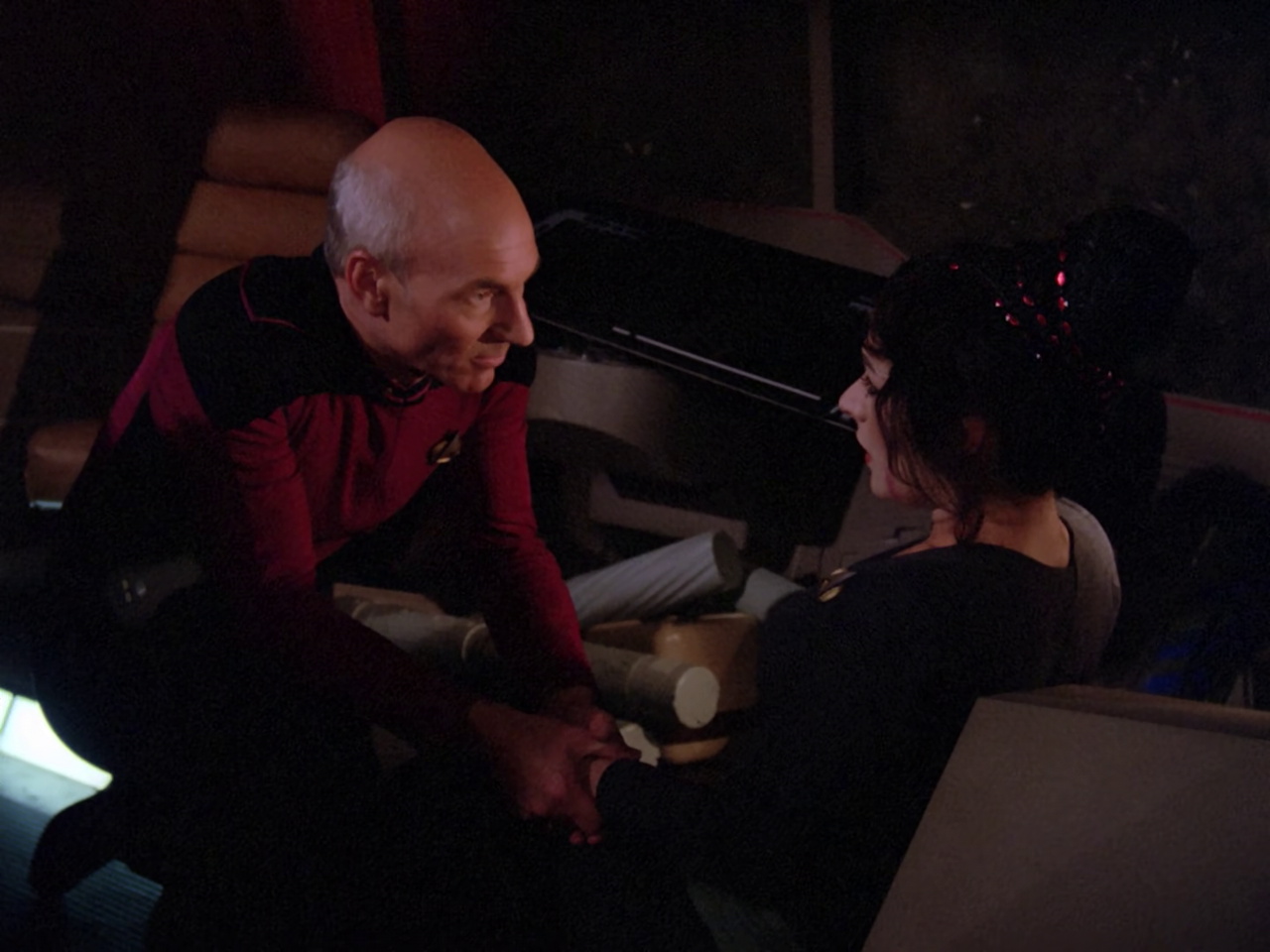
till frame from Star Trek TNG 1x22 showing Picard with Troi in the shuttle
This was a good episode for Troi.

At this point in The Next Generation’s run, we had seen Picard on a handful of away missions, but we’re also aware that he’s a very different kind of captain from Kirk – taking a much more hands-off approach, with Riker usually leading the charge. So to see Picard volunteer to beam down to the planet himself was something a bit different, and I think it emphasised the severity of the situation. As I said above, Picard’s ultimate role *might* not have been totally necessary, but as the captain, it makes sense for him to play a leading role in this kind of story.

Picard’s dedication to helping his crew – the away team, Riker, Tasha, and the survivors of the shuttle crash – was on full display, and it’s one of the best early-season indications of this, in my opinion. We also get to see Picard having to wrangle with the emotional toll of losing someone under his command, someone he personally recruited, as well as someone he’d become friends with, while also having to remain in control of his emotions and guide the rest of the crew. Tasha’s death was cruel, and they were all suffering – but there was still a mission at hand and two injured crewmates to rescue. Picard had to be the one to tell them to keep their emotions in check long enough to help the shuttle crew, and that can’t have been easy.
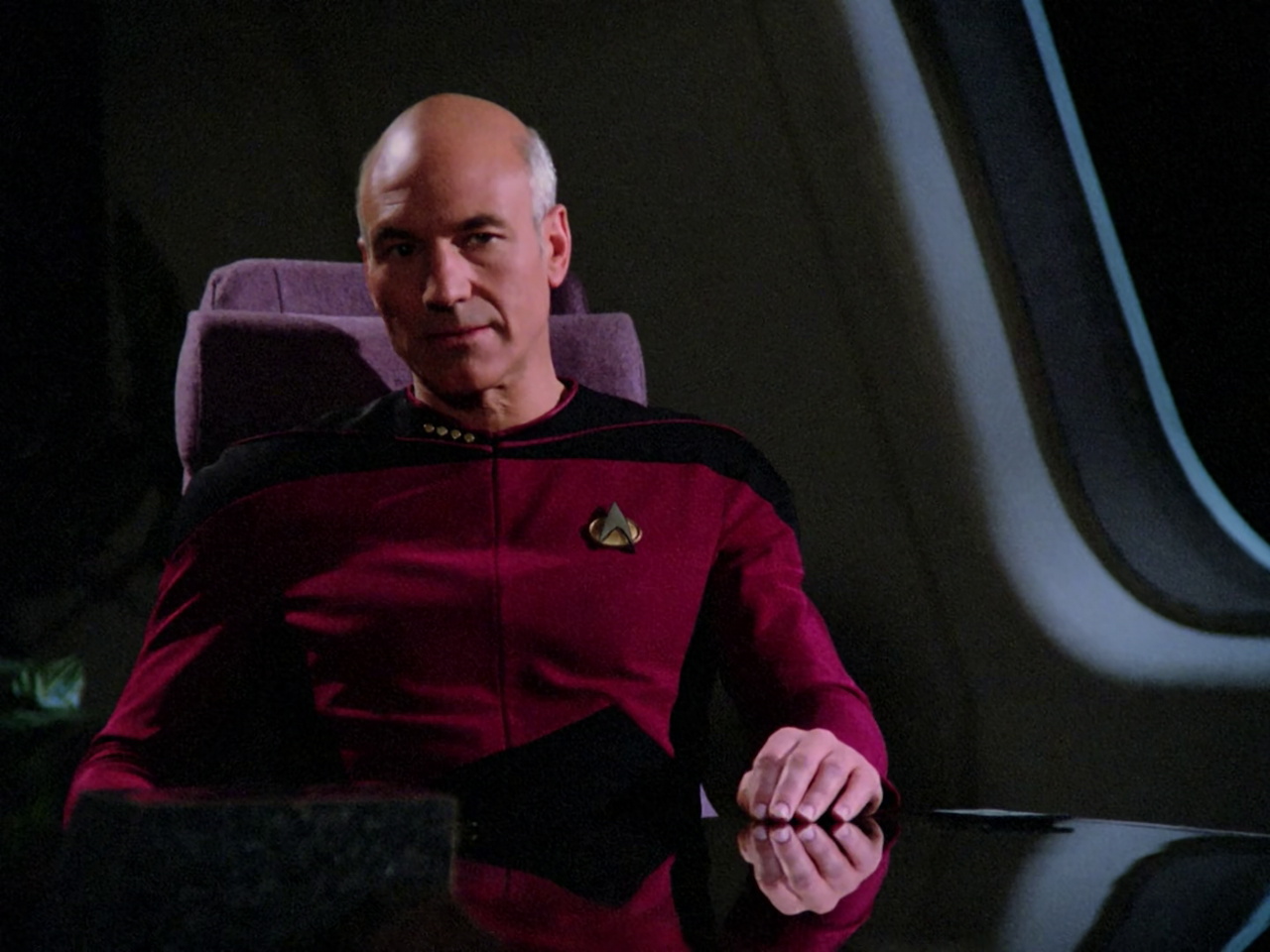
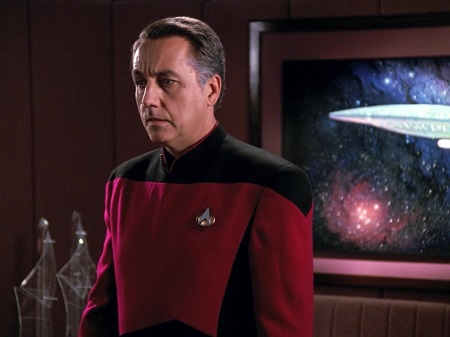
till frame from Star Trek TNG 1x22 showing Picard in the Briefing Lounge
Picard in the Briefing Room.

I mentioned Worf above, and for me, Skin of Evil feels like *the* inflection point for his character; the moment the version of Worf we’re most familiar with came into being. With Tasha’s death, Worf is given her roles at tactical and security by Picard, and we see a flicker of emotion on his face at that moment as he absorbs both the loss of a friend and the responsibility of assuming her dual roles aboard the ship. Worf instantly puts his own stamp on things, though – declining to join the away team, despite clearly wanting to avenge Tasha’s loss, because he believed his skills were better-utilised on the bridge.

Worf feels like a natural fit for the security and tactical roles – though that’s admittedly with the bias of hindsight! As I revisit Skin of Evil, though, I can’t help but wonder what might’ve been – what other role or roles would Worf have found aboard the Enterprise-D had Tasha remained a part of the series? It’s another of those interesting “what-ifs,” eh?
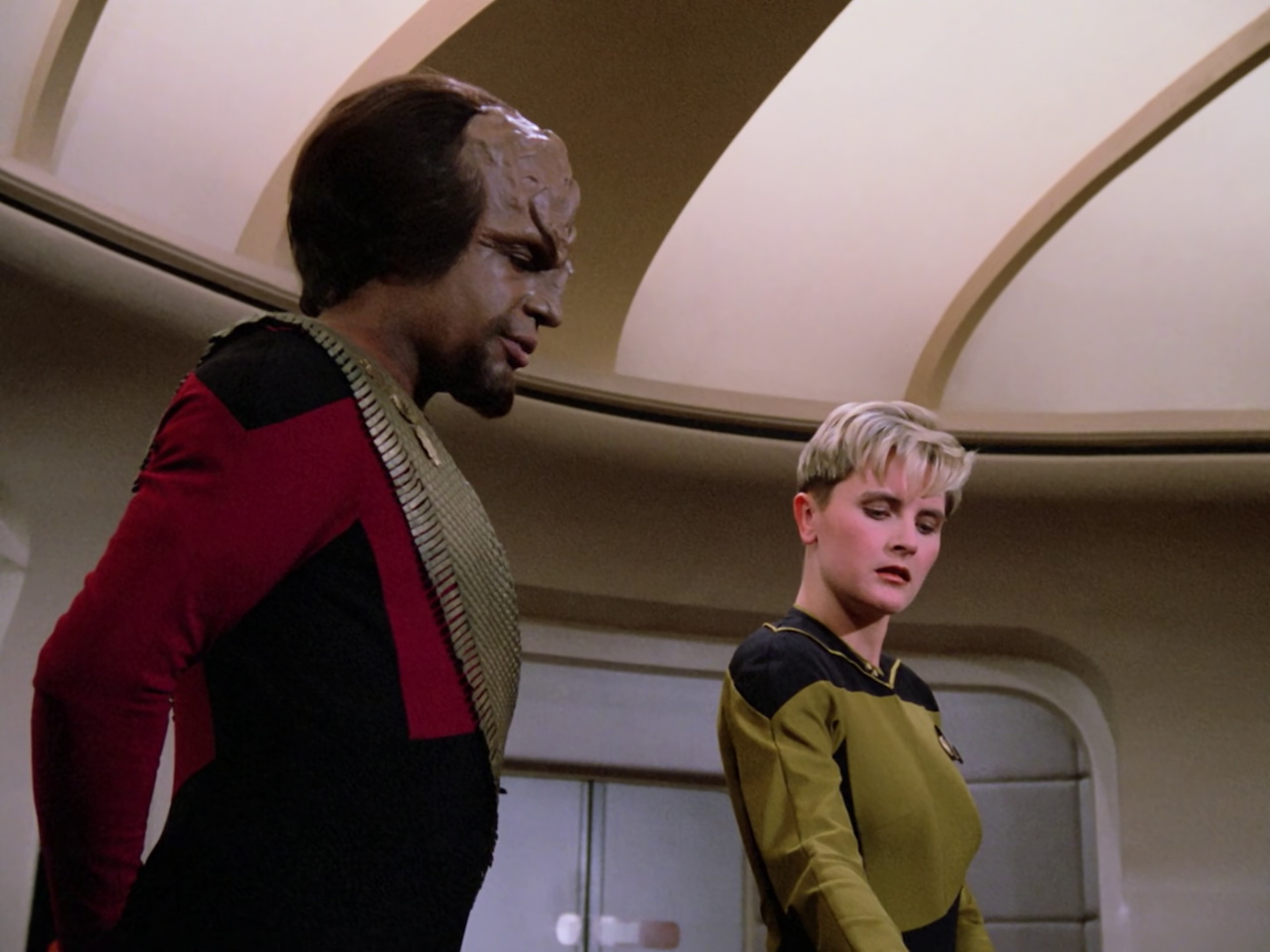
till frame from Star Trek TNG 1x22 showing Worf and Tasha Yar
Worf and Tasha together at the beginning of the episode.

I was also reminded of how, even a full season into the show’s run, TNG lacked a chief engineer! Geordi wouldn’t take over that role until Season 2, and Season 1 showed off a succession of one-off characters in the engineering role. In this case, we meet (briefly) Leland T. Lynch, who was responsible for recalibrating the ship’s dilithium crystals at the start of the story. Lynch was a very minor part of the episode, and didn’t return after Skin of Evil, but he’s just a reminder, really, of how – despite having a successful formula from The Original Series to adapt – The Next Generation was still finding its feet, even a full season into its run. As with Worf above, we’ve come to see Geordi as inseparable from his role in engineering… but that wasn’t where he started.

Although Engineer Lynch’s work on the dilithium crystals kind of feels like padding to stretch out the episode’s runtime a little, it did lead to one cool visual moment: seeing the Enterprise-D in flight but without its nacelles illuminated. This made for a fun and different look, albeit just for a moment, and the need to reach Vagra II added a little tension to those opening moments after the shuttle crash, too.
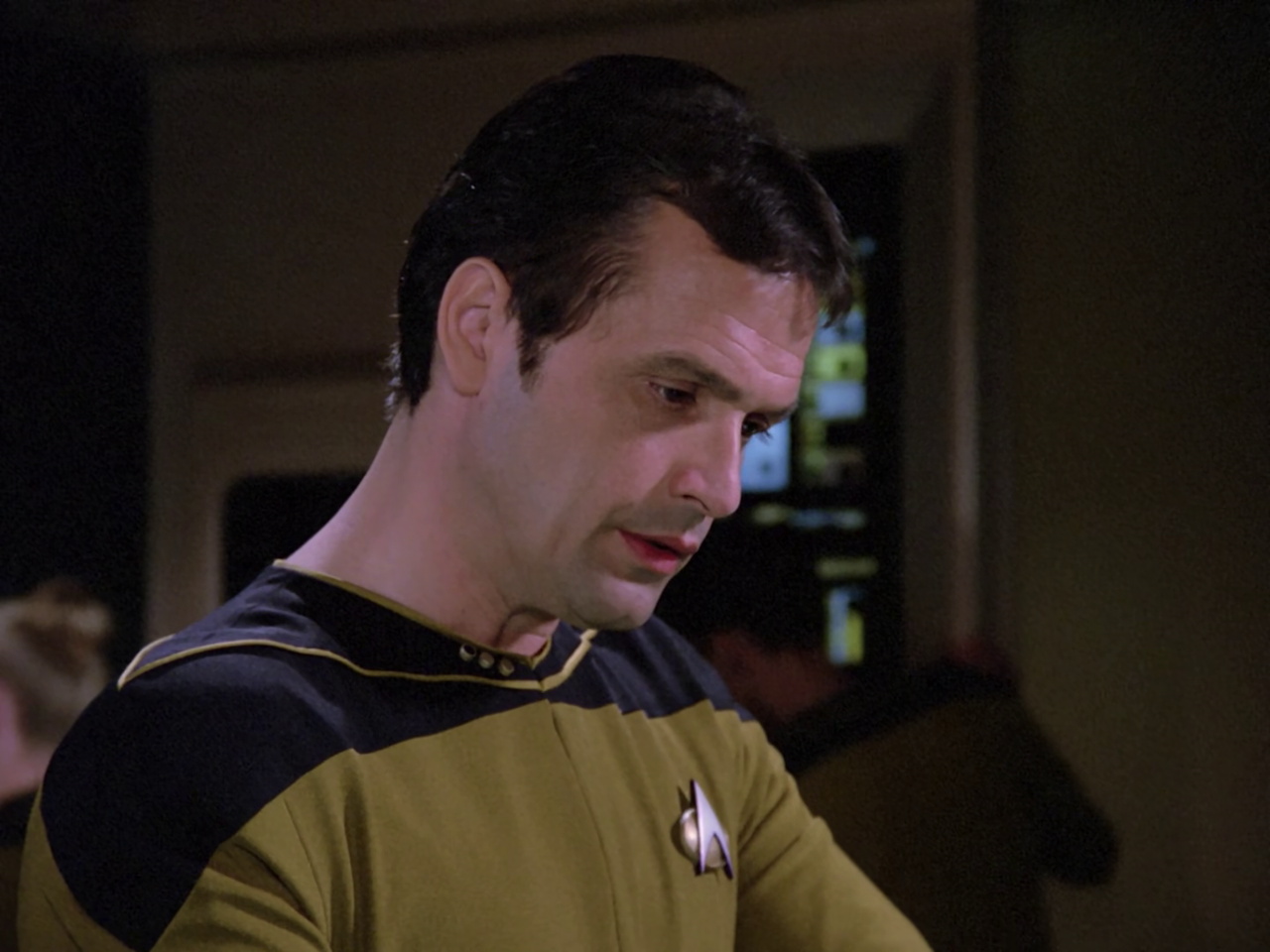
till frame from Star Trek TNG 1x22 showing Leland T Lynch
It’s Leland T. Lynch!

So let’s talk Tasha.

Skin of Evil is remembered not for Armus, nor Worf’s new role, nor even Troi’s struggle against Armus, but because it’s the episode where Tasha Yar was killed off. Although Star Trek had killed off Spock a mere six years earlier, that doesn’t really count because the next film brought him back to life again! So this was Star Trek’s first real encounter with death, if you think about it. Combine Tasha’s death here with Dr Crusher’s departure at the start of Season 2 (something caused by behind-the-scenes shenanigans), and it definitely felt like TNG was going through a shake-up.

This is something that Star Trek still doesn’t really do very often. If you remember my reviews of Discovery and Picard in recent years, you might remember me saying words to the effect of characters seeming to have “plot armour” even in seemingly impossible situations! And that’s because, to be blunt, I don’t think the franchise has *ever* done death particularly well. Spock’s was emotional and impactful… but was undone in the very next story. Jadzia’s, which came a decade after Skin of Evil, is arguably the most impactful… but others, like Kirk’s or Tucker’s, have proven incredibly controversial. And don’t get me started on redshirts and “glorified redshirts!”
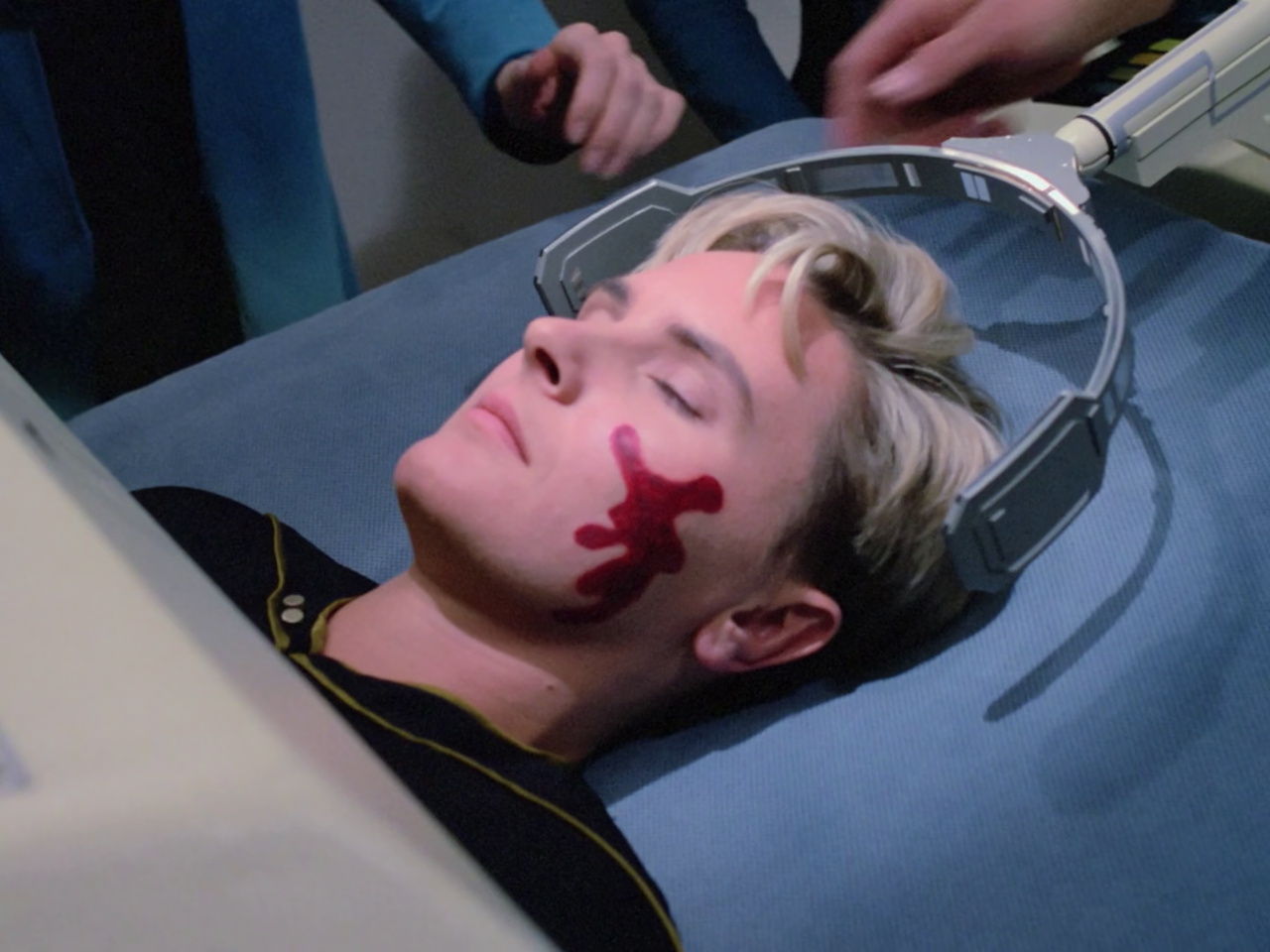
till frame from Star Trek TNG 1x22 showing Tasha on a bio-bed
Tasha Yar was Star Trek’s first major death.

So this moment… it still matters to Star Trek, even as we close in on Skin of Evil’s fortieth anniversary. This is the moment where main characters could no longer be considered safe, where someone other than a redshirt went on an away mission… and didn’t come back. A character fans had gotten to know over more than twenty episodes, who had relationships with practically everyone else on the Enterprise-D just… straight-up died. And the show made a creditable effort to celebrate Tasha’s life and legacy in a funeral scene that still hits hard all these years later.

The contrast between the dim, desolate surface of Vagra II and Tasha’s funeral – in a sunlit, grassy meadow – is stark, and the visual impact of the two sequences is incredibly striking. At first, the moment felt less funereal than Spock’s had done aboard Kirk’s Enterprise, but this memorial service was for a different character, and a different *kind* of character, too. In my head canon, Tasha chose such a bright, sunlit, pastoral setting because it represented everything she got away from when she escaped to join Starfleet. And there’s something about the bright blue sky, white clouds, and natural grassland that feels, well… heavenly, at least if you buy into western or American depictions of the afterlife.
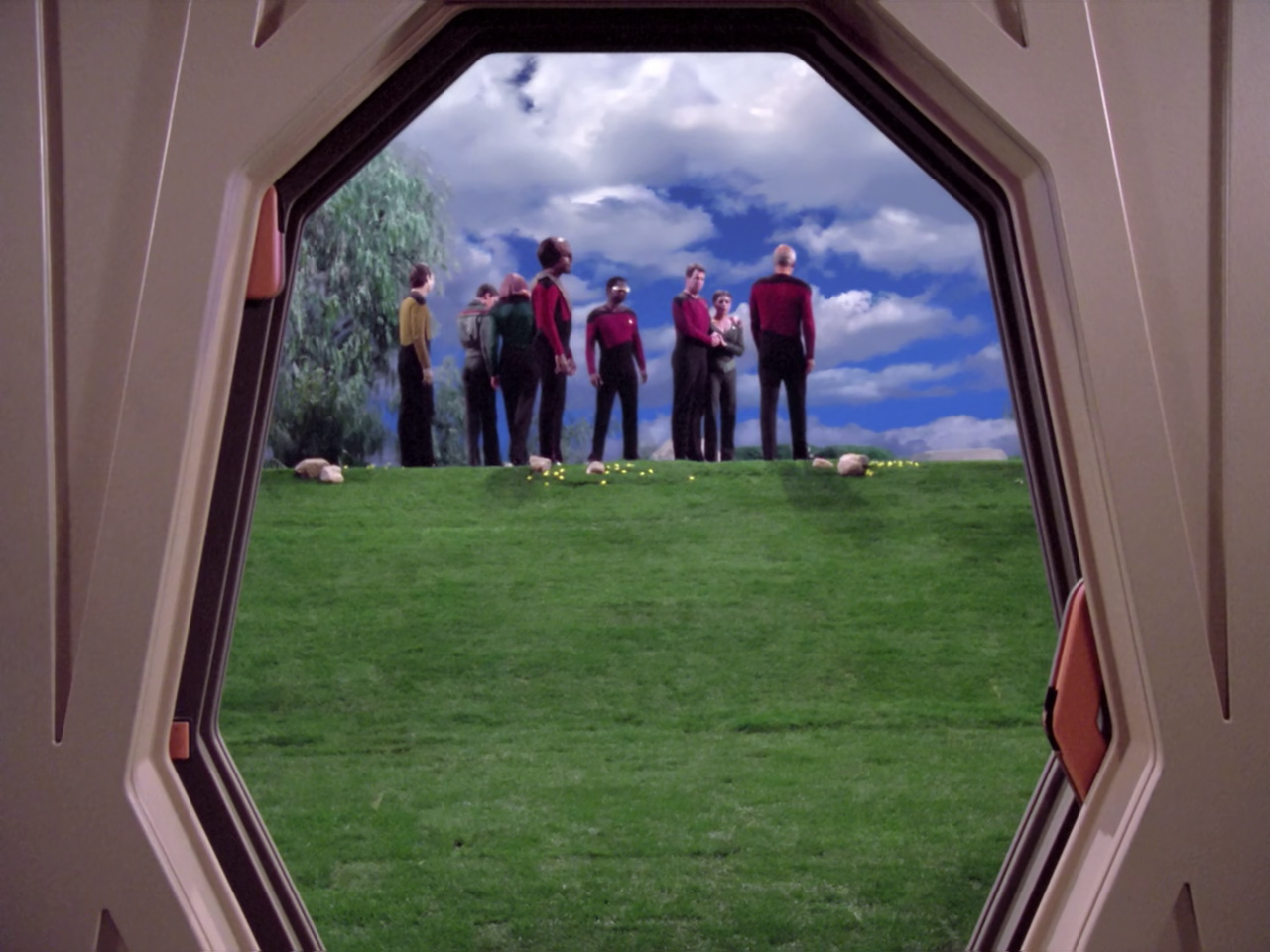
till frame from Star Trek TNG 1x22 showing the funeral and the holodeck doors
The characters gather for Tasha’s funeral.

Skin of Evil needed this epilogue. If Tasha was going to be killed off – and not exit the show by some other means – then her death needed more than just expiring on a bio-bed in Sickbay. The funeral, and particularly Tasha’s own address to the gathered characters, was her swansong; the end of her time on the show. It mattered to those involved – the cast as well as the characters they played – but also to us as the audience. The funeral underlines that there is no technobabble solution – Tasha isn’t coming back and there will be no last-second reprieve. It allows us to bid a fond farewell to the Enterprise-D’s first tactical officer, and to draw somewhat of a line under the first iteration of the show’s principal cast.

Tasha Yar was always an enjoyable character. Her tragic backstory informed why she wanted to join Starfleet, and why she had the tactical and combat skills that she possessed, but it didn’t define her. She may not have been front-and-centre across Season 1, but just like most of the rest of the main characters, she had her moments, made connections with her shipmates, and took part in some iconic moments and storylines. Her loss in Skin of Evil would go on to define – and, I would argue, refine – The Next Generation going into Season 2.
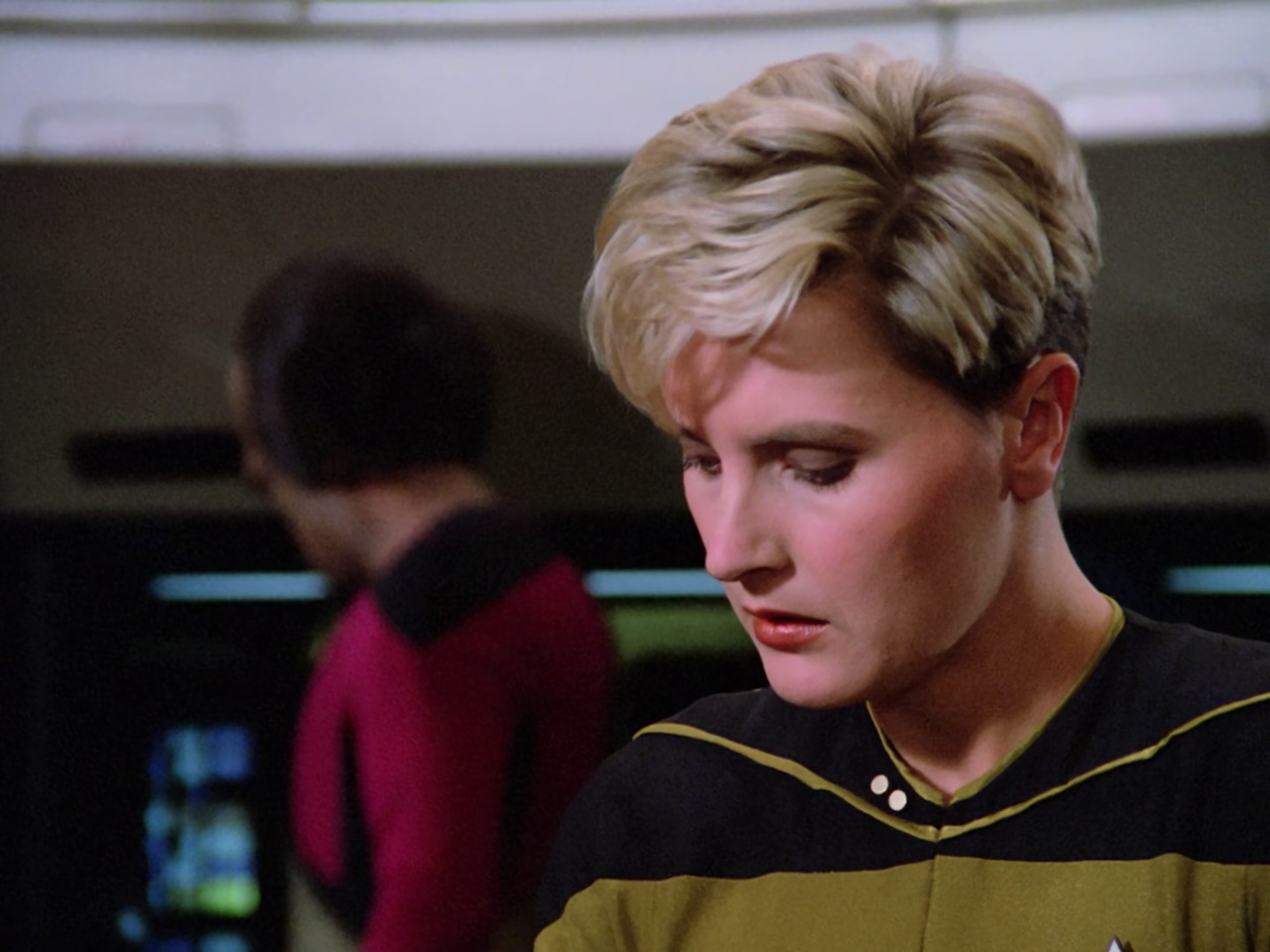
till frame from Star Trek TNG 1x22 showing Tasha on the bridge
Tasha at her post on the bridge.

And, of course, Tasha would be back! Yesterday’s Enterprise introduced an alternate timeline version, she returned again in All Good Things right at the end of the show’s run, and her daughter – Sela – was an important character, too. Tasha even appeared, albeit only briefly, in Picard’s third season, proving that her legacy and importance lived on well past the events of this one episode. She would prove important to Data in particular (thanks in no small part to their… y’know… *encounter* in the episode The Naked Now). And all these years later, we’re still talking about Tasha Yar and her place in the series.

So I think that’s all for now.

Thanks for joining me on this re-watch. It was fun to revisit Skin of Evil, even though I wouldn’t necessarily consider it a personal favourite episode, or anything! Skin of Evil is more so an inflection point; a key moment in the history of The Next Generation, moving one character aside and arguably making room for others to step up. Slimming down what was arguably a slightly overladen cast probably helped the series going into the next part of its run, and for Worf in particular – an incredibly important character in all of Star Trek’s history – this moment cleared a pathway for him to become the character we know and love.
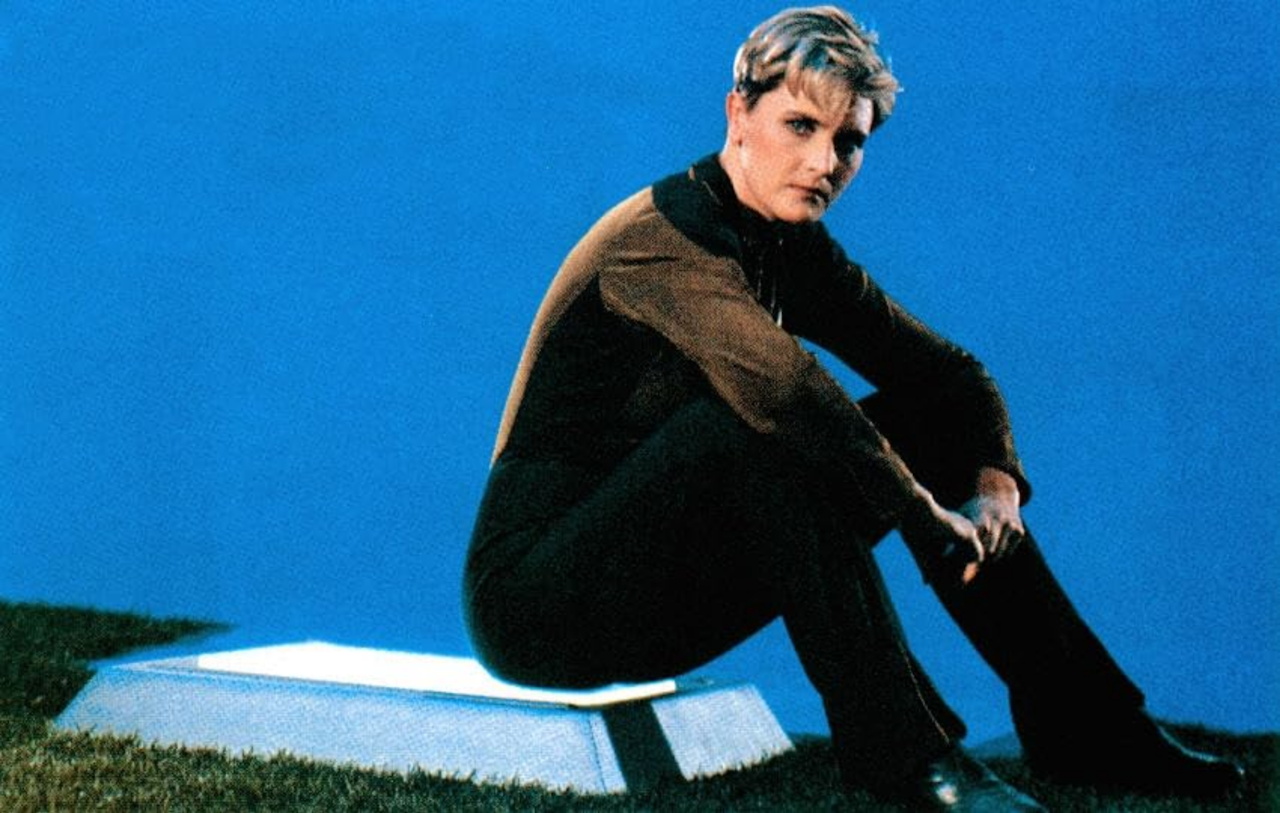
Behind-the-scenes photo from Star Trek TNG 1x22 showing Denise Crosby
Denise Crosby during a break in production.

If you missed them, earlier this year I wrote up re-watches of The First Duty and The Royale, from Seasons 5 and 2 respectively, and I’d love to get around to more episode re-watches soon, too. I’ve also been reviewing Season 4 of Strange New Worlds, I reviewed Season 1 of Starfleet Academy, and the video game Across The Unknown. I hope you’ll check out some of those if you have the time!

Star Trek’s sixtieth anniversary is upon us, and it was wonderful to be able to celebrate that milestone at a convention. Meeting Denise Crosby was a wonderful experience, and it’s what prompted me to step back to Skin of Evil and write this piece. I hope this has been interesting, and I hope it wasn’t too controversial a pick for a Tasha Yar episode to revisit!

Thanks for joining me, and as always… Live Long and Prosper, friends!


Star Trek: The Next Generation is available to stream now on Paramount+ in countries and territories where the service is available, and is also available to buy on DVD/Blu-ray. The Star Trek franchise – including The Next Generation and all other properties discussed above – is the copyright of Skydance/Paramount. This article contains the thoughts and opinions of one person only and is not intended to cause any offence.

Star Trek: The Next Generation Re-Watch – Season 4, Episode 12: The Wounded

Spoiler Warning: There are spoilers ahead for Star Trek: The Next Generation, as well as for other iterations of the franchise.

Thirty years ago this very day, Star Trek: The Next Generation broadcast the twelfth episode of its fourth season: The Wounded. This would be a highly significant episode for the franchise going forward, and in many ways began to set the stage for the upcoming spin-off Deep Space Nine. At this stage work on pre-production of Deep Space Nine had already kicked off, and while The Wounded is by no means a backdoor pilot, there was a conscious effort on the part of Rick Berman – who was in charge of Star Trek at the time – to begin to put the pieces together for the new series.

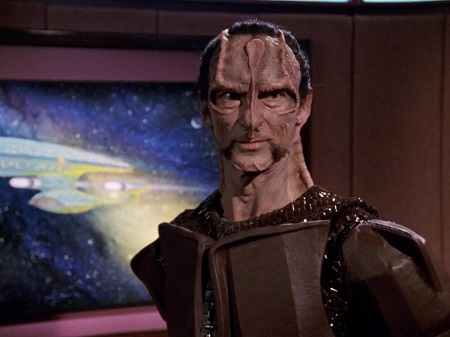
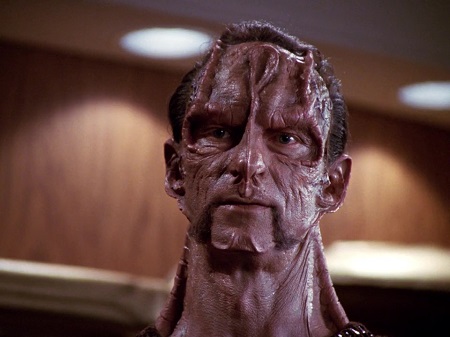
The Wounded is the first episode to give future Deep Space Nine regular Miles O’Brien a significant role. Though present since Encounter at Farpoint at the beginning of Season 1, O’Brien had been a background character with little to do until this point. The episode also marked the debut of the Cardassians, with future Gul Dukat actor Marc Alaimo featuring as a different Cardassian – Gul Macet.

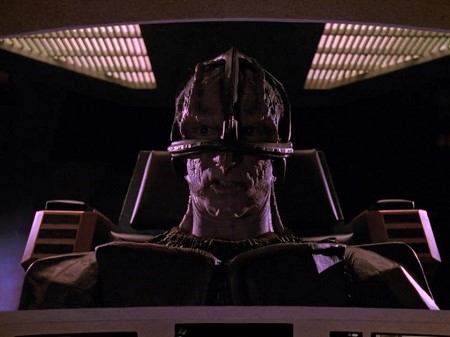
Gul Macet – the first Cardassian ever seen in Star Trek.

For both of those reasons, The Wounded is incredibly important within the history of Star Trek. The foundations of Deep Space Nine were laid here, and it was around this time, under Rick Berman’s direction, that Star Trek truly cemented its evolution from purely episodic storytelling to an interconnected franchise. Deep Space Nine would share The Next Generation’s time period and be broadcast while its sister show was still on the air. This was a marked change from the way The Next Generation was spun off from The Original Series, and one which allowed the different parts of the franchise to connect in ways that were unprecedented at the time.

After more than a decade of the Marvel Cinematic Universe and other such franchises, we almost take for granted this concept of big, interconnected fictional universes. But episodes like The Wounded are a big part of building that sense of connectedness within Star Trek, and in the early ’90s that was something entirely new. The difference between a good film or television show and one that can become one part of a greater franchise is that sense of interconnectivity, and it’s impossible to understate the importance of episodes like The Wounded on building up Star Trek as that kind of franchise.

The Wounded was instrumental in laying the groundwork for Deep Space Nine.

In that sense, it isn’t only Deep Space Nine which owes so much to The Wounded – and other similar episodes around this time in The Next Generation’s run – but also Voyager, and by extension Enterprise, the Kelvin films, Discovery, and the fact that Star Trek is still going strong thirty years later. It’s one of those incredibly significant moments in the history of the franchise – one of the moments at which Star Trek became an expanded franchise.

More than that, The Wounded is an especially good episode. As Star Trek has always done, it deals with real-world themes through its sci-fi lens, looking at war, post-traumatic stress, how feelings of hate can linger long after the event, and so on. It was also a rarity at this point in Star Trek to see Starfleet officers as anything other than exemplars of virtue, or the Federation as anything less than a utopia. Captain Maxwell is not a villain per se, but the actions he takes in The Wounded endanger the peace – a hard-won peace with the Cardassians. In that sense, the episode looks at the idea of how war can and should be justified, and whether it’s acceptable to sacrifice the truth to preserve the peace.

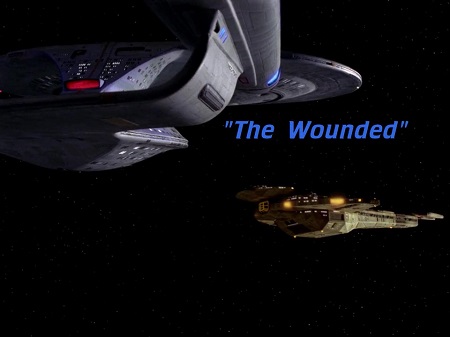
The episode’s title card.

Coming toward the end of the 1990-91 Gulf War, that makes The Wounded a very timely piece of television. Unlike the later Iraq War of 2003, the Gulf War was generally popular at the time, but even so there was a sense that there wasn’t a real plan for what to do after the initial military objectives had been achieved. Should the US and allies push on into Iraq and remove the Iraqi government? Or should they make peace even if doing so meant leaving a dictator in place? The Wounded doesn’t tackle all of these issues head-on, but the general theme of making peace with an enemy, the value of peace itself, and on a personal level, the toll war can take on those who serve, were all present in the narrative.

Finally, The Wounded draws on inspiration from the film Apocalypse Now, itself influenced by the novel Heart of Darkness, and in the vein of those classics features a story about a war hero going “mad.” Plot points like Captain Maxwell’s mental state and his foray into enemy territory are comparable to storylines in those classic works of literature and cinema. There’s a reason why audiences respond to such powerful themes and storylines, and The Wounded does an admirable job of translating them to Star Trek’s science fiction setting, doing so in a way that retains the original message, ensuring it isn’t buried too deeply in talk of aliens and spacecraft.

The Wounded follows a similar narrative to classic war film Apocalypse Now.

Because of the way The Next Generation was broadcast at the time, I can’t claim that this is the thirtieth anniversary of when I saw The Wounded! That would’ve been a couple of years later, as here in the UK that was the kind of delay we were looking at between an episode’s US premiere and when it would be broadcast here. Regardless, let’s take a look at The Wounded together.

The episode begins with a couple of sequences that set up the main storylines. Both via his captain’s log and on the bridge, Picard gives us a lot of information about the Cardassians – who were, as noted, new to Star Trek in this episode. The bridge crew briefly discuss the situation, and it emerges that Picard had been part of the conflict and negotiations to resolve it while in command of the Stargazer. The exact nature of Cardassian-Federation relations is a little confused; Picard says a “peace treaty” is in effect whereas Troi describes the Cardassians as “allies.”

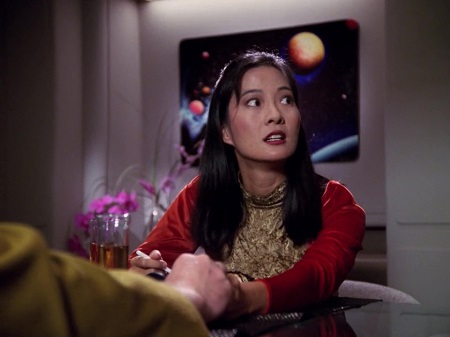
Up next we get a sequence with Chief O’Brien and Keiko – whose wedding had been part of the previous episode, Data’s Day. In their quarters, O’Brien seems unimpressed with Keiko’s vegetarian cuisine. O’Brien got a fun line when looking at the kelp-based meal: “Sweetheart… I’m not a fish.” That line still wins a chuckle decades later! As O’Brien promises to prepare Keiko a meal of his childhood Irish classics, the ship comes under attack.

The attack on the Enterprise comes during Miles and Keiko’s breakfast.

On the bridge, the crew briefly discuss the minor damage to the ship. The Cardassians apparently fired without responding to hails. This sequence marked the first appearance of the Cardassian Galor-class warship, initially described here as a “scout ship.” Despite firing on the Enterprise-D while its shields were down, there is no major damage nor any casualties. A few phaser shots from the Enterprise-D causes damage to the Cardassian ship and forces its captain – Gul Macet – to hail. The Galor-class would go on to be one of the Cardassian mainstays during the Dominion War – where it was much more effective! Perhaps it got an upgrade. Macet alleges that a Federation ship attacked the Cardassians in violation of their peace treaty; he gives Picard one hour to find out what’s happened.

Star Trek: Picard and Star Trek: Discovery both have pretty understated theme music. They aren’t bad, but they’re closer to the themes from Deep Space Nine and Voyager in that they’re slower, quieter pieces of music. The Next Generation’s theme is in contrast to those! Taken from Star Trek: The Motion Picture, the up-tempo theme really conveys a sense of adventure in a way the others really don’t. Star Trek: Lower Decks, and to a degree the main theme from 2009’s Star Trek reboot film, both do this too, and both of those pieces of music are likewise up-tempo and adventurous. It’s only when coming back to The Next Generation after watching a full season of Discovery that I can really appreciate this difference in musical tone!

The Enterprise-D attacked by the Trager, the first Cardassian Galor-class ship seen in Star Trek.

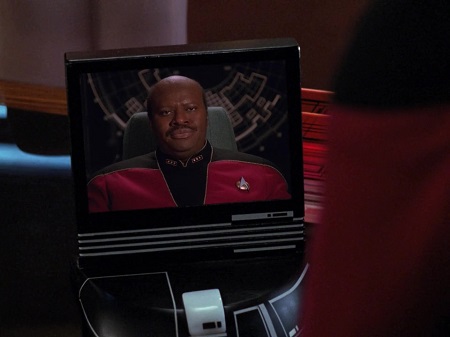
After the opening titles Captain Picard receives a briefing from a Starfleet Admiral. He informs Picard that the USS Phoenix, under the command of Captain Maxwell, was responsible for destroying a Cardassian station – though they are unable to find out why as Captain Maxwell is not responding. The Enterprise-D – along with a small group of Cardassian “observers” – has been granted permission to enter Cardassian space and catch Maxwell.

The Admiral is very concerned with preserving a hard-won peace treaty, and makes it clear that he believes that the Federation is not prepared for another war with Cardassia – prescient, one might say, in light of how badly the Federation handled much of the Dominion War! Though the Dominion War arc hadn’t even been conceived at this stage, when looking back at The Wounded now that we know what happened, it’s possible to see how the Dominion War story built on what had previously been established in many ways. These smaller moments add up to a much greater whole, and are part of what makes for a believable narrative.

Admiral Haden speaks to Captain Picard.

Though Captain Picard is initially insistent that the three Cardassian observers be made welcome and not made to feel like “prisoners,” he acquiesces to Worf and Riker’s request that their access to the ship be limited. Worf intends to post guards at what he considers to be sensitive areas of the Enterprise-D for the duration of the Cardassians’ stay. Data establishes that O’Brien once served with Captain Maxwell aboard a ship called the Rutledge, and Picard tasks Counsellor Troi with looking after the crew, as he feels some officers may be uncomfortable with the Cardassians on board – foreshadowing what’s to come.

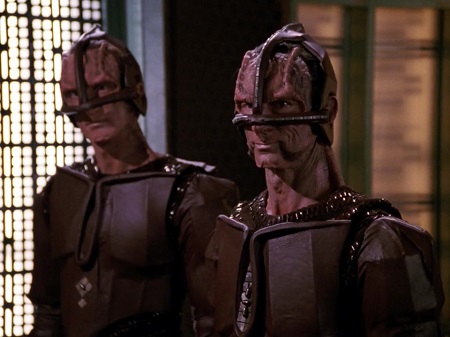
The Cardassians beam aboard and Riker and Troi are there to greet them, along with Chief O’Brien. The Wounded is the only episode of Star Trek to show off a different style of Cardassian uniform. Unlike the silver-grey mail-like armour that they would wear in the Deep Space Nine era, here the Cardassians wear a plain brown leather-like armour over some kind of undershirt. Most notably, this is the only episode which shows off Cardassian headgear – a kind of helmet that covers the back of the head with three bars connecting at the front. Though the outfit isn’t bad per se, I think it’s easy to see why it was changed later. Not only does the headgear look a little silly, it also covers up key aspects of the Cardassians’ facial features and makes them less distinguishable from one another. Gul Macet sports facial hair, too, and The Wounded would be the only time we would see that on a Cardassian character.

Gul Macet and his aide beam aboard.

It’s interesting that Marc Alaimo was the first Cardassian seen in Star Trek, and in another role would also go on to be the most significant Cardassian. In that sense he’s similar to Deep Space Nine co-star Armin Shimmerman, who was one of the first Ferengi seen in Season 1 of The Next Generation and also played Quark, the most famous Ferengi in Deep Space Nine. We don’t spend enough time with Gul Macet to really show off how different he is from Alaimo’s more well-known character of Gul Dukat, and in many ways the performance he puts in here is similar. Perhaps Macet and Dukat are related?

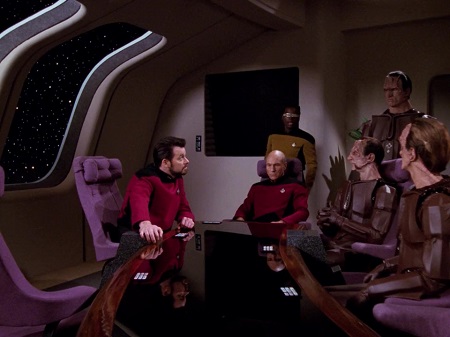
Counsellor Troi seems to pick up on O’Brien’s discomfort with the Cardassians as she and Riker escort them from the transporter room. In the briefing room, Geordi and Riker explain the basics of scanning for the Phoenix, and that they’re able to scan one sector per day. It’s worth pointing out that how big a “sector” is in Star Trek has never been consistently explained on screen! The Cardassians are sceptical – understandably so – but Picard is able to calm the tensions.

The briefing room scene.

Also present at the briefing room table is O’Brien, and Picard turns to him to ask him a little about Captain Maxwell, with whom he previously served. O’Brien explains that Maxwell’s family were killed during a Cardassian attack on the Setlik III outpost – and if Setlik III sounds familiar to you, it’s a name associated with O’Brien’s military service that would be brought up numerous times in Deep Space Nine, most significantly, perhaps, in the episode Empok Nor.

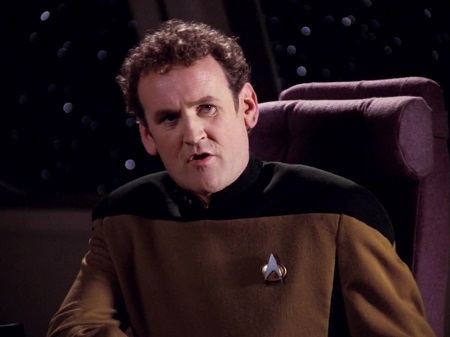
O’Brien responds aggressively when it’s suggested to him that Captain Maxwell is taking revenge for what happened to him, and it’s clear that he feels a strong sense of loyalty to his former commander. Gul Macet attempts to press the point when Picard intervenes, but before the discussion can continue the briefing is interrupted by Worf, who has located the Phoenix on long-range sensors.

O’Brien in the briefing room.

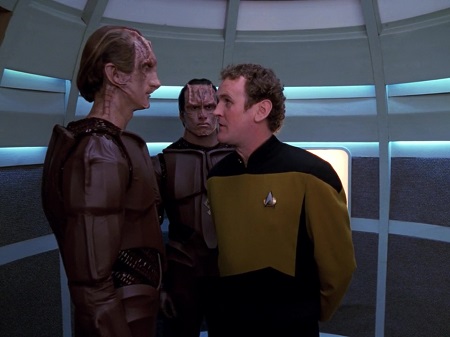
The briefing breaks up, and Captain Picard invites Gul Macet to the bridge with the senior officers. O’Brien and the two junior Cardassians leave together and end up sharing a turbolift. Here’s where we get one of the episode’s most interesting scenes. The Cardassians – who are, after all, just doing their jobs – attempt small-talk with O’Brien, but he isn’t having any of it.

After an invitation to join the Cardassians in Ten-Forward, O’Brien snaps. He tells them abruptly that he will cooperate with them when it comes to discussing technology or the search for Captain Maxwell if ordered to do so, but will not spend his free time with them. He then barges past them out of the turbolift.

O’Brien and the Cardassians in the turbolift.

It was around this time that we began to see cracks in the utopian/perfect veneer of Starfleet and humanity in Star Trek, proving that they haven’t entirely risen above the pettiness and conflicts we have in contemporary times. Gene Roddenberry was strongly opposed to the idea of Starfleet as a military outfit, and famously tried to have Star Trek VI: The Undiscovered Country re-written to cut out what he saw as anti-Klingon racism from Kirk. He felt such attitudes were beneath humanity in his vision of the future. I can only imagine he felt the same way about O’Brien in The Wounded. As an aside, The Undiscovered Country will also celebrate its 30th anniversary this year.

On the bridge, Picard orders the Enterprise-D to intercept the Phoenix, with Gul Macet watching over his shoulder. Macet wants the ship’s precise location so that he can have Cardassian vessels arrive first. He also asks for the ship’s transponder frequency – a neat callback to Star Trek II: The Wrath of Khan. Worf looks angry at this suggestion, which Captain Picard refuses – diplomatically, of course.

Picard and Gul Macet on the bridge.

O’Brien serves Keiko the promised meal in their quarters, though she seems unimpressed with his replicated potato casserole (which looks more like potato salad!) He sings an old song from his days on the Rutledge, and it seemed for a moment as though the unpleasantness with the Cardassians was forgotten. But it turns out the song – which Colm Meaney does his best to sing – was a favourite of Captain Maxwell’s. He pushes Keiko to comment on why someone – speaking abstractly – might not be comfortable with Cardassians, but appears in denial about his own feelings toward them.

This scene and the previous one really humanise O’Brien. What he’s feeling is, as Keiko explains, quite natural. Yet at the same time he’s not comfortable sharing with her exactly what it is that’s wrong. He brushes off his battle experiences calling them “skirmishes,” and refuses to accept or even recognise that he’s holding on to a degree of resentment.

O’Brien in his quarters.

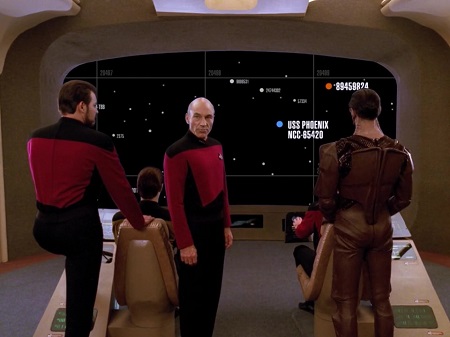
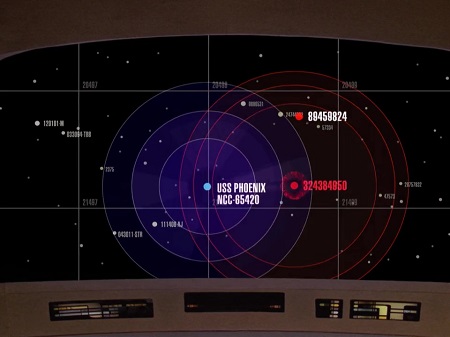
On the bridge, the crew has detected that the Phoenix is in pursuit of a Cardassian vessel – a supply ship. Gul Macet is incredulous that Data can read Cardassian transponder codes and tell what kind of vessel it is at such range, but they have a more immediate problem. Maxwell is not responding to hails, and goes on to attack the ship while the Enterprise-D can only watch.

I do like the 2D graphics used to represent the positions of the Phoenix and the Cardassian ship on the main viewscreen. Though arguably not very “high tech,” it’s cleverly done and easy to understand for us as the audience. The remastered Blu-Ray version didn’t change this, but did upscale and improve it. Though in many ways Discovery and Picard have changed up the aesthetic of Star Trek for modern times, we have seen these flat, 2D maps in those series as well.

Watching the attack unfold.

Gul Macet again insists on being given the transponder frequency (or prefix code) for the Phoenix, and when Maxwell does not respond Picard orders Worf to send the code to the Cardassians. Worf loudly protests, but does carry out his orders. Despite sending the codes, however, the Phoenix is able to continue its attack and destroys both the Cardassian warship – to Gul Macet’s shock – and the supply ship it was initially targeting.

Following the battle – if it can be called that – Picard orders the Enterprise to increase speed to warp 9 to catch up. Given the urgency, I do wonder why the ship was only at warp 6 initially. Gul Macet leaves the bridge wordlessly.

The Phoenix destroys a Cardassian warship.

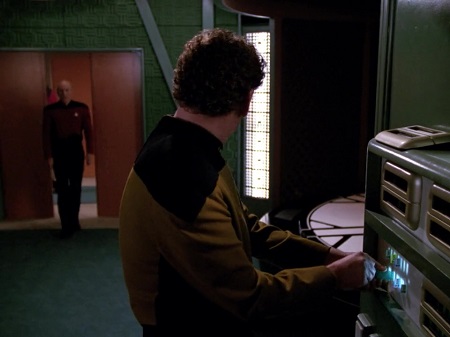
Picard goes to visit O’Brien in his transporter room. O’Brien again states how greatly he respects Captain Maxwell, saying he served with “the two finest captains in Starfleet,” putting Maxwell on par with Picard himself. He also says that he believes Captain Maxwell must have a reason for the actions he’s taken, reiterating that this isn’t some quest for revenge.

Captain Maxwell, according to O’Brien, took the loss of his family as well as one could, and continued to perform his duties despite the tragedy. Even hearing that Captain Maxwell has just killed 600 Cardassians does not shake O’Brien’s opinion, as he tells Picard that he “knows” them and that one must be careful around Cardassians, a race he clearly holds in low regard. What Picard says next about holding on to one’s anger clearly has an effect on O’Brien, and causes him to consider not only what Captain Maxwell is doing, but his own attitude to the Cardassians. It’s one of the most powerful moments in the episode – yet lasts mere seconds.

Captain Picard arrives in the transporter room.

Picard, in this statement, encapsulates the theme of the episode: that holding on to anger is never a good thing. Captain Maxwell may have pretended to be fine – as O’Brien was moments earlier with Keiko – but neither man ever got over their wartime experiences. It’s something that applies in the real world, too. At the time, the Gulf War was raging, but the peace treaty storyline reminds me more of the Vietnam War, and how Americans in this era might view their one-time enemies. It could even apply to the Second World War, and even today there are lingering feelings from that conflict in some areas.

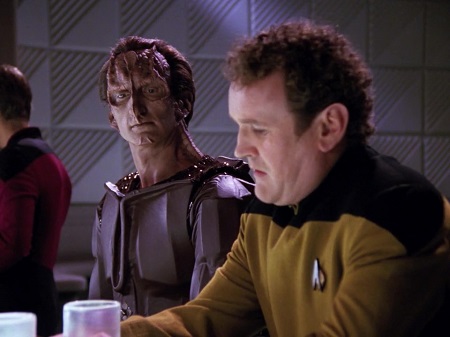
In Ten-Forward, O’Brien joins one of the Cardassians for a drink. He initially offers an apology for his earlier actions, spurred no doubt by Captain Picard’s words. But as he talks to the Cardassian officer he spills more of his history with them – he was present on Setlik III after Captain Maxwell’s family was killed, and it was the first moment he ever killed someone. O’Brien’s words are very powerful: he doesn’t hate the Cardassians, he hates himself, and blames them for making him into a soldier and a killer.

O’Brien and the Cardassian officer in Ten-Forward.

On the bridge, Worf claims to have caught the other junior Cardassian accessing a computer on deck 35. Gul Macet reprimands him and confines him to quarters. The Cardassian officer’s staredown of Gul Macet seems to imply that he was carrying out his orders, but that point was not expanded upon further.

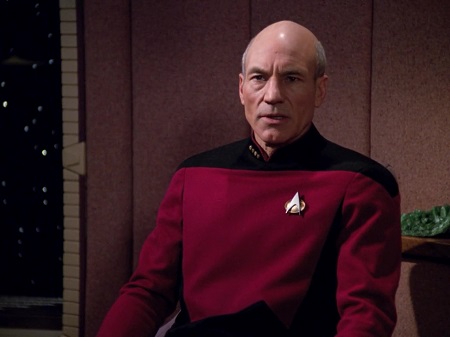
Gul Macet and Captain Picard speak in the ready-room. Macet says he will further discipline the man, Picard says it doesn’t matter, and that in order to have peace, no one individual must be allowed to disrupt it – a very self-serving statement under the circumstances, one might say! Macet sees Picard as a kindred spirit – both men desire peace above all else. Perhaps that comes as a surprise to both of them. Though it is hard to detach Marc Alaimo’s performance as Macet from his later role as Dukat, he is believable in this moment.

Gul Macet in Picard’s ready-room.

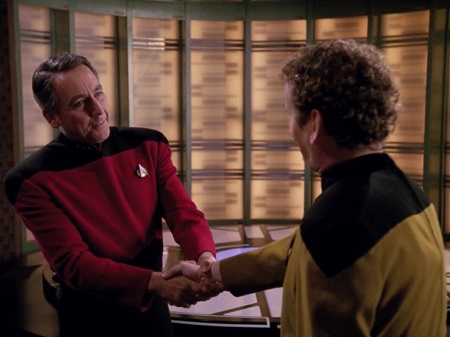
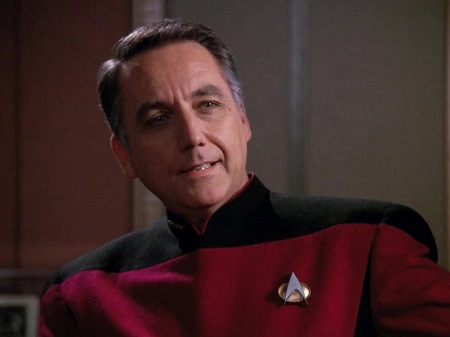
Data interrupts the conversation to tell Picard that they’re twenty minutes away from intercepting the USS Phoenix, and the very next scene shows the two ships together. Captain Maxwell beams aboard to discuss the situation with Captain Picard, and is greeted by O’Brien and Riker in the transporter room.

Far from being adversarial, Captain Maxwell is disarmingly pleasant, greeting Riker warmly and being pleased to see O’Brien after such a long time. Were it not for the previous twenty minutes we’d be forgiven for thinking this was any “normal” interaction between Starfleet officers! In that sense though, seeing this scene in context, there’s something very unsettling about it. Knowing that Captain Maxwell has gone rogue, knowing how many people he’s just murdered, and then seeing him as a jovial man in a Starfleet uniform offering friendly handshakes leaves a bad taste – intentionally so.

Captain Maxwell and O’Brien reunite in the transporter room.

O’Brien looks disturbed as Riker and Maxwell depart, the latter arriving in Picard’s ready-room for a showdown. Again, though, pleasantries were observed, and Maxwell initially retains his disarming persona. Soon, however, Maxwell appears to go off the rails. He insists that the Cardassians are re-arming, and that the science station he attacked was actually a military outpost.

When pushed by Picard for evidence, he offers nothing concrete, instead talking in vague terms about there being no need for a scientific station in the area and its strategic value from a military perspective. He didn’t contact Starfleet because he didn’t want to wait, believing that Federation bureaucracy would be too slow to recognise the threat.

Captain Maxwell in Picard’s ready-room.

Captain Maxwell genuinely expects to find a kindred spirit in Picard, a fellow veteran of the Cardassian border wars. Not only does he expect Picard to harbour the same anti-Cardassian sentiments he clearly holds, he seems to expect his so-called “evidence” – which is little more than guesswork – will be adequate to excuse his actions in Picard’s eyes.

When this doesn’t materialise, Maxwell begins to sound even more disconnected, talking in big but ultimately vague terms about the need to save lives. He argues that he’s trying to prevent a war by stopping what he sees as Cardassian aggression, and accuses Picard of losing his edge. He believes that the peace treaty was a ruse, and that he was doing necessary work by ignoring it.

Captain Picard responds to Maxwell.

Picard replies by giving his assessment of the situation. He suggests that Maxwell is not doing any of this for the good of the Federation, but simply for the sake of revenge. When Maxwell says that history will consider Picard a fool, Picard says he will accept that, but insists Maxwell stand down now and return to Federation space. Maxwell asks him to join him and scan one of the Cardassian supply ships together, but Picard refuses.

Can we argue, in light of what came next, that Maxwell was right? Not only in the sense of what the Cardassians were doing in The Wounded, but seen in hindsight after the Dominion War? The Cardassians were re-arming, and within five years of the events depicted in this episode, the Dominion War would break out. Captain Maxwell’s methods may have been wrong, but his basic point stands: the Cardassians did use the peace treaty to rebuild and re-arm. They were preparing for another conflict. In that sense, we can look at the Cardassians as one might look at Germany in the mid-1930s. Picard was arguing that peace was the most important goal, something worth making sacrifices for. Those same arguments were made by many in Britian, France, and elsewhere in the years preceding the Second World War. We might even call it appeasement.

Maxwell realises he’s misjudged Picard.

Maxwell initially agrees to Picard’s plan, agreeing to return to the Phoenix and accompany the Enterprise-D to a nearby Starbase. Picard was very strong and unwavering during the conversation, telling Captain Maxwell that he will “allow [him] the dignity” of returning to his own ship rather than putting him in the brig, then turning away to face the window after ordering Maxwell escorted out.

Predictably, though, Captain Maxwell does not stick to his side of the agreement. While en route to the Starbase, the Phoenix changes course, hunting down a Cardassian starship a light-year away. Picard orders the Enterprise-D to pursue, rapidly increasing speed. However, Data explains that the Phoenix is also accelerating and they won’t catch up in time.

The USS Phoenix changes course.

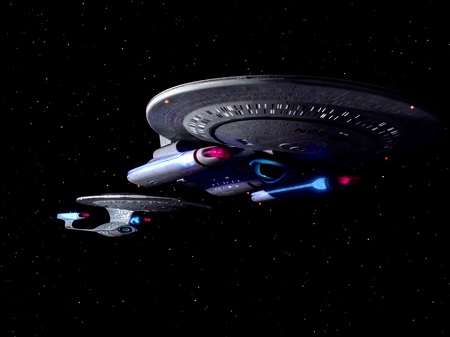
As an aside, I like the design of the Nebula-class ships. They debuted in The Best of Both Worlds, though this was the first time the ship design was named on-screen. The intention with the Nebula-class was to create a vessel comparable to the Galaxy-class but smaller, clearly giving the Enterprise-D an advantage. In that sense it’s an updated Miranda-class from Star Trek II: The Wrath of Khan, and in fact its saucer-plus-nacelles design is superficially similar. It’s a neat-looking starship, and though such things are 100% subjective I’ve always thought the Nebula-class was a fun design.

As Picard gives the order to ready the phasers, Riker informs him that O’Brien used to be Maxwell’s tactical officer, and he’s summoned to the bridge. The Enterprise-D catches up with the Phoenix just as it intercepts the Cardassian supply ship, and O’Brien arrives on the bridge to help out.

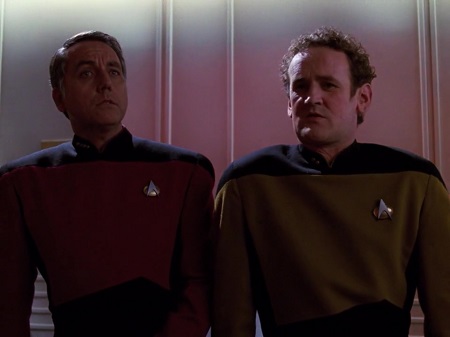
O’Brien and Data on the bridge.

The Phoenix has not powered up its weapons, and Data informs the bridge that they’re unable to scan the Cardassian ship. That does raise eyebrows – literally – but Picard first talks with O’Brien about Captain Maxwell, still hoping to avoid a Starfleet-on-Starfleet battle. Captain Maxwell hails the Enterprise and pleads with Picard to board the Cardassian ship, saying it will prove him right.

Picard, of course, is having none of it. With Maxwell no longer trustworthy he insists he beam aboard the Enterprise. Maxwell is looking increasingly desperate, threatening to destroy the Cardassian ship if Picard won’t board it. He ends the conversation when Picard doesn’t back down.

Captain Maxwell on the Enterprise-D’s viewscreen.

Captain Maxwell will strike if his back is against the wall, so says O’Brien. And mere seconds later the Phoenix is seen to power up its shields and weapons, reading an attack on the Cardassian vessel. Picard orders red alert, and prepares to take the extraordinary action of firing on another Starfleet vessel to defend a Cardassian ship.

O’Brien offers to beam aboard the Phoenix to talk Captain Maxwell down, and comes up with a technobabble plan to beam through the cycling shields of the Nebula-class vessel. With few other options, Picard authorises the mission. It would’ve been neat to see O’Brien in the transporter room pulling off this seemingly dangerous, complicated bit of transporter work! But instead the very next scene in in Captain Maxwell’s ready-room, with O’Brien having already beamed aboard.

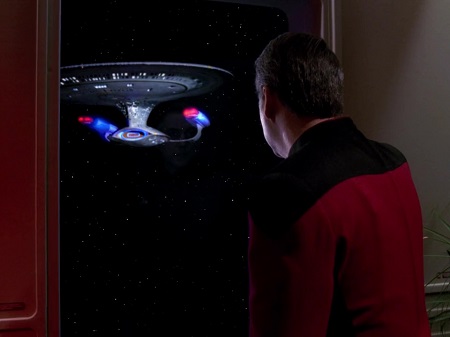
Captain Maxwell looks out at the Enterprise-D.

Maxwell is shocked to see O’Brien, and pulls out a phaser. He refuses to believe Picard will attack his ship to protect “the enemy,” but when O’Brien insists that he will he becomes dejected. He asks O’Brien what happened in “this war,” but O’Brien retorts that there is no war any more, that the war is over and they have peace.

As they talk, it becomes clear to O’Brien – and to us as the audience – that Picard and Gul Macet were right: for Captain Maxwell this is all about what happened to his family on Setlik III. He says that the war is not over, that the Cardassians are butchers who “live to make war,” and O’Brien comes to realise that he was never able to let go of what happened.

Captain Maxwell points a phaser at O’Brien.

As O’Brien listens, Maxwell’s voice breaks. His children never had the chance to grow up, he lost his family, and he has been unable to let go of that anger toward the Cardassians. It has clouded his judgement. The two men talk and reminisce about their time on the Rutledge, and other officers they served with, including a man who died at Setlik III. O’Brien sings the song again, and Captain Maxwell joins in. It turns out the song was one sung by the man who was killed by the Cardassians.

As the song comes to an end, Captain Maxwell realises that it’s over. Whatever he was trying to do, whatever reasons he had, however he’d convinced himself and his crew that it was right, he couldn’t defeat the Enterprise and he couldn’t negotiate with Picard. As he says to O’Brien, he isn’t “going to win this one.”

Maxwell and O’Brien share a moment.

Picard confirms in a voiceover log that Captain Maxwell has been detained, and that the Phoenix has rejoined the Enterprise. In the briefing room, Picard thanks O’Brien for resolving what could’ve been a far worse situation. O’Brien expresses his pride at having served with Captain Maxwell, someone he still considers a “good man,” in spite of what he did. Picard dismisses him, and Gul Macet says he admires O’Brien’s loyalty, “even if it is misplaced.”

The Wounded has one final twist, though, as Picard explains to Gul Macet. After saying that Maxwell, who was a decorated war hero, simply could not find a role for himself when peace broke out, Picard drops the bombshell that Maxwell was right. The Cardassian ships were not carrying science equipment – they were, as Maxwell said, preparing for war.

Captain Picard talks to Gul Macet in the briefing room.

Gul Macet asks the obvious question: if Picard knew, why not board the ship? Picard responds that he was there to protect the peace; that was his only objective. He placed preserving the peace ahead of everything else, even when he knew that Maxwell was right and that the Cardassians were using the so-called science outpost for military purposes. As we discussed above, he chose to put peace ahead of all other considerations.

Picard tells Gul Macet to take a message back to the Cardassian Central Command: the Federation and Starfleet will be watching. They know what the Cardassians were trying to do, and though they did not take aggressive action this time, the option remains on the table. Any chance of a surprise attack is gone, the Cardassian objective has failed. Picard spins his chair around, signalling the end of the conversation – and the episode.

Gul Macet.

So that was The Wounded. It was fun to look back on this episode on its thirtieth anniversary – something which makes me feel very old indeed! The episode was a heavy one, with incredibly deep and meaningful themes that touched on issues which are still as relevant in 2021 as they were in 1991. It’s also an important piece of Star Trek history, introducing the Cardassians, giving O’Brien his first real storyline, and bringing Marc Alaimo into the franchise.

Though the Cardassians’ uniforms would be redesigned, their overall look, as well as the appearance of their Galor-class ships, would remain in use until the end of Deep Space Nine. We have briefly seen a Cardassian in the recent third season of Discovery, too, a design which is largely unchanged from that which debuted here. The Cardassians would go on to join the Klingons as one of the most-explored Star Trek factions thanks to their significant role in Deep Space Nine.

The Phoenix and the Enterprise-D.

As Gene Roddenberry stepped back from day-to-day work on Star Trek: The Next Generation, things began to change. Where the first season largely followed the formula Roddenberry used in The Original Series, by the end of Season 2 and certainly by the time The Wounded premiered, the series had taken a different path. In addition to the darker themes which looked at humans holding prejudiced views and even committing war crimes, Rick Berman and others were working hard to establish Star Trek as a growing, connected franchise with themes, characters, factions, and storylines that would all cross over.

Plans for Deep Space Nine were underway, and within two years that show would premiere with the episode Emissary. The Star Trek franchise we know today wasn’t created by The Wounded, but the episode plays an important role in taking Star Trek to new places, not only thematically but also in terms of expanding the roster of characters. O’Brien had his first major storyline here, and the success of his role in The Wounded established him as a major player in Star Trek, getting him ready for the move to Deep Space Nine.

I had fun re-watching this episode of The Next Generation. I have written up two other re-watches from the show, and you can find them here: Season 2’s The Measure of a Man and Season 7’s Lower Decks. This is something I do from time to time, and with no new Star Trek on the schedule at the moment, check back as I’m sure I’ll be writing up more episode re-watches this year!

Star Trek: The Next Generation is available to stream now on CBS All Access (soon to be Paramount+) in the United States, and on Netflix in the United Kingdom and elsewhere. The Star Trek franchise – including The Next Generation and all other properties mentioned above – is the copyright of ViacomCBS. This article contains the thoughts and opinions of one person only and is not intended to cause any offence.