
Spoiler Warning: There are spoilers ahead for the following Star Trek productions: Discovery, Picard, Lower Decks, and Starfleet Academy.
Well, folks, it’s official: Skydance – which already owns Star Trek’s parent company, Paramount – has completed its takeover of Warner Bros.-Discovery. The newly-merged company will trade under the name Skydance, though senior figures have promised that both the Paramount and Warner Bros. brands (as well as other brands, too) will be retained in some form, at least in the short-term. Today, I wanted to discuss the merger a little from the point of view of a Trekkie, and consider what – if anything – it might mean for the future of Star Trek on the big screen, the small screen, and beyond.
Before we go any further, I have a couple of caveats! Firstly, I’m not a businessperson, I’m not an entertainment industry insider, and I don’t have any information on the merger beyond what’s publicly available. I’m approaching the subject from the perspective of a fan of one of the (many) brands now under Skydance’s ownership, drawing on news reports and other info that’s in the public domain. Secondly, everything we’re going to get into is the *subjective, not objective* opinion of just one fan. If you disagree with me, if you hate my take on what the merger could mean for Star Trek, or you think I’ve completely misunderstood something important… *that’s okay!* There’s room in the fan community for differences of opinion, and I share mine with you in that spirit.
With that out of the way, let’s talk about the latest change on the corporate side of things for Star Trek.
On the one hand, very little has actually changed for Star Trek specifically as a result of this merger. Skydance already owned Paramount – Star Trek’s parent company – and had done since last year. Star Trek is not really “under new ownership” as a result of this latest acquisition; rather, Star Trek’s existing owner has expanded and is now even larger.
But I don’t think that technicality really covers how big of a deal this *could* be for Star Trek’s future prospects.
I don’t think it’s unfair to say that, for CBS, then ViacomCBS, and finally Paramount Global, Star Trek was one of the biggest and most well-known brands. There were others, of course: the CSI franchise, for example, or The Vampire Diaries. But there’s a reason why Star Trek was tapped to be the flagship series when CBS All Access launched, and why the former Paramount corporation leaned so heavily on Star Trek when pushing Paramount+. Simply put, Star Trek was a big fish in a relatively small pond.

That has now changed… massively.
Star Trek had already fallen way behind the likes of Yellowstone and its spin-offs to lose the Paramount+ crown. But now, Star Trek finds itself under the same corporate umbrella as the likes of HBO, with shows like Game of Thrones and its spin-offs, Harry Potter (for better or worse), the cinematic Lord of the Rings trilogy, the entirety of DC Comics, which includes Superman, Batman, and other heroes, and so many more.
Star Trek is no longer a tentpole franchise for a corporate entity that can call on Harry Potter, Batman, the world of Westeros, and more. And that simple fact could set the stage for a fallow period – perhaps lasting just a few years, or perhaps lasting… a lot longer.

In the short-to-medium term, we know that Skydance has a couple of Star Trek ideas in mind. There’s a new video game – one of the first to be published under the new Paramount Games brand – and a film that seems to still be in the “ideas” stage. But beyond that… there have been no announcements other than the cancellations of every show that had been in production at the time Skydance assumed control. I don’t see this merger making Skydance *more* likely to greenlight a new Star Trek show or film. If anything… it seems like it’ll make that less likely.
I’m increasingly iffy on the film that was announced last year, too. Maybe that’s a hangover from how poorly the previous incarnation of Paramount handled its film announcements for Star Trek… but at the same time, it’s been almost a full calendar year since we learned that Skydance wanted to commission a new film, which was to be spearheaded by the filmmaking duo Jonathan Goldstein and John Francis Daley. But since then, Goldstein and Daley have continued to work on Mayday, which released just last month, and there’s been very little by way of news about the project, which must still be at a very, very early stage. On past form, you have to acknowledge that it’s possible that this film just won’t make it off the drawing board… and I really don’t know what Skydance’s leaders would make of that. With so many other brands under their umbrella, would they care… or even notice?

Skydance clearly had no confidence in the Star Trek streaming shows that it inherited – cancelling all of them. I’m also of the opinion, by the way, that Starfleet Academy had been what I’ve called “de facto cancelled” before a single episode had even aired – such was Skydance’s dislike of streaming Trek.
Skydance CEO David Ellison seems much more interested in feature films than TV shows, but he now sits atop a media empire that relies heavily on both broadcast television and streaming. New spin-offs to Game of Thrones and Yellowstone are airing or will soon air, and none of those has been cancelled as a result of this merger. So there’s clearly still gonna be a place for TV and streaming in this new corporation.

And that matters to me because, as I’ve said countless times before, Star Trek has always felt more at home on the small screen – at least to me. Don’t get me wrong, there have been some great cinematic adventures, too! But I just feel that a franchise like Star Trek works best on television, where the Enterprise can warp away to a new planet, a new alien, and a new adventure pretty much every week. If the franchise goes back to the cinema, we could get some fun sci-fi or action/sci-fi stories, for sure. But we’d also be missing a key part of what makes Star Trek feel like Star Trek.
However… I’ve also stated before that Star Trek quickly became oversaturated in the first half of the 2020s. And partly that’s because the former Paramount corporation wanted the franchise to almost single-handedly carry a loss-making streaming platform over the finish line. That was never gonna happen, and some truly epic mismanagement on the corporate side also saw such stupidity as two brand-new episodes airing at the exact same time, down to the minute, as Star Trek shows tripped over one another on Paramount+.
Maybe a break… isn’t a bad thing.
When Enterprise went off the air in 2005, I was left stunned. I scoured the internet for any rumours of a new Star Trek show to replace it, but obviously found nothing. Enterprise’s cancellation was the first time since I became a Trekkie almost fifteen years earlier that there was no new Star Trek in production. And what happened next… well, it led me to double-down on Star Trek, to re-evaluate parts of the franchise I’d overlooked, and discover my passion for it all over again.
After some missteps in recent Star Trek productions, I’m firmly of the opinion that a clear-out at the top is not only a good idea, but *necessary*. Many of the same creatives have been working on Star Trek for ten-plus years already; some have even been with the franchise since the Kelvin timeline films. It’s absolutely worth introducing new folks with new ideas and letting new leaders take the reins – and that’s something that shouldn’t be rushed. If Skydance wants to appoint a new head of streaming, it’ll take a while for that person (or team) to get a handle on where things sit and decide what they want to do. And it’ll take new creative folks time to figure out where they might want to take Star Trek next, put together a pitch, and get it approved. Rushing that process won’t lead anywhere good, I’m certain of that!

It seems increasingly likely that, sooner or later, Paramount+ and HBO Max will unify as one singular streaming platform. That just makes sense; I can’t imagine Skydance keeping them separate for very long. And with streaming still dominant in the industry, that platform will be Star Trek’s new home. I can’t see Skydance being as shockingly incompetent as the former Paramount corporation, either, losing the rights to its own films and shows – so the days of the Star Trek films disappearing from Paramount+ for months should be over! So that’s a positive, I guess.
But when it comes to *new* creations, I still think we’ve got a while to wait.
The only thing I could see that might possibly change that is the amount of debt that Skydance is now in. Long story short, Skydance (which was already in debt from the Paramount acquisition) basically had to borrow *all* of the money it needed to fund the Warner Bros.-Discovery acquisition – and, on top of that, Skydance arguably paid over the odds for Warner Bros.-Discovery in order to muscle in on Netflix’s attempted takeover. So Skydance is in – what’s the technical term? – a metric fuckton of debt.

How do media companies pay down debt? Well, selling tickets at the cinema for blockbusters is one way, sure. But in the 2020s, recruiting and retaining subscribers to a streaming platform is another. This is Netflix’s entire business model, and it’s phenomenally profitable when done right. A merged HBO Max-Paramount+ would have a lot of existing content from some of the brands and franchises discussed above, but it will also need new shows all the time to lock in subscribers and convince folks that it’s a must-have subscription.
If there’s a reprieve for Star Trek on streaming, I think that’s where it lies.
I could see this new Skydance corporation taking a bit of time to consider pitches and ideas, and to allow its new streaming folks a chance to get their feet under the table. And then, maybe in 2029 or 2030 – a scant three or four years from now – going ahead and commissioning a brand-new Star Trek series. Maybe, if their new film has been a hit, it’ll be a continuation or spin-off. Or maybe it’ll be its own distinct thing. But to be realistic, I think we’re looking at 2031-32 before any new Star Trek could hit the small screen.
If both Starfleet Academy Season 2 and Strange New Worlds Season 5 air next year, as we’re all assuming… that still means a break of five-ish years (at minimum) before there could be any new televised/streaming Trek. But that timeframe, to me, doesn’t feel unreasonable.
There are other possibilities, of course.
If Skydance struggles to manage this epic debt mountain, a “fire sale” of brands and IP could be on the cards in the years ahead. And where would a corporation want to start? With dormant brands that have good name recognition! Star Trek could, under those circumstances, potentially be sold to another media conglomerate. That’s much more of a hypothetical, but if Star Trek has been quiet for a few years and Skydance has struggled to make good on its debts… that’s the kind of thing that could happen. Though where Star Trek might end up, at that point, is anyone’s guess! I’ve heard some fans suggest that Apple TV, with its sci-fi programming, could be a good fit, and I don’t disagree. But whether Apple would really want to spend a lot of money on the rights to Star Trek is… questionable. Amazon founder Jeff Bezos is a known Star Trek fan, though, so maybe Star Trek would find its way over there. Amazon Prime Video did, once upon a time, pay for the international distribution rights to Star Trek: Picard, so it wouldn’t be totally unprecedented.
But okay, those are much more speculative ideas on my part.
What I think seems more likely, at least in the short term, is Star Trek winding down. There will be books, comics, and the occasional video game if we’re lucky. And, if the stars align, either the previously-announced feature film or a different cinematic project could hit theatres in, say, 2029. The success or failure of that picture could determine whether there are sequels, spin-offs… or whether it’s back to the drawing-board again!
One thing that this merger has solidified for me is that Skydance doesn’t see Star Trek as either one of its biggest brands or a priority. Star Trek is now one property among dozens, some of which have much higher name recognition with casual audiences – and much greater profitability potential. If budgets are tight, Skydance won’t be able to commission every project that comes across the CEO’s desk. If it’s a choice between Batman and Star Trek, a Game of Thrones project and Star Trek, Harry Potter and Star Trek, or Yellowstone and Star Trek – to give a few examples – well, I don’t see Star Trek winning *any* of those quarrels as things stand.
For reasons that are unclear – and which, given the Ellison family’s ties, may be more political than anything else – production seems to be leaving Canada, which has been where most live-action Trek (except for Picard) has been produced for the last decade. A return to Hollywood could mean that Star Trek – and Skydance’s other big brands, too – are doubling-down on the cinema as opposed to the small screen, but I wouldn’t read too much into that, to be honest.
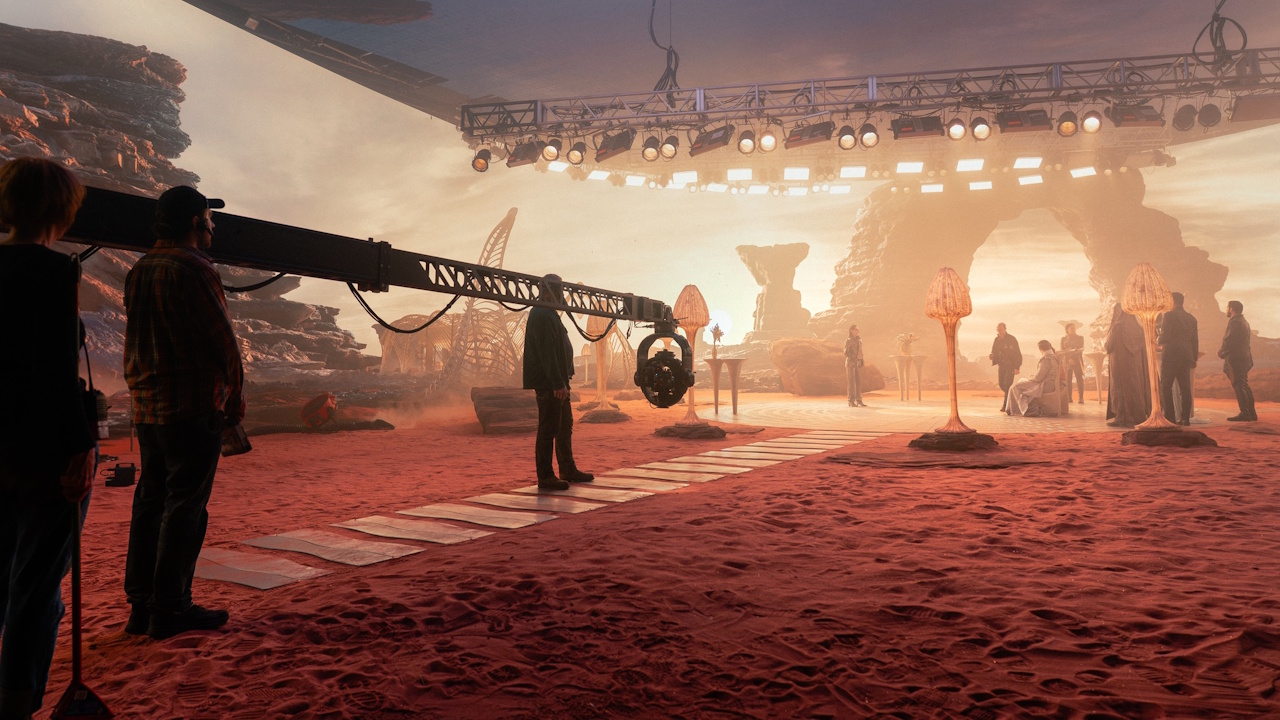
All of the sets that the previous CBS, ViacomCBS, and Paramount corporations had built have now been torn down in Canada, with many items being sold off at auction earlier this year. One thing I haven’t heard about, though, is the AR wall; the fancy screen that – to be honest with you – Paramount never seemed to properly figure out how to use! Maybe the AR wall will remain in use for other shows, and maybe we’ll even see something like it make a return in a future Star Trek production! But right now, a return to the United States, and to Hollywood, California in particular, seems to be where Skydance is going.

In terms of storylines and characters, I’m also of the opinion that most of the streaming Trek era won’t be revisited or returned to anytime soon. The only *possible* exception to that could be Lower Decks; for financial reasons, an animated series would be cheaper to produce than live-action, and most of the Lower Decks team have indicated that they’d be willing to return. Something like that could be a way for Skydance to test the waters and see how new Star Trek performs on its merged streaming platform without having to make the commitment to live-action.
However, that’s very much a hypothetical, and if I had to speculate, I’d say it won’t happen.
I really don’t see Skydance (or any future Star Trek owner/producer, come to that) wanting to revisit Discovery and Starfleet Academy’s 32nd Century. That timeline seems to have been completely shut down with Starfleet Academy’s cancellation, and of all the possible eras and settings to revisit, it’s rock bottom. I’d place it even below Enterprise’s 22nd Century – at least right now.
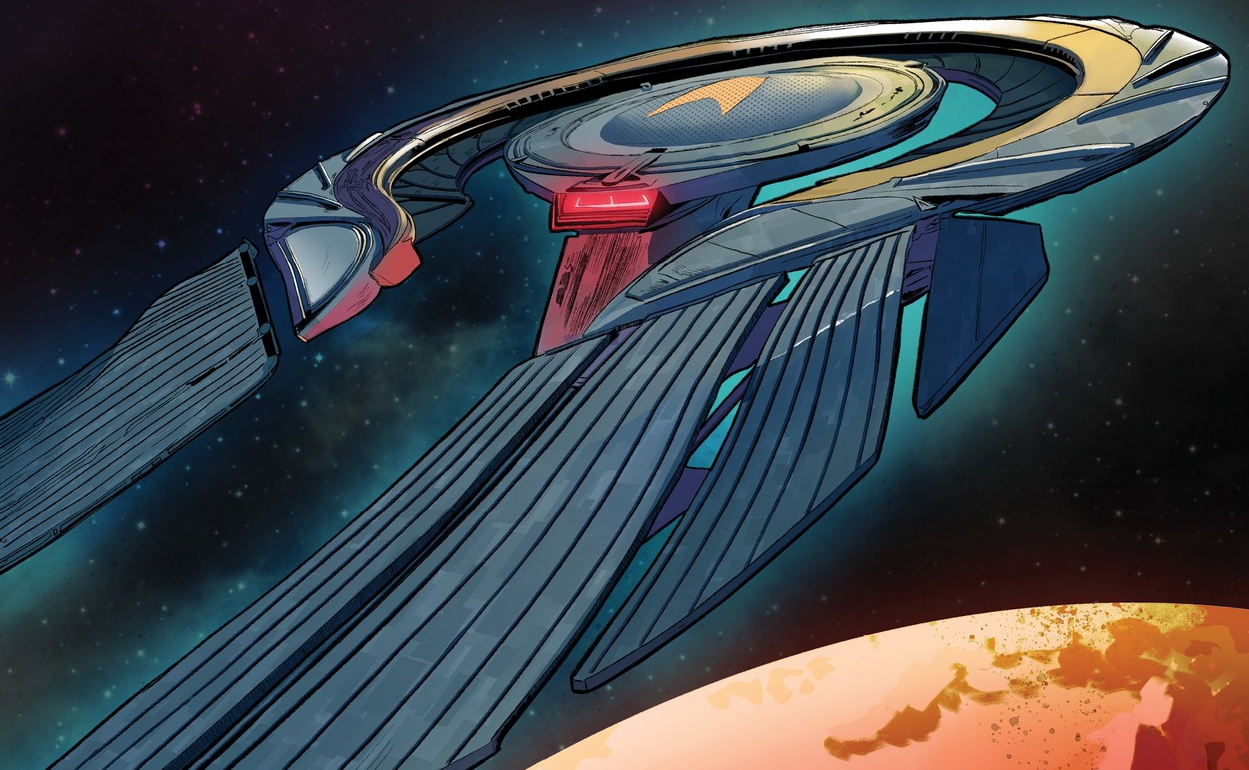
While it’s *possible* we could see a Picard-type of series, picking up the story of a main character from The Next Generation era, I’m not sure that that’s especially likely right now, either. Firstly, you have the question of which character could even carry a series like that; Janeway is pretty much the only option, and she’s already had a major role in Prodigy. And secondly, even if you could find a character to follow, any such project naturally becomes a sequel – with the result being a more limited appeal primarily to existing Star Trek fans.
What seems more likely right now is a “reset.” Don’t call it a “reboot;” I don’t think we’re going to get another J.J.-verse alternate timeline thing! But some kind of attempt to reset the Star Trek franchise, to take this increasingly convoluted brand with a fractured timeline and simplify it, seems like it’s on the agenda. The best way to do that would be to set a new Star Trek series in the 25th Century, somewhere beyond the era glimpsed in Picard. Such a series could have a cameo or two from legacy characters, if handled well, but would basically be its own standalone thing.

I just don’t see Skydance being interested in picking up any of the franchise’s dangling story threads right now – and given modern Star Trek’s failure to expand the fan community in a big way, that probably isn’t the wrong decision from a business point of view. A new series, functionally disconnected from anything that came before, would have the best chance of opening the door for new fans – fans who could then explore the rest of the Star Trek universe at their own pace. That’s what The Next Generation and the other shows of that era did, for the most part… and that’s what modern Star Trek has struggled with.
As the entertainment industry coalesces around a shrinking number of giant brands – Marvel, Star Wars, Westeros, and so on – I think there’s at least the *possibility* that Star Trek could join (or rejoin) that group. The brand name is still well-known, even amongst a casual audience; folks who’ve never seen a single episode have at least *heard* of Star Trek. But how Skydance turns that name recognition into interest, then excitement, then actual, ongoing viewership is an open question.
It’s the question that CBS, ViacomCBS, and Paramount all failed to answer convincingly.
One thing that I think is possible, though, as the 2020s roll on and streaming begins to settle into its routines, is that audiences will begin to ask for something different. Ten-episode, eight-episode, and even six-episode fully-serialised stories have become streaming’s bread-and-butter, but we’ve seen the limitations and dangers of telling stories like that. Game of Thrones – one of Skydance’s new properties – basically disappeared on account of how poorly its ending landed, and there are other examples of serialised stories that just didn’t work or failed to stick the landing. Long breaks of two-plus years in between short, serialised seasons hasn’t helped, either.
And a franchise like Star Trek is well-suited to challenge that model.
Rather than forcing Star Trek into a modern, serialised streaming mould that – I would argue – is not and never was a good fit, Skydance *could* take the franchise in a more episodic direction once more. If audiences are burning out on serialised shows and ever-shorter seasons, you couldn’t ask for a better franchise than Star Trek to lead a new trend – back towards longer seasons and episodic storytelling. A show set on a moving starship, warping away to a new planet, a new alien, and a new adventure every week? That’s what Star Trek was when it was at its best… and that’s what it could be again one day.
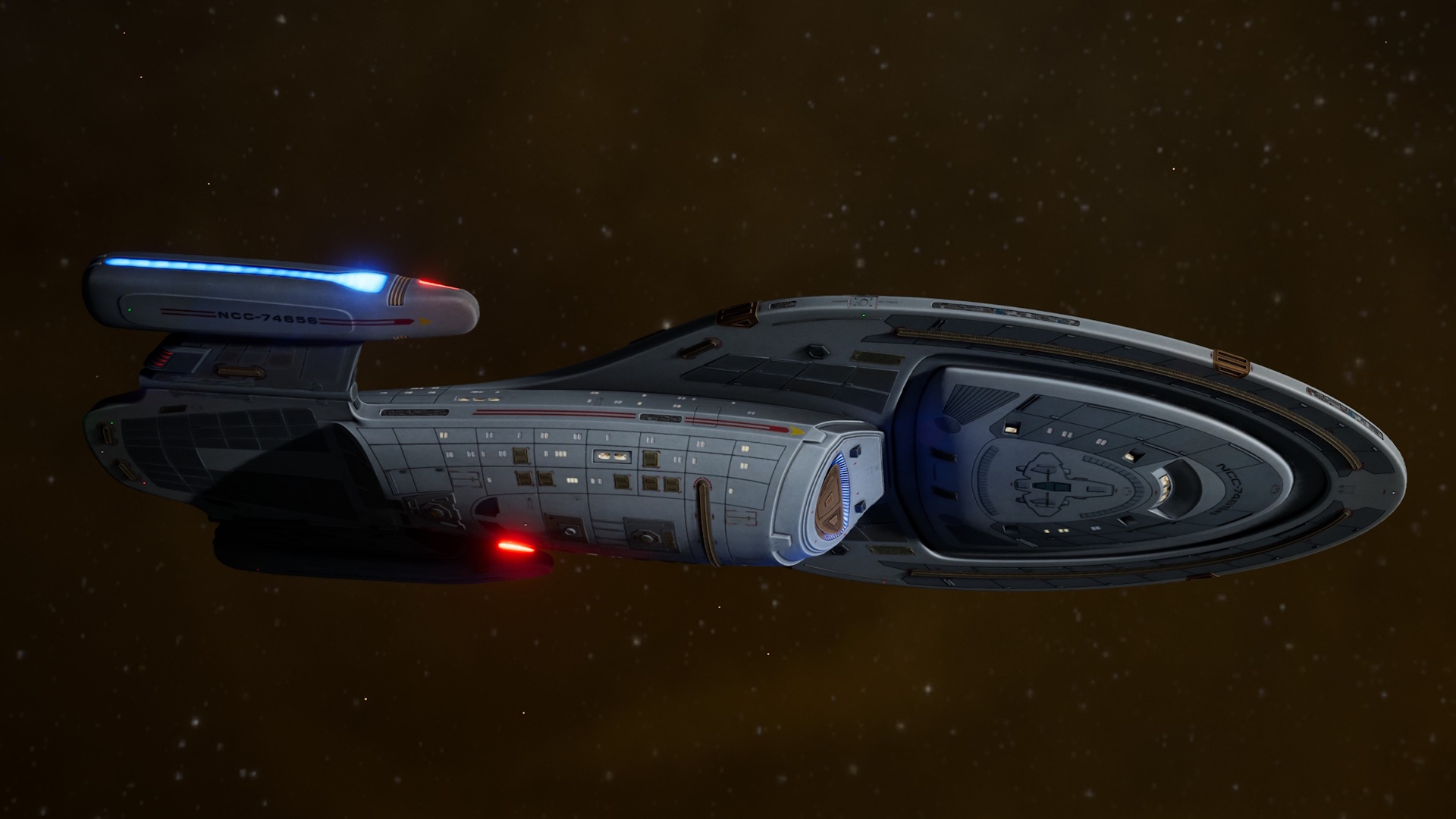
If I was making a pitch to Skydance, it would be for that kind of show.
But all of that is for the future! Right now, today, in October 2026, I would say that the Skydance-Paramount-Warner Bros.-Discovery merger is, on the whole, a net negative for Star Trek’s short-term prospects. Star Trek has gone from being one of the previous corporation’s much-needed and biggest brands to merely one IP among many that could easily be overlooked. Skydance’s decision to cancel every extant Star Trek series shows that the new leaders had no faith in what they were seeing when they took over, and a CEO who clearly prefers film over TV and streaming indicates that Star Trek’s short-term future lies at the cinema. If that film should flop – like the last one did – well… then we could be in a very bad situation.
Longer-term, though, I still don’t believe we’ve seen the last of Star Trek. Skydance’s debts could lead to a new streaming series being commissioned to give a boost to Para-Max-Plus-HBO-Mount (or whatever the merged streamer will end up being called). Or, alternatively, the Star Trek franchise could be put up for sale, and there are several big players elsewhere in the entertainment space who might be interested in a brand with a built-in fanbase and near-universal name recognition. So it’s not *all* doom and gloom!

I hope this has been interesting. I wanted to consider the possible ramifications of the Skydance merger now that it’s official. Star Trek has survived corporate changes and shenanigans before, and I daresay that the brand isn’t going to completely disappear. But we are set to enter another fallow period – perhaps one that’ll feel closer to the 2010s than the 1970s, though, with at least one feature film (allegedly) in early pre-production. Whether Star Trek will remain an occasional cinematic franchise, though, or whether a return to the small screen could happen in the first part of the next decade… I think that’s still to be determined!
One thing I can promise is that I’ll do my best to be supportive of whatever moves Star Trek makes next. The upcoming video game, Shadow Frontier, genuinely has me interested, as it’s being developed by a studio with a solid track record. And despite my scepticism, I’m crossing my fingers and hoping that the film which was announced last year will actually make it to the big screen this time! None of that means Star Trek gets a free pass or should escape criticism – I can be very critical when it comes to missteps, mistakes, and poor decisions. But I don’t want Star Trek to just… disappear. So I think, as Trekkies, we have an opportunity to show Skydance how much this franchise means to us and how far we’re willing to go to support it. I’ll do my best – including writing about the franchise here on the website!
Thanks for joining me this time. I hope my read on the situation has been, if nothing else, interesting! Time will tell what Skydance plans to do with Star Trek, and I will be watching and waiting to see if any big announcements are coming. If something major does get announced, or if we get news about the new film or another upcoming project, I hope you’ll join me once again for my thoughts and analysis. Until next time… and Live Long and Prosper, friends!
The Star Trek franchise (except for Prodigy) is available to stream now on Paramount+ in countries and territories where the platform is available, and is also available on DVD/Blu-ray. The Star Trek franchise – including all properties discussed above – is the copyright of The Skydance Corporation. This article contains the thoughts and opinions of one person only and is not intended to cause any offence.

