

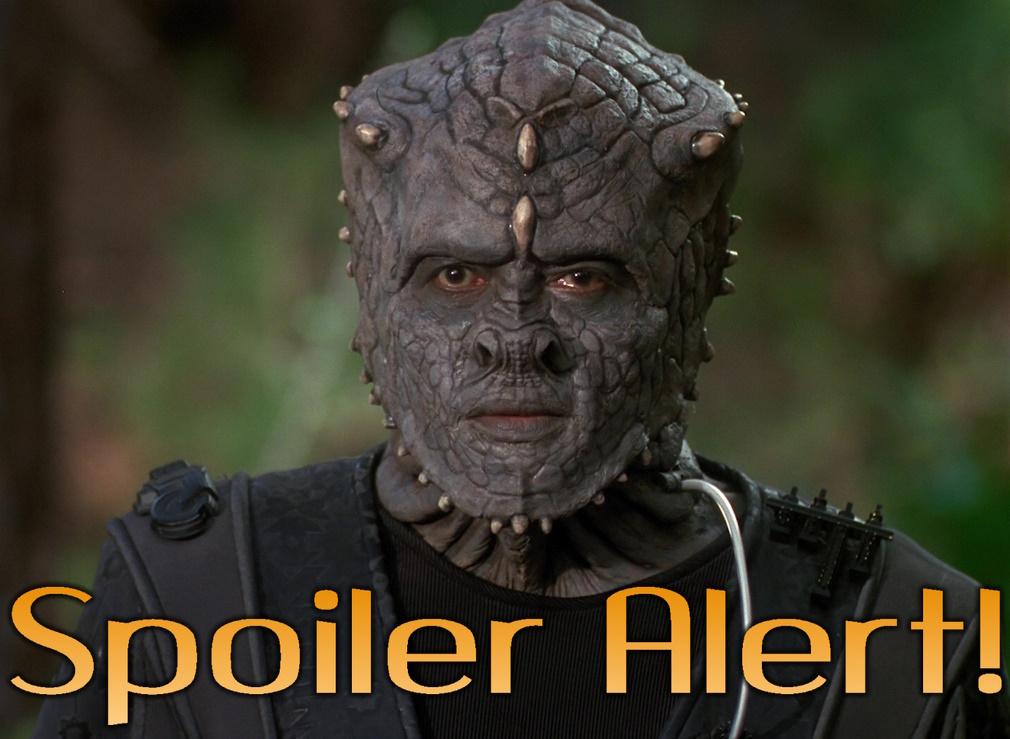
Spoiler Warning: There are spoilers ahead for Star Trek: Strange New Worlds Seasons 1 and 2.
Welcome back to my Strange New Worlds Season 2 episode review series. I know it’s been a while, and I’ll address that briefly before we jump into the review proper.
Last year, while Strange New Worlds was airing, I began to feel burned out on Star Trek as a whole. I also found myself writing less frequently here on the website, and I think I just needed a bit of a break from what had been a pretty hectic schedule for the franchise. There’s been a lot of Star Trek on our screens over the last couple of years in particular – some of which has been quite heavy, with themes of mental health that hit close to home for me. Long story short, I ended up taking a break from Strange New Worlds halfway through Season 2… but now I’m finally ready to jump back in. I’m going into these episodes completely fresh; this is my first time watching Lost in Translation and I haven’t seen the remaining Season 2 episodes yet.
So I hope you’ll excuse the lateness of this review! I plan to pick up where I left off last year, and while I don’t promise to do one review a week… hopefully by the end of the year – or at least by the time Season 3 is upon us – I’ll have finally wrapped up this batch of episodes.
Onward, then, to Lost in Translation!
This episode put a somewhat dark and distinctly modern spin on Star Trek’s trusty old “they were only trying to communicate!” premise, and it worked pretty well. Outside of the main thrust of the story were a couple of moments of characterisation that I felt either weren’t set up particularly well or that might’ve needed an extra moment or two in the spotlight, and there was a rare CGI miss for Strange New Worlds as the series used a sub-par visual effect that had also appeared in Picard’s third season. Other than that, though, I had a pretty good time with Lost in Translation; it was a nice way to return to Strange New Worlds after an absence of more than a year.
I think I’ve noted this before in either my Season 1 review or one of my earlier Season 2 episode reviews, but I just adore the opening title music. I got goosebumps listening to the theme this time after not hearing it for months, and the way composer Jeff Ruso deconstructed and then recreated the music from The Original Series is really something special.
Let’s talk about what I didn’t like in Lost in Translation – which, thankfully, isn’t too much this time around.
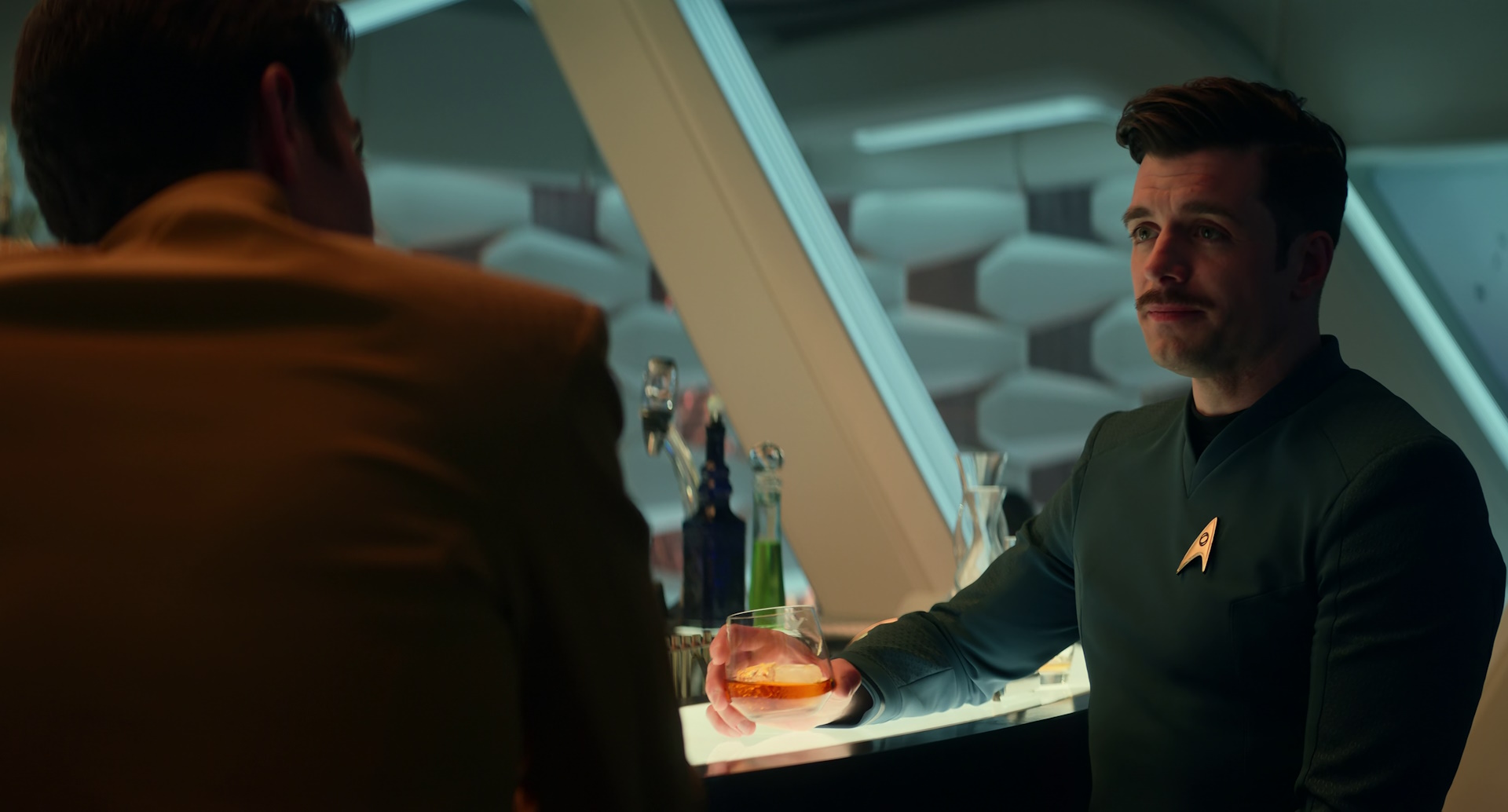
There were a couple of pretty abrupt scenes where two different sets of characters seemed to have fallen out with one another off-screen, and the way this was communicated wasn’t great. First we had the two Kirk brothers: Sam and Jim. Their rivalry came from an understandable place, but it needed way more buildup to have been effective. We’ve seen these characters on screen together more than once in Strange New Worlds already, and there was no indication in those earlier appearances that Sam might feel Jim’s rise through the ranks was a sore spot.
And when we boil it down… this argument felt incredibly petty. Jim Kirk has just been promoted, becoming the youngest-ever first officer in Starfleet. And Sam feels jealous of that because their father – who we’ve never met and hasn’t been mentioned before – likes Jim more because of it? Have I even got that right? For the brothers to go from sharing a hug on the transporter pad to Sam storming off – twice, I might add – just felt so incredibly ham-fisted and rushed. There was the smallest nugget of an interesting idea at the core of this, and both actors did the best with the material they had. But this argument/sibling rivalry needed way more time on screen and more development, ideally over more than one episode. Strange New Worlds has done well so far with its blend of episodic storytelling and serialised character arcs… but this one didn’t stick the landing this time.
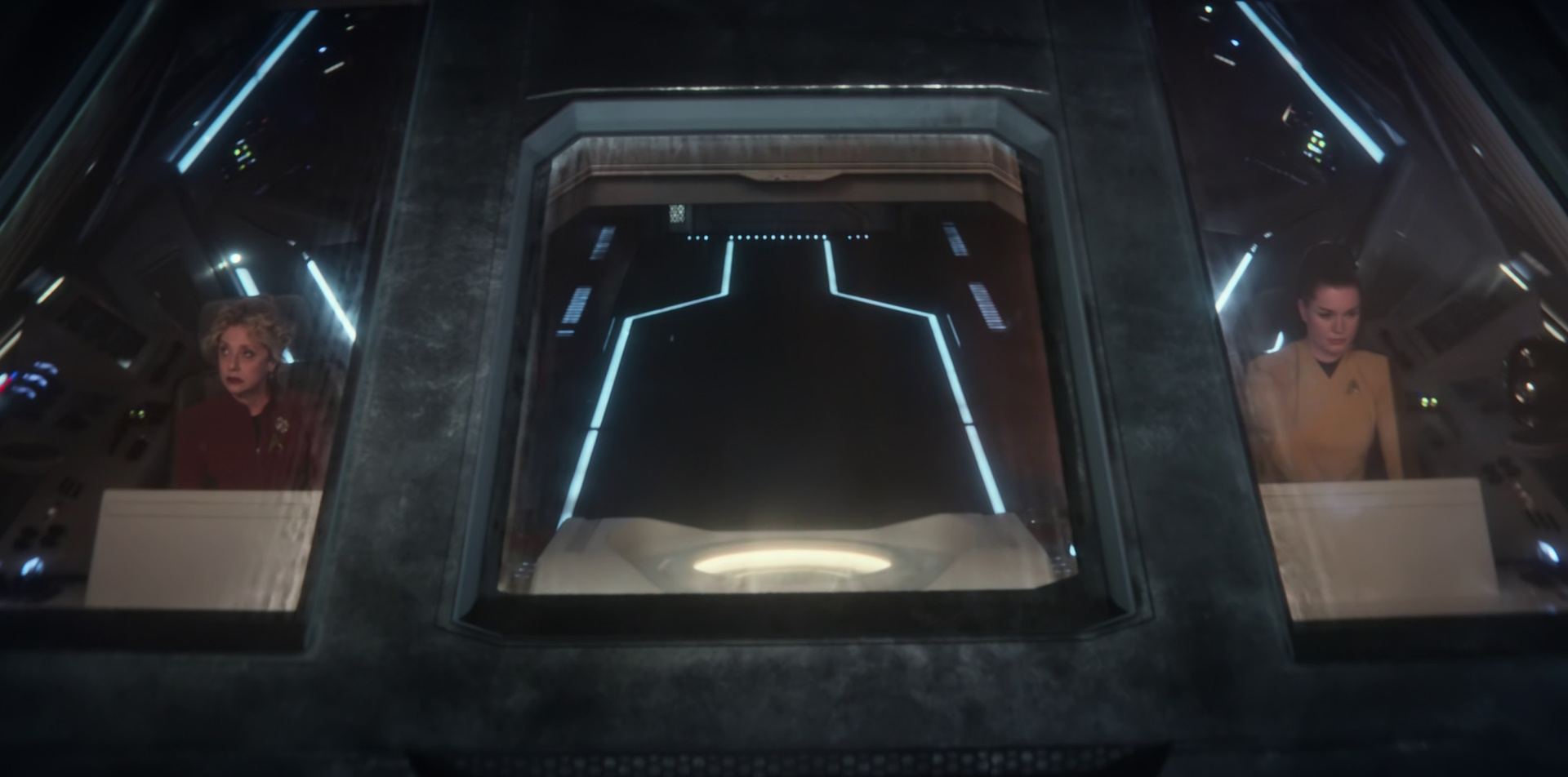
In a similar vein we have Una and Pelia’s conflict. This one has the benefit of being resolved (or apparently resolved, at least) by the end of the episode, meaning that the final scenes they shared together in the shuttlecraft and the conversation that Pelia forced went some way to compensating for their earlier conflict. But the same basic issue arises as with the Kirk brothers above: it needed more setup and more time on screen to play out.
This kind of conflict between two main characters can’t be a one-and-done, throwaway thing in a single episode; it deserves to have more time spent on it. Not for the first time in modern Star Trek I find myself saying this: if there isn’t enough time to do justice to a storyline that needs room to unfold… skip it. Don’t forget it entirely, but put it back on the shelf for later and find something smaller that would be a better fit for the short runtime available – then when you have the time to fully explore this kind of grief-driven character conflict, return to it and do it properly. This isn’t an isolated issue, unfortunately, as we’ve seen similar problems in all of the modern live-action Star Trek productions since 2017.
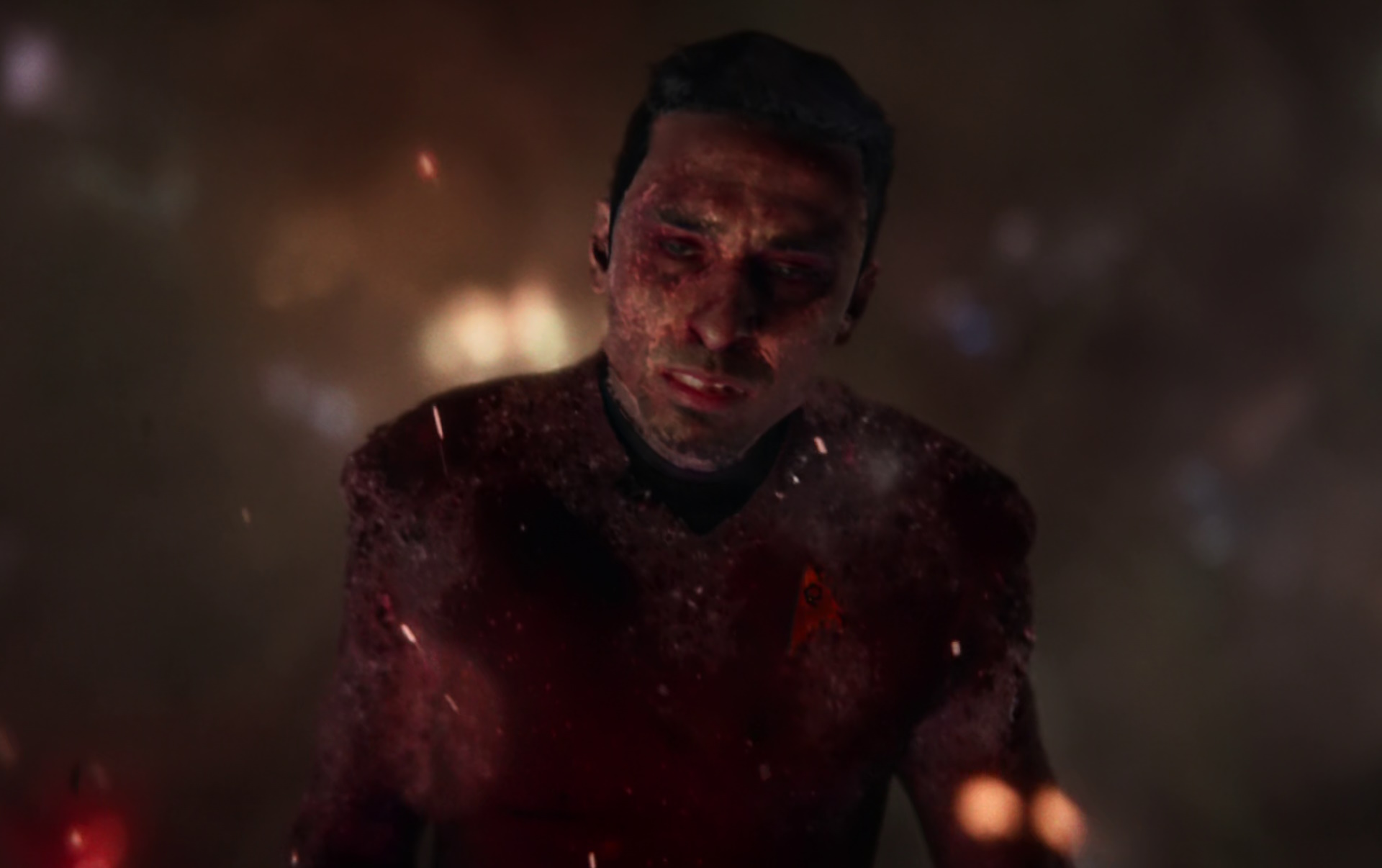
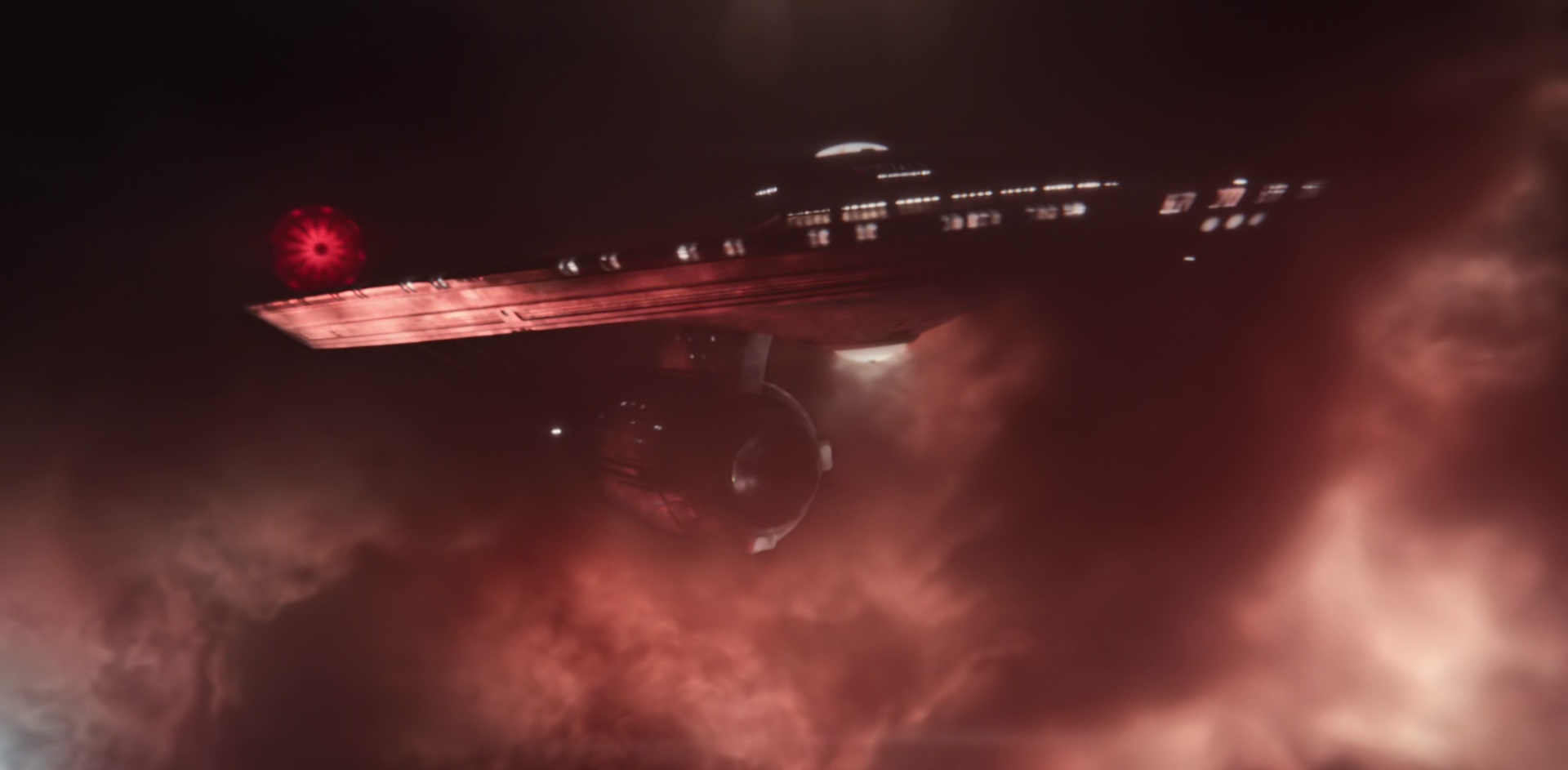
There was one particularly poor use of CGI in Lost in Translation, and I think it’s worth looking at briefly. The scene where the doomed redshirt Lieutenant Ramon is blasted out into space had some great animation work for the USS Enterprise and the nebula that the ship was in – and visual effects across the rest of the episode were pretty good. But Ramon’s death was poor, and the “freezing” effect used as his body was floating in space was a long way wide of the mark.
It’s a lot harder to accurately animate a person – and facial features in particular – than it is to do things like spaceships, planets, and inanimate objects, and unfortunately that’s what we saw with Ramon’s death. The CGI model just wasn’t up to scratch, and although other elements of the same animated sequence looked good, the individual at the centre didn’t. Earlier in 2023, I noted the exact same problem with the death of another character in Star Trek: Picard Season 3. This character was also ejected into space, iced over, and died – and the same issues were present. Paramount has done a lot of great work with CGI and animation in modern Star Trek… but there’s still a long way to go to get some of these character models and effects to where they need to be. It didn’t ruin the entire episode – but it was noticeable in that sequence, particularly because the rest of the animation work was so good.
So those are the only parts of Lost in Translation that I can say I didn’t really like or that didn’t work for me. Next, I’d like to talk in a broader sense about a character who returned in this episode – and their death in Season 1.
The episode All Those Who Wander is one of my favourite Star Trek stories of the last few years – probably of all-time. It’s an episode that shows how Star Trek isn’t always going to be the kind of nerdy sci-fi franchise that people think, and how it can dip its toes in genres like horror. It’s a gruesome, shocking story – and one that comes with a final, brutal twist right at the end.
All Those Who Wander wouldn’t have been so impactful if Hemmer had survived – and I fully appreciate that. One of the things his death showed is that most of Strange New Worlds’ characters don’t have “plot armour” and therefore can’t be considered as safe as main characters in previous shows. That’s great in some ways – it’s modern, it can ramp up the tension and drama at key moments, and it represents a franchise that’s still growing and evolving even after more than half a century in production.
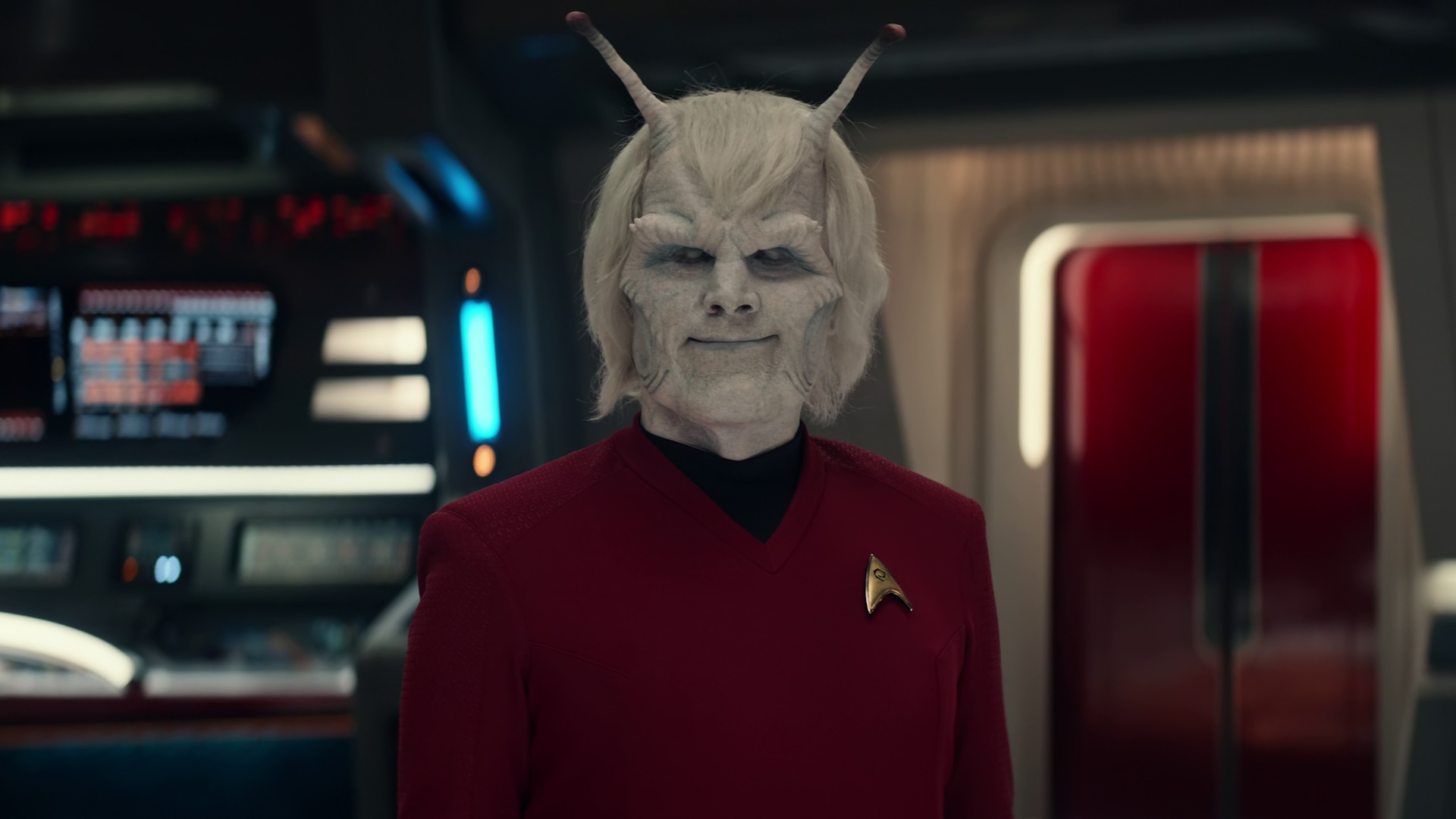
But – and you knew there had to be a “but” coming after all of that – Hemmer was a great loss for Strange New Worlds. Killing off such an interesting character so soon, and after he’d only really had a chance to make an impact in a couple of episodes was an odd decision, and I can’t help but see parts of Lost in Translation as a reaction to Hemmer’s death. Perhaps the decision to bring him back in this way is even a bit of an admission on the part of the writers that they miss this character and regret not being able to do more with him.
Pelia is great. She adds a comedic flair to Strange New Worlds that the series needs, and she has a way of making even tense and dangerous moments feel lighter. Many stories have already benefitted from her inclusion – and I have no doubt that others will in the future, too. But that doesn’t mean Hemmer’s early demise feels any better. And it’s impossible to talk about Lost in Translation without going back to Season 1 and thinking about what might have been if Hemmer had stuck around. As a blind character, as a member of a race that Star Trek hasn’t explored in depth since Enterprise, and as a pacifist working on a ship that might be called into action… there was a lot of potential in Hemmer that we never got to see realised.
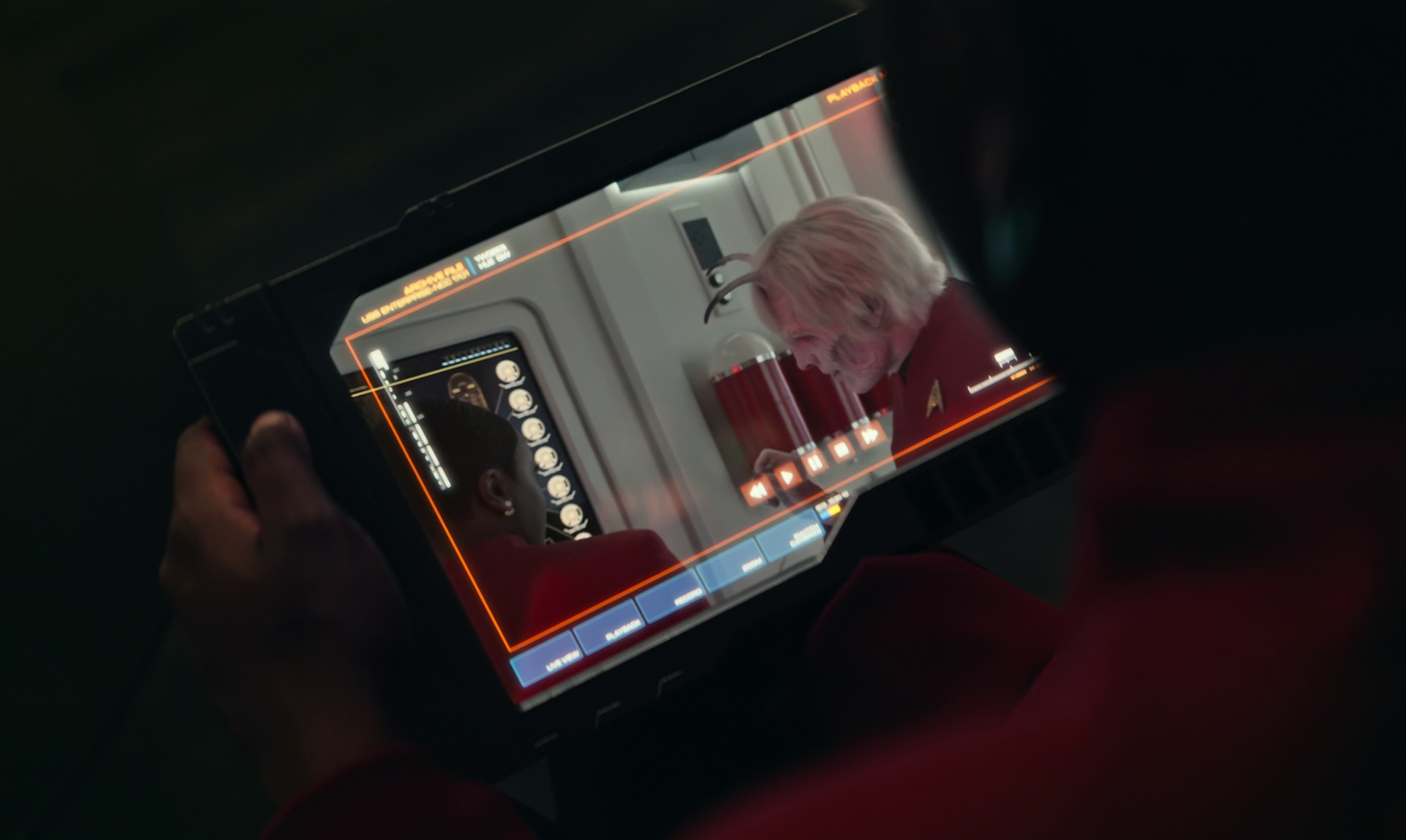
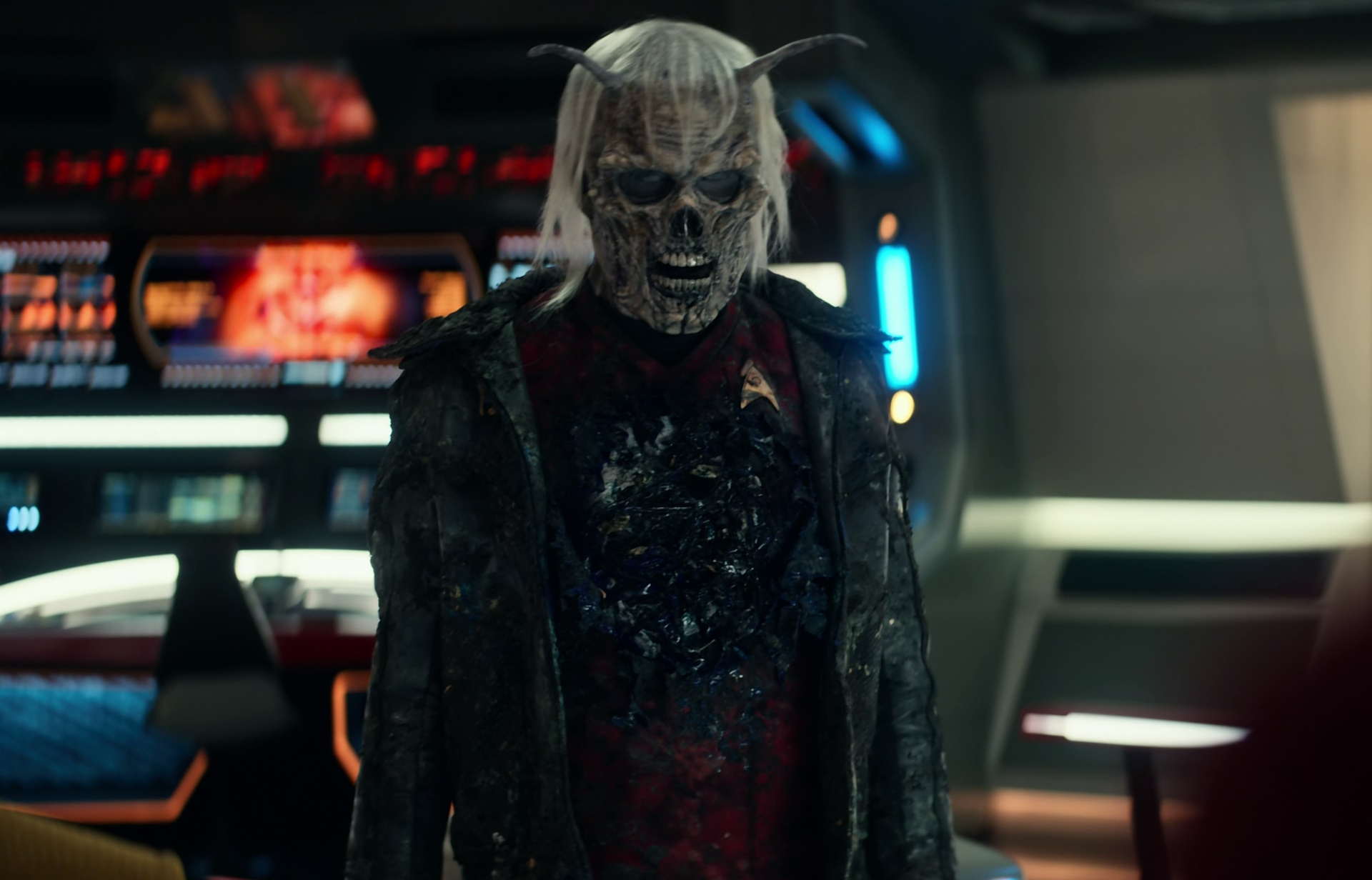
I was entirely unprepared for the zombie Hemmer jump-scare just before the credits – and I about pissed myself when his mangled, decaying corpse showed up, growling at poor Uhura. That was an incredibly well-executed moment, and it left me on edge for much of the rest of the story, especially when Uhura was hallucinating and the camera panned around. I kept expecting another jump-scare at that level!
We talked a moment ago about a CGI effect that missed the mark – but the makeup and prosthetics used to create Hemmer’s hallucinatory form were absolutely pitch-perfect. I genuinely cannot fault the way Hemmer appeared in those moments, and the changes from how he looked when alive to the bloodied, decaying, zombified form that appeared to Uhura must’ve taken a lot of time both at the planning stage and in the makeup chair.
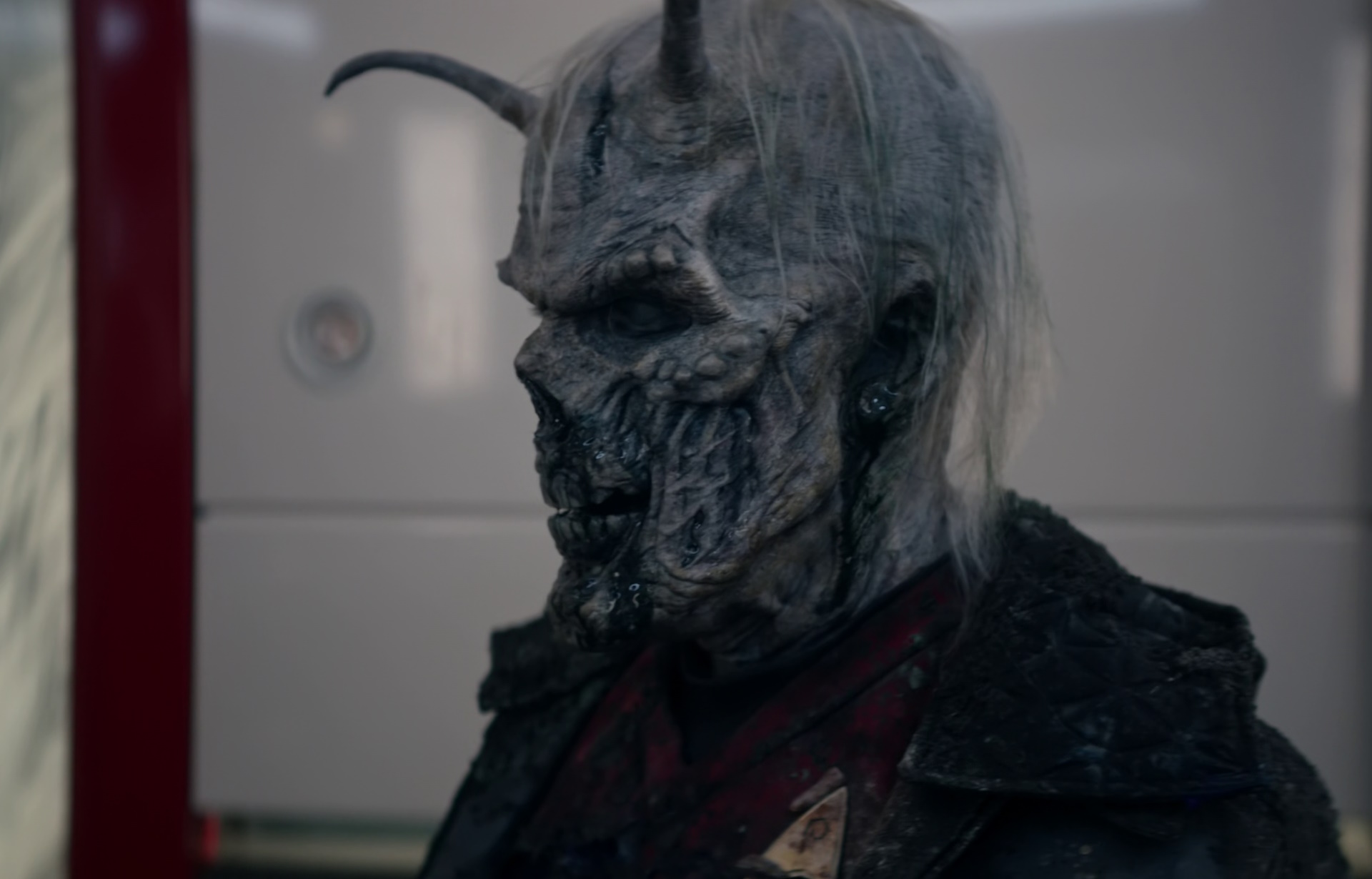
It makes a lot of sense to use a character like Hemmer to tell a story about grief and loss – and I would argue that Strange New Worlds managed to do a far better job on this front than the likes of Picard or Discovery when those shows attempted to look at comparable themes. The reason for this is Hemmer: we as the audience had known this character, seen him interact with the crew across several Season 1 episodes, and were mentally prepared for him to continue on as part of the show. His death was shocking and untimely – so we can absolutely see how his death would have had a major impact on characters like Una and Uhura.
Hemmer and Uhura struck up a friendship in Season 1, and he played a role in helping her choose to remain in Starfleet when she was having doubts. This friendship was expanded upon in Lost in Translation, as we got to see them working together through the recording that Uhura carried with her. This also helped build up the sense of grief and mourning that was key to this side of the story. It was well-written, beautifully performed, and is a storyline that I think should be relatable to anyone who’s been through the loss of a close friend or family member. We often talk about Starfleet and crews on Star Trek as akin to families; this is another side of that analogy.
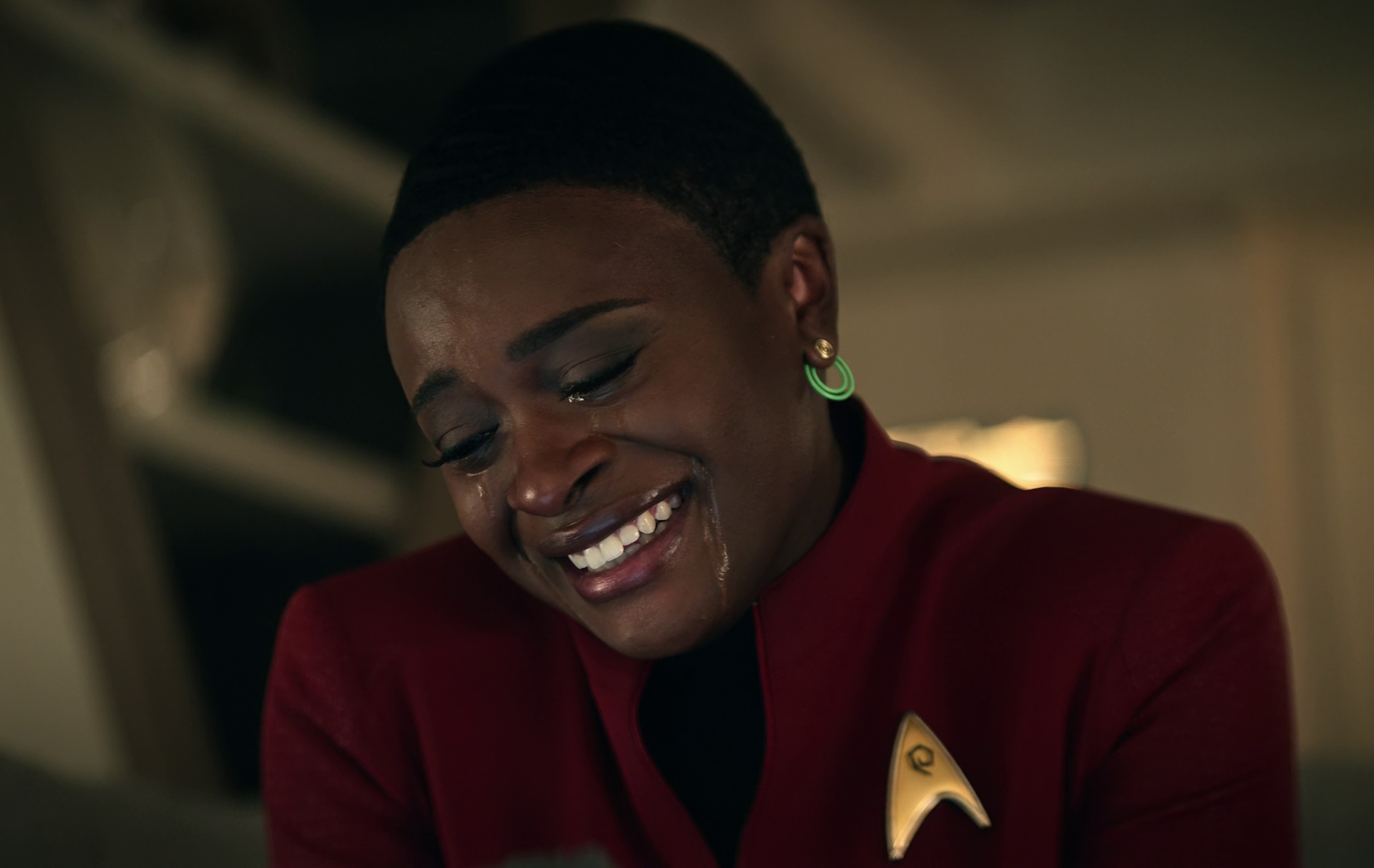
Uhura and Hemmer had that closeness in Season 1, but I’m struggling to remember a comparable moment between he and Una. Despite my criticism of the rather short and abrupt nature of her conflict with Pelia, I think the underlying theme of coming to terms with loss and having to see someone new as a “replacement” for a fallen friend or comrade was an interesting one. Again, it’s something that should be relatable to a lot of folks in the audience – I just fear in this case that the way this particular conflict was handled may have got in the way of the message.
Hopefully Una and Pelia have come to an understanding, at least, and future episodes might be able to build on this relationship, taking them from adversarial to something closer to friendship. If future stories are plotted out that way, we might be able to look back somewhat more kindly on their conflict in Lost in Translation.
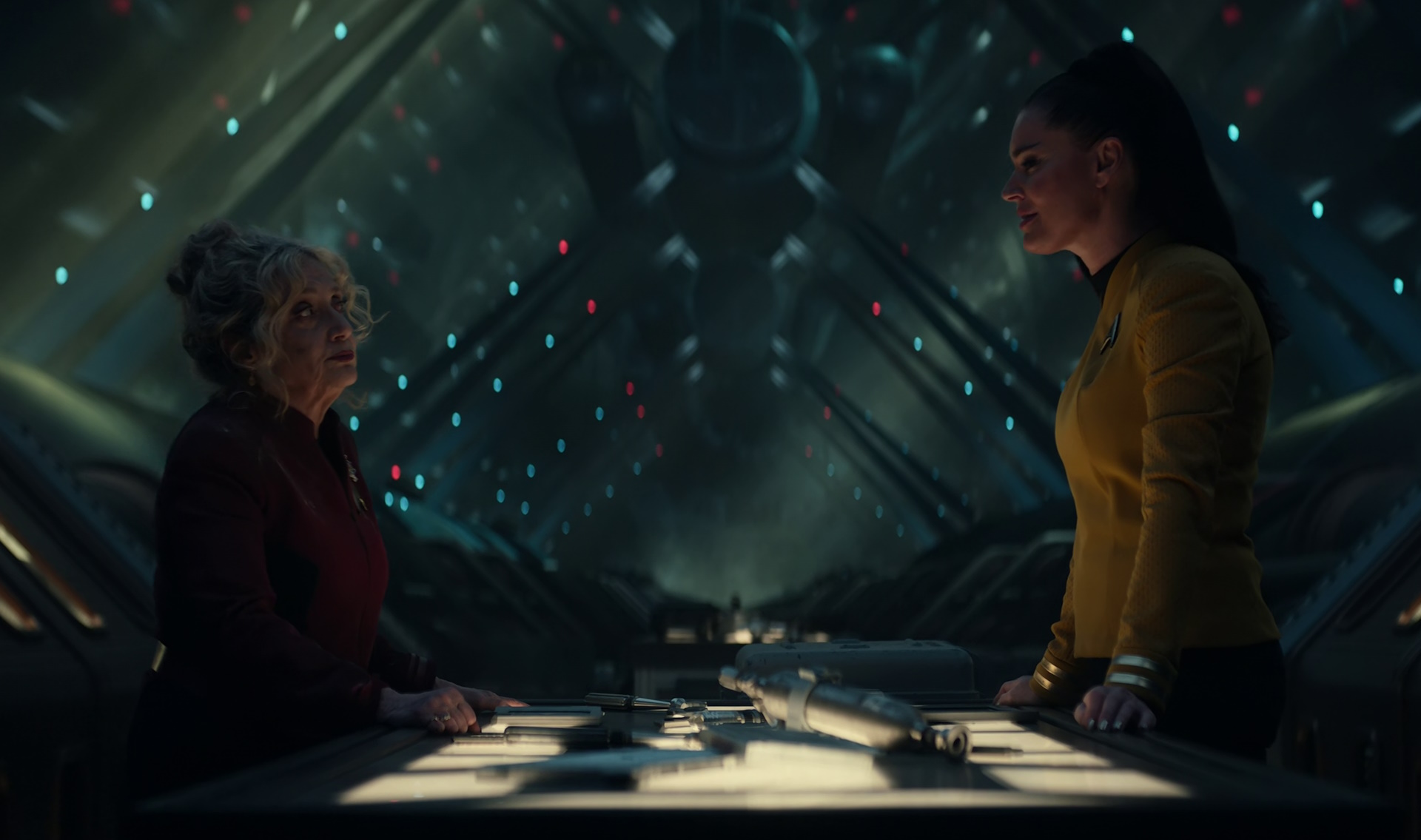
I’ve lost count of the number of times Star Trek has used the “it was only trying to communicate!” storyline! Some of these have worked better than others, to be blunt – and it isn’t unfair to call it a trope of the franchise. Season 1’s Children of the Comet wasn’t a million miles away from that premise – and also featured Uhura in a big way. Lost in Translation is a very dark interpretation of this narrative idea, though, and I think it worked quite well.
Maybe this is a reach (actually, it’s definitely a reach) but I felt that there were at least some superficial similarities to Voyager’s Season 6 episode The Haunting of Deck Twelve. That story was different in tone – with its frame narrative and “ghost stories around the campfire” style – but it also featured nebula-dwelling lifeforms caught in a starship, desperate to survive and get home. I doubt it was intentional, but it’s interesting, at any rate!
We’re used to seeing aliens in Star Trek that are very humanoid. Recent and not-so-recent stories have even tried to provide an in-universe explanation for the abundance of humanoid alien races… with limited success, in my opinion! But episodes like Lost in Translation remind us that the galaxy is also home to alien races that are so very different from humanity that it can be hard to even conceptualise – let alone find a way to communicate. These stories have always been interesting to me – and while Strange New Worlds gave us a more action-heavy, even horror take on that idea, I thought it worked exceptionally well.
There was plenty of room for science and for problem-solving as Uhura, Kirk, Pelia, and others all struggled to understand what was happening. Maybe it’s because I’m a seasoned Trekkie, but I felt maybe some of the characters – Spock in particular, perhaps, but also Pike and Pelia – should have suspected that something alien was going on when both Uhura and Ramon fell ill while the station was experiencing sabotage… but I can’t really hold that against the episode. I have to remind myself, sometimes, that Strange New Worlds is set before most of the rest of Star Trek – so the characters wouldn’t necessarily know what to look for and wouldn’t have the experience of those other stories to draw upon.
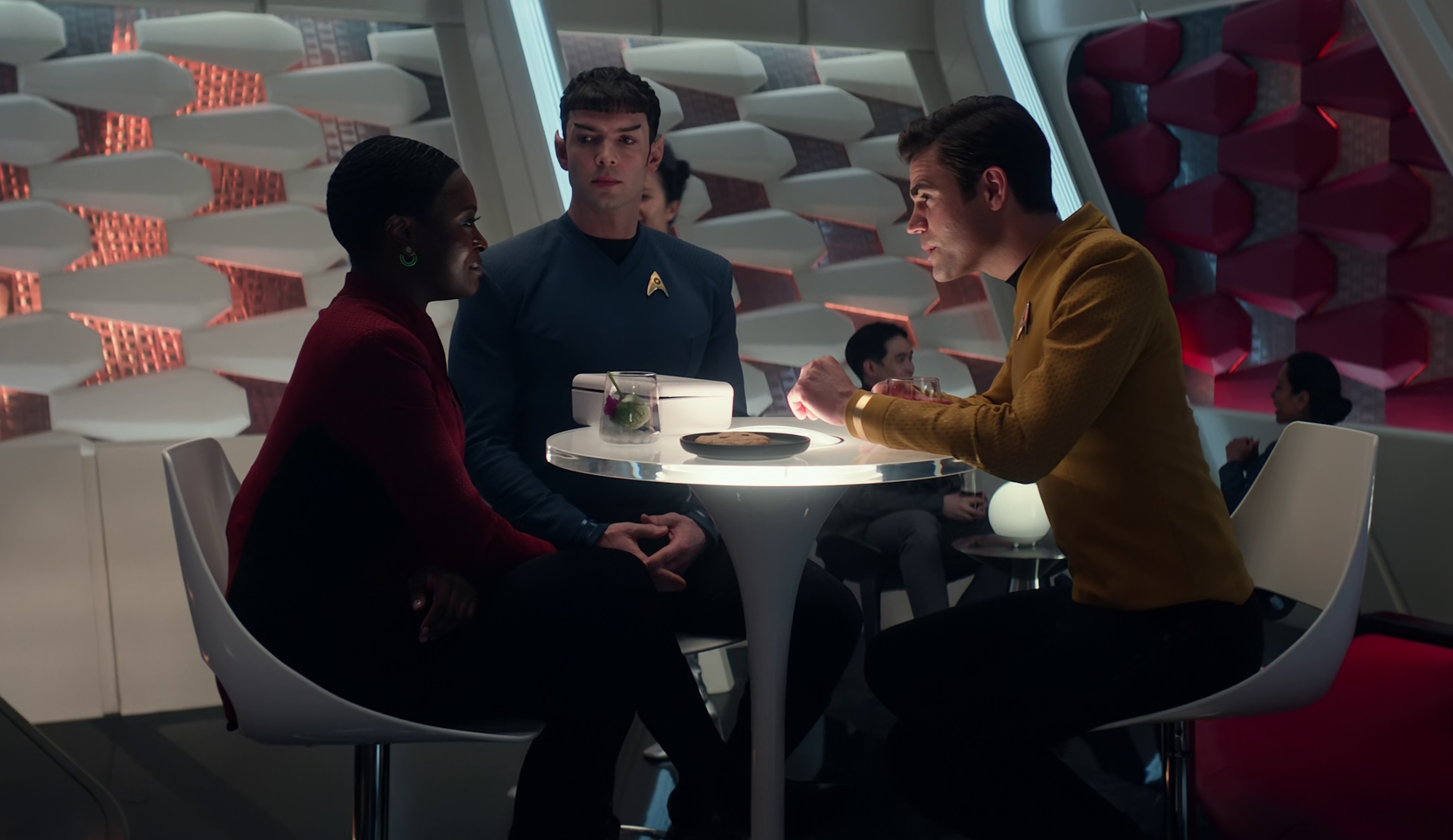
Pairing up Uhura with Kirk was great – and seeing how they got to meet for the first time in the prime timeline was great fun. There’s a lot of history with these two characters that Strange New Worlds had to respect – and I think the writers did them justice on this occasion. I also like the idea that it was Uhura who made the introduction between Kirk and Spock – that feels fitting, somehow.
At first I thought we were going to learn that Kirk was another of Uhura’s hallucinations! That seemed to be a possible route for the story to have taken. I’m glad it didn’t turn out that way, though, especially as the episode wore on and we got to see some genuinely sweet moments between them. Kirk is a flirt and a womaniser – something we know from his appearances across The Original Series, the Kelvin films, and beyond. But I felt the way this was handled in Lost in Translation – with Uhura shutting him down pretty quickly – was both a little bit funny and true to both of their characters. Any inclusion of characters from The Original Series has to be handled carefully, and pairing up Uhura and Kirk for basically an entire story could have gone awry. I’m glad that it didn’t.
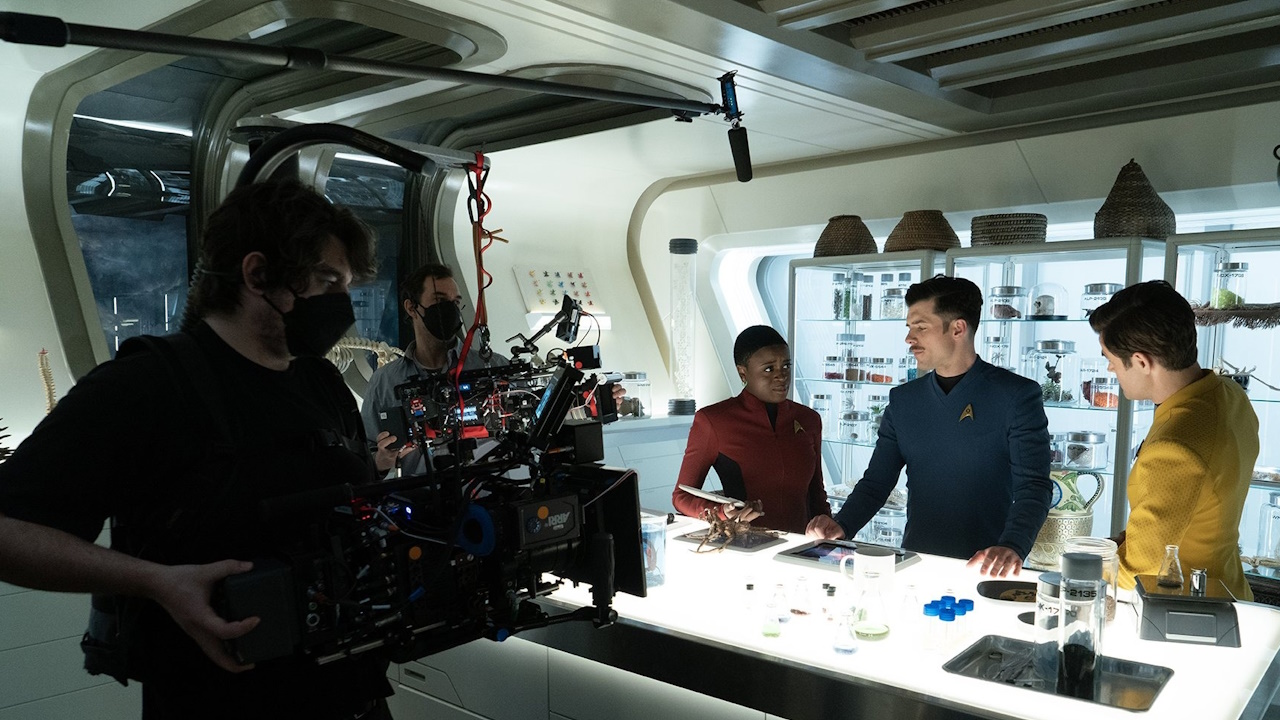
We spoke earlier about character conflicts that hadn’t been set up particularly well. Lost in Translation also offers at least one counter-point to that: the developing relationship between La’an and Kirk. After the events of Tomorrow and Tomorrow and Tomorrow earlier in Season 2 left La’an pretty devastated, she’s clearly still struggling with the memories she has of alternate-timeline Kirk. Running into him was difficult for her, and while that part of the episode was only in focus briefly, I think it worked well. As a storyline that is (hopefully) going to be picked up in a future story, these small steps can be important. We’ve followed La’an and Kirk in two episodes now – maybe by their third or fourth meeting, something more will come of it.
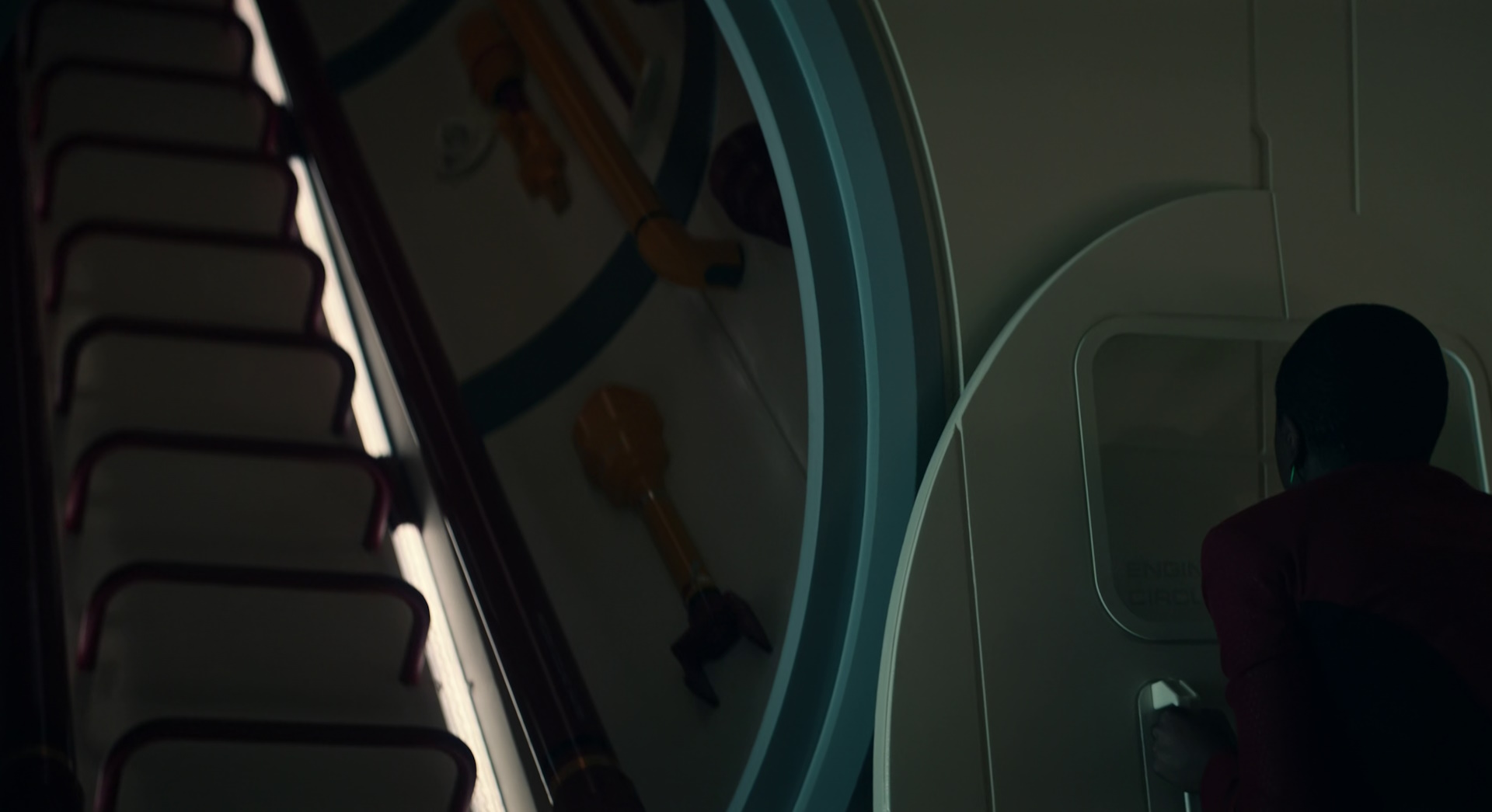
In terms of sets, I liked the new nacelle control room that we saw Uhura, Pelia, and Ramon using. It even had the angled ladder that Scotty would famously crawl into in The Original Series any time the Enterprise needed repairs! There may not be a ton of uses for a nacelle room, but being able to put that set together sometimes for engineering scenes is a neat idea.
The refinery/space station set didn’t feel all that special, but thanks to some creative use of the AR wall and animated wide-angle shots, we got at least some of the sense of scale that the place needed. It also had a pretty industrial feel – not unlike modern-day oil rigs or refineries, which I suppose will have been the inspiration.
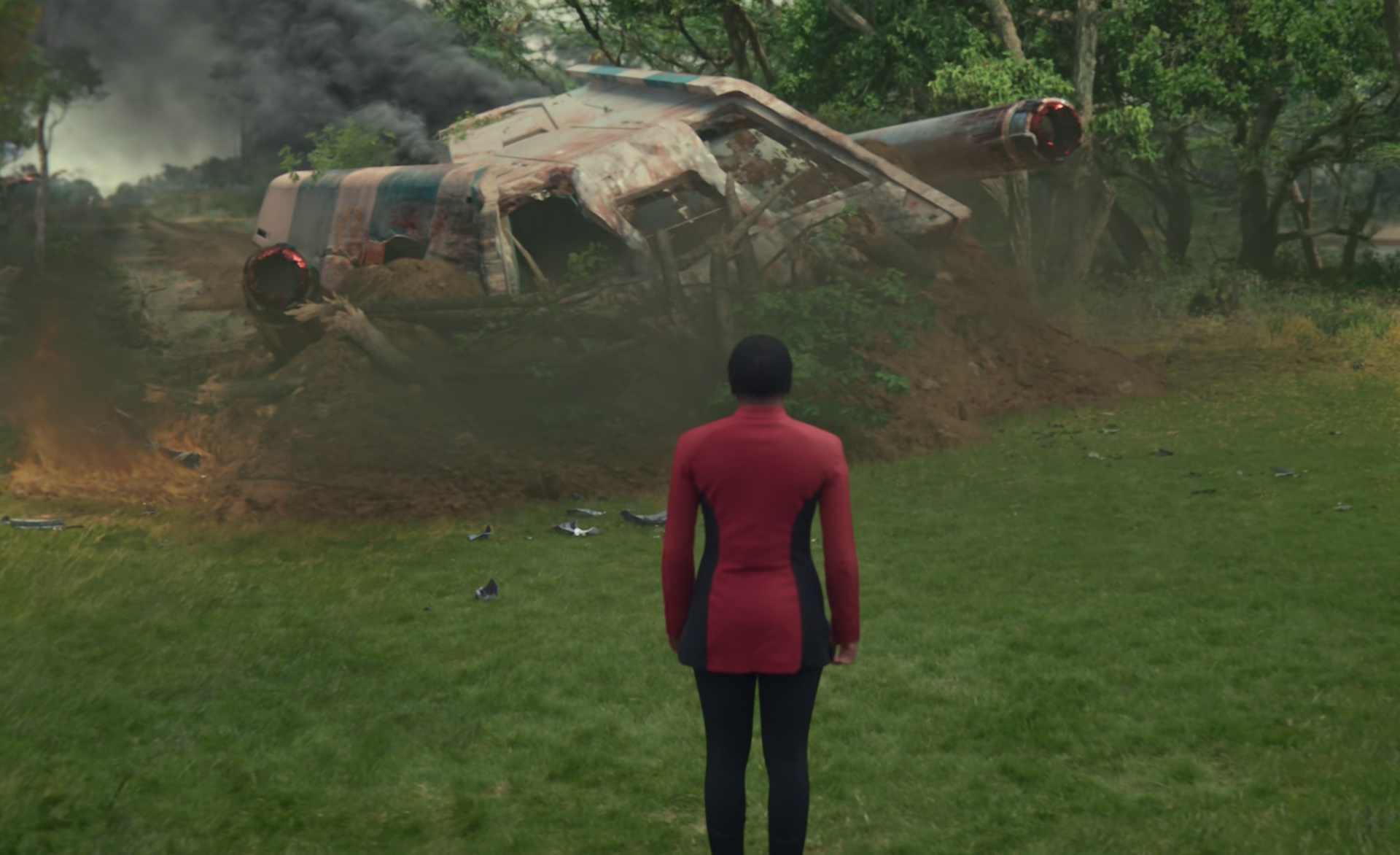
Uhura’s hallucinatory shuttle crash was also really well done, with transitions between the indoor sets and outdoor filming locations feeling particularly creative. The wreck of the shuttle looked great, and although we only saw parts of the interior in an out-of-focus shot, that choice was clever, too.
Speaking of creative cinematography, the scene in the corridor as Uhura felt the walls closing in around her, then stretching away, looked fantastic – and I think I’m right in saying that most of that was camera work rather than post-production special effects. It was creative, at any rate, and it really hammered home the panic and fear that Uhura felt at that moment.
So I think that’s all I have to say this time.
Lost in Translation was a good episode, and one that put a different spin on a familiar premise. We got to see Kirk’s first meetings with both Uhura and Spock, which was fantastic, but at the episode’s heart was some creative storytelling that touched on themes of grief and the loss of a friend. After Hemmer’s demise in Season 1, I’m glad that Strange New Worlds hasn’t just forgotten about him and moved on, and remembering him through the way he helped his friends and the impact he made on his crew was touching.
Not everything in Lost in Translation worked as well as it could’ve, and perhaps trying to cram in two character conflicts like this was a bit too much for the episode’s runtime. Hopefully, now that the Una-Pelia conflict has been resolved, we can see a bit more from those two in a future episode, building on the foundations that were laid this time. As for the Kirk brothers… I think we need to see a little more from them if the series wants to do this whole “sibling rivalry” argument justice!
After a break of more than a year, Lost in Translation has been a nice way to return to Strange New Worlds! Not every episode of Star Trek can be a great one, but I’m glad that I didn’t end up coming back to the series with a dud! That might’ve been offputting as I aim to review the remainder of the season. Thankfully it didn’t happen this time – and I hope you’ll stay tuned for reviews of the remaining four episodes in the days, weeks, and possibly months ahead!
Star Trek: Strange New Worlds Seasons 1 and 2 are available to stream now on Paramount+ in countries and territories where the platform is available. The series is also available on DVD and Blu-ray. The Star Trek franchise – including Strange New Worlds and all other properties discussed above – is the copyright of Paramount Global. This review contains the thoughts and opinions of one person only and is not intended to cause any offence.


 Trekking with Dennis