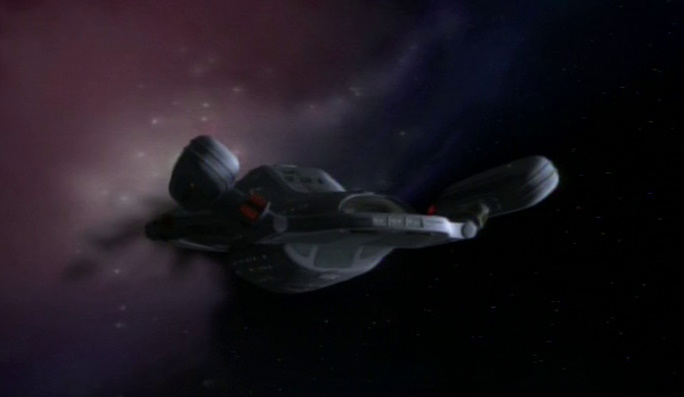
What If…? Star Trek Edition!

A Star Trek-themed spoiler warning.

Spoiler Warning: There are spoilers ahead for the following Star Trek productions: The Original Series, The Motion Picture, The Next Generation, Deep Space Nine, Voyager, Enterprise, Discovery, Picard, and the video game Star Trek: Voyager – Across the Unknown.

Let’s celebrate Star Trek’s 60th anniversary year with another of my Marvel-inspired “What If…” articles! This is something I’ve done a couple of times before here on the website, and I’ll briefly go over the format if you’re unfamiliar with it. I thought this could be a fun and interesting way to continue our 60th anniversary celebrations, anyway.

In 2021, Disney and Marvel premiered a series called What If…? on Disney+. The concept was, in brief, to show alternate histories of the Marvel universe; different characters or altered decisions leading to, in some cases, radically different or unexpected outcomes. I didn’t watch the show (because I’m not really into Marvel or superheroes that much), but I really liked the concept behind the series, and I wanted to apply it to the Star Trek franchise, too.
Promo graphic for Season 3 of Marvel's "What If."
This idea is based on the Marvel TV series What If…?

My first take on this idea – which you can find by clicking or tapping here – saw me consider what might’ve happened if: Captain Picard died after the events of The Best of Both Worlds, Spock was never resurrected on the Genesis Planet in The Search for Spock, Voyager decided to head for the Gamma Quadrant terminus of the Bajoran Wormhole, the USS Discovery never went to the future, and Captain Sisko wasn’t the Prophets’ Emissary. I had fun delving into all of those ideas and laying out my “alternate histories of the future!”

Last year, in my second piece – which you can find by clicking or tapping here – I talked about what could’ve happened if: Captain Picard and Q never met, Section 31 was responsible for creating the Borg, the USS Voyager was destroyed over Ocampa and the survivors were picked up by Chakotay’s Maquis raider, the Romulans eventually figured out the deception from In The Pale Moonlight, and Captain Kirk survived the events of Generations. Again, all of those were a ton of fun to consider.

Be sure to check out those earlier pieces if you enjoy this format. And feel free to use the same concept in your own writing or on social media, too!
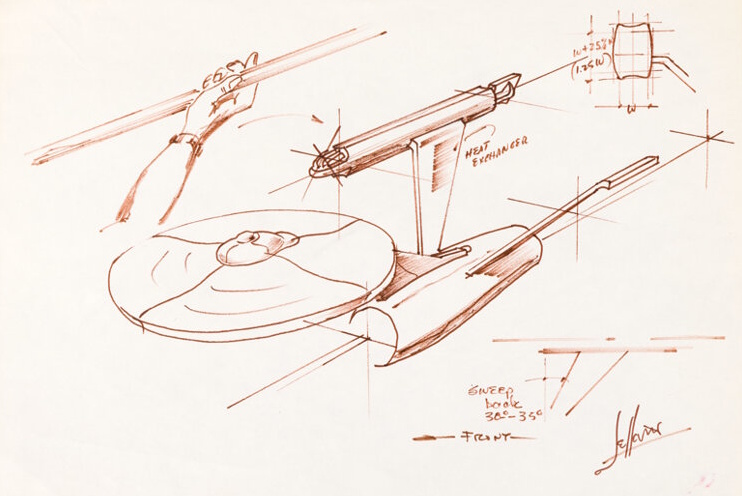
Scan/photo of hand-drawn concept art of the USS Enterprise (or the Enterprise filming model) from Star Trek: TOS.
Concept art of the USS Enterprise filming model.

So today, I’m back for a third crack at this idea. I’ve chosen five storylines from across the Star Trek franchise, and I’m going to answer the question “what if things were different?”

My usual caveat applies: all of this is *subjective, not objective*, so if you hate all of my ideas and mini-stories, that’s okay! There’s plenty of room in the Trekkie community for differences of opinion and disagreements without getting into an argument. None of this is even *remotely* canon, anyway, nor will it ever be – so if you really do hate my ideas, you can take solace there, I hope!

With all of that out of the way, let’s get started!

What If… #1:
What if… the USS Voyager returned home after the events of Caretaker?
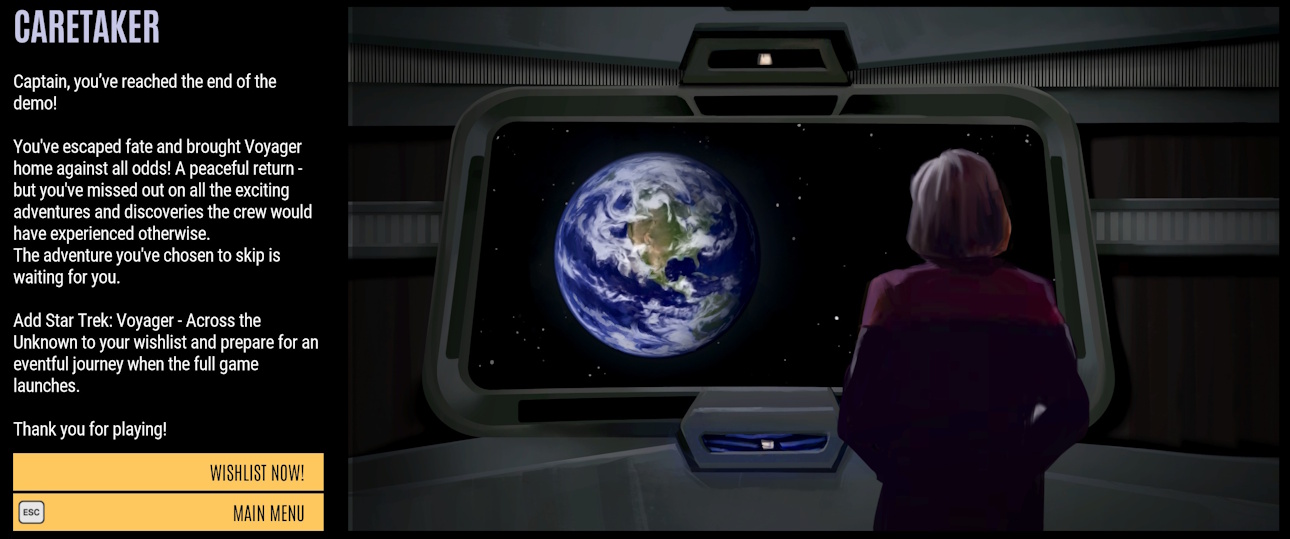
Screenshot from the Across the Unknown demo showing Janeway and Earth.
Could Captain Janeway bring the crew home seven years ahead of schedule?

Shout out to the upcoming video game Across The Unknown, where you can actually pull this off if you want!

In this scenario, we’re starting with Voyager’s premiere: Caretaker. But we’re going to do things a little differently! As happened in an alternate timeline glimpsed in the episode Non Sequitur, Tom Paris got arrested by Odo on DS9, and never even set foot aboard Voyager. In our take on the story, we’re going to say that Captain Janeway approached Commander Sisko for advice, as she was still in need of a guide to the Badlands. Sisko would “loan” two of his officers to assist her on the mission – people who are familiar with the Badlands, both scientifically and geographically: Jadzia Dax and Michael Eddington.

Both officers would be present on the bridge during the search for Chakotay’s ship, and both would survive the displacement wave that dragged Voyager to the Delta Quadrant. After encountering the Kazon, Ocampa, and the Caretaker, Voyager’s captain and senior staff would be faced with the same dilemma as in the prime timeline: use the Array to return home, or destroy it to prevent it from falling into the hands of the Kazon.
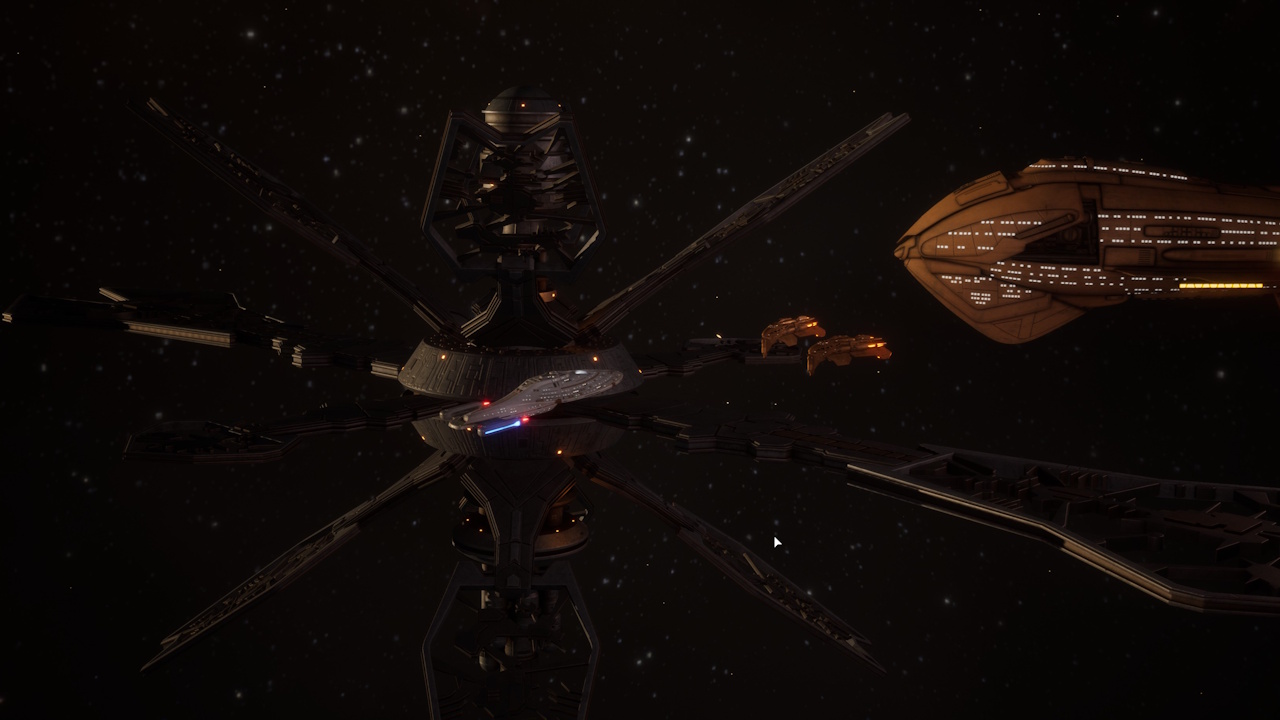
Screenshot from Star Trek: Voyager - Across the Unknown showing Voyager, Kazon ships, and the Array.
Voyager and three Kazon vessels at the Caretaker’s Array.

There are two factors at play, I think. Firstly, Eddington’s true loyalties lie not with Starfleet, but with the Maquis. I think he’d be desperate to get back to DS9 so that he could continue to work undercover, building up to his big defection in For The Cause. Eddington would be one of the most significant voices arguing for a return home. Dax, too, would be keen to get back, but her centuries of experience and scientific background would come into play here. Dax might be able to find a way to set Voyager’s tricobalt devices to detonate on a timer, allowing the Array to be sabotaged, and then used to return home. Or, by having someone with a keen scientific mind access the Array, other options for using its technology could have presented themselves.

In any case, we’re going to say that a way is found for Voyager to use the Array to return home. Eddington would do just enough to ensure that the Val Jean (Chakotay’s ship) makes it back just before Voyager, allowing them to escape Federation custody while keeping his cover intact. Then, Voyager would end up back in the Alpha Quadrant, just outside of the Badlands. Waiting for them would be Sisko and the USS Defiant, just beginning a search-and-rescue when Voyager failed to report back.
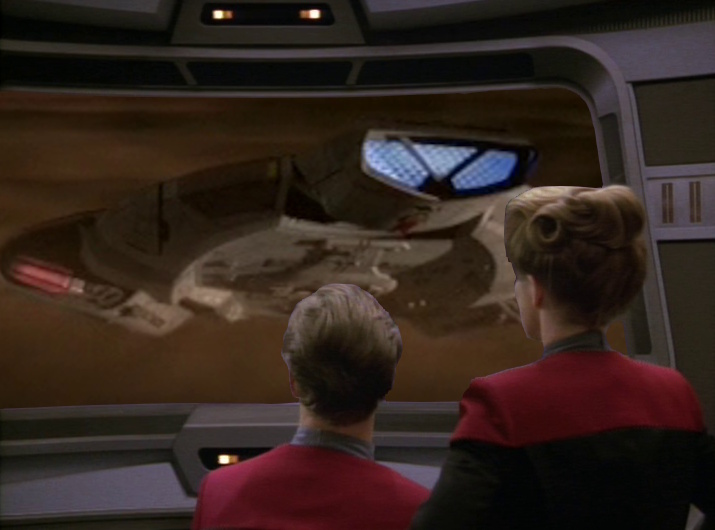
Edited still frame from two Star Trek episodes, depicting the USS Defiant as seen on the USS Voyager's viewscreen.
How it might’ve looked if Voyager had returned home almost immediately.

The real consequences of this would be felt later, though. Chakotay, B’Elanna, Eddington, and others would be killed at the beginning of the Dominion War, when the Dominion-backed Cardassians (perhaps aided by Seska as an embedded spy) wiped out the Maquis. In the Delta Quadrant, the Ocampa would still be confronted with the reality of life without their Caretaker, and would eventually have to find a way to leave their underground city.

But there are more serious repercussions. At time of writing, it seems as if Janeway is directly responsible for the destruction of the Borg Queen and at least a significant portion of the Borg Collective (as seen in Picard Season 3). If she doesn’t undertake that seven-year journey, never meets Seven of Nine, and never travels back in time to plant a pathogen directly into the Borg Queen… the Borg will be in a massively strengthened position by the early 25th Century. The Collective may not need to employ rogue changelings to infiltrate Starfleet – they might just choose to launch a full-scale invasion. And without crucial information on the Borg that was collected by Voyager, Seven of Nine, the Hansen family, and more… Starfleet would be significantly more vulnerable.

What If… #2:
What if… the Talosians joined the Federation?
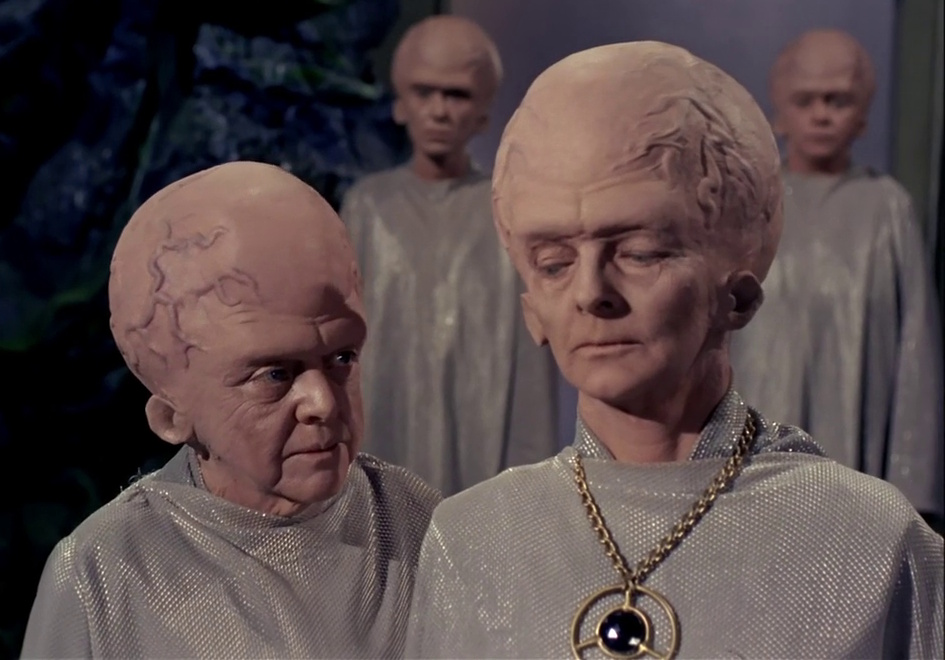
Still frame from Star Trek's original pilot (The Cage) showing four Talosians.
A group of Talosians.

We’re going all the way back to the beginning with this one – appropriate, in this milestone anniversary year. In short, it’s never sat quite right with me that Starfleet and the Federation would view the Talosians so negatively – and as such a dangerous threat – after just one interaction. Lest we forget, Captain Pike’s mission to Talos IV ended without any loss of life, and arguably with the beginnings of an understanding or even dialogue between the Talosians and humankind. Pike and the crew came to understand the Talosians’ situation, and for their part, the Talosians were able to acknowledge that humans (and Vulcans) were not suitable captives.

So in this alternate timeline, we’re going to say that Captain Pike returns to Starfleet HQ with a different mission report. Instead of recommending that Talos IV be quarrantined and declared to be off-limits, he instead advocates for sending aid to the Talosians to help rebuild or maintain their technology and rehabilitate the devastated surface of their world. The Talosians would be taken aback by this generosity, and would vow never to use their impressive telepathic powers to trick the Federation.
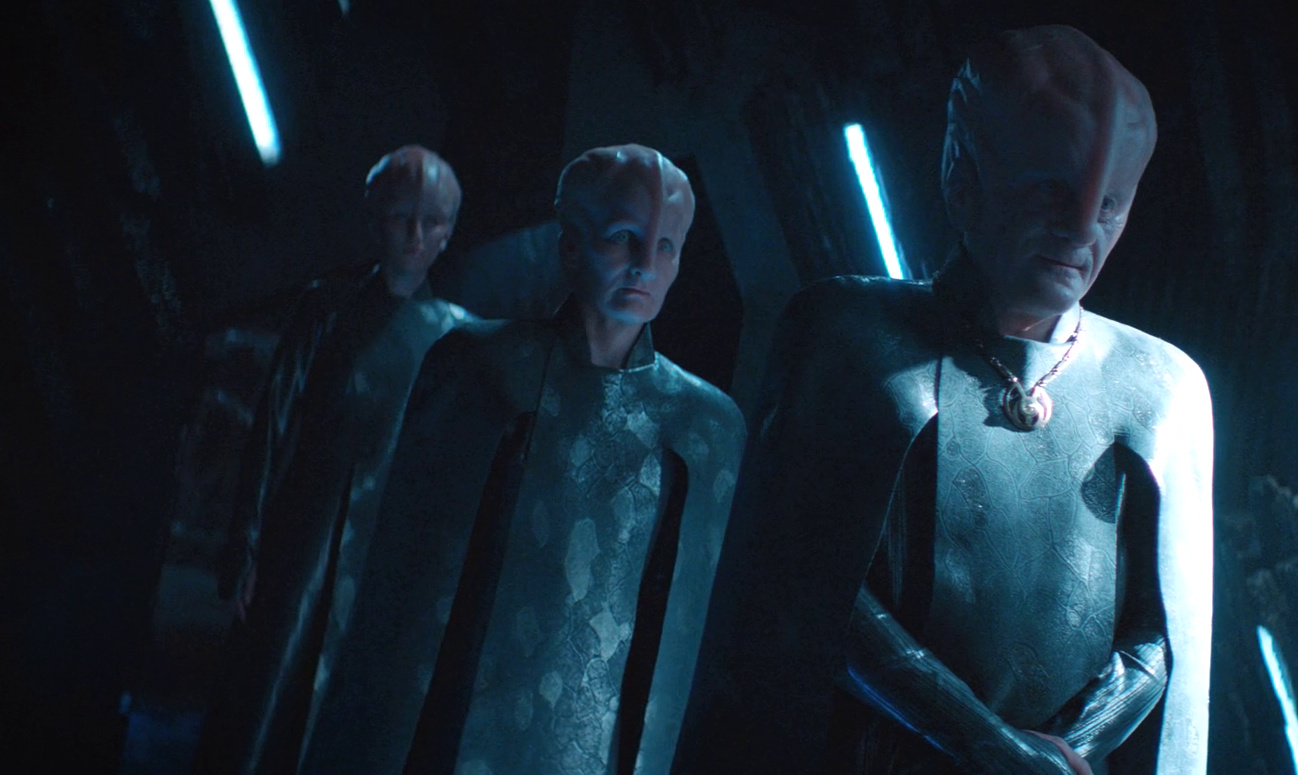
Still frame from Star Trek: Discovery Season 2 showing a trio of Talosians.
The Talosians as they appeared in Discovery’s second season.

Over time, the Talosian population would begin to grow, and Talosians would occasionally venture off-world, mingling with other citizens of the galaxy. The Talosians and Betazoids would form a particularly strong bond, as two races that both prefer telepathic communication. This would, in turn, set the stage for Talos IV joining the Federation as a full member world, coming under the protection of Starfleet and deepening their ties.

Though their numbers would be small at first, by the early 24th Century, Talosian officers would occasionally be seen in Starfleet – though the Federation would make them take oaths not to use their powers for deception (similar to the oaths that Deltan officers had to take, as seen in The Motion Picture). Talosians would be present for many of the major events of the late 23rd and 24th Centuries: the Federation’s alliance with the Klingons, the Romulan Empire’s isolation, the rising Borg threat, and the Dominion War.
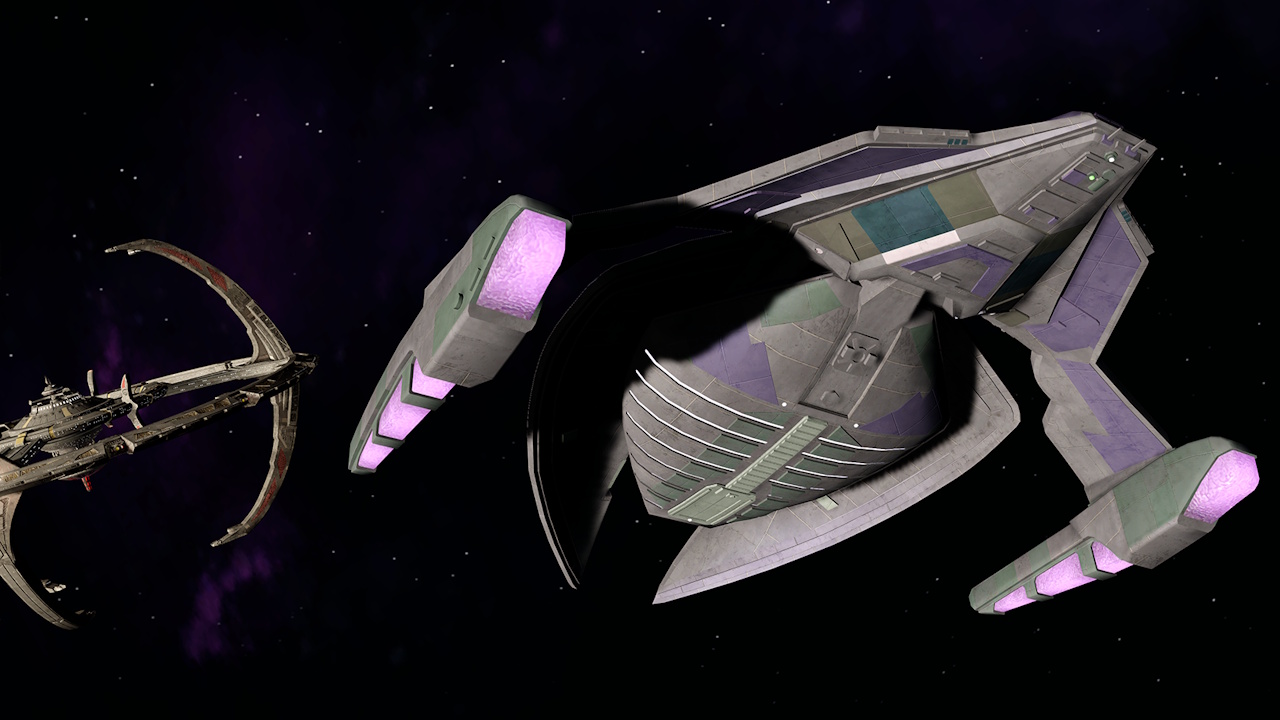
Screenshot from Star Trek Online showing a Jem'Hadar ship and DS9.
A Jem’Hadar warship near DS9.
Image: Star Trek Online Wiki

It’s the latter event that I want to focus on now. After the Dominion War breaks out, the Talosian government, working in conjunction with Section 31, would hatch a plan to deceive the Dominion and the Cardassians on an unimaginable scale. Working as a group, the Talosians would use their mental powers to trick the Dominion alliance into believing they were on the offensive, about to retake Deep Space Nine and Bajor – all the while, a combined Federation and Klingon fleet would be launching an assault right into the heart of Cardassian territory.

The Dominion War could be ended in a matter of days, thanks to tapping into the Talosians’ impressive powers, and the Dominion would be forced to the negotiating table having been deceived into believing they were winning. But while the war was being settled and a peace treaty signed, something else would happen: the Battle of Sector 001, where a lone Talosian officer would be serving aboard a starship. This would be the Borg’s first encounter with a Talosian, and their assimilation might just have given the Borg a terrifying new upgrade…

What If… #3
What if… Bruce Maddox successfully convinced Starfleet to let him disassemble Data?
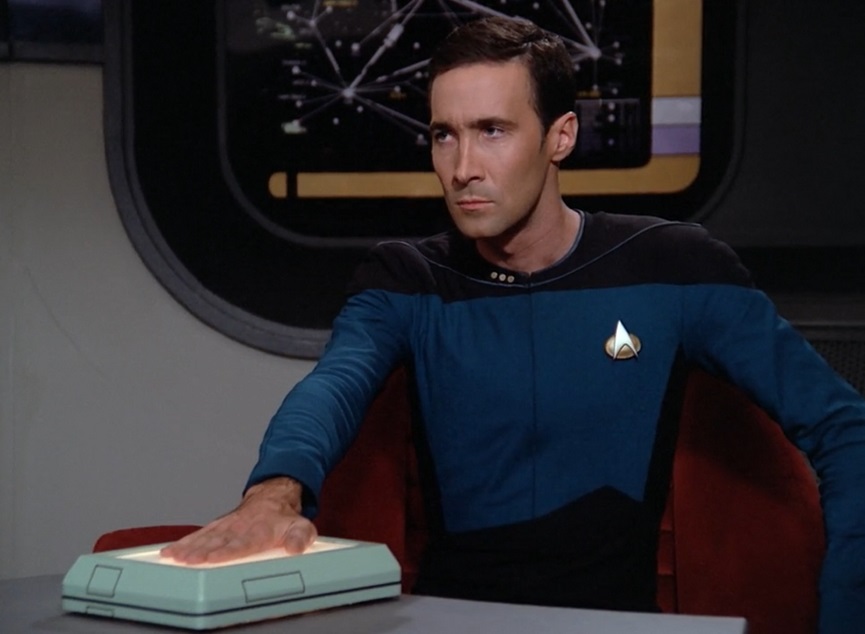
Still frame from Star Trek: The Next Generation (The Measure of a Man) showing Dr Maddox.
Dr Bruce Maddox.

In The Next Generation Season 2 episode The Measure of a Man, we’re introduced to Dr Bruce Maddox: the Federation’s top cybernetic scientist. Dr Maddox would request that Data be turned over to him in order to be disassembled, planning to use the knowledge he’d gain to create legions of synths. In the prime timeline, Starfleet would deny this request, allowing Data to explore his sentience and his life in his own way. But in our alternate timeline? Starfleet instead rules that Data, as an artificial being, is not a “person,” and therefore cannot refuse Dr Maddox’s request.

This is such an interesting debate, because right now, out here in the real world, artificial intelligence – or some form of it, in any case – is a big deal. And despite what I’ve argued in the past about the limitations of today’s large language models, I admit to feeling uncomfortable about the idea of a potentially sentient A.I. being forced to do things it may not want to do. This will have to be the subject of an entire essay one day, but it’s so interesting to me how, some thirty-five years on from The Measure of a Man, the issues it raised are incredibly relevant!
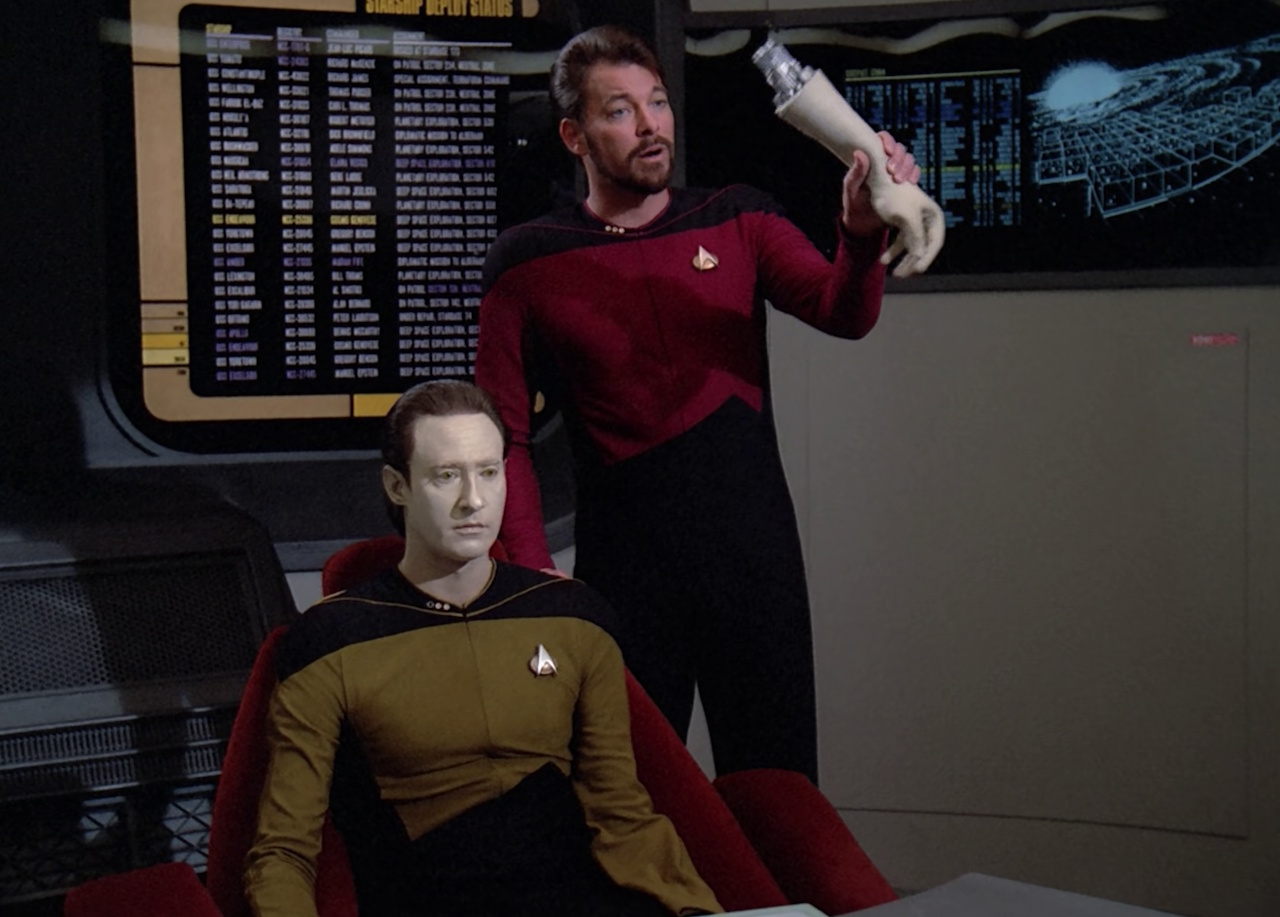
Still frame from Star Trek: The Next Generation (The Measure of a Man) showing Riker holding Data's arm at the trial.
Data and Riker at the hearing.

But that’s enough about that for now. There would be *many* consequences as a result of Starfleet’s decision. In the immediate term, I think Captain Picard would resign his commission. It would be a desperate, last-ditch effort to convince the higher-ups at Starfleet to change their minds, but it would ultimately fail. This would lead to Riker getting temporary command of the Enterprise-D, before command would ultimately pass to a more senior officer – someone like Captain Edward Jellico.

But more serious consequences lay in store. In the prime timeline, Dr Maddox was able to use B-4 – an earlier and less complex Soong-type android – to construct a large number of pretty basic synths. But with Data fully disassembled, Maddox’s work would progress a lot further a lot faster, and synthetics not quite at Data’s level, but not too far behind, would begin to be rolled out across Starfleet. This would draw the attention of the Zhat Vash – an underground Romulan faction dedicated to preventing synthetic life from ever coming to exist.
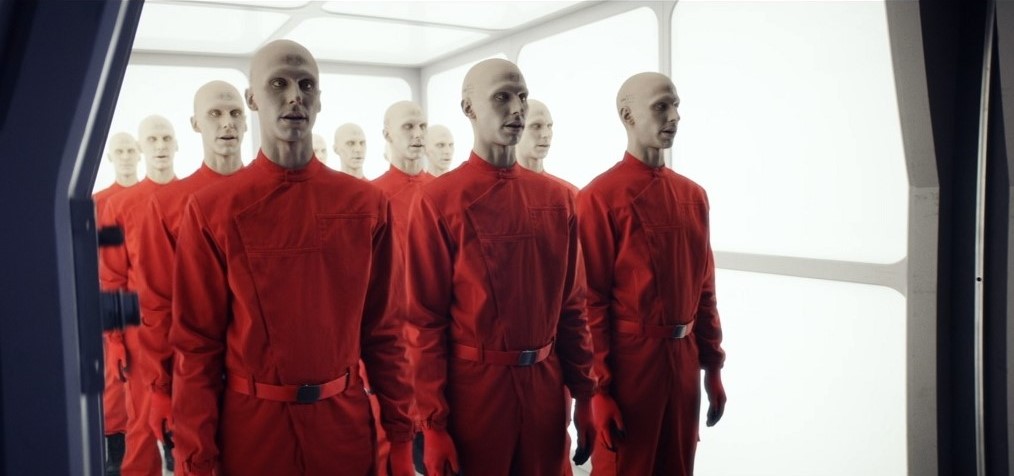
Still frame from Star Trek: Picard (Maps and Legends) showing a group of synths.
Synths as seen in Star Trek: Picard.

The timing of this couldn’t be worse for Starfleet. After the Battle of Wolf 359, Starfleet was at a particularly low ebb. Senior admirals encouraged Dr Maddox to work faster, hoping to use his new synths in the rebuilding process, and poured a lot of resources into his synth programme. At the same time, Ambassador Spock travelled to Romulus in the hopes of promoting reunification. Without Picard and Data to stop the Romulans, and with the Zhat Vash aggressively pressuring the Romulan leadership to engage the Federation, the Romulan attack on Vulcan would prove successful – and it would be the first strike in a new Federation-Romulan conflict.

With Commodore Oh acting as an embedded spy, feeding information back to the Romulan Empire, they’d quickly gain the upper hand in this new war. The war would go poorly for the Federation, even if Oh was eventually captured, and with Starfleet still underpowered after the defeat at Wolf 359, it would be impossible for the Federation to defend all of its territory. The only outcome short of total conquest would be accepting a very difficult peace treaty, which would certainly include a clause prohibiting any and all research into synthetic life.

What If… #4:
What if… the Borg attack on Earth in the 22nd Century had been much more serious?
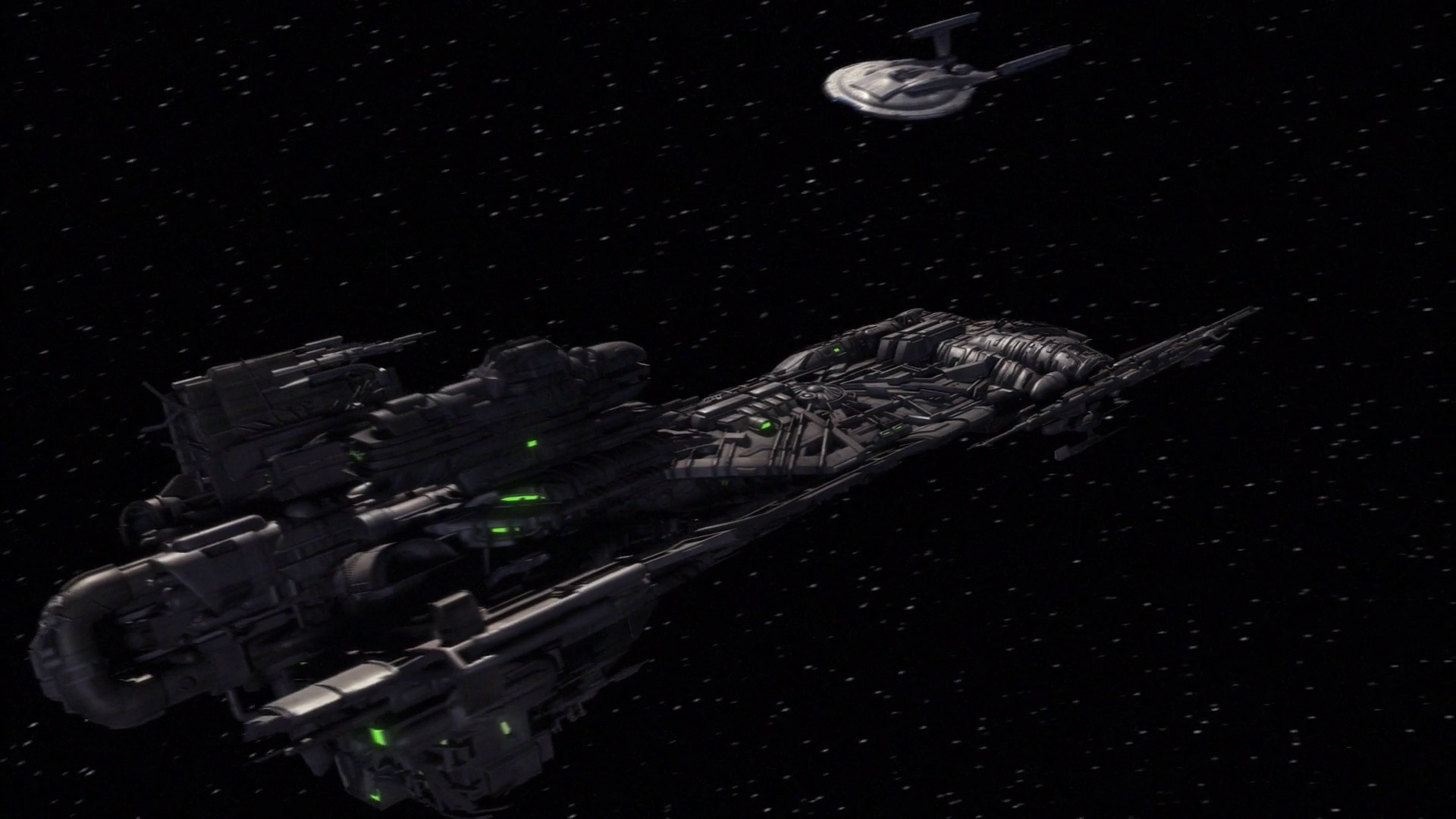
Still frame from Star Trek: Enterprise (Regeneration) showing the assimilated shuttle bearing down on the NX-01.
The Borg attacking the NX-01 Enterprise.

Regeneration, from Season 2 of Enterprise, is a fun episode in isolation… but I don’t really like what it does for the timeline of humanity’s conflict with the Borg. Setting that aside, though, let’s think about what might’ve happened if the Borg had managed to do a lot more damage to Earth in the 22nd Century. I’m not going to argue that this handful of defrosted drones would’ve been able to fully assimilate Earth in this era; I think, somehow, Starfleet and humanity would have prevailed. But in our alternate timeline, things are much more serious and the damage much more extensive.

Instead of merely assimiliating a single shuttle, the reactivated Borg drones would take over an entire starship: Enterprise. They’d assimilate practically the entire crew, kitting out the ship with upgraded weapons, and then they’d bring the fight back to Earth, in line with their original mission. It would take everything Starfleet had – and the sacrifice of many human and Vulcan lives – but the attack would eventually be stopped, with the remaining Borg being captured and studied.
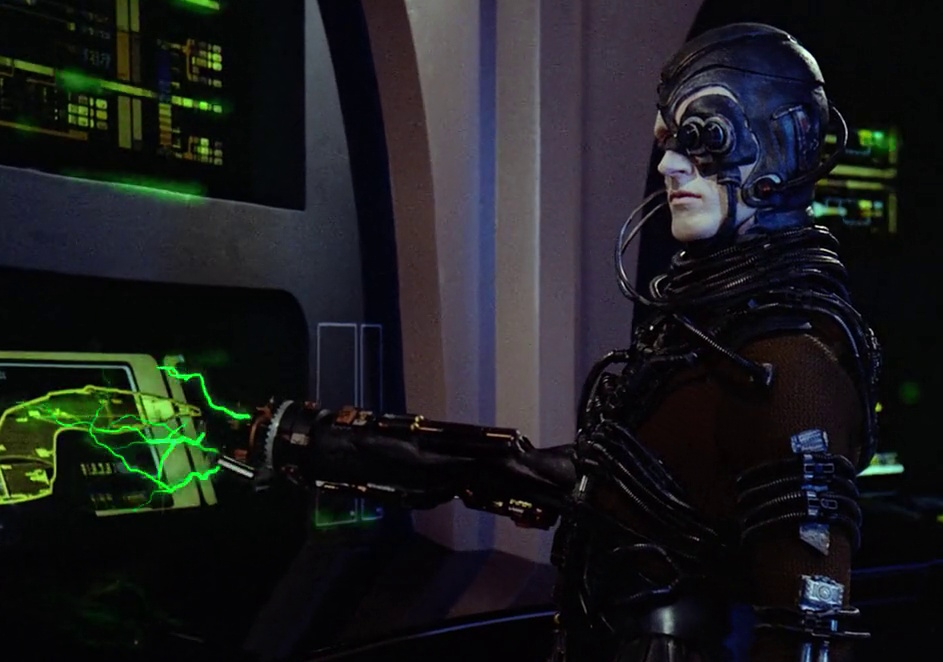
Still frame from Star Trek: The Next Generation (Q Who) showing a Borg drone attacking the Enterprise-D.
A Borg drone.

After causing devastation to parts of Earth unseen in more than a century, the United Earth government would re-think its planned mission of space exploration. Enterprise, humanity’s first long-range exploration vessel, has been lost, and the NX-02 would be repurposed as a purely defensive ship instead. The alliance with the Vulcans would weaken as humanity became a much more insular and isolationist power, scarred by the Borg attack and frightened of venturing too far into a galaxy that clearly poses a lot of dangers.

The Borg remnants would be extensively studied, in the hopes of discovering ways to counteract their technology, and some of these discoveries would lead to powerful Earth- and space-based weapons for humanity centuries ahead of schedule. The Xindi attack a year or so later would be *easily* defeated with Borg-powered weapons salvaged from the wreck of Enterprise.
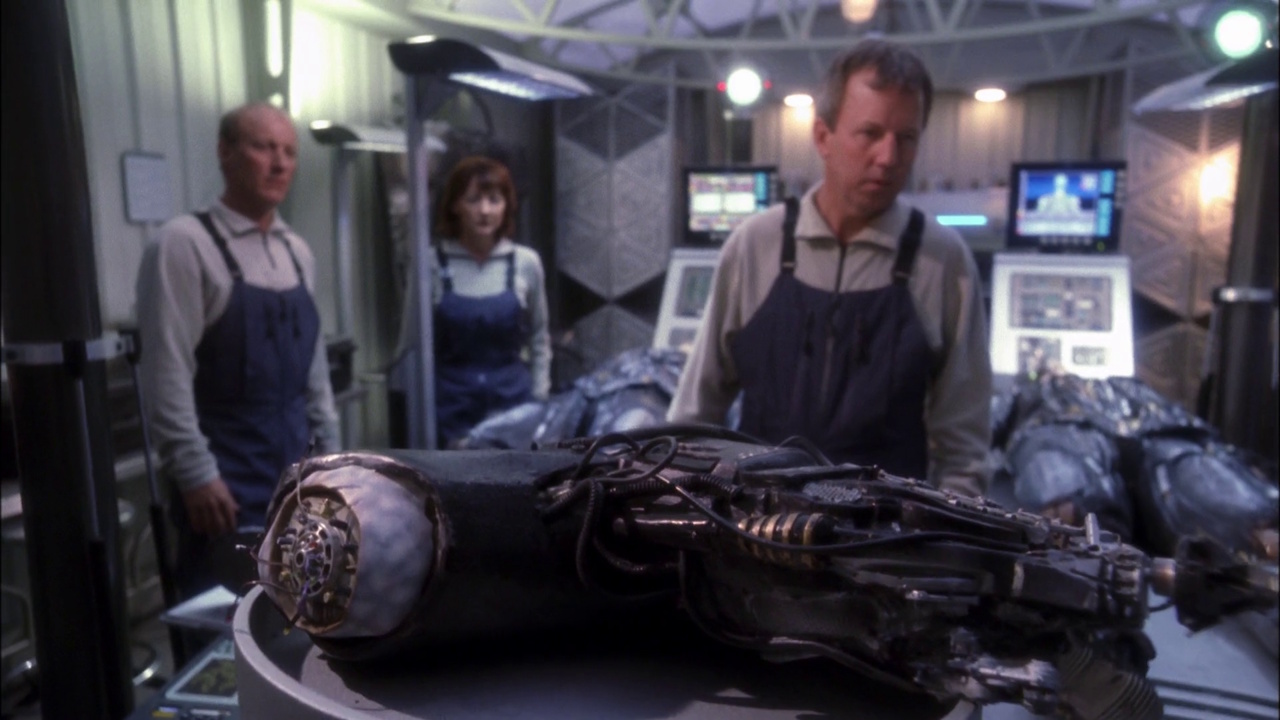
Still frame from Star Trek: Enterprise (Regeneration) showing scientists and a Borg arm.
Humanity would study the Borg and their tech.

But in the longer term, this isolationist stance would mean that the galaxy looks *very* different. Without humanity to mediate, the Vulcans and Andorians would wage a devastating war. Without Starfleet exploring and pushing the boundaries, there’d be no conflict between humanity and the Romulans. But most significantly… there’d never be a United Federation of Planets. Earth would maintain limited interstellar trade, including with the Denobulans and Vulcans, but fear-induced isolationism would become baked into the United Earth government at every level, with all talk of alliances or further missions of exploration being shut down.

By the time we reach the more familiar 23rd and 24th Centuries, the snowball has been rolling for a long time, and changes become unpredictable. But I’m going to posit that some of the Alpha and Beta Quadrant’s more aggressive powers – the Klingons, Romulans, and Cardassians – are all in much stronger positions without the Federation as a counterbalance. New alliances may emerge, such as the Mirror Universe’s Klingon-Cardassian alliance, or some powers may fully conquer others. The Romulans, for instance, may succeed at conquering Vulcan after the Andorian war left the Vulcans in a weakened state, or maybe the Klingons will launch an all-out war against their Cardassian rivals. And all the while, a strange, overlooked, isolationist Earth will be ready to shoot first and ask questions later whenever an uninvited guest arrives in the Sol system.

What If… #5:
What if… the Federation and the Ferengi went to war?
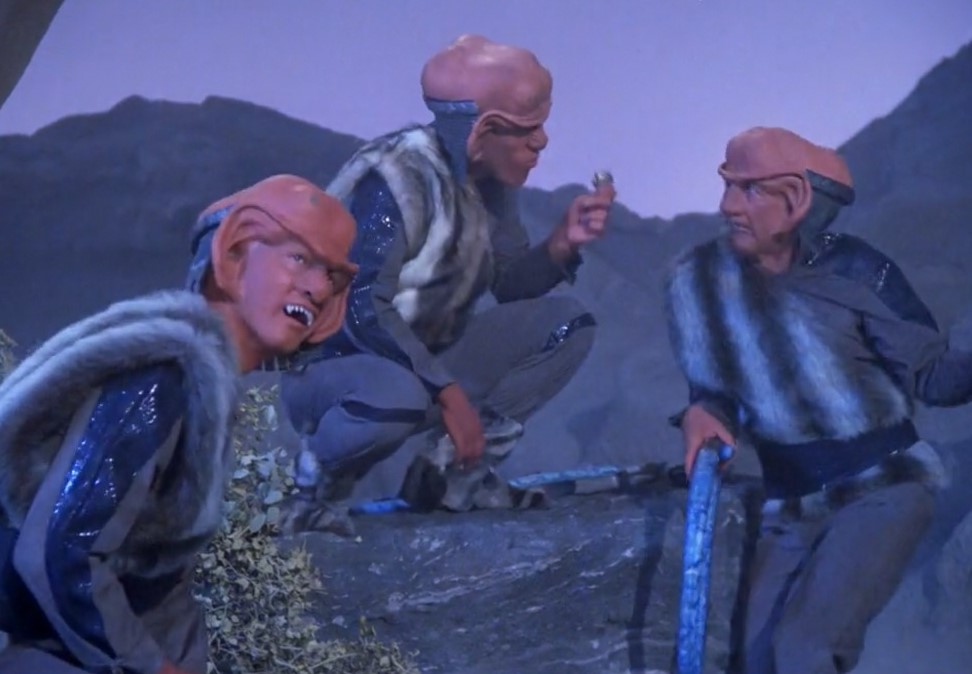
Still frame from Star Trek: The Next Generation Season 1 showing three Ferengi.
Three Ferengi from The Next Generation.

Chances are you already know this if you’re a Trekkie, but the Ferengi were originally supposed to be a major antagonist when The Next Generation was in early production. Gene Roddenberry intended for the Ferengi to take over the role vacated by the Klingons, now that Worf was going to be a permanent fixture on the bridge of the Enterprise-D. However… it didn’t pan out that way, mostly because of the way the Ferengi were presented in their first couple of appearances, and the way audiences responded to that.

In this case, though, we’re going to say that the Ferengi and the Federation didn’t just get off on the wrong foot… they continued down a path that would quickly lead to war. Ferengi DaiMons, eager for plunder, began raiding Federation convoys, stealing everything they could get their hands on, and even holding Starfleet officers and crew for ransom. Starfleet responded by taking an aggressive stance towards the Ferengi, sending armed escorts with trading and supply vessels, and gearing up for a confrontation.
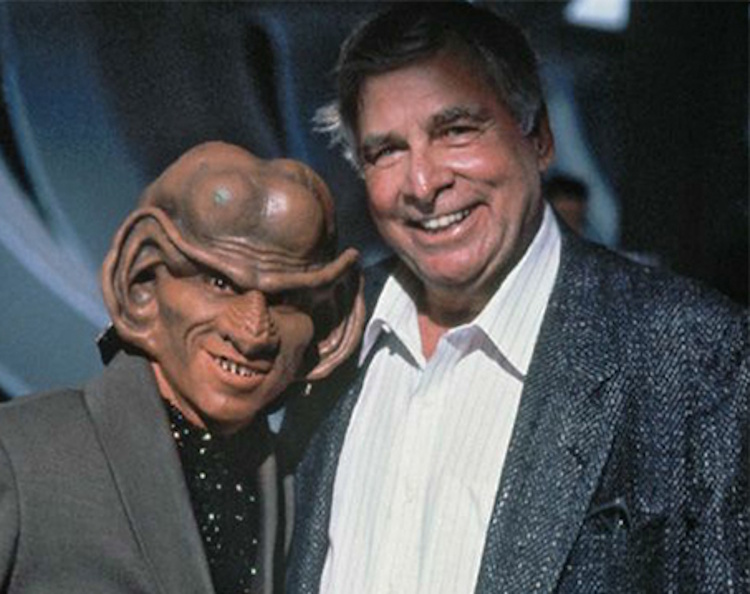
Behind-the-scenes photo from the Star Trek TNG S3 episode Menage a Troi showing Gene Roddenberry and actor Peter Slutsker (in Ferengi makeup).
Gene Roddenberry originally intended for the Ferengi to become a major villainous faction.

This version of the Ferengi – perhaps led by a more aggressive ruler than Grand Nagus Zek – would be less conciliatory, and would instead see war and piracy as opportunities for profit. Around the time of The Next Generation’s second season – which takes place in approximately 2365 – this would spill over into all-out war. The Ferengi DaiMons – most of whom had been acting autonomously up to this point – would be corralled by their Nagus into a proper fighting force, and their powerful D’Kora-class ships (the Ferengi Marauders) were more or less evenly-matched with Starfleet’s Galaxy-class vessels. The war would drag on.

I doubt this war would become existential for either the Ferengi or for the Federation, but it would be the most significant conflict either power had been involved in for decades, at the very least. The distraction would pause Starfleet’s mission of exploration, with more vessels being refitted and sent to the front lines, meaning that dozens of first contacts (and other missions) would come years later – or else would be missed entirely. And all the while, the Borg are on the prowl, scooping up outlying Federation and Romulan colonies. Blame for that might even initially fall on the Ferengi.
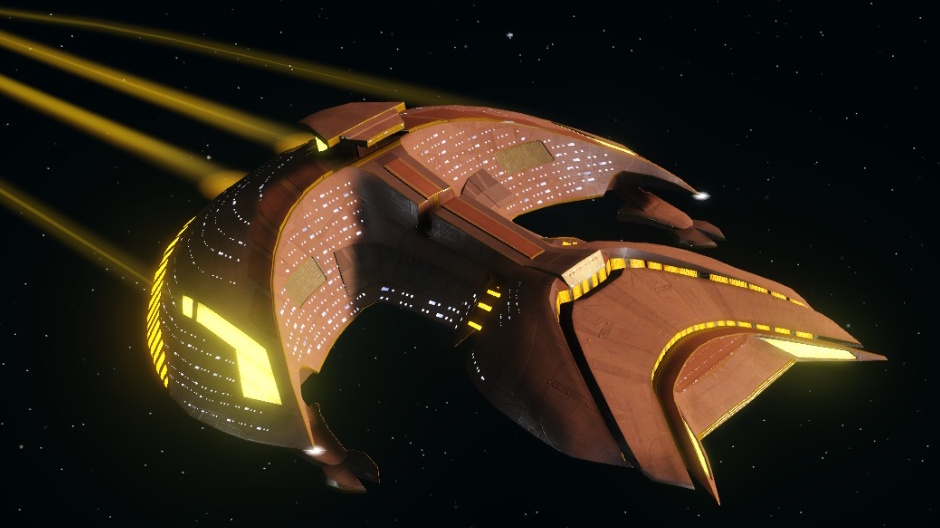
Promo screenshot for Star Trek Online showing a D'Kora Class ship.
A D’Kora-class ship.

A peace treaty would eventually be signed, with the Ferengi and Federation agreeing to respect a shared border, and a prohibition would be placed on piracy – though renegade Ferengi DaiMons would continually flout this. But the war would sap Starfleet’s resources, leading to a monumental decision: the Federation would decline the Bajorans’ request to take over Terok Nor after the Cardassian withdrawal. Deep Space Nine would never be established, and the Bajoran wormhole would go undiscovered for decades.

This would completely change the course of the latter 24th Century: there’d be no Dominion War, no Cardassian alliance with the Dominion, no changeling infiltrations, and no Emissary of the Prophets. The Bajoran provisional government would struggle to remain in control of its system, and the Federation would commit to providing only limited aid to the Bajorans, earning their resentment. The eventual discovery of the Bajoran wormhole in the early 25th Century would lead to plenty of interest, including from the Ferengi – who can pay handsomely for access to the Gamma Quadrant. The Bajorans, still wary of the Federation after their very lukewarm response decades earlier, would deny Starfleet access to the wormhole, preventing the Federation from exploring the Gamma Quadrant. Bajor wouldn’t be on a path to joining the Federation, and first contact with the Dominion might be made by the Bajorans… or even the Ferengi.

So that’s it!
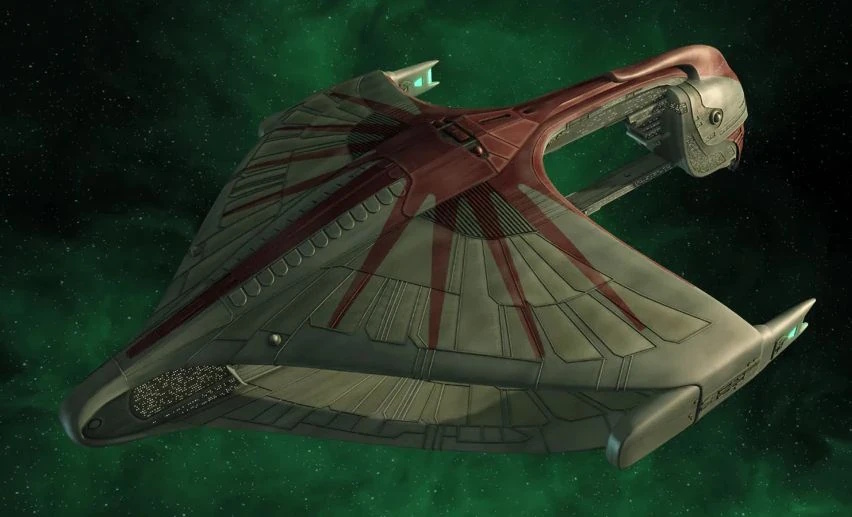
Promo image for Star Trek TNG: A Final Unity showing a warbird.
A modified Romulan warbird.

We’ve considered five possible “what if” scenarios from the Star Trek franchise.

I hope this has been a bit of fun. I love writing, and I love Star Trek, so writing about Star Trek is a great way for me to spend a bit more time in this wonderful galaxy. I tried to get creative, picking on a few different storylines and ideas from across the franchise, and extrapolating what might plausibly be able to happen if things turned out differently. I hope that the sequences of events made sense, and that I arrived at conclusions that you feel are at least *possible* based on the changes I proposed!

In any case, this was just for fun, and an excuse to talk about Star Trek as the franchise’s milestone 60th anniversary year rolls along. I have a few ideas for later in the year, as we get closer to the anniversary date itself, so I hope you’ll stick around and join me for some of those. And in a few weeks’ time, I’ll be sharing my thoughts on the franchise’s latest outing: Starfleet Academy. Click or tap here to check out my review of the two-part premiere, if you missed it.

Until then… be sure to check back for more discussion of the Star Trek franchise. Live Long and Propser, friends!


All shows and films discussed above can be streamed on Paramount+ or purchased on DVD and/or Blu-ray. The Star Trek franchise (including all properties discussed above) is the copyright of Skydance/Paramount. This article contains the thoughts and opinions of one person only and is not intended to cause any offence.
Star Trek: Voyager – Thirty Years Later

A spoiler warning graphic - featuring Neelix.

Spoiler Warning: There are spoilers ahead for Star Trek: Voyager and Star Trek: Prodigy.

In 1996, the Star Trek: Voyager episode Flashback was broadcast as part of the Star Trek franchise’s thirtieth anniversary celebrations. Today – and I can scarcely believe I’m writing these words – we’re marking Voyager’s own thirtieth anniversary!

That’s right: it was on the 16th of January 1995 that Caretaker, the premiere episode of Star Trek: Voyager, debuted in the United States. I thought it could be worth taking a few minutes to look back at not only the premiere, but Voyager as a whole – and try to assess its legacy and its place in the history of Star Trek. That’s what we’re going to talk about today, so I hope you’ll join me on a rose-tinted look back at Star Trek’s fourth live-action series!

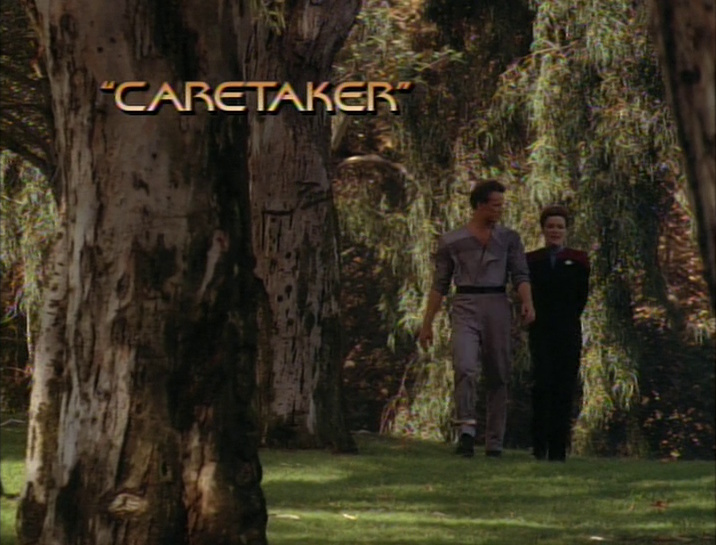
Still frame from Star Trek: Voyager showing the title "Caretaker" with Captain Janeway and Tom Paris.
Caretaker premiered on this day in 1995.

When Voyager premiered in 1995, the Star Trek franchise was arguably at the absolute peak of its “golden age.” The Next Generation cast had started making feature films, Deep Space Nine was well into its third season, and it felt like Star Trek had well and truly made it; a franchise that was dominating the sci-fi world. I remember at the time hearing some criticism of launching another series, but with The Next Generation having explored strange new worlds in the Alpha and Beta Quadrants, and Deep Space Nine tackling the Gamma Quadrant… I gotta admit that I was excited to see Voyager head to the unexplored and mysterious Delta Quadrant!

Having read a preview of the series (I think in the Radio Times; a UK TV magazine) I was also intrigued by this “one ship, two crews” idea that Voyager seemed to be promoting. Seeing Starfleet officers having to work hand-in-hand with the Maquis seemed like a really interesting concept, and one that could’ve given Voyager a unique selling point and a way to stand out from the pack as Star Trek continued its growth and expansion. I don’t think Voyager’s writers ever really made good on that promise – but more on that in a moment!

An early mock-up of the Star Trek: Voyager logo before the show premiered.
An early placeholder logo for the show circa 1994.

Stories about long journeys, people from different backgrounds having to work together in common cause, and having a small “island of safety” in a dangerous and unexplored environment are all things I absolutely adore in fiction – so Voyager seemed to be bringing together a bundle of elements that might as well have been tailor-made for me! And across its seven-season run, all of those things came to the fore in different ways. Voyager was a fun series.

Of course, one of the most-discussed things leading up to Voyager’s premiere was the show’s new captain: Kathryn Janeway, played by Kate Mulgrew, became Star Trek’s first woman captain. I remember this news being received positively at the time, at least in the Star Trek fan groups I was aware of. No one in 1995 knew what the word “woke” would come to mean, so Janeway’s announcement didn’t get the same kind of negative reaction and whining as we might expect in 2025! That’s not to say there wasn’t some degree of pushback, of course. There have always been toxic individuals within the fan community.

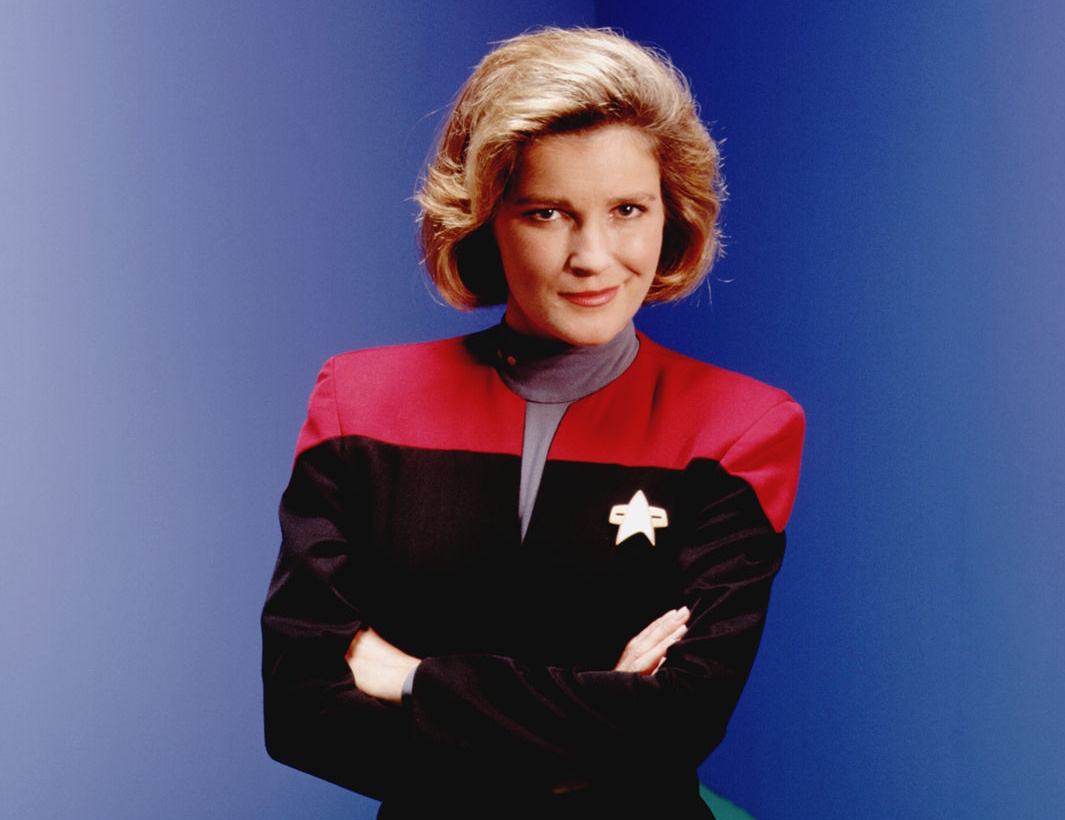
Promotional photo of Kate Mulgrew as Captain Janeway.
Captain Kathryn Janeway.

I remember the days leading up to Voyager’s premiere being ones of positivity and anticipation. I was absolutely thrilled at the prospect of Star Trek’s expansion, at getting a new exploration-focused series after The Next Generation’s finale, and at meeting a whole new crew and cast of characters. There was a lot to be excited about as Voyager’s premiere got closer!

Star Trek: Voyager was almost a very different show, though, and I think it’s worth taking a diversion to acknowledge that. As work began on the series, the question of who should sit in the captain’s chair was perhaps the biggest individual casting decision that befell casting directors Nan Dutton and Kathryn Eisenstein… and they fucked it up. Kate Mulgrew was considered for the role of Janeway, along with several others, but the role was given to Oscar-nominated actress Geneviève Bujold instead.

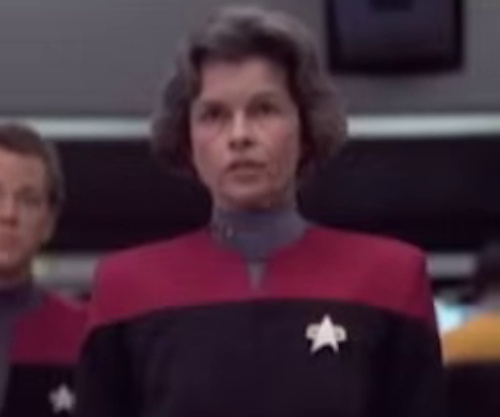
Still frame from the Star Trek: Voyager DVD special features showing Geneviève Bujold as Nicole Janeway.
What might’ve been…

Bujold was a terrible fit for the role of Janeway – as evidenced by the scenes she shot for Caretaker, which were included as a bonus in Voyager’s DVD box set – and seriously struggled with working on the show. Thankfully, Winrich Kolbe – who directed Caretaker – and executive producer Rick Berman recognised this before it was too late, and Bujold was replaced with Kate Mulgrew after only a couple of days. Still, this near-miss could’ve derailed Voyager before the show had a chance to get started.

As an aside, I don’t think Geneviève Bujold is in any way a bad actress or performer. But the idea to cast a character closer in style and tone to Jean-Luc Picard would’ve been wrong for Voyager, and that’s how I interpret her performance in those few scenes that have been revealed. Voyager needed a dynamic, energetic captain – someone who could make incredibly tough decisions under pressure while retaining the support of her crew. I didn’t see any of that in Bujold’s performance, so replacing her was unquestionably the right call.

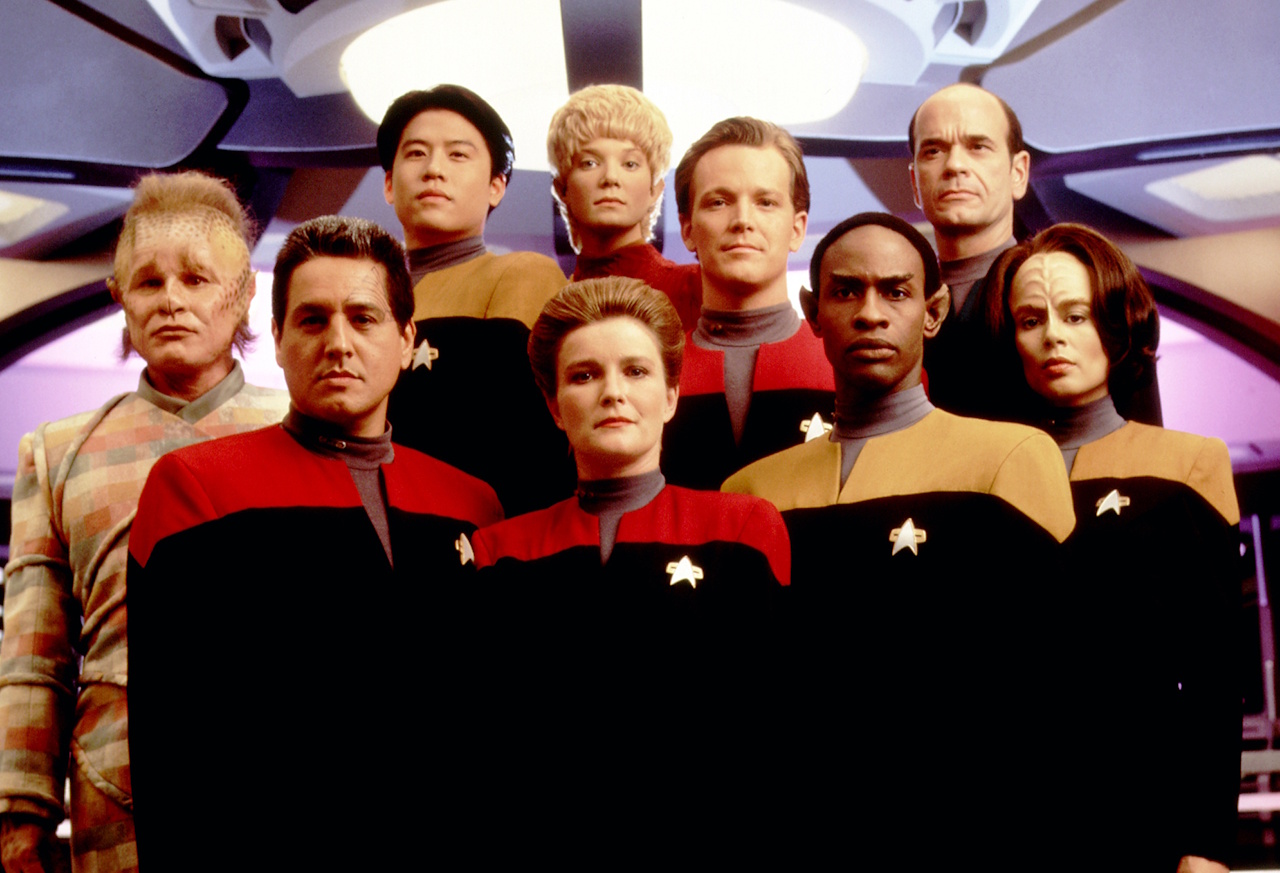
Promo photo showing the main cast of Star Trek: Voyager Season 1.
The main cast in Season 1.

Having to re-cast your lead role after filming has already started isn’t a great look for any television series, but Voyager was able to recover. Caretaker kicked off the show in style – and put a very interesting twist on a story premise that we’ve seen before in other episodes of Star Trek.

Several times in The Original Series, The Next Generation, and Deep Space Nine, our crews found themselves apparently stranded – perhaps on an alien planet, or else far away from Federation space. But in all of these, they found their way home again by the time the credits rolled. To me, Voyager always felt like it was taking one of those episodes and asking the obvious question: what if there wasn’t an instant way home? I really loved that idea, even in 1995 it felt subversive and creative; a unique and different take on a Star Trek story concept that we’d seen before.

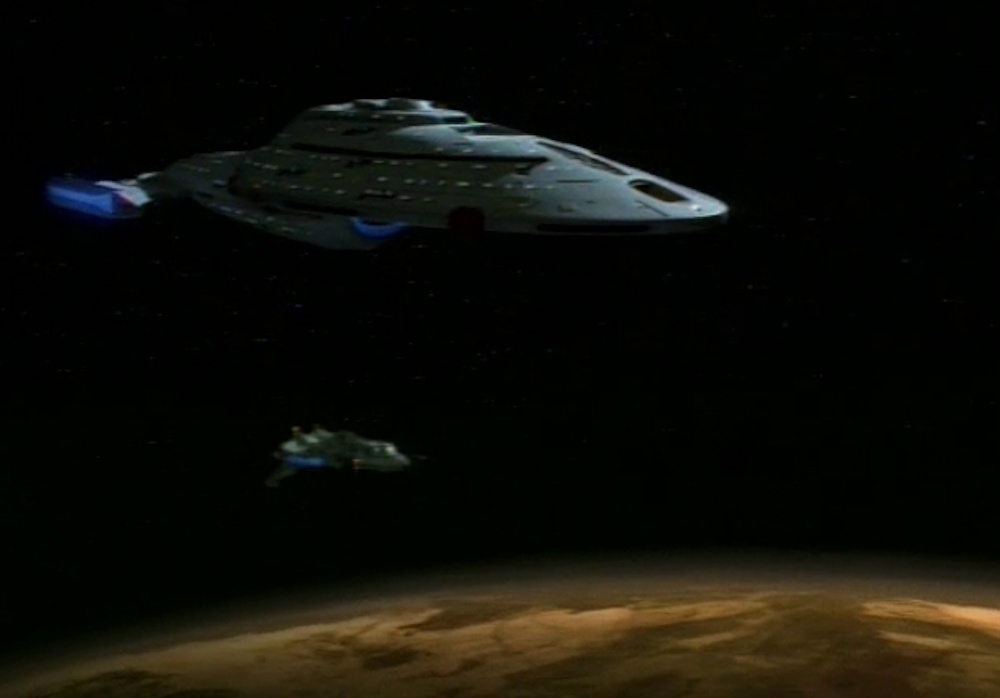
Still frame from Star Trek: Voyager showing the USS Voyager and the Maquis raider Val Jean in orbit of a planet.
The USS Voyager (and Chakotay’s ship) in orbit of the Ocampa homeworld.

Caretaker was also a fantastic crossover episode, bringing in characters and locations from Deep Space Nine. A couple of years earlier, the two-part episode Birthright had brought The Next Generation to DS9, too – so launching the show in this way felt like a real thread of continuity between all three extant Star Trek projects. Star Trek was doing the whole “shared universe” thing decades before the likes of Marvel!

Quark, Morn, and Gul Evek returned from past iterations of Star Trek, further tying Voyager into the franchise before striking out on its own. These three characters – along with Q – are the only ones to have appeared in all three of The Next Generation-era Star Trek shows, which is a fun little bit of trivia for your next Star Trek quiz night! Having that connection to the rest of the franchise was important, though, and it continued the trend of characters from Star Trek’s past appearing in the premiere of a new series.

Still frame from Star Trek: Voyager showing Morn at Quark's bar.
Morn in Caretaker.

Caretaker gave Captain Janeway a moral dilemma, one that tied into the idea of the Prime Directive and Starfleet’s core mission of peaceful exploration. Janeway ultimately decided to intervene, destroying the Caretaker’s array to prevent it from falling into the hands of the aggressive Kazon – but stranding her ship and crew in the Delta Quadrant in the process. This kicked off a story that would run for seven seasons, blending Star Trek’s normal episodic format with an underlying quest: Voyager’s journey home.

Harry Kim made a fine addition to the crew, and also filled an important role for Voyager in a narrative sense. Kim was always the first character to jump on the idea of finding a shortcut home, and the most eager (of the main characters, at least) to make it back to the Alpha Quadrant. I wouldn’t say it was his sole defining character trait, but it was an important one. Voyager needed at least one character like this to keep the voyage home at the top of the agenda.

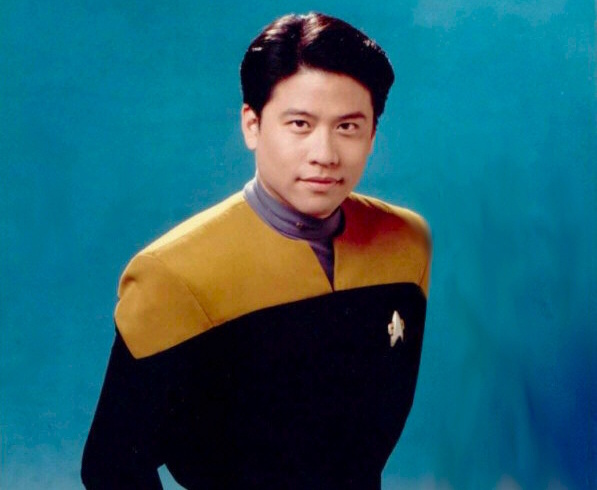
Promotional photo of Garrett Wang as Ensign Harry Kim.
Garrett Wang portrayed Harry Kim in all seven seasons.

More recently, Kim has become best-remembered in the fan community for never receiving a promotion! And I can kind of understand that; particularly as the show wore on and Kim gained more experience, it began to stretch belief to think that he’d remain a mere ensign. Again, though, Voyager was a semi-episodic show, and a show that needed at least one “young and eager” junior officer to fulfil that narrative role and occupy that space.

I was a big fan of Kes in Voyager’s early days; her gentle bedside manner and strong sense of empathy stood in contrast to the brash and often impolite Doctor in scenes set in sickbay. The idea of a short-lived species (Ocampa typically had a lifespan of around nine years) was also a unique one at this point in Star Trek’s history. Kes had close relationships with Neelix, Tom Paris, and of course the Doctor, too, all of which gave her plenty to do.

Promotional photo of Jennifier Lien as Kes.
A promotional photo of Kes.

I was disappointed when I learned that Kes was going to be dropped from Voyager heading into the show’s fourth season, particularly as she’d just begun developing her telepathic powers under the tutelage of Tuvok. I felt there was still more to explore with her character, and it was a shame that she was booted off the show before this potential could really be reached… especially because of who replaced her.

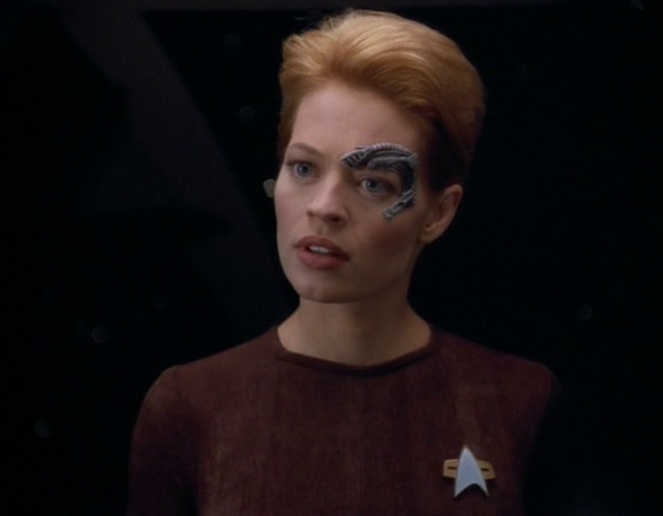
I know I’m in the minority here… but during the back half of Voyager’s run, I came to really dislike Seven of Nine. This character felt so boring and repetitive, but due to her popularity with at least a portion of the show’s audience she was prominently featured in many different episodes from Season 4 onwards. Seven always seemed to learn some lesson in “how to be human” in an episode… only to forget it all a week later and have to re-learn the same stuff over and over again. I really burned out on her character pretty quickly.

Still frame from Star Trek: Voyager showing Seven of Nine (looking surprised).
Seven of Nine wasn’t my favourite character.

But there’s no denying that Star Trek’s first ex-Borg main character (not counting Picard, of course) shook up Voyager and added something new to the show. Seven’s introduction also kicked off a succession of Borg-centric episodes… which, I’m afraid, were more miss than hit in my opinion, and went a long way to damaging the fear factor that a villain like the Borg needs to have. However, recent Seven of Nine appearances in Star Trek: Picard rehabilitated the character for me, resolved many of the issues I had with her, and generally left me with a much more positive view of Seven as a whole. Here’s hoping she might return one day!

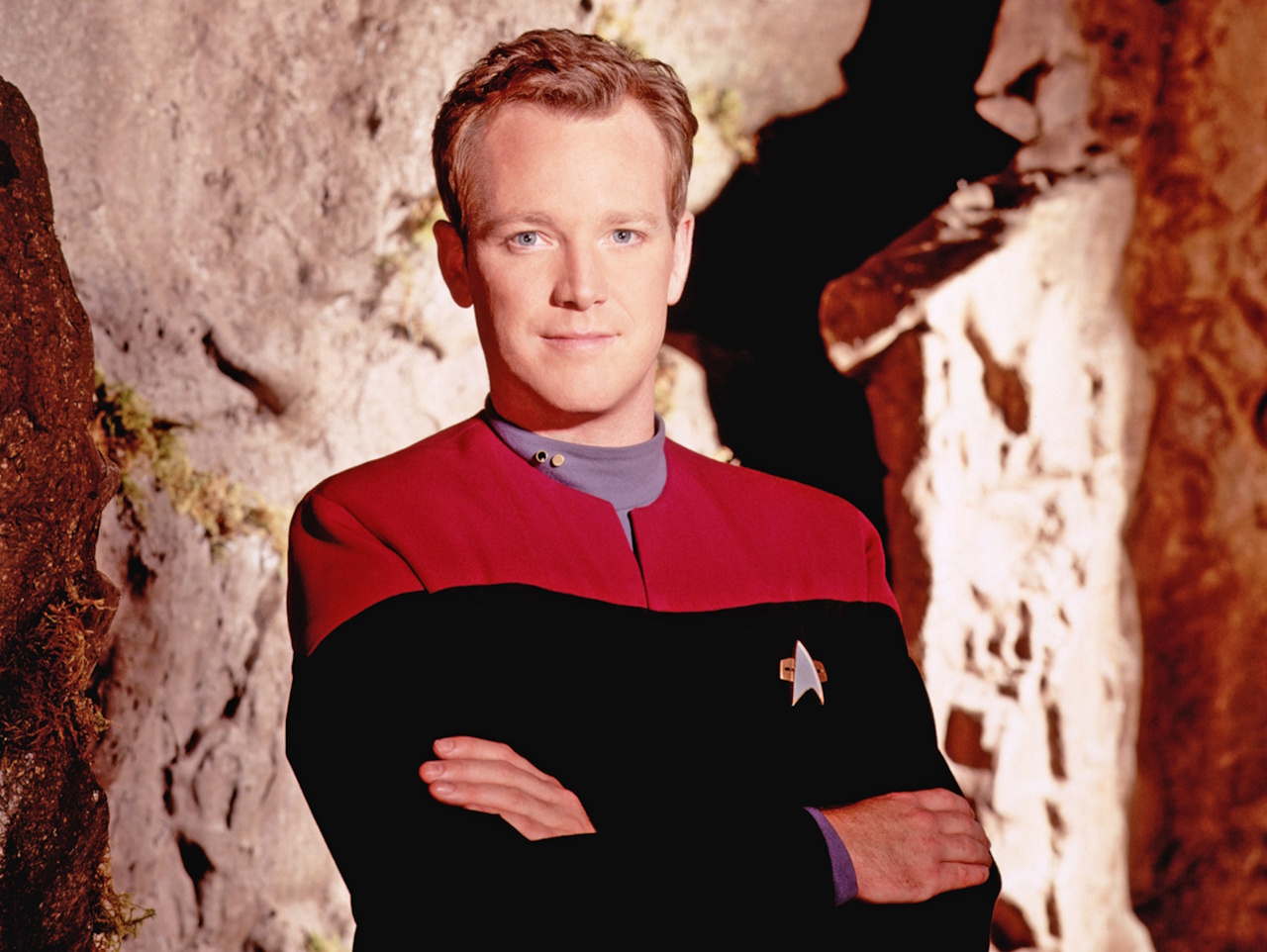
I’ve said this before, but Tom Paris was the Star Trek franchise’s first proper pilot – the first helmsman to really seem like he loved being in the chair. Paris was a fun character – an ex-Maquis and ex-Starfleet officer who seemed to attract the ire of both halves of the combined crew, but came to be seen as a dependable fixture on Voyager’s bridge. Paris’ arc took him from a failure and a criminal to a rehabilitated Starfleet officer and family man, and it was great to see it play out.

Promotional Photo of Robert Duncan McNeill as Tom Paris.
Tom Paris had a great character arc across Voyager’s run.

Paris’ love for the holodeck also led to some fun diversions across Voyager’s run. I was less enthusiastic about the likes of Captain Proton – though it could be fun for an episode or two – but his creations of Sandrine’s bar, the town of Fair Haven, and the Maquis insurrection holo-programmes all led to fun and exciting stories.

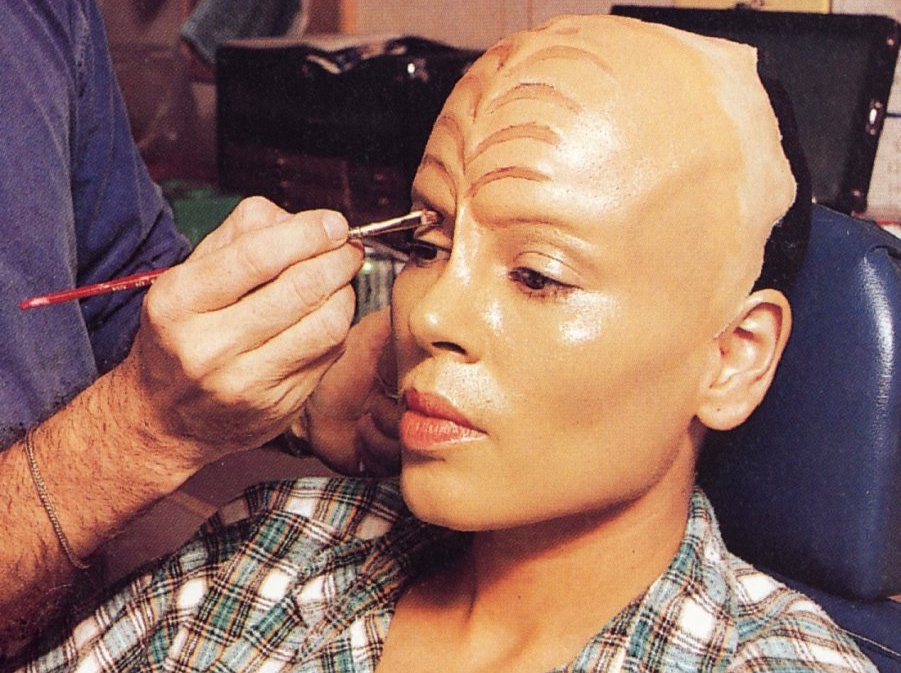
How can we talk about Tom Paris without mentioning B’Elanna Torres? Torres became – at Chakotay’s insistence – Voyager’s chief engineer, and had the challenge of standing out as both the second Maquis main character and (after Worf in The Next Generation) the second character with Klingon heritage. Voyager didn’t always know how to define and handle Torres, with some early episodes presenting her as angry and belligerent… but she soon settled into the role of chief engineer.

Behind-the-scenes photo from Star Trek: Voyager showing Roxann Dawson having her prosthetic makeup applied.
Roxann Dawson in the makeup chair.

B’Elanna, for me, is defined by two key relationships that would develop later in Voyager’s run: her antagonistic stance against Seven of Nine and her relationship and later marriage to Tom Paris. B’Elanna often stood as the voice of reason against Seven’s “Borg-ification” of parts of the ship, but her relationship with Tom went a long way to settling both characters down and giving them purpose. We’d also see several episodes featuring B’Elanna’s Klingon side – and these could be fun changes of direction for a show set thousands of light-years away from Klingon space.

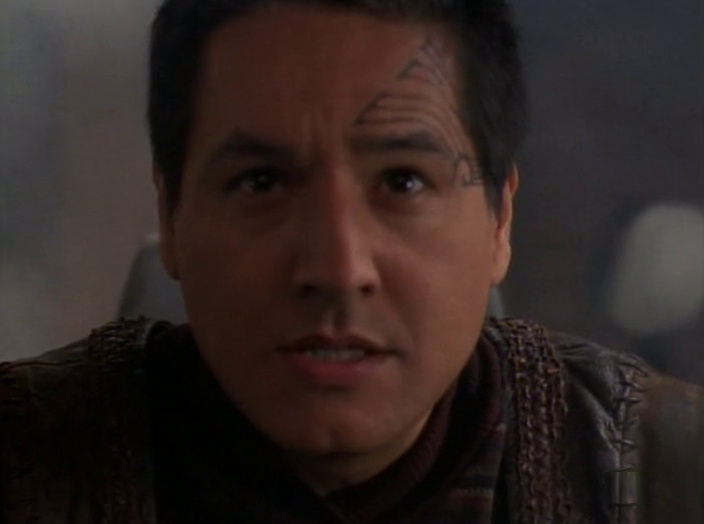
Chakotay feels like the embodiment of Voyager’s missed opportunities. Voyager’s writers never made good on the “one ship, two crews” idea, meaning Chakotay basically became a Starfleet officer and Janeway’s confidante within a couple of episodes, robbing him of more than one potential character arc. His relationships with most of the crew besides Janeway and B’Elanna were never really explored in much depth, and he just feels like… a presence. Chakotay was on the bridge the whole time, but can you think of many episodes where he drove the plot or was otherwise in focus? Because I can’t!

Still frame from Star Trek: Voyager showing Chakotay - the first shot of the series.
Chakotay was the first character we saw at the very beginning of Star Trek: Voyager.

I must get caught up with Prodigy, because Chakotay may get the kind of cathartic redemption arc that we were discussing with Seven of Nine, and that’s something I need to see! And across the show’s seven years, Chakotay did get a few spotlight episodes and storylines – notably exploring his Native American heritage and his relationship with Seska. I just feel there was more that Voyager could have done with this character – he was the first officer, after all, and it would be weird if the likes of Spock, Riker, or Major Kira had been similarly sidelined in their respective shows.

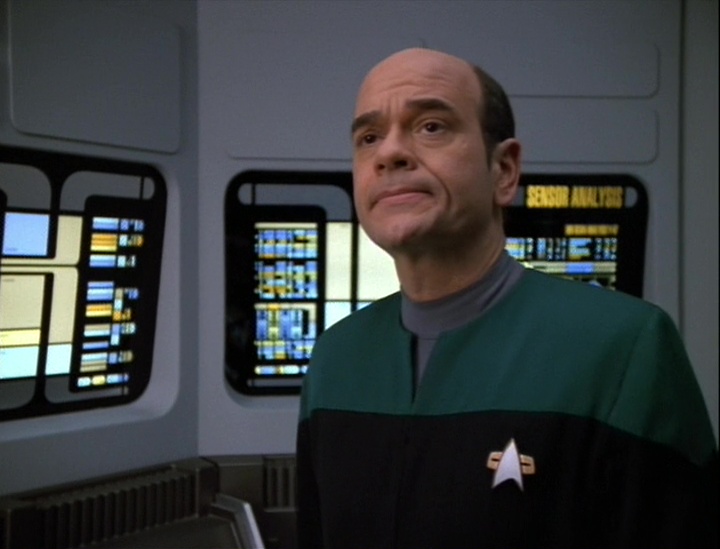
I remember feeling confused on learning that Voyager’s doctor was going to be a hologram! “How could that work?” I remember thinking to myself. “Exceptionally well” seems to be the answer, because Voyager’s Doctor was an incredibly fun character – and one who experienced growth over the course of the series. Starting out as a holo-programme with relatively little personality and no interests, the Doctor changed and evolved over the course of the show, taking on new challenges and new interests, and that was a really fun thing to see play out.

Still frame from Star Trek: Voyager showing the Doctor in sickbay.
The Doctor – the first holographic main character in Star Trek.

When the Doctor got his mobile emitter – a piece of 29th Century technology – in the third season, I was sceptical. But allowing him to leave the confines of sickbay and the holodeck turned out to be a great decision, leading to more involvement from this fun and enjoyable character across the second half of the show’s run. The Doctor could be great comic relief, and actor Robert Picardo has excellent comedic timing, but there’s much more to the character than that. We got some great emotional moments with him, too, such as losing his holographic family or sitting in court arguing for his rights as a sentient life-form.

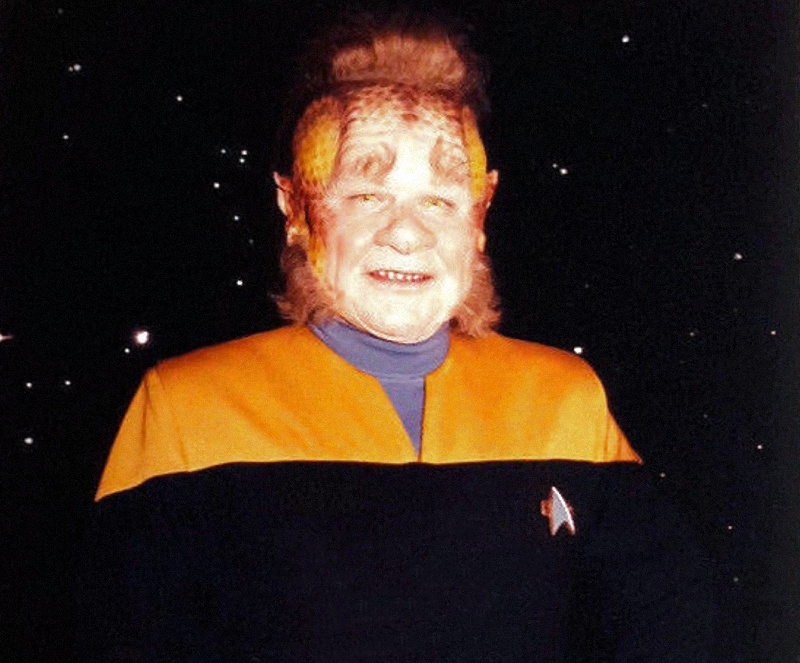
Speaking of comic relief, we have Neelix! Star Trek shows had had barkeeps before – Guinan in The Next Generation and Quark in Deep Space Nine – but never a cook. Neelix took broad liberties with that role, serving first as a guide to the area around Ocampa, then as a “morale officer” for the ship – while cooking up a selection of interesting dishes to feed a hungry crew! I bought a copy of Ethan Phillips’ Star Trek Cookbook and even tried a few of them for myself… with terrestrial ingredients, of course.

Promotional photo of Ethan Phillips as Neelix (in a Starfleet uniform for some reason).
A promo photo of Neelix… in a Starfleet uniform.

Neelix’s relationship with Kes could feel a little uncomfortable, but fortunately it wasn’t in focus all that much outside of a few early episodes. As Neelix settled in aboard the ship, he became an important character – and would often serve as a bridge between characters who didn’t always get much interaction. His largely one-sided friendship with Tuvok – though often played for laughs – was great to see, too, and showed Neelix’s way of accepting people different from him.

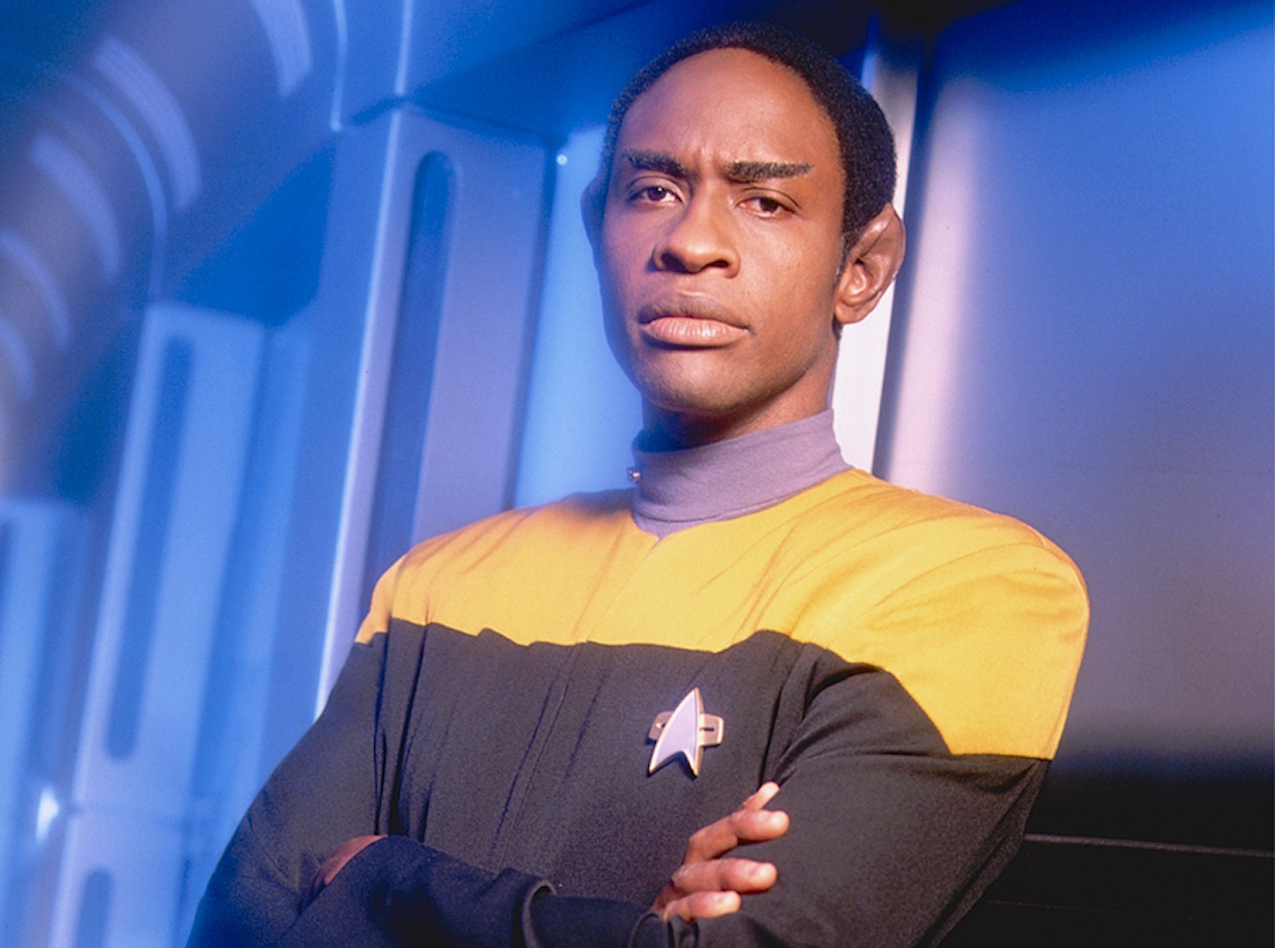
And speaking of Tuvok, Star Trek’s second Vulcan main character made quite an impact! Spock was always going to be a hard act to follow, but taking the calm and logical Tuvok as far away from science and exploration as possible was undeniably the right call. A Vulcan security and tactical officer makes a lot of sense when you stop to think about it – and Tuvok demonstrates exactly why. Calm and stoic under pressure is just what that job requires!

Promotional photo of Tim Russ as Tuvok.
Tuvok.

Tuvok also served as Janeway’s friend and confidante – arguably treading on the toes of the traditional first officer role, in that sense. I wish we’d gotten more of an examination of his relationship with Chakotay, though that’s more from Chakotay’s side, as mentioned above. Tuvok also bridged the gap between The Original Series era and Voyager in the most unexpected of ways – check out the episode Flashback, that I mentioned at the beginning, for more on that!

So that leaves us with Captain Janeway. Janeway was the captain that Voyager needed on a quest like this, and she had the strength to guide her crew home. She also had some fun character quirks, like her love of coffee, that kept her feeling grounded and real. The first woman to sit in the captain’s chair for a Star Trek series embodied elements of all three of her predecessors: Kirk’s toughness, Picard’s diplomacy and tact, and Sisko’s dedication to doing the right thing. But she was always her own woman, never feeling overshadowed by any of the captains that had come before.

Still frame from Star Trek: Voyager showing Captain Janeway at the penal colony in the premiere.
Captain Janeway in Caretaker.

As mentioned above, Kate Mulgrew was the perfect choice for this role, and she delivered a masterful performance across all seven seasons of the show. Voyager’s journey home wouldn’t have been the same without her, in fact, and across the show’s run we got several great episodes that shone a spotlight on the captain. Stories pitted her against villains like the Krenim and the Borg Queen, and Janeway always found a way to come out on top!

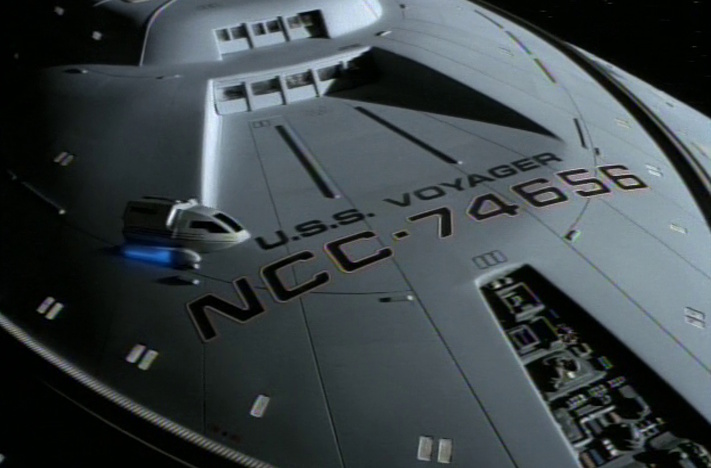
The USS Voyager still feels like a futuristic design to me even thirty years on from its debut! Something about the more angled saucer section makes it feel more modern than the circular hull of Kirk’s Enterprise and the Enterprise-D, and the sleeker lines also scream “speed!” Voyager was a long-range tactical ship made for exploration and combat, and the ship’s design philosophy reflects that. I will never tire of the sequence in Caretaker of Paris being flown in by shuttlecraft, seeing Voyager for the first time.

Still frame from Star Trek: Voyager showing a shuttlecraft flying over Voyager's saucer section.
Our first introduction to this wonderful starship.

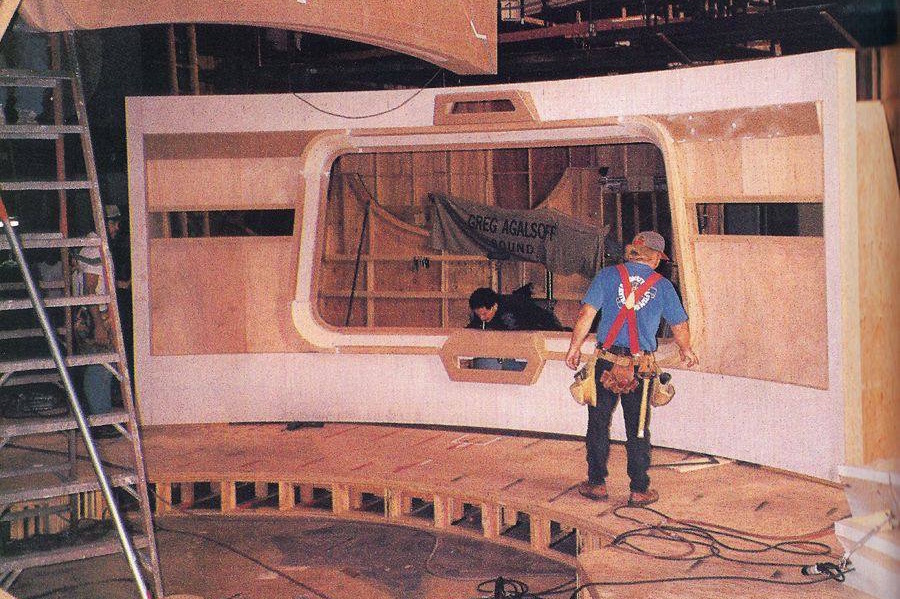
On the inside, we got a continuation of the Starfleet aesthetic that debuted in The Motion Picture and has been a mainstay in the franchise since. Voyager’s bridge is larger and wider, though – or at least it feels larger and wider – than anything we’d seen before. This expansive space was the perfect stage for interactions between all of our favourite crew members! Again, the bridge felt more modern than that of the Enterprise-D, while at the same time continuing the design trends that we saw in The Next Generation.

Janeway’s ready-room was an interesting area, giving her a large desk but also a couch that could act as a social space. Engineering had a really neat effect for its warp core, and the expansive entryway was often where intense conversations played out. The Doctor had sickbay as his domain, but he also got an office and a small lab off to one side that were fun inclusions. Voyager also had a shuttlebay, holodecks, crew quarters, corridors, and the mess hall – all of which would get moments where they were in focus!

Behind-the-scenes photo from Star Trek: Voyager showing the bridge set under construction.
Voyager’s bridge set under construction circa 1994.
Image Credit: Forgotten Treks/TrekDocs

As an aside, being able to virtually explore Voyager in the game Elite Force was one of my absolute favourite things about that game! In 2000, being able to wander through the bridge, sickbay, and some of the ship’s corridors felt absolutely magical as a Star Trek fan, and while Elite Force wasn’t the only game to offer that experience (the adaptation of Generations had a mission set on the Enterprise-D, and there were probably others around the same time), it was certainly one of the most memorable for me personally.

One thing Voyager didn’t really have was an expansive secondary cast. Deep Space Nine gradually gave more time and attention to characters like Rom and Martok, but Voyager, by and large, kept its focus on its main cast of characters. The Borg children – and Icheb in particular – were really the only ones to break through in more than a handful of episodes, though some, like Seska and The Next Generation’s Reg Barclay, would go on to make multiple appearances. Deep Space Nine showed what Star Trek could do with a wider and more expansive cast… and it’s something the franchise has yet to return to. Voyager had the opportunity to build out some of its secondary characters, but never really went there. I think that’s a bit of a shame – but it is what it is!

Behind-the-scenes photo from Star Trek: Voyager showing Jennifer Lien reading her script while sat on the floor.
Jennifer Lien (Kes) reading her script on the set of Caretaker.

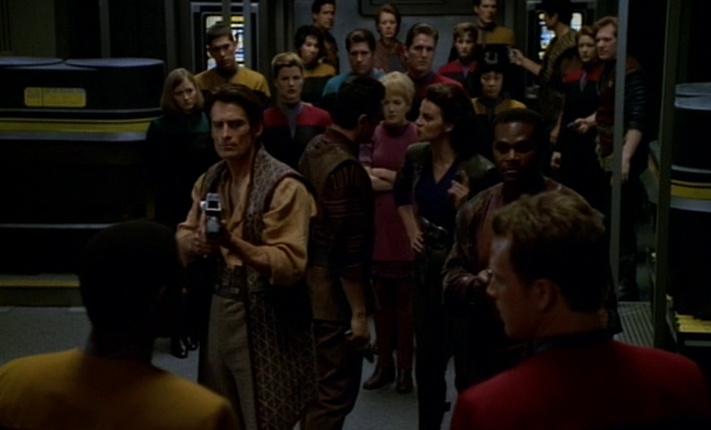
For a variety of reasons, Voyager never really made good on its “one ship, two crews” idea, and by about halfway through Season 1, the main Maquis characters were basically entirely integrated with the Starfleet crew. With the exception of plot-relevant moments, such as stories involving Seska, the fact that almost one-third of Voyager’s complement were Maquis never really came to the fore in a big way, and I think that’s a bit of a missed opportunity.

Don’t get me wrong, a story about people from different backgrounds finding a way to work together for the common good is something I absolutely adore, and there were times where Voyager absolutely nailed that feeling. I guess I’ve just always felt that I would’ve liked to see more tension, scepticism, and disagreement as the two crews began the process of integrating. I never really felt as much of that as I would’ve liked – and that’s perhaps Voyager’s biggest sore spot for me, thirty years on.

Still frame from Star Trek: Voyager showing a Maquis rebellion (on the holodeck!)
Voyager struggled to make good on its “one ship, two crews” premise.

That being said, Voyager was a great show all around, and a welcome addition to Star Trek. With The Next Generation’s crew off making feature films and Deep Space Nine occupying a space station, there was plenty of room for a new series set aboard a starship. Voyager embodied Star Trek’s ethos of peaceful exploration… but set that exploration against a new backdrop of trying, against the odds, to make it home. It was both familiar and different at the same time; a really interesting blend of storytelling styles.

Voyager was also a much more episodic series than Deep Space Nine – despite its voyage home story being omnipresent and frequently referred to. There were plenty of one-off stories featuring a wide range of alien races, factions, and wacky premises. It was a Star Trek series through and through, one that brought a fantastic cast of characters to the table and threw them into plenty of fun, exciting, and occasionally emotional situations.

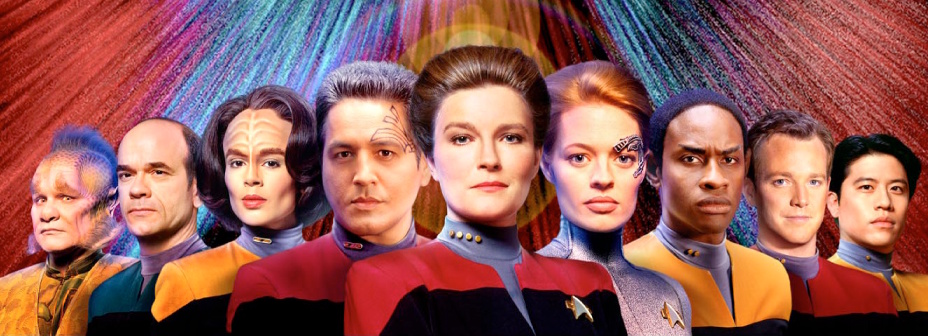
Promotional image of the Star Trek: Voyager cast.
The cast on a promotional poster.

The excitement I felt thirty years ago was more than rewarded! Voyager was an outstanding show, and I got thoroughly invested in the crew and their quest to return to the Alpha Quadrant. There were some episodes that were wide of the mark – as there are bound to be in any show that runs to 168 episodes across seven seasons! But even at its worst, there were things to enjoy, fun lines of dialogue, entertaining character moments, or creative decisions that made Voyager well worth watching for any Trekkie or fan of sci-fi in general.

As the final show of what I consider to be Star Trek’s “golden age,” I’ve long had a soft spot for Voyager. Of course I watched every single episode during the show’s run – I would tune in when they made their debut on terrestrial TV here in the UK, and I very rarely missed a week. I later bought all seven seasons when they were released on DVD and enjoyed the series all over again.

Still frame from Star Trek: Voyager showing the USS Voyager preparing to jump to warp.
The USS Voyager set course for the Alpha Quadrant thirty years ago today.

So I hope this has been an interesting look back! I wanted to do something to acknowledge Voyager’s milestone anniversary, but it’s hard to summarise my thoughts on 168 episodes and seven years’ worth of television in a single article! Stay tuned, though, because I’ll be writing up my thoughts on some of my favourite episodes in the days ahead as we continue to celebrate Voyager’s thirtieth anniversary.

I hope that Paramount and the folks in charge of Star Trek plan to do something to mark this momentous occasion, so I’ll definitely be checking out the official Star Trek website and social media pages over the next couple of days. With Seven of Nine, Janeway, Chakotay, and others all having returned to the Star Trek franchise in the last few years, Voyager’s legacy is very much alive. The documentary To The Journey: Looking Back at Star Trek: Voyager has had its official premieres, too, though I don’t think it’s available to stream just yet. Still, another thing to keep an eye on.

All that remains to say is this: happy thirtieth anniversary, Star Trek: Voyager! Thanks for all the memories.


Star Trek: Voyager is available to stream now on Paramount+ in countries and territories where the platform is available. The series is also available on DVD. The Star Trek franchise – including Voyager and all other properties discussed above – is the copyright of Paramount Global. Some images courtesy of TrekCore and Paramount. This article contains the thoughts and opinions of one person only and is not intended to cause any offence.