Pondering Star Trek’s Future

A Star Trek-themed spoiler warning.

Spoiler Warning: Beware spoilers for the following Star Trek productions: Discovery, Picard, Prodigy, Strange New Worlds, and Starfleet Academy.

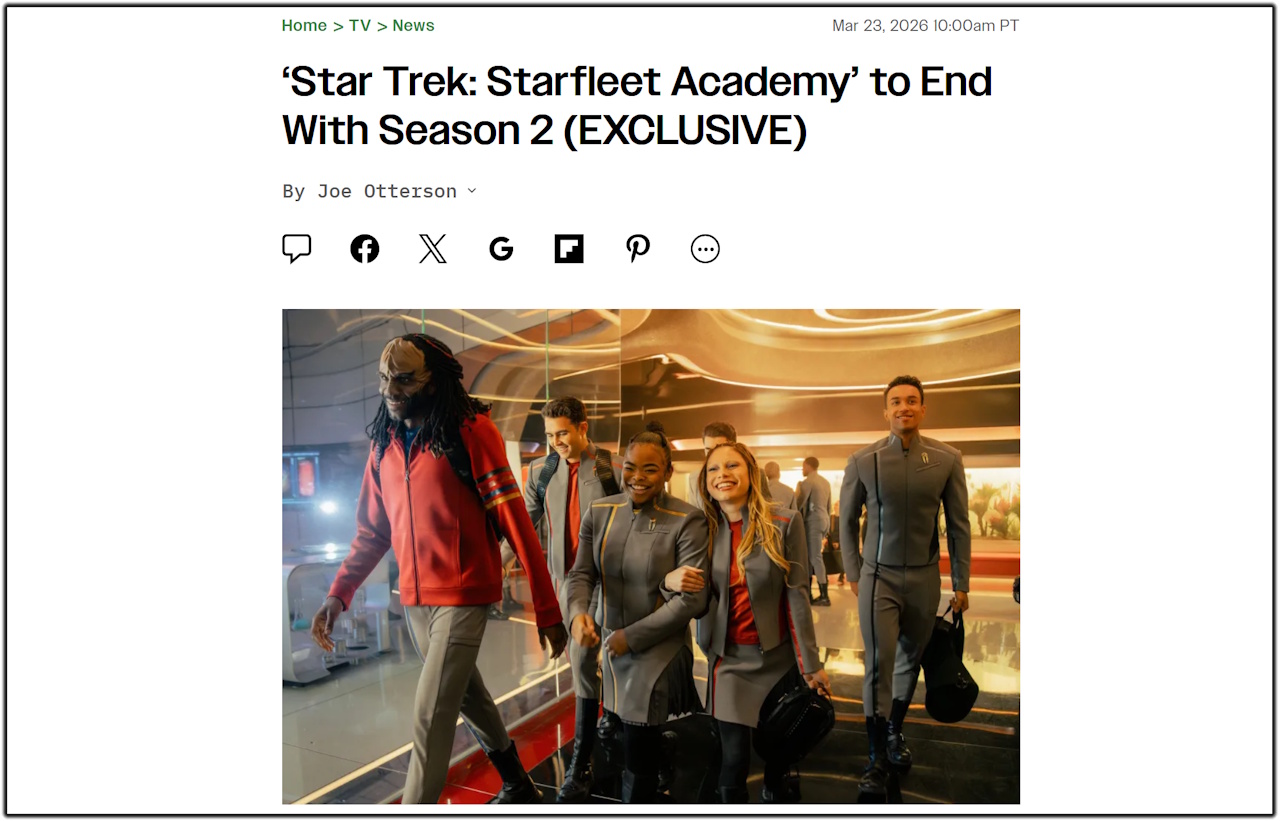
Although it was predictable, unfortunately, that a third season renewal would be a bridge too far for Starfleet Academy, the timing of that announcement still felt pretty brutal. It came just days after the Season 1 finale, perhaps a year or eighteen months away from Season 2’s arrival, and in the middle of a fairly muted 60th anniversary year to boot. But the news did get me thinking about what Star Trek might look like in the future, now that all of the CBS All Access/Paramount+ shows are being wound down. And also… it got me thinking about what I’d like Star Trek to look like, too.

I said a couple of weeks ago that Starfleet Academy was the “final pillar of streaming Trek;” i.e. the last surviving show of the franchise’s modern incarnation. That pillar is now set to fall, so it means we have to look to the future.

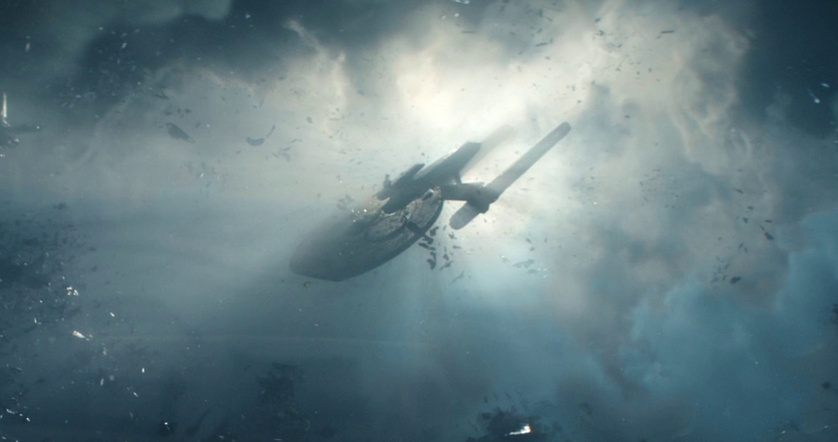
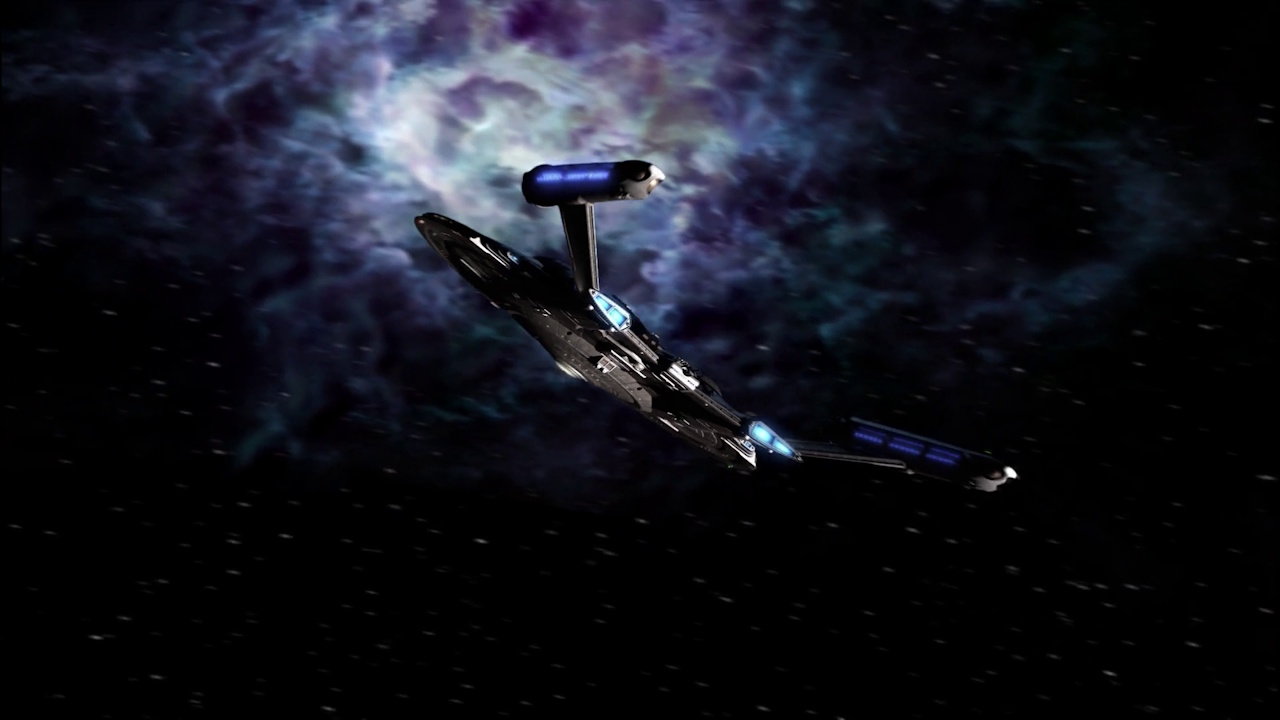
Still frame from Rubincon showing the Athena saucer in a gas cloud
The USS Athena in Starfleet Academy.

As an aside, a fan petition or campaign, however creditable its numbers may be, will undoubtedly not save Starfleet Academy. Star Trek has a long, well-established history of fan campaigns, with the most famous still being the one that got The Original Series renewed for its third season. But the new Skydance-Paramount corporate entity is a completely different beast, and I’m increasingly of the opinion that Starfleet Academy had been “de facto cancelled” before it had even premiered. The new leadership team came in, intent on taking Star Trek in a different direction, but still committed to the shows currently in production. Starfleet Academy was too far along to officially cancel – and announcing a cancellation before the show’s premiere would’ve been idiotic, even by the standards of the old Paramount corporation. So Season 1 went ahead as planned.

I also feel ever more sure that Alex Kurtzman – who’s been in charge of the franchise for eight years – is on the way out. Whatever other ideas he and his team may have had – like Tawny Newsome’s “workplace comedy” show, for instance – seem unlikely to see the light of day.
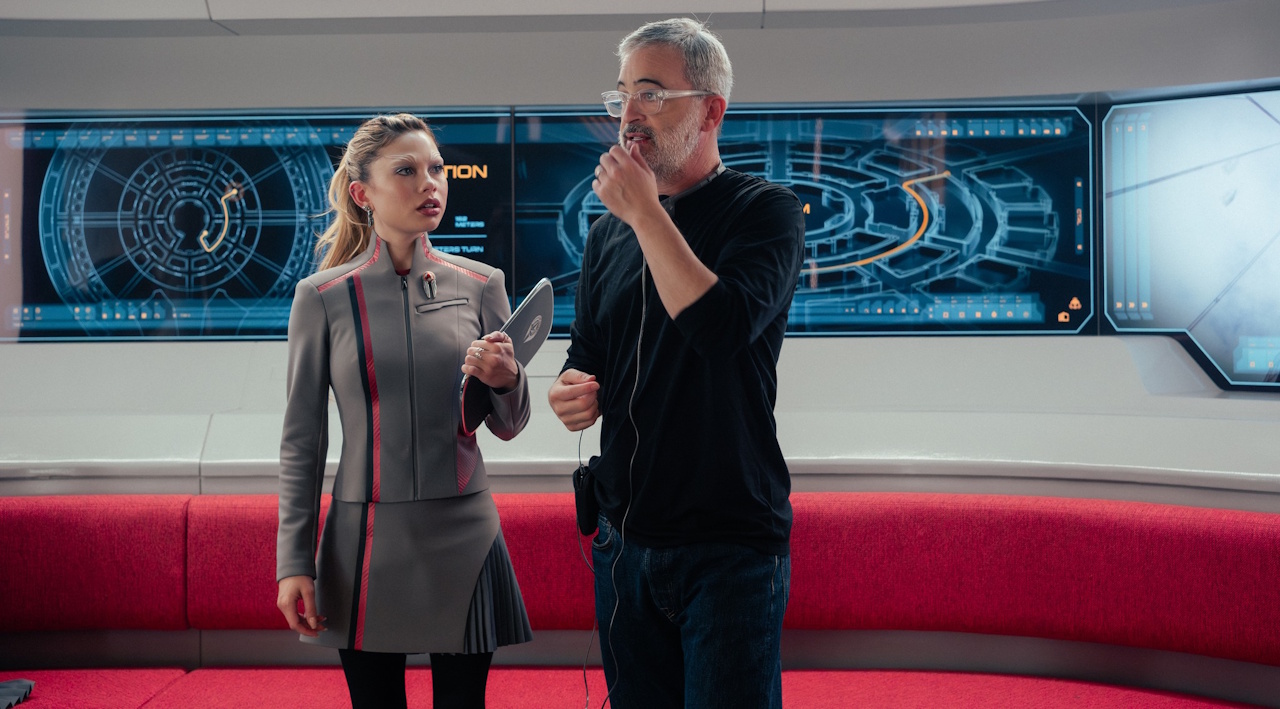
Behind-the-scenes photo from Star Trek Starfleet Academy S1 of Alex Kurtzman and Bella Shepard
Alex Kurtzman (right) with Bella Shepard during production on Starfleet Academy.

So that leaves us with two questions: what does this new Skydance-Paramount intend to do with Star Trek? And in an ideal world, what would I like to see happen to this storied franchise?

The first question’s the easy one, at least right now: they’re going to make at least one feature film. That’s, uh, it. At least as far as we know right now, when Strange New Worlds and Starfleet Academy wrap up, there’ll be at least one new film hitting the big screen. And if it makes waves and picks up a lot of traction, maybe there’ll be a sequel or a spin-off. But it certainly seems, as of mid-2026 anyway, that Skydance plans to make Star Trek a cinematic franchise – and an occasional one at that.
Stock photo of cinema seats
Star Trek is headed back to the cinema.

There is an additional complication, though – one which could, perhaps, see Star Trek on the small screen granted a reprieve sooner than we might expect. After buying out Paramount just last year (and incurring a ton of debt in the process), Skydance is now set on doing the same thing again. This time, their target is Warner Bros./Discovery, which owns the likes of CNN, HBO, Cartoon Network, and more. Brands and franchises like Game of Thrones, DC Comics, and the cinematic adaptation of The Lord of The Rings all come under that corporate umbrella.

This new buyout – assuming it will be completed (which is a big assumption at this stage!) – will leave the new Skydance-Paramount-Warner Bros. corporation in a mountain of debt. And yes, films at the cinema will be part of the new entity’s strategy to pay back its investors. But so will streaming and TV. And if there’s any hope for Star Trek coming back to the small screen in the years ahead, I think it’s gotta be there. At least, that’s how it feels right now.
Paramount-Skydance logo white on blue.
Skydance-Paramount is making a bid to buy Warner Bros.-Discovery.

Star Trek has told some fun stories at the cinema. I enjoy basically all of the Star Trek films on some level – even so-called “lesser” offerings like The Final Frontier or Insurrection. But, for me, Star Trek has always been more at home on the small screen, which is why Discovery’s premiere nine years ago felt like a true homecoming.

One of the lessons that I *hope* the new Skydance-Paramount team has learned is that Star Trek can’t just be blended up and poured into a typical streaming TV mould. This franchise – arguably more than any other, at least in the sci-fi space – *needs* the freedom that episodic storytelling brings, and trying to chop and change Star Trek to fit in with other modern streaming shows simply hasn’t allowed it to shine. That isn’t to say there haven’t been some wonderful stories over the past nine years, because there absolutely have been. But at its core, Star Trek is about exploring, right? It’s about seeking out new life and new civilisations… and that means that the crews of your starships have to be free to warp away to a new planet, a new star system, and a new adventure pretty much every week.
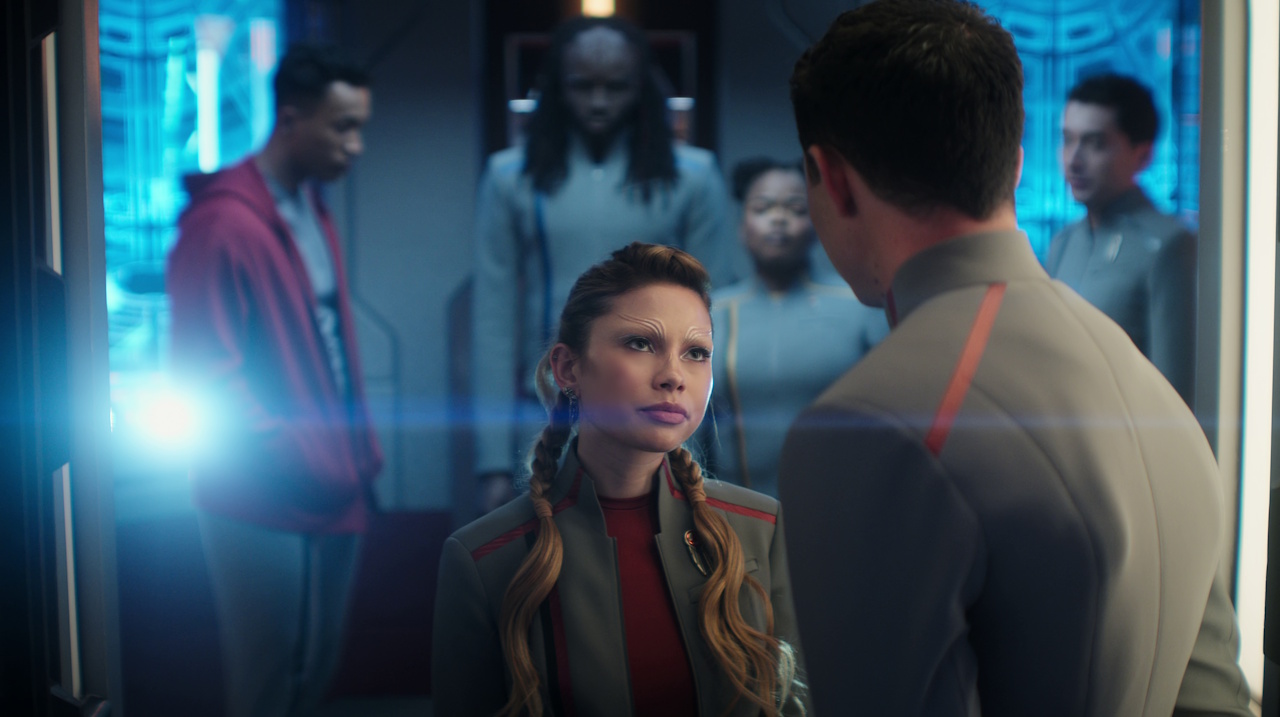
Still frame from Vox in Excelso showing the cadets
The Starfleet Academy cadets.

That, for me, is what modern Star Trek has been missing more often than not. Discovery, Picard, and, to an extent, Prodigy and Starfleet Academy, too, went for season-long serialised arcs, with big villains, unfolding mysteries, and characters who grow and evolve over the course of a single story. But that isn’t really what Star Trek ever was, if you look back. There were serialised seasons, especially in DS9 and Enterprise, sure. But even those seasons still had those episodic elements, or else took diversions along the way to visit different places and keep Star Trek’s core theme of exploration in the picture.

I’ve said multiple times here on the website that Star Trek, like any long-running project, has to be adaptable and must be able to change with the times. Doubling-down on what used to work thirty or sixty years ago is not necessarily going to cut it in a transformed media landscape. And I stand by that; as much as some of us fans might want to see it, a return to the exact style of The Next Generation era is off the table.
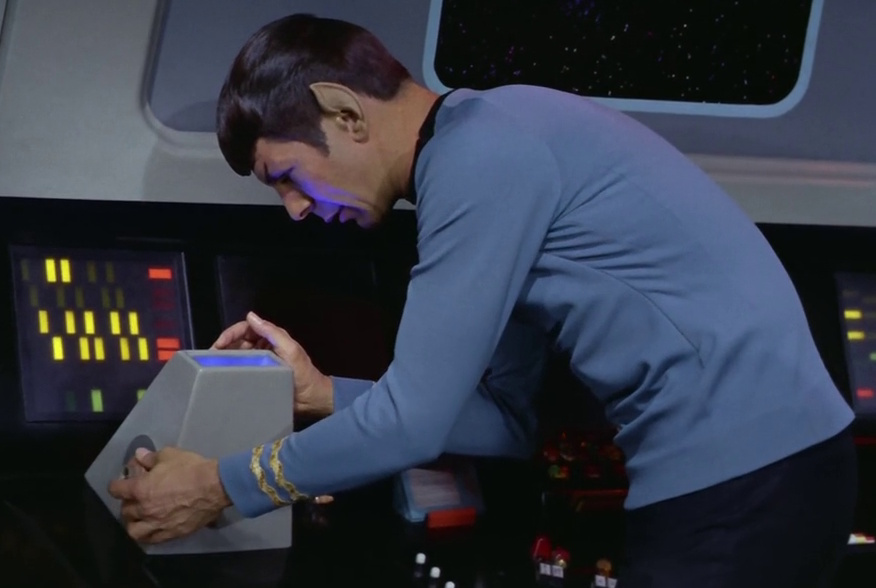
Still frame from The Enterprise Incident showing Spock and the scanner
Star Trek can’t just fall back on repeating what it’s already done.

But I find myself also being of the opinion that there can be too much change, too much attempted modernisation, and too much of an emphasis on copying what’s working for someone else. That’s led to multiple seasons of live-action Star Trek over the past few years that not only feel samey and repetitive when compared to each other, but which have also failed to establish a firm identity for the franchise. What *is* Star Trek to a new viewer? What does Star Trek look like to someone who’s tuning in for the first time? If all you’ve seen of Star Trek is Discovery or Starfleet Academy, you’d be forgiven for thinking that this franchise is just… more of the same. It’s no different from the Star Wars shows on Disney+, or countless other modern sci-fi and fantasy offerings from other networks. There’s nothing unique about Star Trek any more… nothing to make it stand out in a crowded marketplace.

And that’s what Star Trek will need to do in the future: stand out. If the streaming landscape continues to be dominated by short, six- or eight-episode fully-serialised seasons, let’s make Star Trek shows longer and more episodic. If big, over-the-top baddies are still the name of the game, step away from those kinds of characters. In fact, use violence sparingly, and focus on stories with scientific and engineering puzzles rather than mindless action and phaser fights. That kind of thing, I believe, is what could give a future Star Trek show enough of a unique hook to appeal to viewers. As audiences begin to tire of some of these streaming programmes, things will undoubtedly change – and Star Trek could, with the right timing, be on the crest of the wave, or even *lead* a trend away from TV shows that are akin to “ten-hour movies.”
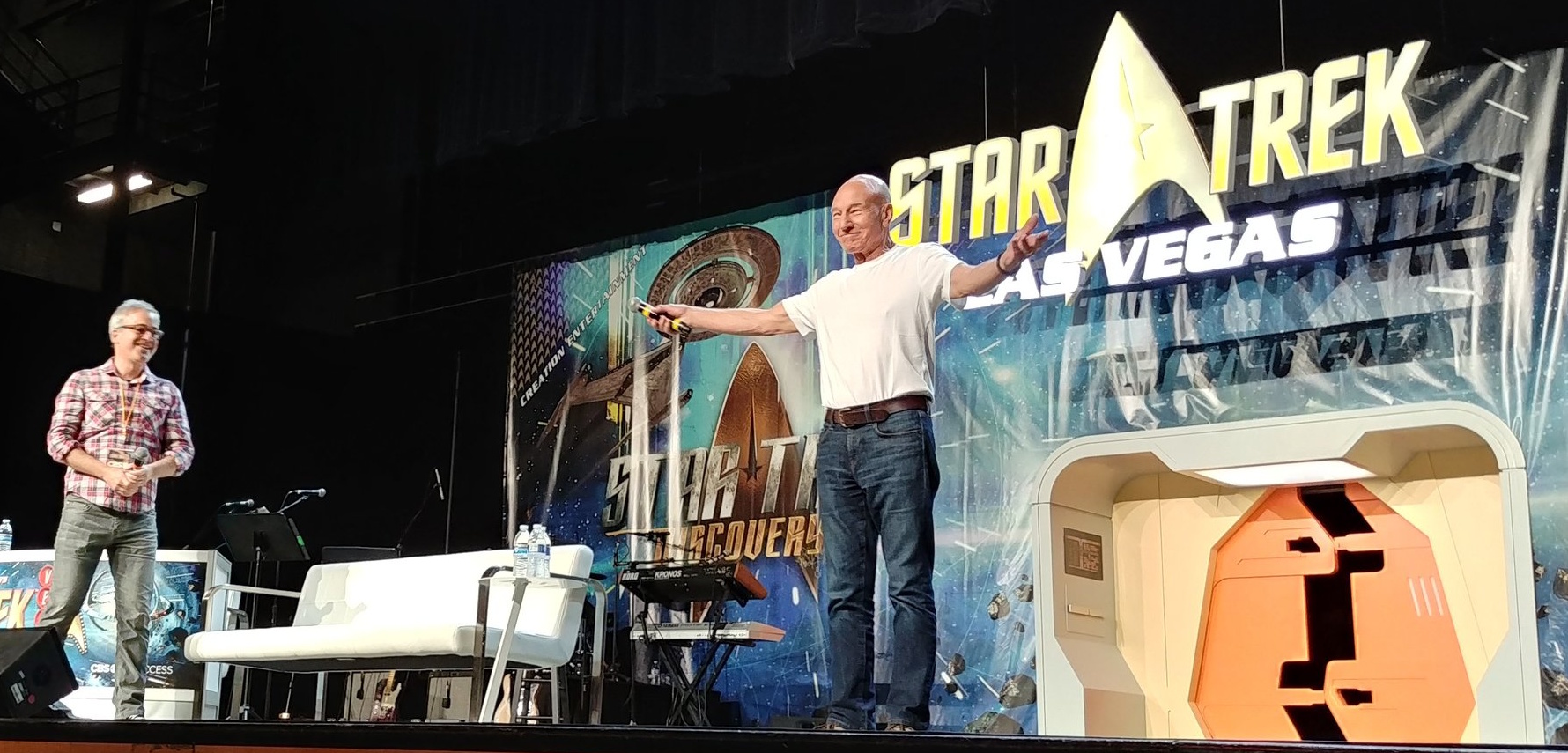
Sir Patrick Stewart at 2018 Star Trek Las Vegas
Sir Patrick Stewart (pictured) famously described Star Trek: Picard as a “ten-hour movie.”

That doesn’t mean a new Star Trek show can’t have *any* modern features. I think retaining character growth or even giving characters season-long arcs which play out across multiple stories can work exceptionally well. And I’m also not advocating for a return to low-budget “bottle shows” every other episode. Quite a bit of so-called “classic Star Trek” is filler, if you think about it; unremarkable episodes which exist solely to pad out a season and make the mandatory twenty-two or twenty-six episode limit. We don’t need more Shades of Gray, thank you very much!

If you’re already thinking of three words, then you and I are on the same page, because the kind of show I’m describing is… Strange New Worlds. That show, for me, is the model that any and all future Star Trek pitches should be based around. You’ve got an episodic adventure set on a moving starship. You warp away to a new planet and a new story every week. But within that framework, you have characters who develop, grow, and change, and who retain things that happened to them last week in this week’s adventure.
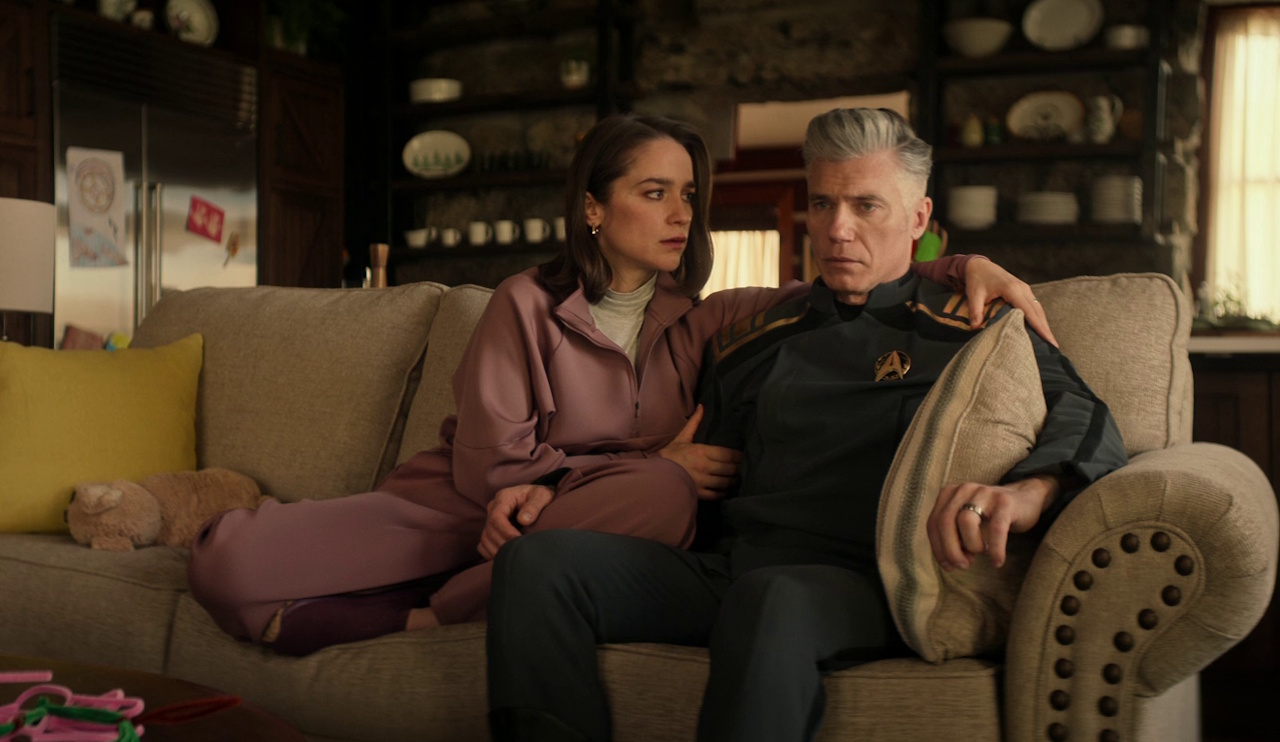
Still frame from Star Trek SNW S3 showing Batel and Pike
Sitting on the sofa to watch Strange New Worlds

For me, Strange New Worlds has been the absolute highlight of modern Star Trek for this exact reason. By reverting to an older, more episodic style, the show has been able to explore more aliens, more planets, and more of the Star Trek galaxy as a whole than any of its contemporaries. And it’s also been a beautifully diverse series, with episodes in a variety of genres: the horror and war tones of the Gorn conflict, comedy and drama with Spock and Chapel, a zombie episode… and even a musical. Strange New Worlds really has tried to do it all! Not every story worked or was to my taste, sure… but I appreciate the commitment to trying new things and keeping that episodic style throughout.

That doesn’t mean, by the way, that I’m asking for “more Strange New Worlds,” or the “Year One” idea that’s been floated around. Strange New Worlds has been cancelled, and for my money, Year One isn’t the direction I’d go. But what I *am* saying is that the show’s core model – episodic storytelling with character growth – is what any future Star Trek show should look to adopt.

Concept Art for Star Trek TMP showing the USS Enterprise
Concept art for The Motion Picture showing the USS Enterprise in drydock.

Whether it will happen, though… who’s to say? Star Trek has been cancelled before and found a way back, so I don’t think Starfleet Academy’s finale will be the last we’ll ever see of it. And with corporate shenanigans afoot, it may not be long before Sky-Mount-Bros.-Max decides it *needs* a new Star Trek show to win subscribers or viewers and pay down its debt. But whether Star Trek will take the kind of form I’m advocating for here… I’m not so sure, unfortunately. I’d love to see it happen; I’d love nothing more than to get the kind of exploration-focused, episodic adventure that used to be the franchise’s bread and butter. But in 2026, the entertainment landscape has definitely moved away from TV shows like that. And I have to accept that there may not be a way back.

If you made it to the end, thanks for reading. I hope this has been interesting. As I said, Starfleet Academy’s cancellation prompted this conversation and got me thinking about what Star Trek could or should look like in the future.

All I can really say is this: I hope we aren’t coming to the end of the line, and that Skydance’s warm words about Star Trek over the past months and years are genuine. We are heading into uncharted waters, in a way, with takeovers, mergers, and the streaming wars. Star Trek’s future is unclear right now… but it’s my sincere hope that there will be a future beyond the announced feature film and the end of the 2020s.


Most Star Trek films and TV shows discussed above can be streamed now on Paramount+ in countries and territories where the service is available. The Star Trek franchise – including all films, TV programmes, and other properties discussed above – is the copyright of Skydance/Paramount. This article contains the thoughts and opinions of one person only and is not intended to cause any offence.
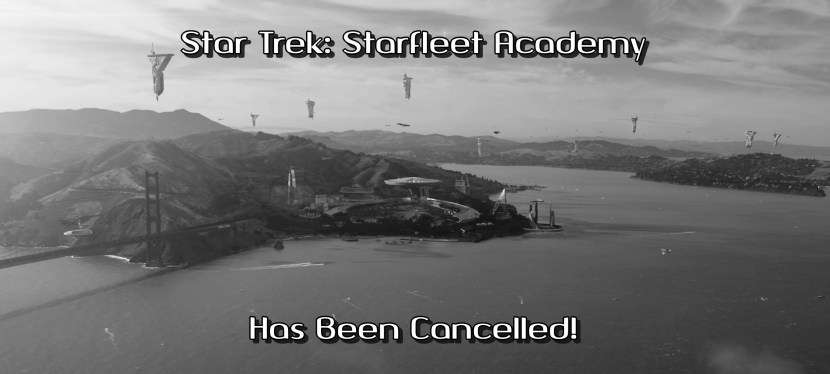
Starfleet Academy Has Been Cancelled!

A Star Trek-themed spoiler warning.

Spoiler Warning: Beware of minor spoilers for Star Trek: Starfleet Academy Season 1.

Mere days after the finale of Season 1, and with Season 2 still in post-production, news has leaked that Star Trek: Starfleet Academy has been cancelled. I won’t lie: this was something I expected we’d hear either this year or next year at the very latest, but there’s something about the timing that feels… well, pretty brutal.

The newly-formed Skydance/Paramount corporation seems to be making it clear that a line is being drawn under Star Trek’s current streaming era. That was pretty obvious, I argued, when Discovery and Strange New Worlds were cancelled – the latter coming before the show had even aired a single episode of its *third* season, with two more still to come after that. Star Trek’s new corporate overlords clearly intend to take the franchise in a very different direction, and Starfleet Academy was the last vestige of the old regime. That final pillar of “streaming Trek” has now fallen.

Screenshot of Variety showing Starfleet Academy's cancellation
Variety broke the news.
Image: Variety.com

I’m still assuming, at this stage, that Season 2 will actually be completed and broadcast. Filming wrapped last month, and while there’s still a lot of work to do in the editing suite, it would be foolish to scrap the entire project. So Starfleet Academy fans can, at least, take solace in the fact that we’re only halfway through the show; ten more episodes should air sometime next year or in 2028.

I don’t really wanna keep repeating the phrase “end of an era;” it was something I said last year when Strange New Worlds got the axe, and when Discovery and Lower Decks wrapped up, too. But with Starfleet Academy being treated so brutally by Paramount, it’s hard to know what else to say. This is definitely calling to mind Enterprise’s 2005 cancellation – with the only difference, really, being that a new feature film is allegedly in the works, a consolation prize we didn’t have back then.

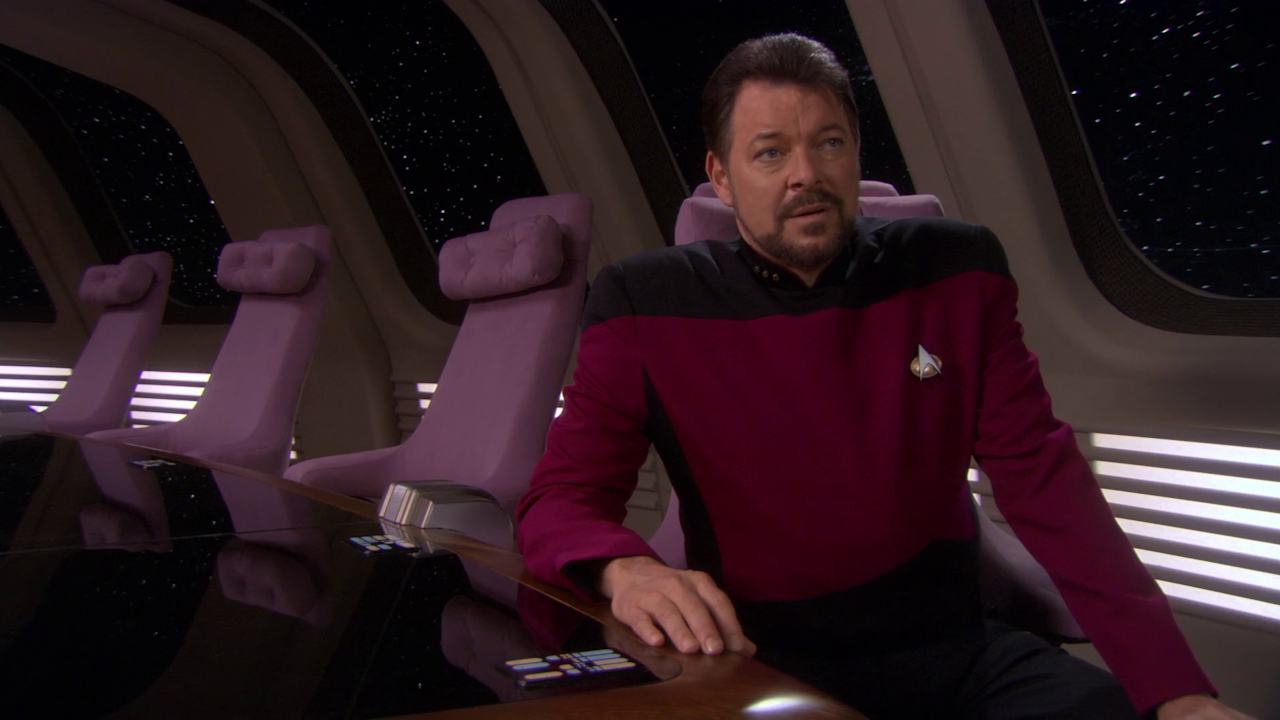
Still frame from Star Trek Enterprise S4 showing Riker
Does anyone else feel echoes of 2005?

If you’re a regular reader, you may recall that Starfleet Academy’s cancellation was something I predicted for 2026 back in January. I’m not taking a victory lap – the show may not have been “my thing,” but I went into it with an open mind, and I truly hoped it would find a way to connect with its intended target audience. Low streaming numbers throughout Season 1, however, seem to confirm that that simply didn’t happen. I said back in January that it would take a real miracle to convince this new incarnation of Paramount to stick with the show beyond Season 2 – going viral and becoming a must-watch sensation, like Stranger Things or Wednesday, perhaps, might’ve been enough to guarantee a renewal. But even doing reasonably well probably wouldn’t have been enough. I just got that impression from Paramount’s new ownership.

But, regrettably, Starfleet Academy didn’t even manage “good but not great” streaming numbers. It never cracked the top ten in the United States or here in the UK, even in a relatively easy TV window where there wasn’t a ton of big-budget competition. Shows like Fallout, The Pitt, and even preschool cartoon Bluey were performing well ahead of Starfleet Academy during its first season. Cancellation seemed inevitable, I’m sorry to say.

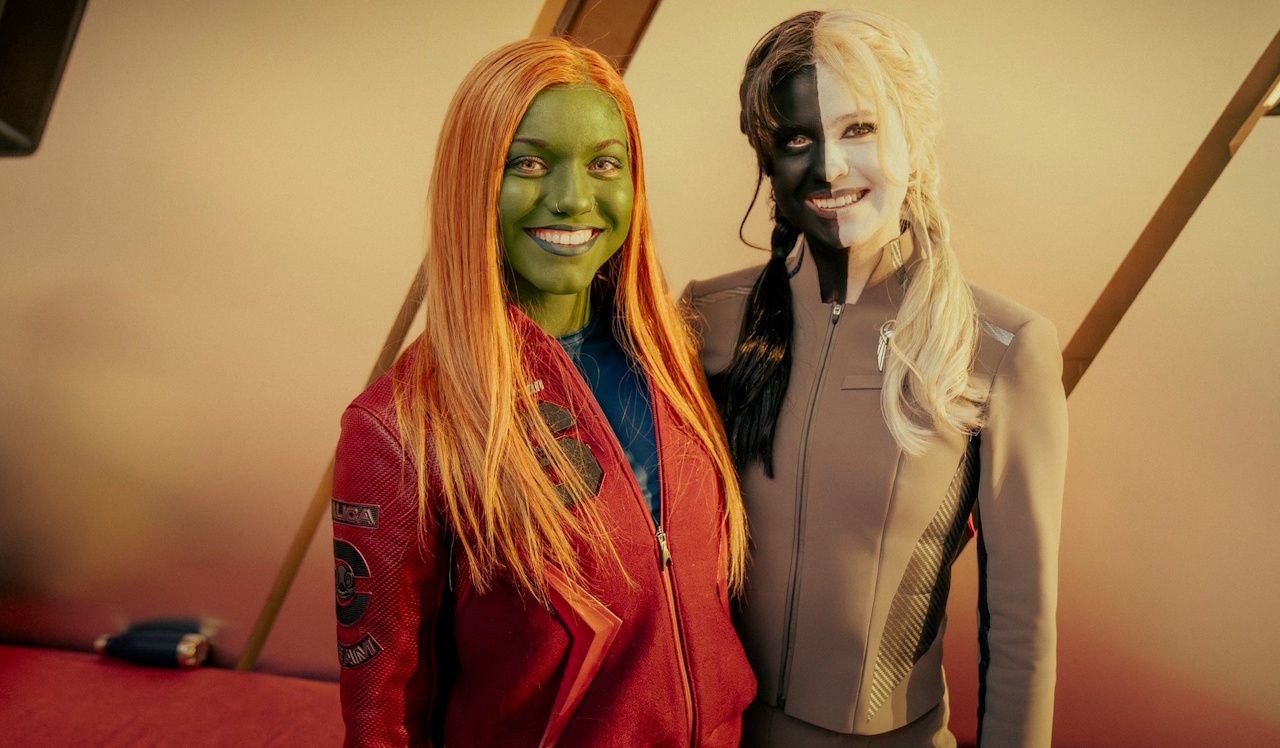
Behind-the-scenes photo from Starfleet Academy S1 showing two extras in alien makeup
A pair of cadets in happier times.

But the timing… it feels brutal, as I said, but also a little insulting to the cast and crew. Paramount will still expect Holly Hunter and her co-stars to go out on the interview circuit, promoting Season 2 next year or the year after. And we’re barely ten days out from the end of Season 1. I get why the decision was made – if a show isn’t performing very well, and a new corporate team wants to reorganise the studio’s big brands and franchises, it makes sense. But even so, you’d think a bit of a grace period could’ve been given, timing-wise. There’s now practically no chance of the show picking up any extra attention from fans who missed it over the past couple of months. What would be the point, after all, in getting invested in a series which has already been cancelled?

With Starfleet Academy’s cancellation, there’s now officially no new Star Trek in production on the small screen. Strange New Worlds and Starfleet Academy’s second season remain in post-production, so there’ll be new Star Trek on our screens later in 2026 and into 2027. But then, after that? All we have to focus on, barring any shocking announcements, is Skydance’s new feature film. Although this was expected, and despite Starfleet Academy not really being “my thing,” I gotta be honest: this news still stings.

Behind-the-scenes photo from Star Trek SFA S1 showing Kurtzman directing
Showrunner and director Alex Kurtzman on set.

However, as I said a couple of weeks ago, there are some potential benefits for a long-running franchise like Star Trek taking a break or going on hiatus for a while. The previous incarnation of ViacomCBS and Paramount threw *a lot* of Star Trek at us over the past few years… in a pretty incoherent and poorly-managed way a lot of the time. There’s something to be said for a new team coming in, wiping the slate clean, and taking a moment so we can all catch our breath. And if the current creative/production team has taken Star Trek as far as it reasonably could, there’s also a lot to be said for new folks taking the reins. Most of the Star Trek shows since Discovery have shared writers, directors, producers, and more behind-the-scenes folks, so giving new people an opportunity to work on the franchise should – in my opinion, naturally – be a positive thing.

No serious Trekkie sat down to watch Starfleet Academy hoping they’d hate it or wanting it to fail. But I think a lot of us recognised that the show was probably coming along a little too late, after the previous Paramount corporation hadn’t handled Star Trek especially well. It would’ve taken something exceptionally special for Starfleet Academy to rise above all of that, and to do something that no project in the franchise’s streaming era *truly* managed to do to any great extent: connect with a new audience. It was a tall order, for sure, but making a show intentionally aimed at teens and young adults was far from the worst idea in the world. It’s just a shame, really, that Starfleet Academy launched when it did, and didn’t really get a chance to connect with potential new viewers.

(Cropped) still frame from Come Lets Away showing the USS Miyazaki
Surely it’s not some kind of visual metaphor…

Many folks argue that Star Trek shows don’t really “get good” until their second seasons or beyond, so cancelling Starfleet Academy after just one season might seem like a poor decision in that sense. And I kind of see that point, at least to an extent. But if Season 1 just wasn’t finding much of an audience in the first place, not with older Star Trek fans nor with its intended new audience of younger folks, would sticking with it for a third or fourth season have really changed that? I guess we’ll never know, eh?

It’s a shame, and despite the fact that Starfleet Academy wasn’t really for me, I don’t celebrate its cancellation by any stretch. In fact, I lament it. I think it’s a real shame, barely nine years on from Star Trek’s triumphal return to the small screen, to be back here all over again. And despite the way things look right now, it’s my hope that, behind the scenes, there are folks at the new Skydance/Paramount corporation who are seriously considering where to take the franchise in the future. Films are great, and some of Star Trek’s most highly-regarded stories came at the cinema. But for this old Trekkie, Star Trek has always been a television show; a franchise best-suited for the small screen, where crews of explorers can warp away to a new planet, a new alien race, and a new adventure every week. Maybe one day… that kind of Star Trek will be back.

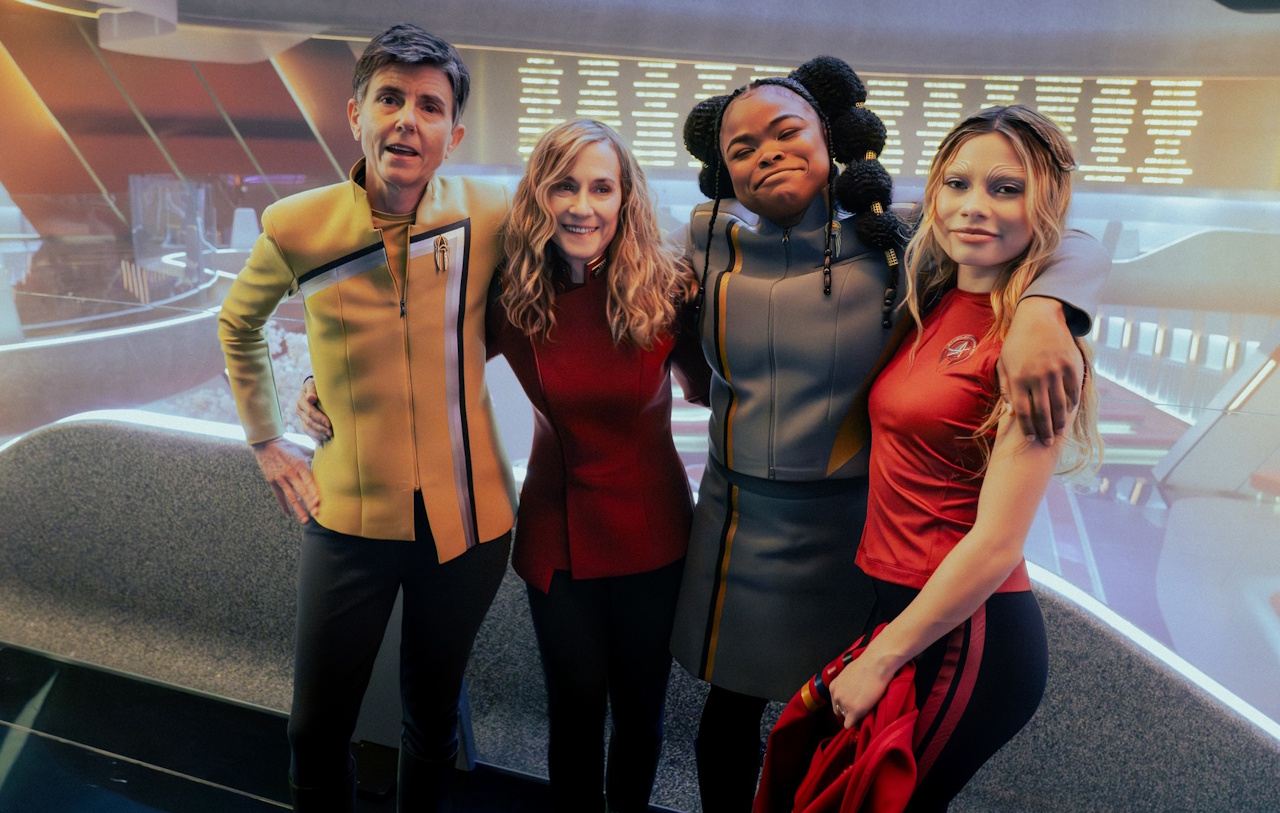
Behind-the-scenes photo from Starfleet Academy S1 showing four main cast members
Four main cast members in a behind-the-scenes snap.

If you’re a huge Starfleet Academy fan, you have my sympathies today. This news may have seemed inevitable for a while, but it’s not something any of us wanted to see. And as for what it means for the future? I really don’t know, to be honest. I want to say I feel optimistic that, one day soon, Star Trek will be back! But today… doesn’t really feel like that kind of day, to tell the truth.

I’m not sure how you’ll feel reading a mixed-to-negative review, today of all days, but if you want to check out my thoughts on Starfleet Academy’s first season, you can find my review by clicking or tapping here. I also have reviews of the two-part premiere, and episodes three through ten. Click or tap those links to check those out. And finally, I have two more pieces: one covers a storyline involving Deep Space Nine, which you can find by clicking or tapping here, and finally, my thoughts on the Doctor’s major storyline, which you can find by clicking or tapping here.

Thanks for reading. And, as always: Live Long and Prosper, friends.


Star Trek: Starfleet Academy is available to stream now on Paramount+ in countries and territories where the service is available. The Star Trek franchise – including Starfleet Academy and everything else discussed above – remains the copyright of Paramount/Skydance. This review contains the thoughts and opinions of one person only and is not intended to cause any offence.
Star Trek: The Benefits of Taking a Break

A Star Trek-themed spoiler warning.

Spoiler Warning: There are spoilers ahead for the modern Star Trek franchise, including Discovery, Picard, Prodigy, Strange New Worlds, Section 31, and Starfleet Academy.

It was recently announced that the second season of Starfleet Academy has finished filming. This comes a few weeks after the fifth and final season of Strange New Worlds also wrapped up – and it means that, for the first time since Discovery entered production in 2015, there’s no new Star Trek being produced.

Since Star Trek peaked in 2022, with a whopping fifty-one episodes of TV being broadcast across five different shows, we’ve seen a growing swathe of cancellations. And while it’s very much unconfirmed at this stage, I wouldn’t be surprised if Starfleet Academy won’t get that third season renewal. The newly-established Skydance-Paramount corporation doesn’t seem interested in pursuing Star Trek on the small screen right now – or at least, had no interest in retaining and renewing any of the Star Trek shows that were in production at the time of the merger – so when Strange New Worlds and Starfleet Academy finish their runs in 2027 or 2028, there’ll be one new Star Trek movie… and that could be it.

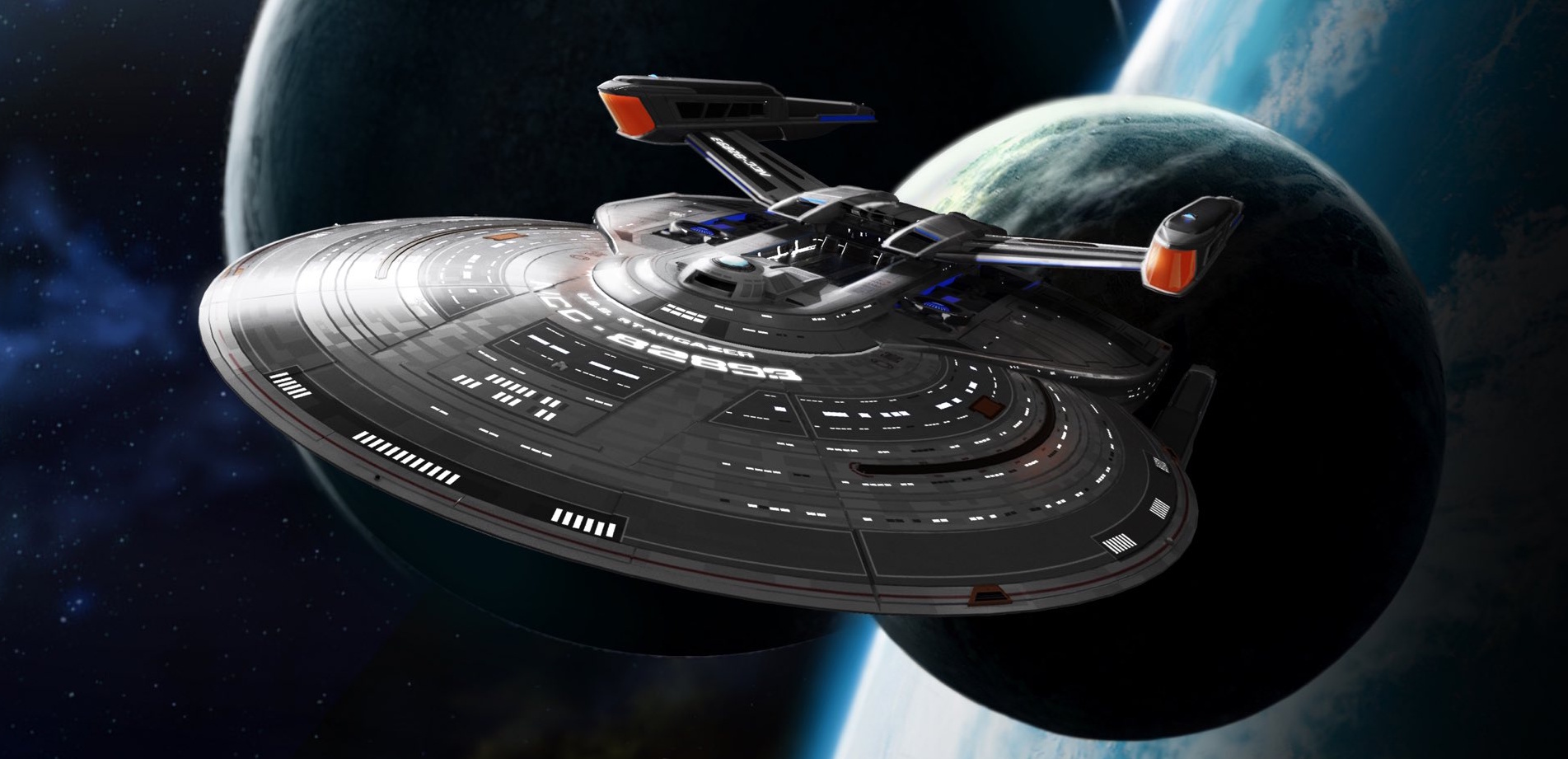
Concept art from Star Trek Picard S2 showing the Stargzer
The USS Stargazer.

I’ve said a few times here on the website that I think it’s an awful shame, in this milestone 60th anniversary year, to be thinking negatively and potentially seeing Star Trek reaching the end of the line. But this time… I want to try to flip the script. Taking a break can be a positive thing, and no franchise can realistically keep up the pace that Star Trek attempted in the first half of the 2020s. Add into the mix the poor way the previous incarnation of Paramount handled the franchise, and I think we can make the case for a hiatus not being the worst possible news.

Let’s begin with an observation – one which you may share, or may not!

I haven’t watched every single Star Trek episode. I’ve only seen about half of Lower Decks, Prodigy’s first season but not its second, hardly any of Scouts (and yes, I think Scouts counts as part of Star Trek), and I’m a couple of weeks behind on Starfleet Academy, too. I’m a pretty big Trekkie – I run a Star Trek fansite, for goodness’ sake! But even *I* have found the Star Trek franchise to be a lot to handle over the past few years.

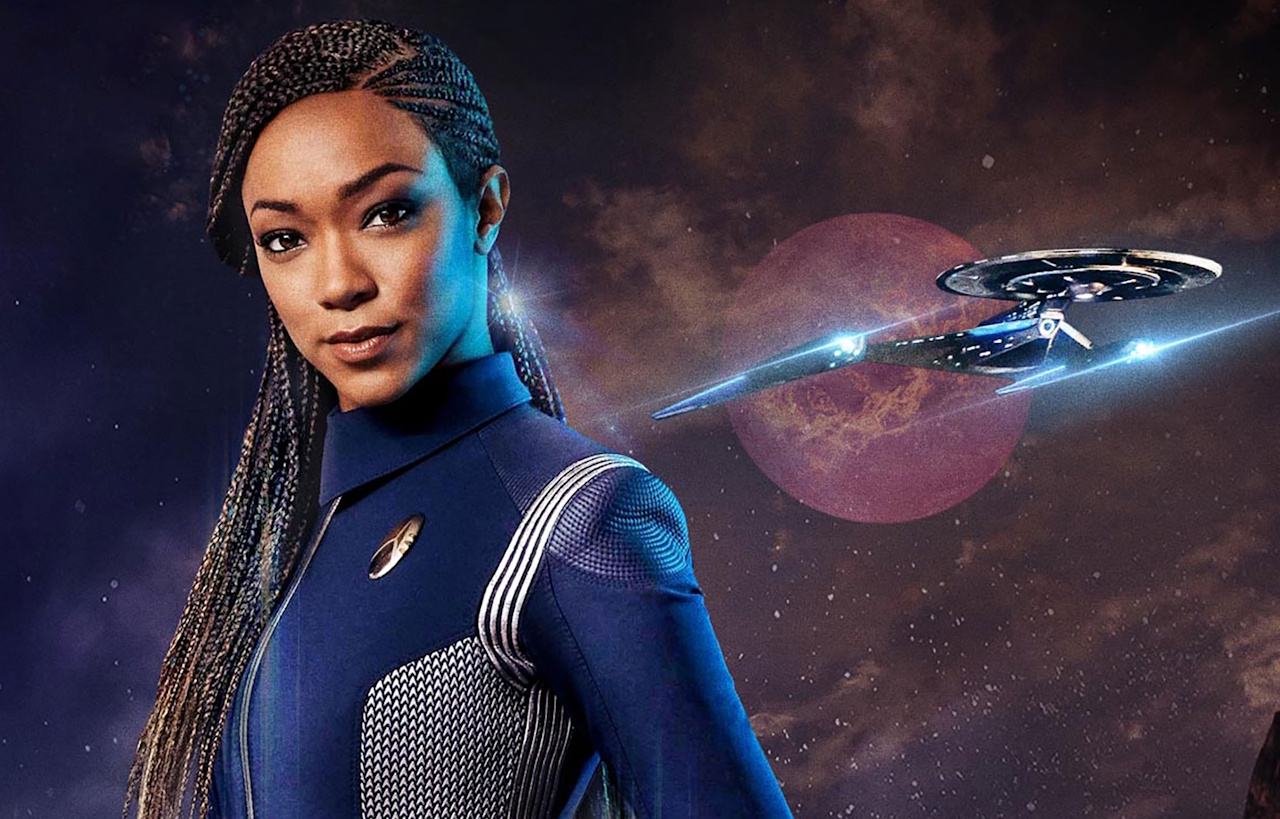
Cropped poster for Star Trek Discovery S3
Michael Burnham on a Discovery promotional poster.

In 2023, I wrote about the burnout I’d been feeling with Star Trek, and it was at that point that I paused my episode reviews for both Strange New Worlds and Lower Decks. I did resume watching SNW – belatedly – but Lower Decks just… ended up sitting in the pile. I plan to return to it, of course, and I know for a fact I’ll enjoy it when I do. But… well, sometimes it’s okay to take a break.

One of the problems I’d argue Star Trek has faced in this streaming era is a lack of overall direction and consistency. I’m all in favour of trying out different genres, styles, and trying to reach new audiences – those are all good things. But since 2020, Star Trek has broadcast two serialised dramas, an animated comedy, a kids’ show, a preschool-age web series, a spy-thriller TV movie, a young adult/teen drama series, and one semi-episodic, somewhat “classic” feeling series.

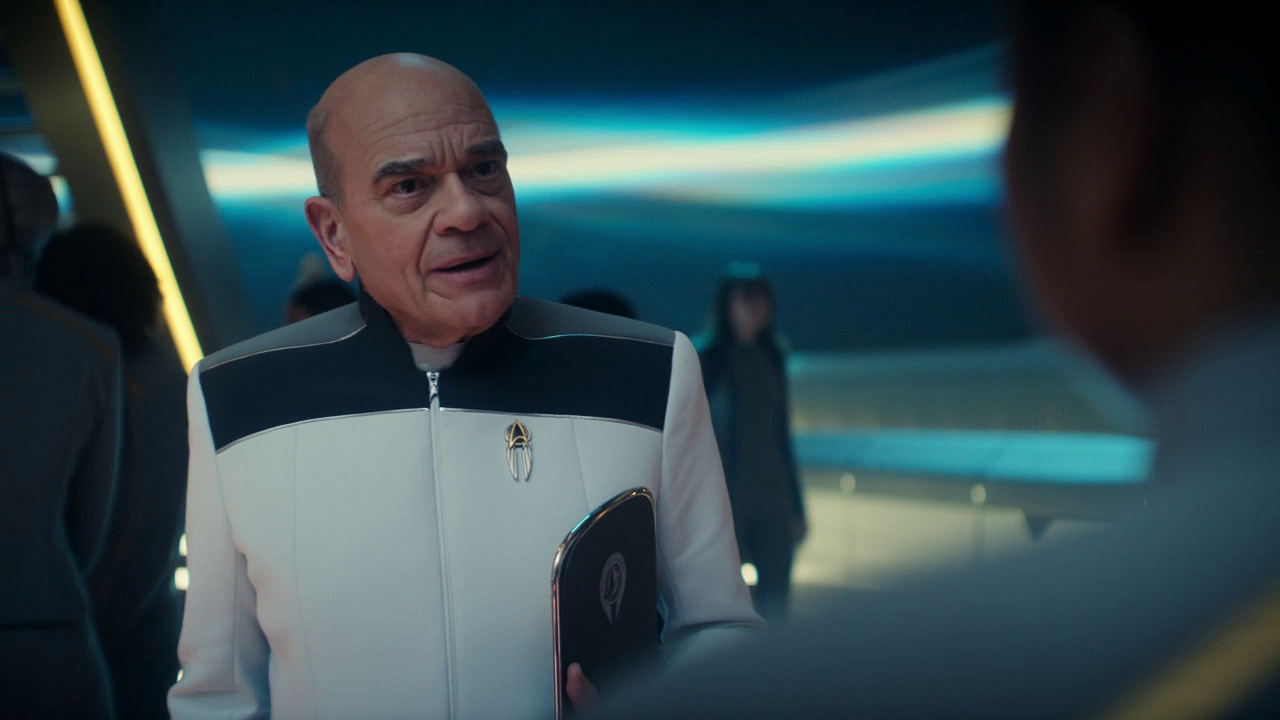
Still frame from Star Trek: Starfleet Academy Season 1 showing the Doctor.
The Doctor in Starfleet Academy Season 1.

Moreover, the franchise’s timeline has become completely fractured. Discovery was set in the 23rd Century, but then leapt forwards in time by 900 years to the 32nd. Picard was set decades after Nemesis and Voyager, but nowhere near as far forward as Discovery. Strange New Worlds was set after Enterprise and Discovery but before The Original Series. Prodigy was set after Voyager, but not at the same time as Picard. Section 31 was set after Discovery and the TOS films, but before The Next Generation. Lower Decks was set in between Nemesis and Picard, but still managed a crossover with Strange New Worlds. And, of course, Starfleet Academy is now set after Discovery in the far future.

Did I miss one? I feel like I missed one.

One thing I really hoped Star Trek could do, after Enterprise was cancelled and a reboot film was in production, was shake off its image as a convoluted franchise that only nerds could possibly keep up with. And it did… briefly. But the franchise’s streaming era didn’t just bring back the complicated prime timeline, it doubled- and tripled-down on making it even *more* convoluted than ever. And what’s been the result of that? It’s increasingly difficult for new viewers to know where to start, it’s hard for audiences who’ve enjoyed one series to try out another and fully join the fan community, and even for long-time Trekkies… it can be hard to keep up.

Promo photo of Star Trek S31 showing Garrett
Star Trek has gotten even more convoluted in recent years.

I don’t believe that Star Trek should do the Marvel thing of making *every* film and series share a single setting, with characters and storylines criss-crossing the franchise. That brings with it its own issues, as Disney and Marvel are slowly discovering. Nor do I believe that Star Trek should take the Star Wars approach of only focusing on a handful of legacy characters at the expense of everything else. Again, that’s small-minded and has left that franchise with fewer and fewer options as time has gone on.

But what I do think is necessary, at this point, is for Star Trek to slim down and try to refocus. The days of producing five series at once, all in different time periods, has to be over. Star Trek’s corporate owners spread the franchise too thin in the first half of the 2020s, and simultaneously expected it to be one of the principal flag-bearers for a streaming platform. There’s a good case to be made for picking a single era, producing a single series, and sticking with it until it finishes its run.

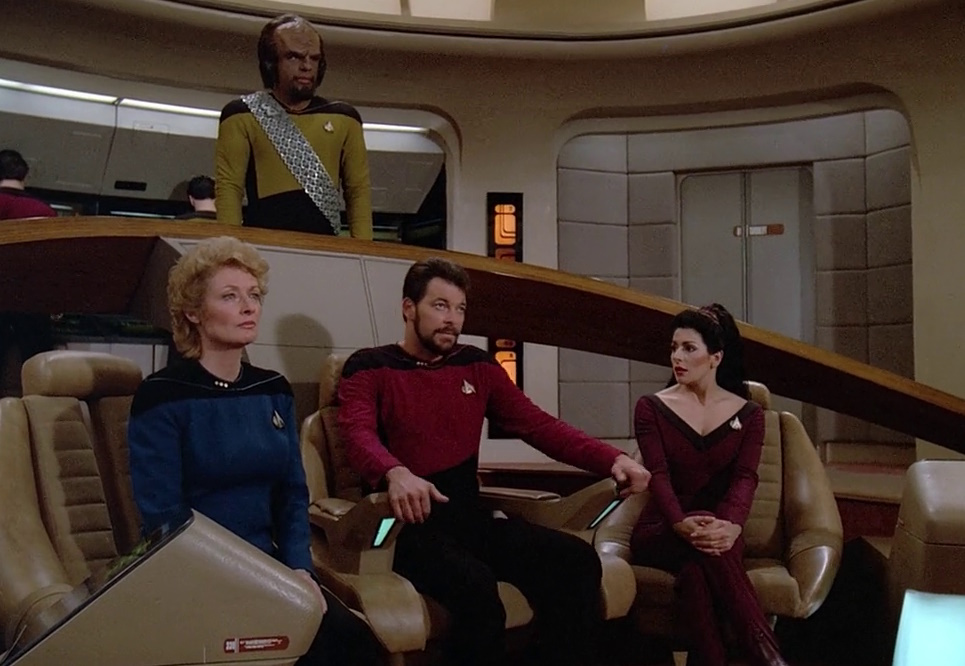
Still frame from Star Trek TNG S2 showing Riker, Troi, Worf, and Pulaski
Riker in the captain’s chair in The Next Generation Season 2.

With Alex Kurtzman’s contract at Paramount having run its course, and with a new feature film (allegedly) in early pre-production, this is as good a time as any for the franchise to take that break. When the current shows have run their course, and the film has premiered in cinemas, there’ll be time for Skydance to assess what’s worked, what hasn’t, and perhaps find where there could be a place for Star Trek in the future. And I do believe there should be a place for the franchise in the future! I’m just… not entirely certain what that looks like as we get closer to 2030.

Taking a break – having a clear twelve months or so without any new shows or films in production or on the air – will give the franchise breathing room. It’ll give all of us a chance to think about what we enjoyed, what we didn’t, and what we’d like to see more of. Star Trek – like any franchise, really – can’t be everything to everyone all the time, and decisions will have to be taken about where to focus and where to spend that energy. And it could be the case that a break is exactly what’s needed to give everyone involved a bit of clarity – the ability to see where Star Trek can and should go next.

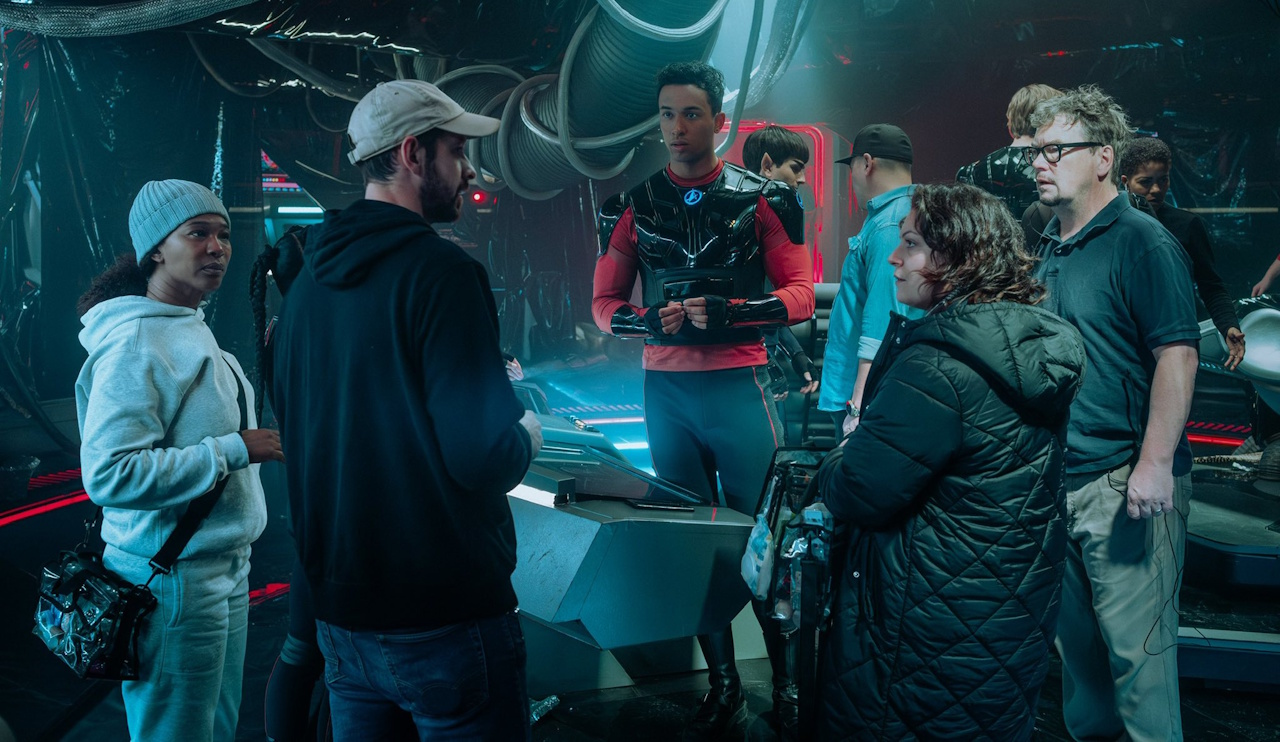
Behind-the-scenes photo from Star Trek Starfleet Academy S1
Behind-the-scenes on the set of Starfleet Academy.

Unlike a lot of entertainment franchises, Star Trek has always felt pretty open-ended. There’s no overarching story that’s drawn to a close, and really, the only limitations should be the imagination of the folks in the writers’ room. As long as you can invent new planets, aliens, and weird space phenomena, you can make an exploration-focused, episodic Star Trek show pretty much… forever. It’s not like Star Wars, where Palpatine and Vader rose to power and were defeated, or The Lord of the Rings, which couldn’t very well continue after Sauron’s defeat. There *are* more stories to be told in this galaxy… if someone can be found to tell them.

When we look back on Star Trek’s streaming era, I think we’ll come to regret the franchise’s over-use of legacy characters. Strange New Worlds prioritises Spock, and latterly Kirk, Scotty, and Uhura, at the expense of its original creations – and even Captain Pike, sometimes. Picard jettisoned its new characters in favour of bringing back the cast of The Next Generation – even though doing so made no sense in at least one instance. And I’m afraid that, for all of its successes, making Prodigy a half-kids show, half-sequel to Voyager left it in a very odd narrative space, one that worked against its core function of attracting younger viewers. For you and I, long-standing Trekkies who love this franchise, some or maybe even all of those shows worked well. But for the franchise’s longer-term prospects? Doubling-down on legacy characters has left Star Trek with a lot less room for manoeuvre.

Still frame from Star Trek SNW S3 showing Spock and Kirk
Spock and Kirk in Strange New Worlds.

Pitches abound from ex-Star Trek stars – whether it’s the Ceti Alpha V idea that eventually became the Khan audio drama, Scott Bakula’s “President Archer” series, the unironically-pitched Captain Proton show, a Strange New Worlds spin-off called Year One… and more. But are any of these ideas what Star Trek needs at the current moment? We’re coming off a long run of prequels, sequels, and shows with legacy characters shoehorned into them. And if the people in charge believe that what Star Trek *used to be* is all it can ever be in the future… well, maybe we really do need a break.

Why did Star Trek succeed in the 1980s and 1990s when The Next Generation and its spin-offs were on the air? It wasn’t because the writers and creatives kept going back to the same handful of characters and alien races over and over and over again. It was because there were passionate people who loved the franchise – but who were also willing and able to take it to new places. We’ve seen some of that on streaming, too – don’t get me wrong. But… not enough.

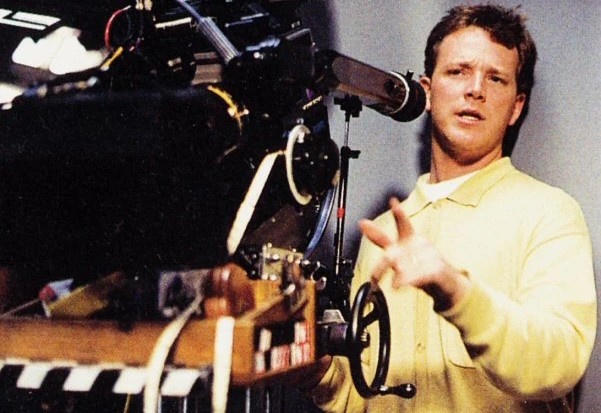
Behind-the-scenes photo from Star Trek Voyager showing Robert Duncan McNeill
Robert Duncan McNeill directing an episode of Voyager.

At the same time as Star Trek has continually revisited legacy characters and familiar settings, we’ve also seen the franchise repeatedly forced into a modern, streaming TV mould that – I would argue – simply is not a good fit. Season-long, fully-serialised stories with big, galaxy-threatening villains… I mean, that kinda thing might work for Star Wars, but it’s just not what this franchise has ever really been about. Even when Deep Space Nine ran its Dominion War arc, the show was still largely episodic, and in twenty-plus-episode seasons, there was a lot more room to tell different kinds of stories within that framework.

I’m trying not to dwell too much on decisions that have already been taken. But I can’t shake the feeling that, in five or ten years’ time, we might look back at this streaming era as a huge missed opportunity… perhaps Star Trek’s last great opportunity to reach new audiences. By the time we got Strange New Worlds – the show I consider to be the high-water mark of the modern franchise – Discovery, Picard, and, to an extent, Prodigy as well, had already burned a lot of goodwill and a ton of cash. By the time the higher-ups at the former Paramount corporation realised that the best way to make a Star Trek show was to… y’know, *make a Star Trek show*, it was already too late. The merger was inbound and cancellation loomed.

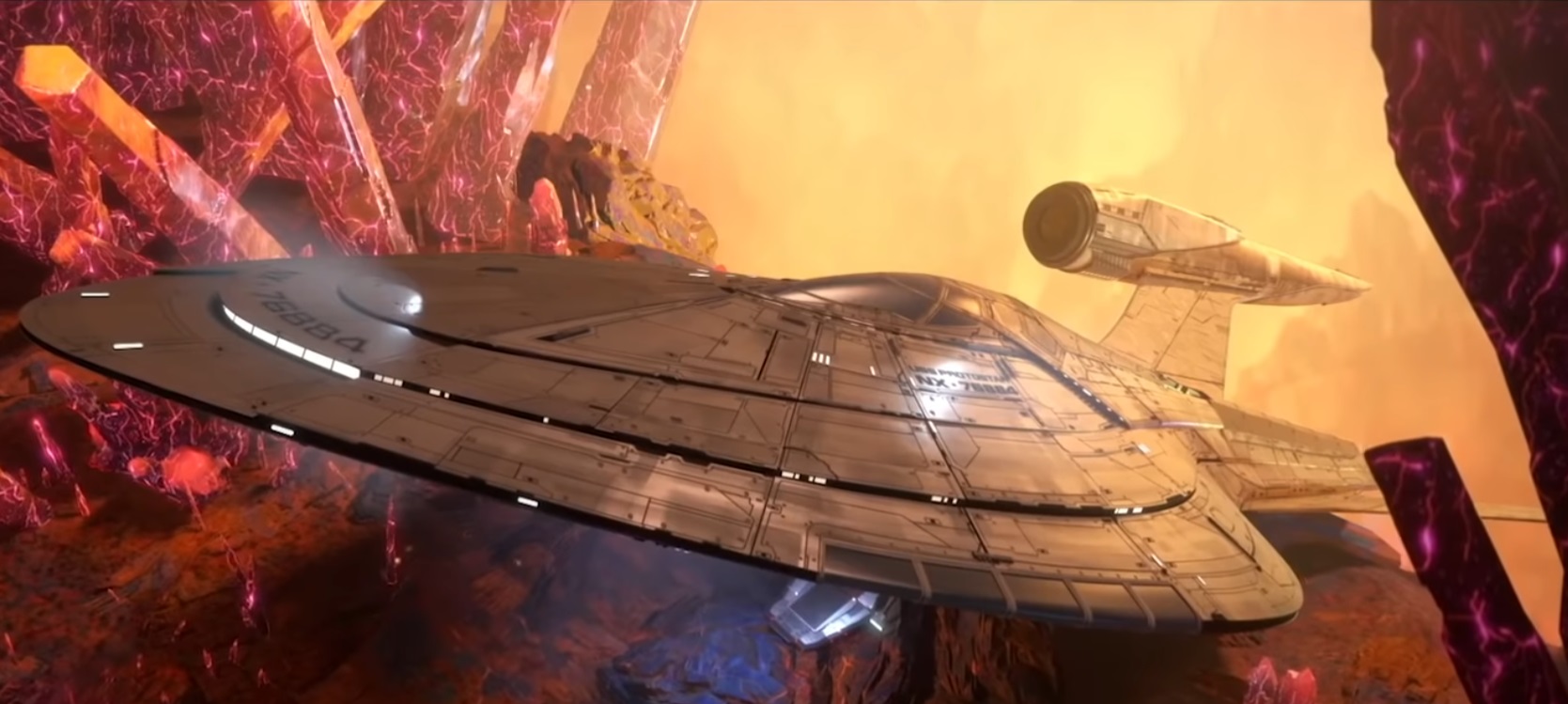
Still frame from Star Trek Prodigy showing the Protostar
The wreck of the USS Protostar…

I don’t want to say that I regret ViacomCBS and Paramount trying new things with Star Trek, nor trying to modernise the franchise, either. Both Discovery and Picard were well-intentioned efforts to take this classic franchise and see if it could slot into a modern, serialised, short-season format. But I think we also have to acknowledge that the results of those experiments were more miss than hit, and Strange New Worlds’ success is what’s proven to me that Star Trek *still* works best when you have the freedom to warp away to a new planet and a new adventure pretty much every week.

And that’s what I hope the new Skydance/Paramount leaders will reflect on in the months and years ahead.

I would say, to its credit, that the six episodes of Starfleet Academy that I’ve seen so far have also been more episodic than I initially feared, and that there are some fun standalone stories in Discovery, Prodigy, and of course, in Lower Decks as well. But where those shows fell down, in my opinion, was in trying to use (and then re-use) a serialised streaming mould that may have worked elsewhere… but just wasn’t the right fit for Star Trek.

Skydance CEO David Ellison
David Ellison, CEO of Skydance-Paramount.

If you’ve been a regular reader for a while, you might remember me saying this shortly before Picard Season 1 landed back in 2020: “I’d like to give the new cast a chance to become fan favourites for the next generation (pun intended) of Star Trek fans. I really hope that in another thirty years’ time they’ll be clamouring to find out what happened next to some of these characters the way we are for those of the TNG era.”

That was genuinely what I hoped for as Picard premiered; that fans would be just as enamoured with the likes of Dr Jurati and Elnor as you and I were for Dr Crusher or Worf. Unfortunately, I really can’t think of a single character from modern Star Trek – across all of the shows – who might genuinely be in that category. Can you?

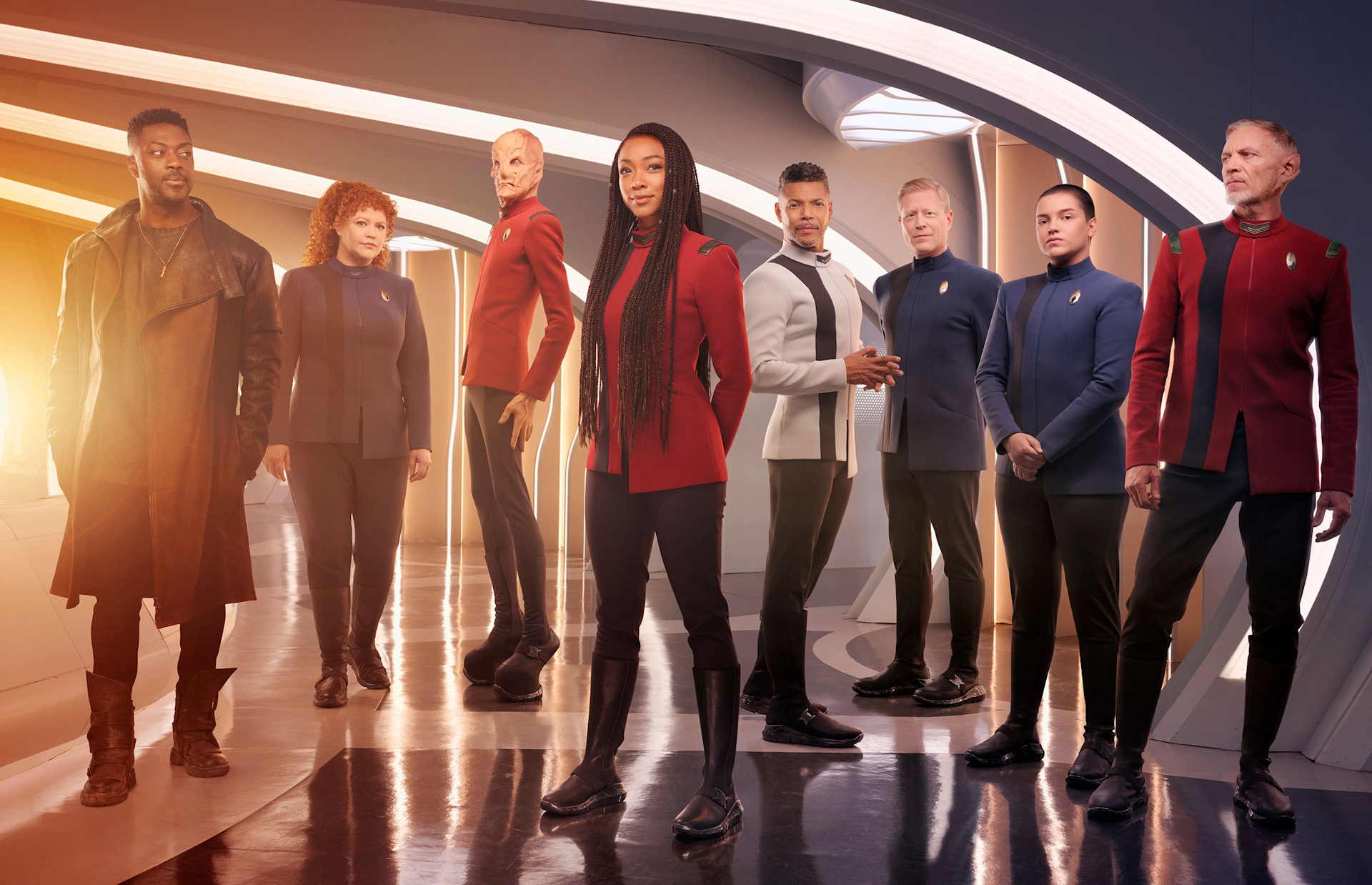
Promo photo for Star Trek Discovery S5 showing the cast
The main cast of Discovery’s fifth and final season.

But… I could be wrong about that. And perhaps, with the passage of time, we’ll gradually fold these newer shows into the broader lore of Star Trek. I wasn’t a huge fan of Enterprise when it premiered, and I only tuned in sporadically during its original broadcast run. But I’ve since come to appreciate the stories it told a lot more, so… maybe there’s hope there, too. Sometimes, you need a bit of time and space before you can fully appreciate a good story, and maybe that’s going to prove the case with modern Star Trek.

Another benefit of taking a break is that it gives a whole new crop of writers and creative folks a chance to step up. There may be folks out there who have great ideas for Star Trek – or who *will* have a great idea in a few years’ time – who simply wouldn’t get a look-in with Paramount right now because there’s already a full creative team in place. I note that some of the same folks have been hired to work on the production side of multiple shows of the current streaming era – as also happened, by the way, from the ’80s through to Enterprise’s cancellation. But when the same people have been at the helm for a while, any franchise is going to need an injection of new talent. New writers, new producers, new directors… people who have different ideas.

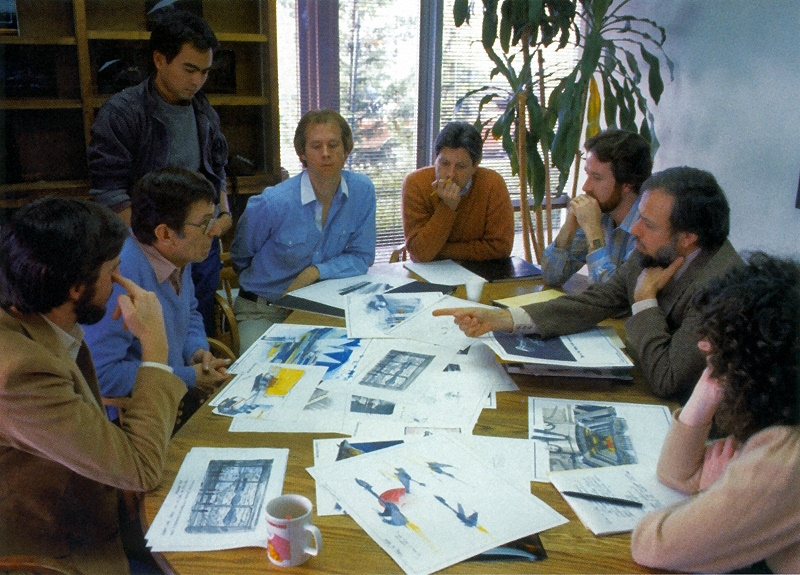
Behind-the-scenes photo from Star Trek 3 showing the writers room
Leonard Nimoy with the writers and producers of Star Trek III: The Search for Spock.

Some of those folks may be Trekkies already, and they’re just waiting for their chance. Others may have only come to Star Trek recently, in this current streaming era, and are just beginning to explore the franchise and what they might be able to do with it one day. Either way, having a clear-out at the top and opening the door to new pitches and new ideas from different people… it’s not a bad thing. Star Trek, in its current form, has been in production for over a decade, and Alex Kurtzman – the franchise’s current head – has been involved with Star Trek since the reboot film back in the 2000s. I’ve *never* been a “fire Kurtzman now!!1!” person. But if his contract has run its course, and a new executive team is in charge at Skydance… it could be a natural break; the right time for everyone to go their separate ways.

And to be clear: I think Alex Kurtzman can hold his head up high and revel in the genuine successes he had. No showrunner or executive producer is gonna hit it out of the park every time, and I respect his willingness to be experimental and to give shows like Lower Decks a chance. And I respect how he was willing to listen to fan feedback when we were desperate for “the Captain Pike show” to be created. So I’m not saying he “should be fired,” or that I’ll celebrate his departure. I’m simply saying that, after several years at the top and having overseen such a broad expansion of the franchise, it’s probably time for new creatives to step into that role.

Behind-the-scenes photo from Star Trek Starfleet Academy S1 of Alex Kurtzman and Bella Shepard
Alex Kurtzman (right) with Bella Shepard on the set of Starfleet Academy.

And for us, as fans… as tempting as it may be to say we want to get new episodes of Star Trek all day, every day, I think *we* need breaks sometimes, too. You need a break to appreciate a franchise, to avoid burning out on it or finding it stale, and to branch out. There are some great sci-fi and fantasy stories out there in other properties – some of which are similar to Star Trek, and some of which are very different. But as fans, we don’t need to be *only* interested in one thing at the expense of everything else. Look at my website as an example: yes, I’m focused on Star Trek a lot of the time, but I also talk about gaming, movies, and TV shows outside of the franchise, too.

I wasn’t around in the dark days of the 1970s after The Original Series was cancelled. But I can vividly recall the shock and disappointment I felt on learning that Enterprise was being shut down after just four seasons… and that *no* new Star Trek at all was going to be produced. And I don’t long to repeat that feeling, believe me! But at the same time, as I reflect on those days with twenty years of hindsight… I think that missing Star Trek is what helped me to fall in love with the franchise all over again.

Still frame from Star Trek Enterprise S4 showing the NX01 Enterprise
It took Enterprise’s cancellation for me to really appreciate the show.

In 2005, when Enterprise was cancelled, I had quite a few Next Generation episodes on VHS, as well as most of the Star Trek films, and I’d begun my DVD collection with The Original Series. But I wasn’t a regular Enterprise viewer, and it had been a while since I’d watched much DS9 or Voyager in particular. But cancellation, and the thought that there might be no new Star Trek at all? That spurred me on to re-watch some of my favourite stories, and as I expanded my DVD collection in the second half of the ’00s, I spent more time with Star Trek than I had in years. By the time the reboot film arrived in 2009, I owned the entire franchise on DVD, and I was regularly re-watching all of it.

I don’t think I would’ve been so committed to doing all of that were it not for the cancellation. Having that break – though it didn’t feel good at the time – led me to doubling-down on Star Trek, watching old episodes that I hadn’t seen in years, and really coming to appreciate the *entire* franchise – even those parts, like Enterprise or The Animated Series, that I was less familiar with.

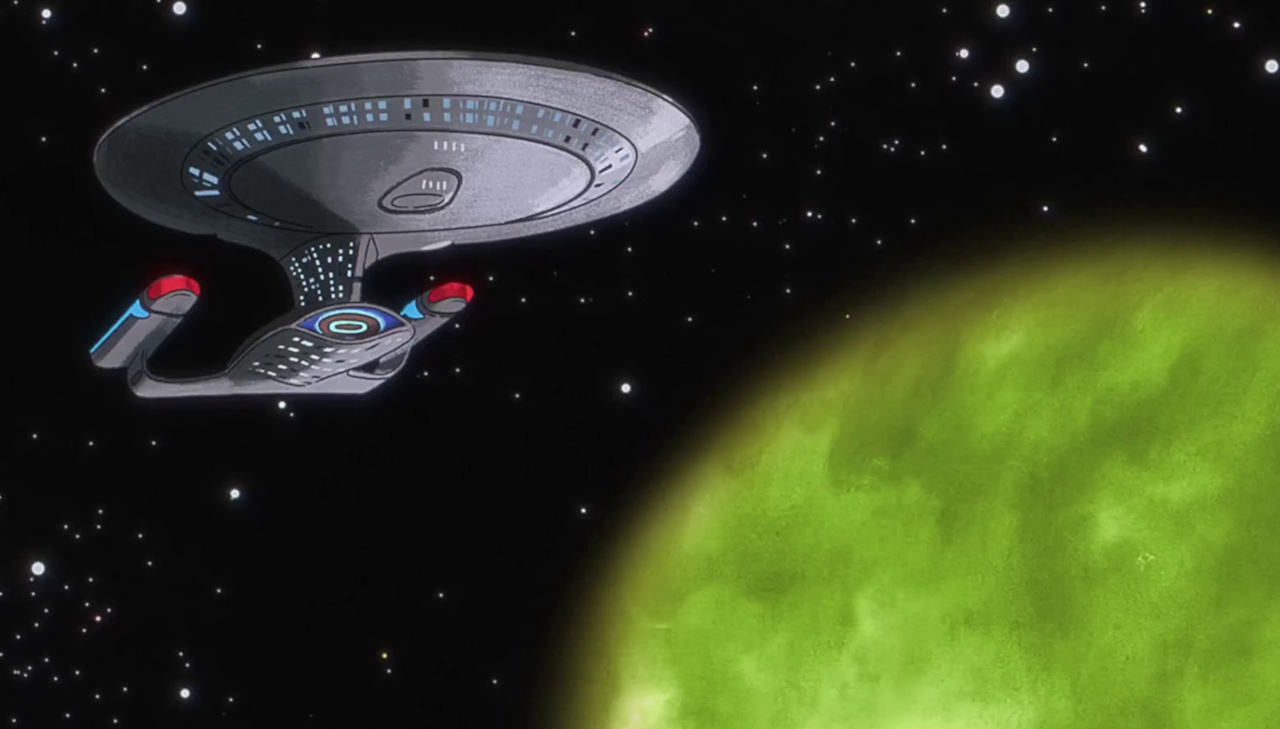
Still frame from Very Short Treks showing the Enterprise-D
The Enterprise-D, drawn in the style of The Animated Series.

I’m not saying the same thing is guaranteed to happen again. But if Star Trek does go off the air for a while, all we’ll have are re-runs of old episodes on Paramount+ (or whatever it’ll be called by that point!) I don’t think it’s impossible to think that the passage of time, and the lack of any new stories being told in the franchise, will lead us to re-evaluate some of what we’ve seen over the past decade or so. Who knows… I might even discover an appreciation for Picard Season 2. I mean… it’s *possible*. Right?

At the end of the day, there are examples of franchises disappearing for a while and coming back stronger. And I would *hope* that Star Trek could be in that category. I mean… it’s happened before. Twice. And the likes of Star Wars, Doctor Who, and others… they’ve all gone on hiatus for a while, only to return to critical acclaim and praise from their fans. A break doesn’t have to be fatal… and it doesn’t have to be permanent. And sometimes, it’s just what a franchise needs – even if, as fans, it can be hard to recognise that in the moment.

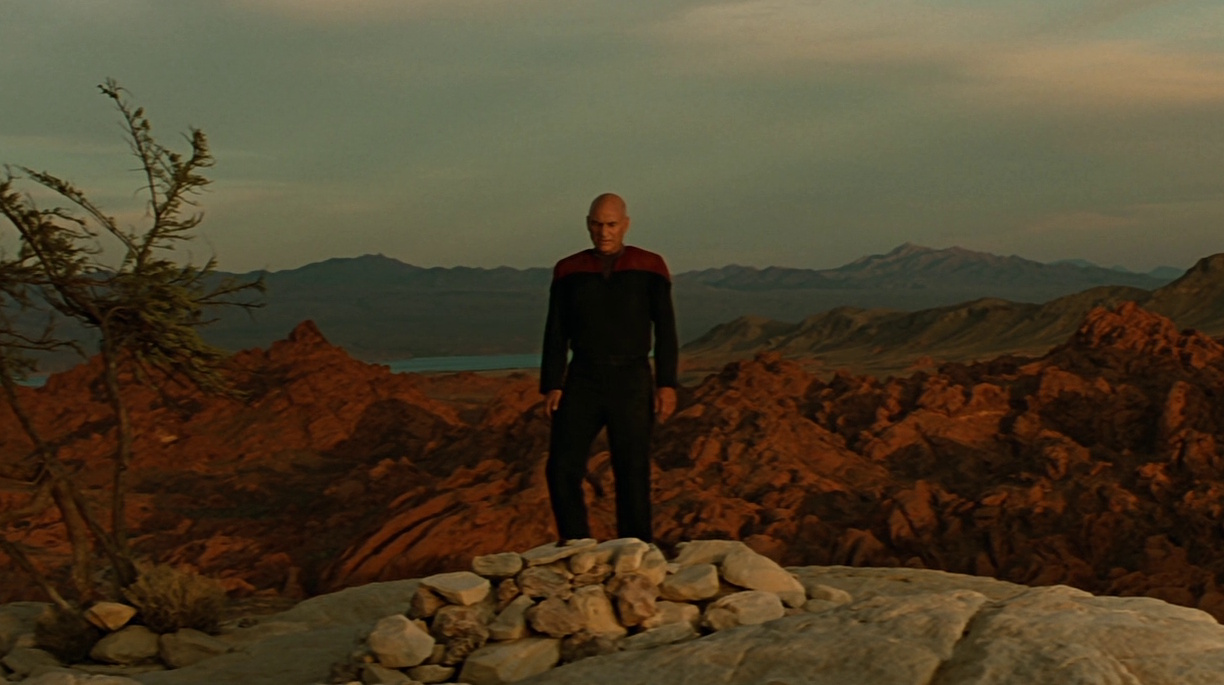
Still frame from Star Trek Generations showing Picard at Kirk's grave
A break doesn’t need to be the end…

So I hope this has been interesting.

I was prompted by the news of Starfleet Academy’s second season wrapping principal photography, and also the recent news that Skydance-Paramount looks set to acquire Warner Bros.-Discovery. Presumably becoming Para-Disco-Dance-Bros… with a streaming platform called HBParaOPlusMountMax? Who knows!

But assuming the takeover goes through, and survives all of the regulatory scrutiny it’s sure to endure… there could be interesting times ahead. I understand that the new corporate entity will be heavily indebted, which could provide an incentive to return to big-name franchises, like Star Trek, to attract cinemagoers and subscribers. But that will have to be a conversation for another day!

Promo photo for Star Trek Picard S1 showing Jeri Ryan
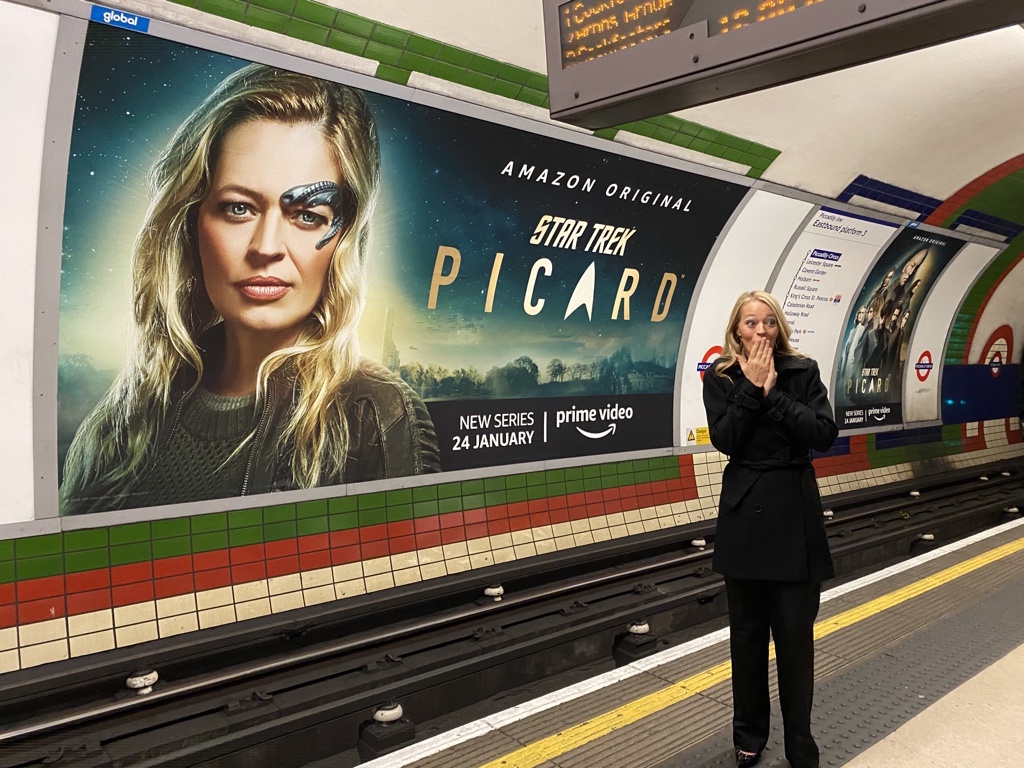
Jeri Ryan with a poster teasing Seven’s return in Picard Season 1.

I wanted to tackle the thorny question of Star Trek’s possible cancellation from a completely different angle. And while I must concede that I’m not thrilled about the franchise potentially going off the air again… I can see glimmers of hope, at least, that a change in direction and perhaps a tighter focus could lead to better things somewhere down the road. I have no idea if I’ll live long enough to see any of that, of course! But if I do… hey, come back to Trekking with Dennis, and we can watch those new episodes and films together.

And until then… I’ll be here. It’s still the 60th anniversary year, and I’ve got plans for reviews, re-watches, and more right here on the website.

Thanks for joining me today, and Live Long and Prosper, friends!


The Star Trek franchise – including all properties discussed above – is the copyright of Skydance/Paramount. This article contains the thoughts and opinions of one person only and is not intended to cause any offence.