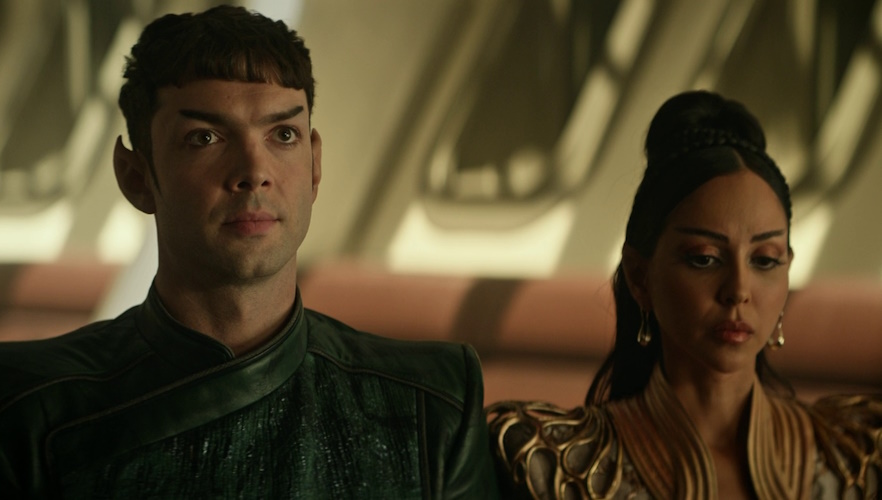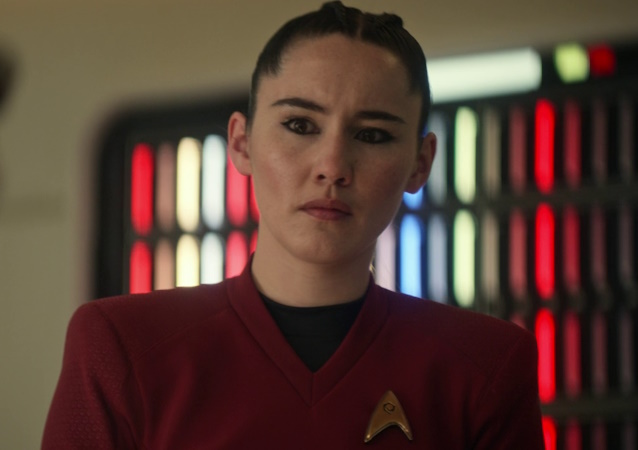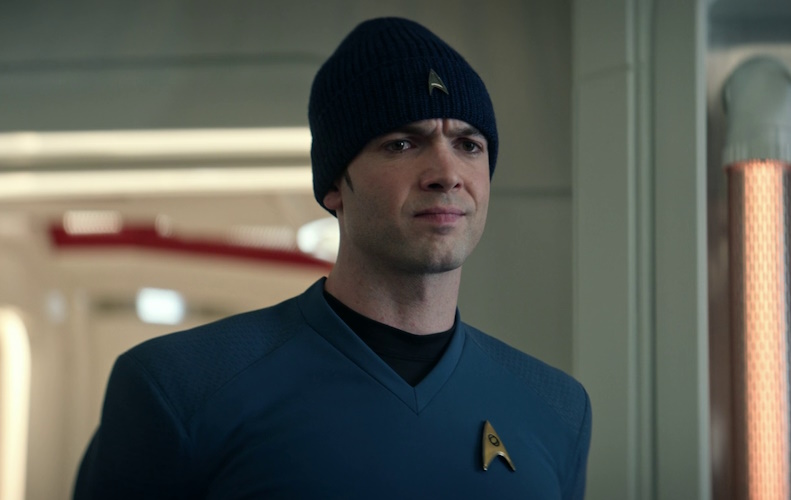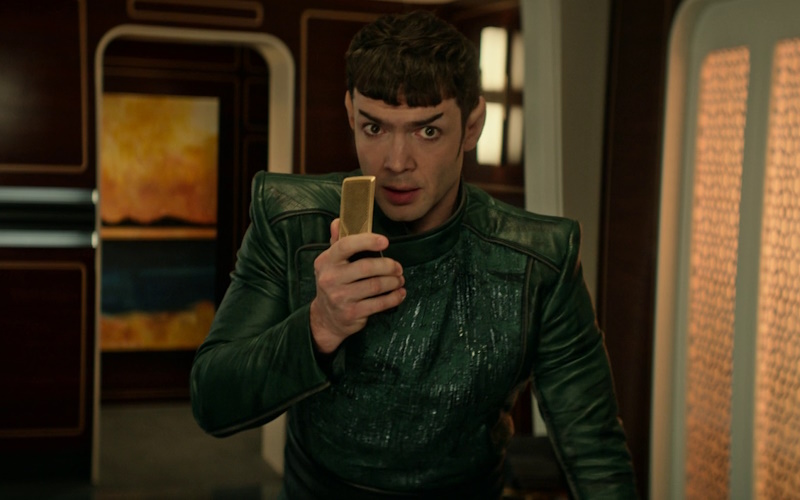
Star Trek: Strange New Worlds Episode Review – Season 2, Episode 10: Hegemony

A Star Trek-themed spoiler warning graphic.

Spoiler Warning: There are spoilers ahead for Star Trek: Strange New Worlds Seasons 1-2. Minor spoilers are also present for the following Star Trek productions: The Original Series Season 1, The Undiscovered Country, and Lower Decks Season 2.

I’m kind of glad that it’s taken me such a long time to finish watching Season 2 of Strange New Worlds. A lot of you have been sitting with the cliffhanger ending to Hegemony for over a year already, but I’ll glide smoothly into Season 3 in just a matter of weeks! Are you jealous?

Joking aside, Hegemony was a great episode – and the Star Trek franchise’s first big cliffhanger ending to a season in a while. There are a couple of narrative beats that I wasn’t as keen on, which we’ll get into in due course, but Hegemony was a fantastic way to end the season. There was a constant sense of tension throughout, which peaked at key moments in the story, a fun re-introduction of a classic character from The Original Series, and plenty of action to boot. I’d probably say that Hegemony doesn’t quite hit the same level as A Quality of Mercy did at the end of Season 1, but that’s an exceptionally high bar for any episode to aim for!
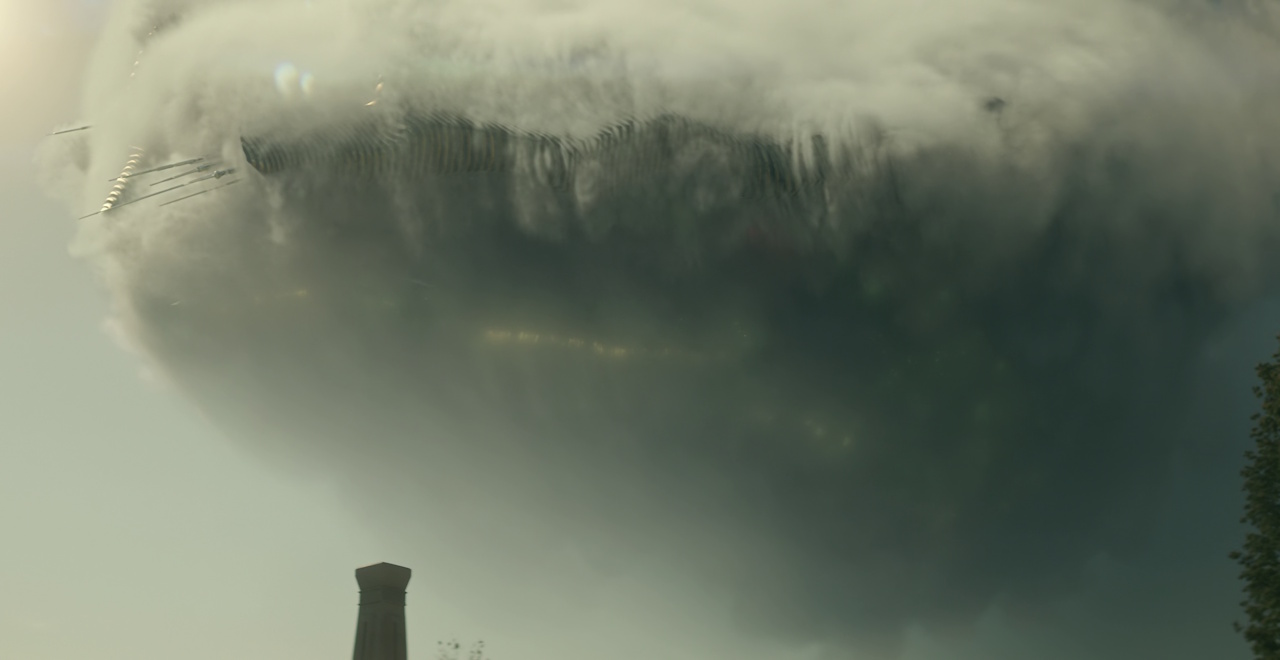
Still frame from Star Trek: Strange New Worlds Season 2 Episode 10 (2023) showing the arrival of the Gorn ship.
The Gorn are coming!

In The Next Generation era, it seemed that almost every season would end with the words “to be continued!” From The Best of Both Worlds at the end of TNG Season 3 to Zero Hour at the end of Enterprise’s third season, there were only three seasons of Star Trek that didn’t end on a cliffhanger. But since the franchise returned to the small screen in 2017, we’ve tended to get self-contained serialised stories that run for a single season apiece. The closest is arguably Discovery Season 2, which ended with the ship and crew heading into an uncertain future – but that season also wrapped up all of its other key storylines by the time the credits rolled (probably because cancellation was a legitimate concern).

I respect the confidence of Strange New Worlds’ writers and producers to create a story like this as a way to end Season 2. It was bold because a third season was not confirmed (at least, not publicly) at the time Hegemony was being written. A season-ending cliffhanger also feels like “classic Star Trek” in the best possible way, and coming at the end of a largely episodic season that’s seen Pike and the crew thrown into a mix of different adventures… it just feels right. I’ve said more than once that Strange New Worlds is the high-water mark of modern Star Trek, and Hegemony with its cliffhanger ending is yet another example I can point to when critics ask what I mean by that!

Still frame from Star Trek: The Next Generation (cropped) showing the words "To Be Continued..."
Hegemony is the first season-ending cliffhanger in a while!

Hegemony’s cliffhanger ending does leave me feeling concerned, though, at least in one sense. Obviously we know, and have known for a while, that Seasons 3 and 4 are coming – and that’s great! Strange New Worlds isn’t going to be abandoned with this ending left unresolved. But one of the best things about Strange New Worlds has been its return to a more classic style of episodic storytelling – something which, I would argue, really suits the Star Trek franchise. Particularly after the wholly-serialised Discovery and Picard, bringing Star Trek back to its roots – while retaining character arcs and other modern trappings – has been wonderful to see.

Because Hegemony ended in such a way as to tease a longer story – perhaps a season-long arc involving a conflict with the Gorn, akin to Deep Space Nine’s Dominion War – I’m a little concerned about Season 3 stepping away from that episodic style. I hope I’m wrong, and the very small glimpses of Season 3 that we’ve caught so far don’t seem to be all about the Gorn, which is positive. I’m just hoping that what’s made Strange New Worlds such a joy to watch over the past couple of years won’t be watered down by the Gorn story that debuted in Hegemony, as it’s a storyline that could easily lead to that kind of longer arc.
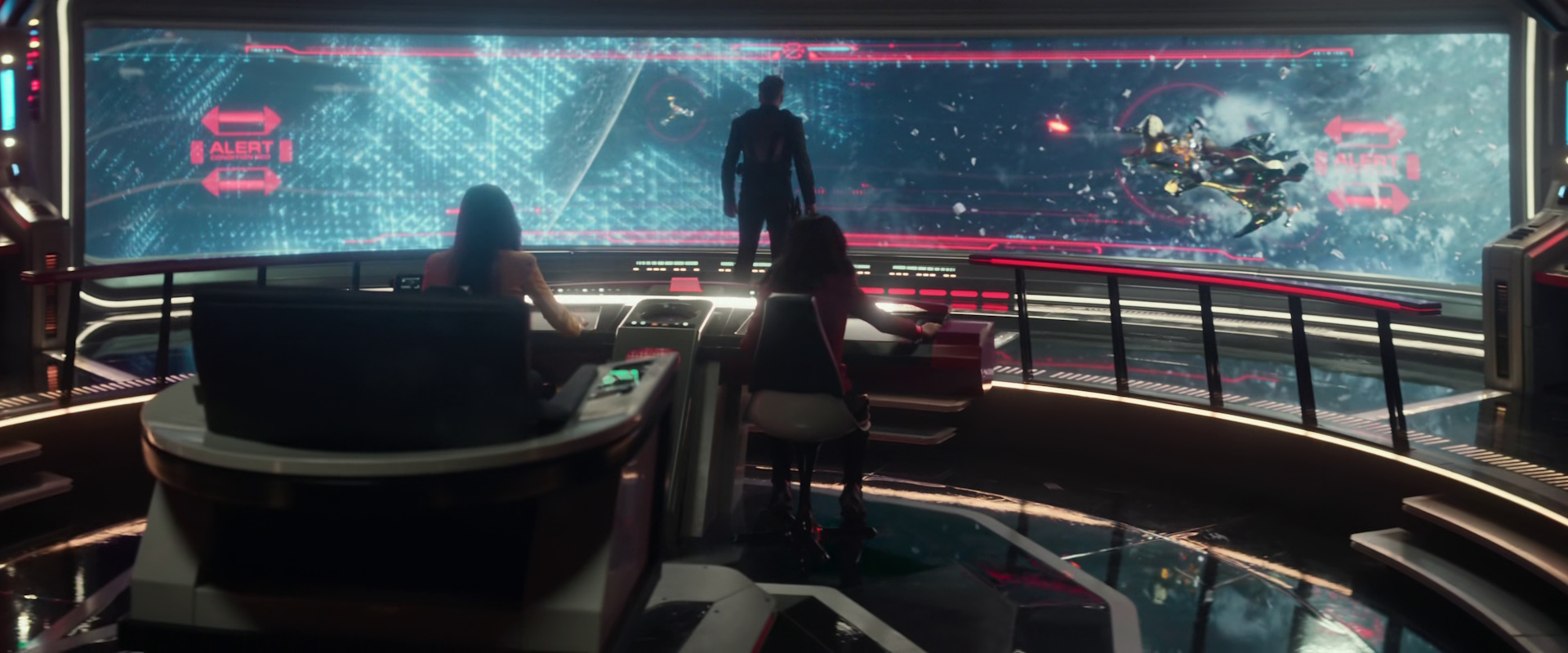
Still frame from Star Trek: Strange New Worlds Season 2 Episode 10 (2023) showing the bridge of the Enterprise with Pike standing close to the viewscreen.
Captain Pike watches from the bridge as the Gorn attack.

That being said, I won’t deny that I love a good battle or war story in Star Trek – and the aforementioned Dominion War arc in Deep Space Nine happens to be one of my favourites. Within Deep Space Nine’s longer seasons, there was still plenty of time for one-off stories alongside episodes about the war, and if the Gorn war is to continue in Strange New Worlds across Season 3, I’d hope the writers and producers will be able to strike a similar balance. It’s more difficult to do that in an age of cut-down ten-episode seasons than it was when Star Trek shows would regularly churn out twenty-two or even twenty-six in a year… but getting a mix of different stories should still be possible.

Hegemony built on Season 1’s excellent episode All Those Who Wander in more ways than one, and if there is going to be a longer, more protracted conflict that plays out over several episodes, we can re-frame that story as a serious bit of foreshadowing. After Memento Mori had re-introduced the Gorn in style, All Those Who Wander ramped up the fear factor, making the classic Star Trek race feel more like the Xenomorphs from Alien. It was this horror tone that continued though Hegemony, both in scenes set on the planet Parnassus Beta and aboard the wreck of the USS Cayuga.
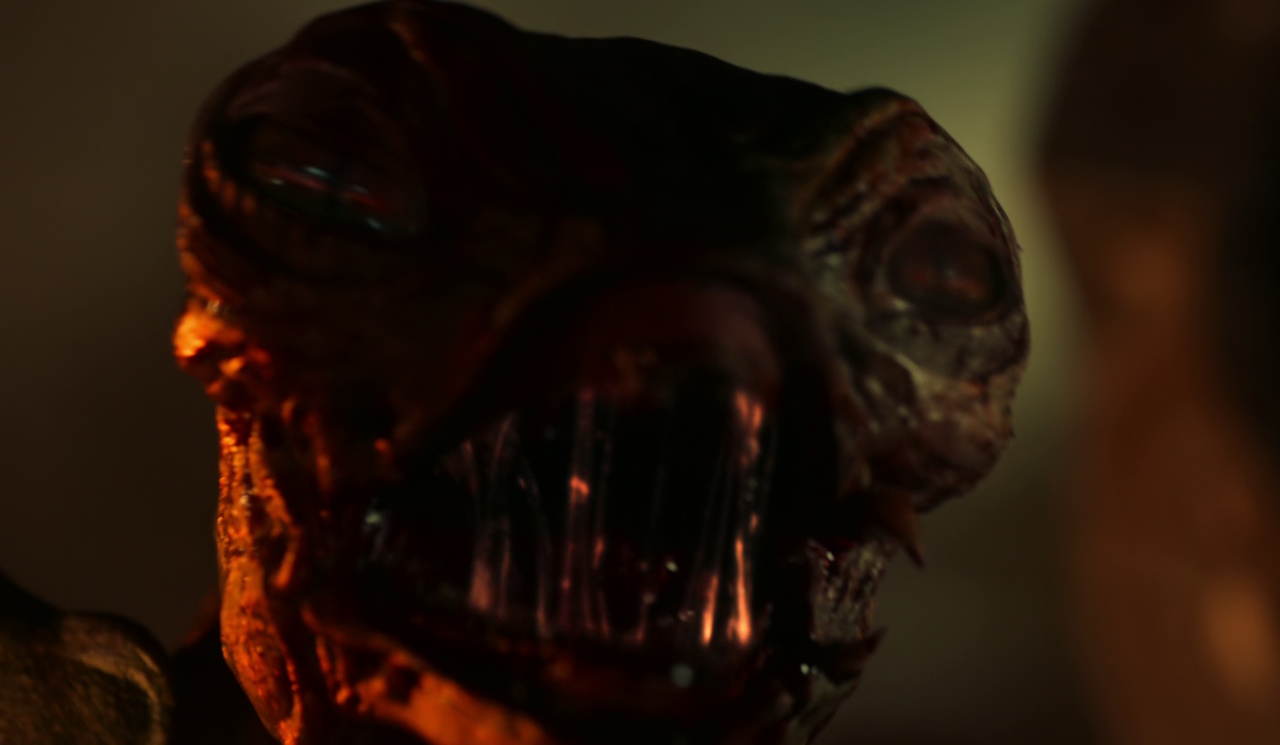
Still frame from Star Trek: Strange New Worlds Season 2 Episode 10 (2023) showing a close-up of a young Gorn.
Strange New Worlds has re-invented the Gorn.

As an aside: I love the name Parnassus Beta for a planet! It feels like something straight out of The Original Series, using a Latin- or Greek-sounding word for the name of the system. Where I was less keen, unfortunately, was the very generic “21st Century North American town” design used for the planet’s surface. Hand-waved away with a “but they wanted it to look like this, though” line from Captain Batel… I just felt the designers could’ve done something to make Parnassus Beta look a little more futuristic.

And look, I get it: there are limited budgets for any episode of Star Trek, so decisions have to be taken and compromises need to be made. Given that we mostly saw Parnassus Beta in the dark and boarded up after the Gorn attack, I think it was passable enough. Its introduction reminded me a little of The Original Series episode Operation – Annihilate! parts of which were filmed on location in California. In that sense that “classic Trek” vibe was present… but I’m not sure that’s necessarily a positive in this case! I guess I’d just have preferred to see a more futuristic take on a human colony rather than one that very clearly took place on a studio backlot (the Parnassus Beta scenes were filmed on a set created by Amazon Prime Video for the series Reacher, according to Memory Alpha).
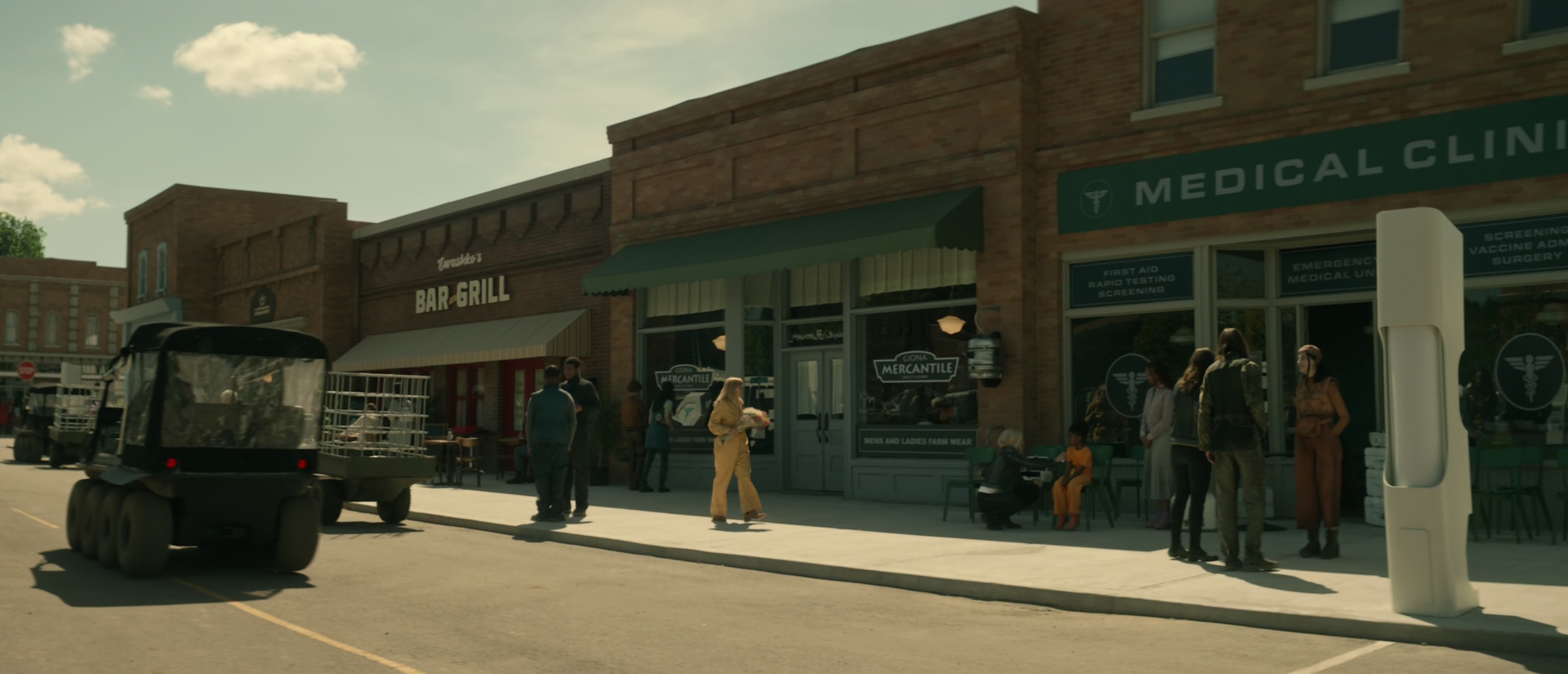
Still frame from Star Trek: Strange New Worlds Season 2 Episode 10 (2023) showing a street on Parnassus Beta.
Parnassus Beta.

As underwhelming as Parnassus Beta may have been in daylight, after the Gorn descended – and seemingly blocked out the sun – the place took on a completely different atmosphere. There were elements borrowed from both the horror and war genres on this side of the story. Parts of Parnassus Beta felt like they were from a World War II film with commandos parachuting into occupied Europe; others felt more like a werewolf or vampire flick. The monstrous young Gorn even reminded me of Jurassic Park’s velociraptors.

And this was reflected in the way the sets were designed and dressed. Boarded-up windows, thrown-together shelters, blood-stained walls showing the aftermath of a battle or abduction… this blend of horror and war tones soaked Parnassus Beta and turned a really bland and uninspired 21st Century settlement into a colony under siege. The aftermath of the Gorn attack was chaotic and bloody, with the few survivors that Captain Pike and the away team encountered hiding from the aggressors outside.
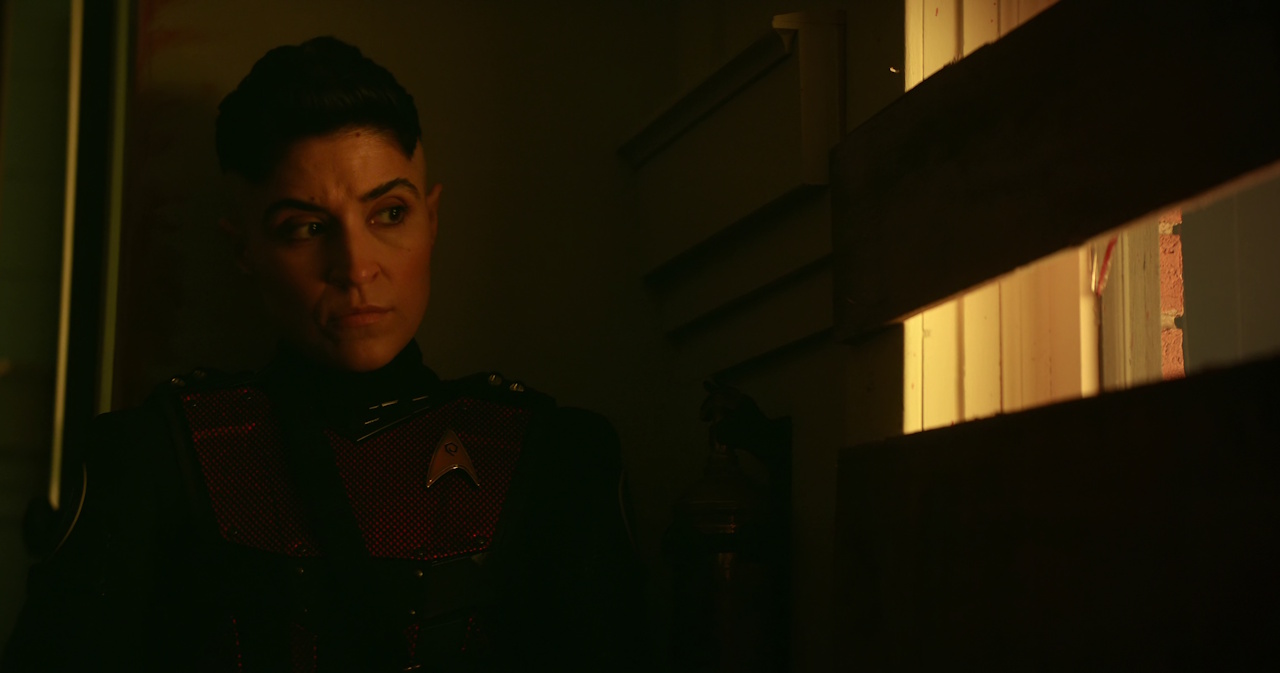
Still frame from Star Trek: Strange New Worlds Season 2 Episode 10 (2023) showing Ortegas on the planet's surface.
Parnassus Beta came alive after the Gorn attack.

The descent to Parnassus Beta in the shuttle was a fun sequence. It was great to see Ortegas in her element; she’s up there with Tom Paris, for me, as one of the few bona fide pilots in Star Trek, and it’s clear how good she is at her job and how much she loves it. There was a NASA vibe to her line about being a test pilot, and I liked that little harkening back to the early days of spaceflight.

Melissa Navia, who plays Ortegas, had asked for a reduced role in Season 2, so I was glad to welcome her back for this sequence. The “dropship” idea was creative, and we got to catch a glimpse of the surface of Parnassus Beta beyond the confines of the colony. It looked like a jungle or rainforest, at least at first glance, which was neat.
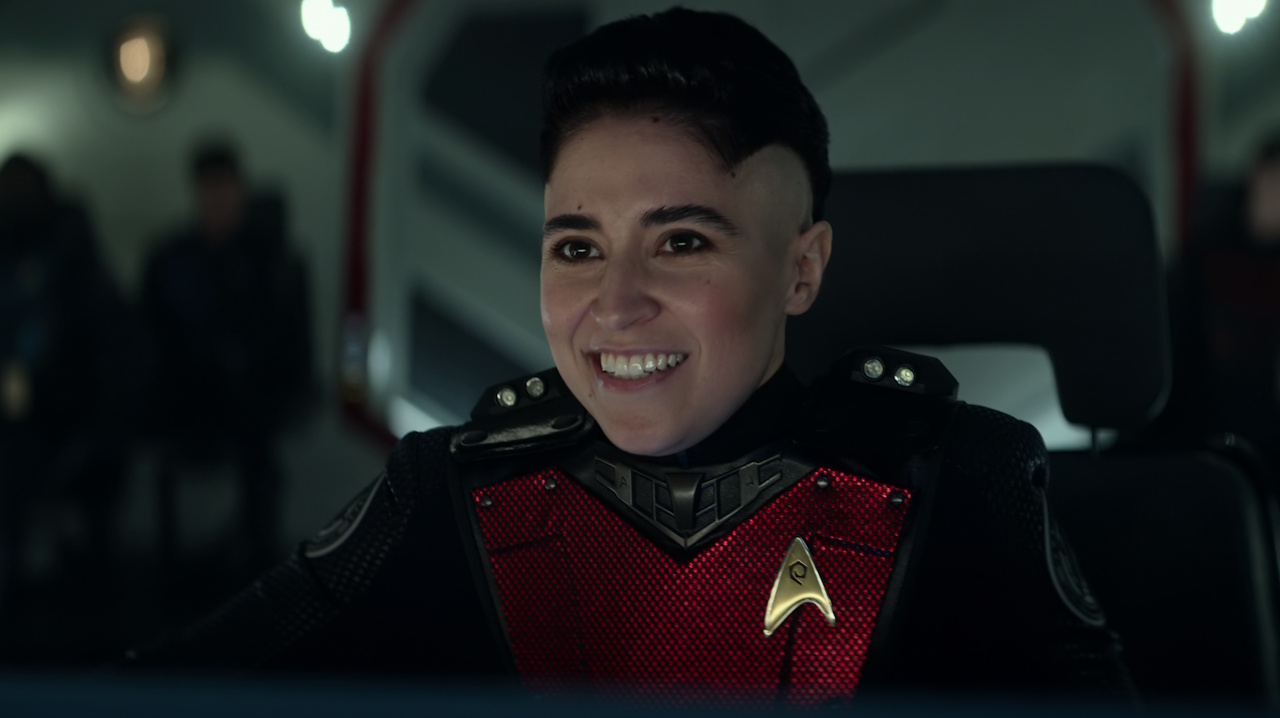
Still frame from Star Trek: Strange New Worlds Season 2 Episode 10 (2023) showing Ortegas piloting a shuttle.
Ortegas in the pilot’s seat.

Let’s talk about Parnassus Beta’s status as a non-Federation human colony – and how that relates to both the episode Hegemony and the rest of Star Trek! As Trekkies who like to get lost in this world, it’s genuinely interesting to learn more about the galaxy, and how not every human colony is founded with Federation membership in mind. I think the existence of a colony like Parnassus Beta ties into classic episodes, not only where non-Federation worlds have been featured… but where Starfleet repeatedly encounters very human-like “aliens!”

I made the same point during Lower Decks’ second season after we were introduced to the Hysperians: a non-Federation group of humans who’ve based their society around medieval chivalry. The way in which these colonies are established and governed could account for the existence of planets like 892-IV in Bread and Circuses, the Earth twin world in Miri, and even Sigma Iotia II from A Piece of the Action. All of these feature societies inspired by old Earth civilisations… and I kind of like the idea that, somewhere in the 21st or 22nd Centuries, before the Federation existed and kept meticulous records, humans settled on distant worlds and brought aspects of their culture with them. You could even throw in the Irish stereotypes from Up The Long Ladder as another example… though maybe the less said about that the better, eh?
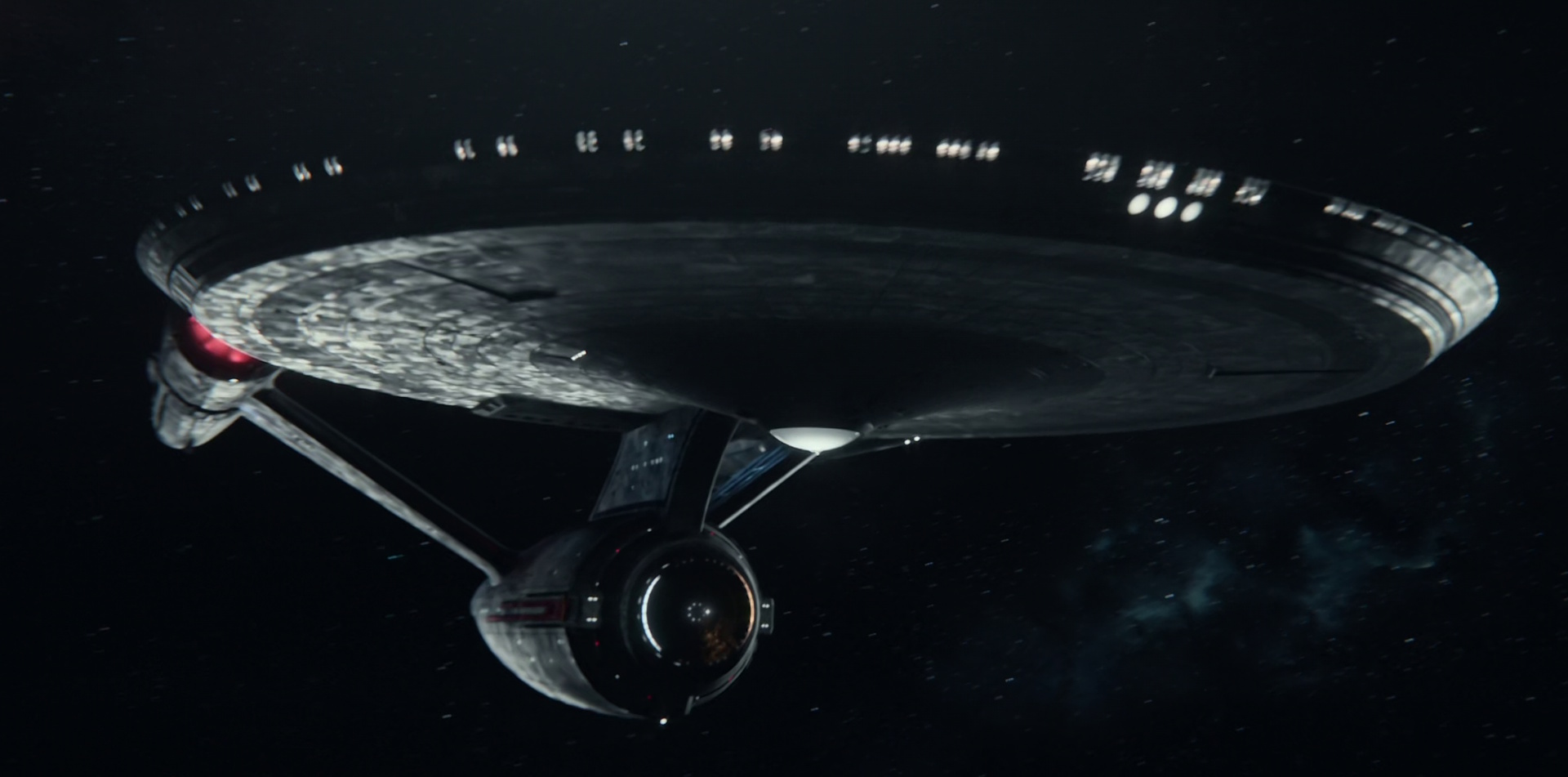
Still frame from Star Trek: Strange New Worlds Season 2 Episode 10 (2023) showing the USS Enterprise.
The USS Enterprise arrives at Parnassus Beta.

The point is… as disappointing as Parnassus Beta may have been from a visual standpoint, it does match up with other Star Trek stories about human colonies, particularly colonies outside of the Federation’s jurisdiction. Star Trek was first imagined, in the 1960s, as taking inspiration from America’s “Wild West,” and what could be more fitting than independent groups striking out on their own to settle the “wilderness?” And – if we continue to stretch the metaphor – what could be more fitting than the existing residents of that wilderness, whom the colonists apparently didn’t care enough to find out about, striking back?

So does that make the Gorn the Native Americans in our analogy? I guess that’s a little uncomfortable, too. But never mind! Parnassus Beta was an interesting setting in concept, and the relationship between Starfleet and some of these outlying human colonies is something I’d like to see explored in more detail in the future. Knowing what we know about the Maquis and other human settlements beyond the borders of the Federation, it was really interesting to get a tease of that in a 23rd Century context.
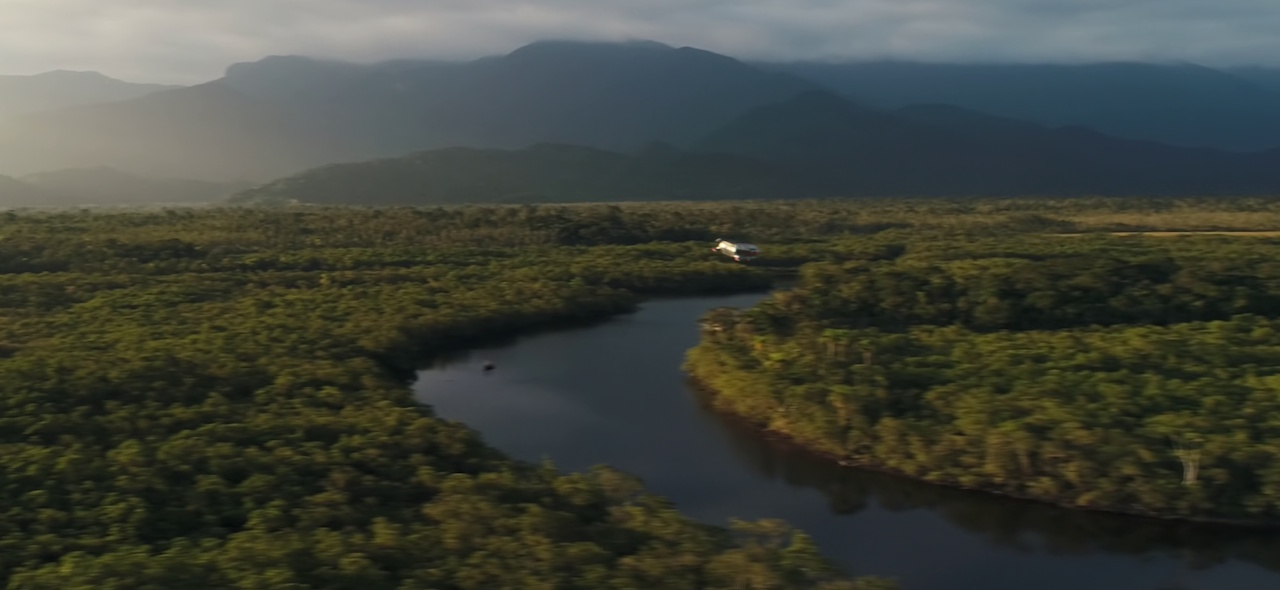
Still frame from Star Trek: Strange New Worlds Season 2 Episode 10 (2023) showing the landscape of Parnassus Beta with a shuttle flying above it.
The shuttle arrives at Parnassus Beta.

However, Parnassus Beta and its non-Federation status led to one of the biggest contrivances in Hegemony. Admiral April explained to Captain Pike that Starfleet wanted to avoid all-out war with the Gorn… which is fair enough. And to that end, the Federation was willing to essentially sacrifice the thousands of settlers on Parnassus Beta by refusing to sanction a response or a rescue operation, effectively ceding the planet to the Gorn and abandoning the colonists to a rather grizzly fate. That part tracks, and as much as we might be on Pike’s side and want to help, there’s an internally consistent logic to this side of the story.

But the attack on the USS Cayuga changes the dynamic completely – and no one in Hegemony so much as mentioned that. The Gorn didn’t only attack a non-Federation colony: they also attacked and destroyed a Starfleet ship. The Federation may have no jurisdiction over Parnassus Beta, and I could believe that they’d be willing to abandon the planet to its fate in an attempt to appease the Gorn. I mean, we have similar stories in The Next Generation and Deep Space Nine with human colonists near the Cardassian border, and the same thing happened there. But the attack on the Cayuga was an attack on Starfleet and the Federation; it was an act of war.
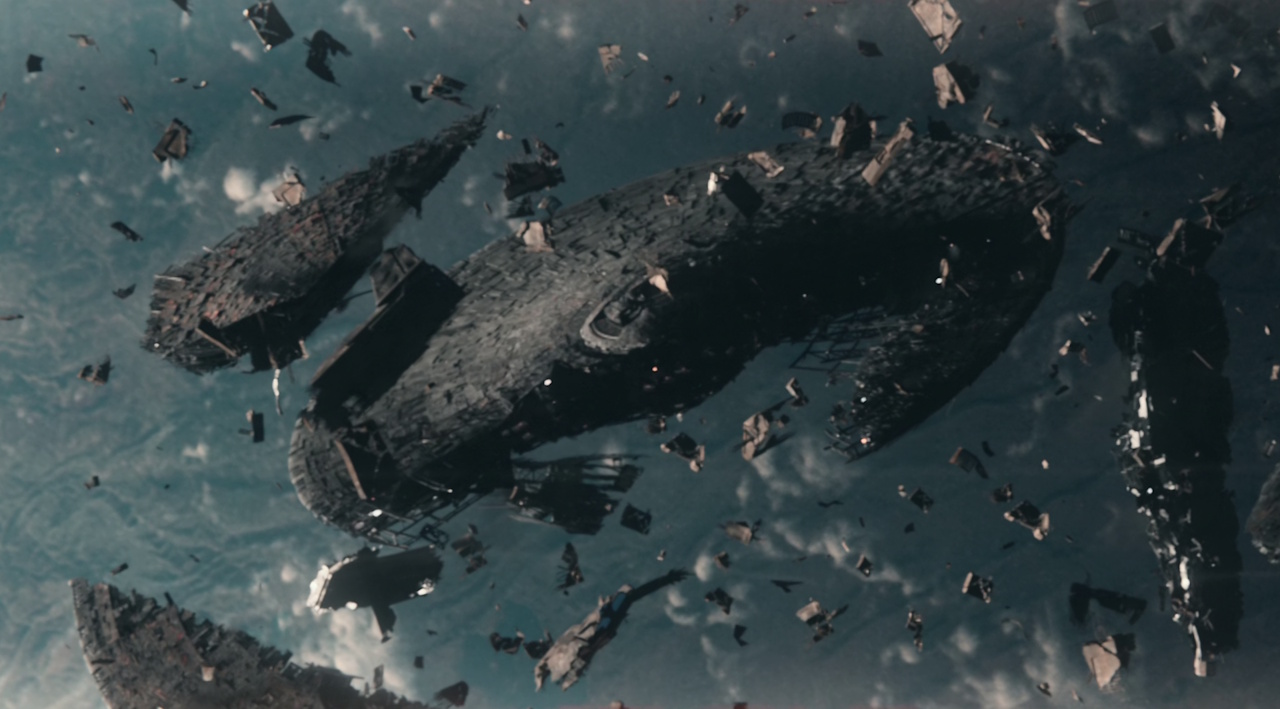
Still frame from Star Trek: Strange New Worlds Season 2 Episode 10 (2023) showing the wreck of the USS Cayuga.
The Gorn had attacked the USS Cayuga and murdered most of her crew.

This is the central conceit of Hegemony, and it doesn’t work. In order for us to believe that Starfleet and the Federation want to avoid war with the Gorn, we have to believe that they’re willing to do so at all costs, including sacrificing their own officers and ignoring the attack on two of their own ships. Because we later learn from Scotty that not only was the Cayuga destroyed, but so was his ship, the USS Stardiver. Starfleet may not have known about the Stardiver at the time of April’s message, but they did know about the Cayuga.

In order to get to the rest of the episode and its genuinely wonderful and engaging story, we first have to get around this narrative obstacle. And try as I might to rationalise it, it doesn’t make a lot of sense. “Open war is upon you, whether you would risk it or not.” Those were Aragorn’s words in The Lord of the Rings, as he explained to King Theoden that Saruman and Sauron were on the march, and there was no way to avoid taking part in the battles to come. In the case of Hegemony, the Gorn have declared war on the Federation by the attacks on the Stardiver and Cayuga, no matter what Starfleet’s Admirals might want. By refusing to sanction a rescue mission or allowing the Enterprise to retaliate, forcing Pike to stay on one side of an arbitrary, Gorn-designated demarcation line, Admiral April and Starfleet were not acting rationally within our understanding of Starfleet and the Star Trek universe.
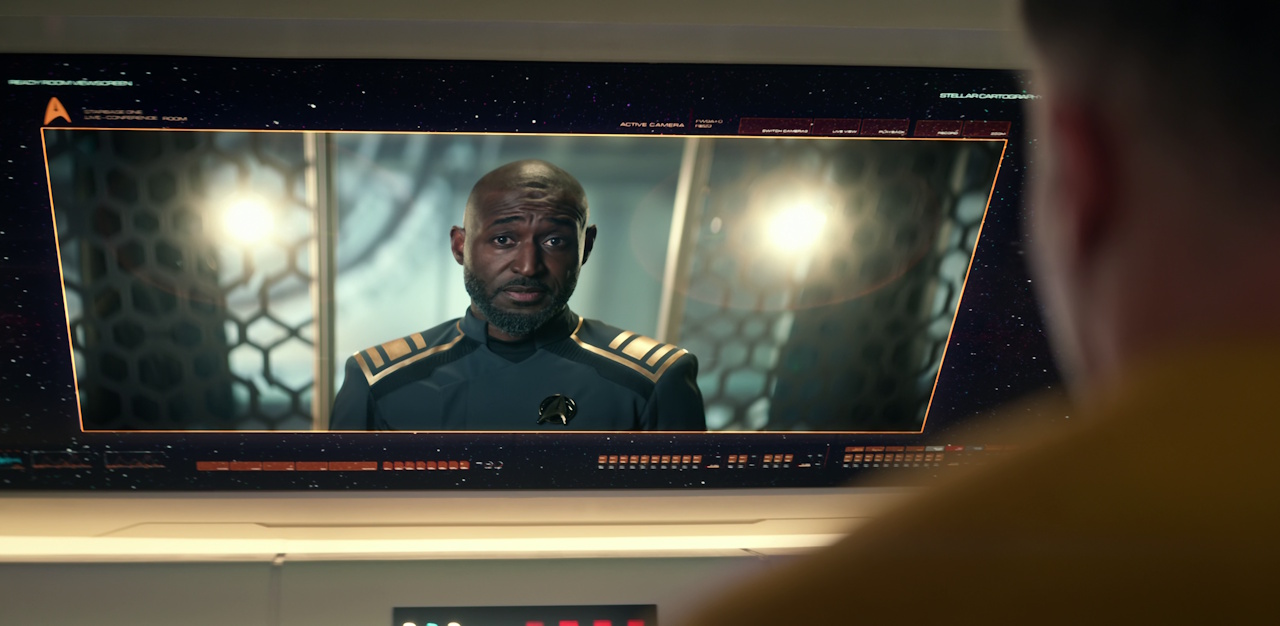
Still frame from Star Trek: Strange New Worlds Season 2 Episode 10 (2023) showing Pike's conversation with Admiral April.
Admiral April ordered Pike to avoid antagonising the Gorn… after he already knew that the Gorn had attacked at least one Starfleet vessel.

And I think this is why I’d rank Hegemony lower than last season’s All Those Who Wander. Gorn attacks on Starfleet are a regular enough occurrence that Starfleet has contingencies in place, but when the Gorn obliterate a Federation starship they’re unwilling to recognise the reality of the situation. Maybe there’s meant to be a metaphor there, something about the drawbacks and limitations of appeasement or the necessity of smaller states being protected under the umbrella of larger alliances. But I don’t believe that’s how it comes across – it reads, to me, like everyone in the episode basically ignored this massive event in order to skip to the action set-pieces and to give Pike’s mission a “disobeying orders” foundation.

If we take our Wild West metaphor from a moment ago and drag it out further, this would be akin to the United States in the late 1800s seeing an army unit attacked on the frontier and doing nothing to respond because the town they were visiting happened to be outside of US jurisdiction. Would that have happened? Would any modern-day military accept an attack on one of its units and refuse to respond in kind? Starfleet is the Federation’s military – and while the attack on the USS Cayuga need not lead to all-out war, at the very least it would give Pike and Starfleet some leeway to respond instead of blindly agreeing to the Gorn’s terms without so much as attempting to negotiate. If we were solely dealing with the attack on the colony, this story would’ve worked so much better. But by bringing the Cayuga into it, it complicates things – and not in a good way, unfortunately.
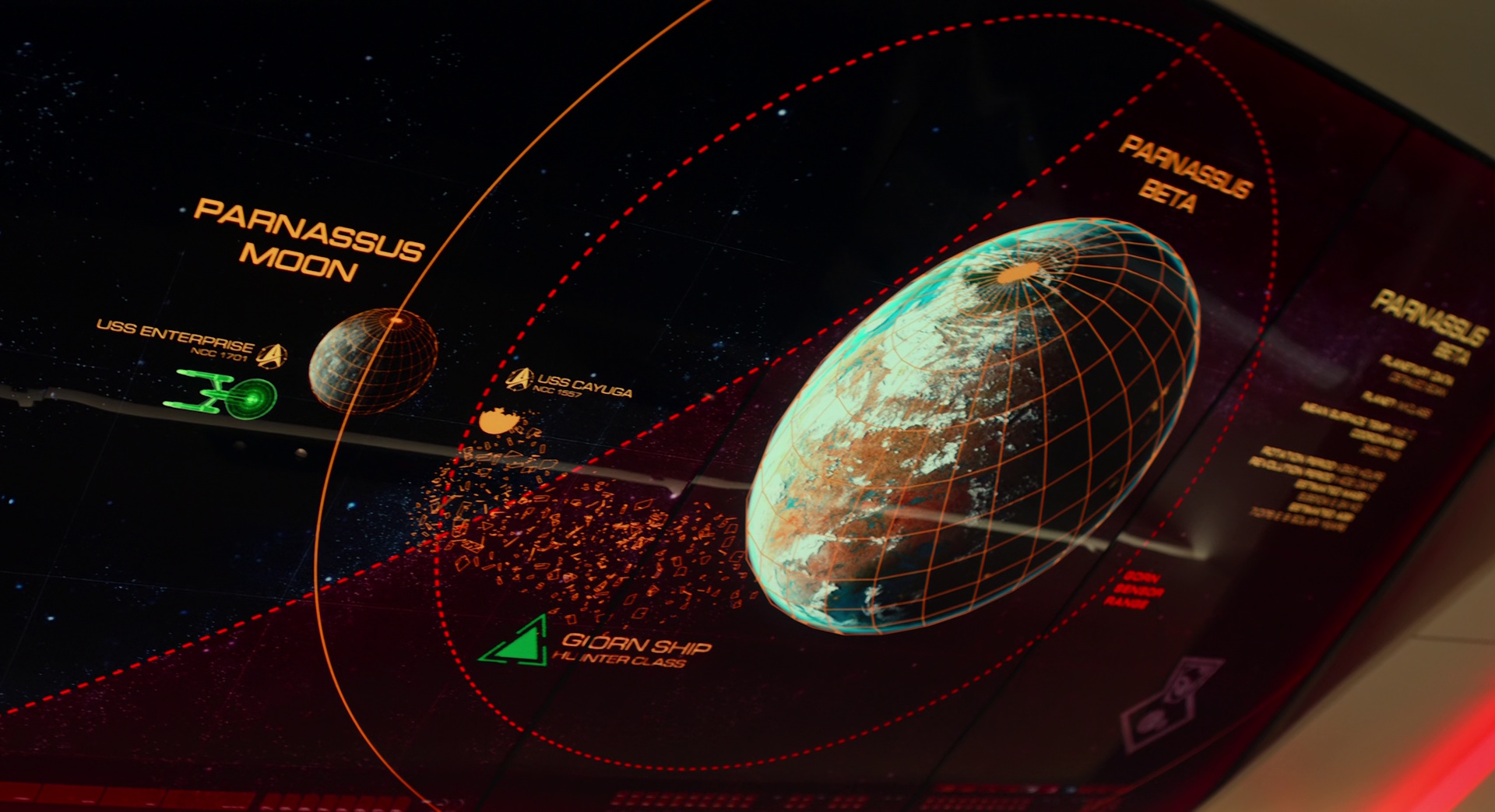
Still frame from Star Trek: Strange New Worlds Season 2 Episode 10 (2023) showing an Okudagram of Parnassus Beta.
Starfleet Command ordered Pike and the crew to stay on their side of this demarcation line.

There’s something inherently un-Starfleet about abandoning officers to their fate – especially when that fate has been shown to be nothing short of an agonising death. We could point to dozens of episodes across the history of the franchise – from The Galileo Seven in The Original Series to First First Contact in Lower Decks – where Starfleet officers have done everything in their power, including breaking the rules, to avoid leaving someone behind. And while that’s exactly what we see Pike and the crew do… they’re forced to disobey a very un-Starfleet order in the process.

Some Star Trek stories have a “badmiral” as either a quasi-antagonist or a straight-up villain. Others have shown admirals who are out of touch or even incompetent. And occasionally, as in a couple of notable Deep Space Nine episodes featuring Admiral Ross, we’d catch a glimpse of the weight of command. These stories could show how someone in a senior position has to deal with more than what we see on screen; our protagonists aren’t always privy to all of the information or don’t have a bigger-picture view of the situation.
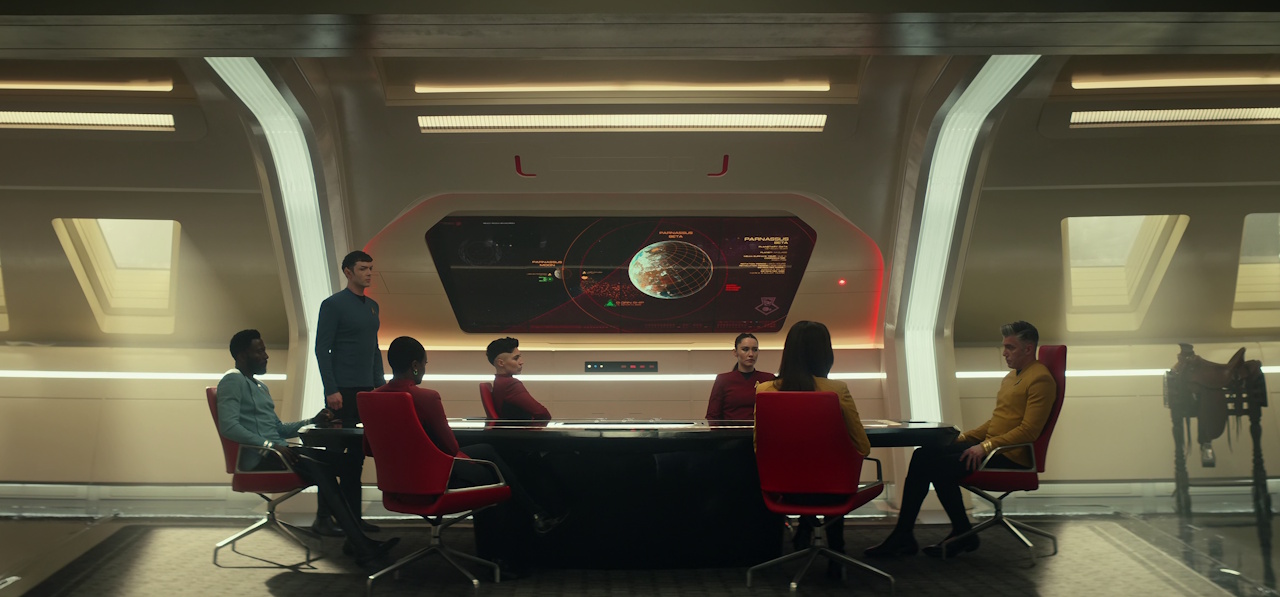
Still frame from Star Trek: Strange New Worlds Season 2 Episode 10 (2023) showing the senior officers in Pike's briefing room.
Pike and the senior officers in the briefing room.

The best spin I can put on Hegemony’s Admiral April is that he isn’t sharing everything he knows, or that he’s struggling with the burden of command at a time of war. However… I don’t think that’s really how it comes across, and it feels like the writers of the episode far too quickly brushed aside the implications of an attack on the USS Cayuga and the USS Stardiver in order to tell a story about Pike and the crew disobeying orders to do the right thing. The problem, at least for me, is that the weak setup risks undermining that story. When it’s a story that works so well and has so many highlights… that’s just a bit of a shame.

But I guess, in the grand scheme of things, all of this probably feels like a glorified nitpick. Hegemony did explain that Parnassus Beta was outside the Federation, and Admiral April’s orders were clear. Perhaps I’ve overthought this aspect of the story somewhat… but it didn’t sit quite right with me for the reasons I’ve tried to explain.
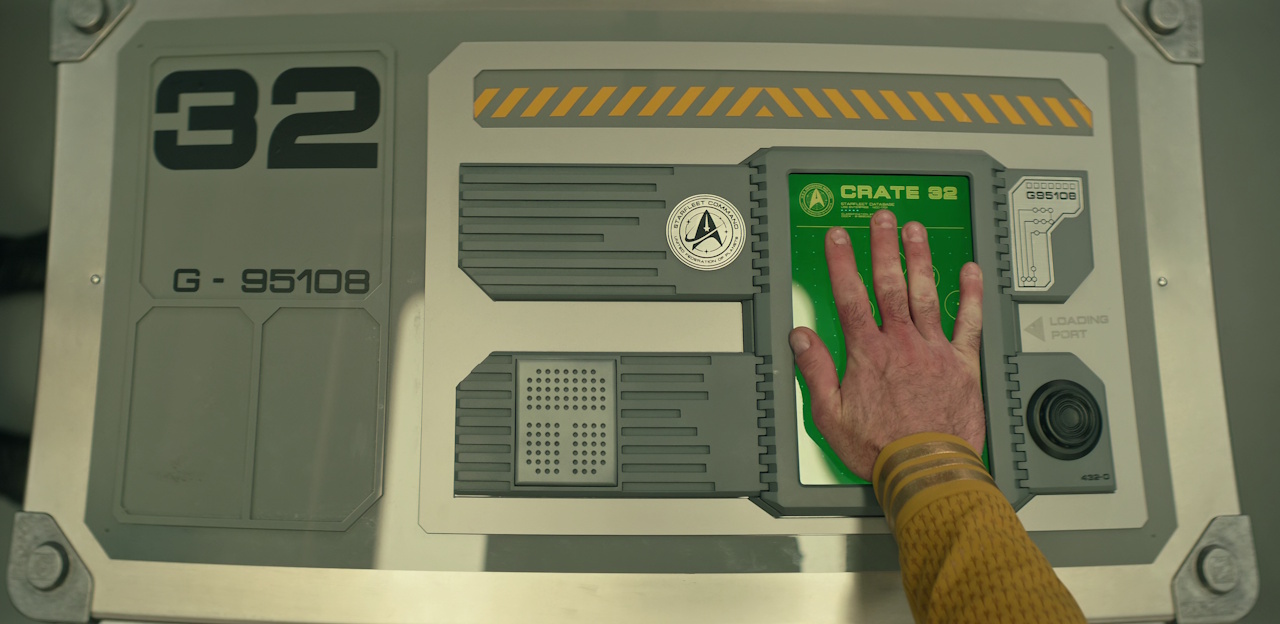
Still frame from Star Trek: Strange New Worlds Season 2 Episode 10 (2023) showing Captain Pike's hand activating a sealed crate.
A crate of experimental anti-Gorn weaponry.

Captain Pike’s storyline in Hegemony works… in the context of his relationship with Captain Batel and of his relatively small arc across Season 2. By the way: am I imagining things, or was Pike less of a presence in most of the stories this season? It felt like he was all over Season 1 but had been taking more of a back seat this time around. Perhaps we’ll have to explore that subject on another occasion.

To get back on topic: when I look at Pike’s story in Hegemony, I’m also looking at it in the context of Season 1. In particular, Pike doesn’t seem to have learned the lessons of A Quality of Mercy – at least insofar as triggering a potentially massive, Federation-threatening war goes. Pike’s personal story in last season’s finale was all about his impending disability and finding a way out of it… but it was also a story that touched on how to deal with a challenging adversary and how a few seemingly small mistakes can lead to conflict.
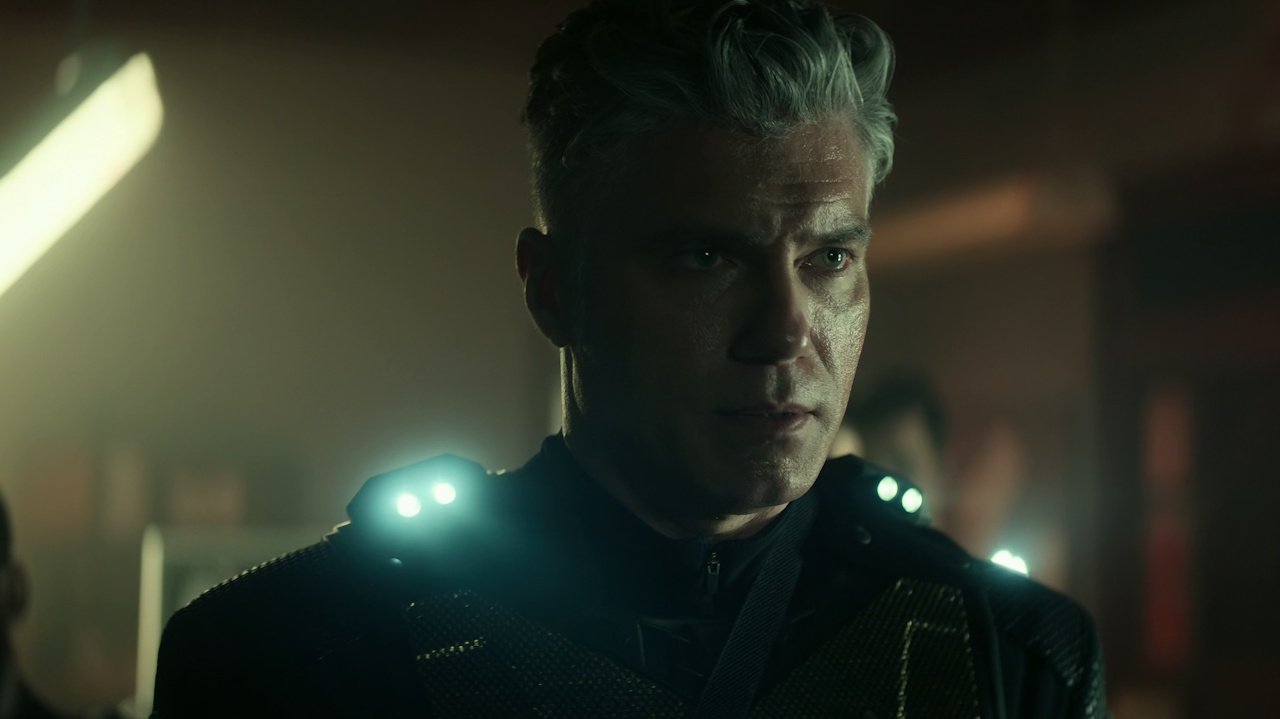
Still frame from Star Trek: Strange New Worlds Season 2 Episode 10 (2023) showing Captain Pike on the away mission.
Did Pike act recklessly in Hegemony?

To me, it seems as if the Captain Pike of Hegemony hasn’t even met the Captain Pike of A Quality of Mercy. Sure, he has a personal stake in rescuing any potential Cayuga survivors due to his relationship with Captain Batel. But the actions he takes are deliberately provocative, disobeying an order from Admiral April and putting himself and his entire crew at ground zero of a potential war with the Gorn. For him to not even acknowledge the events of last season as he starts down this path feels… strange.

Both episodes put Pike face-to-face with a complex situation, a powerful enemy, and a potential conflict. Both episodes make clear that one mistake could lead to all-out war. Pike sees firsthand – and also hears from his future self – what the consequences of the Romulan war would end up being. Shouldn’t one of the lessons he learned last season be to be more cautious? Or are we going to try to argue that Kirk’s “shoot first, ask questions later” approach was the right one, so that’s what Pike ultimately took away from the situation?
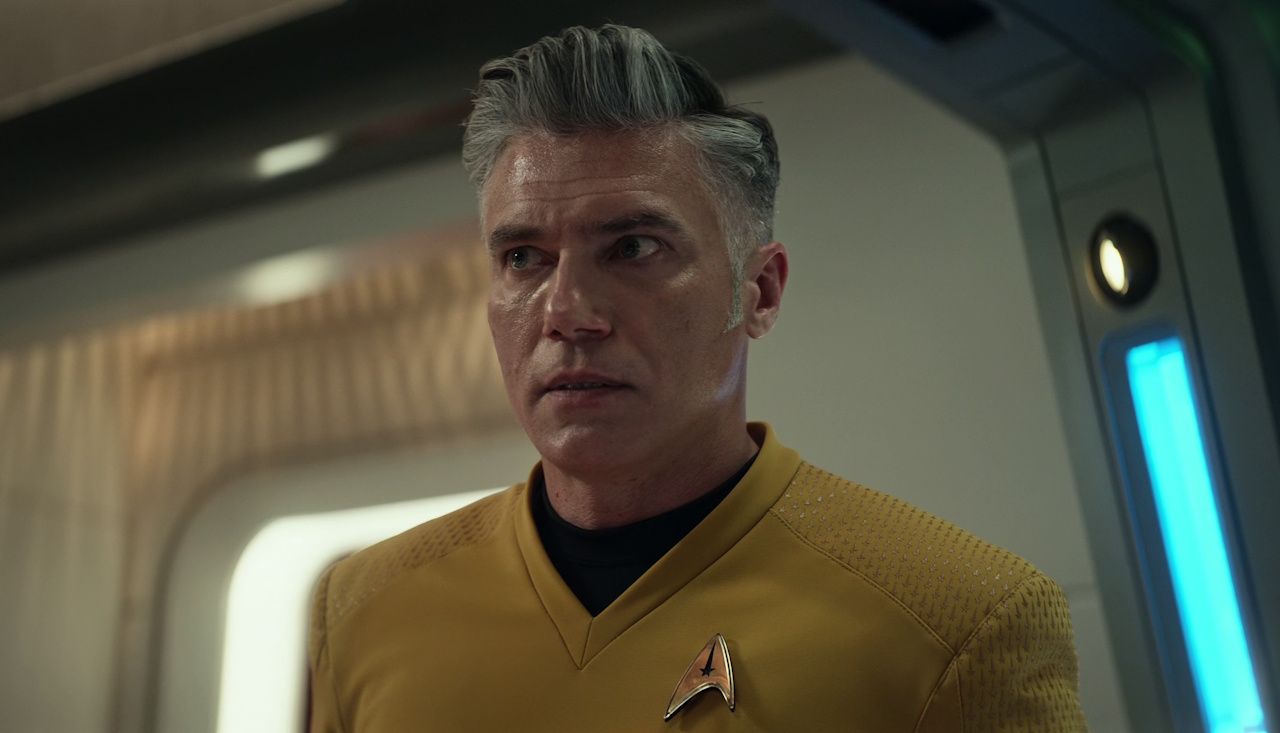
Still frame from Star Trek: Strange New Worlds Season 2 Episode 10 (2023) showing Captain Pike in uniform on the bridge.
Why do I feel like Captain Pike hasn’t remembered what he learned last season?

It just feels a bit of a narrative oddity that Pike is in a comparable situation just ten episodes later, but doesn’t appear to acknowledge it in any way. Maybe he’d still prioritise his relationship with Captain Batel and want to do everything he could to rescue her, the colonists, and any other survivors. I mean, that seems like the right outcome based on everything we know of the character. But how a character reaches their destination is just as important – and is often more important – than the destination itself. Pike could still have led this unsanctioned rescue mission, but having seen A Quality of Mercy and the difficult challenge he faced when coming into conflict with the Romulans… I just feel this episode could’ve done something to acknowledge that and make it clear how Pike felt and how he was drawing on those earlier experiences.

We talked about Strange New Worlds as an episodic series, and that’s genuinely one of the best things about it from my perspective as a Trekkie. But it’s never been an entirely episodic show, and that blend of the “monster of the week” with characters who grow and evolve feels like the perfect mix of classic and modern television storytelling. While I guess this probably seems like another big nitpick, for me it felt odd that Captain Pike was thrust into two comparable situations just ten episodes apart… and the latter story made no attempt to acknowledge that fact.
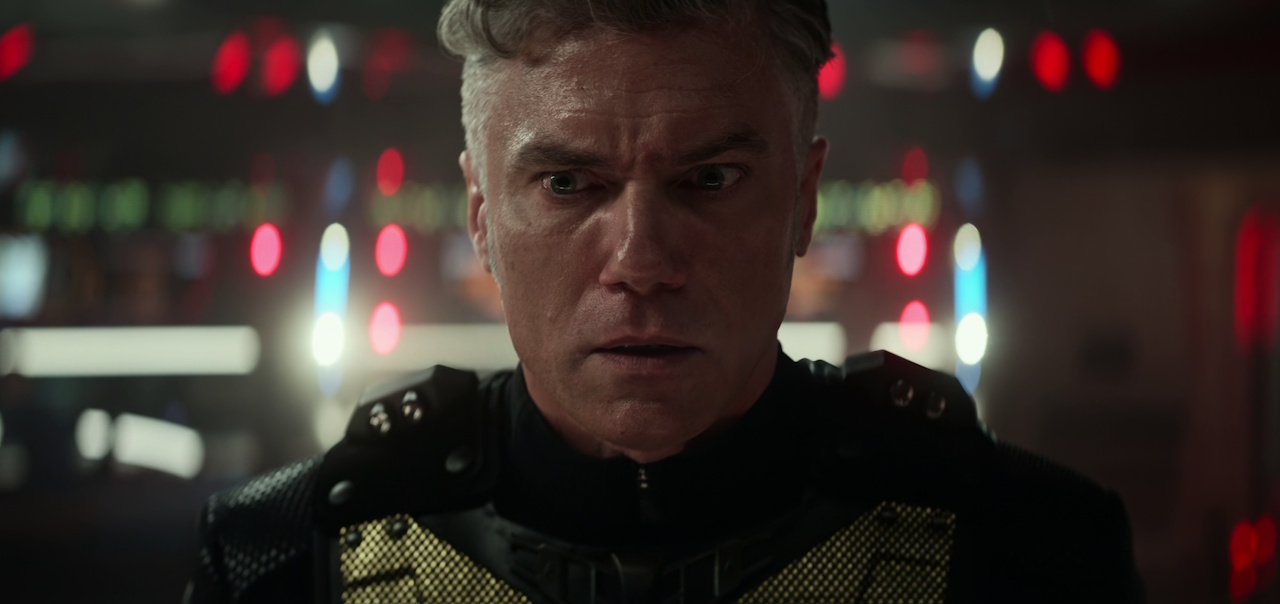
Still frame from Star Trek: Strange New Worlds Season 2 Episode 10 (2023) showing Captain Pike in the final shot of the episode.
Captain Pike at the end of the episode.

We’ll shelve that for now, and focus on one of the weaker elements of Hegemony for just a moment. I found Spock and Chapel to be a wonderful pair across the first two seasons of Strange New Worlds, and Spock’s reaction to Chapel’s apparent death or abduction genuinely did a lot to carry the storyline. His scenes with Una in particular were powerful, and I don’t want what I’m about to say next to detract from that. This was great character-focused storytelling.

But… Chapel was one of a handful of characters whose presence, for a storyline like this, dramatically lowers the stakes. Strange New Worlds is a prequel to The Original Series, so anyone who’s seen it or has more than a passing familiarity with it knows that the likes of Uhura, Spock, and Nurse Chapel are characters on that show. That means, from the point of view of Strange New Worlds, they’re indestructible. For a storyline that wanted to have high stakes, and to put a character in danger… picking one of the characters that fans know will still be around when the credits roll took a lot away from it.
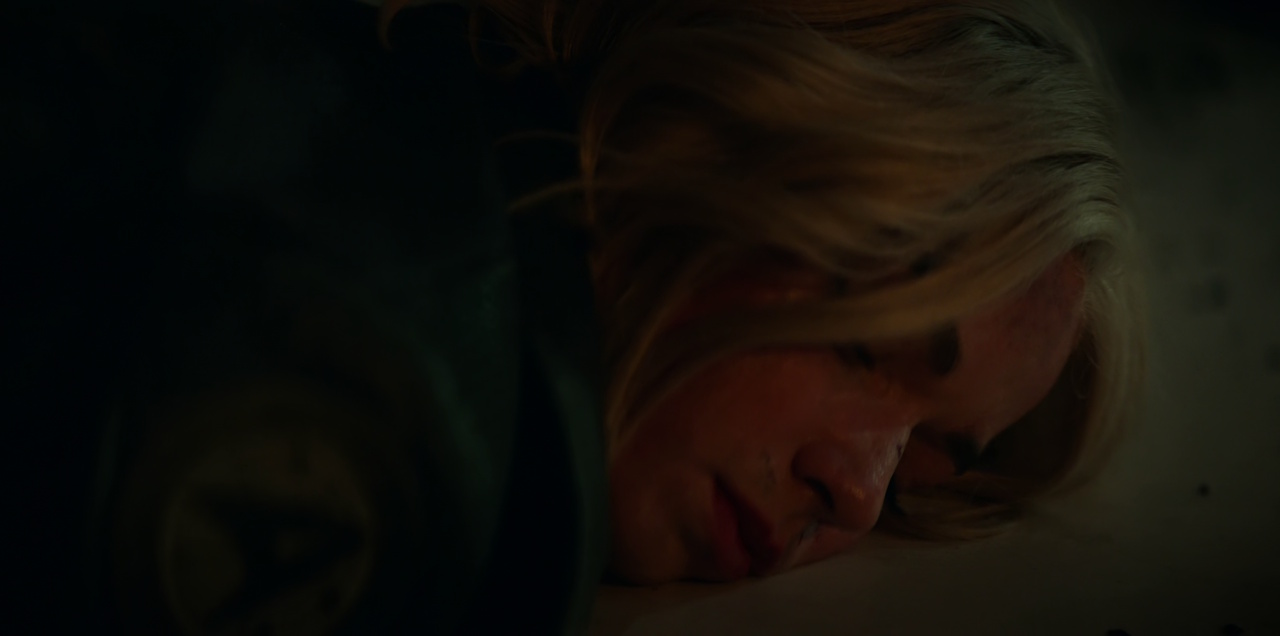
Still frame from Star Trek: Strange New Worlds Season 2 Episode 10 (2023) showing Nurse Chapel laying unconscious on the floor.
Chapel was never in any danger.

When Captain Batel was missing, I could genuinely believe that Strange New Worlds was about to kill her off. When she revealed to Captain Pike her parasitic Gorn infection, I likewise believed that her death could be imminent (though we’ll talk about that more in a second!) But when Nurse Chapel was apparently dead, killed along with the rest of the Cayuga’s crew… it simply wasn’t possible. And that knowledge lowered the stakes for me on this side of the story. Spock’s reaction to it did a lot to help this part of the episode and carry it across the line, as did Pike’s embrace of Chapel when he realised she’d survived. But on its own, I’m afraid it was a victim of the “prequel problem” that some storylines end up facing.

Although this storyline did a lot for Spock, giving him an emotional problem to tackle that he struggled with, I can’t help but feel there were other characters Strange New Worlds could’ve chosen to endanger. Someone like Pelia, Una, or La’an would’ve genuinely felt at risk of death in a way that Chapel didn’t, and the reaction of Spock – or a different character who might’ve been closer to the person in danger – could’ve still been present. Again, this is a consequence of Strange New Worlds being a prequel and using so many legacy characters. In future seasons, that constraint may get even tighter.
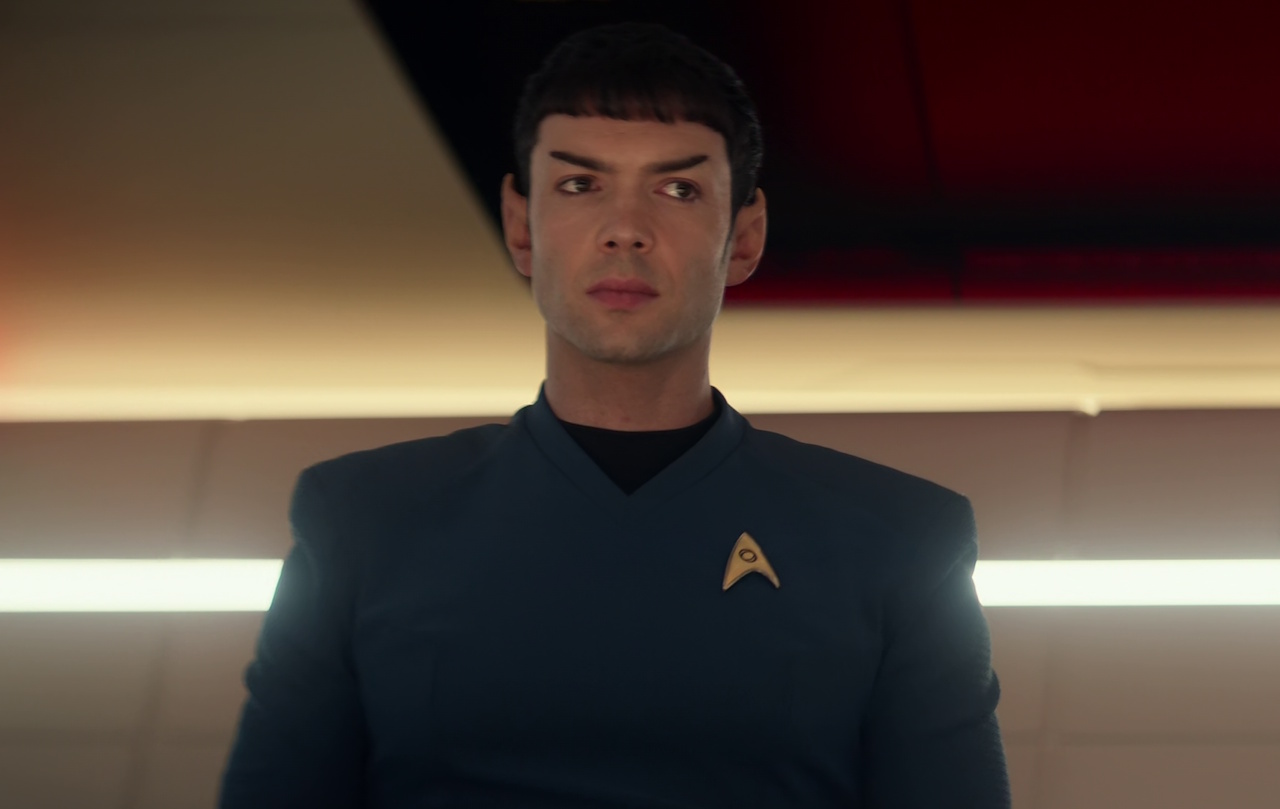
Still frame from Star Trek: Strange New Worlds Season 2 Episode 10 (2023) showing Spock sitting in a chair.
This was a good storyline for Spock, in spite of a weak foundation.

Spock excelled in Hegemony, for me, in his scenes with Una. I know not everyone watched (or liked) Short Treks, but if you remember the short episode Q&A… I felt their conversation was built on those foundations. That short episode saw Spock’s initial arrival aboard the Enterprise – several years before The Cage and Discovery’s second season – and put Spock and Una together as they got stuck in a turbolift.

This sequence leaned into their relationship – the beginnings of which had been shown in Q&A – and it also gave Una an excellent opportunity to shine. In this moment she wasn’t merely a commander, taking over from Pike on the bridge as he led the dangerous away mission, but a mentor, counsellor, and friend. It was absolutely worth the detour to remind us of that side of Una – and her capabilities as a leader who could inspire and offer comfort to those under her command.
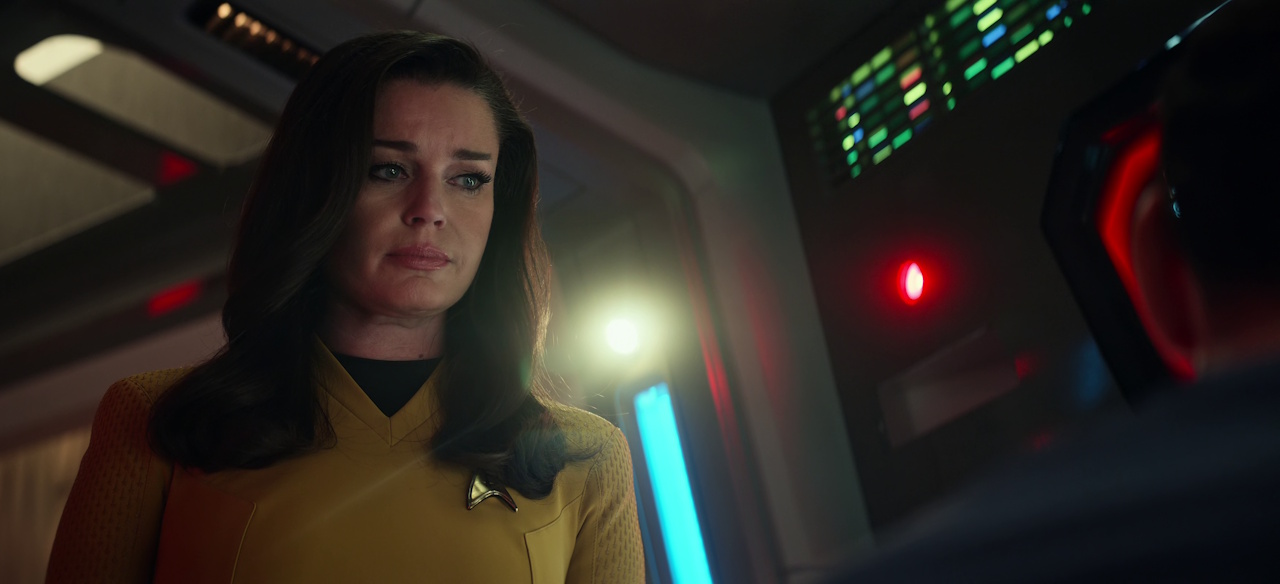
Still frame from Star Trek: Strange New Worlds Season 2 Episode 10 (2023) showing Una looking at Spock.
Una with Spock on the bridge.

Scotty – this younger version of the character – got one of the best introductions in modern Star Trek. It reminded me more than a little of Star Trek ’09 and how that incarnation of Scotty first appeared, only with much darker undertones. For the first time in Star Trek, Scotty is being played by a Scottish actor, which is great to see. James Doohan did a fantastic job as Scotty in The Original Series, becoming one of the franchise’s most iconic and oft-quoted characters, so there are big shoes to fill for Martin Quinn – assuming Scotty will stick around in Season 3. Based on what we saw in Hegemony, I’m impressed.

Strange New Worlds has been transformative for Nurse Chapel, taking a secondary character from The Original Series and giving her some genuine depth. For Uhura and Spock, we’ve seen them as younger, less-experienced, slowly growing and evolving into the characters we’re familiar with. Scotty, for me, would probably lean more on the Spock side than the Chapel side, and I think there’s room to show where he came from before he became the miracle-worker that we all remember!
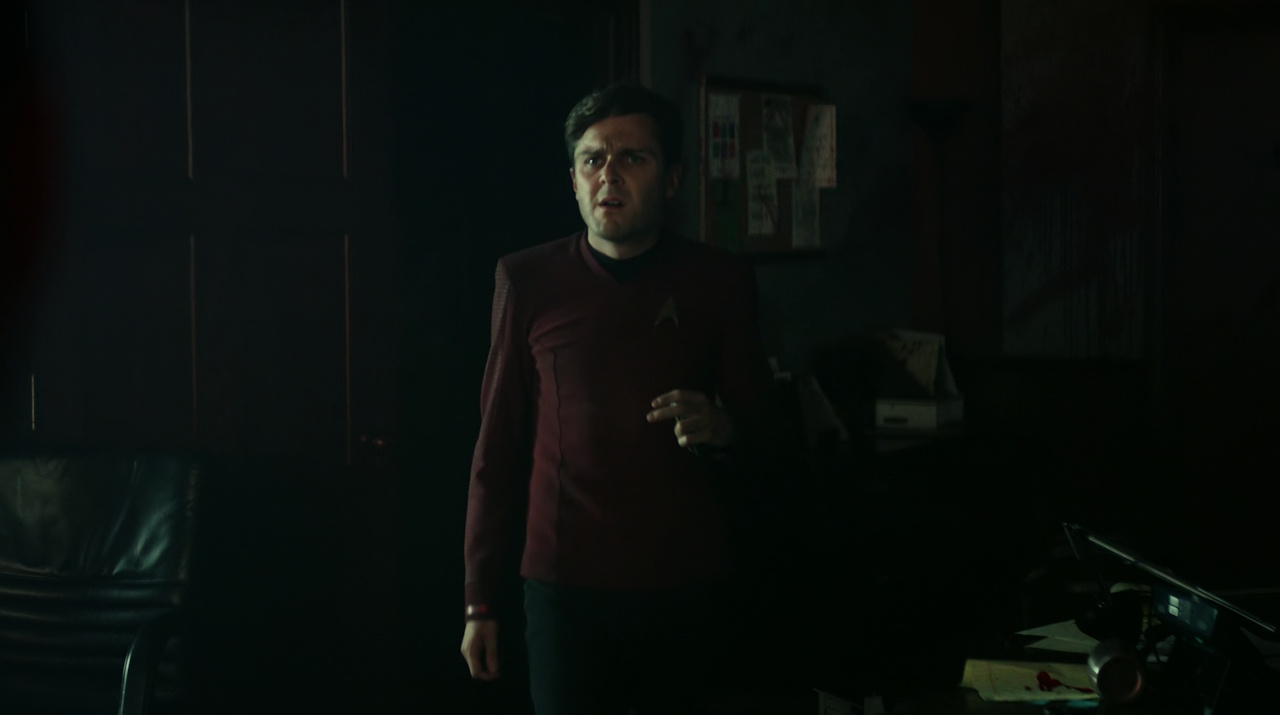
Still frame from Star Trek: Strange New Worlds Season 2 Episode 10 (2023) showing Scotty's introduction.
Scotty has made his Strange New Worlds debut!

I’m going to assume Scotty will be at least as present in Season 3 as Paul Wesley’s Kirk has been in Season 2, and there really is a ton of potential in this introduction. I’d love to explore more of his relationship with Pelia, which was hinted at in Hegemony, perhaps learning why this brilliant engineer didn’t get a good grade in her class at Starfleet Academy. There seems to be a bit of tension there, and a power imbalance, but I could see Pelia guiding Scotty as he grows into the role of the Enterprise’s chief engineer.

On the other hand, Scotty’s introduction and his technobabble explanations of force-field traps and Gorn transponders means he arrives almost fully-formed – at least in terms of his technical mastery. Scotty’s janky, thrown-together Gorn transponder is one piece of evidence that was highly significant to the story, but also his force field trap and the lure he created should be included there as well. Scotty clearly possesses all of the ingredients to become the chief engineer we’re familiar with – even the confidence to interrupt two senior officers when they were having a conversation!
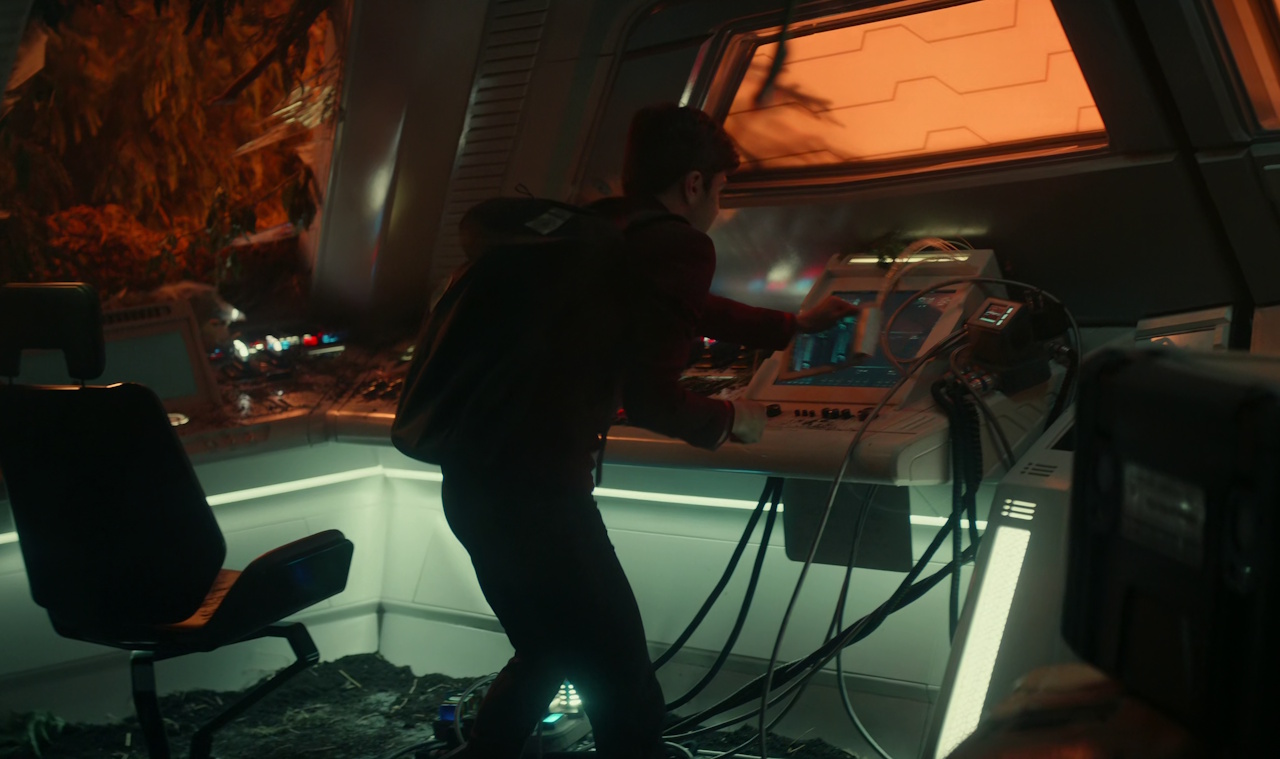
Still frame from Star Trek: Strange New Worlds Season 2 Episode 10 (2023) showing Scotty with his transponder device.
Scotty aboard the crashed shuttle.

The question I have, with Scotty’s introduction, is what will become of Pelia? Pelia has been, for me, a bit of a disappointment this season. Not in terms of her moments on screen; I think she’s fantastic, and Carol Kane has done a wonderful job bringing her to life. But rather, Pelia has been almost absent since she joined the crew. Her biggest moment arguably came in Tomorrow and Tomorrow and Tomorrow – but that was a version of the character from more than two centuries in the past. Moments where engineering solutions have been needed have instead fallen to characters like Spock, Ortegas, and even Uhura, with Pelia playing a much smaller and more supporting role than I’d have expected from the chief engineer in a Star Trek series.

So if Scotty is about to join the crew of the Enterprise on either a temporary or permanent basis, becoming even a secondary character as Kirk has been… where does that leave the already-reduced role for Pelia? I think it would be a shame if she was brushed aside to give more screen time to Scotty; as much as I like bringing back legacy characters and bridging the gap between Pike’s Enterprise and Kirk’s, I don’t want all of the show’s time to be spent on that. There needs to be a balance between old and new characters – and with Pelia already seeming to play second fiddle, even in her own department, bringing Scotty aboard could make things worse.
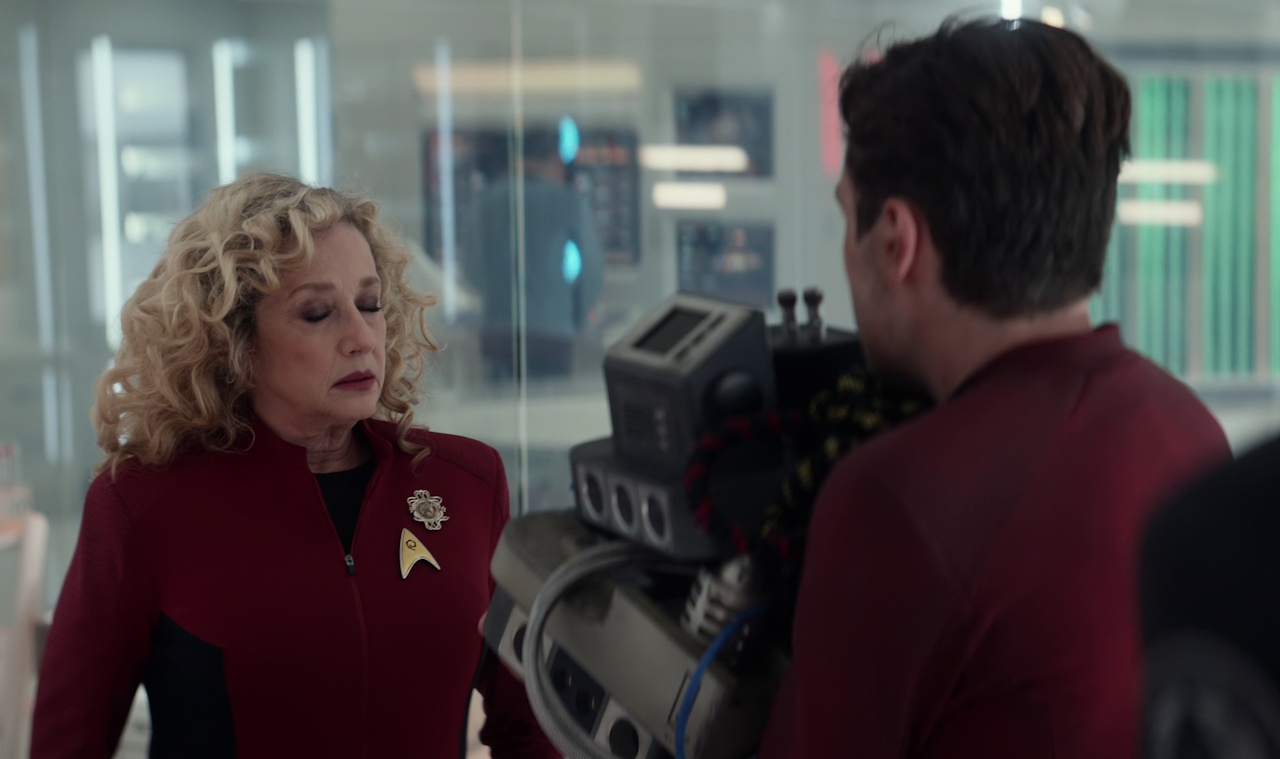
Still frame from Star Trek: Strange New Worlds Season 2 Episode 10 (2023) showing Pelia reuniting with Scotty.
Pelia and Scotty have met before…

The counterpoint to that, of course, is that with an established relationship to build on, and with Pelia’s knowledge of the Enterprise and her systems, we could get a kind of mentor relationship going on. Seeing Scotty grow – in confidence, if not in ability – into the character we’re familiar with under Pelia’s tutelage could be fun to see. And furthermore, it could give the writers more of a reason to include her in stories set in engineering.

The technobabble on Scotty’s side of the story, though – to get back on track – was wonderful. His explanations for how he threw together the false sensor reading generator and the Gorn transponder were pure technobabble and pure Star Trek, and I really do love that! It felt like classic Star Trek in the best way possible, and technobabble explanations with big, random words thrown in have always been a part of what made the franchise so fun. The props created to represent these pieces of kit were also throwbacks, resembling things we’ve seen in The Original Series. Again, I’m absolutely there for all of that!

Still frame from Star Trek: Strange New Worlds Season 2 Episode 10 (2023) showing Sam Kirk holding a sensor device.
Sam Kirk with Scotty’s sensor device.

I touched on Captain Batel a moment ago, and I’d like to get into her storyline in a bit more detail. Batel is very much an auxiliary character to Captain Pike – she’s giving him a reason to keep going in light of his impending accident, and the relationship they’ve embarked on is cute, sweet, and a little awkward, sometimes. They make a fun, very relatable pair. Pike’s fear of losing her – and his relief at discovering that she was still alive – was expertly emoted by Anson Mount.

Gorn eggs, though… was it too soon to bring back this idea after All Those Who Wander? I mean, it’s only been eleven episodes since Hemmer was infected and killed off, and I felt that Hegemony might be straying a little close to repetitive territory with Captain Batel’s infection. If this idea was brand-new for the episode, I think it would’ve been a lot more powerful – but it would’ve needed setting up, and there probably wasn’t time for that! If Strange New Worlds limits this infection to Hemmer and Batel, it will probably be okay. But I’d encourage the writers to avoid adding even more Gorn egg infections in Season 3!
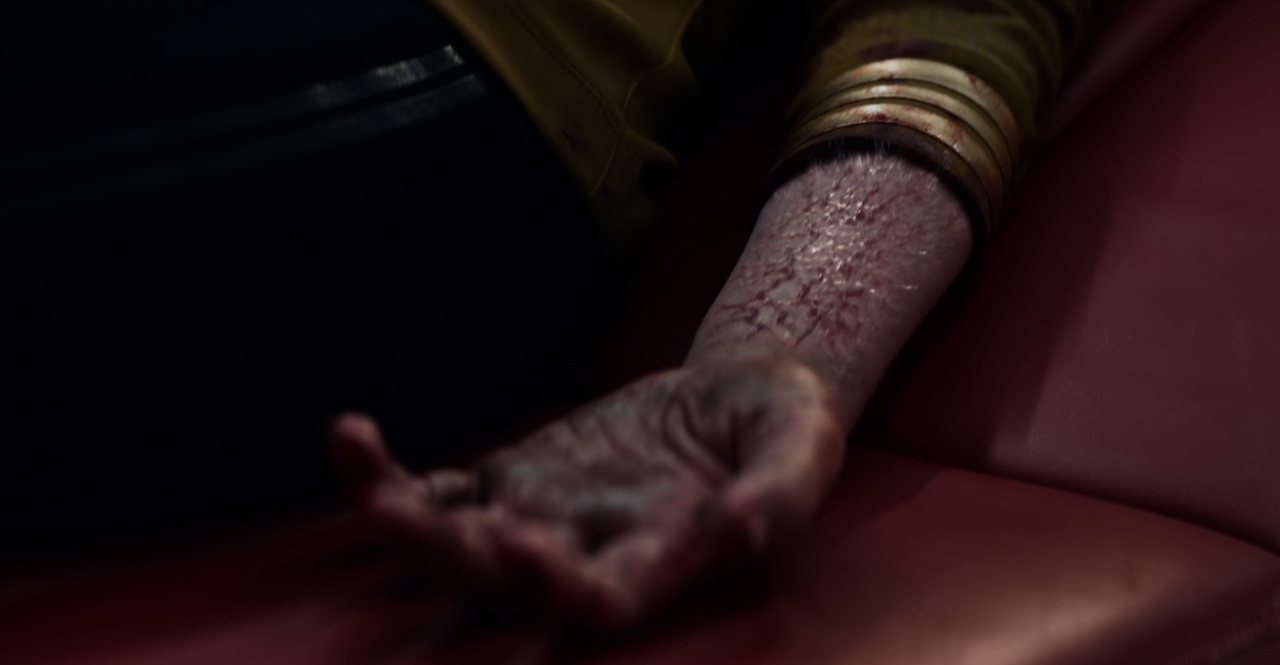
Still frame from Star Trek: Strange New Worlds Season 2 Episode 10 (2023) showing Captain Batel's infected forearm.
Was it too soon to bring back the parasitic eggs?

Batel’s infection raises a big question, though: is she going to survive? On the one hand, it would be a profoundly odd storytelling move to have her infected but alive at the cliffhanger only to say “oops, we can’t save her” and kill her off in the first episode of Season 3. But on the other hand… Captain Batel kind of has to go, one way or another. I don’t mean that because I don’t like her character; on the contrary, she’s been a wonderful addition to the series, she’s given Pike a whole new dimension that we hadn’t really seen before, and Melanie Scrofano has put in a truly exceptional performance. She brings the right balance of command authority and personal warmth to make Batel a believable character – and a sweet partner for Captain Pike.

But at the same time, Pike’s knowledge of his future means their relationship can’t be sustained. Either they’ll have to break up, or… well, the writers will find another way to get Captain Batel out of the way. There could be an engaging story there, with Pike having to come to terms with grief and loss. Batel was a great character for Hegemony to put in danger (twice) because her departure from the show feels like an inevitability one way or another. Unlike with Chapel, who we all knew had to survive somehow, Captain Batel really did feel – and still does feel – like she could be about to be killed off.
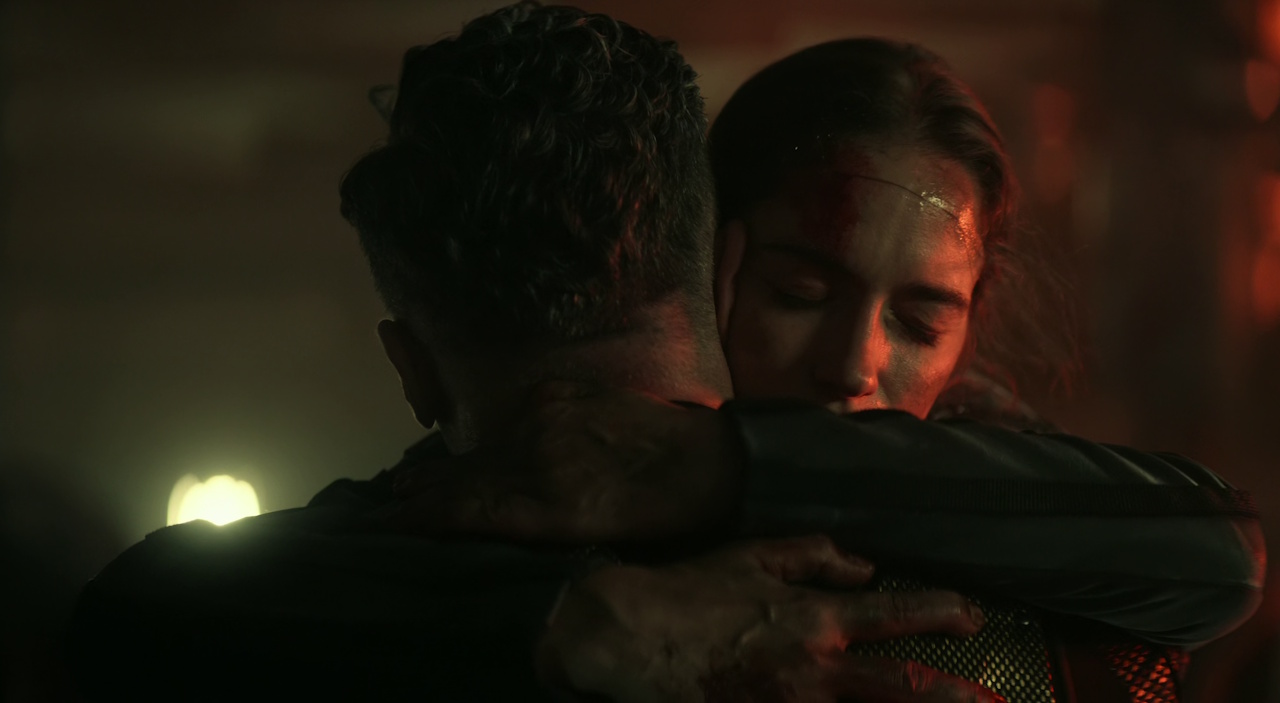
Still frame from Star Trek: Strange New Worlds Season 2 Episode 10 (2023) showing Captain Batel hugging Captain Pike.
A sweet embrace.

Partly this is because of the kind of show Strange New Worlds has been. Killing Hemmer before the end of Season 1 was a serious loss for the show… but it also really raised the stakes for all of the other new characters. With the exceptions of those we know survive to The Original Series or beyond, no one is safe. I criticised Discovery and Picard during their runs for putting their characters into dangerous situations, but refusing to go one step further and killing off all but the most minor secondary characters. Strange New Worlds has successfully raised the stakes in that regard, and if Captain Batel joins Hemmer in the “murdered by Gorn eggs” grave… that feeling will only grow.

Main character deaths are a hallmark of modern television storytelling, and in that sense Strange New Worlds is taking the lead of shows that pioneered what I’ve termed the “disposable cast” – the likes of The Walking Dead and Game of Thrones, where no character could feel safe. There are limitations to this, due to the presence of legacy characters and the show’s prequel status, but as we saw this time with Captain Batel, Strange New Worlds can still elicit those feelings – and do so in style.
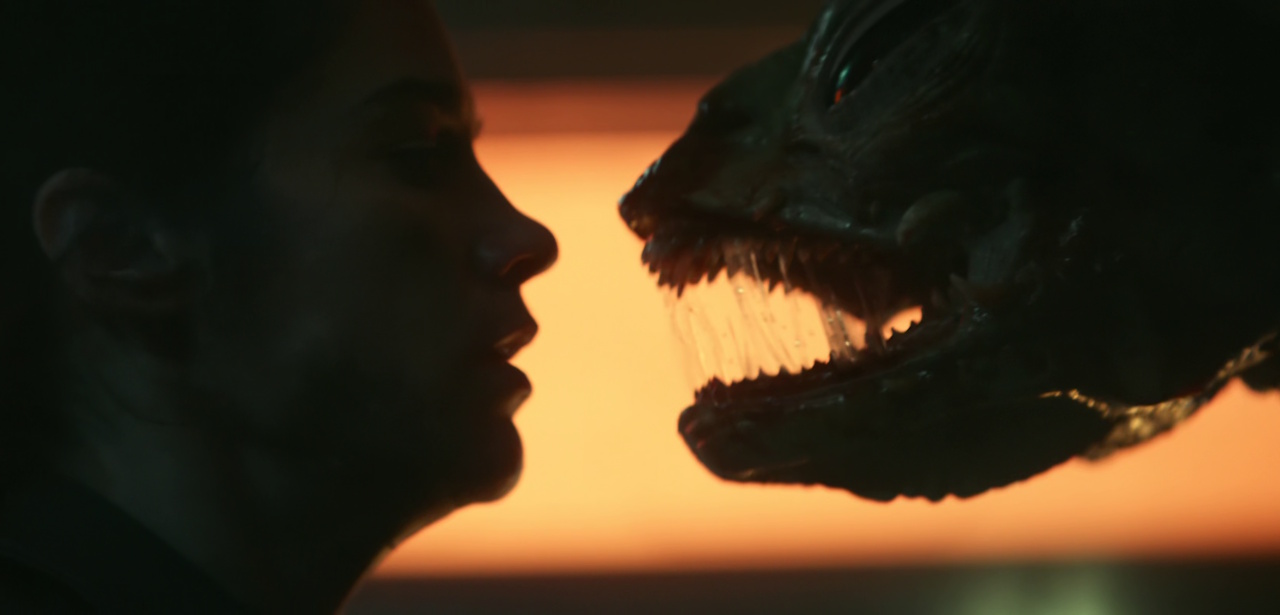
Still frame from Star Trek: Strange New Worlds Season 2 Episode 10 (2023) showing Captain Batel and a young Gorn.
Captain Batel may not be long for this world…

I liked the zero-g battle between Spock, Chapel, and the adult Gorn aboard the wreck of the USS Cayuga. It felt a little silly to me that other areas of the ship retained their artificial gravity… I mean, did you see the state of the wreck? There was hardly anything left of the Caygua, so how was gravity still functioning?! But on the damaged bridge, in spacesuits and without gravity, the fight was genuinely exciting. Slowed by the lack of gravity and air, Spock wasn’t able to grab his phaser in time, and as it went spinning across the vacuum, I felt a lot more of the tension and excitement than I had until that point.

I think I’m right in saying that this is the first adult Gorn to be seen on screen in Strange New Worlds. I confess that I have a real die-hard appreciation for the old rubber suit from Arena; there’s just something special about those old practical effects that the modern redesign can’t touch. But for the way this version of the Gorn are being depicted, as scarily intelligent monsters, I liked the way this character looked. And I appreciate that there was an effort to use real practical effects for this sequence – a performer in a Gorn suit – rather than making the entire thing a CGI creation.
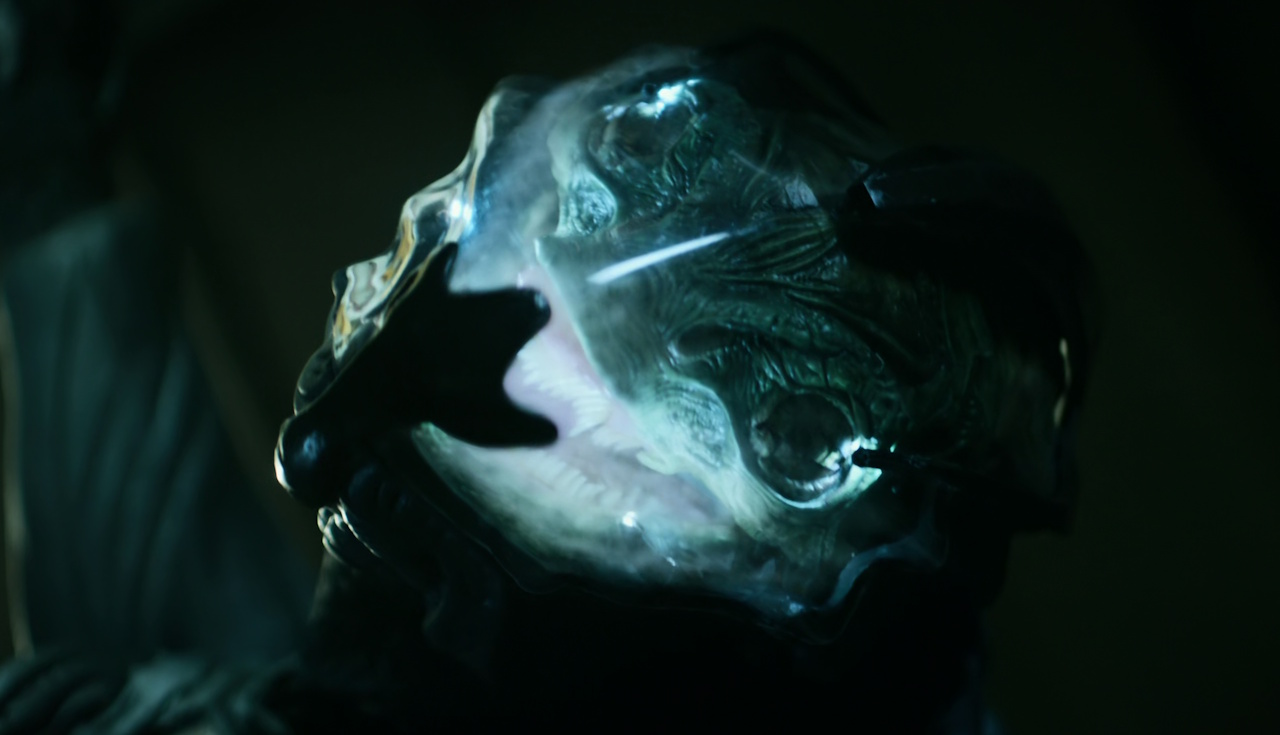
Still frame from Star Trek: Strange New Worlds Season 2 Episode 10 (2023) showing a Gorn wearing a helmet.
A Gorn in a spacesuit…

After the tense fight with the Gorn commander, his death actually felt pretty brutal. Drifting out into space with a damaged helmet, injured and leaking air… that’s a pretty gruesome way to go for anyone! The fact that it happened to a monstrous Gorn might’ve taken something away from that, but I actually found it to be an incredibly brutal moment – at least by Star Trek’s usual standards.

Sticking with the wreck of the Cayuga, I thought the set redresses worked pretty well. Sometimes in Star Trek, it can be pretty obvious when an existing set is being recycled and is supposed to be a new setting – Discovery’s transporter room trying to pass itself off as a Ba’ul prison cell in Season 2 is still one of the worst, and the first example that comes to mind! But the changes made to the corridor and especially to the damaged bridge really sold me on the wreck of the Cayuga as a real place, and it made a fun setting for Spock’s stand-off with the Gorn.
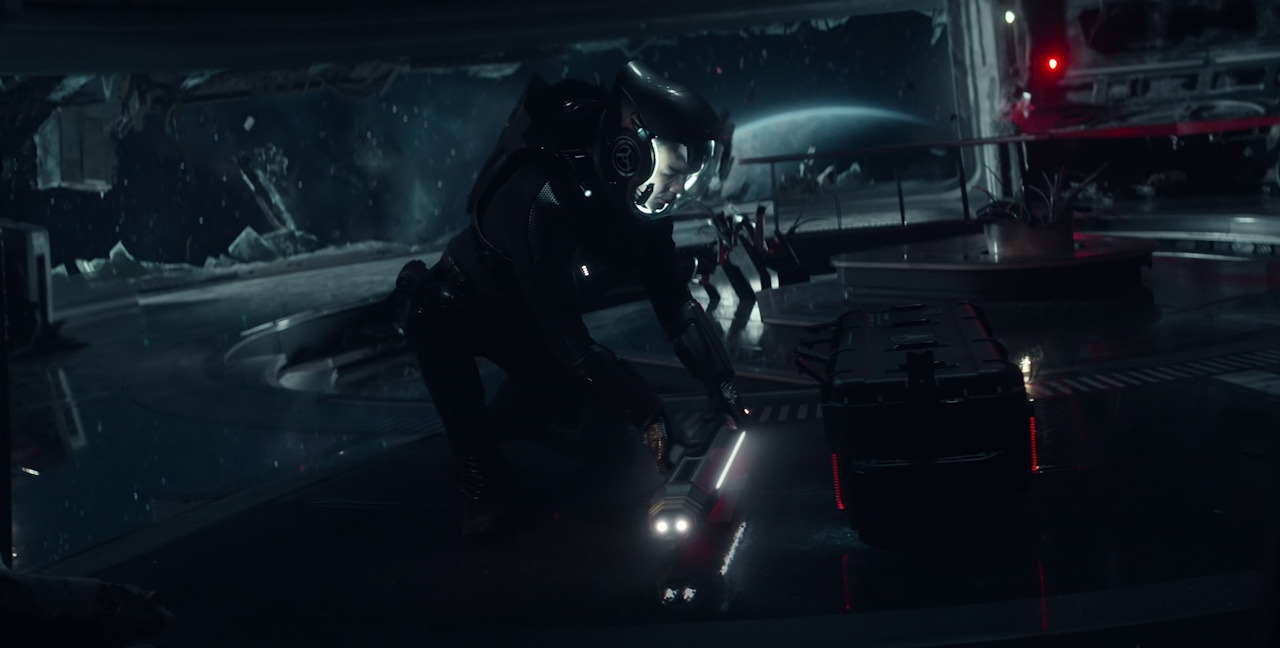
Still frame from Star Trek: Strange New Worlds Season 2 Episode 10 (2023) showing Spock on the wreck of the Cayuga, activating a rocket.
Spock on the Cayuga’s ruined bridge.

Should we address the status of Gorn-Federation contact? I mean, we’ve done other nitpicks so far in this review… so why not? If you wanna get technical about it, The Original Series first season episode Arena made it pretty clear that Starfleet hadn’t encountered the Gorn before. Because I didn’t review individual season 1 episodes of Strange New Worlds (the show wasn’t “officially” available outside of the United States for months after its premiere) I didn’t get a chance to address this at the time.

Long story short… I don’t really give a shit if Strange New Worlds contradicts Arena. Internal consistency and “canon” are important up to a point, but given the quality of the writing in all of Strange New Worlds’ Gorn episodes so far, I really don’t think it matters. If we were dealing with a bigger faction, one that had played a role in numerous episodes across multiple shows, then I might be more on the side of the canon purists. But given that the Gorn only ever appeared once in The Original Series and once in Enterprise, I’m content for Strange New Worlds to explore this faction in more depth. I think they work better as antagonists because of how unexplored they are than Discovery’s Klingons did, and I’m genuinely enjoying this “spacefaring monster” idea.
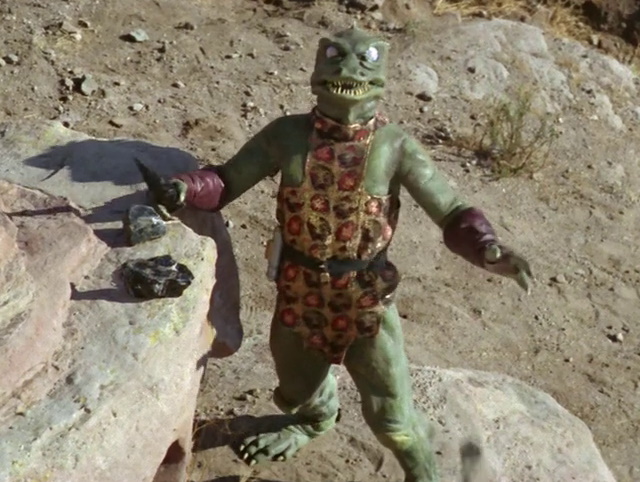
Still frame from Star Trek: The Original Series Season 1 showing the Gorn captain.
The Gorn captain from Arena.

This depiction of the Gorn led to an interesting conversation between characters. How do we define a “monster,” and given that the Gorn are clearly at least as intelligent as humans, do they even fit that definition? In fact, seeing as the Gorn appear to have access to technology that surpasses the Federation’s capabilities – a jammer that can block transporters, sensors, tricorders, and warp engines all at once is clearly much more advanced than anything Starfleet has – is “monster” even close to accurate?

As an aside: did it seem like the Gorns’ jammer affected their own sensors? Because it felt that way to me, and I wonder if we might learn more about how the Gorn acquired this technology in a future episode. The idea that their most powerful weapon also renders their own ships and soldiers blind is an interesting one – and after Scotty’s comments about a solar flare sending the Gorn into a hunting frenzy, we could be primed to learn more about them. My theory? I wonder if there’s someone behind the scenes manipulating the Gorn or pushing them to attack the Federation.

Maybe we’ll have to elaborate on that idea one day!
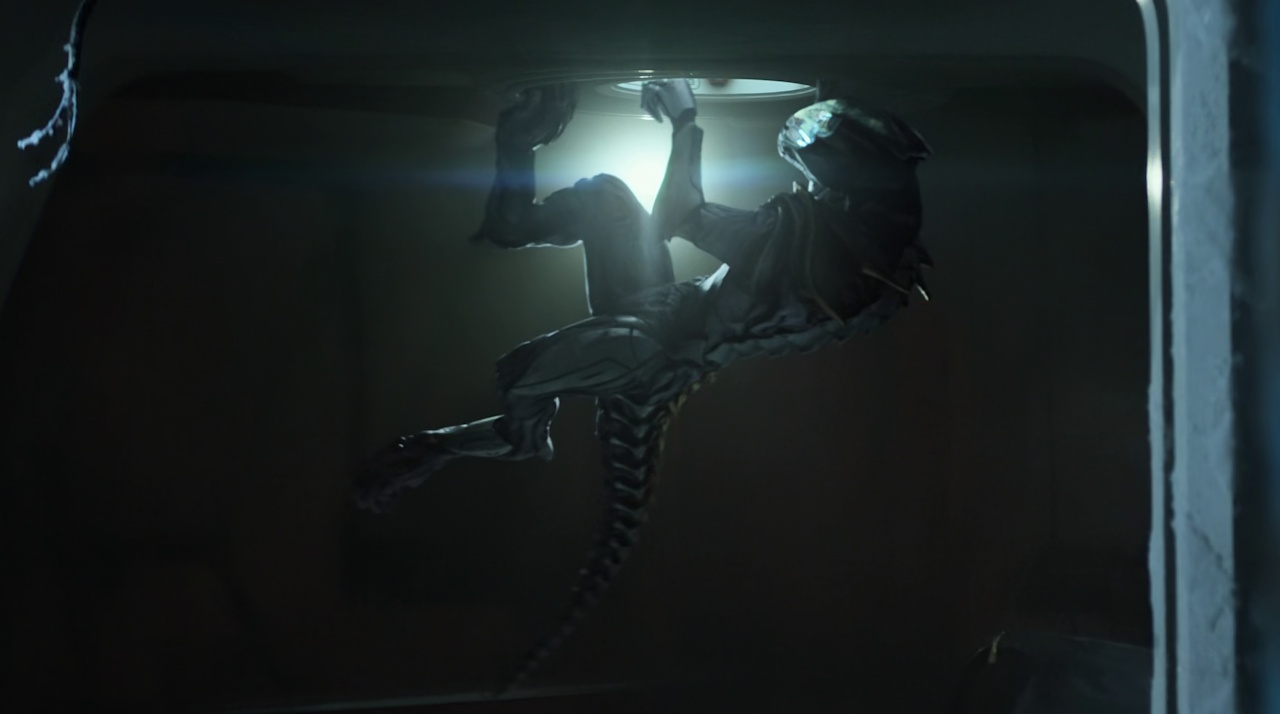
Still frame from Star Trek: Strange New Worlds Season 2 Episode 10 (2023) showing an adult Gorn trying to open a hatch.
Could someone (or something) be influencing or manipulating the Gorn?

The “monster” conversation was a genuinely interesting one. It reminded me a little of Kirk’s anti-Klingon feelings in The Undiscovered Country, and it could’ve been a great way to make a point about how all of us can very easily “other-ise” cultures and peoples that we don’t understand. All-out war is a very real possibility here, but Star Trek has always been a franchise that promoted understanding, bridging cultural differences, and peaceful exploration. Perhaps there’s a story, somewhere, about how the Gorn don’t see humans as equals, and how it’ll take negotiation and convincing to get them to, y’know, stop eating us.

I could’ve happily spent longer on this conversation, and I think La’an would’ve been an interesting character to linger on. We’ve already seen her history with the Gorn, her fear, and how her feelings toward them can drive her… but how would she react to negotiation and peace? That could be an interesting angle for the series to explore. I love a good alien monster as much as the next sci-fi fan, don’t get me wrong, but the Gorn aren’t mindless animals – they’re warp-capable and intelligent, and I’d like to see that side of things explored in more detail one day.
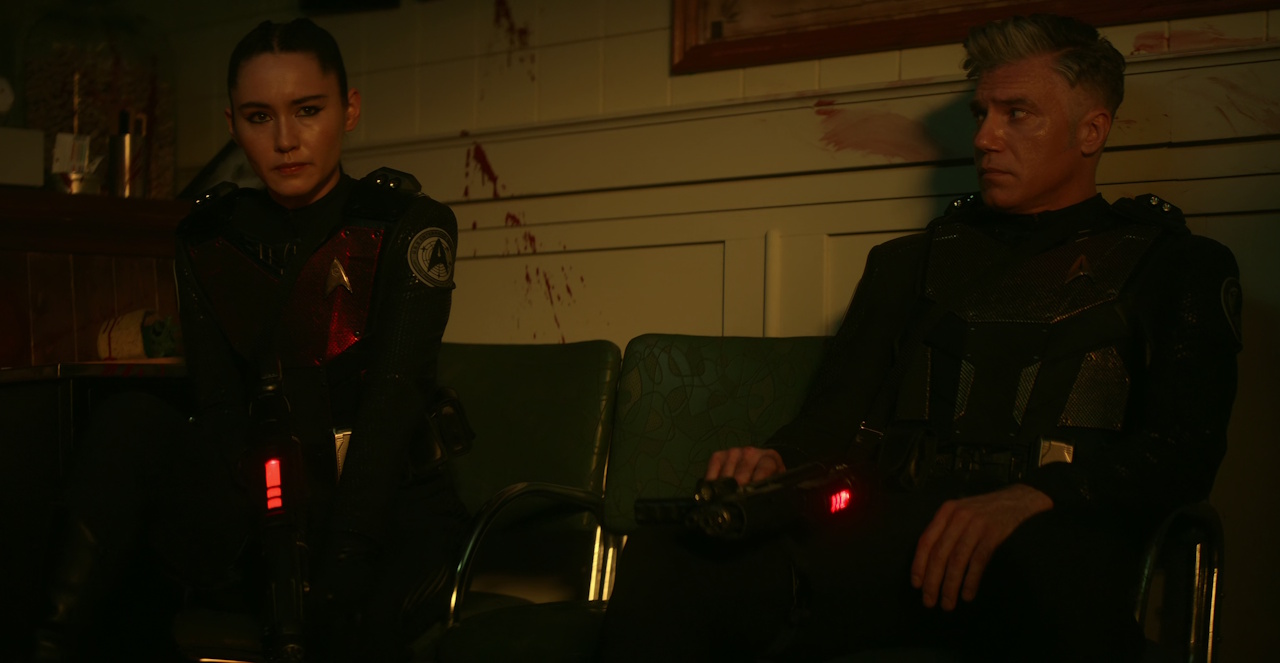
Still frame from Star Trek: Strange New Worlds Season 2 Episode 10 (2023) showing La'an and Captain Pike sitting on a bench, taking shelter.
La’an and Captain Pike on Parnassus Beta.

This review is already running long, so I think we’d better start to wrap things up. Hegemony was an outstanding episode, up there with the best of the best from Seasons 1 and 2. It was a fantastic way to close out Strange New Worlds’ wonderful second season, while also teeing up a story that could – in theory – run for multiple episodes across Seasons 3 and 4. The conflict with the Gorn is fascinating, and the Gorn themselves make for a wonderfully monstrous and intimidating adversary. My only concern is that Strange New Worlds has been a breath of fresh air with its return to episodic storytelling, exploration, and even some of Star Trek’s more ethereal and “weird” storylines… and I don’t want to sacrifice that for a serialised season-long story. Discovery and Picard already burned me out with repeated “the entire Federation is in imminent danger” storylines… so I hope that Hegemony can be a two- or three-part story and nothing more.

There were a couple of contrivances that saw Starfleet Command (and everyone else in the story) skip over the Gorn’s attack on a Federation vessel, and I confess I found that difficult. But once I got past that, the rest of the episode played out in truly exciting style, closing out the season with a bang. I had a truly wonderful time with Captain Pike and really the entire crew – and I can’t wait to find out what happens next when Season 3 arrives later this year.
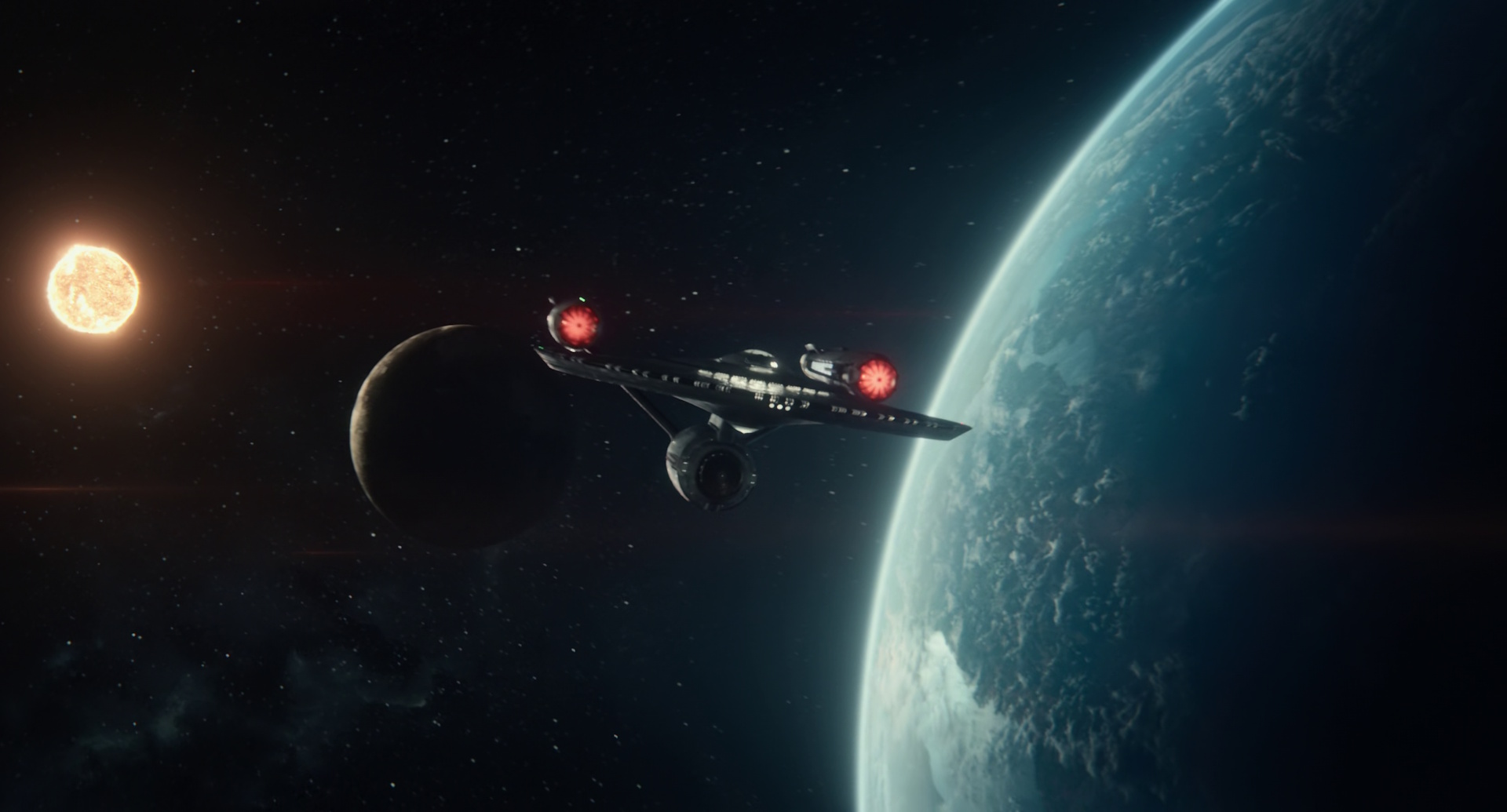
Still frame from Star Trek: Strange New Worlds Season 2 Episode 10 (2023) showing the USS Cayuga at the beginning of the episode.
The USS Cayuga.

This finally finishes my Strange New Worlds Season 2 episode review series – a series that I began when the show was first airing back in 2023. It took me so long because I basically burned out on Star Trek for a while, and I still have two full seasons of Lower Decks and some Prodigy episodes to get caught up on before I’m fully back up to speed with Star Trek. I’m probably the only reviewer who watched Section 31 before Subspace Rhapsody and Hegemony, so I hope you’ll forgive the lateness of these final reviews.

As I said at the beginning, though, it kind of worked out well for me, because now I don’t have so long to wait for the continuation of this wonderful story! Season 3 is well into post-production, and while we don’t have a broadcast date just yet, I would expect to see it in the summer or perhaps early autumn. There’s less congestion to the schedule this time around, so hopefully Paramount will give Star Trek room to breathe. That’ll give me time to get caught up on some of those other shows, right?

Season 3 will be on our screens before too long, though, so I hope you’ll join me for more reviews and perhaps a dash of theory-crafting. No promises, but I’d like to think I’ll get through Season 3 in a more timely fashion this year! And until then, stay tuned here on the website for more Star Trek content. In the first couple of months of 2025, I’ve already reviewed Section 31 and written up my recollections of Voyager to celebrate that show’s thirtieth anniversary. There’s more to come, so until then… Live Long and Prosper!


Star Trek: Strange New Worlds Seasons 1 and 2 are available to stream now on Paramount+ in countries and territories where the platform is available. The series is also available on DVD and Blu-ray. The Star Trek franchise – including Strange New Worlds and all other properties discussed above – is the copyright of Paramount Global. This review contains the thoughts and opinions of one person only and is not intended to cause any offence.
Star Trek: Strange New Worlds Episode Review – Season 2, Episode 9: Subspace Rhapsody

A spoiler warning graphic.

Spoiler Warning: There are spoilers ahead for Strange New Worlds Seasons 1-2.

I’ve been putting off this review.

After I re-started my Strange New Worlds Season 2 episode reviews in the autumn, this episode stood out as one that I just wasn’t looking forward to or was even interested in, so when it was the next one in the lineup I found myself procrastinating.

I will tell you up-front that I’m generally not a fan of non-animated musicals. I adore musicals in the theatre; seeing Wicked shortly after its West End debut is genuinely one of my favourite memories. And I like Disney-style animated musical films, too. But live-action musical films have never been my cup of tea.

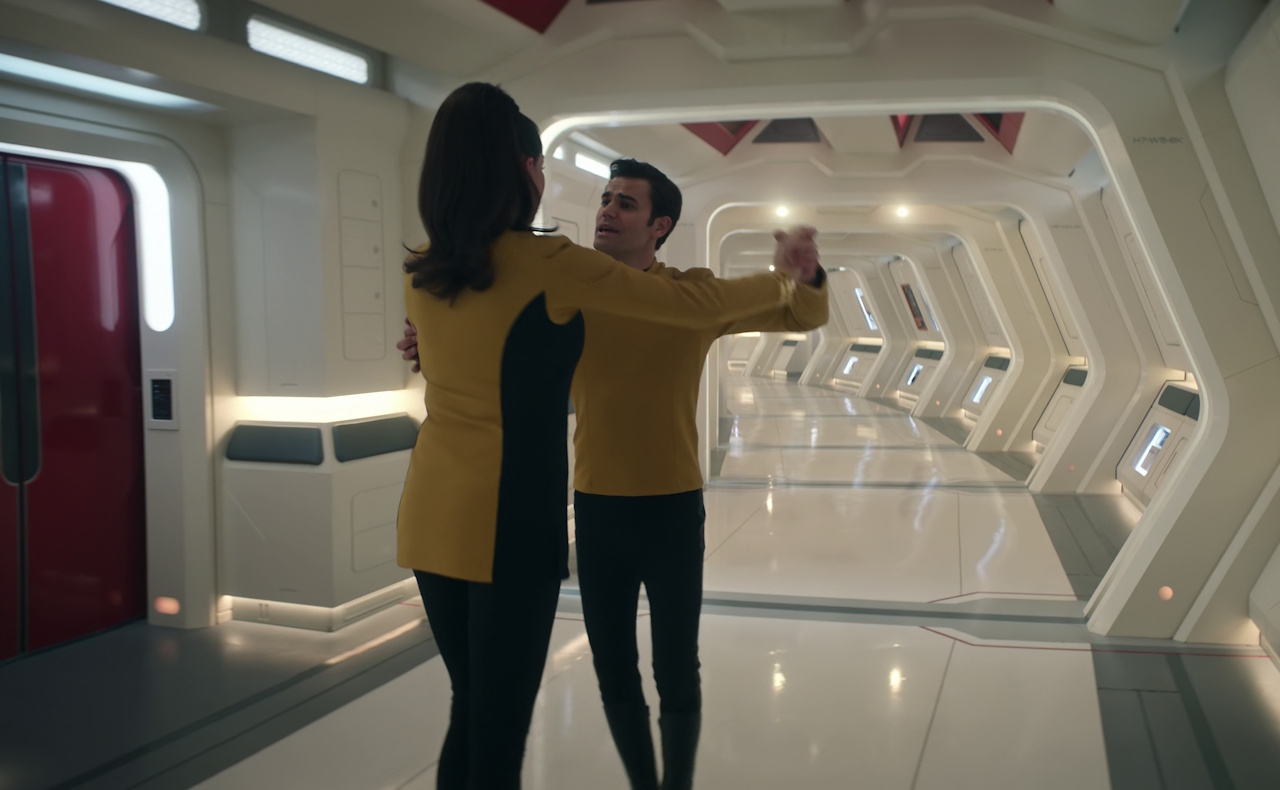
Still frame from Star Trek: Strange New Worlds Season 2 (2023) showing Kirk and Una dancing.
Una and Kirk dancing aboard the Enterprise.

Worse, musical episodes in shows that are otherwise not musicals have been – in my subjective opinion, naturally – universally terrible. Whether it was in Supernatural, Buffy the Vampire Slayer, or even Scrubs… I really didn’t like what was on offer. I’m a fan of the camp and kitsch as much as the next person, but musical episodes have always been a bridge too far. They feel offputting, immersion-breaking, silly, and even fan-servicey sometimes.

So it’s with that background that I approach Subspace Rhapsody.

Still frame from Star Trek: Strange New Worlds Season 2 (2023) showing Uhura holding a tricorder.
Let’s analyse and dissect Subspace Rhapsody.

I’m gonna do something a little different for this review. Rather than waste your time and mine with a two thousand-word explanation of why I’ve never liked musical episodes, I want to try to stay positive and focus on some of the things I liked or appreciated about Subspace Rhapsody. Because I’m not gonna lie to you: I would rather hammer a rusty nail into my scrotum than watch this episode again. It was so far beyond cringeworthy that I barely got through it once.

First of all, let’s talk choreography and songwriting.

Creating a musical – any musical, really – is a lot of work. Trust me, I know: I used to do amateur dramatics, and we’d always have songs and performances in our shows! Rehearsing Subspace Rhapsody must’ve been a challenge, and for choreographers and vocal coaches, having to work with actors who are not natural singers nor particularly practised in musical theatre will have been an additional challenge. A lot of work went into writing songs, working with the actors to get the best possible take when recording the songs, and especially choreographing some of the bigger dance routines. Getting multiple performers to dance and sing in unison is a creative and technical feat. The fact that I didn’t enjoy the result doesn’t mean I can’t appreciate the skill that went into it!

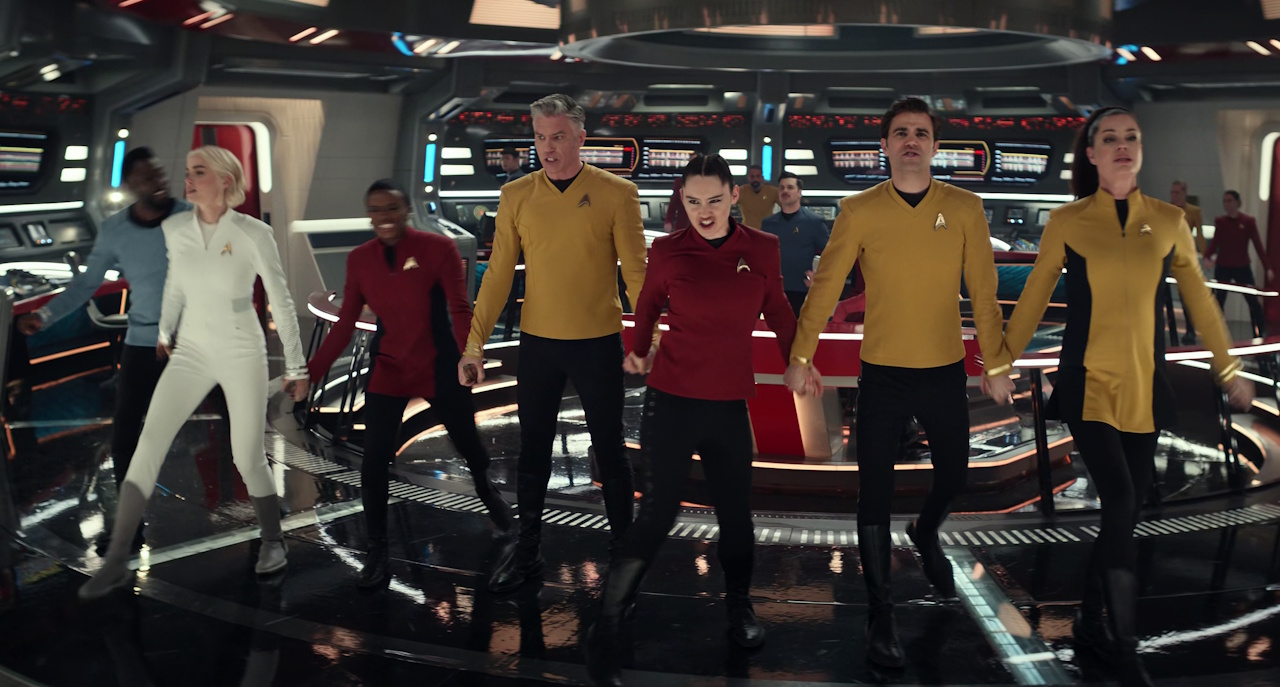
Still frame from Star Trek: Strange New Worlds Season 2 (2023) showing the main cast singing the final song of the episode.
Singing and dancing at the episode’s climax.

Redoing the Strange New Worlds opening theme as an a capella piece was creative, too. I actually didn’t mind the result – it was different from the usual theme (which happens to be one of my favourites in the entire franchise) while being familiar enough to still fit the opening titles. It was the right choice for this episode, and whoever came up with the idea deserves praise! As do the performers who vocalised the theme and the sound mixers who brought it together.

Secondly, the premise of the episode – a random space phenomenon causing chaos on the Enterprise – feels like something straight out of The Original Series or really any pre-Enterprise show. Subspace Rhapsody, in concept, wasn’t a million miles away from episodes like The Naked Time, If Wishes Were Horses, or Masks, which I mean as a compliment. Star Trek has always been ethereal and, for want of a better term, “weird” in its take on sci-fi, particularly in The Original Series and the early part of The Next Generation. It’s hard not to look at Subspace Rhapsody’s core concept through that lens, and stepping back to that style of storytelling after the intensely dramatic Discovery and Picard is a welcome change.

Still frame from Star Trek: Strange New Worlds Season 2 (2023) showing Spock and the improbability field.
The improbability field felt like something right out of classic Star Trek.

The quantum uncertainty field – or improbability field – felt so familiar, in fact, that I could’ve sworn it had been used somewhere else in Star Trek before! Not for musical reasons, it just seemed like a very familiar term. I was wrong about that, it was actually new for Subspace Rhapsody, but the concept felt very “Star Trek.” We’ve seen space phenomena lowering peoples’ inhibitions, making dreams come alive, or turning the Enterprise into a stone pyramid, so why couldn’t there be something out there forcing people to sing? It’s not so outlandish that it couldn’t be part of Star Trek’s occasionally wacky galaxy!

The one side of this that I felt didn’t work as well as intended was the danger posed by both the field itself and the Klingons’ response to it. At no point did I feel the crew of the Enterprise – or the wider Federation, come to that – were in any real danger. And I know in Star Trek stories the heroes always find a way to save the day… but that isn’t what I mean. Plenty of episodes and films can still feel tense, even though at the back of our minds we know there’s going to be a solution. But Subspace Rhapsody didn’t convey that feeling well enough for me, even when the Klingon ships were bearing down on the Enterprise.

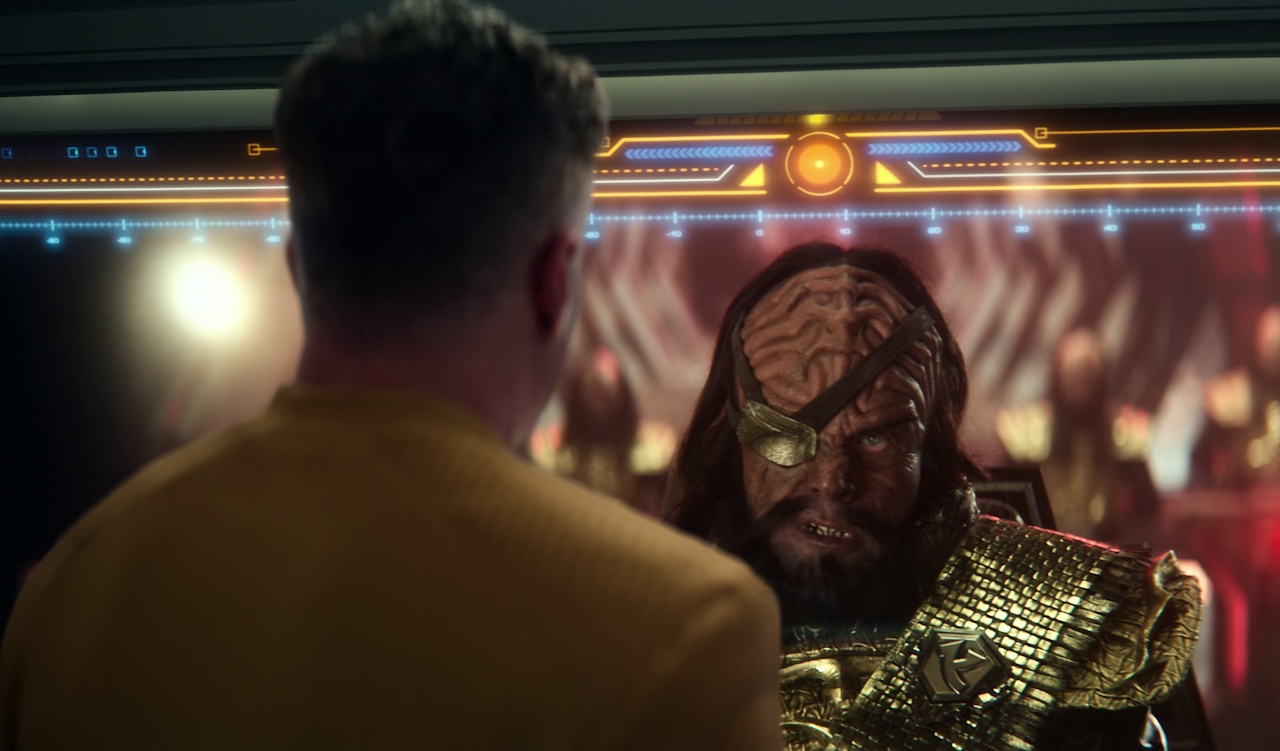
Still frame from Star Trek: Strange New Worlds Season 2 (2023) showing Captain Pike communicating with the Klingons.
The Klingons were partial antagonists in Subspace Rhapsody.

I was, I must admit, pleasantly surprised with the quality of the singing in Subspace Rhapsody. Often, when non-singers are pressed to take on musical roles… it’s kind of obvious, and all the auto-tune in the world can’t hide a lack of talent and training. To my surprise, most of the cast did well – even though it could be obvious that the singing was pre-recorded and everyone was just miming along. Still, I’ll take reasonably good lip-syncing over bad singing any day of the week!

Sticking with the songs, there are a couple more positives. I appreciate that the songs were all original – this wasn’t a “jukebox musical,” trying to recycle out-of-copyright songs from years gone by. Having the crew sing about their feelings and what was going on around them was silly, yes, but better than if they’d burst into a rendition of something like Button Up Your Overcoat or Embraceable You. Songwriting takes talent, and putting together original songs inspired by classic musicals on a budget is no mean feat.

Still frame from Star Trek: Strange New Worlds Season 2 (2023) showing Chapel singing.
All of the songs were original.

There must’ve been a temptation to try to emulate the style of composers like Lin-Manuel Miranda, creating pieces of music with a much more modern style. For my money – which, admittedly, doesn’t go very far in an episode like this one – Subspace Rhapsody was better-served by generally sticking with a more trad-pop style. The episode’s final musical number (its grand finale) was a bit of a departure from that, but trying to do the whole episode in that style, or with a mix of genres like disco or hip-hop, wouldn’t have been a positive.

Obviously Subspace Rhapsody was a great episode for Uhura, picking up her character arc from Season 1 and referencing how Hemmer had inspired her. Her growth as an officer, and finding her place both in Starfleet and aboard the Enterprise, were also instrumental to her role in the story, helping her discover a solution to the improbability field. We didn’t get to learn a lot about Uhura this time, nor did she really change over the course of the story, but her role in Subspace Rhapsody felt like the culmination of her arc across the show’s first two seasons. It was nice to see.

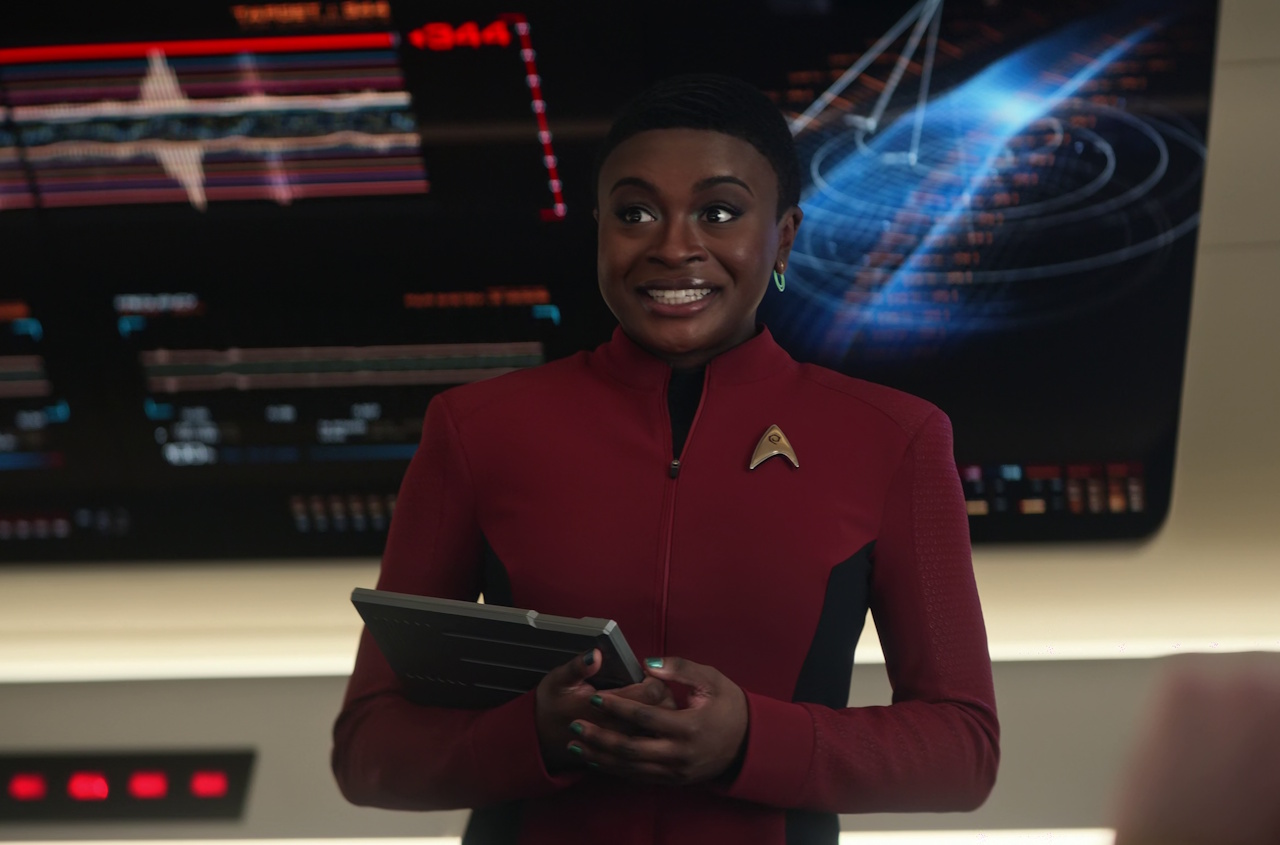
Still frame from Star Trek: Strange New Worlds Season 2 (2023) showing Uhura holding a padd.
Subspace Rhapsody was a big episode for Uhura.

Subspace Rhapsody was also a great episode for La’an – particularly her relationships with Kirk and Una. La’an lanced the boil of her feelings for this reality’s version of Kirk, and while it didn’t go the way she might’ve wanted, there’s something cathartic in the act of confession. Hopefully it’ll settle those feelings for her going forward. This felt like a pretty relatable moment; who among us hasn’t had feelings for someone and tried, awkwardly, to talk to them? I know I’ve been in the position of feeling conflicted about whether to confess how I feel and how to go about it! It’s part of the human condition.

La’an and Una make a fun pair; there’s a kind of big sister/little sister relationship between them, sometimes. For Una to be the one La’an turned to when she was struggling with what to do about Kirk felt natural in the context of their relationship across the series so far, and deepening their bond was something I appreciated this time.

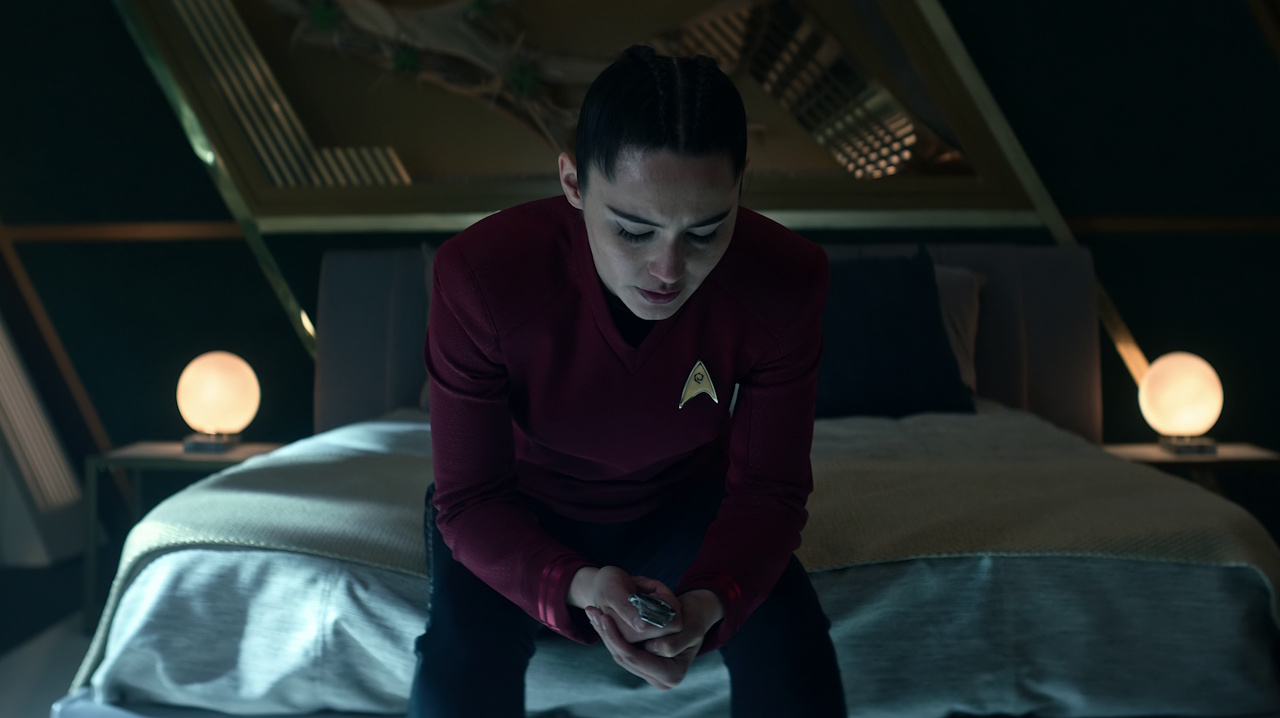
Still frame from Star Trek: Strange New Worlds Season 2 (2023) showing La'an sitting on her bed.
La’an evolved her relationships with Kirk and Una this time.

The one character I’d argue that Subspace Rhapsody didn’t handle well was actually Captain Pike. Firstly, Pike seemed to trip over a pretty basic relationship hurdle in a way that didn’t feel right for his character. The “issue” in his relationship with Captain Batel was so incredibly simple that it didn’t make a lot of sense to me that he wouldn’t simply propose a different kind of vacation or try to find a compromise. Allowing something so small to eat away at him and potentially damage their relationship just doesn’t feel like something Pike would do – even though, again, it was kind of a relatable moment. Sometimes in relationships something small can seem intimidating, and maybe the story wanted to get at Pike being inexperienced with this kind of thing. It was still wide of the mark, but at least I get what the story wanted to say.

Secondly, Pike is known for his inspiring speeches and his ability to motivate his crew. For him to delegate that task at the episode’s climax – with potentially huge stakes and the survival of Starfleet on the line – didn’t seem right. Uhura was well-positioned to speak to the crew, sure, but no one does inspiration quite like a ship’s captain. We’ve seen Pike take on that role several times already in both Strange New Worlds and Discovery, and while I get this was Uhura’s moment… the way the script brushed Pike aside to get there didn’t sit right with me.

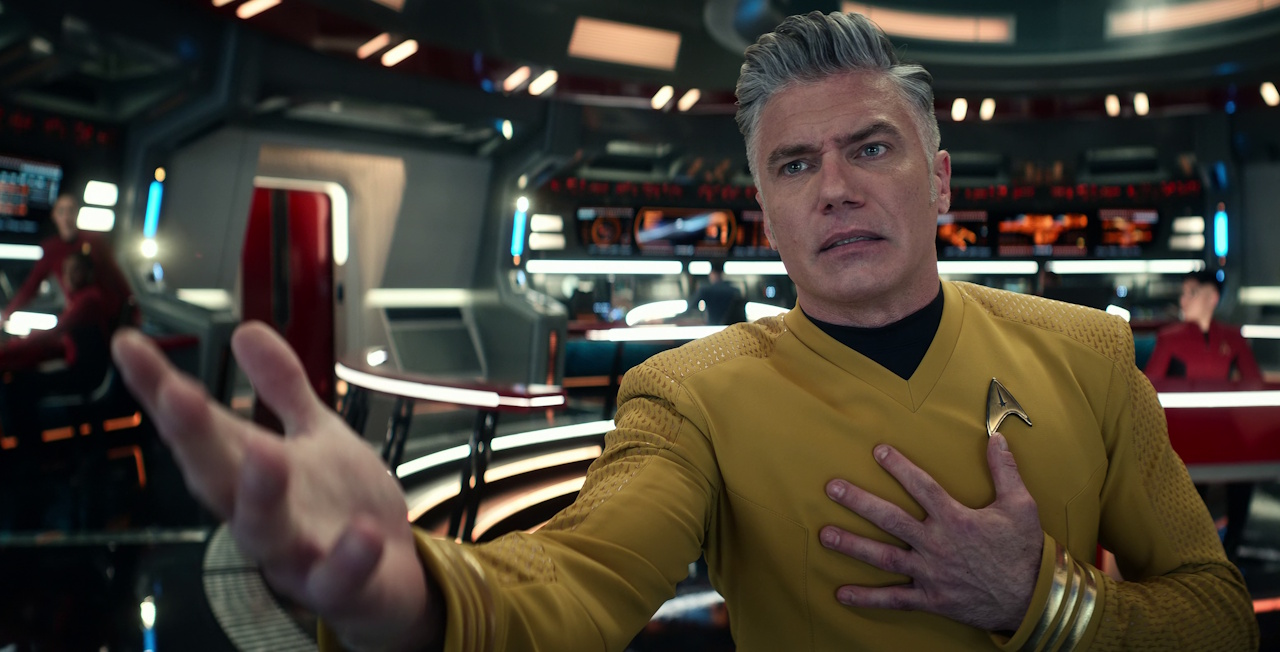
Still frame from Star Trek: Strange New Worlds Season 2 (2023) showing Captain Pike with his hand outstretched.
This wasn’t Captain Pike’s strongest episode.

We should also talk about Spock and Chapel, who seem to have come to the end of their brief relationship. I liked the callback to The Original Series on this side of the story – Roger Korby was a character from the Season 1 episode What Are Little Girls Made Of, and having him name-dropped here was interesting. I wonder if Korby will be mentioned – or even seen on screen – in Season 3.

I found both Spock and Chapel to be relatable on this side of the story… because I’ve been both of them at different points in my life. Leaving someone behind to take advantage of a once-in-a-lifetime opportunity is hard, and being the one left behind as a partner goes somewhere you can’t follow… that’s probably even more difficult. Spock’s intense feeling of rejection really hit me in a way I wasn’t expecting, and I think it also shows how far Spock still has to go in order to become the stoic Vulcan we’re familiar with from The Original Series. This younger version of the character is still carrying more of his emotional human side – and it came through in that moment.

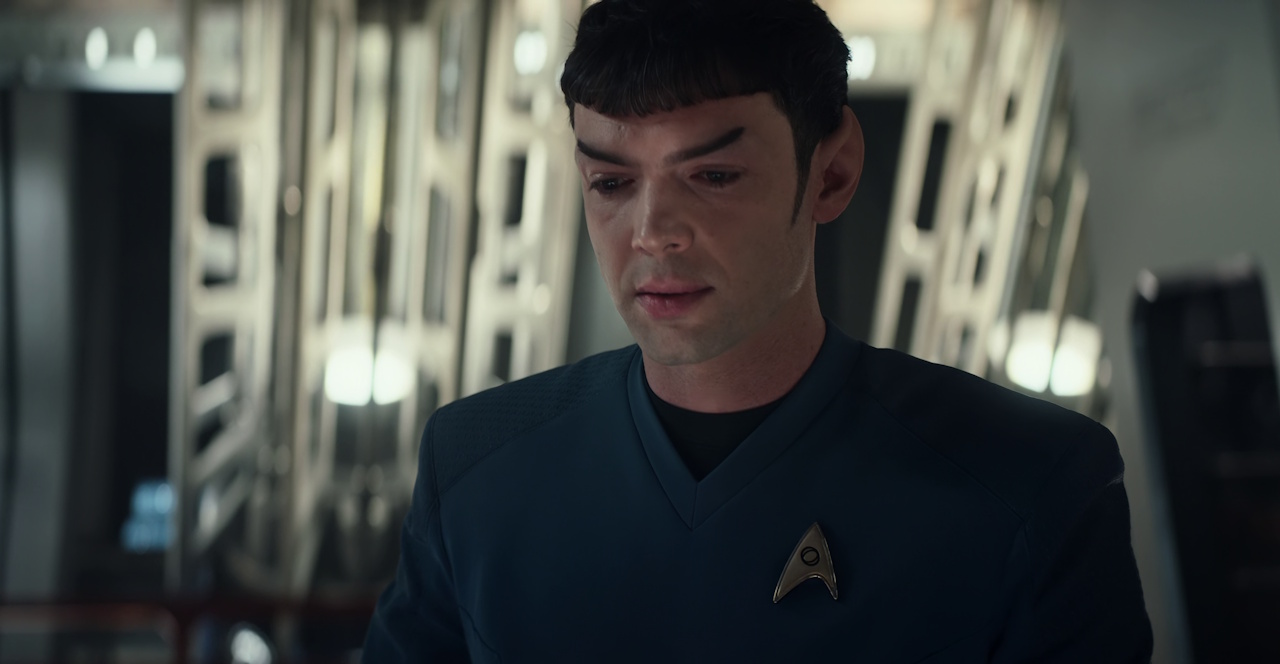
Still frame from Star Trek: Strange New Worlds Season 2 (2023) showing Spock.
Spock is still – on occasion – an emotional character.

There were several creative camera shots in Subspace Rhapsody, as well as some great special effects and animated moments. La’an gazing out of the window during her solo song, complete with a zoom out to the Enterprise, was great – and it’s a pretty uncommon shot in Star Trek, when you think about it. Una and La’an floating with the artificial gravity having been deactivated was also a neat effect, and another rarity!

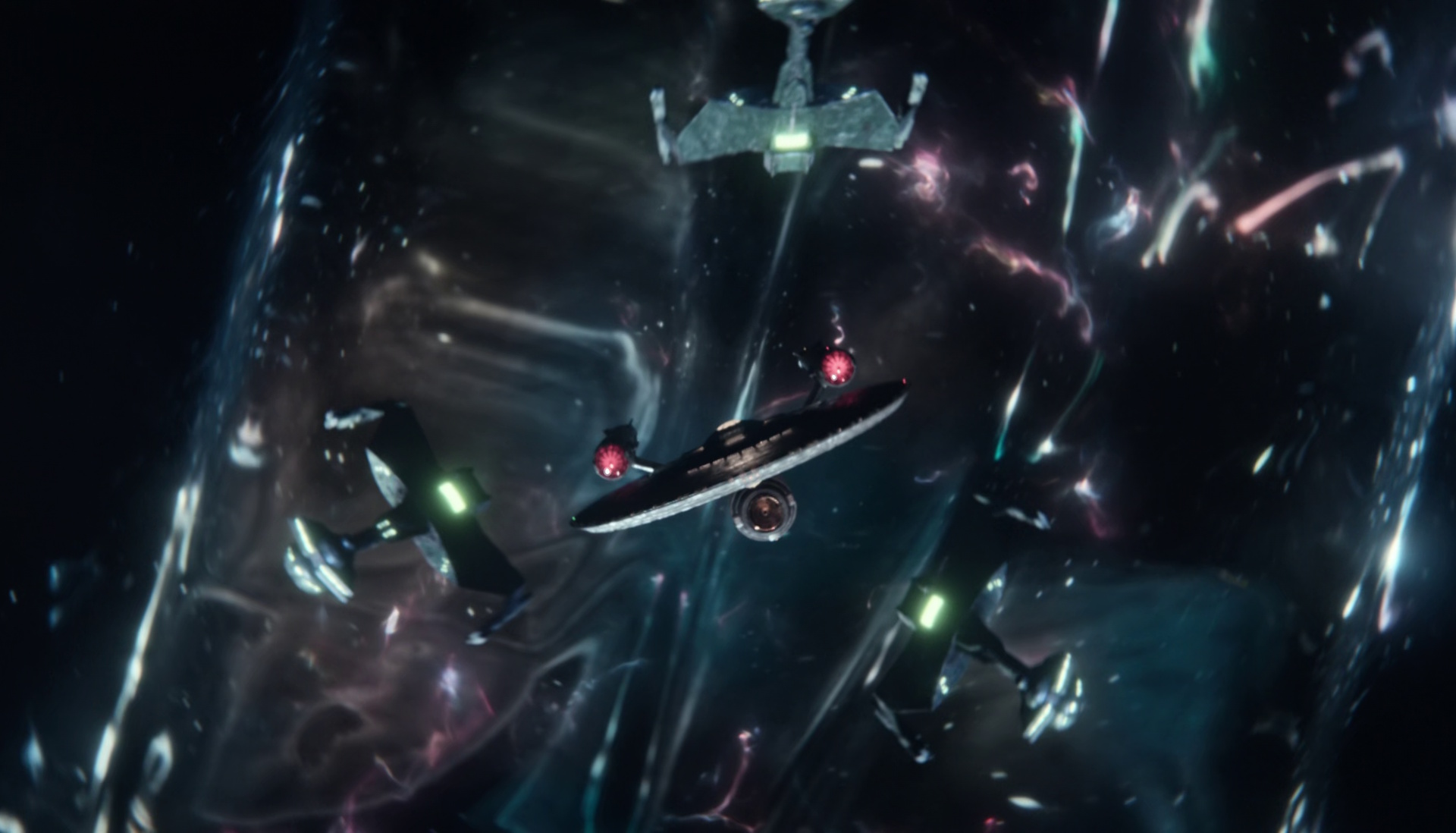
The Enterprise and three Klingon ships performing a kind of ballet in space was exceptionally creative, too, and tied into the theme of the episode really well. It was well-animated, and I liked seeing the D7 class (referred to as a K’t’inga class in the episode) back on screen once more. I also liked the classic warp effect that was used near the end of the episode as the Enterprise headed on to her next adventure.

Still frame from Star Trek: Strange New Worlds Season 2 (2023) showing the USS Enterprise and three Klingon ships.
Even the Enterprise and the Klingon ships couldn’t resist dancing.

Speaking of the Klingons, I felt more than a little of Deep Space Nine’s General Martok in Bruce Horak’s Garkog. Not only do the two characters each have a missing eye, but Horak seemed to be channelling J G Hertzler in his performance, particularly in his first scene. Garkog was a pretty minor character in the grand scheme of things, but it was sweet to welcome back Bruce Horak for the second time this season. I still think it was a mistake to kill off Hemmer so early, by the way!

I could’ve spent another scene or two with the Klingons. We got to see their musical “dishonour” on screen, but I would’ve been interested to get a different perspective on the improbability field phenomenon. Maybe we could’ve seen Garkog and his crew trying to find a solution before their encounter with Pike and the Enterprise.

Still frame from Star Trek: Strange New Worlds Season 2 (2023) showing Klingon General Garkog mid-song.
General Garkog.

There were a couple of funny lines in Subspace Rhapsody that successfully won a smile. Pelia’s line in the briefing room about using the “zipper” was one, and Kirk’s a moment later about how he “almost understood” what Spock was saying was also a bit of fun. I would say that Kirk’s unspecified “commission review” felt like a bit of a clumsy way to shoehorn him into the story, but once he was aboard the Enterprise I enjoyed having him around.

So I think that’s everything I had in my notes this time.

Subspace Rhapsody was borderline unwatchable for me, and unless someone duct-tapes me to a chair and holds my eyes open, A Clockwork Orange-style, I will never watch it again. It was categorically not “my thing,” and I’m okay with that. Star Trek is an experimental franchise, and I welcome the creative team striking out in new directions, trying different things, and keeping Strange New Worlds a largely episodic project. As long as they don’t try to make a fully-musical series, I think I can cope with Subspace Rhapsody as a one-off.

Still frame from Star Trek: Strange New Worlds Season 2 (2023) showing La'an peeking out from behind a wall.
La’an is spying on someone…

There were positives in the mix. Uhura and La’an got great moments of characterisation, Spock was particularly relatable, and it was fun to welcome back Paul Wesley as Kirk. His take on the character is fantastic, and I’m genuinely looking forward to spending more time with him in future. There was also some excellent cinematography and visual effects work.

On the musical side of things, here’s what I’ll say. There are some styles of storytelling, movie making, and entertainment in general that I personally don’t like or aren’t “my thing.” But I can still appreciate the skill, effort, and work that went into their creation, and I can acknowledge that they are exemplars of their genres. I don’t like opera, for instance, but I can still appreciate the years of training needed to sing that way, or the months of work and rehearsing that go into the staging of an opera.

Still frame from Star Trek: Strange New Worlds Season 2 (2023) showing Pelia, La'an, and Spock singing.
Pelia, La’an, and Spock.

And that’s how I feel about Subspace Rhapsody, at the end of the day. I didn’t enjoy it – and I knew I wouldn’t before I watched it, hence all the procrastination – but I can tell that the cast, crew, and production team had a ton of fun with it. A lot of effort and practise went into some of the more involved musical numbers, and there was some genuinely great choreography – at least from my perspective as a layman. And as a Trekkie, I can appreciate other parts of the story even if the musical side of things really didn’t do it for me.

I hope this didn’t feel like too much of an attack on Subspace Rhapsody. If you liked it, or if you’re more a fan of musicals than I am, that’s great. And I will say that it looked like it would’ve been a lot of fun to work on as a dancer or background performer! It just wasn’t for me. I promised myself I wouldn’t watch Hegemony until I’d seen Subspace Rhapsody, so I really needed to get this out of the way to get to the end of the season! I’m ready to jump into that episode now… so stay tuned for what will hopefully be a more positive review sometime soon.


Star Trek: Strange New Worlds Seasons 1-2 are available to stream now on Paramount Plus in countries and territories where the service is available. The Star Trek franchise – including Strange New Worlds – is the copyright of Paramount Global. This article contains the thoughts and opinions of one person only and is not intended to cause any offence.
Star Trek: Strange New Worlds Episode Review – Season 2, Episode 5: Charades

Spoiler Warning: There are spoilers ahead for Strange New Worlds Seasons 1 and 2. Spoilers are also present for the following Star Trek productions: The Original Series, Deep Space Nine, Voyager, Enterprise and Discovery.

Charades was an episode of two halves. One of these halves worked well, and the other… well, let’s just say that the other was not to my taste. It was undeniably a Star Trek episode to its very core, bringing to the fore concepts that the franchise has used going all the way back to The Original Series. We also got an interesting exploration of a previously unseen aspect of Vulcan culture, character development for both Spock and Nurse Chapel, and some comedic moments that stuck the landing.

On the other hand, Charades relied far too heavily on the kind of “cringe humour” that defined sitcoms like Friends, with parts of the “Spock must pretend to be Vulcan” storyline evoking the same kind of feelings as watching Robin Williams’ character try to be in two places at once in Mrs Doubtfire. That kind of situational humour really isn’t my cup of tea… and while I can tolerate it in small doses and for a one-off story, it means that Charades is unlikely to be an episode I’ll choose to revisit very often in future.

I watched most of the episode with this kind of expression on my face…

It was a treat to welcome back Mia Kirshner as Spock’s mother, Amanda. Kirshner reprised her role from Seasons 1 and 2 of Discovery, where she was seen alongside both Spock and Michael Burnham. Burnham wasn’t mentioned on this occasion, which I suppose is an interesting omission given that the story called back to Spock’s childhood and had a focus on the divide between humans and Vulcans. But Amanda’s presence was more than enough to carry this storyline – and I found it to be the most interesting and certainly the most impactful part of Charades.

It was hinted at, even as far back as The Original Series, that being a human married to a Vulcan could be difficult. Enterprise greatly expanded our knowledge of human-Vulcan relations, and showed how Vulcans could take an almost sneering view of a species they regarded as not as sophisticated or developed. Through Amanda’s story in Charades, we get to see how that manifests on an individual level, and how Vulcans can discriminate against humans – or even show revulsion and hate.

Charades was an unexpectedly strong episode for Spock’s mother, Amanda.

This ended up being a particularly powerful storyline. Amanda, as Spock came to realise, had to endure a great deal of hardship as a human living on Vulcan. Even as Vulcans came to accept him as one of their own, Amanda remains a perpetual outsider, constantly subject to being talked down to, shunned, disregarded, and treated differently because of who she is. The cool intellectual and logical nature of Vulcans means that this discrimination manifests differently – but it’s there nevertheless, and we come out of Charades with a much stronger appreciation for Amanda and her strengths after having seen what she continues to experience.

This idea that Vulcans’ aloofness and intellectual prowess can easily slide into a sense of superiority is nothing new in Star Trek; it was front-and-centre in depictions of the Vulcans in Enterprise in particular. But this very personal, individual exploration of that – and the impact it can have on non-Vulcans who have to endure it – is something different and interesting. Strange New Worlds has found a new way to build upon the lore of Star Trek, expanding our understanding of one of the franchise’s most iconic races – and their flaws.

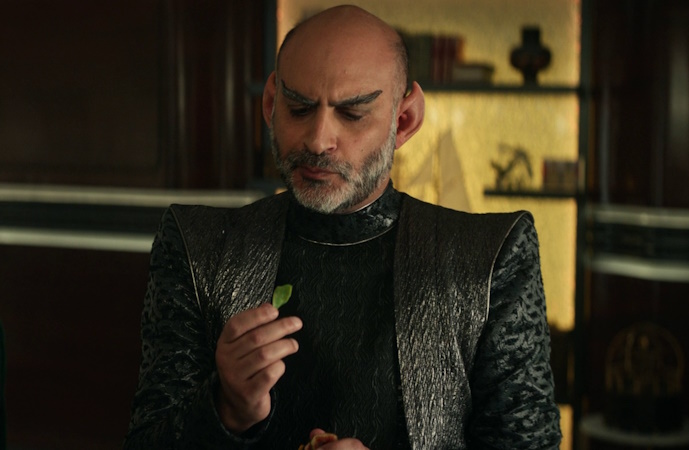
Through T’Pring’s mother we saw some of the flaws that Vulcans can fall victim to.

Star Trek has done the “character transformed” idea in multiple ways on multiple occasions, from Jadzia Dax’s friends embodying her Trill symbiont’s past hosts in Deep Space Nine through B’Elanna Torres being split into human and Klingon personalities in Voyager. So in that sense, Charades’ “Spock gets turned into a human” premise isn’t entirely original. But for a character who’s been struggling with his human and Vulcan sides, it was an interesting move.

However, I’d argue that Season 1’s The Serene Squall had already done much of the heavy lifting on Spock and his internal conflict. That episode reframed the idea as a kind of analogy for gender identity, and made a great deal of progress for Spock in terms of his character arc in this series – an arc that has to take him from the more emotional presentation seen in Discovery and get him much closer to the way he was in The Original Series. We also got Spock Amok in Season 1, which focused on Spock’s relationship with T’Pring and the stresses that his role in Starfleet and his half-human side was taking. On its own merit what Charades did in that regard was interesting – but given that The Serene Squall was a mere eight episodes ago… its impact is, I would argue, lessened.

Spock and T’Pring.

And I think that speaks to a broader concern about Strange New Worlds as a whole: its focus on legacy characters and their characterisations. Out of fifteen episodes that have been broadcast so far, we’ve had two that focused primarily on Spock and his relationship with T’Pring, and two more in which Spock and Nurse Chapel’s relationship was a major plot point. Season 2 has also spent a disproportionate amount of time so far on legacy characters, with Una, Nurse Chapel, Dr M’Benga, Spock, Captain Kirk, Uhura and latterly Captain Pike all getting moments in the spotlight. This is starting to come at the expense of other characters.

Pelia, the Enterprise’s new chief engineer, was mentioned by name in Charades but hasn’t been seen on screen for a couple of episodes now. And while La’an and Ortegas both had lines of dialogue this week, they were swept along by a narrative current outside of their control. I’m all for learning more about Spock’s background, don’t get me wrong. As a Trekkie, and as someone who’s firmly invested in this world, I like the idea. But Strange New Worlds has a limited amount of time at its disposal; the show runs ten-episode seasons, and after this, only one more season is guaranteed to be produced. As fascinating as it is to spend time with Spock, given that this episode’s core story felt more than a little derivative of what we got in two episodes of Season 1, its main story is one that could have been reduced – if not skipped outright – in favour of stories focusing on some of the show’s new characters.

La’an had a minor role this week.

Charades’ style of “cringe humour,” something often seen in American sitcoms, really isn’t my thing. I found a few moments in the episode damn near painful to watch, particularly when jokes and gags were made at Spock’s expense. That is, however, purely a matter of personal taste, and as far as I can see, the episode’s sense of humour stuck the landing and achieved what it was aiming for… even if it isn’t something I personally enjoyed. There were absolutely some laugh-out-loud moments, moments where I had to pause Charades for fear of missing what would come next as I was laughing so hard. The premise of the episode is inherently silly: Spock being transformed into a human right before an important dinner with his fiancée. And as one of Strange New Worlds’ more lighthearted offerings, that side of the story worked as intended.

There is a slightly uncomfortable edge to some of this humour, though – and while I have no doubt that this was unintentional on the part of the writers and producers, it’s still worth acknowledging. Going all the way back to The Original Series, the character of Spock has stood apart from his crewmates. Though mental health, autism, and neurodivergence were never stated explicitly in Star Trek, Spock has, for the longest time, been someone that folks who are autistic or neurodivergent have related to. Charades stripped away part of this presentation, and did so largely for comedic purposes. That wasn’t always the most comfortable thing to watch, especially with the aforementioned “cringe” aspect to the episode’s humour. I don’t think we need to zero in on this, nor spend too long criticising Charades here, but it’s absolutely worth acknowledging this aspect of the story.

Charades seemed to poke more than its share of fun at Spock.

Conversely, and to be fair to Charades, it showed us a different side to Spock – but one that was equally rooted in many of the same neurodivergent aspects of his character. The episode’s script compared Spock’s handling of emotions to that of an adolescent, but if we continue our analogy for Spock being autistic or an “outsider” to the world of human emotion, what we see is someone experiencing these emotions in their strongest, most raw form. Just as many neurodivergent folks struggle to understand emotion, others feel them intensely, and this intensity was something new for Spock – but something no less interesting to see.

Again, the way this was played was largely for comedic effect, as Spock’s over-exaggeration of some of his feelings and emotions was part of this “cringe humour” thing that Charades had going on. But if we can look past that, I think there’s a case to be made that we saw a different side to Spock, one that flipped his logic and cool, usually emotionless presentation on its head – but it was a presentation of Spock that was no less relevant or relatable than it has been in the past.

We got a very different presentation of Spock this week.

There was a comment made before the season aired by one of the show’s executive producers (a comment I’ve now lost so I can’t find to quote from directly) that said something along the lines of “Strange New Worlds will push the boundaries of canon.” That alarmed me somewhat, because the series has to fit into a long-established world, and sometimes what producers and writers call “pushing the boundaries” can actually mean “ignoring and/or erasing.” And I think in Charades’ development of Nurse Chapel’s relationship with Spock, we get to see an example of this pushing of the boundaries.

The Original Series implied on several occasions that Chapel had feelings for – or at least a crush on – Spock. But it never went beyond that; the two characters, when they interacted, maintained a level of professionalism and perhaps friendship… but never anything more. There was no hint at a background of having once been lovers or ex-partners, and while nothing in The Original Series should explicitly rule out the kind of relationship that we see the two seemingly ready to embark upon in Charades, it’s certainly something that takes these two long-established characters and pushes them in a new direction.

What will become of the relationship between Spock and Chapel?

In the context of Strange New Worlds itself, this relationship works well. Pairing up Spock and Nurse Chapel succeeded in Season 1, and their relationship has only deepened since then. In a way, we could argue that this adds to our understanding of the characters and where they were in The Original Series – and as they interacted so infrequently in Star Trek’s first incarnation, it’s perfectly fine to bring them together in this way. It’s also not the only change made to either character from their original appearances.

That being said, putting Spock and Nurse Chapel into this kind of romantic (or at least physical) relationship is something that works best when taking Strange New Worlds in isolation. As new characters on a new show, they absolutely have the potential to do this. But for both characters, Strange New Worlds is a prequel, and it’s unclear how this relationship will work for either of them – nor how it will move either character closer to their TOS presentation.

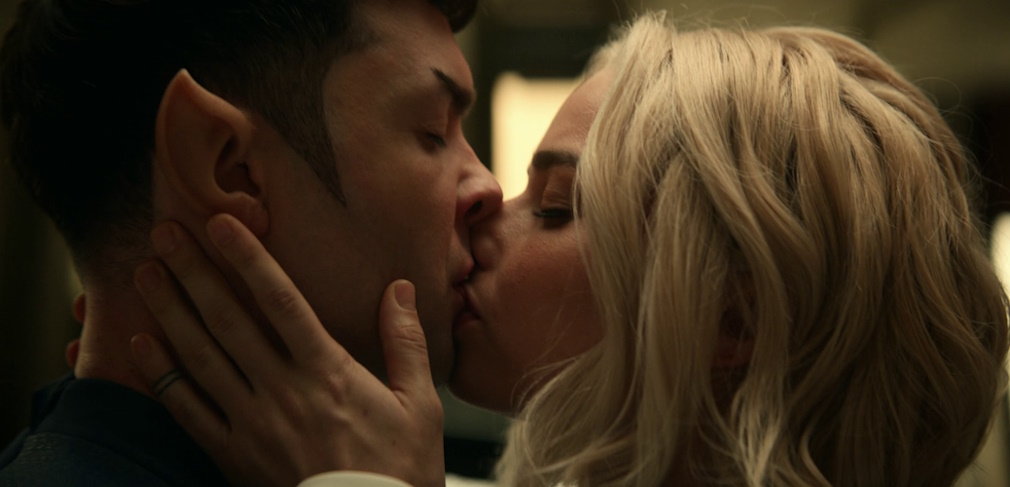
Spock and Chapel share a kiss.

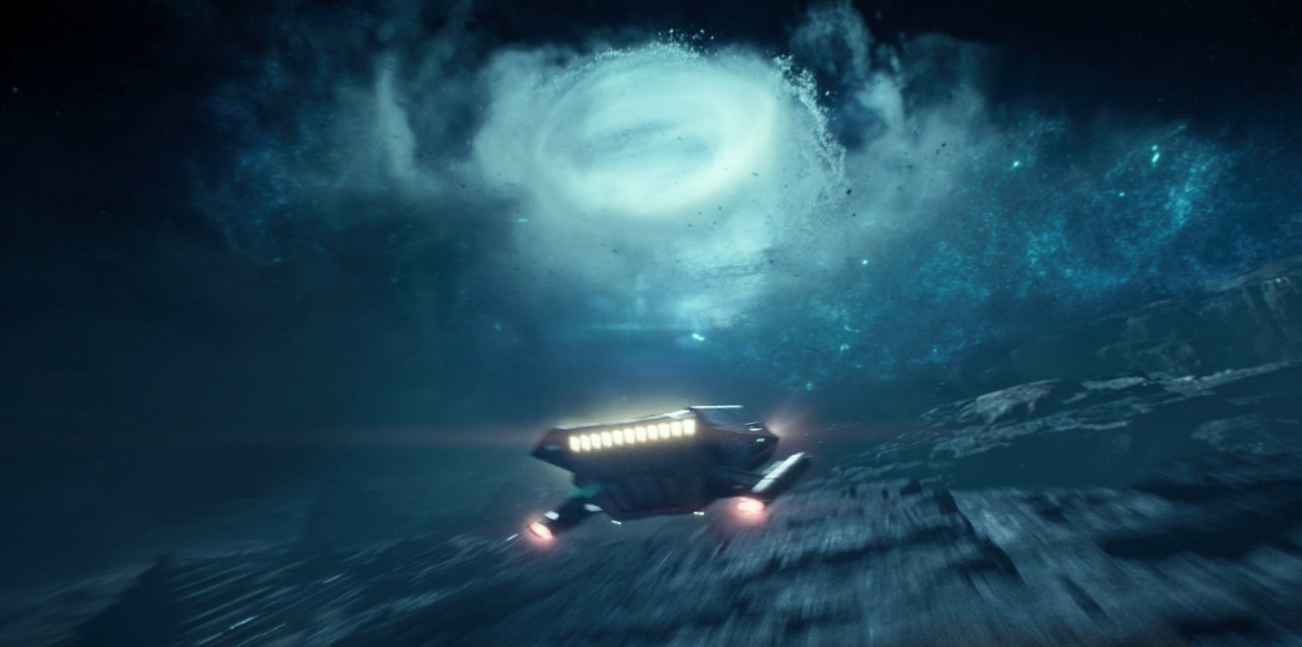
In terms of visual effects, Charades excelled. The mysterious anomaly on the surface of the moon was interesting, and its pale blue hue made it look different from other similar anomalies seen elsewhere in Star Trek. Within the anomaly itself, where Uhura, Ortegas, and Chapel ended up, I felt the “interdimensional space” set was perhaps a little small, but nevertheless succeeded at feeling sufficiently otherworldly. When compared to similar VFX sets, especially the Trill memory world from Discovery’s third season, there’s no contest, and it’s great to see that Paramount has massively improved its animation work.

There might’ve been a little of Season 1’s Children of the Comet in the set design used for the Kerkhovian interdimensional realm, but for most viewers I daresay that would pass unnoticed. Overall, it was an excellent and suitably “alien” space, both in terms of its appearance as an anomaly in space and when the away team arrived there in person.

The shuttle and the anomaly – a great CGI creation.

With a return to Vulcan and a focus on Spock’s family, there was the potential to bring back Sarek as well as Amanda. James Frain played the role of Sarek remarkably well in Discovery, and it would have been interesting to have seen more of the Spock-Sarek feud that was alluded to in The Original Series. Spock made the barest of references to their estrangement in Charades, but there might’ve been scope to do more had the episode retained a tighter focus on Vulcan and Spock’s family.

While T’Pring’s mother certainly leaned into the Enterprise style of aloof and arrogant Vulcans, I wasn’t really sure what to make of her father. T’Pring’s father seemed to be the archetypal “henpecked” husband, doing little more than agreeing with her and backing up her opinions. This kind of stock character has very little personality, and while it was intended to be lighthearted, I’m not sure how well it works in-universe when we think about how Vulcans tend to act. Is his behaviour logical?

T’Pring’s father.

Despite the inherent silliness of Spock’s sci-fi ailment, I was impressed by Nurse Chapel’s dedication to her patient. This side of the story took on a much more serious tone, and if we set aside the relationship drama angle for a moment, we got to see a great example of two dedicated medical professionals working against the clock to help a sick patient. Star Trek can do medical drama well, and while this wasn’t the main focus of Charades, it’s still a good example of how well medical stories can work in the franchise.

For Nurse Chapel we also got to see a bit more of her professional life – the “archaeological medicine” fellowship that she hoped to work with. This was interesting, as it seems to harken back to something we learned about Chapel in The Original Series: her engagement to a Federation archaeologist. The episode What Are Little Girls Made Of? introduced this relationship, and it’ll be interesting to see what – if anything – comes of it in Strange New Worlds, especially given Chapel’s newfound relationship with Spock. Will she break things off with Spock to pursue another partner? If so, what impact will that have on Spock? Maybe we’ll find out later this season… or in Season 3!

Nurse Chapel and Dr M’Benga in sickbay.

So I think I’ve said all I can about Charades for now. Its use of cringe humour means it ranks quite low on my list of Strange New Worlds episodes… but that isn’t to say it was out-and-out “bad.” It did its own thing and did it well, at least as far as I can tell. That style of humour simply isn’t to my taste, and it’s for that reason more than any other that I found it to be a less enjoyable experience than other episodes that the series has offered.

It took me a while to get around to this review, and I’m still getting caught up on Strange New Worlds after a longer-than-expected break. Thanks for bearing with me, and I promise to get around to full reviews of the remaining episodes of the season in due course!

Star Trek: Strange New Worlds Seasons 1-2 are available to stream now on Paramount Plus in countries and territories where the service is available. The Star Trek franchise – including Strange New Worlds – is the copyright of Paramount Global. This article contains the thoughts and opinions of one person only and is not intended to cause any offence.
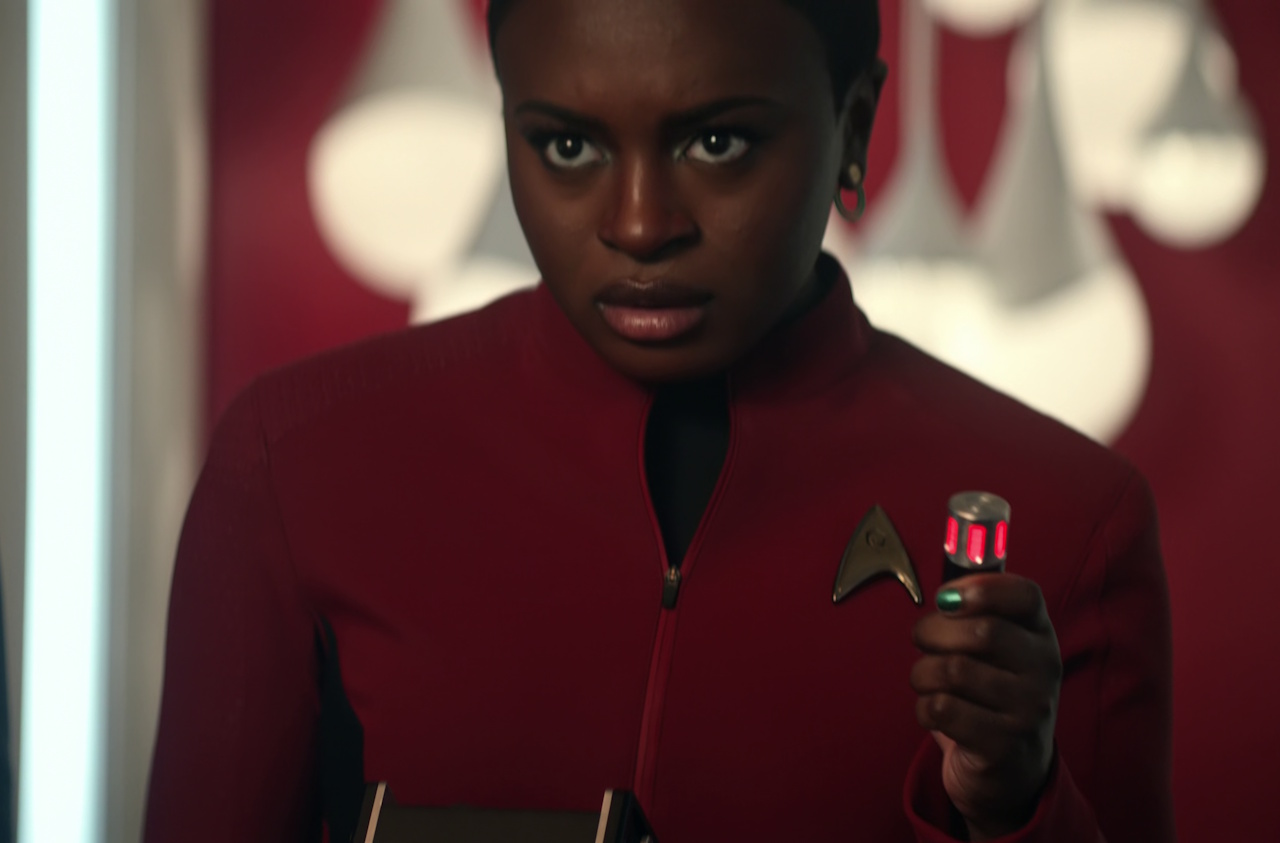
Star Trek: Strange New Worlds Episode Review – Season 2, Episode 1: The Broken Circle

Spoiler Warning: There are spoilers ahead for Star Trek: Strange New Worlds Seasons 1 and 2. Spoilers are also present for Star Trek Into Darkness, Star Trek: Discovery, and Star Trek: Picard.

Welcome to the first of my Strange New Worlds episode reviews! Unfortunately, some truly idiotic decisions at Paramount blocked off Season 1 and prevented fans in most of the world from being able to (lawfully) watch it at the time it was broadcast, so for that reason I elected not to write individual episode reviews here on the website. But because Season 2 is more widely available, I intend to cover the series from this point forward. Individual Season 1 episode reviews/re-watches may also appear from time to time.

Strange New Worlds’ first season was probably the best thing I watched in all of 2022. The show was a wonderfully welcome return to an older, more episodic style of storytelling that I think is a perfect and natural fit for the Star Trek franchise. As I said in my spoiler-free review of the season, there really weren’t any episodes that I felt didn’t hit the mark last time around. Season 2 has a lot to live up to, then!

The Enterprise departs Starbase 1.

And on balance, I have to say that The Broken Circle was a decent continuation of the series. It arguably wasn’t as strong as the final two episodes of Season 1, which were both phenomenal, and I have some specific criticisms that we’ll get to. But in terms of entertainment value, I can tell you that I was gripped the entire time! The Broken Circle was an action-packed episode that started the season with a bang.

There are a couple of points of concern that were raised that kind of fall outside of the story told in this week’s episode, and I want to look at that before we get into the rest of the review. Where Strange New Worlds succeeded last time was in its blend of episodic storytelling with some character arcs and storylines that ran across multiple episodes. This modernised the format, allowing for the likes of Dr M’Benga’s story with his daughter or Captain Pike’s struggles with his impending accident to not be forgotten, but the focus was still very much on distinct and individual stories week-to-week.

Spock seems upset…

In contrast, The Broken Circle feels very much like “Part 1” of a larger, much more serialised story. Captain Pike took off on a mission to help Una, who’s on trial. Pike’s destination, who he plans to visit, and Una’s trial were all stories that were started briefly but then paused. La’an’s status as an ex-Starfleet officer was also set up, but left unresolved by the time the credits rolled. And most significantly, as the episode was drawing to a close we saw Admiral April and another senior Starfleet officer looking at a report of a possible Gorn incursion – something that is clearly setting up a story thread that the next episode or episodes will follow.

I’m not wild about this new direction, and it feels that Strange New Worlds has taken some big steps down a path much closer to serialisation. When the show’s semi-episodic format had been working so well, this change simply isn’t one that I’d have made – and while I’m not averse at all to the idea of character arcs, two-part stories, or even cliffhanger endings… the season premiere seemed to bring a lot of those serialised elements into play all at once, leading to it feeling like the first part of an ongoing story rather than a classic Star Trek episode that could be enjoyed as a purely standalone affair. That the episode leaned heavily on characters and storylines that had been set up in Season 1 only added to this feeling.

Is this the beginning of a season-long serialised story?

There will be time in the weeks ahead, though, to assess how far down this serialised path Strange New Worlds may venture in its second season. For now, we still have a lot to get stuck into from this week’s outing – and I have to say that it was a blast to welcome back the Klingons.

I wasn’t sure to what extent Strange New Worlds would make reference to Discovery’s Klingon War storyline, but this week’s story connected back to it in a very clever way. Nothing in Discovery was truly “required reading” to make sense of events in The Broken Circle, but for fans who recall Discovery’s first season, the connections were there. The story stood on its own two feet without relying too heavily on Discovery, and could be enjoyed by fans and newcomers alike as a result.

I liked what this episode did with the Klingons.

The Klingons in The Broken Circle were much closer, both visually and in terms of their actions and temperament, to how they appeared in much of Star Trek prior to the Kelvin timeline films. For fans who weren’t wild about those more recent depictions, that’s got to be seen as a positive thing! For me, I think there’s room enough in Star Trek for a more diverse and varied look at a familiar race like the Klingons – but I can’t deny that it felt incredibly fun to see them laughing and drinking bloodwine.

The idea of rogue humans and Klingons on a shared world seeking to re-start hostilities for profit was also a genuinely interesting idea, one that the episode did well to explore. Star Trek doesn’t always give us a look at the denizens of the galaxy outside of Starfleet or the main factions – but in a galaxy so vast, there are bound to be settlements like this one, populated by people who’d do anything to make themselves rich. This felt like a glimpse at that world – and it was genuinely interesting.

Cajitar IV is the kind of place Star Trek doesn’t always show us.

Building an entire starship underground felt like a bit of a stretch in some ways (and if this gang had the resources to do that, did they really need to start a war to make more money?) but it was a neat idea nevertheless. It was also a creative way to recycle some of the sets built for the Enterprise, and to get away with a very minimal redress! These sets, which were supposed to be part of the gang’s newly-minted ship, were integrated well into the story. Not every Star Trek episode in recent times has made good use of redressed sets, but on this occasion we can say that it worked well in context.

It was also neat to see a different kind of starship design, one that seemed to use a Crossfield-class saucer section but on a much smaller star-drive and with different nacelles. The Crossfield-class – famous, of course, for being the USS Discovery’s class – was even name-checked in the episode itself, which was neat. In some ways this design felt like an old-school “kit-bash;” a name used for starships that were often created out of spare parts or leftovers in the days when physical models were still used. Some well-known Star Trek ship designs started out life as kit-bashes!

I liked the “kit-bashed” design of the rogue ship.

On the negative side, I felt that Admiral April’s “request denied” was a rather paper-thin setup to the main storyline. We’ve seen in many Star Trek episodes how by-the-book admirals could be little more than bumps in the road, getting in the way of what our heroes needed to do. And this felt very much like that. April had a reason, namely that the Klingons would interpret any incursion to the shared world as an act of aggression, but didn’t seem at all willing to consider other ideas or alternative proposals – even though La’an’s message, as communicated by Spock, suggested that the situation was dire and that the Federation was in danger.

This was disappointing, and there were other ways to get the story to this shared planet without presenting April as a “badmiral” who was getting in the way. In fact, this entire section of the episode didn’t really get any kind of narrative payoff, with Spock’s decision to steal the Enterprise not seeming to give him much trouble, and with April dishing out what amounted to no formal consequences. It ended up feeling a bit artificial; some forced drama to up the stakes.

Spock and Admiral April.

While we’re talking about Admiral April, I’m not thrilled with where his story seems to be going. If there is to be some kind of Gorn conflict that could be interesting, but why present April as someone who has something to hide? It makes sense that any organisation would share information carefully, but the end of The Broken Circle seemed to be saying that April and one of his co-conspirators at Starfleet Command were deliberately concealing information and not sharing it with their crews in the field.

Perhaps this is something that will be resolved or paid off in a future episode – and I’m keeping my fingers crossed for that! I don’t want to see someone like April – who seemed like a decent, upstanding officer last time around – in any kind of negative light. Discovery has done great things in its third and fourth seasons with Admiral Vance, bringing a wonderful character to screen as head of Starfleet. I’d very much rather see April go down that route instead of becoming a typical “badmiral.”

I wasn’t wild about the way April was presented here.

It was a very bold choice for the premiere episode of Season 2 to sideline Captain Pike. Every Star Trek season has episodes in which some characters are in focus and others are not, but Pike is not only central to Strange New Worlds – without him, and without Anson Mount’s incredible portrayal, the show wouldn’t have come to exist at all. So while the decision to send him off on his own little mission made perfect sense in-universe, it was a brave narrative decision by the writers and producers. And arguably a strange one, too.

Strange New Worlds is, for many folks, “the Captain Pike show.” Pike was present in all ten of the first season’s stories, and as the captain of the ship is a key part of the series. His absence gave Spock a turn in the captain’s chair for the first time – which was great to see, don’t get me wrong – but I can’t help feel that there must’ve been a way to include Pike in a larger way. Maybe I’d have chosen to restructure the season to place Pike’s solo adventure first, and then this episode second – just as one example.

I have a theory in the pipeline about who Pike may be going to visit – so stay tuned for that before the next episode airs!

Doing “the Captain Pike show” without Pike?!

Season 1 spent a fair amount of time with Spock, and looked at his inner conflict between his human and Vulcan sides. The Broken Circle threw Spock into a brand-new situation for him… and he didn’t necessarily react the way I’d have expected. This version of the character, perhaps inspired more by his adopted sister and their adventures in Discovery’s second season, seemed much quicker to break the rules when faced with opposition from Starfleet. If we hop over to the Kelvin timeline for a moment, in that reality, Spock told the unvarnished truth about Kirk in a written report and ended up getting him demoted. In The Original Series we could see Spock as a stickler for rules and protocol, too, often butting heads with Dr McCoy and others as a result. I don’t want to say he acted “out-of-character” here, because we are dealing with a younger Spock, a Spock who is still finding himself and finding his feet. But it’s certainly interesting to see how he behaved very differently from the man we might remember.

The theme of Spock’s conflicted nature and how he “isn’t like other Vulcans” came to the fore in The Broken Circle in more ways than one – and was arguably part of the episode’s resolution. Spock’s interaction with the Klingon captain was fun, and I enjoyed seeing him drinking bloodwine and finding an unorthodox route to peace.

Spock negotiated successfully with the Klingons.

This final part of the episode didn’t feel especially strong, however. The climax of the story arrived slowly, and The Broken Circle did a good job at building up its Klingon-human shadowy conspiracy. But the resolution to this conflict seemed to be rushed through, with both the Klingon commander standing down at the drop of a hat and Admiral April back at Starfleet HQ agreeing very quickly to overlook Spock’s actions.

This is something that I’d have liked to have seen a few more minutes dedicated to. We could have drawn out the standoff over the planet, with Spock and the Klingon commander talking around one another with the threat of war hanging over their heads. Seeing Spock handle this situation was great – but it didn’t last very long. And Admiral April gave Spock a pass for desertion, theft of the flagship, violating a peace treaty, and a dozen or more other crimes. Again, this was something that needed more time – especially as the payoff to April’s earlier intransigence.

A Klingon D-7 battlecruiser.

A character like La’an can fall into the trap of stereotyping, or can feel left out as writers don’t always know what to do with a security officer who doesn’t seem to have much by way of a softer side. So it was fantastic to see The Broken Circle really giving her something to do, and doing it in a way that felt natural for her. We saw her past experiences with the Gorn come to the fore in Season 1, and The Broken Circle built on that foundation, taking La’an away from Starfleet for a cause close to her heart.

Seeing her with Oriana really humanised La’an, showing that she can care for others and has more to offer than just her skills with a phaser. The only disappointing thing, as mentioned, was that The Broken Circle didn’t wrap up La’an’s leave from Starfleet one way or another. This is something that may come back into play if a more serialised story is unfolding, and there are sure to be plenty of ways an ex-Starfleet officer could be of use on “the outside,” but in terms of her character arc this week, the lack of a conclusive ending makes it feel like there was something missing from La’an’s story.

Oriana and La’an.

Where La’an’s story built on what had been set up last year, the stories of Dr M’Benga and Nurse Chapel sort of felt like they came out of nowhere. Of course we know about the Klingon War; that was discussed in the episode itself. But even in the recap at the beginning of The Broken Circle, it was noted that the Enterprise and her crew didn’t take part in the conflict. If that’s the case, it obviously means that Chapel and M’Benga came aboard later and did take part – but that was a little confusing and not particularly well-established.

I didn’t re-watch all of Season 1 prior to sitting down to watch The Broken Circle, so my ageing memory may be missing a trick, but I don’t recall either Dr M’Benga or Nurse Chapel discussing the war last season. I don’t think it necessarily matters in a big way, but it was undeniably something that I felt came out of the blue. It certainly succeeded at ramping up the tension as the pair were caught by the Klingons and trapped aboard the fake Starfleet vessel, but it wasn’t a point that felt particularly strong in terms of its setup. If I’m wrong, and if their prior service in the Klingon War was mentioned last year, then I’ll be happy to rescind this point of criticism!

Nurse Chapel and Dr M’Benga.

Being ejected into space is usually a death sentence in Star Trek – and in sci-fi in general! In Picard’s recent third season, a character was killed in precisely this way. So it was odd, in a way, to see Dr M’Benga and Nurse Chapel survive such a harrowing experience. I’m glad they did, of course, and the buildup to their being blown out into space was a tense and deeply emotional sequence. But it does feel a tad inconsistent with what we’ve seen in past Star Trek stories – and rather like the two were given some particularly heavy plot armour.

That being said, it was great to see Dr M’Benga and Nurse Chapel paired up for an adventure that took them outside of sickbay. They work incredibly well together and made a fun pair, and I hope we get to see more of them. It would be fun to explore their history, too – did they serve together during the Klingon War, as The Broken Circle seemed to imply? If so, what was that like? Are they still friends, or have their wartime experiences changed them and driven them apart? And the strange drug that Dr M’Benga keeps in his medical case… what is it? I wonder if it might be some kind of Section 31 invention.

Chapel and M’Benga were blasted out into space!

When we were first introduced to Commander Pelia, I confess I wasn’t particularly blown away. She’s replacing a character in Hemmer who I felt was hard done by in Season 1, and was someone I’d have liked to have had the opportunity to spend more time with. There was a uniqueness to Hemmer, not only as a blind character or as the first Aenar to be a major character on Star Trek, but as an avowed pacifist. We’ll have to deal with Hemmer’s wasted potential in more detail in a standalone piece one day, because there’s a lot more to say!

But suffice to say that I was impressed by Pelia’s chaotic energy, and the revelation that she’s a member of a previously-unseen species – one that is especially long-lived and that has lived amongst humans for a long time. Her connection with Spock’s family is also an interesting angle that The Broken Circle set up that I hope will be further explored in future stories.

Commander Pelia is a brand-new character for Season 2.

Pelia’s scenes on the bridge with Spock (and others) were cute, and I liked the way that she was dancing around what was going on without just coming out and saying it. And it was a fun subversion that this older, higher-ranking character who sussed out the truth didn’t immediately turn Spock in, but actually wanted to come along for the ride. That was fun, clever, and a somewhat unique way to introduce this new character.

Pelia has an almost child-like charm, despite being such a long-lived character, and I’m now especially curious to see her in an engineering setting. We only got the barest of glimpses of her in main engineering this week, but I’m sure she’ll have a lot to offer. It’s premature to be thinking about adding too many more characters, but the idea that Pelia might’ve been a mentor of sorts to Montgomery Scott is a fascinating one that I wonder whether the series might explore in future. Perhaps that’s an idea for Season 3, 4, or even 5!

Spock and Pelia have a connection already.

So I think that’s all there is to say for now. The Broken Circle was a solid start to Season 2 – albeit one that wasn’t quite at the level of the episodes that immediately preceded it. There were some contrivances in the story that left some moments feeling rather flimsy or too short, but overall I had fun with Spock and the crew of the Enterprise as they went off on an unsanctioned mission.

I’m curious to see whether some of the storylines set up or teased this week will turn Season 2 into a fully-fledged serialised affair, or whether they’ll be revisited in some other way. My hope is that Strange New Worlds can find a way to course-correct and return to the semi-episodic style that it employed so perfectly last time around. But I guess we’ll have to wait and see!

Star Trek: Strange New Worlds Seasons 1-2 are available to stream now on Paramount Plus in countries and territories where the service is available. The Star Trek franchise – including Strange New Worlds – is the copyright of Paramount Global. This article contains the thoughts and opinions of one person only and is not intended to cause any offence.