Star Trek: The Animated Series Episode Re-Watch: How Sharper Than a Serpent’s Tooth

A spoiler warning graphic.

Spoiler Warning: There are spoilers ahead for Star Trek: The Animated Series as well as The Original Series and Voyager Season 2.

I haven’t really talked about The Animated Series very much here on the website, but to mark the fiftieth anniversary of the episode How Sharper Than a Serpent’s Tooth – which premiered on this day back in 1974 – I thought it might be a bit of fun to step back in time to Star Trek’s first foray into the world of animation. It’s actually been a long time since I last watched this episode (or really any of The Animated Series), so we’re going into this re-watch almost completely blind!

I have to confess that I have a bit of a psychological block when it comes to The Animated Series. From the late ’80s to the early 2000s, the official line from Gene Roddenberry, Gulf+Western, Viacom, and Star Trek’s other corporate overlords was that the show was officially “non-canon.” For the purposes of The Next Generation-era Star Trek, nothing in The Animated Series happened, and that’s left me with a lingering feeling about that show that’s difficult to put into words. The era in which I became a Trekkie was the era in which The Animated Series was deemed to be “too low-quality” to be an official part of the franchise. I watched a few episodes here and there in the ’90s, but The Animated Series wasn’t a mainstay on terrestrial TV here in the UK at the time, so I didn’t see it in full until it arrived on DVD in the mid-2000s.
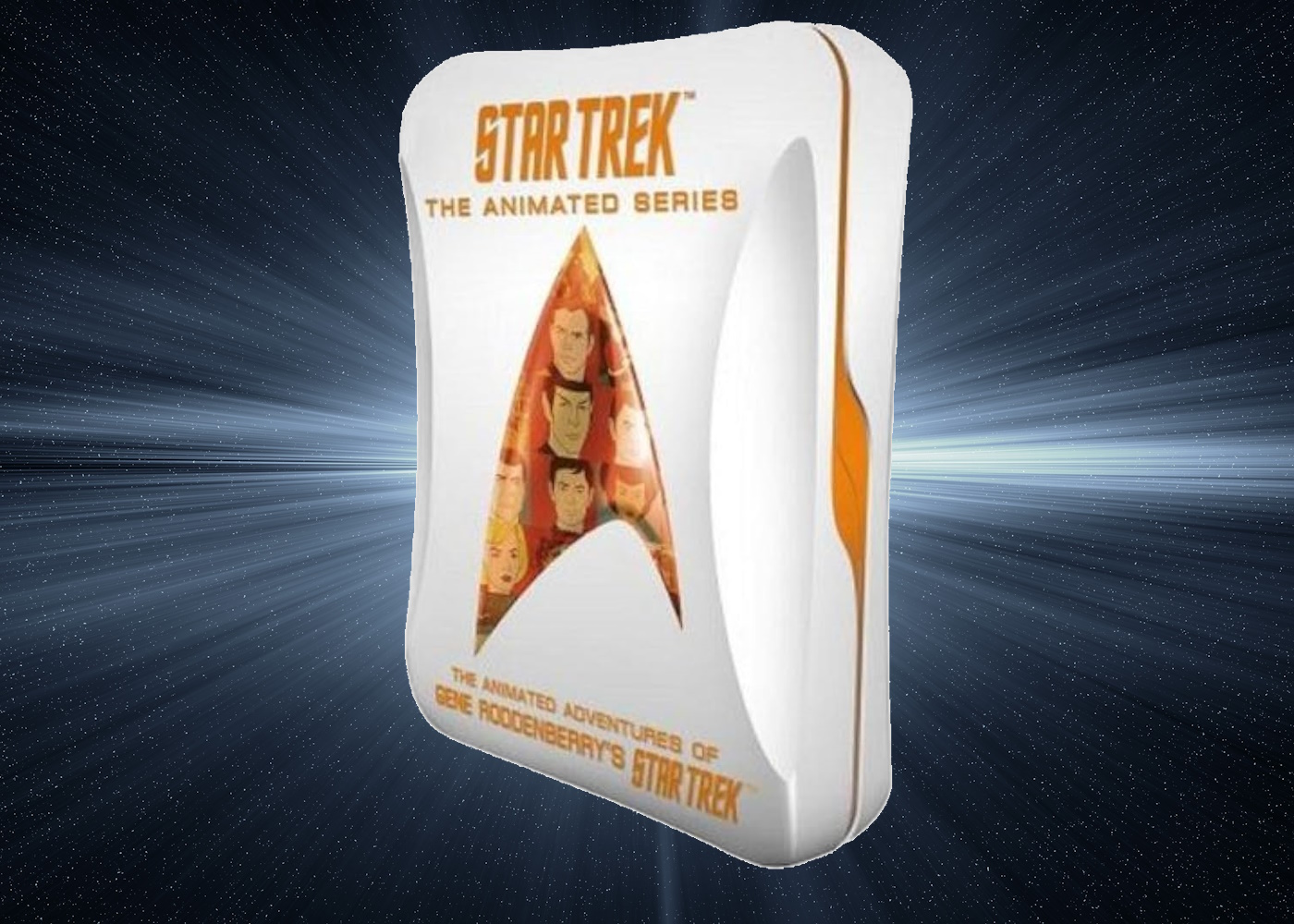
The DVD box set of Star Trek: The Animated Series on a space-themed background.
Remember when Star Trek DVD box sets came in chunky plastic cases that were awkward to open?

It was only when the DVD box set was being readied for release that CBS formally ditched the “non-canon” line, by the way, declaring The Animated Series to be a full and official part of the Star Trek franchise once again. At that time, with Enterprise being cancelled, it seemed as if Star Trek might’ve been over – so why not include The Animated Series if it helps shift a few more DVDs? I guess that was the thinking when that decision was taken!

So that’s my background with The Animated Series as we come to this episode re-watch! Although it’s a show I only occasionally dip into, the fiftieth anniversary is still a big deal, and it’s always worth keeping in mind the role The Animated Series played in the history of Star Trek. As re-runs of The Original Series gained traction in the early 1970s, calls grew for Star Trek to be brought back. The Animated Series was a compromise; a way to make new episodes and satisfy the growing fan community without having to commit the money required to re-start production on a live-action show.
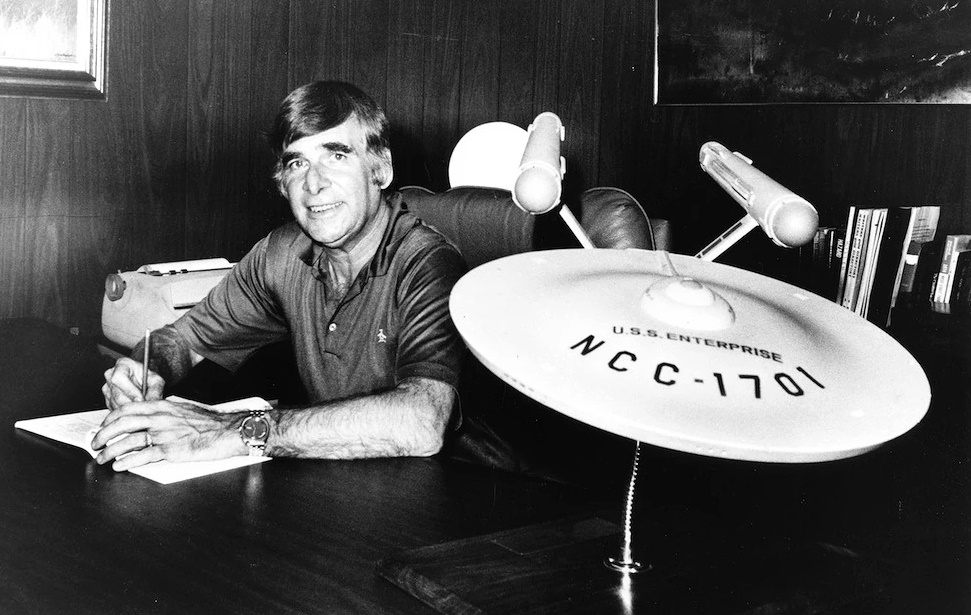
A photo of Gene Roddenberry in his office in the early 1970s, with a model of the USS Enterprise next to him.
Gene Roddenberry in the early ’70s, around the time The Animated Series was entering production.
Photo Credit: Starlog Press

And the lack of budget awarded The Animated Series… well, let’s just say it can be obvious! There is a distinctly old-school charm to parts of the show, and the low-budget animation of the time. But The Animated Series can also feel quite janky, especially if you aren’t used to it or if you prefer today’s slicker, computer-animated visual style. I think there’s a real warmth to this style of animation, and the obvious jank just adds to that in my opinion!

As the show that boosted Star Trek during what could’ve been its darkest hour, we owe a lot to The Animated Series for the franchise’s re-birth at the end of the 1970s. The Motion Picture and Star Trek’s subsequent renewal in the ’80s would arguably not have been possible without this show keeping things fresh and growing the audience. Bringing younger eyes to Star Trek through this “Saturday morning cartoon” style bolstered the franchise’s prospects and shouldn’t be understated.
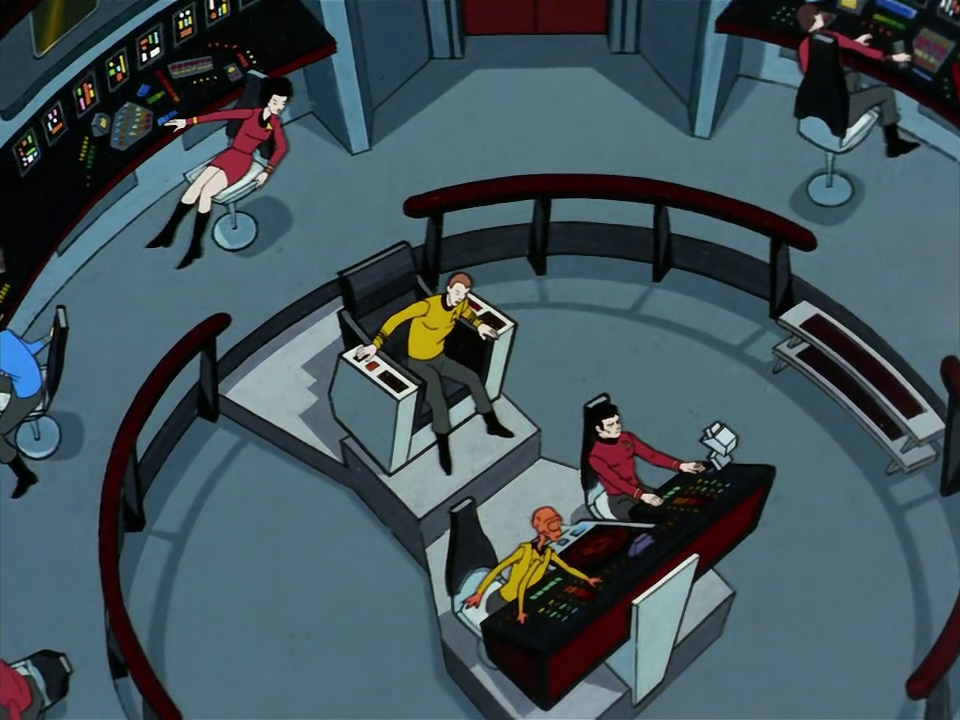
Still frame from Star Trek: The Animated Series Season 2 (1974) showing a top-down view of the bridge.
Kirk and the crew (including a rather pale-looking Uhura) on the bridge of the Enterprise.

By happy coincidence, the episode I picked for this re-watch happens to be the 100th episode of Star Trek! After 79 episodes of The Original Series there were 22 produced for The Animated Series across two seasons – this being the penultimate one. I know it isn’t a huge deal, but these milestones can feel important.

Onward, then, to the episode How Sharper Than a Serpent’s Tooth!

Still frame from Star Trek: The Animated Series Season 2 (1974) showing a close-up of Uhura.
:-O

The first thing to note is the opening titles! A slightly jazzed-up version of The Orignal Series theme plays, heavy on the horns, and William Shatner gives his usual “these are the voyages” voice-over as Captain Kirk. Hearing it again after not watching either show for a while was a real blast of nostalgia… and we haven’t even got started yet!

The episode proper kicks off with a captian’s log, with Kirk narrating that the Enterprise is tracking a mysterious probe. Lower Decks and Strange New Worlds have brought back the captain’s log as a framing device after the likes of Picard and Discovery used logs much more sparingly, and I have to say I’m glad for that. The captain’s log is an integral part of the franchise, after all!
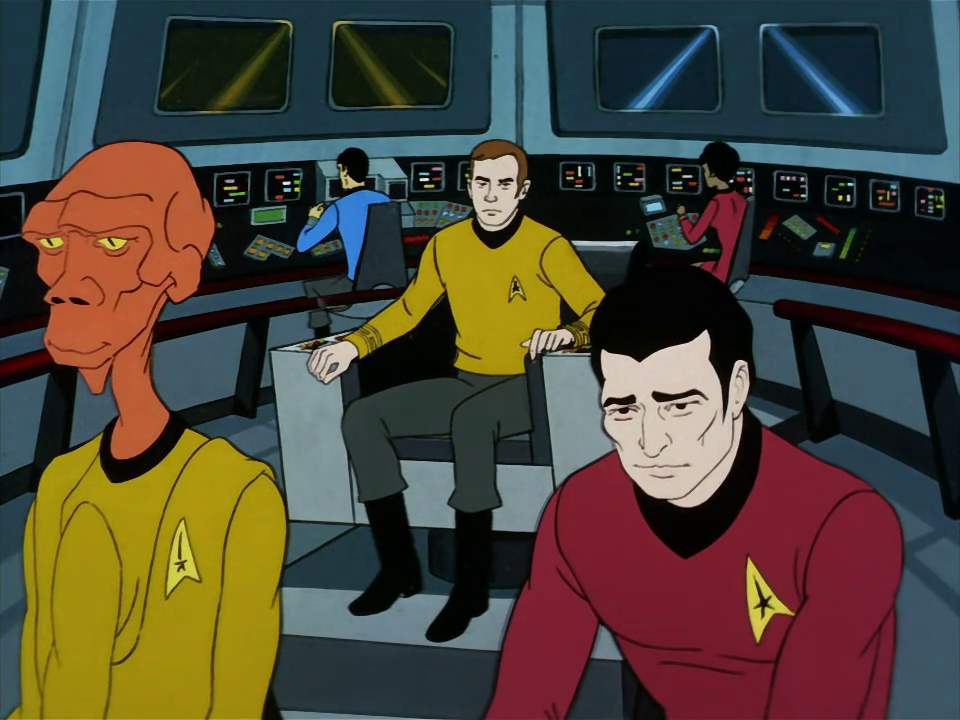
Still frame from Star Trek: The Animated Series Season 2 (1974) showing Kirk and other characters on the bridge.
Arex, Kirk, and Walking Bear on the bridge.

The opening scene on the bridge sets the stage for the episode – a second probe is coming in, following the same trajectory as the first. Characters created specially for The Animated Series are present: the three-armed, three-legged Arex being a personal favourite of mine! Ensign Walking Bear – a Native American – is at the helm. Both characters (and many others in The Animated Series) were voiced by the late James Doohan, better known for his role as Scotty.

On the viewscreen, the alien probe appears as little more than a smudge of yellow-green – and waddles unconvincingly toward the Enterprise! This is a great example of what I mean about finding charm in the jankiness of The Animated Series; by anyone’s standards, even in the ’70s, this doesn’t look great! But part of the fun of fantasy and sci-fi is getting lost in the setting, looking past things like that, and even using one’s imagination to help suspend disbelief. Sure, the alien probe looks like something you might find in a newborn’s nappy… but so what? It’s an alien probe, dammit, and that’s that!
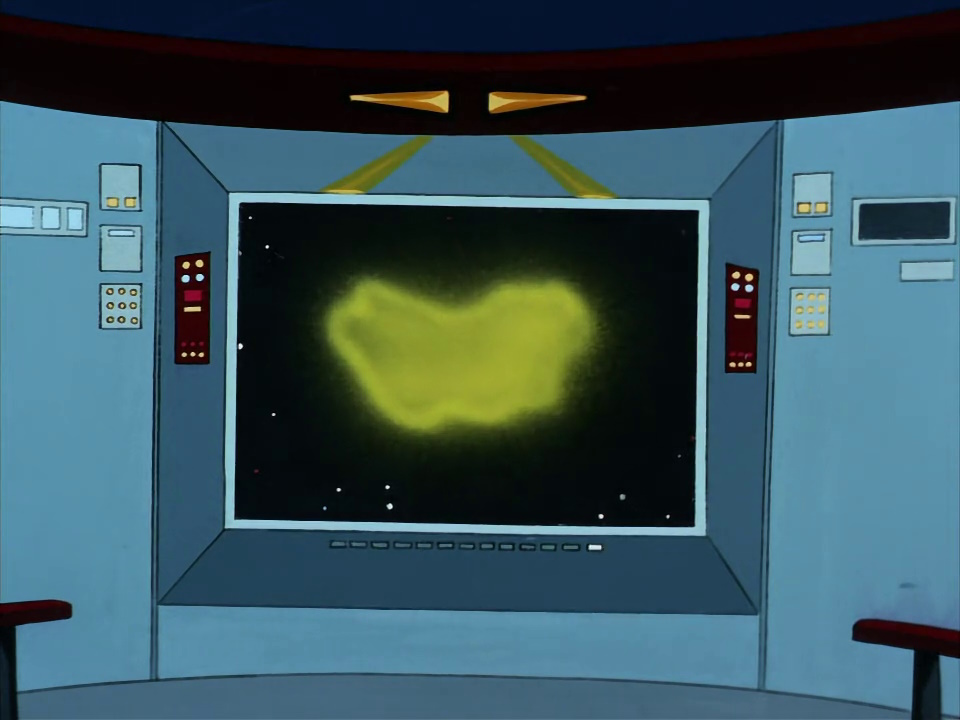
Still frame from Star Trek: The Animated Series Season 2 (1974) showing a blob on the main viewscreen.
The alien smudge… I mean probe.

As the Enterprise becomes trapped in a “globular force-field” – which looks like a snow-globe or Christmas bauble from the outside – Spock proclaims it is “fascinating” while Scotty reports to Kirk that he doesn’t know how long the ship can take the strain! Classic lines from the classic crew, and I’m right back there with them. The ship comes to a complete stop while Kirk and the crew decide how to proceed.

The smudge “de-cloaks” to reveal a beautiful spaceship that could be right out of a dozen or more mid-century sci-fi properties! The vibrant shades of red, purple, and blue give it a striking appearance, and the glittering panel at the front makes the vessel stand out. It really is a beautiful ship – and clearly more than a match for the entrapped Enterprise. Though you might not assume so from appearances alone! I love this kind of design; a pre-Star Wars retro sci-fi look, bold in its colour choices. They don’t make ’em like that any more!
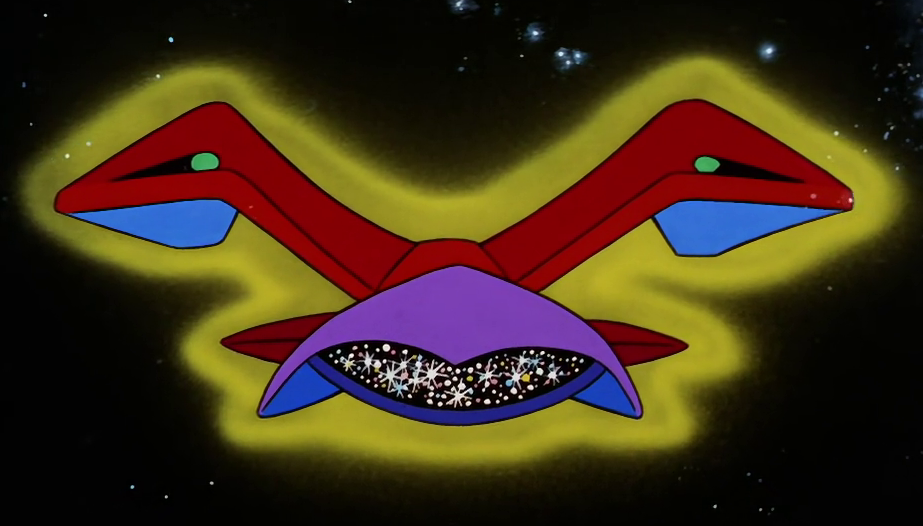
Still frame from Star Trek: The Animated Series Season 2 (1974) showing Kukulkan's starship.
I really like this spaceship design.

The Animated Series was also pretty limited with its soundtrack. At this point in the episode, with the Enterprise under attack by the beautiful alien vessel, the show’s only “action theme” plays – and I’d forgotten just how much I love this piece of music, too. It seems to perfectly capture the danger that the crew are in… even if, by this point in The Animated Series’ run, we’d have heard it twenty times or more!

Kirk tries everything – reversing the engines, powering up the shields, and hailing the ship – but running out of options and limited by the globe preventing the Enterprise from moving, he reluctantly orders phasers to fire. Although this also proves ineffective, I like how The Animated Series was still true to Kirk’s character: he was never spoiling for a fight and would look for a peaceful way out where possible.

Still frame from Star Trek: The Animated Series Season 2 (1974) showing Captain Kirk.
Kirk only fired on the alien ship when he’d tried everything else.

The new character – Ensign Walking Bear – recognises the ship when it projects a dragon-like design (using something like an early holo-projector, perhaps?) and this seems to give the attacker pause. Pleased that at least one human “remembers” them, they give the crew a chance to succeed – but warn that failure will mean death.

Now we see why Walking Bear was on the bridge, eh? Star Trek always finds uses for redshirts and always has! Even classic episodes like Balance of Terror put secondary characters like this in just the right place to contribute to the story or to building up the lore of the franchise. I’ve been critical of modern Star Trek, sometimes, for nakedly shoehorning in some piece of backstory to a secondary character solely for the purposes of connecting to the main narrative… and I guess in some cases it works better than others. But it’s worth remembering that it’s something the franchise has always done in one form or another.
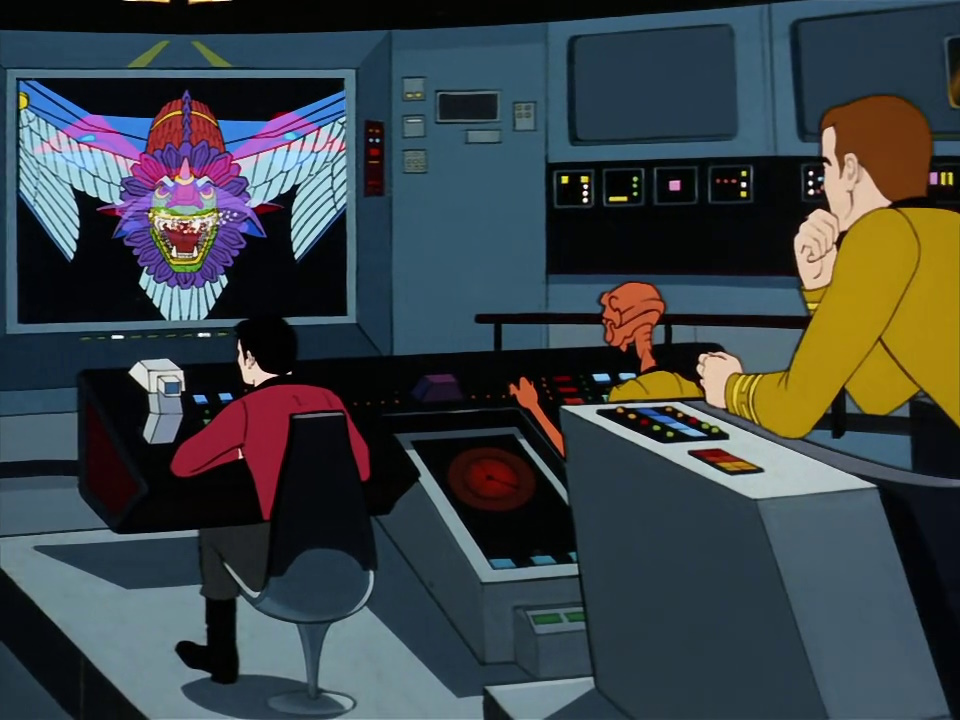
Still frame from Star Trek: The Animated Series Season 2 (1974) showing Kukulkan's message on the viewscreen.
Kirk and the crew received a message from their attacker.

This Kukulkan – described by Walking Bear as an ancient legendary god of the Aztecs and Mayans – is who’s attacking the Enterprise. I’m reminded of two episodes – one from The Original Series and one produced much later during Voyager’s run. Who Mourns for Adonais? during the second season of The Original Series introduced Kirk and the crew to the “gods” of Ancient Greece. And Tattoo, the Voyager Season 2 episode that saw Chakotay encountering an alien race that his people called the “Sky Spirits.” The stories aren’t identical by any means, but there’s a similarity in the underlying premise of all three.

Midway through a conversation with Kirk, Walking Bear vanishes – as do Scotty, Dr McCoy, and eventually Kirk himself. Spock assumes temporary command of the Enterprise, before the action switches to the kidnapped men aboard Kukulkan’s ship. They seem to be in some kind of holodeck – the room, while plain silvery-grey at first – soon morphs into a landscape filled with trees, and then ultimately a city. There was a vaguely Mayan or Aztec look to this city, which was adorned with several statues of Kukulkan. The statues themselves, though, almost gave me a Chinese or East Asian vibe; dragons are a big part of the folklore of that part of the world, too.
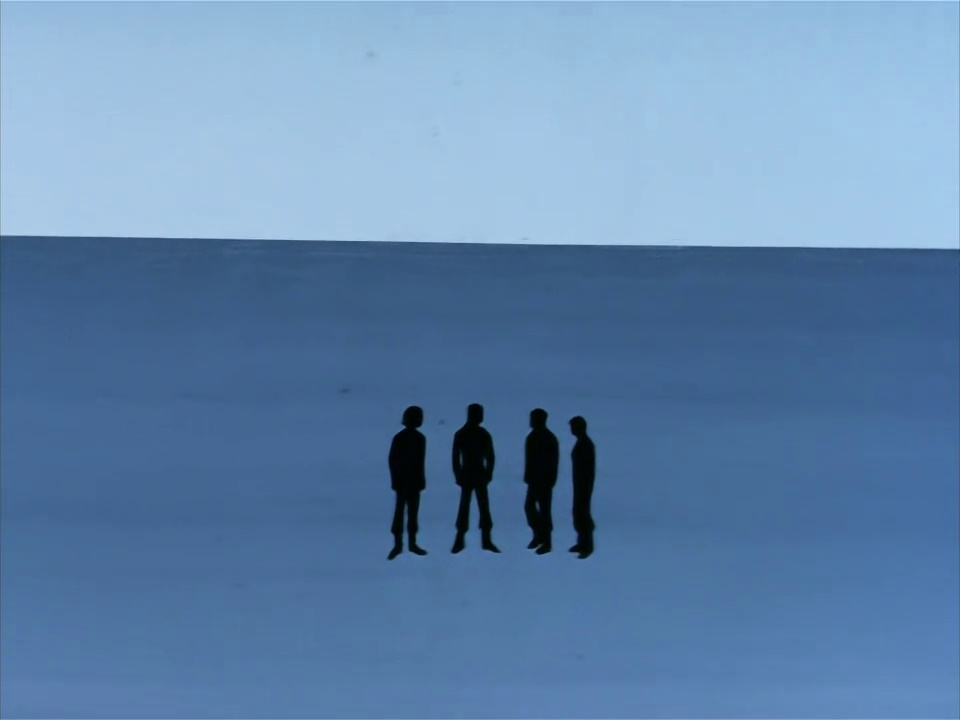
Still frame from Star Trek: The Animated Series Season 2 (1974) showing the away team.
The reluctant “away team.”

Back on the Enterprise, we get a short scene with Spock and Uhura. Uhura wants to do something to help Kirk, but Spock insists that their priority is to free the Enterprise from Kukulkan’s clutches. It isn’t easy to convey facial expressions with such limited animation, but I think we’re meant to understand that Uhura isn’t thrilled with this response!

Kirk, Walking Bear, and the others try to puzzle out what Kukulkan wants. Using Walking Bear’s knowledge of history, they piece together that Kukulkan tried to instruct several ancient cultures, but that none of them did exactly what the entity wanted. Kirk heads to the top of an Aztec pyramid that has appeared in the middle of the city – which seems to be comprised of elements from several different cultures. For its time, this is a pretty sensitive and historically accurate depiction of Native Americans, Maya, Aztecs, and others. There’s even a mention of the Mayan calendar… giving me flashbacks to the 2012 phenomenon!
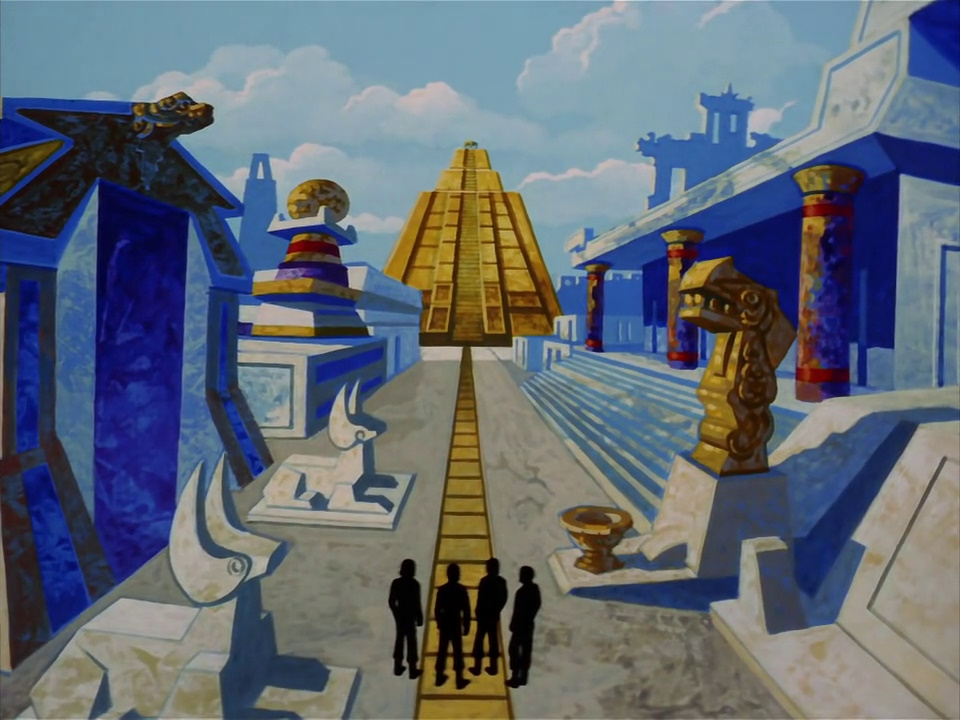
Still frame from Star Trek: The Animated Series Season 2 (1974) showing the away team in a city.
The city created by Kukulkan.

Maybe it’s an old memory bubbling under the surface from when I last watched How Sharper Than a Serpent’s Tooth some years ago, or perhaps it was just a pretty obvious story beat, but the fact that the statues could be rotated to generate the signal Kukulkan was looking for wasn’t exactly a surprise! It seemed like something the crew figured out pretty easily, so maybe I shouldn’t be patting myself on the back too hard for figuring it out. It felt like a puzzle you might have to solve in a video game like Tomb Raider!

Kukulkan makes their appearance after Kirk solved the (easy) puzzle, but complains yet again that they have been forgotten. I like the design of Kukulkan – appearing as a colourful winged snake with a kind of mane or frill. I wouldn’t say the design was “intimidating” as it appears in the show, but I daresay if I came face to face with a real-life Kukulkan I’d be quite frightened! It was neat, at any rate.
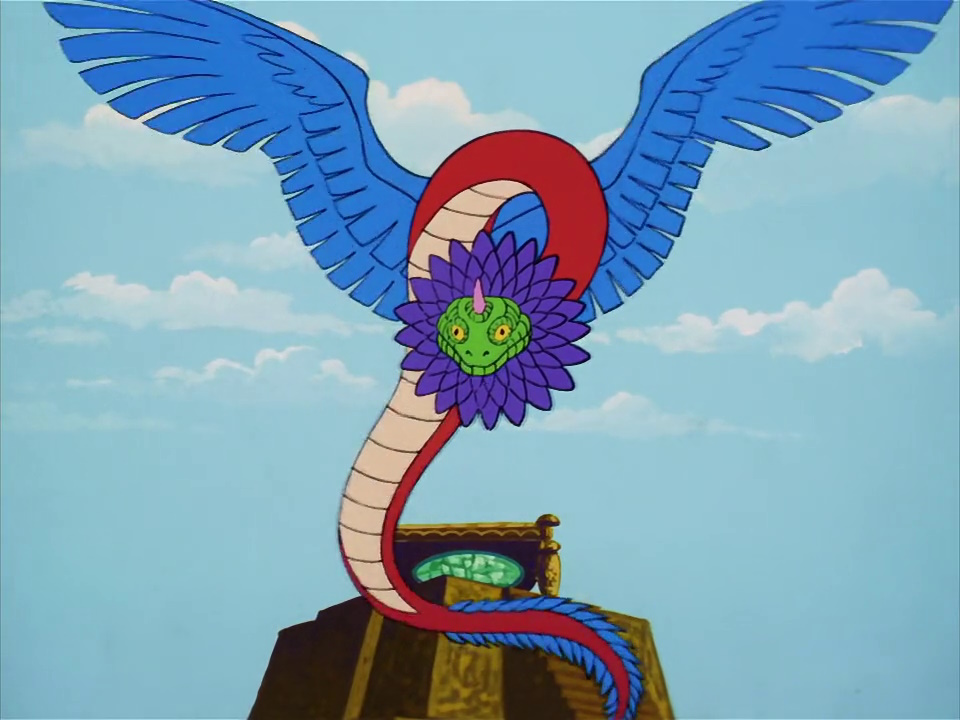
Still frame from Star Trek: The Animated Series Season 2 (1974) showing Kukulkan.
Kukulkan.

Kirk and the others are then transported to a “zoo,” one populated by a number of other aliens and animals. Kukulkan’s convoluted explanation is that they’re the last member of a race that wiped itself out, and that they keep these creatures in cages, using technology to create “mental worlds” for them to inhabit. Dr McCoy is shocked that one of the creatures is a Capellan power-cat – an animal that’s notorious for hating being kept in captivity. The power-cat is adorable, by the way, and I won’t hear a bad word said about it.

Kirk argues that Kukulkan has no right to interfere with humanity or any other culture – but all this does is enrage them. Kukulkan hisses like a snake and seemingly attacks the crew, while back on the Enterprise Spock seems to have found a way out of the globe force-field. I wasn’t wild about Kukulkan’s explanation here; it seemed a bit basic. And it runs into the problem that other, similarly powerful aliens encounter in other stories: it should be clear that humanity has changed a lot over the centuries, growing, evolving, developing new technologies – and in this case, becoming more peaceful. Sure, the Enterprise fired phasers – but as Kirk points out, only in self-defence.
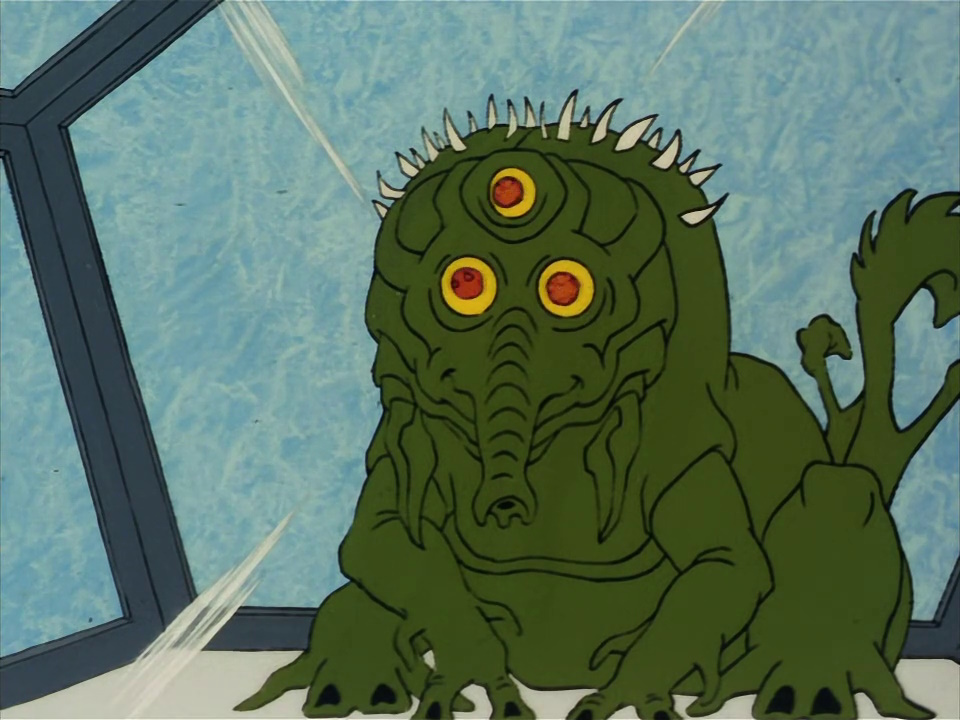
Still frame from Star Trek: The Animated Series Season 2 (1974) showing a three-eyed alien.
One of the alien animals in Kukulkan’s zoo.

Spock’s plan works – because of course it does! – and the Enterprise is able to break free from the trap. It’s always fun to see Arex in action on the bridge, and at the time this three-limbed alien could really only be created for animation. The Animated Series, in that sense, gave Star Trek a chance to branch out beyond the make-up and basic prosthetics of its original incarnation. Kukulkan is also a great example of this: live-action couldn’t really have made a similar-looking alien – not with the budget usually set for a single episode of Star Trek, at any rate!

After Bones and Kirk free the power-cat from captivity, it runs wild. Using its high-voltage fur(?) it threatens Kukulkan, whose ship’s power has been damaged following an attack by the Enterprise. Kirk intervenes, subduing the power-cat with a hypospray, demonstrating to Kukulkan that he doesn’t wish the entity any harm, despite the damage that has been caused.
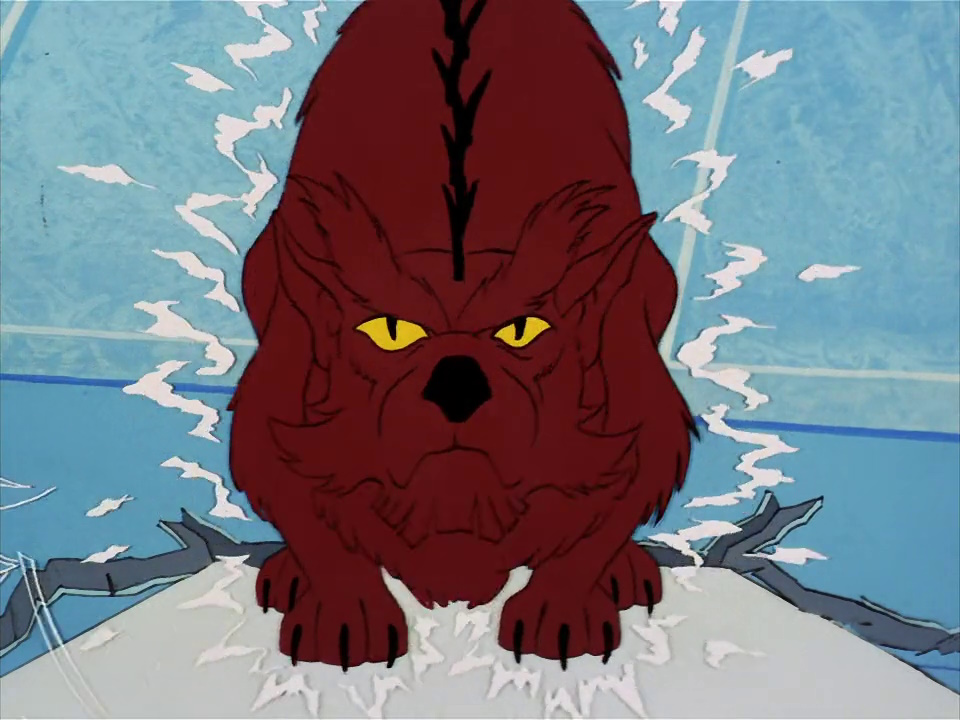
Still frame from Star Trek: The Animated Series Season 2 (1974) showing a Capellan power-cat.
The Capellan power-cat.

What follows is a fairly typical Star Trek dialogue, with Kirk and the others emphasising how much humanity has grown since Kukulkan visited centuries earlier. Kirk rejects the idea of being caged or led around like the animals in the zoo, and Kukulkan capitulates, realising that humanity no longer needs or wants to associate with them. I actually felt a bit sad for Kukulkan in this moment – their dreams of having sentient companions instead of just animals seemed to be shattered, and being told “we no longer need you” is just harsh to hear!

Kirk says that the price for Kukulkan sharing its knowledge was too high, and back on the Enterprise he and Spock ponder the implications of several of Earth’s civilisations having contact with this ancient alien – as well as the irony that, at the end of the day, Kukulkan was just lonely and seeking companionship. The danger averted, Kukulkan withdraws, and the credits roll.
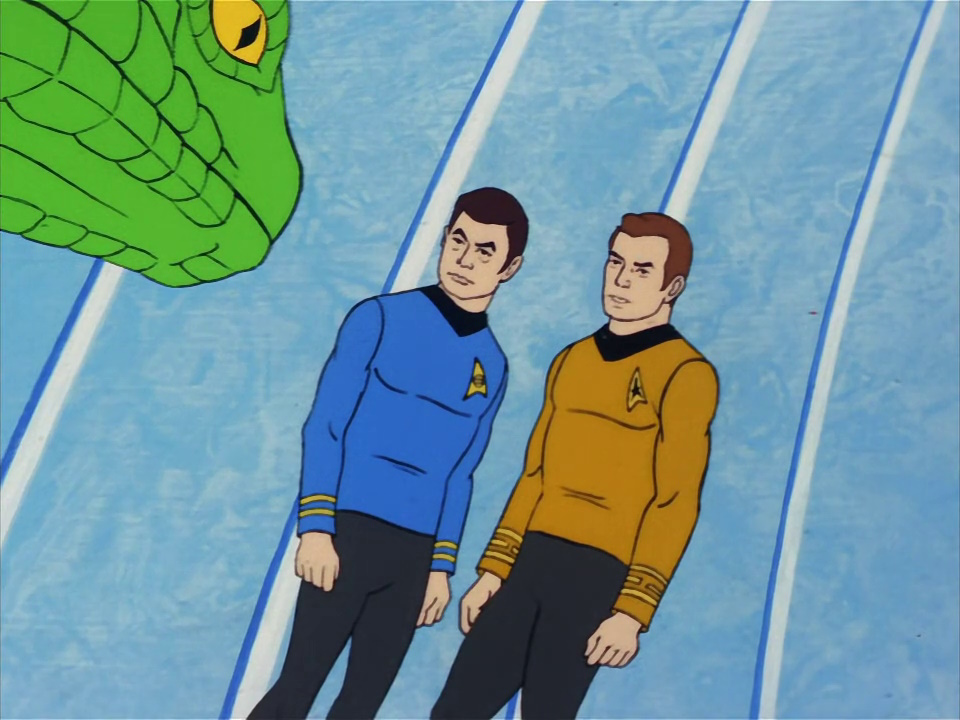
Still frame from Star Trek: The Animated Series Season 2 (1974) showing Kirk and Dr McCoy with an alien.
Kukulkan with Dr McCoy and Kirk.

All in all, this was a fun episode to re-visit. I adored the designs of Kukulkan’s ship and the entity itself, as well as some of the very alien critters in the zoo. The power-cat is something I’d love to see make a re-appearance in modern Star Trek; I can see it being a ton of fun to depict in live-action! But then again I’m a cat lover, so I suppose I would say that.

This was a story that felt very “Star Trek.” An ancient alien visited humanity in the past, and returns only to be disappointed with the war-like nature of humans. Kirk and the crew had to intervene to show that their perceptions weren’t entirely right, and that humanity has developed beyond the need for gods and deities. It’s far from the only episode to touch on themes like this – but something about the design of Kukulkan as this winged, dragon-like serpent, and its connection to real cultures like the Maya and Aztecs, gave the story some more depth. At the very least, Kukulkan stands out from the pack of Star Trek aliens with prosthetic noses and foreheads!
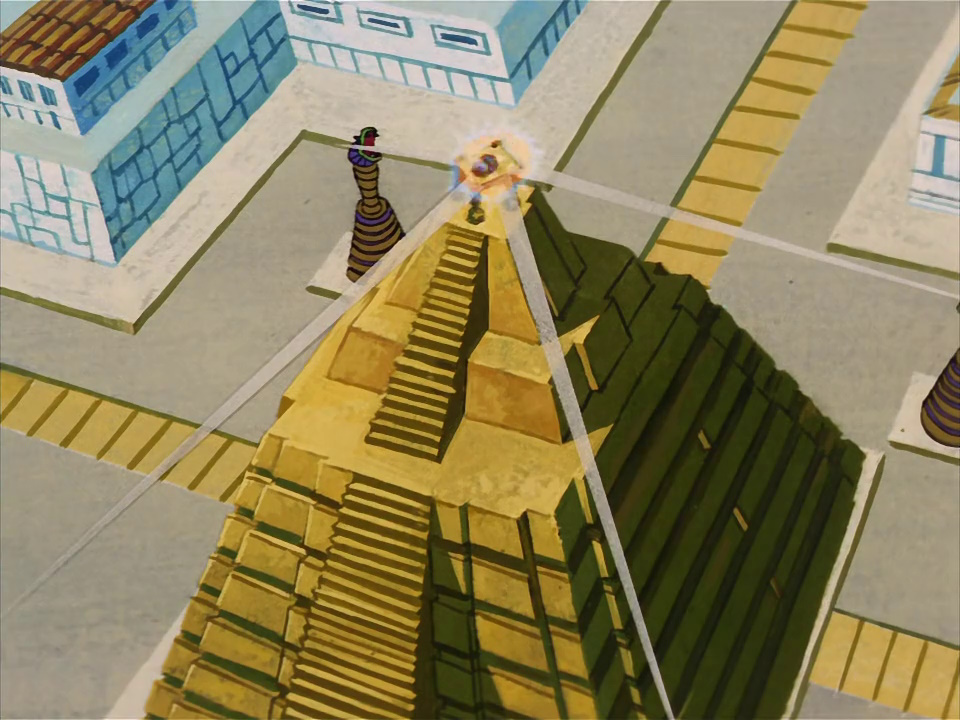
Still frame from Star Trek: The Animated Series Season 2 (1974) showing a pyramid.
Kukulkan’s pyramid.

As a bit of background, How Sharper Than a Serpent’s Tooth was submitted as the episode to be assessed when The Animated Series was nominated for a Daytime Emmy Award in 1975; the series would go on to win that award. It’s the only time a Star Trek show has won the award for “Best Series,” so this episode turned out to be quite influential! It also marks Spock’s 100th Star Trek appearance, and as noted above is the franchise’s 100th instalment.

It was a blast to go back to The Animated Series for the first time in years, and I’m glad that I got to mark the milestone anniversary of at least one of its episodes. Very few TV shows – and even fewer cartoons – can claim to have such a legacy half a century after their first broadcast, but The Animated Series really does occupy a unique place in Star Trek’s history. I hope you’ll join me in celebrating this fun show as we mark the fiftieth anniversary of the episode How Sharper Than a Serpent’s Tooth.

So which episode of The Animated Series should we look at next? I’ve always had a soft spot for the frankly bizarre episode The Magicks of Megas-Tu… a story that no other franchise would dare attempt, especially not nowadays! I’ve also never written a proper episode re-watch for The Original Series here on the website, despite being up and running for almost five years. We’ll have to rectify that one day, too. But for now, I hope you’ve enjoyed stepping back in time with me. And until next time: Live Long and Prosper!


Star Trek: The Animated Series is available to stream now on Paramount+ in countries and territories where the platform is available. The series is also available on DVD and Blu-ray. The Star Trek franchise – including The Animated Series and all other properties discussed above – is the copyright of Paramount Global. This article contains the thoughts and opinions of one person only and is not intended to cause any offence.

Five planets that Star Trek probably won’t revisit any time soon!

Spoiler Warning: There are spoilers ahead for the following Star Trek productions: The Original Series Season 2, The Animated Series, The Next Generation Season 1, Voyager Season 2, Star Trek 2009, Picard Season 1, Discovery Season 3, and Lower Decks Season 2.

I wouldn’t even like to guess how many different planets (and other planetary bodies) have been visited across all 800+ episodes and films in the Star Trek franchise! It must be a lot… maybe someone has been keeping a tally, but I certainly haven’t! There are some worlds that we’ve visited more than others – Bajor, Qo’noS, and of course Earth all spring to mind. But there are some planets that, for one reason or another, are best left behind in the franchise’s past.

As Star Trek moves on to bigger and better things, some planets – and their inhabitants – seem outdated, or perhaps the concept behind the planet was never a good one to begin with. Today I thought it could be interesting to consider five examples of planets that Star Trek will almost certainly never revisit!

Planet #1:
Ekos

The USS Enterprise in orbit of Ekos (as it originally appeared).

Ekos was created for The Orignal Series Season 2 episode Patterns of Force, but you might know it better as “that Nazi planet.” There’s definitely scope for the Star Trek franchise to tackle authoritarianism, fascism, and even Nazism – and as recently as 2004, Enterprise put its own spin on the “Star Trek-versus-Nazis” concept. But there are a few deeply unsettling things about Ekos, and how its Nazi-inspired government came to power.

First of all we need a brief history lesson! In the 1960s, when Patterns of Force was created, some historians, economists, and other political scientists regarded Nazi Germany as an “efficient” state. Resting all power in a single individual, they argued, made for a powerful government that could be run very efficiently. In Patterns of Force, Federation anthropologist/historian John Gill cites this theory as the reason for introducing Nazism to the Ekosians.

Ekos is also known as “Planet of the Nazis.”

That theory was flat-out wrong, and even by the 1970s and 1980s, the flawed thinking that led to the myth of “Nazi efficiency” had been exposed and thoroughly debunked. In short, Nazi Germany was a very poorly-run government, with a handful of cronies of the führer wielding disproportionate levels of power, and micromanagement in certain departments and industries majorly hampering the state’s industrial output. How this myth ever came to be as widely believed as it was is, in some respects, a bit of a mystery. But suffice to say that the central conceit behind Patterns of Force has been exposed as a falsehood.

John Gill, the academic at the heart of the story, also represents a very distinct kind of betrayal of Federation values, taking things to perhaps the most unpleasant extreme possible. Star Trek has never shied away from showing us flawed human beings and Federation officials, but Gill is a step too far, and Patterns of Force can be an uncomfortable watch for many Trekkies.

John Gill, the Federation historian who became the Führer of Ekos.

Though it might be interesting, in some respects, to revisit Ekos in the 24th, 25th, or 32nd Centuries to see how things had progressed, in many ways it’s a planet – and a story concept – that should probably remain on the sidelines. Modern Star Trek can tell far more subtle stories about authoritarianism, racism, and the like without needing to resort to overt depictions of Federation-sponsored Nazism.

Patterns of Force is based on an outdated concept, and while it was brought to screen quite well by the standards of The Original Series, with some clever visual effects for the time and some surprisingly accurate costumes, it feels like an anachronism overall. This is one best left behind in the 1960s!

Planet #2:
Megas-Tu

The USS Enterprise near Megas-Tu.

The Animated Series had some very wacky sci-fi concepts. Taking Star Trek away from live-action meant that the franchise was no longer confined by the limitations of practical special effects, and thus it was possible to depict things like a 40-foot tall clone of Spock, an entirely underwater civilisation, or, in The Magicks of Megas-Tu, an alternate universe where magic is real and science is not.

I’ve always had a soft spot for The Magicks of Megas-Tu, and I think it’s an episode that every Trekkie should watch at least once. It’s an example of mid-century sci-fi at its wackiest, but it manages to retain a Star Trek tone throughout the very unusual adventure that Captain Kirk and the crew of the Enterprise find themselves on.

A group of Megans departing their homeworld.

With the possible exception of Lower Decks, which has been more willing to explore some of the stranger elements of classic Star Trek, I can’t imagine Megas-Tu ever making another Star Trek appearance. How would it fit in Discovery, for example, or Picard? The tone of modern Star Trek is just too different – and even by the time of The Next Generation, Star Trek had moved away from concepts like this. Megas-Tu feels homeless, in a sense, in a franchise that has moved on.

That isn’t to say that it was a bad concept when it was first developed, but like several ideas from The Original Series and The Animated Series, magic and fantasy just seem to be a step too far for a franchise that has retained its esoteric side and sense of fun, but refocused them into more science-based stories rather than stories that use literal magic and fantasy as core elements.

Cheers!

It’s hard to see how a story about Megas-Tu could fit in with modern Star Trek. Audience expectations have shifted when it comes to science-fiction, and with the Star Trek franchise moving away from stories like The Magicks of Megas-Tu, it seems very unlikely that we’ll see anything like it in the franchise anytime soon.

There’s also the in-universe problem of travelling to the Megans’ universe, and while technobabble can always be created to explain away these things, it seems like a bit of a stretch. It’s possible we’ll get more references to The Animated SeriesPicard Season 1 made reference to the Kzinti, for example. But a full revisit to Megas-Tu is probably off the table!

Planet #3:
Ligon II

Ligon II.

The planet that inspired me to put together this list, Ligon II was visited in Code of Honor, the notorious Season 1 episode of The Next Generation that has been widely criticised for its use of racial stereotypes. The Ligonians encapsulated stereotypes of Africans and African-Americans, and Code of Honor has to be one of the worst episodes of The Next Generation as a result.

Some stories from past iterations of the franchise are open to redemption; to being revisited to right the wrongs of the past. We’ve seen this, to an extent, with certain characters in modern Star Trek who saw much-needed development or expansions of incomplete arcs. We’ve also seen Lower Decks revisit planets like Beta III to comment on Starfleet’s somewhat chaotic approach to first contact.

Code of Honor has been widely criticised for stereotyping.

But Code of Honor and the episode’s depiction of the Ligonians feels so utterly wrong that it’s irredeemable. There are some parts of Star Trek’s past that the franchise brushes under the carpet, choosing to ignore and even overwrite things rather than try to fix the unfixable. Captain Pike’s “woman on the bridge” line in The Cage is such an example – overt sexism from a character that we’re now very excited to see return. Ligon II and Code of Honor are definitely in the “let’s all just pretend that never happened” category… for the good of the franchise!

It’s amazing, when you think about it, that Code of Honor was produced as late as 1987. It would still feel outdated had it been part of The Original Series in the 1960s, but to know that it was produced for The Next Generation – within my own lifetime – is one of those things that boggles the mind.

A ritual combat arena on the surface of Ligon II.

Code of Honor is an episode that I think Trekkies need to watch. It’s worth remembering that, despite its lofty ambitions and attempts to depict a better future, the people who create Star Trek can still make mistakes. This was an episode that Gene Roddenberry had some creative input in and signed off on – he was The Next Generation’s executive producer at the time.

The episode is noteworthy for its complete lack of awareness. The people who created this story, cast it, and put it to screen were so blind to the offensive stereotypes that it depicted that they allowed it to progress and even get broadcast. Star Trek may have made strides, even in its early years, in its attempts to confront and tackle things like segregation and race hate – but it was blind, at times, to subtler, more covert forms of racism and racial stereotyping.

Planet #4:
Uninhabited Delta Quadrant world

A hyper-evolved human on the surface of this unnamed planet.

This planet doesn’t have a name… but I vote we call it “Tom Paris and Captain Janeway’s sex planet.” That’s right, it’s the planet from Threshold! After crossing the Warp 10 barrier and experiencing hyper-evolution, Tom Paris kidnapped Captain Janeway and took her to this remote, uninhabited world somewhere in the Delta Quadrant. By the time Chakotay and the crew of the USS Voyager tracked them down, both Paris and Janeway had mutated into amphibious salamander-like creatures… and mated.

Although the crew of Voyager successfully recovered Paris and Janeway and the Doctor was able to revert them back to their human forms, for some reason they left their offspring behind. That means somewhere in the Delta Quadrant, little human-salamander offspring are polluting a perfectly innocent planet that was just minding its own business. I’m pretty sure that violates the Prime Directive… in the most disgusting way possible.

This planet now belongs to the human-salamander babies.

As much as some fans (myself included) like to joke about Threshold – which is absolutely one of Voyager’s worst stories – I can’t see Star Trek ever doing anything more with this episode, this concept, or the planet visited in the final few minutes. For completely different reasons to those laid out above, this is another part of Star Trek’s past to simply ignore!

Again, the one exception could be Lower Decks, which has an irreverent take on these things. We saw mating mugatoes in the Season 2 episode Mugato, Gumato, so I wouldn’t put it past the Lower Decks team to dream up a reason to bring back the human-salamanders one day! After all, Tom Paris made an appearance in the show!

Tom Paris in Threshold.

To Threshold’s credit, it won an award for its prosthetic makeup, and while the story was undeniably ridiculous to the point of abject failure, it was at least an attempt to go into a little more detail about Warp Drive and the limits to warp speed. It never sat right with me that Warp 9.9999 was as fast as anyone could ever go… but Warp 10 was supposedly fast enough to travel anywhere in an instant.

However, as with many technobabble things in Star Trek, maybe the complexities of Warp Drive work better when they’re left ambiguous! Ambiguity and vaguery allow for the creative teams to take stories in wildly different directions, allowing for maximum storytelling potential without different writers and different shows being constrained or tripping over one another.

Planet #5:
Romulus

Romulus as it appeared in Nemesis.

What? Too soon?

Romulus was destroyed during the events of 2009’s Star Trek, and we got to learn a little more about this event and its aftermath in Star Trek: Picard Season 1. Though the Romulans survived – well, some of them did, anyway – their homeworld, as well as its sister planet of Remus, is gone. The surviving Romulans are living on a number of other worlds in and around the territory of their former Empire.

The destruction of Romulus was shown in 2009’s Star Trek.

Both Star Trek and Picard Season 1 were somewhat ambiguous on this latter point, though. We don’t know how many Romulans survived, where they went next, or even what became of their Empire. We do know that a faction called the Romulan Free State existed as of 2399, but that the Tal Shiar and Zhat Vash still existed in some form too, and were able to launch military operations on Earth, at the heart of the Federation.

Presumably Romulus’ destruction didn’t kill off either organisation, and the fact that they retained the capability to launch such powerful operations suggests that the Romulan government and its espionage operation still exist in some capacity, presumably having relocated to a different world. To what extent the Romulan Empire remains united is unclear, as is the fate of races like the Remans, who had second-class citizen status.

The Romulan capital city as it appeared in Inter Arma Enim Silent Leges.

With Star Trek: Picard Season 2 going in a different direction, I presume we won’t be in a position to learn much more about the Romulans for a while. But if there are future 24th and 25th Century stories in the years ahead, it would be nice to get some kind of closure; to fully learn what happened to the Romulans in the years and decades after the loss of their homeworld.

By the time of Discovery’s 32nd Century, at least some Romulans had relocated to Vulcan as part of a reunification project. The planet was renamed Ni’Var, and while tensions still existed between the Romulans, Vulcans, and Romulo-Vulcans, it seems that the Romulans got a happy ending of sorts – even if it took centuries to get there!

So that’s it.

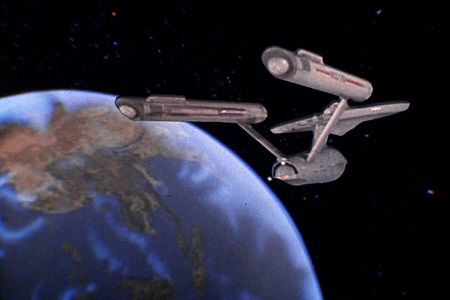
The USS Enterprise in orbit of Earth.

There have been plenty of fun and interesting worlds that the Star Trek franchise has visited, with many making just one single appearance. Modern Star Trek has contained a number of references in dialogue or on-screen displays to some of these worlds, giving us tantalising teases about what became of them after we last saw them. Those references are always appreciated!

With over fifty-five years of history and more than 800 episodes at time of writing, it’s inevitable that not all of these planets (and the peoples who populated them) worked well or would be worth going back to. Fortunately it’s relatively uncommon for Star Trek to have made truly egregious missteps, but there are certainly some episodes – and the planets and factions they included – that are best left behind. I hope it was a bit of fun (or at least mildly interesting) to consider a few examples today!

The Star Trek franchise – including all films, series, episodes, and other properties mentioned above – is the copyright of ViacomCBS. This article contains the thoughts and opinions of one person only and is not intended to cause any offence.

Ten great things from Lower Decks Season 1

Spoiler Warning: There are spoilers ahead for Star Trek: Lower Decks Season 1 and the trailers and teasers for Season 2. Spoilers are also present for the following Star Trek productions: Discovery Season 3, Picard Season 1, The Next Generation, and The Animated Series.

Star Trek: Lower Decks Season 2 is now less than a week away, and as the buildup to its premiere continues I thought it could be fun to step back to last year’s episodes and pull out ten of my favourite moments – and other things!

There was a lot to enjoy in Season 1 last year. The show succeeded at taking the regular goings-on in Starfleet and making them funny, while at the same time it managed to avoid the pitfall of coming across as mean-spirited and laughing at Star Trek. A sense of humour is a very subjective thing, and it’s certainly true that Lower Decks’ comedic style won’t be to everyone’s taste. But for my money, by and large the jokes and humour worked – and underlying all of that was a truly solid and engaging Star Trek show.

Lower Decks is coming back soon! Yay!

When Lower Decks’ first season ended last October I wrote that I was going to miss my weekly viewing appointment, and though Discovery’s third season came along and offered up a different kind of fun, as we’ve got to see more teasers, trailers, and discussion about the upcoming season, I’ve come to realise again just how much I missed Lower Decks in the months it’s been off the air. Though the Star Trek franchise has always had a sense of humour – something I said many times in the run-up to Lower Decks’ first season in response to critics of the concept – this show was the first to put comedy front-and-centre. It also took us back to the 24th Century and The Next Generation era in a big way, which is something I adored.

The Next Generation had been my first contact with the Star Trek franchise in the early 1990s, and I have a fondness for the shows of that era as a result. Lower Decks leaned into that in a big way in its first season, and I hope to see more of the same when Season 2 arrives in just a few days’ time!

So let’s take a look at ten of my favourite things from Season 1. The list below is in no particular order.

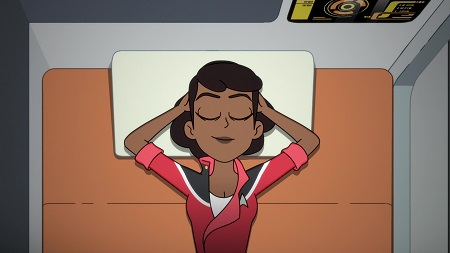
Number 1: Ensign Mariner’s character arc.

Ensign Beckett Mariner.

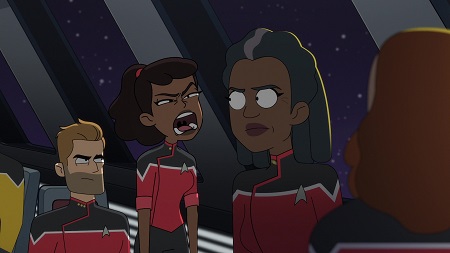
In the first episode of Lower Decks, and again at the beginning of the second, I didn’t like the way Mariner was presented. Coming across as arrogant and selfish, I felt that the writers were trying to set her up as Star Trek’s answer to Rick and Morty’s Rick Sanchez. Such a character could work in the Star Trek galaxy, don’t get me wrong, but not as an ensign – and probably not even as a senior officer. Mariner’s “I don’t care about anything” attitude was epitomised in a scene at the beginning of the episode Envoys, where she kidnapped a sentient alien lifeform and forced it to grant her “wishes” – seemingly just for the hell of it. To me, that seemed about as un-Starfleet as it was possible to get.

Beginning in the second half of Envoys, though, we started to see a turnaround in Mariner. Perhaps her friendship with the hapless Boimler was part of it, but over the course of the season we began to see less of the “teen angst” side of Mariner’s rebelliousness. She still had a streak of rebellion in her character, but some of the edginess was blunted – something which was a colossal improvement.

In the first few episodes, Mariner could feel more like a wayward teenager than a Starfleet officer.

In the episode Much Ado About Boimler, the USS Cerritos is visited by an Academy colleague of Mariner’s – who has already reached the rank of captain. Captain Ramsey’s intervention went a long way toward causing Mariner to have a re-think, as she saw how her friend had matured and moved on from their past childish behaviour.

The episode Crisis Point was where Mariner made her real breakthrough, though. After setting herself up as an extreme anti-Starfleet villain on the holodeck, Mariner saw her friends abandon her, and in a fight against a holographic version of herself, all of that teenage rebellion stuff came to a head. Mariner came to realise that she does care about Starfleet and her mother – Captain Freeman – even if she doesn’t always express that care in ways that line up with Starfleet regulations.

Captain Freeman is Mariner’s mother.

In a way, there are echoes of Michael Burnham (Discovery’s protagonist) in Mariner. Both characters started off with portrayals that I found to be negative and even difficult to watch, yet both characters have grown over the course of subsequent episodes. By the time we got to No Small Parts, the Season 1 finale, Mariner was able to take charge of a difficult situation, using her talents to help her friends and shipmates.

That season-long arc made Mariner’s actions in the finale feel genuine and earned, just like Michael Burnham’s recent promotion felt earned after all of her hard work. By the time we reached the point where the ship was in peril, turning to Mariner to play a big role in saving the day felt great. As a result, a character who I felt could’ve been one of the weaker elements of Lower Decks turned out to be one of its strongest. All I can say now is that I hope the version of Mariner we meet in Season 2 is closer to the one from Crisis Point and No Small Parts than Second Contact!

Number 2: The return to an episodic format.

Tendi in the episode Moist Vessel.

Lower Decks was the first Star Trek show really since the first couple of seasons of Enterprise to use a wholly episodic format. Serialised storytelling has become the norm in television in recent years, thanks to shows like Lost, Breaking Bad, and Game of Thrones, but the Star Trek franchise had primarily been episodic – at least prior to Deep Space Nine’s Dominion War arc.

This didn’t mean that the show reset itself after every episode, nor that past events were ignored. As mentioned above, Ensign Mariner had a satisfying season-long character arc that saw her grow, something which wouldn’t have been possible if the series kept rebooting after every outing. But Lower Decks saw the ensigns take on different challenges and stories each week, and while there were callbacks and references to things that happened in earlier episodes, the show revelled in its ability to do different things.

Commander Ransom leading an away mission in Temporal Edict.

I like episodic television. In a show like Lower Decks it makes a lot of sense to go down this route, as it allowed for many different scenarios and settings – and maximum fun! That isn’t to say serialised storytelling is bad, and I like the way Picard Season 1 and Discovery handled their season-long stories. But after seeing so many different serialised shows over the last few years – both within the Star Trek franchise and outside of it – it was a nice change of pace!

Season 2 will almost certainly retain this style of storytelling. There’s nothing to be gained by giving Lower Decks a season-long story of the kind seen in Discovery and Picard, and doing so would be an unnecessary constraint.

Number 3: The theme music.

The USS Cerritos in the title sequence.

Both Discovery and Picard have softer, slower theme music. I like both, and the understated musical pieces are a huge improvement over Enterprise’s early-2000s pop song! But Lower Decks’ theme is in a whole different league!

I wrote in one of my reviews last year that the Lower Decks theme could have been The Next Generation’s theme. The up-tempo, adventurous piece of music would have fit right in with that show and its theme of exploration, and I just adore it. The opening title sequence is also neat, showing the Cerritos getting into all sorts of trouble, and really went a long way to setting the stage for the show itself.

Number 4: “He’s got wood!”

A contender for best line of the season?

This line was one of the funniest of the whole season. Low-brow comedy for sure, but the execution of this moment in Temporal Edict was absolutely perfect. There were some great jokes, puns, and one-liners across the season, and I’m not saying this one was somehow the best, but the scene on the Galrakian home planet was built up wonderfully.

As Mariner, Ransom, and the rest of the away team leave behind the chaotic ship, there was a sense that the new time management rules that Captain Freeman was trying to implement were not going to plan. The Galrakians (a new alien race) were a crystal-obsessed people, and as part of the Cerritos’ mission of second contact, the away team had to present an honour crystal to the Galrakian delegation. But because of the problems on the ship, the away team accidentally brought a wooden totem instead of the crystal, leading one of the Galrakians to exclaim “he’s got wood!” I had to pause the episode because I was laughing so much.

Number 5: The return of the Edosians.

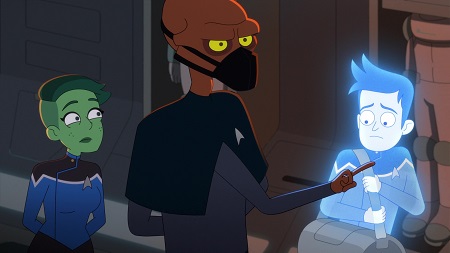
The Division 14 commander with Tendi and Boimler.

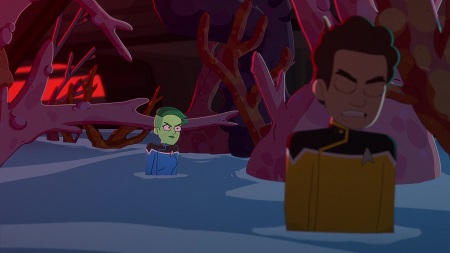
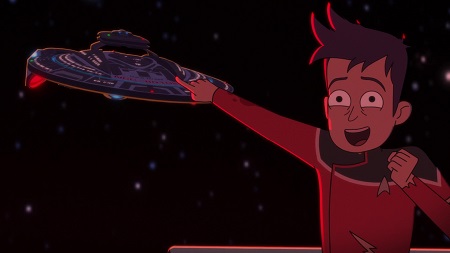
Lower Decks represented the best opportunity so far to bring back elements from The Animated Series, not only because of its animation style but because its wackier sense of humour would be a good fit for some of the weirder elements from Star Trek’s first cartoon show. In the episode Much Ado About Boimler we got the return of the Edosians – the three-legged, three-armed aliens first encountered in The Animated Series.

Lieutenant Arex (voiced by Scotty actor James Doohan) had been a mainstay on the bridge of the Enterprise in The Animated Series, but Star Trek’s return to live-action in 1979 meant that the character was dropped. Bringing to life a very different-looking alien was just prohibitively expensive at the time, and I don’t know if Gene Roddenberry and the others even considered including Arex in Phase II or The Motion Picture.

Arex (left) with Kirk and Sulu in The Animated Series.

Picard Season 1 had referenced the Kzinti, another alien race only ever seen in The Animated Series, and following some debate in the 1990s about whether the show should be considered part of Star Trek’s “official” canon or not, it was great to see the creators of Lower Decks and modern Star Trek embrace this more obscure part of the franchise.

The Edosian character we met was fun, too. Division 14 was presented as a mysterious off-the-books type of operation, and the episode – which saw the first team-up between Boimler and Tendi as well – leaned into a darker, almost horror vibe at points. It was great to welcome back the Edosians to Star Trek after such a long absence.

Number 6: Basically everything about Dr T’Ana!

Dr T’Ana was a lot of fun across Season 1.

Dr T’Ana has a terrible bedside manner. She’s gruff and sarcastic, but she’s incredibly funny and a great character! Practically every moment she was on screen in Season 1 was fun, and she elevated what would otherwise have been less-interesting moments many times. Speaking as we were of returning races, Dr T’Ana is a Caitian, an alien race only seen a few times in The Animated Series and some of The Original Series films.

Dr T’Ana reminds me of both Dr McCoy and Dr Pulaski. The latter is a character who I feel went under-appreciated in The Next Generation’s second season, and although Dr T’Ana turns up to eleven some of the rudeness present in both her and Dr McCoy, something about the way she came across on screen felt familiar – and I appreciated that.

Dr T’Ana and the ensigns have a standoff!

The ship’s doctor has been part of Star Trek since the beginning, but is a role that can be fairly static in sickbay. Dr T’Ana managed to find different things to do at points across the season, and appeared to be on the verge of developing a relationship with Shaxs – before his untimely demise.

I’m looking forward to seeing more from the Cerritos’ doctor in Season 2. I wonder what she’ll get up to as the ship continues its adventures?

Number 7: The cinematic shots of the USS Cerritos in Crisis Point.

The USS Cerritos in all her glory.

This sequence channelled one of my favourite moments in all of Star Trek – the reveal of the refitted Enterprise in drydock in The Motion Picture. That sequence still brings a tear to my eye even though I’ve seen it countless times, and this moment in Crisis Point was a wonderful homage to it.

Accompanied by a stirring musical number that was a mix of the Lower Decks theme with music from The Wrath of Khan and other films, the whole sequence was absolutely pitch-perfect, and without a doubt one of the highlights of the episode and the whole season.

The holo-crew and Boimler looking at the ship in awe.

Sometimes we can overlook the starships that our heroes serve aboard, but as has been pointed out on many occasions, the ship itself can be almost an extra character on the show. Moments like this go a long way to highlighting just how beautiful some Star Trek vessels can be. Is the Cerritos the best-looking ship in the fleet? Maybe not, but for a couple of minutes during this sequence you might just think she is!

Seeing the reactions of Boimler and the holographic bridge crew also added to the moment. These are people who really love their ship – and who can blame them?

Number 8: Badgey

Tendi with Badgey in Terminal Provocations.

Badgey would go on to be a villain not once but twice, and is a classic example of Starfleet’s own technology going wrong on the holodeck! Inspired by Clippy, the Microsoft Office “assistant” from the early 2000s, there’s something distinctly creepy about Badgey. The way he seems to be peppy and enthusiastic hides a murderous rage, and the concept of our own machines betraying us is a trope as old as science-fiction.

Originally created by Ensign Rutherford, like several of his inventions Badgey quickly went awry! Rutherford is a fun character on the show, but his love of tinkering and inventing caused trouble for the ensigns on more than one occasion!

Badgey almost got Ensign Rutherford killed in the season finale!

Badgey returned in the season finale and again tried to kill Rutherford. Shaxs’ intervention saved his life, but at the cost of his memories – and Shaxs himself. We’re yet to see how Rutherford will react to his lost memories in Season 2, but we already know, thanks to the teasers, than his implant is back.

Everything about Badgey from concept to execution worked perfectly, and he was one of the most interesting adversaries the crew had to face in Season 1. Have we truly seen the last of him, though? The return of the Pakleds (as glimpsed in one of the trailers) may suggest otherwise!

Number 9: A return to the aesthetic of The Next Generation era.

A hallway aboard the Cerritos – note the inspiration from older Star Trek productions.

I don’t dislike the way modern Star Trek looks. The Kelvin films used a lot of glossy white plastic and glass, and Discovery has somewhat of an industrial look to some areas of the ship, but on the whole recent productions have looked great. But for the first time since Voyager went off the air and Nemesis was in cinemas, Lower Decks brought back the aesthetic of ’80s and ’90s Star Trek in a big way.

As I mentioned at the beginning, this was “my” era of Star Trek; the point at which I became a fan. Just as I’m attached to The Next Generation in terms of its characters and stories, I adore the way the show looks, and how that look continued into Deep Space Nine, Voyager, and the films of that era. Lower Decks unapologetically brought that look back – and I love it.

Boimler wielding a Next Generation-era phaser.

At the same time, Lower Decks has adapted this look to fit the kinds of stories it wants to tell. The USS Cerritos has visual elements inspired by The Next Generation, but the ship also manages to look smaller and less significant, especially when set alongside other Starfleet vessels. The uniforms are likewise a riff on The Next Generation and other uniforms of past Star Trek shows, with a jacket seemingly inspired by the “monster maroon” uniforms that debuted in The Wrath of Khan.

Everything about the way Lower Decks looks just oozes “Star Trek,” and for fans like myself who adore those shows, that can only be a positive thing.

Number 10: The arrival of the USS Titan in No Small Parts.

“It’s the Titan!”

Toward the end of the season finale, it seemed as though the Pakleds had the Cerritos on the ropes. The last-minute arrival of the USS Titan was absolutely pitch-perfect, and drew inspiration from the likes of the Enterprise-E’s arrival at the Battle of Sector 001 in First Contact, with the theme music from The Next Generation accompanying it.

This is one of my favourite moments not just in Lower Decks but in all of Star Trek. The arrival of Riker and Troi aboard a ship we’d heard of but never seen was absolutely amazing, and the fact that they swooped in to save the day was heroic and exciting. The whole sequence is surprisingly emotional – at least it was for me!

Riker and Troi on the Titan’s bridge.

We’d seen Riker and Troi return in Picard Season 1 earlier in the year, but seeing them in their prime aboard their own ship was a moment that I didn’t expect from Lower Decks. It was something I didn’t know I wanted to see, but having seen it I can’t imagine the episode – or the first season – being the same without this wonderful inclusion.

After the Titan saved the day we got a sequence with Riker and Troi hanging out with the Cerritos’ crew. Boimler then received his promotion and transferred to the ship to serve under Riker’s command – and that’s where we left him when the season ended. Riker and the Titan will be back in Season 2, and I’m curious to see how the show will fit them in for a second time. Not to mention how the Boimler situation will be resolved!

So that’s it. Ten of my favourite things from Season 1 of Lower Decks.

Mariner, Boimler, and the rest of the crew will be back in just a few days!

Season 2 is almost upon us, and I honestly can’t wait! I had such a great time with the show last year, and despite the fact that the clusterfuck surrounding its lack of an international broadcast definitely did some damage, it’s my hope that Star Trek fans the world over will be able to enjoy Season 2 this time around. Hopefully Lower Decks will also succeed at bringing in many new fans to the Star Trek franchise as well.

Stay tuned because I plan to write reviews of every episode of Lower Decks this season, hopefully within a day or so of their broadcast. I’m sure I’ll have a lot to say! I hope this list has been a bit of fun, and that you’re as hyped up and excited for the return of Lower Decks as I am.

Star Trek: Lower Decks Season 2 will be broadcast on Paramount+ in the United States and on Amazon Prime Video internationally beginning on the 12th of August. Season 1 is available to stream now. The Star Trek franchise – including Lower Decks and all other properties mentioned above – is the copyright of ViacomCBS. This article contains the thoughts and opinions of one person only and is not intended to cause any offence.

Ten great Star Trek episodes – Part 6: everything else

Spoiler Warning: In addition to spoilers for the episodes listed below, there may be spoilers for other iterations of the Star Trek franchise, including the most recent seasons of Discovery and Picard.

It’s been a while since I last picked out ten great Star Trek episodes. Having run through all five of the shows prior to the Kelvin timeline and Discovery, I seem to have got sidetracked! It’s been over a month since I last visited this topic, so if you’d like to revisit the episodes I pulled from the other Star Trek shows, you can find them all archived on a single page by clicking or tapping here.

My first five articles looked at one Star Trek show apiece. Those shows each had at least three seasons’ worth of episodes to choose from, so it was relatively easy to pick ten great ones! The shows we’ll be looking at today have fewer episodes, and I felt it was too difficult to pick ten from each one. The Star Trek shows we’ll be looking at are: The Animated Series, the Kelvin-timeline films, Discovery, Short Treks, and Picard.

Here’s a recap on how this format works: this isn’t a “top ten” ranked list. Instead, this is merely ten episodes (okay, nine episodes and one film) that I consider to be well worth your time, and they’re listed in order of release.

Number 1: The Magicks of Megas-Tu (The Animated Series Season 1)

Kirk, Spock, and McCoy in a parallel universe.

After Star Trek’s cancellation in 1969, it was rebroadcast and gained many new fans. As early as 1971 or 1972, parent network NBC was considering options for bringing the show back. The re-runs were more popular than the original broadcasts had been, and there was an ongoing letter-writing campaign by fans to bring Star Trek back. Ultimately, in order to keep production costs low, it was decided Star Trek should continue in an animated format. With the exception of Walter Koenig, the entire main cast returned. James Doohan would provide many additional voices for the new show, and its animated format allowed for characters like Arex – the three-legged, three-armed character – and other far more “alien” feeling characters and creatures than The Original Series’ budget and production-side technology allowed for.

The Animated Series was officially removed from the overall Star Trek canon by Gene Roddenberry and new parent company Paramount Pictures in the late 1980s, when The Next Generation was in production. However, when the series was re-released on DVD in the mid-2000s this was rescinded, and the series is – as of 2020 – a full and official part of the Star Trek canon once again.

I wanted to choose at least one episode that I feel really epitomises the different direction that The Animated Series took. Not all of these stories worked, but The Magicks of Megas-Tu has a certain charm as a very weird piece of science-fiction that I think makes it worth watching. To summarise its plot in one sentence: the Enterprise crosses over into a parallel universe where magic is real and science is not.

That premise sounds absolutely bonkers, and none of today’s science-fiction shows – including the renewed Star Trek projects – would touch a story like that with a barge pole! But this was The Animated Series trying new things, pushing the boat out, and exploring different aspects of sci-fi and fantasy in a way that The Original Series’ technical limitations would have never allowed for.

Despite its wackiness, I like The Magicks of Megas-Tu, and perhaps it’ll be a candidate for a full write-up one day. At the very least it’s an interesting glimpse at mid-century sci-fi, and an imaginative story.

Number 2: Albatross (The Animated Series Season 2)

Dr McCoy is placed under arrest.

Leaving behind the completely weird, Albatross is a story that we could see told in a Star Trek or sci-fi show in 2020. The Animated Series has this kind of strange dichotomy: some episodes, like The Magicks of Megas-Tu listed above, have totally wacky premises that could only ever work in animation. And others, like Albatross, are – for want of a better word – “normal” sci-fi.

When the Enterprise visits a planet Dr McCoy had been stationed on years previously, he’s arrested and charged with mass murder – they believe he caused a plague which ravaged their society. Star Trek has, on several other occasions, put main crew members in situations like this; accused by an alien society of something we as the audience know they could never have done. As a story, it’s exciting and tense.

McCoy is at the heart of the story, and it ultimately becomes his quest to cure the disease. Things take a turn for the worse when the crew of the Enterprise become infected as well, and McCoy must race to cure the pathogen before it’s too late. Albatross is a fairly straightforward space adventure – at least by the standards of The Animated Series!

Number 3: Star Trek Into Darkness (Kelvin-timeline film)

Kirk speaks to Scotty in Star Trek Into Darkness.

I consider Into Darkness to be the high-water mark of the Kelvin-timeline films. The Kelvin-timeline films have been criticised by some fans for taking a much more action-heavy approach when compared to the often peaceful exploration seen in past iterations of Star Trek. But Into Darkness based itself on The Wrath of Khan, and in that context the crossover into the action genre works much better than it had in 2009’s Star Trek.

Into Darkness stays on the right side of that invisible line which divides respectful homage from blatant rip-off, referencing The Wrath of Khan at a number of points but telling its own story in its own world at the same time. New fans of the franchise didn’t miss anything crucial in the plot for never seen The Wrath of Khan – one of the key tests of being on the right side of that line!

There are some genuinely emotional moments which absolutely work in the film, and while it’s debatable whether Kirk and Spock’s scene in the engine room carries the same emotional weight as the comparable sequence in The Wrath of Khan, it was beautifully staged and the acting performances from Into Darkness’ two leads were pitch-perfect.

It’s sad to think that this would be Leonard Nimoy’s final role. His character of Spock makes a small cameo appearance (a far smaller role than he had in 2009’s Star Trek). It was great to see him back one final time.

Number 4: Context is for Kings (Star Trek: Discovery Season 1)

We finally get to see the USS Discovery in the third episode of Season 1.

If you read my write-up of my recent re-watch of Discovery’s two-part premiere, you’ll know I didn’t like it. I wasn’t impressed with how the show started, either at the time or on a second viewing. Context is for Kings had the difficult task of beginning to salvage the season, and if it had failed we could be talking about Discovery as a whole as being one big catastrophe instead of a series I called the best of the last decade!

Fortunately, Context is for Kings is where Discovery began to turn around. In a serialised show, it can be difficult to pull out individual episodes to recommend – an issue which applies to all of Discovery’s entries on this list. However, Context is for Kings is, in some respects, almost like a second premiere. It introduces the USS Discovery for the first time, as well as most of the regular cast.

I’ve written on a number of occasions that Jason Isaacs’ performance as Captain Lorca was one of the high points of Discovery’s first season, and this fascinating, nuanced character is introduced here – in suitably mysterious fashion.

Number 5: Si Vis Pacem, Para Bellum (Star Trek: Discovery Season 1)

Saru in Si Vis Pacem, Para Bellum.

As mentioned, Discovery can be hard to pull individual episodes out of due to its serialised nature. There are ongoing storylines in Si Vis Pacem, Para Bellum that greatly impact the episode, but the main plot – that of an away mission to the planet Pahvo – does serve as somewhat of a standalone narrative.

This was the first episode where Saru was given a lot to do. Past Star Trek shows had always shared out the storylines between various characters; Discovery was primarily about Burnham and, to a lesser degree, Captain Lorca. However, during the course of the away mission Saru becomes incredibly important to the story.

I loved the visuals of Pahvo – both the planet itself and its non-corporeal inhabitants were beautifully designed and brought to life. Discovery’s visual effects overall have been outstanding, and Si Vis Pacem, Para Bellum is another great example.

The storyline also puts Burnham and Ash Tyler together. Their romantic relationship would be a sub-plot going forward across the remainder of Season 1 and much of Season 2.

Number 6: New Eden (Star Trek: Discovery Season 2)

Captain Pike in New Eden.

New Eden gave me a distinct feeling of watching an updated episode of The Original Series, in parts. Perhaps it’s the elements of religion that are incorporated into the storyline, or perhaps it’s because the crew of the USS Discovery – led by Captain Pike – encounter an unknown settlement of humans. Either way, parts of this story feel perfectly “Star Trek-y”, and would certainly be at home elsewhere in the franchise.

Anson Mount was brought in to replace the departing Jason Isaacs, and we should really talk about how much of a masterstroke that ended up being. I was initially concerned about the decision to recast Captain Pike – for the second time, as the character was also in the Kelvin-timeline films – as well as to bring in Spock and Number One. But I shouldn’t have been; Mount’s version of the character was everything fans could have wanted from a Starfleet captain, and spawned a fan campaign to bring back Pike for his own series – something which was finally confirmed to be happening a few weeks ago.

After his introduction at the beginning of the season, when the USS Enterprise malfunctions, New Eden took the new captain and gave him a starring role with plenty to do. We see the USS Discovery use its spore drive, which was great. The spore drive has felt like an underused piece of tech since its introduction; it was treated as little more than a macguffin to allow for transport to and from the Mirror Universe. I would have liked to have seen more creative uses for it, and jumping across the galaxy to New Eden was certainly nice to see.

There are storylines in New Eden which tie into later episodes in the season, but as with Si Vis Pacem, Para Bellum above, the main plot of the episode is an away mission, and that side of the story is self-contained.

Number 7: If Memory Serves (Star Trek: Discovery Season 2)

The Talosians are back!

Finding and helping Spock – who had been accused of murder – was a big part of the first half of Discovery’s second season. Section 31 are also intent on tracking him down, but luckily for Spock, Burnham got to him first.

If Memory Serves reintroduces the Talosians – the big-brained telepathic race from The Cage and The Menagerie. The approach to Talos IV, which the Talosians now shield using an illusion of a black hole, was fantastic, and the visual effect of the illusory black hole itself was stunning – and a shock when Burnham and Spock first saw it!

The Talosians help Spock, who had been psychologically damaged by the Red Angel vision, recover his composure and logic. We see Burnham and Spock behave in a way closer to siblings than they do at almost any other point in the season, which I think is nice to see given their background. And there are ongoing storylines involving Stamets and Dr Culber – the latter having recently been rescued from the Mycelial Network – and Ash Tyler. Tyler and Culber have a tense confrontation in Discovery’s mess hall – Tyler had, after all, “killed” Culber during Season 1. I liked the way this scene unfolded, it was gripping, edge-of-your-seat stuff.

I also loved that this episode began with a recap of The Cage. They didn’t need to put that in there, but it was a nostalgic treat to see it.

Number 8: The Trouble With Edward (Short Treks Season 2)

The titular Edward.

It’s still disappointing to me that, for reasons best known to the higher-ups at ViacomCBS, Short Treks hasn’t been made available to international viewers. There is a plan to rectify that with a blu-ray release, but it’s too little too late as far as I’m concerned. As I said when I reviewed the Short Treks episode Children of Mars in January, the whole point of this series was to keep Star Trek alive in the minds of viewers in between main seasons of the shows. Especially with Children of Mars, which was supposed to be a prequel or prologue to Star Trek: Picard and thus a key part of its pre-release buildup, it should have been made available internationally. But we’re off-topic.

The Trouble With Edward is really funny. Partly that’s thanks to two great performances from Rosa Salazar and H Jon Benjamin, who have great comedic chemistry together, and partly it’s due to a great premise and funny script.

Nothing in The Trouble With Edward changes or “ruins” canon, which is something it was inexplicably criticised for upon release by some of the anti-Star Trek social media groups. Instead it’s a well-told story that takes one small aspect of the tribbles – the small, furry creatures who are almost synonymous with Star Trek – and expands on it.

It’s a fun ride, and stick around after the credits for what is probably the weirdest sequence released under the Star Trek banner since The Animated Series. I missed that on first viewing, and I’m not saying anything else in case you did too!

Number 9: Ephraim and Dot (Short Treks Season 2)

The adorable animated episode Ephraim and Dot is unlike practically anything else in the franchise.

I’ve already talked about Ephraim and Dot twice! First when I reviewed it along with its sister episode in December, and more recently when I looked at introducing a newbie to Star Trek.

Star Trek’s first animated episodes in 45 years were amazing – and very different to The Animated Series. Ephraim and Dot tells a cute story that would be at home on the Disney Channel – and I mean that as a compliment. Both Ephraim the space-dwelling tardigrade and Dot the robot are adorable, and for an episode largely free of dialogue it does an amazing job raising the emotional stakes.

I’m a sucker for cute animals in fiction, and any time they seem to be hurt or upset it gets to me in a way few other stories really manage to! Ephraim and Dot does this so well, despite its short runtime.

The story also looks at some of The Original Series’ greatest hits in a sequence where Ephraim races to follow the ship. Captain Kirk and other members of the original crew return – in animated form – in this part of the story, which was a nostalgic treat.

Number 10: Remembrance (Star Trek: Picard Season 1)

Jean-Luc Picard may not be exactly the same way we remember him.

Remembrance is a stunning piece of television, and it’s up there with Emissary as one of the best Star Trek premiere episodes. I reviewed this episode when it was first broadcast, and I recommend having a read of that article for a more detailed breakdown. I also think, looking at the series three months after its first-season finale, that it’s probably either the best or second-best episode. It’s definitely the only place I could recommend you start if you want to watch Picard – it’s a wholly serialised show, as is Discovery.

Remembrance picks up Picard’s story twenty years after Star Trek: Nemesis. It connects to the Kelvin-timeline’s destruction of Romulus storyline, as Picard tried – and failed – to help the Romulans evacuate their homeworld. But this isn’t The Next Generation Season 8 – far from it. Picard’s retirement at his family vineyard is disrupted by the arrival of Dahj, the survivor of an attack by mysterious assailants.

For anyone who had qualms or reservations about Discovery, I’d really encourage them to give Picard a chance. There are so many callbacks and nods to past iterations of Star Trek, and while it’s true that the show’s serialised nature is different to The Next Generation’s largely episodic approach to television storytelling, that opens up new possibilities and opportunities – like season-long arcs and detailed character development.

Remembrance has some beautiful sequences featuring Sir Patrick Stewart as Picard and Brent Spiner as a dream version of Data. It has a faithful HD depiction of the Enterprise-D, which is just stunning. And in one sequence where Picard visits his Starfleet archive, there are many props on display from his captaincy. The episode was peppered with these nostalgic elements, but none of them overwhelmed the story.

What I’m really trying to say by putting Remembrance on this list is that you should watch Star Trek: Picard Season 1 in its entirety if you haven’t already. I really think it’s worth giving the show a chance to impress you. If you do, take a look at my reviews and theories as you go along!

So that’s it. Ten great Star Trek episodes from elsewhere in the franchise. I will definitely be revisiting this subject in future, so stay tuned for “ten more great episodes” at some point!

This series of articles has been a lot of fun to put together. I’m keeping my fingers crossed that Discovery’s third season will be released imminently, but until then I hope these articles have given you some inspiration for what to watch inside the Star Trek universe!

All episodes and films listed above are available to stream on CBS All Access in the United States, and on Netflix and/or Amazon Prime Video in the United Kingdom and elsewhere. The Star Trek franchise – including all titles mentioned above – is the copyright of ViacomCBS and/or Paramount Pictures. This article contains the thoughts and opinions of one person only and is not intended to cause any offence.

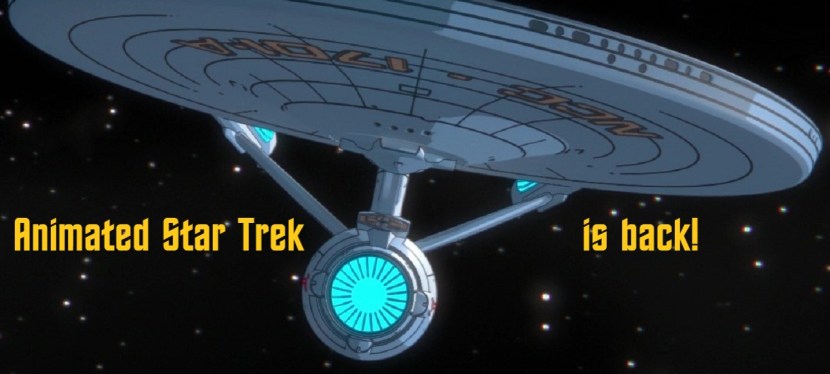
Animated Star Trek is back!

Spoiler Warning: There are spoilers ahead for the plots of both Ephraim and Dot and The Girl Who Made The Stars, as well as for Star Trek: Discovery. If you want to avoid spoilers, turn back now!

Star Trek: The Animated Series ran for two seasons in 1973-74. It featured the voice talent of most of the original cast (sans Walter Koenig), but since then Star Trek has stuck to live-action series and films. Until, that is, the latest two episodes of Short Treks, which were released a couple of days ago.

At least they were for Trekkies in the United States – ViacomCBS apparently places no value on its overseas fans. But let’s not get into that right now, because these two episodes were absolutely fantastic.

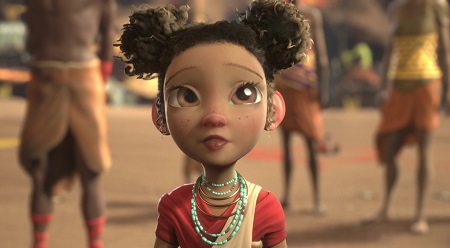
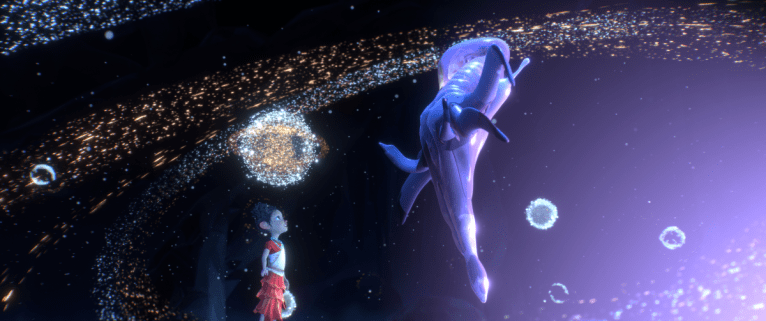
After I was finally able to track down copies, I watched The Girl Who Made The Stars first, as I thought I probably wouldn’t find it as interesting as the other episode, Ephraim and Dot. But The Girl Who Made The Stars was a cute, Disney-esque bedtime story, told by Michael Burnham’s father to her when she was a child. I got a distinct Moana vibe from this short episode, which tells of a young girl who teaches her tribe of ancient humans to overcome their fear of the night – aided, in true Star Trek fashion, by an ethereal alien.

The unnamed little girl in The Girl Who Made The Stars.

As in Moana, the key to defeating what the tribe’s elders called the Night Beast wasn’t violence, and hiding away from it didn’t help either. It took someone to be bold and head out beyond the safety of the tribe’s valley to overcome the imagined monster. How much of the episode was actually based on African legends is something I don’t know, but this was a uniquely Star Trek look at history and at Africa. Framed as a bedtime story, I’m certain we aren’t supposed to take the episode’s main plot as canonical, but it was an interesting look at Michael Burnham’s childhood. Burnham has been in some respects a hard protagonist to get behind in Star Trek: Discovery. Partly that’s a consequence of her internal struggle between a logical Vulcan upbringing and human emotion, which she has at times seemed to be confused with. And partly, it has to be said, it’s a consequence of a character whose motivations – especially in Discovery‘s premiere – were impossible to follow and understand. This short episode doesn’t change anything fundamental about her character, but it does show the audience that she’s human at her core. Something which may be important as Discovery travels to unknown destinations next season. I wouldn’t be surprised to see this bedtime story referred to, perhaps inspiring her to lead Discovery’s crew and/or the Federation in season 3.
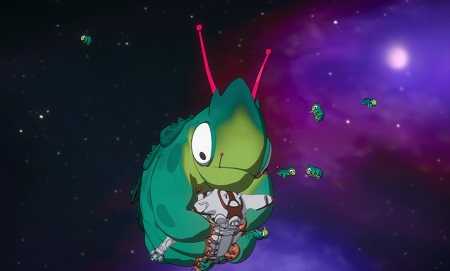
The other episode was absolutely adorable. Ephraim and Dot told the story of a tardigrade, the species seen in season 1 of Discovery, laying its eggs. After trying to find a warm place, the tardigrade chooses the warp core of the Enterprise – by this time under Kirk’s command. We see an animated recreation of the TOS engine room, and this is where Ephraim (as I assume she’s called, she’s never named on-screen) lays her eggs, only to be kicked off the ship by Dot – an R2D2 or BB8-type droid, seemingly employed on the Enterprise to perform menial tasks and jobs humans wouldn’t be able to do.

Ephraim and DOT.

The episode then launches into a brief “greatest hits” of the Enterprise under Kirk’s command. We see Khan waking up in sickbay from Space Seed, the hand of Apollo, Sulu brandishing his sword, the Planet Killer from The Doomsday Machine, and a recreation of Lincoln featured in the episode The Savage Curtain. As the sequence continues, we see the refit Enterprise fighting Khan’s Reliant in The Wrath of Khan before Ephraim finally manages to scramble back aboard, just as the Enterprise is set to be destroyed over the Genesis Planet in The Search for Spock.

I’m going to let you guys in on a secret – I got legitimately emotional at this point. As Ephraim races to save her eggs from the crippled, soon-to-be-destroyed ship I was literally on the edge of my seat. And when Dot got to her first and threw her overboard yet again, I felt a real emotional stab. I’ve always been a sucker for animals in films and television, and the cute way Ephraim is styled here no doubt contributed to that.

Luckily, at the last minute Dot realises that the eggs are on board and manages to save them, delivering the newly-hatched babies to Ephraim after the ship has exploded. The two then disappear into the Mycelial Network – perhaps laying the groundwork for a future episode or an appearance in one of the two new animated shows? Gosh I hope so.

Ephraim embraces DOT.

These two episodes were absolutely unlike anything Star Trek has done before – at least not since some of the weirder episodes of The Animated Series in the 1970s saw a 50-foot-tall clone of Spock, or the Enterprise visiting a parallel universe where magic is real. Yes, those really happened. And yes, they’re canon. Deal with it.

These episodes were undoubtedly inspired by Disney – the storytelling, the use of animals, cute robots, and a child as the main characters all come together to make these the most child-friendly Star Trek episodes so far, as well as a fantastic way to introduce little ones to Star Trek. Ephraim and Dot in particular contained some very funny moments, complete with traditional cartoon sound effects. At one point, Ephraim is sucked into a tube and bounces through it, with the tube bulging out in a throwback to old-school cartoons.

The little girl and the alien in The Girl Who Made The Stars.

But at their core, these were just cute, heartfelt episodes. I’m sure that people who haven’t enjoyed modern Star Trek will hate them, and that’s fine because at this point those folks hate just about everything. Both of these episodes have something to say about Star Trek. Yes, characters are important. Yes, alien races and cool ship battles and the politics of the Alpha and Beta Quadrants are important. But at its core, Star Trek is about inspiring stories, and seeking out new life. The Girl Who Made The Stars tells such a story, and Ephraim and Dot takes a look at one example of the kind of new life that Starfleet has been seeking. And these episodes are presented in a cute, fun, approachable way. Show them to anyone sceptical of Star Trek and I bet they’d come away thinking about the franchise in a whole new light.

Overall, Ephraim and Dot and The Girl Who Made The Stars leave me hopeful that the new animated series – Lower Decks – is in good hands and will turn out to be a lot of fun. And moreover, that the currently-untitled animated series that’s supposed to be more kid-friendly will also have something to offer to adult fans like myself. The best kids’ shows manage to find a way to appeal to us too, and from these shorts, I feel like there’s a real chance that the new series will absolutely have something to offer older Trekkies.

Star Trek animation is back – with a bang!

There’s only one episode left in this season of Short Treks – and it’s set to be a prequel of sorts, leading into Star Trek: Picard. So I can’t wait to see that. And Picard is coming next month! It really is a great time to be a Star Trek fan right now.

The Star Trek franchise – including Short Treks and all other properties mentioned above – is the copyright of ViacomCBS. Short Treks is available to stream on CBS All Access in the United States, and is now available on Blu-ray elsewhere. This article contains the thoughts and opinions of one person only and is not intended to cause any offence.