Ten More Things That Have Always Bugged Me In Star Trek

A Star Trek-themed spoiler warning graphic.

Spoiler Warning: There are spoilers ahead for the following Star Trek productions: The Original Series Seasons 1 & 3, The Wrath of Khan, The Next Generation Season 1, The Undiscovered Country, Enterprise Seasons 2 & 3, Star Trek 2009, Discovery Seasons 2 & 4, Strange New Worlds Season 1, and Section 31.

Last year, I wrote up a tongue-in-cheek list of some of the little things that have always bugged me in Star Trek! Today, I thought we could have a little bit more fun at the franchise’s expense by talking about a few more. These are incredibly small things that don’t even rise to the level of “nitpicks,” but every time I see or hear them in their respective stories, they bug me! I know none of them will ever be explained in canon – nor do they really need to be – but I hope you’ll forgive an old Trekkie for airing their thoughts!

Star Trek fans have a bit of a reputation – especially on fan sites like this one – for nitpicking and being sticklers for canon and internal consistency, and I’m acutely aware that that’s how this list could come across. For me, this is written with tongue firmly embedded in cheek – it’s not meant to be taken completely seriously. While I do concede that all of these things “bug me,” as the title says, none of them ruined my enjoyment of any film or episode. These are minor things that aren’t worth arguing about or getting upset over – and I share this piece with the fan community in that spirit.

Promotional photo of several main characters from Star Trek: Enterprise, circa 2001.
Several main characters from Star Trek: Enterprise.

A couple of important caveats before we go any further. All of this is the entirely subjective opinion of a single Star Trek fan. If I raise points you vehemently disagree with, if none of these things bothered you, if you think I’ve misunderstood something, or if you feel I’m overreacting… that’s okay! There’s room enough in the Star Trek fandom for polite discussion and differences of opinion. And as I said above, none of this really matters anyway as these are all exceptionally minor points.

Finally, I’m not counting out-of-universe explanations. “It’s just a story,” or “because the writer/director wanted to do things that way” do not count! Sometimes, in order to tell a more entertaining story, the minutiae of canon or some element of internal consistency has to get pushed aside – that’s the way it goes in the world of entertainment. But that’s not what we’re here to talk about on this occasion.

Phew. With all of that out of the way, let’s jump into the list.

Number 1:
Why did Khan have a Motion Picture/Wrath of Khan-era Starfleet badge? Where did he even get it?
Star Trek II: The Wrath of Khan
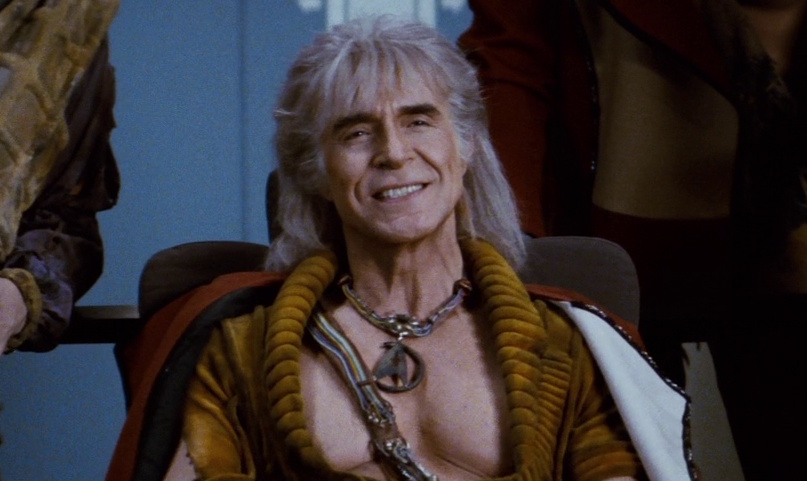
Still frame from Star Trek II: The Wrath of Khan showing a close-up of Khan aboard the USS Reliant.
Khan sporting his famous necklace.

Look at Khan’s outfit when Chekov and Captain Terrell encounter him and his surviving crewmates on Ceti Alpha V. After he takes off his overcoat, Khan is wearing a necklace which appears to be made from a damaged Motion Picture-era Starfleet badge – or a monster maroon belt buckle, perhaps. But how did he acquire this item? Khan and his people have been marooned on the planet since the time of The Original Series – years before either of those uniform styles were in use.

If Khan was wearing a piece of a Starfleet uniform, surely he should be wearing one of the gold, red, or blue shirts that we’re familiar with from The Original Series – or perhaps a pair of Starfleet boots from that era! It’s always stood out to me as a bit of an oddity of apparel; when you look at his necklace more closely, it’s clearly worn and weathered indicating it’s something he’s kept for years – perhaps as a symbol of his quest for vengeance against Kirk and Starfleet. But given that no Starfleet ships visited the Ceti Alpha system in between the events of Space Seed and The Wrath of Khan, it’s an item he simply shouldn’t have had access to.
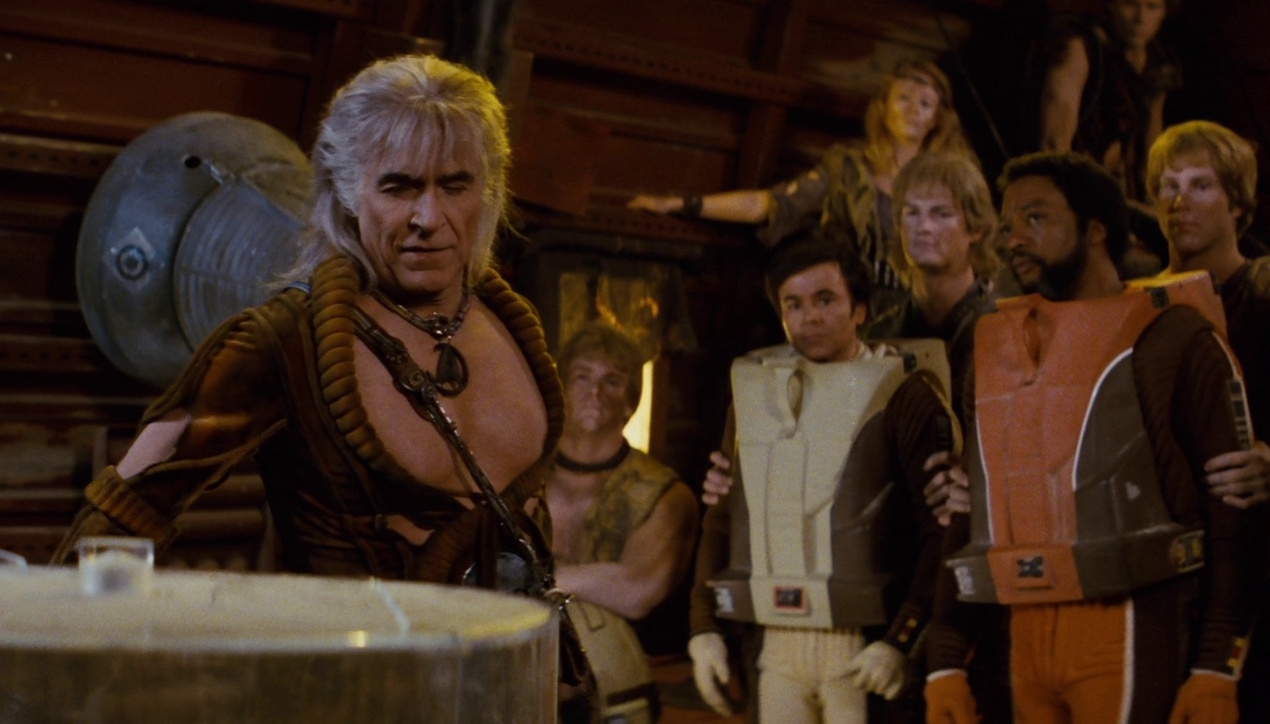
Still frame from Star Trek II: The Wrath of Khan showing Khan, Chekov, Captain Terrell, and several augments aboard the derelict Botany Bay.
Khan was already wearing the necklace when Chekov and Terrell arrived.

If Khan started wearing the necklace after his encounter with Chekov, I’d say that he took the piece from him or from someone else on Reliant’s crew. But he clearly converted part of a Starfleet uniform into this necklace during his time on the planet, before his meeting with the crew of the Reliant – so that explanation doesn’t work.

There’s no getting around the simple fact that Khan shouldn’t have this badge or belt buckle. Nothing like it was seen in The Original Series, and even if we extend our search to other 23rd Century shows like Discovery or Strange New Worlds, very generously assuming that another Starfleet vessel visited Ceti Alpha V before the destruction of Ceti Alpha VI, there are still no comparable badges, buckles, or anything with a Starfleet delta of the right shape and size for Khan to convert into a necklace. Unless he used his people’s very limited resources to smelt a perfect Starfleet delta the exact same shape and size… I don’t know where he got it from!

Number 2:
Aren’t the Cherons (or Cheronians) extinct?
Star Trek: Section 31
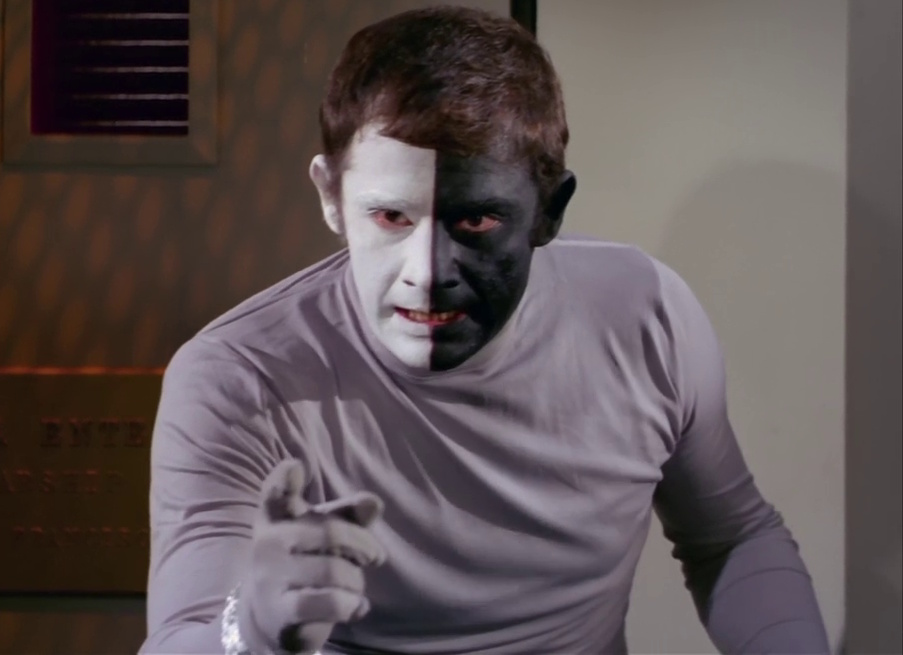
Still frame from Star Trek: The Original Series Season 3 showing Lokai, a black-and-white alien from the planet Cheron.
Lokai, one of the last surviving members of his race.

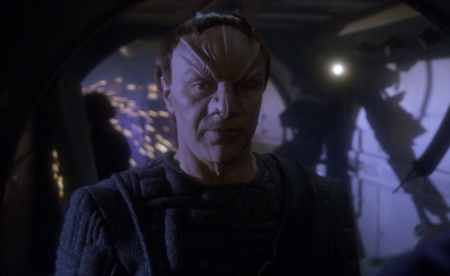
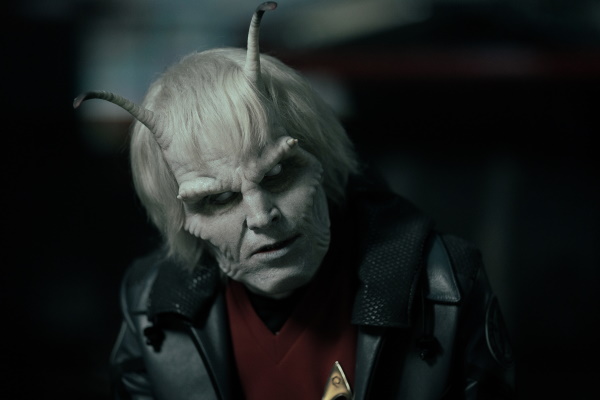
In the recent Section 31 TV movie (which you can read a review of by clicking or tapping here) we meet a character aboard Georgiou’s space station who looks very similar to a Cheron/Cheronian. The Cherons were encountered in the iconic episode Let That Be Your Last Battlefield – where the final two members of the species met Kirk and the crew of the Enterprise.

I like Let That Be Your Last Battlefield, and it’s an episode with a disappointingly timeless message about how racism and division will eventually lead to conflict, war, and extinction. The entire point of the story was that the Cherons wiped themselves out because they couldn’t get over their hatred of one another – even though, to us, they appeared to be the same species. It’s a message that was poignant at the time it was written – with the American civil rights movement ongoing – and has remained so to this day.

Still frame from Star Trek: Section 31 showing the character of Virgil.
Is Virgil from Section 31 meant to be a Cheron?

Section 31 confused me with its Stardate and therefore its place in the timeline – but no matter whether it was meant to be set in the mid-23rd Century or the early 24th Century, there simply shouldn’t be any surviving Cherons left. If Section 31 takes place before Let That Be Your Last Battlefield, then I guess technically two members of the species remain. But if, as the producers have told us, the film takes place in between The Undiscovered Country and The Next Generation, then the entire species is extinct – wiped out because they couldn’t overcome their hatred for one another.

Of all the things modern Star Trek could’ve chosen to retcon… the survival of the Cherons isn’t one I’d have wanted to see. It serves no purpose to bring in a character like that as a one-off campy joke, and furthermore, it undermines the powerful message of a classic story. My personal head-canon (which I really should write up one day) is that this character at Georgiou’s bar wasn’t actually a real Cheron, but someone basically cosplaying as one. I think that’s actually the least-bad spin I can put on the matter!

Number 3:
Does the Enterprise-D’s saucer section have warp drive or not?
Star Trek: The Next Generation
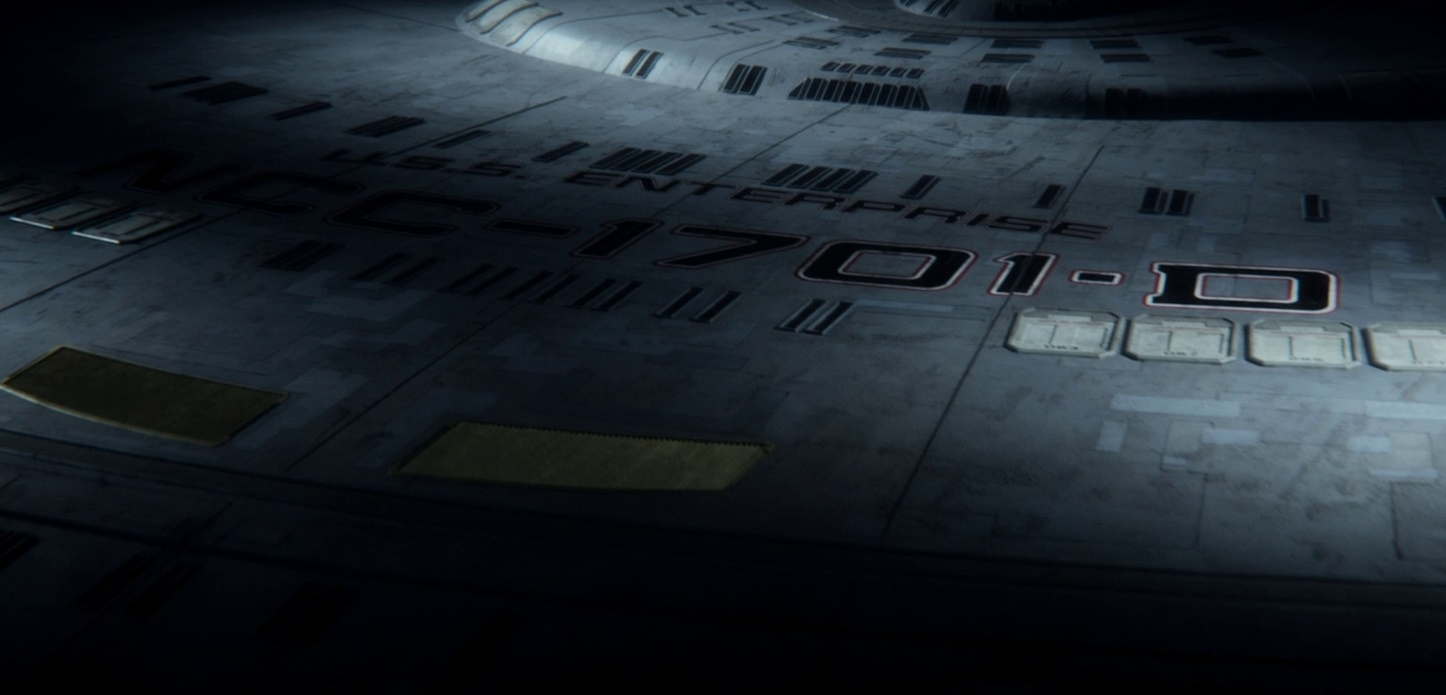
Still frame from Star Trek: Picard Season 3 showing a close-up of the Enterprise-D's saucer.
Close-up of the Enterprise-D’s saucer section.

According to most sources I can find – including in episodes where saucer separation occurs or is mentioned – the Enterprise-D’s saucer section has impulse engines only. Impulse engines allow for travel at speeds below warp one – i.e. below the speed of light. But this seems to contradict not only what we see on screen in episodes like Encounter at Farpoint… but the entire point of saucer separation as it’s explained in the show.

Except for situations like a warp core breach, where the destruction of the ship is imminent, what’s the main purpose of saucer separation? As stated in Encounter at Farpoint, The Best of Both Worlds, and other episodes, the star-drive section is where most of the Enterprise-D’s heavy armaments are – so the point of saucer separation is to evacuate civilians, scientists, and other non-combatants. The saucer section can be commanded by a junior officer with orders to set course for the nearest safe system or starbase, getting families and scientists out of the danger zone or battlefield. The star-drive section is then free to engage the enemy.
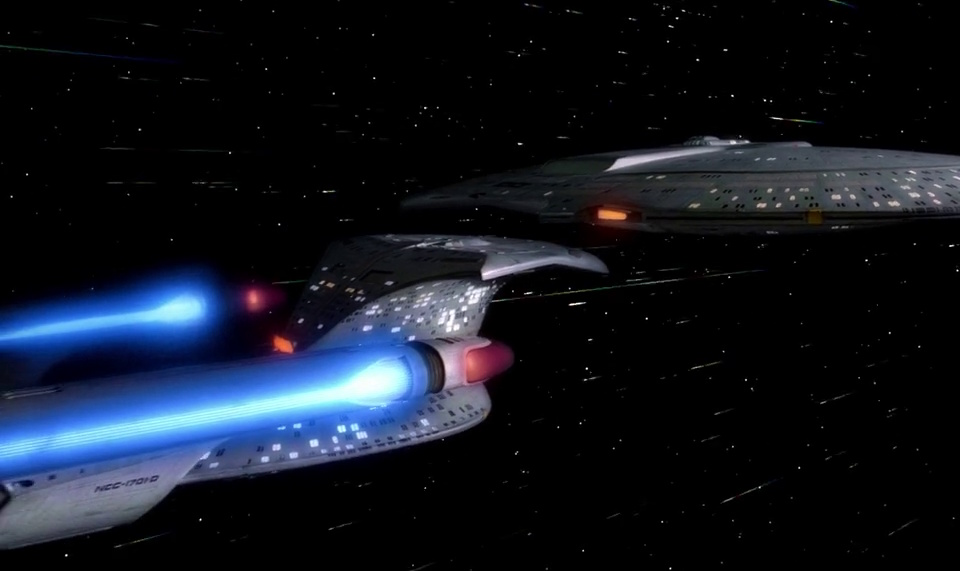
Still frame from Star Trek: The Next Generation Season 1 showing the Enterprise-D initiating a saucer separation.
Saucer separation in progress.

But at sub-light speeds, this won’t work. Any enemy ship could easily catch up to and overtake a fleeing saucer section travelling at impulse, or hit it with a torpedo or disruptor blast while it’s still in range. And at impulse speeds the saucer section would be decades away from help even if it was relatively close to a friendly base or star system. That’s not to mention that, in Encounter at Farpoint, the saucer section travels an apparently sizeable distance under its own power to reach Deneb IV after the encounter with Q. The Enterprise-D was at warp – apparently not in the Deneb system – yet the saucer was able to travel all that way, either at warp or at faster-than-light speeds, which seems to contradict what we know of the Enterprise-D and its capabilities.

So does the saucer section have warp engines? Or if saucer separation happens at warp, can the saucer cruise at warp for a while before slowing down? I think that contradicts what we know of how warp drive works and how warp bubbles are generated and sustained by warp cores… but there’s at least a degree of ambiguity there, I guess. What still doesn’t make sense, though, is how launching the saucer section at sub-light speeds is supposed to help the ship’s civilian crew escape from danger in a galaxy populated by warp-capable villains.

Number 4:
Why can’t the crew of the USS Reliant count to six?
Star Trek II: The Wrath of Khan
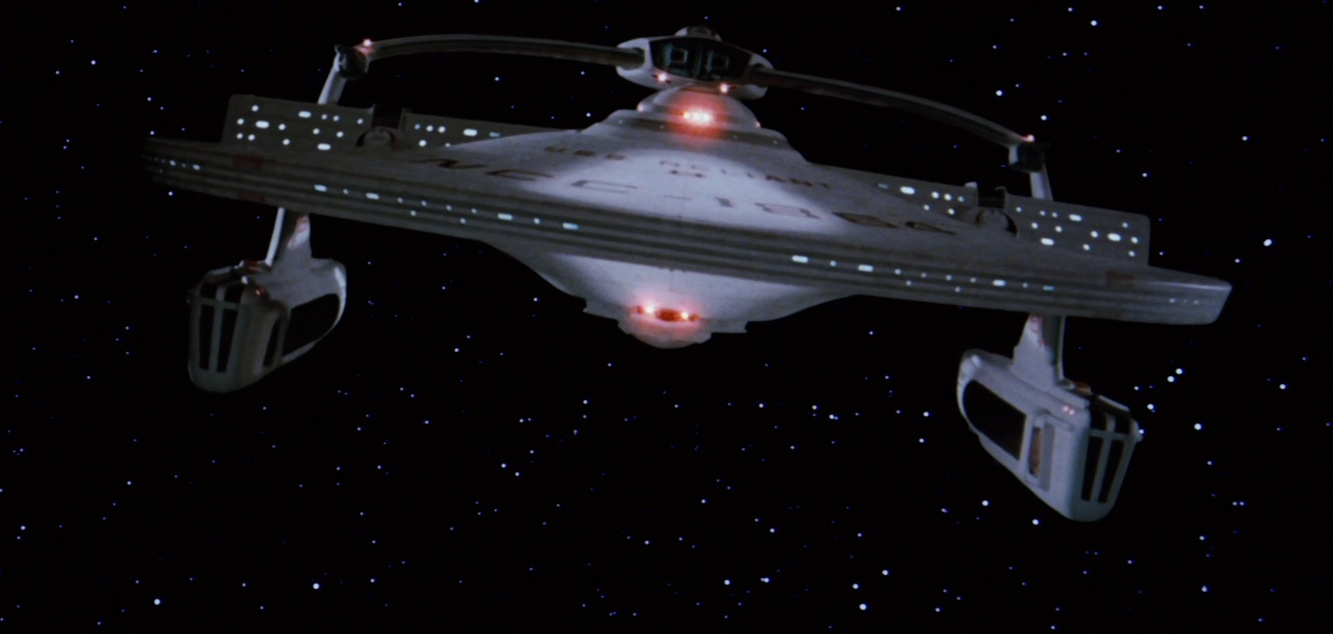
Still frame from Star Trek II: The Wrath of Khan showing the USS Reliant head-on.
The Miranda-class USS Reliant.

I know, I know: we’ve done The Wrath of Khan already! But this one really is dumb if you stop to think about it, so it’s definitely making the list. When the USS Reliant was scouting for planets as part of the Genesis project, it entered the Ceti Alpha system – a system that Starfleet has visited at least once before. The crew knew that there were supposed to be six planets… but no-one aboard can count, apparently.

Somehow – and I have no idea how this could’ve happened in the 23rd Century with all the technology aboard the USS Reliant – the crew mistook Ceti Alpha V for the destroyed Ceti Alpha VI, leading to them running into Khan and his band of augments. But there’s no way a mistake this glaringly obvious should’ve been able to happen at all.
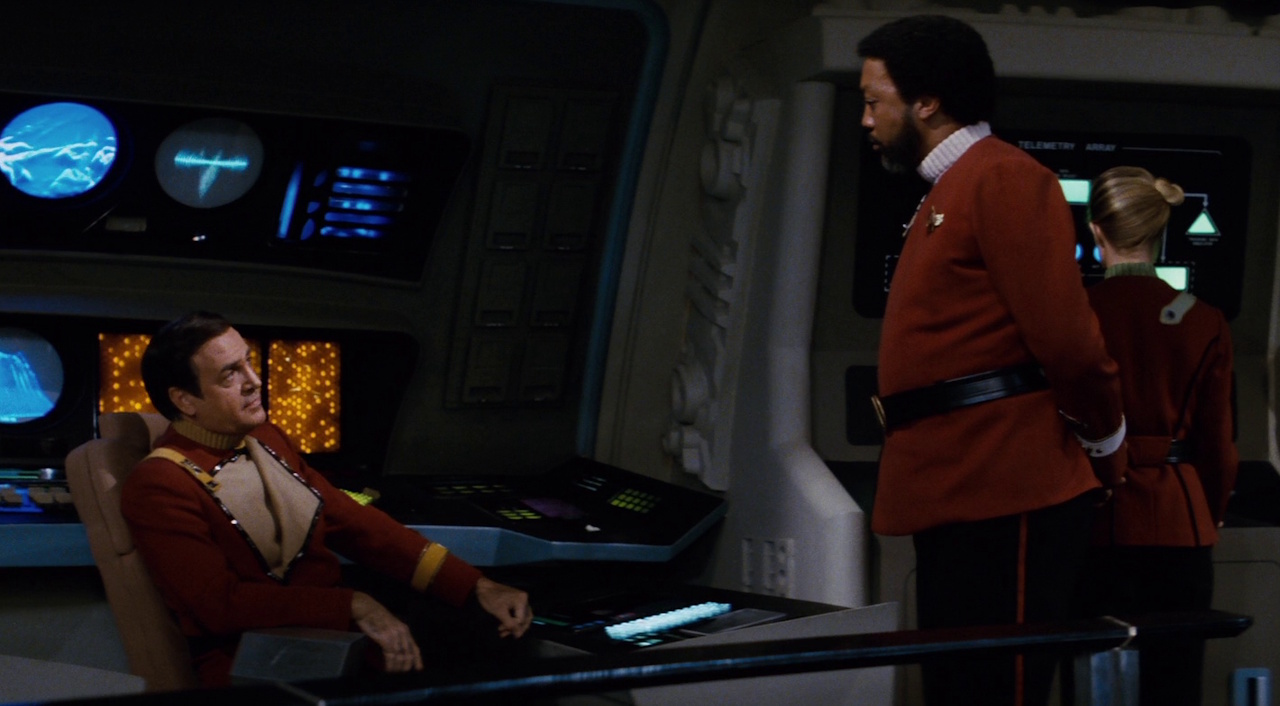
Still frame from Star Trek II: The Wrath of Khan showing Captain Terrell, Commander Beach, and another officer on the bridge of the USS Reliant.
Three senior officers on the bridge of the USS Reliant.

Upon entering the system – or hours ahead of arriving, using long-range sensors – Reliant’s crew should’ve noticed that, y’know, an entire planet is missing. If nothing else, the debris or dust cloud left behind by the explosion of Ceti Alpha VI – which is unlikely to have dissipated fully in a few short years – should’ve been a dead giveaway. But even if some kind of solar wind blew all the dust and rocks far outside the system, there were still only five planets where there should’ve been six! You’d think someone would’ve noticed this and at least mentioned it to the captain.

That’s to say nothing of Starfleet’s apparent lack of record-keeping. The Ceti Alpha system should’ve been flagged up as containing a dangerous colony of criminals: the augments. We know, thanks to the likes of Strange New Worlds, that Khan and his people were still notorious centuries after they tried to rule all of Earth, so surely Starfleet would want to prevent unwitting starships from stumbling upon their colony. The Talos system is restricted by Starfleet for much the same reason, as we saw in The Cage. But even if Kirk conveniently forgot to record that mission or tell Starfleet what became of Khan… why couldn’t anyone on the USS Reliant count to six?!

Number 5:
Can’t ships just fly over or under the Galactic Barrier?
Star Trek: The Original Series, Star Trek: Discovery
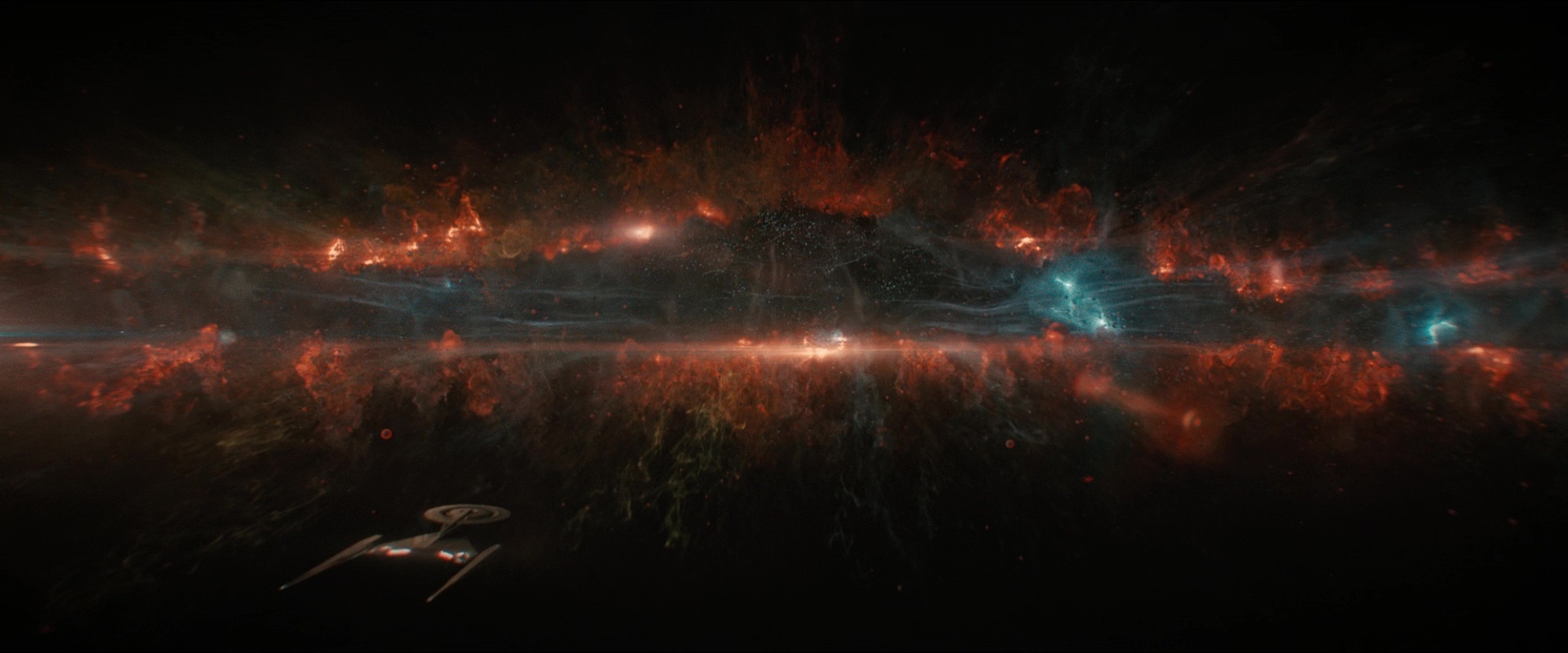
Still frame from Star Trek: Discovery Season 4 showing the USS Discovery at the Galactic Barrier.
The Barrier at it appeared in Discovery.

Star Trek has, on occasion, exhibited what Mr Spock might call “two-dimensional thinking.” By that I mean that many ships and objects in space appear as if they’re on a perfectly flat plane – but space is three-dimensional. One example of this appears to be the Galactic Barrier – the forcefield-like object that apparently surrounds the edge of the galaxy, preventing spacecraft from leaving.

Even in Discovery, though, which is the Galactic Barrier’s most significant appearance to date, the phenomenon (which doesn’t exist in real life) appears to be a mostly two-dimensional ring around the edge of the galaxy rather than a three-dimensional bubble. Which raises a simple question: why not simply fly over or under it? Starships are obviously capable of manoeuvring in three dimensions, so why fly through something you could easily fly around?
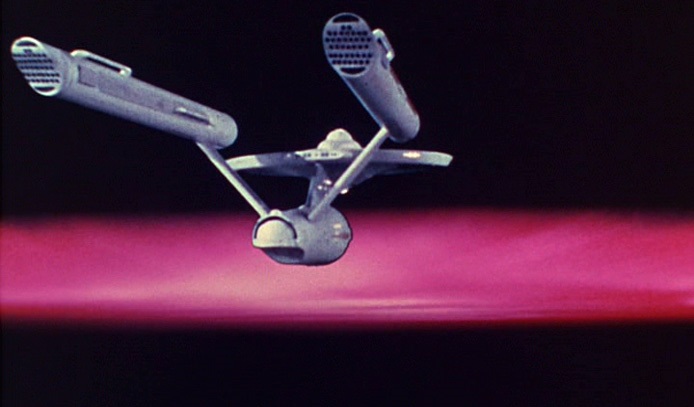
Still frame from Star Trek: The Original Series Season 1 showing the USS Enterprise approaching the Galactic Barrier.
The USS Enterprise approaches the Galactic Barrier.

Unless the Barrier is meant to surround the entire galaxy from all possible angles, there’s not really a good explanation for this. The way it’s been depicted on screen makes it seem like it’s something any starship could easily get around, even if doing so would take a bit longer. If this was a one-off visual effect from The Original Series I might be tempted to let it lie, but Discovery brought back the Galactic Barrier in its fourth season, presenting it as a pretty significant hurdle for Captain Burnham and the crew to overcome.

As an aside, I’m not sure that was a great idea! There are some elements of The Original Series, The Animated Series, and even from early in The Next Generation that just about work in context… but wouldn’t really translate well to a story made today. For me, as I think I said at the time of Discovery’s fourth season, the Galactic Barrier is one of them. And the way it’s presented and visualised on screen just kind of hammers home how two-dimensional some of the franchise’s space sequences can feel.

Number 6:
Why is artificial gravity always the last system to fail when a ship is damaged?
Star Trek VI: The Undiscovered Country et al.
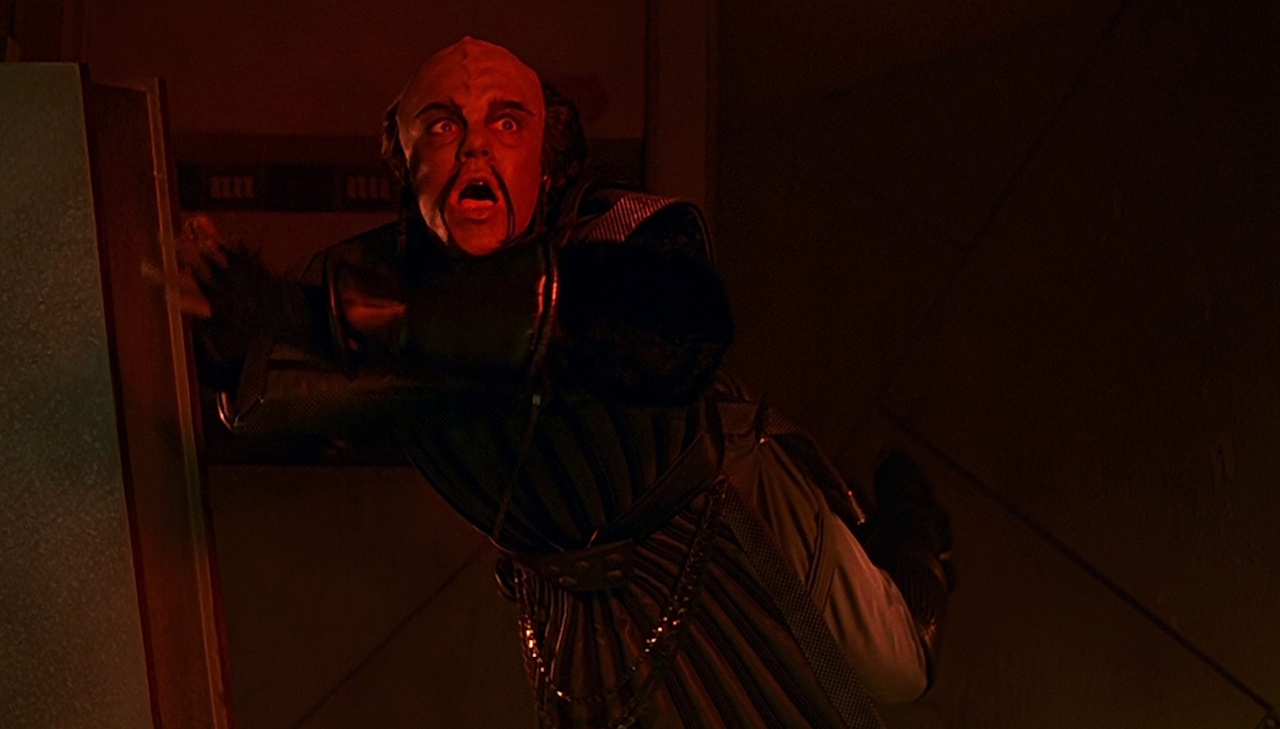
Still frame from Star Trek VI: The Undiscovered Country showing a Klingon floating helplessly.
A Klingon officer floating after his ship’s artificial gravity was knocked offline.

I think I can count on one hand the number of times a starship’s artificial gravity has been damaged in Star Trek. The only time it was plot-relevant was in The Undiscovered Country, where the damage to the artificial gravity on the Klingon ship Kronos One was instrumental to the plot to assassinate Chancellor Gorkon. But aside from that… can you think of a single time in the franchise’s 950 episodes and films where a ship has lost gravity?

We’ve seen starships take a real beating sometimes: the Enterprise in The Wrath of Khan, Voyager in Year of Hell, the NX-01 in Damage, and even non-Starfleet ships like the Cardassian vessel in The Wounded, or the Romulan warbird in Balance of Terror, but none of them ever lost their artificial gravity. This system appears to be more robust even than life-support, which we’ve seen fail on a number of occasions while artificial gravity was still operational.
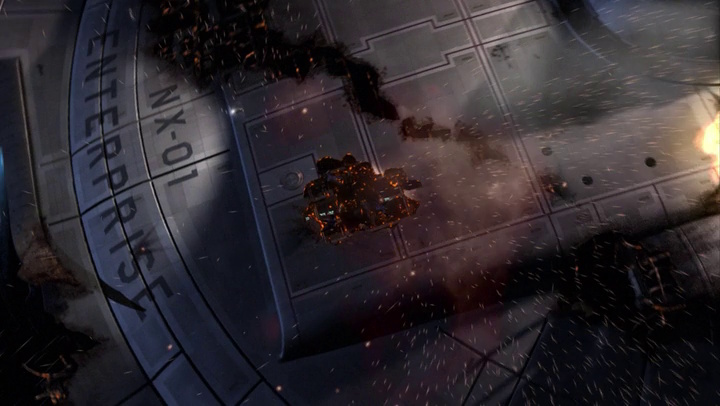
Still frame from Star Trek: Enterprise Season 3 showing the NX-01 Enterprise heavily damaged.
Even serious damage, such as to the NX-01 Enterprise pictured here, doesn’t usually stop artificial gravity from functioning.

You’d think prioritising something like breathable air and a survivable temperature would take precedence over artificial gravity, with ships being designed in such a way that life-support would be the most resilient and sturdy system. I know there’s some ambiguity in the way these technologies work in Star Trek, but artificial gravity must require some amount of power to function – and even if it’s powered by a wholly separate system, anything that disables the entire ship should deactivate artificial gravity. It would also make a logical target during ship-to-ship combat, as knocking out an opponent’s gravity would cripple their ability to operate the ship.

There are even times where disabling artificial gravity would be to the advantage of a crew trying to defend their ship. Perhaps the best example of this is the Borg attack on the Enterprise-E in First Contact, but there are other times where a boarding party, raiders, or pirates could have been at least slowed down and hampered if the crew deactivated artificial gravity on one or two decks. I suppose it’s good for Star Trek that the way artificial gravity works is deliberately vague, and it’s one of those “you’ve just gotta suspend your disbelief” things. But from an in-universe point of view, the apparently indestructible nature of this system, and the overlooked tactical advantages of trying to disable an adversary’s artificial gravity, don’t make a lot of sense.

Number 7:
Shouldn’t Starfleet have persevered with the Spore Drive?
Star Trek: Discovery
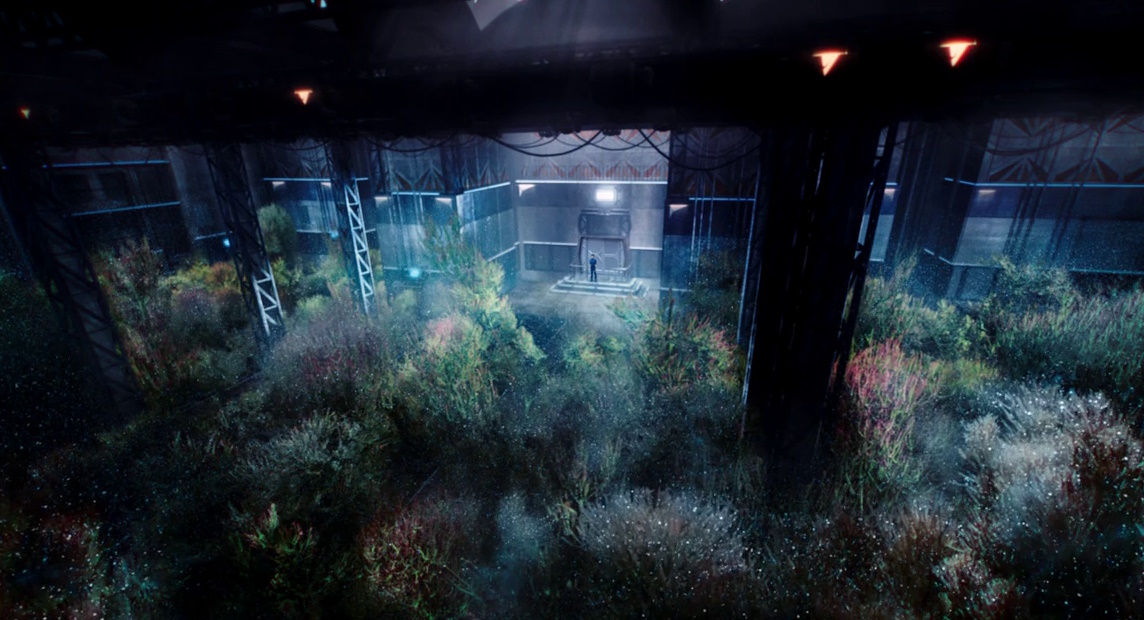
Still frame from Star Trek: Discovery Season 1 showing the mushroom cultivation area aboard the ship.
The cultivation bay aboard the USS Discovery.

After the loss of the USS Glenn and the apparent destruction of the USS Discovery, we’re led to believe that Starfleet abandoned its Spore Drive programme – even though the technology was proven to work and would be beyond useful to the organisation. For Starfleet, with its dual military and scientific missions, the Spore Drive was a phenomenal leap forward with so many applications. I genuinely cannot believe that they’d just abandon it after a few setbacks – especially after the Klingon Empire had come to learn of its existence.

We would later see, in Discovery’s third season, that basically any empathic race could – in theory – interface with the Spore Drive. That doesn’t seem like such a huge leap that Starfleet couldn’t have figured it out over time, especially with races like the Betazoids and Vulcans on hand. But even if using an empath as a navigator wasn’t possible, it still seems like such a ridiculously overpowered and useful piece of kit that Starfleet – and Section 31 in particular – would want to continue to develop it.
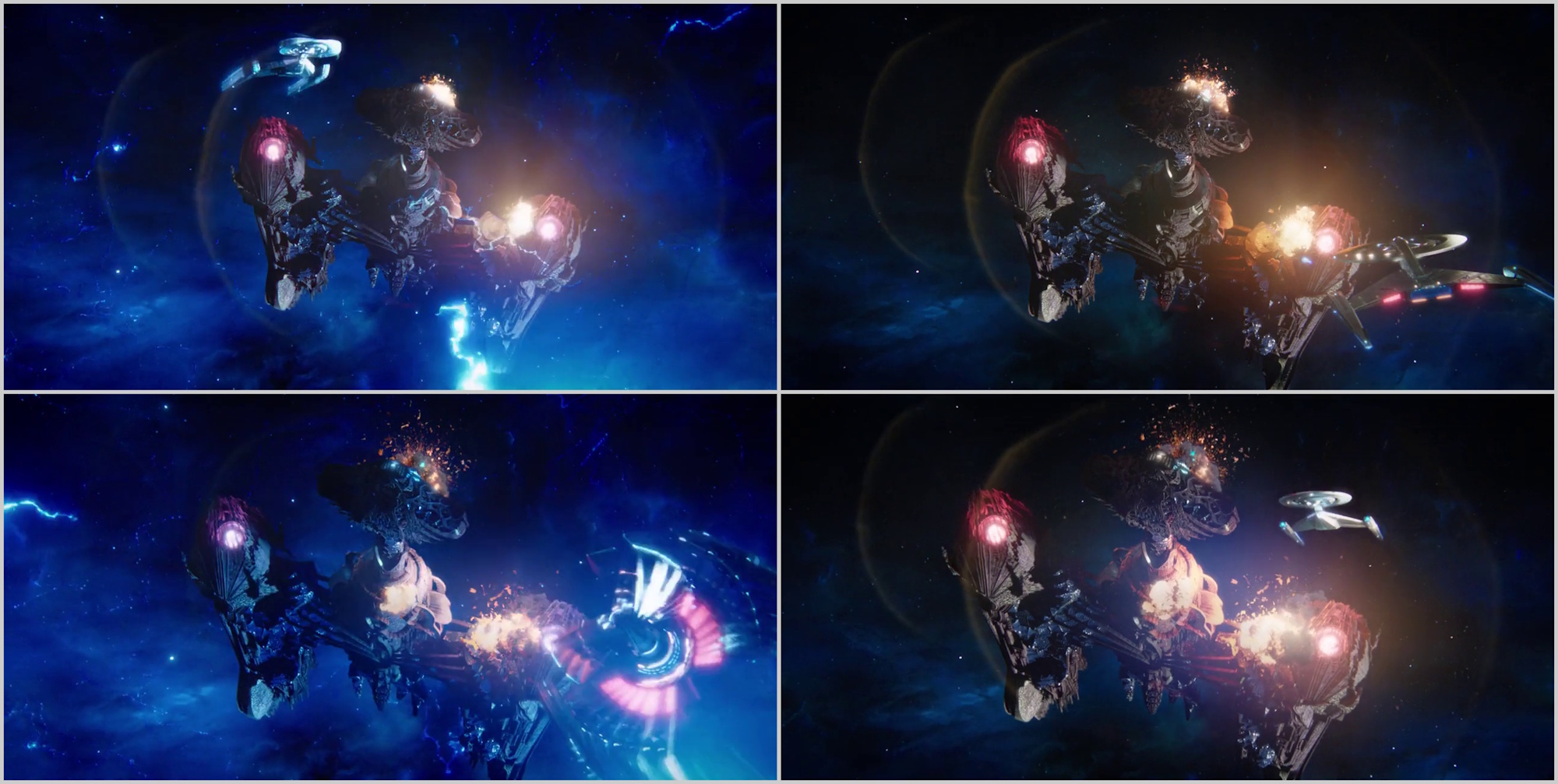
Four still frames from Star Trek: Discovery Season 1 depicting the USS Discovery at the Battle of Pahvo.
The Battle of Pahvo (pictured) proved the Spore Drive’s worth as a military tool.

Look at the Spore Drive’s capabilities. Two of its biggest achievements were cracking the Klingons’ cloaking device – becoming basically invulnerable to attacks in the process – and leaping tens of thousands of light-years across the galaxy to the planet Terralysium. For Starfleet’s military, the Spore Drive’s ability to jump so fast that attacks from disruptors and torpedos are ineffective is huge – it could redefine starship combat in the Alpha Quadrant. And for the organisation’s mission of exploration, being able to jump to literally anywhere in the galaxy renders warp drive obsolete and would mean Starfleet can investigate any interesting-looking phenomena with ease – while still being back home in time for tea.

The Spore Drive is an example of a “prequel problem;” if Discovery had been set years or decades after Nemesis – in the same period as Picard, for example – then it wouldn’t be an issue. We could simply say that the Spore Drive would become Starfleet’s new method of travel. But because Discovery was set before The Original Series, I don’t think there’s any way to create a satisfactory explanation for why Starfleet, Section 31, or other factions didn’t continue to develop and refine it.

Number 8:
Why would the Xindi fire a small weapon at Earth months ahead of their main attack?
Star Trek: Enterprise
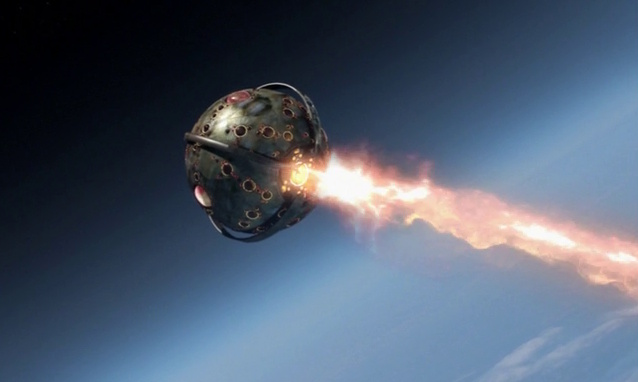
Still frame from Star Trek: Enterprise Season 2 showing a small spherical Xindi weapon firing.
The Xindi’s first weapon.

Sun Tzu, the legendary Chinese general, wrote two-and-a-half thousand years ago that a good commander should “always mystify, mislead, and surprise the enemy if possible.” And throughout history – from the ancient world to the Second World War and beyond – surprise attacks and misdirection have been incredibly powerful tools that successful generals and strategists have employed. So why would the Xindi – backed up by a faction from the far future, no less – launch a minor attack that alerted Earth and humanity to their much larger upcoming attack?

If the Xindi needed to test the range and abilities of their weapon, they could pick another target in a different system. This target would be a comparable distance away from where they planned to launch their weapon, and could also be a planet of roughly the same size and mass as Earth. This would give their scientists and engineers the data they needed without compromising the secrecy of their operation. All they achieved by targeting Earth with their initial, much smaller weapon was alerting humanity and Starfleet to their existence – which ultimately set the stage for their defeat.
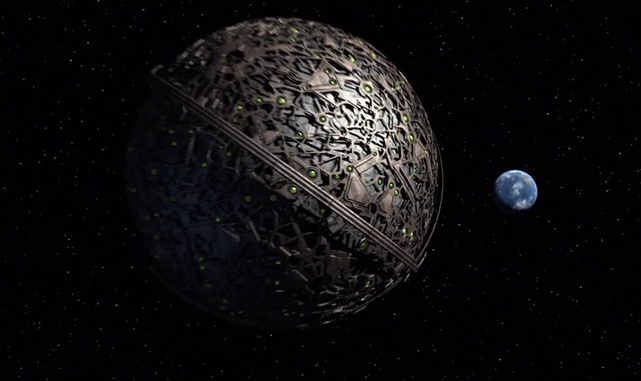
Still frame from Star Trek: Enterprise Season 3 showing the Xindi weapon arriving at Earth.
The much larger second Xindi weapon approaches Earth.

This is a military blunder so exceptionally basic that, if I were the Sphere-Builders, I’d have cut all contact with the Xindi and written off the entire operation. The miniature version of the weapon wasn’t designed to deal the kind of damage that the larger version was, but it was still damaging enough to put all of humanity and Starfleet on full alert – kick-starting a chain of events that led to Captain Archer confronting and stopping the Xindi and their Sphere-Builder allies.

All the Xindi would’ve had to do was pick a different target for their weapons testing. A planet the same size as Earth in a system roughly the same distance away would be ideal – or an unarmed probe sent to Earth if scouting that route was deemed necessary. Even if the Xindi and Sphere-Builders were so cocky and arrogant that they considered themselves to be unstoppable, it was still a catastrophic, primary school-level mistake to send the small weapon directly to Earth months before the larger weapon was ready.

Number 9:
How did Nero’s trip back in time create an alternate reality instead of changing the prime timeline?
Star Trek (2009)
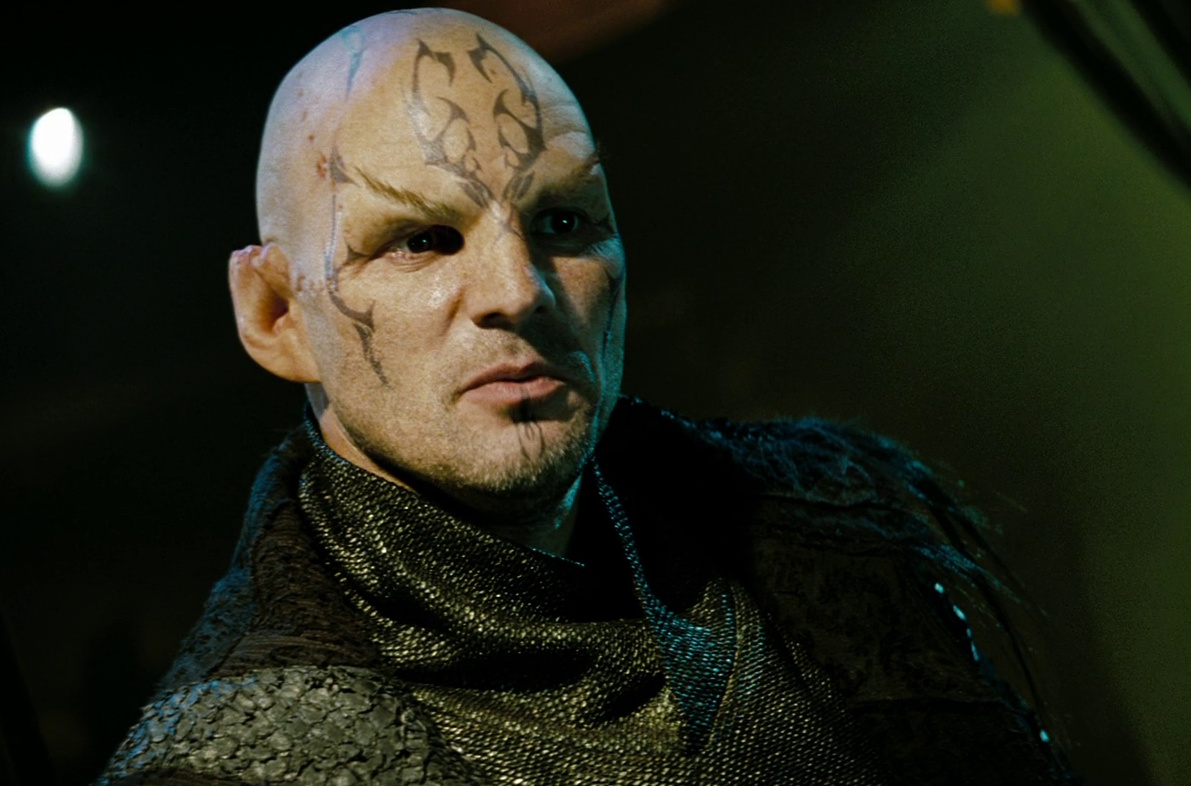
Still frame from Star Trek (2009) showing a close-up of Nero.
Nero.

The way it’s explained on screen in Star Trek, Nero travelled back in time from 2387 to 2233 via an artificial black hole created by Red Matter. Somehow, though, the changes Nero and later Spock would go on to make to the past didn’t overwrite the events of the prime timeline, but exist in their own separate universe. This doesn’t seem to gel with what we know of time travel and temporal paradoxes in Star Trek.

Starfleet vessels have encountered all kinds of temporal phenomena over the years, none of which led to the creation of a parallel universe. Even in cases where ships got caught up in time-travel shenanigans, the end result was either a permanently altered timeline – as in stories like The Voyage Home or Past Tense – or overwritten events that no-one remembered – as in stories like Cause and Effect or Year of Hell. None of these led to the creation of a permanent alternate reality that persisted after the phenomenon that created it had been dealt with – so why did the Red Matter black hole do so?

Still frame from Star Trek (2009) showing the Narada emerging from a black hole.
Nero’s ship, the Narada, arrives in the 23rd Century.

The best explanation I can come up with is this: Star Trek exists in a multiverse. Along with to the prime timeline, the Mirror Universe, and others that we’ve seen, there must be multiple additional parallel universes – some of which are identical to or indistinguishable from the prime timeline. Somehow, Red Matter creates a portal between universes, allowing for travel from one to another. Nero and Spock entered a parallel universe identical to the prime timeline – but it’s a parallel universe that already existed before they arrived.

That’s a pretty convoluted explanation, and it isn’t explained that way on screen. Instead, the alterations to the timeline that Nero perpetrated – from the destruction of the USS Kelvin to the attack on Vulcan and beyond – should have permanently altered the prime timeline based on what the characters told us and what we already know from other iterations of Star Trek.

Number 10:
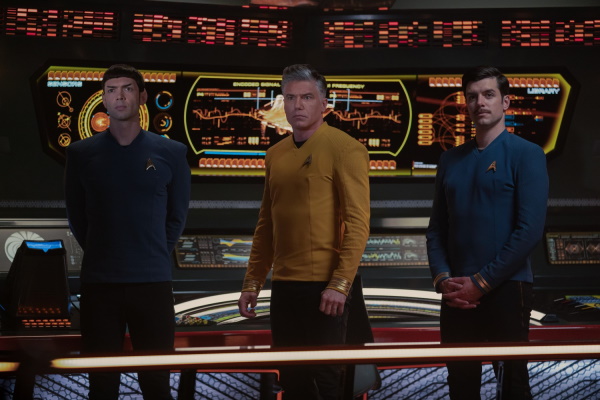
Couldn’t Captain Pike just retire and live as a hermit?
Star Trek: Strange New Worlds
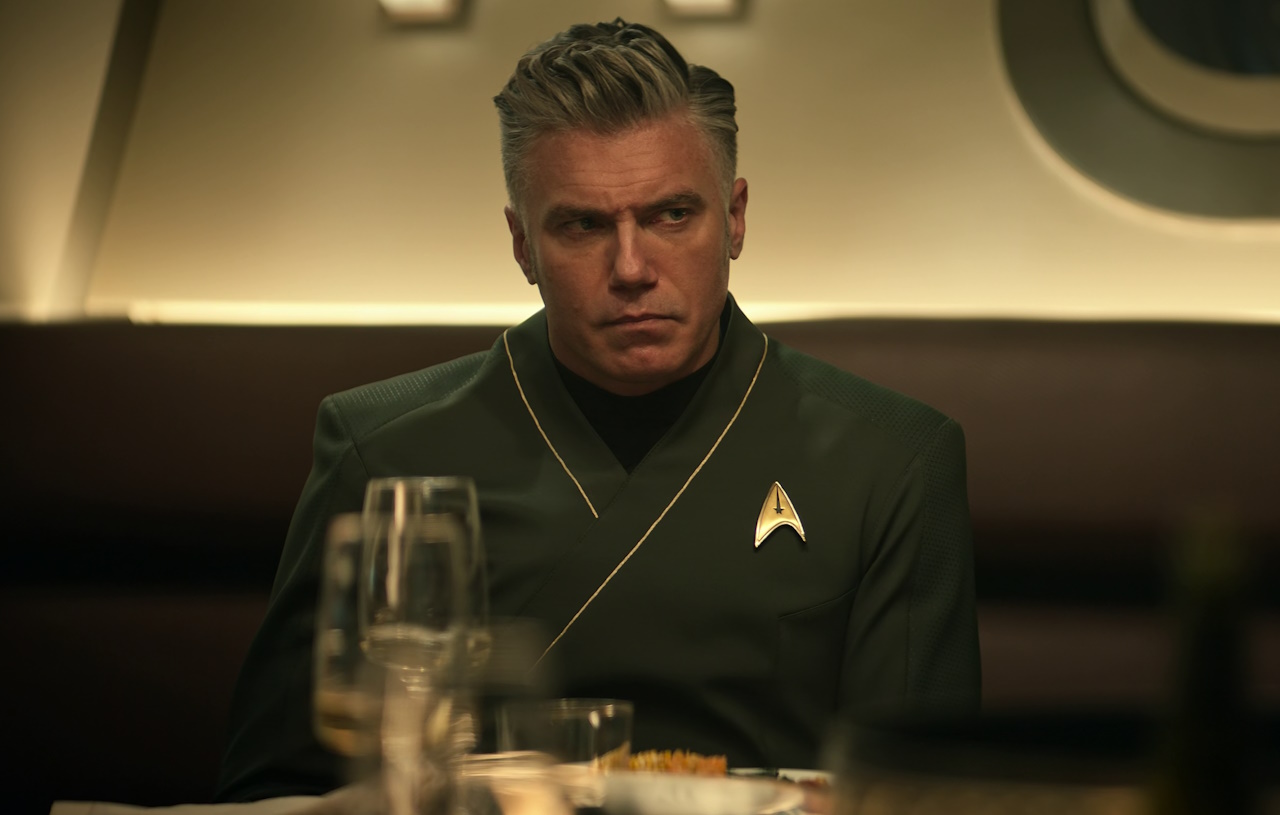
Still frame from Star Trek: Strange New Worlds Season 2 showing Captain Pike at a diplomatic dinner.
Captain Christopher Pike.

I found Pike’s arc in Discovery and the first season of Strange New Worlds to be interesting and relatable. I’ve been in a similar position to Captain Pike: being told that my health was going to get dramatically worse and knowing that it’s inevitable. It made Pike an incredibly sympathetic character, and one whose story brought a tear to my eye more than once. But… is Pike’s devastating accident and disability genuinely unavoidable?

The more Pike comes to learn about the future, the more he seems to uncover ways to avoid his supposedly-inevitable fate. In the fantastic Season 1 episode A Quality of Mercy, Pike learned – thanks to a time-travelling version of himself – that if he avoided his fate but remained in Starfleet, he’d accidentally trigger a chain of events that led to a devastating war between the Federation and Romulans. This conflict was something only Kirk and Spock could prevent, but Pike’s place on the bridge and Spock’s serious injury would keep the war going and prevent any hope for peace in the future. This seemed to strengthen Pike’s resolve and set him back on course for the accident that would leave him disabled.
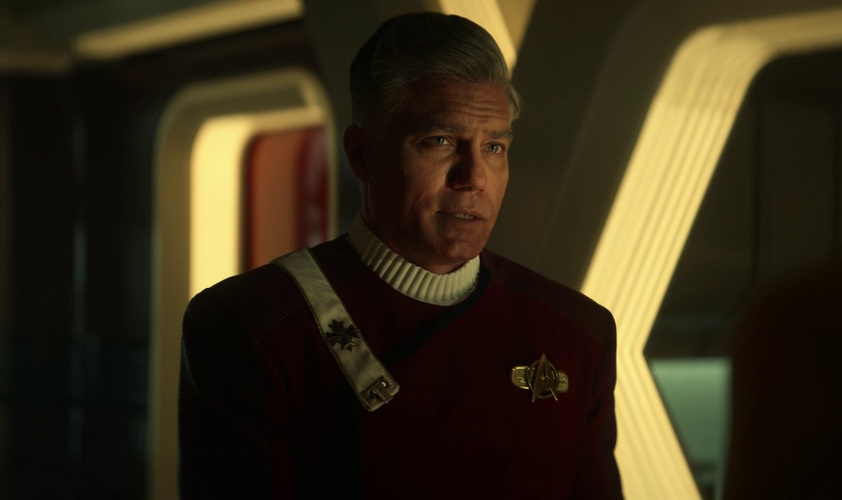
Still frame from Star Trek: Strange New Worlds Season 1 showing a future Captain Pike in a 'monster maroon' uniform.
Pike in an alternate future.

But… couldn’t he choose a radically different path? Sure, remaining in Starfleet after he was supposed to suffer the accident led to a horrible alternate future. But if Pike resigned his commission the day before the accident and went to live in a cave somewhere, what would change? Nothing, right? Pike could remain alive and relatively healthy, enjoying a well-earned retirement without the need for Talosian mind-games, and the rest of the galaxy could continue unaffected.

Maybe we’ll find out, in Seasons 3, 4, or beyond, why that kind of scenario couldn’t work. But it seems to me that, as long as Pike kept his head down and stayed away from Starfleet and galactic affairs, there wouldn’t be any harmful side-effects. Furthermore, knowing what he knew of the Romulan incursion, he could’ve even reacted differently in that situation to prevent the conflict from escalating. I guess the point of A Quality of Mercy was to hammer home that there’s no way to predict how any changes to the timeline could affect the Federation – and that’s a fair point, I suppose. But on a personal level, I could forgive Pike for trying to wrest back control of his destiny from the Klingon time crystal that doomed him.

So that’s it… for now!
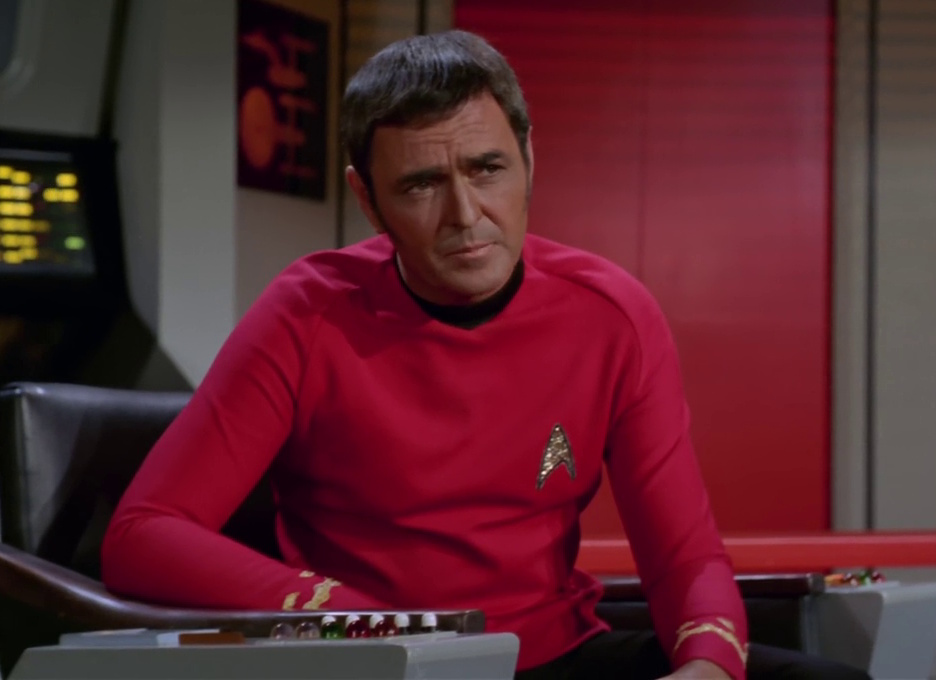
Still frame from Star Trek: The Original Series Season 3 showing Commander Scott in the captain's chair of the Enterprise.
It’s Scotty!

I hope this has been a bit of fun! Some of these things are more irritating than others, but to be honest with you, none of them are really that big of a deal. They only matter to folks like you and I – people who spend a bit too long thinking about Star Trek!

This might be a subject I’ll revisit in the future, so if your favourite little inconsistency or goof didn’t make the list this time, it’s possible I’ll get to it on another occasion. And if you want to check out my earlier list to read about ten other little things that bug me in Star Trek, you can find it by clicking or tapping here.
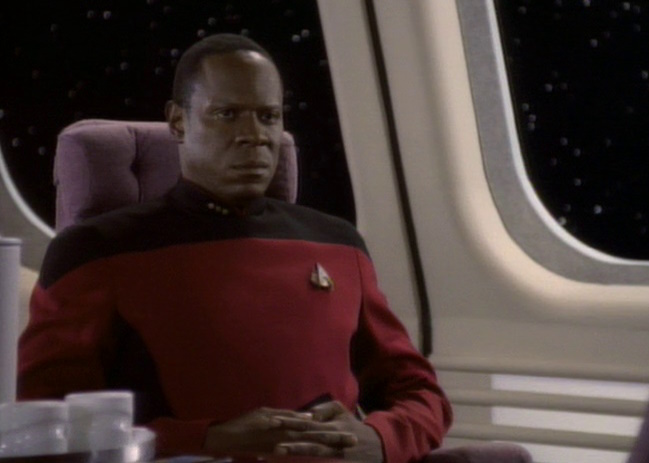
Still frame from Star Trek: Deep Space Nine Season 1 showing Commander Sisko aboard the Enterprise-D.
Commander Sisko looks rather grumpy…

Stay tuned, because there’s more Star Trek content to come here on the website as 2025 gets underway. Later this year we’ve got a new season of Strange New Worlds to look forward to, and if you missed my review of Section 31 you can find it by clicking or tapping here. I also wrote up my recollections of Voyager to mark the series’ thirtieth anniversary, and you can find that by clicking or tapping here.

Until next time… see you out there!


Most of the Star Trek shows, films, and episodes referenced above can be streamed now on Paramount+ in countries and territories where the platform is available, and may also be available on DVD and/or Blu-ray. The Star Trek franchise – including all shows, films, episodes, characters, and other properties discussed above – is the copyright of Paramount Global. This article contains the thoughts and opinions of one person only and is not intended to cause any offence.
Twenty of the best Star Trek episodes!

Spoiler Warning: There are spoilers ahead for the Star Trek franchise, including all episodes on this list. Spoilers are present for the following: Discovery Season 4, Picard Season 3, Prodigy Season 1, Strange New Worlds Season 1, and more.

So, I did a thing. A few days ago, I published a tongue-in-cheek list of what I consider to be some of the worst episodes in the Star Trek franchise. Since it went up, it’s been racking up clicks – almost immediately becoming the most-viewed piece on the website over the past few days. To balance out that list – and to claw back some of my standing as a Trekkie – I thought I shouldn’t wait any longer before writing the counterpoint!

As I said last time, I’m a huge Star Trek fan. Heck, I run a Star Trek-themed website – so obviously I like the franchise! But I’m not one of those fans who says that “everything Star Trek has ever done is perfect,” nor am I someone who wants to whitewash Star Trek and never mention the bad parts. Paramount has a marketing team to do that.

It’s the Enterprise-E!

So today, as a counterpoint to my last list, I’m going to pick twenty of my absolute favourite episodes. It should go without saying that this list is also entirely subjective, so if I exclude your favourite episode or you hate all of my picks… that’s okay! We’re all entitled to our preferences about which Star Trek stories we prefer, and there should be enough room within the Star Trek fan community for polite discussion and disagreement.

So without any further ado, let’s dive into the list!

Episode #1:
The Doomsday Machine
The Original Series Season 2

The wreck of the USS Constellation.

The Doomsday Machine is, in some respects, The Original Series in microcosm. It has everything that fans loved about the show: an exciting sci-fi premise, an incredible guest star, and a hard-hitting real-world comparison. It’s always stood out to me as one of The Original Series’ finest outings, masterfully building up tension as the unmanned weapon mindlessly carries out its directive.

The character of Commodore Decker, who was created for The Doomsday Machine, is one of the show’s most brilliant and tragic characters. His story has always been an absolutely riveting one for me – and the performance by guest star William Windom is phenomenal. The Doomsday Machine had a point to make about nuclear weapons out here in the real world, too – and coming at the height of the Cold War, less than six years after the Cuban Missile Crisis, it could hardly be more timely.

Episode #2:
Coming Home
Discovery Season 4

Captain Burnham on the bridge of the USS Discovery.

Discovery’s fourth season – like its predecessors – took a meandering and occasionally frustrating route to reach its final episode… but it was more than worth the wait! Coming Home is fantastic, and encapsulates everything that Star Trek is and always has been. There were incredibly tense and exciting moments as the Federation leapt to the defence of Earth, which was in serious danger, but those moments were coupled with the discovery of a very new and different alien race.

Seeking out new life has been at the heart of Star Trek since its inception. But, as many have pointed out over the years, Star Trek’s “new life” could often look and act very, well, human. Species 10-C, which we finally got to meet in this episode after a season-long buildup, have to be one of the most strikingly different aliens ever created for the franchise. Above all, though, Coming Home excels for its sense of optimism and hope. I’d challenge even the most ardent Discovery-avoider to give it a try.

Episode #3:
The Siege of AR-558
Deep Space Nine Season 7

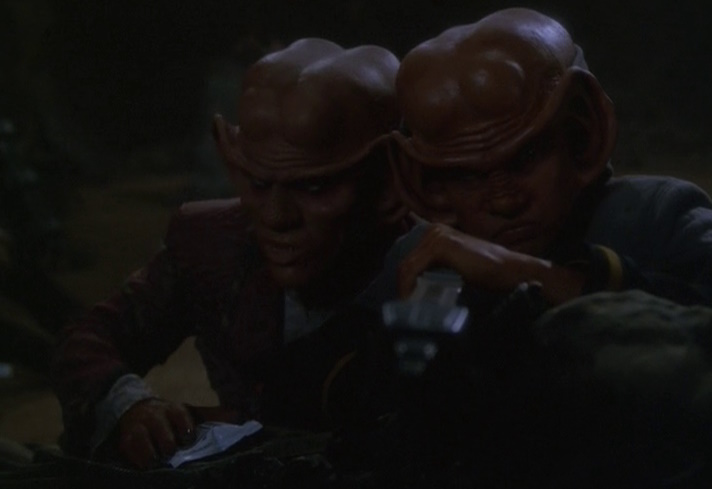
Quark and Nog.

Few Star Trek episodes truly manage to capture the feel of being at war quite so dramatically and spectacularly as The Siege of AR-558. Director Winrich Kolbe drew on his own experiences in the Vietnam War to create a claustrophobic, frightening scenario in which Federation soldiers were fighting for their lives over a nameless lump of rock. The futility of war is on display in The Siege of AR-558 in a way that Star Trek has seldom touched upon.

Nog’s character arc is one of Deep Space Nine’s best, and this episode shows why. Nog went from petty thief to Starfleet hero over the course of seven seasons, and the life-changing injury he suffered in the battle on the planetoid AR-558 would be a defining moment for him. The Siege of AR-558 is an episode that challenges many of our assumptions and beliefs about the Federation, Starfleet, and the Dominion War – and it’s an absolutely incredible watch.

Episode #4:
First First Contact
Lower Decks Season 2

Shaxs in First First Contact.

First First Contact is Lower Decks at its very best. It’s a Star Trek story through-and-through, with a challenge befalling the crew of the Cerritos that’s of a scientific and engineering nature. It’s also the perfect example of how Star Trek can tell tense and exciting stories without the need for evil villains and big set-piece battles.

Lower Decks often operates with a two-story or even three-story structure, pairing up characters and setting them off on their own adventures. But First First Contact is a comparatively rare example of the entire crew working together and taking part in the same storyline – and it works incredibly well. There are moments of high drama, tension, and emotion as the Cerritos races to save a stricken Federation starship and an uncontacted planet – and a moment of engineering genius that would rival anything Scotty or Geordi could’ve come up with!

Episode #5:
Disaster
The Next Generation Season 5

A plasma fire!

I consider Season 5 to probably be The Next Generation’s strongest overall outing, so Disaster really is the cream of the crop! This is an episode in which every main character gets to play a role in one large, connected story – but it’s a story that throws everyone far outside of their comfort zones and usual roles! The situations the characters find themselves in are tense, dramatic, and occasionally comical, because Disaster really is an episode that has it all!

The basic premise of the episode sees the Enterprise-D damaged, without power, and adrift. Troi is the senior officer on the bridge, being advised by Ro and O’Brien. Data and Riker rush to engineering to try to bring power back to the ship. Picard is stuck in a turbolift with three frightened children (his own personal hell). Worf must take care of civilians in Ten-Forward. And Dr Crusher and Geordi are trapped in a cargo bay. Everyone gets their moment in the spotlight, making Disaster a genuine ensemble piece.

Episode #6:
Vanishing Point
Enterprise Season 2

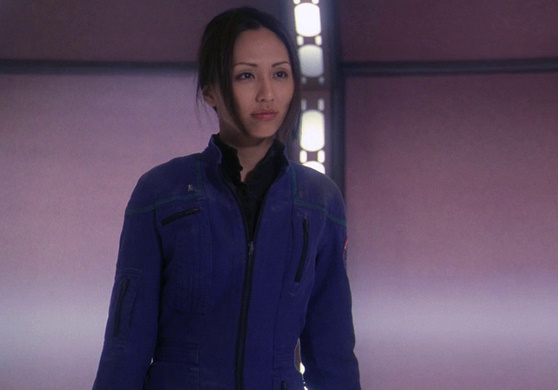
Hoshi on the transporter pad.

Although Vanishing Point’s ending is pretty cheap and uninspired, the episode itself is a truly interesting exploration of one of Star Trek’s best-known pieces of technology: the transporter. We’ve seen characters like Dr McCoy being averse to the transporter, and more transporter accidents than I can call to mind! But Vanishing Point steps back in time to when the technology was new and untested, and places Hoshi Sato at the centre of its story.

Ensign Sato was such a great point-of-view character, as her nervousness and anxiety at being out in space had already been well-established. Vanishing Point also took Hoshi outside of her usual role as communications officer, allowing her to take centre-stage in a different kind of story. Although the ending drags it down somewhat, Vanishing Point is nevertheless a ton of fun!

Episode #7:
A Quality of Mercy
Strange New Worlds Season 1

Christopher Pike as we’ve never seen him before!

Season 1 of Strange New Worlds is fantastic across the board, without so much as a single bad episode! It was difficult to pick just one for this list, but I’ve decided to go with A Quality of Mercy. This episode gets time travel just right, with Captain Pike dealing with himself from an alternate future timeline in which he avoided his devastating accident and disability. Time travel can be tricky to pull off, but A Quality of Mercy manages it.

The episode also returns to the classic story Balance of Terror, showing us an alternate outcome to the battle between Kirk and the Romulan Commander. This gives it the feel of a story “made for fans,” and Trekkies who’ve followed the franchise for a long time will surely find a lot to love here. At the core of it all is Captain Pike, a character who I find incredibly relatable. Knowing that one’s health is in decline and seeking to make a “deal with the devil” to find a solution… I’ve been there. And Anson Mount plays the whole thing – and the roles of two different Pikes – incredibly well.

Episode #8:
Equinox Parts I and II
Voyager Season 5-6

Captain Ransom.

Voyager’s fifth season ended in stunning fashion with the first part of Equinox. I was hanging on for months waiting for Part II, which brought the story to an explosive conclusion. After years lost in the Delta Quadrant, Captain Janeway and the crew finally encounter another Federation vessel – and another crew who understand what they’ve gone through. But all is not what it seems, as it turns out that the aliens attacking the small USS Equinox are actually in the right.

Equinox is a challenging episode, condemning Captain Ransom’s actions while also presenting him and (most of) his crew in a relatively sympathetic light. It’s an episode that hammers home how lucky Janeway and the crew of Voyager have been – comparatively speaking – and shows the extremes that people can be willing to go to in order to survive.

Episode #9:
The Star Gazer
Picard Season 2

Who’s this?

I debated for a long time whether I wanted to include The Star Gazer on this list. The story that it so brilliantly set up went off the rails pretty quickly in subsequent episodes, and Picard’s second season is, overall, a disappointment. But on its own, The Star Gazer is actually a pretty great episode, one that re-introduces one of Star Trek’s classic villains in a new and terrifying manner.

If the rest of Picard Season 2 had been anywhere near as good as The Star Gazer, it would be one of the best in the entire franchise! As it is, this episode almost feels like an alternate timeline, showing us what might have been! Regardless, though, it sets up a tantalising mystery, teases us with some serious development for some of the show’s supporting characters, and contains one of the best and most frightening clashes between Starfleet and the Borg that the Star Trek franchise has ever created.

Episode #10:
Homefront and Paradise Lost
Deep Space Nine Season 4

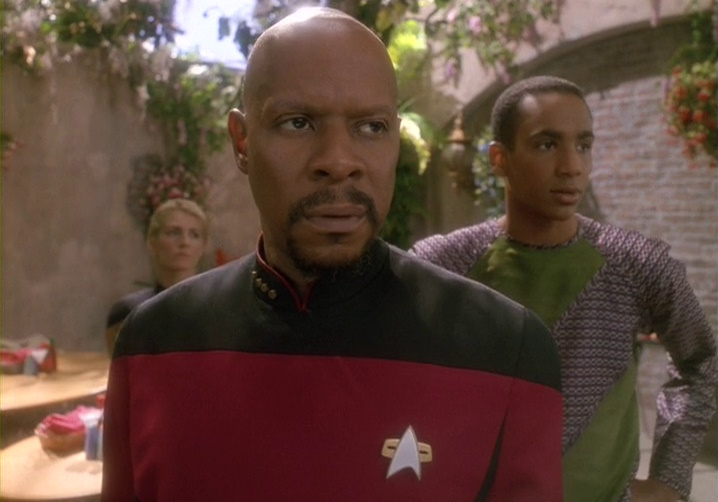
Benjamin and Jake Sisko.

Deep Space Nine had done things differently from its very first episode, and some fans weren’t wild about its darker tone. This shift away from the Federation and Starfleet being presented as an incorruptible and enlightened paradise was on full display in this pair of episodes. In between the discovery of the Dominion and the official outbreak of war, the Federation was terrified of changeling infiltrators. Feeling that politicians and bureaucrats weren’t up to the task, a renegade “badmiral” plots a coup.

Some early Star Trek stories could present the Federation as almost too perfect, and this continued into The Next Generation era. What Captain Sisko and Odo had to confront here was the idea that Starfleet officers could themselves fall prey to paranoia, corruption, and ego – and this very human reaction to the threat of infiltration felt quite relatable. Although we’re firmly on Sisko’s side, Homefront and Paradise Lost throw some moral ambiguity into the mix thanks to some complex writing and several outstanding guest stars.

Episode #11:
The Royale
The Next Generation Season 2

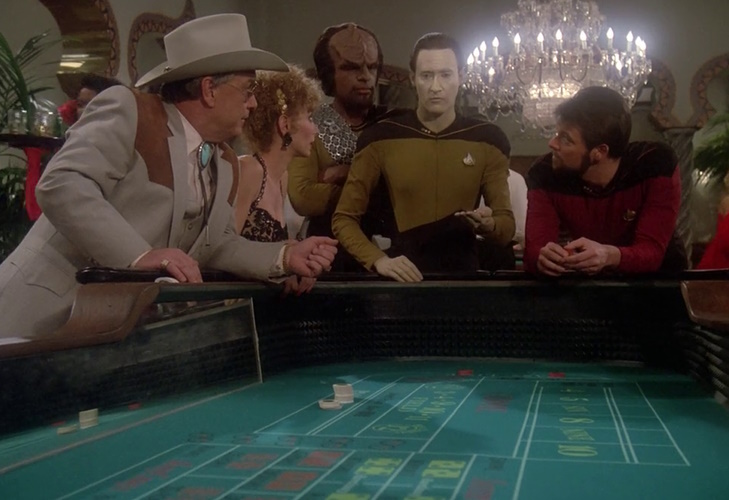
The away team gambling.

I confess that I have a soft spot for The Royale for one principal reason: it’s the earliest episode of Star Trek that I can remember watching! Although I’m sure I’d seen at least parts of other episodes prior to The Royale’s broadcast on terrestrial TV here in the UK in 1991, this is the first one I have rock-solid memories of, and it’s always carried special significance as a result. So that’s my own bias stated up front!

Bias aside, though, I think there’s a lot to enjoy in this episode. It’s the kind of story that no other sci-fi franchise would attempt, and it has an unusual and somewhat eerie feel. Imagine having to spend the rest of your life trapped in an alien recreation of a three-star hotel! That seems like a very specific kind of hell, putting a dark spin on what could’ve been a purely comical story. The idea of roaming to the farthest, unexplored reaches of space only to find an Earth hotel and a mystery is part of what made Star Trek stand out to me, and seeing Riker and the away team solve the puzzle is still an engaging watch more than three decades later!

Episode #12:
Through the Valley of Shadows
Discovery Season 2

The Klingon monastery on Boreth.

Through the Valley of Shadows reframes Captain Pike and the accident that left him disabled. The Menagerie, from the first season of The Original Series, showed us the aftermath of what happened to Pike, as well as introduced us to the character and his time in the captain’s chair. Through the Valley of Shadows took that idea to a completely new and different thematic place: Captain Pike had to choose this future for himself, making an unimaginable sacrifice in order to complete his mission and save untold numbers of lives.

We looked at one consequence of that above with the Strange New Worlds episode A Quality of Mercy. These two episodes make a fascinating pair, and the tragedy of Captain Pike takes on a whole new dimension in light of what we learn here. Pike has always been a character I find incredibly relatable, and Through the Valley of Shadows puts a distinctly “Star Trek” spin on the idea of seeing one’s own future – and knowing that illness, disability, and worsening health lie ahead.

Episode #13:
Court Martial
The Original Series Season 1

Captain Kirk with his lawyer.

Court Martial is Star Trek’s first foray into courtroom drama – a genre that the franchise would return to on multiple occasions! Captain Kirk is accused of murdering an officer under his command and attempting to cover it up, and the stakes are high! We know he couldn’t possibly be guilty, of course… but the evidence against him appears to be compelling.

Samuel T. Cogley – Kirk’s advocate – is a character I’d absolutely love modern Star Trek to revisit! Based on the “old country lawyer” character archetype, Cogley led Kirk’s defence in unorthodox fashion, and is one of the best parts of Court Martial. Along with The Conscience of the King and Charlie X, which also delve into Kirk’s backstory, Court Martial puts flesh on the bones of someone who was still a new character. Kirk’s integrity and honour are on display – and on trial.

Episode #14:
Dragon’s Teeth
Voyager Season 6

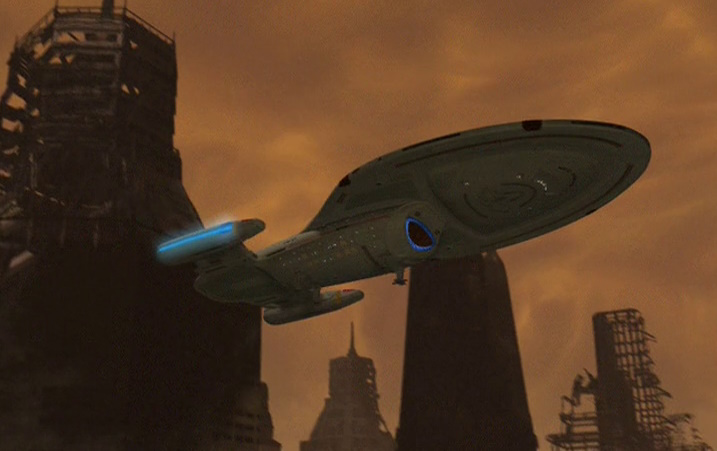
The USS Voyager prepares to land.

Dragon’s Teeth is an interesting episode, and one that tells us a little about the history of the Star Trek galaxy. It’s also a story that looks at the potential consequences of war and conquest, as well as how different reality can be from societal memory. The crew of Voyager re-awaken a group of aliens who have been in stasis since the 1400s, following a devastating war that culminated in the bombardment of their planet.

The Vaadwaur proved to be untrustworthy allies, however, and attempted to capture Voyager. The “underspace corridors” that were present in this episode weren’t revisited, even though they potentially offered a quicker way to traverse this region of space. The concept was fun, though, and reviving a long-dormant race was likewise an interesting and well-executed idea.

Episode #15:
The Andorian Incident
Enterprise Season 1

Andorians!

I have to hold up my hands and confess that I wasn’t a big supporter of Enterprise during its original run. I was disappointed in its choice of setting, believing that Star Trek should move forwards instead of looking back at its own fictional history. But episodes like The Andorian Incident show just how wrong I was to feel that way! The episode showcases the conflict between Andoria and Vulcan in the years prior to the founding of the Federation – and begins to set the stage for humanity to bridge the divide and bring them together.

At a Vulcan holy site on the planet P’Jem, a monastery has been attacked by Andorians. The Andorian leader claims the monastery is a front for a listening post. Jeffrey Combs returns to Star Trek after his roles in Deep Space Nine to play Andorian leader Shran, and the interplay between Shran and Captain Archer would be one of Enterprise’s best. All in all, a fascinating outing.

Episode #16:
Where Pleasant Fountains Lie
Lower Decks Season 2

Andy Billups, chief engineer of the USS Cerritos.

I adore Where Pleasant Fountains Lie. I think it has a potentially-interesting explanation for the abundance of human-looking aliens in the Star Trek galaxy (they’re all Earth colonies), but moreover it touches on a subject close to home for me: asexuality. I’m asexual, and while the Cerritos’ chief engineer Andy Billups isn’t explicitly stated to be asexual in the story, Where Pleasant Fountains Lie focuses in large part on his discomfort with having sex and desire to avoid it.

Star Trek has always used its sci-fi setting to shine a new light on the real world, and for me, this episode absolutely nailed it. When people ask me about asexuality, I now have a relatable story that I can point to, one that touches on many of the same feelings and experiences that I’ve personally had as an asexual individual. I wrote a longer piece about this episode’s asexuality analogy, and you can find it by clicking or tapping here if you’re interested to read more.

Episode #17:
Let Sleeping Borg Lie
Prodigy Season 1

What have the crew of the Protostar got themselves into this time?

Prodigy had a strong first season – though it’s been disappointingly let down by a lack of support from Paramount, especially in the merchandising department. There are several contenders for episodes to include on this list, but I’ve decided to go with Let Sleeping Borg Lie from the second half of the season.

The episode focuses on a derelict Borg vessel – tying into the story recently seen in Picard’s third season – and gives all of the main youngsters something to do. The episode moves key storylines along, as Prodigy is a surprisingly serialised affair, but it also takes the crew to a different environment. One of the advantages of animation over live-action is the ability to visit different ships and planets every week relatively inexpensively! There are strong themes of sacrifice and friendship that form the emotional core of the story, too.

Episode #18:
Birthright, Parts I & II
The Next Generation Season 6

The Enterprise-D at DS9.

This story is a fun crossover between The Next Generation and Deep Space Nine, which wasn’t yet ten episodes into its first season. The main story focuses on Worf as he tracks down a hitherto unknown group of survivors of the Khitomer massacre – the event in which his birth parents were killed. The second part of the story in particular focuses on the Klingons and Klingon culture.

I adore a good crossover, and it’s a ton of fun to see Picard and Dr Crusher aboard DS9, as well as Data and Dr Bashir working together. This episode was designed to give Deep Space Nine a jump-start as its first season got underway, but it’s more than that. It’s a fantastic combination of characters and settings that expands Star Trek beyond a single series into a connected franchise.

Episode #19:
State of Flux
Voyager Season 1

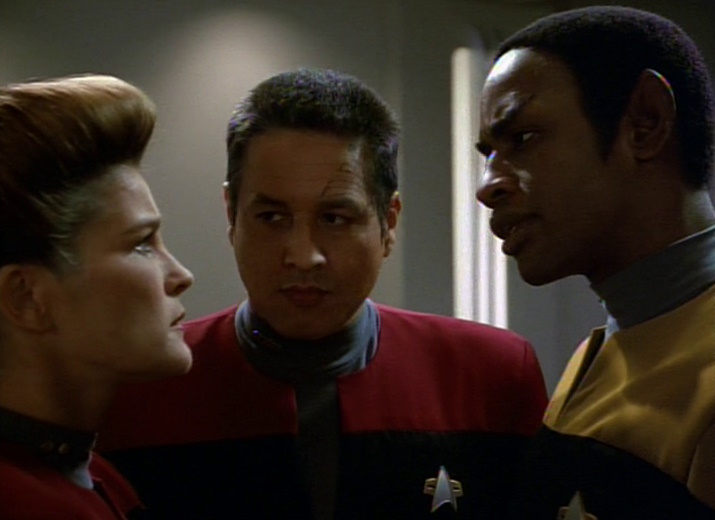
Janeway, Chakotay, and Tuvok discuss the situation.

Voyager never managed to make good on its “one ship, two crews” idea, and State of Flux, coming midway through the first season, was one of the few episodes to really explore that concept. When the crew of Voyager come to suspect that someone is passing secret information to the Kazon, a trap is laid – and a member of Chakotay’s Maquis sect is the prime suspect.

This episode set up a recurring story that would come back in Season 2 and at the beginning of Season 3, giving Voyager at least some consistent themes across the first part of the crew’s journey home. It’s also an engaging mystery on its own merit, and a strong episode for Chakotay – a character who could feel under-used, especially toward the latter part of the show’s run.

Episode #20:
Civil Defense
Deep Space Nine Season 3

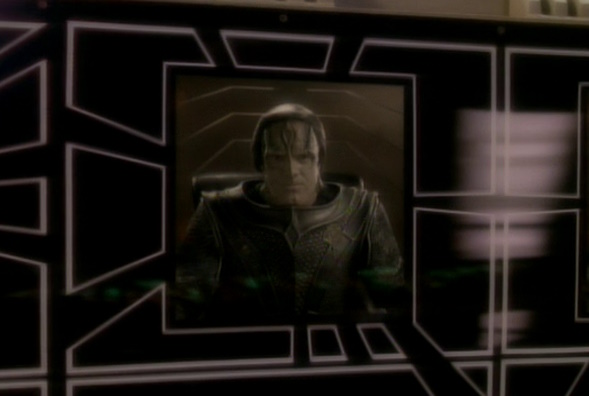
Kell, the former commanding officer of Terok Nor, appears on a screen.

Despite a station-threatening premise, Civil Defense is a remarkably fun episode! It takes the premise of occupying an alien space station to a completely different place than almost any other story in the series, as O’Brien accidentally triggers a computer programme designed to put down a rebellion by the Cardassian station’s former Bajoran workforce.

Civil Defense gives most of the show’s main characters – including Jake Sisko – something to do, putting together groups or pairs of characters who always work well together and provide a ton of entertainment. Quark and Odo help to keep things light – and so does Dukat, to an extent, when he arrives to offer his “assistance!” All in all, an exciting and surprisingly fun outing.

So that’s it!

The USS Enterprise in The Wrath of Khan.

We’ve taken a look at twenty fantastic Star Trek episodes from across the franchise, getting a great mix of modern and older episodes. Hopefully this will help me regain some of my lost standing as a Trekkie after my list a few days ago!

All jokes aside, though, there’s a ton of fun to be had with Star Trek. Put all twenty of these episodes together in a playlist and you’ve got a hugely entertaining Star Trek marathon that will take you from the very beginnings of the franchise in 1966 right the way through to the most recent seasons that have only just been broadcast. It was a blast to go back and revisit all of these wonderful episodes.

The Star Trek franchise – including all series, films, and episodes mentioned above – is the copyright of Paramount Global. This article contains the thoughts and opinions of one person only and is not intended to cause any offence.

End-of-Year Awards 2022

Spoiler Warning: Minor spoilers may be present for some of these titles.

As we enter the final hours of 2022, it’s time to look back at the entertainment experiences that we’ve enjoyed – as well as a few that we didn’t enjoy all that much! I’ve cobbled together a few categories from the world of television, film, and video games, and today I’m going to hand out some highly-coveted Trekking with Dennis Awards to some of my favourites!

You’ll find a couple of titles from the tail end of 2021 on this list; I reckon anything released in December is fair game as those titles often get the short end of the stick when it comes to lists like these. Some outlets put together their “best of” lists way back at the start of December, which is far too early in my opinion! But we’re drifting off-topic already!

It’s time to hand out my End-of-Year Awards!

There are plenty of titles that, for one reason or another, I didn’t get around to this year – so for reasons that I hope are obvious they can’t be included. I’m only one person and I don’t have every minute of the day to devote to these pursuits, so the exclusion from this list of certain big titles shouldn’t be interpreted as any kind of deliberate snub!

And as always, a caveat before we begin: all of this is the subjective opinion of one person. I may give an award to a production you vehemently hate, or talk negatively about something you enjoyed, but at the end of the day this is supposed to be a bit of fun. Feel free to disagree with any or all of my picks – but there’s no need to take any of it too seriously!

With all of that out of the way, let’s get started!

Best Television Miniseries/Limited Series:

🥈 Runner-Up🥈 
Five Days At Memorial

Five Days At Memorial had the challenging task of dramatising a real-world event – and a gruelling one at that. I remember the harrowing news reports in 2005 showing the aftermath of Hurricane Katrina, and I could absolutely understand why some folks might feel it’s too soon to make a programme like this. But for my money, Five Days At Memorial did a good job at adapting the events at Memorial Hospital as delicately as possible, staying true to what happened while still making the story engrossing and understandable for viewers.

The fact that Five Days At Memorial shows what happened at Memorial Hospital from two very different angles felt a bit strange at first, but by doing so the series lends the events the challenging ambiguity that they continue to have. By refusing to come down on one side or another – to condemn as guilty or exonerate Dr Pou – Five Days At Memorial strikes the right balance. There was some choppy editing in some sequences that meant the miniseries didn’t feel as smooth as it could’ve, but other than that it was a very interesting look at a very difficult moment in the recent past.

🏆 Winner 🏆
1899

Netflix original 1899 is taking the crown in this category this year. The show goes on a wild and unpredictable ride, blending themes of mental health that resonated strongly with me with mystery and psychological horror. The multilingual series is, in my view, best enjoyed without being dubbed, as the different characters and the language barriers between them are key elements in the story at several crucial junctures.

I was first attracted to 1899 because of its setting – both in time, at the end of the 19th Century, and on a boat making a transatlantic voyage. But what I found when I got started was one of the most unique and different television productions that I’ve seen in a long time. 1899 may not be to everyone’s taste, but I found it absolutely riveting all the way through.

Worst Television Series:

🏆 “Winner” 🏆
Obi-Wan Kenobi

After I’d enjoyed what The Book of Boba Fett brought to the table, I felt a pang of hope that Obi-Wan Kenobi might at least be passable. But it wasn’t to be, and the series was a horrible slog through the absolute worst kind of tacked-on story that used increasingly desperate nostalgia plays to try to recreate some of the magic that, frankly, Star Wars hasn’t had since the ’80s.

Say it with me, folks: it’s time for Star Wars to move on! The vast sandbox that is the Star Wars galaxy has trillions of inhabitants, millions of star systems, thousands of planets, and hundreds of factions and organisations – and tens of thousands of years of history that could explore any of them. For more than forty years, Star Wars has been laser-focused on the same handful of characters and the same tiny sliver of this wonderful setting, but it’s over. If Star Wars is to survive, something’s gotta change. Obi-Wan Kenobi proved that.

Best Television Series:

🥈 Runner-Up🥈 
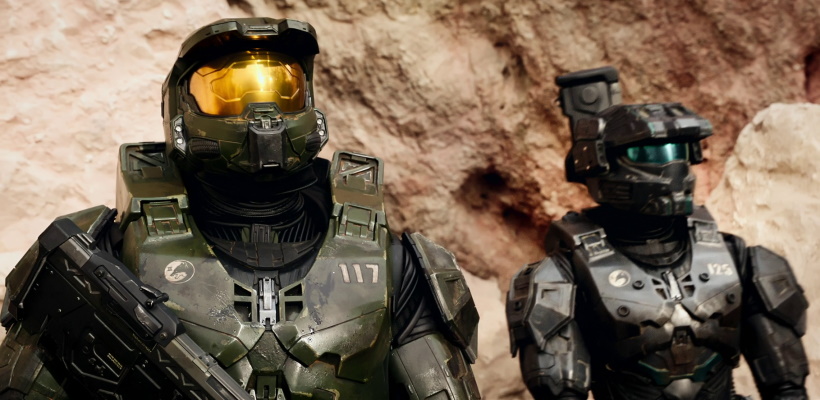
Halo

Halo wasn’t spectacular, but as the first real attempt to bring the long-running video game franchise into a new medium, it got a lot right. The story it told was a riff on the familiar story that fans will remember from the games, but there were important differences which not only kept the mystery going, but also gave genuine characterisation to the Master Chief.

In terms of cinematography, I liked the way that Halo incorporated some first-person sequences into its action-heavy moments. This could have easily felt like a gimmick, but the way it was done – and crucially, not overdone – made it feel like a throwback to the series’ source material while also mixing things up in the television space. Halo used a fairly standard format that would be familiar to anyone who’s seen a made-for-streaming television show in the past few years, with a slowly unfolding mystery, multiple storylines, and characters who grow and change over the course of the series. It wasn’t anything groundbreaking, and I certainly get the argument that it wasn’t as action-packed as some fans might’ve wanted. But it was, all in all, a decent bit of sci-fi.

🏆 Winner 🏆
The Lord of the Rings: The Rings of Power

The Rings of Power had a lot of work to do to impress me. It had to live up to the legacy of the trilogy of films from a few years ago. It had to show that it could go toe-to-toe with the likes of Game of Thrones, The Witcher, and other big-budget productions in the fantasy space. And, to be blunt, it had to justify its billion-dollar price tag.

Whether The Rings of Power managed to accomplish all of those goals in its first season is still arguably an open question. But it certainly laid the groundwork for what should be a television spectacular, and it was, on balance, probably the best show I’ve seen this year. When I was at a low ebb in the autumn and didn’t have the energy or headspace for watching many new things, The Rings of Power was the one show that I made time for. Sure, there were big battles and other CGI spectaculars, but there were also some genuinely wonderful performances that brought to life some incredible character-focused storytelling. I can’t wait for Season 2!

Best Web Series:

🥈 Runner-Up🥈 
How To Cake It

After a hiatus of more than a year, YouTube show How To Cake It made a welcome return this year. This time, there’s less of a focus on the kind of attention-grabbing, visually spectacular cakes that look like rocket ships or Princess Elsa or a completely different food, and I think that’s actually been a positive thing! Host Yolanda Gampp has branched out, doing much more of a variety when it comes to baking. Some highlights include flavoured cookies, baklava, and even popcorn.

As often happens when a web series takes an extended break, recent episodes of How To Cake It haven’t been doing the same numbers as the series used to get. But I hope that, as time goes by, it will pick up some of those wayward viewers – and perhaps bring on board a whole host of new ones, too. This new version of How To Cake It seems to be making more down-to-earth recipes that you or I might feel brave enough to attempt, rather than showing off impressive designs that only a master baker could create. For me at least, that’s a great thing, and I hope to see much more from Yolanda and the team in the new year.

🏆 Winner 🏆
Anti-Chef

If How To Cake It shows a master at work, Anti-Chef – as the name suggests – is the complete opposite! The show is a lot of fun, and Jamie, the host, isn’t shy about sharing his failures in the kitchen as he works his way through some very complicated recipes. Though he’s not a total newbie any more, many of the techniques in the recipes he challenges himself to try are very advanced, and the personal, relatable style makes me feel like I’m right there in the kitchen.

I love a good cooking show, and as much fun as it can be to see an experienced chef at work, it can be even more entertaining to see an inexperienced home cook tackling some of these recipes. Anti-Chef has given me a lot of laughs this year – but also some cooking tips and inspiration, too.

The Worst of Star Trek:

🏆 “Winner” 🏆
Most of Picard Season 2

I thought long and hard about whether I wanted to call out Picard Season 2, but I think it’s earned a place on this list. The first episode of Season 2 was absolutely fantastic, and if the rest of the season had been anywhere close to that level, we’d be talking about Picard as the best show of the year. But unfortunately things took a pretty sharp nose-dive after the second episode of the season, with Picard and his crew wandering aimlessly for much of the season in a present-day setting that didn’t feel inspiring or enjoyable in the least.

By the time the action returned to the 25th Century in the second half of the season finale, the damage had been done, and despite Farewell pulling out a decent ending, this disconnected, disjointed, overly-long story has to go down as one of Star Trek’s big misses – perhaps even one of the biggest missteps in the franchise’s history. There were individual elements in most episodes that I can honestly say that I enjoyed… but Picard Season 2 overall feels like a massive disappointment.

Star Trek’s Biggest Surprises:

🥈 Runner-Up🥈 
Kobayashi
Star Trek: Prodigy

We ought to talk more about Prodigy here on the website – and I hope we will next year! But for now, the episode Kobayashi came out of nowhere in January to be one of the biggest surprises in the show’s first season. The Kobayashi Maru training programme famously tests would-be captains in a “no-win scenario,” and you wouldn’t think that premise would lead to such a genuinely heartwarming and wholesome episode – but as a longstanding fan, I really appreciated what Kobayashi brought to the table.

Without giving too much away, the Kobayashi Maru scenario plays out on the holodeck, and a cast of fan-favourite Star Trek characters all join in on the action. It’s a nostalgic treat – but it doesn’t overplay its hand, keeping a tight focus on the new characters introduced in Prodigy.

🏆 Winner 🏆
All Those Who Wander
Star Trek: Strange New Worlds

Strange New Worlds had an incredible first season, showing off a varied, episodic approach in which it wasn’t shy about trying out many different genres. All Those Who Wander draws inspiration from the likes of The Thing and Alien to create a tense, claustrophobic sense of horror aboard a crashed starship.

It’s hard to say too much more without getting into spoiler territory – and of all the episodes in Season 1, All Those Who Wander has to be the most important to go into un-spoiled! Suffice to say that the episode takes the horror angle right up to the edge of my personal comfort zone, but never crosses that line. It’s an intense experience, and one that shows just how incredible Star Trek can be when it throws itself into another genre.

The Best of Star Trek:

🥈 Runner-Up🥈 
Coming Home
Star Trek: Discovery

Discovery’s fourth season plodded along, in places, and definitely teased us with mysterious factions and characters that ultimately turned out to be brand-new. But by the time the season finale rolled around, most of that was already settled. What we got was an incredibly emotional episode that saw Captain Burnham and the crew racing against time to reach an unknown, uncontacted alien race.

There were resolutions to disagreements between characters, several incredibly dramatic moments, and a storyline involving Admiral Vance at Federation HQ that showed off Starfleet and the Federation at their very best. Coming Home is, without a doubt, one of Discovery’s very best episodes.

🏆 Winner 🏆
A Quality of Mercy
Star Trek: Strange New Worlds

Captain Pike gets a visit from “the Ghost of Christmas Yet To Come” in A Quality of Mercy – and the episode is incredible. In Discovery Season 2, when it became apparent that Captain Pike knew in advance that he was going to suffer a debilitating accident, an obvious question would be “why didn’t he try to prevent it?” And A Quality of Mercy takes that idea and runs with it.

In addition to a very emotional story involving Captain Pike – one that I, as a disabled person, found incredibly relatable – there’s also a wonderful callback to an episode of The Original Series, and moments for all of the main characters to get a chance to shine. Ethan Peck puts in a spectacular performance as Spock, and there was even time at the very end of the episode for one final twist as the curtain fell on one of the best seasons of Star Trek ever put to screen.

Best Animated Film:

🥈 Runner-Up🥈 
Minions: The Rise of Gru

The Despicable Me franchise is usually good for some fun escapism, and so it proved again with The Rise of Gru. There isn’t anything completely groundbreaking here; you know how the titular Minions behave by now. But stepping back in time to a ’70s setting allowed for some fun jokes, and the over-the-top villains that Gru encountered were a ton of fun.

There was still heart and emotion in The Rise of Gru thanks to Gru’s relationship with the villainous Wild Knuckles, and that did enough to ground what was otherwise a pretty wacky adventure. There were plenty of references and callbacks to other franchises for nerds like us to enjoy, and on the whole, I had a good time with the film. I’m not in a desperate rush to re-watch it, but it was good fun for what it was.

🏆 Winner 🏆
Encanto

After several years in which Disney has focused on live-action adaptations and sequels, Encanto came along like a breath of fresh air! It’s one of the best Disney films of the current era without a doubt, with a deeply engrossing and frequently emotional story that has an uplifting message. And thanks to a wonderful soundtrack by the phenomenally talented Lin-Manuel Miranda, there are some incredible songs too!

A setting inspired by Colombia was also something different for a major Disney production, and the company has done well at diversifying the peoples and places it depicts in its major releases. But that would have been meaningless had Encanto not been such a wonderful, well-told story – and I’m so very pleased that it was.

Best Live-Action Film:

🥈 Runner-Up🥈 
The Unbearable Weight of Massive Talent

With the caveat that I didn’t see that many films this year, The Unbearable Weight of Massive Talent is definitely up there as one of the better ones! I genuinely couldn’t believe that this film existed when I first heard of its premise – Nicolas Cage playing a fictionalised version of himself and going on a wacky adventure. But you know what? I’m very glad that it does!

The Unbearable Weight of Massive Talent could have ended up as a bargain-bin B-movie – or worse, it could’ve tried to take itself far too seriously. But instead it leans into a kind of self-deprecating humour as well as tropes of the action genre, coming across as light-hearted and just plain fun. Nicolas Cage is a good sport for taking part, and The Unbearable Weight of Massive Talent is definitely worth a watch if you haven’t seen it already.

🏆 Winner 🏆
All Quiet on the Western Front

Netflix’s reimagining of this classic German war film is absolutely brutal. If any film has ever come close to accurately depicting the true horrors of the First World War, this is it. The story follows a young conscript from Germany as he joins the army and is dispatched to the front line, and then jumps ahead to the closing days of the war.

Every version of All Quiet on the Western Front – and there have now been three adaptations of the original novel – have shown just how senseless and meaningless war can be, taking a very individualist, human look at warfare. This version hammers that home, and can be uncomfortable viewing. But it’s an incredibly powerful film – one that absolutely deserves to be in contention for some of the top awards.

The “I-didn’t-play-this-game-but-you-probably-should” Award:

🏆 Winner 🏆
Elden Ring

I wish I could say I was interested in Elden Ring… but I’m just not. The “difficult for the sake of it” style of gameplay that has come to be known as the “Souls-like” genre just isn’t my cup of tea, but by all accounts Elden Ring is one of the best examples of this type of game, and one of the best games of the year – if not the generation.

Taking the Dark Souls format into an expansive open-world setting, Elden Ring has won almost universal acclaim from critics and players alike, becoming one of the most talked-about releases of the year. For a single-player title in a gaming landscape increasingly dominated by the online multiplayer scene, I think that’s a fantastic thing, and even though Elden Ring isn’t for me, I still think it’s worth noting it as one of the most important releases of the year.

Best Browser Game:

🏆 Winner 🏆
Wordle

I wouldn’t usually dedicate much time to browser games on a list like this, but since I first played Wordle back in February or March, I don’t think I’ve missed a single day. The format is fun, with a single word each day to guess and only six chances to get it right. Wordle was snapped up by the New York Times and has since spawned dozens or perhaps even hundreds of clones – including variants that have multiple words to guess, and variants based on specific topics or franchises. There’s even a Star Trek-themed one!

Wordle blew up to become an internet phenomenon in 2022, and for a while it seemed like you couldn’t move for people showing off their Wordle results on social media. It’s become part of my daily routine – and my current streak is 77 wins in a row, going all the way back to the middle of October!

The “buggy piece of crap” Award:

🏆 “Winner” 🏆
Uncharted: Legacy of Thieves Collection (PC version)

The PC port of Uncharted: Legacy of Thieves Collection is the worst I’ve come across in recent years. I’d thought that the days of amateurish PC ports were finally over, but PlayStation Studios, Naughty Dog, and Iron Galaxy Studios showed me that I was wrong about that. In short, Uncharted is incredibly poorly-optimised for PC, with a piss-poor frame rate and weird visual and texture bugs that were incredibly offputting. The screenshot above shows off one such glitch.

It’s such a shame because the Uncharted series has always been a blast. The Indiana Jones-inspired games still feel like something different in the action-adventure space, even with the likes of Tomb Raider being reimagined for a new generation. The stories present here are great – but if I have to spend as much time battling bugs as I do enemies, I’m going to have a bad time. Other PlayStation titles – like Spider-Man and God of War – don’t have these issues, so I don’t understand how Uncharted: Legacy of Thieves Collection managed to launch on PC in such a bad state.

Best Expansion Pack/DLC:

🏆 Winner 🏆
Mario Kart 8 Deluxe – Booster Course Pass

The Booster Course Pass has given Mario Kart 8 Deluxe a new lease on life – even if it’s not as transformative as a new entry in the series would’ve been. I was disappointed as the year went by and it became clear that there would be no Mario Kart 9, but the Booster Course Pass has definitely convinced me to dust off my Nintendo Switch and pick up Mario Kart 8 Deluxe again.

The “wave” approach to the DLC has been fun, too, keeping the game feeling fresher for longer when compared to dumping all 48 new racetracks at once. Don’t get me wrong, the longevity of Mario Kart 8 Deluxe is still an issue, and I now have the additional concern that there will be fewer racetracks left to adapt whenever Mario Kart 9 eventually comes along. But in the short-term, the Booster Course Pass is proving to be great fun.

Game of the Year:

🥈 Runner-Up🥈 
Stray

Stray is absolutely adorable: a game in which you get to play as a kitty cat! I was sold on that premise alone, but what I found when I got stuck in was a genuinely enjoyable, well-paced, well-structured indie title. Stray has great graphics, with the movement of the main cat character in particular being incredibly realistic. There’s some wonderful art design in both the environments and the robotic non-player characters, too.

Stray is further proof that there’s plenty of life in the narrative, linear, single-player space, and that not every game needs to be forced into the open-world mould. But at the same time, it’s something very different. Not only is the idea of playing as an animal unique, but the game’s slow pace and focus on peaceful interaction with the environment instead of combat and quick-time events all make for a relaxing, yet deeply engrossing experience.

🏆 Winner 🏆
Disney Dreamlight Valley

If you’d told me a few months ago that my favourite game of 2022 would be an early access Disney title, I wouldn’t have believed it! But I’ve sunk well over 150 hours into Disney Dreamlight Valley since its launch at the end of August, and I’ve been having an incredible time. The game basically took all of my criticisms of Animal Crossing: New Horizons and fixed them, then threw in dozens of new features I didn’t even know I wanted – and some fun Disney-centric stories with a diverse cast of characters for good measure.

Disney Dreamlight Valley is so much fun and has so much to offer, even in this early access form, that it’s hard to know where to begin. There’s an interesting main quest, dozens of character-focused missions, the kind of home-building and design gameplay that players loved about titles like The Sims, and all of the fun of living another life in a fantasy land as you’d expect from an Animal Crossing game. There’s so much to love about Disney Dreamlight Valley, and I’m happy to crown it my favourite game of the year.

So that’s it!

At the first Academy Awards in 1929, Joseph Farnham receives his award from Douglas Fairbanks.
Image Credit: oscars.org

We’ve dished out awards to some of my favourite entertainment experiences of the year. The countdown is on to 2023 – there are just hours left until the sun will rise on a whole new year! Stay tuned in the days ahead because I plan to take a look at some of the things I’m most looking forward to between now and Christmas. Is that the earliest you’ve seen someone mention Christmas 2023?

I hope that this was a bit of fun. There were plenty of enjoyable films, television shows, and video games this year – despite the delays that still hang over the entertainment industry. Though I wouldn’t say that 2022 is likely to go down in history as one of the best-ever years for entertainment, I think we still got a wide variety of experiences, many of which were enjoyable.

So I suppose all that’s left to say is this: Happy New Year! Whatever you plan to do, I hope you have a wonderful time!

See you next year!

All titles listed above are the copyright of their respective owner, company, studio, broadcaster, developer, distributor, publisher, etc. This article contains the thoughts and opinions of one person only and is not intended to cause any offence.


Check out reviews or articles featuring some of the films, games, and TV shows mentioned on this list by clicking or tapping the links below:

The Halo TV Series

Lord of the Rings: The Rings of Power

Strange New Worlds Season 1

Star Trek: Discovery 4×13: Coming Home

Mario Kart 8 Deluxe – Booster Course Pass

Disney Dreamlight Valley

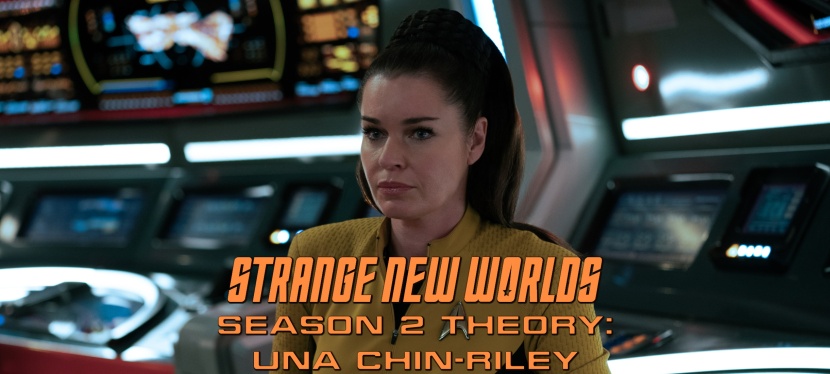
Strange New Worlds Season 2 theory: Una Chin-Riley

Spoiler Warning: There are major spoilers ahead for Star Trek: Strange New Worlds Season 1, including the season finale. Spoilers are also present for Star Trek: The Original Series and Star Trek: Discovery.

This theory is going to get into major spoiler territory for Star Trek: Strange New Worlds, including the very last scene of the final episode of Season 1. If you aren’t fully caught up on the events of Season 1 – and you decided to ignore the spoiler warning above – this is your last chance to nope out!

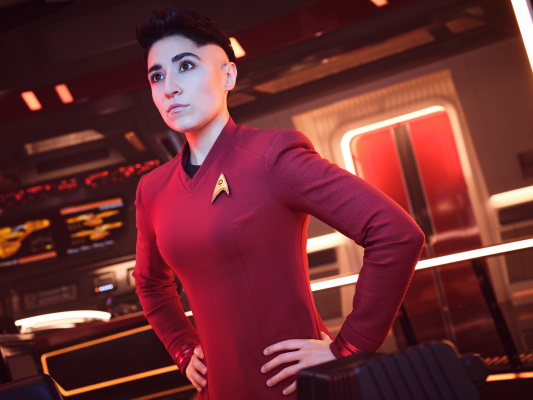
So today I thought it could be fun to speculate about Una Chin-Riley – a.k.a. Number One. Captain Pike’s first officer had an interesting season, with a truly unexpected backstory that connected back to the events of Star Trek: Enterprise while simultaneously setting the stage for some significant development in her relationship with La’an in particular.

Let’s talk about Una!

The decision for Una to be an Illyrian was a genuinely interesting one, and I felt sure that there’d be something more to come after the revelation of her true heritage in Ghosts of Illyria. It took until the closing moments of the season finale, but eventually we got there! Una’s arrest was the perfect tease on which to end the season, setting the stage for what will presumably be the first part of Season 2 in truly spectacular fashion.

There are a few points to consider before we jump into the main theory list. First of all, the fact that Captain Pike visited an alternate future in which Una is still incarcerated almost a decade after the events of Season 1 does not, in itself, mean that that will be her fate. That was an alternate timeline, after all, one which Pike’s actions have now erased. So I don’t think we can dismiss Una, saying “that’s it, she’s off the show” and close the book! There’s obviously going to be something more to come – though whether it will fully restore her to a leading role in Starfleet is still an open question.

Una was arrested at the end of Season 1.

One of the interesting things about a show like Strange New Worlds is the potential it has to explore different aspects of Star Trek’s 23rd Century and answer questions that most fans didn’t even know they had! One such question could be “where was Una after the events of The Cage?” She didn’t participate in Spock’s off-the-books quest to transport Captain Pike to Talos IV, despite being one of only a handful of people who knew about his impending disability and the powers of the Talosians.

Una was also never seen, nor even mentioned, during the entire run of The Original Series and its films. On the production side of things that’s at least partly because Majel Barrett, who was the first actress to take on the role, was playing the character of Nurse Chapel. But again it leaves the question of Una’s fate open-ended. A senior officer with such promise serving on the Federation flagship would usually be gunning for a promotion and their own command; was that what Una hoped to do?

Majel Barrett as “Number One” in The Cage.

It could be that the explanation for Una’s absence from the events of The Menagerie and other significant moments in the second half of the 23rd Century is that she was either locked up or exiled for her deception and illegal genetic enhancements. That would be a pretty depressing way for the story to go, but it wouldn’t contradict anything we know of from other Star Trek productions. Personally, I’ve never felt any of these absences were glaring omissions that have been crying out to be explained away – but perhaps some of the show’s writers disagree.

There’s also a potential narrative reason to shuffle Una out of the way, and that comes from the character of Spock. Firstly, Spock long ago took over Number One’s original “cool and logical” persona that debuted in The Cage. And secondly, while Captain Pike was surprised to learn in A Quality of Mercy that Spock was his new Number One, as Trekkies we know that Spock’s arc will take him through being Captain Kirk’s first officer and trusted confidante all the way to becoming a captain in his own right, an ambassador, and beyond. Perhaps part of the next chapter of Strange New Worlds will involve setting the stage for Spock to step up and grow into that kind of role, either by serving as Pike’s XO aboard the Enterprise or potentially by pairing him up with a younger Jim Kirk.

Spock and Captain Kirk.

However, I’m not convinced that we’ve seen the back of Una just yet. Strange New Worlds already killed off Hemmer – in one of the most shocking and tragic sequences in the entire season – and La’an’s request for a leave of absence to track down the family of Oriana could mean that she will have less of a role to play in future, too – potentially being absent for some or all of next season. With at least one and possibly two characters already gone, it would be one heck of a shake-up to lose Una as well.

With the exception of Lower Decks, modern Star Trek shows have struggled with consistency. Discovery has famously had four different captains across its four seasons, and Picard took two very different approaches to its characters in the two seasons that we’ve seen so far, with some noteworthy absences in Season 2. In short, it would be to the benefit of Strange New Worlds – and the Star Trek franchise overall – to settle down and to find room to breathe; to expand and develop the characters who are already in play before rushing off to make more and more changes. So if I had a vote, I’d find a way to keep Una around!

Una as she appeared in Discovery Season 2.

All of this leads up to my theory list about Una. The first part of the list will consider possible culprits for grassing her up to Starfleet Command and getting her arrested, and the second part will consider possible outcomes and options for Season 2 that could either bring her back into the fold or see her depart the series.

My usual caveats apply: I have no “insider information” and I’m not trying to claim that anything discussed here will be part of Season 2. This is pure speculation from a fan and nothing more! If Season 1 is any indication, Una’s story in Season 2 will go in a wildly different direction that I won’t be able to predict! Secondly, all of this is the subjective opinion of one person. If you hate all of my ideas (or I don’t include your current pet theory) that’s okay! There’s room within the Star Trek fan community for civil conversations and polite disagreement.

With all of that out of the way, let’s look at some theories!

Culprit #1:
Captain Pike

Captain Pike in his ready-room in Ghosts of Illyria.

I don’t believe that Captain Pike would have intentionally told Starfleet about Una’s Illyrian heritage. But in the course of his duties as captain, he may have had to log or otherwise record Una’s disclosure to him – or may have done so in a personal log. If those logs were then sent to Starfleet, it could be that Captain Pike inadvertently flagged up Una’s true origin.

There was room in Season 1 for more development of the relationship between Una and Captain Pike – a relationship that seemed well-established when they appeared together in Season 2 of Discovery. In a busy season, though, their time together was somewhat limited, and I’d like to see more interaction between the Enterprise’s captain and first officer going forward. Making Pike the one who got her arrested – even if it was completely accidental – would risk damaging that relationship. While that could give them a starting point to rebuild from, it wouldn’t necessarily be my first choice.

Culprit #2:
Dr M’Benga

Dr M’Benga learned of Una’s true heritage.

As with Captain Pike above, I don’t believe that Dr M’Benga would deliberately reveal Una’s secret to Starfleet. Just as Una had something to hide, so too did Dr M’Benga, and Una was the only one who knew about his daughter being kept suspended in the transporter buffer. He would have no motivation to expose her, and from his perspective doing so may have compromised himself and his daughter’s safety.

However, Dr M’Benga is responsible for the ship’s sickbay and the health of all its personnel, so perhaps he logged somewhere that there’s an Illyrian aboard. Maybe Dr M’Benga noted that the treatment for the contagion that broke out aboard the Enterprise came from Illyrian antibodies; Starfleet Medical must surely keep records of these dangers and their cures for the sake of other ships and crews.

Culprit #3:
La’an Noonien-Singh

La’an in Ghosts of Illyria.

La’an is really the only character who would have any motive for deliberately and maliciously telling Starfleet the truth about Una. Although the two had resolved their differences by the end of Ghosts of Illyria – and grew closer over the rest of the season – La’an was incredibly angry at first upon learning who Una really was. It seems possible to me that La’an contacted Starfleet sometime during the events of Ghosts of Illyria, possibly while under the influence of the contagion.

This could set up La’an and Una for a confrontation, but one for which La’an already feels guilt and remorse. If she is responsible, I think there’s a pathway for forgiveness – and perhaps she’ll find a way to make it right, such as by advocating on Una’s behalf or even trying to break her out of prison.

Culprit #4:
Spock

Spock on the bridge of the Enterprise.

On a number of occasions we’ve seen how Spock is a stickler for the rules – particularly at this early point in his life and career. In Star Trek Into Darkness, his decision to be completely truthful in a mission report ended up getting Captain Kirk in a lot of trouble, so even if Pike, M’Benga, and everyone else had chosen to conceal the truth in their logs, it’s possible that Spock wouldn’t. He may not even see it as a bad thing at first, regarding telling the full, unvarnished truth as part of his job.

One of the interesting things about Strange New Worlds is how it’s taking Spock on a journey; building him up to become the character we’re familiar with from The Original Series. Perhaps one of the lessons Spock will learn in Season 2 is how to bend the rules, how loyalty to one’s friends and the need to keep certain things private can superscede the official rules. That could make for an interesting story and a chance for growth.

Culprit #5:
Una herself

Might Una have turned herself in?

Maybe Una was sick of hiding. Maybe she wanted to get caught. Maybe she hoped to give herself an opportunity to defend her people against Starfleet’s hardline anti-genetic engineering rule. There are a few different reasons why Una might have turned herself in, or anonymously submitted the evidence to get herself arrested.

This would be a bit of a twist, but it could lead to a wonderfully complex story and character arc for Una if it’s handled well. The idea that she was fed up with having to live a lie, or even that revealing the truth to Captain Pike, La’an, and some of her other shipmates was a weight off her shoulders could be an interesting angle to explore. It would also absolve anyone in the crew of any wrongdoing – intentional or not!

So those are the culprits!

Up next we’re going to look at a few different ways that Una’s story could go from here. As above, please keep in mind that all of this is speculation; I’m not claiming that any of these things will happen.

Theory #1:
Una will stand trial with Captain Pike defending her.

Una and Captain Pike on the bridge.

Star Trek can do courtroom drama exceptionally well, and perhaps we’ll be treated to an episode that blends the likes of The Measure of a Man and Court Martial. I can absolutely see Captain Pike stepping up to be Una’s advocate – like Captain Picard did for Data or Captain Sisko did for Worf. How exactly this trial would go is unclear, but with Spock and the rest of the crew also working on it, maybe there’d be a way to win – or to convince Starfleet to make an exception for Una.

That wouldn’t be unprecedented in the Star Trek franchise. Dr Bashir, who was also genetically engineered and didn’t disclose that fact to Starfleet, was permitted to continue to serve after the truth came out. Perhaps what Captain Pike will have to do is convince Starfleet that Una is irreplacable and should be forgiven for her deception.

Theory #2:
Una will be broken out of prison – but will have to go into exile.

Is a dangerous prison break on the cards?

If Starfleet insists that Una needs to be locked up and won’t budge, maybe La’an and some of Una’s other friends will stage a break-out. It wouldn’t be easy – and they could all end up in hot water if things go wrong – but they may see it as a last resort if the alternative is Una being locked up for years in a Starfleet penal colony.

However, even if they succeed it seems unlikely that Una will simply be able to return to the Enterprise. She may have to go into exile, either by returning to the Illyrians or by striking out on her own. Either way, that could mean Una will be departing the series.

Theory #3:
Una is found guilty and imprisoned.

Una in an alien prison in the Season 1 premiere.

With the major caveat that what Captain Pike saw took place in an alternate timeline that has since been overwritten, this was Una’s destiny in that version of the future. Captain Pike, La’an, Spock, and the rest of the crew seemed to have come to terms with her imprisonment by that point, and while we don’t know what happened at the time of her arrest and trial, any schemes that Pike and the others may have had to get her released clearly didn’t work.

Again, this would surely see Una leaving the show, perhaps after one final episode in which she comes to terms with being locked up. I don’t think that would be a fun or satisfying end for her character, though. It would tie up the loose end of Una’s whereabouts as of The Menagerie – but as stated above, I don’t think anyone has ever really challenged or questioned that, making it a solution to a non-existent problem. If Una is to leave the show, I’d rather see her go out in a blaze of glory, saving the ship and crew!

Theory #4:
Diplomacy with the Illyrians.

An Illyrian seen in Star Trek: Enterprise.

If Una is still in contact with her family or other Illyrians, perhaps the Illyrian government will attempt to intervene on her behalf. Just because the Illyrians are not permitted to join Starfleet that doesn’t mean that formal diplomatic relations between the Federation and the Illyrian government don’t exist, and perhaps they’d have something to say about one of their own being arrested, especially if the reason is basically “because she’s an Illyrian.”

This could lead to some kind of diplomatic mission for Captain Pike, and again it could conclude with Una being given some kind of special exemption and being permitted to remain in Starfleet. Having revealed Una’s true heritage, it would be interesting to see more Illyrians show up in Strange New Worlds – perhaps they still hold a grudge after their meeting with Captain Archer during the events of Enterprise!

So those are the theories!

Is Una’s story at an end?

There are lots of different paths that the story could take from this juncture, and the question of whether Una will be back in a big way in Season 2 feels kind of open right now. Along with the departure of Hemmer and the potential absence of La’an, that would be a pretty radical shake-up of the main characters after only one season of the show.

I suspect that Una will be back aboard the Enterprise before too long, though. There’s untapped potential in her relationships with La’an, Spock, Captain Pike, and everyone else that would be wasted if she were to leave so soon. I’d love to spend more time with Una, perhaps seeing her in temporary command of the ship, leading an away mission, or doing other things that first officers in Star Trek are often seen to do. So it’s my hope, at least, that we haven’t seen the beginning of the end for Una on Strange New Worlds.

Captain Pike looks on as Una is taken into custody.

I hope this was a bit of fun. I haven’t had many opportunities to dive so deeply into Strange New Worlds thanks to the frustrating and disappointing international distribution situation, but with Paramount+ now here in the UK, that’s all changing. Hopefully by the time Season 2 rolls around we can talk about more theories like these during the show’s run instead of having to wait until the dust has settled!

I had a great time with Strange New Worlds Season 1, and the fact that it ended on this shocking cliffhanger was fantastic. I’m looking forward to welcoming back Captain Pike, Una, and the rest of the crew – and getting a satisfying end to this storyline, too!

Star Trek: Strange New Worlds Season 1 is available to stream now on Paramount+ in the United States and other countries and territories where the platform is available. Episodes of Season 1 are being released weekly in the UK. The Star Trek franchise – including Strange New Worlds and all other properties discussed above – is the copyright of Paramount Global. This article contains the thoughts and opinions of one person only and is not intended to cause any offence.
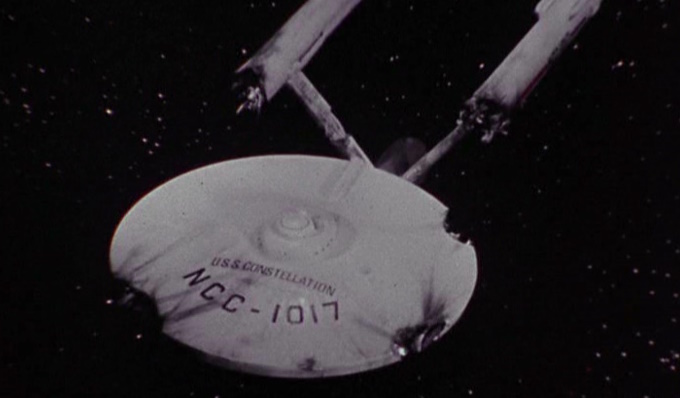
Strange New Worlds: Season 1 Spoiler-free thoughts

Spoiler Warning: Although there are no major plot spoilers for Star Trek: Strange New Worlds Season 1, spoilers are present for other iterations of the Star Trek franchise, including Discovery Seasons 1-4 and Short Treks.

Despite Paramount’s best efforts to keep Strange New Worlds away from fans in 95% of the world, I’ve been able to watch the first season over the past ten weeks. With the finale recently airing and the curtain falling on the show’s first season, I thought it would be worthwhile to share my spoiler-free thoughts on each of the episodes.

I had hoped to write full reviews of every episode of Strange New Worlds as they aired, as well as perhaps concocting a few theories along the way, but the show’s unavailability internationally has made that difficult. As much as I love Star Trek and want to see it succeed, I felt unable to offer Paramount and the series my support due to the offensive and misguided way the corporation has treated its non-American fans – treatment that is regrettably still ongoing at time of writing.

The first poster that was revealed for Strange New Worlds.
(I have it framed on my living room wall!)

However, stay tuned in the weeks and months ahead, because I daresay I will eventually publish individual episode reviews. Paramount+ has finally landed here in the UK – though it didn’t bring all of Strange New Worlds with it – so I can go back and re-watch the episodes any time. As Paramount+ continues its international rollout, I hope that Trekkies who avoided piracy will be able to watch the show.

The international broadcast situation and Paramount’s failings in that regard feel all the more egregious because of just how damn good Strange New Worlds has been across its first season. This is the Star Trek show that fans have been asking for and waiting for, a show that recaptures the episodic nature of The Original Series and The Next Generation but updates it with season-long arcs and modern trappings. It’s a show that feels so very similar to those classic stalwarts of the Star Trek franchise, and one that definitely has huge potential to reach out across the growing divide in the fan community to bring back into the fold people who felt disappointed or uninterested in Discovery, Picard, and even Lower Decks.

A behind-the-scenes photo of the Enterprise’s bridge crew.

Strange New Worlds updates the look of Star Trek, retaining some visual elements from Discovery and the Kelvin films, but blends that look with a very classic aesthetic with a clear inspiration from The Original Series. After the bland all-blue uniforms of Discovery, the bold primary colours are unapologetically back. The USS Enterprise is brightly-lit and colourful too, with some wonderful sets that have updated the look of areas like the bridge, sickbay, and engineering while retaining key design elements to make it clear that this is a Star Trek show.

The use of practical special effects and puppets has created some really incredible creatures and aliens, some of which have had a genuinely “old-school” feel that reminded me of some of the alien races from The Original Series and The Next Generation era. These effects have combined with some excellent CGI animation and increasingly creative use of the expensive AR wall. It’s clear that Paramount’s visual effects artists are becoming more and more comfortable with this fancy piece of kit, and Strange New Worlds has found some fun ways to blend in the AR wall and make it seamless.

Behind-the-scenes filming with the AR wall.

Like classic Star Trek shows have always done, Strange New Worlds tried its hand at some very different genres across Season 1. There was plenty of sci-fi, exploration, and action, but the show also dipped its toes in comedy, drama, warfare, and even horror at one point. Combined with a diverse range of planets to visit and alien races to meet, this gave Strange New Worlds an incredibly varied feel. A worse show might’ve ended up feeling jumpy or even unsettled, but the characters at Strange New Worlds’ heart kept it on track throughout thanks to some truly wonderful writing and world-building.

The theme music that has been composed for Strange New Worlds jumped right up the list to become one of my absolute favourite Star Trek themes. I felt an influence from the classic Superman theme by John Williams that blended perfectly with elements from The Original Series theme to create an exciting, adventurous up-tempo piece of music to really set the stage for every new episode. It’s a wonderful piece of music that I just know is going to become a celebrated part of the franchise.

Behind-the-scenes in sickbay with Dr M’Benga and Una Chin-Riley.

I’d happily recommend Strange New Worlds to any fan of Star Trek, and I’d challenge even the most ardent Discovery-hater to give it a fair shake. More than that, I feel that Strange New Worlds has huge potential to bring in new Star Trek fans alongside Lower Decks and Prodigy, as it’s a very accessible show. Perhaps folks who’ve tried Star Trek in the past and found it wasn’t to their taste won’t be swayed, but for anyone who’s been on the fence or curious about where to start, Strange New Worlds would make for a wonderful and engaging first contact.

For longstanding Trekkies like myself, Strange New Worlds feels like a return to a long-forgotten format, but not in a way that’s regressive. Strange New Worlds has taken the episodic, exploration-oriented format that was at the heart of the franchise in its golden age but updated it for 2022, keeping things like character growth and arcs while still finding ways to play in different genres and with different aliens and settings. It’s the best of both worlds, and while the series builds on what Discovery, Picard, and even Lower Decks and Prodigy have achieved, for me it surpasses all of them.

Promo photo of Spock, Pike, and Una.

I’ll hold up my hands and admit to having found a few nitpicks across the first season, including a couple of character arcs that either felt under-developed or rushed, but generally speaking the quality was high and the episodes outstanding. It’s rare for me to be able to say this, but Strange New Worlds hit ten for ten in its first season – ten genuinely great episodes that I thoroughly enjoyed.

What I’ll do now is briefly summarise my spoiler-free thoughts on each of the episodes in turn.

Episode 1:
Strange New Worlds

Captain Pike on horseback in the season premiere.

The season premiere was an episode that showcased Captain Pike. We got to see his internal struggle as he wrangled with the knowledge of his impending disability, and we got to see him at his best as he resumed command of the Enterprise. There are parallels to Picard Season 1, particularly the contrast between where Pike began the story in terms of his emotional and mental state and where he finished it; finding his place and restoring his confidence were absolutely crucial parts of the episode.

Strange New Worlds was a strong premiere and a great way to kick off the series. It took Star Trek back to its roots and showcased the exploration and missions of first contact that were key parts of the shows that we remember. There were moments of action and humour as we were introduced to most of the new crew for the first time, and what resulted was a solid foundation for the season to build upon.

Episode 2:
Children of the Comet

Cadet Nyota Uhura.

Children of the Comet had an interesting premise and pitted the Enterprise against an adversary who was able to easily overpower the Federation flagship – and yes, Strange New Worlds has confirmed that the Enterprise is the flagship in this era! There were some truly outstanding visual effects both practical and animated, and we got to see a really beautiful episode that, as the title suggests, focused in large part on a comet.

Uhura was a big part of this story, and this new, younger version of the character has a lot of space to grow into the person we remember with fondness from The Original Series. Celia Rose Gooding stepped up and put in an outstanding and complex performance as we saw the young cadet navigate her first away mission to a very alien environment.

Episode 3:
Ghosts of Illyria

Spock and Captain Pike on an away mission.

I have to confess that I’d almost entirely forgotten about the Illyrians prior to watching Ghosts of Illyria. The alien race appeared once in Enterprise’s third season – so I really recommend checking out the episode Damage for context before watching this one! Nothing in Damage is essential, but having that extra bit of background was definitely useful.

This was a big episode for Una Chin-Riley – a.k.a. Number One – as well as for the relationship between Captain Pike and Spock. Ghosts of Illyria also told us something important about Dr M’Benga that would go on to define his arc across much of the rest of the season. There were some clever and innovative concepts here, and what resulted was a fun episode.

Episode 4:
Memento Mori

La’an Noonien-Singh.

Memento Mori raised my first real nitpick of the season! But despite that, it was a tense and thoroughly enjoyable ride that drew inspiration from battles in classic Star Trek stories like Balance of Terror and The Wrath of Khan – as well as the war films that served to inspire those episodes. Throughout Memento Mori there was a sense that everyone was in danger and that not all of our favourite characters would make it out alive.

We got to see Captain Pike at his absolute best in Memento Mori, showing off why he’s long been considered one of Starfleet’s finest commanders. It was also a great episode for Lieutenant Ortegas – the Enterprise’s navigator – and for La’an Noonien-Singh, who had to confront her own inner demons and traumatic memories.

Episode 5:
Spock Amok

T’Pring and Spock in Spock’s quarters.

An episode about Spock confronting his conflicted inner nature and the way he feels about the human and Vulcan sides of his heritage doesn’t seem at first like it would be the foundation for a comedic story, but Spock Amok ended up being absolutely hilarious with plenty of laugh-out-loud moments that could rival even Lower Decks for its unapologetic sense of fun. Spock Amok had emotion at its heart, though, with Spock’s struggle played for more than just a cheap laugh.

The episode’s B-plot featured Captain Pike attempting diplomacy with an unusual alien race who felt like they couldn’t possibly be from any other science-fiction franchise. In that sense, Spock Amok is a Star Trek episode through and through!

Episode 6:
Lift Us Where Suffering Cannot Reach

Captain Pike wielding a phaser.

This episode’s title feels like it was lifted directly from The Original Series – as does the concept it brings to the fore. Captain Pike finds himself caught between his feelings for an alien woman he met in the past and his duty to the Federation. There’s a continuation of Dr M’Benga’s character arc from earlier in the season, one that flips the idea of the Prime Directive on its head in a way that reminded me very much of the Voyager Season 1 episode Prime Factors.

Lift Us Where Suffering Cannot Reach pushed the limits of narrative complexity within a single episode, with a dramatic mystery involving the attempted kidnapping of a young boy who was destined to play a key role in the leadership and future of his planet. A worse episode could’ve made its central mystery feel convoluted or even rushed, but Lift Us Where Suffering Cannot Reach balanced this complexity perfectly, despite having other storylines in play.

Episode 7:
The Serene Squall

Nurse Chapel seems to be in trouble!

I didn’t think I was going to enjoy The Serene Squall based on its premise and the teases we got prior to its broadcast – but I was wrong! The crew face off against space pirates in what was both a tense and fun story that also found time to throw in an unexpected twist. Perhaps the resolution to the narrative was a tad rushed in its final act, but that would be my only real criticism.

There was an incredibly powerful moment with Spock early in the episode that reframed his internal human-Vulcan split, and without giving too much away, it was something I found absolutely fascinating – and more than a little relatable! I think Spock’s characterisation here was the highlight of the episode for me, and pairing him up with Nurse Chapel was a great creative choice.

Episode 8:
The Elysian Kingdom

Dr M’Benga isn’t in uniform!

The Elysian Kingdom is two very different episodes rolled into one. On the one hand, there’s a funny, almost pantomime story in which the entire crew – sans Hemmer and Dr M’Benga – take on roles from a children’s story book. On the other, there’s an intensely emotional story with Dr M’Benga.

The Elysian Kingdom follows on from episodes like Mirror, Mirror or Bride of Chaotica insofar as it allows all of the main cast a chance to play around and step out from their usual roles. I have no doubt that it was an incredibly fun episode to work on – and that comes across in the performances from practically everyone involved. My only real gripe is that the final act and conclusion wrapped up very quickly.

Episode 9:
All Those Who Wander

It’s Hemmer time!

Of all the episodes in Season 1, the most important one to go into un-spoiled has to be All Those Who Wander. It’s an incredibly powerful episode with a thrilling horror theme, and there’s clear inspiration from the film Alien throughout. It’s also an episode that builds to a shocking emotional climax – and I won’t say any more about that lest I risk spoiling it!

Star Trek can do horror really well, as episodes like Empok Nor demonstrated years ago. For me, All Those Who Wander takes the horror angle right up to the edge of my personal comfort zone – but never beyond it. It’s not the most kid-friendly episode, that’s for sure, but it’s an incredibly tense and thrilling ride from start to finish with a wonderfully atmospheric setting.

Episode 10:
A Quality of Mercy

Spock, Pike, and [Spoiler] on the bridge of the Enterprise.

Captain Pike receives a visit from, well, “The Ghost of Christmas Yet To Come.” That’s about the best way I can describe A Quality of Mercy! There are some outstanding visual moments that really show off the USS Enterprise, a callback to a classic episode of The Original Series, and a storyline that furthers Captain Pike’s season-long arc.

A Quality of Mercy sees Season 1 end on a high note – and with a little tease for something more to come. It’s an action-packed episode with some real emotional punches, and a love letter to fans of The Original Series in particular. All in all, an absolutely outstanding episode and a great way to close out one of the best seasons of Star Trek ever put to screen.

So that’s it!

Promo photo of Lieutenant Ortegas.

Strange New Worlds is off to a roaring start, and I can’t wait for Season 2 already! Good news in that regard – the show’s second season recently finished filming and will be broadcast next year. Here’s to Season 3 – and beyond! Hopefully Paramount will have gotten its act together by then, ensuring that this amazing series is available to audiences all around the world.

Star Trek: Strange New Worlds is the show that fans had been asking for since Captain Pike and Spock appeared in Season 2 of Star Trek: Discovery in 2019. Its mere existence would already be a massive win for Star Trek fans and proof that Paramount is willing to listen to feedback, but the fact that the show has been such an amazing experience across its first season and exceeded expectations that were already sky-high is absolutely fantastic!

Commander Una Chin-Riley – a.k.a. Number One.

Not only has Strange New Worlds Season 1 laid the groundwork for future stories with Captain Pike and co. aboard the Enterprise, but I feel it offers a template that future Star Trek projects should take a serious look at. The serialised season-long stories of Picard and Discovery have been interesting – and some have worked better than others – but Strange New Worlds’ more episodic approach has been absolutely wonderful, allowing for a more diverse array of stories that both revisited elements from Star Trek’s past while also introducing us to brand-new aliens, planets, and cultures.

I was bitterly upset that Paramount’s pathetic and indefensible “America First” attitude cut off Strange New Worlds from so many of the fans who campaigned to make it happen, and unfortunately I can’t deny that that has tainted the experience. But if we can look past the corporate nonsense, Strange New Worlds itself has been an absolutely phenomenal show, one that I hope will continue for at least four more seasons to fulfil Captain Pike’s promised “five-year mission.”

Whether you’re new to Star Trek or whether you’ve enjoyed past iterations of the franchise, it’s easy to recommend Strange New Worlds. I sincerely hope you’ll give it a try.

Star Trek: Strange New Worlds Season 1 is available to stream now on Paramount+ in countries and territories where the platform is available. Episodes are being broadcast weekly on Paramount+ in the UK. Further international availability has not been announced. The Star Trek franchise – including Strange New Worlds and all other properties mentioned above – is the copyright of Paramount Global. This article contains the thoughts and opinions of one person only and is not intended to cause any offence.