Star Trek: The Borg Teasing Theory

Spoiler Warning: Beware of spoilers for the following Star Trek productions: The Next Generation Seasons 1-3, Voyager Seasons 4-7, First Contact, Enterprise Season 2, Prodigy Season 1, and Picard Seasons 1-3.

Let’s talk about everyone’s favourite Star Trek villain: the Borg Collective!

Okay, maybe that’s a tiny bit of an exaggeration! But the Borg are certainly up there as one of the Star Trek franchise’s most iconic and frightening villainous factions, and there’s no shortage of theories and speculation in the Star Trek fan community about how the Borg operate and what their methods and overall goals are. I thought we could touch on one aspect of that today.

I briefly outlined what I’m calling the “Borg Teasing Theory” in a post here on the website a couple of days ago. That piece was all about some of my personal head canon explanations of unseen, unexplained, contradictory, or vague things from across the Star Trek franchise – but I thought this particular theory warranted its own full article! Click or tap here to check out the rest of my head canon, if you’re interested in my take on the likes of warp factors and cloaking devices.
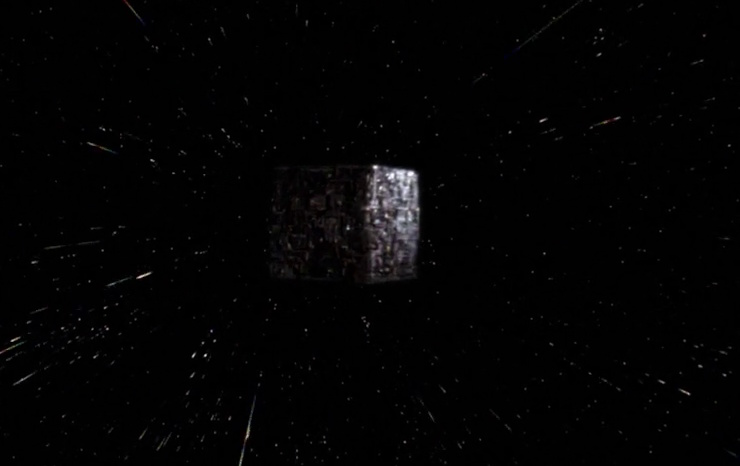
The Borg are coming!

So what’s the tl;dr of this theory? In brief: the two major Borg attacks on Earth during The Next Generation era – as depicted in The Best of Both Worlds and First Contact – weren’t 100% serious attempts to assimilate the entire planet or the Federation. They were, in a word, teases. The Borg Collective hoped to push Starfleet and humanity to develop new weapons, shields, scanners, and medical technology in the years after their incursions – which they would then be able to assimilate when they launched a full-scale invasion at some point in the future. In short: the attacks were not attempts at total conquest and were not intended to fully succeed at assimilating Earth.

We’ll get into detail in just a second, but before we go any further, I have a couple of important caveats. Firstly, all of this is the entirely subjective take of just one old Trekkie. If you hate this theory, think I’ve got it completely wrong, or feel I’ve misunderstood some key part of Star Trek that would invalidate it… that’s okay. None of this is canon or likely to ever be confirmed on screen anyway! Secondly, I’m not claiming to be the sole inventor of this theory. Other Trekkies may very well have come up with similar ideas independently, and I’m not taking credit for anyone else’s work or theories.
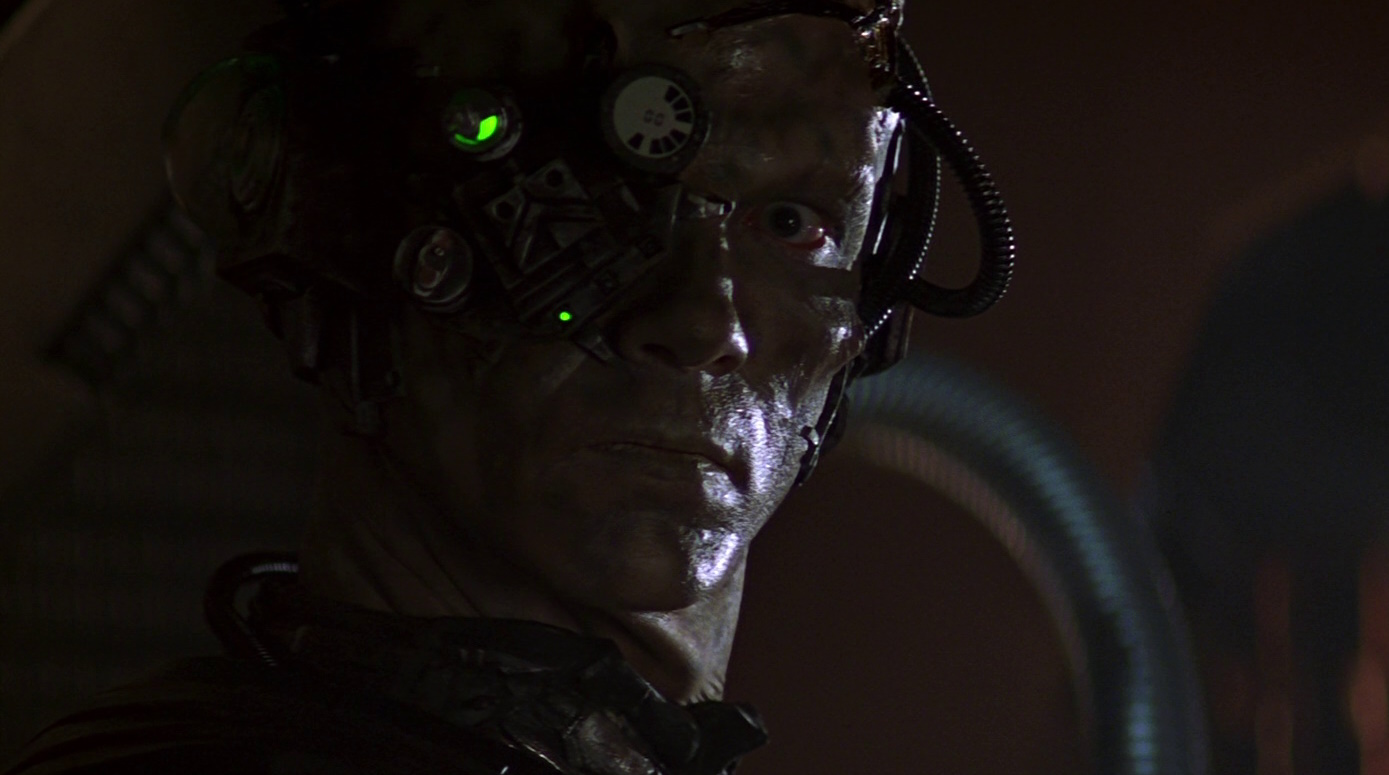
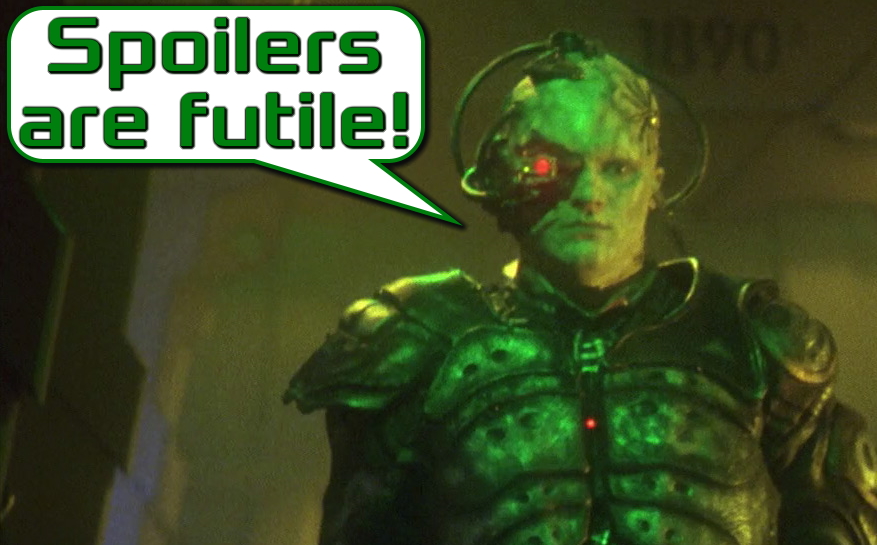
A Borg drone.

Finally, a word about fan theories. I like writing and I like Star Trek, so writing about Star Trek is a fun way for me to spend a little more time in this world. But no fan theory – not even one that seems totally plausible – is worth getting upset or worked up over. As I said a moment ago, none of this is canon and may very well be totally debunked in the future. Given the status of the Borg Collective after Picard Season 3 (and Paramount’s shaky finances), we may never get another Borg story anyway. But this is supposed to be a fun exploration of a theory I’ve had kicking around in my mind for decades, not something to take too seriously.

Phew, that was a lot! But with the caveats out of the way, it’s time to jump into the theory!

Let’s start by explaining what this “tease” is. As I outlined briefly above, I believe that the Borg were not fully serious or committed in their two attacks on Earth. My evidence for this is simple: on both occasions, the Borg sent only one single ship to Earth. A Borg cube can contain, depending on which episode we use as a source, up to 100,000 drones. Given the size of Starfleet, the number of ships at the Federation’s disposal, and even just the population of Earth itself (which could be somewhere in the region of 9-10 billion in the 24th Century) one ship and 100,000 drones doesn’t seem like a large enough invasion force.

A Borg cube hovering over Earth…

Assuming the Borg cube from either Wolf-359 or the Battle of Sector 001 managed to defeat Starfleet’s armada and Earth’s planetary defences, and was able to successfully transport down all of its drones, the logistics of assimilating such a large population don’t track. If Earth’s population is 10 billion and there are 100,000 Borg, that’s a ratio of 100,000-to-one – meaning each Borg drone would need to have a hand in the assimilation of 100,000 humans. With only a single ship, any ground invasion would be vulnerable to Starfleet regrouping and returning; the destruction of the cube would cut off Borg forces on the ground.

Despite jokes I’ve made before about Earth being undefended, it’s still the headquarters of the Federation, with Starfleet Academy and Starfleet HQ on the planet, too. There are going to be thousands of armed Starfleet security personnel, Federation HQ guards, Section 31 operatives, and others on the planet. Even if resistance was scattered at first, and the Borg were able to shut down Starfleet communications, resistance on Earth would be ferocious. To jump over to a different franchise for a point of comparison: look at the Reaper war in the Mass Effect series. The Reaper invasion of Earth was hampered at every turn by resistance fighters from all walks of life, led by the remnants of the Alliance military. There’s no reason to think a Borg attack on Earth wouldn’t lead to a similar resistance movement springing up, with armed civilians led by Starfleet personnel.
Even under extreme pressure, Starfleet tactical personnel would mount a significant resistance to any Borg invasion of Earth.

With the Borg preoccupied with a war of attrition on the ground, their sole vessel in space would be vulnerable. The cube might’ve been able to beat off Starfleet’s initial armada, but that was a hastily thrown together gaggle of whatever ships were on hand when the Federation realised what was coming. Ships were brought out of mothballs and unqualified officers were tapped to take command. With Starfleet being better-prepared and having time to regroup – while also calling on allies like the Klingons – round two against the cube would go a lot better!

So even if the initial attack was successful and the Borg managed to defeat a defence force and land drones on Earth, it would be a matter of time – days or perhaps a couple of weeks – before Starfleet would be back with a much larger fleet. The Borg cube may have beaten the Federation’s hastily-arranged defence ships, but the full might of Starfleet, combined with Klingons and other allies and backed up by tactical data gained from the earlier battle, would – in my opinion – have a strong chance of destroying the Borg’s only vessel in the system. After that, it’s just a case of landing as many troops with modulated phasers (and Klingon bat’leths) and mopping up the remaining drones.
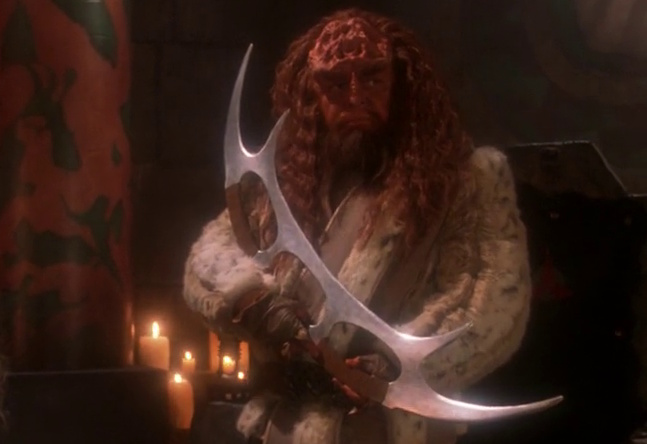
Klingons wielding bat’leths could cut through a Borg army!

To me, this is the most likely outcome for both the Battle of Wolf-359 and the Battle of Sector 001. And the Borg, having studied humanity and the Alpha Quadrant, are undoubtedly aware of this. One ship, even maxed out with as many drones as possible, simply can’t assimilate Earth on its own – let alone expand the fight to the rest of the Federation and its allies.

But why do I think the Borg Collective has the resources to launch a bigger attack? Simple: take a look at the Collective in its Delta Quadrant home in Voyager. The Borg’s Unicomplex alone contained more than a trillion drones, with the entire Collective perhaps comprising quadrillions of Borg. There may be tens or hundreds of thousands of Borg cubes – not to mention other Borg outposts, space structures, and assimilated planets. The sheer scale of the Borg Collective is what makes it so powerful, so frightening, and such a dangerous opponent. So why would the Borg choose to attack Earth in such a small-scale way?
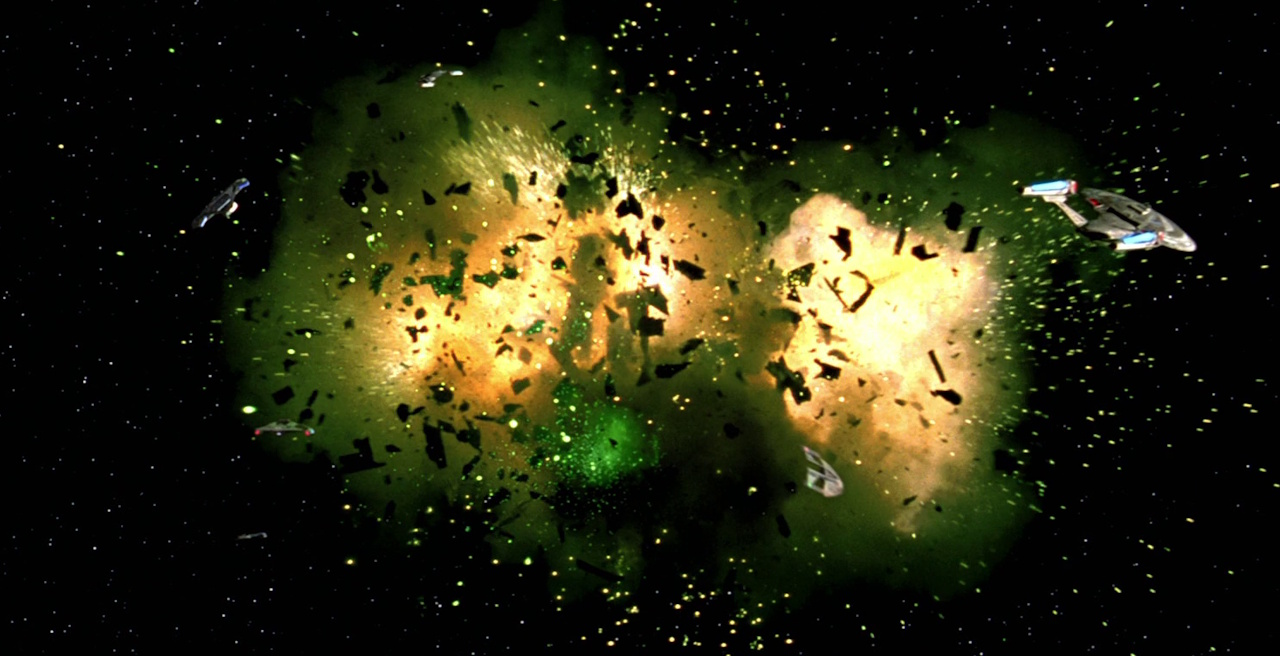
The destruction of the Borg cube in First Contact. Did the Borg plan for this outcome?

Given how powerful a single cube could be, a fleet of perhaps a dozen would make light work of anything Starfleet and its allies could muster. And with two million drones instead of just 100,000, the Borg’s ground offensive would be much quicker and would be more easily able to overcome any resistance. The assimilation of Earth could proceed much more smoothly – with only a minimal amount of extra investment from the Collective. For a faction with 10,000 ships, using twelve on this one task is barely a drop in the ocean. We’ve seen the Borg assimilate other Delta Quadrant races, like Arturis’ species from the episode Hope and Fear, using “overwhelming force.” One single cube is not, I would argue, the kind of overwhelming force needed to conquer Earth and the Federation.

So to be clear: this part of the theory states that the Borg have the means to easily overpower and outgun the Federation and its allies and achieve the task of assimilating Earth. They have no reason not to go all-in and fully commit to this invasion; they aren’t worried about loss of life, there’s no Borg economy to be damaged by building extra ships, and if their target is to fully conquer Earth and the Federation, they could do so with ease. But they don’t do that. Instead, on two separate occasions they’ve sent a single cube. Why?
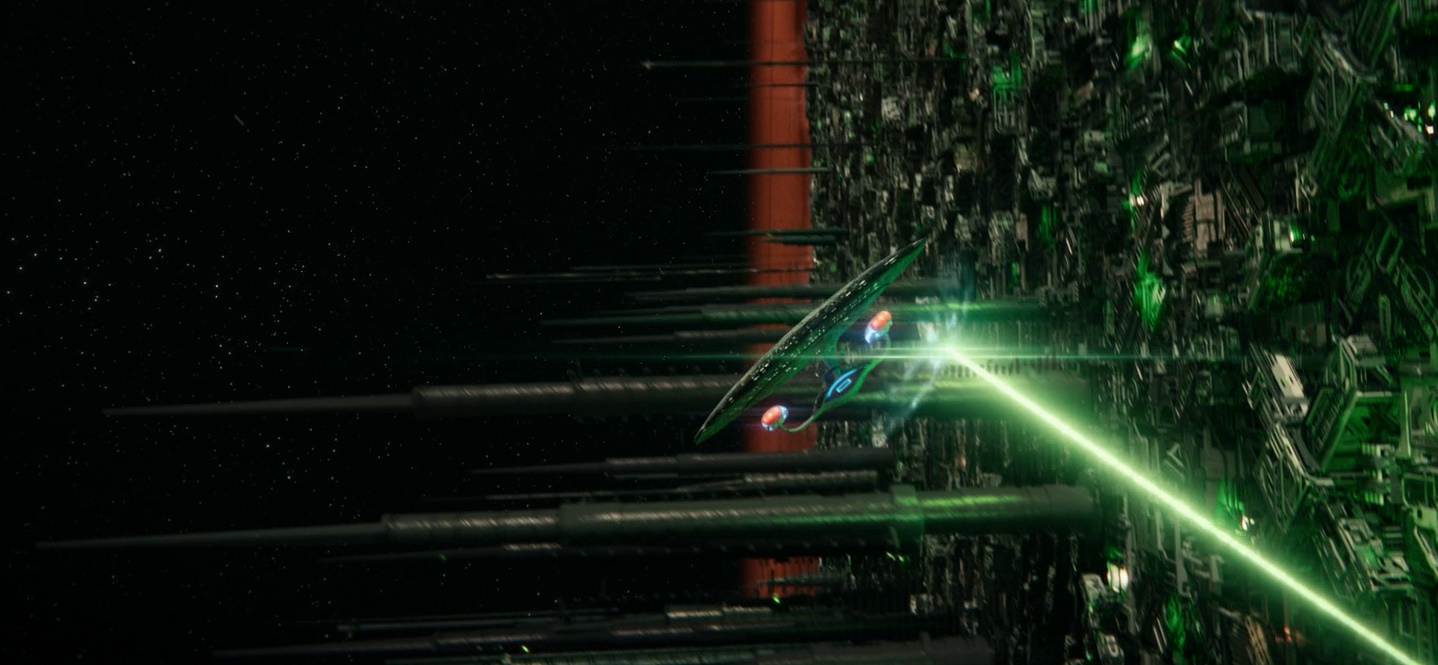
The Enterprise-D battling a Borg vessel.

To answer that, we first have to consider what the Borg are and how they operate. The Borg are a hive mind, operating as one. They have assimilated – according to their own sources – at least 10,000 species across the thousands of centuries that they’ve existed. But because they’re one hive mind, they lack creativity. They lack inventiveness – and with that, we can infer that they don’t have the ability to create brand-new technologies any more.

The hive mind is adaptable, and having been introduced to something – say, a particular phaser modulation – the Borg can adapt. Adaptations are rolled out at transwarp speeds across the entire Collective, meaning that any Borg encountering that specific phaser modulation in future will be protected. But adapting to something isn’t the same as inventing – and this lack of creativity and inventiveness could be a problem for the Collective.
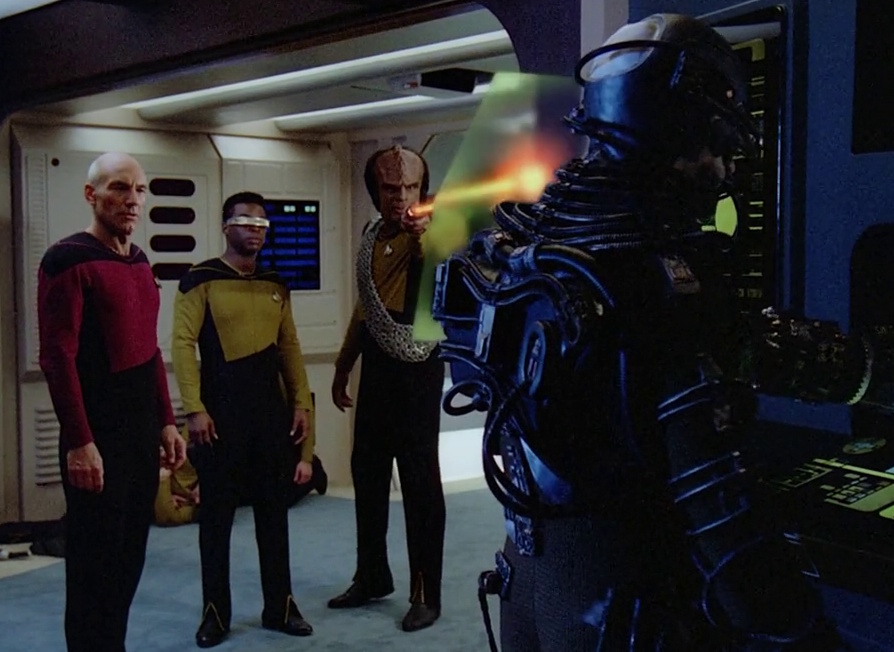
After being exposed to a new technology or weapon, the Borg can adapt.

So how does the Collective acquire new technology, then? If they don’t develop things themselves they must get them from somewhere, right? I mean, the Borg are more technologically advanced than the Federation and that didn’t happen by accident! The answer is simple: the Borg acquire everything from information to technology through assimilation.

This was their weakness when confronted with Species 8472. They couldn’t assimilate a single member of the species or one of their ships, so they were left blind and helpless. And this, I would posit, is the fundamental reason why they “tease” certain species – like humanity. We probably aren’t a unique case; I believe this is a tactic that the Borg will have deployed on countless other occasions against similarly creative and adaptable species. But it’s a tactic that the Collective knows can work to its advantage.
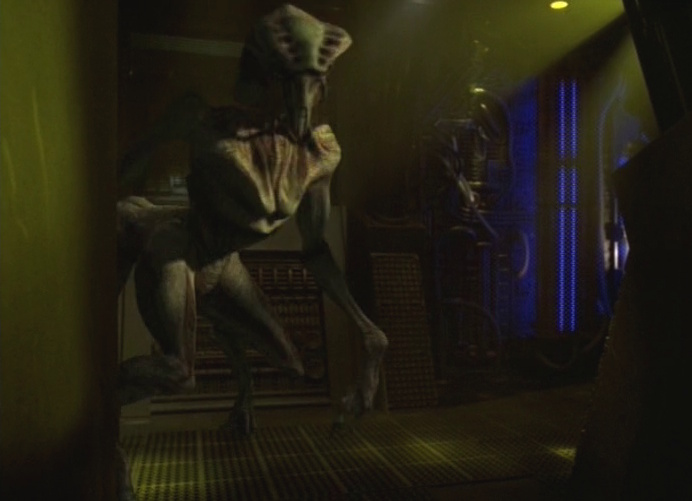
The Borg were unable to assimilate any member of Species 8472 or their technology – rendering them blind and ineffective against their attacks.

The objective is simple: by making a relatively small demonstration of their power, the Borg incite fear in their targets. This fear leads to huge investments in weapons, shields, starships, and the like… all of which the Borg want. On one hand, the Borg want to see if their target can find a weakness in the Collective and its technology so they can prevent anyone else from exploiting it in the future – basically rolling out a Collective-wide “patch” to fix any weaknesses or vulnerabilities that the target species may have identified. And on the other hand, the Borg want any species they target to have achieved their full potential – giving the Collective the best, newest technologies that the target could create. This is how the Borg – at least in my opinion – are able to acquire new technologies.

And this is what they’re doing to Earth, humanity, and the Federation at large. By launching these attacks, the Borg are pushing the Federation and Starfleet to develop new technologies, whether that’s weapons, ships, medical supplies, transporters, shields… the list goes on. Perhaps the second incursion was intended to see how far Starfleet’s new inventions had come, or maybe it was just a second “tease” to force Starfleet to keep working and keep inventing. Either way… it worked.
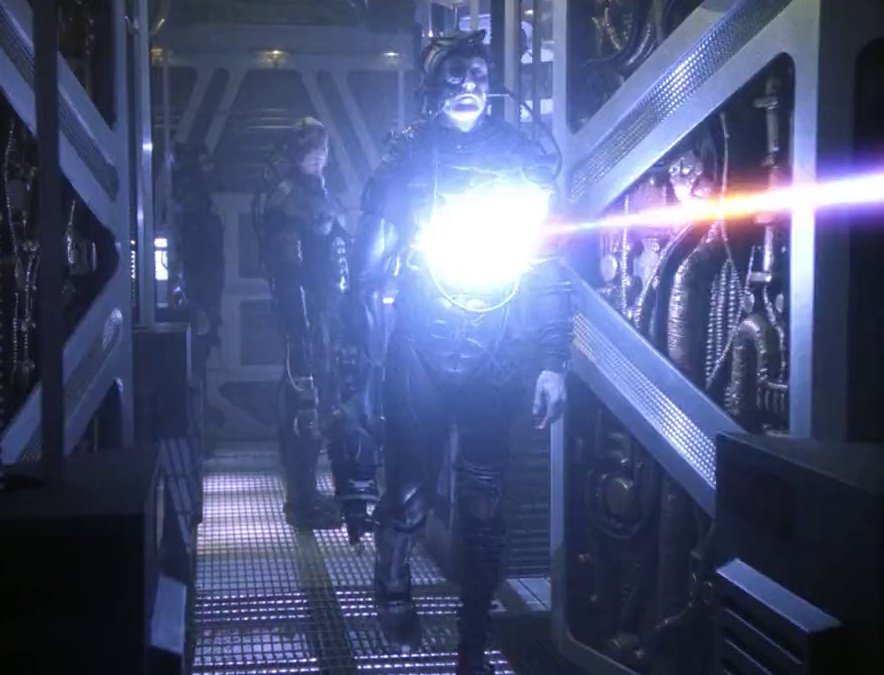
A Borg drone being killed by a phaser blast.

Why would the Borg target Earth, though? It’s not like they need Earth specifically for its location or resources, and Earth isn’t even close to the Borg’s native territory. The Borg are mostly in the far-off Delta Quadrant, though they may have colonies or outposts somewhat nearer to the Federation, such as on the El-Aurian homeworld. So the question remains: why Earth? When there are so many other planets and species in between the Borg’s home territory and the Federation, why jump halfway across the galaxy for an invasion?

We already know that the Borg don’t assimilate everyone they come across. In fact, the Borg can be downright picky – opting to ignore the Kazon, for instance, as they were deemed “unworthy” of being assimilated as they’d somehow detract from the Borg concept of perfection. It stands to reason that some species may be of more interest to the Borg – even those in a faraway part of the galaxy. I think the El-Aurians are a prime example: their homeworld, while nowhere near Earth, seems not to have been on the very borders of Borg space, either. Yet the El-Aurians were targeted – perhaps for their telepathic powers, or perhaps because the Borg considered them a threat. This is a species, lest we forget, that has tangled with the Q Continuum and forced them to the negotiating table. The same basic reasoning may apply to humanity.
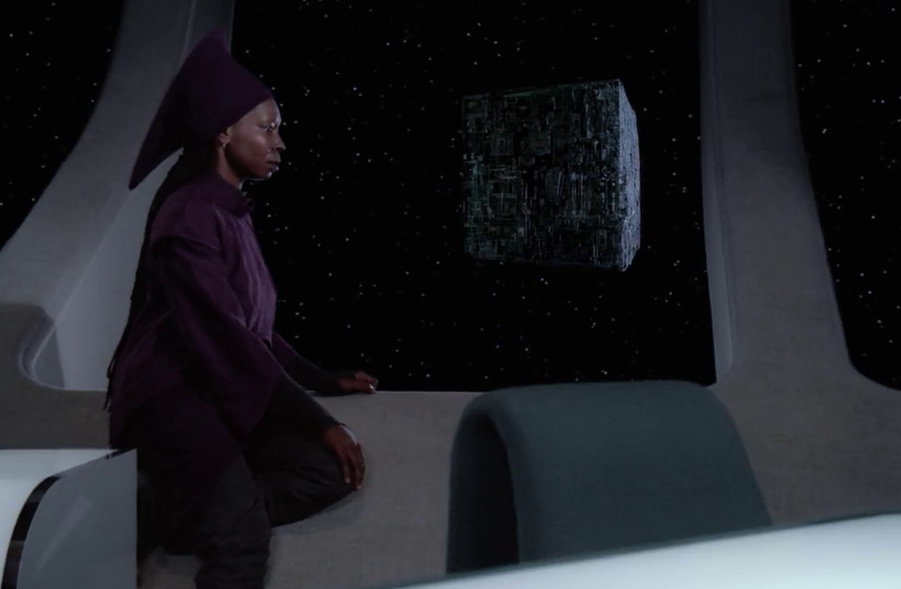
The Borg deliberately targeted the El-Aurians (Guinan’s people), even though they may not have been anywhere near Borg space.

Humanity has to be one of the most resilient and creative species that the Borg have ever encountered. Humans were able to track a Borg vessel and develop technologies to keep themselves hidden from the Collective while studying them – this is what Seven of Nine’s parents, the Hansens, did in the 2340s. This may have been the Borg’s first encounter with a human… and their curiosity was piqued!

Then, not long after the assimilation of the Hansens, the Borg received a strange message. Originating two centuries ago in a far-flung part of the galaxy, it told the tale of a time-traveling sphere, a planet of spacefaring people, and a climactic battle. The Borg who survived the Battle of Sector 001 had crash-landed on Earth in the past, only to be awakened by humanity in the 22nd Century. Captain Archer and his crew were able to stop them – but not before they sent a message to the Collective in the Delta Quadrant. Between the message from the past and the assimilation of the Hansens, the Borg must’ve realised how significant Earth and humanity could be for the Collective.
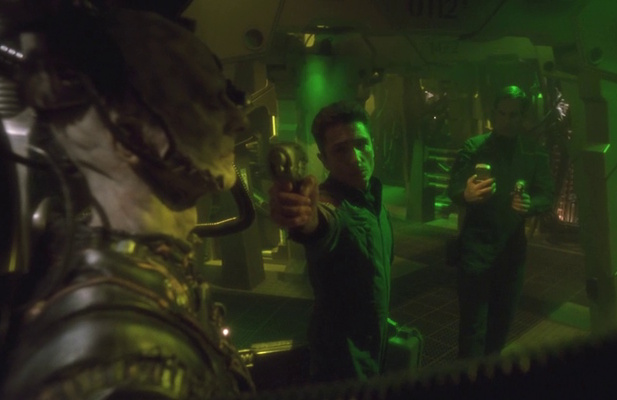
A small group of Borg were able to signal the Collective in the 22nd Century.

After receiving this “blast from the past” transmission, assimilating the Hansens, or both, the Borg had humanity and Earth in their sights. But rather than launch a full-scale invasion in 2350 – years before the Enterprise-D’s encounter with a cube – the Borg took a more subtle approach. Firstly, they may not have been entirely certain of Earth’s location, instead sending ships to scout the Alpha and Beta Quadrants for signs of humanity and the Federation. Then, rather than attack straight away, the Collective bided its time, launching small-scale attacks on outlying colonies along the Neutral Zone to see what would happen.

By attacking both Federation and Romulan outposts (as seen in the Season 1 finale of The Next Generation), the Borg may have hoped to trigger a conflict between the two powers – before swooping in later to attack both of them. Or, perhaps more likely, this was the Borg’s first attempt to assimilate humans en masse to see if they were worth bothering with – and picking outlying colonies makes a lot more sense than rushing to Earth straight away. The Romulans may have been collateral damage, in that case.
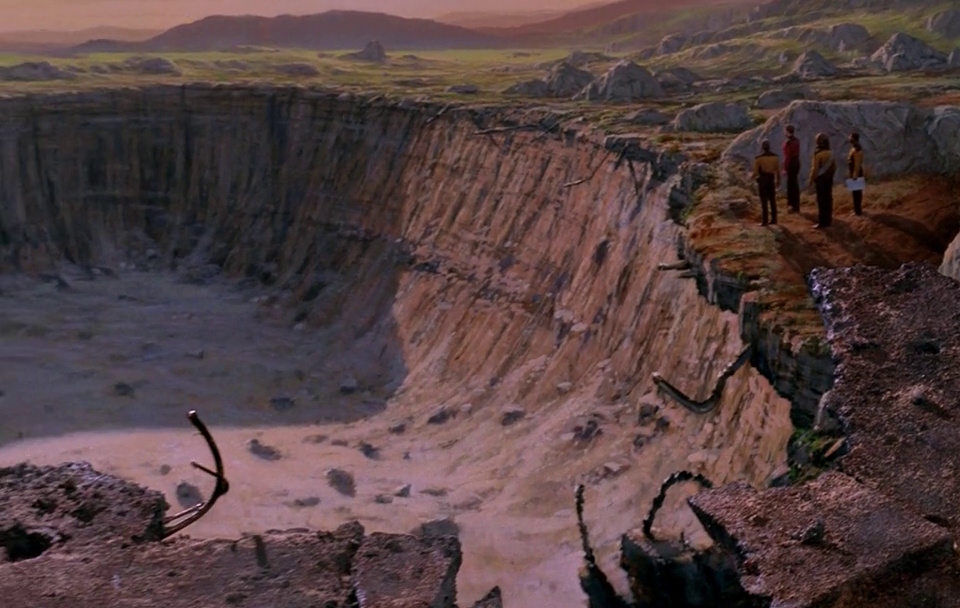
The Borg destroyed multiple human colonies before attacking Earth.

In any case, the Borg determined that humanity was a worthwhile target – something that was only further confirmed by their encounter with the Enterprise-D a few months later. As an aside: Q may very well have saved humanity by his intervention in Q Who! I have a longer piece on this subject – which you can find by clicking or tapping here – but here’s the short version: the Borg knew about humanity and Earth years before Starfleet knew about them. By hurling the Enterprise-D into the path of a Borg vessel, Q gave Picard and the Federation valuable insight into the Collective, forewarning them of the attacks to come.

With the Borg determined to assimilate humanity, decisions had to be made about how to do so. The hive mind, operating as one, makes such decisions at light-speed, and after confirming humanity was a suitable target for assimilation, the Borg decided to “tease” the Federation, pushing them to design new weapons, shields, starships, medical devices, and so on… all so that the Collective could assimilate it later, adding to their perfection. This is how the Borg operate, and it’s why they chose to launch small-scale attacks against Earth instead of simply arriving en masse with overwhelming force.
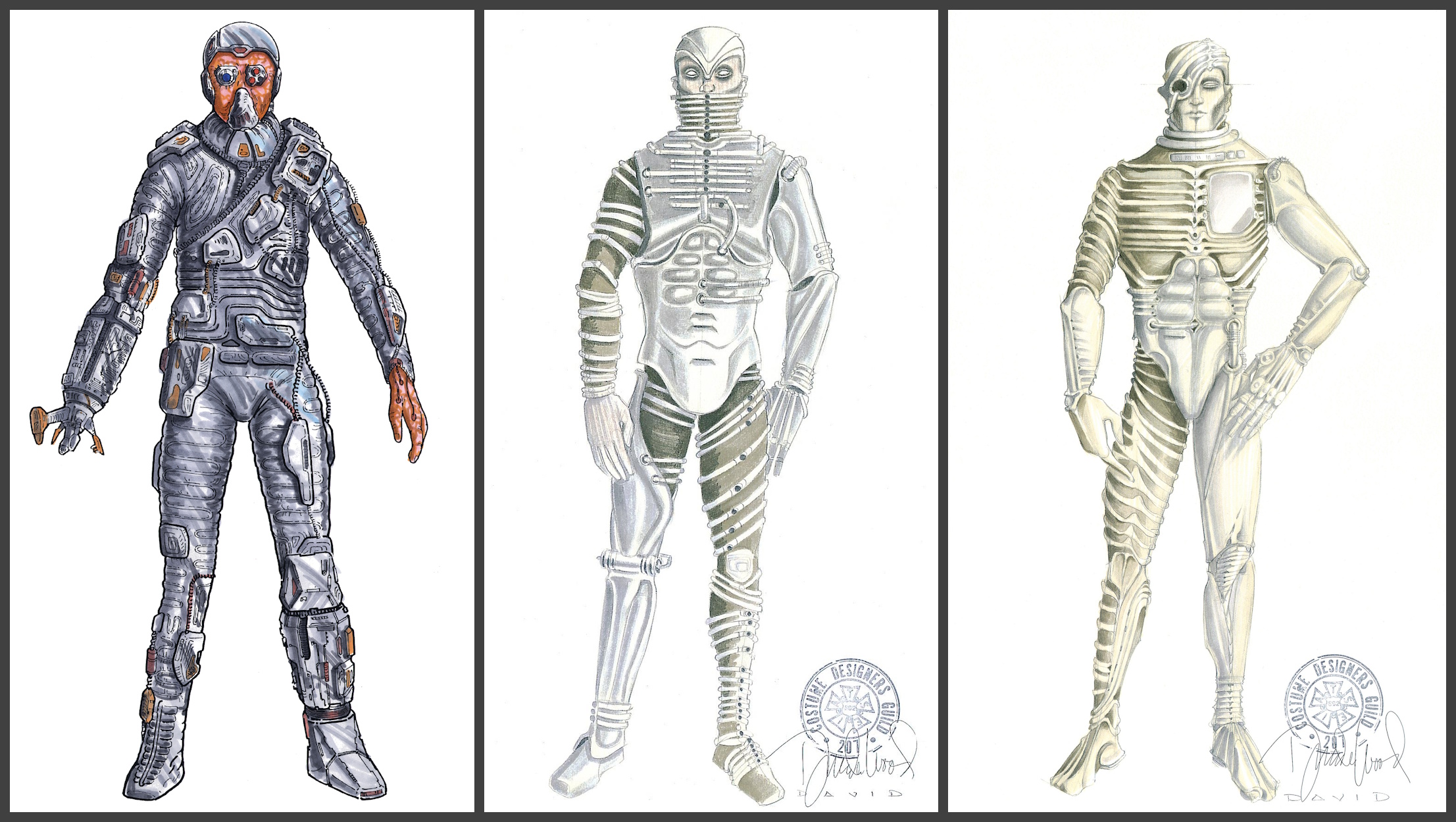
Original concept art of the Borg.
Image Credit: Frogland Archive/Forgotten Trek

From the Borg’s perspective, this approach is a win-win. Either their attack succeeds in full, with humanity and Earth being assimilated over a period of weeks or months, giving the Borg control of the planet and a staging-post for a larger-scale invasion of the Federation. Or it “fails” to achieve that objective, but in doing so provides the Collective with incredibly valuable tactical data on Starfleet, Earth’s defences, and so on, while also pushing the Federation to develop new technologies. The Borg want these technologies – either to “patch” vulnerabilities and weaknesses they may not be aware of or to add to their perfection.

There are real-world parallels. The Second World War led to the creation of modern-day computer technology, rocketry, and atomic power. The First World War led to huge advancements in flight, artillery, and motor vehicles. These are just a couple of examples from our own history of how war and devastation can lead to technological change. The Borg, I would argue, seek to artificially inflate the pace of technological advancement by baring their teeth and showing their target a tiny fraction of their power. In desperation, Starfleet and the Federation began working at pace to develop everything from phasers to starships – all ripe for assimilation by the Collective.
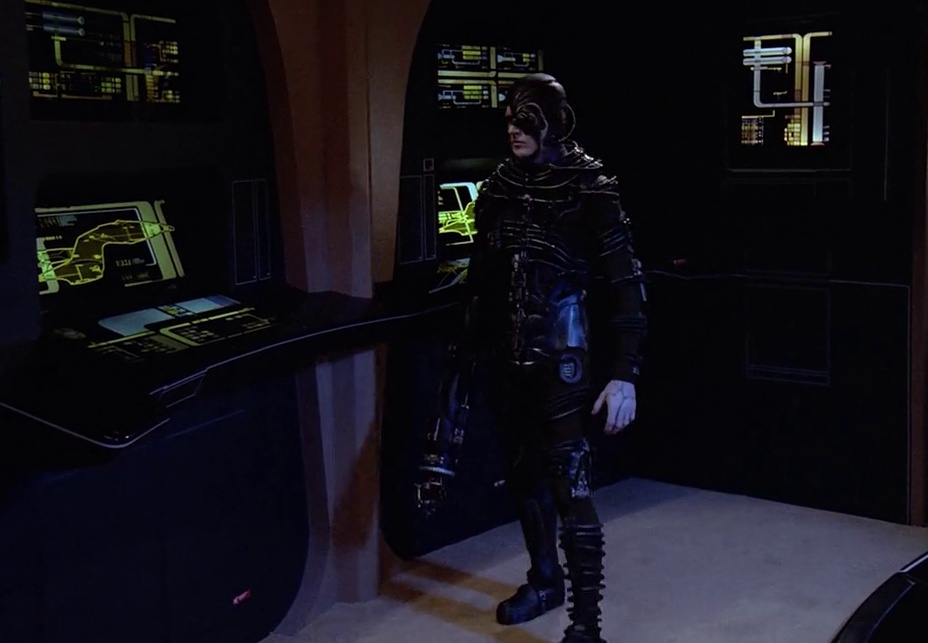
The first Borg drone ever seen in Star Trek.

So that’s the theory.

The Borg were not fully invested in assimilating Earth either in 2367 or 2373 – their only two direct attacks on Earth. These incursions had a different goal: pushing humanity and the Federation to develop new technologies that the Borg could assimilate later, when the time was right. By revealing themselves and showing Starfleet a glimpse of their power, the Borg believed their new target would, in effect, work for them, designing and building new weapons, ships, and other devices that the Collective no longer had the creativity to invent for itself.

To me, this theory made sense even as far back as when I watched First Contact in the cinema in 1996! Developments in Voyager, Enterprise, and more recently in Picard, too, have only added to this theory, expanding it and deepening my belief that the Borg really weren’t serious about conquering Earth. To them, the attacks served a different purpose. It took almost everything Starfleet had to beat the Borg, but given the sheer size and scale of the Collective, we know they had the resources to commit more ships and more drones to an attempted invasion of Earth. There has to be some reason why they didn’t send two or three cubes instead of just one – and to me at least, this idea makes the most sense and squares that circle.

Romulans and Borg as seen in the Lower Decks opening titles.

I hope this has been interesting! I doubt that this theory will ever be confirmed – and it may even be actively debunked one day, if we ever get another Borg story. Some of you might think that the Borg’s time travel in First Contact (or some other plot point from a Borg episode) already negates or invalidates this theory… and that’s okay! As I said at the beginning, this is just a fan theory or head canon, and it’s all subjective at the end of the day. I share this theory with the Star Trek fan community in that spirit.

Speaking of Borg stories… will we see another one in Star Trek anytime soon? After Picard did three separate Borg or Borg-adjacent stories in its three seasons, and with the Collective having appeared in Prodigy and Lower Decks in recent years… I think it might be a while before the Collective makes another appearance. I certainly think it should be a while; I can’t be the only one who feels a little burned out on the faction, especially after their omnipresence in Picard. If and when the Borg return, I hope it’s in a big way. I’ve been kicking around the idea of a “Borg invasion” series for a while – and that could be a really interesting way for Star Trek to go one day in the future. If a fourth Kelvin timeline film ever gets off the ground, I don’t think it’s impossible to think we could see the Borg there, too.

But unless and until any of that happens… this is my theory! I hope you enjoyed this write-up and found it interesting.


The Star Trek franchise – including most episodes and films cited above – can be streamed now on Paramount+ in countries and territories where the service is available. The Star Trek franchise is the copyright of Paramount Global. Header font/text courtesy of textstudio.com. This article contains the thoughts and opinions of one person only and is not intended to cause any offence.
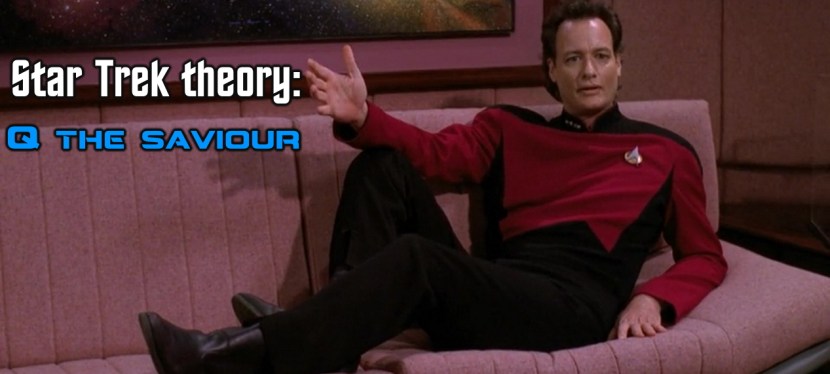
Star Trek theory: Q the saviour

Spoiler Warning: There are spoilers ahead for the trailers and teasers for Star Trek: Picard Season 2. Spoilers are also present for the following Star Trek productions: The Next Generation, First Contact, Voyager, and Enterprise.

Today we’re going to take a look at Q, the immortal trickster who has tangled with Captains Picard, Sisko, and Janeway – and who will soon be returning to the Star Trek franchise! Q is an unusual character in many ways. He seems to have practically unlimited knowledge of the galaxy, and may have been alive for billions of years. Yet he has an impish, almost childish sense of humour that sees him tease and mess with Starfleet – and many other people too.

I wouldn’t call Q a “villain” in any of his appearances to date. In fact, I would argue very strongly that Q sees himself as a friend, an ally, and a guide to Captains Picard and Janeway in particular, having offered his services more than once. He’s certainly selfish – forcing Starfleet officers to undergo tests and trials of his own devising – but there’s usually more to his games than meets the eye.

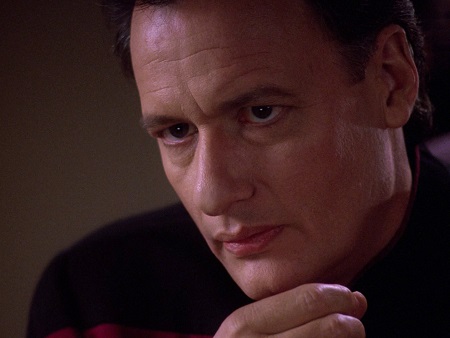
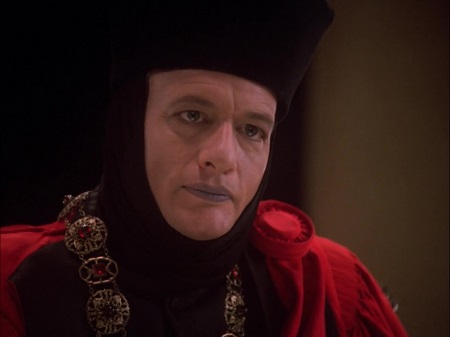
Q in his judge’s robe.

On several occasions – going all the way back to his first appearance – Q has presented Starfleet with puzzles to solve. These puzzles can be dangerous, and more than once Q has gotten people killed. But even so, I wouldn’t characterise him as a typical “villain” for Captain Picard or Captain Janeway to “defeat.”

The puzzles Q has presented – especially to Captain Picard – have actually proven to be deeply satisfying, and arguably helped Picard and Starfleet grow. Recognising that life can take very different forms – as Q helped Picard to see in Encounter at Farpoint – is one such puzzle he presented. He also taught Picard how to view time in a non-linear fashion – understanding that events in the future could have a causal link to events in the past in All Good Things.

All Good Things saw Q present Picard with another puzzle to solve.

Even the teasers and trailers for the upcoming second season of Star Trek: Picard may not be all they seem. Picard says he blames Q for disrupting or changing the timeline, but I think we’ll have to see that story play out before we can assign all the blame to Q. Even if Q is responsible, the question of motivation comes up. Is it really just a game; a trick to mess with Picard? Or is there something bigger going on?

That’s one of my big Picard Season 2 theories! But I’ll save the full write-up for another day. Today we’re not looking ahead to future Star Trek, we’re going to look back at past iterations of the franchise and try to answer a deceptively simple question: did Q save the Federation?

Q will soon be returning to Star Trek…

Star Trek has made a mess of the early history of Borg-Federation contact. The Raven, from Voyager’s fourth season, told us that the Borg assimilated humans and a Federation vessel in the 2350s. Regeneration, from Enterprise Season 2, showed the Borg battling against Captain Archer and his crew – and sending a message to the Delta Quadrant that would be received in the 24th Century. So the question of how the Borg first became aware of the Federation is an open one. Did they receive a message from across the galaxy? Did they first discover humanity when they assimilated Seven of Nine and her family?

Either of these explanations could account for the Borg’s interest in the Alpha and Beta Quadrants in the mid-late 24th Century. Season 1 of The Next Generation first teased the Borg’s appearance with the episode The Neutral Zone, in which both Federation and Romulan colonies had gone missing – “carried off” the surface of their planets, as Romulan commander Tebok put it. The Borg’s responsibility for these attacks would be confirmed in The Best Of Both Worlds – though the connection is easily missed, in my opinion, as it doesn’t take up much screen time.

The Borg were responsible for the destruction of several Federation colonies in the 2360s.

Regardless, one thing is certain: the Borg knew of the Federation’s existence well before the Federation knew of theirs. They had even begun to send scouting vessels relatively close to Federation space; system J-25, where the Enterprise-D first encountered a Borg Cube, was a mere two-and-a-half years away from Federation space at high warp, placing the Borg tens of thousands of light-years away from their Delta Quadrant home.

Were the Borg actively scouting for the Federation, or was it just a coincidence that one of their vessels was operating so far away from their own space? We may never know the answer to that, but someone almost certainly does: Q.

Q was responsible for this encounter.

In brief, here’s my theory: the Borg and the Federation were already on a collision course, but the Federation didn’t know it. Whether it was because of the First ContactRegeneration time travel loop, the assimilation of the USS Raven, the attacks along the Neutral Zone, or simply the Borg’s continued exploration of the Alpha and Beta Quadrants, they had humanity and the Federation firmly in their sights long before Starfleet was aware that there was a problem.

Recognising this, and seeing potential in humanity thanks to his earlier run-ins with Captain Picard and the crew of the Enterprise-D, Q chose to intervene. He knew that if the Federation became aware of the threat the Borg posed, their ingenuity would lead to better defences and they’d be able to protect themselves, so he chose to deliberately introduce them to the Borg for that reason.

A Borg Cube hovering ominously over Earth. The Borg came very close to assimilating humanity’s homeworld.

The events of The Next Generation Season 2 episode Q Who can be reinterpreted through this new lens. Rather than Q trying to frighten Picard for the sake of it or to prove his own superiority, he was – in his own twisted way – helping Picard and the Federation. The events of Q Who led the Federation to begin serious preparations for a Borg incursion, and without that tactical readiness it seems likely that the Borg would have been able to cruise to victory during the events of The Best of Both Worlds.

This fits with how Q operates. In stories like Encounter at Farpoint, Tapestry, and All Good Things, as well as Voyager’s The Q and the Grey, Q never explains everything he knows. Instead he obfuscates, talks around the issue, and forces Starfleet figure out what’s going on for themselves. Sometimes he pushes Picard or Janeway in a certain direction to get things moving, or even devises a puzzle or test of his own, like he did in Hide and Q. But what he never does is simply communicate – he doesn’t just sit down with Picard and tell him about Farpoint Station or the anti-time problem. He pushes Picard to figure those things out for himself.

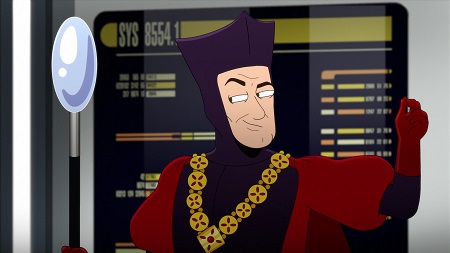
Q appeared in Season 1 of Lower Decks.

And so it is with the Borg – according to this theory. Rather than contacting Picard and explaining what he knows about the Borg and their intention of targetting Earth, he sends the Enterprise-D to a location where he knows a Borg vessel will be and allows the crew to discover the threat for themselves. He does so knowing that the consequences will be Starfleet ramping up their defences in preparation of a Borg attack.

In All Good Things, Q told Picard that the Q Continuum saw potential in humanity – the potential to one day understand more about the universe than they ever thought possible. From Q’s point of view, perhaps he believed that seeing the Federation attacked and humanity assimilated would be a net loss to the galaxy because that potential would never be realised.

Q has his reasons for “testing” Picard and humanity – even if he chooses not to explain himself.

Q’s motivation for putting Picard and humanity “on trial” seems to be connected to this. In Encounter at Farpoint he accused humanity of being “a dangerous, savage, child race.” Yet even by the end of the episode, Q appeared to be impressed rather than disappointed that Picard and the crew could solve his puzzle. Rather than believing humanity to be dangerous and savage, as he asserted, Q almost certainly sees humanity as something more than that – and thus would feel humanity’s assimilation by the Borg would be a loss. His desire to avoid that fate could have motivated him in Q Who.

All of this could tie into Picard Season 2. Q may feel that Picard and the Federation are ungrateful for his “assistance” over the years, and he could cite the events of Q Who as one example of how his intervention saved the Federation from assimilation. While the latter part is up for debate, I definitely believe that Q feels underappreciated by Picard in particular, and sees his interactions with the former captain of the Enterprise-D as helpful rather than antagonistic.

Q looks annoyed with Picard in the trailer for Star Trek: Picard Season 2.

So let’s recap! The Borg became aware of the existence of the Federation by the mid-24th Century. The Federation had technology and resources that the Borg considered valuable, and they began targetting outlying Federation colonies, including those near to the Romulan Neutral Zone. All the while, the Federation remained ignorant of the Borg’s existence – considering them to be little more than rumour.

Foreseeing disaster and either the total assimilation of humanity or the devastation of the Federation such that humanity could not achieve its full potential, either the Q Continuum or Q independently decided to intervene. Instead of simply contacting the Federation to share his knowledge, Q transported the Enterprise-D to the star system J-25, where they encountered the Borg. This encounter led to the Federation developing anti-Borg strategies and defences that would ultimately save them from assimilation.

Unusually, Q has never taken credit for this. However, it’s at least possible that he considered Picard and the Federation as a whole to be ungrateful for his help, and this could tie in somehow to the events of Picard Season 2 where Q will be making a return to the Star Trek franchise.

Did Q save the Federation from assimilation?

What I like about this theory is that everything feels like it fits together. This theory connects the message sent in Regeneration and the early assimilation of Seven of Nine’s family to the events of The Neutral Zone, giving the Borg a reason to be operating so far outside of their territory. It also fits in perfectly with the way Q behaves – never sharing everything he knows and presenting dangerous and often deadly puzzles to Picard and Starfleet.

Whether it’s true or not is open to interpretation! I would say that Q Who wasn’t written with any of this in mind, and a straight watch of the episode strongly suggests that Q’s motivation is simply to frighten Picard and the crew of the Enterprise-D after his offer to join the crew was rejected. Q felt that Picard was arrogant in assuming that Starfleet could handle any threat the galaxy contained, and wanted to prove him wrong. While that explanation works in the context of the episode, it doesn’t preclude anything included in this theory from also being true; Q could still have been annoyed at Picard’s assertion that the Federation was prepared for anything while also intending to provide them with advance warning of the Borg.

So that’s it for this one! As with all fan theories, anything we see on screen in a future episode or film could render the whole thing invalid. But for now, I think it’s at least plausible that the events of Q Who represent Q trying – in his own unique and twisted way – to help Picard and the Federation. Q has always seen himself as a friend of Picard’s, and based on what we know of both Q and the history of Borg-Federation contact, it seems to me that everything arguably fits together!

The Star Trek franchise – including all episodes and other properties mentioned above – is the copyright of ViacomCBS. This article contains the thoughts and opinions of one person only and is not intended to cause any offence.
Star Trek 2023: what could it be?

Spoiler Warning: There are spoilers ahead for the entire Star Trek franchise, including the most recent seasons of Discovery and Picard, as well as recently-revealed teasers for upcoming seasons and projects.

The announcement a couple of days ago that a brand-new Star Trek film is in the works was incredibly exciting! There hasn’t been a feature film in the franchise since 2016’s Star Trek Beyond, the third film in the Kelvin (or JJverse) series. Since The Motion Picture made its debut in 1979, the Star Trek franchise has been reasonably consistent in its cinematic output, with the longest gap between films to date coming between Nemesis’ release in 2002 and JJ Abrams’ 2009 Star Trek reboot. Aside from that seven-year gap, we’ve seen Star Trek films every three or four years on average, and there have been thirteen films released since 1979.

I’ve always considered Star Trek to primarily be a television franchise, and its return to the small screen in 2017 felt like a proper homecoming. As interesting as the Kelvin timeline films were, I was far happier to see Star Trek back on television. That’s not because the Kelvin films – or any other Star Trek films – were bad, it’s just that the television format seems to work particularly well and lend itself to the kinds of stories Star Trek does best.

Star Trek will soon be back in cinemas!

As I said when I wrote up a short piece about the film’s announcement, no information was provided by Paramount Pictures or ViacomCBS about the film other than its June 2023 release date. So it would be foolish to speculate, wouldn’t it?

Foolish, perhaps, but also a lot of fun! So this time we’re going to take a look at a handful of possible settings, scenarios, and ideas for Star Trek 2023 and what it might be all about. My usual caveat applies: I don’t have any “insider information,” nor am I suggesting any of these film ideas will turn out to be correct. This is pure guesswork and speculation on my part. That’s all.

With that out of the way, let’s jump into the list!

Number 1: A direct sequel to Star Trek Beyond.

The redesigned USS Enterprise in 2009’s Star Trek.

Attempts have been underway since before the release of Star Trek Beyond to get a fourth Kelvin timeline film off the ground. At one point, rumours swirled of a script that would have brought back Kirk’s father George – who had been played by Thor actor Chris Hemsworth in the opening scenes of 2009’s Star Trek. Pre-production on that project appeared to make headway, but – again, according to widely-reported rumours – the salaries of some of the principal cast members, including Kirk actor Chris Pine, were said to have derailed the project.

Beyond ended with a strong tease at a potential sequel. Kirk and his crew gazed out over the new USS Enterprise-A as construction on the vessel was completed, and there was a sense that the film was setting up a new story. After more than five years it hasn’t happened, and as I said when I considered the pros and cons of a return to the Kelvin timeline, Star Trek’s return to the Prime Universe and the expansion of the franchise to new shows and projects means that, at least in my opinion, the Kelvin timeline doesn’t really feel like a good fit right now.

The Kelvin crew in Star Trek Beyond.

In many ways, it would make more sense for any new feature film to at least have some connection or tie to the shows currently being produced, even if it isn’t a direct spin-off from any of them. The Kelvin timeline was a way to reboot Star Trek in 2009 after three decades of near-continuous production had burnt it out in the minds of many viewers. That doesn’t feel necessary right now. And going back to the Kelvin timeline after years in the Prime Universe risks overcomplicating things for a more casual audience.
So there are mixed feelings on this one! On the one hand, the story of the Kelvin timeline abruptly ends after Beyond, despite teases of a sequel. And the Kelvin timeline films were incredibly successful, bringing in huge audiences and plenty of money! But on the other hand, the reinvigorated Star Trek franchise has gone in a different direction since 2017, and I don’t see where a Beyond sequel fits any more.

Number 2: Captain Worf.

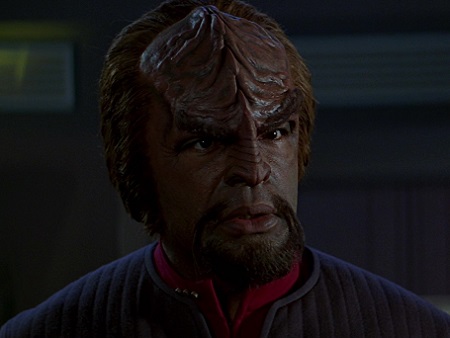
Worf in First Contact.

Michael Dorn, who played Worf in The Next Generation, Deep Space Nine, and four Star Trek films, has often talked about his desire to reprise the role. Since at least the early 2010s, Dorn has talked at every opportunity about his pitch to Paramount and ViacomCBS for a “Captain Worf” series, miniseries, or film. Perhaps, after years of pestering them, he finally got his wish?

At this stage we can’t rule it out! Knowing so little about the upcoming project means, in theory, that practically any Star Trek pitch that we know about could be in contention. Maybe the “Captain Worf” concept was one that the company liked, and a feature film was considered the best possible option for it. One advantage to it, at least in theory, would be that Michael Dorn is well-versed in both Star Trek and the project’s central character, meaning it would be less challenging to get started with when compared to a wholly new concept. Given that the film has just over two years to go from announcement to release, that could be a significant help!

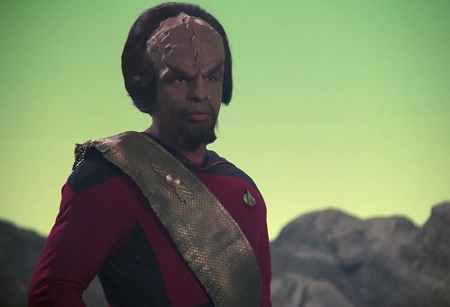
Worf in Season 1 of The Next Generation.

However, I’ve never been sold on the “Captain Worf” idea, personally speaking. Worf is a fun character, but I see two distinct disadvantages if he were to be the central focus of a new story. Firstly, Worf is the character we’ve spent the most time with in all of Star Trek to date – he appeared in 270 episodes and four films across fifteen years. We’ve seen most aspects of his life unfold on screen already, including his role as a father, husband, friend, and Starfleet officer. Do we really need more Worf?

And secondly, Worf is a great secondary character, but the “Captain Worf” concept would put him centre-stage. That’s great for Michael Dorn, of course, but I’m not sure Worf is the most nuanced or interesting character to spend so much time with. Both Worf and Voyager’s B’Elanna Torres have explored the “Starfleet-versus-Klingon” concept on many occasions, which is perhaps Worf’s biggest point of internal conflict and the best reason to do a project like this. It could be interesting, and a chance to return to the 24th or early 25th Century would be great. But I’m not sold on this being the right way to do it.

Number 3: Ceti Alpha V.

My Ceti Alpha V mock-up.

A few weeks ago I looked at a pitch by The Wrath of Khan and The Undiscovered Country director Nicholas Meyer for a miniseries tentatively titled Star Trek: Ceti Alpha V. That project was planned as a three-part miniseries, but it could have been adapted into a feature film, I suppose!

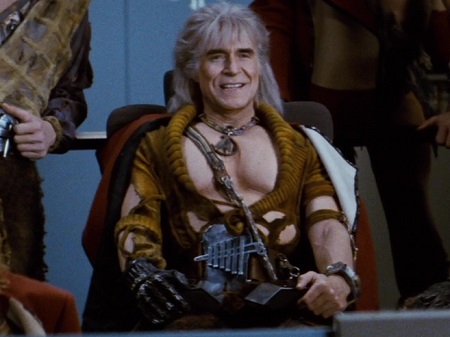
This concept would focus on iconic villain Khan in the years between his exile by Kirk in Space Seed and his return in The Wrath of Khan. He and his followers were marooned on the titular planet Ceti Alpha V, and had to endure disaster following the explosion of nearby Ceti Alpha VI.

Khan in The Wrath of Khan.

As I wrote then, I’m not convinced that we need to see that part of the story! It wouldn’t really explain anything from The Wrath of Khan, as seeing Khan’s descent into madness for ourselves across several hours of television – or an entire film – isn’t necessary in any way to explain his actions or characterisation. Everything we needed to know about Khan is present in Space Seed and The Wrath of Khan.

As a feature film, though, a project like this has merit. It would pull on those nostalgic strings, connect to the franchise’s most well-regarded piece of cinema, and feature an iconic Star Trek character. From Paramount’s point of view, those advantages may make it worthwhile!

Number 4: Borg Invasion.

A Borg Cube over Earth in The Best of Both Worlds, Part 2.

If you’re a regular around here you might remember a Borg Invasion concept being one of my “unsolicited Star Trek pitches” last month! This is a concept that I’ve long felt would be fascinating, and while I envisioned it as a television series, it could perhaps be made to work as a film trilogy instead – potentially making Star Trek 2023 the first part of a short series of films.

But we’re getting ahead of ourselves! The Borg are one of the franchise’s most iconic villains, participating in one of Star Trek’s most highly-regarded episodes – The Best of Both Worlds – and best films – First Contact. The faction itself also hasn’t been seen on screen in any major way since 2003’s Enterprise Season 2 episode Regeneration, perhaps making them due for a comeback!

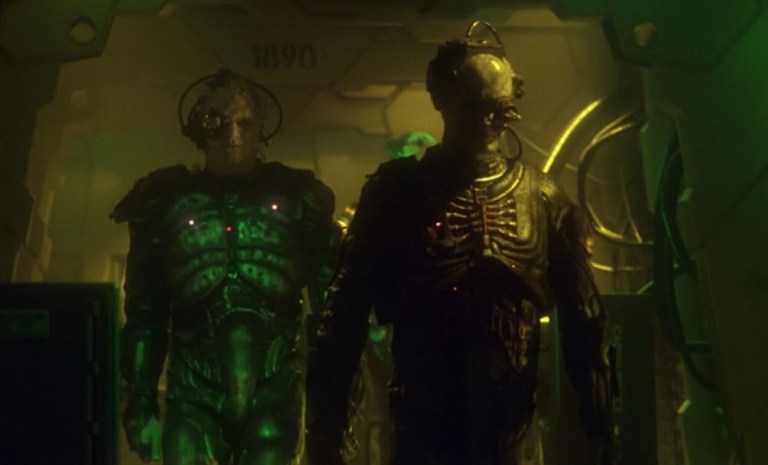
Borg drones in the Enterprise episode Regeneration – the last time we saw any “active” Borg on screen!

Discovery’s second season told a story which had the potential to be a Borg origin story, and Picard Season 1 also touched on the Borg, in particular Picard’s lingering trauma following his assimilation. But neither series brought back the Borg in a big way, despite the potential existing for either to do so. Could that be because ViacomCBS knew that Paramount Pictures (its subsidiary) was in the early stages of working on a new Borg film? Maybe!

The Borg are terrifying, and such a film would be action-packed and tense in equal measure. It’s been 25 years since Star Trek: First Contact took the Borg to the big screen for their only visit to the cinema so far, so I can’t help but wonder if they’re about to make a reappearance! Whether a Borg story would look to bring back any familiar characters or not is not clear – it wouldn’t have to, but as always in Star Trek, I’d be thrilled to see practically anyone connected to the franchise make a return.

Number 5: The Kelvin timeline version of The Next Generation.

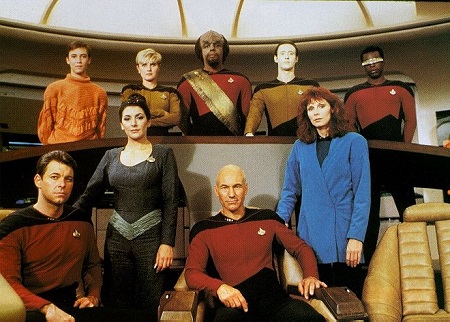
The Season 1 cast of The Next Generation. Is a reboot on the cards?

2009’s Star Trek reboot presented an opportunity to go back to the drawing board and take another look at Kirk, Spock, Dr McCoy, and the rest of the crew of The Original Series. Ever since, (some) fans have been wondering what would happen to The Next Generation in the alternate reality – would the same crew have been assembled, or would its members even exist given the dramatic changes to the timeline?

Perhaps this is something we should explore in more detail another day, but I think that the existence of Chekov in the alternate reality, and the fact that he joined Starfleet, could be taken as evidence of the alternate reality not straying too far from the Prime Universe. Chekov was born after the incursion of Nero’s ship and the destruction of the USS Kelvin, so in theory we could argue that most people we met in past iterations of the franchise should have an alternate reality counterpart – just as they have a Mirror Universe counterpart too.

Did this moment in Discovery Season 3 hint at something to come?

Discovery Season 3 made a small reference to the Kelvin timeline – or at least, an ambiguous reference that felt like a Kelvin connection! In the episode Terra Firma, Part 1, the mysterious Kovich told Dr Culber of a “time soldier” who crossed over from the alternate reality to the Prime Universe. This soldier was wearing a uniform style seen in the first couple of seasons of The Next Generation, so it seems as though there was a comparable era of Starfleet in the alternate reality.

Could Discovery have been dropping a hint at this film? Possibly! Even if that’s just coincidence, it reinforced the existence of the Kelvin timeline – a fact that was known to Starfleet by the 32nd Century. Perhaps it was a subtle reminder to Trekkies that the alternate reality still exists, getting us ready for a new project? The Next Generation is very popular with fans, and rebooting it may seem like a solid idea for Paramount Pictures. Though I know some fans who detest the Kelvin films – or who refused to watch on principle – there’s no denying the reboot was a success, and rebooting The Next Generation could be as well.

Number 6: A Discovery film – if the show ends with Season 4 or Season 5.

Captain Burnham at the end of Season 3.

Speaking as we were of Discovery, its fourth season is due for release later this year. While there is no word yet on Season 5 – at least officially – it seems likely that the show will be renewed for a fifth season, which would presumably be broadcast in 2022. But what will happen next?

Both The Original Series and The Next Generation were followed up by films starring the casts of the shows, and perhaps something similar could be on the cards for Discovery, with Captain Burnham leading her crew onto the big screen. By 2023 we’ll have had at least one – probably two – more seasons of Discovery, so the crew will be almost as familiar to audiences as Kirk and his officers were when The Motion Picture was in production!

The USS Discovery.

If there is to be a fifth season of the show, that would mean production on Season 5 would likely be ongoing at the same time as this film, so maybe this is an indication that there won’t be a Season 5. With a number of other Star Trek television projects in various stages of development – including the untitled Section 31 series which is itself a spin-off from Discovery – perhaps the plan is to end the series after Season 4 and turn it into a feature film franchise instead, with television attention refocused onto other projects.

It would be a big change, but I can see at least one big advantage to a Discovery film: it would firmly establish the 32nd Century in the minds of audiences. I’ve felt for a while that Star Trek needs to try to condense its disparate timelines and time periods as much as possible, and the 32nd Century is by its very nature totally open-ended when it comes to storytelling potential. A Discovery film could be a “soft reboot,” relaunching Star Trek in the 32nd Century and setting the stage for new projects.

Number 7: A Deep Space Nine film – the return of Sisko.

Captain Sisko in Take Me Out To The Holosuite.

I was perhaps overly-critical of a “Captain Worf” idea in the entry above, but one character who I’ve been hoping to see return for over twenty years now is Captain Sisko. The ending of What You Leave Behind – the last episode of Deep Space Nine – more so than any other Star Trek finale left things open. Sisko entered the realm of the Bajoran Prophets, but promised to return in due course.

That return could happen at literally any point in the timeline; the Prophets don’t see time as linear. Sisko could thus appear in the Strange New Worlds, Picard, or Discovery eras – despite the fact that those shows take place centuries apart! But given the importance of his return to Star Trek, perhaps a Sisko feature film is on the cards.

Sisko in Move Along Home.

Sisko would be such a great point-of-view character. His absence from galactic affairs for decades or even centuries would allow the writers of the film to dump a lot of exposition onto the audience without it feeling like it came from nowhere. His return could both set up the plot of a new Star Trek story and provide the audience with a way in; introducing us to new characters, factions, technologies, and the state of the galaxy itself in whatever time period he finds himself.

Such a story could also return to Bajor, looking at whether the Bajorans ever joined the Federation, as well as the aftermath of the Dominion War. The Dominion War arc is one of my favourites in all of Star Trek, and a follow-up of some kind would be absolutely amazing to see. If Sisko returned during the Picard era, he could reunite with people like Major Kira or Dr Bashir, and a mini-reunion of some of the Deep Space Nine crew would be wonderful.

Number 8: A Nemesis sequel.

The Enterprise-E undergoing repairs at the end of Nemesis.

A direct sequel to Nemesis seems unlikely, especially with Picard Season 2 underway and planned for next year. But the official announcement of Star Trek 2023 mentioned a film set after Nemesis as one possibility. That seems incredibly interesting! Would it be set in the Picard era, perhaps with the crew of La Sirena in major roles?

The surviving crew of the Enterprise-D and Enterprise-E have largely gone their separate ways, at least as of Picard Season 1. Riker and Troi live in semi-retirement on the planet Nepenthe. Picard is off with the crew of La Sirena. Worf and Geordi were mentioned by name, but there’s no indication that either are still even in Starfleet at this point! Season 2 of Picard may answer these questions, as well as establish what became of Dr Crusher, and if so that could set the stage for a reunion on the big screen.

Acting Captain Riker in the Picard Season 1 finale.

As above with Discovery, Picard Season 2 is currently filming, meaning that production on Star Trek 2023 would have to wait if it wanted to include Picard himself. But there is another possibility: that a Nemesis sequel would focus on other characters. Perhaps it would look at Riker and Troi in more detail, especially if they returned to Starfleet following the events of Picard Season 1.

Star Trek 2023 may follow Riker’s time in command of the USS Zheng He, and perhaps he reunites with Worf, Dr Crusher, Geordi, or even Wesley! Or we could see the return of characters from Deep Space Nine and/or Voyager, such as Ezri Dax or Tuvok. With Captain Janeway coming back in Prodigy, anything’s possible right now!

Number 9: A Kelvin timeline crossover with either Strange New Worlds or Discovery.

Captain Kirk in Into Darkness.

One of the really enticing possibilities that came up when Strange New Worlds was announced was the possibility of some kind of Pike and Spock crossover story. I would be surprised in some ways to see Strange New Worlds – a highly-requested but completely untested – series hit the big screen, but a Kelvin timeline crossover could be a great way to do it.

Pike and Spock could team up with their alternate reality counterparts, perhaps looking to return to their own universe following some kind of crossover event. The two “young Spocks” would have to logically stand off – Kelvin Spock has already met Prime Spock but he can’t let young Prime Spock know that! It might be confusing, with two different versions of the characters, but it could be a lot of fun too.

Captain Saru in Discovery Season 3.

Alternatively the Kelvin cast could cross over with Discovery’s 32nd Century. Not only have we had the aforementioned reference to the Kelvin timeline during Discovery’s third season, but we know that crossing between the two universes also seems to mean crossing into a different time period. Perhaps someone in the Kelvin timeline accidentally opens a black hole, sending them to Discovery’s 32nd Century.

The reverse would be interesting too, and could draw on themes present in episodes of Voyager like The ’37s. If Captain Burnham and the crew of Discovery found themselves in an alternate 23rd Century, how many of them would struggle with the idea of remaining there, trying to rebuild their lives in a different universe, but perhaps a setting more familiar to them than the 32nd Century? That could be fascinating to explore – as would any crossover between two sets of crews!

Number 10: The Earth-Romulan War.

The NX-01 Enterprise encounters two Romulan ships in the Season 2 episode Minefield.

Picard Season 1 brought back the Romulans in a big way, and they also appeared in Discovery Season 3. The faction is clearly a big part of Star Trek right now, but one aspect of their history has never been explored – despite plans to do so in 2004-05. The unproduced fifth season of Enterprise would – allegedly – have included the Earth-Romulan war, one of humanity’s first major interstellar conflicts.

Fans have long wondered what this would have looked like – even as far back as the Earth-Romulan War’s first mention in The Original Series Season 1 episode Balance of Terror. We saw the first hints of Romulan aggression in Enterprise, as they attempted to disrupt the Earth-Vulcan alliance and start a Vulcan-Andorian War. Captain Archer managed to prevent that from happening, but as we know from Star Trek’s history, conflict with the Romulans broke out regardless.

A Romulan Bird-of-Prey as seen in Lower Decks.

This would be a great opportunity to bring back Captain Archer, T’Pol, or other major characters from Enterprise. It wouldn’t necessarily be an “Enterprise film,” but it could be a film that included at least some of the same characters. A single film might not be able to tell the story of the entire conflict, but it could certainly look at its most decisive battle – and with so little information having been shared on screen, it’s an almost-blank slate for any new writer or producer to play with.

The drawback, really, is that it would be hard to connect such a film to the ongoing Star Trek franchise, which has series set in the 23rd, 25th, and 32nd Centuries. Going back to a time shortly after Enterprise would isolate Star Trek 2023, and while it could be the springboard for more 22nd Century adventures to come, it could also end up feeling disconnected.

So that’s it. Ten possibilities for Star Trek 2023.

It’s quite likely that all of these suggestions are completely wrong; Paramount Pictures and ViacomCBS are just as likely, in my opinion, to want to take the cinematic franchise in a new direction with a new crew than they are to revisit something from Star Trek’s past. But that doesn’t mean it wasn’t a lot of fun putting this list together and considering the possibilities!

Star Trek 2023 probably won’t bring back these uniforms!

Star Trek 2023 is a truly exciting prospect. I desperately hope that it will come to streaming instead of the cinema – as you may know if you’re a regular reader, my poor health means I can’t get to the cinema in person any more. Probably it will be given a theatrical release, though, which will mean months of trying to avoid as many spoilers as possible for me! Time will tell.

For now, though, suffice to say I’m intrigued by the prospect of the first new Star Trek film since Beyond, and potentially the first film to feature a different cast of characters since 2009. Whether or not this is the previously-announced project written by Discovery and Short Treks producer Kalinda Vazquez is also not clear. We know basically nothing about this film right now except its planned release date! Hopefully we’ll learn more soon, so stay tuned. I’ll be sure to take a look at any casting information, behind-the-scenes details, or any other news that comes our way.

The currently-untitled Star Trek film is scheduled for release on the 9th of June 2023. This film is the copyright of Paramount Pictures and ViacomCBS, as is the entire Star Trek franchise. This article contains the thoughts and opinions of one person only and is not intended to cause any offence.