Star Trek: Picard review – Season 1, Episode 5: Stardust City Rag

Spoiler Warning: There are spoilers ahead for Stardust City Rag, as well as for the rest of Star Trek: Picard Season 1. There may also be spoilers for other iterations of the Star Trek franchise.

First of all, before anything else, I just want to say how much I love this episode’s title! Stardust City Rag is just such a fun episode name, quite possibly one of my all-time favourite episode names in all of Star Trek. It just has such a fun sound, which was reflected in parts of this episode’s tone. Jonathan Frakes (who played Commander William Riker in Star Trek: The Next Generation and had directed several episodes of Star Trek: Discovery) returned for his second and final stint as director this season, and I really enjoyed what he brought to the table. In fact I’d say this was definitely the better of his two episodes this season.

There was a dichotomy in Stardust City Rag between two very different tones that both played into the same story. There was the fun, somewhat campy tone present in some of the nightclub sequences, with Picard and his crew dressing up in over-the-top costumes, and then there was the deathly serious tone that followed Seven of Nine, Raffi, and finally at the end, Dr Jurati.

Stardust City Rag ended with a huge moment for Dr Jurati.

Stardust City Rag also gave us our first confirmed theory – if you look back at my theory posts, you’ll see that after Episode 3, The End is the Beginning, I called out Dr Jurati for her possible betrayal. And in this episode we got to see that theory bear fruit, though not quite in the manner I had expected. To have her exposed as a double-agent and betray Picard’s trust at only the halfway mark through the season was also a surprise – after what she did and the fact that La Sirena’s EMH witnessed it, she won’t be able to maintain her cover. What will happen to her next is an open question, and she notably did not feature in any of the clips shown in the trailer for next week’s episode.

But we’re getting ahead of ourselves! The Dr Jurati revelation was only one of several huge story points that Stardust City Rag had to offer. And more so than any episode so far, I feel that this episode advanced the plot in a major way. From the scenes glimpsed in last week’s trailer, I wasn’t sure I would like Stardust City Rag, despite its fun name. The silly game of dress-up and the nightclub setting made it look like we were in for a kind of “Picard meets Ocean’s Eleven” jokey heist story, and honestly I was kind of uninspired by that concept.

“You son of a bitch, I’m in.”
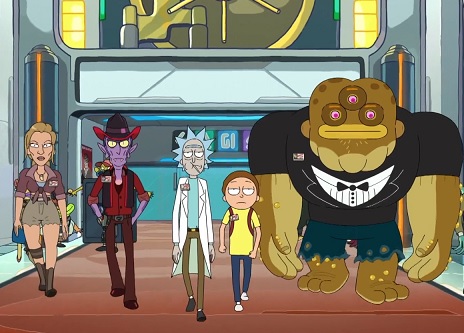
From last week’s teaser trailer, I was worried that Stardust City Rag would turn into this episode of Rick and Morty!

While there was certainly that element to the episode, it was hardly all Stardust City Rag had going on; the “heist” portion of the story took up perhaps a third of the runtime. And that’s definitely a positive, in my opinion. I think if the whole episode had been dedicated to that, with Picard putting on an accent and the characters all dressed up, I think we could have ended up with a bit of a farce, and that’s really what I was concerned about heading in.

Stardust City Rag begins, as every episode aside from the premiere has, with a flashback sequence. This time, we’re on a planet called Vergessen – German or Dutch for “forgotten” – thirteen years before the events of the series. This places it around one year after the attack on Mars and Picard’s resignation, and three years before the supernova. The sweeping aerial shot of Vergessen shows what looks to be a largely uninhabited planet, with The Seven Domes occupying what appears to be a river delta or area of marshland. The sequence looks to be conveying that Vergessen is, as its name implies, forgotten about and hidden – somewhere out of the way, perfect for illegal activities.

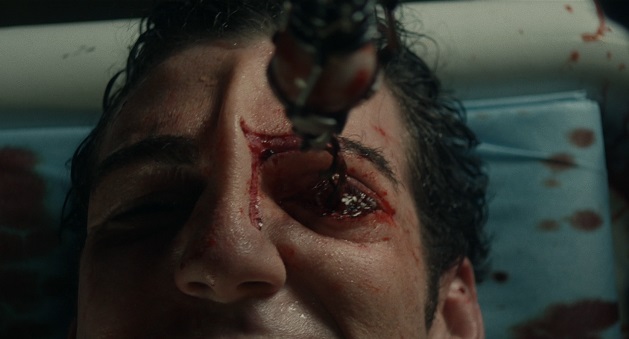
And then we get what is probably the most graphic sequence to date in Star Trek: Picard – and arguably in the whole franchise. A young man in a torn Starfleet uniform is being hacked apart. Returning fans will recognise him as Icheb from Star Trek: Voyager – he was one of several young Borg who were taken on board by Capt. Janeway toward the end of Voyager’s stay in the Delta Quadrant. The implant by his eye – an inverted L-shape – was instantly recognisable, despite it having been removed. An unidentified woman pulls out Icheb’s eye, looking for his cortical implant. And the hacked-apart bodies of others, presumably drones, hang around the facility. After the brutal butchering, Seven of Nine arrives and kills the scientists, but it’s too late to save Icheb, and she is forced to put him out of his misery by shooting him – leaving her clearly devastated.

Icheb gets his eye brutally torn out.

There was always a sense, I felt, that with television storytelling increasingly following a route trailblazed by series like Game of Thrones and The Walking Dead, Star Trek: Picard was going to kill off characters sooner or later. The brutality with which Icheb was treated, and the fact that we really didn’t get to spend any time with him before seeing his demise, was genuinely shocking and unexpected, though.

The way the sequence was shot also did a good job of disguising that Icheb had in fact been recast for his role in Star Trek: Picard. I felt he was instantly recognisable – credit to the makeup and prosthetics teams, no doubt – and it was only after the credits rolled that I realised it was a different actor.

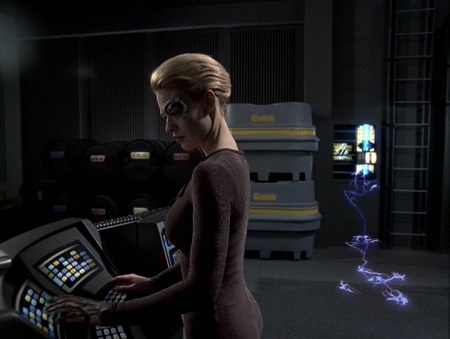
This sequence set up was was, at least in part, an episode about Seven of Nine. My relationship with Seven’s character has been somewhat complicated. In her initial appearances on Star Trek: Voyager, she absolutely did what the producers of that show had wanted, and shook up what was in danger of becoming a stale formula. Her background as an ex-Borg gave a different dimension to her character than any we’d seen until that point, and she played a very different role in the show than Kes had.

Seven of Nine during her Voyager days.

I’d argue that Kes, sadly, never really got her character fully explored and developed, especially as toward the end of her tenure as a series regular she’d started to develop her mental abilities. And I think it would have been very interesting to see how Voyager would have handled her as she rapidly aged – Ocampans had a very short lifetime of only around nine years. But we’re getting off topic. I felt that too many of Seven of Nine’s episodes – of which there were more than a fair number in the second half of Voyager – followed almost exactly the same formula. She’d learn some lesson or other about “what it means to be human”, overcoming her Borg-inspired nature to accomplish something for the crew, but then by the next episode she’d seem to forget it all and be back to her usual Borg self, only to learn another, very similar, lesson in humanity. It just felt like, having gone to all the trouble to swap out Kes for Seven of Nine, Voyager’s showrunners and writers didn’t really know what to do with her aside from that formula. And it got annoying and repetitive at times.

Fortunately, Seven of Nine has finally regained a lot more of her humanity, and been able to hold onto it. Even in the flashback at the beginning of the episode – which takes place around eight years after the end of Voyager – she’s much more expressive and emotional than I think we ever really saw her in that series. And it makes a lot of sense! She’s had a lot more time to work through her assimilation and de-assimiliation experiences, and build up her memories and personality than she had when we were familiar with her. For me, seeing Seven of Nine like this, finally embracing her humanity instead of constantly forgetting about it, was cathartic. It scratched an itch that I’d had since Voyager was on the air back in the late 1990s and early 2000s to really see some character development and to see her break out of her Borg past. It’s just a shame it had to come at the expense of Icheb! That’s not to criticise that story point – I think it makes a lot of sense for Seven of Nine’s story to see her lose Icheb, and honestly, I don’t think anyone really expected his character to be returning in a big way in Star Trek in future, so he fits the bill for someone to kill off. But as a fan, it’s always heartbreaking to see a known face killed off!

Seven of Nine in Picard’s study.

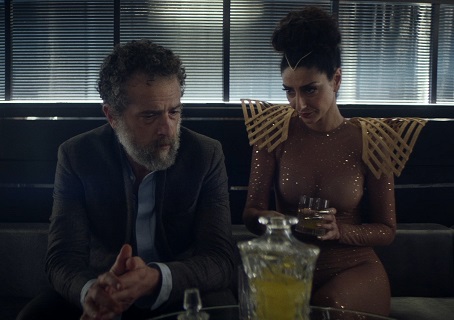
The action then jumps to the present day, or rather, two weeks before the present day. We’re on Freecloud, in a place called Stardust City, and the owner of a nightclub gets word that Bruce Maddox is here. She initially wants him killed, but changes her mind and meets with him. Maddox looks dishevelled with his messy hair and unkempt beard; a far cry from the Starfleet officer returning fans will remember. Again it’s worth noting that Maddox has been recast just like Icheb was, and for most people that wouldn’t even really notice, but having recently re-watched Maddox’s original appearance in The Measure of a Man in The Next Generation (you can see a write-up of that episode by clicking or tapping here) I did notice and while I wouldn’t say it took me out of it, it was a brief adjustment to get used to the new actor, because unlike Icheb in the flashback mentioned above, Maddox gets a lot of screen time.

It emerges that Maddox’s lab has been destroyed – raided by the Tal Shiar. He’s in debt to the nightclub owner, and she drugs him, hoping to sell him to the Tal Shiar to recoup the money she spend on him. It’s worth noting here that the Zhat Vash are never mentioned in this episode. I noted last time that I suspect Picard’s decision not to tell his crew – especially Elnor – about the Zhat Vash might become an issue. And given Maddox’s work in the realm of synthetics it seems at least possible he would have known about the faction. But no one from Maddox to Picard to the nightclub owner ever mentions the faction. While I understand they’re meant to be secretive, having a named antagonist and being consistent with that does help casual viewers in particular to follow everything that’s going on.

It’s at this point that I’d like to look in more detail at Maddox’s role in the story thus far from the production side, because I really think it’s been nothing less than a stroke of genius. Maddox fills two roles – he’s a signal to returning fans from The Next Generation era that this is one continuous story in the Star Trek galaxy, while at the same time being the kind of character that his presence in that one episode from 1989 is in no way something a new fan would need to know about. If we compare him to Dr Benayoun – the character from Maps and Legends who delivers to Picard the news of his illness – their roles are identical. Maddox, to the uninitiated new fan, is just a character from Picard’s past like Dr Benayoun, and seeing their interactions in the past isn’t necessary to know that. For returning fans, he’s someone we may remember from TNG and that ties the two shows together. Using a character like Bruce Maddox was completely unexpected, but it works so well. And I love it.

Bruce Maddox with Bjayzl in her club on Freecloud.

After the credits roll, La Sirena is in orbit of Freecloud. Picard is in his holo-study, looking at a video about the planet they’re visiting. Freecloud is presented as a neutral place, probably not under any jurisdiction other than its own. It’s the kind of place we’ve seen in Star Wars – a somewhat shady-feeling place where various transactions, legal and illegal, can take place without the intervention of the Federation or anyone else. The economy of the 24th Century has always been a little ambiguous, but Freecloud is a symbol of unchecked capitalism – seemingly anything can be bought and sold here, much like the Dark Web of today.

Seven of Nine joins Picard in his study, and it turns out she works for the Fenris Rangers – they were mentioned last time, and seem to be a kind of vigilante group, trying to maintain order in some of these fringe systems. It was pure coincidence that Seven of Nine met Picard when she did – or at least so it would seem. A very, very lucky coincidence, if that really is the case! They share a drink, and this is where we get Seven’s lines from the trailer about Picard “saving the galaxy”. She is definitely much more human than returning fans will remember from Voyager, and as I said already, I really appreciated that.

While Picard and Seven chat, we get some exposition from Raffi and Rios – no doubt meant to fill in new fans and those who don’t remember much about Picard or Seven because of how long it’s been! It was interesting to note that they both mention Picard’s status as a former Borg, especially given where they will have to head if they want to meet Soji in future episodes. Seven of Nine agrees to be dropped off on Freecloud, but asks Picard what he plans to do and he tells her, in a roundabout way, that he’s trying to help Soji. Intrigued, she stays to listen.

Raffi and Rios discuss Picard and Seven’s history with the Borg.

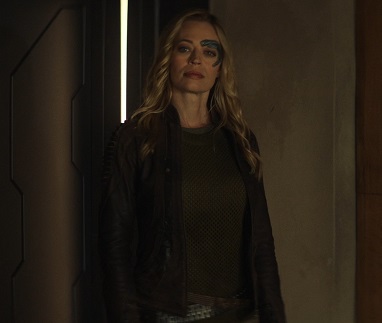
At first, I wasn’t sure how I felt about the change in colour and presentation of Seven of Nine’s Borg implants, most notably her eyepiece. I felt that it looked “wrong”, and not like it had done in Voyager. But the more of her I saw in this episode, the more I think it’s designed to look like the metal has been worn down over the years. Whereas it had been shinier in the past, by now she’s been out of the collective for a long time and the metal has seen a lot of wear and tear, giving it a duller, less polished appearance.

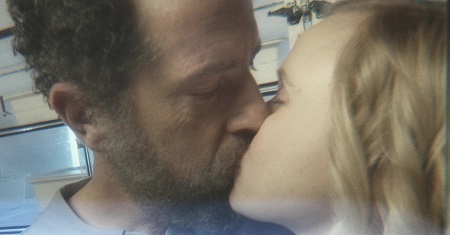
Dr Jurati is in her cabin, watching a holo of herself and Maddox from presumably before the ban on synthetics. They share a kiss at the end, and Jurati is emotional at looking back on this part of her life, which I think sets up nicely what is to come later. It was a very brief scene, but one which was important to their stories. We did get to see a little of Maddox’s post-TNG personality, too. I’d say that the scene showed him as a kind of stereotypical scientist, with an idiosyncrasy around the replicator. Maddox in The Measure of a Man had seemed, I would argue, much more confident than the version of the character we see here, though granted it is twenty-plus years later in this holo-recording. But for all intents and purposes, comparing Maddox’s role in The Next Generation to Star Trek: Picard is kind of irrelevant. As mentioned above, he could be subbed out for a new character and the story would be identical, so his characterisation here doesn’t matter – whether he’s the same as the Maddox we remember or not, his role is less that of a character and more a plot device.

Dr Maddox and Dr Jurati in happier times.

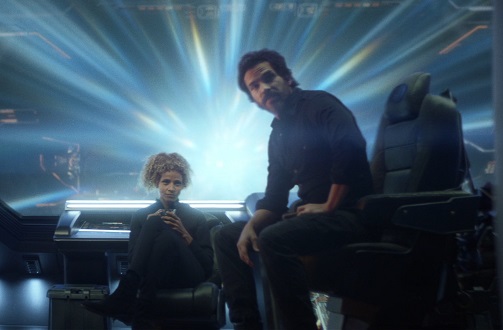
In the next scene, on the bridge of La Sirena, we get another example of the lighter, comic tone that was present in parts of the episode, as each crew member (except for Elnor, for some reason) gets their own holo-pop-up advertisement as they dock at Freecloud. This was a little bit of fun, and it seemed to give us the name of La Sirena’s ship class – apparently she’s a Kaplan F17 Speed Freighter. And although he was almost entirely in the background, it was one of Elnor’s three opportunities to have a line in Stardust City Rag. If I could criticise the episode in one way, it would be that, after all the fuss and trouble Picard and the crew went to last week to recruit Elnor, this week he was absolutely wasted and contributed nothing to the story or to the various storylines that played out.

After closing their little pop-up ads, the crew learn that Maddox is a prisoner, and that the nightclub owner is looking for someone to represent them in a deal with the Tal Shiar. Seven of Nine knows about the nightclub owner – her name is Bjayzl – and explains that, among other things, she “butchers ex-Borg for parts”. As we’ve seen with Soji’s work on the Artifact, there is apparently a roaring galactic trade in Borg components. Precisely why that is – and who the buyers might be – is unclear. I wonder if the parts may all be going to the same buyer, but we’ll save the theory-crafting for my theory post (keep an eye out for that in the next few days!)

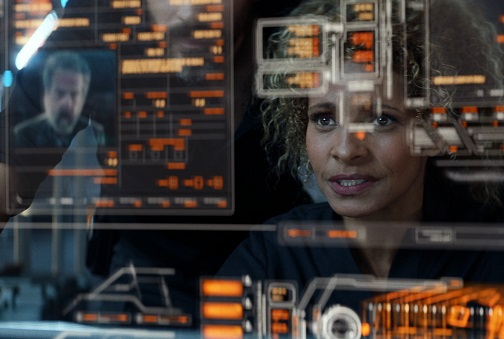
Raffi discovers Maddox is being held by Bjayzl – and is about to be sold to the Tal Shiar/Zhat Vash.

Seven of Nine offers to be bait in a trap to rescue Maddox – offering herself up for “sale” to Bjayzl to get the crew close enough to spring him out. Because of what had happened with Icheb earlier, this was clearly a ploy on her part to get close to Bjayzl.

We’re then treated to a very pretty shot of La Sirena arriving at Stardust City, and I’m in love with the CGI work here. There was a real sense of a living, breathing, fast-paced gambling city – a futuristic Las Vegas. Yet at the same time, I was getting the impression that Stardust City was playing on Star Wars’s Coruscant and even Mass Effect’s Citadel in terms of presentation – there was a somewhat claustrophobic feel to its mass of neon-signed buildings and streets. I thought I saw another Ferengi Alliance emblem on first viewing, but when I went back and re-watched it I couldn’t spot it. There were a couple of nice references, though: Mot’s Hair Emporium refers to Mot, the Enterprise-D’s Bolian barber, whose name Picard once borrowed when dealing with mercenaries! And of course, Quark’s Bar can only refer to the Ferengi we all remember from Deep Space Nine! There was also a dancing girl seen as La Sirena flew in, and I have a feeling this is lifted from a previous iteration of Star Trek… I’m just not sure which one.

Stardust City, Freecloud.

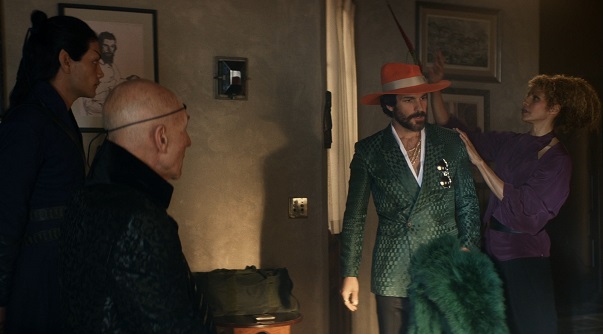
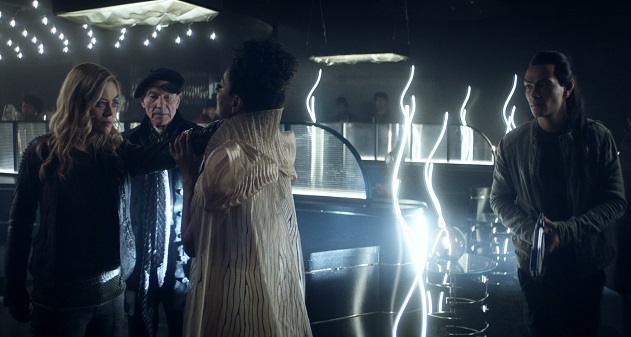
This next sequence cuts between the crew arriving in Stardust City and preparing for their roles back on La Sirena. This is the dressing-up part of the story that featured prominently in last week’s teaser trailer. Rios is taking point, offering Seven of Nine for sale, and he has to really convince Bjayzl’s “reptiloid”, who can apparently smell lying because of his enhanced senses. Picard and Rios get the best costumes, dressing very flamboyantly as apparently is custom on Freecloud. More so than on the bridge, Elnor was completely wasted here, and may as well not have been included. In fact, this episode could have taken place before the mission to Vashti and Elnor’s presence or lack of presence would have not mattered in the slightest. There was scope, too, for him to do something – even just as comic relief. His lack of understanding of the dressing up side of the mission was at least somewhat amusing, if a little “Vulcan” in the way it came across, but it was really just wasted and I would have liked to have seen more of Elnor both here in the preparation phase as well as down in the nightclub.

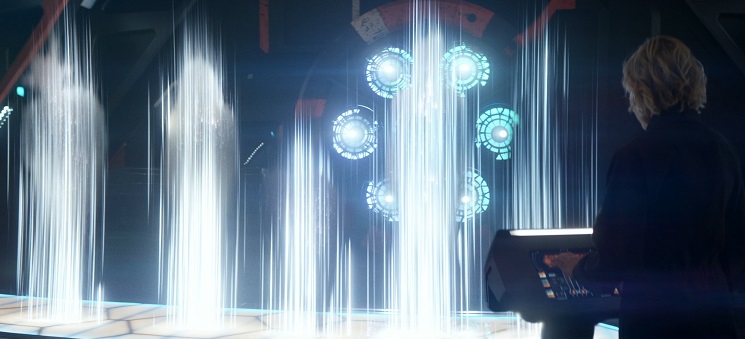
Dr Jurati is ordered to operate the transporter while the others rescue Maddox – and it felt like this was setting her up to either deliberately trap them away from the ship or mess up somehow and cause a problem. In that sense, I think it was a nice little misdirect given that it got a certain amount of attention during this sequence. The crew are given a transport enhancer – a much smaller device than the tripods from the TNG-era – and we also learn from Seven of Nine that, after the supernova, the Neutral Zone “collapsed” – the border between the Federation and Romulan space is now much less stable, hence the issues on places like Vashti. She and the Fenris Rangers are self-appointed police officers trying to keep order, but Picard says she is playing at being both “judge and jury”, and calls her a “vigilante”.

Getting dressed up in Picard’s study in preparation to spring Maddox out of custody.

There was definitely a “heist movie” feel to this sequence. But it wasn’t as bad as I had feared it might be, and was actually amusing in parts and tense in others. Each of them (except Elnor, really) is given a role to play. Rios is the point man, Picard is the con man, Seven is the bait, Elnor is… muscle? I guess. And Dr Jurati, operating the transporter, is the getaway driver! Raffi won’t be participating, as Freecloud was her destination and she plans to attend to her own business while the heist occurs.

Again, the sequence is cut in a jumpy way, cutting back-and-forth between before and during the heist. After Rios has convinced the reptiloid to meet Picard and Seven, and Picard has “given him his payment”, we get a scene between Picard and Raffi, as he sends her off to do whatever she came to Freecloud for. I never really got the sense that this would be the last Picard, or us as the audience, would see of her. That’s not to criticise what was a well-constructed scene, it just didn’t feel like a permanent goodbye to a character we only met three episodes ago.

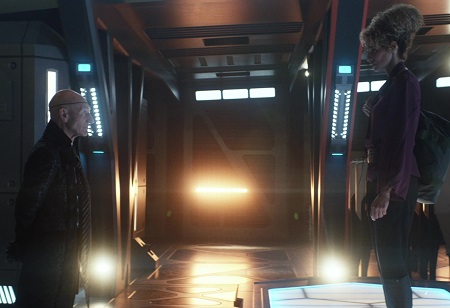
Saying “goodbye” on the transporter pad.

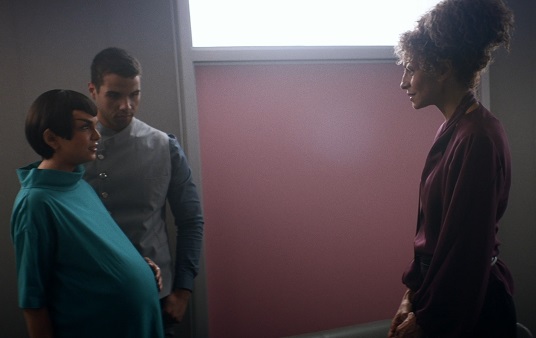
We follow Raffi as she arrives at a family planning clinic on Freecloud, and tracks down a young man. He was too young to really be a love interest for her (no offence to Michelle Hurd) and it turns out that he’s her son. Due to a combination of overworking during the supernova crisis and her drug issues, she had become estranged from him some time ago. Star Trek has always been good at using its science fiction setting to highlight real world issues, and we got a great example of that here. As America, and much of the western world, faces an opioid epidemic, there will be many families who have seen someone disappear into a void of drug addiction, and Raffi’s story mirrors that. Family breakup due to drug abuse is not something that’s often front and centre on our screens, yet it is a real problem for a lot of people in a lot of communities.

The heartbreaking scene shows her son’s inability to forgive her – her attempt at getting clean and reconciling coming far too late, and her ramblings about the “conspiracy” to attack Mars seeming to indicate to him that she hadn’t really gotten over her problems anyway. Raffi is about to become a grandmother – her son and his Vulcan partner are having a baby, hence the family planning clinic. I doubt this will come back into play as a story beat, but it may be important for Raffi’s character going forward, and I suppose it could come back around next season in a bigger way. And we got a typical “Vulcan” haircut here for the first time in the series, I think. The Romulans used to style their hair similarly to Pel in this scene, but modern Romulans, like Narek, have abandoned that style. It was nice to see it back on a side character, as again this shows us a little of the Star Trek of old!

Standing apart – Raffi meets her son and his partner on Freecloud.

Raffi’s son – Gabriel – insists that she’s “just passing through”, and the couple depart, leaving Raffi clearly devastated. Back at the nightclub, Picard sees Maddox for the first time, and he is still alive, though clearly in somewhat of a bad state. The deal seems to be going as planned when Seven of Nine launches into a personal conversation with Bjayzl – alerting Picard and Rios to the fact that things may be about to go off the rails. Rios calls Dr Jurati on the ship, but her mental state has activated the EMH, who asks her about her “psychiatric emergency”. She confirms she still has a transporter lock, but that they haven’t activated the pattern enhancer. At this point, Dr Jurati’s state of mind could simply have been a result of nervousness about the important role she was assigned, but it definitely felt that there was something more – she was too anxious.

Seven of Nine disrupts the plan by grabbing Bjayzl, who orders her security people to stand down. Elnor, Rios, and Picard secure Maddox, and Seven is convinced to stand down and allow herself to be transported back to La Sirena with Maddox and the others – after being warned that if she harmed Bjayzl, it would put a target on Rios, Elnor, and Picard as well as on her. As I mentioned, this is the moment where I thought Dr Jurati could either turn on the crew or make a mistake, but the transport went smoothly and they were beamed back on board.

Seven disrupts the plot to rescue Maddox – but it all works out in the end!

Seven told Picard about what happened to Icheb, and that Bjayzl only knew about him because they had once been on friendly terms – and Picard, true to the way we remember him, gently tries to dissuade her from seeking revenge. I liked this moment; the interaction between two familiar characters, yet two characters who hadn’t before been on screen together, was a great way that Star Trek: Picard tied together two of the TNG-era series. The dialogue, and the acting performances by Jeri Ryan and Sir Patrick Stewart were absolutely on point, and sold this complicated tale of hate and revenge perfectly. Picard has always been diplomatic, and we see here that, despite being away from the action for a long time, he’s lost none of his edge in that regard.

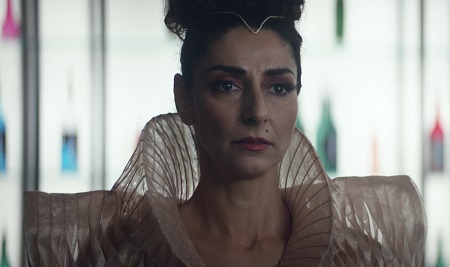
Bjayzl, for her part, was actually fairly one-dimensional as far as villains go. If we knew more about her motivations for wanting Borg parts, or at least who her buyer was, maybe she’d come across a bit better. As it stands, because we don’t understand exactly how or why this trade in Borg parts operates, she reminded me of the villain from the film Solo: A Star Wars Story whose name I had to look up (it’s Dryden Vos). Despite being portrayed very well by the actress, Bjayzl just fell a little flat for me, and I would have liked to have seen more of her past, her interactions with Seven of Nine, and as I said, why she became so interested in ex-Borg.

Bjayzl.

This ties into something that has come across a couple of times in Star Trek: Picard so far. A slightly longer series – perhaps twelve or fourteen episodes, like Star Trek: Discovery – would have allowed for more screen time for some of these characters, and thus a little more explanation and depth. When Game of Thrones cut its final two seasons down in length it started having similar issues, and I think the same thing has happened in a way here. I know we’re only halfway through, but there have been several points, like the Bjayzl storyline, that would have been nice to see a little more of.

After the crew are beamed away by Dr Jurati, there’s a reunion between her and Maddox on the transporter pad. Seven of Nine departs to rejoin the Fenris Rangers, but takes two of La Sirena’s phasers on her way out. Picard activates the transporter, but she returns to Bjayzl’s club – finally completing her revenge. Again, Bjayzl felt quite one-dimensional, and the scene played out like many we’ve seen before, where a villain reacts with fear when cornered. However, from a storytelling point of view she was really just a foil for Seven, and a way to show to us as the audience how much Seven has grown since Voyager. In that sense, it was a success, and as I mentioned earlier, finally getting to see Seven of Nine really embracing her human side, after all the lessons she received from Capt. Janeway and the Doctor (and others) was great. I wouldn’t have expected that she’d show up in Star Trek: Picard when the series was announced, but I’m glad that she did. Though the episode leaves things ambiguous as to whether or not Seven made it out of the club after Bjayzl was killed, I think we can be confident that she did. Hopefully this won’t be her final Star Trek appearance.

“Picard’s Eleven” are beamed aboard by Dr Jurati after a successful heist.

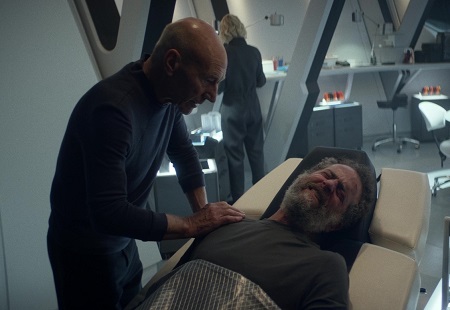
Maddox is being treated in La Sirena’s sickbay – the first time we’ve gotten to see this set. It was nicely designed space, somewhat of a cross between sickbays we’ve seen in the TNG and Discovery eras, with a lot of holo-screens and less reliance on physical panels. Maddox is in a bad way, but it seems like he’ll recover, and he talks to Picard about Dahj. We get final confirmation here that Maddox is responsible for their creation, and that he sent them on a mission to discover what really led to the ban on synthetics. Dahj went to Earth to poke around the Daystrom Institute, and Soji is on the Artifact – so there must be something linking those two locations. Could the Borg be somehow tied to what happened with the synths on Mars? Maddox mourns Dahj as if she were his own daughter – which, in a sense, she was. And crucially, he tells Picard where to find Soji, setting the stage for the second half of the season.

Picard exits the sickbay, leaving Maddox alone with Dr Jurati. As they reminisce, it’s clear something is wrong. The way the music slowly changes was perfect here, building up Dr Jurati’s sinister intentions. Picard speaks to Rios about travelling to the Artifact, and also we get confirmation that Raffi is back on board – though she’s not coming out of her cabin after what happened with her son. Maddox tells Dr Jurati that her work with him was essential to Soji and Dahj’s creation, describing them as the product of his work, Dr Soong’s, and hers.

Picard with Maddox in sickbay.

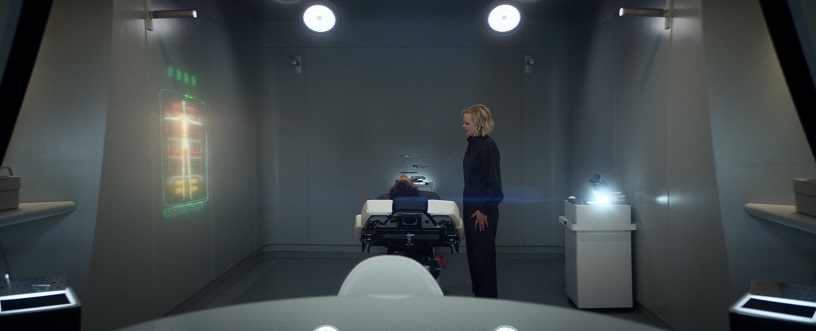
Jurati says that it’s “one more thing to atone for”, as she does something to the bio-bed, setting in motion Maddox’s death. La Sirena’s EMH tries to intervene but Jurati deactivates it, and tells Maddox that she knows too much about – presumably – the consequences of creating synthetic life. It seems as though she’s killing him because of what he represents: someone who can create these synths, and there’s something too dangerous about that. In that sense, she is fully subscribed to the Zhat Vash/Commodore Oh ideology about how synthetic life is inherently bad. And I got a hint – just a glimpse, really – that maybe this is related to what we saw in Star Trek: Discovery’s second season last year. That story dealt with a rogue AI that planned to wipe out all organic life in the galaxy – could this be what the Zhat Vash conspiracy is trying to prevent? Some existential threat caused by synthetics? It’s hard to justify Dr Jurati’s actions otherwise.

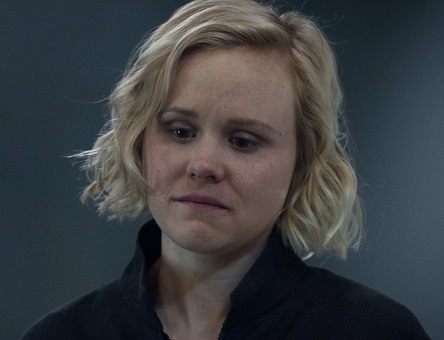
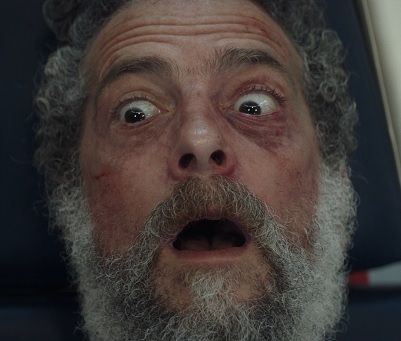
Maddox dies, and Dr Jurati is genuinely devastated by what she’s done. If this was her mission – to find and kill Maddox – then she’s succeeded, but her cover is surely blown now, as La Sirena’s EMH witnessed what she did. What will happen to her after this is now up in the air, but she clearly cannot be relied on or trusted by the rest of the crew again. Alison Pill’s performance as a conflicted person, yet ultimately able to perform her task despite her personal emotional attachment to Maddox, was pitch-perfect. She’s been phenomenal in the role of Dr Jurati this season so far, and I hope we get to see more of her – perhaps even giving Jurati a chance at redemption.

The way this moment was staged and shot was perfect, showing Dr Jurati alone with Maddox in the middle of the frame.

So that was Stardust City Rag, probably my second-favourite episode of the season behind Remembrance. There was so much going on, and everyone except Elnor was involved in a big way. We got a resolution to Raffi’s side-quest, and I think now she will be fully on board with what happens next, now that she no longer has that distraction. Devastating as it was for her to be unable to reconcile with her son, I think some of that energy that she has for getting to the truth of what happened on Mars can now be fully unleashed.

Dr Jurati is much more in question – will she be put in the brig, turned over to some authority, or dealt with somehow by Picard and Rios? Murder is a serious crime, and though there probably is no death penalty, it would be enough to see her imprisoned in the Federation, and she and Maddox were Federation citizens. I really want to know why she did it – what is this huge secret that she knows about synthetics? Is she allied with Commodore Oh? Surely she must be… but how? And why?

After all the work to find him, Maddox dies – murdered by Dr Jurati.

Picard now has a destination to find Soji – but getting on board the Artifact surely won’t be an easy task. Rios is up for it though, and at the end of the episode in his conversation with Picard, there was a hint at least that he’s starting to believe in the cause too.

The storyline has moved on in a huge way. With Maddox out of the picture, and Dr Jurati having committed a heinous crime, it’s now up to Picard, Raffi, Elnor, and Rios to save Soji. Only Picard is truly invested in this goal, but the others may be starting to come around.

It was a shame that Elnor was underused in Stardust City Rag. I would have liked to have seen him do something – anything, really – after the time and effort made to recruit him last week. But with limited runtime there’s only room for so many characters, and the main thrust of this episode was about Seven of Nine.

What could have been an uninteresting episode from my point of view has turned into one of the best so far, and I really enjoyed the shifting tones and multiple storylines presented in Stardust City Rag. It was a rollercoaster ride, and when the credits finally rolled, all I could think of is that I wanted more! It’s going to be an arduous wait for next week’s episode – The Impossible Box.

Stardust City Rag, and the rest of Season 1 of Star Trek: Picard can be streamed now on CBS All Access in the United States, and on Amazon Prime Video in the UK and in other countries and territories. Star Trek: Picard – and the rest of the Star Trek franchise – is the copyright of ViacomCBS. This article contains the thoughts and opinions of one person only and is not intended to cause any offence.

Star Trek: The Next Generation re-watch – The Measure of a Man

Spoiler Warning: There will be spoilers for the first three episodes of Star Trek: Picard – as well as for The Measure of a Man from TNG Season 2.

When I was compiling two lists of episodes to watch prior to the release of Star Trek: Picard, I only included The Measure of a Man, from The Next Generation’s second season, as an afterthought in one of my “honourable mentions” sections. Despite having seen some androids briefly in one of the trailers, and even after having seen Mars come under attack in the Short Treks episode Children of Mars, I still wasn’t convinced this episode would be important. I wound up including it in my second list of episodes, but not because of androids or Bruce Maddox, but because of how it showed an aspect of Picard’s character – his staunch defence of the rights of different life-forms.

We now know, of course, that Maddox has a key role in Star Trek: Picard, though whether he’s actually going to appear in person or is merely a narrative force is unclear right now. And of course we’ve learnt a lot more about synthetics and the development and subsequent prohibition of synthetic life. Thus, at this point, The Measure of a Man warrants a re-watch and a closer re-examination.

Watching an episode so long after its original airdate, and after we’ve seen so much Star Trek content that was produced subsequently, it’s worth trying to stay objective and be aware of where the three characters we’ll be focusing on are at this point in the timeline. Obviously Maddox was a guest star, and aside from a reference in the fourth season, was never seen or heard about again until Picard premiered. But Data and Picard are arguably different than we might remember considering how early we are in The Next Generation’s run. This episode aired before Q Who introduced the Borg, before Picard was assimilated, and before Data had really developed a strong personality that extended beyond his original programming.

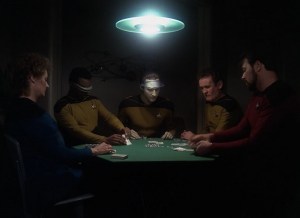
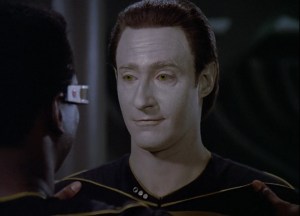
Data plays poker with his crewmates in the opening scene from The Measure of a Man.

The Next Generation operated differently to Discovery and Picard – it was much more of an ensemble show with each crewmember having their own stories and episodes, rather than focusing primarily on one character’s story. So Data and Picard, by this point in the show, still have significant parts of their backstories unexplored.

The episode opens, as many episodes of The Next Generation did, with Picard narrating his captain’s log. Nothing too exciting – the Enterprise-D is due to dock at a starbase, pick up and drop off some members of the crew, and switch out some science experiments that have presumably been running in the background. On board, we see Data, Riker, O’Brien, La Forge, and Dr Pulaski playing poker. Data seems confused by some of the “superstition” that the others apply to their playing – he can’t quite grasp the concept of “luck” in a game of chance. Again, it’s worth remembering how early we are in Data’s story! This might be the first game of poker he’s played, and just as he struggled with the others feeling lucky or unlucky, he was completely unprepared for bluffing – it’s such an illogical way of playing, after all.

In this moment, Data is still very much a machine, regarding the game as “simple”, based around mathematical probability and assuming that everyone will play logically. Having this sequence be the setup for an episode about taking him apart to find out what makes him tick is an interesting choice; we see Data at his most mechanical, but we also see in him an adaptability and a desire to learn and grow. The costuming choice to give Data a poker visor was also a great call – he’s approximating and mimicking human behaviour, but without fully understanding it.

Seeing Data easily outmanoeuvred by Riker – despite holding a better hand – emphasises how much he still has left to learn. Riker wasn’t betting on the strength of his cards, he was simply betting that Data would fold – Data thus missed a key element of playing poker. But he learns from this experience, much like a child would.

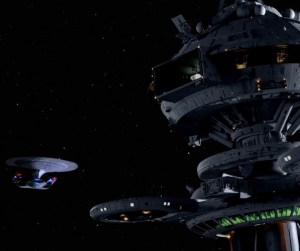
As an interesting aside, the next shot shows the Enterprise-D approaching Starbase 173. The model used for the Starbase was in fact a re-use of the Regula One station from Star Trek II: The Wrath of Khan and is virtually unchanged in its appearance (except for, I believe, its scale in relation to the Enterprise-D). This model was itself a re-use from Star Trek: The Motion Picture. With CGI generally being so good nowadays, it’s almost hard to imagine a time when a single model would have to be re-used over and over again – and The Measure of a Man was not the last appearance of this model by any means.

Aboard the station, Picard is reunited with Phillippa Louvois, accompanied by a very romantic soundtrack. He seems very surprised to see her, and she is clearly an old flame of his – someone who he didn’t part with on good terms judging by their conversation! But the passage of time can be a great healer, and where other people may have held a grudge, Picard is amused, and maybe even happy to see her again. The credits roll, and then we’re back with Picard and Louvois, sitting down to have a longer conversation.

Louvois holds the rank of captain – putting her on equal footing with Picard – and her uniform matches his. She’s not the first woman captain featured in The Next Generation – there was at least one other in Season 1 – but she gets a significant amount of screen time here. She explains that she’s the JAG (judge advocate general – i.e. a military judge, or in this case a Starfleet judge) for this sector, and the way she talks about it makes it seem like a remote part of the Federation, far from any other Starbases. It’s the frontier!

The Enterprise-D at Starbase 173.

We find out about Louvois’ history with Picard – she was the officer responsible for his court-martial after his previous command was lost. We’ve seen the Stargazer before in The Next Generation, in the episode The Battle, and we also know that Dr Crusher’s husband was serving on the Stargazer under Picard’s command when he was killed. Louvois says that a court-martial is “standard procedure” when a ship is lost, but Picard accuses her of being overly aggressive in her prosecution of him – and says that’s why she left Starfleet for a time. There’s a very complicated history here. Louvois calls Picard out on his arrogance – which to be fair, he actually was in this scene. But the chemistry and sexual tension between them is noticeable – there’s much more to their relationship than something professional or friendly.

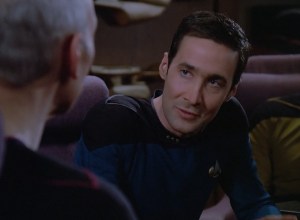
After the awkwardness of seeing Picard called a “damn sexy man”, an Admiral approaches and Louvois excuses herself – but not before taking the opportunity to try to embarrass Picard in front of their superior. The Admiral introduces Commander Bruce Maddox, but they don’t immediately discuss Maddox’s proposal as the Admiral wants a tour of the Enterprise while it’s visiting his new Starbase. Maddox joins the Admiral on the tour, and they visit the Enterprise’s bridge. There is some discussion of the Starbase’s location being near the Neutral Zone, but the focus is clearly on Maddox, cutting to a close-up of him staring at Data.

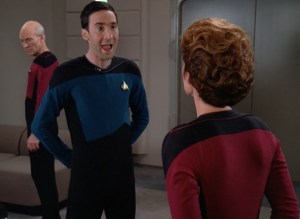
Maddox interrupts the small-talk about the Romulans and the legacy of past starships Enterprise, clearly impatient. The Admiral tells Picard that Maddox is here “to work on your android”, then promptly leaves the bridge. Data, Picard, and Maddox have a conversation set to a backdrop of very tense music. Clearly all is not well. Maddox, it turns out, opposed Data’s entry into Starfleet Academy some years prior, claiming Data was not a sentient being and was thus not eligible. Picard asks what Maddox plans to do and he replies calmly that he is “going to disassemble Data.”

The way Maddox has been set up thus far is of someone who is impatient and impersonal – arguably lacking in empathy. He refers to Data as “it”, a term one might use for an inanimate object. Data is, anatomically speaking, male. In the second episode of The Next Generation’s first season, The Naked Now, Data sleeps with Tasha Yar and though we don’t see it on screen it’s confirmed that he is, for all intents and purposes, male. So Maddox dehumanising Data in this way, while subtle, shows us the kind of person he is.

Maddox explains his reasoning in the next scene – seeing Data when he first applied to the Academy sparked a desire in Maddox to learn more about the work of Dr Soong, Data’s creator. His intention is to dismantle Data, learning how he functions, in order to recreate him and produce copies. Maddox believes himself to be close to a breakthrough, and Data is intrigued at the prospect, in part no doubt because he’s been essentially alone as the only one of his kind. Riker, on the other hand, seems much more concerned. Data asks Maddox a technobabble-laden question, and when Maddox replies that he hasn’t been able to get the basics of a positronic brain working, Data’s tone changes from interest to concern – and after a couple more questions from both Riker and Picard, Data pipes up and says that Maddox’s research is inadequate. Picard says he will not allow Data to undergo the procedure, but Maddox has a trump card – Data is to be reassigned under his command.

Maddox makes his case to Picard – as well as to Riker and Data – in the briefing room of the Enterprise-D.

In the next scene, Data arrives in Picard’s ready room and the two have a conversation about what to do regarding Maddox. Data says he will not undergo the procedure, but Picard is playing devil’s advocate – wondering aloud whether there is merit to Maddox’s idea. Data uses the example of La Forge’s visor, and claims that his status as a non-human is why Picard would even consider letting Maddox experiment on him. Picard dismisses him but is clearly troubled by the implications. He gets to work reading Starfleet case law regarding officer transfers.

After what must be some time, Picard visits Louvois in her office aboard the Starbase, and is clearly very angry about Data’s forced transfer. The usual calmness we associate with Picard is gone, replaced by a firey demeanour borne perhaps from a combination of frustration at the legalese he’s been trying to wade through and his previous conversation with Data. After all, Data did essentially say that Picard and Maddox are being racist (or species-ist) in their treatment of him. Louvois gives Picard a “nuclear option” for getting Data out of the procedure – his resignation. There’s no other way to stop the transfer, and as Picard doesn’t trust Maddox, this seems to be the only way. Again the complicated past between Picard and Louvois complicates their conversation, but the advice she gives him is sound. And as she’s the senior officer in the sector for legal matters, that should be it.

Back aboard the Enterprise-D, Data is packing his belongings, and pauses briefly over a hologram of Tasha Yar. Maddox enters the room while Data has his back turned, and picks up a book that Data had been reading. Barging in without ringing the door chime is another way Maddox demonstrates to the audience that he doesn’t regard Data as warranting the same rights or respect as a human or other life-form. He tries to reassure Data that his knowledge and memories will remain intact despite the procedure, but Data retorts that the facts may remain, but the feelings associated with them will be lost. He then uses the example of the poker game from earlier in the episode – that the moment-to-moment reality, the essence of his experiences, is not just a case of data and facts. Maddox, Data claims, does not have the necessary expertise to preserve Data’s memories and personality.

It’s at this moment that Data explains that he has resigned. Maddox becomes angry and tells him that one way or another he will serve under his command – and undergo the procedure. It’s clear that Maddox’s attempts at gentle persuasion were all for show; this is how he really feels. Believing Data to be a “thing”, an object not a person, he pays lip service to Data’s feelings while not understanding them or even recognising their existence. In the next scene, Picard and Maddox are in Louvois’ office, where Maddox has started a legal process to prevent Data leaving Starfleet, saying that as a non-sentient being he cannot resign of his own volition.

Maddox presents the argument that if he’s successful, every Federation starship could have its own Data on board, allowing for much greater exploration and potentially even saving lives. He’s “sick of hearing about rights” – a shocking statement in and of itself – and selfishly makes the point that this is his life’s work, and he doesn’t want it to be ruined by what he sees as the ignorance of Picard and Louvois. Data, in Maddox’s view, is “just” a machine, and because of that does not have the right to either refuse to undergo the procedure or to resign.

While Picard listens in, Maddox makes his case to Capt. Louvois.

Picard has a great line here: “Starfleet is not an organisation that ignores its own regulations when they become inconvenient.” In Remembrance, the first episode of Star Trek: Picard, this is essentially his own reasoning for leaving Starfleet. He felt that they had an obligation to help the Romulans and failed to do so – ignoring their own regulations, and a promise made, because it had become difficult in the aftermath of the attack on Mars.

Maddox manages to convince Louvois that there may be law to support the notion that Data – like the Enterprise’s computer – is not a “person” in the legal sense, but is merely the property of Starfleet. Picard urges her to use the same passion she showed at his court-martial. Though Maddox and Picard don’t interact much here, as they mostly direct their remarks to Louvois, it’s clear that they have very quickly developed a loathing for one another. Picard feels Maddox is essentially ignoring Data’s rights as a sentient being, and Maddox believes that Picard doesn’t understand the issue and is unfairly getting in the way of his work.

Back aboard the Enterprise, Data is attending a farewell party. Riker, Troi, Worf, Pulaski, and Wesley are all present in Ten-Foward, and Data receives several gifts from his friends, but La Forge is sat alone, away from the group. He’s feeling very down about the whole situation. In this moment, we see Data at his most human – La Forge is arguably his best friend among the crew, and when he says he will miss him, he really means it.

Louvois summons Riker and Picard to tell them that, according to her research and legal precedent from 300 years ago, Data is legally the property of Starfleet and not a person. Picard challenges her ruling, but the fact that the Starbase is new and she has no one working with her threatens to cause a problem. The solution is that Picard and Riker will take on the role of advocates – Picard arguing for Data and Riker against him.

This is the point in the episode which is the most questionable, I feel, as a point of plot. Riker is chosen to prosecute Maddox’s case as a senior officer, but Maddox himself is of equal rank to Riker and would be a better candidate – especially as Riker states very clearly that he can’t advocate a position he fundamentally disagrees with. I’m no expert on the law, let alone on military law, but surely there must be someone else who could have taken on the position. Or, if not, it should have been possible to send for lawyers from elsewhere – Maddox’s experiment is not time-sensitive and could have waited for the case being resolved. As it is, however, Riker and Picard agree to proceed with the case.

La Forge wishes Data good luck at his going-away party aboard the Enterprise-D.

As the scene ends, I think we see the real genius of setting up Louvois as having history with Picard. If he’d been facing off against a random, faceless judge or JAG, we would know the stakes but we’d be confident in his abilities and ultimate victory in the case. But knowing Louvois is a “hardball”, someone who prosecuted Picard aggressively in the past regarding his conduct on the Stargazer, it raises the stakes and there’s a real sense in this moment that Picard and Data could lose. Because we’ve always seen Picard to be a rule-following officer, an exemplar of Starfleet’s code of conduct, and an all-round upstanding captain and diplomat, knowing that Louvois went after him in the past makes her seem all the more aggressive in her handling of the law. We get the sense that things could end badly, that the one factor Picard has no control over in the case – the judge – is someone who will work hard against him and Data. This information, conveyed only in a few brief lines of dialogue in their earlier two encounters in the episode, has set the stage and told us all we need to know.

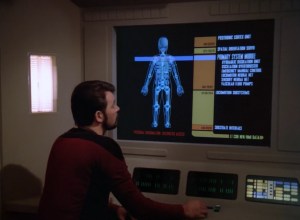
Data again visits Picard in his ready room, and Picard explains the ruling and the challenge he’s making to it. He offers Data the opportunity to select another officer to provide his defence, but Data declines – an important moment given the earlier conversation they had in the same room. We then see Riker studying the law in preparation for the case, feeling pretty rotten about what he has to do. He looks up Data’s technical schematics, smiling to himself as he thinks he’s found something – then his mood and the background music turn sour as he realises the implications. Riker doesn’t want, after all, to win the case. And getting caught up in it for a moment and allowing himself to feel excitement at a breakthrough ends up making him feel worse about the task.

At the hearing, Riker calls Data to take the stand. Could Data have refused, as he’s essentially being compelled to serve as both evidence and a witness for his own prosecution? I think that’s a matter of law again! And if he did refuse to take the stand, would there have had to have been another case to answer the question of whether he has the right to refuse to testify? Regardless, Data takes the stand and his commendations and decorations from Starfleet are listed by the Starbase computer (notably not the usual computer voice). Riker asks the simple question “what are you?” to which Data responds that he is an android. Riker pushes him for the definition of the word, which includes a sentence that androids “resemble” humans, but are obviously not, in fact, human. He then pushes Data on his creator, making the point that Data was artificially made.

None of this, really, seems relevant to the hearing. Data’s nature is known to all parties and his defence does not depend on proving himself to be anything other than an android. But for dramatic effect it’s important, as essentially the fact that Data was man-made is the entirety of the prosecution’s case against him. Interestingly, and completely unrelated to the events of the episode, Data states that his total memory capacity is “800 quadrillion bits”. If a 24th Century “bit” is assumed to be the same as today’s computer bits, that would put his memory at 800 petabits, or 100 petabytes as there are eight bits to one byte. While this is a lot of memory, it’s not as huge as it may sound even by today’s standards. It’s roughly an order of magnitude less than the most up-to-date estimates of the size of the data stored on the internet, for example. And that’s something which is growing all the time. It is, however, much greater than the capacity of a human brain or memory – though the comparison is an inexact one as we don’t store and process memories and information in the same form. But there are computers and servers in the world today which can store as much or more information that Data can – something which would obviously have been hard to conceive when The Measure of a Man aired in 1989, before the invention of what we know of as the internet today.

Riker looks up Data’s schematics in preparation for the hearing.

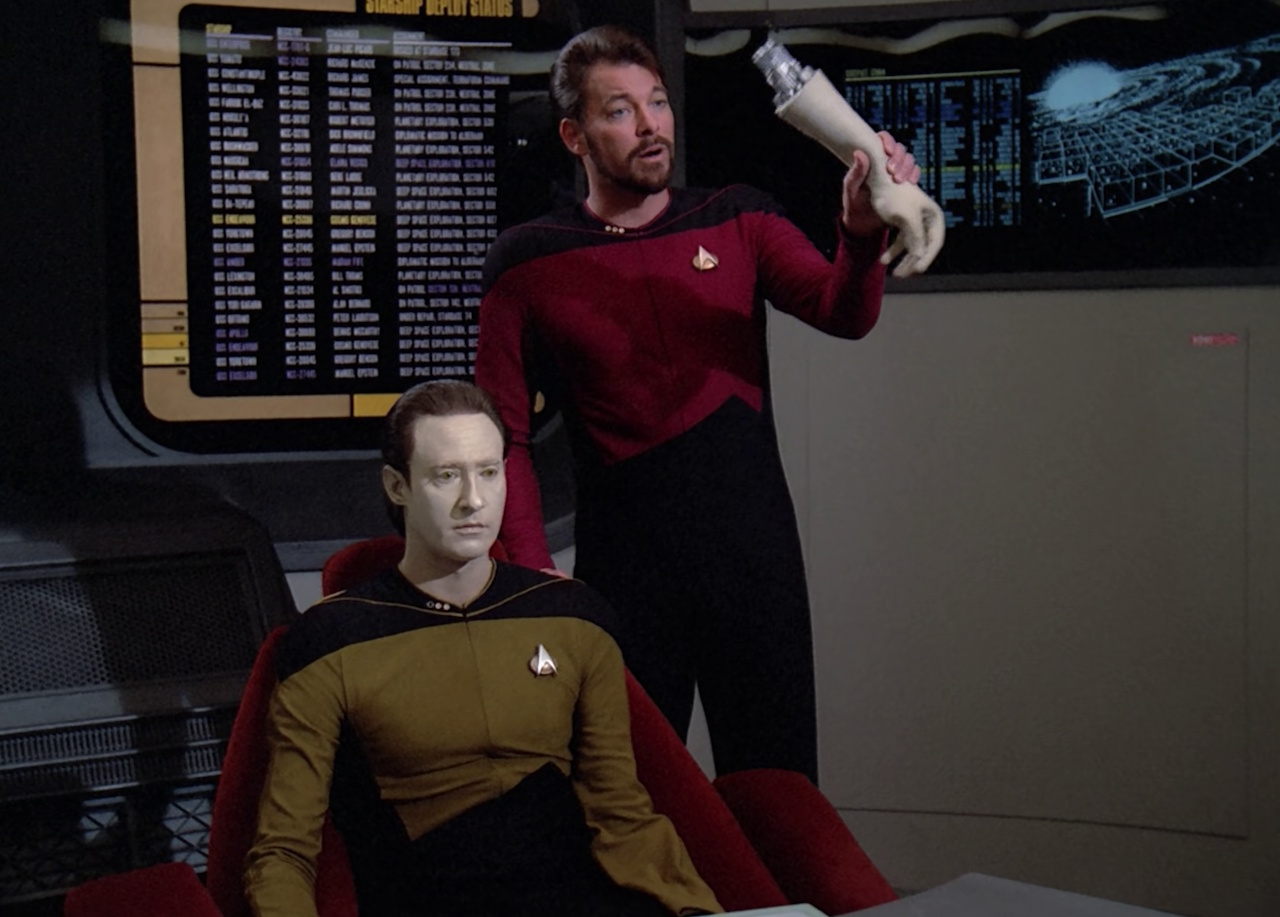
As Riker continues with his demonstrations, Maddox is seen smiling to himself – he seems to think the two of them have the case sewn up. Data is forced to bend a steel rod to demonstrate his physical prowess to the hearing, and Riker then removes his forearm and hand – apologising to Data as he does so. Riker then tries to explain that Data was made “to serve human needs”; that is his sole purpose. Of course, having already seen Data with his “brother” in the first season episode Datalore, we know this isn’t really true. Lore was a companion to the colonists on Omicron Theta, and Data was designed to be so too. Riker has also fallen into the habit of referring to Data as “it” in this moment, and as he continues his speech about Data he walks behind him – hitting a hidden “off switch”, which we’d previously seen Data show to Dr Crusher and others in the aforementioned episode Datalore.

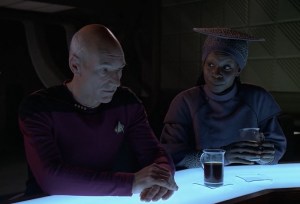
Picard and Louvois are both shocked by this, and Riker sits back down. He clearly thinks that this is a case-winning move, and the look of shame and self-loathing on his face confirms that. Maddox smiles, smugly. Picard requests a recess and tells Guinan, back on board the Enterprise, that Riker’s words in the hearing “almost” convinced him of Data’s status.

Guinan’s response, that if Data is ruled to be merely property, it could pave the way for “whole generations of disposable people” warrants a closer look. And we have to step back and consider The Measure of a Man and its place in our own history. In 1989, we’re 25 years out from the Civil Rights Act and Voting Rights Act which put an end to legal segregation in parts of the United States. In living memory for a significant portion of the audience was segregation – itself a hangover from the days of slavery. And this line, delivered in a very calm manner by a black woman, absolutely references slavery without her ever using the term by name. The implication for Picard is clear – if he loses the case, and androids are ruled to be property and not people, it’s the first step to the creation of a slave underclass in the Federation.

This moment changes the way Picard approaches the case. The word “property”, he believes, is merely a euphemism for slavery. And he returns to work with a renewed sense of purpose. Again, given his state of mind in the first three episodes of Star Trek: Picard, I’d direct anyone who says that Picard “would never get depressed” to look to this moment and others from The Next Generation to see how he can become defeatist and sit in self-pity. It took Guinan here to give him the kick he needed, just as it took Dahj to snap him out of how he’d been feeling in Remembrance.

During a recess in the hearing, Picard is counselled by Guinan.

Back at the hearing, Picard says that humans are simply “machines of a different type” to Data, and his mechanical status is not relevant to the case. Picard asks Data to return to the stand, and presents him with the bag he packed earlier in the episode – demonstrating that Data has a semi-emotional attachment to things like his medals and a book gifted to him from Picard. The final item from Data’s bag is the hologram of Tasha Yar, and after some gentle prompting from Picard, Data discloses he and Yar had been intimate – to the surprise of Louvois and Maddox.

Maddox then takes the stand, and Picard runs him through three tests for sentience. This is also, by the way, the first time the Daystrom Institute is named on screen. Maddox lists three criteria for sentience – intelligence, self-awareness, and consciousness. Picard proceeds to quiz him on why these apply to him – a human – and not to Data. Maddox is forced to concede that Data is intelligent and that he’s self-aware, as Data’s intelligence was never in question and he’s clearly aware of his place in the hearing and the potential consequences it could bring.

Maddox then talks briefly about his plans to disassemble Data – to rebuild him and thousands more like him. Picard challenges that by doing so, he will be creating a race of beings – a race that meet two of Maddox’s own criteria for sentience. If there’s even a chance that Data could meet the third, would the Federation have created a race of slaves? This is where we see Picard at the most passionate he gets, not just in the context of this episode but in almost all of his appearances in Star Trek to date. Aside from the emotional reaction he has to the Borg in First Contact, I can’t remember seeing him more energetic and involved. He cares for Data’s rights, but his conversation with Guinan shifted his whole perspective on the case, and now he has an even greater passion and reason to win. He admits to the court that he doesn’t know whether Data has consciousness, nor what that would mean if a race of Datas were created from Maddox’s work. But the implication he makes, as Guinan did earlier, is clear – they’re on a cliff-edge, with slavery at the bottom.

Picard also turns on its head the Starfleet mantra – “to seek out new life”. “There it sits,” he says as he gestures to Data. As he concludes his speech we see Riker smile for the first time since the hearing began. He’s never seen Picard so animated, and he clearly thinks the argument is a case-winner. And in short order he’s proven right. Louvois says she must allow Data the freedom to explore his life and consciousness for himself, and without explicitly ruling on his “personhood”, she rules that he is not the property of Starfleet and that he has the right to choose.

Bruce Maddox takes the stand.

Maddox and Data have a moment of semi-reconciliation at the end of the hearing, as Maddox cancels the order to have Data transferred, and Data tells him to keep working and suggests that he may be able to agree to the procedure in future when more work has been undertaken. Maddox, disappointed by the ruling no doubt, appears to have had his opinion and perspective on Data shifted at least slightly by Picard’s argument – emphasised by his use of the word “he” right at the end.

Picard invites Louvois to dinner – as they reconcile too. Back aboard the Enterprise, Riker has declined to attend a party in Data’s favour, feeling that he came too close to costing his friend his life. But Data reminds him that if he had refused to participate, the ruling would have been made against him, and the episode ends with the two of them heading to the party.

So, when considering Star Trek: Picard, what do we get from The Measure of a Man? Obviously we see Dr Maddox, some thirty-five years prior to the events of the new series. We see his attitude toward androids – he considers them to be tools, not people. But we also see his attitude shift right at the end, swayed by Picard’s argument and the time spent with Data over the course of the episode. Maddox, despite moments of smugness, isn’t a classic villain. Instead, the episode shows what is basically a difference of opinion. Maddox, having studied androids from a theoretical standpoint for years, but with no practical real-world experience in living and working with Data holds the opinion that Data cannot be sentient. But Picard, Riker, and others, despite not having the same technical background as Dr Maddox believe Data to be their friend despite his synthetic nature. The episode thus shows the difference between theory and practice – and why practice is usually better and more appropriate!

Maddox obviously continued his work, as Data encouraged him to do. In the episode Data’s Day from Season 4, he dictates a letter to Maddox, confirming this. However, by the time of Star Trek: Nemesis, which takes place around fifteen years later, Data is still believed to be the only extant android – Lore having been disassembled. The discovery of B4 – an earlier version of Data – in that film is thus presented as a big deal. However, as we now know from Short Treks and Star Trek: Picard that teams of androids – albeit rather basic ones from a personality point of view – were working on Mars only a few years after Nemesis, Maddox must have been quite far along in his work by that point. It’s also possible that the discovery and disassembly of B4 provided Maddox with some of the missing pieces of the puzzle that he’d hoped to gain by dismantling Data.

Watching The Measure of a Man divorced from all thought of Picard is difficult, especially as we’re partway through the first season of the new show. But taken as a standalone episode, it’s an interesting piece of drama, the kind Star Trek has always been good at. Without any battles, explosions, or really any action at all, the episode manages to be riveting, especially in the hearing scenes. And of course it’s a great example of Star Trek using its science fiction setting to talk about real-world issues. In this case the issue was slavery rather than artificial intelligence, but looking back on it knowing the way technology has changed since, it can absolutely be viewed through than lens too.

Maddox was, aside from his single reference a couple of years later, a one-off character who served a fairly one-dimensional purpose for most of the episode. Bringing him back in a big way for Picard is something I absolutely was not expecting, and whether we get to see him on screen or not, his influence is all over the show. The Measure of a Man is not required viewing for Picard. The new show is structured and written in such a way that the role Maddox takes in the story could be swapped out for any other name and the story would be identical. But it does provide interesting background and backstory.

The development of a “race” of androids was clearly successful in the years after Nemesis.

Having had Maddox’s name dropped multiple times across the first three episodes, I would be surprised to learn we aren’t going to see him at all. A single reference would’ve been a cute throwback to The Measure of a Man and Data’s Day; a wink to returning fans. But with him being set up as perhaps the creative force behind Soji and Dahj, and with tracking him down being the driving force for the current storyline, I think he practically has to appear – at least in some capacity, even if it’s just in recordings – before the end of the season.

The legal precedent laid down in this episode was clearly not applied throughout the Federation. In the Voyager episode Author, Author, not only does The Doctor – a sentient hologram – have to undergo a very similar legal hearing, but we learn that thousands of Emergency Medical Holograms are being used as labourers in mines and on vessels across the Federation. And of course, in Picard we see that Maddox had been somewhat successful in creating his “slave race” of android labourers. There are disturbing implications there, which I wonder if the show will touch on in later episodes.

I enjoyed going back to The Measure of a Man. I wouldn’t like to guess how many times I’ve seen it already; as with most of the rest of The Next Generation and its spin-offs I’ve watched and re-watched it on a number of occasions.

The fourth episode of Picard premieres tomorrow here in the UK – though if you’re in America you may have seen it already! I’m looking forward to seeing if Picard and his new crew stay on Maddox’s tail as they head to Freecloud.

The Star Trek franchise – including Star Trek: The Next Generation and Star Trek: Picard – are the copyright of ViacomCBS. This article contains the thoughts and opinions of one person only and is not intended to cause any offence.