Star Trek: Discovery Season 4: Factions of the far future

Spoiler Warning: There are spoilers ahead for Star Trek: Discovery Seasons 1-3 and the teaser for Season 4. There are further spoilers for the following: Star Trek: The Original Series, Star Trek: Deep Space Nine, Star Trek: Voyager, Star Trek: Enterprise, Star Trek: Lower Decks, and Star Trek: Picard.

Now that we’ve seen the first teaser for Star Trek: Discovery’s upcoming fourth season, and learned that a release later this year is on the cards, I thought it could be a bit of fun to consider some of the factions from past iterations of Star Trek that may – or may not – still be around in the 32nd Century! We know that at least part of the story of Season 4 will look at some kind of gravitational anomaly, and if you want to check out a few of my theories on that you can do so by clicking or tapping here. Even if the gravitational anomaly is the overarching season-long story, Discovery is likely to still find at least some opportunities to step away and spend a bit more time exploring the 32nd Century.

Season 3 was our first introduction to this time period in all of Star Trek, and as such we as the audience were learning about the state of the galaxy as Burnham, Saru, and the rest of the crew had their adventures. We met a couple of major factions outside of the rump Federation, but many familiar factions and races from past iterations of Star Trek were entirely absent – including some that might prove interesting from a story perspective. So in this article I’m going to take a look at a few of my favourites and speculate about where they might be in the 32nd Century.

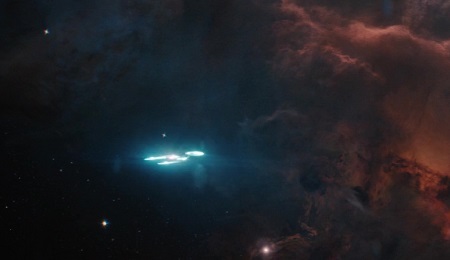
The USS Discovery in the Season 4 teaser.

With Burnham and the crew having originated in the 23rd Century, they’ve missed most of what happened in past iterations of Star Trek! Major events like the V’Ger cloud’s arrival at Earth, two Borg incursions, and the Dominion War will all be unfamiliar to them, and there’s storytelling potential in re-introducing a faction from Star Trek’s past to a character or group of characters who are entirely unaware of their existence. Such a story could be interesting and fun, as well as providing new Trekkies – those who haven’t seen much of “classic” Trek – with an easy introduction to an older faction.

My usual caveat applies: I have no “insider information.” I’m not suggesting that any of these factions will definitely show up, or even be mentioned, in Discovery Season 4. This is simply a chance to have a bit of fun and speculate about the future of some of the factions we’re familiar with from past iterations of Star Trek by imagining where they could be by the 32nd Century.

With that out of the way, let’s jump into the list!

Number 1: The Bajorans
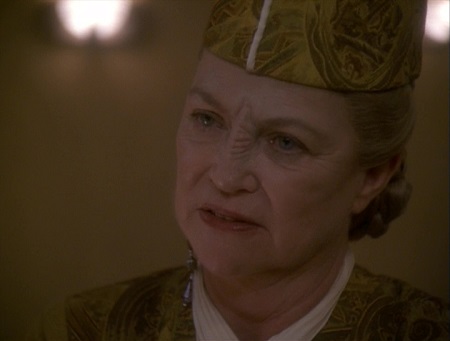
Kai Winn, the Bajoran spiritual leader in the 2370s.

We’re going in alphabetical order, so the Bajorans are up first! Even though they weren’t a Federation member, a number of Bajorans were known to have served in Starfleet in the mid-late 24th Century, including Ro Laren, Sito Jaxa, and Lieutenant Shaxs. The Bajorans were in the process of applying to join the Federation when the Dominion War broke out; it has long been assumed by many fans that they would ultimately be successful, perhaps even becoming a fully-fledged member by the time of Picard Season 1.

Bajorans were familiar to the Federation in the 31st Century at least, because Dr Issa programmed a Bajoran physical appearance into the holoprogramme she made for her son, Su’Kal, aboard their crashed ship in the Verubin Nebula. It seems very likely that the Bajorans were a Federation member in the years before the Burn – whether they remained in touch with the rump Federation afterwards is unknown, but if they did they may very well be welcomed back into the fold following the discovery of a huge dilithium cache.

It’s also worth pointing out that Bajor is at a very strategic location – the Bajoran wormhole connects the Alpha and Gamma Quadrants. Whether that will matter quite so much with the advent of new, faster methods of travel is unclear, but Bajor could very well still be an important location.

Number 2: The Borg Collective
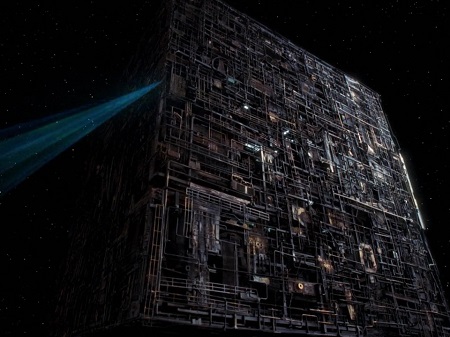
A Borg Cube seen in The Best of Both Worlds.

Since their official first contact with the Federation – which came in either the 2350s or 2360s depending on how we consider such things – the Borg have attempted to invade Earth twice. Though a time-travelling Admiral Janeway did some damage to the Collective in the late 2370s, I never felt convinced that the events of Endgame would have led to the complete destruction of the Borg.

With the Federation – or at least humanity – firmly in their sights, would the Borg have simply given up? It stands to reason that they made subsequent attempts to attack the Federation, taking advantage of their superior technology and greater numbers. However, the existence of the Federation in the 32nd Century means that any such attempts were met with failure! Perhaps the Collective is no longer around, having been decisively defeated.

The Burn would have presented an ideal opportunity for a faction like the Borg to attack the shattered Federation – yet they don’t appear to have done so. Could that mean that they have already been defeated, or could they be waiting just beyond Federation sensor range for Burnham and Discovery? Maybe the Spore Drive is something they want to acquire – and they could even be responsible for the gravitational anomaly seen in the Season 4 teaser!

Number 3: The Breen
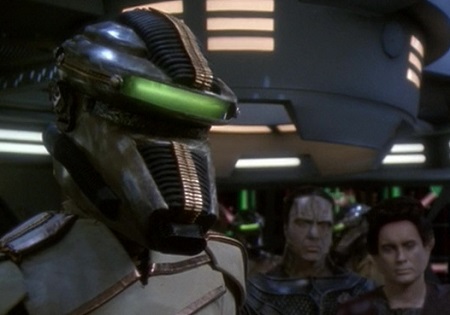
Thot Gor, a Breen commander.

The Breen were initially thought up as an unseen faction, able to be referenced without ever making an on-screen appearance. That changed toward the end of Deep Space Nine, when they joined the Cardassian-Dominion alliance and came close to turning the tide against the Federation in the Dominion War.

Following the war’s end, we know nothing of the Breen. The peace treaty that they signed after their final defeat over Cardassia may have seen a loss of territory for them, or it may simply have seen them retreat to their own borders. Regardless, the Breen were a major power in the Alpha Quadrant in the mid-late 24th Century, with technology capable of matching and even outpacing the Federation. Their defeat in the Dominion War was a setback, but with their homeworld untouched by the conflict it stands to reason they were able to recover quickly.

Would they have pursued peace with the Federation in the decades and centuries after? Would their technology have continued to keep up? Did the expanding Federation come into conflict with the Breen again? Any and all of these things are possible, but as we didn’t see or hear of the Breen in Season 3, perhaps we will never know.

Number 4: The Cardassian Union
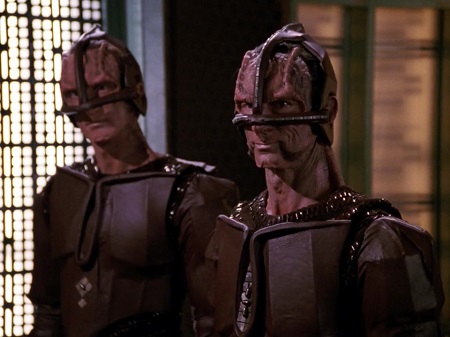
Gul Evek and his aide – two of the first Cardassians ever seen in Star Trek.

Discovery’s first Season 3 trailer tricked us last year! By showing off a Cardassian among a group of what we now know to be Emerald Chain guards, a lot of Trekkies wondered what sort of role the Cardassians might play. The answer, of course, was “none at all!” However, there was a second Cardassian seen in Season 3 – a blink-and-you’ll-miss-it appearance in the episode Scavengers. This is arguably the most interesting post-Deep Space Nine Cardassian appearance to date, as the individual in question was a senior Starfleet officer, perhaps even a captain.

As noted above with the Bajorans, non-Federation members were eligible to join Starfleet under certain circumstances, and the post-Burn Federation was hardly in a position to turn away qualified candidates! But the existence of a Cardassian in what seems to be such a senior capacity suggests that they may have been a Federation member in the years before the Burn.

In a way, despite what happened during Dominion War, this makes a lot of sense. The Federation were in a position to offer help to the Cardassians as they rebuilt following the Dominion occupation of their world, and perhaps that help turned into an alliance over time, culminating in their joining the Federation.

Number 5: The Coppelius synths
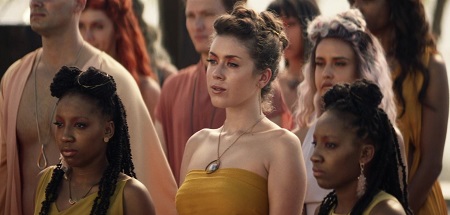
A group of Coppelius synths seen in Star Trek: Picard Season 1.

The (relatively) short lifespan of humans and other organics means that, barring time travel shenanigans or being put in stasis, no one we met in the 23rd or 24th Centuries could reasonably have survived to the 32nd Century. However, synths don’t have such limitations, and as such it’s possible that some or all of the Coppelius synths from Picard Season 1 are still alive in this era.

What happened to them after the events of Picard Season 1 is not clear, and it may be something that Discovery’s sister show plans to revisit. If that’s the case we may not see anything of the synths in Season 4. However, if Picard Season 2 is going in a different direction – as its teaser indicated it might – there could be scope to pick up the synths’ story in Discovery.

The Coppelius synths were under Federation protection by the end of Picard Season 1. But with the Romulans hell-bent on exterminating them, they still appeared to be in danger. It would be very depressing to learn that a subsequent Romulan attack wiped them out, especially after Picard and Soji worked so hard to help them. So I hope that the synths are still around – even if they had to relocate to a new homeworld. They could have joined the Federation by this time, too.

Number 6: The Denobulans
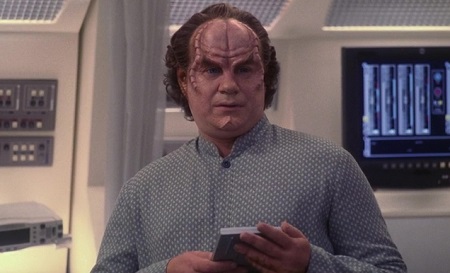
Dr Phlox, a 22nd Century Denobulan.

The Denobulans have thus far only appeared in Star Trek: Enterprise, where main character Dr Phlox was a member of the species. Though friendly toward humanity by the mid-22nd Century, the Denobulans were not strictly “allies,” nor were they a founding member of the Federation – which consisted of Andorians, humans, Tellarites, and Vulcans in its original incarnation.

However, the Denobulan homeworld must have been in relatively close proximity to Earth and Vulcan, and with the Federation coalescing and growing it seems at least plausible that they joined up at some point, especially given their friendly history. If Federation HQ relocates back to Earth in Season 4, perhaps we’ll see more of the Denobulans, who might still be in the vicinity.

Number 7: The Dominion
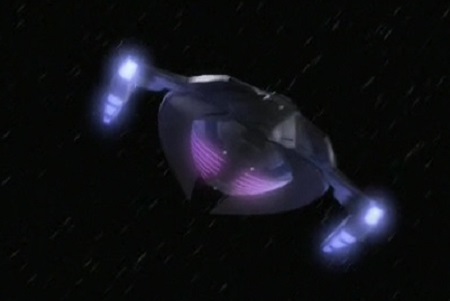
A Jem’Hadar ship.

The Dominion were the dominant power in at least part of the Gamma Quadrant, and according to their own history, had been so for over two millennia as of the mid-24th Century. After a years-long cold war between the Dominion and Federation following first contact, armed conflict broke out in the 2370s. The Dominion War was arguably the most significant event of the latter part of the 24th Century from the Federation’s point of view, proving far more devastating than incursions by the Borg or earlier wars with the Klingons and Romulans.

Following their failed attempt to invade the Alpha Quadrant, the Dominion agreed to return to their own space beyond the Bajoran wormhole. Odo, a Founder who had lived among Bajorans and humans for decades, reunited with his people, hoping to communicate to them that the Federation would not try to wipe them out nor conquer them. If Odo was successful, this could have set the Dominion on the path to peace.

We simply don’t know what became of the Dominion. The Guardian of Forever was seen in Discovery Season 3, and had relocated to a planet near the Gamma Quadrant. Admiral Vance didn’t mention the Dominion when Burnham and Saru planned to travel there, so perhaps we can infer from that that the two powers are at peace. However, the Burn may have disrupted that peace, especially if it resulted in serious damage to the Dominion – might they hold the Federation responsible for that disaster?

Number 8: The Ferengi Alliance
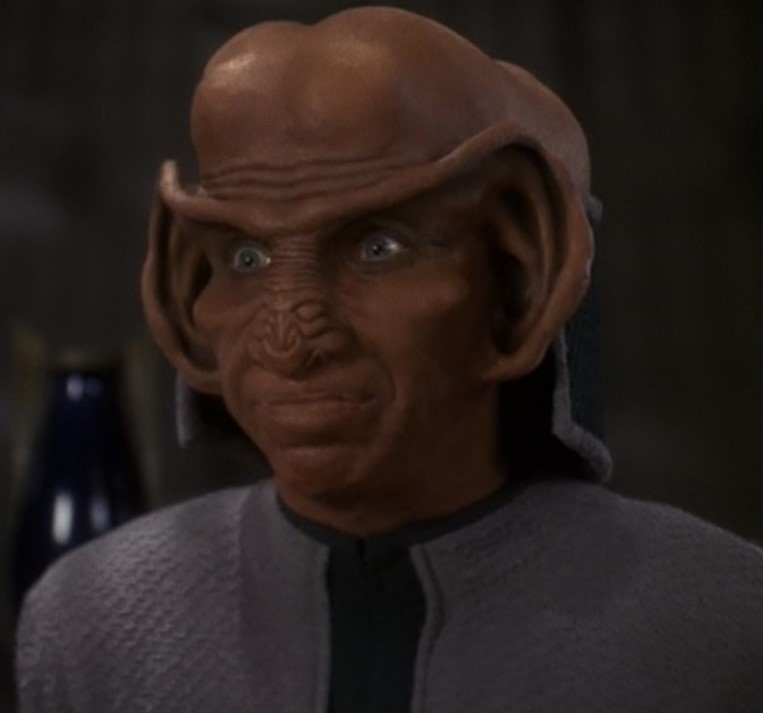
Rom became Grand Nagus of the Ferengi Alliance in 2375.

The Ferengi initially appeared to be antagonistic toward the Federation following (official) first contact in the mid-24th Century, but they soon revealed their true nature: hardcore capitalists for whom war was simply not worth participating in as it was usually unprofitable. Ferengi society was strictly segregated, with men participating in business while women were expected to remain at home and raise their families.

There were seeds of change in the 2370s, with women’s rights issues coming to the fore in Ferengi society. There were also moves away from unregulated capitalism, with some Ferengi even forming unions and advocating for more rights and welfare. Though such changes surely led to pushback from conservative Ferengi, the appointment of Rom as Grand Nagus may have cemented at least some of these reforms.

Though hardly allies of the Federation, at least one Ferengi – Nog – would serve in Starfleet in this era, bringing a different perspective to the organisation and perhaps bringing the factions closer together. The existence of a USS Nog in the 32nd Century – while intended to be a tribute to actor Aron Eisenberg – could also be seen as an indication of continued warm relations in this time period.

Number 9: The Gorn
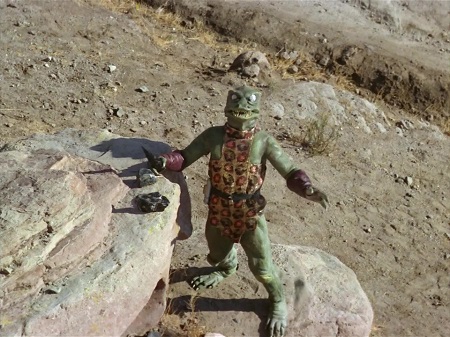
A 23rd Century Gorn captain.

The Gorn were neighbours of the Federation by the 23rd Century, and may have been involved in border disputes and skirmishes. There was no indication that they ever joined or even considered joining the Federation, and appeared to maintain a closed-border policy well into the 24th Century.

In the Lower Decks episode Veritas, Ensign Rutherford’s arrival at a Gorn wedding led to him coming under immediate attack by the Gorn who were present, and while this was (of course) part of an extended joke, it certainly suggests that the Gorn were not in any way friendly toward the Federation by the 2380s.

In That Hope Is You, the Discovery Season 3 premiere, Book told Michael Burnham that the Gorn had “destroyed subspace” somewhere in the vicinity of Hima. Perhaps that indicates that they were not allied to the Emerald Chain, nor the Federation – retaining their status as an independent power.

Number 10: Holograms
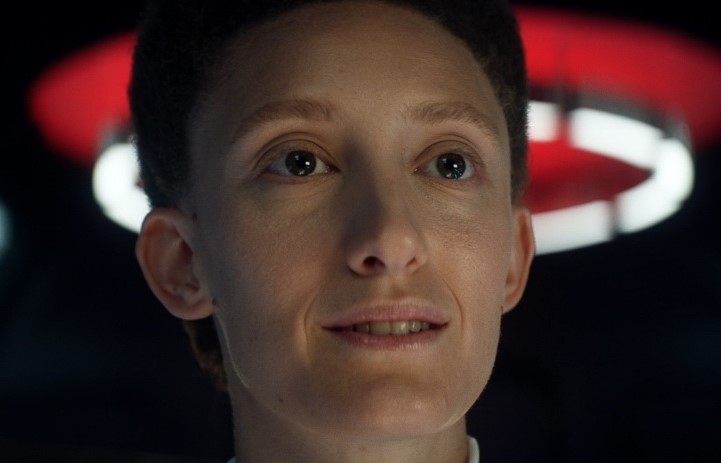
Index, a hologram seen in Star Trek: Picard.

We saw a number of holograms in Discovery’s third season, confirming that the technology is still in use in the 32nd Century. At least one of these holograms appeared to be intelligent, perhaps even sentient, but that was never confirmed.

In the late 24th Century, the Doctor – the USS Voyager’s Chief Medical Officer – was involved in a court case regarding his ownership over a work of fiction he had created. The court case was resolved in his favour in the episode Author, Author, and Captain Janeway suggested that he might have “struck the first blow for the rights of holograms.” There were other sentient holograms in the 24th Century as well, including a holographic version of Sherlock Holmes’ nemesis Professor Moriarty. What became of them is unclear!

As with the Coppelius synths, there’s no reason why holograms from the 24th Century couldn’t have survived this long, and one of my most popular theories here on the website has been that Voyager’s Doctor – or rather, a backup copy of him – will make an appearance in Discovery.

Number 11: The Iconians
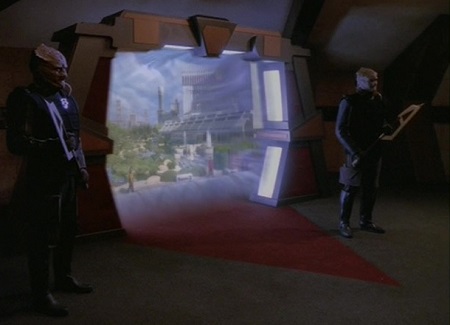
An Iconian Gateway – one of the few surviving relics of their civilisation by the 24th Century.

Iconian civilisation flourished more than 200,000 years ago, and by the 24th Century they were believed to be extinct. However, their powerful technology utilised “gateways” to travel vast distances, and it was implied by the extent of the archaeological evidence that they maintained outposts or colonies on many other planets.

The destruction of their homeworld by an alliance of their enemies may have rendered the majority of Iconians extinct, but such a widespread civilisation could have avoided total annihilation, perhaps. The reason the Iconians are on this list is because of their popularity in non-canon works, particularly the video game Star Trek Online. Some elements from non-canon Star Trek publications have ended up crossing over to the main series, so perhaps the intervening centuries saw some kind of re-emergence of the Iconians.

Number 12: The various Kazon sects
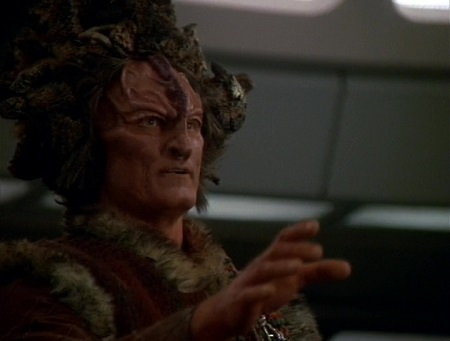
Maje Culluh, a Kazon leader in the 2370s.

Discovery Season 3 didn’t establish whether the Federation were able to travel to the Delta Quadrant, nor if they had ever revisited the region since the USS Voyager’s transit in the late 24th Century. Given that warp drive was still the main way of travel, and that maximum warp speeds (as understood in a 24th Century context) meant that the Delta Quadrant would take decades to reach, perhaps they never did.

So we may not find out what became of the Kazon! Similar in some ways to a less technological, less organised Klingons, the Kazon were major antagonists across the first couple of seasons of Voyager. We know that the Borg considered them “unworthy” of assimilation – the only species we know of that the Borg couldn’t be bothered with!

It seems unlikely that the Kazon will have had much impact on the Federation given their distance. However, if they ever succeeded in unifying their disparate sects, perhaps they could have become a regional power in the Delta Quadrant. The USS Discovery’s Spore Drive could take the ship anywhere – even 70,000 light-years away. So maybe if they’re able to travel there, we’ll find out!

Number 13: The Kelvan Empire

Rojan, a 23rd Century Kelvan leader.

The Kelvans are an interesting – and potentially alarming – faction. Extragalactic aliens from the Andromeda galaxy, their technology was far superior to the 23rd Century Federation, and arguably to anything the Federation subsequently developed! They only appeared once, in The Original Series Season 2 episode By Any Other Name, but that shouldn’t stop them making a comeback.

The Kelvan Empire’s home galaxy was facing an extinction event due to rising radiation levels, and they sent out scouting parties to look for new homes. One of these parties encountered the USS Enterprise upon arriving in the Milky Way. Though initially interested in conquest, Kirk was able to convince the Kelvans to consider an alternative proposal, allowing the Federation to help them find new worlds to settle.

If the Federation’s proposal was accepted, perhaps there are millions of Kelvans living somewhere in the Milky Way in this era. Or if it was rejected… perhaps the Kelvan Empire is about to descend upon the Federation en masse!

Number 14: The Klingon Empire
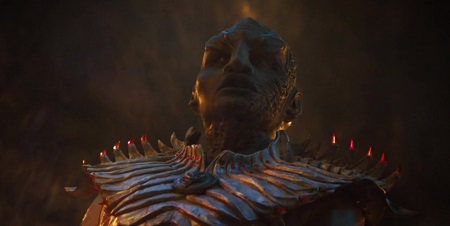
Klingon Chancellor L’Rell.

The Klingons, despite having made so many appearances in Star Trek already, are perhaps the most interesting faction to see return in Discovery. Burnham and the crew are veterans of the Federation-Klingon war, and while I wouldn’t say any of them “hate” Klingons, they certainly would be distrustful of them. How would they react to learning that the Klingons had been allies with the Federation – or even Federation members – for centuries?

I think there’s a lot of potential for conflict, drama, and for Star Trek to do what it’s always done best: use its sci-fi setting to examine real-world issues, in this case, the way we can be guilty of judging groups of people. Characters like Culber, who was “murdered” by Voq, or Stamets, who had to deal with the fallout from that loss, could be front-and-centre in such a story, and it would be absolutely fascinating to see it unfold.

Rather than Discovery making the Klingons antagonists again, like in Season 1, it would be great to learn that the alliance of the 24th Century continued, and that if the Klingons remain an independent power – which they may well be – they’re at least on friendly terms with the Federation.

Number 15: The Maquis
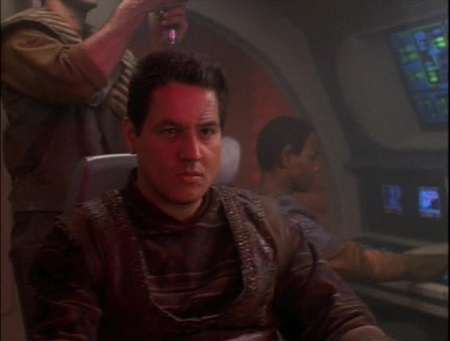
Chakotay, a Maquis commander.

Although Maquis forces were said to have been almost entirely wiped out by the Cardassian-Dominion alliance during the early stages of the Dominion War, at least some Maquis were known to have survived the initial attack. In addition, the USS Voyager returned to the Alpha Quadrant with a contingent of 40-ish Maquis, including Chakotay and B’Elanna Torres.

It’s at least possible that the Maquis, who were breakaway colonists attempting to secede from the Federation, recreated their society in the aftermath of the Dominion War. While their soldiers may have been killed, we saw no confirmation of the fate of other Maquis colonists. If they survived the war, even in captivity, perhaps they attempted to continue their quest for independence afterwards.

If so, the Maquis colonies may have been independent of the Federation for centuries by the 32nd Century. What kind of society they might’ve developed in that time is not known.

Number 16: The Q Continuum
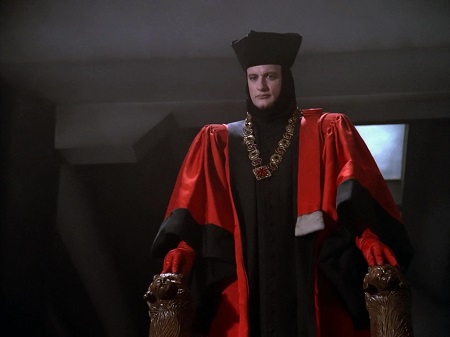
Q, a member of the Q Continuum.

The Q Continuum are returning in Season 2 of Picard – or at least, their most well-known member is. Perhaps that means we won’t see or hear anything about them in Discovery, nor learn what became of them in the far future. But it’s possible!

The Q are as close to immortal as any faction we’ve seen in Star Trek, so they should certainly still be in existence by this time. Their incredible powers are, as a famous quotation puts it, “indistinguishable from magic,” and Q suggested that the Continuum has existed for at least as long as the universe itself.

The Q seemed to view humanity and the Federation with curiosity rather than animosity, with Q even trying to help Captain Picard to solve puzzles that required different ways of thinking. If this kind of intervention continued, and humans continued to develop their reasoning skills, perhaps they might be on friendly terms with the Q by this time. However, if the Q are able to create matter, they would have been very useful friends to have as the Federation began to run out of dilithium! Perhaps the Q have instead stepped back from actively intervening in Federation affairs, content to watch from the outside.

Number 17: The Romulan Star Empire
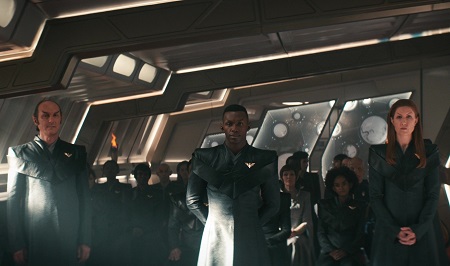
Romulans, Vulcans, and Romulo-Vulcans in Season 3.

The existence of Romulans on Ni’Var – the planet formerly known as Vulcan – suggests that the Romulan Empire has disbanded following reunification. It was certainly implied heavily in the episode Unification III that reunification involved all Romulans and Vulcans. But it’s possible that a breakaway faction exists in some form; a “New Romulan Empire” claiming the mantle of the disbanded one.

We’ve already seen what was perhaps the biggest possible reveal for Burnham and the crew – learning that the Romulans are an offshoot of the Vulcans. However, with Ni’Var seemingly on the verge of rejoining the Federation, perhaps there is scope to see more from them. The Romulans remained a distinct group on Ni’Var, with full integration with the Vulcans having not occurred, and there are clearly internal tensions between the three main groups. This could be a story thread that Season 4 picks up.

Number 18: The super-synths
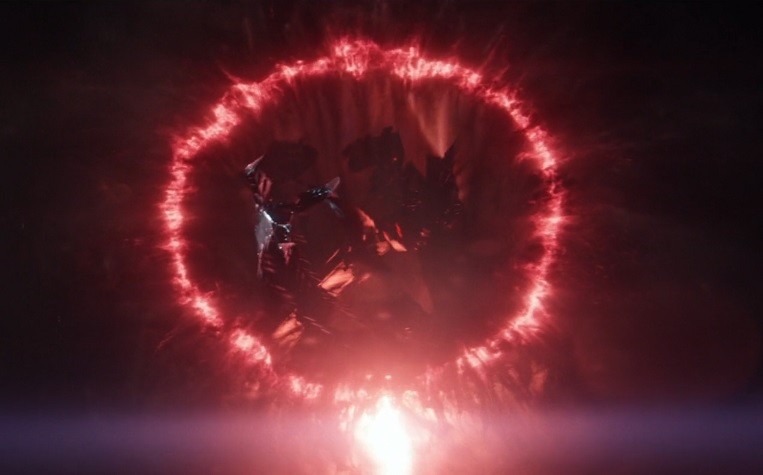
The super-synths almost arrived in the Milky Way… but their portal was closed at the last second.

We know practically nothing about this faction, despite them playing a major role in the conclusion to the story of Picard Season 1. They don’t even have a proper name! Claiming to be “an alliance of synthetic life” existing beyond the Milky Way, this faction offered to come to the aid of any synthetics who needed them. It was not clear if this offer was genuine or part of an elaborate trap.

I suggested in the run-up to Season 3 that the super-synths could have been involved with the Burn, but that turned out not to be the case. However, if they became aware of the Federation following the events of Picard Season 1, they could still be planning to travel to the Milky Way – perhaps with conquest on their minds.

The super-synths could thus be responsible for Season 4’s gravitational anomaly – perhaps it’s a weapon; an artillery barrage to soften up the Federation before the troops arrive! It would be fantastic for the creative team in charge of Star Trek to find a major way to tie Picard and Discovery together. Whether this is the right way to do it is certainly up for debate, but in principle I like it.

Number 19: The Talaxians
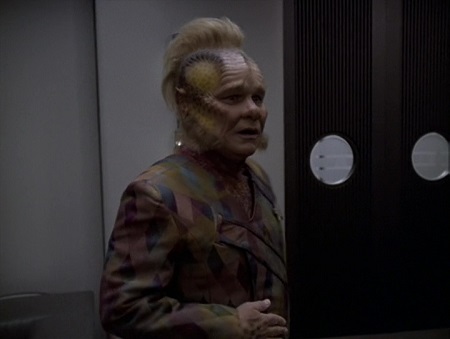
Neelix, a Talaxian chef.

Although the Talaxians are native to the Delta Quadrant, there was at least one Talaxian colony in or near the Beta Quadrant, significantly closer to Federation space. This seems to increase the likelihood that the Federation would have been able to remain in contact with them at least in the late 24th Century.

The Talaxian homeworld had been conquered sometime in the mid-24th Century by the Haakonian Order. Perhaps the Federation, if they remained on friendly terms with the Talaxians, would have wanted to aid them in liberating their homeworld. If the Federation developed the ability to travel to and from the Delta Quadrant at some point in the future, perhaps the Talaxians even joined the Federation!

Number 20: The Talosians
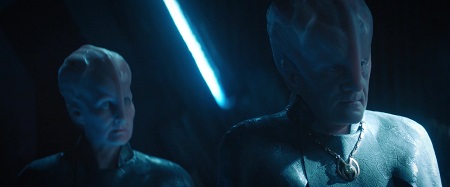
Talosians in Season 2 of Discovery.

The Talosians were a very dangerous people whose telepathic powers were able to trick humans, Vulcans, and other known races into seeing things that weren’t there. As a result of their attempt to kidnap Captain Pike and other Enterprise officers, Talos IV was declared off-limits to Starfleet personnel and the Federation.

The events of The Menagerie, in which the Talosians welcomed Captain Pike back to their world, as well as their general helpfulness toward Spock and Michael Burnham in Discovery Season 2, however, may suggest that General Order 7 – the section of Starfleet’s rules banning travel to Talos IV – may have been reassessed, although no in-universe evidence for that exists.

The surviving Talosians lived underground after their planet was devastated by war, and lost their ability to control their technology, focusing instead on refining their mental powers. In the 23rd Century, Talosian leaders believed their race was doomed to extinction – but maybe the Federation found a way to aid them? If not, perhaps Talos IV is uninhabited by this time period.

Number 21: The Tholians
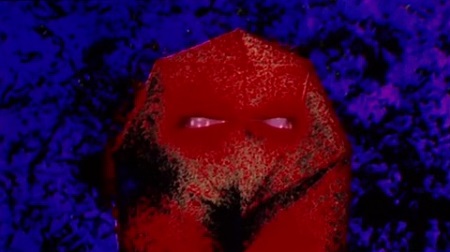
A 23rd Century Tholian commander.

The Tholians have only made a couple of appearances in Star Trek – once in The Original Series and once in Enterprise. However, they’ve been mentioned on a number of occasions, and despite being antagonistic in the 23rd Century, some kind of diplomatic relations clearly existed a hundred years later.

As one of the few non-humanoid sentient species, it would be really interesting to see the Tholians make a return. An area of space that they claimed as their own seemed to have some kind of gateway to the Mirror Universe – if Discovery were to revisit that setting, perhaps the Tholians could be included.

As to where they might be or what they might be doing by the 32nd Century, that isn’t clear. In the aftermath of the Burn, they could have expanded to conquer border worlds, or they might’ve been a peaceful neighbour or even ally of the Federation in this era.

Number 22: The Vidiians
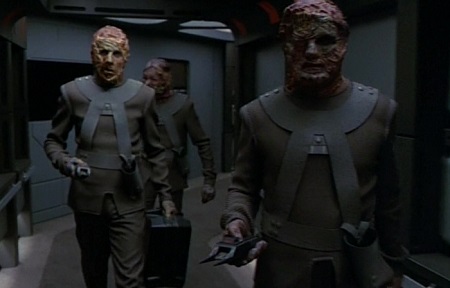
A trio of Vidiians form a boarding party in the 24th Century.

Another Delta Quadrant faction whose reappearance will depend on the Federation’s ability to travel, the Vidiians were an antagonist during the USS Voyager’s journey – but only because a disease known as the Phage was afflicting their society.

In the episode Think Tank, a group of “problem-solving” aliens claimed to have cured the Phage, and if this was true – that was left rather ambiguous due to the way the story progressed – perhaps the Vidiians would have been more peaceful and willing to establish a dialogue with the Federation, especially if they were visiting the Delta Quadrant regularly. Or, due to their relative proximity to the Borg, the Vidiians may have been assimilated!

That may seem like a harsh fate, but in the Picard Season 1 episode The Impossible Box the Borg were revealed to have assimilated at least some members of the Sikarian species, making use of their spatial trajector technology. The Sikarians were present in the same region of space as the Vidiians, so perhaps the expansion of the Borg in the late 24th Century was a problem for them.

Number 23: The Xindi
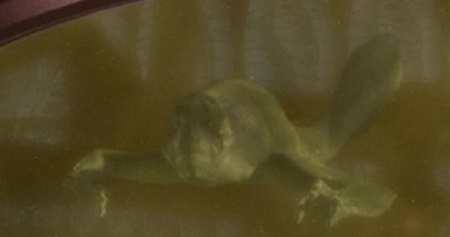
A Xindi-Aquatic in the 22nd Century.

I recently took a look at the possibility of the Xindi returning – along with fellow Enterprise antagonists the Suliban. Neither faction has been seen since Enterprise went off the air, and their absence suggests that, at least in the 23rd and 24th Centuries, they may have pursued a policy of isolationism.

The Xindi had joined the Federation, however, by the 26th Century, with at least one Xindi serving aboard the Enterprise-J. Whether they remained members in the years after the Burn is not known, and with 90% of Federation members either leaving or being out of contact it seems likely that they would have had to fend for themselves for a while.

So that’s it. A few factions from Star Trek’s past that may be around – in some form – in the 32nd Century!
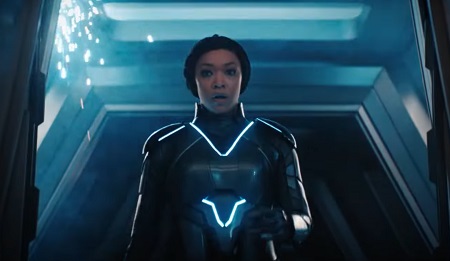
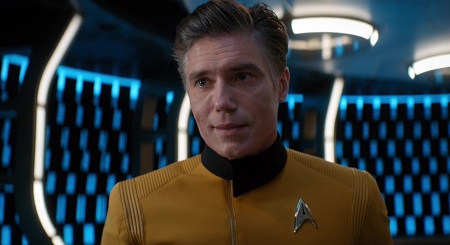
Captain Burnham in the Season 4 teaser.

This was a long list, so credit to you for making it to the end. Truthfully I can think of at least half a dozen more factions that could have made it, but it was already getting far too long! We don’t know at this stage where Discovery Season 4 is going to go, and thus which factions may or may not be included.

What I would say, though, is that Season 3 had some pleasant surprises, bringing back elements from Star Trek’s past that I genuinely would not have expected. With that in mind, I think there’s potential for any of the factions above to play a role – minor or major – in the upcoming season.

If Discovery Season 4 remains on course, we’ll see it before the end of the year. With Lower Decks Season 2 scheduled to arrive in mid-August and run for ten weeks, we might even see Discovery before Halloween, just like we did in 2020. Time will tell, but I hope you’ll stay tuned for more Discovery news and, when the season is ready, reviews of every episode… and perhaps a bit of theory-crafting!

Star Trek: Discovery Season 4 is scheduled to premiere on Paramount+ in the United States (and other territories where the service is available) before the end of 2021. The series will arrive on Netflix in the United Kingdom and elsewhere. The Star Trek franchise – including Discovery and all other properties mentioned above – is the copyright of ViacomCBS. This article contains the thoughts and opinions of one person only and is not intended to cause any offence.
Star Trek: Picard Season 1 – one year later

Spoiler Warning: There are spoilers ahead for Star Trek: Picard Season 1. There are also minor spoilers for Star Trek: Lower Decks and Star Trek: Discovery.

Time certainly flies, doesn’t it? It was one year ago today that Star Trek: Picard Season 1 debuted in the United States (and a day later in the rest of the world). It’s not unfair to say that I was incredibly excited about this series, which would take the Star Trek timeline forward in a significant way for the first time in eighteen years. Though I tried hard to keep my hype and expectations in check, there was no getting around how much I was looking forward to Star Trek: Picard.

As we hit the first anniversary, I thought it could be a good moment to look back on my remembrances (ha! get it?) of the show as well as what the first season achieved, what it did well, and where it came up short.

The opening title card.

If you were a regular reader a year ago, you’ll recall from my reviews that the season started very strongly. In fact, I named Remembrance (the season premiere) the best Star Trek episode of 2020 – a year which, for all its problems, saw 33 episodes across three shows. I rank Remembrance very highly among modern Star Trek episodes, and I’d even compare it favourably to Deep Space Nine’s Emissary, perhaps placing them joint-first as the best Star Trek premieres.

The finale, on the other hand, let the season down somewhat. Carefully-established mysteries that the show had slowly build up over the preceding eight episodes felt rushed through in a two-part conclusion that dumped new characters, a new location, a new faction, and whole new storylines into play right at the very end. The season also ended with a plot hole unexplained – why Dr Maddox travelled to Freecloud – and the disappearance of main character Narek, whose storyline was dropped halfway through the second part of the finale.

So despite enjoying Picard overall, as I look back a year later at Season 1, I’m afraid I have to say that it was a mixed bag.

Jean-Luc Picard.

From the moment Star Trek: Picard was announced it shot to the top of my list of shows I was excited for. I may have talked about this in the run-up to the season, but I remember feeling distinctly underwhelmed when Enterprise was announced in 1999. I wasn’t particularly interested in a Star Trek prequel, and while the show had heart and told some exciting stories, there was a sense really since Voyager ended and Nemesis had been in cinemas that Star Trek wasn’t moving forward.

Enterprise, the Kelvin reboot films, Discovery, and even Short Treks all told stories in the 22nd or 23rd Centuries, and though those stories were enjoyable and fun, there was a lot left behind in the 24th Century that was never explored. What would become of the characters we knew, of the Federation, of Starfleet, and all the other factions, races, and planets? The 24th Century had been Star Trek’s biggest era – with 517 episodes of television and four films starring three crews and a huge supporting cast of secondary and recurring characters.

Moving the timeline forward beyond Nemesis was something I really wanted to see from Star Trek.

The 24th Century was also “my” Star Trek era. The Next Generation was the first Star Trek series I watched, and it was literally my way into being a Trekkie. I have a great fondness for the shows of that era, and I consider it to be not only the time when Star Trek was at its most successful in terms of viewership (and finances) but also the closest the franchise has to a “Golden Age.” So to see that era abandoned for prequels and mid-quels wasn’t exactly disappointing, but it wasn’t something I was wild about.

So for eighteen years (Nemesis was released in 2002) Star Trek hadn’t moved forward in terms of the timeline. And even when Discovery launched and established itself with Short Treks and a spin-off, there was still no plan to revisit the 24th Century. Picard came along like a breath of fresh air, and I was incredibly excited, hyped up, and interested in what the series would bring. That was my mindset going into the premiere and each of the subsequent nine episodes.

The opening shot of the season.

Picard was not Season 8 of The Next Generation – and I didn’t want it to be. I was very keen that the new cast be given an opportunity to establish themselves within the franchise and become fan favourites for a new generation of Trekkies. What I hoped for was that, in thirty years’ time, people would be clamouring for a Dr Jurati series or Star Trek: Elnor with the same vigour I have for Picard. And I think, in that sense, we’ve begun to see at least the beginnings of that.

A lot of television shows don’t really settle in until Season 2, which is where the overused term “growing the beard” comes from. I’ve used that expression myself a few times, but in the aftermath of Discovery’s recent outing it seems to be the only phrase that critics are using to describe the show and it’s honestly put me off! But we’re off topic. There was perhaps a degree of leniency on my part going into Season 1 of Picard; a willingness to let some minor issues slide in order to see the show continue to build and grow. And as underwhelming as the Season 1 finale was, I’m hopeful that Season 2 can build on the foundation that has been laid.

The crew of La Sirena at the end of Season 1.

Though there was the mystery of Dr Maddox’s location, the Romulans’ scheme, and later the beacon to contact the super-synths, what Season 1 really was, when you boil it down, was a team-up story. Picard, over the course of ten episodes, put together a new crew and gave them a reason to work together. Establishing each member of the crew, giving them a side-quest of their own, and binding them together to follow Picard was the primary accomplishment of the season.

I’ve used the analogy of the Mass Effect video game series once in relation to Star Trek: Picard already – when it comes to the basic existence of the super-synths and their beacon. But there is a second point of comparison that is interesting to me, and may be to you if you’ve played those games. In Mass Effect 2, much of the game is comprised of Commander Shepard recruiting a crew. Each member of the crew needs to be brought on board, then later a side-mission is given in which players can earn their loyalty. Picard Season 1 played out similarly.

Elnor in Season 1. Recruiting him for the mission took up one episode.

Raffi wanted to go to Freecloud to reunite with her son. Dr Jurati had a secret plot to kill Dr Maddox. Elnor had to resolve his lingering emotional issues with Picard. Rios had to put together the pieces of what happened aboard the USS Ibn Majid. Seven of Nine wanted revenge for Icheb. Each of the main characters – at least those on the mission to save Soji – had to be recruited and then have their side-quest resolved before the story could reach its conclusion. This isn’t just a story from Mass Effect 2, it’s something many team-up stories do.

As I mentioned when considering some preliminary ideas for Season 2, finding a way to keep this crew together will be something that the next chapter of this story needs to address. Because they came together to do a single task – rescue Soji – and then continued to help the synths on Coppelius and prevent the arrival of the super-synths, they’re done. Their mission is complete, and Season 2 will have to find a believable reason for keeping them together. But that is a challenge for next time!

The super-synths were called off at the last moment.

Each character we met was interesting, and none felt unoriginal or bland in the way some secondary characters can in a story which primarily focuses on one person. We’ll deal with Picard himself in a moment, but for now: Elnor was a lonely member of an all-female sect, and also had abandonment issues after Picard’s disappearance. Rios pretended to be the roguish “Han Solo” type, but had serious post-traumatic stress following his former captain’s murder-suicide while aboard the USS Ibn Majid. Raffi was a flawed genius whose drug problem had dominated her life and cost her her most important relationships. Dr Jurati had been brainwashed into murdering someone she loved. Narek was the spy with a heart of gold – but instead of being a cliché he turned that trope on its head by sticking to his mission to the end. Dahj and Soji were different from one another – androids unaware of their synthetic nature. One was drawn to Picard, the other deeply suspicious of him.

Then we had the reintroduction of several legacy characters. Dr Maddox, who we met in The Next Generation, had continued his research after his meeting with Data, and eventually was able to develop his own line of androids. Seven of Nine had helped Icheb become a Starfleet officer, but lost him when she was betrayed by Bjayzl. Riker and Troi, who had married in Nemesis, had a family – but their son had died. Hugh was perhaps the most successful of all the legacy characters, the ex-Borg who had taken full advantage of his own liberation to assist hundreds or possibly thousands of other ex-Borg on the Artifact.

Hugh the Borg returned.

There was tragedy and drama aplenty in each of the characters we met, but none of it felt forced or contrived in the way some drama shows can. This wasn’t a soap opera, it was hard-hitting. Picard Season 1 may not have followed the traditional episodic Star Trek formula, but it had a distinctly Star Trek tone – it used its sci-fi setting to examine real world issues. It did so in a tense, dramatic, and exciting way, and expanded on themes from The Next Generation and elsewhere in the franchise, looking at basic rights such as the right to life.

The attack on Mars can be analogous to many different recent and historical events, but the reaction to it is certainly reminiscent of the western world’s post-9/11 outlook. The aftermath of a tragedy allowed a nefarious faction to push through a prohibition on certain groups of people. Islam was not “banned” after 9/11, but as recently as 2016 Donald Trump talked of a “ban on people from Muslim countries” – these restrictions were in place for much of his term as President.

The attack on Mars was a significant event in the years before Season 1 of Picard is set.

The theme of the season was in realising that we mustn’t judge whole groups of people by the actions of a few. This could apply just as much to the supporters and voters of Donald Trump in 2021 as it did to Muslims and others. The fanatics who attacked the United States Capitol a couple of weeks ago are no more representative of the 70+ million Trump voters as ISIS or al-Qaeda are of Islam. That is the message of this synthetic ban storyline: not to be so quick to judgement, and not to allow those with a pre-existing agenda to force the issue.

The Zhat Vash quietly infiltrated Starfleet, and slowly began poisoning the minds of Starfleet officers and Federation civilians. We have the literal expression of this metaphor via the mind-meld – this represents how those with an agenda are using propaganda and “fake news” to unduly influence the discourse. These themes are buried in the narrative, but they are there – and open to interpretation. This is how I see some of these storylines having real-world comparisons, but it may not be how you or someone else sees it. Fiction is always subjective, and that’s okay. If you disagree, that’s great!

Commodore Oh.

As I’ve said before, a story doesn’t just have merit because it can be seen through a real-world lens. In some cases, pushing too far in that direction can lead to a narrative being less enjoyable. So Picard balanced out some of these contemporary metaphors with a truly engaging and mysterious Star Trek story.

We saw these events from Picard’s point of view, and he’s such a great character for telling this story because he didn’t know exactly what happened and why, just as much as we as the audience didn’t know. So when the synths attacked Mars, his life, his career, and his whole world fell apart. We meet him at the beginning of the season premiere as someone who’s fallen into a major depression. Dahj would be the catalyst for bringing him out of that – but it wasn’t until the mysteries and conspiracies had been unravelled and brought to light that he could truly move on.

Picard in the Season 1 premiere.

We went on that journey with Picard. We began together, not knowing what had happened on Mars, not understanding why, and then along comes Dahj. She was equally mysterious: who was she, why was she seeking out Picard, who were the assassins that were trying to hurt her? And as we learned more about both of these elements of the story, this chapter of Picard’s life – and the lives of those around him – came into focus.

My criticisms of the season finale generally don’t stem from the fact that any of the narrative decisions were bad, but rather that I wanted to see more. We rushed through Sutra’s story, Dr Soong’s story, and the end of Narek’s story. We don’t know anything about the super-synths, and precious little about the civilisation on Coppelius. There was scope to know more if the season had been structured differently and perhaps extended by an episode or two, and that’s really where I felt things came unstuck.

Coppelius Station was the setting for the two-part finale.

From an aesthetic point of view, Picard blended The Next Generation-era elements with a style firmly centred in modern-day sci-fi. The design of La Sirena reflects this – it was clearly not a Starfleet ship. Inside and out, La Sirena has touches of Star Trek, but stands apart and very much does its own thing. Beginning with the redesign of the USS Enterprise in Star Trek: The Motion Picture and carrying all the way through to Discovery, we’ve seen starship interiors with certain visual elements – angled corridors and hallways, grey or blue pastel carpeting, panels with distinctive lines, the warp core as a glowing column, and so forth. La Sirena has some hints at some of these, but is much closer to ships seen in The Expanse, for example, and other modern sci-fi properties in other ways.

Within the Star Trek fandom, starship designs and uniforms are both subjective things with a range of opinions on which are best. And before anyone rushes to judgement to say La Sirena looks bad or they dislike the mermaid-combadges, I’d say that we need to give the show time for its aesthetic to grow on us. There have only been ten episodes of Picard compared with 176 of The Next Generation, and those episodes are only a year old. Obviously nothing in Picard will feel as “iconic” yet – but as time goes by and we spend more time in this era that may happen.

La Sirena.

I adored the design of La Sirena. It felt like a runabout mixed with a hot-rod, and I think that shows to some extent the personality of Captain Rios. This is his ship, and he’s put his personal stamp on it – as we saw in a very funny (and incredibly well-acted and well-filmed) sequence with five different Rios-holograms. After the blue boiler suits of Enterprise were followed up with another all-blue look in Discovery I was also glad to see more colour back in the two new Starfleet uniform designs which debuted in Picard. The one in the “current” time (that we saw people like Riker and Commodore Oh wearing) was my favourite of the two when compared to the design seen in flashbacks, but both were neat.

The only aesthetic problem I felt Season 1 had was its outdoor filming locations and their lack of variety. We visited locations on Earth which were supposedly in France, Japan, and North America, as well as half a dozen planets, and each looked exactly like southern California. Because Picard had ten episodes and almost all of them had some outdoor filming this was amplified far more than it had been in the likes of The Next Generation, which would see fewer outdoor shoots with more episodes in between them. But as the season progressed, the fact that each planet Picard visited was a barely-disguised location within a few miles of Los Angeles detracted from the look.

The surface of California… I mean Aia.

Some locations, like the planet of Aia, were beautifully created in CGI, but then ruined when scenes on the surface not only didn’t match the CGI creation of the planet (the colour and tone are way different). What made no sense to me about the Aia scenes in particular is with so little time spent there, why not use a sound stage? Rig up a planet that looks genuinely different instead of using an outdoor filming location. We only saw two or three scenes set on Aia, all around the beacon, and I honestly just thought it was a wasted opportunity. Vashti, Nepenthe, and Coppelius all felt very samey because of the decision to shoot outdoors in the same area, and that’s just a shame to me. I would love to see some more variety in Season 2 – either by travelling to shoot on location further afield, or by using indoor sound stages that can be made to look different each time.

So we come to the man himself: Jean-Luc Picard. I mentioned earlier that he was depressed, and the way this part of his story was conveyed was heartbreaking and wonderful. I recently wrote an article looking at the characterisation of Luke Skywalker in the 2017 film The Last Jedi, because he was also depressed in that story. It was one that some Star Wars fans hated, but it resonated with me. Picard’s story in Season 1 resonated with me too, for many of the same or similar reasons as I explained in that essay.

Jean-Luc Picard.

Depression and mental health are not easy subjects to convey in fiction, and Picard itself had a scene in the episode The End Is The Beginning which unfortunately painted a pretty stereotypical picture of mental health. But Picard’s story was much better, and very well done overall. It showed that anyone – no matter how heroic they have been in the past – can fall victim to depression. Picard lost his fleet, he lost his role in Starfleet, and instead of saying “no, the right thing to do is to help so I’m going to fight on,” he collapsed. He hit a problem that he couldn’t solve, suffered a humiliating defeat, and gave up. He spent years in quiet retirement – which was more like a self-imposed exile – because of how he felt.

That is powerful in itself, as it shows how anyone – even heroes that we want to put on a pedestal – can fall victim to depression. The same was true of Luke Skywalker. But what came next is equally important – Dahj gave Picard a reason to believe in something again. Not only was there a mystery to figure out, which can be tantalising in itself, but Picard was the only one capable and willing to help Soji – so he stepped up. Where he had fallen into the lowest point of his life, he found a reason to believe and that set him on the path to recovery. I find that a powerful and inspiring story.

Dahj inspired Picard and gave him a cause to believe in.

There were two cathartic moments for me in Season 1 that I didn’t know I needed to see. The first was with Seven of Nine. During the latter part of Voyager’s run, Seven was my least-favourite character. She was annoying, arrogant, and worst of all, after learning some “lesson in how to be human” from Captain Janeway or the Doctor, she’d seemingly reset and forget it ever happened by the next episode, requiring her to “learn” the same lesson in being human many times over. She was repetitive and boring. But in Picard she had finally moved past her Borg years and embraced her humanity and emotions – even though she lost Icheb, seeing her get so genuinely angry and react in such a human way was something wonderful to see – and was performed beautifully by Jeri Ryan.

The second cathartic moment came from Data. His death in Nemesis wasn’t something I was happy about, but within the story of that film I remember feeling at the time that it worked. However, looking back I can see how, for example, seeing Picard and the rest of the crew laughing and moving on at the end of the film was perhaps not the right way to end the story. Data didn’t get to say goodbye to anyone – his sacrifice happened in a brief moment, and after saving Picard he was just gone.

Data’s consciousness remained in the digital afterlife until Picard shut it down.

Picard carried that regret with him in a far more significant way than the closing moments of Nemesis hinted at. Riker and Troi did too, and we got to see both of them express that. Picard poured his heart out to Data when he was in the digital afterlife, and the scene between the two of them was something incredible. It was something I as a fan needed to see, to put Data to rest properly after all these years.

In a sense, Picard and Data’s story is an inversion of the story Kirk and Spock went through in The Search For Spock and The Voyage Home. After Spock’s death, Kirk would stop at nothing to find a way to bring his friend back to life – even stealing the Enterprise. While Picard set out on his journey to save Data’s “daughter” from harm, what he ended up doing was bringing a final end to Data’s life. There was no way to save Data, nor to transfer whatever remained of him into a new body. The only thing Picard could to for his friend was finally allow him his mortality, and permit him to die. As Kirk might’ve said, that sounds like a “no-win scenario.” But as Kirk never really had to learn – at least until the moment of his own death – those scenarios exist every day. It might sound cool to say “I don’t believe in no-win scenarios” and push to save everyone all the time, but that isn’t possible. It’s a fantasy – and Picard confronted the genuine reality of death in a way Kirk never had to.

Picard shut down the remaining part of Data permanently.

Data had desperately yearned to be more human. From his first appearance in Encounter at Farpoint when he struggled with whistling through to the introduction of his emotion chip in Generations and beyond, all Data wanted was to feel less like an android and more like a human. Mortality is one of humanity’s defining characteristics – especially when compared to machines and synthetic life. By shutting down Data’s remaining neurons and consciousness, Picard gave him perhaps the greatest gift he could give – and Data achieved his goal of getting as close to humanity as possible.

As I look back on Season 1 of Picard, I can see that it had some flaws and some issues. But none of them were catastrophic, and even though there was one episode that I described at the time as a “misfire and a dud,” the season as a whole was great. It started off with what is perhaps the best premiere of any Star Trek series, and though the ending was imperfect we got some amazing story-driven dramatic Star Trek.

Dr Jurati beams the crew of La Sirena aboard.

Perhaps Season 1’s legacy will be defined by what comes next. Not only by future seasons of Picard, but by other shows and films set in or around this time period, expanding the Star Trek franchise and pushing it to new places. The Next Generation served as a launchpad for two other series and four films, and perhaps Picard has similarly laid a foundation upon which more Star Trek will be built. That’s my hope, at any rate.

Even if that doesn’t happen, though, Season 1 was an entertaining ride – with a few bumps in the road as mentioned. We got to learn a lot more about some of Star Trek’s factions – the Romulans in particular, but also the Borg – and meet some genuinely interesting new characters. Despite some leftover story threads from Season 1, Season 2 is potentially wide open to tell some new and interesting stories when it’s finally ready to be broadcast. I can’t wait for that!

Star Trek: Picard Season 1 is available to stream now on CBS All Access in the United States, and on Amazon Prime Video in the United Kingdom and elsewhere. The Star Trek franchise – including Picard and all other properties mentioned above – is the copyright of ViacomCBS. This article contains the thoughts and opinions of one person only and is not intended to cause any offence.

Preliminary Star Trek: Discovery Season 4 predictions

Spoiler Warning: There are spoilers ahead for Star Trek: Discovery Seasons 1-3, Star Trek: Picard Season 1, Star Trek: Lower Decks Season 1, and for other iterations of the franchise.

Star Trek: Discovery Season 3 only concluded a few days ago, and while production has begun on Season 4 it will be a while yet before we get any news. Regardless, I thought now would be the perfect time for some wild speculation… sorry, I mean “preliminary predictions.” It’s very early in the game to be thinking about Season 4 – a season which, if Season 3’s timeline is anything to go by, is unlikely to grace our screens before Spring 2022. But that doesn’t mean it won’t be a bit of fun!

The end of Season 3 wrapped up the main storylines in a generally satisfactory manner; regardless of how we may feel about specific events (like the Burn) their stories were concluded by the time the credits rolled. The dangling story threads left behind are more like teases for what may come, rather than unfinished elements from what came before. That’s a good way to do things, and unfortunately that’s where Picard’s Season 1 finale earlier in 2020 dropped the ball, at least in my opinion.

The USS Discovery departs Federation HQ for a new adventure in the Season 3 finale.

So Season 4 is potentially quite open right now. There’s no obvious direction for the story to go, nor did Season 3 end with a cliffhanger or big tease like Season 2’s journey into the future – or even Season 1’s reveal of the USS Enterprise approaching. Captain Burnham was given her orders after assuming command of Discovery, and set out in the ship to begin the task of delivering dilithium across the fractured Federation. It was implied that this was step one in bringing more wayward ex-members back into the fold, so perhaps that’s something we’ll see continued.

To re-emphasise: I’m categorically not saying that I have any “insider information,” nor that any of these predictions will come to pass in Season 4. This is guesswork on my part – educated guesswork, in some cases, but guesswork nevertheless. I would encourage all of you to be incredibly sceptical of anyone claiming to know for sure what will happen, or anyone claiming to have “anonymous sources” within the production team at ViacomCBS. Many, many times have people making such claims been shown to be making things up.

With that out of the way, let’s jump into my list, which is in no particular order.

Number 1: Visiting Kaminar.

The surface of Kaminar as seen in the Short Treks episode The Brightest Star.

One thing I disliked in the Season 3 finale was the unceremonious dumping of Saru. Though we know that Saru actor Doug Jones is returning to Discovery in Season 4, it will be in a different role now that Burnham has become captain. I have a couple of ideas for where Saru may fit, but for now suffice to say that I think we’ll have at least one episode focusing on Saru’s home planet of Kaminar.

Not only would such a story allow Saru to catch up with his people, but we could see how the Kelpiens and Ba’ul have developed since we saw them in Season 2. The episode Su’Kal suggested that the Kelpiens and Ba’ul joined the Federation jointly, and the way their conflict ended would be interesting to explore.

Su’Kal and Saru on Kaminar at the end of Season 3.

Given the cataclysmic nature of the Burn, though, which I expect to see the lingering effects of for years to come, one storyline that would be potentially interesting is how Kelpien society would react. Knowing that one of their own is responsible for this disaster is going to have some kind of effect on Kaminar and the Kelpiens. If Bill Irwin could return to play Su’Kal, we could see this explored in depth. Would Su’Kal be welcomed by everyone in the way Saru welcomed him? Or will he be shunned by some for his unintentional role in the Burn?

Such a storyline could be timely. In the real world, China is struggling with the fact that the coronavirus pandemic seemingly originated there, and I think that a storyline which looked at how Kaminar deals with its unwitting role in the cause of the Burn could be an interesting way for Star Trek to do what it does best: using its sci-fi setting to look at real-world issues.

Number 2: A new villain or adversary will rise.

Control was the main villain in Season 2.

Over its first three seasons, Discovery introduced us to several different villains. It seems unlikely that Season 4 will break that pattern, and it feels almost certain that there will be a significant adversary or villain for Captain Burnham and the crew to defeat. Whether such a character will be a galactic threat like Control or a playground bully like Osyraa is not obvious; the Emerald Chain was basically the only antagonistic faction we met in Season 3. However, there are bound to be others!

This could be where a race or faction from Star Trek’s past comes back to the fore, though going down that route would be a bit of a constraint. I think we’re more likely to see an original creation for Season 4, someone whose motives are tied in some way to preventing the Federation reestablishing itself, perhaps.

Osyraa was the primary antagonist in Season 3.

If the theme of the season as a whole will be reconnecting the Federation, it stands to reason that any villain or adversary would be someone who seeks to prevent that. However, it isn’t just Burnham and Discovery working on this task, so any such villain would have to be powerful enough to wield a fleet of starships. They may have their own motivations, and the Federation are simply in the way of whatever they’re trying to do.

This could also be a way to introduce time travel to the season, assuming that the producers want to do so. A villain could be someone flouting the ban on time travel for some reason – and could even be someone working inside the Federation, such as Section 31.

Number 3: A connection or crossover with Star Trek: Picard.

Jean-Luc Picard in Star Trek: Picard Season 1.

After Picard Season 1 came and went with nary a hint at the existence of Discovery, I was worried that Discovery would reciprocate in Season 3. Luckily that didn’t happen, and not only did we get to see the Qowat Milat – a faction introduced in Picard – we also got a mention of Admiral Picard himself in the episode Unification III.

At this point we don’t know whether Discovery Season 4 or Picard Season 2 will be broadcast first – and it’s possible that, with the ongoing disruption caused by the pandemic and the uncertainty around the two productions, the team at ViacomCBS aren’t 100% sure either! However, both shows are up and running, and Picard has at least one season under its belt – a season which had several factions, new characters, starships, story points, etc that could in theory cross over to Discovery.

Coppelius Station.

I got the impression from the Season 1 finale of Picard that the show would be moving on to a different adventure in Season 2, perhaps leaving behind the Coppelius synths altogether. If that’s the case, Discovery Season 4 could pick up this story and show us what became of the synths in the centuries after Soji and Picard came to their rescue. Did they stay on Coppelius or relocate? Are some of the synths we knew, such as Soji, still alive in this era?

As I said numerous times during the runs of both Picard and Discovery, these sister shows could do more to work together, reminding viewers that they’re two parts of a greater whole. The difference in time periods is an issue, but as we saw with the Qowat Milat it doesn’t have to completely prevent the two series from teaming up.

Number 4: The return of a classic race or villain.

Borg drones in First Contact.

Season 3 brought back the Trill, Orions, Andorians, and the Romulans and Vulcans on Ni’Var. There were very brief scenes which showed off Cardassians and a couple of other races, and we saw the Bajorans and Xaheans in holographic form too. So Season 3 crammed a lot into its thirteen episodes in terms of revisiting races from Star Trek’s past. This is something I hope Season 4 will continue to do.

Though the Dominion War ended more than 800 years ago, finding out what became of the Cardassians, Bajorans, Breen, and the Dominion themselves is perhaps what I’d choose if it were up to me. The Dominion War arc, though controversial in some Trekkie circles, is a story I find myself revisiting often, and it’s always a thoroughly enjoyable ride. Deep Space Nine ended right when the war did, and we don’t really know anything about what became of the factions involved afterwards.

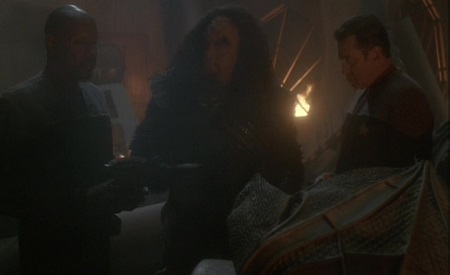
Captain Sisko, General Martok, and Admiral Ross on Cardassia Prime at the end of the Dominion War.

There’s also the potential to learn what became of the Borg. They didn’t take advantage of the Burn and the Federation’s collapse to assimilate the Alpha Quadrant, so could we infer from their absence that they’ve been destroyed, pacified, or severely reduced? Could the Borg have been presumed defeated centuries ago but make a big recurrence in Season 4 – perhaps looking to acquire the Spore Drive technology?

I’d also love to see the inclusion of a Suliban or Xindi, or perhaps a Talaxian or Kazon from the Delta Quadrant. I know Discovery can’t possibly cram all of these disparate factions and races into one season, but the 32nd Century offers so many interesting story possibilities for practically everyone we’ve met in past iterations of Star Trek. The potential is unlimited!

Number 5: Will Burnham remain Captain?

Captain Burnham.

Discovery worked hard over the back half of Season 3 to make Burnham’s ascent to the captain’s chair feel genuinely earned. Some of the criticisms I’ve made of her character, both in Season 3 and previously, stem from her position as a junior officer making big decisions that go against her orders, so putting her in the captain’s chair and backing her up with a helpful crew should see her continue to grow. I want to see that, and I hope that she will continue to be a Starfleet captain who lives up to the ideals of the Federation in Season 4 and beyond.

But Discovery has never found the right fit for its captain’s chair for one reason or another. I’ve actually enjoyed what all three captains – Lorca, Pike, and Saru – brought to the role, but none of them stayed in that role beyond a single season. One of my hopes for Season 4 would be that we’d get some stability in the captain’s chair, and in a way I’m hopeful Burnham will retain the position going into Season 5 and potentially beyond – but what if that isn’t the plan?

Discovery has gone through three captains in three seasons.

Perhaps one of Discovery’s unique points is going to be the season-long captaincies of different people, each giving the ship and show a distinct feel. Lorca was the hardball who turned out to be a traitor. Pike was the classic character who embodied the spirit of adventure. Saru was the calm and collected diplomat. Burnham may be a Kirk-style action hero, a bit of a renegade but someone who always comes through for Starfleet when it counts.

How or why she might leave the role is unknown, and given Discovery’s approach to storytelling across Seasons 1 and 2 in particular, I’m not sure how likely it is that, having gone to the trouble of promoting her, they’ll replace her within a single season. But that exact thing happened to Captain Saru this season, so it wouldn’t be unprecedented.

Number 6: The lingering effects of the Burn.

The Burn.

Having resolved the Burn and found a huge dilithium planet to negate its destructive effects, there may be a temptation to shelve the Burn, especially if the writers and producers of Season 4 are taking on board fan feedback – which has been mixed to say the least on that particular story point. However, I think doing so would be a mistake.

If we start off Season 4 with a one- or two-year time skip, I can already predict that the legwork of rebuilding the Federation will have already happened off-screen. Resetting the Federation to a state much closer to how it has always been shown in Star Trek may be what some fans want, and in some ways I do too – but I think that after seeing the Federation at such a low ebb in Season 3, we need to see at least some of the rebuilding process for ourselves.

The 32nd Century was a difficult environment for many, and that won’t magically go away overnight.

I already discussed one way the Burn’s effects could still impact the story with the Kelpiens, but there are a million-and-one others. Captain Burnham could lead the ship to revisit parts of the Federation that no one has heard from since the Burn only to find them under occupation or in the midst of civil war, for example. Or we could see an ex-Federation member that completely ran out of dilithium and has had no way to power itself for a century.

Season 3 focused largely on the Federation and ex-Federation members. But there’s scope to see how the Burn impacted other powers in the galaxy – depending on which ones existed at the time! If the source of the Burn is revealed as a Federation member (i.e. the Kelpiens) would, for example, the Dominion or Klingon Empire want to exact revenge or get reparations from the reunited Federation? There are so many ways that the Burn could have impacted the galaxy that we need to see. It hasn’t all gone away with the uncovering of its source and the discovery of the dilithium planet.

Number 7: A time travel story featuring the Guardian of Forever.

The Guardian of Forever… a.k.a. Carl.

It was a very deliberate choice to bring back the Guardian of Forever in Season 3, and it would be a shame to only use them once! Not to mention that guest star Paul Guilfoyle was just fantastic as Carl, the Guardian’s humanoid avatar, and would make a thoroughly welcome return to Discovery.

One way the Guardian of Forever could be included would be to send the USS Discovery back in time – for some reason – in order to tie into the Short Treks episode Calypso. That would likely need to be a multi-episode story arc, but it would be one way to include the Guardian and resolve Calypso – two birds, one stone!

The Guardian of Forever’s portal.

If it were discovered that some nefarious villain or antagonistic faction were using time travel, the Guardian of Forever could be Captain Burnham’s ace in the hole to counteract them. That would be another way to make use of the reintroduction of this entity. Season 3 expanded on the Guardian of Forever by showing us that it can transport people between parallel universes, so this could in theory allow for another Mirror Universe story (please no) or for the Discovery crew to travel to any of the other alternate realities seen in Star Trek.

Speaking of which…

Number 8: A Kelvin timeline reference.

The Kelvin timeline USS Enterprise.

This is something else that Season 3 touched on briefly, with Kovich making note of a time war soldier who crossed over from the alternate reality. The Guardian of Forever, as mentioned, could be one way to literally cross over, but unless a new Kelvin timeline film is in development – and it doesn’t seem to be at this stage – there’s not as much to be gained by doing so when compared to a tie-in with Star Trek: Picard or other ongoing projects.

However, a Kelvin timeline reference would be neat, even if it were little more than a throwaway line akin to Kovich’s in Season 3. The 32nd Century, with its superior technology and better understanding of time and timelines, is the only Star Trek setting aside from the alternate reality itself that really can make the connection between Star Trek’s two major universes.

Number 9: Who is Kovich?

Kovich in Terra Firma, Part I.

Famed director David Cronenberg, who plays Kovich, has said that the character will return in Season 4 in some way, so there’s the possibility to learn more about this mysterious character. I’d been speculating since his first appearance that his distinctive uniform, high security clearance, and un-Starfleet lack of morality could hint at his being an operative of Section 31 – or even its leader.

Another theory I’ve heard fans kicking around is that Kovich is the Federation’s president. That would be an interesting way to go too, as a storyline which involves rebuilding the Federation could require serious diplomatic efforts. The Federation President would surely be involved in bringing key worlds like Earth back into the fold.

Number 10: Admiral or President Saru.

Saru in Terra Firma, Part II.

As I said earlier, I was disappointed in the way Saru was dumped at the end of the Season 3 finale. He didn’t get a chance to say goodbye to his crew, to offer Burnham her promotion in person, and his decision to leave the ship was only briefly touched on by Burnham in a voiceover. Though Saru is coming back, his role is unclear with Burnham now in command.

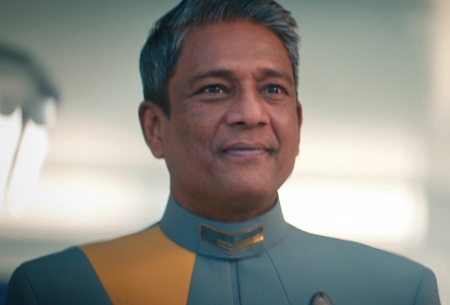
I can think of a couple of ways he could be included, though. The first would be a promotion to the rank of Admiral, joining Vance at the head of Starfleet. As the Federation grows, Starfleet will need to grow too, and with a new source of dilthium – and the potential for new Spore Drive ships too – and that will mean the need for new Admirals to command the expanding fleet. Saru proved himself as a good captain across Season 3, and while he did make some mistakes, I would argue he’s an excellent Admiral candidate.

Saru and Burnham with Admiral Vance.

However, we also saw Saru’s diplomatic side in Season 3, particularly with the President of Ni’Var. Saru could continue in this role as a diplomat, but if worlds like Trill, Earth, and Ni’Var all rejoin the Federation, might some of them want to see him become Federation President?

If the story of Season 4 looks at the Federation re-unifying, I could see why some of the aforementioned worlds might want to support the candidacy of Saru. Early Federation politics seemed to involve balancing the Vulcans and Andorians, but this led to almost all of the Federation’s key institutions being on Earth and dominated by humans. The reunited Federation may be less keen on giving humanity all of the top jobs, especially given Earth’s century of isolationism, so someone like Saru may be a compromise candidate among the Federation’s members who are coming back together for the first time in a long time.

Number 11: A redesign of the USS Discovery internally.

The bridge of the USS Discovery.

One aspect of Season 3 that didn’t quite sit right with me was the redesign of the USS Discovery. I adore the redesign, don’t get me wrong, but I didn’t quite buy into it as “believable” considering the ship didn’t change on the inside. We saw a few changes, like the programmable matter and holographic elements in many bridge consoles, and of course the big empty space in the engineering/drive section that we saw during Book’s turbolift battle against Zareh. But aside from a few small touches, a few lines of technobabble, and one CGI-heavy action sequence, the ship looks the same from the inside.

This undermines the decision to have the ship undergo a major refit, and I’d love to see some more aesthetic changes inside the USS Discovery to match its external appearance. It wouldn’t mean completely tearing down old sets, but tweaking and changing them to indicate that the ship has been heavily altered. Lighting is one way that the designers could make an immediate, obvious, and unobtrusive change. Ditching some of the blue lighting and generally upping the brightness of other lights – especially on the bridge – would transform the way Discovery looks.

The inner workings of the USS Discovery.

The USS Enterprise, after its refit in Star Trek: The Motion Picture, looked like a different ship inside and out. The USS Discovery nailed the outside look in Season 3, but its inside hasn’t caught up. Even a handful of changes here and there would go some way to making good on the refit idea, and I’d love to see the bridge, the ready-room, and engineering given a facelift in time for Season 4.

This would also be a great moment to show off a new area of the ship, either something that was improved during the retrofit or a brand-new addition. We saw the data core at the end of Season 3, but I don’t see a pressing need for the crew to spend a lot of time there. What we could see, however, is some kind of holodeck or recreation area, an improved mess hall that had more of a Ten Forward lounge vibe, an observation deck or briefing room, a battle bridge or secondary command centre, or an additional science lab.

Number 12: Defending the Verubin Nebula.

The periphery of the Verubin Nebula.

In a galaxy devoid of its most significant source of fuel, the discovery of a massive cache of dilithium will not go unnoticed – or unopposed. The Emerald Chain may have “fractured” according to the Season 3 epilogue, but it seems unlikely that they’d be the only ones interested in acquiring the dilithium planet in the Verubin Nebula.

As such, part of the Season 4 storyline may involve Discovery having to defend the Verubin Nebula from someone looking to seize it for themselves. After the Emerald Chain did essentially the same thing at the end of Season 3, if I were writing it I wouldn’t make this the main point of Season 4, but it seems like something that could be included – or at least explained. How will the Federation defend what seems like the galaxy’s most valuable resource?

Number 13: To seek out new… dilithium?

The dilithium planet.

At the moment, the Verubin Nebula is the only major source of dilithium. The USS Discovery with its Spore Drive can jump all across the galaxy, making it a great ship to scout for new sources of the valuable fuel. Part of Discovery’s mission could be to jump around to areas of the galaxy the Federation had previously been unable to reach in search of dilithium.

I see this story point as the catalyst for something else to happen rather than the main event, though… because on its own it doesn’t exactly seem like the stuff of action and excitement!

Number 14: A new first officer.

Could Lieutenant Willa join Discovery’s crew?

Last time we looked at the odd Tilly situation and theorised that her uniform may have been altered from command red to science blue in post-production. This could mean she’s being replaced as first officer – a position she only took on a temporary basis to begin with.

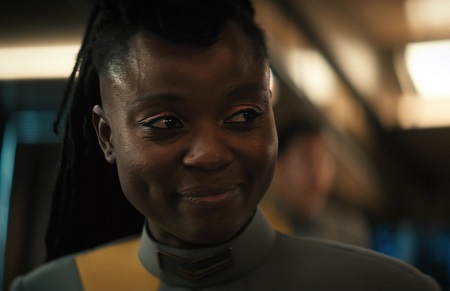
If Captain Burnham doesn’t keep Tilly as first officer, that obviously opens the position up to someone else. There are candidates on Discovery’s crew, but I’d also propose Lieutenant Willa, Admiral Vance’s aide-de-camp from Season 3. She would be an interesting addition to the crew; another 32nd Century native along with Book to advise the crew of changes they might’ve missed.

Lieutenant Rhys was given the conn temporarily in Far From Home.

We could also consider the promotion of one of the secondary bridge crew, such as Nilsson, Rhys, or Bryce. Nilsson and Rhys have both been left in charge on the bridge before, so could in theory make good candidates. I wouldn’t pick Stamets or Dr Culber, as they both have roles elsewhere on the ship.

Nhan could make a comeback after she was dropped early in Season 3. I half-hoped to see her return in the season finale, but if she finishes her mission aboard the USS Tikhov, perhaps she could return to Discovery as first officer. If not, maybe a new character could join the crew in that role.

Number 15: A new home for Federation HQ.

Federation HQ.

I initially wondered if Season 4 might see Federation HQ return to its home on Earth, but I’m not sure if that would be the best option so early in the game. Plus I kind of like the idea of a space headquarters, not attached to any planet and able to be moved.

Perhaps it makes the most sense in the short term for Federation HQ to anchor itself near the Verubin Nebula, able to immediately respond to any threats to its valuable prize. But we could also see Federation HQ move between worlds, visiting new members in turn or just staying on the move. If Starfleet is growing in strength, the need for a secret location will be lessened and perhaps we could see some institutions of the Federation’s government relocate away from the base we first encountered in Season 3.

Number 16: The return of the Klingons.

Klingon leader T’Kuvma during the series premiere.

In Season 1, Discovery depicted a major Federation-Klingon war, and while the Klingons were peaceful by Season 2, they were not exactly staunch allies of the Federation. In Star Trek’s fictional history, the Federation and Klingons would remain at loggerheads for much of the 23rd Century, only to sign the Khittomer Accords at the end of the century, leading to a period of peace. By the 24th Century they were allies, particularly during the Dominion War, and I think it would be interesting to take that line forward in time.

How would the Discovery crew, veterans of the Federation-Klingon war, react to having to work with Klingons? Are the Klingons Federation members, or ex-members? If so, part of the season’s story could be bringing the Klingons back into the Federation – but would everyone on the crew be okay with that?

A map depicting the battlefields of the Federation-Klingon War in the Season 1 episode What’s Past Is Prologue.

Alternatively we could see the Klingons as a neutral power, watching the rebuilding of the Federation from the outside. Maybe they, like the Emerald Chain, have gotten used to being a more powerful faction as the Federation have declined, and may not like to see their old adversary getting back on its feet.

Almost anything could have happened to the Klingons both before and after the Burn, and for a faction that had previously been important within Discovery it would be great to see what became of them, and how that information would impact our characters.

Number 17: Aurellio will be back.

Aurellio.

Kenneth Mitchell’s Aurellio was one of the high points of the final two episodes of Season 3. As an ex-member of the Emerald Chain and a brilliant scientist, Aurellio could be a valuable ally to the Federation and Discovery’s crew.

Aurellio was tasked with working on the Spore Drive, and in the Season 3 finale figured out that empaths like Book are capable of navigating the mycelial network. He could have switched sides to work for the Federation, perhaps working on a way to give more starships a Spore Drive. There are other scientific roles he could play, depending on the nature of the season.

Number 18: More Spore Drive ships.

Discovery making a Spore Drive jump.

Speaking of the Spore Drive and Aurellio, now that the problem of navigating the mycelial network has potentially been fixed, there’s no reason why more Starfleet vessels can’t be fitted with a Spore Drive of their own. In Season 1, Stamets seemed to suggest early on that mycelial spores were difficult to collect or cultivate, but if that could be addressed (or a new source found) there’s no reason why more Spore Drives couldn’t be built.

The Spore Drive has long been Discovery’s most controversial piece of tech, and finding a proper role for it that didn’t get in the way of previously-established canon is one reason for taking the ship and the series out of the 23rd Century. Having arrived in the far future, now is the time to let the Spore Drive shine.

Number 19: Those grey uniforms?

Some of the crew in their new uniforms.

The reaction to the new uniforms in the 32nd Century was mixed, and I wonder if Season 4 will address this in any way. One thing to note is that the grey uniforms looked a lot better in the brightly-lit Federation HQ than they do on the more dimly-lit Discovery. This could be addressed by changing the lighting, as suggested above, but it could also be addressed by making some changes to the uniforms.

It was a refreshing change to ditch the all-blue look, and I don’t dislike the 32nd Century uniforms. Though Vance wore the Admiral’s variant all season long, I still need to get used to seeing the regular crew in that style before I can say for sure how much I like them. So from my personal perspective I think there’s no immediate need to change anything up, but I know not everyone agrees.

Lieutenant Owosekun in her new uniform, showing close-ups of the collar and coloured stripe.

Starfleet uniforms are like starship designs: everyone in the fandom has an opinion on which is best. For my two cents, after four seasons of Enterprise’s blue boiler suits, three seasons of Discovery’s all-blue look, and Picard’s crew not having uniforms, I’m happy to see something different. Lower Decks and the Kelvin timeline uniforms had blocks of colour, and that was great. But it’s been a long time since we really mixed up the uniforms in Star Trek – even the Starfleet uniforms of the Picard era were similar to those from Deep Space Nine and Voyager.

So I’m willing to give the grey outfits a chance. But I wouldn’t be shocked to see promo material for Season 4 showing off a new variant or even a different style altogether.

Number 20: Lieutenant Sahil will join the crew.

Lieutenant Sahil.

Lieutenant Sahil, newly commissioned into Starfleet in the Season 3 finale, was one of the first people Burnham met in the 32nd Century. It would make a lot of sense for her to want to repay his kindness and help by offering him a role aboard Discovery. He could be one of the bridge officers, perhaps taking over from someone like Nilsson or Bryce if either were promoted.

I’d love to see a recurring role for Lieutenant Sahil now that he’s a commissioned officer. With Georgiou having left the show entirely and Saru looking at a potentially reduced role or a role not aboard the ship, there’s plenty of space for Sahil, Aurellio, and others to join up.

So that’s it. A few far too early ideas for what Star Trek: Discovery might bring us in Season 4. If I remember after the season airs it’ll be fascinating to come back and look at this list!

So this was just a bit of fun as I continue to work through my post-Season 3 thoughts. As I say it’ll be great fun to come back and see how many of these guesses were completely wrong once we’ve seen Season 4 for ourselves. The 32nd Century has opened up Star Trek to radically new story ideas for the first time in a long time, and I’m loving that. No longer being constrained by canon means that Discovery can literally take the franchise anywhere, with open-ended story possibilities.

These are not even theories – I want to call them guesses rather than anything else. So please, please don’t get carried away thinking that any of these are destined to happen. We all need to remember to take such theories and predictions with a pinch of salt at the best of times, and guesswork this far out when we know less than nothing about the upcoming season is almost silly! So as fun as this was to put together, let’s all try not to get too excited about anything listed above.

Star Trek: Discovery Season 3 is available to stream on CBS All Access in the United States, and on Netflix in the United Kingdom and elsewhere. The Star Trek franchise – including Discovery and all other properties mentioned above – is the copyright of ViacomCBS. This article contains the thoughts and opinions of one person only and is not intended to cause any offence.

Unsolved mysteries from Star Trek: Picard Season 1

Spoiler Warning: There are spoilers ahead for the entirety of Star Trek: Picard Season 1. There are further spoilers for Star Trek: Discovery (including the Season 3 trailers) and for other iterations of the Star Trek franchise.

It’s been a little over six months since Season 1 of Star Trek: Picard came to an end. The series set up a number of mysteries, and while many of them were completely resolved by the first season finale, some weren’t. Some of these may be addressed in future – in fact, that’s something I’d really like to see – but assuming the series follows a similar pattern to Star Trek: Discovery, Picard and his new crew will likely warp away to a different adventure next time. That may mean that we never learn the truth behind these mysterious unresolved story threads.

Many television series nowadays set up mysteries or unanswered questions early on that become important later, and I don’t mean to come across as impatiently banging on the table demanding we get answers to everything now! Part of the fun of watching a series like Star Trek: Picard – at least for me – is the theorising and speculating, trying to figure out the puzzles that the producers and writers have created.

Jean-Luc Picard will return in Season 2!

One small caveat: it’s possible that some of these points have been addressed in non-canon sources (like comic books) but I’m not counting that. Star Trek, unlike Star Wars, has always drawn a clear line between official canon and unofficial sources. Occasionally we will see points from unofficial material make its way into Star Trek, but unless we see these points resolved on screen, the potential exists for the writers of Season 2 – or indeed of any future Star Trek production – to overwrite anything published in a novel, comic, video game, etc.

With that out of the way, let’s dive into the list!

Number 1: Who are Laris and Zhaban, and what is the nature of their relationship with Picard?

Laris and Zhaban.

The first few episodes of Season 1 introduced us to Laris and Zhaban – Picard’s assistants at his vineyard in France. Laris and Zhaban are Romulans, and not just any Romulans but former Tal Shiar operatives. I assumed, before we learned what happened to Picard’s planned rescue armada, that he had won their loyalty by saving them (or their families) from the Romulan supernova. But now we know that Picard only evacuated a minuscule number of Romulans, most of whom wound up on the planet Vashti. Those refugees detest Picard for abandoning them – even though the decision was taken by the Federation rather than him personally.
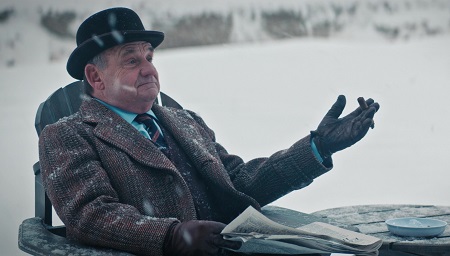
So the question remains: why are Laris and Zhaban so loyal to Picard that they’d give up everything to become housemaids and winemakers on Earth? Even if he saved their lives during the evacuation, very shortly afterwards he gave up on helping their people and their cause. Not only do they seem 100% fine with that, but they appear to have made no effort to help either, despite being operatives of the Tal Shiar.
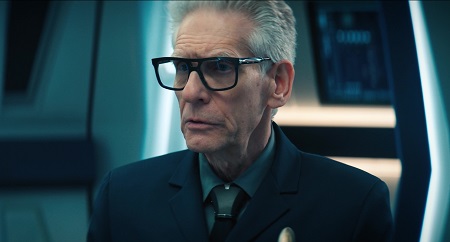
A related point would be why didn’t Laris and Zhaban accompany Picard when he left the vineyard to go back into space? Picard seems to convince them to stay behind by telling them he needs them to attend to the grape harvest – but if you stop to think about it, this doesn’t make much sense. If they’re staying with him out of sheer stubborn loyalty – for some as-yet-unidentified reason – why would they allow him to head off on a dangerous mission unaccompanied?

Laris with Picard.

And finally, now that Picard seems to have a ship and loyal crew, what will happen to Laris and Zhaban back on Earth? Are they just going to remain behind as custodians of the vineyard while Picard is away? That’s certainly a possibility, but it still raises the question of why he has such steadfast loyalty from them.

Laris and Zhaban filled a story role in Season 1, not only by introducing Picard (and us as the audience) to the idea of the Zhat Vash’s existence, but also by being representations of Picard’s home and safe harbour that he has to leave behind as he goes on his adventure. They serve the same role as some of the Hobbiton Hobbits in The Hobbit and The Lord of the Rings novels in that regard. As a story point and character archetype that’s fine, but in the Star Trek galaxy, given everything we learned about Picard and the Romulans, some explanation would be nice!

Number 2: What happened to Soji’s Trill friend after Maps and Legends?

Dr Kunamadéstifee with Soji.

Maps and Legends (the second episode of Season 1) introduced us to a Trill character: Dr Kunamadéstifee. The two sequences in which she featured appeared to have a lot of horror film-style foreshadowing, leading to a theory I held onto for almost the whole of the season that she was going to meet an unpleasant fate. However, after Maps and Legends the character was abruptly dropped with no explanation.

From a production point of view, it would have been beneficial to keep this character around. Soji had precious little interaction with anyone aside from Narek for much of the season, and a character like Dr Kunamadéstifee could have been a friend she could speak to, if only occasionally. Star Trek has always had guest stars who make a single appearance then don’t return, and from that point of view this isn’t odd or out of the ordinary. But it would still be nice to learn what became of Dr Kunamadéstifee – one way or the other!

Number 3: Why was Dr Bruce Maddox on Freecloud?

This is a huge point, because right now it represents a gaping hole in the story of the first season. I’ve talked about this before, but just to recap: the storyline of the first half of the season was about locating Bruce Maddox, who had been missing since the ban on synthetic life. Maddox was eventually tracked to Freecloud, and the only reason he’d travelled to the dangerous planet was because his lab had “been destroyed by the Tal Shiar.”

Obviously he can’t have been referring to his lab on Coppelius – Picard was literally sat in that room at one point, and it didn’t look destroyed to me! But even assuming Maddox had built a second lab away from Coppelius, why did he not simply return there if the new facility had been attacked? Why did he go to Freecloud instead? Dr Soong and the other synths would have welcomed him with open arms, yet he chose to go to a dangerous place and visit a woman he owed a lot of money to.

Freecloud was a very dangerous place for Maddox to visit.

Bjayzl may not have killed him or successfully sold him to the Tal Shiar, but she contributed to his death by weakening him significantly. Travelling to Freecloud – and to Bjayzl’s club in particular – appears to be an act of desperation or of last resort, yet Maddox clearly had other options.

Right now, the only reason Maddox was on Freecloud is to enable other aspects of the storyline to make sense, and to get Picard and other characters into position. Without Maddox, Picard would have had to find a different way to track down Soji, so he’s important to the plot. Unfortunately, the lack of explanation to this point leaves a pretty wide plot hole, and because finding Maddox was the main focus of the first half of the season, it’s one I can’t overlook. It needs a satisfactory expanation.

Number 4: What will happen to the ex-Borg and the Artifact?

The Artifact’s final resting place on Coppelius.

At the climax of the Artifact’s storyline, Seven of Nine and Elnor attempted to lead a rebellion of ex-Borg against the Romulans. However, Rizzo and the Zhat Vash were prepared and ended up killing a lot of xBs. Not all of them were killed, though, and while we don’t know how many survived, there clearly were survivors after the Artifact arrived at Coppelius. A Borg cube can easily have tens of thousands of drones aboard, and while it was suggested that Rizzo killed the majority of them, we don’t really know how many could have survived. It could easily be hundreds – or possibly more.

Seven of Nine appeared to take on a leadership role for the xBs, filling a void left by Hugh’s death. Many xBs seemed confused or traumatised by their experiences – and they will need someone to help them get through that. At the end of the Season 1 finale, though, both Seven of Nine and Elnor had rejoined Picard aboard La Sirena, and the ship then warped away to an unknown destination. Without Seven of Nine, what will happen to the ex-Borg?

Seven of Nine went to a lot of trouble to help the xBs… then appears to have ditched them.

The Artifact itself is likely to come under Starfleet control, at least in my opinion. Its wreckage on Coppelius is largely intact, and presumably the Federation will want to study as much Borg technology as it can get its hands on. It’s possible that something has happened in the galaxy in the two decades that we didn’t see that may have resolved or ended the Borg threat, but that was never mentioned on screen so I assume Starfleet would be very keen to get its hands on a mostly-intact Borg cube – even if it had been picked at by Romulans and may be several years out-of-date!

The ex-Borg are another matter, though. There appeared to be a wide range of races, including many non-Federation species. Some may wish to return home, but in the case of species like the Hirogen, that may not be possible. The Federation may offer them all refugee status and help them reacclimate to life outside the Borg Collective, but it still seems very strange to me that Seven of Nine has just seemingly abandoned the survivors. It’s possible that the final scenes of Season 1 took place many months later, in which case this may have been handled off-screen. Still, it would be nice to get a proper resolution, even if it’s just a couple of lines of dialogue.

Number 5: What will Starfleet do about Aia?

The Zhat Vash by the beacon on Aia.

Somewhere beyond Romulan space – and out of reach of Starfleet – lies Aia, a planet at the centre of eight stars. The stars were deliberately moved and aligned to strongly indicate Aia’s location, and at some point in the past – perhaps centuries ago – the Romulans stumbled upon it. On Aia there’s a beacon left behind by a powerful synthetic race (I nicknamed them the “Mass Effect Reapers”) and it tells synthetics to contact them. The Romulans would interpret this information as something apocalyptic, and the Zhat Vash came to believe that any synthetic life would ultimately lead to the extinction of all sentient organic life in the galaxy.

The beacon was more complicated than that, and instead contained an instruction for synths, telling them to contact the “Mass Effect Reapers” if they need help or are being persecuted by organics. Given the immense power that the “Mass Effect Reapers” appear to possess, surely Starfleet can’t risk leaving the beacon on Aia for anyone to find.

The planet Aia.

The beacon already caused massive problems – the attack on Mars and the Romulan attempt to attack Coppelius being just two examples, and there may be countless others. Leaving it alone will not only perpetuate the Zhat Vash’s conspiracy theory, but will also be dangerous. What if someone else encounters the beacon and contacts the “Mass Effect Reapers”?

I have a theory that – somehow – the Romulans have “cloaked” the octonary star system and Aia, otherwise surely with 24th Century scanning technology and telescopes the Federation would have noticed it. So it may not be as easy as just travelling there and shutting it down. Attempting to do so could even lead to war with the Romulans. However, I think it’s a risk the Federation will have to take; leaving the beacon alone is simply not an option.

Number 6: Who are the super-synths that I nicknamed the “Mass Effect Reapers”?

Who are these guys?

The “Mass Effect Reapers” – nicknamed for their similarities to a faction from a video game series – are a total unknown quantity. There are many possibilities for who they are and what their motivations are, but we only caught the barest of glimpses of them in the Season 1 finale, and in the aftermath of Picard’s “death,” no one mentioned them. Surely, however, they’re an existential threat to Starfleet – and indeed the whole galaxy – on a scale comparable to the Borg. Heck, they could actually be the Borg.

I have a theory that the “Mass Effect Reapers” may be the cause of the Burn – a galactic catastrophe seen in the trailers for Star Trek: Discovery Season 3. If that’s the case, perhaps Discovery will explain this faction’s backstory in more detail. If they reside in an area of space far beyond the Milky Way galaxy it could have taken them centuries to travel here, meaning the timelines match up for Discovery’s far-future setting.

Soji used a beacon to contact the “Mass Effect Reapers.”

Theories aside, we know next to nothing about this faction. They were powerful enough to move stars and to create a sustainable eight-star octonary system. They also appear to have altruistic motivations when it comes to synthetic life, offering to help synths in their struggle against organic oppressors. But is that genuine? Or when they arrive would they simply harvest or assimilate whoever they found? We simply don’t know, but it feels like something that could easily be a trap.

Soji was talked into closing the beacon – but whoever the “Mass Effect Reapers” are, they’re now aware of the existence of the Federation, the Romulans, and the Coppelius synths. If I were Starfleet, I’d immediately work on a plan to contact them and try to open a dialogue. Explaining what happened, and that the Coppelius synths are safe, may be the only way to avert a conflict.

Number 7: Why was Dr Soong planning to transfer his mind to a synthetic body?

Dr Altan Inigo Soong.

When Picard and the crew of La Sirena arrived on Coppelius they met Dr Soong – the son of Data’s creator. Dr Soong was working on a synthetic body for himself, but had been unable to perfect the mind-transfer that he would have needed to accomplish that goal. He ended up donating the body – nicknamed the “golem” – to Picard, but what consequences (if any) will there be for that?

Sadly we didn’t get to spend a lot of time with Dr Soong, but I felt it was at least hinted at in Et in Arcadia Ego, Part 1 that he needed a synthetic body. Perhaps he, like Picard, is dying? The finale had a lot of story to get through and rather skipped over that point, so we don’t really know why Dr Soong wanted to become a synth. Was it a desire for immortality? Was it because of illness? Was it because all of his friends were synths and he felt left out? We simply don’t know.

With Brent Spiner set to reprise the role in Season 2, I’d say we have a decent chance of finding out.

Number 8: What became of Narek?

We have no idea what happened to Narek after this moment.

Narek’s story came to an abrupt end partway through Et in Arcadia Ego, Part 2. After convincing Raffi and Rios to go along with his plan to attack the synths’ beacon, Narek was wrestled to the ground by a group of synths during the botched attack. After that he was never seen or referenced again.

Apparently there’s a deleted or unfilmed scene from the episode which was to depict Narek being taken into custody by the Federation. While it isn’t canon, it remains the most likely outcome. However, there are other possibilities. Narek could have been retrieved by the Romulans during their mission to Coppelius, being transported aboard a Romulan ship during the standoff. He could have been held by the synths, who have cause to hate him for unleashing the Zhat Vash upon them. He could have recanted his Zhat Vash ideology and left aboard La Sirena with Picard – though I consider this one unlikely.

There are many reasons why Et in Arcadia Ego, Part 2 was a mixed episode and a somewhat stumbling finale. The lack of any resolution to the story of a major character is just one of them. Though unconfirmed at this stage, I doubt Narek will return as a major character in Season 2, so unless we get some dialogue or a cameo confirming his fate, the deleted/unfilmed scene may be all we have to go on.

Number 9: Are the synths safe on Coppelius?

The Federation and Romulan fleets over Coppelius.

The timely arrival of Riker’s Starfleet armada is the only reason Coppelius wasn’t obliterated from orbit by a massive Romulan attack fleet. Soji may have listened to Picard and shut down the beacon, but Commodore Oh and the Zhat Vash are fanatics and zealots, and the idea that they would have simply stood down having witnessed that and having heard Picard’s speech doesn’t make a lot of sense.

With that in mind, what’s to stop them returning at any point in the future to finish the job and destroy this colony of synths? Unless Starfleet plans to permanently base an entire fleet in the system, and perhaps build a Starbase there too, it seems like the synths can never be safe if they remain on Coppelius. Evacuating them to a new home would seem to be the safest option.

Number 10: Who knows that Picard is now a synth?

Picard in his new body.

Obviously Dr Soong, Dr Jurati, and Soji know that Picard is now a synth. The rest of La Sirena’s crew must know too, as will Seven of Nine. At the very end of Et in Arcadia Ego, Part 2 Picard basically admitted it out loud in front of all of them. But does anyone else know? What about Riker and Troi? They played big roles in Season 1, but Riker left Coppelius before Picard’s “death” so he may not be aware of what transpired.

There are potential ramifications for Picard’s death-and-rebirth. From Starfleet’s perspective, is he the same Jean-Luc Picard as before? To his friends he may seem the same, but to those prejudiced against synths after a long prohibition on synthetic life, will they treat him the same? Picard may reunite with other people from his past in Season 2 – someone like Dr Crusher or Guinan. I wonder how they will react if they learn what happened.

So that’s it. Ten unresolved mysteries from Star Trek: Picard Season 1. Some of these I fully expect future seasons to tackle, but others feel in danger of being abandoned as Picard and the crew move on to new adventures.

Overall, Season 1 of Star Trek: Picard did a good job of resolving the mysteries and storylines that it set up. But there are some that fell by the wayside and didn’t get a proper conclusion. If the plan is to continue these stories and make more of them in future seasons then I’m all for it, because that sounds fantastic. But if we aren’t going to see these storylines and characters return, doing something to bring proper closure is something I really hope the producers and writers try to do.

Star Trek: Picard is available to stream now on CBS All Access in the United States and on Amazon Prime Video in the United Kingdom and other countries and territories. The Star Trek franchise – including Star Trek: Picard – is the copyright of ViacomCBS. This article contains the thoughts and opinions of one person only and is not intended to cause any offence.