Spoiler Warning: There are spoilers ahead for Star Trek: Picard Season 1, Star Trek: Lower Decks Season 1, Star Trek: Discovery Seasons 1-3, and most importantly, there are spoilers (including images) from the teaser trailers for Picard Season 2, Lower Decks Season 2, and Discovery Season 4. There are also spoilers for Prodigy.
Yesterday was “First Contact Day” – the 5th of April is the day in 2063 when humans made first contact with the Vulcans, as depicted in Star Trek: First Contact. We’ve seen the event celebrated within Star Trek on a few occasions, and apparently one dish often served is salmon! But we’re off-topic already.
The creative team in charge of Star Trek set up First Contact Day as a digital event, somewhat akin to last year’s Comic-Con @Home presentations, and other similar events that they’ve done periodically. It was marketed on social media, particularly on Facebook and Twitter. But it wasn’t 100% clear how fans were supposed to access the virtual panels – whether they were just going to be available on the website, on social media directly, or even via Paramount+. Even navigating to the right part of the Star Trek website took clicking through several links.
It wasn’t exactly clear how to get to this web page.
That confusion was entirely self-inflicted and clarifying it would have been easy to do. It was almost as if the social media/website teams were making watching the panels “live” – they were actually pre-recorded – as difficult as possible. Thankfully all five of the panels were later made available on YouTube (vital for me, so I could go back and take screenshots!) But while we’re complaining about Star Trek/Paramount+/ViacomCBS’ social media, if you want to watch the full panels on YouTube I advise you to do so fast – in the past, some Star Trek videos, including one of the trailers for the first season of Picard and last year’s Comic-Con panel I mentioned earlier, were taken down by YouTube’s copyright protection algorithm. Hopefully that won’t happen this time, but it’s worth keeping in mind the possibility.
One of the pre-event social media posts was really tantalising and very well put-together. A “teaser” clip of a viewscreen which briefly flashed up two numbers – that looked like map coordinates – got a number of Trekkies talking and speculating, successfully building up a degree of hype for the First Contact Day event. In 2021, this kind of audience engagement via social media is vital for any franchise, and I’m glad to see Star Trek at least making an attempt!
What looked like the bridge of the USS Discovery…
…and the mysterious numbers!
So let’s start with the big news!
We got teaser trailers for Lower Decks Season 2, Picard Season 2, and Discovery Season 4! In addition, we got to see the design for Captain Janeway in Prodigy. Each of the panels gave us a few clues and tidbits of information about these upcoming Star Trek projects, which was fantastic.
The mysterious numbers mentioned above did in fact turn out to be coordinates – for a convention centre in Chicago! Star Trek: Mission Chicago is going to take place in April 2022, and will be the first in-person convention since the coronavirus pandemic hit. Perhaps it’s because I was never going to be in attendance, but I’m not sure the convention was the strongest way to end the First Contact Day event. It was saved for the last moment by co-hosts Wil Wheaton and Mica Burton, and it just felt a tad anticlimactic after an event that had seen so much other exciting news.
For me at least, this wasn’t the strongest way to end the entire broadcast.
With so much going on, and so many amazing reveals, it’s hard to know what to talk about first! Let’s start with Prodigy, since the newly-revealed image of Captain Janeway is probably going to be seen as First Contact Day’s most iconic takeaway. While there was no trailer or teaser for the series, which I admit I had been half-hoping for, we did get a bit more information.
The series is set several years after Voyager, at roughly the same time as Lower Decks, in the 2380s. And the reason why none of the aliens we saw in the first teaser image a few weeks ago look familiar is because the show is set in the Delta Quadrant. The aliens are (presumably) all Delta Quadrant natives who are, according to the show’s creators, totally unaware of Starfleet or the Federation.
The new Captain Janeway design for Prodigy.
The version of Captain Janeway that they encounter is a “training hologram” that has been left behind on some kind of training vessel, presumably by the USS Voyager as it passed through the Delta Quadrant. This is the abandoned Starfleet vessel that had been mentioned in the show’s original description.
The design of Janeway is just fantastic. Modern Star Trek has not been shy about changing up classic designs, but Janeway retains her Voyager-era uniform and combadge, and the design manages to blend the way she looked in the show with a CGI-cartoon aesthetic just perfectly. Looking at her, you know immediately who she is! I honestly cannot fault the design, and I can’t wait to see her in action along with the new crew.
The rest of the Prodigy crew.
The premise of Prodigy has now fully taken shape. The setting has been laid out and the crew assembled. Now all we’re missing is the ship itself! Could that be the Delta Flyer?
The creators of Prodigy talked about how the new series will be great fun for kids, stimulating their imaginations and creativity. Both words, “imagination” and “creativity,” came up several times during the panel, and it sounds as though they’re really pushing hard for Prodigy to be something more than just background noise or brainless entertainment. The best kids’ shows do this, and as a result have a lot to offer kids and adults. There was a mention that Prodigy is for “all ages,” which is great!
Finally, Prodigy promised a number of surprises and connections to Star Trek’s broader canon, both of which I like the sound of! There was a hint that one of the characters we saw in the teaser image has a connection to The Original Series; my first guess was the rock-like alien perhaps being a Horta, as that was something I guessed at when I first saw the image. But we’ll have to wait and see on that!
Could this character be related to the iconic Horta?
So that was Prodigy. Since we’re looking at animation, let’s move on to Lower Decks next.
Creator Mike McMahan was involved in a panel that looked at Star Trek’s sense of humour. Considering how many “critics” attacked Lower Decks before it was broadcast for being an un-serious take on Star Trek, I think it was worthwhile to remind people that humour has been a huge part of the franchise going all the way back to The Original Series. McMahan in particular noted the interactions between Kirk, Spock, and Dr McCoy as being a great example of this.
The panel concluded with the aforementioned Lower Decks Season 2 teaser, and in a scant few seconds there was a lot going on! Here are just a few of the things I noticed: Rutherford’s implant is back, meaning his design remains unchanged despite the events of the Season 1 finale. Boimler, as promised, remains aboard the USS Titan, though his posting doesn’t seem to be going well!
Lieutenant Boimler doesn’t seem to be having “the time of his life” on board the USS Titan!
Jonathan Frakes will return as Riker, which we had assumed but hadn’t been confirmed. At one point, Mariner wore what looked like the anbo-jyutsu armour from Season 2 of The Next Generation – something Riker wore once in that show. A Miranda-class ship was briefly shown. And finally, there was a sequence in which Mariner appeared to be fighting several Cardassians!
There’s a lot to digest in just those few seconds, and taken out-of-context it’s hard to be sure of what’s going on! What we didn’t see was Boimler interacting with the other three main characters, and perhaps that’s to keep his fate a secret. Or perhaps it’s indicative of the fact that he will remain aboard the USS Titan for several episodes!
Ensigns Tendi, Rutherford, and Mariner in the Lower Decks Season 2 teaser.
Lower Decks Season 2 looks to be coming together nicely, and there was a lot shown off in the teaser that seems to be from quite a few different episodes. We now know that Lower Decks Season 2 will premiere on the 12th of August, which is pretty much one year after Season 1’s debut! So that’s fantastic news, and it means we’ll get at least some Star Trek this year!
Discovery’s fourth season is also scheduled for 2021, though no date was confirmed. After an interesting panel which focused on Nichelle Nichols and a documentary that has been made about her and her work and influence over women at NASA called Women In Motion, Sonequa Martin-Green introduced the first Season 4 teaser trailer.
The Women In Motion panel.
Before we look at the teaser in depth, I enjoyed the Women In Motion panel. One point that came up is the value of representation, which was something Michelle Hurd (Star Trek: Picard’s Raffi) discussed at length. Representation matters in entertainment, and I’ve had an essay in the pipeline on that very subject for a while. One of these days I’ll get it finished!
On to the teaser trailer. The first thing to note is that Discovery’s uniforms have been changed. The grey design appears to have been retired in favour of a more colourful look – the basic layout of the uniforms appears to be very similar, but the colours have changed. This is something I predicted a few weeks ago, and I look forward to seeing more of the new uniforms at some point soon; it’s difficult to assess them fairly from a few short scenes in a teaser!
Owosekun and Burnham sporting the redesigned, more colourful uniforms in the Season 4 teaser.
After the Burn in Season 3, it seems as though Discovery is returning to another “natural disaster” concept in Season 4. An “anomaly” described as being five light-years in diameter seems to be threatening both the Federation and other worlds, perhaps meaning there will need to be some working together to figure out a solution.
After Seasons 1 and 2 both ended up being about fighting and had major villains to defeat, it was a nice break for Discovery to largely have to deal with a scientific problem in Season 3, so I think the same concept could work well again. I just hope that it doesn’t end up feeling either repetitive, as though copying the Burn, or anticlimactic, coming after the galaxy-wide catastrophe and simply not being as impactful.
Damage to the USS Discovery in the Season 4 teaser.
When I heard talk of a gravitational anomaly that was several light-years wide, my first thought was the Nexus, as seen in the film Generations. That “energy ribbon” was known to be able to damage starships and even planets, and though we didn’t see any evidence of the Nexus, perhaps it could be the cause of this strange anomaly?
It looks as though the USS Discovery takes a beating in Season 4, and may even end up destroyed or irretrievably damaged! At one point, Burnham was the sole figure on the bridge and had to wear a helmet, presumably because of the extent of the damage suffered by the ship. Though the uniforms have been redesigned, I didn’t see any significant changes to the internal design of the USS Discovery itself, which is something I think would be nice to see now they’re established in the 32nd Century.
Burnham in some kind of armour or space suit in the Season 4 teaser.
It was great to see Cleveland Booker back, and it seems as though David Ajala will be back as a regular cast member for the show. Book was such a fun character in Season 3 that I’m thrilled he’s back. He wasn’t in a Starfleet uniform, so it seems as though he’s keeping his status as an outsider. That worked well in Season 3, so why change what works?
Lieutenant Detmer appears to have upgraded her cybernetic implant! We saw at least one glimpse of a scene in which the USS Discovery appeared to lose artificial gravity, which is something rarely seen in Star Trek. We saw the return of the President of Ni’Var, who appeared in Season 3, as well as the debut of a new character who seems to be a Federation official.
At one point, the ship appears to lose its artificial gravity!
Saru was shown briefly, and looks to be in some kind of diplomatic or ambassadorial role based on the few seconds he was on screen. We also saw one other Kelpien, a couple of unknown aliens, and Burnham once again talking about togetherness and unity as ways to tackle the threat they all face – presumably this anomaly. And most importantly: Grudge is back!
So all I can think to say is “wow!” Discovery Season 4 looks action-packed to say the least! We didn’t see either Admiral Vance or Kovich; the latter we know is returning but I certainly hope Admiral Vance will be back as well. Oded Fehr’s performance in Season 3 was fantastic, and it’s wonderful to have a Star Trek admiral who does what’s right and isn’t an adversary; it makes a nice change!
The USS Discovery was also briefly glimpsed in the Season 4 teaser.
Based on what we saw, Discovery Season 4 looks fantastic, and getting confirmation that it’s aiming for a 2021 release is great news as well. Though no date was given, at this stage I would assume (alright, guess) that we’ll see something of a repeat of last year, with Lower Decks running from August to October, and Discovery Season 4 picking up sometime in mid-October; certainly before Halloween. It would then run through the autumn and winter before concluding sometime in the New Year. That was 2020’s pattern, and with Lower Decks scheduled for August, I think we can reasonably guesstimate that the same thing will happen this year as well.
That brings us to Picard, which was one of the first things we saw! The Picard Season 2 teaser was totally unlike the Lower Decks and Discovery teasers, being comprised of no filmed scenes and featuring no characters – which makes sense, given how early in production the season is! Despite that, however, in the short teaser we actually got a lot of information – or possible information – about what might be going on!
A model of the USS Stargazer in the Season 2 teaser.
Firstly, time travel appears to be involved. Specifically, travelling backwards in time. This was represented by an hourglass running in reverse. We also saw the teaser linger very prominently over a model of the USS Stargazer – Picard’s first command. There was also a glimpse of Paradise Lost, an epic poem about falling from grace and the rejection of God. I’m sure that’s a tease at something… but what? Then we got the biggest bombshell of the entire teaser: Q is returning!
John De Lancie, who plays Q (and who recently appeared in Lower Decks) joined Wil Wheaton and Sir Patrick Stewart to confirm Q’s return, and it was great to see him back! The combination of time travel plus Q seems to make for an interesting setup to the new season!
John De Lancie will reprise his role as Q in Picard Season 2!
The USS Stargazer was under Picard’s command for more than twenty years, seemingly from the 2330s to the 2350s. Having spent so much of his life aboard the ship, revisiting it makes a lot of sense for the show! It’s also an almost-blank slate, as aside from a few references and lines here and there across The Next Generation, the Stargazer’s exploits are largely unknown. We do know that the ship was involved in the Cardassian Border Wars, and that Jack Crusher served aboard the ship before being killed. In voiceover, Picard talked about time being the real “final frontier,” and about the desire to do things differently.
A couple more hints about the storyline and Q’s involvement came in the panel which followed. Sir Patrick Stewart made a couple of references to Q appearing in an “episode” using the singular, so perhaps Q will be back for just one appearance! It doesn’t sound as though Q caused whatever time-related event is happening, which is also a point of note.
The very creative way Q’s involvement was announced!
Q’s arrival was said to come at a “shattering moment” – perhaps the moment that time shattered? Or perhaps a moment in which Picard feels traumatised, as Sir Patrick Stewart and others made reference to Picard being “traumatised” both by his past and whatever is going on in the new season.
There seemed to be a hint that Picard may visit more than one time period, as well as Jonathan Frakes’ inclusion suggesting that Riker may make a reappearance in Season 2 as well. My first thought, putting all of these elements together, is some kind of follow-up to the events of All Good Things, the finale of The Next Generation. In that story, Q allowed Picard to move between three time periods in order to solve a puzzle – events in the future were having a causal effect on events in the past! Perhaps some kind of similar “anti-time” story is on the cards?
An hourglass running backwards was one of the key visuals in the teaser.
Q appeared in the first episode in which we met Picard – Encounter at Farpoint right at the beginning of The Next Generation’s run. As I said once, it would be poetic if he were also to appear in the episode – or at least the season – which marks Picard’s end as a Star Trek character as well. Though a third or even fourth season of Picard was said to be there for the taking if Sir Patrick Stewart wanted to do it, I wonder if Q’s inclusion in Season 2 may mean that it will be the last season of the show – and may even see Picard killed off.
That’s pure speculation on my part, though!
With production having only been going on since late February, I’m not surprised that Picard didn’t have more to show at this stage. It seems certain we won’t see Season 2 before next year, and that’s actually okay! As excited as I am to continue the journey, we’ll have plenty of Star Trek to get stuck into later this year.
What relationship will Paradise Lost have to the plot?
So that wraps up my thoughts on the three teasers (plus one image) that we got during yesterday’s First Contact Day event. Before we go, though, I want to talk briefly about the other panels.
This year is the 25th anniversary of Star Trek: First Contact (gosh I feel old now, as I remember seeing it at the cinema!) There was a panel hosted by Wil Wheaton that featured Sir Patrick Stewart, Jonathan Frakes, Brent Spiner, and Alice Krige – the actress who played the Borg Queen in that film. It was a very sweet panel, as all the participants had fond memories of working on the film.
Krige in particular spoke very highly of working with the cast of The Next Generation, and being welcomed aboard by a team that had been working together for almost a decade at that point. There were some lighthearted moments too, as Frakes was quizzed over his “Two Takes Frakes” nickname! It was a lot of fun, and it’s nice to see that, even after so many years, the cast still enjoy one another’s company.
The Star Trek: First Contact 25th Anniversary panel.
The only panel I haven’t touched on yet was that hosted by Mica Burton in which several designers and artists participated. It reminded me of a book I own called Aliens and Artifacts which similarly looks at makeup, uniform design, prosthetics, and so on, and how all of those things are created by artists behind the scenes.
It’s always interesting to learn a little more about how these things work, and it was neat to hear from some of the folks who have been involved with designing new aliens, new uniforms, and other aesthetic elements that go on to be iconic and emblematic of Star Trek.
The artists’ panel was interesting.
So that’s it! First Contact Day was interesting, and we got to learn a lot about upcoming Star Trek projects! The return of Q in Picard Season 2, as well as a time travel story, sounds interesting. Discovery Season 4 looks to be playing up the strengths of Season 3. And Lower Decks looks like another wacky good time! It was great to see Captain Janeway’s design in Prodigy, as well as learn a little more about that series. Though I hoped to find out when it will debut or even see a trailer, I’m content to wait and let the creators get it ready first!
I had fun with First Contact Day, and I encourage you to check out all of the panels in full if you haven’t already. At the very least, watch the teasers for yourself! You can find all of the First Contact Day panels by clicking or tapping here to go to the Paramount+ YouTube channel.
The Star Trek franchise, including all properties mentioned above, is the copyright of ViacomCBS. This article contains the thoughts and opinions of one person only and is not intended to cause any offence.
Spoiler Warning: There are minor spoilers ahead for Star Trek: Discovery Season 3.
In addition to the first teaser image for Star Trek: Prodigy, a recent update from ViacomCBS (that was primarily directed at their investors) has given us a couple of interesting bits of news regarding both current and future Star Trek projects. Today I thought it would be worthwhile to take a look at what was said and try to figure out what may or may not be coming our way in 2021 and the first half of 2022.
The most significant piece of news was that ViacomCBS plans to have something from the Star Trek franchise on Paramount+ every quarter. Since it’s already almost March I think we can rule out anything in Q1 this year! But that still potentially leaves us with three Star Trek projects before the end of 2021.
The teaser image for Prodigy, in case you missed it!
I said just after New Year that I believed we’d see both Prodigy Season 1 and Lower Decks Season 2 this year, and those will almost certainly be two of the three. With Discovery Season 4 having been in production since November, I have to assume that will be the third series planned for this year – perhaps targeting a Q4 broadcast like Season 3 received in 2020. That’s ambitious in my opinion – post-production work on Discovery Season 3 took over nine months to complete – but if ViacomCBS and Paramount+ can manage it, it will be a fantastic achievement! And it will mean one extra Star Trek show in 2021 that I wasn’t expecting!
If that’s the plan, that would then open up Q1 and Q2 of 2022, and it seems certain that we’d get Picard Season 2 (which has just started filming) and Strange New Worlds Season 1 in the first half of next year – probably in that order. So this current quarter could be the longest we’ll have to go without any new Star Trek for quite some time!
Picard and his new crew are coming back soon.
What will happen after that is in question, and this is where the other interesting bit of news comes in: ViacomCBS has no plans to produce any other Star Trek shows until those currently in production have concluded.
This seems to mean that the Section 31 series, which originally had a premiere date suggested for this year, is going to be delayed yet further, and I interpret comments by some of its writers and producers to mean that the series going ahead at all is less certain now than ever. Strange New Worlds completely stole the Section 31 show’s thunder, both before and after it was announced, and as I said a while ago, I never really got the impression that there was much excitement for Section 31. Many Discovery fans were clamouring for a Pike series almost from the first episode of the show’s second season, but Georgiou and Section 31, while not badly received, were very much the lesser part of that story overall.
Anson Mount recently cropped up in his Starfleet uniform in the ad campaign for Paramount+.
Georgiou’s recent departure from Discovery has set the stage for Section 31 – but it also left things very open as to where (and when) she will end up. Perhaps behind the scenes what’s going on is some major retooling of the Section 31 show’s premise; it had been suggested by Alex Kurtzman and others fairly recently that the scripts were still being worked on, and this feels like another indication of changes to the upcoming series.
So this unfortunately raises the question of the Section 31 show’s ultimate fate. Is this the first step to it being cancelled… or “un-announced?” It feels like it could be, sadly. Despite not being as interested in Section 31 when it was announced, I’ve recently come around to the idea of this kind of spy thriller. If done well I think it could be something really fun and different within Star Trek, and with it having been announced I kind of want to see it come into being. Even if it only runs for a single season, or gets cut down to a miniseries or television movie I still think it could be worthwhile.
Michelle Yeoh is set to return as Mirror Georgiou in the Section 31 series some time soon.
The longer-term futures of other Star Trek projects are less clear. No future seasons of any in-production shows were announced – though it seems likely, according to the rumour mill, that we’ll see Discovery Season 5, and Picard Season 3 was said to be there for the taking if Sir Patrick Stewart wanted it. Beyond the halfway point of 2022, though, Star Trek’s future gets a little harder to predict. We could see Lower Decks Season 3, Prodigy Season 2, or perhaps a new set of Short Treks mini-episodes.
What is clear, though, is that Section 31, the potential Ceti Alpha V miniseries that I covered a few weeks ago, and the still-unannounced live-action series that is in pre-production won’t be coming imminently.
ViacomCBS has “plans” for expanding Star Trek beyond the projects that we know about, though, and there was talk of ideas and concepts being worked on behind the scenes. Paramount+ is being established with a view to a widespread international rollout, which will begin next month with the USA, Canada, and Australia, before heading to Scandinavia and Latin America later in the year. Hopefully it’ll come to the UK soon!
Paramount+ launches next week.
Other recently-announced projects for Paramount+ include a Halo television series, a prequel to Western drama Yellowstone, a reboot of Nickelodeon cartoon Rugrats, and more. CBS All Access has grown its subscriber base since it was launched, passing the 8 million mark last year. The relaunch of the service as Paramount+, with its promised live sport and varied mix of films and television shows will surely bring in a lot of viewers – keeping Star Trek on the air for a long time to come.
These announcements were interesting, and I feel reasonably confident now that we’ll see three Star Trek shows this year instead of the two I had been expecting, so that’s fantastic! And I cannot wait for both Season 2 of Picard and the debut of Strange New Worlds next year. It’s a wonderful time to be a Star Trek fan right now – we have literally never had so many different projects all on the go at once. Someone pinch me… I must be dreaming!
The Star Trek franchise – including all properties mentioned above – is the copyright of ViacomCBS. This article contains the thoughts and opinions of one person only and is not intended to cause any offence.
Spoiler Warning: There are minor spoilers ahead for the episodes on this list.
Love is in the air! Happy Valentine’s Day – even though 2021 promises to be the strangest in a long time. If you have a special someone to spend today with, I bet you’re wondering what to watch to put you both in the mood. And if you don’t… perhaps you’re just wondering what to watch. So without further ado, here are a few Star Trek episodes worth watching on the most lovey-dovey day of the year – or at least tangentially related to it! As always, the list is in no particular order.
Number 1: The Dauphin (Star Trek: The Next Generation)
Wesley’s first love is the story of The Dauphin.
It’s been a while since we talked about The Next Generation’s most controversial major character: Wesley Crusher! He’s the main focus of this episode, falling in love with the ruler of a war-torn planet. In a classic case of “bad timing,” Salia and Wesley’s relationship wasn’t to be. He learned a valuable lesson about love along the way, though, and while the episode has some cute moments and some awkward ones, it manages to be distinctly “Star Trek” all the while.
Number 2: Choose Your Pain (Star Trek: Discovery)
Dr Culber and Stamets in Choose Your Pain.
I often call the relationship between Stamets and Dr Culber the “emotional core” of Discovery, yet looking back on the show’s 42 episodes, there are relatively few in which they are the main focus. Choose Your Pain has a lot going on, but one of the most significant points is how Hugh and Paul clash over the tardigrade – the space-dwelling lifeform that appears to be the key to making the Spore Drive work as intended. They’re able to resolve things, of course, but only when Stamets does something life-changing to himself in order to save the tardigrade’s life.
Number 3: Threshold (Star Trek: Voyager)
Ah, Threshold.
When we think about Tom Paris, who’s his romantic partner? B’Elanna Torres, of course. But in Threshold – widely regarded as one of Voyager’s worst episodes – Paris and Janeway get together and even have kids! Had you forgotten about that? After passing the Warp 10 barrier and experiencing “hyper-evolution,” Paris kidnaps Janeway and flees to an uninhabited planet. The two hyper-evolve into lizards and apparently “do the nasty,” resulting in at least three offspring. The crew of Voyager opted to leave the hyper-evolved children behind when they rescued Paris and Janeway, though, and for some reason the events of Threshold were never mentioned again. I wonder why?
Number 4: Amok Time (Star Trek: The Original Series)
One of the most memorable fights in all of Star Trek.
Amok Time is certainly one of the most iconic Star Trek episodes, having been imitated and parodied many times. It focuses on Spock and introduces us to the concept of pon farr – the Vulcan biological mating need. The Vulcans evidently practice arranged marriage, and when Spock’s betrothed chooses another man, Kirk and Spock must engage in a ritual fight to the “death.” As one of the first episodes to explore the Vulcans in depth, as well as our first visit to the planet Vulcan, Amok Time is incredibly important within the history of Star Trek. And as a love story, well there’s something kind of romantic about T’Pring choosing to escape her arranged marriage to be with someone she cares about… right?
Number 5: Change of Heart (Star Trek: Deep Space Nine)
Jadzia and Worf in Change of Heart.
Workplace romances are bound to cause problems! After Worf arrived on the station at the beginning of Deep Space Nine’s fourth season, he and Jadzia Dax struck up a relationship. They eventually got married in the episode You Are Cordially Invited, and continued to work closely together. In Change of Heart they’re assigned a dangerous mission to evacuate a Federation spy at the height of the Dominion War. But when Jadzia is injured, Worf is forced to choose whether to save her life or complete the mission.
So that’s it. Five somewhat Valentine’s Day-related Star Trek episodes! Try not to take it too seriously; this was just a bit of fun to mark the occasion!
On a more serious note, Valentine’s Day can be difficult. It can be a day that brings home feelings of loneliness, that we aren’t loved or even that we’re unworthy or undeserving of finding someone special. If you feel that way, listen to me: it’s bullshit. You’re a King, a Queen, or non-binary Royalty and you are amazing. If you haven’t found somebody yet, that’s okay. There’s no pressure or time limit. I know people who found love well into their seventies and eighties, and a few years ago attended the wedding of a neighbour of mine who finally was able to marry his boyfriend – at the age of 85! Just because some people manage to find their special somebody early in life doesn’t mean you have to conform to that too. One thing I wish I’d learned a lot sooner is that it’s better to be single than to be in a bad relationship! So please try not to worry or let Valentine’s Day become an excuse to feel rotten. Your time will come. Until then, I wish you a very happy Valentine’s Day – platonically, of course!
The Star Trek franchise is available to stream now on CBS All Access (soon to be rebranded as Paramount+) in the United States, and on Netflix and/or Amazon Prime Video in the United Kingdom and elsewhere. Star Trek and all episodes and series listed above are the copyright of ViacomCBS. This article contains the thoughts and opinions of one person only and is not intended to cause any offence.
Spoiler Warning: There are spoilers ahead for Star Trek: Discovery Seasons 1-3, Star Trek: Picard Season 1, Star Trek: Lower Decks Season 1, and for other iterations of the franchise.
Star Trek: Discovery Season 3 only concluded a few days ago, and while production has begun on Season 4 it will be a while yet before we get any news. Regardless, I thought now would be the perfect time for some wild speculation… sorry, I mean “preliminary predictions.” It’s very early in the game to be thinking about Season 4 – a season which, if Season 3’s timeline is anything to go by, is unlikely to grace our screens before Spring 2022. But that doesn’t mean it won’t be a bit of fun!
The end of Season 3 wrapped up the main storylines in a generally satisfactory manner; regardless of how we may feel about specific events (like the Burn) their stories were concluded by the time the credits rolled. The dangling story threads left behind are more like teases for what may come, rather than unfinished elements from what came before. That’s a good way to do things, and unfortunately that’s where Picard’s Season 1 finale earlier in 2020 dropped the ball, at least in my opinion.
The USS Discovery departs Federation HQ for a new adventure in the Season 3 finale.
So Season 4 is potentially quite open right now. There’s no obvious direction for the story to go, nor did Season 3 end with a cliffhanger or big tease like Season 2’s journey into the future – or even Season 1’s reveal of the USS Enterprise approaching. Captain Burnham was given her orders after assuming command of Discovery, and set out in the ship to begin the task of delivering dilithium across the fractured Federation. It was implied that this was step one in bringing more wayward ex-members back into the fold, so perhaps that’s something we’ll see continued.
To re-emphasise: I’m categorically not saying that I have any “insider information,” nor that any of these predictions will come to pass in Season 4. This is guesswork on my part – educated guesswork, in some cases, but guesswork nevertheless. I would encourage all of you to be incredibly sceptical of anyone claiming to know for sure what will happen, or anyone claiming to have “anonymous sources” within the production team at ViacomCBS. Many, many times have people making such claims been shown to be making things up.
With that out of the way, let’s jump into my list, which is in no particular order.
Number 1: Visiting Kaminar.
The surface of Kaminar as seen in the Short Treks episode The Brightest Star.
One thing I disliked in the Season 3 finale was the unceremonious dumping of Saru. Though we know that Saru actor Doug Jones is returning to Discovery in Season 4, it will be in a different role now that Burnham has become captain. I have a couple of ideas for where Saru may fit, but for now suffice to say that I think we’ll have at least one episode focusing on Saru’s home planet of Kaminar.
Not only would such a story allow Saru to catch up with his people, but we could see how the Kelpiens and Ba’ul have developed since we saw them in Season 2. The episode Su’Kal suggested that the Kelpiens and Ba’ul joined the Federation jointly, and the way their conflict ended would be interesting to explore.
Su’Kal and Saru on Kaminar at the end of Season 3.
Given the cataclysmic nature of the Burn, though, which I expect to see the lingering effects of for years to come, one storyline that would be potentially interesting is how Kelpien society would react. Knowing that one of their own is responsible for this disaster is going to have some kind of effect on Kaminar and the Kelpiens. If Bill Irwin could return to play Su’Kal, we could see this explored in depth. Would Su’Kal be welcomed by everyone in the way Saru welcomed him? Or will he be shunned by some for his unintentional role in the Burn?
Such a storyline could be timely. In the real world, China is struggling with the fact that the coronavirus pandemic seemingly originated there, and I think that a storyline which looked at how Kaminar deals with its unwitting role in the cause of the Burn could be an interesting way for Star Trek to do what it does best: using its sci-fi setting to look at real-world issues.
Number 2: A new villain or adversary will rise.
Control was the main villain in Season 2.
Over its first three seasons, Discovery introduced us to several different villains. It seems unlikely that Season 4 will break that pattern, and it feels almost certain that there will be a significant adversary or villain for Captain Burnham and the crew to defeat. Whether such a character will be a galactic threat like Control or a playground bully like Osyraa is not obvious; the Emerald Chain was basically the only antagonistic faction we met in Season 3. However, there are bound to be others!
This could be where a race or faction from Star Trek’s past comes back to the fore, though going down that route would be a bit of a constraint. I think we’re more likely to see an original creation for Season 4, someone whose motives are tied in some way to preventing the Federation reestablishing itself, perhaps.
Osyraa was the primary antagonist in Season 3.
If the theme of the season as a whole will be reconnecting the Federation, it stands to reason that any villain or adversary would be someone who seeks to prevent that. However, it isn’t just Burnham and Discovery working on this task, so any such villain would have to be powerful enough to wield a fleet of starships. They may have their own motivations, and the Federation are simply in the way of whatever they’re trying to do.
This could also be a way to introduce time travel to the season, assuming that the producers want to do so. A villain could be someone flouting the ban on time travel for some reason – and could even be someone working inside the Federation, such as Section 31.
Number 3: A connection or crossover with Star Trek: Picard.
Jean-Luc Picard in Star Trek: Picard Season 1.
After Picard Season 1 came and went with nary a hint at the existence of Discovery, I was worried that Discovery would reciprocate in Season 3. Luckily that didn’t happen, and not only did we get to see the Qowat Milat – a faction introduced in Picard – we also got a mention of Admiral Picard himself in the episode Unification III.
At this point we don’t know whether Discovery Season 4 or Picard Season 2 will be broadcast first – and it’s possible that, with the ongoing disruption caused by the pandemic and the uncertainty around the two productions, the team at ViacomCBS aren’t 100% sure either! However, both shows are up and running, and Picard has at least one season under its belt – a season which had several factions, new characters, starships, story points, etc that could in theory cross over to Discovery.
Coppelius Station.
I got the impression from the Season 1 finale of Picard that the show would be moving on to a different adventure in Season 2, perhaps leaving behind the Coppelius synths altogether. If that’s the case, Discovery Season 4 could pick up this story and show us what became of the synths in the centuries after Soji and Picard came to their rescue. Did they stay on Coppelius or relocate? Are some of the synths we knew, such as Soji, still alive in this era?
As I said numerous times during the runs of both Picard and Discovery, these sister shows could do more to work together, reminding viewers that they’re two parts of a greater whole. The difference in time periods is an issue, but as we saw with the Qowat Milat it doesn’t have to completely prevent the two series from teaming up.
Number 4: The return of a classic race or villain.
Borg drones in First Contact.
Season 3 brought back the Trill, Orions, Andorians, and the Romulans and Vulcans on Ni’Var. There were very brief scenes which showed off Cardassians and a couple of other races, and we saw the Bajorans and Xaheans in holographic form too. So Season 3 crammed a lot into its thirteen episodes in terms of revisiting races from Star Trek’s past. This is something I hope Season 4 will continue to do.
Though the Dominion War ended more than 800 years ago, finding out what became of the Cardassians, Bajorans, Breen, and the Dominion themselves is perhaps what I’d choose if it were up to me. The Dominion War arc, though controversial in some Trekkie circles, is a story I find myself revisiting often, and it’s always a thoroughly enjoyable ride. Deep Space Nine ended right when the war did, and we don’t really know anything about what became of the factions involved afterwards.
Captain Sisko, General Martok, and Admiral Ross on Cardassia Prime at the end of the Dominion War.
There’s also the potential to learn what became of the Borg. They didn’t take advantage of the Burn and the Federation’s collapse to assimilate the Alpha Quadrant, so could we infer from their absence that they’ve been destroyed, pacified, or severely reduced? Could the Borg have been presumed defeated centuries ago but make a big recurrence in Season 4 – perhaps looking to acquire the Spore Drive technology?
I’d also love to see the inclusion of a Suliban or Xindi, or perhaps a Talaxian or Kazon from the Delta Quadrant. I know Discovery can’t possibly cram all of these disparate factions and races into one season, but the 32nd Century offers so many interesting story possibilities for practically everyone we’ve met in past iterations of Star Trek. The potential is unlimited!
Number 5: Will Burnham remain Captain?
Captain Burnham.
Discovery worked hard over the back half of Season 3 to make Burnham’s ascent to the captain’s chair feel genuinely earned. Some of the criticisms I’ve made of her character, both in Season 3 and previously, stem from her position as a junior officer making big decisions that go against her orders, so putting her in the captain’s chair and backing her up with a helpful crew should see her continue to grow. I want to see that, and I hope that she will continue to be a Starfleet captain who lives up to the ideals of the Federation in Season 4 and beyond.
But Discovery has never found the right fit for its captain’s chair for one reason or another. I’ve actually enjoyed what all three captains – Lorca, Pike, and Saru – brought to the role, but none of them stayed in that role beyond a single season. One of my hopes for Season 4 would be that we’d get some stability in the captain’s chair, and in a way I’m hopeful Burnham will retain the position going into Season 5 and potentially beyond – but what if that isn’t the plan?
Discovery has gone through three captains in three seasons.
Perhaps one of Discovery’s unique points is going to be the season-long captaincies of different people, each giving the ship and show a distinct feel. Lorca was the hardball who turned out to be a traitor. Pike was the classic character who embodied the spirit of adventure. Saru was the calm and collected diplomat. Burnham may be a Kirk-style action hero, a bit of a renegade but someone who always comes through for Starfleet when it counts.
How or why she might leave the role is unknown, and given Discovery’s approach to storytelling across Seasons 1 and 2 in particular, I’m not sure how likely it is that, having gone to the trouble of promoting her, they’ll replace her within a single season. But that exact thing happened to Captain Saru this season, so it wouldn’t be unprecedented.
Number 6: The lingering effects of the Burn.
The Burn.
Having resolved the Burn and found a huge dilithium planet to negate its destructive effects, there may be a temptation to shelve the Burn, especially if the writers and producers of Season 4 are taking on board fan feedback – which has been mixed to say the least on that particular story point. However, I think doing so would be a mistake.
If we start off Season 4 with a one- or two-year time skip, I can already predict that the legwork of rebuilding the Federation will have already happened off-screen. Resetting the Federation to a state much closer to how it has always been shown in Star Trek may be what some fans want, and in some ways I do too – but I think that after seeing the Federation at such a low ebb in Season 3, we need to see at least some of the rebuilding process for ourselves.
The 32nd Century was a difficult environment for many, and that won’t magically go away overnight.
I already discussed one way the Burn’s effects could still impact the story with the Kelpiens, but there are a million-and-one others. Captain Burnham could lead the ship to revisit parts of the Federation that no one has heard from since the Burn only to find them under occupation or in the midst of civil war, for example. Or we could see an ex-Federation member that completely ran out of dilithium and has had no way to power itself for a century.
Season 3 focused largely on the Federation and ex-Federation members. But there’s scope to see how the Burn impacted other powers in the galaxy – depending on which ones existed at the time! If the source of the Burn is revealed as a Federation member (i.e. the Kelpiens) would, for example, the Dominion or Klingon Empire want to exact revenge or get reparations from the reunited Federation? There are so many ways that the Burn could have impacted the galaxy that we need to see. It hasn’t all gone away with the uncovering of its source and the discovery of the dilithium planet.
Number 7: A time travel story featuring the Guardian of Forever.
The Guardian of Forever… a.k.a. Carl.
It was a very deliberate choice to bring back the Guardian of Forever in Season 3, and it would be a shame to only use them once! Not to mention that guest star Paul Guilfoyle was just fantastic as Carl, the Guardian’s humanoid avatar, and would make a thoroughly welcome return to Discovery.
One way the Guardian of Forever could be included would be to send the USS Discovery back in time – for some reason – in order to tie into the Short Treks episode Calypso. That would likely need to be a multi-episode story arc, but it would be one way to include the Guardian and resolve Calypso – two birds, one stone!
The Guardian of Forever’s portal.
If it were discovered that some nefarious villain or antagonistic faction were using time travel, the Guardian of Forever could be Captain Burnham’s ace in the hole to counteract them. That would be another way to make use of the reintroduction of this entity. Season 3 expanded on the Guardian of Forever by showing us that it can transport people between parallel universes, so this could in theory allow for another Mirror Universe story (please no) or for the Discovery crew to travel to any of the other alternate realities seen in Star Trek.
Speaking of which…
Number 8: A Kelvin timeline reference.
The Kelvin timeline USS Enterprise.
This is something else that Season 3 touched on briefly, with Kovich making note of a time war soldier who crossed over from the alternate reality. The Guardian of Forever, as mentioned, could be one way to literally cross over, but unless a new Kelvin timeline film is in development – and it doesn’t seem to be at this stage – there’s not as much to be gained by doing so when compared to a tie-in with Star Trek: Picard or other ongoing projects.
However, a Kelvin timeline reference would be neat, even if it were little more than a throwaway line akin to Kovich’s in Season 3. The 32nd Century, with its superior technology and better understanding of time and timelines, is the only Star Trek setting aside from the alternate reality itself that really can make the connection between Star Trek’s two major universes.
Number 9: Who is Kovich?
Kovich in Terra Firma, Part I.
Famed director David Cronenberg, who plays Kovich, has said that the character will return in Season 4 in some way, so there’s the possibility to learn more about this mysterious character. I’d been speculating since his first appearance that his distinctive uniform, high security clearance, and un-Starfleet lack of morality could hint at his being an operative of Section 31 – or even its leader.
Another theory I’ve heard fans kicking around is that Kovich is the Federation’s president. That would be an interesting way to go too, as a storyline which involves rebuilding the Federation could require serious diplomatic efforts. The Federation President would surely be involved in bringing key worlds like Earth back into the fold.
Number 10: Admiral or President Saru.
Saru in Terra Firma, Part II.
As I said earlier, I was disappointed in the way Saru was dumped at the end of the Season 3 finale. He didn’t get a chance to say goodbye to his crew, to offer Burnham her promotion in person, and his decision to leave the ship was only briefly touched on by Burnham in a voiceover. Though Saru is coming back, his role is unclear with Burnham now in command.
I can think of a couple of ways he could be included, though. The first would be a promotion to the rank of Admiral, joining Vance at the head of Starfleet. As the Federation grows, Starfleet will need to grow too, and with a new source of dilthium – and the potential for new Spore Drive ships too – and that will mean the need for new Admirals to command the expanding fleet. Saru proved himself as a good captain across Season 3, and while he did make some mistakes, I would argue he’s an excellent Admiral candidate.
Saru and Burnham with Admiral Vance.
However, we also saw Saru’s diplomatic side in Season 3, particularly with the President of Ni’Var. Saru could continue in this role as a diplomat, but if worlds like Trill, Earth, and Ni’Var all rejoin the Federation, might some of them want to see him become Federation President?
If the story of Season 4 looks at the Federation re-unifying, I could see why some of the aforementioned worlds might want to support the candidacy of Saru. Early Federation politics seemed to involve balancing the Vulcans and Andorians, but this led to almost all of the Federation’s key institutions being on Earth and dominated by humans. The reunited Federation may be less keen on giving humanity all of the top jobs, especially given Earth’s century of isolationism, so someone like Saru may be a compromise candidate among the Federation’s members who are coming back together for the first time in a long time.
Number 11: A redesign of the USS Discovery internally.
The bridge of the USS Discovery.
One aspect of Season 3 that didn’t quite sit right with me was the redesign of the USS Discovery. I adore the redesign, don’t get me wrong, but I didn’t quite buy into it as “believable” considering the ship didn’t change on the inside. We saw a few changes, like the programmable matter and holographic elements in many bridge consoles, and of course the big empty space in the engineering/drive section that we saw during Book’s turbolift battle against Zareh. But aside from a few small touches, a few lines of technobabble, and one CGI-heavy action sequence, the ship looks the same from the inside.
This undermines the decision to have the ship undergo a major refit, and I’d love to see some more aesthetic changes inside the USS Discovery to match its external appearance. It wouldn’t mean completely tearing down old sets, but tweaking and changing them to indicate that the ship has been heavily altered. Lighting is one way that the designers could make an immediate, obvious, and unobtrusive change. Ditching some of the blue lighting and generally upping the brightness of other lights – especially on the bridge – would transform the way Discovery looks.
The inner workings of the USS Discovery.
The USS Enterprise, after its refit in Star Trek: The Motion Picture, looked like a different ship inside and out. The USS Discovery nailed the outside look in Season 3, but its inside hasn’t caught up. Even a handful of changes here and there would go some way to making good on the refit idea, and I’d love to see the bridge, the ready-room, and engineering given a facelift in time for Season 4.
This would also be a great moment to show off a new area of the ship, either something that was improved during the retrofit or a brand-new addition. We saw the data core at the end of Season 3, but I don’t see a pressing need for the crew to spend a lot of time there. What we could see, however, is some kind of holodeck or recreation area, an improved mess hall that had more of a Ten Forward lounge vibe, an observation deck or briefing room, a battle bridge or secondary command centre, or an additional science lab.
Number 12: Defending the Verubin Nebula.
The periphery of the Verubin Nebula.
In a galaxy devoid of its most significant source of fuel, the discovery of a massive cache of dilithium will not go unnoticed – or unopposed. The Emerald Chain may have “fractured” according to the Season 3 epilogue, but it seems unlikely that they’d be the only ones interested in acquiring the dilithium planet in the Verubin Nebula.
As such, part of the Season 4 storyline may involve Discovery having to defend the Verubin Nebula from someone looking to seize it for themselves. After the Emerald Chain did essentially the same thing at the end of Season 3, if I were writing it I wouldn’t make this the main point of Season 4, but it seems like something that could be included – or at least explained. How will the Federation defend what seems like the galaxy’s most valuable resource?
Number 13: To seek out new… dilithium?
The dilithium planet.
At the moment, the Verubin Nebula is the only major source of dilithium. The USS Discovery with its Spore Drive can jump all across the galaxy, making it a great ship to scout for new sources of the valuable fuel. Part of Discovery’s mission could be to jump around to areas of the galaxy the Federation had previously been unable to reach in search of dilithium.
I see this story point as the catalyst for something else to happen rather than the main event, though… because on its own it doesn’t exactly seem like the stuff of action and excitement!
Number 14: A new first officer.
Could Lieutenant Willa join Discovery’s crew?
Last time we looked at the odd Tilly situation and theorised that her uniform may have been altered from command red to science blue in post-production. This could mean she’s being replaced as first officer – a position she only took on a temporary basis to begin with.
If Captain Burnham doesn’t keep Tilly as first officer, that obviously opens the position up to someone else. There are candidates on Discovery’s crew, but I’d also propose Lieutenant Willa, Admiral Vance’s aide-de-camp from Season 3. She would be an interesting addition to the crew; another 32nd Century native along with Book to advise the crew of changes they might’ve missed.
Lieutenant Rhys was given the conn temporarily in Far From Home.
We could also consider the promotion of one of the secondary bridge crew, such as Nilsson, Rhys, or Bryce. Nilsson and Rhys have both been left in charge on the bridge before, so could in theory make good candidates. I wouldn’t pick Stamets or Dr Culber, as they both have roles elsewhere on the ship.
Nhan could make a comeback after she was dropped early in Season 3. I half-hoped to see her return in the season finale, but if she finishes her mission aboard the USS Tikhov, perhaps she could return to Discovery as first officer. If not, maybe a new character could join the crew in that role.
Number 15: A new home for Federation HQ.
Federation HQ.
I initially wondered if Season 4 might see Federation HQ return to its home on Earth, but I’m not sure if that would be the best option so early in the game. Plus I kind of like the idea of a space headquarters, not attached to any planet and able to be moved.
Perhaps it makes the most sense in the short term for Federation HQ to anchor itself near the Verubin Nebula, able to immediately respond to any threats to its valuable prize. But we could also see Federation HQ move between worlds, visiting new members in turn or just staying on the move. If Starfleet is growing in strength, the need for a secret location will be lessened and perhaps we could see some institutions of the Federation’s government relocate away from the base we first encountered in Season 3.
Number 16: The return of the Klingons.
Klingon leader T’Kuvma during the series premiere.
In Season 1, Discovery depicted a major Federation-Klingon war, and while the Klingons were peaceful by Season 2, they were not exactly staunch allies of the Federation. In Star Trek’s fictional history, the Federation and Klingons would remain at loggerheads for much of the 23rd Century, only to sign the Khittomer Accords at the end of the century, leading to a period of peace. By the 24th Century they were allies, particularly during the Dominion War, and I think it would be interesting to take that line forward in time.
How would the Discovery crew, veterans of the Federation-Klingon war, react to having to work with Klingons? Are the Klingons Federation members, or ex-members? If so, part of the season’s story could be bringing the Klingons back into the Federation – but would everyone on the crew be okay with that?
A map depicting the battlefields of the Federation-Klingon War in the Season 1 episode What’s Past Is Prologue.
Alternatively we could see the Klingons as a neutral power, watching the rebuilding of the Federation from the outside. Maybe they, like the Emerald Chain, have gotten used to being a more powerful faction as the Federation have declined, and may not like to see their old adversary getting back on its feet.
Almost anything could have happened to the Klingons both before and after the Burn, and for a faction that had previously been important within Discovery it would be great to see what became of them, and how that information would impact our characters.
Number 17: Aurellio will be back.
Aurellio.
Kenneth Mitchell’s Aurellio was one of the high points of the final two episodes of Season 3. As an ex-member of the Emerald Chain and a brilliant scientist, Aurellio could be a valuable ally to the Federation and Discovery’s crew.
Aurellio was tasked with working on the Spore Drive, and in the Season 3 finale figured out that empaths like Book are capable of navigating the mycelial network. He could have switched sides to work for the Federation, perhaps working on a way to give more starships a Spore Drive. There are other scientific roles he could play, depending on the nature of the season.
Number 18: More Spore Drive ships.
Discovery making a Spore Drive jump.
Speaking of the Spore Drive and Aurellio, now that the problem of navigating the mycelial network has potentially been fixed, there’s no reason why more Starfleet vessels can’t be fitted with a Spore Drive of their own. In Season 1, Stamets seemed to suggest early on that mycelial spores were difficult to collect or cultivate, but if that could be addressed (or a new source found) there’s no reason why more Spore Drives couldn’t be built.
The Spore Drive has long been Discovery’s most controversial piece of tech, and finding a proper role for it that didn’t get in the way of previously-established canon is one reason for taking the ship and the series out of the 23rd Century. Having arrived in the far future, now is the time to let the Spore Drive shine.
Number 19: Those grey uniforms?
Some of the crew in their new uniforms.
The reaction to the new uniforms in the 32nd Century was mixed, and I wonder if Season 4 will address this in any way. One thing to note is that the grey uniforms looked a lot better in the brightly-lit Federation HQ than they do on the more dimly-lit Discovery. This could be addressed by changing the lighting, as suggested above, but it could also be addressed by making some changes to the uniforms.
It was a refreshing change to ditch the all-blue look, and I don’t dislike the 32nd Century uniforms. Though Vance wore the Admiral’s variant all season long, I still need to get used to seeing the regular crew in that style before I can say for sure how much I like them. So from my personal perspective I think there’s no immediate need to change anything up, but I know not everyone agrees.
Lieutenant Owosekun in her new uniform, showing close-ups of the collar and coloured stripe.
Starfleet uniforms are like starship designs: everyone in the fandom has an opinion on which is best. For my two cents, after four seasons of Enterprise’s blue boiler suits, three seasons of Discovery’s all-blue look, and Picard’s crew not having uniforms, I’m happy to see something different. Lower Decks and the Kelvin timeline uniforms had blocks of colour, and that was great. But it’s been a long time since we really mixed up the uniforms in Star Trek – even the Starfleet uniforms of the Picard era were similar to those from Deep Space Nine and Voyager.
So I’m willing to give the grey outfits a chance. But I wouldn’t be shocked to see promo material for Season 4 showing off a new variant or even a different style altogether.
Number 20: Lieutenant Sahil will join the crew.
Lieutenant Sahil.
Lieutenant Sahil, newly commissioned into Starfleet in the Season 3 finale, was one of the first people Burnham met in the 32nd Century. It would make a lot of sense for her to want to repay his kindness and help by offering him a role aboard Discovery. He could be one of the bridge officers, perhaps taking over from someone like Nilsson or Bryce if either were promoted.
I’d love to see a recurring role for Lieutenant Sahil now that he’s a commissioned officer. With Georgiou having left the show entirely and Saru looking at a potentially reduced role or a role not aboard the ship, there’s plenty of space for Sahil, Aurellio, and others to join up.
So that’s it. A few far too early ideas for what Star Trek: Discovery might bring us in Season 4. If I remember after the season airs it’ll be fascinating to come back and look at this list!
So this was just a bit of fun as I continue to work through my post-Season 3 thoughts. As I say it’ll be great fun to come back and see how many of these guesses were completely wrong once we’ve seen Season 4 for ourselves. The 32nd Century has opened up Star Trek to radically new story ideas for the first time in a long time, and I’m loving that. No longer being constrained by canon means that Discovery can literally take the franchise anywhere, with open-ended story possibilities.
These are not even theories – I want to call them guesses rather than anything else. So please, please don’t get carried away thinking that any of these are destined to happen. We all need to remember to take such theories and predictions with a pinch of salt at the best of times, and guesswork this far out when we know less than nothing about the upcoming season is almost silly! So as fun as this was to put together, let’s all try not to get too excited about anything listed above.
Star Trek: Discovery Season 3 is available to stream on CBS All Access in the United States, and on Netflix in the United Kingdom and elsewhere. The Star Trek franchise – including Discovery and all other properties mentioned above – is the copyright of ViacomCBS. This article contains the thoughts and opinions of one person only and is not intended to cause any offence.
Spoiler Warning: There are spoilers ahead for Star Trek: Discovery Season 3, including the finale.
Something interesting happened as I was going back over the Season 3 finale of Star Trek: Discovery, and it turns out I’m not the only person who noticed it. After the main storylines of That Hope Is You, Part 2 were over, we were launched into a short epilogue which tried to wrap up a few other plot points from across the season. At the end of this epilogue, Burnham was promoted by Admiral Vance and assumed command of the USS Discovery.
On what we assume is her first outing as captain, Burnham arrives on the bridge to be greeted by an honour guard made up of senior officers, bridge crew, and other characters from the season. Among them was, of course, Tilly. If you were eagle-eyed during her brief moment on screen you might’ve spotted that she’s apparently been promoted to the rank of lieutenant – a well-earned promotion after her efforts throughout all three seasons of the series, and not what this controversy is about!
Tilly in the epilogue.
Look at the close-up image of Tilly above. She, along with the rest of the crew, have been given new uniforms. These uniforms are grey with a coloured stripe on the right of the tunic (or jacket) denoting departments. Tilly’s is blue, which makes sense because she’s a science officer. But do you see something off about the blue stripe on her uniform?
I confess that I didn’t at first. When I watched That Hope Is You, Part 2 for the first and second times, and again when I went back to the episode to capture still-frames for my review and theory post I completely missed it. The excitement and emotion of this moment, coupled with Tilly only being on screen for a scant couple of seconds, meant I missed it entirely – but look closely. The coloured stripe is clearly the result of digital post-production work.
A closer look at the blue stripe.
Looking at it now it seems painfully obvious. It wouldn’t be Discovery’s first digital effect that missed the mark in Season 3 – remember when Mirror Burnham was stabbed in Terra Firma, Part II? But it raises two quite interesting questions: what colour was her uniform originally, and why was it changed at the last minute?
It’s possible that this literally was a last-second change; the low quality of the texture used for the blue stripe may mean it was something thrown together in a matter of days, and this makes me wonder if the change is indicative of Discovery switching things up while the season was already in motion.
This stabbing looked pretty bad earlier in the season.
By the season finale, Tilly was acting first officer aboard Discovery. With the departure of Saru, Burnham has assumed command on what seems to be a permanent basis – but who will be her XO? That wasn’t addressed, but given their close relationship I wouldn’t be shocked if Discovery originally intended for Burnham to retain Tilly in that post also on a permanent basis. The awkward blue stripe may have been covering up a red stripe on her uniform – red denoting the command division.
Tilly becoming first officer was not a popular point, as far as I can tell from my limited interactions with the Star Trek fan community. It didn’t bother me personally, though seen in the context of the season as a whole I’d argue that perhaps Burnham’s ascent to the captaincy didn’t need the bump in the road of disobeying orders and losing her role as XO. But considering that there was some degree of pushback from fans to Tilly’s role, could that explain this seemingly slapdash digital work?
Saru appointing Tilly temporary first officer in Unification III didn’t sit well with everyone.
There are no immediately obvious first officer candidates among Discovery’s cast, yet in Season 4 the ship will certainly need one. A new character could be introduced, of course, or a secondary character could be promoted. But it seems at least possible that the original plan was for Tilly to stay in that post. If those plans were changed, the question is why?
The reaction from viewers seems a good bet, but considering that this was not a huge story point in Season 3 it seems at least a little peculiar for the producers and writers to go out of their way to undo it in such an odd fashion so late in the season. But it’s also possible that the storyline of Season 4 requires either a new first officer or for Tilly to be in a scientific role.
Tilly with other senior officers in the epilogue. The blue stripe is again noticeable.
There could also be a simpler explanation: Tilly was originally wearing blue, but the low lighting on the bridge (which has been an issue at points for Discovery since Season 1) made her uniform look too dark in the finished shot. Rather than lighten the entire sequence the creative team tried to digitally recolour part of her uniform. Tilly is standing in a shadowy part of the set, so that’s a possibility.
However, that should have been known well in advance, and if it were changed for that reason it leaves the open question of why the finished effect looks so amateurish! It almost looks as though whoever worked on this retouching of her uniform simply pasted a single flat colour across the whole uniform stripe. If there had been time, you’d think that someone would have insisted that the digital effects team fix it before the episode was broadcast.
So it’s a minor mystery. What happened with Tilly’s uniform, and is it connected in any way to the minor backlash from some viewers to her role as first officer? We may never know!
Star Trek: Discovery Season 3 is available to stream on CBS All Access in the United States, and on Netflix in the United Kingdom and elsewhere. The Star Trek franchise – including Discovery and all other properties mentioned above – is the copyright of ViacomCBS. This article contains the thoughts and opinions of one person only and is not intended to cause any offence.
Spoiler Warning: There are spoilers ahead for Star Trek: Discovery Seasons 1-3, Star Trek: Lower Decks, Star Trek: Picard, and for other iterations of the franchise.
At the end of September, with Season 3 of Star Trek: Discovery looming on the horizon, I published my “wishlist” of things I hoped to see in the upcoming season. Now that we’ve seen the entirety of Season 3 I thought it would be fun to go back to that wishlist and see whether my wishes came true – and, on reflection, whether I was being reasonable!
I had eight items on my original wishlist, but I’m also going to talk about a couple of other points that came up either before or during the season that I didn’t include.
Michael Burnham on the USS Discovery’s viewscreen.
Though not everything I hoped to see came to pass in Season 3, I had a good time with it overall. Whether we’re discussing Star Trek or any other fictional franchise, success is not always about meeting specific expectations or confirming fan theories, and the writers and producers need to have the freedom to tell the stories that they want to tell. Star Trek has gone in directions I wouldn’t necessarily have chosen, but that’s true of every iteration from The Original Series to Picard, and it doesn’t mean that what made it to screen was bad. Like a lot of viewers, I like to be surprised – even if I spend a lot of time talking about theories!
All of this is to say that Discovery Season 3 met my expectations in some ways, challenged those expectations in others, and told some different but enjoyable stories. Though I enjoyed some points more than others, taken as a whole the season was solid, and a worthy successor to Season 2, which had been my favourite. Taking the show – and the franchise – forward in time was always going to be a challenge, but Discovery rose to meet it.
Let’s jump into my pre-season wishlist and see what became of it.
Number 1: Some kind of tie-in with Star Trek: Picard. Wish: Granted ✅
Soji and Picard in the episode The Impossible Box.
This was perhaps the point I was most curious about. Because of its place in the Star Trek timeline, Discovery in its first two seasons had been unable to include significant references to anything other than Enterprise and The Original Series. We saw precious little from Enterprise, but from the first episode we had some major crossovers from The Original Series by way of Sarek, and later Spock and Pike.
But The Original Series, despite its importance within Star Trek, ended decades ago. While it was possible to recast classic characters, there wasn’t as much to be gained by doing so – and it proved divisive within some areas of the fandom. Picard, by contrast, is in production at the same time as Discovery, and Season 3’s leap forward in time allowed it to connect to its sister show in ways that no Star Trek production has been able to do for a long time.
The super-synths.
I had two very early theories for how this could have worked. The first, which had been debunked even before it was written, was that Discovery would – thanks to time travel shenanigans – end up in the same era as Picard; the ship and crew being unable to complete their 930-year time jump. The second would have been for the super-synths from the Picard Season 1 finale to have been involved with the Burn.
Neither of those ideas came to pass, and I’m not disappointed – though I do maintain that the USS Discovery arriving in the Picard era would have been a fun way to go! Instead what we saw was a direct reference to Admiral Picard’s archive – which we saw in the Picard Season 1 premiere – and the return of the Qowat Milat. I didn’t expect the Qowat Milat to be the way the shows would connect, but it worked very well. It managed to be unobtrusive – nothing in Unification III made Picard Season 1 mandatory viewing – yet at the same time there was a very definite nod by Discovery to its sister show.
Dr Gabrielle Burnham joined the Qowat Milat.
The only downside was that the Picard crossover was limited really to a single episode. There wasn’t room within the Ni’Var storyline for anything further, and while the united Romulans and Vulcans were seen briefly in the season finale, we didn’t see the return of the Qowat Milat or Dr Burnham. However, her presence within that convent means we could potentially see her in Season 4, and if there is some significant advancement of the Qowat Milat storyline in Picard Season 2 that could be referenced then – or vice versa.
Placing Dr Burnham in the Qowat Milat was a very random choice in many ways, and while it succeeded from a shock value point of view perhaps we could argue that it’s not a very logical outcome for her character. But I wished for a tie-in with Star Trek: Picard, and there’s no denying that Discovery delivered!
Number 2: A reference, callback, or hint to something from Star Trek: Lower Decks. Wish: Denied 🚫
Ensigns Tendi and Rutherford from Lower Decks.
The original plan for 2020 – before the pandemic disrupted things – was for Discovery Season 3 to be released before Lower Decks, so perhaps with that in mind it makes sense that there wasn’t so much as a reference to the animated show. However, as I said above, finding ways to tie together the Star Trek projects which are currently in production is to the benefit of the franchise overall – even if the projects are as radically different as Lower Decks and Discovery.
There was the potential for something as small as the name of a planet or faction to crop up in both shows; what would have seemed like a throwaway line of dialogue could have actually been a subtle nod to the existence of Lower Decks within Discovery, even if a more significant crossover was never on the table. Perhaps this is something that could happen in Season 4, though, so I’ll keep my fingers crossed!
Number 3: A storyline that doesn’t make Michael Burnham the “chosen one.” Wish: Granted ✅
Captain Burnham.
Seasons 1 and 2 of Discovery put Burnham front-and-centre, making her the focal point of their main storylines. In both cases, Burnham alone was responsible for driving the plot forward, and it could often feel as though other characters weren’t permitted to do anything significant. Season 3 came close to falling into that same trap, especially early on, but by the final part of the season had stepped back. Other characters, including Tilly and Saru, were given significant roles to play, and the show was much better for it.
Burnham wasn’t even really involved with the season’s main storyline after the halfway point. Though she was instrumental in getting background information regarding the Burn, after Unification III it was Tilly, Stamets, Adira, Saru, and Dr Culber who took the lead on that side of the story. The final pair of episodes, in which Su’Kal was saved and a reoccurrence of the Burn prevented, had Burnham involved in a completely different storyline.
Burnham was part of the season finale, but not in a way connected to the Burn.
There were all sorts of ways that Discovery’s writers and producers could have tried to push Burnham once again as the “chosen one,” not least by having her involved with the Burn in some way. Until the final few episodes this seemed to be a possibility, and I’m so glad that it didn’t happen. The revelation that Burnham and her mother were two different Red Angels was not really the best part of Season 2, and I was concerned that Discovery might try to pull off something similar with the Burn.
Though Burnham had some issues this season – notably in the episode Scavengers – which amplified some of her least-attractive character traits, the second half of the season worked very hard to get her to a point where her ascent to the captaincy of Discovery felt earned and genuinely great. By putting her in a series of stories that didn’t put her at the centre of the universe, and by allowing other characters to have agency over those stories as well, Discovery broke away from its Burnham obsession just enough to finally allow the character to shine.
Number 4: A proper explanation for “the Burn.” Wish: Granted ✅
A holo-recording of the moment Su’Kal caused the Burn.
At some point in the future we’ll take a look at the Burn, debating the implications and how well the storyline worked. For now, suffice to say that I was concerned that Discovery might try to get away with never revealing the Burn’s origins. Sometimes this is the way stories unfold when an apocalyptic event or disaster takes place decades before the main storyline. However, as I wrote in my original wishlist:
“There’s a curiosity at the core of Star Trek. Seeking out strange, new worlds has been the franchise’s heart since The Original Series, and that spirit of exploration and thirst for knowledge extends to fans as well. We want to know what’s going on in the galaxy, and it wouldn’t be good enough to say ‘well something bad happened, but don’t worry about what it was or what caused it.’ In some stories, an unknown, mysterious event could work. But not here.”
The Burn.
It took a long time to figure out the Burn, and along the way Burnham and the crew had different adventures that either advanced that narrative in a minimal way or didn’t advance it at all. Again, this is something we can debate – given the Burn’s ultimate reveal it’s certainly arguable that dragging it out for the whole season wasn’t the best idea.
But at the end of the day, whether you liked the reveal of the Burn’s origin or not, its origin was revealed. And it wasn’t something obvious, nor some sci-fi trope that could’ve been part of any other franchise. There’s a weirdness to the Burn’s telepathic origin that could really only be part of Star Trek, and despite my criticisms of the storyline overall, I like that. The fact that it wasn’t predictable was fun, and for such an important event it needed an explanation. I’m glad it got one – even if it wasn’t one I’d necessarily have chosen.
Number 5: No main villain. Wish: Denied 🚫
The villainous Osyraa.
Though Osyraa and the Emerald Chain were not connected to the Burn, she acted as the main villain in the latter part of the season. After Control had been such a big presence in Season 2, I felt that breaking away from having one main villain in favour of scientific mysteries and perhaps a couple of single-episode antagonists would have been preferable.
Though Osyraa did see some interesting development in There Is A Tide, that development was never really expanded upon. The revelation in the season’s epilogue that the Emerald Chain had “fractured” without her strong leadership makes all of that meaningless anyway; Osyraa ended up being nothing more than a forgettable adversary who was a significant hurdle for a couple of episodes, but little more.
Osyraa in command of Discovery.
The most significant storyline she was part of also happens to be one of my least-favourite action tropes. When Osyraa and the Emerald Chain captured the USS Discovery at the end of Su’Kal, it was obviously only a matter of time until the ship was retaken, and so it proved. Burnham and Osyraa got a climactic hero-versus-villain fight in the season finale, and it was decently exciting from that point of view, but there was nothing particularly new or inventive about Osyraa herself.
In light of the Emerald Chain seemingly disbanding, any ongoing impact Osyraa could’ve had on the show is nullified, and perhaps that’s for the best. I stand by what I said before the season premiered: some stories don’t need a “big bad” in order to work well. The Burn was a scientific mystery to unravel, and rebuilding the Federation was something to be accomplished diplomatically. Osyraa and the Emerald Chain were, at best, a minor hurdle to achieving those goals, but nothing more. That said, the action scenes in the final two episodes were very exciting, and I’m glad we got to see that side of Discovery this season – something that couldn’t have happened without Osyraa.
Number 6: Proper development of some secondary characters. Wish: Granted ✅
Lieutenant Detmer got her own mini-story this season.
After two full seasons, there were still a lot of secondary characters on Discovery’s crew that we barely knew. Though Season 3 didn’t have time to focus on everyone – and I wouldn’t have expected it to – we did finally get to spend more time with some of these officers. In addition we got the new character of Adira and their phantom partner Gray to further pad out the cast. And who could forget Grudge, the adorable fluffball kitty of Book’s?
In Season 2, Ariam got one episode of character development before being unceremoniously killed off, and I was a little concerned that Season 3 might take the same approach – turning some of the secondary characters into glorified redshirts. When helm officer Detmer was the focus of part of the episode Far From Home I felt sure she was next on the chopping block – but it didn’t happen!
Several secondary characters – plus Tilly – played an important role in the season finale.
Detmer and Owosekun saw some decent development this season, and we spent a little time with Rhys, Bryce, and Nilsson as well. And of course we got the aforementioned Gray and Adira. Nhan actress Rachael Ancheril was promoted to the regular cast, but seemingly left the series in Die Trying shortly thereafter. There was a lot of potential in her character, which could have seen future episodes looking at the Barzans, for example. I’m hopeful Nhan can return – even if it doesn’t look like it right now.
Among the regular cast, almost everyone had a significant arc or a lot of screen time this season. Only Stamets felt under-used, as major roles were given to Saru, Tilly, Dr Culber, and Georgiou at various points. Most characters now have a solid base or framework to build upon in future seasons and stories, and I hope that Discovery will continue to work with a broader cast going forward.
Number 7: Fix the Stamets-Culber relationship. Wish: Granted ✅
Culber and Stamets with Adira.
Discovery’s emotional core is provided by Dr Culber and Stamets. Where Burnham’s romantic life has been a rollercoaster ride, Stamets and Culber offered stability. Anthony Rapp and Wilson Cruz have wonderful on-screen chemistry which makes their characters such a cute couple, and it was sad to see them having troubles after Culber’s stint lost in the mycelial network.
I was hopeful that Season 3 would bring them back together in a big way, and it happened within minutes of their arrival in the future. Dr Culber helped Stamets in sickbay after the latter had been injured, and the “relationship on the rocks” storyline was dropped. Discovery never looked back after that, and while abandoned storylines can be an issue, this one never really worked so I’m happy to see the back of it.
Stamets and Culber in Far From Home.
As a show with plenty of drama and tension, Discovery didn’t really need to throw its only solid couple into difficulties as an additional source of drama. There was just no need for it, and doing so risked taking away something incredibly significant in the process. LGBT+ representation has come a long way, so keeping Star Trek’s first gay couple together is also something I’m happy to see. Discovery has never gone out of its way to use LGBT+ themes; Stamets and Culber’s relationship isn’t treated as anything different or special because of their genders, and I love that. The future should be a place where all couples can be accepted without so much as a second thought.
The addition of Adira was an unexpected joy. We knew Adira was coming in the months leading up to the season’s premiere, but I wasn’t necessarily expecting that they would become so close to Stamets in particular. The paternal relationship he developed toward Adira was so sweet, and when Stamets made the point to them that he and Culber came together as a “package deal” that was just pitch-perfect.
Number 8: A satisfying explanation for how the Burn surprised Starfleet. Wish: Denied 🚫
Captain Braxton of the time-ship Relativity.
In the run-up to the season, one of the burning questions that I had was this: if time travel existed in the centuries before the Burn happened, how could it possibly have surprised Starfleet?
Star Trek has never been consistent in its depiction of time travel, and that’s at least in part because time travel stories can get convoluted and messy. They’ve never been my favourite – either inside or outside of the franchise – but having firmly established that the Federation by at least the 28th or 29th Centuries through to the 31st used time travel routinely, we needed more of an explanation for how the Burn could have taken them by surprise.
Nothing in any time travel story I’m aware of says that time travel into the future is any more difficult that travelling to the past, and in both Voyager and Enterprise Starfleet was depicted as an organisation dedicated to maintaining the “correct” timeline. To make a long complaint short: even if time travel was not being actively used by natives of the 32nd Century, it seems improbable at best that Starfleet would have been unaware of the impending Burn if they had access to time travel technology for centuries before the event occurred.
The Enterprise-E travelled back in time in First Contact.
The idea of a ban on time travel is potentially interesting – and could, in theory, offer a way out of this issue. But it wasn’t explained in any detail, and I think in order to be plausible we need to know how the ban works, how it’s being enforced, and if it’s possible to travel through time as depicted in The Original Series and Star Trek IV: The Voyage Home for example, how is it possible to prevent anyone from doing that?
Part of this stems from the aforementioned inconsistency; time travel post-The Next Generation seems to have been more difficult, requiring the use of specialist technology, whereas in The Original Series and The Voyage Home it was possible just by travelling at high speed and slingshotting around a star. However, even if we disregard that method of time travel, we still need an explanation for how the technology was destroyed, what’s preventing anyone from recreating it, and so on.
HMS Bounty travelled through time in The Voyage Home.
As I wrote in my theories during the season: it isn’t possible to un-invent an incredibly powerful technology that can be used as a weapon. Even if the idealistic Federation is content to abide by the ban, despite its own collapse and how crappy the post-Burn 32nd Century is, how are we meant to believe that everyone else is? Just from what we saw on screen, are we meant to buy into the Emerald Chain not being interested in pursuing time travel?
Then there are other factions from past iterations of Star Trek: the Borg, the Dominion, Section 31, and others. Any one of those factions could be tempted by time travel, and would surely not be willing to abide by any ban. So how is it enforced? How does it work? Even a few technobabble lines would’ve been enough for me… but we didn’t get any real explanation.
Number 9: A character crossover from a past iteration of Star Trek. Wish: Denied 🚫
The Doctor from Star Trek: Voyager did not appear.
Okay, so technically we got to see the Guardian of Forever as well as archive footage of Leonard Nimoy’s Spock. But I wouldn’t consider either to be a significant character crossover, and while the Guardian of Forever had an impact on one of the season’s side-missions it didn’t effect the main story.
I speculated about a few characters who could still theoretically be alive in the 32nd Century, including: a backup copy of Voyager’s Doctor as seen in the Season 4 episode Living Witness, Crewman Daniels from Enterprise, Soji from Picard, the Dax symbiont, and even Deep Space Nine’s Captain Sisko. Some of those may be less likely than others, but I was at least a little hopeful that the leap forward in time could have led to a major character’s inclusion.
Captain Sisko.
Seeing the Guardian of Forever was neat, and I don’t want to detract from that. But the Guardian was from The Original Series – and with Discovery finally able to move beyond the confines of the 23rd Century there was scope to link back to The Next Generation’s era. Unification III did so, and so did the inclusion of the Trill. But no characters crossed over, despite the potential existing for something to happen.
It wouldn’t be particularly difficult for practically any character from a past Star Trek show to crop up. Scotty appeared in Relics in The Next Generation’s sixth season, and if a similar technobabble explanation could be found for how a character was in stasis or travelled through time, almost anyone could be included. Since that didn’t happen this time… maybe we could get a major character in Season 4?
Number 10: A resolution to the story of the Short Treks episode Calypso. Wish: Denied 🚫
The USS Discovery in Calypso.
Ah, Calypso. Is the short episode destined to remain an outlier in the Star Trek canon forever, seemingly tied to a vision of Season 2 or 3 that never made it to screen? Or dare we hope that the writers and producers actually have a plan for how the loose ends from this Short Treks episode will be tied up?
We seemed to see movement toward this goal in Season 3 – though not named, the Zora AI was clearly created (the same voice actress from Calypso even reprised her role) and the use of the word “V’draysh” to refer to the Federation was heard a couple of times. But there was also some noteworthy movement away from Calypso too. The USS Discovery’s refit means that the ship is no longer in the same configuration it was in during the Short Treks story.
The refitted USS Discovery no longer matches the ship seen in Calypso.
At this stage, it feels as though resolving Calypso would require a story built for that purpose. The refit of the ship would need to be undone. A reason would need to be concocted why the ship needed to be abandoned. If the ship was to be sent back in time, a reason would be needed for why that was necessary too. And so on.
Perhaps the ultimate resolution to Calypso will simply be to say that the episode took place in an alternate timeline, one in which the Discovery crew hid the ship in a nebula to keep it safe from Control.
So that’s it. Those were my big pre-season wishes, and while not all of them were granted by Season 3, some were.
I had a great time with Discovery’s third season, and while there are some nitpicks and gripes it was a generally fun ride. It feels as though the Star Trek franchise now has a solid foundation if the decision should be made to create more shows set in or around the 32nd Century, and that’s a big compliment! As much as I enjoyed Picard bringing us back to the 24th Century last year, I’m just as interested to see what else the 32nd Century may hold, and hopefully Discovery won’t be the last Star Trek project to explore that setting.
Some of my pre-season wishes may have been a little optimistic, or even just unrealistic! But I had fun thinking about what Discovery could look like, and perhaps this is something I’ll indulge in again in the run-up to Season 4!
Star Trek: Discovery Seasons 1-3 are available to stream now on CBS All Access in the United States and on Netflix in the rest of the world. The Star Trek franchise – including Lower Decks, Discovery, and all other properties mentioned above – is the copyright of ViacomCBS. This article contains the thoughts and opinions of one person only and is not intended to cause any offence.
Spoiler Warning: There are spoilers ahead for Star Trek: Discovery Seasons 1-3, Star Trek: Lower Decks Season 1, Star Trek: Picard Season 1, and other iterations of the franchise.
Almost half a year ago (26 weeks would be a half-year) we sat down to watch Second Contact, the premiere episode of Star Trek: Lower Decks. This episode kicked off something ViacomCBS billed as “23 weeks of Star Trek” – ten weeks of Lower Decks followed immediately by thirteen weeks of Discovery. Now that we’ve had Discovery’s season finale, I thought it would be fun to look back on the past five-ish months and see how it went.
2020 was the first year since 2004 that saw more than twenty Star Trek episodes premiere, and with three different productions on the go for the first time since the 1990s it’s really beginning to feel that Star Trek is back! Assuming all of the currently-announced series and projects make it to screen, we’ll be seeing the franchise continue through at least the first half of the 2020s, hopefully even until the 60th anniversary in 2026. There have been bumps in the road – and more seem likely – but overall the franchise seems to be in a good place as these 23 weeks come to an end.
Burnham and Book in the third season premiere of Discovery.
Lower Decks did suffer because of the stupid decision to broadcast it in the United States months ahead of anywhere else. Of all the Star Trek projects we’ve seen announced in recent years, Lower Decks had the greatest potential to expand the fanbase. The entire purpose behind creating a show of this kind is to take Star Trek to new audiences, and that required a unified broadcast so fans everywhere could enjoy it and get hyped for it.
The sad consequence of Lower Decks being split up and shown to some fans but not others is that the buzz around the show died down in the weeks leading up to its broadcast. Many potential viewers tuned out or never even became aware of its existence, and we’ll simply never know how big it could’ve become were it not for that godawful decision. Could we be talking about Lower Decks hitting the mainstream like Rick and Morty? It’s good enough on its own merit, but we’ll never know now.
Ensign Mariner from Lower Decks.
When it was decided to press ahead with this 23 weeks of Star Trek, the team at ViacomCBS clearly knew that the pandemic had massively set back other projects in the franchise. Whereas we might’ve hoped to see Picard Season 2, Lower Decks Season 2, Prodigy Season 1, and maybe the Section 31 show or even Strange New Worlds in 2021, as things sit right now, no announcements have been made regarding any releases this year. Understandably so, of course, but to me it just compounds the stupidness of the Lower Decks decision.
Since we now know that Lower Decks will be broadcast internationally later this month, I’m left wondering why it was pushed out in North America first. We could have all enjoyed it together, and it would have filled a hole in the schedule in the first part of 2021. But that’s not the way it happened, and re-litigating the issue over and over accomplishes nothing! Instead, let’s look at some of the high points from these past 23 weeks. There have been quite a lot!
The USS Discovery crash-lands in Far From Home.
First up, Lower Decks itself. Despite a rocky start, by midway through the second episode the series was beginning to find its feet, and as the season went on it became a thoroughly enjoyable watch with plenty of laugh-out-loud moments. There were a ton of references and callbacks to past iterations of Star Trek, including The Next Generation era. Until Picard premiered earlier in 2020 the franchise had been looking backwards at reboots and prequels for almost twenty years, leaving little room to even name-drop something from The Next Generation onwards.
Discovery included fewer elements from The Next Generation’s era than I’d have liked to see. Partly that’s a consequence of shooting forward in time centuries beyond that time period, and partly it’s a creative choice. There were a couple of references though, like bringing back the Trill and introducing a new USS Voyager. I was especially pleased that the Qowat Milat – a Romulan faction introduced in Star Trek: Picard – also cropped up in Discovery.
Dr Gabrielle Burnham was a member of the Qowat Milat.
Bringing together the shows currently in production is something I hope to see more of going forward! I had theorised before we knew too much about Discovery’s third season that – due to time travel shenanigans – it could have been set at the dawn of the 25th Century along with Picard, but ultimately that didn’t happen. It would’ve been cool, though!
Lower Decks and Discovery didn’t really connect in any significant way during these 23 weeks. The most significant thing I noticed which came close to tying the two series together was that in both of their season premieres, a main character gets chewed on by an alien monster! In Second Contact it happened to Ensign Boimler, and in That Hope Is You, Part 1 it happened to Burnham. Maybe that was a conscious choice – but I suspect it may be little more than coincidence.
Boimler got chewed on by a monster…
…and so did Michael Burnham.
Both Star Trek: Lower Decks and Star Trek: Discovery represent a franchise stepping out of its comfort zone and trying to do something different. In Lower Decks’ case we see Star Trek trying a different genre – comedy. The particular style of comedy chosen may not be to everyone’s taste, but I would argue that fans of shows like Rick and Morty or The Orville would have found something to enjoy. Discovery took Star Trek away from the familiar ground of the 23rd and 24th Centuries in a major way for really the first time. We’d seen individual episodes or parts of episodes set in the far future before, but never a whole season.
Both shows felt like they were made with Star Trek fans firmly in mind. That may seem obvious, but we have to remember that hardcore fans are a small percentage of any franchise’s audience. Lower Decks in particular was a series that was largely episodic and that relied at key moments on references to somewhat obscure events in Star Trek’s wider canon, both for its comedy and for narrative beats. That was a bold move, and one which could have backfired.
The arrival of the USS Titan.
Discovery didn’t take an episodic approach, but there are more episodes in its third season which act as standalone stories than there were in Seasons 1 and 2 combined. The writers and producers have clearly tried to blend season-long storylines with shorter episodic stories, and while we can debate which episodes were the best and the worst, taken as a whole the season was definitely better for the inclusion of some of these smaller stories.
Though we won’t know for sure until the new show hits our screens, Star Trek: Strange New Worlds is supposedly going to take a similar approach: keeping the season-long arcs while at the same time flying the ship and crew to different adventures every week. Discovery Season 3 provides a good foundation to build on in that regard – provided the writers and producers pay attention to what worked and what didn’t!
Saru in command of the USS Discovery.
Though I plan to do a proper look back at both Season 1 of Lower Decks and Season 3 of Discovery in the weeks ahead, looking back at this 23 weeks of Star Trek I can already say that I had a great time. There were some stumbles and some storylines and episodes that didn’t work for a few different reasons, but the quality of both shows was generally high. I can’t fault the visual effects, the acting, the direction, the editing, the post-production work, or anything behind-the-scenes when considering the bigger picture. Narrative will always be something subjective, but I would encourage anyone to give both shows a try and to stick with them beyond the first couple of episodes.
The only thing I’d say is that, having set up this promotion between the two shows, it’s a little odd that there were essentially no references or crossovers between them. Because of the decision to send Discovery into the future, there was the possibility for Lower Decks to reference something from Discovery’s first two seasons, and for Discovery to reference something from Lower Decks’ first season. Maybe that’s something that can happen at some point in the future.
There will be more Lower Decks to come!
Though we don’t have access to viewing figures – something which, unfortunately, leads to a lot of speculation and misinformation floating around online – I hope that both shows did well. On merit I’d happily recommend both to any Star Trek fan, and to any fan of either animated comedies or action-sci fi. The upcoming rebranding of CBS All Access as Paramount+ may bring in more new viewers to both shows, and Lower Decks’ international broadcast later this month will hopefully attract some attention too.
As I said at the beginning, Star Trek feels like it’s in a good place. There are projects in the pipeline that should see the franchise grow and build on what both Discovery and Lower Decks have done over the last 23 weeks, and it’s my hope that it will remain viable and stay on our screens for many years to come. I have the same sort of feeling that I had in the mid-1990s when Deep Space Nine and Voyager had picked up the baton from The Next Generation; there’s a lot going on, and all of it is different or at least not afraid to try new things.
I will miss my Friday appointment with Discovery now that the third season has concluded. However, as I look ahead to the rest of 2021, I’m hopeful that we may see Prodigy and Lower Decks Season 2 even if we have to wait until 2022 for more live-action Star Trek! I hope you’ll stay tuned here on the website, as I’ll break down any news that comes our way regarding upcoming Star Trek projects as well as look back at some of the stories and themes that we saw over these 23 weeks. It really is a great time to be a Star Trek fan right now – or a fan of sci-fi and fantasy in general. I truly hope that you enjoyed the last 23 weeks as much as I did.
Star Trek: Lower Decks Season 1 is available to stream now on CBS All Access in the United States and will be available to stream on Amazon Prime Video on the 22nd of January in the rest of the world. Star Trek: Discovery Seasons 1-3 are available to stream now on CBS All Access in the United States and on Netflix in the rest of the world. The Star Trek franchise – including Lower Decks, Discovery, and all other properties mentioned above – is the copyright of ViacomCBS. This article contains the thoughts and opinions of one person only and is not intended to cause any offence.
Spoiler Warning: There are spoilers ahead for Star Trek: Discovery Seasons 1-3, Star Trek: Picard, and other iterations of the franchise.
Star Trek: Discovery Season 3 came to an end this week. That Hope Is You, Part 2 was a solid episode with plenty of action, and despite the underwhelming nature of one of its plotlines, I think it did a good job wrapping things up.
Speaking of wrapping things up, that’s what we’re going to do today! We had twenty-two theories going into the finale, and while a handful live on and may return in Season 4 depending on the way things go, most were either outright debunked or the story went in such a direction as to leave them looking very unlikely. We did, however, get three confirmations (or at least partial confirmations) so we’ll look at those first!
Confirmed theory: Aurellio stood up to Osyraa.
Aurellio and Osyraa.
Although Aurellio didn’t get as much screen time as I’d have liked to see, he did break away from Osyraa and the Emerald Chain. Aurellio had a mini character arc that ran over the final two episodes of the season in which his eyes were opened to Osyraa’s villainous nature, and allowed him his moment of opposition to her when he refused to allow his technology to be used to torture Book.
I stand by my previous comparison in which I said that Aurellio fills a role claimed by the likes of Albert Speer and others who worked for the Nazis during the 1930s and 1940s. Aurellio seems to have spent a lot of time focusing on his work in his lab, reaping the rewards of helping the Emerald Chain but without really allowing himself to see what the organisation and its leader were doing. His conversation with Stamets opened his eyes to this, and we saw that theme come to a head in the scene in sickbay.
Though Aurellio did briefly help out later on, giving Book the idea that he could use his empathic abilities to use the Spore Drive, Aurellio feels like an underused character, and I hope to see him return in Season 4. He could have joined up with the Federation, or even serve aboard Discovery.
Part-confirmed theory #1: Burnham became captain.
I successfully predicted that Burnham would become captain… but not how it would happen! So I’m calling this one part-confirmed instead of fully confirmed!
I had speculated that Burnham could assume the captaincy either because Saru would be killed, or because Saru would be promoted and become an Admiral if Admiral Vance were killed. Neither of these scenarios came to pass, and Saru was rather unceremoniously shuffled off the ship during the epilogue without getting so much as an opportunity to say goodbye to the crew. That was poor, and Saru deserved to be treated with more respect.
However, it allowed Burnham to get her promotion, something that Star Trek: Discovery has been aiming for since Season 1. Some of the issues with Burnham, both this season and in the past, stem from her insubordination. Now that she’s in command, that should no longer be anywhere near as big an issue, and as captain she should have a lot more freedom to approach problems and adventures her way – within the spirit of the rules, if not following them to the exact letter!
Part-confirmed theory#2: The Federation’s allies arrived to help fight the Emerald Chain.
The arrival of Ni’Var’s fleet.
I’m calling this one part-confirmed because only Ni’Var arrived to help the Federation when the Emerald Chain attacked. I had half-expected a bigger fleet, perhaps comprised of the Earth Defence Force, the raiders from Titan, the Trill, people from the Colony, people from Kwejian, and Nhan aboard the USS Tikhov. However, only Ni’Var made it to the party!
We don’t know what became of most of the others; Trill rejoined the Federation, but the rest weren’t even mentioned in the finale. The arrival of the Ni’Var fleet felt great – up there with other big last-minute arrivals in other battles in the franchise for sure. But by the end of the episode I did feel that the absence of some of the other friends and allies that Burnham and the crew had made was noticeable… and perhaps even a little sad.
So those theories were confirmed or partially-confirmed. Up next we have a handful of theories whose status was left unclear as of the end of That Hope Is You, Part 2. It’s possible some of these will return in Season 4, but it depends how the story of that season shapes up. If Season 4 goes in a completely different direction, perhaps some or all of these theories will simply fall by the wayside. We most likely won’t know for a while!
Status: Unknown #1: The Spore Drive will become Starfleet’s new method of faster-than-light propulsion.
Discovery makes a Spore Drive jump.
The revelation that Book could use his empathic abilities to use the Spore Drive has, in theory, opened up the technology to being deployed across other Starfleet vessels. Early in Season 1 Stamets seemed to suggest that mycelial spores were not easy to acquire, so that may yet prove to be a limiting factor, but if that could be overcome there’s no real reason why the Spore Drive couldn’t be rolled out.
If empathic species like the natives of Kwejian can use the Spore Drive, it opens up even more possibilities. Betazoids spring to mind as an empathic species; perhaps they could become navigators too.
As this moment came in the final act of the season finale it didn’t get a chance to be paid off, so we won’t know the status of the Spore Drive until next season at the earliest. When Burnham was in command of the ship right at the end of the episode, her orders were to deliver dilithium to other planets, so perhaps we can infer from that that not every vessel will have its own Spore Drive. Regardless, the expansion of this technology would not only allow Discovery to have new and different adventures, but would also make it so other Star Trek series set in or after this time period could do so too.
Status: Unknown #2: The Dax symbiont is still alive.
Jadzia Dax.
On reflection, this theory should have been put on hiatus as soon as Discovery departed the Trill homeworld in Forget Me Not. But I stand by the reasoning behind it – Trill symbionts can be very long-lived, and we got at least a hint at Tal having been alive in the 25th Century via the appearance of a Picard-era uniform. Though Dax had already had several hosts by the time of Deep Space Nine, nothing in-universe would prevent their reappearance.
However, with the Trill having rejoined the Federation, perhaps there will be an opportunity to see or hear about Dax in Season 4.
Status: Unknown #3: Kovich is an agent of Section 31.
Who is Kovich?
Kovich made only a very brief appearance in That Hope Is You, Part 2, so we didn’t get an opportunity to learn anything more about him. It was implied that he has a role in Starfleet security and/or intelligence based on his debrief of Georgiou and ability to access classified files. Combined with his morally ambiguous personality – which we see on full display when he doesn’t tell anyone about Georgiou’s impending health emergency – it doesn’t seem unreasonable to assume he could be an agent of Section 31… or even its leader.
Given Georgiou’s connection to the upcoming Section 31 series, and the time travel plot to get her there, perhaps the reason Kovich didn’t say anything is because he knew exactly what role he needed to play. Georgiou, as a leader in Section 31 centuries earlier, may have sent him a message through the organisation, telling him exactly what to do when she arrived. That would be a time-loop story that we could see in Season 4!
We know Kovich will be back, so perhaps we’ll learn more about him when he returns. I’ve heard other Trekkies speculating that he could be the Federation President – that would be an interesting revelation too.
Status: Unknown #4: The ban on time travel is being flouted – possibly by secretive elements within the Federation.
The USS Enterprise travelled through time in Assignment: Earth.
It was stated multiple times in Season 3 that there is a galaxy-wide ban on time travel, a ban which was brought in in the aftermath of the Temporal Wars. However, this never sat right with me for one simple reason. As I’ve said several times over the last few weeks: it’s not possible to un-invent an incredibly powerful, weaponisable technology.
Even if the ban on time travel had been adhered to prior to the Burn, it seems completely implausible that absolutely nobody would seek to revive time travel technology in the century that followed. The Emerald Chain are the main villainous faction we met in Season 3, and Osyraa seems like she would have put people like Aurellio to work on re-inventing the necessary technology. But even if the Emerald Chain were unable to use time travel, what about other factions like the Borg or the Dominion? And what about Starfleet itself, and Section 31?
Finally, assuming all of the factions mentioned have agreed to adhere to the ban, who’s enforcing it to make sure they all stick to their commitments? Communication across the galaxy is incredibly difficult, so how can any of the main factions be sure that their adversaries – or even rogue elements from within – aren’t trying to use time travel?
I find the whole idea of the ban impractical unless it can be properly explained how time travel was banned and how the ban is enforced. So I maintain that, despite what we saw all season long, there may be elements within the Federation working on covert time travel projects.
Status: Unknown #5: The ships at Federation HQ represent the majority of Starfleet’s remaining vessels. And they’re all 120+ years old.
Federation and Ni’Var ships at warp.
When Discovery first arrived at Federation HQ in Die Trying, I theorised that the ships we saw might be all that remain of the once-mighty Starfleet. In addition, the devastating nature of the Burn may well have meant that building new ships would be difficult – and with very little dilithium to power them anyway, Starfleet may be forced to rely on a fleet of ageing vessels.
We saw no confirmation of this – and to Discovery’s crew, all the ships look futuristic and new! But we saw nothing to debunk it either, and while I don’t think we’ll see this point explicitly addressed any time soon, we may learn in Season 4 that the fleet is being rebuilt and expanded.
Status: Unknown #6: Tilly’s role as first officer.
Tilly eyes the captain’s chair.
I had theorised that Tilly would resign as first officer in the aftermath of the ship being captured. However, as of the end of the season it was left ambiguous as to what happened. Did Captain Burnham keep her on, or will she choose a new XO?
Tilly becoming first officer was a contentious point for some fans, and while I do understand why, I wasn’t upset by it personally. I’d be happy to see her remain in her post if that’s what the writers and producers have in mind, but equally I’d be happy to see a different character take on the role. Perhaps someone like Bryce, Rhys, or Nilsson could be promoted – and join the regular cast?
So those theories’ fates remain unknown. Will they be confirmed or debunked next season, or in some other future Star Trek story? It’s possible, but it’s equally possible that some of them will simply be ignored and their status never addressed.
Next we’ll look at a couple of theories which, while not explicitly debunked, are now certainly dead as the storylines they were part of have concluded.
Dead theory #1: Dr Issa is a descendant of Saru’s sister Siranna.
Just like this theory, Dr Issa is dead.
Dr Issa’s potential family connection to Saru was not addressed, and I think it’s highly unlikely it will be mentioned in Season 4. The reason for this theory was primarily production side, as the same actress (Hannah Spear) played the role of both Siranna in Season 2 and Dr Issa in Season 3. As interesting as it would have been for there to be a deeper connection between Saru, Dr Issa, and Su’Kal, the explanation for this may also be on the production side of things – it may have been easier to bring back an actress who was already fitted for the complicated Kelpien prosthetic makeup rather than casting someone wholly new.
Dead theory #2: Aurellio is married to Osyraa.
Was Aurellio meant to be married to Osyraa?
There seemed to be a hint that Aurellio was married to or in a relationship with Osyraa. Stamets noted that his partner, with whom he is said to have children, is Orion – and Osyraa seems to be Orion too. They also had a familiarity that seemed to go beyond employer and employee, as well as a history that Aurellio hinted at in his conversation with Stamets.
Osyraa attacked him in That Hope Is You, Part 2, but despite threatening to kill him, took no further aggressive action. However, now that she’s dead and the Emerald Chain has “fractured,” I doubt we’ll hear much at all about Osyraa in Season 4 even if Aurellio does return (as I hope he will).
So those two theories seem certain to be dead and not coming back, even though they were not out-and-out debunked.
Finally we come to the debunkings!
Debunked theory #1: One of the officers with Tilly will be killed.
Things looked grim for a moment, but everyone ultimately survived.
At the end of There Is A Tide, Tilly gave the ominous order to her team that if anyone should be killed, the rest would keep going until they reached the bridge. Then in That Hope Is You, Part 2, the whole group were suffering from oxygen depletion as Osyraa tried to slowly suffocate them.
Owosekun was perhaps in greatest danger as she took their makeshift bomb to the nacelle, but she was saved at the last minute by a DOT 23 – who was in turn saved by Owosekun and Reno in the epilogue.
Ryn was the only major character on the heroes’ side who died across the whole season, and we can argue whether or not that’s a good thing at a later date. But in the context of this theory, everyone survived so the theory is debunked!
Debunked theory #2: The Burn will receive a different explanation.
The moment the Burn occurred was captured in this holo-recording.
At some point in the next few weeks or months I will take an in-depth look at the Burn – Season 3’s most controversial storyline. For now, however, suffice to say that this point was more a last-ditch hope than a theory, as I felt certain that if the Burn remained solely the fault of Su’Kal it would be underwhelming.
That explanation, which was first communicated in Su’Kal a couple of weeks ago, ended up being accurate. There was no deus ex machina in the season finale to re-explain what the Burn was and how it happened – and that’s probably a good thing overall. Though the Burn was – in my subjective opinion – a narrative that didn’t come to a satisfactory end, and one that has issues, a last-second deus ex machina would have been even worse!
Debunked theory #3: The Burn was the result of a superweapon.
The Burn.
After the rest of my pre-season theories about the Burn fell by the wayside, this was the final one that I considered to be even slightly possible. Going into the finale, the way it could’ve worked would either be that the Kih’eth (Su’Kal’s ship) was carrying a superweapon, or that Su’Kal himself had been modified somehow to become a superweapon. How or why this would’ve happened is not even relevant; it was just a way to explain the Burn beyond Su’Kal.
As mentioned above, though, the Burn turned out to be caused by Su’Kal and his connection to dilithium. In the context of the last few episodes this was a good thing, as a last-second turnaround would have been very difficult to pull off.
Debunked theory #4: There will be a resolution to the story of Calypso (the Short Treks episode).
The USS Discovery as seen in Calypso.
Season 3 spent some of its runtime firmly establishing that the Short Treks episode Calypso hasn’t been forgotten and remains very much in play in the overall storyline of Discovery. However, despite several teases and moments that seemed to inch us closer to resolving the mysterious outlying episode, there was no resolution.
We have seen the creation of Zora – a merger of the Sphere data with Discovery’s own computer. We heard that some denizens of the galaxy call the Federation the “V’draysh,” which was the name Craft used in Calypso. The main unresolved point is how the USS Discovery came to be abandoned, and why, if it was abandoned, it was reset to its pre-refit configuration beforehand.
With Zora being intact thanks to Reno and Owosekun, we have all of the threads present in Calypso – but I can’t see how they’ll tie together just yet. Maybe Calypso is set in the far future – the 42nd Century not the 32nd. Maybe Discovery will travel back in time in Season 4 or Season 5 for some reason. Maybe Calypso will never be fully explained and will remain an outlier in the Star Trek canon; an episode connected to a storyline for Season 2 or Season 3 that simply never came to pass.
Debunked theory #5: A character from a past iteration of Star Trek – such as the Doctor from Star Trek: Voyager – will make an appearance.
The Doctor didn’t make an appearance.
This was my other big pre-season theory that remained in place for the duration. Though it did come true somewhat thanks to the return of the Guardian of Forever, we didn’t see any of the characters I theorised about – including Voyager’s Doctor – make a return.
However, although it was debunked in Season 3, this one will almost certainly be back for Season 4! When Star Trek: Picard brought back legacy characters, we knew in advance which main actors would be returning, and their presence became a big part of that show’s marketing push. Other legacy characters were recast and their presence was kept more of a secret. In short, what I’m saying is that if we are to see the return of the Doctor or some other past Star Trek character, perhaps their return will be signalled ahead of time in Season 4’s pre-release marketing. We’ll have to wait and see!
Debunked theory #6:Discovery Season 3 is taking place in an alternate timeline or parallel universe.
The USS Voyager in Year of Hell.
The Guardian of Forever confirmed back in Terra Firma, Part II that Burnham and the crew were in the Prime timeline – i.e. the main Star Trek timeline which runs from Enterprise to Picard. However, this theory also proposed that the season may be taking place in a timeline that was manipulated by time travel; that the Burn was not “meant” to happen.
Had time travel been involved, the resolution to the Burn and the season’s story may have been to go back in time – perhaps even using the Guardian of Forever – and stop Su’Kal from ever entering the Verubin Nebula, thus preventing the Burn entirely.
I don’t think this would have been a good storyline, as it would have essentially wiped out everything that happened in the season. A one-off episode like Yesterday’s Enterprise from The Next Generation or Voyager’s Year of Hell can get away with doing something like this, but a whole season being erased due to time travel would have felt hollow – even if Discovery’s crew remembered what happened.
Debunked theory #7: Saru is going to die.
Saru survived the season.
Despite being in danger for much of the episode, Saru survived… only to be unceremoniously dumped in voiceover during the epilogue. It has been confirmed that Saru will be back for Season 4; what role he will play, and whether he will even be a major character are unknown.
Saru is a very interesting character. He was, for a time, Star Trek’s first alien captain, and I wish we’d seen more of what that meant. Saru is similar to Picard in many ways – he’s diplomatic, calm, and generally not one to break the rules and rush into a situation guns blazing. Burnham, in contrast, is much closer to Kirk or Janeway – more emotional, impulsive, and quicker to bend the rules.
Both types of captain can work very well, so that isn’t a criticism! If I had one wish from the season finale, it would have been to see Saru receive a proper goodbye from his shipmates.
Debunked theory #8: Admiral Vance is going to die.
Admiral Vance lives to lead Starfleet in Season 4.
When considering characters who could’ve been killed off, aside from the main crew of Discovery few deaths would have been as impactful as Vance’s. I didn’t want to see him killed, of course, because he’s been one of Star Trek’s most interesting flag officers. The role of Admiral has often been used within the franchise to set up an antagonist for our hero captains to rebel against. Vance is one of the good ones, and I’m glad he survived.
Hopefully he will continue in this role in Season 4, because there’s a lot of potential for some fun character moments.
Debunked theory #9: Saru, Burnham, or somebody else will use the Guardian of Forever to send the USS Discovery back in time.
The Guardian of Forever.
This was primarily connected to my theory about a resolution to Calypso – which seems to require the USS Discovery being sent back in time. If the ban on time travel discussed above is truly in effect, the Guardian of Forever is the only way we know of to travel back in time, and having gone to the trouble of bringing the Guardian back, I wondered if it might serve more of a purpose than just sending Georgiou back in time.
It turned out that this was not the case, though I hope the Guardian of Forever will be visited again in some future episode or story.
Debunked theory #10: The dilithium planet will be destroyed.
The dilithium planet.
This theory came about as a way that the “formulaic” end to the story could be subverted. Rather than the dilithium planet being a resource for the Federation to use to re-establish itself, its destruction would mean that the Burn’s impact would continue to be felt, and that the task of coming back together would be more difficult.
It would have also connected to my theory that the Spore Drive would be rolled out to more starships, becoming Starfleet’s new method of propulsion. The lack of dilithium would make that almost a necessity! I theorised that Su’Kal might’ve destroyed the dilithium planet via his telepathic abilities, but it could also have been destroyed by Osyraa or even by the Federation to prevent Osyraa from using it.
None of that came to pass, however, and the dilithium on the planet is being mined by the Federation and distributed to their worlds, colonies, and allies across the galaxy – a task that Burnham and the ship are assigned to in the final moments of That Hope Is You, Part 2.
Debunked theory #11: The “monster” is the real Su’kal.
Su’Kal and Saru confront the “monster.”
The “monster’s” presence within Su’Kal’s holo-programme was not really given an explanation beyond it being part of an old Kelpien legend. Why his mother would have chosen to include a lifelike recreation of the “monster” within the programme is anyone’s guess!
I theorised that the character we met may not have been the real Su’Kal, and that the “monster” may have instead been Su’Kal, who had been badly mutated and burned by radiation. When Burnham briefly interacted with it, the “monster” seemed to behave in an almost-human way, and that was another reason I considered this a possibility.
Debunked theory #12: The “monster” is Dr Issa.
The “monster” was not Dr Issa.
As above, I speculated that the “monster” may in fact be a real person – this time Su’Kal’s mother, Dr Issa.
In the end, it seems that the “monster” was simply a part of the programme. It provided a great reason within the story for Su’Kal and Saru to bond, as well as a way to give Su’Kal an arc of his own, overcoming his fears – represented by the “monster” – to break free of the programme. I’m not sure how much sense it makes for the “monster” to have been programmed when considering it from an in-universe point of view… but that’s more of a nitpick than anything.
So that’s it. A few theories remain unanswered, and may roll over to Season 4 – but it depends on what route the next season’s story will take. We won’t have any indication of that until we see a trailer or receive a significant announcement, but I’ll be keeping my ear to the ground to see what happens over the coming weeks and months.
When might we see Season 4? That’s perhaps the biggest question on the minds of Trekkies and Discovery fans! We know that pre-production began weeks ago, and that filming of some scenes has already commenced in Canada. Because the pandemic remains a significant disruptive force, it’s possible that filming will proceed at a slower pace than usual. June 2021 seems to be the target date for filming to finish, and if that happens then post-production work will begin in earnest this summer. Based on how long post-production took for Season 3, it seems incredibly unlikely that we’ll see the show before next year, and I would say that spring 2022 seems a reasonable guesstimate at this juncture.
Whenever Season 4 arrives, Zareh won’t be coming back.
With other live-action Star Trek projects similarly impacted, it doesn’t seem likely that we’ll see Picard, Strange New Worlds, or the Section 31 series this year either – but there’s hope for Lower Decks Season 2 and Prodigy to be broadcast before Christmas; both of those animated shows are already in production.
Stay tuned, because if and when we hear news of Season 4 or get a trailer I’ll be sure to break it down and perhaps see if any theories can be conjured up! I’ll also be doing a look back at some of my hits and misses from a theory point of view later this year, and a retrospective of the season overall sometime soon too. There will be plenty more Star Trek content to come on the website this year, so I hope you’ll come back to see some of that. Finally, I hope that you enjoyed following my theories and predictions this season. I had a lot of fun spending time in the Star Trek universe, diving deeply into some weird and wonderful ideas!
As I always say, these are just theories. I don’t have any “insider information” and I don’t pretend that any theory I postulate is going to come true. For me this has just been a bit of fun; a chance to take a deeper dive into some elements of Discovery and the Star Trek universe. I hope you haven’t taken any of my theories across Season 3 too seriously – no fan theory, no matter how plausible it seems, is worth getting upset, angry, or disappointed over. If we could all remember to take theories with a pinch of salt, perhaps there’d be a little less toxicity within certain fan communities.
Star Trek: Discovery is available to stream on CBS All Access in the United States, and on Netflix in the United Kingdom and elsewhere. The Star Trek franchise – including Discovery and all other properties mentioned above – is the copyright of ViacomCBS. This article contains the thoughts and opinions of one person only and is not intended to cause any offence.
Spoiler Warning: There are spoilers ahead for Star Trek: Discovery Seasons 1-3, Star Trek: Picard, and other iterations of the franchise.
Thirteen weeks have just flown by, haven’t they? Star Trek: Discovery Season 3 premiered in the middle of October – right after Season 1 of Star Trek: Lower Decks came to an end – and now, just after New Year, it’s over. I have to say that I miss the twenty-plus episode seasons we used to get! But that’s just one way that television shows have changed since the 1990s, I suppose.
For the third week in a row, the title of the episode was changed from what had been previously announced. That Hope Is You, Part 2 was previously known as Outside, but immediately after There Is A Tide aired last week, the title was changed. That Hope Is You, Part 1 was the title of the season premiere, and while it seems odd on the surface to call the season finale the second part – especially considering the entire season has been one continuous story – it works well and bookends the season. As an interesting aside, we saw two different numbering styles used for the multi-part episodes this season. Terra Firma and Unification III both used Roman numerals to denote their parts, whereas That Hope Is You uses Arabic numerals. I wonder why that is?
Burnham in That Hope Is You, Part 2.
There Is A Tide was phenomenal last week, and I was hoping for more of the same from That Hope Is You, Part 2. My only real criticism last time was that there seemed to be an awful lot of story left for the finale to get through, and I speculated then that the season may end on a cliffhanger – but that wasn’t the case. The episode was the longest of the season by far, clocking in at almost an hour, and while I would say one of its two storylines probably could’ve used more screen time, That Hope Is You, Part 2 did a reasonably good job at wrapping everything up. It certainly exceeded Star Trek: Picard’s finale in that regard!
I had a great time with That Hope Is You, Part 2… well, for about three-quarters of it. The sequences aboard Discovery that focused on Book, Burnham, Tilly, and other crew members were action-packed and exciting, equalling the heights Discovery reached last week. But the sequences with Saru, Adira, Culber, and Su’Kal didn’t reach that level. This storyline was not my favourite part of either the episode or the season.
Culber, Su’Kal, Saru, and Adira aboard the Kelpien ship Khi’eth.
And we do have to consider the role That Hope Is You, Part 2 has as the season finale. As mentioned, my theory that the season may end on a cliffhanger did not come to pass, so every story thread we saw across the season that hadn’t already been completely tied up was supposed to find a resolution here. The Emerald Chain storyline, which had been teased as early as the premiere and more firmly established by the halfway point of the season, certainly was concluded. And though perhaps it needed more screen time, or needed its sequences spread out over three or four episodes instead of two, Su’Kal’s story was concluded too.
In both of these, though, as well as in the very short, almost blink-and-you’ll-miss-it scenes showing Ni’Var and Trill, we come to what is perhaps the episode’s big weakness. After the main stories – both of them – were more-or-less over, we got an epilogue of sorts that was about six minutes long. This epilogue told us about some incredibly important events, and as you may have heard me say before, it needed to show not tell. In a rapidly edited sequence, part of which was narrated by Burnham in voiceover, we saw or heard that: Trill had rejoined the Federation, Ni’Var was on the brink of doing so, the Emerald Chain has “fractured,” Saru is taking a sabbatical – if he hasn’t outright left Starfleet, Mr Sahil has become a Starfleet officer, Aurellio has maybe joined up with the Federation – but maybe not, Stamets was reunited with Adira and Culber, the Sphere data is safe, and finally, Burnham was promoted and has become Discovery’s new captain.
Burnham was promoted at the end of the episode.
None of these points are problematic at all – in fact, I adore all of them, and the sequence itself had me feeling genuinely emotional. But there was a lot of important story crammed into those final minutes, some of which I really wish had been expanded upon and given their own moment in the spotlight instead of just being briefly mentioned in this epilogue.
Also, this epilogue was the moment where other characters and stories from earlier in the season should have been included, surely? What about the denizens of the Colony from Far From Home, the humans in the Sol system from People of Earth, Nhan, who had been left alone aboard the USS Tikhov in Die Trying, or the people of Kwejian from The Sanctuary? I’m not saying the sequence needed more jammed into its six minutes, but it feels like this was the moment to at least acknowledge the stories that happened across the rest of the season considering That Hope Is You, Part 2 had already tipped its hat to the others mentioned above.
Nhan was absent from the episode and its epilogue – as were several other characters and factions from earlier in the season.
So we seem to have started at the end, which is a little strange! But never mind. Let’s look next at Su’Kal and the Burn. Discovery Season 3 did a lot of things right, and my initial concerns about a “post-apocalyptic” Star Trek series turned out to be largely unfounded. The sense of optimism and hope that are – in my opinion – fundamental parts of the franchise were missing from the bleak, post-Burn 32nd Century – but they were present in Burnham, Saru, the crew of Discovery, Admiral Vance, Booker, Sahil, and many other characters across the season. In that sense the story of the Burn was a success.
The event itself, however, and the resolution to it that we saw in Su’Kal and That Hope Is You, Part 2 just doesn’t sit right.
We’ll come to narrative in a moment, because my primary concern right now is the Burn’s real-world messaging. We have Su’Kal, a man with mental health problems and/or a learning disability, as the unintentional cause of the Burn. There is a sizeable stigma around mental health and learning disabilities here in the real world, and I just feel that Su’Kal being presented as the man who accidentally ruined much of the galaxy plays into some harmful stereotyping. Su’Kal comes across similar to Lenny, the rabbit-loving man from John Steinbeck’s novel Of Mice And Men. It’s implied that Su’Kal is the way he is because of the environment he’s spent his life in, but even so, there’s an obvious literary parallel. Lenny ends up accidentally killing someone in that novel, because he doesn’t know his own strength and he doesn’t realise what he’s doing. Su’Kal has done the same basic thing, only on a much bigger scale.
Su’Kal causing the Burn is not devoid of real-world meaning.
The message this seems to send is what I find at least a little upsetting in 2021. Though Su’Kal is portrayed sympathetically – and I would credit Bill Irwin with a wonderful performance – the sympathy he elicits is more like pity. We look down at Su’Kal as a pitiable idiot, someone too dumb to know what power he had and what it could do. We look at him like we look at Lenny.
People with mental health conditions – a category into which I fall – don’t want pity, nor do people with learning disabilities. Yet Discovery is playing into century-old stereotyping that we really should be trying to move beyond. This season has seen some wonderful storylines that deal with complex issues, but its two attempts to depict mental health – with Su’Kal and Lieutenant Detmer in earlier episodes – just didn’t work. Detmer’s story got so little time that it was basically meaningless, despite being well-intentioned, and Su’Kal’s story just rubs me the wrong way. I feel that the decision to make the Burn the fault of someone in his position was the wrong one, and the message it sends is one I’m not comfortable with.
Su’Kal with Saru.
Su’Kal himself is one aspect of the Burn that I feel didn’t come across well, and I hope my explanation and reasoning make sense to you. But narratively too, the resolution to the Burn feels anticlimactic. There’s a disparity between the epic nature and scale of the Burn and the man who we now know is the cause of it. It feels like a non sequitur; that the Burn cannot logically follow from Su’Kal getting upset – or screaming, as Culber and Adira would explain.
As I said in my review of Su’Kal a couple of weeks ago, there is something uniquely “Star Trek” about this resolution to the Burn’s story. And from that point of view, as a storyline which is perhaps closer to fantasy than sci-fi, it doesn’t feel out of place in this fictional universe, not when you stand it up alongside the storylines of episodes from past iterations of Star Trek such as A Piece of the Action, Masks, Facets, or The Gift. There’s a weirdness to the Burn being a telepathic child’s scream that is, in a peculiar way, something you wouldn’t see outside of Star Trek. I count myself among many Trekkies for whom this weirdness is precisely what was appealing about Star Trek when I first saw it.
Su’Kal’s home for many years – the Kih’eth.
So in a sense, the story of these final few episodes as far as the Burn is concerned fits right in within a franchise that can give us the episodes mentioned above. The Gift, from Voyager’s fourth season, is actually a pretty good frame of reference, as it’s a story which shows Kes’ mental abilities. She’s able to propel a starship thousands of light-years with the power of her mind, and that’s not a million miles away from Su’Kal’s connection to dilithium.
But the Burn was not a single-episode story, nor the kind of one-off story fit for episodic television. Not only did it impact the entire season, but it will continue to have ramifications for Discovery’s fourth season, and for any future Star Trek series or films set in or around this time period. Furthermore, it was a mystery that had been teased for over a year, since the first trailer for Season 3 was shown in late 2019. Expectations had been built up over thirteen episodes, and arguably for more than a year before the season premiered. As much as I can respect the Burn and Su’Kal and their place in the greater Star Trek canon, unfortunately those expectations were not met – at least not for me.
The Burn was set up as a huge and apocalyptic mystery.
The disconnect between the devastating Burn and the small Su’Kal is just too big a gap to bridge at the end of a season that has been so dominated by this one event. It makes sense, and I get it – it’s not that the Burn’s explanation is somehow incomprehensible – and I’m incredibly pleased that the writers chose to make sure the Burn did receive an explanation instead of trying to brush it aside and say it doesn’t matter. But the explanation that we got is one that I feel was weak.
The story of Su’Kal being trapped alone in a disintegrating holo-world, and Saru coming to his rescue is one that could have worked as another of Season 3’s semi-standalone stories, like Georgiou’s illness and trip to the Mirror Universe. It didn’t need to be connected in any way to the Burn in order to be emotional and significant; it was a good story all on its own. By tying it to the Burn and by saying that this is the cause of the Star Trek galaxy’s biggest and worst catastrophe, the overarching story of the season has unfortunately come to an underwhelming end.
The holo-world with its monstrous inhabitant was a very “Star Trek” story in many ways.
It almost feels like the writers and producers came up with the effects of the Burn and how the galaxy would look in its aftermath, and only then tried to come up with a cause. In the best post-apocalyptic stories and the best mystery stories aren’t written that way; Agatha Christie didn’t start by writing the murder and decide on a murderer later, and the Burn should have worked the same way. I’m not saying I know for a fact that they did it this way, but it certainly has that feel. The sheer randomness of the Burn may have been intended to be a shock or a surprise, and the disconnect between the scale of the event and the single individual who caused it may likewise be intentional – but it wasn’t successful.
Because the Burn is really quite unlike any other storyline in Star Trek, it arguably needed a better and more substantial payoff. I’m not saying that it needed to have one of the causes that I speculated about before the season began, nor am I saying that my disappointment and sense of being underwhelmed comes from a fan theory not being met. Instead what I’m saying is that the ultimate explanation needed to be something more than the scream of an upset child.
A recording of the moment the Burn occurred.
Finally on the Burn, its cause was only really explained in a handful of technobabble-heavy lines of dialogue. In Su’Kal, Burnham and Dr Culber had a couple of lines each, and this week Culber and Adira likewise had a scant handful of lines in which they tried to explain what happened. None of these lines of dialogue were bad – though a couple were perhaps heavy on exposition – but combined with the already-underwhelming narrative, the fact that the season’s biggest mystery was resolved with such little discussion again makes it feel as if it were an afterthought instead of the most significant storyline we’ve been watching.
There were some things to like, though. Guest star Bill Irwin put in a wonderfully complex performance as Su’Kal, showing a range of emotions as he wrangled with the idea that his entire life was changing. Despite my criticisms of the mental health aspects of Su’Kal’s story, one thing the writers managed to convey very well was the sense of isolation and loneliness that many people with mental health issues feel. I’ve been in Su’Kal’s shoes, feeling trapped and fearful, and from that point of view the depiction was something understandable and that did a good job conveying its message. Though the current state of the world wasn’t known at the time Season 3 was being written and filmed, there’s also a strong metaphor in someone who feels trapped, isolated, and disconnected, stuck in an artificial world. Many people watching in 2021 can sympathise with Su’Kal far more than they would’ve been able to a year ago.
Many people in 2021 feel trapped and isolated, making this a timely metaphor.
Saru and Dr Culber were both highlights of this storyline too. Both got the chance to show off their sympathetic sides, and while Saru was the focus, as he was someone who had more of a connection to Su’Kal, Dr Culber contributed too. Su’Kal’s ability at the end of the story to push through his fears and to understand what had happened was a result of both of their efforts. Adira didn’t interact much with Su’Kal himself, but it was an inspired choice to put them in this side of the story. I feared that Adira may have been shuffled away to the dilithium planet simply to give Stamets more of an intense emotional reaction, but they contributed to the story both by bringing the lifesaving medication and by helping the others work through some of the puzzles.
Gray becoming corporeal for the first time was also a fun part of the story on the dilithium planet. Having been a phantom presence all season, it was great to see Gray finally able to interact not only with the “real world” but also with other characters. Gray’s presence has yet to be explained – and it was left completely unclear as of the end of the episode whether Gray has been given a new holo-body or if he has returned to being someone only Adira can see. But Gray, despite really only participating in one sequence, did well in That Hope Is You, Part 2, and I hope his status is clarified so he can have a role in Season 4.
Gray and Adira.
So the Burn and the action on the dilithium planet was the side of That Hope Is You, Part 2 that I felt was weakest. Now we come to the bulk of the episode, and I’m happy to say that I had a whale of a time with Burnham, Book, Tilly, Admiral Vance, and everyone else.
Scenes aboard Discovery played out like an action film for the second week in a row. There were some clichés, a couple of confusing moments, and one rather awkward line, but even so it was action-packed fun. Star Trek can do action very well, and it surprises me in some ways to see Trekkies criticising Discovery or the Kelvin timeline films for being “brainless action,” then turning around to heap praise on The Wrath of Khan or First Contact. That Hope Is You, Part 2 was up there with those films and other action-heavy stories in the franchise, and it’s one of the better examples of how Star Trek can be an action-sci fi franchise when it chooses to be.
What was great about this part of the episode’s story, considering how much of a Burnham-cenrtic show Discovery can be, is that other characters got to take turns being the action hero. We certainly got to see Burnham in that role, and perhaps if she’d been alone it would’ve continued the trend of making her, and her alone, the show’s focus. But Tilly and Book in particular got big moments that not only put them at the centre of the action, but gave them genuine agency over the story, driving it forward. Burnham played one role in a larger story as the crew struggled to regain control of the ship – and that’s something the show needs to do more of!
Tilly in command of the bridge crew.
Burnham’s mission to the data core would have been useless had Tilly and the bridge officers not been able to force the ship out of warp, and if Book hadn’t been able to defeat Zareh she would have had a much harder time. So both of them got significant roles to play – even if we could argue that, narratively speaking, it would have been nice to see Tilly be the one to kill Zareh.
I just can’t bring myself to criticise Zareh’s death, though! Book has a loving attachment to Grudge, the beautiful cat who we’ve seen as a constant presence aboard his ship this season. And when Zareh threatened Grudge I got genuinely angry with him, so to see Book use that moment to regain his strength and send Zareh falling to his doom was incredibly satisfying and more than a little emotional. I have several cats, and they’re incredibly sweet animals. No one should threaten a kitty, so Zareh got exactly what was coming to him. And Book’s action hero quip as Zareh fell from the turbolift capped the sequence off perfectly. I honestly can’t fault it. Book got his heroic moment, the creepy, evil Zareh got a fitting end, and Grudge is safe! What more could you want?
“She’s a queen!”
The second action hero quip was Burnham’s, and it just didn’t quite stick the landing in the same way! As Osyraa pushed Burnham into a wall of programmable matter in the data core, she said that she “already tried that [negotiating] with Vance. I won’t make that mistake again!” and then, moments later when Burnham shot and killed her, she responded by saying “Yeah, well… unlike you… I never quit.” And I honestly burst out laughing, because the response to Osyraa was just so unrelated to what she’d said a moment earlier. It feels like it was written in response to a totally different line, and it doesn’t seem to make sense in context of what Osyraa said. Osyraa never mentioned quitting, she never said that Burnham should quit, or that she had quit doing something… so it just doesn’t follow. It’s a non sequitur. The writers wanted to give Burnham an action hero line, but unlike Book’s, which is almost his catchphrase any time someone talks about Grudge, Burnham’s just didn’t make sense.
In fact it reminded me of that moment in Family Guy where they make a big joke about action movie lines. Peter Griffin uses the famous line from Lethal Weapon 2: “it’s just been revoked,” but does so in completely the wrong context. And that’s kind of how Burnham’s line felt here. That might be due to script rewrites and revisions but even so, more attention should have been paid to this line. If we’re comparing That Hope Is You, Part 2 to an action film, this was the climax of the hero-versus-villain story, and if they wanted to give Burnham a hero quip to round it off… it needed to at least make sense in context. And I know that picking on one line is a minor thing. Compared to how well the storyline as a whole worked it’s incidental, but I wanted to highlight it as it made me laugh in the moment.
“It’s just been revoked!”
There are a couple of points from this side of the story that I feel may be prone to criticism, and I want to look at each in turn. First is the sequence in the turboshafts – or rather, in the large empty space beyond the corridors on some of Discovery’s decks. This is new to Star Trek, and while there are spacious areas inside some starships that we’ve seen – particularly in engineering sections – I can foresee that some fans may feel that this huge area isn’t what they expected the inside of the ship to look like. While I don’t personally have an issue with it, and I would suggest it may be connected to engineering, the Spore Drive, or programmable matter as explanations for the large spacious area, I didn’t want to ignore this point, as it does represent a change to how starships in general – and the USS Discovery in particular – have usually been shown.
The second point is Book’s ability to fly the ship. I would argue that Aurellio, Tilly, and Stamets have all set up this moment at points throughout the season, hinting at ways to expand the Spore Drive beyond Stamets, so I don’t think it came from nowhere. I do think, however, that we could have seen a little more of Aurellio talking about or even just mentioning the possibility for empaths to connect to the mycelial network. There was an opportunity for him to have done so last week when he and Stamets talked for some time about Spore Drive options – this would certainly have better set up what was to come. As a story point, though, I don’t dislike it, and perhaps a second Spore Drive can be created for another Starfleet vessel as a result. Other members of Book’s tribe or race may even be able to join up with Starfleet to serve as Spore Drive operators, and even if only Book and Stamets can use it, well at least Discovery now has a backup!
The interior of the USS Discovery.
Osyraa fell into the Bond villain trap of leaving the crew to be killed slowly and then rushing off to do something else. While Tilly, Owosekun, Detmer, Bryce, Rhys, and random dark-haired bridge officer (what happened to Nilsson?) were slowly suffocating, they managed to come up with a plan to regain control of the ship. Burnham gave Tilly an instruction via the intercom and Tilly rallied the crew to set off a bomb in one of the nacelles – knocking Discovery out of warp.
I’ll forgive the minor contrivance of Osyraa leaving them to suffocate. It’s the kind of thing I could imagine her doing, and again if we’re using the action film analogy, it’s something we see often enough. Tilly remained in control of her officers, and handled herself well in what were undeniably difficult circumstances. Her line to them that they didn’t need to join her on what looked to be a suicide mission was very much something we could imagine other Star Trek captains saying – and indeed we have seen other captains in the past telling their senior officers that a mission is voluntary. Despite losing the ship to Osyraa, Tilly stepped up and was a big factor in being able to regain control of it.
Osyraa in command of Discovery.
My only criticism of this side of the story is that the stakes were lowered significantly when no one was killed. Even when it seemed as if Owosekun wouldn’t survive the explosion, a last-second intervention by the Sphere data in one of the remaining DOT 23 robots saved her life. Since returning to the small screen in 2017, Star Trek has not been shy to follow the trail blazed by some other big television projects – like The Walking Dead or Game of Thrones – and kill of major and secondary characters. Star Trek: Picard Season 1 had a pretty big death toll of both new and legacy characters – yet no one at all died in this storyline, despite the superficial dangers posed to the crew. In fact, Ryn was the only casualty on the heroes’ side all season.
Killing a character for shock value or just for the sake of it is not what I’m advocating. But over the last decade or so, the well-executed death of a major or secondary character can add to the stakes of a storyline, making it clear that there is significant danger and emphasising to the audience that quite literally anything could happen. In Star Trek: Discovery, being a major character seems to provide a degree of plot armour, and that risks dropping the tension at some of these key moments.
It seemed for a moment as if Owosekun wouldn’t survive, but she did. And so did every other hero character.
I was pleased to see that Aurellio – the scientist working for Osyraa – wasn’t on board with her methods. But this was one point where perhaps an extra minute or two was needed to show him firmly break away from her and the Emerald Chain and join up with Burnham and the crew. After making his protest and being rendered unconscious, Aurellio didn’t really have much of an opportunity to do or say anything else. We saw him briefly on the bridge later on, but that was it. This character had been set up so well last week that his significantly reduced role this time was just a little disappointing. Hopefully we can see more of Aurellio in Season 4 and beyond.
That Hope Is You, Part 2 went out of its way to show Osyraa at her worst, in order to make her irredeemable and justify Burnham killing her later on. Torturing Book was a big part of that, and the sequence in which she and Zareh used the mind control device first introduced a couple of weeks ago as an implement of torture was truly gruelling to watch – in the best possible way! Both David Ajala and Sonequa Martin-Green put in outstanding performances, and I wanted to highlight how well they played their roles. It’s easy to either under- or over-sell such an extreme moment – both in terms of the pain experienced by the victim and the emotional turmoil their partner is going through when forced to watch – but both actors hit the sweet spot and were pitch-perfect.
Book was tortured in That Hope Is You, Part 2.
Admiral Vance, Lieutenant Willa, and Kovich had some short but interesting moments at Federation HQ as they organised the defence of their base against the Emerald Chain. I was concerned for Vance in particular – if no one aboard Discovery were to be killed, I thought he was probably the writers’ main target! There was organised chaos at Federation HQ as Discovery, under Osyraa’s command, ran amok inside. It was really neat to see the ships battling within this confined space at the beginning of the episode, as well as seeing Osyraa know just where to hit the base to take down its shield wall.
The arrival of the fleet from Ni’Var was one of those stirring emotional moments up there with the arrival of the Kelpiens and Klingons in the Season 2 finale, Riker showing up in the Picard Season 1 finale, or the Enterprise-E sweeping in to battle the Borg in First Contact. I adored this moment, and it felt like the beginning of the Federation coming back together – a payoff to Burnham and Saru’s diplomatic efforts throughout thr season. It was a little early in the story, perhaps, but there’s no taking away from the fantastic way it felt when the fleet arrived.
Admiral Vance watches as the N’Var fleet arrives.
A couple of weeks ago, I said that the end of the season seemed formulaic and obvious – save or neutralise Su’Kal to prevent a second Burn, retake Discovery from Osyraa, and use the dilithium in the Verubin Nebula to power and reunite the Federation. And although I didn’t predict how exciting and action-packed that storyline would be, I was right. The end of the season was mapped out in Su’Kal, and Discovery stuck to the path. Not every show has to have twists and turns and shockingly unexpected moments, but I was still hopeful, even as That Hope Is You, Part 2 entered its final moments, that something different may have come along to shake things up.
For all the reasons given above, the Burn is the least interesting and most underwhelming part of both the season and its finale. However, despite that, I had a truly great time with That Hope Is You, Part 2. It’s true that the story unfolded exactly how I would have expected it to for the last two weeks, and it’s also the case that there were some tropes and clichés along the way. But there’s a reason why these action-oriented stories work, and That Hope Is You, Part 2 hit all the right notes in that regard. It was a solid, incredibly fun, action-packed episode of Star Trek.
Burnham assuming command of Discovery has been a goal that the series has been trying to reach since Season 1. Shuffling Saru off to Kaminar with only a brief explanation would not have been my first choice for getting there, because I feel his character deserved more respect than that. But that’s where we are – Captain Burnham. Her stupid disobeying of orders in the episode Scavengers and her struggle to come to terms with that in Unification III do undeniably undermine her ascent to the captaincy. And perhaps we need to step back when the dust settles and look at Burnham across all three seasons to see whether she really meets the criteria. Right now though, as of the time I’m writing this, her becoming captain not only works well, but it feels great too.
Starfleet has always been willing to bend the rules to accommodate talent; it’s a meritocratic organisation. Admiral Vance made his reasoning plain: Burnham may not always follow the exact letter of the rules, but she follows their spirit. She’s willing to make changes and sacrifices to adapt to the moment she’s in, and those are certainly strong qualifications for becoming a captain. Captains Kirk and Janeway in particular bent or broke the rules numerous times, and Picard, Archer, and Sisko were not immune to that either. Knowing how and when to work around the rules is part of what has always made for a great Starfleet captain. Burnham has that ability – and we’ve seen across all three seasons that she’s a natural leader, too.
“Let’s fly!”
The crew want to follow Burnham. They respected Saru, of course, but they love Burnham and they’re willing to follow her literally anywhere – or to any time. There are lingering issues which I hope will be picked up in Season 4 – notably with Stamets, who still seems unhappy with Burnham after she kicked him off the ship last week. But everyone else is fully on board with Captain Burnham, ready for her to lead them on to new adventures.
Where I criticised her earlier in the season for her lack of commitment to Starfleet, that has been resolved too. She felt that she might no longer fit in within the rigid confines of a Starfleet rulebook and uniform, but it turns out that she has at least some freedom to bend those rules to achieve important goals. And that does not come from nowhere. She earned that right across all three seasons of the show. She can be selfish, and she can be overly emotional, and as we saw in the Season 1 premiere she can be a complete idiot. But with a crew around her to support and advise her, with Book by her side as an emotional foundation, and having settled into her position in Starfleet, I can’t fault Admiral Vance – or Star Trek: Discovery – for putting her in the captain’s chair.
Burnham takes her seat in the captain’s chair for the first time.
If you’d told me three or four weeks ago that I was going to say that, I would never have believed it! But that is the strength of the second half of the season. Beginning really with The Sanctuary and running through to the season finale this week, Burnham has grown in leaps and bounds and the series has put in the work to make it feel that she earned her promotion. Where I called her arrogant and selfish I can now see a character with strength and commitment, and that’s not only because she has seen this character development, it’s also because Discovery took at least some of the focus away from her and allowed other characters to shine.
Discovery isn’t an ensemble show, but giving some significant plot threads to characters other than Burnham and spending time with them instead of largely with her has contributed to getting her to where she is at the end of the season finale. There was a sense in some earlier episodes that no other character would be allowed to do anything other than ride on Burnham’s coattails, and I was pleading with the series to allow someone else to do something of consequence… and then it happened. And not only was the show itself better for it, but so was Burnham. Freed from being the “chosen one” who was somehow destined to play the only significant role, her victories truly feel like her own. She accomplished a lot, not just this week but across the latter part of the season, and the work put into developing her character, stabilising her, and getting her ready for a leadership role ultimately paid off.
Burnham and the crew are ready for their next adventure.
There are, as noted, open questions at the end of That Hope Is You, Part 2. Saru’s status is perhaps the biggest, but I’d also like to know what became of Nhan and whether Earth has been in touch with the Federation. But those questions will have to be left for Season 4 to answer – whenever that may come.
So that was That Hope Is You, Part 2. And that was Star Trek: Discovery Season 3. For the first time in almost six months, there’s no new Star Trek to talk about! But don’t despair, because I still have to bring my Season 3 theories to a close. In addition, over the next few weeks I’ll take a look at the season as a whole, the Burn, Burnham herself, and other things we learned over the last few weeks.
There is more Star Trek just over the horizon – Lower Decks Season 2 may be coming out this year, and will finally get its international broadcast in just a couple of weeks’ time. We also have Prodigy to look forward to this year all being well. And you can bet that there’ll be news about Picard, the Section 31 series, Strange New Worlds, and other Star Trek projects coming before too long. It’s a wonderful time to be a Star Trek fan! Despite some gripes with part of its story, That Hope Is You, Part 2 was a great way to bring to an end this season and to the 23 weeks of Star Trek we’ve been lucky to enjoy.
Star Trek: Discovery is available to stream on CBS All Access in the United States, and on Netflix in the United Kingdom and elsewhere. The Star Trek franchise – including Discovery and all other properties mentioned above – is the copyright of ViacomCBS. This article contains the thoughts and opinions of one person only and is not intended to cause any offence.
Spoiler Warning: There are spoilers ahead for Star Trek: Discovery Seasons 1-3, Star Trek: Picard, and for other iterations of the franchise.
I had a wonderful time with There Is A Tide this week. It was a fantastic episode jam-packed with action and excitement. But when it was over, I couldn’t help feeling that there was a lot left to do in terms of story! It’s possible, as I suggested in my review, that Season 3 will end on a cliffhanger with key storylines deliberately unresolved. If that isn’t the case, however, the upcoming season finale has an awful lot of story left to wade through – and I’m concerned that it may not be possible to give everything a satisfactory resolution.
We’ll have to wait to see what the season finale brings. Until then, we have a few more theories to discuss! This week we have two confirmations and not a lot else. Let’s look at those first before we dive into the main theory list.
Confirmed theory #1: Zareh returned.
Zareh was a character we met at the beginning of the season.
Though his return was spoilt a little by the recap that played before the episode began, I was pleased to see Zareh return. He was a glorified bully when we met him in Far From Home, and despite his defeat by Saru and Georgiou, appears to have been promoted within the Emerald Chain. I felt certain that he would be back considering we didn’t see him killed on screen, and I was right.
Zareh bookends the story of the season in a way – he was the first adversary the crew faced after arriving in the 32nd Century, and he is now a significant opponent as the season draws to a close. I don’t expect him to survive the season finale, but if Osyraa is killed off he may be kept alive to assume command of the Emerald Chain. In the event that the season finale leaves big questions open, we could head into Season 4 with Zareh as a major antagonist – but we’ll have to wait and see!
Confirmed theory #2: Zora (a.k.a. the Sphere data) will help the crew retake the ship.
Awwwwww!
Though we had to wait for the closing scene of the episode to see this theory come true, the Sphere data has allied itself with Tilly and the remaining bridge crew as they hope to retake Discovery.
The Sphere data was seen protecting itself in Season 2 – refusing to allow itself to be destroyed even when Control was coming for it. This season, it stepped in on at least two occasions to help out the crew, and it seemed certain that the Sphere data would not allow itself to be commandeered by Osyraa and the Emerald Chain. It has transferred itself into three DOT robots – which are absolutely adorable – and will help Tilly fight back against Osyraa.
So those theories were confirmed in this week’s episode. Now we come to the main theory list.
Number 1: Aurellio is married to Osyraa.
Are Aurellio and Osyraa an item?
The first of two Aurellio theories is a pretty short and simple one. Stamets noted that Aurellio’s partner is Orion. Osyraa, as far as we can tell, is an Orion. Aurellio and Osyraa speak highly of each other. So it’s at least possible that they are a couple.
This feels almost too obvious – so perhaps it won’t come to pass! There was also a suggestion that Osyraa is much older than Aurellio, which may count against this theory. However, they clearly have a connection, and unless Osyraa is on such friendly terms with all of her scientists, perhaps there’s more going on than just a professional relationship.
Number 2: Aurellio will stand up to Osyraa.
Aurellio.
In my review of There Is A Tide I compared Aurellio to Albert Speer – the Nazi German architect and minister. In the years after 1945, Speer would claim that he knew nothing of the Nazi regime’s crimes, that he was absorbed in his work, and that the atrocities happened without his knowledge. Aurellio, in his conversation with Stamets, seemed to demonstrate a comparable lack of awareness about the Emerald Chain and Osyraa.
However, there were hints through Kenneth Mitchell’s amazing performance that Aurellio is beginning to realise that he’s working for the “bad guys.” Having seen Osyraa murder Ryn in cold blood, as well as threaten Zareh, his loyalty to her and the Emerald Chain may be wavering.
Given that he’s clearly an incredibly clever scientist, he could be very useful to the Federation. If part of the plan for Season 4 involves replicating the Spore Drive so that it can be used to power the Federation, I can see Aurellio having a major role in that story. Or in any other story Season 4 may wish to tell. But first he needs to break free from Osyraa – and I have a suspicion that he will!
Number 3: One of the officers with Tilly will be killed.
Tilly is ready to retake the ship.
When Tilly told the officers with her that they would keep going to the bridge no matter what, was she foreshadowing someone’s demise? With her, as far as I could see, are Detmer, Owosekun, Bryce, Rhys, and at least one other character. Killing any of them would be impactful, as they’ve all been part of the series since the beginning.
Detmer had her own (underdeveloped) storyline this season, and was someone I speculated may be killed off. For several weeks I theorised that she’d meet her end – could this be the moment it happens?
Tilly and the officers with her are about to take on a very difficult and dangerous task. I doubt we’ll see Tilly killed, but any of the others who are accompanying her are perhaps about to meet their end.
Number 4: The Federation’s allies will arrive to help them battle the Emerald Chain.
Burnham in a Jeffries tube.
Before continuing her Die Hard-inspired fight to reclaim Discovery, Burnham sent an emergency transmission to her mother. Assuming this transmission was received, Dr Burnham may begin rallying the people of Ni’Var to aid Discovery and the Federation.
Across the season, Saru and the crew made many friends. Former Federation members like Trill, Earth, and Ni’Var, as well as worlds like Kwejian were all aided by Discovery, something which greatly impressed their respective leaders. Faced with an attack on the Federation, could some or all of these once-united factions rally to Starfleet’s aid?
We saw something similar at the climax of Season 2, with Kelpiens and Klingons arriving at the last moment to help Pike and Saru as they battled Control, so it would not be without precedent. At the very least, I expect Burnham’s mother – who is now a Qowat Milat nun – will want to do something to help, especially given the desperate-sounding tone of the message she received.
Number 5: The Burn will receive a different explanation.
Did Su’kal really cause the Burn?
At the very least, the explanation for the Burn needs to be expanded upon. A couple of throwaway lines, heavy on technobabble, are not adequate to explain the season’s biggest mystery. If it’s true that Su’kal’s telepathic connection to dilithium is what caused the Burn, we need to know more about how and why that was able to happen.
It’s at least possible, given that There Is A Tide sidestepped the Burn altogether this week, that the season finale has a big surprise in store for this storyline. Perhaps Su’kal is not responsible for the Burn after all, or if he is, it’s because he was either genetically modified or otherwise coerced into it by someone else.
This is perhaps more of a hope than anything, because I feel that the Burn’s explanation was poor. I’d like to do a retrospective on the Burn at some point when the season is over, but suffice to say that this mystery had been set up as early as the first Season 3 trailer more than a year ago, and the Burn itself was named in the second trailer before the season premiered. We’ve been wrangling with this colossal event and its mysterious origin ever since, and its explanation – the way things sit right now, at least – is horribly anticlimactic. Su’kal’s story might’ve worked were it a single one-off episode, but not as the resolution to a season-long arc. There’s also, as mentioned, the disturbing implication of a man with severe mental disabilities causing such a disaster, even accidentally.
Number 6: The Burn is the result of a superweapon – perhaps one the Federation or Section 31 built.
The Burn.
Connected to the theory above, perhaps Su’kal either did not cause the Burn at all, or was forced into doing so as the culmination of some kind of superweapon project.
We’ve seen in past Star Trek shows stories about genetic enhancements and shadowy organisations exploiting and weaponising the unique abilities of people. Could there be another dimension to Su’kal? Perhaps he quite literally is a weapon, one designed for this very purpose – to attack the Federation’s enemies (or the Federation) through a coordinated attack on dilithium.
Though it seems like Su’kal is indeed the source of the Burn, another source may be revealed, absolving him of blame. I noted that his “scream” did not actually cause a second Burn – even though characters feared it came close – so perhaps there’s something else at play here that we don’t yet know. That other factor could be this superweapon – and it may be designed to target the Federation’s enemies, like the Borg.
Number 7: There will be a resolution to the story of Calypso (the Short Treks episode).
The USS Discovery as seen in Calypso.
The main point from Calypso which is still unresolved is how Discovery ended up in a nebula abandoned. And if, as has been hinted through the use of the term V’draysh, Calypso takes place sometime around the 32nd Century, how did the ship end up back in time?
The Verubin Nebula initially seemed to offer a partial explanation, but not only was Discovery not present there, the nebula itself is very different to the one inhabited by Zora, so that option seems to be off the table.
I have no clue how this circle will be squared – but it’s still possible that it will be, especially given how much progress we’ve seen toward unpicking the mysteries of Calypso this season.
Number 8: The Spore Drive will become Starfleet’s new method of faster-than-light propulsion.
Discovery makes a Spore Drive jump.
Though we don’t know how Osyraa came to know about the Spore Drive, figuring out a way to roll it out to vessels other than Discovery was a major theme in There Is A Tide. Both Aurellio and Tilly have proposed theories for how the use of the Spore Drive could be expanded, so we have to consider this a possibility.
If the dilithium in the Verubin Nebula is not able to be used to power the Emerald Chain, Starfleet, and other factions, the problem of how to travel faster-than-light still remains. And right now, the Spore Drive is really the only way I can see to allow any of the galaxy’s factions to do so. That’s why Osyraa wants Discovery so badly – not just to use the ship, but to copy its technology.
If, as predicted above, Aurellio turns on Osyraa, he could become instrumental in figuring out how to reverse-engineer the Spore Drive and the tardigrade’s DNA in order to make this a viable option. This could be part of the storyline for Season 4, so if there’s no resolution next week, this theory may simply roll over.
Number 9: A character from a past iteration of Star Trek – such as the Doctor from Star Trek: Voyager – will make an appearance.
I’ve been advocating this theory in some form since before the season premiered. Though we have had some tie-ins with past iterations of the Star Trek franchise – and even seen a familiar entity return depending on how you categorise the Guardian of Forever – it would still be nice to get a major character back in some form.
There were hints this week about the Federation President – a role we’ve seen in past iterations of the franchise – so perhaps we could see a returning character occupy this position. That said, the references to the Federation President served only to allow the familiar character of Vance to conduct negotiations with Osyraa, so that may be a non-starter.
As I said last time, maybe the only way this theory could come true is as a kind of epilogue or coda after the main storylines have concluded; perhaps even as a tease to the events of Season 4. It would certainly be difficult – but not impossible – to bring back a major character from Star Trek’s past at this juncture, given the complicated nature of the story overall. Given that there’s also no clear way that a returning character could have an impact on the story without that impact seeming to come from nowhere, perhaps we won’t see any significant character crossovers this season.
Number 10: The Dax symbiont is still alive.
The Dax symbiont.
This one is looking increasingly unlikely, because the two locations where Dax could have appeared have both seemingly come and gone without them: most notably the Trill homeworld in Forget Me Not, but also Federation HQ in Die Trying. However, there are hints at a lifespan for Trill symbionts that may be exceptionally long, in which case Dax could very well still be alive in the 32nd Century.
Obviously we won’t see Ezri Dax (barring some bizarre time travel/stasis storyline) but the symbiont itself could have lived this long. When Adira “met” the Tal symbiont’s former hosts in Forget Me Not, one was wearing a Star Trek: Picard-era uniform, hinting that Tal may have lived 700+ years. There are production-side explanations for this Easter egg, and as stated the fact that two of the best opportunities so far to meet Dax have come and gone most likely means it won’t happen this season. But I’m sticking to my guns on this one: Dax is alive!
Number 11: Kovich is an agent of Section 31.
Kovich in Terra Firma, Part I.
Kovich was presented as one of Starfleet Intelligence or Security’s senior people – perhaps someone brought in to deal with particularly complicated or dangerous situations. Thus it was a bit of a surprise not to see him this week when Osyraa arrived. His mysterious nature has led me to think he could be an agent of Section 31.
He knew a lot about the Terran Empire, and had access to classified files. He also seems to know more about certain events than he lets on; he allowed Georgiou’s health condition to manifest itself rather than warning anyone, for example, which would seem to be a pretty immoral thing to do!
The main way Kovich could have been revealed as a Section 31 operative would be if the secretive organisation had something to do with the Burn. As noted above, there is still that possibility in some form, but it feels remote. We don’t know if Kovich will be back before the end of the season, especially given how much story the season finale seems to have to get through. If we don’t see him, though, perhaps this theory will roll over to next season!
Number 12: The ban on time travel is being flouted – possibly by secretive elements within the Federation.
The USS Enterprise travelled back in time in The Original Series.
Admiral Vance clearly believes that the ban on time travel is intact and being followed. Kovich indicated that he does too – but I’m not sure how far I trust him. Is he an agent of Section 31?
It’s impossible to un-invent a powerful, useful, weaponisable technology, no matter how hard you try. Considering how crappy the 32nd Century seems to be, are we convinced that nobody at all is using time travel to try to give themselves an advantage? Not the Dominion? Not the Borg? Not Section 31? Seems unlikely to me, though for production-side reasons of wanting to keep the timeline intact and to avoid overcomplicating the plot we might be told this is true.
It’s possible that this theory will roll over to Season 4 if, as seems likely, the Burn is unconnected to time travel.
Number 13:Discovery Season 3 is taking place in an alternate timeline or parallel universe.
The Enterprise-C in Yesterday’s Enterprise.
After the Guardian of Forever’s definitive statement on the issue in Terra Firma, it now seems all but certain that Discovery Season 3 is in the Prime universe – the same one as every Star Trek production from Enterprise to Picard. However, it’s still at least possible that, due to time travel or for some other reason, the Burn was not “supposed” to happen.
Thus the ultimate solution to the Burn and the storyline of the season may be to go back to before Su’kal’s ship entered the Verubin Nebula and prevent that from ever happening, wiping this timeline from existence and restoring the “true” timeline.
I don’t believe this would be a good way to go. As a one-off story, an episode set in a timeline that is ultimately overwritten can work. We can look at episodes like Timeless from Voyager or Yesterday’s Enterprise from The Next Generation. But to wipe away the vast majority of an entire season, including presumably characters like Book and Vance, just feels like too much. It would render much of what the crew did – like helping the peoples of Earth, Trill, and Ni’Var – meaningless, and while it would set up another “blank slate” in time for Season 4, I’d rather see Discovery build on this season’s successes. Even if Discovery and her crew remembered what happened, wiping it all out feels like a bad way to go – but one that’s still possible.
Number 14: The ships at Federation HQ represent the majority of Starfleet’s remaining vessels. And they’re all 120+ years old.
A couple of Starfleet ships move to intercept the USS Discovery.
We didn’t get to see any kind of major space battle between Osyraa’s forces and Starfleet in There Is A Tide, so the status of the Federation’s remaining ships is not really clear. As I’ve been saying for weeks, though, it seems at least plausible that the rump Federation may only have a handful of ships available – with scarce dilithium for fuel, there is no way to maintain a huge armada, even if the ships were undamaged. It also seems reasonable to assume that Starfleet’s shipbuilding facilites were damaged or destroyed in the Burn, and that building new ships has been difficult – if not impossible for the fractured organisation – ever since.
Are there more ships beyond those few docked at HQ (and the two Mr Sahil noted)? And those ships may very well be old – they seemed new and futuristic to Discovery’s crew, but that could all be pre-Burn technology, meaning that Osyraa has the upper hand if the Emerald Chain has developed new weapons and technologies. We saw in People of Earth that quantum torpedoes were still in use, for example.
If there is to be a climactic battle between Starfleet and the Emerald Chain, perhaps we’ll learn more about the remaining Starfleet vessels at that time. If not, well it still seems like a theory that has merit!
Number 15: Saru is going to die.
Saru in his human guise.
There Is A Tide ignored Saru, Su’kal, Culber, and Adira, who were all left behind in the Verubin Nebula. Though they were mentioned – most significantly by Stamets as he pleaded to go to rescue them – the story focused on the battle to retake Discovery and on Vance’s negotiations with Osyraa. Thus this theory was not really advanced in any way.
We don’t know how much time There Is A Tide is supposed to have covered – it could easily be several hours, though, and Dr Culber told Burnham that if more than a day were to pass, there would be “no point” in staging a rescue as they would all be dead. I don’t expect this will be the way Saru would be killed off, but it’s a possibility.
Saru is torn between a desire to help Su’kal and his duty to Discovery. Given that he’s not thinking clearly, perhaps he will make a mistake or take a risk that results in his death. He may sacrifice himself to help Su’kal in some way, or to buy time for Culber and Adira to escape. There are many ways this could play out, but it’s at least a possibility that Saru will not survive the season.
Number 15A: Burnham will assume the captaincy of Discovery.
Burnham in temporary command of Discovery earlier in the season.
If Saru is killed – however that may come to pass – there will once again be a vacancy in the captain’s chair. Tilly as first officer always felt like a temporary thing, as indeed Saru himself explained when he offered her the role, and after losing the ship to Osyraa so easily there’s absolutely no way she could retain the captaincy – or even the XO position.
That would leave the captain’s chair empty with no obvious replacement. Senior officers such as Stamets or bridge crew like Nilsson or Bryce don’t seem plausible for story reasons, and with Discovery being such a Burnham-centric series, she feels like the only option. Well, unless the plan is to bring in yet another new character!
Number 16: Admiral Vance is going to be killed.
Admiral Vance.
Despite standing face-to-face with Osyraa this week, Admiral Vance survived. However, there may be a battle still to come, and it’s at least possible that he – as the man leading the fight – won’t survive the onslaught from Osyraa’s forces.
If the writers wanted to kill of a character we’ve spent a lot of time with this season – but not one of Discovery’s crew – Vance is pretty much the only option. His death could make the conflict with the Emerald Chain feel more impactful, and while I would be sad to see him go as I think he’s been a great character, it would open up the story to go in different directions in Season 4.
Number 16A: Saru will become an Admiral, and Burnham will become captain of Discovery.
Burnham and Saru with Admiral Vance.
Although Su’kal took Saru off the rails, showing us that he isn’t always calm and level-headed, his earlier time in the captain’s chair this season went remarkably well. His diplomatic efforts in particular may yet pay off – bringing former Federation members back into the fold. If that were to happen, perhaps he will be promoted, becoming an Admiral and even assuming the position of Commander-in-Chief of Starfleet if Vance is killed.
If he departs Discovery to head up Starfleet, the captaincy of the ship is once again open. And for the reasons listed above, Burnham seems to be the only real candidate.
As I’ve said in the past, Burnham assuming command feels like a goal Discovery has been trying to reach since Season 1. Perhaps this could be the moment it gets there.
Number 17: Tilly will resign as first officer and Burnham will return to the position.
Tilly sits in the captain’s chair in Su’kal.
Tilly did well in There Is A Tide, and doesn’t seem to have let the capture of Discovery completely ruin her confidence. She led the remaining bridge officers out of captivity and seems well-placed to lead an insurgency to retake the ship.
Despite that, however, she did lose the ship to begin with – and Osyraa captured Discovery from her with ease. It seems unlikely she could retain her position as First Officer, and while I doubt it will be stripped from her, she may very well choose to resign the position. It feels as though her arc over these few episodes will be to recognise her own lack of experience and unsuitability for command. She may grow into that role in the future – and perhaps Captain Tilly will be a Star Trek series in a few years’ time! But right now she clearly isn’t the right fit.
If Saru survives and remains in command – which he very well may, it has to be said – that would open up the first officer’s position. Burnham is again the logical candidate, despite the broken trust between her and Saru. She advised him to remain with Su’kal, speaking honestly to him in that moment, and perhaps he will recognise that and reward her for it. Now that she seems to have put her doubts about her role in Starfleet aside, she would be a good first officer.
Number 18: Saru, Burnham, or somebody else will use the Guardian of Forever to send the USS Discovery back in time.
The Guardian of Forever in Terra Firma, Part II.
Assuming that the Red Angel suit is truly gone, and that no one is violating the ban on time travel, the Guardian of Forever is the only way to travel through time that we know of in the 32nd Century. While I can see no pressing need to send Discovery back in time at this juncture, if such a need arose, the Guardian of Forever is about the only option for doing so.
I wrote in my review of Su’kal that the route to the end of the season feels “formulaic” – defeat the Emerald Chain, save or neutralise Su’kal to prevent a reoccurrence of the Burn, and use the dilithium planet in the Verubin Nebula to power the Federation, giving it the (literal and figurative) fuel to bring wayward planets back into the fold. There Is A Tide began the process of retaking the ship but didn’t complete that story, so the end of the season is still up in the air.
Even though I can’t foresee a reason why, it’s possible Discovery will need to go back in time, and the Guardian of Forever could help with that.
Number 19: Dr Issa is a descendant of Saru’s sister Siranna.
Saru regards the hologram of Dr Issa.
The actress who played Dr Issa, Hannah Spear, also played Saru’s sister Siranna in Short Treks and in Season 2. Why bring her back to play a different Kelpien – especially considering they look identical? My guess is that there is a familial connection there – Dr Issa may be a distant descendant of Siranna.
Though Saru was – for some reason – reluctant to share this information, the glowing patches seen on Dr Issa indicated pregnancy. Is this a trait all Kelpiens have? If so, why cover it up from the crew? Perhaps the answer is that the glowing patches are something only some Kelpiens have – such as those in Saru’s family. That could be how he knew what the glowing spots meant, and why he didn’t volunteer that information sooner.
I should note that it remains a distant possibility that Dr Issa and Siranna are meant to literally be the same character; that somehow, post vahar’ai Kelpiens live very long, or for some other as-yet-unknown reason. But I think a family connection is more likely.
Number 20: The dilithium planet will be destroyed.
The dilithium planet.
The dilithium planet reminded me at least a little of the Genesis planet in Star Trek III: The Search for Spock. That planet was similarly dangerous and unstable, and was ultimately destroyed. Could the dilithium planet in the Verubin Nebula share its fate?
The main reason why I consider this theory at least plausible is that it would be a major twist on the expected end to the season. Rather than the ridiculous amount of dilithium being used to restore the Federation, it would instead be destroyed, leaving the post-Burn galaxy still with limited travel options.
This in turn could set the stage for Discovery’s Spore Drive being duplicated and rolled out across the fleet – as we discussed above.
Number 21: The “monster” is the real Su’kal.
The “monster” which inhabits Su’kal’s holographic world.
The “monster” which inhabits Su’kal’s holo-world is interesting. Why would his mother or the other Kelpiens programme such a creature? Yes it’s a legend from Kaminar, but to create a holographic monster in a programme designed for a child? They may not have had long to build the programme – which explains the basic nature of some of the other holograms – so why go to all the trouble of creating this one? And why doesn’t it flicker or glow in the same manner as the others, nor seem to have degraded over time?
My theory is that the so-called “monster” – which has a Kelpien appearance – is the real Su’kal; old, decrepit, and badly mutated by a lifetime of radiation exposure that can supposedly kill within hours. The “monster” did not behave like a hologram, did not appear like the other holograms, and when Burnham encountered it it seemed to regard her with an almost-human curiousity.
Add into the mix that Su’kal appears to be far too young to have been present when the Burn occurred – 120-125 years earlier – and I think we have a solid theory.
Number 22: The “monster” is Dr Issa.
Could the “monster” be Su’kal or his mother?
Another possibility for the true identity of the “monster” is Dr Issa, Su’kal’s mother. Though age is again a problem, if Kelpiens post-vahar’ai are especially long-lived she may have survived this long, but without the same level of protection from the radiation she may have mutated and been burned by it. The question of Dr Issa is interesting – was she just a basic plot device; a lure to drag Saru to the nebula? Or is there more to this character than a fraction of a distress call and her son?
The “monster” is one of the most interesting elements to come out of Su’kal, in my opinion, and there seem to be clues that all may not be as it seems. Obviously this theory and the one above can’t both be right – but even if neither are true, there could be more to the “monster” than we expect.
So that’s it. My final batch of theories as we approach the season finale. This won’t be my final theory post; next week after the finale has aired I’ll be back to check out any confirmations or debunkings, and perhaps to set the stage for any Season 4 or spin-off theories that I have. Then, later in the year, I may revisit some of my theories from this season to assess what I got right and got wrong! I did something similar for Star Trek: Picard a few months ago, and it was fun to go back to some of my theories knowing how the story of the season played out. So stay tuned for that!
There’s only one remaining episode before 23 weeks of Star Trek comes to an end. All being well there will be more Star Trek to come this year – both the second season of Lower Decks and the first season of the kid-friendly show Prodigy are, as far as we know, targeting a 2021 broadcast. Discovery Season 4 has entered pre-production, and depending how things go for all sorts of reasons, it’s possible we could see it before the end of the year. But that’s by no means certain!
Vance, Eli, and Osyraa during their negotiations.
Last week I felt that the road to the end of the season was obvious: save or neutralise Su’kal to prevent a second Burn, retake Discovery from Osyraa, and then use the dilithium planet in the Verubin Nebula to rebuild Starfleet and the Federation. There Is A Tide really only focused on one part of that – the battle over Discovery – and even then left it unresolved. As long as Osyraa remains in charge there seems no hope of a Federation-Emerald Chain treaty, and since we saw nothing from Saru and Su’kal this week I have to say it doesn’t feel like much has changed on that front. The only thing I would say that has changed my mind on how “formulaic” the end of the season risked feeling is that we may very well not see a resolution to the story, and we may instead be heading for a cliffhanger. We’ll have to see!
Please remember that these theories are just a bit of fun. Some may seem plausible – or even highly likely – but that doesn’t mean that this is the way the story will unfold. I’m just a guy with a website, I’m not claiming to have any “insider information,” nor am I saying that the theories postulated above will come true. No fan theory is worth getting so invested in that the actual story becomes disappointing or upsetting. Personally, as much as I love feeling like I predicted something that later appeared on screen, I also truly love being surprised by Star Trek and other franchises. That doesn’t mean writers should make silly or arbitrary decisions purely for shock value, but it does mean that when a theory of mine falls flat on its face, far from getting upset I revel in that. If we could all remember to take fan theories with a healthy pinch of salt, maybe there’d be a little less toxicity in certain areas of the fandom.
Star Trek: Discovery is available to stream on CBS All Access in the United States, and on Netflix in the United Kingdom and elsewhere. The Star Trek franchise – including Discovery and all other properties mentioned above – is the copyright of ViacomCBS. This article contains the thoughts and opinions of one person only and is not intended to cause any offence.
Spoiler Warning: There are spoilers ahead for Star Trek: Discovery Seasons 1-3, Star Trek: Picard, and for other iterations of the franchise.
For the second week in a row, there was a last-minute change in the title of an episode. Previously known as The Good of the People, this week’s episode was retitled There Is A Tide… which is a line from Shakespeare. It’s been a long time since I studied the great bard, but this line is taken from a longer passage in Julius Caesar in which the character Brutus speaks of missed opportunities and the need to seize the “high tide” of life; acting when the moment presents itself or missing out and never achieving greatness. Epic stuff, right?
Last week Su’kal left me with mixed feelings, and I said that we needed to see its storylines play out to their conclusion before delivering final judgement. Despite that, I was critical of the technobabble explanation given for the Burn, as well as how easily Discovery was captured by Osyraa. I felt the final act of the season risked becoming formulaic, and its storyline may have been telegraphed ahead of time.
I wasn’t completely sold on Su’kal last week.
There Is A Tide was an action-packed thrill ride from start to finish, with some gut-wrenching choices for Burnham and Book as well as some desperately-needed development for the villainous Osyraa. I’m not 100% sure all of it made perfect in-universe sense; why, after all, would Osyraa take hostages if she sought an armistice? But aside from that, it was a thoroughly enjoyable episode.
What it lacked, though, was any advancement of last week’s primary story: Su’kal, the Burn, and those left behind in the nebula. With only one episode left, we need to have those storylines wrapped up in addition to the Emerald Chain-Federation conflict as well as seeing our crew retake the ship. Or do we? Could Discovery be setting up a big season-ending cliffhanger? Right now that feels like a real possibility. Beginning with The Next Generation’s Season 3 finale, The Best of Both Worlds, Star Trek has seen fourteen seasons end in such fashion – including Season 2 of Discovery.
Aurellio and Osyraa.
As great as There Is A Tide was, it’s worth acknowledging the absence of any advancement of the Su’kal-Saru-Verubin Nebula story. It absolutely could be because there’s a feature-length episode or cliffhanger to come next week, but if that doesn’t happen I’m concerned that There Is A Tide has left the season finale with a huge amount of narrative to get through. I criticised the two-part finale of Star Trek: Picard for rushing too much and skipping over potentially interesting story threads, and I really hope Discovery won’t have the same issue.
There Is A Tide sidesteps the Burn altogether. While the event was discussed – notably by Osyraa and Admiral Vance – the Burn once again was not centre-stage. If there is to be any hope of a proper resolution to what has been the biggest mystery of the season beyond the couple of lines of technobabble we got last week, next week’s episode has a lot of work to do. And that really summarises my concern: taken as a standalone piece, There Is A Tide was non-stop excitement, action-packed, and fantastic… but by the end of its forty-six minutes, there remains a lot of work to do in terms of narrative.
Burnham led an action-packed story in There Is A Tide…
So that’s enough about what may or may not happen in terms of the narrative structure next week. Let’s get into what There Is A Tide did right. First up, Osyraa. In her two appearances thus far, Osyraa has been flat, one-dimensional, and boring. Worse, she appeared to go from an easily-defeated cardboard cut-out adversary to a completely overpowered supervillain in between her two appearances. I didn’t find her compelling or even interesting; with no motivation beyond “I’m evil and I like it” she was just as bad as – if not worse than – Mirror Georgiou.
There Is A Tide changed that. Though some issues with Osyraa remain, the episode expanded on her character in a huge way, giving her a lot to do and showing off some genuine complexity and nuance. I’m not fully sold on her plan – which seems to have been to capture Discovery and use the ship and crew as leverage to force the Federation into… an alliance? But the way she went about it, both on the ship and at Federation HQ in her meeting with Vance provided some sorely-needed interest to her character.
Osyraa finally got some character development.
We knew from Ryn a few episodes back that the Emerald Chain was running out of dilithium, and it’s this shortage that forced Osyraa to the negotiating table. While we don’t see the precise nature of her proposals, Admiral Vance considered it impressive that she was willing to offer such terms. Her motivation for doing so is, as the episode’s original title suggests, “for the good of the people.” Osyraa’s plan seemed to offer a trading arrangement and non-aggression pact with the Federation, and she made reference to one former Federation outpost that has already been trading with the Emerald Chain.
There are a couple of points from Admiral Vance’s response to consider, and both have to do with putting principles ahead of being practical. Burnham, as we’ve seen through her actions this season, is very much someone who will work around regulations and rules where necessary to get the right outcome – the ends justify the means. Vance, on the other hand, keeps his principles even if it means problems for himself and the Federation. Firstly he scuppers the deal by adding a requirement he knew Osyraa could not agree to – her standing trial for what he regards as her crimes. But secondly, and perhaps most interestingly, he allowed Osyraa to leave.
Admiral Vance rejected Osyraa’s proposal.
Organisations like the Emerald Chain – at least, the way it has been presented thus far – are often cults of personality, where a strong leader has all the power and influence. As we have seen many times both in history and fiction, the removal, arrest, or even embarrassment of such a leader can bring down their entire organisation. And so it is with Osyraa. If Vance had arrested her, detained her aboard Federation HQ, her underlings wouldn’t know what to do. It would have given him leverage to negotiate the release of Discovery and the crew, and it wouldn’t have done any harm to Federation-Chain relations given that the treaty was already a non-starter.
But I’m not criticising his decision as a narrative point. I think what we have with Vance is a contrast, not only to Burnham but to the way Saru was acting last time – both are impulsive, emotional, and bending the rules. Vance is steadfast – the Federation’s ideals and principles are not to be compromised, even if that means making life harder for himself and the Federation. While Burnham’s storyline in There Is A Tide is far more exciting, I would argue that Admiral Vance is the one who best embodies what Starfleet and the Federation are all about.
The negotiations were short.
At the end of the day, isn’t that what the story of Season 3 has tried to be about? Rediscovering Starfleet’s values and placing them front-and-centre. That’s what Saru has tried to do with Earth, Trill, Ni’Var, Kweijan and so on. It seems at least plausible that these forces may come to the Federation’s aid if there’s a battle or war – like the Kelpiens and Klingons did against Control at the climactic fight in Season 2. If they do show up, it will be because they were inspired by Saru, Vance, and the principles they stick to.
On the other hand, as Burnham and other main characters have shown throughout Discovery’s run, rigid adherence to rules and principles isn’t always the right way to go. Compromise is sometimes needed – and Vance bottled a chance to do so. There’s a real-world message here, one which is a little odd given the polarising times we live through: moral absolutism is okay. Recent political events have reminded us of the need for compromise and to find ways to bridge the gap, yet Discovery seems to be saying that it’s fine to stick to idealism even if that means division and fighting continue.
Vance offered Osyraa terms that he knew she could never agree to.
Perhaps that’s enough politics for now! One character I loved in There Is A Tide was Aurellio, a man with a fittingly Shakespearean name! When it was announced before the beginning of the season that Kenneth Mitchell, who had played Kol in Season 1, Tenavik in Season 2, and a couple of other characters both in Discovery and Lower Decks, would be returning, I wasn’t sure how it would work. Mitchell has recently been diagnosed with ALS (motor neurone disease). There was no way for the series to ignore that – Mitchell uses a wheelchair now – but I was hopeful to see a character and storyline that treated disability respectfully. As you may recall if you’re a regular reader, I’m disabled myself.
I adored Aurellio, and Mitchell’s performance in the role. The way the series incorporated his standing-wheelchair was tasteful and sweet, and Aurellio being disabled was neither ignored nor tokenistic. The fact that Aurellio has – as he puts it – “a genetic defect” was not the only aspect to his character, who comes across as a scientist or technocrat who is unaware of the extent of the criminality and depravity of the organisation he works for. Shielded from the day-to-day running of the Emerald Chain, Aurellio is – perhaps wilfully but perhaps not – able to concentrate solely on his work.
Aurellio was a wonderful new character and a great addition to the season’s story.
Though this will not sound like a compliment, I regard Aurellio as being Albert Speer – or at least, the public persona claimed by Speer after 1945. There are people like Aurellio even in the worst organisations and regimes – blind to the worst aspects, focused only on their own small work. Often in these stories, a character like this will step up once their eyes are opened to what’s going on beyond the confines of their laboratory – and perhaps that’s something we’ll see next time or in a future story. I’ll save discussions of Aurellio’s possible future for my theory post.
Aurellio was tasked with working on the Spore Drive – though it remains unclear how the Emerald Chain came to know as much about it as they do. To that end he was teamed up with Stamets, and their tête-à-tête in Engineering was fascinating to watch; both Mitchell and Anthony Rapp put in outstanding performances during this sequence.
The conversation Stamets and Aurellio had was riveting to watch.
The plan Aurellio had to try to recreate the DNA of the tardigrade seems to have merit – or at least no less merit than any other technobabble in Star Trek. Perhaps with Stamets’ support it could be taken more seriously both by Starfleet and the Emerald Chain. Stamets objected, saying he believes it is not possible and that the tardigrades are extinct – but neither of those claims are supported by on-screen evidence. We’ve seen tardigrades referenced as recently as December 2019 in the Short Treks episode Ephraim and Dot. The nature of that story’s relationship to canon is not clear – but tardigrades are still alive and kicking within the Star Trek mythos, at least.
Earlier in the season Tilly was said to be working on a plan for a non-human navigator to replace Stamets; this is something that, while never followed up on, would have allowed the Spore Drive to perhaps be rolled out to other vessels. It’s understandable why Stamets wouldn’t want to discuss any of this with Aurellio – but we’ve seen in the past that he’s very happy to talk about his creation with other scientists.
Will Aurellio’s plan work?
Besides the plot-heavy conversation about the Spore Drive, two things stuck with me from the Aurellio-Stamets conversation. First was that Aurellio mentioned several times that he’s in a relationship and has children. Stamets figures out he’s in a relationship with “an Orion” – it’s not unreasonable to assume that this person could be Osyraa herself, but we’ll save that for my theory post! Next was that Stamets claimed to have a child of his own. Since, as far as we know, Stamets and Culber do not have any children, this appears to be a reference to Adira, which was incredibly sweet. There has been a parental vibe between Stamets and Adira for much of the season, so for Stamets to say it aloud here was wonderful.
This would go on to be at the heart of the Stamets-Burnham argument later on, with Stamets arguing for a return to the Verubin Nebula to save Culber and Adira, but Burnham insisting he needs to get off the ship to prevent Osyraa using him to take Discovery away from Federation HQ. Rapp put in his best performance of the season so far in There Is A Tide, especially as he desperately argued with Burnham to remain aboard the ship.
Burnham ejected Stamets from Discovery.
That scene was truly heartbreaking. Of all the moments in There Is A Tide, the sequence between Burnham and Stamets was perhaps the shortest, which is a shame; it could certainly have been expanded by a couple of minutes. But a lot was packed into their time together, as Burnham rendered Aurellio and a guard unconscious in order to get Stamets off the ship. She knew that by doing so she was endangering Saru, Culber, and Adira, but when faced with the prospect of Osyraa and the Emerald Chain keeping control of the ship she evidently deemed the sacrifice worth it.
Stamets’ protests as Burnham prepared to eject him from the ship grew more and more desperate, until in his final moments he seemed resigned; cursing her for what she was doing. Anthony Rapp ran the gauntlet of emotions in his scenes this week, and after Stamets hasn’t has that much to do across the season, it was wonderful to see him put in such an outstanding performance.
Stamets argued with Burnham about rescuing Culber and Adira.
So we come to Burnham. This review is surely not going to be the first time you’ve heard this, but her story this week was basically Star Trek’s answer to ’80s action film (whose Christmassy status is debated) Die Hard! Crawling around in the Jeffries tubes and conversing with Zareh on the radio was clearly inspired by Bruce Willis’ character of John McClane, who spends much of Die Hard similarly sneaking around and conversing with his adversary by walkie-talkie. The Star Trek franchise has had many action-packed stories and moments over the years, but Burnham’s entire storyline this week has to be one of the best.
As I’d been predicting since his first appearance, Zareh was back. His return makes it feel as though the story of the season is beginning to come full-circle: we started with the revelation of the Burn and the initial conflicts with Emerald Chain couriers, and we’re ending with the Chain and the resolution to the Burn. Zareh bookends the season in a way, and I like that. It gives something more to the story than in Burnham was just facing off against a new unknown goon. The only drawback is that Zareh didn’t get to see Georgiou or Saru – the two characters who wronged him worse than Tilly.
Zareh made his return in There Is A Tide.
At the beginning of Burnham’s story we saw her and Book navigating a “transwarp tunnel.” Whether this is part of the Borg network or not is unclear – as is the fate of the Borg, come to that. It was convenient that this network leads right to Federation HQ, but I suppose we can forgive such contrivances within the story! Book’s ship crash-landing was a more explosive and dramatic version of the shuttle crash in Star Trek V: The Final Frontier. There was also a callback to Voyager, where Borg drones were ejected into space in a manner similar to Burnham kicking one of Zareh’s henchmen out into the vacuum of space. I appreciate that there are these little thematic, visual, or narrative nods within Discovery, even when the show isn’t overtly trying to relive Star Trek’s greatest hits.
It was horribly unfortunate for Burnham that, in her first encounter with one of Zareh’s men, she got stabbed. And my gosh that stab was absolutely brutal! Discovery has been much more gory and visceral with some of its depictions of injuries when compared with past iterations of Star Trek, and this was certainly one of the most visually brutal. The camera work and direction showed just how painful Burnham’s wound must’ve been for her, and the follow-up as she cauterised the wound with a phaser was equally gruesome. Wonder why she didn’t use a medical kit? Compared with the dodgy CGI involved in Mirror Burnham’s death a couple of episodes back, this injury was so much better from a visual standpoint, and worked perfectly within the story.
Burnham suffered a major injury while battling the Emerald Chain.
The injury likewise harkens back to Die Hard, as John McClane suffers injuries to his feet from walking on broken glass in that film. Both characters – Burnham and McClane – were left hobbling by their respective wounds, trailing blood as they crawled and snuck around. I have to assume these Die Hard throwbacks were deliberate on the part of director and Star Trek legend Jonathan Frakes. It’s by no means a carbon copy of that film, but anyone who’d seen Die Hard would struggle to miss the similarities!
Burnham succeeds in her initial objective – to free Stamets and smuggle him off the ship. However, the task of retaking the ship and defeating Osyraa and Zareh is pushed back to next week. Burnham got the bulk of the action this week, but she wasn’t the only one who got exciting scenes. Tilly and the secondary characters from the bridge managed to escape their confinement and defeat their guards, and the morse code tapping was another reference to The Final Frontier – and not to mention a very clever way to outwit the henchmen guarding them!
Burnham in a Jeffries tube.
Ryn, who was initially with the group of bridge officers, lost his life by Osyraa’s hand. This might be the moment that pushes Aurellio to potentially switch sides, or at least to stand up to Osyraa – but we’ll save that for my theory post! I was genuinely shocked by his death, and for a split-second it seemed as if Book, who was also present, was going to be the one Osyraa killed. After he and Burnham confessed their love for one another earlier in the episode, it would have been a tragic end to their relationship. I’m hopeful that Book will survive the season, giving Burnham some stability and emotional guidance going forward.
The final revelation of the episode was the Sphere data had transferred itself into at least three DOT robots. These cute little droids had been part of the show all season long, seen in the background or making repairs to the ship, and I’m glad they get a moment to be front-and-centre. I absolutely need a plush DOT though, so Star Trek merchandising team take note!
The DOT 23s are adorable and I love them.
Tilly didn’t allow the loss of the ship while under her care to compromise her, and she led the remaining crew in a creditable fashion as they escaped and linked up with the DOTs. I felt sure that the Sphere data would find a way to help, and this seems to be the method it has chosen. Seeing the cute little robots address Tilly as “captain” was a strangely emotional moment, and came just after Detmer, Rhys, Bryce, and Owosekun had all pledged to follow her. The crew sticking together – joined by the DOTs – was a hopeful note to end the episode on.
So that was There Is A Tide… which is the penultimate episode of the season. It was absolutely fantastic, with complex themes, great performances, and plenty of action as the season approaches its climax. My only real points of criticism come from what wasn’t present – most notably the action in the Verubin Nebula – and whether there might be a little too much left to get through if the season finale is to wrap everything up neatly. Beyond that, however, I can hardly find a single fault.
Tilly is ready to retake the ship!
Osyraa got the expansion her character has needed since she was introduced, which was fantastic. Vance got to show off his negotiating skills. Tilly remained steadfast in command despite her “bruised ego” after losing the ship. Aurellio was a wonderful new character with depth. Anthony Rapp put in the performance of the season as the emotionally crippled Stamets. And Burnham got her very own Die Hard story, an action-packed adventure as she tried to save the ship from Osyraa and Zareh. There was so much going on in There Is A Tide, and all of it was wonderful.
This episode may be the high point of the season so far – an award I would have previously given to Far From Home. Jonathan Frakes never fails to deliver when he’s in the director’s chair, and this was a fantastic, well-written episode that allowed him to shine. There are a lot of open questions as of the end of the episode; hopefully the season finale can either provide satisfactory answers or set up Season 4 to bring about a resolution. I cannot wait for the end of the season – but it will be a bittersweet moment as it will bring an end to 23 straight weeks of Star Trek which began back in August!
I hope you had as much of an enjoyable time with There Is A Tide as I did! Come back next week for my breakdown of the season finale, and stay tuned for much more Star Trek here on the website as we head into 2021.
Star Trek: Discovery is available to stream on CBS All Access in the United States, and on Netflix in the United Kingdom and elsewhere. The Star Trek franchise – including Discovery and all other properties mentioned above – is the copyright of ViacomCBS. This article contains the thoughts and opinions of one person only and is not intended to cause any offence.
Spoiler Warning: There are spoilers ahead for Star Trek: Discovery Seasons 1-3, Star Trek: Picard, and other iterations of the franchise.
Su’kal was an interesting episode. It’s also one that, as I noted in my review, is hard to judge fairly before we know the ultimate outcomes of several of its key story points. I’m split on the revelation of the mentally challenged Kelpien Su’kal being the cause of the Burn – the biggest disaster in galactic history. While on the one hand it’s an interesting way to go, and one that is similar in some respects to older Star Trek stories, on the other hand it’s anticlimactic, coming in the eleventh week of the season. There’s a huge disparity between the small, terrified Su’kal and the Burn – an event which caused devastation on a galactic scale and destroyed the Federation. And there is a worrying message underneath the sci-fi trappings, one which risks further stigmatising mental illness and those with learning disabilities.
But that’s enough about that for now. Read my review if you want my full thoughts on Su’kal and what it brought to the table. We’re here for theories! And there’s a lot to get through this time. We got two confirmations, five debunkings, and there’s also one theory I’m choosing to retire. Let’s briefly look at each of these before hitting the main list.
Confirmed theory #1: The Emerald Chain will attempt to steal the USS Discovery and/or the Spore Drive.
Discovery held captive by Osyraa’s flagship.
Aside from the revelation that Su’kal caused the Burn, this was the biggest event in the episode. Osyraa – the Emerald Chain’s leader – showed up at the Verubin Nebula aboard her flagship and was able to very easily capture Discovery. How she came to know about the Spore Drive is unclear, as is how her ship magically became so powerful since its last meeting with Discovery. However, she not only attempted to capture Discovery and the Spore Drive this week, she succeeded.
Confirmed theory #2: The Emerald Chain will attack Federation HQ.
Osyraa set course for Federation HQ.
After capturing Discovery, Osyraa set out to her next objective – Federation HQ. Though this attack didn’t take the form I expected, Osyraa is headed there to take on Starfleet. Whether she will pull her forces away from Kaminar to join her as her flagship and Discovery travel to Starfleet HQ is not clear, but it would be a reasonable assumption. We will see exactly what happens next time, including how successful her attack is. But we can consider this theory confirmed.
Debunked theory #1: A time-travelling (or parallel universe) USS Discovery is at the centre of the nebula – and may be responsible for the Burn.
The USS Discovery.
As far as we can tell, only the Kelpien ship was in the Verubin Nebula. Given Su’kal’s connection to dilithium and the Burn, it certainly seems as though this is the way the story of the season is going. Additionally, the nebula looks very different from the one encountered by Craft in Calypso, meaning the chances of a crossover between that story and this one now seems remote.
It was an increasingly distant possibility, especially after the discovery of the Kelpien ship. The departure of Georgiou – who was the character I suggested may have taken Discovery back in time in the event that this theory was true – also decreased its probability. With only two episodes remaining, Discovery having already entered the nebula, and with an explanation for the Burn at least halfway explored, changing tack now to suddenly put the USS Discovery in the nebula would be difficult to pull off at best.
Debunked theory #2: A familiar starship is at the centre of the nebula – and may be responsible for the Burn.
The USS Cerritos from Star Trek: Lower Decks.
As above, it seems certain that the explanation for the Burn lies with Su’kal and the crashed Kelpien ship. Between continuing to explore these story threads and depicting the battle to retake Discovery from Osyraa, there is no time left in the remaining couple of episodes to suddenly drop in another familiar starship and give such an important moment the respect it needs.
As such, we can consider this debunked.
Debunked theory #3: The Red Angel suit is at the centre of the nebula – and may be responsible for the Burn.
The Red Angel.
As above, it’s the Kelpien ship in the nebula – and as far as we can tell, not much else. While the prospect of the Red Angel suit accidentally causing the Burn was a fascinating one, it may have been a bridge too far for Discovery in the end. As Saru and Culber remain behind to help Su’kal, and with everyone else off trying to retake the ship, there seems to be no place for the Red Angel in this storyline.
Debunked theory #4: The name “Burn” is derived from the name Burnham.
Michael Burnham did not cause the Burn!
This theory was intrinsically linked to the one above. As I noted the first time I discussed the Burn, it was odd, in a show that has always put Burnham front and centre, that there was a catastrophic event which happened to share part of her name. It seemed at least possible that there would prove to be a Burnham connection, just as there was with the Red Angel in Season 2. However, with the discovery of Su’kal and the Kelpien ship, it seems impossible for the story to go in a Burnham-centric direction this time, which is nice!
Debunked theory #5: Tilly is going to go rogue.
Tilly in the captain’s chair.
When Tilly became first officer, I was struck by one word in particular: “compliant.” That’s what Tilly thought Saru considered her to be, and I speculated that she may have ended up disobeying orders in a future story. However, it now seems clear that the reason Tilly was chosen was to be an inexperienced commander, making Osyraa’s victory and capture of Discovery more plausible. With Discovery under Osyraa’s control and Saru away on the Kelpien ship, it’s hard to see how this could pan out.
So those theories are considered debunked – even if, technically, we didn’t see 100% confirmation on all of them! Before we hit the main list I have one theory that I’m choosing to retire, and it’s connected to two theories above.
Retiring theory: Burnham’s Red Angel suit has been stolen.
Burnham with the suit on Hima in That Hope Is You.
With the Red Angel suit clearly not in the Verubin Nebula – and as far as I can tell given only two episodes remain, not connected to the story of the season at all – I’m retiring this theory. Burnham set the Red Angel suit to self-destruct after delivering the final Red Burst for Pike and Spock to see, and as we saw in the finale of Season 2 they got the message.
In order for someone to have been able to capture it, they would have had to know exactly when and where the suit would be, and if time travel has indeed been outlawed – as Admiral Vance told us – no one would be able to recover the suit. Thus we can assume its mission is complete and it was destroyed.
So that theory has been retired – and that brings this week’s theory massacre to an end! Now let’s jump into the list of theories I have as we approach the final two episodes of the season.
Number 1: The “monster” is the real Su’kal.
Is this the real Su’kal?
The “monster” which inhabits Su’kal’s holo-world is interesting. Why would his mother or the other Kelpiens programme such a creature? Yes it’s a legend from Kaminar, but to create a holographic monster in a programme designed for a child? They may not have had long to build the programme – which explains the basic nature of some of the other holograms – so why go to all the trouble of creating this one? And why doesn’t it flicker or glow in the same manner as the others, nor seem to have degraded over time?
My theory is that the so-called “monster” – which has a Kelpien appearance – is the real Su’kal; old, decrepit, and badly mutated by a lifetime of radiation exposure that can supposedly kill within hours. The “monster” did not behave like a hologram, did not appear like the other holograms, and when Burnham encountered it it seemed to regard her with an almost-human curiousity.
Add into the mix that Su’kal appears to be far too young to have been present when the Burn occurred – 120-125 years earlier – and I think we have a solid theory.
Number 2: The “monster” is Dr Issa.
The “monster.”
Another possibility for the true identity of the “monster” is Dr Issa, Su’kal’s mother. Though age is again a problem, if Kelpiens post-vahar’ai are especially long-lived she may have survived this long, but without the same level of protection from the radiation she may have mutated and been burned by it. The question of Dr Issa is interesting – was she just a basic plot device; a lure to drag Saru to the nebula? Or is there more to this character than a fraction of a distress call and her son?
The “monster” is one of the most interesting elements to come out of Su’kal, in my opinion, and there seem to be clues that all may not be as it seems. Obviously this theory and the one above can’t both be right – but even if neither are true, there could be more to the “monster” than we expect.
Number 3: Saru is going to die.
Saru in his human disguise.
This isn’t the first time I’ve theorised about a character’s death or departure this season – and so far no such event has come to pass! But as Burnham told us, Saru is “emotionally compromised” by the presence of Su’kal and Kelpiens, and is not thinking clearly. By the way, Burnham calling out someone else for jeopardising the mission and acting impulsively? That’s some top-tier hypocrisy right there!
But we’re off topic. Saru is torn between his almost paternal desire to help Su’kal and find out about Dr Issa and his duty to Discovery. He opted to remain behind aboard the Kelpien ship, and while I doubt he and Culber will simply succumb to radiation exposure, I’m beginning to wonder if this turnaround in his character from the level-headed captain to a risk-taker and mistake-maker will lead to him meeting an unjust end.
Perhaps this is the reason for the odd (and nonsensical within the story) decision to have Saru appear out of costume – to allow Doug Jones to have a more epic death scene? Time will tell.
Number 3A: Burnham will assume the captaincy of Discovery.
Burnham in temporary command of Discovery earlier in the season.
If Saru is killed – however that may come to pass – there will once again be a vacancy in the captain’s chair. Tilly as first officer always felt like a temporary thing, as indeed Saru himself explained when he offered her the role, and after losing the ship to Osyraa so easily there’s absolutely no way she could retain the captaincy – or even the XO position.
That would leave the captain’s chair empty with no obvious replacement. Senior officers such as Stamets or bridge crew like Nilsson or Bryce don’t seem plausible for story reasons, and with Discovery being such a Burnham-centric series, she feels like the only option. Well, unless the plan is to bring in yet another new character!
Number 4: Admiral Vance is going to be killed.
Admiral Vance.
With Osyraa targeting Starfleet, Admiral Vance is the man to lead the fight. I noted an air of finality in his words to Saru in Terra Firma, Part I, and while he has survived thus far, he’s about to face his biggest confrontation.
The conflict with Osyraa and the Emerald Chain has rumbled in the background for more than half of the season, but this is the moment where it has come to the fore. Osyraa already feels like a flat, one-dimensional villain, one who went from easily-beaten to overpowered in the span of a couple of episodes. One saving grace – from a narrative point of view, at least – for the Emerald Chain storyline would be to see a significant character killed.
It certainly could be Saru, as noted above. Or we could see a named secondary character like Detmer or Bryce killed. But Admiral Vance is someone we’ve spent a certain amount of time with this season, and if the writers saw fit to kill off a significant character – but not one of the main crew – he is pretty much the only available target whose death would feel impactful. In that sense, Vance could fill a role played by Admiral Cornwell in Season 2.
Number 4A: Saru will become an Admiral, and Burnham will become captain of Discovery.
Vance, Saru, and Burnham.
If Vance is killed and Saru survives, the question of leadership within Starfleet will arise. Though I would argue that Saru’s recent mistakes – including entrusting Discovery to a first-year ensign – count against him, for story reasons he may be offered a promotion. Earlier in the season he demonstrated his diplomatic skill – with Earth, Ni’Var, and so on – and is arguably well-placed to help the Federation rebuild and begin to come back together.
If he departs Discovery to head up Starfleet, the captaincy of the ship is once again open. And for the reasons listed above, Burnham seems to be the only real candidate.
As I’ve said in the past, Burnham assuming command feels like a goal Discovery has been trying to reach since Season 1. Perhaps this could be the moment it gets there.
Number 5: Tilly will resign as first officer and Burnham will return to the position.
Tilly regards the captain’s chair.
I think it’s a given that Tilly will not be first officer when the ship is retaken from Osyraa – and it will be, obviously. That’s part of the reason why these stories annoy me; I’ve seen enough “the heroes’ ship has been captured!” stories to know what comes next. But we’re off topic!
Rather than Saru or Vance forcibly demoting her, I think Tilly handing the position back is the most likely outcome. It feels as though her arc over these few episodes will be to recognise her own lack of experience and unsuitability for command. She may grow into that role in the future – and perhaps Captain Tilly will be a Star Trek series in a few years’ time! But right now she clearly isn’t the right fit.
If Saru survives and remains in command – which he very well may, it has to be said – that would open up the first officer’s position. Burnham is again the logical candidate, despite the broken trust between her and Saru. She advised him to remain with Su’kal, speaking honestly to him in that moment, and perhaps he will recognise that and reward her for it. Now that she seems to have put her doubts about her role in Starfleet aside, she would be a good first officer.
Number 6: Zora will help the crew retake the ship or protect them from Osyraa’s forces.
Saru talked with Zora in Forget Me Not.
Aside from a tie-in with Calypso, which is interesting in itself, I’m wondering why we’ve seen the Zora AI feature in the season so far. Is it just to connect to that Short Treks episode, or is there something more?
Zora is a combination of the Sphere data and Discovery’s computer, and one of its primary goals – which has been stated as recently as Terra Firma, Part I – is to protect the crew. With the ship having been attacked and conquered by Osyraa, will Zora simply let that slide? Will Zora trust the Sphere data to Osyraa, or will it/she fight back, helping the crew retake the ship?
I suspect it may be the latter, though perhaps Zora will take some persuading. If she is on the side of Tilly and the crew, she might help Burnham and Book get aboard, she might save lives, or even turn Discovery itself against the Emerald Chain, using things like artificial gravity and the environmental controls against Osyraa’s forces.
Number 7: Saru, Burnham, or somebody else will use the Guardian of Forever to send the USS Discovery back in time.
Georgiou used the Guardian of Forever to travel through time.
Assuming that the Red Angel suit is truly gone, and that no one is violating the ban on time travel, the Guardian of Forever is the only way to travel through time that we know of in the 32nd Century. While I can see no pressing need to send Discovery back in time at this juncture, if such a need arose, the Guardian of Forever is about the only option for doing so.
I wrote in my review of Su’kal that the route to the end of the season feels “formulaic” – defeat the Emerald Chain, save or neutralise Su’kal to prevent a reoccurrence of the Burn, and use the dilithium planet in the Verubin Nebula to power the Federation, giving it the (literal and figurative) fuel to bring wayward planets back into the fold. But perhaps I’m wrong – there could be major twists and turns in store.
At the beginning of the season, the main reason for Discovery travelling through time would have been to warn Starfleet about the Burn to prevent it from happening. That possibility still technically exists, but as we’ll discuss in a moment I don’t feel that would necessarily be the right way to go. However, even though I can’t foresee a reason why, it’s possible Discovery will need to go back in time, and the Guardian of Forever could help with that.
Number 8: Dr Issa is a descendant of Saru’s sister Siranna.
Dr Issa.
The actress who played Dr Issa, Hannah Spear, also played Saru’s sister Siranna in Short Treks and in Season 2. Why bring her back to play a different Kelpien – especially considering they look identical? My guess is that there is a familial connection there – Dr Issa may be a distant descendant of Siranna.
Though Saru was – for some reason – reluctant to share this information, the glowing patches seen on Dr Issa indicated pregnancy. Is this a trait all Kelpiens have? If so, why cover it up from the crew? Perhaps the answer is that the glowing patches are something only some Kelpiens have – such as those in Saru’s family. That could be how he knew what the glowing spots meant, and why he didn’t volunteer that information sooner.
I should note that it remains a distant possibility that Dr Issa and Siranna are meant to literally be the same character; that somehow, post vahar’ai Kelpiens live very long, or for some other as-yet-unknown reason. But I think a family connection is more likely.
Number 9: The dilithium planet will be destroyed.
The dilithium planet.
The dilithium planet reminded me at least a little of the Genesis planet in Star Trek III: The Search for Spock. That planet was similarly dangerous and unstable, and was ultimately destroyed. Could the dilithium planet in the Verubin Nebula share its fate?
The main reason why I consider this theory at least plausible is that it would be a major twist on the expected end to the season. Rather than the ridiculous amount of dilithium being used to restore the Federation, it would instead be destroyed, leaving the post-Burn galaxy still with limited travel options.
This in turn could set the stage for Discovery’s Spore Drive being duplicated and rolled out across the fleet – a theory we’ll look at in a moment.
Number 10:Discovery Season 3 is taking place in an alternate timeline or parallel universe.
The Enterprise-C in Yesterday’s Enterprise.
After the Guardian of Forever’s definitive statement on the issue in Terra Firma, it now seems all but certain that Discovery Season 3 is in the Prime universe – the same one as every Star Trek production from Enterprise to Picard. However, it’s still at least possible that, due to time travel or for some other reason, the Burn was not “supposed” to happen.
Thus the ultimate solution to the Burn and the storyline of the season may be to go back to before Su’kal’s ship entered the Verubin Nebula and prevent that from ever happening, wiping this timeline from existence and restoring the “true” timeline.
I don’t believe this would be a good way to go. As a one-off story, an episode set in a timeline that is ultimately overwritten can work. We can look at episodes like Timeless from Voyager or Yesterday’s Enterprise from The Next Generation. But to wipe away the vast majority of an entire season, including presumably characters like Book and Vance, just feels like too much. It would render much of what the crew did – like helping the peoples of Earth, Trill, and Ni’Var – meaningless, and while it would set up another “blank slate” in time for Season 4, I’d rather see Discovery build on this season’s successes. Even if Discovery and her crew remembered what happened, wiping it all out feels like a bad way to go – but one that’s still possible.
Number 11: The Burn was a superweapon – perhaps one the Federation or Section 31 built.
Is Su’kal the cause of the Burn? If so, is he the sole cause?
Is the reason for Su’kal’s power really just technobabble about radiation exposure in the womb? Or is there more to it than that?
We’ve seen in past Star Trek shows stories about genetic enhancements and shadowy organisations exploiting and weaponising the unique abilities of people. Could there be another dimension to Su’kal? Perhaps he quite literally is a weapon, one designed for this very purpose – to attack the Federation’s enemies (or the Federation) through a coordinated attack on dilithium.
Though it seems like Su’kal is indeed the source of the Burn, another source may be revealed, absolving him of blame. I noted that his “scream” did not actually cause a second Burn – even though characters feared it came close – so perhaps there’s something else at play here that we don’t yet know. That other factor could be this superweapon – and it may be designed to target the Federation’s enemies, like the Borg.
Number 12: There will be a resolution to the story of Calypso (the Short Treks episode).
Craft, the protagonist of Calypso.
The main point from Calypso which is still unresolved is how Discovery ended up in a nebula abandoned. And if, as has been hinted through the use of the term V’draysh, Calypso takes place sometime around the 32nd Century, how did the ship end up back in time?
The Verubin Nebula initially seemed to offer a partial explanation, but not only was Discovery not present there, the nebula itself is very different to the one inhabited by Zora, so that option seems to be off the table.
I have no clue how this circle will be squared – but it’s still possible that it will be, especially given how much progress we’ve seen toward unpicking the mysteries of Calypso this season.
Number 13: The Spore Drive will become Starfleet’s new method of faster-than-light propulsion.
Tilly and Stamets by the Spore Cube.
As mentioned, the end of the season from here could have already been telegraphed: retake the ship, save/neutralise Su’kal, and use the dilithium planet to bring the Federation back together. But that may not be the way the story ends.
As mentioned, the dilithium planet could be destroyed – perhaps to prevent another Burn, perhaps to save it from falling into Osyraa’s hands, or perhaps even accidentally either by Su’kal or someone else. If it’s gone or rendered unusable somehow, we’re back to the Spore Drive as a potential way to give Starfleet faster-than-light capabilities.
Doing so would finally find a use for Discovery’s most controversial piece of technology, and would potentially open up whole new regions of space for exploration. The Federation, despite having almost eight centuries to expand, appears to have mainly been an Alpha Quadrant power even before the Burn. Did they ever revisit the Delta Quadrant, for example? Did the Burn reach that far? Perhaps future Star Trek shows could be set in this time period and could follow the adventures of a new crew aboard a new Spore Drive-powered ship, exploring the galaxy. It would also set the stage for Season 4.
Number 14: A character from a past iteration of Star Trek – such as the Doctor from Star Trek: Voyager – will make an appearance.
Tom Paris with The Doctor in Star Trek: Voyager.
As time drags on with no appearances, I’m beginning to think that the only way this theory – which I posited before the season premiered – could come true is as a kind of epilogue or coda after the main storylines have concluded; perhaps even as a tease to the events of Season 4. It would certainly be difficult – but not impossible – to bring back a major character from Star Trek’s past at this juncture, given the complicated nature of the story overall. Given that there’s also no clear way that a returning character could have an impact on the story without that impact seeming to come from nowhere, perhaps we won’t see any significant character crossovers this season.
However, it remains a possibility. The Doctor is one character who fits the bill, but there are others who could reasonably have survived this long. And as I mentioned several times already, all it would take to bring back practically anyone is a technobabble explanation for how they were in stasis or travelled through time.
Having seen a tie-in with Picard via the appearance of the Qowat Milat, and the aforementioned Guardian of Forever return from The Original Series, it gives me hope that Discovery will find more ways to tie itself to the wider Star Trek franchise. A character crossover is a spectacular way of doing that, and as The Next Generation showed with episodes like Relics, the passage of centuries is no barrier to such a crossover in a sci-fi world. Until the credits roll on the season finale, I’ll keep advocating this theory!
Number 15: The ships at Federation HQ represent the majority of Starfleet’s remaining vessels. And they’re all 120+ years old.
A portion of the fleet docked at Federation HQ.
I’ve been suggesting for several weeks that the rump Federation may only have a handful of ships available – with scarce dilithium for fuel, there is no way to maintain a huge armada, even if the ships were undamaged. It also seems reasonable to assume that Starfleet’s shipbuilding facilites were damaged or destroyed in the Burn, and that building new ships has been difficult – if not impossible for the fractured organisation – ever since.
With Osyraa now on the warpath, we could finally see whether Starfleet has an ace up its sleeve. Are there more ships beyond those few docked at HQ (and the two Mr Sahil noted)? And those ships may very well be old – they seemed new and futuristic to Discovery’s crew, but that could all be pre-Burn technology, meaning that Osyraa has the upper hand if the Emerald Chain has developed new weapons and technologies. We saw in People of Earth that quantum torpedoes were still in use, for example. Does Osyraa have a more powerful fleet?
Number 16: The Dax symbiont is still alive.
Jadzia Dax in Deep Space Nine.
This one is looking increasingly unlikely, because the two locations where Dax could have appeared have both seemingly come and gone without them: most notably the Trill homeworld in Forget Me Not, but also Federation HQ in Die Trying. However, there are hints at a lifespan for Trill symbionts that may be exceptionally long, in which case Dax could very well still be alive in the 32nd Century.
Obviously we won’t see Ezri Dax (barring some bizarre time travel/stasis storyline) but the symbiont itself could have lived this long. When Adira “met” the Tal symbiont’s former hosts in Forget Me Not, one was wearing a Star Trek: Picard-era uniform, hinting that Tal may have lived 700+ years. There are production-side explanations for this Easter egg, and as stated the fact that two of the best opportunities so far to meet Dax have come and gone most likely means it won’t happen this season. But I’m sticking to my guns on this one: Dax is alive!
Number 17: The ban on time travel is being flouted – possibly by secretive elements within the Federation.
Kirk’s stolen Bird-of-Prey travels through time in The Voyage Home.
Admiral Vance clearly believes that the ban on time travel is intact and being followed. Kovich indicated that he does too – but I’m not sure how far I trust him. Is he an agent of Section 31?
It’s impossible to un-invent a powerful, useful, weaponisable technology, no matter how hard you try. Considering how crappy the 32nd Century seems to be, are we convinced that nobody at all is using time travel to try to give themselves an advantage? Not the Dominion? Not the Borg? Not Section 31? Seems unlikely to me, though for production-side reasons of wanting to keep the timeline intact and to avoid overcomplicating the plot we might be told this is true.
Number 18: Kovich is an agent of Section 31.
Who does Kovich work for?
Who is Kovich? He doesn’t wear a normal Starfleet uniform, and doesn’t appear to hold a Starfleet rank. Yet he wears a Starfleet combadge and is clearly a high-ranking intelligence officer as he undertook Georgiou’s debriefing and has access to classified files that pertain to time travel and parallel universes.
It is at least possible – if not outright likely – that this mysterious character works for Section 31. Since we now know he hasn’t just disappeared and may well be coming back, perhaps we’ll learn more about him. We know he has an interest in the Mirror Universe and Terran society, expressing almost an admiration for Georgiou and her way of doing things.
It seems less and less likely that Section 31 or Starfleet are connected to the Burn – but as noted above, it remains a possibility. Perhaps Kovich knows more about the Burn that he let on?
Number 19: We haven’t seen the last of Zareh.
Zareh in Far From Home – his only appearance to date.
After weeks of suggesting Zareh could return, I half-expected to see him beaming aboard Discovery with Osyraa’s forces. Though we didn’t see him in the first wave, he may yet prove to be among her troops, and if he is he may wish to seek revenge against Tilly and Saru for abandoning him. These kinds of characters have a tendency to pop back up, and although leaving him alone on the surface of the Colony back in Far From Home was described as a “death sentence,” the fact that we never saw him die means his fate is unclear. If he survived, would Osyraa even want him back? Maybe.
So that’s it. Despite losing a number of theories this week, we also added several new ones! They aren’t all going to be right, of course – perhaps none will be – but one thing is for sure: Su’kal shook things up in a major way after several weeks where the series made scant progress on its main storyline and attended to side-missions.
Despite what I’ve said about the road to the season finale seeming to be obvious, there are undoubtedly going to be at least some unexpected moments along the way. I’m hoping that will be the case, actually, because I love being surprised! I’m also not 100% convinced that Discovery has got the right story if I’m correct about the direction of travel. The journey may still be fun – as indeed Su’kal was for the most part – but it may end with a less-than-satisfying explanation for the season’s big arcs.
Let’s hope not, though!
Please remember that these theories are just a bit of fun. Some may seem plausible – or even highly likely – but that doesn’t mean that this is the way the story will unfold. I’m just a guy with a website, I’m not claiming to have any “insider information,” nor am I saying that the theories postulated above will come true. No fan theory is worth getting so invested in that the actual story becomes disappointing or upsetting. Personally, as much as I love feeling like I predicted something that later appeared on screen, I also truly love being surprised by Star Trek and other franchises. That doesn’t mean writers should make silly or arbitrary decisions purely for shock value, but it does mean that when a theory of mine falls flat on its face, far from getting upset I revel in that. If we could all remember to take fan theories with a healthy pinch of salt, maybe there’d be a little less toxicity in certain areas of the fandom.
Star Trek: Discovery is available to stream on CBS All Access in the United States, and on Netflix in the United Kingdom and elsewhere. The Star Trek franchise – including Discovery and all other properties mentioned above – is the copyright of ViacomCBS. This article contains the thoughts and opinions of one person only and is not intended to cause any offence.
Spoiler Warning: There are spoilers ahead for Star Trek: Discovery Seasons 1-3, Star Trek: Picard, and for other iterations of the franchise.
Until three days before its broadcast, Su’kal went by the title The Citadel. It wasn’t immediately obvious why the name was changed – or why the producers at ViacomCBS felt a need to conceal that fact. After all, they let us know every other episode title before the season premiered, even spoiler-ish ones like Unification III. So it was a bit of a surprise to learn that we’d be watching Su’kal this week!
The two-part episode Terra Firma largely took us away from progressing the overall story of the season and focused on the departure of Mirror Georgiou to a still-unknown destination. With only three episodes left before the season is over, Discovery really needed to begin bringing its storylines together and wrapping them up, lest it repeat the mistake made by Star Trek: Picard earlier in the year and rush through a lot of potentially interesting plots. This was the moment where the season needed to enter its endgame, and for better or worse it seems to have done so.
Discovery finally took us to the Verubin Nebula after a few episodes of doing other things.
My first thought when the credits rolled was “hmm.” What had we all just watched? The two major storylines both had ups and downs, and we’ll have to deal with them in turn. I liked the idea of the holographic world. Both as an interesting setting and as a metaphor for isolation – something many people dealing with mental health issues will experience – it worked very well. Tilly sitting in the captain’s chair for the first time was great to see, and we can see why she was chosen ahead of, for example, Stamets to serve as first officer given that the conflict with Osyraa needed someone less experienced at the conn. I also liked the standoff between Discovery and Osyraa’s ship; it had a familar feel that anyone who’s seen the Battle of the Mutara Nebula in The Wrath of Khan can appreciate.
Now let’s get into the big disappointments. Discovery being captured so easily by Osyraa, whose ship had been simple to defeat a couple of episodes ago, was poor. Yes, it showed how Tilly’s inexperience at the conn was an issue, but even then it felt too easy. Osyraa’s ship, with its ability to transport huge numbers of troops and its weird grappling arms, just felt overpowered. Next – and I will admit this is perhaps more of a personal pet peeve – the cliched story of “the heroes’ ship/base is captured” just doesn’t really work for me. It’s annoying more than anything, and since we know Tilly, Burnham, and the crew will retake the ship it just feels like forced tension.
Discovery was very easily captured by Osyraa.
Now we come to the point of the season, and the main storyline which underpins all of the others: the Burn. If Burnham and Culber are correct in their assessment of Su’kal, he caused the Burn telepathically when his fears destabilised dilithium across the known galaxy. Though my initial reaction to that was some form of “what the actual fuck,” I’m prepared to wait and see what the next two episodes have in store, and whether they can better explain how this happened. Burnham and Culber’s analysis of the situation was short, and if all the explanation we’re going to get is some technobabble about dilithium and DNA cells in an unborn child, I think that’s poor.
But I’m hopeful that won’t be the entirety of the explanation that we get! The Burn had been set up across the season (and even before if you count the trailers) as a huge mystery, something galactic in scale. Perhaps the reason this answer feels like such a non sequitur – aside from the fact that it only consisted of a couple of lines from Burnham and Culber in the midst of a bigger crisis – is that the explanation for this colossal apocalyptic event being a mentally ill man with the mind of a child is some combination of anticlimactic and small.
A blink-and-you’ll-miss-it line from Dr Culber surely cannot be all the explanation we get for how Su’kal caused the Burn.
Huge events in fiction typically need causes that are comparable in scale, and there’s a disparity between the truly epic, cataclysmic nature of the Burn and Su’kal, a mentally challenged man who’s led a horrible life trapped in a weird educational holoprogramme. That’s before we get into the frankly upsetting real-world implications of this metaphor: a mentally ill person ruining the galaxy.
When dealing with significant events, we can typically point to powerful characters or forces of nature setting those events in motion. We can point to Sauron in The Lord of the Rings, for example, or Emperor Palpatine in Star Wars. Or we could look at the zombie virus in The Walking Dead as a force of nature – a powerful, planet-wide force. Su’kal doesn’t fit the bill, and while the idea of the Burn being something accidental rather than something intentional like a weapon may indeed be a good one – and one I’d support – this particular way of explaining it feels like an anticlimax right now.
Su’kal – the cause of the Burn?
On the other hand, if this is the explanation for the Burn, it would be in line with certain other Star Trek stories. The V’ger probe in The Motion Picture was similarly described as “a child” as it caused chaos en route to Earth. The Star Trek franchise has always been about exploring the unknown and offering help – and Su’kal clearly needs the Federation’s help.
Any time a mystery is created in an ongoing story, there’s a risk of the explanation jarring with what some members of the audience expected. I’m not criticising Su’kal from that point of view, though – or at least I’m consciously trying not to. I’m not saying that the Burn needs to have some other explanation, like one of the ones I postulated before the season began. What I am saying, though, is that if this is all the explanation we’re going to get – that Su’kal’s body somehow adapted, connecting him on a quantum level to dilithium, and that he accidentally caused the Burn as a child while upset – it feels anticlimactic.
We’re being asked to buy into a story that says one mentally ill person caused all of this destruction.
The discovery of the Verubin Nebula and its dilithium planet is likewise a little odd. This is perhaps more of a nitpick, but in the 32nd Century, when the Federation and other spacefaring cultures have had a millennium to explore and chart the galaxy, how could they have been unaware of this dilithium nursery/dilithium planet? A few weeks ago I wrote that the discovery of a huge cache of dilithium at the end of the season, allowing the Federation to get back on its feet and rebuild, could feel like a deus ex machina – and that’s kind of how this planet feels right now. The story from here seems predictable: save or neutralise Su’kal to prevent another Burn, use the dilithium planet to power the Federation and Starfleet, and retake Discovery from Osyraa.
There may be twists and turns along the way, but that seems to be the direction of travel. Simplifying a story as it approaches its end is inevitable, perhaps, but coupled with what I have to call an unsatisfying explanation for the Burn, it risks the end of the season feeling formulaic. Having made those criticisms, two caveats: there are still two episodes to go in which the Burn’s explanation can be padded out or even changed entirely, and if this is the real explanation for what happened, it avoids many of the pitfalls I feared a 32nd Century post-apocalyptic story would. It isn’t as epic in scope as perhaps I was hoping, nor does it seem to connect to other iterations of the franchise. But it is a very “Star Trek” way for an apocalyptic event to play out.
The titular Su’kal seems to have caused the Burn.
By that I mean it’s closer to some stories from The Original Series or even The Animated Series in terms of pure science-fantasy. Su’kal being the cause of the Burn because he has some kind of telepathic link to dilithium is a weird story, and that weirdness and quirkiness is what made many fans – myself included – fall in love with Star Trek to begin with. So I’m hot and cold on the Burn right now, as you can tell. I’m not 100% convinced that it’s the right way for this story to conclude, given that it’s taken us eleven weeks to get here and the Burn has been presented as this epic cataclysm with mysterious origins. But as a pure Star Trek story, I can’t deny that it works.
If you’re a regular around here, perhaps you’ve read my methodology. If not, you can find it via the menu at the top (top-right on mobiles). To make a long story short, I never read other reviews before writing my own, and I do my best to avoid any and all critical opinion and even responses by people involved with whatever I’m reviewing until I’ve got my own piece published. So I have no idea if I’m alone in my feelings about Su’kal offering an unsatisfying end to the season’s biggest mystery or not.
Is this how the Burn happened?
I feel like I’ve deconstructed the titular Su’kal and his relationship with the Burn as much as I’m able to at this stage. Like several ongoing storylines that saw major developments in Su’kal, my thoughts on this point can and likely will shift depending on the way that the remainder of the story progresses. So let’s look at a few other points from the episode.
Tilly becoming first officer was a point of contention in earlier episodes, and I do understand that. While I defended Saru’s reasoning at the time, as he felt Tilly had adapted best to the future which was a significant consideration in his XO search, what I’d say now is that that storyline feels as if it was constructed deliberately to reach a specific goal. The first part of that goal is, as we saw this week, the capture of Discovery by Osyraa, which we’re to understand came about in part through Tilly’s inexperience. But there may be a further plan for this storyline – effectively cornering Saru and forcing him to reinstate Burnham as first officer.
Tilly in command.
So what we got with Tilly this week was a deeply emotional and very touching scene between her and Burnham. As Saru prepared to lead the away team, it was her turn in the big chair for the first time, and she was nervous. Burnham tried to comfort her, and in this moment she was back to the older, more nervous character from earlier episodes. A lot of us have been nervous or anxious about taking on a big task, and Tilly’s reaction to what was going on was very human.
Likewise, the scene where she took the captain’s chair for the first time was also very well done. Though clearly still nervous she sat down for the first time with determination – and with a plan for what to say and do. She handled herself well, and she clearly had the respect of the other officers on the bridge. But there was a different kind of respect that they showed Tilly compared to Saru, or past commanding officers like Pike. Tilly was almost being treated as a child, judging by some of their expressions: “aww, it’s so sweet they’re letting her have a go in the big chair,” some of their faces seemed to say. While the crew followed their orders, there was a sense among some on the bridge – at least in the moment Tilly assumed command – that they didn’t hold her to the same standards as Saru or Pike.
Tilly regards the captain’s chair.
When confronted by Osyraa, Tilly played a role comparable to Sulu in Star Trek Into Darkness – sitting in the big chair for the first time talking to an enemy. In Sulu’s case he was broadcasting a message to someone rather than having a two-way conversation, but like many things in modern Star Trek I appreciate the symmetry that exists between wholly different stories.
As I said, though, the ultimate payoff to this storyline was Osyraa’s incredibly easy capture of the ship. We can argue that Su’kal’s telepathic tantrum damaged all the ship’s systems and thus probably knocked the shields down, which is how Osyraa’s goons could so easily beam over. But as a point of drama, the standoff between the ships was far too short before we got to this point. When Detmer took Book’s ship and completely disabled Osyraa’s flagship a couple of weeks ago, Osyraa’s flagship was shown to be big but flawed, and Osyraa herself made no moves against Discovery. This time, she was able to defeat Discovery in seconds using powers we’d never seen her vessel have before. There were low stakes at the beginning of the engagement – because Detmer had so easily beaten her using Book’s ship a few weeks ago – and thus Osyraa’s victory seems to come from nowhere.
Osyraa’s flagship proved a very difficult opponent… this time.
If we had seen some more of her ship before Su’kal to know what its capabilities were, that feeling would not persist. But despite its vaguely menacing appearance, the only time we encountered Osyraa before this episode showed her ship to be vulnerable even to Book’s glorified shuttlecraft. The turnaround was only explained by a single line from Osyraa, as she claimed to have fixed the vulnerability Detmer had exploited – but that just wasn’t good enough, in my opinion.
There’s also the big question of how Osyraa came to know about the Spore Drive. This seems to have happened entirely off screen, and while it may be shown in a flashback later on, it’s something we as the audience needed to know. What is Osyraa’s plan now she has control of Discovery? What will she use the Spore Drive for? Who told her about it/how did she find out? None of these points were touched on, and while we can construct theories based on Book’s macguffin from last week that concerned Admiral Vance, nothing was explained on screen in a satisfactory way.
Discovery jumped to the Verubin Nebula with its Spore Drive.
As this is an ongoing story, these points may be addressed, and if so I will gladly withdraw my criticisms. But right now it feels like Osyraa knew about the Spore Drive almost by magic – she even knew its name, despite having never heard of it the last time we met her. She also managed to turn her ship from an easily-beaten wreck into an invincible powerhouse and defeat Discovery with a snap of her fingers. And after all that, we don’t know her intentions. There are too many unknowns for the stakes to feel particularly high.
I mentioned at the start that this storyline – the heroes’ ship being captured – has never been one I enjoyed, and that’s a factor in how I feel about Su’kal too. I tend to feel that any time a story goes down this route the ending is usually known, and as a result the drama and tension just feel forced. Whereas we could see any one of a hundred different endings to Su’kal’s story or even Georgiou’s Mirror Universe story over the last couple of weeks, it’s obvious that Burnham and Book will retake the ship from Osyraa, just as it’s obvious in any comparable story that the heroes will reclaim their starship or base. It’s not exactly a cliché, but it’s a basic narrative that I’ve seen play out dozens of times at this point – including within Star Trek.
These stories have never been a favourite of mine.
Enough about Tilly, Discovery, and Osyraa for now. The sequences set in Su’kal’s home were interesting. The setting itself was reminiscent of the castle Captain Pike encountered on Rigel VII – as seen in Star Trek’s original pilot, The Cage. Castles and Star Trek have an association going back a very long time, and the dark, abandoned castle – with a monster to boot – gave the sequences set there a very creepy, almost horror vibe.
The cinematography for some of these scenes was outstanding, too, and shots of the fortress and its surrounding landscape were beautiful and immersive. There were some amazing overhead angles that gave the stepped structure a deeply confusing feeling, one which helped us get into the mindset of Burnham, Culber, and Saru.
Some of the shots here were beautiful. The set design and animation work were absolutely outstanding.
Speaking of the away team, the choice of makeup was interesting. Having Burnham and Culber be a Trill and Bajoran respectively really didn’t do much, and in a lot of scenes where they were seen from a distance the makeup wasn’t even noticeable. Saru being portrayed as human, however, was far more visually interesting, and the reveal of Doug Jones without makeup was perhaps the biggest shock moment of the whole episode. Everything about that moment was perfectly set up, from Burnham and Culber noting their appearances first to build up the mystery to Saru’s voice being heard before the camera panned to him. It was a very well-constructed moment.
Within the story, though, I’m sorry to say it makes no sense. Saru is a Kelpien; a species Su’kal is obviously familiar with as he has at least one Kelpien hologram – the Elder. Likewise we saw human holos within the programme, and since Burnham and Culber’s physical appearances were not changed to copy pre-existing holograms, I don’t know what reason there is for changing their appearances in this minimal way. Nor do I understand why – aside from reasons of dramatic effect – the away team’s radiation burns were visible on their holographic bodies.
It feels like the choice of making Saru human was just there for surprise value.
If the roles of Burnham, Culber, and Saru were to be played by three different actors for this story, actors who also took on the roles of three holograms within Su’kal’s programme, I could understand it more. It wouldn’t be good to have this crucial moment acted out by different folks, but it would make sense in-universe, because the programmer of Su’kal’s world would have intended his rescuers to assume a familiar form. But the way it was done here was just odd, and I can only assume it was done for the sake of that one shocking moment – revealing Saru in his human guise. Constructing a story point off of one moment seldom works, and while it was interesting (at least, at first) to see these three characters in different makeup, as a story point I don’t get why it had to happen.
It also arguably detracts from Saru’s storyline, which seems to be building to an emotional climax. This is the first Kelpien he’s met since he left the 23rd Century, and there’s also the open question of a possible familial connection via Dr Issa. Saru being distracted by all things Kelpien is affecting his judgement, and this is a storyline worth pursuing. However, having Doug Jones essentially be out of costume is detracting from that. While it was visually interesting at first, it risks getting in the way of the story as it comes to a head. It’s possible that there may be a moment where Saru snaps out of the way he’s feeling due to being in this human guise, which if well-written could work and would be a payoff of sorts. Discovery tends not to do things randomly – somehow there may well be a reason why the away team ended up in these bodies. It’s just difficult to see right now, and the question of whether it will work as intended is up in the air.
Saru in his human disguise.
Burnham’s work with Su’kal was sweet, and she seemed to be beginning to find a way to get through to him. Saru asked her to remain because of her training in xenoanthropology, but just as she accused him of being distracted by Su’kal, I would argue that she is equally distracted from the mission by Book – she wanted to get back to him, because within the nebula he is in danger. She did seem to make some progress with Su’kal before he cut her off – but is that the real Su’kal?
I’ll save the bulk of this discussion for my theory post, but here goes: the “monster” that inhabits the holodeck is vaguely Kelpien in appearance, and also looks older. Its decayed body could be a result of radiation exposure, and when the monster met Burnham, it seemed to react to her in an almost-human manner – by which I mean, not like a programmed machine. The character we’re calling Su’kal is far too young to be 125 years old – or at least appears to be too young – and no suitable explanation has been given for this. So my pet theory right now is that the “monster” is the real life sign that Burnham and the crew identified before beaming down.
Is this a holographic monster… or Su’kal?
I don’t know for sure if that will pan out, or how it could be made to fit, but it seems interesting so I’ll go into more detail next time. There were a few other little moments in Su’kal that I thought were worth pointing out, such as the little robots being identified as “DOTs” for the first time outside of the Short Treks episode Ephraim and Dot. That was a sweet little inclusion. I also liked seeing Adira and Gray back together, as well as Gray giving Adira the confidence boost they needed to make their first big independent move since joining the crew.
Speaking of Adira, Stamets’ line to them at the beginning about he and Culber coming as a “package deal” was cute, and ties in with the parental theme going on with the three of them. Stamets has gone out of his way to help Adira since they joined the crew, even talking to the unseen Gray – whenever he does that I’m reminded of a parent talking to their child’s imaginary friend. Stamets feels protective of Adira, and helping them settle in has been an unexpectedly sweet turn for his character.
Gray and Adira in Su’kal.
So there we are. That was Su’kal, an episode which will have to be revisited in context once we know the overall outcome of the season’s big storylines. It can be difficult to fairly judge one section from the middle of a story – it’s like trying to review chapter ten of a thirteen-chapter novel – because Su’kal cannot be taken as a standalone piece of television. That said, it’s an episode which made significant developments and perhaps set up one or two more mysteries.
I’m troubled by the fault for the Burn lying with a mentally disabled man. Mental health and learning disabilities are already the subject of considerable stigma in our society today, and while on some fronts that is improving, we still have a long way to go. The episode The End is the Beginning from Star Trek: Picard showed a very crude stereotype of “mentally ill people” earlier in the year, and laying the fault of the Burn at Su’kal’s feet seems to continue an unfortunate theme in this year’s Star Trek productions. It almost feels as though the writers have picked on an easy target in Su’kal.
As mentioned, there are different ways the story could pan out from here. I briefly explained one theory I have about Su’kal, but there are different paths the story could take over the next couple of weeks before the season ends. I’m cautiously interested to see more; I do want a resolution to the Burn, but it needs to be a satisfying one – and ideally one that doesn’t stigmatise people.
Star Trek: Discovery is available to stream on CBS All Access in the United States, and on Netflix in the United Kingdom and elsewhere. The Star Trek franchise – including Discovery and all other properties mentioned above – is the copyright of ViacomCBS. This article contains the thoughts and opinions of one person only and is not intended to cause any offence.
Spoiler Warning: There are spoilers ahead for Star Trek: Discovery Season 3, as well as for Star Trek: Picard and other iterations of the franchise.
The two halves of Terra Firma gave us quite a lot to work with, but with only three episodes left before Season 3 is over, Discovery has a lot of work left to do to resolve major ongoing storylines. I’m ever so slightly concerned that we’re going to end up with a rushed conclusion, repeating the mistake Star Trek: Picard Season 1 made earlier in the year. Hopefully that won’t be the case and there will be enough time for every extant story thread to either reach a conclusion or set up the events of Season 4 – whenever that may come!
By the end of Terra Firma, Part II we’d seen two confirmations and three debunkings, so let’s look at those first.
Confirmed theory #1: Carl is the Guardian of Forever.
The Guardian of Forever’s portal.
I got goosebumps when Carl announced who he really was – complete with the Guardian’s voiceover from The Original Series. Though the revelation may have been less interesting to new fans who aren’t familiar with The Original Series, I adored this moment and sat with a big dumb grin on my face for much of the rest of Terra Firma, Part II.
Though we could kind of argue that the inclusion of Sarek, Pike, and Una/Number One accomplished something similar in Season 2, the mystery of Carl’s powers and identity that we all had to sit with for a week is part of what made the ultimate reveal so exciting. I’ll always love when Discovery ties itself into past iterations of Star Trek, and this was perhaps my favourite connection of the season so far.
Confirmed theory #2: Georgiou will travel back in time.
Georgiou checks her holo-padd.
Where did Georgiou go for the three months she spent seemingly in the Mirror Universe? Well, Carl seemed to suggest he sent her to some kind of parallel universe, but perhaps not the Mirror Universe she came from.
Regardless, Georgiou has now definitely gone back in time – perhaps to the 23rd Century, or perhaps to another time period as we’ll discuss in a moment. We don’t know where or when she’ll emerge, and given how final her exit from Discovery felt, I doubt very much we’ll learn anything about her destination until the Section 31 series is ready to go.
My earlier theory had been that Georgiou may have travelled back in time along with the USS Discovery, perhaps in a tie-in with the Calypso story that saw the ship abandoned. This now can’t happen, of course, and while I wasn’t correct about how and why Georgiou travelled back in time, I did get the overall point right!
So those theories were confirmedin Terra Firma, Part II. Next we have three debunkings, all related to Georgiou.
Debunked theory #1: Georgiou will accidentally change the future.
Georgiou prepares to execute Mirror Burnham.
Although I wasn’t convinced that Georgiou had truly travelled back in time, one issue that time travel stories can encounter is a paradox. When Georgiou began making changes to the 23rd Century Mirror Universe, I wondered if we might’ve seen some ramifications for the future, perhaps something she and Burnham would then have to fix by restoring the true timeline.
When it seemed as though the Mirror Universe that Georgiou was seeing was different to how we saw it in Season 1 – with key players like Stamets and Burnham arriving at altogether different fates – it seemed at least a possibility. However, for Guardian of Forever-related reasons, nothing Georgiou did appears to have altered the 32nd Century, and as of the moment she left, everything was exactly where it should be.
Debunked theory #2: Georgiou didn’t travel back in time or to the Mirror Universe.
Georgiou with Burnham and her honour guard.
As discussed above, it wasn’t 100% clear where and when Georgiou spent her time over the last two episodes. But she did, according to Carl, travel back in time and to a different universe – whether or not it’s the Mirror Universe is up for debate.
I postulated this theory because of the major narrative differences between the setting Georgiou occupied and what we know of the history of the Mirror Universe and some familiar characters from Season 1. I doubt the series will revisit any of these points in future, and it seems as though the ultimate explanation for why things are different is because she was in a different universe either created or accessed by the Guardian of Forever. I’m okay with that, as it doesn’t create any major inconsistencies.
Debunked theory #3: Georgiou had been tampered with by the Federation (or Section 31).
Georgiou first became ill after a meeting with Kovich.
Despite being in the 32nd Century for at least a few weeks before Discovery found Federation HQ, Georgiou’s technobabble health problems did not emerge until immediately after her meeting with the mysterious Kovich. This led me to theorise that he could be a Section 31 operative and may be responsible for the sudden decline in her wellbeing.
However, it seems that this was a deliberate false lead, as Kovich not only was not implicated in making Georgiou ill, he actively consulted with Dr Culber and offered his expertise when asked. He knew more than he let on, both to Georgiou and Starfleet, but he was not responsible for harming her.
So those theories were debunked. Now let’s dive into the main list, beginning with a special bonus theory!
Bonus theory: Four ideas for Georgiou’s destination.
Georgiou’s destination, both in space and time, was left deliberately unanswered in Terra Firma, Part II. Carl told us he was sending her “to a time when the Mirror Universe and the Prime Universe were still aligned.” That’s an interesting statement, and could be interpreted in a lot of ways. We are very unlikely to know for sure where and when Georgiou ends up until she returns to our screens in the upcoming Section 31 series – but naturally, I have a few ideas.
The 21st Century
The reason why this one seems unlikely right now is because a Star Trek show set even earlier in the timeline than Enterprise would be difficult to produce. Enterprise depicted Earth’s first voyage of exploration, and while there were humans in space before Archer’s big mission, they were limited in speed and in the areas they covered. Thus, from the point of view of a Star Trek show, what is there to do?
On the flip side, the 21st Century is arguably the best fit for Carl’s ambiguous explanation of where Georgiou is going. We don’t know anything about the early history of the Mirror Universe, but if it’s true that it and the Prime Universe were once “aligned,” as Carl explained, the earliest known point of divergence between the two timelines is 2063 and first contact between Earth and Vulcan. In the Mirror Universe, after Cochrane’s warp flight he and his followers massacred the Vulcans who arrived on Earth, before humanity conquered their homeworld and founded the Terran Empire.
If this is truly the point of divergence, sending Georgiou to the 21st Century could fit with what Carl said. It could also mean that the Section 31 series depicts the creation of the organisation, and we could learn that Georgiou was its first leader.
The 23rd Century
The most likely destination based simply on what we know of the Section 31 series. It would also return Georgiou to her own time, thus curing her technobabble ailment. A return to the 23rd Century would allow for the return of characters like Ash Tyler, and we could even see a crossover with Strange New Worlds reuniting Georgiou with Captain Pike.
A series set in this era would depict Section 31 going underground, transforming itself into the clandestine outfit we first encountered in Deep Space Nine. However, the Mirror and Prime Universes are certainly not “aligned,” as Carl put it, in the 23rd Century, so could that be a hint that Georgiou is headed elsewhere? If not, how will that be explained?
The dawn of the 25th Century
The Mirror Universe episodes from Deep Space Nine showed a far less “Terran” group of Terrans fighting for their freedom against a Klingon-Cardassian alliance. Perhaps this change in the Terrans continued, leaving the Prime and Mirror Universes in something close to alignment by the late 24th Century.
This would have the benefit of connecting the Section 31 series with Star Trek: Picard – and any future shows or films set in that same era. There could be crossovers with Picard, and we could see major connections between Star Trek’s different ongoing timelines. Is it likely? Well, I’m not so sure. I think you have to squeeze the semantics of Carl’s statement a little too much, plus it connects only to a handful of Deep Space Nine episodes that most audiences wouldn’t be familiar with. But it’s not impossible.
The 27th Century
Kovich told us in Die Trying that there hadn’t been a crossover between the two universes in “five hundred years,” which would mean the last time it was possible would have been in or around the 27th Century. Does that mean the two universes were “aligned” at that point? Well no, but it could be argued that they were.
The drawback to this idea, like with the 21st Century above, is that it would isolate the Section 31 series in yet another time period, splitting up the ongoing Star Trek projects. There’s also no compelling reason to visit the 27th Century – very few of characters from other Star Trek shows could be alive, and nothing major seems to have happened in this era, which takes place after everything else in Star Trek yet before the Temporal Wars and the Burn brought the Federation to the brink.
So those are four ideas for where (and when) Georgiou might be headed. Now let’s get into the main theory list.
Number 1: Saru, Burnham, or somebody else will use the Guardian of Forever to send the USS Discovery back in time.
Carl – a.k.a. the Guardian of Forever.
The Red Angel suit may have been the last remaining piece of technology capable of time-travel – if we’re to believe the Federation’s claims that nobody violates the ban! But now that the Guardian of Forever has been rediscovered, the potential for travel through time is once again on the agenda. Whether Burnham explained exactly what happened to Saru, and if she did, whether he will explain it to Starfleet is not clear, but even if they’re the only ones who know about the Guardian, they may have need of its services.
When considering the story of Calypso, particularly how the USS Discovery came to be abandoned in a nebula, the big question is “why.” Why would Saru, Vance, or Burnham feel a need to take the ship back in time and hide it? There is no obvious reason right now, and with only three episodes to go if a major new problem were to emerge it could end up feeling rushed or like a deus ex machina.
Regardless, it’s at least possible that Discovery will travel back in time. And right now, one of the only ways that could happen would be to make use of the Guardian of Forever.
Number 2: The Emerald Chain will attempt to steal the USS Discovery and/or the Spore Drive.
The USS Discovery.
Admiral Vance was incredibly worried about Book’s use of an Emerald Chain signal booster on board Discovery, fearing that the untested technology could cause problems. It seems this macguffin could be a “backdoor” into Discovery’s systems, or perhaps some kind of tracking device that could allow the Emerald Chain to find the ship – and its Spore Drive. Spoiler warning for anyone who missed the promo for episode 11, but it seems that at least one Emerald Chain ship will show up.
Additionally, in The Sanctuary Ryn confided in Tilly that the reason Osyraa – the Emerald Chain’s leader – is so keen to recover him is because he knows their biggest secret: the Emerald Chain is running out of dilithium. This will undoubtedly make the faction more aggressive as it looks to shore up its position, but now that they’ve seen Discovery able to jump to Kwejian, perhaps Osyraa and her people will begin to suspect that the ship has a powerful new method of propulsion.
Admiral Vance told Starfleet’s senior officers about the Spore Drive in Scavengers, and I picked up at least a hint that not everyone was happy about this disruption to the established hierarchy of Starfleet. Could someone within Starfleet – such as Lieutenant Willa – have passed along to the Emerald Chain details of the USS Discovery?
Number 3: The Emerald Chain will attack Federation HQ.
Discovery at Federation HQ.
Obviously this theory and the one above can’t both be true! But if the Emerald Chain is moving, Federation HQ seems a logical target. The Emerald Chain is planning “military exercises,” according to Starfleet. Both Starfleet and Book’s courier friends believe this is code for some kind of larger-scale military engagement.
Clearly the Emerald Chain story thread needs to be wrapped up somehow – by defeating them militarily or coming to a negotiated settlement – so perhaps this is the moment they make their move.
Right now it seems as though the Emerald Chain will go after Discovery, but it’s possible that’s a deliberate misdirect, or that they’re able to wield a large enough force to attack both targets at once.
Number 4: Admiral Vance is going to be killed.
Admiral Vance.
If the Emerald Chain does make a significant move against Starfleet, I wonder if this could see Admiral Vance killed off. Though he returned (in holo-form) in Terra Firma, Part II, his line to Saru in Part I that he and Starfleet would “handle the Chain” in Discovery’s absence feels like something that could come back to haunt him. There was an air of finality to that scene.
We also know that Discovery looks set not to return to the fleet this week, pursuing its investigation of the Burn to the Verubin Nebula. If the Emerald Chain attacks in Discovery’s absence, Admiral Vance may not survive the fight. This could set up an interesting story – let’s look at that now!
Number 4A: Saru will become an admiral, and Burnham will assume command of Discovery.
Burnham & Saru.
As Georgiou prepared to step into the Guardian of Forever’s portal, she told Burnham that Saru is “not the only one suited for the captain’s chair.” Though this is the opinion of one character within the story, it was also very deliberately shown to us as the audience. Perhaps it’s simply to mirror what Prime Georgiou said to Burnham in Season 1 about setting her up for her own command, but there could be more to it than that.
If Admiral Vance and/or other senior Starfleet commanders were killed, as I speculated could happen, perhaps Saru would be offered the opportunity to become an Admiral. His different approach to command that we’ve seen this season could benefit Starfleet, and even if Vance survives, he may ask Saru to join him at the head of Starfleet. Saru, as someone from a different era and as a Kelpien, brings a unique perspective that Starfleet Command would certainly benefit from if they move to begin rebuilding the Federation.
Saru’s promotion would leave yet another vacancy in the captain’s chair of Discovery. Tilly had been appointed acting first officer a few episodes ago, but there’s no way she could assume command of the ship on a permanent basis. Given that this is Star Trek: Discovery, and Burnham has such a prominent role in the series, she is the only candidate.
In my opinion, after Burnham’s awful character regression midway through the season, Discovery will have to work incredibly hard over these final three episodes to make such an appointment feel plausible. However, it can be done, and we’ve seen Burnham do a lot better over the last couple of weeks. Burnham assuming command always felt like a destination the series was trying to reach – could this be the moment it gets there?
Number 5: Dr Issa is a descendant of Saru’s sister Siranna.
Saru with the hologram of Dr Issa.
The revelation that a Kelpien ship was responsible for at least part of the Federation distress signal in the Verubin Nebula was interesting, and had a great effect on Captain Saru. It was the first he’d seen of his people since arriving in the 32nd Century. When Dr Issa – the Kelpien scientist who sent the distress signal – first appeared, I genuinely thought we were seeing Siranna, Saru’s sister who was introduced in the Short Treks episode The Brightest Star and who reappeared in Season 2 of Discovery last year.
The reason for this is that Siranna and Dr Issa are both portrayed by the same actress (Hannah Spear) and thus look very similar. It remains a (remote) possibility that the two characters could be one and the same – either through time-travel shenanigans or perhaps because post-vahar’ai Kelpiens are especially long-lived, but what I think is more likely is that a familial connection will be revealed – Dr Issa will be a distant relation to Saru through his sister.
The reason for this is primarily production-side: why bring back the same actress to portray a Kelpien, and have the characters look practically identical, if there isn’t meant to be a connection? From a story point of view it could give Saru a dilemma – saving the Kelpien ship versus aiding Starfleet, for example – or it could give him a deeper emotional connection to the stranded ship than he would otherwise have.
Number 6: A time-travelling (or parallel universe) USS Discovery is at the centre of the nebula – and may be responsible for the Burn.
The USS Discovery was in an unnamed nebula in Calypso.
Should these next three theories about the Verubin Nebula that I posited a couple of weeks ago be considered debunked? After all, we have the revelation of the Kelpien ship being in the nebula to contend with now, and that could be the beginning of the end for the Burn mystery.
I’m not convinced, though, at least not yet, that there isn’t more going on in the Verubin Nebula. We don’t know anything about the nebula or what’s inside it, and the existence of a Kelpien ship doesn’t rule out the possible existence of the USS Discovery or any other vessel. We know, in fact, that a Starfleet ship was en route to the Verubin Nebula to assist Dr Issa, so there may be at least one more ship in there, and we don’t know the nature of the “dilithium nursery” the Kelpiens were investigating or what became of it.
In the Short Treks episode Calypso, the USS Discovery was found abandoned in an unnamed nebula by Craft. Craft was a soldier in a war against the V’draysh; an alternate name for the Federation in the 32nd Century. Zora, an AI present aboard the USS Discovery, told Craft the ship had been abandoned for almost a thousand years, and not only have we seen the potential creation of Zora earlier this season (from a merger of Discovery’s computer and the Sphere data) but in addition, Season 3 takes place 930 years in the future from Discovery’s original 23rd Century setting. If Discovery had been abandoned at that time, things begin to fall into place.
There are two possibilities for how it could be the USS Discovery – which, of course, has not been abandoned – in that nebula: the ship will be sent back in time, or it has crossed over from an alternate timeline or parallel universe.
Number 7: A familiar starship is at the centre of the nebula – and may be responsible for the Burn.
Is Star Trek: Picard’s La Sirena in the Verubin Nebula?
If not the USS Discovery, then who could it be at the centre of the Verubin Nebula? How about one of the hero ships from a past iteration of Star Trek? We could encounter the USS Defiant, the Enterprise-E, Riker’s USS Titan, or Star Trek: Picard’s La Sirena among many others. If such a vessel were caught in a temporal anomaly, that would explain their presence in the 32nd Century – and if time travel is involved, from their point of view the Burn may have only just happened, instead of happening 120 years ago.
It’s more likely, though, that any ship Saru and the crew find in the nebula would be deserted so long after the Burn – either abandoned by its crew or having become their tomb. If it is a familiar ship, we could thus see the ultimate end of a significant character (or multiple characters) from a past iteration of Star Trek.
The one exception to this could be La Sirena. This would be totally out of left-field for the Star Trek franchise, and keeping a lid on a secret this big would be difficult. But it would finally accomplish something I’ve been arguing for for a while: simplifying the Star Trek franchise. If La Sirena were discovered, along with Picard and his crew, Picard Season 2 could join Discovery in the 32nd Century. I don’t consider this likely, but it would be a fascinating way for the Star Trek franchise to go!
Number 8: The Red Angel suit is at the centre of the nebula – and may be responsible for the Burn.
Burnham in the Red Angel suit at the end of Season 2.
Burnham’s Red Angel suit was last seen on Hima when she sent it back in time. She ordered the suit to self-destruct, but as we never saw the destruction on screen, what became of the suit after it sent the final Red Burst is unknown. Was it captured, intercepted, or damaged? Could someone have stolen it with a view to weaponising it? It’s at least a possibility.
The Red Angel suit was known to be incredibly powerful, and in an age where time travel has been outlawed, it may be one of the only ways to travel through time that still exists – making it a lucrative target for all sorts of factions.
If Discovery wants to present the Burn as an accident or disaster rather than a deliberate act, having the Red Angel suit malfunction could be one way of doing that. Rather than requiring a villain, the story of the season could instead see the crew unravelling a scientific puzzle, one which points to Discovery and her crew as the origin of the Burn, but in such a way that they themselves are blameless.
So it’s clear that all three of these Verubin Nebula theories can’t be true. And now that we’ve seen the Kelpien ship, it’s possible that none are true and there won’t be anything else to find if and when Discovery heads to the nebula. I’m not convinced of that yet; the Verubin Nebula and the Burn have been presented as complex puzzles, and I’m sure there will be more twists, turns, and revelations before we uncover the truth about what’s really going on.
Number 8A: The name “Burn” is derived from the name Burnham.
Burnham in Die Trying.
Connected to the theory above, if indeed the Red Angel suit is the source of the Burn, perhaps the name of the event is derived from the name of the wearer of the Red Angel suit – either Michael or Gabrielle Burnham.
The music within the signal emanating from the Verubin Nebula has – somehow – subconsciously embedded itself in people all across the galaxy. We didn’t hear everything Dr Issa had to say – her message was tantalisingly cut short as a result of decades of radiation and decay. If, somehow, Dr Issa was trying to contact Burnham, or was trying to report on her discovery of the Red Angel suit within the nebula, perhaps that could be how the names are related.
I speculated way back when I looked at possible Burn origins before the season premiered that it was, at the very least, an odd coincidence that in a show all about Michael Burnham there’s a disastrous event called “the Burn.” Could these two seemingly unconnected things actually be related?
I stand by what I said a few weeks ago: if it is somehow Burnham’s fault, calling the event “the Burn” sounds way better than calling it “the Ham!”
Number 9:Discovery Season 3 is taking place in an alternate timeline or parallel universe.
The two-part Voyager episode Year of Hell took place in an alternate timeline caused by time-travel meddling.
I’m tempted to retire this theory, especially after the Guardian of Forever referred to Burnham and Discovery as being in the “prime universe” this week. But even if this is the Prime timeline – the one which goes from Enterprise to Picard – it’s still possible that, with the involvement of time travel, this particular version of it has unfolded differently from the way it was supposed to.
If the Burn was caused – intentionally or accidentally – by time travel, surely from the point of view of the Federation, they would want to undo it to restore the “true” timeline. If that’s the case, most of the events of Discovery Season 3 could be wiped from existence – in the same way that the timelines in Yesterday’s Enterprise and Year of Hell were in past iterations of Star Trek.
Whether this would be a good way to go is up for debate. As a one-off story like those mentioned above, an alternate timeline can be fun to explore. But having seen Saru and the crew put in a huge amount of effort over the season so far to build bridges and begin to reunite the fractured Federation, undoing all of that and saying it never happened – or that no one besides Discovery’s crew will remember it – risks making these stories feel hollow and devoid of meaning.
I’m pretty much convinced that Discovery is in the Prime universe. Whether the alternate timeline stuff will pan out is still a possibility, though.
Number 10: The Burn was a superweapon – perhaps one the Federation or Section 31 built.
The Burn.
The discovery of a Kelpien science vessel at the centre of the Verubin Nebula is interesting, but it seems unlikely that such a craft would be carrying a superweapon – if one even existed! However, as discussed, Dr Issa’s craft may not be the only one within the nebula.
The Burn could be a superweapon – one developed by Starfleet or Section 31, perhaps designed to counter a galactic-scale threat like the Borg or the super-synths from Star Trek: Picard.
Both Admiral Vance and Kovich have stated that they don’t know what caused the Burn, and they don’t consider any of the many theories more or less likely than others. Kovich could be lying, but Admiral Vance certainly seemed genuine. However, given how long ago the Burn was, it’s possible the knowledge of what caused it has been lost or deliberately concealed, either by Starfleet, Section 31, or whichever faction was responsible.
It could also have been a revenge attack; some kind of galactic-scale mutually-assured destruction. If the Federation, Section 31, or some other organisation launched an attack against someone, the Burn may be that faction’s retaliation. That would explain the lack of an invader: they were already dead.
We’re edging closer to learning the true nature of the Burn. A superweapon remains on the table as one possibility – but the question it raises is this: were Starfleet and the Federation the target of the Burn, or its perpetrator?
Number 11: There will be a resolution to the story of Calypso (the Short Treks episode).
Craft, the protagonist of Calypso.
We got further confirmation last week that Zora – the AI encountered in Calypso – has been created. Kovich referred to it as “an AI,” and though unnamed right now, Zora herself became involved in the story. It was her intervention that sent Discovery to Dannus V in search of help for Georgiou – having pieced together the Guardian of Forever’s location from a combination of the Sphere data and 32nd Century Federation computer systems.
One thing that’s definitely interesting right now is that the USS Discovery as it appeared in Calypso no longer exists. The ship was retrofitted in Scavengers, and in addition to features like programmable matter interfaces and detachable nacelles, now sports the designation NCC 1031-A.
My theory is that, if indeed Discovery somehow travels backwards in time this season, the crew will very deliberately un-retrofit the ship first, removing any 32nd Century features to avoid polluting the timeline in case of accidental discovery. Discovery was in a nebula in Calypso – could that be the Verubin Nebula?
Calypso has been an outlier in Discovery’s story since it was broadcast in between Seasons 1 and 2. Having seen some elements from that episode cross over, all that remains is for the mystery at its core – Discovery being abandoned in a nebula – to be resolved. No small task, perhaps, but if this entire storyline from Calypso to Control to the time-wormhole to the Burn has been planned out properly, there’s no reason why we won’t see everything tied up by the end of the season.
Number 12: Tilly is going to go rogue.
Saru and Tilly in Far From Home.
One line which stuck with me from Unification III was when Tilly asked Saru if he chose her to be his first officer because he believed her to be “compliant.” He ducked the question, but it was at least hinted that he does indeed see her as someone who will do as she’s told. Having experienced the Burnham problem, perhaps that’s a knee-jerk reaction from Saru, and one which, if true, would make me question his judgement. But the line carried with it a potentially serious implication – Tilly may choose, at a certain moment, not to comply.
She may do so to assist Burnham in some way, and if Tilly were to disobey orders – as she stated she would in Scavengers when talking with Saru – I would assume it would be for this reason. But there may be something else that causes her to go rogue, following in Burnham’s footsteps. I can’t say exactly what it could be if not Burnham, but we’ve had two lines that can certainly be interpreted to say that Tilly may be less “compliant” than Saru hopes.
Over the few episodes since she accepted the role, we have seen Tilly begin to grow into it. This is undoubtedly a change to her character, but not necessarily a bad one. I still think, however, that there is scope for her to do something significant when faced with a difficult situation, even if that means going against orders.
Number 13: The Spore Drive will become Starfleet’s new method of faster-than-light propulsion.
Discovery makes a Spore Drive jump.
SB-19, whether it caused the Burn or not, was an imperfect way to travel when compared to the Spore Drive. At present, only Discovery is capable of using the mycelial network, but that could change. What the implications of that would be on races like the JahSepp, who are native to the mycelial network, is not clear, but assuming it would be safe to use the network to travel, Spore Drives may yet be installed on all of Starfleet’s ships.
At the moment Discovery relies on Stamets as navigator; without him, accessing the mycelial network is not possible. But if, as was hinted at in Forget Me Not, it’s possible to create a non-human navigator, a major obstacle to other vessels using the Spore Drive melts away.
This theory would allow the resolution to the Burn to keep the current timeline intact – there would be no need to go back in time and undo anything, nor would there be a deus ex machina of a sudden discovery of a huge cache of dilithium. Instead, Starfleet could get back on its feet using the Spore Drive – finally finding a proper use for Discovery’s most controversial piece of technology!
Number 14: A character from a past iteration of Star Trek – such as the Doctor from Star Trek: Voyager – will make an appearance.
The Doctor.
Technically this theory was proven in Terra Firma, as the Guardian of Forever returned from The Original Series! But the Guardian of Forever/Carl’s identity had its own entry on the theory list, so we can’t really call this one confirmed. Besides, there are still three episodes left for another character to appear!
Before Season 3 premiered I made the case for Voyager’s Doctor – or rather, a backup copy of him seen in the Season 4 episode Living Witness – being a prime candidate for inclusion. Aside from him, other characters I suggested included Soji (or a synth who looks like her), Lore, Captain Sisko, and Enterprise’s Crewman Daniels – the latter of whom was a 30th/31st Century temporal agent. Any of these could reasonably be alive in the 32nd Century, and characters who have long lifespans or are known to have spent time in the far future are perhaps more likely to appear.
If a starship from a past iteration of Star Trek is somehow within the Verubin Nebula, perhaps that could be how a crossover character is introduced. With time travel, temporal anomalies, and technobabble at their disposal, the writers could find an excuse to bring back practically anybody!
Having seen a tie-in with Picard via the appearance of the Qowat Milat, and the aforementioned Guardian of Forever return from The Original Series, it gives me hope that Discovery will find more ways to tie itself to the wider Star Trek franchise. A character crossover is a spectacular way of doing that, and as The Next Generation showed with episodes like Relics, the passage of centuries is no barrier to such a crossover in a sci-fi world. Until the credits roll on the season finale, I’ll keep advocating this theory!
Number 15: The ships at Federation HQ represent the majority of Starfleet’s remaining vessels. And they’re all 120+ years old.
Discovery and a couple of other starships at Federation HQ.
How many ships were present as Discovery arrived at Federation HQ? Ten? Twelve? It wasn’t much more than that, that’s for sure. In a post-Burn environment, one where the Federation has shrunk considerably and where dilithium is in short supply, it’s possible that these ships are all that remain of the once-mighty Starfleet.
In That Hope Is You, Mr Sahil noted two Federation ships in flight, so perhaps we can say from his comment that there are at least two more! But I wouldn’t be surprised to learn that we’ve seen the bulk of Starfleet. Certainly the Federation seems incapable of either building any more ships nor fielding a large armada right now, which is perhaps one of the reasons why they need to keep their base cloaked.
Because of the catastrophic nature of the Burn, it also seems highly likely that shipbuilding facilities would have been damaged, destroyed, or would be inaccessible. That may mean that the Federation’s fleet entirely consists of ageing vessels, each one over 120 years old and probably not designed for being in service this long. In addition, without fuel what would be the point of expending a lot of resources building a new ship?
If the Emerald Chain really is on the warpath, the Federation may find itself outnumbered if these ships really do comprise the entire fleet.
Number 16: Burnham’s Red Angel suit has been stolen.
Burnham’s Red Angel suit – this was the last we saw of it.
As mentioned above, the Red Angel suit – and possibly Burnham or her mother – could be responsible for the Burn, and could be waiting for Discovery at the centre of the Verubin Nebula through parallel universe or time travel shenanigans!
This has been a theory I’ve been pushing since Burnham sent her Red Angel suit back into the wormhole in That Hope Is You right at the beginning of the season. I was struck by a line in Die Trying: Admiral Vance described the Red Angel suit as being “inaccessible.”
Burnham goes on to say she set the suit to self-destruct, but all this did for me is reinforce the fact that we didn’t see the suit’s destruction with our own eyes. The finale of Season 2 confirmed that Pike and Spock received the final red burst in the 23rd Century, but beyond that we simply do not know what became of the suit.
Number 17: The Dax symbiont is still alive.
Ezri Dax.
This one is looking increasingly unlikely, because the two locations where Dax could have appeared have both seemingly come and gone without them: most notably the Trill homeworld in Forget Me Not, but also Federation HQ in Die Trying. However, there are hints at a lifespan for Trill symbionts that may be exceptionally long, in which case Dax could very well still be alive in the 32nd Century.
Obviously we won’t see Ezri Dax (barring some bizarre time travel/stasis storyline) but the symbiont itself could have lived this long. When Adira “met” the Tal symbiont’s former hosts in Forget Me Not, one was wearing a Star Trek: Picard-era uniform, hinting that Tal may have lived 700+ years. There are production-side explanations for this Easter egg, and as stated the fact that two of the best opportunities so far to meet Dax have come and gone most likely means it won’t happen this season. But I’m sticking to my guns on this one: Dax is alive!
Number 18: The ban on time travel is being flouted – possibly by secretive elements within the Federation.
The USS Enterprise travelled back in time in The Original Series second season episode Assignment: Earth.
Admiral Vance clearly believes that the ban on time travel is intact and being followed. Kovich indicated that he does too – but I’m not sure how far I trust him. Is he an agent of Section 31?
Even if the ban had been obediently followed thus far, the arrival of Discovery – and more importantly, the Red Angel suit – could have changed that if someone were able to get their hands on it. We know from what Zareh said in Far From Home that Discovery’s arrival in the future did not go unnoticed, and that anyone with a decent sensor array would have been able to detect time travel. Could someone – possibly even someone within the Federation – have tracked down the Red Angel suit or entered the time-wormhole before it closed?
It’s impossible to un-invent a powerful, useful, weaponisable technology, no matter how hard you try. Considering how crappy the 32nd Century seems to be, are we convinced that nobody at all is using time travel to try to give themselves an advantage? Not the Dominion? Not the Borg? Not Section 31? Seems unlikely to me, though for production-side reasons of wanting to keep the timeline intact and to avoid overcomplicating the plot we might be told this is true!
The reappearance of the Guardian of Forever – although it remains a secret only Burnham knows for now – could mean that future time travel stories are on the agenda, even if this theory isn’t correct.
Number 19: Kovich is an agent of Section 31.
Kovich.
Who is Kovich? He doesn’t wear a normal Starfleet uniform, and doesn’t appear to hold a Starfleet rank. Yet he wears a Starfleet combadge and is clearly a high-ranking intelligence officer as he undertook Georgiou’s debriefing and has access to classified files that pertain to time travel and parallel universes.
It is at least possible – if not outright likely – that this mysterious character works for Section 31. Since we now know he hasn’t just disappeared and may well be coming back, perhaps we’ll learn more about him. We know he has an interest in the Mirror Universe and Terran society, expressing almost an admiration for Georgiou and her way of doing things.
Though his two appearances so far have both been connected to Georgiou, David Cronenberg has stated that Kovich may return in Season 4, and it’s possible we’ll see more of him before the end of this season too. It’s a shame we won’t get to see him and Georgiou have another conversation, because the way they talked around each other was truly fascinating. But there are many other ways Kovich could contribute to the story – or any future story. If, as speculated above, the Burn is somehow connected to Section 31, perhaps he could play a role in the way that mystery is resolved.
Number 20: We haven’t seen the last of Zareh.
Zareh.
Despite being quite content to kill all of Zareh’s goons, Saru balked at the idea of killing the man himself in Far From Home. Instead, he and Georgiou let him go, sending him out into the wilds of the Colony – despite being told by the locals that that’s a death sentence. However, we didn’t see Zareh die. And in stories like these, characters like Zareh tend to pop back up looking for revenge. His association with the Emerald Chain could bring him back into the story if they plan to make a move against Starfleet and/or the USS Discovery.
So that’s it. We’ve reduced the number of theories from last week ever so slightly! As we head into the final three episodes that was bound to happen, and with the Georgiou storyline now resolved, Discovery has three episodes remaining to either resolve the mystery of the Burn or set up a cliffhanger on that subject! Just because the first two seasons saw relatively self-contained stories that doesn’t necessarily mean the same will be true this time too, and if the Burn is as complex as has been suggested, perhaps three episodes – which also have to deal with the Emerald Chain – won’t be enough time to fully explore it. A season-ending cliffhanger is thus a real possibility!
Ever since we learned about the Verubin Nebula I’ve been itching for Saru and Discovery to get there. It looks like we’re finally about to see that happen, and I cannot wait! If you’re in the United States you’ll be able to see episode 11 in a matter of hours; those of us in the rest of the world have to wait a little longer!
Please remember that these theories are just a bit of fun. Some may seem plausible – or even highly likely – but that doesn’t mean that this is the way the story will unfold. I’m just a guy with a website, I’m not claiming to have any “insider information,” nor am I saying that the theories postulated above will come true. No fan theory is worth getting so invested in that the actual story becomes disappointing or upsetting. Personally, as much as I love feeling like I predicted something that later appeared on screen, I also truly love being surprised by Star Trek and other franchises. That doesn’t mean writers should make silly or arbitrary decisions purely for shock value, but it does mean that when a theory of mine falls flat on its face, far from getting upset I revel in that. If we could all remember to take fan theories with a healthy pinch of salt, maybe there’d be a little less toxicity in certain areas of the fandom.
Star Trek: Discovery is available to stream on CBS All Access in the United States, and on Netflix in the United Kingdom and elsewhere. The Star Trek franchise – including Discovery and all other properties mentioned above – is the copyright of ViacomCBS. This article contains the thoughts and opinions of one person only and is not intended to cause any offence.
Spoiler Warning: There are spoilers ahead for Star Trek: Discovery Seasons 1-3, Star Trek: Picard, and for other iterations of the Star Trek franchise.
Terra Firma, Part I told one of the most interesting Mirror Universe stories I’d seen in a long time. Though the setting can feel one-dimensional, with acting performances that cross over into hammy pantomime, the first half of this story focused on Georgiou. It showed how she’d changed, how there was nuance and different factors to her character that had never really come to the fore. Though there were still many of the familiar Mirror Universe tropes – including some pretty dire acting performances – it was a solid setup to an interesting story. I was hopeful for more of the same this week.
Sometimes two-part episodes are best watched back-to-back. The Best of Both Worlds is a prime example, as is Voyager’s Equinox. I was genuinely annoyed when Equinox ended on a cliffhanger when it was first broadcast! But we’re off-topic. There was no way I was waiting a whole week to watch Terra Firma, Part I! But I did re-watch it before sitting down to Terra Firma, Part II – and I stand by what I said last time: it’s a great episode.
Mirror Burnham and Georgiou in Terra Firma, Part II.
When taking the two parts of Terra Firma together, I’m in two minds. On the one hand, the scenes in the Mirror Universe could have been a single episode of their own, capped off with Georgiou’s departure. But on the other hand, given the passage of time Georgiou experienced after crossing through the doorway, we could have had three episodes or even more expanding on her story and showing even more of how she’s changed since crossing into the Prime universe.
The passage of time was not especially well-conveyed in Terra Firma, Part II. Because the entire Mirror Universe section of the story was shown as one long unbroken sequence, with no scenes set aboard Discovery or back on Dannus V, it felt as though everything Georgiou was experiencing was happening in close to real-time; a decision compounded by having her remain aboard Mirror Tilly’s ISS Discovery instead of going to the ISS Charon or really anywhere else. When it was noted that time had passed, the dialogue choices felt like bare exposition, dumped into the episode solely to tell us time had passed. Because of this, there’s at least part of me that feels Georgiou’s time in the Mirror Universe was rushed.
Mirror Saru had a single line referring to the passage of time, but this was little more than exposition.
That’s not to say we needed to spend much more time in the Mirror Universe, but rather the way these sequences were conveyed, both this week and last week, needed to be structured better to show us how long she had been there. The Mirror Universe, as I said last week, is not my favourite Star Trek setting. For a one-off visit it’s okay, but spend too long there or with Terran characters and its limitations become apparent. We came close to – but didn’t quite hit – the limit of what the Mirror Universe is capable of over this two-part story.
Aside from Georgiou, who continued her theme from last week of having significantly changed as a character, everyone else in the Mirror Universe felt flat. Sonequa Martin-Green was clearly having a whale of a time as Mirror Burnham, but her performance was atrocious. The character is little more than a caricature; a pantomime villain. We spent a lot of time with her over these two episodes – because Discovery can’t ditch Burnham for more than a few minutes! – and unfortunately the character and the performance grated on me practically the whole time.
Mirror Burnham was little more than a pantomime villain, both in terms of scripting and performance.
Mirror Saru and Mirror Tilly got a little more screen time this week, and both had some points of interest. Tilly appeared torn between loyalty to the Emperor and her belief in the Terran way of doing things, questioning Georgiou’s decisions on several occasions. Saru was more nuanced, and apparently whatever differences exist between the Mirror and Prime Universes do not extend to Kelpiens, because aside from being more subservient – the result of a life of slavery, no doubt – he was more or less his Season 1, pre-vahar’ai self.
There’s no easy way to say this, but the Mirror Universe’s tight-fitting black-and-gold uniforms were not flattering; several characters looked out-of-shape in their Mirror Universe costumes, and it’s a shame. I’m not picking on someone for their weight or body type; I’m not exactly slim myself so that would be completely hypocritical. But as a point of costuming I think some of the Terran uniforms have to go down as a miss.
Mirror Tilly during one of the fight sequences.
As mentioned, the bulk of Terra Firma, Part II continued Georgiou’s story from last week. She remained in the Mirror Universe and made some genuine attempts to reform the Terran Empire. This was kind of the core of the Mirror Universe storyline – along with her interactions with Mirror Saru and Mirror Burnham – but I feel we needed more screen time to see her efforts unfold. As with the passage of time, it seems many of Georgiou’s moves to reform the Terran Empire took place off-screen. We were treated to some interesting character moments, but missed the crux of the story that the characters were involved in.
For example, at one point Georgiou is made aware of an impending coalition of several races under Imperial jurisdiction. Burnham wants her to attack and destroy them militarily, but Georgiou found a peaceful solution instead. None of that was shown on screen, however, and aside from a couple of lines referencing what she’d supposedly done, there was nothing to that storyline. It could have been cut entirely, and the story refocused onto Georgiou and the coup being planned by Lorca. Though Carl did reference Georgiou’s actions later in the story, this element didn’t feel well-developed in the moment; almost a “blink and you’ll miss it” affair.
Many of Georgiou’s potentially interesting accomplishments happened off screen.
You know I like to nitpick, so let’s do that. In Discovery Season 1, Georgiou’s base of operations was the ISS Charon. That was her “palace,” as Burnham referred to it. Yet in this two-part story, Georgiou remains aboard the ISS Discovery despite the Charon supposedly being made ready for her. Obviously the team behind Discovery wanted to re-use existing sets instead of rebuilding the Charon’s interior, and that’s understandable. But if that’s the case, why bother referencing the Charon at all last week? Why not simply say that Georgiou arrived weeks or months before her new flagship was commissioned? Given that both parts of Terra Firma clash with the events depicted in Season 1’s Mirror Universe story arc, that wouldn’t have been any more of a consistency issue than the one which already exists.
I’ve re-watched Terra Firma, Part II, but I’m still not clear about what happened to Georgiou. She experienced three months’ worth of the passage of time, and Carl seemed to suggest that she was indeed in a parallel universe. But whether it was the same one she originated from is not clear. Logically you’d think it would be, but there are two points that run counter. Firstly, Georgiou’s technobabble ailment could be cured in two ways, according to Kovich and Carl – returning to her own universe or to her own time period. And secondly, some of the events depicted in both parts of Terra Firma clash with the events of Season 1.
Georgiou learns that she really did spend three months in a different universe.
This poses two problems. Firstly, if Georgiou was genuinely re-living her time in the Mirror Universe, we’ve created major inconsistencies within Discovery’s own internal timeline. And secondly, even if we can ignore or excuse things like Stamets’ death and Burnham’s supposed execution, if Georgiou was genuinely sent back to the Mirror Universe, she made major changes to that timeline, including getting herself killed. How would that impact the way Season 1 would have unfolded?
This is why time travel is so difficult to get right, not only in Star Trek but in fiction in general. It’s too easy to stray off the beaten path and end up creating a time-loop or a paradox; in this case, Georgiou and Burnham’s deaths occurring before the arrival of the Prime version of Discovery under Lorca’s command.
The aftermath of Georgiou’s climactic fight against Mirror Burnham.
Speaking of Lorca, I deliberately kept him out of my theories this week because I didn’t expect to see him return. However, for a two-part episode that didn’t include the man himself, his name was brought up a lot. A reference or two to his coup would have sufficed, yet the storyline of both parts of Terra Firma was largely structured around this character. For Lorca to then be wholly absent was odd, and the lack of a resolution to his coup leaves at least part of the story feeling unfinished.
Because, as mentioned, the storyline of Georgiou’s Mirror Universe experience diverges wildly from what we saw in Discovery Season 1, we can’t assume that Lorca’s absence is because he’s in the Prime universe or that he’ll arrive shortly after her death. It’s just a void in Terra Firma’s story; an entirely unseen antagonist for Georgiou.
Despite being continually talked about, Mirror Lorca was absent from the story.
After spending some time trying to push for reforms to the Terran Empire – and having seemingly accepted her return to her own time and place – Georgiou tries to work on Mirror Burnham, torturing her and trying to bring her to heel. It seemed obvious that a betrayal was coming; both versions of Burnham are stubborn and single-minded, and despite the torture of the agoniser booth, when she pledged herself to Georgiou something definitely seemed amiss – and so it proved.
I did like Burnham’s betrayal of Detmer. Having “killed” several other leaders of the coup, Mirror Detmer was one of the few remaining. We got a flash of the old Georgiou as she ordered her protégée to kill her with only a single word. One character that I thought the episode was setting up for a bigger role was Mirror Owosekun. At several points in both halves of the story she seemed concerned about Georgiou’s newfound softness, and as the camera lingered on her as the head of the honour guard it seemed like she might join with Burnham or even land a blow on Georgiou herself. It was a bit of an anticlimax when that didn’t happen.
Mirror Burnham betrayed her comrade Detmer.
The climactic moment between Mirror Burnham and Georgiou ends with them stabbing one another after a fight. Unfortunately this moment, which was the finale of the Mirror Universe part of the story, was let down by some poor CGI work. Georgiou’s sword as she stabbed Burnham looked just awful, and in addition appeared to wobble unnaturally as it was stuck in her abdomen. The sword had no weight to it; it looked like a hollow CGI shell as it was supposedly being plunged into Mirror Burnham, and for such an important moment, more care needed to be taken.
Discovery’s CGI work has been generally of very high quality, and I don’t like to bash the animators and artists, especially given the difficulties they had working on Season 3 during the pandemic. But this moment was one of the most important in the episode, and when all of our focus was drawn to the sword, it needed to look better. As it is it looks like a video game item that clips through Burnham’s body rather than any kind of solid, substantial weapon causing her an injury. Despite this CGI effect taking up no more than two or three seconds of screen time, it was distracting and didn’t work as intended.
Though it’s difficult to show in a single still frame, the CGI work at this crucial moment was a bit of a let-down.
So the culmination of Georgiou’s return to the Mirror Universe was one of failure, at least in terms of her ambitions. But what it showed to us – and to her – is how much she has changed, even if the Mirror Universe hasn’t or can’t. The time she’d spent away from the Terran Empire had shifted her perspective, softened her, and changed the way she wanted to govern. All of that is incredibly positive and makes her a far more nuanced and interesting character.
I just wish we’d seen even the tiniest hint at this change before Terra Firma, Part I. In every appearance since leaving the Mirror Universe toward the end of Season 1, Georgiou has been a flat, one-dimensional character with little going on besides a devious nature and inclination toward violence. The only time I can recall her being anything other than that Terran stereotype was in Season 2’s worst episode: The Red Angel. And then her actions, particularly towards Burnham, just seemed out-of-character. So while I love that this storyline showed Georgiou how much she’s changed as a result of her time with Starfleet and the Federation, and that it ties into the theme of the season of showing how much good the Federation can do, it feels like it comes from nowhere, and her transformation from the woman who stomped Leland’s corpse to a bloody pulp a few episodes ago to a character Mirror Saru says can’t possibly be Terran is extreme and seems to happen quickly.
Georgiou with her honour guard.
Had we seen, over Georgiou’s recent appearances, a growing tolerance and appreciation for Saru, even a line or two of dialogue or a wordless expression of gratitude or concern, we could say that there had been evidence of this transformation building across the season. But there wasn’t. And that’s a double-edged sword, because while it makes the two parts of Terra Firma absolutely fascinating and shows Georgiou at her best, it doesn’t feel particularly well set-up, and when you’re going to make such a major change to an established character, some kind of prior setup is essential.
In Season 2, Saru fell victim to basically the same thing. This is speculation on my part, but I feel that vahar’ai – the process by which Kelpiens lose their threat-sensing, fearful nature and become bolder and braver – was a response to criticism of Saru’s cowardly nature in Season 1, and an attempt by the writers and producers to get rid of that element of criticism in the most extreme way possible. I’d also make that same argument, by the way, for Discovery’s departure from the 23rd Century, but that’s a topic for another time! Whatever the reason was, Saru’s transformation from cowardice to bravery was extreme and out of the blue in Season 2 – and I’d argue that Georgiou’s transformation here is similar.
Georgiou tried to reform Burnham and the Terran Empire, but failed.
Despite that, however, I liked the change in Georgiou that we saw over this two-part story. Now that we have seen what appears to be her final end as a Discovery character, setting up perhaps the beginning of the upcoming Section 31 series, she’s a far more interesting and complex protagonist for that show. Given that the premiere of the Section 31 show could very well be Georgiou’s next appearance within Star Trek, Terra Firma sent her out on a high.
It also left the Section 31 series with many different options – including where in the timeline it could be taking place. We’ll come to that in my theory post in the next few days, but suffice to say that Carl left Georgiou’s destination ambiguous.
The mysterious Carl.
So we come to Carl! I guessed in my last theory post that Carl could be the Guardian of Forever, and so it proved in Terra Firma, Part II. That revelation was spectacular, and connected Discovery and The Original Series once again. I had a huge smile on my face when Carl revealed his true identity – not just because I’d theorised who he could be ahead of time! Carl and the mysterious door – which was revealed to be the familiar portal – were presented in Terra Firma, Part I as the kind of weird, Roddenberry-esque sci-fi creation that we could’ve seen Kirk and his crew encounter in The Original Series. It turns out that was literally true!
Discovery has paid homage to The Original Series more than any other Star Trek show, and while Season 3 has allowed for more references to The Next Generation and subsequent Star Trek productions, I’m glad that we still got this big tie-in with The Original Series. Carl could have, for example, turned out to be a Q, and that would have changed very little in Georgiou’s story. But the Guardian of Forever is such an iconic part of the Star Trek franchise, with The City on the Edge of Forever often called The Original Series’ finest episode, so this particular tie-in just seems to work beautifully.
The Guardian of Forever’s portal.
It also manages to tie up one possible loophole in the whole “time travel has been outlawed” storyline, as the Guardian of Forever moved to a different location to avoid the portal being used in the Temporal Wars. Though there are still problems with the idea of an outright ban on time travel which every faction from the Borg to the Dominion are supposedly following, the decision to have the Guardian of Forever essentially be in hiding means that at least one of those has been resolved!
The choice of character actor Paul Guilfoyle for the role of Carl was inspired. Though he didn’t spend a lot of time on screen in either half of the story, the moments we got with him were outstanding. His performance as Carl embodied the “weirder” side of Star Trek that was present much more prominently in the Roddenberry era but has fallen out of favour. Even in a season which has primarily dealt with things like the Burn and the collapse of the Federation, I appreciate that the writers took some time to include the Guardian of Forever.
Burnham and Georgiou with Carl – a.k.a. the Guardian of Forever.
I wonder if we’ve seen the last of the Guardian of Forever this season. I’ve talked for weeks about how there have been connections to the Short Treks episode Calypso, and wondered in particular how the USS Discovery could find itself abandoned in a nebula only to be discovered by Craft – who appears to be a human from around this time period. With Georgiou having seemingly departed the series altogether, my theory that she would be the one to take the ship back in time looks dead. But with the rediscovery of the Guardian of Forever, if there was a need for Discovery to travel back in time – and there isn’t right now, but such a need could arise – perhaps this is how it happens.
Carl explained to Georgiou that her time in whatever variant of the Mirror Universe she was sent to was a “test” to see how far she’d come and how much she’d changed. Despite being unsuccessful in her ambitions, the mere act of having the ambition to change the way the Terran Empire was governed demonstrated to Carl that she deserved a second chance. And she got one – being sent through the Guardian of Forever’s portal to an unknown time and place.
Georgiou departs the 32nd Century – and Star Trek: Discovery.
Georgiou’s departure was emotional, and her scene with Burnham as she readied herself to step through the portal genuinely packed a punch. Both actresses put in fantastic performances, and the agony they felt at parting was beautifully expressed on screen. Although Burnham succeeded in her mission to save Georgiou’s life, she still lost her – and that makes for a bittersweet ending to a storyline set up in Die Trying, when Georgiou’s condition first manifested itself. For Burnham, this is the second time she’s lost Georgiou following the death of her Prime counterpart in Battle at the Binary Stars – but this time she got to say goodbye, and could accept the parting.
One thing I’m not clear on is why Discovery set up a little deception regarding Georgiou’s condition. After arriving in the future she was absolutely fine, but only after meeting the mysterious Kovich at Federation HQ did her health worsen. There was thus an implied connection between the two events, one which the writers deliberately set up as a misdirect. I’m fine with stories being unpredictable, and with “obvious” solutions not panning out; those can feel like well-executed twists. But in this case it does feel deceptive to imply a link between Kovich and Georgiou’s condition only for that to have been pure coincidence.
Burnham and Georgiou part ways.
Speaking of Kovich, given that the character seems to be coming back, perhaps even in Season 4 as well, it’s a shame that he and Georgiou won’t get any more opportunities to spend time together. The way Cronenberg and Yeoh talked around one another in Die Trying was riveting to watch, and it’s sad that we won’t get any more of that. Kovich absolutely can contribute to the story in other ways – he’s far from a one-trick pony – but he was certainly at his best when dealing one-on-one with Georgiou.
Finally we come to the remainder of the episode aboard Discovery. Burnham doesn’t explicitly tell Saru what happened to Georgiou – for some reason – but he understands that she survived. However, the two of them don’t explain this to the crew, or at least don’t seem to, and I’m not really clear on why that was. Would it not have been better for the crew to understand that their mission to Dannus V was a success? Admiral Vance made clear to Saru that his crew would “never look at [him] the same way” if he didn’t go above and beyond for her, and while he did take her to Dannus V in search of help, surely the outcome for crew morale would have been better if Burnham and Saru explained what actually happened.
Captain Saru learns Georgiou’s fate… kind of.
The crew hold a wake for Georgiou in which several characters get a turn to speak. Tilly, who hasn’t had very much to do since becoming acting XO, stepped up and delivered a sweet line in honour of her fallen crewmate, as did Saru. Burnham stole the show, of course, with a longer speech about how much Georgiou had meant to her. And again, this was a deeply emotional moment. It was also very well acted by Sonequa Martin-Green – in stark contrast to her hammy, over-the-top performance as Mirror Burnham earlier in the episode.
After last week saw the revelation of a Kelpien vessel in the Verubin Nebula – which is believed to be the Burn’s point of origin – we got a little more information this time. With everything in the Mirror Universe to wrap up, as well as Georgiou’s departure and the fallout from that, I was certain there was no way we’d see Discovery travelling to the Verubin Nebula this week, and so it proved.
Dr Culber leads a toast to Georgiou at her wake.
We did get some minor moves toward that destination, though, as well as further hinting at the Emerald Chain possibly making a move against Discovery rather than against Federation HQ. While attempting to access the sensors of the derelict Kelpien ship, Book installed a piece of Emerald Chain technology – a signal booster – in Discovery’s main engineering. Admiral Vance was especially concerned about that when he found out, and I suspect his concerns will be valid – there could be a way for the Emerald Chain to track Discovery using a “backdoor.”
We did get to see Reno return briefly, and I always enjoy Tig Notaro’s performance. There was a little bit of technobabble about upgrades to the ship from Reno – this could prove important later on, or it could simply be a throwaway line, I can’t tell. Regardless, it was great to see her back. After confirming that they had indeed hacked into the ship, we didn’t actually get to see any of the results of that hack – though I’m sure we will next time. The dynamic between Stamets, Reno, and Adira is interesting, and the addition of Book to that scene in engineering was fun. We haven’t really got to see Book spend much time away from Burnham, so it was nice to see him getting a chance to interact with other characters. As we saw with Narek in Star Trek: Picard, when you only allow a character one or two options for who to spend time with, it can make them less interesting in some respects.
Reno returned briefly, as did Book.
So that was Terra Firma, Part II. There was a lot going on for Georgiou, for the franchise overall, and for Burnham. There was less going on for the other ongoing storylines of the season, but that’s okay. Sometimes it’s nice to step back from the big continuing storylines and have more of a standalone story. Past Star Trek shows were largely episodic, after all!
I enjoyed seeing the transformation in Georgiou’s character, and it’s provided a far better setup to the upcoming Section 31 series than I had expected. I’m now genuinely curious to see where and when Georgiou will end up – and how that will connect to Section 31. I have some ideas about that – as I’m sure a lot of fans do! – so stay tuned for those theories.
Mirror Georgiou in Terra Firma, Part II.
Despite falling victim to some of the same Mirror Universe tropes that have plagued episodes in that setting, the two parts of Terra Firma have to go down as among the best Mirror Universe stories in the whole Star Trek franchise. The contrast of the changed Georgiou with the unchanged setting was genuinely fascinating to see, and her desire to reform it and bring in changes was interesting – and heartbreaking when she couldn’t manage it.
There was a lot to love about Terra Firma, Part II. I was thrilled to see the Guardian of Forever – and hear its original voice which had been lifted from The Original Series. Georgiou’s arc across the two parts – while it could have been built up to more in previous episodes – was emotional and made for some of the best character work of the season so far.
With this semi-standalone story now wrapped up, Discovery should be setting off to the Verubin Nebula to chase down the next lead on the Burn. What will happen when they arrive there? I can hardly wait to find out!
Star Trek: Discovery is available to stream on CBS All Access in the United States, and on Netflix in the United Kingdom and elsewhere. The Star Trek franchise – including Discovery and all other properties mentioned above – is the copyright of ViacomCBS. This article contains the thoughts and opinions of one person only and is not intended to cause any offence.
Spoiler Warning: There are spoilers ahead for Star Trek: Discovery Seasons 1-3, Star Trek: Picard, and for other iterations of the Star Trek franchise.
Terra Firma, Part I was a fascinating episode. Though there was minimal advancement of the main storyline of the season, there were several new and exciting hints about things to come from which we can construct new theories. Though a couple of theories we had going into the episode now seem unlikely, we’re also not at a point where we can really consider any debunked, and with no confirmations either, this week the theory list will grow longer!
Let’s jump straight into the list, then, beginning with new theories and those which saw movement in Terra Firma, Part I.
Number 1: Dr Issa is a descendant of Saru’s sister Siranna.
A hologram of Dr Issa.
The revelation that a Kelpien ship was responsible for at least part of the Federation distress signal in the Verubin Nebula was interesting, and had a great effect on Captain Saru. It was the first he’d seen of his people since arriving in the 32nd Century. When Dr Issa – the Kelpien scientist who sent the distress signal – first appeared, I genuinely thought we were seeing Siranna, Saru’s sister who was introduced in the Short Treks episode The Brightest Star and who reappeared in Season 2 of Discovery last year.
The reason for this is that Siranna and Dr Issa are both portrayed by the same actress (Hannah Spear) and thus look very similar. It remains a (remote) possibility that the two characters could be one and the same – either through time-travel shenanigans or perhaps because post-vahar’ai Kelpiens are especially long-lived, but what I think is more likely is that a familial connection will be revealed – Dr Issa will be a distant relation to Saru through his sister.
The reason for this is primarily production-side: why bring back the same actress to portray a Kelpien, and have the characters look practically identical, if there isn’t meant to be a connection? From a story point of view it could give Saru a dilemma – saving the Kelpien ship versus aiding Starfleet, for example – or it could give him a deeper emotional connection to the stranded ship than he would otherwise have.
Number 2: The Emerald Chain will attack Federation HQ.
The Emerald Chain’s leader Osyraa.
The Emerald Chain is planning “military exercises,” according to Starfleet. Both Starfleet and Book’s courier friends believe this is code for some kind of larger-scale military engagement, and surely the only target for an Emerald Chain attack would be Federation HQ. Why go to the trouble of telling us as the audience about the Emerald Chain’s movements otherwise?
When Saru shot down Book’s attempt to help, this felt all but confirmed. Though it’s possible that it’s a misdirect, I would question why such a thing would be included. Clearly the Emerald Chain story thread needs to be wrapped up somehow – by defeating them militarily or coming to a negotiated settlement – so perhaps this is the moment they make their move.
I’m not sure that Terra Firma, Part II will see a huge space battle; with Discovery away at Dannus V we may simply see the aftermath when they return. But the Emerald Chain is clearly on the warpath, and while there are other possible targets, Federation HQ seems the most likely to me at this juncture.
Number 3: The Emerald Chain will attempt to steal the USS Discovery and/or the Spore Drive.
The USS Discovery in Terra Firma, Part I.
I mentioned this last week as a continuation of a theory I had that Discovery’s Spore Drive is no longer a secret. If the Emerald Chain is moving, Starfleet HQ seems the most likely target – but there is another significant one, and that’s the USS Discovery itself.
In The Sanctuary, Ryn confided in Tilly that the reason Osyraa – the Emerald Chain’s leader – is so keen to recover him is because he knows their biggest secret: the Emerald Chain is running out of dilithium. This will undoubtedly make the faction more aggressive as it looks to shore up its position, but now that they’ve seen Discovery able to jump to Kwejian, perhaps Osyraa and her people will begin to suspect that the ship has a powerful new method of propulsion.
Admiral Vance told Starfleet’s senior officers about the Spore Drive in Scavengers, and I picked up at least a hint that not everyone was happy about this disruption to the established hierarchy of Starfleet. Could someone within Starfleet – such as Lieutenant Willa – have passed along to the Emerald Chain details of the USS Discovery?
Even if none of that happens, with Discovery jumping all over the galaxy – to Earth, Trill, Ni’Var, Federation HQ, Kwejian, Dannus V, and the location of the USS Tikhov – how long until the Emerald Chain notices? Obviously this theory and the one above can’t both be true, but I suspect the Emerald Chain has one of these targets in mind.
Number 4: Admiral Vance is going to be killed.
Admiral Vance in Unification III.
When Admiral Vance sanctioned Discovery’s mission to Dannus V, there was a strange air of finality to his scene with Saru, Burnham, and the others. Partly he was attempting to save Saru from making a mistake that he feels he himself made in the past, one which may have led to the death of someone under his command.
The Emerald Chain is clearly planning some kind of attack on Starfleet – Vance and Book appear to have all but confirmed this, as we already looked at. While the addition of a single extra ship may not have a huge impact, Discovery has the Spore Drive which could be a decisive advantage in battle – as we saw in Season 1.
Vance clearly knew that sending Discovery away was a risk, and I feel his line to Saru that Starfleet will “handle the Chain” without them will come back to bite him. It was set up that way, using a trope that’s familiar in action stories. One character will say to another, “don’t worry, we can handle this situation without you” only for that character to be killed when it turns out they can’t, in fact, handle it. That’s what this scene with Admiral Vance felt like, and I’m worried that he may not live to see the end of Terra Firma, Part II.
Number 5: Mirror Georgiou will inadvertently change the future.
Georgiou chose not to execute Mirror Burnham.
I don’t believe that Georgiou has literally travelled back in time and back to the Mirror Universe. We’ll look at some other options in a moment, but suffice to say what’s happening to her on the other side of Carl’s mysterious door may not be all that it seems.
However, if I’m wrong about that, Georgiou has already begun to change the timeline. She killed Mirror Stamets – who was still alive when Discovery entered the Mirror Universe – and refused to execute Mirror Burnham, despite the events surrounding her betrayal and execution being confused somewhat compared to the established story from Discovery Season 1. If Georgiou is literally back in her original timeline, these changes could radically alter the future.
For example, if Georgiou was able to maintain her grip on power by defeating Lorca more easily, and didn’t end up aboard the Prime USS Discovery, all sorts of things would be different in the Prime Universe from the end of Season 1 onwards. The Klingon War would have ended very differently – or may not have ended at all. Captain Leland and his mission to track down Spock would have gone differently. The Control AI may have been more easily able to acquire the Sphere data. And many other moments where Georgiou intervened would have panned out completely differently.
How all of this will be resolved is anyone’s guess right now. Time travel stories are difficult because of the presence of paradoxes, alternate realities, and so forth. They can become complicated and convoluted very easily, so I hope the writers have a solid exit plan for Georgiou!
Number 6: Mirror Georgiou will travel back in time… but she hasn’t yet.
Mirror Georgiou.
For weeks I’ve maintained that Georgiou will travel back in time. But as mentioned, I’m not convinced that what we saw in Terra Firma, Part I actually represents full-blown time travel. If Georgiou hasn’t travelled back in time, though, she may yet do so.
Whatever’s happening to Georgiou may trigger something inside her – a desire to return home. Having experienced a different outcome to certain events, she may wish to return to the Mirror Universe to set things “right” from her perspective.
Alternatively, she may need to travel back in time for some other reason. This could line up with Calypso, the Short Treks episode which saw an abandoned USS Discovery hidden away in a nebula. Georgiou could take the ship back in time – perhaps to hide it from the Emerald Chain, to alert Starfleet to the impending Burn, or for some other reason – then leave it in the nebula for the crew to pick up 930 years later.
Georgiou may even remain in the past – and as we know, the upcoming Section 31 series is supposedly taking place in the 23rd Century.
Number 7: Mirror Georgiou did not travel back in time or to the Mirror Universe.
Where does the door lead?
Whatever’s happening to Georgiou on Dannus V is supposed to cure her of her technobabble ailment. Her condition was caused by travelling from one parallel universe to another and also travelling forwards in time, causing her cells to break down somehow. The mechanics of what’s happening to her and why are a little vague, but there’s enough to work with to say that simply travelling briefly to her own time and universe doesn’t seem like a cure.
Instead, Georgiou may be in a pocket universe (as seen in Star Trek episodes like Remember Me), or the events we’re seeing unfold may be taking place inside her head. It could be a simulation, a holodeck programme, or it could be connected to the mysterious Carl – he could be giving her a vision, like those Captain Sisko received from the Prophets.
We’ll come to Carl in a moment, but to stick with Georgiou’s storyline, one circle that needs to be squared is why the events she’s seeing don’t line up with Season 1 of Discovery. To me, that’s the biggest indication that Georgiou has not travelled back in time and across to the Mirror Universe. As I wrote in my review of Terra Firma, Part I, even though Discovery has taken a somewhat loose approach to the broader Star Trek canon, it has always remained internally consistent. Georgiou’s supposed execution of Mirror Burnham days or weeks before the events of Season 1 would undo that, as would the killing of Mirror Stamets. I sincerely hope that we’re not going to be told that Georgiou is seeing things exactly as they happened, because that would open up a plot hole in the overall story of Discovery.
Number 8: Mirror Georgiou has been tampered with by Starfleet and/or Section 31.
Georgiou was interrogated by Kovich in Die Trying.
Despite what Kovich had to say this week regarding Georgiou’s condition, I’m not 100% convinced that he and his organisation didn’t have something to do with it. Even if they didn’t inflict this ailment upon her, perhaps he and Section 31 accelerated its progress or deliberately worsened it.
Kovich claims to have known that Georgiou would suffer this fate, yet chose to say nothing. That shows us he’s the kind of person who is quite happy to be dishonest – in this case, a lie of omission – and is thus less than fully trustworthy.
His uniform, mannerisms, and the way in which he stands apart from other Starfleet characters suggest he could be affiliated with Section 31, but at present that is unconfirmed. However, if he is with Section 31, that could explain the lack of morals required to either cause or worsen Georgiou’s condition.
The timing of Georgiou’s condition is suspect. She was fine after arriving in the future right up until she met Kovich. In fact the first indication we had that something could be awry was right after she returned to Discovery following her meeting with him, so in that sense there’s still a possible connection.
This could even be some kind of planned mission on Kovich’s part – causing Georgiou to suffer in order to track down Carl and the mysterious door on Dannus V.
Number 9: Carl is a “Guardian of Forever” type of character.
The mysterious Carl.
Who is Carl? And what’s going on with his mysterious door? Those are two of the biggest questions Terra Firma, Part I brought up. When I first saw Carl and the doorway, one thing I really appreciated was the oddness of the situation. Carl and his door felt like something that Kirk, Spock, and McCoy could have encountered in The Original Series, and feels like a mid-century sci-fi concept when compared with things like the Emerald Chain and the Burn, both of which seem like simple enough puzzles to find a technological solution to.
Carl, in contrast, feels kind of like the Guardian of Forever from the iconic episode The City on the Edge of Forever. His door is unexplained yet clearly very powerful – much in the same way as the Guardian of Forever’s portal was in The Original Series. Whatever Carl is, he represents an entity capable of wielding extreme power – or at least, power beyond what the 32nd Century Federation is able to detect.
Perhaps Carl is a Q; we have recently seen the Q referenced in Star Trek: Lower Decks, so the franchise isn’t trying to ignore the Q Continuum. In a way, I would be happy if Carl and the door weren’t over-explained. Leaving behind some elements of mystery that future stories could perhaps pick up would be one way to go.
Number 10: A time-travelling (or parallel universe) USS Discovery is at the centre of the nebula – and may be responsible for the Burn.
The USS Discovery in a nebula.
Should these next three theories about the Verubin Nebula that I posited last week be considered debunked? After all, we have the revelation of the Kelpien ship being in the nebula to contend with now, and that could be the beginning of the end for the Burn mystery.
I’m not convinced, though, at least not yet, that there isn’t more going on in the Verubin Nebula. We don’t know anything about the nebula or what’s inside it, and the existence of a Kelpien ship doesn’t rule out the possible existence of the USS Discovery or any other vessel. We know, in fact, that a Starfleet ship was en route to the Verubin Nebula to assist Dr Issa, so there may be at least one more ship in there, and we don’t know the nature of the “dilithium nursery” the Kelpiens were investigating or what became of it.
In the Short Treks episode Calypso, the USS Discovery was found abandoned in an unnamed nebula by Craft. Craft was a soldier in a war against the V’draysh; an alternate name for the Federation in the 32nd Century. Zora, an AI present aboard the USS Discovery, told Craft the ship had been abandoned for almost a thousand years, and not only have we seen the potential creation of Zora earlier this season (from a merger of Discovery’s computer and the Sphere data) but in addition, Season 3 takes place 930 years in the future from Discovery’s original 23rd Century setting. If Discovery had been abandoned at that time, things begin to fall into place.
There are two possibilities for how it could be the USS Discovery – which, of course, has not been abandoned – in that nebula: the ship will be sent back in time, or it has crossed over from an alternate timeline or parallel universe – it could have even crossed over from the prime timeline if Season 3 is itself taking place in an alternate reality!
Number 11: A familiar starship is at the centre of the nebula – and may be responsible for the Burn.
Could the USS Defiant be trapped in the nebula?
If not the USS Discovery, then who could it be at the centre of the Verubin Nebula? How about one of the hero ships from a past iteration of Star Trek? We could encounter the USS Defiant, the Enterprise-E, Riker’s USS Titan, or Star Trek: Picard’s La Sirena among many others. If such a vessel were caught in a temporal anomaly, that would explain their presence in the 32nd Century – and if time travel is involved, from their point of view the Burn may have only just happened, instead of happening 120 years ago.
It’s more likely, though, that any ship Saru and the crew find in the nebula would be deserted so long after the Burn – either abandoned by its crew or having become their tomb. If it is a familiar ship, we could thus see the ultimate end of a significant character (or multiple characters) from a past iteration of Star Trek.
The one exception to this could be La Sirena. This would be totally out of left-field for the Star Trek franchise, and keeping a lid on a secret this big would be difficult. But it would finally accomplish something I’ve been arguing for for a while: simplifying the Star Trek franchise. If La Sirena were discovered, along with Picard and his crew, Picard Season 2 could join Discovery in the 32nd Century. I don’t consider this likely, but it would be a fascinating way for the Star Trek franchise to go!
Number 12: The Red Angel suit is at the centre of the nebula – and may be responsible for the Burn.
Burnham in the Red Angel suit at the end of Season 2.
Burnham’s Red Angel suit was last seen on Hima when she sent it back in time. She ordered the suit to self-destruct, but as we never saw the destruction on screen, what became of the suit after it sent the final Red Burst is unknown. Was it captured, intercepted, or damaged? Could someone have stolen it with a view to weaponising it? It’s at least a possibility.
The Red Angel suit was known to be incredibly powerful, and in an age where time travel has been outlawed, it may be one of the only ways to travel through time that still exists – making it a lucrative target for all sorts of factions.
If Discovery wants to present the Burn as an accident or disaster rather than a deliberate act, having the Red Angel suit malfunction could be one way of doing that. Rather than requiring a villain, the story of the season could instead see the crew unravelling a scientific puzzle, one which points to Discovery and her crew as the origin of the Burn, but in such a way that they themselves are blameless.
So it’s clear that all three of these Verubin Nebula theories can’t be true. And now that we’ve seen the Kelpien ship, it’s possible that none are true and there won’t be anything else to find if and when Discovery heads to the nebula. I’m not convinced of that yet; the Verubin Nebula and the Burn have been presented as complex puzzles, and I’m sure there will be more twists, turns, and revelations before we uncover the truth about what’s really going on.
Number 12A: The name “Burn” is derived from the name Burnham.
Mirror Burnham.
Connected to the theory above, if indeed the Red Angel suit is the source of the Burn, perhaps the name of the event is derived from the name of the wearer of the Red Angel suit – either Michael or Gabrielle Burnham.
The music within the signal emanating from the Verubin Nebula has – somehow – subconsciously embedded itself in people all across the galaxy. We didn’t hear everything Dr Issa had to say – her message was tantalisingly cut short as a result of decades of radiation and decay. If, somehow, Dr Issa was trying to contact Burnham, or was trying to report on her discovery of the Red Angel suit within the nebula, perhaps that could be how the names are related.
I speculated way back when I looked at possible Burn origins before the season premiered that it was, at the very least, an odd coincidence that in a show all about Michael Burnham there’s a disastrous event called “the Burn.” Could these two seemingly unconnected things actually be related?
I stand by what I said a few weeks ago: if it is somehow Burnham’s fault, calling the event “the Burn” sounds way better than calling it “the Ham!”
Number 13:Discovery Season 3 is taking place in an alternate timeline or parallel universe.
Crewman Daniels in the “time stream” in Star Trek: Enterprise.
Two key pieces of evidence which had seemed to point to this theory have since fallen away: the absence of Dr Gabrielle Burnham and the lack of explanation for the mysterious music. However, it could still pan out… somehow.
Burnham mentioned during her debrief that unexplained “gravitational waves” in the time-wormhole pushed her and Discovery off-course, which is why they didn’t arrive at the planet Terralysium. The acknowledgement of problems within the time-wormhole may indicate that they crossed over into a different universe or reality.
The second half of this theory is that the Burn happened due to the interference of a time traveller or time travelling faction. From Starfleet’s point of view, the timeline in which the Burn occurred is not the “true” timeline, and thus part of the resolution to the Burn may be travelling through time to undo it.
How does the existence of Carl and his mysterious door play into the narrative? Could he be indicative of being in a different reality?
Number 14: The Burn was a superweapon – perhaps one the Federation or Section 31 built.
The Burn.
The discovery of a Kelpien science vessel at the centre of the Verubin Nebula is interesting, but it seems unlikely that such a craft would be carrying a superweapon – if one even existed! However, as discussed, Dr Issa’s craft may not be the only one within the nebula.
The Burn could be a superweapon – one developed by Starfleet or Section 31, perhaps designed to counter a galactic-scale threat like the Borg or the super-synths from Star Trek: Picard.
Both Admiral Vance and Kovich have stated that they don’t know what caused the Burn, and they don’t consider any of the many theories more or less likely than others. Kovich could be lying, but Admiral Vance certainly seemed genuine. However, given how long ago the Burn was, it’s possible the knowledge of what caused it has been lost or deliberately concealed, either by Starfleet, Section 31, or whichever faction was responsible.
It could also have been a revenge attack; some kind of galactic-scale mutually-assured destruction. If the Federation, Section 31, or some other organisation launched an attack against someone, the Burn may be that faction’s retaliation. That would explain the lack of an invader: they were already dead.
We’re edging closer to learning the true nature of the Burn. A superweapon remains on the table as one possibility – but the question it raises is this: were Starfleet and the Federation the target of the Burn, or its perpetrator?
Number 15:There will be a resolution to the story of Calypso (the Short Treks episode).
Craft, the protagonist of Calypso.
We got further confirmation this week that Zora – the AI encountered in Calypso – has been created. Kovich referred to it as “an AI,” and though unnamed right now, Zora herself became involved in the story. It was her intervention that sent Discovery to Dannus V in search of help for Georgiou – perhaps because the Sphere had travelled there or knew about Carl.
One thing that’s definitely interesting right now is that the USS Discovery as it appeared in Calypso no longer exists. The ship was retrofitted in Scavengers, and in addition to features like programmable matter interfaces and detachable nacelles, now sports the designation NCC 1031-A.
My theory is that, if indeed Discovery somehow travels backwards in time this season, the crew will very deliberately un-retrofit the ship first, removing any 32nd Century features to avoid polluting the timeline in case of accidental discovery. Discovery was in a nebula in Calypso – could that be the Verubin Nebula?
Calypso has been an outlier in Discovery’s story since it was broadcast in between Seasons 1 and 2. Having seen some elements from that episode cross over, all that remains is for the mystery at its core – Discovery being abandoned in a nebula – to be resolved. No small task, perhaps, but if this entire storyline from Calypso to Control to the time-wormhole to the Burn has been planned out properly, there’s no reason why we won’t see everything tied up by the end of the season.
Number 16: Tilly is going to go rogue.
Tilly in Unification III.
One line which stuck with me from Unification III was when Tilly asked Saru if he chose her to be his first officer because he believed her to be “compliant.” He ducked the question, but it was at least hinted that he does indeed see her as someone who will do as she’s told. Having experienced the Burnham problem, perhaps that’s a knee-jerk reaction from Saru, and one which, if true, would make me question his judgement. But the line carried with it a potentially serious implication – Tilly may choose, at a certain moment, not to comply.
She may do so to assist Burnham in some way, and if Tilly were to disobey orders – as she stated she would in Scavengers when talking with Saru – I would assume it would be for this reason. But there may be something else that causes her to go rogue, following in Burnham’s footsteps. I can’t say exactly what it could be if not Burnham, but we’ve had two lines that can certainly be interpreted to say that Tilly may be less “compliant” than Saru hopes.
Over the couple of episodes since she accepted the role, we have seen Tilly begin to grow into it. This is undoubtedly a change to her character, but not necessarily a bad one. I still think, however, that there is scope for her to do something significant when faced with a difficult situation, even if that means going against orders.
Number 17: The Spore Drive will become Starfleet’s new method of faster-than-light propulsion.
Discovery makes a Spore Drive jump.
SB-19, whether it caused the Burn or not, was an imperfect way to travel when compared to the Spore Drive. At present, only Discovery is capable of using the mycelial network, but that could change. What the implications of that would be on races like the JahSepp, who are native to the mycelial network, is not clear, but assuming it would be safe to use the network to travel, Spore Drives may yet be installed on all of Starfleet’s ships.
At the moment Discovery relies on Stamets as navigator; without him, accessing the mycelial network is not possible. But if, as was hinted at in Forget Me Not, it’s possible to create a non-human navigator, a major obstacle to other vessels using the Spore Drive melts away.
This theory would allow the resolution to the Burn to keep the current timeline intact – there would be no need to go back in time and undo anything, nor would there be a deus ex machina of a sudden discovery of a huge cache of dilithium. Instead, Starfleet could get back on its feet using the Spore Drive – finally finding a proper use for Discovery’s most controversial piece of technology!
Number 18: A character from a past iteration of Star Trek – such as the Doctor from Star Trek: Voyager – will make an appearance.
The Doctor.
Before Season 3 premiered I made the case for Voyager’s Doctor – or rather, a backup copy of him seen in the Season 4 episode Living Witness – being a prime candidate for inclusion. Aside from him, other characters I suggested included Soji (or a synth who looks like her), Lore, Captain Sisko, and Enterprise’s Crewman Daniels – the latter of whom was a 30th/31st Century temporal agent. Any of these could reasonably be alive in the 32nd Century, and characters who have long lifespans or are known to have spent time in the far future are perhaps more likely to appear.
If a starship from a past iteration of Star Trek is somehow within the Verubin Nebula, perhaps that could be how a crossover character is introduced. With time travel, temporal anomalies, and technobabble at their disposal, the writers could find an excuse to bring back practically anybody!
Having seen a tie-in with Picard via the appearance of the Qowat Milat, it gives me hope that Discovery will find more ways to tie itself to the wider Star Trek franchise. A character crossover is a spectacular way of doing that, and as The Next Generation showed with episodes like Relics, the passage of centuries is no barrier to such a crossover in a sci-fi world. Until the credits roll on the season finale, I’ll keep advocating this theory!
Number 19: The ships at Federation HQ represent the majority of Starfleet’s remaining vessels. And they’re all 120+ years old.
Discovery with a few other Starfleet vessels at Federation HQ.
How many ships were present as Discovery arrived at Federation HQ? Ten? Twelve? It wasn’t much more than that, that’s for sure. In a post-Burn environment, one where the Federation has shrunk considerably and where dilithium is in short supply, it’s possible that these ships are all that remain of the once-mighty Starfleet.
In That Hope Is You, Mr Sahil noted two Federation ships in flight, so perhaps we can say from his comment that there are at least two more! But I wouldn’t be surprised to learn that we’ve seen the bulk of Starfleet. Certainly the Federation seems incapable of either building any more ships nor fielding a large armada right now, which is perhaps one of the reasons why they need to keep their base cloaked.
Because of the catastrophic nature of the Burn, it also seems highly likely that shipbuilding facilities would have been damaged, destroyed, or would be inaccessible. That may mean that the Federation’s fleet entirely consists of ageing vessels, each one over 120 years old and probably not designed for being in service this long. In addition, without fuel what would be the point of expending a lot of resources building a new ship?
Number 20: Burnham’s Red Angel suit has been stolen.
Dr Gabrielle Burnham’s Red Angel suit.
As mentioned above, the Red Angel suit – and possibly Burnham or her mother – could be responsible for the Burn, and could be waiting for Discovery at the centre of the Verubin Nebula through parallel universe or time travel shenanigans!
This has been a theory I’ve been pushing since Burnham sent her Red Angel suit back into the wormhole in That Hope Is You right at the beginning of the season. I was struck by a line in Die Trying: Admiral Vance described the Red Angel suit as being “inaccessible.”
Burnham goes on to say she set the suit to self-destruct, but all this did for me is reinforce the fact that we didn’t see the suit’s destruction with our own eyes. The finale of Season 2 confirmed that Pike and Spock received the final red burst in the 23rd Century, but beyond that we simply do not know what became of the suit.
Number 21: The Dax symbiont is still alive.
Jadzia Dax in Star Trek: Deep Space Nine.
This one is looking less likely, because the two locations where Dax could have appeared have both seemingly come and gone without them: most notably the Trill homeworld in Forget Me Not, but also Federation HQ in Die Trying. However, there are hints at a lifespan for Trill symbionts that may be exceptionally long, in which case Dax could very well still be alive in the 32nd Century.
Obviously we won’t see Ezri Dax (barring some bizarre time travel/stasis storyline) but the symbiont itself could have lived this long. When Adira “met” the Tal symbiont’s former hosts in Forget Me Not, one was wearing a Star Trek: Picard-era uniform, hinting that Tal may have lived 700+ years. There are production-side explanations for this Easter egg, and as stated the fact that two of the best opportunities so far to meet Dax have come and gone may mean it won’t happen this season. But I’m sticking to my guns on this one: Dax is alive!
Number 22: The ban on time travel is being flouted – possibly by secretive elements within the Federation.
Kirk takes a commandeered Klingon Bird-of-Prey back in time in Star Trek IV: The Voyage Home.
Admiral Vance clearly believes that the ban on time travel is intact and being followed. Kovich indicated that he does too – but I’m not sure how far I trust him. Is he an agent of Section 31?
Even if the ban had been obediently followed thus far, the arrival of Discovery – and more importantly, the Red Angel suit – could have changed that if someone were able to get their hands on it. We know from what Zareh said in Far From Home that Discovery’s arrival in the future did not go unnoticed, and that anyone with a decent sensor array would have been able to detect time travel. Could someone – possibly even someone within the Federation – have tracked down the Red Angel suit or entered the time-wormhole before it closed?
It’s impossible to un-invent a powerful, useful, weaponisable technology, no matter how hard you try. Considering how crappy the 32nd Century seems to be, are we convinced that nobody at all is using time travel to try to give themselves an advantage? Not the Dominion? Not the Borg? Not Section 31? Seems unlikely to me, though for production-side reasons of wanting to keep the timeline intact and to avoid overcomplicating the plot we might be told this is true!
Number 23: Kovich is an agent of Section 31.
Kovich returned in Terra Firma, Part I.
Kovich was a character I wasn’t expecting to see return. Though I’d speculated since his first appearance in Die Trying that he could be a Section 31 operative, his status as a character who seemed unlikely to reappear meant I hadn’t spun out the theory fully. However, now we know that Kovich is back – and may even be returning for Season 4 according to David Cronenberg, the famed director who plays the character.
So the question is this: who is Kovich? He doesn’t wear a normal Starfleet uniform, and doesn’t appear to hold a Starfleet rank. Yet he wears a Starfleet combadge and is clearly a high-ranking intelligence officer as he undertook Georgiou’s debriefing and has access to classified files that pertain to time travel and parallel universes.
It is at least possible – if not outright likely – that this mysterious character works for Section 31. Since we now know he hasn’t just disappeared and may well be coming back, perhaps we’ll learn more about him. We know he has an interest in the Mirror Universe and Terran society, expressing almost an admiration for Georgiou and her way of doing things. Depending on what happens with her after she crossed through Carl’s doorway on Dannus V, she may want to talk to Kovich again. We may learn that he and Section 31 either triggered or worsened her condition, as discussed above.
Number 24: We haven’t seen the last of Zareh.
Zareh in Far From Home.
Despite being quite content to kill all of Zareh’s goons, Saru balked at the idea of killing the man himself in Far From Home. Instead, he and Georgiou let him go, sending him out into the wilds of the Colony – despite being told by the locals that that’s a death sentence. However, we didn’t see Zareh die. And in stories like these, characters like Zareh tend to pop back up looking for revenge. His association with the Emerald Chain could bring him back into the story if they plan to make a move against Starfleet and/or the USS Discovery.
So that’s it. There are twenty-four theories in play as we head into Terra Firma, Part II later this week. The first half of this two-parter brought some genuinely interesting moments for Georgiou in particular, and there are many different ways the story could unfold from here.
There is clearly some kind of connection between the Federation and the Burn, but in what way and how the Kelpiens connect to that is still not known. Also up in the air is the storyline from Calypso; will we see Discovery abandoned in a nebula by the end of the season? And if so, who will abandon it and for what purpose? There are a lot of mysteries still to unpick as Discovery enters the final four episodes of Season 3.
One final note: no fan theory, no matter how plausible it may seem, is worth getting upset or disappointed over. I put these lists together for fun, and as an excuse to spend more time in the Star Trek galaxy, and that’s all. If something goes completely the opposite way I was expecting, far from being annoyed or upset I revel in that. That doesn’t mean writers should make arbitrary and silly decisions, but it means I like being surprised! If we could all remember to take fan theories with a healthy pinch of salt, there’d be less conflict in fan communities.
Star Trek: Discovery is available to stream on CBS All Access in the United States, and on Netflix in the United Kingdom and elsewhere. The Star Trek franchise – including Discovery and all other properties mentioned above – is the copyright of ViacomCBS. This article contains the thoughts and opinions of one person only and is not intended to cause any offence.
Spoiler Warning: There are spoilers ahead for Star Trek: Discovery Seasons 1-3, Star Trek: Picard, and other iterations of the Star Trek franchise.
I was very impressed with The Sanctuary last week. It was the kind of solid mid-season episode that helped move key story threads along while also telling a semi-standalone story of its own. Following up that success was the goal of Terra Firma, Part I.
The episode synopsis, released a couple of days before it was broadcast, seemed to suggest that visiting the Verubin Nebula – believed to be the source of the Burn – would have to take a back seat to Georgiou’s health, and so it proved. We saw a little movement toward figuring out more about the Burn, including the unexpected reappearance of the Kelpiens, but much of the story focused on Burnham and Georgiou – and it took a surprising turn.
Georgiou and Burnham on the snowy surface of Dannus V.
I’m going to go out on a limb and say that, as a Star Trek fan, stories set in the Mirror Universe have never been my favourites. As a one-off in The Original Series, the Mirror Universe was okay; a puzzle-of-the-week for the crew to figure out an escape from. But when the Mirror Universe, or Terran characters like Georgiou, are seen for any length of time, their narrative weaknesses become apparent. The Mirror Universe is fundamentally one-dimensional. Terran characters are villain caricatures, embodying all the lazy tropes of low-budget B-movies. They like power for power’s sake, violence for the sake of being violent, and the entire universe seems to consist of a single personality type that’s ham-fistedly forced into every character. Such characters are ripe for over-the-top acting performances which can leave Mirror Universe episodes feeling almost like pantomime. This is, at least in part, why Discovery Season 1 wasn’t my favourite, and why I’ve never really warmed to Mirror Georgiou since she became a semi-permanent fixture on the series.
However, despite the way I feel about both Georgiou and the setting overall, scenes set in the Mirror Universe toward the end of Terra Firma, Part I were among the most interesting for her character and for the setting. Georgiou appears to have changed far more as a result of her time away from the Mirror Universe than we’ve seen on screen. She has generally remained the flat villain stereotype she’s always been, but when returning to her home setting, cracks in that exterior were evident. Her nuanced performance was, to my surprise, the highlight of the episode.
Mirror Owosekun leads an honour guard.
Though Georgiou’s story is off to one side, unconnected to the Burn, thematically we see it link up with the rest of Season 3 – or at least begin to. Humans on Earth, the Trill, the Romulans and Vulcans on Ni’Var, and even Booker have all come to see the Federation and Starfleet as a force for good over the course of the season so far. Captain Saru very pointedly told the crew that their objective was to “make the future bright.” Admiral Vance gave Saru and Discovery a chance. Clearly all of this has rubbed off on Georgiou – far more than we’d realised.
In fact I’d argue that Terra Firma, Part I was Georgiou at the best and most interesting she’s ever been. There was nuance to her character and a depth that has never really been allowed to come to the surface before as she struggled with returning home. For a long time she’d wanted to get out of the Prime universe, but her homecoming appears to have shown her – and us – just how much she’s changed as a result of her experiences. Perhaps, despite what Kovich argued, Terrans and humans aren’t so very different after all.
Georgiou was at her most nuanced and interesting in Terra Firma, Part I.
Speaking of Kovich, he was back this week. I’m not entirely convinced that he and Section 31 aren’t in some way responsible for what happened to Georgiou – either by inflicting it or accelerating it – but he’s an interesting character and I was glad to see him make a return. Because Kovich is played by David Cronenberg I had wondered if his appearance in Die Trying would have been a one-off; it’s great that that wasn’t the case, as I think the character has more to offer. Despite my assumption that he’s part of the secretive Section 31 we’ve seen no on-screen confirmation of that, and exploring more of who he is and what his role is within Starfleet is something I’d be curious to see.
Kovich explains to Dr Culber that Georgiou’s condition is caused by having travelled through time and from a parallel universe. Doing one or the other is fine, apparently, but doing both causes a technobabble condition. As a premise I think there’s something very “Star Trek” to it, and I’m reminded of medical-themed episodes from past iterations of Star Trek, such as Deep Space Nine’s The Quickening and Enterprise’s Observer Effect. We got a reference to the Kelvin timeline as Kovich presented the only other known case of Georgiou’s condition – a soldier in the Temporal Wars who seems to have crossed over from the Kelvin timeline.
Kovich was back in Terra Firma, Part I.
Speaking of references, there’s one from last week that I forgot to mention that was included in the recap at the beginning of Terra Firma, Part I. When telling Burnham he plans to remain aboard Discovery, Book jokingly says “aye aye,” before Burnham corrects him, saying in Starfleet it’s just “one aye.” This was something we first saw in Lower Decks – no, not the new series, but the episode from The Next Generation Season 7. Whether this was intended as an oblique reference to the animated show, a callback to The Next Generation, or neither is unclear, but I forgot to mention it last week!
Kovich believes that there’s no way to help Georgiou, and that she’ll become increasingly dangerous as her condition worsens. Discovery’s computer, however, offers an alternative solution. We saw in Forget Me Not the merging of Discovery’s computer with the Sphere data, and though that particular story thread doesn’t feel particularly well-developed or explained right now, this was a continuation of that. The AI makes a recommendation that Georgiou be taken to a planet called Dannus V – described as being near the “galactic rim,” which is a term I’ve only heard in Star Wars!
Destination: Dannus V.
Kovich is sceptical of Discovery’s computer and the way it merged with the Sphere data, and Saru is initially reluctant to go. Starfleet is currently on alert due to the Emerald Chain planning military exercises, but Admiral Vance intervenes. This was perhaps the best scene we’ve had with the Admiral since his introduction in Die Trying, as he really took on the role of leader and mentor.
Vance considered the available options and ultimately sanctioned the mission, despite the low chance of success. As he counselled Saru he appeared to hint at having made mistakes in the past, perhaps mistakes which led to deaths. The line that the crew would “never look at you the same way” if he didn’t try to help Georgiou and simply let her die was outstanding, and actor Oded Fehr has been phenomenal in the role so far. We seemed to get some hinting that perhaps Admiral Vance may not survive his encounter with the Emerald Chain – there was an air of finality to his moment with Saru. I hope that isn’t going to be the case, even though the Emerald Chain’s attack is clearly being set up as a bigger event than Starfleet realises. I’ll go into this in more detail when I write up my theories, so stay tuned for that in the coming days.
Admiral Vance sanctioned the mission… but will he survive the Emerald Chain?
With the mission greenlit, Discovery jumps to Dannus V. Georgiou and Burnham head down to the planet, but not before a touching sequence as Saru and Tilly say their goodbyes to Georgiou. There’s a mutual respect – albeit grudgingly – between Saru and Georgiou. While they approach leadership in very different ways, as Saru says he has learned from her. And as we’ll see when Georgiou re-enters the Mirror Universe, she’s clearly learned from him and Tilly. The hug from Tilly was sweet, and this was perhaps the first moment where Goergiou seemed to be different. She was touched by the kindness shown to her, even if it wasn’t what she would have wanted for herself.
Burnham accompanies her to the planet – because of course she does! – which is a snow-covered plain near a forest. This was a fun sequence, and perhaps it’s because we’re so close to Christmas, but I started to feel a little bit of a holiday vibe from the location. Burnham and Georgiou are on a quest to get help – a theme not uncommon in Christmas films – and the snowcapped landscape fed into that.
Saru and Tilly part ways with Georgiou and Burnham.
If I thought the snow made for a Christmassy feel, I was in for a surprise! Burnham and Georgiou arrive at the place where the Sphere data indicated they should go, and out of nowhere a strange man appears along with a doorway. If we continue our Christmas theme, he’s the “Ghost of Christmas Past” offering Georgiou a chance to change her ways! Despite some back-and-forth with this mysterious character – who seems to know who Georgiou is and why she’s there – Georgiou readies herself and steps through the doorway. The mysterious guardian gave his name only as “Carl,” and he was played by Paul Guilfoyle, who’s an established actor perhaps best known for CSI: Crime Scene Investigation, but who’s had many roles on film and television over the years. After David Cronenberg’s appearance, Discovery is doing great for guest stars this season!
I loved this weird sequence. In addition to its Christmassy tone, there was also a distinct sense that this is something Kirk, Spock, and McCoy could have encountered in The Original Series. They always seemed to be stumbling on things like that! The weird randomness of encountering a man in 20th Century dress in the middle of nowhere with a mysterious door is the kind of slightly wacky mid-century sci-fi that The Original Series brought to the table. It’s a far cry from Deep Space Nine’s Dominion War or Picard’s Zhat Vash conspiracy; tonally it’s much more in line with older Star Trek and classic sci-fi. Having spent much of the last two seasons of Discovery dealing with some dark, complex themes, it was an interesting break; a moment of lightness that brought Star Trek back to its roots.
The mysterious Carl.
Before we look at what happened to Georgiou on the other side of the mysterious door, we need to look at the only movement we saw regarding the Burn. After another sweet scene between Stamets and Adira, they manage to decode the distress signal emanating from the Verubin Nebula. To everyone’s surprise, the distress signal was being sent by a Kelpien scientist whose ship had crashed (or become stranded) shortly before the Burn occurred.
Saru is obviously affected by this revelation; it’s the first he’s seen of his people since arriving in the 32nd Century, and while he’d heard that they had joined the Federation at some point, this is the first he’s seen of Kelpiens reaching out into space. The fact that the Kelpien – Dr Issa – was portrayed by the same actress who had previously played Saru’s sister Siranna can’t be a coincidence; they looked identical. In fact at first I thought Dr Issa was Siranna somehow and that’s why Saru was reacting the way he was. Perhaps we’ll learn that this character is a distant descendant of Saru’s family.
Saru with the hologram of Dr Issa.
Regardless, it doesn’t seem as though this Kelpien ship is responsible for the Burn. They crashed or became stranded in the nebula while looking for a “dilithium nursery,” but beyond that we don’t know. A Starfleet vessel was mentioned as being en route to rescue them, but we don’t know what happened after that. Stamets seems to think that Discovery could hack into the Kelpien ship’s internal sensors to see what’s happening on board – but we didn’t see that this week.
Finally we come to Book. He talks to Saru about the Emerald Chain’s “training” perhaps being cover for something more aggressive, and I think this is Discovery building up to a major conflict or attack on the Federation. The Emerald Chain may even attack Federation HQ. Saru was a little too dismissive for my liking, telling Book that he needs to follow protocol when his courier sources seem like they could be incredibly useful. All Saru had to say here was “good job, let me know if you discover anything else.” But instead he turned it into a weird lecture about the need to fit in and find a role, and under the circumstances it just seems that Book’s contacts could be more useful to Saru than if Book himself were to read the Starfleet training manual. Perhaps this is setting up for Book to formally join Starfleet and the crew, and that’s all well and good I suppose. But from an in-universe point of view, making use of his connections and his intel should have been Saru’s priority here. It’s not like we’ve never seen Starfleet captains talk to third parties when looking for information; there are whole episodes based around that very premise, such as The Gambit from The Next Generation’s seventh season.
Saru seemed unwilling to take Book’s help, even though it was offered and could have proven valuable.
Having covered the non-Georgiou elements of the story, we now come to the Mirror Universe. It seemed obvious that the doorway would lead her there, somehow, and she emerges having travelled back in time to the day the ISS Charon – the Terran flagship seen in Discovery’s first season – was officially launched.
So let’s talk about canon and internal consistency. Discovery has been criticised by some in the fandom for its attitude to canon. Things like holo-communicators, the Klingon redesign, Burnham’s relationship to Spock, and so on are all cited as examples of how the show has ignored or overwritten established canon. I’ve never really had a problem with that side of things, though I understand the arguments on that side. One thing we’ve always been able to say, though, is that Discovery is internally consistent – i.e. events within Discovery itself are treated with respect and not messed with or overwritten.
Mirror Stamets was alive in Season 1… so how was he killed here?
Georgiou’s scenes in the Mirror Universe challenge that. She arrives on the day the ISS Charon is being officially commissioned, meaning this takes place before Discovery – under Lorca’s command – crosses over from the Prime universe. Yet we see events depicted here that go against what we saw in Discovery Season 1, such as the death of Stamets – who wasn’t dead in Season 1 – and the betrayal of Burnham, something which happened very differently in that season.
It isn’t clear where Georgiou is, and that may have an impact on what she’s seeing. It could be taking place in her head, in a different timeline, in a “pocket” universe, or in the actual Mirror Universe. Because we don’t know, some of these issues of internal consistency get a pass. But I’m not convinced that they all should. In Season 1, we learn that Mirror Burnham is presumed dead after trying to help Mirror Lorca stage a coup. Georgiou has put the death penalty on her, but did not execute her personally. The only way the storyline of Season 1 was able to unfold in the Mirror Universe was because Prime Burnham was able to convince Georgiou that she was her Mirror counterpart – something which could not have happened if, as Georgiou suggests, she executed Michael for treason days or weeks earlier.
If Mirror Burnham was executed by Georgiou’s own hand days or weeks before the events of Season 1, that storyline could not have unfolded the way it did.
We’re seeing events from Georgiou’s perspective, and I think it’s unlikely that she’s fully travelled back in time and across the divide between universes, so we may be seeing events unfold differently because of that. And if that’s how this storyline will be resolved then that’s all well and good. I just hope they don’t leave it unexplained or imply that Georgiou saw everything exactly as it happened, because that would open up a hole in Discovery’s overall storyline, with two different versions of events in the Mirror Universe. The show has always remained internally consistent, and I hope it does so again here.
Aside from Georgiou herself, who has changed as we’ve already discussed, the rest of the Mirror Universe characters played into the trope of being pantomime villains. We got to spend time mostly with Mirror Tilly and Mirror Burnham, but Stamets and a few others were also present at the dedicating ceremony for the ISS Charon. One of the defences people often trot out for episodes like this – which see the regular cast get to play different versions of their characters – is that the actors “had a lot of fun” doing it. I have no doubt that’s true – Sonequa Martin-Green in particular seemed to be relishing her portrayal of Mirror Burnham. But that doesn’t mean it’s particularly interesting or entertaining viewing, and these characters fit the Mirror Universe stereotype of being evil-for-the-sake-of-it villains with no real motivation, backstory, or points of interest. Martin-Green’s performance as Mirror Burnham in particular was incredibly over-the-top, hammy, and ridiculous. It was, at points, like watching a production put on by schoolchildren doing their best to seem villainous and menacing.
Mirror Burnham is little more than a pantomime villain.
The exception was Georgiou, who was the Mirror Universe’s saving grace in Terra Firma, Part I. At several moments in the story she reacted as if she were her Prime universe counterpart: firstly during her conversation with Tilly, then when she interrupted to save Saru’s life, and finally when she declined to execute Burnham. I don’t want to attribute her changed behaviour to some kind of psychological condition; that would be a pretty cheap way for the storyline to conclude. I hope what we’re seeing is Georgiou realising, having spent time in the Prime universe, that there is merit in some of the Federation’s ideals. It wouldn’t be the first time a denizen of the Mirror Universe came to that conclusion: Spock also felt that way, as we saw in Mirror, Mirror.
She’s clearly not going to have a complete turnaround and become a cuddly, kind-hearted person with nothing but nice things to say to everyone. But if this change sticks around beyond Terra Firma, Part II next week, we could begin to see Georgiou as something other than flat and one-dimensional, and that would be to the benefit not just of Discovery but also the upcoming Section 31 series.
Georgiou no longer feels at home in the Mirror Universe.
If we continue our Christmas analogy from earlier, Terra Firma, Part I unfolded in some respects like the classic Dickens novel A Christmas Carol. Carl, who guarded the door, is the “Ghost of Christmas Past,” Georgiou is Scrooge, and spending time away from her reality has shown her the error of her ways. She’s learned basically the same lesson Scrooge learned – to be nicer.
The play that Stamets and the crew put on for Emperor Georgiou was interesting and certainly something different for a Mirror Universe episode. It was fun to see how people in that universe – who seem to be all about violence all the time – make time for leisure activities that aren’t just blood sports. I wonder how a Mirror Universe actor or acrobat makes a living? Do they assassinate each other – as members of Mirror Starfleet to – in order to get ahead? In a way it would be interesting to see Terran society away from Starfleet; is it as violent and brutal as we think, or is there room for other activities? Terra Firma, Part I has me thinking about all the “normal” day-to-day activities we do, and how they could be similar or different in the Mirror Universe!
The play put on for Georgiou’s entertainment.
Terra Firma, Part I ends on a cliffhanger – Georgiou opts not to execute Mirror Burnham, thus changing the timeline as she sees it. As discussed, whether this is in fact the way things unfolded or this is Georgiou’s interpretation is unclear, as is the exact nature of what we’re seeing. It could be literal time travel meaning everything is literally happening, or it could be all in her head, a holodeck simulation, a vision from a noncorporeal race like the Prophets, or anything else. For my money, I don’t think she’s been able to travel back in time and across the boundary between universes simply by walking through a door on a random planet – so we’ll have to wait and see what is really going on.
I enjoyed Terra Firma, Part I. I liked its Christmas theme, the brief moment of furthering the main story, and for the first time in a long time, I enjoyed scenes set in the Mirror Universe. Georgiou has become a far more nuanced character, and while she’s hard to fully root for, especially if she wants to reclaim her throne, she’s become kind of an anti-hero. We’re seeing the Mirror Universe from her perspective, a Terran perspective, which is rare. The last episode to do that was In A Mirror, Darkly from the fourth season of Star Trek: Enterprise.
While Carl and Burnham look on, Georgiou opens the mysterious door.
I’m looking forward to seeing what will happen in Terra Firma, Part II next week. This first half of the story has given it a solid foundation to build upon, and there are many different ways it could go. It doesn’t feel like a predictable story right now, and that’s always something I like!
Stay tuned in the next couple of days for my updated theories. There was a lot to get stuck into from this episode, so it may take a little time to get everything written out.
Star Trek: Discovery is available to stream on CBS All Access in the United States, and on Netflix in the United Kingdom and elsewhere. The Star Trek franchise – including Discovery and all other properties mentioned above – is the copyright of ViacomCBS. This article contains the thoughts and opinions of one person only and is not intended to cause any offence.
Spoiler Warning: There are spoilers ahead for Star Trek: Discovery Seasons 1-3, Star Trek: Picard, as well as for other iterations of the Star Trek franchise.
After a couple of episodes that I wasn’t especially impressed with, Discovery came roaring back this week with The Sanctuary, a busy episode that had plenty going on. It managed to tell both a semi-standalone story as Book returned to his homeworld as well as throw into the mix several ongoing storylines.
In terms of theories, The Sanctuary gave us a lot – certainly the most movement we’ve seen in several weeks. There are two theories being retired, two more being debunked, three brand-new ones, and several significant advancements.
Debunked theory #1: There will be some kind of tie-in with the Deep Space Nine Season 2 episode Sanctuary.
Major Kira in Sanctuary.
When I postulated this theory last week I called it a “total stab in the dark,” and I’m not surprised to see it fail to pan out. Having looked through the episode a couple of times I saw no hint or reference to the Skrreeans, their mythical planet of Ketanna, or their new homeworld of Drayon II.
Because Discovery had used Unification III a week earlier to connect to the two-part episode from The Next Generation, I considered it at least possible that there might’ve been some kind of reference or callback to Deep Space Nine. It was just a thought, though, and has no real impact on the show going forward!
Debunked theory #2: The music Burnham keeps noticing is indicative of having crossed into a parallel universe.
Adira plays the melody on their cello.
We learned this week that the recurring music is connected to the signal coming from the Verubin Nebula. How, exactly, the signal managed to convey a piece of music subconsciously to half the galaxy is unknown, but it’s clearly not connected to being in a parallel universe.
This doesn’t necessarily mean that we need to abandon the idea of Burnham and Discovery having crossed into a different universe, but it does mean that the music is not indicative of that.
So those theories were debunked. Next we have two theories that I’m choosing to retire. While it isn’t fair to call either “debunked,” as there was no on-screen confirmation, the way the story has moved on is now strongly suggesting that neither will pan out.
Retiring theory #1: Booker is a Coppelius synth.
Book and Kyheem use their empathic abilities.
Though never stated outright, the origin of Book seems to be that he’s a Kwejian native. Why he chose to adopt a human name is unclear, as is what the exact nature of a Kwejian native is! Are they descended from humans or a human colony on that world? Are they a different race entirely? Book’s empathic abilities seem to imply the latter, but The Sanctuary didn’t really go into too much detail. Perhaps we’ll learn more on another occasion.
Regardless, it’s looking more and more likely that Book’s abilities are in no way meant to be indicative of a synthetic origin. While it’s technically possible we could learn, in a later story, that the civilisation on Kwejian is synthetic, I doubt it right now. And thus we can officially retire this theory.
As a side note, I don’t feel the storyline we got with Book’s background actually accomplished very much. Though Book had demonstrated his empathic abilities in his first appearance, everything else about him seemed to be human, and though learning the nature of his abilities was something I think a lot of us were curious about, the ultimate resolution to them being “he’s just a new kind of alien from a new planet” doesn’t feel especially interesting. If this was Book’s ultimate destination, why not just have him be up front with Burnham in That Hope Is You about his origins? Why go to the trouble of making us think he could be human only to change it later? It wasn’t like Book’s homeworld or race were significant to the main story of the season; if anything the scenes on Kwejian in The Sanctuary felt like a standalone story, as I noted in my review. I’m not upset about what we learned, but the way in which this story thread unfolded is just a little odd.
Retiring theory #2: Lieutenant Detmer is going to die.
Detmer in control of Book’s ship.
After a narrative that tried to touch on the broad issues of post-traumatic stress and mental health, it seems as though Detmer’s first real storyline has come to an end. The Sanctuary saw her regain much of her confidence as she took the helm of Book’s ship, and as of the end of the episode seemed happier and much more settled.
In truth we’d been seeing movement away from this theory for several weeks, but after there had been so much hinting at a possible unpleasant end to Discovery’s helmswoman in Far From Home I wanted to wait and see how it panned out before striking it from the list. We could certainly still see Detmer killed in some way, perhaps by Osyraa extracting revenge for the attack on her vessel, but if that’s going to happen it would be unconnected to her initial injuries earlier in the season. Since my theory was based on the idea that Detmer was suffering some kind of undiagnosed injury or implant-related condition, I’m now retiring it. I’m not sure how much more we’ll see of her this season now that her arc appears to have been resolved, but as above, if we get new information that again points to this being a possibility, I can always bring the theory back at that point.
So those theories have been retired. If the storyline of the season changes again, it’s possible they could come back. But as of right now they seem to be so unlikely as to no longer warrant inclusion on the official theory list. Speaking of, let’s get into the main list, beginning with those theories that are new or saw major movement this week.
Number 1: A time-travelling (or parallel universe) USS Discovery is at the centre of the nebula – and may be responsible for the Burn.
The USS Discovery in a nebula in the Short Treks episode Calypso.
This is the first of three ideas I have for the source of the Federation signal at the centre of the Verubin Nebula, and it gets to go first because I consider it to be the most likely.
Just to briefly recap, after using a combination of Starfleet black boxes and the data from a secret project codenamed SB-19, Stamets, Adira, Tilly, and Saru traced the Burn’s point of origin to the Verubin Nebula. Something within the nebula is emitting a signal, part of which was a familiar piece of music that many people in the 32nd Century are familiar with, but hidden deep within the signal was a “Federation distress signal.” Adira began the task of decoding the signal, but as of the end of The Sanctuary, the message was still hidden.
In the Short Treks episode Calypso, the USS Discovery was found abandoned in a nebula by Craft. Craft was a soldier in a war against the V’draysh; an alternate name for the Federation in the 32nd Century. Zora, an AI present aboard the USS Discovery, told Craft the ship had been abandoned for almost a thousand years, and not only have we seen the potential creation of Zora earlier this season (from a merger of Discovery’s computer and the Sphere data) but in addition, Season 3 takes place 930 years in the future from Discovery’s original 23rd Century setting. If Discovery had been abandoned at that time, things begin to fall into place.
There are two possibilities for how it could be the USS Discovery – which, of course, has not been abandoned – in that nebula: the ship will be sent back in time, or it has crossed over from an alternate timeline or parallel universe – it could have even crossed over from the prime timeline if Season 3 is itself taking place in an alternate reality!
Time travel and parallel universe stories quickly get complicated, so Discovery will need to work hard to pull this off – if indeed the story is headed in this direction.
Number 2: A familiar starship is at the centre of the nebula – and may be responsible for the Burn.
Could the Enterprise-E be hiding at the centre of the nebula?
If not the USS Discovery, then who could it be at the centre of the Verubin Nebula? How about one of the hero ships from a past iteration of Star Trek? We could encounter the USS Defiant, the Enterprise-E, Riker’s USS Titan, or Star Trek: Picard’s La Sirena among many others. If such a vessel were caught in a temporal anomaly, that would explain their presence in the 32nd Century – and if time travel is involved, from their point of view the Burn may have only just happened, instead of happening 120 years ago.
It’s more likely, though, that any ship Saru and the crew find in the nebula would be deserted so long after the Burn – either abandoned by its crew or having become their tomb. If it is a familiar ship, we could thus see the ultimate end of a significant character (or multiple characters) from a past iteration of Star Trek.
The one exception to this could be La Sirena. This would be totally out of left-field for the Star Trek franchise, and keeping a lid on a secret this big would be difficult. But it would finally accomplish something I’ve been arguing for for a while: simplifying the Star Trek franchise. If La Sirena were discovered, along with Picard and his crew, Picard Season 2 could join Discovery in the 32nd Century. I don’t consider this likely, but it would be a fascinating way for the Star Trek franchise to go!
Number 3: The Red Angel suit is at the centre of the nebula – and may be responsible for the Burn.
Dr Gabrielle Burnham’s Red Angel suit.
Of note was the fact that Tilly described the distress signal coming from the Verubin Nebula as being of “Federation” origin, not Starfleet origin. This could mean that we won’t find a Starfleet vessel there, but rather some other Federation entity.
Burnham’s Red Angel suit was last seen on Hima when she sent it back in time. She ordered the suit to self-destruct, but as we never saw the destruction on screen, what became of the suit after it sent the final Red Burst is unknown. Was it captured, intercepted, or damaged? Could someone have stolen it with a view to weaponising it? It’s at least a possibility.
If Discovery wants to present the Burn as an accident or disaster rather than a deliberate act, having the Red Angel suit malfunction could be one way of doing that. Rather than requiring a villain, the story of the season could instead see the crew unravelling a scientific puzzle, one which points to Discovery and her crew as the origin of the Burn, but in such a way that they themselves are blameless.
Obviously all three of these Verubin Nebula theories can’t be true! If I had to put money on it I’d pick the USS Discovery, but Season 3 has been an unpredictable ride, and it could easily be something entirely different that I’ve failed to predict. What I would say, though, is having set this up as something mysterious, there’s a risk the resolution could feel anticlimactic if it turns out to be a random starship with no connection to anyone on Discovery.
Number 3A: The name “Burn” is derived from the name Burnham.
Burnham in Unification III.
Connected to the theory above, if indeed the Red Angel suit is the source of the Burn, perhaps the name of the event is derived from the name of the wearer of the Red Angel suit – either Michael or Gabrielle Burnham.
As noted above with the music, the signal emanating from the Verubin Nebula has – somehow – subconsciously embedded itself in people all across the galaxy. They first heard the music that way, so what if they also heard part of the distress signal? Present in the signal could be the name of the person issuing it – Burnham. If the distress signal is connected to the Burn’s origin, at the exact moment the Burn occurred, people could have subconsciously heard the name and connected the two events.
The signal could also be the suit – or its occupant – attempting to contact Burnham.
I speculated way back when I looked at possible Burn origins before the season premiered that it was, at the very least, an odd coincidence that in a show all about Michael Burnham there’s a disastrous event called “the Burn.” Could these two seemingly unconnected things actually be related?
I stand by what I said a few weeks ago: if it is somehow Burnham’s fault, calling the event “the Burn” sounds way better than calling it “the Ham!”
Number 4: The Burn was a superweapon – perhaps one the Federation or Section 31 built.
The Burn.
The presence of a Federation distress signal at (or very close to) the source of the Burn would seem to suggest the cataclysmic event was triggered by that starship or person. While that could certainly have been an accident, it may not be. The Burn could be a superweapon – one developed by Starfleet or Section 31, perhaps designed to counter a galactic-scale threat like the Borg or the super-synths from Star Trek: Picard.
It could also have been a revenge attack; some kind of galactic-scale mutually-assured destruction. If the Federation, Section 31, or some other organisation launched an attack against someone, the Burn may be that faction’s retaliation. That would explain the lack of an invader: they were already dead.
Both Admiral Vance and Kovich have stated that they don’t know what caused the Burn, and they don’t consider any of the many theories more or less likely than others. Kovich could be lying, but Admiral Vance certainly seemed genuine. However, given how long ago the Burn was, it’s possible the knowledge of what caused it has been lost or deliberately concealed, either by Starfleet, Section 31, or whichever faction was responsible.
The Federation distress signal strongly hints at Starfleet’s involvement. So the question is this: if the Burn was a superweapon, were they the perpetrator or the target?
Number 5: The Emerald Chain will attempt to steal the USS Discovery and/or the Spore Drive.
Ryn explains the Emerald Chain’s dilithium problem to Tilly.
Ryn confided in Tilly that the reason Osyraa – the Emerald Chain’s leader – is so keen to recover him is because he knows their biggest secret: the Emerald Chain is running out of dilithium. This will undoubtedly make the faction more aggressive as it looks to shore up its position, but now that they’ve seen Discovery able to jump to Kwejian, perhaps Osyraa and her people will begin to suspect that the ship has a powerful new method of propulsion.
This connects with a theory I’ve been talking about for a couple of weeks, that Discovery’s Spore Drive will not remain a secret. Admiral Vance told Starfleet’s senior officers about the Spore Drive in Scavengers, and I picked up at least a hint that not everyone was happy about this disruption to the established hierarchy of Starfleet. Could someone within Starfleet – such as Lieutenant Willa – have passed along to the Emerald Chain details of the USS Discovery?
Even if none of that happens, with Discovery jumping all over the galaxy – to Earth, Trill, Ni’Var, Federation HQ, and the location of the USS Tikhov – how long until some other faction notices? Sensors still exist, after all, and must be pretty good and have decent range by this time period. The Ni’Var learned about the Spore Drive as well, and they are no longer Federation members. Will they keep Starfleet’s secret?
Number 6: Mirror Georgiou has been tampered with by Section 31.
Georgiou in The Sanctuary.
Surely it isn’t a coincidence that Georgiou was perfectly fine until her encounter with the mysterious Kovich in Die Trying. After undergoing a medical examination for her hallucinations/blackouts, Georgiou hacked into Discovery’s medical database and, upon seeing the results, jumped to the conclusion that she is dying.
Dr Culber told her things may not be quite that simple, and for production-side reasons I’m confident that she will survive the season – she’s due to be the main character in the upcoming Section 31 series, after all! But what caused her ailment and why it’s manifested itself now is currently unknown.
Though we only have timing to back up this theory, Kovich stated that he has a fascination with Terrans and Terran physiology, so if anyone we’ve met so far was capable of harming Georgiou, he’s our prime suspect. His uniform was different from anyone else we met in Starfleet, as was his demeanour, and I think it’s possible that he’s an agent of Section 31.
Perhaps Section 31 came to the conclusion some centuries ago that Terrans are irredeemable troublemakers, and the only thing to do is kill them. Or perhaps Kovich/Section 31 had another aim with Georgiou, such as some kind of torturous interrogation, that went awry. Or the hallucinations could have been planted deliberately so Georgiou could be manipulated into working for Section 31. There are myriad possibilities!
Number 7: Mirror Georgiou will travel back in time.
Georgiou has been hallucinating and experiencing blackouts.
One circle that needs to be squared is how Georgiou could be included in the upcoming Section 31 show – which supposedly takes place in the 23rd Century – given her presence aboard Discovery. I’ve been speculating for weeks that she might travel back in time, and perhaps now we’re getting closer to finding out why – and how.
Kovich told us that the Mirror Universe and the current universe have “drifted apart” over the centuries, and crossing over may no longer be possible. If Georgiou wanted to return to the Mirror Universe – or needed to for some reason, such as to cure her ailment and save her life – she would therefore need to travel back in time.
If she took the USS Discovery with her, this could link up with the mysterious ship in the Verubin Nebula as well as the Short Treks episode Calypso. She may even take Kovich with her; he expressed an appreciation for the Mirror Universe and may want to visit for himself.
Number 8:Discovery Season 3 is taking place in an alternate timeline or parallel universe.
“An alternate reality?”
In the past couple of weeks we’ve seen two key elements of this theory fall away: the absence of Dr Gabrielle Burnham and the mysterious music. The presence of the planet Vulcan – now known as N’Var – also removed any possibility that Season 3 is taking place in the Kelvin timeline. However, there are still reasons to think this theory may be borne out.
Burnham mentioned during her debrief that unexplained “gravitational waves” in the time-wormhole pushed her and Discovery off-course, which is why they didn’t arrive at the planet Terralysium. The acknowledgement of problems within the time-wormhole may indicate that they crossed over into a different universe or reality.
There are also hints from past iterations of Star Trek – including Enterprise and Voyager most prominently – that the Burn did not occur in the prime timeline. Discovery could ignore these as they’re all rather ambiguous, but it’s worth acknowledging their existence as we consider these things.
The second half of this theory is that the Burn happened due to the interference of a time traveller or time travelling faction. From Starfleet’s point of view, the timeline in which the Burn occurred is not the “true” timeline, and thus part of the resolution to the Burn may be travelling through time to undo it.
In previous weeks I considered the first half of this theory – the parallel universe part – more likely. The re-emergence of Dr Burnham has shaken that up, however, and now both are about equal in terms of likeliness.
So those theories are new or saw movement this week. As always, to keep everything in one place I’ll now recap the other theories that are still in play. If you want to see any of these in their original theory posts, a complete archive can be found on my dedicated Star Trek: Discovery page.
Number 9: There will be further tie-ins with Calypso (the Short Treks episode).
NCC-1031.+
I don’t believe we’ve seen the last of the Calypso tie-ins after we seemed to get the creation of the Zora AI a couple of weeks ago. However, one thing that’s definitely interesting right now is that the USS Discovery as it appeared in Calypso no longer exists. The ship was retrofitted in Scavengers, and in addition to features like programmable matter interfaces and detachable nacelles, now sports the designation NCC 1031-A.
This is important because, as you can see above, we got a clear look at Discovery in Calypso, and not only were the ship’s nacelles very much attached to the hull, the designation clearly lacks the -A addition. So how will this circle be squared? That is very much up for debate right now!
My theory is that, if indeed Discovery somehow travels backwards in time this season, the crew will very deliberately un-retrofit the ship first, removing any 32nd Century features to avoid polluting the timeline in case of accidental discovery. As mentioned, the biggest indication that this theory may be true right now is the existence of a Federation signal within the Verubin Nebula. Discovery was in a nebula in Calypso – so could this be the way the two stories intersect?
Number 10: Tilly is going to go rogue.
Tilly with Captain Saru and Adira in The Sanctuary.
One line which stuck with me from Unification III was when Tilly asked Saru if he chose her to be his first officer because he believed her to be “compliant.” He ducked the question, but it was at least hinted that he does indeed see her as someone who will do as she’s told. Having experienced the Burnham problem, perhaps that’s a knee-jerk reaction from Saru, and one which, if true, would make me question his judgement. But the line carried with it a potentially serious implication – Tilly may choose, at a certain moment, not to comply.
She may do so to assist Burnham in some way, and if Tilly were to disobey orders – as she stated she would in Scavengers when talking with Saru – I would assume it would be for this reason. But there may be something else that causes her to go rogue, following in Burnham’s footsteps. I can’t say exactly what it could be if not Burnham, but we’ve had two lines that can certainly be interpreted to say that Tilly may be less “compliant” than Saru hopes.
Number 11: The Spore Drive will become Starfleet’s new method of faster-than-light propulsion.
Discovery makes a Spore Drive jump.
SB-19, whether it caused the Burn or not, was an imperfect way to travel when compared to the Spore Drive. At present, only Discovery is capable of using the mycelial network, but that could change. What the implications of that would be on races like the JahSepp, who are native to the mycelial network, is not clear, but assuming it would be safe to use the network to travel, Spore Drives may yet be installed on all of Starfleet’s ships.
At the moment Discovery relies on Stamets as navigator; without him, accessing the mycelial network is not possible. But if, as was hinted at in Forget Me Not, it’s possible to create a non-human navigator, a major obstacle to other vessels using the Spore Drive melts away.
This theory would allow the resolution to the Burn to keep the current timeline intact – there would be no need to go back in time and undo anything, nor would there be a deus ex machina of a sudden discovery of a huge cache of dilithium. Instead, Starfleet could get back on its feet using the Spore Drive – finally finding a proper use for Discovery’s most controversial piece of technology!
Number 12: A character from a past iteration of Star Trek – such as the Doctor from Star Trek: Voyager – will make an appearance.
Robert Picardo played the Doctor in all seven seasons of Star Trek: Voyager.
As the season drags on, I must admit that there are fewer chances for this theory to come true. However, as Burnham and Discovery race to the source of the Burn, we have absolutely no idea what they’ll find. If it’s a temporal anomaly of some kind, they could encounter practically anyone from Wesley Crusher to Sybok. There have been subtle hints that the Burn may be connected to time travel, and if it is, that opens the door to practically any past Star Trek character to appear – either with their original actor or, as we saw with Dr Maddox in Picard, having been recast.
As mentioned above, if the source of the distress signal is a ship from a past iteration of Star Trek, that could introduce one or more legacy characters – dead or alive.
Before Season 3 premiered I made the case for Voyager’s Doctor – or rather, a backup copy of him seen in the Season 4 episode Living Witness – being a prime candidate for inclusion. Aside from him, other characters I suggested included Soji (or a synth who looks like her), Lore, Captain Sisko, and Enterprise’s Crewman Daniels – the latter of whom was a 30th/31st Century temporal agent. Any of these could reasonably be alive in the 32nd Century, and characters who have long lifespans or are known to have spent time in the far future are perhaps more likely to appear.
Having seen a tie-in with Picard via the appearance of the Qowat Milat, it gives me hope that Discovery will find more ways to tie itself to the wider Star Trek franchise. A character crossover is a spectacular way of doing that, and as The Next Generation showed with episodes like Relics, the passage of centuries is no barrier to such a crossover in a sci-fi world. Until the credits roll on the season finale, I’ll keep advocating this theory!
Number 13: The ships at Federation HQ represent the majority of Starfleet’s remaining vessels. And they’re all 120+ years old.
Discovery docked at Starfleet HQ.
How many ships were present as Discovery arrived at Federation HQ? Ten? Twelve? It wasn’t much more than that, that’s for sure. In a post-Burn environment, one where the Federation has shrunk considerably and where dilithium is in short supply, it’s possible that these ships are all that remain of the once-mighty Starfleet.
In That Hope Is You, Mr Sahil noted two Federation ships in flight, so perhaps we can say from his comment that there are at least two more! But I wouldn’t be surprised to learn that we’ve seen the bulk of Starfleet. Certainly the Federation seems incapable of either building any more ships nor fielding a large armada right now, which is perhaps one of the reasons why they need to keep their base cloaked.
Because of the catastrophic nature of the Burn, it also seems highly likely that shipbuilding facilities would have been damaged, destroyed, or would be inaccessible. That may mean that the Federation’s fleet entirely consists of ageing vessels, each one over 120 years old and probably not designed for being in service this long. In addition, without fuel what would be the point of expending a lot of resources building a new ship?
Number 14: Burnham’s Red Angel suit has been stolen.
Burnham’s suit departs Hima.
As mentioned above, the Red Angel suit – and possibly Burnham or her mother – could be responsible for the Burn, and could be waiting for Discovery at the centre of the Verubin Nebula through parallel universe or time travel shenanigans!
This has been a theory I’ve been pushing since Burnham sent her Red Angel suit back into the wormhole in That Hope Is You right at the beginning of the season. I was struck by a line in Die Trying: Admiral Vance described the Red Angel suit as being “inaccessible.”
Burnham goes on to say she set the suit to self-destruct, but all this did for me is reinforce the fact that we didn’t see the suit’s destruction with our own eyes. The finale of Season 2 confirmed that Pike and Spock received the final red burst in the 23rd Century, but beyond that we simply do not know what became of the suit.
Number 15: The Dax symbiont is still alive.
Ezri Dax.
This one is looking less likely, because the two locations where Dax could have appeared have both seemingly come and gone without them: most notably the Trill homeworld in Forget Me Not, but also Federation HQ in Die Trying. However, there are hints at a lifespan for Trill symbionts that may be exceptionally long, in which case Dax could very well still be alive in the 32nd Century.
Obviously we won’t see Ezri Dax (barring some bizarre time travel/stasis storyline) but the symbiont itself could have lived this long. When Adira “met” the Tal symbiont’s former hosts in Forget Me Not, one was wearing a Star Trek: Picard-era uniform, hinting that Tal may have lived 700+ years. There are production-side explanations for this Easter egg, and as stated the fact that two of the best opportunities so far to meet Dax have come and gone may mean it won’t happen this season. But I’m sticking to my guns on this one: Dax is alive!
Number 16: The ban on time travel is being flouted – possibly by secretive elements within the Federation.
Could Section 31 be engaging in illicit time travel?
Unless Admiral Vance was straight-up lying to Saru and Burnham in Die Trying, he believes that the ban on time travel is still in effect. But while he’s the head of Starfleet, he may not be in total control. Section 31 was known to be rogue, and Kovich, who interviewed Georgiou in that episode, may well be a Section 31 agent.
It’s impossible to un-invent a powerful, useful, weaponisable technology, no matter how hard you try. Considering how crappy the 32nd Century seems to be, are we convinced that nobody at all is using time travel to try to give themselves an advantage? Not the Dominion? Not the Borg? Not Section 31? Seems unlikely to me, though for production-side reasons of wanting to keep the timeline intact and to avoid overcomplicating the plot we might be told this is true!
Number 17: We haven’t seen the last of Zareh.
Zareh.
Despite being quite content to kill all of Zareh’s goons, Saru balked at the idea of killing the man himself in Far From Home. Instead, he and Georgiou let him go, sending him out into the wilds of the Colony – despite being told by the locals that that’s a death sentence. However, we didn’t see Zareh die. And in stories like these, characters like Zareh tend to pop back up looking for revenge.
So that’s it. Those theories remain in play as we get ready for the two-part episode Terra Firma. The introduction of a Federation distress signal inside a nebula seems to tie in with what we know from Calypso – an episode which has already seen elements from its story incorporated into Season 3. The smart money has to be on the USS Discovery being in that nebula – somehow. Perhaps Mirror Georgiou took it back in time and left it there for the crew to find? But if she did that, what caused the Burn?
As you can see, some of these theories can be made to fit together… kind of. But there are holes in any story I try to construct, as well as a lot of unknowns! The Federation are connected to the Burn somehow, but beyond that we simply don’t know. For all we know, the distress signal could simply be from another Starfleet vessel that was investigating the Burn rather than being connected in any way to its cause. I love how unpredictable Discovery is even as we get deeper into the season. The story could go any one of a number of different directions, and I have no doubt there are more surprises in store.
One final note: no fan theory, no matter how plausible it may seem, is worth getting upset or disappointed over. I put these lists together for fun, and as an excuse to spend more time in the Star Trek galaxy, and that’s all. If something goes completely the opposite way I was expecting, far from being annoyed or upset I revel in that. That doesn’t mean writers should make arbitrary and silly decisions, but it means I like being surprised! If we could all remember to take fan theories with a healthy pinch of salt, there’d be less conflict in fan communities.
Star Trek: Discovery is available to stream on CBS All Access in the United States, and on Netflix in the United Kingdom and elsewhere. The Star Trek franchise – including Discovery and all other properties mentioned above – is the copyright of ViacomCBS. This article contains the thoughts and opinions of one person only and is not intended to cause any offence.
Spoiler Warning: There are spoilers ahead for Star Trek: Discovery Seasons 1-3, Star Trek: Picard, and other iterations of the Star Trek franchise.
After a disappointing episode a couple of weeks ago, and a follow-up last week that was middle-of-the-road at best, I was hoping that Jonathan Frakes’ second outing as director this season would give Discovery’s third season the boost that it needed. Frakes has directed some of my all-time favourite Star Trek episodes, including some of Discovery’s best in earlier seasons, so there was reason for hope as I sat down to watch The Sanctuary.
I’m trying to see past some of Discovery’s flaws as it pertains to Michael Burnham and be more empathetic to the show’s main character. I’ve recently written an article all about Luke Skywalker’s characterisation in the film The Last Jedi, and while the characters are certainly very different, one thing I’m keenly aware of is the need for empathy – and that extends to fictional characters too, even those who have flaws and failings. Maybe I’ve been a little too quick to jump on Burnham for making mistakes, and even too harsh in some of my criticisms. I’ll certainly try to keep that in mind as Discovery Season 3 rolls on.
Burnham in The Sanctuary.
So on to The Sanctuary. It was a really great episode, with an engaging collection of story threads which brought together elements from across Season 3. Part of the episode – the journey to Book’s homeworld – was relatively standalone, but other aspects which looked at the Burn and the Emerald Chain connect to ongoing stories across the season as a whole.
The only weak aspect of The Sanctuary was its villain: the Emerald Chain’s leader, Osyraa. While she may see further development in future episodes, this week she felt flat, one-dimensional, and really just a villain stereotype. Her scene at the beginning when she executed her nephew for allowing Ryn to escape set that up, and it continued through her threats to Saru and Book’s brother Kyheem later in the episode.
Based on her single appearance so far, Osyraa is not a compelling villain.
A well-written antagonist is important, and finding a way to give villains understandable motivations beyond “I’m evil and I love it” is something Discovery has consistently struggled with. Its Mirror Universe and Klingon antagonists in Season 1 fell victim to this trope, as did Control in Season 2 to an extent. None had their backgrounds or motivations sufficiently fleshed-out, and where motivation did exist – as in the case of the Klingons – it didn’t really make a lot of sense. It would seem that the Emerald Chain, at least from what we’ve seen of its leadership, are basically just over-inflated playground bullies who don’t really have any specific goals or motivations beyond acquiring wealth, power, and, as we’ll learn in The Sanctuary, dilithium.
After Osyraa kills her nephew, we get a scene aboard Discovery when Book chases down Burnham to tell her he needs to return to his homeworld. We learn a little more about Book in The Sanctuary, and it would seem that he isn’t human – despite appearances. I had speculated for a while what the source of his abilities could be, including that he could have a synthetic origin in a storyline that would connect with Star Trek: Picard. While technically that could still come true, it seems that he is, in fact, a native of the planet Kwejian.
Burnham and Book talk aboard Discovery, kicking off the main storyline of The Sanctuary.
I wish we’d spent a little more time with Book in previous episodes to better-inform his moment at the end of The Sanctuary. We’ve known Book to be independent-minded and to have been unimpressed with the Federation overall, and those aspects of his character have been present since we met him at the beginning of the season. However, there have been several episodes where Book was entirely absent, and seeing a little more of his individualism and anti-Federation sentiments would have perhaps made the moment where he seemed to recognise the good that Starfleet can do more impactful. It was certainly a powerful, emotional moment as he explained his change of heart to Burnham, especially after seeing him unsettled aboard Discovery last week; he seemed only to be there for Burnham’s sake. However, it could have been even more than it was had we spent a little more time with him in the episodes leading up to this point.
After his scene at the beginning of last week’s episode felt so rushed, I was pleased to see Admiral Vance was back on form. When considering whether or not to allow Discovery to jump to Kwejian he has to take a lot into account. Not only is Discovery one of only a handful of ships at his disposal, but the Spore Drive is a valuable – and vulnerable – piece of technology. Despite Discovery’s retrofit it’s still a 23rd Century vessel at its core, crewed by people who are still new to this era. Engaging in a confrontation with an enemy vessel is not something he could countenance, and after he acted so rashly last week I’m glad to see him taking some time to consider the options before sanctioning Discovery’s mission.
Admiral Vance was back on form.
Also set up at the beginning of the episode was Dr Culber’s investigation into Mirror Georgiou’s mysterious blackouts. It was clever to have Dr Culber try to talk his way around Georgiou, but my complaints about her being a dull character haven’t really been addressed. She’s undergoing – presumably at her own initiative – a medical examination, yet for the duration seems unable to stop quipping one-liners about how she used to be a killing machine.
This storyline is an opportunity for the flat, boring Georgiou to get out of her comfort zone, and while she did – at least in terms of the setting she was in – the way she acted hasn’t changed. There was a flash of vulnerability and of perhaps reaching for help in Scavengers, but that theme wasn’t continued this time. If Georgiou was trying to mask the way she feels, she did a good job. I understand the feeling that medical exams and questions are invasive, but the way she reacted to it was too much of the old one-dimensional Georgiou and failed to really offer anything different to us as the audience. It may have been in-character from a narrative point of view, but that doesn’t always make for good television, and there were other ways she could have remained in-character but been more interesting. The storyline itself, however, was interesting, and comes to a shocking climax later in the episode.
Giving Georgiou a medical problem is a potentially interesting turn of events for her character.
After Discovery arrives at Kwejian, I greatly enjoyed Saru’s line to Book and Burnham. He tells Book that he has “no authority” over him or what he does, while at the same time giving Burnham her orders. This line made clear that, despite their dispute and Burnham’s demotion, she’s still under his command. After Burnham seemed to have her breakthrough last week in how she feels about Starfleet, she’s okay with that.
One thing that hasn’t really been addressed for two weeks now is the damaged relationship between Saru and Burnham. They’re both being professional on the surface, of course, but they haven’t had any time together to discuss what happened. Saru has not only allowed Burnham to retain her role as chief science officer – and her rank of commander – but when she needed backing up in front of Admiral Vance, was firmly in favour of allowing Discovery to jump to Kwejian. Beginning to repair their relationship on-screen is something I hope we see in future episodes, rather than just working on the assumption that everything will get back to normal.
Saru on the bridge with Burnham in the background.
The Sanctuary also followed up last week’s acquisition of the SB-19 data. Adira and Stamets get to work on analysing it, and are developing an interesting dynamic that’s both friendly and somewhat parental, and the two actors – despite their age difference – have good on-screen chemistry.
The SB-19 data did eventually help pinpoint the source of the Burn – as Burnham hoped it would – but she herself was absent from the moment of victory; away with Book on Kwejian. Having complained for several weeks that “no characters other than Burnham ever get to advance the main plot,” it was actually really interesting to see Tilly, Saru, Stamets, and Adira as they found the source of the Burn. Burnham had set this up, but her on-screen presence has a tendency to overwhelm other characters, especially at important points in the story. Taking her wholly out of this moment was an interesting choice, and it’s one which worked. In fact, as of the end of The Sanctuary, it isn’t even clear if Burnham knows the source has been found.
Saru, Tilly, and Adira find the source of the Burn without Burnham.
So there were several story threads this week, and any time Star Trek attempts to do more than two or three in a single episode there can be a sense that some don’t get as much development or screen time as the others. I’m pleased to say that wasn’t the case in The Sanctuary, and the different story threads all wove together to create an episode that was exciting to watch, and one in which no narrative element felt under-appreciated.
Book has been summoned to Kwejian by his “brother” – not a biological brother, but rather someone with whom he was close in his youth. Kyheem has been working with the Emerald Chain, trading the tranceworms that Book has been saving with Osyraa for macguffin repellent to keep Kwejian’s crops safe from parasitic “sea locusts.” This setup was interesting, and reinforces the idea of the Emerald Chain being a kind of protection racket, but at the same time I have to ask why, in the 32nd Century, are crops and a harvest so important? These people clearly have a decent level of technology – judging from Kyheem’s home and Book’s ship – yet they have no replicators and must rely on crops? Star Trek has never been entirely consistent in how technology was portrayed, but I feel we could have used more background to Kwejian to know why they don’t have access to technological solutions to their food problems. Perhaps it’s Burn-related, but that’s a guess rather than anything confirmed on screen.
The troublesome sea locusts.
Book and Burnham walked into a trap. They were taken captive by Kyheem – Book’s brother – who had conspired with Osyraa to lead Book and Ryn to Kwejian. For the first time in Discovery’s third season, I found myself underwhelmed by the filming location chosen for Kwejian. Though not as bad as some of the obviously-California locations used in Star Trek: Picard, the forest setting didn’t feel particularly otherworldly, and for the relatively short outdoor sequences on its surface I’m sure a better set or stage could have been constructed.
Kyheem was an interesting character, clearly torn between helping his planet and not wanting to see his brother harmed, despite the conflict that has existed between them. Both he and Saru found themselves in comparable positions with Osyraa, and handled themselves in comparable ways. Neither Kyheem nor Saru were willing to surrender someone Osyraa demanded, despite the consequences of failing to comply.
Kyheem was an interesting character.
Tilly’s first assignment as XO appears to be helping Saru in a “personal matter” – figuring out a catch phrase to say on the bridge. I can see this being a point of criticism, and while it was certainly silly and a little bit of fan-service, I thought it was a bit of fun. Picard had “make it so,” Pike notably had “hit it,” and Saru wants to put his own stamp on the captaincy. It was cute, and Doug Jones played it well; the slightly nervous, unsure captain trying out something new. The reactions of Nilsson and Bryce in particular were funny, and I continue to appreciate that some of Discovery’s secondary characters have more of a presence this season than in past seasons.
Saru tries out “execute,” which is… interesting. And it definitely got a reaction! He also tries out “carry on,” which was less effective. I don’t expect these to be a major part of the show or his character going forward, but the couple of moments which dealt with Saru picking a catch-phrase added some much-needed lightness to what can be a tense and dramatic series. Star Trek has always had these kinds of moments, and it worked well here.
“Carry on!”
The Sanctuary also seems to have wrapped up Detmer’s character arc. After being injured in her first appearance of the season, Detmer’s storyline took her down a route that touched on mental health and post-traumatic stress. Through a handful of scenes across the last five or six episodes we’ve seen her struggle, seen her closest friends rally to support her, and seen her come to terms with needing help. This week she appears to finally overcome her lingering issue, taking control of Book’s ship in the climactic fight against Osyraa’s flagship.
If, in future episodes, we see more of Detmer, I will gladly retract what I’m about to say, but if this is as far as it goes I don’t believe it accomplished what the writers intended. Star Trek has never shied away from looking at complex emotional issues, and in general I’m incredibly supportive of portraying mental health in fiction. But Detmer’s storyline – again, if this is the end of it – has not been given enough screen time to tackle the difficult subject it raised. Instead what we’re given is an incredibly oversimplified presentation of mental health: a problem arising from circumstances (the crash-landing and the journey into the future), struggling alone, asking for help, and then a resolution as she realises she can still be a good pilot. For a story that unfolded over six episodes it’s hardly fair to call it “rushed,” but if you were to add up every scene involving Detmer that even touched on her mental health across Season 3, thus far it wouldn’t total more than a few minutes. And that’s all this storyline can really be said to have done: touched on the issue of mental health.
Detmer manually piloting Book’s ship.
Since we’re talking about Detmer and her attack run on Osyraa’s ship, I have a couple of points I wanted to bring up that admittedly stray into nitpicking territory. The first is that it seems patently obvious that Osyraa and the Emerald Chain will not believe that Detmer acted alone, and will treat the attack on their flagship as an attack by Starfleet. Osyraa strongly implied this at the end of the episode, but it should have been obvious to all involved from the start. Book’s ship was launched from Discovery’s hangar, and even if Osyraa didn’t know who the pilot was – or assumed it was Ryn – that fact alone makes it clear that it was a Starfleet-mandated attack, and any argument Saru or Vance might have to say it was a rogue officer will surely be disregarded.
Secondly, having crippled Osyraa’s flagship, would it not have made more sense to either destroy it or take her and her crew prisoner? They did, after all, attack a planet. Osyraa is currently being presented as the new “big bad” of the season, and if she comes back with a vengeance in a future episode, this will seem all the more like a missed opportunity. Saru had her in his sights; a volley of well-aimed torpedoes from the upgraded Discovery could have finished off her flagship. There’s a lot we don’t know about the Emerald Chain, and we have to assume they have more than one ship. However, the organisation has been presented so far as one with a strong cult of personality around its leader, and there may not be an obvious replacement had Osyraa been killed or captured. Cutting the head off the snake, to use an old analogy, may well cripple the entire organisation, and Saru missed a golden opportunity to do so.
Having damaged Osyraa’s flagship, Saru could have moved in to finish it off or capture her.
Though Discovery has, at times, played fast and loose with Star Trek’s wider canon, it’s always built on past events within the show itself. We get another example of that here, when the ultimate resolution to Kwejian’s locust plague used the same principle as when Captain Pike came to the aid of the Kelpiens in Season 2. Book and Kyheem’s empathic signal was amplified, driving the locusts back into the sea. It’s always interesting to see these moments pop up, and it worked well here – even if it harkened back to a storyline I wasn’t entirely sold on back in Season 2!
We learned Book’s birth name: Tareckx. This ties in with the – unstated but strongly implied – assertion the episode makes that, despite his adopted name, he isn’t human after all. This aspect of Book may yet be further explored, in which case I will, again, perhaps need to make a retraction! But I’m not sure that this semi-revelation actually achieved very much. We still don’t know what a Kwejian native is; are they a totally different species, descendants of human colonists, or even (as I’ve suggested before) synthetic? Book has been a mysterious character in some ways since his first appearance at the beginning of the season, but if the answer to the “Book question” is just that he’s a humanoid alien from another planet… it just seems anticlimactic, and the way it was treated in The Sanctuary doesn’t help matters. Why not have simply explained it up front instead of setting up something presented as a big mystery that ultimately went nowhere?
Book… formerly known as Tareckx.
One thing I absolutely loved, and I felt was perfectly handled within the story, was Adira’s moment of coming out as non-binary. As I said when Adira made their first appearance, one’s gender identity should not be an issue in Star Trek’s enlightened future, and as Adira came out to Stamets he reacted just as I hoped anyone would in the 23rd, 24th, or 32nd Centuries: by treating it as not a big deal. Equally, the way in which Adira told Stamets of their gender and pronoun preference was not aggressive or pushy; Stamets wasn’t made to feel bad or like he’d said something wrong. It was a moment which perfectly captured the tone of how I would hope such events would be treated in the future.
Though I don’t expect Stamets and Culber to adopt Adira in any formal way, the two certainly seem to be keeping an eye on them in a paternal way. It suits both of them, and for Adira, having a second person to talk to in Dr Culber would surely be to the good. If they trust Stamets, bringing his husband into the mix too doesn’t seem like much of a stretch, and perhaps that’s something we’ll see in future episodes too.
Dr Culber, Stamets, and Adira.
After hacking into the medical database, Georgiou learns a shocking revelation: she may be dying. I say “may” because Dr Culber’s line immediately after suggests there may be a way to help her. This could set up a storyline for Georgiou that goes in all sorts of directions, and right now it feels unpredictable. However, I’m convinced that she isn’t going to die; not least because she’s set to be the main character in the upcoming Section 31 series!
As mentioned, though, giving Georgiou something different to do and perhaps showing her coming to terms with moments of weakness and vulnerability could add to her character and, at the very least, change things up for her. Dr Culber doesn’t necessarily think she’s 100% dead, and there are many possibilities for how this could pan out. I’m interested to see what comes next.
“It isn’t that cut-and-dry.”
The final revelation of the episode is that the Emerald Chain is running low on dilithium. Ryn confides in Tilly, and while it wasn’t shown on screen that she passed this information up the chain of command, I’m sure she will tell Captain Saru and Admiral Vance. This could make the Emerald Chain more aggressive, or it could give them a reason to try to steal Discovery and/or the Spore Drive. This revelation feels as significant as the Burn’s point of origin, and I’m sure we will see the ramifications sometime soon.
Speaking of the Burn, after Tilly, Stamets, Adira, and Saru look at the nebula which seems to be the source, they uncover something shocking: a Federation distress signal. This cannot be a coincidence, though what exactly it may mean is not yet clear. Are we about to see the reappearance of a familiar starship? That’s certainly one theory I’m toying with. In the Short Treks episode Calypso, Discovery was abandoned in a nebula. Could the ship hiding at the centre be Discovery – either from another time period or another universe? We’ll look at some of these ideas in more detail in my next theory post, so stay tuned for that.
Finding the distress signal.
So that was The Sanctuary. A solid mid-season episode that was in parts standalone story and connected to ongoing events. There was a lot packed into its 45-minute runtime, but practically all of it worked well, and by the time the credits rolled I was having a genuinely great time. Jonathan Frakes is a wonderful director, but I don’t want to give him all of the credit for the most enjoyable Discovery episode for a couple of weeks! There was some great writing this time, and perhaps the episode being one in which Burnham wasn’t centre-stage the whole time helped too.
When we looked at the promo for The Sanctuary I wondered if we’d get an episode which took us straight to the source of the Burn. I’m glad that we didn’t, and that Discovery isn’t rushing its main storyline. With five episodes left, there’s still plenty of time to sort out all of that. Having the story be a slow burn (pun intended) works well, and rather than racing from point to point I appreciate that the show is taking its time and that we still get semi-standalone stories like Book’s homecoming.
This week we’ll get the first half of a two-parter: Terra Firma. I honestly have no idea what it will bring, whether it will get us closer to the Burn, or what will happen to Burnham, Saru, Book, and the rest of the crew. Can’t wait to find out though!
Star Trek: Discovery is available to stream on CBS All Access in the United States, and on Netflix in the United Kingdom and elsewhere. The Star Trek franchise – including Discovery and all other properties mentioned above – is the copyright of ViacomCBS. This article contains the thoughts and opinions of one person only and is not intended to cause any offence.
Spoiler Warning: There are spoilers ahead for Star Trek: Discovery Seasons 1-3, Star Trek: Picard, and other iterations of the Star Trek franchise.
Unification III was alright. Discovery has a problem with Burnham’s characterisation again, basically the same problem it had in early Season 1. But hopefully, now that she’s had somewhat of a breakthrough in her relationship with Starfleet, she can begin to put the worst of it behind her – and so can the series.
There were three confirmed theories in Unification III and a couple of new ones as we head into episode 8 later this week. I’m also retiring one theory that, while not officially “debunked,” now seems unlikely because of the way the story has shifted. Let’s start with what was confirmed.
Confirmed theory #1: Dr Gabrielle Burnham will make an appearance.
Dr Burnham in Unification III.
Dr Burnham’s absence was confusing earlier in the season. Where had she gone? Why hadn’t she attempted to contact Michael, Discovery, or even the Federation? Was Dr Burnham being missing indicative of Michael and the crew having crossed into a parallel universe?
We can put all of that aside now, because Dr Burnham did finally make an appearance. It wasn’t in the way any of us expected – and it was, I’m sorry to say, rather contrived and at least slightly nonsensical – but she did nevertheless show up.
Michael and Gabrielle Burnham in Season 2.
After returning to the 32nd Century for the final time following the events of Season 2’s The Red Angel, Dr Burnham crash-landed on the planet Essof IV – the place where Burnham and the crew lured her in the 23rd Century. Essof IV was a dangerous world with a toxic atmosphere that had once been used by Section 31 as a base. Following her crash there, Dr Burnham was nursed back to health by the Qowat Milat – an order of armed Romulan nuns first encountered in Star Trek: Picard. She subsequently joined the order.
Will we see her again? I’m not entirely sure. I don’t think she’s going to become a major recurring character within the series unless something changes. Her decision to remain on Ni’Var seems to suggest that. However, assuming faster-than-light communications with Ni’Var still exist – which seems to be the case – it is at least possible that Michael may contact her from time to time.
Confirmed theories #2 & #3: The Federation was already in terminal decline before the Burn; the collapse of the Federation had more to do with their response to the Burn rather than the event itself.
Federation HQ.
These two theories had been edging closer to confirmation for several weeks, and I’m happy to consider them true following the events of Unification III.
This week’s episode confirmed that the dilithium shortage, which had been ongoing since the 30th Century, put the Federation under tremendous strain, as did a conflict or series of conflicts “to uphold the Temporal Accords.” The ban on time travel may also have contributed to this decline, and it’s not unfair to say that long before the Burn struck, all was not well in the ageing alliance.
This theory was initially prompted by something simple: the number of stars on Mr Sahil’s flag. I assumed that Mr Sahil, who had never met a Starfleet officer in his life, owned a flag passed down to him by his father and grandfather – a flag from before the Burn. If stars on the flag represent planets or groupings of planets, the “missing” stars may indicate secessions from the Federation prior to the Burn.
Admiral Vance confirmed that the Federation is currently around 11% of the size it once was; 38 star systems down from over 350. However, he never stated when the “peak” of the Federation’s membership was; whether it was at the moment of the Burn or decades prior. That part is still unknown, but it’s not unfair to assume it was the latter.
Book, Burnham, and Mr Sahil stand respectfully before the Federation flag,
As for the Federation’s response to the Burn, Book told us as early as That Hope Is You that the Federation’s inability to explain what happened or to provide any practical solutions compromised the confidence of people across the known galaxy. In People of Earth, Captain Ndoye told us that United Earth kicked the Federation out, fearing the Burn was a prelude to war and that Earth would be a target. Forget Me Not confirmed the withdrawal of Trill from the Federation as well, and that they hadn’t seen a Federation starship in decades. Finally, Unification III told us of the withdrawal of Ni’Var, whose people were angered by SB-19, believing the Federation forced them to continue a dangerous project that was ultimately responsible for the Burn.
All of this evidence has stacked up for these two connected theories over the first half of Season 3, and I now think we can close the book and say that they are confirmed.
So those theories were confirmed. Next we have the theory that I’m choosing to retire.
Retiring theory: Michael Burnham will leave the series.
Burnham in Unification III.
This was always a long-shot, thinking about it rationally. Burnham has always been Discovery’s main character, and after what we saw in Unification III I’m no longer convinced that’s going to change.
In short, I had speculated that Burnham becoming more distant from the crew, missing all the on-screen bonding, spending time with Book, disobeying orders, and having learned to appreciate a new, freer way of life outside of the confines of Starfleet may have led to her choosing to resign or depart from the ship at the end of this season. That would have most likely spelled her end as a major character within the show, which could have carried on but with a focus on Captain Saru and the rest of the crew.
Discovery could have become an ensemble series based around Captain Saru.
As Burnham attended the quorum and spoke with her mother, it became clear that she was learning to work through the feelings she has about Starfleet, Discovery, and how out-of-place she has felt. Unification III began with Book very pointedly removing Burnham’s uniform; symbolic, I suggested, of his being a major factor pulling her away from the ship and crew. But it ended with Burnham more confident in her role aboard the ship, happier and more settled.
There are still issues with her character, as I’ve pointed out. Some of these – her self-centredness, her arrogance, and how she seemingly learns nothing having suffered no real consequences for her actions – make her difficult to truly get behind. Whether or not we’ll see any changes or improvements, though, I think we can consider the idea that she will leave the series highly implausible at this stage. If that changes between now and the end of the season I may re-activate this theory. But as of week 7, I’m officially striking it off my theory list.
So that theory has been retired. Now let’s get into the list!
Number 1: This week’s episode – The Sanctuary – will connect to the events of the Deep Space Nine second season episode Sanctuary.
Skrreean leader Haneek in the Deep Space Nine Season 2 episode Sanctuary.
This is a total stab in the dark, but I wonder if these two similarly-titled episodes will connect in some way. We’ve already seen Discovery use a throwback episode title this season – Unification III – so it’s at least plausible.
Sanctuary (the Deep Space Nine episode) saw a race called the Skrreeans, originally native to the Gamma Quadrant, arrive on Bajor and seek asylum from the Bajoran government. The Bajorans ultimately declined to help, as they were still in the process of recovering from the Cardassian occupation of their world, but it was an agonising decision, especially for Major Kira.
Major Kira initially welcomed the Skrreeans in Sanctuary.
How would a possible connection work? I honestly have no idea. The Sanctuary may see Burnham and the crew travel to the Burn’s point of origin, having triangulated it using the SB-19 data given to them by the President of Ni’Var. Could they encounter the Skrreeans at the origin point, perhaps? That would be a major connection. In a more minor way we could simply see the inclusion of a Skrreean character, or perhaps have someone note the location of their new homeworld – the planet Draylon II was where they ultimately settled.
It would be an interesting, if somewhat random, connection for Discovery to make to this one standalone story from Deep Space Nine. However, Star Trek: Picard set somewhat of a precedent in that regard, bringing in Dr Bruce Maddox, a character who only appeared once in The Next Generation, as a main player in its storyline. I don’t consider this theory likely, but I wanted to acknowledge the possibility. I will be on the lookout for anything related to the Skrreeans, their mythical planet Ketanna, or Draylon II when I watch The Sanctuary!
Number 2: Tilly is going to go rogue.
Saru asked Tilly to temporarily serve as first officer.
Okay, “go rogue” might be too strong. But I definitely picked up something more than mere hesitancy in Tilly this week, as she was asked by Saru to serve – temporarily, for all of you who got upset about this storyline! – as his first officer.
We have seen ensigns given command responsibilities before. Even if it’s uncommon in today’s world, it has happened on a number of occasions within Star Trek. Wesley Crusher, while still an Acting Ensign, was given command of a team in The Next Generation Season 2 episode Pen Pals, and of course Harry Kim was seen in command of Voyager’s night shift for much of the second half of the show’s run. So while it may seem odd it isn’t unprecedented, and with Discovery in a completely unfamiliar situation, Captain Saru has to take many factors into account when choosing his temporary XO. Among them is trustworthiness, having been burned by Burnham’s insubordination. And also he must account for how well everyone is acclimating to the 32nd Century, something he believes Tilly has excelled in where others have not.
Tilly and Saru.
Okay, so I’ve made a short defence of Tilly. Now into the meat of the theory! One line which stuck with me from Unification III was when Tilly asked Saru if he chose her because he believed her to be “compliant.” He ducked the question, but it was at least hinted that he does indeed see her as someone who will do as she’s told. Having experienced the Burnham problem, perhaps that’s a knee-jerk reaction from Saru, and one which, if true, would make me question his judgement. But the line carried with it a potentially serious implication – Tilly may choose, at a certain moment, not to comply.
She may do so to assist Burnham in some way, and if Tilly were to disobey orders – as she stated she would in Scavengers when talking with Saru – I would assume it would be for this reason. But there may be something else that causes her to go rogue, following in Burnham’s footsteps. I can’t say exactly what it could be if not Burnham, but we’ve had two lines that can certainly be interpreted to say that Tilly may be less “compliant” than Saru hopes.
Number 3: The Spore Drive will become Starfleet’s new method of faster-than-light propulsion.
Discovery initiates a spore jump.
SB-19 was a Federation project – led by the Romulans and Vulcans – to attempt to circumvent the galaxy’s dilithium shortage. Though Admiral Vance called it “promising,” the Ni’Var believed it was dangerous, and for more than a century considered to be the cause of the Burn. Whether they will re-evaluate that belief in light of evidence provided by Burnham is unclear, but it’s also potentially irrelevant.
SB-19, whether it caused the Burn or not, was an imperfect way to travel when compared to the Spore Drive. At present, only Discovery is capable of using the mycelial network, but that could change. What the implications of that would be on races like the JahSepp, who are native to the mycelial network, is not clear, but assuming it would be safe to use the network to travel, Spore Drives may yet be installed on all of Starfleet’s ships.
Main Engineering aboard the USS Discovery contains everything needed to make the Spore Drive work.
We saw no real movement toward that this week, other than we saw for the first time Stamets use the new interface that Adira built for him. At the moment Discovery relies on Stamets as navigator; without him, accessing the mycelial network is not possible. But if, as was hinted at in Forget Me Not, it’s possible to create a non-human navigator, a major obstacle to other vessels using the Spore Drive melts away.
This theory would allow the resolution to the Burn to keep the current timeline intact – there would be no need to go back in time and undo anything, nor would there be a deus ex machina of a sudden discovery of a huge cache of dilithium. Instead, Starfleet could get back on its feet using the Spore Drive – finally finding a proper use for Discovery’s most controversial piece of technology!
Number 4:Discovery Season 3 takes place in an alternate timeline or parallel universe.
Could all of this be happening in an alternate timeline?
We arguably saw movement away from this theory this week, as the arrival of Dr Gabrielle Burnham confirmed that she is in the same timeline, universe, and reality as Michael and the rest of the crew. Her absence had been something I argued pointed to this theory being plausible, but it wasn’t the sole argument.
One part of this theory that can be decisively debunked, however, is the notion that Burnham and the crew somehow crossed into the Kelvin timeline. The existence of the planet Vulcan – renamed Ni’Var in this era – proves that. In 2009’s Star Trek, the planet Vulcan was destroyed by Nero, so there’s no way that Discovery Season 3 is in the Kelvin timeline as we visited that planet this week.
As mentioned, though, there are still ways in which other aspects of this theory could come true. Burnham mentioned during her debrief that unexplained “gravitational waves” in the time-wormhole pushed her and Discovery off-course, which is why they didn’t arrive at the planet Terralysium. The acknowledgement of problems within the time-wormhole may indicate that they crossed over into a different universe or reality.
Did something go wrong in the time-wormhole?
There are also hints from past iterations of Star Trek – including Enterprise and Voyager most prominently – that the Burn did not occur in the prime timeline. Discovery could ignore these as they’re all rather ambiguous, but it’s worth acknowledging their existence as we consider these things.
The second half of this theory is that the Burn happened due to the interference of a time traveller or time travelling faction. From Starfleet’s point of view, the timeline in which the Burn occurred is not the “true” timeline, and thus part of the resolution to the Burn may be travelling through time to undo it.
In previous weeks I considered the first half of this theory – the parallel universe part – more likely. The re-emergence of Dr Burnham has shaken that up, however, and now both are about equal in terms of likeliness.
Number 5: A character from a past iteration of Star Trek – such as the Doctor from Star Trek: Voyager – will make an appearance.
The Doctor in Living Witness.
When the President of Ni’Var told Burnham of the impending arrival of her Qowat Milat advocate, it was clear that Unification III was setting up the arrival of an important character. On first viewing, a few Romulans from past iterations of the franchise flicked through my mind, as I mentioned in my review of the episode. Even though explaining their presences centuries later would have meant some serious semantic gymnastics, it seemed for a few wonderous seconds as though we might see Elnor, Sela, or someone significant from Star Trek’s past.
That character, of course, would ultimately turn out to be Dr Gabrielle Burnham, as we’ve already covered. And as the season drags on, I must admit that there are fewer chances for this theory to come true. However, as Burnham and Discovery race to the source of the Burn, we have absolutely no idea what they’ll find. If it’s a temporal anomaly of some kind, they could encounter practically anyone from Wesley Crusher to Sybok. There have been subtle hints that the Burn may be connected to time travel, and if it is, that opens the door to practically any past Star Trek character to appear – either with their original actor or, as we saw with Dr Maddox in Picard, having been recast.
Is Sybok coming back? I mean… no. But maybe!
Before Season 3 premiered I made the case for Voyager’s Doctor – or rather, a backup copy of him seen in the Season 4 episode Living Witness – being a prime candidate for inclusion. Aside from him, other characters I suggested included Soji (or a synth who looks like her), Lore, Captain Sisko, and Enterprise’s Crewman Daniels – the latter of whom was a 30th/31st Century temporal agent. Any of these could reasonably be alive in the 32nd Century, and characters who have long lifespans or are known to have spent time in the far future are perhaps more likely to appear.
Having seen a tie-in with Picard via the appearance of the Qowat Milat, it gives me hope that Discovery will find more ways to tie itself to the wider Star Trek franchise. A character crossover is a spectacular way of doing that, and as The Next Generation showed with episodes like Relics, the passage of centuries is no barrier to such a crossover in a sci-fi world. Until the credits roll on the season finale, I’ll keep advocating this theory!
So those theories saw movement or are new for this week. Next, for the sake of keeping everything in one place, we’ll briefly recap the remaining theories. These saw no movement in either direction this week, and while some may seem unlikely, none have been debunked so they remain on the list. If you want to check out any of them in a little more detail, you can view my earlier Star Trek: Discovery theories on my dedicated Star Trek: Discovery page. Click or tap here to be taken there.
Number 6: The Spore Drive isn’t going to remain a secret.
Burnham orders Black Alert.
The Spore Drive is an incredibly valuable piece of technology; the only known way to instantaneously jump across vast distances. Even without a lack of dilithium, it would be something everyone in the galaxy would want to get their hands on. In addition, the arrival of Saru and Discovery has disrupted the pre-existing order of the reduced Starfleet, with Saru even butting in to suggest he and his ship take on assignments Admiral Vance was dishing out to other commanders.
At the meeting of Starfleet’s senior officers in Scavengers, we saw the moment they learned about the Spore Drive for the first time. Why show us that moment if it isn’t going to be important later on? I got a sense at that meeting that not everyone was happy with this news. Will someone within Starfleet try to take control of the Spore Drive, or contact the Emerald Chain and let them know about it?
Even if none of that happens, with Discovery jumping all over the galaxy – to Earth, Trill, Ni’Var, Federation HQ, and the location of the USS Tikhov – how long until some other faction notices? Sensors still exist, after all, and must be pretty good and have decent range by this time period. The Ni’Var learned about the Spore Drive as well, and they are no longer Federation members. Will they keep Starfleet’s secret?
If the existence of the Spore Drive does become known, it could pose huge problems for Starfleet – perhaps even leading to an attack by the Emerald Chain, who are the only named antagonist faction so far this season.
Number 7: Georgiou has been tampered with by Section 31.
Georgiou and Burnham.
Mirror Georgiou was notable by her absence this week. A conversation between her and Dr Gabrielle Burnham would have been incredibly interesting to see; both competing for Michael’s attention. However, the theory that something happened to her at the hands of Section 31 remains.
It seems very unlikely to be a coincidence that Mirror Georgiou began to suffer hallucinations and blackouts after her debrief with Kovich. There was something different about David Cronenberg’s character compared with the other Starfleet officers who conducted the debriefs of Discovery’s crew. It’s at least possible to think he’s an agent of Section 31.
Is Kovich a Section 31 agent?
We saw a lot of Mirror Georgiou’s interrogation, but we missed a key point: its ending. Between what we saw of her and Kovich and Burnham’s reunion with her aboard Discovery at the end of Die Trying there was plenty of time for something to happen to her. Kovich mentioned his familiarity with Terrans; perhaps Section 31 has a specific way of dealing with Terrans that involves psychological torture.
I’m glad this storyline exists, whatever the ultimate explanation for Mirror Georgiou’s problems may be. She can be a fairly boring character, so it’s great to see her given something genuinely different to do. It also connects to a theme that we’ve seen with Detmer of mental health in Season 3, and that is also a point of interest.
Number 8: We’ll see more tie-ins with the Short Treks episode Calypso.
NCC-1031. Where’s the A?
I don’t believe we’ve seen the last of the Calypso tie-ins after we seemed to get the creation of the Zora AI a couple of weeks ago. However, one thing that’s definitely interesting right now is that the USS Discovery as it appeared in Calypso no longer exists. The ship was retrofitted in Scavengers, and in addition to features like programmable matter interfaces and detachable nacelles, now sports the designation NCC 1031-A.
This is important because, as you can see above, we got a clear look at Discovery in Calypso, and not only were the ship’s nacelles very much attached to the hull, the designation clearly lacks the -A addition. So how will this circle be squared? That is very much up for debate right now!
My theory is that, if indeed Discovery somehow travels backwards in time this season, the crew will very deliberately un-retrofit the ship first, removing any 32nd Century features to avoid polluting the timeline in case of accidental discovery. However, that’s just one of many possibilities, and with a Calypso tie-in having been seen already this season, I’m sure we’ll get something more sooner or later.
Number 9: The music Burnham keeps encountering is indicative of being in a parallel universe, simulation… or even a dream.
Burnham and Lieutenant Willa discussed the piece of music in Die Trying.
As I said when I reviewed Die Trying, it isn’t much of a stretch to think that a piece of music could be well-known across the Federation. Even though the alliance is fractured in the 32nd Century, there were over a thousand years for its various members and cultures to exchange everything from information to lullabies. However, for story reasons I understand that this piece of music is sure to be important… somehow!
One way in which this could manifest would be if the piece of music were somehow indicative of Burnham and the crew being caught in some kind of parallel universe or alternate reality, one in which somehow this piece of music was prevalent. It could even suggest that the 32nd Century setting the crew have encountered is artificial – the music could be part of a simulation or even hinting at these events all taking place inside Burnham’s head.
The latter two points in particular would not be a route I’d like to see the show go down. The “it’s all a dream” or fake-out story tropes rarely end well, and while for a single episode or two-parter (like parts of Deep Space Nine’s third season episode The Search) this can be okay, on the whole it feels like a cheap way to end a story. I don’t expect to see Discovery go down this route, but the unexplained music could indicate that the story may be headed in this direction.
Number 10: The ships at Federation HQ represent the majority of Starfleet’s remaining vessels. And they’re all 120+ years old.
Discovery arrived at Federation HQ to see a small fleet.
How many ships were present as Discovery arrived at Federation HQ? Ten? Twelve? It wasn’t much more than that, that’s for sure. In a post-Burn environment, one where the Federation has shrunk considerably and where dilithium is in short supply, it’s possible that these ships are all that remain of the once-mighty Starfleet.
In That Hope Is You, Mr Sahil noted two Federation ships in flight, so perhaps we can say from his comment that there are at least two more! But I wouldn’t be surprised to learn that we’ve seen the bulk of Starfleet. Certainly the Federation seems incapable of either building any more ships nor fielding a large armada right now, which is perhaps one of the reasons why they need to keep their base cloaked.
Because of the catastrophic nature of the Burn, it also seems highly likely that shipbuilding facilities would have been damaged, destroyed, or would be inaccessible. That may mean that the Federation’s fleet entirely consists of ageing vessels, each one over 120 years old and probably not designed for being in service this long. In addition, without fuel what would be the point of expending a lot of resources building a new ship?
Number 11: The Burn was caused by one of the Red Angel suits.
The Red Angel suits were very powerful.
There are two Red Angel suits known to exist – Michael Burnham’s and Dr Gabrielle Burnham’s. The suits are very powerful, and it isn’t a stretch to think they could be weaponised or cause some kind of accident. In an age where time travel has been prohibited, they could also be the only surviving examples of time-travel tech, or the last possible source of time crystals. If someone nefarious got their hands on a suit, they could’ve used it travel back in time and attack the Federation by destroying most of their dilithium. The name “Burn” may even be related to the name “Burnham” if this theory is correct.
As a second part of this theory, the Burn may have been caused by Dr Gabrielle Burnham or Michael herself. This might be something they indirectly did, something accidental, something they did under duress, or something they considered the least-bad option when confronted by something far worse. The idea that Michael would deliberately cause the worst disaster the Star Trek galaxy has ever seen is almost laughable… but Discovery loves to put her at the centre of every story, so there may yet be a connection.
Number 12: Someone has stolen Burnham’s Red Angel suit.
The last we saw of Burnham’s suit.
This has been a theory I’ve been pushing since Burnham sent her Red Angel suit back into the wormhole in That Hope Is You right at the beginning of the season. I was struck by a line in Die Trying: Admiral Vance described the Red Angel suit as being “inaccessible.”
Burnham goes on to say she set the suit to self-destruct, but all this did for me is reinforce the fact that we didn’t see the suit’s destruction with our own eyes. The finale of Season 2 confirmed that Pike and Spock received the final red burst in the 23rd Century, but beyond that we simply do not know what became of the suit.
It’s at least possible that someone intercepted or stole the suit before it could self-destruct. It would have to be someone familiar with the suit and who had the ability to travel or at least scan through time, but neither of those things are impossible within Star Trek. This theory could connect to the Burn itself – as we’ll look at in a moment.
Number 13: The Dax symbiont is still alive.
The Dax symbiont as seen in Deep Space Nine.
This one is looking less likely, because the two locations where Dax could have appeared have both seemingly come and gone without them: most notably the Trill homeworld in Forget Me Not, but also Federation HQ in Die Trying. However, there are hints at a lifespan for Trill symbionts that may be exceptionally long, in which case Dax could very well still be alive in the 32nd Century.
Obviously we won’t see Ezri Dax (barring some bizarre time travel/stasis storyline) but the symbiont itself could have lived this long. When Adira “met” the Tal symbiont’s former hosts in Forget Me Not, one was wearing a Star Trek: Picard-era uniform, hinting that Tal may have lived 700+ years. There are production-side explanations for this Easter egg, and as stated the fact that two of the best opportunities so far to meet Dax have come and gone may mean it won’t happen this season. But I’m sticking to my guns on this one: Dax is alive!
Number 14: Lieutenant Detmer is going to die.
Detmer in People of Earth.
The past three episodes haven’t really expanded Detmer’s storyline much. However, she still appeared not to be fully-recovered the last time we saw her.
I maintain that we’ve seen hints at a possible premature end to Detmer – and that includes the fact that she’s been given a storyline of her own for the first time! In Far From Home she appeared injured, and despite being given a clean bill of health from the doctor, seemed to still be suffering some kind of implant-related injury. Admiral Vance noted in Die Trying that her “baselines are unsteady, to put it mildly.” Is that a reference to her mental health? Or a more oblique reference to her overall health being in terminal decline?
Number 15: Booker is a Coppelius synth.
Book has many abilities that some consider to be… unnatural.
The abilities Book had in That Hope Is You – including strange glowing spots which could be technological in origin – are still unexplained. Burnham may well know more about Book, having spent a lot of time with him over the past year. But for us as the audience, Book is still a mystery. Thematically, his relationship with Grudge mirrors Data’s with Spot, which could be another hint. It’s possible Book is an enhanced human, or even an alien from a different race. But his abilities could be indicative of a synthetic origin, and if he is a synth, he could be part of a civilisation founded on Coppelius in the late 24th Century.
Number 16: The ban on time travel is being flouted – possibly by secretive elements within the Federation.
Could Section 31 be running a covert time-travel operation?
Unless Admiral Vance was straight-up lying to Saru and Burnham in Die Trying, he believes that the ban on time travel is still in effect. But while he’s the head of Starfleet, he may not be in total control. Section 31 was known to be rogue, and Kovich, who interviewed Georgiou in that episode, may well be a Section 31 agent.
It’s impossible to un-invent a powerful, useful, weaponisable technology, no matter how hard you try. Considering how crappy the 32nd Century seems to be, are we convinced that nobody at all is using time travel to try to give themselves an advantage? Not the Dominion? Not the Borg? Not Section 31? Seems unlikely to me, though for production-side reasons of wanting to keep the timeline intact and to avoid overcomplicating the plot we might be told this is true!
Number 17: The Burn was a superweapon – perhaps one the Federation or Section 31 built.
The Burn.
We learned in Die Trying that the Federation – at least, according to Admiral Vance and Kovich – doesn’t know what the Burn is or what caused it, even though the Vulcans and Romulans told us in Unification III that they consider a covert project called SB-19 to be responsible – something Burnham appears to have disproved. One possibility that I considered when I looked at some possible causes for the Burn before the season kicked off was that it was the result of a superweapon.
Assuming Vance and Kovich are telling the truth, it wasn’t a Federation superweapon. However, it’s possible that the knowledge of such a crime was covered up, or that the secretive Section 31 was responsible but never told anyone else. It’s also possible that some other faction – perhaps the Borg, the Dominion, or the super-synths from Star Trek: Picard – are directly responsible. The latter point raises a strange question, though: if the Burn was a weapon, and it succeeded in its goal of decimating the Federation (which it clearly did), why did whomever is responsible not capitalise on that success? Where was the invasion that should surely have followed? The galaxy may be in disarray, but it clearly has not been conquered by any of these factions… so if the Burn is a weapon, what was the point?
It may have been a revenge attack; some kind of galactic-scale mutually-assured destruction. If the Federation, Section 31, or some other organisation launched an attack, the Burn may be that faction’s retaliation. That would explain the lack of an invader: they were already dead.
Now that Burnham has what she needs to pinpoint the Burn’s point of origin, perhaps we’ll learn more.
Number 18: Mirror Georgiou will travel back in time to the 23rd Century.
Georgiou in Scavengers.
Whatever may be the ultimate explanation for her hallucinations and blackouts, Georgiou was not planning to travel to the 32nd Century; she was aboard Discovery when it left due to fighting Leland/Control. She has expressed her appreciation for the chaotic, “free” nature of the future, but there could be a reason for her to travel back in time. Not least because she’s supposed to be the main character in the upcoming Section 31 series which is meant to take place in the 23rd Century!
There could be a reason for Georgiou to travel back in time, but if she’s to work with Section 31, the main one I can think of would be to warn Starfleet about the Burn and give them time to prepare and/or prevent it. She may also want to try to return to her own universe – something Kovich told her is impossible in the 32nd Century due to the two universes “drifting further apart.” Her decision to leave the 32nd Century may also be related to her mental health/hallucinations.
Number 19: We haven’t seen the last of Zareh.
Zareh.
Despite being quite content to kill all of Zareh’s goons, Saru balked at the idea of killing the man himself in Far From Home. Instead, he and Georgiou let him go, sending him out into the wilds of the Colony – despite being told by the locals that that’s a death sentence. However, we didn’t see Zareh die. And in stories like these, characters like Zareh tend to pop back up looking for revenge.
So that’s it. Those are the remaining theories as we head into The Sanctuary. Despite having considered many possible options for what the Burn could be and what its ultimate origin is, I can honestly say right now that I have no idea what’s about to happen. Will Burnham learn the Burn’s origin next week? I don’t know that either. Discovery has done a great job keeping the Burn a mysterious event, and even now that we’re into the second half of the season, its true nature remains unknown.
One final note: no fan theory, no matter how plausible it may seem, is worth getting upset or disappointed over. I put these lists together for fun, and as an excuse to spend more time in the Star Trek galaxy, and that’s all. If something goes completely the opposite way I was expecting, far from being annoyed or upset I revel in that. That doesn’t mean writers should make arbitrary and silly decisions, but it means I like being surprised! If we could all remember to take fan theories with a healthy pinch of salt, there’d be less conflict in fan communities.
Star Trek: Discovery is available to stream on CBS All Access in the United States, and on Netflix in the United Kingdom and elsewhere. The Star Trek franchise – including Discovery and all other properties mentioned above – is the copyright of ViacomCBS. This article contains the thoughts and opinions of one person only and is not intended to cause any offence.
Spoiler Warning: There are spoilers ahead for Star Trek: Discovery Seasons 1-3, Star Trek: Picard, and other iterations of the Star Trek franchise.
A solid start to Season 3 with some genuinely interesting mysteries and beautiful world-building stumbled last week, when main character Michael Burnham appeared to go through a serious regression, undoing two-and-a-half seasons’ worth of positive growth to return to the arrogant, selfish, and unlikeable person we met at the beginning of Season 1. As I wrote in my recent theory post, in some respects Burnham’s regression makes her even worse than she was back then; her reason for abandoning her post is even weaker and more self-centred than the reason for her mutiny in the series premiere, and above all it demonstrates that she’s learned nothing from that experience.
Why am I diving back into the Burnham saga? The synopsis for Unification III stated that Burnham will “represent the Federation in an intense debate about the release of politically sensitive – but highly valuable – Burn data.” After being reprimanded by the head of Starfleet and fired by Saru as first officer, Burnham is going to be given such an important assignment? Really? Discovery needs to break its Burnham fetish and allow other characters do something of consequence. We’ve seen characters like Georgiou and Detmer take on storylines of their own this season, as well as Saru growing into the captaincy. But the writers are still determined that Burnham alone gets to advance the main storyline of the season, even if doing so shoehorns her into roles for which other characters would be far better-suited. In this case, her recent demotion and insubordination should disqualify her from such an assignment; the reasoning given in Unification III for putting her in that role was hollow and nonsensical considering what happened last week.
Burnham in Unification III.
I’d been discussing for several weeks a theory I had about Burnham potentially leaving the ship or even the series. Based on what we saw this week, that theory can probably be thrown out. The problem is that the events of Scavengers represented such a regression in Burnham’s character that as we approached Unification III I was almost looking forward to the moment where she’d leave! What we got instead was another Burnham-centric story, and the beginnings of the resolution to that conflict within her about whether to stay in Starfleet. That resolution, however, did not address any of her problems or the issues with her character; putting her at the centre of a story and having virtually no consequences for her disobeying of orders last week is a fault in Discovery’s storytelling.
When we first saw Season 3’s episode titles, Unification III was the one that seemed most intriguing. Unification was a two-part episode of The Next Generation, one which brought in Spock (Burnham’s adoptive brother) as he went on an unsanctioned mission to Romulus. Spock was pursuing the idea of Romulan-Vulcan re-unification; the Romulans having split from the Vulcans sometime around the 4th Century AD. Spock’s plan for re-unification was hijacked by the Romulan military who attempted to invade Vulcan, but the timely intervention of Data and Picard prevented that from happening. Spock would retain ties to Romulus, and travelled there to attempt to save the planet from the supernova, ultimately being pulled into the Kelvin timeline. So that’s a little background to inform us as we head into Unification III.
Spock in Unification, roughly 110-120 years after he last saw Burnham.
Unification III wasn’t bad, but perhaps the nicest thing I can say about it is that my complaints mostly stray into nitpicking territory. After what happened last week, Burnham has a lot of work to do to get back to being a main character worth supporting, and in that respect her scenes this week were reminiscent of early Season 1. Saru’s storyline was interesting, as he conversed with the President of Ni’Var. I would have liked to see more of their conversations, and I would have liked to spend more time with Tilly as she agonised over accepting the role of first officer. Discovery, as mentioned, has a Burnham obsession which meant that she was, once again, the main focus of the episode at the expense of these other, potentially interesting, elements.
The episode begins with Burnham recording her personal log, and she says aloud for the first time that she fears her time in the 32nd Century led to a change, and that she may no longer fit in. I’m not sure I’d say she’s changed significantly, but rather she seems to have reverted to type. Spending time outside of Starfleet amplified some of her pre-existing traits: lack of respect for authority, self-belief that often crosses into single-mindedness and arrogance, and an inability to learn from her own mistakes due to seemingly never suffering any real consequences. Her newfound freedom in the 32nd Century may have made some of these more prominent, but it isn’t the root cause. The root cause is Burnham herself; those traits are innate within her character.
There was a symbolism to Book helping Burnham take off her uniform during this sequence. Her love for him – though never stated outright – has been one of the main factors pulling her away from Starfleet, so watching him undress her in this moment was more than just a clichéd prelude to love-making, it was a metaphor for Book being a key factor in the way Burnham feels about Starfleet at this moment.
Book symbolically removes Burnham’s Starfleet uniform.
After the sequence with Book, Burnham checks in with Tilly. Continuing a theme present last week of Discovery attempting to pay lip service to Burnham’s selfish actions, Tilly briefly reprimands her for going on her jaunt. None of these criticisms from characters within the show ring particularly true, though, because Discovery continues to present Burnham as being in the right; if anything other characters’ reactions to her seem meant to elicit sympathy for Burnham, as if we as the audience are meant to feel she’s being unfairly attacked despite her obvious and undeniable brilliance. This is a theme which was present in Season 1 of Discovery very prominently, and simply adds to the notion that we’ve seen a complete undoing of the positive steps made since then.
Tilly and Burnham are able to use the three black boxes Burnham recovered (of which two were found off-screen during her year alone with Book) to discover that – as Burnham predicted – the Burn did not happen simultaneously, and thus had a point of origin. The USS Yelchin, whose black box was the missing piece of the puzzle, is a touching reference to Anton Yelchin – the actor who played the role of Chekov in the Kelvin timeline. He tragically passed away in 2016, and this is a very sweet way of honouring him within Star Trek.
Tilly and Burnham piece together the Burn’s point of origin.
Taking her findings straight to Admiral Vance, along with Saru, Burnham makes the case that the Burn had a point of origin and discovering this may lead to uncovering what caused it. That’s a logical assumption, but she needs more data to work with. She asks for access to data on a secret pre-Burn project Starfleet was running called SB-19. This was an attempt to circumvent the dilithium shortage by developing a new faster-than-light travel method. However, the data is no longer in Starfleet’s possession.
The data is present on the planet of Ni’Var – aka Vulcan. The Romulans and Vulcans succeeded in their re-unification attempts – hence the episode title – but have withdrawn from the Federation (like everyone else, it seems). They also consider SB-19 responsible for the Burn, and hate Starfleet and the Federation for forcing them to work on the project. It’s never explained why Starfleet doesn’t consider this theory any more valid than the myriad others, especially considering that, as we’ll soon see, the Vulcans are 100% convinced SB-19 was the cause.
Destination: Ni’Var.
This is the first of the nitpicks I mentioned in the intro. If the Romulans and Vulcans are so absolutely convinced that SB-19 caused the Burn, and have said so many times to the Federation, why does the Federation not consider this theory at least more likely than any of the others? The Burn has, until now, been presented as a mystery to which there are no answers, yet as soon as the story needs one, along comes a ready-made answer that an entire planet of Star Trek’s most logical and scientific minds believe. Burnham seems unwilling to believe them, thinking her data points to a different origin, but even so, everyone should surely be giving the Vulcans and their SB-19 theory due deference.
Admiral Vance believes the only way for Ni’Var to even consider sharing their information is to send Burnham. She’s wonderful, special, and unique, in case you forgot. And this all felt horribly rushed. The Admiral, who had seemed so level-headed and calm in his earlier appearances, makes a snap decision to send Burnham to Ni’Var as she’s Spock’s sister. He disregards her insubordination and disobeying of orders last week, he ignores Saru’s authority in the matter, and he doesn’t even consider the option of sharing Burnham’s data with Ni’Var to see whether the data alone would convince them to enter talks. It’s so clear that the writers and the director wanted to get into the “meat” of the episode that they blitzed through this scene. The end result is a bit of a mess, and frankly it would have been better to cut it entirely and just have Discovery jump to Ni’Var without the back-and-forth with Admiral Vance.
Admiral Vance’s snap decision to send Burnham doesn’t make much sense.
As we’re nitpicking this week here’s another: Spock visited Romulus eight hundred years ago, and if Nero – the villain from 2009’s Star Trek – is indicative of how Romulans as a whole felt about him after he failed to save their homeworld from destruction, he’s not exactly Mr Popular. But even if Romulans don’t hate Spock for failing to help them, why is his influence deemed so significant eight centuries later? Even if he arguably set in motion the events of reunification, his disappearance in the late 24th Century came a long time before re-unification occurred, and while Spock is an important character to us as Trekkies and the audience of the show, I’m not sure it logically follows that Romulans and Vulcans would revere him – or even know who he was. To think of a parallel from our own time, it would be akin to someone claiming to be the relative of a king or national hero from the 1200s. Would we afford such an individual much respect so many centuries after the events they claim a tangential relationship to? And a tangential relationship to re-unification is all Burnham can claim to have.
One thing from the opening titles that I picked up on is that the USS Discovery appears to remain in its original configuration, despite undergoing a major retrofit last week. The titles depict several major changes – the Starfleet badges and the hand phaser being two notable examples – but the ship itself hasn’t changed. I wonder why this is. Since we’re slightly off-topic, the theory of Burnham and the crew having somehow crossed into the Kelvin timeline can be debunked thanks to the existence of the planet Ni’Var! Vulcan was, of course, destroyed in 2009’s Star Trek, so if this is a parallel universe – as I have been speculating – it isn’t the Kelvin timeline.
Discovery’s original configuration in the titles.
Keeping up the nitpicking, Admiral Vance had seemed less than interested about figuring out the cause of the Burn until now. Though a devastating event, it took place a lifetime ago, and there’s nothing to indicate that uncovering what happened will actually do… well, anything. People may nod and say “ah, so that’s what happened,” and then immediately resume their post-Burn lives. Unless figuring out the cause also comes with a way to undo the damage – which it yet may, to be fair – it doesn’t seem like the hugely powerful event Burnham and the Admiral seem to think. To use another contemporary analogy: imagine it were revealed tomorrow the exact time and place that the coronavirus pandemic began. We learn who was “patient zero,” where they were, how they caught it, how they transmitted it, and so on. Would that make any meaningful difference to the way we as individuals handle our everyday lives?
Okay, enough of that for now. Discovery jumps to Ni’Var and Saru is greeted by the President. She declines to share the information on SB-19, claiming it is sensitive for political reasons among Ni’Var’s factions. Out of everything in Unification III, the conflict between the Romulans and Vulcans was perhaps the most interesting, as well as the story thread that felt the most organic. Though the Romulans and Vulcans were mainly relegated to background status in a story that was, as mentioned, all about Burnham, the sectarian rivalry was well-written and came across naturally on screen.
The three quorum members represent three of Ni’Var’s main factions.
Burnham uses her knowledge of the “old ways” of Vulcan to demand a quorum at which to present her findings, and as we’ve seen on many occasions in Star Trek (going all the way back to Amok Time in The Original Series’ second season) the Vulcans do love their rules and traditions. The President of Ni’Var feels compelled to agree, and a three-member quorum is assembled aboard Discovery, making Unification III somewhat of a bottle show. It would have been nice to spend some time on the surface of Ni’Var having travelled all that way, but every Star Trek show does this – setting episodes entirely aboard the ship to save money! I can’t be 100% certain that’s what happened in this case, but it seems like it.
Before we get to the quorum itself, Unification III had a shock to throw at us: Burnham’s mother is alive. When the President of Ni’Var set up this character (who, for the sake of drama, didn’t beam aboard with everyone else) I genuinely couldn’t think who it might be. Several Romulan and Vulcan characters flittered through my mind, as the episode was clearly setting up that it would be someone familiar. Dr Gabrielle Burnham didn’t occur to me, though… and that’s because, let’s be honest, it’s contrived in the extreme for her to show up here.
Dr Gabrielle Burnham is back, where we least expected to see her.
Dr Burnham’s arrival was a shock, and in that sense it worked… for all of thirty seconds. Seeing her in a relatively silly costume, and hearing that she plans to remain on Ni’Var as a member of the Qowat Milat order though, well I’m not sure that worked as intended. As a moment of pure shock value, which is at least partly drawn from sheer randomness, it unquestionably succeeded. But thinking about it more deeply, would Dr Burnham – a scientist – be content to stay on Ni’Var instead of helping Starfleet? Would she abandon the Federation? Having achieved her goal and helped save the galaxy, would she really want to be an armed nun?
What was fantastic, though, and had me grinning was that finally, after what seems like forever, Unification III tied together Star Trek: Discovery and Star Trek: Picard in a meaningful way. Not only did we see Dr Burnham being a member of the Qowat Milat, but she mentioned the way of absolute candor – the philosophy of the order and an episode title from Picard. In addition, there was a reference to Picard’s personal archive, which of course we saw in the season premiere of that show. A connection between Picard and Discovery had been something I hoped the former would have done earlier this year; it’s something I’d been looking forward to for ages. Star Trek’s various projects are all split up at the moment, with different time periods all on the go at once. Finding ways to bind the franchise together is incredibly important, and I’m glad that, after a whole season of Picard went by with practically nothing, and half of Discovery’s third season as well, some effort has been made to do so here.
Elnor, from Star Trek: Picard, was a member of the Qowat Milat too, marking the first significant tie-in between the two shows.
After the contrivance of Burnham’s mother we get to the quorum itself, and it was nice to see Burnham go in unprepared and actually suffer a setback. I’m not rooting for Burnham to fail, but sometimes it’s cathartic to see her realise that she isn’t the best and most amazing person, and that listening to someone else’s advice can actually be helpful. It’s a lesson Discovery makes difficult for her to learn, but I appreciate the effort.
The quorum basically consisted of Burnham saying “but I have new evidence!” and a Vulcan saying “not interested.” It was only when in-fighting among the three members of the quorum broke out that anything changed. The factional disputes between the Romulans, Vulcans, and a group called the Romulo-Vulcans (who are assumed to be hybrids) was interesting, as mentioned, and one of Unification III’s more interesting story threads. But it set up what was a fairly obvious plot device: Burnham walking away from the quorum, only to get what she wanted anyway.
Burnham is grilled by the quorum.
This is a familiar trope in fiction. The hero seems to have been defeated – or in this case, forfeited – only for something to come along and hand them the victory anyway. It’s like a team in a football film who lose the championship game only to win the title anyway when the other team gets disqualified for cheating. Or something like that. My analogies are all over the place this week, but the point stands. The quorum was interesting for its Vulcan-Romulan storyline, but ultimately led to a fairly standard and uninspired outcome.
The other storyline this week – the C-plot, if you will – centred on Tilly. She may seem an odd choice for first officer, especially given her junior rank, but one of the main qualities of an XO, as Saru has recently learned, is the trust of their commander. Saru trusts Tilly, and sees that she has adapted better than most to the 32nd Century. He believes those criteria qualify her for the role. Is he right? Well, I’m not so sure. Tilly hinted that she felt she was being picked because she was “compliant,” and I can’t help but feel those lines are setting up something further down the road. Will Tilly follow in Burnham’s footsteps and disobey orders too?
Tilly has been offered the role of first officer.
Perhaps it’s partly because I’m annoyed by Burnham at the moment, but at the moment the crew came together and asked Tilly to accept the position, Burnham butted in and interrupted. By telling her she got the SB-19 data at that moment she took away from Tilly’s big decision and big promotion, or at least that’s how it felt. Great news on getting the data, but timing that smacks of selfishness – an ongoing trait, as we’ve already noted.
Star Trek can do courtroom drama very well, as we see in multiple episodes going back to Season 1 of The Original Series. This didn’t feel like one of the better offerings, though. It was a character piece, which is all well and good, but that detracted from the potential drama of the quorum setting. It became another opportunity for Burnham to be front-and-centre, and after last week I could have honestly done with a Burnham break. It was good for her to resolve her issues with Starfleet, if that makes her more committed to the cause in the long run. But her personal failings are still present, and she remains a difficult character to support.
Burnham in Unification III.
So that was Unification III, or rather, that was all I want to say about it at the moment. The absence of Georgiou was noteworthy, as was Stamets’ brief scene with Tilly. Anthony Rapp plays occasionally-curmudgeonly Stamets well, and the moment they shared in the spore cube was a brief respite from the Burnham show.
The mystery of the Burn remains enticing, and I am genuinely looking forward to seeing more movement on that next week. But Discovery once again has a Burnham problem that is self-inflicted, and Unification III failed to address it. In some respects it even made things worse on that front. Any story needs a relatable, understandable protagonist. Mistakes and flaws are all well and good if they provide background and a character arc, but having someone so arrogant and selfish, then putting her in stories where everyone tells her how wonderful and unique she is, just doesn’t work. A main character needs to be more sympathetic, or make some attempt to overcome their failings. Burnham has regressed to where she was in Season 1, and Discovery has – insofar as it pertains to Burnham – regressed too.
It would be great to see stories where other characters have genuine agency over the plot instead of being along for a ride on the Burnham Express. Maybe next week’s episode, The Sanctuary, will give us that. But I’m not holding my breath. As we enter the second half of the season, Discovery is at its best when other characters are on screen. Its mysteries continue to intrigue me, and I will always be grateful for more time spent in the Star Trek galaxy. I’m just having a hard time with a show where every story seems to amplify the worst aspects of Burnham’s character. I hate harping on about it, but that’s where I’m at.
Star Trek: Discovery is available to stream on CBS All Access in the United States, and on Netflix in the United Kingdom and elsewhere. The Star Trek franchise – including Discovery and all other properties mentioned above – is the copyright of ViacomCBS. This article contains the thoughts and opinions of one person only and is not intended to cause any offence.
Spoiler Warning: There are spoilers ahead for Star Trek: Discovery Seasons 1-3, Star Trek: Picard, and other iterations of the Star Trek franchise.
Welcome back to another Star Trek: Discovery episode review. Time really flies, doesn’t it? We’re practically halfway through Discovery’s third season already; six episodes down, seven remaining! It seems like yesterday that we were theorising and speculating in the run-up to the season premiere! Where does the time go?
Season 3 has been enjoyable so far. The main mystery at the core of the series – the Burn – remains a driving force for much of the story, but its origin is still unknown, and finding some way of fixing the damage done seems a long way off. Scavengers brought us a macguffin that may help in that regard… but at the cost of a story for Michael Burnham that dragged her, almost full-circle, back to the self-centred, arrogant character we met at the beginning of Season 1.
Burnham in the Season 1 premiere.
Though I didn’t enjoy Season 1’s two-part premiere, the rest of the season went some way to making up for some of its wrongs. The attempted character arc for Burnham started on far too negative a note for my liking, but by the end of the season she had rediscovered her faith in Starfleet and the promise of the Federation. This continued into Season 2, where she put others first and ended up saving the galaxy. By this point in Discovery’s run, Burnham had changed… or so it seemed.
The beginnings of this undoing of her growth had been laid in Far From Home and expanded upon in People of Earth, when we learned Burnham had spent a year in the 32nd Century before Discovery’s arrival; a year in which she developed an appreciation for a life outside the confines of Starfleet that allowed her the freedom to go where she wanted and pursue leads on the Burn in the manner she saw fit. Clearly this wasn’t compatible with a return to serving under someone else’s command. I had been speculating for a couple of weeks that this storyline was perhaps setting up Burnham’s departure from Discovery. That may yet be true, but in the immediate term we have to deal with her selfish decision to disobey orders.
When Discovery arrived in Far From Home, Burnham had already been in the 32nd Century for a year.
While I may be in the minority on this, I see this as a cheap recycling of the worst part of Burnham’s first-season storyline, and that just isn’t what I wanted – or expected – from Season 3. Discovery is repeating its biggest mistake from back then: telling us that Burnham was right to do what she did because the ends justify the means. Is that the message Star Trek has always tried to teach?
If this was the first time she’d behaved in this way, I think I’d have come away from Scavengers with my heart breaking for the tough choice she made: deciding to do what she felt was right even if it went against her orders. But it isn’t the first time we’ve been down this road with Burnham, and aside from the repetitive storyline, it makes me feel she learned nothing. At her core, she’s still the same arrogant wannabe-captain who thinks she knows better, and that because of how unique and wonderful she is the chain of command should not apply. These were Burnham’s worst character traits in Season 1, and apparently they’re back again in Season 3.
For that reason alone, Scavengers is currently my least-favourite episode of the season.
Burnham commandeered Book’s ship for her own purposes in Scavengers.
Let’s get into the rest of the story, then. Despite my gripes with the way Burnham’s storyline was handled, Scavengers was otherwise a decent episode, one with plenty of action, some interesting upgrades to Discovery itself, and the return of Book – and Grudge! There’s plenty to enjoy, and despite his limited screen time I want to single out Doug Jones’ performance as Saru, which was once again intensely emotional.
Scavengers begins with a truly impressive CGI sequence showing Discovery’s retrofit. Saru notes in a voiceover (that soon merges neatly into a briefing he’s participating with senior Starfleet officers) some of the changes to the ship: the integration of programmable matter, detachable nacelles, and a host of other upgrades which presumably bring the 930-year-old vessel up to 32nd Century specs. No longer will she be outgunned against the likes of the “Emerald Chain” – the Andorian-Orion alliance first named last week, and who may be in charge of the Hima trading post Burnham visited in That Hope Is You.
Discovery’s retrofit.
Discovery is also given an updated number: NCC 1031-A. Although I don’t doubt some fans will argue over whether retrofitted ships are renumbered (the Enterprise wasn’t in The Motion Picture, for example) for me personally this worked well. Season 3 – despite my complaint about Burnham’s characterisation above – has been a soft reboot of Discovery in many ways, including of course the new 32nd Century setting. The renumbering and retrofit of the ship is symbolic of this break with the show’s past – even if the interior of the ship has been left more or less the same from a visual standpoint.
I can also foresee detached nacelles being controversial among Trekkies, particularly those who goggle over starship design! On the surface it doesn’t seem to make sense; how can the nacelles propel Discovery to warp if they aren’t physically connected to the ship? The answer, no doubt, lies in forcefields, tractor beams, warp bubbles, or some kind of technology to keep the nacelles bound to the ship even when they aren’t physically connected. It does make me wonder, though… if the ship were to lose all power, would the nacelles just float away? Can the nacelles go to warp independently? Maybe this is setting up a future episode where Discovery’s nacelles get stolen!
Discovery’s new detachable nacelles.
Compared to Star Trek’s past “hero” ships, Discovery has always had a somewhat clunky design. The saucer has long been my favourite part, with its spinning rings, and the “neck” and star-drive section have these sharp lines that definitely succeeded in Season 1 of indicating that this was a pre-Original Series ship. The detachable nacelles give the star-drive section a bit more visual interest, not least because that concept is something we’ve never really seen before. Overall the changes glimpsed in this opening sequence are positive – iterative improvements to Discovery without launching into an all-out retrofit like the original Enterprise saw. I look forward to seeing Discovery in action soon, as this week we only saw her in dock.
While we’re looking at little details, Saru is the first Discovery character to don the new 32nd Century Starfleet badge in place of the simpler Original Series-inspired gold emblem the crew have worn since Season 1. The rest of the crew will get their badges in a scene we’ll look at in a moment, but purely as an aesthetic, I quite like this design. As above with the ship’s retrofit, this feels like Discovery taking another step to reboot itself, symbolically moving away from Seasons 1 & 2. The badge itself is an oval shape, one that reminds me at least a little of the Bajoran combadges sported by Odo and Kira in Deep Space Nine. It keeps the familiar Starfleet logo (or Delta) but splits it cleanly in two – perhaps a metaphor for the fractured Federation? In addition, the badges show rank – in Saru’s case, four pips indicate he’s a captain. This idea isn’t new, and we’d seen combadges that could show rank in some episodes of The Next Generation that were set in alternate timelines. Taken as a whole, there are inspirations from across the wider Star Trek canon, but above all the badges look great.
Saru’s new combadge.
Several of the other Federation captains and/or flag officers learn about the Spore Drive at this meeting with Saru and Admiral Vance; its existence is to remain a secret on Vance’s orders. I picked up the smallest of hints here that maybe some of the other Starfleet officers present weren’t happy with the Spore Drive – for whatever reason – and we’ll look at that theory in more detail in the coming days!
Saru tells Admiral Vance that Burnham is in charge of re-training the crew and helping them acclimate to the 32nd Century; this process has been ongoing for three weeks or so, along with the retrofit of the ship. It would have been nice to see some of that – even just in a montage – as it would have helped us get to really see how the crew feel about their new situation. Saru tells us that they’re adjusting, but as I’ve said on a couple of occasions already this season: show, don’t just tell!
The senior officers’ meeting, chaired by Admiral Vance.
The crew get their new badges in the next scene, and we learn how far technology has come! In addition to being combadges – which are already new to the 23rd Century Discovery crew – the badges are holo-projectors, padds, tricorders, and personal transporters! All those devices are now rolled into one, which is pretty cool! Star Trek’s technology has always been influenced by current trends, and what we see today with the likes of smartphones is the condensing of multiple tools into one piece of kit. This is reflected by Discovery in these new badges, and I think we all feel what Tilly says aloud: “this is my new favourite thing!”
This sequence also featured some of the bridge crew getting to grips with some of the new features, including programmable matter. The Detmer storyline may have been advanced off-screen, but she clearly isn’t 100% back to normal, still suffering the lingering effects of her injury and mental health issues. Random Blonde Bridge Officer – who last week we learned is called Lieutenant Nilsson – gets another line here, as Linus the Saurian mistakenly arrives on the bridge via his personal transporter; this would be a recurring joke throughout the episode, and although it was silly, it was definitely funny. Scavengers had several great moments of humour like that, but it’s just nice to see the wider crew having some screen time. I’ve written previously that expanding the characters who are in play is something I’d like to see Discovery do, and this was a short sequence, but they all add up.
Owosekun gets to grips with the new programmable matter interface on the bridge.
Book’s ship makes a surprise arrival, kicking off the Burnham plot. The ship has arrived on autopilot, and Book tells Burnham via a recorded holo-message that he’s gone in search of a Federation black box. She takes this to Saru, as finding the black box might help them triangulate the original source of the Burn – perhaps allowing them to figure out what caused it. Saru, however, has his orders from Admiral Vance about the need to be ready to jump to another system, and tells Burnham that her idea of chasing after Book will have to wait.
It was patently obvious from this scene what Burnham was going to do next – just as it became apparent from her conversations with Sarek in the Season 1 premiere that she was similarly going to go rogue. Burnham had already decided that what she wanted to do was more important, and being unwilling to follow the chain of command or be patient and wait perhaps 12 hours, she immediately schemes with Georgiou. I don’t always like Mirror Georgiou – she can feel flat and one-dimensional – but here she actually acts as the voice of reason, telling Burnham she’ll be potentially doing harm to Saru and the whole crew by rushing off half-cocked. It was a change of pace for her, no question, but one that worked well at the outset of a storyline that otherwise didn’t. I particularly liked Georgiou’s line referencing Burnham’s Season 1 mutiny having “a very familar ring.” It was written beautifully and delivered with perfection.
Burnham and Georgiou scheme to disobey Saru’s orders.
After the opening titles, we immediately see Burnham and Georgiou aboard Book’s ship in flight. For story reasons, Book’s ship kind of had to be present, but in a galaxy lacking in fuel for warp travel, couldn’t he have transmitted Burnham a message some other way? Admiral Vance did mention that some of Starfleet’s subspace relays were not working, but it hasn’t been conclusively established that all faster-than-light communication doesn’t work. It just seems odd that someone as concerned with dilithium supplies as Book would send his entire ship in search of Burnham. There’s also the question of how far from Earth Federation HQ is located; Book was last seen in the vicinity of Earth.
Those are nitpicks, but in a story which generally didn’t work very well, I find myself more inclined to pick at elements I might’ve overlooked in a better episode!
This sequence continues something we saw last time – there’s something wrong with Georgiou. She appears to zone out while Burnham talks to her, as we saw her do at the end of last week’s episode. This is definitely something which has potential, adding a new dimension to an otherwise flat character. The writers seem to want us to infer that whatever is happening with Georgiou is related to her interrogation last week by the Starfleet officer (played by David Cronenberg) who may be working for Section 31. It seems too much of a coincidence that she suddenly developed a repressed memory or other psychological ailment immediately after that event and have the two be entirely unrelated – but at this stage we don’t know.
Georgiou is hallucinating.
This new storyline opens up new possibilities for Georgiou, no matter what the ultimate cause of this hallucination turns out to be. Her initial appearance as the Terran Empress in Season 1 was purely for shock value – and it worked. But after Burnham “saved” her and brought her aboard Discovery she’s been rudderless. Assigning her to Section 31 was actually a sensible use of her unique perspective, but even so as a character she has no nuance or depth; I once called her a “23rd Century Heinz Doofenshmirtz,” i.e. a childish cariacture of a villain. However, the possibility that she’s been brainwashed, tampered with, or is suffering some kind of illness or the reappearance of repressed memories could take her in different directions and to new places.
If Starfleet, led by Kovich, has done something to her, I would expect to see her seek revenge, and that in itself could be an interesting storyline. This may even set the stage for her working against Starfleet’s interests, or, as I’ve been theorising, travelling back in time to the 23rd Century in time to link up with the Section 31 series that’s currently in production and is supposedly set in that era. In short, this storyline opens up numerous possibilities for a character I’ve never been particularly keen on within the show to actually do something different and interesting. I’m all for that!
Part of Georgiou’s hallucination.
While Burnham and Georgiou travel to a junkyard planet and talk their way to the surface, Tilly realises Burnham is absent. For the first time this season – and perhaps for the first time since Reno joined the crew in Season 2 – Tilly is used as some light-hearted comic relief. I adored her scene with Grudge in her quarters as she realised Burnham is missing; I was laughing out loud as she asked Grudge “did you eat her?!” That was perhaps the funniest line of the season so far. Tilly is a great character for comedic purposes; Mary Wiseman has great timing and delivery. However, I’m glad she’s not just been a comic character this season.
Her scene with Saru in engineering was interesting. Of note was the fact that she didn’t go to her captain to let him know Burnham is missing right away; he had to track her down and ask. Though the scene was short, any time Saru and Tilly are together makes for great television, particularly after their bonding in Far From Home. Saru once again demonstrates how good of a captain he is, telling Tilly he doesn’t believe she would do the same as Burnham did (i.e. disobey orders) in the same situation. This gentle mentoring of his crew is something we’ve seen Saru do at several key moments. Without being aggressive or dictating orders, he’s shepherding them to make the right decisions for themselves. Tilly would not do what Burnham did, not only because she’s better than that but because she wouldn’t want to let Saru down. He’s instilling in the crew a respect for his authority in a different way; not simply relying on rank, nor on his strictness, he’s building a genuine rapport with officers like Tilly.
Tilly and Saru in Main Engineering.
As Admiral Vance points out later, Saru failed with Burnham in that regard. Not only that, but I felt Admiral Vance was absolutely fair to point out to Saru that he should have told his superior about Burnham and Book’s information; even if they couldn’t have undertook the mission immediately it may have been worth the risk very soon thereafter. Vance impresses on Saru that he’s not happy, but in a not dissimilar manner to Saru does so in a calmly angry manner. I stand by what I said last week: the casting for Admiral Vance was inspired.
But we’ve raced ahead almost to the end of Scavengers! The junkyard location was aesthetically interesting, but I didn’t really get a sense of being in the “far future.” Perhaps that’s the work of the Burn setting things back, but even so the facility seemed rather present-day in some respects. I also got a bit of a Star Wars vibe, as the junkyard reminded me a little of some locations in that franchise. It was interesting to see some of the salvage at the junkyard; I spotted a 24th Century phaser, which was a nice touch, and the return of the self-sealing stem bolt was low-key hilarious to Trekkies!
The 24th Century phaser.
Burnham and Book are reunited; Book having been captured while searching for the black box. I can’t help but feel that Book’s side of this story is the part I’d rather have seen – searching for the black box on a dangerous world and ultimately getting captured by Andorian-Orion slavers seems like it has the potential to make for an exciting Book-centric episode. However, that’s not what we got!
It’s apparent from Scavengers that Burnham and Book’s relationship progressed far more than she let on. Whether they were ever an “official item” is not clear, but there are strong feelings reciprocated by both parties. As I said a few weeks ago, giving Burnham a love interest has the potential to humanise her and blunt the edge of some of her less-attractive character traits; ironic, considering what happened in Scavengers amplified those same traits as she raced off to rescue him!
Book and Burnham at the junkyard.
The escape from the junkyard was tense, exciting, and action-packed. The junkyard’s security system utilises a head-exploding technology – one which Georgiou was able to disable using a macguffin that seemed to consist of two pieces of junk from the facility itself, which doesn’t seem all that secure. But as a concept it was interesting, and made Book’s escape seem implausible.
Book’s Andorian friend Ryn was an interesting character. At first I was sure he was going to meet his end at the junkyard; the story seemed to be setting him up as the sacrificial lamb to allow Book’s escape. When he was shot during the slaves’ escape it was a saddening moment, but not one that was entirely unexpected. What was a surprise, however, was Ryn’s subsequent survival. Has Book acquired a new permanent ally, or will we never see Ryn again? I’d be interested to learn more about him, and if one part of the season’s Starfleet storyline will involve a conflict with this Emerald Chain faction, perhaps Ryn will prove useful. We’ll have to wait and see, but as a character he has a lot of potential. I’m glad he made it!
Ryn the Andorian.
I think I’ve hit most of the points I wanted to about the junkyard, which is where most of the action took place this week. It was an interesting setting, freeing the slaves was suitably tense and exciting, and it gave Georgiou and Burnham a chance to catch up. None of that was problematic, and if I were to criticise one part of the junkyard storyline it would be to say that the main Orion villain – Tolor – was bland and uninteresting; a cardboard cut-out who was only there to give Burnham, Book, and Georgiou an antagonist. The rest of it was fine, and even managed to be a combination of exciting and interesting.
Were it not for the way this had been set up, with Burnham’s total regression to her Season 1 characterisation, I would have enjoyed all of the junkyard sequences a lot more. To be clear, it’s no criticism of Sonequa Martin-Green, who always gives her all when portraying Burnham, but in this case I’m not sold on this kind of storyline for her. It recycled the worst parts of what she did in Season 1 that, for me at least, made her very difficult to root for as a protagonist. Maybe Scavengers is setting up something greater for her in future, but even if that’s the case I come back to the same argument I had against Burnham in Season 1: making your protagonist unlikeable through dumb, arrogant decisions is not the way to an inspiring character arc. It’s absolutely possible to show a character make mistakes, learn from them, grow, and for that story to be engrossing, entertaining, and inspiring. But you don’t accomplish that by making your main character arrogant and self-centred, and you certainly don’t accomplish it by dragging your main character back and undoing two years’ of positive growth.
Georgiou and Burnham aboard Book’s ship.
At the close of the episode, after he received a dressing-down of his own from Admiral Vance, Saru tells Burnham her services as his first officer will no longer be required. This scene was emotional, and it’s hard not to feel for Saru as his heartbreak at Burnham’s selfishness was plain to see. He put his trust in her – twice – and she’s taken advantage of that. We can absolutely entertain the argument that Saru trusts her too readily, but this is all on her. I liked the idea of Burnham as Saru’s first officer when she first took the position in People of Earth, but after a mere three episodes she’s thrown it away again. He certainly can’t offer it to her again; as a story point that would be too unbelievable, even setting aside the in-universe way Saru must be feeling. And if any Discovery fan was under any illusion that Burnham should ascend to the captaincy herself, well I think it’s fair to say that Scavengers demonstrates why she won’t.
Her line to Saru that he’s doing the right thing was unwarranted, and again feeds into the (unintentional) narrative that Burnham is incredibly arrogant. He’s already made his decision as captain to strip her of the first officer’s post, yet she feels the need to give him her opinion. Are we meant to feel that she’s being logical and looking at the situation objectively? That if the roles were reversed, she knows she would have to fire her first officer? Because it doesn’t come across that way. It comes across as Burnham trying, once again, to put herself at the centre. It’s not about Saru’s decision any more, it’s about Burnham, and what she would have done in his place.
Saru strips Burnham of her role as first officer.
I thought Discovery was over this. The warning signs of a Burnham obsession have been present this season, as she’s been forced into roles in two episodes that were better-suited to other characters, so I should certainly have been prepared for something like this. But that doesn’t make it any less disappointing. If Burnham were a side character, a secondary character or someone less important to the series, I think what happened this week would be more acceptable. But she’s the main protagonist, the character we’re supposed to root for and support no matter what. After two-and-a-half seasons, I was there. I was a Burnham supporter. But seeing her like this again: self-centred, insubordinate, and believing that because she’s special that everyone needs to do what she wants, when she wants, felt like being at the start of Season 1 again.
I’m confused. Discovery has given us a protagonist it wants us to support, but it’s going out of its way to make her as unlikeable as she was back then. How are fans supposed to get on board with this version of Burnham? What’s confusing is where the show goes from here. On the one hand we have Saru and the rest of the crew, getting to know their retrofitted ship with its fancy new technology. There’s a real chance they can help bring the Federation together, and that’s a story I truly want to see. But what of Burnham? What role does she have now? Maybe she’s found some clue in this black box that will begin to unravel the Burn, but even if she has, can we trust her to stick with the crew as they chase down this mystery? And more importantly, for such an arrogant and selfish person, do we want to see her help? Do we want to see this victory become her victory? I’m not sure any more.
Burnham loses her role as Saru’s first officer.
I missed out the whole Stamets-Adira bonding, and I did want to compliment the writers on those sequences. Adira and Stamets have a lot in common, and it was great to see them both reaching out for each other. I’m glad Adira has someone to talk to about Gray, and Stamets is kind and understanding. It was nice to see him take her under his wing.
Speaking of Stamets, we also got a brief scene between him and Culber. Fixing their relationship was on my wishlist for the season, and it seems to have happened. I’m so glad, because their cute relationship can be an emotional anchor for the otherwise fast-paced, action-packed Discovery.
So that was Scavengers. Overall, a mixed bag. The scenes aboard Discovery were great. Tilly got to step back into her comic shoes for a short time, Saru was on fine form as captain, Adira and Gray got some screen time, the bridge crew got to grips with the retrofitted ship, and as mentioned, Stamets got moments with Adira and Culber. But the main focus of the episode was Burnham and her incomprehensible decision to put herself first, to ignore the chain of command, and to arrogantly and unilaterally decide that what she wanted was most important. I can’t support that or get behind it, and if Discovery continues with Burnham in this fashion it’s going to be a difficult watch over the next few episodes.
The new combadge.
Above all, I’m disappointed that we seem to be back in the same place we were at the beginning of Season 1. Discovery improved in leaps and bounds in the intervening two-and-a-half seasons, but right now there’s a real risk of much of that growth – at least as far as Burnham is concerned – being undone.
I’m a little anxious about what Unification III will bring. Hopefully it can begin the task of repairing the damage done to Burnham this week, or perhaps sideline her and tell a different story utilising other members of the crew. A continuation of this trend will be unfortunate.
Star Trek: Discovery is available to watch now on CBS All Access in the United States, and on Netflix in the United Kingdom and elsewhere. The Star Trek franchise – including Discovery – is the copyright of ViacomCBS. This article contains the thoughts and opinions of one person only and is not intended to cause any offence.
Spoiler Warning: There are spoilers ahead for Star Trek: Discovery Seasons 1-3, Star Trek: Picard, and for other iterations of the Star Trek franchise.
I had a good time with Die Trying overall, and it feels as though Discovery is now moving into the second phase of Season 3’s storyline. The first phase has been about laying out the landscape of the 32nd Century and looking for the Federation, and having now found the Federation I imagine we’ll start seeing stories which begin to pull at the threads of the season’s biggest mystery: what is the Burn?
Die Trying gave us several new theories. It also debunked one of the possible causes for the Burn that I had posited before the season premiered. Let’s look at that first.
Debunked theory: The cause of the Burn is related to stars and coronal mass ejections.
A real-world CME detected by NASA in 2012.
In the second Season 3 trailer I spotted a brief clip of Stamets, Tilly, Reno, and the new character who we now know is Lieutenant Willa talking about coronal mass ejections. A screen that Tilly and Stamets were working on had the words “CME Detected” on it, and I theorised that perhaps this was somehow related to the Burn.
Because a coronal mass ejection involves a star shooting burning plasma into space, it certainly seemed like a possibility for an event known as “the Burn.” Michael Burnham’s explanation of the Burn being an event that destroyed dilithium and caused warp cores to explode certainly put a damper on this idea a couple of weeks ago, but I felt that there was still the possibility of a connection to CMEs and stars, and at the very least I wanted to see this scene in its entirety before calling the theory debunked.
The frame from the trailer that I picked out for this theory.
Die Trying contained this scene, and the CME that the crew were investigating had nothing to do with the Burn, but was instead connected to their investigation of the USS Tikhov – the seed vault ship.
This is our second major Burn theory to fall; the first was that it was the opening salvo of a war or invasion. As it’s been 120 years since the Burn (according to Admiral Vance in Die Trying) we can say for sure that no war or invasion took place in the immediate aftermath. So that’s two theories down!
So that theory was debunked in Die Trying. We have no confirmed theories this week, so now we’re going to jump into the main theory list, beginning with those that were new or advanced in this week’s episode.
Number 1: The music Burnham keeps encountering is indicative of being in a parallel universe, simulation… or even a dream.
Adira plays the strange melody in Forget Me Not.
As I said when I reviewed Die Trying, it isn’t much of a stretch to think that a piece of music could be well-known across the Federation. Even though the alliance is fractured in the 32nd Century, there were over a thousand years for its various members and cultures to exchange everything from information to lullabies. However, for story reasons I understand that this piece of music is sure to be important… somehow!
One way in which this could manifest would be if the piece of music were somehow indicative of Burnham and the crew being caught in some kind of parallel universe or alternate reality, one in which somehow this piece of music was prevalent. It could even suggest that the 32nd Century setting the crew have encountered is artificial – the music could be part of a simulation or even hinting at these events all taking place inside Burnham’s head.
The latter two points in particular would not be a route I’d like to see the show go down. The “it’s all a dream” or fake-out story tropes rarely end well, and while for a single episode or two-parter (like parts of Deep Space Nine’s third season episode The Search) this can be okay, on the whole it feels like a cheap way to end a story. I don’t expect to see Discovery go down this route, but the unexplained music could indicate that the story may be headed in this direction.
Number 2: Season 3 is taking place in an alternate timeline, or a timeline that will be overwritten.
Burnham in Die Trying.
As mentioned above, the inclusion of this unexplained piece of music that Burnham keeps encountering could be an indication that she and the crew have somehow crossed over to a parallel universe – one which, somehow, has a common piece of music.
But the music alone is not the only evidence we could argue points to a parallel universe. We got the first acknowledgement on screen from Burnham this week that the time-wormhole went wrong. She and Discovery planned to arrive at the planet of Terralysium, but they didn’t. This in itself had been evidence pointing potentially to a parallel universe, as the planets were not in the “right” place. However, Burnham says that she doesn’t know for certain what went wrong, but has a theory that gravitational waves may have disrupted their passage. Could these waves indicate a crossover to a different universe? Or could they be the cause of such a crossing?
The next part of this theory is Dr Gabrielle Burnham being missing. Dr Burnham was anchored in the 32nd Century – which is why Michael chose to travel to this time period. However, in the year she has spent since arriving, Michael has found no trace of her mother, even on Terralysium which is where Dr Burnham was supposed to be.
Dr Gabrielle Burnham.
It’s possible that, if Burnham and the crew have crossed over into a different universe, they’re in the Kelvin timeline. This would undoubtedly prove controversial with fans! However, one point in favour of the parallel universe theory is that it would mean – from the point of view of Star Trek’s prime timeline – that the Burn may not occur. We’ve talked at length about how Discovery Season 3 kind of puts a downer on the entire franchise; everything all of our heroes do across all the series and films ultimately comes to nothing because the Burn appears to have ruined everything. But if it turns out that Discovery is in a parallel universe, there’s hope that the prime timeline is safe from the Burn and its disastrous consequences.
The second half of this theory is that the Burn happened due to the interference of a time traveller or time travelling faction. From Starfleet’s point of view, the timeline in which the Burn occurred is not the “true” timeline, and thus part of the resolution to the Burn may be travelling through time to undo it.
I consider the first part of the theory – the parallel universe part – more likely. But both are possible at this juncture.
Number 3: Something bad has happened to Adira.
Adira with Admiral Vance in Die Trying.
After arriving at Starfleet HQ, Adira had a short and slightly awkward reunion with Admiral Vance. They were then sent elsewhere for a debrief and medical check-up, but we didn’t get to see any of that nor learn what happened to Adira after.
In shows like Discovery, any absence like this makes me start to worry! Has something happened to Adira? Are they alright? Have they been arrested or is someone threatening to harm the symbiont? It’s quite possible that the answer is “no” and that Adira is perfectly fine; we may not see much more of them if their character was simply present to allow Burnham and the crew to find Starfleet HQ. And that’s okay… as long as nothing bad has happened to them!
At this stage it’s less of a theory than a worry or a gut feeling… but I can’t help wonder where Adira went and if they’re okay.
Number 4: The ships at Federation HQ represent the majority of Starfleet’s remaining vessels. And they’re all 120+ years old.
Is this the whole of Starfleet?
How many ships were present as Discovery arrived at Federation HQ? Ten? Twelve? It wasn’t much more than that, that’s for sure. In a post-Burn environment, one where the Federation has shrunk considerably and where dilithium is in short supply, it’s possible that these ships are all that remain of the once-mighty Starfleet.
In That Hope Is You, Mr Sahil noted two Federation ships in flight, so perhaps we can say from his comment that there are at least two more! But I wouldn’t be surprised to learn that we’ve seen the bulk of Starfleet. Certainly the Federation seems incapable of either building any more ships nor fielding a large armada right now, which is perhaps one of the reasons why they need to keep their base cloaked.
Because of the catastrophic nature of the Burn, it also seems highly likely that shipbuilding facilities would have been damaged, destroyed, or would be inaccessible. That may mean that the Federation’s fleet entirely consists of ageing vessels, each one over 120 years old and probably not designed for being in service this long. In addition, without fuel what would be the point of expending a lot of resources building a new ship?
Number 5: Someone commandeered Burnham’s Red Angel suit.
Burnham’s Red Angel suit blasts off from Hima.
This has been a theory I’ve been pushing since Burnham sent her Red Angel suit back into the wormhole in That Hope Is You right at the beginning of the season, and until now we’ve seen nothing whatsoever to indicate it might be right! However, I was struck by a line in Die Trying: Admiral Vance described the Red Angel suit as being “inaccessible.”
Burnham goes on to say she set the suit to self-destruct, but all this did for me is reinforce the fact that we didn’t see the suit’s destruction with our own eyes. The finale of Season 2 confirmed that Pike and Spock received the final red burst in the 23rd Century, but beyond that we simply do not know what became of the suit.
It’s at least possible that someone intercepted or stole the suit before it could self-destruct. It would have to be someone familiar with the suit and who had the ability to travel or at least scan through time, but neither of those things are impossible within Star Trek. This theory could connect to the Burn itself – as we’ll look at in a moment.
Number 6: The Spore Drive is going to become Starfleet’s new method of faster-than-light propulsion.
Burnham orders a Black Alert in Die Trying.
This week, Admiral Vance seemed at first to want to commandeer Discovery and her spore drive. Considering that Starfleet’s supply of dilithium must be quite low this makes a lot of sense! From the Admiral’s point of view, reinstalling the spore drive on one of his most powerful ships is a better option than leaving it aboard the 930-year-old Discovery, which is horribly outgunned in the 32nd Century. Discovery may be able to be refitted to be better equipped for dealing with 32nd Century ships and weapons, but right now the spore drive is incredibly valuable – and incredibly vulnerable.
If it’s possible to figure out a way to either create more mycelial network navigators, or better yet, a navigation system that doesn’t require a living person to have their DNA messed with, it would be possible for every Starfleet vessel to have its own spore drive. In such a scenario, whatever happened with the Burn and dilithium, Starfleet could begin the task of reuniting the fractured Federation, jumping back and forth between member worlds with ease.
In Forget Me Not, Tilly had an idea for creating a dark matter-based spore drive system, and whether this ultimately pans out or not, the idea of the spore drive expanding beyond Stamets’ control is now firmly on the table.
This theory would allow the resolution to the Burn to keep the current timeline intact – there would be no need to go back in time and undo anything, nor would there be a deus ex machina of a sudden discovery of a huge cache of dilithium. Instead, Starfleet could get back on its feet using the spore drive – finally finding a proper use for Discovery’s most controversial piece of technology!
Number 7: Dr Gabrielle Burnham will make an appearance.
Dr Burnham was the original Red Angel.
As mentioned above, Dr Burnham’s absence is peculiar. It certainly could be because Michael and the crew have somehow crossed over to a parallel universe, but equally Dr Burnham could be here… somewhere. This week, Michael mentioned that she was holding out hope for a reunion with her mother, but in all of her scenes with Admiral Vance she didn’t mention or ask about her.
I have to assume that, if Dr Burnham had found the Federation, she’d have met with Admiral Vance and that he’d have said something to Michael in this week’s episode. The fact that the Red Angel suit and Control all seemed to be new to him strongly suggests that this meeting never happened; wherever Dr Burnham is, she never made it to Starfleet HQ.
When Dr Burnham arrived in the 32nd Century for the first time, all life in the galaxy was gone. It was only after Discovery and the Sphere data left the 23rd Century that that changed; Control’s defeat meant life could continue. It’s possible that when that change occurred, Dr Burnham was killed or captured by whichever faction controls Terralysium. She may have sought out another Federation colony or vessel and worked with them to figure out the Burn. In short, there are many possibilities for where she could be and what could have happened to her in this timeline that make an appearance possible.
Whether she appears or not, though, I do think we’ll learn her fate. If Michael and the crew are indeed in a parallel universe, Dr Burnham may be in the prime timeline. Or it could be the other way around, with Dr Burnham being the one trapped in a parallel universe.
So those theories were new or saw movement this week. Now, as always, we’ll go through the remaining theories so they’re all in one place. These theories were neither debunked nor confirmed this week, and while some may have had a minor line or two in Die Trying, nothing really moved the needle. To look at them in a little more detail, you can check out previous weeks’ theory posts on my dedicated Star Trek: Discovery page.
Number 8: Michael Burnham will leave the series.
Burnham in People of Earth.
Although she’s been the series protagonist since Season 1, it’s possible Burnham may leave that role by the end of this season. In short, she has lived a whole year away from Discovery; a year in which, by her own admission, she began to enjoy living life in a different and less-restricted way. Tilly, Georgiou, and Saru all picked up on this, noting Burnham’s enjoyment and appreciation for life outside Starfleet. Even though the 32nd Century is very different from what she would have hoped to find, that difference has given her a shot at a different way of life – and perhaps a new romantic partner.
We don’t yet know what happened between Book and Burnham, but it’s clear that they spent a lot of time together and became close. Precisely how close isn’t clear. Book may end up tempting Burnham with a return to her non-Starfleet life of freedom, something she hasn’t really experienced before. Burnham went from a somewhat restrictive life with Sarek straight to Starfleet, and the past year with Book is the closest thing she’s ever had to true freedom.
Burnham has also missed out on the crew bonding. Most notably in Forget Me Not, but also in Far From Home and People of Earth. She may see them coming together without her and feel left out, further pushing her away. There are two ways her departure could manifest, assuming it were to happen. She could leave Discovery but remain a recurring character, or she could leave the series entirely. Whether either of these changes would improve the show are up for debate, but for my two cents I think Discovery could survive without her, moving to become more of an ensemble series centred around Captain Saru.
Number 9: The Dax symbiont is still alive.
The Tal symbiont’s former hosts.
This one is looking less likely, because the two locations where Dax could have appeared have both seemingly come and gone without them: most notably the Trill homeworld in Forget Me Not, but also Federation HQ in Die Trying. However, there are hints at a lifespan for Trill symbionts that may be exceptionally long, in which case Dax could very well still be alive in the 32nd Century.
Obviously we won’t see Ezri Dax (barring some bizarre time travel/stasis storyline) but the symbiont itself could have lived this long. When Adira “met” the Tal symbiont’s former hosts in Forget Me Not, one was wearing a Star Trek: Picard-era uniform, hinting that Tal may have lived 700+ years. There are production-side explanations for this Easter egg, and as stated the fact that two of the best opportunities so far to meet Dax have come and gone may mean it won’t happen this season. But I’m sticking to my guns on this one: Dax is alive!
Number 10: Lieutenant Detmer is going to die.
Detmer at the helm in Far From Home.
Detmer didn’t have as big of a role this week, but we did see her continue to struggle as Discovery’s helm officer. Her friend Owosekun has been a great help, and I’m so glad that this storyline didn’t just fizzle out after last week.
I maintain that we’ve seen hints at a possible premature end to Detmer, though – and that includes the fact that she’s been given a storyline of her own for the first time! In Far From Home she appeared injured, and despite being given a clean bill of health from the doctor, appeared to still be suffering some kind of implant-related injury. This week we got one line that may yet prove to be significant, as Admiral Vance noted that her “baselines are unsteady, to put it mildly.” Is that a reference to her mental health? Or a more oblique reference to her overall health being in terminal decline?
Number 11: A character from a past iteration of Star Trek – such as Voyager’s Doctor – will make an appearance.
The Doctor in Living Witness.
I’ve been kicking around this theory since well before Season 3 debuted last month! In short, there are a few characters with lifespans long enough to potentially set up a 32nd Century appearance, and it would be a fantastic way for Discovery to tie itself to the broader Star Trek franchise by including someone in that category. This concept worked well in Season 2 with Spock, Pike, and Number One, so why not here too?
Other than a backup copy of Voyager’s Doctor, other characters I suggested included Soji (or a synth who looks like her), Lore, Captain Sisko, and Enterprise’s Crewman Daniels – the latter of whom was a 30th/31st Century temporal agent. While these characters are among the few who could still be alive in this era, there’s no reason why literally any 23rd or 24th Century character couldn’t be included; perhaps they had been in stasis or travelled through time.
Number 12: Booker is a Coppelius synth.
Book has many abilities that some consider to be… unnatural.
The abilities Book had in That Hope Is You – including strange glowing spots which could be technological in origin – are still unexplained. Burnham may well know more about Book, having spent at least some time with him over the past year. But for us as the audience, Book is still a mystery. Thematically, his relationship with Grudge mirrors Data’s with Spot, which could be another hint. It’s possible Book is an enhanced human, or even an alien from a different race. But his abilities could be indicative of a synthetic origin, and if he is a synth, he could be part of a civilisation founded on Coppelius in the late 24th Century.
Number 13: The Federation’s response to the Burn – not the event itself – caused it to collapse.
Captain Ndoye of the UEDF.
Captain Ndoye hinted at this in People of Earth, as did Book and Zareh in earlier episodes. Book said that the Federation couldn’t answer questions people had about what the Burn was or what caused it, and Captain Ndoye said that the citizens of Earth, fearing attack or invasion, essentially kicked the Federation out in the aftermath of the Burn.
I had hoped to hear the Federation’s side of the story in Die Trying, but perhaps that will come in a future episode. Regardless, we’re at least halfway-confirmed with this one!
Number 14: The ban on time travel is being flouted – possibly by secretive elements within the Federation.
Kovich in Die Trying.
Unless Admiral Vance was straight-up lying to Saru and Burnham, he believes that the ban on time travel is still in effect. But while he’s the head of Starfleet, he may not be in total control. Section 31 was known to be rogue, and Kovich, who interviewed Georgiou this week, may well be a Section 31 agent.
It’s impossible to un-invent a powerful, useful, weaponisable technology, no matter how hard you try. Considering how crappy the 32nd Century seems to be, are we convinced that nobody at all is using time travel to try to give themselves an advantage? Not the Dominion? Not the Borg? Not Section 31? Seems unlikely to me, though for production-side reasons of wanting to keep the timeline intact and to avoid overcomplicating the plot we might be told this is true!
Number 15: The Burn was a superweapon – perhaps one the Federation or Section 31 built.
The Burn.
We learned in Die Trying that the Federation – at least, according to Admiral Vance and Kovich – doesn’t know what the Burn is or what caused it. One possibility that I considered when I looked at some possible causes for the Burn before the season kicked off was that it was the result of a superweapon.
Assuming Vance and Kovich are telling the truth, it wasn’t a Federation superweapon. However, it’s possible that the knowledge of such a crime was covered up, or that the secretive Section 31 was responsible but never told anyone else. It’s also possible that some other faction – perhaps the Borg, the Dominion, or the super-synths from Star Trek: Picard – are directly responsible. The latter point raises a strange question, though: if the Burn was a weapon, and it succeeded in its goal of decimating the Federation (which it clearly did), why did whomever is responsible not capitalise on that success? Where was the invasion that should surely have followed? The galaxy may be in disarray, but it clearly has not been conquered by any of these factions… so if the Burn is a weapon, what was the point?
It may have been a revenge attack; some kind of galactic-scale mutually-assured destruction. If the Federation, Section 31, or some other organisation launched an attack, the Burn may be that faction’s retaliation. That would explain the lack of an invader: they were already dead.
Number 16: The Burn was caused by one of the Red Angel suits.
Burnham with her suit on Hima.
There are two Red Angel suits known to exist – Michael Burnham’s and Dr Gabrielle Burnham’s. The suits are very powerful, and it isn’t a stretch to think they could be weaponised or cause some kind of accident. In an age where time travel has been prohibited, they could also be the only surviving examples of time-travel tech. If someone nefarious got their hands on a suit, they could’ve used it travel back in time and attack the Federation by destroying most of their dilithium. The name “Burn” may even be related to the name “Burnham” if this theory is correct.
As a second part of this theory, the Burn may have been caused by Dr Gabrielle Burnham or Michael herself. This might be something they indirectly did, something accidental, something they did under duress, or something they considered the least-bad option when confronted by something far worse. The idea that Michael would deliberately cause the worst disaster the Star Trek galaxy has ever seen is almost laughable… but Discovery loves to put her at the centre of every story, so there may yet be a connection.
Number 17: The Federation was in terminal decline long before the Burn.
Book, Burnham, and Mr Sahil stand by the Federation flag.
Why are there so few stars on the Federation flag? Does this represent systems and races that have seceded or left the Federation? And if that’s the case, why does the decades-old, pre-Burn flag (that Mr Sahil owned) represent those secessions? Perhaps the answer is that the Federation was already in decline. The Burn may have been the final straw – but not the only straw. Admiral Vance said that the Federation consists of 38 worlds, down from a peak of over 350. When was that peak? Was it when the Burn hit… or decades prior?
Number 18: The Orion Syndicate is a major faction – and controls the trading post on Hima.
An Orion guard on Hima.
This week we got a couple of hints at an Orion-Andorian alliance, but this faction could still be related to the Orion Syndicate which has been part of Star Trek in some form going back to The Original Series. The trading post Book and Burnham visited on Hima had a number of Orions present, including working as traders and guards. In addition, in Far From Home the courier Zareh suggested to one of his goons that he would sell “to the Orions.”
One thing seems clear, though: this Orion-Andorian alliance appears to be a major power, one quite capable of taking on the rump Federation.
Number 19: Mirror Georgiou will travel back in time to the 23rd Century.
Mirror Georgiou in Die Trying.
Georgiou was not planning to travel to the 32nd Century, but was aboard Discovery when it left due to fighting Leland/Control. She has expressed her appreciation for the chaotic, “free” nature of the future, but there could be a reason for her to travel back in time. Not least because she’s supposed to be the main character in the upcoming Section 31 series which is meant to take place in the 23rd Century!
There could be a reason for Georgiou to travel back in time, but if she’s to work with Section 31, the main one I can think of would be to warn Starfleet about the Burn and give them time to prepare and/or prevent it. She may also want to try to return to her own universe – something Kovich told her is impossible in the 32nd Century due to the two universes “drifting further apart.”
Number 20: We haven’t seen the last of Zareh.
Zareh in Far From Home.
Despite being quite content to kill all of Zareh’s goons, Saru balked at the idea of killing the man himself in Far From Home. Instead, he and Georgiou let him go, sending him out into the wilds of the Colony – despite being told by the locals that that’s a death sentence. However, we didn’t see Zareh die. And in stories like these, characters like Zareh tend to pop back up looking for revenge.
So that’s it. Those are the twenty theories I currently have in play as we approach episode six.
Are all of them nonsense? Or am I missing a different theory that seems painfully obvious? It wouldn’t be the first time! One of the great things about Discovery that was also true of Picard earlier in the year is how unpredictable the series is right now. There doesn’t seem to be an obvious way for the main story arc – the Burn – to come to a head. It may be a natural event. It may be a weapon. It might be connected to a faction we know of, or it might be the fault of someone entirely new. Discovery is keeping us guessing – and I love that!
One final note: no fan theory, no matter how plausible it may seem, is worth getting upset or disappointed over. I put these lists together for fun, and as an excuse to spend more time in the Star Trek galaxy, and that’s all. If something goes completely the opposite way I was expecting, far from being annoyed or upset I revel in that. That doesn’t mean writers should make arbitrary and silly decisions, but it means I like being surprised! If we could all remember to take fan theories with a healthy pinch of salt, there’d be less conflict in fan communities.
The promo for Scavengers looked very exciting. Here’s hoping for another fun outing with Burnham and the crew!
Star Trek: Discovery is available to stream on CBS All Access in the United States, and on Netflix in the United Kingdom and elsewhere. The Star Trek franchise – including Discovery and all other properties mentioned above – is the copyright of ViacomCBS. This article contains the thoughts and opinions of one person only and is not intended to cause any offence.
Spoiler Warning: There are spoilers ahead for Star Trek: Discovery Seasons 1-3, as well as Star Trek: Picard and other iterations of the Star Trek franchise.
Last week’s episode, Forget Me Not, wasn’t my favourite. There were a few too many contrivances and a little too much forced drama for my liking. I was hoping for a better outing this time, and I wasn’t disappointed. Die Trying had some neat callbacks and tie-ins with past iterations of the Star Trek franchise while telling an interesting semi-standalone story for the bulk of its runtime. What we didn’t get was any significant advancement of the overall story of the season – unravelling the mysterious event known as “the Burn” – though we can perhaps rule out one or two possible causes that I postulated before the season premiered!
Discovery can, on occasion, feel a little confusing. A couple of events this week fall into that category, and I hope the writers and producers are setting up storylines which will pay off in future episodes rather than making what appear to be on the surface arbitrary decisions about characters and themes. The full picture will only become evident when Season 3 reaches its climax, so for now I will make note of some of these points, but try my best to suspend my harshest criticisms!
Discovery arrives at Federation HQ in Die Trying.
Die Trying begins with Discovery’s arrival at Federation headquarters. At the end of last week’s episode, Adira had provided Burnham with a map to the Federation’s location, and Captain Saru appears to have wasted little time in travelling there. One thing I wasn’t clear on – and perhaps this will come up in a future episode – is why the Federation and Starfleet feel a need to conceal their base. It appeared to be cloaked, and in addition the location was hidden by what Adira called an “algorithm.” Maybe all of this is because of paranoia related to the Burn – after all, that’s why United Earth kicked the Federation out. But there could be other reasons, especially considering the Burn is now 120 years in the past.
It would have been nice to see Saru and Discovery contacting Starfleet for the first time. As it is, what we see in the episode is their second contact; Starfleet already knows that they’re coming, and I feel like we missed out on what could have been an interesting and emotional moment for both sides. Saru tells us that he previously contacted Starfleet, but for such a significant moment it would have been better to see it for ourselves. “Show don’t tell” is a good mantra for any story!
Captain Saru tells us he contacted Starfleet to let them know of Discovery’s impending arrival.
Discovery arrives at Starfleet HQ, and we get a touching sequence – accompanied by a great musical score – as the ship flies into the base. There were several new starship designs, and it was great to see different kinds of ship instead of them all keeping to the same design. It was surprisingly emotional to see the USS Voyager-J, with the same NCC designation as the original. The “J” part was also an oblique reference to Enterprise, which saw the USS Enterprise-J in one episode set in the future. There was also a USS Nog – a reference to the Deep Space Nine character who was the first Ferengi to serve in Starfleet. Nog actor Aron Eisenberg passed away last year, so this was a very sweet way to honour him within Star Trek.
Random Blonde Bridge Officer gets her first proper line of the series during this sequence, and the bridge crew comment excitedly on various technobabble elements of the base and starships as Discovery cruises in. Their elation is infectious, and it was hard not to get excited for Discovery’s homecoming in this sequence. Additionally, the designers and animators did a good job of creating a base and starships that were familiar but which looked suitably advanced compared with Starfleet ships of the 23rd and 24th Centuries. The Voyager-J in particular managed to look like an advanced design of the Intrepid-class that retained some of the basic shapes and lines of the original Voyager but used them in an updated manner. Even the way the name was illuminated on the outer hull was reminiscent of the 24th Century craft that we’re all familiar with.
Stamets and Reno look at the Voyager-J.
The inclusion of the Voyager-J felt like something Lower Decks would have done; an Easter egg thrown in for longstanding fans of the franchise. Discovery has done this before, but some of its references and callbacks could be quite subtle: writing seen on a computer screen, for example. On the other hand we have the return of classic characters like Pike and Spock! One part of the Federation base appeared to be made from glass; it reminded me a little of Starbase Yorktown from Star Trek Beyond.
Discovery is finally brought in to dock, and Captain Saru, Burnham, and Adira are transported over to the base for an initial conversation with Starfleet. They’re introduced to an Admiral Vance, Starfleet’s commander-in-chief, and his aide, Lieutenant Willa. Willa was glimpsed in the second trailer for Season 3, where I correctly guessed she was a Starfleet officer. At least that’s one thing I’ll have got right this season! Vance is an interesting character, perhaps because he’s keen not to overplay his hand when dealing with Saru and Burnham, meaning he feels mysterious at first. Willa, at least in Die Trying, comes across as quite one-dimensional; a by-the-book, don’t-ask-questions character who exists to be a minor obstacle and foil for the crew, and little else. Hopefully future episodes will flesh out both of these characters more, as there’s potential in both.
Admiral Vance and Lieutenant Willa.
I got genuinely emotional at learning – along with Saru – that his homeworld of Kaminar ultimately joined the Federation. Saru’s journey from chattel slavery in a pre-warp civilisation to captain of a starship is unique in all of Star Trek, and the reward he must feel after helping his people in Season 2 upon learning they were able to join the Federation was beautiful to see. Despite being under heavy prosthetics, Doug Jones manages to convey a lot of emotion as Saru, and this was one of those times where it was impossible not to get emotional right along with him.
During their debrief, Admiral Vance is sceptical of Saru and Burnham and their story. I particularly liked his line about the Sphere data that he’s now “responsible for,” as it emphasised how he views Discovery in this moment: a burden. Not only has Discovery, from his perspective, broken the law by travelling through time, but they’ve brought with them a computer bank filled with data that has proven very dangerous. 32nd Century Starfleet may not have the resources to keep the Sphere data safe; we got several hints in Die Trying at an Andorian-Orion alliance that may be a significant and powerful adversary to this rump Federation. For all we know, the ships we saw when Discovery flew in represent the bulk – or even the entirety – of Starfleet, and every single vessel may be more than a century old if constructing starships since the Burn has been difficult.
Admiral Vance during the debriefing.
Though still unwilling to share classified information – such as anything he knows about the Burn – Admiral Vance is content to tell Saru and Burnham a little of the Federation. It now consists of a mere 38 worlds, some of which are out of contact. Apparently there is no way to communicate via subspace with at least some of them; whether this damage to subspace is Burn-related or not wasn’t clear.
The casting choice for Vance – Israeli actor Oded Fehr – was inspired. He has a certain gravitas and inhabits the role very well; when he’s denying Burnham her request to discuss the Burn, or telling Saru that, as far as he knows from the historical record, the spore drive didn’t exist and Discovery was destroyed, he does so from a position of authority. There’s no questioning that he’s the person in charge, both inside the debriefing room and in Starfleet HQ in general, and the guest star deserves a lot of credit for bringing the role to life. I particularly liked his line that “two truths exist in one space,” it was both poetic and calmly confrontational. After a couple of lines earlier in the season that didn’t work, this one in particular came across perfectly, and that’s due to both the scriptwriter and the actor.
Saru and Burnham being debriefed.
Continuing a theme from the season premiere, Vance talks about the “temporal accords” and a temporal war fought during the 30th Century – part of which was depicted in Enterprise. Because time travel has been outlawed, Discovery has broken the law of the 32nd Century Federation simply by arriving in this time period. Although I think there’s ample room to disagree with this interpretation, again Vance presses his case with authority, and has the final say (at least for now).
The main upshot from this conversation is that Discovery and the spore drive will be commandeered by Starfleet, and the crew are to be reassigned – assuming their millennium-out-of-date skills can be of any use to Starfleet. Saru and Burnham react emotionally – and perhaps understandably – but this seemed like the inevitable outcome. If the spore drive is as useful as it appears in this 32nd Century setting, Starfleet will want to use it. And since right now there’s only one way to use it, tearing it down and perhaps reinstalling it on a more powerful vessel instead of the ancient Discovery would make a lot of sense.
Saru learns what is to become of Discovery and the crew.
One of the themes this season has been naïvety. Saru, Burnham, and the crew naïvely assumed that if they could defeat Control, Starfleet and the Federation would be waiting for them in the future. That was proven untrue. And now that they’ve managed to track down the rump Federation, they again made the naïve assumption that they would be welcomed with open arms and be free to keep their ship and keep the crew together.
This theme has worked surprisingly well. Not only does it show that the crew – and crucially Burnham – aren’t infallible and are capable of making mistakes, which is something we need to see sometimes, but it draws a clear contrast between the hopeful, optimistic galaxy they left behind with the post-Burn reality they flew headfirst into. Their optimism in a galaxy that lacks it is going to be a driving force in the story – at least, that’s what we’ve been promised – and this is a clear way that it’s been communicated over these opening episodes of the season. We can debate whether or not the setting is truly one we could call “post-apocalyptic,” but there’s no doubt that hope and optimism are key themes in post-apocalyptic fiction. Finding a way for characters to have hope in a bleak world can be a challenge, but in Discovery it comes built-in to characters we’re already familiar with, and it makes perfect sense because of where (or rather, when) they came from. Their naïvety is part of it, and it works well here as it did in earlier episodes too.
Burnham, Saru, and the whole crew have demonstrated naïvety borne of optimism, and it’s this optimism that will be a key story point moving forward.
Immediately following their debriefing with Admiral Vance, Burnham and Saru talk in the ready-room. They hatch a plan to demonstrate their loyalty and usefulness to the Admiral and the Federation by tracking down where a group of aliens called the Kili became sick. I believe the Kili were new to Star Trek, and their design was interesting – if a little reminiscent of the Saurians.
Burnham initially suggests they steal the data they need to figure out this medical mystery, but Saru, as he often does, serves as a counterbalance to her half-baked ideas and tells her firmly that he agrees with the premise, but that they will follow the rules and go through the appropriate channels to get the information. Saru, with his calm demeanour, is perfectly-suited to this role; a Picard to Burnham’s Riker, to use a Star Trek analogy! They make an interesting pair in moments like this, and I will be forever grateful that their roles were not reversed and that it’s Saru in the captain’s chair!
Saru and Burnham in the ready-room.
It’s worth noting after last week saw the Sphere data and Discovery’s computer seemingly merge that the display panels in the ready-room (where last week’s merge occurred) are back to normal. Discovery’s computer was not called on in Die Trying, and indeed no mention was made of what happened. As far as we know at this stage, it’s only Saru who’s aware of any goings-on with the main computer – and it’s possible that he was so distracted by trying to help the crew last week that he didn’t really notice what had happened. Regardless, this story point will surely be back!
Having just said how great of a captain Saru is, the next scene shows him delivering the bad news to Discovery’s crew. Obvious troublemakers like Georgiou are clearly dissatisfied, but the mood was quite ominous in some ways. There was the expected anxiousness and concern about being split up and debriefed, but I got the sense – at least for a moment – that some of those ill feelings were being directed at Saru himself for “allowing” this to happen. Hopefully this was just a one-off moment caused by circumstances and we won’t see Saru’s captaincy in any real danger in future. Lieutenant Willa was present here, along with a couple of unnamed Starfleet personnel from the base. As mentioned, though, she’s a pretty forgettable character based on her sole appearance in Die Trying.
Saru breaks the news of their pending reassignments to the assembled crew of Discovery.
Several members of the crew go through their debriefings in a montage, referring to events and storylines from Seasons 1 and 2, which was a neat touch. Culber mentioned being dead and stuck in the mycelial network, Tilly referenced her Mirror Universe counterpart, but my favourite was Reno, who injected some much-needed humour into Die Trying. Reno can always be relied on for some lightheartedness, and Tig Notaro’s deadpan delivery is always on point.
Burnham and Saru press Lieutenant Willa for the information about the Kili, and after a short protest she concedes and provides them with a list of planets the Kili visited before arriving at Federation HQ. It was clever of Burnham to point out that Discovery is a science vessel, and that these kinds of situations are what the ship was made for investigating.
Lieutenant Willa listens to Burnham’s request for information.
If we split Die Trying into three main parts we have this sequence taking up the first third or so of the episode, dealing with Saru, Burnham, and the crew aboard the Federation base, then we’ll have the away mission that kicks off in a moment, but the third storyline is that of Georgiou’s debrief with a character played by famed director David Cronenberg. Cronenberg’s 1986 film The Fly made my list of horror films to watch at Halloween just a couple of weeks ago; a strange coincidence considering I had no idea he would make an appearance in Discovery! It just goes to show how broad the Star Trek franchise and its fandom reach.
Surely Cronenberg’s character, Kovich, is an operative of Section 31? That wasn’t confirmed, of course, but the fact that he debriefs her personally and is wearing a very different uniform to everyone else would hint at that being a logical assumption. Regardless, Kovich is an interesting character, and his dance with Georgiou was often riveting as the two attempted to talk around one another. However, I feel that there was a missed opportunity to show Georgiou in a situation she couldn’t control – something we’ll also see with Burnham in a moment.
A surprise appearance from guest star David Cronenberg!
Georgiou is cold and calculating, and is able to take charge of almost any situation. However, we’re 930 years into the future, and on top of that she’s in a different universe, so there was an opportunity for her frankly one-dimensional character to get to try something different – not being in total control, for once. The two Starfleet holograms correctly identify her as Terran, and of course by this point in the timeline the Mirror Universe’s existence is an open secret to Starfleet so that makes sense. And here was the opportunity for her to lose her advantage.
By being immediately “outed” as a Terran and forced into a Starfleet debrief specifically designed for those from the Mirror Universe we could have seen Georgiou on the back foot, outsmarted, outmanoeuvred, and even defeated. We’ll come to the question of her fate in this meeting at the end, because clearly something happened to her off-screen, but practically the whole time we had her on screen she was her typical self: one-dimensional, “I’m evil and I love it,” 23rd Century Heinz Doofenshmirtz. That made for some truly great television as she was pitted against Kovich and they danced around each other, but I’m left lamenting a wholly different sequence that we didn’t get.
Georgiou in her debriefing.
I mentioned what was kind of a missed opportunity to put Burnham on the back foot, and after introducing Kovich to us, we come to this moment. After Saru and Burnham use the data to figure out which planet the Kili became ill on, Burnham proposes traveling to a seed vault ship which could be used to formulate an antidote. This was a great opportunity for Admiral Vance or Lieutenant Willa to shoot her down and demonstrate to her that her 23rd Century knowledge is of limited use. There are many ways this could have been done, but just off the top of my head: they could have already figured out the planet through high-tech scanning, the seed vault ship may no longer exist by this time, or 32nd Century replicators could have created the perfect antidote already. I know any of these would radically change the rest of the story of the episode so I’m not advocating any of them especially, but as a general point, 32nd Century Starfleet showing how their technology can solve problems without a need for Burnham and Saru’s input would have set up a potentially interesting story of its own – or rather, advanced one that is already rumbling in the background: what possible use can these millennium-old people be in the 32nd Century considering how much the simply do not know?
Regardless, Burnham’s plan has merit and a plan is concocted to travel to the USS Tikhov – Starfleet’s flying seed vault. Saru offers to remain aboard the Federation base, so Burnham will be in command for the away mission, accompanied by Lieutenant Willa and a couple of unnamed 32nd Century Starfleet personnel. We could absolutely argue that replicators, transporters, and the ability to store detailed and accurate data of any plant species in the universe should render the need for a seed vault invalid in the future, but I think it gets a pass as a story point. Not only is it logical to keep a backup even if all those technologies exist, it made for a wholly different and interesting setup. We’ve never really seen a ship like the Tikhov before, with its unique role in the Federation.
Discovery prepares to leave the Federation base under Burnham’s temporary command.
Though I would never make her captain, it was neat to see Burnham in command on the bridge and ordering a Black Alert. She hasn’t had the opportunity to step up like this since she was stripped of rank after the series premiere, so it was a reminder just how far she’s come in that time. Black Alert and spore jumps always seem to come as a surprise to someone new to the process – as we saw with Booker a couple of weeks ago – and Lieutenant Willa and her colleagues react in a similar way as Discovery jumps from Federation HQ to a location five months’ distant (at 32nd Century high-warp speeds) in an instant.
More could’ve been made of the ion storm, not from the point of view of Discovery and her crew – Detmer in particular is still struggling with her injury/mental health and showed how much of a danger it was to the ship. But the 32nd Century officers could have made some point about how ion storms are no problem for the ships of their era, or reacted with surprise at how gingerly Burnham, Detmer, and others were treating it. By this time period we tend to expect that something that might’ve been a major threat or problem for a ship like Discovery should be easy enough to handle. The visual effects used for the ion storm were great, though, and after some sequences last week were a bit of a visual miss it’s great to see Discovery’s animation back on top form.
Discovery and the ion storm.
I’m glad that Detmer’s storyline has not been entirely abandoned. Last week seemed to show her having a breakthrough; letting her emotions boil over before realising she needed to ask for help. I’m still undecided on how this arc will end – her death is still a possibility – but I’m glad that it wasn’t just dropped as I feared it might’ve been. Owosekun is an unsung hero in this particular storyline too, having been seen encouraging her friend and being supportive on several occasions this season. Giving both of these characters more to do was part of my wishlist for the season, so I’m glad Discovery is at least trying to branch out beyond its regular main cast.
After rescuing the Tikhov from the ion storm, Burnham readies an away team to beam aboard. For story purposes I can understand why she, Culber, and Nhan went alone; from an in-universe perspective I’m left wondering why Lieutenant Willa didn’t accompany them. Wasn’t at least part of her reason for going on the mission to keep an eye on Burnham? Yet she’s content to allow her to transport into an important vault that should be subject to security measures and/or restrictions. This would have been an opportunity for Willa to step out of her bland role and perhaps see some fleshing out of her character. If she’s to make repeated appearances we could have laid the groundwork for that here, but if she’s just going to be a one-off character then I guess it’s fine.
Why did Lieutenant Willa tag along if she wasn’t going to observe the whole mission?
The set design of the Tikhov was interesting. I liked the out-of-control plants which immediately conveyed that something was wrong while also providing a lot of shadowy areas and potential hiding places for someone nefarious. However, not for the first time in Discovery the redressing of familiar sets felt obvious and not particularly well-disguised. It wasn’t as bad as the Ba’ul facility seen in Season 2’s The Sound of Thunder, which was so painfully obviously the transporter room that it made some scenes distractingly difficult to watch! But it wasn’t spectacular set design either, at least not in the hallway which Burnham, Culber, and Nhan beam into.
In a story that focused somewhat on Nhan and her people (the Barzans) it was a shame that she didn’t take the lead. As mentioned last week, Discovery almost always wants to put Burnham centre-stage, even in stories that could be better-suited to other characters. Despite the fact that we were dealing with a Barzan character, and despite the fact that Nhan seemingly makes a big sacrifice at the end of the episode (which we’ll come to in a moment) for much of the time she was aboard the USS Tikhov she felt like a minor character, dropping some exposition or technobabble but doing little of consequence.
Nhan aboard the USS Tikhov.
After beginning their exploration of the plant-infested vessel, we see an invisible character moving in behind the away team. This would soon be revealed to be the Barzan scientist who was supposed to be the caretaker of this vessel, and the way in which he was half-trapped in a transporter beam reminded me of Quinn Erickson from the Enterprise Season 4 episode Daedalus, who suffered a similar fate. Little moments like this connect Discovery to the wider franchise, and they’re always appreciated.
As Georgiou continues her debrief with Kovich we learn what Starfleet knows about the Burn, and surprisingly they know very little. Kovich declines to expand on any of the theories except to say no one theory seems more likely than any other at this point. He also drops a bombshell on Georgiou – the Terran Empire fell. We knew this as it had been shown in Deep Space Nine, but it was Georgiou’s first encounter with that piece of information, and it seemed, very briefly, to affect her.
Georgiou during her debriefing.
Georgiou seizes on the Burn, telling Kovich that the Federation must be terrified. She also used an interesting phrase, one which Kovich did not refute: “whoever did this.” This is perhaps our first indication that the Burn may be an event that was deliberately triggered. In People of Earth, Burnham suggested two possibilities: accident or natural disaster. I noted at the time that she didn’t mention the possibility of the Burn being caused deliberately, which seemed like an equally-plausible option, and we finally have that addressed here. The fact that Kovich didn’t immediately step in and say that they’d ruled that out is interesting, and may well be a hint at the Burn being caused deliberately by some nefarious villain.
I kind of liked the “natural disaster” angle – though my theory of it being related to coronal mass ejections and stars, based on a frame from the second trailer, has been refuted by that scene’s inclusion in this episode. The reason for that was that it would present Saru, Burnham, and the crew with a scientific puzzle to solve rather than an evil bad guy to defeat. Season 3 is, in some respects, following a similar basic pattern to Season 2 right now: there’s a mysterious phenomenon, and the more we learn about it the more likely it seems that there’s a villain manipulating events to cause it. In Season 2 we had the red bursts, the Red Angel, and Control was ultimately revealed as the villain. In Season 3 we have the Burn and the collapse of the Federation – is a villain about to be revealed?
Kovich dropped some major hints about the Burn.
Back aboard the seed vault, Burnham and the away team discover a hologram of the Barzan family. This was set up in a pretty creepy way; I definitely felt horror film echoes as they approached the eerie, abandoned section of the ship. If the ship felt like an underwhelming redress of existing sets, the seed vault itself was far more impressive. Whirring rotating sections and a jumble of different shapes made for an interesting aesthetic as Burnham beamed in. She was attacked by the Barzan (in another moment reminiscent of the transporter story in Enterprise) and tasks Tilly and Stamets with figuring out what happened to him and his family.
As mentioned, when I saw the second Season 3 trailer I pulled a frame out of it where Tilly and Stamets were conducting a scan for coronal mass ejections. CMEs are a real-world phenomenon, and I wondered if they could be related to the Burn. We can strike that theory off the list, however, as it instead turns out that a CME is what killed the Barzan’s family. In a cruel twist of fate he was trapped halfway through a transporter cycle, which saved his life but also left him phased. This was an interesting explanation; it took what could have been a fairly flat “monster of the week” and turned him into a character with a genuinely emotional story. Star Trek has often done this, and it’s worked remarkably well across the franchise.
The phased Barzan.
Nhan had come across one of the Tikhov’s logs which showed this man’s descent into madness, and I liked this scene with her. After piecing together what happened, it seems as though the coronal mass ejection was responsible for killing his family, and the Barzan doctor was desperately trying to revive them using the seeds aboard the ship – that’s why there were plants everywhere when the away team arrived. Burnham needs his voiceprint to unlock the seed vault and find what she needs for the Kili, so using Discovery’s transporter the crew are able to bring him back into phase.
As they sat together, I felt like this was an opportunity for Nhan to shine. As often happens in Discovery, though, this moment was instead given to Burnham, who is able to get through his grief and convince him to access the seeds she needs. She did so by appealing to him, telling him he could help other families – the Kili – even though he could no longer help his own. This worked and it makes sense, but I can’t help feeling Nhan could have done the same job. Nhan does, however, get to wordlessly use the computer to find the seeds, which is something.
Nhan retrieves the important seeds.
Now we come to a contentious point – something Star Trek has never shied away from. The Barzan doctor refuses treatment for his radiation/CME illness, and is content to die alongside his family. Dr Culber offers a weak protest, saying he’s not being rational, but Nhan steps in saying that there are cultural issues in play with how the Barzans approach issues of family and death. Both are right, in a way, and there’s no easy answer. Is it okay to let someone die from something preventable just because they say they want to? Is Dr Culber right when he says he’s being irrational? These are deep topics, and Discovery touches on them but doesn’t really dive into them too much.
While Burnham is okay with letting him die, she doesn’t want to let the seed vault die too. Nhan volunteers to remain aboard, and this was a confusing point. This is presented as if Nhan is leaving the series; this being her final end as a character. But only a few episodes ago at the beginning of the season Rachael Ancheril was promoted to the main cast. Is she leaving? Or is Nhan coming back later in the season – perhaps bringing the Tikhov to Discovery’s rescue at a key moment? My guess is on the latter, because I’m not convinced we’ve seen the last of this unique and interesting character. Burnham’s parting words that she hopes their “paths cross again” could be a hint at this.
Nhan and Burnham embrace.
So Nhan will stay behind to guard the seeds. She says she’s doing so in Ariam’s memory – the cyborg redshirt who died in Season 2 – but also to ensure that the Barzans’ turn to keep the ship safe will come to a successful end. Her loyalty to her people and her culture was admirable – and again would have given her a reason to connect with the Barzan doctor and get through to him.
Discovery managed to make Nhan’s departure all about Burnham, with Nhan telling Burnham (and by extension the audience) that she embodies everything great about Starfleet and she always “reaches for the best” in everyone. Sorry, but that line felt at least a little flat, especially under the circumstances. With the seed vault in safe hands, Burnham returns to Discovery, and Discovery returns to Federation HQ with a cure in hand. The shot of the ship seen through one of the Tikhov’s plant-framed windows was pretty neat.
The USS Discovery as seen from the Tikhov.
Nhan’s departure was a shock, but one the crew don’t seem to process. Back at Federation HQ the Kili are given the cure to their ailment, and Admiral Vance seems satisfied with Burnham’s performance. Saru’s comment about the Dark Ages was poetic, and again accompanied by a great musical score that amped up the emotion. His point is that Discovery and its crew may help the Federation heal, and he and Burnham press the point home. Discovery’s crew will be allowed to stay together, at least for now.
There will be no missions of exploration, but the crew will be together and will be able to use the spore drive to go on missions to help the Federation and Starfleet. That seems like as good of an outcome as possible, especially considering Vance’s earlier comments. Vance tells Burnham there are more theories about the Burn “than ships in the fleet,” and tells her that unless they can find evidence that has been overlooked since the Burn it will remain an unknown. Burnham says “challenge accepted,” which I take it to mean we’re about to begin the next part of the story of the season – piecing this mystery together.
Admiral Vance, Captain Saru, and Burnham.
As the episode ends, Burnham draws our attention to a piece of music being played. It was the same composition that Adira played last week, and Burnham seems awfully confused that the same music could be common to multiple Federation members. For story reasons I’m sure this will be significant – why make note of it otherwise? – but it doesn’t seem much of a stretch to think that a piece of music could become popular. It would be like going abroad today and hearing a pop song. That wouldn’t be weird, so why is it weird here?
So that was Die Trying. Adira seems to have disappeared after arriving at Federation HQ; I hope their absence isn’t indicative of something bad having happened to them. Random Blonde Bridge Officer finally got a name: Lieutenant Nilsson. I’ll have to stop calling her RBBO! And the three stories all played out in interesting fashion. It was a solid episode, on par with the first few of the season at least.
Discovery docked at Federation HQ.
Something may have happened to Georgiou off screen – or she could simply be processing the loss of the Terran Empire or the ability to travel back to the Mirror Universe. Perhaps this is setting her up to travel back in time or back to the Mirror Universe at some point later in the season. But let’s save the speculating for my next theory post!
I’ve had a terrible case of writer’s block for a few days now, so I apologise for being late with this review and for the lack of other articles this week. I hope things settle down soon.
I’m already looking forward to next week’s episode: Scavengers. Here’s hoping it will be another enjoyable ride.
Star Trek: Discovery is available to watch now on CBS All Access in the United States, and on Netflix in the United Kingdom and elsewhere. The Star Trek franchise – including Discovery – is the copyright of ViacomCBS. This article contains the thoughts and opinions of one person only and is not intended to cause any offence.
Spoiler Warning: There are spoilers ahead for Star Trek: Discovery Seasons 1-3, Star Trek: Picard,Star Trek: Lower Decks, and other iterations of the Star Trek franchise.
Forget Me Not was an interesting episode. It certainly wasn’t Discovery’s best offering, nor even the best of the season so far, but it had some enjoyable and entertaining moments. From a theory-crafting point of view, Forget Me Not didn’t offer up very many new possibilities. It did, however, debunk one theory and confirm another – so as always, that’s where we’ll begin.
Confirmed theory: There will be another tie-in with Calypso.
Saru and the Sphere data.
This is a strange one, as the theory has been confirmed yet can also remain in play! It’s certainly possible that, by the end of the season, we’ll have seen even more connections to the Short Treks episode Calypso, but even if we don’t we got a couple in Forget Me Not.
The smaller of the two was simply that Discovery’s computer recommended an old film as a way to help the crew bond. This ties in neatly with Zora’s love of classic cinema that we saw in Calypso.
By far the larger connection to Calypso was the moment which may have been the creation of Zora. The Sphere data – stored in Discovery’s main computer – appears to assert itself and either take control of or merge with the main computer, midway through a conversation with Captain Saru. We saw the familiar red-orange glow of the data on one of the ready-room wall panels, and then the computer’s usual bland, monotone voice was replaced with the smoother, more emotional tones of – I suspect – Zora.
So that theory was confirmed.There was one debunking, so let’s quickly recap that before jumping into the main list.
Debunked theory: We will meet Dax when Discovery heads to the Trill homeworld.
No, not Jadzia Dax!
In short, when it became apparent that Forget Me Not would involve travelling to the Trill homeworld, I speculated that we could meet Dax. Obviously Ezri Dax – the symbiont’s host as of the end of Deep Space Nine – would no longer be around, but symbionts can live for centuries so there was the possibility of meeting a new host.
It didn’t happen in Forget Me Not, however, and though I consider this the best possible opportunity for Dax to have appeared, we’ll look at one other option in just a moment.
I guess we could technically say that maybe we did meet Dax – the symbiont could in theory have been in any one of the 10+ Trill characters we saw in Forget Me Not. But that’s so unlikely that it’s hardly worth mentioning!
So that theory was debunked. Now let’s get into the main list, beginning with those few theories that are either new or which Forget Me Not advanced.
Number 1: Michael Burnham is leaving the series.
Bear with me on this one. I know Burnham has been Discovery’s protagonist since Season 1, and that the show continues to be constructed in such a way as to put her at the centre of every story. But something struck me when watching Forget Me Not, and it ties into a theme that’s been running since we learned Burnham spent a long time apart from the crew at the end of Far From Home.
She has lived a whole year away from Discovery; a year in which, by her own admission, she began to enjoy living life in a different and less-restricted way. Tilly, Georgiou, and Saru all picked up on this, noting Burnham’s enjoyment and appreciation for life outside Starfleet. Even though the 32nd Century is very different from what she would have hoped to find, that difference has given her a shot at a different way of life – and perhaps a new romantic partner.
Parting with Booker wasn’t easy for Burnham, and while I’m sure he will be back, we don’t know how far down that particular route they went over the course of a year of living and working closely together. Did they hook up? Remain just friends? Or are they in love? If they are, is Booker going to happily come aboard Discovery and perhaps even enlist in Starfleet to reunite with her? Or will he tempt Burnham back to a life of freedom; going where they can, when they can, and saving a few space-worms along the way?
Book and Burnham lived and worked closely together.
In Forget Me Not, Burnham missed the whole crew bonding storyline. When I reviewed the episode I felt this was a mistake – I still do, in fact – but it might instead be a carefully-crafted story point if it turns out to be another stepping-stone to Burnham’s end-of-season departure. Burnham, already feeling separated from the rest of the crew after her experiences in the 32nd Century, could be pushed to feel even more alone upon seeing how they’re all bonding, overcoming arguments, and growing closer. If she does, this could be another factor pushing her away from Discovery.
So the first question that arises is this: will Burnham leave Discovery but remain part of the show, perhaps being a character Captain Saru and the crew turn to often? Or will she and Booker ride off into the sunset together, never to be seen again? Either option is possible, and it’s hard to say. But I would guess that if she were to leave it would be her end as a major character. Future cameos may still be on the cards, but not a starring role.
And the final question: would this improve the series or hurt it? For my two cents, Discovery could survive without Burnham. It lost Lorca and then the very popular Captain Pike and is still going strong, so Saru and the crew would do fine. Whether it would be an improvement would depend on what the show does next and what stories it intends to tell.
Number 2: The Tal symbiont’s many former hosts, including one in a Picard-era Starfleet uniform, could mean the Dax symbiont is still alive.
Burnham and Adira meet the former hosts of the Tal symbiont.
As mentioned above, Dax did not appear in any form in Forget Me Not. However, we did see something that could hint at their survival into the 32nd Century, and that came in the sequence with the Tal symbiont. Aside from Gray, who only had the symbiont for a couple of years at most, there were five former hosts present. That in itself is not particularly remarkable; Dax had had nine hosts between the 21st and 24th Centuries. However, one of the hosts was dressed in a Picard-era Starfleet uniform, so this implies that the symbiont may be exceptionally long-lived.
Starfleet changes its uniforms fairly often. The maroon uniforms used in The Original Series films appear to have lasted the longest; from the latter part of the 23rd Century through to the mid-24th, a span of 60+ years. Even assuming that the Picard uniforms are in service for that long, this would mean the host we met in Forget Me Not was alive in the mid/late 25th Century. Given that there are four others, each would need a lifespan of approximately 200 years to make it to the 32nd Century. That may seem extreme, but some races in Star Trek are long-lived, such as the Vulcans. It’s also possible that the symbiont spent time living without a host in the Caves of Mak’ala, as we saw others doing.
I know it’s a stretch to get excited over what was really just an Easter egg – or perhaps reusing an old uniform instead of designing a new one! But this is the Star Trek fandom, and diving headfirst into theories based on tiny details is kind of our thing! I think it’s very possible that the Tal symbiont is 700+ years old, and if symbionts can live that long, it raises hopes that Dax may still be alive.
Forget Me Not was our best chance to meet Dax, as fitting him or her into that story would have made a lot of sense. However, Discovery is headed in the direction of Starfleet Headquarters, and Dax was, under different hosts, both a Federation diplomat and a Starfleet officer (twice). So it’s possible! There’s still a chance.
Number 3: Lieutenant Detmer is going to die.
Lieutenant Detmer.
I know that what we saw this week could be taken as proof that this theory is looking less and less likely. And that may very well prove to be the case; Detmer has a clean bill of physical health, after all. However, the recap of the story so far at the beginning of Forget Me Not once again showed Detmer being thrown from her seat and wounded, clutching at her implant.
Having just gone through a difficult emotional moment, I hope we see her continue her journey, perhaps taking counselling sessions with Dr Culber or learning to work out her emotions somehow. I certainly don’t want this storyline to just be dropped, as I fear may ultimately be the case! But it would be an interesting, potentially heartbreaking storyline for Detmer to go on this emotional rollercoaster and begin to heal, only for her injury or implant damage to reassert itself and for her to die.
One thing Discovery is yet to do this season is kill off a named character. Detmer isn’t a “major” character in the same way as some others, but she’s someone we’ve been with since the premiere, and with the show going to a lot of trouble to give her her first storyline, it wouldn’t be unprecedented for that story to end with her death. Ariam in Season 2 was similarly a background character who got her moment in the spotlight – then met an untimely end.
Number 4: The spore drive is going to become Starfleet’s new method of faster-than-light propulsion.
Black Alert!
Last time I speculated that we may see the spore drive rolled out to more Federation starships as part of a drive to rebuild and reunite the fractured alliance. With the loss of most of the galaxy’s dilithium – and the Federation seemingly unable to develop a reliable and easy-to-use alternative – the spore drive could be a suitable replacement. Not only would this make sense from an in-universe perspective, but it would finally find a role for Discovery’s most controversial piece of tech!
I didn’t enjoy the Tilly-Stamets argument in Forget Me Not, as the whole technobabble-based conflict felt very artificial. However, one line came out of that related to this theory: Tilly is working on alternative methods of accessing and navigating the mycelial network, meaning if Stamets were killed or injured the spore drive could still be used. At the moment, only Stamets can use it.
One big black mark against this theory was the ability to navigate the mycelial network. It requires a living navigator – first the tardigrade, then Stamets, but only after he dangerously augmented his DNA. However, if Tilly’s idea has merit then it would be far easier to roll out the spore drive to other ships, perhaps even the whole of Starfleet. Even if Tilly’s idea, which involved the use of dark matter, is ultimately fruitless, the idea of a non-human navigator has been teased. Perhaps that line of technobabble may yet prove important.
So those theories were new or saw movement in this week’s episode. I wanted to have a theory along the lines of “the Federation won’t immediately welcome Discovery when they arrive,” but that was already confirmed in the trailer for Die Trying. Now, as always, I’ll recap the remaining theories on my list so they’re all in one place. These theories are those which remain in play, but weren’t touched on this week. To read up on any of them in more detail, check out my earlier theory posts which you can find on my dedicated Star Trek: Discovery page.
Number 5:Discovery Season 3 is taking place in an alternate timeline, or a timeline that will be overwritten.
Earth has seceded from the Federation in the 32nd Century… as things stand right now, anyway.
Two theories in one, really. The first idea is that – due to time-wormhole shenanigans – Burnham and the crew have left the prime timeline behind and are instead in an alternate dimension. The main evidence for this is the supposed disappearance of Dr Gabrielle Burnham, who should have returned to Terralysium in this time period but appears to have not done so. They could even be in the Kelvin timeline, something which would make for a surprising tie-in with the reboot films!
Part II of this theory is that, due to the time-traveling intervention of someone nefarious, or perhaps even a time travel accident, the Burn occurred. From the point of view of the Federation, this is not the “true” timeline, which would be restored by Burnham and the crew, overwriting the current bleak setting and restoring the Federation – along with all of its dilithium.
The second part of this theory seems less likely and may be difficult to pull off, but both remain in play right now.
Number 6: A character from a past iteration of Star Trek – such as Voyager’s Doctor – will make an appearance.
The Doctor.
I’ve been kicking around this theory since well before Season 3 debuted last month! In short, there are a few characters with lifespans long enough to potentially set up a 32nd Century appearance, and it would be a fantastic way for Discovery to tie itself to the broader Star Trek franchise by including someone in that category. This concept worked well in Season 2 with Spock, Pike, and Number One, so why not here too?
Other than a backup copy of Voyager’s Doctor, other characters I suggested included Soji (or a synth who looks like her), Lore, Captain Sisko, and Enterprise’s Crewman Daniels – the latter of whom was a 30th/31st Century temporal agent. While these characters are among the few who could still be alive in this era, there’s no reason why literally any 23rd or 24th Century character couldn’t be included; perhaps they had been in stasis or travelled through time.
Number 7: Booker is a Coppelius synth.
Book has many abilities that some consider to be… unnatural.
The abilities Book had in That Hope Is You – including strange glowing spots which could be technological in origin – are still unexplained. Burnham may well know more about Book, having spent at least some time with him over the past year. But for us as the audience, Book is still a mystery. Thematically, his relationship with Grudge mirrors Data’s with Spot, which could be another hint. It’s possible Book is an enhanced human, or even an alien from a different race. But his abilities could be indicative of a synthetic origin, and if he is a synth, he could be part of a civilisation founded on Coppelius in the late 24th Century.
Number 8: Dr Gabrielle Burnham will make an appearance.
Dr Gabrielle Burnham.
Michael’s mother is the reason why she chose to set the late 32nd Century as her destination at the end of last season. As noted above, Dr Burnham’s absence is noteworthy, especially considering no one seems to have heard of her. However, there are possible explanations for this, including some very simple ones.
Dr Burnham could have sought out Starfleet, in which case we may meet her as early as this week! Or she could be conducting her own investigation into the Burn, have been captured by an alien faction, or met with an unpleasant fate. Regardless, I think we’ll find out – and there’s a high likelihood she’ll appear in person.
Number 9: The Federation’s response to the Burn – not the event itself – caused its collapse.
Burnham meets Mr Sahil – a Federation representative.
Captain Ndoye hinted at this, as did Book and Zareh in earlier episodes. Book said that the Federation couldn’t answer questions people had about what the Burn was or what caused it, and Captain Ndoye said that the citizens of Earth, fearing attack or invasion, essentially kicked the Federation out in the aftermath of the Burn.
This theory is close to being confirmed, but I want to hear the Federation’s side of the story first – something we’ll hopefully get in Die Trying or a future episode.
Number 10: The ban on time travel is being flouted – possibly by the Federation.
Crewman Daniels in Enterprise.
It’s impossible to un-invent a powerful, useful, weaponisable technology, no matter how hard you try. Considering how crappy the 32nd Century seems to be, are we convinced that nobody at all is using time travel to try to give themselves an advantage? Not the Dominion? Not the Borg? Not Section 31? Seems unlikely to me, though for production-side reasons of wanting to keep the timeline intact and to avoid overcomplicating the plot we might be told this is true!
Number 11: The Burn is a superweapon – perhaps one the Federation set off.
The Burn.
The cause of the Burn is not known right now, and there are multiple possibilities as I discussed when I took an in-depth look at the Burn before the season started. One possibility that stands out, however, is the Burn being the result of a superweapon. If the Federation were facing an existential threat – such as one caused by the Borg or the super-synths from Star Trek: Picard – they may have had no choice but to use such a weapon. The setting Burnham and the crew find themselves in may thus be the aftermath of a Pyrrhic victory, one in which the Federation defeated a powerful adversary but at an impossibly high cost.
Number 12: The Burn was caused by one of the Red Angel suits.
The Red Angel suits were very powerful.
There are two Red Angel suits known to exist – Michael Burnham’s and Dr Gabrielle Burnham’s. The suits are very powerful, and it isn’t a stretch to think they could be weaponised or cause some kind of accident. In an age where time travel has been prohibited, they could also be the only surviving examples of time-travel tech. If someone nefarious got their hands on a suit, they could travel back in time and attack the Federation by, oh I don’t know, destroying most of their dilithium. The name “Burn” may even be related to the name “Burnham” if this theory is correct.
Number 13: Someone stole Michael Burnham’s Red Angel suit.
Burnham’s Red Angel suit departs Hima.
After Burnham landed on Hima, she sent her suit back in time to set off the final Red Burst for Pike and Spock. Then she ordered the suit to self-destruct. It’s possible, as hinted above, that somehow this in itself caused the Burn. But it’s also possible that someone intercepted the Red Angel suit after it left Hima. The finale of Season 2 confirmed the presence of the final Red Burst, but that’s all we know. Since we didn’t see on screen the destruction of the suit, we can’t be sure that it was destroyed as Burnham planned.
Number 14: The Federation was in terminal decline long before the Burn.
Book, Burnham, and Mr Sahil with the Federation flag.
Why are there so few stars on the Federation flag? Does this represent systems and races that have seceded or left the Federation? And if that’s the case, why does the decades-old, pre-Burn flag (that Mr Sahil owned) represent those secessions? Perhaps the answer is that the Federation was already in decline. The Burn may have been the final straw – but not the only straw.
Number 15: The Orion Syndicate controls the Hima trading post – and may be a major regional or galactic power.
Tendi would not be happy that the Orions have reverted to their criminal stereotype!
The trading post Book and Burnham visited on Hima had a number of Orions present, including working as traders and guards. In addition, in Far From Home the courier Zareh suggested to one of his goons that he would sell “to the Orions.”
The Orion Syndicate has been part of Star Trek going back to The Original Series, and it makes sense in a chaotic, post-Burn environment that they would be able to operate more openly – and they may have even become a major power.
Number 16: Mirror Georgiou will travel back in time to the 23rd Century.
Mirror Georgiou in Far From Home.
Georgiou was not planning to travel to the 32nd Century, but was aboard Discovery when it left due to fighting Leland/Control. She has expressed her appreciation for the chaotic, “free” nature of the future, but there could be a reason for her to travel back in time. Not least because she’s supposed to be the main character in the upcoming Section 31 series which is meant to take place in the 23rd Century!
There could be a reason for Georgiou to travel back in time, but if she’s to work with Section 31, the main one I can think of would be to warn Starfleet about the Burn and give them time to prepare and/or prevent it.
Number 17: We haven’t seen the last of Zareh.
Zareh the courier.
Despite being quite content to kill all of Zareh’s goons, Saru balked at the idea of killing the man himself. Instead, he and Georgiou let him go, sending him out into the wilds of the Colony – despite being told by the locals that that’s a death sentence. However, we didn’t see Zareh die. And in stories like these, characters like Zareh tend to pop back up looking for revenge.
So that’s it. Those are the remaining active theories as we approach episode five.
Discovery remains unpredictable – which is something I really like! Theorising and speculating is a lot of fun, but at the same time it’s great when my theories don’t pan out and the show takes an unexpected turn, because who doesn’t like being surprised? Some theories are far more likely than others, of course, and the big mystery surrounds the cause of the Burn. I expect we’ll learn more when Burnham and the crew meet up with the remnants of Starfleet!
Please remember that no fan theory – no matter how convincing and appealing it may seem – is worth getting worked up or disappointed over. Discovery’s producers and writers are the ones who determine where the series will go, and as much fun as it is to craft theories and speculate, it’s even more fun to watch Discovery and find out what’s really going on.
I’m looking forward to Die Trying this week! Let’s see what will happen when Discovery makes it to Federation HQ.
Star Trek: Discovery is available to stream on CBS All Access in the United States, and on Netflix in the United Kingdom and elsewhere. The Star Trek franchise – including Discovery and all other properties mentioned above – is the copyright of ViacomCBS. This article contains the thoughts and opinions of one person only and is not intended to cause any offence.
Spoiler Warning: There are spoilers ahead for Star Trek: Discovery Seasons 1-3, Star Trek: Picard, and other iterations of the Star Trek franchise.
The first three episodes of Star Trek: Discovery Season 3 were all about world-building; establishing the 32nd Century setting as being very different to what Burnham and the crew imagined. There’s a lesson about hubris and naïvety in there too, as none of them could have envisioned a future which had seen the collapse, shrinking, or withdrawal of the Federation.
Forget Me Not was an emotional episode in parts, but one which had a few too many contrivances and a little too much forced drama for my liking. It was good taken as a whole – but not great. We got to learn more about new character Adira, specifically their background and how they became a Trill host. And in the secondary storyline, Captain Saru tried to help the crew to bond. There were some great visual effects, but unusually for Discovery there was at least one sequence where I felt the CGI was overdone and didn’t look particularly good.
DOT-type robots working on Discovery’s outer hull.
After a recap of the story so far, which focused heavily on Detmer as she was injured in Far From Home, the episode begins with Dr Culber recording the ship’s medical log. Culber was, for some reason, entirely absent last week, but this wasn’t addressed here. It’s nice to see him back, though, after we only got a few short scenes with him in Far From Home.
Dr Culber is concerned about the crew and how they’re coping with the psychological challenges of what they’ve done. I get the sense that, for some of them at least, they may have agreed to the mission into the future either so quickly they didn’t have time to think about it, or perhaps even while feeling a degree of peer pressure; not wanting to refuse in front of their friends and colleagues. This is something that crops up again with the dinner Saru hosts, when he recalls how they all agreed. I came away from that thinking “did they all agree, though?” and Dr Culber’s log sets up and informs that moment.
Dr Culber during the log montage.
After Culber’s log we get a sequence with Adira in sickbay. I was a little confused at first; last week they said that they know they’re carrying the Tal symbiont and thus that they carry the memories of Admiral Senna Tal, the Starfleet officer Burnham hoped to contact. However, this time Adira says they can’t remember anything, including how they came to have the symbiont in the first place. It just seems a little confusing that Adira knows they have the Tal symbiont but nothing else, including how they got the symbiont or anything related to it. This setup was interesting, though, and provides a solid reason for going to Trill.
So let’s talk about the decision to go to Trill. This was the first of several moments of forced drama that felt incredibly artificial, as we spent a couple of minutes with Burnham, Adira, Saru, and the doctor as Adira tries to decide whether or not they want to go to Trill. But there’s no choice – either they go to Trill and ask the Trill for help with the symbiont, or they do nothing in which case they’ll never get their memories and the crew will never find out about Senna Tal. Making it out to be a “big decision” and a dramatic moment didn’t work, and set up what was to be an unfortunate recurring theme throughout Forget Me Not – artificiality, plot contrivance, and forced drama.
Adira makes a big deal about whether or not to go to Trill, even with no other options. It ended up feeling artificial and forced.
There’s one thing that I’ve never been totally sold on with Discovery – and to be fair, Star Trek: Picard does the same thing. The aspect ratio in which it’s filmed mimics many big-screen films, and that’s a clear choice on the part of the show’s creators. Most of the time it barely notices, but sometimes it can detract from the story Discovery wants to tell. For example, there’s a significant height difference between Saru and Burnham, and when they’re stood next to each other this becomes very noticeable, especially if the director wants to use a relatively close-up camera angle. Lower Decks was filmed in the standard 16:9 format that has been common to television shows for a few years now, but Discovery insists on using this anamorphic ultra-widescreen format. It can look cinematic, but sometimes – like when Burnham and Saru are stood next to each other and we can only see the former’s head and shoulders – I often feel like we’re missing out by not seeing the “full picture.”
Discovery’s anamorphic 2:1 widescreen can lead to some shots that look off or don’t quite work.
After the “agonising” decision about going to Trill we get the opening titles, and I didn’t spot anything different or noteworthy this time. After the jolt of moving from Lower Decks’ amazing up-tempo theme back to Discovery’s understated one I’m getting used to it again, and the musical score for the series overall has been solid. I especially liked last week’s “Adira’s theme,” and it was a shame it didn’t return this time.
Discovery arrives at Trill in short order, and via the holo-communicator Saru speaks with a Trill leader who is eager to welcome a symbiont home. This was the beginning of the second contrivance, as nobody mentions to this Trill leader that Adira is human, leading to hostility when they reach the surface. Why that wasn’t mentioned considering it’s a big part of the reason for Discovery and Adira needing their help is a mystery; the answer seems to be “because plot,” which is never particularly satisfying.
Saru greets Trill Commissioner Vos.
We don’t have to wait long to come to the next moment of forced drama: Tilly and Stamets’ argument over technobabble. A combination of a silly premise, poor scripting, and a rare miss in Anthony Rapp’s performance as Stamets led to this entire sub-plot feeling like a complete waste of time; pure fluff to pad out an episode which needed no padding whatsoever. Rapp has been outstanding as Stamets across Discovery’s first two seasons and into the beginning of Season 3, but his argument with Tilly ended up feeling unconvincing.
From one plot contrivance to the next. Dr Culber inexplicably recommends Burnham for the mission to accompany Adira to Trill, even though the two characters seem to barely know each other. Culber is by far the best option for the assignment, but if – for whatever reason – he doesn’t want to go there were other options: Saru, most notably.
Burnham and Dr Culber.
This speaks to a much bigger problem that has plagued Discovery since Season 1: the show beats us over the head with Burnham, repeatedly insisting “she’s the protagonist!” Just because she’s the main character doesn’t mean she has to take the lead in every single story! This week, given Burnham has been stranded in the future without the crew for a whole year, it would have made infinitely more sense to have her aboard the ship partaking in the episode’s B-plot: bonding with the crew. As it is, Burnham missed that entire storyline, and the crew bonded without her.
When it comes to Burnham, Discovery sometimes fails to see the forest for the trees. The writers and producers want to make her the focal point, but in some cases the broader storyline of the show is better-served when Burnham takes a back seat. There was no need for Burnham to be the one to accompany Adira to Trill. Nothing she did couldn’t have been handled by Saru, Culber, or another character. It wasn’t a storyline that required Burnham’s presence, and her being there took her away from a storyline where she could have actually made an impact, helping the crew come together in the way a first officer should, and beginning the process of healing from her own experience away from the crew; re-learning to love and trust them. It’s a disappointment to me that still, three seasons in, the show does this with Burnham.
There were two storylines this week, and Burnham was shoehorned into the wrong one.
This scene marked Burnham’s reunion with Culber, as he had been absent in last week’s episode. But for some reason no mention was made of that in any of their scenes together, which was a missed opportunity. Culber’s reasoning for sending Burnham on the mission is complete nonsense, and comes across as nothing more than a contrivance. It’s a shame, because Wilson Cruz puts in an amazing performance, having a rare energy when he’s on screen that can brighten any scene. It was wasted here, and all for the sake of pushing Burnham into a role that didn’t suit her in this week’s episode.
To Burnham’s credit, even she seems surprised by the request and is initially unsure about taking the assignment. However, after a short conversation she’s convinced, and thus accompanies Adira to the surface of Trill – via shuttlecraft, for some reason. Perhaps the transporters were offline for maintenance? Adira also seems uncomfortable with the arrangement, but they come around to the idea.
Adira and Burnham aboard Discovery.
As Adira and Burnham make their way to the surface, Dr Culber checks in with Captain Saru. Culber explains that the crew are suffering from stress, anxiety, and mental health problems as a result of going to the future. While I’m sure the Burn and the Federation’s collapse is part of that, the main thrust of what the crew is going through is related to leaving things behind rather than the present they’ve encountered. Tilly put it best last week when she said that their friends and families have been dead and gone for centuries.
This sets up the B-plot of Forget Me Not; the episode’s stronger showing overall. Though the mission to Trill would bring some moments of strong emotion, as a whole the crew beginning to overcome their feelings and come together was a more enjoyable story. Wilson Cruz remains on strong form, and Dr Culber has clearly been successful in overcoming his experience in the mycelial network – which, of course, is another reason why he should’ve accompanied Adira.
Captain Saru and Dr Culber in the ready-room.
On the surface of Trill, Burnham and Adira are greeted by a welcoming committee of senior Trill officials. After exchanging pleasant greetings, things take an immediate sour turn when the Trill are vehemently opposed to the idea of a human hosting a symbiont. In theory this storyline works, especially in a post-Burn galaxy where – as the Trill would explain – many of their kind had been killed. However, there are a few points that came together to make this storyline feel, once again, rather contrived.
After a brief conversation with the Trill officials, it’s decided that Burnham and Adira would have to leave the planet. One of the Trill villains (or should that be the “Trillain?”) wanted to kill Adira to rip out the Tal symbiont, so I guess we could say they escaped lightly by simply being told to leave. However, this one-dimensional character and his seemingly-menacing idea don’t stand up to even the barest scrutiny. The Trill have an abundance of symbionts, but not enough suitable hosts to join with them, so why would they want to recover another symbiont? Surely it makes no sense for the Trillain to consider this as an option. If they aren’t interested in learning about non-Trill hosts for their symbionts that’s fine, I guess, and could be a comment on racism and racial purity if you want to slap a heavy-handed metaphor across the episode. But this Trillain doesn’t even have the defence of being a metaphor. He’s just a one-dimensional character with a plan that makes no sense, injected into the episode for – once again – forced drama. We could have had no Trillain and seen Burnham and Adira welcomed to the planet and the rest of the story would have played out just fine. I wonder if this is going to become a recurring theme in Season 3: travelling to planets to solve an obvious and pretty basic problem of the kind that’s better saved for children’s cartoons? I hope not.
The Trill welcoming committee greet Burnham and Adira.
The Trillain escorts Burnham and Adira, supposedly taking them back to their shuttlecraft. But he and a couple of Trill guards wielding neat-looking (but wholly impractical) elecro-spears turn to attack them instead, as he still wants to take the Tal symbiont. Burnham phasers the trio before they can harm Adira. I guess this is the reason Burnham was chosen for the mission: so she could have a moment of kicking butt and looking cool.
Maybe this is a personal gripe, but melee weapons in sci-fi almost never seem like a good fit. These elecro-spears looked cool and intimidating at first, but are entirely useless when confronted by an opponent – like Burnham – armed with a phaser. And remember, Burnham’s phaser is 930 years old at this point. To be generous, perhaps these Trill are using ceremonial weapons, as we do occasionally see this used even today. But considering the Trillain called on them to help him capture Adira, it’s at least implied that these are just the weapons Trill use at all times, and I don’t think they make a lot of sense – even if they do admittedly look pretty neat.
A Trill guard with his electro-spear weapon.
After Burnham makes short work of the inadequately-armed guards, another Trill from the welcoming committee shows up. This red-robed individual had stood up for Burnham and Adira, and appears to believe that the only way for the symbionts to survive in the long-term would be if they were willing to branch out to non-Trill hosts. He also has a line here that I’m afraid didn’t work very well, claiming that Trill society was “on the brink of collapse.” Maybe that’s true, maybe it’s a bit of exaggeration. But stories need to show as well as tell, and everything we’ve seen on screen so far shows the Trill homeworld as a Garden of Eden-like paradise. Maybe the Trill are hiding their societal issues, but if so they’re damn good at it.
The red-robed Trill is a caretaker of the cave where the symbionts live, and promises to take Burnham and Adira there. Before we get there, however, we get a scene back aboard Discovery with Captain Saru. Having been told by Dr Culber that the crew’s mental health is suffering, he’s trying to figure out what to do. And here we get another tie-in with the Short Treks episode Calypso, which I had been theorising was coming for a couple of weeks. Discovery’s computer and the Sphere data from Season 2 appear to merge, or perhaps the Sphere data asserts control. This appears to be the beginnings of Zora, the AI from Calypso.
The Sphere data is having a major impact on Discovery’s computers.
The set design of the symbiont caves was phenomenal. We had visited this location just once in Deep Space Nine, and there was no real reason for Discovery to copy that design; as we’ve seen a number of times across the series the producers and designers have been perfectly happy to redesign all manner of things from past iterations of Star Trek – including the original USS Enterprise! But the design used for the Caves of Mak’ala was beautiful. It paid homage to Deep Space Nine’s design, updating it slightly but certainly not overwriting it. As a fan of the older series, I felt like I recognised it immediately, despite the minor changes. We did get a brief look at the caves in the first Season 3 trailer, but the expanded look we got in the full episode really was incredible, and credit to everyone involved in the design and execution, because it looked amazing.
The Caves of Mak’ala in Forget Me Not…
…and the original version of the caves in the Deep Space Nine Season 3 episode Equilibrium.
The cave caretaker leads Burnham and Adira inside, and they have a brief conversation about how the process works. In short, Adira needs to get into one of the pools of liquid in order to communicate with their symbiont and unlock the memories that are currently blocked. This, again, tied in nicely with Deep Space Nine and the way the caves and Trill had been presented.
Back aboard Discovery, Saru hosts a dinner for the bridge crew. He’s so eloquent in his pre-dinner speech, trying his best to rally the crew when they’re clearly going through some very complicated emotions. The intention was to demonstrate to everyone present that, despite having sacrificed and lost so much, they have each other. That’s an inspirational message, and one which Saru, in his calm, soft way, is able to beautifully express.
Captain Saru makes his speech.
But it’s not what the crew were ready to hear! The dinner begins awkwardly, but with hope that something positive can be pulled out of it. However, it takes a turn for the worse as tensions boil over between certain crew members. We’ve already mentioned the Tilly/Stamets argument that fell flat, but others worked very well. I particularly liked Stamets and Detmer’s dispute over piloting and jumping the ship; this builds on what we saw last week with Detmer clearly suffering psychologically after the crash-landing and her injury.
Was everyone aware that Georgiou is Terran? I honestly can’t remember who else besides Burnham knew, yet it seems to be common knowledge at the dinner table! After Detmer and Stamets argue the dinner breaks up, leaving poor Captain Saru feeling dejected. However, I think we can argue that this is exactly what the crew needed, even if it wasn’t what Saru wanted. Some of these tensions and bottled-up feelings needed to be released, and getting things out in the open was important for the crew, even if it made for an uncomfortable few moments. But hey, my current favourite character – Random Blonde Bridge Officer – spoke her first line of the season when she got to say “Aye!”
The crew argue at dinner.
RBBO has become emblematic for me of the fact that, despite being over two seasons in, we don’t know a lot about many of the characters on the show. Saru had parts of his backstory explained over an episode of Short Treks and in Season 2, and of course we know plenty about Burnham. But many of the others that we see week in, week out might as well be set decoration. This is Detmer’s first significant storyline, and I commend that. Hopefully it’s the beginning of Discovery trying to expand its roster to include more of these secondary characters. Maybe we’ll even learn RBBO’s real name!
Back on Trill, Adira has got changed into a white robe and submersed themselves in the symbiont pool. After a moment of floating, an object the Trill calls an “orb” is placed in with them, leading to the process of communication with the symbiont and unlocking their hidden or repressed memories. The setup to this was great, including the orb and the performance from guest star Andreas Aspergis, who was convincing as the Trill cave caretaker.
Adira in the pool.
As Adira floats in the pool, other Trill leaders from the welcoming committee arrive, along with their spear-wielding guards. The leader rebukes the caretaker for allowing Adira to “defile” their sacred pool with their filthy human-ness, but as they’re currently communicating with the symbiont there isn’t a great deal they can do at this point.
When Adira gets in trouble and disappears beneath the surface, we get our next plot contrivance: the Trill are all perfectly happy to allow Burnham to dive in to save them. A moment ago they hated the idea of a human soiling their special pool, but when it’s Burnham they all jump at the chance to let her go in after Adira. It just feels like many points of the Trill’s anti-human storyline were tacked on and not particularly well thought-out, leading to moments like this that don’t logically follow. If the Trill hate the idea of Adira being in the pool, why are they fine with Burnham going in? If someone has to save Adira, shouldn’t it be another Trill in their opinion?
The Trill guards seem fine with Burnham getting into their sacred pool.
As Burnham jumps in after Adira, she’s pulled into a strange realm that appears to be taking place within Adira’s consciousness. Let’s call this place “Greenscreenia.” As you can probably tell, this was the part of the episode where the visual effects misfired. It wasn’t that the CGI work was bad per se, it’s just that the entire sequence with Adira, Burnham, and the Tal symbiont’s previous hosts was entirely taking place in this weird CGI world, with absolutely no physical props or any frame of reference aside from the two actors. The sequence ended up looking fake, as some scenes filmed entirely before a green screen can.
It’s a shame, because not only has Discovery been fantastic with its visual effects and CGI across its entire run, but the post-production work for Season 3 was almost entirely conducted by artists working from home during the pandemic, and I don’t want to just rip into the hard work they put in. Some CGI sets like this can overwhelm the story they’re trying to tell, and the criticism is that because there were so many CGI elements on screen all at once, not all of them looked or felt right. Both Burnham and Adira also don’t seem to be properly lit; there’s a light source in Greenscreenia that’s toward the top of the frame, but the light from that source doesn’t seem to fall naturally. Finally, there’s what I can only describe as a “ghostly” or “halo” effect around Burnham and Adira that some green screen/CGI scenes have, again contributing to the sense of the sequence being unreal.
When we look at the image below – which has been compressed for the website – it looks like Adira and Burnham are standing in front of a screen; it does not look like they’re in a 3D environment where they could turn their backs to us and walk away.
Adira and Burnham in Greenscreenia.
In Greenscreenia, Burnham encourages Adira to seek out her blocked memories. The Tal symbiont is offering them up to her, but she’s still blocking them out. Actor Blu del Barrio gives an outstanding and highly emotional performance as Adira throughout this sequence, which involved the death of their partner, a Trill named Gray. Gray is played by Ian Alexander, who was highlighted in the press along with Blu del Barrio before Season 3 premiered as being Star Trek’s first trans character. Gray seems like a very interesting character as well – but sadly, one who has already passed away.
In the next plot contrivance, the starship Gray and Adira are on appears to crash into an asteroid; the crash wounds Gray fatally meaning the Tal symbiont has to be transplanted. With no one else available, it is placed into Adira. This is the memory they had been repressing – quite understandably, given its traumatic nature.
The ship Gray and Adira are travelling on appears to hit an asteroid.
There is one point from this that I want to pick at, though, and that’s the ship crashing. In an already-stuffed episode, I understand that there wasn’t a lot of time to dedicate to this flashback. And I also understand that the director intended the crash to look shocking and dramatic, but I think we need a bit more explanation of just how a 32nd Century starship came to crash. It didn’t seem to be under attack, it just ploughed headfirst, Titanic-style, into the nearest asteroid. Why?
Regardless, the ship must have been in the vicinity of Earth, since that’s where Adira ended up in their escape pod. I’m trying to put the pieces together to make it all fit. Admiral Tal was on Earth 12 years ago, because he sent a message telling anyone from Starfleet to meet him there. He died 2 years ago, according to Captain Ndoye in People of Earth. At that point, presumably the Tal symbiont was transferred to Gray, but Adira says that they were aboard a generation ship, and the generation ship has to have been close enough to Earth for Adira’s escape pod to reach the planet at whatever speed escape pods can manage. Did I get that right? Perhaps the timeline of Senna Tal, Gray Tal, and the ship he was travelling on with Adira will be better explained in another episode, because I feel it’s confused right now!
Gray Tal’s death led to Adira hosting the symbiont.
Despite the muddled timeline, this whole sequence between Gray and Adira was intense and very emotional. At its core were two outstanding performances, depicting a young happy couple whose lives are torn apart. We didn’t have long to get to know Gray – or Adira, for that matter – so the brief moments we saw of them together had to be scripted, filmed, and performed pitch-perfectly to convey that sense of emotion. And they absolutely were; it was a heartbreaking watch.
Reliving this moment – the worst of their life – was what Adira needed to do, and they are rewarded with unlocking other memories, and meeting the Tal symbiont’s former hosts, including Admiral Senna Tal. Burnham is able to be present here too; the exact nature of Greenscreenia and how Burnham was able to interact with memories inside Adira’s symbiont’s mind was not particularly clear. However, it worked. It was cute to see a Picard-era Starfleet uniform – can we imply from that that the Tal symbiont is 700+ years old? I sure hope so, since that may or may not play into a theory I have!
The previous hosts of the Tal symbiont.
Burnham and Adira exit Greenscreenia – which, to be fair, looked a lot better in its more understated, dark form when the previous hosts appeared – and return to the pool on Trill. After getting out of the pool, Adira is able to recite the Tal symbiont’s former names to the Trill leaders, who are now satisfied with the idea of non-Trill hosts. Where a moment ago the leader had been telling the caretaker he made a horrible mistake, she was happy to do an immediate U-turn on, perhaps, her entire outlook on life and how her people live. A contrivance, once again, but thankfully the last one in Forget Me Not. It was a shame, coming on that back of that intensely emotional sequence between Gray and Adira, to be dumped back into this silly Trill anti-human story.
Aboard Discovery, Captain Saru has taken the computer/Sphere’s advice and screened a comedy film for the crew in one of the shuttlebays. A classic of the silent film era, starring Buster Keaton, this also sets up the AI Zora’s fascination with older works of cinema that we saw in Calypso, which was a neat touch.
The crew come back together despite their earlier arguments.
The crewmates who’d argued or been upset begin to come together. Stamets and Tilly thankfully put an end to their technobabble argument, and Stamets likewise makes up with Detmer. Owosekun – who was the only one at Saru’s dinner who seemed to be doing okay – was there too, enjoying a moment of downtime, and so was RBBO. After everything the crew went through, it was good to see them enjoying a moment together like this. Detmer even asks Dr Culber if she can talk to him – beginning her counselling, perhaps. My only worry with the Detmer storyline now is that it will be dropped and we’ll never see anything of it again; I would like to see more development and growth in subsequent episodes. And for others, too, perhaps creating that secondary cast I talked about earlier.
As the episode draws to a close, Burnham visits Adira, and receives what she wanted: a map to Federation Headquarters that Admiral Tal had. It was a lot of work and effort to get the location, so hopefully it will be worthwhile. The episode drew to a close with Adira and a hallucination/apparition of Gray – something I feel certain will become an ongoing part of their character.
Burnham gets the map to Starfleet HQ.
So that was Forget Me Not. It’s an episode in three parts: two great and one not-so-great, leading to a mixed episode that I’d say was okay but unspectacular, let down by one of its three constituent story threads.
The big point that I didn’t feel worked in Forget Me Not was the Trill anti-human storyline. The Trillain, as I called him, had a plan that didn’t seem to make a lot of sense, motivated by insubstantial fluff that seemed to be there solely to give Burnham an easy problem to solve. The Trill need more hosts. But the Trill hate the idea of non-Trill hosts. And then Burnham shows up with Adira and shows them that if they could just learn to be nice to other races instead of being horrible nasty meanies, everything will work out the way they want. It’s the plot of a My Little Pony episode, not of Star Trek.
However, the other two parts – Captain Saru bonding with the crew, and the deeply emotional story between Gray and Adira – were incredible. Despite my criticism of Greenscreenia, Adira and Gray’s story was intense and heartbreaking, and formed the emotional core of the entire episode. There were some plot contrivances, and an awful lot of forced drama in Forget Me Not, but there was some genuine drama too, and this reminds me that when Discovery is at its best it can compete with the best drama films and the best shows on television. Here’s hoping for more of that going forward, and fewer moments of silly forced drama and artificial tension.
Next week’s episode is ominously titled Die Trying. Surely the writers and producers wouldn’t use such an obvious title to kill off a character… would they? I guess we’ll see in a few days!
Star Trek: Discovery is available to watch now on CBS All Access in the United States, and on Netflix in the United Kingdom and elsewhere. The Star Trek franchise – including Discovery – is the copyright of ViacomCBS. This article contains the thoughts and opinions of one person only and is not intended to cause any offence.
Spoiler Warning: There are spoilers ahead for Star Trek: Discovery Seasons 1-3, Star Trek: Lower Decks, Star Trek: Picard, and other iterations of the Star Trek franchise.
I know, I know. If you’re in the United States you’re already able to watch the fourth episode of Discovery, so some of these theories may already be out of date if you’ve seen Forget Me Not. Sorry! There were several things going on this week that I wanted to talk about as well as Discovery, including my Halloween write-up of the Voyager Season 6 episode The Haunting of Deck Twelve. If you missed that one I hope you find the time to check it out, as Voyager can sometimes feel like an underappreciated series in the overall Star Trek canon.
So let’s look at People of Earth and consider some of the theories we’ve been able to craft or advance as a result of that episode. There were two debunkings, a couple of new theories, and minor movement on a couple of pre-existing ones. But let’s start, as always, with one theory that was confirmed.
Confirmed theory: Book and the other couriers have never been to Earth.
Book’s ship at warp.
Michael Burnham confirmed this early on in People of Earth. Because of how expensive dilithium is, a trip to Earth from whatever sector of the galaxy she and Book were in was impossible. Book, in fact, had never visited Earth. Though the outcome of this was not what I expected at all – having thought that Earth would still be the Federation’s capital – I was right about Book.
In a way this speaks to the state of the galaxy. With dilithium in short supply and the Federation mostly gone, people are confined to either a small area or, as in the case of the Coridanites we met in Far From Home, a single planet. Book’s ship is capable of warp, but without enough dilithium there was no realistic prospect of him travelling to Earth. Presumably, now that he’s arrived at Earth, he also has no way to get back to the Hima sector.
So that theory was confirmed. Next up we have a couple of debunkings.
Debunked theory #1: The tree is a memorial to the USS Discovery and/or Captain Pike.
Tilly with the tree in People of Earth.
This was a theory I postulated when we first saw a glimpse of this scene in the second Season 3 trailer. I had speculated that the tree would be some kind of memorial either to the USS Discovery – which Starfleet considers to have been destroyed – or perhaps to someone the crew knew, like Captain Pike. This was a hunch, really, based on the strong emotional reaction they seemed to have when they saw it.
However, the explanation was even simpler. The tree, which had been seen in The Next Generation, was in the grounds of Starfleet Academy, and several of the crew, including Tilly and Detmer, recalled it with fondness from their time studying there.
This theory could have been a neat connection to the life and friends that the crew left behind when they left the 23rd Century. However, the way it was done accomplished this goal too, and at the same time showed just how much time had passed.
Debunked theory #2: Hima is Terralysium
The planet Hima.
When Burnham arrived in the 32nd Century in That Hope Is You, she landed (alright, crashed) on the planet Hima. However, she had intended to arrive at the planet of Terralysium. I had speculated that the two planets were, in fact, one and the same and that Terralysium had, for some reason, seen its name change at some point in the intervening centuries. This wouldn’t be uncommon based on history!
However, in People of Earth Michael Burnham revealed that she had tried to find her mother, Dr Gabrielle Burnham, including by contacting Terralysium. It now seems obvious that the two planets are not the same.
It would have made sense to think that a planet – especially one that had such a small population of pre-warp humans – would have seen its name change, especially if it had come under the sway of some other power (like the Orion Syndicate). It wasn’t the case, though, and this theory is toast.
So those theories were debunked. Let’s look at some new theories that we have in the aftermath of People of Earth.
Number 1:Discovery Season 3 takes place in an alternate timeline – or a timeline that is going to be overwritten.
Burnham in People of Earth.
I’ve been reluctant to posit this theory. In the run-up to the season premiere I even wrote that I considered it unlikely, as it would further complicate the already-fractured Star Trek timeline. However, there are possible signs or hints we can see that could indicate Discovery Season 3 takes place in an alternate timeline, parallel universe, or different reality.
First is the absence of Dr Gabrielle Burnham, Michael’s mother. She’s nowhere to be found, and while there are possible explanations for that – as we’ll see in a moment – one possibility that remains in play is that Dr Burnham is in a different parallel universe from Michael and the Discovery crew. Specifically, she may have remained in the prime timeline – i.e. the main Star Trek timeline which runs from Enterprise to Picard – while Burnham and Discovery exited the wormhole in a different universe. Something similar happened to Spock in 2009’s Star Trek, so it isn’t entirely beyond the realm of possibility.
The second part of this theory – which is really a standalone theory all its own – is that the timeline where the Burn occurred and which led to the bleak 32nd Century that we see at the moment isn’t the “true” timeline. Time travel gets messy, but in short: if someone interfered in the timeline and caused the Burn, from Starfleet’s perspective that should never have happened. They would want to undo it in order to restore the “real” timeline, one in which the Burn did not occur.
If that’s the case, much of the rest of the season may be dedicated to figuring out who caused the Burn, how, why, and then travelling through time to prevent it from ever happening.
The reason why I haven’t discussed these theories before is that I would consider both of them to be huge storytelling risks. Discovery has always been part of the prime timeline, and jumping to a different reality would be a huge change. And secondly, telling a multi-episode story, perhaps one that lasts all season, only to undo or overwrite it could easily end up feeling like a waste of time. Star Trek has done this before, but only with individual episodes like Year of Hell or Yesterday’s Enterprise. Undoing or overwriting an entire season would be a much more complicated undertaking.
However, the possibility exists, so these theories are now included on the list.
Number 2: The spore drive is going to become Starfleet’s new method of faster-than-light propulsion.
The USS Discovery initiates Black Alert and jumps through the mycelial network.
With the loss of most of the galaxy’s dilithium, it seems that faster-than-light travel – at least in the former Federation – is difficult and costly. It’s certainly possible that other factions have developed non-dilithium travel methods, and in That Hope Is You we saw Book mention a couple of possibilities for that.
However, there’s also the spore drive. At the end of Season 2 it was strongly suggested that the existence of the USS Discovery and the spore drive would be covered up by Starfleet and/or Section 31, meaning that it’s plausible to think that by the 32nd Century all knowledge of it would have been lost – especially in the post-Burn chaos that engulfed what remained of Starfleet. But the spore drive doesn’t rely on dilithium, and allows for instantaneous jumps across the galaxy – if the technology was able to be rolled out, Starfleet could be back up and running.
This season we’ve not only seen the spore drive in use, but in People of Earth Stamets gave a technobabble explanation of the way it works to Adira, firmly cementing the spore drive as being in play for the remainder of the season.
While I would expect at this stage the bulk of the story to be about unravelling what happened with the Burn and perhaps finding a way to undo it or fix it, one possible outcome could be a slow restoration of Starfleet and the Federation by rolling out the spore drive to more and more ships. Reconnecting the scattered ex-Federation worlds and bringing them back together would be far easier with the spore drive, so it remains an option.
Number 3: We’ll meet Dax when Discovery arrives at the Trill homeworld.
The Dax symbiont.
The revelation that Adira has been joined with a Trill symbiont was interesting. The first trailer last year showed us the Trill homeworld, and ever since I’d been kicking around the possibility of the Dax symbiont making an appearance. Obviously we won’t see Ezri Dax, as Trill hosts seem to have similar lifespans to humans and Klingons based on what we saw in Deep Space Nine, meaning Ezri would not still be around in this era (barring some kind of stasis or time travel story that I just don’t consider a reasonable possibility). However, the Dax symbiont could, in theory, still be alive.
We just don’t know how long symbionts live. They can certainly live for centuries; how many centuries is unclear. It’s certainly possible that Dax could have survived this long, and it would be a wonderful way to tie Discovery to the wider Star Trek franchise.
So those theories were new. Next let’s look at the remaining theories from last time, some of which saw some minor movement this week.
Number 4: Lieutenant Detmer is going to die.
Detmer in People of Earth.
I debated including this theory again this week, because it seems as though the writers of Discovery are planning to go down a mental health/post-traumatic stress storyline with Detmer. However, in Far From Home we got a lot of possible hinting at a head injury or perhaps damage to her eye implant. Though it’s looking less likely that Detmer will die and more likely that we’ll see some kind of PTSD story for her character instead, the way it was set up in Far From Home still feels to me like she’s gravely injured. Perhaps that just means the storyline was not set up very well. But I want to keep this theory in play for a little while longer while we see what, if anything, will happen to Detmer.
Number 5: We’ll see the return of a character from a past iteration of Star Trek, such as Voyager’s Doctor.
The Doctor.
After visiting Earth, perhaps the argument could be made that this theory is less likely. However, if we are going to get the return of a classic character, it seems more likely that any Starfleet officer would be with the rump Federation, even if they’re human or originally from Earth.
Dax seems the most likely candidate right now, but as I’ve written on a number of occasions there are several others who could conceivably be alive and active at this time, including a backup copy of the Doctor as seen in the Voyager Season 4 episode Living Witness.
In short, just because we didn’t see any classic Star Trek characters when Discovery visited Earth that doesn’t mean we won’t if and when they link up with the remainder of Starfleet and the Federation.
Number 6: Booker is a Coppelius synth.
A crowd of Coppelius synths seen in Star Trek: Picard.
Everything we saw of Book this week suggests that he’s human, so in that sense we’re perhaps moving a step or two back from a theory which, let’s be honest, is a bit “out there!” However, we also saw nothing to rule out the idea of a synthetic origin for Book, and in some respects we could argue from a thematic perspective that his relationship with Grudge mirror’s Data’s relationship with his cat, Spot, in The Next Generation.
The abilities Book had in That Hope Is You – including strange glowing spots which could be technological in origin – are still unexplained. Burnham may well know more about Book, having spent at least some time with him over the past year. But for us as the audience, Book is still a mystery. Is he human? Possibly. Is he an alien, either from a familiar or new race? Possibly. Is he a synth, and if he is, could he be part of a synthetic civilisation founded on Coppelius? That’s still a possibility.
Number 7: Dr Gabrielle Burnham will make an appearance.
Michael and Gabrielle Burnham.
As mentioned above, Dr Burnham’s absence is strange in some ways. However, there are perfectly reasonable explanations for why she hasn’t shown up. Upon realising the future had been saved from Control she may have gone in search of the Federation. She and her Red Angel suit may have been captured by someone in this timeline. Or she may have ended up in a different sector of the galaxy.
Burnham was able to contact Terralysium, but as we just noted above, she and Book have only seen a small fraction of the galaxy due to their limited ability to travel. Thus it’s quite possible that Dr Burnham is alive in the galaxy somewhere, and will be able to reunite with her daughter.
Number 8: The Federation’s response to the Burn – not the event itself – caused its collapse.
A Federation fleet seen in Battle at the Binary Stars.
Captain Ndoye suggested that the reason the Federation left Earth was because some folks on Earth felt that, in the aftermath of the Burn, they were turning the planet into a target. With the cause of the Burn still unknown it’s possible this feeling wasn’t unique to Earth and was repeated elsewhere.
We are edging closer to seeing this theory confirmed, but I don’t want to say the matter is settled just yet. We haven’t met the rump Federation yet, and I’d like to hear their side of the story and why they think the Burn led to the Federation’s collapse, shrinking, withdrawal, or however you want to put it.
So those theories saw movement this week. As usual I’ll briefly recap my remaining theories so they’re all in one place. For a more detailed look at any of these, take a look at my first two theory posts, which you can find on my dedicated Star Trek: Discovery page.
Number 9: The ban on time travel is being flouted, possibly by the Federation.
Is this woman, seen in the Season 3 trailers, a Starfleet officer?
It’s impossible to un-invent a powerful, useful, weaponisable technology, no matter how hard you try. Considering how crappy the 32nd Century seems to be, are we convinced that nobody at all is using time travel to try to give themselves an advantage? Not the Dominion? Not the Borg? Not Section 31? Seems unlikely to me, though for production-side reasons of wanting to keep the timeline intact and to avoid overcomplicating the plot we might be told this is true!
Number 10: The Burn was a superweapon – perhaps one the Federation detonated.
Is this a flashback to the Burn?
The cause of the Burn is not known right now, and there are multiple possibilities as I discussed when I took an in-depth look at the Burn before the season started. One possibility that stands out, however, is the Burn being the result of a superweapon. If the Federation were facing an existential threat – such as one caused by the Borg or the super-synths from Star Trek: Picard – they may have had no choice but to use such a weapon. The setting Burnham and the crew find themselves in may thus be the aftermath of a Pyrrhic victory, one in which the Federation defeated a powerful adversary but at an impossibly high cost.
Number 11: The Burn was caused by one of the Red Angel suits.
Dr Gabrielle Burnham’s powerful Red Angel suit.
There are two Red Angel suits known to exist – Michael Burnham’s and Dr Gabrielle Burnham’s. The suits are very powerful, and it isn’t a stretch to think they could be weaponised or cause some kind of accident. In an age where time travel has been prohibited, they could also be the only surviving examples of time-travel tech. If someone nefarious got their hands on a suit, they could travel back in time and attack the Federation by, oh I don’t know, destroying most of their dilithium.
Number 12: Someone stole Burnham’s Red Angel suit.
The last we saw of Burnham’s suit in That Hope Is You.
After Burnham landed on Hima, she sent her suit back in time to set off the final Red Burst for Pike and Spock. Then she ordered the suit to self-destruct. It’s possible, as hinted above, that somehow this in itself caused the Burn. But it’s also possible that someone intercepted the Red Angel suit after it left Hima. The finale of Season 2 confirmed the presence of the final Red Burst, but that’s all we know. Since we didn’t see on screen the destruction of the suit, we can’t be sure that it was destroyed as Burnham planned.
Number 13: The Federation was in serious decline before the Burn.
Why are there so few stars on the Federation flag? Does this represent systems and races that have seceded or left the Federation? And if that’s the case, why does the decades-old, pre-Burn flag (that Mr Sahil owned) represent those secessions? Perhaps the answer is that the Federation was already in decline. The Burn may have been the final straw – but not the only straw.
Number 14: The Orion Syndicate controls the trading post on Hima – and may be a major power.
An Orion guard in That Hope Is You.
The trading post Book and Burnham visited on Hima had a number of Orions present, including working as traders and guards. In addition, in Far From Home the courier Zareh suggested to one of his goons that he would sell “to the Orions.”
The Orion Syndicate has been part of Star Trek going back to The Original Series, and it makes sense in a chaotic, post-Burn environment that they would be able to operate more openly – and they may have even become a major power.
Number 15: There will be a tie-in with the Short Treks episode Calypso.
Craft, the main character of Calypso.
We got a first hint at this when Zareh used the word “V’Draysh” to refer to the Federation, as this was a term first used in Calypso. If Calypso takes place in or around the 32nd Century there could be some further crossover, perhaps even seeing protagonist Craft show up. It does raise questions, however, such as why the USS Discovery was abandoned in a nebula.
Number 16: Mirror Georgiou will travel back to the 23rd Century.
Georgiou with Michael Burnham.
Georgiou was not planning to travel to the 32nd Century, but was aboard Discovery when it left due to fighting Leland/Control. She has expressed her appreciation for the chaotic, “free” nature of the future, but there could be a reason for her to travel back in time. Not least because she’s supposed to be the main character in the upcoming Section 31 series which is meant to take place in the 23rd Century!
There could be a reason for Georgiou to travel back in time, but if she’s to work with Section 31, the main one I can think of would be to warn Starfleet about the Burn and give them time to prepare and/or prevent it.
Number 17: We haven’t seen the last of Zareh.
Zareh.
Despite being quite content to kill all of Zareh’s goons, Saru balked at the idea of killing the man himself. Instead, he and Georgiou let him go, sending him out into the wilds of the Colony – despite being told by the locals that that’s a death sentence. However, we didn’t see Zareh die. And in stories like these, characters like Zareh tend to pop back up looking for revenge.
So that’s it. Those are my theories going into episode four, which, as already mentioned, may be available to watch by the time you’re reading this! Hopefully next week we can get back on track with review and theory timings so we don’t run up against a deadline again. I make no promises, though!
Discovery Season 3 continues to be fascinating, and thus ripe for finding new and interesting theories. I love that the story is still a mystery even after three episodes, and there are so many different ways it could unfold – including many I can’t even predict or imagine. The best television shows manage to do this, and just like Star Trek: Picard earlier in the year kept us on our toes right until the finale, Discovery is doing a great job of keeping its mysteries and storylines under wraps.
I’m having a fun time with Season 3, and one great thing about being so late with this week’s theories is that there isn’t long left to wait for the next episode! Check back in the coming days for my review and an update to this theory list.
Star Trek: Discovery is available to stream on CBS All Access in the United States, and on Netflix in the United Kingdom and elsewhere. The Star Trek franchise – including Discovery and all other properties mentioned above – is the copyright of ViacomCBS. This article contains the thoughts and opinions of one person only and is not intended to cause any offence.
Spoiler Warning: There are spoilers ahead for Star Trek: Discovery Seasons 1-3, Star Trek: Picard, Star Trek: Lower Decks, and for other iterations of the Star Trek franchise.
The first two episodes of this season of Star Trek: Discovery served as our introduction to the 32nd Century, and both were pretty good. They provided background to a setting very different from Star Trek’s past, which is largely due to an as-yet-unexplained event known as the Burn. Episode three, People of Earth, continued the world-building seen in the first two episodes of the season, but definitely took the story in a darker direction. It also marked what seems to be a significant change in the character of Michael Burnham, who, after having spent approximately one year in the 32nd Century before Saru and the rest of the crew arrived, has had to adapt to a different way of life.
People of Earth dropped a bombshell that I don’t think anyone was expecting, and by doing so made the already-bleak setting feel so much darker. The Burn, as we know, had a catastrophic impact on the Federation and the wider galaxy, but the idea that Earth, one of the founding members of the Federation, would have withdrawn and become insular was a shock, one that was unimaginable even knowing how bad things were for the galaxy. It’s certainly the biggest revelation of the season so far, and raises the question of just who remains part of the Federation if Earth itself – which was the home base of Starfleet and where the Federation’s government was situated – has withdrawn from the organisation.
The USS Discovery approaches a militarised and well-defended Earth.
But we’re getting ahead of ourselves! One of the points of criticism I’d level at an otherwise-outstanding episode is that it wasn’t always made clear how much time had passed. In moments we go from Burnham’s arrival aboard the ship to making repairs to jumping to Earth, and the way the episode was put together makes it feel as though all of these events took place over the span of just a few hours. But that would mean that, for Saru and the crew, they haven’t had time to take a break since the battle against Control’s armada at the end of Season 2. Other events would seem to hint at some time having passed, but it was a little confused in that regard.
Lieutenant Detmer, who appeared to be gravely injured until the final seconds of last week’s episode, now appears physically recovered – though perhaps her psychological state is not so settled. If Discovery plans to go down a mental health route with her I think that could be interesting, but if that’s the case I have to say that I don’t feel it was set up very well at all last week, as she spent her scenes in that episode looking injured, concussed, or perhaps suffering some kind of implant malfunction. I don’t usually address other fan theories here on the website, but one I heard repeated several times over the last week or so has been that Detmer may have been infected by Control (in the way Ariam had been in Season 2). I don’t agree with that at all, simply because it seems as though Discovery is moving on with a new story and leaving Control behind. While we may get the occasional mention or reference to events from Season 2 (as we even did this week) a resurgence of Control is something I’m sure we can rule out as a story point.
Lieutenant Detmer in People of Earth.
Jonathan Frakes has directed some of my favourite Star Trek episodes – including episodes of Picard earlier in the year. And he was back for his first of two directorial outings this season. Overall I enjoyed People of Earth, not just for what it brought to the table in terms of the overarching story of the season, but for some of its character moments, particularly involving Burnham and Saru.
After the mandatory recap (which included that truly awful line from That Hope Is You about how dilithium “just went ‘boom'” that I’m still mad about), People of Earth begins with a reunion between Burnham and the rest of the crew. After last week’s revelation that she arrived over a year ago I was expecting it to mean more to her than to them, if that makes sense. As relieved as the crew must surely be to see Burnham, from their point of view they only saw her a few hours ago at most. She’s the one who’s spent so long apart from them, and Sonequa Martin-Green put in a wonderful performance that really showed how Burnham must be feeling in that moment.
Saru and Burnham reunite in Discovery’s transporter room.
In fact, everyone in this scene gave an outstanding performance. Mary Wiseman was on form as Tilly, Doug Jones – who has to act through heavy prosthetics and contact-lenses – managed to convey plenty of emotion, and I liked the way Burnham was greeted by Stamets; a less intense, but just as emotional, moment. The only people missing were Nhan and Dr Culber, who were absent for the entire episode. While he wouldn’t necessarily have had much to do in the rest of the episode as the story was focused elsewhere, it’s odd to me that Culber at least wasn’t present during this reunion scene. Is a separate reunion planned for Culber and Nhan next time?
Burnham runs the gamut of emotions, going from shock as she learns of Discovery’s arrival through to her appearing on the transporter pad to relief and being overcome with joy at the survival and reappearance of her friends. It was a touching scene, accompanied by a great musical score.
Burnham and Stamets are reunited.
Saru and Burnham have a conversation in the corridor while making their way to the bridge, and we’ve learned that Burnham has – in her words – become a courier. How, exactly, she was able to manage that without access to a ship of her own or any supplies is left hanging, but later scenes strongly imply that what she should have said was that she became an assistant courier, working alongside Book. It’s still possible, because of the ambiguous wording, that we’ll learn in a future episode that Burnham spent some time working alone, but in a galaxy lacking in dilithium to power its starships, would anyone have hired Burnham and outfitted her with a ship? This is a complete tangent, but in a way this moment of what is really just awkward scripting kind of feels like Burnham exaggerating her own credentials. That’s something we might’ve expected from the Burnham of the Season 1 premiere, who was arrogant and seemed to revel in being told how special she was, not the Burnham we’ve come to know over the subsequent two seasons. However, it is also worth noting that Burnham has changed in her year in the 32nd Century, and perhaps this is part of it. Or, as I suggested, it was just an awkwardly-worded line in Burnham’s monologue.
Burnham tells Saru that working as a courier was the best way to find out what was going on with Starfleet and the Federation, though it seems that she hasn’t made very much progress beyond a single partly-corrupted recording that we’ll see in a moment. I’m pretty confident we’ll see some more of Book and Burnham’s escapades in later episodes, but I wonder how exactly she went about her search. Book, after all, has his own mission – saving the space-worms. And with dilithium the ultimate bargaining chip, was Book content to allow Burnham to trade dilithium for information, or to allow her desire to contact the Federation to dictate their travel schedule?
Burnham and Saru catch up.
People of Earth is – quite deliberately – a story that conceals from us as the audience quite a lot of information. Unlike with things like the Burn, however, where nobody knows what happened, we’re in a situation where Burnham has this knowledge and experience that we don’t have; we didn’t follow along with her story over the last year of her life, and thus, in a way, it’s like we’re picking up Star Trek: Discovery Season 4 having not seen Season 3. We’re left wondering what happened to Burnham for all of that time, the passage of which was communicated through a single time-lapse sequence that lasted barely two minutes. When Book and Burnham talk about their adventures, as they do several times across the episode, we’re aware that we missed those events. Structuring a story in this way is a risk, and because Burnham can already feel like someone who is aloof and selfish sometimes, a story which gives her an advantage not only over the rest of Discovery’s crew but also over us as the audience could backfire and make her difficult to root for. We’ll have to see how it’s handled in subsequent episodes, but it’s definitely a concern.
Burnham promised Book some dilithium in exchange for taking her to Discovery – and to his credit, Saru immediately promises to honour the agreement she made. On the bridge, Burnham breaks the news to the crew about the Burn. We got a little more information here than we had in the past, so let’s cover that briefly. Firstly, she offers two possible explanations: an accident or a natural disaster. In my opinion, she’s missed out a very important third possibility: a weapon or an attack. When she says that it affected all the known galaxy’s supply of dilithium simultaneously, Stamets pipes up to say that nothing should be able to do that, at least not all at once. Finally, Burnham believes that the Burn killed “millions” of people. And while that is certainly a large number, in the context of galactic-scale civilisations and empires with potentially trillions of inhabitants, it doesn’t seem as bad as it could’ve been.
Burnham explains what she knows about the Federation and the Burn.
Finally, Burnham confirms a theory I’d been kicking around that Book (and, by extension, other couriers in this part of the galaxy) are too far away from Earth to know what’s going on. Burnham had never been able to get enough dilithium together for a trip, but of course Discovery’s spore drive means the trip can be made in an instant.
The spore drive has been part of Discovery since the first season, but the show’s place in the Star Trek timeline made it difficult to use effectively, as it not only allowed for instantaneous travel across tens of thousands of light-years, but also between parallel universes. It was an incredibly useful piece of technology, and one that would have had many applications in Star Trek stories set after Discovery, not least in Voyager, whose crew could have been back home in the Alpha Quadrant in time for dinner if they had access to it. It’s also perhaps the only realistic way for a ship as old as Discovery to be of any use in this time period. Perhaps what we’ll see later in the season is a widespread rollout of spore drives across Starfleet! But I’ll save such things for my theory post.
Black Alert!
Saru (quite generously, in my opinion) offers to discuss with Burnham which of them should assume the captaincy of Discovery. However, I think we can all agree that there was only one choice – and that’s him. He takes the captain’s chair in a touching scene – but one that was slightly let down by his being out of uniform! Burnham can be a good officer, despite her mutiny in the series premiere. And she’s a character I can often get behind in terms of the stories Discovery has told, even if I’m not always sold on the way the show tries to put her at the centre of everything! But making her captain would not have been the right move, and I’m glad that the creative team behind the series recognise and appreciate that. Burnham is many things to Discovery, including its main protagonist, but I would never sit her in the captain’s chair.
After the opening titles we get a brief scene outside the ship showing repair work is ongoing. In addition to the “worker bee” shuttlepods, there were also some cute little robots that remind me very much of DOT – the robot protagonist of the Short Treks episode Ephraim and Dot. When we saw these robots in the opening titles last week I wondered what they were and how they’d make an appearance, and it seems as though they’re shipboard robots used for maintenance and repair – much like DOT.
A robot working on the USS Discovery.
Last week’s episode saw Tilly step up. And here, she’s once again the emotional core of the episode. We encounter her as she puts together a makeshift memorial wall – whether all of the crewmen and officers whose badges she places died during the trip to the future or if they’re simply those who remained behind in the 23rd Century is not clear. It seemed like a lot of people, though, and since the crash didn’t seem that bad I suspect it’s the latter. As Burnham approaches, Tilly speaks of her family and everyone else “left behind” who have now been dead for centuries.
With all of the excitement of arriving in a new century and a new environment, I appreciated the attempt to slow things down and remember those left behind. Tilly is a great character to initiate this, and we’ll see it again at the end of the episode. It would have been the perfect opportunity to talk about some characters we got to know across Seasons 1-2, like Tyler or Pike, but there will be time for more remembrances later, I suppose.
Tilly takes a moment to consider those left behind.
After Tilly notes that Burnham seems “lighter” after spending a year in the 32nd Century – which, if nothing else, means she’s changed – we get Book’s reintroduction after being absent last week. This is his first time aboard Discovery, and his introduction (after a transporter cycle that must be longer than he’s used to!) is with Georgiou, who gives him a short grilling as part of her Burnham obsession.
Book is paid in dilithium for transporting Burnham to the USS Discovery, and it seems like the ship isn’t going to run out of the rare mineral any time soon. Book expresses surprise at how much they have; ominously this will make Discovery a target for anyone seeking dilithium unless they can keep it hidden. The relationship between warp engines and other systems aboard starships has never been fully explained, but it may well be the case, as past Star Trek stories have hinted, that dilithium powers more than just warp engines. Discovery may be able to travel via the spore drive, but if all its dilithium were stolen the ship could lose all power.
Discovery’s dilithium vault.
Burnham then convinces Book to accompany Discovery to Earth, first with the suggestion of space-worms perhaps in need of help, then with the promise of a clean slate (presumably the Orions are still looking for him), and finally with an appeal to help her and Discovery conceal their supply of dilithium. Though I liked that Book wasn’t just willing to go along right off the bat, he didn’t take a lot of convincing!
Burnham and Saru talk in the ready-room – which still features the broken desk. Saru is initially unconvinced when Burnham suggests they place their dilithium aboard Book’s ship so it can be cloaked, and with several characters now noting changes in Burnham – something she acknowledges herself in this scene – I wonder if the story was trying to set up a “Burnham and Book want to steal the dilithium” fake-out. If that was the case I don’t think it worked; it never felt like a realistic possibility that either of them would steal from Discovery. However, there was certainly a sense that more was going on than what we were seeing, and Saru’s perceptiveness about Burnham and his unwillingness to trust her blindly are all good traits for a captain to have.
Burnham admits she has changed over the last year.
Saru continues by saying he had planned to offer Burnham the role of first officer – “Number One,” as he puts it, which was a nice touch in an episode directed by Jonathan Frakes! Burnham asks for more time, and I liked her speech in which she essentially admits it was hubris on the part of herself and the crew of Discovery to merely assume that the future they were heading to would be the way that they imagined: with an intact Federation. There’s a good point in there about how the future is always subject to change, and how it can be dangerous to make such assumptions. We saw this in a way last week with Tilly and Saru strolling into the bar proclaiming to be from Starfleet without realising how bad the 32nd Century was, and this moment with Burnham was an admission of that. I find myself agreeing with Saru, Tilly, and others than Burnham has changed – is it a change for the better?
Saru once again demonstrates his suitability for the captaincy as he talks about being responsible for everyone aboard Discovery. As a duo, I can absolutely see how Saru and Burnham could work well as a captain and first officer – provided Saru continues to show he has the strength of character to overrule her when she’s wrong. He’s been doing that since the Season 1 premiere, so he’s certainly capable of it.
Burnham and Saru talk in the ready-room.
Saru eventually agrees to allow the dilithium to be stored aboard Book’s ship. But he enforces conditions: the ship will be in Discovery’s shuttlebay, under guard, and Book himself will not be allowed aboard until after they reach Earth. Given he doesn’t know Book at all, all of these conditions seem perfectly sensible, and with Burnham’s agreement Book’s ship is brought aboard in a nicely-done CGI sequence.
On the bridge Burnham seems initially uncomfortable to be back at her post – but perhaps it’s less discomfort and more a sense of being overwhelmed? In either case, she snaps out of it as Book arrives on the bridge. Owosekun and Detmer exchange glances after checking him out, and that was cute. The ship is ready for the jump, and Saru politely orders Black Alert.
The USS Discovery near Saturn.
Having previously planned to travel to “outside of Earth’s scanning range,” Discovery arrives near Saturn. How short is Earth’s scanning range supposed to be, exactly? I know this is another nitpick, but even in Star Trek stories set in the 23rd Century it was possible for Starfleet on Earth to scan way out into the galaxy to detect, for example, the V’Ger cloud or the whale probe. The idea that 32nd Century Earth can’t scan as far as Saturn seems a little silly, but as a contrivance to allow Discovery to jump close to Earth – and, as we’ll see in a moment, to arrive near Saturn – I suppose we can let it slide!
It doesn’t take long for Discovery to travel from Saturn to Earth, and after the excitement of seeing Earth again, the mood quickly changes as the planet activates its defensive forcefields. Things get immediately worse, as Discovery is hailed by an organisation called the “United Earth Defence Force.” United Earth is a term used often in Star Trek; referring to a one-world government of Earth in the years before Star Trek: Enterprise. Saru doesn’t seem sure of what to do; Burnham shoots him an “I-told-you-so” type look, even though she didn’t know about Earth.
Captain Ndoye of the UEDF.
Saru offers the UEDF a cover story – Discovery was on a long-term mission and has managed to make it back to Earth at sub-light speeds. Captain Ndoye, the UEDF commander, seems unconvinced, however. She and her team of inspectors beam aboard Discovery – possibly beaming right through the ship’s shields. The 32nd Century transporters that we’ve seen are pretty cool. The almost-instantaneous beaming and the “pop” effect all work together to be visually interesting, yet at the same time feel like an evolution or progression from the transporter technology of the 23rd/24th Centuries.
As mentioned at the beginning, this was a real shock. We had been expecting Discovery and Burnham to travel to Earth to find the heart of the Federation; it’s capital. Instead we learn that Earth itself has withdrawn and is no longer a Federation member. Not only that, but as we’ll see with Wen, Earth appears to care little for any of its colonies within the Sol system. This is even more of an insular, nationalist move than we might have expected, and continues a trend in Discovery of criticising nationalism and isolationism as political concepts. Relevant, you may say, considering the big event taking place tomorrow!
The USS Discovery in orbit of Earth.
Book and Burnham are able to slip away from the bridge while Saru and Ndoye have their conversation, leading Random Blonde Bridge Officer to step up to her console. RBBO – as she shall be known – looks vaguely familiar as she appeared in Season 2, though I can’t remember her name. Though she didn’t have any lines in this episode she seemed to be a constant presence, the camera lingering on her at several moments. Book and Burnham managed to successfully sneak away before Ndoye and her inspectors boarded the ship.
Ndoye is a no-nonsense “police officer,” which makes for a interesting character. I liked that she gave Saru no time to prepare for the inspection, beaming her staff directly to the bridge and to main engineering. This kind of character can make for a flat antagonist, but her motivations in the post-Burn environment were sufficiently fleshed out that everything she did – and the manner in which she conducted herself – felt natural.
The inspectors board Discovery.
After a short montage of the inspectors – including Adira, who we’ll come to in a moment – beaming aboard, Book and Burnham take a moment in her quarters to get changed into Starfleet uniforms. Burnham makes the valid point that they need to blend in with the inspectors aboard, and I don’t really get Book’s reluctance. He’s supposed to be a “do whatever’s necessary to survive” kind of post-apocalyptic character, and it makes obvious sense to get changed and blend in. Why wouldn’t he do so? Being a “badass” isn’t just about dressing up in a leather jacket, and it seems to me that a character like Book would be willing to do something as simple as dress up for the sake of not drawing attention or causing a problem.
It was touching to see Burnham get her uniform back, even if it is just part of a ruse. As she put her badge on, it was the culmination of a slow sequence accompanied by a great soundtrack. Book doesn’t look half bad in uniform either, though there was less emotion attached to his dressing up than there was for Burnham! Outside in the hallway, Burnham meets up with Georgiou and the two have a proper conversation for the first time. Georgiou is the third character to note a change in Burnham, suggesting she prefers the freedom of life outside of Starfleet and the lack of structure and rules that a chaotic 32nd Century offers. In this scene, for the first time since Mirror Georgiou came aboard back in Season 1, it felt like the dynamic between these two characters actually worked. Georgiou is teasing and tempting Burnham with “freedom” – but what she really means is “anarchy.” Georgiou wants a kindred spirit, and of all the Discovery crew, she sees the greatest chance for someone like that in Burnham. Much of her Burnham obsession can feel out of place, and I haven’t been shy on calling that out. But here, in this scene at least, her relationship with Burnham works.
Georgiou – dressed as an Admiral, of course – and Burnham.
Burnham is summoned to the ready-room again, where Saru and Ndoye are midway through a conversation. After explaining that, in the aftermath of the Burn, Earth turned inward for self-preservation, Ndoye drops the bombshell that it’s been over a century since Starfleet or the Federation were based on Earth; Earth has withdrawn from the Federation.
Saru and Burnham are, of course, shocked by this revelation, as they should be! Captain Ndoye also suggests that a majority of ships lost to the Burn were Federation, which is interesting as it may hint at the survival of other interstellar factions like the Romulans, Cardassians, or Klingons. Though in such a scenario, why those factions – and their faster-than-light technologies – would not be a greater presence in the galaxy is not clear. The Klingon homeworld is depicted as being less than 150 light-years from Earth, for example, so if their technology were Burn-proof… where are all the Klingons? This revelation feels like it should be a step towards understanding the Burn, but so far it’s raised more questions than it answered!
Captain Ndoye in Saru’s ready-room.
On the plus side, Captain Ndoye seems convinced that Saru, Burnham, and Discovery are not out to steal from Earth, which does see a temporary drop in the tensions between them. At the very least we can now say that Ndoye is not an antagonist – though I was still concerned about the inspectors potentially discovering the ship’s supply of dilithium. However, she isn’t finished dropping bombshells! The Admiral Burnham hoped to meet – whose transmission she picked up – is dead.
In main engineering, Stamets and Tilly are annoyed by the arrival of the inspectors – including Adira. Adira goes on to look over the spore drive equipment, but before they can get too far, their inspector boss tells them that their job is to “inspect, not engage.” It seemed to me that Adira was inspecting just fine, but I suppose all the inspectors are really looking for is dilithium; the ancient tech and mushroom spores are of limited interest to them if they have such a narrow remit.
Adira in the spore cube.
Though Stamets is initially hostile to Adira, he will soon warm up to them. Adira’s introduction was great. They come across as over-zealous in their inspection duties, but not in a manner that would make us – or their colleagues – suspicious, and they aren’t as standoffish or openly aggressive as any of the other inspectors. Despite Stamets’ initial reaction, Adira is presented sympathetically.
Much was made in pre-release commentary of Adira as Star Trek’s first non-binary character, and they’re played by non-binary actor Blu del Barrio. So it was a great surprise to me to see Adira referred to as “she” and “her” throughout People of Earth. Is this mis-gendering? Kind of yes, but at the same time I suspect it’s being set up so Adira can have a coming-out moment in a future episode, perhaps explaining in more detail their non-binary nature and pronoun preference in a way that – for whatever reason – was considered not possible to accommodate in this episode. However, as someone who follows Star Trek news it was odd and even slightly uncomfortable to see Adira mis-gendered for the whole episode. Blu del Barrio, along with fellow Season 3 star Ian Alexander, who will be Star Trek’s first trans character, even hit the mainstream press for their roles in the run-up to the season, so something definitely felt off. If they’re saving it for a later episode, perhaps after Adira becomes more comfortable with the crew, I suppose that could work. But in the future Star Trek depicts, would coming out as non-binary be a big deal, or would folks in the 23rd or 32nd Centuries just accept right off the bat? I’d like to think we’re moving in that direction now, let alone in a thousand years. But as I’ve said several times across these opening three episodes, I’m willing to wait and see what Discovery has in store.
Tilly and Stamets meet Adira.
On the bridge, Discovery has detected several ships inbound. These are Wen’s vessels, the raider Captain Ndoye feared. Panicking, she attempts to withdraw to Earth, telling Saru that Discovery’s request to visit has been denied. However, something is preventing the inspectors from transporting. This was a great setup, as it forced Ndoye and Saru to work together, butting heads initially. Ndoye tells Saru to take his fight with Wen away from Earth, or risk starting a war. Is it fair to call a planet versus a handful of ships a “war?” We will subsequently learn Wen’s origin and that he’s from a larger group of people, but everything about the way he is introduced here suggests he and his ships are a small collective of pirates. If it’s so easy for Earth to “shoot them out of the sky,” why have they not done so already? I know… I’m nitpicking again!
We get another Book-Burnham moment that feels like we skipped something much more interesting. Burnham tells Book she has a plan to fight Wen, referencing a mission or adventure they had on Donatu VII. Donatu V was mentioned in The Original Series and is supposedly near to Deep Space K-7 (where Mudd sold the crew Tribbles). Whether these two planets are related is unclear; if they are it would suggest Book and Burnham have been relatively close to Earth/Federation space in the past year. I still don’t really like this sense of having missed so many of Burnham’s adventures, and I hope we’ll see more of them in future episodes.
Burnham has a plan.
I liked Book saying that he’ll accompany Burnham because he’s worried about Grudge (his cat). And in line with the changes to Burnham everyone is picking up on, she doesn’t tell Saru or anyone else what her plan is. She says she’ll apologise after instead of asking for permission. And I’m not sure how well this kind of change works. It took Burnham a long time to recover from her stupidly bad decision to mutiny in the Season 1 premiere, not just within the show but to us as the audience as a relatable and likeable protagonist. Sending her down a route of “I know best, I’m so smart, I don’t need to follow the chain of command” could, if not executed perfectly, end up feeling like a character regression, and worse, one that amplifies and exaggerates Burnham’s worst traits. Change is good, and giving her an arc and development and adapting to a very different environment are all potentially good things for her character. But I’m not sure that a whole season of “Burnham the renegade” is going to work.
Stamets and Tilly figure out the cause of the inspectors’ transporter malfunction – it was Adira who sabotaged them. The camera work in this scene was neat, circling around the pair as they went through Adira’s actions and motivations, figuring out how smart they are and how they’re several steps ahead of them.
Tilly and Stamets work out what Adira did.
Meanwhile Burnham and Book have taken off in Book’s ship, flying straight at the raiders with all of Discovery’s dilithium. It was obvious that Burnham was up to something; she was neither planning to bribe the raiders with dilithium nor steal the supply for herself and Book. However, her actions catch Saru completely off-guard, and for the first time this season he seems overwhelmed by being in command and unsure of his next move, at least for a moment.
Georgiou immediately realises Burnham’s plan; like her, she can think outside of Starfleet regulations. Saru can’t, and in a way that’s something Burnham is counting on as part of her plan. We get a neat scene aboard Book’s ship with Grudge, and it’s clear from a story he tells about how upset he was when she wouldn’t look at him how much he loves her. He even looks at her with affection while talking to Burnham – in the middle of a very complicated and dangerous mission! As a cat owner myself I can appreciate that, and I think we see the real genius of giving Book a cat as his dependent; it humanises him.
Book and Grudge.
Wen hails them, and Burnham offers Discovery’s dilithium. Meanwhile Captain Ndoye has ordered her colleagues in the UEDF to fire on Book’s ship. Georgiou tells Saru that he has only one option if he wants to protect Burnham and the dilithium, but Saru hits back. “Starfleet does not fire first!” he proclaims angrily, and this line is more than just an “optimistic future” Star Trek expression. It stands in direct contradiction to Burnham’s actions in the season premiere. Is this Discovery making up for past mistakes? It certainly feels like it. Doug Jones delivers the line pitch-perfectly, and if there were doubts about Saru’s ability to command moments ago, they evaporate in this moment.
At Saru’s command, Discovery is positioned between Earth’s defence platforms and Book’s ship, despite Detmer’s objections and the general chaotic nature of the bridge. As mentioned, it seems like the writers are trying to go for some kind of mental health/post-traumatic stress story with Detmer, and this was another example of it. To Discovery’s credit, for a 930-year-old ship she takes two quantum torpedoes like a champ.
Discovery is hit by two quantum torpedoes.
It was a nice callback to The Next Generation films/Deep Space Nine to use quantum torpedoes, but in a way it would have been just as interesting to learn that there are different and more advanced weapons in the future. Discovery takes damage, including losing shields, but there are no major hull breaches as far as I could see, and I don’t think anyone will have lost their lives in this attack.
On Book’s ship, the pair warn Wen that Discovery can’t survive another hit, meaning the next shots from Earth will come for him. He agrees to lower shields to receive the dilithium. Burnham and Book work very well together, and the console aboard his ship is neat. Presumably made from the same kind of tech as the reprogrammable matter we saw last week, it has a sleek, futuristic look that’s very different from anything we’ve really seen in Star Trek before. At the same time, though, the console shape and the viewscreen give the bridge area of Book’s ship enough familiarity as to not seem entirely alien; it could be seen as an evolution of past Star Trek vessels. Oh, and I adore how nonchalant Grudge is as she just sits on the bridge console. What a beautiful cat!
Grudge, Book, and Burnham speak to Wen.
The chaos on Discovery’s bridge continues for a moment, with Saru, Ndoye, Georgiou, and Detmer all arguing about what to do next. Suddenly the raiders power down their weapons, and Burnham enters the bridge – having somehow bypassed the transporter interference! She has her prize: Wen, the raider leader, having captured him when he lowered his shields.
After some initial arguing between Wen and Ndoye, it’s revealed that Wen is not an alien but is in fact a human wearing an elaborate costume/mask. Appropriate, perhaps, for an episode that aired so close to Halloween! But again, where are Earth’s sensors? Or Discovery’s for that matter? Nobody thought to scan Wen’s ship or Wen himself to find out what species he is? I know it’s a bit of a nitpick again, but this is someone that has supposedly been bothering Earth for months if not years, and they never bothered to take a proper scan of him, his ships, or anyone else? It starts to strain credulity when we know how detailed Starfleet sensor scans could be even in the 23rd Century.
Wen unmasked.
It turns out that Wen is from Titan, which is one of Saturn’s moons. The human colony there is suffering after losing one of their habitats and much of their food production to an accident some years previously, and that’s why he turned to raiding. The revelation shocks Discovery’s officers, but also takes Captain Ndoye by surprise, as she assumed Titan was fine and self-sufficient just like Earth.
In true Starfleet fashion, Saru and Burnham manage to be peacemakers, bridging the gap between Ndoye and Wen, who agree to work together to assist one another. In this moment we see the beginnings of a restoration of the Federation, which I know sounds like a big claim! But Earth has, according to Ndoye, stood independently for over a century. This is the first time they’re willing to reach out and work with another group on another world, and even though it’s baby steps compared to what the Federation was, it’s something – a step in the right direction. If Saru and Burnham can achieve this, there’s hope to achieve further dialogue and reconciliation with other Federation worlds and ex-members.
Saru and Burnham: peacemakers.
Stamets has managed to track down Adira, who is in one of the jeffries’ tubes. They admit to the sabotage when Stamets reveals what he knows, but want to know more about the spore drive. Stamets is happy to oblige, of course, and explains how the spore drive can be used for faster-than-light travel between two points using the mycelial network.
Stamets also reveals that he and the ship are from the past – did he get permission for that from Saru? Luckily it doesn’t matter; Adira isn’t about to get them in trouble. They sabotaged the transporters to spend more time aboard the ship, looking for traces of Starfleet and the Federation. The music used for this sequence with Adira and Stamets was really cute, a light-hearted, sweet little tune that I hope we hear more of in future stories. It suits Adira very well.
Adira is confronted by Stamets.
Adira, as it turns out, is Admiral Tal, at least partially. Tal was a Trill, and Adira is the new host of the symbiont. We’d seen in The Next Generation that it was possible for a human – Riker, in that case – to serve as host to a Trill symbiont, and apparently that’s what happened to Adira. Captain Ndoye agrees to allow Adira to remain aboard Discovery as they search for the remnants of the Federation and Starfleet, and resolves her argument with Saru.
Burnham and Saru have another heart-to-heart following Burnham’s escapades with Book and the dilithium. Despite what she did, Saru is still content to offer her the first officer’s position. The line that “trust must remain an assumption between us” was very clever, and again Doug Jones is just wonderful in his delivery, rebuking Burnham but doing so in such a calm manner. He sounds not angry but disappointed, to use that old cliché. As they stand over Georgiou’s telescope in the ready-room, Burnham accepts the position.
Discovery has a new captain and first officer!
Book prepares to depart Discovery, paid a handsome reward in dilithium no doubt. He will remain in the vicinity of Earth, at least for now, and presumably plans to continue his mission to save the space-worms that we saw in That Hope Is You. We certainly haven’t seen the last of him – David Ajala is set to be a main character this season – so it isn’t clear what will happen next for Book, or how we’ll see him reunited with Discovery. However, I’m sure it will be done in a relevant way that advances the story!
In the episode’s closing scenes, Tilly, Detmer, Owosekun, Bryce, Rhys, and RBBO have beamed down to Earth. They visit what used to be Starfleet Academy, and share a moment. A large tree in the Academy grounds – which we saw in The Next Generation – is still standing after all this time, an they appreciate that it represents a connection to the world – and the people – that they left behind.
Tilly and the tree.
So that was People of Earth. An interesting episode that doesn’t really answer a lot of questions, but certainly does a lot to build up the 32nd Century setting. We also got the second story of Saru and Discovery lending a helping hand and resolving a conflict; following Starfleet’s principles even when Starfleet itself is absent – just like a certain Captain Janeway once did in Star Trek: Voyager.
It was a good episode that took the story of Season 3 to unexpected yet genuinely fascinating places, and I had a good time with it. There were some minor points I could nitpick, but none that really overwhelmed or significantly harmed the story the episode wanted to tell. For an episode directed by Jonathan Frakes I think there were three references to Riker: Adira being a human host for a Trill symbiont, as Riker had been in The Host from Season 4 of The Next Generation, Saru and Burnham using the phrase “Number One,” which was Picard’s nickname for his first officer, and the most obscure one, perhaps, was that Wen was from the moon Titan, the namesake of the ship Riker commanded after leaving the Enterprise-E. The USS Titan recently appeared in Star Trek: Lower Decks, so this was an oblique reference to that show as well.
Discovery in orbit of Earth.
The timing of the Burn is still unclear; Burnham’s line that it was “700 years” after Discovery’s 23rd Century setting seems to place it earlier than Book’s original timeline, perhaps meaning the Burn took place 200 years before Discovery arrived. This would put it somewhere in the second half of the 30th Century, not the 31st. As we still know so little about the event, other than it rendered most dilithium inert and destroyed many ships that were at warp, the timing is less important right now. However, sooner or later the show will have to pin down a timeframe for the Burn, as well as begin to unravel the mystery of its cause.
I didn’t like what feels like a mis-gendering of Adira, even if that’s setting up something for another episode. With all of the attention paid to Blu del Barrio and the character before the season debuted it just felt uncomfortable, and I hope it’s quickly explained and resolved.
Saru’s line that “Starfleet does not fire first” was cathartic, in a way. It overwrites Burnham’s dumb motivation for her mutiny in the Season 1 premiere, and emphasises that Starfleet has a true moral core; even if this era’s Starfleet is absent, Saru is carrying the flag for Starfleet and its values – alone, perhaps, if Burnham continues to do her own thing. It was also great to see a brief glimpse of Earth underneath its forcefields right at the end. Whatever the Burn was, and despite Earth’s isolationist policies in the decades since, it’s still a paradise, and about as far from “post-apocalyptic” as it’s possible to get!
I’m looking forward to seeing what the next episode, Forget Me Not, will bring. Stay tuned for my updated theories, which I hope to get published before Thursday.
Star Trek: Discovery is available to watch now on CBS All Access in the United States, and on Netflix in the United Kingdom and elsewhere. The Star Trek franchise – including Discovery – is the copyright of ViacomCBS. This article contains the thoughts and opinions of one person only and is not intended to cause any offence.
Spoiler Warning: There are spoilers ahead for Star Trek: Discovery, as well as for Star Trek: Picard, Star Trek: Lower Decks, and for other iterations of the Star Trek franchise.
Star Trek: Discovery Season 3 got off to a slow but decent start. That Hope Is You focused exclusively on Michael Burnham and new character Book as Burnham arrived in the 32nd Century and learned of the Federation’s collapse. But Burnham did not travel to the future alone, and this week we got to see the USS Discovery’s arrival in the future. Things didn’t exactly go to plan for Saru and the crew!
After the aforementioned solid start last week, I was hoping for something at least as good this time around – and I wasn’t left disappointed. Far From Home was on par with the season premiere, and in many ways was a co-equal half of the season premiere, continuing the world-building begun last week. We didn’t get any closer to answers about the Federation, the Burn, or any of the season’s other mysteries, but we did get more background to frame those questions. We also marked the welcome return of the USS Discovery and the rest of her crew, who had of course been absent last week. As in many Star Trek episodes, it wasn’t possible for every character to have a major impact on the story, but everyone got some amount of screen time and the chance to make their debut in the 32nd Century.
Far From Home brought back Saru and the rest of the crew, and focused on their arrival in the 32nd Century.
Usually I’d skip over the recap of the “story so far” at the beginning of the episode, but there’s something about the end of Discovery Season 2 that’s bugged me for the last eighteen months, and it happened to be included so it’s a good time to talk about it. The whole reason for taking the ship into the future was to keep the Sphere data from falling into the hands of Control. But when Control was trapped in the spore cube and incapacitated, that seemed to bring the battle to a halt. Even if that wasn’t the end of Control altogether, and the AI was still operating on one of the ships or at its home base, surely that at the very least warranted a pause from Pike, Saru, Burnham, and the rest of the crew. Maybe, if Control was fully dead, there was no need to leave the 23rd Century behind. Wouldn’t that be a cruel twist of fate for the crew? …Or a plot hole.
Anyway, with the Control storyline definitely brought to a somewhat squelchy end, I doubt the issue will be revisited. So on to Far From Home. The episode begins with the USS Discovery exiting the time-wormhole. Unlike Burnham, who was presumably offered greater protection from the time-wormhole thanks to the Red Angel suit, the crew of Discovery are all rendered unconscious and injured by the transit. They awaken as the ship is rapidly drifting to an asteroid field, and with damage sustained in transit are unable to keep control. The ship plummets to the surface of a nearby planet – perhaps the same one Burnham landed on, though that was not clear – and crashes on a glacier.
The USS Discovery’s crash-landing.
The whole crash sequence was visually impressive, and reminded me of the USS Voyager crashing in the fifth season episode Timeless (perhaps because both sequences saw the ships crashing on ice). When we saw the shot of the ship after its crash-landing in the second trailer, I felt it looked pretty crappy compared to a lot of the other CGI work. I was pleased to see that this sequence looked a lot better. Whether that’s to do with touch-up work done in the last few weeks or just because the trailer was on YouTube, which is somewhat notorious for its video compression, I can’t say. But the sequence looked fantastic, and was accompanied by a great score to make it tense and exciting.
The crash was reminiscent of the USS Voyager’s crash-landing in Timeless from Season 5.
One thing I think is interesting about the way both Burnham and the ship arrived in the future is that it was difficult. Star Trek has by no means been consistent in its portrayal of the rules surrounding time travel, but one thread of similarity tying together many time travel stories is that it isn’t particularly difficult, and this is especially true when we look to The Original Series. Episodes like City on the Edge of Forever and Assignment: Earth show time travel being a relatively painless experience for the ship and crew.
After Discovery crashes we get the opening titles, and I have just one thing to ask: is that a DOT-type robot? As seen in the Short Treks episode Ephraim and Dot? Because it sure looks that way!
Is this a DOT-type robot?
The crash saw Lieutenant Detmer – the cyborg-eyed helm officer – thrown from her seat. She appears to be concussed and is sent by Saru to sickbay. And this storyline seemed to go nowhere after that. It was implied that Detmer is suffering some kind of implant-related injury, especially after the doctor couldn’t find anything physically wrong with her. But by the end of the episode, Detmer is back at the helm and seems to snap out of her “concussed” state when she sees – spoiler – Burnham appear in the episode’s closing scene. So… what was the point of that, exactly? We didn’t spend a ton of time focusing on Detmer, but there were enough scenes interspersed through the episode to hint that she was injured, or perhaps even dying, only for it to seemingly come to naught. It’s possible that the Detmer storyline will pick up next time, in which case what we got this week will be the start, but those closing moments in particular seemed to put the storyline to bed, and I’m curious to see if anything more will come. Killing off a character we’ve been with since the premiere would be a bold move – but perhaps one Discovery should make at some point this season as part of its reinvention. Have we seen the first hints of who might not make it?
Despite the fact that the ship has literally just crashed and the damage means they have no propulsion, the bridge crew seem a little too focused on their inability to contact Burnham in the next sequence, and if I were to have one point of criticism at all for this episode it would be that. The ship has crashed on an unknown world in an unknown time and, at several points, the topic of discussion is Burnham. Anxiousness about what happened to her makes sense, but perhaps not this much of it under the circumstances. I have a specific complaint about Georgiou in this regard that we’ll come to as well.
Owosekun on the bridge after the crash-landing.
Saru gives a great speech about needing to focus on repairs to the ship before they can accomplish anything else, and the crew puts a plan in place to use tricorders in place of the non-functional internal sensors to find and replace damaged EPS relays. Saru has done a good job stepping up to be acting captain after the losses of both Lorca and Pike, and it’s a role I hope he’s able to continue in from this point in the series on. Discovery has seen two commanding officers come and go across its first two seasons, and it’s time to get some consistency in the captain’s chair. At this point it can only be Saru, so here’s hoping the position will become his on a permanent basis.
Mirror Georgiou makes her reappearance in the next scene, interrupting Tilly and Saru while they investigate the damage to the ship. As mentioned above, I have a bit of a complaint about the way she seems obsessed with Burnham. We saw this in the Season 2 episode The Red Angel, and for the second time Mirror Georgiou acts completely out-of-character when it comes to Burnham. Remember that this is not the Georgiou who was Burnham’s friend, mentor, and quasi-mother figure we met in the Season 1 premiere. This is the hardened ex-Empress of the Terran Empire from the Mirror Universe, who does not care about anyone except insofar as they can help her win power and influence. Yet here she’s frightened for Burnham’s safety, desperate to contact her, and just fawning over her in the way a doting mother would.
Mirror Georgiou is obsessed with Burnham in an out-of-character manner.
One thing I wasn’t sure how the show would handle was the remains of Control. I didn’t expect Control to be able to reassert itself, but I did wonder whether Captain Leland might somehow survive his “assimilation” experience. Whether he would have survived or not is now purely an academic discussion, however, as it turns out Georgiou destroyed his body at some point between the defeat of Control and Saru’s inspection of the ship. That’s a shame in some ways, as Leland was a potentially-interesting character who we only spent a little time with before his assimilation by Control, and having him awaken from that experience in the far future would have been an interesting angle to pursue. Everyone else is along for the ride voluntarily, but Leland wouldn’t have been, and that could have been a source of tension.
Speaking of people who voluntarily travelled into the future: there are a heck of a lot more of them than I expected. During Such Sweet Sorrow, Part 2 (the Season 2 finale) Saru, Tilly, Spock, and a handful of other main characters assembled in one of Discovery’s hallways to tell Burnham that they were staying on board and would accompany her into the future. Perhaps naïvely, I assumed that we were dealing with just those people, not what seems to be practically the entire ship’s complement! I know that, for the sake of the story, there have to be background characters… but this was presented as a voluntary mission that meant leaving all of their friends and family behind, not to mention the life they’ve always known. It’s true that many Starfleet officers are altruistic, but I’m still surprised how many junior officers on the lower decks of Discovery were content to follow Burnham and Saru.
Saru and Tilly in a rather crowded hallway.
The damage to a vital piece of communication equipment sets up the next phase of the story. After a technobabble explanation, it’s apparent that there is no way to repair communications aboard the ship without acquiring raw materials, but luckily a nearby settlement may have just what they need. Saru chooses to go in person, and also picks Tilly to accompany him. The pairing of these two characters worked really well, and as they haven’t had many other opportunities to work closely together in the series so far, was an interesting departure from what came before. Though there are myriad issues with the way the change in Saru’s character was handled in Season 2, having him less cowardly and more assertive does, admittedly, make him not only a better commander, but also a more interesting and easy to root for character.
One thing I was hoping Season 3 would deliver is a proper repair to the adorable Stamets-Culber relationship, and based on what we saw this week, we’re going to get it. In a touching scene in sickbay, Dr Culber awakens Stamets from an induced coma – as they need his bio-bed. This sequence was lovely, and not only did we see Dr Culber demonstrate how much he cares for his husband, but also Anthony Rapp put in a fantastic performance as the injured and suffering Stamets. All in all, a great scene.
Stamets and Culber in sickbay.
After a continuation of the Saru-Georgiou argument from earlier – which, again, had too strong a focus on Burnham as I see it – Tilly and Saru leave for their away mission. I liked seeing Discovery’s ready-room so badly damaged, particularly the desk used by both Captains Lorca and Pike being wrecked. Would it be too much of a stretch to call this symbolic of Discovery making an emphatic break with the past as it moves into this new phase of its run? The team behind the series have talked about Season 3 as a semi-reboot, and how writing it has been akin to writing a brand-new show in some respects. I take some of these images as on-screen representations of that (even if that isn’t how they’re intended!)
Nhan is also present at the conference, having transferred from the USS Enterprise in order to accompany Discovery. I was pleased to see Rachael Ancheril has been promoted from guest-star to main cast member for the season, as she puts in a wonderful performance as the Barzan character. Immediately after this we get a grizzly sequence in engineering showing the remains of Captain Leland being disposed of. Whatever techno-magic happened in the spore cube to Control’s nanobots, it’s safe to say they aren’t coming back. Modern Star Trek has been far less restricted that shows of the past when it comes to visceral, gruesome imagery, and this follows on from the sequence with Icheb earlier in the year in the Star Trek: Picard episode Stardust City Rag as an example of that. Partly the change is due to changing attitudes and a greater acceptance of brutality in the ever-advancing quest for visual realism on our screens, and partly it’s because modern Star Trek series are on streaming platforms and aren’t constrained by the rules (or censors) of broadcast television.
The remains of Captain Leland.
Stamets is back on his feet, and I enjoyed his scene in engineering with Reno. Tig Notaro is just fantastic in her deadpan delivery as Reno, and has been a wonderful addition to Discovery. Reno’s injury (though a little unclear earlier in the episode) will set up a great moment later on, and was explained better here. Something about the trip through the wormhole has caused a spinal injury, meaning she’ll spend most of the rest of the episode sat on what I think is some kind of modified engineering workstation.
Last week I made a big deal of Discovery’s filming locations – especially when contrasted with Picard, which used too many locations within a few miles of Los Angeles! I mentioned that the show is filmed in Canada, and while that is true, many of the outdoor scenes both this week and last week were, in fact, filmed on location in Iceland. The location shoots truly bring a lot to the table, leading to the planet Discovery has crashed on feeling truly different from practically any other we’ve seen in Star Trek. It was desperately sad, though, to see the glacier where the sequence was filmed slowly melting away, leaving a large body of water behind.
The melting glacier.
As mentioned, I greatly enjoyed this character pairing. It would be great to see more uncommon character match-ups across the season or into next season, as I can think of many members of Discovery’s crew who’ve barely said more than a couple of words to each other after two full seasons! Tilly has often been little more than comic relief, so it was touching to see the respect Saru has for her and her abilities. I especially liked this line: “We are introducing ourselves to the future; you, Ensign Tilly, are a wonderful first impression.” Not only did this moment between the two of them cement Tilly as more than just a comic character, it also served as a further demonstration of Saru’s confidence and his ability to serve as a commanding officer.
Tilly and Saru spot a figure in the distance, watching them; presumably someone who had seen or detected the crash and arrived to investigate. This figure doesn’t approach them or try to communicate in any way, and they end up following him for a while. The buildings depicted on the surface of this planet reminded me of the Star Wars franchise, and if I had only seen the establishing shot of the pair trekking across the Icelandic landscape I’d have said it must surely be a scene from one of the Star Wars films. Something about the way the mining buildings were constructed, I think. It isn’t a bad look – modern Star Wars films are visually impressive, after all – just something different. And considering how far into the future the ship and crew have come, they’re bound to see many different things!
Something about this landscape and these buildings looked very “Star Wars” to me.
After rounding a corner and disappearing briefly from Tilly and Saru’s sight, the figure they’ve been following vanishes. This effect was the same as that used for the 32nd Century transporters in last week’s episode, so it’s assumed he beamed somewhere. Tilly and Saru soon find out where, as they’re similarly transported from the same spot to a ledge outside a bar. Star Trek was originally inspired by mid-century Westerns, and we see a continuation of that in the saloon doors used for the bar that Tilly and Saru enter. Not only that, but in true Western style, the patrons all go silent and turn to look at the incomers! It was a great little homage to not only the Western genre, but to Star Trek’s own origins, and I loved this moment.
The bar’s occupants are sceptical of Tilly and Saru – understandable to us as the audience, given what we know of the future, but a shock to the duo. Last week we met Mr Sahil, a “true believer” in the legends of Starfleet and the Federation, and here we meet a second character who is similarly a Federation devotee. I didn’t recognise this race of aliens at first, but they aren’t new to Star Trek; the Coridanites debuted in Enterprise.
Kal the Coridanite vouches for Tilly and Saru.
Though the Coridanties remain uneasy about Tilly and Saru, they agree to a trade when Saru mentions that they have dilithium. As we learned last time, the Burn was the explosive loss of most of the galaxy’s dilithium, meaning the important mineral is in short supply. Though the miners have ships they currently lack dilithium to power them, meaning the trade is perhaps their only option if they want to leave this planet.
The planet that I think we all assumed to be Hima (since that’s where Burnham arrived) turns out not to be. Earlier, when the crew detected several settlements I wondered if one might’ve been the trading post Burnham and Book visited, but it seems that this is an altogether different planet after all.
This planet is known simply as “The Colony.”
A brief scene with Stamets and Reno back aboard the ship sees Stamets climb up a ladder into the jeffries tubes in search of blown power relays. Reno, due to her injury, is unable to go. This sets up a moment later in the story, and again Reno is a fun character so it’s always good to have her on screen.
Back at the bar, Kal is easily able to replace the damaged component from Discovery using “programmable matter,” the first genuinely futuristic-feeling technology that we’ve seen. Mr Sahil’s office appears to make use of the same or similar tech, and we saw that in last week’s opening sequence, but here we got to see a more useful application of the tech as well as get an explanation for it. Kal was, naturally, surprised to see how unfamiliar Tilly seemed with what appears to be a fairly ubiquitous and commonly-used piece of kit. She rather unconvincingly tries to tell him she was “just testing” him, which I liked. It was a very “Tilly” way to respond!
Programmable matter.
Though Kal is receptive to the Starfleet officers and generally helpful, others in the bar are not. They mention their courier, Zareh, will surely be coming to investigate the crash, and that he’s bad news. We saw last week how some of the couriers – like Book’s rival Cosmo – can be aggressive, and the occupants of the bar would not be so afraid of Zareh without good reason. It seemed like an inevitability that Tilly and Saru would encounter him before long, and right on cue he arrived. Kal tried to tell Tilly and Saru to escape out the back, but for some reason they made no attempt to flee.
Zareh appears to be human, and arrives in dramatic fashion accompanied by several armed goons. Saru attempting to bluff his way through the conversation without the knowledge of the Burn or the status of the Federation made for a tense moment, but having abandoned his cowardice in Season 2 he handled himself very well. I was reminded of the moment in Star Trek Into Darkness when Sulu has to bluff his way through a conversation with John Harrison – both characters stepped up and gave it their best shot!
Zareh, the feared courier.
Evidently Zareh considers himself to be in control of this planet and its inhabitants, as they are reliant on him for any resources they can’t make locally. He detected Discovery’s arrival and crash-landing, and makes it very clear from the start that he knows they’re time-travellers, even though he doesn’t come out and say it until much later. The performance from guest actor Jake Weber was magnificent; he portrays Zareh as cold-hearted and creepy, especially towards Tilly.
Tilly eventually reveals the reason she and Saru are in the bar – the repaired component. Saru attempts to stand up for Kal when Zareh threatens him, which is yet another demonstration of his ability to command and his leadership qualities. However, it wasn’t enough for Zareh, who kills Kal in cold blood in front of everybody. Saru and Tilly are shocked; their simple mission to repair a damaged component has now got an innocent person killed.
Kal is killed.
After the show of force, Zareh insists on being taken to Discovery. Saru, however, stands his ground and says that he will offer a trade of dilithium, but only if they stay at the bar to negotiate. Zareh and his goons converse in “pidgin” – a language to Star Trek that isn’t wholly new, having been glimpsed in the Short Treks episode Calypso. But we’ll come to that in a moment. One of the most useful pieces of technology in Star Trek is the universal translator: a piece of kit able to translate between perhaps millions of languages, allowing the Federation to communicate with other aliens and with itself. Discovery has shown the universal translator many times, most notably in the second season episode An Obol For Charon, where the translator malfunctions and practically everyone on the crew is shown to speak a different language natively. So I’m afraid this moment, where Saru asks Zareh to speak in “the common tongue” is not consistent with Star Trek canon, nor even internally consistent within Discovery.
The writers evidently wanted to show that this “pidgin” language is in common use in the 32nd Century, but I feel the way they did so throws up more problems than it resolves. And aside from one word that Zareh uses that we’ll talk about in a moment, there wasn’t any real need for the “pidgin” language anyway. It may be something that becomes important later in the season, somehow, but in terms of the story of this episode it added nothing, and now the confusion surrounding the “common tongue” is going to be an annoyance. Star Wars uses this kind of setup for its fictional languages; “galactic basic” is their lingua franca, with various aliens having their own languages. But although we’ve seen other languages in Star Trek – Klingon most prominently, but there have been others – they’ve always been shown in the context of the universal translator. And for some reason, Discovery has chosen to abandon that here – despite the fact that just last season it was firmly established to be in use.
Saru and Zareh negotiate.
It was eventually decided that Tilly should be sent back to the ship to retrieve some dilithium, while Saru would wait with Zareh and his goons at the bar. This was despite a warning from the Coridanites that after nightfall it will be too difficult and dangerous to traverse the ice. Apparently the ice Discovery landed on is “parasitic,” which seems to imply that the ice itself is alive! Back aboard the ship, Nhan and the crew are struggling with that as they’ve begun to realise the ice is not what it seems.
We get a brief scene aboard Discovery showing Nhan had lost Georgiou, and another great sarcastic line from Reno. Back at the bar, we find out where she went. She’d been captured (or, I assume, allowed herself to be captured) by two of Zareh’s goons who were out on patrol. She’s thrown onto the floor of the bar where she proceeds to engage in a “who’s more evil” contest with Zareh. This is the moment I alluded to above, the one which partly explains the use of “pidgin.” Zareh uses the term “V’draysh” to refer to the remains of the Federation – a term we first heard used in the Short Treks episode Calypso. In that story, the V’draysh were said to be at war with another faction for whom protagonist Craft had been a soldier. Most interestingly, though, that episode showed the USS Discovery abandoned in a nebula, seemingly having been hidden there for almost a milennium. Fans have been speculating ever since how Calypso might connect to the rest of the series, and this seems to be the biggest indication yet that Calypso is set around the same time as Season 3. What does that mean for the ship? Will it be sent back in time only to be left derelict for a millennium? That would be one way to allow Mirror Georgiou to return to the 23rd Century in time for the untitled Section 31 series! But we’ll have to see whether any further connections to Calypso emerge.
Craft’s escape pod and the USS Discovery as seen in the Short Treks episode Calypso.
Georgiou, in her single-minded obsession with Burnham, wants to recover the repaired communications kit so she can contact her. With Zareh and his goons in the way, it was only going to end in a fight, and during the scuffle we got a very cool moment where Saru used his head-spikes to defeat one of the courier’s guards. This isn’t something technological nor some augmentation; every member of Saru’s species has this kind of built-in biological defence mechanism, and seeing him use it in anger for what I think is the first time was incredibly interesting.
The fight ends with Zareh alive but his goons defeated. Georgiou and Saru then have a standoff – Saru wants to let him live, Georgiou advocates killing him. And here, for the first time in the season so far, I felt the promised optimism. Post-apocalyptic settings – which Discovery’s 32nd Century kind of is (and kind of isn’t) – can be a great vehicle for telling positive, hopeful stories. And Saru’s reasoning that killing Zareh would be wrong because it isn’t who Starfleet is was exactly the kind of thing that these settings can do very well. I had been sceptical of a post-apocalyptic setting from the moment we saw the first Season 3 trailer, but so far that side of the galaxy hasn’t been as bad as I had feared. And here, we get to see the way such a setting can be used to tell positive stories and to generate positivity. I liked that – even if I agree with Georgiou that Zareh is too dangerous to keep alive. I have a theory that he’ll return later in the season – probably at an inopportune moment – but we’ll save that for my theory-crafting article!
Georgiou threatens to kill Zareh.
Tilly points out to Georgiou and Saru that the sun has set, presumably making the parasitic ice come to life. The scene ends and we’re back aboard the ship, where Reno has summoned Dr Culber to engineering. Stamets is in a bad way in the jeffries tube, but manages – with the help and support of Culber (and, to a lesser extent, Reno) – to complete the repair task, fixing Discovery’s systems and bringing power back to the ship. We got a great look inside the jeffries tube here, and also at the damaged EPS relay. The way it was designed was reminiscent of similar locations and systems seen in past iterations of the franchise – particularly in The Next Generation’s era. I liked that, and seeing Stamets work on the ship was great fun. The drama and tension of the scene was ramped up by his injury; hopefully Dr Culber can patch him up in time for next week!
After continuing to argue about what to do with Zareh, Saru and Georgiou eventually agree on letting him go. He says he won’t survive the night alone on the planet – but as mentioned, I don’t think we’ve seen the last of him. After returning to the ship, the repaired communications equipment was able to be installed. However, the parasitic ice is trapping the ship, and despite Detmer’s best efforts it seems like they’re trapped.
A seemingly-recovered Detmer tries to break Discovery free of the ice.
The arrival of another ship is presented as a problem. The crew anticipate that it is an ally of Zareh who may be seeking revenge (or to steal their dilithium). However, I wasn’t at all convinced by this. It seemed patently obvious that this ship – which locks a tractor beam onto Discovery – would be Burnham and Book, and I don’t know if that’s because I’d read all the episode synopses, seen the trailers, or what. But something about this moment didn’t work as intended and lacked any real tension.
As expected, Burnham and Book arrive to save the day, pulling Discovery free from the ice. To the surprise of the crew, Burnham has been in the 32nd Century for about a year – and if you remember what I said last time, with time-travel such things are possible! I’d wondered if we might’ve learned that it was somehow Discovery that arrived first, but instead it was the other way around and it was Burnham who’d been here for a long time. She’s thrilled to have finally found the ship and crew, and they’re just as relieved and happy to see her.
Burnham appears on the main viewscreen.
So that was Far From Home. There were some great character moments this week, and some great pairings too. The decision to have Saru team up with Tilly worked very well, and it was great to see Stamets back with Culber and Reno at various points. Saru has stepped up to become a captain the ship and crew will want to follow, and that character development has been great to see. The return of Nhan was nice, even though she didn’t have too much to do this week.
Mirror Georgiou is still a one-dimensional character, and I don’t really like her Burnham obsession in a series that already goes out of its way at times to tell us how amazing its protagonist is. Georgiou can be useful, though, and given the chaotic and violent nature of the 32nd Century her assistance may prove invaluable. Despite that, however, I’m not sold on her as a character as things currently sit, and I don’t really see much of a pathway for development given her background as a Terran.
Georgiou kills one of Zareh’s goons.
The other character whose story seemed wasted this week was Detmer. It’s possible her implant-concussion is setting up something that will be paid off in a future episode, in which case I’m all for it and I’m happy to wait and see what comes of it. However, in this week’s story it felt like something superflous, especially considering that by the end when she was back on the bridge she seemed okay.
The only other point of criticism is the confusion the episode introduced regarding the universal translator. That’s something only nerds like us would be bothered by, and perhaps if the “common tongue” is never referenced again it will be a single-episode inconsistency (of which, admittedly, there are many in Star Trek!)
As the second part of the season premiere, Far From Home was good. It was a solid, enjoyable episode with a lot going on. It gave us some tantalising hints at a possible resolution to the story from Calypso, and gave us some further background to establish the 32nd Century as a setting. It was a solidly enjoyable episode, one which gives me confidence that the season is on firm foundations. Roll on next week, which will see the ship and crew head to Earth!
Star Trek: Discovery is available to watch now on CBS All Access in the United States, and on Netflix in the United Kingdom and elsewhere. The Star Trek franchise – including Discovery – is the copyright of ViacomCBS. This article contains the thoughts and opinions of one person only and is not intended to cause any offence.
Spoiler Warning: There are spoilers ahead for Star Trek: Discovery Season 3, as well as for Star Trek: Picard, Star Trek: Lower Decks, and for other iterations of the Star Trek franchise.
That Hope Is You, the third season premiere of Star Trek: Discovery, was pretty good. On the whole it did a good job establishing the main mystery of the season – the Burn – and set up some ground rules for how society operates in the 32nd Century. A solid foundation for the rest of the season to build upon!
If you’ve been a reader all year, you may remember my Star Trek: Picard theories. This series of articles will follow a similar format, as I take a look at some points within the show and postulate theories about what may or may not be going on. As I always say: these are just theories! No fan theory is worth getting too attached to or upset about, and unfortunately, as we’ve seen on a number of occasions recently, that can happen.
The season premiere offered up several points for theory-crafting – and also managed to debunk a couple of pre-season theories that I had!
Debunked theory #1: Warp drive is non-functional in the 32nd Century.
Book’s ship at warp.
Having initially come up with this theory when looking at some possibilities for the Burn, I spun it out into a full-blown theory all its own only a couple of days before the season premiere. Oops.
The basic idea behind it was that it would offer an explanation for why, decades after the Burn, the Federation had been unable to rebuild. A lack of faster-than-light transportation and communications would have made that task impossible. Not only that, but the lack of warp drive would have potentially left the USS Discovery (with its spore drive) as the only FTL-capable ship in Starfleet, perhaps even in the galaxy, providing a pathway for a ship from the 23rd Century to still be relevant in this era.
However, as we saw with Book’s ship, warp drive is still very much possible in the 32nd Century, and while dilithium – the power source behind warp drive – is now comparatively rare, many other vessels are capable of warp too. Mr Sahil’s relay station detected two Federation starships “in flight,” so even the rump Federation still has access to the technology.
Debunked theory #2: The Burn was a war or an invasion.
The super-synths from Star Trek: Picard.
When I looked in detail at what the Burn could be, based on the two trailers, one possibility was a war or an invasion. There were many ways this could have unfolded, and some covert or clandestine ones remain plausible. However, the Burn was categorically not a large-scale war or an invasion by the Borg or the super-synths from Star Trek: Picard. Both of those factions could still make an appearance and could still be connected to the Burn in some other way, but not this way.
Though we’re still completely unclear on what caused the Burn – which was the near-simultaneous explosion/disintegration of most of the galaxy’s dilithium – we can say with confidence that it was not a war, nor the opening salvo of one.
So those theories were debunked in That Hope Is You. Now let’s look at several new theories that I’ve come up with after watching the episode.
Number 1: Booker is a Coppelius synth.
Book’s prayer. Are the orange lights some kind of cybernetics?
Star Trek: Picard introduced us to Soji’s people – the Coppelius synths – in the two-part season finale. These androids had been originally built by Dr Maddox and Dr Soong, but there were a decent number of them by the time Picard and the crew of La Sirena arrived. Enough to form a self-sustaining civilisation in the decades and centuries between Picard and Discovery? Almost certainly.
Book appears to be human on the surface – but so did Soji and Dahj, and they were programmed to be unaware of their true natures. Book clearly has some kind of cybernetics or augmentations, as he demonstrated not only with his prayer/incantation, but also by having a holo-interface seemingly attached to his person. That could be an example of future technology, and as we get further along the timeline and humans (like Lower Decks’ Ensign Rutherford or Discovery’s own Lieutenant Detmer) become cybernetically-enhanced, the line between human and synth arguably becomes blurred. However, it is at least on the edge of possibility that Book is a synth rather than an enhanced human.
On the production side, this would tie together Picard and Discovery in a way that has yet to be attempted by either series. That would be a positive thing, and indeed is one of the things I hope to see this season. Whether this is the way to do it or not is certainly up for debate, but as of the end of the first episode, there’s no explanation for Book’s abilities or the glowing lights we saw on his face. Thus the possibility of him being synthetic remains.
Number 2: Hima is Terralysium.
The planet Book identified as “Hima.”
After Burnham met Book, she questioned him about what planet she was on. Because Dr Gabrielle Burnham – Michael’s mother – was “anchored” to the planet of Terralysium, Michael had set Terralysium as her destination when she created the time-wormhole in the Season 2 finale. Thus it was a surprise to her when Book told her than the name of the planet she had arrived at was Hima.
However, there are several points to consider. The first is that Terralysium was the name given to the planet by a very small group of pre-warp humans in the 23rd Century. If this civilisation didn’t survive for some reason, their name for the world would no longer be used. Secondly, 930 years have passed, and in that time the name of the planet could have changed organically. Languages evolve over time, and place names change too. Even in just the last century, the name of my home town has changed. Third, and perhaps most depressingly, it’s possible that without the protection of the Federation, the humans on Terralysium were killed, evicted, or conquered, and the name of the planet was changed by whoever currently controls it.
This is a minor point in some ways, and now that Burnham and Book have teamed up they may not revisit Hima – especially since they’re no longer welcome.
Number 3: The operators of the trading post on Hima are the Orion Syndicate.
One of the guards at the trading post was (I assume, anyway) an Orion.
I mentioned this during my review, but I wonder if the faction who operate the trading post on Hima are the 32nd Century Orion Syndicate. This criminal organisation was first hinted at in The Original Series and made several appearances in Deep Space Nine and Enterprise, and was depicted as a shadowy, underground criminal organisation comparable to organised crime groups of today.
In the absence of the Federation – or any other government – the Orion Syndicate may have felt no need to conceal itself, and could openly run settlements or even govern whole planets. It would explain the presence of Orions among the trading post’s staff, though there could be other reasons for that and Orions were by no means the only race we saw.
When I think about organised crime in Star Trek, the first group that comes to mind is the Orion Syndicate, and this kind of power vacuum is exactly what they would be able to take advantage of.
Number 4: Dr Gabrielle Burnham will appear during the season.
Dr Gabrielle Burnham, as seen in Season 2.
This is a pretty simple theory by my standards! The reason Michael Burnham selected the 32nd Century and the planet Terralysium for her destination in the Season 2 finale was because that time period and location were where her mother – Dr Gabrielle Burnham – is. “Anchored” there by a malfunctioning time travel suit of her own, Dr Burnham has been able to make short visits to the past, but is always pulled back to the 32nd Century afterwards. When choosing where to take Discovery, Burnham chose this time period and place on purpose specifically to reunite with her mother.
I didn’t necessarily expect Dr Burnham to appear right off the bat in the season premiere. But – along with finding her ship and crew – locating her mother could be an interesting storyline for Burnham to go through. Her reunion with her mother in Season 2 gave Burnham a much-needed emotional storyline, and I like the idea of bringing back this character. Not only that, as a scientist Dr Burnham could be very helpful when it comes to investigating the Burn – especially if the Burn is time travel-related!
Number 5: The Federation was already in serious decline before the Burn.
Book, Burnham, and Mr Sahil stand by the Federation flag.
Mr Sahil has a Federation flag aboard his relay station, which is implied to have been handed down to him from his father and grandfather – the latter of whom may have been a Starfleet officer before or during the Burn. But this flag has a different version of the Federation emblem to the one we’ve been familiar with in The Next Generation era and even in Enterprise. Specifically there are fewer stars on the flag.
That could simply be an aesthetic choice on the part of the future Federation, but it could also depict the secession or departure of member worlds and/or colonies, if the stars on the original flag represented them.
The familiar crest.
So this raises an interesting question: if the stars did represent Federation members, and many stars have been removed, does that mean the Federation has fewer members? If so, the obvious explanation is the collapse the Federation experienced after the Burn… but then why would Mr Sahil have this version of the flag? Surely his grandfather, if he were alive during the Federation’s pre-Burn heyday, would have a flag with more stars?
One possible answer for this is that the Federation was already in decline and had suffered withdrawals and secessions long before the Burn struck. The Burn may have been the final straw, but it may well not have been the only reason for the Federation’s collapse. It’s at least possible right now, based on what we know, that the Federation was in a weakened state prior to the Burn. This could be a result of the temporal wars mentioned by Book (that seem to be a reference to Enterprise’s temporal cold war storyline). That’s one explanation – but there could be others!
Number 6: The Federation’s response to the Burn, not the event itself, is what caused its collapse.
What could have driven the members of the Federation apart?
One thing Book said about the Burn stuck with me: the Federation couldn’t explain why the Burn happened, and couldn’t reassure the survivors that it wouldn’t happen again. As far as we know, there hasn’t yet been a reoccurrence of the Burn, but the lack of confidence in the Federation’s response may have proved more devastating to the alliance than the Burn itself.
As we know from what’s happening in the world today, people need information. They want to know what’s happening, and if there’s a problem, they want to know that their leaders and those in charge know enough about what’s going on to keep it in check. A lack of confidence can doom a government or political leader to quite rapid defeat, and perhaps this is what happened to the Federation.
It may be the case that, in the aftermath of a catastrophe, some Federation members had lost confidence in the organisation and withdrew. That may have snowballed, leaving the Federation even more weakened. It can be a difficult task for any leader to bring people together in the aftermath of a disaster – especially if an “everyone for themselves” kind of mentality sets in.
Number 7: Book, the other couriers, and the space-worm salvation society all operate in a small area – that’s why they’ve never seen the Federation.
Book seems unsure about the current state of the Federation.
It struck me as odd that Book seems to not know the Federation’s current status – he assumes it has collapsed but is unsure – when Mr Sahil could detect two Starfleet vessels in the relatively small patch of galaxy he is able to scan. It’s possible that the Federation does exist – perhaps even in a bigger way than we currently believe – but because Book, the other couriers, and his friends who help him save space-worms all live and travel within a relatively small area, they never encounter them.
The Federation’s influence is restricted, limited to a smaller area than it had been a century or so previously. But all that really tells us is that the Federation has no presence in Book’s star system.
Number 8: The Burn is the result of a superweapon – perhaps even one detonated by the Federation itself.
Does this scene from the second trailer show the Burn?
After what we saw in That Hope Is You, I’m increasingly confident that Discovery will give us a proper explanation for the Burn. We now have an approximate idea of what it is, but we still have no clue on the bigger question: why did it happen?
The Burn could be a natural event. As I mentioned when I looked at the second trailer, there was some reference to stars and coronal mass ejections, though how exactly this would relate to dilithium “going boom” (still hate that line) is anyone’s guess. However, it could also be an event that’s artificial in origin, and if that’s the case there are really only two options: a horrible accident, or a superweapon.
If the Federation felt the galaxy was threatened and that defeat was imminent, it’s possible that this weapon was one of their own making. The Burn could be a Pyrrhic victory; the Federation “won,” but only at a massive cost to itself.
As we learn more about the Burn, we’ll get to know whether this theory has any merit.
Number 9: The Burn was caused by one of the Red Angel suits.
Burnham with the Red Angel suit.
The nature of the Red Angel suit is unclear. It is capable of time travel, as well as the creation of a powerful time-wormhole capable of transporting a starship. It’s also capable of sending “red bursts,” which Starfleet could detect from thousands of light-years away. Could the suit be weaponised? Or if it malfunctioned – as Dr Gabrielle Burnham’s suit already has – could it accidentally cause a disaster?
I think the likelihood of Burnham or her mother deliberately causing the Burn is infinitesimally low. But the Burn shares the first half of their name, and while that could be a coincidence… maybe it isn’t. Maybe, somehow, Dr Burnham and/or Michael are responsible for the Burn through the misuse, malfunction, or even theft of one or both of their suits.
Dr Gabrielle Burnham in her Red Angel suit in Season 2.
With time travel banned in the 32nd Century, the suits would have phenomenal value at a place like the trading post Book and Burnham visited. The suits could be the only extant examples of time travel technology, and thus would be sought after by criminals, warlords, and anyone else who might want to misuse the technology.
Finally, in That Hope Is You, Burnham set her suit to self-destruct. It’s possible that self-destructing in or near a time-wormhole caused the Burn. As we didn’t see the suit destroyed on screen, however, the possibility remains that it wasn’t destroyed at all, and may have been captured by someone either in the 32nd Century… or 100 years earlier.
Number 10: Burnham’s Red Angel suit was intercepted by someone.
Burnham in the Red Angel suit in Season 2.
As above, the Red Angel suit vanished into space near the beginning of That Hope Is You. Burnham told it to self-destruct, but we never saw that happen. So what became of the suit?
The Season 2 finale of Discovery saw Spock and Pike receive the final “red burst” aboard the USS Enterprise, so we have to assume that part of the suit’s journey was a success. But beyond that we simply do not know. The suit’s value as perhaps one of the only surviving pieces of time travel kit cannot be overstated, and anyone with an agenda may have wanted to use it to attack the Federation – say, by destroying all of its dilithium. While there’s no indication the suit could do that, it could be repurposed, or it could simply be the vehicle through which a weapon was delivered. Unless we see confirmation of the suit’s destruction, this theory remains in play.
Number 11: The ban on time travel is being flouted – perhaps by the Federation.
Crewman Daniels was a temporal agent seen in Enterprise.
As we know from our own history, when a particular technology has been invented, even if it is massively dangerous and destructive and everybody agrees it was a bad idea, you can’t un-invent it. And when dealing with factions and nation-states that are inherently untrustworthy, you rid yourself of a potentially useful technology at your own peril.
This is where the galaxy is at with time travel. In the aftermath of the temporal wars, Book tells us the technology was outlawed. But did every faction in the entire known galaxy abide by that? What about the Romulans? The Cardassians? Perhaps those two were Federation members by this point in time. But are the Borg? The Dominion? Book mentioned the Gorn had destroyed part of subspace in the area near Hima – if they’re an antagonist faction, are they abiding by the ban on time travel?
Would the Cardassians abide by a ban on time travel?
Once a very useful, potentially weaponisable technology has been invented, the temptation to use it will always exist. And if it’s known that the technology is not in widespread use, that’s all the more incentive for some shady faction to keep using it for their own purposes. And speaking of shady factions… hello, Section 31. Even if the Federation government banned time travel, and even in the exceedingly unlikely scenario that everyone in the galaxy is abiding by the ban, would Section 31? Based on what we know of them from their appearances in past iterations of Star Trek, the answer is a resounding “no.”
On the production side, the ban on time travel may be to try to avoid story complications, such as why the Discovery crew can’t return to their own time after defeating Control, or to explain how the Burn was able to sneak up on the Federation and surprise them. So from that perspective, this theory may be less likely. In-universe, however, I can think of myriad reasons why it makes sense.
Number 12: The USS Discovery arrived before Burnham.
The USS Discovery in the second Season 3 trailer.
Time travel is complicated, and writing it can be difficult. One issue that crops up is the broken link between cause and effect – an event that, logically, should only be able to happen after a preceding event can, in some cases, happen before.
Burnham took the lead on opening the time-wormhole and bringing the USS Discovery into the 32nd Century. We thus assume that Burnham arrived first, and the absence of the ship seems to hint at that. But as Burnham and Mr Sahil briefly discussed, temporal mechanics can be complicated! It’s at least conceivable in a storyline all about time travel that the USS Discovery arrived first – perhaps even by a matter of months or years – and is already in the 32nd Century.
The USS Discovery seen in Season 1.
We did see, in the trailers, Saru and Tilly dressed up in hooded garments that could be native to this era. While none of the characters appear to have aged in a major way – thus ruling out Discovery arriving decades before Burnham – the nature of time travel means we could very well find out that the ship arrived first and Burnham arrived after. Mr Sahil was unaware of Discovery’s registry number when Burnham asked about it, but as his scanning range was limited, if the ship arrived at a different location for some reason perhaps he would never have seen it. And in addition, it was never established how far Sahil’s base was from the planet Hima.
Would this be a good revelation? If the crew of Discovery had managed to blend in by the time they reunite with Burnham it could be. And it could make that reunion different and exciting – instead of Burnham racing off to catch up with the ship the moment it arrives, they could run into each other by accident, with both unaware the other had survived. Any of these stories could be interesting to see, and as much as I dislike time travel stories in general, here this kind of narrative could work well.
So that’s it. Some theories as we begin the season! Let’s see how many I get wrong this time… if you read my Picard theory roundup a few weeks ago, you’ll know I scored fewer hits than misses last time around. Some of these are either far-fetched or based on less-well-known parts of Star Trek canon, and those theories in particular may not come to pass. Regardless, this is a lot of fun and I enjoy spending time putting together theories for what may be going on in Star Trek.
The second episode of the season, Far From Home, arrives in the UK on Friday, so be sure to check back sometime over the weekend for my review. After each episode airs I’ll adjust my theories based on the events depicted, and will continue to do so throughout the season.
Star Trek: Discovery is available to watch on CBS All Access in the United States, and on Netflix in the United Kingdom and elsewhere. The Star Trek franchise – including Discovery – is the copyright of ViacomCBS. This article contains the thoughts and opinions of one person only and is not intended to cause any offence.
Spoiler Warning: There are spoilers ahead for Star Trek: Discovery Seasons 1-3, including the latest episode. There are also spoilers for Star Trek: Picard Season 1, Star Trek: Lower Decks Season 1, and other iterations of the Star Trek franchise.
1998 was a pretty good year. Japan hosted the Winter Olympics, Windows 98 gave the world’s computers a major upgrade, and Billie Piper (later of Doctor Who fame) released Because We Want To, her debut single, which went straight to number one in the charts. Catchy stuff. It’s also the most recent year in which three different Star Trek productions all debuted. We got the film Star Trek: Insurrection, the seventh season of Star Trek: Deep Space Nine, and the fifth season of Star Trek: Voyager. It seemed in those days that the franchise was an unstoppable juggernaut! It’s taken over two decades for there to once again be three productions in one year, but here we are. Despite everything going on in the world we’ve had Star Trek: Picard’s first season, Star Trek: Lower Decks’ first season, and now finally the third season of Star Trek: Discovery!
Oh boy it’s been a long wait! Season 2 wrapped up in April 2019, meaning we’ve had to stay on the edge of our seats wondering what will become of Burnham, Saru, and the rest of the crew for eighteen months! If you missed it, I’ve written a summary of the story so far, up to the end of Season 2. I think that serves as a decent recap of the adventures of the ship and crew over the first two seasons, and if it’s been a while since you last saw Discovery it could be worth a read to get back up to speed. You can find that article by clicking or tapping here.
Captain Pike and Spock watch Burnham and the USS Discovery disappear into the future at the end of Such Sweet Sorrow, Part 2 – the Season 2 finale.
After the abject failure of ViacomCBS to secure an international broadcast for Lower Decks, I confess being a little concerned that Discovery would have similar issues. With Paramount+ – Star Trek’s new digital home – supposedly being rolled out internationally in 2021, I could quite understand Netflix saying they didn’t want to broadcast a show that will soon be taken down and made available on a competing service. Luckily, however, Netflix is content to broadcast Discovery here in the UK – and in 187 other countries and territories too! The episodes are broadcast on Netflix a day after their CBS All Access premiere, and since that’s the version I have access to, it means I’ll be 24 hours behind the curve when it comes to writing my reviews this season. Sorry, but there’s nothing I can do about that!
Without further ado, let’s jump into the season premiere. That Hope Is You was decent. It wasn’t Discovery’s finest, but it was far and away not the worst episode! Like the premiere of Star Trek: Picard earlier in the year, That Hope Is You builds up slowly and lays a foundation on which the story of the season can build. There was one especially bad line of dialogue, but other than that no colossal negatives to drag it down. The episode focused exclusively on two characters – Burnham and new character Book. This idea of slowly introducing characters instead of dumping them all in at once worked well in Picard, and I’m sure will work here too based on what we saw this week.
That Hope Is You focuses on Burnham and Book.
After the mandatory recap of last season’s story, we get a slow opening to the new season depicting the Federation official from the Season 3 trailers as he goes about his routine. I loved the holo-bird alarm clock, and the way the furniture in his room rearranges itself. Though other parts of the episode would struggle, at points, to show technology that looked suitably futuristic, much of what we saw in Mr Sahil’s quarters and at his workplace did seem well-suited to the 32nd Century.
This sequence set up, for folks who hadn’t seen either of the trailers and had avoided online speculation, the entire premise of the season. It communicated to us as the audience – entirely wordlessly – that the Federation exists in a vastly weakened state. But it also showed, thanks to Mr Sahil himself, that some people were still hard at work, even if things looked bleak and they weren’t able to find what they’re looking for. I actually inferred from the moment where Mr Sahil begins scanning that he was deliberately looking for Burnham and/or the USS Discovery – that somehow he had been forewarned of their arrival. Luckily this wasn’t the case, as I think that would have complicated the plot significantly.
Mr Sahil with his holographic galaxy map.
Burnham’s arrival in the future was not smooth. Through what can only be described as colossal bad luck, given the absolute vastness of space, she exits the time-wormhole and immediately crashes into a ship piloted by new character Booker, who had been in a dogfight against a character who I believe is a Yridian (a race first seen in The Next Generation sixth season two-parter Birthright). Both Burnham and Book crash-land on a nearby planet.
After the sequence in space the action jumps to the planet’s surface, and begins with a (slightly cliché) animated moment featuring two bugs. The animation and CGI work in Discovery has always been fantastic, and these two critters, while clearly alien, managed to look very real. Burnham then disrupts the peace of the planet’s surface by crash-landing, and while the sequence showing her struggling to reboot the damaged suit was certainly tense, as the audience we expected her to survive her fall from space. And she did.
Burnham – in the Red Angel suit – falls to the ground.
After struggling to her feet, Burnham removes the Red Angel suit. The suit’s on-board computer confirms that there are life-signs on the planet she crashed on, resulting in an outpouring of emotion. In the trailer I was a little sceptical of this scene and Burnham’s screaming reaction, but after seeing it in context I’m happy to say that it worked. Burnham is elated that her mission to save lives worked, and it shows.
With the wormhole about to close – despite the USS Discovery nowhere in sight – Burnham programs the suit to send the final “red burst” to confirm to Pike, Spock, and everyone left behind that they made it. She also tells the suit to self-destruct (though why she did that wasn’t completely clear). The suit, apparently undamaged by its fall through the atmosphere, launches back into space just as the time-wormhole is closing, stranding Burnham on the surface of what we assume to be Terralysium.
The Red Angel suit scans for life signs in the 32nd Century.
Terralysium, by the way, was the planet first encountered in the Season 2 episode New Eden, and was apparently the “anchor” point of Dr Gabrielle Burnham, Michael’s mother, when her own Red Angel suit malfunctioned. In the finale of Season 2, Burnham deliberately chose Terralysium as her destination for that reason. The year she arrived is confirmed to be 3188 – though why the suit chose to use the Gregorian calendar instead of stardates is unclear. Perhaps that was to make it easier for us as the audience to understand? It does seem a little odd, though.
Now all alone in the future, and with no indication of where she is or where to go, Burnham grabs her emergency kit. Inside we see a communicator, tricorder, phaser pistol, and a couple of miscellaneous items that Burnham identifies as ration packs. A nearby hill is smoking from what appears to be the crash-landing of the ship Burnham slammed into when she exited the wormhole, and with no other landmarks on the semi-barren world she sets off.
Burnham tells herself to “walk.”
Here’s one thing Discovery has in its favour over Picard: filming locations. Picard was filmed in Los Angeles and the surrounding area, and if you recall what I said during Season 1… it showed. Every location that the crew of La Sirena visited was a barely-disguised California, and as the season wore on my enjoyment of those settings wore out. Discovery, by contrast, is filmed in Canada. As such many of its filming locations are either wholly new to Star Trek or have only been seen once or twice before, giving its worlds a much less familiar feel. Something as abstract as the filming location can be hard to put your finger on when caught up in watching an interesting and engaging narrative, but in Picard, the obviously-California setting began to get in the way. Here we get something new and fresh, and I appreciate that.
After a montage, Burnham makes it to the crashed ship and is set upon by its pilot. This fight scene dragged a little, at least for me. Perhaps it’s because I’ve spent so long in past months poring over the trailers, but because I knew Burnham and Book were going to end up working together I just thought to myself “c’mon, let’s get this over with and move to the next part of the story!”
The first meeting between Book and Burnham didn’t go well!
We also got the title sequence in between Burnham’s trek and the fight scene, and it’s worth noting some of the imagery from it. The main one that I noticed was the Starfleet badge. It transitions from the Discovery–Original Series style that we’ve been familiar with to an altogether different one that’s still based on the familiar Starfleet emblem, but is clearly quite different. Its oval outer shape reminded me at least a little of the Bajoran badges used by Major Kira, Odo, and others in Deep Space Nine, and perhaps we could suggest that the fact that the logo is split into a couple of pieces is somehow a metaphor for the divided Federation. Too far? Maybe!
The titles also showed off Book’s ship, which sports a design unlike anything we’ve really seen before, being almost wedge-shaped. The phaser pistols also transition from the style we’ve seen in Discovery (and obviously based on The Original Series) to a new style which reminded me at least a little of The Next Generation-era Klingon disruptors. The title music has remained the same (and after the enjoyment of Lower Decks’ theme feels a bit of a downgrade!) and of course we have the new font used for the main titles.
The new Starfleet badge/logo.
Book brings Burnham aboard his ship after she gives him a speech about needing to trust someone. The damage to his ship appears minimal, but he mentions that he needs to get more dilithium in order to complete his courier run. I liked the name-drop of both slipstream technology (seen in Voyager) and the tachyon solar sails (seen on an ancient Bajoran ship Sisko recreated in Deep Space Nine). We’re also introduced to Grudge – Book’s cat. What a majestic cat she is, too!
After establishing that they could trade Burnham’s “antique” tricorder for some dilithium at a nearby settlement, Book and Burnham set off. And it’s during their journey to the trading post that Burnham learns what we’ve all known since the trailers – the Federation is gone. Book tells her of the Burn, an event that occurred over a century earlier. Somehow this event destroyed much of the dilithium in the known galaxy. And let’s be honest for a second: Book’s line explaining it was atrocious. Truly terrible writing. “Dilithum… One day, most of it just went ‘boom'” has to be a contender for one of the worst-written lines in Star Trek. Ever. It just felt completely unnatural, like Book wasn’t speaking but reading a script. And that’s no criticism of actor David Ajala, who put in an astonishingly good performance across the whole episode. It’s purely the writing.
Burnham aboard Book’s ship.
I get that the writers want to keep the events of the Burn mysterious. Indeed, part of the story of the season is going to be unravelling this event, figuring out what it was, what happened, and perhaps finding a way to undo it or prevent a reoccurrence. But there had to have been a better way to explain it that to say “it just went ‘boom.'” I’m astounded at how bad that line is, and honestly it detracts from the entire episode.
However, we do have the beginnings of an explanation for the Burn and the Federation’s collapse. The Burn, somehow, has destroyed dilithium across the known galaxy, seemingly explosively. It also sounds as though this happened near-simultaneously. Curiously, Book is aware of the Federation’s response to the Burn, which was to tell the peoples of the galaxy that they didn’t know what happened and couldn’t guarantee it wouldn’t happen again. I’m inferring a lot here, and we will deal with this in a day or two when I write up my theories and predictions, but it sounds as though the poor response from the Federation is as much of a reason for its collapse as the Burn itself. Perhaps people were dissatisfied with the response, and star systems began withdrawing or seceding until there were very few left. Book’s next line that the Federation had collapsed “I guess,” strongly hints that he’s never encountered Starfleet or any official Federation representative.
Book explains the Burn.
The settlement Book and Burnham visited in the aftermath of this conversation reminded me of Freecloud, the planet visited by the crew of La Sirena in Picard. Though this place was perhaps a little more run-down, both have that “dystopian futuristic city” vibe that we often get in modern science fiction. I did like the design of part of the settlement, with large rotating rings seeming to orbit a walkway as Book and Burnham entered.
The Andorians are an interesting race in Star Trek. Though they appeared in The Original Series, and were heralded as one of the founding members of the Federation, they were almost entirely absent during The Next Generation era. It was only in Enterprise that we got to spend any real time with Andorian characters, and though they have made background appearances in modern Star Trek, the scene we got with Book and Bunham at the entry to the trading post is the first to prominently feature an Andorian in years. I’m a big supporter of bringing back classic races and factions, and this time is was done exceptionally well as the grouchy Andorian guard has to be persuaded to let Burnham inside the trading post.
The entrance to the trading post.
After strolling through the trading post, Book and Burnham make a trade – he directs her where to go to try to contact Discovery, and in exchange she gives him her tricorder, which now has value as an example of very old technology! However, it soon emerges that Book has not been true to his word, and has instead sent Burnham into a restricted area (described as a “vault”) where she is immediately captured. Book steals her emergency kit and leaves. As a surprise twist, I think this worked quite well. I’m sure a lot of viewers will claim to have seen it coming – Book’s nature had been well-established by this point as someone untrustworthy. Even so, the suddenness with which Burnham was trapped and then robbed made the moment work very well.
The story splits in two at this point, following both Burnham as she’s drugged and interrogated by two of the trading post’s security guards, as well as Book in his attempts to pawn Burnham’s gear. Whatever drug was given to Burnham clearly has a major effect on her, as she begins blabbing about everything that’s happened to her over the last few days – remember, of course, that this episode is set immediately after the Season 2 finale (though walking from the ship to the trading post clearly took time).
Book betrays Burnham.
As a sequence depicting Burnham under the influence of this “truth serum,” I think it worked overall. However, its success depends much more on the camera work and effects used to represent the impact of the drug rather than on Sonequa Martin-Green’s performance. For all my earlier criticism of Burnham as a character, especially in Discovery’s premiere, Martin-Green has always done a standout job in the role. Here, though, I have to say the performance was a little unconvincing. The sequence worked as a whole, but was salvaged thanks to the way it was filmed and edited.
Book has no luck selling Burnham’s emergency kit, despite the fact that someone higher-up at the trading post saw the gear and let Burnham in. This is a minor inconsistency, as it initially appeared that the now-antique kit would have value, yet the way the traders behave (at least towards Book) indicates that it doesn’t.
Burnham drugged by the trading post guards.
After the drug causes Burnham to tell the guards about Book they take her out of her cell and back onto the main floor of the trading post to point him out. Meanwhile Book has been accosted by the Yridian he was battling in space – Cosmo. Cosmo is looking for his cargo that he claims Book stole when Burnham and her guards arrive. Cosmo is a tad one-dimensional as villains go, but his threat to hurt Grudge the cat definitely spurred me on to support Book all the more!
After being surrounded by the facility’s guards, Book and Burnham team up to fight them off in what was a very exciting sequence. I stand by what I said during my look at the trailers – the weapons used by the people of the 32nd Century don’t appear to be particularly advanced compared to the 24th or 23rd. Partly that’s a result of the Burn and the impact on galactic events. But at the same time, the Burn is something a long way in the past, and something which doesn’t appear to have been quite as devastating as feared. While the 32nd Century is definitely different to how we as the audience (and Burnham) may have expected, it isn’t exactly fair to call it “post-apocalyptic.” There is still technology, and there is still a functioning society, even though that society isn’t the Federation. So my point about technology is valid, and this is an issue any science fiction franchise can fall victim to. How do you make technology feel suitably advanced?
An Andorian guard wielding a 32nd Century handheld weapon.
During their fight against the security team, Burnham was able to grab a number of fragments of dilithium crystal – hopefully enough to power Book’s warp drive. The duo then go through a prolonged escape-fight, escape-fight sequence using Book’s portable transporter. The third time of escaping they transport inside a body of water, where apparently they can’t be tracked. It’s here that we finally get a break from the constant battling, long enough to slow the episode back down and to allow Book and Burnham to have another conversation.
Book has figured out that Burnham is a “time-traveller,” despite time travel in the 32nd Century having been prohibited. I’m not 100% convinced on that point – and I wonder whether we’ll see the remainder of Starfleet abide by that ban later in the season. However, it was interesting and contained an oblique reference to Enterprise when Book mentioned the “temporal wars.”
Burnham and Book after escaping the trading post.
We also see a mysterious side to Book. Not only does he offer up a prayer in some alien language, but doing so leads to some kind of glowing marks on his face. My bet is that these are technological rather than biological (they looked similar in colour to his holographic interface) but exactly what the prayer means and what Book’s true nature is is unclear at this point. His prayer allowed him to pull from the water some kind of plant which contained a healing serum for a wound to Burnham’s arm. How all of this works, and whether Book has some kind of cybernetics or other augmentations is a mystery.
After returning to Book’s ship, the duo are once again set upon by Cosmo and the trading post’s guards. The guards execute Cosmo for losing his cargo, then plan to do the same to Book and Burnham. As we’ve now seen several Orions amongst this group, I wonder if the operators of the trading post – and thus at least one of Book’s employers – is the Orion Syndicate. The Orion Syndicate first appeared in The Original Series and was referenced a few times in both Deep Space Nine and Enterprise. In the 22nd-24th Centuries it was an underground criminal group, kind of analogous to the Mafia or similar gangs today. It’s possible that, in the power vacuum caused by the Burn and the collapse of the Federation, the Orion Syndicate is now out in the open.
Book’s prayer – and possible augmentation.
Rather than simply shoot Book and Burnham, the group insist on seeing Book’s cargo. The guards had become interested in it when Burnham mentioned it was temperature-sensitive, and upon opening the hold of his ship the cargo is revealed: a giant worm-like creature that looked kind of like a cross between a puppy and Jabba the Hutt! The space-worm makes short work of the assembled guards, eating one and forcing the others to flee. Book is able to calm it – apparently it’s another of his pets – but not before it can eat Burnham!
Okay, “eat” is a strong word. It picks her up with its mouth before Book convinces it to spit her out. But considering it had just chopped an Andorian in half with its mouth, I’d say Burnham got lucky! This is the second Star Trek season premiere this year which involved a main character being chewed on by a large alien creature! Ensign Boimler was similarly picked up and chewed by a large critter in Lower Decks’ premiere episode, Second Contact. I wonder if that’s purely a coincidence or if it was planned that way?
This happened in That Hope Is You…
…and this happened in Second Contact.
Back aboard Book’s ship, and the true purpose of his mission is revealed. The space-worms are an endangered species, and Book – along with a collective of others – is rescuing them and relocating them to sanctuary worlds. I had theorised only a few days ago that the Burn might have caused warp drive to not function. Though the loss of much of the galaxy’s dilithium has certainly limited warp drive, as we see from Book’s ship that theory was incorrect. Our first debunking of the season!
After releasing the space-worm at the sanctuary, Book takes Burnham to a “waypoint” that couriers like him use – a damaged Federation relay station. This is the facility operated by Mr Sahil, who we saw at the beginning of the episode. Though the performance was great from guest star Adil Hussain, I can’t help but feel that Sahil is an underdeveloped character. We’re told that he, like his father and grandfather, mans the relay station because he believes in what the Federation used to stand for. Yet he’s been there for his entire life (or so it seems) without any contact from anyone else in the Federation. There are very few people who would have that kind of semi-religious dedication to a long-dead cause, and while on the one hand Sahil’s story here was emotional, particularly when Burnham spoke highly of him and offered him a commission, it also felt just a little unrealistic.
Mr Sahil and Burnham at the relay station.
Sahil’s relay station has the ability to scan a radius of 600 light-years, and assuming it’s located somewhat close to Hima/Terralysium, should be able to detect the arrival of the USS Discovery. Assuming, that is, that Discovery arrives in the future not the past! Time-travel stories can get complicated like that, which is why they’ve never been my favourites in Star Trek.
I do like Mr Sahil, despite my criticism above, and the sequence between him and Burnham was the emotional heart of the episode. It’s implied that he’s never met a Starfleet officer, so even meeting Burnham is a big deal for him, and the emotion on his face when Burnham tells him she’s proud of his dedication to the Federation was just beautiful, really. Together, Sahil and Burnham raise the Federation flag on the damaged outpost, signalling – in line with the theme of the season as a whole – that the Federation is coming back.
Mr Sahil and Burnham shake hands.
One point of interest from the flag is the missing stars. This is what first prompted me to consider the season as perhaps seeing a declining Federation way back when we got the first Season 3 trailer last year. The missing stars could simply be an aesthetic choice on the part of the Federation – but equally, those missing stars could represent seceded or withdrawn planets and races. If the latter is true, I wonder if it means those secessions happened before the Burn. Perhaps the Federation was already in decline, and the Burn was simply the last straw? Let’s save the theorising for my theory post!
Interestingly, Mr Sahil noted that two Starfleet vessels were in flight in the area he was able to scan. I had speculated that Starfleet and the Federation weren’t entirely gone, and this settles it. There are still Starfleet ships, even if there are only two within 600 light-years and even though Book has never seen one! I’m sure that, as the season progresses, we’ll get to spend time with this era’s Starfleet. Rebuilding the Federation is going to be a major theme of the season, and I’m excited for that. But I’m also excited to see what the contemporary Federation looks like.
Mr Sahil notes that Federation vessels are active in the area.
And with that, the episode was over. That Hope Is You was a genuinely interesting start to the season. It built up slowly, introducing us to only two major characters, and perhaps a recurring or side character depending on how often Mr Sahil will return. Book is interesting, and I’m curious to learn more about his potential augmentations and/or cybernetics, as well as why he dedicates his time to rescuing space-worms.
There were a couple of badly-written lines that, unfortunately, detracted from the episode. Of course we’ve covered the line about the Burn, but there was also Book referring to himself as being “space broke” that I felt just didn’t work. Other than that, though, there aren’t any massive points to criticise from the premiere. The story worked well, it had some exciting moments, some quieter moments, and an emotional tug toward the end. It was a decent, solid way for Discovery to return to our screens.
Book and Burnham approach the trading post.
One thing I hope we see more of are references to past iterations of Star Trek, especially to the events of the 24th Century. There wasn’t much of that at all this time, and although we are hundreds of years further along the timeline, finding ways for Discovery to tie itself to the wider franchise – and especially to series currently in production – will be important. Even more so now that we have a fourth season confirmed. That’s right, Discovery is coming back for Season 4 next year, much to the chagrin of followers of anti-Star Trek social media groups!
The setting for Season 3, while still shrouded in mystery, is not as strongly post-apocalyptic as I’d feared. Even the Federation itself is not entirely gone – Sahil confirmed this when he said that there are two Starfleet vessels in operation just in his relatively small patch. Though the Federation is clearly far smaller and lesser than we’ve ever seen it, there is a rump from which it can be rebuilt. The Burn is also not as catastrophic as feared, and there are clearly many millions, billions, or more who survived those events. All of these are positive things. Star Trek has always been a franchise that presents an optimistic future, and while I wouldn’t call the 32nd Century “optimistic,” it’s also not as pessimistic as perhaps I’d feared from seeing the trailers.
Book, Burnham, and Mr Sahil stand by the Federation flag.
That Hope Is You has given Discovery a solid foundation upon which to build. The next episode will reintroduce Saru and the rest of the crew, and I’m really excited to see them back! I hope you’ll join me in the next few days for some theory-crafting, and next week I’ll be back to break down and review episode 2 – Far From Home. I’m looking forward to it already!
Star Trek: Discovery is available to watch now on CBS All Access in the United States, and on Netflix in the United Kingdom and elsewhere. The Star Trek franchise – including Discovery – is the copyright of ViacomCBS. This article contains the thoughts and opinions of one person only and is not intended to cause any offence.
Spoiler Warning: There are spoilers ahead for Star Trek: Discovery, including Seasons 1-2 and the trailers for Season 3. Further spoilers may be present for other iterations of the Star Trek franchise.
As the premiere episode of Star Trek: Discovery’s third season gets nearer I seem to be coming up with more and more theories! This time we’re going to consider one possible effect of the Burn in detail. I hinted at this when I considered what the Burn could be, but this time I’m going to expand on that, and in addition perhaps add a couple more potential causes for the galactic cataclysm.
Here’s how the theory goes: the Burn has made warp drive useless across the galaxy, meaning no one – including Starfleet – is currently able to travel faster-than-light.
In order to understand this theory, we need a basic refresher course in how warp drive works in Star Trek! In short, warp drive uses dilithium crystals to create and modulate a matter-antimatter reaction. The combination of matter and antimatter yields massive amounts of energy, allowing starships to generate a subspace field and travel faster-than-light. Subspace is part of the makeup of the universe, but its exact nature has never been fully explained. However, subspace is essential not only for warp drive but for communications – subspace radio being one way the Federation is able to communicate over large distances without delays.
Engineers working on a dilithium crystal aboard the Enterprise-D.
Subspace, warp drive, and associated concepts have no real-world analogue and thus are subject to change depending on what an individual writer needs for an episode. The fundamentals are suitably vague, but for our purposes all we need to know is that without access to subspace there’s no warp drive and no FTL communications.
Any disruption to subspace would have massive ramifications for the Federation and the wider galaxy. While we have seen other races using different methods of propulsion and communication, the specifics have never been explained and thus may well involve subspace. The Borg’s transwarp, the Romulans’ singularity engines, and even Voyager’s slipstream technology could all be susceptible to the same limitations, even if they appear to be different on the surface.
If the Burn is relatively recent, perhaps occurring a few years before Burnham and Discovery arrive, it makes sense to say that the Federation could still be fractured. But if, as has been hinted, the Burn is an event decades or more in the past, the expectation has to be that they’d have been back on their feet. Even if it took years or decades, the Federation – and the galaxy’s other races – should have been able to rebuild, or at least begin that process. Perhaps they have, and we’ve seen what look to be Starfleet officers and maybe a Starfleet ship or facility in the trailers which could hint at that. But if Booker is right, and the Federation has mostly collapsed, aside from wondering how it happened, the big question is why nobody has been able to put it back together.
Burnham and Booker in the second Season 3 trailer.
The answer could be twofold: a lack of transportation and a lack of communication. Disconnected from Earth, Starfleet, and the rest of the Federation in a galaxy where subspace has been destroyed, disappeared, or where it cannot be accessed, the individual worlds and colonies may have no choice but to stand alone. Some of these worlds may not even be aware of what transpired – they may have simply woken up one morning without faster-than-light spacecraft and communications. However, we have seen hints that the Burn may have been a violent event, and the name itself conjures up evocative images of catastrophic fires and explosions.
Without warp drive and subspace communications, it would be impossible to rebuild the Federation. Planets that weren’t damaged or affected by whatever caused the Burn may have found other technologies they had still worked, but without supplies from other areas – such as replacement parts – there’s a question-mark over how long any one world could last on its own. The Federation may have been spread widely even in the 24th Century, but it was also an interconnected bloc where resources were shared between member worlds. At least some of those worlds would struggle on their own, and this could lead to the kind of hand-to-mouth, impoverished existence we saw hints at in the trailers.
The lack of warp drive, communications, and any way to travel faster-than-light would, from an in-universe standpoint, explain why the USS Discovery is relevant in the 32nd Century. Even a crippled Federation should have technology that far outpaces the centuries-old USS Discovery, and the show has to find a way to make the ship and crew useful. It could simply be the case that a lack of starships means the Federation needs every vessel it can find, but I don’t consider that a great explanation, not if 32nd Century craft could outrun, outmanoeuvre, and outgun the USS Discovery.
Finding a good explanation for how a 930-year-old vessel could still be useful is a storytelling challenge!
In a galaxy without warp drive and subspace, the mycelial network and the USS Discovery may be the only way to travel and communicate with the Federation’s spread out worlds and colonies. It was interesting that in the two trailers we saw the spore drive engaged several times – but we never saw any starship go to warp – neither the USS Discovery nor vessels native to this time period.
The loss of warp drive, if that is something that has happened, is surely related to the Burn. That may simply be the name that the Federation and its now-separated parts use to describe some event that rendered subspace and warp drive unusable. However, there are possible explanations for what could have caused this based on past Star Trek stories. Some of these are rather obscure, and thus perhaps less likely, but as we’ve seen in Lower Decks over the last few weeks, the creative team behind Star Trek hasn’t been shy about bringing back aliens we only saw once!
Possibility #1: The subspace-dwelling aliens from The Next Generation Season 6 episode Schisms.
An alien experiments on Riker.
In Schisms, the crew of the Enterprise-D are abducted by aliens. These aliens were supposedly native to subspace, and performed experiments on the Starfleet crew. La Forge would confirm, towards the end of the episode, that these unnamed aliens were unable to survive in normal space – but were attempting to create a “pocket” of their native environment in one of the Enterprise-D’s cargo bays.
Though Riker (and a redshirt) were able to escape the aliens’ domain at the climax of the story, they sent a probe of some kind through the rift between realms before it closed, and even if Starfleet managed to avoid attracting their attention again, perhaps they now know of the “normal” universe and planned to attack or invade.
Possibility #2: A weapon of last resort.
Could a weapon of last resort against a faction like the Borg have cause the Burn?
This is something I considered in my closer look at the Burn, but if the Federation were under attack by a faction like the Borg or Species 8472, they may have been backed into a corner where the only option was to use some kind of weapon of mass destruction. If the Federation were to use such a weapon, one side-effect could be the destruction of subspace and/or the loss of warp drive.
We’ll look in just a moment at the omega particle (from the Voyager episode The Omega Directive) but a weapon based on this technology could be one culprit. There aren’t many factions we know of within Star Trek capable of launching an all-out assault on the Federation that might’ve made this kind of weapon necessary. The Borg are one, and perhaps the super-synths from Star Trek: Picard are one too.
This could be an interesting storyline, as though the Burn wouldn’t directly be the Federation’s fault, and may have even saved millions of lives, they would still bear a degree of responsibility.
Possibility #3: The omega particle from the Voyager Season 4 episode The Omega Directive.
Captain Janeway and Tuvok discover the omega particles.
As mentioned above, the omega molecule or omega particle could be a culprit. Omega was a molecule that could, in theory, generate vast amounts of power, but a single omega explosion could render subspace – and warp drive – totally unusable across a vast area. In Voyager, Janeway and Seven of Nine were able to destroy the omega particles they found. But those events took place centuries before Discovery’s third season.
In the intervening centuries, there’s nothing to suggest that the Federation wouldn’t have wanted to try again. Perhaps a scientist felt that they could control omega better, but an accident led to disaster. Or perhaps the Federation was successful in using omega particle-based technology on a widespread scale… only for some unpredictable event to occur.
Possibility #4: Warp drive itself ruined subspace, as seen in The Next Generation Season 7 episode Force of Nature.
The damage to subspace on the viewscreen of the Enterprise-D.
Toward the end of The Next Generation’s run, Star Trek was still an episodic franchise. We hadn’t yet gotten to the longer story arcs of Deep Space Nine’s Dominion War, which makes Force of Nature somewhat of an outlier. It attempted to use warp drive as an analogy for issues in the real world – specifically the use of fossil fuels causing global warming. Two scientists make a claim that warp drive is damaging subspace, and one ends up dying to prove their case. The episode ends with Starfleet agreeing to a speed limit to reduce the damage while they looked for a longer-term solution.
Aside from a couple of later referenced to a speed limit, however, this story was never resolved on-screen. Fans have speculated that later warp engines, such as the design used aboard the USS Voyager, had found a way around this problem. But that is unconfirmed at best, and even if it were true, there could still be problems.
Of all the four possibilities, this feels the least-likely, but there’s potential for Discovery to pick up Force of Nature’s climate change analogy.
So that’s it. A theory and a few possible causes that would reference past iterations of Star Trek.
Does this scene from the second Season 3 trailer depict the Burn?
Until now, Discovery has only had the lore established in Enterprise and The Cage to draw upon due to its place in the timeline. The show largely ignored Enterprise, but Season 2 obviously referenced The Cage in many ways. However, now the show has jumped forward in time there’s the possibility for all sorts of references and callbacks to events of past Star Trek shows.
I’m sure that we’ll get some references spread throughout Season 3. Whether I’m right or not about warp drive, though… that remains to be seen! If you’re in the United States you’ll get to find out literally tomorrow!
Star Trek: Discovery Season 3 premieres on the 15th of October 2020 on CBS All Access in the United States, and on the 16th of October on Netflix in the United Kingdom and elsewhere. The Star Trek franchise – including Discovery and all other titles referenced above – is the copyright of ViacomCBS. This article contains the thoughts and opinions of one person only and is not intended to cause any offence.
Spoiler Warning: There are spoilers ahead for Seasons 1-2 of Star Trek: Discovery, as well as the trailers for Season 3. There are also spoilers for Star Trek: Picard Season 1. Further spoilers may be present for other iterations of the Star Trek franchise.
I was reluctant to cover this when I first saw it a few days ago. The only sources I could find for what people claimed were the “real Discovery Season 3 episode titles” were unofficial at best – and with all the made-up “rumours” that float around the online Star Trek and anti-Star Trek communities I wanted to wait for something more official before I commented! It took a little while, but there has been confirmation that these titles and synopses are legitimate, so I finally feel able to write about them.
Unlike with Picard and Lower Decks, Discovery has given us every episode’s title ahead of the season premiere, including the title of the finale. The first four episodes even have a little synopsis to go with them, so we’ll take a look at all of that in this piece and see what of consequence – if anything – we can determine!
Discovery’s third season is doing something quite unusual for a prime-time show: it’s premiering episodes on Christmas Eve and New Year’s Eve. Because of the (roughly) twenty-four hour delay in bringing the show to the rest of the world on Netflix, this means here in the UK we’re going to get episodes on Christmas Day and New Year’s Day! How’s that for a Christmas present? In a way this shows the advantages of streaming – the reason shows would often take a Christmas break from their regular schedule was so folks who were busy with the holidays wouldn’t miss anything; in 2020 with streaming services like CBS All Access and Netflix that’s no longer a concern. Even the busiest Trekkie in the world will be able to find time to watch Discovery sometime during Christmas week!
Star Trek: Discovery will air an episode on Christmas Eve!
Depending on how you count the various episodes and films, Discovery Season 3 will contain the 800th Star Trek story. If we count each of the Short Treks, as well as episodes of The Animated Series, and all of the films, we’ll make it to 800 on New Year’s Eve when the twelfth episode of the season premieres. That’s an outstanding accomplishment for the Star Trek franchise! The 700th episode was The Forgotten from Season 3 of Enterprise in 2004, so it’s been a long road… getting from there to here. Sorry, couldn’t resist!
So let’s go through these episode titles and synopses!
The season premiere is titled That Hope Is You, which may sound familiar to you! It was a line spoken by the Federation official (or rather, who I assume to be a Federation official) in the first Season 3 trailer. The full line is: “I watched this office every day, believing that my hope was not in vain. And that hope is you, Commander Burnham.” I didn’t really like the way this line sounded when I first saw the trailer. In short, Discovery has never been at its best when it made Burnham the “chosen one” or the only character who actually does anything of consequence. This line could be interpreted as the beginning of another story where Burnham alone is capable of saving the galaxy… and honestly, I’m not thrilled about that. However, conversely the line could be about the arrival of the USS Discovery, or about some as-yet-unknown event.
The assumed Federation official.
The synopsis for the episode only mentions Burnham, saying that she’s looking for the USS Discovery and its crew. To me, the first two synopses imply that the season premiere may not include Saru or any of the rest of the crew in any meaningful way; it may simply focus on Burnham as she arrives in the future. I’m okay with that; Picard earlier in the year worked very well by building up slowly and not introducing too many characters and plot threads all at once, and if that’s the route Discovery will go too then I’m all for it.
Based on the title alone I’m fairly sure we’ll meet the Federation official from the first trailer in this episode. It should also mark the introduction of Booker.
Episode 2 is titled Far From Home – a title it coincidentally shares with the most recent Spider-Man film! The synopsis mentions the USS Discovery being repaired after crash-landing. Assuming that the crash is a result of arriving in the future via the time-wormhole, this seems to suggest the episode will mark the first appearance of Saru and the rest of the familiar crew. The crash sequence (or a large part of it) was shown in the second trailer. It looked fantastic, and reminded me a little of the USS Voyager crashing in the episode Timeless. The shot of Discovery after it crashed, however, was a rare example of a miss in terms of CGI, and I hope this is rectified by the time the episode airs!
This shot looked crap in the trailer.
The synopsis also mentions that Saru and Tilly will search for Burnham – presumably while the rest of the crew work to repair the ship. We haven’t seen too much interaction between these two characters, and as they’re very different from one another I think there’s scope for a sequence where they’re teamed up to be quite a lot of fun. There was a moment in the first trailer where Saru and Tilly appeared to don some kind of hooded garment, perhaps that’s taken from this episode.
People of Earth is the title of episode 3, and confirms that Burnham and the rest of the crew will definitely get back together. We saw glimpses of this reunion in both of the trailers, and I assume it may happen toward the end of episode 2 or perhaps at the beginning of episode 3. Interestingly, this episode will see the ship and crew travel to Earth, and this could be where we learn more about the Burn and the history of the galaxy in the years between Picard and Discovery. Of all the episodes so far, this seems the most likely to contain easter eggs and references!
There was a scene shown in the second trailer where the crew visit a large tree and appear to have a strong emotional reaction. I theorised that this tree could be a memorial to the USS Discovery, or perhaps to a character they knew such as Captain Pike. That could explain the strong reaction. As this episode takes place on Earth, it’s my guess for where this scene or sequence may appear.
The crew by the old tree.
Episode 4 is titled Forget Me Not, and this will be where we visit the Trill homeworld for the first time since Deep Space Nine. Will we see Dax return, perhaps? The synopsis doesn’t hint at that, but the title might. Forget Me Not is evocative; it could be referring to us – the fans – not forgetting about the character of Dax and the events of past Star Trek shows. Or that could be me clutching at straws!
The other part of the synopsis talks about Saru helping the crew to “reconnect.” I take that to mean they need to reconnect to each other, and forming a close-knit group will be important for the crew in a new and difficult time period. It could also mean that the crew needs to better connect with the world beyond their ship, to reconnect with the galaxy in this new era. Either way, the synopsis says this will lead to “a surprise,” and I have genuinely no idea what that could be, or even if it will be a pleasant or unpleasant surprise!
Now we’ve run out of synopses, but there are still titles for the remaining episodes of the season. I wonder if that means something very significant will happen in episode 4; something so big that it wasn’t possible to summarise the following episodes without spoiling a major plot point or storyline? Time will tell on that one!
Episode 4 will see Burnham visit the Trill homeworld.
Die Trying is the title of episode 5, and the obvious thing to pull from this is the first word. Will a major character die? Or is the title simply saying that someone (or the whole crew) will put their absolute all into some task – to either accomplish it or die trying? The latter seems more likely; I would be surprised if Discovery (or any major series) would telegraph the death of a character in such an obvious way. However, we saw in Picard that some plot points were spoilt ahead of time, particularly by announcing actors in the opening titles. So anything’s possible!
This leads us to episode 6, Scavengers. The second trailer showed two sequences this could refer to – one with a faction leader or warlord who Mirror Georgiou attacks, and another that seemed to be set in a post-apocalyptic markeplace or refugee camp that Burnham visits. Either of these could be the home of a gang of scavengers, and if the Burn is as bad as we assume it is, scavenging could be one way the survivors make a living without the help and protection of the Federation and advanced technology.
Episode 7 is perhaps the most interesting title – at least on the surface. Unification III sounds like it will follow on from The Next Generation’s two-part episode of the same name, which saw Captain Picard team up with Spock on the Romulan homeworld. Spock had been pursuing a potential Vulcan-Romulan reunification, and arguably laid the groundwork for improved Federation-Romulan relations in the 24th Century. Sela attempted to hijack Spock’s mission and conquer Vulcan by force, but was defeated by Picard and co.
Spock in The Next Generation two-part episode Unification.
So the big question is: what happened next? We saw in 2009’s Star Trek and in Picard that the Romulan homeworld was destroyed by a supernova. Relations between the Federation and Romulans initially seemed to improve; the two powers worked together in the Dominion War and began working together to evacuate Romulus prior to the attack on Mars by the rogue synths. Following the revelation at the end of Picard Season 1 that the Romulans were responsible for that attack – one which killed over 90,000 people and left Mars uninhabitable – we don’t yet know what happened. The path to reconciliation seems impossible as of the end of Picard, let alone full-scale reunification! But the episode title is tantalising, and surely must involve the Romulans in some capacity. My guess is that full reunification didn’t happen, but that perhaps the Vulcans and Romulans are cooperating and working together more regularly, particularly in the face of the Burn. Spock, of course, is Burnham’s adoptive brother, so she may learn more about his life in this episode; it could be a “unification” between the two of them.
As we get into December we have an episode titled The Sanctuary. This may refer to the futuristic space station, spacecraft, or facility glimpsed in the second trailer, which may be a Starfleet base. There was a black-uniformed woman who may be a Starfleet officer, and this could be her base of operations. Of all the locations we saw across the two trailers, this is the only one I’d describe as anything close to a “sanctuary” from the chaos in the galaxy. But it’s a vague title and I could be way off-base!
This black-uniformed woman may be a Starfleet officer.
Next up is a two-parter: Terra Firma. This could refer to Earth, but as the ship and crew have already visited in episode 3 I’m not so sure. “Terra firma” is Latin, and basically means “solid ground.” That could be a metaphor; it’s a fairly common expression that travellers use upon reaching a destination, particularly after a long voyage at sea. Could the crew of the USS Discovery have been on a very long voyage and finally arrived back? That’s one possibility. It could also be a metaphor for stability; perhaps the crew have been able to partially restore the Federation by this point, and Starfleet is finally on solid ground.
The second trailer also hinted at coronal mass ejections – which are one possible explanation for the Burn. If CMEs are going to be a big part of the story, perhaps evading one and reaching a safe place is going to be a storyline seen in these two episodes. There’s one other possibility: that there’s some connection to the human-supremacist group Terra Prime, who were seen in the fourth season of Enterprise. Catastrophic situations have historically given rise to extremist groups, and if the Burn is as bad as we assume it is, part of the fractured Federation could have turned to a human-centric group in search of strength and stability.
The frame from the trailer that mentioned CMEs. Screenshot mirrored and cropped for clarity.
Christmas Eve will bring us an episode titled The Citadel. Like The Sanctuary, this could refer to the possible Starfleet base. “The Citadel” could be the new name given to Starfleet HQ or to a major Starbase, and this could be a story set there. A citadel is also a kind of castle or strong fortification, so this could be a metaphor for hunkering down and preparing for something.
As mentioned, New Year’s Eve will bring us the 800th Star Trek story: an episode titled The Good of the People. There are a couple of ways to read into this – the first is that Burnham and the crew will do something big or perhaps make a sacrifice believing what they’re doing will benefit the people of the Federation and/or the galaxy. The second is that the title refers to good people among a wider population; perhaps people who rise up against a dictator or who fight for a righteous cause.
The season finale, airing in the first week of 2021, is titled Outside. This is a very simple title, and one which could be read into in many ways. Perhaps Burnham or someone else in the crew finds themselves in the minority; their idea or opinion on where to go next is not accepted, leaving them on “the outside.” Perhaps the crew, having successfully restored the Federation, now consider themselves outsiders in a new world.
Burnham is an “outsider” in this new century… but is that what the title refers to?
If the ultimate reason for the Burn turns out to be connected to time travel, perhaps the season will end with Burnham and the crew undoing it, effectively wiping out this timeline in the process. If that happens, Burnham and/or the crew may exist “outside” of normal spacetime during the episode.
So those are my thoughts on the episode titles and synopses that we got. I have no doubt I’m utterly wrong in many cases, but for me, speculating and theory-crafting is all part of the fun.
Now that Lower Decks has concluded (my review of the season finale is coming soon, don’t worry!) we’re less than a week out from Discovery’s return. It’s been eighteen months since Season 2 ended, so if you need a refresh, I recommend my article titled The Road to Season 3, which you can find by clicking or tapping here. There I give a synopsis of the first two seasons from both the production and in-universe sides. You can find the rest of my Star Trek: Discovery articles on my dedicated Discovery page, which you can find by clicking or tapping here, or by using the menu above. I hope you’ll join me when the season debuts for reviews, theories, and more.
Star Trek: Discovery Season 3 will premiere on the 15th of October on CBS All Access in the United States, and on the 16th of October on Netflix in the United Kingdom and around the world. The Star Trek franchise – including Star Trek: Discovery – is the copyright of ViacomCBS. Stock images courtesy of Unsplash. This article contains the thoughts and opinions of one person only and is not intended to cause any offence.
Spoiler Warning: There are spoilers ahead for Star Trek: Discovery Seasons 1-2 and the trailers for Season 3. There are also spoilers for Star Trek: Picard Season 1 and for other iterations of the Star Trek franchise.
Unlike on other occasions where I’ve written about Discovery’s upcoming third season, none of the points I’ll be discussing today should be considered “theories.” I do have some theories for how the backstory and narrative of Season 3 will play out, but these are more general points that I hope are included. It’s a wishlist from a fan, nothing more.
I’m excited, truly interested, and a little nervous about what Discovery has in store. The post-apocalyptic setting, “the Burn,” and many other things all have the potential to tell an incredible story – or an incredibly divisive one. I’m putting together this list as a way to get my own thoughts in order ahead of the Season 3 premiere, which is coming in a little over two weeks’ time.
The usual disclaimer applies: I have no “insider information,” nor am I claiming that anything listed below will be part of Season 3.
Number 1: Some kind of tie-in with Star Trek: Picard.
The super-synths from the Picard Season 1 finale.
If you read my Star Trek: Picard reviews and theories, you may recall that this was something I half-expected, half-hoped to see happen in that series too. Aside from a couple of throwaway lines, we didn’t get any kind of significant crossover or tie-in, and while Picard was a fantastic show on the whole, that was certainly a missed opportunity.
Discovery and Picard don’t exist as wholly separate entities. The Star Trek franchise ties them together, and realistically, if we’re going to see the brand survive into the second half of the 2020s and beyond, the various projects need to be doing something to drive engagement with the rest of the franchise. In the 1990s, when Star Trek was at its peak, The Next Generation, Deep Space Nine, and Voyager all occupied the same timeframe, and this allowed for crossovers of themes, starships, factions, and even characters. At the very least, what this did was remind fans of one series that others existed, and served as gentle encouragement for fans of one show to jump over and try out one of the others.
Picard in the episode Nepenthe.
The fact that modern Star Trek’s projects occupy vastly different time periods makes this more tricky, but it’s not something that’s impossible to overcome. I have a theory, as you may know, that the race of super-synths from Picard’s finale may be connected to an event called “the Burn,” and that’s certainly one route the show could go. But there are others, even including the appearance of characters like Soji. As a synth, Soji could conceivably still be alive after hundreds of years. This would have ramifications for future seasons of Picard, so I’d understand if the show chose not to go down that route. But the point is there are options for significant crossovers of themes, factions, locations, and characters in a way that would be important to the story, done in a way that would encourage casual viewers to dive deeper into the Star Trek galaxy. That can only be a good thing – retaining fans is going to be massively important.
It seems all but certain that a fourth season of Discovery is in production; we’re just waiting on an official announcement. But when Discovery inevitably comes to an end, Star Trek needs its viewers to stay subscribed and to remain invested in the broader franchise. Some are already, but some aren’t, and may not even be aware of Picard and other projects. Having a major crossover or tie-in will encourage that, and if done right it will help Star Trek’s longer-term prospects immeasurably.
Number 2: A reference, callback, or hint to something from Star Trek: Lower Decks.
The opening titles of Star Trek: Lower Decks.
As above, tying the Star Trek franchise together is important – and will be even more so as the franchise moves forward. Unlike with Picard, where I feel there’s scope for some kind of significant crossover or tie-in, all Discovery really needs to do is acknowledge, in some way, the existence of Lower Decks.
We could, for example, have the ship pass by the planet Khwopa, which was briefly visited in Much Ado About Boimler, see a California-class starship, or even see the names of one or more of the main characters on some kind of Starfleet memorial, assuming the crew visit Earth or another Federation outpost.
There are lots of ways to name-check or reference some character or event in Lower Decks in a way that wouldn’t be intrusive, and I hope an attempt will be made to do so.
Number 3: A storyline that doesn’t make Michael Burnham the “chosen one.”
Burnham in Discovery’s premiere.
Burnham is Discovery’s protagonist and principal character, and that isn’t going to change in Season 3. But the show has struggled in the past when it confused putting Burnham at the centre of its narrative with making her an invincible superstar or the “chosen one.” Doing so robs the other characters of any real agency over the plot, and leaves the ship and crew blindly following in Burnham’s wake – a metaphor that, somewhat ironically, was made literal in the Season 2 finale.
Making Burnham the only character capable of performing an important task or filling an essential role amplifies some of her less-attractive character traits: her confidence veers into arrogance and self-importance, her dedication to her own interpretation of logic leads her to ignore or shoot down dissenting opinions, etc. Having her as the protagonist is fine; having her be the only character who actually does anything of consequence is not.
As I’ve written previously, this is not Star Trek: Burnham. The whole crew of the USS Discovery – some of whom we barely know even after two full seasons – have the potential to contribute a lot to whatever story Season 3 tells. But the show hasn’t been great at giving most of them a chance to shine, and while Burnham will of course have an important role to play, let’s not have it be the only consequential and important one.
Number 4: A proper explanation for “the Burn.”
Is this moment, glimpsed in the second trailer, a flashback to the Burn?
I really think we’ll get this, especially after the two trailers carefully built up an air of mystery surrounding this as-yet-unknown event. However, some post-apocalyptic stories choose to cloud their apocalyptic event and leave its details unknown. In some cases that can work well, but in a franchise like Star Trek it won’t.
Star Trek has been running for over fifty years, and in that time its fanbase has come to care deeply and passionately about the Federation and the galaxy humanity inhabits. The optimistic future we’ve seen depicted in every Star Trek project to date has been torn down, and as much as I have reservations about that it’s something I’ve come to accept. However, fans deserve to know precisely how and why that came to be.
Did the Borg cause the Burn?
There’s a curiosity at the core of Star Trek. Seeking out strange, new worlds has been the franchise’s heart since The Original Series, and that spirit of exploration and thirst for knowledge extends to fans as well. We want to know what’s going on in the galaxy, and it wouldn’t be good enough to say “well something bad happened, but don’t worry about what it was or what caused it.” In some stories, an unknown, mysterious event could work. But not here.
The reason why I think it’s at least plausible to think Discovery might try to pull a trick like this is because it seems as though the Burn may be an event that took place decades or more before Burnham and the ship arrive in the future. It may be, as Michelle Paradise seemed to hint, something that happened before Booker (the new character native to this era) was even born. That timeframe would make it easier for the show to try to get away with saying “don’t worry about what happened, let’s just try to rebuild.” And I really feel that will create a deeply unsatisfying narrative.
Number 5: No main villain.
Control – in possession of Captain Leland – was Season 2’s antagonist.
Control was the villain of Season 2, and came to possess the body of Captain Leland, giving us as the audience a human character to dislike. Season 1 offered up Lorca, Mirror Georgiou, and the Klingons as villains at different points, but one of the great things about Star Trek is that its stories don’t always need a nefarious evildoer for the crew to defeat.
The Burn’s origins are currently unknown, and we could learn that it was caused by an antagonistic faction with an evil leader. Alternatively, we could see the post-Burn galaxy and remnants of the Federation having been conquered by such a faction. In either case, Burnham and the crew have a villain to fight and the story of the season could simply be how they came to fight and defeat this faction and its leader.
However, many times in Star Trek, there have been stories about figuring out a puzzle and solving a problem that was natural in origin. The Burn could be the deliberate use of a weapon or the aftermath of a war, but equally it could be a natural event. If it were natural, the story of the season could be figuring that out, finding a way to fix it or prevent it happening again, and rebuilding the Federation. There would undoubtedly be small-scale baddies to fight along the way – we’ve seen two possible examples of that in the trailers – but the season doesn’t need an overarching enemy to fight in order to tell an exciting story.
Number 6: Proper development of some secondary characters.
Operations officer Owosekun.
Detmer at the helm and Owosekun at operations are permanent fixtures on the bridge of the USS Discovery. But we don’t know much about either of them, and the way they’ve been used in the show so far has been poor. They’re sometimes seen adding minor backstory to another character (like Ariam) or event, but that’s about it. Who are they? Why did they decide to follow Burnham instead of abandoning ship?
Likewise there are underdeveloped “main” characters. Tilly has often been used for little more than comic relief, and while she got a sub-plot in Season 2 regarding the mycelial network, she feels like a character with untapped potential. With Reno potentially stepping up to fill the comic character slot, perhaps Tilly could be given a greater role.
Then there are minor characters that may or may not have travelled with the ship into the future. I don’t expect Discovery to follow the trail blazed by Deep Space Nine and have a huge roster of secondary characters, but it would be great to see more done with the existing ones. With Pike and Spock out of the picture entirely, there’s room for Nhan, Detmer, and others to take on larger roles.
Number 7: Fix the Stamets-Culber relationship.
Dr Culber and Stamets in Season 1.
Representation of LGBT+ people on television is streets ahead of where it was even just a few years ago, and in a way, Stamets and Culber’s relationship is testament to that. Since their first appearance in Season 1, the fact that they were “the gay couple” was never treated as a huge deal. Their storyline has reflected that as it took twists and turns over the first two seasons.
When Dr Culber was rescued/brought back to life in Season 2, their relationship didn’t pick up where it left off. He’s clearly suffering greatly as a result of the trauma he endured while trapped in the mycelial network, and after such an experience that’s to be expected. People aren’t magically back to the way they were after a hugely traumatic event.
The tension between Stamets and Culber after the latter’s return did serve as a source of drama in Season 2, but in my opinion their cute relationship works better when it’s used as one of the emotional cores of Discovery, rather than as a way to inject further drama into an already-dramatic series. Finding a way for the two to properly reconcile and get back together would be great for Season 3, as it would restore that emotional counterbalance which has been notably absent since Dr Culber’s “death” in Season 1.
Number 8: A satisfying explanation for how the Burn surprised Starfleet.
The Federation timeship Relativity in the 29th Century (as seen in Star Trek: Voyager)
This connects to point number 4 about explaining what the Burn is and how it happened. In past iterations of Star Trek, we caught glimpses of the Federation and Starfleet in the far future, and one thing we learned is that time travel was a regular occurrence. Starfleet explored the timeline in the way they had explored space in the 23rd/24th Centuries. If they patrol the timeline in order to keep the peace, this raises a question – how did the Burn manage to come from nowhere and surprise them?
Surely once the technology to communicate and travel through time has been created, the Federation would explore not only the past timeline, but the future as well. Failing to do so would leave a massive blind spot for enemies to exploit, and once time travel has been invented and is commonplace, as we’ve seen in other Star Trek stories it won’t remain the exclusive tech of the Federation. If other factions can use time travel, they can travel into the future, which means the Federation at the very least need to be aware of the future timeline so they can preserve it.
In Enterprise, temporal agent Daniels was adamant about preserving the timeline.
But if Starfleet vessels had visited the future, how did they not know about the Burn in time to warn everyone? Did they choose to let it happen to preserve the “true” timeline? If the Burn represents an attack by a time-travelling faction that shouldn’t have happened, arguably restoring the timeline to its “original” form should be Starfleet’s objective… but wouldn’t that mean large chunks of Season 3 would be wiped from existence?
Time travel stories are often complicated and hard to follow, which is why they’ve never been my favourites in Star Trek. However, given that we know time travel exists in Starfleet’s future, there needs to be a satisfying explanation for how the Burn was able to happen at all, and why no Starfleet vessel was able to warn the Federation ahead of time – or even prevent the Burn altogether.
So that’s it. A few things on my wishlist for the impending third season of Star Trek: Discovery. I’m not trying to say that Season 3 will be “bad” or unenjoyable if it ignores these points and goes in a different direction, because I like Star Trek’s ability to surprise me even after decades in the fandom. These are simply points that I feel would work to make the story of Season 3 better if they could be included.
I deliberately left off one pretty big point – optimism. We’ve heard numerous times from Alex Kurtzman, Michelle Paradise, and others involved in creating the story of the new season that there will be an optimistic tone, and I see no reason to doubt that. In fact, a post-apocalyptic setting can be a great way to tell stories of hope and optimism, contrasting a bleak setting with the efforts of protagonists to build something better. I have my reservations about that, as I’ve mentioned on several occasions, because it represents a fundamental change to Star Trek and the underlying premise that has propped up the franchise for more than half a century. I’m willing to give it a chance, though.
Whatever Season 3 delivers, I’ll be here to cover each episode as they’re broadcast, and perhaps engage in some theory-crafting to go along with it, so I hope you’ll check back when the season kicks off in less than three weeks!
Star Trek: Discovery Season 3 will debut on CBS All Access on the 15th of October in the United States, and on the 16th of October on Netflix in the United Kingdom and other countries and territories. The Star Trek franchise – including Star Trek: Discovery – is the copyright of ViacomCBS. This article contains the thoughts and opinions of one person only and is not intended to cause any offence.
Spoiler Warning: There are spoilers ahead for Seasons 1-2 of Star Trek: Discovery as well as the trailers for Season 3.
It isn’t long now until eighteen months of waiting for Star Trek: Discovery Season 3 will be finally over! With the new season imminent I thought it would be a good idea to briefly recap what came before, and explain how Michael Burnham and the USS Discovery came to leave the 23rd Century behind.
We can start by looking briefly at the production side of things, because Discovery’s story is an interesting one. As Trekkies we’re more interested in what goes on in-universe, but sometimes it’s worth knowing about how events in the real world have shaped the Star Trek shows we care about. In Discovery’s case, there are several factors to consider.
When Star Trek: Enterprise was cancelled in 2005 it really did seem as though Star Trek was dead and wasn’t coming back. Enterprise had been losing viewers for a long time, and talk of cancellation was brewing from at least its second season. It was over a year later, in 2006, that rumours began to swirl of a reboot to the Star Trek franchise; this would ultimately take the form of 2009’s Star Trek and the two subsequent Kelvin timeline films.
The road to the creation of Star Trek: Discovery begins – arguably – with the cancellation of Star Trek: Enterprise in 2005.
During development of the third Kelvin timeline film, Star Trek Beyond, it was announced that the franchise was returning to television. This was tied up with the announcement of CBS All Access, and the as-yet-untitled show was to be one of the new platform’s headline attractions. Bryan Fuller, who had previously written a number of Star Trek episodes, had been selected as the show’s executive producer. Interestingly, Fuller’s pitch for a new Star Trek series was one of several floating around in the 2010s; others included a “Captain Worf” series that had been proposed by Michael Dorn.
Fuller would ultimately leave Discovery in order to helm American Gods, and day-to-day running of the series would fall to Gretchen Berg and Aaron Harberts, with Akiva Goldsman joining the team too. Goldsman would go on to produce Star Trek: Picard. The series was delayed from its “early 2017” planned premiere first to May 2017 and then ultimately to September, and while there are rumours as to why nothing is really confirmed. The key thing, I think, to take away from this is that the show’s creator, Bryan Fuller, left the project while it was relatively early in production. It would almost certainly have been a different show had he stayed on board. That doesn’t necessarily mean better or worse, merely different.
Nevertheless, Season 1 of Discovery mostly followed Fuller’s original ideas – the Klingon War and the Mirror Universe storylines were part of the original pitch. Season 2 – despite Fuller’s credit as a “consultant” – was drawn up without much input from him, and as Berg and Harberts departed, Alex Kurtzman took over as the lead on the new season. Kurtzman is also in overall control of the Star Trek franchise.
The biggest decision made in Season 2 was of course the decision for Burnham and the USS Discovery to leave the 23rd Century. This is speculation on my part, so take it with a grain of salt, but I wonder whether this decision was made in part as a result of fan criticism of Discovery’s place in the timeline and treatment of canon. Ever since it was announced as a prequel, a vocal group of fans expressed their dislike of the setting. This was compounded by Discovery being, in some respects, different to past iterations of the Star Trek franchise. The show took flak for things like the redesign of the Klingons, visiting the Mirror Universe before Kirk, the militarised and not-hidden Section 31, and many other points besides. When considering Discovery’s massive leap forward in time, we need to be aware of that context – even if ViacomCBS and everyone involved denies that fan backlash had any bearing on the decision.
So that’s a very brief recap of the production side of things. Now let’s get into the story of Discovery’s first two seasons.
One of the odd things about the two-part premiere – The Vulcan Hello and Battle at the Binary Stars – is that it doesn’t take place aboard the USS Discovery, nor feature most of the series’ regular cast. Absent from the premiere are: Culber, Lorca, Stamets, Tilly, and Tyler. These characters wouldn’t be introduced until episode 3 or later, along with the ship itself. Instead we got the USS Shenzhou and Captain Georgiou – neither of which would survive! It was a potentially explosive start for the new series, pinning down the idea that anything could happen and that being a heroic Starfleet officer was no guarantee of safety. As I’ve written before, there’s a distinct influence of successful shows like Game of Thrones in the way Discovery was written and produced.
The USS Shenzhou in the series premiere.
Unfortunately the premiere was awful almost across the board; the visual effects and a Federation-Klingon battle being the only saving graces. Michael Burnham was introduced as a deeply flawed and unlikeable character, and it took a lot of work for the show to recover going into the rest of the first season.
The basic story of the premiere was that a resurgent Klingon Empire was on the verge of unifying behind a new leader. Burnham, for reasons that are still difficult to understand three years later, decides that the best way to avoid a war with the Klingons is to shoot first and attack their ship. When Captain Georgiou orders her to stop being such an idiot she tries to stage a one-person mutiny, attacking the captain and attempting to shoot the Klingon flagship.
Burnham spends much of the rest of the premiere in the brig, and in the subsequent battle a number of Starfleet vessels are lost. A last-ditch plan by Burnham and Georgiou cripples the Klingon flagship, and while attempting to capture the new Klingon leader, Georgiou is killed. This battle kicks off the Federation-Klingon war which would rage for the rest of the season.
In episode 3, Context is for Kings, we finally meet Captain Lorca and most of the rest of the USS Discovery’s crew. Several officers from the USS Shenzhou transferred to Discovery, including first officer Saru and helm officer Detmer. The USS Discovery has an experimental spore drive – a mushroom-based method of propulsion that, in theory, allows the ship to travel through the mycelial network. This technology allows Discovery, and its sister ship the USS Glenn, to theoretically travel any distance in a very short span of time, potentially meaning it can hop halfway across the galaxy in the blink of an eye. However, early in the season the spore drive isn’t functional, and the ship has only been able to move very short distances. The term “black alert” is used aboard the ship whenever the spore drive is engaged.
Captain Lorca intercepts Burnham’s prison transport, and when she arrives aboard the USS Discovery he offers her a chance at redemption by becoming a specialist under his command. Burnham has to overcome the (100% justified) judgement of her shipmates, including those who had been wounded or lost friends during the first few weeks of the war.
Burnham is assigned quarters with a cadet – Sylvia Tilly – and now holds no formal rank. However, the clandestine nature of Discovery’s mission gave Lorca broad powers over who to bring aboard, and despite Burnham’s conviction she’s allowed to serve.
Cadet Sylvia Tilly – Burnham’s roommate.
The first half of Season 1 documented Lorca and Stamets’ work to get the spore drive operational. Discovery’s sister ship, the USS Glenn, made a breakthrough by discovering a space-dwelling lifeform that could navigate the mycelial network. However, the creature was dangerous and got loose, killing the Glenn’s crew. The creature – known as a tardigrade – is able to be used to fix issues with the spore drive, and despite the loss of the USS Glenn, Stamets and the engineering team are able to use it to “drive” the ship.
Lorca is taken prisoner by the Klingons, and meets Ash Tyler. Tyler had been taken prisoner some time previously, and the two were able to escape and return to Discovery. Tyler is given a role as security officer aboard the ship – despite clearly suffering PTSD. Tyler and Burnham would develop a relationship across the rest of the season.
When it becomes clear to Burnham and Stamets that they’re abusing the tardigrade by forcing it to work as part of the ship’s spore drive, Stamets augments his DNA with the tardigrade’s. This allowed him to take the tardigrade’s place as Discovery’s “navigator” in the mycelial network.
The tardigrade proved invaluable to the success of the spore drive.
After a mission to the planet Pahvo, Discovery made numerous spore drive jumps. Outwardly, the plan was to use sensor data gained by making numerous jumps around a Klingon ship to crack the Klingons’ cloaking device, which had given them a massive advantage in the war. However, at the last moment Lorca overrode the jump sequence and forced Discovery into the Mirror Universe. The Mirror Universe was first seen in The Original Series’ second season episode Mirror, Mirror, and in the 23rd Century was dominated by the Terran Empire – a human-supremacist, authoritarian state.
Lorca managed to maintain his cover for a time, but it would later become apparent that he’s not from the prime universe. Lorca was in fact a native of the Mirror Universe, and had arrived in the prime universe via a transporter accident. He plotted to return in order to overthrow the Empress – who is the Mirror Universe version of Burnham’s former captain Philippa Georgiou.
Lorca was killed while attempting his coup, but other plotters had been made aware of the Empress’ weaknesses and were planning attacks of their own. In order to save her, at the last second Burnham beamed her aboard Discovery. From this point on, Mirror Georgiou would be a recurring character. But it’s important to remember she’s native to the Mirror Universe!
Lorca was killed in the Mirror Universe.
Thanks to Stamets, Discovery was able to return to the prime universe the same way it left: via the mycelial network. However, Dr Culber was killed by Tyler – who turned out to be a Klingon in disguise, not the real Tyler – and in Discovery’s absence the war had gone very badly for the Federation, leaving the Klingons on the brink of victory.
Admiral Cornwell hatched a plan to render the Klingon homeworld uninhabitable using a device to make all of its volcanoes erupt simultaneously. When Burnham and the others learn of this plan (which had been devised by Mirror Georgiou) they rebel. Burnham leads a second mutiny, and convinces everyone to go along with a different plan. “Tyler” had introduced the crew to L’Rell, and she took possession of the volcanic device, using it to become Klingon Chancellor, unite the Great Houses, and end the war.
The first season ended with Burnham and the crew given medals for their roles in bringing the war to an end.
Season 1 ended with a medal ceremony for the crew of the USS Discovery.
Season 2 shook things up a lot. With Lorca gone, the big question was that of who would sit in the captain’s chair. It couldn’t be Mirror Georgiou, and with her mutiny conviction it could hardly be Burnham. Saru was next in line, but Star Trek had never had an alien captain before – not to mention Saru is kind of a coward! The surprise announcement came that the role of Christopher Pike – the captain of the USS Enterprise in The Original Series’ first pilot, The Cage – was to assume the role. I wasn’t impressed by this initially, as I felt we’d only recently spent time with the Kelvin timeline version of Pike, and recasting the character for a second time so soon might not work. I’m happy to hold my hands up and admit to being thoroughly wrong!
When the USS Enterprise suffered a catastrophic computer failure – perhaps attributed to its holo-communicators – Captain Pike transferred to the USS Discovery to continue his mission. Starfleet had detected temporal anomalies described as “red bursts,” and Pike was investigating at the time of the Enterprise’s problems.
At the same time, Pike’s science officer – and Burnham’s adoptive brother – Spock, has gone missing.
Season 2 introduced a familiar character – Captain Christopher Pike.
The crew discover that a figure from Spock’s youth, once dismissed as a dream or hallucination, that he termed the Red Angel is responsible for setting the red bursts. Who this person is, and what they hope to gain is not clear, and the investigation continues. The second episode of the season, New Eden, takes the ship 40,000 light-years away to a small colony of humans. The Red Angel saved these people during a conflict in Earth’s past and transported them halfway across the galaxy. The plot thickens!
On the Klingon homeworld, Section 31 arrange for “Tyler” and his son to be evacuated in order to maintain the current power structure. Their artificial intelligence, Control, came to be heavily relied on during the Klingon war, and Starfleet now uses Control regularly. Mirror Georgiou has joined Section 31, as has Ash Tyler, and both serve under the command of Captain Leland, a Section 31 officer.
In An Obol for Charon, a planetoid-sized lifeform referred to as the “Sphere” is encountered by Discovery. The lifeform is dying, and in its death throes gives Discovery a gift: all of the data it has accrued over the hundreds of thousands of years it had lived. Amongst the data was information on Saru’s species, the Kelpiens, and Pike and the crew are able to use that to aid the Kelpiens in their conflict against the Ba’ul, a race who dominate their homeworld.
The Sphere.
The Sphere’s data would be coveted by Control, as gaining access to the data would allow it to evolve and become fully sentient. This would set up the main story of the remainder of Season 2, as well as laying the groundwork for Burnham and the USS Discovery to leave the 23rd Century behind – they did so in order to keep the Sphere data away from Control.
Control “assimilated” Captain Leland using nanites/nanobots in a scene reminiscent of how the Borg operate. This led many – including me – to speculate that Control would somehow be tied to the origins of the Borg. I maintain that storyline was at least a possibility; perhaps something included in the story pitch that never made it to screen.
Control also killed off many Section 31 leaders and operatives, and was able to gain control of Commander Ariam’s cybernetic implants, forcing her to try to transfer the Sphere data. Ariam was killed before she could complete the transfer, greatly upsetting Discovery’s crew.
Meanwhile, Burnham took off on a mission to rescue Spock. Section 31 was hunting for him too, but she was able to get to him first as he was being sheltered on Vulcan. Spock, now a fugitive, insists on being taken to Talos IV – a planet he had visited years prior that was home to the Talosians, a race whose telepathic powers could help him.
The Talosians.
The mission to Talos leads to Spock being able to explain more about the Red Angel – the mysterious figure is human, and someone who is trying to change the current timeline; a time-traveler.
After analysing the Red Angel based on scans taken at one of its earlier appearances, the crew come to the shocking conclusion that Burnham is the Red Angel. They devise a plan to capture her – or rather, her in her future form – using the current-timeline version of Burnham as bait. For many, many reasons, The Red Angel was the worst episode of Season 2 and encapsulated why time travel stories are so difficult to get right! However, one upshot of the otherwise-abysmal episode is that the Red Angel is revealed not to be Burnham herself, but her mother.
Burnham’s parents had been killed years earlier, when Michael was a child. Unbeknownst to her, they were scientists working on a new method of time travel alongside Section 31. However, they were attacked by Klingons and the time travel suit – Project Daedalus – was shelved and considered not to be working. Unknown to Michael Burnham and Section 31, Dr Gabrielle Burnham survived the Klingon attack and used the time travel suit – aka the Red Angel suit. However, she became trapped in the 32nd Century. The Red Angel suit allowed her to make temporary visits to other time periods, but at the end she would always be pulled back to the same spot in the 32nd Century.
Michael and Gabrielle Burnham.
That sounds like torture enough for poor Dr Burnham, but it gets worse: the galaxy in the 32nd Century was entirely devoid of sentient life. After investigating, Dr Burnham came to the conclusion that Control – Section 31’s AI – was to blame. In a timeline in which Control successfully acquired the Sphere data it became sentient and murderous, wiping out all sentient life in the galaxy. Dr Burnham resolved to prevent it doing so, and made numerous interventions in the timeline, including moving the Sphere so that the USS Discovery could intercept it and saving the humans by moving them to Terralysium.
The crew decide that it may simply be best to destroy the Sphere data, but are unable to do so; the data is “protecting itself.” Dr Burnham’s connection to Spock is revealed; in childhood, Spock suffered the Vulcan equivalent of dyslexia. The difference in the way his brain worked allowed him – and only him – to interact with the Red Angel.
Using Captain Leland as its vessel, Control attempts to steal the data from Discovery’s computer, but is unsuccessful. Learning the truth of Leland’s assimilation, the crew try to get as far away from him and Section 31 as possible.
The Control AI possessed Captain Leland of Section 31.
When a new red burst is detected on the Klingon world Boreth, the ship and crew travel there. Boreth is the only known world where time crystals are found – and time crystals are needed to make a working Red Angel suit. The crystal in the original Red Angel suit was destroyed – stranding Dr Burnham in the 32nd Century – but the crew have decided that the best way to keep the Sphere data away from Control may be to take it out of the 23rd Century, so they want to get another one. Captain Pike goes to the Klingon monastery on Boreth and acquires a time crystal – but doing so cements a future timeline in which he will become crippled by delta radiation (as seen in The Original Series).
As the crew race to build a second Red Angel suit using Dr Burnham’s original design, the stage is set for a showdown with Control. Captain Leland’s body remains alive, but it seems as though Control has killed off most of Section 31. However, it is able to use their extensive fleet of ships to pursue Discovery. Despite the spore drive being able to traverse huge distances, the crew join up with the USS Enterprise to make a stand. Initially the plan is to destroy Discovery, but the Sphere data won’t allow itself to be destroyed.
The USS Enterprise and USS Discovery prepare to battle Control’s Section 31 armada.
While Discovery and the Enterprise fight off the Section 31 ships, Burnham uses the new Red Angel suit to travel through time and set off the red bursts – meaning the whole season is a complicated time-loop-paradox thing. With the red bursts set, and with no other options to prevent Control gaining access to the data (despite Captain Leland being incapacitated seeming to pause the fighting) Burnham activates the Red Angel suit, sets the destination for the same point in the future where her mother was trapped, and opens a time-wormhole.
Saru and several other main and secondary characters volunteered to accompany Burnham and the Sphere data into the future, leaving the 23rd Century behind. Pike, Spock, and Tyler are not among them, however, and remain behind aboard the USS Enterprise. Later, Burnham sets off a final red burst, confirming to Spock and Pike that she successfully arrived in the future. Presumably, in the aftermath of the battle, Starfleet was able to shut down Control. Ash Tyler was appointed head of Section 31, and from what we know of the organisation based on its later appearances, began the process of taking the clandestine organisation underground.
Burnham and the USS Discovery enter the time-wormhole and leave the 23rd Century forever.
So that’s a very broad outline of Discovery’s first two seasons! The plot of Season 2 got a little tied up at points, simply because of the nature of time travel stories, but overall it was a thoroughly enjoyable ride. I hope this recap helps remind you of some of the key plot points that led up to the third season’s premiere – now only three weeks away.
Obviously I didn’t include every sub-plot and storyline; this article was already far too long. I tried to stick to the key ongoing story threads from both seasons, and if I missed something you enjoyed or considered important then I apologise for the oversight! This was really just an exercise in recapping, in a broad way, the overall story so far so that as we get started with Season 3 we haven’t completely forgotten what came before!
When Season 3 kicks off next month I’ll be reviewing each episode in turn and perhaps crafting some theories. I hope you’ll stop by for those posts.
Star Trek: Discovery Season 3 premieres on the 15th of October on CBS All Access in the United States, and on the 16th of October on Netflix in the United Kingdom and other countries and territories. The Star Trek franchise – including Star Trek: Discovery – is the copyright of ViacomCBS. This article contains the thoughts and opinions of one person only and is not intended to cause any offence.
Spoiler Warning: There will be spoilers ahead for Star Trek: Discovery, including the Season 3 trailer and the end of Season 2. There are also spoilers for Star Trek: Picard Season 1 and other iterations of the Star Trek franchise.
It’s only a little over a month until Star Trek: Discovery Season 3 premieres, and during yesterday’s digital Star Trek Day panels we got a surprise new trailer! With the new season so close, and with everything going on in the world, I didn’t expect to see another one. We had the first trailer released almost a year ago, and it felt like that was all we were going to get! I’ve already taken an in-depth look at the first trailer, by the way, and you can find my thoughts by clicking or tapping here.
Overall, the trailer was… interesting? There were some things that looked very exciting, and others which are definitely concerning. Taken as a whole, Discovery’s third season looks different to what we had before in terms of its setting, but also familiar. Burnham still seems to be the main focus of the plot, with the rest of the crew there to help out.
Michael Burnham in the Season 3 trailer.
So let’s start with by far the biggest reveal: “The Federation mostly collapsed… after the Burn.” This confirms what a lot of Trekkies – myself included – had been thinking since we saw the first trailer: that this season will take the show into a future that’s as close to post-apocalyptic as anything we’ve seen in Star Trek before.
This is the part which concerns me most about this season. A post-apocalyptic setting is so incredibly far removed from anything we’ve ever seen in Star Trek, and that’s because Star Trek has always presented a positive, hopeful depiction of the future. It’s possible to use a post-apocalyptic setting to showcase the theme of hope within a narrative, but that’s not the same thing as having a hopeful and optimistic setting. Star Trek’s core has always been that humanity has overcome whatever obstacles came our way, no matter how insurmountable they seemed. We had been able to build a future for ourselves and our friends and allies where, to paraphrase Trip Tucker: poverty, war, and disease have been eliminated.
Booker tells Burnham about “the Burn.”
A post-apocalyptic setting represents a fundamental shift in the underlying premise of Star Trek, and could result in the franchise losing what makes it special and unique. In other franchises, this kind of setting can work. But in Star Trek it’s untested, and while what results may well be a perfectly sound television show, it may not be a perfectly sound Star Trek show.
In past iterations of Star Trek, the tension and drama came from threats to our heroes and their friends, but in a more fundamental way, it came from the idea that everything humanity had worked hard to create was in danger. That’s what the Borg represented. That’s what the Dominion represented. That’s what villains from The Original Series right through to Picard all represented. Humanity had overcome so much and built this amazing future, and suddenly it was under threat by some nefarious evildoer. That setup brings more than enough excitement – look at stories like The Best of Both Worlds or Deep Space Nine’s Dominion War storyline. They didn’t need to rely on something post-apocalyptic to generate drama and stakes. Even Discovery, in its first two seasons, was able to use Star Trek’s optimistic future as a way to generate tension – first with the Klingon War and then with the threat posed by Control.
I guess I’m just not convinced that this huge change in the underlying premise of Star Trek’s setting will work as intended.
A post-apocalyptic junkyard or shanty town.
All that being said, I’m very interested to learn more about this “Burn” – the event that caused the collapse of the Federation. The only clue we got in the trailer was that it was an event that caused the galaxy as a whole to take “a hard left”, whatever that may mean! We can infer a few things from this statement, though. The mention of the galaxy seems to suggest that whatever effect the Burn had wasn’t just limited to the Federation. It may have been truly galactic in scale, impacting all four quadrants, or Booker may have used the term to refer to a wide area, but regardless it seems that the Burn had a massive impact that extended beyond the boundaries of the Federation. Alex Kurtzman elaborated just a little on this, explaining that it was something external that caused the collapse as opposed to something within the Federation itself.
This neither confirms nor debunks my theory that the race of super-synths from Star Trek: Picard are involved! They could be the cause of the Burn, but equally at this stage it could be something entirely different. We don’t even know for sure how recent the Burn is to Discovery’s setting – it could be anywhere from a few years to a couple of centuries earlier. The furthest Star Trek has ever gone in canon is the 31st Century, which we saw in both the Voyager episode Living Witness and the Enterprise two-part episode Shockwave. Daniels, the time-traveller in Enterprise, was from this era, and in his time the Federation was still active. The trailer states very clearly that Burnham arrives in the year 3188, which puts the new season at the tail end of the 32nd Century, meaning the season takes place anywhere from roughly 90 to 180 years further into the future than anything we’ve seen previously. This obviously allows plenty of time for the Burn to happen without impacting canon – though I can think of a problem with that.
Did this faction of super-synths from Star Trek: Picard – that I nicknamed the “Mass Effect Reapers” – cause the Burn?
It was suggested in several Star Trek stories – if not stated outright – that the Federation patrols and explores the timeline. That includes the future timeline too, not just the past, and it raises the big question of how Starfleet managed to get caught up in the Burn when – at least theoretically – they could have foreseen and prevented it.
Time travel narratives in Star Trek have never been my favourite for a number of reasons, though I freely admit that Discovery Season 2 did a good job with that premise. Based on what we know of the Federation’s time travel capabilities, though, I think it’s at least possible that Season 3 will include some time travel elements. It’s even possible, though admittedly unlikely, that whatever the Burn is could be related to the Temporal Cold War seen in Enterprise – perhaps a faction opposed to the Federation was able to use time in such a way as to cause the Burn and with it the collapse of the Federation. Enterprise is arguably less well-remembered that other Star Trek series though, so I consider basing a major plot point around one of its storylines to be less likely.
Daniels was from the 31st Century.
One thing that the team behind Star Trek have to be careful with is that this decision to see the Federation collapse in the 31st/32nd Century doesn’t adversely impact other Star Trek shows. One problem that can plague prequels is that much of the drama and tension that makes for a good story isn’t present simply because we know what comes next. This happened to a degree in Enterprise – when the Xindi attacked Earth and then planned to destroy the planet, we knew they weren’t going to succeed because we’d seen Earth two hundred years later. The story was still good, but at the back of our minds or even just on a subconscious level, we as the audience knew that Captain Archer and his crew would prevail. The journey can still be fun if the destination is known, but sometimes knowing the ultimate outcome can rob a prequel of its stakes.
By making every Star Trek show from Strange New Worlds to Picard to Lower Decks a prequel to Discovery, any galaxy-threatening villain the heroes of those series have to tackle becomes at least slightly less intimidating. Not only that, but the successes Captain Pike, Picard, and the Lower Decks ensigns may have become at least a little bittersweet – because we know that no matter what they do and how victorious they are, the Burn will still happen and the Federation will still collapse. Picard and the crew of La Sirena succeeded in defeating the Romulans and the race of super-synths, but did it actually matter if within a few hundred years all that was undone by this other cataclysm? The argument that it matters far less is certainly present, and while it doesn’t “taint” those productions, future Star Trek projects produced in the wake of Discovery Season 3 will be broadcast to an audience who know about the Burn and what’s coming for the Federation. That certainly changes the way we look at Starfleet and the Star Trek galaxy.
A woman in uniform – could she be Starfleet?
The trailer did raise my hopes – just a little – that things may not be totally bleak for the Federation. At one point we saw a black-uniformed woman (seen above) who seemed to be human and could perhaps be a representative of Starfleet. There’s also the Federation flag – seen again in this trailer – and the official we saw in the first trailer. Burnham and the crew also appear to get combadges sporting a new variant of the Starfleet emblem – surely there could only be a new design if there’s still some kind of rump Starfleet to wear it.
Despite that, however, it seems like the future Burnham and the crew will find is far bleaker than they – or we – could have imagined. I have my concerns about how well this will work, but I’m willing to give Discovery a chance to pull it off. Having covered the setting in sufficient detail for now, let’s look at the rest of the trailer.
The trailer begins with both Burnham – in her Red Angel suit from the Season 2 finale – crashing. Burnham appears unable to contact the ship, and flies into a field of debris. This same debris field would be glimpsed again moments later as Booker and Burnham discussed the fate of the Federation; I infer from that that it’s Federation debris. This is just a guess, but I would say perhaps the remains of a space station – I saw what looked like it could have been parts of a Starbase-style space station amongst the wreckage.
Could this be the remains of a Federation Starbase?
The shot of the USS Discovery after its crash-landing on the planet’s surface was not good. It looked amateurish, as though it had been thrown together by an art student in Photoshop. I think it was probably the worst visual effect of the entire trailer, and I hope it’s improved by the time the series airs. I think the lighting was wrong, because something about the look of this shot gave the distinct impression that the USS Discovery and just been copied-and-pasted onto a planet’s surface image. It was only seen briefly, though, and the sequence of the ship crash-landing as a whole looked pretty good; I was reminded of the Voyager Season 5 episode Timeless.
Although the scream was a little much, I loved seeing Burnham’s elation at the discovery of lifesigns on the planet where she crashed. The entire point of taking the USS Discovery out of the 23rd Century was to prevent the rogue AI Control from getting its hands on the ship and the data it contained; if it had been able to do so it would have wiped out all life in the galaxy. Burnham is simultaneously thrilled and relieved to learn that her plan worked.
This shot did not look good.
Burnham, in a voiceover, describes the journey into the far future as a “one-way trip, no going back.” But present among the crew is Mirror Georgiou, a character who is supposed to headline the currently-untitled – but still in production – Section 31 series. As far as we know that series is set in the 23rd Century, so the question of how that circle will be squared is still up in the air. Perhaps Georgiou will travel back in time somehow, or perhaps the Section 31 series will take place in this new time period.
There was a great moment between Stamets and Reno – who I’m thrilled to see return. Reno was great comic relief in Season 2, and it seems like her dynamic with fellow engineer (and boss?) Stamets is going to be a fun element in Season 3 as well. I hope we’ll get to see plenty of interaction between these two characters!
Reno and Stamets.
I’m trying to decide if there’s going to be anything romantic between Burnham and Booker. At one point, the trailer seemed to show them close to kissing – though whether there will be anything more is unclear. They spend a lot of time together, and I believe Booker will be the first person from this era Burnham encounters. He’s the one who tells her about the Burn, and may help her (and the audience) get acquainted with this time period. We’ve had the Burnham-Tyler relationship play out across Seasons 1 and 2, but with Tyler remaining in the 23rd Century, could a new partner be what Burnham needs?
If the series is to keep its “sole protagonist” approach – which seems to be the case – giving her a romantic entanglement could be a good source of drama. I like anything that humanises Burnham and brings her a little more down-to-earth, and showing her emotions and being vulnerable with a romantic partner is a good way to achieve those goals.
Burnham and a shirtless Booker.
So as mentioned, Burnham appears to be the main focus of the story once again. Though she has improved in leaps and bounds from her disastrous role in Discovery’s premiere, I’ve never felt she was the best and most interesting part of either season. And putting Burnham in stories where she, and she alone, is capable of solving the galaxy’s problems amplifies some of her less-attractive character traits. It seems from the two trailers that we’re going to get another Burnham-centric narrative, and all I can really say about that is that I hope it’ll be one that not only keeps her relatable, but that provides the other crew members with genuine volition and agency over the story. Simply having Saru and the rest of the crew trailing along in Burnham’s wake is not Discovery at its best and never has been. Hopefully this season can address that issue in some way!
I mentioned Mirror Georgiou, and she appears to get into a fight with someone who I would say could be a faction leader or even a warlord; someone who has control over a ship, fleet, planet, or region in the aftermath of the Federation’s collapse. I doubt this character is the primary villain of the season – if indeed such a villain exists – but he certainly seems to be in the way of whatever she’s trying to accomplish – perhaps putting his own needs ahead of the “greater good.” I wonder what role Georgiou will play in a “restore the Federation” story – she’s someone who is wholly uncommitted to the ideals of the Federation, and left to her own devices would surely scheme to create a new Terran Empire instead! Hopefully Saru and Burnham will be able to keep her in check.
Bonk.
The trailer appeared to show the USS Discovery making use of its spore drive. I was glad to see this, as the spore drive has felt like an underused piece of technology. In Season 1 it was little more than a macguffin to allow for travel to and from the Mirror Universe, and after that it really felt as though the writers and producers didn’t know what to do with it – or at least didn’t know what to do with it in a way that didn’t completely break canon. Now that we’re out of the 23rd Century, canon issues are no longer present. That potentially opens up Discovery for more stories which put the spore drive through its paces.
We also got another look at the directed energy weapon seen in the first trailer. This weapon seems to produce a large shockwave capable of knocking people over; whether this is a kind of stun setting is unknown, as is what the device is called. As I mentioned last time, it doesn’t feel particularly futuristic – it’s something we could have imagined existing in the 23rd or 24th Centuries. But that in itself probably ties in very neatly with the post-apocalyptic setting – Discovery had to find a way to make its ship, crew, and technology not feel horribly outdated in the 32nd Century.
The USS Discovery in orbit of a planet.
We caught the briefest of glimpses of two new members of the cast. Star Trek’s first non-binary character, played by Blu del Barrio, and first transgender character, played by Ian Alexander appeared for a split-second in the trailer. We don’t know anything about these characters aside from their gender identities, which made headlines even in mainstream news outlets.
There was a scene with a large tree that was interesting. I have nothing but a gut feeling to go on with this, but I believe it’s a memorial tree, planted in honour of the USS Discovery and the crew that were lost. This could be on Earth, perhaps at Starfleet Academy or Starfleet Headquarters – assuming either facility still exists. The tree looked very old, and the crew seemed to have a strong emotional reaction to it, which is why I’m guessing it’s a memorial. It’s also possible that this tree was planted in honour of someone like Captain Pike, who the crew knew well.
The tree.
Burnham says that the Federation gave her and/or the USS Discovery “a mandate to solve the biggest problems in the galaxy.” This ties into the post-apocalyptic nature of the theme; I think we can infer that whatever remains of Starfleet has very few ships at its disposal, and that’s why the centuries-old Discovery can be pressed into service.
The typeface used for the series seems to have changed as well, which is in keeping with the idea of Season 3 being a kind of soft reboot for Discovery. I like the way this looks, and it will be used for the show going forward according to showrunner Michelle Paradise. It’s a cleaner, sleeker font than that based on the classic Star Trek typeface which the series had used until now. It looks great, and gives the show a more modern look.
The new typeface.
We saw several new settings in the trailer, and it’s unclear whether they’re all on one planet or are spread out. There were two that looked decidedly post-apocalyptic: a market, shanty town, or junkyard where Burnham is being guided by someone who may be Orion, and the place where Georgiou gets into the fight with the man who may be a faction leader.
There was one scene that could be set aboard a futuristic Starfleet vessel or space station; this could be the location where the official seen in the first trailer was based, as it looked superficially similar. The line “welcome to the future” was heard over the top of this brief shot, which may be intentional or may just be incidental! This facility had curved lines and holographic interfaces, and looked suitably futuristic – but at the same time it wasn’t so futuristic that it couldn’t be something from the 23rd or 24th Centuries.
The possible starship or space station.
It looked as though we could see a flashback to the Burn at one brief moment in the trailer, but it could be this facility (or a similar one) coming under attack. Flashbacks could be a great way to explain what happened, so I hope we do get to see the events of the Burn instead of just hear about them secondhand from other characters.
I think that covers everything from the trailer that I wanted to mention. After the trailer premiered there was a panel which included the definitely not-fired Alex Kurtzman, the man who’s basically in charge of Star Trek as a whole right now. Kurtzman appeared alongside showrunner Michelle Paradise and Booker actor David Ajala in a panel hosted by – of all people – LeVar Burton’s daughter Mica. I’m not sure how I feel about Kurtzman citing Gene Roddenberry’s optimistic vision of the future in the context of Discovery taking a very dark, post-apocalyptic setting. Optimism and hope can certainly be themes in this kind of setting, but it’s still fundamentally different to anything Roddenberry imagined.
The Star Trek: Discovery Star Trek Day panel.
The panel was okay, and there were a few minor points of interest. But I’m never the biggest fan of these kind of things, especially when done at a distance. As I wrote when looking at Star Trek’s Comic-Con @Home panel, a glorified Zoom call isn’t always the most interesting thing to watch.
A couple of highlights are that Booker and Burnham get into a fight when they first meet, which is certainly an interesting and dramatic way to introduce two characters! Despite the point I made above regarding the level of technology in the 32nd Century, the showrunners were keen to stress that there will be new and different technologies than what we’ve seen in Star Trek previously. The question of the Trill came up, and the answer surprised me a little: instead of saying that the Trill could be an anchor point for returning fans to perhaps understand the far future a little better, instead it was stated that they may not be the same as we remember.
Booker and his cat.
Booker has a cat! I love cats, and regular readers will know I have several of my own – including one named after a Discovery character. A short featurette included in the panel showed how the cat was recruited to the show and how they helped him act. The cat looks beautiful too! David Ajala spoke beautifully about the Star Trek franchise, its history, legacy, and what it means to him. The sincerity was greatly appreciated, and he seems like he will be a wonderful part of the series and the franchise. That was all from the panel – the guests had a lot to say and it is worth a watch if you’re a fan.
So that wraps things up. The trailer had some fascinating and exciting parts, but I’m not going to lie or pretend it doesn’t have some concerning elements too. I’m enjoying Lower Decks at the moment, as you know if you’ve been following my reviews! Discovery Season 3 marks the third Star Trek project this year, and I’m looking forward to it despite any concerns I may have about certain narrative elements. Season 2 was truly excellent, and though Season 3 aims to be a soft reboot, in some respects I hope it’ll be able to build on what the show achieved last year.
I hope you’ll come back in mid-October as I review each new episode and possibly engage in a little theory-crafting to go along with the season.
Star Trek: Discovery Season 3 premieres on the 15th of October on CBS All Access in the United States, and on the 16th of October on Netflix in the United Kingdom and elsewhere. The Star Trek franchise – including Discovery – is the copyright of ViacomCBS. This article contains the thoughts and opinions of one person only and is not intended to cause any offence.



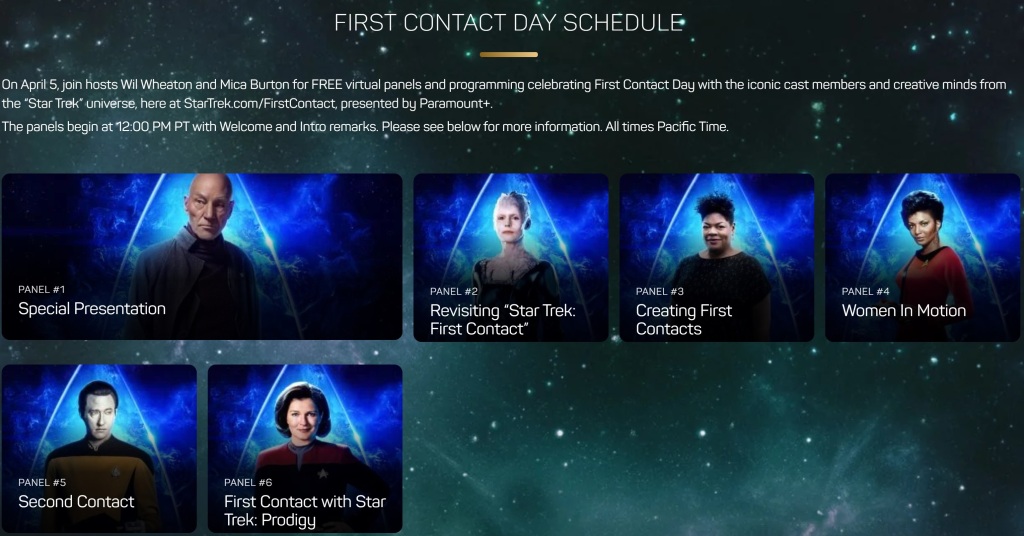


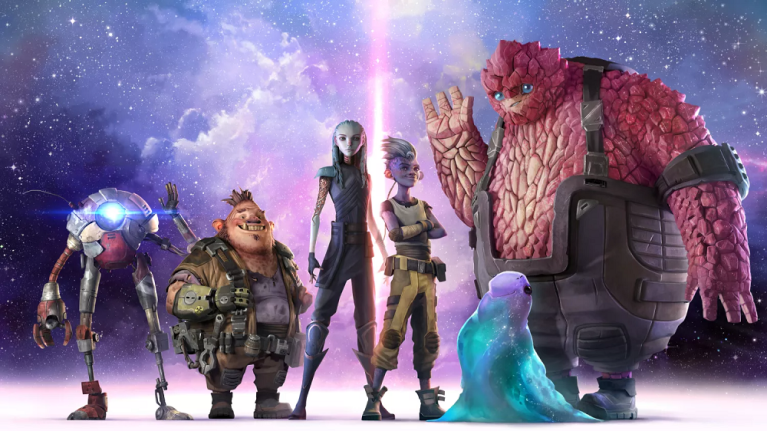


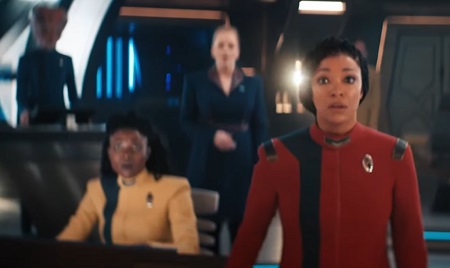

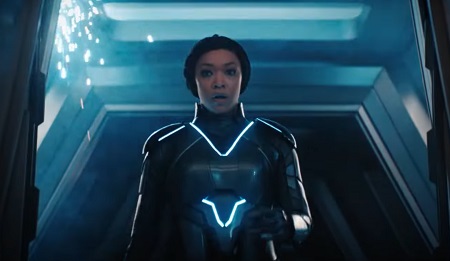


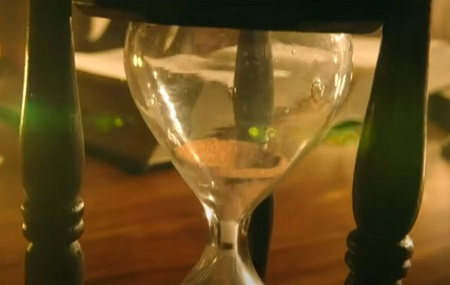


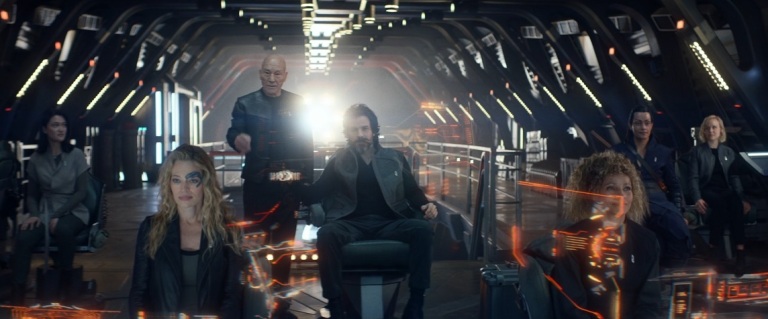
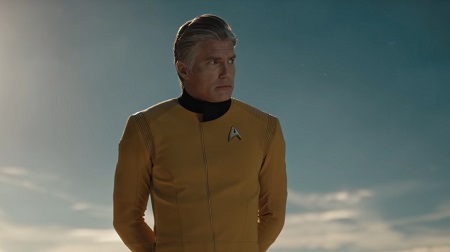


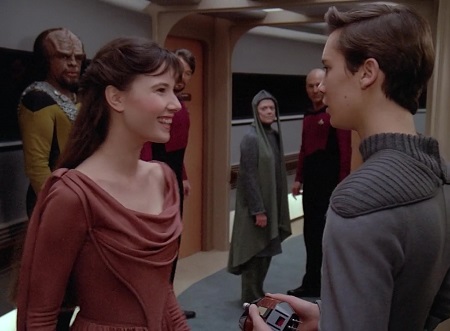
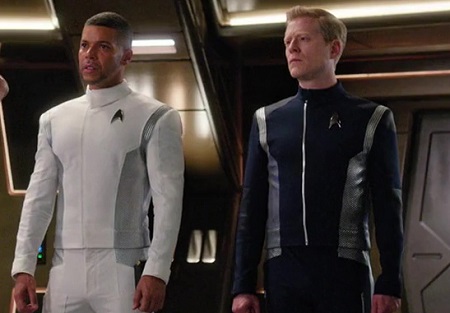
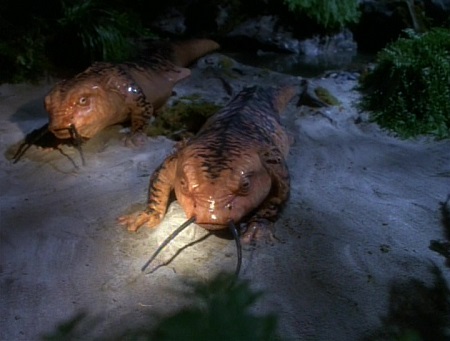

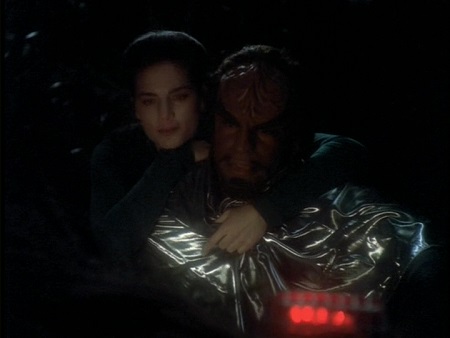

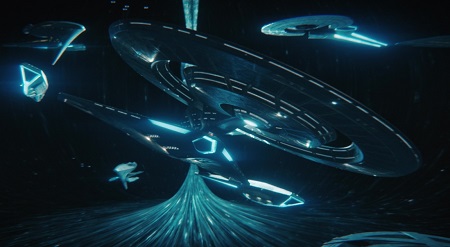

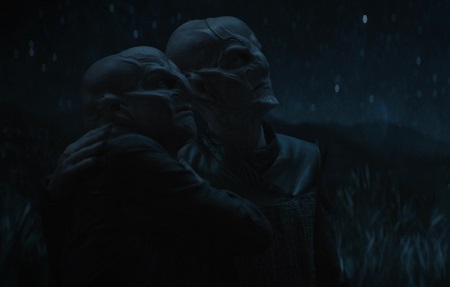
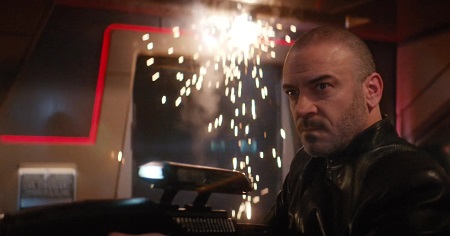
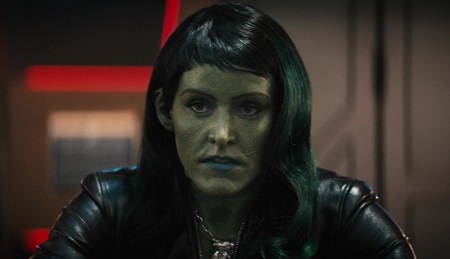

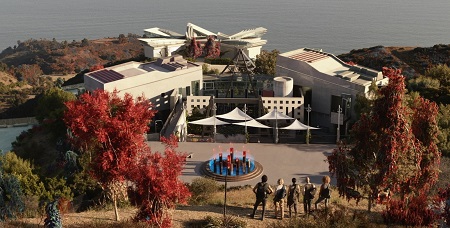

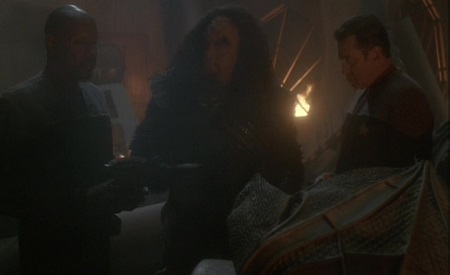
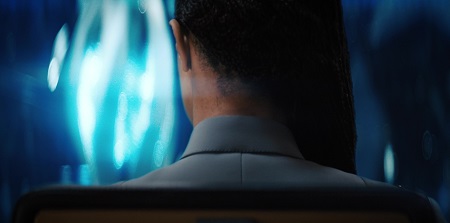
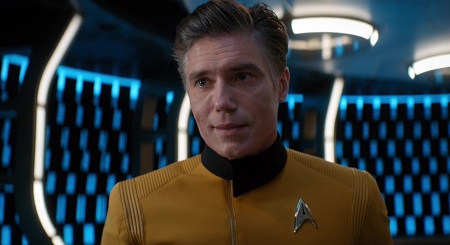
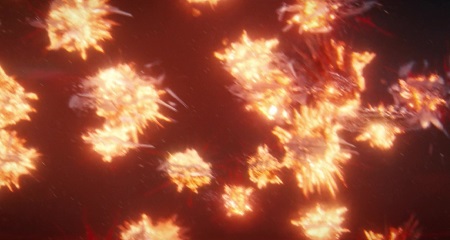
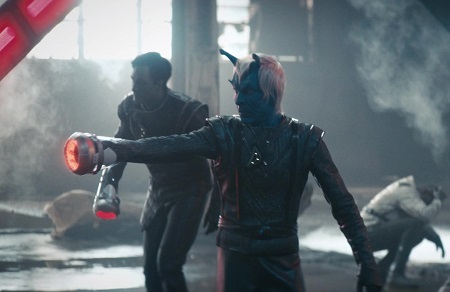
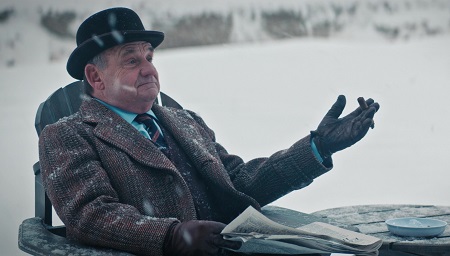


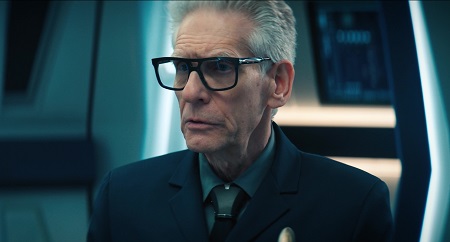


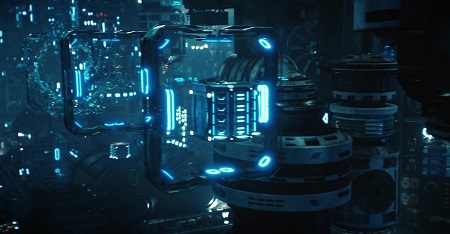
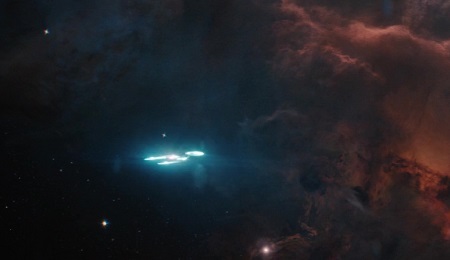
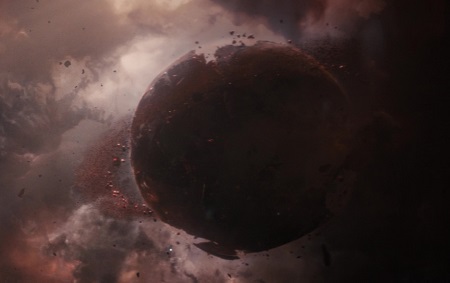
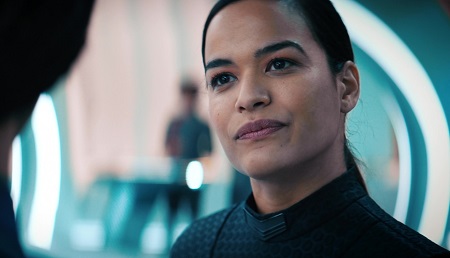
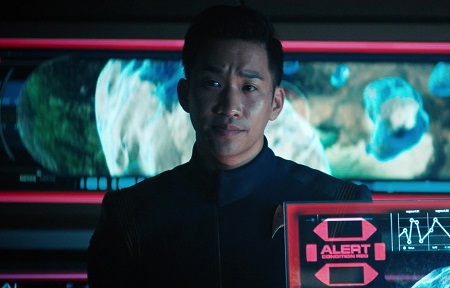


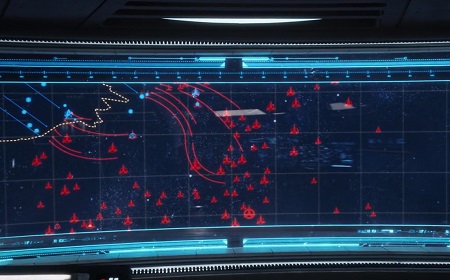
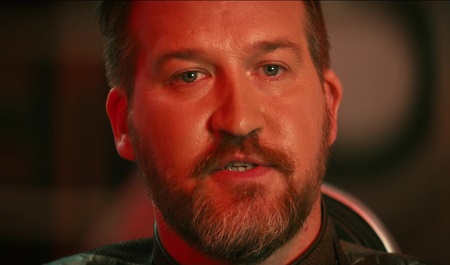


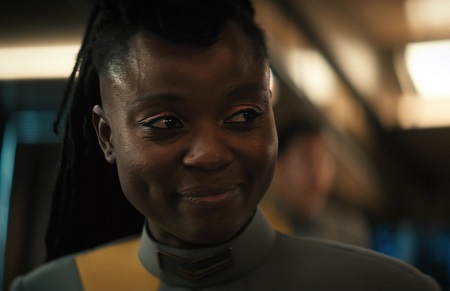
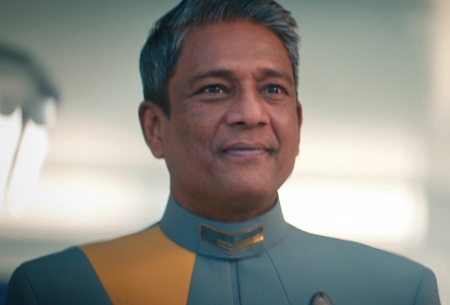





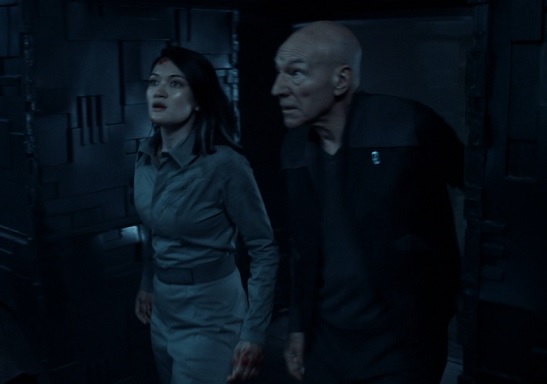


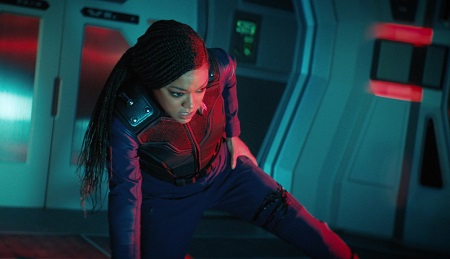

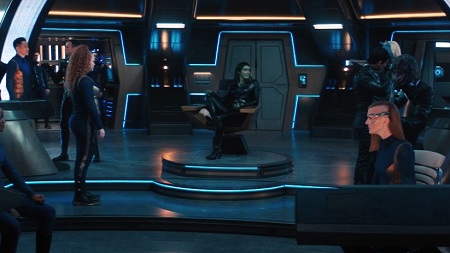
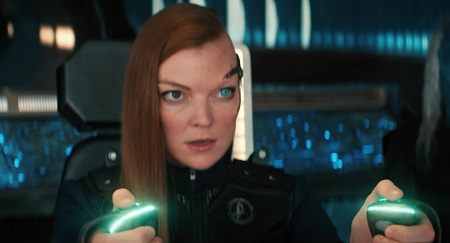
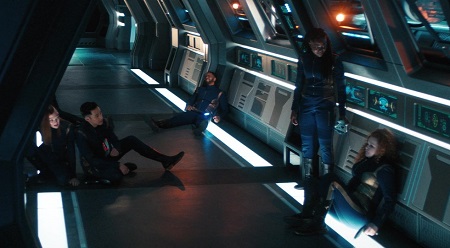
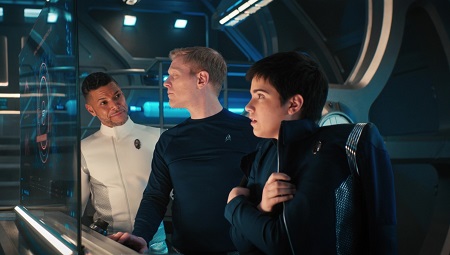
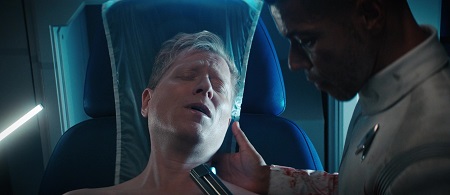
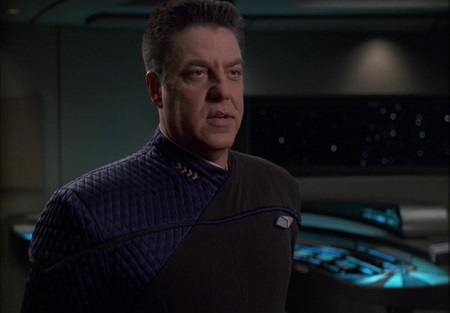


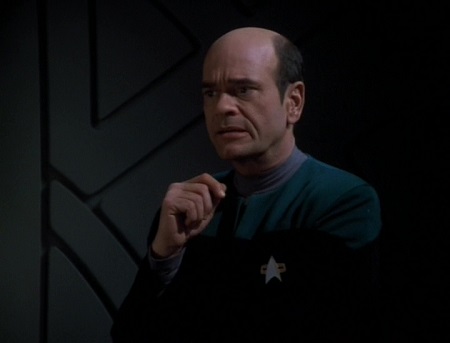

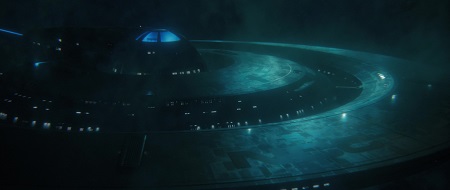
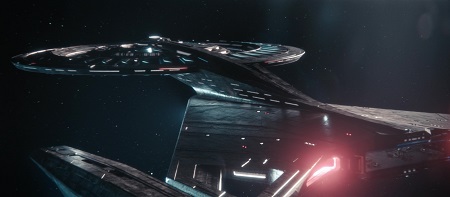


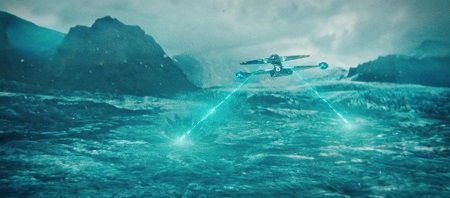

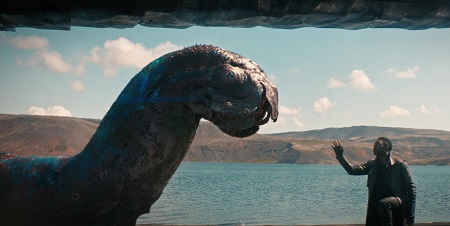
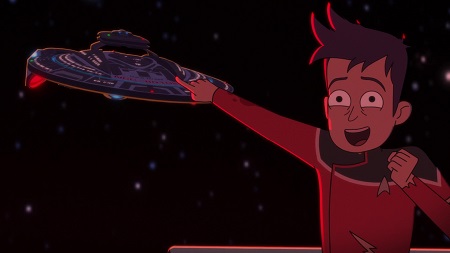



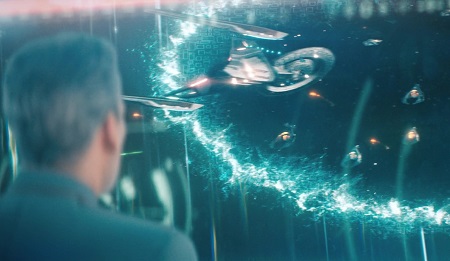
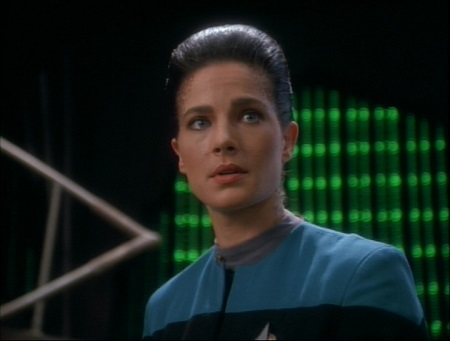
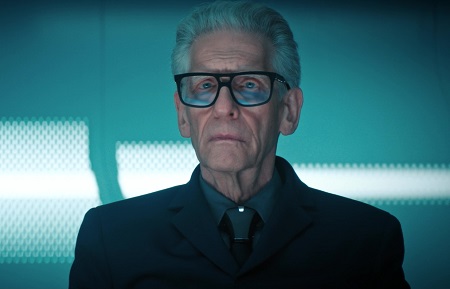

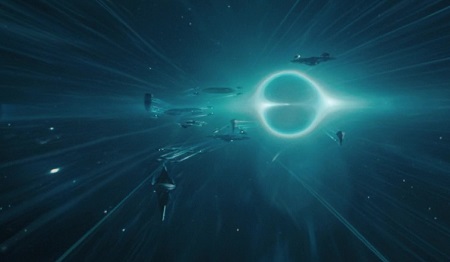
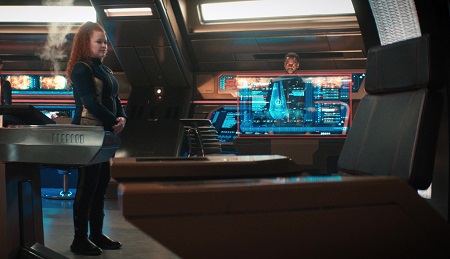
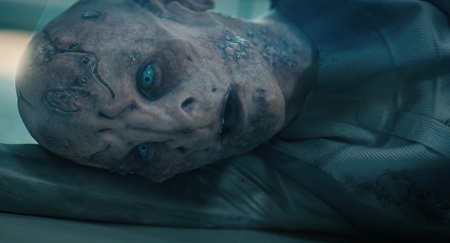
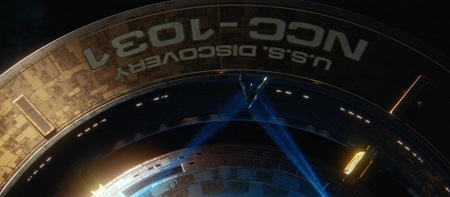


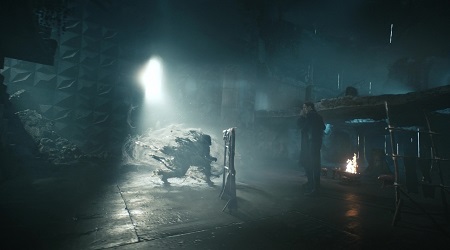
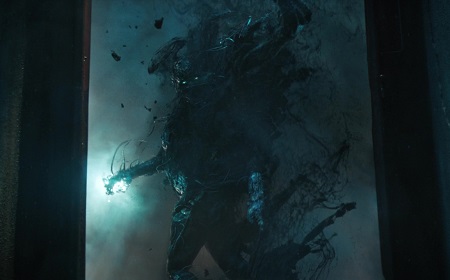
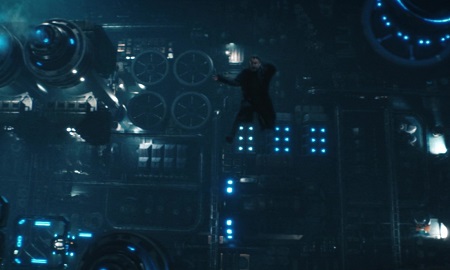

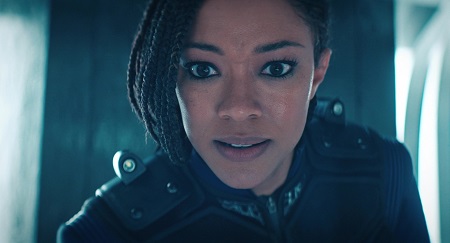
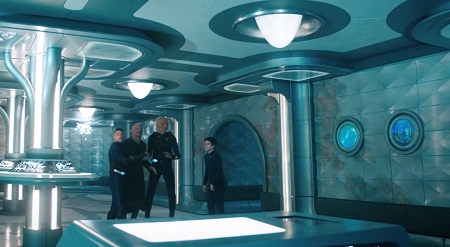
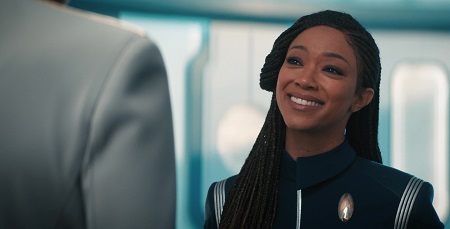


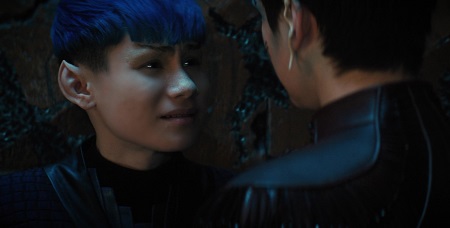
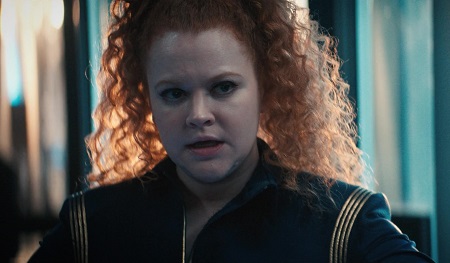
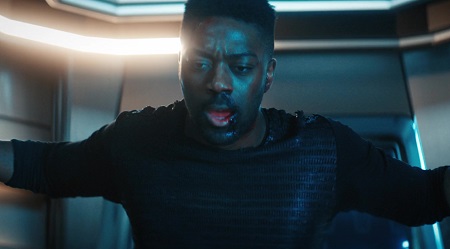
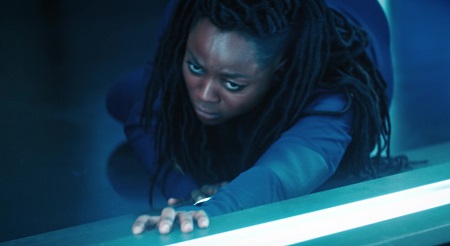
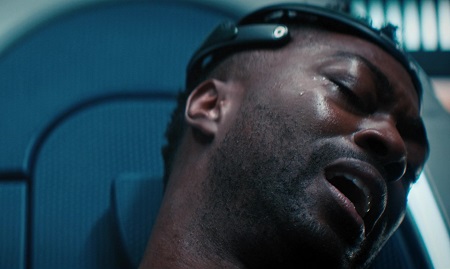
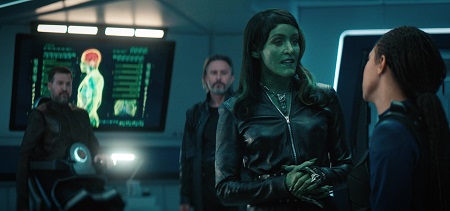
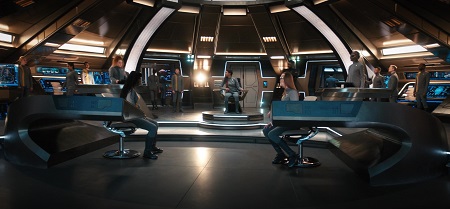


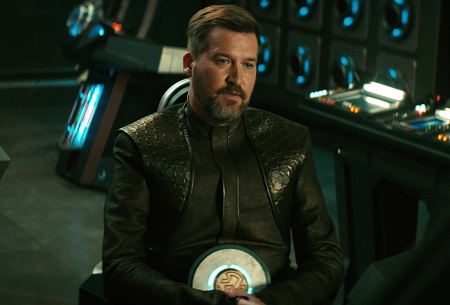

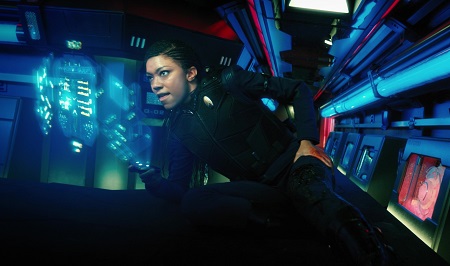



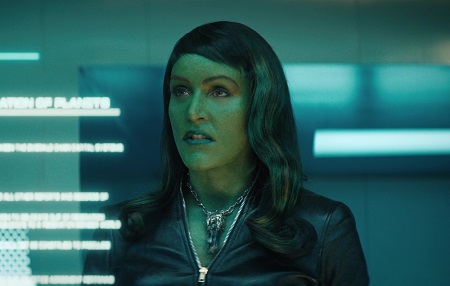
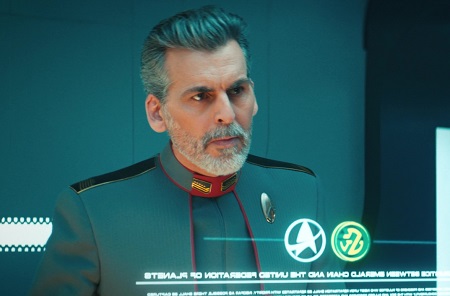
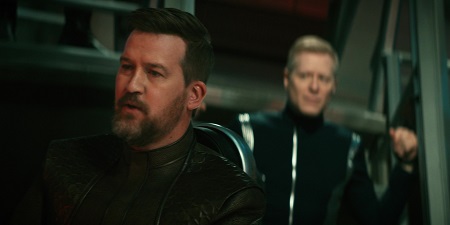


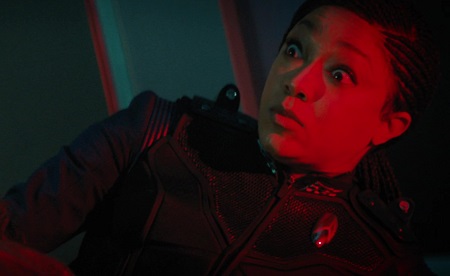
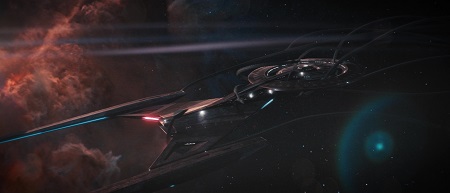

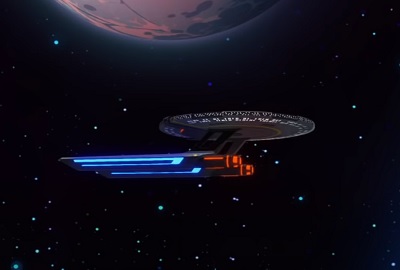
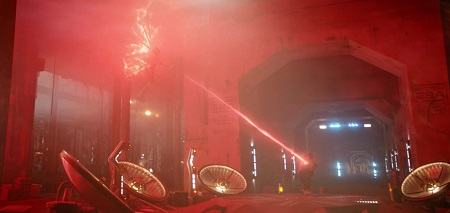
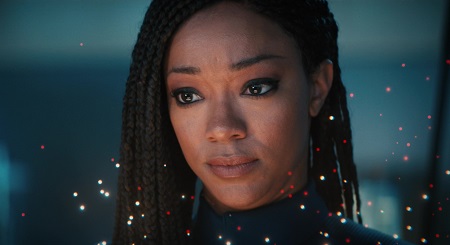
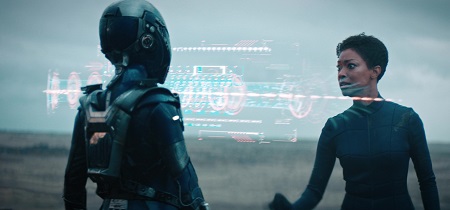
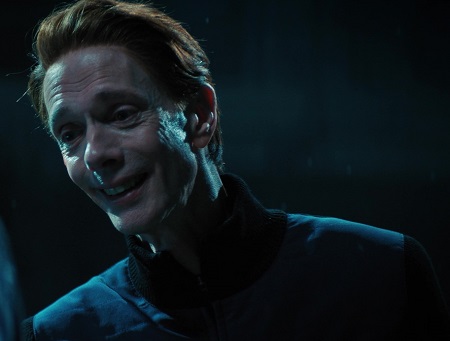
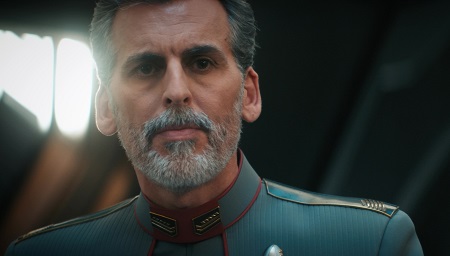
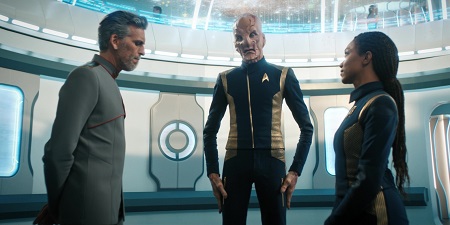
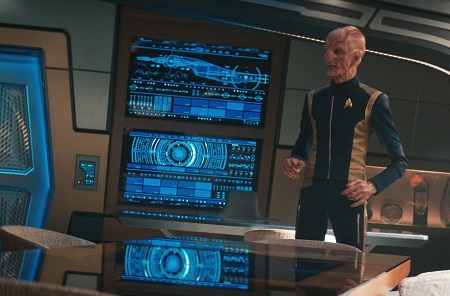


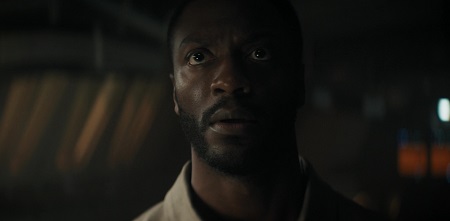
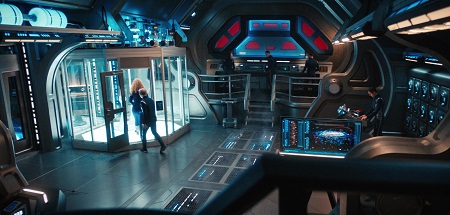
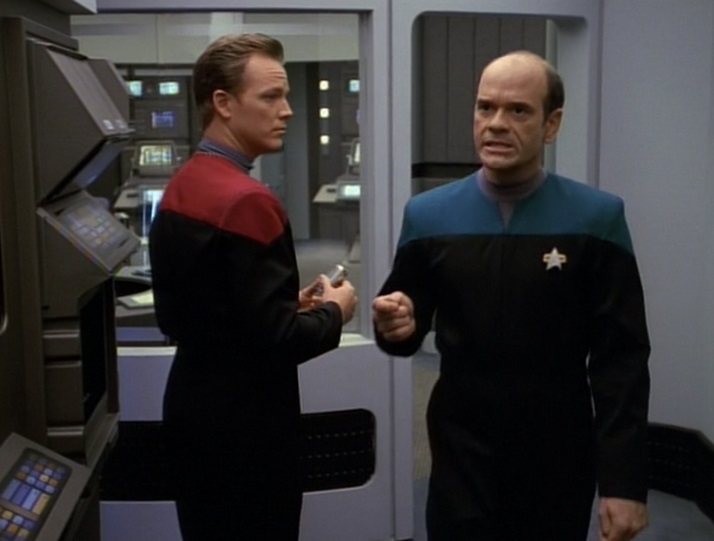
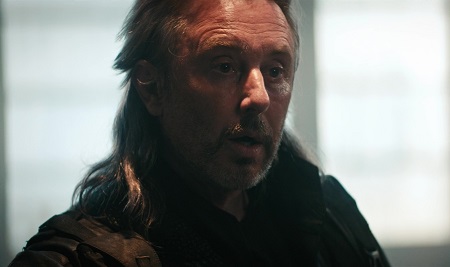

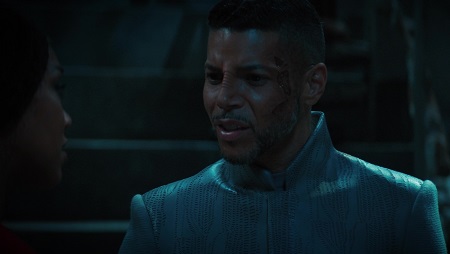

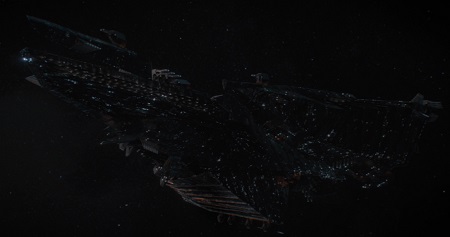
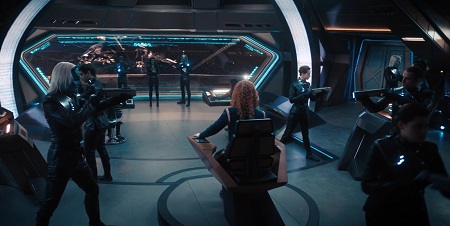
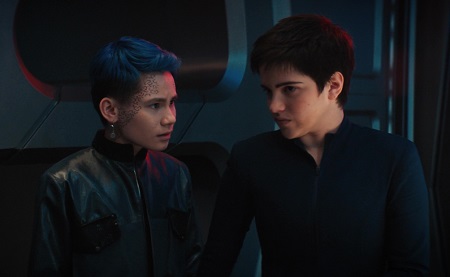


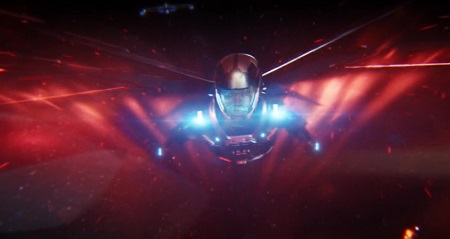




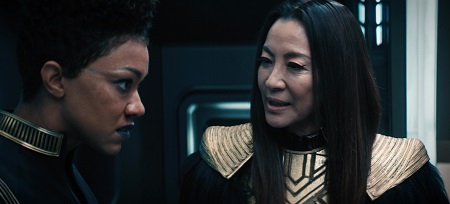
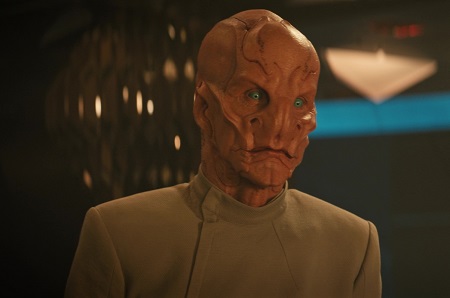
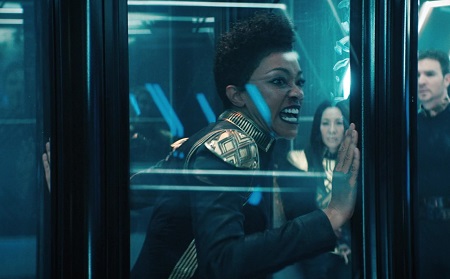
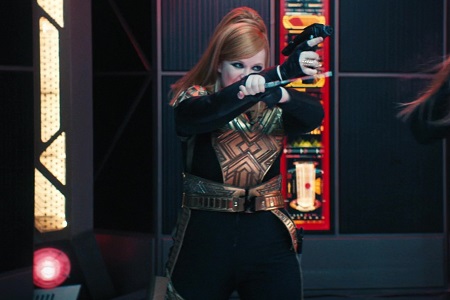
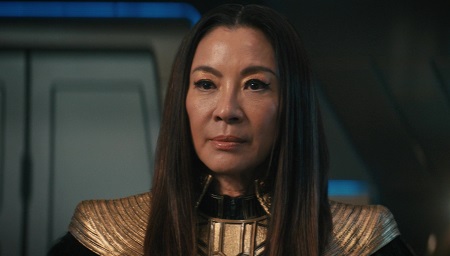
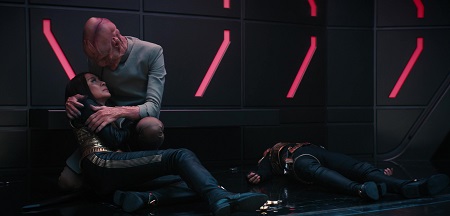
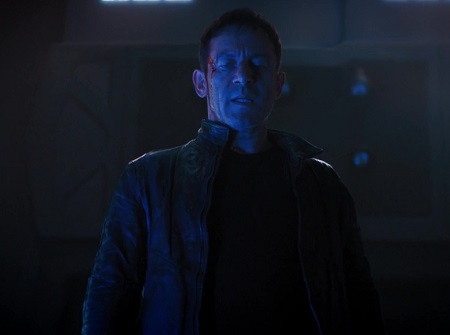
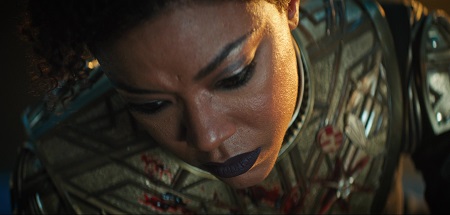


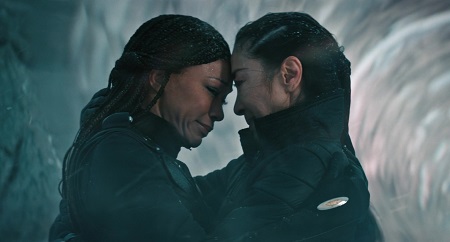
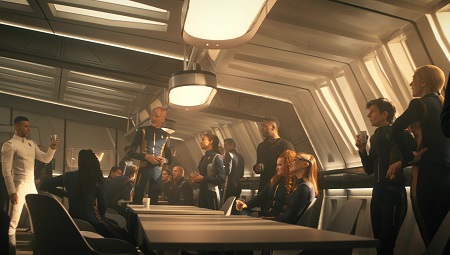
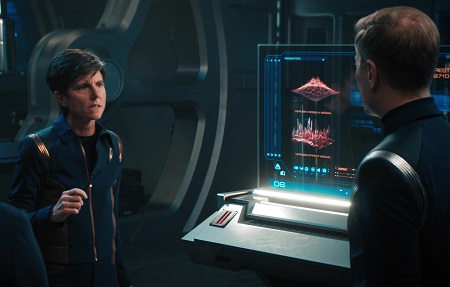
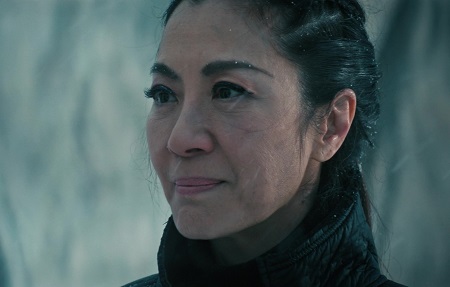


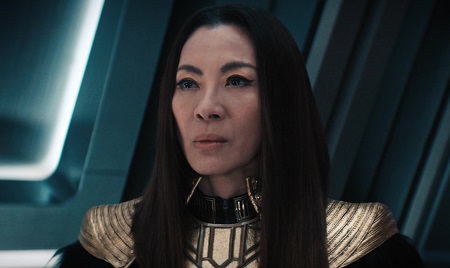

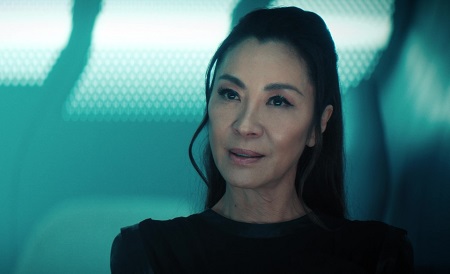
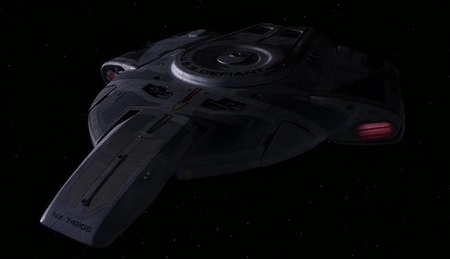
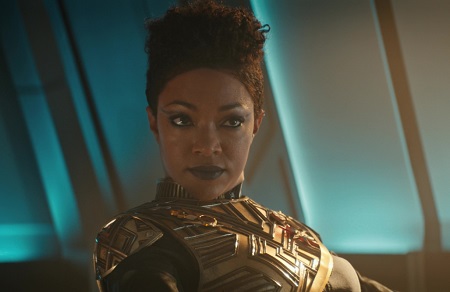


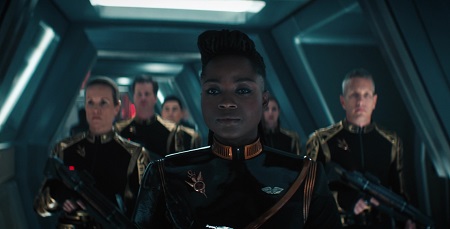
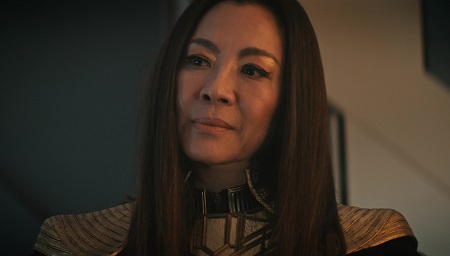
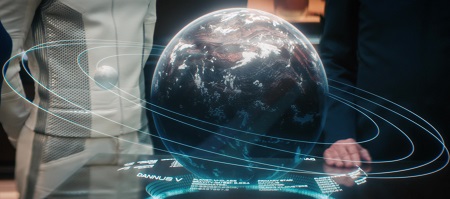
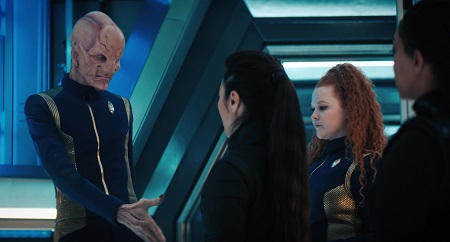
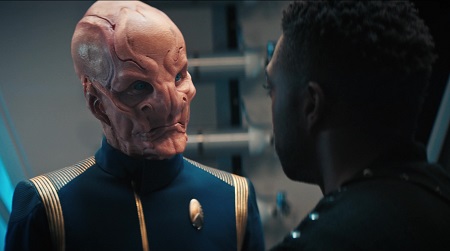
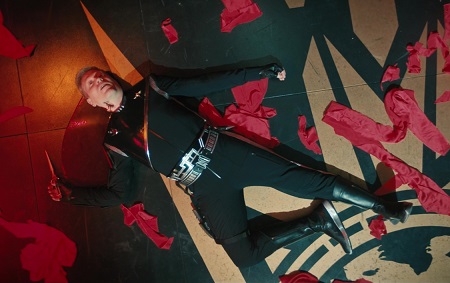
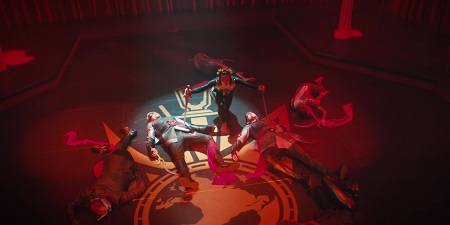

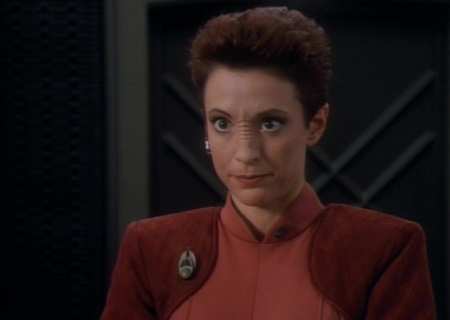
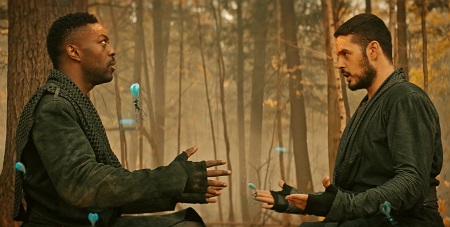

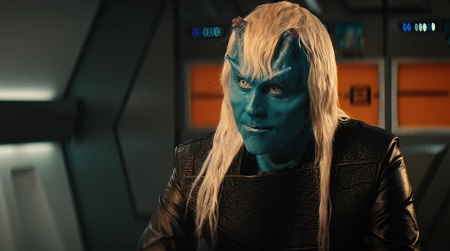
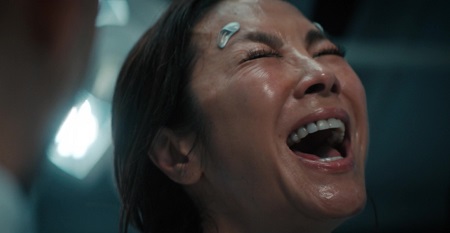

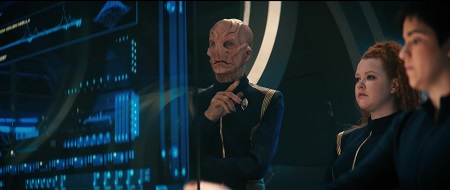
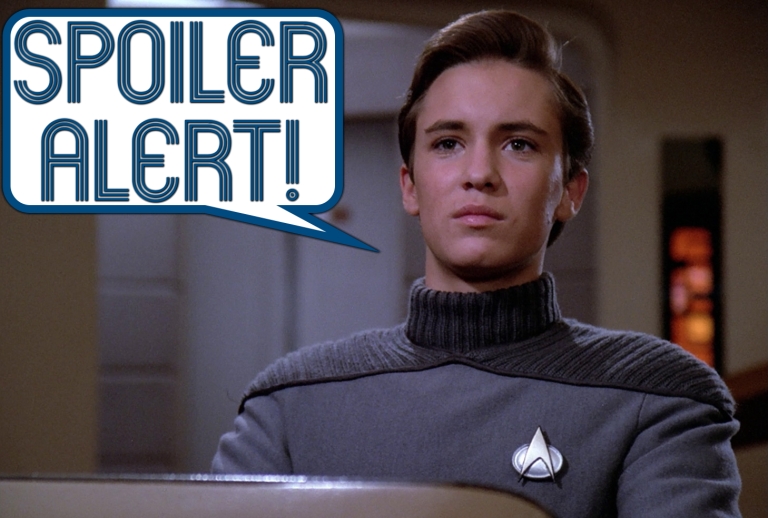
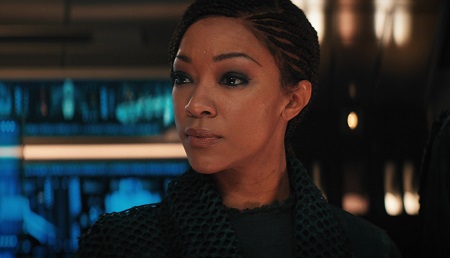
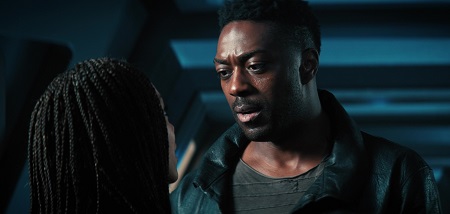

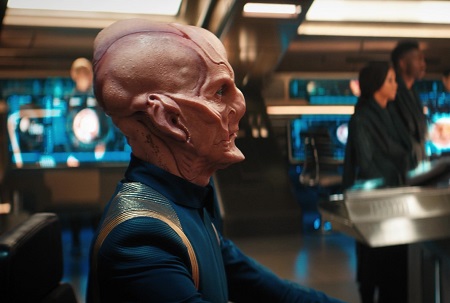
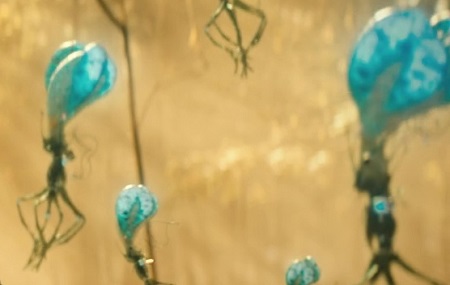
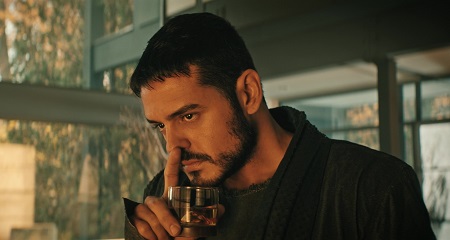
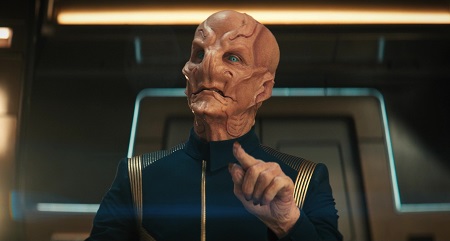
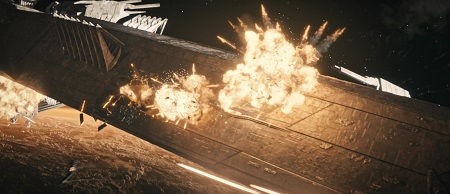
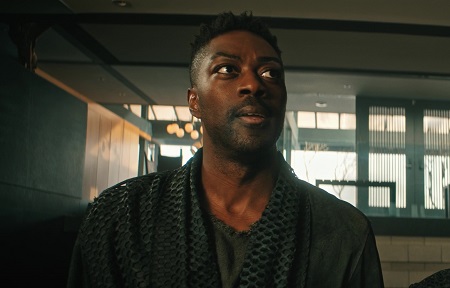
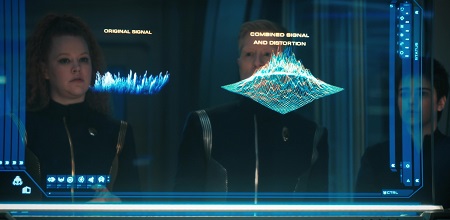
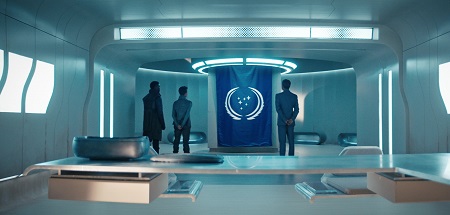
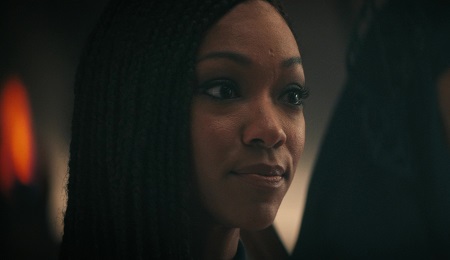
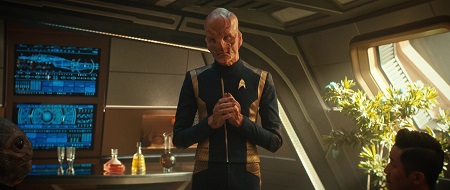
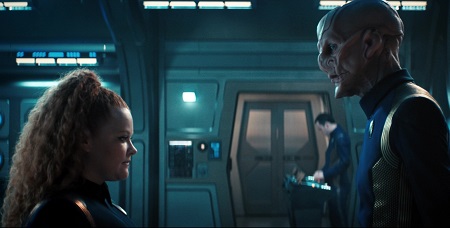

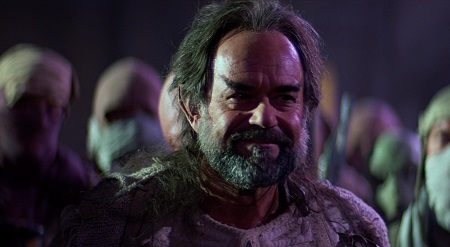
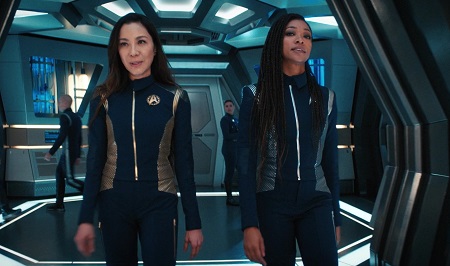
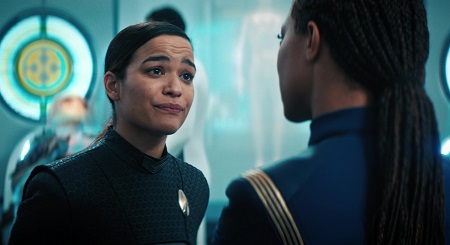
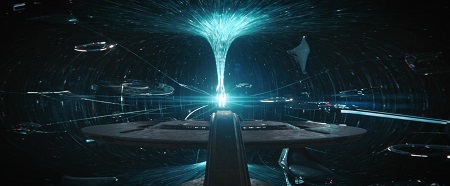

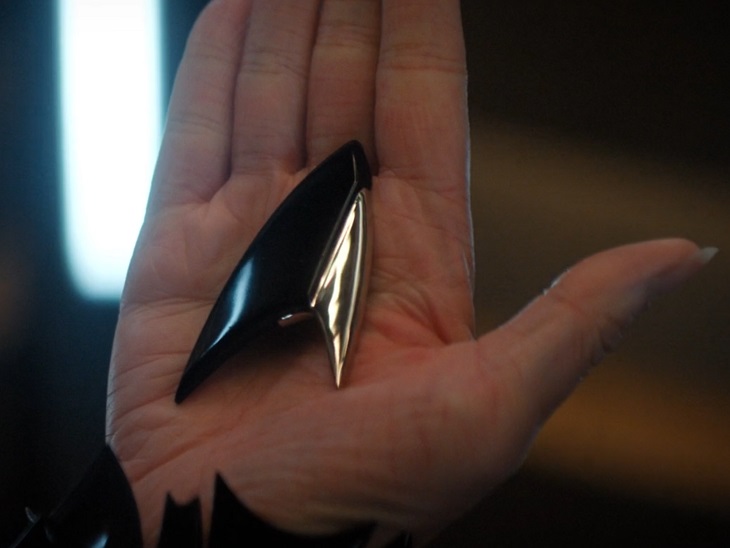


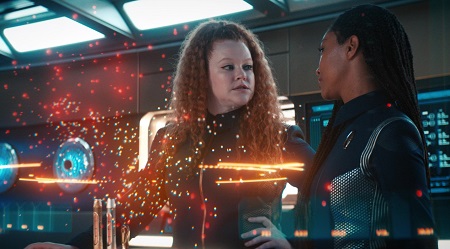
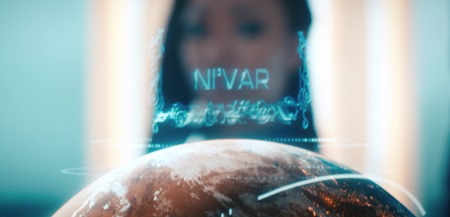
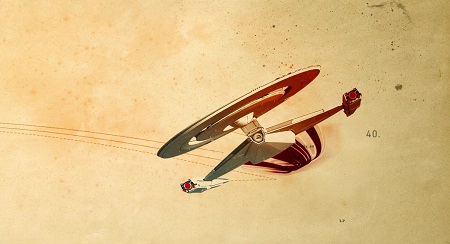
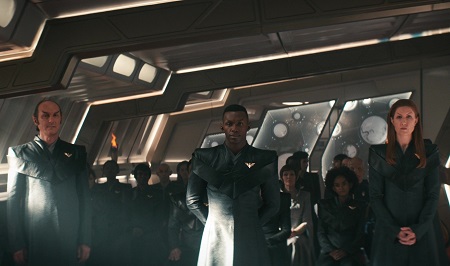
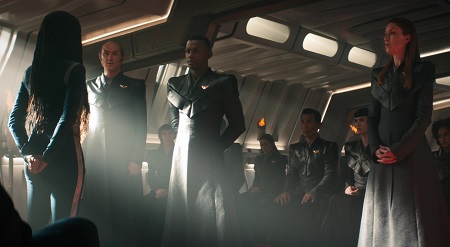
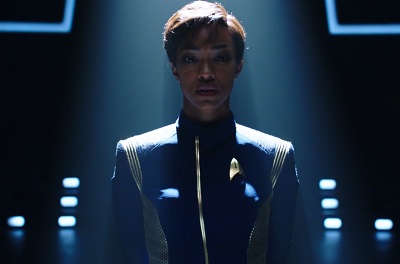
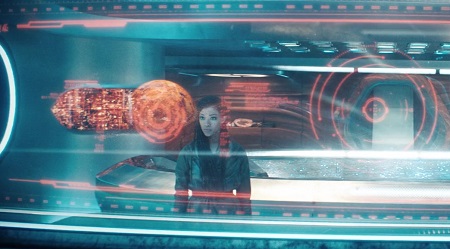
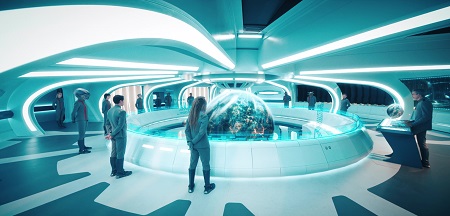
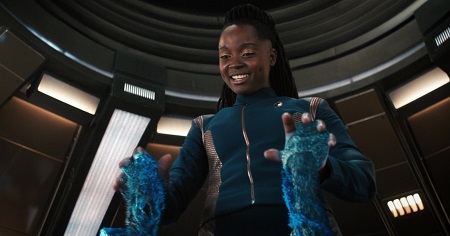
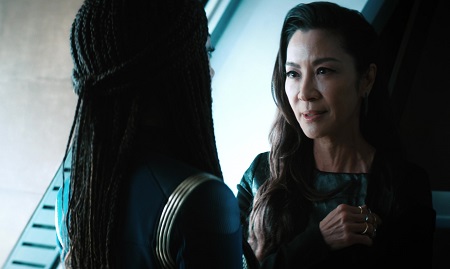
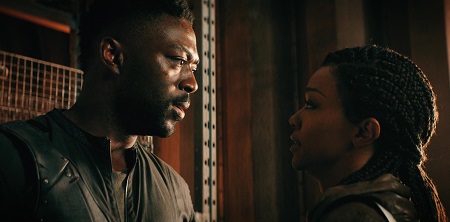
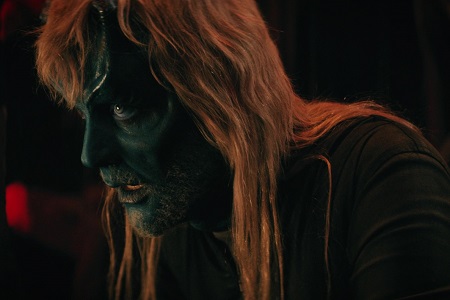
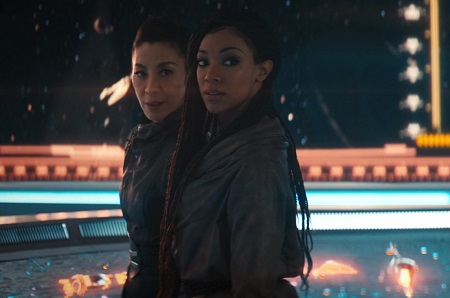
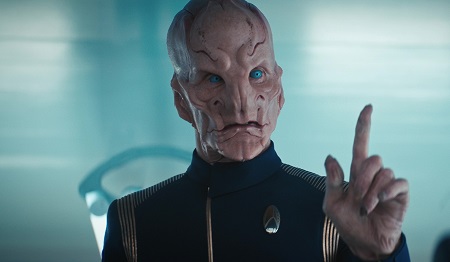
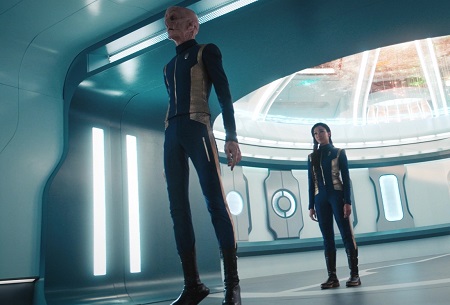
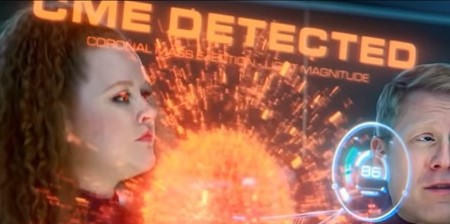

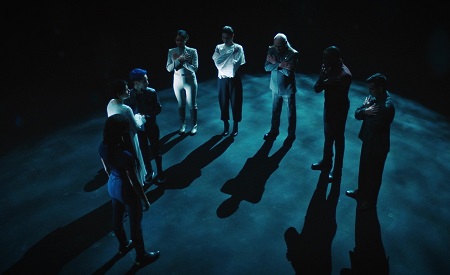
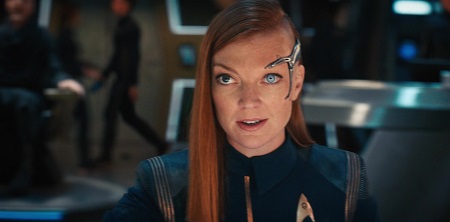
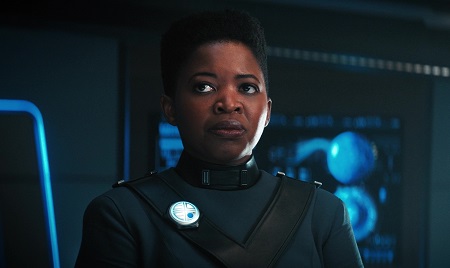
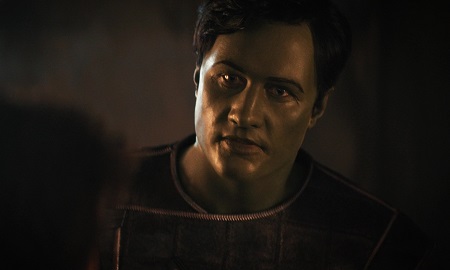

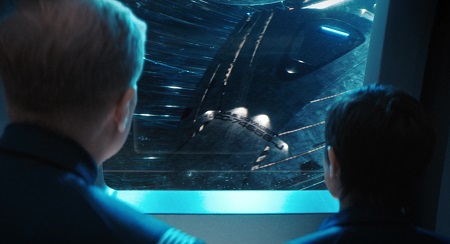
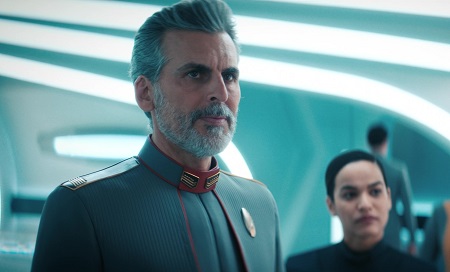
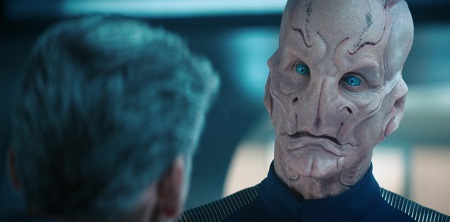
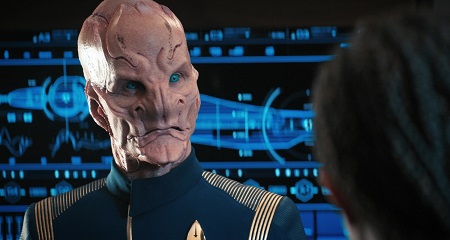
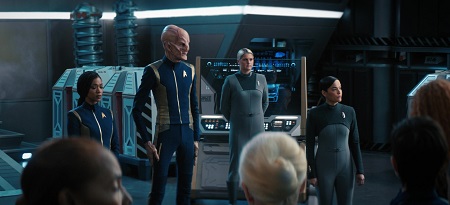

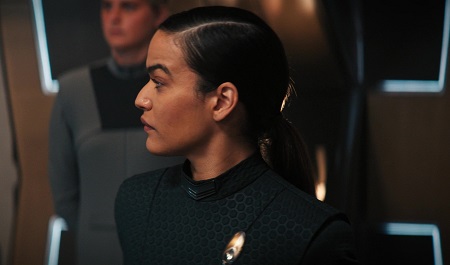

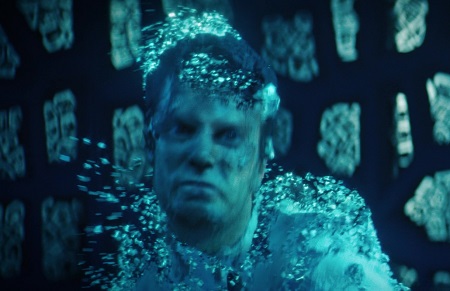


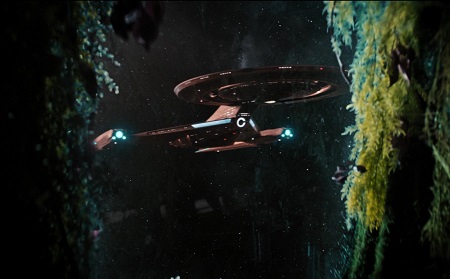
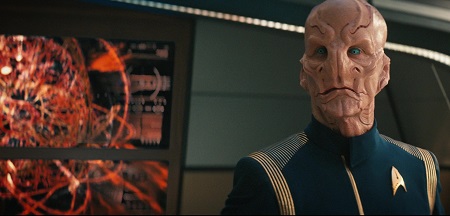

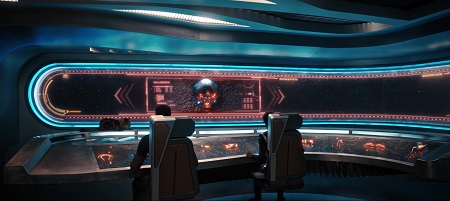
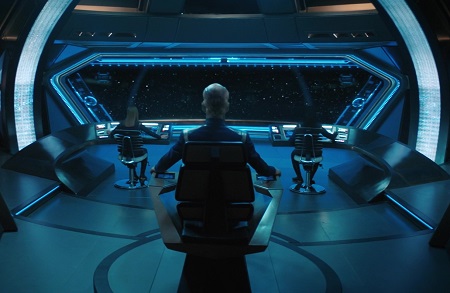
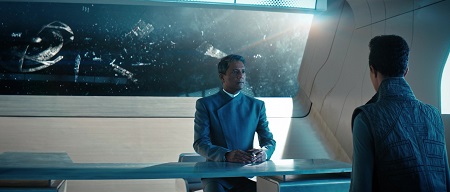

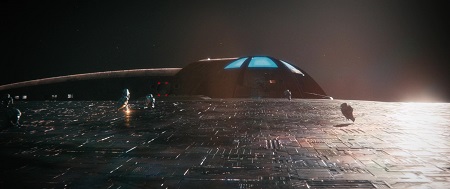
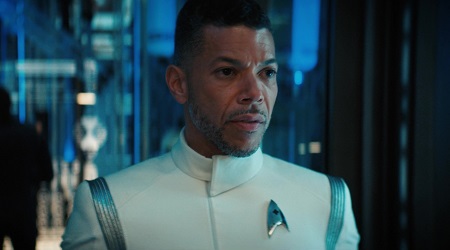
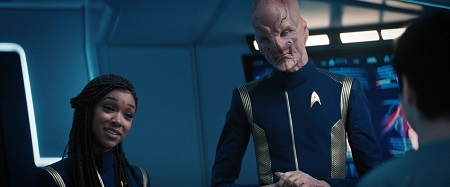
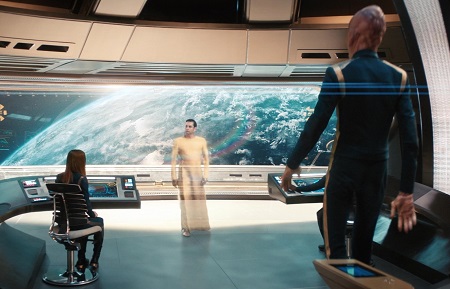
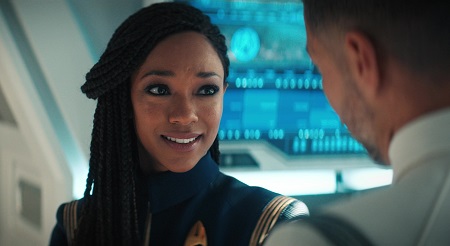
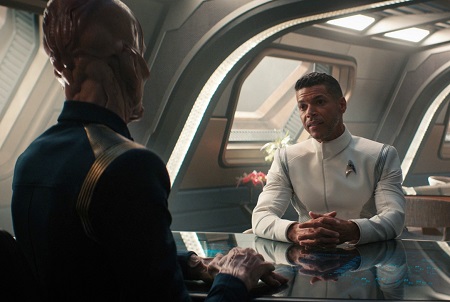
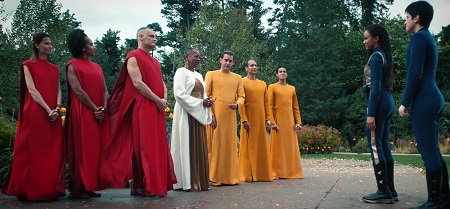
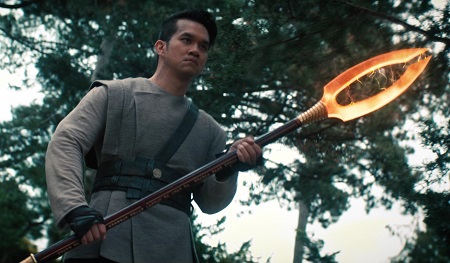

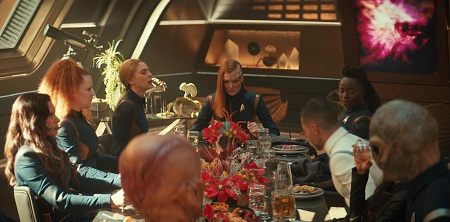
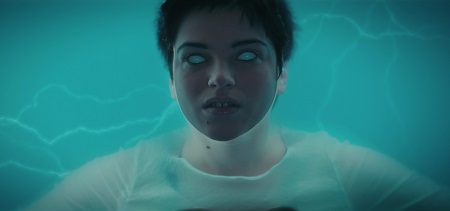
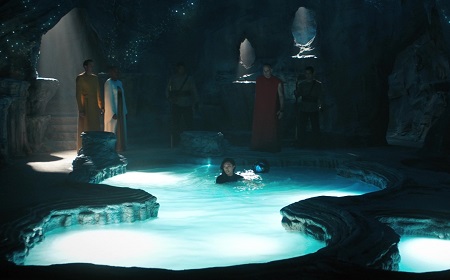

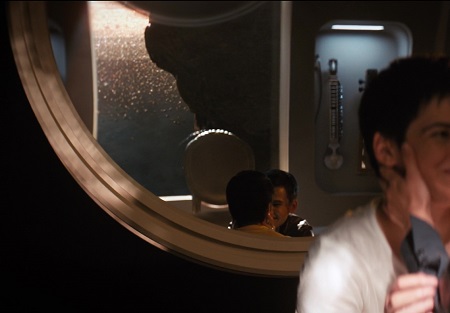
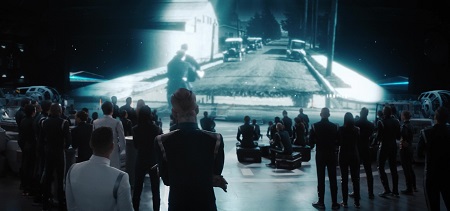
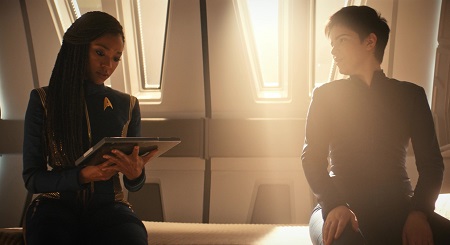


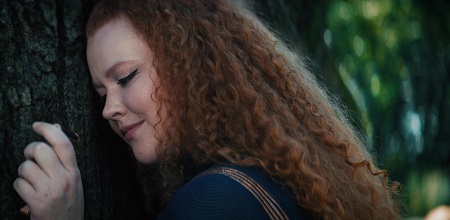

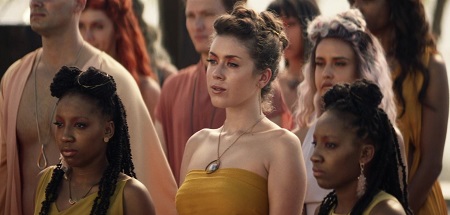
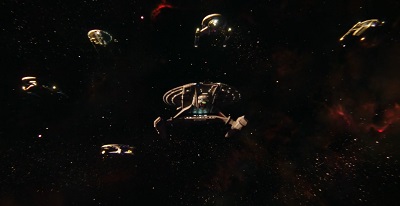
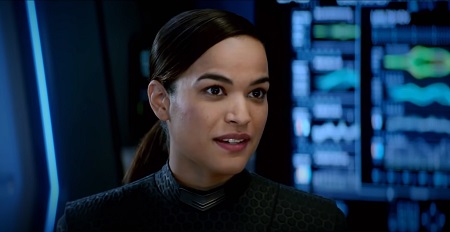

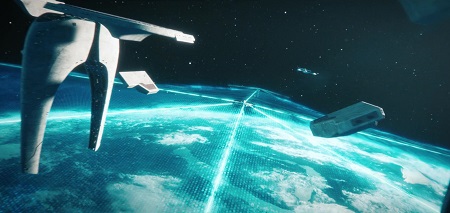
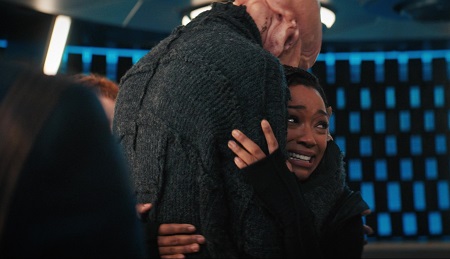
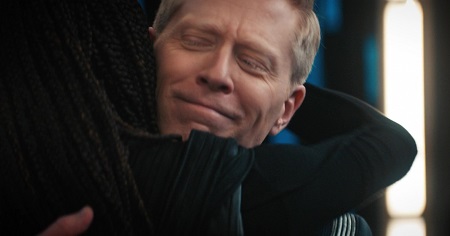
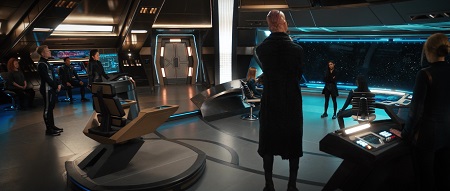
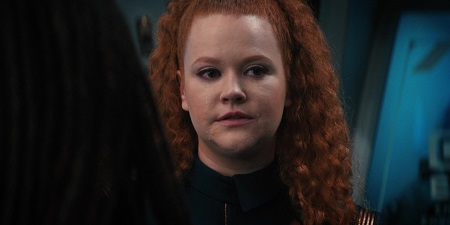
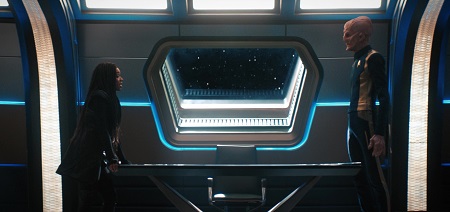
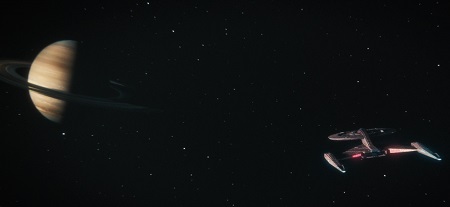
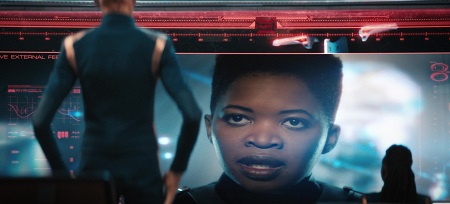
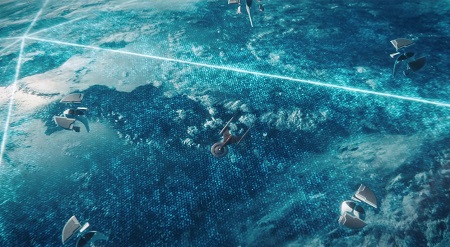
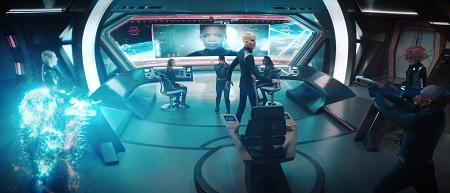
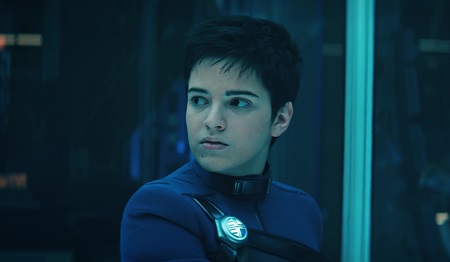
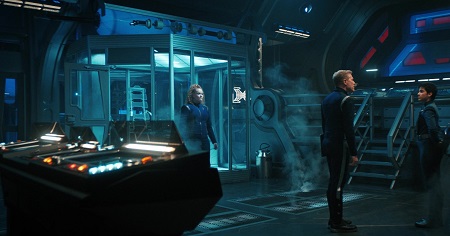
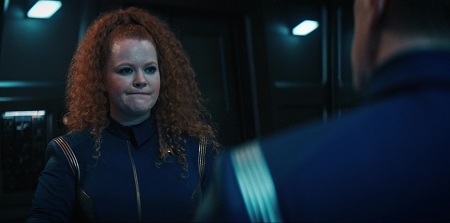
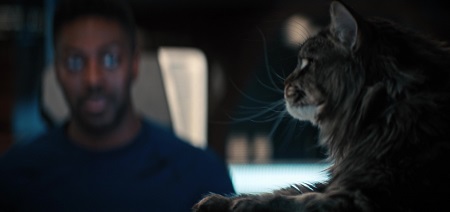
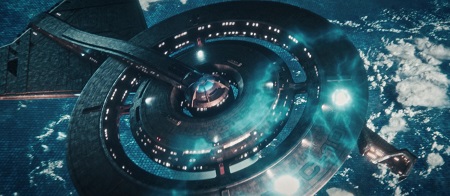
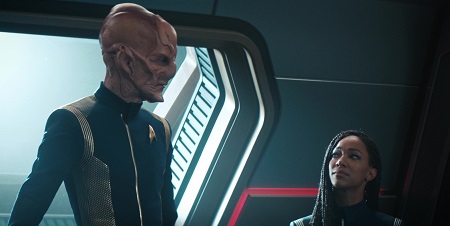
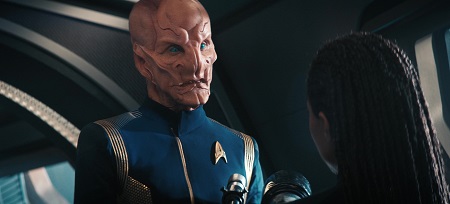

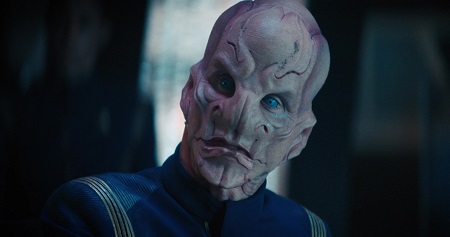
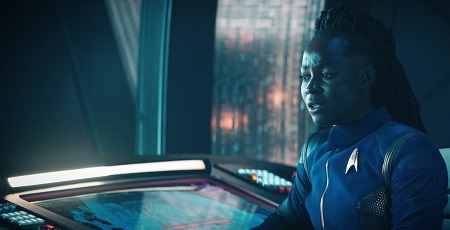
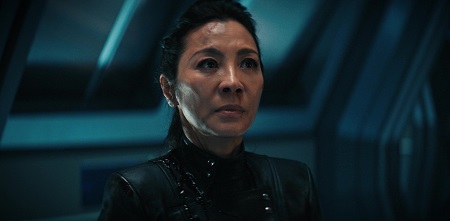
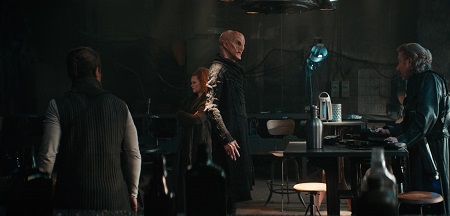
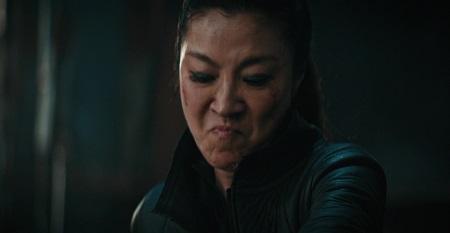
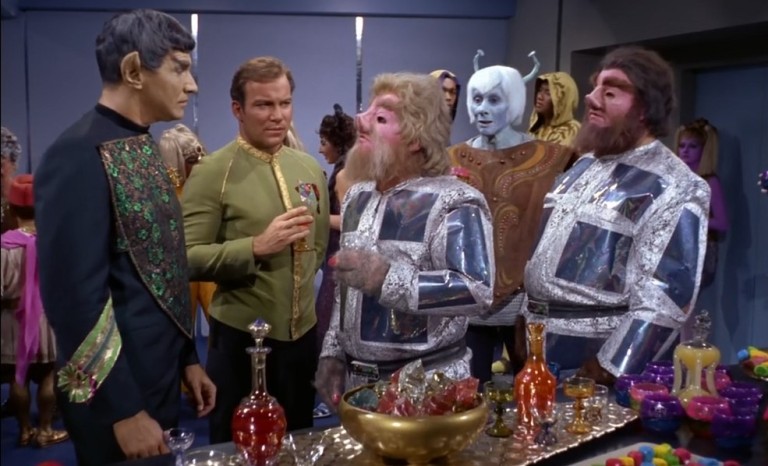
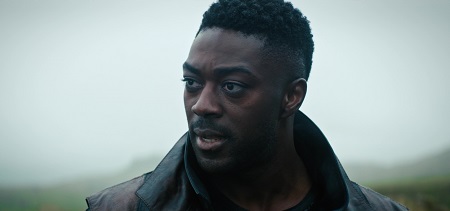

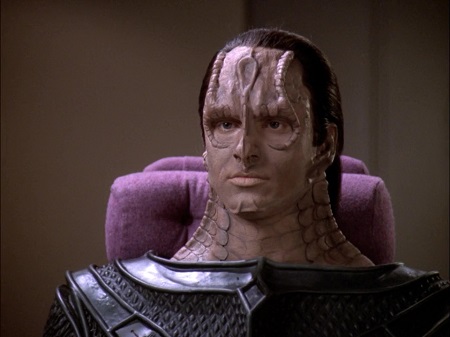
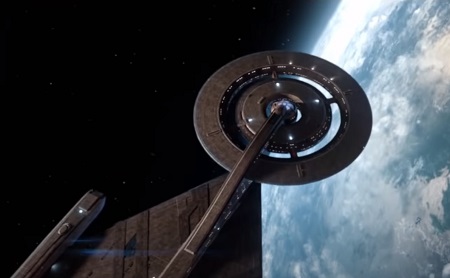
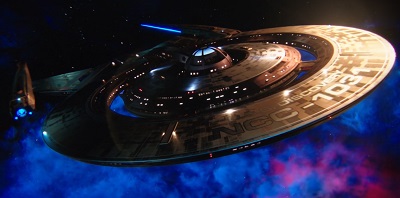
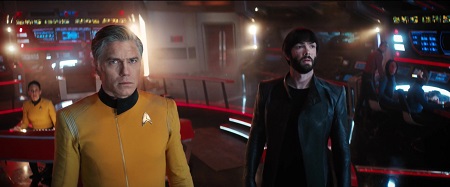
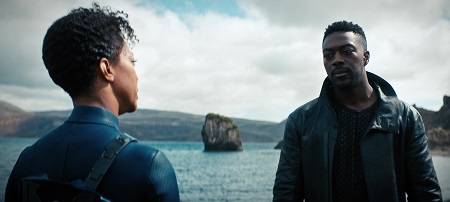
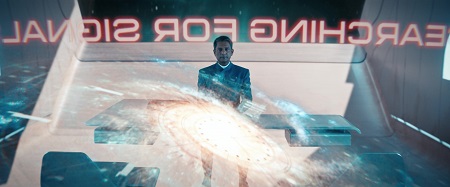
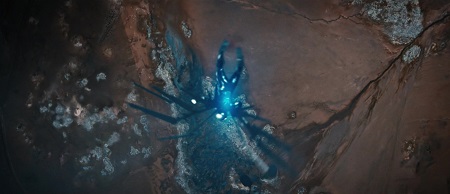
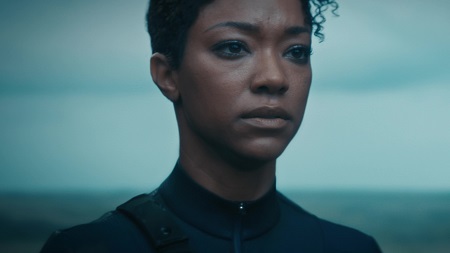
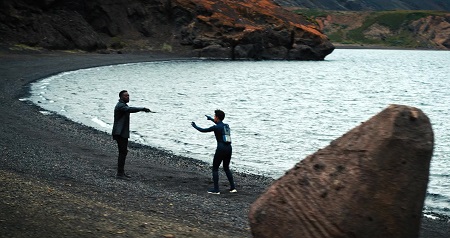

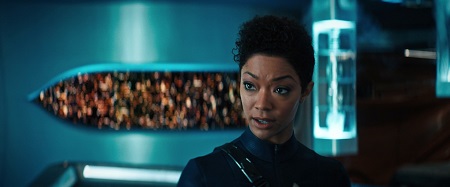
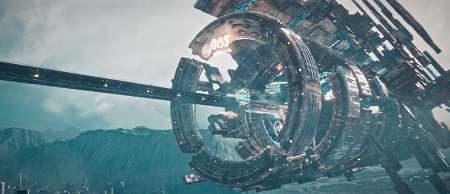
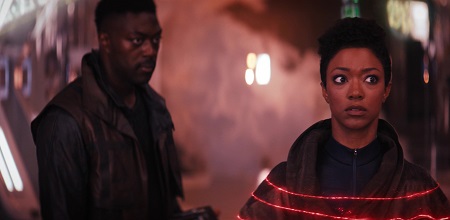
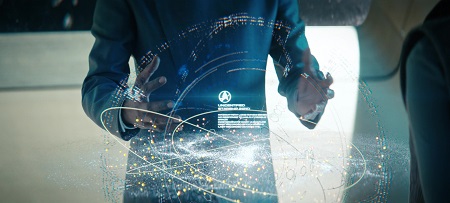
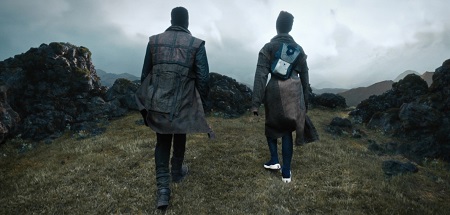

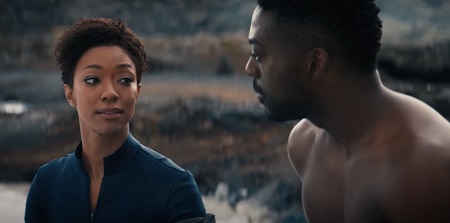
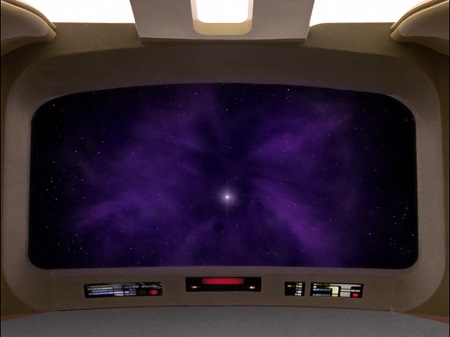

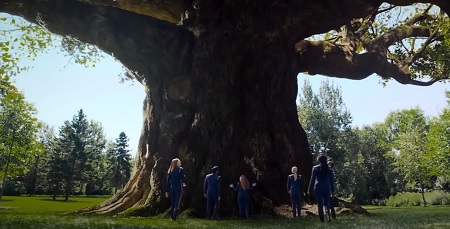
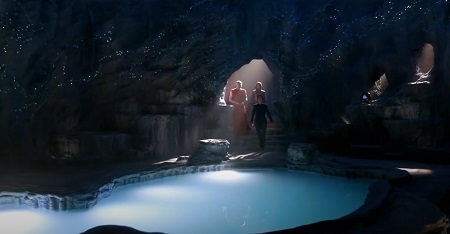
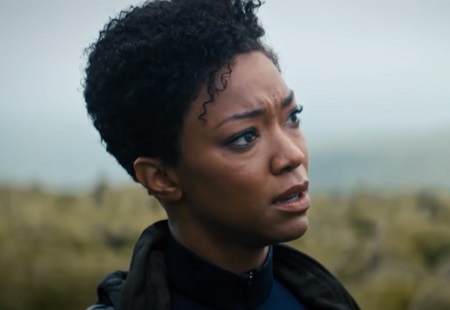


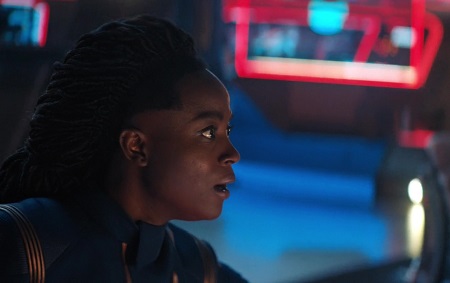
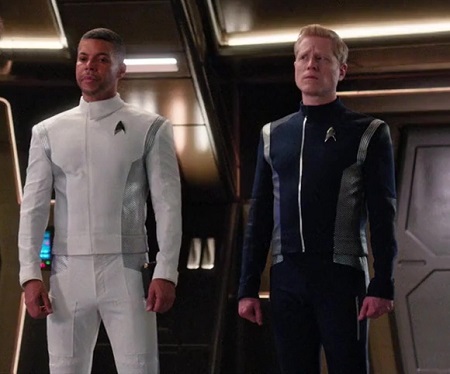

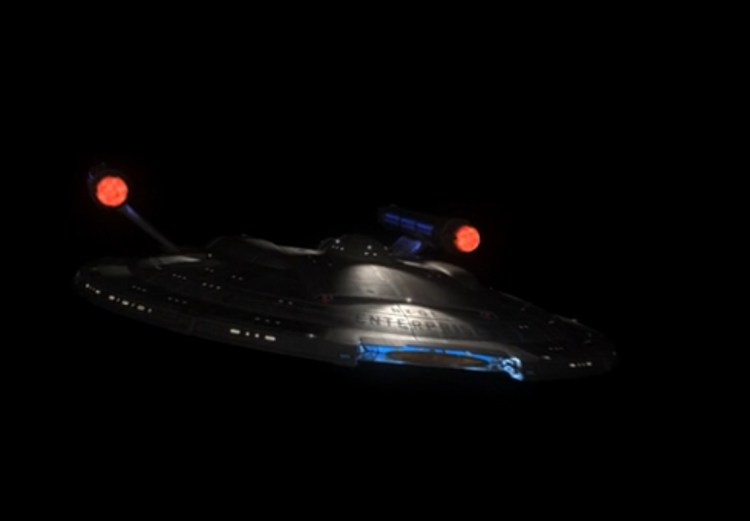
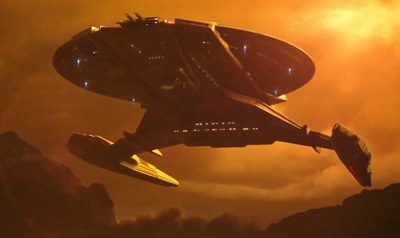
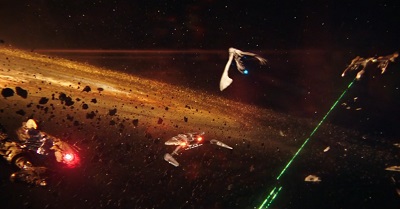
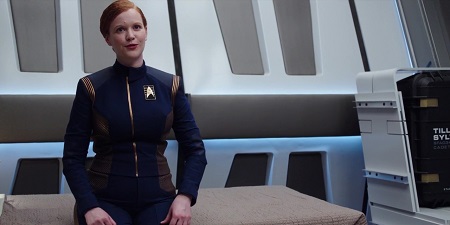



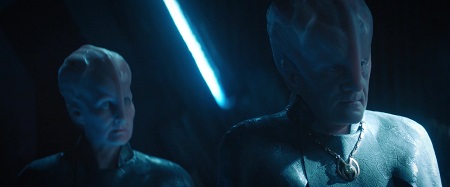

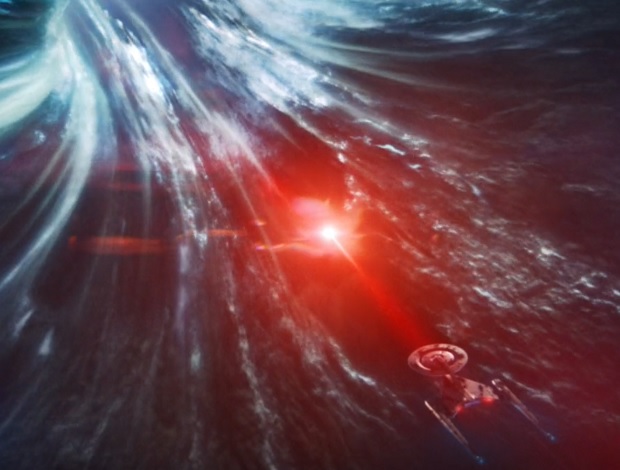
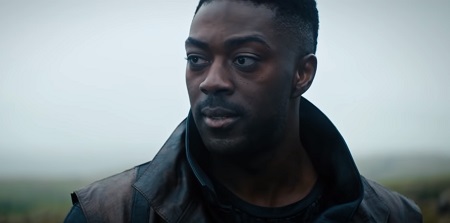
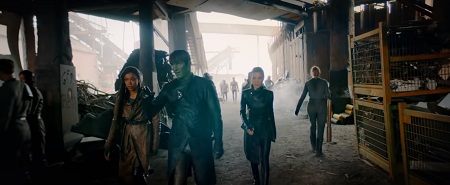
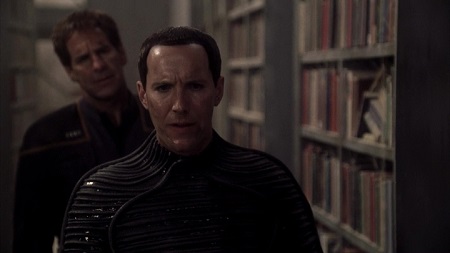
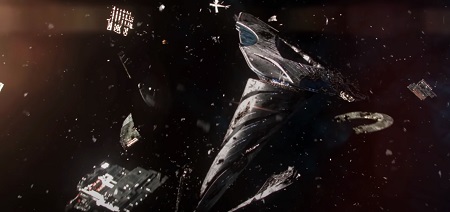
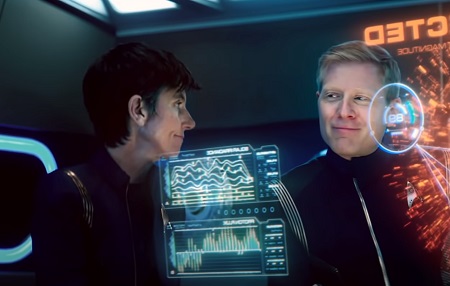
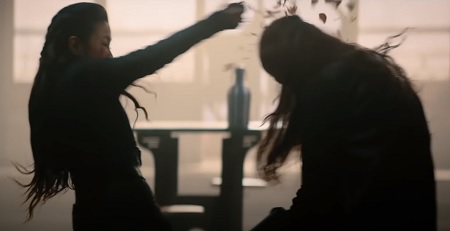
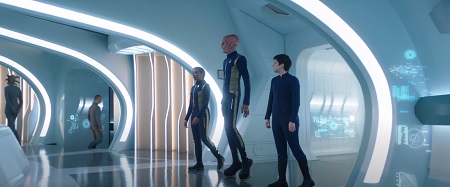
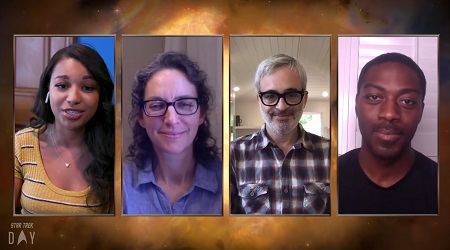
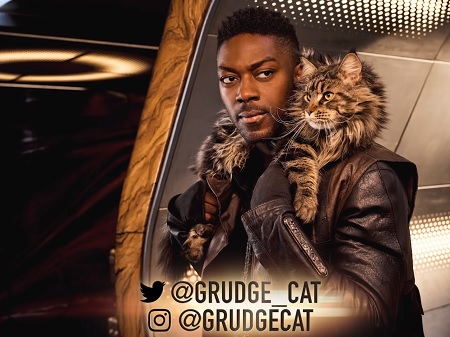
 Trekking with Dennis