What If…? Star Trek Edition!

A Star Trek-themed spoiler warning graphic.

Spoiler Warning: Beware of spoilers for the following Star Trek productions: The Next Generation Season 1, Deep Space Nine Season 6, Voyager Season 1, Generations, Star Trek ’09, Discovery Season 2, and Picard Season 2.

Almost four years ago I had a lot of fun writing a piece here on the website called “What If…? Star Trek Edition!” I took the basic concept behind the then-new Marvel miniseries What If…? and applied it to several storylines from the Star Trek franchise that I found interesting. Speculating and getting creative was a blast, so… let’s do it again!

If you missed the miniseries (or my earlier post), I’ll briefly explain how this works! We’re going to look at five stories from across the Star Trek franchise and ask a simple question: what if things went differently? What would the consequences be for Starfleet, the Federation, and some of the characters we’ve come to know and love if, for example, Spock wasn’t resurrected on the Genesis Planet or Captain Janeway and the USS Voyager tried to reach the Gamma Quadrant terminus of the Bajoran wormhole? I covered both of those topics in my post from 2021, by the way, so be sure to check it out – you can find it by clicking or tapping here.
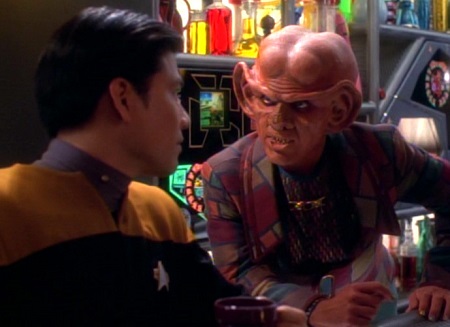
Still frame from Star Trek: Voyager showing Kim and Quark.
Harry Kim and Quark.

Alternate history has been an interest of mine for a long time – so we can consider this an “alternate history of the future,” if you like! With the Star Trek franchise slowly but surely heading toward the 1,000-story mark, there are a lot of places where narratives could branch, and where the Star Trek galaxy could end up in very different situations! As a Trekkie, and as someone who likes to spend time in this setting, it’s a ton of fun to come up with these ideas and consider how they might play out.

As always, a couple of important caveats! All of this is the entirely subjective take of one old Trekkie. If you hate all of my ideas, think I’ve got the wrong end of the stick, or if I miss something that seems totally obvious to you… that’s okay! There ought to be enough room in the Star Trek fan community for differences of opinion. None of this is close to being “canon,” anyway, so there’s even less of a reason to get upset about completely made-up Star Trek stories that will never be seen on screen!

Alright, let’s jump into the “what if” scenarios!

What If…? #1:
What if… Captain Picard and Q never met?
The Next Generation, Picard Season 2
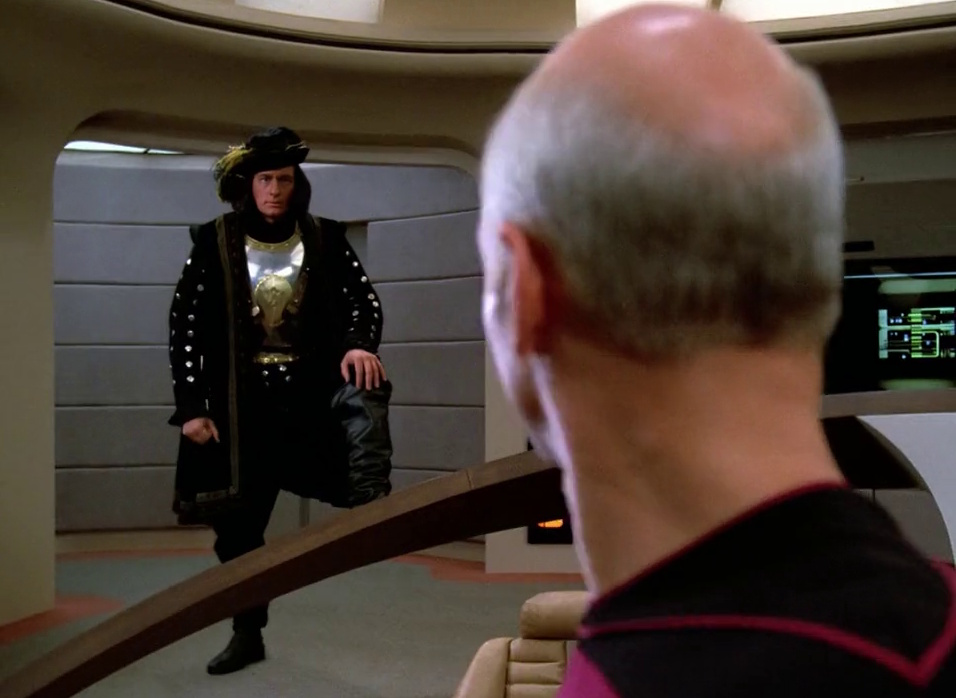
Still frame from Star Trek: The Next Generation Season 1 showing Picard meeting Q for the first time.
Picard’s first encounter with Q.

This is a really interesting one – and it might not go the way you think! Looking back over Picard’s run-ins with Q during The Next Generation, there really aren’t many places where we could say that their interactions had wide-ranging consequences. I have my pet theory that Q deliberately saved Picard and the Federation by making them aware of the Borg threat (click or tap here for that one, it’s one of my favourite Star Trek theories!) but that’s not the angle I’m gonna take today. In this case, we’re going to say that – for whatever reason – Picard and Q never met, never developed their complex relationship, and Q never set any puzzles for Picard to solve. In fact, Q stayed away from humanity and Starfleet altogether in this alternate timeline.

As noted, Q’s interactions with Picard and the crew of the Enterprise-D almost always involved problems or scenarios of his own devising. So without Q on the scene, the Enterprise-D’s mission actually proceeds slightly more smoothly than it did in the series; the absence of Q doesn’t matter in a big way to the seven-year cruise. Every other episode and story plays out more or less the same, from the mystery at Farpoint Station to the ship’s destruction over Veridian III. Picard assumes command of the Enterprise-E, then the Romulan rescue armada, before retiring from Starfleet.
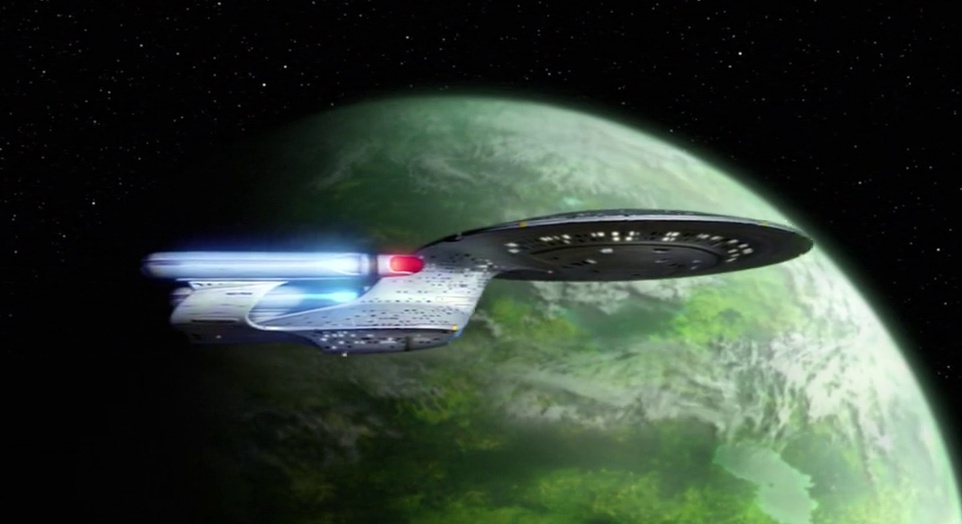
Still frame from Star Trek: The Next Generation showing the Enterprise-D in orbit of a green planet.
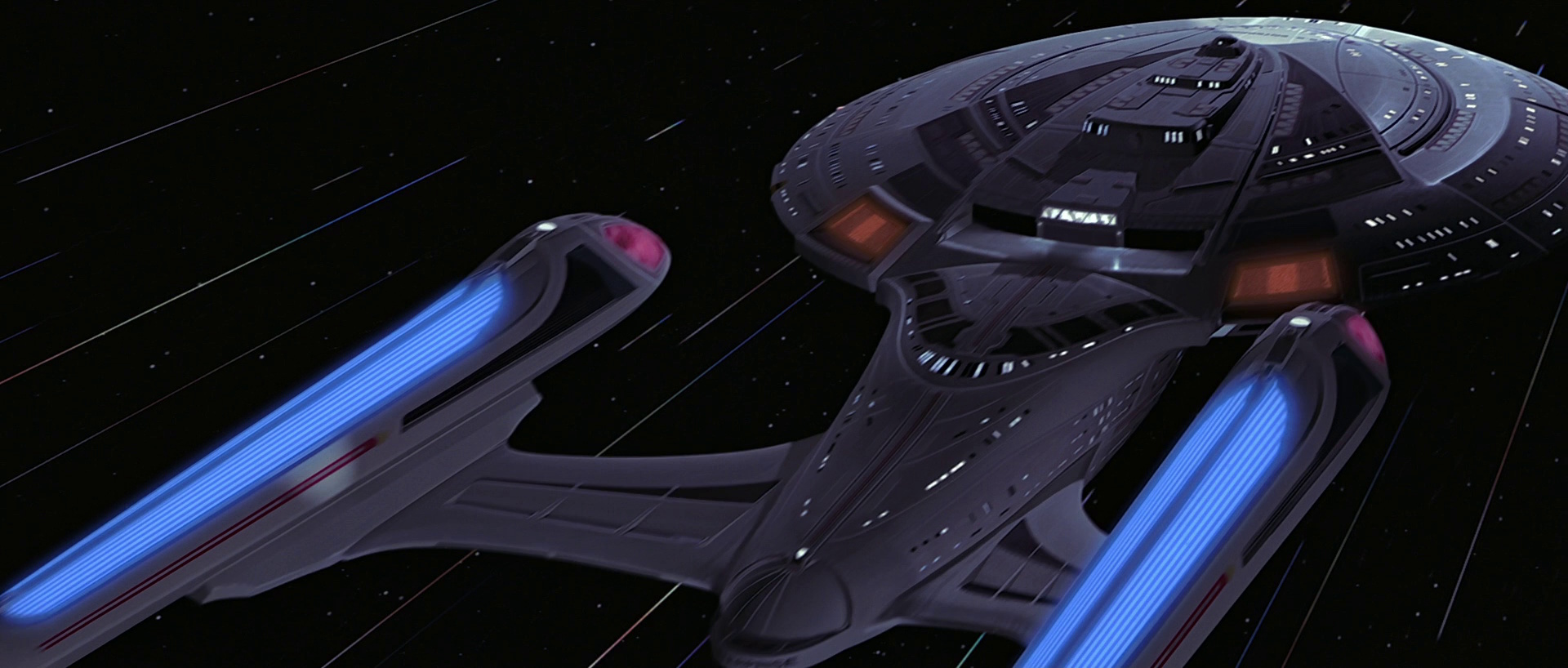
The voyages of the starship Enterprise would proceed in exactly the same way… just without Q’s occasional shenanigans!

But here’s where things change. After the mission to rescue Soji and being named Chancellor of Starfleet Academy, Admiral Picard is aboard the USS Stargazer when a mysterious anomaly is detected. The Stargazer, the Excelsior, and a handful of other ships race to the scene, where they’re confronted by a massive subspace anomaly that Seven of Nine thinks could be a huge transwarp conduit. Attempts at communication fail, and with only a handful of Starfleet ships on the scene, there’s no way to prevent the conduit from unleashing its triquantum waves.

Aboard the Stargazer, Picard and the crew look desperately for solutions – but there are none. Without the Borg, their vessel, and their knowledge of the situation, there’s no way to stop the transwarp conduit from doing what it was designed to do: launching a massive attack on the Federation. Its triquantum waves blast across several sectors of space, destroying the Starfleet ships as they attempt to escape, as well as several starbases and Federation colonies. Having expended its initial wave of energy, the conduit then falls eerily silent, as if waiting for instructions… or for its operators to emerge.
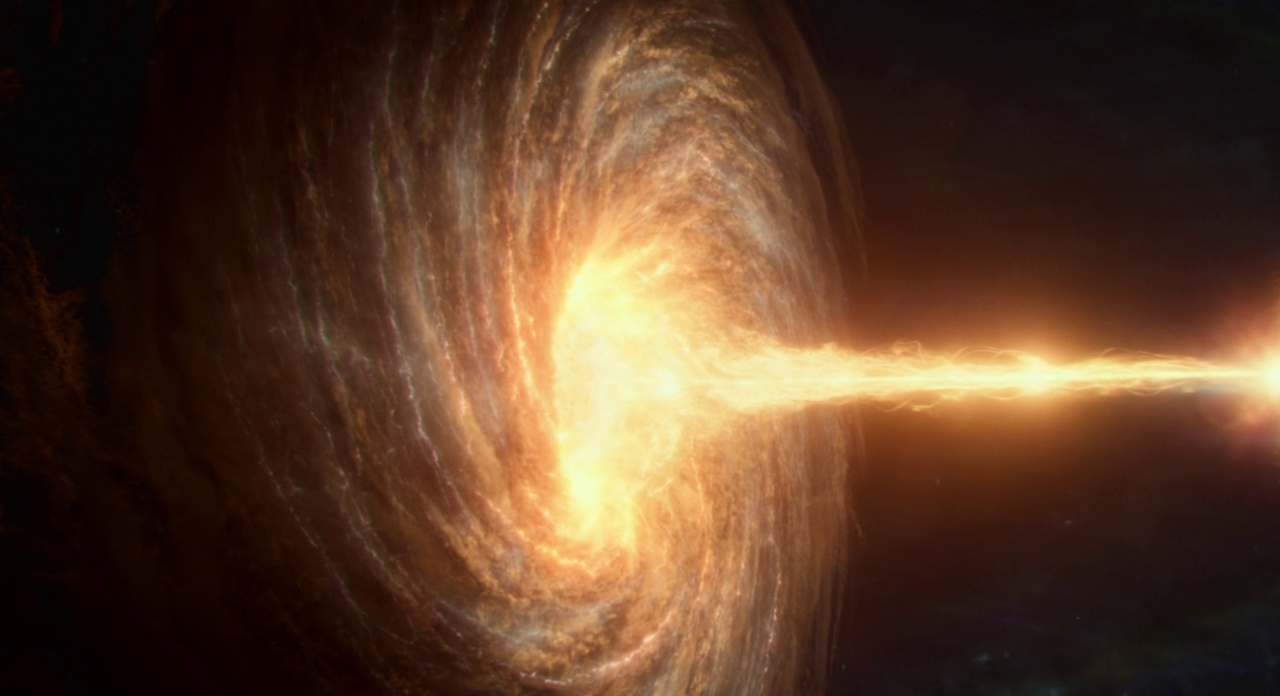
Still frame from Star Trek: Picard showing the mysterious transwarp anomaly.
This time, there’s no one to stop the transwarp anomaly…

Because Star Trek: Picard was a jumbled mess of a show, we don’t know who made the transwarp anomaly. My pet theory is that it’s something to do with Season 1’s super-synths, but it could also be the Borg, the Dominion, or any one of a number of Star Trek baddies! In this timeline, though, the anomaly’s initial attack would be successful – because there’d be no Q to throw Picard and his friends into the alternate reality that eventually led to Dr Jurati’s assimilation and the creation of a Borg splinter group. Without the Jurati-Borg’s presence at the site of the transwarp anomaly, there was no way to stop its energy from being unleashed.

What would happen next? I’d imagine that whoever made the anomaly would be pleased with its success, and if it was a transwarp conduit – as Seven theorised – then it could serve as a gateway for any ships that the attacker had. With a devastated sector and no intact ships remaining in the area, any invader would quickly be able to establish a massive bridgehead right in the heart of Federation territory, and if they have more transwarp conduit weapons… who knows? The next target could be Earth.

What If…? #2:
What if… Section 31 and the Federation accidentally created the Borg?
Deep Space Nine, First Contact, Discovery Season 2
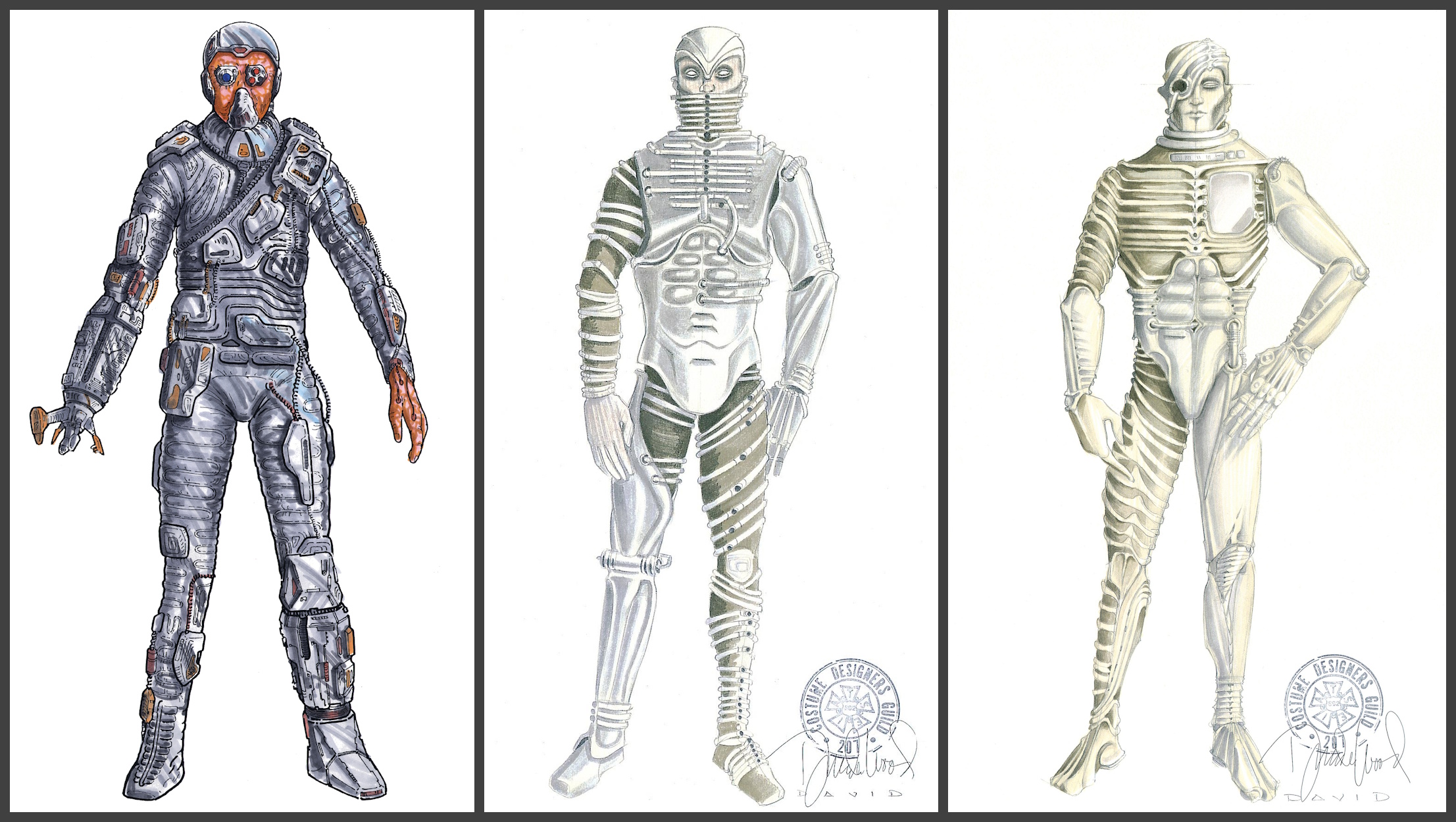
Concept art for Star Trek: The Next Generation showing three Borg designs.
Early concept art of the Borg.

If you’re a regular reader, you might remember my theory that Discovery’s second season – which featured a time-travelling spacesuit and an AI that could “assimilate” humans using nano-bots – was originally pitched as a “Borg origin story.” So what if that’s actually what happened? In this timeline, Section 31 and the Control AI are going to be uncovered as the true progenitors of the Borg!

Here’s how it went down: after chasing Captain Pike and the USS Discovery all over the quadrant, Control and its fleet of automated drone-ships finally have them cornered. Using the assimilated body of Captain Leland, Control boards Discovery and attempts to seize the all-important Sphere Data that it needs – but the battle in space is going poorly, and Control seems to be on the verge of defeat. Not wanting to give up, Control switches tactics. Instead of the Sphere Data, Control races to the science lab and steals the Red Angel suit that Burnham and the crew have finished working on.
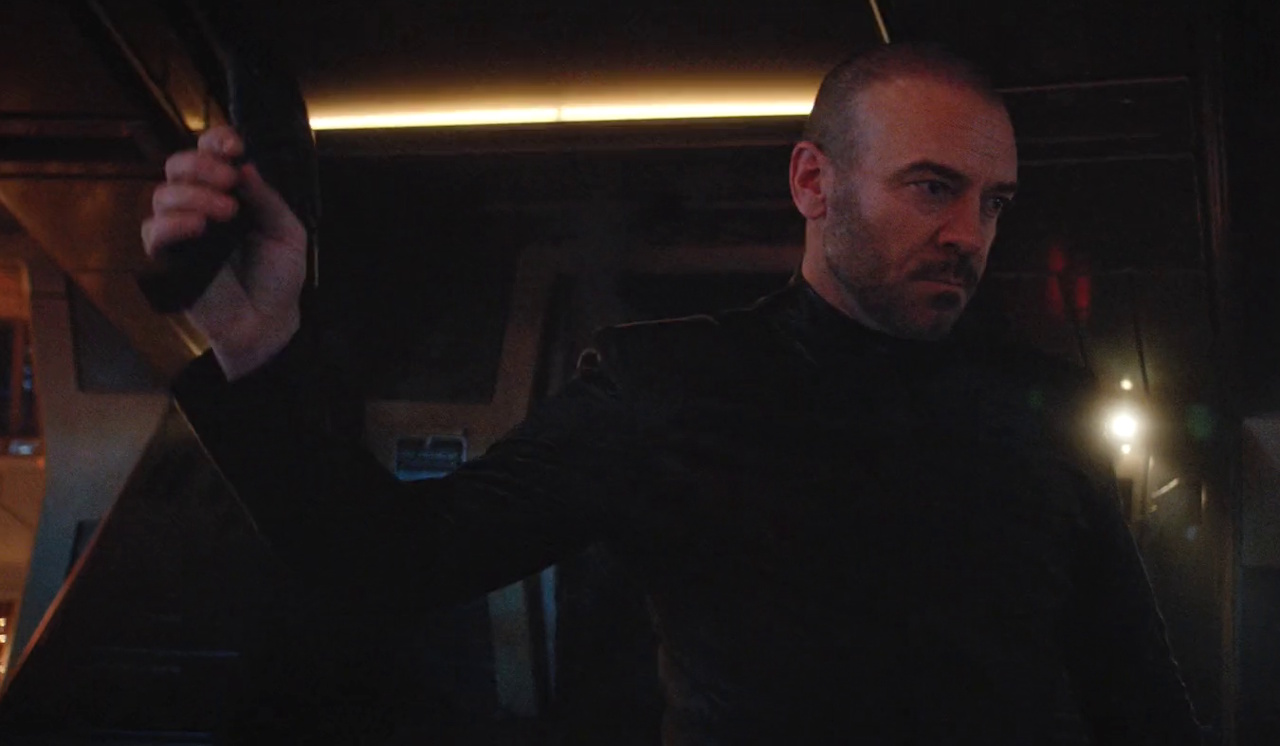
Still frame from Star Trek: Discovery Season 2 showing Captain Leland holding a phaser.
The “assimilated” Captain Leland.

Staring down an armada of allied ships in space and Discovery’s security team just outside the doors, Control is trapped. With no other options, Control uses the Red Angel suit to escape – but because the suit is malfunctioning, Control ends up in the distant past. Trapped on a planet in the far-flung Delta Quadrant, anchored in time the same way Gabrielle Burnham was, Control surveys its surroundings. The planet is primitive, populated by humanoids in an early stage of development – with no spacefaring technology. Control has some nano-bots remaining, and the Red Angel suit… but that’s it. It decides that the best course of action is to assimilate some of the local humanoids and work on producing more technology – hoping to one day return to Federation space and finish what it started.

For me, the biggest question is this: does the Borg Collective still know all of this as of the late 24th Century? Or has the passage of time and countless assimilations over the millennia led to this information being forgotten, buried somewhere in the depths of the Collective’s knowledge? My personal take is that this is something the Borg Queen would know – but in the Collective’s run-ins with Starfleet, it’s gone out of its way to avoid revealing this truth.
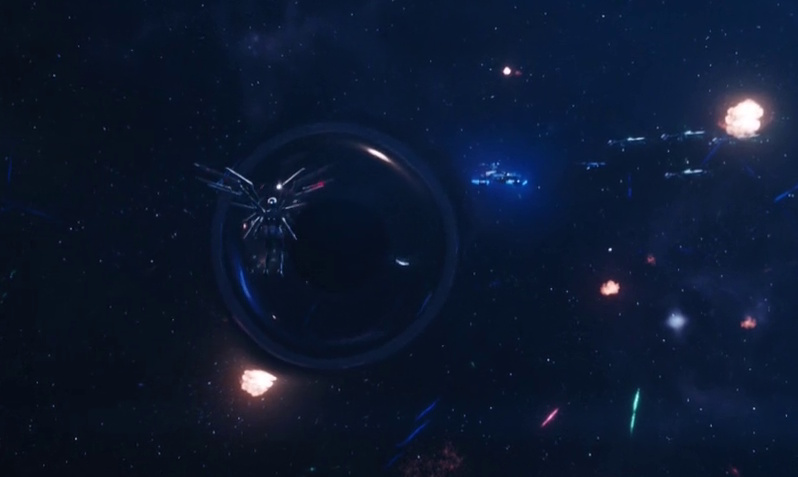
Still frame from Star Trek: Discovery Season 2 showing the Red Angel suit opening a portal.
The Red Angel suit can be used to travel through time.

But the Borg Queen is clearly not the same as Control – so what happened there? Perhaps the Queen regards Control as her “ancestor,” in a sense, or maybe Control merged with a particularly strong personality that it assimilated early on. Dr Jurati, in Picard’s second season, merged with the Borg Queen rather than simply becoming a Borg drone, so the same principle could apply here. It does beg the question, though, as to why the Borg Collective didn’t set its sights on Earth and humanity decades earlier if Control’s desire for revenge is hard-coded into the Collective’s DNA!

More interestingly, I wonder what Starfleet would make of this revelation. Let’s say that, after the Battle of Sector 001, Starfleet was able to analyse the remains of the Borg Cube and found remnants of 23rd Century Federation programming in the Borg’s systems. Further analysis eventually led to one inescapable conclusion: the Control AI is the basis for the Borg, making the biggest threat to the galaxy an accidental Federation creation. Perhaps that knowledge could be used by Starfleet’s Borg experts to find a weakness or a way to communicate… but it would also be a serious blow to morale.

What If…? #3:
What if… the USS Voyager was destroyed over Ocampa?
Voyager Season 1
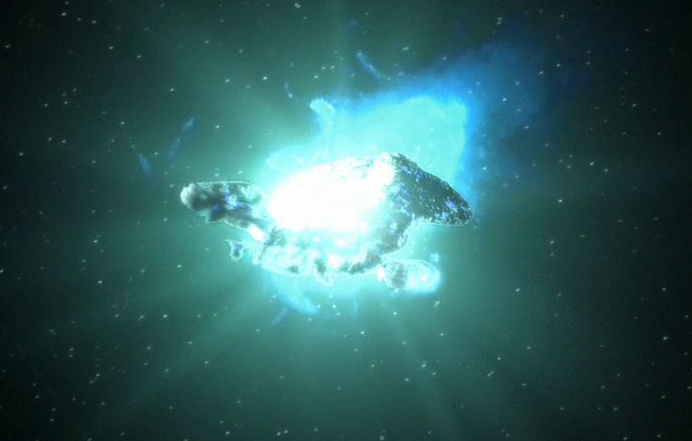
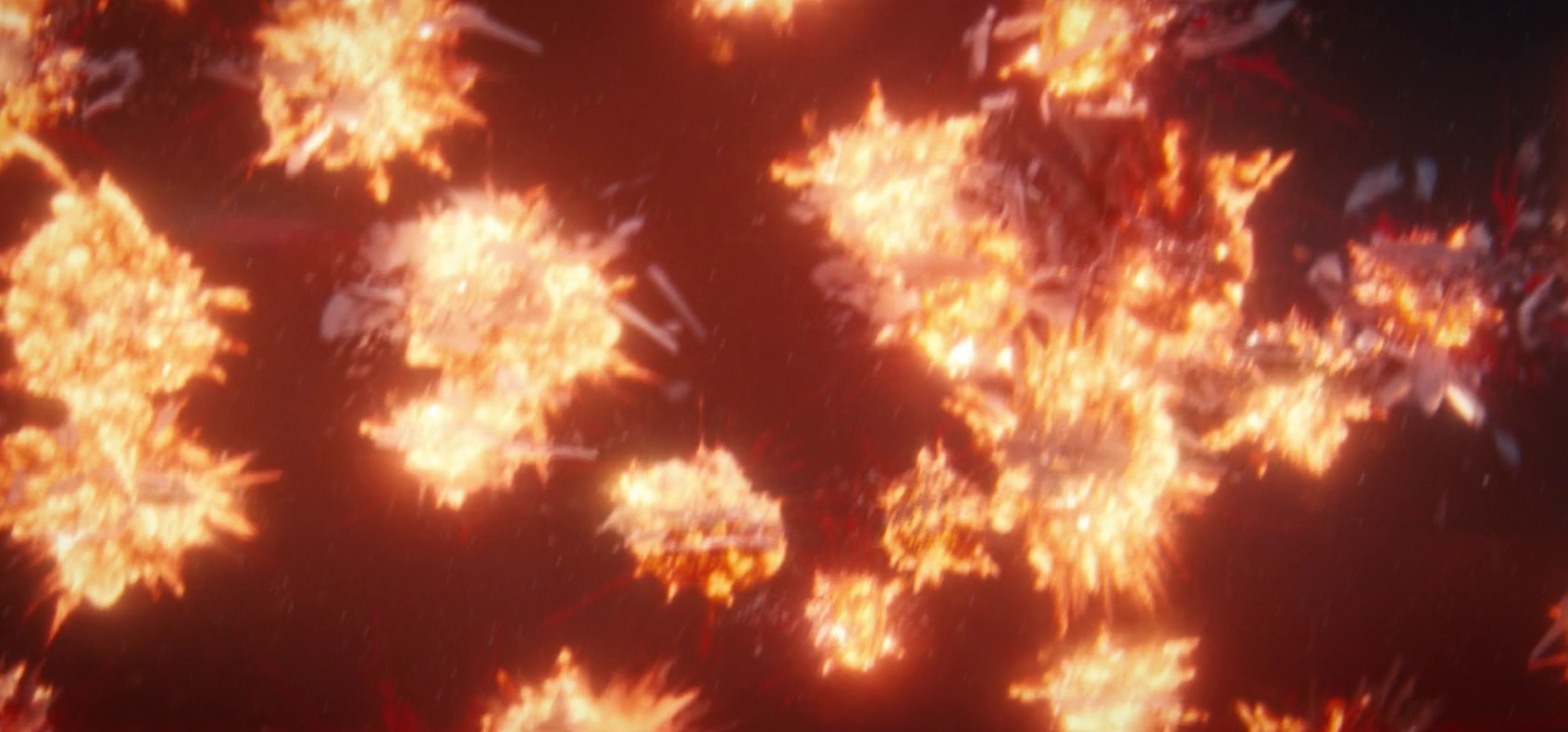
Still frame from Star Trek: Voyager showing the USS Voyager exploding.
The destruction of the USS Voyager!

In this alternate timeline, we’re going to say that the USS Voyager and the Val Jean – Chakotay’s ship – were both transported to the Delta Quadrant as we saw in Caretaker. But during the battle for the Caretaker’s Array, it’s Voyager, not the Val Jean, that ended up being destroyed by the Kazon. Some survivors made it to the escape pods and were taken aboard by the Maquis, with Chakotay ordering B’Elanna to fire up the engines and get the ship out of range of the Kazon as quickly as possible!

The first character we’d miss would be the Doctor – and with no surviving medical staff (and apparently no medically-trained Maquis, either) that would quickly become a problem for the crew of the Val Jean. I’m also going to suggest that Neelix and Kes wouldn’t be a part of this crew – or if they were involved, they’d remain aboard Neelix’s ship rather than try to cram aboard the already-overcrowded and cramped Maquis raider. As to what else would be different… well, it depends on who survived the destruction of Voyager.
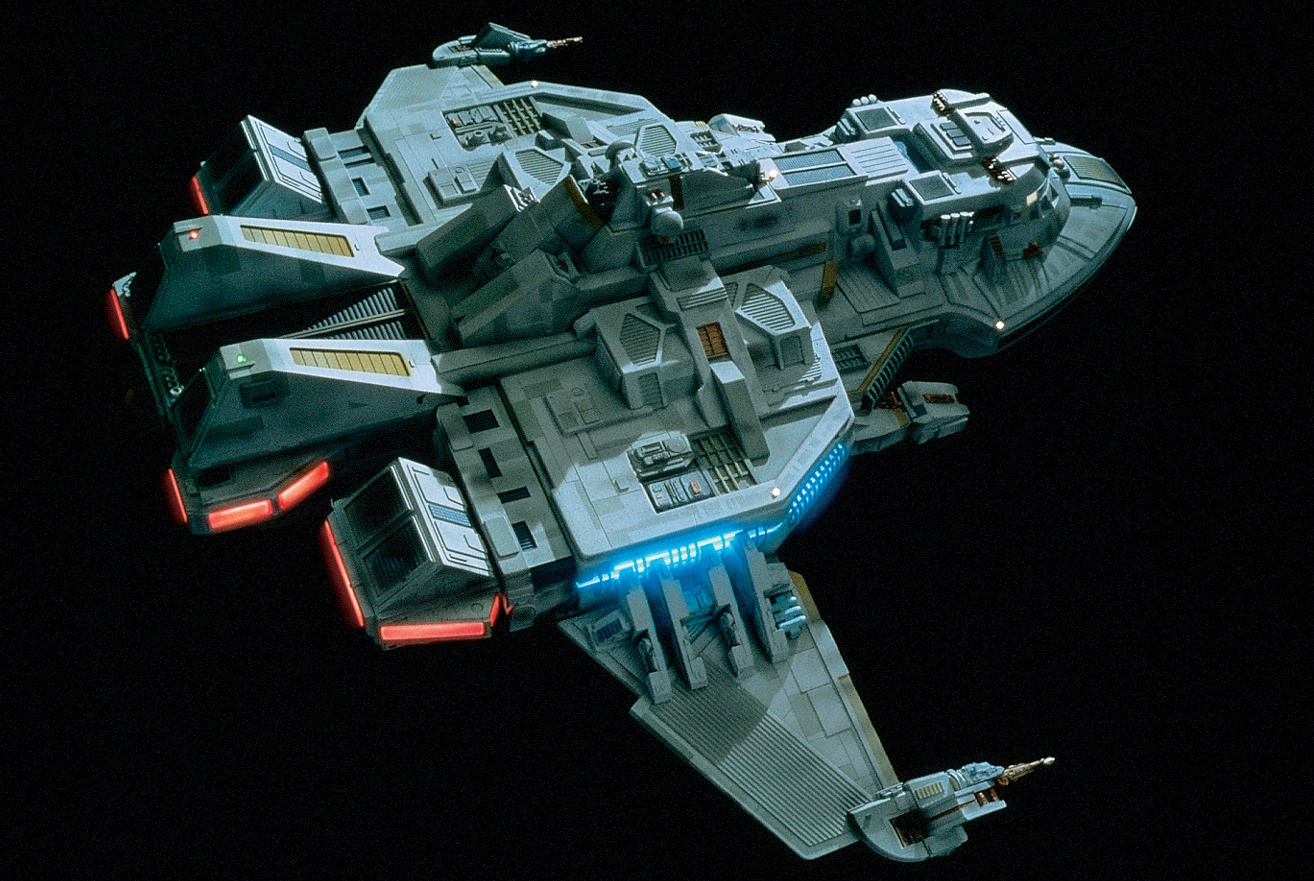
Photograph of the original Maquis Raider model from Star Trek: Deep Space Nine and Star Trek: Voyager.
Chakotay’s Maquis raider – the Val Jean.

I’m going to assume that Captain Janeway went down with the ship – as she once told Naomi Wildman that it’s part of a captain’s duty. That was half-joking, perhaps, but I can’t see Janeway abandoning the ship while any members of the crew were still aboard, so I’m gonna say she was lost with Voyager. Among the survivors, though, would be Tuvok, Harry Kim, Tom Paris, and B’Elanna Torres, as well as Seska, Ensign Wildman, and engineer Carey. There’d likely be a clash between Tuvok and Chakotay over command decisions, but Chakotay would pull rank – figuratively speaking – and remind the Starfleet survivors that they’re aboard his ship, so he’s in charge. However, as a concession given the difficult situation, he’d offer senior roles to Tuvok and Carey, and Kim would take up a role on the bridge.

Living conditions would be difficult, though. Voyager was kind of inconsistent with this, but we got hints in several episodes that there might’ve been about twenty-five or so Maquis aboard Voyager. If we assume that there’d be at least forty survivors from Voyager’s original complement of 150, the Starfleet personnel would outnumber the Maquis – which could lead to a lot more tensions aboard a Maquis ship than it did aboard Voyager. The small raider – which probably wasn’t equipped for a long voyage – would struggle to accommodate so many people, and with fewer replicators (if they even worked at all) the ship would have to make many more stops to forage and hunt for food and supplies.
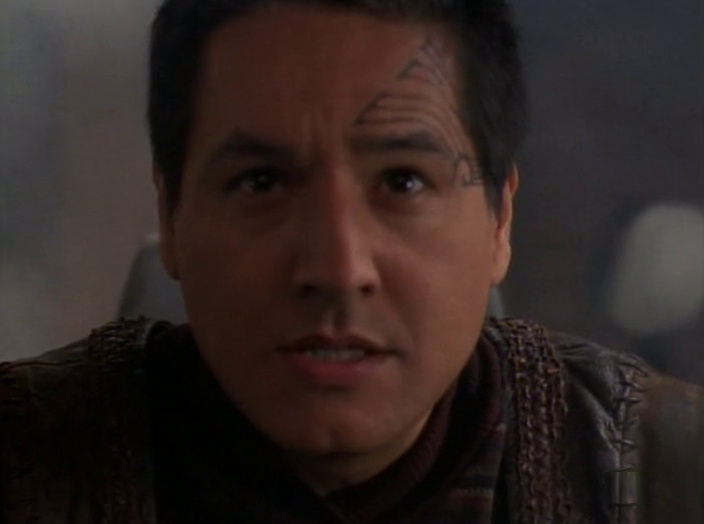
Still frame from Star Trek: Voyager showing a close-up of Chakotay in the series premiere.
Chakotay would remain in command of his Maquis vessel.

Equinox offers an excellent look at how a ship less well-equipped than Voyager might’ve handled being stranded in the Delta Quadrant. Despite the Val Jean’s personnel being arguably better prepared to survive than Captain Ransom’s crew, the limitations of the ship, the difficult living conditions, and the constant danger would all take a toll on the survivors. Morale would be low among the Starfleet personnel after Janeway’s death, and the reality of the situation would sink in for them over the first few days as they struggled to adapt. Having to share bunk beds and malfunctioning replicators would lower morale even further.

Chakotay would do his best to avoid the Kazon, and without the technologically-advanced Voyager to pursue, I daresay they’d be less interested in chasing the Val Jean, so the ship would make slow but steady progress toward the Alpha Quadrant. After several months (or perhaps a year) of planet-hopping, the Val Jean would encounter something strange: an old Earth automobile floating in space. This would lead them to a planet with a human settlement; the descendants of abductees from Earth. Most of the Starfleet personnel would disembark here, choosing to stay on the planet rather than remain aboard Chakotay’s ship. Chakotay and the Maquis would stay for a while, too, enjoying the friendly atmosphere and making repairs to their ship. After an extended stay, though, would anyone want to re-join the mission back to the Alpha Quadrant on a ship dangerously unsuited for such a voyage?

What If… #4:
What if… the Romulans figured out what Sisko and Garak did?
Deep Space Nine Season 6
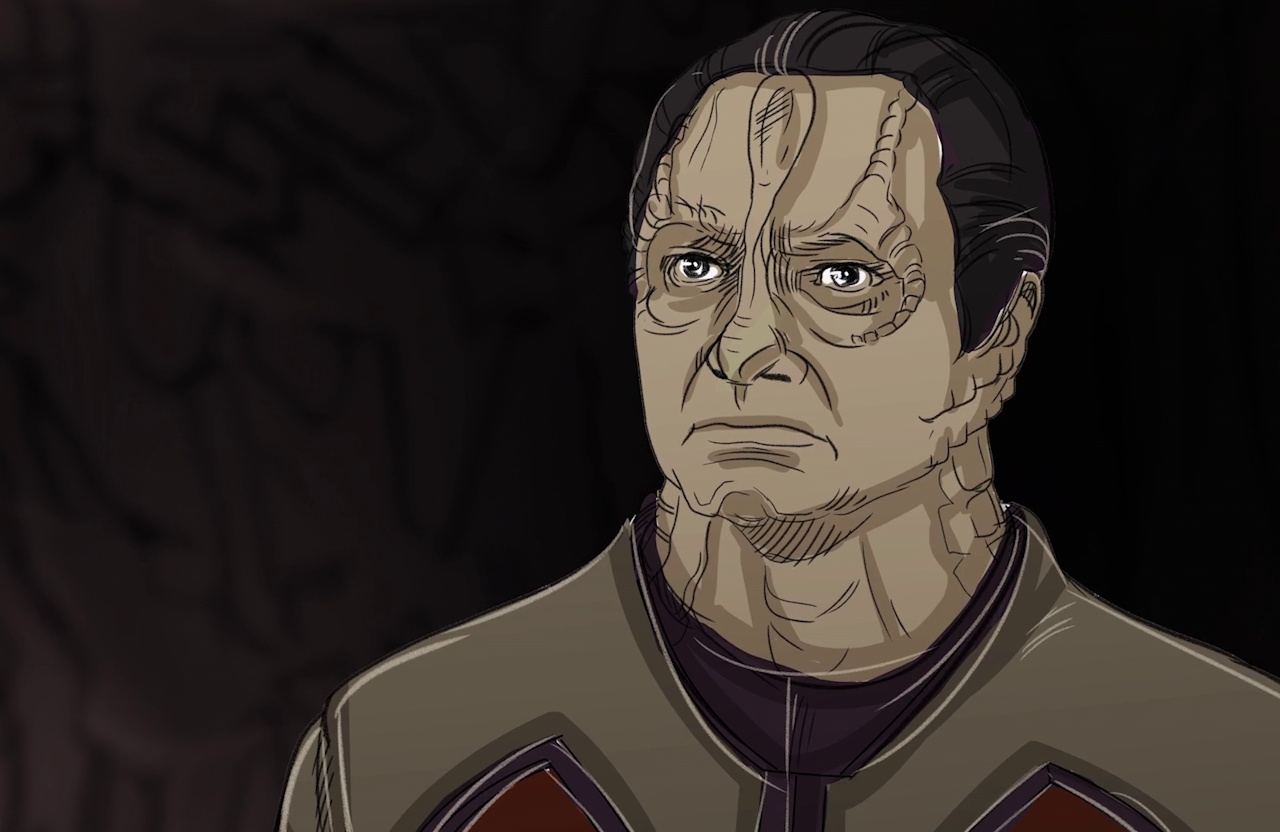
Still frame from What We Left Behind: Looking Back At Deep Space Nine showing a sketch of Garak.
Garak.

Perhaps this one won’t always be a “what if!” One of my fantasy Star Trek episodes is a follow-up to the outstanding Deep Space Nine episode In The Pale Moonlight, and I’d really love to see a sequel of sorts one day. But for now we’re going to make up our own version – and connect it to other parts of Star Trek, too!

There are two time slots for this, and both are interesting – so this is kind of two “what ifs” in one!

Firstly, we have the obvious question: what if the Romulans figured out what happened before the end of the Dominion War?

Still frame from Star Trek: Deep Space Nine showing Senator Vreenak.
The Romulans have figured out that “it’s a faaaaaake!”

Shortly after the Breen joined the Cardassians and the Dominion, the Tal Shiar uncovers the truth behind the assassination of Senator Vreenak. How they figured it out doesn’t matter; all we need to know is that the proof is irrefutable. As a result, the Romulans terminate their alliance with the Federation and Klingons at the worst possible moment – just as Breen weapons are proving to be a tactical and technological hurdle for the allies to overcome. Worse, a few days later the Romulans announce a non-aggression pact with the Dominion, shortly followed up by an official alliance. In short, the Romulans have switched sides.

It’s no secret that the Romulans have long coveted Federation systems, and promises from the Dominion about ownership of Vulcan combined with a need for revenge swayed the Romulan senate. They began collaborating openly with the Dominion, sharing technology like cloaking devices with their new allies. The Cardassian rebellion led by Damar would be quickly crushed by the combined might of the Dominion, Breen, Romulans, and Cardassian collaborators, and would be far less effective and far-reaching. With the axis shored up and bolstered by Romulan troops and Romulan intelligence, they’d be back on the front foot ready to press home their advantage. The obvious first targets are Bajor and DS9; control of the wormhole would be vital. From there, it could be a very short war indeed…
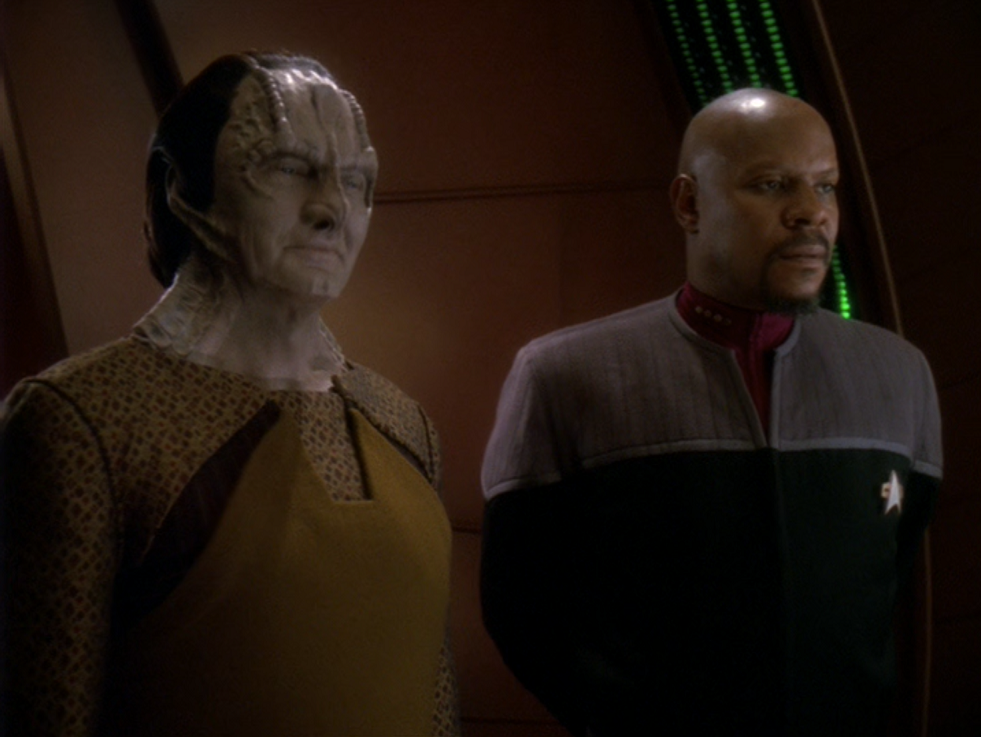
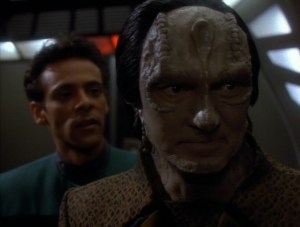
Still frame from Star Trek: Deep Space Nine showing Garak and Sisko.
Garak and Captain Sisko.

The second scenario is the one I still hope to see on screen one day. In this timeline, the Romulans discover what happened – but only years after the war is over. The destruction of their homeworld took a toll, and the Romulan Empire is in a difficult position. Romulan leaders demand the extradition of those responsible, but with Sisko “missing in action” and apparently residing with the Prophets, there’s really no one to prosecute. Garak’s involvement remains unknown, and he wouldn’t stick his head above the parapet!

But the Romulans would make a fuss, doing whatever they could to make life difficult for Starfleet. One action the Romulan government takes is cutting off Federation researchers from a derelict Borg vessel that they control, and ordering all Romulans to leave Federation space. The result? Soji doesn’t head to the Artifact, Laris and Zhaban leave Earth, and the synths at Coppelius Station remain hidden from Starfleet. But not necessarily hidden from everyone

What If…? #5:
What if… Captain Kirk didn’t die on Veridian III?
Generations
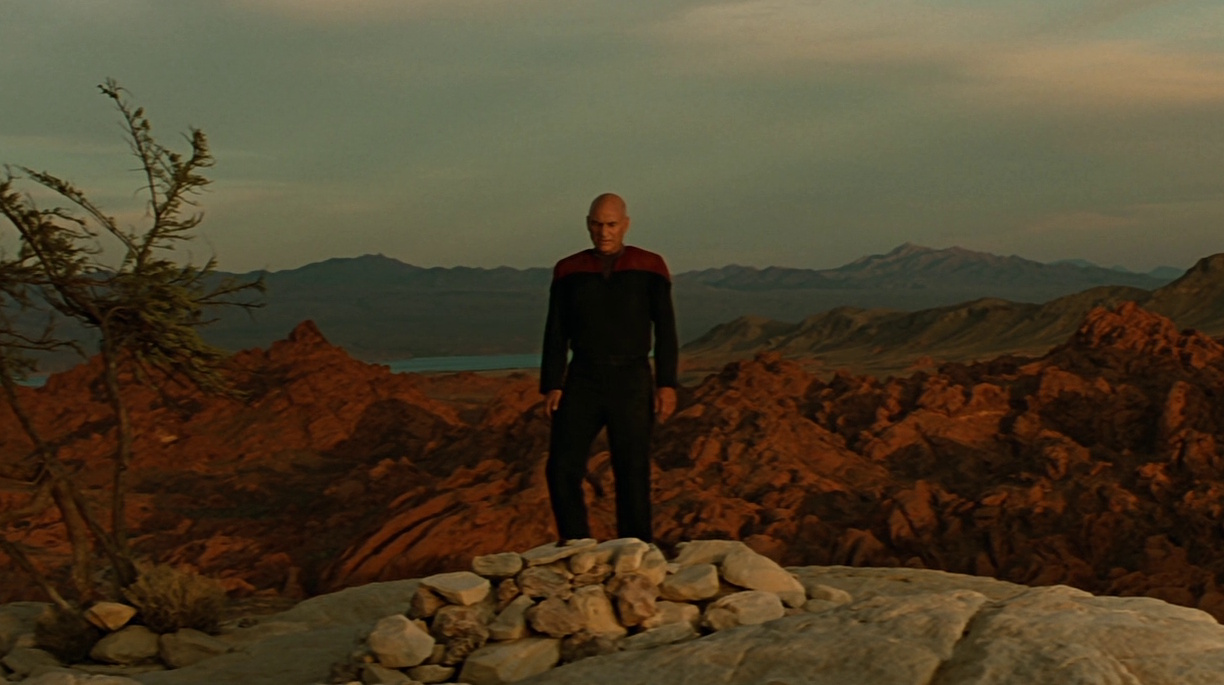
Still frame from Star Trek: Generations showing Picard at Kirk's grave.
Picard stands over Kirk’s grave.

This is one of the biggest “what-ifs” in Star Trek – at least for fans of a certain age! Kirk’s death in Generations was controversial, though I’d argue it was at least fitting for his character that he gave his life in an act of sacrifice, saving the crew of the Enterprise-D and the population of Veridian III from the Nexus. But in this alternate timeline, Kirk and Picard are able to stop Soran without Kirk losing his life.

Kirk would reunite with Picard and then meet up with the crew of the crashed Enterprise-D, before boarding a rescue ship bound for Federation space. Upon reaching a starbase, Kirk would be absolutely stunned to disembark only to be greeted by Spock and Montogomery Scott! Scotty had survived to the 24th Century in a transporter buffer (as seen in the episode Relics) and of course, Vulcans live longer lives than humans so we know that Spock is also still alive. This reunion would be incredibly touching, and Kirk would spend time with his old friends, catching up on almost eighty years of Spock’s life and also learning of Scotty’s 24th Century adventures.
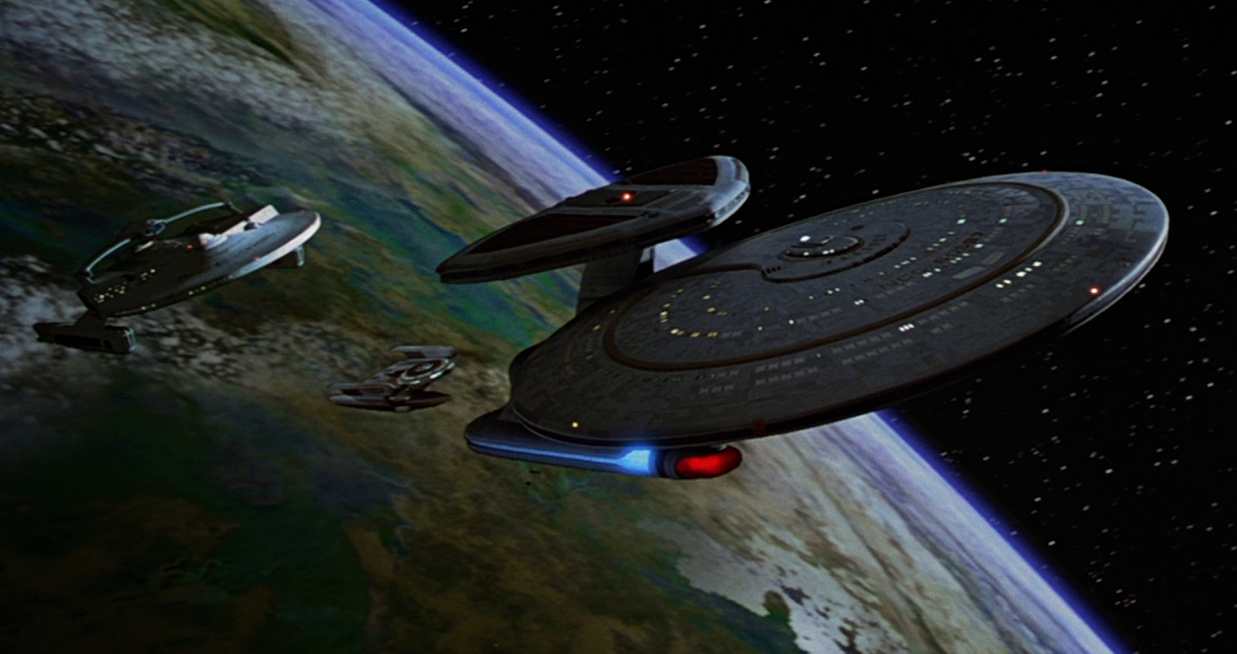
Still frame from Star Trek: Generations showing three starships departing Veridian III.
Kirk would board a rescue ship and return to Earth.

Kirk would be debriefed by Starfleet Command about his time in the Nexus and would also seek out other members of his crew. Dr McCoy would have passed away, but at least one other member of the Enterprise’s bridge crew – someone like Uhura or Chekov – could still be alive in this time period, though they’d be very old! Kirk would visit them at their home, catching up on the events of their lives after he’d last seen them. Having decided to retire from Starfleet around the time the Enterprise-B was commissioned, Kirk would consider returning to his home – which has been preserved as a museum by Starfleet for the last eighty years – but I’m not so sure that that’s what he’d do.

We know that, in between the events of Relics and Star Trek ’09, Scotty was still working in some capacity – it’s in this era that “transwarp beaming” is invented. I’m going to say that, for the purposes of this alternate timeline, Kirk would return to Starfleet. In an unofficial capacity at first, he’d work with Scotty and Spock, and might also be visited by an old rival: the Klingon Captain Kor, now a Dahar master. Kor would invite Kirk to Qo’noS, where he’d see the results of his work to bring about peace between the Federation and the Klingon Empire.
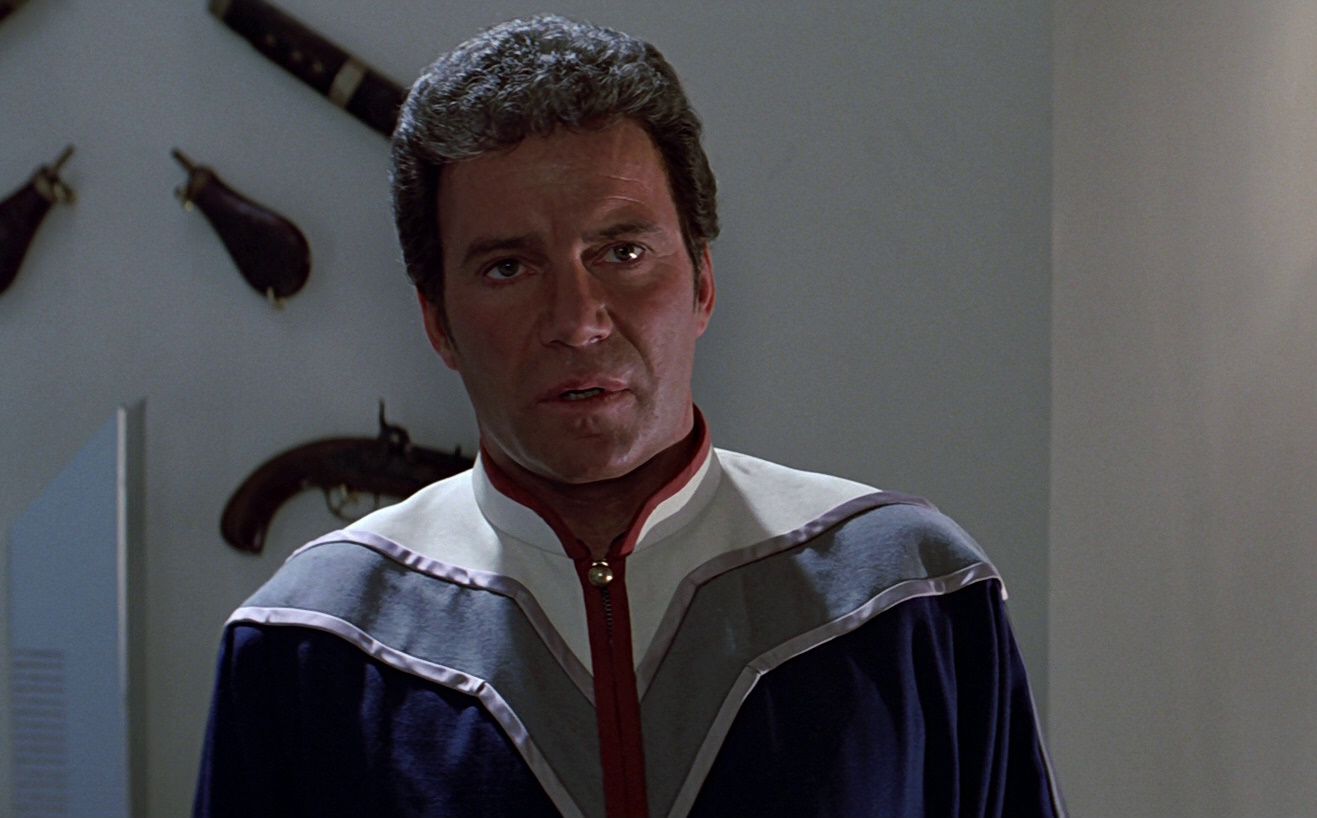
Still frame from Star Trek III: The Search for Spock showing Kirk out of uniform at his home.
Kirk could still have some adventures and new experiences in the 24th Century.

Kirk would also be present at the launch of the Enterprise-E, reuniting with Picard as the ship undertook her first cruise. Scotty would also be present, having opted to join his former captain at the launch of the latest ship to bear the name Enterprise. Kirk and Scotty would have departed the ship shortly before the Battle of Sector 001, though. Kirk would be offered a promotion back to the rank of Admiral, and he’d join Starfleet Command in an advisory role; many senior Starfleet officers and admirals would call upon the famed officer for advice.

Where I think Kirk could be most influential, though, is in the aftermath of the synths’ attack on Mars. In the prime timeline, Picard was unable to convince Starfleet to proceed with their plan to help the Romulans, but I think Kirk would be on Picard’s side here. As a living legend and someone of such high standing in Starfleet Command, Kirk’s word would carry a lot of weight. As a result, Picard’s rescue armada would be rebuilt, and many more Romulan lives could be saved before the Hobus supernova. Among the evacuees would be Nero’s family – meaning Nero never attacks Spock’s ship, the two are never pulled into a black hole, and the alternate reality seen in Star Trek ’09 would never begin.

So that’s it!

Concept art for Star Trek: The Motion Picture showing the USS Enterprise in drydock.
Concept sketch of the USS Enterprise in drydock from The Motion Picture.

We’ve taken a look at five “what if” scenarios set in the Star Trek universe. I hope this has been interesting – and perhaps a bit of fun, too!

There are a lot of places in Star Trek where things could’ve gone very differently, and something as small as the absence (or presence) of a single individual has literally changed the course of history for the Federation and the entire galaxy. I can already think of plenty of other “what ifs,” so stay tuned! I’d love to revisit this idea again one day.

There’s plenty more Star Trek content coming up here on the website. So far in 2025 we’ve talked about some of my head canon, as well as some Star Trek stories that I wish weren’t canon at all! I’ve also reviewed the Section 31 film and finally caught up with Season 2 of Strange New Worlds. Season 3 will premiere later this year and I’ll definitely have something to say about it when it’s here! Until then, see you… out there.


Most Star Trek series and films discussed above are available to stream now on Paramount+ in countries and territories where the service is available. The Star Trek franchise is also available on DVD and Blu-ray. The Star Trek franchise – including all films, shows, and properties discussed above – is the copyright of Paramount Global. This article contains the thoughts and opinions of one person only and is not intended to cause any offence.
Star Trek: Head Canon

A spoiler warning graphic.

Spoiler Warning: There are spoilers ahead for the following Star Trek productions: The Original Series Season 1, Deep Space Nine Season 6, Voyager Seasons 1, 5, and 6, First Contact, Discovery Seasons 1-3, Strange New Worlds Season 1, and pre-release information for Starfleet Academy.

Star Trek has a wonderfully rich and engaging setting – a fictional universe that operates by established rules that have been built up over decades. This “canon” is part of what makes Star Trek feel like Star Trek… and while I’m not a stickler for the tiniest minutiae of canon, the fundamental building blocks of the Star Trek franchise need to remain consistent for stories to work.

There are some places where Star Trek’s writers have been deliberately vague and ambiguous, and others where an apparent “plot hole” has been created, either by a new story seemingly overwriting an old one or by one of the prequel shows making an apparent change to what had been previously established. These things can pass by inoffensively enough, but as Trekkies, I think we have a natural curiosity about this setting – and a need to ensure that things make sense in the context of Star Trek’s long-established universe!

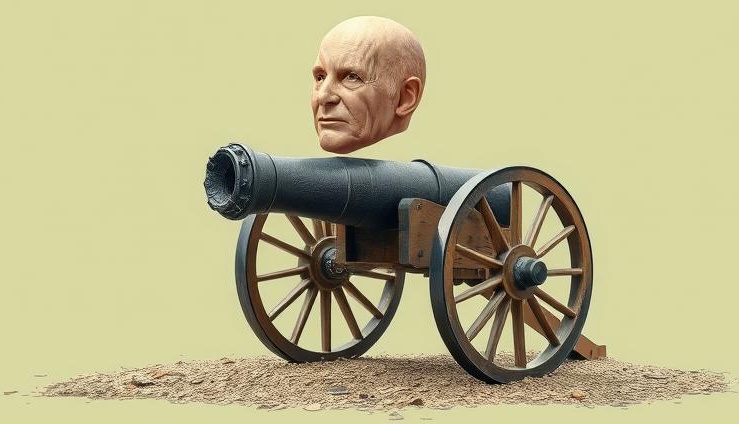
An AI-generated image of a head floating above a cannon.
It’s… head cannon.

So that’s where head canon comes in. If you’re unfamiliar with the term, head canon (or headcanon, if you prefer; I like to write it as two separate words) is basically just a fan-made explanation for something that doesn’t appear on screen. A famous example from the Star Trek fan community is the belief some fans hold that Kirk and Spock were engaged in a romantic relationship. That’s something never shown on screen (nor even explicitly hinted at), but nevertheless has become popular in some quarters of the fan community.

There are also head canon explanations for apparent plot holes and head canon expansions that go beyond what we see on screen. Over the years, I’ve come up with several of my own – and it’s these that I want to share with you today.

Still frame from How Sharper Than A Serpent's Tooth showing Kirk and the crew on the bridge of the Enterprise.
Arex, Kirk, and Walking Bear on the bridge of the Enterprise.

Before we get started, a couple of important caveats! Firstly, this is head canon. None of this is official, none of it has ever been seen on screen, and it’s likely that none of it will ever be confirmed. I’m not saying that I’m right and that’s that – other fans can and will disagree, and that’s okay. I’m not claiming to be the only originator of some of these ideas. It’s very likely that other Trekkies have independently come up with similar head canon explanations for some of the story beats we’re gonna talk about today – so please don’t think I’m trying to take sole credit!

This is also the entirely subjective opinion of one old Trekkie. If you hate all of my ideas, if I miss something that seems obvious to you, or if my head canon explanations don’t make sense to you… that’s totally okay, too. There’s enough room in the Star Trek fan community for polite discussion and disagreement – and there’s no need to get into a fight about totally hypothetical things that will almost certainly never be confirmed on screen!

With all of that out of the way, let’s look at some head canon!

Head Canon #1:
There are different types of cloaking device.

Still frame from Minefield showing the NX-01 Enterprise and two de-cloaking Romulan vessels.
22nd Century Romulan vessels de-cloaking.

Prior to Enterprise, it was pretty well-established that Starfleet’s first encounter with a cloaking device came when the USS Enterprise, under Kirk’s command, engaged a Romulan warbird that was attacking Earth Outposts along the Neutral Zone. Cloaks continued to be used by the Romulans, Kligons, and others into the 24th Century – but Starfleet only used a cloaking device on a couple of occasions.

Enterprise changed all of that, firstly with the Suliban’s cloaking technology – which, admittedly, was never explicitly called a “cloaking device” on screen – and later when the Romulans were introduced. Since then, both Discovery and Strange New Worlds have set the precedent that cloaking devices were known to Starfleet years before Kirk’s encounter with the Romulans. So how can we square this circle?

Still frame from Into The Forest I Go showing a simulation on the USS Discovery's viewscreen (cropped).
A Starfleet simulation of a Klingon cloaking device.

My answer is that there must simply be different types of cloaking devices. Not only that, but Starfleet Intelligence is working around the clock to figure out how to detect cloaked vessels. Similar to how the code-breakers of World War II worked to break enemy encryptions and read messages, Starfleet is locked in a constant battle to un-cloak cloaked ships.

Perhaps in the aftermath of Discovery’s Klingon War, Starfleet thought they’d finally broken the cloaking encryption – and that’s why Kirk was so surprised to see the Romulan warbird disappear from his sensors. Every time the Romulans or Klingons invent a new type of cloak, Starfleet gets to work figuring out how to recalibrate sensors to break through. This “arms race” could have been going on for decades – or even centuries.

Head Canon #2:
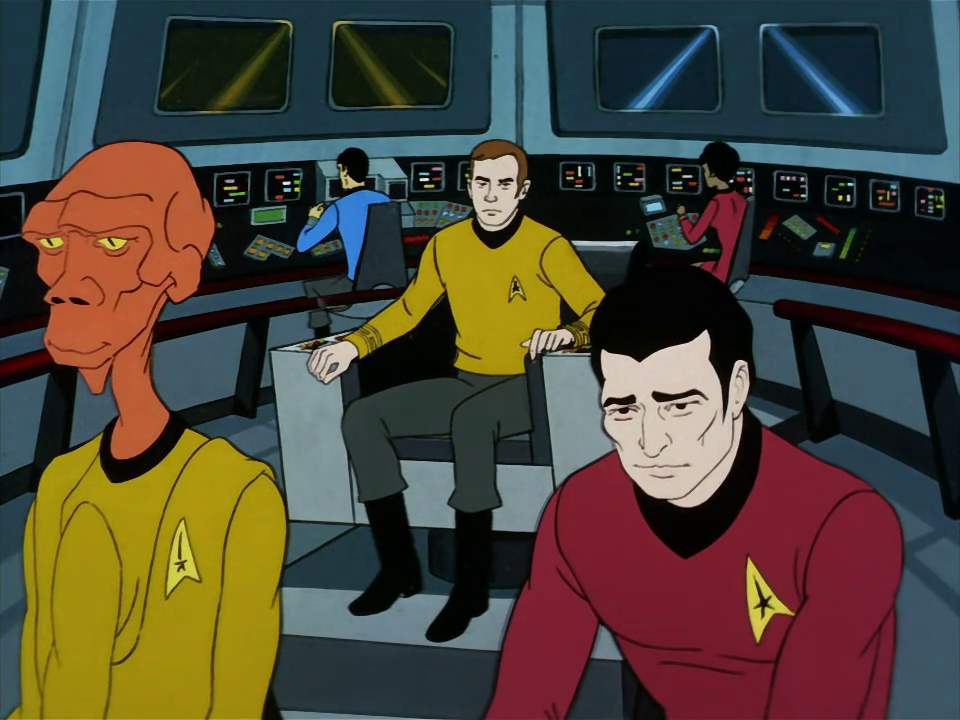
The USS Enterprise had a refit after Pike left the captain’s chair.

Still frame from A Quality of Mercy showing Pike and Ortegas on the Enterprise's bridge.
Strange New Worlds’ take on the bridge of the Enterprise.

Aesthetic changes from one Star Trek production to another usually don’t bother me very much – and I happen to really like the design of the USS Enterprise as it’s depicted in Strange New Worlds. The ship looks great inside and out, and some of the sets feel larger and more expansive than they did in past iterations of Star Trek, which allows for different types of shots, more characters on screen at once, and so on. But there’s no denying that the redesign hasn’t been wildly popular with every Trekkie!

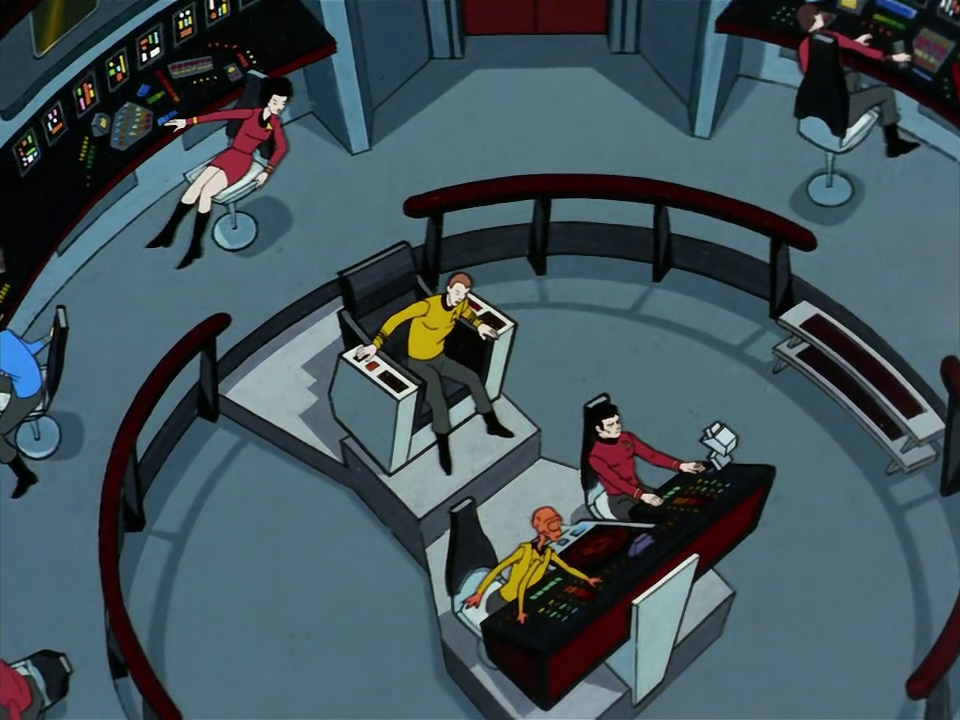
So my suggestion here is simple: after Pike stepped down as captain of the Enterprise, the ship underwent a refit. Kirk would assume command of the refitted vessel in time for the five-year mission that we’re familiar with from The Original Series. This allows both versions of the Enterprise to exist in the same timeline without treading on anyone’s toes!

Still frame from How Sharper Than A Serpent's Tooth showing a top-down view of the bridge of the Enterprise.
The Enterprise bridge in The Animated Series.

There is precedent for ships being refitted and completely transformed. The Enterprise itself famously underwent a refit a few years after the events of The Original Series – we see the final stages of that refit in The Motion Picture, where changes made to the ship became a significant plot point early in the film. So not only does Starfleet regularly refit its ships, but the Enterprise itself has been refitted at least once.

It really isn’t much of a stretch to think that a ship that’s at least a decade old by the time of The Original Series (something confirmed in The Animated Series more than fifty years ago) would have had at least some modifications and changes made to it. And given what we see on screen, the ship has changed!

Head Canon #3:
Warp factors are re-designated as newer and faster engines are designed.

Still frame from Subspace Rhapsody showing the familiar flash of light effect after the USS Cayuga went to warp.
A flash of light left by a ship jumping to warp.

Warp speed has always been pretty ambiguous in Star Trek – and that’s a genuinely good decision! Pinning down exact speeds and distances risks constraining future stories, so leaving things vague and open-ended gives writers maximum manoeuvrability. But there are some instances where speed seems to vary a little too much!

Just to give one example, at the beginning of First Contact, the Enterprise-E was stationed near the Neutral Zone. But Captain Picard was able to get the ship back to Earth in record time when the Borg attacked; Starfleet had already begun to battle the Cube while the Enterprise-E was light-years away, yet the ship made it back in time.

Still frame from Nemesis showing the Enterprise-E at warp.
The Enterprise-E at warp.

So here’s my head canon: warp five in Enterprise is not the same as warp five in The Next Generation. As new engines are designed and built, warp factors change. Instead of having to keep adding new decimals to warp 9.99999, Starfleet would simply revise how warp factors are calculated and referred to – accounting for discrepancies in speed and travel time.

There are still some holes in this idea, like what Starfleet’s “transwarp” experiment was and how it can take 75+ years to traverse the galaxy at warp 9.975 while warp 10 is supposed to be instantaneous travel everywhere. But I think the idea of Starfleet changing the way warp factors are calculated and referred to makes some degree of sense – and it could explain why some travel times appear to vary wildly.

Head Canon #4:
Voyager didn’t run out of torpedoes and shuttles because the crew built replacements.

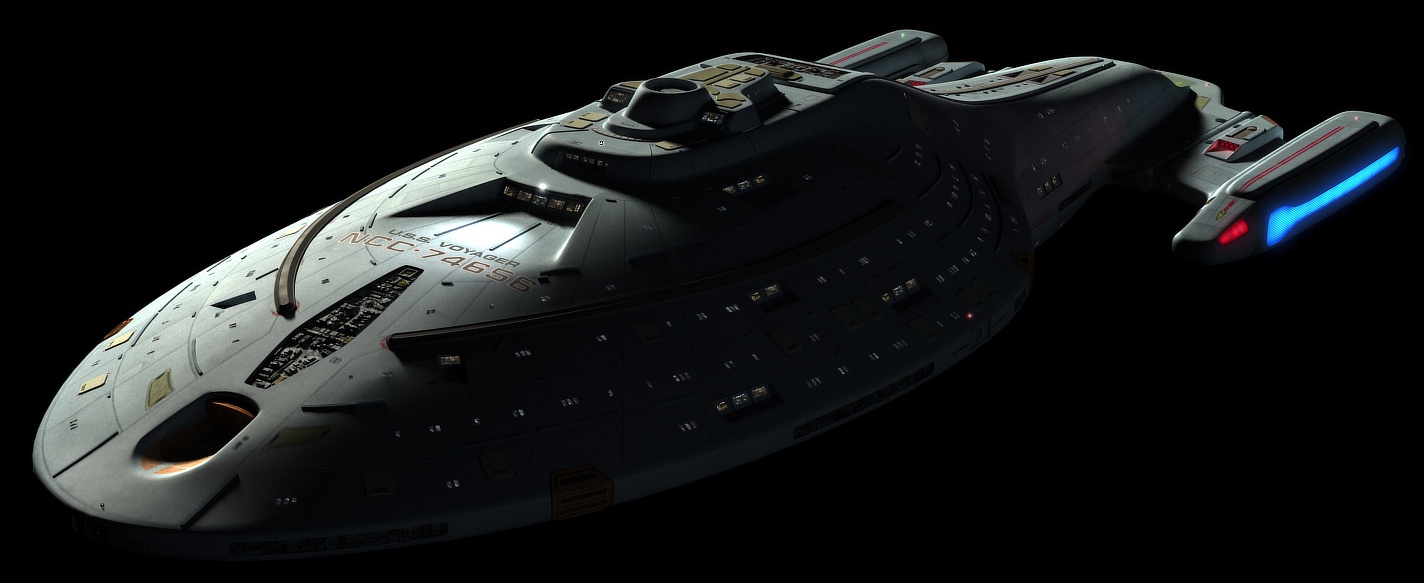
High-definition digital render of the USS Voyager (credit: TrekCore/Robert Bonchune).
The USS Voyager.
Image Credit: Robert Bonchune/TrekCore

I’ve actually tackled this idea before in a longer article – click or tap here to check it out! In short, some Trekkies have argued that the USS Voyager should have run out of torpedoes and shuttlecraft during its time in the Delta Quadrant – picking on a line from Season 1 in which Janeway said that there was “no way” to replenish the ship’s supplies. But I disagree with the idea that this is a plot hole and I can explain why in two words: Delta Flyer.

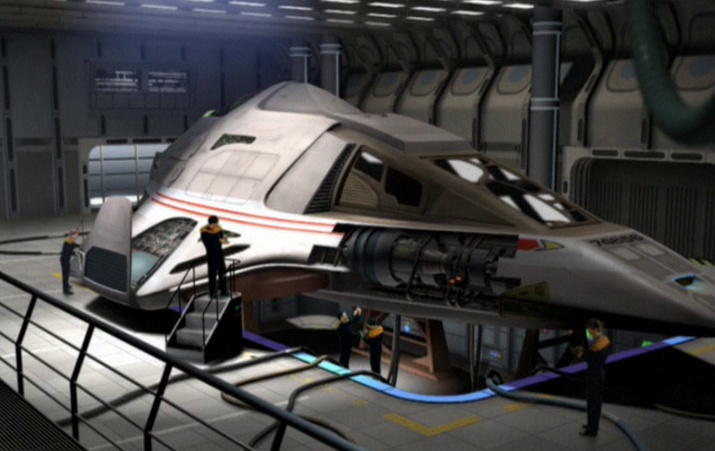
We see the crew of Voyager build not one but two Delta Flyers after getting stranded in the Delta Quadrant, using the ship’s industrial-sized replicator to do so. Though this may have been a drain on resources, it wasn’t fatal to the ship and crew by any stretch – so much so that they were able to build a like-for-like replacement when the first Delta Flyer was lost.

Still frame from Extreme Risk showing the Delta Flyer under construction.
The Delta Flyer’s construction.

Furthermore, we saw Voyager trade with numerous planets, ships, and stations during its journey home – potentially acquiring resources like antimatter that may be needed for torpedoes, engine parts for shuttles, and so on. Maybe some things can’t be replicated, but through trade, Voyager could have been able to acquire these resources.

In short, I’ve never bought into the idea that Voyager firing “too many torpedoes” is a problem, and I think it’s easily explained through a combination of a resourceful crew, powerful replicators, and bartering.

Head Canon #5:
Fashion trends, hairstyles, uniform designs, etc. change over time – just like they do in the real world.

The main cast of The Original Series Season 2 in a promo photograph.
The cast of The Original Series.

Take a look at photos from the 1970s, 1980s, and 1990s. It’s really easy to see how fashion sense and style changed in a relatively short span of time out here in the real world. Now look at the arguments some Trekkies were making about uniforms or hair styles being “wrong” in certain new Star Trek productions. It seems silly… doesn’t it?

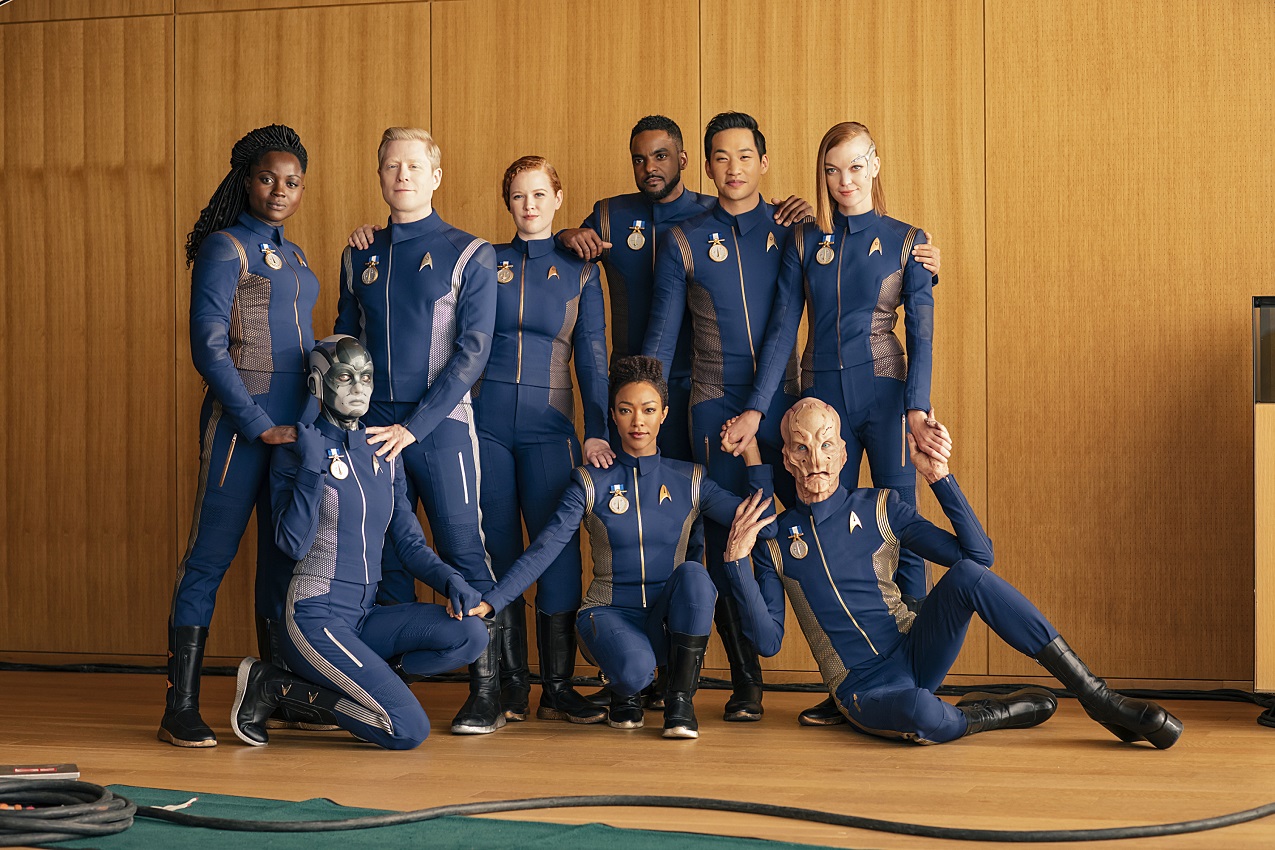
Discovery was set ten years before The Original Series. It’s not a stretch to think that hairstyles and designs for things like uniforms might’ve changed in that time. When Discovery debuted with its all-blue uniforms, I liked the idea of that style and colour existing in between Enterprise’s submarine-style boiler suits and the more familiar Starfleet uniforms of the later 23rd Century.

The main cast of Discovery Season 1 in a promotional photograph.
Some fans weren’t keen on Discovery’s uniforms.

The same principle can apply to alien races and other factions. Why were bald Klingons a problem in Discovery, for example? It didn’t bother me – and a simple head canon explanation could be that the Klingon Empire went through a phase of preferring shaved heads in times of war. Maybe it was a revival of ancient Klingon culture, maybe other Klingons did it in honour of their leaders.

There are some oddities with Starfleet’s uniform choices that have been introduced by different Star Trek productions. The Next Generation and Deep Space Nine seemed, for a time, to establish that space stations and starships had the same combadges but different uniforms, for instance – until that went out the window! But I don’t buy into the arguments that some Trekkies have put forward about these design and aesthetic choices. It really isn’t much of a stretch to think that the 23rd and 24th Centuries go through different fashion trends.

Head Canon #6:
The “Borg Teasing Theory.”

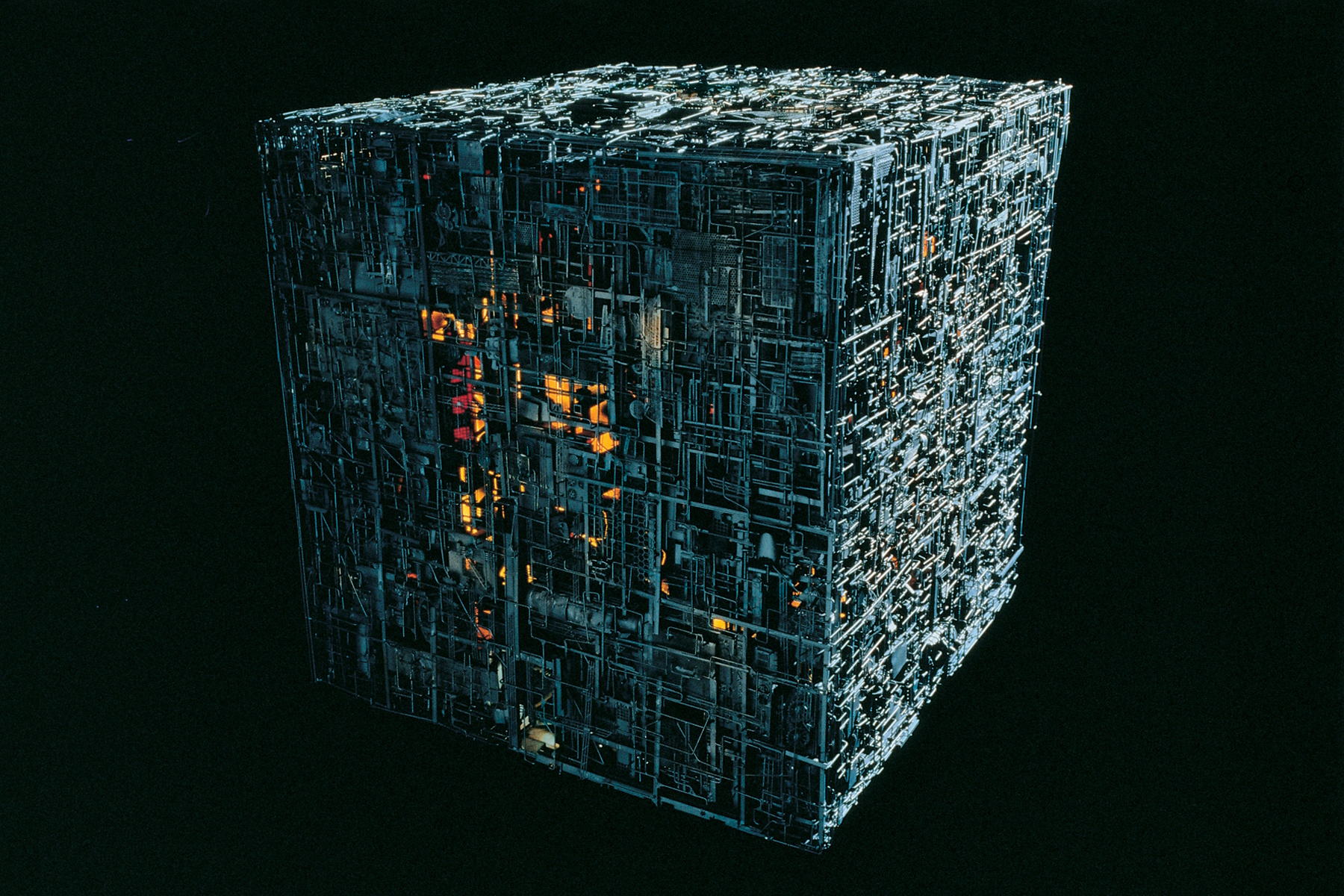
Behind-the-scenes photo from The Next Generation showing the original model of the Borg cube.
The filming model of the original Borg cube.

I find it interesting that the Borg Collective – with its massively superior technology, huge fleet of near-unstoppable ships, and untold legions of drones – never really made a serious effort to conquer the Federation. On both occasions where the Borg directly attacked Earth, they sent a single ship and – at most – a few tens of thousands of drones. Why?

I’ve had a theory for a long time (that I really must write up in full one day!) that the Borg Collective has been “teasing” the Federation. Not for fun – but to push Starfleet to develop newer and better technologies for them to assimilate. It’s not unfair to suggest that humanity is one of the most resilient, creative, and versatile species that the Borg had encountered as of the mid-24th Century, but even so, conquering the Federation shouldn’t pose a challenge based on what we saw of the scale of the Collective in Voyager.

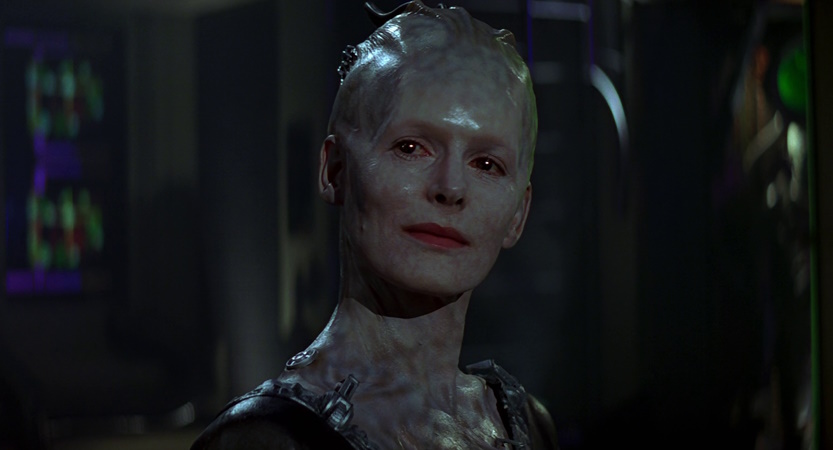
Still frame from First Contact showing the Borg Queen.
First Contact introduced the Borg Queen.

We know that the Borg seek “perfection,” and that they even ignore whole species if they think they have nothing to offer. Humanity clearly has plenty to offer the Borg… but in their push for even greater perfection, might the Borg be trying to see how far they can push the Federation?

The Borg attacks on outlying colonies, and later their attacks on Earth, prompted Starfleet to develop new and better weapons, shields, and medical technology. The Borg may have been hoping to assimilate these technologies later on – partly to add to their arsenal, but also partly to prevent them being used against them in a future conflict. By “teasing” the Federation with these smaller – but still pretty devastating – incursions, it’s basically a win-win for the Borg. Either their sole cube succeeds and assimilates Earth, then the rest of the Federation, or in its failure it not only gathers a ton of data, but also pushes Starfleet to develop newer and better things to assimilate in the future.

Head Canon #7:
Discovery Season 2 was originally going to be an “origin story” for the Borg.

Still frame from Discovery Season 2 showing the pseudo-assimilation of Captain Leland.
The “assimilation” of Captain Leland.

Is there such a thing as “production-side head canon?” I’m adding this one to the list either way! In short, no one is gonna be able to convince me that Discovery’s Control AI and time travel story in its second season was originally created/pitched as anything other than a Borg Collective origin story.

The way the Control AI was able to “assimilate” Captain Leland and others, using nano-technology, is just too eerily similar to the way the Borg operate to be a coincidence. When you add into the mix Burnham’s time travel suit… the stage was set for Control to become the progenitor of the Borg.

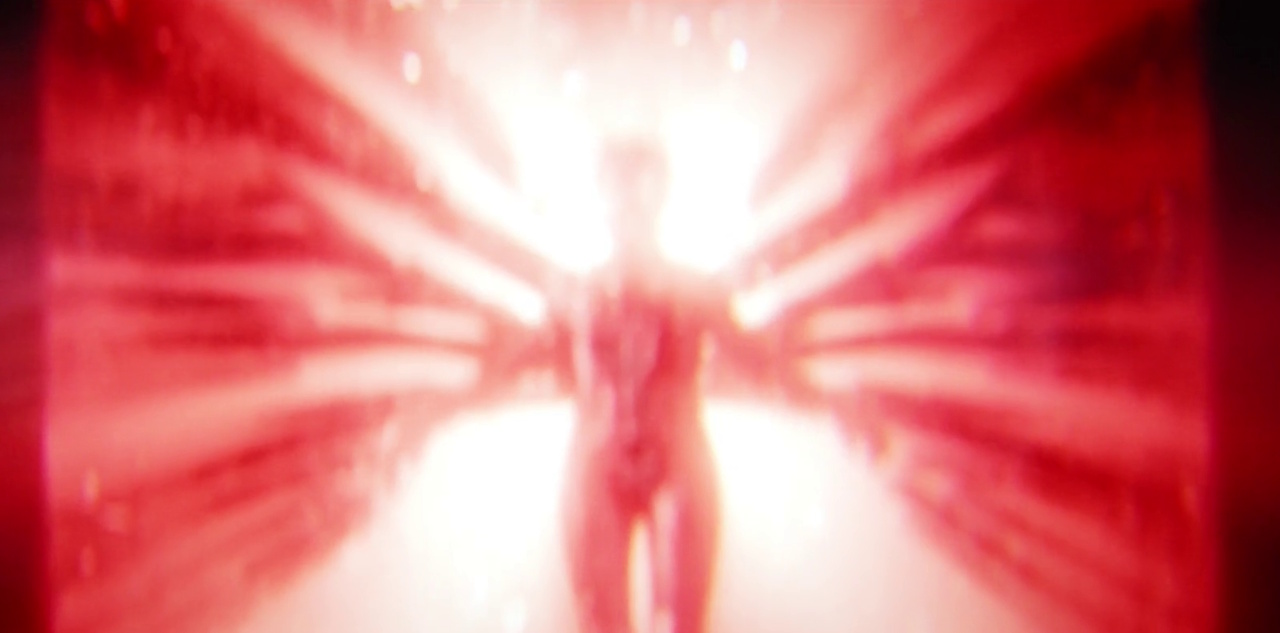
Still frame from Such Sweet Sorrow showing the Red Angel just out of focus.
The Red Angel suit could travel through time.

With relatively few tweaks to the final act of Season 2, Control could’ve seized Burnham’s Red Angel suit and, perhaps staring down the barrel of a Starfleet armada, escaped into the past. Crash-landing on a remote Delta Quadrant planet, Control could use its remaining nanites to conquer the native humanoid population… setting the stage for the Borg Collective to be a Federation creation.

Now, I’m not saying this would’ve been a good story. And I’m definitely not saying that Discovery’s writing team could’ve pulled it off successfully. Those are moot points now, anyway. But unless someone comes forward with concrete, definitive proof that Season 2’s Control/time travel story was never intended as a Borg story… well, let’s just say that would be a tough thing to convince me of! I have a longer article about this theory, by the way, and you can find it by clicking or tapping here.

Head Canon #8:
The Romulans eventually discovered Sisko’s underhanded tactics.

Still frame from In The Pale Moonlight showing Senator Vreenak's famous "it's a fake" line.
“It’s a faaaaaaake!”

One of my fantasy Star Trek stories is a follow-up to the outstanding Deep Space Nine Season 6 episode In The Pale Moonlight. But unless and until that happens, I’ll have to make do with my personal head canon! In short, I struggle to believe that Sisko’s actions in that episode – where he lied, schemed, and murdered his way to an alliance with the Romulans – would never come to light.

Whether this would set the stage for a full-scale conflict or not isn’t certain, and with the Romulan Empire in a much-weakened state in the early 25th Century, perhaps they wouldn’t be spoiling for a fight. Romulan leaders might even want to keep the revelation a secret, not only because it shows them in a bad light, but in order to avoid jeopardising an alliance that they relied upon in the aftermath of the loss of Romulus and Remus.

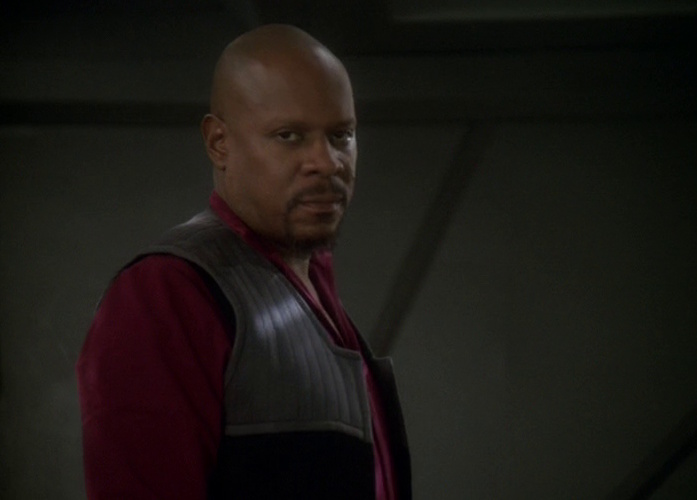
Still frame from In The Pale Moonlight showing Sisko looking directly at the camera.
I think the Romulans will eventually uncover the truth…

So how could it happen? The only people involved were Garak and Sisko, and neither would be likely to spill the beans. Garak, though, might’ve boasted about his achievements in private, if not to Dr Bashir then to someone else back on Cardassia. It’s one of his biggest achievements if you think about it, and it could become a legend within the re-established Cardassian intelligence agency.

More likely, though, would be the Romulans re-examining the fake “evidence” of the Dominion plot to invade. Garak believed that any imperfections in the recording would be written off as damage from the shuttle explosion, but I’m not so sure. Under proper forensic examination, would the fake recording really hold up? Or could Senator Vreenak have sent a message warning about the forgery before his assassination? There are multiple ways this could go – and serious consequences for Starfleet if and when the truth comes out!

Head Canon #9:
Starfleet will find a way to prevent the Burn – pushing Discovery’s far future into an alternate timeline.

Still frame from Su'Kal showing a flashback to the Burn.
The Burn.

If you’re a regular reader, you might remember that – only a few weeks ago – I pushed back hard against the idea that some or all of Discovery has been “rendered non-canon” by one brief clip in Lower Decks. And to be clear: I stand by what I said then! Discovery, at time of writing, remains fully canon, and its far-future setting is the ultimate destination for the prime timeline.

But the Burn is particularly depressing, and knowing that the Federation will suffer such a horribly devastating blow – even if not for centuries – potentially changes how we react to stories set in the 23rd, 24th, and 25th Centuries. So my current head canon is this: at some point in the future, perhaps after Discovery’s new spin-off, Starfleet Academy, has finished its run, the far future setting will be quietly dropped. If there’s more Star Trek being made at that point, or at some point in the future, it will either totally ignore those events or perhaps even find a way to imply that they didn’t happen.

Still frame from That Hope Is You II showing a simulation/recording of the origin of the Burn.
The Burn originated on a wrecked ship in a toxic nebula.

We’ll need to discuss this in more detail on another occasion, but I don’t think that Discovery’s “post-apocalyptic Star Trek” idea worked. I don’t think the concept was a good one in and of itself, but I also feel that the execution was poor. Aside from a few moments in Season 3, Discovery never really did a lot with the idea of rebuilding the Federation, and the things we did see were smaller moments that were blitzed past to get to other, generally less interesting stories.

So I think there’s a case to be made to quietly push Discovery and Starfleet Academy into their own timeline at some future point. In my head, it works better that way – allowing Discovery to continue to exist and for Starfleet Academy to hopefully build on the foundations it laid, but also not constraining future stories that may be set in the 24th or 25th Centuries.

Head Canon #10:
Section 31 regularly uses cloaking devices.

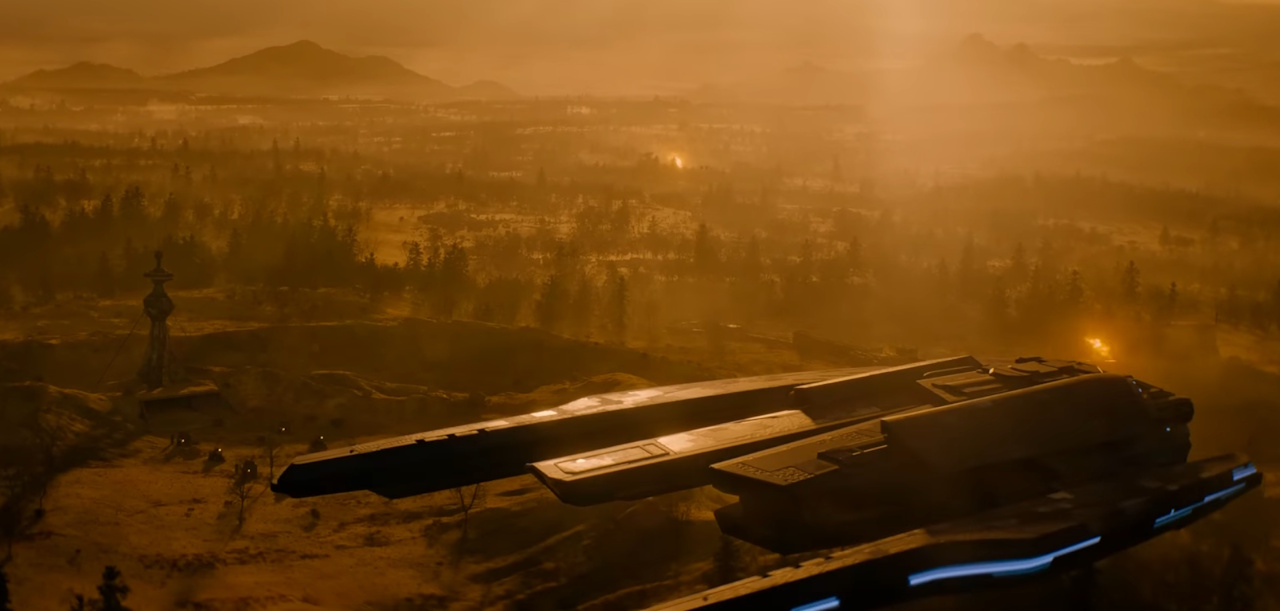
Still frame from Section 31 showing a Section 31 ship.
A Section 31 vessel of the late 23rd/early 24th Century.

Maybe I’m forgetting or overlooking an episode, but I can’t remember seeing Section 31 using cloaked ships. It seems logical to me, though, that the Federation’s black ops/off-the-books security organisation would take advantage of cloaking technology whenever possible. Starfleet may be bound by the Treaty of Algeron not to use cloaking devices… but does anyone really think that Section 31 – an organisation which has attempted genocide and overthrown governments – would abide by the law?

Section 31’s use of cloaked ships could also explain things like their abduction of Dr Bashir in Inquisition – the faction’s first appearance in Star Trek. That episode left it deliberately unclear how Section 31 was able to infiltrate DS9 to capture Bashir, but if you imagine them using a ship with a cloaking device, things start to fall into place.

Still frame from Inquisition showing a close-up of Sloan.
Deputy Director Sloan.

Starfleet (and presumably the Federation government, too) refuse to officially acknowledge Section 31’s existence – at least in the mid/late 24th Century. So that makes it easy for them and their ambassadors to deny that any officially-sanctioned Starfleet or Federation ship is using a cloak in violation of the treaty with the Romulans. The Federation would, presumably, deny the existence of any such vessel and would abandon any captured Section 31 operative to their fate.

An organisation that likes to exist in the shadows would, surely, want to take advantage of every possible way to hide. Cloaks in Star Trek are imperfect – but they’re still very useful pieces of kit. For spies and assassins, a cloaked ship could be the difference between reaching a target and failing the mission. Section 31 would obviously use this technology – even if we’ve never seen it!

So that’s it… for now.

Still frame from The Undiscovered Country showing General Chang looking at the Enterprise.
The Enterprise-A on a Klingon viewscreen.

I have a few other ideas that I didn’t have time for on this occasion – so stay tuned, because I might revisit this subject in the future. It was a bit of fun for me, and pretty cathartic to talk about some of these ideas. Several of these head canon explanations are things I came up with years or even decades ago, so it’s definitely fun to air them for the first time!

As I said at the start, this is just for fun and isn’t something to argue about or get upset over. Head canon is a great way for fans to plug holes or expand stories – but it isn’t worth taking too seriously; none of this will ever be seen or confirmed on screen. In fact, it’s quite likely that some of what we talked about today will be actively debunked in future!

I hope you’ll stick around here on the website, as there’s more Star Trek content to come! I finally finished reviewing Strange New Worlds’ fantastic second season a few days ago, and earlier in the year I took a look at the Section 31 TV movie, too. I hope you’ve found some of these head canon ideas interesting, in any case.


Most Star Trek shows and films discussed above can be streamed on Paramount+ in countries and territories where the service is available. Most of the Star Trek franchise is also available on DVD and Blu-ray. The Star Trek franchise – including all films, shows, and properties discussed above – is the copyright of Paramount Global. This article contains the thoughts and opinions of one person only and is not intended to cause any offence.
Ten great Star Trek episodes – Part 3: Deep Space Nine

Spoiler Warning: In addition to spoilers for the Deep Space Nine episodes on this list, minor spoilers may be present for other iterations of the Star Trek franchise, including Star Trek: Discovery and Star Trek: Picard.

In the previous two entries in this series of articles, I picked out ten great episodes from both The Next Generation and The Original Series. This time, it’s the turn of Deep Space Nine to get a closer look. Thus far on the blog I haven’t spent much time with Deep Space Nine, which is mostly due to Star Trek: Picard taking up a lot of time, and because practically nothing from Deep Space Nine crossed over to that show. So this is a first!

The Next Generation had successfully proven that the Star Trek brand was bigger than Kirk, Spock, and McCoy in the late 1980s. With Gene Roddenberry terminally ill, Rick Berman took over the running of the Star Trek franchise, and by 1990, when the fourth season of The Next Generation debuted, was in full control. It was around this time that the concept of a spin-off from The Next Generation began to be taken seriously. It was decided that the show should be set on a space station so as to differentiate it from The Next Generation, which was still on the air at the time it premiered. Returning to the franchise’s western inspirations from way back in the mid-1960s, Deep Space Nine was based on the idea of a frontier town from those kind of stories – complete with a town sheriff, bartender, “mayor”, and “natives”.

Deep Space Nine represented the biggest change in the Star Trek franchise so far, and even in 2020 remains unique as a series not set on a moving starship. The fixed setting meant that the producers could bring in a number of secondary recurring characters in addition to the main cast, several of whom would go on to have increasingly large roles as the seven seasons of the show rolled out. Two major characters from The Next Generation crossed over to Deep Space Nine – Chief O’Brien was present from the beginning and Worf joined in the fourth season. This continuity of characters, combined with crossover episodes, firmly tied the two series together as separate parts of a larger ongoing fictional universe in a way that was unprecedented at the time. The Next Generation had gone out of its way to stand apart from The Original Series at least in terms of its characters and setting, but Deep Space Nine leaned into its sister-show.

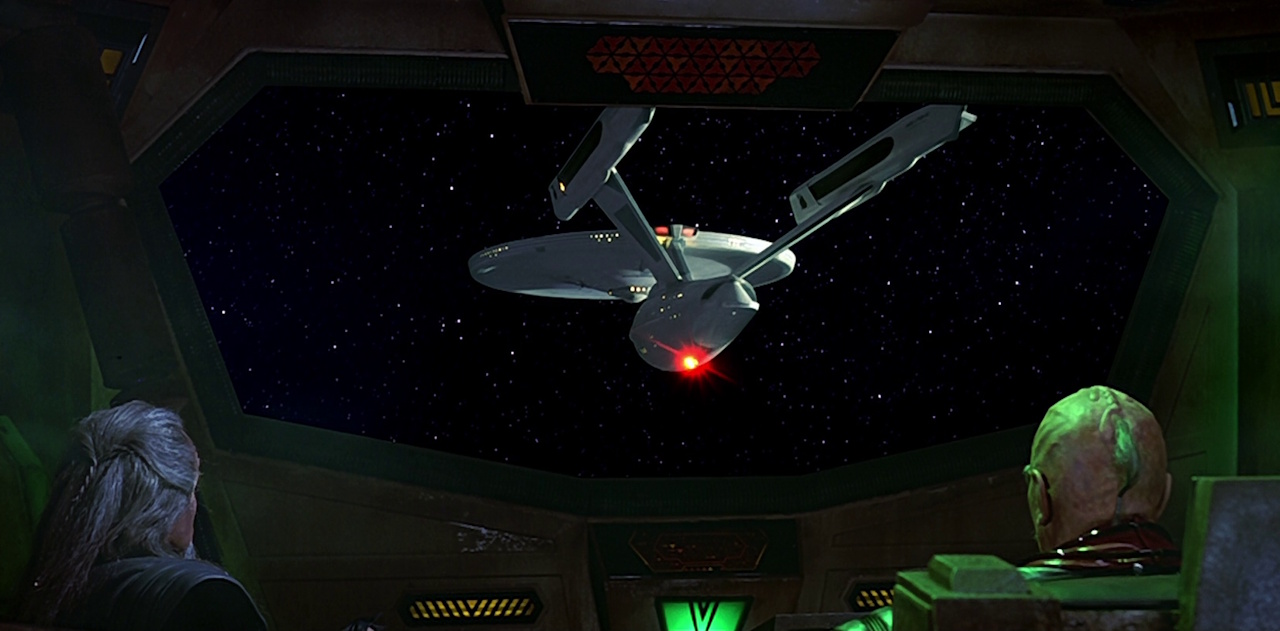
The opening titles for Deep Space Nine.

Thematically, however, The Next Generation and Deep Space Nine were worlds apart. From the very beginning there were tensions and conflicts among the crew, which was now made up of Federation and non-Federation personnel. The show would diverge even more from previous iterations of the franchise as time went on, becoming much darker in tone and eventually portraying a long, bitter war between the Federation and the Dominion – a new faction created for Deep Space Nine. The Dominion War storyline, which built up slowly between Seasons 2 and 5 and would explode into all-out war for the entirety of Seasons 6 and 7, marked Star Trek’s first foray into serialised storytelling. This more modern style of television storytelling would be employed in Enterprise, Discovery, and Star Trek: Picard as well.

For all of these reasons, Deep Space Nine was controversial in some Trekkie circles, and some fans of the two earlier shows weren’t keen on its static setting, darker tone, and serialised stories. Conversely, though, some Trekkies cite Deep Space Nine as their favourite entry in the franchise by far, precisely for those same reasons. I place myself somewhere in the middle; while it is different to what came before, that doesn’t make it worse and it is still greatly enjoyable Star Trek fare.

One final point worth making note of is that, as of 2020, Deep Space Nine has not been remastered and remains in its original broadcast format from the 1990s. I consider this to be a major mistake and oversight on ViacomCBS’ part, especially as they’ve been so keen to use the Star Trek franchise to drum up support for their streaming platform, CBS All Access. As a result, Deep Space Nine doesn’t look as good as most of the other shows (along with Voyager, which has the same limitation). I did write a piece about this, calling on ViacomCBS to remedy this situation. You can read it by clicking or tapping here.

If you missed the other posts in this series, here’s a recap of how the format works: this isn’t a “Top Ten” list of my all-time favourites. Instead, it’s a list of ten episodes (or rather, ten stories, some of which are multi-episode arcs) which I think are great and well worth watching – especially if you’re finding yourself with lots of time for entertainment at the moment. I’ve picked at least one episode from each of the show’s seven seasons, and the episodes are not ranked, they’re simply listed in order of release.

Let’s jump in and look at the episodes, and please be aware of spoilers.

Number 1: Emissary (Season 1, premiere)

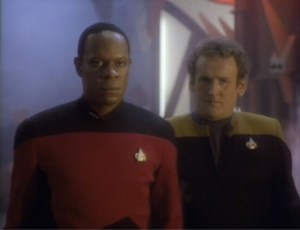
Commander Sisko and Chief O’Brien in Emissary.

It’s rare for a series to kick off with one of its best episodes. What often happens in television is that it takes time for a show to find its feet as the actors and crew get used to working together and as characters and story elements develop. In the Star Trek franchise this is true too, but Emissary bucks the trend. Until very recently I’d have said it was easily the best opening episode of any Star Trek show, but it must now share that crown with Remembrance, the premiere of Star Trek: Picard – a review of which you can find by clicking or tapping here.

The episode begins with a flashback to the events of The Next Generation episode The Best of Both Worlds, around three years previously. Sisko, it turns out, had been aboard the USS Saratoga, one of the ships destroyed by the Borg. His wife had been killed but he escaped the exploding ship with his son Jake. Cut to the present day, and the Cardassians had finally withdrawn from Bajor after decades of occupation. Both factions had been introduced in The Next Generation too, so the audience would have been familiar with them. Both of these elements tied Deep Space Nine to its sister-show in a way that hadn’t really been seen before. Star Trek was expanding, but it was expanding in such a way that the shows being produced together would share a setting – we’d also see this in Voyager, and I’ve written previously about why it worked and why doing something similar would be good for Star Trek going forward. But we’re off-topic again.

Sisko and Jake travel to the Bajoran system and arrive aboard the newly-christened Deep Space Nine, a former Cardassian station. The episode introduces us to the crew – O’Brien, who’s obviously crossed over from The Next Generation, as well as Dax, Quark, Kira, Odo, and Dr Bashir. Interestingly, the role of Kira Nerys was intended to be filled by Ro Laren, another recurring character from The Next Generation, but actress Michelle Forbes declined the offer.

The episode sets up tension between Sisko and Picard; the former blaming the latter for what happened at Wolf 359. Sisko seems on the verge of resigning from Starfleet, but after discovering the Bajoran wormhole and encountering the noncorporeal Prophets, Sisko realises why he’d been unable to move on from those events, and approaches his new role with renewed vigour.

The only criticism I’d have of Emissary might be this: the story almost immediately took DS9 from being a minor frontier outpost to being a vitally important location. There was scope, I feel, for the show to have spent a little more time looking at DS9 as an unpopular posting, and at Bajor as a slowly-recovering backwater before introducing the Gamma Quadrant. I mentioned that Emissary stands up as being a pilot that’s one of the series’ best episodes and that’s true – in part because the discovery of the wormhole storyline could have been moved to later in the show!

Number 2: The Homecoming, The Circle, and The Siege (Season 2)

The Siege sees Bajoran rebels capture DS9.

I believe this trio of episodes form Star Trek’s first “three-parter”, and kicked off the second season of Deep Space Nine with an explosive story. It would’ve felt wrong to pick just one of the three episodes considering they form a single story, and I wanted to talk about it in its entirety.

One aspect of the story in Season 1 designed to cause tension was the idea that some Bajorans resented the arrival of the Federation so soon after the Cardassians had left. While Major Kira expressed this view in Emissary, she had largely stepped back from overt criticism of the Federation’s presence, yet it was something the show wanted to address. In this story, an aggressive group of Bajorans want the Federation gone. They don’t realise it, but they’re being manipulated by the Cardassians, and the whole scheme is a Cardassian plot to retake the station and the Bajoran system – which is now strategically valuable because of the wormhole.

DS9 would come under attack a number of times across the series’ run, but this is the first time we really see the station and its crew forced into such a difficult combat situation. Despite Starfleet’s order to withdraw – they were only there, after all, at the request of the Bajoran government – Sisko and the crew stay behind to fight off the Bajoran soldiers involved in the coup.

The character of Li Nalas, played by Richard Beymer, is one of the best one-time characters that appeared in the show, especially in the early seasons. A resistance hero who Kira rescues, Li is assigned to the station and ultimately loses his life to save Sisko from the rebels.

Vedek Winn – who would later be elected Kai, the Bajorans’ spiritual leader – returns in this story from her sole appearance in Season 1. While she had been presented as a thoroughly dislikable character in the episode In the Hands of the Prophets, it was here, at the beginning of Season 2, that her role as a villain begins to be fleshed out, as she is shown to be collaborating with the Cardassians and is clearly someone for whom power is the ultimate goal.

Number 3: The Wire (Season 2)

Dr Bashir tends to Garak in The Wire.

Elim Garak, the sole Cardassian aboard DS9, was an enigmatic and interesting character in his early appearances. Later episodes would flesh him out much more, especially during the Dominion War which of course affected Cardassia greatly. But The Wire was one of the first Garak-centric episodes, and it looked in detail at his past as a spy.

In fact, The Wire is the first episode to introduce the Obsidian Order – the Cardassian Empire’s secret police/intelligence agency. This faction would go on to be further developed as later seasons of the show rolled out, but here is where it was first introduced. We also meet its former head, Enabran Tain, for the first time. Tain would reappear several more times in Deep Space Nine.

Garak had been an enigmatic character, but prior to The Wire his status and his past were unclear, and his conversations, particularly with Dr Bashir but also with others, could be taken in different ways. It wasn’t until this episode that we get outright confirmation that not only was he once a spy, but that he’s in exile. His lies cloud the story somewhat, and even by the end of the episode the reason for his exile is not clear, but what is clear is that Dr Bashir had been right about him in a roundabout way – Garak had once been a spy.

Over the course of more than thirty appearances in Deep Space Nine, Andrew Robinson would make Garak just as much a part of the show as its main cast – especially in later seasons. It’s hard to imagine the series without him, as he would become such an important character, and from that point of view the story of The Wire is important. But as a work of mystery, and as an episode focusing on Dr Bashir as he tries to save a patient who, at times, treats him awfully, it’s a great work of drama too.

Number 4: The Search, Parts 1 & 2 (Season 3)

The Search introduced the USS Defiant.

The finale of Season 2 introduced the Dominion, the aggressive Gamma Quadrant faction that would become Deep Space Nine’s major antagonists. The Season 3 premiere picks up the story in the aftermath, and the crew set out to search for the Dominion – in the brand-new USS Defiant.

The Dominion were intended to be an anti-Federation faction. Where the Klingon and Cardassian Empires were monoethnic, the Dominion would incorporate several races under its banner, just like the Federation. But instead of being a democratic society with a focus on peaceful exploration, the Dominion would be a dictatorship, and its races would be split into castes – with the Founders being treated with god-like reverence, akin to something we might see in Imperial Japan before 1945 or North Korea. The Dominion also answered a burning question for Deep Space Nine, namely what to do with the Gamma Quadrant. The show was supposed to be set on a static station with less focus on exploration, but with the Gamma Quadrant beckoning just beyond the wormhole, a number of episodes had basically been about going there and exploring. The Dominion, and their iron grip on the territory beyond the wormhole, gave Deep Space Nine an excuse to cut back on exploration, and by extension, avoid becoming The Next Generation or Voyager, which was about to premiere. Voyager’s upcoming launch also changed the name of the USS Defiant – it was originally to be named the USS Valiant, but Rick Berman and other Star Trek producers didn’t want two ships whose names began with the letter V!

The introduction of the Defiant allowed for more stories away from the station featuring the full crew, not all of whom could seemingly fit on one Runabout. It shook up the show, and would set the stage for the more military direction that the showrunners intended to take.

The Search also introduces two key recurring characters – Michael Eddington, the Starfleet officer who would go on to become a leader in the Maquis, and the unnamed female changeling, who would be the Founders’ representative throughout the Dominion War. Odo discovering his people and realising for the first time that he isn’t alone was a major turn for his character too, one which worked brilliantly, especially in later stories. Indeed, much of what would come later in Deep Space Nine in terms of successful storylines premiered or was at least hinted at in this two-parter.

The Dominion here are shown to be very powerful, but their intentions are not yet clear. The Founders clearly have a major problem with any non-changelings, but they do concede to Odo at the end and allow everyone to return home. Obviously, however, this wouldn’t be the last we’d see of the Dominion or Odo’s people.

Number 5: Homefront and Paradise Lost (Season 4)

Admiral Leyton was the antagonist in Homefront and Paradise Lost.

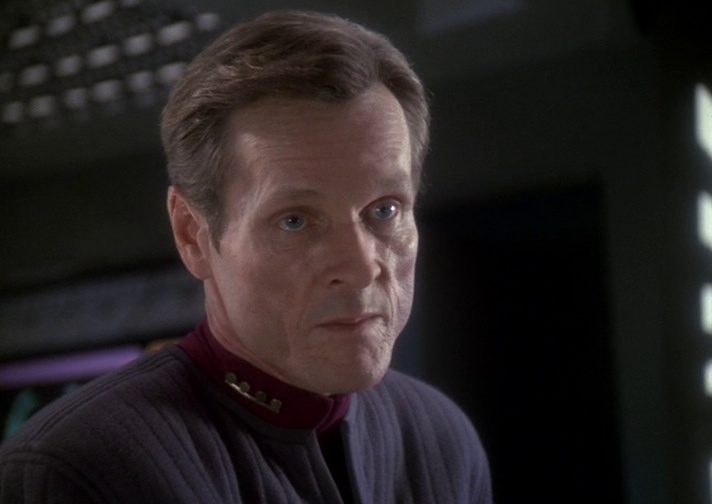
Since discovering the Dominion and their shape-shifting Founders, the Federation had become increasingly worried – to the point of paranoia, in some cases – about being attacked or infiltrated by changelings. The basic story of Homefront and Paradise Lost sees a former commander of Sisko’s recall him to Earth to work on strategies to protect the Federation – but this officer, Admiral Leyton, played by Robert Foxworth, has another scheme in mind.

Believing the democratic government to be impotent and paralysed in the face of the Dominion threat, Leyton plans a coup to seize power for himself on behalf of a cadre of Starfleet officers, in a story with a genuinely sympathetic antagonist. What’s so engrossing about Leyton is that he’s not a typical villain. He and Sisko actually have the same morals and the same motivation – they just have very different ways of going about engaging the Dominion. Leyton genuinely believes he’s doing the right thing – and while in the episode itself he’s presented as being in the wrong, we can at least entertain the argument that the later Dominion War would prove that he was right to take the threat seriously.

We’ve visited Earth in Star Trek on a number of occasions, but this was our first significant look at 24th Century Earth outside of Starfleet Academy. The action takes place in several locations on the planet, including Sisko’s hometown of New Orleans. It also gives Nog, now a Starfleet cadet, something significant to do for the first time in a number of episodes, and sets the stage for his future development as a Starfleet officer.

I’ve always liked the character of Joseph Sisko, played by veteran actor Brock Peters. In this story, he’s presented as a voice of reason, standing up to Sisko’s increasingly paranoid behaviour as he searches for changeling infiltrators. Giving that role to Joseph Sisko worked so well in the story, and it’s one of my favourite storylines from this duology.

Number 6: Nor Battle to the Strong (Season 5)

Nor Battle to the Strong was a rare Jake-centric episode.

Despite being credited as a main cast member for all of Deep Space Nine’s seven seasons, Cirroc Lofton’s character of Jake Sisko made only 71 appearances out of the show’s 176 total episodes. For a long time, the show’s creators didn’t really know what to do with the character. Having him try to become a Starfleet officer would have been too similar to Wesley Crusher’s storyline in The Next Generation, and I have no doubt that there was an awareness on the part of the producers that Wesley had been, shall we say, not well-received by every fan. So there was a need to do things differently, but without any real sense of direction as to what that might be. Jake Sisko was created to be less a character in his own right than to give Benjamin Sisko a dependent, and it shows.

However, by the fifth season, the idea had been conceived to make Jake into a writer. Initially he wrote poetry and planned to write a novel, but in the episode Nor Battle to the Strong he branches out and begins writing articles and profiles about current events – in this case he uses the opportunity of writing about Dr Bashir as an excuse to get off the station, but ends up in a warzone when their ship is diverted. At this point in Deep Space Nine’s story, the Federation and Klingons are engaged in a brief war which had been set in motion by a Dominion infiltrator, but that really is’t the focus of the episode.

Jake is thrown into a warzone completely unprepared for what he’d find. He goes from enthusiastic to terrified in a matter of hours, and in a very powerful sequence finds himself alone with a badly-wounded Federation soldier, who dies in front of him.

Toward the end of the episode the Klingons attack, and Jake finds himself trapped and terrified in the Starfleet base. Firing his phaser randomly he inadvertently causes a cave-in, which stops the Klingons in their tracks. Hailed as a hero, Jake feels dejected and depressed, feeling that after abandoning Bashir and the dying soldier, he doesn’t deserve the label. He writes up his experiences in a powerfully honest piece which we see both Sisko and Bashir read.

Nor Battle to the Strong is an incredibly powerful story about the reality of war, told through the eyes of the kind of enthusiastic young man that our armies arguably consist of. At the beginning of the episode Jake is longing for action, to get away from the boredom of the station and a medical conference. He’d love to thought of as a hero, too. Yet by the end, after the horrors he saw and the trauma he went through, not only does he reject the label of “hero”, but he’s more than happy to be back aboard the station.
While he labels himself a coward, and perhaps not unfairly so, we sympathise with Jake. He wasn’t ready for what he saw, as indeed nobody can be until they see if for themselves, and he acted on instinct and out of fear. Jake could be any of us, and the episode challenges us as the audience as if to say: “you think you’d act any differently?” Nor Battle to the Stong also sets up Jake for his decision to remain aboard DS9 when it’s occupied by the Dominion at the end of the season. Having seen warfare first-hand, he’s more experienced and perhaps feels a little more ready for taking a big decision like that.

Number 7: Call to Arms (Season 5), Favor the Bold, & Sacrifice of Angels (Season 6)

The Federation fleet in Favor the Bold, en route to DS9.

This trio of episodes forms a single story, with several other episodes in between at the beginning of the sixth season. In Call to Arms, the cold war between the Federation and the Dominion finally boils over into all-out conflict, and as the gateway to the Gamma Quadrant DS9 is in the firing line. In an attempt to stop the Dominion’s military build-up in Cardassian space, Sisko and the crew plant a minefield at the mouth of the wormhole – self-replicating mines, designed by Rom, Dax, and O’Brien, which would also be cloaked for maximum effectiveness. While it had been clear for some time that the Dominion War would happen one way or another, in the end it would be Starfleet and the Federation who would trigger it.

We’ve touched on Deep Space Nine being darker before, and this decision is another example of that. Starfleet had evidently given up on the idea of a negotiated settlement, and as they could no longer stand a military buildup on their frontier, they took the first step – aggressive action which had no other possible outcome. In this sense, Starfleet is presented in a much more military light than usual, akin to some of the conspirators in The Undiscovered Country, which is perhaps the closest we can get within the franchise.

The minefield ultimately leads to the anticipated Dominion-Cardassian attack, and with the Federation’s resources focused elsewhere, DS9 is surrendered to their forces at the end of Season 5, and remains under their control for the first third of Season 6. I’d argue, by the way, that DS9 was so vitally important to the war effort, as it controlled the only travel route between Dominion space and the Alpha Quadrant, that all steps should have been taken to keep it safe. But a) there’s no denying it was a dramatic turn as a story beat, and b) we don’t know the state of Federation-Klingon forces at the time, and they may well have decided that trying to hold the station and the Bajoran system would be massively costly and ultimately futile. But we’ve gone way off-topic!

Favor the Bold sees Sisko come up with a plan to recapture the station, but with the Dominion close to destroying the minefield and unleashing a vast wave of reinforcements, they have to launch the plan ahead of schedule. I loved the way that they were able to communicate the information from DS9 to Sisko – Morn would become a courier, and I loved this way of using his character.

The story arc is finally concluded in Sacrifice of Angels in dramatic fashion, and features what is still one of Star Trek’s biggest space battles to date, possibly only behind a couple of later battles in Deep Space Nine and the one seen in Discovery’s Battle at the Binary Stars. The battle is also one of Star Trek’s finest, with the last-minute arrival of the Klingon fleet clearing a path for Sisko to make it back to the station. The next twist involves the Prophets, who finally involve themselves in the war on the side of the Federation – at least for a moment.

Practically every character gets a turn across this story arc, from Jake Sisko, who opts to stay behind aboard the occupied station, to Kira, who sees herself as a collaborator with the Cardassians, to side-characters like Rom, Nog, and Garak, who all have roles to play. Gul Dukat sees a massive turnaround in his character, going from achieving his wildest ambitions to tasting bitter defeat and painful loss, setting the stage for what would come next for him. Overall, a stunning story to kick off the Dominion War arc.

Number 8: Who Mourns for Morn? (Season 6)

Morn and Odo in Who Mourns for Morn?

In the midst of a what was a very dark season overall, Who Mourns for Morn? stands out as being a much more light-hearted episode. Focusing on the character of Morn, who was less of a recurring character than a true background character, this episode sees him “killed”, and Quark scrambling to recover his fortune.

Taking a break from the war and returning to the Quark-versus-Odo dynamic that had worked so well in previous seasons, the episode also brings in a number of guest stars to play Morn’s criminal associates. Each of these characters was fairly one-dimensional and even a little over-the-top, but in the context of a fun heist/mystery story they worked wonderfully, and gave Deep Space Nine some much-needed time off from the war.

René Auberjonois and Armin Shimerman worked so well together, not just here but throughout their stories together in Deep Space Nine. The two actors built up a chemistry and, reportedly, a genuine friendship – helped, no doubt, by the long sessions spent together having makeup and prosthetics applied.

Morn had been a part of Deep Space Nine from the beginning, but in a non-speaking role. This episode took a more detailed look at him, particularly his past as a criminal. It was genuinely funny to see the characters talking about Morn as someone who would never shut up in light of the fact that we never heard him speak on-screen, though the episode wasn’t universally well-received, as some fans felt it was too un-serious in the middle of a war, and that Morn was somehow “unworthy” of an episode dedicated to him. Some people are real killjoys!

Number 9: In The Pale Moonlight (Season 6)

In The Pale Moonlight spawned an early internet meme!

Deep Space Nine was much darker than any Star Trek show had been before, as we’ve already mentioned. It looked at themes like warfare and morality from a wholly different place than Gene Roddenberry had done, and In The Pale Moonlight sees the show at one of its darkest moments. What results is an episode that is divisive, at least in some circles. Fans of the more optimistic tone of The Original Series and The Next Generation may dislike what it brings to to the table, particularly in the way it shows how 24th Century humanity is susceptible to the same flaws and problems that we are today – but I’d argue that simply makes it more relatable, or even realistic.

With the Dominion War raging and many Starfleet officers dying on a daily basis, Sisko hatches a plan to bring the Romulans into the fight on the side of the Federation-Klingon alliance. Other episodes of Deep Space Nine had looked at the gritty reality of war from different angles, but In The Pale Moonlight showed the crew looking through reams of names of the dead and missing in a powerful sequence that showed just how many casualties were being inflicted.
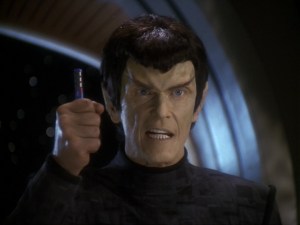
The Dominion had been created to be an equal for – and to outgun, at points – the Federation-Klingon alliance. We’d seen even going back to their pre-war appearances how powerful their ships and weapons could be, so by this point in the show the fact that the war would see the Federation somewhere between a WWI-esque stalemate and actually being on the back foot is not unrealistic. The storyline builds masterfully on what has come before, especially earlier in Season 6, to present Sisko’s decisions in a sympathetic light.
Sisko employs Garak to aid in his scheme to convince a Romulan senator that the Dominion plans to attack them. As with any big lie, Sisko finds himself falling deeper and deeper into the scheme, crossing more and more lines in his quest to do what he believes is right. The episode thus looks as the concept of moral relativism and the question of whether the ends can in fact justify the means under exceptional circumstances. Sisko was ultimately okay with lying, forging evidence, pitting two powerful factions against one another, and dragging a foreign power into a war that they didn’t need to participate in. He was even content to cover up murders, all in the name of victory for the Federation. As Section 31 would say, sometimes saving the Federation means doing very un-Federation things.

Number 10: The Siege of AR-558 (Season 7)

Nog receives a serious injury in The Siege of AR-558.

Deep Space Nine’s seventh and final season was a war story, and the latter part in particular was one long serialised arc. It can be difficult to pull out single episodes from such a story, but for me, The Siege of AR-558 encapsulates perfectly what the show wanted to say about war.

Directed by Vietnam War veteran Winrich Kolbe, who directed a number of other Star Trek episodes too, The Siege of AR-558 has a claustrophobic feel, no doubt informed by its director’s own experiences. The fact that the planetoid is not even given a proper name adds to the sense of futility, and while there is a good reason to defend the captured position – it hosts an important Dominion communications relay – that hardly matters to the soldiers stationed there.

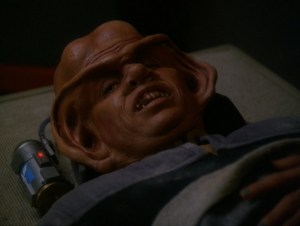
Nog’s character arc in Deep Space Nine, from petty thief to outstanding officer and war hero, sees major development as he suffers a serious injury. The way Aron Eisenberg approached the role of Nog is commendable, because he took what could have been a one-dimensional minor character, and foil for Jake Sisko, and turned him around into someone we could root for and feel for. Sadly, Eisenberg passed away last year.

The Siege of AR-558 is also a reminder that all wars see small acts of heroism on a regular basis, many of which go unnoticed and unreported. Sisko’s decision to stay and fight is one, Nog’s injury is another, but also we have the soldiers already present on the planetoid – not all of whom survive the episode. These characters show different reactions to life on the front lines, and the episode is much better for their inclusion.

The Siege of AR-558 also gives Ezri Dax something to do away from the station. Ezri was brought in at the beginning of Season 7 to replace Jadzia Dax – who had been killed at the end of the sixth season. Nicole deBoer played her very well in all of her appearances, but with only one season left before the show would end, Ezri didn’t have a lot of time for us to get to know her. Thus her role in an episode like this one, while not the main focus, is important for her character as the season unfolds.

So that’s it. Ten great episodes from Deep Space Nine. I tried to pick a couple of non-war stories to go along with all of the war-themed episodes. There’s more to the show than the war, but war and its associated themes are prevalent throughout the series, even from its opening scene which was set midway through a battle.

There are many other episodes which almost made this list, and Deep Space Nine has some great options to revisit time and again. I’ve seen the Dominion War arc more times than I can count, and even on a repeat viewing the war is still incredibly dramatic, tense, and exciting. For me, “modern” Star Trek began partway through The Next Generation’s run, perhaps around the third season, and Deep Space Nine carried on the trend of modernising the storytelling, taking Star Trek away from its 1960s roots. While some fans of The Original Series may not appreciate that, for me personally it works. I have friends on both sides of the argument of whether the Dominion War arc was a great idea or a terrible one, but again it’s a storyline that worked for me.

As I said last time when looking at The Next Generation, there were many other episodes that I could have chosen for this list. Deep Space Nine can be divided into at least three distinct parts – Seasons 1 and 2, prior to the introduction of the Dominion, Seasons 3-5 before the outbreak of the war, and Seasons 6 and 7 while the war raged. Within that framework there were changes, the two biggest ones being the introduction of Worf in Season 4 and Jadzia Dax being replaced by Ezri at the beginning of Season 7.

While I wouldn’t pick Deep Space Nine to be someone’s first introduction to Star Trek – especially as it hasn’t been remastered – it is nevertheless a great show, and one that takes the franchise to different places both in terms of its static location and thematically. It’s a very interesting part of Star Trek’s history, and one that I hope will be the inspiration for a new series in the future.

Star Trek: Deep Space Nine is available to watch now on CBS All Access in the United States, and on Netflix in the United Kingdom and other countries and territories. The series is also available on DVD. The Star Trek franchise – including Deep Space Nine and all other properties mentioned above – is the copyright of ViacomCBS. This article contains the thoughts and opinions of one person only and is not intended to cause any offence.