
Spoiler Warning: There are spoilers ahead for Star Trek: Strange New Worlds Seasons 1-4. Spoilers are also present for the following Star Trek productions: The Original Series, The Next Generation Season 5, Generations, and Discovery Season 2.
After last week’s absolute travesty, Strange New Worlds needed a win. And while the bar for success after Level-Five Transporter Accident was so low that it had melted through the basement like Chornobyl’s elephant’s foot, I’m pleased to say that Off-Hour was a massive improvement – and, in my subjective opinion, of course, the second genuinely good episode of the season.
Note that I said “good” and not “perfect,” though – because, despite being infinitely better than last week’s abomination, Off-Hour dialled up some of its drama just a tad too high for my liking, and when I make the obvious comparison – to The Next Generation’s stellar episode Disaster – I find it to be the lesser offering for that primary reason. We’ll get into all of this in a bit more detail as we go, but I felt the long shadow of Level-Five Transporter Accident hanging over Off-Hour, as I genuinely feared the return of “but it was all just a dream,” or some other kind of pathetic cop-out as the narrative seemed to reach an impossible crescendo.
There was also, I felt, a bit of a missed opportunity presented by Off-Hour’s unique narrative framework – something that, again, TNG did better some thirty-five years earlier.
None of this is to say that Off-Hour was in any way a “bad” episode; it’s probably my second-favourite of the season so far, and would easily crack a “top ten” for Strange New Worlds as a whole. I also appreciated several well-written callbacks to past iterations of Star Trek in this anniversary year – from The Cage to Court Martial and even a deep cut to That Which Survives, from The Original Series’ third season. Star Trek’s official sixtieth anniversary is in just over a week’s time, and I have to imagine that the writers and producers were at least aware that Season 4 would arrive sometime around then. Given that Skydance-Paramount as a whole doesn’t seem to be going overboard with the celebrations, it’s nice to get little references like that within the show itself – and we’ll talk about those in a bit more detail momentarily!
I would also be remiss not to tell you that this is the first Strange New Worlds episode I’m reviewing since meeting Ethan Peck and Christina Chong (Spock and La’an) at a recent Star Trek convention here in the UK. I haven’t written up a full piece about this year’s event; much of what I had to say would’ve felt repetitive, to be honest, after I wrote about my experiences barely twelve months ago. But if you join me later in 2026 for my annual “year in review,” I expect I’ll talk a bit more about Destination Star Trek then.
For the purposes of this review, well… it means I’ve personally met and shaken the hands of *three* of the principal cast, now! I met Martin Quinn (Scotty) last year, and it never ceases to be a strange feeling to look at someone on the screen and think to myself, “huh, I’ve met them!” But I’ll try not to let such things interfere with my analysis of Off-Hour – or, indeed, any future episodes going forwards.
And if you want to see what I made of 2025’s Destination Star Trek event, click or tap here! My thoughts haven’t really changed much after this year’s visit.
Okay, enough boring chit-chat about what I got up to at the weekend! Let’s get into Off-Hour.
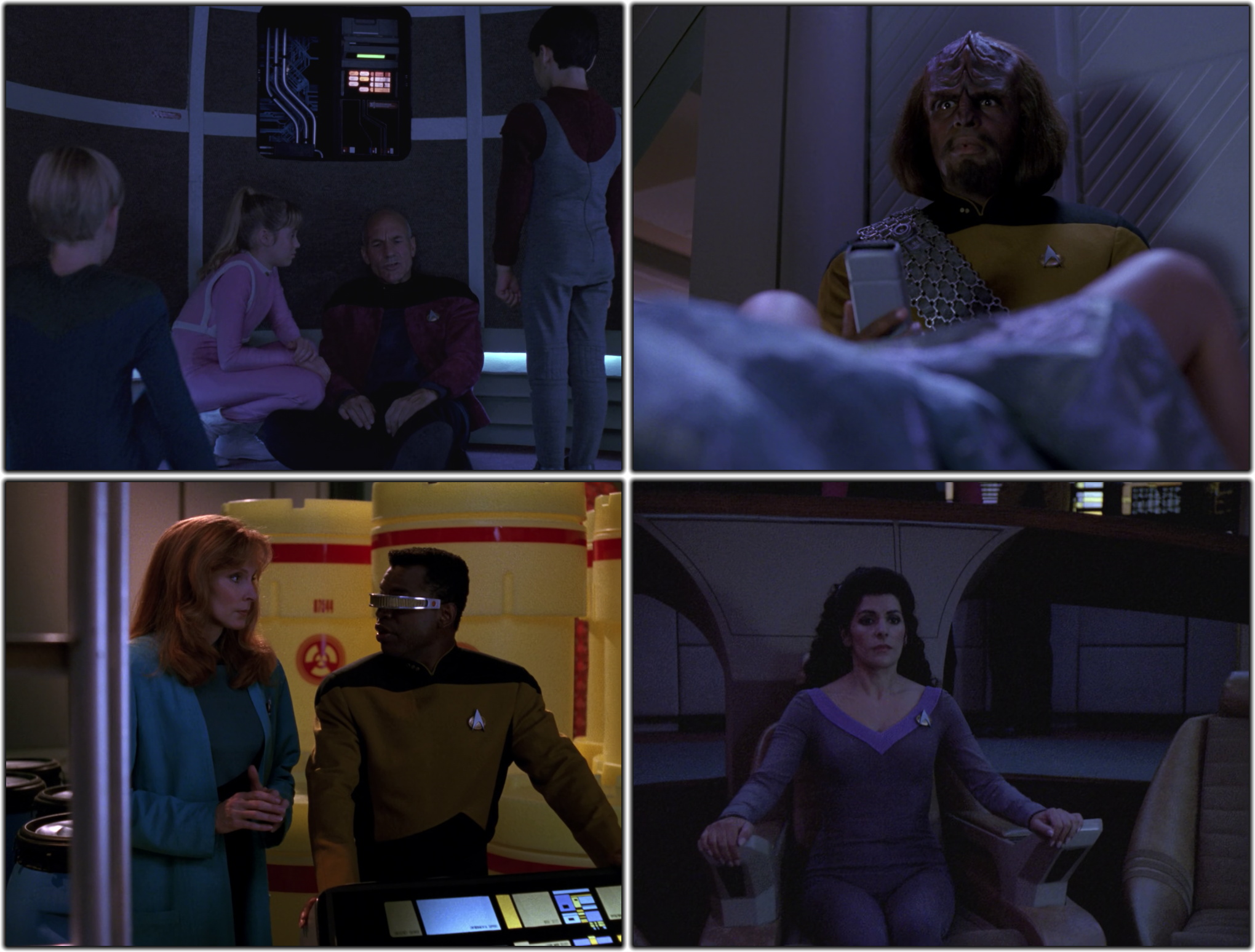
When The Next Generation premiered the fifth-season episode Disaster, the writers and creative team took advantage of the chaos aboard the Enterprise-D to bring together character groups and pairings that we didn’t often get to see. What’s more, the story then plunged several of those characters into situations way outside of their usual roles or areas of expertise – and what resulted is genuinely one of my favourite episodes from the show’s entire run.
We got to see Worf delivering a baby. Geordi and Dr Crusher spent more time together than… well, practically any other story I can call to mind. Deanna Troi took the conn, and had to wrangle with Ro Laren and Chief O’Brien as the ranking officer on the bridge. And Picard got stuck in his own personal hell: trapped with three young children!
Off-Hour could’ve used its setup to do something similar, but the only “unusual” character pairing we got was Scotty and Cadet A’Sha – and, really, *any* character pairing with A’Sha would be out of the ordinary because of how little screen time she’s gotten across the season so far! I don’t dislike the scenes we got with Uhura and Ortegas on the bridge, Una, Spock, and La’an in the lounge, or Chapel and M’Benga in sickbay – but given the unique premise of the episode, *and* the addition of characters like Dr Boyce to add another medical officer… well, I can’t help but lament, in a way, a missed opportunity.
When we look back at Strange New Worlds’ run to date, how many times have we seen Ortegas and Dr M’Benga interacting? Or Chapel and Scotty, Spock and Una, or Pike and Pelia? There were so many possibilities for pairing up or creating groups of characters who don’t usually spend any time together, and this kind of story provided the *perfect* narrative framework for doing so. But the characters mostly stayed in their established pairings and groups, and when I compare that element of Off-Hour to The Next Generation’s similar offering… I just feel like full advantage wasn’t taken of this concept.
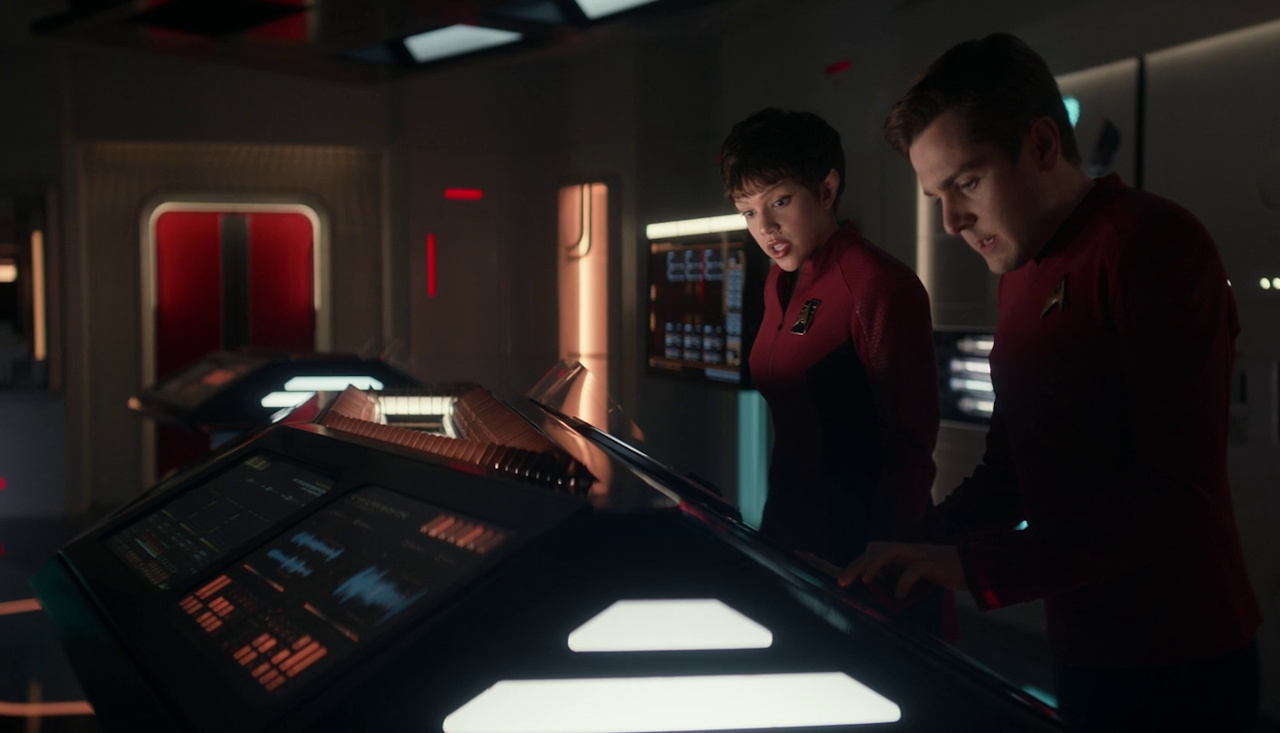
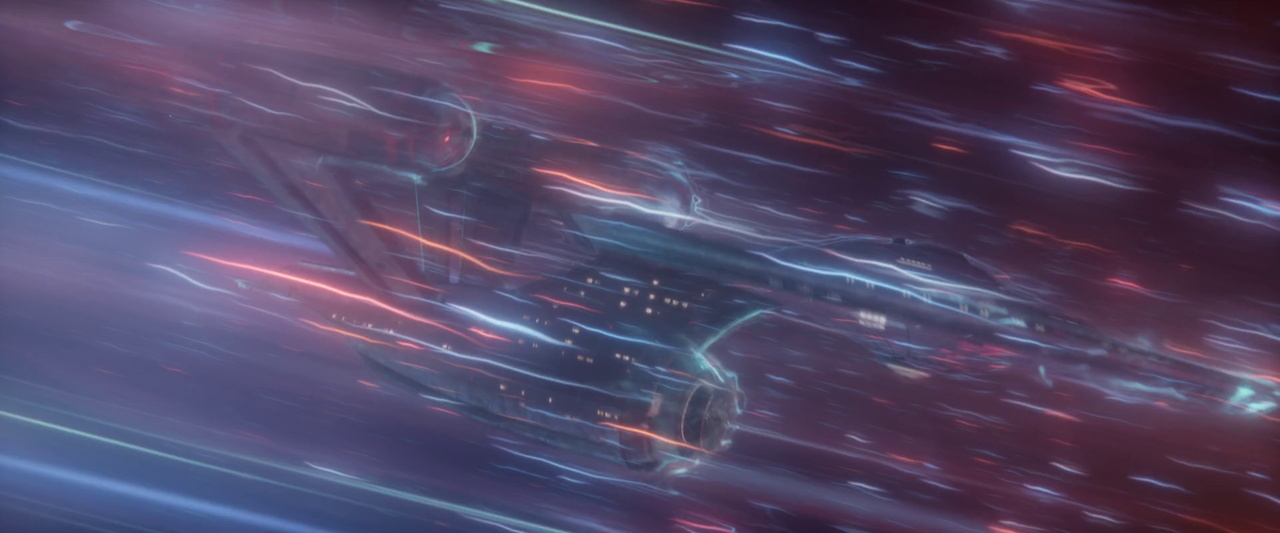
Partly, I’m afraid, the reason for that is that Off-Hour – like several Strange New Worlds stories (and many others in Discovery, Picard, and even Prodigy in recent years) dialled up the drama and stakes just a little too high. Dr M’Benga’s gruesome injury is the main culprit here, but the danger posed to the ship by the “warp slingshot” or “neutrio wormhole” or whatever we’re calling it is a big part of that, too.
And again, TNG’s Disaster is a great point of comparison. That episode had stakes and tension; there were injured characters and others were in mortal danger. But the way it communicated those storylines was ever so slightly less… melodramatic. Because of that, the story opened up, and it meant it was absolutely possible for an injured character like Picard to be stuck with some scared kids, or for Troi, on the bridge, to have to wrangle with potentially fatal decisions without the support of other senior officers. Dialling things back just a couple of notches worked wonders for Disaster, and it allowed the story more freedom to shake up TNG’s characters in fun and creative ways.
If any part of Off-Hour was lacking… well, there it is.
Since I mentioned Dr M’Benga’s injury, let’s head to Sickbay next.
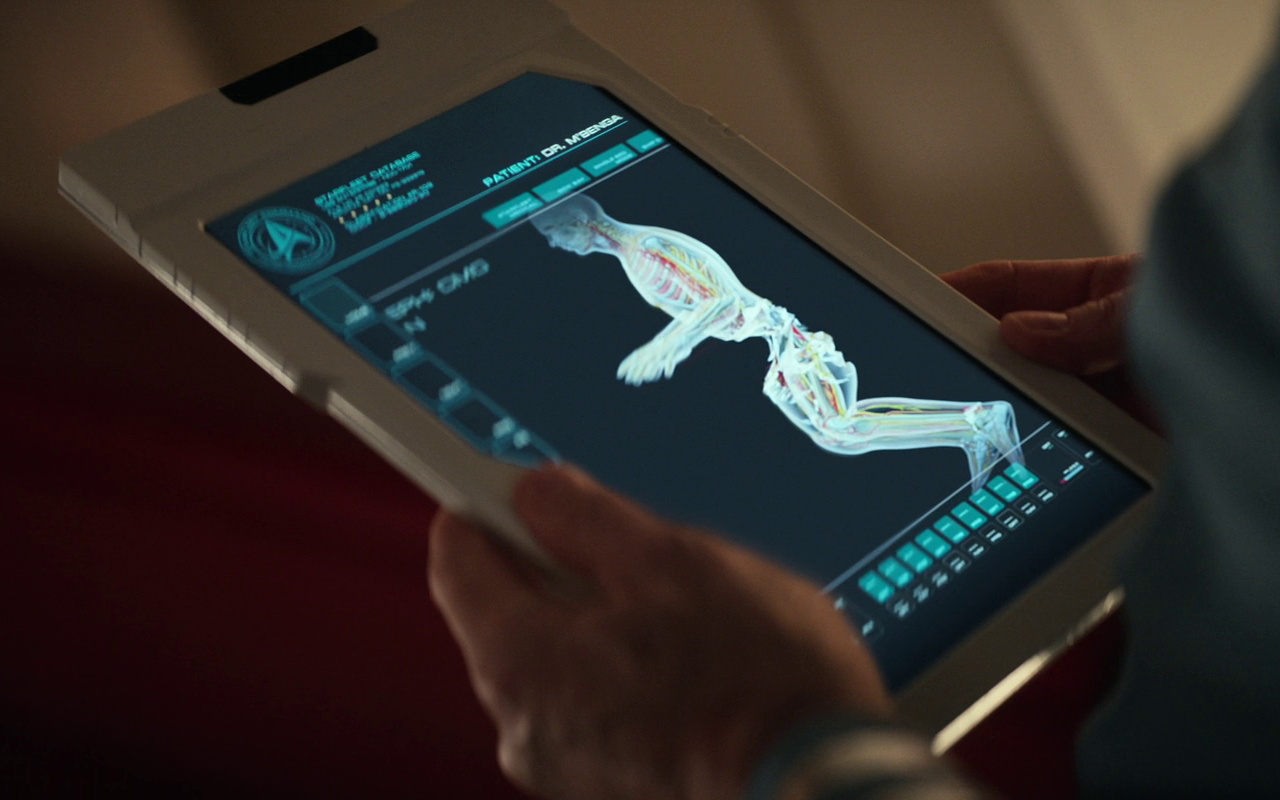
I’m sorry if this is going to sound crude or facetious, but when Dr M’Benga was almost bisected by the rolling table, I could only think of one thing: the parody of Signs from the beginning of the 2003 “comedy” film Scary Movie 3. I know, I know… cringe millennial humour, right? But honestly, when Chapel revealed the scan of Dr M’Benga’s injury… that thought almost made me laugh out loud. Does that say more about me than Off-Hour? I mean, probably.
Perhaps a more casual audience isn’t aware of this, but Dr M’Benga is a minor character on The Original Series, making I think three appearances on the show alongside Dr McCoy. What that means, for those of us who did know that, is that Dr M’Benga is basically immortal in Strange New Worlds. And that fairly typical “prequel problem” robbed this storyline of much of its dramatic tension, unfortunately. Plenty of stories can still be thoroughly enjoyable even when you know how they end, but because of Strange New Worlds’ place in the timeline, any TOS character is an odd choice to place in mortal peril. Compare M’Benga’s injury in this episode to Ortegas’ injury at the start of Season 3 as a case in point; Ortegas could have been killed off, just as Hemmer had been in Season 1. But M’Benga is unkillable – and that knowledge detracted from this storyline, at least a little. And maybe that’s why my initial reaction was to recall that dumb scene from a pretty awful early 2000s spoof movie instead of being gripped by the tension that the episode was going for.
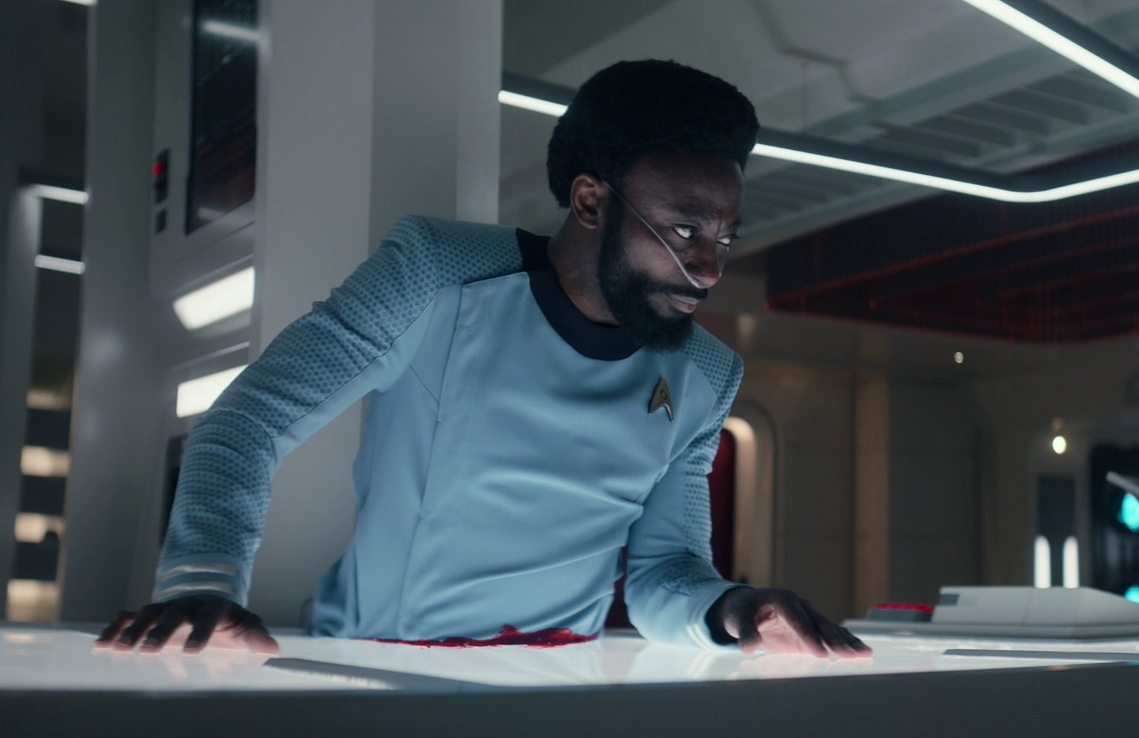
The preamble to M’Benga and Chapel’s story saw them get into an argument. And while friends having disagreements and arguments is something that happens every day… this one felt just a little bit forced. It worked in the sense that it gave Chapel an extra motivation to stay with Dr M’Benga after he was injured; she didn’t want to prove him right by walking away, as he’d called her out for having “one foot out the door.” But if we stop to think about that… did Chapel need that as an extra reason to stay by her friend’s side? Aside from Spock, and the complicated romantic relationship there, Dr M’Benga is by far Chapel’s closest friend on the ship. They have a history that extends way back before the events of the series, and we’ve also seen Chapel as being dedicated to her patients on numerous other occasions. I just don’t think the argument and the conversations they had about which of them might be leaving really added much to *this* specific storyline.
However, given that Strange New Worlds is in the process of shuffling some of its characters around ahead of next season’s finale, talk of Dr M’Benga potentially stepping away from the chief medical officer role is noteworthy. This episode (re)introduced Dr Boyce – the Enterprise’s very first CMO from The Cage – and we also know that Dr McCoy has been cast for at least one Season 5 episode. As I said above, Dr M’Benga would serve aboard the Enterprise during Kirk’s time – but not in the chief medical officer’s role, so some kind of exit, or partial exit, seems to be on the cards, and I think we’ve seen the beginnings of that here.
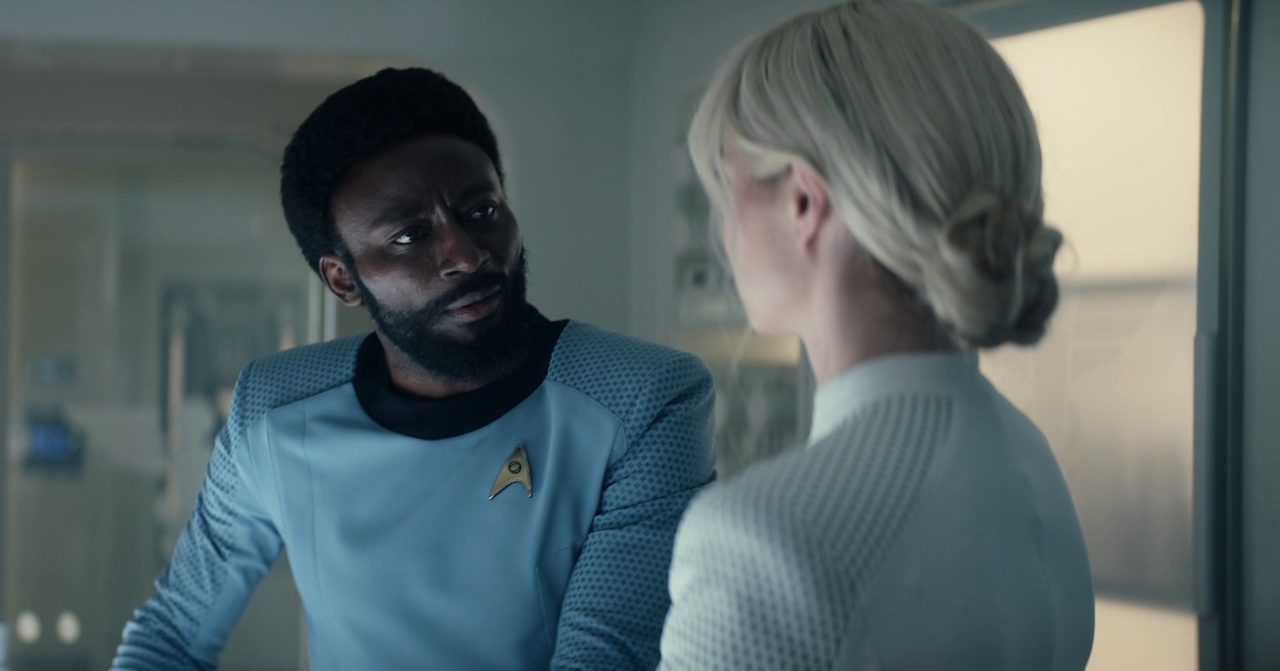
I could appreciate, though, that Chapel got one of her best stories of the show so far – and that Jess Bush really got a chance to show off her range and put in an exceptional performance with this incarnation of the character. Even if the idea of Chapel being a bit “flaky” in her commitment to serving on the Enterprise felt less-than-developed as a premise, her dedication to saving her friend’s life when he was in danger was admirable, and we went through a range of emotions with her as she refused to confront what should’ve been a guaranteed death for Dr M’Benga.
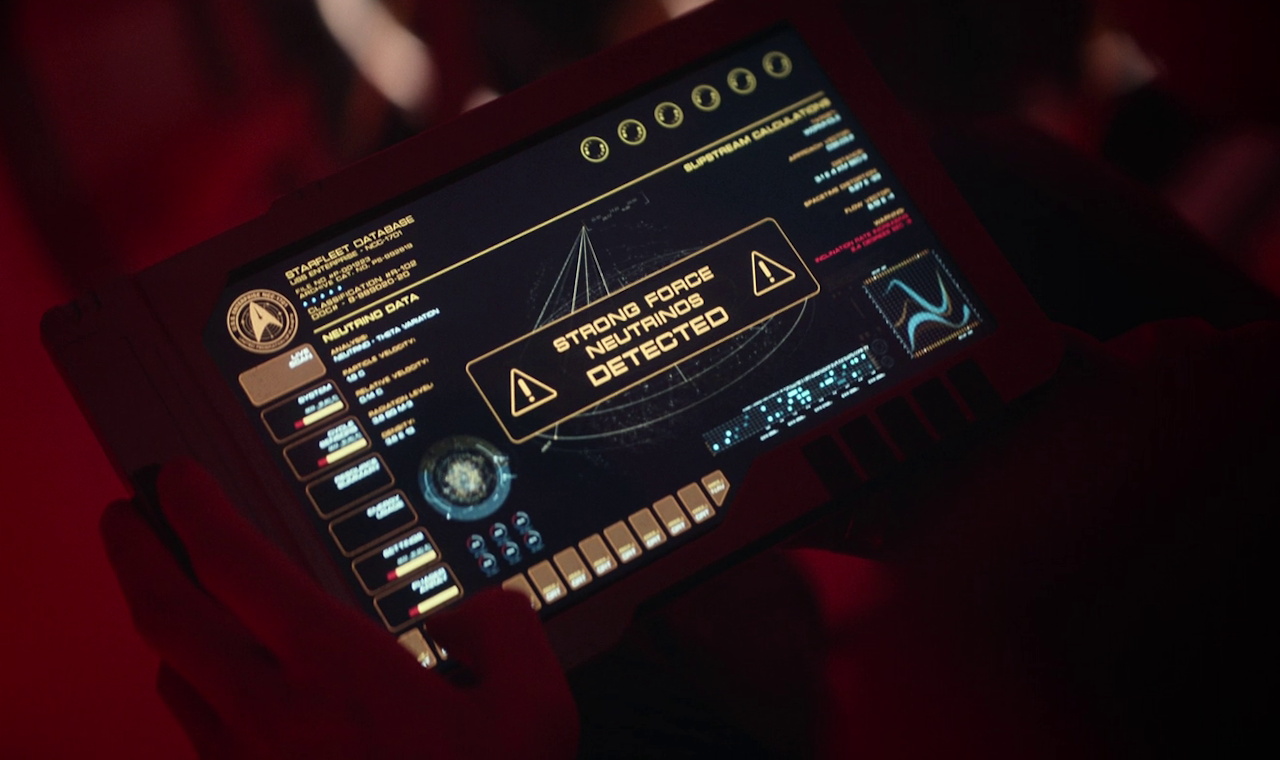
The technobabble macguffin that saved both M’Benga and the ship was, perhaps, a tiny bit lacking in explanation; we got some fun lines between Chapel, Pike, Scotty, and Pelia, but it felt a bit lightweight given the scale of what these “super-neutrinos” were capable of doing. Perhaps a stronger story would’ve used the neutrinos for one role, but not both – and found an alternative way to either save Dr M’Benga or refuel the ship. Again, that comes back to my point about the stakes and tension being cranked all the way up; in a story with marginally lower stakes, the magical neutrinos wouldn’t have needed to do *everything*.
Sticking with characters that Off-Hour endangered who, realistically, we knew were never in any danger… we also have Spock.
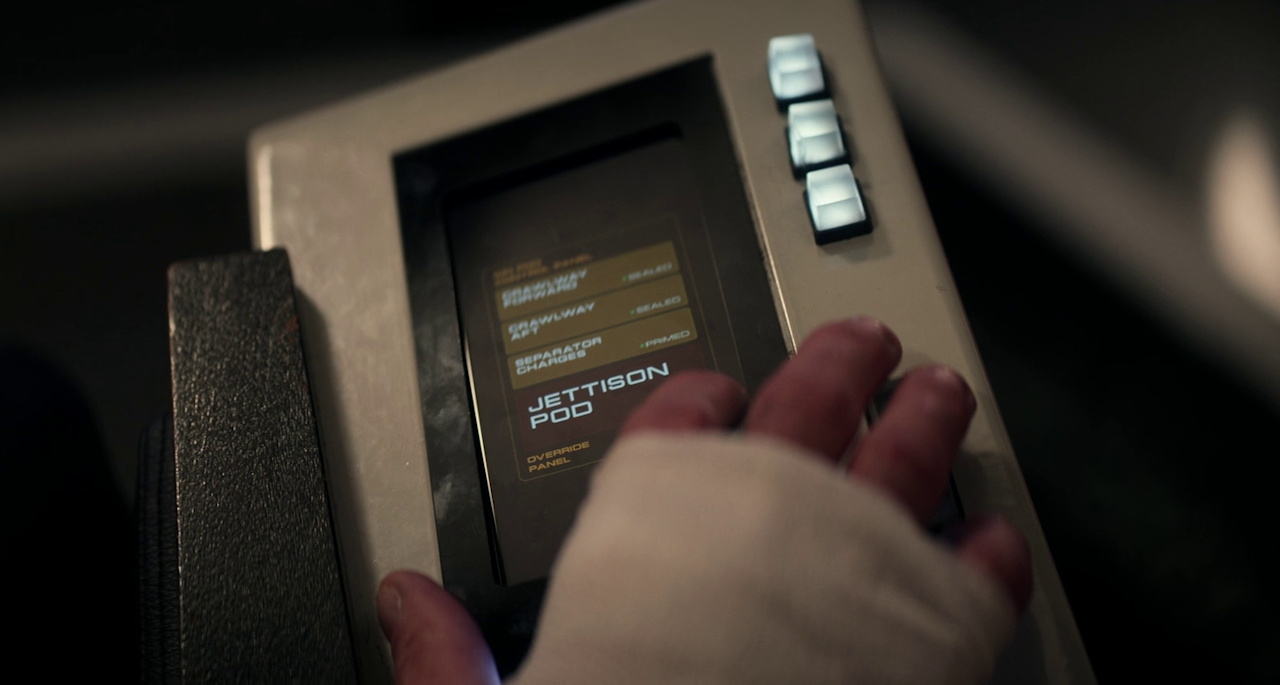
Again, as with Dr M’Benga, Spock was just a really odd choice for this kind of storyline. I appreciated the callback to Court Martial with the ion pod and how it could be jettisoned; that isn’t the issue. When the story really wanted us to feel that a main character was genuinely in danger of losing their life, the writers chose literally the only character from that group who couldn’t die. Dr Boyce, Una, or La’an could all have taken on Spock’s role in heading for the ion pod; there was nothing about it from either an in-universe point of view or for Spock’s character arc that meant it *had* to be him. And any of them – or the likes of Ortegas and other non-TOS characters – would’ve felt in danger in a way that Spock simply never did.
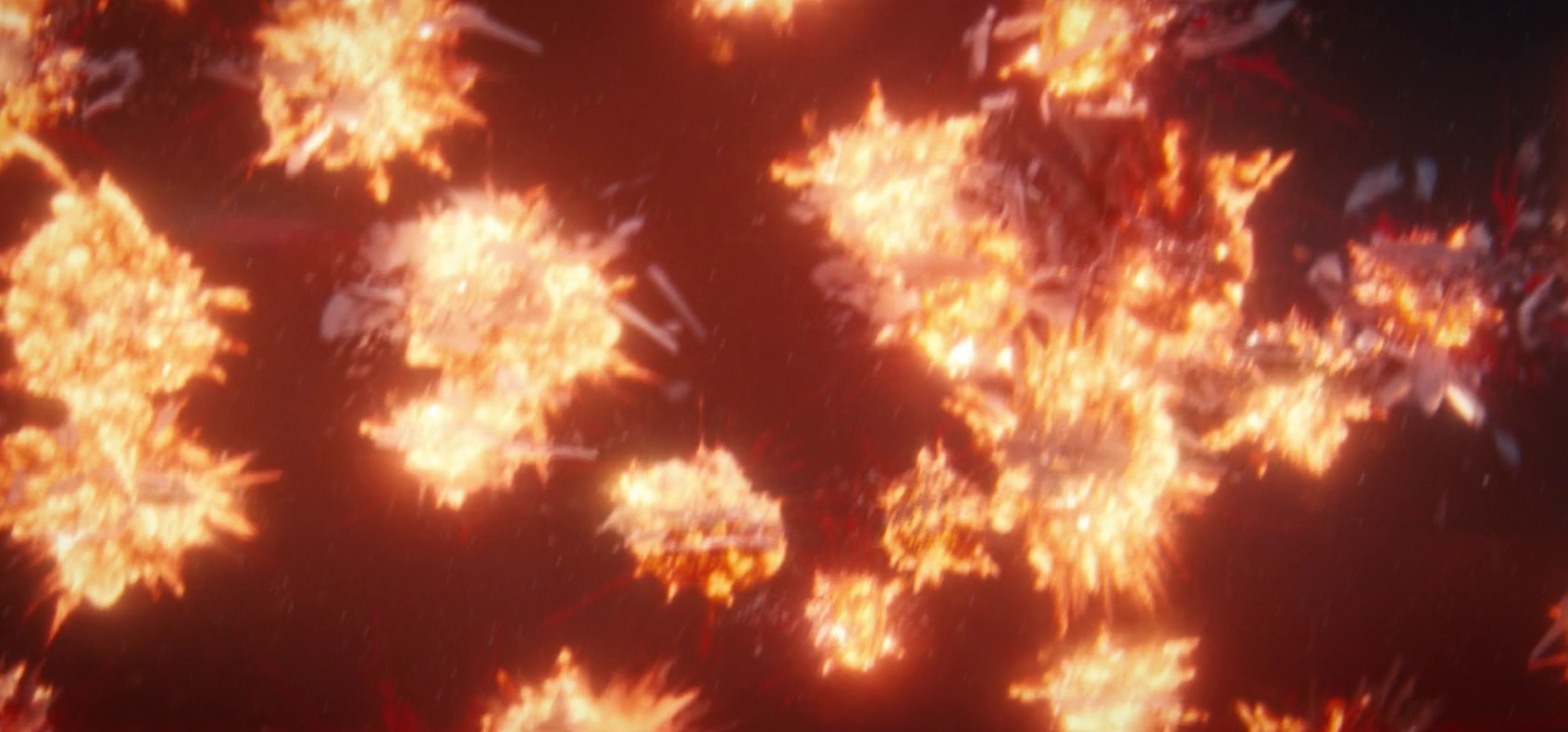
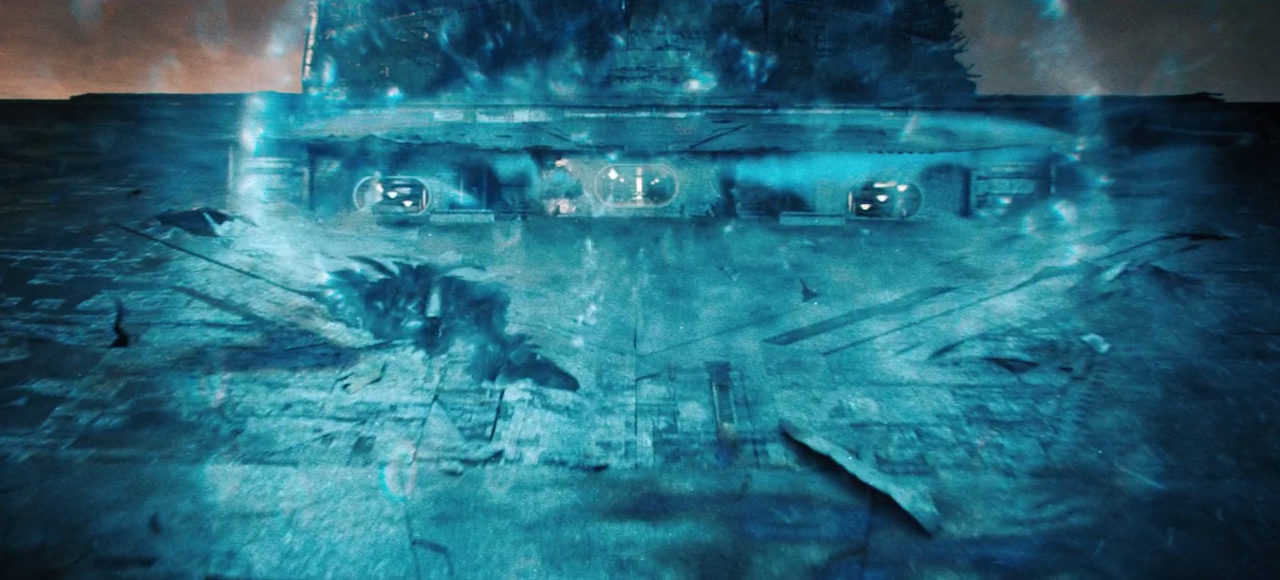
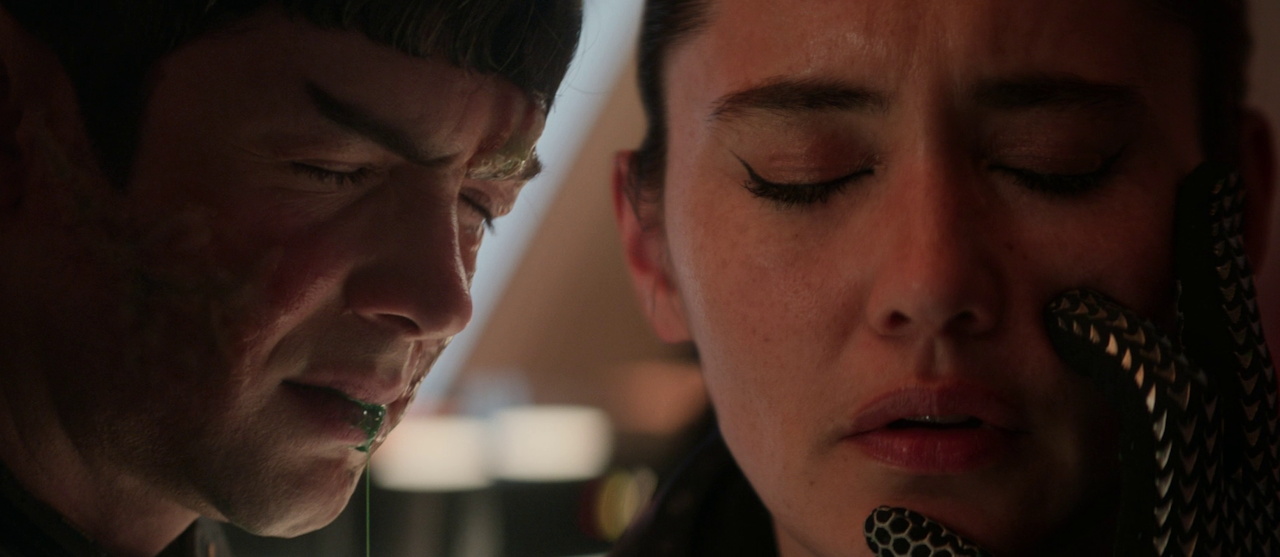
There were some creative visuals on this side of the story – Spock and La’an’s slow, painful climbs across the hull were both impressive-looking and tense. The animation work used to represent the wormhole and the neutrinos was fantastic. And on the practical side, Spock’s painful radiation burns were particularly gruesome, as was the visual of him spitting up blood. But the show’s status as a prequel, and the decision to put the one character who we know couldn’t be in any real danger into this situation, rather worked against this part of the story.
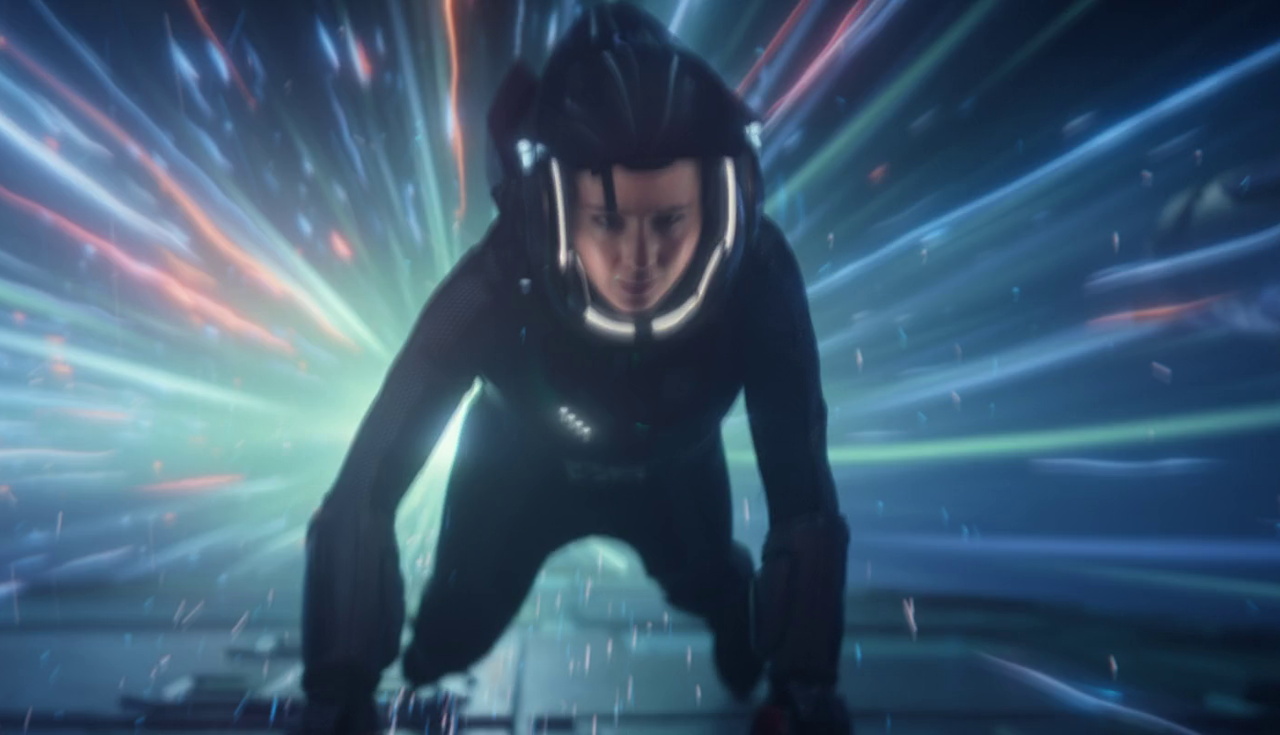
La’an said it best herself: she’s “expendable,” at least in a narrative context! And given her concerns earlier in the season about her latent augment DNA, some kind of exposure to super-neutrinos or outer space radiation could be something that we follow up on in subsequent stories. Given that La’an had to go after Spock anyway, and her scene climbing over the hull was very similar to the one we’d just seen with Spock… I can’t help but feel that maybe other choices could’ve been made to make this storyline a bit more tense. Sending both characters out, one after the other, maybe even felt a tad repetitive – though I didn’t really notice that on my first viewing of the episode, to be fair.
La’an and Una had some great moments together in earlier episodes – particularly Season 1’s Ghosts of Illyria and Season 2’s Subspace Rhapsody, and I read their conversation here as a bit of a follow-up to that. That “big sister-little sister” dynamic hasn’t been as present with them lately, but it seemed to be back in play here. If – as I’ve repeatedly theorised this season – La’an may not be long for this world (or may be about to depart the Enterprise in some other way), then taking a moment to remind us of her friendship with Una is no bad thing.
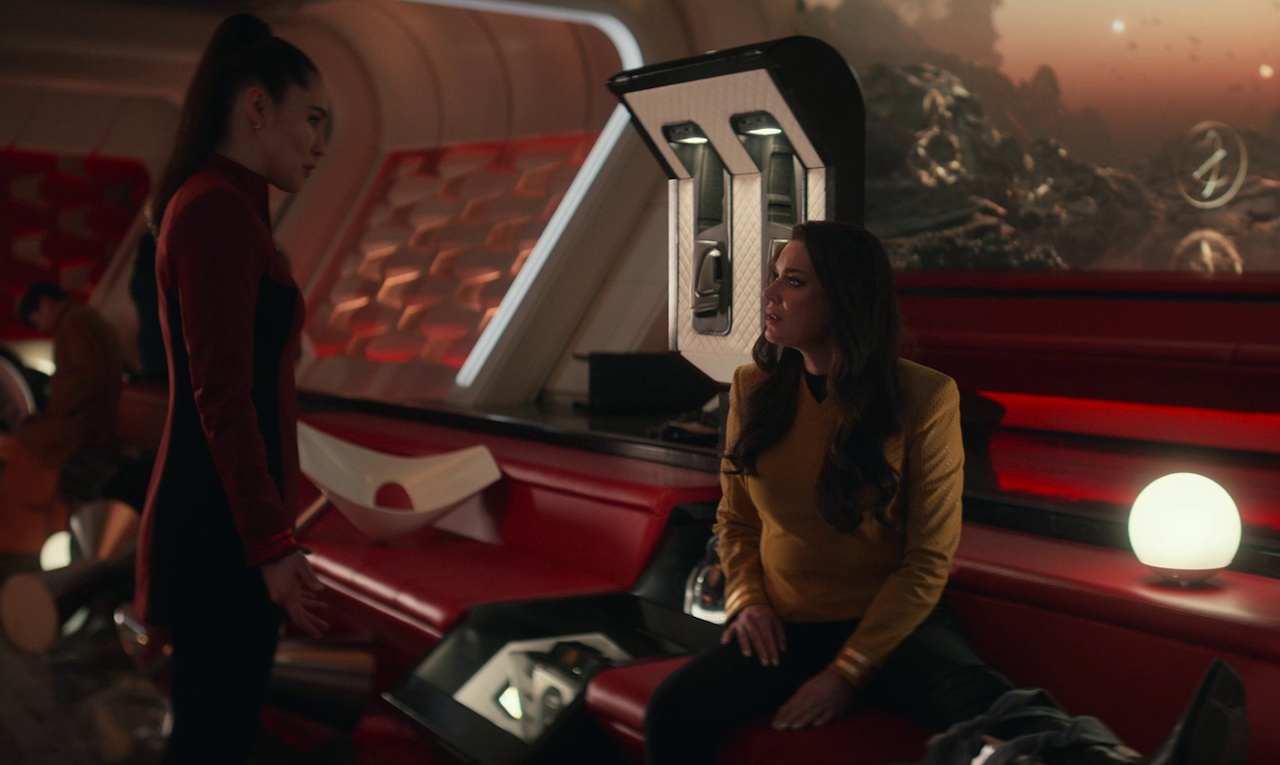
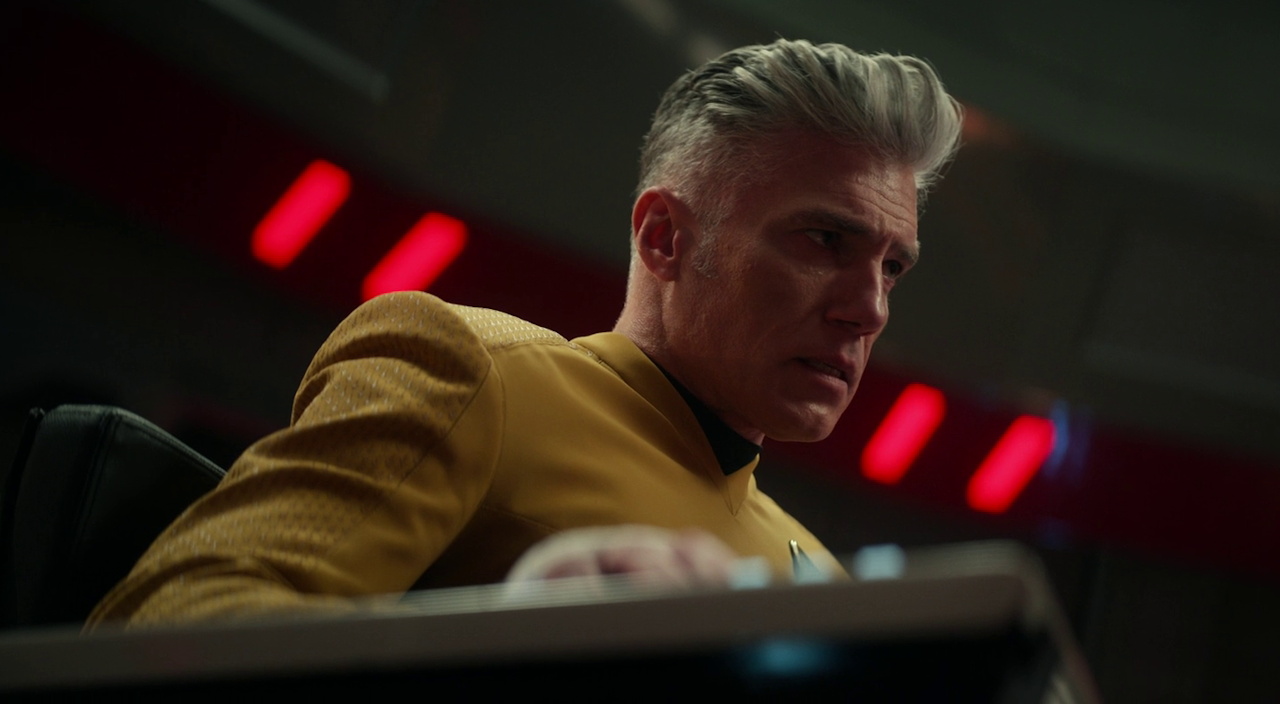
Is Strange New Worlds paying Anson Mount by the line, or something? Is that why Captain Pike has been such a small part of the show this season? On its own, Pike’s relatively small role in Off-Hour wouldn’t be noteworthy. He spent a good chunk of the episode unconscious, but he got a good moment of self-sacrifice as he risked his safety to activate the Enterprise’s deflector screens, and then got a moment later in the story when he had to make the tough decision to jettison the ion pod. But given how Pike’s roles across the season so far have been pretty minimal… I dunno. I continue to hope for more Captain Pike in what we used to call “the Captain Pike show,” I guess.
On its own, it wouldn’t matter. Off-Hour had good storylines for Scotty, Chapel, and M’Benga in particular, and Star Trek has *always* done episodes where some characters were more in focus than others. It just feels like we’ve now had five in a row where Pike’s role has been fairly small, and given that the original appeal of Strange New Worlds – the reason fans like myself were clamouring for more from this version of the character after his appearance in Discovery’s second season – was Anson Mount’s wonderful performance… well, it’s become noticeable. And I’d hope that we’ll get to spend a bit more time with the Enterprise’s captain between now and next season’s finale.
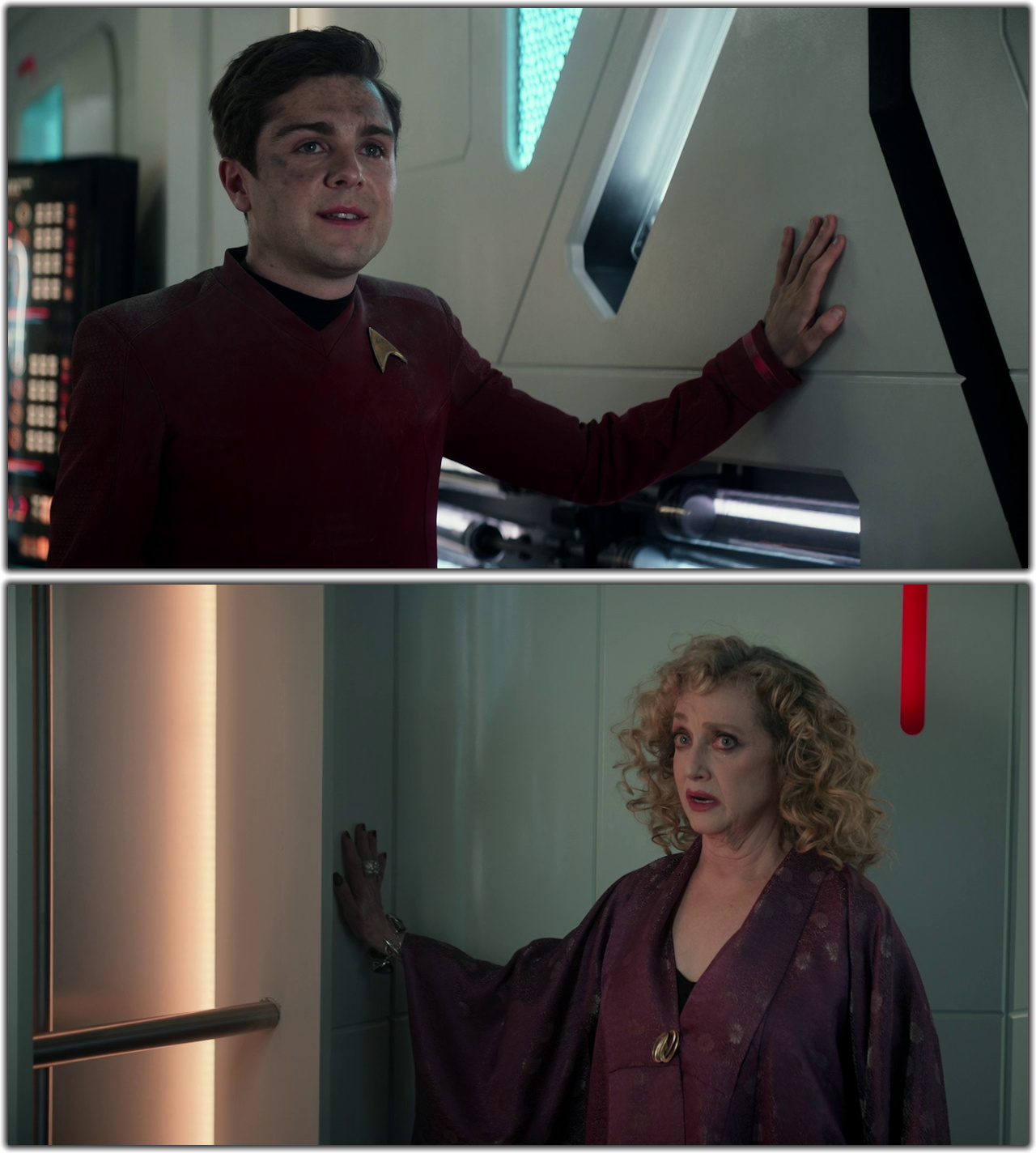
Pelia has been one of my favourite characters in Strange New Worlds since she arrived back in Season 2, and I’m so glad to see her in the kind of mentoring role that this younger version of Scotty needs. Although I wouldn’t call Pelia and Scotty a “rare” or “unusual” pairing in the way I described above, they’ve had precious little time together since Scotty came aboard the Enterprise, sadly, and I’m glad that Off-Hour went some way to remedying that deficiency. The whole point of doing a prequel story for characters like Uhura, Spock, or Scotty is to show how they grew to become the people we’re familiar with, and given where Scotty started – and his existing relationship with Pelia – that’s something I’ve felt Strange New Worlds hasn’t really done enough of.
But Pelia got a genuinely enjoyable storyline this time, guiding Scotty less on the technical side and more in terms of boosting his confidence – and that’s *exactly* what this younger version of the character needed. I liked Scotty’s callback to the USS Stardiver (the ship he served on in Season 2, before he joined the Enterprise) and how his conversation with Pelia gave him enough of a boost to play a role in saving the ship.
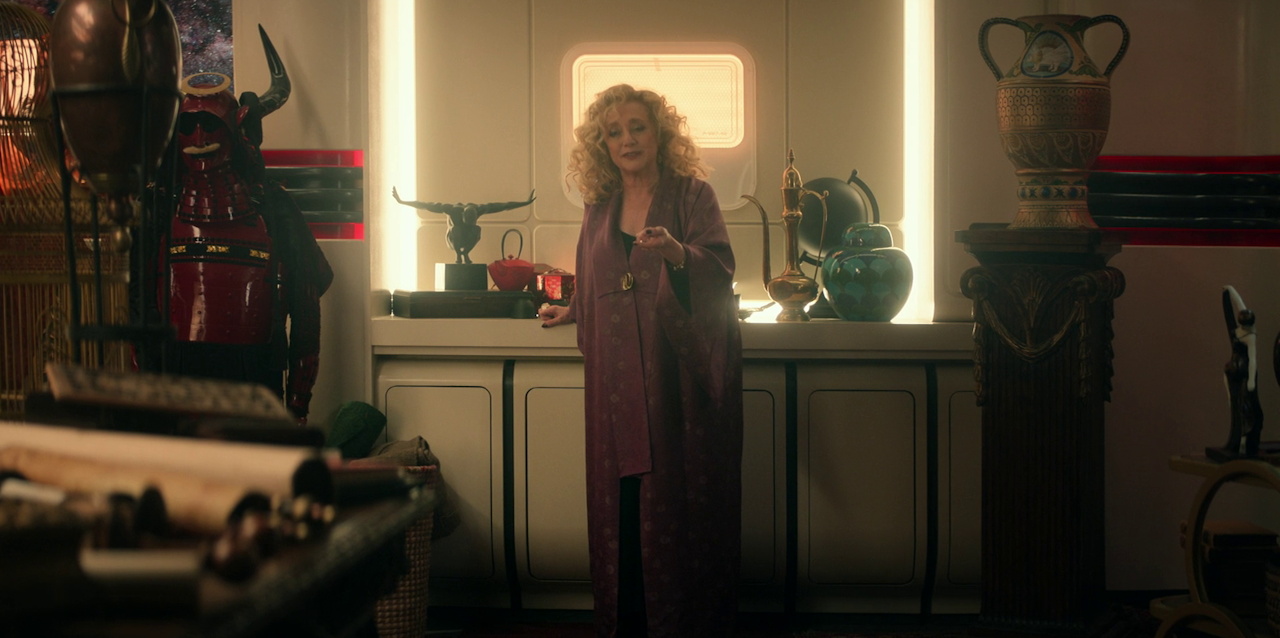
The only downside to this part of the story, really, is that Pelia’s confidence-boosting didn’t really lead to Scotty actively *doing* anything differently. He’d already made the adjustments to the ion pod and to the bussard collectors; all he really had to do was have faith that the ship would hold together despite passing its safe limits. And that was important, don’t get me wrong – we saw the genesis of Scotty the “miracle-worker,” willing to push the Enterprise and squeeze every last bit of juice from her engines! But what I mean is that, for all of Pelia’s nice words, it didn’t really change anything that Scotty *did* – with some slight changes, Scotty could’ve listened to something Pelia said and that might’ve given him a final boost to… I dunno. Technobabble something about an extra ounce of power to the deflectors; something to help the ship when it passed that threshold.
But that’s really just a nitpick. This Pelia-Scotty storyline was fantastic, and it’s something I’ve been waiting to see from Strange New Worlds for basically a season-and-a-half at this point! Scotty, since coming aboard, has kind of eclipsed Pelia in several engineering stories, and because she’s such a fun character, that’s been a little disappointing. So I’m really glad to see her in that senior role this time. It was also fun to revisit Pelia’s cabin and see some of the random nonsense she’s accumulated over such a long life! That will never cease to be a fun space to spend time in.
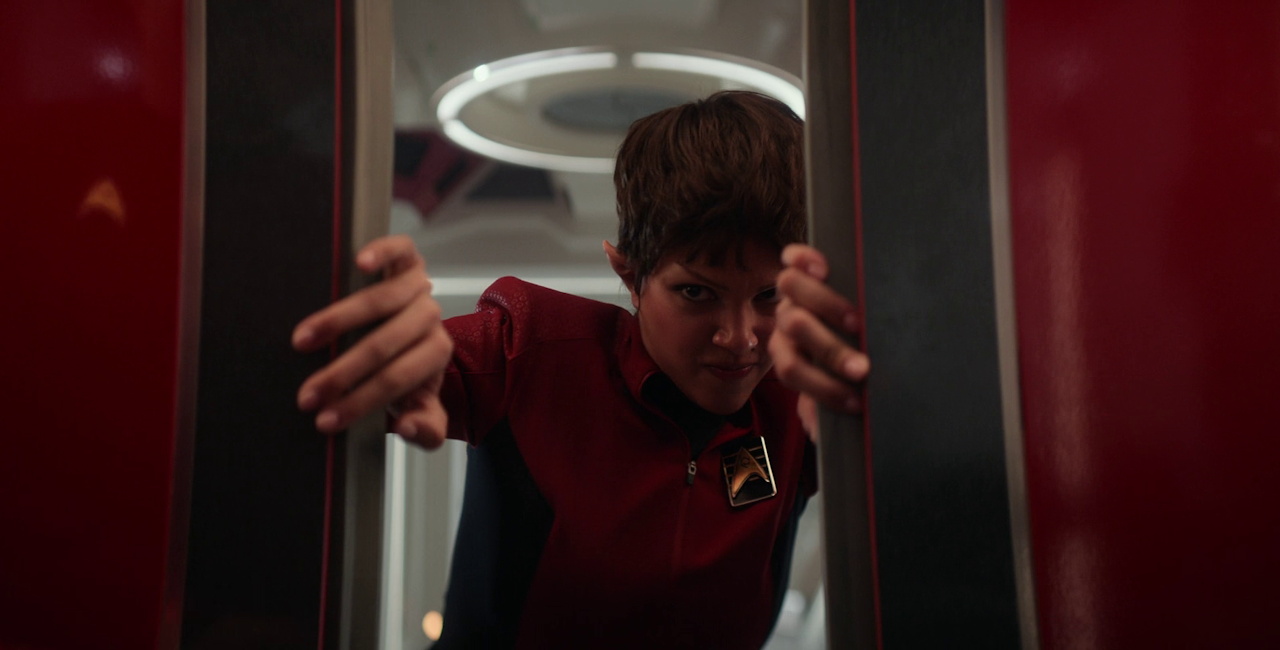
A’Sha has been a bit of a non-entity so far this season. After what could’ve been a strong start in her initial scene with Uhura, she faded into the background quite quickly. But given the Strange New Worlds writers’ proclivity to put Vulcan characters into either slapstick comedy stories or soap opera-level romantic plots, it was a breath of fresh air to get a Vulcan who behaved… well, like a Vulcan, for once. And A’Sha’s scenes with Scotty this week were a lot of fun.
Even as the ship was in danger, A’Sha kept her head. She helped Scotty where she could, even coming up with the idea to turn off life support to non-essential areas of the ship, and later beaming him to just the right place to be able to make the modifications to the ion pod. I’m hoping there’s more to A’Sha than just being a “glorified redshirt,” like last season’s Ensign Gamble, but whatever may lay in store for the character, her scenes this week were pretty good – and by far her biggest outing of the season to date.
I wasn’t a huge fan of the 24-inspired clock or countdown on the screen. It did hammer home that (most) of the episode took place in real-time, which could’ve been fine, but after the first couple of appearances it just began to feel a bit gimmicky, to be honest, and I don’t think it really added a lot. The episode was already tense and dramatic – arguably just a little too much! And adding a ticking clock didn’t really do much for me to ramp that up much further.
What I liked a lot better, though, were the 24-inspired split-screen sections. Some of these were better than others, admittedly; a few of them were little more than just side-by-side close-ups of characters. But when they worked, they really worked, and it’s a creative technique that we don’t often see in Star Trek. The moving “wipes” from one character to another, and how the screen wasn’t always a perfect 50/50 split were also fun visual effects, and that kind of thing definitely helps Off-Hour stand out.
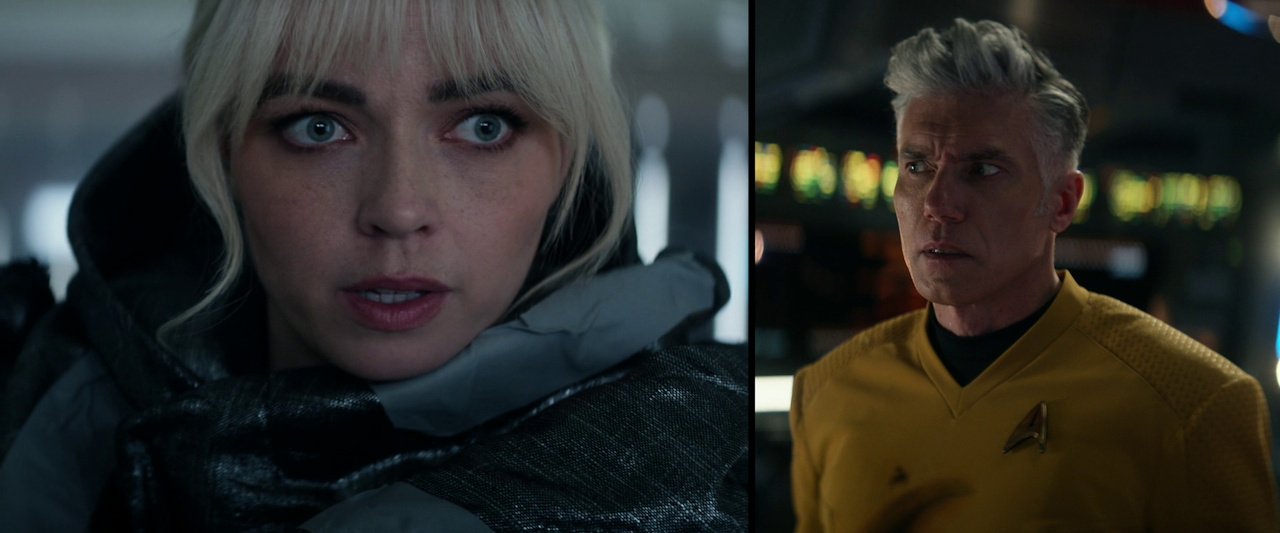
We mentioned Court Martial and the ion pod, and that was a fun callback. But one reference I never would’ve expected in a million years was to the TOS third-season episode That Which Survives. I don’t mean to be unkind, but is That Which Survives an especially memorable episode for you? Because it isn’t for me! So it was a ton of fun to get a deep cut to a random minor character from that episode: Lieutenant Rahda.
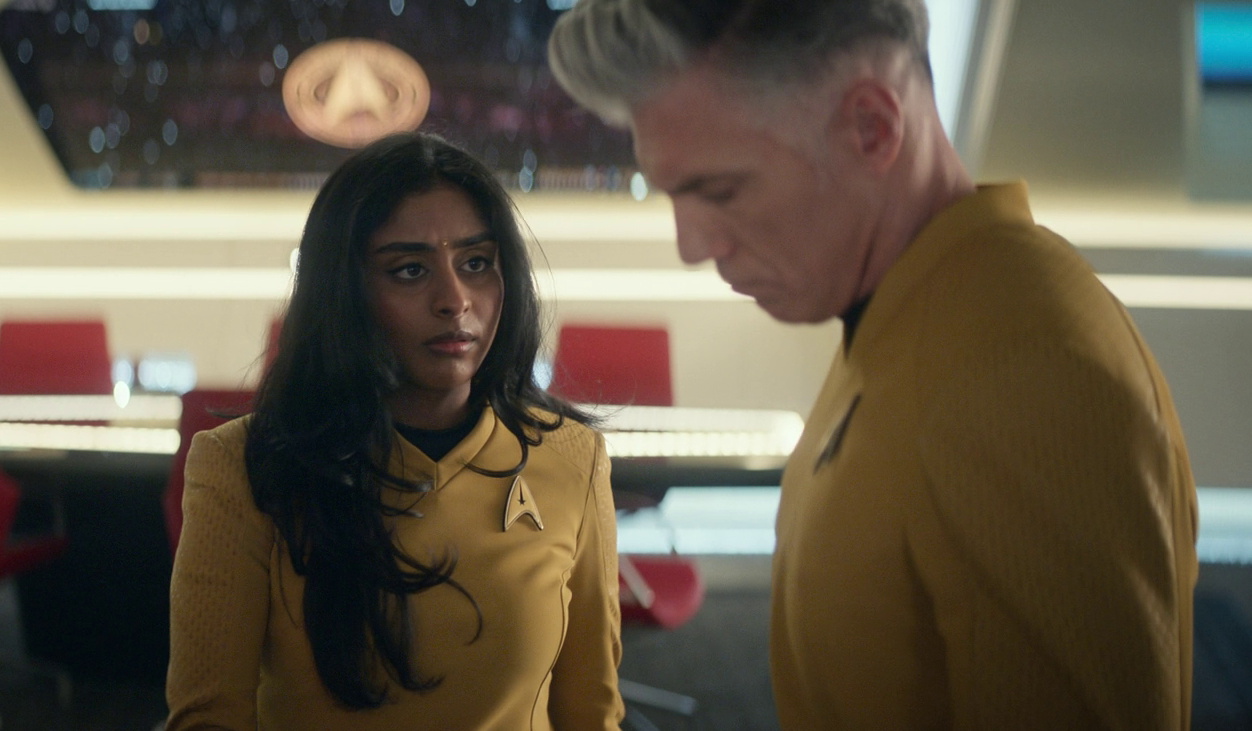
Rahda takes over the conn for the Enterprise’s beta shift (an earlier episode this season mentioned alpha and beta shifts, if I’m remembering correctly), and she’s the one who initially notices the problem of the warp-wormhole (or whatever we’re calling it). In That Which Survives, Rahda takes over for Sulu at the helm, so she kind of plays a similar role in both stories. It was a totally unnecessary callback – this could’ve been a brand-new character and she would’ve served the exact same function. But I love that Strange New Worlds went back to Star Trek’s past and pulled out a minor character like Radha for a moment like this. It adds depth to Star Trek’s world, and makes the franchise’s newest outing feel even more strongly tied to its first. In the sixtieth anniversary year… well, I love to see things like that.
As the story unfolded, and especially as it seemed like both Dr M’Benga and the Enterprise were in mortal danger, I’m afraid I felt the hideous spectre of Level-Five Transporter Accident’s ending looming ever larger. If you read my review of last week’s episode, you’ll know that I felt the “but it was all just a dream” ending is probably the worst ending to an episode in the entire six-decade history of Star Trek, and when Off-Hour seemed to be writing itself into a corner, well… I began to fear the worst.
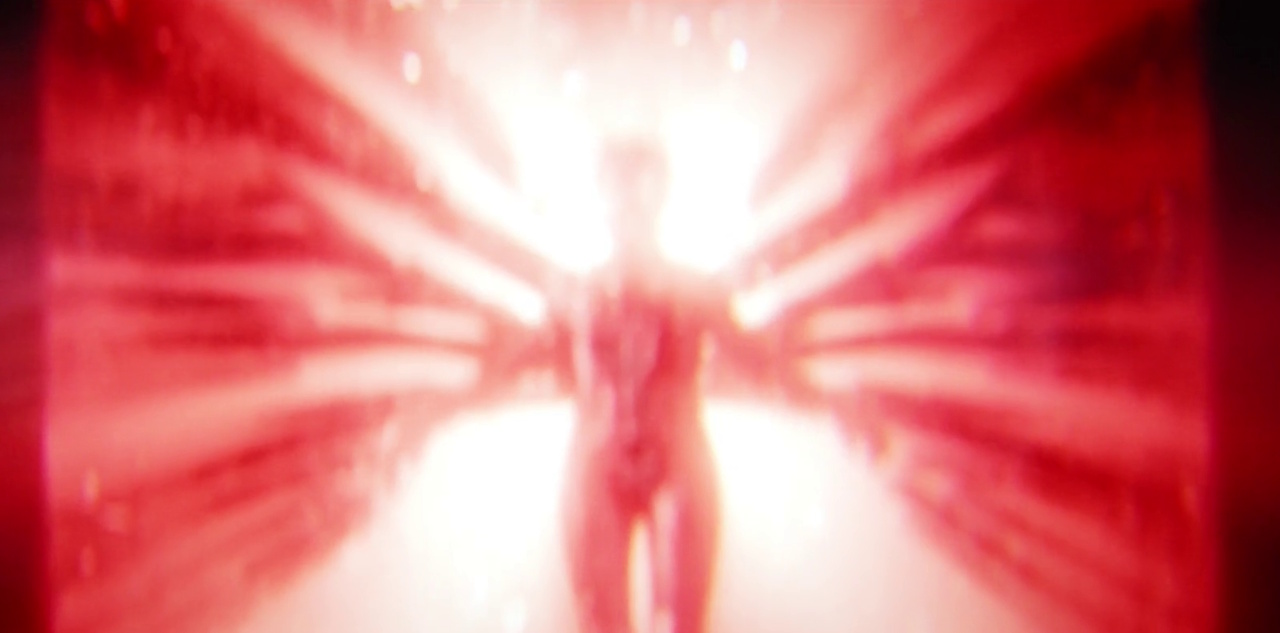
I didn’t think for a second that we’d get another identical “dream” story, but I did wonder whether – through some technobabble, perhaps – these super-neutrinos might rewind time or undo much of the episode’s story. Star Trek has done similar things on occasion, so it wouldn’t have been totally unprecedented. But after last week’s episode had so thoroughly shit the bed, I couldn’t *bear* the idea of another story being erased in any way, and as the tension ramped up and we got closer to the explosive conclusion… it was a real, genuine worry. The stench from Level-Five Transporter Accident’s ending will take time to dissipate, apparently.
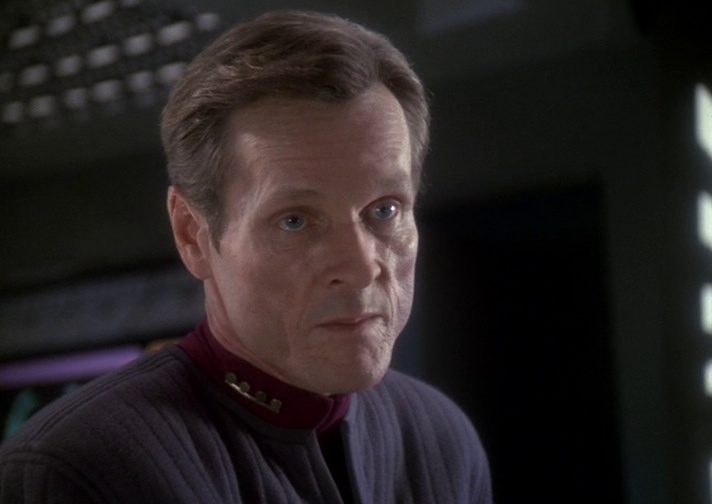
When Strange New Worlds was first announced, and before we knew anything about who would or wouldn’t be joining the cast, I wondered if we might see a new version of Dr Boyce. Boyce was the Enterprise’s doctor – and Pike’s counsellor of sorts – in The Cage, but obviously the Strange New Worlds team chose to adapt Dr M’Benga instead. So it was a real surprise, then, to see Dr Boyce in this episode – and to learn that he’s apparently playing second fiddle to Dr M’Benga after returning to the Enterprise from a different posting.
I gotta be honest: this version of the character seemed a lot harsher and less personable than the Dr Boyce from The Cage, to such an extent that they almost don’t feel like the same individual. I think it’s possible that Dr Boyce might reappear either later this season or next season, so maybe we’ll get to spend a bit more time with him and reestablish that softer or more personable side, or there could be a conflict looming with Dr M’Benga. Given that M’Benga might be on his way out… Dr Boyce could have a role to play in facilitating that, perhaps.
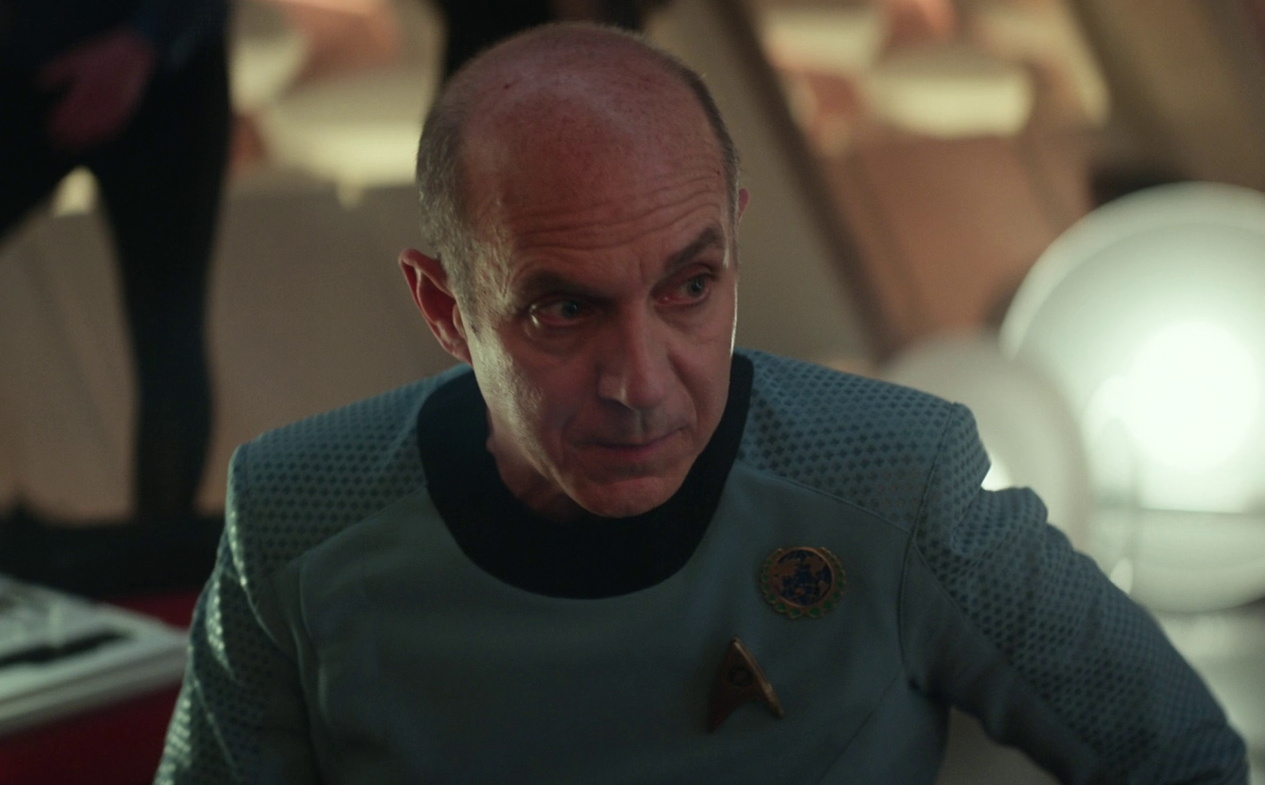
I did like Dr Boyce’s no-nonsense approach, though. He was calm and professional, even under pressure, and although he might’ve seemed quick to dismiss Chapel’s pleas to try to save Dr M’Benga, that came from an understandable place. M’Benga’s life was only saved by magical nonsense, if you think about it, and Dr Boyce had other patients in need of treatment, so his attitude makes sense. I still think that he didn’t have quite the same charm or bedside manner as he did in The Cage, but given the stressful situation, I could understand where it was coming from.
Again, as with the ion pod and Lieutenant Rahda, this was a fun callback in this big anniversary year. It was also nice to get some (admittedly belated) explanation as to why Dr Boyce was no longer the Enterprise’s CMO after the events of The Cage, as that filled in a little bit of backstory in between events we’ve already seen on screen. As above, this character’s role in Off-Hour could’ve gone to someone brand-new, but returning to someone from Star Trek’s past – someone quite important, in this case – worked well and was a fun little callback for Trekkies.
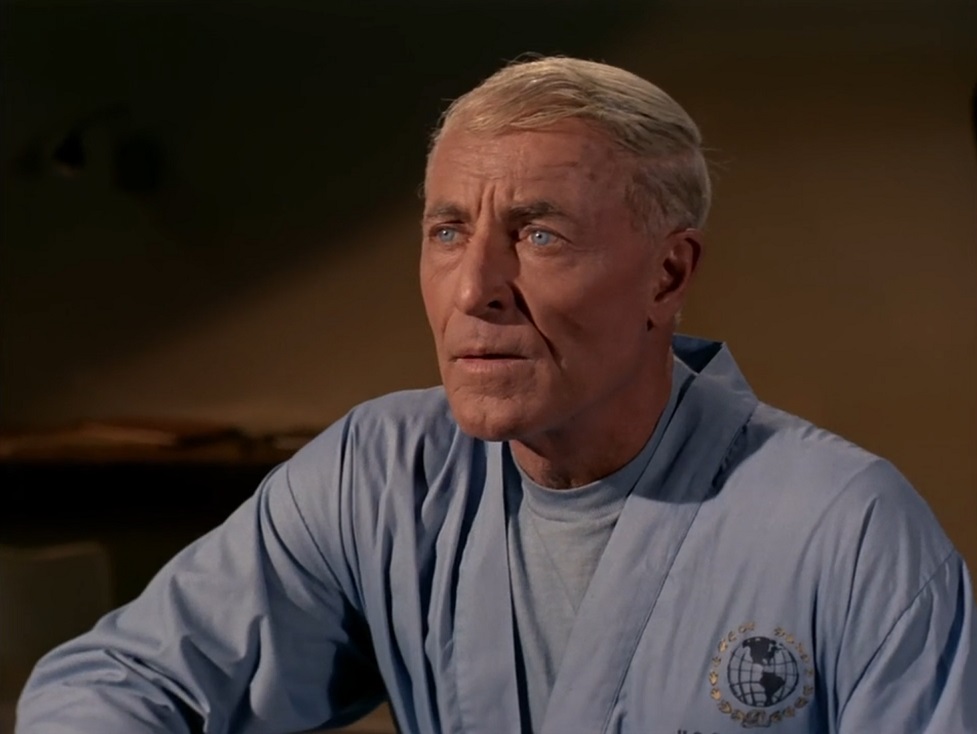
Speaking of callbacks, the damaged engineering being sealed off reminded me of a similar moment in Generations, shortly before the destruction of the Enterprise-D’s stardrive section. The engineer who sealed the room also had some pretty painful-looking radiation burns (and I have to assume that he, along with several of his colleagues, won’t have survived if they were sealed inside the irradiated engine room). This character was functionally little more than a redshirt, I guess, but it was nice to see engineering so lively and populated at the start of the episode; we’ve hardly spent any time in main engineering, really, even after Scotty joined the show, yet it’s such a fun space.
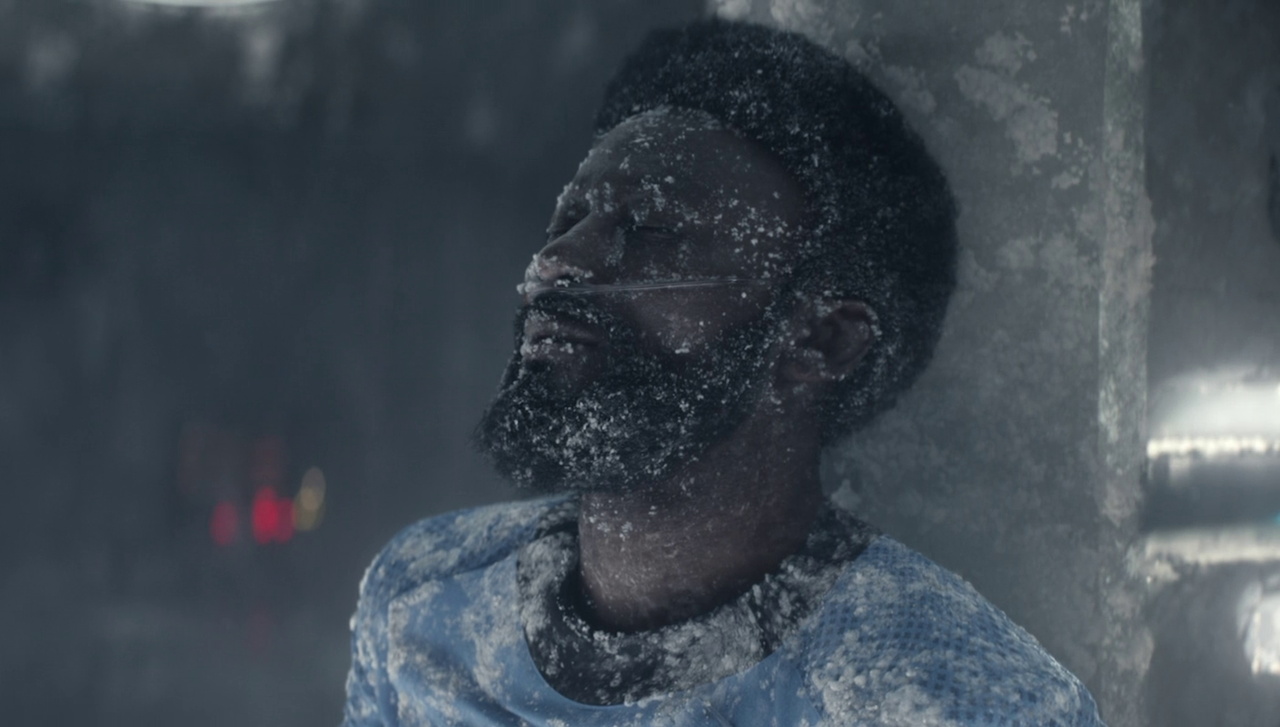
One thing that confused me was Dr M’Benga’s line about the temperature outside Sickbay being “-400 degrees.” Is that a Fahrenheit thing that I’m too non-American to get? Star Trek has (usually) used metric measurements in the past, and the temperature of outer space is famously -270° C. It just seemed like a very odd thing for Dr M’Benga to say – either he was exaggerating, delusional from his injury, or just… I dunno. It felt like a bit of an oddity, though.
So that was Off-Hour. A good episode, but perhaps one that didn’t take full advantage of its unique premise.
Jess Bush and Martin Quinn were, for me, the standout performers this week. Both ran the gamut of emotions, taking their characters through very difficult and complex situations and journeys, and Scotty in particular has taken a massive step closer to the man we remember from The Original Series. There were several fun callbacks to Star Trek’s past, helping Off-Hour to feel just a little bit celebratory with Star Trek’s big anniversary right around the corner, and the episode put together a strong story… albeit one where the drama was just a notch or two too high for my personal taste.
Still, it’s one of the best episodes of the season without a doubt, and as things stand right now, I’d happily put Off-Hour in a hypothetical “top ten” of my favourite episodes from the entire show. After last week, Strange New Worlds desperately needed a palate-cleanser, and I’m pleased to report that Off-Hour successfully delivered on that.
I hope this has been interesting… and you aren’t *too* jealous that I’ve now met Christina Chong, Ethan Peck, and Martin Quinn! I definitely felt that there was a low bar for this week’s episode after *that* ending last time, but even with that in mind, I think Off-Hour was good.
Next week, Like Chronitons Through the Hourglass promises to trap the crew inside “a soap-opera reality.” So… Star Trek: Discovery, then? Jokes aside, I’m not sure if I like the sound of that premise, to be blunt. We’ve already seen episodes like A Space Adventure Hour and The Elysian Kingdom doing these kinds of “what if Star Trek… but different?” ideas, and they haven’t all worked as well as I’d have liked. However, I shall endeavour to go into it with an open mind, and if nothing else, I like the idea of Captain Pike potentially taking centre-stage again.
So hopefully you can join me next week for that review! Thanks for checking out my thoughts on Off-Hour, and if you missed them, you can find the rest of my Strange New Worlds reviews by clicking or tapping here. And maybe, sometime soon, we should return to TNG’s Disaster for a re-watch! Until next time… and Live Long and Prosper, friends!
Star Trek: Strange New Worlds Seasons 1-4 are available to stream now on Paramount+ in countries and territories where the platform is available. The first three seasons are also available on DVD and/or Blu-ray. The Star Trek franchise – including Strange New Worlds and all other properties discussed above – is the copyright of the Skydance-Paramount corporation. This review contains the thoughts and opinions of one person only and is not intended to cause any offence.