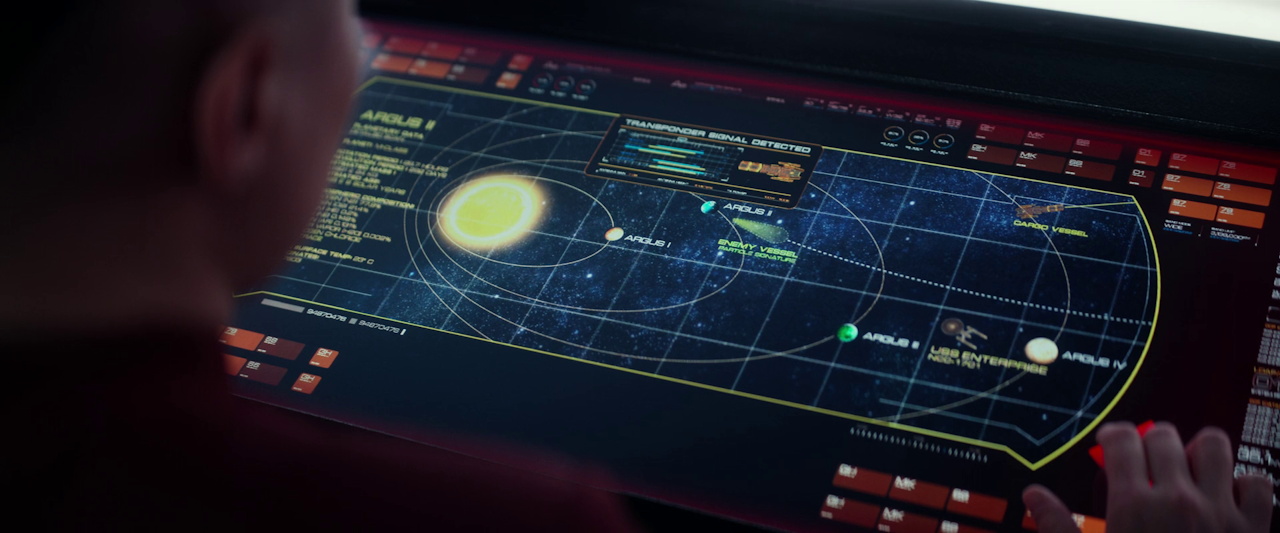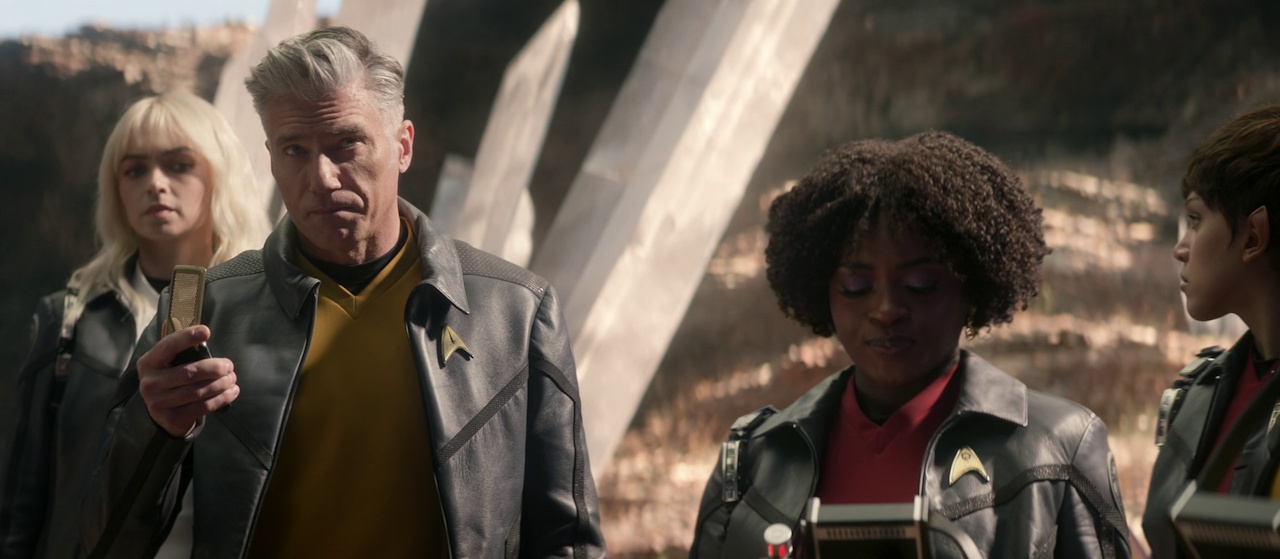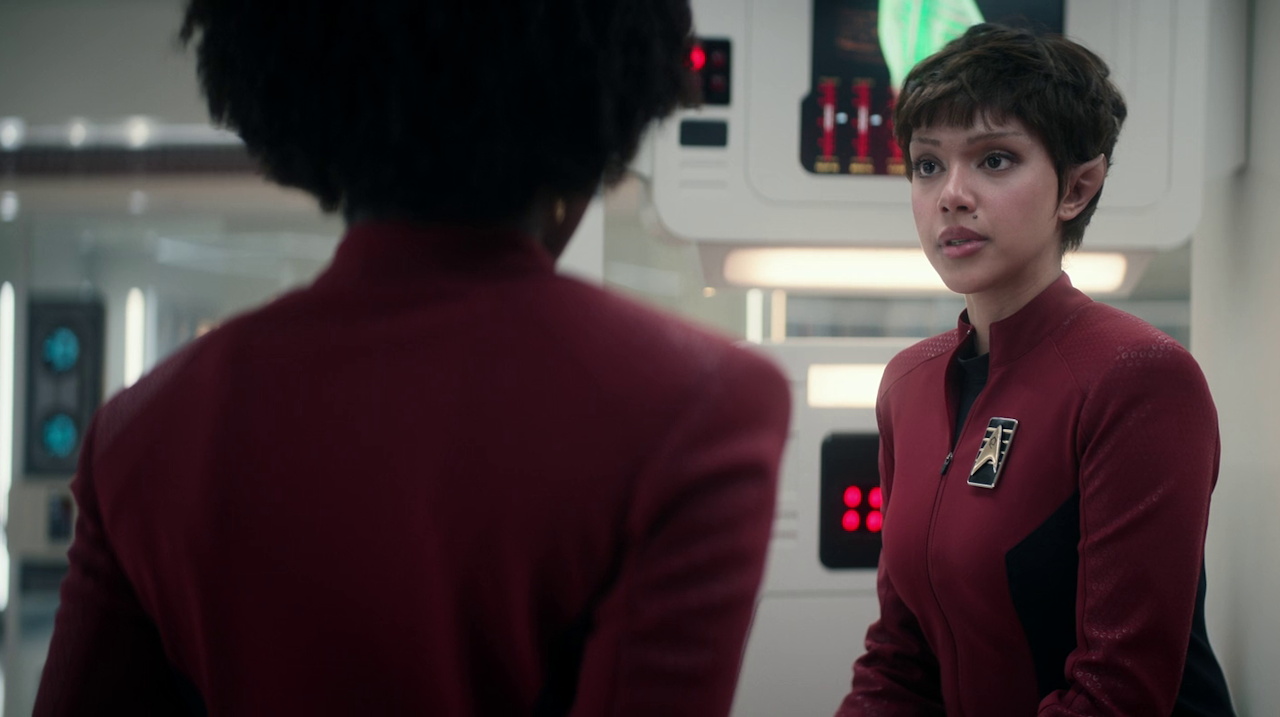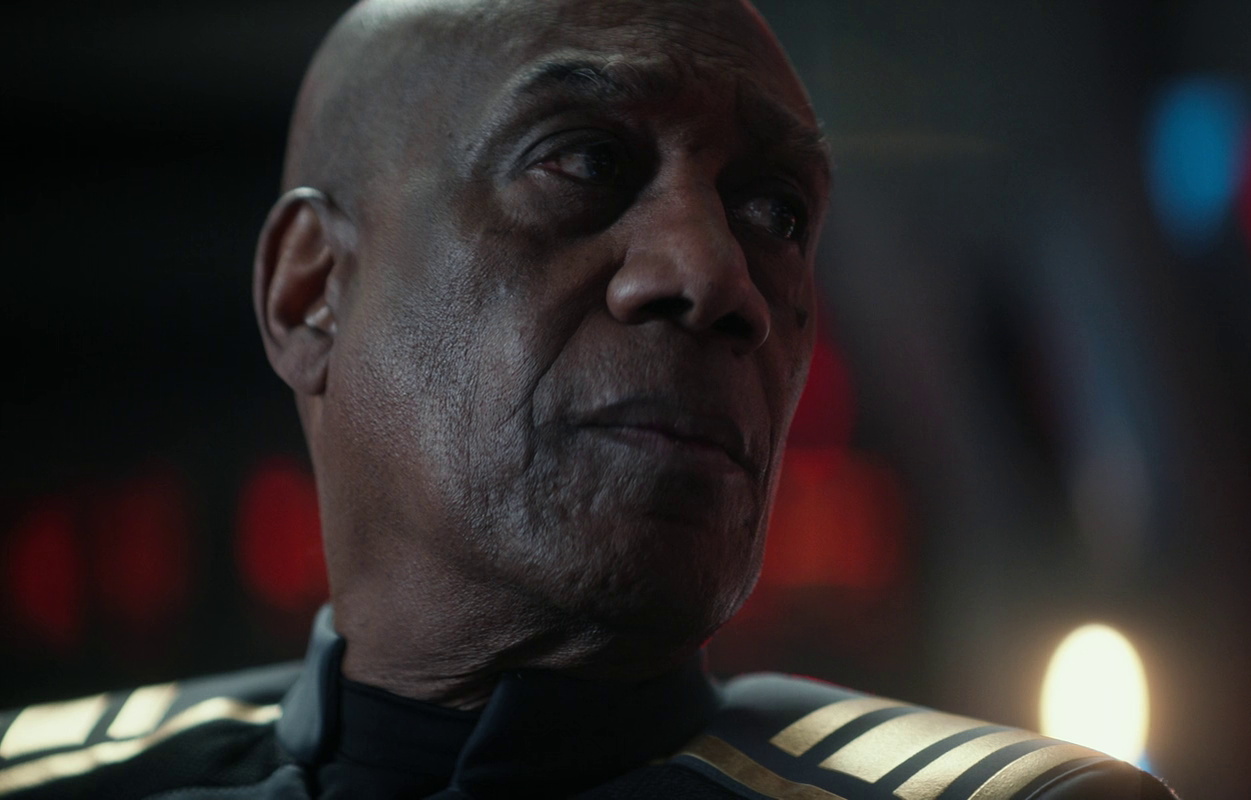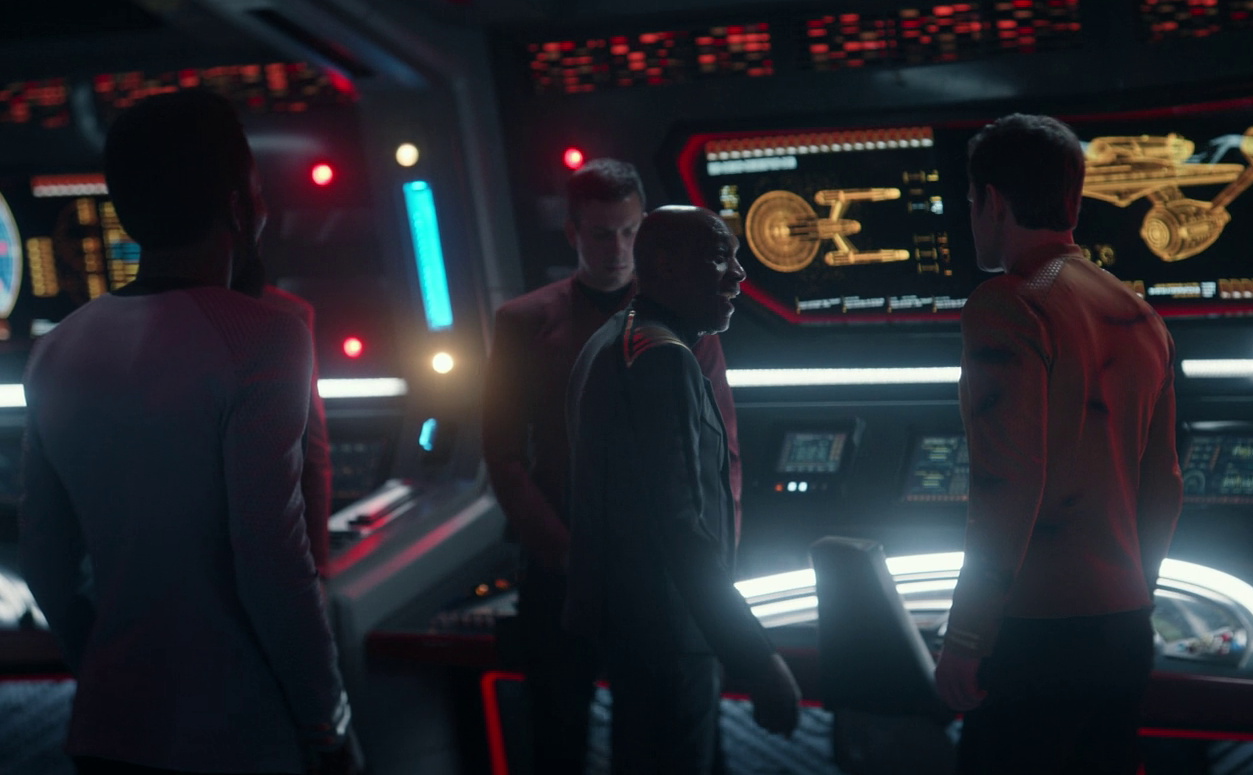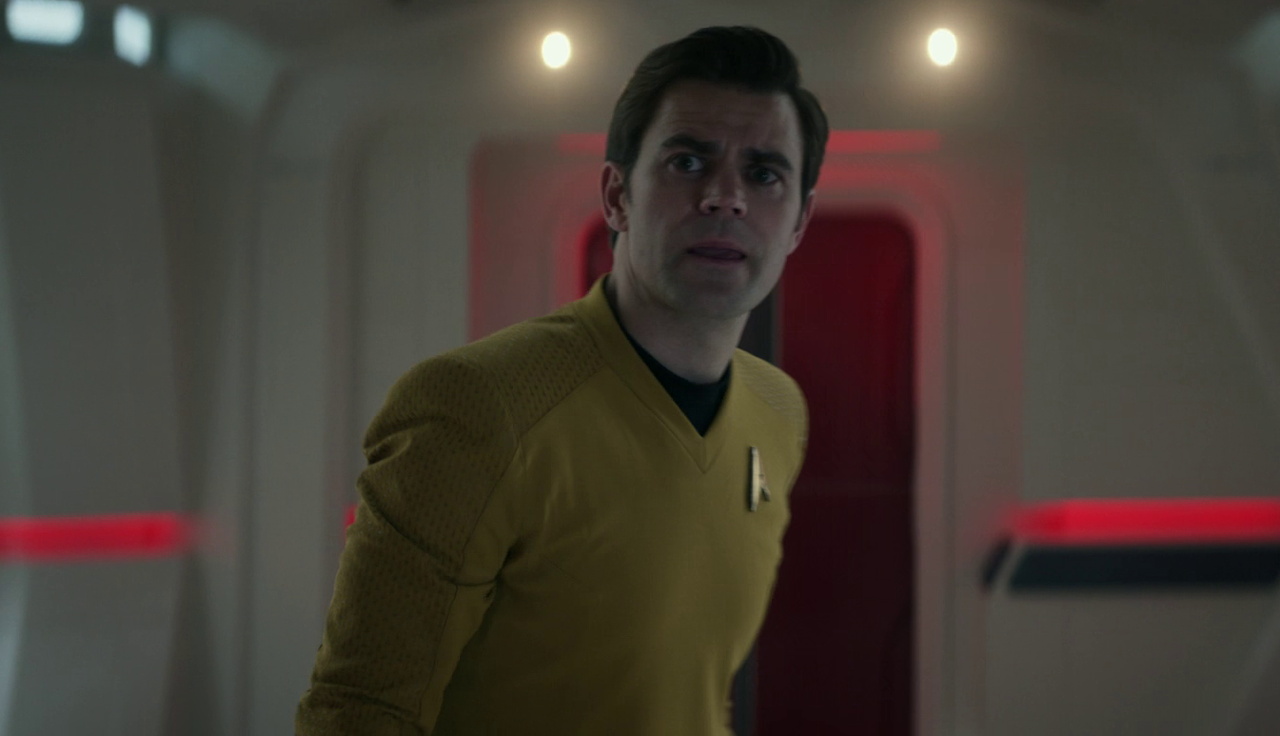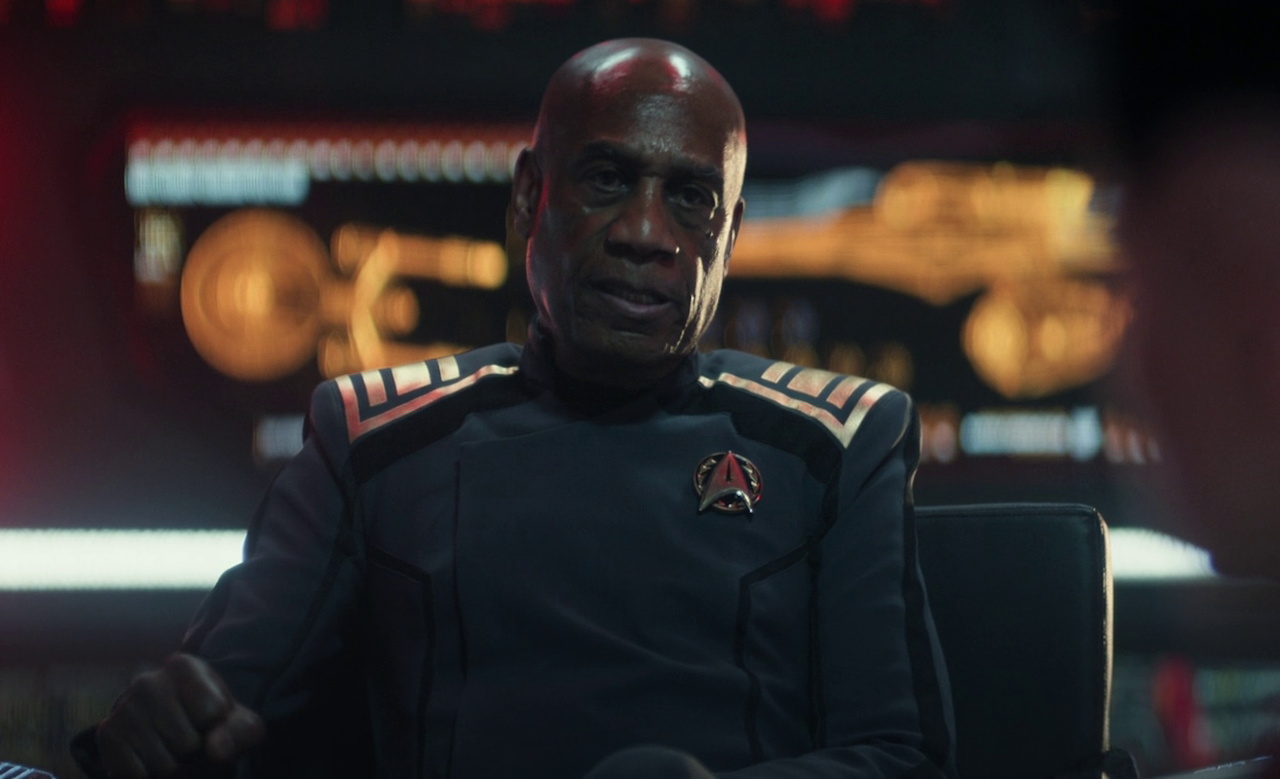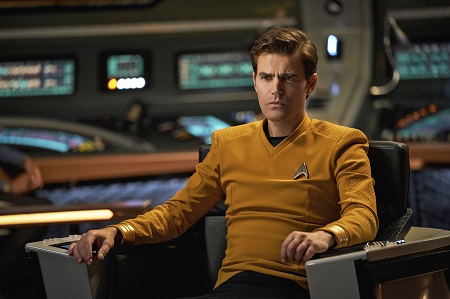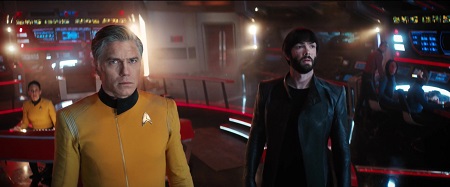
Star Trek: Strange New Worlds Episode Review – Season 4, Episode 2: The Griffin Incident

A Star Trek-themed spoiler warning

Spoiler Warning: There are spoilers ahead for Star Trek: Strange New Worlds Seasons 1-4. Spoilers are also present for the following Star Trek productions: The Original Series Seasons 1 and 2, The Wrath of Khan, The Search for Spock, The Voyage Home, The Next Generation Seasons 1, 2, and 7, Deep Space Nine Seasons 1 and 4, Voyager Season 7, and Discovery Season 2.

Last week saw Strange New Worlds’ fourth season get off to a bit of a lacklustre start, to say the least. An overstuffed story with too many things on the go at once didn’t have the space to do justice to “the dinosaur episode” concept that pre-season marketing material had teased, so I had hopes that this week’s outing – The Griffin Incident – would be a significant improvement.

Going into Season 4, we’d seen a couple of tiny clips from the episode as part of pre-release trailers and teasers, but nothing to really gauge what kind of episode The Griffin Incident was going to be. When it was revealed that this was going to be a horror-inspired story, my curiosity was genuinely piqued! Depending on how we count things, Strange New Worlds has done horror or horror-adjacent episodes about half a dozen times up to this point in its run, and some of those episodes – All Those Who Wander from Season 1 most notably – have been exceptional. So there were reasons to be optimistic heading into this “ghost story.”

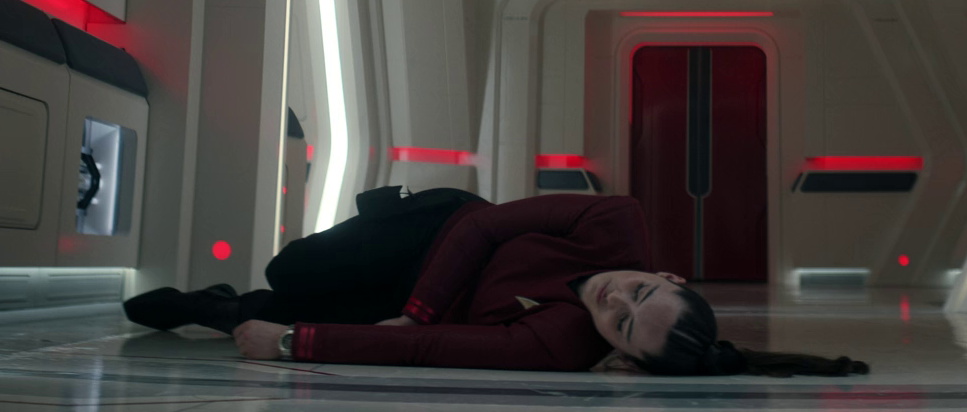
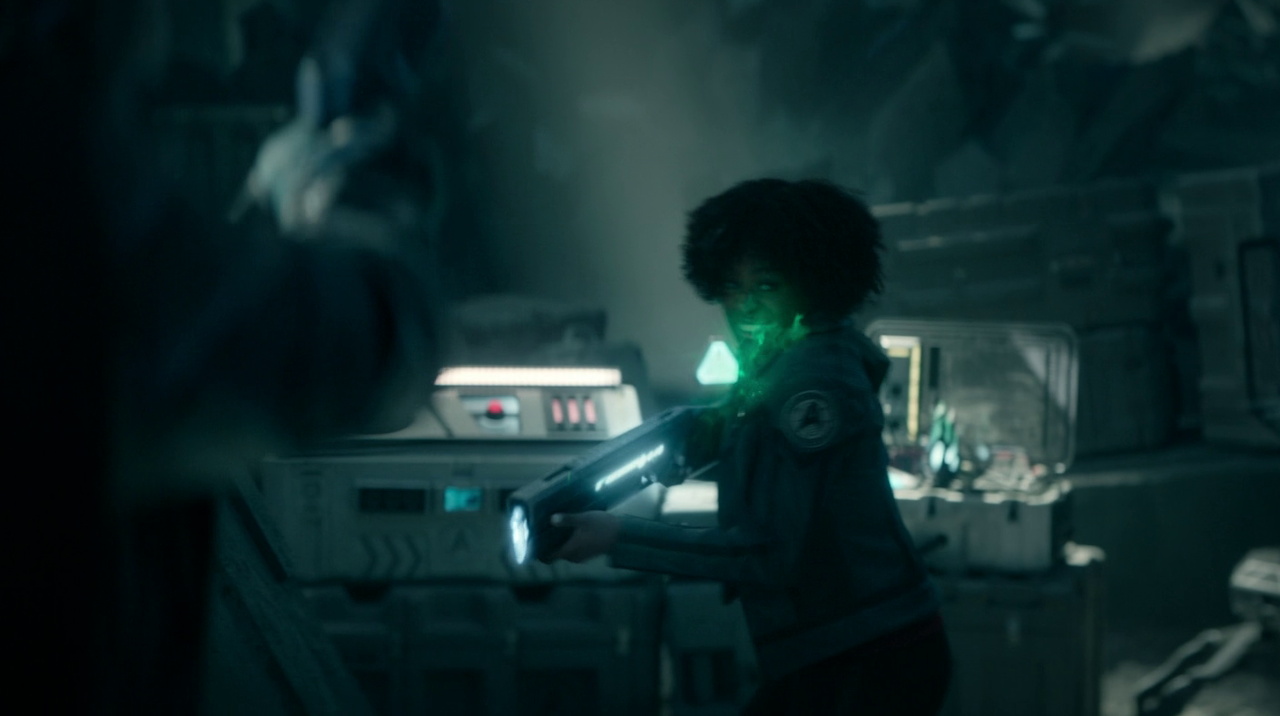
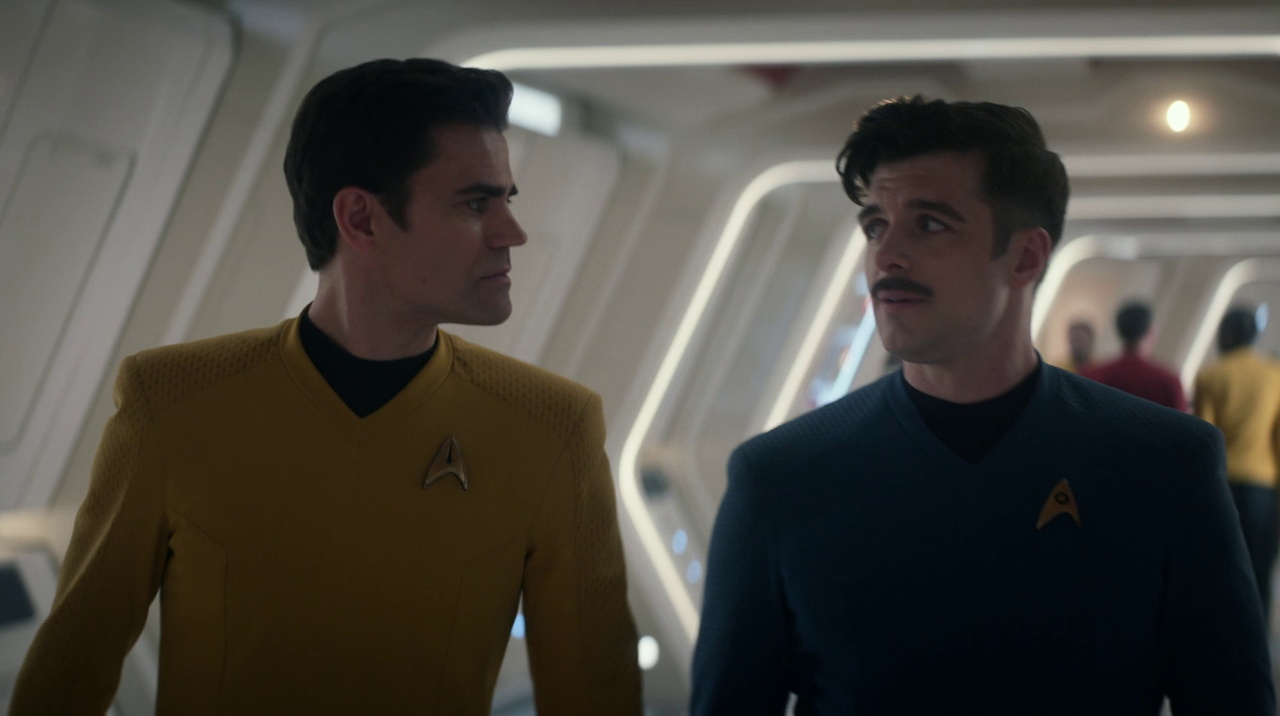
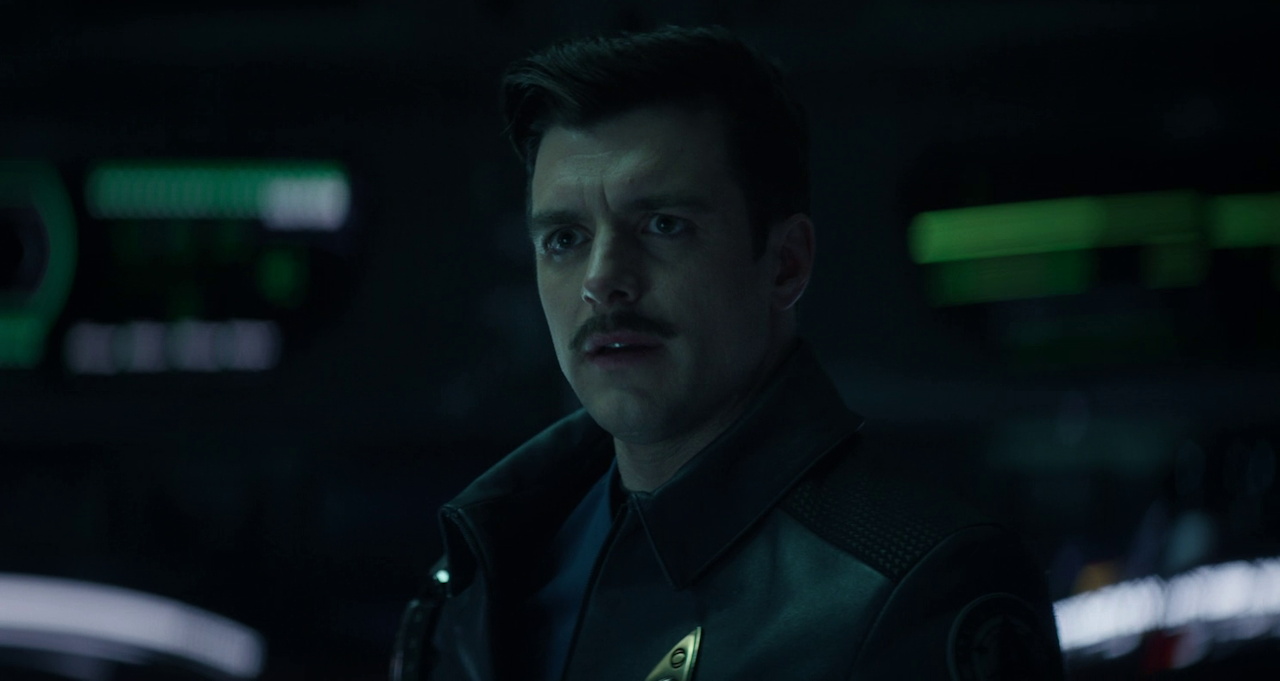
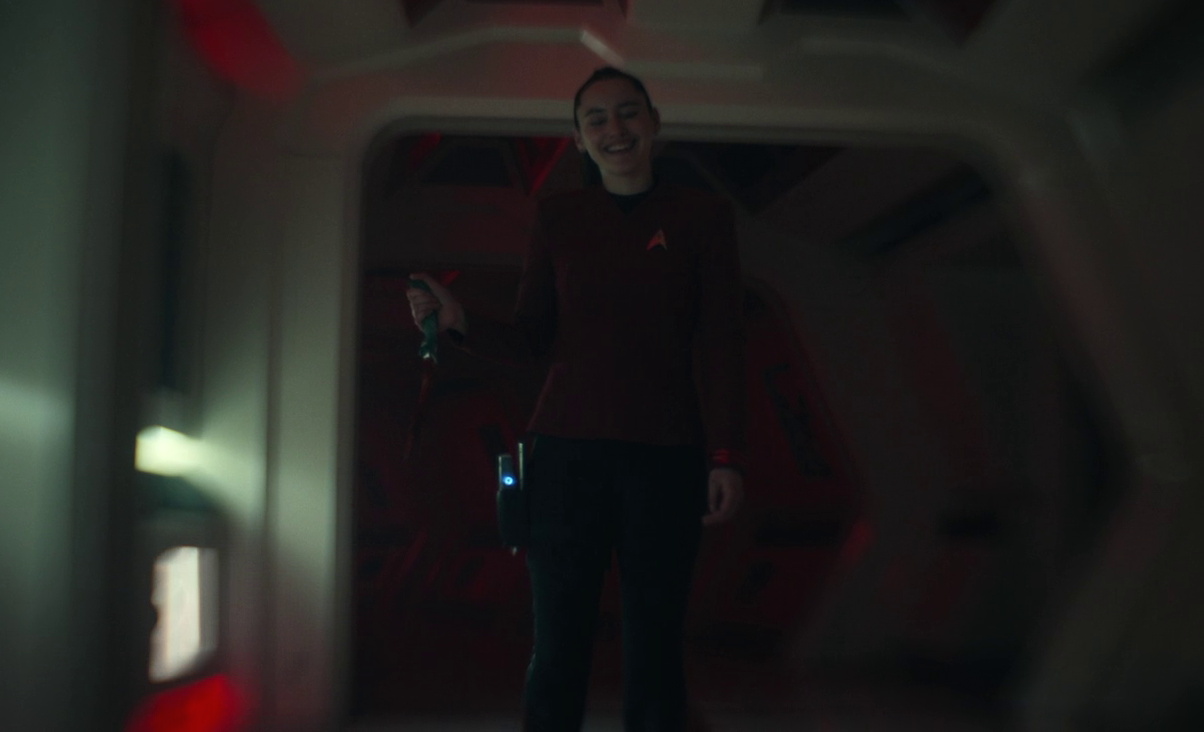
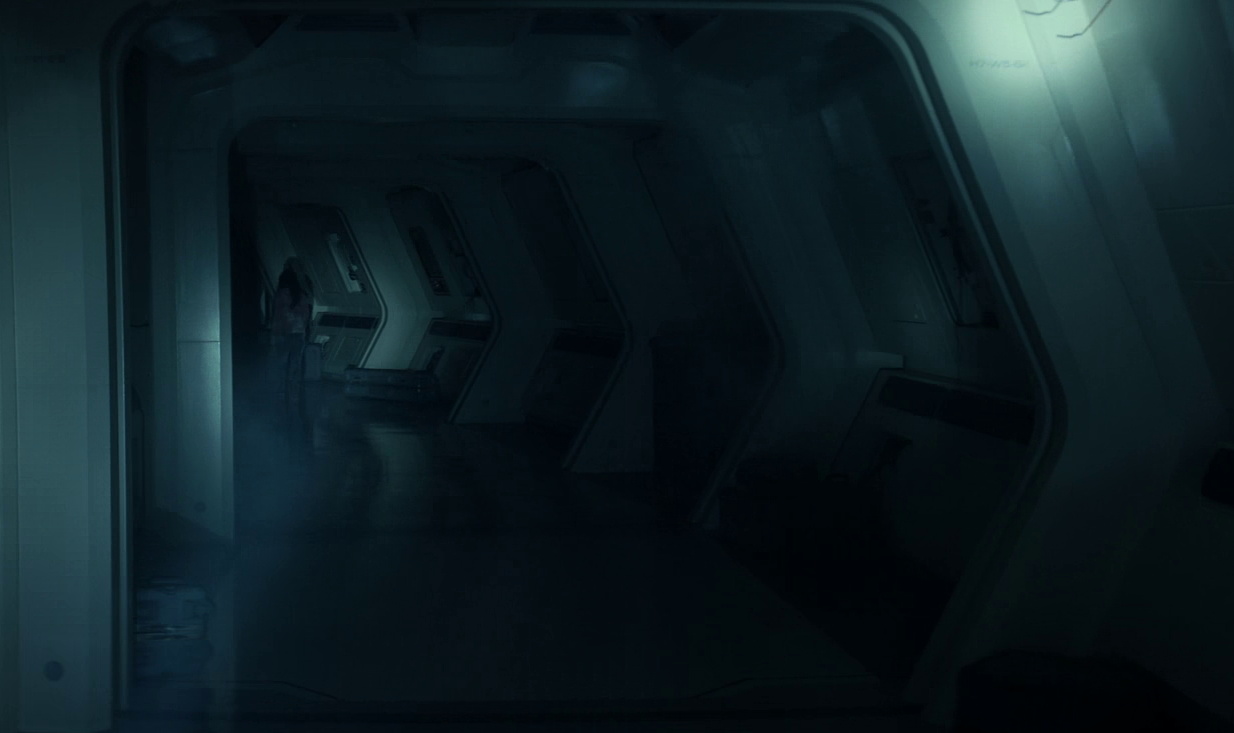
Still frame from Star Trek SNW 4x02 showing Harper in the hallway
Hold on to your dookie… it’s about to get spooky!

As always, I’d like to give a caveat. Everything we’re going to get into today is the *subjective, not objective* opinion of just one old Trekkie. If you disagree with me on the strengths and weaknesses of The Griffin Incident, if you don’t like my take on Strange New Worlds in general, or we just have different opinions on what makes for a fun Star Trek episode or a good horror story… that’s okay! The Star Trek fandom is big enough for a wide range of opinions to peacefully coexist, and there’s no need to get into an argument.

Okay, so what did I make of The Griffin Incident, then?

This is a bit of a toughie, to be frank. On the one hand, I spent close to fifty minutes on the edge of my seat, engrossed in a horror mystery that took me right to the edge of my personal comfort zone, with jumpscares, gore, a fantastic soundtrack, great cinematography, and some wildly unhinged (in the best way possible) performances from some of the show’s main cast! But on the other, The Griffin Incident broke what I consider to be one of the fundamental rules of storytelling within Star Trek by failing to provide an in-universe explanation for what happened aboard the titular USS Griffin.

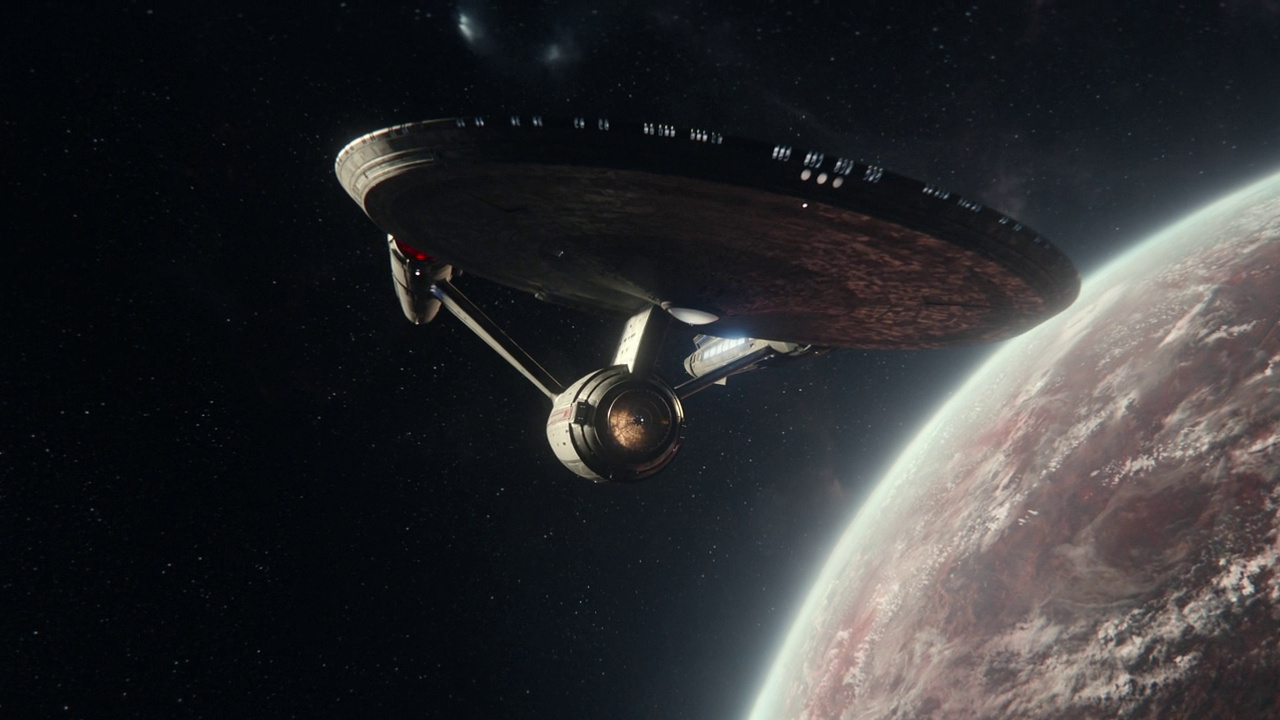
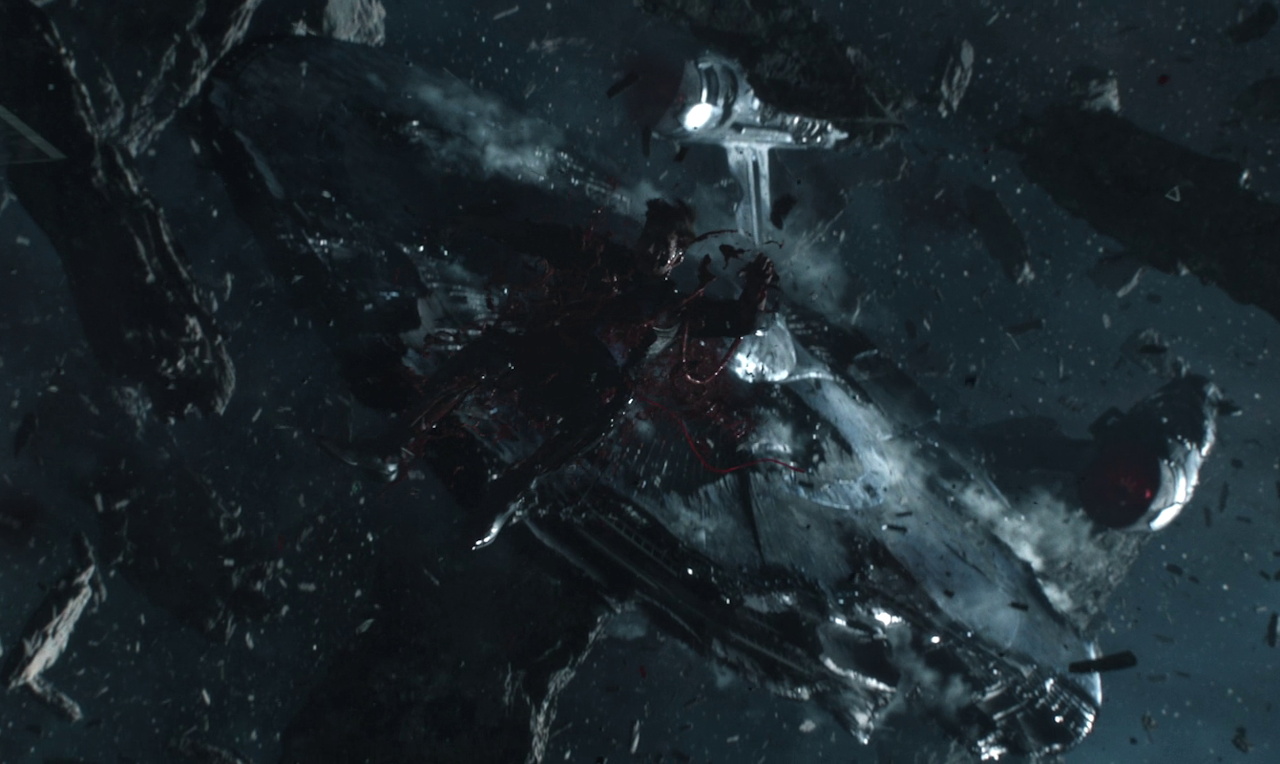
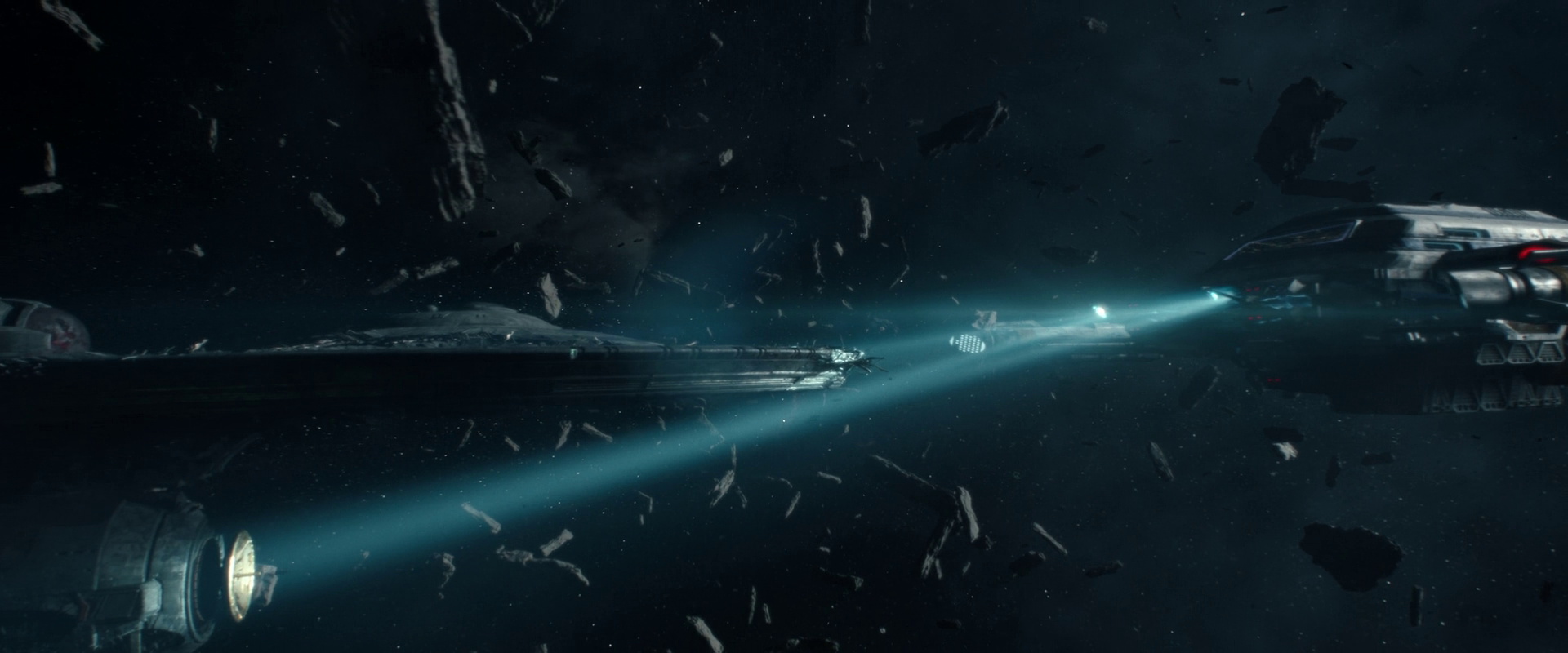
Still frame from Star Trek SNW 4x02 showing the USS Griffin under tow
The USS Griffin at the end of the episode.

The Griffin Incident was, in a sense, a bit of a “bottle episode,” using only a couple of guest stars and no new sets or filming locations; the action took place aboard the Enterprise sets. But working within that limitation, I have to give credit to the set designers, artists, and camera crew for coming up with some incredibly creepy and creative ways to make the familiar seem strange, unsettling, and genuinely frightening. The Griffin Incident, in that sense, reminded me a lot of All Those Who Wander from Season 1, which likewise took advantage of existing sets to tell a horror story. Or, going back even further, we could point to episodes like Voyager’s The Haunting of Deck Twelve, DS9′s Empok Nor, or TNG’s Starship Mine as examples of spooky or creepy stories which mostly relied on their shows’ main stages and sets.

When you have to work with sets that aren’t really designed with horror in mind, figuring out how to make them feel intimidating, unsettling, or spooky is a genuine challenge. It’s never as simple as “just turn the lights off,” or “mysterious blood stains;” episodes like The Griffin Incident have to do more if we, as the audience, are to buy into the idea of being trapped aboard a derelict starship where terrifying things are unfolding. And that comes from a combination of things: set dressing, to take existing sets and “spookify” them. Camera work, using established horror techniques to ramp up the tension. Focus, by keeping certain creepy characters just far enough out of focus that our imaginations run wild. Sound design, including the use of familiar sounds, silence, and unexpected noises. This goes beyond just “bumps in the dark!” And finally, music. The score has to learn from old horror films and episodes to really elevate the tension and fear factor.

For me, The Griffin Incident did all of those things phenomenally well.

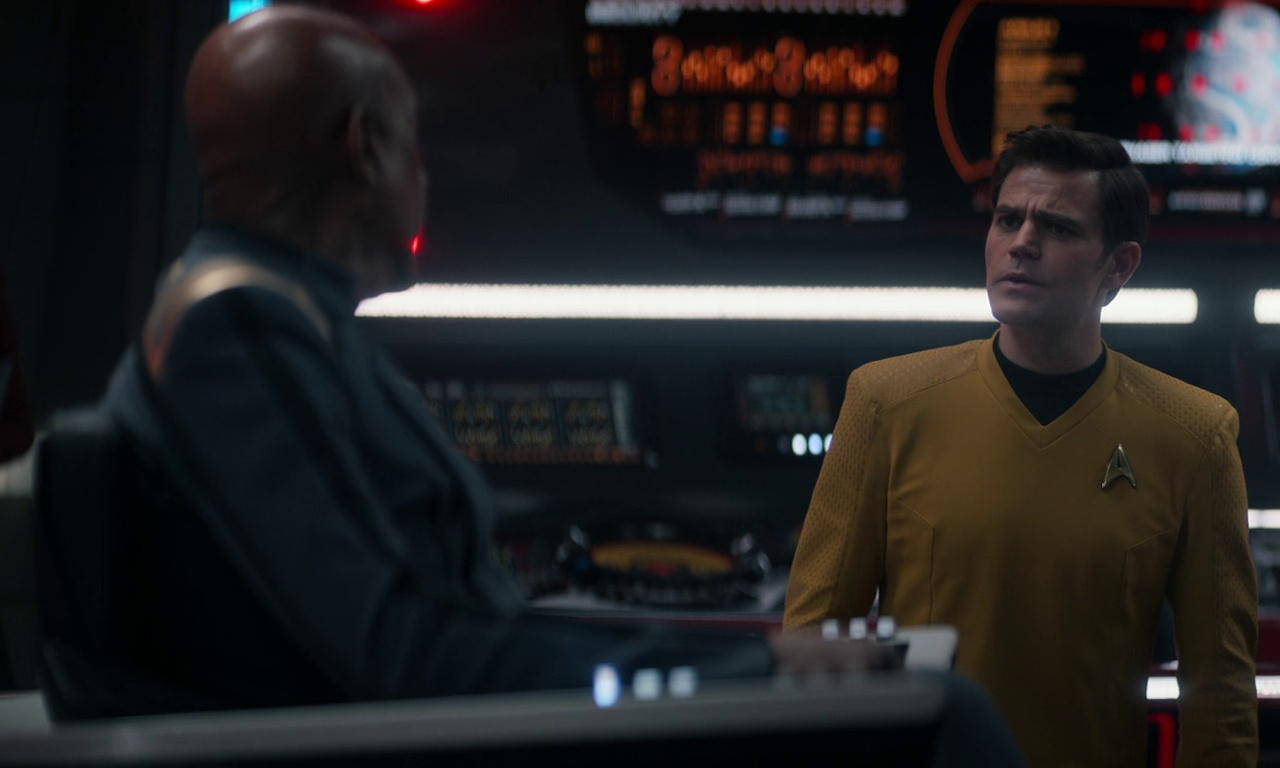
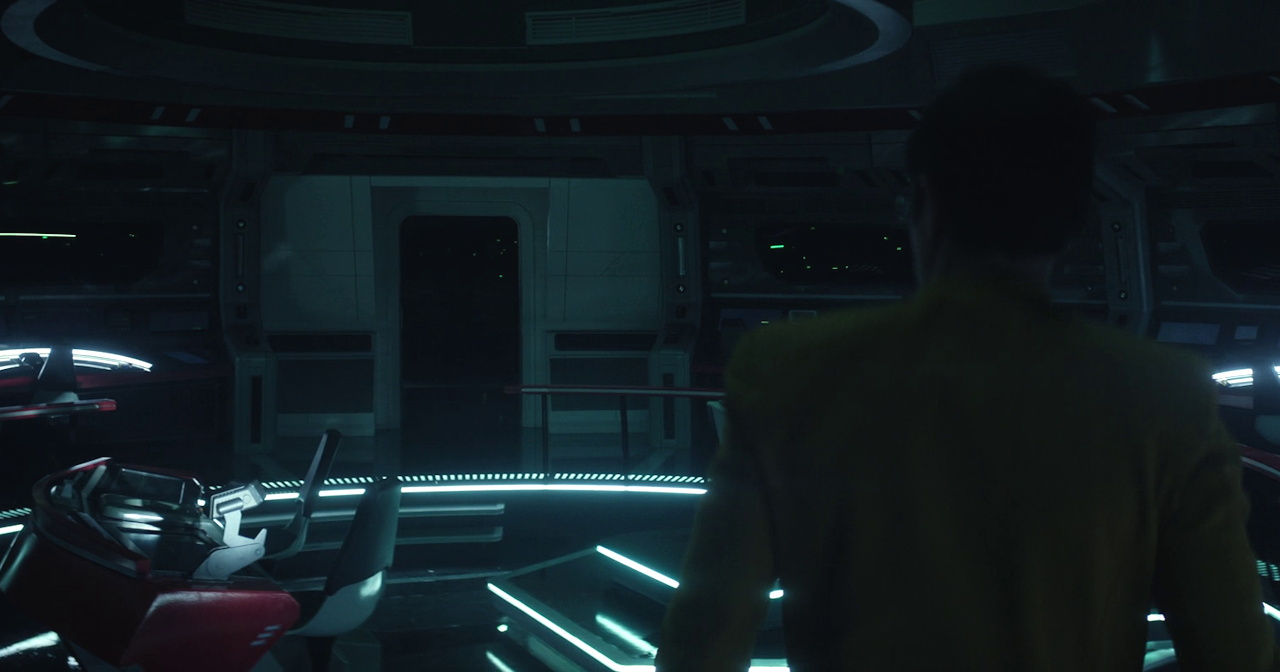
Still frame from Star Trek SNW 4x02 showing Kirk on the dark bridge
The episode made wonderful use of light, darkness, the camera, sound, and more.

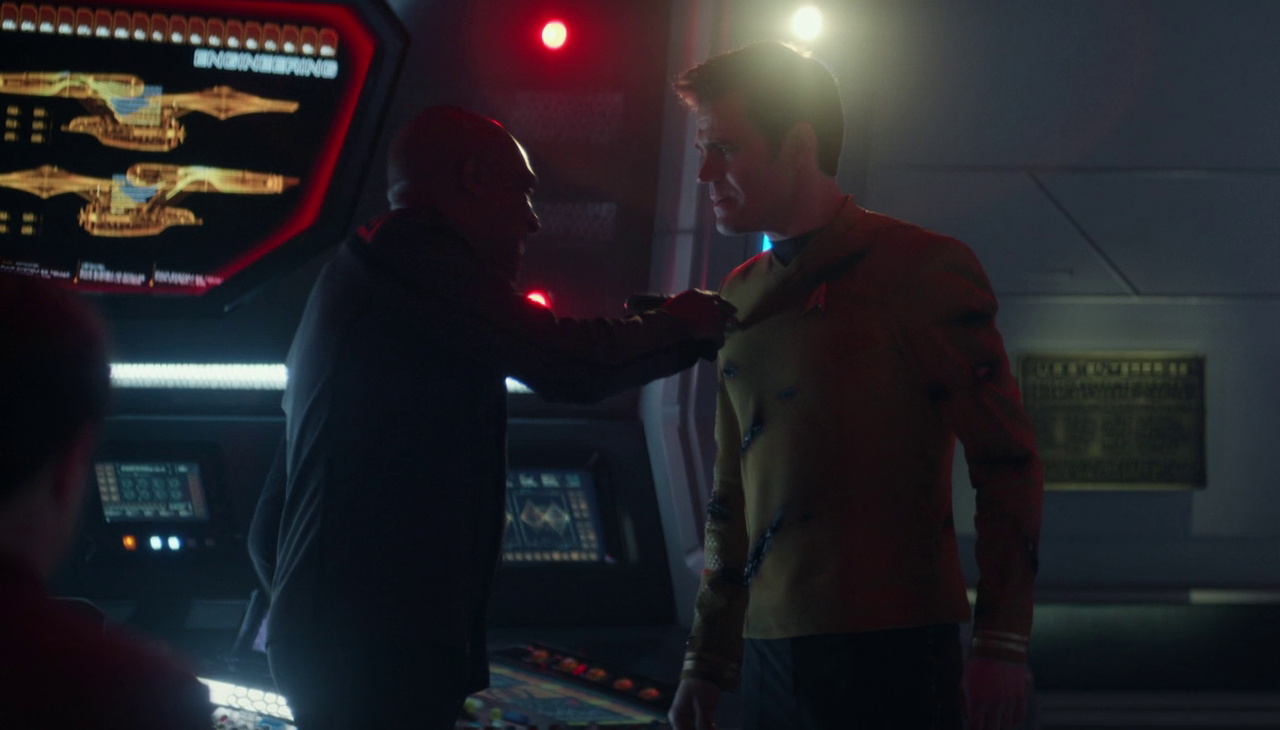
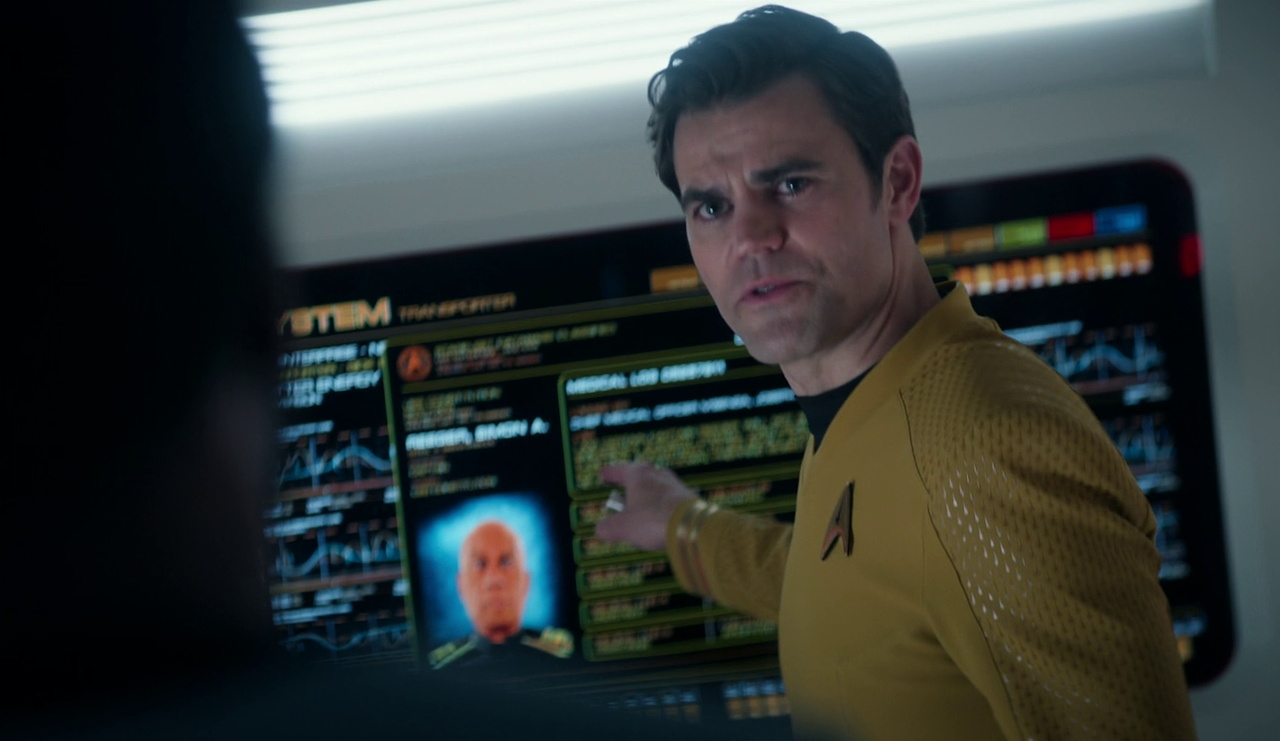
The lights aboard the USS Griffin weren’t just “off,” there was an ethereal glow to a lot of the scenes set aboard the derelict ship. And computer panels and displays used a shade of green that, in some films and horror stories, is associated with ghosts or supernatural phenomena. In past iterations of Star Trek, that same shade of green is often used for the Borg – another faction with a definite fear factor! There was an almost sickly feel to parts of the USS Griffin: the medical bay and the hallways in particular. Scenes set in these locations, through little more than changes in lighting, conveyed a real sense that something wasn’t right – that spooky shenanigans were afoot.

There can be something inherently unsettling to seeing usually bustling places abandoned or deserted. This is the explanation behind the “liminal space” idea that’s become popular online, and has even translated to big-budget horror films like this year’s Backrooms. Seeing spaces that should be populated left empty and abandoned makes the hairs on the backs of our necks stand up; it’s an instinctual thing, I guess. And, again, this feeling was present in the deserted hallways and rooms of the USS Griffin – elevated by the lighting and an absolutely fantastic musical score.

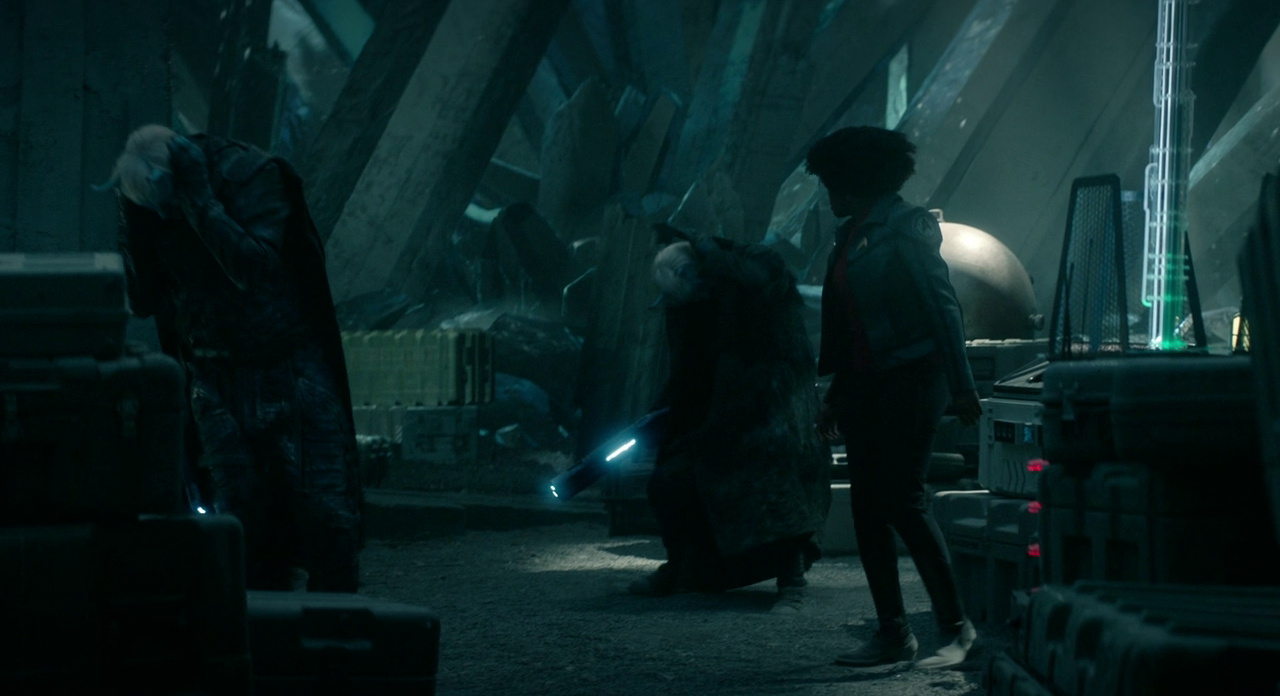
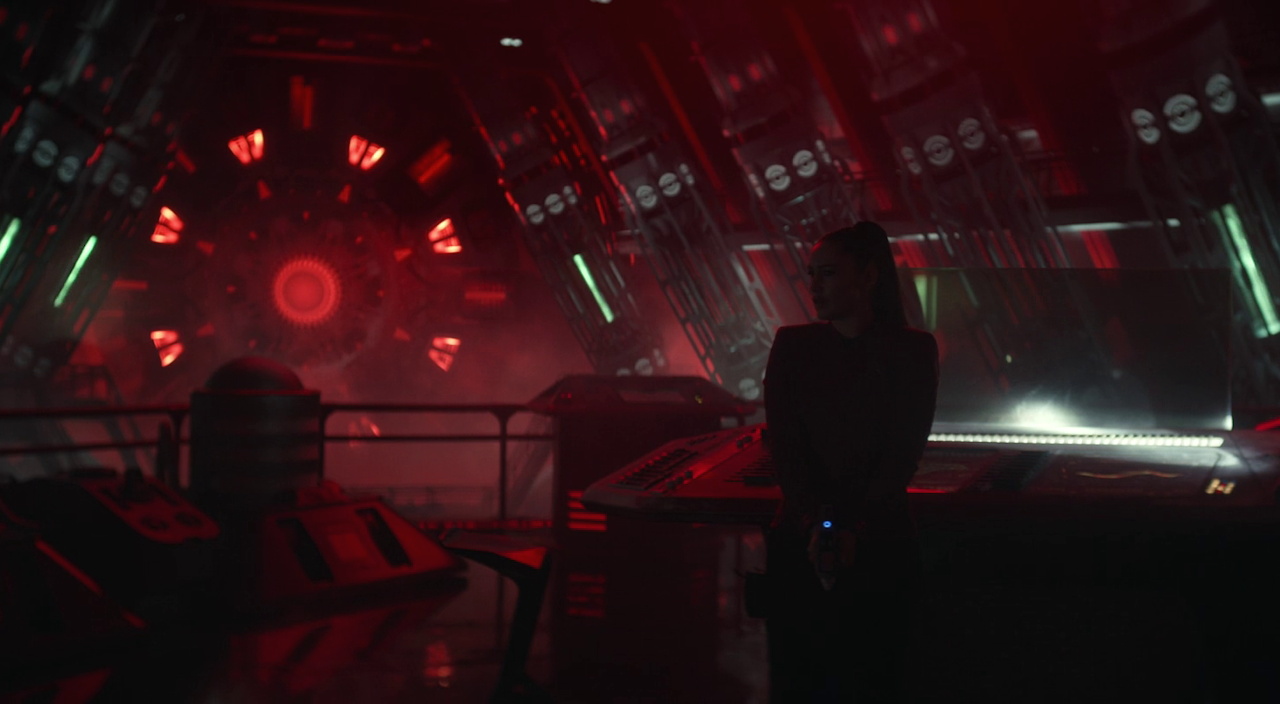
Still frame from Star Trek SNW 4x02 showing La'an in engineering
La’an in the USS Griffin’s deserted engineering room.

From the moment the trio boarded the Griffin, we were also treated to some fantastic cinematography and camera work. The way the camera would linger over certain shots, or keep spooky ghostly figures just out of focus behind whoever was in front isn’t earth-shattering stuff for the horror genre, but it was pulled off absolutely pitch-perfectly here. The production team had clearly watched plenty of horror films for inspiration, and managed to recreate established techniques to really convey that sense of dread, unease, and fear.

The combination of these techniques – lighting, cinematography, set design, and the camera – would still have fallen flat, though, were it not for music and sound design. The Griffin Incident used silence to great effect, but also brought in recurring noises from everyday life that – thanks to the inherently creepy setting – became genuinely frightening. Hearing a baby cry or a wind-up toy in motion wouldn’t even register most of the time, but these became almost motifs for the episode’s intensely frightening story. And the score, once again, was just perfect for this kind of spooky episode.

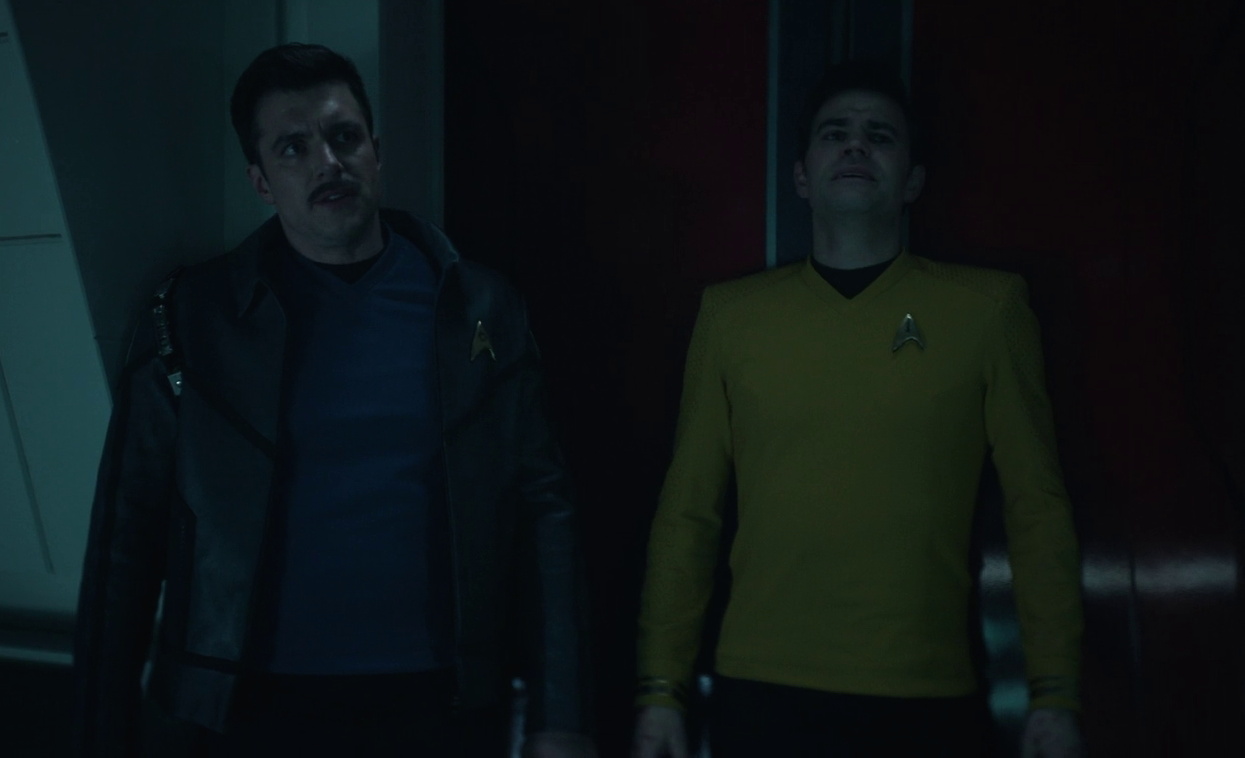
Still frame from Star Trek SNW 4x02 showing an illusory Sam Kirk
“Sam” hears a noise.

I’m a bit of a scaredy-cat when it comes to horror, and supernatural stories in particular really give me the creeps! Past Star Trek episodes – including in Strange New Worlds – have occasionally caught me out with a jump-scare or frightening moment, but I think it’s fair to say that The Griffin Incident is unmatched anywhere in the franchise for its unsettling, haunting, and downright creepy atmosphere. From the first moment the away team boarded the USS Griffin, that sense of dread and fear set in… and didn’t let up again until they made it back to the Enterprise.

We got some interesting character moments in The Griffin Incident for each of the three primary characters. I’ll cover each of La’an, Kirk, and Spock in turn.

For La’an, The Griffin Incident seems to further a storyline that last week’s episode raised – but didn’t have enough time to do anything of consequence with. For some context, I felt La’an’s scene with Dr M’Benga and Nurse Chapel in Valles Marineris was little more than clunkily-worded exposition; the worst part of an episode that was already disappointing. But there was scope, I felt, for that storyline to be expanded upon.

Still frame from Star Trek SNW 4x02 showing La'an wielding a knife
What’s going on with La’an?

The Griffin Incident feels like the next chapter of an unfolding La’an story. I’m not one to speculate or theorise (okay, that’s a *blatant* lie) but if I were, I’d stand by what I said in my review of Valles Marineris: that this storyline involving La’an’s recessive augment DNA is, somehow, going to lead to the end of her time on the show. The tagline for Strange New Worlds Season 4 has been “one step closer to where it all began;” i.e. that the season is going to bring the characters on the show closer to where they were at the start of The Original Series. Only… La’an is one of several characters who isn’t serving aboard the Enterprise by that time.

I won’t dedicate too much time to theory-crafting, because the truth is that I really don’t know precisely where this storyline will lead. It could conceivably lead to La’an’s death; Strange New Worlds has already killed off Hemmer, Captain Batel, and others across its three-and-a-bit seasons so far. Or it could see La’an take a leave of absence, quit Starfleet altogether, go rogue and have to be taken out… the list goes on! But this idea – that La’an’s latent augment genes could be becoming more active – is clearly tied to her arc this season, and with this season beginning to set the stage for the end of the series and a transition, of sorts, to TOS, I can’t help but wonder if we’re seeing the first steps down a path which will lead to La’an’s end… one way or another.

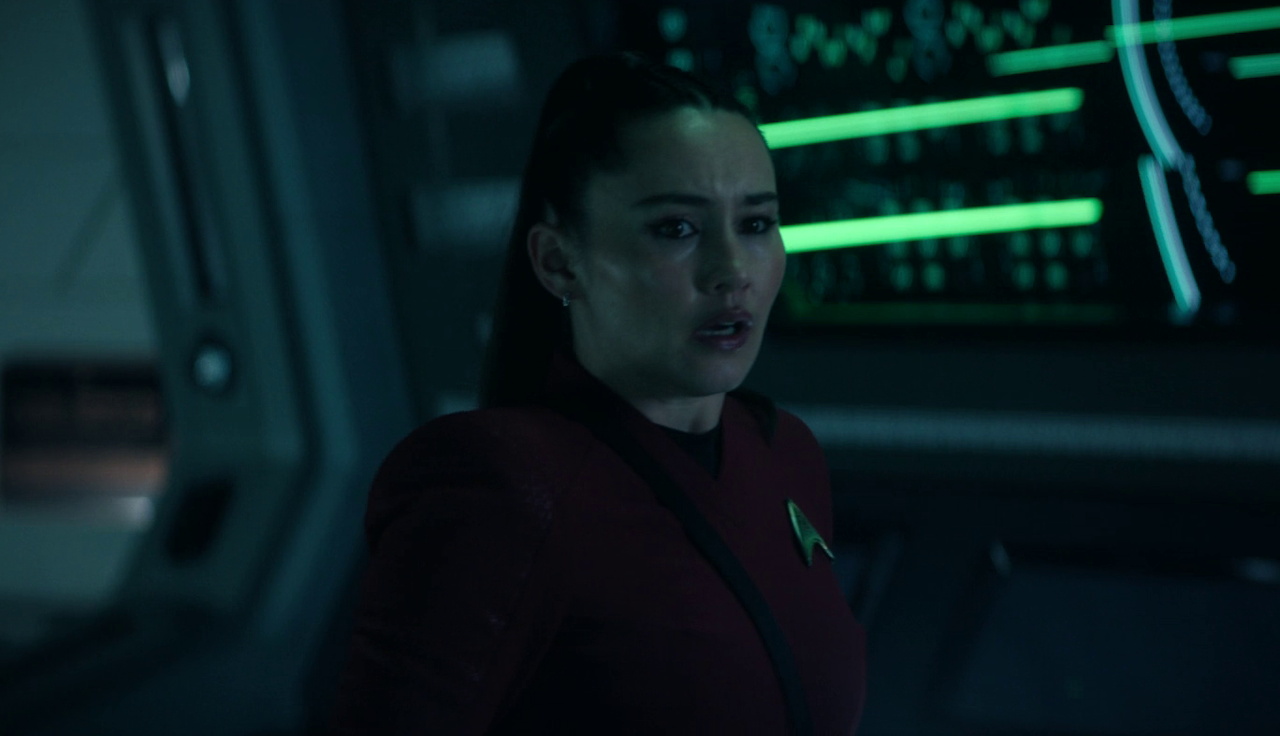
Still frame from Star Trek SNW 4x02 showing La'an looking shocked
Could this “augment DNA” storyline be La’an’s swansong?

Kirk and Spock were both able to push past the supernatural nonsense of the USS Griffin, at least to an extent. Spock drew on his inner logic, and Kirk – despite hallucinating wildly – managed to repeatedly tell himself that the noises he was hearing weren’t real, and retained more of his sanity than La’an did. But La’an, by the story’s climax, had been fully claimed by whatever was aboard the USS Griffin, and I think it was implied that that was tied to her augment heritage and DNA. As happened last season, when she was briefly given Vulcan DNA and turned into a Romulan, La’an’s recessive augment DNA seems to have caused her to have more of a reaction to the Griffin and whatever was going on there.

That’s my read on her side of the story, anyway.

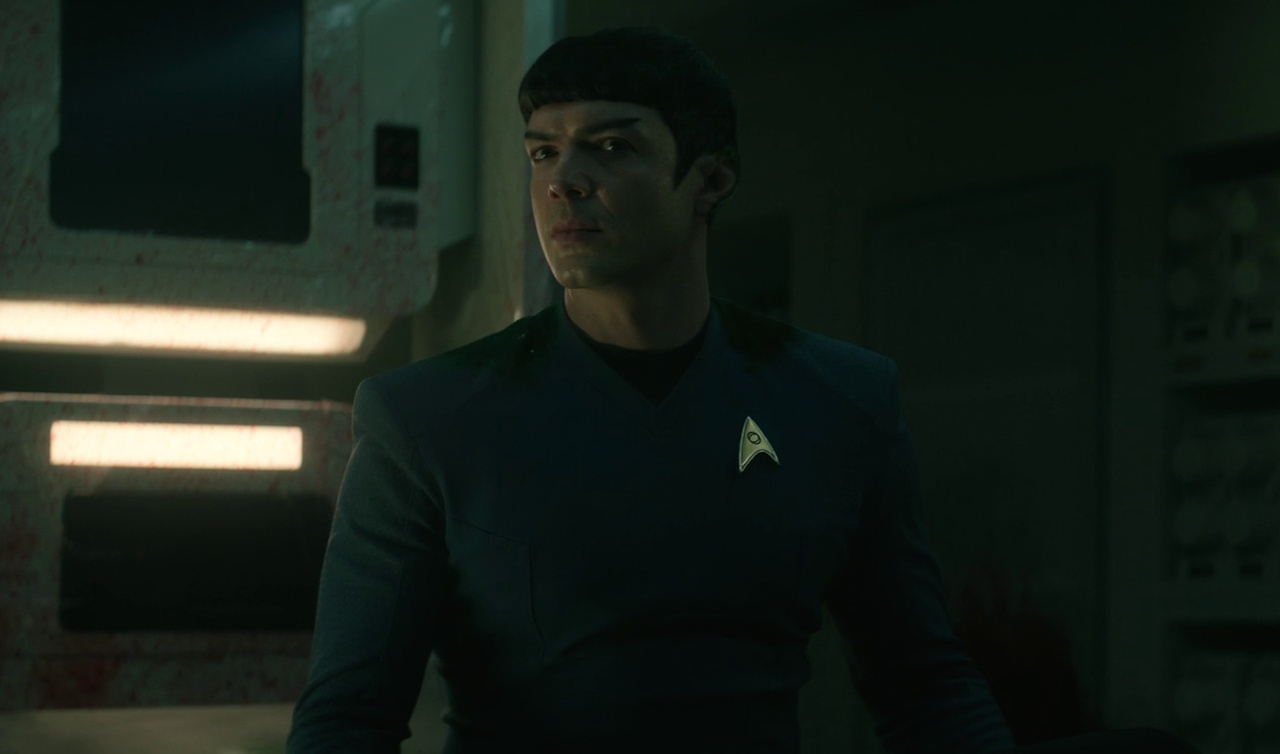
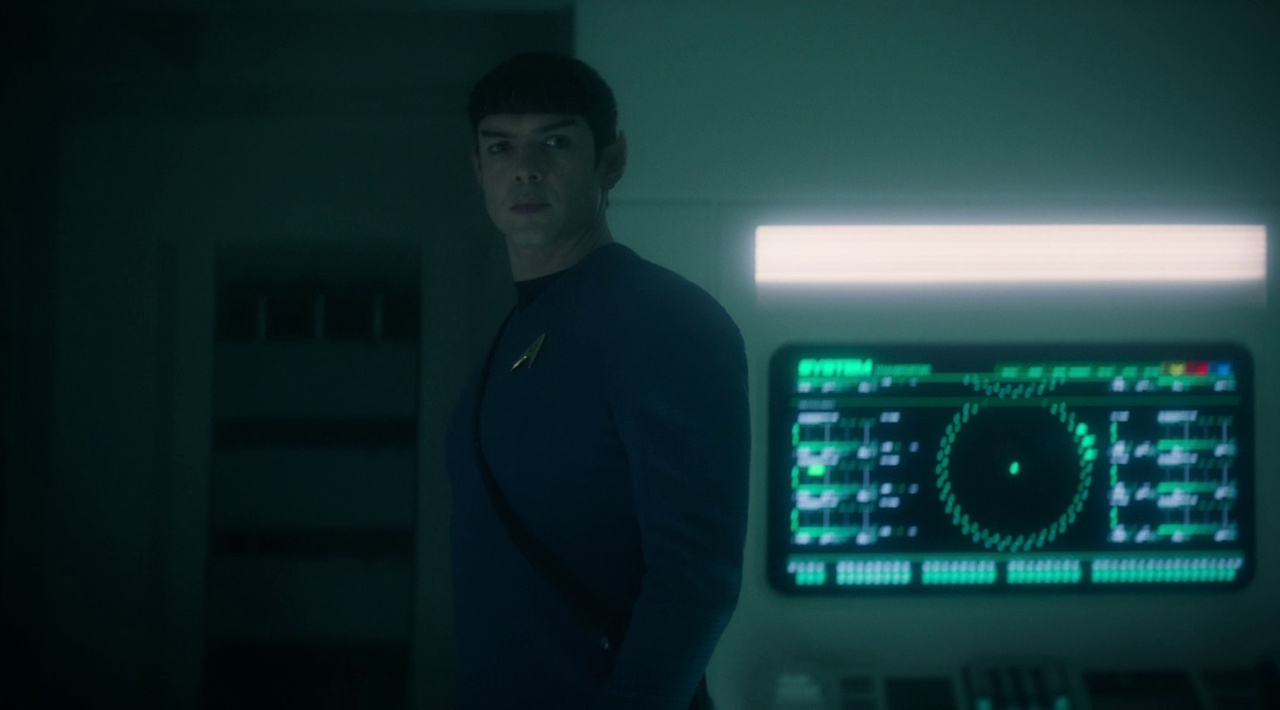
La’an was also the one who decided that the group should split up (which, let’s be honest, is a bit of a horror cliché, but I think we can overlook it!) This saw Spock left alone in the abandoned sickbay, and later, Kirk alone on the bridge. La’an seemed to be taking on a leading role, at times, offering suggestions and, while not exactly giving orders, certainly taking charge of the situation in those crucial early minutes. I like this, at least in theory, less for what it does for La’an than what it says about these younger versions of Spock and Kirk. If we return to the season’s promise to take us “closer to where it all began,” we’re seeing Kirk and Spock before they were captain and first officer, and I think I’m right in saying that they’re all the same rank as of this episode.

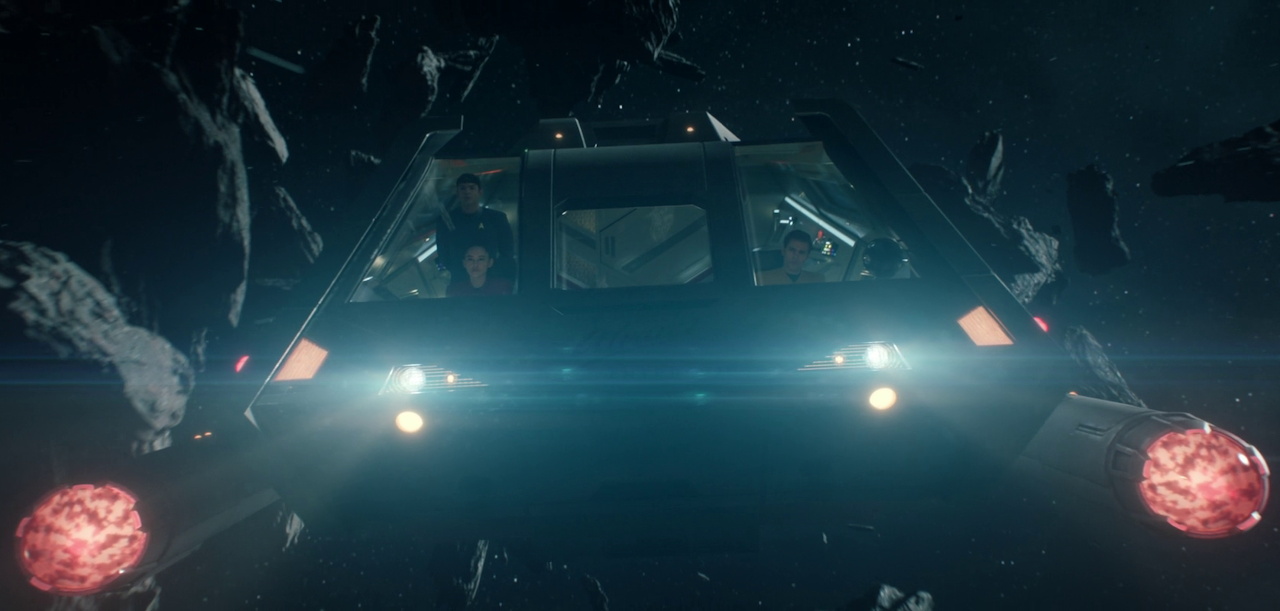
Still frame from Star Trek SNW 4x02 showing Kirk, Spock, and La'an aboard a shuttlecraft
Kirk, Spock, and La’an aboard their shuttlecraft.

La’an’s storyline also saw her uncovering parts of the story of the USS Griffin’s security officer, Lieutenant Harper. The episode leaves it open to interpretation, I guess, how much of what La’an saw of Harper’s logs was real and how much was illusory, but I think there must’ve been at least some truth to it. We’ll get into a bit more detail about this when I talk about my biggest dislike from The Griffin Incident, but for now, suffice to say that this was an interesting idea that I don’t think the episode managed to make the most of.

Harper’s logs depicted a “descent into madness” that mirrored La’an’s own – though it was ambiguous whether she was the only one affected on the ship, whether she might’ve been immune, at least at first, or whether any of the things she reported actually happened. As I said, we’ll cover this in more detail later on, but for me… this side of the story started out very strongly, but didn’t end spectacularly. If a storyline is going to tease us with an engaging and horrifying mystery, that’s fantastic! But it needs to have an ending. And Harper’s story… doesn’t.

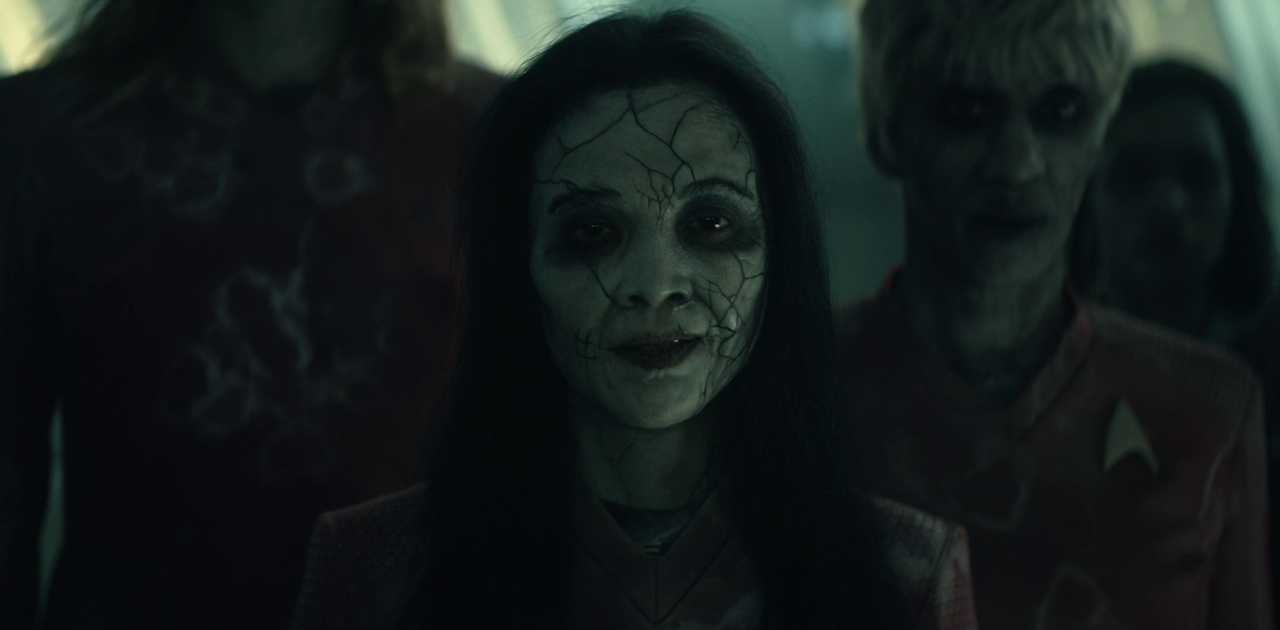
Still frame from Star Trek SNW 4x02 showing Harper with other "ghosts"
The “ghost” of Lieutenant Harper.

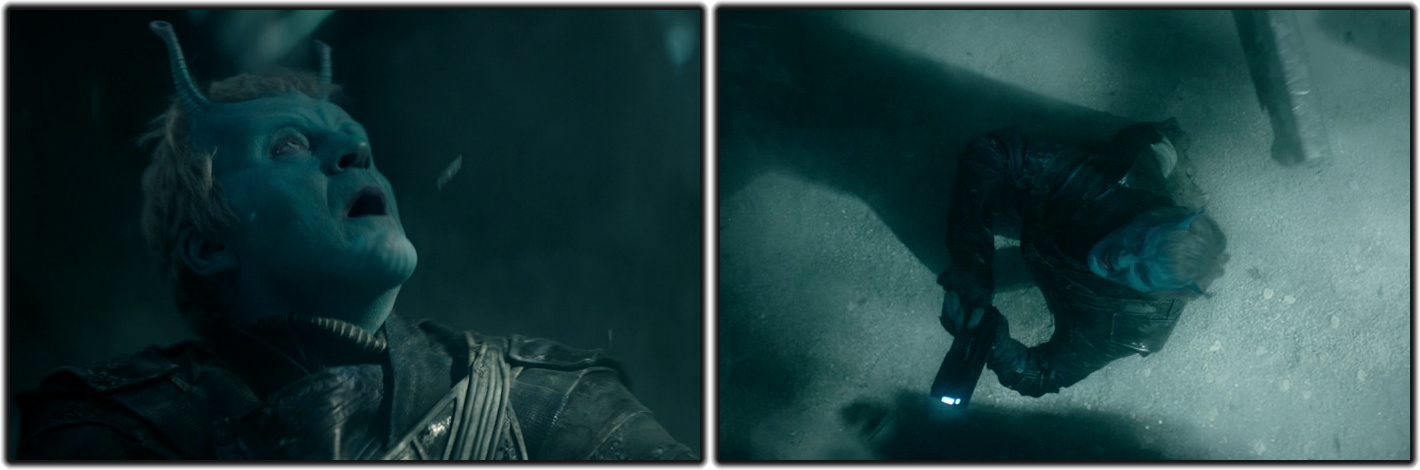
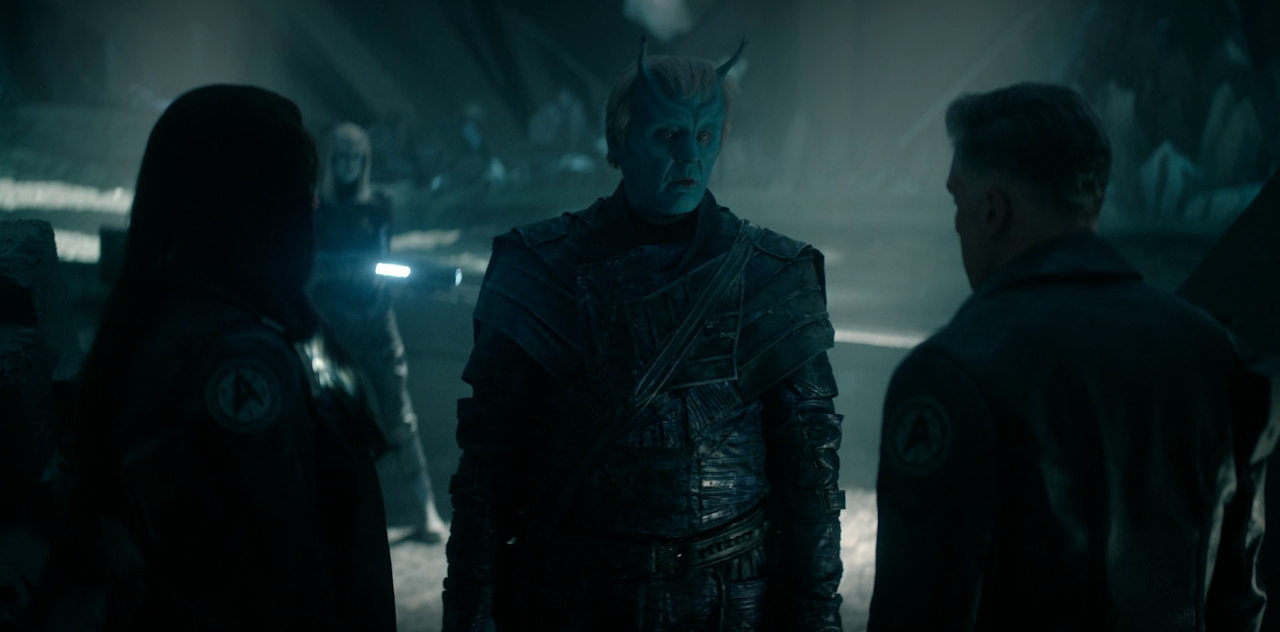
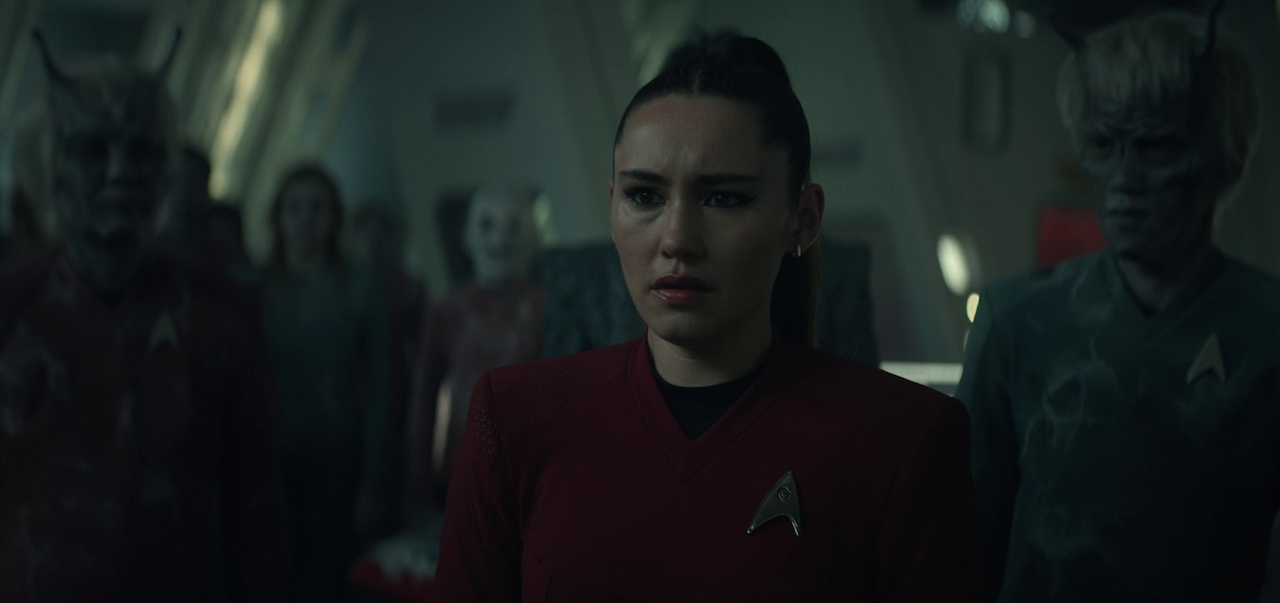
I did like, however, the makeup and costume that brought Harper back to “life” in her scenes with Kirk and La’an. The grey, cracked skin and moulded, decaying uniform made her look truly unsettling and spooky; somewhere between a ghost and a zombie, perhaps. Combined with all of the cinematography and lighting stuff we talked about earlier, I got the sense that Harper – or whatever entity was using her form – was almost constantly watching the away team, ready to materialise at any moment. For this kind of story, that’s exactly what the audience should be feeling!

Let’s move on to Kirk.

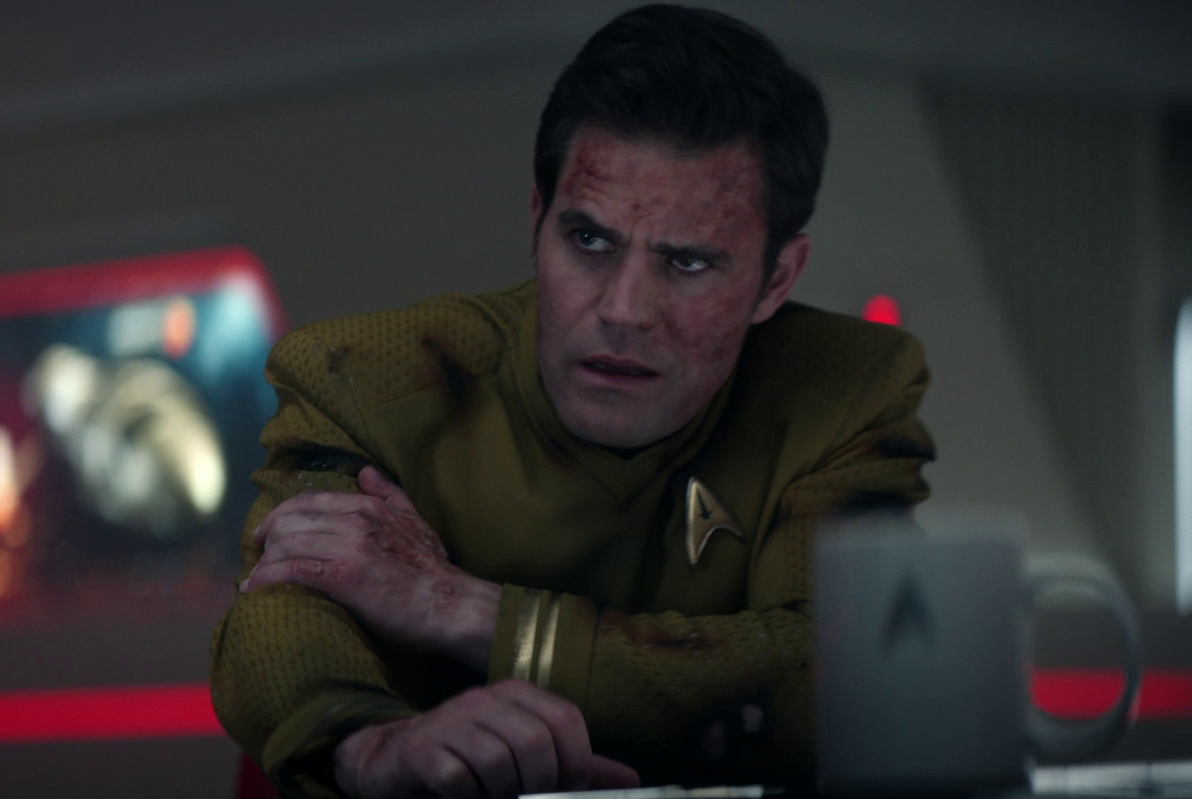
Kirk’s story bridges a gap between something we learned last season and what we’d eventually see in The Wrath of Khan and The Search for Spock: the birth of David Marcus and Kirk’s relationship with him. In The Wrath of Khan, Kirk didn’t immediately recognise David, but did know who he was when he confirmed his name. The Wrath of Khan makes it pretty clear that Kirk was an absent father – by Carol Marcus’ request. With David being a baby in this era, it doesn’t tread on the toes of canon to say that Kirk might’ve visited Carol and David, attempted to maintain some kind of a relationship with them for a time, and even, as we see in the episode, treated David to gifts and messages.

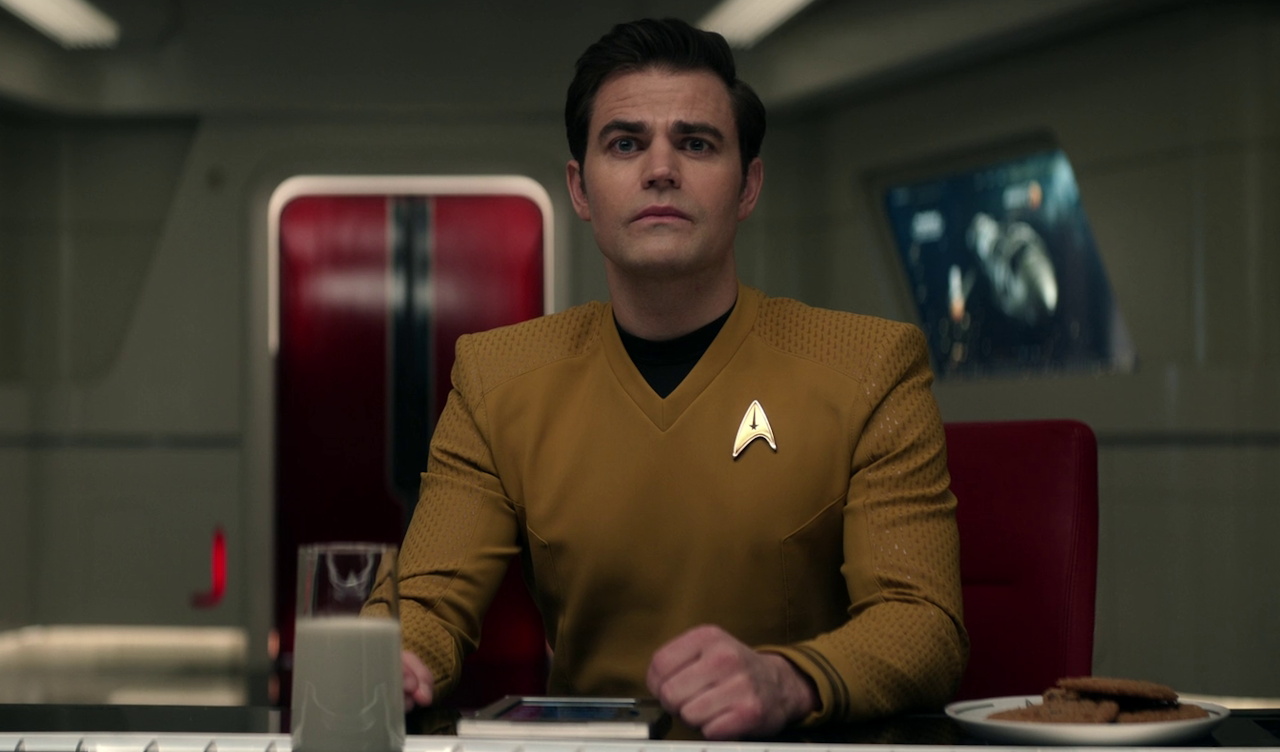
Still frame from Star Trek SNW 4x02 showing Kirk with milk and cookies
Kirk works on his message to Carol and David.

This is the kind of thing that, in my opinion, modern Star Trek hasn’t always done particularly well. If you’re writing a prequel, or a story which otherwise has to fit in with an existing, long-running franchise, there’s a balance to be struck between doing something new and ensuring your story doesn’t retroactively change things. Moments in The Griffin Incident with Kirk showed that he had an interest, at least in the beginning, in being part of Carol and David’s lives, which I think is actually an improvement for his character. One of Strange New Worlds’ producers, in a pre-season interview, said something along the lines of wanting to transform Kirk into less of a “deadbeat dad,” and while I never really interpreted Kirk and David’s relationship that way in The Wrath of Khan or The Search for Spock, I think you can make the argument that doing something like this is a net positive for Kirk’s characterisation.

When you’re writing a prequel to a well-established story, it’s not difficult to come up with moments that seem to “foreshadow” events which transpire further down the timeline. La’an’s line to Kirk about how his son would die “at the end of a blade” – referencing the famous scene in The Search for Spock – really did hit me, though, because it was such an unexpected callback (or call forwards, I guess). It was an impactful line referencing one of Star Trek’s most brutal and unexpected character deaths, and on a first viewing, not knowing that La’an was about to say it? It really landed.

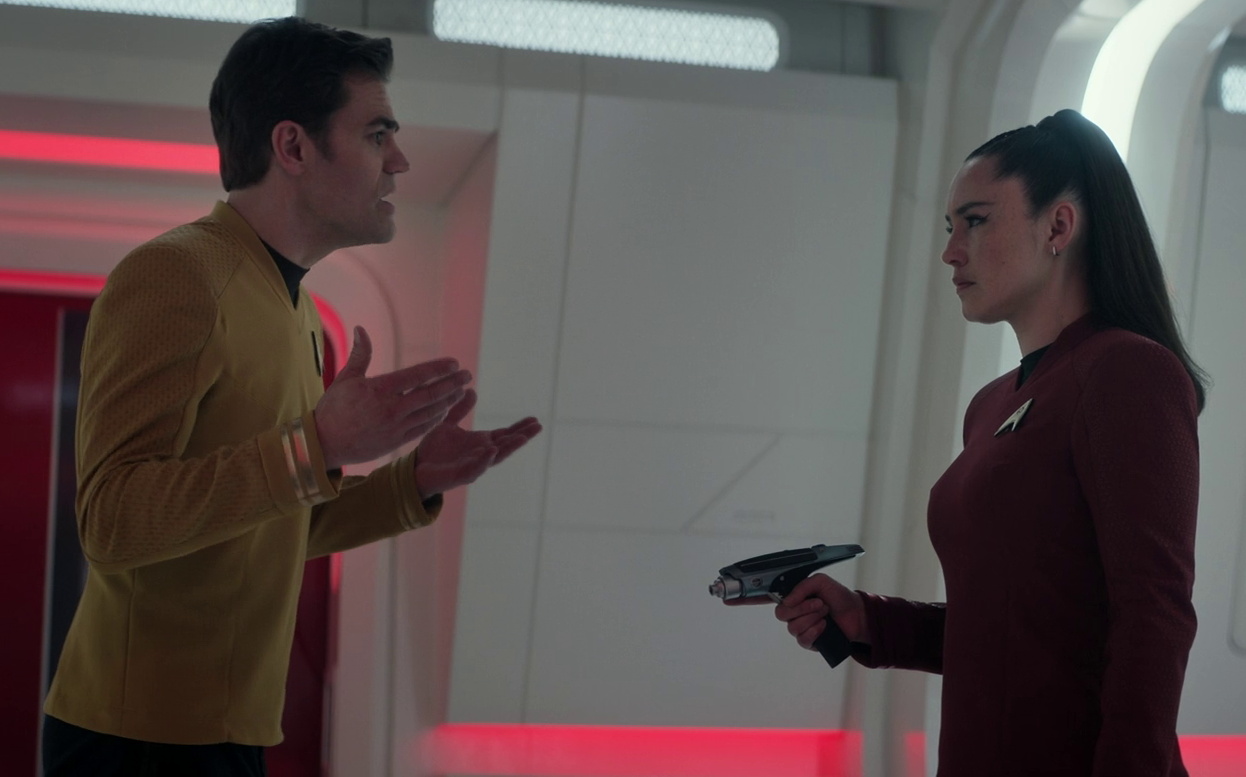
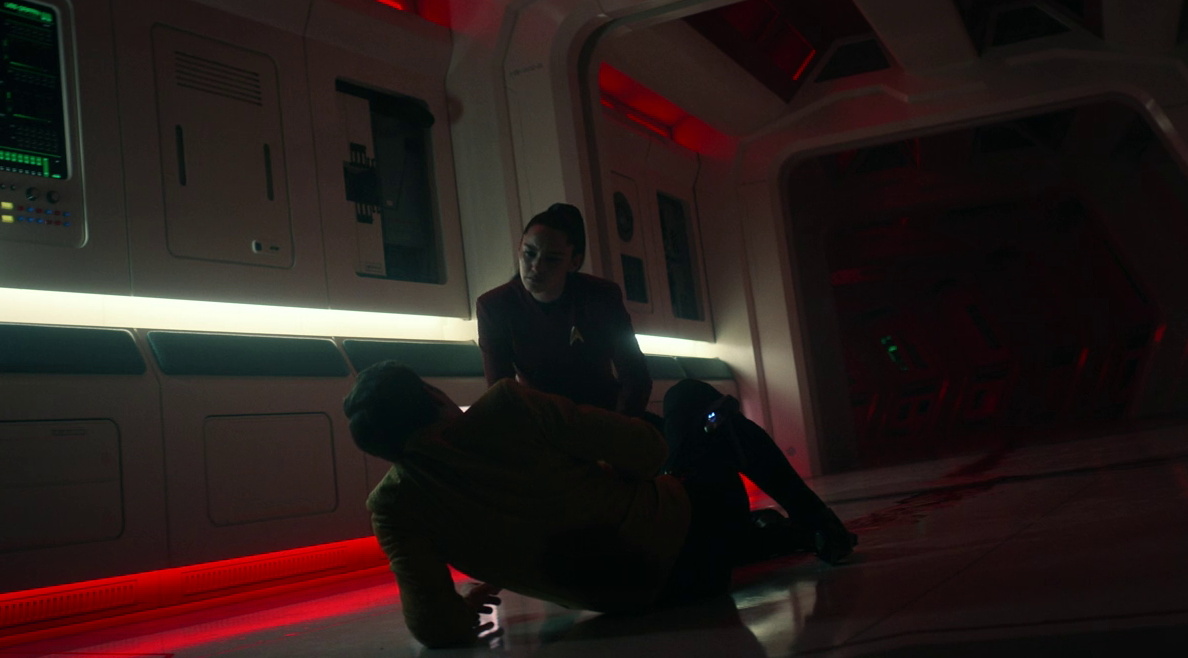
Still frame from Star Trek SNW 4x02 showing La'an and an injured Kirk
This moment was brutal.

One character I feel that Strange New Worlds has sidelined and hasn’t fully taken advantage of is Kirk’s brother, Sam. When Sam was introduced as part of the crew back in Season 1, I felt it was a good idea – a way for the new show to include someone connected to Captain Kirk but without making Kirk himself so prominent. But I think it’s fair to say that the writers have favoured Jim over Sam in stories where a Kirk has been present! The version of Sam Kirk that we encountered this time was a fiction; a completely illusory character created from his brother’s mind. But it’s still the most significant time we’ve spent with Sam in… ages, really, and we got a few interesting moments from those sequences.

Firstly, I thought it was interesting how the brothers talked about their father and how he’s been absent from their lives. I can’t help but feel it clashes a little with a line from Star Trek ’09, where Spock Prime told JJ-verse Kirk that his father watched him become captain of the Enterprise… but, thematically at least, it was in keeping with Kirk’s storyline in The Griffin Incident, as Kirk contemplated his own role as David’s father and contrasted it with his own memories of his father’s parenting skills.

Still frame from Star Trek SNW 4x02 showing Jim and Sam Kirk
The Kirk brothers.

Sam Kirk also got one of Star Trek’s most genuinely gruesome and brutal deaths, being sucked out of a hole in the Griffin’s damaged bridge. Seeing his intestines ripped out through the hull breach and then his body ejected into space was shocking stuff – and by Star Trek standards, at least, exceptionally graphic and visceral.

This theme of visual brutality was present throughout the episode. We’ve talked about the makeup used for Harper – and for numerous other ghostly apparitions, particularly in La’an’s engineering scene – but there are two other powerful moments that have really stuck in my mind. I think you’ll probably guess which ones they are!

Still frame from Star Trek SNW 4x02 showing "Sam's" death
“Sam” got one of the most genuinely sickening and gory deaths that Star Trek has ever attempted.

First we have Captain Pike.

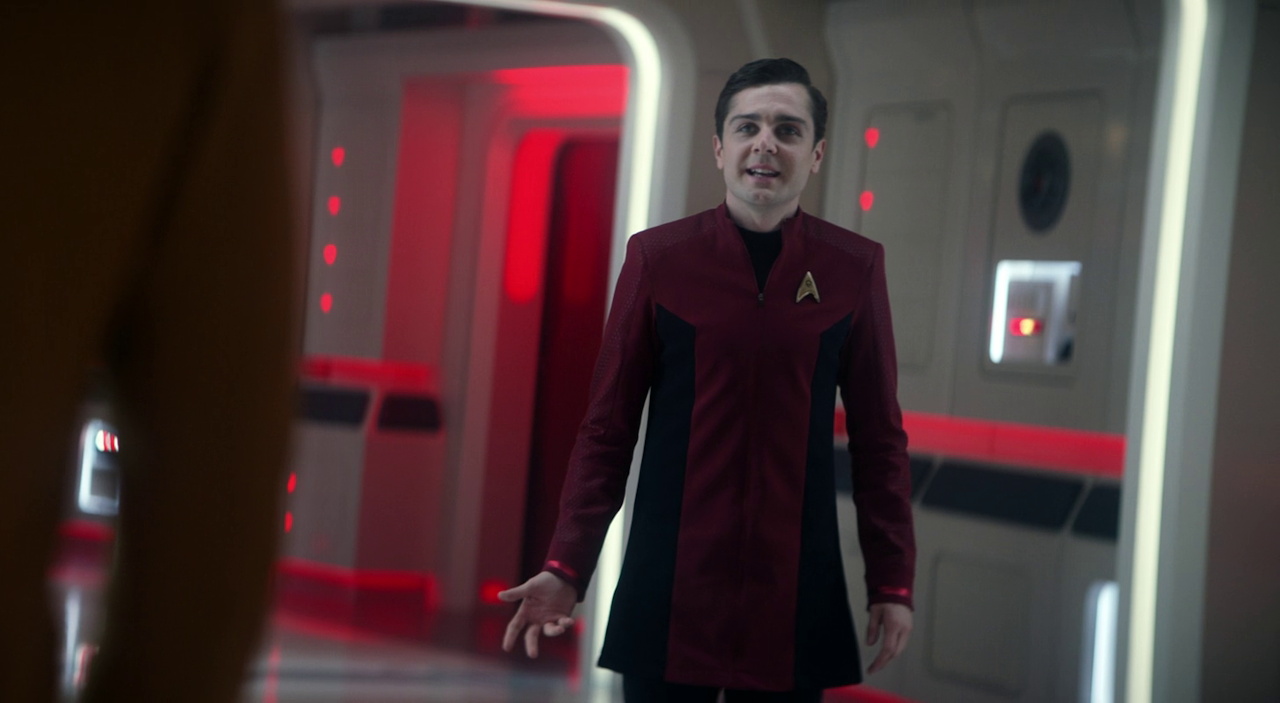
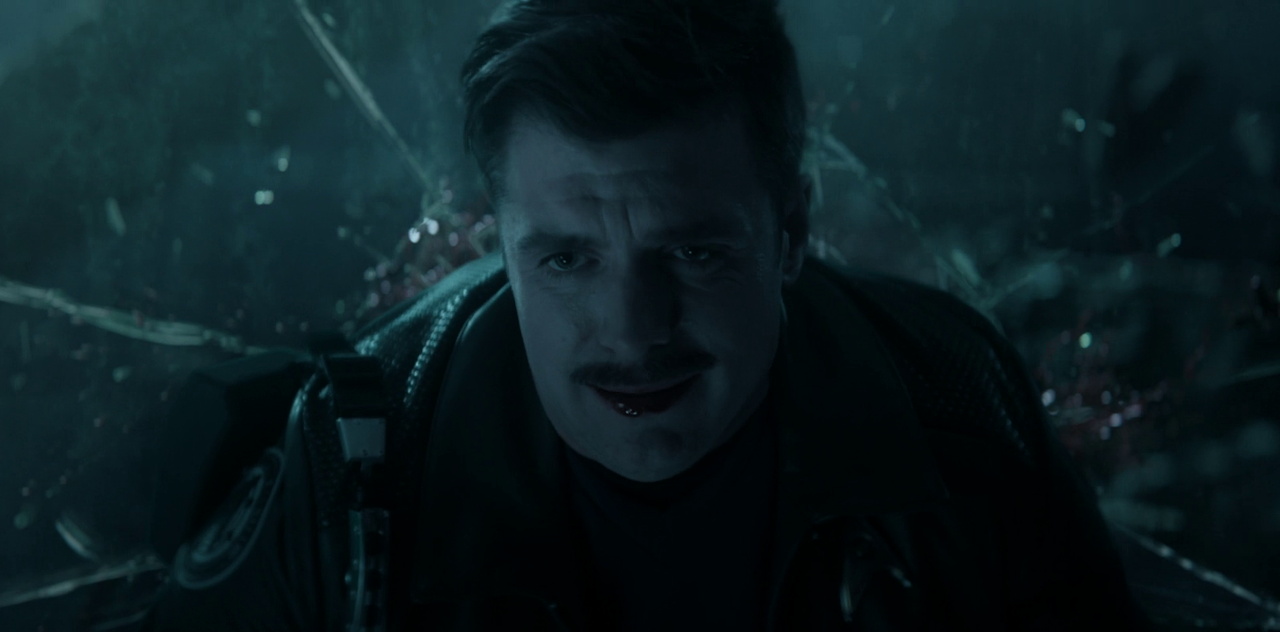
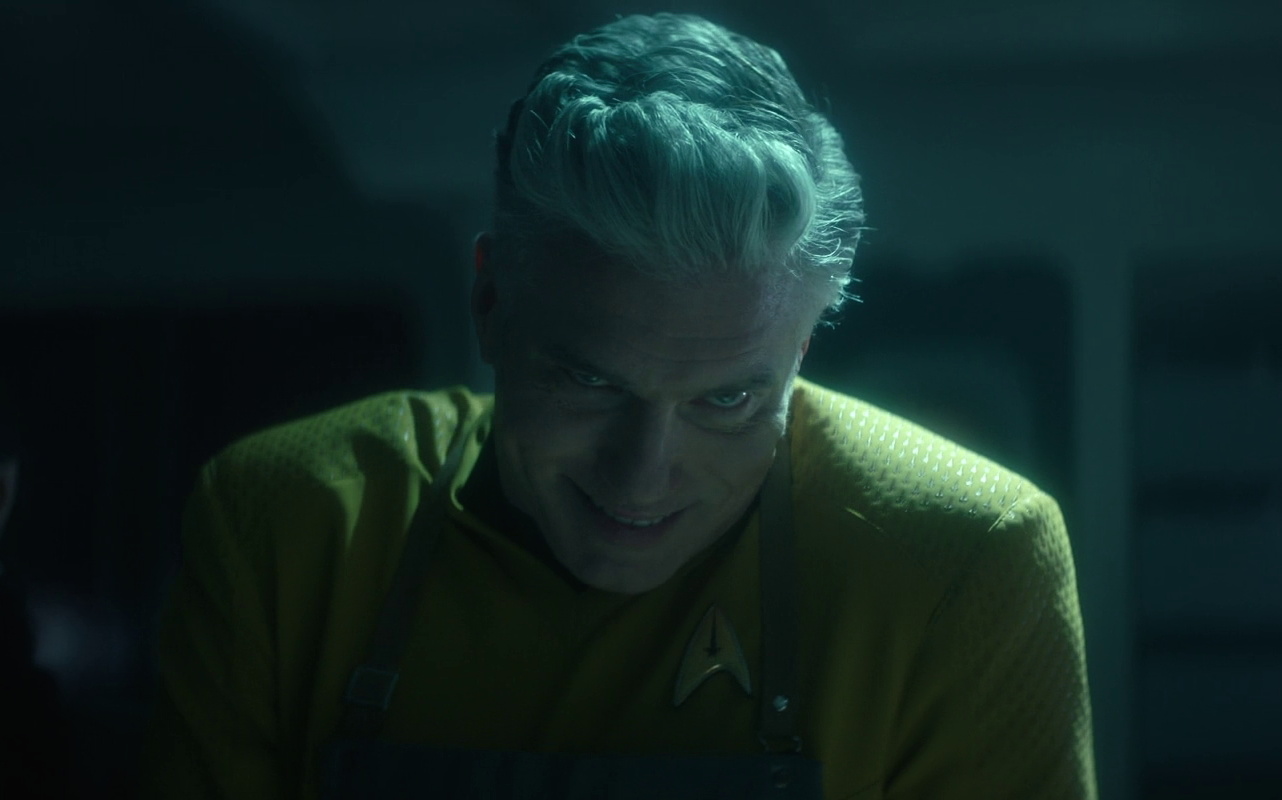
Anson Mount’s performance as the illusory version of Pike was truly fantastic; he could go from the regular version of the character to this unhinged maniac in a heartbeat. And his smile – or grimace, really – when staring down Spock was menacing. It reminded me of Heath Ledger’s take on the Batman villain the Joker from 2008’s The Dark Knight. There was something so truly unsettling seeing Pike’s instantaneous switch from the captain we all know and love to this dark, twisted vision… and Mount was exceptional at pulling it off.

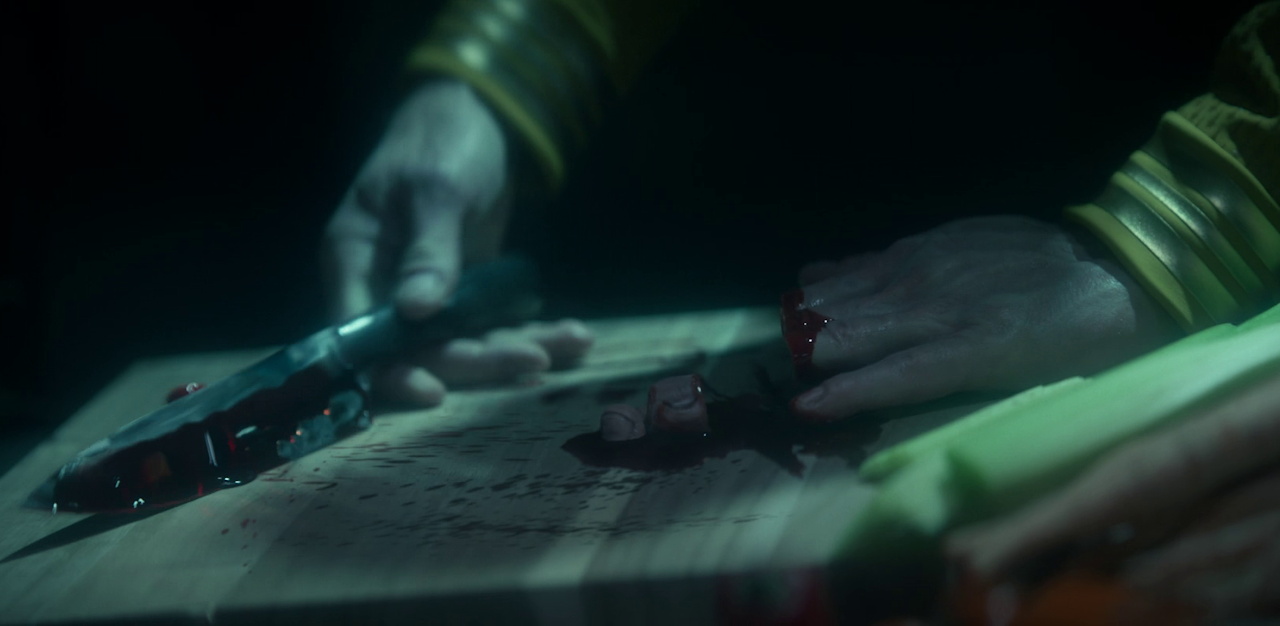
Then we come to the moment of sheer unhinged brutality. Taking Pike’s love of cooking – long-established in the series – as a starting point, this illusion of the captain slices through his own fingers as if they were carrots or spring onions… and it was truly gut-wrenching stuff to watch. The prop used to represent Pike’s hand in that scene was fantastically detailed, and I think using a physical prop rather than trying to do something with CGI was absolutely the right call for this moment. It was gruesome, shocking, and bloody… and – again, by Star Trek standards – really sickening and unsettling to watch.

Still frame from Star Trek SNW 4x02 showing Pike's chopped fingers
Captain Pike’s fingers…

Then we come to Spock.

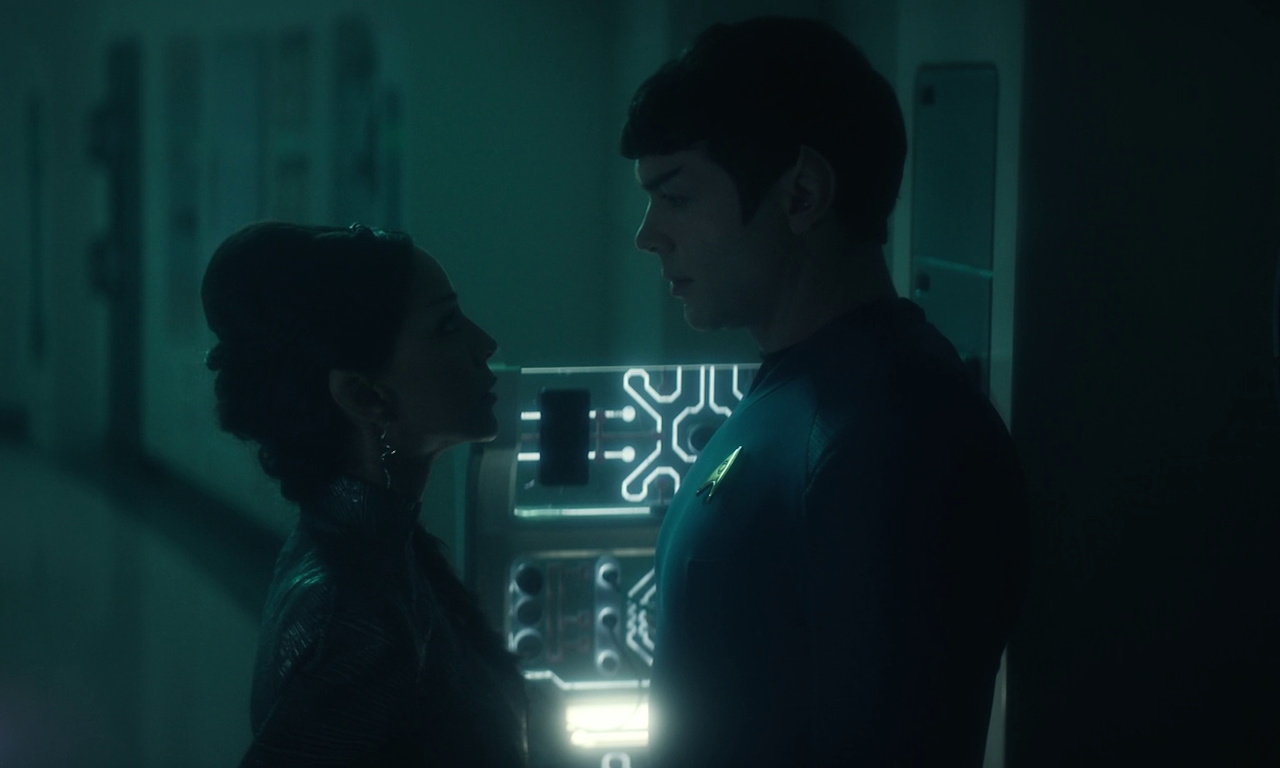
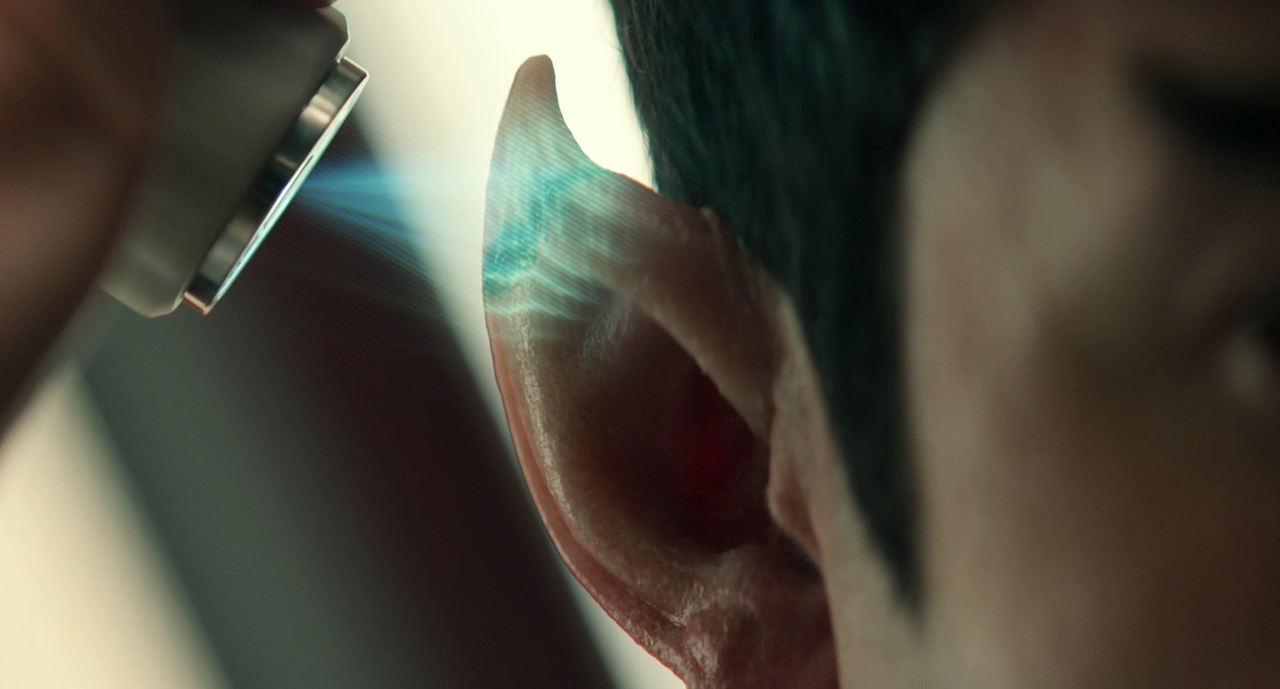
We’ll start with Spock’s brutal moment, then talk about the rest of his storyline. Spock’s moment of visceral, bloody insanity saw the pointed tips of his ears sliced off – apparently not by any physical entity, but by Spock himself while his mind was controlled by whatever was happening aboard the USS Griffin. I kept expecting the camera to pan away or for the scene to fade to black before the illusory T’Pring made her “incisions;” the fact that we had to sit through the whole thing was, once again, exceptionally shocking and painful viewing!

The subsequent revelation that Spock injured himself – while under the sway of whatever happened aboard the Griffin – was equally shocking. Though it seemed obvious that T’Pring was just an illusion… there were moments, especially early in Spock’s storyline, where I just wasn’t sure what was going on. Could an entity (like Q, for instance) have beamed T’Pring to the wreck of the Griffin? It wasn’t outside the realm of possibility! The fact that The Griffin Incident could set up such a mysterious storyline is testament to the quality of the writing (in the first, like 90% of the episode, anyway… more on that later) and I was absolutely gripped.

Still frame from Star Trek SNW 4x02 showing an injured Spock
Spock.

I was pleased to welcome back Gia Sandhu as T’Pring for this week’s outing. More than that, though, I was positively *thrilled* that we got a Spock storyline that didn’t rely on a love triangle, his romantic life, or some other kind of cringeworthy “Vulcan comedy” idea. I said multiple times last year that the writers seemed to have latched onto this idea that “Vulcans are all stoic and stuck-up, isn’t that hilarious?” and didn’t really know what else to do with Spock. It had gotten so bad that I genuinely wanted Spock to take a back seat if those were the only kinds of storylines that Strange New Worlds was going to throw him into.

There were brief hints at Spock and La’an’s relationship this week; a line in Kirk’s log, and a kiss between them near the beginning of the away mission. But for the most part, Spock’s romantic life wasn’t in focus – and when it was, it was *finally* played straight instead of as a joke. The illusory T’Pring brought up Spock’s insecurities – his half-human heritage, how she perceived him as lesser than other Vulcans because of his “emotional” side, and so on. And it was far and away more interesting than pretty much any “Spock comedy” storyline has been in the show so far. I might even be tempted to say that this was Spock and T’Pring’s best storyline in all three-and-a-bit seasons of the show to date.

Still frame from Star Trek SNW 4x02 showing T'Pring and Spock
Finally, a Spock and T’Pring moment that doesn’t rely on cringe humour!

What I think could be interesting for Spock and Kirk – we’ll have to see next week, or in subsequent episodes – is whether *this* away mission is going to be one of the inciting incidents in establishing their bond. We’ve seen glimpses in pre-season trailers and heard from producers in interviews that Season 4 is going to bring Kirk and Spock closer together – again, that “one step closer” idea from the season’s tagline coming into play. I was admittedly a bit surprised that the final act of The Griffin Incident didn’t so much as put Kirk and Spock together, let alone give them time to talk about what happened and share their experiences. But maybe that’ll come next time.

Kirk and Spock were both injured during this mission – Kirk more gravely than Spock, but even so. They both experienced hallucinations and other intense psychological effects from whatever happened to them aboard the USS Griffin, and bonding over a shared traumatic experience is an established way of setting up characters as friends. Or more than friends, if Strange New Worlds is bold enough to go full Spirk! I’m going to be very interested to see how the ramifications of this week’s adventure are handled for all three of the main characters; Strange New Worlds is semi-episodic insofar as most episodes offer a self-contained adventure, but characters grow, change, and develop over time, as well as retain what happened in previous episodes. If The Griffin Incident and its traumatic effects are just dropped and never mentioned again, I think that’ll be a bit of a black mark against it; if these events build up Kirk and Spock’s friendship or contribute to whatever’s happing with La’an, I think we can view it more favourably.

But that’s the hard thing about reviewing individual episodes before we know how the season as a whole will unfold, I guess!

Still frame from Star Trek SNW 4x02 showing Spock in the med bay
Will these events strengthen the bond between Kirk and Spock?

I mentioned at the beginning that I felt reviewing The Griffin Incident was tricky because, as much as I enjoyed the vast majority of the episode and its horror-tinged story, it came with a pretty glaring flaw. In short, practically every other Star Trek story that I can call to mind does *something* to explain what happened, resolve its mysteries, or at least provide a definitive-feeling ending… but The Griffin Incident, despite setting up a truly engaging mystery, left things completely unresolved as the credits rolled.

I’ll give a few examples from past iterations of Star Trek, so we’re all on the same page.

The Doomsday Machine, from Season 2 of The Original Series, doesn’t tell us exactly who built the planet killer and why… but we learn enough about the automated weapon over the course of the story to understand its purpose, the threat it poses, and the necessity of stopping it. The Whale Probe, from Star Trek IV, likewise has an unexplained origin, but we understand what Kirk and the crew must do to save Earth in the future, and why they need to undertake their mission. The D’Arsay Archive, from The Next Generation Season 7 episode Masks, presents the crew with a problem to solve and mysteries to unravel, and despite the D’Arsay never being seen in person, we get a satisfactory resolution to the story.

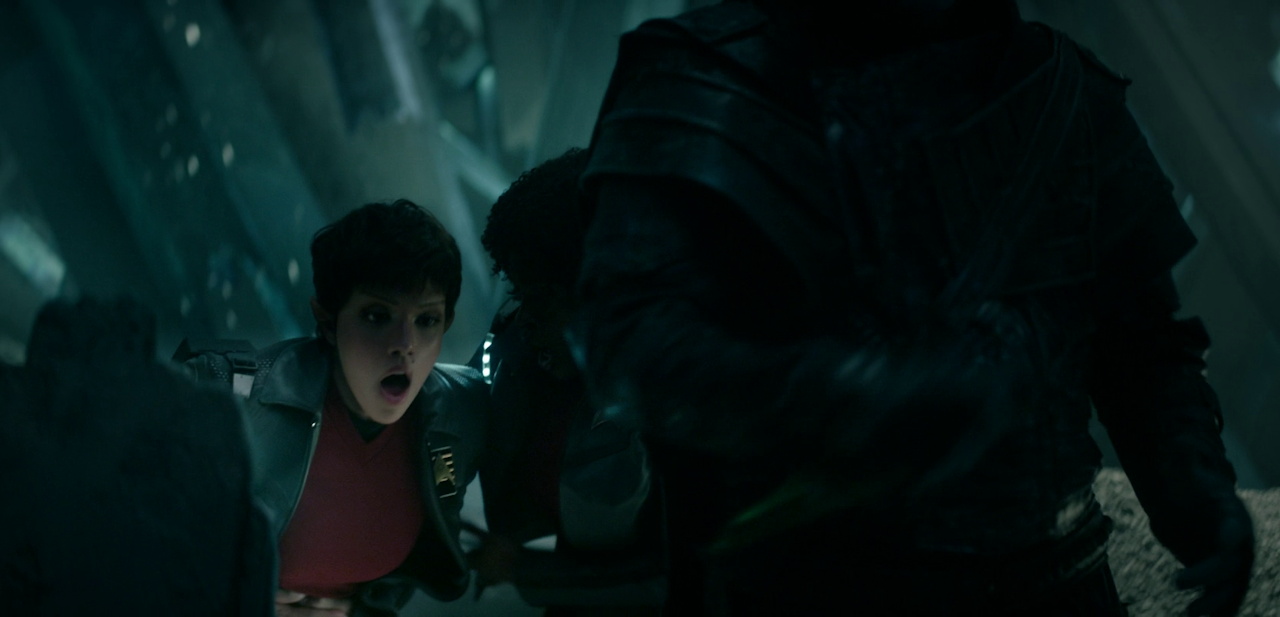
Still frame from Star Trek SNW 4x02 showing La'an
La’an at the end of the episode.

There are many other stories like these across Star Trek’s six-decade run: the nebula aliens from Voyager’s The Haunting of Deck Twelve, the Sphere in Discovery’s second season, the Ennis and Nol-Ennis from Battle Lines in DS9′s first season, the neural parasites, the Conspiracy parasites, the infections from The Naked Time and The Naked Now, the Crystalline Entity… all of these, and many more, were never given full, in-depth explanations about their origins, their species, their overall objectives, etc.; some are still unknown decades later. But we understood their roles in the stories they were part of, and each of these stories and episodes received a proper ending.

That contrasts with The Griffin Incident. In addition to not even pretending to make up a technobabble explanation (negatively-charged ions was pretty much all we got, and that was right at the start), the episode just… ended. As soon as the trio were beamed away from the USS Griffin, La’an snapped back to normal, and Kirk and Spock were already most of the way there, pretty much. The episode provided neither an explanation for what happened nor a resolution to the story… and that’s unsatisfying in a fundamental way.

Still frame from Star Trek SNW 4x02 showing La'an with "ghosts"
Who are these entities? What caused La’an, Kirk, and Spock to hallucinate?

I don’t want to go so far as to say that this lack of ending or explanation “ruins” The Griffin Incident, because – as mentioned – I enjoyed the preceding fifty-plus minutes of the story. But I’m afraid that the ending – or lack of ending, really – does taint the finished product. We got absolutely no explanation for what happened to either our away team or to Lieutenant Harper and the crew of the USS Griffin. Was it a disease or a pathogen, akin to what happened in episodes like The Naked Time or Genesis? Was it an unseen, aggressive alien messing with everyone, like a particularly sadistic Q? Was it technological, like a radiation leak or nano-bot infection? Was it a genuine ghost, spectre, or spirit? No character so much as offered a word of technobabble to explain it… and in some horror stories, that might be okay.

But this is Star Trek.

Star Trek has always been about heading into the unknown, exploring strange new worlds… and trying to make sense of it all. In the episodes and films I used as examples, we don’t always get a fully fleshed-out, down-to-the-millimetre explanation for everything. Sometimes our characters encounter aliens or phenomena in space that are too ancient, too incomprehensible, too different, or too… weird to really have a proper explanation. But in all of those stories, they at least *try* to figure out what happened, and don’t do what Pike did at the end of The Griffin Incident: hand-wave all of that away with a “space is weird, don’t even worry about it” kind of line.

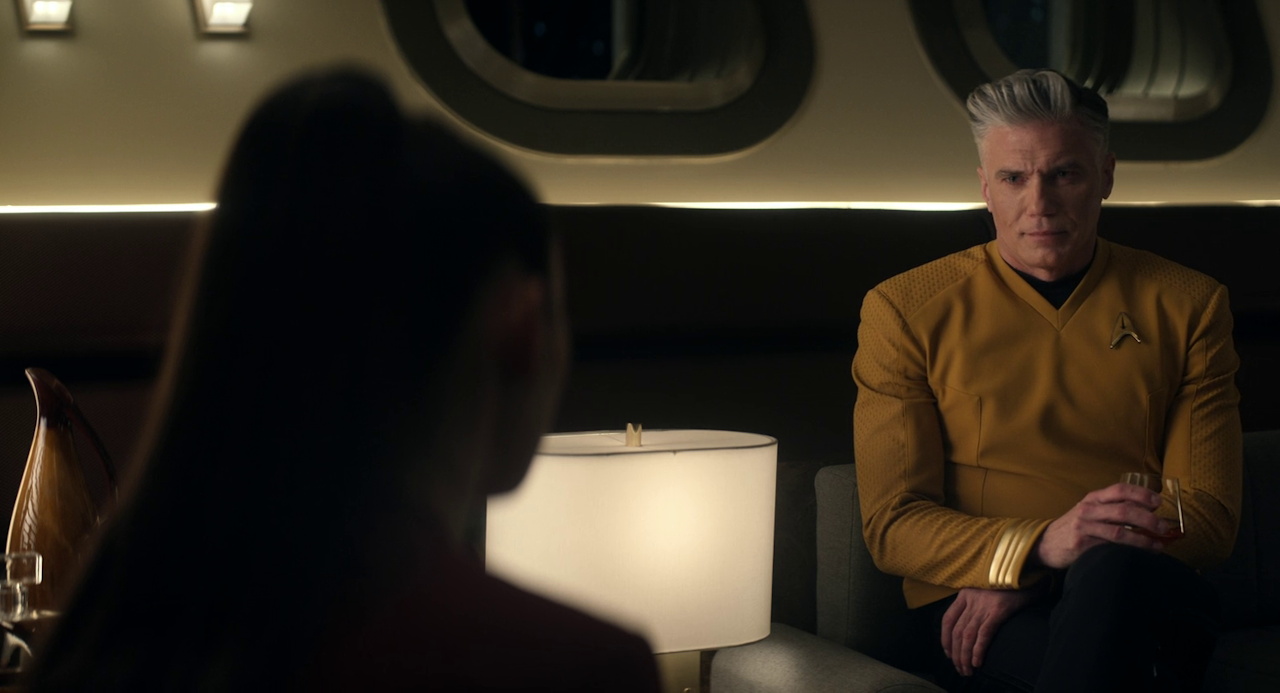
Still frame from Star Trek SNW 4x02 showing La'an drinking with Pike
“Meh, it doesn’t matter what happened. Maybe Division 12 can figure it out, but who cares, really?” is basically Pike’s attitude at the end of the episode.

As I said above, this is an exceptionally unsatisfying way for a story to end *in the Star Trek franchise,* even if such an ending might work just fine in some other sci-fi or horror series. Starfleet sets out to uncover the unknown, and in almost every other story in the franchise – of which there are 1,000 already – they achieve that, one way or another. That doesn’t mean we need to get into the weeds with the minutiae of every alien race or weird space phenomenon, but it does mean that, somehow, a story like this needs to end with either some kind of explanation for what happened or at least with the defeat of a clearly malicious adversary.

The Griffin Incident did neither.

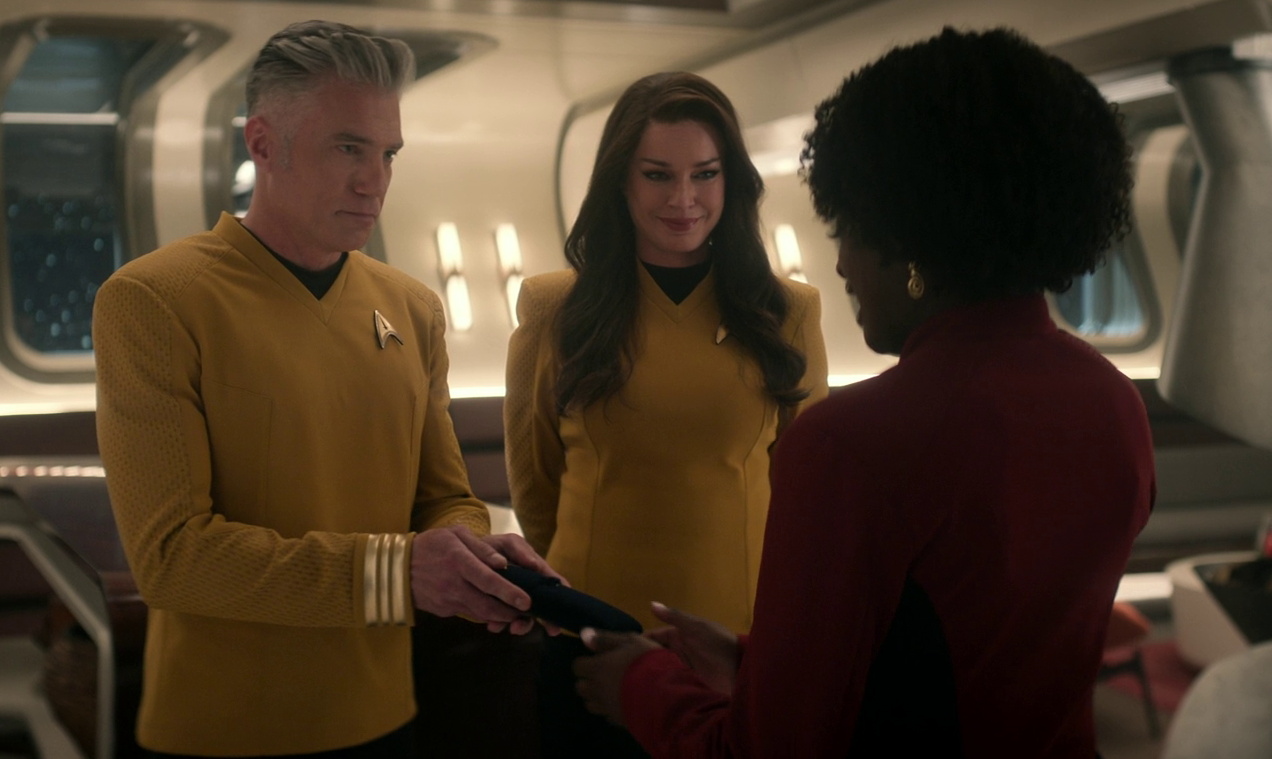
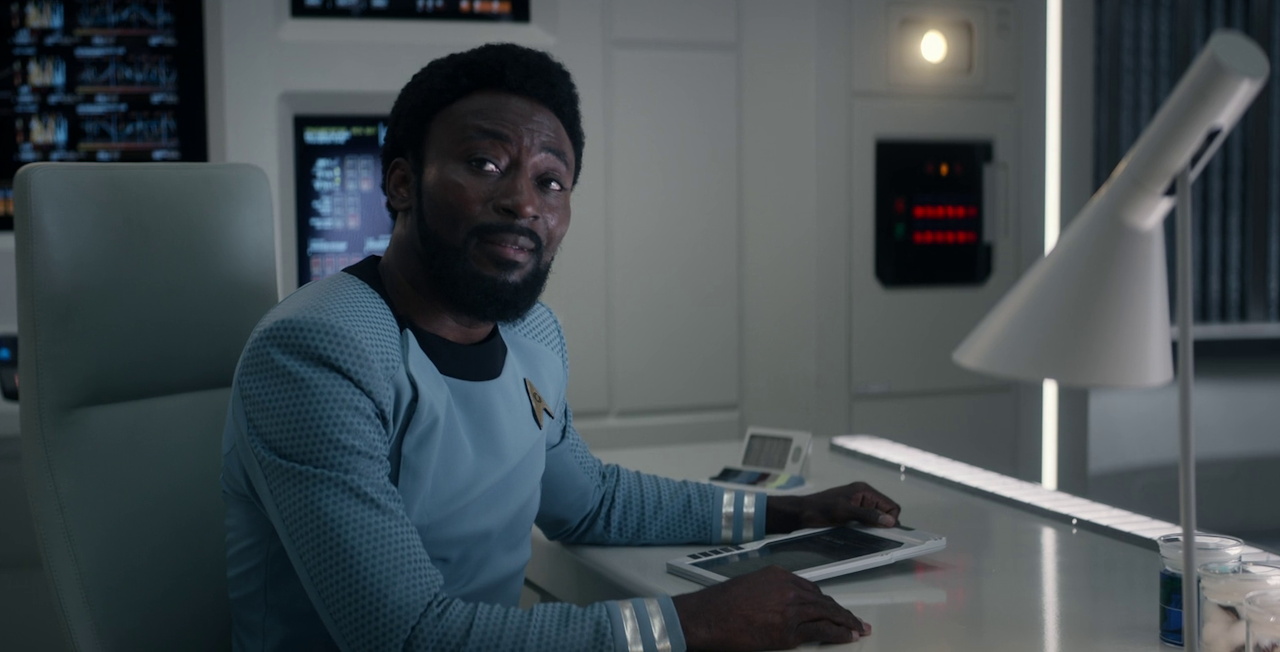
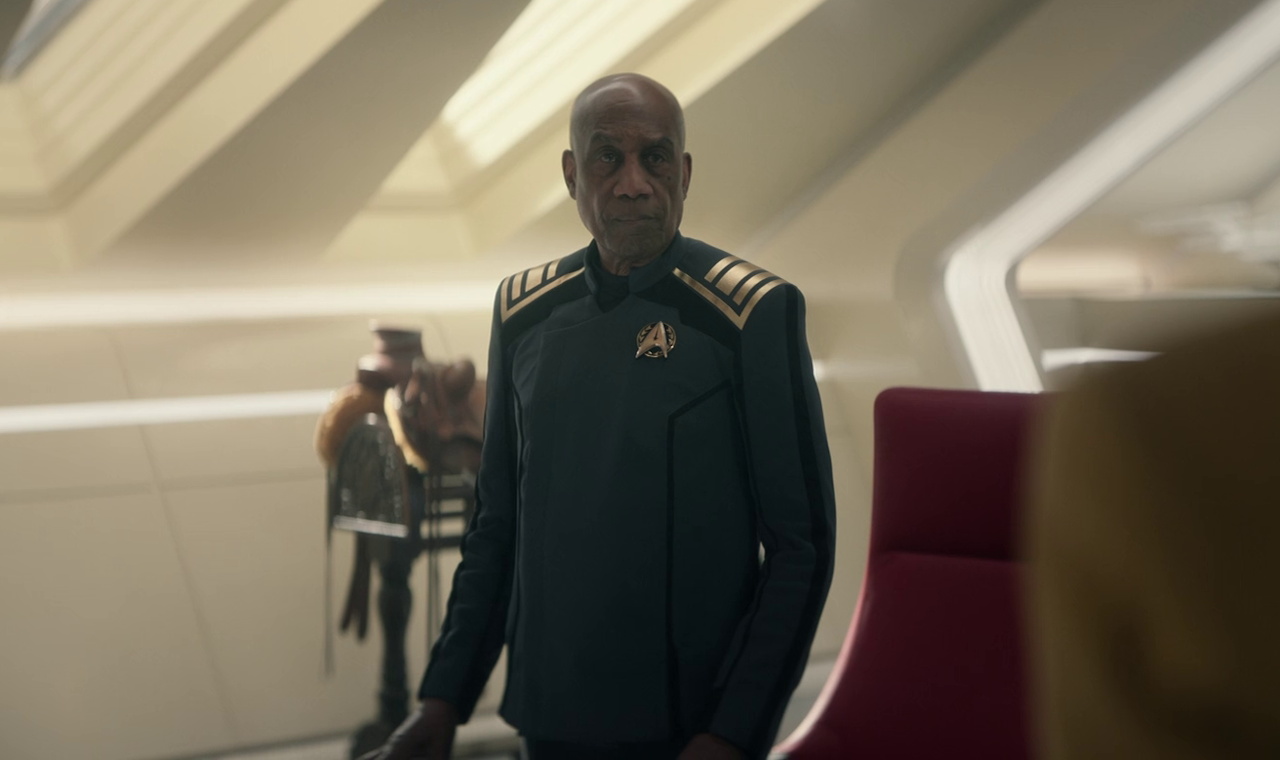
Instead, the story ends with all three characters starting to get back to normal and process their experiences. And there were some genuinely great moments in this final act. I liked how each of Kirk, La’an, and Spock were paired up with a different main character for their epilogue. La’an got a mentoring moment from Captain Pike, which, deficiencies in the plot aside, was a nice moment for his character and hers. Spock got a rare scene with Chapel that was neither sexually charged nor ridiculously cringeworthy – again, a net positive for both of them. And Kirk got far and away the best of these little epilogues with Uhura.

Still frame from Star Trek SNW 4x02 showing Spock's ear being repaired
Spock’s ear being healed by Nurse Chapel.

Season 3 gave us some interaction between Kirk and Uhura, particularly in the episode The Sehlat Who Ate Its Tail – but this epilogue, I feel, did a lot for their relationship. Uhura calls Kirk by his first name for what I think is the first time, and if we’re looking at the story (and the season as a whole) from the point of view of bringing these characters closer to their TOS depictions, that’s a great thing. Kirk and Uhura were clearly on good terms by the time of The Original Series, establishing a firm friendship that saw them get through many different adventures together! Setting up how that began is an interesting idea with these younger, less-experienced versions of the characters.

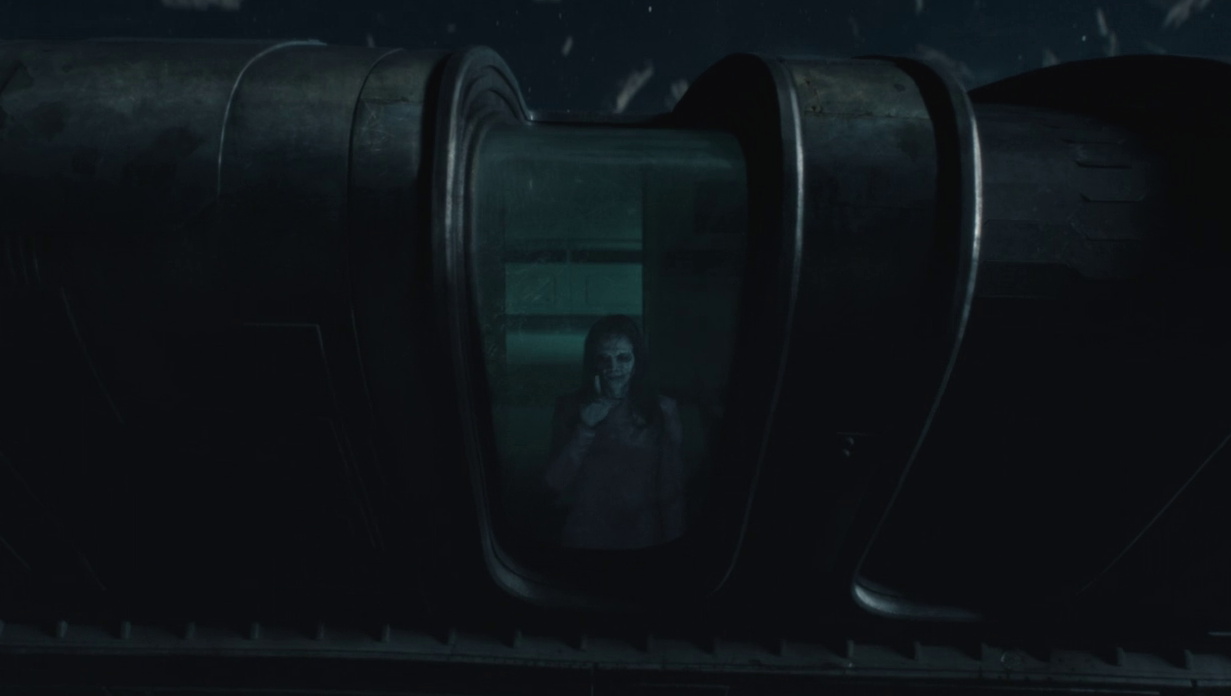
But the epilogues, for all they brought to the table, still left things open-ended, as emphasised by the final shot of the episode: the ghostly form of Lieutenant Harper in the window of the wrecked USS Griffin. And, as I said, the lack of either a coherent explanation for what happened – alien entity, possession, infection, etc. – or the defeat/destruction of Harper and the Griffin leaves The Griffin Incident feeling unfinished and just unsatisfying.

Still frame from Star Trek SNW 4x02 showing Harper in the window
The final shot of the episode.

As with La’an’s ongoing arc, though, perhaps it’s possible that we’ll revisit the ending of The Griffin Incident later in the season, or even next year in Season 5. If that’s the case, and if the mysterious Division 12 has found something to explain what happened… maybe we’ll be able to revisit the episode with the benefit of hindsight and cross out this line of criticism. I’m not holding my breath for that, given the way Strange New Worlds’ episodes have been structured… but you never know, eh?

A few final thoughts before we start to wrap things up.

This is the second time (after the fantastic episode Terrarium in Season 3) that “Division 12” has been mentioned. Are we going to learn more about this mysterious outfit later in the season, or at least before the series comes to an end? It feels suspiciously like Strange New Worlds is trying to drop hints at something to come, especially given how easy it would’ve been to say something more generic, like “the Starfleet science department” instead. I also wonder, unfortunately, whether this Division 12 might be tied to a story idea that, because of the show’s cancellation, we’re never going to get to see.

Still frame from Star Trek SNW 4x02 showing "Sam's" corpse in space
“Sam” floats in space… dead.

The “future leaders’ summit” was an interesting idea, and I appreciated that The Griffin Incident found a more natural-feeling way to include Kirk, as well as to set up the whole “there’s no immediate help” thing that was so crucial to the episode. It provided a solid way for the episode to get started, and all three characters feel like they could conceivably have been part of something like that – perhaps recommended by their captains, or else volunteering off their own backs.

Among several things left on the table were: was the shuttle really destroyed, or was that just another illusion? Did Spock actually learn the real fates of the Griffin’s crew – were they stabbed and beamed into space as the sickbay computer indicated? How did Pike and co. determine that it was safe to beam the away team to the Enterprise, given the conditions aboard the USS Griffin? Why did all three members of the away team have visions or hallucinations of the same Enterprise away team, and why weren’t any characters “duplicated,” or appearing to be in two places at once? Was that just for the benefit of us as the audience, to sell the illusion that Pike’s away team was real?

Still frame from Star Trek SNW 4x02 showing an illusion of Pike
The Pike illusion…

So that was The Griffin Incident.

A huge improvement on last week’s outing… most of the time. The unsatisfying lack of explanation or a proper ending does, I’m afraid, put a bit of a downer on the final moments of the episode. And that’s such a shame, because not only was this Star Trek’s best and most terrifying horror story ever, but it really wouldn’t have taken much more than a couple of lines of technobabble to completely negate that.

Imagine if the episode ended with Spock saying something like this: “I have determined that a leak in the Griffin’s warp core caused the entire ship to slowly flood with negatively-charged ions, which affected the mental health of the crew – and, in turn, us as well.” Boom. Mic drop, science-y explanation delivered, and we could move on with our lives! Or, alternatively, La’an could’ve said something like this: “Lieutenant Harper’s logs showed that the Griffin visited Beta Sigma IX, where a member of the away team was infected by an unknown virus. I think this virus must’ve spread throughout the ship and compromised the crew. Residual viral spores then infected us – until the transporter cured us when we beamed back to Enterprise.” Again, we technobabbled our way to an explanation and a proper end to the story.

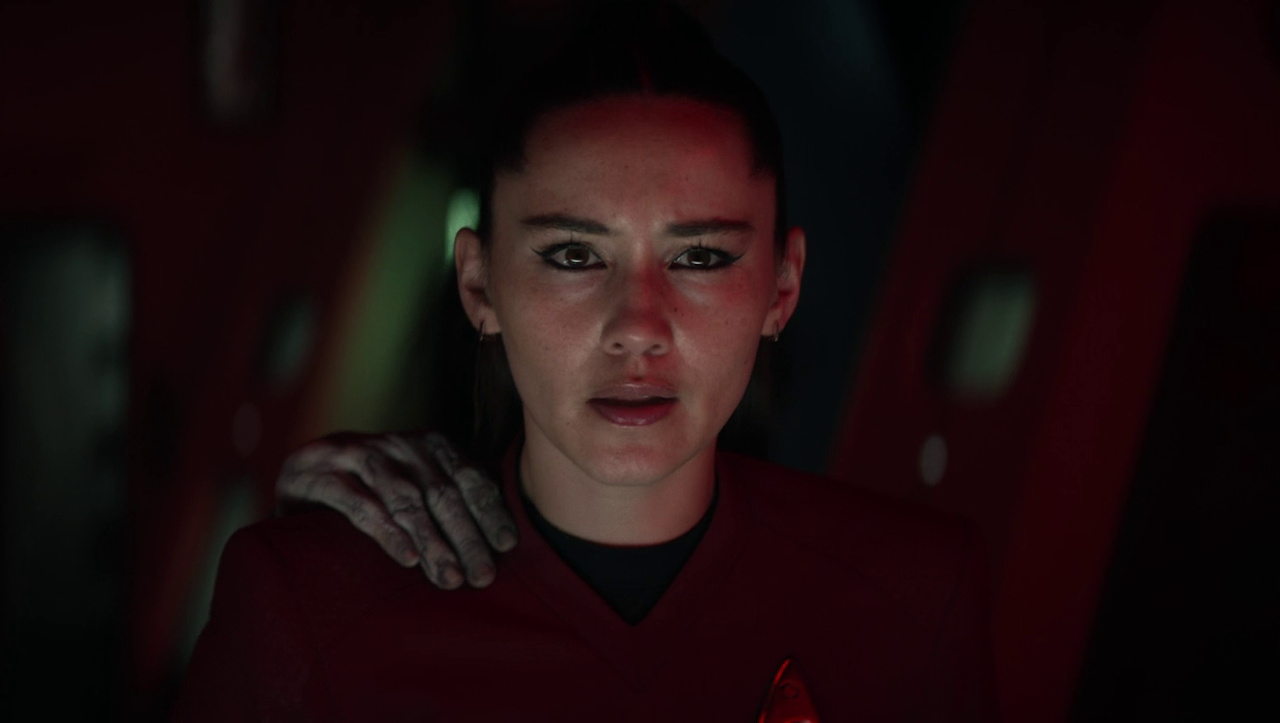
Still frame from Star Trek SNW 4x02 showing La'an with a ghostly hand on her shoulder
There’s something behind you, La’an…

Despite the fundamentally unsatisfying way The Griffin Incident concluded, I can’t lie: I had a lot of fun with the rest of the episode. We got a genuinely unsettling and frightening ghost story set aboard a derelict ship, deliciously evil illusory versions of several familiar characters, some absolutely brutal gore, an interesting idea that could bring Kirk and Spock closer together, and what feels like another step down a difficult path for La’an as she wrangles with her ancestry. There are plenty of wonderful things that the episode brought to the table, and while the lack of a proper resolution does put a downer on the story as a whole… it isn’t fatal, by any stretch.

Next week, Strange New Worlds is going to give the crew shore leave in Human Best Friend, and I’m already intrigued by both the concept and the episode’s title! I hope you’ll join me for a review of that. And if you missed it, I’ve already reviewed Valles Marineris and every episode from Seasons 2 and 3 of Strange New Worlds. Click or tap here to check out any of those reviews. As Star Trek’s sixtieth anniversary approaches, I’ve got a few more ideas for articles and essays, too, so I hope you’ll stay tuned. Earlier in the year, I wrote about the very first Star Trek episode that I can remember watching: click or tap here for that. And if you didn’t know already, I had a wonderful experience in May, when I got to meet William Shatner – Captain Kirk himself – at Comic-Con: click or tap here to check that out.

Thanks for reading, and as always… Live Long and Prosper, friends!


Star Trek: Strange New Worlds Seasons 1-4 are available to stream now on Paramount+ in countries and territories where the platform is available. The first three seasons are also available on DVD and/or Blu-ray. The Star Trek franchise – including Strange New Worlds and all other properties discussed above – is the copyright of the Skydance-Paramount corporation. Some still frames used above have been adjusted for brightness and ease of viewing. This review contains the thoughts and opinions of one person only and is not intended to cause any offence.
I Met William Shatner

I’ve told this story once before here on the website, so please bear with me. In the mid-1990s, around the time Generations was in cinemas, I attended my first-ever Star Trek fan meet. I’d read about it in a sci-fi magazine, and after what felt like a long journey to a kid, I ended up in a big city where I had my first real-life encounter with the Star Trek fan community. As a kid, I grew up in a small, rural area, and I was the only person (that I knew of, at any rate) who even *watched* Star Trek, let alone was a big fan. So being able to hang out with other Trekkies was a blast.

At that meet-up, I was the youngest person there by an entire generation, but the Trekkies I met were incredibly welcoming, and several of them had fun stories to tell about their favourite episodes, merch they owned, or encounters with some of the stars. I distinctly remember a couple of folks sharing tales of how they’d been able to meet William Shatner at fan events in the United States – Captain Kirk himself. Although my way into the Star Trek fan community was via The Next Generation, and by that point I wasn’t fully caught up on The Original Series, I remember being very impressed! And a little jealous.

Well, some three decades later, I can finally check that item off my bucket list! Because this past weekend, I got to meet William Shatner.

William Shatner on stage at the 2026 Saturn Awards
William Shatner at the 2026 Saturn Awards.
Photo: TrekMovie

Over the past year or so, I’ve been pushing myself harder to get out of my “comfort zone” and become a bit more resilient to the pain. You may know if you’re a regular reader, but I’m disabled, and I can’t walk without the aid of a walking stick, walk very far at all, or stand for any length of time without being in pain. But my desire to spend more time with my family – I have fewer family members these days, so the ones who are still here are important to me – spurred me on to try new things, push myself, and grow my confidence a little. I still can’t manage these kinds of events very often… but some things are worth trying to achieve.

Last year, for the first time in fifteen years, I made it to a Star Trek convention. And I had a blast meeting some of the actors from The Original Series all the way through to Strange New Worlds! It was a long, difficult, painful day, but I made it to the end with a smile on my face and some wonderful memories. The success of that event led me to look for similar things this year, as I’ve been interested in spending money on “experiences” rather than just… stuff.

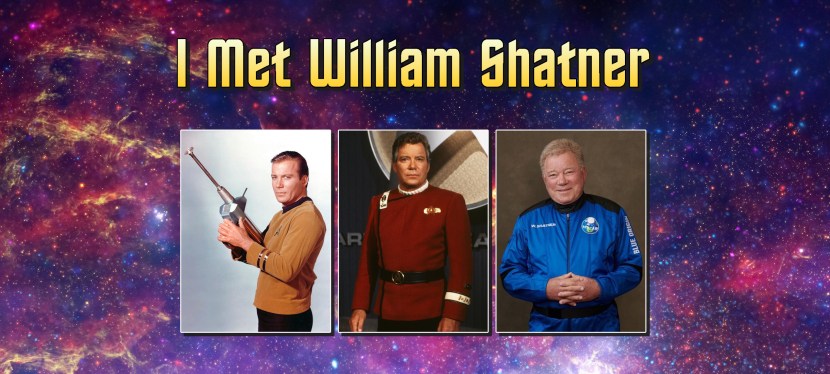
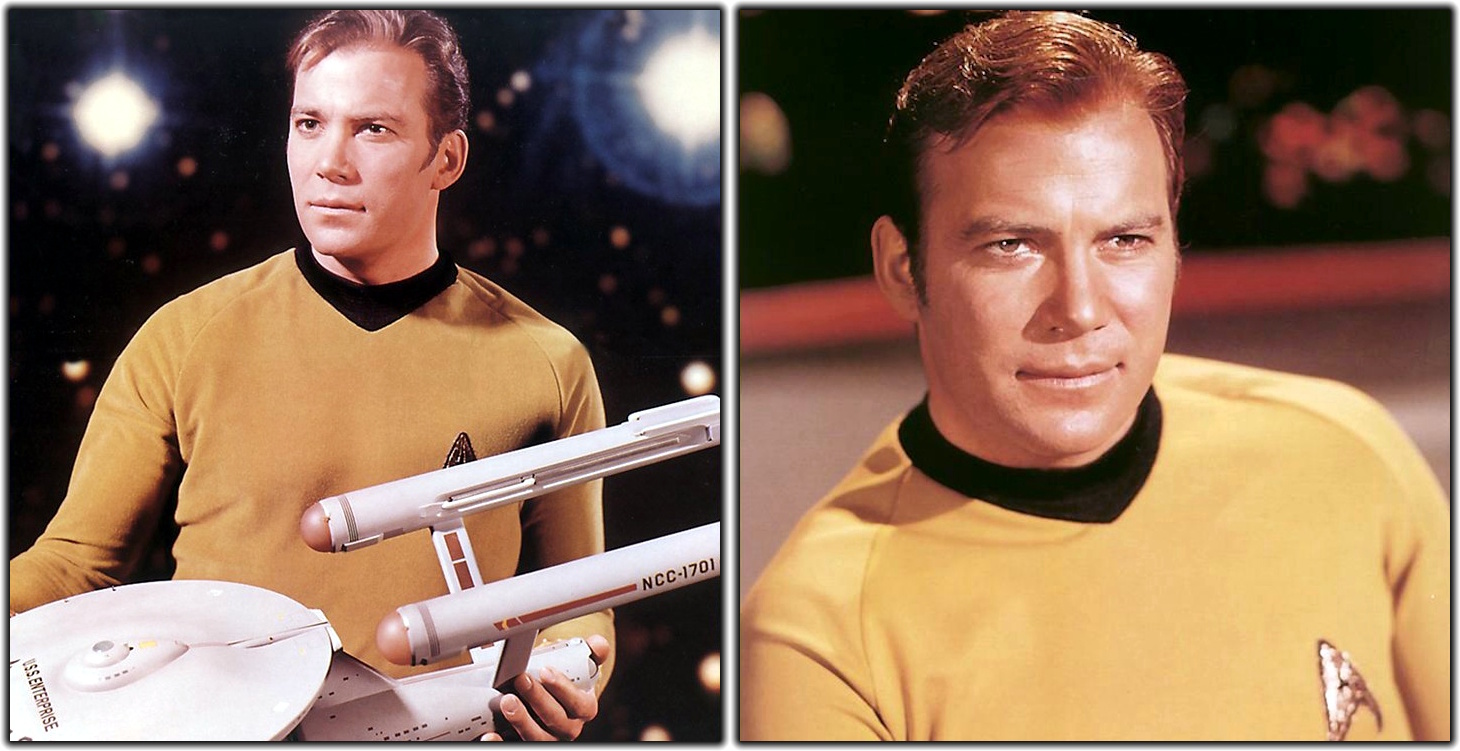
A pair of publicity stills showing William Shatner as Captain Kirk c. 1960s
Publicity photos of William Shatner as Captain Kirk from the 1960s.

I’ve never been to a Comic-Con event before. But when, just after New Year, I saw that Liverpool Comic-Con here in the UK had booked William Shatner – Captain Kirk – as a guest… well, I decided to push myself once again. Because of Mr Shatner’s age (he’s 95 years old, though you’d never know it), as well as my own shaky health, I spent the next few months talking it down. “It probably won’t happen”, and “we’ll see” became my refrains, as I tried to put a lid on any potential disappointment if, for whatever reason, I wasn’t able to get there and meet him.

But, to my surprise, the day of Comic-Con rolled around, and everything was still on the schedule! I’d bought my train tickets weeks in advance (Liverpool is actually slightly easier and more convenient for me to reach than Blackpool had been last year), so I set off. It was an early start, and I actually made it to Liverpool with almost two hours to spare before my 11AM entry to Comic-Con. I killed some time at a nearby shopping complex, the Albert Dock, and with a ride on the Wheel of Liverpool – a large ferris wheel which is that city’s equivalent of the London Eye. The Wheel of Liverpool was right outside where the convention was taking place – and I was the *only* rider when I boarded, for some reason!

The entrance to Liverpool Comic-Con from the Wheel of Liverpool
Liverpool Comic-Con from the Wheel of Liverpool. The main convention buildings are to the right.
Photo: Trekking with Dennis

I’ll be honest: Liverpool Comic-Con, and the venue that hosted it, felt quite poorly-organised, and not very disability-friendly. The event was, in my opinion, oversold, which resulted in densely-packed crowds in some of the venue’s relatively narrow hallways and areas. There were fewer stalls and shops than I expected for an event of this size, too, and even though I wasn’t really there for shopping, it would’ve been a way to kill time while I waited for my meet-and-greet with Mr Shatner.

From a disability access perspective, there were very few accessible bathrooms, even fewer “changing places” bathrooms, and an almost total lack of seating. There *may* have been a way to gain access to extra help, as I was able to do at last year’s Star Trek convention, but the only way I could find to get that access at Comic-Con was by *paying for* some kind of special disability access card, which I refused to do – partly on principle, and partly due to lack of funds.

I was unimpressed with Liverpool Comic-Con’s organisation and accessibility.
Photo: Trekking with Dennis

Then we come to the meeting itself. A few days before Comic-Con, I was invited to book a timeslot for my photo session with Mr Shatner, and I duly chose one out of the available options, which were in half-hour increments. I arrived a few minutes early, hoping that there’d at least be somewhere to wait… but I was *stunned* to see that a massive queue had already formed. With none of the staff checking to see timeslot bookings, it seemed as if it was a free-for-all, with everyone just turning up and a giant queue forming for the photo sessions. I was a little disappointed by that; if I’d known, I would’ve arrived way earlier and could’ve perhaps been closer to the front of the line.

All of this is to say that, despite having a wonderful time with Mr Shatner and achieving what I set out to on the day… Liverpool Comic-Con was not well-run, not nearly accessible enough, and if I’d been going there to experience the event rather than for one specific reason… I’d have been *very* disappointed. I felt last year’s Star Trek convention in Blackpool was, in some ways, quite low-budget, but its organisation absolutely blew Comic-Con out of the water, and especially in terms of being accessible and disability-friendly, it takes the win.

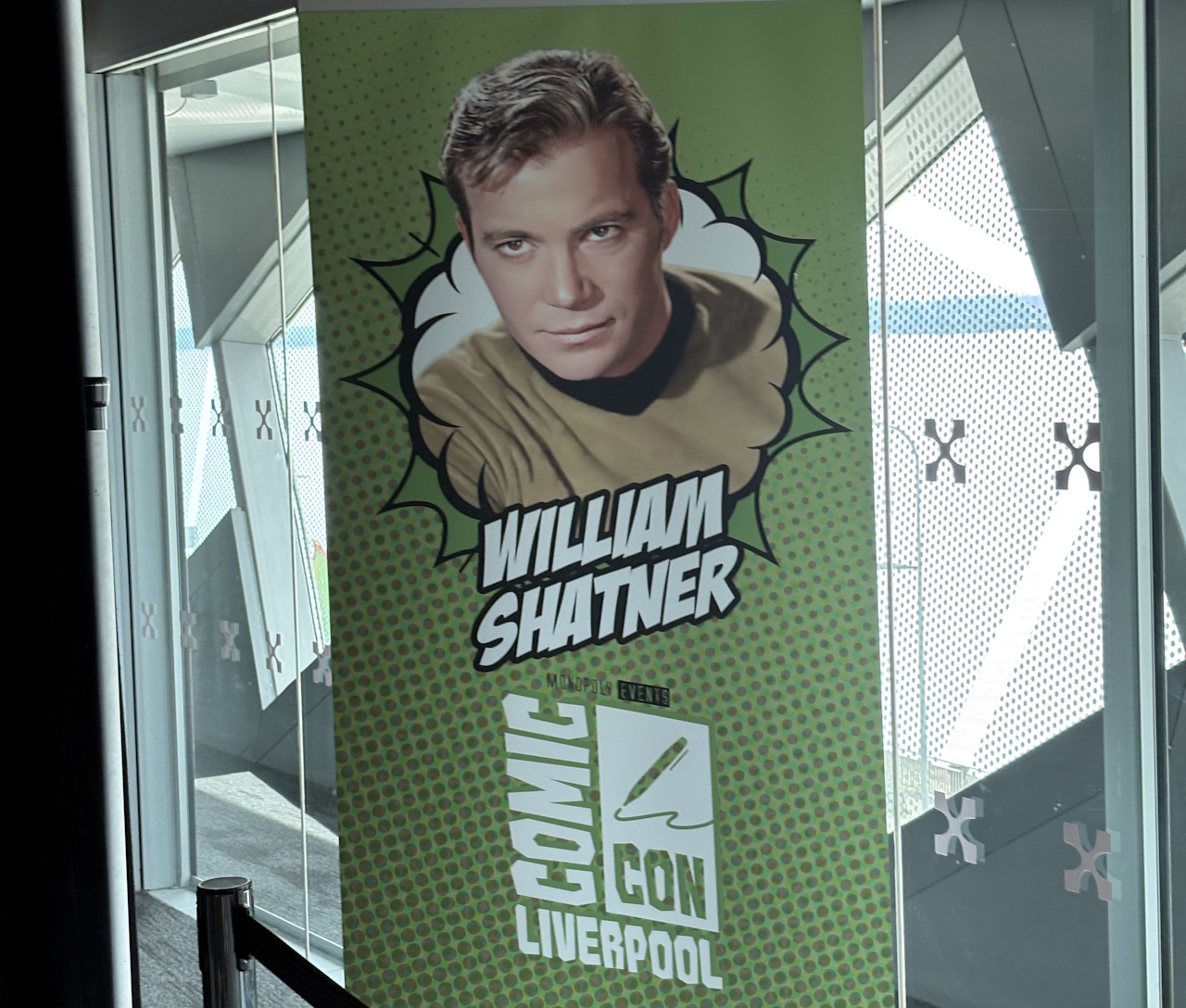
Photo from Liverpool Comic-Con 2026 showing the Shatner banner
The banner in the room where the photographs took place.
Photo: Trekking with Dennis

However!

I wasn’t there to go to Comic-Con. There really wasn’t anything else going on at the event that I wanted to do; the only thing I even *considered* was booking a photo session with a couple of the voice actors from Futurama, who were also in attendance. This isn’t actually a slight against Liverpool Comic-Con, it’s just that most of the guests that were booked, as well as the panels and events on the schedule, involved franchises, films, and TV shows that are either not my thing or that I’m just not interested in enough to want to spend that kind of money on.

From my perspective, I was going to Liverpool for one reason and one reason only: to meet William Shatner. And I can now tell you, dear reader, that I did it! A lifelong dream to meet Captain Kirk – and to meet someone who’s actually travelled into space – has been achieved, and I can check that off the bucket list once and for all.

Still frame from The City on the Edge of Forever showing Kirk
William Shatner as Captain Kirk in The City on the Edge of Forever.

I talked about this last year, when I went to the Star Trek convention, but if I have the choice, I’ll always choose a meeting or a photo rather than an autograph. I know some people are autograph collectors, and this is no shade to them at all, but I’ve personally never been all that interested in autographs. With the money I had, I couldn’t have gotten both a photo and an autograph from Mr Shatner, so I chose to have my photo taken with him. That moment – which probably lasted less than a minute – is a memory that, frankly, I couldn’t put a value on. Being able to be there, with him, to talk to him and thank him for his incredible contributions to the Star Trek franchise… that’s something so incredibly special.

And William Shatner, for many folks, is *still* the one person they associate the most with the words “Star Trek.” To have been able to meet the man who, arguably more than any other, defined what Star Trek was for decades… it’s a really incredible feeling. I could’ve spent that money on something like a Captain Kirk statue, or put it towards that stupidly expensive Star Trek Lego set, maybe, or a prop replica. But I don’t think any of those things really compare to the feeling of being there in that room, standing right next to him, talking to him, even for just a moment, and making that memory.

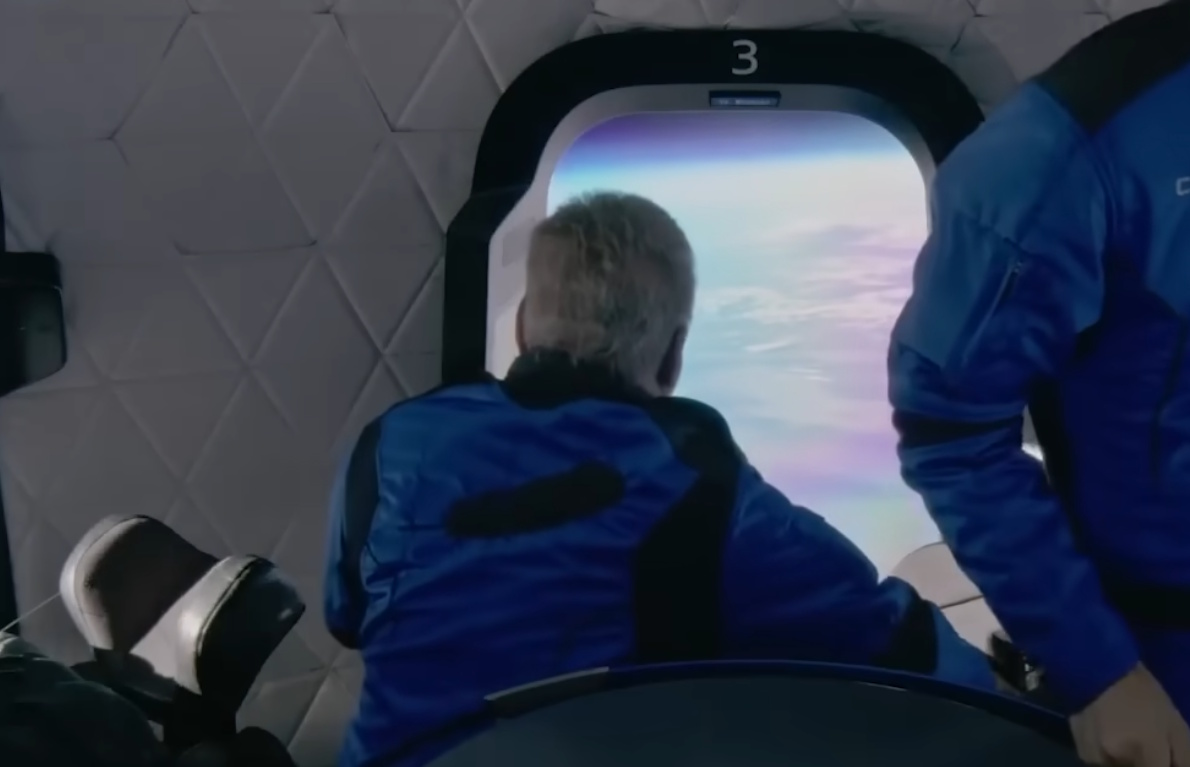
Still frame from the Blue Origin mission showing William Shatner in space
William Shatner in space aboard Blue Origin’s NS-18 mission in 2021.

So it was another long day. And it was difficult day, thanks in no small part to Liverpool Comic-Con’s poor organisation and lack of disability access. By the time I was on my way back to the railway station I was exhausted, overheating, and probably a little dehydrated, too. But I made it home in the end with my prize: a simple photo of myself standing with William Shatner. And despite everything… it was worth it.

As Star Trek celebrates its sixtieth anniversary, this was even more of a special thing to have been able to do. And I’m glad that both Mr Shatner was well enough to make the trip, and that I myself was able to do it. I have to assume that Mr Shatner doesn’t do this kind of thing for the money any more, not at his time of life and given his financial situation. So I can only imagine that he still attends conventions like these because he likes them, or because he genuinely *enjoys* meeting fans. That’s a pretty incredible thing, to be honest, and at 95 years of age, no one would blame him for retiring quietly and never shaking another hand again!

Still frame from The Search for Spock showing Kirk
Kirk in The Search for Spock.

So I hope this has been interesting – and I hope you aren’t *too* envious! I know a lot of Trekkies will have had similar opportunities in the past; it’s by no means a unique thing for a fan to meet the star of their favourite franchise. But for me, this was my first time meeting Mr Shatner, and having been a Trekkie for thirty-five years (I first began watching The Next Generation during its original broadcast run here in the UK in the early ’90s), it was just a really special thing to have been able to do. I’m glad I felt up to it, and I’m glad I pushed myself – even though I’m still feeling the lingering after-effects a couple of days later!

I know I haven’t been as active here on the website over the last month or so, but I have a few ideas in the pipeline as Star Trek’s sixtieth anniversary gets closer. Thanks for reading, and I hope you’ll stay tuned for some of that in the days and weeks ahead.

Live Long and Prosper, friends!


The Star Trek franchise – including all films and TV series discussed above – is the copyright of the Paramount Skydance Corporation. Logos, branding, etc. for Comic-Con and Comic-Con Liverpool are trademarks/copyright of their respective owners and organisers. This article contains the thoughts and opinions of one person only and is not intended to cause any offence.
Strange New Worlds: I just can’t get excited…

Spoiler Warning: There are spoilers ahead for Star Trek: Strange New Worlds Seasons 1-2, Star Trek: Discovery Season 2, and for other iterations of the Star Trek franchise.

I’ve had a hard time lately knowing what to say about Strange New Worlds. When the series was officially announced just under two years ago, I had high hopes and it rocketed to the top of the list of TV shows that I was most excited to see. Even as 2022 approached, this was the mindset that I had. After the phenomenal portrayals of Captain Pike, Spock, and Number One in Discovery Season 2, I was among the fans who wrote to Paramount Global (then known as ViacomCBS) about getting a Captain Pike spin-off series, and Strange New Worlds’ very existence is the result of a powerful fan campaign that brought together Trekkies from all across the world. I’ve been proud of the small role I played in that.

But as the show’s premiere approaches, Paramount Global has completely screwed up. It became apparent late last year, when Prodigy Season 1 and then Discovery Season 4 were denied international broadcasts, that Strange New Worlds would follow suit, and I said as much back in November when the Discovery debacle was unfolding. And now, with barely five weeks to go before Strange New Worlds makes its debut in the United States, there’s been radio silence from Paramount Global about an international broadcast.

It’s time to talk about Paramount Global again.

Let’s get one thing straight right now: this lack of information and refusal to engage with fans and audiences isn’t merely something that might hurt Strange New Worlds’ chances in the future. Paramount Global’s blinkered “America First” policy is hurting the show right now. For every fan whose question is left unanswered, anxiety and apathy about the series grow. Instead of Trekkies and viewers all around the world being able to chatter excitedly on social media and in fan clubs, the discussion is suppressed. Everyone remembers the Discovery Season 4 clusterfuck and how damaging that was to both Star Trek as a brand and the Star Trek fan community – and people are being cautious, talking less about Strange New Worlds for fear of stoking arguments.

Because we live in a globalised world, it’s no longer possible for big entertainment companies or streaming platforms to region-lock their content. Doing so is incredibly stupid, harming the prospects of a series and practically guaranteeing it won’t live up to its potential. How many more viewers might Lower Decks have picked up if it had been broadcast internationally in its first season? We will never know – the chance to get untold numbers of new eyes on the Star Trek franchise for the first time in years was wasted.

A representation of how we’re all connected in a globalised world.

When a show is cut off and its audience segregated geographically – as seems all but certain to happen with Strange New Worlds – that has a knock-on impact that the out-of-touch and out-of-date leaders at Paramount Global seem totally unaware of. With the Star Trek fanbase being large and international, millions of people will miss out on Strange New Worlds – and as a result, they won’t talk about the series on social media. Hashtags won’t trend, posts about the series will reach far fewer people, and even within the United States, Strange New Worlds will suffer as its social media hype bubble deflates – or never inflates to begin win.

This is the real harm of this stupid, blinkered “America First” approach. By refusing to engage with fans, we’re left to assume that the reason for that is because the news is bad. As a result, millions of Trekkies aren’t talking about Strange New Worlds, just as they didn’t talk about Lower Decks or Prodigy. In the absolutely critical few weeks before the series premieres, when hype should be growing and excitement reaching fever-pitch… it just isn’t.

Paramount Global is refusing to engage with fans from outside of the United States.

Why should we, as Trekkies outside of the United States, bother to engage with Paramount Global on Strange New Worlds – or on any other Star Trek property, come to that? If we’re constantly treated as second-class, even in regions where Paramount+ is available, what’s the point in continuing to support the series or the franchise? I’m left in the position of actively willing Strange New Worlds to underperform at the very least. Maybe then, Paramount Global would begin to understand.

I’m all for supporting actors, writers, directors, and other creative folks. But they’ve already been paid for the work they did on Strange New Worlds, and moreover a second season has already been confirmed and entered production. So to the folks who say that they’ll pay to use a VPN to subscribe to the American version of Paramount+, or who plan to wait diligently for the service to be rolled out internationally, I have to ask: how are fans supposed to protest? How are we supposed to share our anger and frustration with Star Trek’s corporate overlords if not by voting with our feet and our wallets?

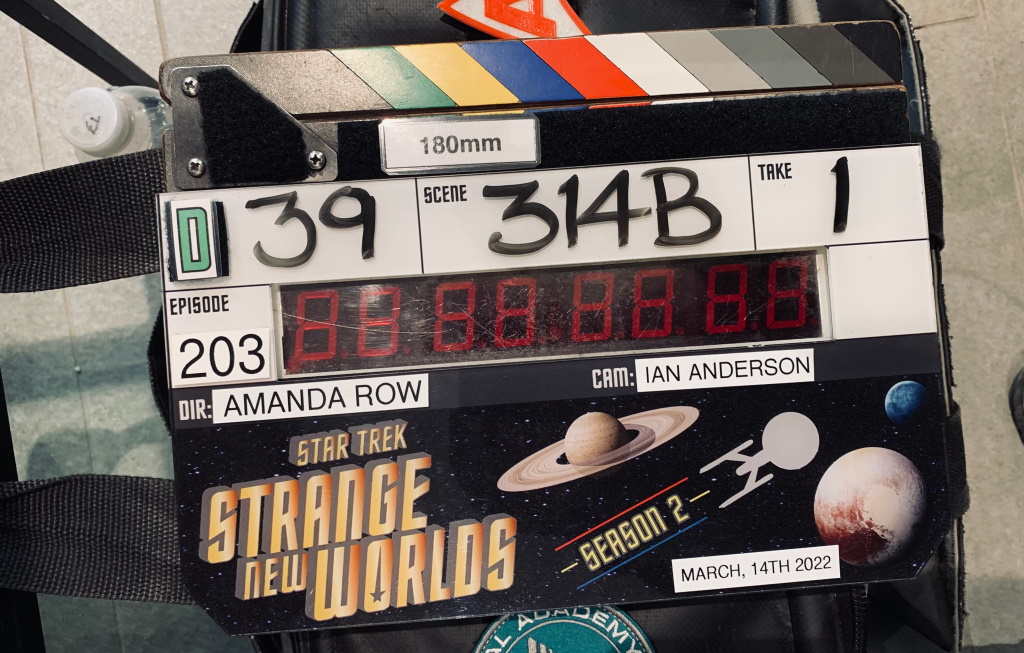
Season 2 is already underway.

This article began life as a breakdown of the Strange New Worlds trailer that was released a couple of weeks ago. But as I started writing, I soon realised that I couldn’t do it. I couldn’t sit here and happily ignore the corporate bullshit and the incredibly poor way that Paramount Global has treated its biggest fans and biggest supporters. I couldn’t just pay lip service to the problems with a line or a paragraph and then get chatting about Pike’s beard or the Enterprise at warp. I’ve lost my excitement for this series.

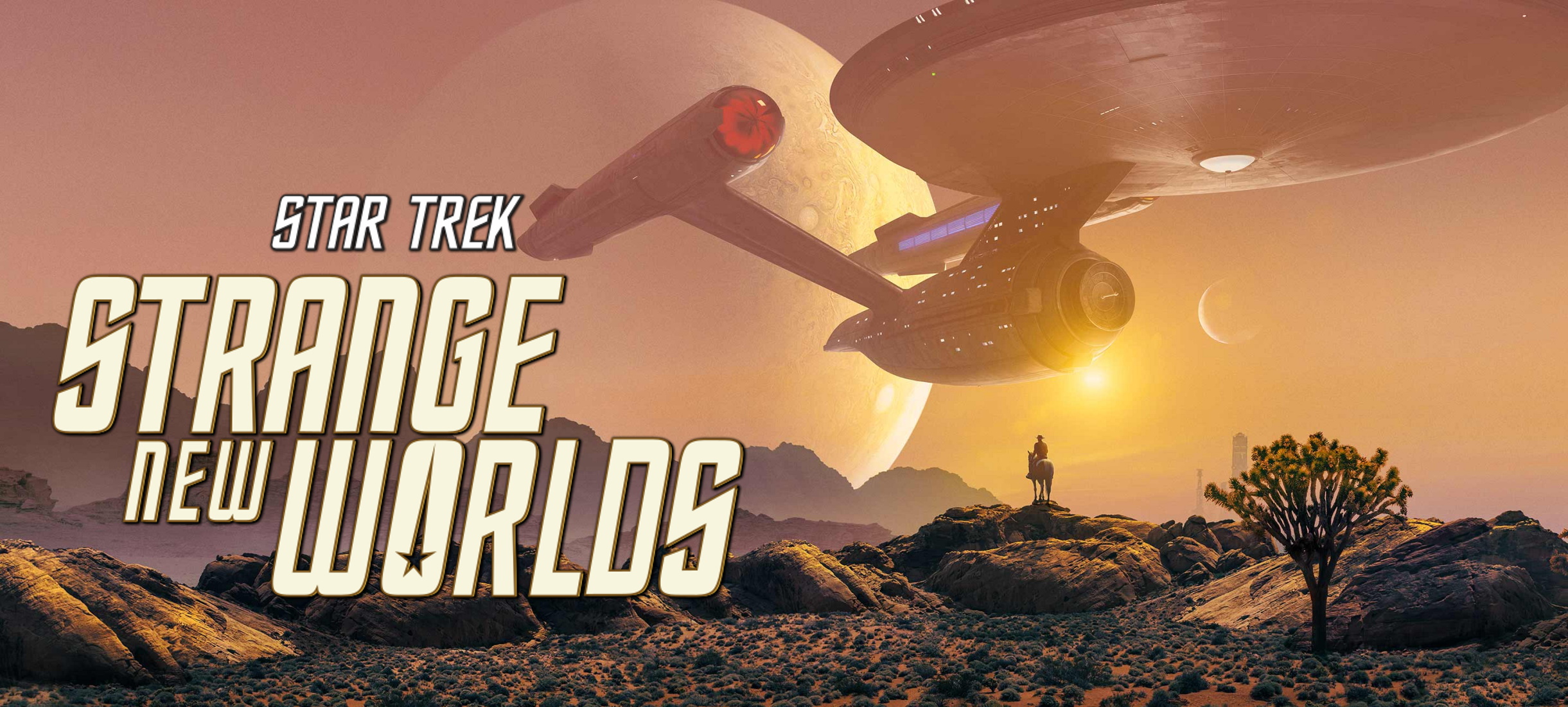
A few weeks ago I managed to get a print of the Strange New Worlds poster. It’s framed alongside my Picard Season 2 poster, and it overlooks my workspace where I sit to write these columns and articles. But even that was stupidly difficult, because Paramount Global didn’t make the poster available for purchase in the UK. I had to get a custom print of it ordered from a print shop. Just another way that Paramount Global is content to damage its own marketing, cutting off its biggest fans because of where we happen to live.

The poster in landscape form with the addition of the show’s logo.

Considering the position we’re currently in, the scheduling of Discovery Season 4, Picard Season 2, and even Prodigy feels incredibly weird and inept; another example of Paramount Global fucking things up. Why did Discovery Season 4 and Picard Season 2 overlap by three weeks? And why is Strange New Worlds scheduled to overlap with Picard as well? Delaying both projects by literally just a few weeks might’ve given Paramount+ more time to get ready for an international launch. We’ve been promised the service by the end of June and Strange New Worlds premieres in early May… if Paramount+ is still on schedule, can’t Strange New Worlds be delayed by five or six weeks so that more fans can watch it together? Where would be the harm in that from Paramount Global’s perspective?

On top of all that, as Season 1’s marketing campaign was just getting started we had a really stupidly-timed Season 2 announcement: the casting of a new actor to play James T. Kirk. I didn’t like the fan reaction in some quarters, with a lot of folks being incredibly critical and some of that criticism spilling over into hurtful remarks directed toward the actor – my firm belief is that we need to give Paul Wesley a chance to show us what he can do, and we need to be patient to learn more about the storyline (or storylines) that Kirk may be involved with. But I have to admit, I understand where the backlash came from… and it’s yet another indication of how poorly Paramount Global has handled this new series.

I was disappointed that some Trekkies attacked actor Paul Wesley… but this premature announcement was a stupid own-goal from Paramount Global.

There was no need to announce Kirk’s role this early. There had been a single leaked on-set photo showing actor Paul Wesley as an unnamed character, and there was no reason whatsoever for Paramount Global to comment on it. They could have said something like “that’s a secret for now, but stay tuned for Season 1!” and left it at that. Some fans would’ve speculated, some had already guessed that the character was James T. Kirk before the official announcement was made. But confirming it just made things worse, and turned an already depressed and underwhelming conversation around the new series positively toxic for a few days.

One way or another, I’m going to watch Strange New Worlds – and you can interpret that however you’d like! But what I won’t do is talk about the series here on the website or on social media. If Paramount Global doesn’t make it available here, why should people like me comment on the series or give it publicity? In my own small way, I plan to have a communications blackout – shutting down a portion of the conversation around the series and directing attention away from Paramount Global. I’d love to see others get on board and do the same thing – a full-fledged blackout would be symbolic of the fanbase coming together to tell a greedy American corporation that its behaviour is not acceptable. If you’ve ever watched Star Trek, that shouldn’t feel out of place at all!

A Strange New Worlds blackout would be unfortunate, but I would argue it’s necessary.

But it’s unlikely to happen, sadly. A lot of fan websites and social media groups work hand-in-glove with Paramount Global and wouldn’t want to risk losing their access or their freebies that the corporation provides them. So we’re in a difficult, unpleasant situation once again, with echoes of the Discovery Season 4 mess all over again. And I don’t know how to navigate it, I really don’t. I feel like I want to stick to my principles and do whatever I can, in whatever small way, to stick the boot into Paramount Global. I also feel that someone needs to make a stand on behalf of fans around the world who can’t access the series because we’ve been so callously cut off.

But I can also understand the argument that we should be supporting a series that was originally brought about thanks to a fan campaign – a campaign I participated in. And, of course, I’m aware that I’m such a small outlet that on my own I can’t make much difference.

Fans have been waiting for the next chapter of Captain Pike’s story for almost three years.

Maybe Paramount Global will surprise me with Paramount+ in time for the show’s premiere. Or maybe they’ll do the right thing and delay it if Paramount+ won’t be ready… but I’m not holding my breath. Right now it feels like we’re on course for a repeat of the Discovery mess, and the only thing I can do in this situation is refuse to cover the series at all. That isn’t the stance I wanted to take. I wanted to be spending this time talking with you about the minute details that I noticed in the trailer, or speculating about what role Kirk might play. But I can’t. And if Strange New Worlds doesn’t get broadcast here or in other parts of the world in a few weeks’ time, don’t expect to see any reviews, theories, or discussion here on the website.

I’m tired, and I feel like I can’t keep doing this. Star Trek is supposed to be fun; an escape from the realities of life. As someone who’s disabled and has mental health struggles, I need the positivity and fun that a show like Star Trek can bring. I’m not cut out for this kind of constant negativity, shouting and screaming at Paramount Global to get its fucking act together. It’s depressing and disappointing that we’re here again.

This is where I’d usually tell you where to watch Star Trek: Strange New Worlds and tell you that it’s the copyright of Paramount Global. This article contains the thoughts and opinions of one person only and is not intended to cause any offence.
The classic Star Trek dilemma: Kirk or Picard?

Spoiler Warning: There are spoilers ahead for the following Star Trek productions: The Original Series and its films, The Next Generation and its films, and Picard Season 1.

“The only question I ever thought was hard / Was do I like Kirk, or do I like Picard?” So sang “Weird Al” Yankovic on his 2006 parody hit White & Nerdy. In those two lines, the comedy singer encapsulated a debate that has rumbled on in the Trekkie community since The Next Generation premiered in 1987! This is a question I’ve thought about many times, and today I’m finally going to put (metaphorical) pen to paper and lay out my thoughts on this classic Trekkie debate.

Though there have been at least a further six captains or protagonists who’ve joined the Star Trek franchise over the years – or more, depending on how you count things – the classic debate has always surrounded Picard versus Kirk, and I think that’s probably because the contrasts between the two characters and their approaches to leadership are so extreme. Most Star Trek captains who have followed embody elements of both Kirk and Picard’s styles of management and leadership while remaining distinct characters, but when it comes to the franchise’s first two captains, there seems to be a major clash of personalities.

Just like “Weird Al” did, we’re going to consider this difficult question!

My first contact with the Star Trek franchise was The Next Generation in the early 1990s. It was only later that I went back to watch The Original Series and its films, encountering Captain Kirk and his crew for the first time. The Next Generation made me a Star Trek fan, and while I can appreciate what The Original Series did and how entertaining it was, I just don’t have the same connection to it – or to any other Star Trek show, frankly – as I do to The Next Generation. So that’s my own bias stated up front as we go into this discussion!

I’ve always found this debate to be fascinating, but I try not to take it too seriously. Some fans can turn genuine and heartfelt passion into toxic or even aggressive negativity sometimes, attacking others who don’t share their precise views on the nature of Star Trek (or other franchises). Fandoms shouldn’t be a place for division, negativity, or toxicity; they should be a place where we can all come together to share something we love. It’s in that spirit that I enter this discussion – and I encourage everyone to keep in mind that all of this is subjective, and it’s supposed to be light-hearted fun!

So let’s get started, shall we? For reasons both alphabetical and chronological, Captain Kirk gets to go first!

The Case For Kirk

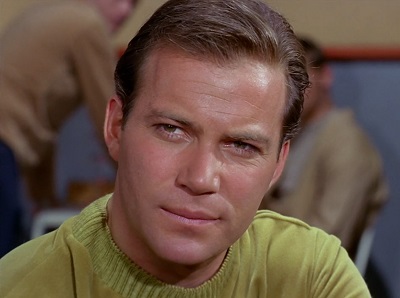
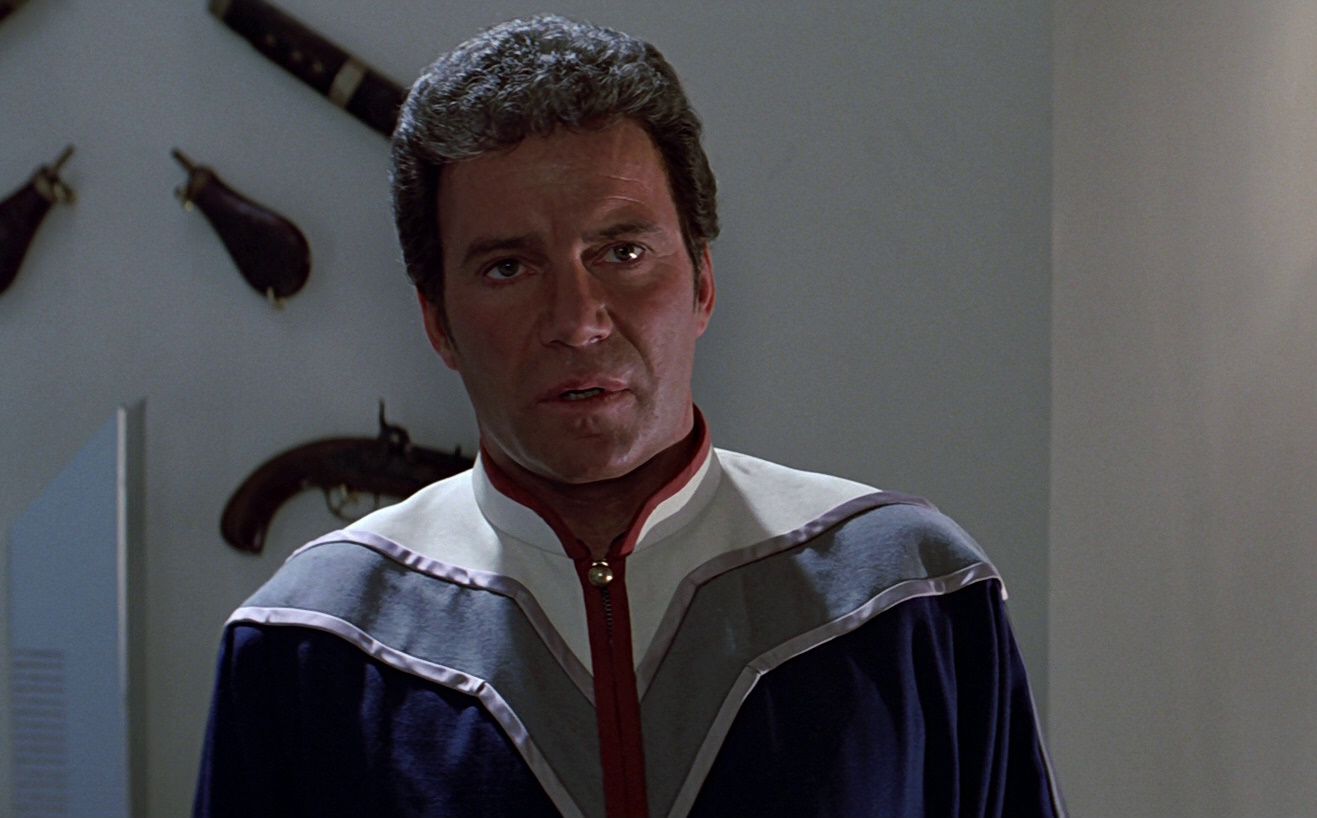
Captain Kirk in his first appearance.
Captain Kirk will forever be Star Trek’s first captain, and thus he should be the yardstick that Trekkies use to judge the successes of any subsequent captain – Picard included. Without Kirk, there would never have even been Picard – because there would quite literally have been no Star Trek. Just look at the failure of The Cage, the first pilot shot for The Original Series, as a case in point: Star Trek only became successful when Captain Kirk was in command.

But Kirk isn’t the best just because he was first. James T. Kirk is a man of action: a tough-talking, villain-punching, decisive commander who stops at nothing to get the job done and protect his ship and crew. He’s not above a bit of rule-breaking, either; when you’re alone on a mission of exploration far beyond Federation space, what’s the point in Starfleet orders or the Prime Directive?

Captain Kirk wasn’t above getting into a proper fight.

On board his ship, Captain Kirk made friends. He didn’t see his crew as mere underlings, but as people he actually liked spending time with. He even developed Star Trek’s first ever cross-species friendship, bridging the gap between emotional humans and stoic, logical Vulcans in the best way possible. His friendship and partnership with Spock became legendary – and frankly, Picard has no friends… or at least, he has no friendships that come anywhere close to matching the closeness between Kirk and Spock. This pair literally created the genre of slash fiction!

It wasn’t until the finale of The Next Generation that Picard was prepared to sit down with Riker and play a round of poker, but Kirk had those friendships from the start. His closeness with Spock has rightly become legendary, but he was also firm friends with Dr McCoy, Sulu, Uhura, Scotty, and even the young Chekov. Kirk’s crew would even risk their Starfleet careers to steal the USS Enterprise and follow him on a dangerous mission to the Genesis Planet in The Search For Spock.

Captain Kirk was loved by his crew… not grudgingly respected.

As Star Trek’s first captain, Kirk made first contact with many different races and factions – including practically all of the franchise’s best-known and most famous aliens. He also introduced us as the audience to races like the Vulcans and the Klingons – two of Star Trek’s most iconic alien races. It’s through Kirk’s eyes that we first came to perceive many of the franchise’s classic factions; he gave us his perspective and allowed us as the audience to meet these aliens through his interactions with them.

Captain Kirk developed rivalries with some of Star Trek’s biggest and most notorious villains. The Romulan commander from Balance of Terror, Garth of Izar, who went on to inspire an entire fan-series, Dr Tolian Soran in Generations, and even “God” himself in The Final Frontier. Most significantly, of course, Kirk found his arch-enemy in one of the greatest villains ever put to screen in the whole of cinema: Khan. Picard’s enemies simply aren’t in the same league.

“Khaaaaaan!”

Captain Kirk recognised the dangers of space travel, and he blazed a trail that Picard and others merely followed. He knew that it wasn’t going to be possible to find a negotiated settlement to every problem, and wasn’t shy about pulling out his phaser – and his fists – to settle disputes. Do you think Captain Kirk would have been bossed around by the Sheliak, or by the Edo and their Mediators? Or would he have punched those alien menaces in the face and told them where to shove it?

In conclusion, Captain Kirk is a bona fide action hero, a man’s man, and the embodiment of the very best of Starfleet in the 23rd Century. He would consider peaceful options where they were available, but wasn’t above punching aliens in the face when he needed to. He would go above and beyond for the sake of his crew, even being reduced in rank by Starfleet for having the audacity to save Spock. He saved Earth on many occasions – and even saved the life of his rival, Captain Picard, and the entire crew of the Enterprise-D in his final act before dying a hero.

The Case For Picard

Captain Picard in Encounter at Farpoint.

Let’s calm down, leave the toxic masculinity in the ’60s where it belongs, and let a grown-up take charge. Captain Picard is the Joe Biden to Captain Kirk’s Donald Trump – he’s level-headed, diplomatic, and professional. Captain Kirk may have been the archetypal action hero of the ’60s, but by the late ’80s, things had moved on. What fans wanted to see from someone in a position of authority was not someone who was quick to pull out their phaser or punch an alien in the face, but someone who could be diplomatic, courteous, and who could resolve situations without needing to resort to such barbarity. Embodying all of those traits was Captain Picard.

A new era of Star Trek not only needed a new face, but a whole new style of leadership, and Captain Picard delivered. If the 23rd Century had been the “wild west,” where anything was allowed and rules were made to be broken, the 24th Century saw Starfleet evolve and move beyond that. Civility could finally replace cowboys like Captain Kirk.

Captain Picard is a more civilised leader perfect for a new era.

Did Captain Kirk ever pilot his own ship? In the episode Booby Trap, we saw for ourselves just how skilled Captain Picard was, and how intimately he knew his ship. Where someone like Kirk would have ordered maximum warp until the power was drained, Picard and his crew came up with a complex solution, then executed it perfectly. Picard made the Enterprise-D dance like a ballerina; Kirk could never have done anything like that.

Where is Star Trek: Kirk? Oh, that’s right: they never made that series. But they did make Star Trek: Picard, such was the overwhelming response from fans to this wonderful character. 176 episodes of The Next Generation and four films weren’t enough – fans were eager for more Captain Picard, and thus he became the first character in Star Trek’s history to get a new show named after him. More than thirty years after we first met Captain Picard, new adventures with the character are still being created, with at least two more seasons of the show in production.

Captain Picard got his own spin-off show because fans love the character so much.

While Kirk may have had fun with some villains like Khan, he never had to stare down the biggest, most devastating threat that the Federation ever faced. Captain Picard beat the Borg… and he did it twice. He even survived being assimilated and was able to push through his Borg programming to give his crew a piece of vital information that ultimately saved Earth. In First Contact, Picard brought the Enterprise-E to the Borg’s second invasion attempt, saving the day in the 24th Century and then again in the past. Forget the Klingons, the Gorn, the Romulans, and the people on that weird planet who all pretended it was Chicago in the ’20s: Captain Picard fought and defeated the most dangerous threat that the Federation has ever encountered.
Captain Picard realised that he can be on good terms with those under his command, but that as the captain he has to put the needs of the ship first. In the episode Lessons, he learned first-hand that having close relationships with subordinates is difficult for any commanding officer, and maintaining a friendly but respectful distance from his crew – even those whose advice he relied upon – was necessary to keep everyone safe and to allow him to be able to make the tough calls.

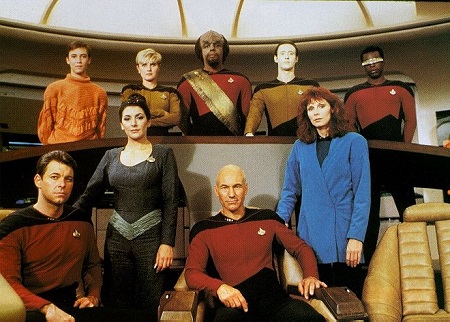
Captain Picard and the crew of the Enterprise-D.

Captain Kirk got to make many first contacts – but he did so by default because he was first. Captain Picard actually made more first contacts than Kirk did – including with some very different forms of life. Whether it’s the Microbrains, the Exocomps, or the Q Continuum, Captain Picard was prepared to treat everyone he met with courtesy and respect, staying true to Starfleet’s mission of seeking out new life. But it doesn’t end there. Captain Picard introduced us as the audience to alien races like the Bajorans, Cardassians, and of course the Borg – and these would go on to be just as important to the Star Trek franchise overall as any of the aliens we met in The Original Series.
In conclusion, Captain Picard is a calm diplomat, the level-headed manager of a large crew, and the personification of the very best of 24th Century Starfleet. He guided his crew through some incredibly difficult and dangerous missions while maintaining his composure. He learned lessons about loss and grief that Kirk never had to learn. And he saved the lives of at least two of Kirk’s crew: Spock and Scotty. He also saved Earth from the Federation’s greatest threat, and even learned to perceive time in a non-linear fashion thanks to Q.

So Who Wins?

Kirk or Picard?

You’re going to hate me for this – but they both win. Everything I said above is true (in a roundabout, tongue-in-cheek way), but that doesn’t mean that one captain is better than the other! Like all of us, Kirk and Picard have strengths and weaknesses; things they do well and areas where they need to rely on others. There isn’t a definitive answer to a question like this, because the answer will always be “it depends on the circumstances.”

There are times when Captain Kirk’s approach to leadership is needed, and times when the way Picard approached a situation would lead to the best chance of success. As we saw in Generations, there was even a time when the only way to save the day was for both men to team up. The fact that each captain has his own set of skills and his own style of leadership isn’t a weakness – it’s a strength, one which benefits Star Trek as a whole.

Kirk and Picard meeting for the first time.

I mentioned in my introduction that subsequent captains have incorporated elements from both Kirk and Picard, and that’s because both men have so many positive, upstanding qualities that Star Trek’s writers were keen to give to new characters as the franchise has continued to grow. Kirk was always ready for action, but that never came at the expense of being thoughtful and considering non-violent solutions. And Picard’s diplomatic, polite style could give way to ordering his crew to “fire at will” when the situation called for it. Both captains are adaptable, able to rise to meet the needs of all manner of incredibly difficult situations – even if that meant setting aside their usual ways of doing things.

No one can doubt Kirk or Picard were absolutely dedicated to their ships and crews, either. They may have shown that dedication in slightly different ways, and they may have expressed their appreciation and love for their friends and crewmates in different forms as well, but both of them were quite literally willing to lay down their lives and go down with the ship if necessary. Both men ultimately lost their ships – the original USS Enterprise and the Enterprise-D were both destroyed. But they both bounced back to take over new commands and go on to even greater things.

There are times when I’m in the mood for watching Captain Kirk get into a fist-fight with a Gorn or for seeing his epic stand-off against Khan. And there are moments where I want to see Picard use diplomacy to win an argument with the Sheliak or watch him wrangle with one of Q’s puzzles. But there are also times where I want to see Picard grab his phaser rifle and kick some Borg butt, and times where I can think of nothing better than seeing Kirk solve a scientific mystery like that of V’Ger. Both captains have given all of us so much enjoyment and entertainment over the years that I simply can’t crown one of them a winner and leave the other a loser. To me, they’ll always both be winners.

The Star Trek franchise – including The Original Series, The Next Generation, and every episode and film mentioned above – is the copyright of ViacomCBS. This article contains the thoughts and opinions of one person only and is not intended to cause any offence.