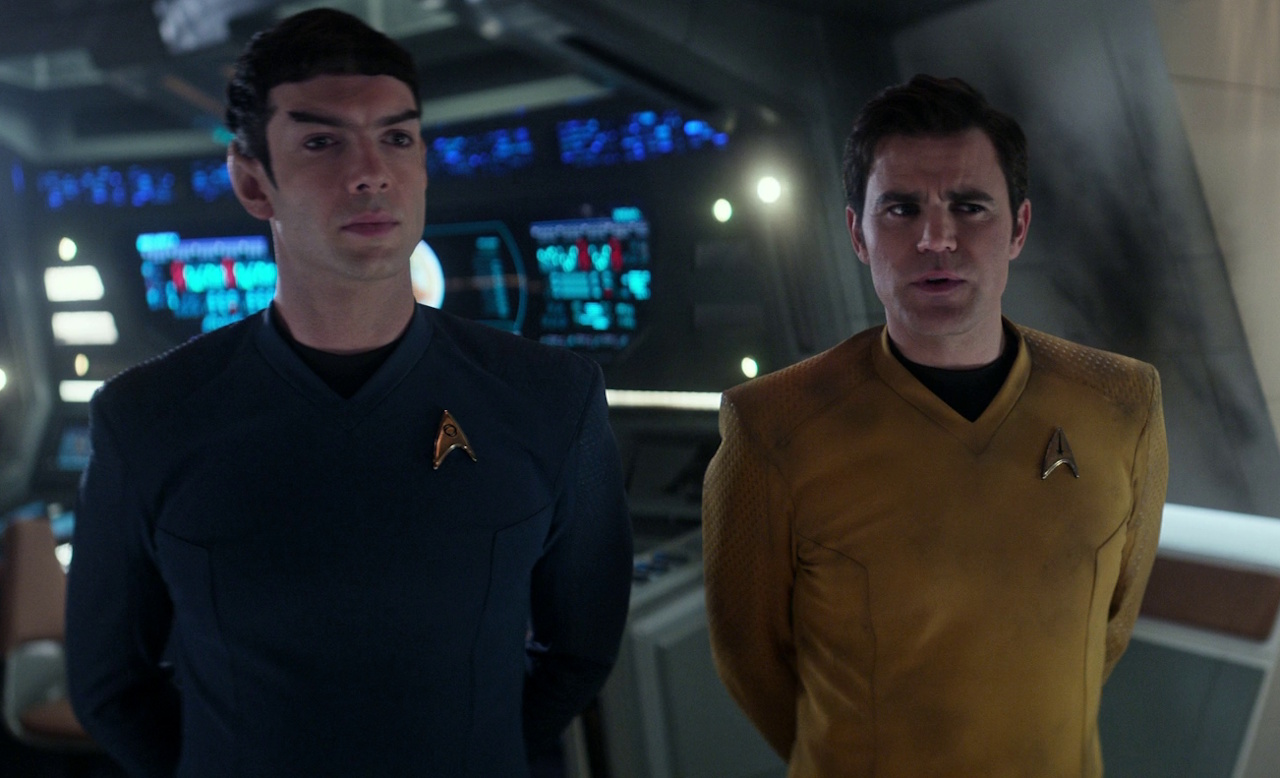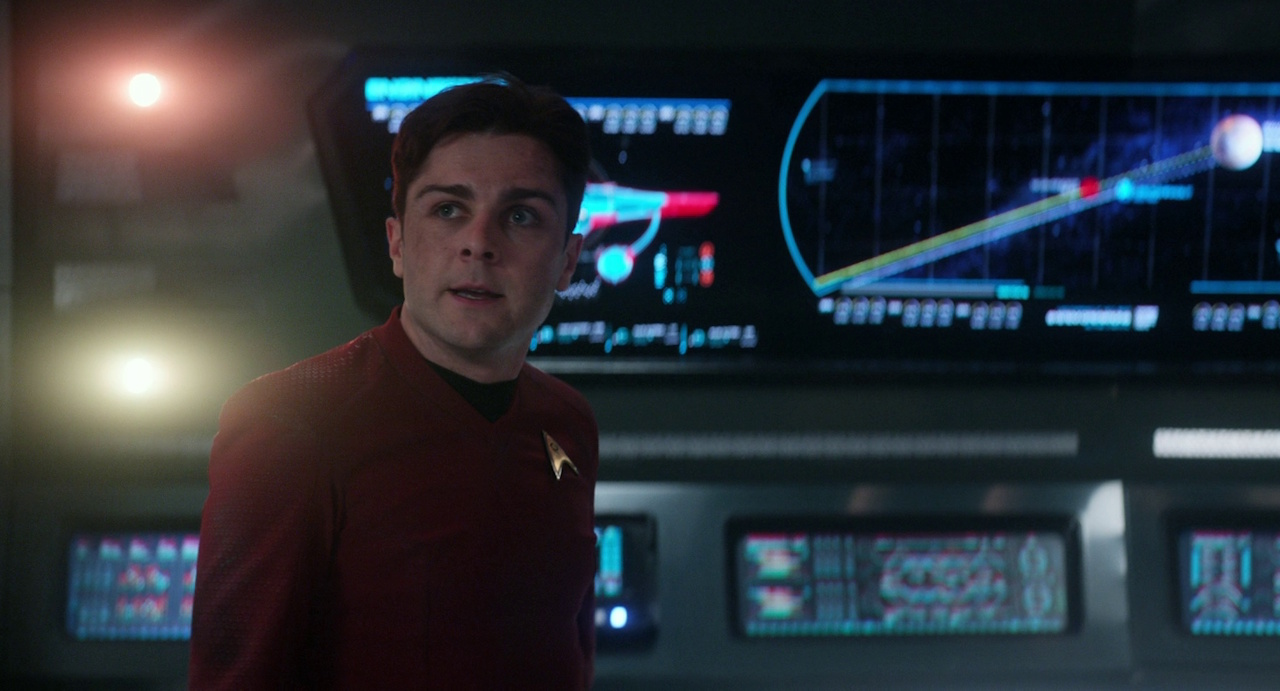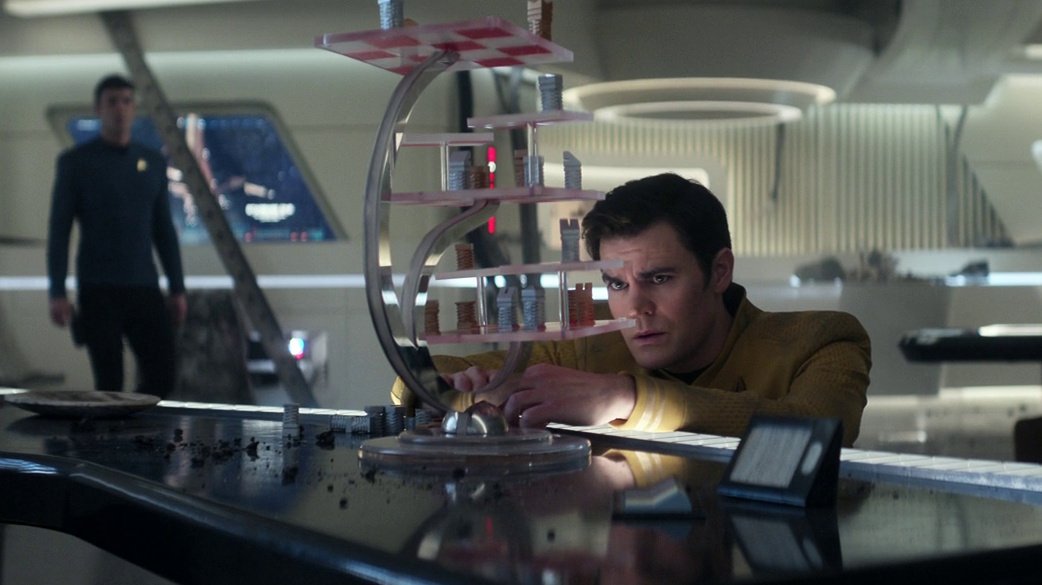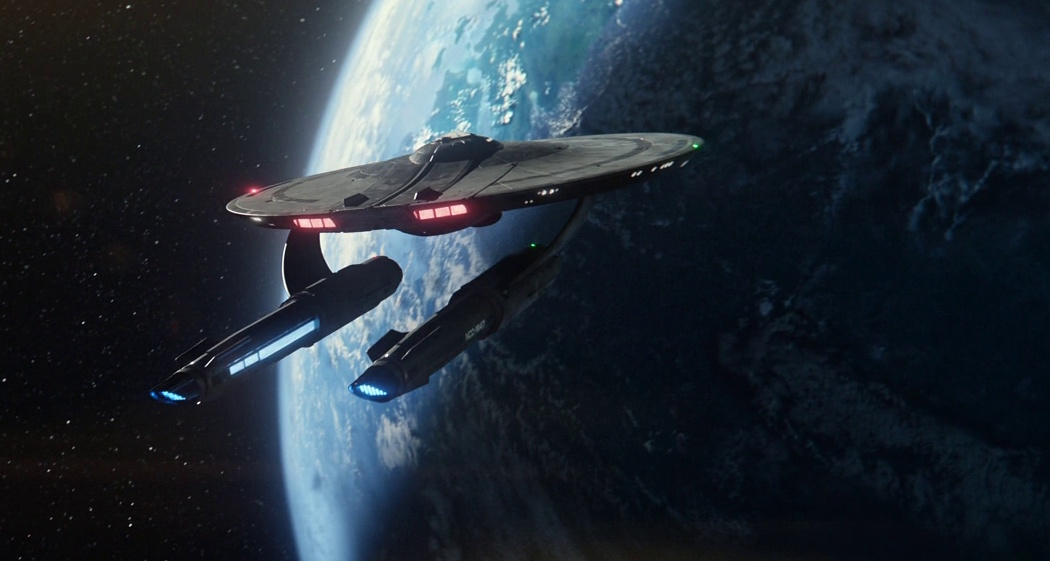
Strange New Worlds: Taking Stock

A Strange New Worlds-themed spoiler warning.

Spoiler Warning: There are spoilers ahead for Star Trek: Strange New Worlds Seasons 1-3. Spoilers are also present for the following Star Trek productions: The Original Series, Deep Space Nine, Discovery, and Picard.

At time of writing, Season 3 of Strange New Worlds has just concluded. With Starfleet Academy on the schedule for the first half of next year, and with Season 4 having only finished filming a few weeks ago, there’s gonna be a wait of a year-plus before we’ll see it – late 2026 or early 2027 is my guess, barring any strikes or similar disruptions! So it’s a bit early to look ahead – but Strange New Worlds is on my mind right now.

What I want to do this time is try to take stock of how the series has performed so far, as well as look ahead to a few things that I’d like to see in Seasons 4 and/or 5. This isn’t going to be a review or a recap of Season 3, though obviously we’ll talk about Season 3 along the way, but rather a broader overview of how I see Strange New Worlds now that we’re three seasons in – and, regrettably, past the halfway point of what will be a forty-six-episode run.
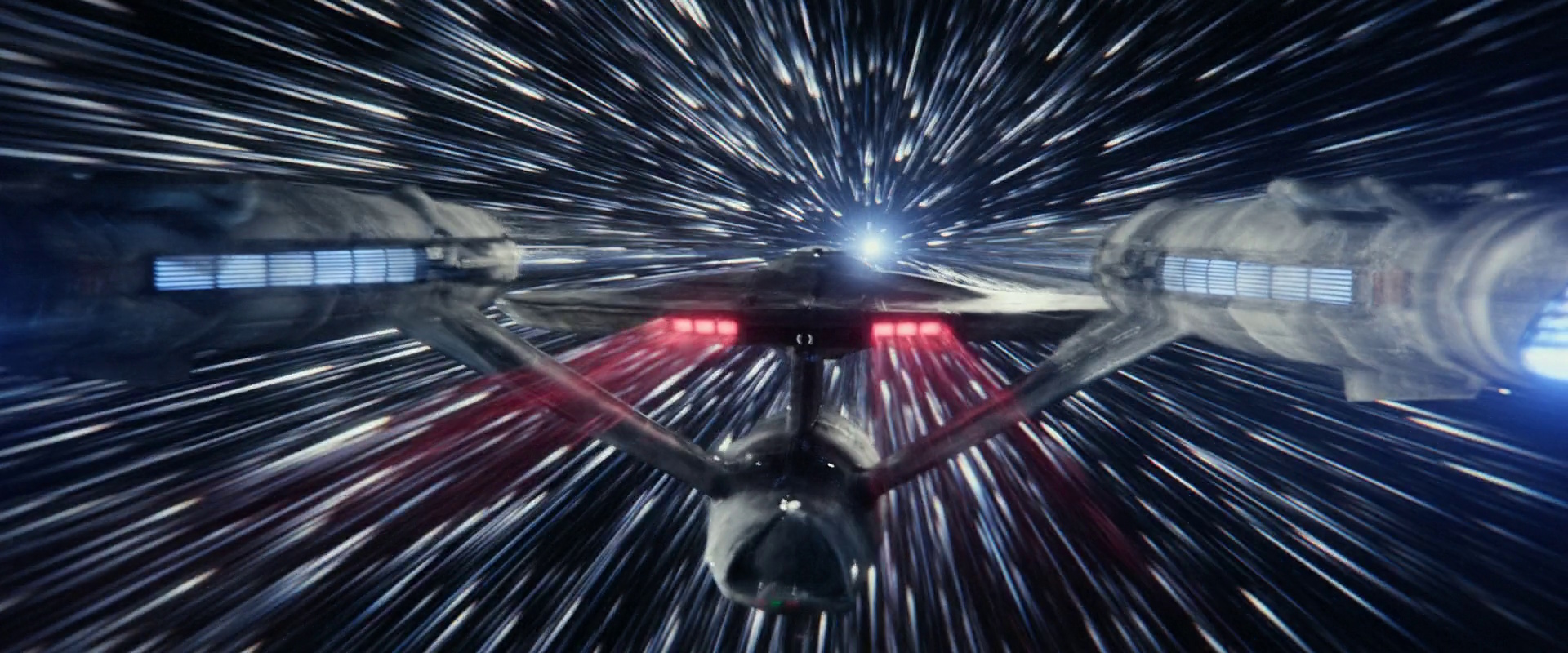
Still frame from Star Trek: Strange New Worlds showing the Enterprise at warp.
The final shot of Season 3.

As always, a couple of caveats before we get much further. Firstly, I have no “insider information,” so anything I say about possible future episodes and stories should be viewed through that lens! And secondly, all of this is the subjective, not objective, opinion of one old Trekkie. If you disagree with me about Strange New Worlds, hate my take, or want to see the series go in a completely different direction… that’s okay! There’s enough room in the Star Trek fan community for differences of opinion and polite disagreement.

Alright, now that that’s out of the way… let’s talk Strange New Worlds!

Season 3 was, on the whole, pretty good. There were a couple of dud episodes, but even those had some redeeming qualities. It felt a bit more serialised this time, thanks to the ongoing Batel-Gorn storyline, but still episodic enough that we got a diverse mix of stories. If I had to highlight two episodes for special praise, I’d pick Through the Lens of Time and Terrarium. I think Through the Lens of Time is, with the benefit of hindsight, perhaps somewhat let down by a weaker conclusion in the season finale, but on its own it’s still a solid episode. And Terrarium is just fantastic across the board.
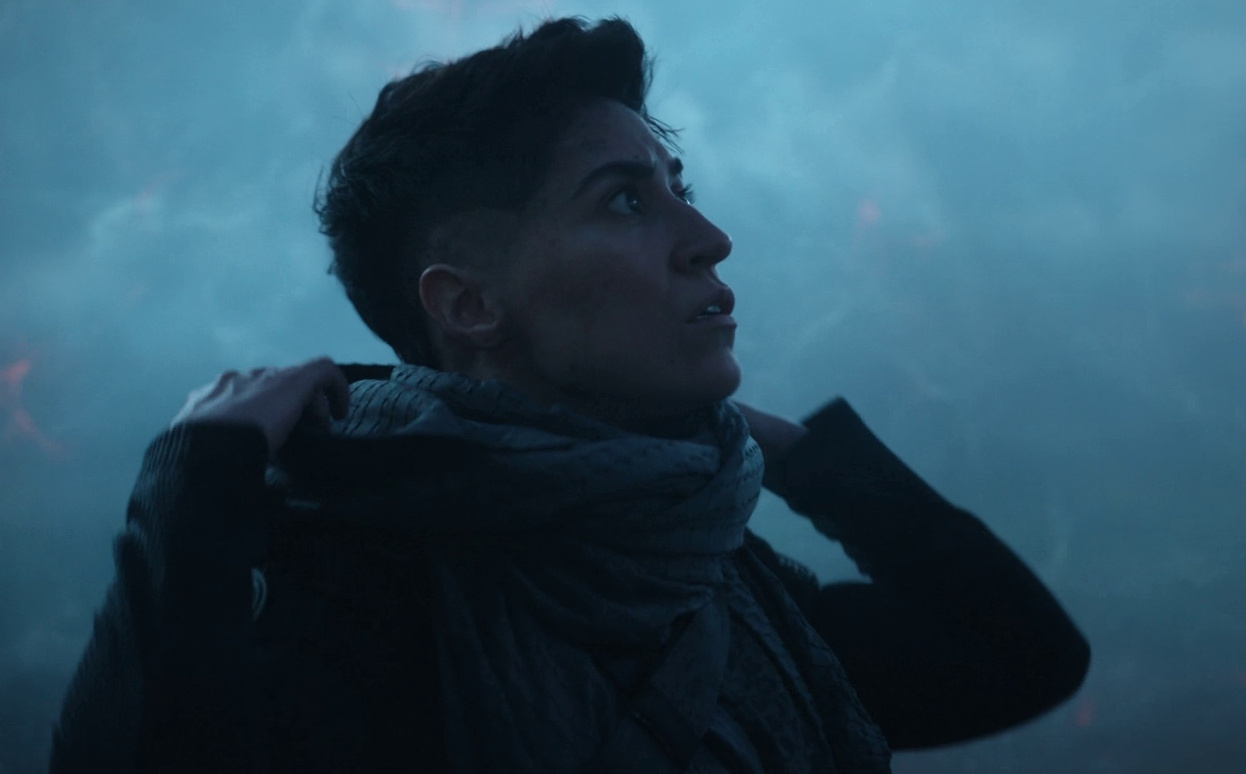
Still frame from Star Trek: Strange New Worlds showing Ortegas on an away mission.
Ortegas in Terrarium.

In terms of characters, I’d like to see Strange New Worlds do more with some of its original creations, rather than leaning so heavily on the younger versions of TOS characters. Scotty seems to have taken precedence over Pelia for a lot of engineering storylines, such as in A Space Adventure Hour, and because Pelia is just a ton of fun… that doesn’t sit right. She’s the chief engineer, and he’s… what? A glorified assistant at best. And although sometimes lacking in confidence, this version of Scotty is still working engineering miracles. We’ve seen that before, and while there’s definitely fun to be had in seeing Scotty’s growth and the development of some of his friendships with folks like Uhura and Kirk… I don’t want that to overwhelm an original character like Pelia.

I’ve said this before, but if Star Trek had relied so heavily on legacy characters when considering spin-offs in the 1980s and 1990s, the franchise would feel a lot smaller today. We might never have met the likes of Picard, Sisko, or Janeway if the folks in charge had insisted on retaining characters from past iterations of Star Trek – and I’m just a little concerned that the attention dedicated to legacy characters is beginning to overshadow the rest of the cast. Spock was almost omnipresent this season, and we got stories heavily focused on Kirk, Chapel, Scotty, and Uhura, too. I’m glad that we finally got an Ortegas episode – and that it was so darn good! But with only sixteen episodes remaining, I’d really like to see Strange New Worlds strike more of a balance between characters who’ll go on to play big roles in TOS and the rest of the cast.
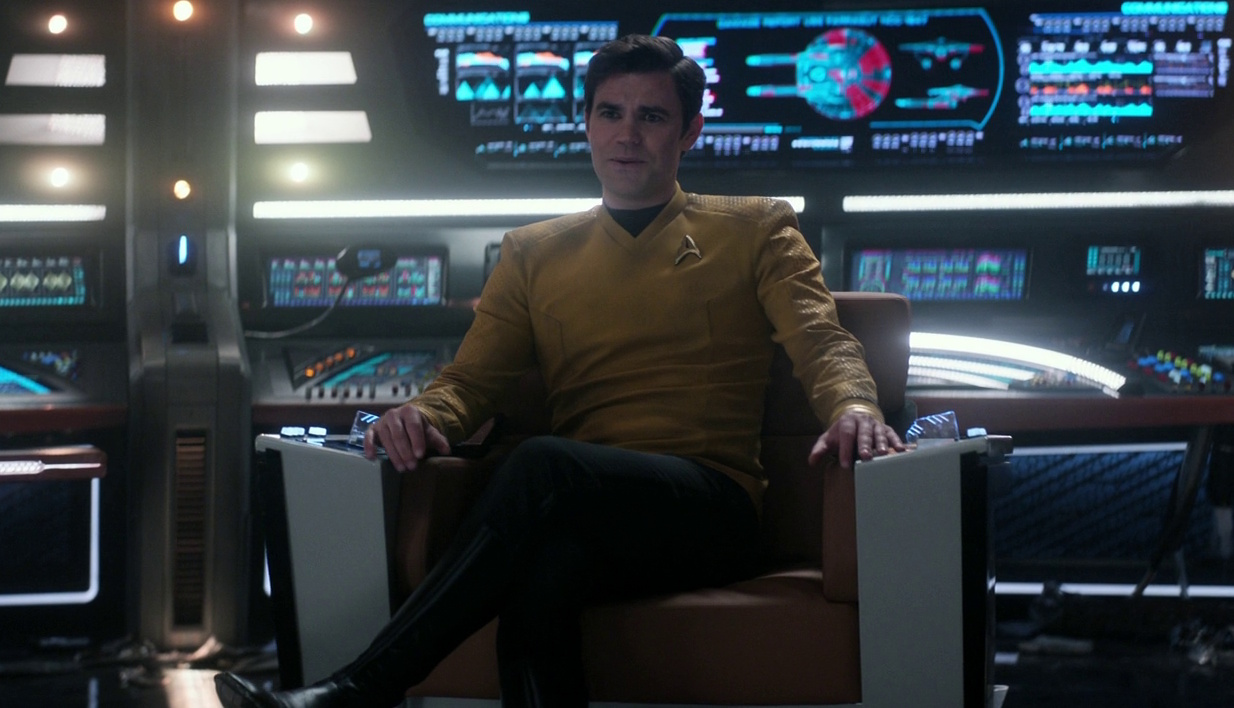
Still frame from Star Trek: Strange New Worlds showing Kirk in the captain's chair of the Farragut.
Kirk in command.

I mentioned this in one of my Season 3 episode reviews, but La’an being related to iconic Star Trek villain Khan has been a complete nothing-burger so far, and unless something major changes on that front… I’m gonna reach the end of the series wishing she’d been given a different last name. If you know me, you know I’m not a stickler for the tiniest minutiae of “canon,” but given how important Khan is to Kirk, Spock, and really to Star Trek as a whole… making La’an a direct relative of Khan kind of treads on the toes of what was established in Space Seed. If there’d been a big narrative payoff for that, it could’ve easily been worth it. But so far? I’m afraid it hasn’t been.

Think about it like this: what would change about La’an if her last name had been… Shellac-Wombat instead of Noonien-Singh? She could still have been a descendant of augments. She could still have survived the Gorn as a kid. She could still have felt shame about her ancestry. She could still have developed a friendship with Una, fallen for Kirk, and gotten into bed with Spock. Her iconic ancestor doesn’t matter one iota – and because of how important Khan still is to the franchise, I don’t think that’s good enough. There’s just no reason to have made her a member of Khan’s family – and right now, the name feels like little more than cheap nostalgia bait.
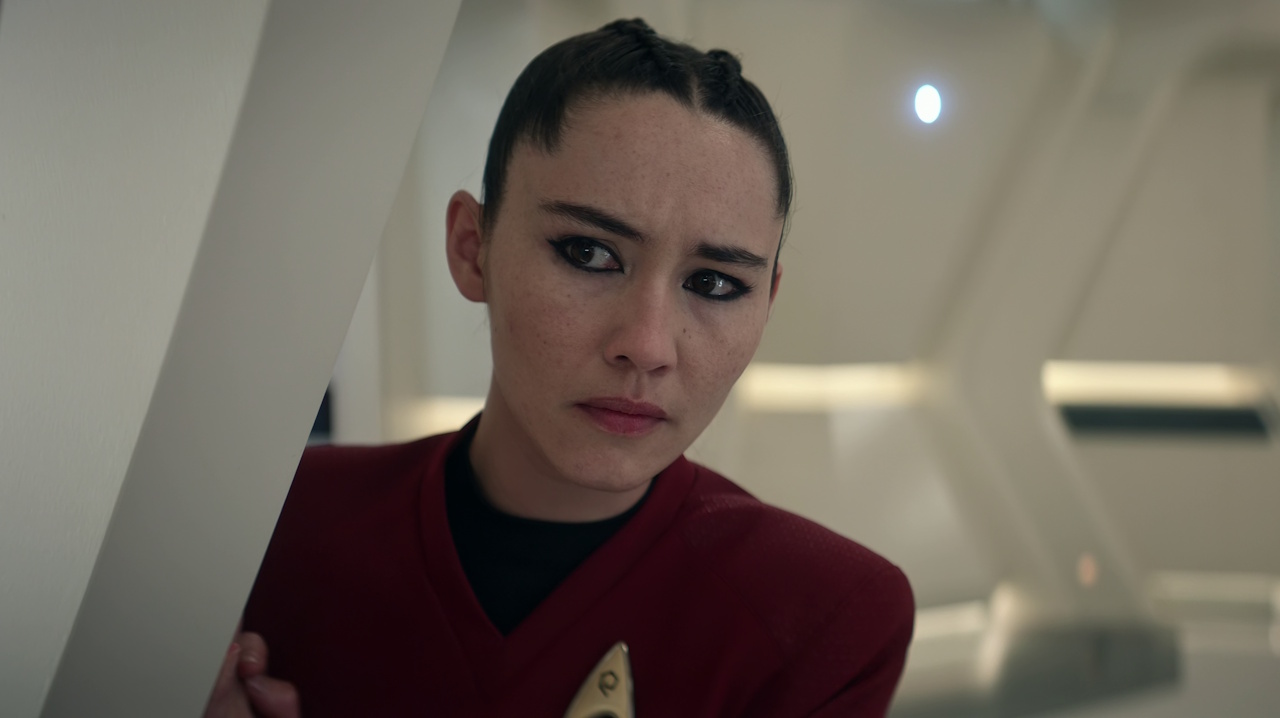
Still frame from Star Trek: Strange New Worlds showing La'an peeking out from a hiding place.
La’an in Season 2.

What appealed to me the most about “the Captain Pike show” in the aftermath of Discovery’s second season was spending more time with Anson Mount’s take on the character. Season 1 gave us a decent mix of Pike and other characters, but the captain seems to have stepped out of the limelight a little in Seasons 2 and 3. There were whole episodes this season where Pike got remarkably little to do, and one of his bigger roles – in Four-and-a-Half Vulcans – was far from his best. Anson Mount did a great job, by the way, in that kind of comedic role… but I just wasn’t thrilled about the end product.

So in Seasons 4 and 5, I hope we get to see a bit more of Pike. That doesn’t mean every story needs to put the captain front-and-centre, but there have been moments in some episodes which could’ve been perfect for Pike to step up and play a role – but where writing decisions meant other characters came to the fore. Maybe you think this contradicts my earlier wish to see more of Strange New Worlds’ original creations – but I kind of include Pike, Una, and Dr M’Benga along with the brand-new characters, as their roles prior to this series were much smaller.

Still frame from Star Trek: Strange New Worlds showing Pike holding a wine glass.
It’s still “the Captain Pike show” to me!

There are plenty of great characters on the show, and with only sixteen episodes left – and presumably at least one or two new recurring or secondary characters to be added – there are clearly gonna be constraints on how often Pike can be centre-stage… and I get that. But this is, for me, still “the Captain Pike show,” so when Pike is absent, relegated to a background role, or even mischaracterised – as I’d argue he was, to an extent, in episodes like Under the Cloak of War and Four-and-a-Half Vulcans – then a big part of Strange New Worlds is missing.

This leads into one of the concerns I have going into the remainder of the series: filming for Season 4 has already concluded, and Season 5 is currently underway. There’s no time for Skydance/Paramount to address feedback from Season 3; it’s too late to make any changes to the stories that have already been created. And given that Season 3 did have a couple of misfires and, I would argue, an over-use of characters like Kirk and Spock at the expense of Pike and some of Strange New Worlds’ original characters… that could be a problem. Feedback is important, especially in the modern streaming television landscape, and unfortunately, Strange New Worlds went ahead with producing Season 4 and 5 before there was a chance for any significant responses to Season 3 to be known. Hopefully, because the show is still pretty good, that won’t be too much of a problem. But I worry that the creative team may have doubled-down on some of the things that fans and viewers have been less keen on this time around.
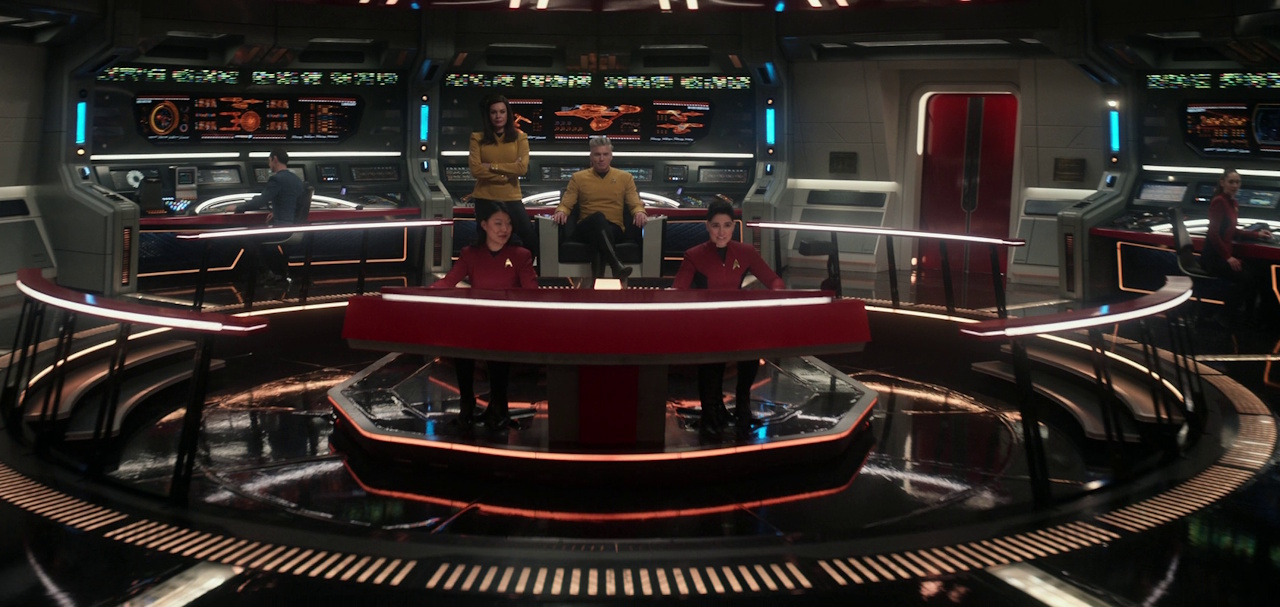
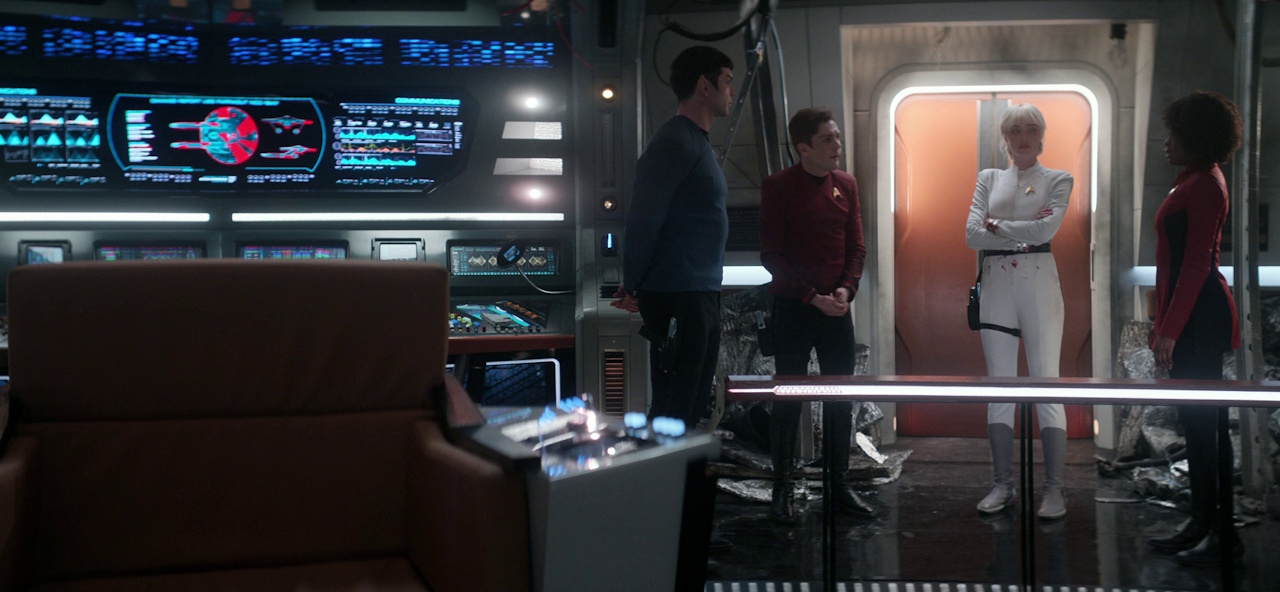
Still frame from Star Trek: Strange New Worlds showing the Enterprise bridge.
Pike and the crew on the bridge.

Returning to Pike, I don’t think we need to see his accident and disability again at the end of the show. That story has already been told in Discovery, in The Original Series, and in a couple of Strange New Worlds episodes, so ending the show that way would, I would argue, be repetitive. If Kirk hadn’t been such a big presence this season, I’d probably have said that the series finale should show Pike handing over the Enterprise to Kirk – and a big part of me still believes that will be the final shot of the series. But given Kirk’s expanded role… I think some of the impact of that will be lost, even if the moment itself is handled well.

Instead, I think Strange New Worlds needs its very own Undiscovered Country-type of story. Perhaps Pike and the crew get word that the Enterprise is to undergo a major refit, and that Pike himself is to be promoted. The crew have one final mission to undertake – perhaps against the Klingons, the Gorn, or another well-known antagonist. The mission could be intense, explosive, and action-packed, but rather than the final moments of the show depicting the handover to Kirk… I’d like to see Pike on the bridge, setting course for parts unknown one final time.
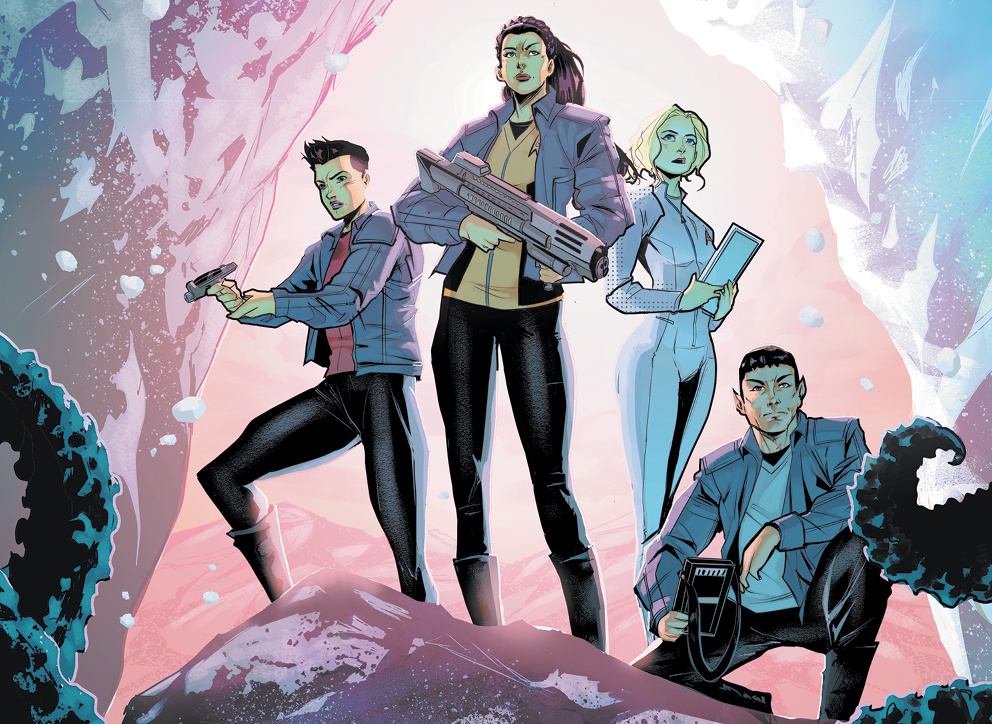
Cropped comic book cover from the Star Trek: Strange New Worlds spin off series.
Ortegas, Una, Chapel, and Spock from one of the Strange New Worlds comic books.

We’ve had it confirmed in a recent interview that the creative team weren’t sure a renewal was coming after Season 3, which I think explains a few major decisions this time around. It explains why there was such a rush to do the “backdoor pilot” for their Year One idea, with Kirk, Spock, Scotty, Chapel, and Uhura all working together. It explains why some characters – like Chapel and Uhura – now feel like they’re coming to the ends of their arcs on the show. And it explains that epilogue in the season finale, which I said in my review felt like it was intended to serve as the ultimate ending to the show if it hadn’t been picked up for more episodes.

Some of those decisions could, if the creative team are aware of them, open up different possibilities in Seasons 4 and 5. We’ve already had the “Kirk in command” Year One spin-off episode. So check that one off the list – no need to do that again. Chapel’s relationship with Dr Korby has emerged, gone through a couple of bumps in the road, and gotten to a point where he doesn’t need to regularly reappear. Uhura’s grown in confidence and ability, taking her from a raw cadet unsure of her place in Starfleet to a confident officer who was even willing to bend the rules. Spock has just been all over the place… but even if we never got another Spock episode, I think we can safely say we’ve spent more than enough time with him, too!
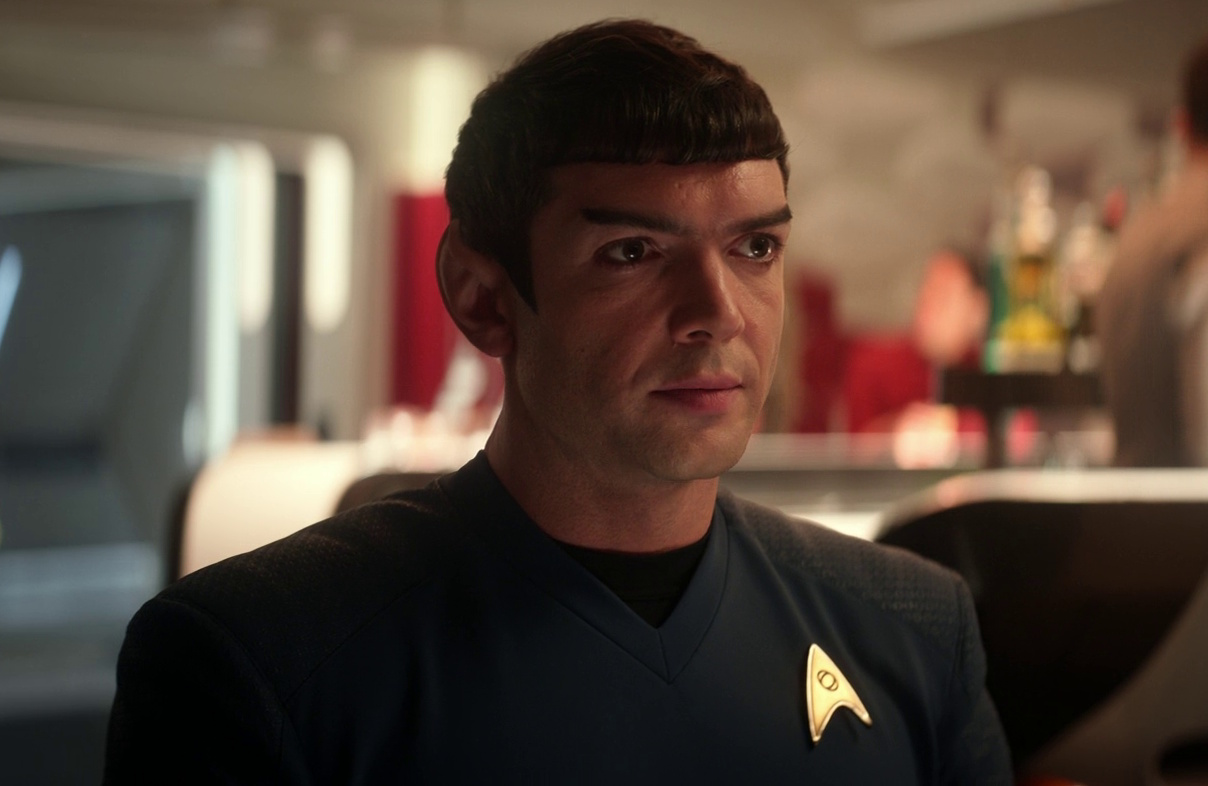
Still frame from Star Trek: Strange New Worlds showing Spock.
Spock.

So that should open up other opportunities. We haven’t had a major storyline for Una since the beginning of Season 2 (and no, getting horny for Patton Oswalt doesn’t count). We finally got our Ortegas episode, three seasons in, but there’s still scope to do more with her character. It would be nice to get a story for Dr M’Benga that doesn’t revolve around either his violent past or some other secret he’s keeping from his shipmates – perhaps one that could explain why, by the time of The Original Series, he’s no longer the chief medical officer.

Then there’s the secondary cast. Mitchell’s been a regular on the bridge – maybe the show could do something with her? Admiral April’s family was hinted at in the Season 3 finale, as was his friendship with Pike, so perhaps a story in which he’s in focus would be well-received. I’d also love to get one more story featuring Hemmer! Perhaps a time-travel story, of some kind, could see Hemmer getting some screen time with Scotty? That could be absolutely fantastic if handled well. And Sam Kirk has been rather overshadowed by Spock in the science department and his brother, but it would be lovely to get a story in which he’s in focus, for once.

Still frame from Star Trek: Strange New Worlds showing Sam Kirk holding a machine.
Sam Kirk in Season 2.

You’ll have heard me say this before (I often use it as a bit of a caveat when talking about episodes I didn’t like!) but I’m really glad to see Strange New Worlds remaining a mostly episodic show. Discovery and Picard both went for big, season-long serialised arcs… but for me, that’s not really what I’ve wanted from Star Trek. In past shows, where seasons were longer and there was more room for manoeuvre, arcs like the Dominion War worked pretty well. But in the modern television landscape, where there are fewer episodes and fewer seasons available, I think Star Trek really needs the diversity and options that only an episodic format can deliver.

So, as production gets underway on Season 5… please keep the episodic format! A two-part or even three-part finale could work, sure, but I hope that at least some of Season 5 can retain the episodic charm that has made Strange New Worlds feel like such a nostalgic throwback in the best possible way. It wasn’t until I started watching Strange New Worlds that I came to recognise how much I’ve missed episodic television – and how essential the format is to a franchise like Star Trek.
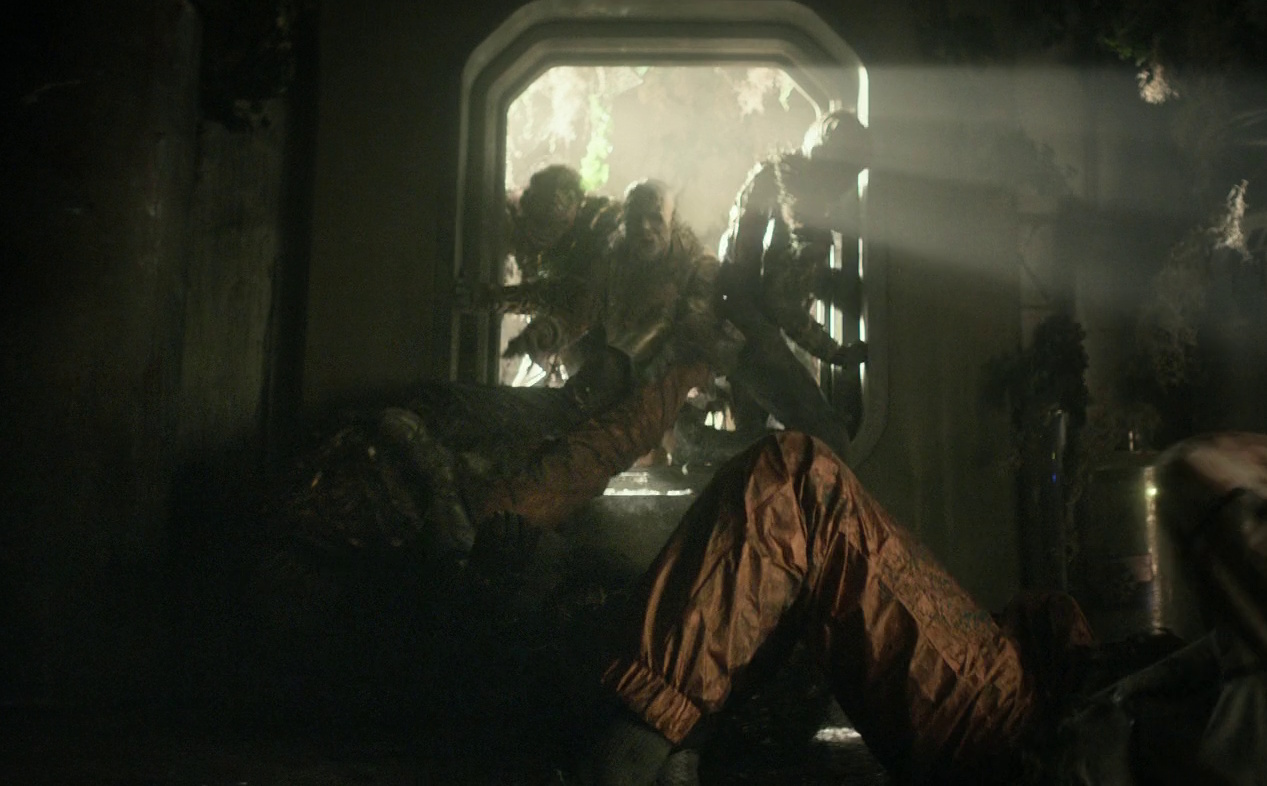
Still frame from Star Trek: Strange New Worlds showing zombies.
The zombies in Shuttle to Kenfori.

Star Trek shows need the freedom to explore strange new worlds… pretty much every week. The Enterprise needs to visit a planet, meet an alien, then warp away to a different destination next time. As Strange New Worlds has demonstrated, that doesn’t mean you have to lose character growth, personal relationships, and other modern television trappings. But it means that, for a franchise all about exploring the galaxy, spending too long in one place or having too narrow a focus isn’t what works best. And I’m not alone in feeling that way, I suspect.

I think there’s room for something like a two-part finale to wrap up the show, or even a two-part cliffhanger in between Seasons 4 and 5, as we got with Seasons 2 and 3. One or both of those ideas could be great. But what I don’t want to see, really, is for Seasons 4 and 5 to go down the Discovery/Picard route of being fully serialised, as I think that would take away so much of what has made Strange New Worlds work. In fact, I’d go so far as to say that the Strange New Worlds model – which I’d describe as episodic with character arcs – should be adopted by Starfleet Academy and by any other Star Trek project that might get greenlit in the years ahead. It’s absolutely the best choice for this franchise.
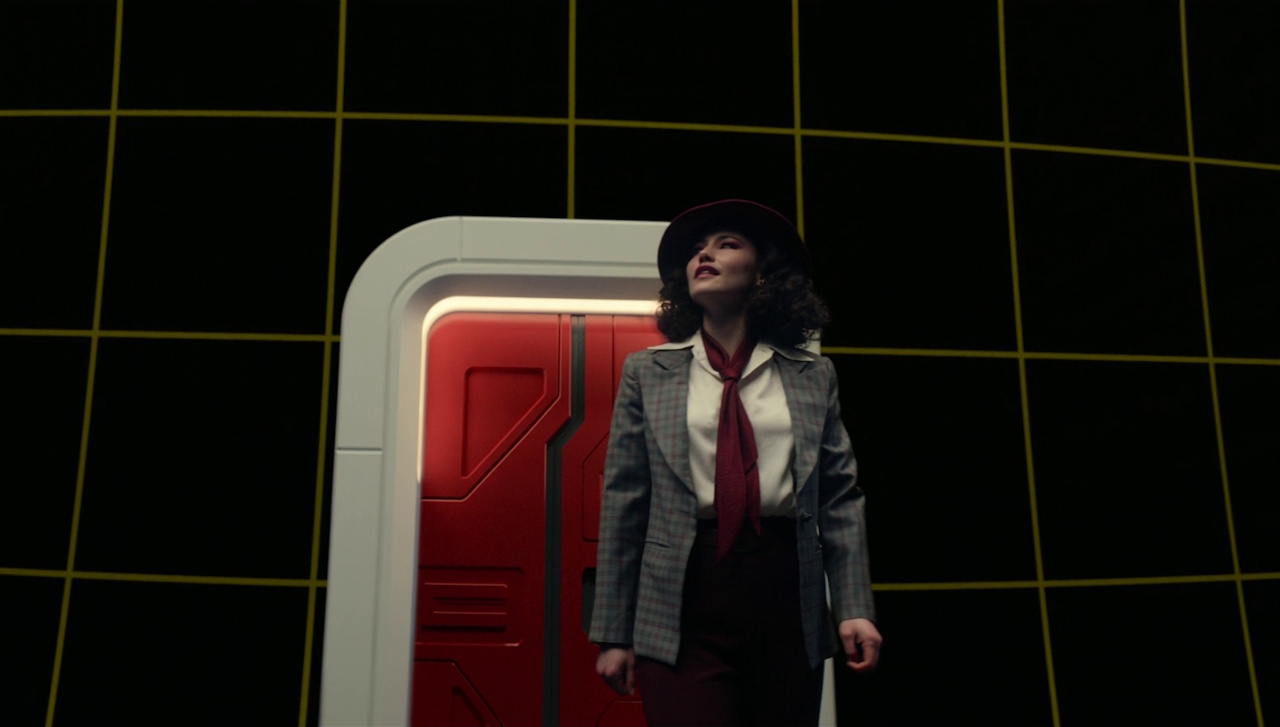
Still frame from Star Trek: Strange New Worlds showing La'an on the holodeck.
La’an on the holodeck.

At this stage, with Starfleet Academy on the schedule for early 2026, I’m not convinced that Strange New Worlds’ fourth season will be ready in time for the 60th anniversary, which is now less than a year away! But if I could be allowed one “wish,” it would be for Season 4 to contain some kind of celebratory episode, perhaps a story akin to my Cardassia Prime pitch, which would bring in characters and factions from elsewhere in the franchise.

The 60th anniversary is an opportunity to celebrate a milestone that few franchises ever reach. And let’s be honest: with all the cancellations and Paramount+ struggling, being able to do anything big for the 70th or 75th seems unlikely! And speaking for myself… I might not be here by then! So I’d dearly love to see at least one Season 4 episode written as a “love letter” to Star Trek and to the fans, really leaning into the 60th anniversary and celebrating all things Star Trek.
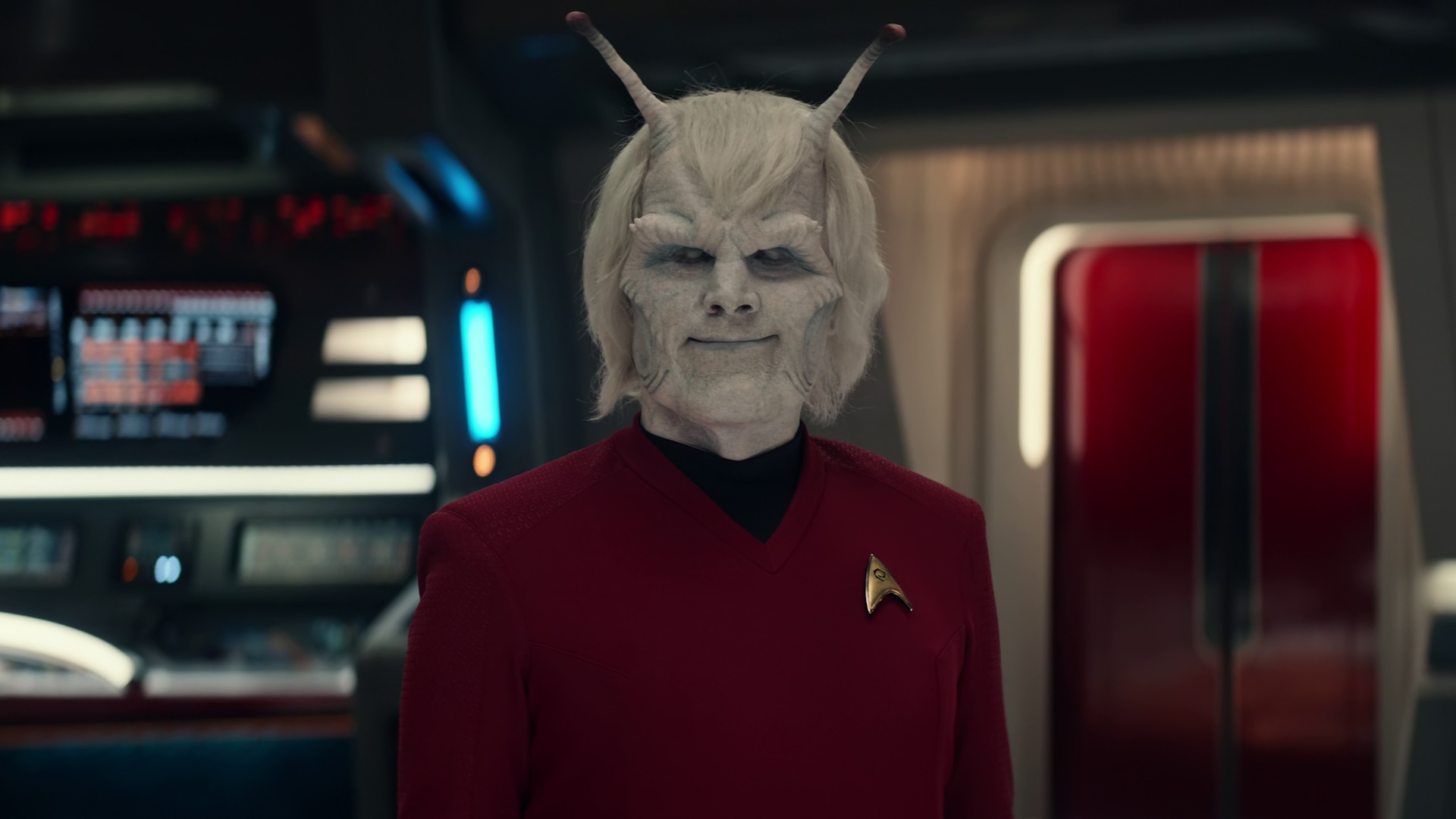
Still frame from Star Trek: Strange New Worlds showing an illusion of Hemmer.
A 60th anniversary episode could really celebrate the franchise.

Before we wrap things up, I have a couple of much siller, almost-certain-never-to-be-made ideas. The first is one I’ve talked about a few times here on the website: rescuing Captain Lorca! Lorca appeared in Discovery’s first season, and the prime timeline version of the character is assumed to have died in the Mirror Universe… but what if he didn’t? Captain Pike could lead a rescue effort, stepping through the looking-glass to save a friend. I think that could be a ton of fun as an episode.

And finally… I still kinda want to see a “Captain Pike versus the Borg” story! Yes, there are timeline problems. Yes, it would tread on the toes of canon. And yes, the Borg have been overused in Picard in recent years. But still… I think you could write a script which sees Pike’s Enterprise catapulted to an alternate universe where the Borg are dominant, with Spock saying “it’s unlikely a cybernetic race like this exists in our universe,” and where La’an, Dr M’Benga, and the rest of the crew have to battle drones and figure out a way home. I just think it would be a really fun idea.
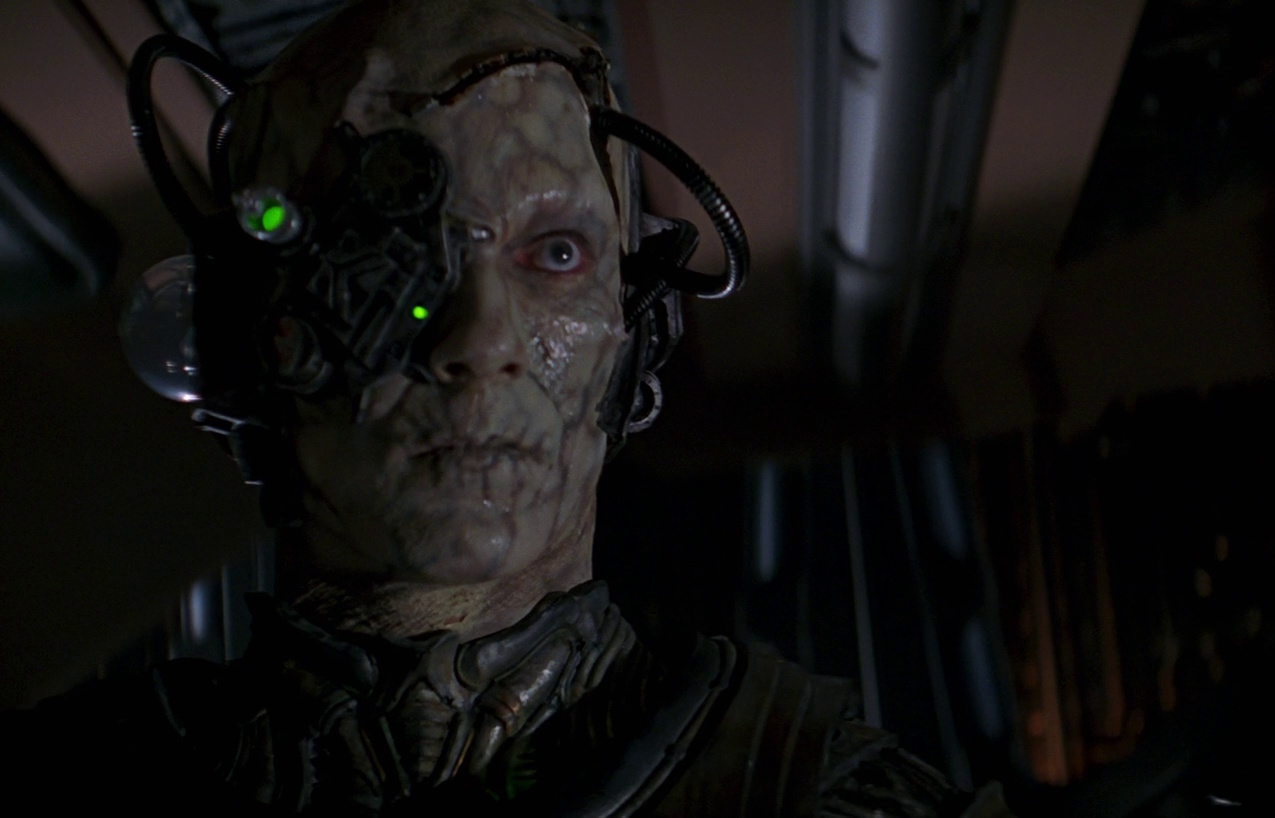
Still frame from Star Trek: First Contact showing a borg drone.
I know, I know… it ain’t gonna happen!

So that’s all for today!

We’ve talked about Strange New Worlds, the show’s first three seasons, some of its characters, and a few things I’d like to see going forward. I’m still disappointed that the show has been prematurely cancelled – especially because it happened before Season 3 had aired a single episode. But we are where we are, and there are now just sixteen episodes left. I’m keeping my fingers crossed for some wonderful adventures before Captain Pike and co. have to hang up their uniforms for the final time.

I hope this has been interesting. I wanted to talk about the show more broadly now that Season 3 has ended. I still don’t think we’re gonna see Season 4 before next autumn at the earliest – and a 2027 release doesn’t seem impossible, either, given the lengthy post-production involved for modern shows. So… it could be a while before we rejoin Pike, Spock, Una, and the rest of the crew. Before then, I’d like to finally write up some Season 1 episodes, which I didn’t do at the time because Paramount cut off Strange New Worlds from an international audience! And if and when there’s a trailer, a teaser, or more information revealed about the upcoming season, I daresay I’ll take a look. Until then… Live Long and Prosper!


Star Trek: Strange New Worlds Seasons 1-3 are available to stream now on Paramount+ in countries and territories where the platform exists. The first two seasons are also available on DVD/Blu-ray. The Star Trek franchise – including Strange New Worlds and all other properties discussed above – is the copyright of Skydance and/or Paramount. This review contains the thoughts and opinions of one person only and is not intended to cause any offence.
Star Trek: Strange New Worlds Episode Review – Season 3, Episode 6: The Sehlat Who Ate Its Tail

A Star Trek-themed spoiler warning.

Spoiler Warning: There are spoilers ahead for Star Trek: Strange New Worlds Seasons 1-3. Minor spoilers are also present for Star Trek: The Original Series.

When Strange New Worlds was first announced over five years ago, I wrote that, were I in charge, I’d plan ahead for the series finale. The final episode I envisioned would’ve seen Captain Pike handing over the Enterprise to someone we’re all familiar with: Captain James T. Kirk. Kirk’s arrival on the Enterprise’s transporter pad would’ve been his first on-screen appearance… and the final shot of the series. But ever since the end of Season 1, where a younger version of Kirk appeared, it’s been clear that Strange New Worlds’ writers want to bring in the character in a much larger way. We got to see that this week, in what was in large part a Kirk episode.

The Sehlat Who Ate Its Tail was interesting and, for the most part, an enjoyable romp. We got to see the first mission Kirk undertook with several members of his iconic crew – Spock, Uhura, Scotty, and Chapel. And it was set against the backdrop of a massive villainous starship that was simultaneously terrifying and ridiculous in its appearance. Most of this side of the episode stuck the landing, but it was also a busy story with a lot going on. That meant the villains weren’t as well-developed as I’d have liked, and a couple of characters aboard the Enterprise drew the short straw in terms of screen time.

Still frame from Star Trek: Strange New Worlds 3x06: The Sehlat Who Ate Its Tail showing Ortegas and Mitchell on the bridge.
Ortegas and Mitchell.

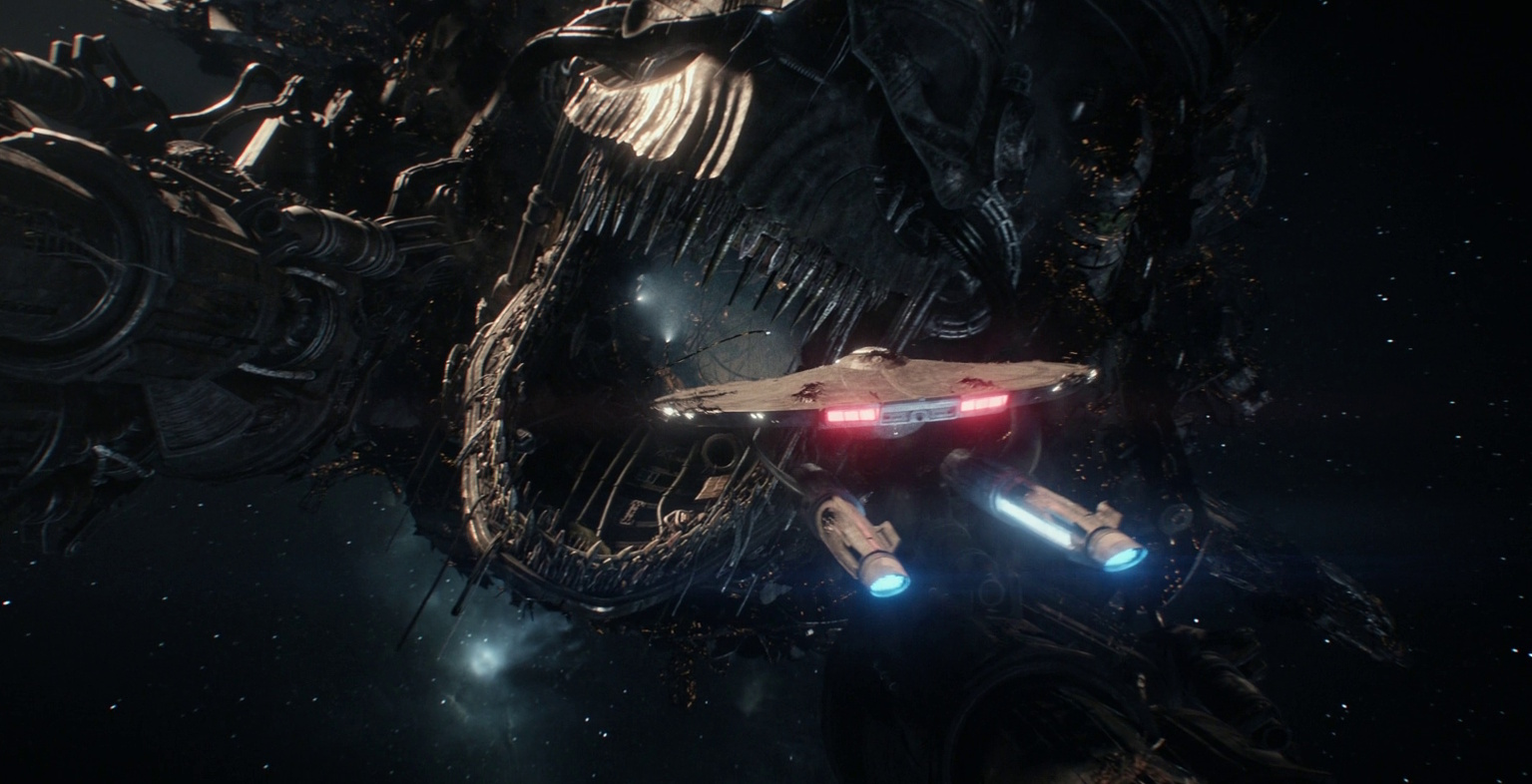
I think I’ll start with the negative points and criticisms before moving into the positives. The design of the scavenger ship was just plain silly. Its “face” with a gaping, monstrous maw was supposed to be intimidating or frightening – but it absolutely failed, and the visual impact of this floating mouth made the whole thing look ridiculous. At the beginning of the episode, when the scavenger ship went unseen, the reactions from Kirk and others definitely sold the illusion that they were seeing something terrifying. But when we saw the ship for ourselves… it just looked really bad.

The best way I could describe the design of the scavenger ship would be to say it’s the kind of thing a seven-year-old might draw if you told them to make you a picture of a “space monster.” It was equal parts cliché, over-the-top, childish, and silly – leading to one of the absolute worst starship reveals that I can remember in any Star Trek story. The design of the scavenger ship ended up detracting from some genuinely great performances; I could scarcely believe that the likes of Kirk, Scotty, and Uhura would be frightened of this ship because of how amateurish and silly it looked.

Still frame from Star Trek: Strange New Worlds 3x06: The Sehlat Who Ate Its Tail showing the scavengers' ship.
I found the visual impact of the scavenger ship to be pretty weak and silly.

Star Trek stories often have a broader point they want to make, and aliens or villainous factions can be seen as metaphors for events, issues, and even people out here in the real world. For the most part, The Sehlat Who Ate Its Tail was a story about Kirk – about how he had to come to terms with firing the shot that killed thousands of people. And that part of it genuinely worked and stuck the landing; we’ll talk about it more in a moment. But I felt the episode’s writing was very muddled with the revelation that the scavengers were humans. What was the point the writers wanted to make – except that Kirk needed more of a reason to feel bad?

If we’re returning to the well of environmentalism, climate change, and the state of the world today… then I’m afraid this really didn’t work. The scavengers’ ancestors may have left Earth because the environment was suffering and they felt the need to lead humanity to the stars, but that doesn’t explain how, over the intervening centuries, they became twisted into genocidal murderers. Nothing in the story explained this transformation – and the episode didn’t really know what it wanted to say, either. Is the point that well-meaning people can end up doing awful things? Is it that we shouldn’t take the “Elon Musk” approach of fleeing Earth in a spaceship and instead try to fix the climate crisis? Is it that humans are, fundamentally, absolute trash without a strong government to guide us? I genuinely don’t get what – if anything – the scavengers are meant to represent, other than a reason for Kirk to sulk.

Still frame from Star Trek: Strange New Worlds 3x06: The Sehlat Who Ate Its Tail showing Kirk looking at the debris on the main viewscreen.
Who were the scavengers, and why are we supposed to care?

There are plenty of aliens or villains in Star Trek who only appear once, but still manage to feel believable, fleshed-out, and real within the confines of a single episode. Whether we’re talking about the First Federation, the Sheliak, or the Abronians, there are literally hundreds of one-off aliens or adversaries who still manage to feel real and well-rounded. Because The Sehlat Who Ate Its Tail didn’t have a lot of time to explore who the scavengers were or what their driving force might’ve been… the end result was that they feel pretty flat, one-dimensional, and just not very interesting.

I absolutely adore how Strange New Worlds has largely returned Star Trek to a more episodic format. But for me, these scavengers fall into a trap that can sometimes hamper episodic storytelling: we just don’t know enough about them to feel much of anything. The big reveal – that they were actually humans all along – didn’t land as hard as it should’ve because we just hadn’t spent enough time with them, heard any of them speak, or come to know them at all. They were your bog-standard aggressive monsters for basically the entire story, so the revelation at the end didn’t really feel as impactful as I think the writers wanted it to be.

Still frame from Star Trek: Strange New Worlds 3x06: The Sehlat Who Ate Its Tail showing the Farragut and the scavengers' ship.
The Farragut and the scavenger ship.

Episodic storytelling is by far my favourite, not just in the Star Trek franchise but on TV in general. But not every episode ends up feeling as strong or as well put-together, and for me, the scavengers in The Sehlat Who Ate Its Tail just don’t really stand up to even other one-off villains in past iterations of Star Trek. And it’s such a shame, because I can see most of the pieces to build such a faction hiding just beneath the surface – and a more focused episode could have done a lot more with the scavengers, making the ending hit harder.

Some of the dialogue dedicated to setting up the scavengers felt like naked exposition, with characters claiming they’d heard rumours of something deadly and dangerous in this part of space. This setup felt pretty weak. It isn’t easy to establish a villain, show how dangerous they are, and come up with a plan to take them down all inside of forty-five minutes – and I get that. But that kind of storyline has been done before, and done way better, in other Star Trek shows.

Still frame from Star Trek: Strange New Worlds 3x06: The Sehlat Who Ate Its Tail showing Pike, La'an, and Una on the bridge.
This scene felt quite heavy-handed with its exposition.

There is something uniquely frightening about an incomprehensible enemy. This is what made the Borg so scary in their initial appearances in The Next Generation – they weren’t someone you could reason with or dissuade; they saw the Federation as a resource to be acquired, and nothing more. The scavengers, with their single-minded desire to harvest resources, could have leaned into that. But it would have required a different ending to the episode, and almost certainly a less-silly starship design, too.

In short, by trying to explain that the scavengers were human – but not having enough time to properly dissect the implications of that, nor really consider why the scavengers were acting in that way – The Sehlat Who Ate Its Tail gets the worst of both worlds. It removes any ambiguity or mystique from the scavengers, but what replaces it isn’t strong enough in the way it was handled – and didn’t get enough screen time – to balance that out. The ending of the episode, while really well-played from a character standpoint, ends up feeling pretty muddled as a result. And for us as the audience, the revelation that these nameless scavengers – not one of whom did we actually meet, let alone get to know – are humans… it just didn’t have much of an impact.

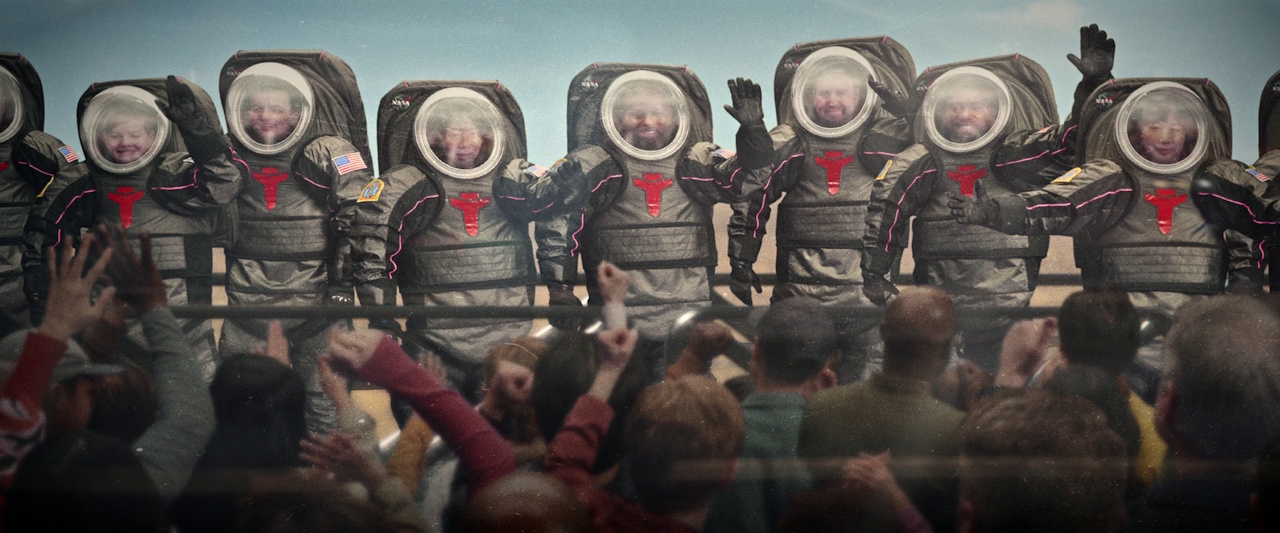
Still frame from Star Trek: Strange New Worlds 3x06: The Sehlat Who Ate Its Tail showing a photo of the scavengers' ancestors.
The scavengers’ 21st Century ancestors.

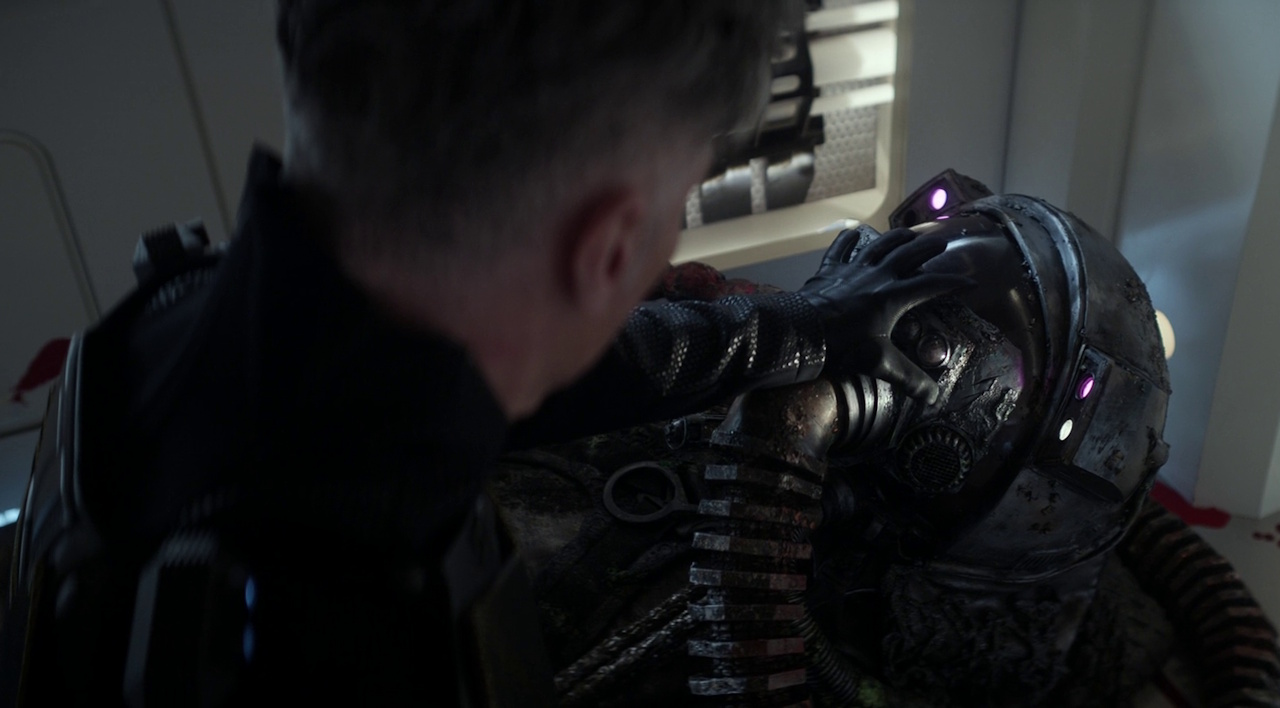
Then there was Pike and La’an’s run-in with the scavenger boarding party. This part just felt under-developed, as Pike seemed to sense hesitation in the scavenger when he had the upper hand in their fight. So… why didn’t the scavenger fire? Is it because he recognised Pike as human? In a galaxy populated by humanoid aliens (some of whom, like Betazoids, are completely indistinguishable from humans) would they even make the connection? If this was supposed to set up the ending of the story, adding to Kirk’s feelings about what he did… then shouldn’t Kirk have found out about the scavenger’s hesitation to fire? Was that supposed to set up a storyline about a possible peaceful resolution?

A lot of Star Trek stories are about communication and connection – finding a non-violent solution, even when an enemy or alien seems to be impossibly aggressive. Perhaps The Sehlat Who Ate Its Tail wanted to make a comment on that – either that some enemies can’t be talked down or reasoned with… or that Kirk and Pike didn’t even try. But this idea wasn’t in focus for long enough to matter, and I can’t even tell what – if anything – the writers were going for here. The sequence at the end – where Kirk and Pike found out about the scavengers – was cleverly edited and put together, though, and I liked seeing them both come to the realisation at the exact same moment.

Still frame from Star Trek: Strange New Worlds 3x06: The Sehlat Who Ate Its Tail showing Pike reaching for the helmet of a dead scavenger.
Pike with the dead scavenger.

Earlier in the season, Strange New Worlds threatened to give Lieutenant Ortegas a significant storyline for the first time. After her injury in the season premiere, Ortegas seemed to be suffering from some kind of PTSD-like condition related to her Gorn captivity and near-death experience. That was a great setup, and I was keen to see it progress. But this is now Ortegas’ third appearance since being relieved of duty for misbehaving where none of that was even alluded to. It’s reaching a point where, if Ortegas’ mental health ever does come back into play, it’ll feel like a significantly weaker story.

Although we haven’t spent a ton of time with Ortegas in recent weeks, she’s been present – and most importantly, she seems to be doing okay. No one’s asked her how she is, the story hasn’t lingered on how she’s feeling or what she might be going through… she just gets on with the job. The danger here is that, if the writers remember their earlier setup in a future episode, it won’t land in the same way any more. There are definitely stories to tell about how people put on “the mask,” as I used to call it, and pretend to be okay while they’re suffering on the inside. But do we think that’s what Strange New Worlds’ writers are going for? Or is it just a case of Ortegas being put on the back burner so we can get stories featuring Kirk, Spock, and other TOS characters?

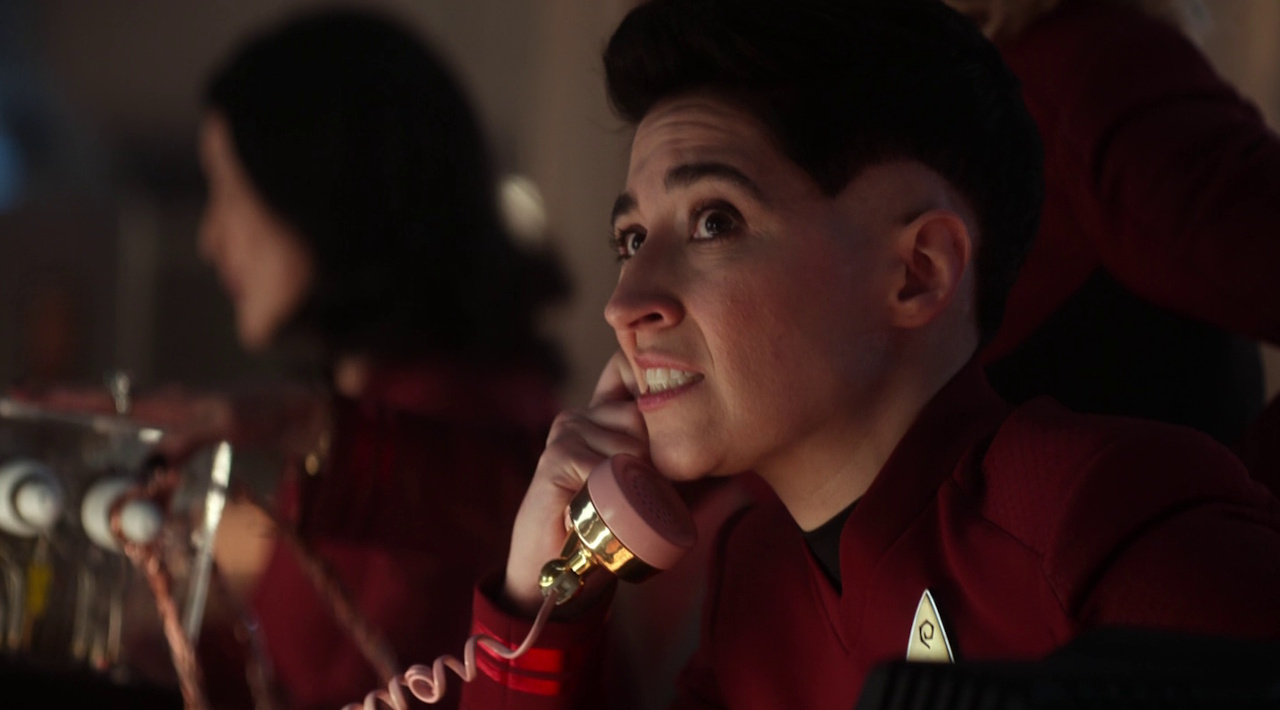
Still frame from Star Trek: Strange New Worlds 3x06: The Sehlat Who Ate Its Tail showing Ortegas on the telephone.
Season 3 is running out of time to pick up the dangling threads of Ortegas’ story.

This is, I admit, less to do with this week’s episode. And it’s absolutely possible that Ortegas’ mental health/PTSD story will come back and absolutely nail it. I’m rooting for that to happen! But it’s at least notable that Strange New Worlds set up this storyline for Ortegas but hasn’t returned to it for several episodes in a row. And her appearance here – taking her job seriously, working well under immense pressure, and basically saving the day with her piloting skills – risks detracting from that kind of story if what the writers want to do is show Ortegas struggling with her mental health.

The Farragut’s captain (whose name I had to look up because of how generic and forgettable she was) didn’t wow me in this week’s episode. There are plenty of ways to create memorable secondary or one-off characters, but this Captain V’Rel didn’t leave much of an impression. As a minor character I guess you can say that’s okay, but her command style was supposed to be something Kirk was butting heads with, and it just didn’t really seem to matter all that much. Also, given the unimportance of this character (at least so far), was there a lot of point in making her a Vulcan? Part of the fun of Kirk and Spock’s friendship was that it transcended that particular cultural divide; seeing Kirk paired up with another Vulcan a few years prior risks detracting from that, I fear.

Still frame from Star Trek: Strange New Worlds 3x06: The Sehlat Who Ate Its Tail showing Captain V'Rel.
Captain… Whatshername.

Although I felt the exposition was handled pretty poorly, the scavengers and their ship were supposed to be a kind of “boogeyman,” prowling this region of space and frightening everyone from the Gorn to the Klingons. So… does it make sense that their extremely powerful ship could be blown up so easily right at the end? The badly-damaged Farrgut – with no warp drive, a skeleton crew, and an array of damaged systems – fired three torpedoes, and that was it.

This ship was supposed to have been haunting this part of space for centuries, preying on even strong and powerful vessels like Klingon battle-cruisers – and had the capability to devastate entire planets. I know that Scotty and Kirk came up with a great plan to lure the scavengers in and disable their defences… but even so. Three torpedoes was all it took to take down this supposedly legendary ship.

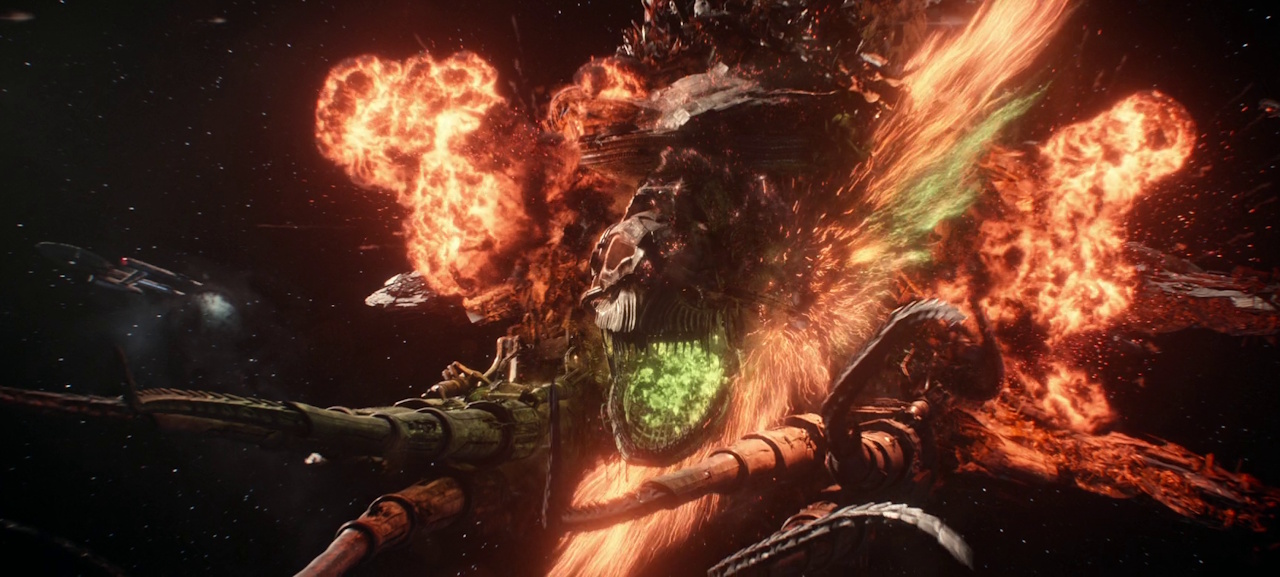
Still frame from Star Trek: Strange New Worlds 3x06: The Sehlat Who Ate Its Tail showing the destruction of the scavengers' spaceship.
The scavengers meet their end…

Okay, I think that’s enough negativity.

When you boil it down, The Sehlat Who Ate Its Tail is an ensemble episode – which I love – and a character piece with a focus on Kirk. Both of those elements work well, and it was nice to see most of the main characters in action. At the climax we had three different storylines on the go at once: Pike and La’an on the Enterprise’s lower decks, Pelia and Ortegas coordinating the ship’s sensor-less escape, and Kirk and the away team attacking the scavenger ship. All three stories came together magnificently, and it took all three groups of characters to aid in the Enterprise’s escape and the scavengers’ ultimate defeat.

That isn’t an easy thing to pull off. The Sehlat Who Ate Its Tail was a busy episode, but its main story arcs all felt like they mattered. In order to escape, the Enterprise needed a distraction and damage to the scavengers’ ship, which the Farrgut and away team provided, it needed the fuel-siphoning pipe thing disabled, which La’an and Pike managed, it needed communication between the thruster control panels and the bridge, which Pelia set up with help from M’Bena and Una, and it needed someone on the bridge to fly out – which Pelia and Ortegas managed with help from Mitchell. Practically everyone got something significant to do at the episode’s climax, and it takes some skill to pull that off in a short runtime.

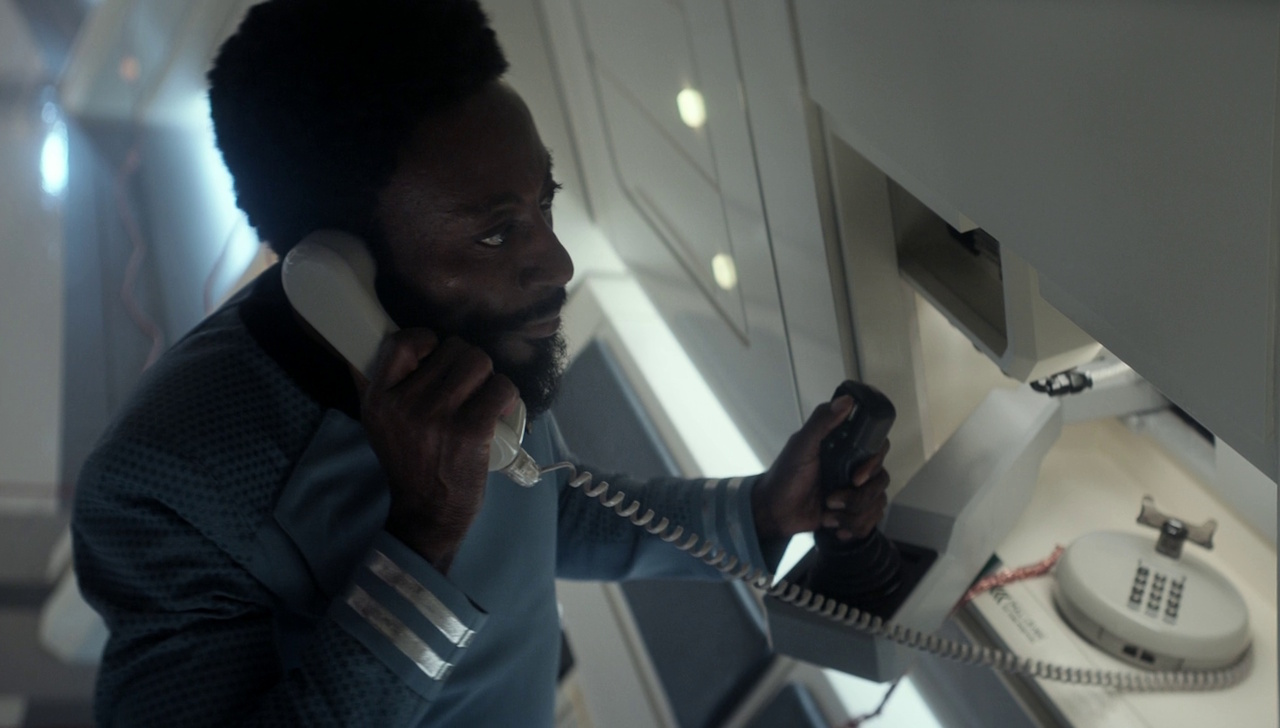
Still frame from Star Trek: Strange New Worlds 3x06: The Sehlat Who Ate Its Tail showing Dr M'Benga on the phone.
Dr M’Benga firing the thrusters.

Of these storylines, obviously we spent the longest with Kirk and the away team. Though this was clearly pitched as a Kirk-Spock story, I genuinely enjoyed the rapport Kirk built up with the others, too. This was his first canonical meeting with Scotty, and I liked how it wasn’t a smooth start for them. If Strange New Worlds plans to follow this up and develop Kirk more with the episodes remaining, there’s a foundation for the Kirk-Scotty relationship to build on.

They may not have gotten off to the best start, but Kirk genuinely tried to make up for it later on, and we got a storyline full of technobabble that felt like classic Star Trek in the best possible way! All that talk of anti-protons and making the Farragut a tempting target for the scavengers felt like something straight out of The Original Series, as did Scotty’s earlier line about pushing the wrecked ship too hard. These characters do genuinely feel like younger versions of the people we remember, and that’s not always an easy feeling to conjure up. I wouldn’t have suspected Kirk’s first mission with Scotty would’ve been so high-stakes – or would’ve gone so awry – but it was really fun to see them working together in this way. It expands our understanding of both men and the bond they had during the events of The Original Series.

Still frame from Star Trek: Strange New Worlds 3x06: The Sehlat Who Ate Its Tail showing Kirk speaking with Scotty, who is in an access hatch.
Kirk and Scotty didn’t exactly get the best start to their friendship.

Uhura also called back to the events of Lost in Translation, which saw her first encounter with Kirk. That was a good way to bring in Uhura’s empathy and sensitivity, setting the stage for Kirk’s rehabilitation after suffering a loss of confidence. The idea that his colleagues – who would later become his friends – were able to pull him out of that moment was impactful, and again, I think it sets the stage for how they relate to one another during The Original Series.

I’m glad that, on this side of the story, the writers chose to drop the whole “Spock love triangle” debacle. When La’an, Kirk, Spock, and Chapel were all together early in the story, I genuinely worried we were gonna get some kind of forced drama between them, like we’ve seen in prior entries this season. So I’m really glad that, for once, Strange New Worlds managed to step away from that and focus on something else. It was a blast to see this early mission of Kirk and some of the members of his crew; complicating it with that kind of romantic angle wouldn’t have added anything to what was already a busy episode.

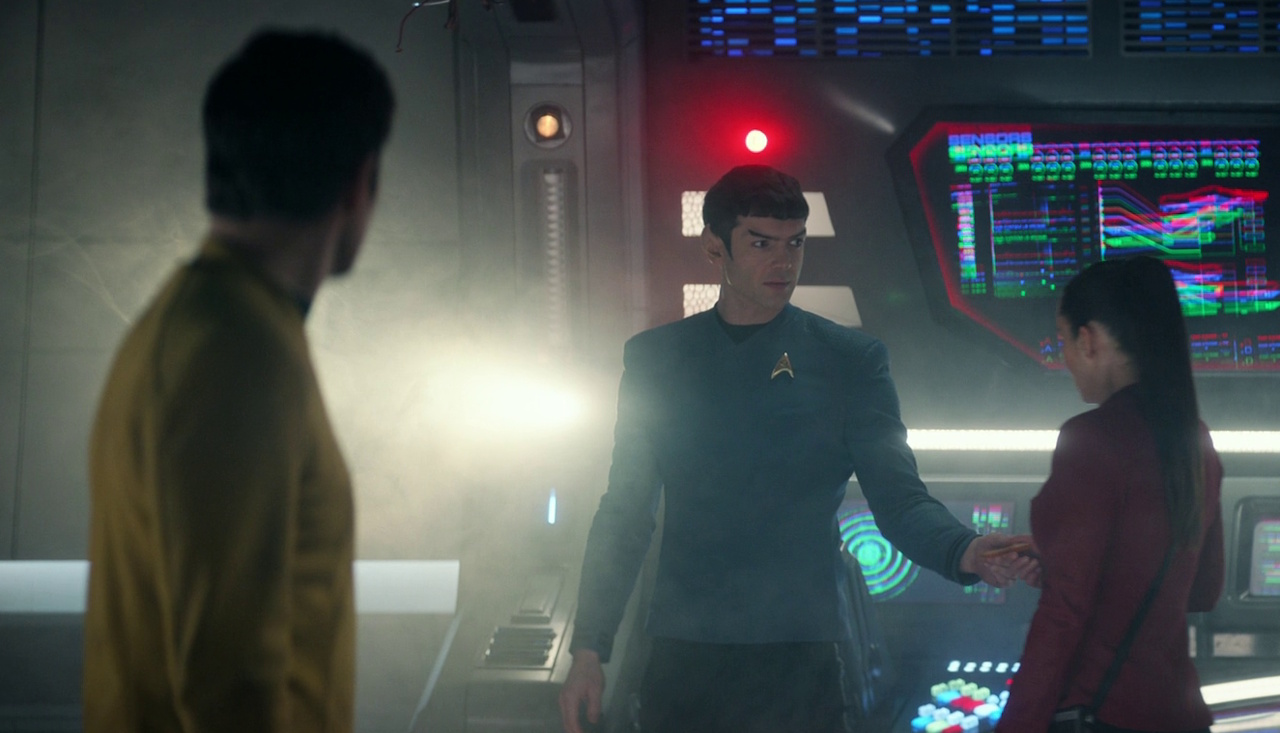
Still frame from Star Trek: Strange New Worlds 3x06: The Sehlat Who Ate Its Tail showing Kirk, Spock, and La'an.
Kirk, Spock, and La’an.

Speaking of romance… are you familiar with the term “Spirk?” Also known as “Kirk/Spock,” this is the fan theory or head canon idea that Kirk and Spock were or are engaged in either a sexual or romantic relationship. Personally, I’ve never been interested in that idea. I felt TOS established quite early on that Kirk at least prefers heterosexual encounters, and Spock – aside from his pon farr – is basically asexual! But one of the nice things about Spirk as a theory was that it always seemed plausible for fans who wanted to believe it. Even if we never saw anything on screen… fans could, if they so chose, read between the lines.

With all of Spock’s romantic entanglements in Strange New Worlds, I can’t help but feel that the writers are almost deliberately trying to erase Spirk as a viable fan theory. They’re much more interested to give Spock female romantic or sexual partners, as if to say “no, you’re wrong, there’s nothing queer going on here!” And I just think that’s a bit sad. I’m not saying I wanted to see an 18+ sex scene with Kirk and Spock! And I really didn’t want or expect the series to lean into the romantic side of their relationship – if such a side even exists. But I think it’s a bit of a shame for fans who did like the Spirk theory that Strange New Worlds is so intent on taking steps away from it. I like a good bromance as much as anyone else, and for me, Kirk and Spock have always felt more like besties than lovers. But having that possibility there, existing just out of sight, for fans who wanted it has been a part of the Star Trek fan community since the ’60s, and I don’t think I’d have chosen to walk away from it like this if I’d been in the writers’ room.

Still frame from Star Trek: Strange New Worlds 3x06: The Sehlat Who Ate Its Tail showing Spock and Kirk (Spirk).
Spock and Kirk.

Am I right in saying that Strange New Worlds no longer has a main engineering set? I’ve wondered about its absence a few times this season, but The Sehlat Who Ate Its Tail had multiple stories that could’ve featured engineering – but didn’t. I felt this most with La’an; she was sent to retrieve some baryons from engineering, but did so entirely off-screen. Pelia seemed to very quickly wave away Pike’s efforts to reach engineering, with the room being flooded with dangerous gas. Combined, those two things felt like Strange New Worlds barricading main engineering and telling us to go away!

The science lab set, which was used in this episode and which we’ve seen a few times this season, seems to be replacing engineering. But with two engineers on the show, now – Scotty and Pelia – I can’t help but feel that might be an odd decision! How are we meant to see Scotty growing in his engineering prowess if we don’t have, y’know, main engineering? It doesn’t have to be the main setting for most episodes, but in some stories – like this one – a visit to engineering feels almost compulsory!

Still frame from Star Trek: Strange New Worlds 3x06: The Sehlat Who Ate Its Tail showing Scotty on the bridge.
It might’ve been nice to see Scotty in engineering.

I felt this week’s take on Spock was much closer to the man we remember from The Original Series. Spock was much more straightforward and logical – stoic, even. There’s still wiggle-room in Strange New Worlds’ take on the character, and ways for him to grow and change. And I think next week or in a couple of weeks’ time we’ve got a Vulcan episode where “Spock comedy” could be back on the agenda! But speaking for myself, this version of the character – who we might call “classic Spock,” for want of a better term – is far and away what I prefer to see.

It was fascinating to see Spock’s first one-on-one with Kirk. Spock was the one to give him a much-needed pep talk after the Farragut’s engines gave out, and that entire sequence could’ve been lifted almost word-for-word from The Original Series. It really was a powerful, well-written storyline, and both Paul Wesley and Ethan Peck excelled at bringing these younger versions of the characters to life in a way that felt real, believable, and in keeping with past iterations of Star Trek.

Still frame from Star Trek: Strange New Worlds 3x06: The Sehlat Who Ate Its Tail showing Spock approaching Kirk in the ready room.
Spock approaches Kirk in the ready room.

Kirk’s story of struggling under pressure was well-written. We saw glimpses of a classic Captain Kirk: bold, adventurous, and willing to break the rules because he can get away with it. But we also saw the vulnerability that comes with youth and inexperience; Kirk broke the rules, as he’s done before, but hit the wall when his rule-breaking didn’t pan out the way he’d hoped.

I liked Kirk’s log, too; it makes perfect sense how an officer like Kirk would be phenomenally bored if all he could do was conduct survey after survey of dull planets from orbit. Someone like that needs adventure – but, as in many classic novels and stories, the adventure-seeker got much more than he bargained for! Catching this glimpse of Kirk’s early career, though, without time-travel, alternate realities, or contrived ways to bring him aboard the Enterprise… it was pretty special. We got to see Kirk as the Farragut’s first officer, serving on a bog-standard survey mission aboard a less-important ship. There have always been these kinds of vessels in Starfleet; not everyone can serve aboard the flagship on a mission of exploration! But putting Kirk in that position – and showing how much it grated on him – was a genuine change of pace.

Still frame from Star Trek: Strange New Worlds 3x06: The Sehlat Who Ate Its Tail showing the USS Farragut.
It makes sense that someone like Kirk would be bored on a mission like this!

Despite my misgivings about the scavengers as an antagonist (and the design of their ship), the reveal at the end hit Kirk hard, and Paul Wesley did a great job conveying that. The scene between Pike and Kirk was touching, too, and it was a bit of fun to see Pike’s influence on the younger Kirk before he assumed command. I can see Kirk taking those words to heart, particularly about regretting a decision but making it anyway. Knowing what’s in store for Captain Pike, that line was pretty impactful – and carried extra weight.

This moment felt like it was consciously setting up Kirk for the captain’s chair. Though Kirk would famously claim that he doesn’t believe in no-win scenarios, there are going to be impossibly difficult decisions to make when in the captain’s chair, and this felt like a bit of a trial by fire for the future Enterprise captain. Coming to terms with what he did – and why he feels so bad about it – is an important stepping stone between the younger, less-experienced officer we’ve been spending time with and the character we’re familiar with from The Original Series.

Still frame from Star Trek: Strange New Worlds 3x06: The Sehlat Who Ate Its Tail showing Kirk in command.
Kirk in the captain’s chair.

This is the kind of story to tell if you’re gonna do a prequel featuring familiar characters. Spock, Uhura, and Chapel felt very similar to their TOS presentations in this story – but Kirk and Scotty didn’t. They butted heads over engineering issues, Kirk tried to push the ship too hard, and Scotty – the future miracle-worker – wasn’t able, in the end, to keep the ship flying. I think that shows how both men have room to grow – Kirk in terms of his leadership abilities, and Scotty with his engineering miracles!

A storyline like this makes way more sense to me than one showing Spock shacking up with different members of the Enterprise’s crew. What we got in The Sehlat Who Ate Its Tail was a genuinely interesting look at the younger days of some of our favourite characters. Most of the pieces are there – they’re a stone’s throw away from how they will be in The Original Series. But whether it’s youth, a lack of confidence, inexperience, or some combination thereof… they aren’t quite there yet. That’s genuinely fun and interesting to see, and it expands our understanding of these characters instead of just throwing them into random situations and hoping romance or drama will be enough.

Still frame from Star Trek: Strange New Worlds 3x06: The Sehlat Who Ate Its Tail showing several characters on the bridge of the USS Farragut.
Spock, Scotty, Chapel, and Uhura… with an empty captain’s chair.

I really do like Pelia. She’s such a fun presence on the show, and she can be a complete change of pace from other, more straight-laced and stoic Starfleet officers. I think we got to learn Pelia’s age here – she’s over 5,000 years old. Her quarters are just pure hoarder-y chaos, and I love that! And her collection proved invaluable to the crew as they were able to wire up a handful of old telephones around the Enterprise – Battlestar Galactica-style – to coordinate the emergency thrusters during the escape sequence. The whole thing was a ton of fun.

Pelia was also, I guess, the ranking bridge officer during the escape sequence. That was kind of interesting for her, and a bit of a change of pace from her usual secondary or advisory role. We didn’t see her giving a lot of orders or anything like that, but she was a fun presence on the bridge with Ortegas and Mitchell during the escape.

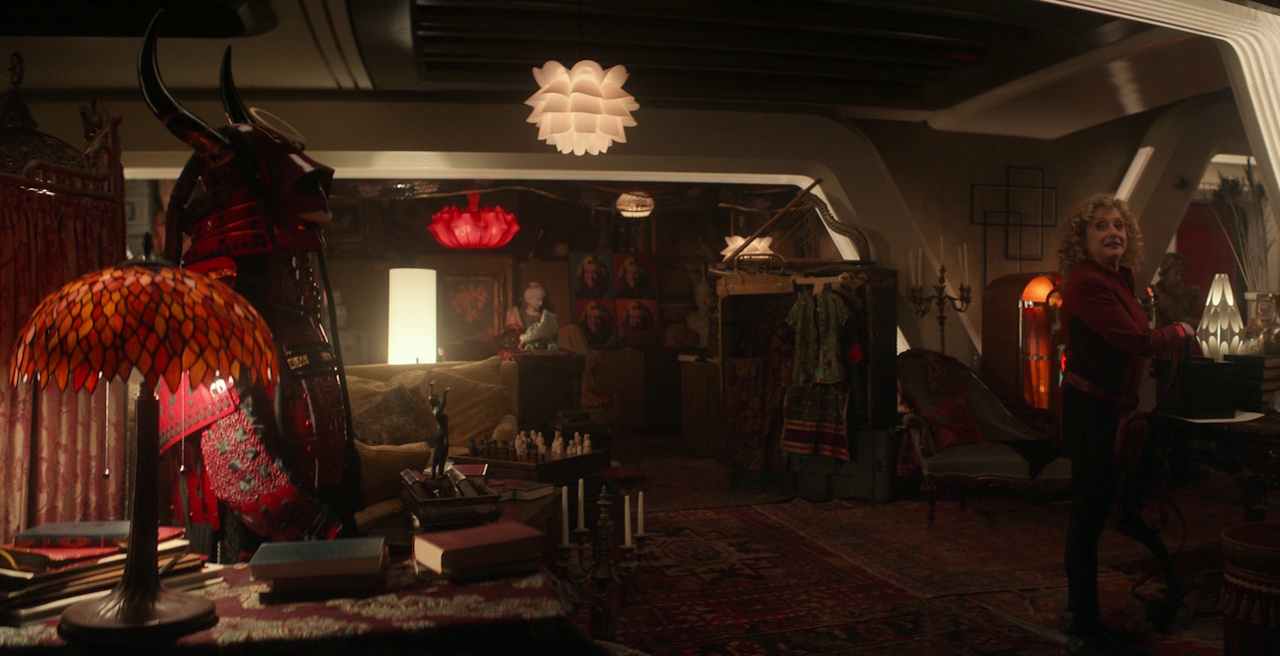
Still frame from Star Trek: Strange New Worlds 3x06: The Sehlat Who Ate Its Tail showing Pelia in her quarters.
Pelia in her quarters.

The Sehlat Who Ate Its Tail was a solidly entertaining Star Trek episode. It was held back from reaching the top tier by a pretty flat antagonist with a silly spaceship design, and that did ultimately impact how I viewed parts of the story – the ending in particular. But as a character piece about Kirk, seeing him growing in confidence as he’s on the path to become the captain we know and love, it was genuinely well-written. Kirk’s first outing with some of the members of his iconic crew was, by and large, a lot of fun.

I also appreciated that The Sehlat Who Ate Its Tail gave the rest of the characters things to do at the climax of the story. It took everyone working together to save the Enterprise – and the inhabited planet – and that’s not an easy thing to pull off within the runtime of a single episode. It did come at the expense of a couple of characters who felt less-developed or who got a bit less attention than they otherwise might’ve, but that’s okay.

Next week we have the curiously-titled What Is Starfleet? I’m really not sure what to make of that one – but I guess time will tell.


Star Trek: Strange New Worlds Seasons 1-3 are available to stream now on Paramount+ in countries and territories where the platform exists. The first two seasons are also available on DVD/Blu-ray. The Star Trek franchise – including Strange New Worlds and all other properties discussed above – is the copyright of Skydance and/or Paramount. This review contains the thoughts and opinions of one person only and is not intended to cause any offence.
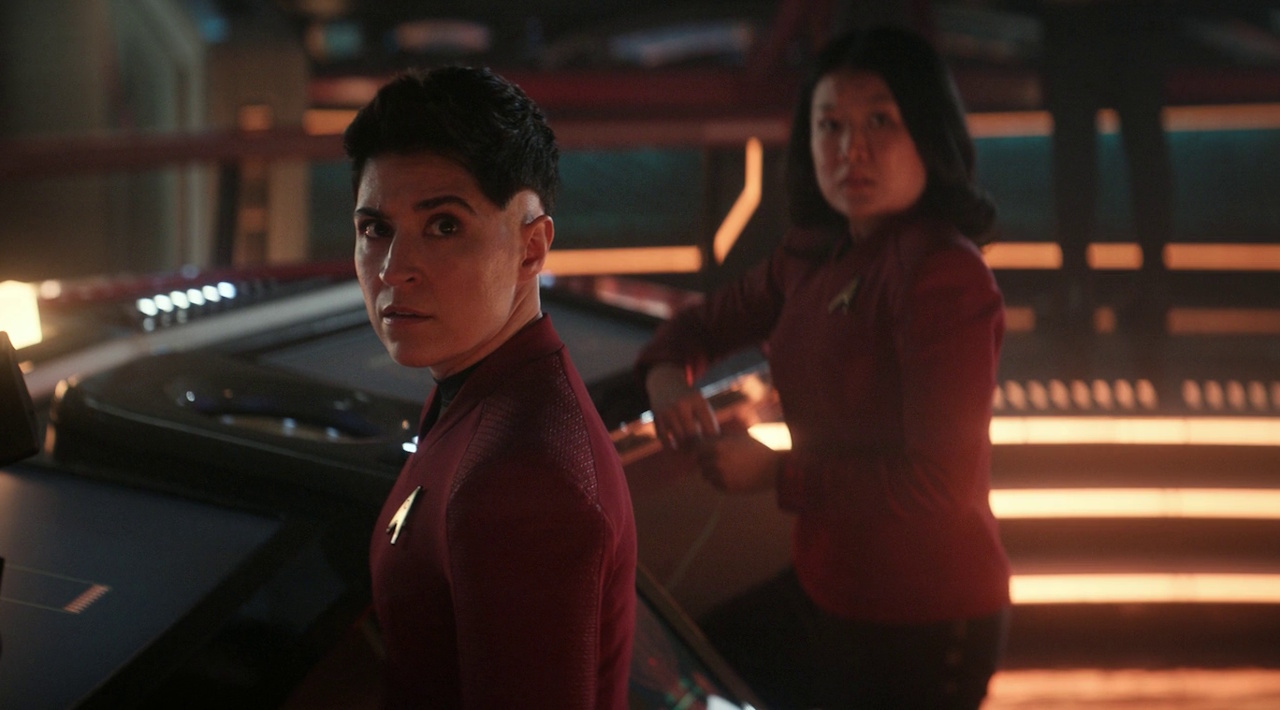
Star Trek: Strange New Worlds Episode Review – Season 3, Episode 4: A Space Adventure Hour

Spoiler Warning: There are spoilers ahead for Star Trek: Strange New Worlds Seasons 1-3. Spoilers are also present for: The Original Series Season 1, The Next Generation Season 2, and The Undiscovered Country.

After last week’s horrifying zombie story, Strange New Worlds completely changed direction in A Space Adventure Hour. There were elements of comedy and drama, as well as a light-hearted pastiche of Star Trek: The Original Series which, I suspect, will have worked better for some fans than others. Star Trek legend Jonathan Frakes returned to the director’s chair for the first time this season, and while I wasn’t wild about the story at first… it grew on me over its runtime.

A Space Adventure Hour deliberately ignored almost all of the season’s ongoing storylines: Captain Batel and her illness weren’t mentioned, Ortegas was reinstated with a hand-wavy line of dialogue, and the story really zoomed in on two characters: Scotty and La’an. I generally enjoy Strange New Worlds’ episodic nature, so I don’t mind when an episode does something like that. But at the same time, I hope we’ll return to the aftermath of the Enterprise’s run-in with the Gorn before too long. Setting it aside was fine on this occasion, though.

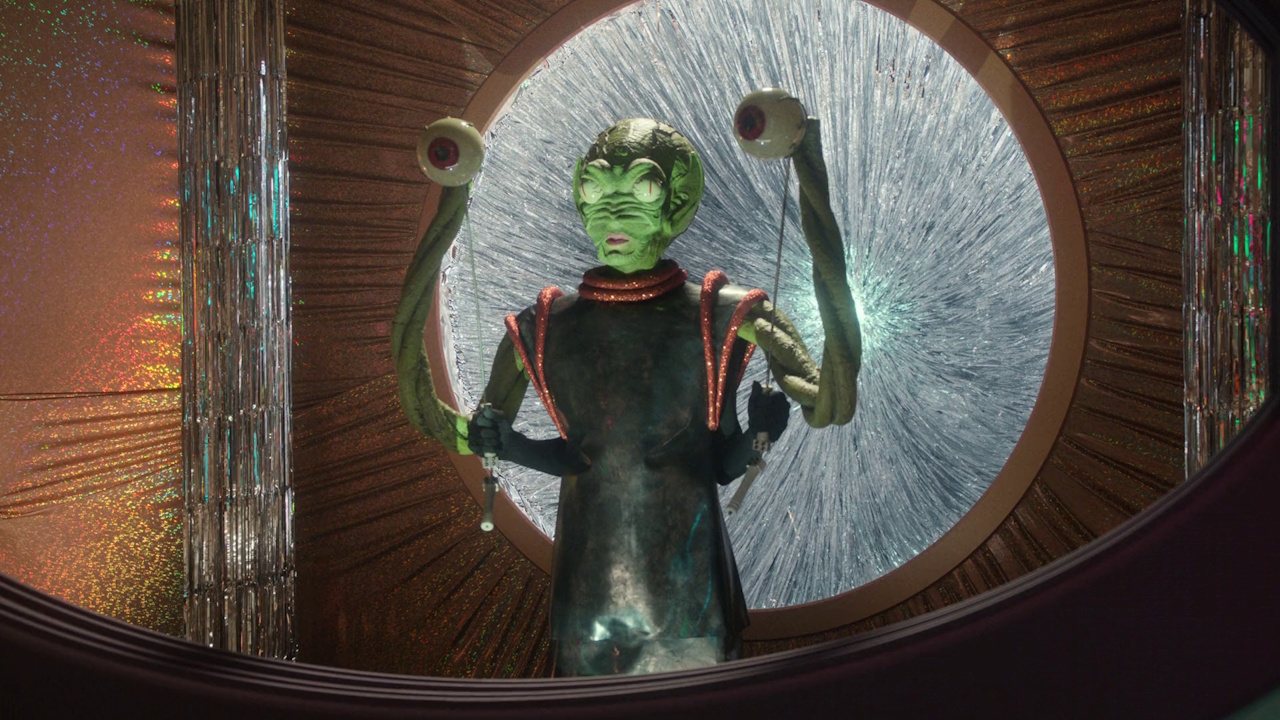
Still frame from Star Trek: Strange New Worlds 3x04 "A Space Adventure Hour," showing one of the fictional aliens.
A horrifying monster from outer space!

Before we go any further, let’s just say this: I fucking loathe Paramount’s ridiculous “America First” attitude. It’s self-defeating and stupid. A Space Adventure Hour was made available for free on YouTube and Pluto TV – but only in the United States. We can debate whether this was the right episode to try to use to entice new viewers (I don’t think it was, by the way) but why – why?! – does Paramount insist on this pathetic “America First” fetish? It isn’t the 1960s any more – Star Trek, and really all of Paramount’s shows – have a worldwide audience. That’s why Paramount+ exists in other countries. Why offer something like this to a tiny fraction of that audience but nobody else?

We’ve seen this time and again with Paramount and the Star Trek franchise, and it’s got to stop. In this case it was a “freebie,” but it’s not just that – it’s marketing. Offering a free episode on YouTube is a marketing stunt to try to draw attention to Strange New Worlds and the broader franchise. But why only do that in the United States when the internet is one massive, global, interconnected space? Strange New Worlds is only available on Paramount+ in countries and regions where Paramount has actually bothered to launch the service, so there’s no argument about who has the rights to broadcast new episodes. It’s just so stupid to have these big marketing stunts only to ruin them by cutting off fans from the rest of the world. As it happens, it wouldn’t have made much difference to me as I have a Paramount+ subscription. But the whole point of doing something like this is to attract new eyes to the show. So why only offer that to folks in America when there’s an entire world watching and waiting? Star Trek might be owned by an American corporation, but the fanbase is global and the franchise’s name is known all over the world. A Space Adventure Hour streaming for free could’ve sold new Paramount+ subscriptions from Tierra del Fuego to New Delhi. If only Paramount’s executives weren’t “America First” morons.

Still frame from Star Trek: Strange New Worlds 3x04 "A Space Adventure Hour," showing a blooper from the credits sequence.
A “blooper.”

Alright, rant over.

A Space Adventure Hour looks like it would’ve been a ton of fun to work on for the cast and crew. Getting to step out of character and try something new is always going to be enjoyable for folks working on long-running productions. But at only twenty-four episodes in (i.e. the equivalent of one season of Star Trek a few years ago) I’m… I’m not quite sure that Strange New Worlds has earned an episode like this just yet. Especially when we consider episodes like The Elysian Kingdom already did something very similar in Season 1… to say nothing of last season’s Subspace Rhapsody. There’s absolutely room for episodes like A Space Adventure Hour… if we were talking about a series that was gonna run to 170+ episodes over seven seasons. But with the recent cancellation news, I’m acutely aware of Strange New Worlds having a time limit. While there absolutely were interesting ideas and elements in the mix here, I just don’t think this is the kind of story I’d have personally chosen to greenlight if I was in charge!

That being said, I didn’t have the almost visceral, bowel-churning hatred of this episode as I did for last season’s musical outing. There were fun elements in the narrative, and on the “real world” side of things – outside of the story taking place on the holodeck – we got some interesting tidbits of lore.

Still frame from Star Trek: Strange New Worlds 3x04 "A Space Adventure Hour," showing the main holo-characters.
The holograms in La’an’s murder mystery.

I’m a little disappointed that Strange New Worlds seems to be shoving Pelia aside in favour of Scotty. I feared this would happen when Scotty emerged at the end of Season 2, and while it’s interesting to catch a glimpse of Scotty’s younger days… I’m just concerned that it’s coming at the expense of first Hemmer, and now Pelia.

However! I’m glad that A Space Adventure Hour continued the theme of Scotty having room to grow. In this case, he wanted to solve everything completely by himself, to such an extent that he didn’t even tell the Enterprise’s senior staff about the problems he was having. We saw glimpses of the more familiar Scotty – the self-reliant, confident miracle-worker from The Original Series. But mixed in was an intensely vulnerable man, someone struggling with the loss of his previous ship. I don’t think his comments about the Stardiver somehow explain everything about Scotty, but it was interesting to learn a bit more about why he feels so hesitant to ask for help and why he tries to shoulder all of the burden himself.

Still frame from Star Trek: Strange New Worlds 3x04 "A Space Adventure Hour," showing Scotty at work.
Scotty working on the holodeck.

It was genuinely fun to see Scotty in the science lab, trying to desperately balance the needs of the holodeck with the rest of the ship. We got a real mix of both TOS Scotty – with his incredible engineering prowess – and a younger, less confident version of the character, who was clearly feeling overwhelmed. It made for an interesting presentation, and Martin Quinn managed to walk the line exceptionally well.

What we’re really seeing is how Scotty’s raw, unrefined talent is being honed. And that’s where I felt Pelia’s absence. Instead of saying “oh, she’s on shore leave,” why not have Pelia be the one to set up the holodeck, but then get called away for some other emergency, leaving Scotty to pick up the pieces? At the very least, Pelia could’ve come in at the end of the story to coach Scotty on what he did right and where he went wrong. Those roles ultimately fell to Una and Uhura, which was fine in theory – and getting some interaction between Scotty and Uhura was definitely fun to see. But if the idea behind bringing Scotty into Strange New Worlds is to show how he has room to grow, and how he can take his undeniable talent and hone it into something more practical… we need his mentor to be present for at least part of that.

Still frame from Star Trek: Strange New Worlds 3x04 "A Space Adventure Hour," showing Scotty with Una.
Scotty with Una – but where’s Pelia?

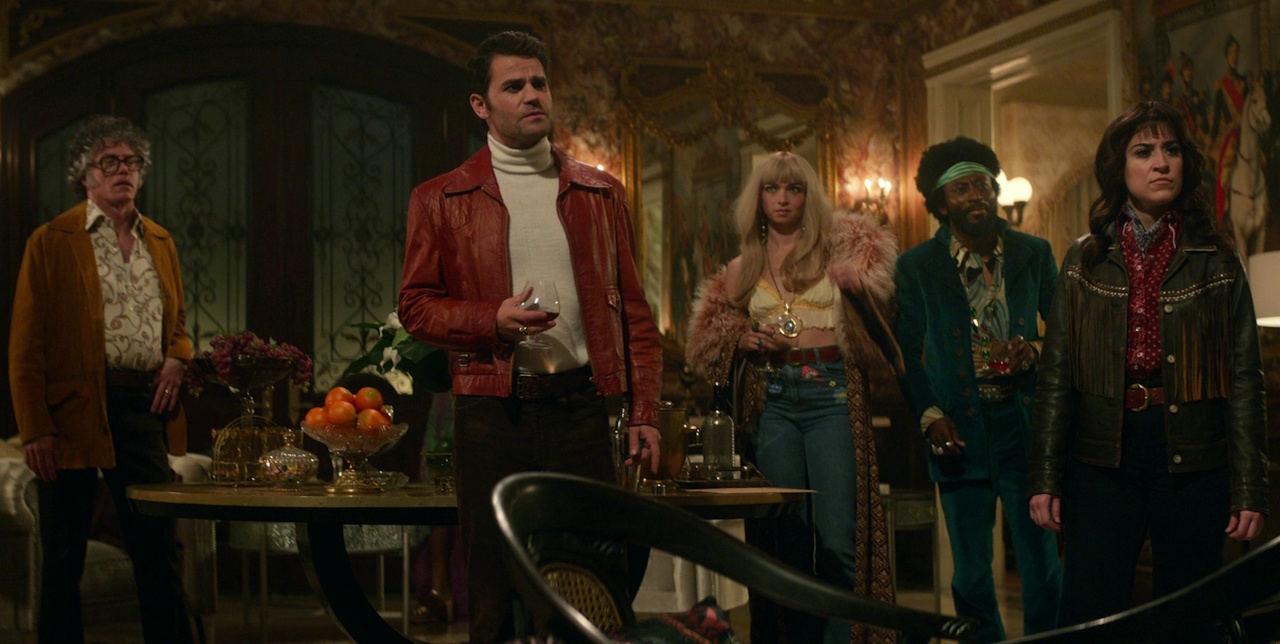
So… Spock’s just gonna romance his way through the Enterprise’s female crew members, I guess. First it was Chapel, now it’s La’an… who’s next? Una? Uhura? Pelia?

To me, it feels like Strange New Worlds’ writers have latched onto two story outlines with Spock, and don’t really know what else to do with him. We have the “Vulcans are stuck-up and rigid, so let’s use that for laughs” that we’ve seen in basically every Vulcan episode so far, and now we have the “Spock has no emotions, but what if he fell in love?” that we’ve seen with Chapel and now apparently with La’an too.

Spock can be a fun character, and putting him in situations that aren’t identical to what he went through in The Original Series is absolutely worthwhile. But… I can’t help but feel we’ve taken the “Spock in love” story outline as far as it can reasonably stretch. With T’Pring and Chapel, we’ve already explored this side of Spock. And with Strange New Worlds on the clock, if the aim is to bring Spock closer in line with his TOS version ahead of the show’s finale, we need to see more movement in that direction. A new relationship won’t help.

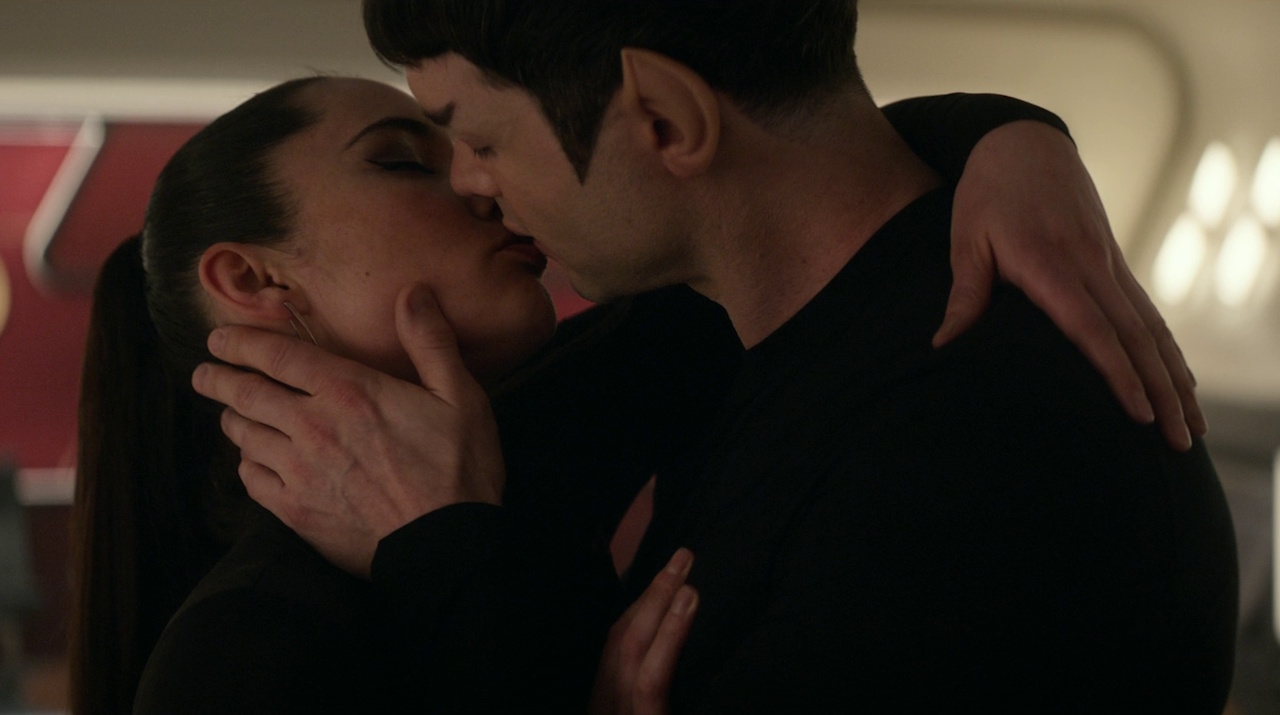
Still frame from Star Trek: Strange New Worlds 3x04 "A Space Adventure Hour," showing La'an and Spock kissing.
La’an and Spock.

Spock and Chapel’s relationship evolved kind of naturally from TOS foundations – particularly Chapel’s apparent “crush” on Spock. While I felt we caught a glimpse of… something, between La’an and Spock in Wedding Bell Blues, where they danced together, I’m just not sure that this is the right way to go for either of them. I guess you could frame it as a “rebound;” for La’an after getting her heart broken by Kirk, and for Spock after his relationship with Chapel fell apart. And there could be something to gain from a “Spock on the rebound” story, I guess. I just don’t think this has the legs to go much further, and I don’t think it’s a storyline I’d have chosen to include.

Maybe this is because I’m asexual, but I don’t really think a show like Strange New Worlds needs this kind of relationship drama to be entertaining or engaging. There have been relationships between characters in past iterations of Star Trek – Troi and Riker, Worf and Dax, Trip and T’Pol – but again, those shows were longer, and the relationship stuff took up comparatively less time. Of the twenty-four Strange New Worlds episodes so far, three have included T’Pring, and four have included Spock’s relationship with Chapel in some way. Now we have another episode – and presumably at least one or two more to come – that will feature Spock and La’an. It’s just kind of a lot, especially for a character who had previously been so famously unattached – aside from his brief Pon Farr infatuation!

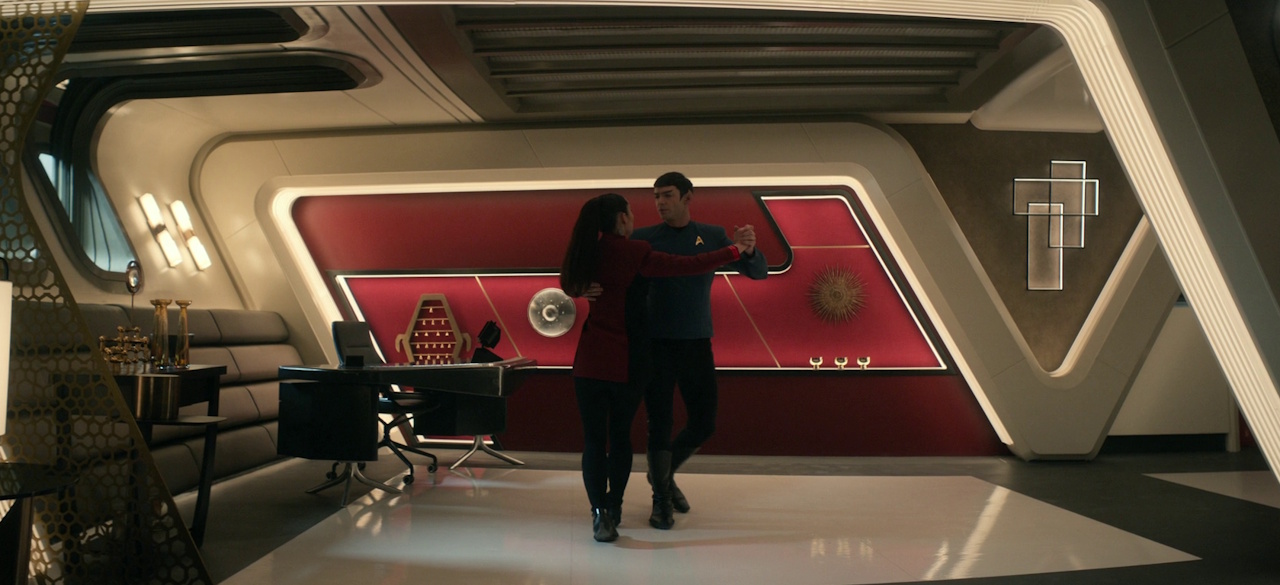
Still frame from Star Trek: Strange New Worlds 3x04 "A Space Adventure Hour," showing La'an and Spock dancing.
How many romances is Spock gonna have?

Here’s a question: did you guess A Space Adventure Hour’s big twist? I half-guessed it! It seemed pretty clear to me that the “Spock” La’an was talking to on the holodeck was, in fact, a hologram – but I didn’t go quite so far as to pin him as the murderer. In that sense, I think this side of A Space Adventure Hour was pretty creative, and it used the holodeck exceptionally well. We’ve had plenty of “the holodeck done goofed” stories in Star Trek before, but none quite like A Space Adventure Hour in terms of its twist. The story took the same core premise as the one from Elementary, Dear Data – but did something quite different with it. It was creative, and a great way to include this staple Star Trek technology in a new and fun way.

Speaking of the holodeck, it was a lot of fun to see the technology’s origins. It’s a bit of a timeline stretch, perhaps, to say that the holodeck was developed in the 23rd Century but wasn’t widely used nor installed aboard starships for basically another 100 years, but it’s still really interesting to delve into the history of how holodecks developed. Seeing Scotty as one of the early holodeck pioneers is a fun little tidbit, too. I don’t think it really clashes with Relics, where Scotty encounters a 24th Century holodeck, either – though I can see that being a bone of contention for some Trekkies, I guess!

Still frame from Star Trek: Strange New Worlds 3x04 "A Space Adventure Hour," showing La'an entering the holodeck.
La’an on the holodeck.

I don’t know about you, but I really enjoy when Star Trek takes the time to explore its technologies in a bit more detail – and I think we got an interesting exploration of the holodeck here. Seeing how the holodeck was wired into the rest of the ship could explain how some stories in The Next Generation era unfolded, particularly ones where a malfunction occurred! After the holodeck debuted in The Next Generation, we just kind of accepted that it’s something starships have – even though it could go wrong, sometimes.

Seeing the early development of this technology was fun. But it also presented an opportunity for Strange New Worlds to talk a little about renegade computer programmes – something that’s definitely relevant in 2025 as artificial intelligence software and large language models continue to improve and grow. I don’t think the episode kept this side of things in focus for very long, but the idea of a computer programme being smarter than the people who think they’re in charge of it, and using its generative technology for the purposes of deception? Those are very real and very valid points to touch on!

Still frame from Star Trek: Strange New Worlds 3x04 "A Space Adventure Hour," showing La'an about to exit the holodeck, with holo-Spock disappearing.
La’an with holo-Spock.

Where do we draw the line between a funny, self-referential parody or pastiche and something mocking and mean-spirited? I don’t believe that the writers intended for their “Last Frontier” segments to come across as rude, offensive, or mocking The Original Series, William Shatner, or Star Trek fans… but I’m not gonna lie, part of me feels like that’s exactly how it landed. Paul Wesley channelled his inner Shatner to deliver a very on-the-nose impersonation, and other parts of those segments included exaggerated set design, cinematography, and even writing. It felt like something you’d get on a comedy sketch show. And… I don’t think that’s a compliment.

Self-parody is already a difficult thing to pull off. Make one wrong move and it comes across as either masturbatory self-congratulation or a very niche in-joke that only hard-core fans are likely to understand. Both of those problems are present in parts of A Space Adventure Hour, but also… some of those sequences didn’t feel respectful. The tone felt almost aggressive or mocking, as if the writers were saying “look at how silly your stupid little space show is,” and by extension, “you’re idiots for enjoying this crap.” It’s almost like Shatner’s infamous “get a life” skit back in the 1980s – but worse, somehow, because it’s so earnest.

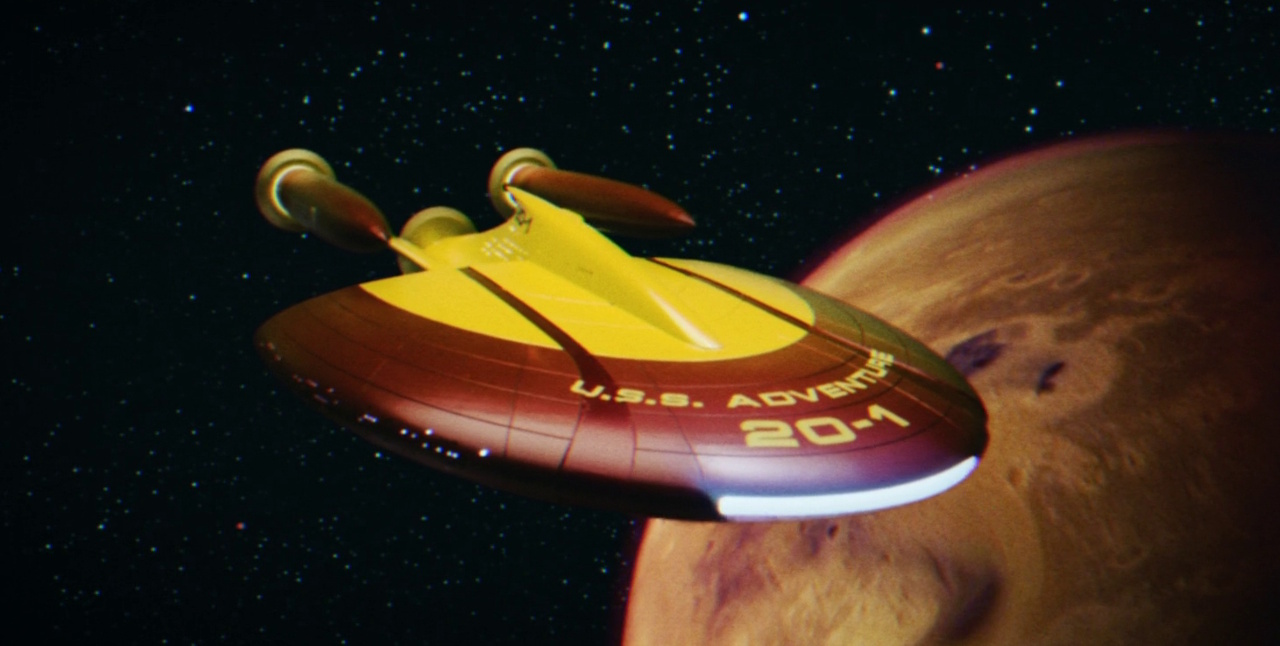
Still frame from Star Trek: Strange New Worlds 3x04 "A Space Adventure Hour," showing the fictional USS Adventure.
The “USS Adventure.”

There is room in Star Trek for this kind of light-hearted take, and for episodes or storylines that call attention to some of the franchise’s weirder or less serious elements. That’s a big part of what Lower Decks did, if you think about it. But they have to be handled with at least some degree of sensitivity so they don’t come across as mean-spirited or looking down at Trekkies. For me, parts of A Space Adventure Hour strayed uncomfortably close to that line – and I already know some fellow Star Trek fans are gonna absolutely despise what this episode did with this parody.

As I said, I don’t think this was intentional. At least, I certainly hope it wasn’t! But it’s surprising to me that nobody involved in the production of the episode suggested… I dunno. Toning it down a notch or two? I can take a joke; I’m not some kind of stuck-up old fusspot who insists that “Star Trek should be 100% serious all the time!” Just look at my coverage of other episodes with comedic premises; I like comedy in Star Trek and there’s definitely a place for it. And I can see a version of A Space Adventure Hour where this kind of idea worked better. But the way it came across in the finished product… I think it was too much. It was too harsh, too aggressive, and where it could’ve been a funny little nod and wink to fans, it came across as laughing at us rather than laughing with us.

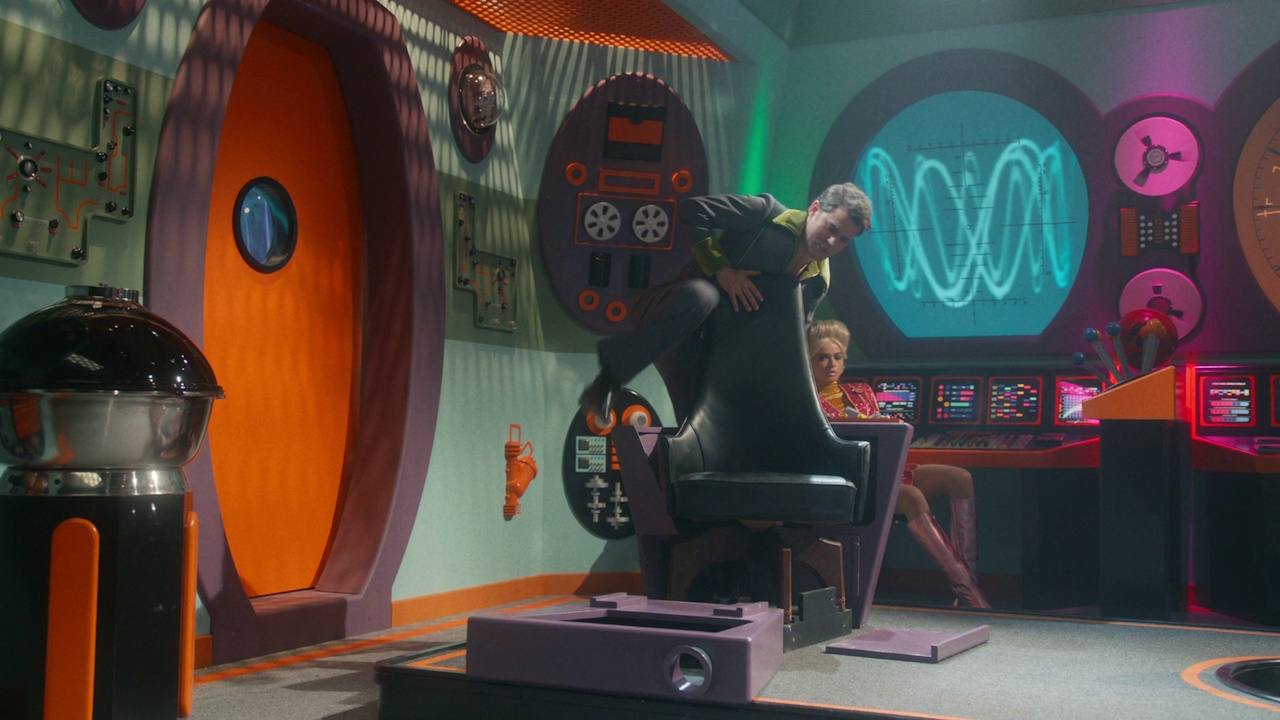
Still frame from Star Trek: Strange New Worlds 3x04 "A Space Adventure Hour," showing a blooper of Kirk breaking his chair.
What did you make of the parody?

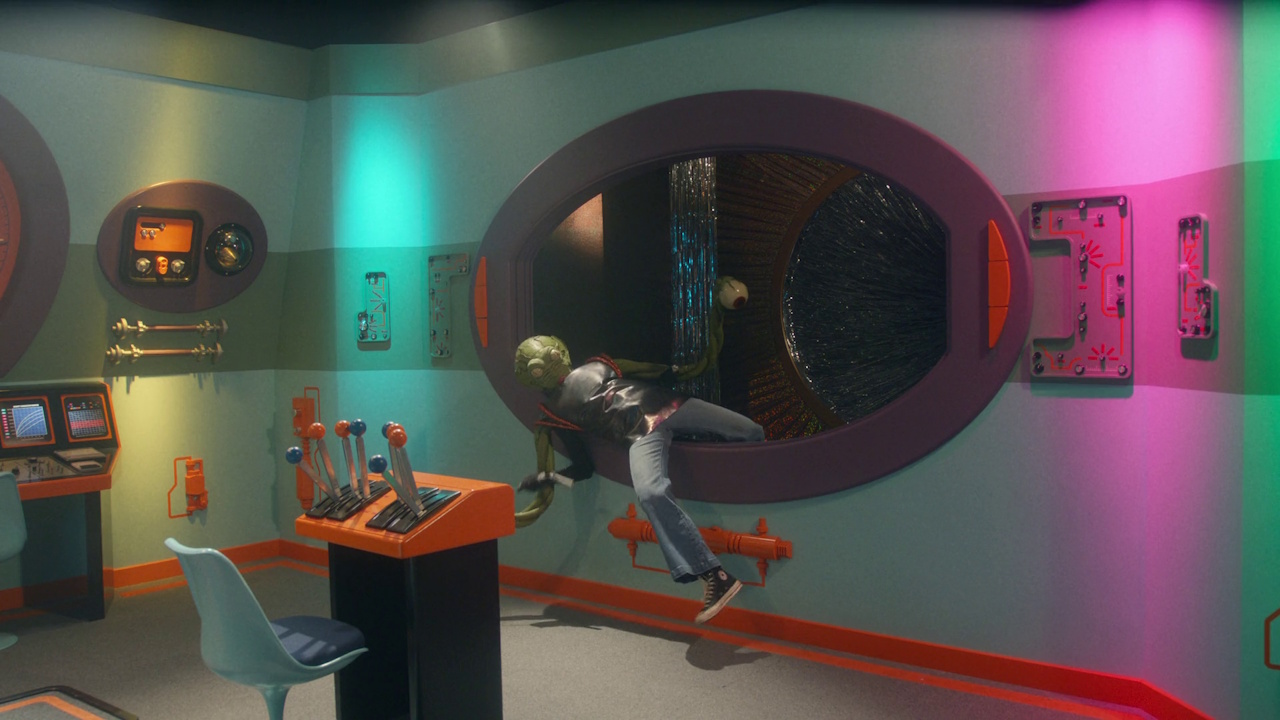
There were things to appreciate with the “Last Frontier” parody, though. Parts of the sets felt silly and exaggerated – the levers on the bridge in particular. But in other ways the sets were reminiscent of that kind of mid-century sci-fi series; the coloured lights reminded me very much of The Original Series, as did Kirk’s chair and the other console to one side on the bridge.

Though I didn’t really like Paul Wesley’s Shatner impression, it took a lot of skill to pull it off, and I can respect that. The soft filter on the camera, the way lighting changed, and the use of dramatic close-up shots were also all drawn from The Original Series, and added something to this pastiche. Holo-Kirk’s comment about a “female first officer” harkened back to The Cage, “Number One” being a woman, and Pike’s comment about women on the bridge of his ship. Or at least, I felt that it did.

Still frame from Star Trek: Strange New Worlds 3x04 "A Space Adventure Hour," showing the Kirk/Shatner parody from the opening sequence.
There were some creative ideas here, but the tone let it down.

The rest of the holodeck adventure was a ton of fun. I think there were some pretty tropey over-acted performances from, well, pretty much all of the main cast as they took on these new roles, but that’s not necessarily a negative in this instance. It’s basically what the script called for – and these kinds of mid-century murder mystery stories (I’m loathe to call it “noir”) were populated by wildly exaggerated characters. For the kind of story A Space Adventure Hour wanted to be, the tone was pretty good.

It was also neat to see La’an in this kind of informal environment, as well as learning a bit more about her. La’an can be rigid and formal, though Kirk certainly helped break down her emotional walls! But until now, we hadn’t really gotten to know much about La’an as an individual, and some of the things she likes outside of her work in Starfleet. Season 3 already introduced us to dancing, which is apparently a hobby of hers, and now we’ve gotten to see these “Amelia Moon” detective stories. It was a nice inclusion, and a way to expand her character with something a bit less formal – and dare I say even a little childish – while still being in keeping with what we know about her role as a security officer.

Still frame from Star Trek: Strange New Worlds 3x04 "A Space Adventure Hour," showing La'an on the holodeck.
This was a good episode for La’an.

The conversation between La’an and holo-Uhura about fandom was also not lost on me. If the earlier “Last Frontier” parody had been a bit too much, this conversation did succeed at bringing things back, and I appreciated what the writers wanted to say about Star Trek inspiring generations of viewers. I know Star Trek has inspired me – and if you’re reading this, I assume you’re also a fan and that Star Trek means something to you, too. I’m glad that the writers didn’t just leave the parody to speak for itself, but also included this conversation about how this fictionalised version of The Original Series could inspire people in the future.

For La’an, this hit especially close to home because of her connection to the Amelia Moon stories. I interpreted that as kind of a Nancy Drew or Famous Five type of children’s book, not necessarily something as grown-up as Sherlock Holmes! Speak of Holmes, did you notice Spock’s claim to be a descendant of Arthur Conan Doyle? I think the writers thought they were resolving a decades-old “plot hole” with that one! If you don’t recall, in The Undiscovered Country, Spock quoted Holmes and referred to the character as “an ancestor of mine,” which led to discussions in the fan community about what he meant, whether Sherlock Holmes was a real person in this setting, and so on. Strange New Worlds seems to have clarified that Spock was referring to Conan Doyle – and perhaps claiming that he’s an ancestor of Spock’s mother, Amanda? I don’t think it’s the kind of thing which needed clarification, but it’s interesting to note that Spock’s Sherlock Holmes connection goes back a long way!

Still frame from Star Trek: Strange New Worlds 3x04 "A Space Adventure Hour," showing a close-up of La'an.
La’an on the holodeck.

After the opening parody sequence was over, and we settled into the story with La’an, holo-Spock, and Scotty, I felt things improved a lot. The murder mystery looked tropey and silly at first, but then it kind of clicked for me and I found myself getting more invested in it. And on Scotty’s side, while I missed Pelia and felt she could’ve added a lot, it was undeniably a lot of fun to see the origins of the holodeck. Scotty played a big role in the development of that technology, which is certainly interesting!

Strange New Worlds is an episodic show. It remains a lot of fun to shake things up, try new things, and really push the boat out, sometimes. For me, parts of A Space Adventure Hour stuck the landing and showed why episodic Star Trek is still the best kind of Star Trek! Others… didn’t land quite as well as I’d have hoped. Overall, the episode was a bit of a mixed bag, then, but because the least-enjoyable parts were mostly out of the way within the first few minutes, I’d say the episode picked up as it went on, and by the time it ended, I was feeling a lot happier.

Still frame from Star Trek: Strange New Worlds 3x04 "A Space Adventure Hour," showing Scotty having a conversation with Uhura.
Uhura and Scotty.

I would say, though, that this was a truly stupid choice of episode to offer for free if the goal was to bring in new viewers on YouTube and Pluto TV. It’s a very self-referential, navel-gazing, “meta” episode of Star Trek, and it wouldn’t make for a good first contact either for Trekkies who want to get started with Strange New Worlds or for a more casual viewer looking to try Star Trek for the first time. In that sense, I don’t understand why Paramount would choose this story – of all the Strange New Worlds episodes we’ve seen so far – for this kind of marketing stunt. But then again, I don’t understand why the morons in Paramount’s marketing department make basically any of the decisions they make. The sooner the Skydance team takes over, the better!

So that was A Space Adventure Hour. I didn’t hate it. Well… most of it. And there were some interesting ideas and character moments in the mix. I continue to appreciate that Strange New Worlds is an episodic project, even when some of the episodes veer into narrative or thematic territory that doesn’t do much for me personally!

Next week, we have Through the Lens of Time, which I hope is gonna be a ton of fun. Time travel stories (which I’m assuming this one will be) aren’t always my favourites in Star Trek, but I’m keeping my fingers crossed. Oh, and let’s hope Pelia can make a return to the show soon, too!


Star Trek: Strange New Worlds Seasons 1-3 are available to stream now on Paramount+ in countries and territories where the platform exists. The first two seasons are also available on DVD/Blu-ray. The Star Trek franchise – including Strange New Worlds and all other properties discussed above – is the copyright of Paramount Global. This review contains the thoughts and opinions of one person only and is not intended to cause any offence.
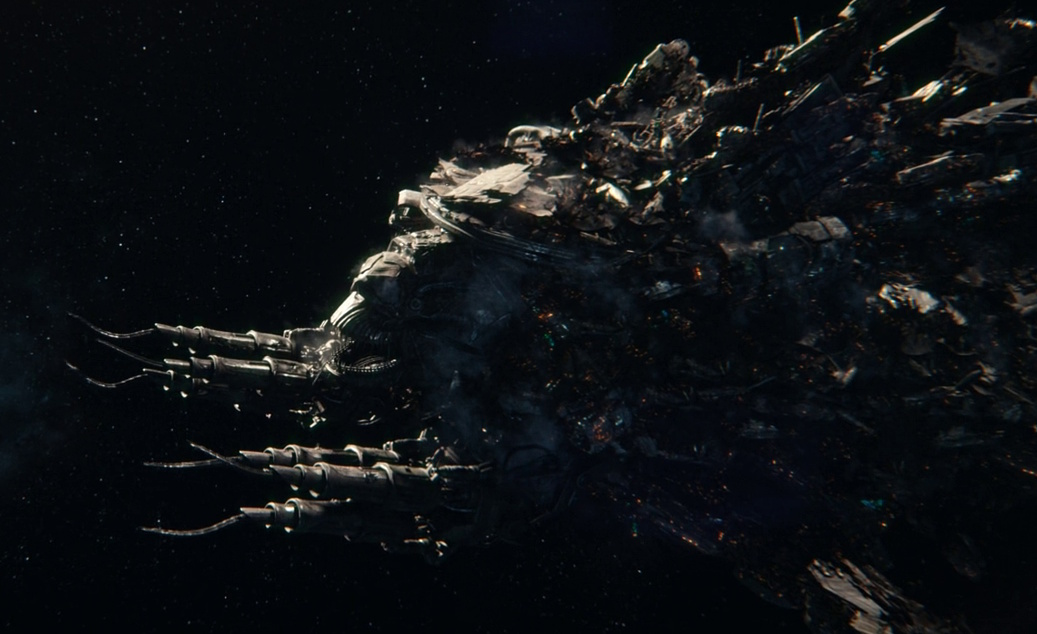
Star Trek: Strange New Worlds Episode Review – Season 2, Episode 3: Tomorrow and Tomorrow and Tomorrow

Spoiler Warning: There are spoilers ahead for Star Trek: Strange New Worlds Seasons 1-2. Spoilers are also present for the following Star Trek productions: Picard Season 2, Enterprise, Voyager, and Deep Space Nine.

Tomorrow and Tomorrow and Tomorrow was an interesting episode – and one of the better time travel stories in modern Star Trek. Its central pairing of La’an and an alternate timeline Kirk was interesting, and one that accomplished the objective of putting them together but without treading on the toes of established canon; Kirk’s legendary conflict with the original Khan Noonien Singh is something that modern Star Trek needs to preserve at all costs!

There were a few contrivances in the episode, though, and both the opening act and Kirk’s willingness to erase his own timeline seemed to be quite rushed. That’s despite Tomorrow and Tomorrow and Tomorrow being the longest episode of the season so far!

Stranded in the past…

I’ve commented on this twice already this season, but here we go again: where oh where is Captain Pike?! Was Anson Mount unavailable for part of the season’s production? In the first episode, Pike was present only briefly before taking off on a mission of his own. Last week, the opening act saw Pike recruit Una’s lawyer – but he was then sidelined and didn’t have much to say. And this week, Pike got one line in a very short sequence right at the end of the episode. Is Paramount paying Anson Mount by the line these days? What’s going on?!

I say that jokingly – but Strange New Worlds was “the Captain Pike show” when we were campaigning to make it happen. You have to admit that it’s odd, at the very least, for Pike to have been so thoroughly absent in the first part of this season. Basically one-third of Season 2 has now progressed with very little input from the Enterprise’s captain. In past iterations of Star Trek there were always spotlight episodes for individuals and stories in which some characters were more prominent than others… but these came in longer seasons, and it was still relatively uncommon to go three episodes in a row with the captain having so little to do. In modern Star Trek it’s unprecedented; can you imagine if Discovery had run three episodes with so little screen time for Burnham? I just find the whole thing rather perplexing – even though I’ve enjoyed each of these three episodes.

Captain Pike was once again notable by his absence from the story.

Let’s talk about a specific story criticism. Tomorrow and Tomorrow and Tomorrow saw La’an make wild assumptions and leaps that had no basis in fact or logic. Given that she’s been thrust into a completely new and unfamiliar situation, her assumption that she must have been sent to a specific timeline to team up with Kirk, or to a specific moment in the past for a reason, or that the device she was given wouldn’t “unlock” until she’d completed her mission… all of these things and more needed more time to play out.

As much as I dislike Picard’s second season, the episode Penance is actually a reasonably good example of this “fish-out-of-water” idea. In that story, Picard and several of his crewmates find themselves in an alternate timeline, separated from one another and with no idea of what’s going on. It takes them basically an entire episode just to piece together what’s happened and get back together; it’s not something that can or should be rushed in the way that Tomorrow and Tomorrow and Tomorrow tried to do.

La’an and Kirk made some wild leaps in logic.

We know that La’an is capable and self-reliant, but her completely baseless assumptions – though validated in a way by the resolution of the story – undermine her characterisation and significantly weaken the episode. Because of the time constraint, it was necessary for La’an to quickly assess the situation she found herself in and come up with a plan – but there may have been ways to cut some other scenes and sequences down, giving this incredibly important setup more time to play out.

This is also true, to an extent, of other parts of the episode. After seeing the bombing and chasing after stolen parts, La’an and Kirk seemed to pretty quickly figure out – again, via baseless assumption – what they had been sent to the past to do. Although Tomorrow and Tomorrow and Tomorrow found time to slow down in between these rushed moments, the main plot of the episode seemed to leap from point to point incredibly quickly, leaving very little time to digest what was going on. I wanted to shout at La’an and Kirk to slow down and give me a moment to catch my breath!

Racing through the streets of Toronto…

While we’re picking holes in the story, I’ll say this: time travel can be exceptionally difficult to get right in any fictional setting. It’s all too easy to write oneself into a corner, relying on paradoxes, tropes, and “you can’t tell anyone this ever happened” in order to get out of it. The end of Tomorrow and Tomorrow and Tomorrow raises such a point: if the Department of Temporal Investigations knew what was going on and were able to observe La’an and Kirk, why didn’t they intervene?

La’an is a 23rd Century security officer, and Kirk was a starship captain from a dystopian timeline that shouldn’t exist. They are categorically not the best-qualified people to stop a Romulan super-spy from the future… not without help or guidance, at any rate. If the episode had ended without the official from Temporal Investigations showing up, I guess we could have written it off as the first agent turning to La’an out of desperation. But knowing that this organisation had been watching her all along… it kind of smacks of Enterprise’s Temporal Agent Daniels teaming up with the 22nd Century’s Captain Archer. Surely these organisations have their own staff!

Doesn’t the Department of Temporal Investigations have its own staff?!

That being said, Tomorrow and Tomorrow and Tomorrow might just be my favourite Star Trek time travel story – or at least my favourite one for a long while! Time travel to the modern day is difficult to get right, and practically every Star Trek episode that’s taken this approach has also taken its crew to the sunlit coast of southern California. This happened in Voyager, in Picard, and even in The Voyage Home. By taking the simple step of visiting Toronto (where the series is filmed) Strange New Worlds was already doing something different. I appreciated that.

I was worried that, coming only a year after Picard Season 2 had spent eight-and-a-half episodes wandering in the 21st Century, Tomorrow and Tomorrow and Tomorrow might just turn me off before it even got started. Luckily that wasn’t the case, and we got a good mix of lighthearted moments. Kirk and La’an having to figure out how to dress and how to act in an unfamiliar environment stood in contrast to the heavier storyline involving time-travelling terrorists and a plot to stop the Federation from ever being created.

There were lighter moments to balance out a heavy story.

This last point – preventing the Federation from coming into existence – was a fascinating one that I would have loved to explore in more detail. Because it was only revealed at the climax of the plot that the Federation’s existence hinged upon disaster, genocide, and the reign of terror that Khan brought to Earth, there wasn’t an awful lot of time to get into the real implications of this – and of the decision that La’an was forced to make.

But this is such an interesting idea! I even wondered if Picard’s aforementioned second season might’ve been going for a similar setup, because the idea of having to consciously choose to permit something so horrific is a real moral quandary. In that moment, La’an was face-to-face with one of Earth’s most brutal dictators. She could have chosen to kill him, sparing Earth the torment that she knows is 100% guaranteed to happen. But she didn’t – she couldn’t. Not because she wanted it to happen, but because she knew that without those horrors, the future would be radically and almost unimaginably altered.

La’an confronted her family legacy.

The fact that La’an has a personal family tie here makes it an even more complex idea. La’an has spent her life living in the shadow of an infamous, hated ancestor – and she was given an opportunity to prevent any of that from ever happening. The themes at play here, expressed through La’an’s decision and the impossible choice that befell her, are incredibly deep, and Tomorrow and Tomorrow and Tommorow almost feels like an episode posing a challenge to its viewers: what would you have done in her place?

This storyline also updates that of Khan and his augments, changing parts of Star Trek’s internal timeline. The Romulan super-spy seemed to imply that the actions of a variety of time-traveling factions may be to blame for Khan’s rise to power taking place decades later than it was supposed to – and that’s something we’ll have to digest or figure out later if it ever returns as a major plot point!

Young Khan.

For now, suffice to say that I’m not a canon “purist,” and I like the idea of Star Trek refreshing and updating itself. That being said, I don’t necessarily feel that the specific timing of Khan’s rise to power is some kind of gaping plot hole that needs to be plugged, even as Star Trek continues to tell modern-day time-travel stories that, in theory, contradict or overwrite parts of the franchise’s prior history. Tomorrow and Tomorrow and Tomorrow could have proceeded just fine without this somewhat ambiguous line.

This was, perhaps, Strange New Worlds throwing a bone to long-term fans: people like you and I who remember Spock’s line in Space Seed confirming that Khan’s ship left Earth in the late 1990s. Is that a discrepancy? Sure, of course it is. But does it matter? Should all future Star Trek projects avoid modern-day time-travel because the franchise’s fictional history tells us that the late 20th and early 21st Centuries are radically different from how they actually turned out to be? Personally I don’t think so – though canon purists may disagree!

The crew of the Enterprise will meet Khan again…

At first, I was concerned that I wouldn’t be sold on Tomorrow and Tomorrow and Tomorrow’s Kirk-La’an relationship. But as the story progressed, this turned out to be one of the episode’s strongest elements. The slow buildup to their shared kiss stood in contrast to other story beats that felt rushed or blitzed through too quickly, and by the time Kirk was dying in La’an’s arms, the love story that the episode had constructed truly hit home and formed a much stronger emotional core to the story than I’d been expecting.

Paul Wesley has earned my respect for not only taking on the role of Captain Kirk – a role that is fraught with criticism and that is watched hawkishly by fans – but for putting his own spin on it. Wesley’s Kirk isn’t an attempt to mimic William Shatner’s portrayal – nor Chris Pine’s, come to that. Paul Wesley has made the role his own, showing off his own range, his own emotions, and his own comedic timing. It’s not a carbon copy – any more than Ethan Peck’s Spock is a carbon copy of Leonard Nimoy’s. But I’m impressed with what he’s done with the character – and this alternate version in particular gave the actor a fair amount of leeway.

Paul Wesley as Captain Kirk.

Does La’an’s contact with Pelia form a paradox? I guess we could argue that it does! If Pelia was inspired to become an engineer by La’an in the past, then investigating her possessions was the reason why La’an was alone in the corridor when she crossed over to the alternate timeline, then… wait, my head hurts.

Pelia’s role in the episode was fun, paradoxes aside. It was neat to see Kirk and La’an tracking her down in the past, and the resolution to this side of the story both gives a bit of background to Pelia that we didn’t have before while also being a lighter moment as it became clear that she wasn’t an engineer and would be of no help whatsoever in creating a tracking device. Again, the resolution to this point felt rather contrived and rushed, but the scenes between La’an, Kirk, and Pelia were more than strong enough to carry the story through.

Tomorrow and Tomorrow and Tomorrow was interesting for the character of Pelia.

Although it was obvious that there would be no “happily ever after” for La’an and Kirk, the way in which the latter was killed was still pretty brutal by Star Trek standards. The episode did a reasonable job at setting up the idea that La’an and Kirk had hope that he might’ve been able to transport back to the prime timeline, but it still felt like a sure thing that that wouldn’t be able to happen, no matter how much they wanted to believe it.

As mentioned, though, the let-down on this side of the story was the rapid, blink-and-you’ll-miss-it turnaround in Kirk. The episode wanted to say something like this: after seeing Earth for the first time with his own eyes, learning of his brother’s survival, and hearing La’an’s tales of a United Federation of Planets and a peaceful, prosperous humanity, Kirk was willing to sacrifice his timeline in order to bring hers into being. Self-sacrifice is a well-established Kirk trait, so that tracks.

Kirk was killed.

But there just wasn’t enough time for this to play out effectively, and it makes the story substantially weaker than it could’ve been. In order to fit in everything else that Tomorrow and Tomorrow and Tomorrow wanted – the visit to Pelia, the relationship buildup, the car chase, La’an’s run-in with Khan, etc. – this side of things took a back seat. And while other story points worked well, I’m having a hard time with this supposedly grizzled, battle-hardened version of Kirk being so willing to wipe everyone he’s ever known from existence.

This is something that could have been made more of, particularly in terms of a conflict between La’an and Kirk. Two characters from two alternate realities find themselves at the “fork in the road,” where one path leads to one timeline and the other path to a very different one. There was potential in the idea of them arguing over which way to go, because from Kirk’s perspective at least, don’t his people have as much of a right to exist as La’an’s? The episode just didn’t spend much time on what could have been a really interesting idea – and the result of that is that Kirk’s turnaround feels incredibly abrupt.

We could’ve spent longer on this idea.

The episode’s epilogue contained a truly heartbreaking scene. La’an was confronted with the reality that the prime timeline version of Kirk had no idea who she was, and no recollection of the time she’d shared with his alternate counterpart. All credit must go to Christina Chong for a deeply emotional and raw performance; I genuinely felt La’an’s emptiness, loneliness, and heartbreak as she broke down and cried.

The end of Tomorrow and Tomorrow and Tomorrow feels bleak in more ways than one. La’an had to commit to her ancestor’s genocidal reign, but also lost the sole human connection that we’d ever seen her make. La’an has friendly relationships with her shipmates, but Kirk was something different – someone who seemed to understand her and who didn’t feel encumbered by the weight of her past. La’an caught a glimpse of what that could be like – but it was brutally ripped away from her.

La’an’s heartbreak was a sad end to the episode.

So a bit of a contradictory one this week! Tomorrow and Tomorrow and Tomorrow is one of Star Trek’s best modern-day time-travel stories. It was fun and lighthearted in places, dense and heavy in others, and it connected back to The Original Series in clever and unexpected ways. But it was let down by trying to cram in one too many storylines, with the result being that several key moments and elements of characterisation were missing, lessening the impact as the story wore on.

I had a good time this week, all things considered. Pairing up Kirk with La’an was a risk, but because this version of Kirk came from an alternate reality, I think we can say it’s a risk that paid off. It was a great episode for La’an’s characterisation, bringing her face-to-face with the monster from her past, but also taking her on an emotional rollercoaster and showing off a side of her that we haven’t always gotten to see.

There’s only one question left to ask: will Captain Pike finally get a role to play next time?!

Star Trek: Strange New Worlds Seasons 1-2 are available to stream now on Paramount Plus in countries and territories where the service is available. The Star Trek franchise – including Strange New Worlds – is the copyright of Paramount Global. This article contains the thoughts and opinions of one person only and is not intended to cause any offence.
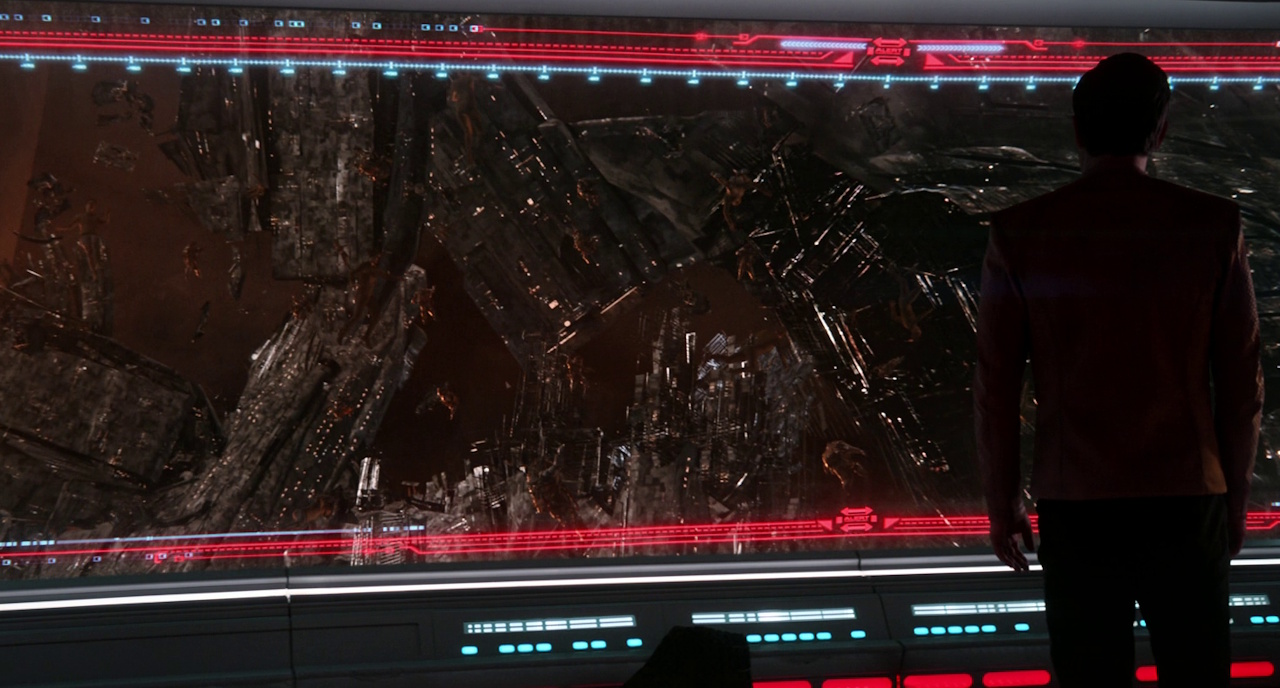
Strange New Worlds: I just can’t get excited…

Spoiler Warning: There are spoilers ahead for Star Trek: Strange New Worlds Seasons 1-2, Star Trek: Discovery Season 2, and for other iterations of the Star Trek franchise.

I’ve had a hard time lately knowing what to say about Strange New Worlds. When the series was officially announced just under two years ago, I had high hopes and it rocketed to the top of the list of TV shows that I was most excited to see. Even as 2022 approached, this was the mindset that I had. After the phenomenal portrayals of Captain Pike, Spock, and Number One in Discovery Season 2, I was among the fans who wrote to Paramount Global (then known as ViacomCBS) about getting a Captain Pike spin-off series, and Strange New Worlds’ very existence is the result of a powerful fan campaign that brought together Trekkies from all across the world. I’ve been proud of the small role I played in that.

But as the show’s premiere approaches, Paramount Global has completely screwed up. It became apparent late last year, when Prodigy Season 1 and then Discovery Season 4 were denied international broadcasts, that Strange New Worlds would follow suit, and I said as much back in November when the Discovery debacle was unfolding. And now, with barely five weeks to go before Strange New Worlds makes its debut in the United States, there’s been radio silence from Paramount Global about an international broadcast.

It’s time to talk about Paramount Global again.

Let’s get one thing straight right now: this lack of information and refusal to engage with fans and audiences isn’t merely something that might hurt Strange New Worlds’ chances in the future. Paramount Global’s blinkered “America First” policy is hurting the show right now. For every fan whose question is left unanswered, anxiety and apathy about the series grow. Instead of Trekkies and viewers all around the world being able to chatter excitedly on social media and in fan clubs, the discussion is suppressed. Everyone remembers the Discovery Season 4 clusterfuck and how damaging that was to both Star Trek as a brand and the Star Trek fan community – and people are being cautious, talking less about Strange New Worlds for fear of stoking arguments.

Because we live in a globalised world, it’s no longer possible for big entertainment companies or streaming platforms to region-lock their content. Doing so is incredibly stupid, harming the prospects of a series and practically guaranteeing it won’t live up to its potential. How many more viewers might Lower Decks have picked up if it had been broadcast internationally in its first season? We will never know – the chance to get untold numbers of new eyes on the Star Trek franchise for the first time in years was wasted.

A representation of how we’re all connected in a globalised world.

When a show is cut off and its audience segregated geographically – as seems all but certain to happen with Strange New Worlds – that has a knock-on impact that the out-of-touch and out-of-date leaders at Paramount Global seem totally unaware of. With the Star Trek fanbase being large and international, millions of people will miss out on Strange New Worlds – and as a result, they won’t talk about the series on social media. Hashtags won’t trend, posts about the series will reach far fewer people, and even within the United States, Strange New Worlds will suffer as its social media hype bubble deflates – or never inflates to begin win.

This is the real harm of this stupid, blinkered “America First” approach. By refusing to engage with fans, we’re left to assume that the reason for that is because the news is bad. As a result, millions of Trekkies aren’t talking about Strange New Worlds, just as they didn’t talk about Lower Decks or Prodigy. In the absolutely critical few weeks before the series premieres, when hype should be growing and excitement reaching fever-pitch… it just isn’t.

Paramount Global is refusing to engage with fans from outside of the United States.

Why should we, as Trekkies outside of the United States, bother to engage with Paramount Global on Strange New Worlds – or on any other Star Trek property, come to that? If we’re constantly treated as second-class, even in regions where Paramount+ is available, what’s the point in continuing to support the series or the franchise? I’m left in the position of actively willing Strange New Worlds to underperform at the very least. Maybe then, Paramount Global would begin to understand.

I’m all for supporting actors, writers, directors, and other creative folks. But they’ve already been paid for the work they did on Strange New Worlds, and moreover a second season has already been confirmed and entered production. So to the folks who say that they’ll pay to use a VPN to subscribe to the American version of Paramount+, or who plan to wait diligently for the service to be rolled out internationally, I have to ask: how are fans supposed to protest? How are we supposed to share our anger and frustration with Star Trek’s corporate overlords if not by voting with our feet and our wallets?

Season 2 is already underway.

This article began life as a breakdown of the Strange New Worlds trailer that was released a couple of weeks ago. But as I started writing, I soon realised that I couldn’t do it. I couldn’t sit here and happily ignore the corporate bullshit and the incredibly poor way that Paramount Global has treated its biggest fans and biggest supporters. I couldn’t just pay lip service to the problems with a line or a paragraph and then get chatting about Pike’s beard or the Enterprise at warp. I’ve lost my excitement for this series.

A few weeks ago I managed to get a print of the Strange New Worlds poster. It’s framed alongside my Picard Season 2 poster, and it overlooks my workspace where I sit to write these columns and articles. But even that was stupidly difficult, because Paramount Global didn’t make the poster available for purchase in the UK. I had to get a custom print of it ordered from a print shop. Just another way that Paramount Global is content to damage its own marketing, cutting off its biggest fans because of where we happen to live.

The poster in landscape form with the addition of the show’s logo.

Considering the position we’re currently in, the scheduling of Discovery Season 4, Picard Season 2, and even Prodigy feels incredibly weird and inept; another example of Paramount Global fucking things up. Why did Discovery Season 4 and Picard Season 2 overlap by three weeks? And why is Strange New Worlds scheduled to overlap with Picard as well? Delaying both projects by literally just a few weeks might’ve given Paramount+ more time to get ready for an international launch. We’ve been promised the service by the end of June and Strange New Worlds premieres in early May… if Paramount+ is still on schedule, can’t Strange New Worlds be delayed by five or six weeks so that more fans can watch it together? Where would be the harm in that from Paramount Global’s perspective?

On top of all that, as Season 1’s marketing campaign was just getting started we had a really stupidly-timed Season 2 announcement: the casting of a new actor to play James T. Kirk. I didn’t like the fan reaction in some quarters, with a lot of folks being incredibly critical and some of that criticism spilling over into hurtful remarks directed toward the actor – my firm belief is that we need to give Paul Wesley a chance to show us what he can do, and we need to be patient to learn more about the storyline (or storylines) that Kirk may be involved with. But I have to admit, I understand where the backlash came from… and it’s yet another indication of how poorly Paramount Global has handled this new series.

I was disappointed that some Trekkies attacked actor Paul Wesley… but this premature announcement was a stupid own-goal from Paramount Global.

There was no need to announce Kirk’s role this early. There had been a single leaked on-set photo showing actor Paul Wesley as an unnamed character, and there was no reason whatsoever for Paramount Global to comment on it. They could have said something like “that’s a secret for now, but stay tuned for Season 1!” and left it at that. Some fans would’ve speculated, some had already guessed that the character was James T. Kirk before the official announcement was made. But confirming it just made things worse, and turned an already depressed and underwhelming conversation around the new series positively toxic for a few days.

One way or another, I’m going to watch Strange New Worlds – and you can interpret that however you’d like! But what I won’t do is talk about the series here on the website or on social media. If Paramount Global doesn’t make it available here, why should people like me comment on the series or give it publicity? In my own small way, I plan to have a communications blackout – shutting down a portion of the conversation around the series and directing attention away from Paramount Global. I’d love to see others get on board and do the same thing – a full-fledged blackout would be symbolic of the fanbase coming together to tell a greedy American corporation that its behaviour is not acceptable. If you’ve ever watched Star Trek, that shouldn’t feel out of place at all!

A Strange New Worlds blackout would be unfortunate, but I would argue it’s necessary.

But it’s unlikely to happen, sadly. A lot of fan websites and social media groups work hand-in-glove with Paramount Global and wouldn’t want to risk losing their access or their freebies that the corporation provides them. So we’re in a difficult, unpleasant situation once again, with echoes of the Discovery Season 4 mess all over again. And I don’t know how to navigate it, I really don’t. I feel like I want to stick to my principles and do whatever I can, in whatever small way, to stick the boot into Paramount Global. I also feel that someone needs to make a stand on behalf of fans around the world who can’t access the series because we’ve been so callously cut off.

But I can also understand the argument that we should be supporting a series that was originally brought about thanks to a fan campaign – a campaign I participated in. And, of course, I’m aware that I’m such a small outlet that on my own I can’t make much difference.
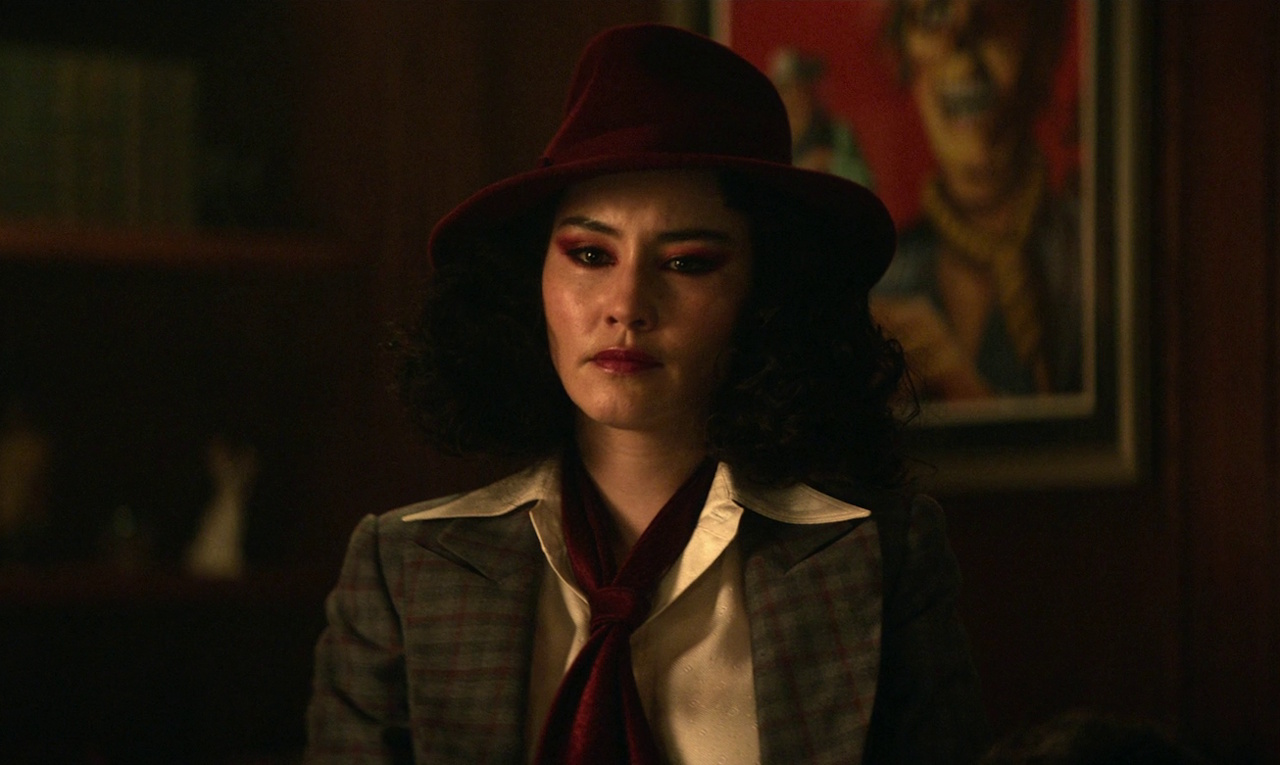
Fans have been waiting for the next chapter of Captain Pike’s story for almost three years.

Maybe Paramount Global will surprise me with Paramount+ in time for the show’s premiere. Or maybe they’ll do the right thing and delay it if Paramount+ won’t be ready… but I’m not holding my breath. Right now it feels like we’re on course for a repeat of the Discovery mess, and the only thing I can do in this situation is refuse to cover the series at all. That isn’t the stance I wanted to take. I wanted to be spending this time talking with you about the minute details that I noticed in the trailer, or speculating about what role Kirk might play. But I can’t. And if Strange New Worlds doesn’t get broadcast here or in other parts of the world in a few weeks’ time, don’t expect to see any reviews, theories, or discussion here on the website.

I’m tired, and I feel like I can’t keep doing this. Star Trek is supposed to be fun; an escape from the realities of life. As someone who’s disabled and has mental health struggles, I need the positivity and fun that a show like Star Trek can bring. I’m not cut out for this kind of constant negativity, shouting and screaming at Paramount Global to get its fucking act together. It’s depressing and disappointing that we’re here again.

This is where I’d usually tell you where to watch Star Trek: Strange New Worlds and tell you that it’s the copyright of Paramount Global. This article contains the thoughts and opinions of one person only and is not intended to cause any offence.