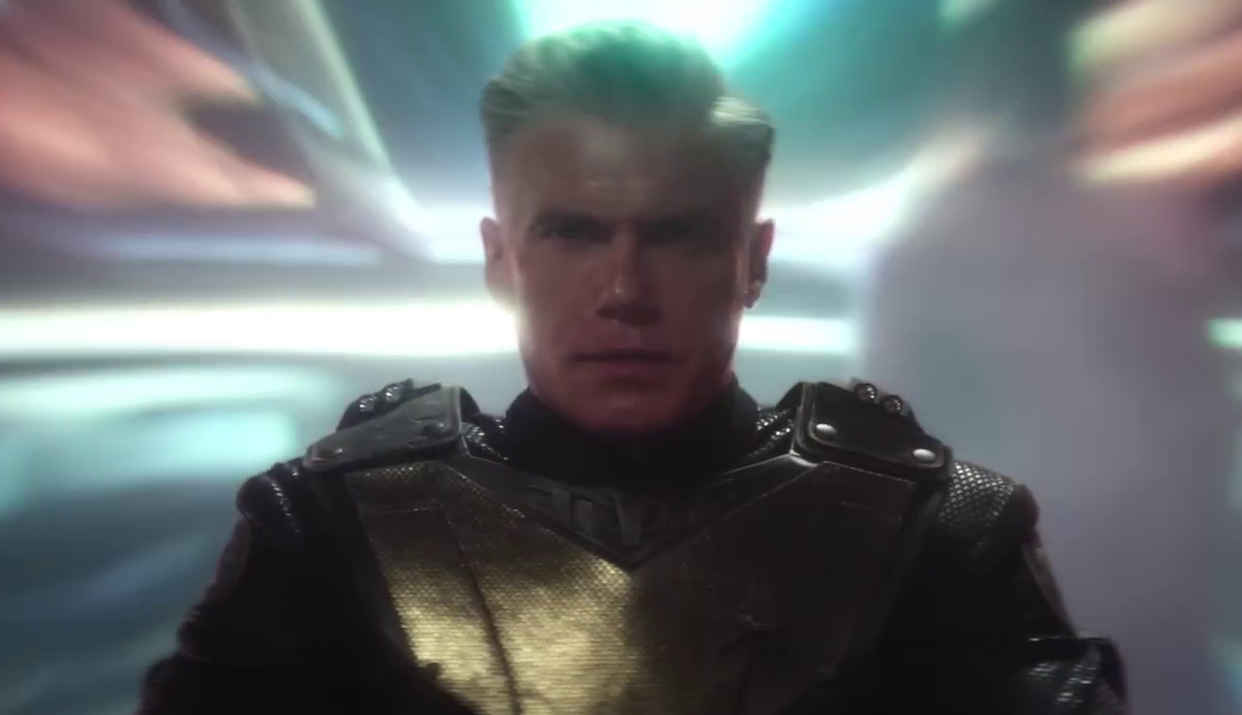
Spoiler Warning: There are spoilers ahead for the Star Wars sequel trilogy.
Y’know, the more I think about it, the more convinced I become that this particular article would’ve been a better fit for April Fool’s Day rather than Star Wars Day. But I’m committed now… so here we go!
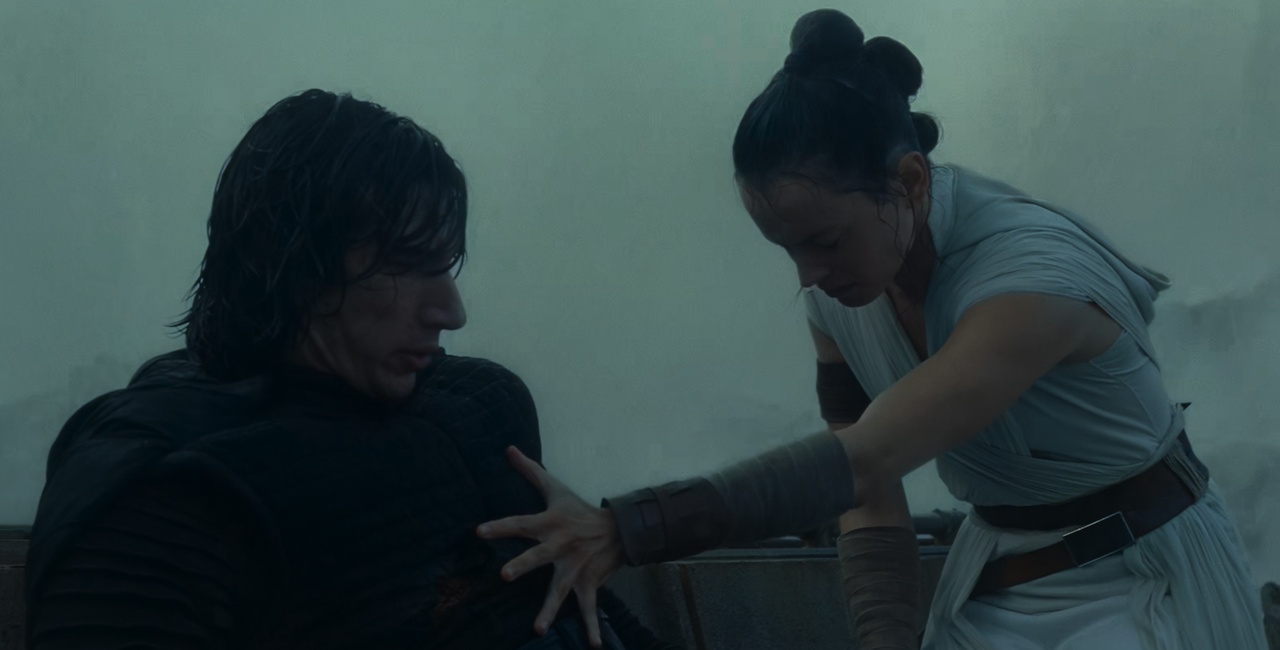
Happy Star Wars Day, friends! May the Fourth be with you… and all that. This year, I thought it could be a bit of fun to mark the occasion by revisiting one of my least-favourite Star Wars films – and probably one of the worst films I’ve ever seen – 2019’s The Rise of Skywalker.
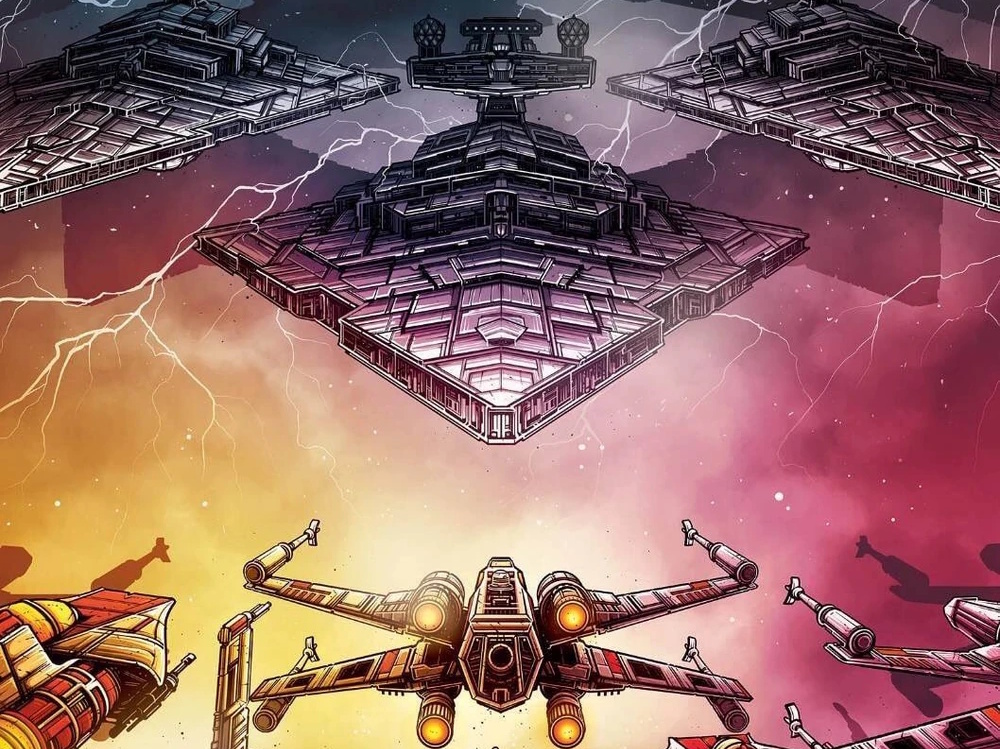
X-Wings and Star Destroyers on a promotional poster.
It was in late 2019 that I embarked on the project that eventually became this website, and for a sometime Star Wars fan, that was a bit of a strange period. The Last Jedi had proven to be massively controversial within the fan community, and the discourse around that film had become incredibly toxic. Solo: A Star Wars Story had flopped, I really wasn’t keen on the first season of The Mandalorian, and it seemed as if the only bright spark in the franchise was Jedi: Fallen Order. I desperately hoped that The Rise of Skywalker could do the impossible by bringing the fan community back together and ending the sequel trilogy on a high.
Though I consider the Obi-Wan Kenobi miniseries to be the worst piece of Star Wars media that I’ve seen, The Rise of Skywalker isn’t far behind. It was an atrocious film, one that I’d seriously consider putting on a list of “the worst films I’ve ever seen.” But re-hashing what I didn’t enjoy about the film isn’t the purpose of today’s exercise!
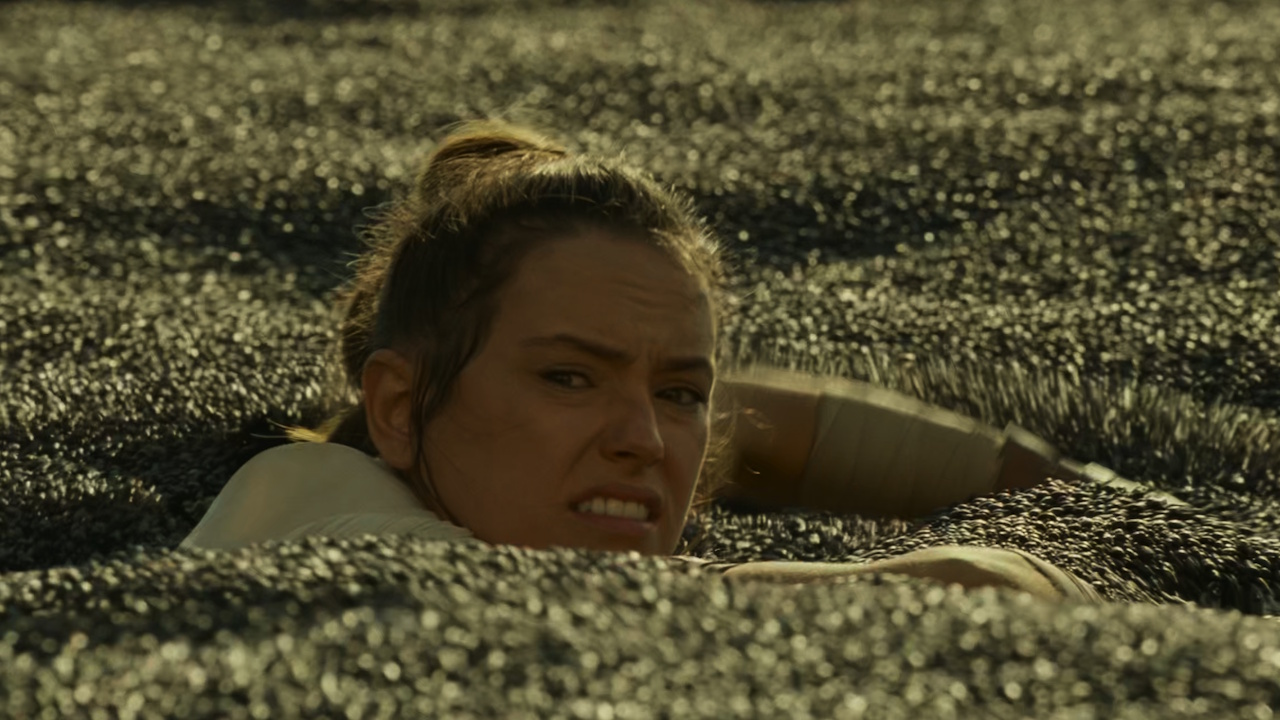
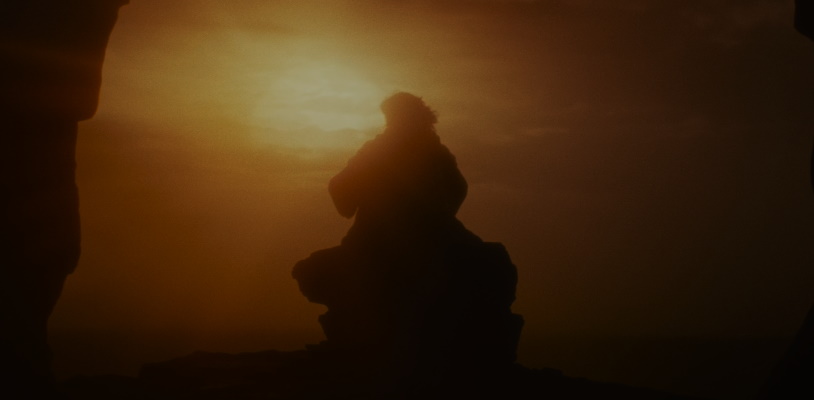
Surely this can’t be a visual metaphor…
Because it’s Star Wars Day, and in the spirit of positivity, I want to talk about some of the things The Rise of Skywalker got right – or at least got less wrong. Despite my overall feelings about the film, its story, the thought process that went into creating it, and more… there are some highlights worth mentioning. You might remember some of these if you read my two separate articles about the film in 2020 and 2021, but I’ve also added a couple of points that I didn’t mention in those earlier pieces.
In my essay titled In Defence of Luke Skywalker, I talked about how the depiction of Luke’s depression in The Last Jedi was generally well-written and conveyed an important message. It may not have been what fans wanted or expected from Luke Skywalker – particularly folks who’d bought into the old Expanded Universe stories, which depicted him as a flawless all-conquering superhero – but it was powerful and it resonated with me. The idea that anyone, even someone heroic, can fall victim to the “black dog” of depression is an important message, and it was well-told in The Last Jedi.
Luke’s depiction and death were controversial aspects of The Last Jedi.
The Rise of Skywalker undid most of that, unfortunately. But it couldn’t entirely erase what had come before. If you take Luke’s story across the sequel trilogy, you can read it as recovering from depression – and that is a positive, hopeful, and uplifting message. The Force Awakens and The Last Jedi show Luke at his lowest: suffering a catastrophic defeat, almost giving in to a dark impulse, grieving the loss of his students, failing at his life’s mission to restore the Jedi Order, and succumbing to depression. He retreated to Ahch-To to die.
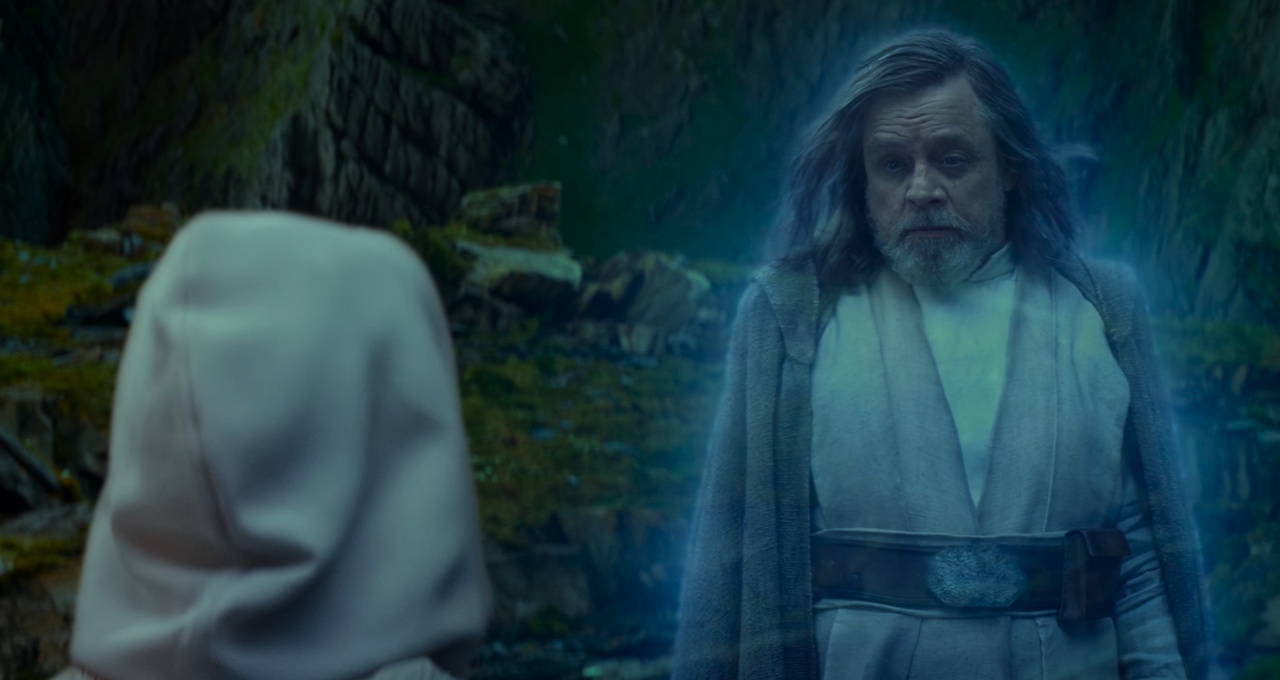
But after the events of The Last Jedi, Luke found a reason to believe again. And The Rise of Skywalker takes that concept and expands upon it, showing us Luke – in ghostly form – happier, more connected to the Force, and more willing to lend a hand when the galaxy needed him. To drag out the depression metaphor from The Last Jedi, this is the recovery phase. Not everyone who suffers with depression gets to that point, but seeing it depicted on screen like this can give hope and inspiration to people in that situation.
Rey with Luke’s ghost.
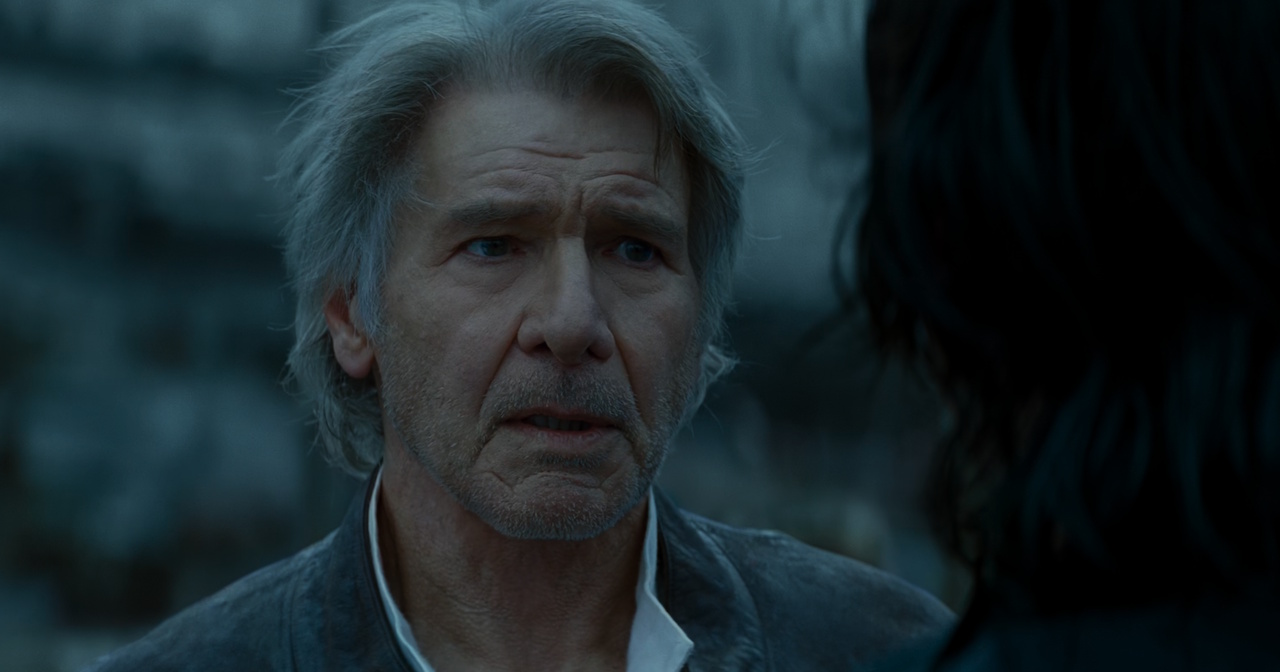
Sticking with deceased characters, Han Solo got more of a send-off in The Rise of Skywalker than he did in The Force Awakens. Han’s death was shocking in that film, but its suddenness was immediately followed up by action set-pieces and the “trench run” over Starkiller Base – meaning we didn’t get to sit with the impact of it for very long. Bringing Han back – albeit for a role that was clearly intended for Leia – was somewhat cathartic, and getting to spend a little more time with him was a net positive for the film.
Because this sequence was told from Kylo’s perspective, we got to experience some of the feelings of grief, loss, and regret that he felt at killing his father. We can debate whether such an action is ever forgivable or redeemable, but The Rise of Skywalker wanted to give Kylo a redemption arc akin to that of Darth Vader in Return of the Jedi. Seeing this vision of Han Solo helped with that, or at least didn’t detract from it. And Adam Driver put in a stellar performance in these sequences – as he did across the entire film, really.
The Rise of Skywalker gave us a bit more closure on Han’s death.
I know we’re trying to be positive about The Rise of Skywalker and this next point is very much a backhanded compliment (at best), but it’s my article so I’m gonna include it! The line “somehow Palpatine returned” has become one of those “so bad it’s good” moments for me. It wasn’t when I first watched the film, but the more I’ve sat with that line the funnier I find it to be. I still think everyone involved with writing, approving, and directing this line should be blacklisted from the entertainment industry for life… but on days when I don’t want to take Star Wars too seriously, or where I’m so depressed I need a good laugh, “somehow Palpatine returned” is there for me.
The line has also become one of my go-to examples of poorly-written dialogue, as well as an example of Star Wars’ overreliance on other works of media to set up important narrative beats in mainline films. Not only that, I think there’s something encouraging and even inspirational about this line. “Somehow Palpatine returned” reminds me that I’d have to do an exceptionally poor job to write something worse, and that there’s apparently a very low bar for pitching scripts for big-budget films. So maybe my Hollywood dreams haven’t entirely evaporated, eh? Jokes aside, this line is awful, and it’s become emblematic of the failures of The Rise of Skywalker and the sequel trilogy as a whole. But it’s also unintentionally hilarious as the film’s writers and Disney’s executives tell on themselves; no one could be bothered to write an explanation for Palpatine’s stupid resurrection, and this storyline was set up as part of a merchandising tie-in deal with the video game Fortnite. For all those reasons and more, it’s an excellent example of what not to do in filmmaking.
“Somehow Palpatine returned.”
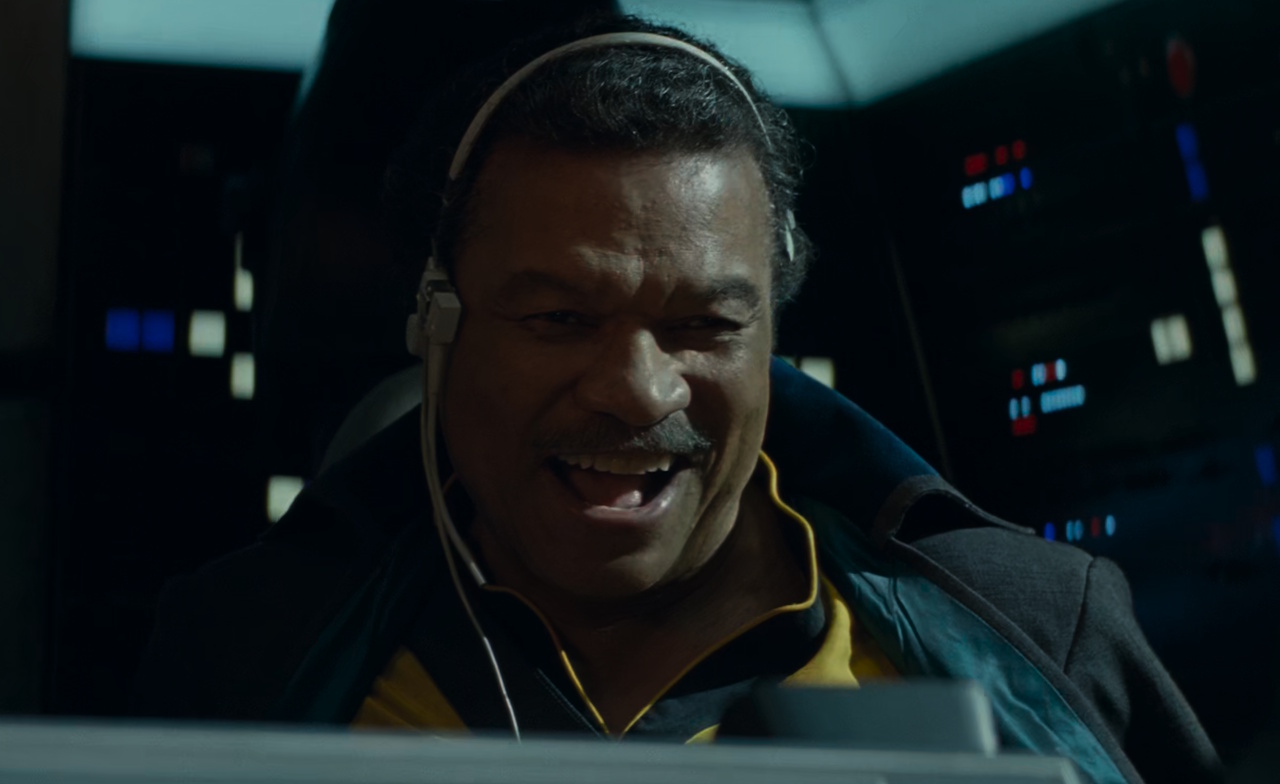
To get back to something a bit more genuinely positive and inspiring, I’d like to highlight Lando Calrissian’s role in The Rise of Skywalker. I don’t know why Lando was absent in The Force Awakens and The Last Jedi, but Billy Dee Williams made the most of his return to the role in the third instalment of the sequel trilogy! In fact, I could’ve happily spent a lot more time with Lando; watching him heading out across the galaxy, rallying the citizens to the cause would’ve been quite something to see.
Lando’s last-second arrival at the head of a massive fleet was pretty much the only moment in The Rise of Skywalker where I felt a twinge of emotion. I’m a sucker for a “desperate last stand” kind of story, and seeing the ordinary citizens of the galaxy rising up in unison against Palpatine and the Sith felt good in the moment. As Poe, Finn, and the rest of the Resistance seemed to be on the cusp of defeat, Lando raced in to save the day, leading the galaxy in a unified last stand against autocracy and fascism. The scene where he and his fleet dropped out of hyperspace was powerful, and was probably one of the best individual moments in The Rise of Skywalker.
Lando arrives to save the day!
Although I wish the sequel trilogy as a whole had done more with the idea of a Force dyad, some of the moments between Rey and Kylo were at least interesting. There was also some creative cinematography employed as Rey and Kylo had visions of one another despite being far apart. The scene where Rey was in Kylo’s room was one such moment, and I think the way the film transitioned between two different locations was creative.
I would’ve liked to have gotten more of an explanation of the Force dyad; how it came to be and what else Rey and Kylo could’ve done with it would have been fun to see. The idea of two characters with totally opposing points of view and objectives having this unintended bond – one they couldn’t rid themselves of – was also an interesting concept in theory, and I think we saw at least some of that potential in The Rise of Skywalker.
Kylo and Rey formed a rare Force dyad.
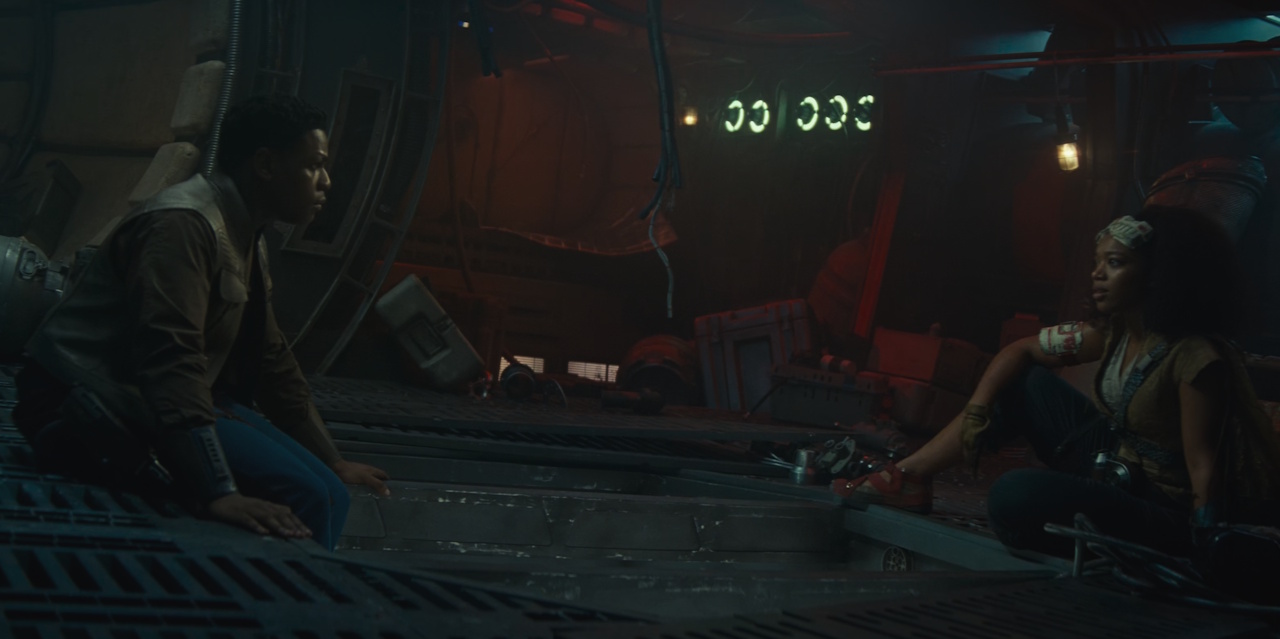
Finn’s story was not great in The Rise of Skywalker – or really across the sequel trilogy as a whole. But as a concept, the idea of a rogue stormtrooper breaking free of his indoctrination was interesting. And The Rise of Skywalker made at least a bit of an effort to expand upon that with the new character of Jannah – another defector that Finn encountered during the mission to Endor.
If Luke Skywalker’s story was an analogy for depression and mental health, Finn and Jannah’s can be seen as deprogramming from a cult or escaping an autocratic society. There are real-world parallels that are interesting – and open to interpretation. I don’t think The Rise of Skywalker was perfect in its execution of this idea, but I will give the film credit for trying, and for expanding our knowledge of ex-stormtroopers and the reasons why some might defect or abandon their posts.
Finn with fellow ex-stormtrooper Jannah.
Sticking with Finn, his “bromance” with Poe was certainly an enjoyable part of his story and characterisation, and one which was in focus in The Rise of Skywalker more than it had been in The Last Jedi. The two worked well together, and although I felt Oscar Isaac was rather phoning it in with his performance, the same can’t be said of John Boyega. Boyega did his best to carry this character relationship, and I could’ve happily spent longer with Finn and Poe.
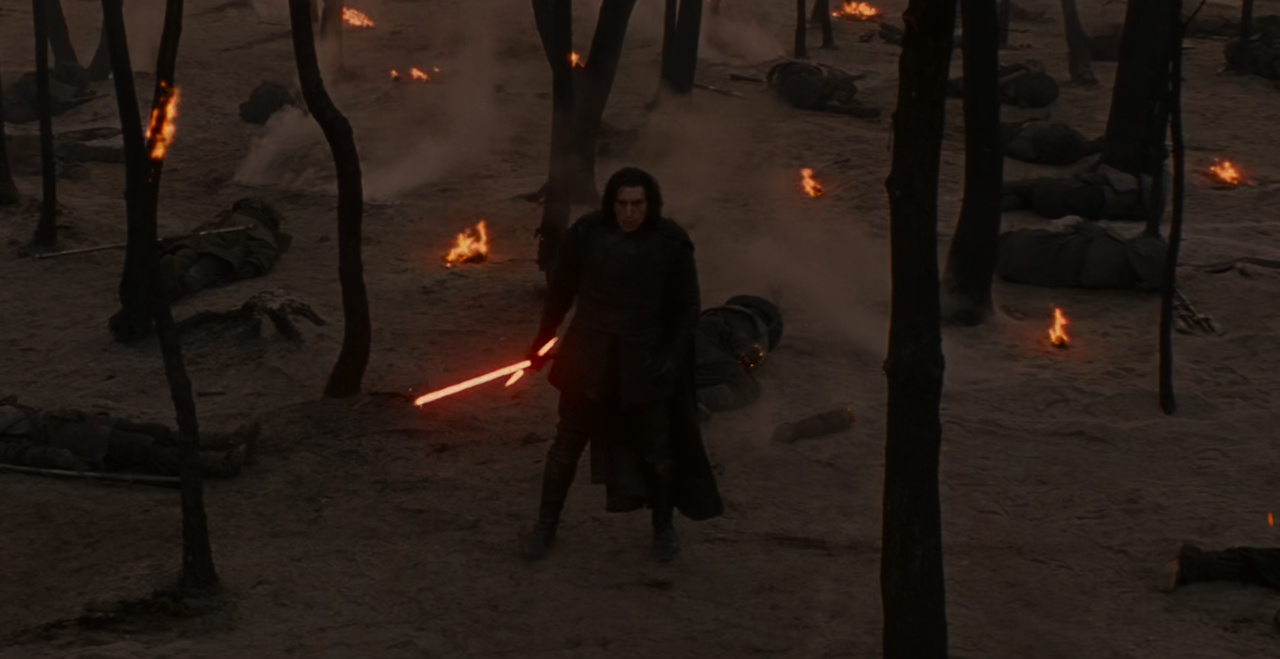
There are a few other acting performances that stand out to me. I think being able to separate one’s thoughts about a performance from how we might feel about the script or narrative decisions is important – so it’s worth crediting actors and actresses who give it their all, even when they’re part of a train wreck! I mentioned Adam Driver above, and he’s literally never been anything less than outstanding in any film I’ve seen him in. One day he’s going to win one of the big awards – mark my words.
Kylo on the battlefield.
Though the sequel trilogy was never meant to be Palpatine’s story, Ian McDiarmid clearly relished reprising his role, and threw himself into it. Palpatine dripped with malice every time he appeared on screen. I may loathe what the film did with General Hux, but I’d be remiss not to include Domhnall Gleeson’s performance as being praise-worthy. Hux’s pure hatred for Kylo really came through thanks to Gleeson’s work, and even though the storyline was a tough sell, he clearly gave it his all. Kelly Marie Tran, though only on screen for a couple of minutes, did well with the material she had, and I think it’s a shame we didn’t get to spend more time with Rose.
So I think that’s about it.
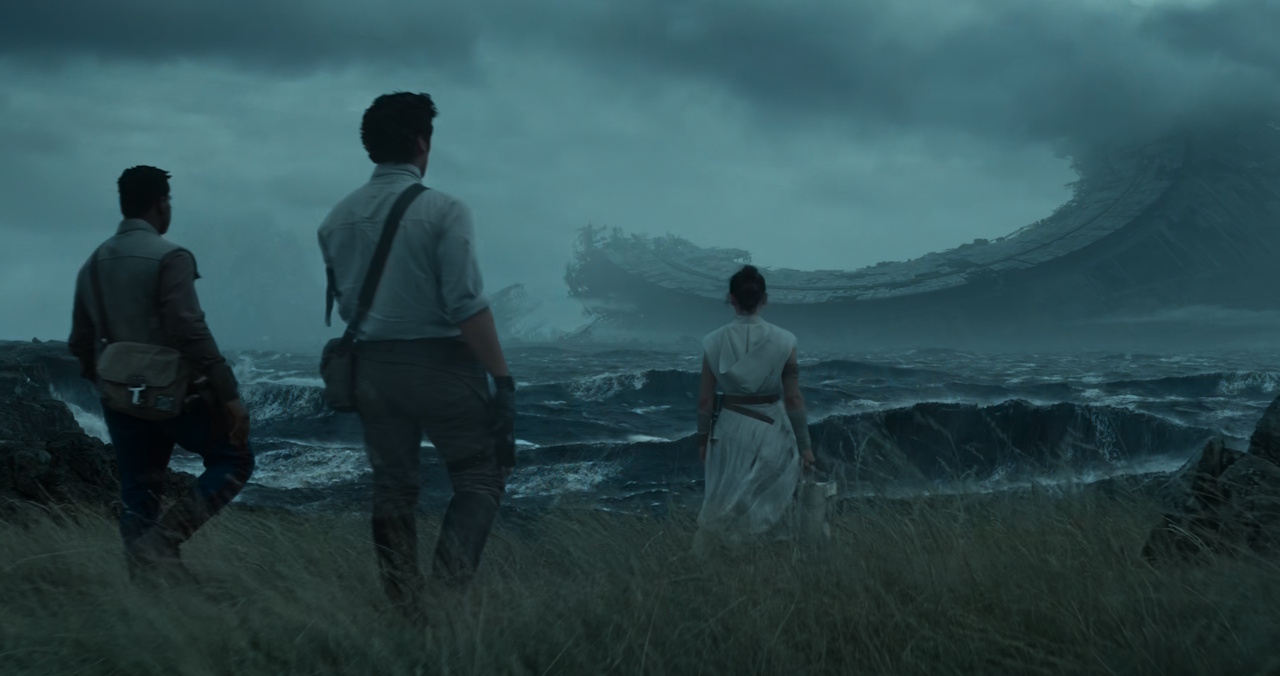
I wish I could tell you that it was fun to revisit The Rise of Skywalker. But at the very least, I think we managed to find a few notes of optimism amidst the wreckage; small things here and there that achieved some measure of success, struck the right emotional or narrative chord, or just didn’t fail as comprehensively as the film around them. Maybe you enjoyed The Rise of Skywalker more than I did – and that’s great. The Star Wars franchise should be big and diverse, and there’s plenty of room for differences of opinion when it comes to the best and worst parts. Nothing about this is “objective,” at the end of the day!
Looking at a wreck. Seems fitting, eh?
There’s more Star Wars to come – which is genuinely good news! Andor’s second season is currently airing, a second season of Ahsoka is planned, and there are several upcoming films on the schedule, too. Upcoming films include pictures based on Rey and Lando, a spin-off from The Mandalorian, a new trilogy, and the intriguing-sounding Star Wars: Starfighter. So despite the controversial reception the film got, The Rise of Skywalker didn’t doom Star Wars’ future prospects!
I hope this has been a bit of fun to mark Star Wars Day – or at least something a little different. I wanted to try to take one of the worst films in the franchise and talk about some of its better aspects, partly as a challenge to myself and partly because it’s Star Wars Day. Thanks for reading, and May The Force Be With You!
Star Wars Episode IX: The Rise of Skywalker is available to stream now on Disney+ and is also available on DVD and Blu-ray. The Star Wars franchise – including The Rise of Skywalker and all other films and properties discussed above – is the copyright of Lucasfilm and The Walt Disney Company. This article contains the thoughts and opinions of one person only and is not intended to cause any offence.
Spoiler Warning: There are spoilers ahead for Strange New Worlds Seasons 1 & 2, as well as the trailers, clips, and teasers for Season 3.
As soon as I published my Strange New Worlds Season 3 wishlist last week, Paramount decided to drop a brand-new trailer! I really do have the worst timing when it comes to these things; it isn’t the first time something like this has happened! Today, I thought we really ought to take a look at the trailer, as well as the two other “clips” that have been revealed so far. Knowing my luck, Paramount will release another one later this afternoon!
In 2024, we got to look at two extended clips from Strange New Worlds Season 3. I must’ve missed the second one; the only one I’d seen was the Vulcan one that I talked about in my look at Star Trek’s Comic-Con showing last summer, but Paramount also released another clip that I think got lost in the marketing blitz for Section 31. As the TV movie’s January release got closer, that’s where my Star Trek focus fell, anyway!
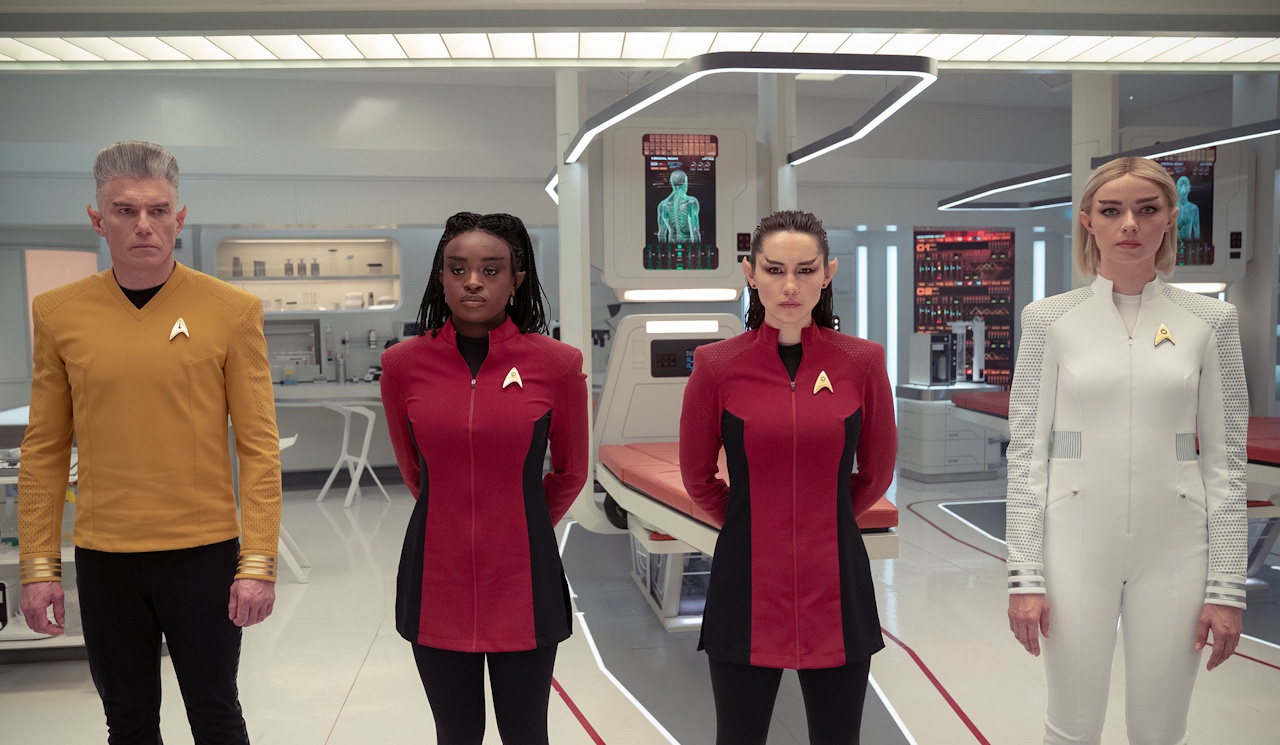
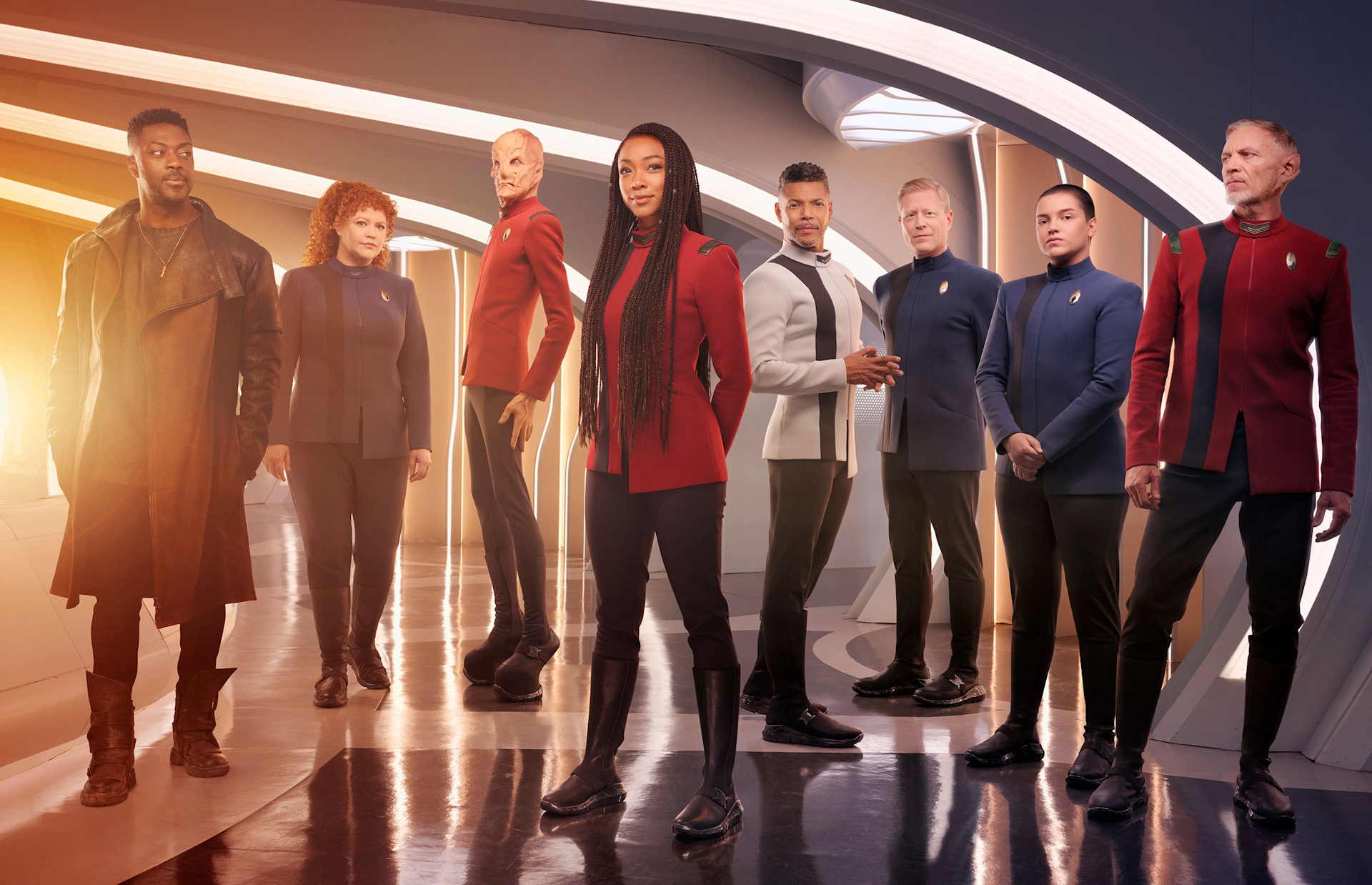
Most of the main and recurring characters.
We’ll start with the clips and then look at the trailer, because there’s plenty to say about all three.
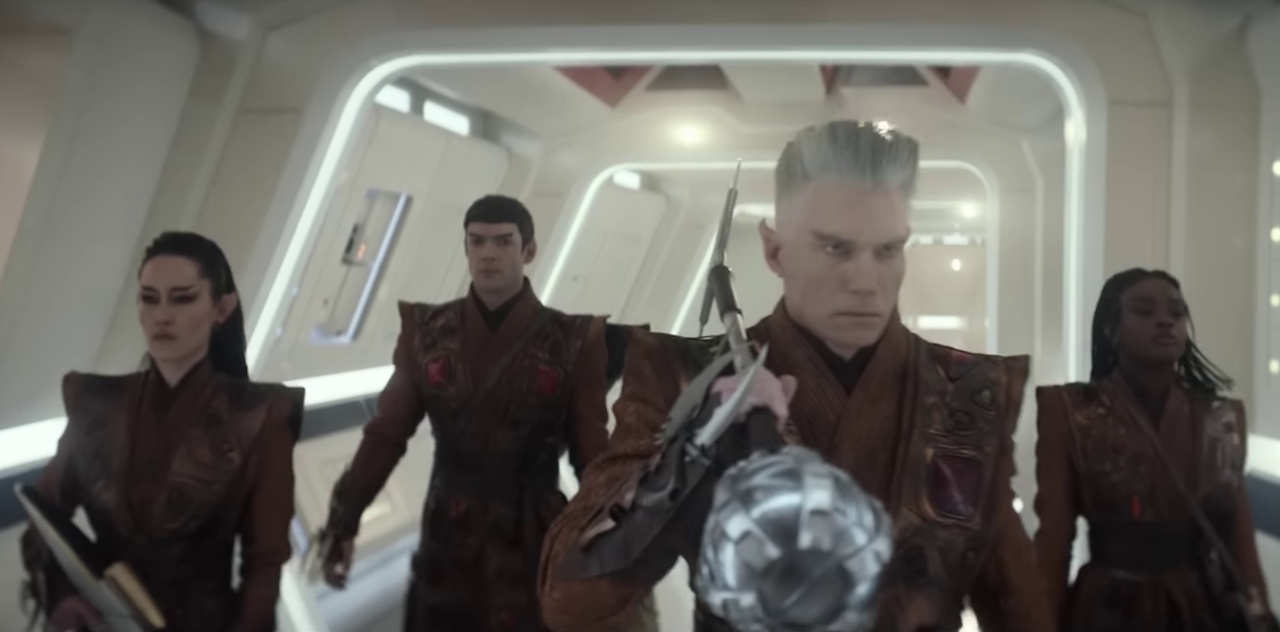
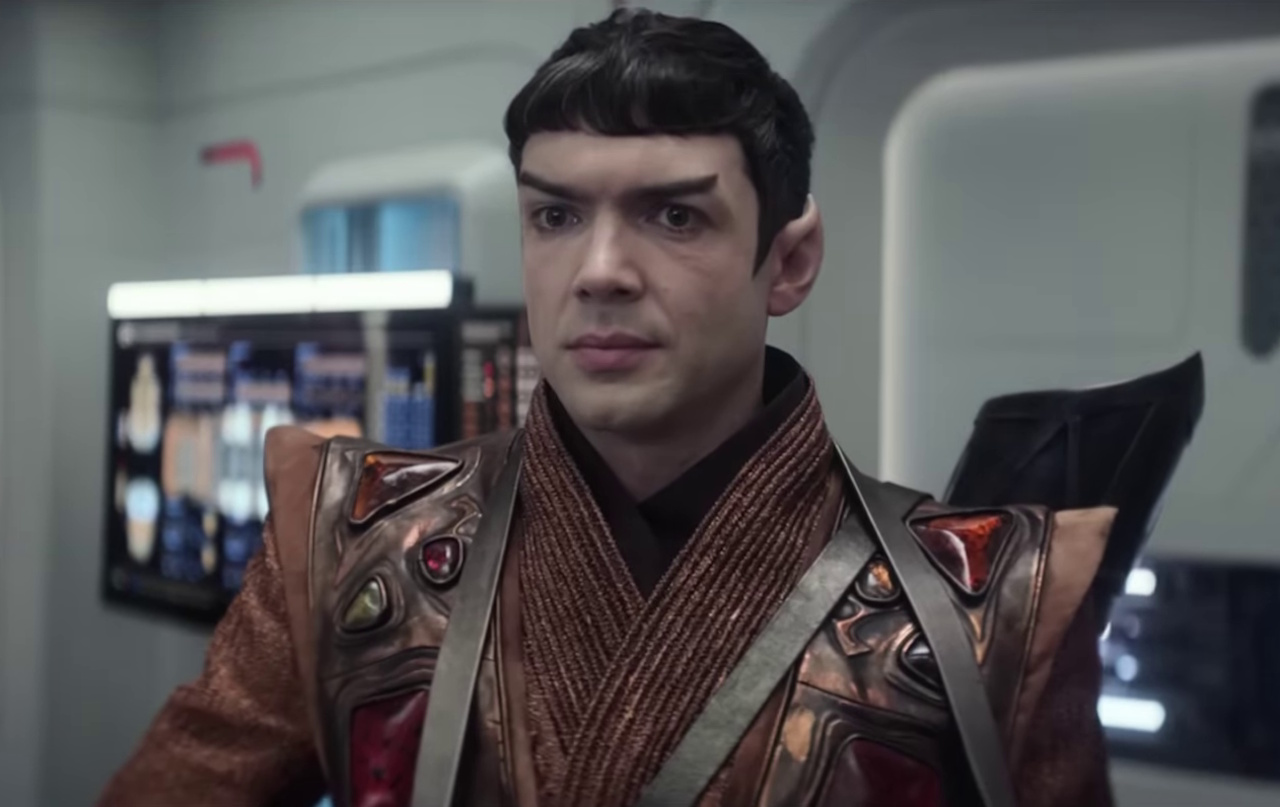
The Vulcan clip I’ve already covered – check out my piece about Star Trek at Comic-Con by clicking or tapping here – but to briefly recap, it depicts Pike and several other members of the crew being “turned into Vulcans” for some kind of mission to Spock’s homeworld. The surgery appears to be much more than just cosmetic, with the away team seemingly taking on Vulcan personality traits and suppressing their emotions. One thing I didn’t mention last time (because I hadn’t really thought about it) is this: isn’t Vulcan emotional suppression something that requires a lot of education and training? I mean, Vulcans don’t just come out of the womb with natural barriers to feeling their emotions; we’ve seen from Spock in Strange New Worlds itself how this ability is a learned one, not a natural phenomenon.
I know this probably sounds nit-picky, but I like Star Trek (and every other fictional setting that I get invested in) to remain basically consistent. Star Trek stories from as far back as the episode Sarek in The Next Generation era showed how Vulcans are not naturally emotionless; this is a learned trait or skill that takes a long time to master. And while I hope this episode is fun – which it looks like it will be – I think Star Trek should be consistent with these things.
Pike and the crew – in their Vulcan guises.
I’m also cognizant of the fact that, in basically every Vulcan-centric story so far, Strange New Worlds has taken a comedic approach. There’s a lot of fun to be had with the Vulcans, don’t get me wrong, but in Strange New Worlds a lot of it has relied on a peculiarly American style of “cringe” humour that I just personally don’t find all that funny. This new Vulcan episode looks to be taking a similar approach to those used in Season 1’s Spock Amok and Season 2’s Charades. Both of those stories relied on a premise summed up thusly: “Vulcans are all uptight, formal, and proper, so wouldn’t it be funny if something went wrong?” It’s basically slapstick; the same kind of comedy used in mid-century films like The Bellboy or Carry On Teacher. I can tolerate that kind of thing in small doses, but after Strange New Worlds has already done the whole “aren’t these stuck-up Vulcans kind of funny?” thing twice already, maybe a more straight-laced Vulcan episode might’ve been a change of pace.
There’s no shortage of examples in Star Trek of how Vulcan episodes can be entertaining, emotional, and funny – without necessarily going to such a comedic extreme. While I’ll be happy to give this episode a chance when it premieres and I don’t want to render judgement prematurely, a big part of me hopes there’ll be more to it than just cringe humour and an unserious, comedic look at Spock and the Vulcans. I kind of feel like Strange New Worlds is getting close to exhausting that premise.
A promotional still released for the Vulcan episode.
With all of that being said, the idea of an episode harkening back to the likes of Amok Time and perhaps some of Enterprise’s Vulcan stories is intriguing, and I like the idea of a story set on Vulcan which could expand beyond Spock and T’Pring. Bringing more of the characters into the episode in this way – by surgically altering them to be Vulcans – opens up a lot of different possibilities. There’s definitely going to be a comedic angle to this story – we can all see that already! But perhaps there’s also going to be a chance to spend some time with other Vulcans and take a look at aspects of Vulcan history and culture that we’ve seen elsewhere in Star Trek.
This could also be a fun way to bring back a character like Sarek. In my wishlist, I talked about the possibility of bringing in James Frain, who played the character in the first two seasons of Discovery. That could be a lot of fun, and we could get a closer examination of Sarek’s feud with Spock, perhaps. Strange New Worlds also teased Sybok – Spock’s half-brother – in Season 1, and he could be a fun character to include. Maybe we could learn why Sybok was apparently hospitalised or imprisoned, and set the stage for his role in The Final Frontier.
Will this episode revisit Spock and his family?
The second longer clip is the one I’d totally missed until now, but you might’ve already seen it a few months ago. This clip was released in the autumn, but somehow it managed to elude me!
This clip appears to pick up right after the cliffhanger at the end of Hegemony, with Captain Pike on the bridge of the Enterprise after learning that La’an, Ortegas, and a large number of the Parnassus Beta colonists have been abducted by the Gorn. It could be the very first scene of Season 3 – but there could also be something else in between, perhaps set on the Gorn ship with the abductees or even at Starfleet with Admiral April. In any case, the clip was exciting and definitely left me wanting to see the continuation of this story!
There was a lot of tension on the bridge as Pike and the crew had to figure out their options. Unable to defeat the Gorn vessel and with no way to retrieve the kidnapped officers and colonists, the only thing they can think of is to place a kind of rudimentary tracking device on the ship – allowing them to keep track of this specific Gorn warship in what seems to be a spiralling conflict. I liked the way Pike and the rest of the crew considered different ideas – and how they were all that perfectly-written Star Trek technobabble that we all know and love!
Mitchell, Pike, and Una on the bridge in a promotional photo.
It was also fun to see Una take the helm – with Ortegas missing in action, someone else had to sit in that seat, and Una seems to know how to handle the ship! My only real criticism is that the whole thing took only three minutes or so – which doesn’t seem like a lot of time for the crew to have co-ordinated a complicated shield-breaking manoeuvre. I liked the idea of ramming the Gorn ship, I just felt we could’ve seen a bit more work on the bridge or in engineering to prepare the Enterprise for this unconventional tactic.
We’ll have to see how that shakes out in the finished episode, though!
After the cliffhanger, Season 3 promises to start with a bang. As I said last time, I wonder if Strange New Worlds is teeing up this Gorn conflict to run across multiple episodes this season, or whether it’ll be resolved somehow in that first episode. With a fourth season confirmed (and already in production) could the war with the Gorn spill over into next season, too? There’s a lot to consider on that front! I really appreciate Strange New Worlds’ episodic nature, though, so I hope that if the Gorn war does run on, it doesn’t come at the expense of the wonderfully diverse storytelling we’ve been enjoying across the first couple of seasons.
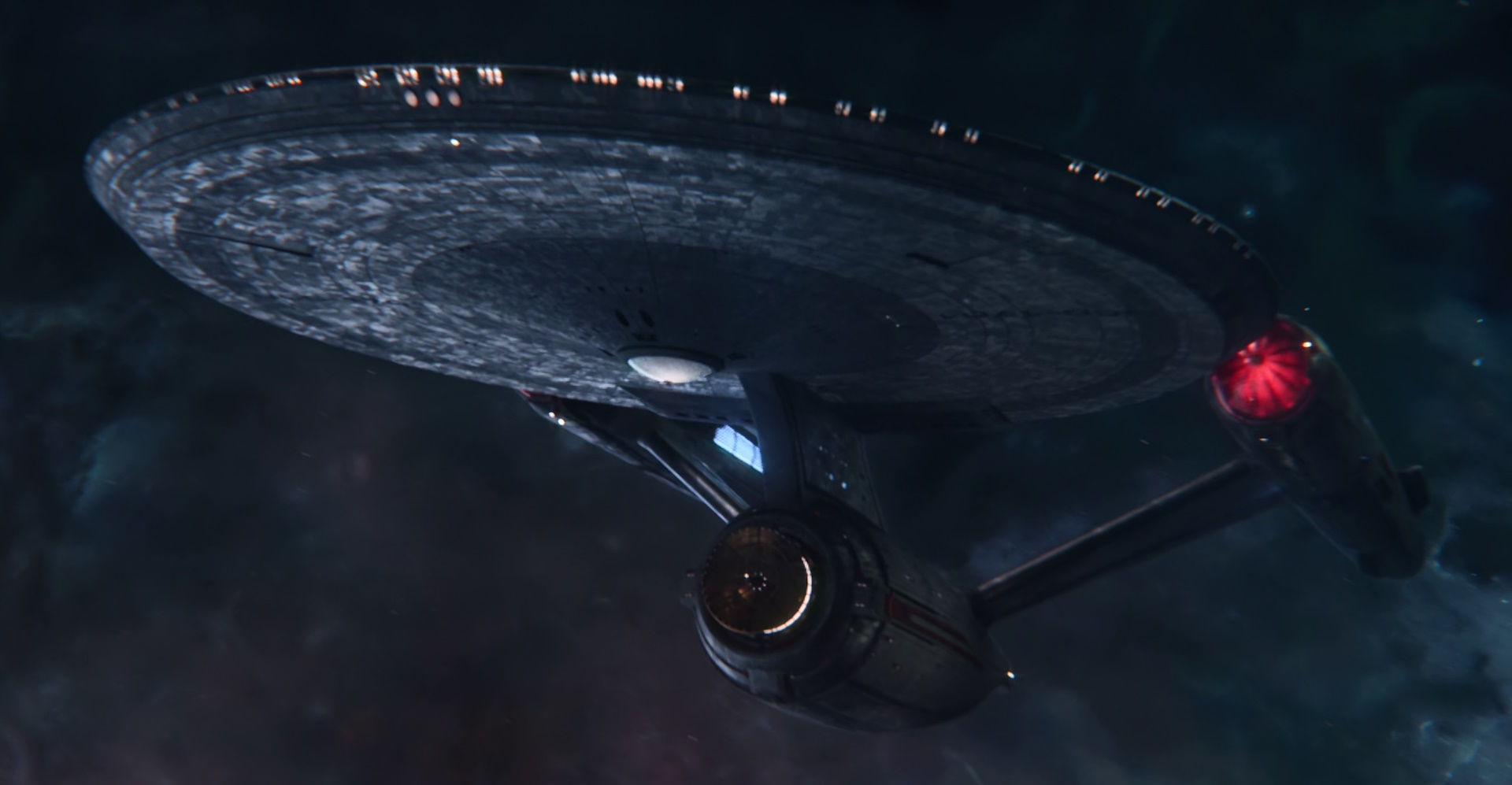
The Enterprise.
Finally, in this clip (and at the end of Hegemony) something appears to be affecting Captain Pike. I noted in my review of Hegemony that in the final seconds of last season, Pike seemed to freeze – almost like he wasn’t sure what to do. In this clip, he seemed to be experiencing something else, though, not merely an adrenaline rush, fear, or exhaustion… but something different. My first thought was that it could be related to his time crystal – the warping effect at the very end of the clip, with Pike remaining in focus as the bridge seemed to dissolve around him, felt like something Discovery’s time crystal could’ve done.
There’s also the possibility, perhaps, that Pike is infected with the Gorn parasitic eggs like Captain Batel, and he’s beginning to feel the impact. And we can’t discount the possibility that Strange New Worlds is going to do what both Picard and Discovery have done (with varying results) and try to tell a story about Pike’s mental health and the burden he feels. That would be in character – going all the way back to The Cage we got a scene with Pike talking about the responsibility of command and how it weighs on him. Pike had already been through a lot on the day the clip is set – Captain Batel is in mortal danger and he’d just learned that several of his crew had been abducted. So it’s not unreasonable to think those events would impact the captain. If Strange New Worlds is going down this road, though, I hope there’s enough time to do justice to a storyline like this. Unfortunately, modern Star Trek hasn’t always got that right.
Is everything okay with Captain Pike?
The final trailer (so far, at least) was much more diverse. Rather than just a single extended clip, we got teases that seem to come from multiple episodes. There’s less to go on in terms of story, but there were a ton of interesting-looking things in the mix! I’ll try to hit everything, but please forgive me if I miss one or two. I’ve watched the trailer several times over, but my ageing brain might not have taken everything on board!
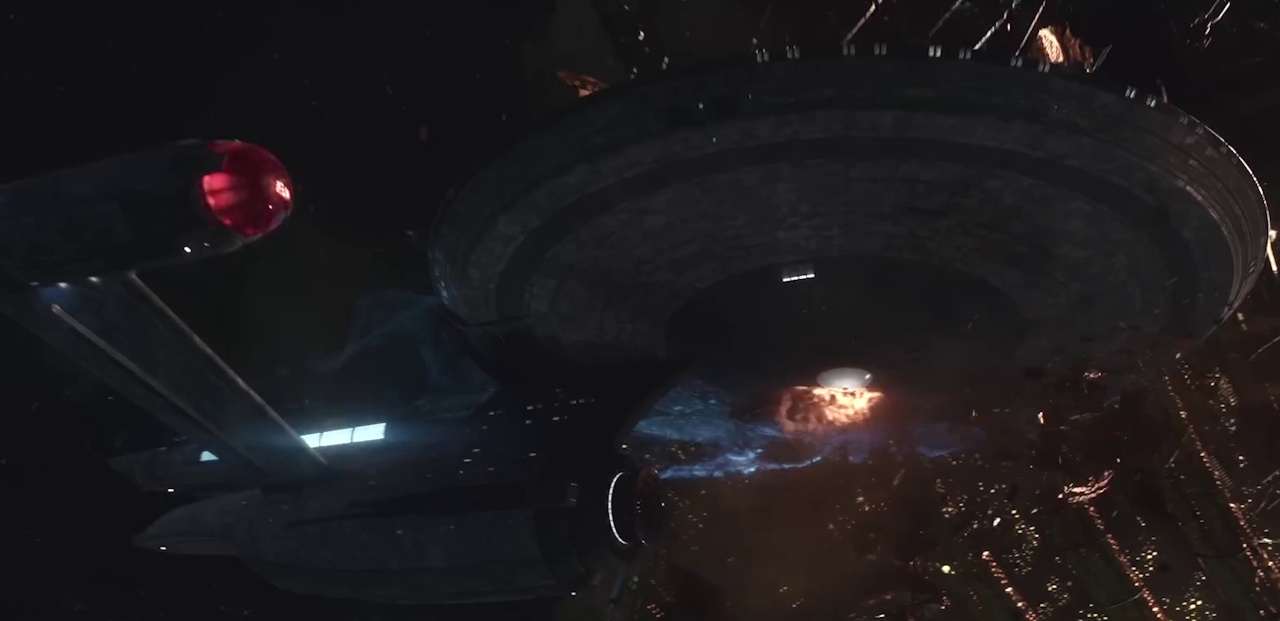
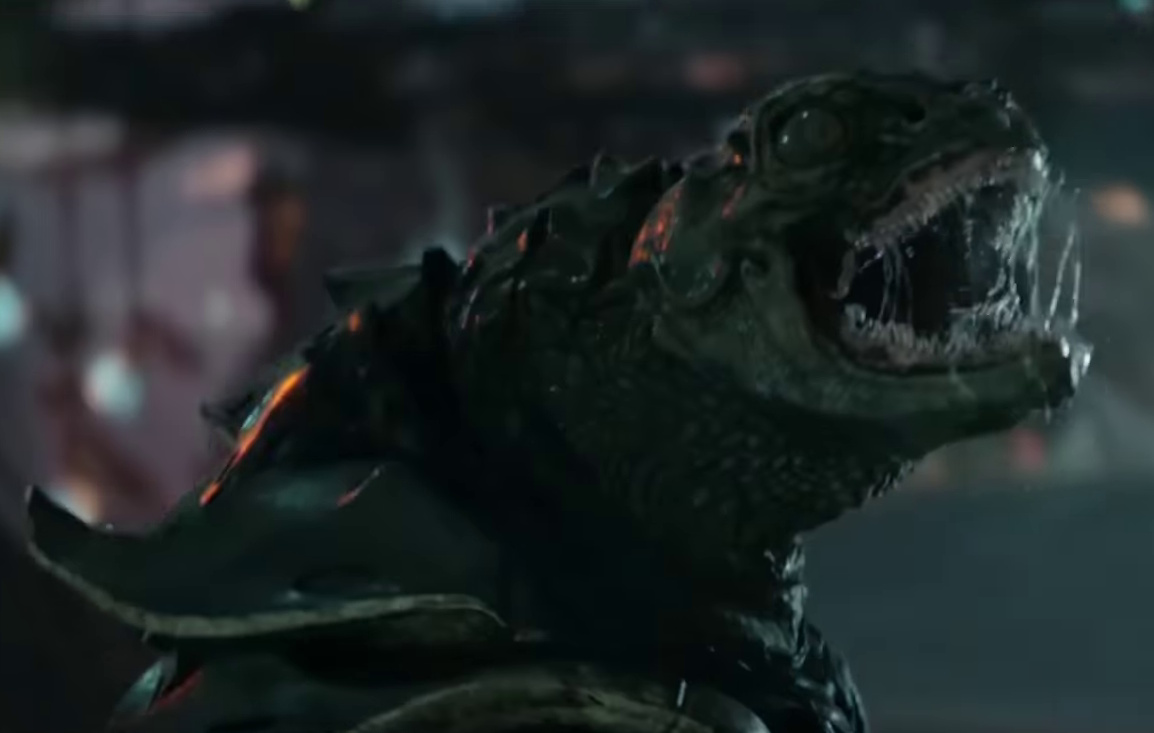
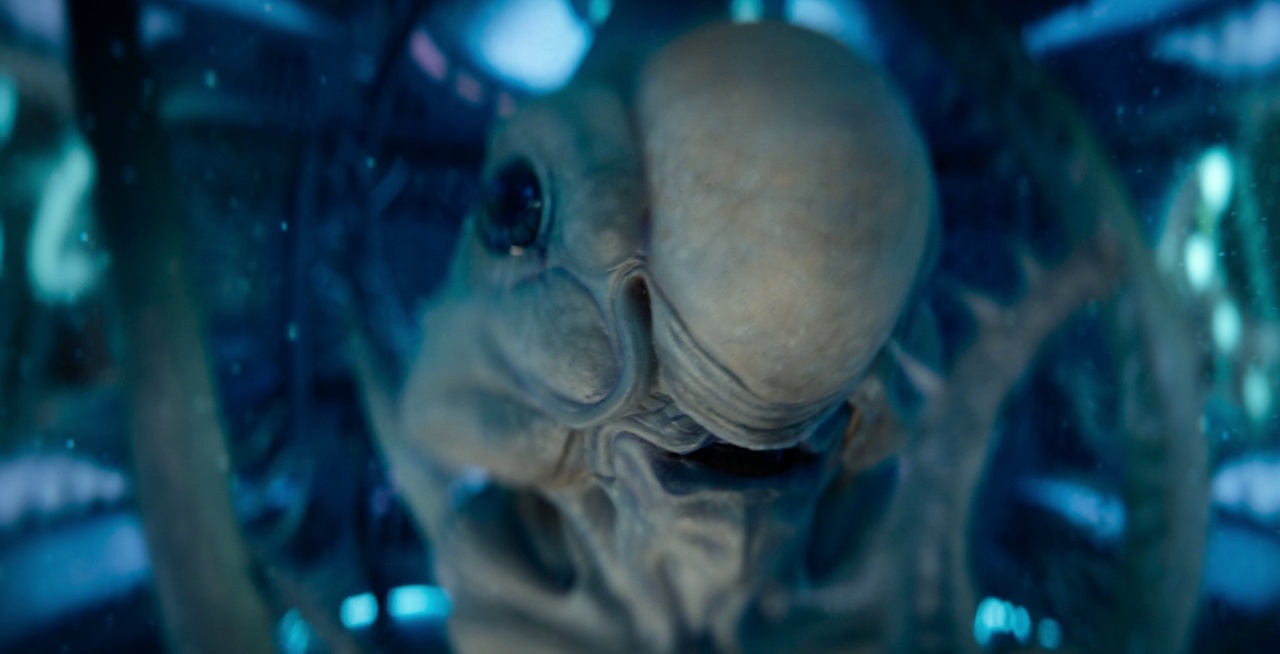
Let’s start with the Gorn. We got a similar visual of Gorn ships bearing down on the Enterprise as we saw at the end of Hegemony and in the Gorn-themed extended clip that we just talked about. That’s almost certainly from the first episode of the season, picking up right after the cliffhanger. There was also a shot of an adult Gorn – this time without a space suit! The monstrous depiction of the Gorn, clearly inspired by Alien’s xenomorphs, will definitely carry through into this season. Captain Pike and La’an also seemed to be aboard a Gorn vessel, or perhaps on a Gorn planet, firing phaser rifles.
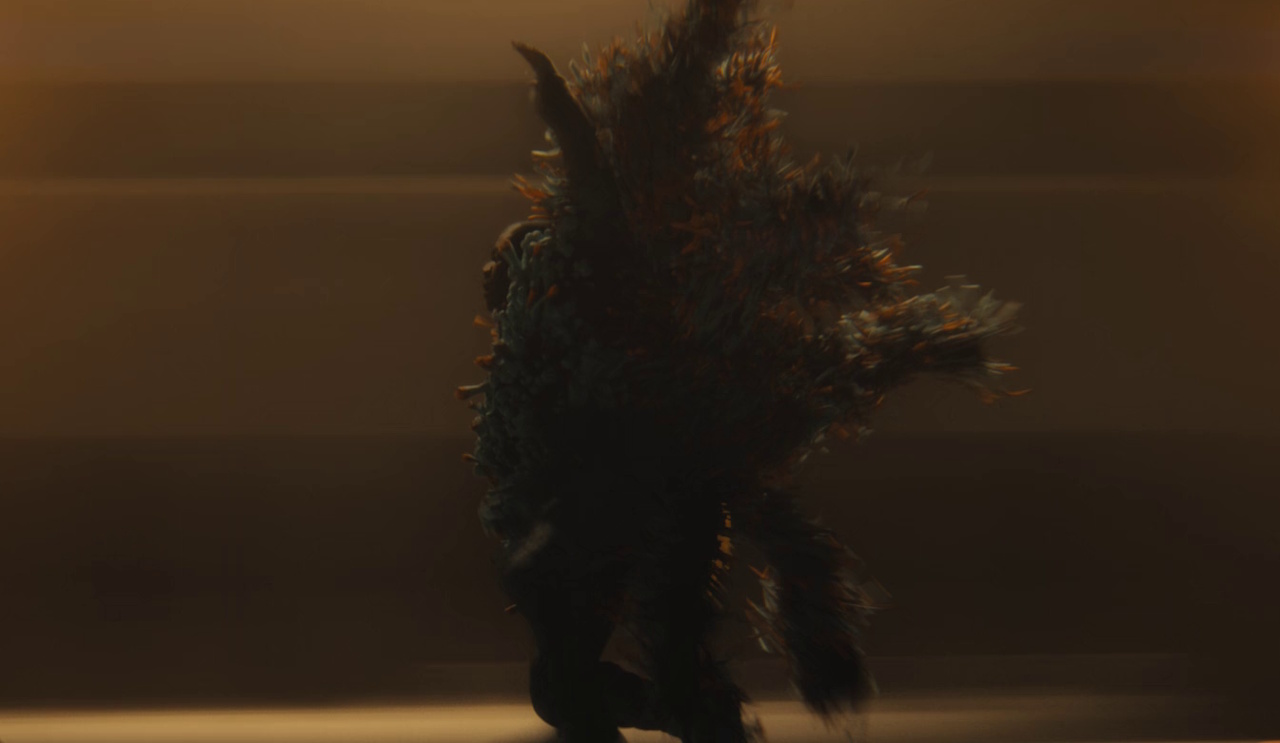
A Gorn.
I saw what looked like eggs or egg sacs in one clip, and while that could be from a different episode, it looks like it’ll be related to the Gorn. If Starfleet (or Captain Pike and the Enterprise on their own) are taking the fight to the Gorn, could they have figured out a way to even the odds? If so, perhaps that’ll be the way this Gorn conflict is brought to a close – a kind of stalemate.
I’m also intrigued by what looked like – and bear with me on this – a zombie Klingon!
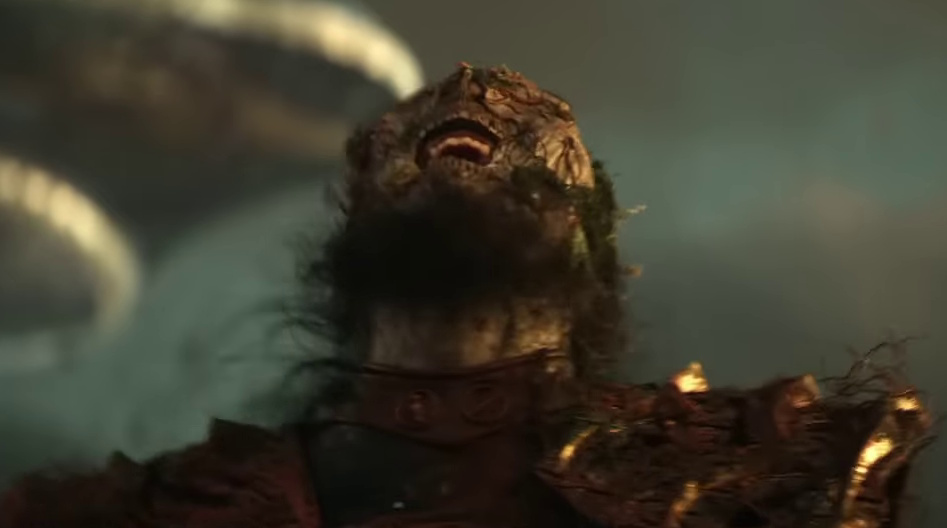
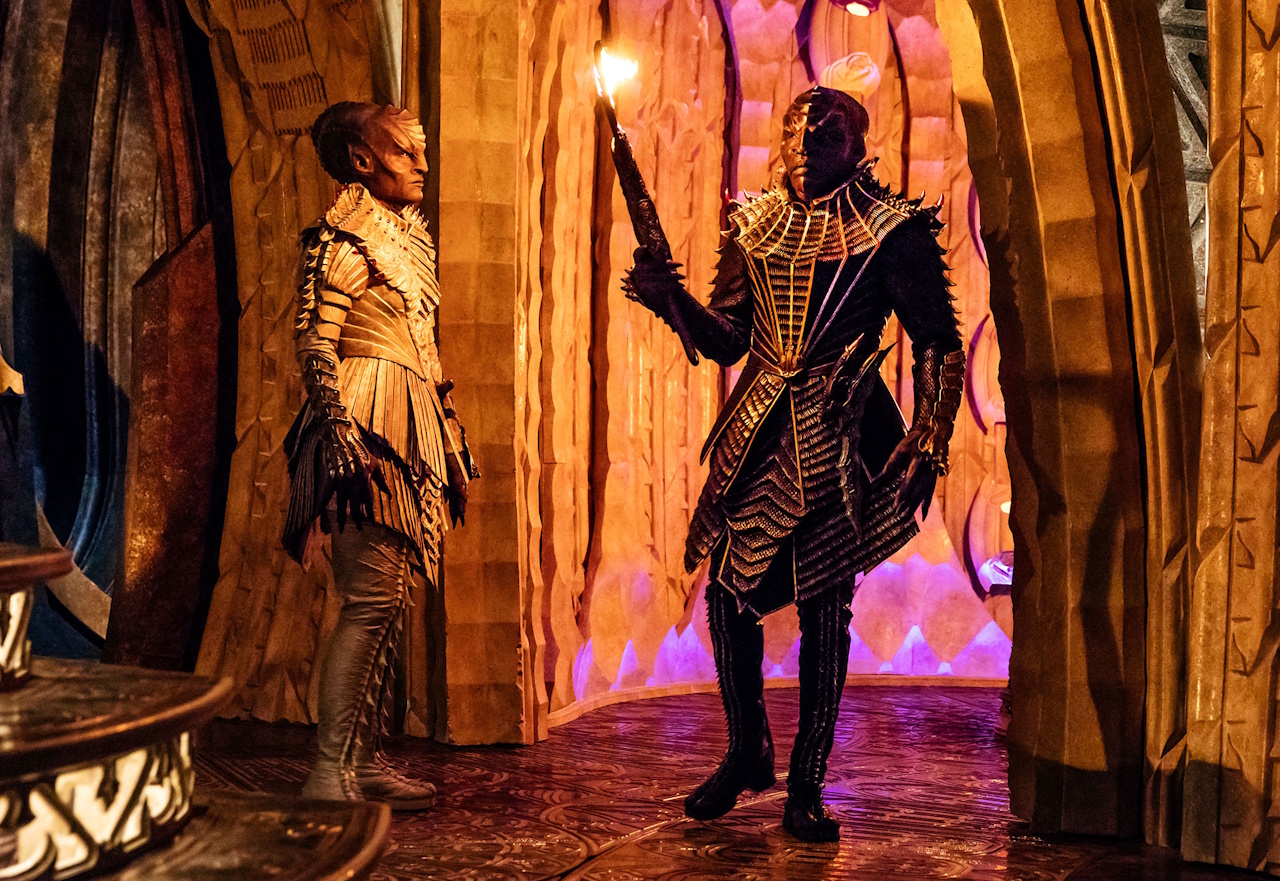
We only saw this character for a handful of frames, so I could be totally misreading it, but we saw a Klingon with a whip and then what looked like a zombified Klingon. Perhaps this Klingon has been infected with Gorn parasitic eggs – that was my first idea. But this could also be a completely different story focusing entirely on the Klingons. If it’s going to be “zombies,” perhaps we’re getting another horror episode along the lines of Season 1’s All Those Who Wander.
Is this… is this a zombie Klingon?!
There was also a very brief clip of Dr M’Benga running away from someone – or something – that was following him through a door. I couldn’t be totally clear on that, but whoever was following him looked like they could have the same kind of infection as the Klingon in the previous clip. Those could easily be from the same episode, and having Dr M’Benga present would make a ton of sense – he could be looking for a cure for whatever this contagion is that affected the Klingon and presumably other people, too.
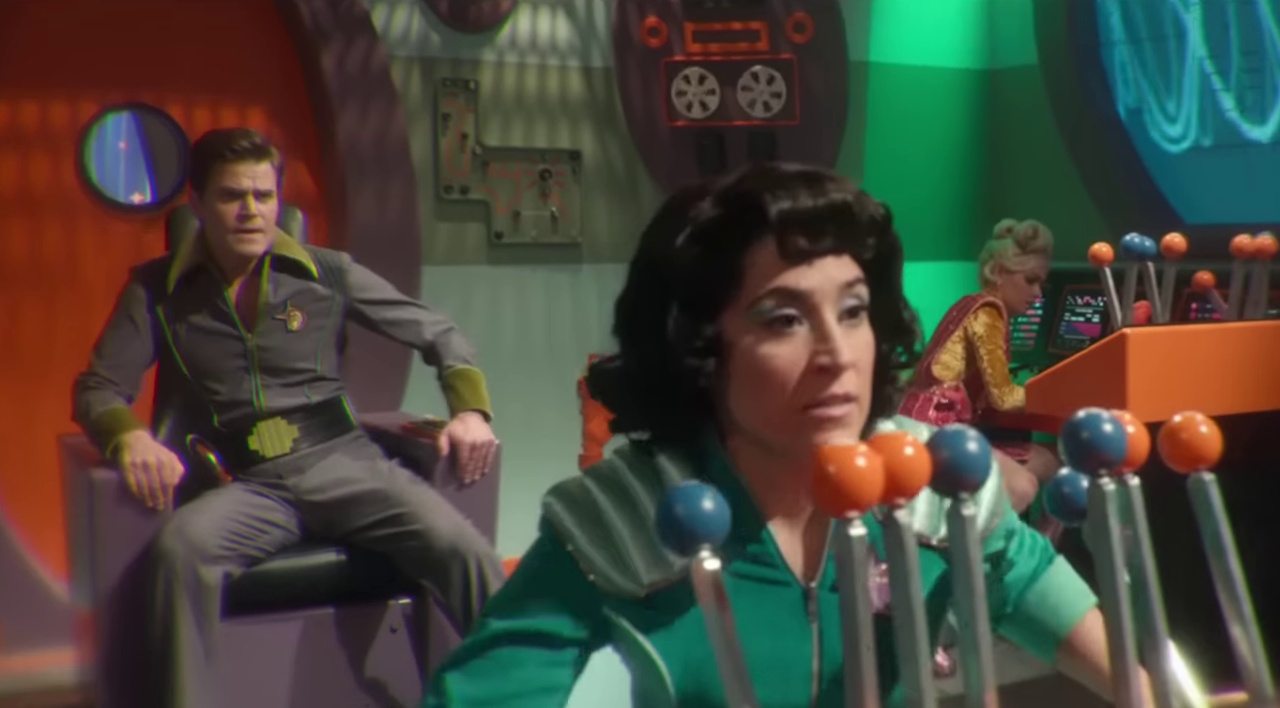
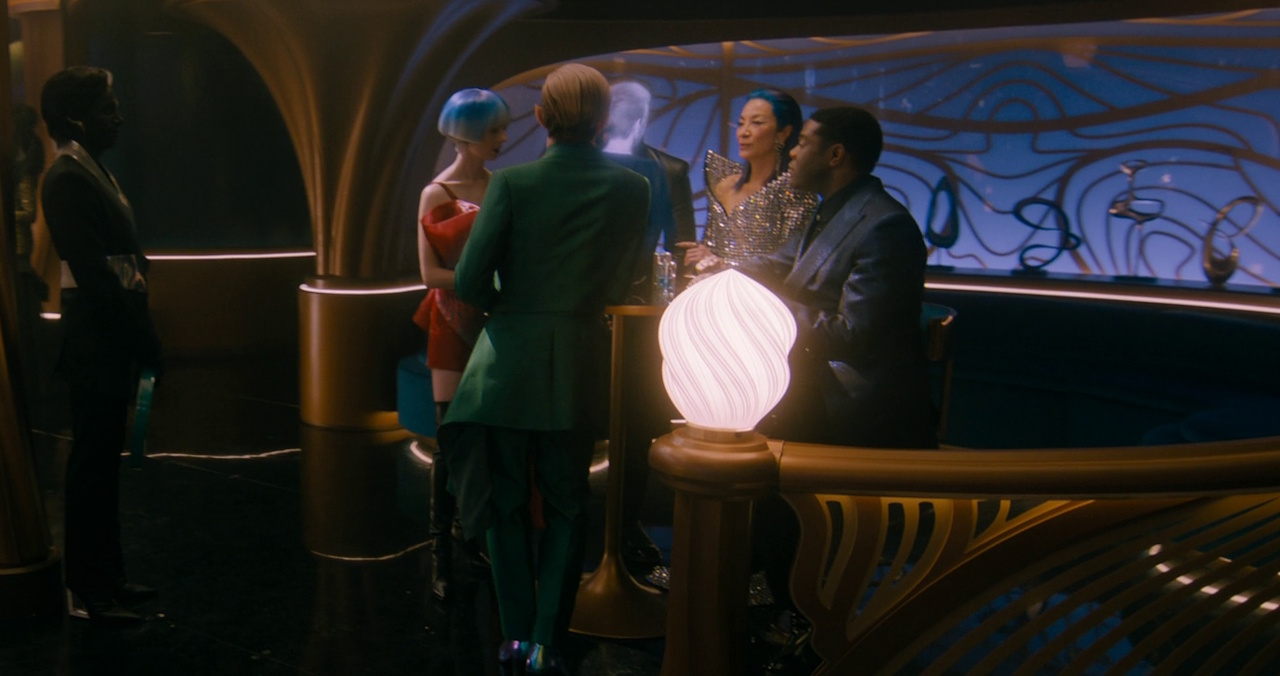
The main talking point coming out of this trailer has obviously been the throwback, retro sci-fi aesthetic that at least one episode will employ! I’m getting kind of “Captain Proton” vibes from these clips, which seem to lean into a deliberately old-fashioned look. Star Trek, of course, took inspiration in its early days from old sci-fi serials, something that Voyager’s writers acknowledged with their Captain Proton creation. I’ll be curious to see how this plays out – maybe it’ll be something like last season’s Subspace Rhapsody, where strange space phenomena mess with the Enterprise! Or it could be something completely different.
Kirk, Ortegas, and Chapel aboard a very retro ship!
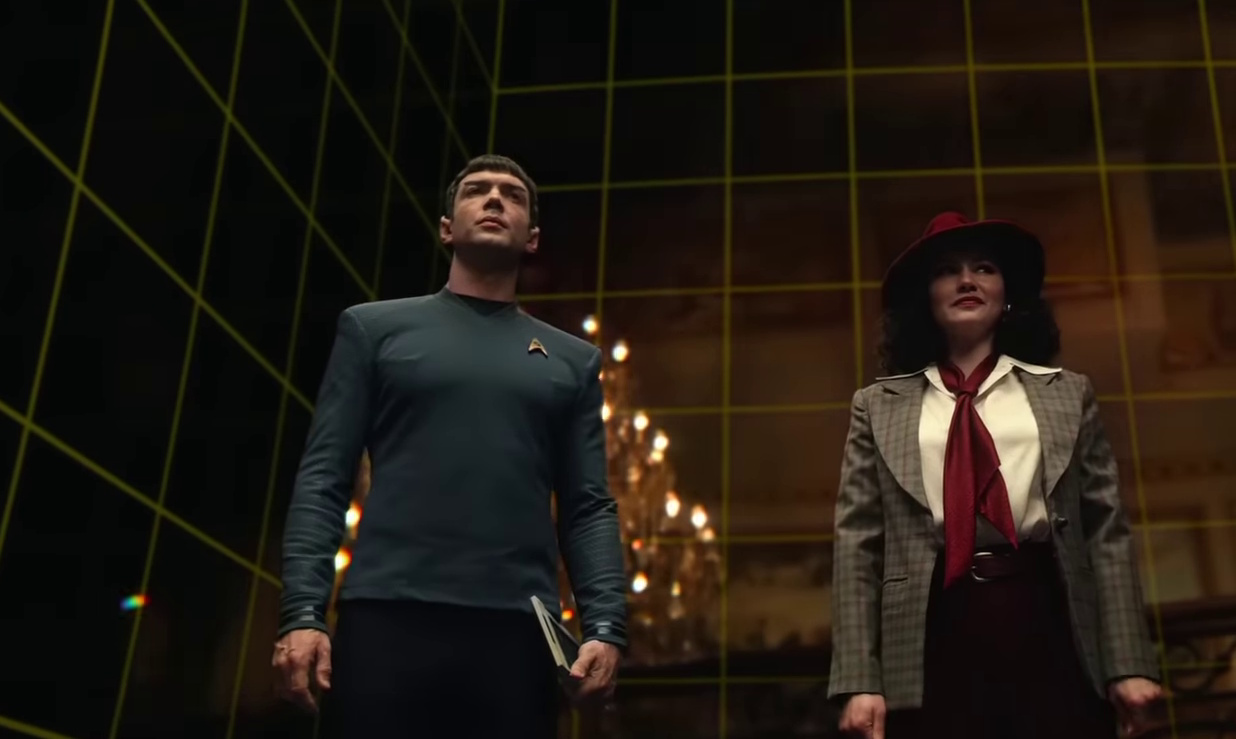
Star Trek has made a bit of a mess of holographic technology, so although we arguably “shouldn’t” be seeing a holodeck in this era… we clearly will be in at least one episode. This could be a fairly standard “the holodeck done goofed” story, with the main characters trapped in a holographic environment. Or it could be something closer to Season 1’s The Elysian Kingdom, which transformed the crew into characters from a fairy tale. Maybe these aren’t the real characters at all, they’re just holograms with the same appearances! This holodeck story seems to be distinct from the retro sci-fi story above, but they could be part of the same episode if we’re dealing with technology which can change the way the ship and crew look.
Pelia “wiring up” the Enterprise with, of all things, telephones, though… I’m really not sure what to make of that one! Parts of the ship looked darker than normal, so could there be a power drain forcing the crew to fall back on analogue technology? If so… why do they even have old-fashioned telephones on board? Perhaps these clips are all part of the same story and we’re going to get an episode all about analogue technology that features a holodeck, a retro sci-fi serial, and an underpowered Enterprise with telephone wires running everywhere!
Spock and La’an on a holodeck.
Could Strange New Worlds be about to confirm a very old Star Trek fan theory?!
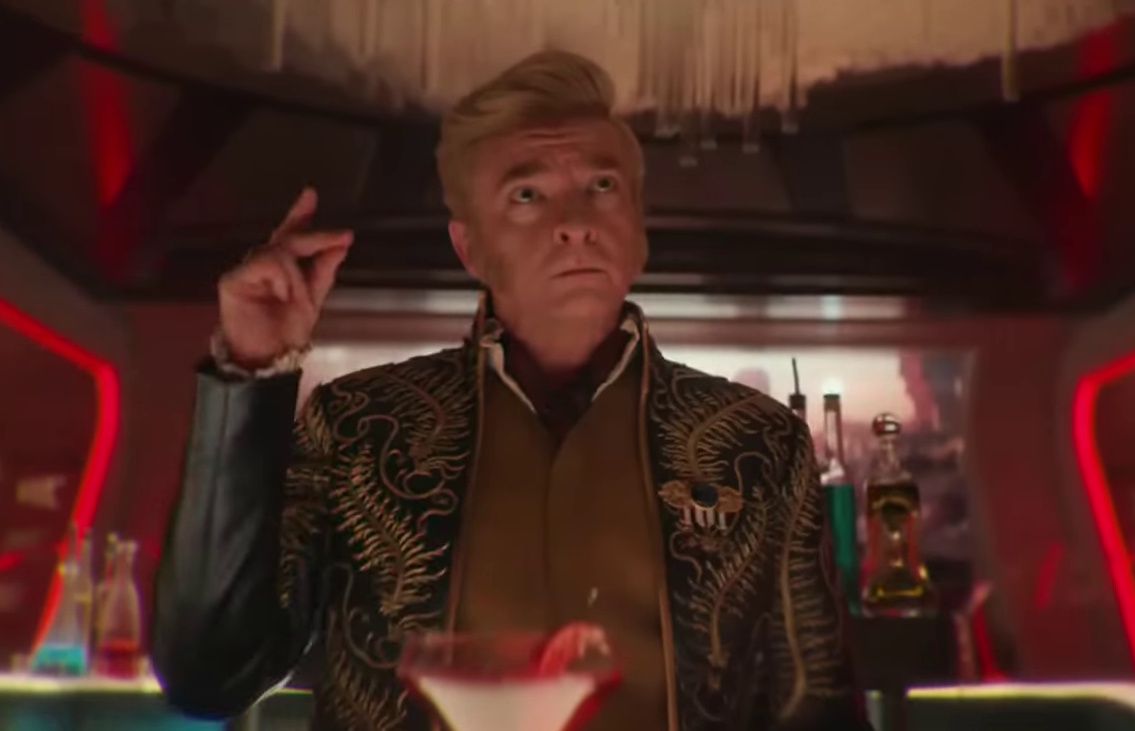
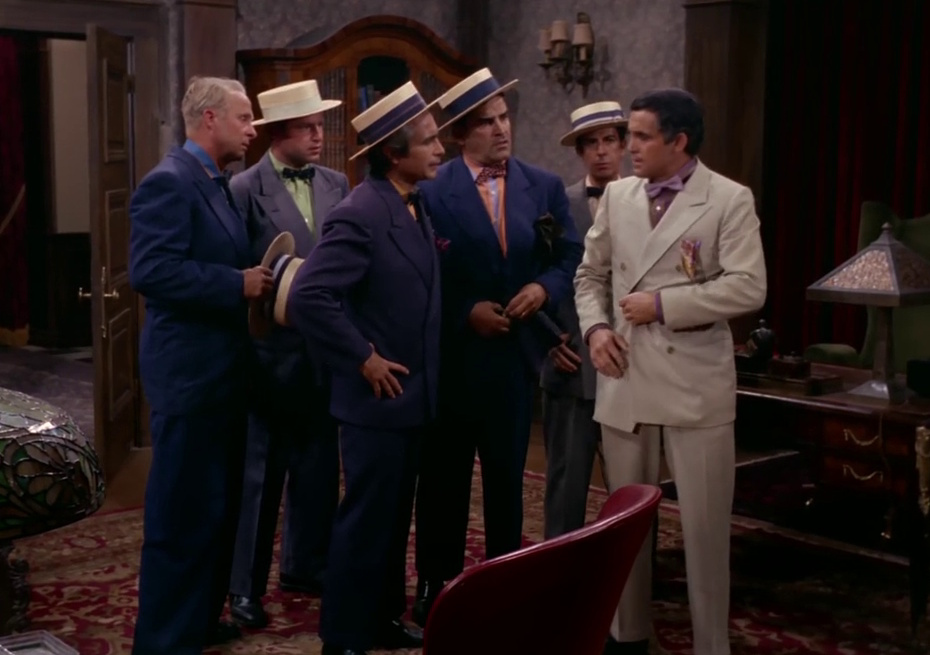
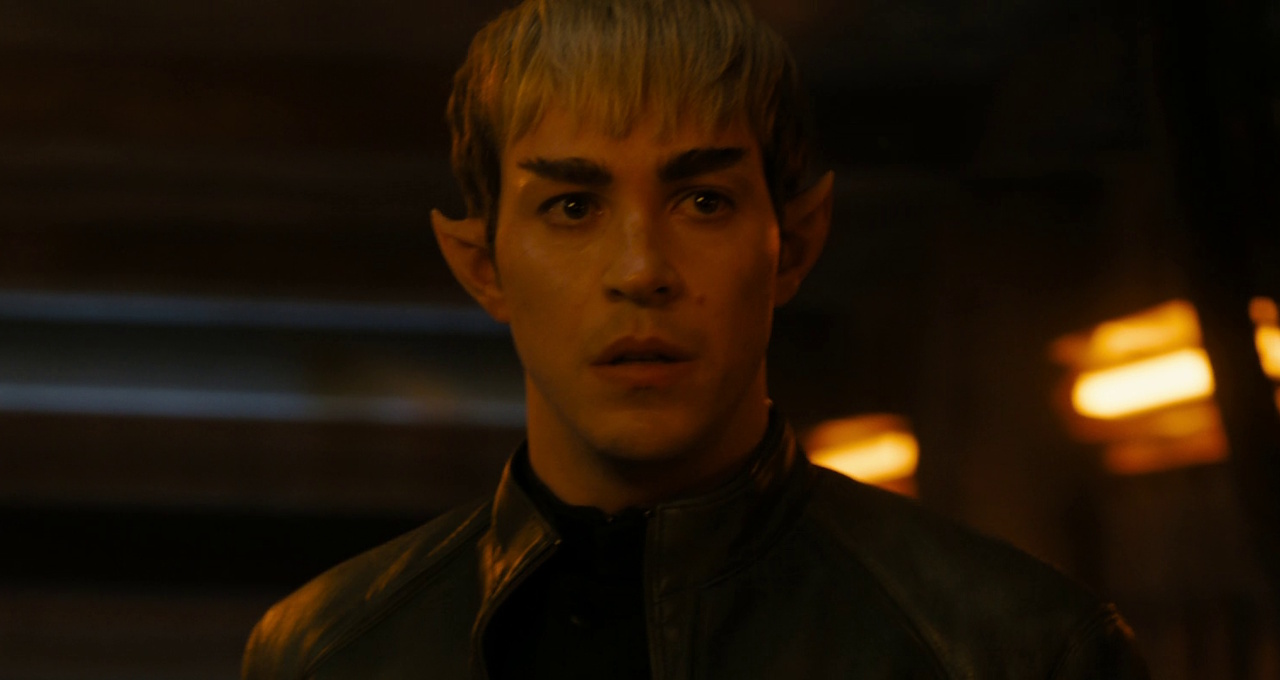
If you missed this one, many fans have speculated that Trelane – from The Original Series episode The Squire of Gothos – is a member of the Q Continuum. That theory has been doing the rounds since The Next Generation premiered, but it’s never been officially confirmed in canon. In one clip in the trailer, a character who looks very similar to Trelane, and is wearing a similar costume, raised his hand and snapped his fingers in a very Q-like manner! So does that mean we’re getting a Trelane/Q episode this time… and if so, will that old theory finally be confirmed?
Trelane was arguably less dark than Q, but this character – judging by their facial expression – looked quite serious, at least in the very brief clip we saw. So maybe we’re not going to get a fun and whimsical adventure, but something a bit deadlier? That’s a total guess, but it would certainly be a bit of a change from what fans might be expecting!
Is this a new take on Trelane?
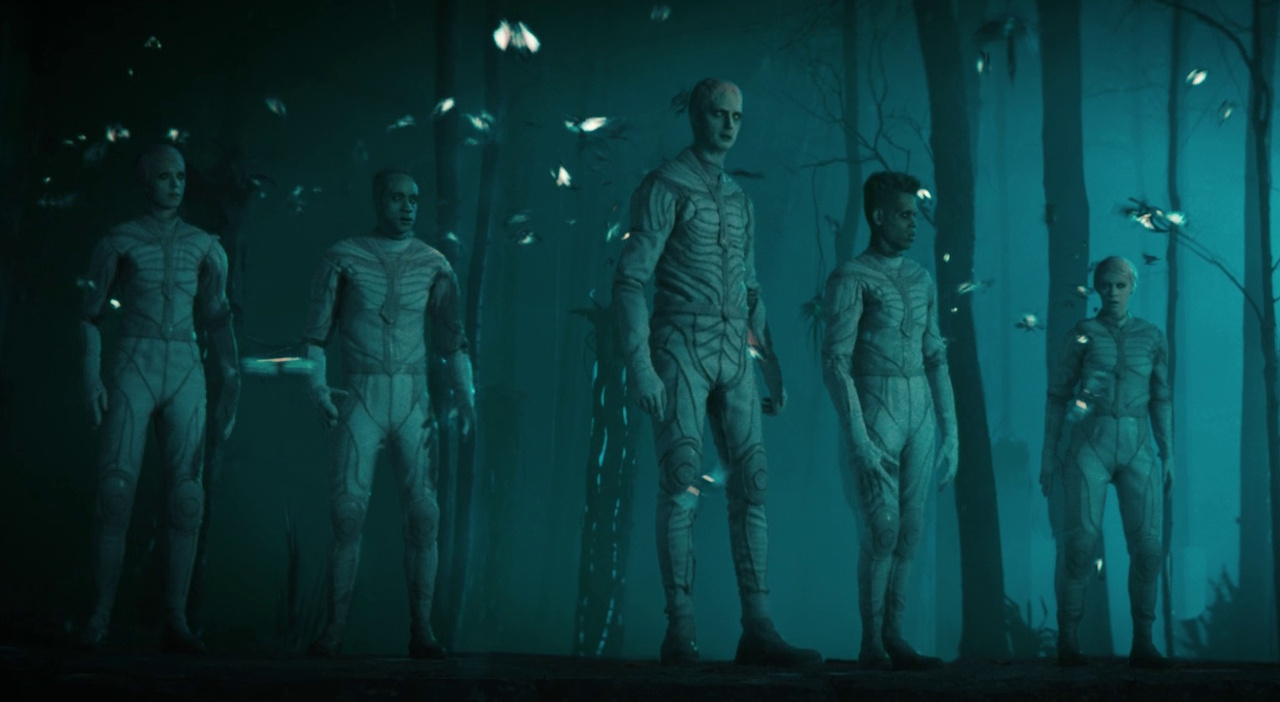
Other short clips from the trailer seemed to include a three-armed alien – which could be the first live-action depiction of an Edosian. Arex, from The Animated Series, was an Edosian, and the race has also been seen in Lower Decks, but never in live-action. The face looked, to me, closer to the Kelpiens than what I’d have expected a live-action Edosian to be, but it was a very short clip so maybe in the finished episode we’ll see more. This could also just be a background character, though!
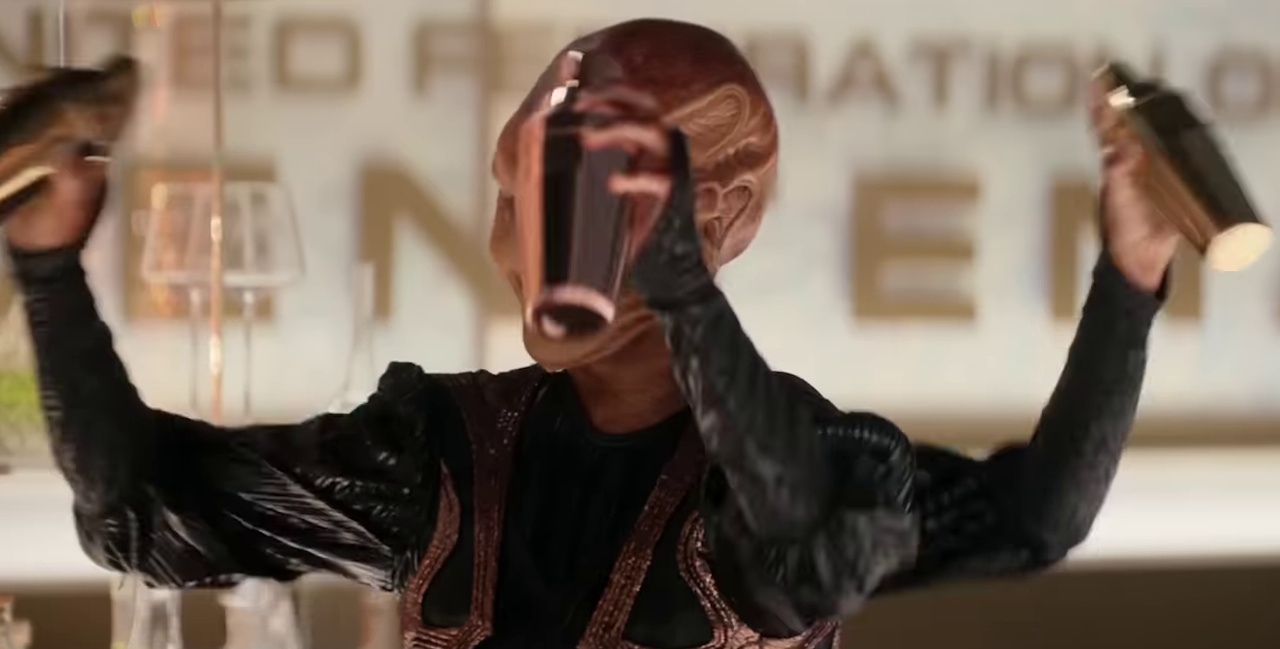
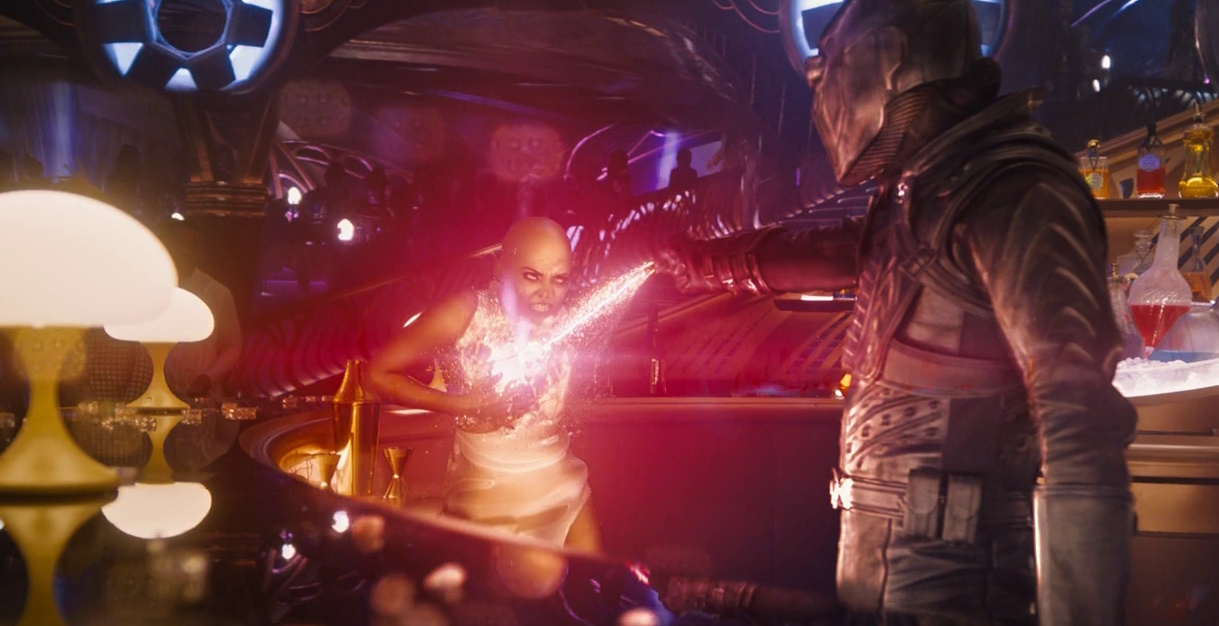
I also saw a blue-tinted star, the Enterprise (and several other ships) docked at a planet or starbase encased in a dome, Uhura having a drink with someone who instantly gave me bad and creepy vibes, and the Enterprise being rocked by a “Praxis effect” shockwave of some kind. There’s not a lot to go on in any of these clips, but they all definitely feel exciting in different ways, and I’m curious to see where all of these episodes are going to go!
Is this three-armed character an Edosian?
There were several other clips that could be from the Gorn fight, including one of Captain Pike encountering a strange-looking spaceship or shuttlecraft. I’m not sure if this is a Gorn vessel or not, but Pike’s away team uniform and the general darkness of the setting make me think it’s at least a possibility. There was also a clip of the Enterprise’s shields being impacted by some kind of light or plasma; again there’s not much to go on in either of these very short clips, except to say that they’re intriguing and exciting.
Spock and Chapel seem to have gotten back together in one clip – though something about it feels “off;” maybe it’s Spock seeming too emotional. In any case, I’m thinking that this could be a dream, an alternate timeline, a flashback, or something else – anything other than simple reality! This clip could be from the Vulcan episode, or it could be set on the dome-starbase mentioned a moment ago.
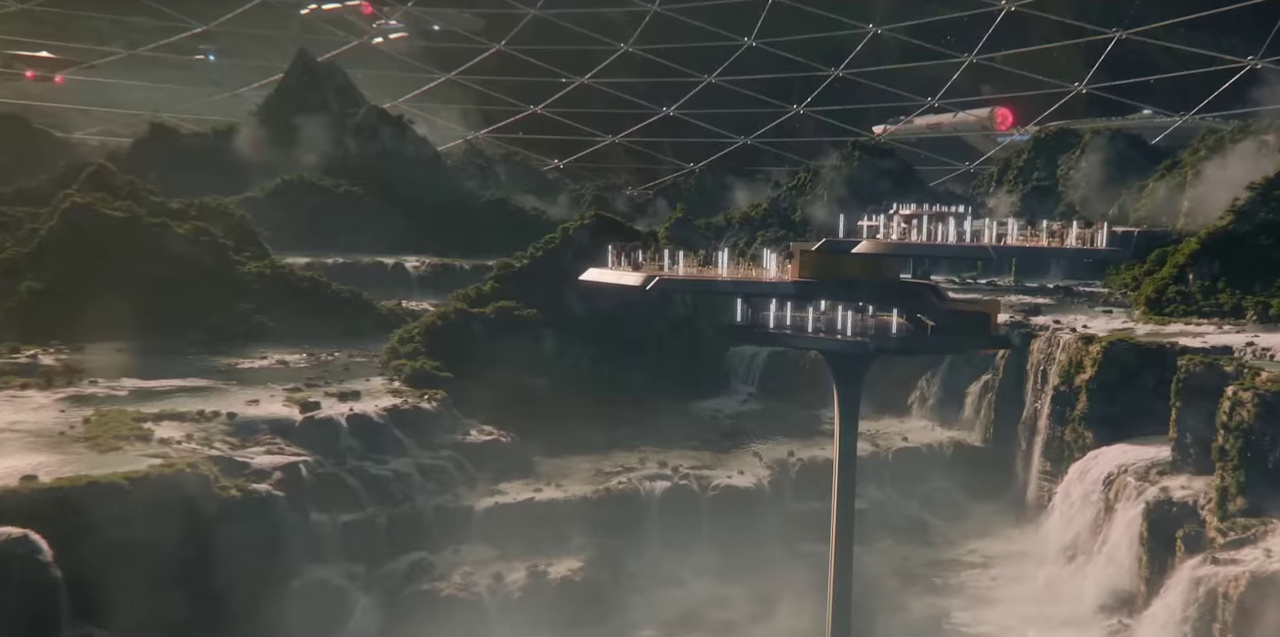
A dome-covered planetoid or starbase.
So I think that’s everything for now. Those are all of the things I noted from these three clips and trailers, at any rate!
It took me a while to work my way through Strange New Worlds Season 2, but when Season 3 arrives later this year I hope to get through all ten episodes in a more timely manner! There are a ton of interesting ideas presented in these trailers, and I’m really excited to see what Season 3 will have in store when it arrives this summer.
If I had to pick, I’d obviously say that a conclusion to the Hegemony cliffhanger is one of the things I’m most keen to see – but I’m also particularly intrigued by the diseased or “zombified” Klingon that we saw. What kind of episode will that be – and am I even close to right with my guess?
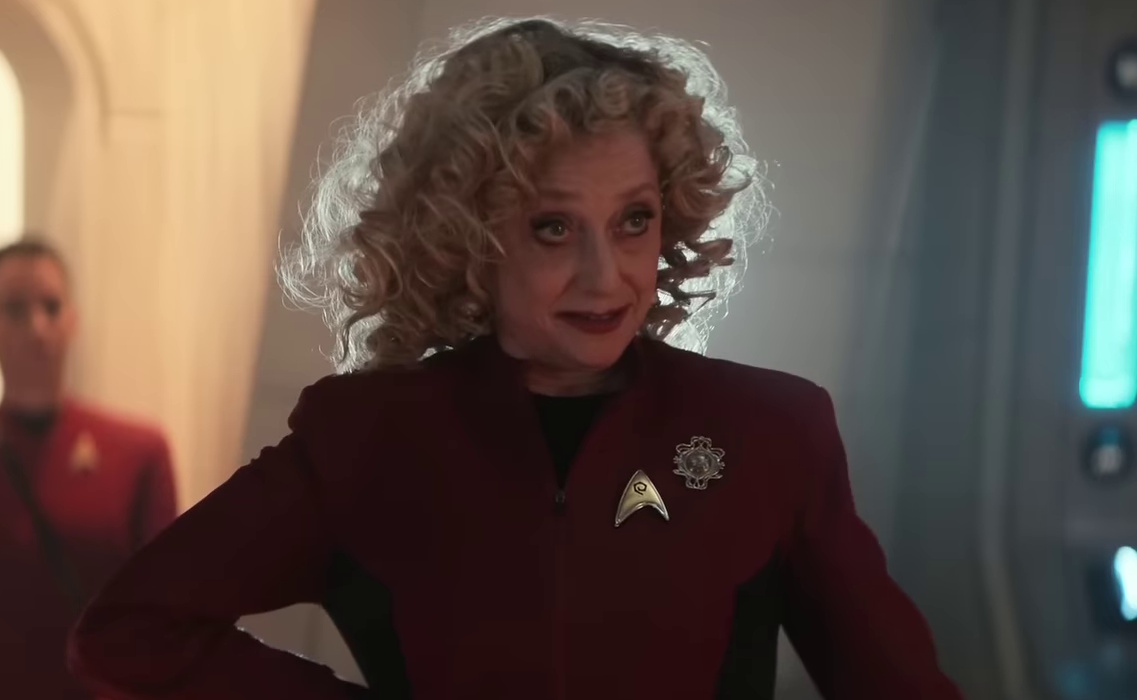
Pelia (and the rest of the crew of the Enterprise) will be back on our screens this summer!
The retro sci-fi thing looks… interesting. At least, I hope it will be. I gotta confess that Captain Proton was never my favourite part of Voyager, and I just hope a story that uses that kind of aesthetic won’t be too self-referential and “meta” to the point of killing the joke. Some shows and franchises which run for a long time can do that, and it ends up feeling less fun than fan-servicey sometimes. I don’t like to be a buzzkill, though, and I will definitely go into all ten episodes with an open mind!
So that’s all for now. When the season premieres later in the year, please check back. I’m hoping to review all ten episodes, and if there’s the opportunity, perhaps I’ll even craft a theory or two, too. I hope this has been a fun look ahead.
Star Trek: Strange New Worlds Season 3 will premiere on Paramount+ in countries and territories where the service is available in Summer 2025. Seasons 1 and 2 are out now on Paramount+ as well as on DVD and Blu-ray. The Star Trek franchise – including Strange New Worlds and all other properties discussed above – is the copyright of Paramount Global. This article contains the thoughts and opinions of one person only and is not intended to cause any offence.
Spoiler Warning: There are spoilers ahead for the Star Trek franchise.
We’ve recently talked about some of my Star Trek “head canon” – i.e. theories and ideas I have about Star Trek that aren’t confirmed on screen, but make sense to me! Click or tap here to check out that piece, by the way… I talk about things like cloaking devices, the Borg, and more. If that article was about things in Star Trek that aren’t canon but should be, then today we’re gonna do the exact opposite! These are ten Star Trek storylines that I fully believe should be non-canon.
Before we go any further, a couple of important caveats. First of all, this is a controversial subject! As Trekkies, we all have different opinions about what makes a fun and successful Star Trek story… and that’s okay. There should be enough room within the Star Trek fan community for differences of opinion and disagreement without spiralling into arguments. Everything we’re going to talk about is the entirely subjective opinion of one Star Trek fan, and I’m well aware that my opinion will be the minority one in some cases. As I’ve said before: no theory or opinion is worth getting angry or worked up over!
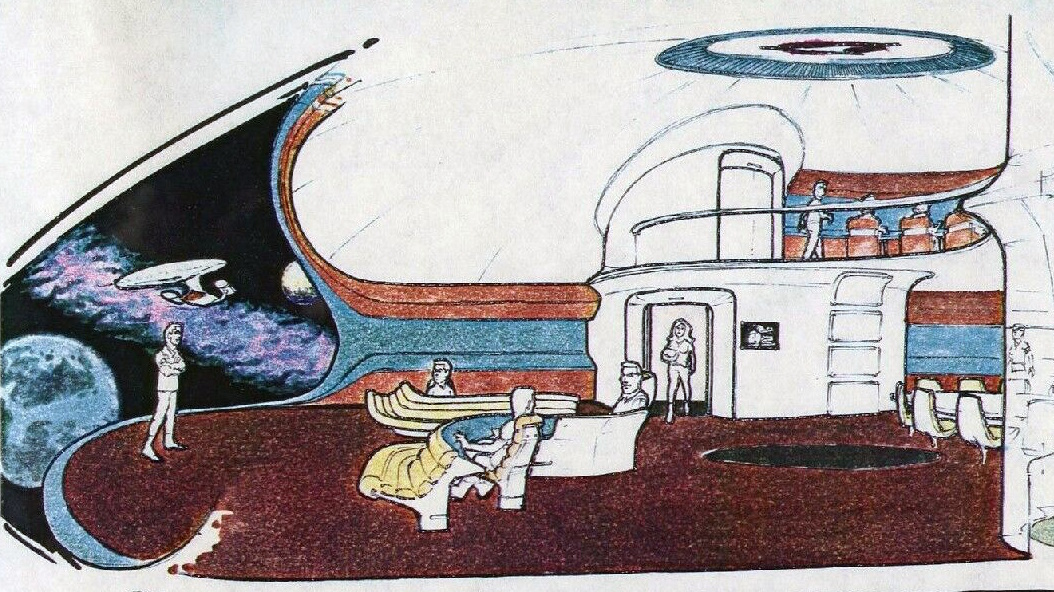
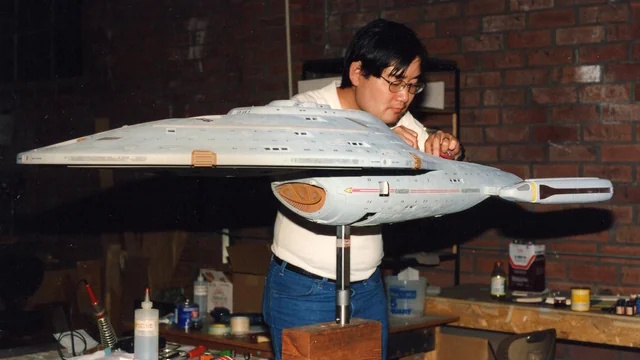
Early concept art of the Enterprise-D. Image Credit: Forgotten Trek/Frogland Archive
It should go without saying, but none of these stories or episodes will ever actually be “removed” from Star Trek’s canon. The title is really a tongue-in-cheek way of me saying that I either dislike a particular storyline or feel that its presence in the broader Star Trek universe is a stumbling block for other narratives that I prefer. This isn’t like that awful clickbait article that did the rounds a few months ago claiming that “Discovery is non-canon now!!1!” This is just for fun; a thought experiment for people like us who like to spend a bit more time with the Star Trek franchise after the credits have rolled.
With all that being said, if you aren’t in the right headspace to get into some potentially controversial Star Trek topics, this is your last chance to nope out!
Let’s jump into the list.
Storyline #1: The destruction of Romulus. Star Trek ’09, Picard, Discovery, et al.
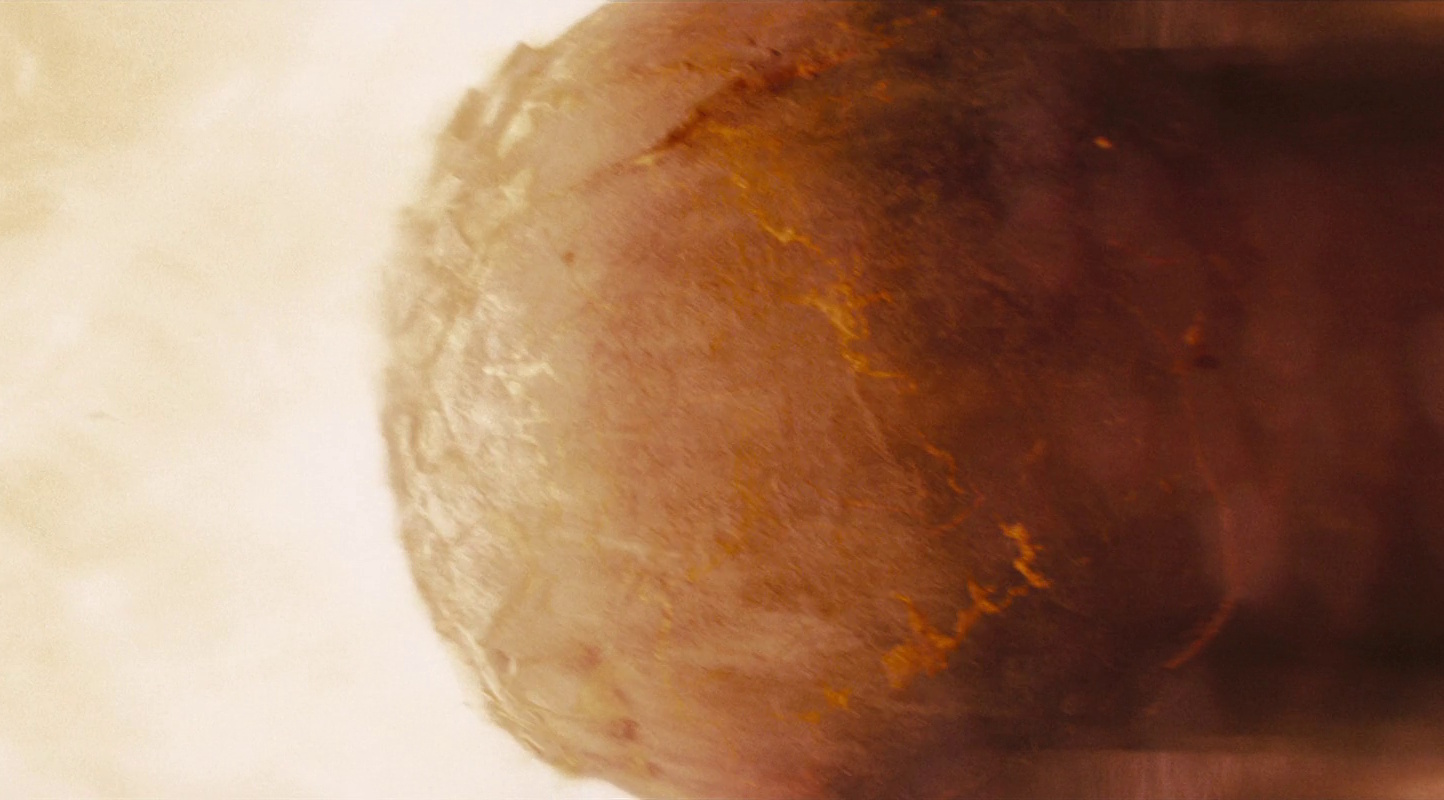
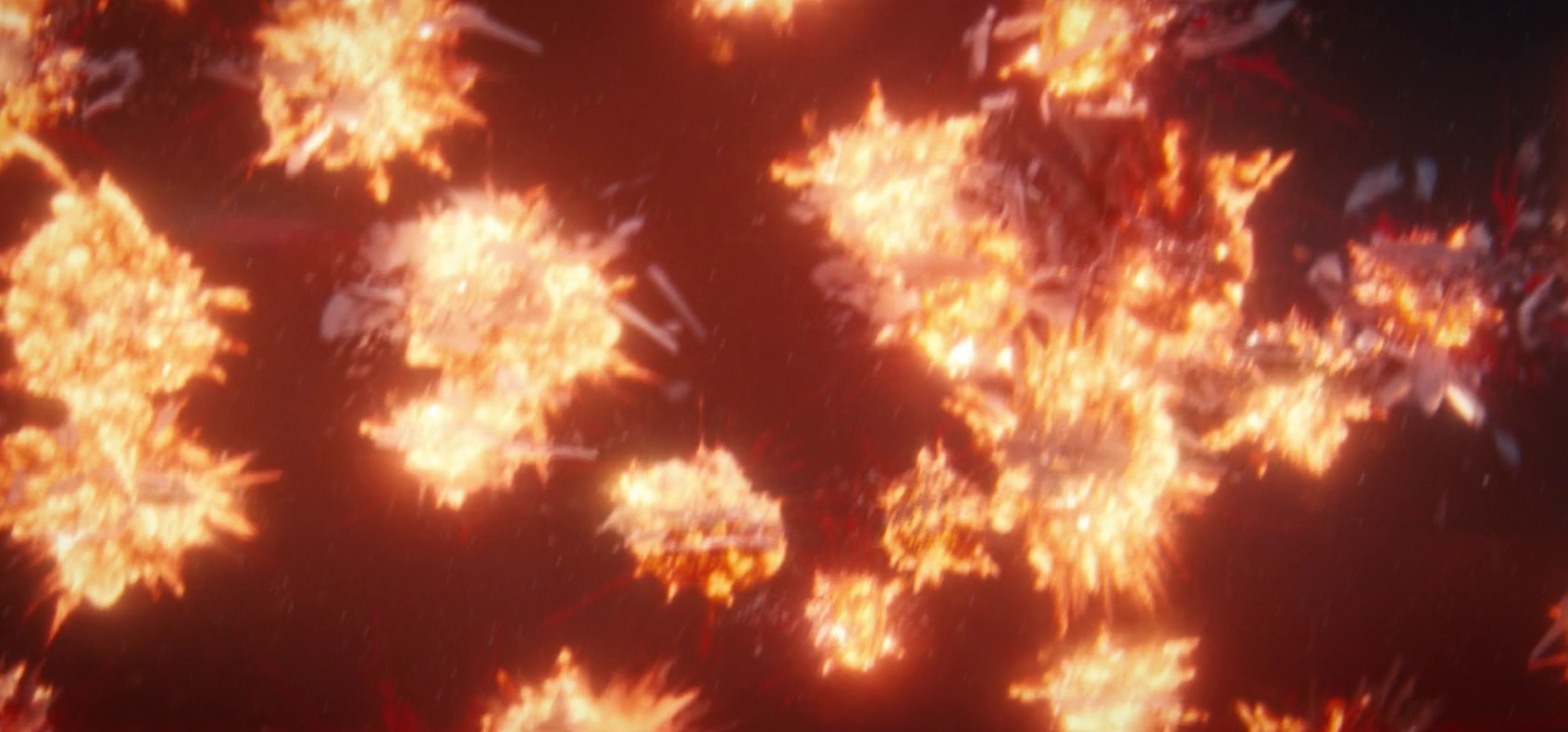
Romulus was destroyed by a supernova.
In Star Trek ’09, the destruction of Romulus was kind of haphazardly thrown in as a way to justify Spock’s involvement in the story and tee up Nero as a villain. And at the time that film was being written, I guess it’s not unfair to say that a full-scale revival of the Star Trek franchise on the small screen seemed beyond unlikely! But after Star Trek was brought back and returned not only to the prime timeline but to the late 24th Century (and beyond), the destruction of Romulus has proven to be a difficult storyline for subsequent productions to navigate.
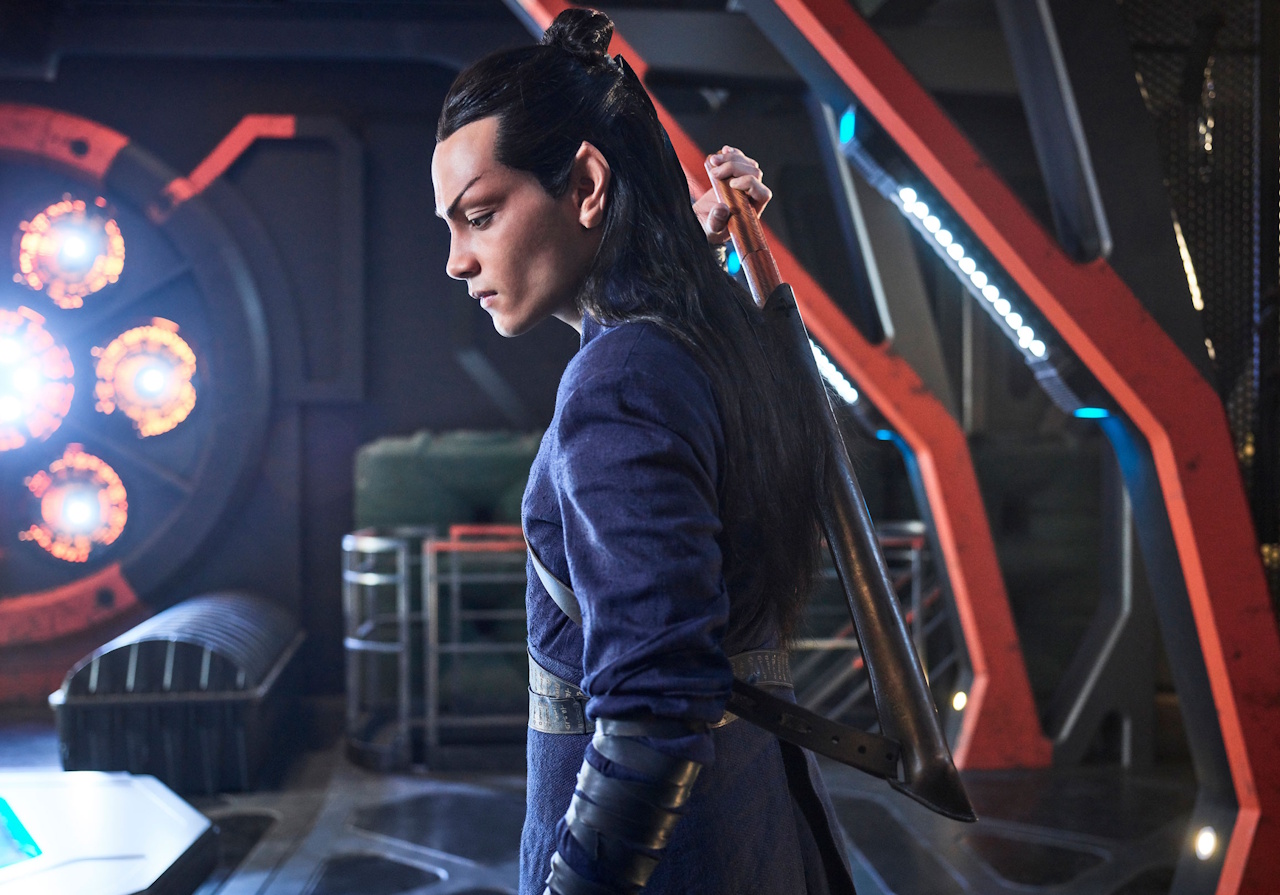
Picard was the first to pick up this story thread in its first season, showing a few flashbacks to Admiral Picard and his Romulan rescue plan. Romulan refugees also cropped up in Season 1… but the show didn’t really know what to do with them or how to handle the Romulans as a whole after the loss of their homeworld. The character of Elnor could’ve been a great point-of-view character for exploring this post-destruction Romulan Empire… but Picard’s writers had other ideas, and the character was abandoned.
Elnor was unceremoniously dumped before we could spend much time with him.
Discovery brought back the idea of Romulan-Vulcan reunification in the far future, and managed at least one creditable effort with that premise. But again, this story was a one-off and didn’t really go much further, even when Vulcan leader T’Rina became a recurring character. The fact that Romulus had been destroyed – centuries in the past from this vantage point – didn’t really come up in a big way, either, and I reckon Discovery’s Ni’Var storyline could’ve worked just as well without it.
The Romulans are one of Star Trek’s most iconic villains – perhaps in third place behind only the Klingons and Borg. To destroy their homeworld – the core of their empire – for what was essentially a throwaway scene and the backstory of an over-the-top villain… I dunno. It feels extreme, which Star Trek ’09 was in some ways. But any stories set after the late 24th Century are now constrained by this massive narrative beat, and will arguably miss out on one of the franchise’s best villains. The Romulans are certainly one of Star Trek’s most shadowy, clandestine factions, and damaging them so severely that it would take them decades if not centuries to recover, while also impoverishing at least some of their survivors… it places real constraints on future stories.
Storyline #2: Suspiciously human-like aliens on many different planets. The Original Series
These are meant to be aliens. From outer space.
When we reach the final frontier and explore strange new worlds… we’re going to meet aliens and totally new forms of life. We aren’t going to encounter an exact duplicate of Earth, a planet where everyone dresses like it’s Germany in the 1930s, or a planet where whose inhabitants – who don’t look even remotely alien – think they’re living in Ancient Rome. In a word… these old episodes of The Original Series (and some from The Next Generation, too) aren’t sci-fi enough!
There’s a perfectly reasonable explanation for this, of course: it was the ’60s, and The Original Series had a limited budget to work with. The show would use stages and props that had been built for other projects, or Paramount’s backlot, meaning explanations had to be found and aliens created to fit with those existing sets. There were also limitations to the prosthetics, puppets, and practical effects that could be designed and built, and with twenty-five episodes per season to write… some liberties had to be taken with the way aliens looked and behaved.
Kirk leads an away team to Miri’s planet: a clone or twin of Earth.
But for me… let’s just say I’ve always been less keen on these too-human alien societies. I think there’s an interesting head canon explanation (that I go into in more detail in a standalone piece that you can find by clicking or tapping here) that basically says that these are lost or forgotten human colonies from the early days of pre-Federation spaceflight. But that only works if you buy into my theory! As presented on screen, we’re meant to take these societies to be Earth-like aliens… and I just don’t think that works if we’re taking Star Trek seriously as a sci-fi universe.
Space is big and space is weird – so there are bound to be incomprehensible things out there for our heroes to encounter. But too often, especially in The Original Series, we’d get these “aliens” that were not only physically indistinguishable from humans, but whose societies and even planetary geography was identical to some part of human history, too. Don’t get me wrong, many of these episodes are a ton of fun and they’re part of what made Star Trek what it is today. But I just don’t think they have a place in the franchise any more… and they haven’t for decades.
Storyline #3: Most of the mission to 2024. Picard Season 2
Los Angeles as seen in Picard Season 2.
I’ve had a piece in my writing pile for a couple of years tentatively titled “Star Trek: Picard – The Movie,” in which I’m going to argue that Picard’s second season (which I generally didn’t like) would work so much better as a cut-down two-hour-ish movie rather than a ten-episode season. I’d keep the attack on the Stargazer and the arrival of the Borg, I’d keep the Confederation timeline and the Borg Queen’s corpse, and I’d keep Agnes’ assimilation. But after that I’d cut out almost all of the 21st Century stuff, including all the revelations about Picard’s past and Q being on his deathbed, streamline the story by saying Q’s real objective was to prevent the mysterious anomaly from destroying the Federation, and launch Picard and his friends back to the bridge of the Stargazer.
For me, Picard’s second season spent way, way too long wallowing in a boring 21st Century environment that robbed the story of basically everything that feels like Star Trek, and I didn’t enjoy it. There was the kernel of an interesting idea, with Picard having to confront childhood trauma. But that storyline completely fell apart, it didn’t expand our understanding of Jean-Luc Picard as a character in any meaningful way, and parts of it felt almost like “torture porn;” throwing Picard (and other characters like Raffi and Rios) into a series of traumatic events that served no real narrative function. Picard’s story just didn’t give us much of anything, Raffi’s was undone with seconds to spare at the end of the season, and Rios’ story was written in a weirdly contradictory way to facilitate his exit from the series.
The new USS Excelsior.
So I’d cut out all of that, and I’d streamline Picard’s second season into a much more reasonable two-hour movie. There’d still be time for what I said in my review was one of the best and most frightening presentations of the Borg that we’d seen in decades, there’d still be a way for Q to play a part, and we could hop over to the Confederation timeline for a little while to get a Mirror Universe-inspired alternate reality look at Picard and Earth. But the mission to the 21st Century could be seriously cut back to only a few minutes, with perhaps one objective for Picard and the gang: to ensure the Europa Mission launches on cue.
I really ought to finish writing up my longer piece on this idea, because I can’t fully do justice to it in just a few paragraphs! Stay tuned here on the website, because I daresay I’ll get around to it one of these days! For now, suffice to say that Picard’s random wandering through 21st Century Los Angeles (and a suspiciously California-like France) should be dumped.
Storyline #4: Captain Archer versus the Borg. Enterprise Season 2: Regeneration
Reed and Archer take on the Borg.
I genuinely enjoy Regeneration as a one-off episode, and I think it was a fun idea to bring the Borg into Enterprise… even if it was pretty obvious that the reason for doing so was to boost the show’s flagging ratings. But stepping back and thinking about what it means for the history of Borg-Federation contact, Regeneration really screws with a timeline that has already been meddled with!
There are three angles to approach this from, and all of them are bad. Firstly, we have what this storyline says about Picard and the crew of the Enterprise-E. First Contact made clear that Picard had ordered his ship hidden so as not to accidentally interfere with humanity’s first warp flight and the Vulcans’ arrival on Earth. But apparently they totally ignored, forgot about, or didn’t think to scan for Borg debris from the ship they’d destroyed. It presents Picard and co. as incompetent at best when it comes to cultural contamination, and given how meticulous we know he is… it just doesn’t track that there’d be all this debris left behind, including fully intact and functional Borg drones.
An assimilated shuttle versus the Enterprise.
Next, the Borg sent a message to the Collective in the Delta Quadrant, basically making the whole First Contact–Regeneration story a time-loop paradox. It also seriously muddles the question of how and when the Borg first encountered humanity. Was it when they received this message? Was it when they assimilated the Hansen family in the 2340s? Voyager had already messed with the Borg quite a lot thanks to Seven of Nine and the Borg Queen, so this additional complication was not helpful! Turning the story of humanity’s first contact with the Borg into this kind of paradox is not what I wanted to see.
Finally, there’s what this story says about Starfleet. Captain Archer encountered a race of cybernetic beings who sent a message to the Delta Quadrant. Years later, the Federation took in El-Aurian refugees whose planet had been attacked by the Borg. Yet for some reason, by the 24th Century, all knowledge of both of these events was suppressed, deleted, or just not taught at the Academy. Given how hard Archer and his crew had to work to stop a handful of drones, you’d think they’d have recorded the details of what they did and what they were up against so that future Starfleet explorers wouldn’t be starting from scratch. This is a typical “prequel problem” of the kind Enterprise created on more than one occasion. For all of these reasons combined, though, Regeneration’s 22nd Century Borg storyline joins this list.
Storyline #5: Warp 10 as a hard limit on travel. The Next Generation, Voyager Season 2: Threshold, et al.
The Enterprise-D jumps to warp.
Star Trek has been pretty inconsistent with how warp speeds and travel times are depicted. I have a head canon explanation that basically says Starfleet re-designates warp factors as newer and faster engines are created… but that only goes part of the way to plugging some of the apparent plot holes that almost six decades’ worth of stories have accumulated! Long story short, most Star Trek productions from The Next Generation onward present warp one as the speed of light and warp ten as an unachievable goal; a speed that would allow instantaneous travel anywhere in the galaxy. But that doesn’t fit with what we see on screen.
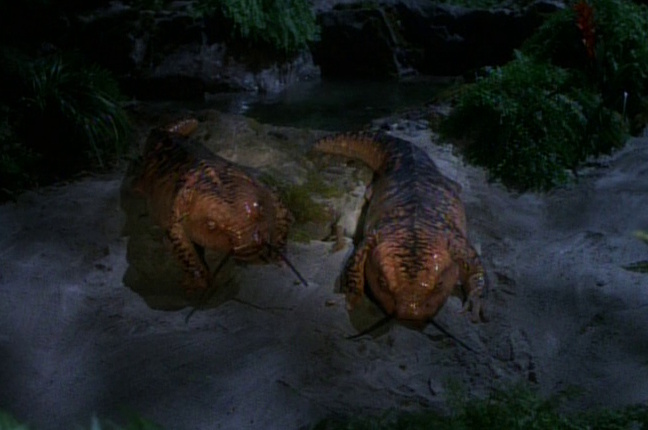
What is “transwarp?” Is it speeds faster than warp 10? The Borg seem to be able to travel beyond warp 10 through their transwarp network, potentially cutting the time needed to reach Earth from the fringes of the Delta Quadrant from decades to hours. Then there’s the notorious Voyager episode Threshold, which saw Tom Paris and Captain Janeway travel faster than warp 10 (though still not fast enough to reach Earth), before mutating into salamanders.
It’s Paris and Janeway…
I think it would be so much better if Star Trek dropped this idea that warp 10 is a kind of hard limit. Speeds beyond what we understand as warp 9.9999 are clearly possible, as we see the Borg, the Kelvan Empire, Arturis’ species, and many others are able to travel far faster than Starfleet. So why not drop this idea in favour of new warp factors – perhaps a show or film set in the Picard era could introduce the first warp 12 engine, for example, and Star Trek could grow from there.
Threshold as an episode can pretty much be written off, too! I don’t think anyone will miss it. Recent developments, like the Kelvin timeline’s transwarp beaming and Discovery’s spore drive, can also be used to travel great distances in a short period of time. There’s potential for future stories to pick up these threads, too.
Storyline #6: The Prophets are responsible for Sisko’s birth. Deep Space Nine Season 7: Image in the Sand + Shadows and Symbols
A photo of Sisko’s Prophet-posessed mother.
Star Trek has never believed in things like fate or destiny, and for me, this storyline about the Prophets deliberately conceiving Benjamin Sisko so he could one day become their emissary is dangerously close to that idea. It also turns Sisko’s entire arc across Deep Space Nine into a giant predestination paradox; he became the emissary because the Prophets created him. It challenges and undermines really his entire personality all for the sake of having a twist in a couple of episodes.
Part of what was interesting about Deep Space Nine was the intersection of religion and science. The Bajorans worshipped the “gods” of the wormhole, but Sisko and the rest of the Starfleet crew saw them as just another alien race to make first contact with. And Star Trek has always leaned more on the science angle than the religious whenever questions like this have come up; as the audience, we’ve always been on Starfleet’s side, too, seeing entities and aliens like these as another race in the galaxy – not deities who are responsible for guiding the lives of our heroes. Deep Space Nine ventured into spirituality in a big way, and until Seasons 6 and 7 mostly stayed on the right side of that line.
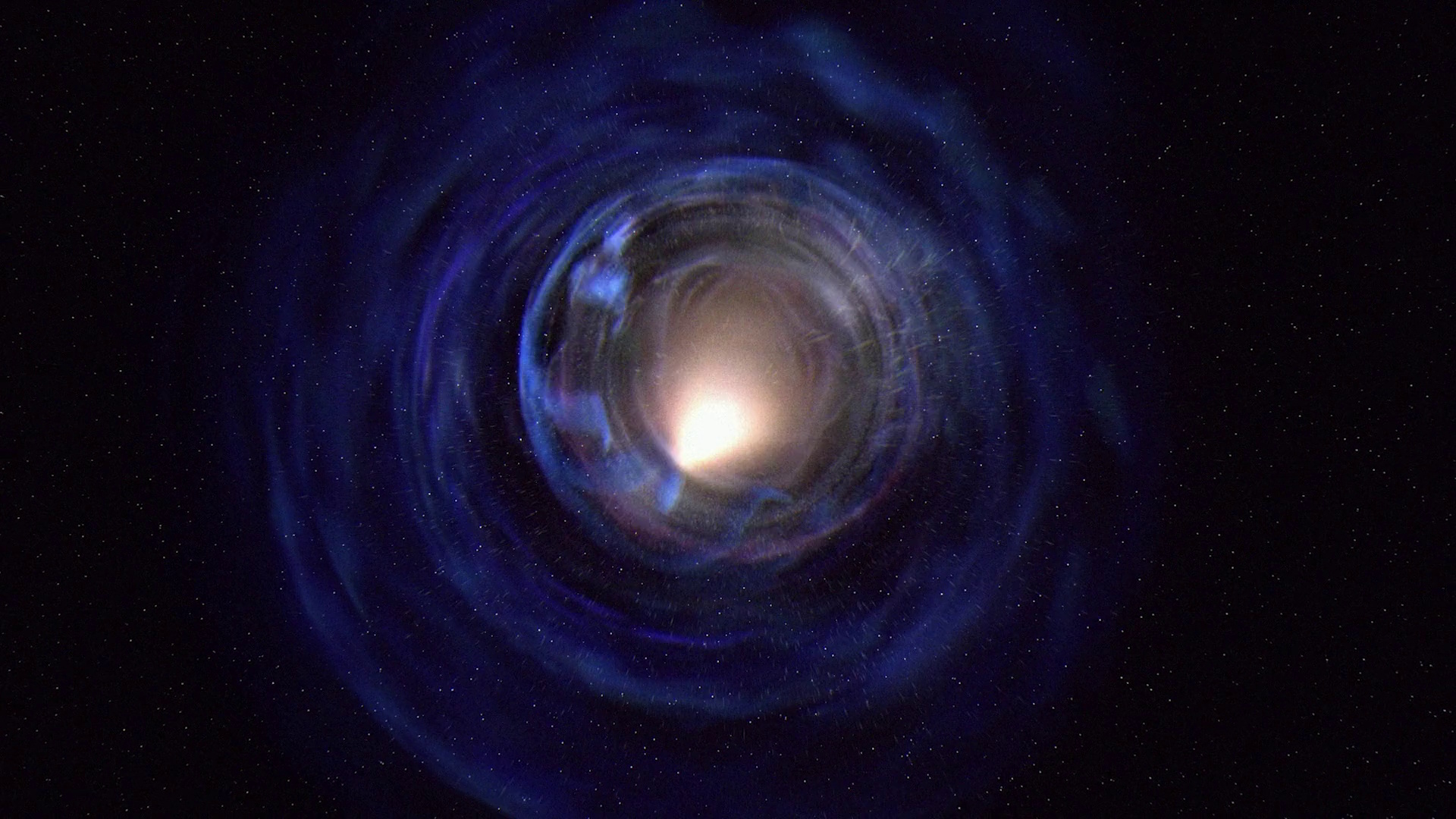
A high-definition render of the Bajoran Wormhole from the documentary What We Left Behind.
These episodes kicked off a longer story arc across Season 7 which also involved Kai Winn and Dukat. The conflict between the Pah-Wraiths and Prophets took on this Christian apocalyptic tone, with Sisko akin to an almost Christ-like figure, predetermined from before his conception to play a pivotal role in this struggle. While this story was interesting in its own right, it’s also inherently un-Star Trek in a significant way.
Because the Prophets exist outside of linear time, that gave Deep Space Nine’s writers a lot of wiggle-room. But for me, this paradox was a bridge too far. Star Trek can and should tackle religious themes, but in my view it works best when stories take a more detached and scientific approach to these topics.
Storyline #7: The Klingon-Augment virus. Trials and Tribble-ations, Enterprise Season 4, et al.
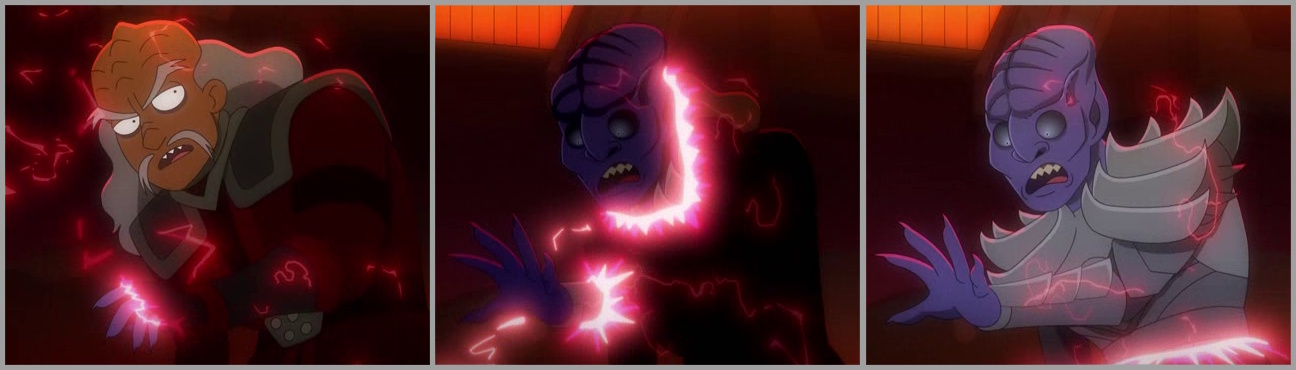
A Klingon affected by the Augment virus.
I don’t believe that every single aspect of Star Trek demands an on-screen explanation. The Klingons that Kirk met in The Original Series look different from those that we’d later see in The Motion Picture and from The Search for Spock onward – and that’s okay. Fans could make head canon explanations if they wanted, but there was just no need for an in-universe explanation of this change in prosthetic makeup… especially not one so convoluted.
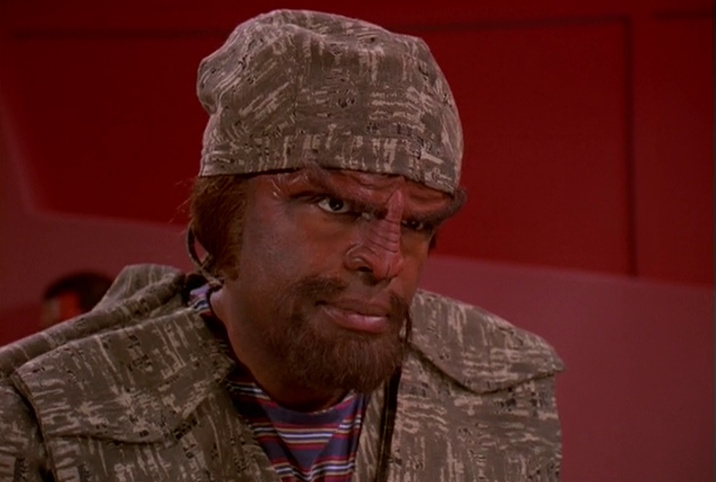
The origins of this can be traced back to the otherwise excellent Trials and Tribble-ations – the Deep Space Nine episode made for the Star Trek franchise’s 30th anniversary. That story saw the crew of DS9 interacting with Kirk’s crew, using newly-developed editing techniques to integrate new characters with old footage. It was an incredibly creative episode and a fun story… but it came with a problem! At one point, a couple of characters make reference to the way Klingons look, asking Worf about it. This was the first on-screen acknowledgement that something had changed.
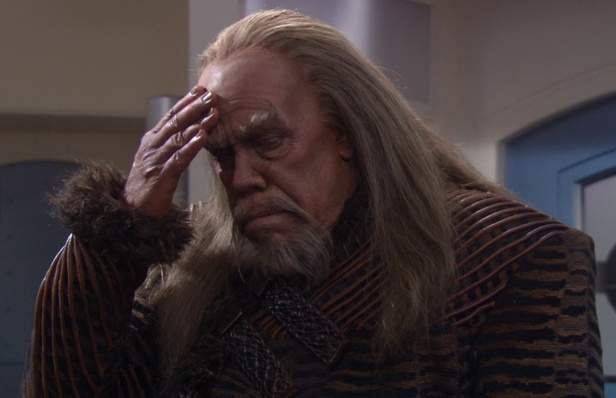
Worf’s line in Trials and Tribble-ations was the first on-screen acknowledgement of the aesthetic changes the Klingons underwent.
Enterprise, several years later, took this idea and ran with it, crafting an intricate (and pretty dumb) multi-epiosde arc that introduced the Klingon-Augment virus: a genetically-engineered creation that infected Klingons with human DNA, physically changing their appearances. In the writers’ minds, this “closed a plot hole,” but I would argue very strongly that it was one that never needed to be closed. Even if it did, and even if we desperately want to find a way to acknowledge the change in makeup used for the Klingons with an in-universe explanation… I just found this particular story to be convoluted and weak.
More recent Star Trek projects have, thankfully, quietly dropped this idea. The Kelvin films and Discovery admittedly had their own issues with re-interpreting the aesthetics of the Klingons, but Strange New Worlds – which is set in the 23rd Century and has featured the Klingons on more than one occasion – has basically reset the way they look. There’s no reason to bring up this idea again – and I sincerely hope Star Trek can continue to walk away from it!
Storyline #8: The Burn (as part of the prime timeline). Discovery Seasons 3-5
The Burn.
Discovery’s second season probably had some of its best individual performances, thanks to the inclusions of Captain Pike and Spock. But for me, most of Discovery’s best episodes actually came after the series shot forward into the far future, leaving behind much of what we’re familiar with in the Star Trek galaxy. Unfortunately, though, Discovery’s writers and creatives wanted the show to focus more on Burnham’s increasingly soap opera-like personal relationships and attempts at depicting characters overcoming traumatic events (that mostly didn’t work as intended). As a result, we didn’t spend as much time as I’d have liked with either the Federation or other factions in this potentially-interesting setting.
Another piece I’ll have to write up in full one day is whether Discovery’s “post-apocalyptic Star Trek” idea worked or even came close to working. But for now, I think we can at least make the case that the Burn is a pretty depressing future for the prime timeline, and that pushing Discovery’s far future into some kind of pocket universe or alternate reality wouldn’t be a terrible idea for the franchise as a whole.
Discovery never really did anything with its “rebuild the Federation” idea.
I’m hopeful that there will be more Star Trek on our screens in the years ahead – and that at least some of it will return to the 24th and early 25th Centuries. But any show or film using that setting (or really any pre-Burn setting) becomes, by default, a prequel to Discovery’s third season. That means, in the backs of our minds, we know that no matter what our new heroes might do, however they might find creative ways to save the day… the Federation and much of the galaxy is going to end up devastated in a few hundred years anyway. It puts a brake on future Star Trek stories in a way that we haven’t really seen before.
If Discovery had done more with the idea of rebuilding the Federation and restoring Starfleet values to the galaxy, that feeling would persist but it would be somewhat lessened, I feel. But because that didn’t happen, the Burn and its aftermath really are little more than fluff; background details for other, less-interesting stories to play out in front of. Given the sheer scale of the Burn and the devastation it wrought… that’s not good enough for me. I don’t want to remove Discovery’s latter seasons entirely, as there’s some good storytelling in there and some fun episodes. But finding some way to push it out of the prime timeline and into some kind of alternate reality… let’s just say it would be a net positive. Maybe in Starfleet Academy?
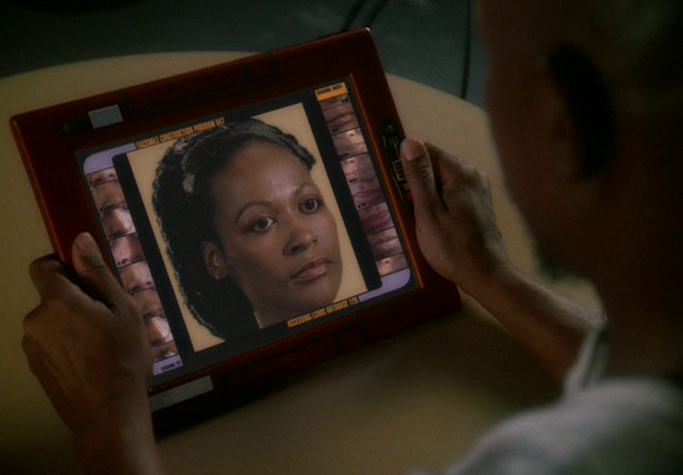
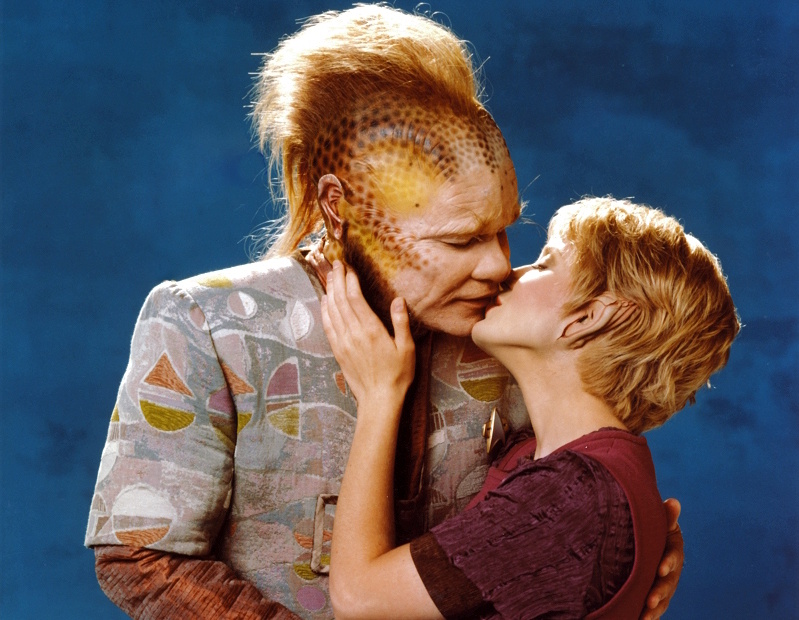
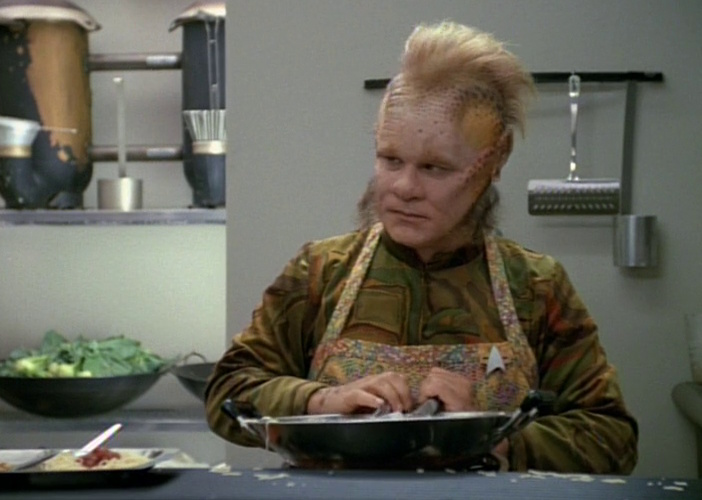
This is an uncomfortable one… but Neelix’s love for Kes in some early episodes of Voyager didn’t have the cutsey or romantic vibes that the writers may have been hoping for. The age gap between Neelix and Kes made the whole thing feel a bit… icky. Thankfully it wasn’t in focus for too long, because if it had been I genuinely think it could’ve ruined Neelix as a character.
Ocampans are a very short-lived species, and Kes was either one or two years old in Voyager’s premiere. The implications of that when considering Neelix’s feelings are just unpleasant, but even if you push that to the back of your mind, there’s no getting away from the fact that Kes is basically a teenager or young adult while Neelix is in the Talaxian equivalent of middle age.
A jealous Neelix.
We’d also see Neelix getting possessive of Kes, with episodes like Parturition and Twisted being prime examples of this. The contrast between Neelix’s usual jovial, friendly persona and the jealousy and anger he could feel has genuinely uncomfortable undertones. For anyone who’s ever been in a toxic relationship with a narcissistic or possessive partner, there are parallels in this presentation of the two sides of Neelix that could be triggering.
I wish we’d got to spend more time with Kes; in my view, she was unfairly dumped from Voyager. In recent years there’s been speculation as to exactly what happened behind-the-scenes, informed, at least in part, by actress Jennifer Lien’s struggles and issues. I don’t really want to get into all of that, but suffice to say that I would have happily kept Kes as part of Voyager’s roster if I’d had the option. But I’m glad that this Neelix romance angle didn’t stick around beyond the first couple of seasons – and that it was only present in a big way in a handful of stories.
Storyline #10: The Borg Collective has a leader. (And she’s weirdly obsessed with a couple of random humans for some reason). First Contact, Dark Frontier, et al.
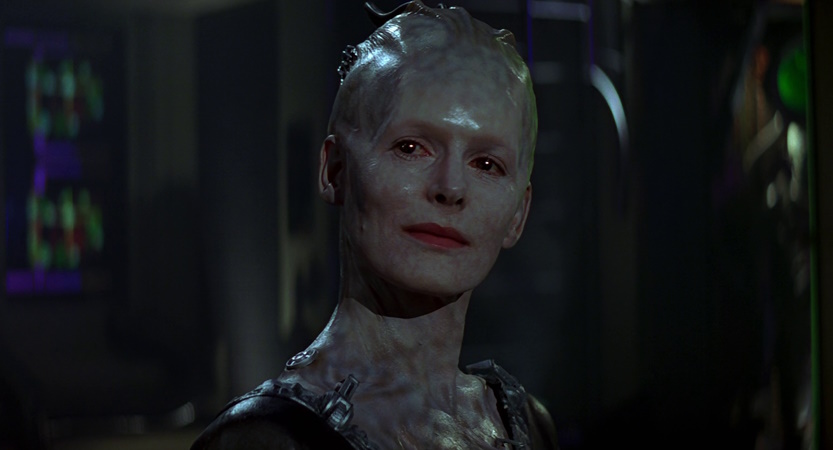
The Borg Queen in her first appearance.
This could be one of my most controversial Star Trek “hot takes,” but… the Borg Queen kind of ruins the Borg. What made the Collective so scary in its first appearances was that it was akin to a force of nature; incomprehensible, unstoppable, and unable to be reasoned with. The Borg operated as one hive mind, with no individuals or individuality, united in common purpose: the pursuit of technology and an unknowable idea of “perfection.”
The Borg Queen was created because the producers/writers of First Contact believed that the film needed a villain for Picard and Data to wrangle with – a unique individual Borg who could have more personality than any drone. But this completely misunderstands what the Borg represented and what made them so frightening. In doing so, it robbed the faction of one of its most important and unique features. The Borg Queen’s apparent obsession with Picard, Seven of Nine, and humanity as a whole developed from this… and really takes a lot away from the original concept of the Borg as this incomprehensible, uncaring, unknowable adversary.
A different depiction of the Borg Queen.
A big part of many Star Trek episodes (so much so that it’s become a cliché) is “they were only trying to communicate!” Many of the franchise’s stories present our heroes with apparently hostile aliens or scenarios, only to learn later that what they wanted was to talk or be understood. Other stories introduce a villain who can ultimately be reasoned with, even if they initially seemed hell-bent on destruction. The Borg’s original presentation, prior to the introduction of the Borg Queen, precluded even the pretense of negotiation, compromise, or really any kind of meaningful communication. The Borg had one objective, and there was no way to dissuade them from it. They viewed humanity and the Federation as a resource, and nothing more.
By introducing a Borg leader, someone who has a unique personality (even though she claims to be a manifestation of the Collective; I’m not buying that based on how she comes across on screen) the most unique trait the Borg had has been erased. And what replaces it is little more than a generic “I’m evil for no reason and I love it” scenery-chewing bad guy. The Borg, prior to the Queen’s appearance in First Contact, were so much better, so much more frightening, and completely unique.
So that’s it… for now!
The Klingon monastery on Boreth.
We’ve talked about ten Star Trek storylines that should be non-canon… at least in my completely subjective opinion!
I hope this has been interesting. It’s certainly been a bit of fun for me to revisit some of these episodes and stories. Some, like Enterprise’s Borg episode, are totally fine in isolation… but start to create problems when you think about them in the wider context of the Star Trek franchise. Others, like Neelix and Kes as a couple, didn’t work from day one and I’d be happy to just pretend the whole thing never happened! None of these storylines will ever actually be “removed” from Star Trek’s canon, though, so if one of your favourites is on the list, don’t panic!
We’ve talked about questions of canon quite a lot in the past few weeks, and I’ve had a lot of fun writing about some of these subjects. My “Borg teasing” theory is something that I’ve been kicking around for literally decades, and I also had fun adding to my list of minor things in Star Trek that bug me! I don’t know what’s next – perhaps a longer write-up of one or two of the points on this list could make for a fun article or essay. Stay tuned, though, because there’s plenty more Star Trek to come here on the website in the weeks and months ahead!
Most of the TV shows and films referenced above are available to stream on Paramount+ in countries and territories where the platform is available. The Star Trek franchise is also available on DVD and Blu-ray. The Star Trek franchise – including all episodes, films, and other properties discussed above – is the copyright of Paramount Global. This article contains the thoughts and opinions of one person only and is not intended to cause any offence.
Spoiler Warning: There are spoilers ahead for all fourteen Star Trek films, including Section 31.
Almost five years ago, I put all of the Star Trek films into a ranked list. I talked about what I liked and didn’t like about each, and tried to justify my choices! But since I wrote that list, a couple of things have happened. Firstly, I’ve gotten better at using images here on the website – that old piece looks pretty janky in comparison to some of my more recent articles. But secondly – and way more importantly – there’s been a new Star Trek film since then!
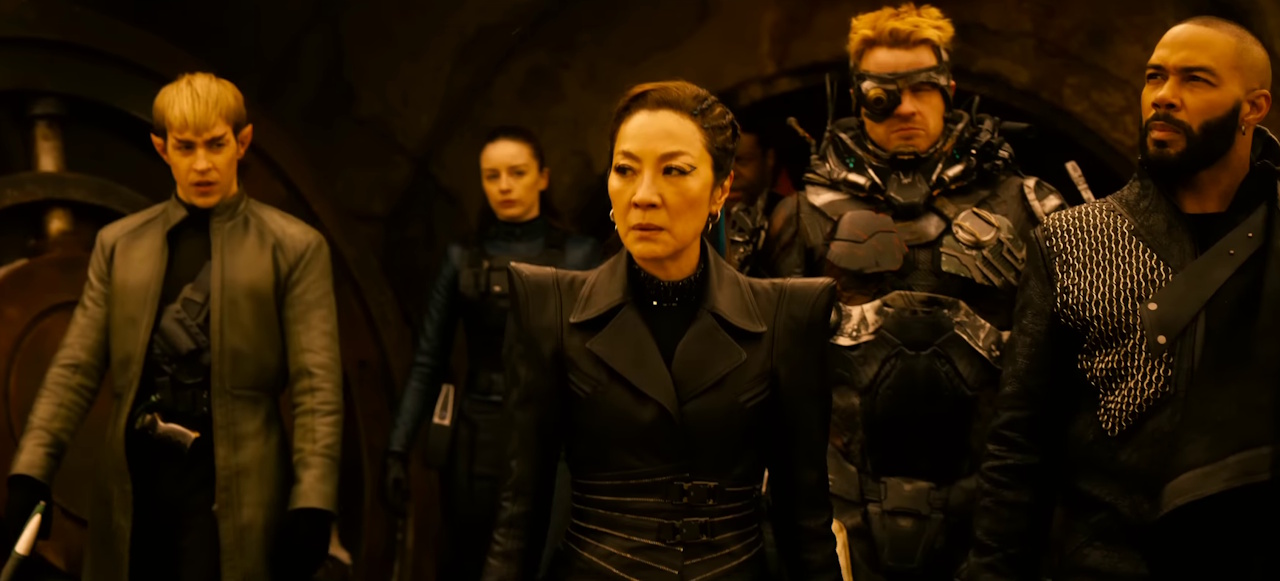
I think Trekkies are still a little divided on whether the made-for-streaming Section 31 should count as a Star Trek “film,” and I get that. But for me, Section 31 has the runtime of an (admittedly rather short) film, it’s not a series, miniseries, or anything like that, it has mostly original characters, and it was afforded a higher budget than any individual Star Trek episode would’ve been. For all intents and purposes, Section 31 counts as the newest Star Trek film – the fourteenth since 1979… and hopefully not the last!
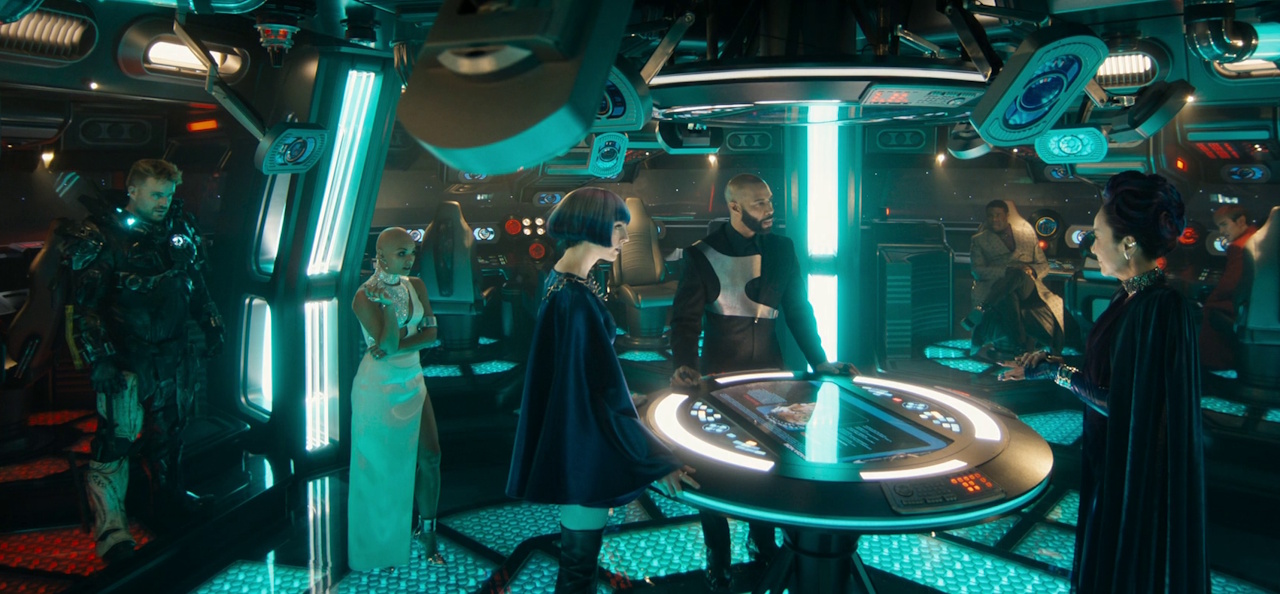
Section 31 is the most recent Star Trek film, and it’s on this list!
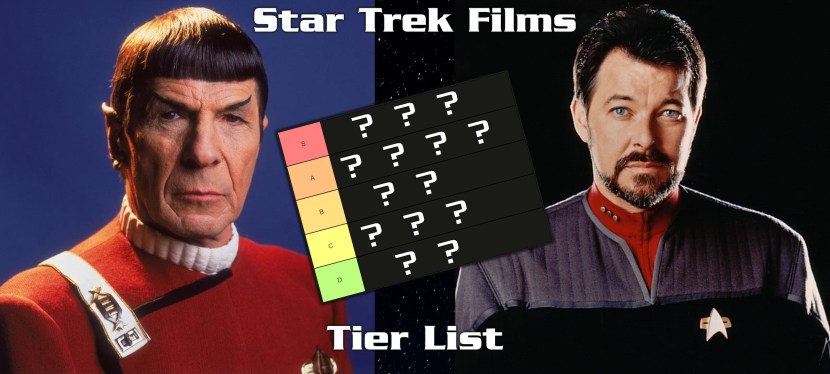
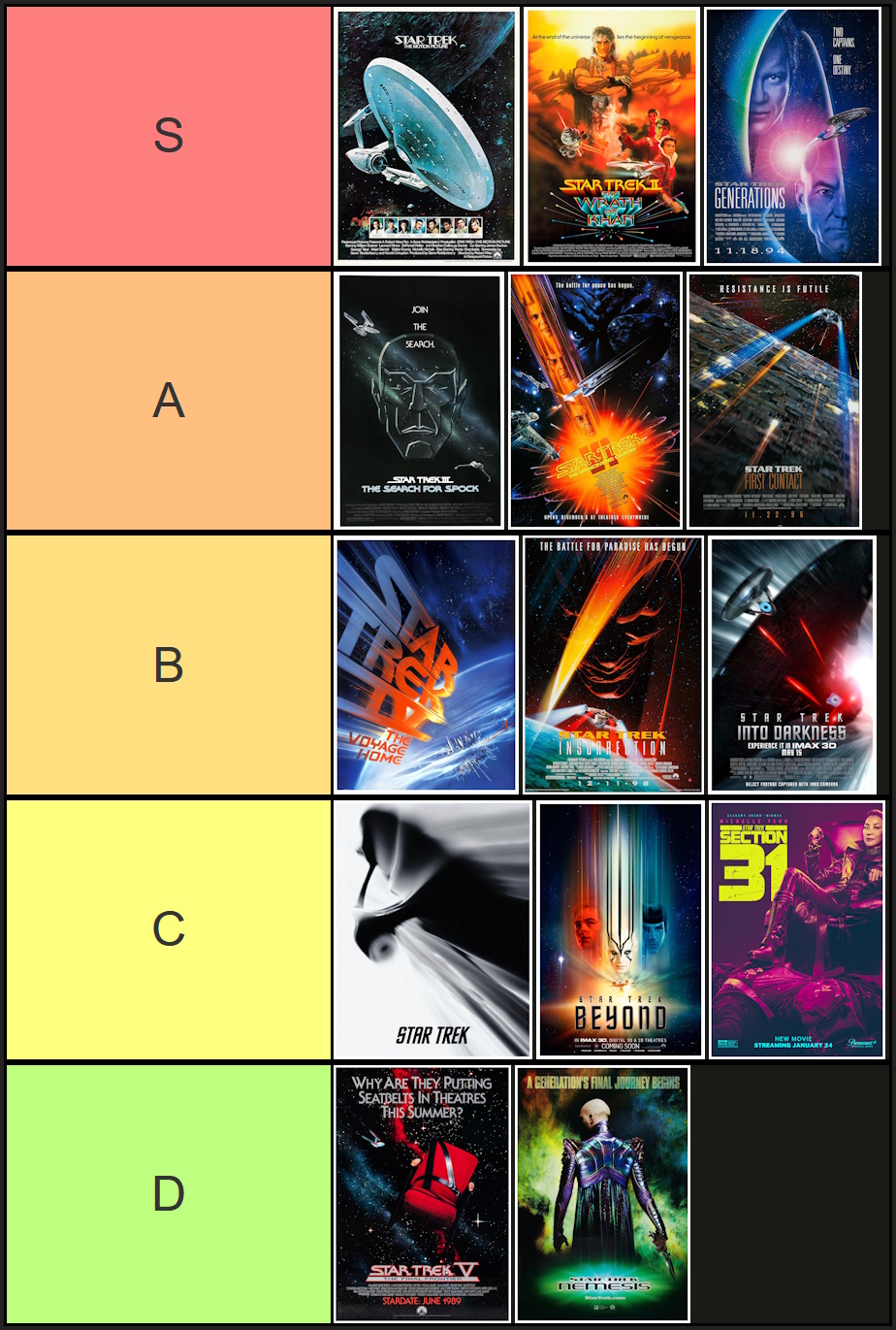
So today, I’m going to revisit the Star Trek films, this time using the internet-friendly tier list format that you might’ve seen on a couple of other occasions here on the website! I think most folks have a vague idea about tier lists at this point – but if you don’t, I’ll happily explain how it works.
Instead of giving each film a number from 1-14, which would be hard, we’re going to assign each film one of five tiers: D, C, B, A, and S. D-tier films are the least-enjoyable with noticeable flaws, C-tier titles are average or “just okay,” B-tier films are a step up, being above average, A-tier titles are getting really good, and S-tier is reserved for the absolute cream of the crop! Why is S-tier the top instead of A or something like A-plus? The truth is… I don’t know! But that’s the way everyone else does it, so I’m sticking with it! Some tier lists also include an F-tier for absolute disasters, but since I don’t consider any of the fourteen Star Trek films to be that bad, I’ve opted not to include it on this occasion.
Let’s fill out this blank tier list together!
Now that the explanation of the format is out of the way, a handful of important caveats!
Firstly, all of this is subjective, not objective. There is no “objectively best” Star Trek film, and even within the fan community opinions vary wildly on which titles are better and what makes for a good Star Trek story. So if I rank a title you hate highly or speak ill of your favourite… that’s okay! There ought to be enough room in the fan community for civil conversations and polite disagreement.
Secondly, this piece supersedes my old film ranking list, and I have made a couple of changes to where films were ranked five years ago. I’ll be leaving the old piece as it is, though – it’s a part of the website and it would be silly to delete it! But going forward, this is the official Trekking with Dennis Star Trek films tier list!
Admiral Kirk addressing his crew in The Motion Picture.
Third, I’ll rank each production in order of release, beginning with The Motion Picture and finishing with Section 31. Then I’ll show you the final tier list at the end. I’ll do my best to explain what I liked and/or didn’t like about each title to justify my ranking – but please feel free to vehemently disagree if you like!
Finally, all of this is just for fun! I like writing, I like Star Trek, and finding an excuse to talk about some of the Star Trek films that I love – or that I haven’t seen in a while – is supposed to be a bit of escapism. Nothing about this should be taken too seriously, because the point of Star Trek for me has always been entertainment and escaping to a fun vision of the future.
With all of that out of the way, let’s begin.
Film #1: The Motion Picture (1979) Tier: S
The Motion Picture had a complicated production history! It was originally envisioned as a television series, bringing Star Trek back as Phase II in the late 1970s after re-runs of The Original Series had been growing in popularity. Actors had been cast, sets were being designed, and scripts were written… but then, in 1977, another sci-fi film’s wild success led to Phase II being reimagined as a feature film. Star Trek as a cinematic franchise was born!
In my experience, Trekkies tend to underrate and underappreciate The Motion Picture. In a very literal sense, much of the visual language of Star Trek was born here, not in 1966: metal Starfleet badges, the warp core as an upright glowing tube, angled corridors, Starfleet Headquarters, the re-designed Klingons… and so much more. Sets built for The Motion Picture would remain in continuous use all the way through Enterprise’s cancellation in 2005, defining what makes Star Trek look like Star Trek for millions of viewers.
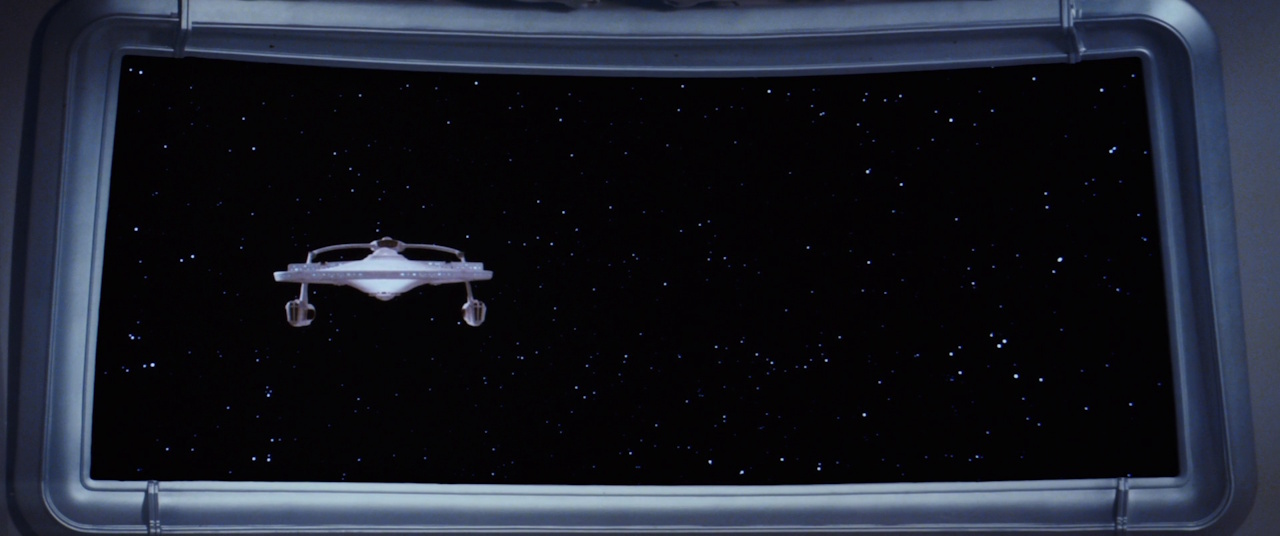
The Motion Picture also has one of what I consider to be the best starship introductions in the franchise – something that set the bar for other shows! Kirk and Scotty’s shuttlepod flight to the refit Enterprise – complete with Jerry Goldsmith’s Academy Award-nominated score – is beautiful, and I get teary-eyed every time I watch it. It’s one of the best moments in Star Trek for me, and everything about it is pitch-perfect.
I get that The Motion Picture’s main story isn’t for everyone. It was also a bit of a mess, with re-writes continuing even during filming, and that probably didn’t help. But for me, The Motion Picture plays out like an extended episode of The Original Series. It’s ethereal, thought-provoking, and not overladen with fast-paced action set-pieces. I think that’s to the film’s credit, even if many don’t agree.
I have a longer piece about The Motion Picture, written in 2019 to mark the film’s 40th anniversary. You can find it by clicking or tapping here.
Film #2: The Wrath of Khan (1982) Tier: S
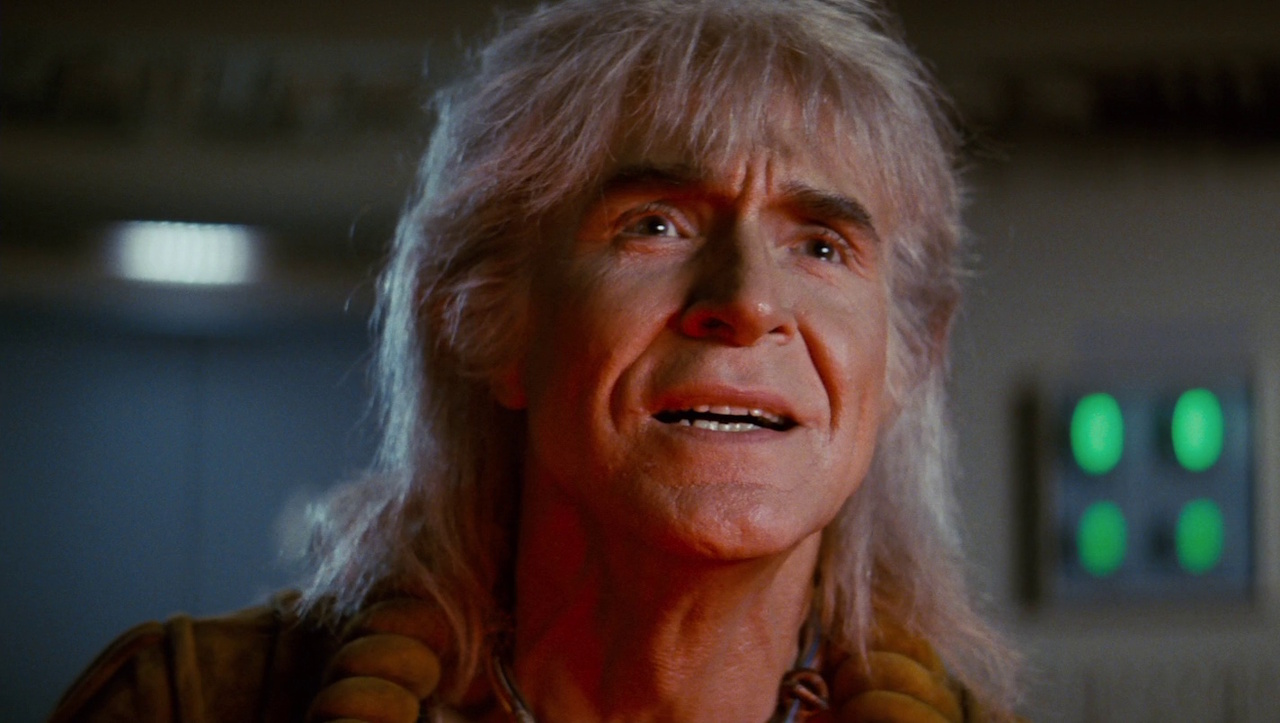
For many folks, The Wrath of Khan is still the Star Trek franchise’s high-water mark; a film that no other in the franchise has even come close to. I wouldn’t go that far personally – I think there are a couple of other equally brilliant films, as we’ll talk about in a moment – but The Wrath of Khan is definitely up there! The mix of sci-fi with high-octane action proved to be a perfect blend for Kirk and the crew, with a vengeance-obsessed Khan becoming one of the best villains not only in Star Trek, but in all of cinema.
The Wrath of Khan has one of the best and most intense starship battles in the franchise. Drawing inspiration from submarine and naval battles in World War II films, the fight between the badly-damaged Enterprise and Khan’s USS Reliant is incredible. The sequence builds up tension masterfully – by showing the extent of the damage to the Enterprise, by robbing Kirk and Khan of their sensors in the nebula, and with Spock cleverly explaining Khan’s “two-dimensional thinking” as a way to convey the tactics of starship battles in a three-dimensional space.
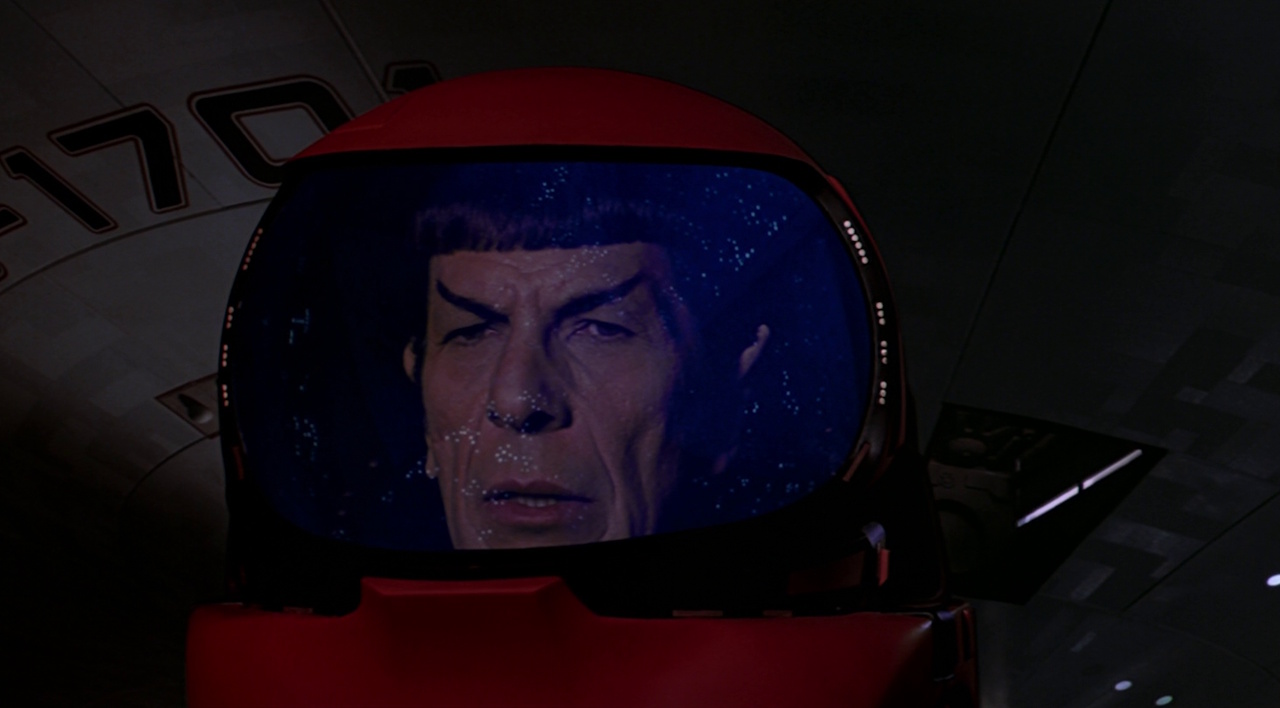
Toward the end of The Wrath of Khan, we also get one of the most poignant and emotional moments in any film in the franchise… or really anywhere in the entirety of Star Trek, come to that. Spock’s death – sacrificing himself to save the Enterprise and his friends – really hits hard. Even though on my first viewing of The Wrath of Khan I already knew that Spock would be resurrected, there’s still a real emotional weight to this moment. Star Trek has attempted to do similar things with other characters (we’ll look at a couple further down the list) but none came close to matching this moment.
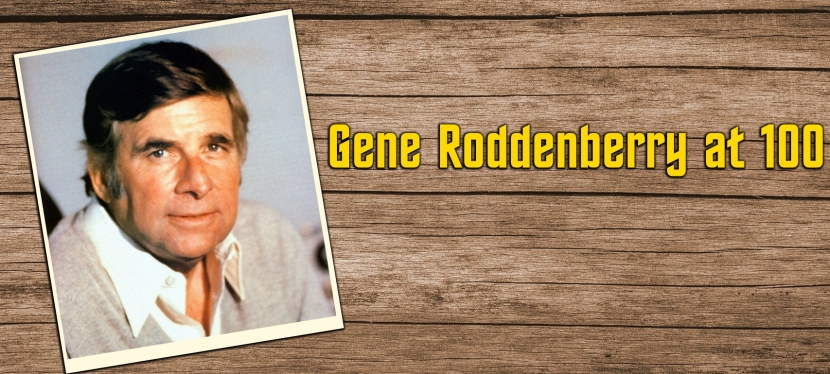
Ultimately, The Wrath of Khan was the first film to wrest control of Star Trek away from its creator, Gene Roddenberry, and to try new and different things with this cast of characters. It’s very different in tone and style from The Original Series, but that turned out to be a net positive for many fans – and many new fans, too. The Wrath of Khan firmly established Star Trek as a cinematic franchise.
Film #3: The Search for Spock (1984) Tier: A
Sandwiched in between the ever-popular Wrath of Khan and the light-hearted Voyage Home, I think some folks can overlook The Search for Spock. As the middle part of a trilogy, the film has the difficult task of moving the story along but without being able to draw all of its story threads to a firm conclusion. For my money, though, it’s a great film – and it manages a complicated sci-fi story exceptionally well.
The Search for Spock gave us an extended look at the re-designed Klingons from The Motion Picture, and also introduced the Klingon Bird-of-Prey, arguably the faction’s most iconic spaceship. It’s the film which re-introduced the Klingons in a big way, expanded the Klingon language, and introduced starship and uniform designs that have become inseparable from the faction. The Klingon Empire as we know it would not be the same – and might not be a big part of Star Trek at all – without The Search for Spock and its main villain, Kruge.
I’ve always appreciated the design of the Genesis Planet. The story of its creation is a bit “out there,” even by Star Trek standards, but the practical sets, props, and puppets created to represent the Genesis Planet all feel like ’80s sci-fi at its best. And yes, as a child of the ’80s I’m acutely aware of my biases here! But when I compare the way that The Search for Spock looks to modern Star Trek, with its CGI and AR wall… I can’t help it. I know what I like!
As the film that destroyed the original USS Enterprise, The Search for Spock was always going to court controversy. But I don’t agree with the take that “all of the odd-numbered Star Trek films are bad,” lumping The Search for Spock in with The Final Frontier. There are some wonderful moments of characterisation for David Marcus, Kirk, Dr McCoy, and others. And thanks to the insistence of director Leonard Nimoy, all of the main cast members got moments in the spotlight.
I have a longer piece about The Search for Spock – which was the first Star Trek film I watched – and you can find it by clicking or tapping here.
Film #4: The Voyage Home (1986) Tier: B
Maybe this is a “hot take,” but I’ve never been wild about The Voyage Home. As with similar Star Trek stories involving time travel to the modern day, its ’80s setting has left the film feeling so much more dated than any other in the cinematic franchise, and while I enjoy a good ’80s comedy as much as anyone else… it’s not necessarily what I want from a Star Trek film.
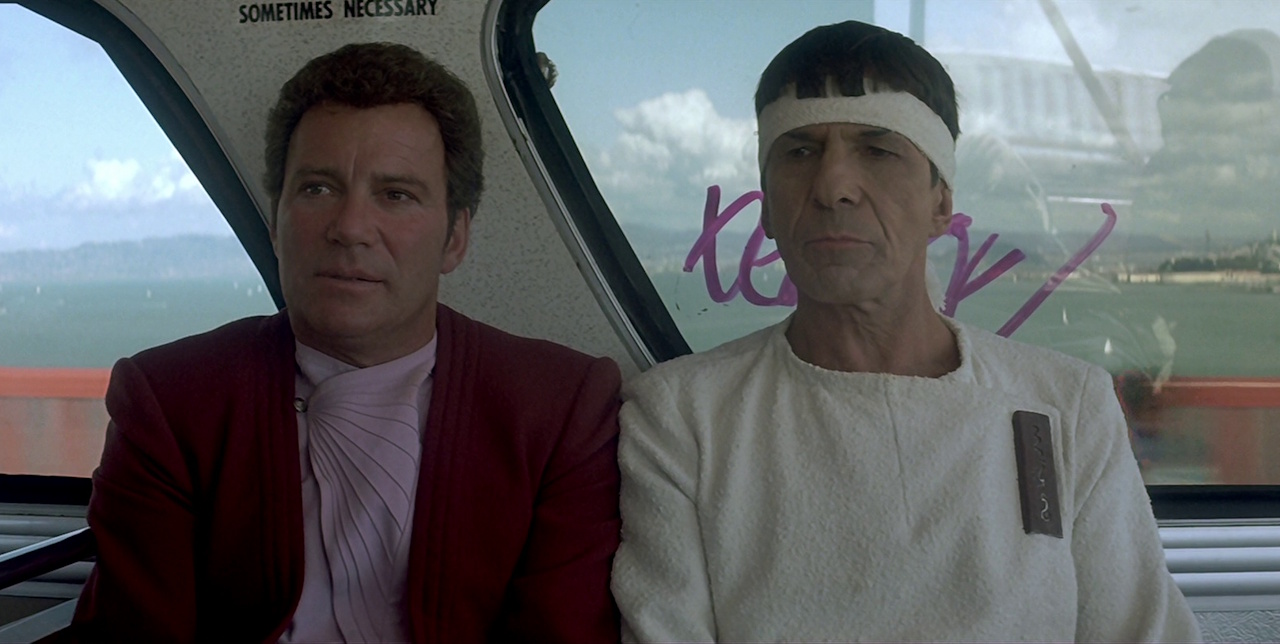
That being said, I don’t hate The Voyage Home by any stretch. It has some incredibly funny moments as Kirk and the crew attempt to navigate a time period that’s completely alien to them. Moments like Kirk asking if $100 is “a lot” of money, or Scotty trying to use a mouse to talk to a computer spring to mind as laugh-out-loud moments, and Spock having to cover his Vulcan ears to pass as a human is a fun look. Kirk and Spock’s confrontation with a punk on a city bus was also a hilarious moment.
On the sci-fi side of things, I really like the design and power of the “whale probe.” I think it’s unintentionally one of the franchise’s most unnerving alien creations, too. Its design harkens back to The Doomsday Machine’s planet-killer, but its power is used completely differently. The idea that this machine could simply disable all of Starfleet – and Earth – without breaking a sweat is already frightening, but when it can’t be reasoned with or even communicated with… that’s outright terrifying. Sometimes the Star Trek franchise can lean too heavily on “nose and forehead” aliens, but the likes of the “whale probe” remind us that the galaxy is a dangerous and sometimes incomprehensible place.
The Voyage Home did something Star Trek has often done: used a sci-fi lens to examine real-world issues. In this case, the loss of biodiversity and humanity’s impact on the environment were in the spotlight. The message was simple: we can’t predict the consequences of even a single species going extinct, and we should do everything we can to preserve biodiversity on Earth. That’s a good message, and it’s presented in a fun, creative story.
Film #5: The Final Frontier (1989) Tier: D
I said at the beginning that I wasn’t giving any F-tier rankings, and The Final Frontier is kind of the reason why. I get why folks don’t like it, and I think it has some obvious narrative weaknesses, as well as a smattering of sub-par special effects that make it less visually impressive than other titles in the franchise. But it isn’t a complete cinematic failure on par with something like Baz Luhrmann’s Australia or The Rise of Skywalker, so I think we can safely say that even the least-impressive Star Trek films avoid that ignominious fate!
Star Trek has delved into religion and religious-adjacent subjects before, so the idea of an alien claiming to be the god figure from various cultures isn’t totally out of left-field. But the execution of this storyline leaves something to be desired, and I just don’t think The Final Frontier really knew what it wanted to say or where it wanted to take this heavy idea.
The film also suffers from a little too much interference from William Shatner, who exercised his contractual right to helm a Star Trek film after Leonard Nimoy had his turn in the director’s chair. Shatner wanted to tell a story that put Kirk – and Kirk alone – centre-stage, as the sole character who could stand up to Spock’s villainous half-brother. Changes were made to the first draft of that story, when Nimoy objected to Spock’s characterisation, but Shatner’s determination to put Kirk front-and-centre still comes across.
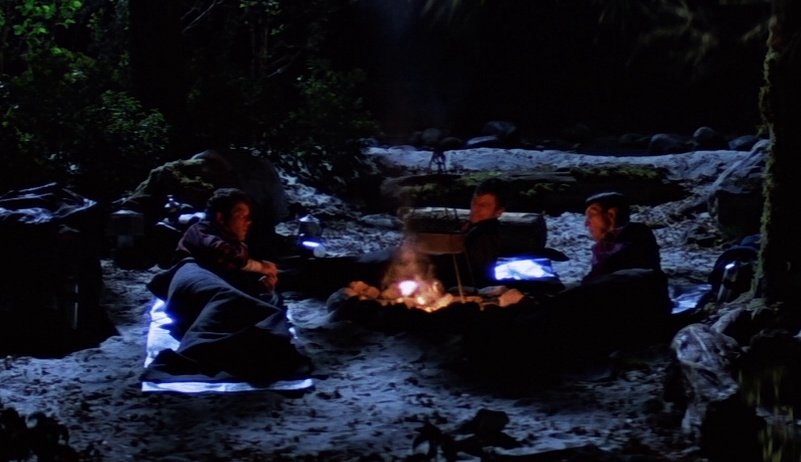
I don’t believe that The Final Frontier is irredeemably bad. There are some wonderful moments, too, like the campfire sequence with Kirk, Spock, and McCoy, Scotty’s line “I know this ship like the back of my hand,” and the away mission to Nimbus III. McCoy’s incredibly painful backstory is also one that hits close to home, and has to be one of DeForest Kelley’s best and most emotional scenes with the character. Kirk’s line to Sybok about “needing” his painful and traumatic moments – that they define who he is – is a powerful idea, too. I just feel that, taken as a whole, The Final Frontier misses the mark with some of its storylines and loftier concepts.
Film #6: The Undiscovered Country (1991) Tier: A
After the disappointment of The Final Frontier, it took some persuading for another Star Trek film to be greenlit. In 1991, with The Next Generation well underway and work progressing on spin-off ideas, there were some at Paramount Pictures who argued that Star Trek had moved on from The Original Series and its characters. A proposal to reboot Star Trek with a Starfleet Academy film was seriously considered, but ultimately Gene Roddenberry and others were able to convince the studio to allow the cast one final film to end on. The Undiscovered Country was thus given the green light.
The story here is great, and incredibly timely! The script uses the Federation and Klingons as a metaphor for the end of the Cold War; communists had been swept from power in 1989, and the Soviet Union was itself dissolved just days after the film’s premiere. The story of old rivals finding a path to peace, and old warriors with grudges finding a way to bury the hatchet, was an exceptionally powerful one – even if Gene Roddenberry hated the depictions of Kirk and Starfleet when he was shown an advance copy of the film.
We get to see an exploration of the Klingon Empire, including one of its brutal prison colonies, and how the Klingons of the 23rd Century came to be neighbours and rivals rather than enemies by the time of The Next Generation’s 24th Century. There was even a role for TNG’s Michael Dorn, who played an ancestor of Worf. The Undiscovered Country did a lot to bring Star Trek’s two eras together, and as one crew departed the stage, work on the next expansion of the franchise began. Deep Space Nine would premiere just over a year after The Undiscovered Country had been in cinemas.
The “Praxis effect” – a two-dimensional circular shockwave created by a planet exploding – was named for the destruction of the Klingon moon seen in The Undiscovered Country! In a very real sense, the film’s legacy goes far beyond the Star Trek franchise, with similar visual effects still being used in sci-fi and fantasy to this day. Special effects were great across the board, and The Undiscovered Country also has a fantastic ship battle between the Enterprise, Sulu’s Excelsior, and a cloaked Bird-of-Prey.
Film #7: Generations (1994) Tier: S
Is it controversial to say Generations is a good film? Because I honestly think it’s one of the franchise’s best. Bringing Kirk and Picard together was an absolute joy to watch, and I think it came at just the right moment, too – the film represents a handing of the torch from one crew to another. It didn’t come too soon, as this kind of story would’ve overshadowed The Next Generation’s characters before they’d found their feet. But by 1994, I really think the time was right for this kind of epic crossover.
I find Dr Tolian Soran to be an incredible villain, too. His motivations were easily understood, and while he absolutely needed to be stopped… part of me sympathises with him. The presentation of the Nexus as this heaven-like paradise realm, where time has no meaning and your heart’s desires can be made manifest, is the perfect motivation for someone like Soran – whose quest takes on a quasi-religious tone as a result.
Generations killed off Captain Kirk, drawing a line under Star Trek’s original incarnation. Kirk would, of course, remain important to Star Trek, and it wouldn’t be the final time we’d see a member of his crew on screen. But in that moment it did feel very final – and Kirk’s act of sacrifice to save Picard’s crew and the population of a planet he didn’t even know… it was an intensely emotional sequence.
Generations does a lot to explore the connection between Picard and Guinan, which would go on to be important in Star Trek: Picard, too. It was also a great film for Geordi and Data – the latter receiving his emotion chip and really expanding his programming beyond what he’d been capable of before. All of the main characters got a turn in the spotlight, and there were moments of mystery, emotion, and action throughout this wonderful film.
I wrote a longer piece about this film’s villain, Dr Soran, and you can find it by clicking or tapping here.
Film #8: First Contact (1996) Tier: A
First Contact is a fantastic film. But I’m docking a couple of points because of one element it introduces that I feel complicates – and crucially, detracts from – one of the franchise’s best, most iconic, and most frightening villainous factions. I’ll have to elaborate on this one day in a standalone piece, because there’s too much to fit into a few sentences right now, but in short: the Borg Queen kind of ruins the Borg for me. Worse, her presence takes away a lot of the Collective’s fear factor – especially when we get to her later appearances. I get it: First Contact is a feature film and it needed to have a single villain for Picard and Data in particular to face off against. But on the whole, I’d say the Borg Queen was not a net positive for the Collective or Star Trek.
But enough about that for now! First Contact re-introduced the Borg in style, depicting a deadly battle in space, and a slow-paced assimilation of the brand-new Enterprise-E. The scenes aboard the Enterprise’s lower decks in particular are incredibly tense; the Borg are far more frightening here than they had been in any of their earlier appearances. And although I have gripes with the Borg Queen as a concept, her scenes with Data and Picard – and the latter’s trauma stemming from his earlier assimilation experience – are all played exceptionally well.
First Contact also did a lot to set the stage for Enterprise – though that wasn’t necessarily the intention at the time! Enterprise does, though, build on what First Contact did with its depiction of Earth and humanity’s first efforts to build a faster-than-light engine. James Cromwell, who played Zephram Cochrane, would even have a cameo in Enterprise’s premiere.
Picard is the real star of the show this time, as he lets his emotions overwhelm him when faced with the Borg’s return. After the episode Family, we didn’t really get much exploration of Picard’s mental state and how he was coping with having been assimilated by the Borg, but First Contact took that as a starting point to tell a story touching on things like post-traumatic stress. It was genuinely interesting – and also left a lot for Star Trek: Picard to build on a quarter of a century later.
Film #9: Insurrection (1998) Tier: B
Insurrection gets an unfairly bad rap, in my opinion. I like some of the connections in the film to the wider world of Star Trek – nowhere else will you hear Troi and Riker mention the Dominion War, for instance! The Briar Patch is a fun idea both narratively and visually, leading to the crew being cut off from Starfleet HQ. It also sets up a particularly creative starship battle, which as always is something I appreciate!
Star Trek has, on several occasions, had a “badmiral” (a portmanteau of ‘bad’ and ‘admiral’) as a villain, and the concept of a rogue or renegade senior officer is an interesting one. The best villains have some degree of nuance, and Anthony Zerbe does an excellent job conveying this with the character of Admiral Dougherty. Dougherty genuinely believed that he was doing something great for the Federation… even though, with the story being told from the perspective of the Enterprise crew and the Ba’ku, he was the villain.
The Son’a were an interesting addition to Star Trek, and I’d love to explore a bit more of their culture one day – it’s a shame they’ve never returned. I would posit that the film’s twist – that the Son’a and Ba’ku are the same race – was imperfectly executed, but it was an interesting idea that achieved most of what it was aiming for. It’s also an idea that felt very “Star Trek,” harkening back to The Original Series episodes that had messages about war, race, and so on.
Insurrection has another great villain in Ru’afo, who doesn’t have that same nuance we were talking about, but was delicious to watch nevertheless thanks to an excellent performance from F Murray Abraham. It’s also a great film for Riker – who gets a turn in the captain’s chair during a tense battle, and also sees a starship manoeuvre named after him – and Data, whose “injury” and ethical reset kicks off the entire story. A story about a renegade crew who have to operate outside of the law to do the right thing? That’s something I love – and while I get there are criticisms of the main cast apparently acting “out-of-character,” that’s explained well enough in Insurrection itself.
Film #10: Nemesis (2002) Tier: D
Walking out of the cinema after the credits rolled, I remember feeling okay about Nemesis. But looking back, particularly after seeing Data being laid to rest in Star Trek: Picard’s first season, the deficiencies of the film are much more apparent. I would argue, with Brent Spiner ageing out of the role by 2002, that killing off Data made some degree of sense as a narrative point. But it wasn’t handled well in Nemesis, with the film rushing past Data’s death, pushing his friends to a “let’s all move on” type of ending that was just weirdly out-of-place and had completely the wrong tone.
Sci-fi tropes and character archetypes will land differently for different folks, and what I’d say about Nemesis’ main villain – played by Tom Hardy in one of his first big-screen roles – is that the idea of a clone of Picard isn’t as silly as it sounds! There’s genuine lore and story here, expanding our understanding of the Romulans and the way they operate, and I really did enjoy that side of the story. Shinzon also makes for a complex character; a human raised by Reman slaves, who has Picard’s DNA but none of his humanity.
Shinzon quite quickly turns to “I’m evil for no reason and I love it” with his characterisation, though, despite some early promise, and by the time the film moves to his plot to attack Earth and the Federation, the plot kind of goes off the rails. Much has been made of director Stuart Baird’s lack of experience and knowledge of Star Trek at the time of the film’s production (he hadn’t so much as watched a single episode of The Next Generation) and I think that comes across in the way the film treats most of the main characters, too.
After Insurrection hadn’t been particularly well-received, and with Enterprise struggling to find an audience, Nemesis didn’t do the Star Trek franchise any favours in 2002. It also seemed – for close to twenty years, anyway – to be a weak and unimpressive ending for The Next Generation characters and Star Trek’s 24th Century setting. As in any Star Trek project, pretty much, there are moments in Nemesis that work, but not enough of them to make the film a success.
Film #11: Star Trek (2009) Tier: C
I have some conflicting thoughts about 2009’s Star Trek. On the one hand, I was absolutely thrilled to learn of the film’s existence after Enterprise’s cancellation seemed to signal the demise of the entire Star Trek franchise. I did my best from 2006 to support the film while it was in production, and raced to the cinema to see it on the first day it was available. And I would make the case to anyone that Star Trek ’09 is a solid action/sci-fi film, a great introduction to Star Trek for newbies, and a successful title that proved the franchise could still bring in audiences and money at the box office.
But on the other hand, the film’s action-heavy storyline, re-cast classic characters, and fairly basic villain just aren’t what I come to Star Trek for. The new actors were given an exceptionally difficult job and were brave to take it on; I know some Trekkies who, to this day, have refused to watch any of the Kelvin timeline films because of the decision to re-cast Kirk and the crew. Some of the new actors got a lot of criticism before the film had even premiered due to that. Personally, I generally feel they all did a solid job… but there’s always gonna be a sense that they aren’t the “real” Kirk, Spock, Uhura, and so on. Some decisions – like pitting Kirk and Spock against one another, even coming to blows at one stage – really hammers home how different these versions of the characters feel.
Star Trek ’09 is unashamedly a reboot, and if you meet it where it is and you’re able to accept that, I think there’s a good time to be had with at least parts of it. But as someone who’d been a Trekkie for close to twenty years when the film premiered, who’d been immersed in the world of The Next Generation era in particular… I wasn’t really interested in a reboot. After Enterprise, I wanted to see Star Trek move its timeline forward again, not stepping back to re-cast classic characters for a pretty basic action story.
All that being said, I appreciate what Star Trek ’09 did for the franchise. If this film hadn’t found an audience and proved to studio executives that there was still life in Star Trek and still stories to tell here, that would’ve almost certainly been the end of the franchise, and I doubt we’d have seen Lower Decks, Strange New Worlds, and the rest of modern Star Trek. Keeping the flag flying for the franchise after it had burned out on the small screen is the real legacy of Star Trek ’09 – at least for me.
Film #12: Into Darkness (2013) Tier: B
I would argue that Into Darkness is the high-water mark of the Kelvin timeline. There are still issues with the characters, some contrivances with the story, and so on… but the film’s script is generally much stronger than either of the other Kelvin films. Not only that, but this particular story – featuring notorious villain Khan and a “badmiral” scheming from within Starfleet itself – lends itself much more to the kind of action-packed film that JJ Abrams wanted to make.
Captain Pike’s death in Into Darkness genuinely hit me – it was unexpected in the moment, and Kirk’s reaction to the loss of someone he viewed as a surrogate father figure was truly heartbreaking. It’s definitely one of the most powerful moments for this version of the character, and the way it spurs on the plot was good, too. I also liked the callback to Star Trek ’09 with the “transwarp beaming” idea returning, this time as a problem to be overcome.
If you were online and involved in Star Trek discussion groups and forums circa 2011-2013, you would’ve almost certainly had Into Darkness’ big reveal spoiled for you ahead of time. Unfortunately, fans correctly guessed that Benedict Cumberbatch would be playing the legendary Khan – and going into the film with that expectation certainly put a downer on the scene where Kirk learns the truth. I always prefer to see films un-spoiled, but this rumour was everywhere at the time, so it was unavoidable.
For a variety of reasons, this story just feels stronger and, most importantly, better-suited to these characters and this style of film. Into Darkness is a better film as a result, with a consistent tone, understandable character motivations, and a pair of solidly entertaining villains. There are some contrived moments – and I don’t think Kirk’s sacrifice and “death” works anywhere near as well as Spock’s did in The Wrath of Khan, which Into Darkness tries to emulate in more ways than one – but on the whole, it’s not a bad film by any stretch.
Film #13: Beyond (2016) Tier: C
Penned by Scotty actor Simon Pegg, Beyond was a genuine, well-intentioned attempt to bring the Kelvin timeline films slightly closer to “classic Star Trek” in terms of tone and themes, and I really do admire the effort. There are moments that link up with Star Trek’s past – most notably Enterprise – and parts of the film, particularly its opening scenes, succeed at recreating at least some of that “mission of exploration” feeling that the other Kelvin timeline films didn’t spend even a second on.
But there are some flaws and weaknesses, though. The destruction of the Enterprise is by far the weakest loss of a ship in the franchise, as we just don’t have anywhere near as much attachment to it as we did to the original Enterprise, the Enterprise-D, and other ships that have been destroyed. The sequence was tense, particularly as the crew rushed to their escape pods, but the emotional weight of the moment didn’t ring true for me.
I felt that an actor of Idris Elba’s calibre was also squandered on a pretty basic “I’m mean and I hate everyone” type of villain. Krall had potential – the “lost” captain who felt abandoned by Starfleet and the Federation, and whose xenophobic and war-like traits were a century or more out of date. But the film didn’t do enough with Krall, and the big reveal that this alien-looking alien was, in fact, a human didn’t really stick the landing. Again, it was interesting in theory but kind of wasted by the time it came to the screen.
I might be alone in this, but I detest the name “Jaylah” for the film’s new character. A homonym of “J-Law” – the tabloid nickname given to American actress Jennifer Lawrence, who was a big star at the time thanks to her role in The Hunger Games – this reference just felt cringeworthy and unnecessary. I’m happy for Star Trek to take inspiration from a wide range of other films, including the likes of The Hunger Games, but don’t stoop to this level when it comes to character naming. It’s just… well, it’s pretty pathetic, to be honest.
I couldn’t end this section without also noting that Beyond was rather overshadowed by the deaths of Leonard Nimoy and Anton Yelchin in the months leading up to its premiere.
Film #14: Section 31 (2025) Tier: C
You have to try to meet Section 31 where it is. It’s a B-movie; the Star Trek equivalent of The Fast and the Furious or Transformers, complete with a cookie-cutter plot, some pretty mindless action, and plenty of tropes of both action flicks and spy movies. Once I realised that that’s what I was watching… I just kind of went with it. On those terms, I found Section 31 to be just fine.
Where my disappointment comes in is in the wasted potential. There was scope for Section 31 to be the kind of film that brings new eyes to Star Trek for the first time, genuinely expanding the fan community by making what can feel like a nerdy and overcomplicated franchise approachable. I don’t believe Section 31 came close to achieving that goal, unfortunately. And from my perspective, that felt like the biggest point in its favour and a key reason for making it.
I would also argue that Georgiou’s arc in Section 31 was pretty repetitive, dragging up her Mirror Universe origin and forcing her through a story that we’d already seen a lot of in Discovery. Dragging her back from the more complex character we’d started to see so she could re-start that arc wasn’t great. And that’s before we get into the weeds on whether a redemption story for someone at least as evil and despotic as Star Wars’ Emperor Palpatine was even possible, let alone successfully executed in Section 31.
There are also gripes with how disconnected this film feels from the rest of Star Trek, with the barest of references and none of the franchise’s visual language present. If, however, you can set most of that aside… there are fun moments hiding under the surface. And as I said a moment ago, if you can meet Section 31 where it is, on its own terms, I think it’s a perfectly adequate B-movie.
We’ve put all fourteen Star Trek films into a tier list. So let’s take a look and see how we did:
Well, I hope that was worth it! As you can see, we have more films in the upper tiers than the lower ones, and even the “worst” Star Trek films still have redeeming qualities – at least in my opinion.
I wanted to put this list together after Section 31 had premiered, updating my older list to include the new film. This piece almost certainly concludes my Section 31 coverage for the foreseeable future, as I really don’t have much more to say about the made-for-streaming movie at this point. If you’ve been following my coverage of Section 31, thank you! I hope you’ve found my take to be interesting.
The USS Enterprise at warp.
At time of writing, there are supposedly two Star Trek films in pre-production or at least being worked on in some capacity. The first is a Beyond sequel, bringing back the Kelvin timeline cast for another outing. And the second is supposedly set in between Enterprise and Star Trek ’09, perhaps serving as a kind of Kelvin timeline prequel. You can read my thoughts on that idea by clicking or tapping here.
There have been other film proposals pitched over the years. Sir Patrick Stewart teased fans in early 2024 with news of a Picard movie idea, but I don’t think anything came of that. For my money, I’d like to see Paramount do more with the TV movie format, using it to tell one-off stories that wouldn’t necessarily fit anywhere else in the franchise. With new sets having been constructed, and the AR wall too, there are almost no limits on the kinds of stories that could be told as one-off specials – and the budget for such a production would be lower than a feature film, too! With Section 31 proving to be a disappointment, though, I’m not sure whether that’ll ever happen.
The Enterprise and the Excelsior in orbit over Khitomer.
So I hope this has been a bit of fun! Beginning with Generations, I watched every Star Trek film at the cinema. Unfortunately, due to my health, I won’t be able to do that in future – which is why I enjoyed having Section 31 as a TV movie! But if there ever is another full-length Star Trek film, I’ll do my best to support it here on the website.
Until next time… Live Long and Prosper!
Most of the Star Trek films are available to stream on Paramount+ in countries and territories where the platform is available. The first thirteen films are also available on Blu-ray and DVD, and a Blu-ray release of Section 31 is planned. The Star Trek franchise – including all films and properties discussed above – is the copyright of Paramount Global. This article contains the thoughts and opinions of one person only and is not intended to cause any offence.
Spoiler Warning: There are spoilers ahead for Star Trek: Section 31 and the following Star Trek productions: The Next Generation Season 3, Discovery Seasons 1-3, and Prodigy Season 2.
A brand-new Star Trek film is always going to be an exciting occasion! It’s been almost a decade since Beyond was in cinemas, and in that time it’s fair to say that a lot has happened for the franchise. But at the same time, there are similarities between Star Trek’s most recent trip to the cinema and this made-for-TV movie – not least in terms of how I’d rate the quality of both films!
We are going to be talking about plot spoilers for Star Trek: Section 31 this time, so if you haven’t seen the film yet this is your final opportunity to jump ship. I’d encourage you to check out my spoiler-free review of Section 31 – you can find it by clicking or tapping here.
The film’s title card.
If you’ve already read my spoiler-free review, you’ll know that I thought Section 31 was okay for what it was. It’s a fairly average action/sci-fi film which has little to do with the rest of the franchise. I don’t think it achieves its objective of being a good “first contact” for new, younger viewers… but I didn’t dislike Section 31 on the whole. I’m considering writing up an updated version of my Star Trek films ranked list – and I guess if I had to give Section 31 a grade, it would get a C. Not great, not terrible; a film I don’t need to think too hard about that doesn’t demand much from me. Background viewing that I can dip in and out of with ease.
Those words may sound negative or even harsh, but I really don’t intend them to be. Taken on its own merits, Section 31 is a perfectly entertaining action film with some sci-fi trappings. It isn’t hard to separate it from the rest of Star Trek, as it has so few connections to anything else in the franchise outside of a few name-drops, so I don’t think Section 31 is in any way bad for Star Trek or the fan community. I don’t think it achieved its objective of expanding the fan community and bringing a new audience on board – which is definitely a mark against it.
Will Section 31 bring new eyes to Star Trek?
Alright, summary over! It’s time to get into the plot.
When is Section 31 set? Because I still genuinely don’t know. At the beginning of the film we see “Stardate 1292.4” prominently displayed – and if we assume lower-value stardates are earlier than higher-value ones, it would tentatively place Section 31 in between Discovery’s departure from the 23rd Century (approximately Stardate 1201.7) and The Original Series (the earliest Stardate given, in Where No Man Has Gone Before, was 1312.4). But is that correct? It seems to conflict with at least one other piece of information we have.
Rachel Garrett – who is a Lieutenant during the events of Section 31, and therefore isn’t a fresh-faced Academy graduate – is someone we’re familiar with from The Next Generation episode Yesterday’s Enterprise. In that episode, Garrett is in command of the Enterprise-C in the 2340s… but if Section 31 takes place in between Discovery and The Original Series and Garrett is already in her late twenties or early thirties, that would mean she’d have to be over 100 years old by the time we see her again in Yesterday’s Enterprise. The Federation has great medical and life-extension technology, but is that a good enough explanation? Or have we found our first issue with Section 31 already?
When is Section 31 supposed to be set?
I get it: this is a nitpick. But as I’ve said before: as Trekkies, we want the world of Star Trek to make sense and feel consistent, and that means that new projects have to at least try to fit in with what’s come before. There were two exceptionally easy fixes to this issue: firstly, the film could’ve been more obviously set later in time. It’s possible that this was the writers’ intention – but with no frame of reference (familiar uniform designs, starships, etc) it’s hard to tell. Secondly, the Rachel Garrett character could’ve been renamed either to another legacy character more suited to the era or to someone brand-new.
I genuinely enjoyed Kacey Rohl’s take on Rachel Garrett. But this character was pretty much a blank slate; if you haven’t seen Yesterday’s Enterprise in a while, could you even tell me much about Captain Garrett? It’s not like she had a particularly memorable catch-phrase or a unique design. She was an upstanding Starfleet officer, sure, but so are dozens of other single-appearance characters. Given the confusion this inclusion adds to the timeline, maybe other choices could’ve been made.
We’ll see Rachel Garrett again…
One final point on the timeline: if Section 31 is meant to be set after the events of The Original Series – as Rachel Garrett’s inclusion arguably hints at – then… isn’t the Terran Empire meant to be in decline or even defeated in this era? After the events of Mirror, Mirror, Spock ascended to a high rank in the Empire and attempted to reform it. Those reforms weakened the Empire, leading to its defeat by the early or mid-24th Century. So if we’re going to say Section 31 takes place in the late 23rd Century, that would coincide with a period of decline – which doesn’t line up with the film’s plot of stopping the Terran Empire breaking through the portal between universes and invading.
San’s survival also means that Section 31 can’t be set too long after the events of Discovery – he’s roughly the same age as Georgiou, and there didn’t seem to be a noticeable difference between them when they reunited.
Okay, okay. Enough timeline nitpicking for now!
San aboard his ship.
Let’s talk about the Terran Empire.
The Original Series wasn’t explicit about the Emperor or how one might ascend to that position – though it was certainly clear that advancement in the Imperial military was by assassination. However, Enterprise’s excellent Mirror Universe episode – In A Mirror, Darkly – strongly implied that the path to becoming Emperor was similar to how it is in many dictatorships and authoritarian powers: whoever has the most guns and can kill their rivals wins the “game of thrones.” That Emperor will hold power only until they can’t – I mean, this was basically Captain Lorca’s plan in Discovery’s first season. He wanted to overthrow and kill Empress Georgiou so he could rule the Terran Empire instead.
Having established the Terran Empire as being ruled by the strongest, most brutal dictators… does it really make sense that the Terrans would stage a Squid Game-style contest to decide who should be their next ruler? Technically nothing we saw of the Terran Empire in Section 31 explicitly contradicts what we know of the Empire from past iterations of Star Trek… but it doesn’t make a lot of sense to me that the Empire’s leader would be decided in this fashion. Most real-world monarchies are hereditary, and in most dictatorships, power is held by whomever can wield the most military force. This idea of a contest to anoint a new Emperor doesn’t sit right with me.
Young Georgiou with her family.
Then there were the depictions of San, Georgiou’s family, and Georgiou herself. Don’t get me wrong: I’m glad, in some ways, that Star Trek is moving away from incredibly one-dimensional Terrans who only care about murder, torture, and power. That’s great… but it’s also a pretty big reversal from the way Terrans are usually depicted. Showing Georgiou and San so emotional and loving made both characters feel distinctly un-Terran… which kind of got in the way of the Mirror Universe plot.
I wish I understood why modern Star Trek writers love the Mirror Universe so fucking much. Between Section 31, Discovery’s first and third seasons, Picard’s second season with its “Confederation of Earth,” and a recent episode of Prodigy, the Mirror Universe is everywhere in the franchise’s recent stories. It could be a fun setting to dip into for a single episode back when Star Trek was a wholly episodic franchise, but basing entire story arcs around Terrans and the Mirror Universe has been to the franchise’s detriment in recent years. I hope that Section 31 will be the final appearance of the Mirror Universe for a good long while.
I am thoroughly burned out on Mirror Universe stories for the foreseeable future.
I felt that seeing a young Georgiou with her family and San in the Mirror Universe also muddled her character arc – particularly the growth we saw in Discovery’s third season. Part of what made that story work for Georgiou was that she was discovering a new way of seeing the world. But we’ve just learned that she had a family, she cared about people, and she was even capable of falling in love… decades before Burnham and the crew of the USS Discovery helped her to discover that side of herself. I guess we could frame Georgiou’s softening as a “rediscovery” of those feelings… but it does seem to undermine her growth somewhat, finding out that she came from a caring family and had already known love.
While we’re talking about San, it seemed pretty obvious to me from the moment Georgiou betrayed and wounded him in the film’s prologue that he was going to survive and turn out to be one of the villains. His survival wasn’t the “shocking twist” that Section 31 wanted it to be, and while I guess that’s not necessarily a huge problem, I think it’s worth saying that this narrative element was pretty basic and the twist didn’t land for me. Georgiou’s reaction to it – wonderfully emoted by Michelle Yeoh – definitely gave San’s return some emotional weight. But I felt it was a pretty obvious outcome from almost the first moment.
San and Georgiou, reunited.
I could buy San and Georgiou’s emotional connection – both Michelle Yeoh and James Hiroyuki Liao sold me on that pretty well. But what I struggled with was San’s apparently convoluted and dumb “evil scheme.” He hated Georgiou for her betrayal and how she changed to become nasty and dictatorial after she beat him in Takeshi’s Castle or whatever that Terran competition was. So… to get back at her, he: stole a genocidal super-weapon, found a way to cross over to the prime timeline – where he had no idea Georgiou resided – and planned to detonate it, then return to the Terran Empire, tell them he’d found them a new galaxy to conquer, and… what? He’d be some kind of hero? Even though the weapon was so over-powered that Georgiou said whoever survived it would only have “ashes” left to rule over? Have I missed something? It just seems… I dunno. Overkill in one sense, convoluted and stupid in another.
And while we’re talking about convoluted and dumb schemes: why would Section 31 infiltrate Georgiou’s space station in such a stupid way? All they needed to do was distract Georgiou long enough to beam Dada Noe to their ship – but they had a massively complicated plot involving all of the Section 31 characters… that instantly failed anyway. There were some interesting ideas here – and I actually enjoyed the fantasy/flash-forward sequence, typical of heist/spy films, in which the plan succeeded. That was creative and cool. But as core narrative threads that we’re meant to take at least somewhat seriously, both Section 31’s plan and San’s evil scheme don’t really work for me.
The Section 31 team planned to infiltrate Georgiou’s nightclub in a particularly stupid and convoluted way.
Then we come to the sheer randomness of Georgiou’s role in the story. It was presented as pure coincidence that the one mission Section 31 chose to recruit Georgiou for – after apparently knowing about her return to the 23rd/24th Century for some time – just happened, by accident, to involve her ex-lover, her own super-weapon, and the Empire that she formerly led. There wasn’t even a last-second twist saying that Control or Section 31 knew it all along, this was just totally by accident.
There was an obvious route to making this part of the story feel less random and disconnected. The briefing from Control – which I generally liked, it was a creative framing device and it did actually feel pretty immersive – could’ve had a little bit more detail on Dada Noe’s weapon. If Control knew that this weapon originated in the Mirror Universe, that could’ve been a smooth narrative reason for Section 31 to turn to Georgiou. It wouldn’t have blown any big surprises further along the story, and Georgiou would’ve had a better, more solid, and more believable reason for joining Sahar’s team than “c’mon, man.”
If Section 31 had known the true origin of the macguffin, it could’ve made for an easier way to recruit Georgiou for the mission.
I was a little surprised to see that the Section 31 of this era uses something named “Control” to dish out information and orders, in light of the events of Discovery’s second season. Again, the lack of a definitive moment in time for the film’s setting could arguably cover this, but if we assume that Section 31 takes place after the events of Discovery Season 2 then the Control AI should’ve been defeated and shut down.
So how do you interpret the holographic “Control” figure that we saw at the end of the film? Is she a real person, an AI, or do her cybernetic implants perhaps imply she’s a mix of both? This scene already felt a bit weird; “Control’s” appearance was treated by the director as if it was some huge revelation… but actress Jamie Lee Curtis is brand-new to Star Trek, and doesn’t seem to be playing a familiar character or even a member of a species we’ve seen before. I guess the point of this big reveal was that Curtis is a big star, and she’d also worked with Michelle Yeoh on Everything Everywhere All At Once. But it didn’t really work for me in the moment, and showing off this version of “Control” leaves me with far more questions than answers. Perhaps a head-canon explanation will have to be that “Control” is simply a designation or title that Section 31 of the 23rd Century uses for its leaders?
After the events of Discovery Season 2… what exactly is this “Control”?
In my spoiler-free review I talked about the visual language of Star Trek – and how Section 31 basically ignores all of it. Rachel Garrett doesn’t wear a typical Starfleet uniform; the closest comparison to what she’s wearing would be Discovery’s away team armour that we saw in the first couple of seasons. There wasn’t a single character using a combadge or communicator, and the familiar Starfleet delta only showed up as a graphic during Control’s briefing. None of the starships – even those only briefly glimpsed in orbit of Georgiou’s space station – conformed to familiar Star Trek designs, either.
For me, this was a little disappointing. There has to have been a way for at least one starship to have had the familiar saucer section and nacelles design, or for a single character to use a Starfleet combadge or wear a familiar uniform – even if only for just one scene. Part of the point of Section 31 was to draw in new fans… but the lack of obvious visual connections to anything else in Star Trek makes the film feel especially disconnected.
Georgiou’s space station surrounded by a bunch of generic-looking spaceships.
Then we come to sets and props. I can’t be certain, but I felt that parts of both the Section 31 starship and San’s ship looked familiar – maybe recycling parts of the sets made for Picard’s La Sirena or Discovery’s 32nd Century vessel. This wasn’t necessarily a problem, but I thought it was worth pointing out. Generally, the sets used for the planet where most of the action took place, Georgiou’s station, and the garbage scow were pretty good – I liked how the planet and the scow gave off an “abandoned ruin” kind of vibe.
Props, though, left something to be desired in Section 31. The phaser pistols were mostly okay, though they didn’t look exceptional and didn’t seem to draw inspiration from phasers seen elsewhere in Star Trek. But the tricorder? I mean, you couldn’t have made it more obvious that it was a fucking iPhone if you tried. It was a pathetic visual effect that looked incredibly cheap; akin to something I’d expect to see in a low-budget fan film, not the Star Trek franchise’s flagship streaming project. How much extra work would it really have been to make a basic tricorder prop? You can literally buy prop replicas from the official Star Trek shop that would’ve done a better job than an iPhone in a chunky case.
It’s an iCorder… or a Triphone.
Here’s a philosophical question for you: are some people – and, by extension, some fictional characters – so far gone that they’re irredeemable? Because parts of Georgiou’s story in Section 31 (and Discovery’s third season, too) are effectively a redemption arc. Georgiou has to confront what she did to San, and also stop the super-weapon that she had commissioned – these two represent her past, and she has to demonstrate how far she’s come as she tries to defeat San.
Some Trekkies have taken to derisively using the term “space Hitler” to describe Georgiou. I don’t particularly care for that expression, so let’s pick another point of comparison from the world of fiction. Georgiou is comparable to Star Wars’ Emperor Palpatine in terms of how she ruled her Empire with an iron fist, and there are even echoes of Palpatine’s scorched-earth approach to his death – glimpsed briefly in canon – in Georgiou’s super-weapon. But would a Star Wars film shot from Palpatine’s point of view, in which he is “redeemed” and teams up with a rag-tag gang of rebels to stop a villain, work as intended? Or are characters like that too far gone to be turned into protagonists?
Georgiou was a murderous tyrant in the Mirror Universe.
As far as Section 31 itself is concerned, we don’t see many crimes or atrocities committed by Georgiou on screen. There’s the murder of her family during the Jim Davidson’s Generation Game part of the prologue, and the way she deliberately scars San with a red hot sword. But we don’t get much context outside of Control’s briefing for her more massive crimes: slavery, genocide, and the like.
But viewers of Discovery – particularly the show’s first season – have seen at least some of those things. In one particularly gruesome sequence, Georgiou ate Kelpien meat – Kelpiens are sentient humanoids in Star Trek’s galaxy. We also learned of how she defeated the Klingons of the Mirror Universe – by destroying their planet and committing genocide against them. Georgiou kept slaves, tortured people for fun, and we saw more than just glimpses of the extent of her tyranny. So… is a character like that possibly redeemable? Can we ignore that context and go on a fun, silly romp with Georgiou and her new crew?
Having seen Georgiou in the Mirror Universe, and the atrocities she committed, can we really support her in this new story?
This was always a hurdle that Section 31 had to find a way to surmount, but perhaps condensing the story – and Georgiou’s arc in particular – into a single film instead of playing out over the span of a dozen or more episodes kind of highlights it for me. If we take this version of Georgiou out of context, then yeah, as I said at the beginning: Section 31 is a big, dumb action film that makes for entertaining enough popcorn fare. But knowing what we know of Georgiou and having seen her at her worst… it raises the question of whether redemption for this character is something we should even want, let alone whether it’s possible.
And I don’t really know what the answer to that question is, to be honest with you. I can separate Section 31 from the rest of Star Trek pretty easily, and taken on its own, I think Georgiou’s story works well enough. She’s anchored more to San than to the crimes and genocides of the Terran Empire – which, while mentioned more than once, feel relatively distant. And her arc brings her back to San as she confronts the super-weapon she commissioned during her reign. But the more I think about it, and the more I reflect on Georgiou’s time as Emperor that we saw parts of in Discovery… the more uncomfortable I feel, and the less confident I am that a spin-off focusing on this character was the right call. It’s the Palpatine problem: could a Palpatine redemption movie, padded out with wacky side-characters, work in Star Wars? Or would fans feel his redemption was a bridge too far?
Was a redemption arc for Georgiou even a good idea for a story?
Speaking of wacky side-characters… I have some thoughts on Section 31′s roster!
Obviously we have to keep in mind that Section 31 was originally pitched as a TV series – one that could, in theory, have run for multiple seasons. Several of these characters had potential in that kind of format… potential that was, unfortunately, squandered in a single film. Melle stands out as perhaps the most obvious of these, though given modern Star Trek’s tendency to “Flanderise” characters and whole alien races, I wasn’t particularly wild about seeing what the writers might’ve done with the famously hyper-sexual Deltans. We caught a glimpse of that before Melle was unceremoniously killed off, and that was more than enough for me.
Zeph also feels like wasted potential, though at least he stuck around a little longer and found time to deliver a couple of funny lines. Robert Kazinsky, who played the role, did a great job, and in the pre-release interviews on the publicity circuit for the film he seemed to be genuine and passionate about Star Trek. Obviously Zeph won’t be returning, but I’d like to think Kazinsky could one day.
Zeph’s mechanical suit was interesting.
I would’ve liked to have learned a bit more about Zeph’s mechanical suit. The suit was really there to serve a narrative function: it enabled Fuzz to remain undetected as the “mole” for a little longer. But given that this kind of armour or tool is rare in Star Trek, learning a bit more about how it works and why someone would choose to use it would’ve been fun. Again, this is the kind of thing I’d expect a longer series to have found time for – but obviously there wasn’t that possibility in a single film.
Although I wasn’t expecting it, I held out a dim hope that we might’ve learned a little more about Quasi’s people – the Chameloids. Aside from a single appearance in The Undiscovered Country, this race of shape-shifters is completely unexplored. I liked the visual effect used when Quasi switched between forms, as well as the line about no one knowing a Chameloid’s true appearance. That differentiates the Chameloids from the likes of the Founders, whose liquid form has been seen many times across Deep Space Nine’s run.
The animation work for Quasi’s shape-shifting was neat.
Quasi himself, though, was a bit of a non-entity for me. Sam Richardson put in a stellar performance with the material he had to work with, but I just didn’t really feel much of anything for the character. Quasi’s scientific prowess was mentioned a few times, but never really came to the fore in a big way – that role ultimately fell to Garrett at the film’s climax. Quasi was just sort of… there. A presence, but not an especially memorable one.
One thing Star Trek hasn’t always been great at is depicting very “alien-feeling” alien races. Most Star Trek aliens are in the “forehead or nose” brigade; humanoids with prosthetic noses or foreheads to represent different races. With that in mind, the Nanokins – Fuzz’s race – felt like something new and genuinely unique. Sure, the Nanokins aren’t the first non-humanoid race we’ve ever seen, nor even the first microscopic race, either, but it was a fun and unexpected direction for the film to take.
Fuzz’s true form.
On the flip side, Fuzz’s small stature combined with his eccentric personality made him stand out – and, unfortunately, I don’t really mean that as a positive. Rather than coming across as wacky and funny, almost from the first moment he just felt… odd. When the group decided (a little too quickly and without considering any other options) that there was a traitor in their midst, Fuzz was the obvious candidate. In fact, he was pretty much the only candidate.
Think about it: the mole obviously isn’t Georgiou, and it wasn’t going to be Sahar, the team leader. Zeph is an adorable idiot, but he clearly didn’t have the intellect or the motivation to betray the group. It wouldn’t be Starfleet officer Garrett, either – if for no other reason than we know her career would continue for decades after this moment. That only left Quasi, the shapeshifter, and Fuzz. Quasi was a character that we hadn’t really gotten to know at this point in the story, outside of a barebones introduction, and what we had seen of him showed him to be passionate about his work and friendly. So there really was only one serious contender for the mole – or at least it seemed that way to me!
Fuzz turned out to be the mole in the team.
Section 31 already had a pretty basic story: rag-tag team of misfits have to stop the villain from using the magical macguffin or it’s going to destroy the galaxy. Not only is that the plot of countless sci-fi movies, it’s also pretty similar to the Star Trek franchise’s recent output – see Picard, Prodigy, and Discovery for that. So when the few opportunities for a plot twist or a subversive moment come along… they really ought to be handled a bit better and not telegraphed so far in advance. Fuzz’s villainous turn, as well as San’s survival and reappearance, were both treated in the story as if they were massive shocking twists… but they weren’t.
As above with San, part of what makes moments like this impactful is how the characters respond. And even though a plot point may seem obvious, a strong emotional reaction can make even the most impotent narrative beat feel better. We got some of that with San and Georgiou, but arguably less of it with Fuzz and Sahar.
Part of the fight between Sahar and Fuzz.
Again, I feel the ramifications of a full season or multi-episode arc being condensed and cut down. Had we met Fuzz earlier, or had a flashback to his first meeting with Sahar – like we got in the prologue with San and Georgiou – maybe there’d have been more of a foundation to build on, making the revelation of his betrayal feel more impactful. Without some of that context, and not having spent very much time with Sahar, Fuzz, or really any of the others, the betrayal didn’t feel as powerful as the film’s writers wanted it to. It’s simply one more slightly chaotic element in an already chaotic, fast-paced film. It wasn’t bad per se, it just didn’t have much weight to it.
The same is true of Melle’s death – though I’d argue this was at least a genuine shock in the moment. Melle had been introduced to us moments earlier and seemed like she was going to be a big part of the team… but she died relatively early in the film, having delivered only a couple of lines and without contributing to the story in any way. Perhaps this is because I’d been paying attention to the film’s marketing campaign – in which Melle’s actress, Humberly González, was featured – but I expected her to be a bigger part of the story. In that sense, her early death was certainly a shock.
Melle’s death early in Section 31 came as a surprise.
It’s worth noting, by the way, that this is the second film in which a Deltan has been a main character. It’s also the second film in which the Deltan character has been killed off at an early stage – and the second time where a television series pitch being condensed down to fit the runtime of a single film is the reason why! If you’re familiar with the early production history of The Motion Picture, you’ll know it was originally pitched as Phase II – a new Star Trek television series. Ilia, the first Deltan seen in Star Trek, was originally intended to be a main character on the show, but when the series was adapted into a feature film, Ilia was killed off.
Okay, random trivia over – let’s get back to the review!
Sahar was perhaps the most fleshed-out of the Section 31 characters. We got to learn a little of his backstory – he’s a veteran of the Eugenics Wars, and survived to the 23rd Century in stasis. This story obviously harkened back to Khan’s in Space Seed, and I’m a little surprised that Khan wasn’t name-dropped at this point. That’s not to say it would’ve improved the story – but given how little time we spent talking about Sahar’s past and his Augment tormentor, it wouldn’t have really changed much, either.
Sahar was an augmented human from the 20th Century.
Sahar is, yet again, a character who’s suffering as a result of Section 31 being crushed down from a full TV show to a film. I have to imagine that, if the original TV series had gone ahead, this revelation about his history would’ve come further into the story, and probably would’ve been the subject of a secondary storyline if not an entire episode. I found what we got to be interesting – enough to pique my curiosity and to give Sahar more than just a generic background. But at the same time, Section 31 didn’t really do a lot with the revelation of his augmentations or his 20th Century origin. With a sequel almost certainly not happening, I doubt Sahar will be revisited, leaving this interesting background feeling rather underdeveloped.
Having nitpicked Section 31 seemingly to the brink of death – from its confusing place in the timeline to the status of the Terran Empire, and whether Georgiou’s redemption arc was repetitive, possible, or neither – how can I sit here and say that I didn’t dislike it? That’s a fair question, right? Because the truth is that, for what it is, Section 31 is fine. It’s not gonna win any awards, and I can see some Trekkies absolutely despising it (particularly folks who didn’t like Discovery and the Kelvin films), but speaking for myself… I can’t say I didn’t enjoy Section 31 on its own terms as a standalone film.
Humberly González played Melle in Section 31. Photo Credit: IMDB
If the intention was to create a competitor to The Wrath of Khan or First Contact for the title of “best Star Trek film,” then obviously Section 31 doesn’t succeed. It’s narratively, structurally, and even visually weaker than those illustrious titles. And as a “first contact” – a new and easy way for viewers to get started with a complicated franchise – well, I don’t think it achieves that objective either.
But there is a place in entertainment – and, I would argue, in the Star Trek franchise, too – for the kind of action-heavy story that you don’t need to think too hard about. And that’s how I see the film, at the end of the day. It’s basically a B-movie, putting together a bog-standard story centred around a single familiar character, cropping out a lot of the visual and narrative hallmarks of Star Trek. I don’t think it’s really a Star Trek film in that sense; it’s an action film trying to dress itself up in a Star Trek outfit. But I don’t hate that, and with such a cookie-cutter plot and some over-the-top characters, it’s hard to really complain about Section 31 once you open your eyes to what it is.
It’s Empress Georgiou again!
That doesn’t mean that I don’t think Paramount can and should do more with Star Trek. There’s a version of Section 31 floating around out there, somewhere, that’s significantly better, has a stronger plot, and genuinely succeeds at bringing in new fans. This version is a cynical attempt to cash in on Michelle Yeoh’s name while she’s still a box office draw. It’s also a cheap way to recycle some of the work that had already been done on the original Section 31 TV series – which officially entered pre-production almost six years ago. Recouping some of that initial investment seems to have been a priority for Paramount, otherwise I have to believe that a story and a cast of characters better-suited to a single one-off film could have been written.
But I don’t hate action-heavy B-movies, and as soon as I realised that’s what I was watching, I just kind of… went with it. The film genuinely seemed to fly by, which is something that doesn’t happen for me if I’m not having at least somewhat of a nice time! I was actually quite surprised when I glanced down at the time and realised I was already halfway through. Section 31 kept my interest, kept me entertained, and as the credits rolled I can honestly say that I wasn’t disappointed in the film or the story I’d seen unfold. I didn’t love it, and I’m not in a mad rush to re-watch it. But there’s definitely a place for a project like this in an expanded Star Trek franchise.
San in the Mirror Universe.
There absolutely were weaknesses in the story that prevent Section 31 from being a top-tier film. And if I spend too long thinking about Georgiou, her pretty regressive and repetitive character arc, the film’s confusing time period, the status of the Terran Empire, and more… yeah. I can understand why a Trekkie would feel disappointed with some of those things. But Section 31 feels, to me, like the kind of film that you really shouldn’t spend too long thinking about. It’s Star Trek’s version of, say, Transformers or The Fast and Furious insofar as it has a basic plot, plenty of mindless action, some quirky characters, and a smattering of amusing dialogue. I don’t know about you, but I’m okay with a film like that.
The flip side, of course, is that Paramount spent a decent amount of money on Section 31 – so to churn out a film so “mid” after working on this project since 2018… that’s not great. And for the Star Trek franchise, a film that ultimately underwhelms and will probably not do great numbers for Paramount+ could ultimately prove damaging. There may be some in the Paramount or Skydance boardrooms who look at the reception to Section 31, and the numbers of subscribers it pulls in, and feel disappointed. That could prove detrimental to Star Trek’s future prospects, whether we’re talking about a new feature film, another made-for-TV movie, or a brand-new series. That isn’t what I hoped for heading into Section 31.
The official Section 31 poster.
As I said last time, it’s hard not to recommend the film to fans of Star Trek: Discovery and existing subscribers to Paramount+ in particular. But I don’t think it’s going to win the Star Trek franchise a lot of new fans, nor will it convert haters of “nu-Trek.” I’m also concerned that, if it does ultimately prove a disappointment for Paramount in financial and subscriber terms, there might be less willingness to commit to more one-off stories, made-for-TV movies, and streaming projects in the future.
But for my part, despite its issues and narrative flaws, I enjoyed Section 31 for what it was. Taken on its own terms, and trying not to think too hard about some of the broader implications of its story for the Star Trek universe… it’s fine. It’s an action film with the loosest of ties to Star Trek, existing off to one side in its own little box. There’s definitely a place for projects like that in the franchise, and I’m sure I’ll revisit Section 31 in the future.
The final shot of the film.
Stay tuned, because I have a couple of other pieces in the pipeline connected to Section 31! I’m planning to write up a few suggestions for potential new fans who are just getting started with Star Trek, offering some suggestions for episodes and films to turn to next. And I’m also planning to re-do my Star Trek films ranked list to add Section 31. I might even do it using the internet-friendly tier list format! So I hope you’ll join me for that – and plenty more coverage of the Star Trek franchise. I’ve still got a couple of episodes of Strange New Worlds to watch before Season 3 premieres!
Until then, I hope this has been interesting. I’m going to check out some other reviews of the film from professional critics and Star Trek fans to see if my impressions of Section 31 are shared more widely!
Live Long and Prosper!
Star Trek: Section 31 is available to stream now on Paramount+ in countries and territories where the platform is available. The Star Trek franchise – including Section 31, Discovery, and all other properties discussed above – is the copyright of Paramount Global. This article contains the thoughts and opinions of one person only and is not intended to cause any offence.
Spoiler Warning: There are spoilers ahead for the Star Trek: Voyager episodes on this list.
The celebration of Star Trek: Voyager’s thirtieth anniversary continues! Today, I’m marking the occasion by picking out a whopping thirty of my favourite Voyager episodes to mark thirty years since the series premiered in the United States. This is gonna be a long one, so you might wanna grab a drink and a snack before we jump in!
Voyager premiered on the 16th of January 1995, meaning it’s been a full thirty years since the series officially joined the Star Trek franchise. I wrote a longer piece detailing my thoughts and memories on Voyager as a whole, so if you missed that you can find it by clicking or tapping here.
Mike Okuda working on the USS Voyager filming model. Photo Credit: Forgotten Treks/TrekDocs
Before we get into the list, a couple of caveats. There’s no right or wrong answer to the question “what’s the best Voyager episode,” so please keep in mind that all of this is subjective, not objective. If I pick out episodes you hate, or exclude something you think should’ve been on the list… that’s okay! We all have different opinions about the Star Trek franchise, and there’s enough room in the fan community for polite discussion and differences of opinion.
I’m listing the episodes in broadcast order – so these aren’t being ranked! There are a few two-part episodes that I’m counting as just one entry on the list. I’ll try to explain what I enjoyed, found amusing, or just what I thought about each episode as we go along.
With all of that out of the way, let’s talk about some of my favourite Voyager episodes!
Season 1, Episodes 1-2: Caretaker
Where else to start but at the beginning? Caretaker set the stage for Voyager, kick-starting the voyage home that would run for all seven seasons. It’s a great episode, introducing us to Chakotay and his Maquis band, as well as to Captain Janeway and the crew of the USS Voyager. The sequence where Tom Paris is brought aboard Voyager by shuttlecraft was also a wonderful introduction to the starship.
Janeway has to confront a big ethical question in Caretaker, and ultimately makes the sacrifice of stranding her ship and crew on the far side of the galaxy. By destroying the Caretaker’s array, Janeway saved the Ocampans – at least in the short-term – but paid a heavy price. It’s a fascinating twist on a premise we’d seen before, taking the idea at the core of episodes like Where No One Has Gone Before and running with it.
Season 1, Episode 3: Parallax
Parallax is one of a handful of Season 1 episodes to lean into the idea of a split between the Maquis and Starfleet members of Voyager’s crew – and that’s really why I’m placing it on the list. Its main “quantum singularity” plot is interesting, too, but it’s nothing we haven’t seen before in Star Trek. Where Parallax really shines is in those character moments – particularly as the two crews begin the process of coming together.
This episode also establishes B’Elanna as Voyager’s chief engineer, as well as Kes’ hydroponics bay and Neelix’s role as the ship’s cook. All of these would be important in future stories. Parallax is a great episode for Torres in particular, setting her up in engineering and developing her relationships with both Chakotay and Captain Janeway.
Season 1, Episode 7: Eye of the Needle
Eye of the Needle was one of the first episodes to tease Voyager’s crew – and Ensign Kim in particular – with finding a shortcut back to the Alpha Quadrant. Kim’s enthusiasm for the wormhole is cute, and just makes the disappointment later so much more heartbreaking. Garrett Wang puts in one of the best performances of the first season in those moments, taking Kim from elation to dejection.
The idea of bringing in the notoriously difficult Romulans as the faction Voyager is able to reach was a masterstroke, and Telek R’Mor was an engaging character, too. Guest star Vaughn Armstrong, who played R’Mor, had also played a Klingon in The Next Generation, a Cardassian in Deep Space Nine, and would go on to have a recurring role as Admiral Forrest in Enterprise. The final twist in Eye of the Needle felt particularly cruel for our heroes… but it wouldn’t be the last chance they’d get to communicate with someone back in the Alpha Quadrant!
Season 1, Episode 10: Prime Factors
On several occasions, Star Trek stories have shown the Federation being unwilling to intervene or to share certain technologies, citing the Prime Directive as the reason why. Janeway herself invoked the Prime Directive when choosing not to trade replicators and weapons with the Kazon, and when destroying the Caretaker’s array. But Prime Factors did something different – it put Janeway and the crew on the other side, on the receiving end of that kind of intransigent attitude.
Prime Factors gave us another example of Harry Kim’s eager excitement at discovering a potential shortcut, but also did a lot for the relationship between Tuvok and Janeway – Tuvok’s breach of trust, while well-intentioned, hurt her. Seska’s involvement in the story was interesting, too, and set the stage for her future villainous arc.
Season 1, Episode 15: Jetrel
Jetrel is an intense and emotional Neelix episode… which is a weird statement when you consider Neelix’s usual role on Voyager! Neelix, however, had a tragic past, and we got to learn more about where he came from and what became of his people – the Talaxians. The metreon cascade, an obvious analogy for chemical and nuclear weapons, was presented as a real and very deadly weapon, and Dr Jetrel’s attempt at undoing some of the damage he’d caused made for an interesting character.
There’s one quite shocking jump-scare in Jetrel, which is still a rarity for the Star Trek franchise. You’ll know the one I mean if you remember the episode; if you don’t… well, consider this a warning! As an episode that got into the horrors of war and the dangers of weapons of mass destruction, Jetrel did what Star Trek has always done: used its sci-fi setting to examine real-world issues. For my money, it does so exceptionally well.
Season 2, Episode 3: Projections
Projections was Reg Barclay’s Voyager debut – though after this episode it would be four years before he returned to the show! It was also a fun story with a deadly serious edge – as the Doctor awakened on an apparently abandoned Voyager. Seeing the Doctor able to leave the confines of sickbay was also a bit of a novelty; I think this was the first time he got to visit the bridge or engineering, coming years before he acquired his mobile emitter.
Barclay made for a pleasant surprise in Projections; I wouldn’t have expected to see him aboard Voyager, but his interactions with the Doctor were good fun. Dwight Schultz brought the same chaotic energy to the role as he had in The Next Generation, and he and Robert Picardo worked well together. This was a great episode for Voyager’s EMH, as we got to see him stepping outside of his comfort zone – literally and figuratively.
Season 2, Episode 5: Non Sequitur
Harry Kim finally gets what he’s wanted all along: to be back home on Earth. But after realising that “something’s wrong with the timeline,” Kim has to spend the entire episode trying to get back to Voyager and the Delta Quadrant! This inversion of Kim’s goal made for an interesting episode, and I’ve always enjoyed Star Trek stories that showed us glimpses of civilian life back on Earth.
Non Sequitur also made for a great “bromance” story for Paris and Kim, showing off their friendship and putting them in a completely different situation. Friendship is about trust, and Kim turned to the only person he felt he could trust to get him back to Voyager and restore the timeline. Kim and Paris would remain firm friends across the show, but Non Sequitur was a great example of the depth of that relationship and the bond of trust they shared.
Season 2, Episode 6: Twisted
Apparently, Twisted has a bad reputation – not only among fans and viewers, but with the cast themselves. A holdover from Season 1, there was a rumour that Twisted was “so bad” that UPN (Voyager’s original broadcaster) didn’t want to air it… but the episode was eventually included as part of Season 2. For my money, Twisted isn’t anywhere near as bad as its reputation suggests!
However, Twisted makes the cut on this list for one primary reason: the sequence near the end where most of the main characters are sitting in Sandrine’s, expecting to die. This is an intense moment, and several of the characters clear the air, while others pray or try to find comfort. Was it rendered a little anticlimactic by both a pretty poor visual effect and the revelation that no-one was ever in danger? Maybe. Was the whole “it was only trying to communicate” cliché a bit of a silly twist right at the end? Probably. But there are some great character moments in Twisted, so don’t let its reputation put you off.
Season 2, Episode 24: Tuvix
Ah, Tuvix: the meme episode. Seriously, what is up with Trekkies citing Tuvix all the time these days? I get that poor old Tuvix was hard done by at the end, but I admit that I’m surprised to see this episode constantly referenced and called back to! Memes aside, though, this “the transporter done goofed” story was actually a genuinely interesting one – for Janeway as well as Neelix and Tuvok.
If you were going to blend two characters together, you couldn’t pick two who were more different than Tuvok and Neelix. Neelix’s one-sided friendship with Tuvok was a fun element of Voyager, and Tuvix only added to that, in my opinion – giving both men a renewed appreciation for one another. Janeway’s final choice – and the Doctor’s refusal to carry it out – was heartbreaking, and I get why it’s still a hotly-debated topic all these years later. That just speaks to the quality of the episode, the writing, and the moral conundrum that Janeway had to confront.
Season 3, Episode 2: Flashback
Flashback was one of two episodes made to celebrate the Star Trek franchise’s 30th anniversary; the other was Deep Space Nine’s Trials and Tribble-ations. I can’t believe we’re now celebrating Voyager’s own 30th anniversary – but time really does fly, I guess! Flashback saw Tuvok and Janeway take a visit to the USS Excelsior, and is set during the events of The Undiscovered Country. It was a fun way to include Captain Sulu and Janice Rand; the episode has become one of many threads of continuity that tie Star Trek together.
I would posit that Flashback’s core premise – a “memory virus” that Tuvok was infected by – wasn’t especially strong, but that’s almost incidental. Digging into Tuvok’s past was fun, and I’ll never tire of seeing Sulu in command of the Excelsior. Getting some interactions between Janeway and Sulu was fantastic to see, too. Perhaps Flashback is overshadowed by Trials and Tribble-ations, but it’s an excellent episode in its own right.
Season 3, Episodes 8-9: Future’s End, Parts I & II
Let’s be honest: Future’s End is horribly dated – it might be one of the most dated Star Trek episodes. Everything about it screams “nineties,” but that’s just fine by me! At the time, Future’s End seemed like just another fun Voyager story – just with a time travel twist. But now, almost thirty years after its premiere, it feels like a little slice of history; Voyager captured perfectly this moment in time. And yes, I know that’s my nostalgia talking… but this is my list, so get over it!
Future’s End teased Janeway and the crew with a return to Earth… but unfortunately it was in the wrong time period! It was neat to see them visiting a sun-drenched California, though, and comedian Sarah Silverman made for an unexpectedly sweet guest star. Time travel episodes aren’t usually my favourites, but Future’s End bucks the trend.
Season 3, Episode 12: Macrocosm
Macrocosm was a great episode for Janeway, showing off her action-heroine side! If you read my earlier piece marking Voyager’s thirtieth anniversary, you might remember I talked briefly about the first actress cast for the role of Janway, before it passed to Kate Mulgrew. Episodes like Macrocosm would’ve been borderline impossible if Voyager’s producers had stuck with a different interpretation of the character – and in my view, the series would be worse for it.
This was a story that did something Star Trek hasn’t always been good at: showing off a truly alien-feeling alien life-form. In this case, Janeway and the Doctor were forced to confront human-sized viruses, and it turned out to be a fight to the death! An action-packed episode, for sure.
Season 3, Episode 26/Season 4, Episode 1: Scorpion, Parts I & II
Alright, I suppose we’d better talk about Scorpion. The two-parter that introduced Seven of Nine also went a long way to damaging the Borg Collective as a villain. It wasn’t the only story to do so across the back half of Voyager’s run, but seeing the Borg so easily-defeated and inept… it took something away from them. Sure, it set up Species 8472 as a frightening adversary, but Voyager never really did much with them after this, so it all just feels a bit… wet.
Still, I recognise Scorpion’s importance to Voyager, shaking up the cast and setting the stage for more confrontations with the Borg – who would sporadically show up from here on out. Despite my later feelings about the character, Seven of Nine got one of the best introductions in Star Trek history, and seeing her reaction to being cut off from the Collective was especially interesting.
Season 4, Episode 6: The Raven
Across Voyager’s later seasons, I burned out on Seven of Nine going through one repetitive story after another. As one of the first to give her a starring role and explore her backstory, though, I give The Raven a bit of a pass. Finding out what became of Annika Hansen, and how she came to be assimilated, was genuinely interesting – even if it came as part of a story that muddled the history of the Borg’s contact with humanity and the Federation.
The wreck of the USS Raven was also an interesting setting. This was one of the first episodes to start the process of humanising Seven of Nine, breaking her away from her Borg indoctrination and establishing relationships with other members of the crew. The scene where she sits in the mess hall with Neelix was particularly cute.
Season 4, Episode 14: Message in a Bottle
Coming at basically the halfway point of Voyager’s run, Message in a Bottle established contact between the stranded vessel and Starfleet Command for the first time. It’s also absolutely hilarious thanks to a wacky guest star, a prototype starship that can break into three parts, and a surprise attack by the Romulans!
There are some excellent comedic moments in Message in a Bottle, with comedian Andy Dick playing a new, updated version of the EMH. He and Robert Picardo both have great timing and played well off of one another, leading to some laugh-out-loud scenes. It’s also an important episode for establishing the first point of contact between Voyager in the Delta Quadrant and Starfleet back at home.
Season 4, Episode 21: The Omega Directive
Are you interested in the philosophy of the Borg Collective? Or do you want to see one of Starfleet’s most top-secret, classified missions? Then The Omega Directive has you covered! This episode was a genuinely interesting look at the technology and science of Star Trek’s galaxy – from two very different and diametrically opposed angles.
Seeing Voyager ground to a halt by the titular Omega directive showed us how seriously Starfleet takes this issue, and it also became a challenge for Janeway – having to deal with Omega while being thousands of light-years from home with no backup. Her reluctance to open up to the crew and over-reliance on Seven of Nine weren’t great for her character, in my opinion, but that just shows the difficult situation she found herself in. The Omega Directive also expanded upon the idea of the Borg Collective seeking “perfection,” which was interesting.
Season 5, Episode 1: Night
Night introduces us to the Malon – a villainous faction who showed up a few times in Season 5. There’s an interesting environmentalist message here, one that seems all the more important a quarter of a century later. Janeway and the crew also had to confront something that we’d never seen before: a species refusing the Federation’s help and superior technology for economic reasons. Again, something that’s still highly relevant today!
But Night isn’t really here for that reason. It shows us an empty region of space, which is something a bit different, and we get to see how the crew spend their time when there isn’t a mission of exploration to embark upon or a villain to be defeated. That’s something no Star Trek series had really done before; examining the “down time” in between missions while at warp was interesting, even if it only took up a small portion of the episode. Moreover, this is an important episode for Janeway – without something going on to distract her, she becomes depressed, re-playing the decision that stranded Voyager in the Delta Quadrant over and over again in her head.
Season 5, Episode 6: Timeless
I don’t like time-loop/time-paradox storylines, and I don’t like stories in which the magical, magnificent Seven of Nine is the only one who’s able to save the day. So Timeless really shouldn’t have much to offer for me! But you know what? It’s a surprisingly entertaining affair, one that looks at how badly wrong Voyager’s journey home could’ve gone. Harry Kim and Chakotay are the stars; the former torturing himself over the mistakes and miscalculations that led to Voyager’s crash.
The sequence in which the ship crash-lands is brutal, and seeing most of our heroes meet an untimely end was genuinely shocking the first time I saw it. Timeless also brought back The Next Generation’s Geordi La Forge, which was neat to see, and we also caught a glimpse of the future of Starfleet in this era. There was an emotional character story at the core of Timeless, and plenty of other interesting elements, too.
Season 5, Episode 18: Course: Oblivion
Course: Oblivion is a heart-wrenching episode – one that sees its entire cast of characters dead by the time the credits roll. Taking the Silver Blood aliens from the Season 4 episode Demon as a starting point, it sees the crew of an alternate Voyager discovering the truth about their identities, before slowly succumbing to the ravages of space, radiation, and warp engines over the course of an agonising forty-five minutes.
There’s a case to be made that Course: Oblivion is Voyager’s most depressing individual episode, even more so than the likes of Year of Hell. Because the Silver Blood characters took on the familiar identities of our heroes, there’s an automatic attachment to all of them when they’re in danger – and the episode delivers gut-punch after gut-punch as they slowly suffer the worst fate imaginable.
Season 5, Episode 23: 11:59
I don’t typically care for stories that leave Star Trek’s spaceships and future behind. The likes of Far Beyond the Stars, The Inner Light, and so on just aren’t my favourites, and I usually skip over them when re-watching The Next Generation and Deep Space Nine. But 11:59 – despite having a similar premise – has a unique charm, perhaps because of its close association with the millennium.
In the UK, 11:59 was broadcast in September 2000, mere weeks before it was set. I greatly enjoyed the episode and its focus on Janeway’s ancestors at the turn of the millennium. There was an interesting story about how “progress” can come at the expense of everyday people – and how history, even personal history, can be subject to interpretation. As an episode filmed before the millennium, it was also quite prescient in its observations of things like the millennium bug!
Season 5, Episode 26/Season 6, Episode 1: Equinox, Parts I & II
I’m glad that Voyager’s writers didn’t try to tell a story like Equinox too early – I think a run-in with Starfleet like this needed to come this far into the show. It’s a powerful story, one that doesn’t treat Captain Ransom as and out-and-out villain, but rather challenges viewers. Equinox asks: “what would you have done in his place?” and I think that’s a really interesting way to watch it.
Sure, there are moments of pure villainy. Equinox’s EMH is a deliciously immoral baddie, as is Lieutenant Burke. And the story of what the Equinox’s crew did to the sentient nucleogenic life-forms is horrible and tragic. But there’s an amount of moral ambiguity to Captain Ransom and at least some of his crew, making Equinox a tale of desperation and survival at any cost rather than a purely black-and-white morality play.
Season 6, Episode 7: Dragon’s Teeth
I love the idea of Dragon’s Teeth: an ancient alien race goes into cryo-sleep, only to be awakened centuries later. Voyager puts a fun spin on this story premise, too, by making the Vaadwuar into an evil all-conquering empire, adding to the moral complexity of the situation. Because they’d been in stasis for centuries, the surviving Vaadwaur also told us quite a bit about the Delta Quadrant as it was almost a millennium ago. Most interestingly, the Borg Collective was positively tiny, only occupying a handful of star systems. Little tidbits of information like that about the Star Trek galaxy are incredibly interesting to me!
Dragon’s Teeth also told an interesting story about the Vaadwaur and their enemies, with Voyager accidentally caught in the middle of the conflict. The Vaadwaur were an interesting race, and I’d love to see Star Trek revisit them one day. It would be fun to find out if the re-awakened Vaadwaur were able to re-establish their civilisation… or their empire.
Season 6, Episode 10: Pathfinder
Pathfinder builds on Barclay’s appearance in Projections and the Doctor’s visit to the Alpha Quadrant in Message in a Bottle – see both of those episodes above for more! In short, the story focuses on Barclay and the Pathfinder Project at Starfleet, as the Federation attempts to find a way to establish contact with the USS Voyager, despite the vast distances involved.
Barclay is a fun character, and throwing him into a technological challenge like this was a bit of a change of pace. Bringing Deanna Troi into the episode, too, was a neat inclusion, and another of those threads of continuity that I talked about earlier. Barclay’s obsession with Voyager could feel uncomfortable, in places – but deliberately so, and it seemed in keeping with what we learned about him in The Next Generation. As the episode to establish the first proper communication between Voyager and Starfleet HQ, Pathfinder is an important one going into the show’s final couple of seasons.
Season 6, Episodes 11 & 17: Fair Haven and Spirit Folk
I’m putting these two episodes together because they form two parts of a single story. After Tom Paris created a holo-programme set in an Irish village, Spirit Folk expanded upon that idea, and let us see the impact the crew were having on the holographic world through the eyes of the villagers. Sentient holograms have been part of Star Trek since The Next Generation introduced us to Professor Moriarty, but this was a completely different take on the idea.
There are plenty of laugh-out-loud moments in both episodes, but also serious themes, too. It was nice to see the crew – including Captain Janeway – letting their hair down a bit and just having fun in a different setting. I definitely prefer Fair Haven’s holodeck stories to anything involving Captain Proton!
Season 6, Episode 20: Good Shepherd
Good Shepherd sees Janeway go on an away mission with three under-performing crew members, trying to boost their confidence. I like the premise, and it was fun getting to meet other members of the crew that we don’t usually get to spend much time with. My only criticism of Good Shepherd, really, is that none of the three guest stars became recurring characters going into Season 7. There was definitely room for some of them to pop up in future episodes.
Disappointment aside, though, there was a neat story at the core of Good Shepherd, and it put Captain Janeway’s leadership skills to the test! I find the character of Harren to be especially relatable; I think I’d also want to squirrel myself away below decks and not interact with people if I were trapped on a starship!
Season 7, Episode 11: Shattered
Shattered was a fun way to celebrate Voyager as the show entered its final season. The premise saw the ship caught in a temporal anomaly, with only Chakotay able to move between different parts of the ship. He’s able to turn to Janeway for help – but coming from different time periods, she struggles to trust him at first. It’s a creative take on Star Trek’s “temporal anomaly” idea, and one that Discovery would draw inspiration from for its fifth season episode Face the Strange.
I’m glad that Shattered was given to Chakotay, and not Janeway or Seven of Nine. He made for a fun point-of-view character as the madness unfolded, and stepping back in time to see different villains and different problems that befell Voyager earlier in the journey was a lot of fun. In many ways, Shattered feels like a love letter to Voyager.
Season 7, Episode 14: Prophecy
Because Voyager was in the Delta Quadrant, far away from Klingon space, there weren’t a lot of Klingon characters to meet. Prophecy changed all of that, and introduced us to a Klingon generation ship that had travelled across the galaxy for religious reasons. It was really fun to see a D7 battle cruiser in Voyager, and this episode was also an interesting one for B’Elanna Torres.
We’d seen B’Elanna confront her Klingon heritage before, in episodes like Barge of the Dead and Faces, but this time the Klingons were 100% real – and they were interested in her unborn child. Tom Paris got a turn wielding a bat’leth, which was fun to see, and the episode looked at the themes of religion and peace between old enemies; the Kligons not being aware of the Khitomer Accords was particularly interesting.
Season 7, Episode 20: Author, Author
Author, Author focuses on the Doctor – and whether he, as a sentient hologram, has the same rights as the rest of the crew. It could’ve ended up as little more than a re-do of The Next Generation episode The Measure of a Man, where Data’s rights were also up for debate. However, it’s to the writers’ credit that Author, Author doesn’t feel repetitive at all. The Doctor’s holo-programme was also a lot of fun – and raised questions about discrimination, matters of perspective, and how conspicuous and out-of-place one can feel.
Tom Paris intervened with a hilarious re-working of the Doctor’s original holo-programme, giving him a taste of his own medicine. That was a fun sequence, and this was a great episode for the Doctor’s growth as an independent being and as a creator.
Season 7, Episode 23: Homestead
As Season 7 wound down, it seemed clear that Voyager and her crew were going to make it home. But Homestead really came out of left-field, seeing Neelix depart the ship – and the show – before making it back to the Alpha Quadrant. It always seemed a tad silly and unrealistic to me that a colony of Talaxians could be so many thousands of light-years away from home… but if you set that aside, what you get in Homestead is a touching story of a man finding his family.
Neelix’s departure is heart-wrenching, and Ethan Phillips puts in an outstanding performance. Neelix saying goodbye to Naomi is one of the most emotional moments, but seeing the entire crew lining up to say goodbye gets the tears flowing every single time.
Season 7, Episodes 25-26: Endgame
Endgame is a complicated episode – but there’s no way to finish a re-watch of Voyager without it! A time-travelling Admiral Janeway basically breaks every rule in the book for the sole purpose of saving Seven of Nine… and in doing so appears to have destroyed the entire Borg Collective. Scenes set in the future timeline are interesting, and I wish we could’ve explored more of this time period before hopping back to the 24th Century.
After seven seasons, it was great to see Voyager and her crew make it back home. I’ve heard some Trekkies say that the final scene of Endgame feels abrupt, but I never interpreted it that way. It was the end of the story – the goal Janeway and the crew had been striving for. Voyager made it home, back to Earth. What else were people expecting to see other than the ship being escorted back home by Starfleet? I don’t think Endgame as a whole is the perfect episode, but those closing scenes were great – at least in my opinion.
Bonus Video Game: Star Trek: Voyager – Elite Force
We’ve done thirty episodes, but I couldn’t let the occasion pass by without talking briefly about Elite Force. This game, which was released just after the turn of the millennium, was absolutely fantastic, and features a detailed (for the time) recreation of parts of the USS Voyager that can be walked through and explored. There’s a strong single-player story, too, with the USS Voyager pulled into a “void” in space.
Elite Force is a rare Star Trek game insofar as it broke through to a wider audience. In the early days of LAN parties and online matchmaking, Elite Force, powered by its Quake III engine, was pretty popular. Personally, I was always more interested in the single-player campaign, though! Copies are still available for PC and PlayStation 2, and I believe the game is also available digitally via the GOG platform.
So that’s it!
Voyager’s 100th episode party, featuring the cast and crew.
I’ve picked out a whopping thirty episodes (plus one bonus video game) to celebrate Voyager’s landmark anniversary.
I hope this has been an interesting look back at Voyager – and my personal memories of the show. I greatly enjoyed Voyager during its original run, and I don’t think I missed more than one or two episodes while the show was airing. I later went back and bought the entire series on DVD when it was released that way.
I keep holding out hope for a Voyager remaster – I think that would be a fantastic addition to Paramount+. Fingers crossed we’ll get to see the show in 4K one of these days, eh?
A high-definition digital render of the USS Voyager. Image Credit: Robert Bonchune/TrekCore
So Star Trek: Voyager is officially thirty years old. Does that make you feel ancient? It makes me feel ancient. I enjoyed re-visiting the series to pick out this selection of episodes, and there were at least thirty others that I wanted to include! I tried to get a good mix of stories featuring different characters and with different themes, rather than being too repetitive or with a singular focus.
Thanks for joining me as we celebrate Voyager’s anniversary. I’m not sure what’s on the agenda next… perhaps a longer write-up of one or two of these episodes? Or another look at Elite Force? Truth be told I haven’t got a plan, but it would be nice to do something else in the next few days or weeks to continue the anniversary celebrations!
Until then… Live Long and Propser! And happy anniversary, Voyager!
Star Trek: Voyager is available to stream now on Paramount+ in countries and territories where the platform is available. The series is also available on DVD. The Star Trek franchise – including Voyager and all other properties discussed above – is the copyright of Paramount Global. Some images courtesy of TrekCore and Paramount. This article contains the thoughts and opinions of one person only and is not intended to cause any offence.
Spoiler Warning: There are spoilers ahead for Star Trek: Voyager and Star Trek: Prodigy.
In 1996, the Star Trek: Voyager episode Flashback was broadcast as part of the Star Trek franchise’s thirtieth anniversary celebrations. Today – and I can scarcely believe I’m writing these words – we’re marking Voyager’s own thirtieth anniversary!
That’s right: it was on the 16th of January 1995 that Caretaker, the premiere episode of Star Trek: Voyager, debuted in the United States. I thought it could be worth taking a few minutes to look back at not only the premiere, but Voyager as a whole – and try to assess its legacy and its place in the history of Star Trek. That’s what we’re going to talk about today, so I hope you’ll join me on a rose-tinted look back at Star Trek’s fourth live-action series!
Caretaker premiered on this day in 1995.
When Voyager premiered in 1995, the Star Trek franchise was arguably at the absolute peak of its “golden age.” The Next Generation cast had started making feature films, Deep Space Nine was well into its third season, and it felt like Star Trek had well and truly made it; a franchise that was dominating the sci-fi world. I remember at the time hearing some criticism of launching another series, but with The Next Generation having explored strange new worlds in the Alpha and Beta Quadrants, and Deep Space Nine tackling the Gamma Quadrant… I gotta admit that I was excited to see Voyager head to the unexplored and mysterious Delta Quadrant!
Having read a preview of the series (I think in the Radio Times; a UK TV magazine) I was also intrigued by this “one ship, two crews” idea that Voyager seemed to be promoting. Seeing Starfleet officers having to work hand-in-hand with the Maquis seemed like a really interesting concept, and one that could’ve given Voyager a unique selling point and a way to stand out from the pack as Star Trek continued its growth and expansion. I don’t think Voyager’s writers ever really made good on that promise – but more on that in a moment!
An early placeholder logo for the show circa 1994.
Stories about long journeys, people from different backgrounds having to work together in common cause, and having a small “island of safety” in a dangerous and unexplored environment are all things I absolutely adore in fiction – so Voyager seemed to be bringing together a bundle of elements that might as well have been tailor-made for me! And across its seven-season run, all of those things came to the fore in different ways. Voyager was a fun series.
Of course, one of the most-discussed things leading up to Voyager’s premiere was the show’s new captain: Kathryn Janeway, played by Kate Mulgrew, became Star Trek’s first woman captain. I remember this news being received positively at the time, at least in the Star Trek fan groups I was aware of. No one in 1995 knew what the word “woke” would come to mean, so Janeway’s announcement didn’t get the same kind of negative reaction and whining as we might expect in 2025! That’s not to say there wasn’t some degree of pushback, of course. There have always been toxic individuals within the fan community.
Captain Kathryn Janeway.
I remember the days leading up to Voyager’s premiere being ones of positivity and anticipation. I was absolutely thrilled at the prospect of Star Trek’s expansion, at getting a new exploration-focused series after The Next Generation’s finale, and at meeting a whole new crew and cast of characters. There was a lot to be excited about as Voyager’s premiere got closer!
Star Trek: Voyager was almost a very different show, though, and I think it’s worth taking a diversion to acknowledge that. As work began on the series, the question of who should sit in the captain’s chair was perhaps the biggest individual casting decision that befell casting directors Nan Dutton and Kathryn Eisenstein… and they fucked it up. Kate Mulgrew was considered for the role of Janeway, along with several others, but the role was given to Oscar-nominated actress Geneviève Bujold instead.
What might’ve been…
Bujold was a terrible fit for the role of Janeway – as evidenced by the scenes she shot for Caretaker, which were included as a bonus in Voyager’s DVD box set – and seriously struggled with working on the show. Thankfully, Winrich Kolbe – who directed Caretaker – and executive producer Rick Berman recognised this before it was too late, and Bujold was replaced with Kate Mulgrew after only a couple of days. Still, this near-miss could’ve derailed Voyager before the show had a chance to get started.
As an aside, I don’t think Geneviève Bujold is in any way a bad actress or performer. But the idea to cast a character closer in style and tone to Jean-Luc Picard would’ve been wrong for Voyager, and that’s how I interpret her performance in those few scenes that have been revealed. Voyager needed a dynamic, energetic captain – someone who could make incredibly tough decisions under pressure while retaining the support of her crew. I didn’t see any of that in Bujold’s performance, so replacing her was unquestionably the right call.
The main cast in Season 1.
Having to re-cast your lead role after filming has already started isn’t a great look for any television series, but Voyager was able to recover. Caretaker kicked off the show in style – and put a very interesting twist on a story premise that we’ve seen before in other episodes of Star Trek.
Several times in The Original Series, The Next Generation, and Deep Space Nine, our crews found themselves apparently stranded – perhaps on an alien planet, or else far away from Federation space. But in all of these, they found their way home again by the time the credits rolled. To me, Voyager always felt like it was taking one of those episodes and asking the obvious question: what if there wasn’t an instant way home? I really loved that idea, even in 1995 it felt subversive and creative; a unique and different take on a Star Trek story concept that we’d seen before.
The USS Voyager (and Chakotay’s ship) in orbit of the Ocampa homeworld.
Caretaker was also a fantastic crossover episode, bringing in characters and locations from Deep Space Nine. A couple of years earlier, the two-part episode Birthright had brought The Next Generation to DS9, too – so launching the show in this way felt like a real thread of continuity between all three extant Star Trek projects. Star Trek was doing the whole “shared universe” thing decades before the likes of Marvel!
Quark, Morn, and Gul Evek returned from past iterations of Star Trek, further tying Voyager into the franchise before striking out on its own. These three characters – along with Q – are the only ones to have appeared in all three of The Next Generation-era Star Trek shows, which is a fun little bit of trivia for your next Star Trek quiz night! Having that connection to the rest of the franchise was important, though, and it continued the trend of characters from Star Trek’s past appearing in the premiere of a new series.
Morn in Caretaker.
Caretaker gave Captain Janeway a moral dilemma, one that tied into the idea of the Prime Directive and Starfleet’s core mission of peaceful exploration. Janeway ultimately decided to intervene, destroying the Caretaker’s array to prevent it from falling into the hands of the aggressive Kazon – but stranding her ship and crew in the Delta Quadrant in the process. This kicked off a story that would run for seven seasons, blending Star Trek’s normal episodic format with an underlying quest: Voyager’s journey home.
Harry Kim made a fine addition to the crew, and also filled an important role for Voyager in a narrative sense. Kim was always the first character to jump on the idea of finding a shortcut home, and the most eager (of the main characters, at least) to make it back to the Alpha Quadrant. I wouldn’t say it was his sole defining character trait, but it was an important one. Voyager needed at least one character like this to keep the voyage home at the top of the agenda.
Garrett Wang portrayed Harry Kim in all seven seasons.
More recently, Kim has become best-remembered in the fan community for never receiving a promotion! And I can kind of understand that; particularly as the show wore on and Kim gained more experience, it began to stretch belief to think that he’d remain a mere ensign. Again, though, Voyager was a semi-episodic show, and a show that needed at least one “young and eager” junior officer to fulfil that narrative role and occupy that space.
I was a big fan of Kes in Voyager’s early days; her gentle bedside manner and strong sense of empathy stood in contrast to the brash and often impolite Doctor in scenes set in sickbay. The idea of a short-lived species (Ocampa typically had a lifespan of around nine years) was also a unique one at this point in Star Trek’s history. Kes had close relationships with Neelix, Tom Paris, and of course the Doctor, too, all of which gave her plenty to do.
A promotional photo of Kes.
I was disappointed when I learned that Kes was going to be dropped from Voyager heading into the show’s fourth season, particularly as she’d just begun developing her telepathic powers under the tutelage of Tuvok. I felt there was still more to explore with her character, and it was a shame that she was booted off the show before this potential could really be reached… especially because of who replaced her.
I know I’m in the minority here… but during the back half of Voyager’s run, I came to really dislike Seven of Nine. This character felt so boring and repetitive, but due to her popularity with at least a portion of the show’s audience she was prominently featured in many different episodes from Season 4 onwards. Seven always seemed to learn some lesson in “how to be human” in an episode… only to forget it all a week later and have to re-learn the same stuff over and over again. I really burned out on her character pretty quickly.
Seven of Nine wasn’t my favourite character.
But there’s no denying that Star Trek’s first ex-Borg main character (not counting Picard, of course) shook up Voyager and added something new to the show. Seven’s introduction also kicked off a succession of Borg-centric episodes… which, I’m afraid, were more miss than hit in my opinion, and went a long way to damaging the fear factor that a villain like the Borg needs to have. However, recent Seven of Nine appearances in Star Trek: Picard rehabilitated the character for me, resolved many of the issues I had with her, and generally left me with a much more positive view of Seven as a whole. Here’s hoping she might return one day!
I’ve said this before, but Tom Paris was the Star Trek franchise’s first proper pilot – the first helmsman to really seem like he loved being in the chair. Paris was a fun character – an ex-Maquis and ex-Starfleet officer who seemed to attract the ire of both halves of the combined crew, but came to be seen as a dependable fixture on Voyager’s bridge. Paris’ arc took him from a failure and a criminal to a rehabilitated Starfleet officer and family man, and it was great to see it play out.
Tom Paris had a great character arc across Voyager’s run.
Paris’ love for the holodeck also led to some fun diversions across Voyager’s run. I was less enthusiastic about the likes of Captain Proton – though it could be fun for an episode or two – but his creations of Sandrine’s bar, the town of Fair Haven, and the Maquis insurrection holo-programmes all led to fun and exciting stories.
How can we talk about Tom Paris without mentioning B’Elanna Torres? Torres became – at Chakotay’s insistence – Voyager’s chief engineer, and had the challenge of standing out as both the second Maquis main character and (after Worf in The Next Generation) the second character with Klingon heritage. Voyager didn’t always know how to define and handle Torres, with some early episodes presenting her as angry and belligerent… but she soon settled into the role of chief engineer.
Roxann Dawson in the makeup chair.
B’Elanna, for me, is defined by two key relationships that would develop later in Voyager’s run: her antagonistic stance against Seven of Nine and her relationship and later marriage to Tom Paris. B’Elanna often stood as the voice of reason against Seven’s “Borg-ification” of parts of the ship, but her relationship with Tom went a long way to settling both characters down and giving them purpose. We’d also see several episodes featuring B’Elanna’s Klingon side – and these could be fun changes of direction for a show set thousands of light-years away from Klingon space.
Chakotay feels like the embodiment of Voyager’s missed opportunities. Voyager’s writers never made good on the “one ship, two crews” idea, meaning Chakotay basically became a Starfleet officer and Janeway’s confidante within a couple of episodes, robbing him of more than one potential character arc. His relationships with most of the crew besides Janeway and B’Elanna were never really explored in much depth, and he just feels like… a presence. Chakotay was on the bridge the whole time, but can you think of many episodes where he drove the plot or was otherwise in focus? Because I can’t!
Chakotay was the first character we saw at the very beginning of Star Trek: Voyager.
I must get caught up with Prodigy, because Chakotay may get the kind of cathartic redemption arc that we were discussing with Seven of Nine, and that’s something I need to see! And across the show’s seven years, Chakotay did get a few spotlight episodes and storylines – notably exploring his Native American heritage and his relationship with Seska. I just feel there was more that Voyager could have done with this character – he was the first officer, after all, and it would be weird if the likes of Spock, Riker, or Major Kira had been similarly sidelined in their respective shows.
I remember feeling confused on learning that Voyager’s doctor was going to be a hologram! “How could that work?” I remember thinking to myself. “Exceptionally well” seems to be the answer, because Voyager’s Doctor was an incredibly fun character – and one who experienced growth over the course of the series. Starting out as a holo-programme with relatively little personality and no interests, the Doctor changed and evolved over the course of the show, taking on new challenges and new interests, and that was a really fun thing to see play out.
The Doctor – the first holographic main character in Star Trek.
When the Doctor got his mobile emitter – a piece of 29th Century technology – in the third season, I was sceptical. But allowing him to leave the confines of sickbay and the holodeck turned out to be a great decision, leading to more involvement from this fun and enjoyable character across the second half of the show’s run. The Doctor could be great comic relief, and actor Robert Picardo has excellent comedic timing, but there’s much more to the character than that. We got some great emotional moments with him, too, such as losing his holographic family or sitting in court arguing for his rights as a sentient life-form.
Speaking of comic relief, we have Neelix! Star Trek shows had had barkeeps before – Guinan in The Next Generation and Quark in Deep Space Nine – but never a cook. Neelix took broad liberties with that role, serving first as a guide to the area around Ocampa, then as a “morale officer” for the ship – while cooking up a selection of interesting dishes to feed a hungry crew! I bought a copy of Ethan Phillips’ Star Trek Cookbook and even tried a few of them for myself… with terrestrial ingredients, of course.
A promo photo of Neelix… in a Starfleet uniform.
Neelix’s relationship with Kes could feel a little uncomfortable, but fortunately it wasn’t in focus all that much outside of a few early episodes. As Neelix settled in aboard the ship, he became an important character – and would often serve as a bridge between characters who didn’t always get much interaction. His largely one-sided friendship with Tuvok – though often played for laughs – was great to see, too, and showed Neelix’s way of accepting people different from him.
And speaking of Tuvok, Star Trek’s second Vulcan main character made quite an impact! Spock was always going to be a hard act to follow, but taking the calm and logical Tuvok as far away from science and exploration as possible was undeniably the right call. A Vulcan security and tactical officer makes a lot of sense when you stop to think about it – and Tuvok demonstrates exactly why. Calm and stoic under pressure is just what that job requires!
Tuvok.
Tuvok also served as Janeway’s friend and confidante – arguably treading on the toes of the traditional first officer role, in that sense. I wish we’d gotten more of an examination of his relationship with Chakotay, though that’s more from Chakotay’s side, as mentioned above. Tuvok also bridged the gap between The Original Series era and Voyager in the most unexpected of ways – check out the episode Flashback, that I mentioned at the beginning, for more on that!
So that leaves us with Captain Janeway. Janeway was the captain that Voyager needed on a quest like this, and she had the strength to guide her crew home. She also had some fun character quirks, like her love of coffee, that kept her feeling grounded and real. The first woman to sit in the captain’s chair for a Star Trek series embodied elements of all three of her predecessors: Kirk’s toughness, Picard’s diplomacy and tact, and Sisko’s dedication to doing the right thing. But she was always her own woman, never feeling overshadowed by any of the captains that had come before.
Captain Janeway in Caretaker.
As mentioned above, Kate Mulgrew was the perfect choice for this role, and she delivered a masterful performance across all seven seasons of the show. Voyager’s journey home wouldn’t have been the same without her, in fact, and across the show’s run we got several great episodes that shone a spotlight on the captain. Stories pitted her against villains like the Krenim and the Borg Queen, and Janeway always found a way to come out on top!
The USS Voyager still feels like a futuristic design to me even thirty years on from its debut! Something about the more angled saucer section makes it feel more modern than the circular hull of Kirk’s Enterprise and the Enterprise-D, and the sleeker lines also scream “speed!” Voyager was a long-range tactical ship made for exploration and combat, and the ship’s design philosophy reflects that. I will never tire of the sequence in Caretaker of Paris being flown in by shuttlecraft, seeing Voyager for the first time.
Our first introduction to this wonderful starship.
On the inside, we got a continuation of the Starfleet aesthetic that debuted in The Motion Picture and has been a mainstay in the franchise since. Voyager’s bridge is larger and wider, though – or at least it feels larger and wider – than anything we’d seen before. This expansive space was the perfect stage for interactions between all of our favourite crew members! Again, the bridge felt more modern than that of the Enterprise-D, while at the same time continuing the design trends that we saw in The Next Generation.
Janeway’s ready-room was an interesting area, giving her a large desk but also a couch that could act as a social space. Engineering had a really neat effect for its warp core, and the expansive entryway was often where intense conversations played out. The Doctor had sickbay as his domain, but he also got an office and a small lab off to one side that were fun inclusions. Voyager also had a shuttlebay, holodecks, crew quarters, corridors, and the mess hall – all of which would get moments where they were in focus!
Voyager’s bridge set under construction circa 1994. Image Credit: Forgotten Treks/TrekDocs
As an aside, being able to virtually explore Voyager in the game Elite Force was one of my absolute favourite things about that game! In 2000, being able to wander through the bridge, sickbay, and some of the ship’s corridors felt absolutely magical as a Star Trek fan, and while Elite Force wasn’t the only game to offer that experience (the adaptation of Generations had a mission set on the Enterprise-D, and there were probably others around the same time), it was certainly one of the most memorable for me personally.
One thing Voyager didn’t really have was an expansive secondary cast. Deep Space Nine gradually gave more time and attention to characters like Rom and Martok, but Voyager, by and large, kept its focus on its main cast of characters. The Borg children – and Icheb in particular – were really the only ones to break through in more than a handful of episodes, though some, like Seska and The Next Generation’s Reg Barclay, would go on to make multiple appearances. Deep Space Nine showed what Star Trek could do with a wider and more expansive cast… and it’s something the franchise has yet to return to. Voyager had the opportunity to build out some of its secondary characters, but never really went there. I think that’s a bit of a shame – but it is what it is!
Jennifer Lien (Kes) reading her script on the set of Caretaker.
For a variety of reasons, Voyager never really made good on its “one ship, two crews” idea, and by about halfway through Season 1, the main Maquis characters were basically entirely integrated with the Starfleet crew. With the exception of plot-relevant moments, such as stories involving Seska, the fact that almost one-third of Voyager’s complement were Maquis never really came to the fore in a big way, and I think that’s a bit of a missed opportunity.
Don’t get me wrong, a story about people from different backgrounds finding a way to work together for the common good is something I absolutely adore, and there were times where Voyager absolutely nailed that feeling. I guess I’ve just always felt that I would’ve liked to see more tension, scepticism, and disagreement as the two crews began the process of integrating. I never really felt as much of that as I would’ve liked – and that’s perhaps Voyager’s biggest sore spot for me, thirty years on.
Voyager struggled to make good on its “one ship, two crews” premise.
That being said, Voyager was a great show all around, and a welcome addition to Star Trek. With The Next Generation’s crew off making feature films and Deep Space Nine occupying a space station, there was plenty of room for a new series set aboard a starship. Voyager embodied Star Trek’s ethos of peaceful exploration… but set that exploration against a new backdrop of trying, against the odds, to make it home. It was both familiar and different at the same time; a really interesting blend of storytelling styles.
Voyager was also a much more episodic series than Deep Space Nine – despite its voyage home story being omnipresent and frequently referred to. There were plenty of one-off stories featuring a wide range of alien races, factions, and wacky premises. It was a Star Trek series through and through, one that brought a fantastic cast of characters to the table and threw them into plenty of fun, exciting, and occasionally emotional situations.
The cast on a promotional poster.
The excitement I felt thirty years ago was more than rewarded! Voyager was an outstanding show, and I got thoroughly invested in the crew and their quest to return to the Alpha Quadrant. There were some episodes that were wide of the mark – as there are bound to be in any show that runs to 168 episodes across seven seasons! But even at its worst, there were things to enjoy, fun lines of dialogue, entertaining character moments, or creative decisions that made Voyager well worth watching for any Trekkie or fan of sci-fi in general.
As the final show of what I consider to be Star Trek’s “golden age,” I’ve long had a soft spot for Voyager. Of course I watched every single episode during the show’s run – I would tune in when they made their debut on terrestrial TV here in the UK, and I very rarely missed a week. I later bought all seven seasons when they were released on DVD and enjoyed the series all over again.
The USS Voyager set course for the Alpha Quadrant thirty years ago today.
So I hope this has been an interesting look back! I wanted to do something to acknowledge Voyager’s milestone anniversary, but it’s hard to summarise my thoughts on 168 episodes and seven years’ worth of television in a single article! Stay tuned, though, because I’ll be writing up my thoughts on some of my favourite episodes in the days ahead as we continue to celebrate Voyager’s thirtieth anniversary.
I hope that Paramount and the folks in charge of Star Trek plan to do something to mark this momentous occasion, so I’ll definitely be checking out the official Star Trek website and social media pages over the next couple of days. With Seven of Nine, Janeway, Chakotay, and others all having returned to the Star Trek franchise in the last few years, Voyager’s legacy is very much alive. The documentary To The Journey: Looking Back at Star Trek: Voyager has had its official premieres, too, though I don’t think it’s available to stream just yet. Still, another thing to keep an eye on.
All that remains to say is this: happy thirtieth anniversary, Star Trek: Voyager! Thanks for all the memories.
Star Trek: Voyager is available to stream now on Paramount+ in countries and territories where the platform is available. The series is also available on DVD. The Star Trek franchise – including Voyager and all other properties discussed above – is the copyright of Paramount Global. Some images courtesy of TrekCore and Paramount. This article contains the thoughts and opinions of one person only and is not intended to cause any offence.
Spoiler Warning: Beware of minor spoilers for some of the titles below.
Happy New Year!
I hope you had a wonderful time last night ringing in 2025 – and that you’ve recovered by now! As the year begins, it’s the perfect time to look ahead to some of the entertainment experiences we’ll hopefully be enjoying between now and next New Year’s Eve!
So today, I’ve picked out seven films, television programmes, and video games that are on my radar in 2025. I’ll share my thoughts on each of them – including what I’m most interested in or excited about. I like to do this every year; it’s a fun way to start things off, and it also gives me something to look forward to! I hope you can take a break from packing away the Christmas decorations and join me!
The holidays are over for another year…
As always, a couple of caveats. This list is the subjective opinion of just one person – so if I don’t mention your favourite upcoming title, or I get excited about something that sounds like shit to you… that’s okay! There should be enough room for polite disagreements and differences of opinion. It’s also possible that some of these titles will be delayed and may not be available in 2025.
I think 2025 looks like a solid year. There are plenty of entertainment experiences on the horizon that have, at the very least, piqued my interest. So without any further ado, let’s jump into the list and talk about them!
Film #1: 28 Years Later
Horror really isn’t my thing – and after the 2010s were dominated by zombies and post-apocalyptic media in general, there are reasons to feel burned out on 28 Years Later’s premise! But I really loved 28 Days Later when it was released back in 2002; it’s a genre-redefining zombie film that genuinely frightened me. The “infected” zombies that debuted in 28 Days Later are terrifying – and it’s no coincidence that many of the best zombie films and games of the past twenty-plus years have drawn inspiration from the way Danny Boyle presented them.
28 Years Later recently premiered a fantastically haunting trailer, and I can really feel myself getting hyped up. The new film looks like it’s retained what made the original so special, while potentially expanding on the story to see what became of the UK and the rest of the world in the aftermath of 28 Weeks Later and the revelation that the rage virus may have escaped the confines of Great Britain. There’s one annoying thing for a pedant like me, though: it’s only been 23 years since the first film was released!
Film #2: Lilo & Stitch
I wouldn’t say I’m “excited” about this live-action adaptation. It’s more a case of morbid curiosity – I’m interested to see whether Disney will be able to recreate even 1% of the charm of the original Lilo & Stitch when it moves to live-action. For me, Disney’s recent live-action adaptations have been more hit than miss, but even the best of them haven’t been as impactful (or as good) as the original animated films they were based on.
I can kind of understand the desire to remake a film like Snow White or Cinderella – both of which are decades old. But Lilo & Stitch was only released in 2002, making it the most recent Disney film to get the live-action treatment so far. I’m not convinced that it needed a remake, nor that the remake will be particularly good… but I’m going to tune in anyway to find out!
Film #3: Star Trek: Section 31
Do we count Section 31 as a “film?” I mean, it’s really a TV movie… but it’s my list, so I’m sticking it in this category! As you may know if you’ve read my article about the Section 31 trailers, the film doesn’t feel like it’ll be “my thing.” I’d love to be proven wrong, and I always give the Star Trek franchise a chance to impress me… but something about the “Star Trek does Suicide Squad” presentation from the trailers, and the potential for disappointing backsliding from the film’s main character have definitely left me feeling underwhelmed.
That being said, Section 31 has the potential to bring new eyes to Star Trek in a way that no other project has done since the 2009 reboot. Starring Oscar-winner Michelle Yeoh and with a tone and presentation clearly inspired by popular superhero flicks, I feel optimistic about Section 31′s prospects. I still don’t think I’m gonna love it… but we’ll know for sure in about three weeks’ time!
Film #4: A Minecraft Movie
I can’t tell whether A Minecraft Movie is going to be good, or whether it’s gonna end up being one of those “so bad it’s ironically good” films… but I’m keen to find out! Popular video game Minecraft wouldn’t have been my choice to adapt for the big screen, simply because it isn’t really a narrative adventure. Certainly my experiences of playing Minecraft – including back in 2011 while it was still in beta – were about creativity and “making your own fun” rather than following any kind of story.
I’m not convinced that Minecraft’s gameplay lends itself to a narrative adaptation. But I’ve been wrong before, and the tongue-in-cheek, silly fun vibe that I got from the trailer left a positive impression. There have been other expansions to the world of Minecraft that I haven’t played, so there’s definitely lore for the film to build upon. And any film featuring Jack Black will have, at the very least, one solid and entertaining performance to make me smile!
Film #5: The Electric State
The Electric State looks… interesting. A film set in a world where rebellious robots have been defeated and consigned to their own patch of land has, at the very least, a unique premise. I’m definitely getting a “more than meets the eye” feel from the trailer, and I expect the film to unravel the reason behind the aforementioned robot revolt – while the protagonists search the robots’ territory for a missing boy.
In a cinematic landscape dominated by sequels, franchises, and spin-offs, hopefully The Electric State can be something a little different. Chris Pratt and Stranger Things’ Millie Bobby Brown are in the lead roles, and the film will also star Woody Harrelson, Stanley Tucci, and Brian Cox, among others.
Film #6: Train Dreams
Based on a book from 2002, Train Dreams is going to be a particularly bleak drama film. Starring William H Macy, Felicity Jones, and Joel Edgerton, the story takes place in the first years of the 20th Century and focuses on a man who works on building the railroad across the western United States. The book won several awards in 2002/03, and this film adaptation seems genuinely interesting.
I’m not familiar with director Clint Bentley, but the main performers in Train Dreams all have pedigree. I think this picture has potential, and I’ll be interested to see how it’s received by audiences when it premieres.
Film #7: Superman
I’m not the biggest fan of comic book/superhero movies. And Superman in particular can feel overpowered! But there have been some good Superman adaptations over the years, and this latest one, from director James Gunn, at least has potential. Superman is supposed to kick off a rebooted “Universe” of DC Comics films, which will also include a film based on Supergirl, among others.
DC has struggled to keep up with rival Marvel, whose MCU has been a driving force in cinema for fifteen years at this point. With Marvel seemingly faltering, however, perhaps the time is right for DC to strike – and with Superman, the company is at least trying to put its best foot forward. Whether this version of the character, and this film, can live up to fan expectations… we’ll have to wait and see!
TV Show #1: Phineas and Ferb
2025 is set to be the year that Phineas and Ferb returns to our screens! It’s been almost five years since Candace Against the Universe, and a full decade since the series finale, but I really can’t wait to go on some new adventures with the brothers and their friends. There are always concerns when a beloved property is brought back after such a long absence, but Candace Against the Universe demonstrated that co-creators Dan Povenmire and Jeff “Swampy” Marsh haven’t run out of ideas.
Phineas and Ferb has become one of my “comfort shows;” something I drift back to when I’m feeling low and need a pick-me-up. I’m optimistic about its revival, which has brought back most of the original voice actors, and I will be eagerly tuning in for every new episode.
TV Show #2: King and Conqueror
Co-produced by the BBC here in the UK and American broadcaster CBS, King and Conqueror will tell the story of William the Conqueror and his fight to become King of England in 1066. Having cast Game of Thrones’ Nikolaj Coster-Waldau in the role of William, and with several other well-known names amidst the cast, I have pretty high expectations for this one!
There have been some great historical dramas over the years – but this is the first that I can recall that will look at the conflict between Harold and William in 1066. I first studied the Battle of Hastings years ago at school, and it’s one of those seminal moments in history that, at least in England, we give a lot of importance to. I’m quite eager to see a big-budget recreation of those events.
TV Show #3: Star Trek: Strange New Worlds
I still have to catch up on a couple of episodes from Season 2, but Strange New Worlds’ third season is on the schedule for this year. For me, Strange New Worlds has become the high-water mark of modern Star Trek; an excellent mix of episodic and serialised storytelling that I wish other parts of the franchise would try to emulate. Anson Mount is perfectly cast as Captain Christopher Pike, and I look forward to seeing what adventures the crew of the Enterprise will get caught up in this time!
There are several new secondary characters who will join the series this time, and perhaps we’ll begin to see Strange New Worlds bridging the gap between the Discovery era and The Original Series a bit more. I don’t want the show to go overboard with TOS characters and storylines, though! If Section 31 is what I’m kind of expecting it to be, then Strange New Worlds will undoubtedly be the highlight of the year for this old Trekkie!
TV Show #4: The Rig
I enjoyed the first season of The Rig a couple of years ago, and it ended on a cliffhanger! It seemed for a moment as if Amazon wouldn’t greenlight a second season – but they belatedly did, and Season 2 will premiere literally tomorrow! So I guess we won’t have to wait long to see if The Rig’s second season will be as good as its first.
I noted elements of films like The Thing and The Abyss in the show’s first season, and I’m genuinely curious to see the next part of its sci-fi/fantasy storyline unfold. Some parts of The Rig could be a little heavy-handed with its environmentalist messaging – which is ironic, as the show is produced by Amazon, one of the biggest emitters on the planet! – so I hope that can be toned down a little this time. Still, I’m pleased that a second season has been made, and I shall be tuning in tomorrow!
TV Show #5: Spider-Noir
Nicolas Cage starring as Spider-Man in a film noir-inspired story? That sounds great… doesn’t it? Spider-Noir is set in an alternate timeline, one in which Spider-Man is semi-retired and down on his luck. It’s set in the 1930s, and I think we can expect a lot of references to old detective movies and black-and-white crime dramas!
I like Nicolas Cage’s work, and to be honest I think he’s well-cast here. Spider-Noir also sounds like something a bit different in a superhero genre that can be repetitive and stale, which is something I definitely appreciate. At time of writing I don’t think filming has wrapped, so Spider-Noir most likely won’t premiere until later in the year. Still, one to keep an eye on!
TV Show #6: Zero Day
Zero Day has an interesting premise: a devastating cyber-attack takes place. The series is billed as a “political thriller” looking at the aftermath of this attack, the conspiracy around it, and the government’s response to it. I feel echoes of British thriller Cobra, from a few years ago, which looked at the UK government and Prime Minister in the aftermath of a natural disaster.
Starring Robert de Niro, Joan Allen, and Angela Bassett, and with Eric Newman of Narcos serving as showrunner, I think there’s a huge amount of potential in Zero Day. I love a good political thriller, and Zero Day could be a timely and modern examination of the government at a moment of crisis.
TV Show #7: The Terror: Devil in Silver
The Terror has had two wonderful seasons under its belt – but with lower viewership for Season 2, it seemed for a time as if AMC had killed off the nascent anthology series. But The Terror is back in 2025, this time based on the novel The Devil in Silver, and set at a suitably creepy asylum!
The novel (which I admit I haven’t read) sees a man committed to an asylum, where he discovers that one of the other patients may be demonic – or even the devil. Stories about demons and supernatural things usually scare me, so I think The Terror: Devil in Silver might be perfect Halloween viewing later this year!
Video Game #1: Civilization VII
Civilization VI is my most-played game of the last few years. I picked it up in 2016 and I’ve sunk hundreds of hours into it since then. So the next entry in this long-running series is definitely on my radar! I admit that I’m not fully sold on the game’s “change civilisation and leader” mechanic – not yet, anyway. It feels like a bit of a rip-off from 2021’s Humankind rather than something that the Civilization series developed on its own. But I’d love to be proven wrong about that!
There will be other changes and improvements, and it will probably take a while for me to adjust! Civilization VII might be the kind of game that’s best picked up a year or more after its launch, as there will have been time for rebalancing and fixing problems… but I daresay I’ll be ready to jump in on day one!
Video Game #2: Tokyo Xtreme Racer
I did not have a revival of the Dreamcast-era racing game Tokyo Xtreme Racer on my bingo card… but here we are! Apparently Tokyo Xtreme Racer will be returning, and I’m not sure what to expect, to be honest! This feels like a game that could go either way; I was excited for Test Drive Unlimited’s return in 2024 but it turned out to be a bust… so this is definitely a “wait and see” rather than a “buy on day one” kind of game.
That being said, if Tokyo Xtreme Racer is the kind of old-school throwback that its name suggests, it could be a really fun experience – and something a little different. I’ll be following its progress and hopefully checking it out for myself later in the year.
Video Game #3: Locomoto
A game that brings together the kind of cozy gameplay that I’ve come to love with… a train? That sounds perfect! Locomoto bills itself as a “cozy life-sim adventure set on a train,” and I’m intrigued by the idea. Customising and decking out my very own train, meeting the passengers, and setting off on a journey just sounds whimsical and magical!
The art style and use of animal characters is giving Locomoto an Animal Crossing kind of vibe, and I’m definitely okay with that! I love the idea of having that kind of gameplay set on a moving train, and I’m hopeful that Locomoto will be a gentle but fun adventure.
Video Game #4: Atomfall
Atomfall is “British Fallout,” or at least that’s the idea! An open nuclear-ravaged wasteland to explore with post-apocalyptic monsters to battle… but this time it’s set in England’s Lake District! I love the idea, and while I think the Fallout comparison may end up setting expectations a little too high for some folks, I’m still hopeful that Atomfall will be able to deliver an engaging adventure.
Being able to explore a virtual world based on places I remember actually visiting will be a lot of fun; there aren’t that many games set in the UK, when you think about it, so Atomfall will stand out from the pack in that sense. The first trailer for the game looked solid, and there’s plenty of time to give Atomfall some polish if needed.
Video Game #5: Winter Burrow
Another self-described “cozy game,” Winter Burrow sees players take on the role of a mouse restoring their family’s burrow. The game promises baking, knitting, decorating, and all of the things you’d expect – while also having some “survival” elements. I really love the animated art style that I’ve seen in promotional material – it reminds me of cartoons like The Animals of Farthing Wood.
Combining a hand-drawn style with some potentially complex crafting, and hopefully with a lot of aesthetic and decorative options… I really think that Winter Burrow could be a ton of fun this year. I’m trying not to get overly excited… but this really does look like it’s gonna be a time-sink for me!
Video Game #6: Avowed
Avowed is an action RPG in a fantasy setting, crafted by Obsidian Entertainment. Aside from the excellent Knights of the Old Republic II, Obsidian has also made The Outer Worlds and Fallout: New Vegas, both of which got rave reviews. Avowed will be set in the same universe as the Pillars of Eternity series, so there’s established lore to work with.
I gotta say that all things considered, Avowed looks like it’s shaping up to be a fun time. There’s a studio with pedigree behind it, and the teasers and trailers have looked fantastic. A lot of players have been comparing the way the game looks to Bethesda’s Elder Scrolls series – but hopefully Avowed will bring some improvements to the table!
Video Game #7: Crimson Desert
I feel a little sceptical about any game that seems to be promising the moon… so time will tell whether Crimson Desert can really live up to the hype it’s already beginning to generate. I’m also not entirely sure that a game that has already been delayed by over a year will actually launch in “late 2025” as currently planned, but again time will tell!
According to a lot of players, Black Desert Online – the game upon which Crimson Desert was originally based – has one of the best character creators ever, so I’d love to see that in Crimson Desert, too. The scale of the game’s open world has also been talked up, and as long as there’s enough content relative to the size of the map, that’s a mark in its favour. I’ll definitely take a look at the reviews before I jump in… but there are reasons to be hopeful!
So that’s it!
We’ll look like this in 2025!
We’ve picked seven games, seven TV shows, and seven films that I think will be worth checking out between now and Christmas. Some are arriving this month, others not until later in the year.
Usually I’d say my most-anticipated film or show would be anything Star Trek – and Strange New Worlds’ new season should be great, for sure. I’m less sold on Section 31, though, and I think there are some other upcoming projects that look great. If I had to pick just one – which is nigh-on impossible – I guess I’d say Phineas and Ferb’s revival is at the top of my list.
Phineas and Ferb is coming back this year.
Once again, let me wish you a happy new year! I hope that 2025 has some fun entertainment experiences in store for all of us, and moreover that it’ll be a great year. Whatever your goal might be for the year or your new year’s resolution, I hope you achieve it. And I hope that this list has given you something to think about and maybe even look forward to!
As for me, I’ve got some tidying up to do! And I’ve got to finish taking down the Christmas lights and pack them away for another year. January can feel like a bare month, sometimes, with empty spaces left over when all the decorations come down. But at least we have some films, games, and TV shows to look forward to, eh?
I hope you have a great start to 2025, and please join me as the year rolls on for more reviews, commentary, and geeking out!
All titles mentioned above are the copyright of their respective studio, publisher, distributor, broadcaster, etc. Some photos and promotional art courtesy of IMDB. This article contains the thoughts and opinions of one person only and is not intended to cause any offence.
Spoiler Warning: There are spoilers ahead for Star Trek: Lower Decks – including the series finale.
Just a relatively short piece today. First of all, I hope you had a very Merry Christmas! Yesterday was the big day, and I had an enjoyable time stuffing my face with a bit too much turkey and Christmas pudding! However you chose to celebrate, I hope you had a fantastic day.
Now, on to the weirdest piece of Star Trek “news” that I’ve seen in a while!
I’m not fully caught up on Star Trek: Lower Decks, but apparently one of that show’s final episodes contained a kind of crossover or “multi-verse” story. As part of that storyline, at least one Klingon character appeared to “transition” from the more familiar Search for Spock/Next Generation style to a style closer to that seen in Discovery’s first season.
The sequence in question.
I’ve touched on this before, but the fairly extensive redesign of the Klingons became a sore spot for some Trekkies – particularly those who were already inclined to dislike Discovery. I don’t feel that, on its own, the Klingon redesign ruined Discovery for anyone, nor turned away potential viewers. But it became one piece of a bigger conversation about how Discovery was playing fast and loose with Star Trek’s internal consistency and “canon.”
A writer for the website Giant Freakin Robot has decreed that “Star Trek just erased an entire series from canon,” citing the aforementioned appearance of a redesigned Klingon as evidence. Let’s clear that up right now: that is not true! Love it or hate it, Discovery remains an official part of Star Trek’s canon – and with a brand-new spin-off series set at Starfleet Academy featuring several Discovery characters being well into production, I don’t see that changing any time soon.
So let’s repeat that, in case anyone missed it: Star Trek: Discovery has not been erased from canon!
The main cast of Discovery’s fifth season.
I’m not Discovery’s biggest fan, to be honest with you. Take a look at my recent review of the show’s fifth season, or my critique of the decision to set the show in the mid-23rd Century when it was first being put together as examples of how critical I can be of the series. But Discovery wasn’t awful across the board; the show got a lot of things right, and even if you don’t enjoy every character or every storyline, there should be at least something for most Trekkies to find interesting or entertaining across the show’s sixty-five episodes.
But even if there isn’t, and even if you hate Discovery and everything it stands for as a series… that doesn’t magically make it “non-canon.” By all means, criticise Discovery. And if you want to go so far as to say it’s not part of your personal head-canon… go for it. Trekkies have been doing that since The Next Generation and even The Animated Series were airing. Heck, there’s still a contingent of fans today who subscribe to the idea of a “Roddenberry canon,” only considering films and seasons that Gene Roddenberry personally worked on to be part of their unofficial head-canon. So you’ll have company if you choose to disregard an entire series!
Some fans may not consider anything after The Next Generation to be “canon.”
This argument seems to hinge on a few frames from a single episode – the briefest of clips which showed a Klingon changing from the more familiar visual style that began in The Search for Spock to the newer look from Discovery’s first season. That is simply not “evidence;” certainly not enough to declare than an entire five-season TV show is “non-canon.” It’s wishful thinking at best – and a clickbaity lie at worst.
Ordinarily I wouldn’t cover something like this, but unfortunately the original article has been picked up and cited by numerous other blogs, websites, and social media channels, leading to a kind of snowball effect. People I know who don’t even watch Star Trek have asked me about Discovery’s status, and I’ve seen too many people taking it at face-value and assuming it’s true – even though it clearly isn’t, and simply reading the original article would’ve told them that! I felt a need to push back against this spiralling story and make sure that the truth is out there… even if it’s just on this one tiny corner of the internet.
A crop of the original clickbait article.
There could be a larger conversation to have here about whether, in time, every Star Trek story should be considered canon. With the franchise closing in on 1,000 episodes and films, Star Trek can feel incredibly dense and convoluted for new fans, and that’s an issue that can arise. Trying to figure out how to get started with a franchise like Star Trek can end up being offputting, so there’s a case to be made for either removing some of the older stuff or just starting with a clean slate.
And that’s exactly what the Kelvin timeline films tried to do, if you think about it. They stripped away much of what had come before with the aim of rebooting Star Trek for a new audience after several years of declining viewership. Your mileage may vary when it comes to enjoying those films… but they brought in a bigger audience than Star Trek had ever seen at the box office and turned a massive profit. So there’s something to be said for a reboot, sometimes! But that’s probably a longer conversation best had on another occasion.
Two of Discovery’s redesigned Klingons in Season 1.
If you desperately wanted this news to be true and for Discovery to have been cancelled, overwritten, and officially stripped out of the Star Trek franchise… well, sorry to burst your bubble! But there’s a lesson here in fact-checking things we read online, not getting swept up in a snowballing news story, and not trusting a random article written by some guy on the internet! And yes, I’m aware of the irony of me making that kind of statement!
So Discovery remains an official part of canon. As Star Trek continues to grow, some parts of Discovery will simply be rolled into the broader lore of the franchise, while others may simply be left by the wayside. That’s the way it’s always been, quite frankly, and you don’t have to look far to find characters, factions, and entire storylines that were tried in one episode or film and never revisited. If you don’t like some aspect of Discovery, I’d say don’t worry – there’s a reasonably high chance that it will never be so much as mentioned again!
And to the original writer of the clickbait article, as well as to everyone else who jumped on it without bothering to check if it was true: please try to do better. The Star Trek fan community doesn’t need nonsense like this!
The Star Trek franchise – including Lower Decks, Discovery, and all other properties discussed above – is the copyright of Paramount Global. This article contains the thoughts and opinions of one person only and is not intended to cause any offence.
Spoiler Warning: There are spoilers ahead for Star Trek: Section 31, Star Trek: Discovery Seasons 1-3, and Star Trek: Deep Space Nine.
It’s now just over a month until the Section 31 TV movie will premiere on Paramount+, and with a new trailer having dropped just a few days ago, I thought it could be a good time to look ahead! This will be the Star Trek franchise’s first-ever made-for-TV movie, and the first standalone story since Paramount gave up on Short Treks, so it really looks set to be a unique moment in the history of the franchise. If Section 31 succeeds, perhaps we’ll see more of these one-off streaming events!
I’ve taken a look at the trailers for Section 31, as well as the rest of the marketing material that Paramount has put out, and… I have some thoughts. I don’t want to start off by being overly negative, but suffice to say that there are things about both the concept of Section 31 and the way the trailers have presented it that just seem to be rubbing me the wrong way.
Georgiou and her team.
When Section 31 was first announced, I was already pretty sceptical of the idea. A spin-off from Discovery – and more importantly, a new Star Trek series – was great news, but I wasn’t sure about both the Section 31 organisation and most importantly, Michelle Yeoh’s character of Mirror Empress Georgiou. At the time the announcement was made – and remember, Section 31 was originally pitched as a full series, not a TV movie – I just wasn’t convinced that a pretty one-dimensional villain stereotype could take the lead role in a Star Trek series (or any series, for that matter).
All of this came before Georgiou got some desperately needed character development in Discovery’s third season. The two-part episode Terra Firma, in particular, took a pretty boring character who lacked any nuance and allowed us as the audience to see how much she’d grown, how far she’d come, and how the influence of Starfleet and the Federation had changed her – at least somewhat. By the time Georgiou departed Discovery at the end of the episode, I was much more on board with the Section 31 idea… though by that point the series was stuck in development hell and seemed to have been eclipsed by Strange New Worlds and Star Trek’s continued expansion.
Michelle Yeoh in a behind-the-scenes photograph.
I’ll be honest with you: I don’t see much if any of that nuance or development in Georgiou’s presentation in the Section 31 trailers. If anything, she seems to have been regressed as a character to her pre-Terra Firma self, and I’m genuinely worried that this decision will rob Section 31 of its protagonist. I’m all for an anti-hero, don’t get me wrong, and characters who have an “evil streak” can be absolutely delicious to watch. But Mirror Universe Terrans, who love murder, torture, murderous torture, and torturous murder all for no other reason than “just because…” that’s never appealed to me. While I can usually stomach the Mirror Universe for an episode or a two-parter, basing an entire movie around an unrepentant Terran just feels like a bridge too far.
It also feels like it could be a total waste of a brilliant performer in Michelle Yeoh. Let’s be completely frank for a moment: Section 31 only got a second chance because Yeoh won a Golden Globe and an Oscar, and Paramount desperately wanted to be able to bill the next Star Trek project as starring “Academy Award-winner Michelle Yeoh.” Her success in Everything Everywhere All At Once reinvigorated Paramount’s interest in the Section 31 idea after it had been brushed aside in 2019/2020.
Paramount is leaning heavily on Michelle Yeoh’s reputation to carry Section 31 to new audiences.
But to relegate an actress like Michelle Yeoh to playing an over-the-top pantomime villain… I don’t know. I hope it won’t be as bad as it looks from the trailers, because despite Yeoh’s best efforts and what I’m sure will be an excellent performance, Mirror Georgiou can just be a difficult character to get on board with. The whole “fish out of water” idea – having a Terran trying to blend in with Starfleet – is a fun one, but it’s also something we’ve seen before in more than one Star Trek story, and it works best when there’s some degree of subtlety and nuance on display. Captain Lorca worked pretty well for most of Discovery’s first season for this very reason.
I’m also concerned that, if Georgiou has indeed regressed, parts of her character arc in Section 31 could end up feeling repetitive and/or derivative. We’ve already seen Georgiou take steps away from her Terran nature to embrace a slightly less violent approach; that was basically the plot of Terra Firma, but we also caught glimpses of it in some Discovery episodes in Seasons 2 and 3. If her story across Section 31 is “learning to tolerate the Federation and do things the Starfleet way…” well, we’ve already seen that.
Is there a danger that Georgiou’s story will feel repetitive?
Section 31 was always pitched as a Georgiou-led spin-off, but part of me wonders if her prominence may have been increased when the switch was made to the TV movie format. Again… I’m struggling to see this as a win for Section 31 in spite of Michelle Yeoh’s pedigree. Even the best performers can struggle with Mirror Universe characters; Sonequa Martin-Green was appalling as the Mirror counterpart to Michael Burnham, and while Mirror Georgiou has never quite sunk to that level, I genuinely worry that a regression or unravelling of her Terra Firma characterisation and growth combined with a larger, more central role in the story could set the stage for Section 31′s undoing.
On the other hand, if Georgiou is written with more of that nuance to her character, making her less of an out-and-out “evil for the sake of it” Terran and more of a strict but ultimately caring leader of a team… there’s potential in that premise. The semi-reformed Terran that we saw toward the end of Terra Firma could make for a fun, interesting, and engaging protagonist while still allowing Section 31 to take Star Trek to new and different thematic places. It will all hinge on how well Georgiou has been written, how much of that development has been retained, and how much nuance is present in her characterisation.
The success or failure of Section 31 may very well depend on how nuanced Empress Georgiou turns out to be.
A couple of years ago, when talking about a very different Star Trek pitch by a famous director, I explained that not every Star Trek project can appeal to existing fans – and why that’s okay, especially for one-off productions. In short: you and I may not like the tone of Section 31, its focus, or even its main storylines. But there are benefits to Paramount greenlighting a project like this and taking Star Trek in different directions, even if many existing Trekkies don’t like what’s on offer. I’m not claiming to speak for anyone but myself, of course!
As I see it, Section 31 could be Star Trek’s best opportunity in several years to bring new eyes and potentially legions of new fans to the franchise. As a standalone TV movie with mostly new characters, and with a focus on a different side of the Star Trek universe that hasn’t really been explored before in much detail, there’s at least the possibility that Section 31 will appeal to a new audience, particularly a younger demographic raised on action-packed, quick-witted Marvel movies, fans of fast-paced action, and people who may have felt that Star Trek is too nerdy for them or too convoluted to get started with. All of that is a good thing – and serves as an important caveat for what we’re going to talk about next.
Spaceships and a mysterious anomaly… yup, that’s Star Trek alright!
I do not like the tone set by the Section 31 trailers. “Star Trek does Suicide Squad” just doesn’t appeal to me, and I would argue that this “team of criminals and misfits” idea that Paramount is pushing with the pre-release material also doesn’t fit with what we know about the Section 31 organisation from past iterations of Star Trek. When we take a look at the apparently dysfunctional organisation that Georgiou is recruited into, then compare it with the very streamlined, professional organisation that William Sadler’s character, Luther Sloan, led in Deep Space Nine… I mean, they’re worlds apart.
Even compared to the presentation of Section 31 in Discovery’s second season – which Mirror Georgiou was part of in that story – what we glimpsed in the trailers seems incredibly different. A “black ops” spy organisation needs to be… organised. This incredibly chaotic energy that the trailers projected seems fun in some ways – and I enjoy a good “team of misfits” story as much as the next person. But does it seem right for Section 31 based on everything we know about the organisation? Would Starfleet’s spies really be so disorganised, throwing criminals and rejects together and hoping for the best? It just doesn’t seem right to me.
Would Starfleet’s top spies really be so disorganised?
I’d like to touch on one line from the second trailer that’s also giving me pause: “We’re facing a threat unlike anything Starfleet’s ever seen.” Now doesn’t that sound like the setup for yet another “the entire Federation is in danger” storyline? The kind that has been over-used in Discovery and Picard? Particularly after Discovery’s underwhelming fifth season, I’m really burned out on that story premise, and while I’d certainly hope Section 31 could take it in a different direction… I still think Star Trek needs to give it a rest with storylines that put everyone in danger and turn the drama and threat levels up to eleven.
The only caveat to that is that Section 31 (the organisation) has always claimed that its existence is to fight existential threats to the Federation – in ways that Starfleet can’t. So I think there’s potential to see how this off-the-books organisation might react differently to Starfleet in dealing with an enemy on that scale. I just wish it hadn’t come after five seasons of Discovery and three of Picard basically doing the exact same thing. I guess that’s my worry with the plot: that it’ll be another “stop the bad guys from getting/using the magical universe-ending macguffin.”
Zeph – “The Machine.”
Marvel and DC movies aren’t really “my thing,” though I can tolerate superhero stuff in small doses. So I guess I have that bias already, and to see Star Trek embracing elements of that style of cinema wouldn’t be my preference. But… I have to admit that comic book movies have been incredibly successful with a blend of over-the-top characters, fast-paced action, and a sense of humour, so if Star Trek can tap into that to bring new eyes to the franchise, then my personal preferences won’t really matter. I’m still hopeful and crossing my fingers for Section 31, but even if it isn’t my thing it could still be great news for Star Trek.
And that’s basically where I’m at, having looked at the trailers and the little character bios that Paramount has released. Everything about Section 31 is screaming “not my thing!” but I’m still hopeful that it will be well-received and might bring new eyes to Star Trek, which is something the franchise needs if it’s going to survive. There’s always a chance that I’ll enjoy what’s on offer, especially if I can detach it from the rest of Star Trek and treat it as a standalone project. But that feels less likely right now, unfortunately.
Georgiou in the second trailer.
Let’s talk about Georgiou’s space station. Modern Star Trek has shown us some particularly elaborate space stations – from Starbase Yorktown in the Kelvin timeline to Discovery’s Federation HQ. This is purely an aesthetic thing, but for me, some of these designs can be a little too elaborate – and Georgiou’s falls into that category. Many of Star Trek’s most iconic designs don’t reach legendary status because they’re massive and elaborate, but rather because they’re futuristic yet relatively simple. “More” doesn’t necessarily mean “better” in these cases.
I spotted a Cheron (or Cheronian?) in the second trailer. This could be a total nitpick, and it’s also a deep cut to a single episode of The Original Series… but the entire point of the episode Let That Be Your Last Battlefield was that these two warring races went extinct because they couldn’t get over their divisions. There was a message in that story – and I really hope Section 31 isn’t gonna undo all of that for a cheap visual effect or just a random background character. Doing so would take something away from The Original Series.
Is this character from the planet Cheron?
I like the idea of including at least one legacy character in Section 31, and Rachel Garrett is an interesting choice. Kacey Rohl, who will play Garrett, is someone I’m familiar with from her work in Hannibal – and I think Paramount made an excellent choice there. Seeing a younger version of a character we’re familiar with from The Next Generation is a neat idea, and Garrett could play an interesting role as the sole Starfleet officer in the midst of a chaotic team of misfits. There’s both dramatic and comedic potential in that premise, at any rate.
Garrett’s presence is interesting – and it makes me wonder about the setting of Section 31. It was heavily implied in Terra Firma that Georgiou needed to return to roughly the time period of the USS Discovery’s departure to cure her sci-fi illness – which might see Section 31 set in the same time period as Strange New Worlds. But Garrett would go on to captain the Enterprise-C in the 2340s – more than eighty years later. Star Trek’s medical and life-extending technologies are good… but are they good enough that Captain Garrett could be 100 years old by the time of Yesterday’s Enterprise? Or could Section 31 be set decades after The Original Series – perhaps in the same era as, say, The Undiscovered Country? I guess we’ll have to see!
Rachel Garrett.
I think it’s worth complimenting Paramount for two trailers that – despite my personal feelings – were well composed. Neither trailer spoiled any massive plot point, and at this stage I’m not even sure who the villain or villains will be. Some modern trailers go too far, essentially showing all of the action moments, the best jokes, and even spoiling things. The Section 31 trailers showed just enough of a tease to get people excited (I hope) but without spoiling things, and that’s positive.
We didn’t see much from most of the other characters in the trailers, though I like the idea of a chameloid (a shape-shifter) being part of the team. I’m hopeful that at least some of them will survive Georgiou’s mission – perhaps leaving the door cracked open for a possible sequel if things go well.
So that’s it for now, I think.
Several of the main cast members at a preview event. Image Credit: IMDB
Section 31 is going to be an interesting project, and hopefully a successful one for the Star Trek franchise. I’d love to see it being talked about positively in the new year, and for it to serve as a gateway into the franchise for brand-new fans and folks who thought Star Trek might never be their thing. Star Trek needs a win like that – so if Section 31 is the project to deliver it, I’m on board with that!
As for me, though… I get the sense that this film just won’t be something I’ll enjoy. In fact, if I’d seen trailers like these for a project in a different franchise, I almost certainly wouldn’t be tuning in! It’s only because Section 31 is Star Trek that I’m going to get myself a month’s worth of Paramount+ and check it out. I’m crossing my fingers, don’t get me wrong. I don’t want to go into this being negative and expecting to be disappointed – though having low expectations can often be a good thing! I want to judge Section 31 fairly and on its own merits when it premieres. I just feel, from what I’ve seen in the trailers, that it’s not gonna be my cup of tea.
When Section 31 premieres next month, I hope you’ll join me for a review. Maybe I’m wrong and it’ll be the perfect blend of action and humour and I won’t be able to stop watching! In any case, I’ll be sure to put metaphorical pen to paper and share my thoughts here on the website sometime in early 2025.
Star Trek: Section 31 will premiere on Paramount+ on the 24th of January 2025 in countries and territories where the platform is available. The Star Trek franchise – including Section 31, Discovery, and all other properties discussed above – is the copyright of Paramount Global. This article contains the thoughts and opinions of one person only and is not intended to cause any offence.
The first part of this review is free from major story spoilers. The end of the spoiler-free section is clearly marked.
Right off the bat, I ought to tell you two things. First, I’ve never read The Three-Body Problem by Liu Cixin, nor either of its sequels. I’d seen the barest of outlines of the premise when I looked into it a couple of years ago – after hearing that Netflix had greenlit this adaptation – but I didn’t track down and read a copy. To be honest… it seemed like it might be a bit weighty and dense for my reading tastes! As a result, I’m not going to be comparing 3 Body Problem to its source material – because I’m totally unfamiliar with that source material. I know there have been some alterations, with several characters being merged and ethnicities being changed to take a Chinese story and make it multi-racial and multi-cultural, but that’s really the extent of my knowledge of the changes that Netflix made with its adaptation.
Secondly, regular readers might recall that I didn’t like the final season of Game of Thrones. Why is that relevant? Because the executive producers/showrunners of 3 Body Problem are none other than David Benioff and DB Weiss – who helmed Game of Thrones for its entire eight-season run. I think I’m right in saying that 3 Body Problem is Benioff and Weiss’ second project since Game of Thrones ended, but its the first that I’ve come across – and arguably the first big project since that series ended its run back in 2019.
Promo poster for 3 Body Problem.
I’ve felt for a long time that Benioff and Weiss did exceptionally well at adapting a complicated series of novels for the small screen – so there was hope for their treatment of 3 Body Problem. Where they went off the rails, I would argue, and where their particular skillset was not as useful, was in writing their own narrative threads and picking up a half-complete story. Nobody could’ve known back in 2008, when Game of Thrones first entered pre-production, that the novels upon which it was based wouldn’t be finished in time and that the TV series would end up “overtaking” the books. But unfortunately, Benioff and Weiss were left to pick up the pieces – and came up short.
But that’s enough about Game of Thrones for now! All of this is to say that, when dealing with a complete novel trilogy, I felt that there was the potential to see Benioff and Weiss shine once more; to put their unique skills to use on an adaptation of a fully-complete story. And, based on the first season of 3 Body Problem, I think I was right about that.
3 Body Problem is helmed by David Benioff (left) and DB Weiss. Image Credit: IMDB.
So here’s the headline: I liked 3 Body Problem. It was exceptionally well-paced with some incredible acting performances, even from stars that I wasn’t particularly keen to see included. Its narrative was gripping; truly well-written sci-fi with a complicated yet enthralling underlying premise. Characters behaved in ways that felt genuine and human, something that can sometimes get lost in stories about higher dimensions, aliens, and interstellar communication.
Visual effects weren’t perfect, and I felt there were a few moments of the dreaded “uncanny valley” creeping into 3 Body Problem. However, when the action focused on characters up close, set designs, costumes, and props all looked great, and many smaller CGI/animated moments looked solid. When compared to other flagship series in the sci-fi/thriller spaces, 3 Body Problem was probably about on par in terms of animation – and perhaps a cut above when it came to physical sets and props.
Some CGI/animated moments fell into the “uncanny valley.”
3 Body Problem dipped its toes in narrative arcs that looked at religious communities and cults, conspiracy theories, alien races, cross-species communication, and much more. The core group of characters felt well-rounded, and the way in which they interacted with these often strange and confusing storylines went a long way to making the whole thing work and feel relatable. Although much of the action focused on scientists who are far more intelligent than I am, I still found myself relating to them and seeing this twisted version of our own world through their eyes. More than once I caught myself wondering how I would’ve reacted, or how I would’ve chosen to act if I were in their shoes – and to me, that’s great storytelling!
There were a few lines of dialogue that were either clunkily overladen with exposition or that made me roll my eyes, but for the most part the series did exceptionally well in that regard. Taking several complicated concepts from the realm of theoretical physics and making them understandable for the layperson is no mean feat – but I came away from every episode feeling like I understood what was going on, where the sources of tension and drama were, and how it was impacting our characters and the world around them. Obviously 3 Body Problem isn’t a physics class, and I don’t want to pat myself on the back and pretend that I somehow comprehend something that other viewers wouldn’t! But I want to draw attention to the very real successes that the series had in making its dense topics work in this fictional setting.
Most of the main cast members on a promo poster.
The only real concern I have about 3 Body Problem is this: at time of writing, it hasn’t been renewed for a second season. The first season didn’t complete the story, so it needs at least one or realistically two or three more seasons to adapt the remaining books in the series and bring everything to a satisfying conclusion. I’m sure that the production team and actors will be happy to make the rest of the story – but right now, the spectre of cancellation is hanging over the series. Netflix has a disappointing track record in this area, with a number of popular and high-profile series being cancelled after a single season. I truly hope that 3 Body Problem won’t join them in the growing Netflix graveyard.
I’ve also made the point before about long breaks in between short seasons. 3 Body Problem ran to eight episodes – which is increasingly typical for a flagship made-for-streaming series these days. With Netflix still uncommitted to a second season, it will take time to re-start production, and that could easily lead to a two-year wait for Season 2. That’s not great, in my opinion, and while I obviously want to see the series continue and finish telling the compelling story it set up, there are issues that arise when any story disappears for years at a time.
Do we need to start a campaign to ensure that Netflix renews 3 Body Problem?
So I think I’ve covered as much as I can without digging into specific story threads and character moments. I don’t put numbers out of ten or star ratings out of five on my reviews, but if you want to know whether or not I recommend 3 Body Problem, the answer is a resounding “yes.” Definitely give it a watch if you have access to Netflix, and it’s probably even worth picking up a month’s worth of Netflix to give it a watch if, like me, you’re being a bit more careful with subscriptions in the current economic climate. That’s what I did, at any rate!
What I’ll do now is talk in a bit more detail about characters and storylines – right up to the end of the season. So if you haven’t seen 3 Body Problem yet and you don’t want to have it spoiled, this is your opportunity to jump ship! But I hope you’ll come back to see what I have to say after you’re done watching all eight episodes.
This is the end of the spoiler-free section of this review. There will be spoilers for 3 Body Problem from this point forwards – including twists, character arcs, and the way the season ended.
There are some producers and writers who love to collaborate with the same actors over and over again. Tim Burton and Johnny Depp, John Ford and John Wayne, and JJ Abrams and Simon Pegg all come to mind as well-known partners across multiple productions. But I confess that I was a little surprised (and disappointed) to see Benioff and Weiss pick three prolific former Game of Thrones cast members to star in 3 Body Problem. Going into the series, I was especially cautious about John Bradley taking on a main role – but also worried about the potential for Liam Cunningham and Johnathan Pryce to overshadow or get in the way of the scenes they were in.
None of these three had any on-screen interaction, which I think is actually a good thing. Pryce is an actor who’s played many different roles over the years, and while his “religious nut” character in 3 Body Problem had echoes of his starring role in Game of Thrones, it wasn’t enough to overshadow it as I’d feared. Cunningham took on a very different role as the leader of the shadowy MI5/CIA-inspired organisation, and thoroughly excelled.
John Bradley in 3 Body Problem.
John Bradley was the actor I had the most concerns about going into 3 Body Problem, and while I wouldn’t say that he was “miscast” in that role… I think there’s a degree of favouritism from the producers there. Bradley’s performance was solid enough, but Rooney was arguably the least-convincing of the main characters – meaning his relatively early demise was probably to the series’ overall benefit.
Ever since she first appeared as Keiko O’Brien in Star Trek: The Next Generation, I felt that Rosalind Chao had the ability to play a starring role. We saw a bit of that in Deep Space Nine, with episodes like In The Hands of the Prophets that gave Keiko a central role in the plot. Chao did not disappoint in 3 Body Problem, taking on the challenging role of an elder Ye Wenjie. Ye was the one who contacted the San-Ti, and who “invited” them to come to Earth, and later had to come to terms with what that might mean for herself and for humanity. The younger version of the character seemed to be steadfast and resolute in her decision, but as time passed – and especially after the San-Ti had abandoned her and her followers to their gruesome fates – Ye was left alone with the weight of what she had done.
Ye Wenjie is confronted with the reality of the San-Ti’s impending arrival.
It’s hard to imagine an actor better-placed to play that role, and Rosalind Chao excelled. The scene in which Ye Wenjie was revealed as the true leader of the San-Ti worshippers was genuinely breathtaking, and her scenes in a holding cell as she at first resisted sharing what she knew, then came to terms with the San-Ti abandoning her and her fellow cultists, was riveting. Ye’s final realisation that she had single-handedly inflicted this catastrophe on all of humankind was shattering for her – and Rosalind Chao brought every bit of that process to life in gut-wrenching fashion.
One thing that modern sci-fi does exceptionally well is emphasising just how different an alien race could be from humanity. We’re used to seeing prosthetic foreheads on aliens in Star Trek, or the human-sized, bipedal aliens present in the Star Wars galaxy, but the reality of alien life – assuming it exists out there in the cosmos somewhere – is likely going to be very different! The Expanse showed us the “protomolecule,” and that was a really clever and fun idea. And in 3 Body Problem we’re introduced to the San-Ti.
The San-Ti presented themselves as humanoid.
I would love to know what the San-Ti really look like. Are they giant space bears? Insectoid? Perhaps some kind of multi-legged amphibian? The fact that they went unseen for the entirety of 3 Body Problem – being represented only by deliberately humanoid virtual avatars – was a hugely positive thing as it keeps the mystery going! I’m not sure whether their true form gets revealed in one of the subsequent novels, but I kind of hope that they remain a mystery. Keeping only a single humanoid avatar (and human cultists) worked exceptionally well. And I think the series might lose something significant if the San-Ti’s true form were revealed too soon!
The titular “three-body problem” is something that, I have to confess, my neanderthal brain is struggling with. A planet orbiting three stars is affected by the gravity of all three – but predicting its path becomes impossible beyond a certain point. That’s my ridiculously oversimplified understanding… but here’s what I don’t get. If the planet’s position can be predicted at all, what’s to stop someone clever from making prediction atop prediction, until they’ve plotted the planet’s course over centuries or millennia? It’s something to do with “chaos theory,” isn’t it? This stuff is way above my intellectual level! But it’s to the credit of 3 Body Problem that I came away with even that basic of an understanding of such a complex topic.
I’m no physicist… but there are three suns!
Having two timelines on the go at once – a “present day” and “flashback” – seems to be in vogue in made-for-streaming TV at the moment, but it’s one element of 3 Body Problem that worked well. We started with young Ye Wenjie in the 1960s, and then jumped ahead to see the main plot of the series beginning to unfold. But there were mysteries left in the past that the story would dip back into at key moments, and these two timelines came together to tell a single, cohesive story.
There were some brutal moments in the flashback timeline, right from 3 Body Problem’s premiere episode. I’m not especially familiar with the history of China and its cultural revolution, but from what I can tell, these kinds of “struggle sessions” were commonplace during the Mao regime. Seeing one unfold in such brutal fashion was pretty hard-hitting, and while the series didn’t spend a lot of time on this, the themes of authoritarianism and later environmentalism as driving forces motivating Ye, Evans, and other characters were an important part of the way the story was constructed.
Ye Wenjie in a flashback sequence.
Despite great performances by Jonathan Pryce and Ben Schnetzer (as older and younger versions of the character respectively), Mike Evans is perhaps a character who needed a bit more screen time. I found the devotion to the “Lord” to be suitably creepy – and reminiscent of more than one real-world cult – but Evans’ transformation from wide-eyed environmental activist to oil company executive seemed pretty abrupt. And there wasn’t a lot in the flashback sequences that I felt really informed his steadfast devotion; why had he taken to worshipping the San-Ti so fervently?
And while we’re nitpicking: how had the San-Ti been communicating for (presumably) years or decades with Evans and his followers, placed spies on Earth… but didn’t understand the difference between fiction and truth, nor understand how humans are capable of lying? It seems like something they should’ve figured out a long time ago, but they didn’t until just the right moment for other narrative beats to play out. It’s not the worst contrivance in the world… and we could certainly make the case that it’s just another example of how truly different and “alien” the San-Ti are in their way of thinking. But as a story beat… it was perhaps the biggest point at which I felt the series could’ve benefitted from another couple of episodes.
Mike Evans and the San-Ti had been communicating for years.
One thing I wasn’t expecting in a sci-fi series like 3 Body Problem was a realistic depiction of someone grappling with a terminal illness – but through the character of Will, the show delivered precisely that. Will’s storyline was incredibly emotional as he came to terms with the ending of his life, his regrets, and the things he’d left unsaid. I could’ve happily spent eight episodes just with Will and his friends – without any of the sci-fi shenanigans going on in the background. That’s how powerful I found those sequences to be. I’m not terminally ill, but I have health issues that I have to live with every day – and I found Will a truly relatable character as he saw his health decline.
There was, of course, a narrative pay-off to Will’s cancer diagnosis, and I liked the way in which 3 Body Problem tied all of its characters and story arcs together. Will seemed to be disconnected from the main storyline of the series much of the time, talking to the other main characters but not really involved with the plan to defend against the San-Ti. Not until the last moment! Will’s sacrifice and the revelation that the mission was a failure was genuinely heartbreaking, especially when all seemed to be going to plan.
Will in his hospital bed.
Along with Will was the character of Saul, played by Jovan Adepo. I really enjoyed Adepo’s performance, as he brought the character to life and made him feel relatable and real. Starting as a junior researcher, Saul’s story took him through the San-Ti plot to become appointed as one of the “Wallfacers” – a unique kind of defender of Earth. The fact that he didn’t want the role was also a really relatable moment; he felt he’d been plucked from obscurity and given an impossible task. There’s a kind of wish-fulfilment fantasy in this kind of storyline; who among us hasn’t wanted, even just for a moment in the back of our minds, for someone to come along and whisk us away on an adventure, or to be told that we’re being appointed as one of the saviours of all humanity?
Rounding out the main characters were Auggie, Jin, and Raj. I liked how the story began with Auggie’s nano-fibre start-up and then, after seeming to move away from that, brought it back in spectacular fashion. That was one of the moments where I felt every piece of this story had been carefully planned, with characters and storylines being built up with purpose. Jin was perhaps the most emotional of the main characters – though there’s competition for that title! She served as our point-of-view character at several key moments, and seeing some of these events unfold from her perspective elevated them.
Jin in the San-Ti’s virtual world.
Raj was arguably the least-developed of the main characters; he served a narrative function but didn’t really get enough screen time to really shine – nor did he get any independent storylines. He was tied to either Jin’s story or the show’s main storyline, and in those capacities he helped move things along without really breaking out on his own. Any story has characters like this, I suppose, and it’s not really a criticism as much as an observation.
The depiction of Wade’s organisation – a three-letter acronym that I honestly couldn’t remember off the top of my head – as being almost everywhere, knowing almost everything felt like a bit of a stretch. As a commentary on government agencies that spy on or observe their citizens I think it could’ve been interesting, perhaps even making a comparison with the “secret police” of Maoist China as seen in the flashbacks. But 3 Body Problem didn’t really do that, and the seemingly limitless resources of the PDC/PIA were not really given a satisfactory explanation in-universe. Nor was it readily apparent why Wade was chosen to be in charge of Earth’s defence against the San-Ti. Minor points, perhaps, in the context of the story. But you know me: I can’t help nitpicking sometimes!
Wade and his organisation felt overpowered, somehow.
So that was 3 Body Problem. I had a fantastic time with the series; it’s undoubtedly the best show I’ve seen in 2024 so far, and probably the best new sci-fi property that I’ve seen going back several years. My biggest fear right now is that it gets cancelled by Netflix before it can conclude its story, because that would be a real tragedy. 3 Body Problem is reportedly an expensive production, and Netflix has been very quick to swing the proverbial axe with shows and films that don’t meet its sky-high expectations. So I admit that I’m worried about that.
With that significant caveat out of the way, however, I genuinely fell in love with this mysterious, grounded, and fascinating tale of humanity’s first contact with a strange extraterrestrial race. I could’ve happily entertained another eight or ten episodes this season, digging even more deeply into this rich and complex story. Basing major plot points on real-world science, without resorting to fantastical technologies that are basically “space magic” kept 3 Body Problem feeling realistic and mature; grown-up sci-fi of the best kind.
I will be keeping my fingers crossed for that second-season renewal, and if Season 2 does get produced I hope you’ll come back in 2025 or 2026 for my review! 3 Body Problem was great, and I highly recommend it.
3 Body Problem is available to stream now on Netflix. 3 Body Problem is the copyright of Netflix, The Three Body Universe, T-Street, and/or Plan B Entertainment. This review contains the thoughts and opinions of one person only and is not intended to cause any offence.
Today marks what would’ve been Gene Roddenberry’s 100th birthday, so it’s a good opportunity to pause and look back at the life and legacy of the man who created Star Trek – and changed science fiction forever.
Of course it’s true that we wouldn’t have Star Trek without Gene Roddenberry. But it’s very likely that Star Wars wouldn’t exist either, at least not in any form we’d recognise, and without either of those pioneers, countless other sci-fi and fantasy films and television shows would likely have never made it to the screen. Gene Roddenberry’s legacy extends far beyond the USS Enterprise, Captain Kirk, and the franchise he created that’s still going strong in its fifty-fifth year; he quite literally transformed science fiction and started the process of making it mainstream.
I never had the opportunity to meet Gene Roddenberry. In fact, by the time I settled in to regularly watch Star Trek: The Next Generation in the early 1990s, he’d already passed away. But his creation had a huge influence on my early life and adolescence, even though I only knew the man himself as merely one name among many in the end credits. Many people have spoken about the inspirational side of Star Trek, how the franchise depicts an idealistic future free from many of the problems and challenges our society has to deal with today. For me, that was – and remains – the appeal of Star Trek.
Gene Roddenberry (seated) with other members of the production and creative team behind The Next Generation.
Whole generations of people have grown up watching and loving Star Trek since Gene Roddenberry passed away. The fact that the franchise he created is still inspiring people to look to the stars – and to look to make changes for the better in the world today – a hundred years after he was born, and almost three decades since his death, is a phenomenal legacy for any one person to have. Untold numbers of people have been inspired by Star Trek to become scientists, doctors, engineers, astronauts, and even politicians, taking Gene Roddenberry’s philosophy and idealism for the future to every corner of our society. Star Trek may still be on the air, but Gene Roddenberry’s legacy has long since moved beyond the screen and into the real world.
As someone who never met Gene Roddenberry and only started watching Star Trek after he was already gone, I can’t comment on the man himself. I didn’t know him on a personal level, and I regret never having the opportunity to talk with him about the future and how our society and civilisation might evolve. But I can speak to how I perceive his legacy and how he affected the world, and though it might sound like a cliché, there are very few people who have had such a positive impact – both on my own life and in the wider world.
Gene Roddenberry with William Shatner, Leonard Nimoy, and DeForest Kelley on the set of The Motion Picture.
Star Trek was always double-layered for Gene Roddenberry. There was the cool sci-fi stuff; the spaceships, phasers, transporters, and the like. He brought those to life using the best available television technologies and special effects, some of which would be adopted by other productions and become mainstays of the sci-fi genre. But there was also social commentary and a desire to show audiences that the way the world is today isn’t the way it always has to be.
At a time when racial segregation was still ongoing in the United States, and when the battle for civil rights and racial equality was still being fought, Gene Roddenberry put black and white characters together on an equal footing. At a time when the United States and the Soviet Union were engaged in the Cold War, Gene Roddenberry put a Russian on the bridge of the Enterprise. And at a time when neurodivergent people were looked down on and mistreated, Gene Roddenberry created characters like Spock and Data, who present very differently to their peers but were nevertheless welcomed and accepted.
Gene Roddenberry created many wonderful and diverse characters.
Gene Roddenberry’s vision of Starfleet and the Federation was a space where everyone could feel welcome. Discrimination and hate didn’t exist in the 23rd or 24th Centuries as he saw it, and the way Star Trek depicted this vision of the future has been a force for good in the world.
On the practical side of things too, Gene Roddenberry’s legacy lives on. George Lucas has said on many occasions that Star Wars – arguably the biggest space-based entertainment property in the world – would not have come to exist without Star Trek and the trail it blazed. Countless other sci-fi and space-fantasy films, television shows, and even video games all owe a great deal to Gene Roddenberry and Star Trek. Though he didn’t invent the genre, Roddenberry expanded it in a big way. By creating one of the first connected fandoms, complete with meet-ups and conventions in which he and the show’s stars would happily participate, Roddenberry pioneered the concept of a fan community decades before the internet came along.
Jeffrey Hunter and Gene Roddenberry holding a model of the USS Enterprise during production of The Cage.
Later today, on what would’ve been Gene Roddenberry’s 100th birthday, a new episode of Star Trek will premiere. What would he have made of Lower Decks, the franchise’s first foray into comedy? Some folks who haven’t liked the direction that the franchise has taken in recent years might say he’d have disliked the concept, but actually Roddenberry had plans for a Star Trek comedy himself. Perhaps the most famous concept would’ve focused on Lwaxana Troi as a spin-off from The Next Generation, but he had many other ideas for Star Trek projects – including comedies – going all the way back to the 1970s.
A number of people involved in the production of Star Trek have noted how Gene Roddenberry was acutely aware of how audience expectations changed over time. One of the main reasons why his television project Star Trek: Phase II was reworked into The Motion Picture was because he’d seen the success of Star Wars in 1977 and how well audiences had responded to it. Though he may not have liked every single creative decision taken by the franchise over the years, he would at the very least understand that audiences have changed and that Star Trek has to change too. Whether he’d approve of every joke and character in Lower Decks or Discovery is thus a moot point; I think Gene Roddenberry would have understood and been supportive of the concept and of taking Star Trek to new places.
So that’s about all I have to say today, really. Though I never met him, Gene Roddenberry has had an ongoing influence on my life. As a Trekkie, I revel in the world that he created, the characters he brought to life, and the wonderfully optimistic vision of a future free from the kind of social ills that plague the world today. I believe, as he did, that the human race is capable of getting to that point. He encouraged all of us to reach for the stars – and to strive to build a better world. That legacy continues to this day – and I hope it will always be there.
The Star Trek franchise – including all properties mentioned above – is the copyright of ViacomCBS. Some behind-the-scenes photos courtesy of TrekCore. This article contains the thoughts and opinions of one person only and is not intended to cause any offence.