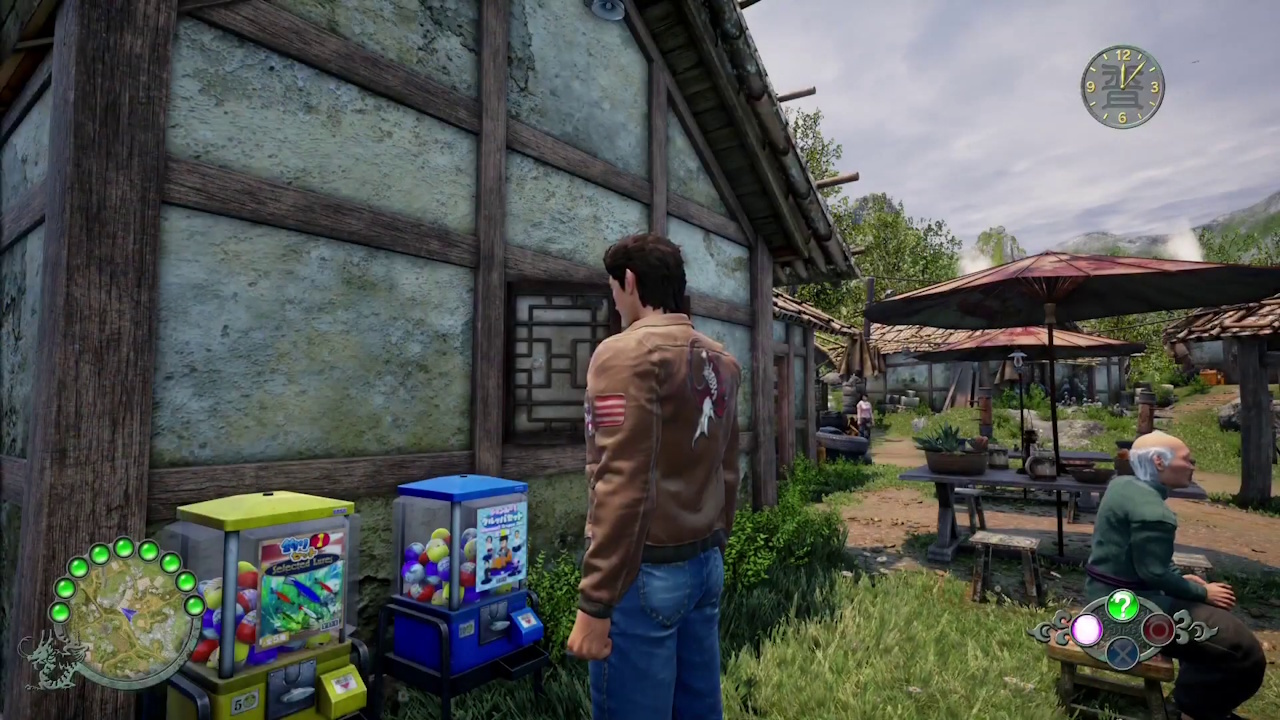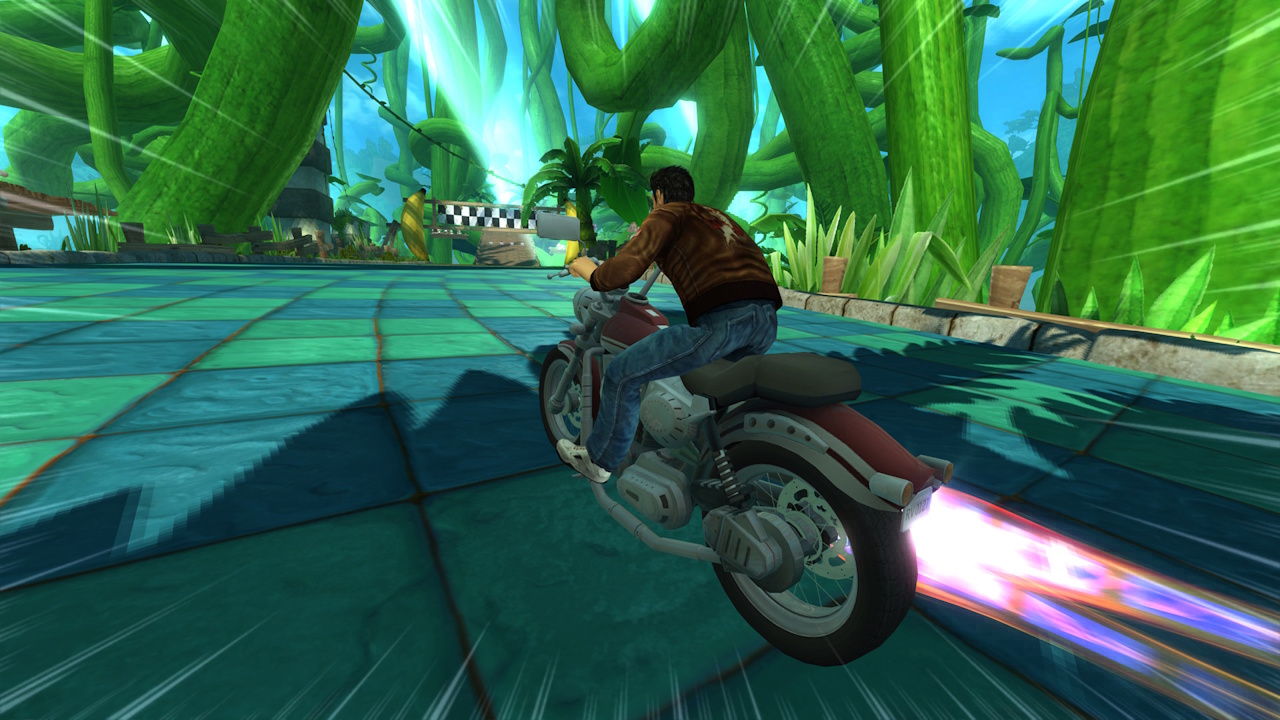
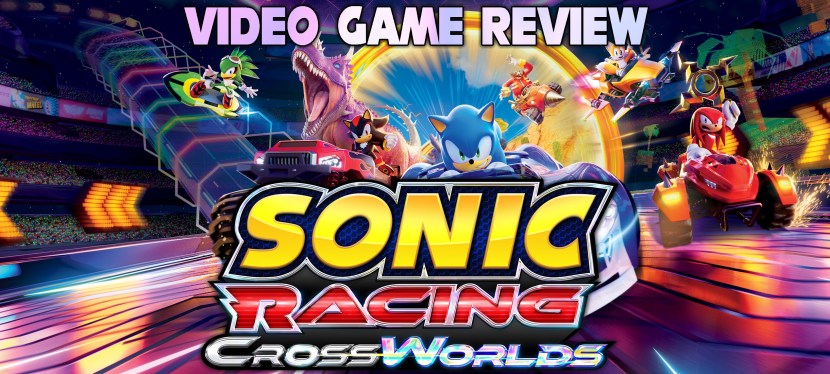
Sonic Racing: CrossWorlds – Video Game Review

Although I played a good amount of Sonic the Hedgehog, Sonic 2, and Sonic 3 with a friend on their Mega Drive back in the 1990s, the only Sega console I ever owned was a Dreamcast. And I’m pretty sure the only Sonic game I owned at that time was Sonic Adventure. But I think it’s fair to say that Sega’s mascot – while not as ubiquitous as his one-time rival Super Mario – is a pop culture icon! With movies, new games, collaborations, and spin-offs under his belt, the speedy blue hedgehog is still keeping the flag flying for Sega almost a quarter of a century after the company got out of the video game hardware business.

In recent years, I’ve enjoyed Sonic’s trip to the cinema, as well as the delightfully old-school Sonic Mania – a 2D platformer which feels like it came right out of the Mega Drive era. But I haven’t really kept up with Sega’s racing game series. Though I do occasionally dabble in other kart-racing games – like Meow Motors, for example – the simple fact is that there’s really only one name in town for this sub-genre: Mario Kart. I’m a huge Mario Kart fan, having played every title except for Mario Kart World, and even the best kart racers feel like they’re overshadowed by Nintendo’s juggernaut.

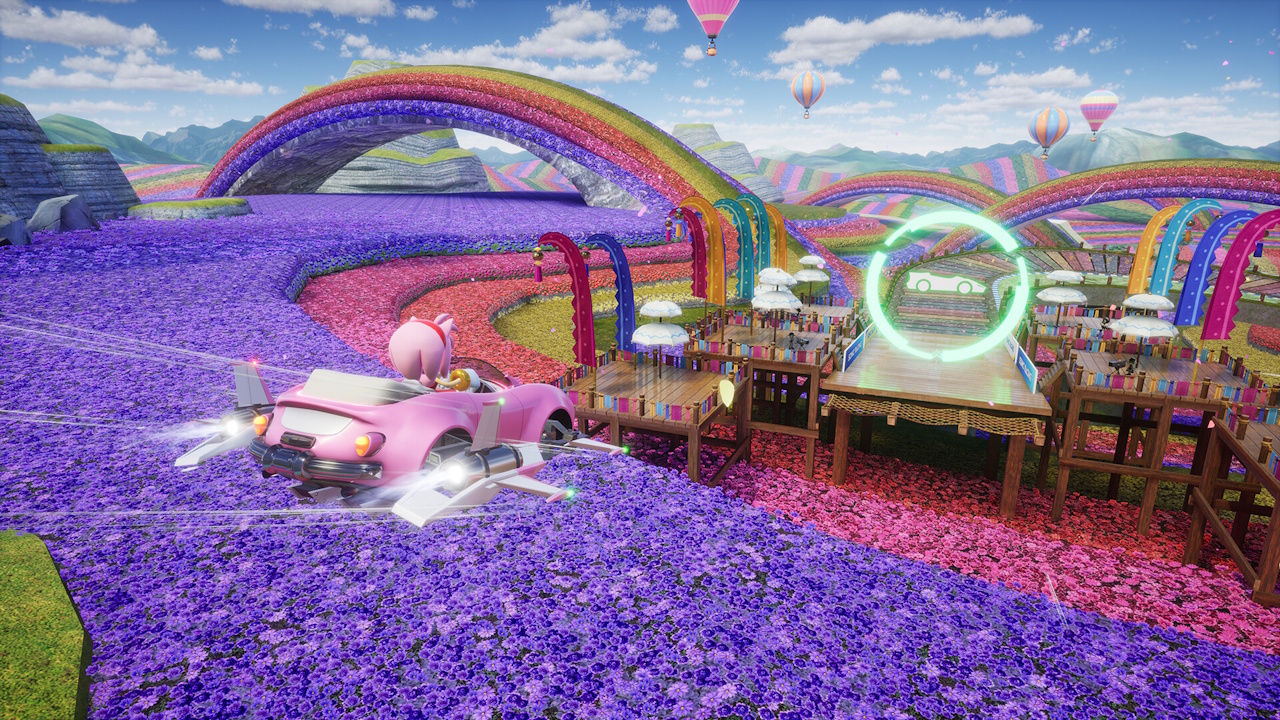
Promo screenshot for Sonic Racing: CrossWorlds showing the racer Amy in flight.
Let’s dive into CrossWorlds!

Releasing Sonic Racing: CrossWorlds just a few months after the first Mario Kart game in over a decade wasn’t just a risk… it was a risk that took balls made of pure titanium. Comparisons would’ve been inevitable, I suspect, no matter when CrossWorlds launched, but releasing the game so close to Mario Kart World shows, in my view, just how much confidence Sega must’ve had in the game. And you know what? They were absolutely right to feel that way, because Sonic Racing: CrossWorlds is an absolute joy to play.

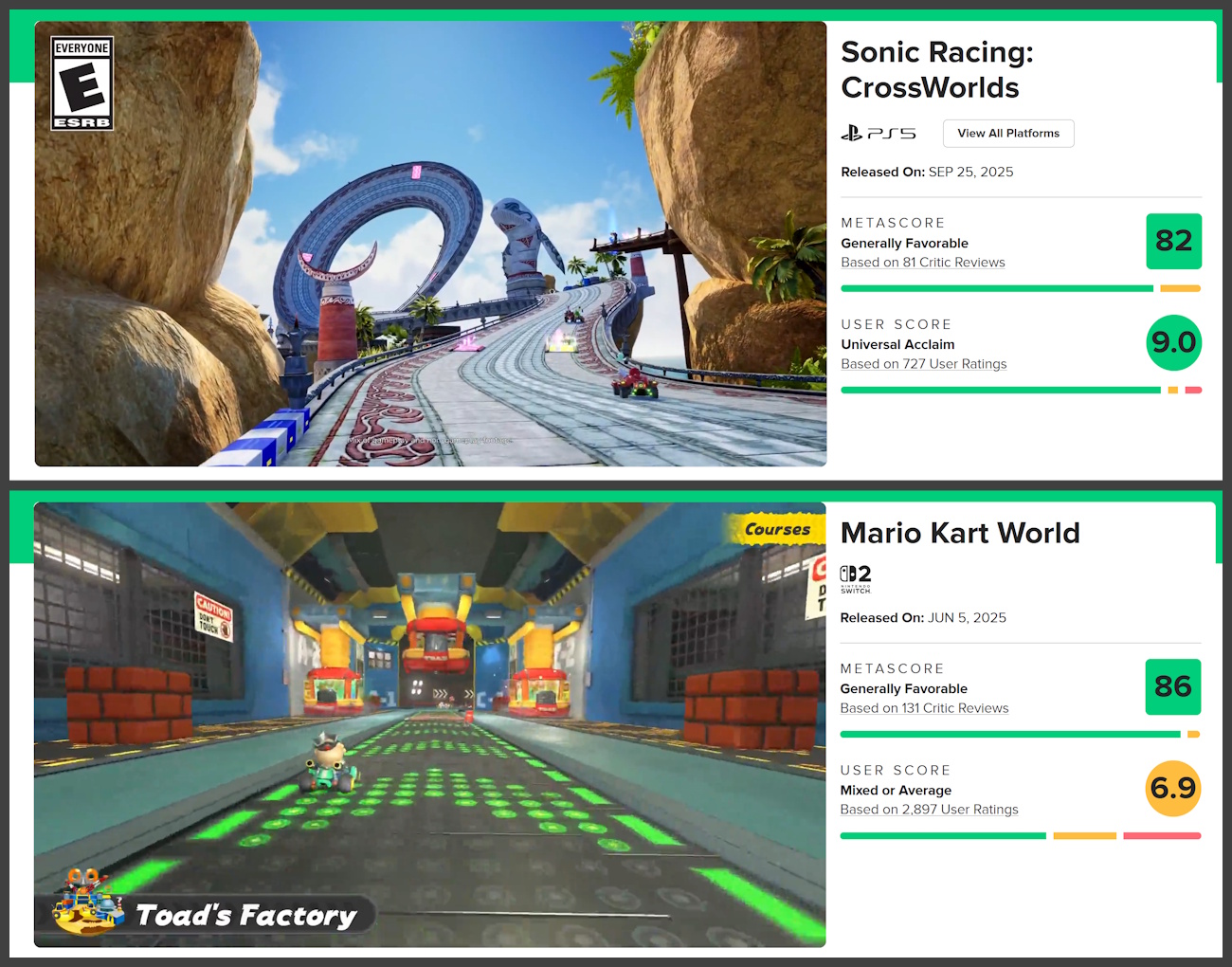
This is the “Mario Kart 9” I’ve wanted for years… and I didn’t even need to buy a Switch 2! That’s the headline, and it seems as if CrossWorlds is actually out-performing Mario Kart World, at least in terms of reviews. On Metacritic, at time of writing in December 2025, Mario Kart World is sitting at a 6.9/10 in terms of user reviews, whereas Sonic Racing: CrossWorlds is utterly dominating it with the “universal acclaim” of a 9.0. With Mario Kart World doing its own thing, focusing more on building up a large open world to drive around, Sonic Racing: CrossWorlds keeps its focus tighter, with well-designed racetracks. But each race brings with it a twist – the titular CrossWorlds mechanic – to keep things interesting and engaging.

Two Metacritic screenshots comparing Sonic Racing: CrossWorlds to Mario Kart World.
CrossWorld’s Metacritic score (top) compared to Mario Kart World’s (bottom).

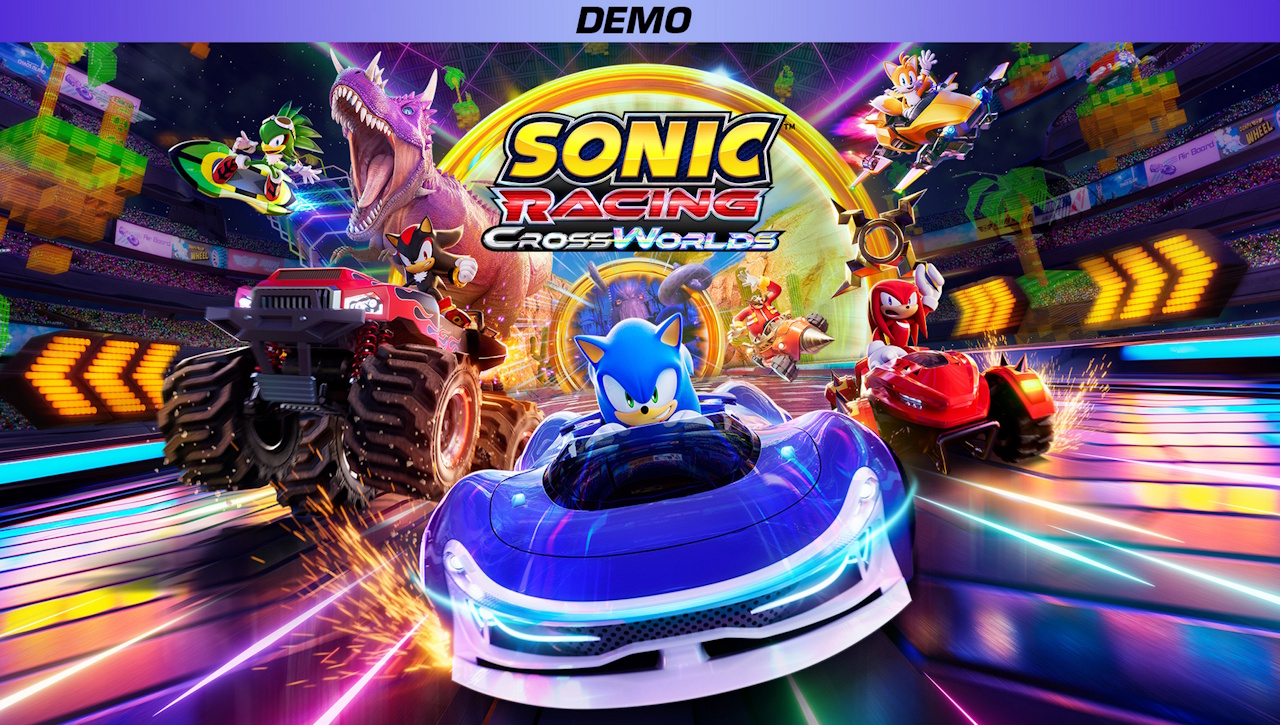
How many games, these days, still offer free demo versions? Demos used to be everywhere in the late ’90s and into the new millennium, but despite the ease of digital distribution, they aren’t something you see a lot of any more. I think free demos are coming back, at least on PC, but it was great to be able to try Sonic Racing: CrossWorlds before buying. And if there’s *one* thing to take away from this review, it’s that you can try CrossWorlds completely for free on Steam thanks to the demo! I really think it’s worth testing out, at least, to see whether you might have half as much fun with the game as I have.

And the demo is pretty beefy. You get to choose from several of the main Sonic characters, choose and customise your vehicle (more on that in a moment), and even choose which racetracks and CrossWorlds to race through. There’s a lot of locked content, of course, but there’s also a surprising amount to experiment with for free. This isn’t just one of those “one racetrack and one racer for two minutes” type of things!

Promo art for Sonic Racing: CrossWorlds showing the demo version.
A demo version is available for free.

Some racing games – especially arcade racers – have vehicles that can feel weightless or “floaty,” but Sonic Racing: CrossWorlds has karts that feel substantial and weighty. I love how they transform from karts to boats or planes depending on the track and the terrain; I think I’m right in saying that’s something the Sonic Racing series has done before, but don’t quote me on that! Regardless, it’s a fun mechanic, and it’s implemented well in the game. Each of the three racing/vehicle types feel different, too; planes can move vertically as well as horizontally, and boats glide on the track in a way karts don’t.

Each kart is customisable, and there are stats to consider. Some vehicles are slower to accelerate but have a higher top speed, some handle better, and so on. None of that’s earth-shattering stuff for a kart racer; Mario Kart has been doing it for decades at this point. But for people who like to tinker, and players who like to work out “the meta” for each track and character, those things are present in CrossWorlds – but they aren’t so overwhelming that you’re going to feel compelled to *only* ever choose the same combination. The stats matter, but they don’t ruin the game or make most combinations non-viable, which I think is important in a title like this. Fun, not detailed stats, should be the name of the game!

Promo screenshot for Sonic Racing: CrossWorlds showing vehicle customisation.
Customising a kart.

I’m not wild about the whole “season pass” thing in a full-priced title, so I think it’s worth being aware of the DLC situation if you’re interested in Sonic Racing: CrossWorlds. There are two DLC packs, which can be purchased separately – each of which adds a few racers, karts, and racetracks – and a season pass. The price for the game’s “digital deluxe edition,” when not on sale, is £80/$80, which puts it alongside Mario Kart World in terms of how much you’re gonna pay. Given how Mario Kart World was roundly criticised earlier in the year for its price point, that’s something to keep in mind.

And I don’t think it’s unfair to say that fully-priced games shouldn’t be selling DLC, extra characters, skins, and so on *from day one*. When Mario Kart 8 Deluxe added its Booster Course Pass, not only did that double the amount of content in the game, it also came along years after the title’s original release. Sonic Racing: CrossWorlds starts out as an incomplete experience, but Sega is happy to sell you the rest of the game piece by piece. Even when a game is good, as Sonic Racing: CrossWorlds undeniably is for me, I still think this kind of over-monetisation should be called out, or at least flagged up in a review like this one.

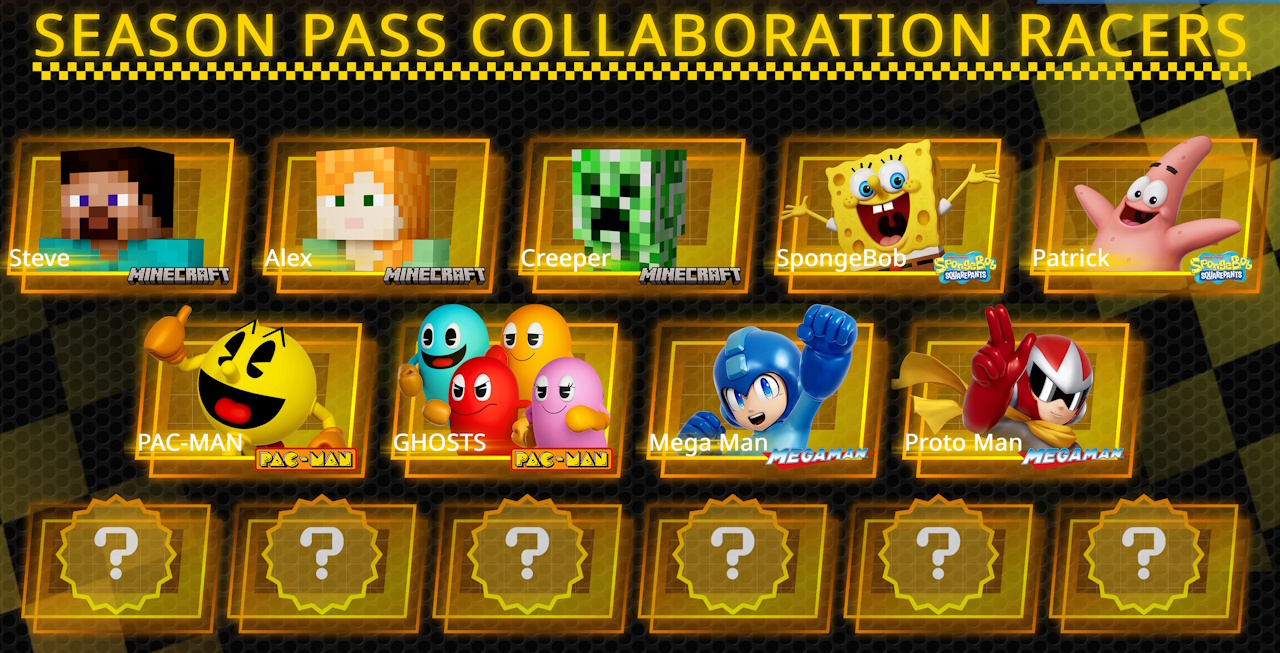
Promo screenshot for Sonic Racing: CrossWorlds showing season pass characters.
Some of the characters from the season pass content.

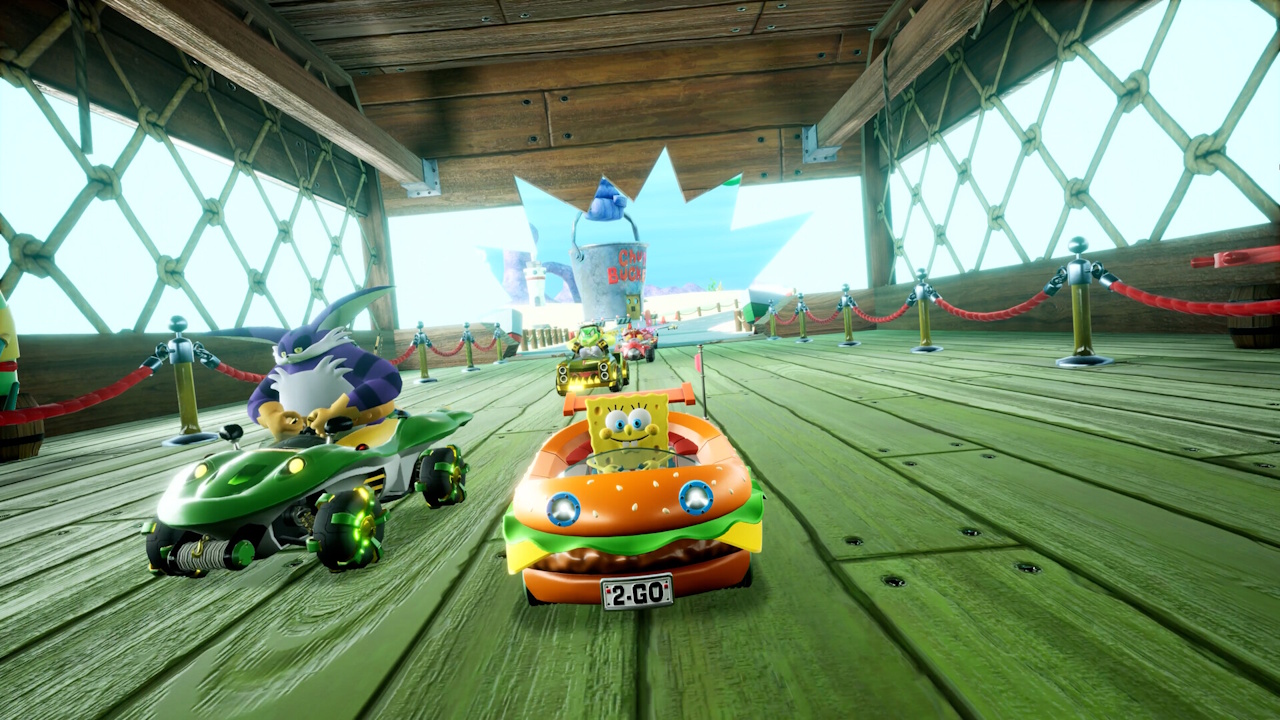
And look, I’m not pretending that some of the additional content isn’t a ton of fun. You’ve got characters, vehicles, and tracks based on four massively popular entertainment properties: Mega-Man, Minecraft, Pac-Man, and SpongeBob SquarePants. Tearing up a Bikini Bottom-themed track in the Patty Wagon with SpongeBob is… well, it’s just good old-fashioned kart-racing *fun*. But… did it need to be a paid extra? Couldn’t this content have been included in this game – this *fully-priced game* – for no extra charge?

So your mileage may vary on the price front. What I will say, not exactly in defence of CrossWorlds, but rather as a potential mitigating factor, is that the game is – at time of writing – on sale on PC, and the digital deluxe version is 30% off. For a game that’s only been out for less than three months, that’s a pretty generous discount, in my opinion. Similar sales are also taking place on Nintendo Switch, PlayStation 5, and Xbox, so if you act fast, you might be able to pick it up at a discount. If not, stick it on your wishlist and wait for the next sale, as I’m sure this won’t be the last time CrossWorlds gets a discount like this.

Promo screenshot for Sonic Racing: CrossWorlds showing SpongeBob.
SpongeBob is a playable character… if you pay extra.

CrossWorlds has everything I’d expect from a kart-racing game. Racetracks are fun, well-designed, and full of bright, vibrant colours, karts and characters are cute, with enough differences between them to keep things interesting, and there are items galore which can give you a boost, knock back an opponent, or lay a trap in wait for anyone who’s fallen behind. But, thanks to the titular CrossWorlds idea, there’s a bit more replayability to the game than you might’ve thought.

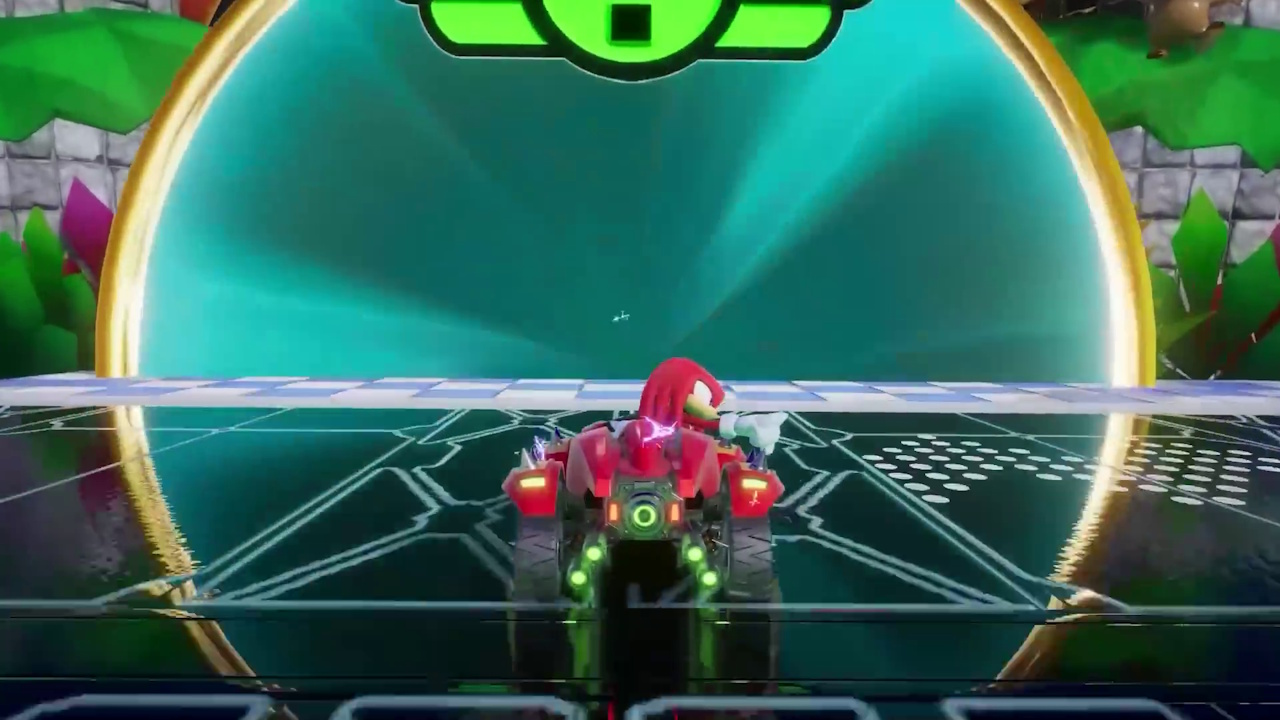
The CrossWorlds mechanic works like this: the second lap of each racetrack sees everyone drive through a portal, and that middle lap then takes place on a totally different track. The player in first place gets to choose from either a set CrossWorld or a random one – and there must be dozens, if not hundreds, of possible variations as a result. This addition is way more transformative than I think I’m making it sound, because it means that every single race is different, and you can’t rely on pure muscle memory, even if you’ve memorised all of the track layouts. There’s also an additional incentive to push through the pack and nab that first-place spot by the end of lap one, because then you’re in control of the second lap.

Promo screenshot for Sonic Racing: CrossWorlds showing Knuckles approaching a portal.
Approaching a portal.

Comparisons with Mario Kart are inescapable, and for me, I think CrossWorlds does something that Nintendo have tried to do with Mario Kart World’s intermission tracks and open world: adding variety and replayability to the game. I haven’t played World yet, so I can’t comment on how well those intermissions and the open world feel to play. But in Sonic Racing: CrossWorlds? This variety is an additional factor in keeping races fun, interesting, and engaging. That’s not to say the game would be bad without it – most of the racetracks are great, and I’d be happy to play through all of them over and over again! But adding this additional element works so well.

I also think the CrossWorlds mechanic is a technical marvel. What Sonic Racing: CrossWorlds does, if you think about it, is seamlessly transition from one racetrack to another, then back again – and which racetrack it has to transition to can’t be known until, at most, a few seconds before the first player enters the portal. That’s quite impressive – there are no loading screens, and no disruption at all to what can be a very fast-paced and hectic race.

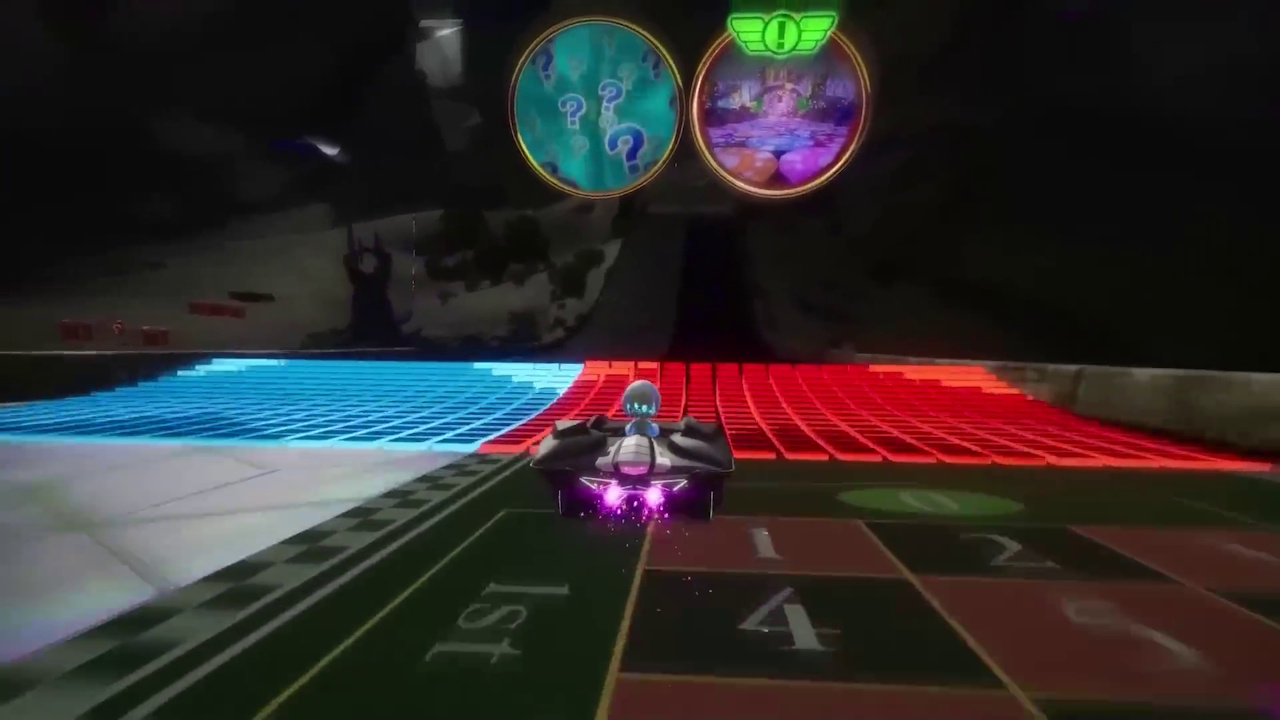
Promo screenshot for Sonic Racing: CrossWorlds showing a racer choosing between two portals.
A seamless transition between racetracks on the fly is creative and well-implemented.

Price issues aside, I’ve been having a whale of a time with Sonic Racing: CrossWorlds, as you can probably tell. I was in the mood for a fun, old-school kart racer, and with no Switch 2 or Mario Kart World to dive into… this has been a surprisingly fun purchase for me. CrossWorlds wasn’t on my list of games for 2025, and it was almost an impulse purchase when I saw it on sale around Black Friday, but I ended up having a great time. I mostly play in single-player mode, because that’s where I have the most fun, but there seems to be a thriving online scene if that kinda thing is more your speed. Who knows… maybe we’ll see each other out on the racetrack! I promise to wave as I overtake you.

Stay tuned, because I have at least one other game from 2025 in my review pile that I’d love to get through before the end of the year. And on or before New Year’s Eve, be sure to tune in for my annual End-of-Year Awards! Who knows, CrossWorlds might just make an appearance.

Until then… see you on the racetrack!


Sonic Racing: CrossWorlds is out now for Nintendo Switch 1 & 2, PC, PlayStation 4 & 5, Xbox One, and Xbox Series S/X. Sonic Racing: CrossWorlds is the copyright of Sonic Team and Sega. Some screenshots and promo art courtesy of Sega and/or IGDB. This review contains the thoughts and opinions of one person only and is not intended to cause any offence.

My Favourite Places in Shenmue

A Shenmue-themed spoiler warning graphic.

Spoiler Warning: There are spoilers ahead for Shenmue.

This year is all about Shenmue’s 25th anniversary! A little while ago, I wrote up my reflections of the game to mark the anniversary of its launch in Japan, but I find myself with more to say about this landmark, transformative game. So today I thought it could be a bit of fun to explore Shenmue’s game world together and visit a few of my favourite locations.

Shenmue was the first game I played that gave me a profound sense of freedom. The game’s world was open and explorable – and many buildings could be entered and investigated, too, including those that had nothing to do with the main quest. That was revolutionary twenty-five years ago, and went a long way to making Shenmue into the incredibly immersive title that it was. It wouldn’t be overstating it to say that Shenmue showed me what the future of gaming could look like in the 21st Century – and kept me playing at a time when I might’ve otherwise drifted away from the hobby.

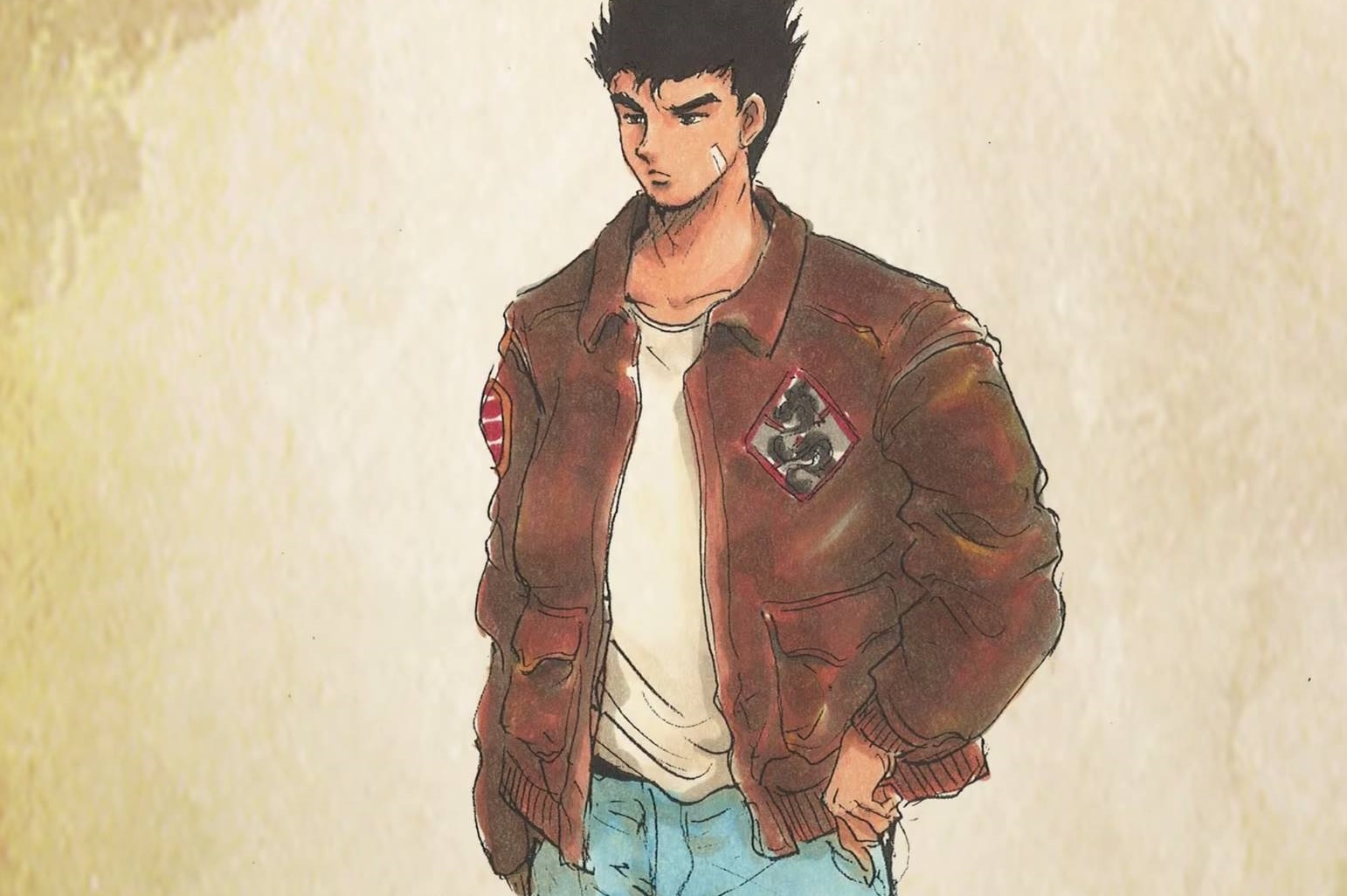
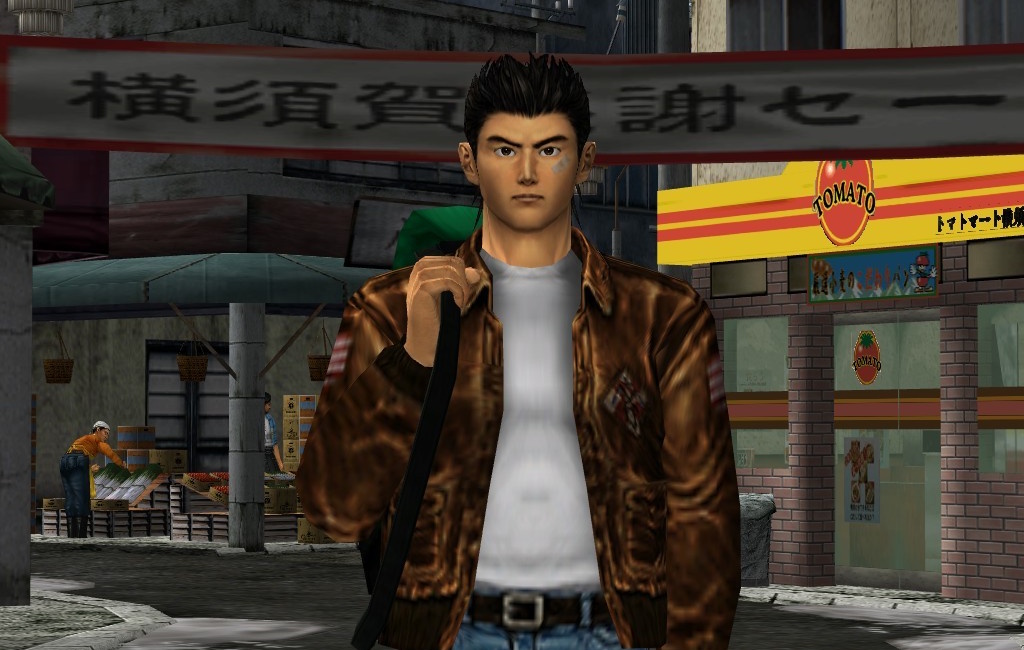
Concept art for Shenmue (1999) showing Ryo Hazuki.
Concept art of Ryo Hazuki.

That’s really just a summary, though, so if you want to read more about my recollections of playing Shenmue, you can find the full article by clicking or tapping here.

A couple of caveats before we go any further! Firstly, all of this is just the subjective opinion of one player. If I highlight places and locales you hate, ignore somewhere you think is important, or you just don’t like what I have to say… that’s okay. There’s a lot to love about Shenmue, and there ought to be room in the fan community for differences of opinion and polite discussion.

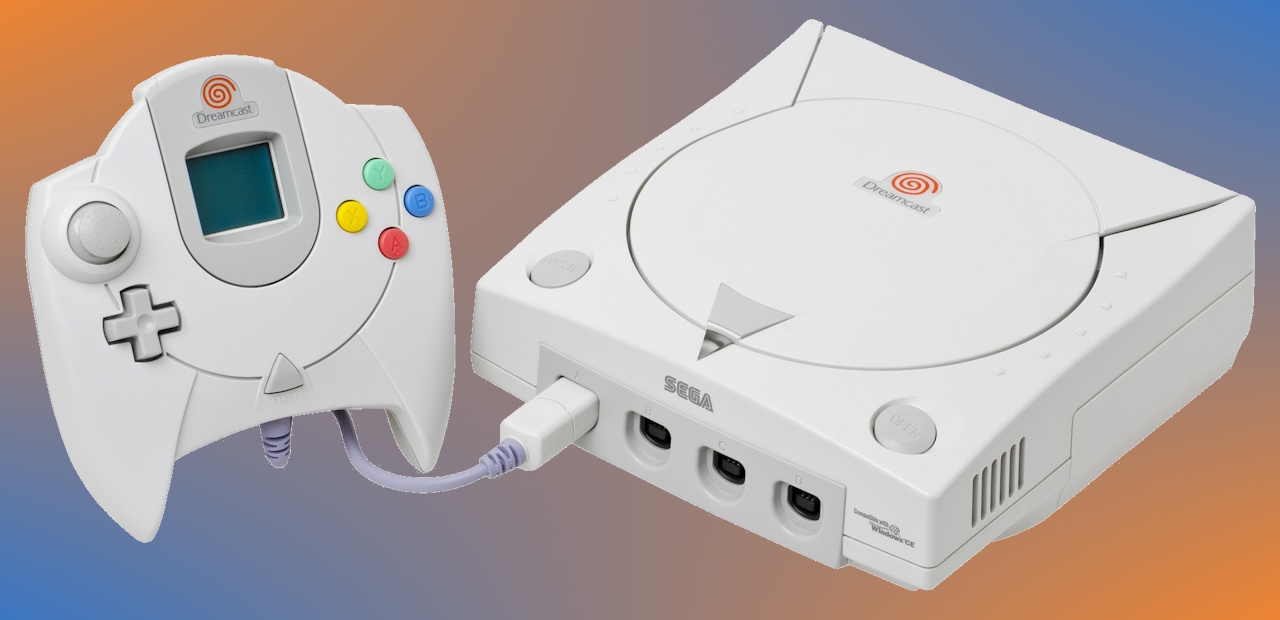
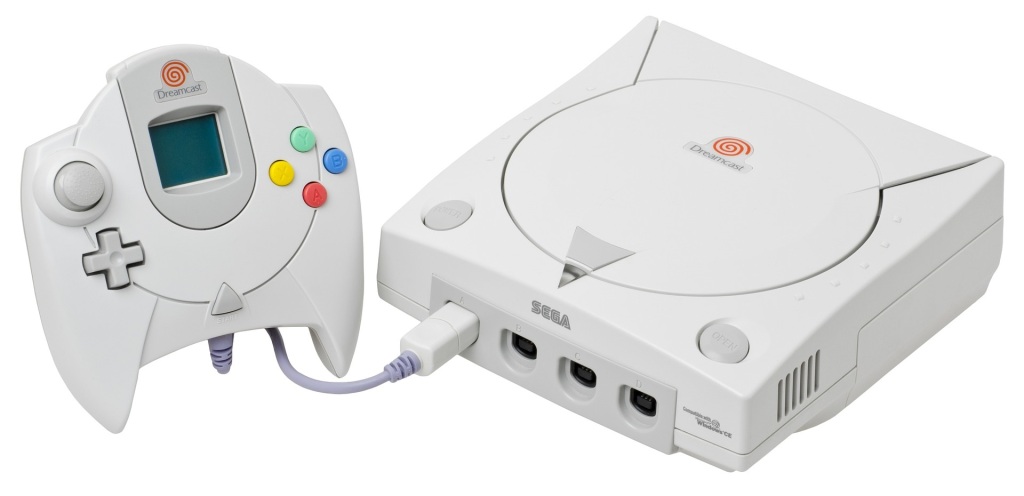
A Sega Dreamcast console and control pad (USA/Japan edition) on an orange and blue background.
Shenmue was released in December 1999 for the Dreamcast.
(2000 in North America and Europe)

Secondly, I’m only going to be looking at locations from the first Shenmue on this occasion. When Shenmue II celebrates its 25th anniversary in September next year, I’m planning to do a similar write-up of the game… and possibly another piece like this one (assuming I’m still around and assuming I remember!) So don’t worry, I haven’t forgotten about Shenmue II… but it isn’t the focus of this piece today.

Phew! With all of that out of the way, let’s get started.

Location #1:
Hazuki Residence: The Kitchen

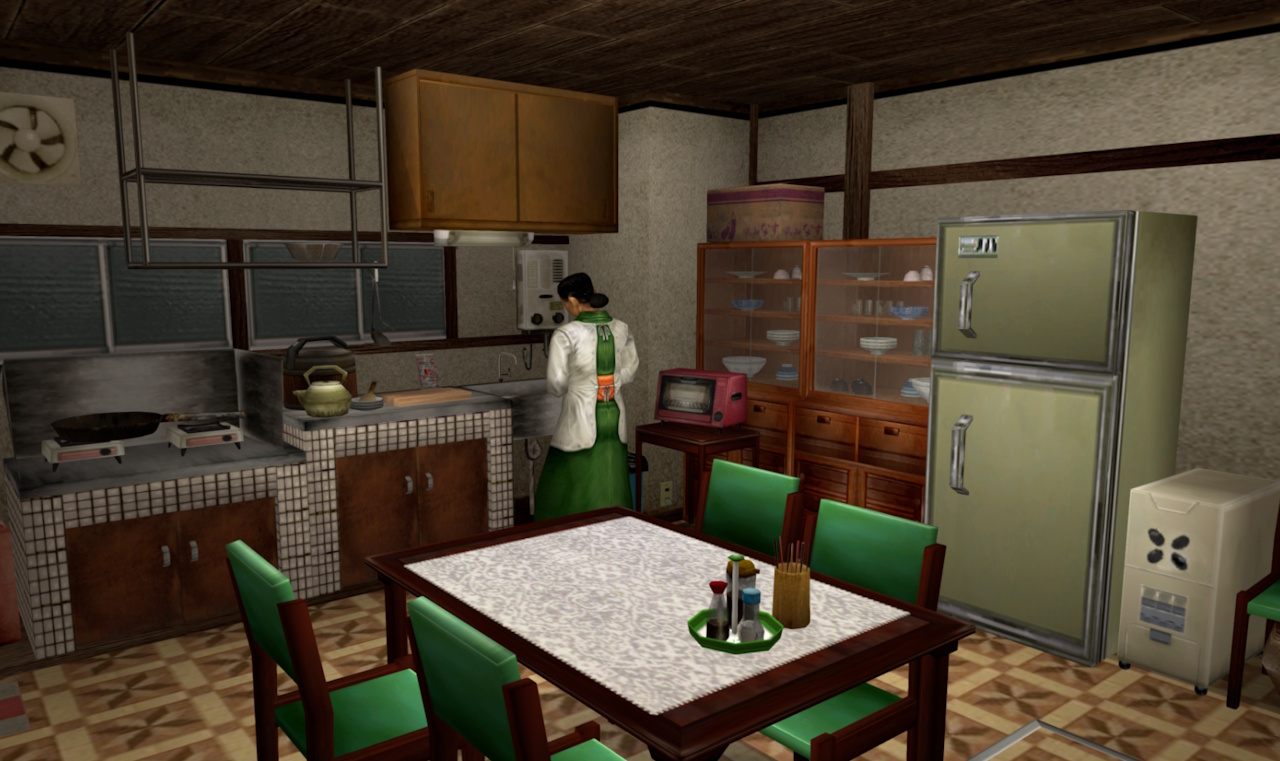
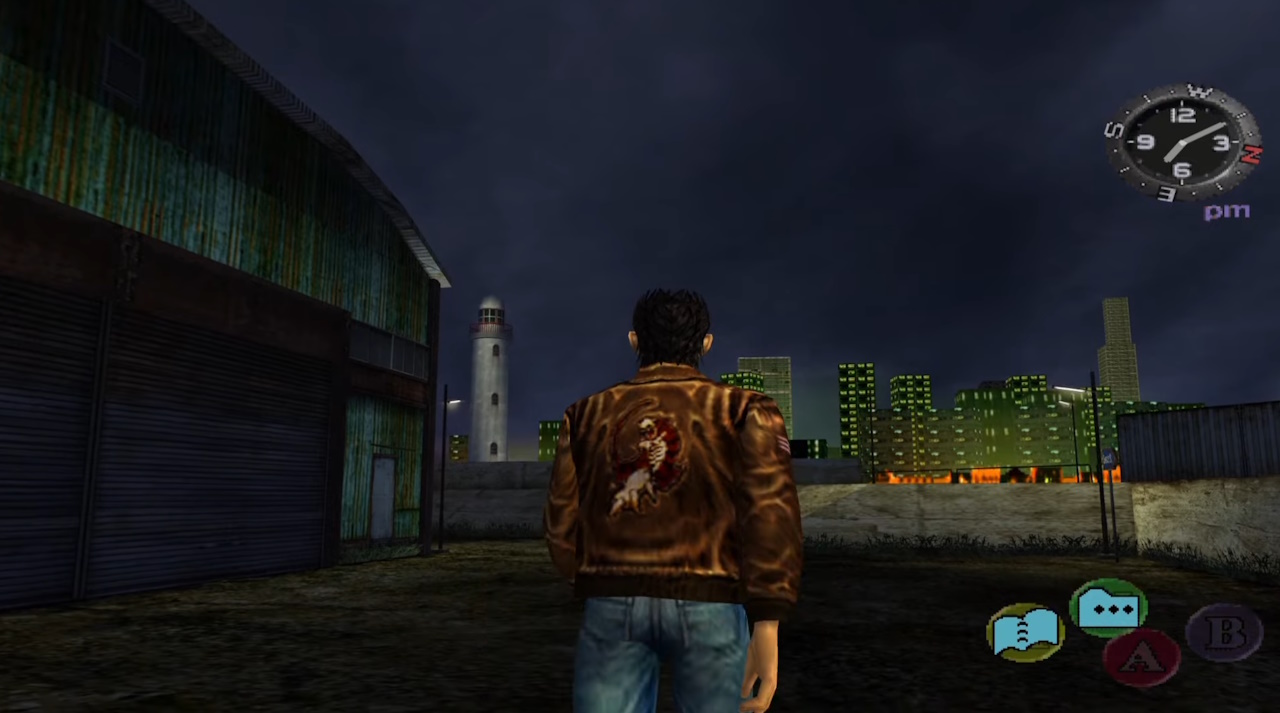
Screenshot of Shenmue (1999/2000) showing the Hazuki kitchen, with Ine-san.

Let’s start at home: which for Ryo is the Hazuki residence and dojo in Yamanose. There are plenty of iconic places around here – but an underrated one has to be the kitchen. In a normal house, the kitchen is usually a hub of activity; it’s where we cook, where we sit and eat, and a room we generally spend a large amount of time in. But in Shenmue – and many other similar games, to be fair – the kitchen is just… set decoration. It exists because without it, Ryo’s house would feel incomplete. But there’s not really much of a reason to spend time here, and aside from a couple of cut-scenes, the game’s story largely passes this room by.

And I think that’s what makes this room (and several of the other places on this list) so interesting to me. It’s a space where nothing happens, but it’s important for the immersion and world-building that a game like Shenmue needs. There are also a few interesting little things in the kitchen; Ryo can find a can of tuna for the kitten, for example. Cupboards and the fridge can be opened and examined, which is something that felt really immersive in 1999/2000. And it’s possible to chat with Ryo’s house-keeper/surrogate mother, Ine-san, too, as she spends a fair amount of her time in the kitchen.

Location #2:
The Harbour: Fishing Spot Behind the Lounge

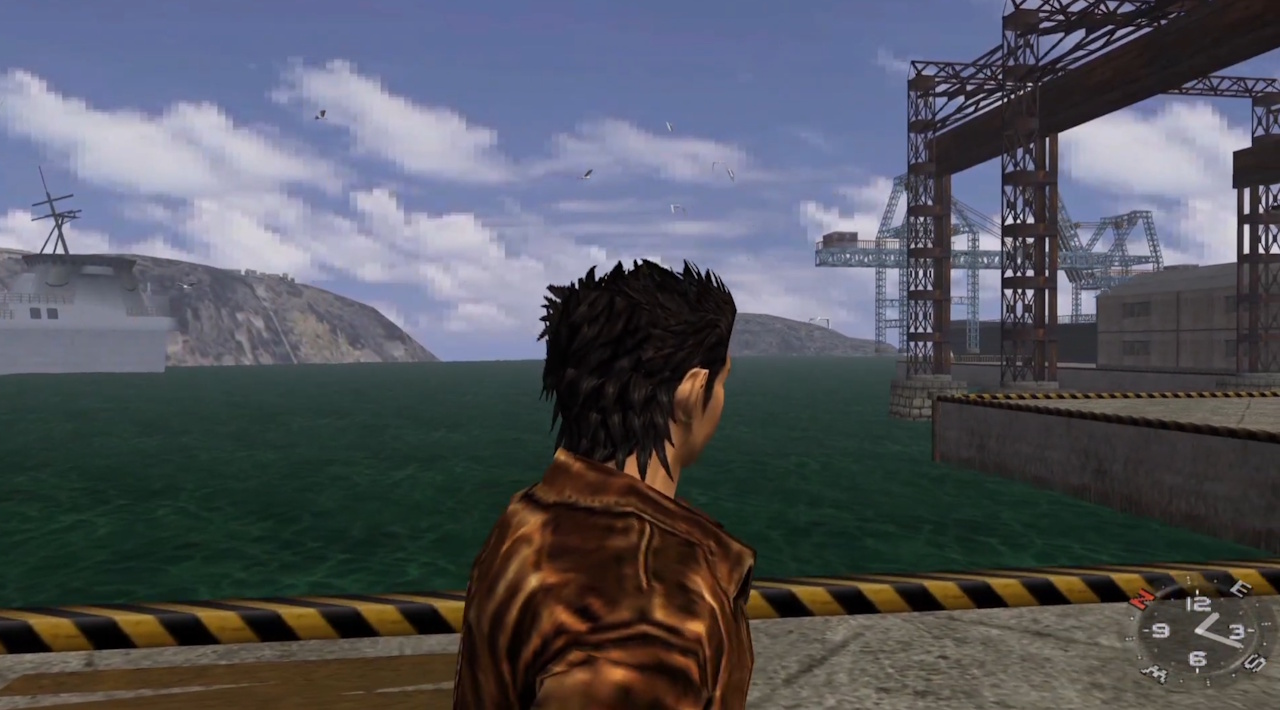
Screenshot of Shenmue (1999/2000) showing Ryo walking at the harbour.

The harbour is one of my favourite places in Shenmue; it’s just so atmospheric. And for someone who grew up near a working harbour, it’s also the location in the game that probably feels the most familiar – at least in some ways. Directly behind the lounge, past the steps where the homeless man sits, is one of my favourite spots in the harbour. This is an area you’ve definitely walked through and driven through, but probably haven’t spent a lot of time in! There are occasionally fishermen here, as well as an NPC with a sketchbook, but other than that, Ryo has no reason to ever stop here; it’s a connection point between other, more densely-packed or story-rich areas.

I find something peaceful and serene about this area, though – especially after dark. The view across the water shows the far side of the bay, and there’s a large warship or other vessel in the distance. But this part of the harbour doesn’t see much action – aside from the odd pedestrian or forklift during daylight hours, you’re on your own. And that makes it a peaceful, easily-overlooked spot. The world of Shenmue – which feels so rich and deep thanks to its numerous NPCs with their own schedules – simply rolls along, passing you by as you take in the sights and sounds of the harbour.

Location #3:
Dobuita: Game You Arcade

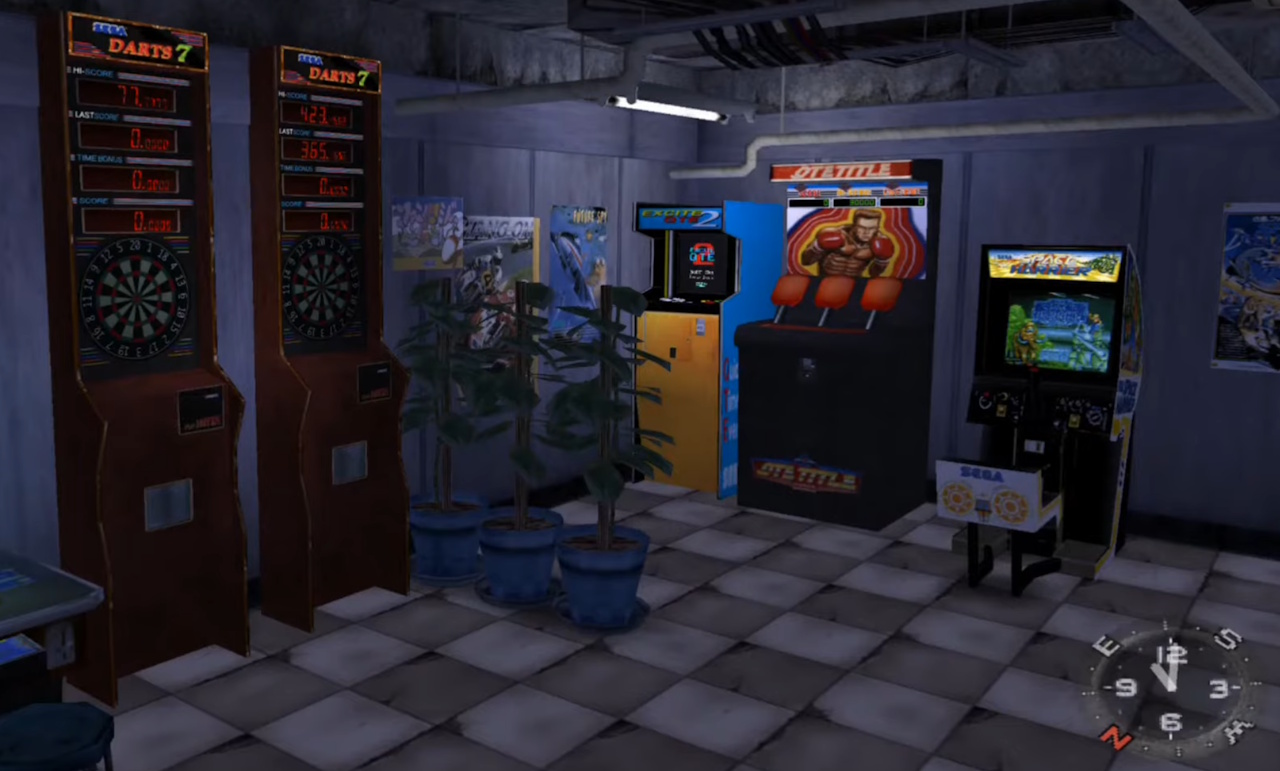
Screenshot of Shenmue (1999/2000) showing the interior of Game You Arcade.

I grew up in a rural area, and where I lived there weren’t any video game arcades. I visited one a few times as a kid, when we’d visit a bigger city, but I never really had the arcade experience that many folks my age did – and I think it’s for that reason that I fell in love with Shenmue’s arcade. I’d played Hang On – or a motorcycle game similar to it, at any rate – at least once before, but Space Harrier was brand-new to me. I spent hours in the Game You arcade playing those titles, as well as the darts mini-game which was also surprisingly fun.

The arcade is compact, but beautifully detailed. The room is lit by old fluorescent lights, and the cabinets seem to glow, even from a distance. The whole thing has a very artificial feel – which, ironically, perfectly recreates this kind of environment. The arcade always has at least one other person present, yet it can feel empty and almost like a “liminal space;” the room exists to guide you to the mini-games, yet it’s a beautiful rendition of an ’80s video game arcade in its own right. It’s a very atmospheric space.

Location #4:
Yamanose: Down the Stairs

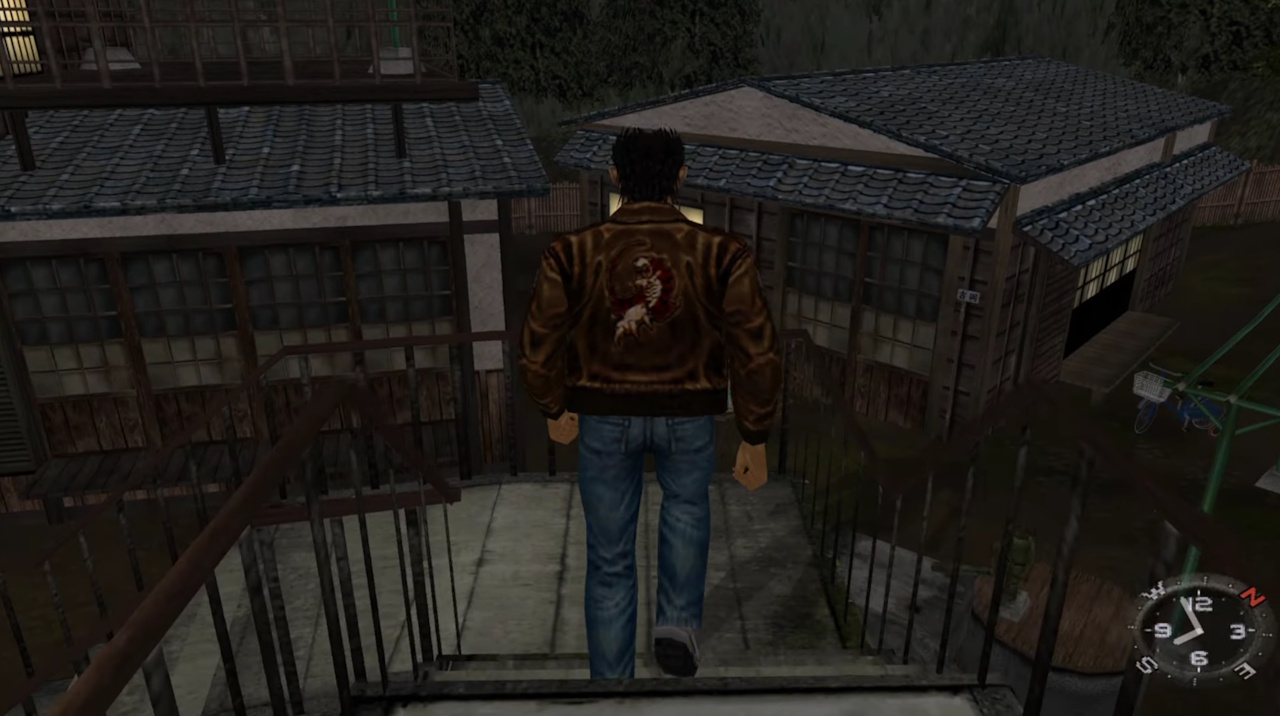
Screenshot of Shenmue (1999/2000) showing Ryo descending the stairs in Yamanose.

In Ryo’s hometown of Yamanose, there’s a flight of stairs that you’ll have passed by countless times on your adventures. But did you ever once descend those stairs to see the houses below? There’s only one reason to visit this area, and it’s easily overlooked: if you feed and pet Megumi’s kitten at the shrine, eventually it gets better and wanders off – and you can find it by one of the homes down these steps. But that side-quest is very much optional – so many players will have missed it.

For me, these houses just have a vibe to them that’s hard to put into words. They’re traditional Japanese houses, which I guess is part of it. But they help make Shenmue’s world feel lived-in and real; the people inside seem to have lives of their own, like everyone else in the game world. It would’ve been really easy for Shenmue’s developers to make this area inaccessible; set dressing for Yamanose. But you can explore this area, knock on doors, and even see the clotheslines, wheelbarrows, bicycles, and other little pieces of these people’s lives. Little details like that are what made Shenmue stand out to me when I first played it – and I always like taking a little detour to this uninteresting little corner of Yamanose.

Location #5:
Dobuita: Nagai Industries (The Yakuza Den)

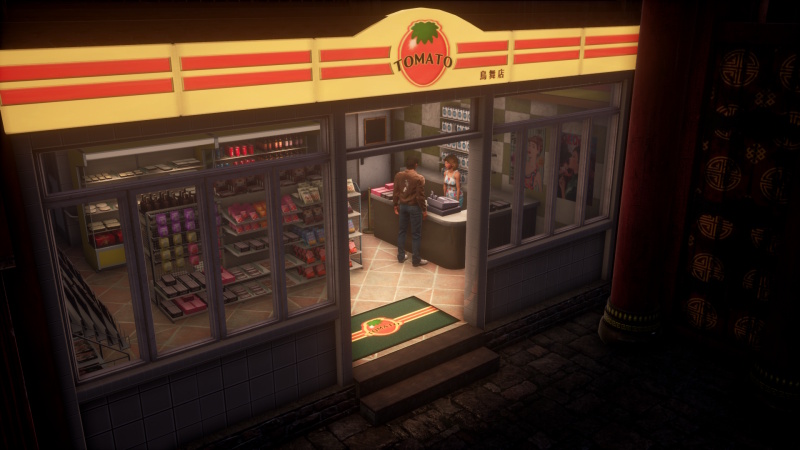
Screenshot of Shenmue (1999/2000) showing the way into Nagai Industries.

Have you ever walked into a room and instantly known you weren’t supposed to be there? That’s the feeling I get when Ryo enters Nagai Industries in Dobuita, which is a Yakuza den masquerading as a legitimate business. That feeling is really hard to pull off in any form of media, and Shenmue absolutely nails it here. Ryo can be directed to Nagai Industries as part of his quest to find “men with tattoos,” but it isn’t an essential part of the story and it can be accessed at other times, too.

The conversation Ryo can have with the obviously shady man inside made the hairs on the back of my neck stand up the first time I accidentally triggered it – it’s so well-written. Even if you do find yourself going here as part of Ryo’s quest, you won’t spend long in the building – yet it’s a unique space in the game’s world. Ryo does get mixed up with a gang later on in the story… but it isn’t this gang. These criminals are just doing their own thing, and Ryo can wander into their office almost at random. It’s a strange interaction – and a fun place to visit.

Location #6:
The Harbour: Harbour Lounge

Screenshot of Shenmue (1999/2000) showing the harbour lounge while it's empty.

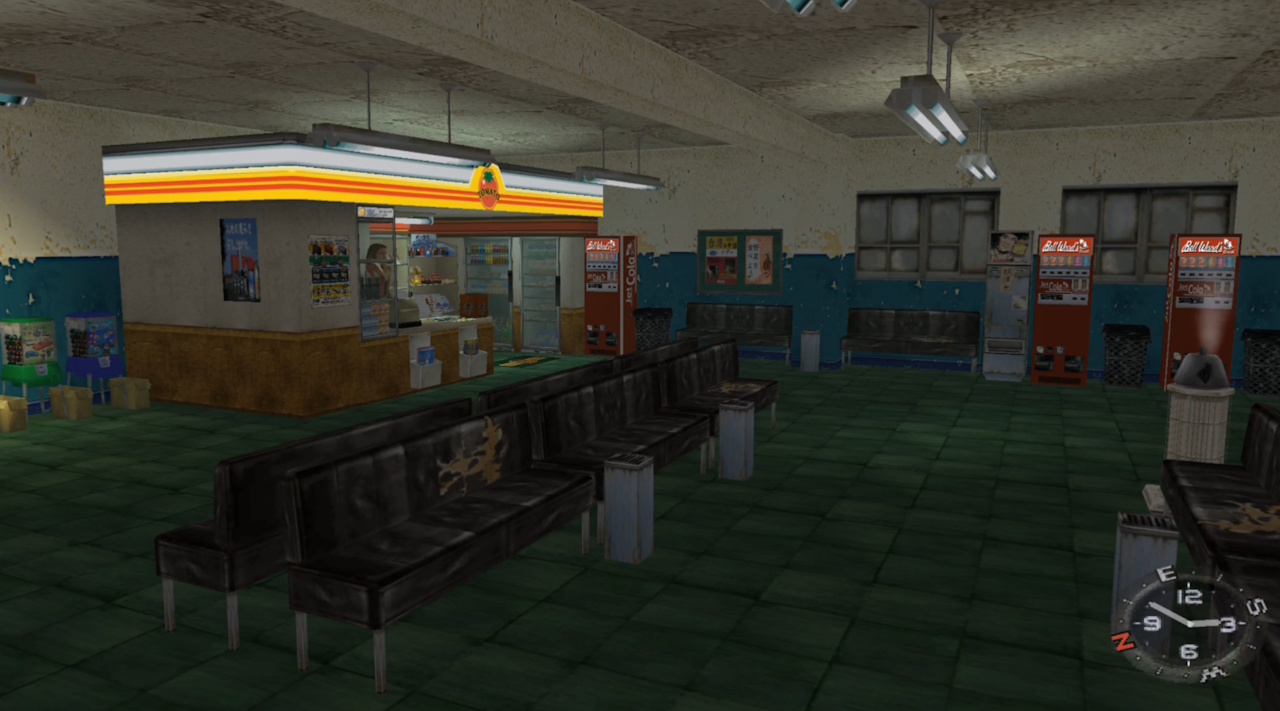
There’s a strange kind of beauty in urban decay… at least, sometimes there is. The harbour lounge feels like a well-used space that’s in need of a new coat of paint and a bit of TLC, and that’s exactly the kind of vibe that the developers wanted to convey. The paint on the walls is chipped and peeling, the leather seats have seen better days, and I just get the sense that the lounge is a heavily-trafficked space, probably bustling with sailors, harbour workers, ferry passengers, and the like. The soundscape for this area has inaudible conversation chatter playing, too.

Which makes it all the more eerie that the harbour lounge is usually all but deserted. Aside from the small shop counter in one corner, which is always staffed, the harbour lounge is usually empty. At most, you might encounter one or two people in here. Again, it’s giving me “liminal space” vibes; there’s an almost otherworldly feel to a place that should be packed with people – and has all the evidence of being well-used – yet is often empty.

Location #7:
Dobuita: Yamaji Soba Noodles

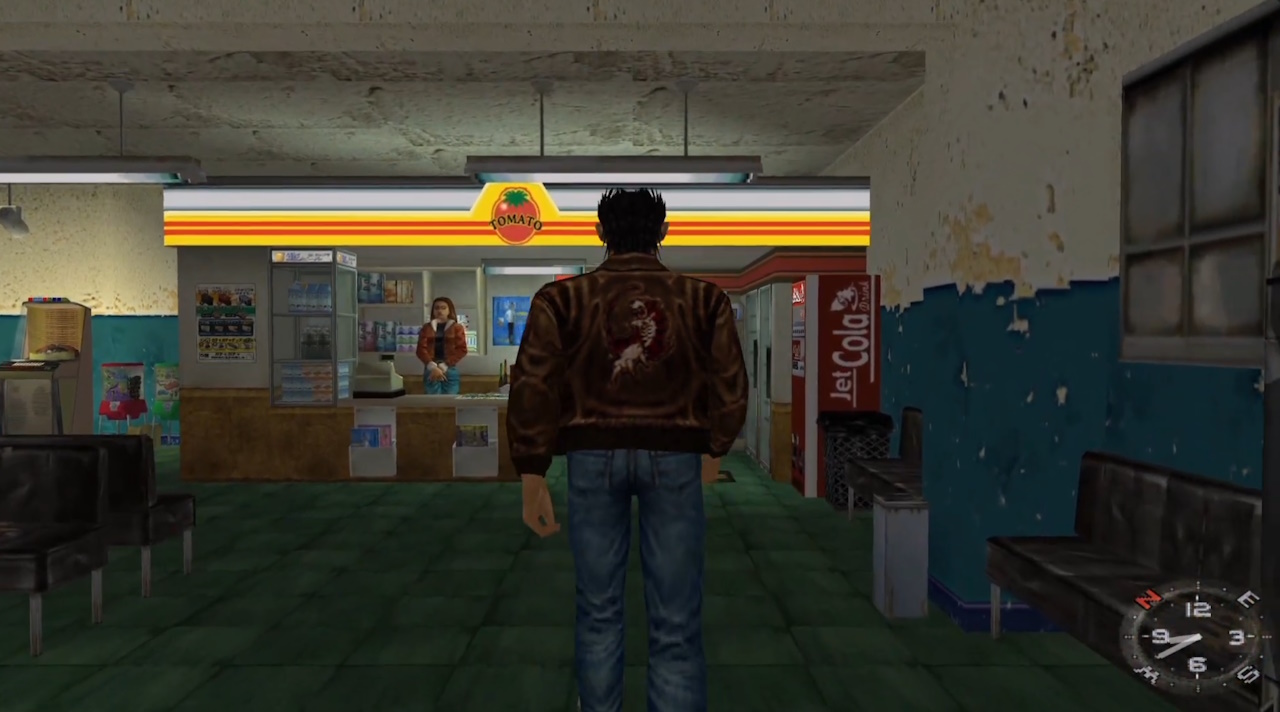
Screenshot of Shenmue (1999/2000) showing the inside of Yamaji Soba Noodles, including the owner.

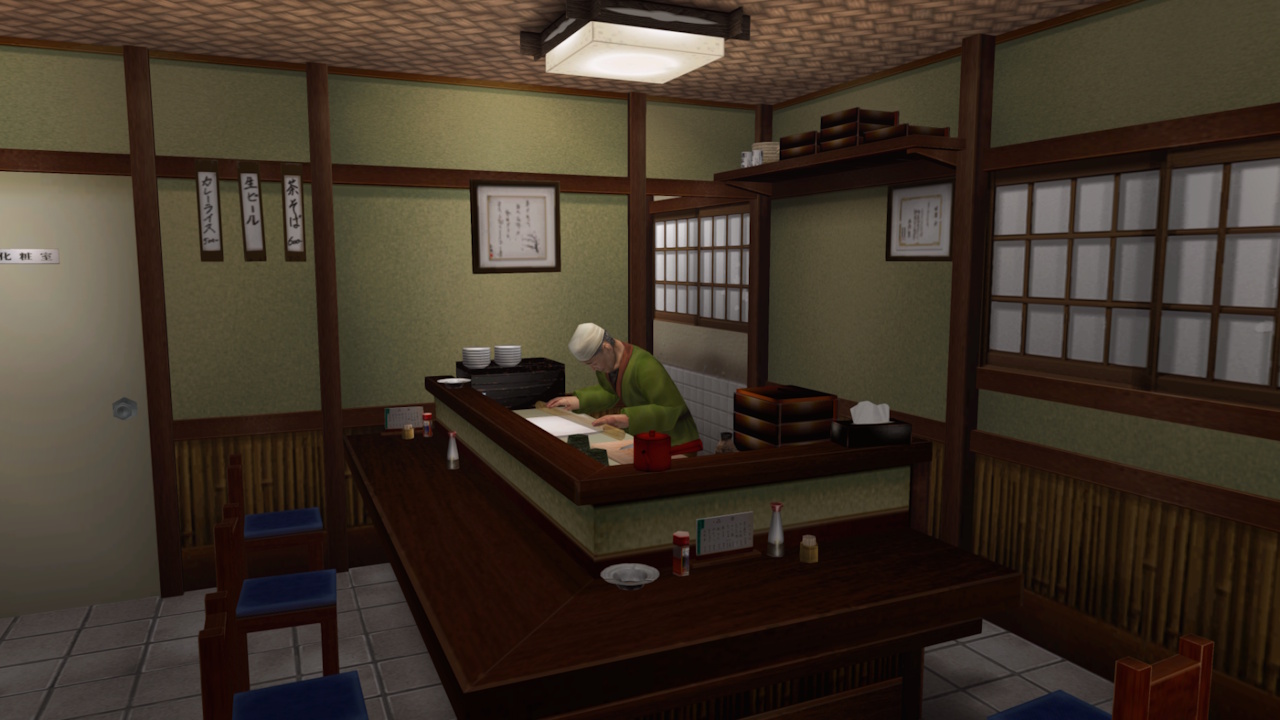
The owners of Yamaji Soba Noodles clearly know Ryo, and one of the people Ryo needs to speak to on his quest is a regular patron. But there’s no reason to set foot in this noodle parlour… other than for the fun of exploring Dobuita and Shenmue’s game world. In 1999, no one knew what the term “open world” would come to mean, but to me, a shop like Yamaji Soba Noodles in Shenmue perfectly encapsulates the open world idea. It’s the kind of place that needs to exist in a real town; the denizens of Dobuita need places to eat. But from a gameplay perspective, it doesn’t have a purpose. It’s the kind of place that was created for the sole purpose of adding depth to Shenmue’s world… and I really admire that.

The noodle shop itself is compact with a bar area for patrons to sit, and behind the counter the owner can be seen working away. A member of the restaurant’s staff can be encountered out in Dobuita, and you can even find his apartment elsewhere on Dobuita Street. You can’t go inside… but again, this adds so much depth to the game world and makes these NPCs feel real in a way some open world games struggle with even today.

Location #8:
Dobuita: Car Park

Screenshot of Shenmue (1999/2000) showing Ryo entering the parking lot.

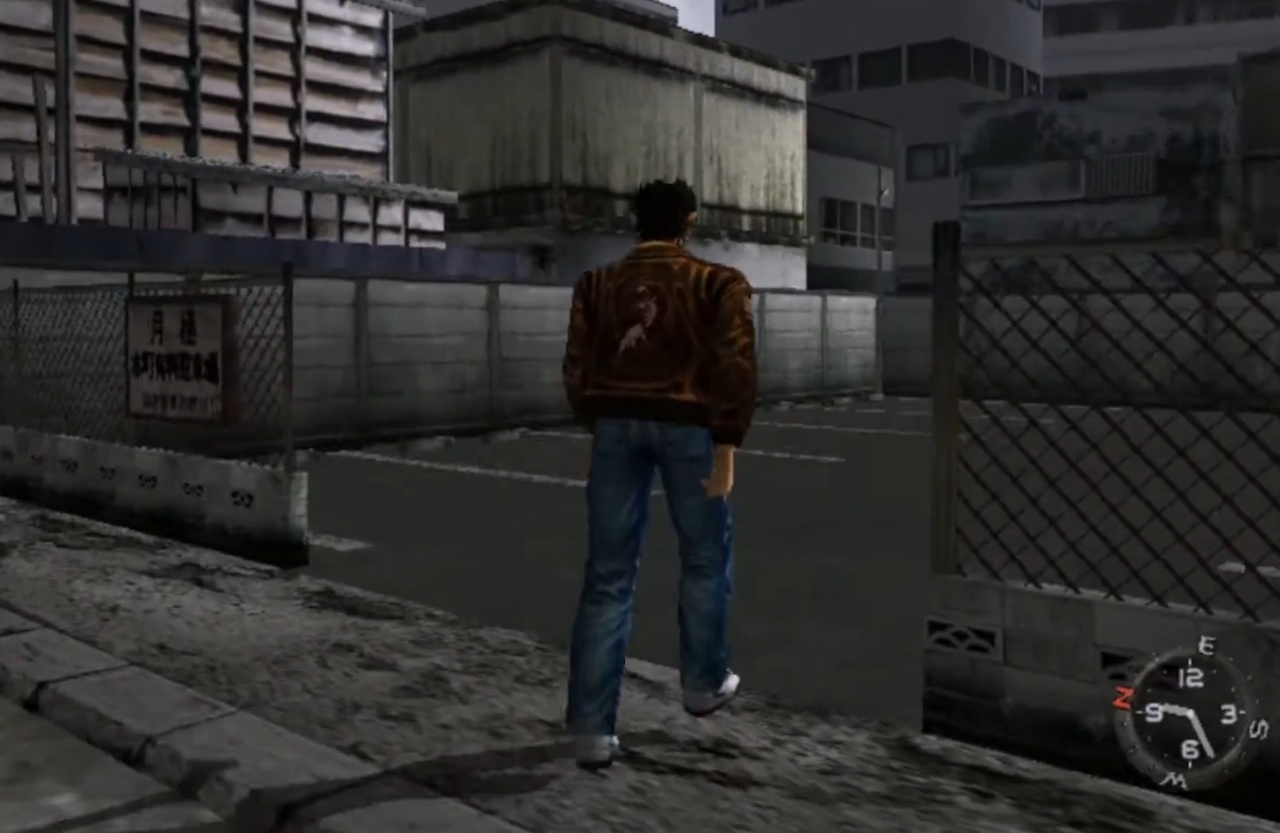
The car park near the end of Dobuita Street has an in-game function: it’s one of only a few places where Ryo can practice his moves in between fights. But I think it’s also worth acknowledging the area on its own merit – it’s more than just an empty arena to throw kicks and punches around! There are no cars on Dobuita Street – but there are plenty on the main road just beyond. The car park is, therefore, a space for both residents and visitors to leave their vehicles before venturing out on foot.

I’d never paid any attention to a car park in a video game before. I’m sure titles like Grand Theft Auto had car parks in their game worlds, but because of how rich and detailed Shenmue was, I felt compelled to explore this space more than I ever had before. The way it was integrated into the game, too, worked really well – and it quickly became my favourite place to practice Ryo’s martial arts moves.

Location #9:
The Harbour: Old Warehouse #8

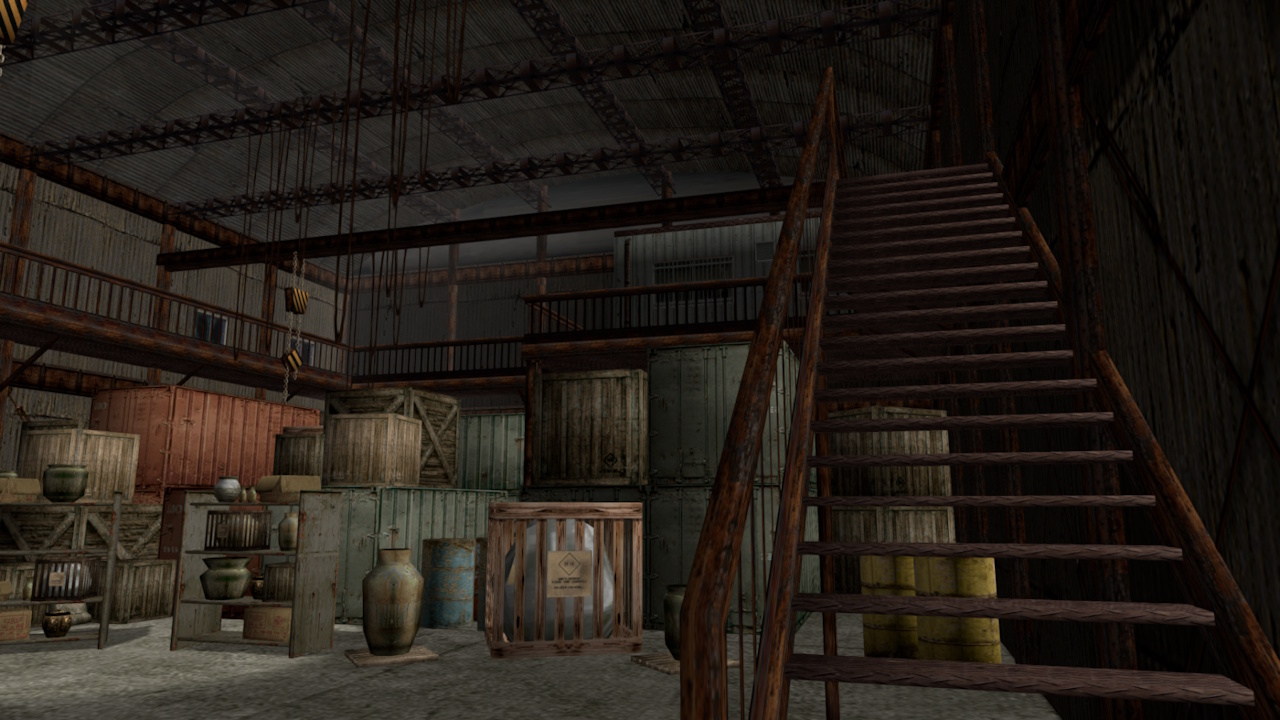
Screenshot of Shenmue (1999/2000) showing the interior of Warehouse #8.

Nobody likes mandatory stealth sections in games… especially mandatory stealth sections in old games with janky controls and awkward AI. But once you get past the “sneaking in” portion, Old Warehouse #8 – home of Master Chen and Guizhang – is a really interesting place to be. Most of the time you’ll spend here comes in cut-scene form, but if you take a break from the story and just visit the warehouse, there’s a lot to see. It has a quiet, understated feel that contrasts with the bustling harbour outside.

I like antiques, and the warehouse isn’t the only place in Shenmue to find old and interesting artefacts! But there’s something special about walking around the warehouse, looking at some of the items on display. It’s an interesting place to spend a little time, and one that’s easily overlooked.

Location #10:
Sakuragaoka: The Taxi Cab

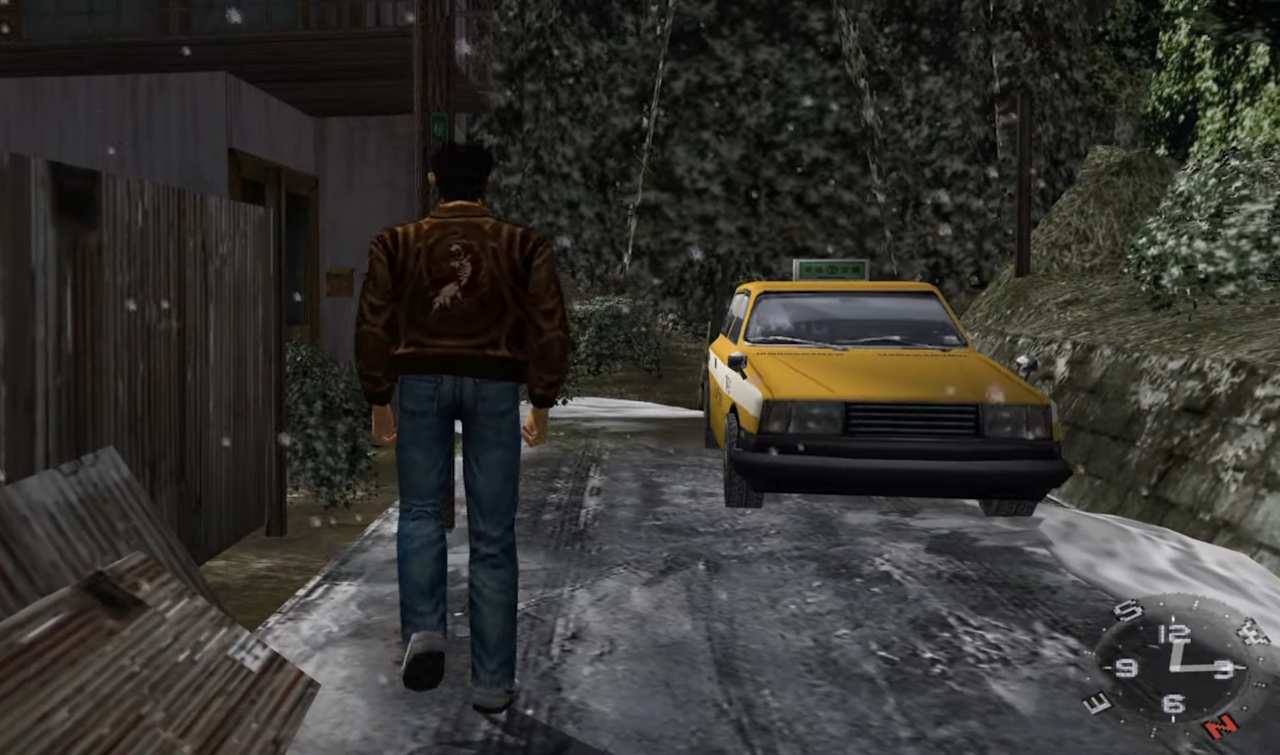
Screenshot of Shenmue (1999/2000) showing Ryo approaching a parked taxi.

At the end of the road in Sakuragaoka, past the park, you can find a taxi cab. Ryo can’t take a taxi anywhere, and because it’s located beyond both the park and any houses in Sakuragaoka that you might want to visit… there’s really no need to come here. But the taxi is interesting; it feels like more than just set dressing. There’s a man – Nomura-san – who Ryo can speak to who drives the taxi, and he clearly knows Ryo and will tell him a little about his life. Nomura-san can also be encountered in Dobuita, as well as seen tending to his taxi.

Walking beyond the “edge” of a game world can often feel empty; the world stops where the developers say it stops. But Shenmue has content beyond the edge of where its story takes place – there’s no reason to come here or talk to the taxi driver other than “because they’re there,” and I really love that about the game. Standing here, at the end of the street, doesn’t feel like the edge of a video game level with an invisible wall… it feels like a road with a taxi parked on it.

So that’s it.

Screenshot of Shenmue (1999/2000) showing Ryo at the end of the game.
Ryo is headed for Hong Kong!

We’ve taken a look at some of my favourite places in Shenmue… places that, maybe, you wouldn’t have expected to see on a list like this!

I wanted to convey just how immersive and interesting Shenmue’s world was twenty-five years ago… and still is today. Even in the smaller places, and areas with no storylines or quests, there are still interesting things to see, NPCs to talk to, and ways to soak in the atmosphere of this incredible game. Shenmue pioneered open-world designs and features that titles today are still striving for – and many modern games either miss out or don’t get right. It really is a landmark title, and one that I wish more people had paid attention to back in the day!

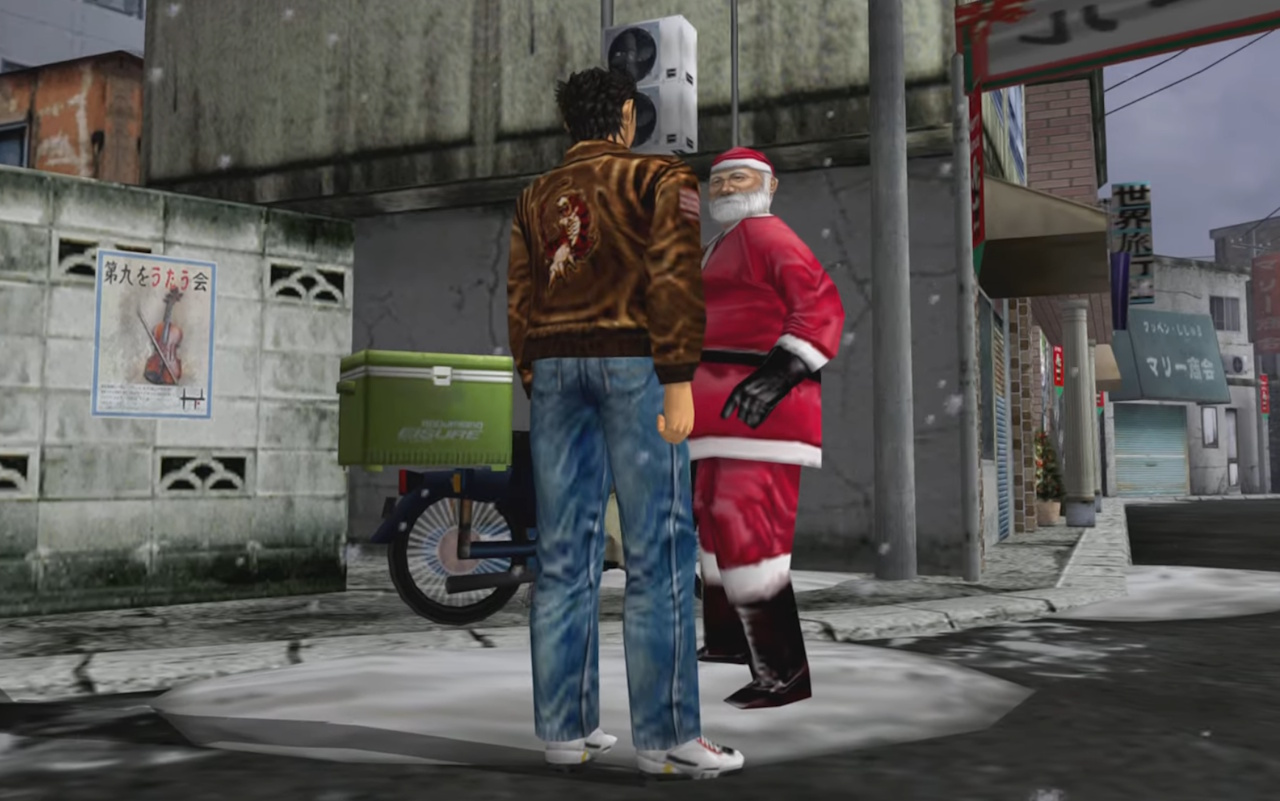
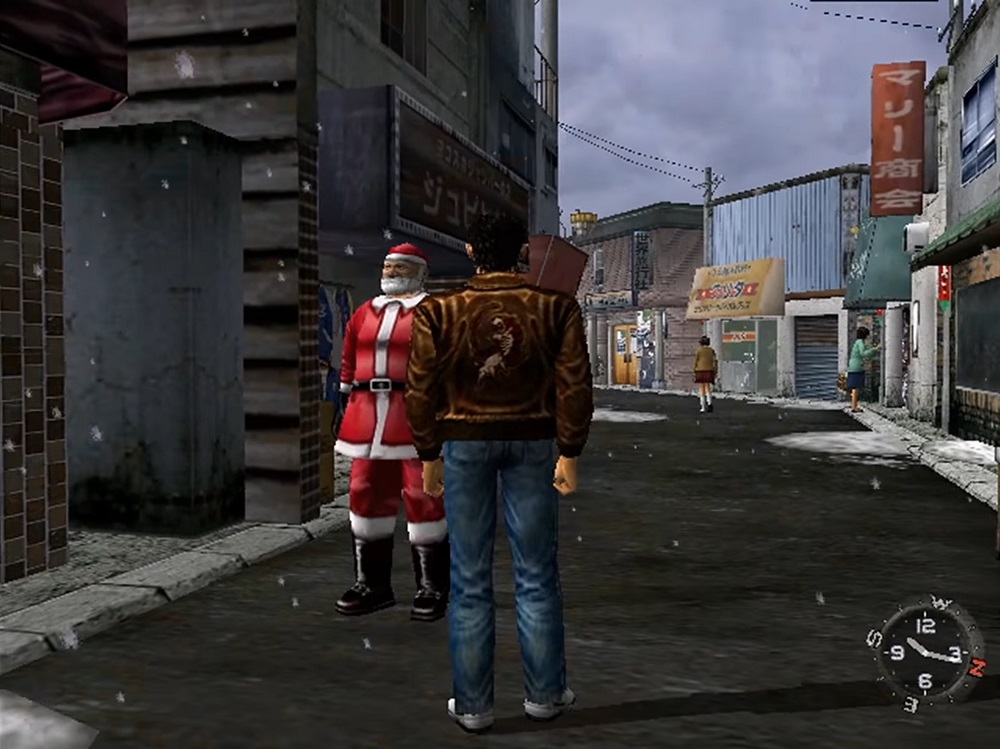
Screenshot of Shenmue (1999/2000) showing Ryo with Santa Claus.
I know Christmas is over… but it’s Ryo and Santa!

So I hope this has been something a bit different. I was inspired by a couple of YouTube channels: Wandering Through Shenmue, whose channel I encountered while looking for screenshots of specific locations in the game world when writing a couple of my other articles about Shenmue, and Any Austin, whose video essays on video game levels and designs are genuinely interesting. I hope you’ll check out both of those channels if you have time.

If you missed my piece celebrating Shenmue’s twenty-fifth anniversary, you can find it by clicking or tapping here. And if you want to check out my thoughts on whether the Shenmue saga might have a future in light of some recent news, you can find that by clicking or tapping here.

I honestly can’t believe that it’s been twenty-five years – a quarter of a century – since Shenmue launched. At any rate, I hope revisiting some of these locations with me was a bit of fun!


Shenmue I & II and Shenmue III are available now for PlayStation 4 and PC. Some images, promo artwork, and screenshots courtesy of Wandering Through Shenmue on YouTube and Shenmue Dojo. This article contains the thoughts and opinions of one person only and is not intended to cause any offence.
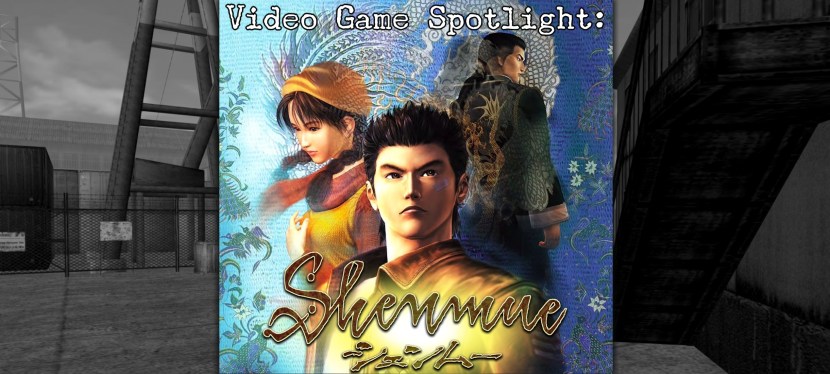
Video Game Spotlight: Shenmue

Spoiler Warning: There are spoilers ahead for Shenmue.

We’re marking an important anniversary today! Shenmue – a title which, for many folks, came to define the Dreamcast and Sega – launched in Japan on the 29th of December 1999. This game is one of my favourites, not only of the Dreamcast nor of the early 2000s, but… ever. Even twenty-five years later, and despite all of the problems that the saga has faced, Shenmue is still up there as one of my favourite games of all-time.

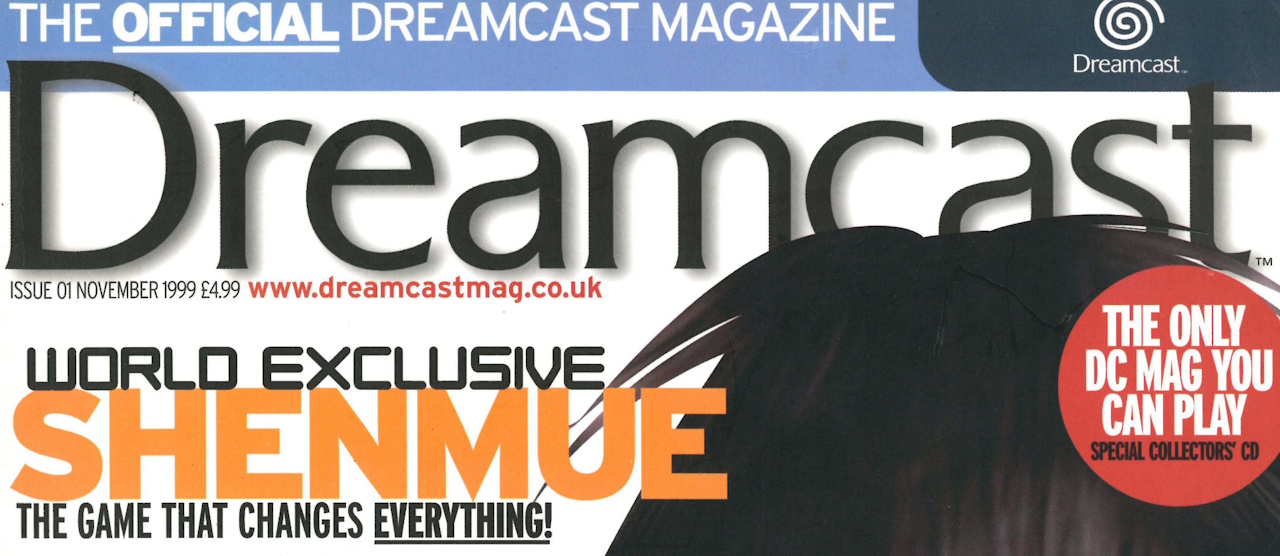
Here in the UK, we didn’t actually get Shenmue in December 1999. We’d have to wait eleven months for the game to arrive, but I already owned a Dreamcast at that point and I really couldn’t wait! I’d read all about Shenmue in the first issue of the UK’s Official Dreamcast Magazine, and I was immediately hooked in by how the game looked in those very first teaser screenshots, but more importantly how it was being described. This felt like a genuinely revolutionary title.

Crop of the Official Dreamcast Magazine (UK) November 1999 issue cover, featuring Shenmue.
Shenmue was teased ahead of its launch in the Official Dreamcast Magazine.

So for months I was left in limbo, waiting to get my hands on the game for myself! After the dust had settled on the excitement of the celebrations for Millennium Eve, a new year got underway – and I knew that, at some point in the year 2000, I’d finally be able to play Shenmue! It really was one of the entertainment experiences that I was most looking forward to – and it remained in that position all year.

Perhaps it’s because I picked up Shenmue in early December, but it’s a game that I associate with this time of year. There are some in-game Christmas events, too, with a Santa Claus figure appearing in Dobuita, snow falling, and Christmas Day being noted – if you’re still playing when the calendar reaches that point! So for me, Shenmue and the holiday season have always been joined at the hip, and it’s a game that feels particularly well-suited to this time of year. Playing Shenmue in December also, I would argue, adds a little something extra to the role-playing side of things!

Screenshot of Shenmue (1999) showing Ryo meeting Santa Claus.
Ryo can meet Santa Claus in Dobuita!

I’ve enjoyed video games since I first picked up a joystick at a kids’ club in the late ’80s. This’ll have to be the subject of a longer piece one day, but I think what fascinated me the most about gaming was being able to control what was happening on the TV screen. I can’t remember a time without TV, and being able to be “in charge” of what was going on on the most important screen in the house… I remember it being a really powerful and exciting feeling.

But by 1999, I was beginning to feel that I’d gone as far as I could with games. Most games I’d played on the Super Nintendo and N64 were basically digital toys – and I don’t say that with too much disrespect intended! There had been some fun games on the N64, which was the console I’d owned before picking up a Dreamcast, and I was still enjoying several of them in 1999/2000. But none of those games were what you’d call “cinematic” or “grown-up,” and I guess I was beginning to feel like I was ageing out of the gaming hobby – particularly as I was working, commuting, going to school, and trying to balance all of that with my social life and finding time for friends and family.

Stock photo of a Dreamcast console.
Shenmue was released for the Dreamcast on this day in 1999.

But Shenmue changed all of that. It was the first game I played that felt gritty, realistic, and genuinely cinematic, telling a modern-day story set in the real world that would’ve been right at home on the big screen. It’s hard to speculate and deal in “what-ifs,” but I’ve wondered more than once if I’d have kept playing games beyond the early 2000s if it hadn’t been for Shenmue showing me what interactive media could be when it’s at its best.

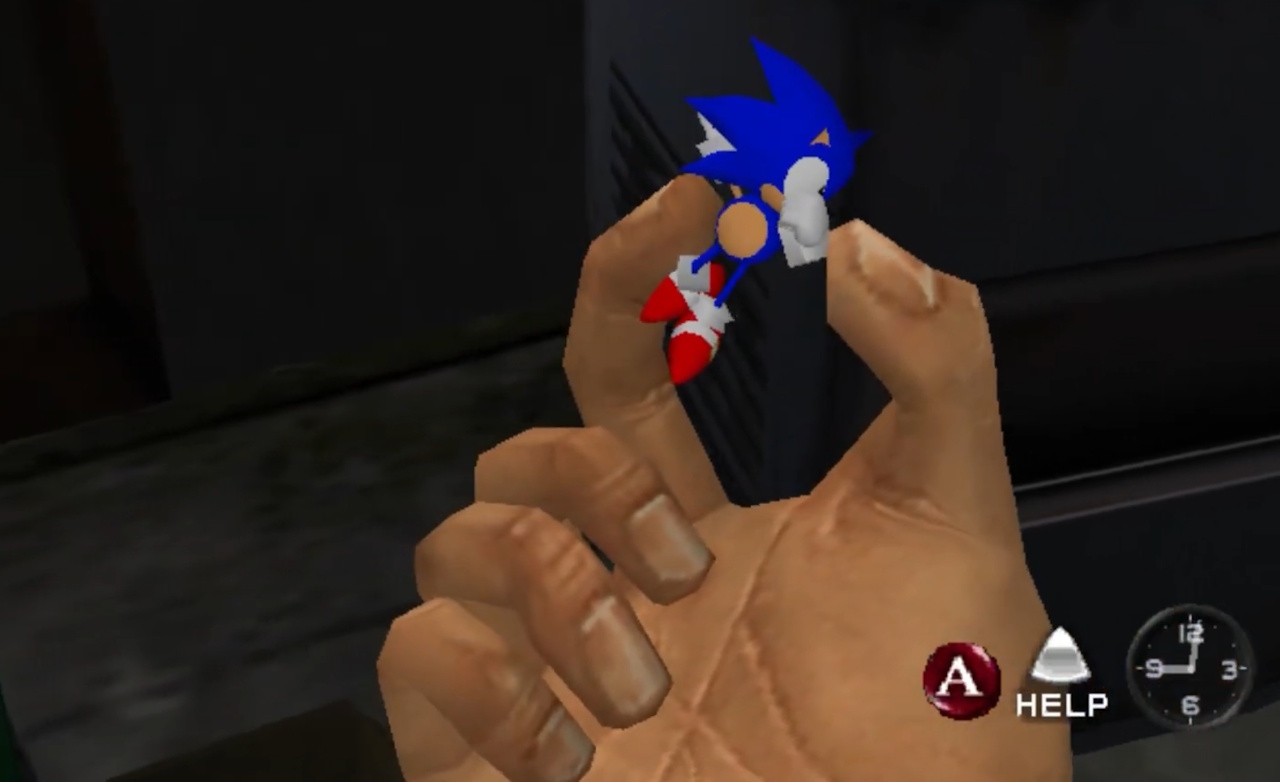
It’s hard to put into words how many ground-breaking gameplay, visual, and narrative elements were present in this one single title. Things players have taken for granted for years – like lip-synced dialogue or hands with individual fingers – leapt out at me when I finally got my hands on the game for myself, and they felt like a gigantic leap forward from the blocky, polygonal graphics of the N64 generation.

Screenshot of Shenmue (1999) showing Ryo holding a Sonic the Hedgehog toy.
Being able to hold in-game items and examine them up close was ground-breaking in 1999!

Perhaps the most impressive feature of Shenmue was its world. No one in 1999 knew what the term “open world” would come to mean, but Shenmue was the first game I played that is reasonably close to that category. The limitations of the Dreamcast still kept Shenmue divided up into several areas – but these were large, densely-packed, and diverse. Moreover, they were incredibly well-detailed, making just strolling down the street in Ryo’s home town of Yamanose feel like being transported thousands of miles across the sea to Japan.

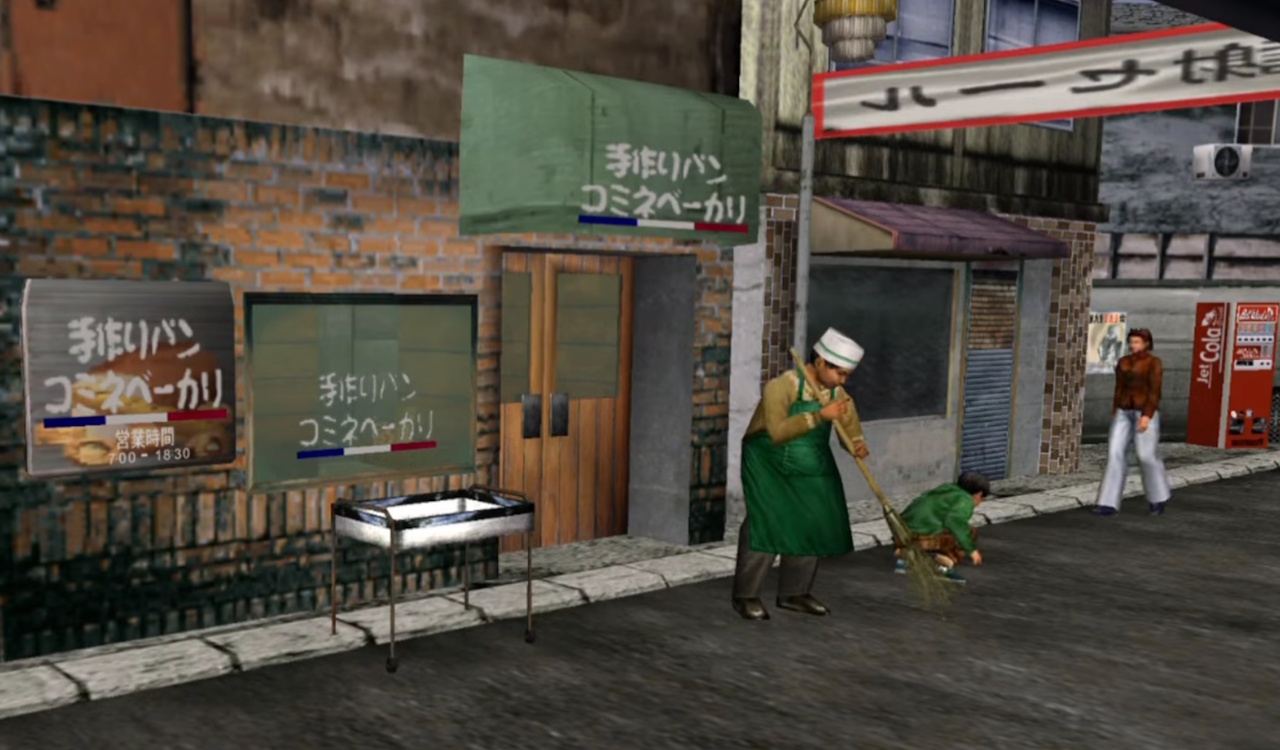
Within Shenmue’s open world, every non-player character had a purpose. They ran a shop or went shopping, they swept the road outside their house and then went inside to take a break; they had jobs, they had objectives… and they felt real in a way that, even today, many NPCs just don’t. These characters, their schedules, and the way shops and businesses would open and close as the day wore on… they were completely revolutionary things at the time, and features that some open-world games today are worse and less realistic for failing to include. Shenmue also opened up almost every shop and building in the game for exploration – even those that had nothing whatsoever to do with the main story.

Screenshot of Shenmue (1999) showing the bakery in Dobuita.
NPCs going about their lives in Dobuita.

For someone who had grown up playing games that had been, up until that point, pretty linear experiences, the freedom Shenmue allowed me felt incredible. I was free to totally ignore Ryo’s quest, instead taking his pocket money and squandering it on collectible figures – or at the arcade! An arcade which, need I remind you, contained two full-size games from the 1980s, as well as a fun darts mini-game and a QTE mini-game to boot.

I hadn’t played Space Harrier before I played Shenmue, but I have a vague recollection of playing Hang On – or a game like it, at least – on a rare visit to an arcade at some point in the late ’80s or early ’90s. So to get that experience again inside of another video game… it was a huge treat. I spent hours playing these games-within-a-game; it was just so much fun to visit the arcade and put other activities and the quest on the back burner!

Screenshot of Shenmue (1999) showing the arcade.
I spent hours of my life (and Ryo’s) in the arcade…

Having Space Harrier and Hang On inside Shenmue’s arcade felt like a real power play from Sega – wrapping up two games inside of a much bigger, more elaborate game was a real flex and a way to show off how much bigger and better the Dreamcast was. And for someone who grew up in a rural area where there weren’t any arcades, being able to visit a digital arcade was pretty cathartic, too!

Shenmue began life in the mid-90s as Virtual Fighter RPG, a spin-off from Sega’s established fighting game series. Taking one of the Virtua Fighter characters as a starting point, creator Yu Suzuki began to build his magnum opus. Development was originally planned for the Sega Saturn console, but this later switched to the Dreamcast. The connection to Virtual Fighter was also abandoned, with the game taking on a fully standalone story. Shenmue and its sequel – Shenmue II – were in development at the same time, with work on the second game being well underway by the time the first game was released.

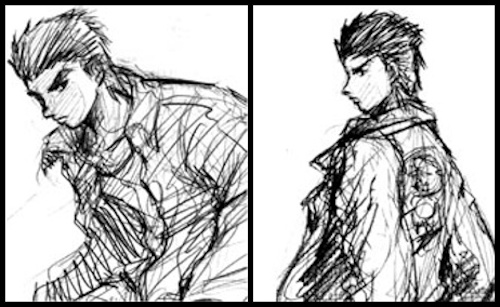
Concept art for Shenmue (1999) showing two sketches of Ryo.
Early concept art of Ryo Hazuki.

Shenmue is famous – or rather, infamous – for its development budget. In 1999, it was reported that the game cost over $70 million to make, though this also includes part of the development costs of Shenmue II. Regardless, Shenmue was an expensive undertaking, and a big gamble for Sega. If the Dreamcast had sold as Sega hoped, and Shenmue had been its “killer app,” recouping that investment would’ve been possible. But with the Dreamcast underperforming, there was no way for Shenmue to make its money back, leading to the game being best-remembered outside of its fan community as one of the most expensive failures in video gaming history – at least for the time.

Of course, I didn’t know any of that at the time I bought a Dreamcast! I was dimly aware of the game’s reputation as an expensive undertaking, but at the time that just seemed like an even bigger boast on the part of Sega! “The most expensive game of all-time” shipped with some incredible features and an insane level of detail, genuinely changing my relationship with games and setting expectations that, time and again, other titles fail to live up to in one way or another.

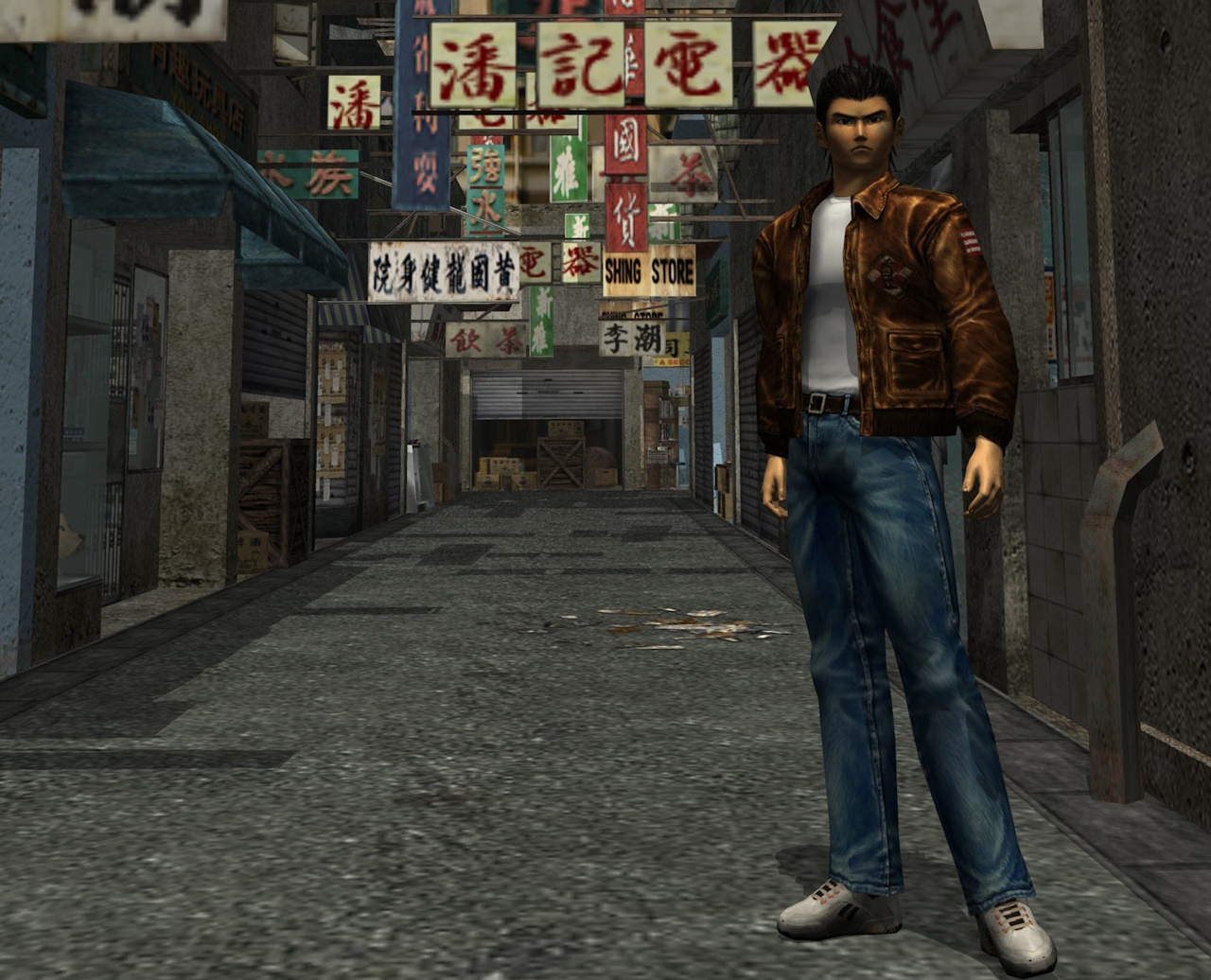
Screenshot of Shenmue (1999) showing Ryo in the cafe.
Ryo at the harbour cafe.

At the heart of Shenmue’s story was a relatable protagonist caught up in a quest for answers – and revenge. Ryo Hazuki is an incredibly well-written character, someone who’s sympathetic and relatable, while also being from a completely different culture and having at least some characteristics of an anti-hero. Several times in Shenmue, Ryo’s friends and confidants would try to dissuade him from pursuing his quest for revenge, but he’d remain steadfast.

The concept of revenge is a difficult one, and the game doesn’t shy away from that. Rather than reporting the crime of his father’s murder to the police – which you can literally attempt to do in-game using the telephone – Ryo is determined to solve things on his own. He wants to kill the man who killed his father – but along the way, he’s forced to confront difficult questions about who his father truly was and how well he really knew him. There’s a lot of complexity and nuance to this story, and while Shenmue firmly places the player in Ryo’s shoes, questions linger about how justified he is in taking this course of action.

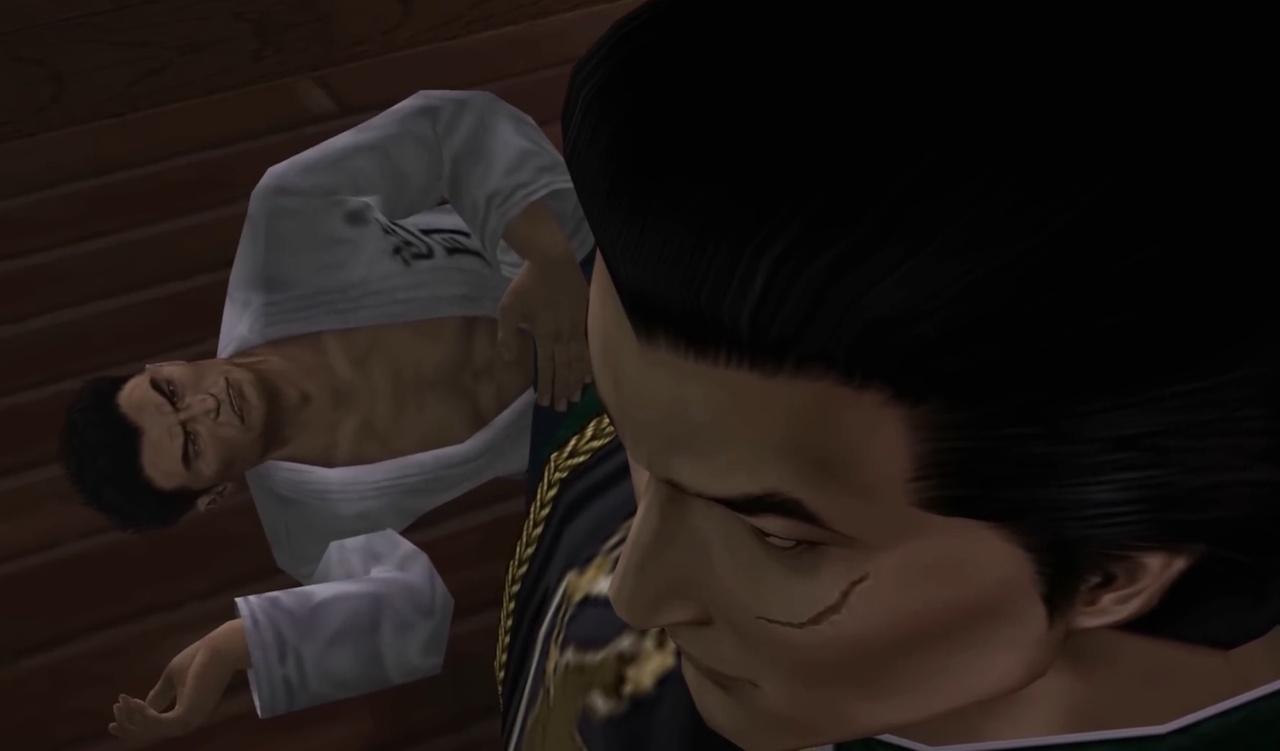
Screenshot of Shenmue (1999) showing Lan Di standing over Iwao at the beginning of the game.
Shenmue is a classic revenge story.

There are areas of Shenmue that, by today’s standards, seem a little dated. The control scheme was designed before twin analogue sticks were a standard part of control pads, and on the Dreamcast, movement still used a four-way D-pad. This could feel clunky and often led to awkward moments as Ryo struggled to navigate a doorway or successfully climb a flight of stairs!

The clunky controls also extended to fighting sequences. Complicated multi-button combos worked well in Virtua Fighter and other 2D fighting games of that era, but I never felt they translated all that well to a fully 3D environment. I’m far from the best gamer, but even in the Dreamcast days I’d find Ryo flailing around, swinging punches and kicks at mid-air as an opponent moved out of range or to one side. In bigger fights with multiple enemies, that was less of a problem. In one-on-one situations, though, it could occasionally get annoying!

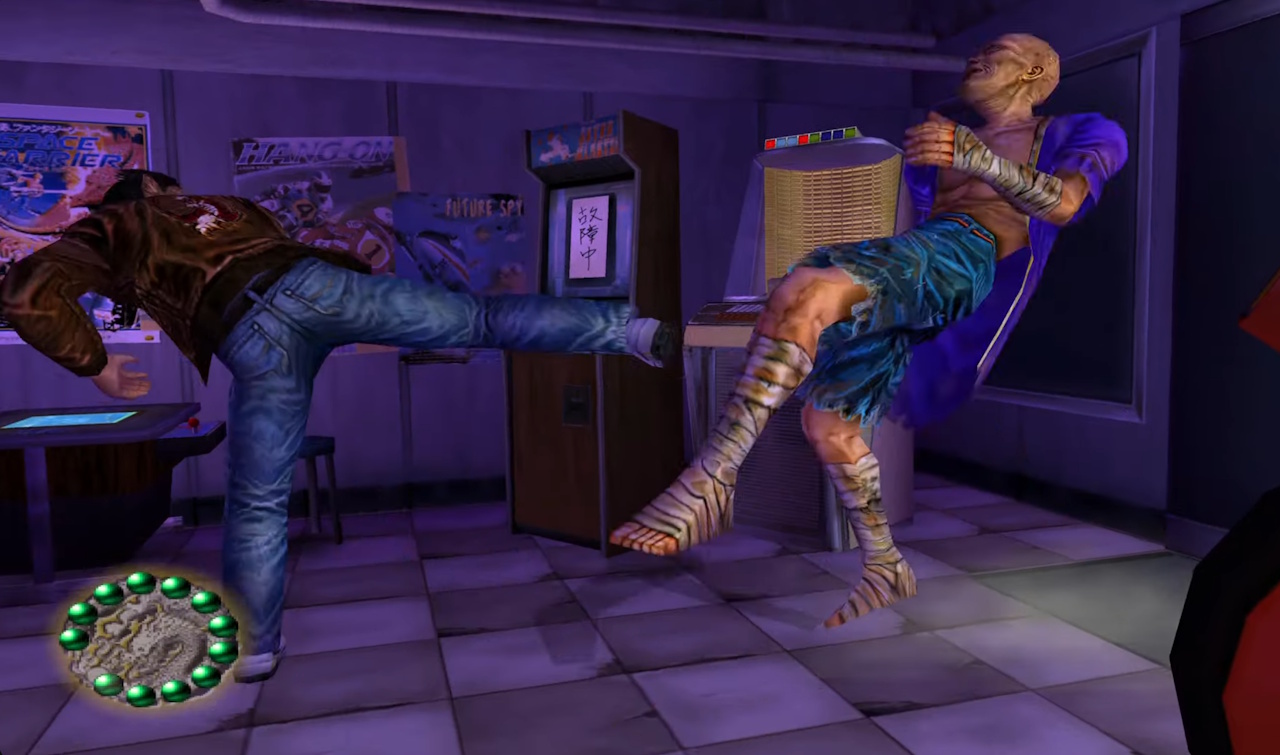
Screenshot of Shenmue (1999) showing Ryo fighting Chai at the arcade.
Ryo swings a kick at a villain.

In keeping with Shenmue’s philosophy of F.R.E.E – full reactive eyes entertainment; an early open-world, free-roaming idea – it was possible to practice fighting in one of several areas around the game world. I confess that I probably didn’t practice as much as I should’ve, and I didn’t make use of very many of the more complicated multi-button moves that Ryo could learn. I found that once I had a couple of solid kicks and strikes in my arsenal, the rest were just superfluous! Was that the right way to play? Well… isn’t that the fun of a game like Shenmue? That there are different ways to approach some of these sequences?

For me, the fighting portions of the game were really just bridges in between exploration and story sections. As long as I could get through a fight without losing repeatedly, I was content to play through them to advance the story. And that was a genuinely new feeling for me at the time – the idea that a video game could have such an engrossing story that the actual gameplay side of things was in a distant second place. Sure, I’d played story-driven games before Shenmue – titles like Shadows of the Empire and Jet Force Gemini come to mind – but this really was the first game with a realistic, gritty, and truly engaging story that I found myself getting lost in.

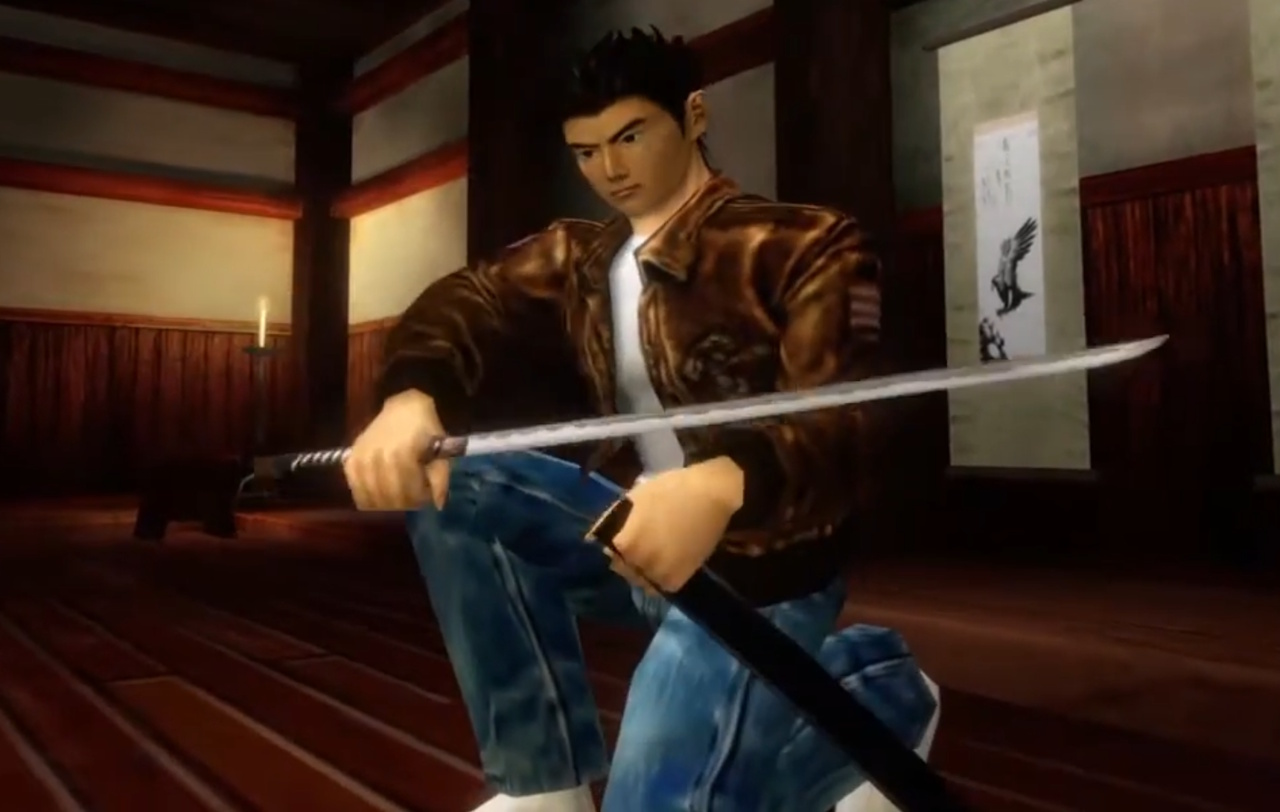
Screenshot of Shenmue (1999) showing Ryo with his father's sword.
The katana.

For better or worse, Shenmue was the game that coined the phrase “quick-time event” and introduced this mechanic to a wider audience. We can debate whether QTEs were invented by Shenmue or not, but Shenmue’s marketing came up with the name – and QTEs have, in the years since, become rather controversial!

I’d like to defend quick-time events in Shenmue. Firstly, they felt genuinely new and revolutionary at the time, taking a part of the game that would’ve otherwise been a non-interactive cut-scene and making it part of gameplay – with consequences for messing up. And secondly, QTEs as they appeared in the first Shenmue didn’t feel overdone or particularly obtrusive. Shenmue’s QTEs felt like a big leap forward in terms of interactive storytelling.

Screenshot of Shenmue (1999) showing Ryo chasing a travel agent during a quick-time event.
Shenmue even found a way to make cut-scenes interactive.

Quick-time events have acquired a reputation through over-use in other titles in the years since Shenmue – rather than because of the way they were used in this game in particular! And sure, as the title that popularised QTEs, Shenmue might come in for some criticism – and I get that. But I maintain that the way they’re used in Shenmue itself is actually fine, and if other games stuck to that formula, maybe players today would have less of an issue with QTEs. But we’re dangerously close to veering off-topic.

Aside from Ryo himself, who was an especially well-written protagonist, Shenmue’s world was populated with some wonderful secondary characters. Ryo’s friend/crush Nozomi is sweet, and the interactions the two have across the game really raise the stakes when she’s put in danger later on. Tom, Ryo’s friend who sells hot dogs, is a great character too – and the friendship the two built up really packs an emotional punch, especially when Tom leaves Japan toward the end of the game. Fuku-san and Ine-san are the familiar faces of home that Ryo leaves behind – and occasionally seems to push away – as part of his quest. And Ryo’s other friends all have an impact, too.

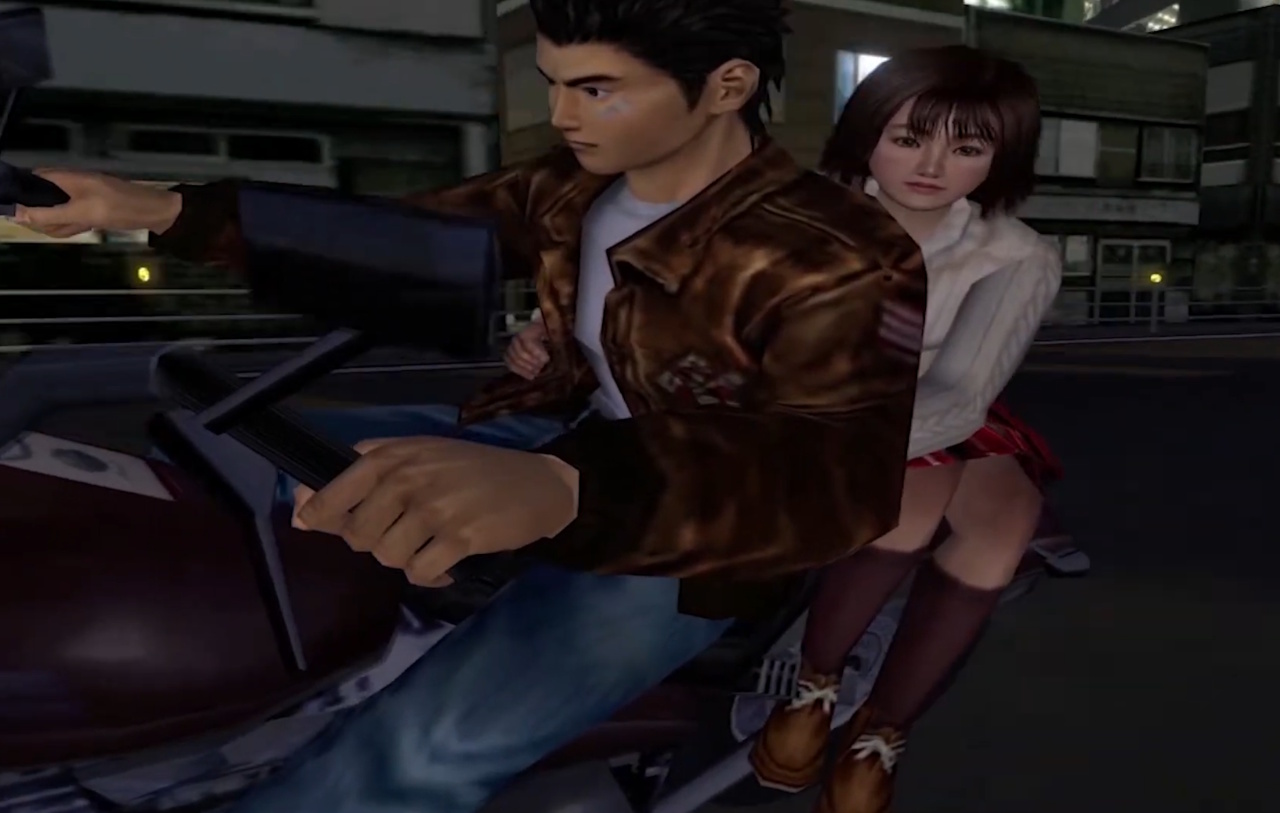
Screenshot of Shenmue (1999) showing Ryo and Nozomi on a motorcycle.
Ryo and Nozomi.

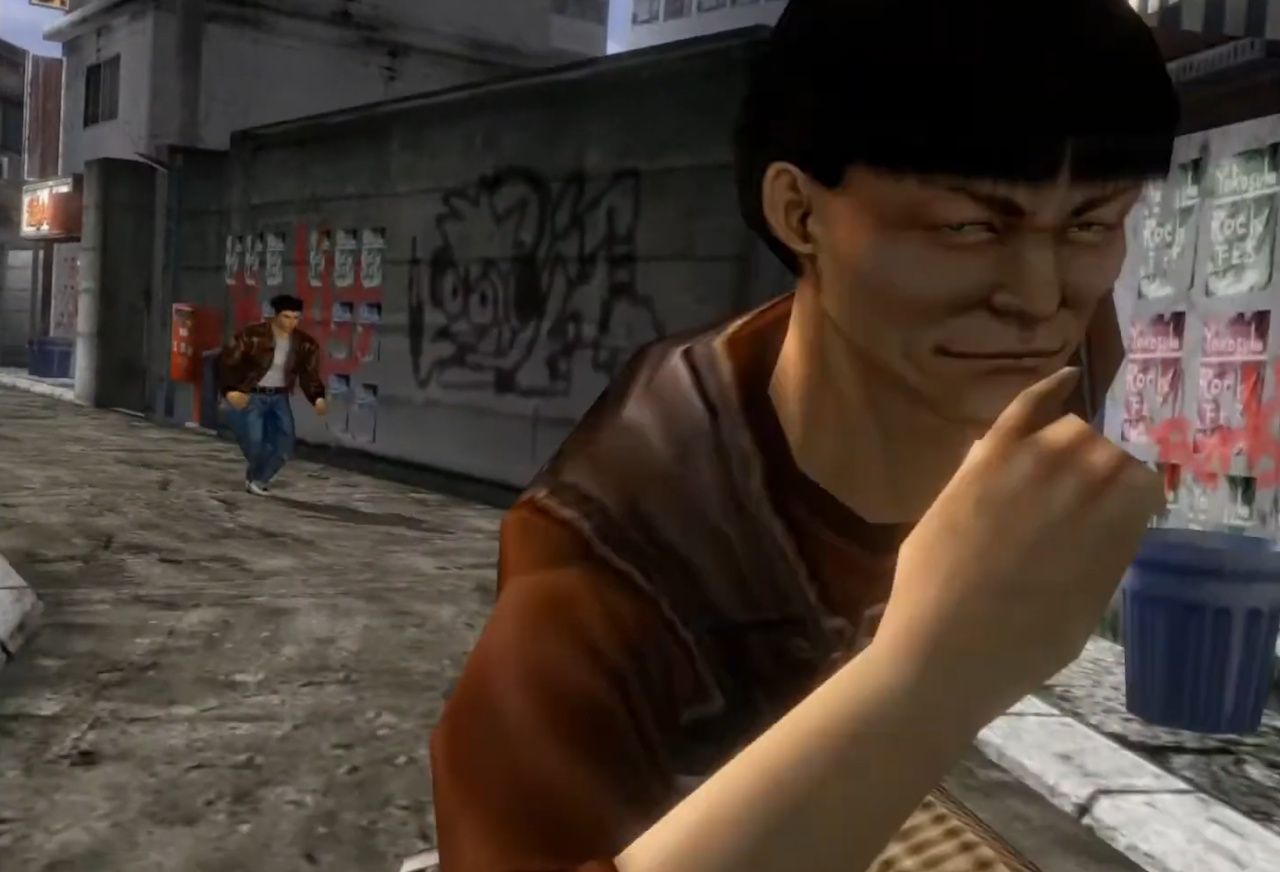
Then there are the villains. Lan Di, though only seen in person at the beginning of the game, just oozes strength and power, and the mystery tied up with Iwao, Ryo’s father, is tantalising. Then there’s Chai – a genuinely disturbing, weird little guy! Chai’s way of speaking, his facial appearance, and his crouching gait all come together to make a really unsettling presentation. The way Chai interfered with Ryo’s quest was infuriating, too – deliberately so! A truly well-crafted villain that, to this day, makes my skin crawl!

At the harbour we also have the occupants of Warehouse #8: Master Chen and Guizhang. This mysterious father-and-son duo have a connection to Ryo’s father – and to Lan Di. Just tracking them down is a whole mystery in and of itself, and sneaking into their base can be difficult! I’m not really in favour of mandatory stealth sections in games, but once you know what you’re doing and get your bearings in the Old Warehouse District, getting there shouldn’t be too difficult.

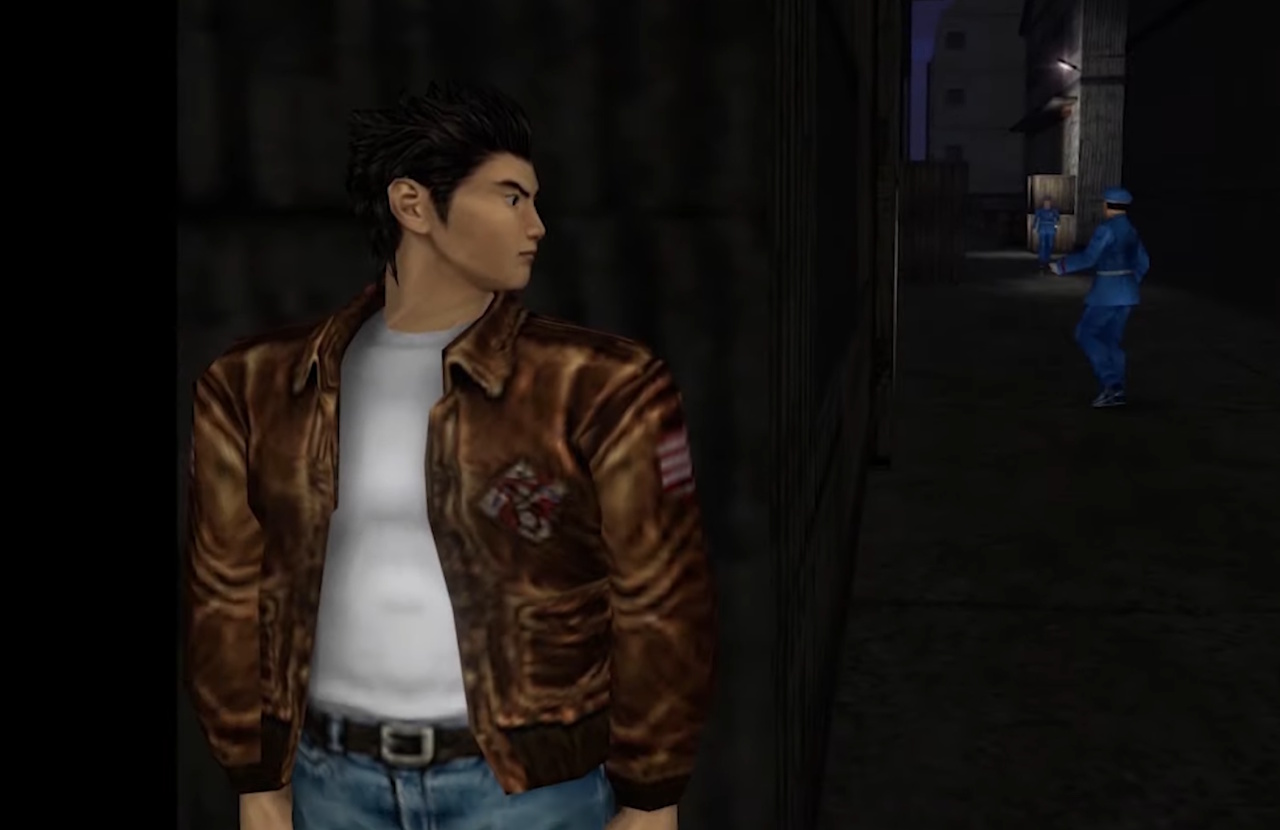
Screenshot of Shenmue (1999) showing Ryo hiding from security guards at the Old Warehouse District.
Hiding from guards in the Old Warehouse District…

The harbour is probably my favourite individual area of Shenmue’s game world. It’s so atmospheric, with large warehouses, a rippling sea, and tired sailors and workmen all milling around. Particularly at night, the harbour really feels like a real place – but also a strangely nostalgic one, if that makes sense. I could spend hours at the harbour just walking around, soaking it all in.

The harbour is also where Ryo would get a job – and despite what you might’ve heard, driving a forklift and stacking crates was a lot of fun! The forklift race at the beginning of each day was great, too – and another totally unexpected gameplay feature in a game laden with mini-games, creative mechanics, and different things to do. The forklift gameplay was also strangely relaxing; the kind of “cozy” gameplay that makes people fall in love with simulator titles. Picking up crates and stacking them just right was a lot of fun.

Screenshot of Shenmue (1999) showing Ryo driving a forklift at the harbour.
I genuinely enjoyed being a forklift driver.

The only downside to Ryo’s forklift job is that it’s relatively short and comes at the beginning of the end of Shenmue. By the time you start the job at the harbour, you’re basically on the path to the endgame and the climactic final battles – and I could’ve happily spent an in-game month or two just having fun playing forklift driver at the harbour!

Ryo and Guizhang team up to take on seventy opponents at the end of the game; an epic, climactic battle that throws wave after wave of opponents at them at the harbour. This battle is difficult, but it’s also a ton of fun compared with some of the earlier one-on-one boss fights. Ryo has moves that can knock back several people at once, like his spinning kick, and smashing your way through huge numbers of gangsters… there was nothing like it at the time! The closest comparison I can think of to the game’s climactic seventy-person battle (from the same time period) is Dynasty Warriors 2, which released about six months later.

Screenshot of Shenmue (1999) showing Ryo and Guizhang preparing to do battle.
Ryo and Guizhang.

Shenmue was more than just a game. This landmark title completely changed how I came to see interactive media, set expectations for narrative games that, even today, many titles fail to live up to, created a living, breathing world years before anyone else even tried it, and above all, kept me invested in gaming as a hobby at a point in my life where I might’ve otherwise began to drift away. Twenty-five years on from its launch, it remains one of my favourite games of all-time.

For me, that’s Shenmue’s real legacy. It’s a game that set the bar for narrative action/adventure experiences, and even today I find myself comparing brand-new games to Shenmue, or noting that Shenmue was the first game I played with a particular feature or gameplay mechanic. I revisited Shenmue in 2017, shortly after it was re-released on PC, and I had a blast getting lost in that world all over again. Although some aspects of the game are definitely dated today, it’s amazing how well the world itself holds up.

Screenshot of Shenmue (1999) showing Ryo walking toward the bus stop near the end of the game.
Ryo with his backpack, headed for Hong Kong.

I wanted to acknowledge Shenmue’s milestone quarter-of-a-century anniversary, and I hope I’ve been able to adequately convey just how much this game meant to me – and how much it continues to matter all these years later. Despite the disappointment I felt at the developers’ inability to bring the story to a conclusion, I still look back on Shenmue with incredible fondness.

I’m so glad I got to play through this game on the Dreamcast, and it’s still a title I find myself recommending to players who missed it the first time around. With a port currently available on PC and PlayStation 4 – usually at a reasonable price, especially when there are sales – it’s incredibly easy to get started with Shenmue, and I honestly can’t recommend it enough. Sure, it’s a piece of gaming history nowadays – but it’s also an incredible narrative experience.

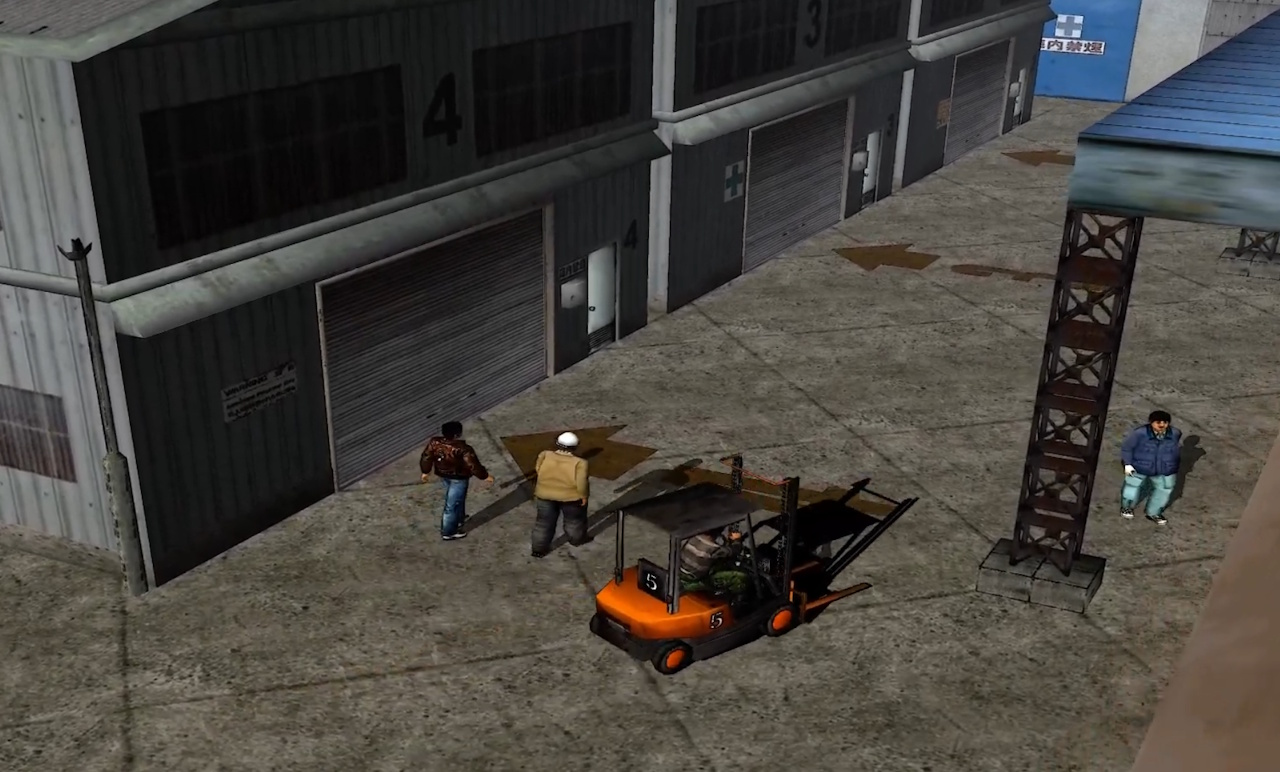
Screenshot of Shenmue (1999) showing a cut-scene at the harbour with Ryo, the foreman, and a forklift.
At the harbour.

A few weeks ago, I tackled the difficult question of whether the Shenmue saga has a future. Five years on from Shenmue III, is there a chance of yet another reprieve for this incredible – yet overlooked – series? Check out my answer to that question by clicking or tapping here! And at some point soon, I’d love to watch and review Shenmue – The Animation; the anime adaptation of the first two games. So be sure to check back for that.

Until then, I really hope this has been an interesting look back at one of my favourite games… ever. Shenmue blew my mind twenty-five years ago, and I really wanted to celebrate its anniversary in style. If you’ve never played it, do us both a favour and try and track down a copy! If you like games with a strong story, I really don’t think you’ll regret it. If you loved Shenmue in the Dreamcast days, or came to it after the fact when it was re-released, I hope you’ll join me in raising a glass to one of the most revolutionary, creative, and transformational games of its era.

Happy anniversary, Shenmue!


Shenmue I & II is available now for PC and PlayStation 4. Shenmue – The Animation may be available to stream on CrunchyRoll. Shenmue is the copyright of YSNet and/or Sega. Some images, screenshots, and artwork courtesy of Sega, YSNet, Shenmue Dojo, and Wandering Through Shenmue on YouTube. This article contains the thoughts and opinions of one person only and is not intended to cause any offence.
Does Shenmue Have A Future?

One of the first subjects I wrote about here on Trekking with Dennis almost five years ago was the Shenmue saga – Shenmue III specifically. With 2024 being the fifth anniversary of Shenmue III and the twenty-fifth anniversary of the first Shenmue… I thought it could be interesting to look at what – if anything – may lie ahead for the series.

For context, I played and loved both Shenmue and Shenmue II when I owned a Dreamcast just after the turn of the millennium. I was left disappointed by Sega and Yu Suzuki’s inability to conclude the story, as I found it incredibly fun and engaging. As I’ve said more than once here on the website, Shenmue was the first game I played that felt truly cinematic; as if its story would be right at home on the big screen. The combination of its open level design, realistic NPCs who seemed to have lives of their own, the modern-day setting, and engrossing narrative all came together to make it one of the best games I’ve ever played – and its sequel was just as good.

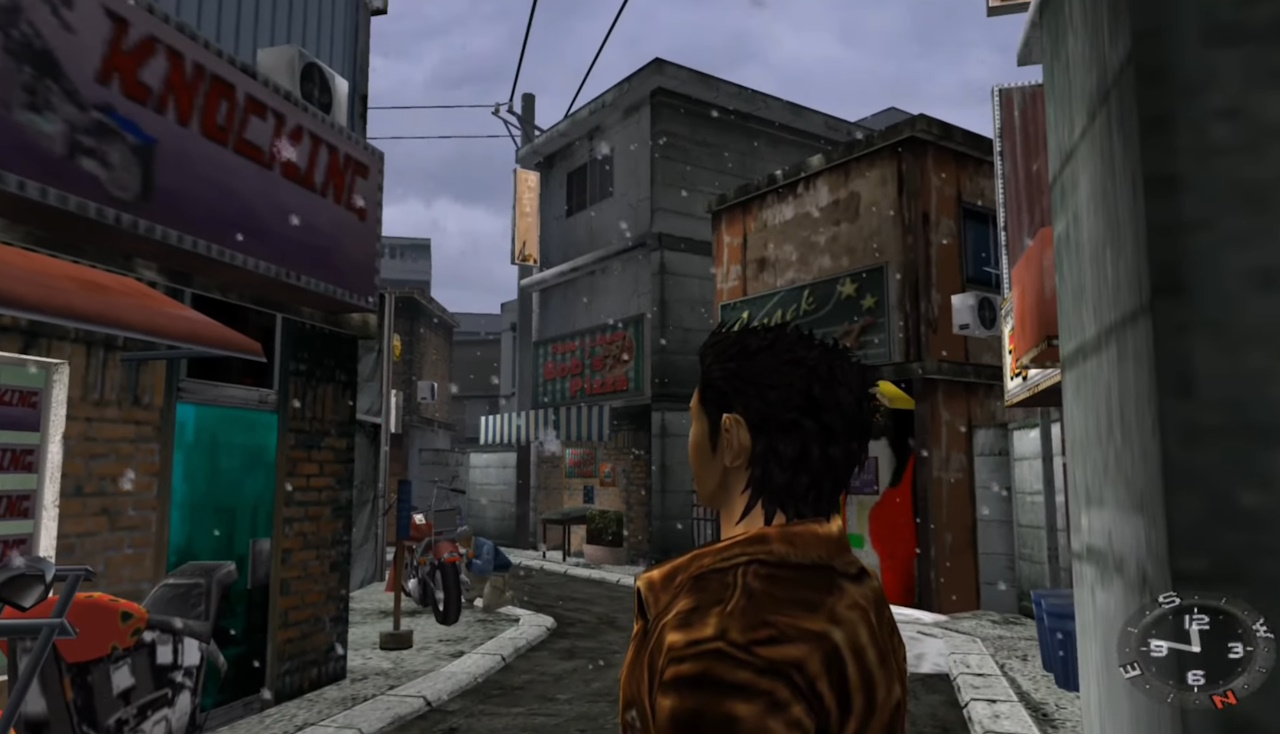
Screenshot of Shenmue I showing Ryo in Dobuita.
Shenmue’s world was unlike any I’d ever experienced in a video game before.

But here’s the thing: Shenmue was a failure. While critically acclaimed and spawning a vocal fan community that persists to this day, by every other metric the Shenmue saga completely failed. The incredibly expensive undertaking never came close to making its money back for Sega, and the failure of the Dreamcast meant that there was no way to recoup most of the two games’ development costs. Even a release of Shenmue II on Xbox didn’t help things. As bitterly upset as I may have been, I came to accept that this ahead-of-its-time masterpiece was underappreciated and would remain unfinished.

When Yu Suzuki and his independent development studio YSNet were able to buy the rights to Shenmue from Sega, it seemed as if things might be looking up. A Kickstarter campaign came along at just the right moment – when interest in crowd-funding was close to its peak – and the latent Shenmue fan community stumped up an astonishing $7 million with the hopes of concluding the saga. Backed up by additional investment from Sony, Epic Games, and others, it seemed as if the failed series was about to get one last chance.

Logo of YSNet.
Shenmue III was developed by YSNet.

A re-release of Shenmue I & II came to PC and PlayStation 4 consoles a couple of years ahead of Shenmue III’s launch. For the first time in well over a decade (since I put my Dreamcast and most of its games in a box in the attic) I re-played the games – and I had a blast all over again. But then came what I considered to be devastating news from YSNet.

The Shenmue saga was always planned as a multi-game story. Shenmue and Shenmue II told the first chapters, but there were several chapters still to tell. For reasons that, years later, I still find pig-headed and incomprehensibly stupid, YSNet was unwilling to adapt the planned story to make Shenmue III the saga’s finale. Instead, it would simply move the story along… presumably with the expectation of high sales or another crowd-funding campaign to keep Shenmue going. That always seemed completely impossible to me – and as much as I hate to say it, I was right about that. I didn’t even bother to buy Shenmue III in 2019, because what was the point? The game had, in my opinion, one job: to finish the Shenmue story. Yu Suzuki and his studio had been given a once-in-a-lifetime chance to do that by a dedicated group of fans… and they blew it.

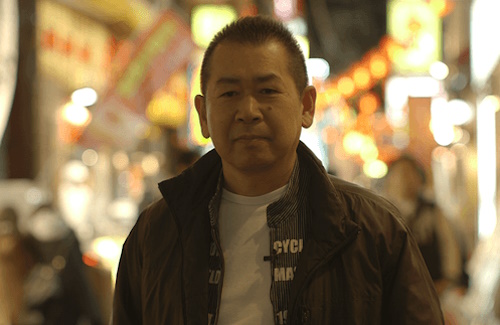
Photograph of Yu Suzuki.
Yu Suzuki, creator of the Shenmue series.
Photo Credit: YSNet; ysnet.games

The re-release of Shenmue I & II (and no, I don’t consider it a “remaster” or anything close; it’s a port) didn’t sell particularly well on PC and PlayStation – which was an ominous warning sign for Shenmue III. When Shenmue III finally launched amidst controversy over its Epic Games exclusivity on PC, it also didn’t sell very well. It seemed to me as if most of the people who might’ve conceivably been interested in buying it had already backed the Kickstarter project – one of the benefits of which was a copy of the game upon release. In its first week, Shenmue III grazed the lower reaches of the PlayStation sales charts in Japan… but didn’t even register anywhere else.

I did eventually buy Shenmue III when it was on sale on Steam. I haven’t played it yet, despite owning it for a while, and I have no real plans to. But when it was on sale for £15 or so, it seemed like a reasonable purchase. And if there’s ever news of a fourth game… maybe I’ll get around to checking it out.

Promo image for Shenmue III with the game's logo attached.
I did belatedly purchase Shenmue III… but I have no plans to play it right now.

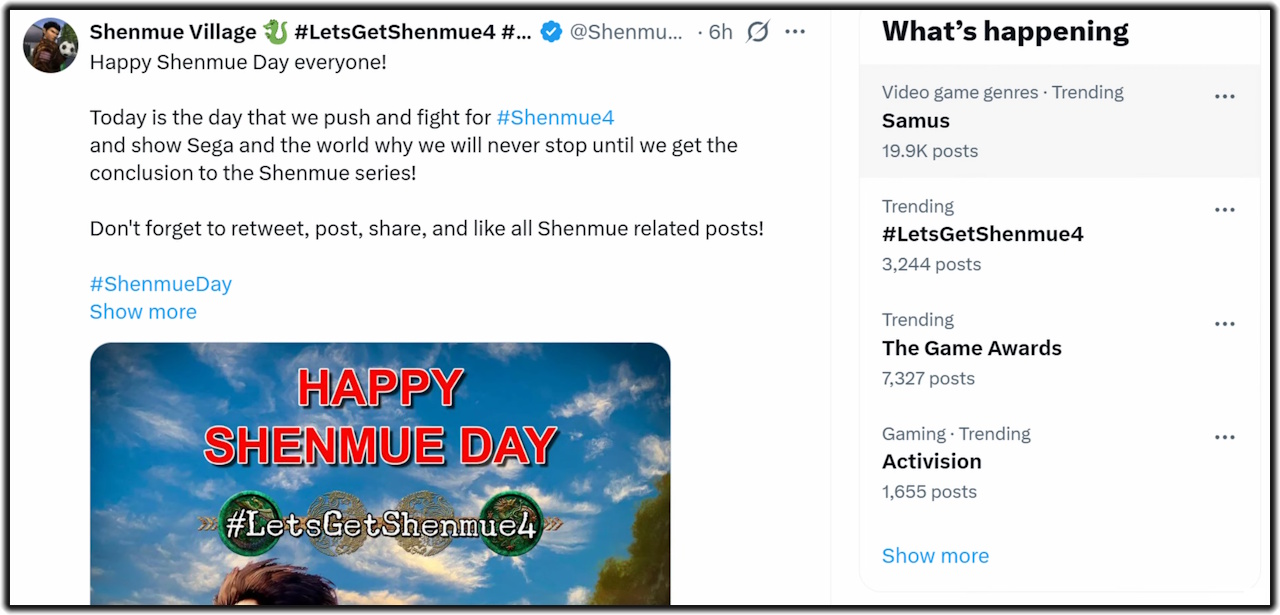
The way I see it, lacklustre sales for both the re-release of Shenmue I & II and Shenmue III demonstrate pretty clearly that this series has no mainstream appeal. Shenmue III was the last opportunity to change that – but again, the game failed to do so. So at this point, the remaining fans of the series are pretty much shouting into a void; tweet-a-thons that garner a few thousand posts at the very most feel like the last wriggles of a series in its death throes.

Shenmue’s anime adaptation also failed to bring renewed interest to the saga. I don’t have the numbers to hand, but Shenmue: The Animation ran for a single season back in 2022, and during that time, sales of the re-release and Shenmue III barely moved.

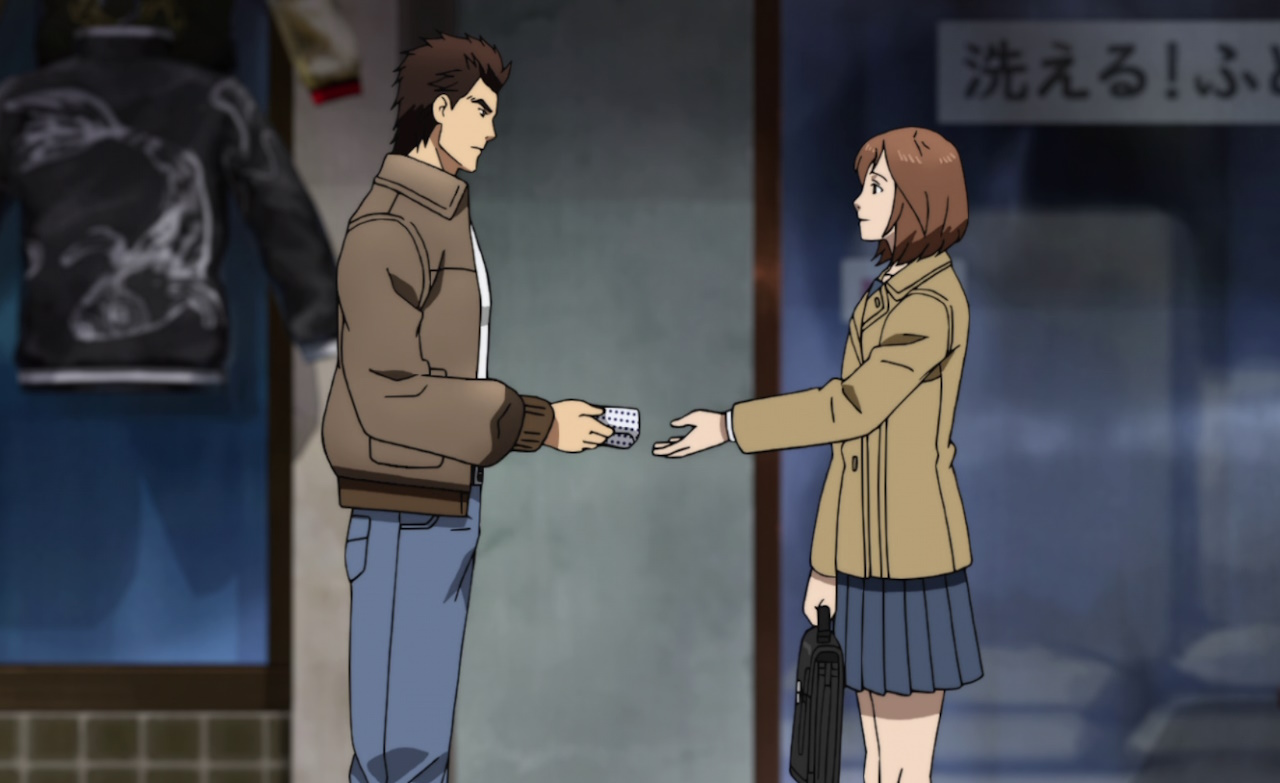
Still frame from Shenmue: The Animation showing Ryo and a female character.
There was an anime adaptation of Shenmue a couple of years ago.

Shenmue: The Animation was itself cancelled after just one season. Having adapted the story of the first two games, there was scope for a second season to dip into Shenmue III or perhaps even go beyond that… but the audience just wasn’t there either in Japan or in the west.

There was finally some Shenmue news just a few days ago, though. A new publisher – ININ Games, a company with a focus on older, retro titles – picked up the publishing rights to Shenmue III, and there’s been talk of potential ports to the Nintendo Switch and other platforms. This is by far the biggest news for Shenmue since Shenmue III’s launch back in 2019… and while I don’t expect it to really go anywhere, it’s at least noteworthy that someone, somewhere, thinks Shenmue is worth spending a little money on.

Promo image for Shenmue II showing Ryo in Hong Kong.
Ryo in Hong Kong.

At this point, twenty-five years on from the first game and five years after Shenmue III failed to light up the board, I really don’t see Shenmue IV ever getting off the ground. YSNet burned a lot of its bridges with members of the fan community with their first Kickstarter campaign, and with the decline of crowd-funding in general, raising millions of dollars that way seems like it’s off the table. With a clear and demonstrable lack of success with both the re-released titles and Shenmue III, getting significant outside investment also feels pretty unlikely.

However, the new publishing deal for Shenmue III and talk of a potential port of the game to a new platform has raised some hopes in the fan community. So let’s think about what Shenmue IV could and should look like.

Screenshot of Shenmue I showing Ryo and Santa Claus in Dobuita.
Meeting Santa Claus in Dobuita.

For me, the bottom line is this: Shenmue IV needs to be the end. I don’t care how many chapters Yu Suzuki originally planned in the ’90s. I don’t care how much of the story would need to be slimmed down or skipped in order to get to the end. At this point, if the stars align and through some absolutely miraculous good fortune Shenmue IV is able to get off the ground, it simply must bring the story to an end. That was what Shenmue III was supposed to do – and having failed again, there may not be another chance.

Shenmue IV won’t bring in new fans – not in any significant numbers, anyway. The re-release didn’t do that and neither did Shenmue III, so as much as I wish the games were held in higher esteem and celebrated more widely, it’s time to acknowledge that Shenmue is and always has been a niche product with a small audience. But that could be a positive thing! Without needing to worry about making a game with broader appeal, YSNet could tailor Shenmue IV to the built-in audience it already has, keeping things simpler for the team.

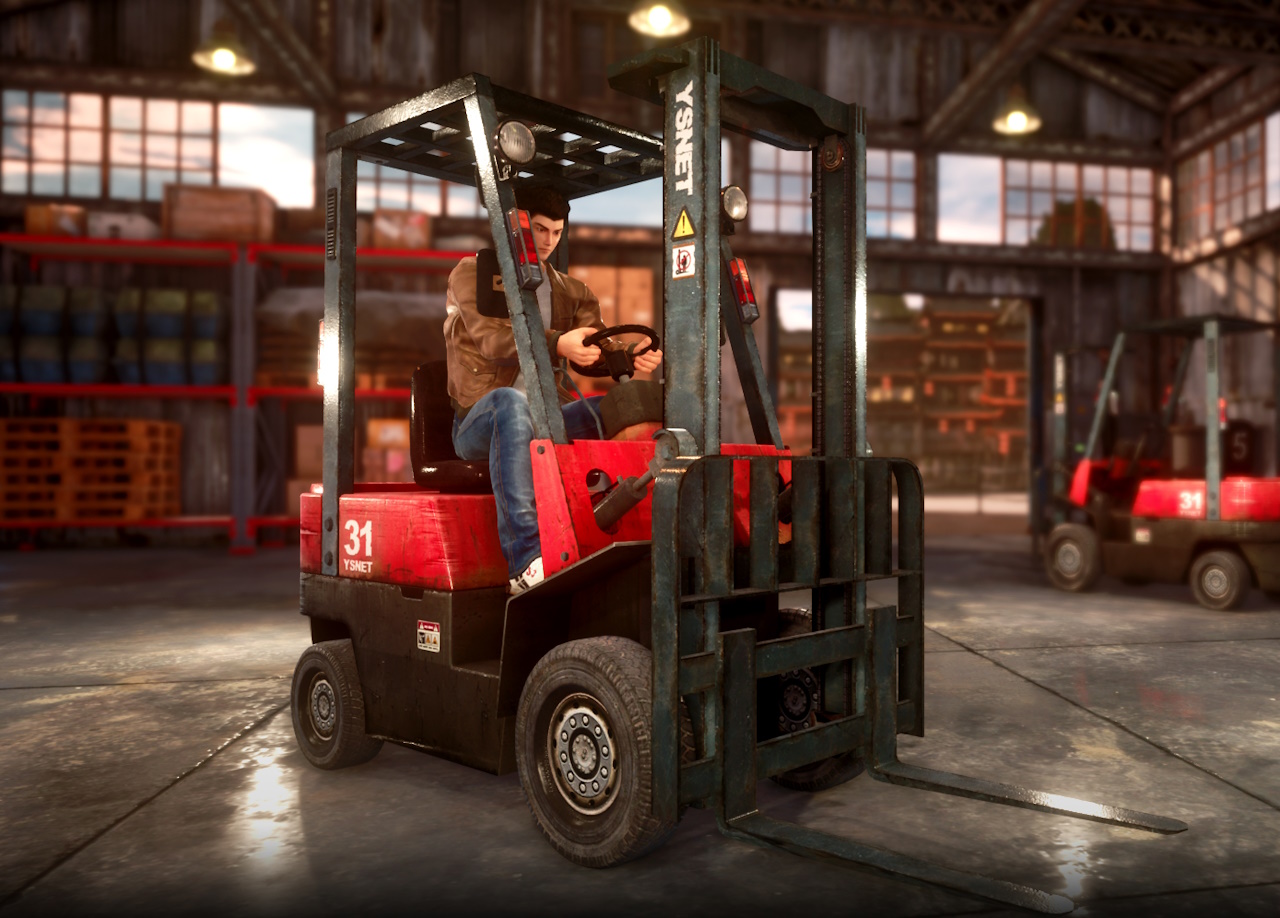
Promo image for Shenmue III showing Ryo driving a forklift.
A promo image for Shenmue III.

And there are ways to tell other chapters of the story if Yu Suzuki is still insistent on doing so. A book, graphic novel, or even a series of cheaply-animated YouTube shorts could cover whatever gaps may emerge from condensing two or three games’ worth of story into a single title. Shenmue IV wouldn’t need to cut out one massive chunk of narrative, either: it could pick up different pieces of the story with in-game cut-scenes covering the basics of the rest. In short, there are ways around this stumbling block – as there were in the 2010s when Shenmue III was being developed. Unlike last time, however, someone needs to come in and make cuts to the bloated story and gameplay – and if Yu Suzuki and his team can’t or won’t do it, then it needs to be an outsider.

I haven’t played Shenmue III and I’ve managed to avoid major spoilers since it launched. But clips of the game that I’ve seen have included things like mini-games, a stamina system that limited how far Ryo could run, and other such bloat. Cutting some of this stuff out to focus on the core narrative – that of Ryo’s quest to track down the murderous Lan Di – would go a long way to helping a hypothetical next title move along at a much more reasonable pace.

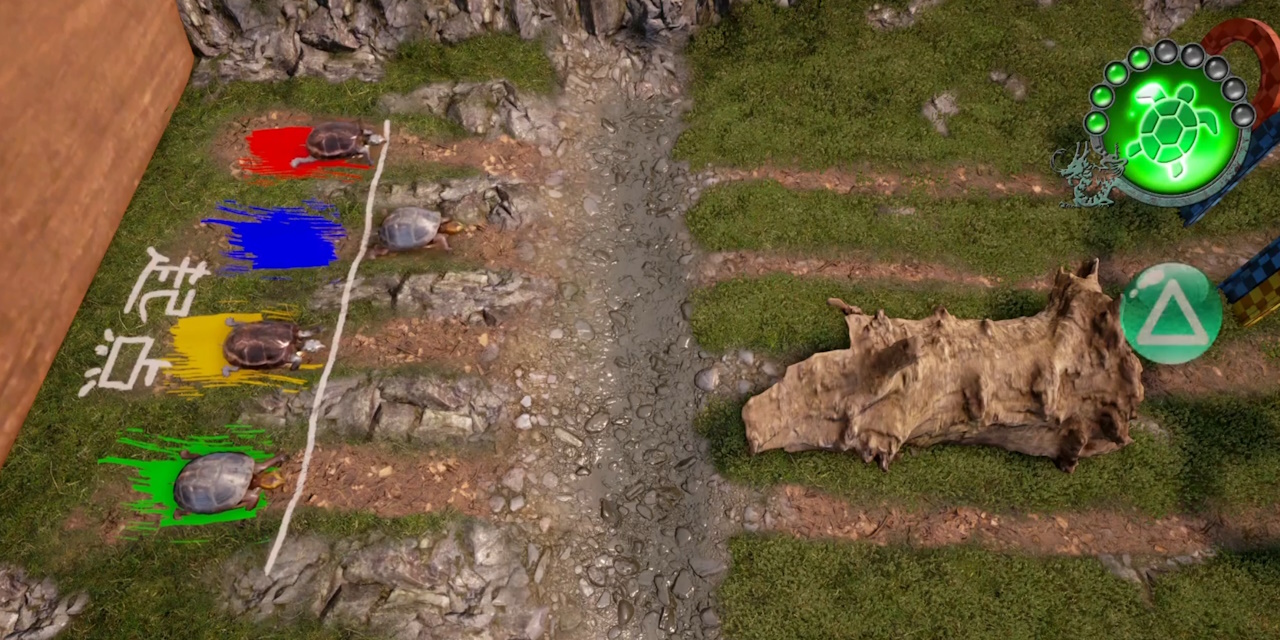
Screenshot of Shenmue III showing a tortoise race.
Cutting back on things like mini-games could help a future Shenmue game stick to what matters: the story.

There’s an expression that I think is relevant here: “don’t let ‘perfect’ be the enemy of ‘good.'” In this case, I will happily concede that a cut-down Shenmue IV with some of its QTEs, mini-games, and open-world exploration elements removed wouldn’t be the ideal experience. It wouldn’t be completely true to the Shenmue series, either. But if it finished the story – a story I began almost a quarter of a century ago – it would be worth it. I’ll make that compromise to see the end of Ryo’s story… and that’s what I genuinely expected would happen with Shenmue III. In that sense, I’ve already committed myself to and steeled myself against those kinds of compromises.

Both Yu Suzuki himself and some die-hard Shenmue fans evidently hate this idea. But my question to them is a pretty basic one: if it’s this cut-down game or nothing, what would you rather have? I know that, speaking for myself, I’d rather see the story brought to an end, even if the journey to that end point is shorter and less free-roaming than the first chapters of the story. If you don’t agree… how long are you willing to hang on in the hopes that the “perfect” version of Shenmue IV and Shenmue V that you have in your head will ever make it to release?

Wouldn’t something be better than nothing at all?

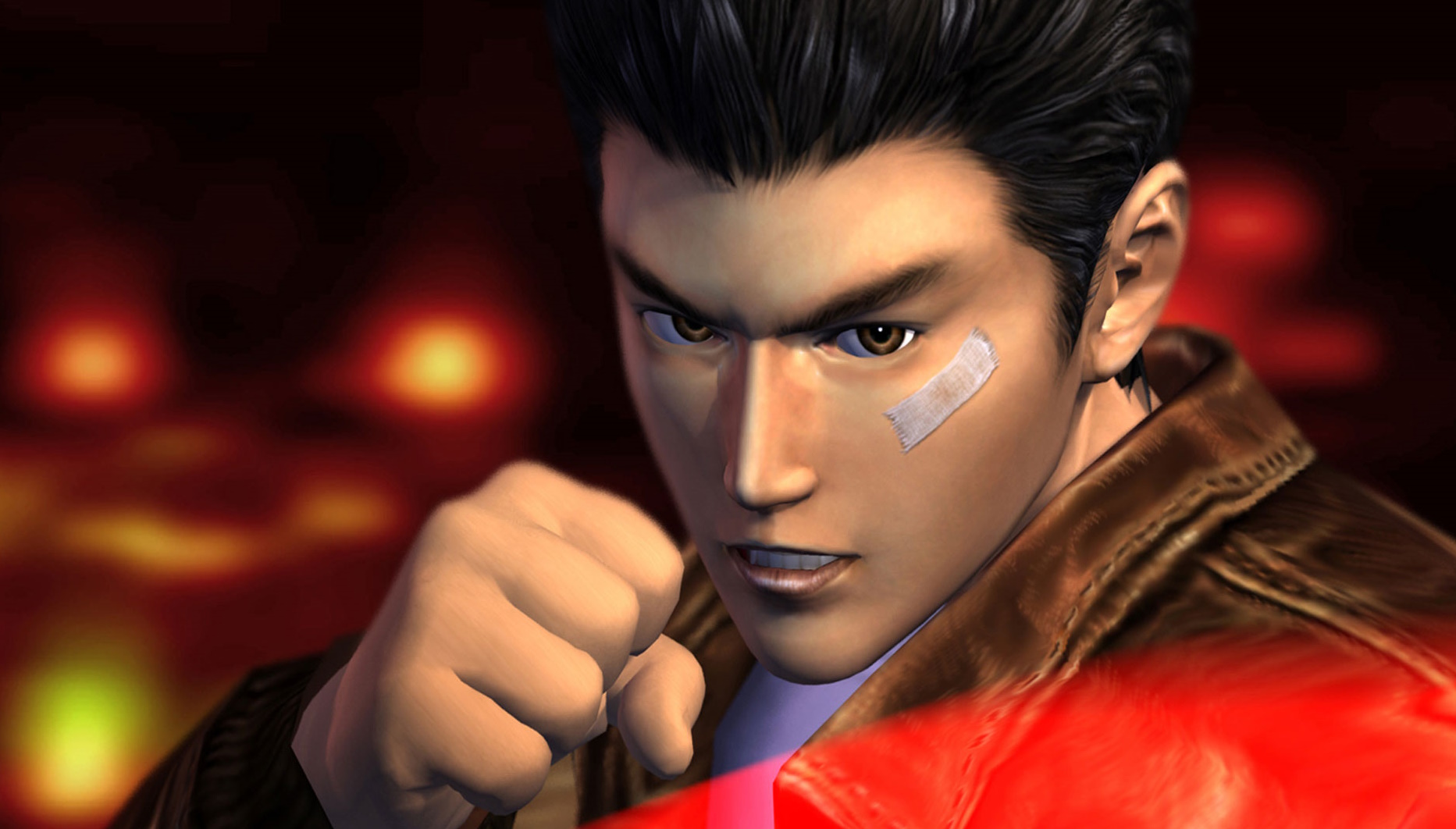
Promo wallpaper for Shenmue/Shenmue III showing Ryo raising his fist.
Them’s fightin’ words!

I’m not getting any younger. I’m the wrong side of forty and, as regular readers will know, I’m not in great shape health-wise. There’s a non-zero chance that I won’t be here in ten years’ time, and with arthritis already affecting my hands and fingers, my ability to play games is beginning to wane. In short… I don’t have the time to wait for a mythological Shenmue-loving corporation to step in and fund development. If I was Elon Musk I’d happily do it… but who has that kind of money just lying around?

Shenmue is one of my favourite games of all-time. More than that, it’s the game that showed me what interactive media could be in the new millennium, and at a time in my life where I might’ve begun to drift away from the hobby, it’s a title that kept me engaged and kept me playing. I love Shenmue and Shenmue II. And I would have given anything to see its story continue. But we’re at a point now where repeated failures and some poor decision-making have left the series’ future not so much uncertain as dead. Shenmue is, in my opinion at least, almost certainly not coming back.

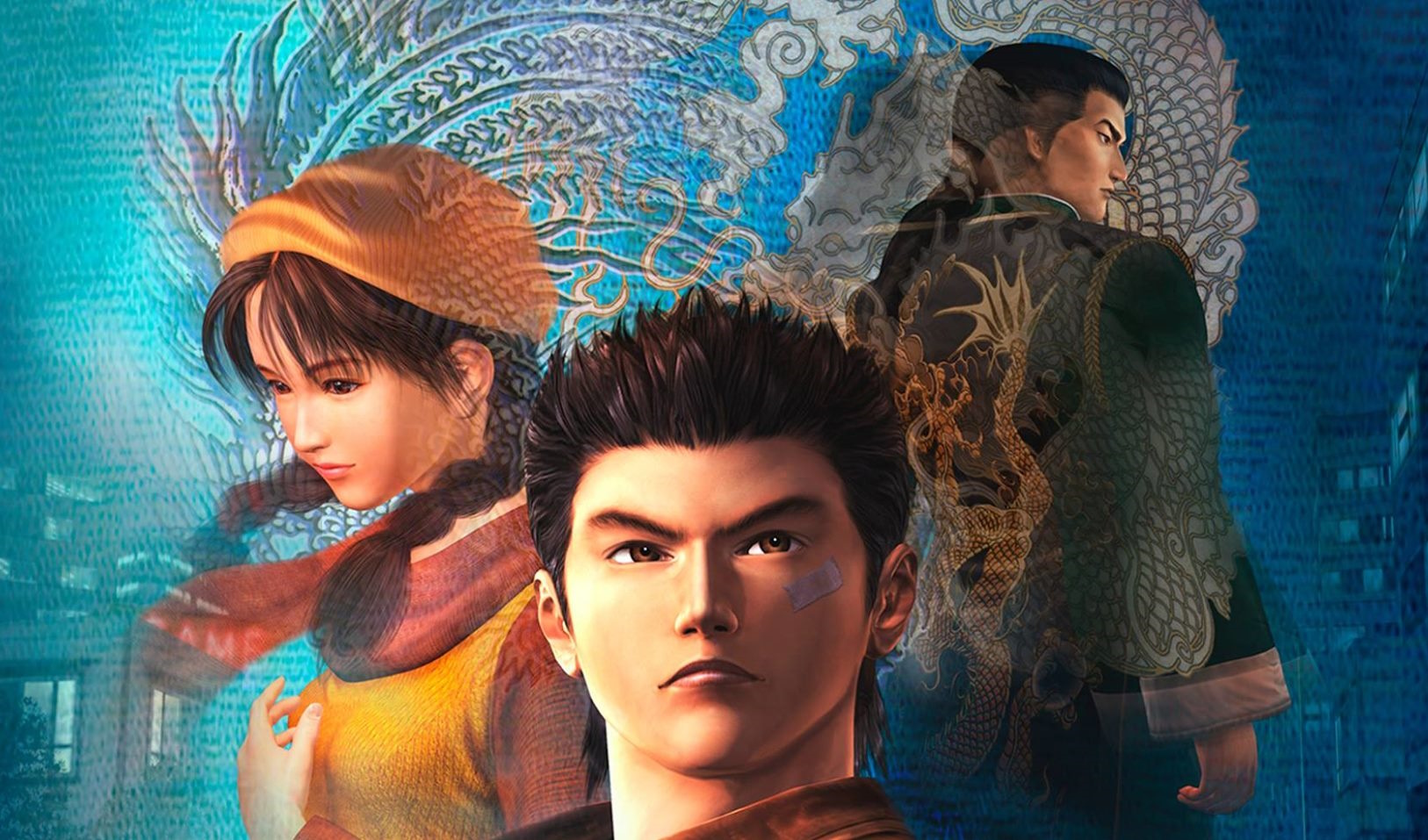
Box art/promo art for Shenmue I showing Ryo, Shen Hua, and Lan Di.
I’d love to be wrong, but I don’t see a future for Shenmue right now.

Maybe you’re of the opinion that, even if it takes another quarter of a century, we should let YSNet do its thing and tell the story they want to tell in the way they want to tell it. I’m telling you now: I don’t have that kind of time. If this new publisher is interested in another game – and despite my scepticism, I hope that they are – then my only request is this: make it the final game. Finish the story somehow, even if that means cutting back on the scope of the narrative and/or gameplay. If Ryo is going to get a miraculous third chance that, from a business standpoint, he categorically does not deserve, then have the decency to finish his story and bring the Shenmue saga to a belated conclusion.

But that’s the same red line I had back in the 2010s, and YSNet blew it. Yu Suzuki and his studio squandered the best (and probably the only) chance they had to conclude Ryo’s story, and as much as I’d like to think they’ll get a reprieve… I still struggle to see it. Five years on from Shenmue III and I feel more justified than ever in my stance back then. I said in 2019 that I was unwilling to pick up the threads of that story only to end up disappointed for the second time when it’s yet again left incomplete – and with nothing beyond vague suggestions about what YSNet might like the next game to look like, as well as sales so underwhelming that they’d make any company baulk at the notion of signing on, I get to take a very bitter victory lap… one I really don’t want to take.

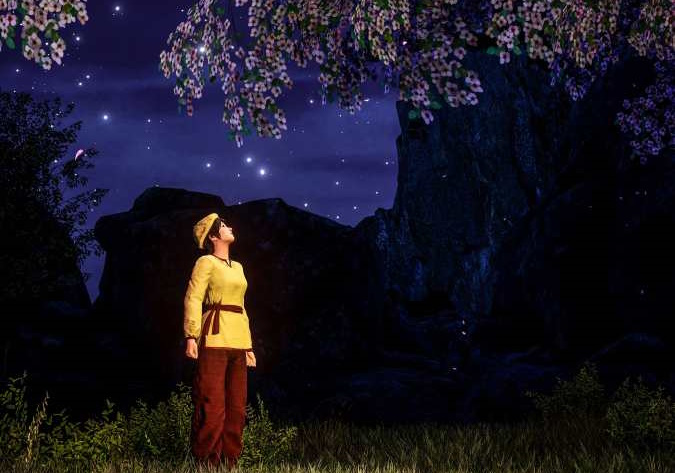
Promo image for Shenmue III showing Shen Hua.
Shenmue III was the best chance to tell the rest of the story.

If you asked me now, in November 2024, whether we’ll ever see a fourth Shenmue game, my answer would be almost certainly not. I don’t see how the series has a future, despite a new publisher signing on and talk of a potential Shenmue III port to another console. A few thousand remaining fans tweeting into the void isn’t gonna change that, because as loud and vocal as Shenmue fans can be, we’re a tiny and ever-diminishing number.

There are multiple tragedies in the Shenmue saga. The first game was light-years ahead of its time, pioneering a dense, lived-in open world years before anyone else even tried it. The world of those first two games still outpaces many modern titles in terms of depth and complexity. The demise of the Dreamcast and a player base that preferred faster-paced action-packed titles doomed the series… but that isn’t where the tragedy ends.

Screenshot of Shenmue II showing Ryo in Hong Kong.
The harbour in Hong Kong.

YSNet’s failure to recognise that the crowd-funding campaign was lightning in a bottle; a once-in-a-lifetime chance to bring a dead series back to life… that’s the final tragedy of Shenmue. Fans gifted Yu Suzuki a golden opportunity to conclude the story he started more than fifteen years earlier… and he blew it. He allowed “perfect” to become the enemy of “good,” and stubbornly refused to deviate from a planned multi-game series even when it should’ve been clear that there would never be another opportunity to bring Ryo’s story to an end.

I could’ve lived with Shenmue and Shenmue II as a disappointingly incomplete story; a millennial masterpiece that, for reasons beyond anyone’s control, would remain unfinished. But I’ve really struggled to forgive Yu Suzuki and YSNet for taking the incredible opportunity presented to them by the fan community and pissing it away on a frivolous, bloated, still-unfinished third game.

And as to the future? Maybe the jury really is still out. Maybe this ININ Games genuinely sees the potential in Shenmue IV. But until the game’s officially in production and ready to go, I’ll be sceptical. I’m pretty sure that this is where the Shenmue saga ends.


Shenmue I & II and Shenmue III are available now for PC and PlayStation 4. The Shenmue series – including all titles and properties discussed above – may be the copyright of YSNet, ININ Games, Sega, and others. Some images courtesy of Shenmue Dojo and IGDB. This article contains the thoughts and opinions of one person only and is not intended to cause any offence.
How Sega and the Dreamcast offer a valuable lesson for streaming platforms

In 2001 I was bitterly disappointed by the failure of the Dreamcast – a console I’d only owned for about a year and had hoped would carry me through to the next generation of home consoles. For a variety of reasons that essentially boil down to mismanagement, worse-than-expected sales, and some pretty tough competition, Sega found itself on the verge of bankruptcy. The company responded not only by ending development on the Dreamcast, but by closing its hardware division altogether.

At the time, Sega seemed to be at the pinnacle of the games industry. For much of the 1990s, the company had been a dominant force in home video game consoles alongside Nintendo, and as the new millennium approached there were few outward signs of that changing. It was a massive shock to see Sega collapse in such spectacular fashion in 2001, not only to me but to millions of players and games industry watchers around the world.

The Sega Dreamcast failed in 2001.

Thinking about what happened from a business perspective, a demise like this was inevitable in the early 2000s. Both Sony and Microsoft were arriving in the home console market with powerful machines offering features like the ability to play DVDs – something that the Dreamcast couldn’t do – but at a fundamental level the market was simply overcrowded. There just wasn’t room for four competing home consoles. At least one was destined for the chopping block – and unfortunately for Sega, it was their machine that wouldn’t survive.

But the rapid demise of the Dreamcast wasn’t the end of Sega – not by a long shot. The company switched its focus from making hardware to simply making games, and over the next few years re-established itself with a new identity as a developer and publisher. In the twenty years since the Dreamcast failed, Sega has published a number of successful titles, snapped up several successful development studios – such as Creative Assembly, Relic Entertainment, and Amplitude Studios – and has even teamed up with old rival Nintendo on a number of occasions!

The end of the Dreamcast was not the end of Sega.

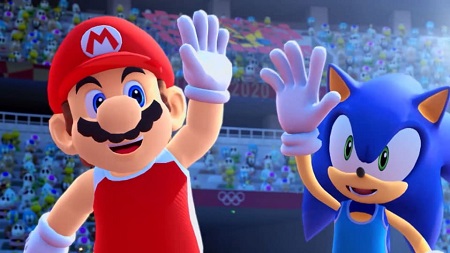
I can’t properly express how profoundly odd it was to first see Super Mario and Sega’s mascot Sonic the Hedgehog together in the same game! The old rivalry from the ’90s would’ve made something like that impossible – yet it became possible because Sega recognised its limitations and changed its way of doing business. The board abandoned a longstanding business model because it was leading the company to ruin, and even though it does feel strange to see fan-favourite Sega characters crop up on the Nintendo Switch or even in PlayStation games, Sega’s willingness to change quite literally saved the company.

From a creative point of view, Sega’s move away from hardware opened up the company to many new possibilities. The company has been able to broaden its horizons, publishing different games on different systems, no longer bound to a single piece of hardware. Strategy games have been published for PC, party games on the Nintendo Wii and Switch, and a whole range of other titles on Xbox, PlayStation, handheld consoles, and even mobile. The company has been involved in the creation of a far broader range of titles than it ever had been before.

Sega’s mascot Sonic now regularly appears alongside old foe Super Mario.

So how does all of this relate to streaming?

We’re very much in the grip of the “streaming wars” right now. Big platforms like Netflix, Amazon Prime Video, and Disney+ are battling for subscribers’ cash, but there’s a whole second tier of streaming platforms fighting amongst themselves for a chance to break into the upper echelons of the market. The likes of HBO Max, Paramount+, Apple TV+, Peacock, BritBox, and even YouTube Premium are all engaged in this scrap.

But the streaming market in 2021 is very much like the video game console market was in 2001: overcrowded. Not all of these second-tier platforms will survive – indeed, it’s possible that none of them will. Many of the companies who own and manage these lower-level streaming platforms are unwilling to share too many details about them, but we can make some reasonable estimates based on what data is available, and it isn’t good news. Some of these streaming platforms have simply never been profitable, and their owners are being propped up by other sources of income, pumping money into a loss-making streaming platform in the hopes that it’ll become profitable at some nebulous future date.

There are a lot of streaming platforms in 2021.

To continue the analogy, the likes of Paramount+ are modern-day Dreamcasts in a market where Netflix, Amazon, and Disney+ are already the Nintendo, Xbox, and PlayStation. Breaking into the top tier of the streaming market realistically means one of the big three needs to be dethroned, and while that isn’t impossible, it doesn’t seem likely in the short-to-medium term at least.

Why did streaming appeal to viewers in the first place? That question is fundamental to understanding why launching a new platform is so incredibly difficult, and it’s one that too many corporate executives seem not to have considered. They make the incredibly basic mistake of assuming that streaming is a question of convenience; that folks wanted to watch shows on their own schedule rather than at a set time on a set channel. That isn’t what attracted most people to streaming.

Too many corporate leaders fundamentally misunderstand streaming.

Convenience has been available to viewers since the late 1970s. Betamax and VHS allowed folks to record television programmes and watch them later more than forty years ago, as well as to purchase films and even whole seasons of television shows to watch “on demand.” DVD box sets kicked this into a higher gear in the early-mid 2000s. Speaking for myself, I owned a number of episodes of Star Trek: The Next Generation on VHS in the 1990s, and later bought the entire series on DVD. I had more than enough DVDs by the mid-2000s that I’d never need to sign up for any streaming platform ever – I could watch a DVD every day of the year and never run out of different things to watch!

To get back on topic, what attracted people to streaming was the low cost. A cable or satellite subscription is easily four or five times the price of Netflix, so cutting the cord and going digital was a new way for many people to save money in the early 2010s. As more broadcasters and film studios began licensing their content to Netflix, the value of the deal got better and better, and the value of cable or satellite seemed ever worse in comparison.

Streaming isn’t about convenience – that’s been available for decades.
(Pictured: a 1975 Sony Betamax cabinet)

But in 2021, in order to watch even just a handful of the most popular television shows, people are once again being forced to spend cable or satellite-scale money. Just sticking to sci-fi and fantasy, three of the biggest shows in recent years have been The Mandalorian, The Expanse, and The Witcher. To watch all three shows, folks would need to sign up for three different streaming platforms – which would cost a total of £25.97 per month in the UK; approximately $36 in the United States.

The overabundance of streaming platforms is actually eroding the streaming platform model, making it unaffordable for far too many people. We have a great recent example of this: the mess last week which embroiled Star Trek: Discovery. When ViacomCBS cancelled their contract with Netflix, Discovery’s fourth season was to be unavailable outside of North America. Star Trek fans revolted, promising to boycott Paramount+ if and when the streaming platform arrived in their region. The damage done by the Discovery Season 4 debacle pushed many viewers back into the waiting arms of the only real competitor and the biggest danger to all streaming platforms: piracy.

Calls to boycott Paramount+ abounded in the wake of the Star Trek: Discovery Season 4 mess.

The streaming market does not exist in a vacuum, with platforms jostling for position solely against one another. It exists in a much bigger digital environment, one which includes piracy. It’s incredibly easy to either stream or download any television episode or any film, even with incredibly limited technological know-how, and that has always represented a major threat to the viability of streaming platforms. Though there are ethical concerns, such as the need for artists and creators to get paid for their creations, that isn’t the issue. You can shout at me until you’re blue in the face that people shouldn’t pirate a film or television show – and in the vast majority of cases I’ll agree wholeheartedly. The issue isn’t that people should or shouldn’t engage in piracy – the issue is that people are engaged in piracy, and there really isn’t a practical or viable method of stopping them – at least, no such method has been invented thus far.

As more and more streaming platforms try to make a go of it in an already-overcrowded market, more and more viewers are drifting back to piracy. 2020 was a bit of an outlier in some respects due to lockdowns, but it was also the biggest year on record for film and television piracy. 2021 may well eclipse 2020’s stats and prove to have been bigger still.

The overcrowded streaming market makes piracy look ever more appealing to many viewers.

Part of the driving force is that people are simply unwilling to sign up to a streaming platform to watch one or two shows. One of the original appeals of a service like Netflix was that there was a huge range of content all in one place – whether you wanted a documentary, an Oscar-winning film, or an obscure television show from the 1980s, Netflix had you covered. Now, more and more companies are pulling their content and trying to build their own platforms around that content – and many viewers either can’t or won’t pay for it.

Some companies are trying to push streaming platforms that aren’t commercially viable and will never be commercially viable. Those companies need to take a look at Sega and the Dreamcast, and instead of trying to chase the Netflix model ten years too late and with far too little original content, follow the Sega model instead. Drop the hardware and focus on the software – or in this case, drop the platform and focus on making shows.

Some streaming platforms will not survive – and their corporate owners would be well-advised to realise that sooner rather than later.

The Star Trek franchise offers an interesting example of how this can work. Star Trek: Discovery was originally available on Netflix outside of the United States. But Star Trek: Picard and Star Trek: Lower Decks went to Amazon Prime Video instead – showing how this model of creating a television show and selling it either to the highest bidder or to whichever platform seems like the best fit for the genre can and does work.

Moves like this feel inevitable for several of these second-tier streaming platforms. There’s a hard ceiling on the amount of money folks are willing to spend, so unless streaming platforms can find a way to cut costs and become more competitively priced, the only possible outcome by the end of the “streaming wars” will be the permanent closure of several of these platforms. Companies running these platforms should consider other options, because blindly chasing the streaming model will lead to financial ruin. Sega had the foresight in 2001 to jump out of an overcrowded market and abandon a failing business model. In the two decades since the company has refocused its efforts and found renewed success. This represents a great model for streaming platforms to follow.

All films, television series, and video games mentioned above are the copyright of their respective owner, studio, developer, broadcaster, publisher, distributor, etc. This article contains the thoughts and opinions of one person only and is not intended to cause any offence.
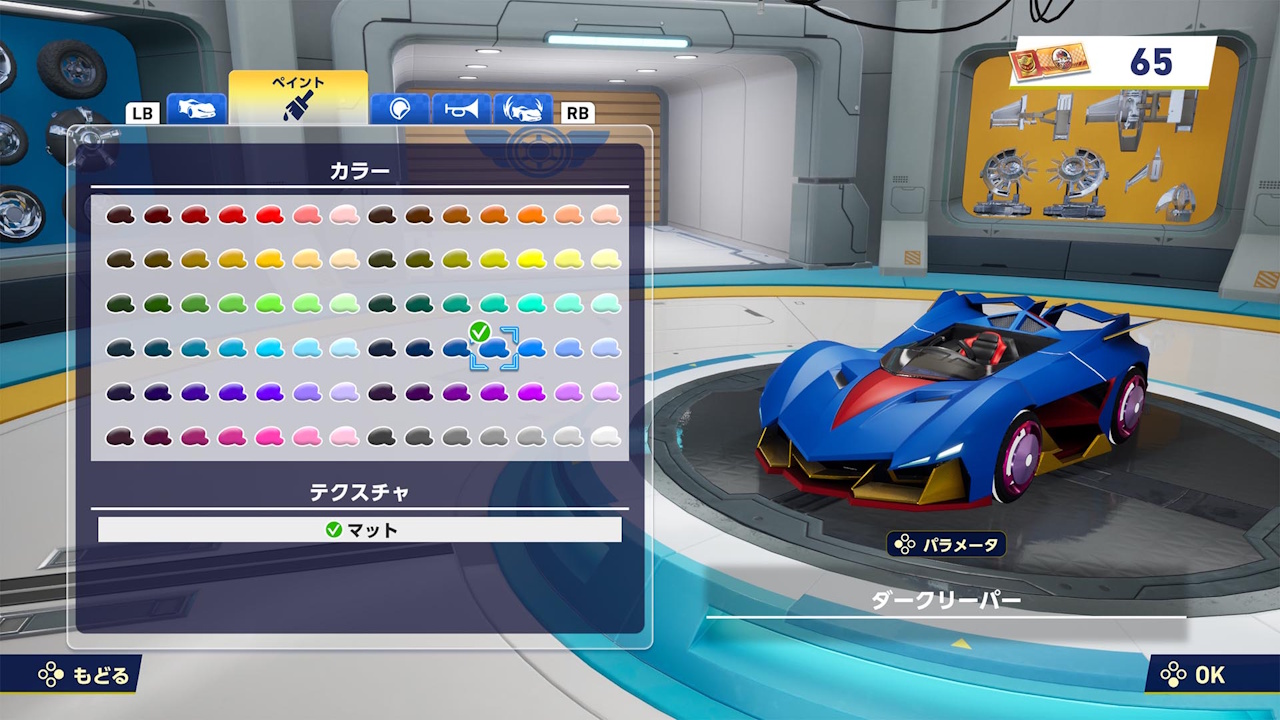
Ten non-Nintendo characters who (probably won’t) appear in Mario Kart 9!

A few days ago I had a lot of fun putting together a short list of (mostly) Nintendo characters who I think should appear in Mario Kart 9 – whenever that game may come! As a follow-up, I thought it could be interesting to consider a few characters from outside of Nintendo’s walled garden who could also join the fun. If you’d like to check out the original list, you can find it by clicking or tapping here.
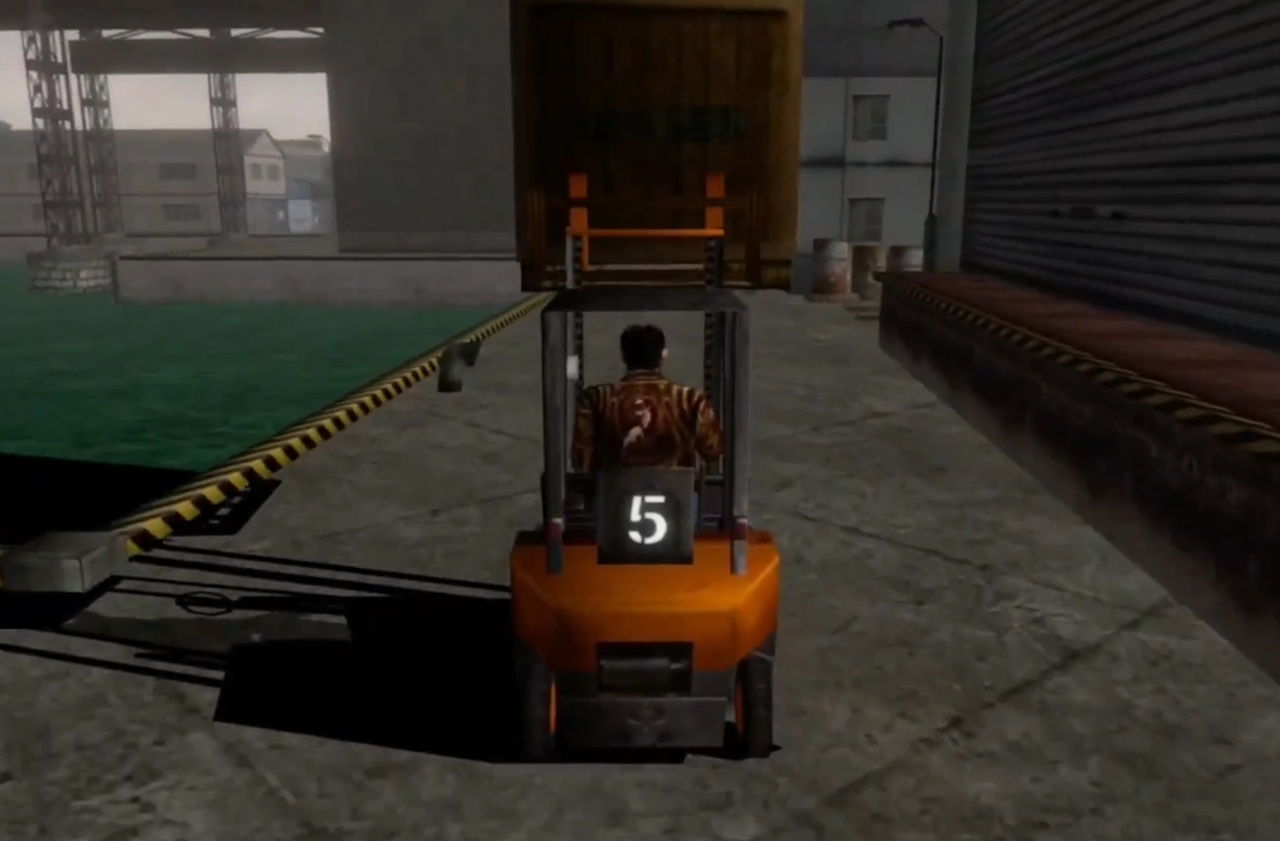
Mario Kart 8 and later Mario Kart 8 Deluxe pushed the boat out as far as the roster of drivers is concerned, including characters from outside of the Super Mario series for the first time, including Link from The Legend of Zelda series, Isabelle from Animal Crossing, and two characters from the Splatoon games. However, it would be a first for the series to include non-Nintendo characters!
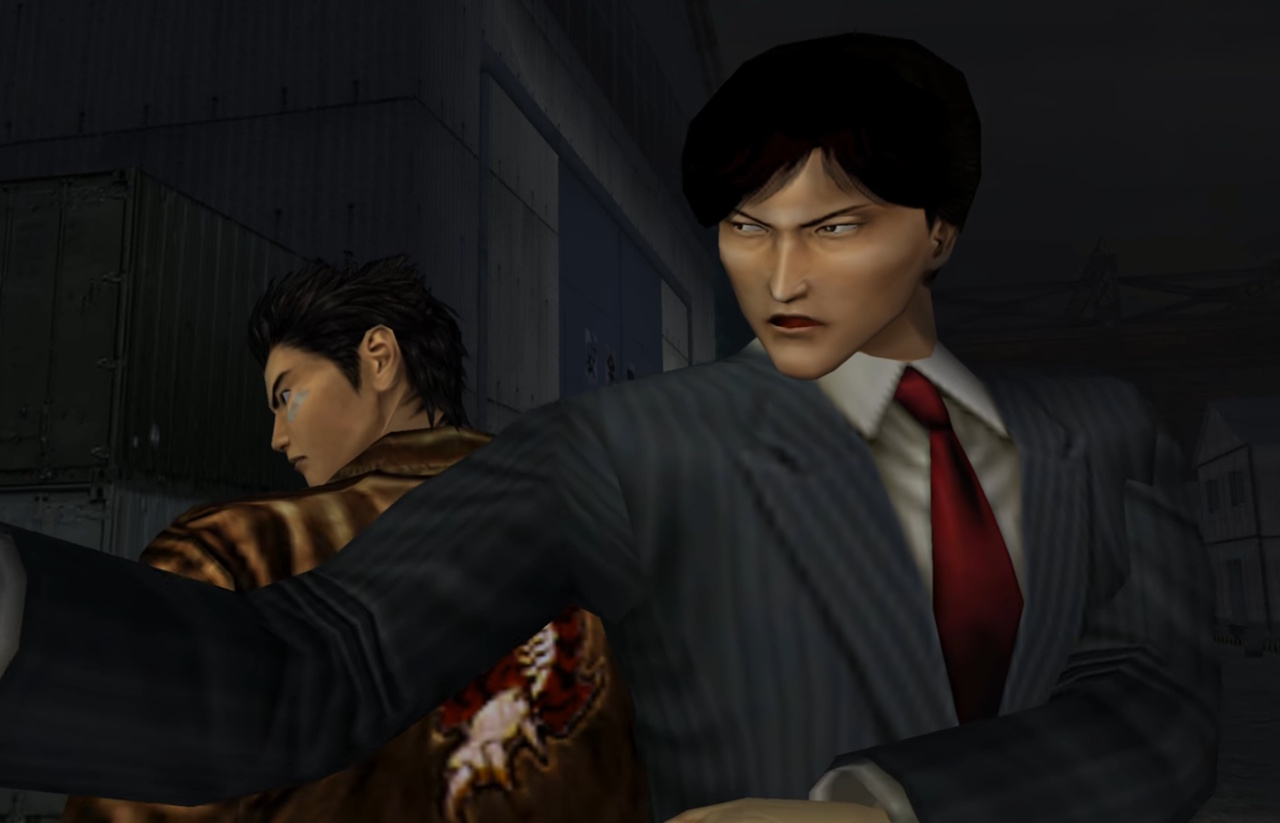
Isabelle, from the Animal Crossing series, is a driver in Mario Kart 8 Deluxe.

Although the Mario Kart games haven’t done so yet, Nintendo has proved itself willing to open up to other companies’ franchises and characters in recent years. We’ve seen Minecraft Steve, for example, as well as characters from the Castlevania, Persona, and Dragon Quest series appear in Super Smash Bros. Ultimate on the Switch, so I think that demonstrates a willingness on Nintendo’s part to think outside the box when it comes to characters in popular titles.

Whether it will happen, though, is completely unknown! And to reiterate what I always say: this is pure guesswork and a wishlist from a fan, nothing more. I’m not claiming to know for a fact that any characters listed below will appear in Mario Kart 9 – or even if such a game is currently in development. With the 30th anniversary of the Mario Kart series coming up in 2022 I think it’s possible that we might see a new game, but even that’s just a guess on my part!

With that out of the way, let’s jump into the list!

Number 1: Sonic the Hedgehog (Sega)

Sonic as he appears in Mario and Sonic at the Olympic Games: Tokyo 2020.

Of all the characters on this list, Sonic is arguably the most likely to crop up in Mario Kart 9. Not only is he a character in Super Smash Bros. Ultimate, but there have been a number of Nintendo games over the last decade or more in which he’s been prominently featured. Mario and Sonic at the Olympic Games in 2007 marked his debut alongside Mario, and since then the duo have appeared together in five more Olympic-themed titles.

It would’ve seemed unthinkable in the ’90s for Mario and Sonic to appear together; they were the mascots of competing companies! It was only when Sega retired from manufacturing their own consoles shortly after the millennium that Sonic appearing on Nintendo hardware was even a possibility, but he’s since become a mainstay. He’d make for a fantastic character, and having already featured in his own kart racer, he definitely knows a thing or two about driving!

Number 2: Pac-Man (Bandai Namco)

A 3D rendering of Pac-Man from 1999’s Pac-Man World.

Another character who appeared in Super Smash Bros. Ultimate, Pac-Man is a gaming icon from the medium’s early days. Originally an arcade game created in 1980, Pac-Man spawned a whole host of titles in a series that continues to this day. Though the games have no real story or plot, Pac-Man was arguably one of the first video game characters, and was, for a time, symbolic of the games industry as a whole. His simple design became iconic, and even today Pac-Man is instantly recognisable.

As with Sonic above, even a few years ago the idea of a collaboration between Nintendo and Pac-Man (short of licensing one of the games to their consoles) wouldn’t have seemed possible. But as companies continue to pool their resources and work together, it could make a lot of sense for both Nintendo and Bandai Namco (or should that be Bando Namcai?) to bring Pac-Man to Mario Kart 9.

Number 3: Fall Guy (Epic Games/Mediatonic)

Three Fall Guys seen in a recent Nintendo Direct.

If I’d been in charge of the development of cute obstacle course/battle royale title Fall Guys, I would have prioritised a Nintendo Switch release. Regardless, the title is finally going to be released on Nintendo’s console, months after it’s PC and PlayStation 4 debut. The Fall Guys themselves are adorable little jelly bean characters with a huge variety of costumes, and their cartoon aesthetic would fit perfectly with Nintendo’s long-running kart racing series.

The recent Epic Games buyout may complicate matters, but with Fall Guys coming to Switch I really feel it has a shot at being successful on that platform – especially if Mediatonic can get cross-platform play up and running. If the game is a hit, bringing a Fall Guy to Mario Kart 9 would be fantastic, and something Nintendo could absolutely consider doing. It would arguably benefit Fall Guys more, with the character’s inclusion serving almost as advertising, but that should just be an incentive for Epic Games to allow this crossover to go ahead!

Number 4: Master Chief (Microsoft)

The Master Chief in Halo: The Master Chief Collection concept art.

The inclusion of Minecraft Steve in Super Smash Bros. Ultimate shows that Microsoft is quite happy to work with Nintendo, and a number of their recent moves – like their partnership with EA – have opened up the possibility of further collaborations and crossovers with big games companies. With that in mind, could the Halo series’ iconic protagonist end up as a racer?

Halo games, as first-person shooters, are quite violent, so perhaps Nintendo would opt not to include such characters for the sake of keeping the game family-friendly. But Master Chief’s design isn’t aggressive or scary, and I think he could be made to fit. It would be a fun collaboration between two of modern gaming’s big powerhouses.

Number 5: Doom Guy (Bethesda/Microsoft)

Doom Eternal promotional artwork featuring the character known as Doom Guy.

Though visually similar in some respects to the Master Chief, Doom Guy has a surprising history with Nintendo. Not only was Doom 64 a Nintendo 64 exclusive in 1997, but last year saw a bizarre yet strangely wholesome internet-inspired team-up with Animal Crossing: New Horizons. In short, Doom Eternal shared a release date with New Horizons, and because of the polar opposite nature of the games, fans began ironically pairing up Doom Guy with Animal Crossing characters – notably Isabelle.

Nintendo could take advantage of the memes and jokes by bringing Doom Guy into Mario Kart 9. On the surface, maybe he isn’t a great fit for the series. But there’s nothing offensive about his character design, and if last year’s fan art showed us one thing, it’s that Doom Guy can be made to look adorable and cartoonified!

Number 6: Two Point Hospital Doctor or Nurse (Sega)

Two doctors and a nurse.

Two Point Hospital is a spiritual successor to 1997’s Theme Hospital, a classic of the “tycoon” genre. It was ported to the Nintendo Switch last year after releasing for PC in 2018, and has gone on to be a surprising success on the platform. As with many tycoon games there isn’t really one principal character to pick out, but a generic doctor and/or nurse could be a fun addition to Mario Kart 9.

One of the great things about Two Point Hospital is its cartoon aesthetic; a deliberate choice that mimics the title’s origins in tycoon games of the 1990s. That look just happens to be perfect for the Mario Kart series, which means a Two Point Hospital character would be a natural fit.

Number 7: A Palico (Capcom)

A Palico as seen in the trailer for Monster Hunter Rise.

I’ll let you in on a secret: the Monster Hunter series has never seemed like my thing. The latest title in the series, Monster Hunter Rise, is available for Nintendo Switch, but despite loving the visual style, the core gameplay of hunting and killing so-called “monsters” – which seem to be docile animals living their own lives not troubling anybody – holds absolutely no appeal to me!

Regardless, the latest title is a big hit on Switch, and Palicoes are cute little felines or cat-like characters that accompany the player character during the game. It seems like this kind of cute critter would be a perfect fit for Mario Kart 9 – even if I don’t personally care for the game they originate from!

Number 8: Zagreus (Supergiant Games)

Promotional art for Hades featuring Zagreus.

Hades has to be one of the best indie games I’ve played in recent years, and was recently featured in a Nintendo Direct presentation as the game is getting a full physical release (i.e. on a game cartridge) for Switch. It’s an absolute blast, and if you haven’t tried it I can’t recommend it enough – if you’re okay with a game in which you die over and over again!

Zagreus, son of Hades, is the game’s protagonist, adapted from the character present in Ancient Greek mythology. His anime-inspired style is… well let’s just say I’m not an anime fan. But as a character he’s interesting and fun to root for in Hades, and with some minor adaptations I’m sure he could fit in with the rest of the racers!

Number 9: Ori and Sein (Microsoft/Moon Studios)

Ori and Sein in Ori and the Blind Forest.

I’d almost forgotten that both Ori and the Blind Forest and Ori and the Will of the Wisps had been ported to the Nintendo Switch, but both games were a good fit for Nintendo’s platform and seem to have sold reasonably well. This entry is technically two characters, but they could be rolled into a single racer as Sein’s design might not lend itself to being an independent driver!

The Ori games are surprisingly sweet but also challenging in places, and Ori would certainly fit right in with the Mario Kart series from an aesthetic point of view. It would be great to see the Ori series, which already has a Switch presence, join up with Nintendo for an additional collaboration!

Number 10: Geralt of Rivia (CD Projekt Red)

Geralt as he appears on the box art of The Witcher 3.

Though I still haven’t played The Witcher 3 – or the prior two entries in the series, come to that – it’s held up as one of the best games of the last ten years, and protagonist Geralt of Rivia has since cropped up in a couple of unexpected places! Perhaps his next adventure could be joining Mario and friends for a go-kart race?

The Witcher 3 was one of the most ambitious titles to bring to the Nintendo Switch, considering the size and complexity of the game, but by all accounts it’s a solid port. A lot of folks have been enjoying taking Geralt with them to play on the go, and his recent appearance in Soul Calibur VI shows that CD Projekt Red are clearly amenable to collaborating with other companies. He would be a strange choice, perhaps, but a lot of fun nevertheless!

Bonus: Battle-Cars (Epic Games)

Promotional art for Rocket League showing two Battle-Cars.

One of the most surprising things in Mario Kart 8 was the inclusion of Mercedes-Benz car parts, as part of a deal Nintendo struck with the famous car manufacturer! We could absolutely consider other manufacturers or vehicles that would be cute to see in the next Mario Kart game, but for now I thought it could be fun if Nintendo could team up with one of the other top car games out there – Rocket League!

I’m atrocious at Rocket League and have been since the first time I played, but the game is a lot of fun. A buyout by Epic Games saw the title move to a free-to-play model, which has been good in some ways. There are a number of different vehicle styles, and any could be adapted to make a fun kart in Mario Kart 9. Perhaps three or four different styles would be enough so as not to overwhelm the title!

So that’s it. Ten characters – and one bonus set of vehicles – that Mario Kart 9 should – but most likely won’t – include!

Is a new Mario Kart title in the works?

If I’m right that Nintendo plans to do something next year to mark the series’ 30th anniversary, a new game would be top of the list. And in the spirit of celebration, bringing a whole roster of characters from across gaming to join one big Mario Kart party would be a great thing for Nintendo to do. Some characters that Nintendo has worked with in the past, like Sonic the Hedgehog, seem far more likely than others, but it would benefit practically every company involved in the games industry to allow Nintendo to license one or two of their characters. After all, it’s a fantastic advertisement for the game they’re originally from!

I’ve been a huge Mario Kart fan since I first sat down to play Super Mario Kart in 1993 or 1994, back when I owned a SNES. That title only had eight racers to choose from, and the series has come a long way since then – while managing to retain the fun. As games got better and I played the likes of Shenmue and Knights of the Old Republic I began to favour titles with a strong focus on story; there are few titles I considered fun for their gameplay alone. The Mario Kart series has always been one of them! Whatever happens next year, and whenever Mario Kart 9 may come, I hope Nintendo try to bring in some new and different faces.

Mario Kart 8 Deluxe is out now for Nintendo Switch, and is the copyright of Nintendo. All characters mentioned above are the copyright of their respective studio, developer, and/or publisher. Some screenshots and promo art courtesy of IGDB. This article contains the thoughts and opinions of one person only and is not intended to cause any offence.